
Morph’s Epic Art Adventure in London
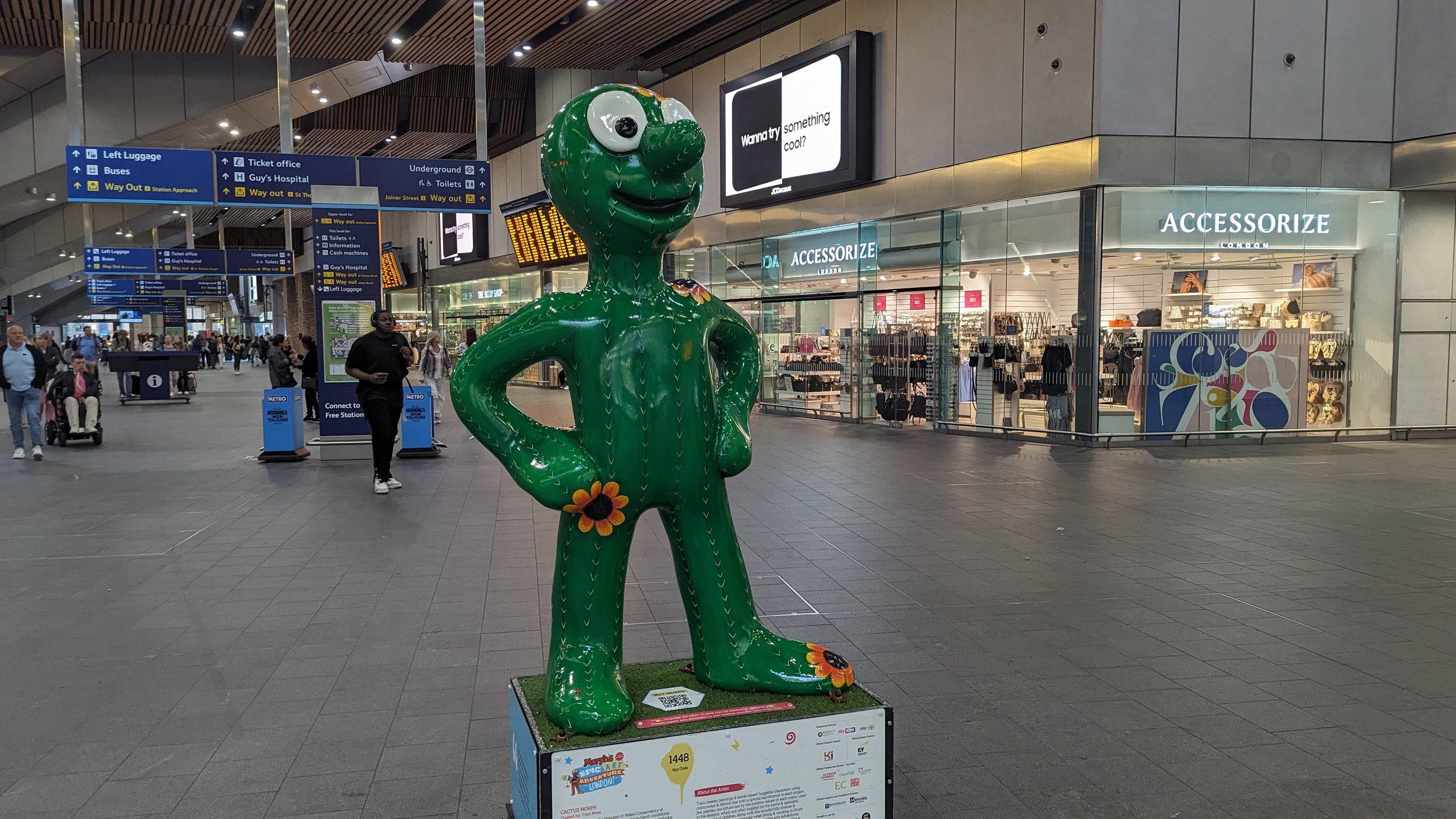
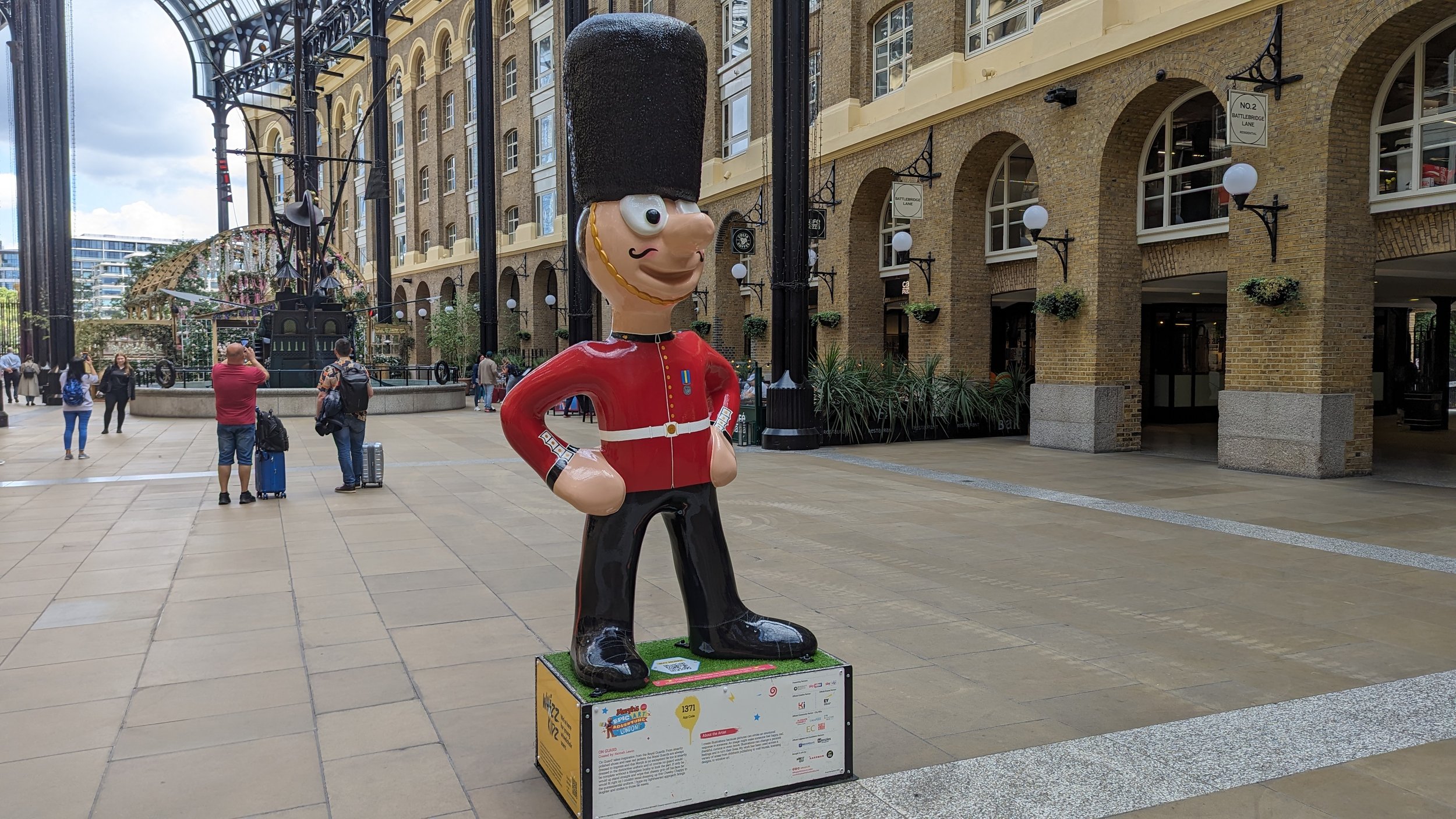
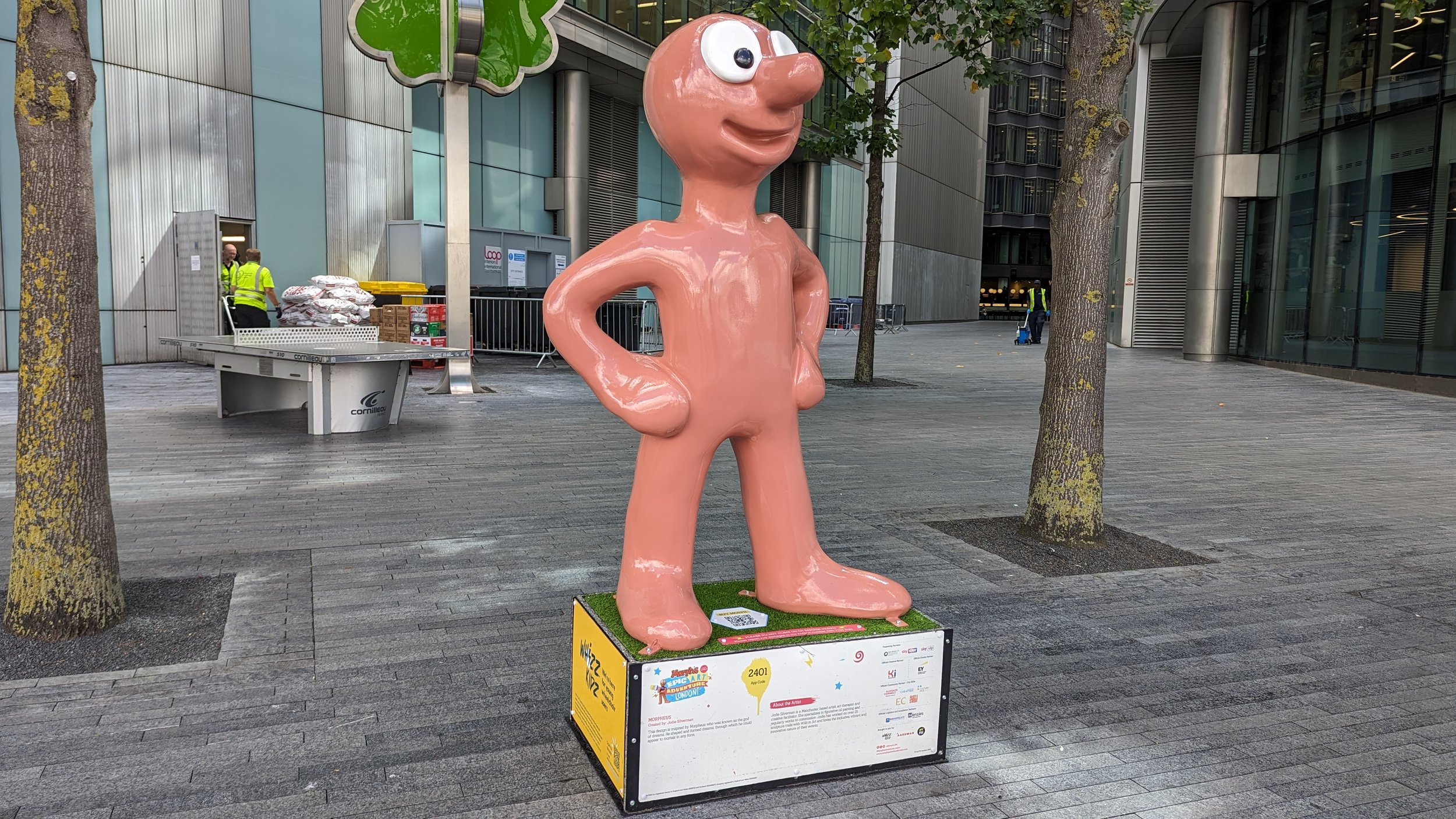
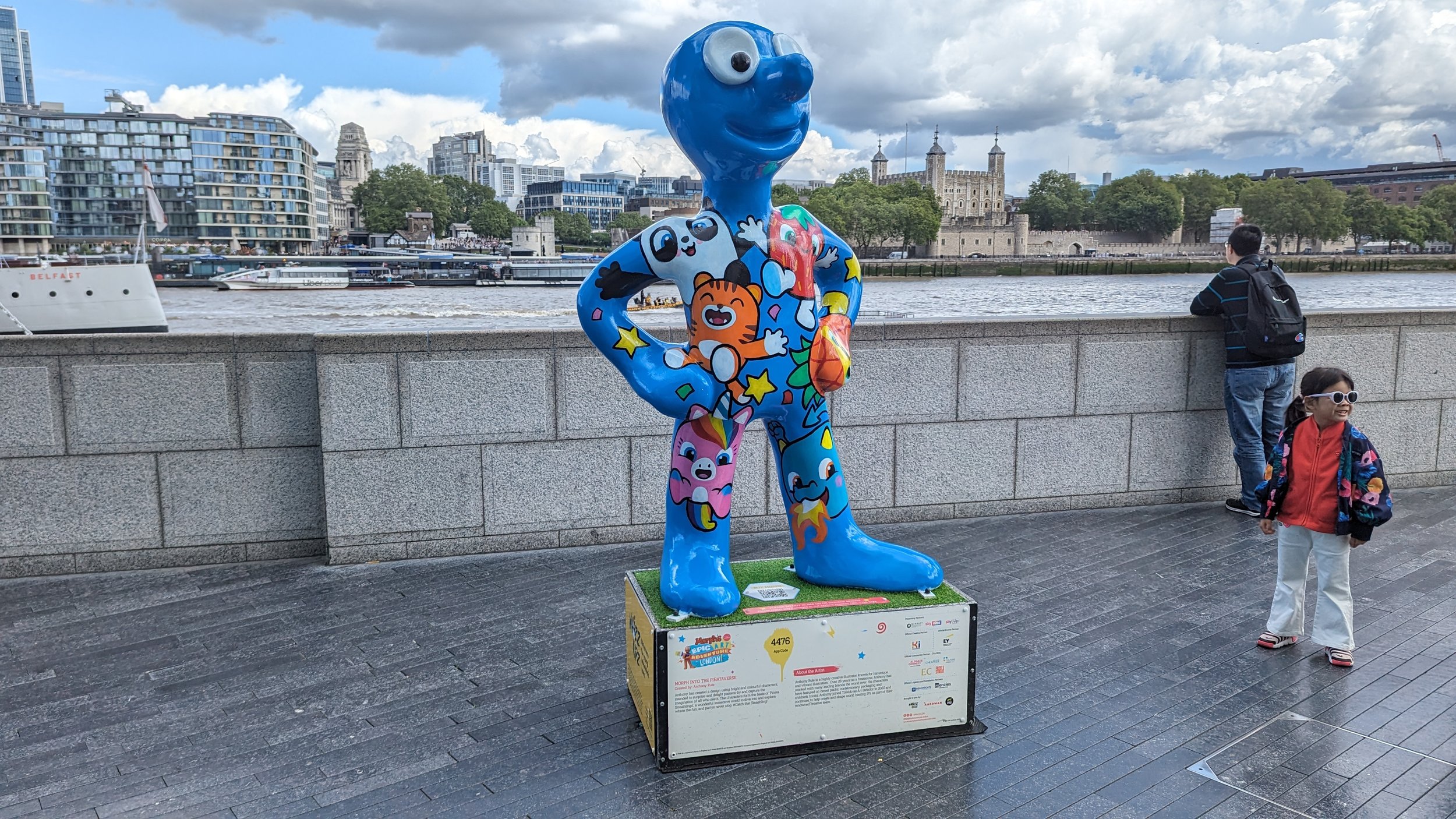
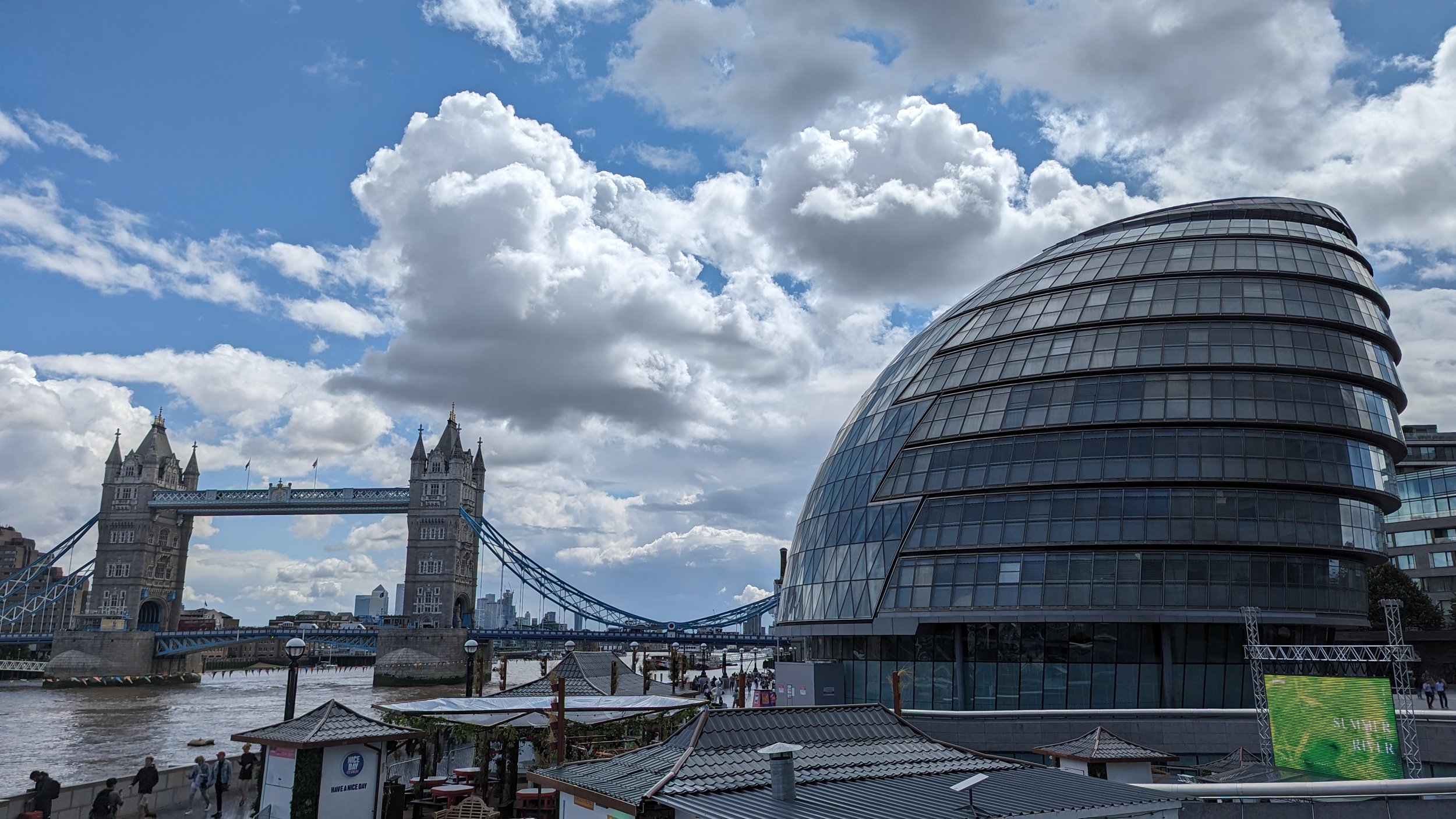
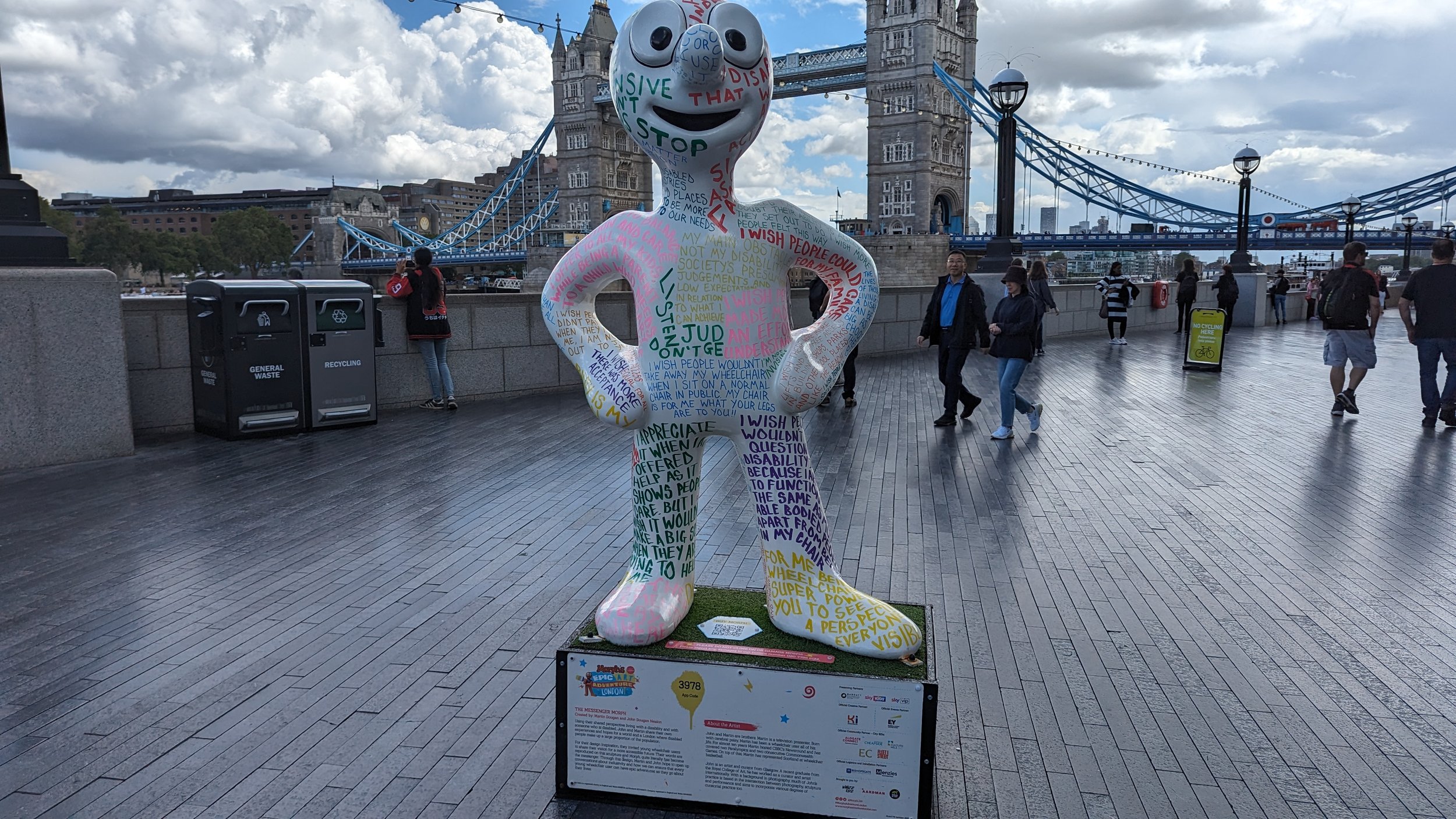
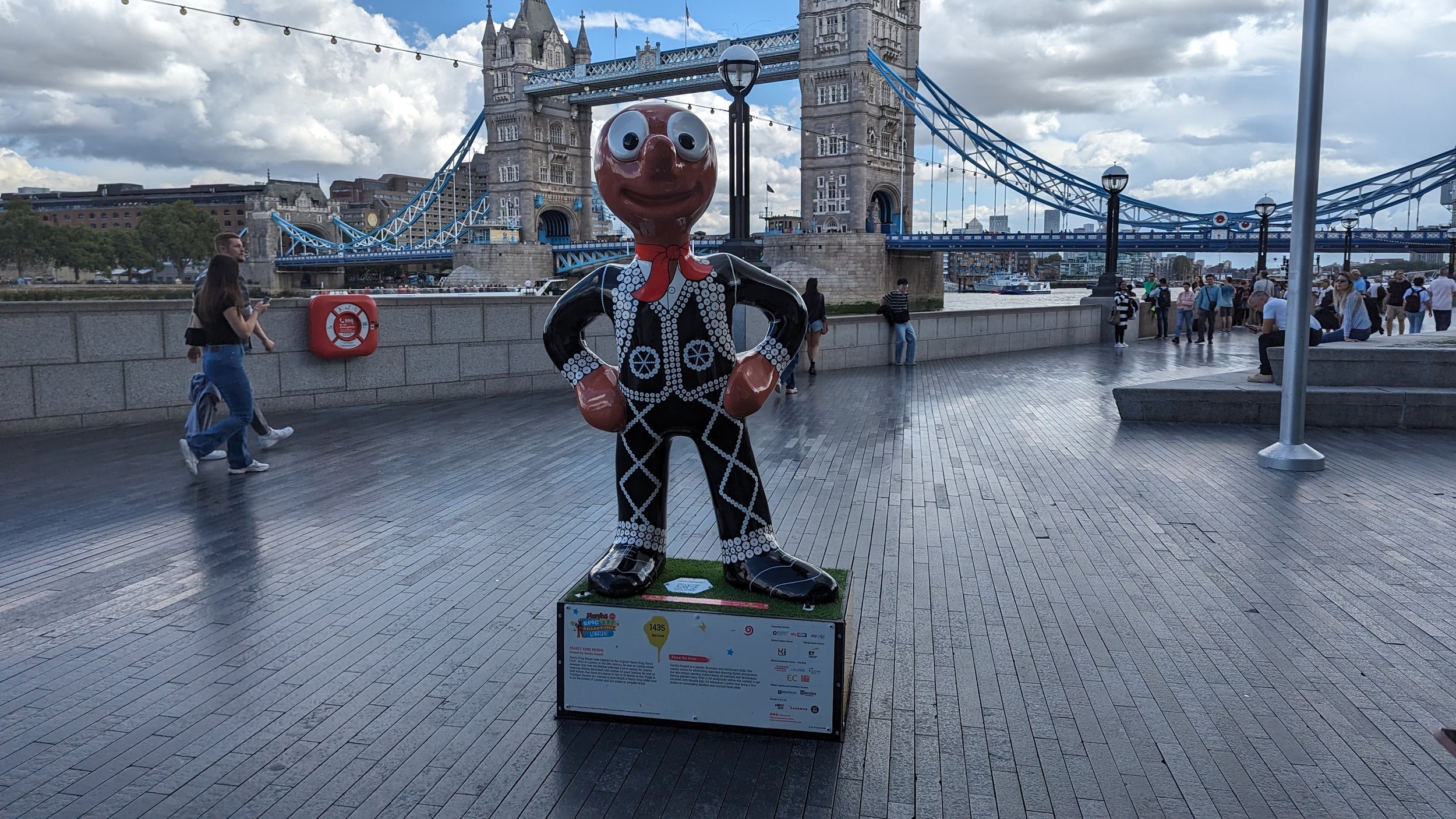
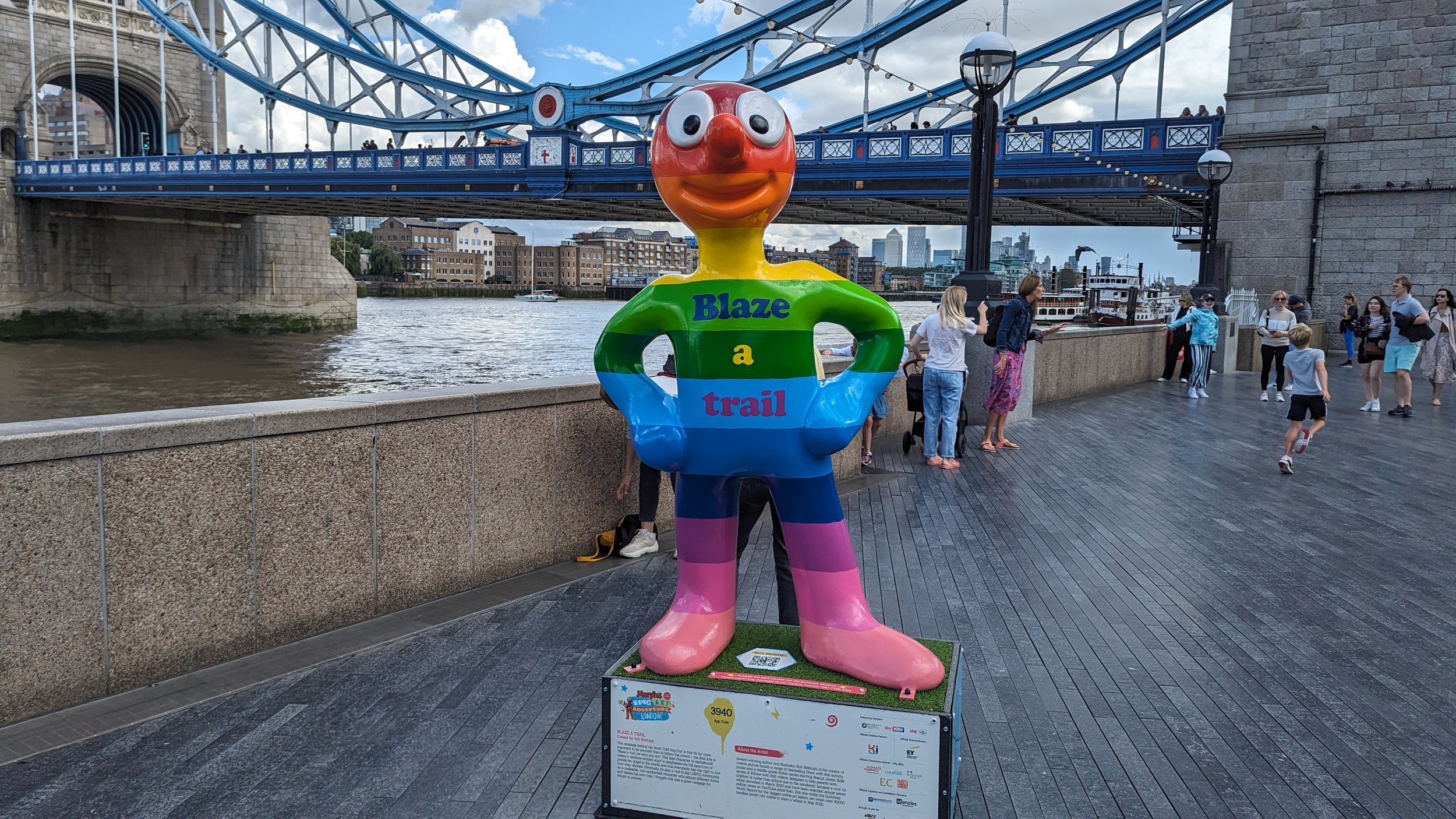
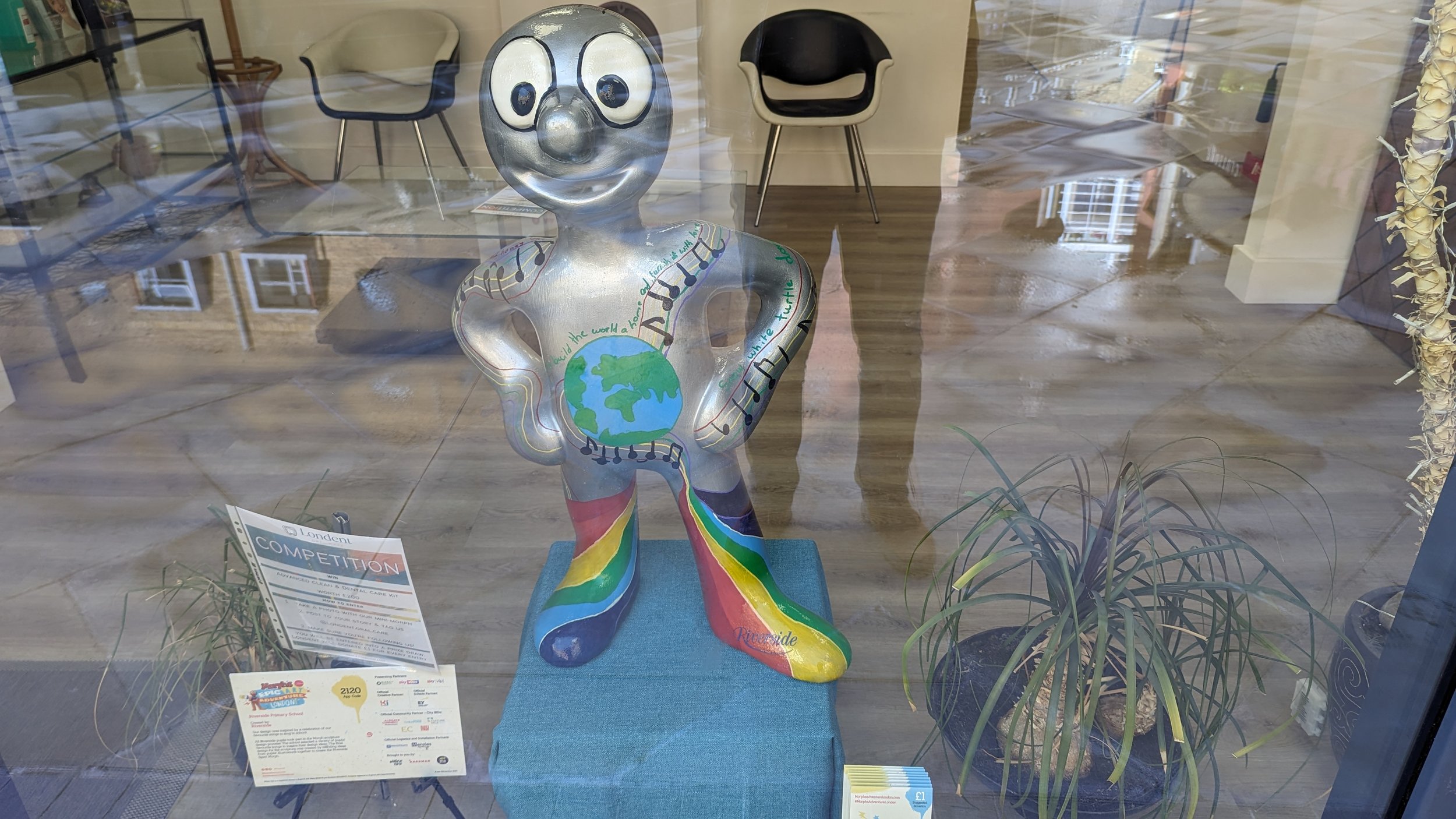
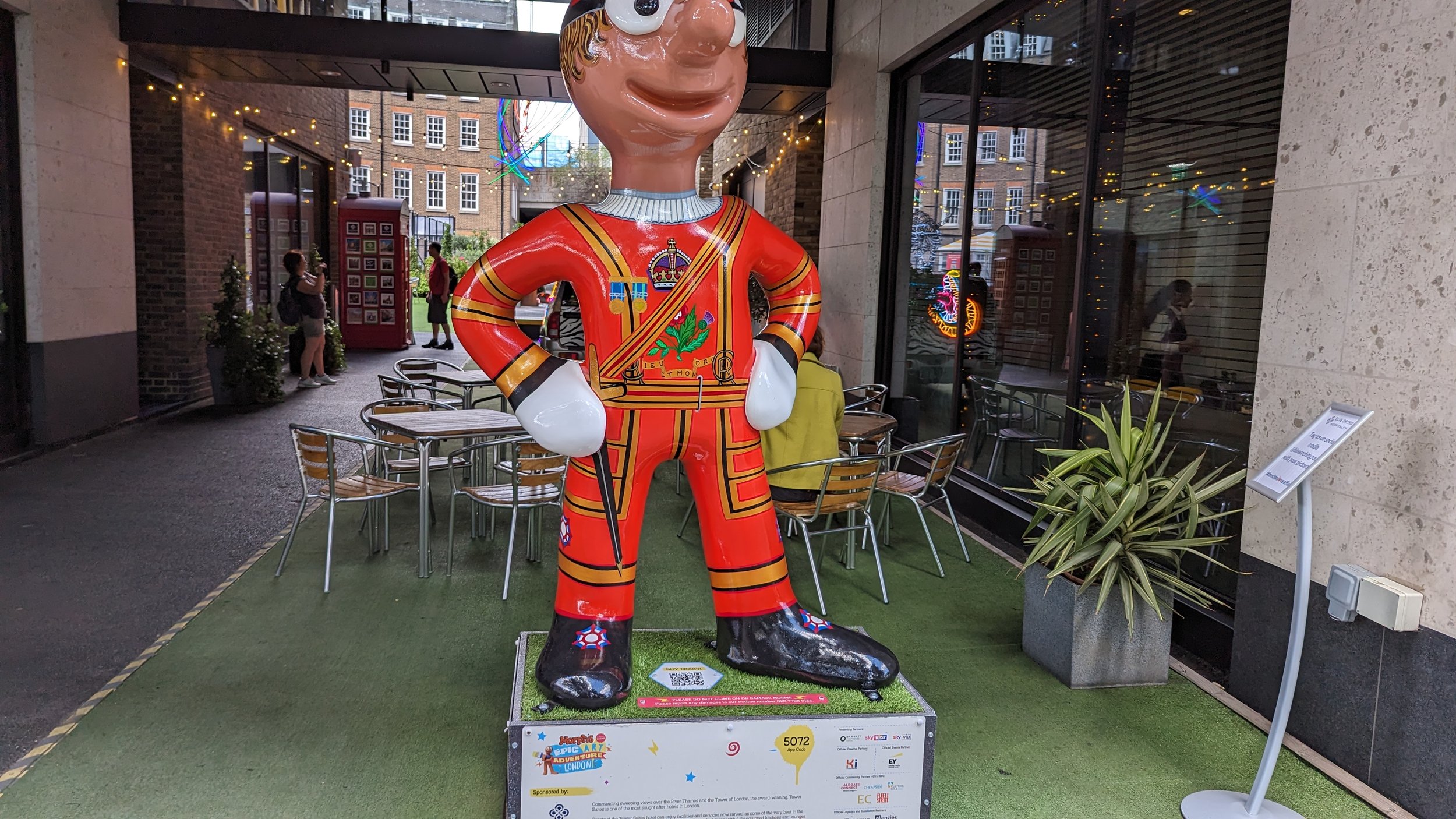
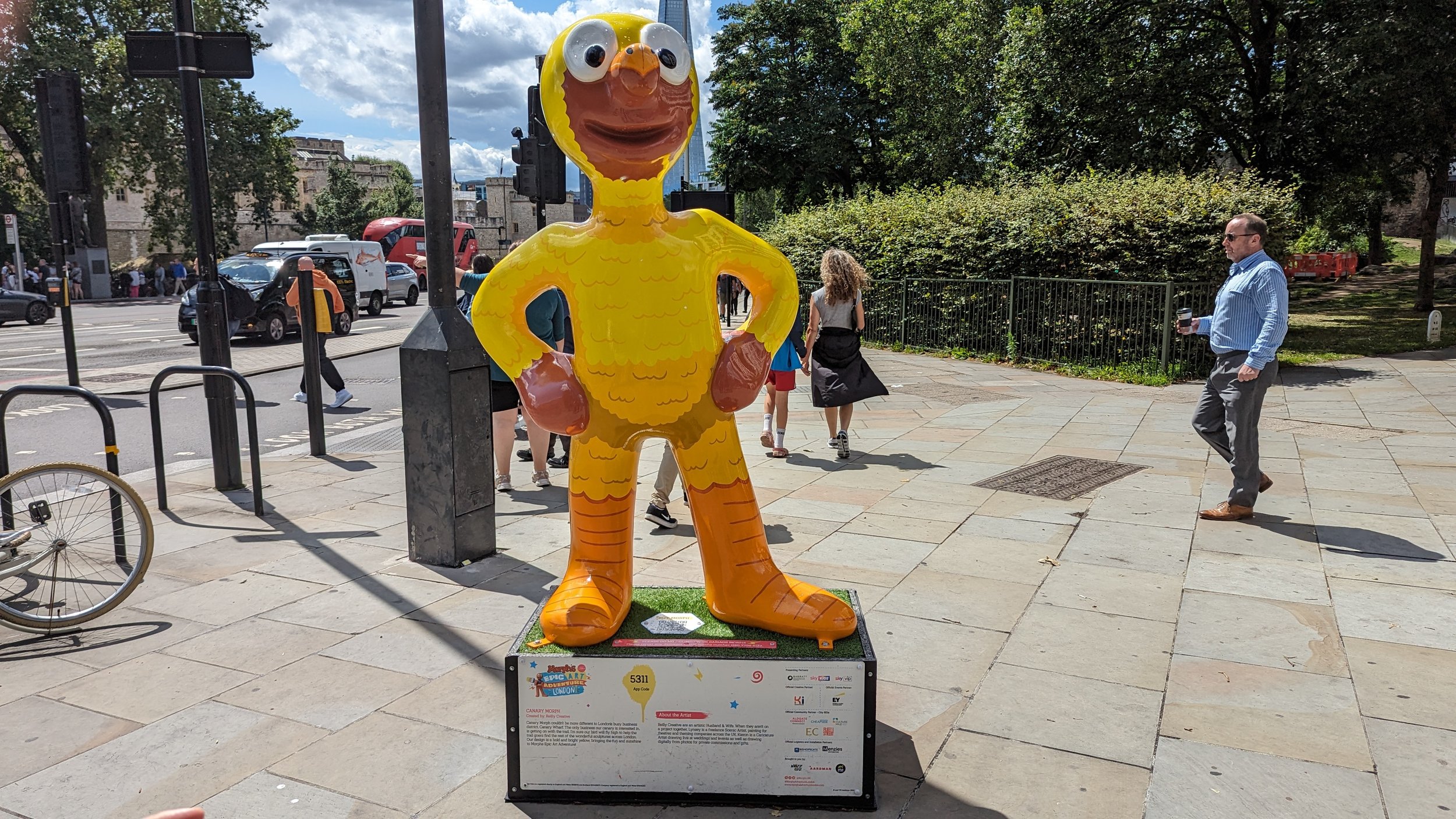
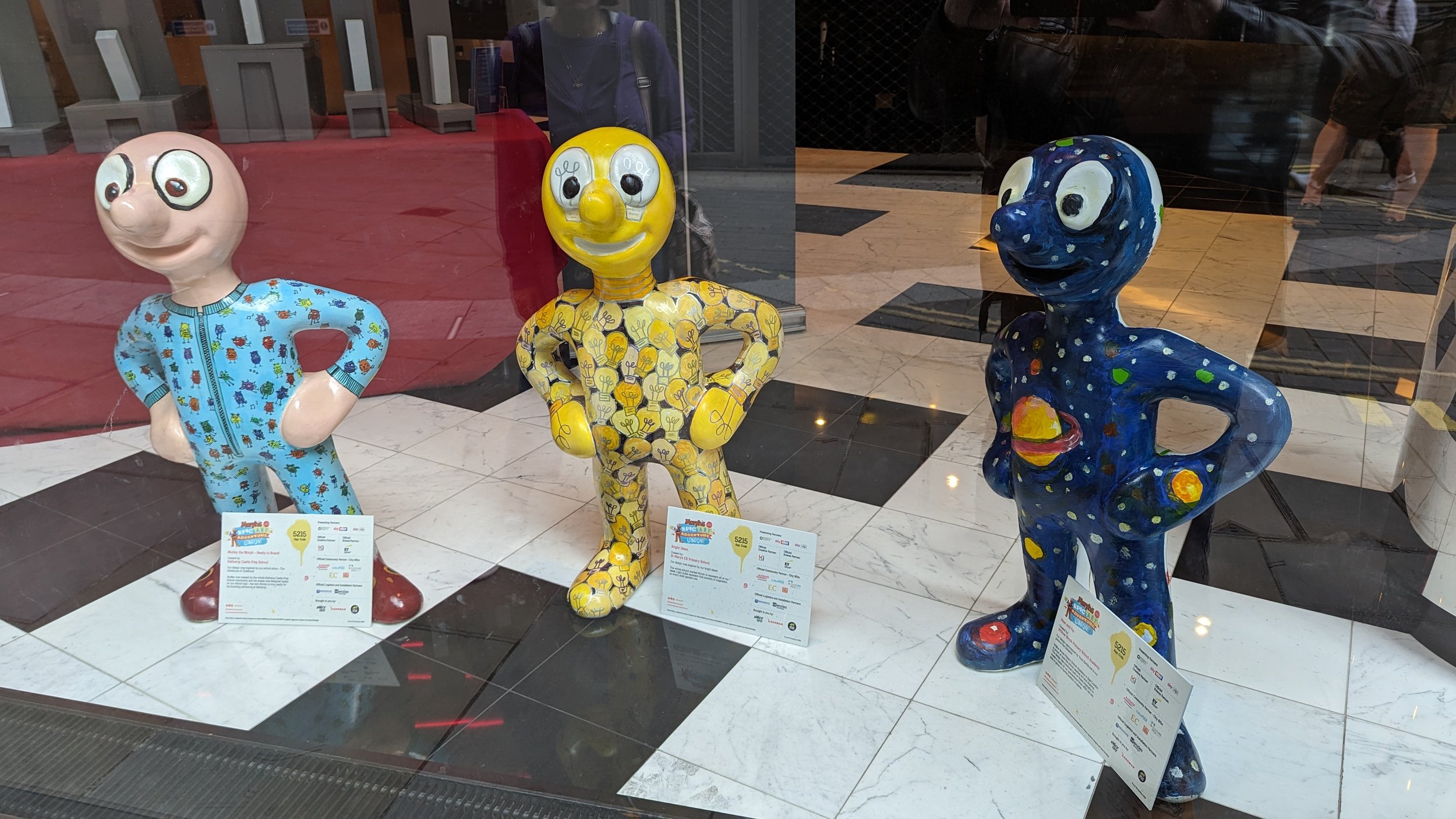
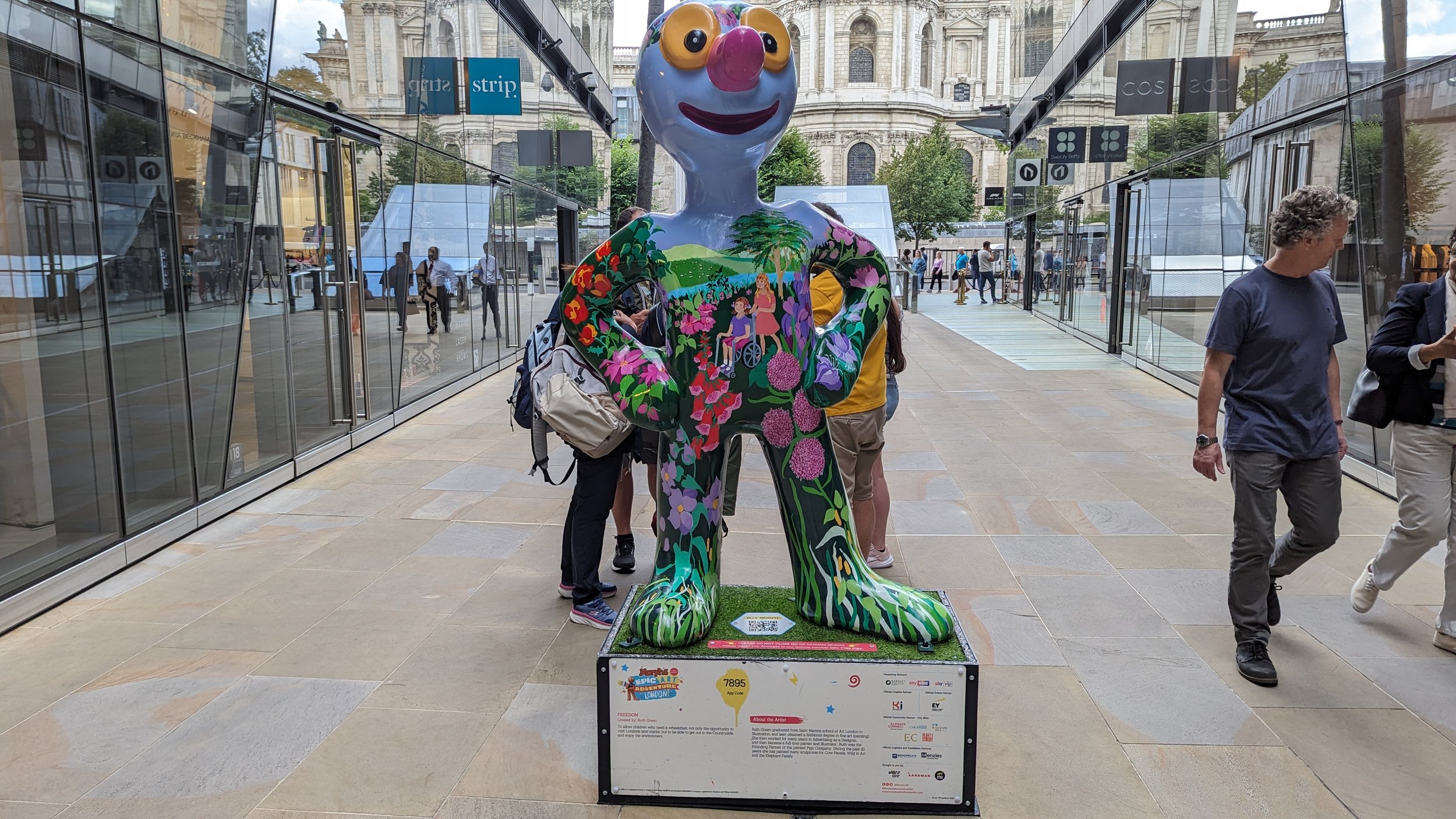
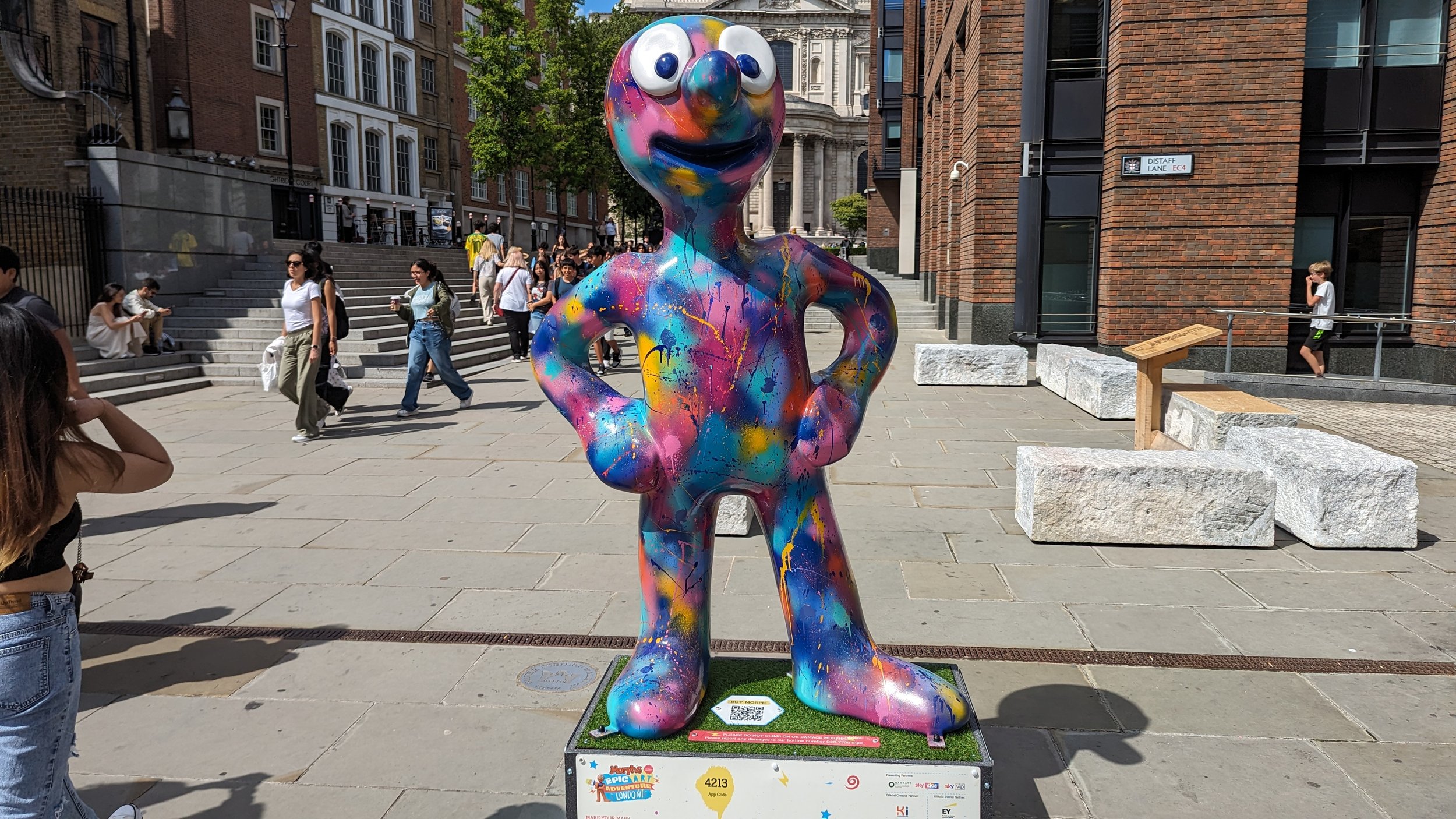
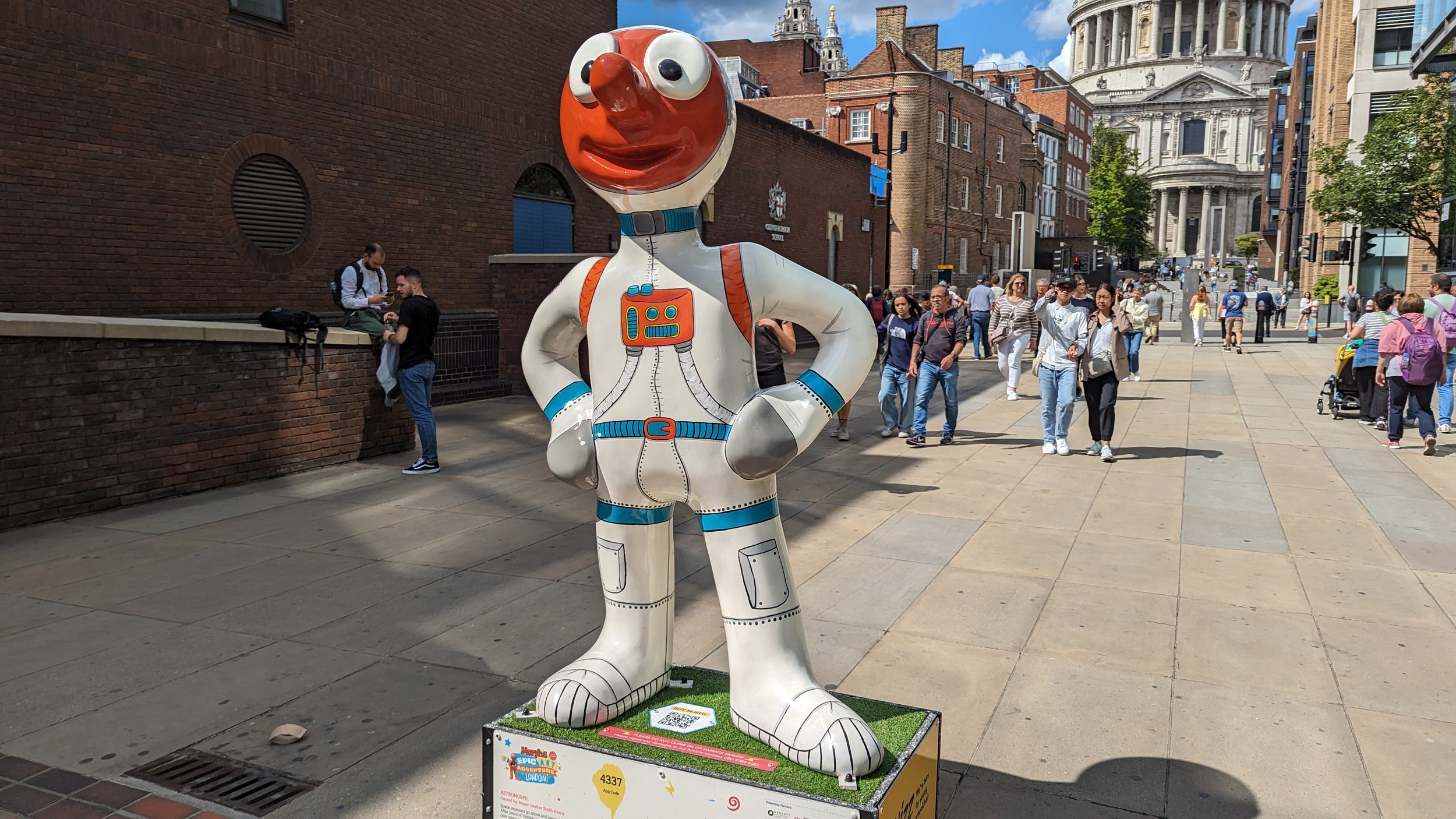
Morph’s Epic Art Adventure in London is a step-free art trail and tourist attraction featuring the iconic animated character Morph. It is hosted by charitable organisation Whizz-Kidz, global event producers Wild in Art and Aardman. The trail features 56 super-sized sculptures of the much-loved children’s TV character, which are set among various iconic London landmarks including St Pauls, Tate Modern, Tower of London, Shakespeare’s Globe and Borough Market. It is a free public art trail and tourist attraction, designed by a variety of artists to excite and inspire people of all ages, whilst increasing public awareness about the need for young wheelchair users to be mobile, enabled and included in society. Morph’s Epic Art Adventure in London runs from June 19th until August 20th 2023.
Morph’s Epic Art Adventure in London is a step-free art trail and tourist attraction featuring the iconic animated character Morph. It is hosted by charitable organisation Whizz-Kidz, global event producers Wild in Art and Aardman. The trail features 56 super-sized sculptures of the much-loved children’s TV character, which are set among various iconic London landmarks including St Pauls, Tate Modern, Tower of London, Shakespeare’s Globe and Borough Market. It is a free public art trail and tourist attraction, designed by a variety of artists to excite and inspire people of all ages, whilst increasing public awareness about the need for young wheelchair users to be mobile, enabled and included in society. Morph’s Epic Art Adventure in London runs from June 19th until August 20th 2023.
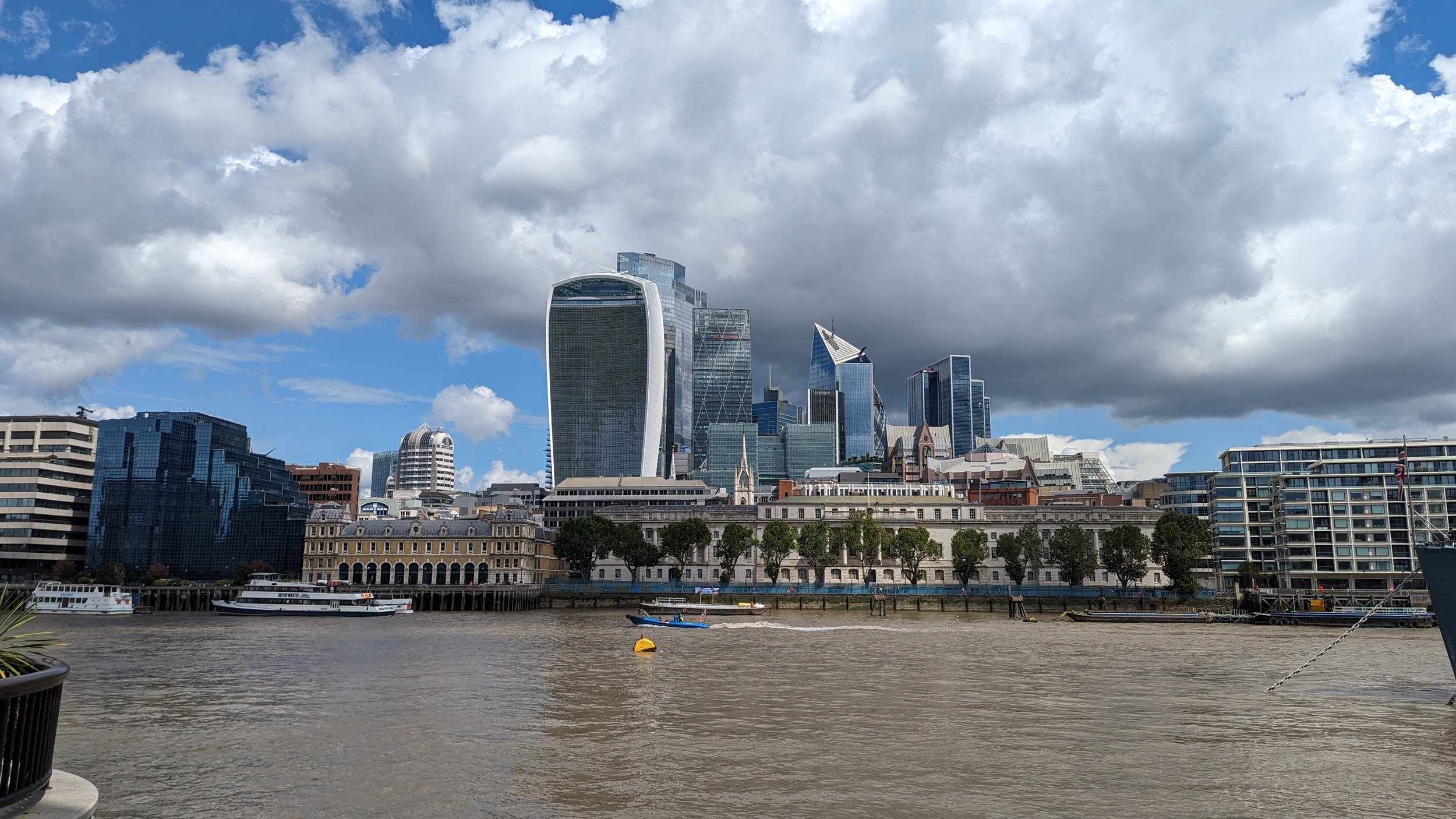
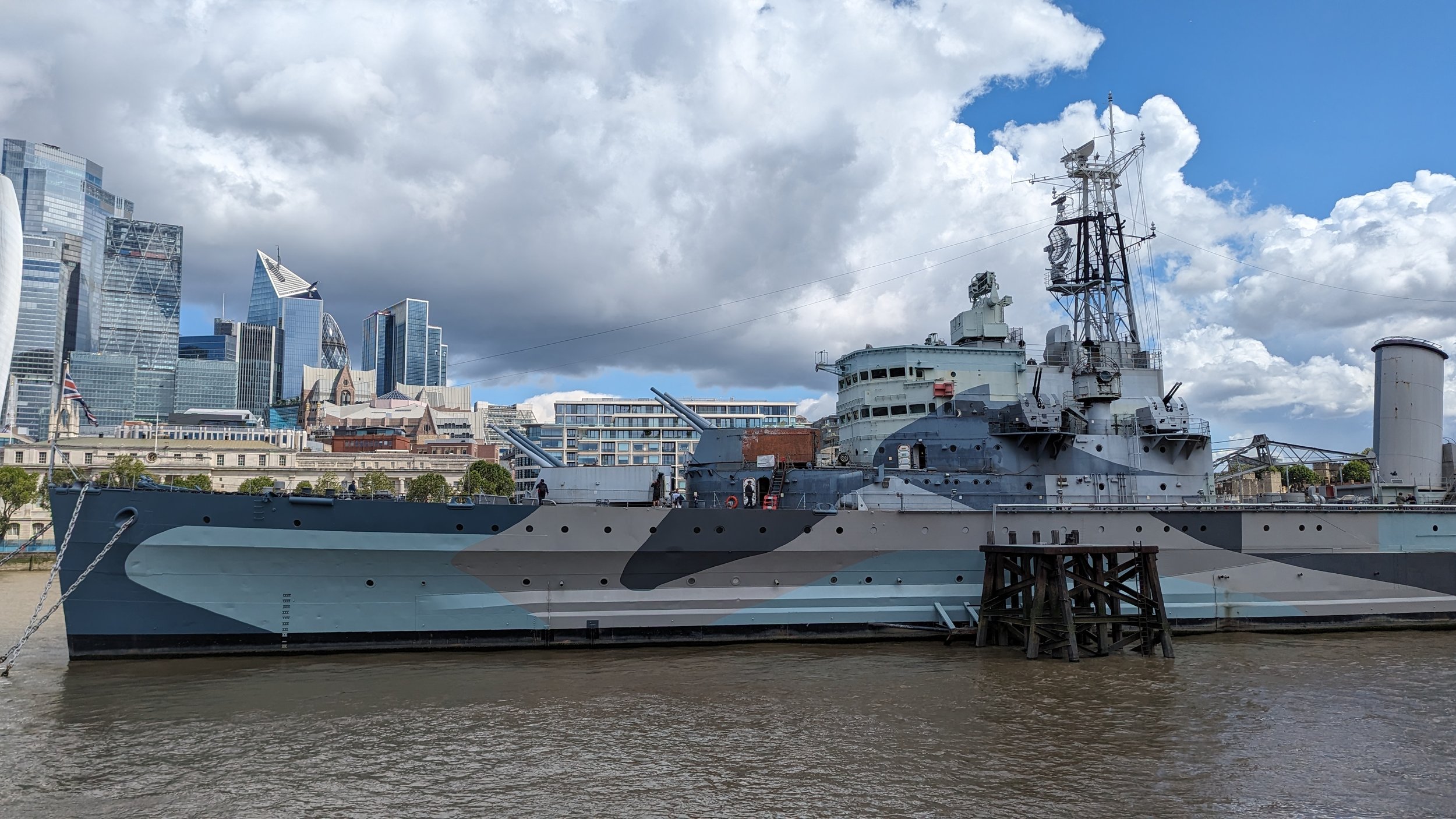
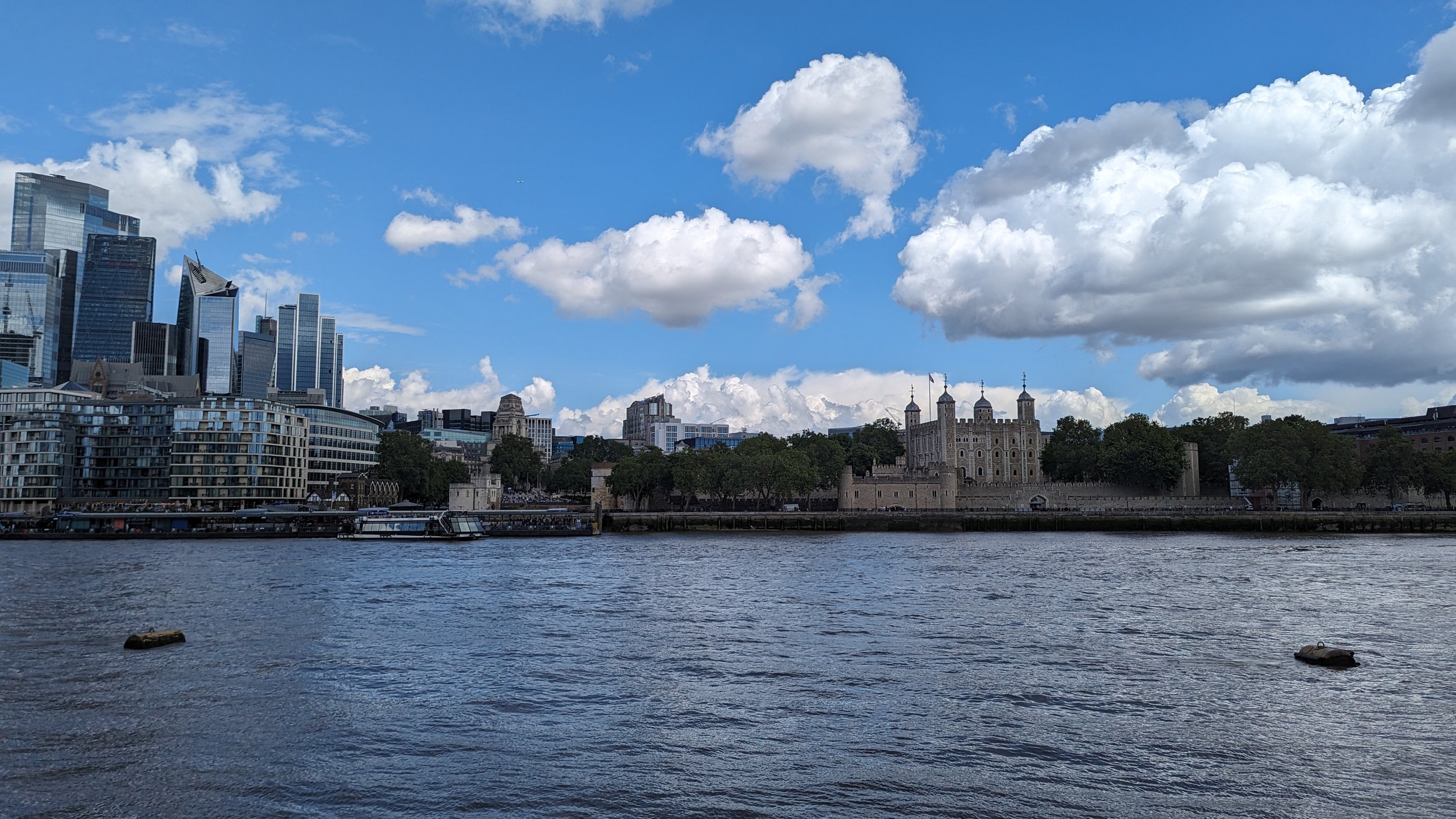
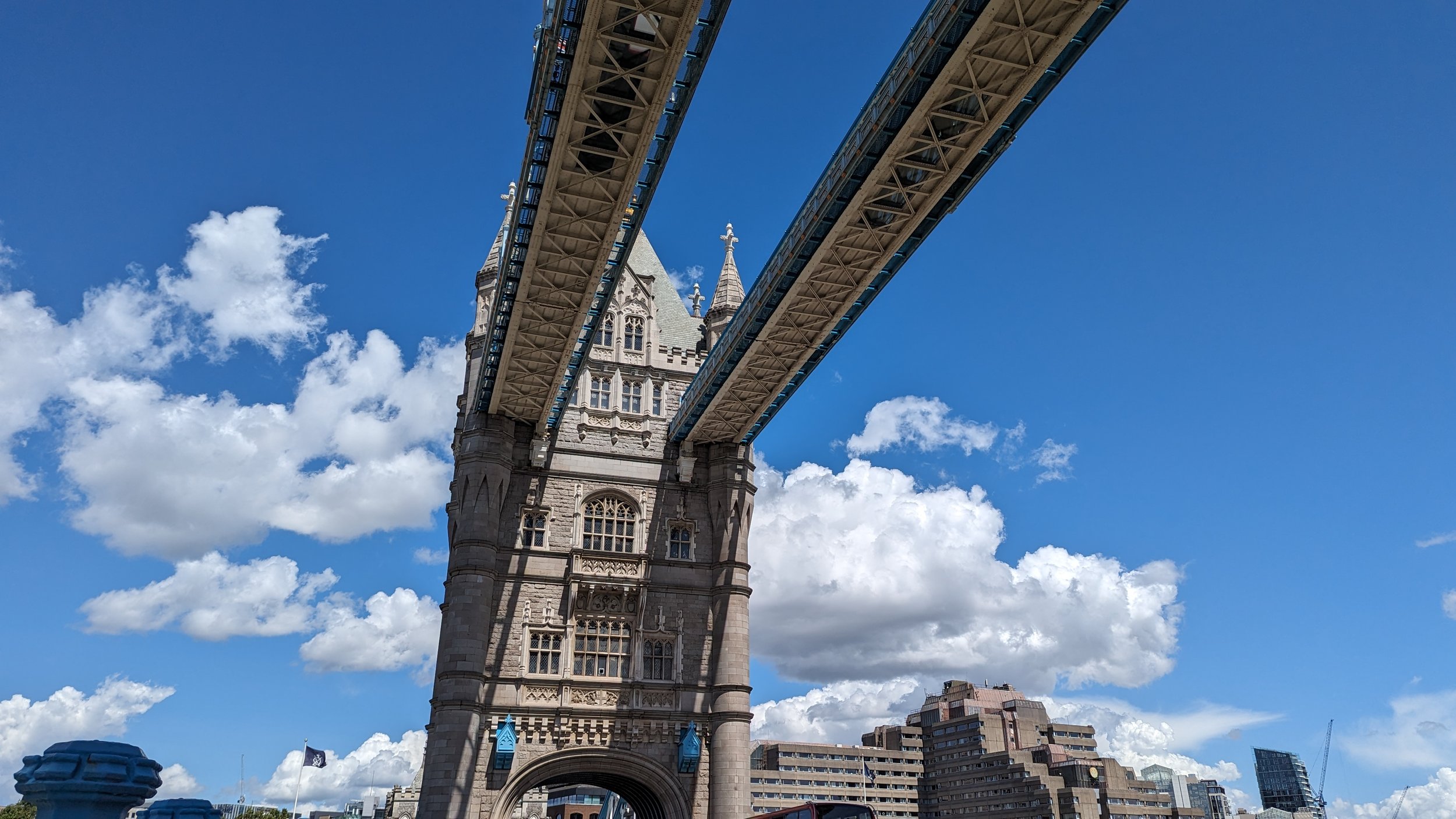
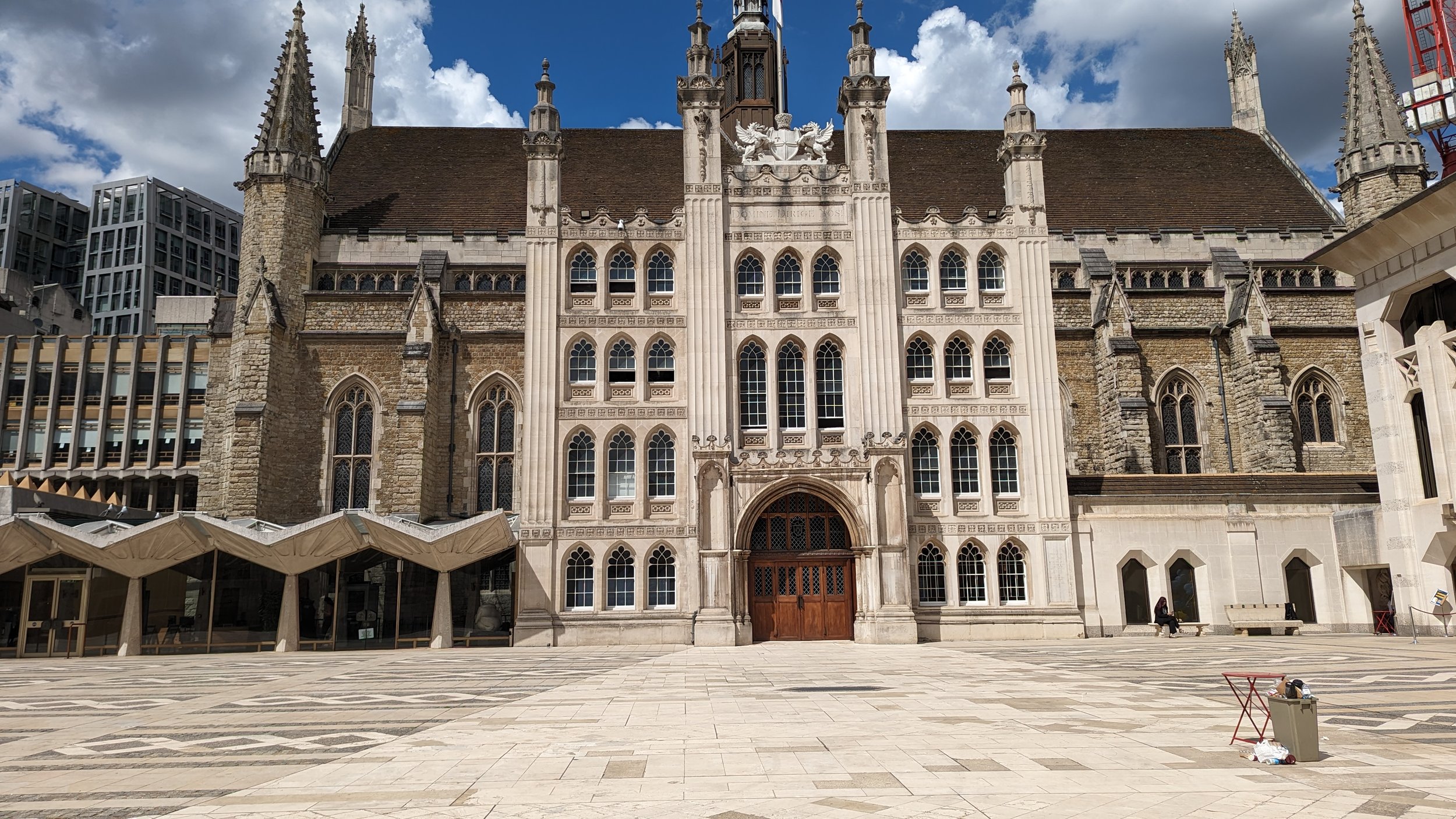
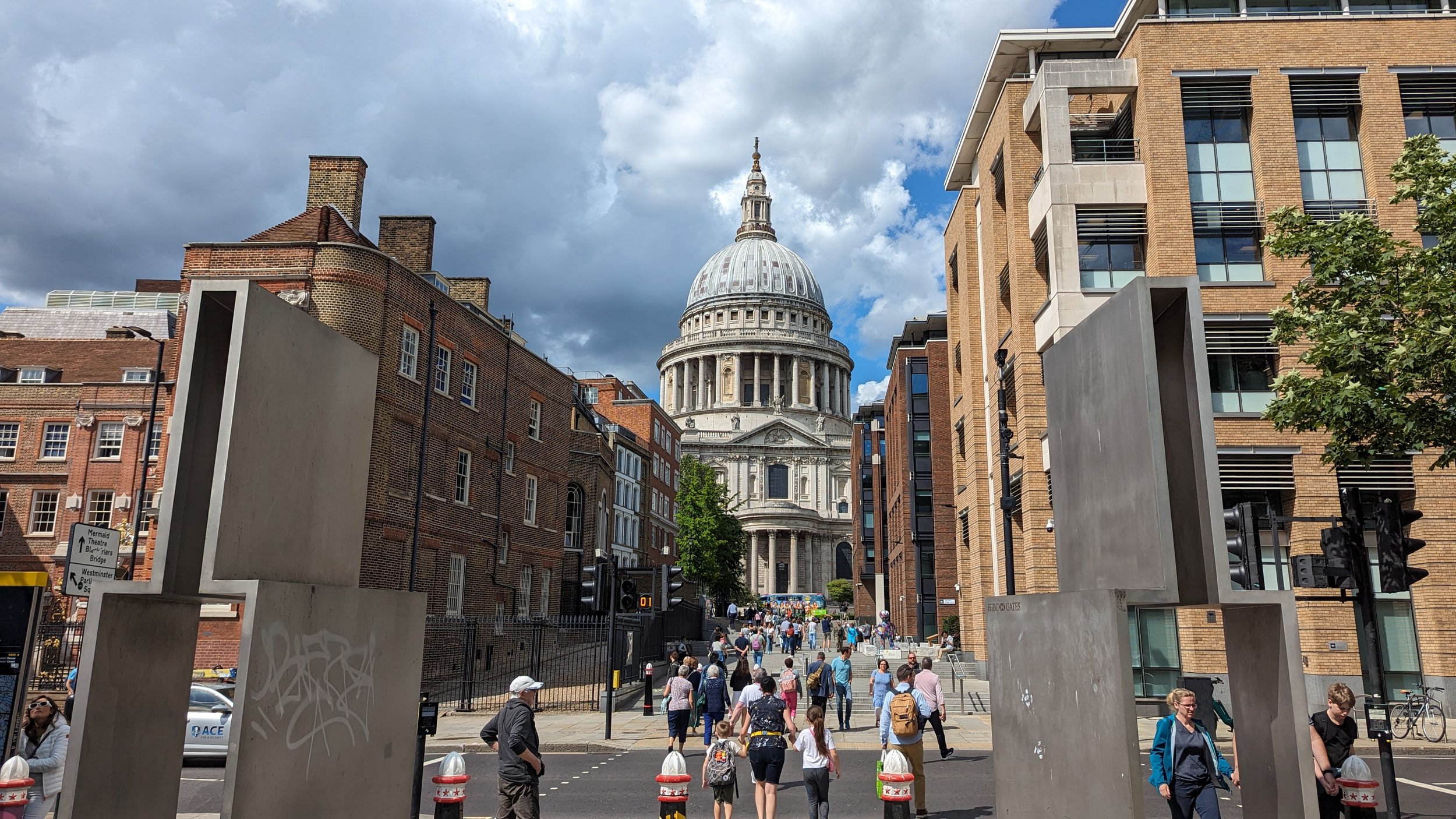
Morph’s Epic Art Adventure in London provides the perfect opportunity to take a leisurely stroll around the capital, take in the sights and see if you can find all 56 of the Morph sculptures. Which is exactly what me and some friends did today.The weather was mainly sunny with a couple of showers but we managed to avoid these by stopping for breakfast at The Pommelers Rest. We managed to track down 37 Morphs between London Bridge and St. Paul’s Cathedral. Because the London Tourist season has begun, it was busy along The Queen’s Walk, Tower Bridge and The Tower of London. However, the crowds were amiable so taking photos wasn’t a problem. By the time we got to Leadenhall Market and the Lloyds building, the crowds of tourists were gone. It was quite tranquil winding through some of the alleys and passages around London’s financial district.
Morph’s Epic Art Adventure in London not only provides the Pokémon-esque pleasure of collecting all the various Morph sculptures, but you also get to see a lot of London’s famous landmarks (as well as some of its not so well known points of interest). Tourists tend not to visit the business heart of London. Yet it is filled with imposing buildings, plazas and quite a lot of artwork. Another standout feature of the day was the camaraderie among those who were also following the trail. We bumped into several people with printed maps or using the phone app to find the various sculptures. Pleasantries were exchanged and often you’d tip one another off about statues that were in the area. Especially the few that were located in shop windows. It was a welcome change to see Londoners actually talking to each other.
We spent over four hours walking around London before we withdrew to The Ship and Shovell for rest and a much deserved pint. Overall, it was a most enjoyable day having walked about 9 miles. I’d certainly recommend Morph’s Epic Art Adventure in London for those in position to walk the trail. The sculptures are most enjoyable and each one is unique, representing a specific theme or aspect of London life. The trail offers an opportunity to see a lot of London’s best locations and is a great way to acquaint yourself with the UK’s capital. You can find as many sculptures as you like but if you’re a completionist, there is an app available with a map with all the various locations marked. And let us not forget the underlying message from this undertaking, which is about making the country more wheelchair friendly and accessible to all.






































Gossip and Schadenfreude: A National Pastime
If you are in a British pub and someone drops a pint or better still an entire tray of drinks, then most people within the immediate vicinity will cheer. A few years ago I was in a pub near London ComicCon and some wag shouted “Fus Ro Dah”. But I digress. The thing is, in these situations no one will go to help. Nope, we’re too busy laughing. Laughing at someone else's misery, embarrassment and inconvenience. Does this say something about British culture and our national psychology? We seem to like other people’s failures. There has always been a fascination with celebrity culture, especially with the rise and fall of such individuals but it seems to have become more unpleasant of late. Do we revel too much in other people’s misery due to some major shift in our national psyche? Is the combative and aggressive nature of contemporary political discourse to blame?
If you are in a British pub and someone drops a pint or better still an entire tray of drinks, then most people within the immediate vicinity will cheer. A few years ago I was in a pub near London ComicCon and some wag shouted “Fus Ro Dah”. But I digress. The thing is, in these situations no one will go to help. Nope, we’re too busy laughing. Laughing at someone else's misery, embarrassment and inconvenience. Does this say something about British culture and our national psychology? We seem to like other people’s failures. There has always been a fascination with celebrity culture, especially with the rise and fall of such individuals but it seems to have become more unpleasant of late. Do we revel too much in other people’s misery due to some major shift in our national psyche? Is the combative and aggressive nature of contemporary political discourse to blame?
The recent debacle regarding BBC News presenter Huw Edwards is in many ways a microcosm of this malady. The Sun, a questionable tabloid with a history of rabble rousing and lying, claimed it had evidence of a “household name” indulging in criminal behaviour with a minor by soliciting explicit pictures. The BBC, the UK public funded broadcaster which is currently suffering from an identity crisis after making several high profile mistakes, then made matters worse by failing to address the claims promptly. Huw Edwards is very much the public face of the BBC, having been the main news anchor for so many era-defining news stories. The public relish for this story when it broke, was palpable. I realise that people like gossip but there was more to this than mere tittle-tattle. Even I wanted to know who the “household name” was before it was finally announced. It would appear that someone's ruin is morbidly enthralling.
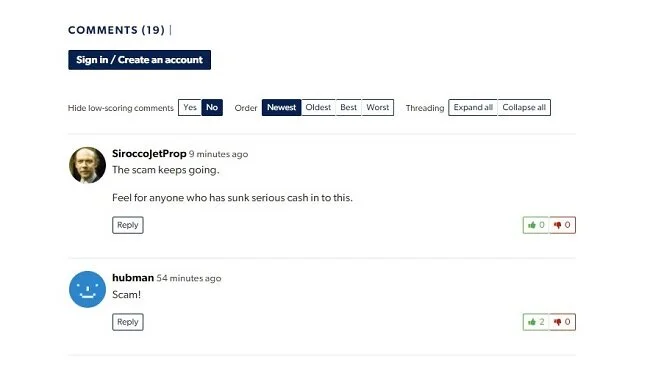
Exactly why do we like gossip so much? Especially the salacious or malicious kind. In this case was it a particular dislike of Mr Edwards or the fact that he is in many ways an avatar for the BBC? Was it an example of watching someone who has reached the proverbial top, then fall from grace. A form of bespoke schadenfreude? Or was it a more politically motivated experience? A manifestation of the tribalistic nature of modern social discourse and a facet of the culture war? There was a similar amount of hysteria and delight recently over ITV presenter Phillip Schofield and his downfall, although that was more about moral judgement and possibly homophobia. Looking at such things in a wider context, there certainly seems to be a lot more spite driving peoples love for malicious gossip. You only have to read people's comments on tabloid news websites. They are mean spirited, unempathetic and riddled with assumptions, bias and prejudice.
There has been a growing culture of judgement running through tabloid newsprint and websites in recent years. Articles about sporting events which focus more on the audience, their manners and behaviour. Or reports about hot weather and the crowds on the beach. Aren’t they overweight and shocking? And then there’s the young people going out clubbing. Look, they’ve had too much to drink and should they really be wearing that? All too often such articles hide behind a superficial level of reporting, when in fact they are simply encouraging readers to pass judgement upon another socioeconomic group. Now it is a fact of human nature to dislike other people and for groups to segregate themselves. But we also have to also function as a cohesive society, so encouraging us to hate one another only increases tribalism. You only have to look to the US and wonder where it may all end.
The Huw Edwards story also raises such subjects as press regulation, UK libel laws and media ownership. The traditional UK press is predominantly right wing and does not reflect the political and social views held by the majority of the UK population. Yet it spreads discontent daily, slowly increases division and pushes its owners political agenda. We are now reaping the consequences of this growing disharmony. The UK is becoming cruel, lacking in empathy and very divided. It will end up becoming socially and politically ungovernable like the US. The population is also partly to blame with its insatiable appetite for gossip, scandal and schadenfreude. Does this ultimately boil down to the fact that many people feel their own lives are so utterly bleak and awful that they want others to suffer the same fate? What a chilling thought. A nation suffering an existential crisis that would prefer to burn everything down, rather than fix the situation.















Blaugust 2023
It is a fact of life, like death and taxes, that our passion for our hobbies will wax and wane overtime. All too often, the realities of daily life just get in the way. The enthusiasm you have in the morning for a great idea, may vanish by the evening when we finally have time to do it. Furthermore, if you do something often enough, sooner or later you’ll either want to (or need to) take a break. Regardless of how much you may love that particular pastime. Hobbies take time, energy and discipline. Sadly, not only can these factors take a toll upon your ongoing participation but they can also potentially stop you from even starting. I suspect that I am preaching to the proverbial choir and that many of those reading this will have experienced both scenarios. You’ve either struggled to sustain a “passion project” and have burned out, or you’ve fallen at the very first hurdle and not progressed beyond your initial excitement to try something new.
It is a fact of life, like death and taxes, that our passion for our hobbies will wax and wane overtime. All too often, the realities of daily life just get in the way. The enthusiasm you have in the morning for a great idea, may vanish by the evening when we finally have time to do it. Furthermore, if you do something often enough, sooner or later you’ll either want to (or need to) take a break. Regardless of how much you may love that particular pastime. Hobbies take time, energy and discipline. Sadly, not only can these factors take a toll upon your ongoing participation but they can also potentially stop you from even starting. I suspect that I am preaching to the proverbial choir and that many of those reading this will have experienced both scenarios. You’ve either struggled to sustain a “passion project” and have burned out, or you’ve fallen at the very first hurdle and not progressed beyond your initial excitement to try something new.
I fall into the former category. I’ve been blogging for over two decades and I slowly ground to a halt last September. I tried to jump start my “writing mojo” in April this year but it was short lived. Rather than playing amateur psychologist, let it suffice to say that motivation is a factor. Fortunately, Blaugust 2023: Festival of Blogging is fast approaching (it starts in August). This yearly, community driven, online event is an invaluable wellspring of support, advice, camaraderie and enjoyment. Organised and overseen by Belghast from the Tales of the Aggronaut blog, Blaugust “is a month-long event that takes place in August each year that focuses on blogging and other serialised content. The goal is to stoke the fires of creativity and allow bloggers and other content creators to mingle in a shared community while pushing each other to post more regularly. The idea is that this festival of blogging can help reignite dwindling fires for the next year and give folks a sense of kinship as a result”.
“It was the best of times, it was the worst of times, actually it was quite shit”.
Hence, I have signed up for Blaugust 2023: Festival of Blogging as I find that the event is excellent for motivating me and focusing my energy. I would urge anyone who has blogged previously and wishes to resume their writing to read Bel’s post and come and join us on Discord. The same goes for anyone who is new to blogging or any other type of online content creation. You’ll find help and advice for all kinds of activities be it streaming, podcasting, blogging or vlogging. Being part of a community where you know that friends and colleagues will view your content and give you positive, constructive feedback can be a major boost when you are learning the ropes. As for me, I just need a proverbial kick up the arse to get blogging again. I enjoy writing for a multitude of reasons but the most fundamental one is that it makes me happy. Time to get back in the saddle.






















Evolution of Horror: Podcasting Masterclass
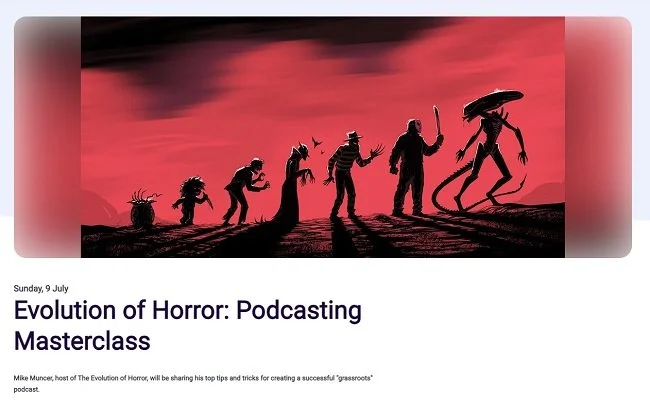
Earlier tonight, I had the pleasure of participating in the Evolution of Horror: Podcasting Masterclass. An online seminar conducted via Zoom. For those who are not familiar with the Evolution of Horror, it is a podcast written and hosted by Mike Muncer along with regular guests. It explores horror cinema in depth, considering the technical, thematic and sociological elements of the genre. Launched in 2017 this independent production has gone from strength to strength, with Mike now producing content for Paramount + and Studio Canal. The masterclass was designed to provide podcasters both old and new with some practical advice and answer some commonly asked questions. Being a fan of Evolution of Horror as well as a former podcaster, I signed up and enjoyed a most informative and enjoyable 90 minute seminar.
Earlier tonight, I had the pleasure of participating in the Evolution of Horror: Podcasting Masterclass. An online seminar conducted via Zoom. For those who are not familiar with the Evolution of Horror, it is a podcast written and hosted by Mike Muncer along with regular guests. It explores horror cinema in depth, considering the technical, thematic and sociological elements of the genre. Launched in 2017 this independent production has gone from strength to strength, with Mike now producing content for Paramount + and Studio Canal. The masterclass was designed to provide podcasters both old and new with some practical advice and answer some commonly asked questions. Being a fan of Evolution of Horror as well as a former podcaster, I signed up and enjoyed a most informative and enjoyable 90 minute seminar.
The Zoom based masterclass was quite an intimate setting. Having all the participants on screen created a very personal atmosphere. Mike is a very confident public speaker who excels at informal but informative discussions. As you’d expect with a masterclass, Mike went through his planning and recording process. How he scripted introductions and wrote shownotes, selected guests according to expertise and the mechanics of recording the show. He also discussed the software and hardware used as well as hosting. There was a particular focus upon finding the right dynamic, tone and niche for your podcast. Mike produced some rather amusing videos about the “do’s and don’ts” of recording a conversation to highlight how you must back up your references, not talk over each other and never assume that listeners have seen the same films that you have.
The masterclass ended with a Q&A which featured a broad range of enquiries from participants. This was in many ways just as informative as the first part of the seminar. It was interesting to see people from existing podcasts still seeking out advice from their peers as well as those who were new to content creation of this kind. I found this to be especially beneficial because I have recently reflected upon the several hundred podcasts that myself and co-host Brian produced between 2010 and 2022. I have wondered whether we made any obvious mistakes in our production or with our approach to making a podcast. Mike seems to have done much that is comparable to what we did, although far more successfully. I certainly feel, on the strength of this masterclass, that I could return to podcasting and produce a new show of an acceptable standard.
Like blogging, podcasting started off as an accessible means of communicating that everyone could participate in. The barriers to entry, both technical and financial, have always been pretty low. Sadly, fan driven podcasting seems to have been overshadowed by a tsunami of corporate content. Some of it is good but not all of it is. Podcasts made by production companies have advertising budgets and hence find it easier to establish themselves. However, the Evolution of Horror has managed to find its audience and gain critical acclaim the old fashioned way. Through word of mouth, building a community and by being very good. If Mike does another masterclass I would certainly recommend it to anyone who produces a podcast or is thinking of doing so. You’ll get honest answers, practical advice and a lot of genuine encouragement. Rare commodities these days.


















Selling My Parents House
Last August my mother died at the age of 91. Since last September, her will has slowly been processed by our family solicitors. To cut a long story short we received the Grant of Probate in March this year. Three months on and my sister and I have finally put the family home up for sale. My sister still resides at the property and has done so all her life. Hence not only are we looking to sell our parents house but also find my sister a flat or maisonette. Both of us agreed when we embarked upon this process not to rush and to let things run at their own pace. The last few years of caring for our parents was a very difficult and exhausting experience. Hence, both of us have taken some time out to rest, recuperate and take stock of our lives. My sister has recently retired and it was important to get that matter resolved first, before addressing the sale of the family home.
Last August my mother died at the age of 91. Since last September, her will has slowly been processed by our family solicitors. To cut a long story short we received the Grant of Probate in March this year. Three months on and my sister and I have finally put the family home up for sale. My sister still resides at the property and has done so all her life. Hence not only are we looking to sell our parents house but also find my sister a flat or maisonette. Both of us agreed when we embarked upon this process not to rush and to let things run at their own pace. The last few years of caring for our parents was a very difficult and exhausting experience. Hence, both of us have taken some time out to rest, recuperate and take stock of our lives. My sister has recently retired and it was important to get that matter resolved first, before addressing the sale of the family home.
One of the most challenging aspects of this process has been the house clearance. This has involved going through all our parents’ possessions and deciding what to do with them. It is a very sobering experience to be confronted with all the personal items and clothing that a person has amassed during the course of their life. At times it feels like you are complicit in erasing that person’s identity. But you can’t hang on to everything although it would appear that my parents came from a generation that did exactly that. Some of the things that my mother and father hoarded beggar belief but they grew up during World War II and were accustomed to hardship. Rampant consumerism and disposability were not the foundations of society back then, so I will forgive their compulsion to hang onto everything.
Once the clearance was completed, we commissioned a local Estate Agents and formally put the house up for sale. A photographer came and took multiple pictures of the house and gardens. It was scrupulously measured and categorised. The final sales description is honest and accurate. It is a three bedroom, end of terrace house in a desirable residential area and has a 110 foot south facing garden. There are two reception rooms, two bathrooms and a kitchen extension. The house has “potential to extend and modernise” which is the polite way of saying it needs a complete refurbishment. This is fair as it was last redecorated in the eighties and done so according to the prevailing tastes and styles of the time. The asking price reflects the current housing market in Greater London. However, sales take longer at present, so we’ve been told to be patient.
There are many milestones during the course of one’s life. The purchase and then years later, the sale of a family home are certainly among them. In the UK, home ownership is still considered a major aspirational goal, although it is currently becoming increasingly difficult. The concept of a “house of your own” is a significant political issue and a major part of the UK’s cultural identity. Whereas in Europe, renting is far more commonplace. My parent’s generation saw buying a home as a major achievement. The provision of a safe and welcoming home environment to raise a family was the foundation of a marriage. Your home,once paid for, became an asset and a source of financial security. In their later years it brought a sense of comfort to both my parents, that they had something of value that their children could inherit. Hence a house is often more than just “bricks and mortar”.
For me the house still holds a lot of memories, although I moved out over three decades ago. My sister’s perspective is a little different as she has lived there all her life. Although she shares a broadly similar sentimental outlook regarding the house, it is now unsuitable for a single person. She is looking forward to downsizing and moving somewhere new. Plus, during our parents illnesses I always had the luxury of going to my own home at the end of the day, where she did not. I understand how the home may not offer as much nostalgia for her. Overall, we are both in accord with the sale and although it is the end of an era, we are happy for the house to find new owners. It was designed in the 1930s to be a family home and it would be nice to see it serve that purpose once again.
PC Upgrade Time Again
Reading back through previous blog posts, it would appear that I upgrade my PC every 4 to 5 years, while replacing the various peripherals during the intervening time. Such changes are usually driven by creeping obsolescence, performance issues and on occasion by physical failure. When it comes to replacing a processor, graphics card and other parts, I tend to buy the best that I can get on the budget that I have available. Although I am far from broke, I am not in a position to spend whatever I want when it comes to buying technology. I have to work within the allotted funds available. Hence I don’t necessarily get the PC that I desire but I do end up with one that “gets the job done”. Online benchmark tests tend to show that my desktop PC is usually two thirds of the way up the current performance hierarchy.
Reading back through previous blog posts, it would appear that I upgrade my PC every 4 to 5 years, while replacing the various peripherals during the intervening time. Such changes are usually driven by creeping obsolescence, performance issues and on occasion by physical failure. When it comes to replacing a processor, graphics card and other parts, I tend to buy the best that I can get on the budget that I have available. Although I am far from broke, I am not in a position to spend whatever I want when it comes to buying technology. I have to work within the allotted funds available. Hence I don’t necessarily get the PC that I desire but I do end up with one that “gets the job done”. Online benchmark tests tend to show that my desktop PC is usually two thirds of the way up the current performance hierarchy.
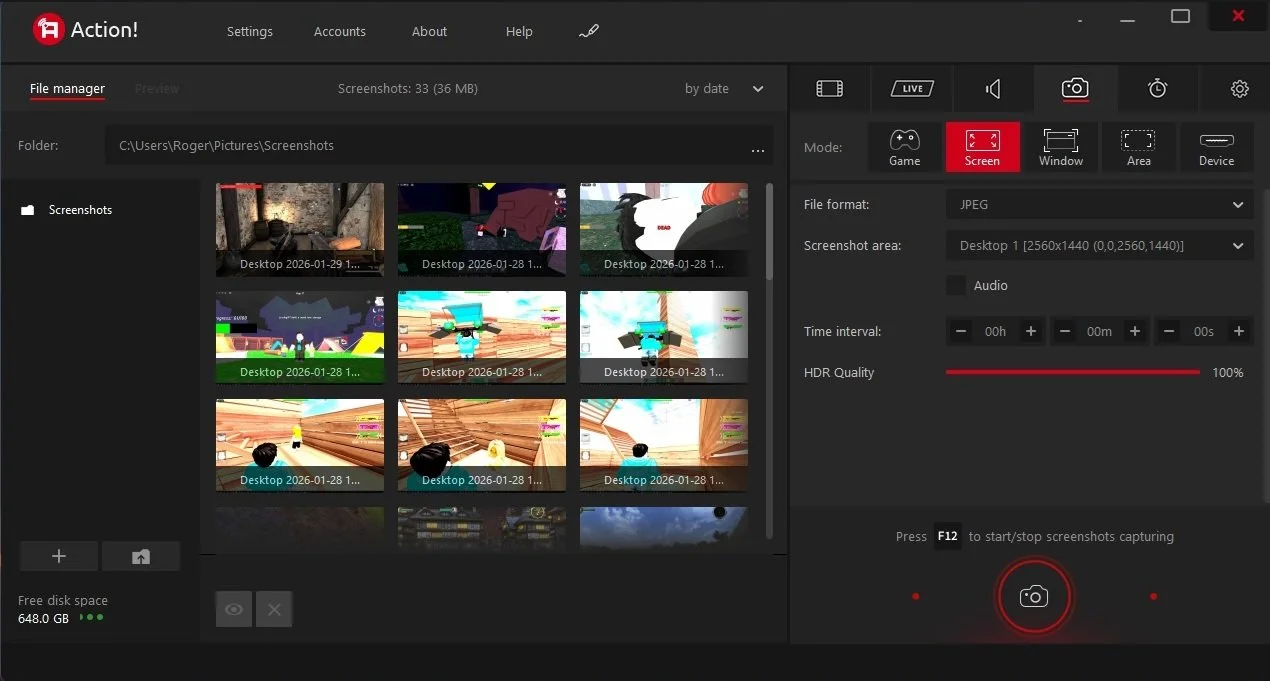
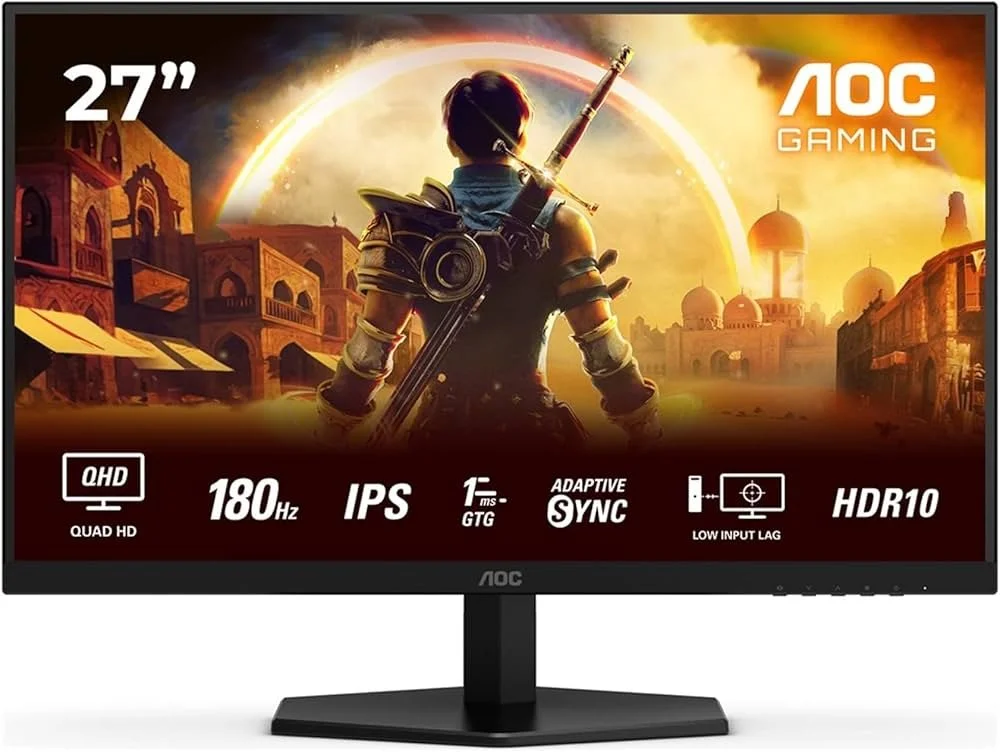
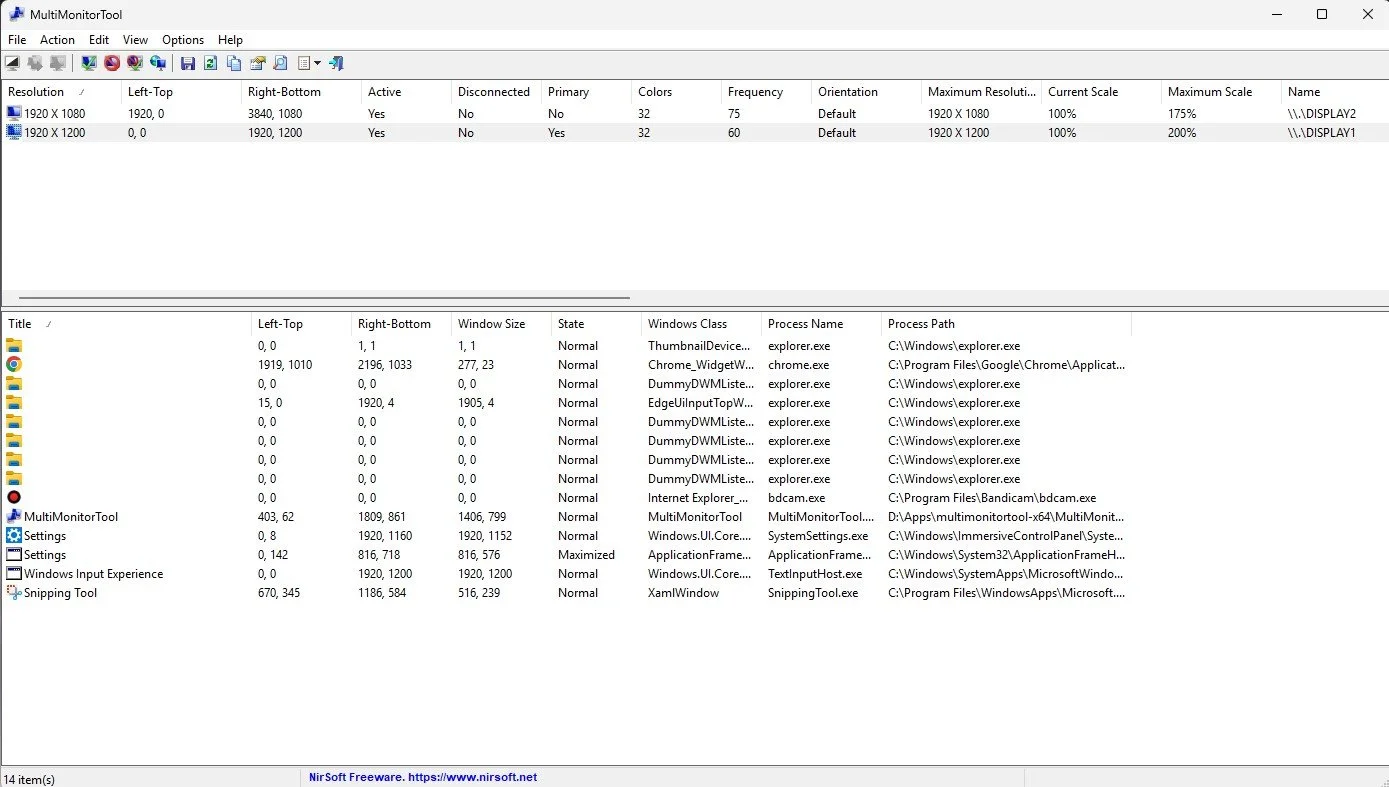
Last November when the latest incarnation of Call of Duty was released (Modern Warfare II), I noticed that when I played the game at 1910 x 1200 on my primary monitor, it looked shit (a technical term). When I ran the game’s benchmark test it showed that the processor was fine but the existing graphics card was underpowered. As this is the primary game that I play at present, I decided to replace the card with a more robust model. Hence I bought an Nvidia GeForce GTX 1660 Super. This was the best model I could get on my budget and it has certainly improved the games performance. I also started playing using my second monitor which has a standard HD resolution of 1920 x 1080, just to squeeze a few more frames per second. I think this reasonable upgrade will prove viable for a while. Warzone 2.0 is by far the most demanding game out of those that I currently play.
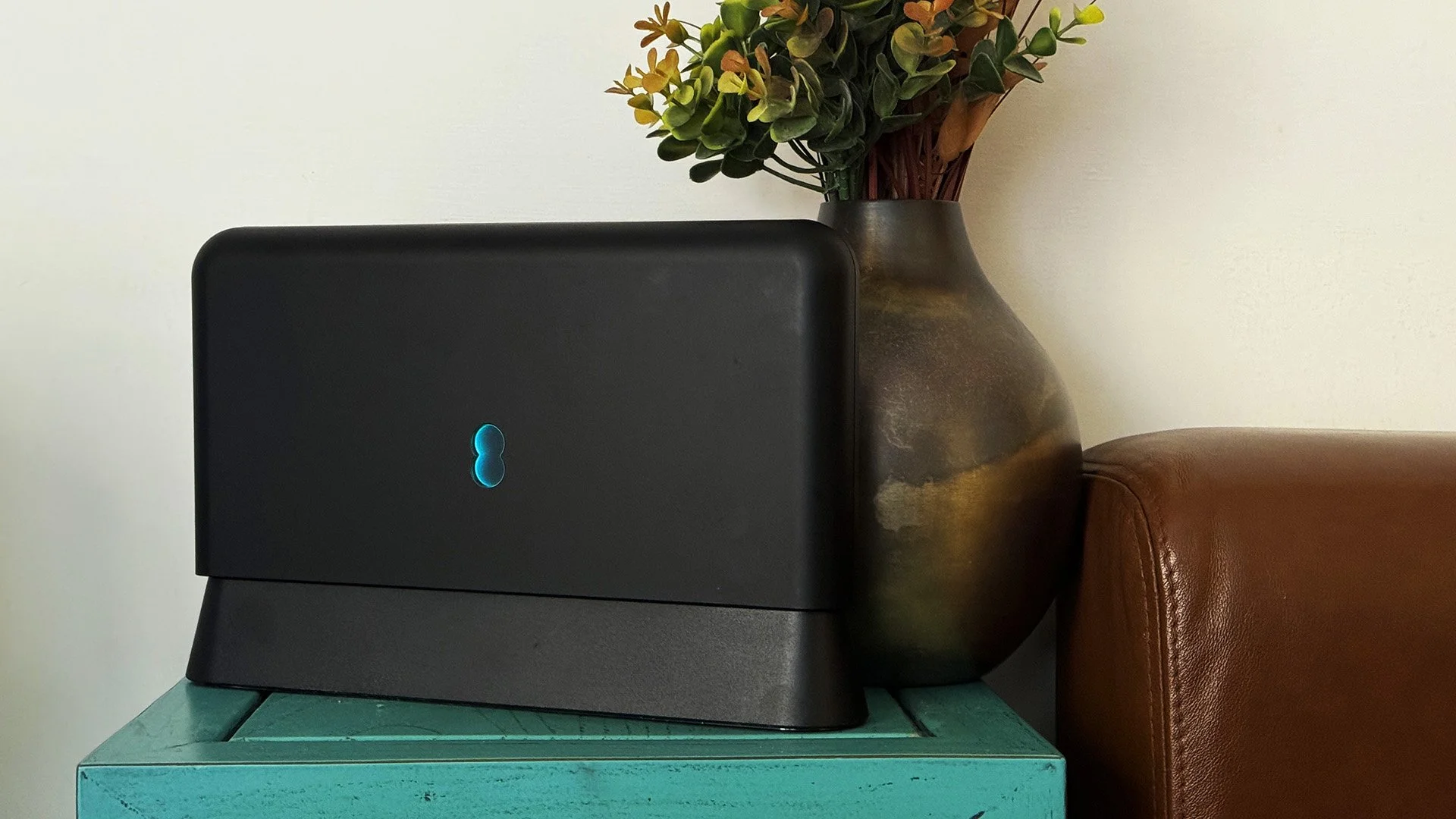
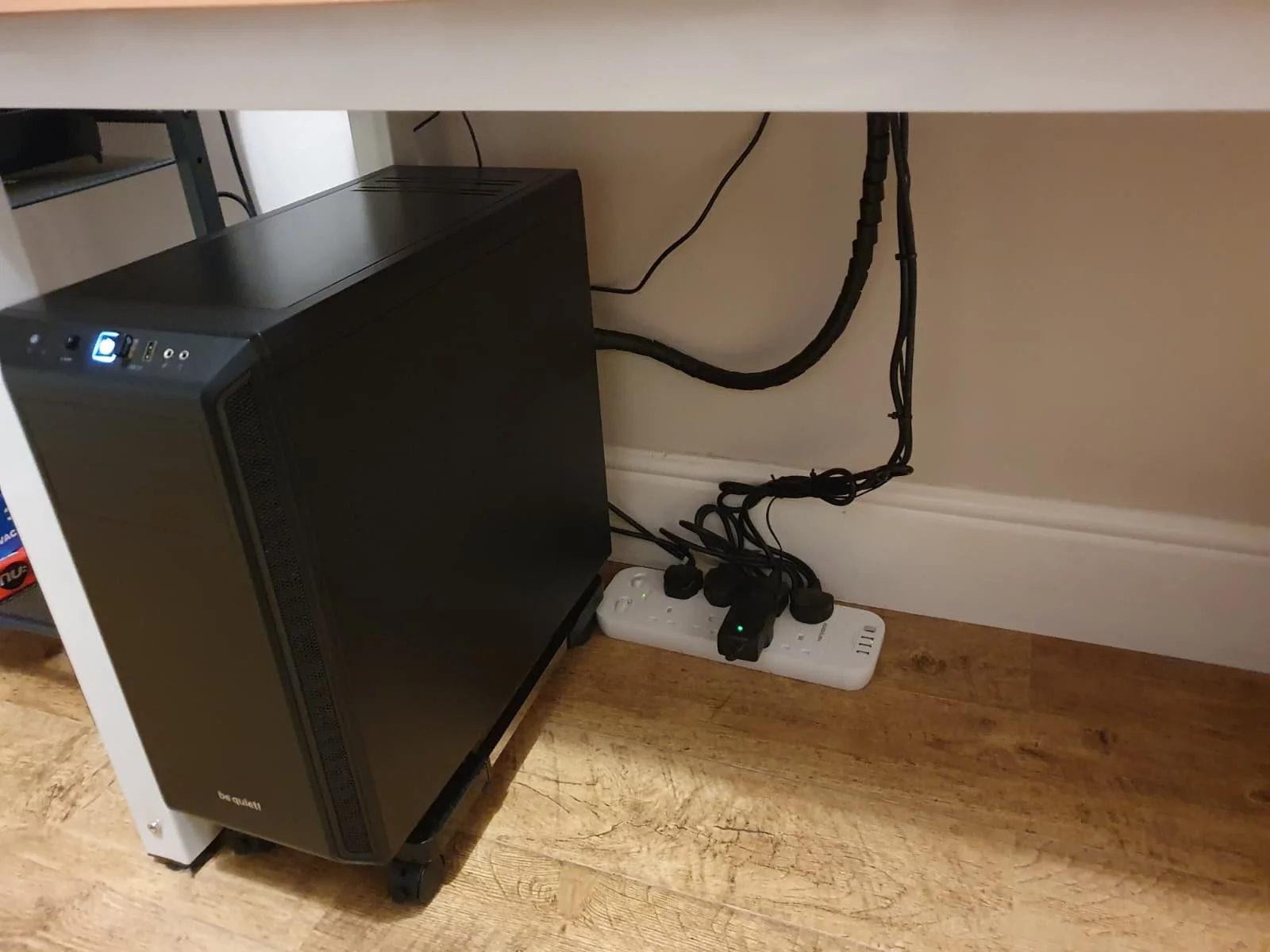
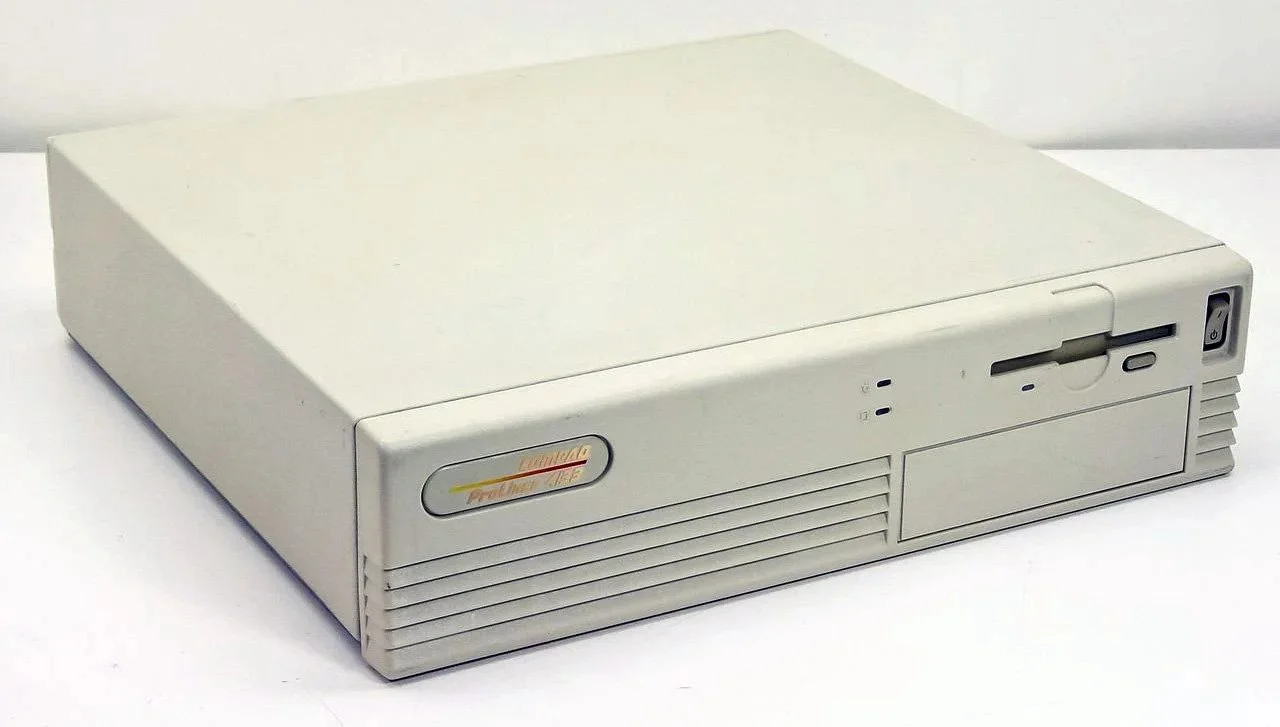
I was hoping that this would be the last upgrade for a while but that has proven not to be the case. A few days ago, my PC shut itself down while I went to make a cup of coffee, and it wouldn’t reboot. I’m not exactly sure what happened but both the bios and the PSU were dead. To cut a long story short, I transferred the motherboard, processor, memory and various peripherals into an old case to determine any damage. The SSD, HDD and graphics card were still working but the rest wasn’t. After perusing Amazon and adding up the cost of replacement parts, I found it was more economical to buy a barebones PC from Palicomp. Hence I replaced my dead AMD Ryzen 5 3600 with Ryzen 7 5800X. The case is well designed to accommodate air flow and there is a substantial heatsink and fan for the processor incorporated in the build.
Fortunately, there were no major issues transferring the existing SSD and HDD into the new PC. The only minor issue I had was the PSU lacking an 8 pin PCIe power connector for the GPU. But there were several unused Molex power cables available, so I bought an adapter which arrived 24 hours later. The barebones PC came with 16GB RAM on a single DIMM which I retained, along with a DVD-RW drive, a GeForce GT 710 graphics card, a USB Bluetooth adaptor and USB Wifi adaptor. The latter 4 items were removed and have been added to my “spare parts” collection. I was inconvenienced for no more than 48 hours and as of now am back to my normal PC setup. However, this unforeseen upgrade has cost me £450 in total. It galls me somewhat that I’ll never know exactly what failed in my previous PC but such is the disposable nature of technology these days.
















Housework and Chores
I was going to start this blog post by saying that, just like death and taxes, housework and chores are something we all have in common. But I have decided to withdraw that statement having been reminded of some houses I’ve visited during the course of my career. Also Twitch can sometimes reveal all and frequently provides a fascinating, if unknowing window into other people’s homes. Hence it is patently obvious that some folk are indifferent to the concept of housekeeping, basic hygiene and human decency. So instead I shall say that for many of us, housework and chores are yet another set of obstacles that stand between us and our leisure time. Something that has to be addressed, more often than not, out of necessity rather than a willing desire.
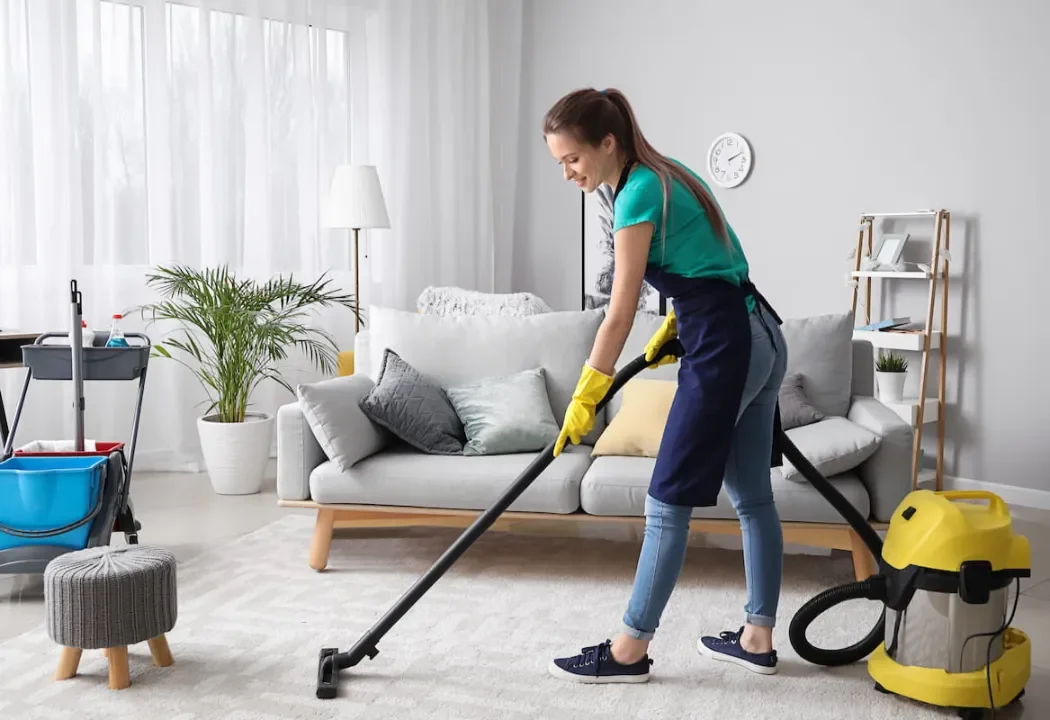
Doing housework is just like this
I was going to start this blog post by saying that, just like death and taxes, housework and chores are something we all have in common. But I have decided to withdraw that statement having been reminded of some houses I’ve visited during the course of my career. Also Twitch can sometimes reveal all and frequently provides a fascinating, if unknowing window into other people’s homes. Hence it is patently obvious that some folk are indifferent to the concept of housekeeping, basic hygiene and human decency. So instead I shall say that for many of us, housework and chores are yet another set of obstacles that stand between us and our leisure time. Something that has to be addressed, more often than not, out of necessity rather than a willing desire.
Homes get dirty and messy by dint of people living in them. To what degree depends on the numbers of individuals, where they live and how messy or tidy they respectively are. Children and pets compound the matter. The former being akin to a biblical plague of locusts. Therefore, the housework that I and Mrs P face, living in our bungalow is not the same as a family with two or three children and a pet. However, some things are universal. We all have to wash and dry clothes, use the vacuum cleaner, clean work surfaces, mop the bathroom floor, bleach the toilet, empty bins and take out the rubbish. We tend to do general cleaning once a week and then every month do a far more comprehensive clean. Both Mrs P and I have a similar outlook regarding these things so tend to work well as a team, when tackling such tasks. We are not messy people and if something isn’t being used it gets put away.
I am a big fan of labour saving devices that genuinely make life easier. I feel the same way about my dishwasher that Americans do about their “right to bear arms”. For me the notion of hand washing a greasy metal tray that has had a leg of lamb roasting in it for several hours is hell on earth. Dishwashers do such tasks far more efficiently than I ever could and effortlessly make everything appear shiny and new. Loading and unloading a dishwasher is a far more straightforward task than individually washing items, rinsing them and then drying them. It also doesn’t give you dishpan hands. Mind you there are also a lot of alleged labour saving devices that do nothing of the sort. Perhaps the universal white elephant of kitchen appliances is the sandwich toaster. A great concept for making hot snacks that in reality is a weapons grade delivery platform for third degree burns. The subsequent cleaning of the hot plates after use is a bane.
In recent years there has been a cultural shift that has seen housework and chores become a means of therapy in certain quarters. Cleaning, organising and decluttering are hailed as acts of catharsism and take on a more metaphorical meaning. If that works for you, so be it. Reality television has certainly discovered that there is a rich vein of material to be mined with regard to people who have unkempt homes or a penchant for hoarding things. As for me and Mrs P, we consider housework to be nothing more than a functional act and we don’t think that we live in a dung heap that merits scrutiny by TV celebrities. So in the meantime, we soldier on doing the various chores in our own way. However, age and health are an increasing factor and so ironing, for example, is now being relegated to only essential items. I wouldn’t be surprised if we end up hiring cleaners at some point. We already pay for a gardener.
Loneliness
I was consulting my list of blog topics, when I spotted the subject of loneliness among the various talking points I’ve collated. “Hah”, I thought. “That will do”, hoping to quickly write four or more paragraphs off the top of my head. However, during the course of some lightning research I discovered the following website, Campaign to End Loneliness and realised that this may not be a subject one can easily extemporise about without being too general or indeed, insensitive. Loneliness exists on a spectrum and is highly subjective. Some of the examples cited by Campaign to End Loneliness, may well sound quite trivial while others are truly heart breaking. All of which highlights, like so many things in life, that the subject is nuanced, subjective and one needs to avoid generalisation. Which raises the point, what can I contribute to such a discussion? My own experiences.
Loneliness
I was consulting my list of blog topics, when I spotted the subject of loneliness among the various talking points I’ve collated. “Hah”, I thought. “That will do”, hoping to quickly write four or more paragraphs off the top of my head. However, during the course of some lightning research I discovered the following website, Campaign to End Loneliness and realised that this may not be a subject one can easily extemporise about without being too general or indeed, insensitive. Loneliness exists on a spectrum and is highly subjective. Some of the examples cited by Campaign to End Loneliness, may well sound quite trivial while others are truly heart breaking. All of which highlights, like so many things in life, that the subject is nuanced, subjective and one needs to avoid generalisation. Which raises the point, what can I contribute to such a discussion? My own experiences.
When I was a teenager, I had a wide circle of friends. I found that being humorous was an easy means to ensure that I was socially engaged. However, as I grew older and wiser, I discovered and began to enjoy the merit of more serious friendships. All too often in life, we find that our social activities are driven by the practical realities of our lives. Hence you become friends with people that you work with, or with other parents or with the family of your partner. Such friendships are subject to change and it is not unusual to find yourself at a point in life where your social circle has shrunk. The matter is compounded by the fact that men are especially poor at maintaining friendships in later life, especially once they’re in a relationship. Hence I now find myself with a reduced social circle. This is not necessarily a complaint but undoubtedly it is a fact.
Shared interests
Now I live with Mrs P who I have known since 1990. We get on well and have shared interests. But we do not live in each other's pockets to coin a phrase and pursue other hobbies and pastimes outside of those that we both enjoy. No matter how much we love and respect our respective partners, most people cannot get by exclusively with one person’s company. This is where friends meet our other needs and if they are absent, they are sorely missed. I have several long term friends but not all of them live immediately to hand. We meet up every quarter and when we do, simply pick up where we left off. But in day-to-day life, I have found that I speak to less and less people. I am not much on small talk and lots of people don’t care for weighty philosophical talking points as an opening gambit when striking up a casual conversation.
I used to find that the internet was a great way of filling this social and conversational gap. Blogging and becoming part of a community certainly has many social aspects to it. When I started podcasting, that meant maintaining a weekly recording schedule and having regular conversations about the subjects I was passionate about with my co-host Brian and guests. I felt engaged and very content. But nothing lasts forever and despite numerous attempts to kickstart the habit, the podcasting community that we belonged to has come to an end. I still enjoy social media and use Twitter but that too has become fragmented. Many of the people I followed have moved to Mastodon, which doesn’t have the same reach. Another factor is that many friends I have met online have chosen to step away from online engagement, as it comes with as many negative connotations as it does positive.
My local pub
So I find myself at the age of 55 feeling at times somewhat lonely. It isn’t a constant feeling and it is certainly not debilitating. However, I do feel there are gaps in my social interactions and it feels at times quite tangible. I profoundly miss my father who was excellent company and a knowledgeable man. He had a knack of hoarding data and could often surprise you with the things that he knew about. He also wasn’t afraid of modernity and would like to know about new technology and social trends. I also occasionally miss the cut and thrust of the work environment. But overall it is just the lack of intelligent company. All too often I’ll read something that I find intriguing and worthy of comment, only to realise that there’s no one around to share the anecdote with. Similarly, if I wanted to nip down the pub and just talk bollocks over a beer, that is something that has to be prearranged.
Naturally, I don’t compare my nominal experiences of loneliness with those who live alone and have no friends or human contact. The relative nature of loneliness per se, means you shouldn’t really try and set one person’s experience against another. What may seem minor to you may be crippling to another. Plus, being a retired man, I certainly have the means to improve my situation. If I want company, to stop feeling removed or isolated, then I need to seek out appropriate social groups. It’s not as if there’s a shortage of such things these days. Problems don’t put themselves right and you sometimes have to step outside of your comfort or indolence zone. Who knows, trying to resolve this matter itself may well be worthy of a blog post. Perhaps such a foray into socialising will remedy the issue or prove that friendships are harder to find and keep these days. Time will tell.
Falling Out Over Politics
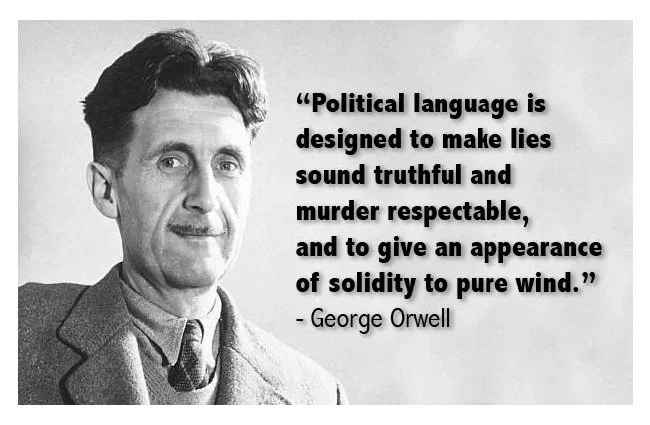
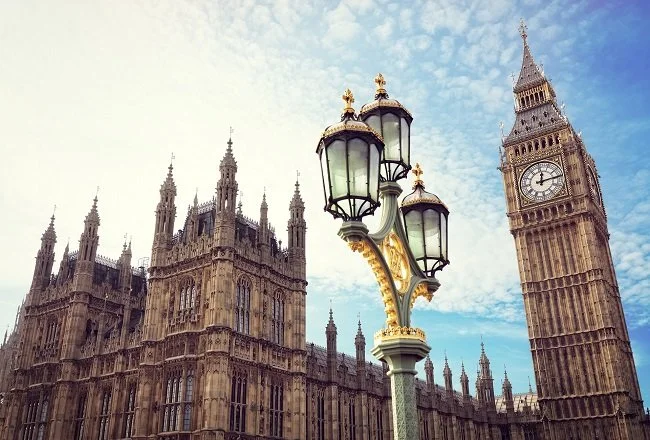
For those who live outside of the UK, let me categorically state that Brexit has broken British politics. Prior to 2016, national politics still broadly functioned along traditional party political lines, with income and class substantially determining voter allegiance. The big three cities (London, Birmingham and Liverpool) maintained their liberal dispositions and Scotland, Northern Ireland and Wales were dominated by their regional politics. Brexit changed all this creating fault lines that fell outside of the existing political status quo. Opinions differed based upon where you lived, how politically literate you were and even education. Your party political allegiance no longer indicated what stance you took on this matter. Furthermore, the discourse around this complex subject was quickly debased into a bipartisan culture war that was toxic and dangerous.
“You cannot reason a person out of a position he did not reason himself into in the first place.” Jonathan Swift
For those who live outside of the UK, let me categorically state that Brexit has broken British politics. Prior to 2016, national politics still broadly functioned along traditional party political lines, with income and class substantially determining voter allegiance. The big three cities (London, Birmingham and Liverpool) maintained their liberal dispositions and Scotland, Northern Ireland and Wales were dominated by their regional politics. Brexit changed all this creating fault lines that fell outside of the existing political status quo. Opinions differed based upon where you lived, how politically literate you were and even education. Your party political allegiance no longer indicated what stance you took on this matter. Furthermore, the discourse around this complex subject was quickly debased into a bipartisan culture war that was toxic and dangerous.
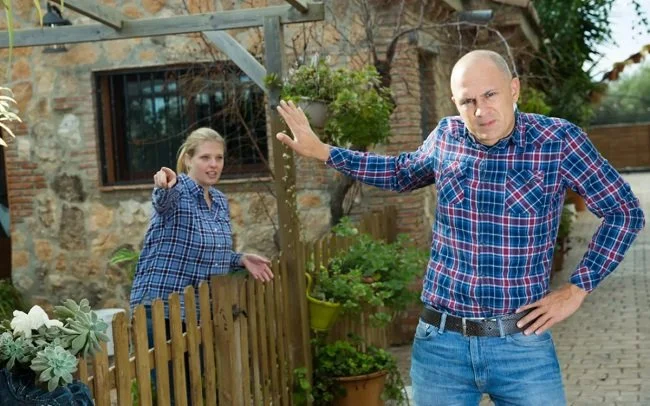
Seven years on, party politics are now fractured by factionalism and public discourse per se has taken on a more emotive and contentious tone. Brexit has divided not only politics but family and friends. The nature of the debate both in parliament and the national media has been far from convivial and has shown that many ideas and concepts that many thought were universally embraced, are in fact not. The COVID-19 pandemic and subsequent lockdown, the economic impact of the war in Ukraine and the rise of social media culture has further exacerbated political and societal divides. So I find it somewhat risible when I read such naive comments as “it’s amazing that people fall out over political opinions”, as I did on a national news website recently. The days of politely agreeing to disagree are long gone as UK politics becomes more like that of the US.
The generic nature of the two main UK political parties
To many observers outside of the UK, for decades our national politics has been a bland and somewhat predictable fight that took place in the centre ground. Extremes on both sides of the political divide have been confined to the wings. For anyone over a certain income, politics could be ignored because it did not appear to directly impact upon your life. It may well be a different matter for those on low incomes or marginalised minorities but as such groups did not have a substantive voice in political terms, the perception of a broad status quo that simply changed its custodian every 4 years, has endured. I have spoken many times to European friends who have struggled to discern any major political difference between the modern Conservative and Labour parties.
Hence during these times, if you differed with your friends, family or colleagues over fiscal policy, education or national infrastructure you could easily shrug it off. Even those invested in the distinct political ideology of a particular party tended to treat it more as an academic debate, rather than a religious credo. Obviously there would be some individuals who were diametrically opposed to others due to hardline political views but this was the exception and not the rule. Ultimately, any problems arising from political policy were the governments fault and not ours. All we have to do is turn up and vote every so many years and then complain during the intervening period. The Brexit referendum changed that due to its inherent nature and consequences. A referendum is a very direct form of politics which bypasses governmental policy and responsibility. The consequences therefore lie directly with the electorate, whether or not they understand and recognise this.
The realities of Brexit
As a result of the 2016 referendum the UK has left the European Union and there have been direct economic, sociopolitical and practical consequences, irrespective of one’s opinion of the rectitude of that decision. Businesses have subsequently closed, jobs have been lost and migrant employees have left the UK resulting in a labour shortage. The economy is stagnating and the cost of living is going up. Travelling to Europe has become more complex and costly. The consequences of Brexit are tangible and we all feel them. Hence it does not come as any surprise that friends, family and colleagues will come into conflict over this. Unlike a general election where the actions of the government can be blamed on its party membership that set policy, the ramifications of Brexit can be attributed to those who directly voted for it.
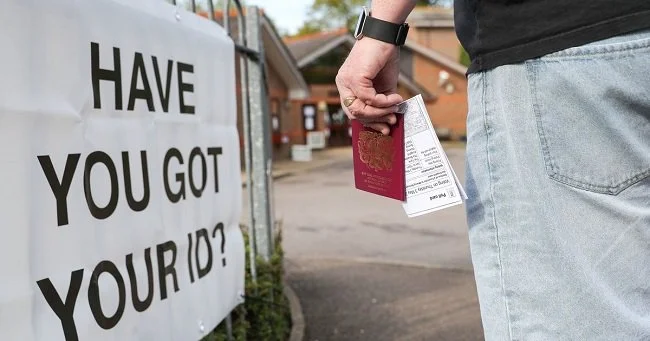
The UK is currently suffering from a stagnating economy, high inflation and labour shortages. Problems that have been exacerbated by nearly thirteen years of government by the same political party. Although the next election is not due until 2024, the Conservative Party are suffering greatly in the polls. The majority of the electorate attribute a lot of the aforementioned woes to their policies. However, due to the nature of the First Past the Post electoral system there is a chance that a targeted campaign of fear mongering and misinformation in the right marginal constituencies may well see them return to office. Despite having an electorate of 46.5 million, ultimately it is approximately 350,000 voters in swing seats that determine the outcome of UK General Elections. Such a clear disparity in the importance of an individual vote, makes the outcome of an election profoundly personal.
UK Doctors Demonstrating for increased pay
Some political journalists have suggested that politics may well “settle down” and return to being “remote” when the UK becomes economically stable once again. However, I think those days are gone, now that politics has embraced the culture wars and detached itself from facts, data, expertise and reasoned argument. The notion of doing what is collectively the best for all has been replaced with attacking and punishing groups that have been successfully “othered”. However, a growing part of the electorate have realised this, finding themselves on the wrong side of the dividing line. This shift in perception renders the voting habits of others highly personal. If your neighbour openly admits to voting for a party that subsequently limits your rights, taxes you further, or seeks to criminalise your actions then they are complicit in such outcomes.
I therefore suspect that falling out over politics is going to increase in the next decade. Politics in the UK is becoming more populist and less based in reality. Extreme policies are harmful to people and have real world consequences. Hence voting for such things is not something one can just shrug off. You will be judged by your actions. Such a sociopolitical climate will just further entrench tribalism. Your political views and affiliations will increasingly impact upon the decisions you make in life and shape your social circle, where you work and how you’re perceived by others. The notion of “I don’t date (insert political party here)” being part of your biography on a dating app, will no longer be some niche concept. It may even become a standard. If living in such a world worries you, then we need to make politics less partisan and return to agreeing to disagree. Sadly, I suspect that it is too late to put that particular genie back into the bottle.










DMZ and "Pay to Win"
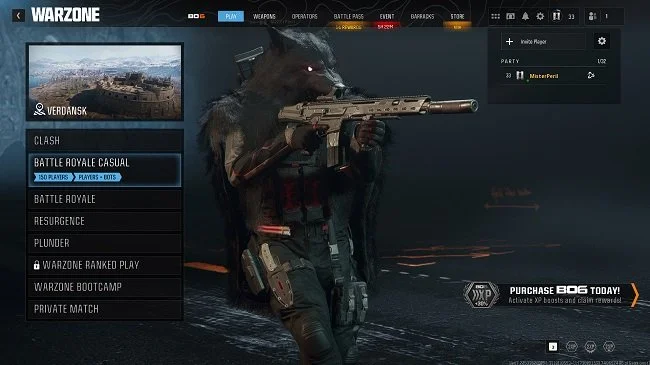
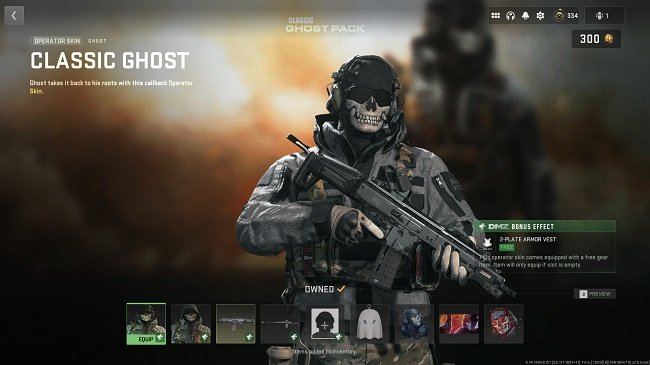
For those who are not familiar with this latest niche piece of “gaming outrage”, it regards the extraction shooter Warzone 2.0 DMZ, which is part of the Call of Duty franchise. When you enter the game (either solo or in a squad), you use gear that you have previously collected. A key part of the game is looting and upgrading your weapon, bullet proof vest (there are 3 tiers) and sundry support items. If you die, then you lose all the equipment you are currently carrying. With this in mind, Activision have recently added two purchasable gear bundles to the game store. One comes with a medium size backpack by default. The other comes with a 2 plate vest (tier 2) and two weapons that only have a 15 minute cooldown. This does offer a degree of convenience. Furthermore, the second bundle is tied to the Ghost operator skin, who within the game’s canon is an iconic figure. Hence there has been a great deal of debate over the rectitude of these bundles.
For those who are not familiar with this latest niche piece of “gaming outrage”, it regards the extraction shooter Warzone 2.0 DMZ, which is part of the Call of Duty franchise. When you enter the game (either solo or in a squad), you use gear that you have previously collected. A key part of the game is looting and upgrading your weapon, bullet proof vest (there are 3 tiers) and sundry support items. If you die, then you lose all the equipment you are currently carrying. With this in mind, Activision have recently added two purchasable gear bundles to the game store. One comes with a medium size backpack by default. The other comes with a 2 plate vest (tier 2) and two weapons that only have a 15 minute cooldown. This does offer a degree of convenience. Furthermore, the second bundle is tied to the Ghost operator skin, who within the game’s canon is an iconic figure. Hence there has been a great deal of debate over the rectitude of these bundles.
Like many multiplayer games, there is a broad spectrum of player skill in DMZ. If you are at one end, then these so-called “pay to win” bundles are not required. Skilled players will maintain multiple operator slots (you can have up to 5) with appropriate gear for a variety of tasks. If you’re at the other end or approaching the middle of the skill spectrum, then the 2 plate vest, 15 minute cooldown weapons and medium bag cosmetic skins offer a practical benefit. And that benefit is one of convenience. A player doesn’t start the game immediately feeling vulnerable and having to search for better gear. However, I seriously doubt that the benefits offered matter little to top tier players. In my experience high end players and those of lesser skill seldom cross paths. When I play DMZ I find myself grouped with players of commensurate skill to my own. IE Distinctly average.
Ultimately, I find that the arguments against these “pay to win” bundles are mainly ideological. Objections are usually made by players that consider the game to be primarily about skill, leaderboards, hierarchies and perceived status. The sort of gamers that see DMZ as competitive and treat it like a sport, with the assumption of associated rules and player etiquette. Although players who think this way are entitled to their opinion, they need to realise that not all the playerbase feel the same way. Many, myself included, consider online gaming a recreational service. I play for entertainment and fun. I also pay money for this service and therefore expect a degree of “quid pro quo”. That’s not to say I want frictionless gaming, but I don’t expect my fun to metaphorically be sacrificed on the altar of more skillful players’ philosophy.
I therefore fully expect Activision to continue to monetise the game in this fashion and to take it as far as they can before there is a genuine mutiny. In a perfect world there would be no “pay to win” and players would be far more appropriately segregated to ensure that they were provided with a more equitable gaming experience. But we live in an imperfect world, and developers always prefer the path of least resistance as opposed to doing something labour intensive. So it is pointless to expect anything so egalitarian as a removal of “pay to win” items.
Finally, it never ceases to amaze me how so many gamers temporarily suspend their default consumerism and libertarian outlook and expect a meritocratic and altruistic approach from the video game industry. An industry that in many ways is the embodiment of the worst excesses of modern capitalism. They will complain about fairness, morality and ethics in the video games they play righteous indignation. Something they fail to do in other aspects of their real lives on a daily basis. Say no to “pay to win” in Warzone 2.0 DMZ but fuck universal healthcare because that’s “socialism”. Such is the cognitive dissonance of Gamers (™).



IFS Cloud Cable Car
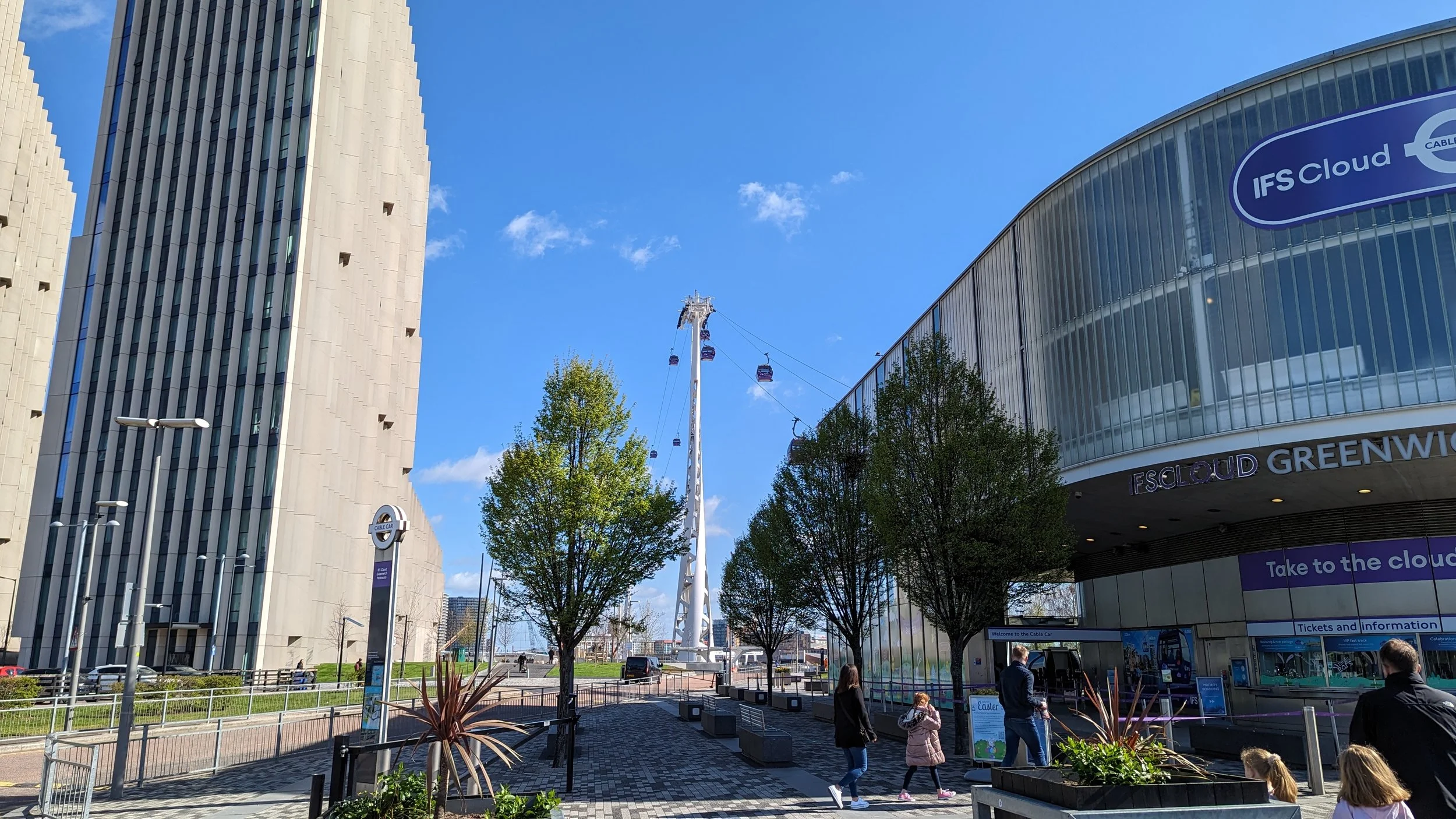
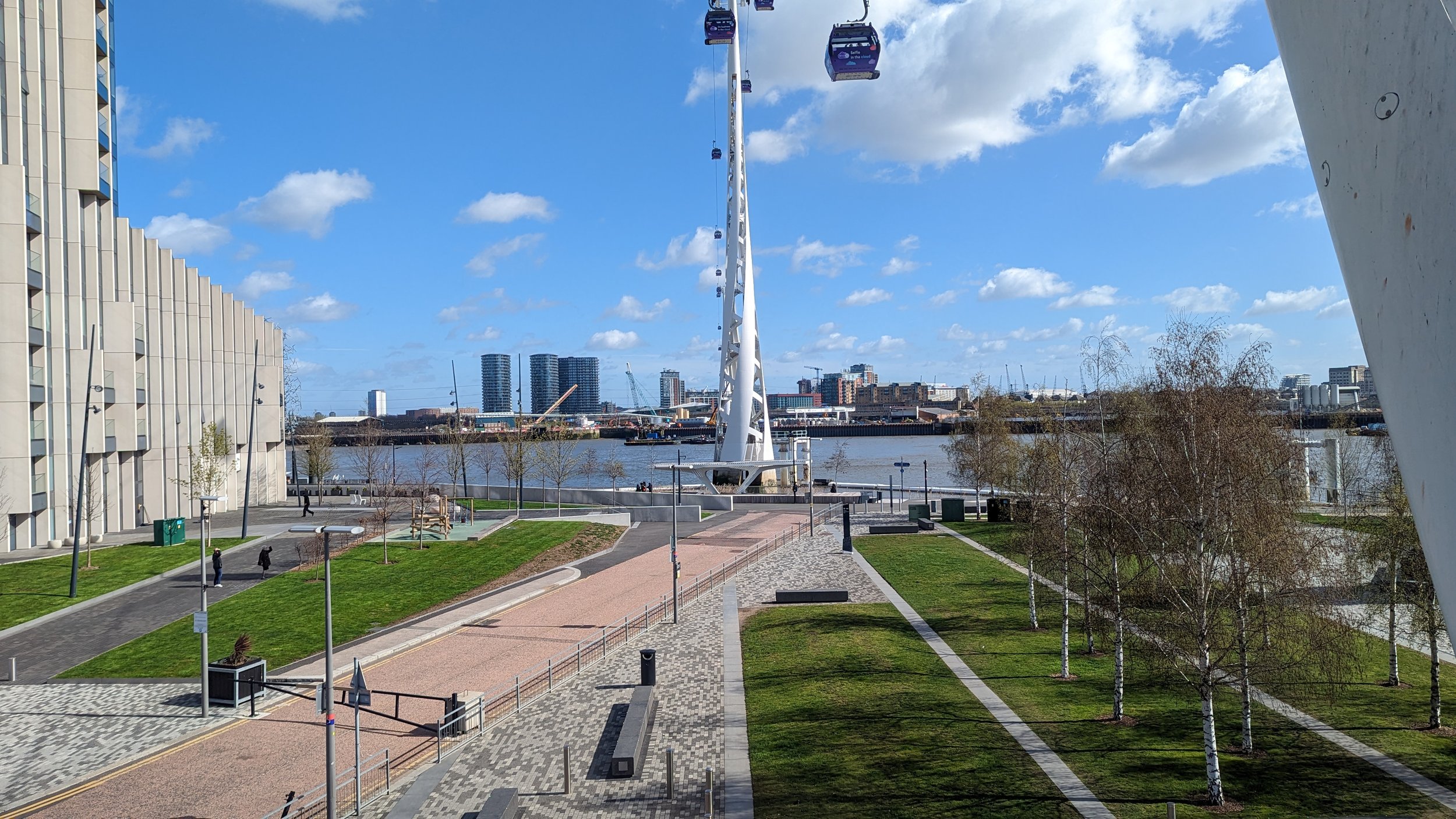
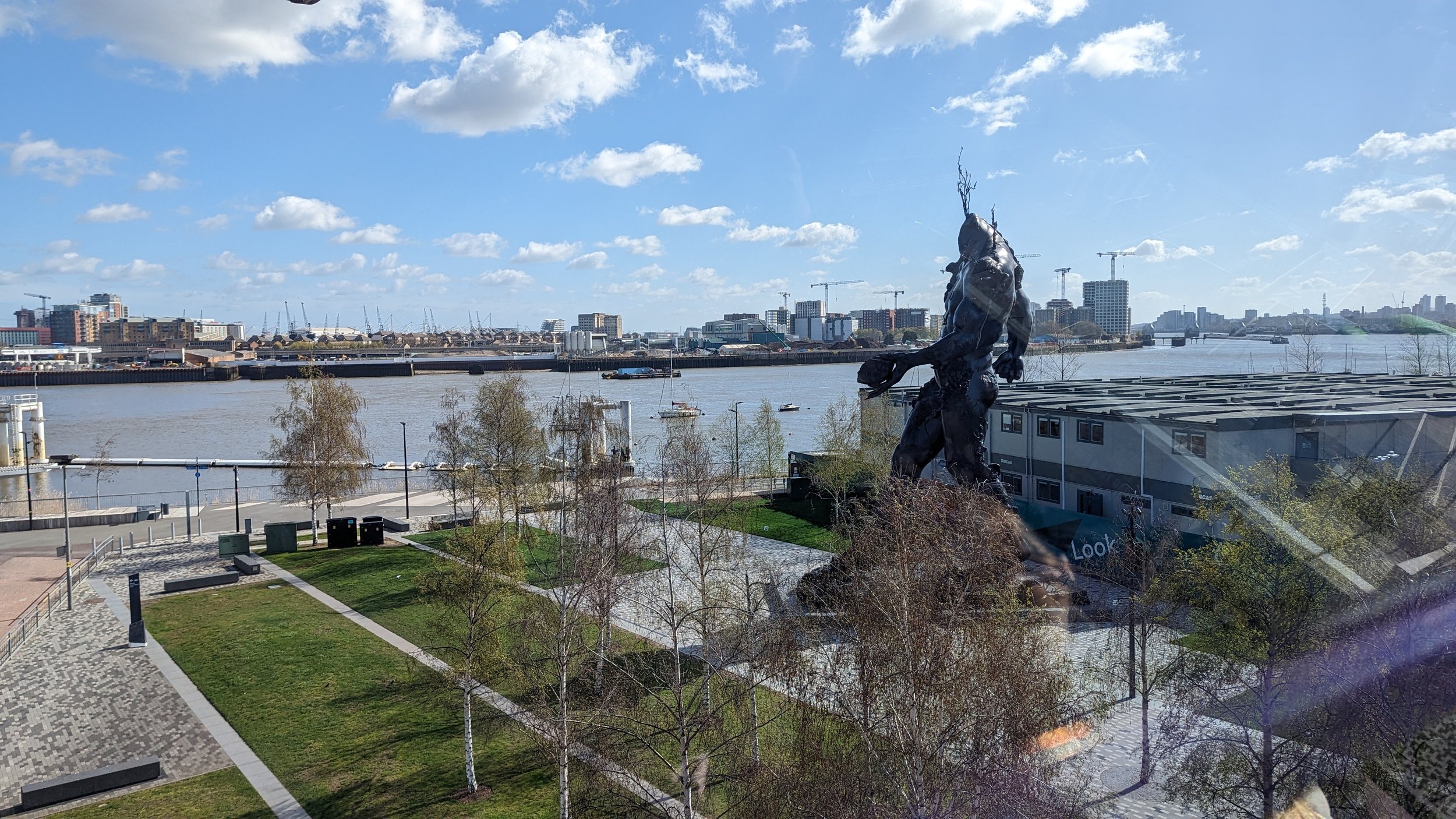
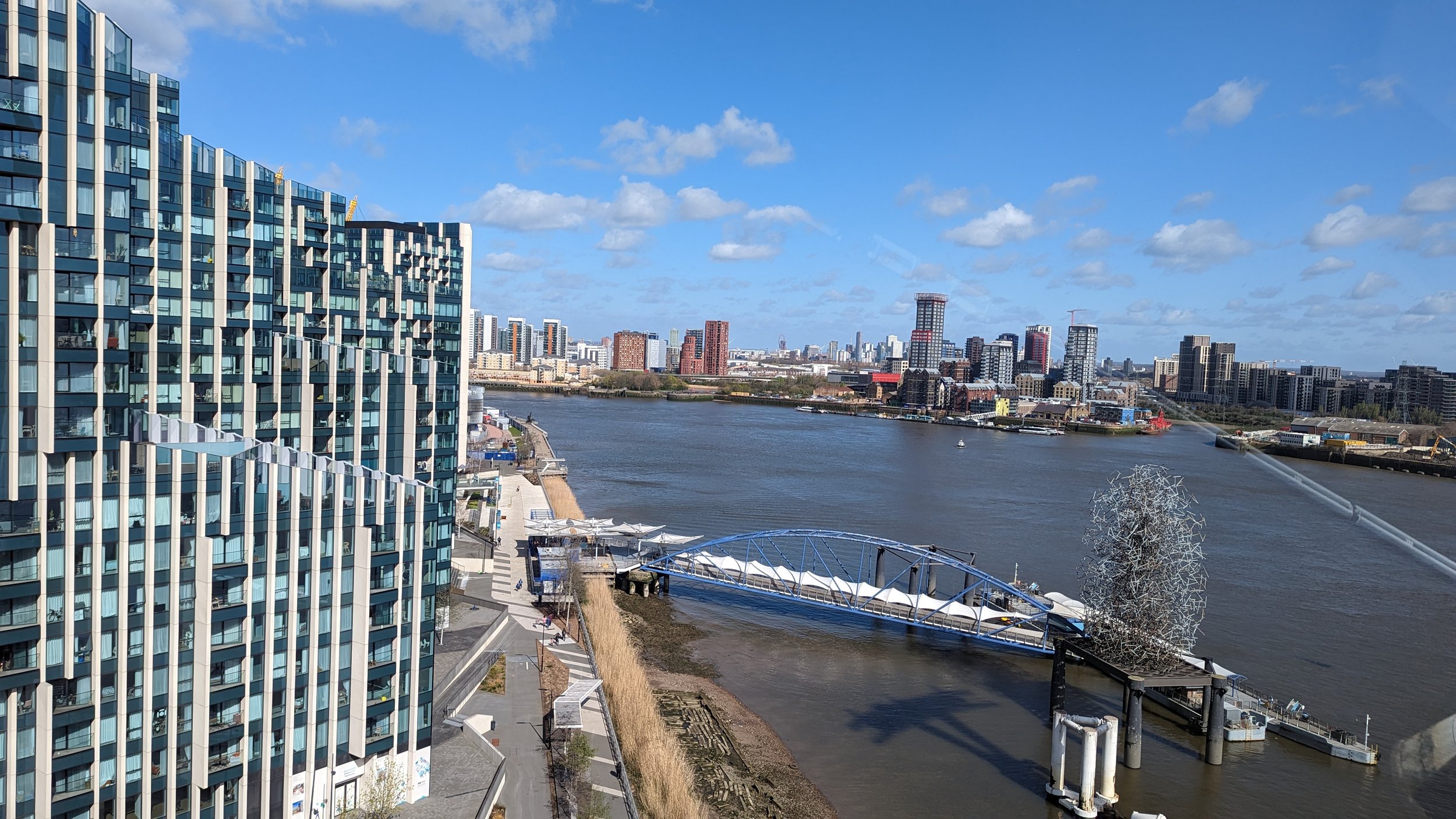
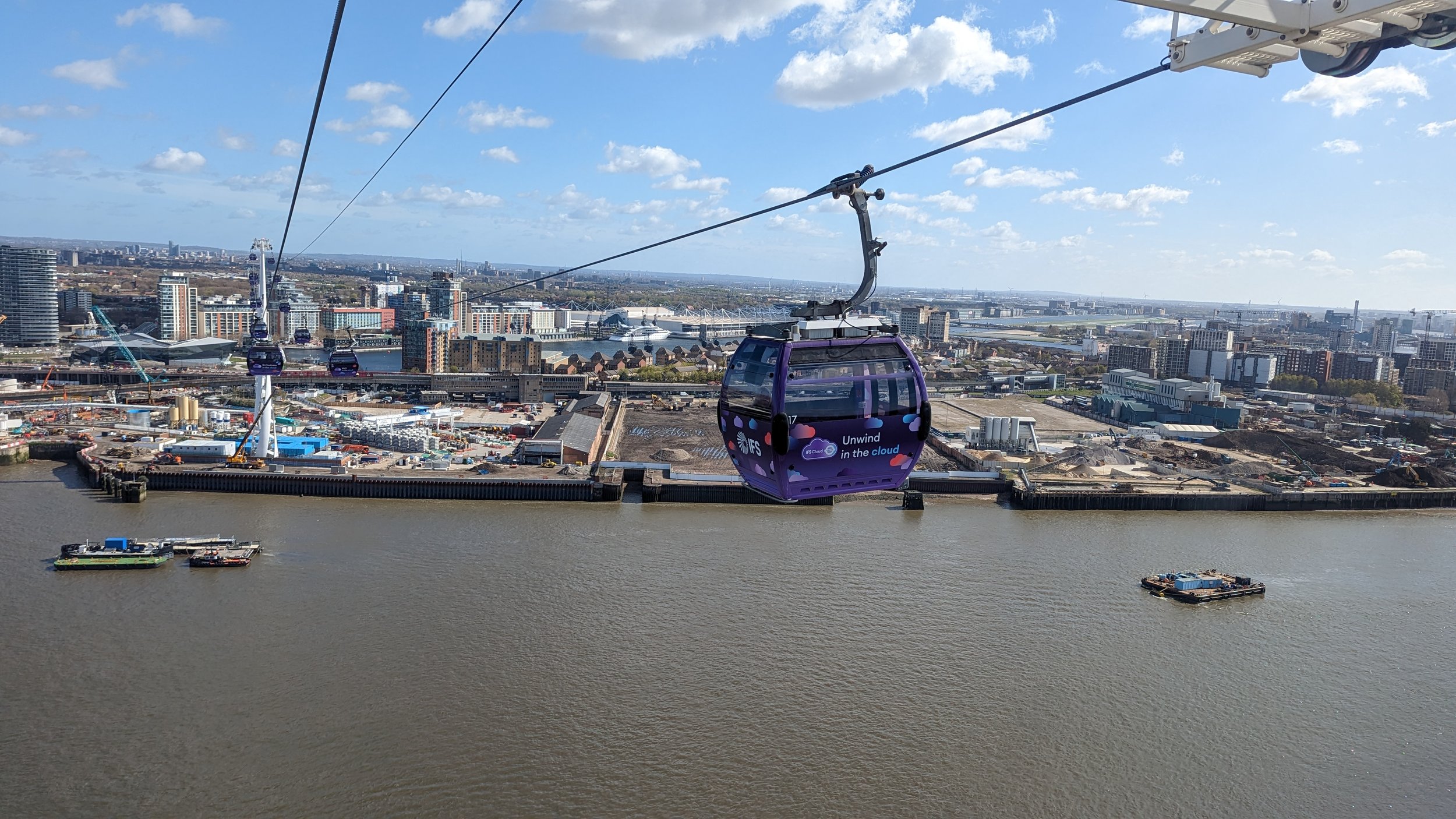
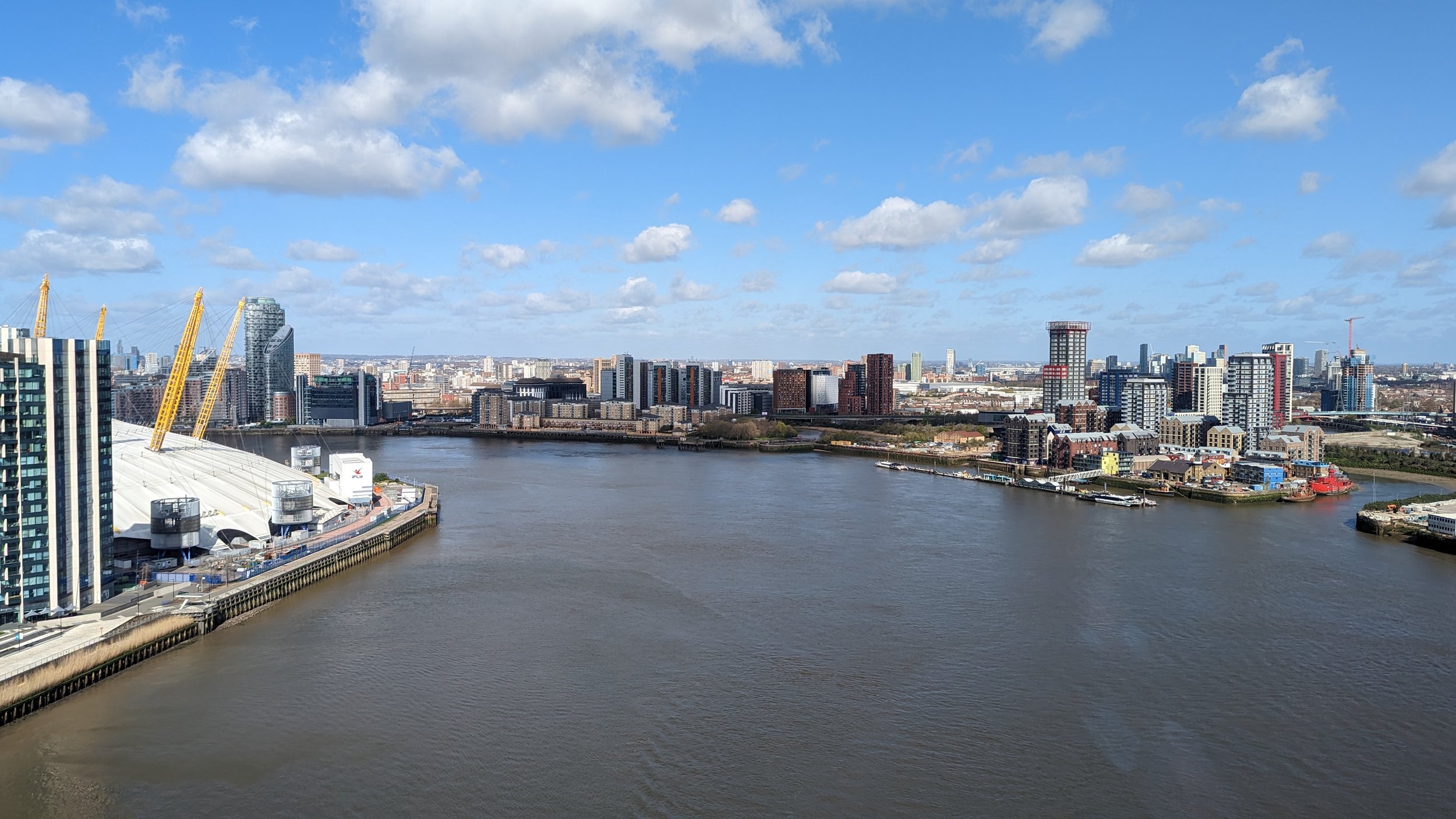
Regardless of whether you deem the IFS Cloud Cable Car a white elephant, a political folly or just a mistake in terms of tourism, it cannot be denied that the view it provides over South East London is impressive. At a height of 90 metres (300 feet), on a bright and sunny day you can see from City Airport to Canary Wharf. Located at Greenwich Peninsula, the IFS Cloud Cable Car (as it is now called) opened in June 2012. It was initially promoted as a viable form of public transport across the Thames, linking North Greenwich and Royal Victoria stations. In October 2012, nearly 100,000 journeys were made. However, after the London Olympics, passenger rates fell and since then IFS Cloud Cable Car has become more of a tourist attraction, rather than an integral means of commuting.
Regardless of whether you deem the IFS Cloud Cable Car a white elephant, a political folly or just a mistake in terms of tourism, it cannot be denied that the view it provides over South East London is impressive. At a height of 90 metres (300 feet), on a bright and sunny day you can see from City Airport to Canary Wharf. Located at Greenwich Peninsula, the IFS Cloud Cable Car (as it is now called) opened in June 2012. It was initially promoted as a viable form of public transport across the Thames, linking North Greenwich and Royal Victoria stations. In October 2012, nearly 100,000 journeys were made. However, after the London Olympics, passenger rates fell and since then IFS Cloud Cable Car has become more of a tourist attraction, rather than an integral means of commuting.
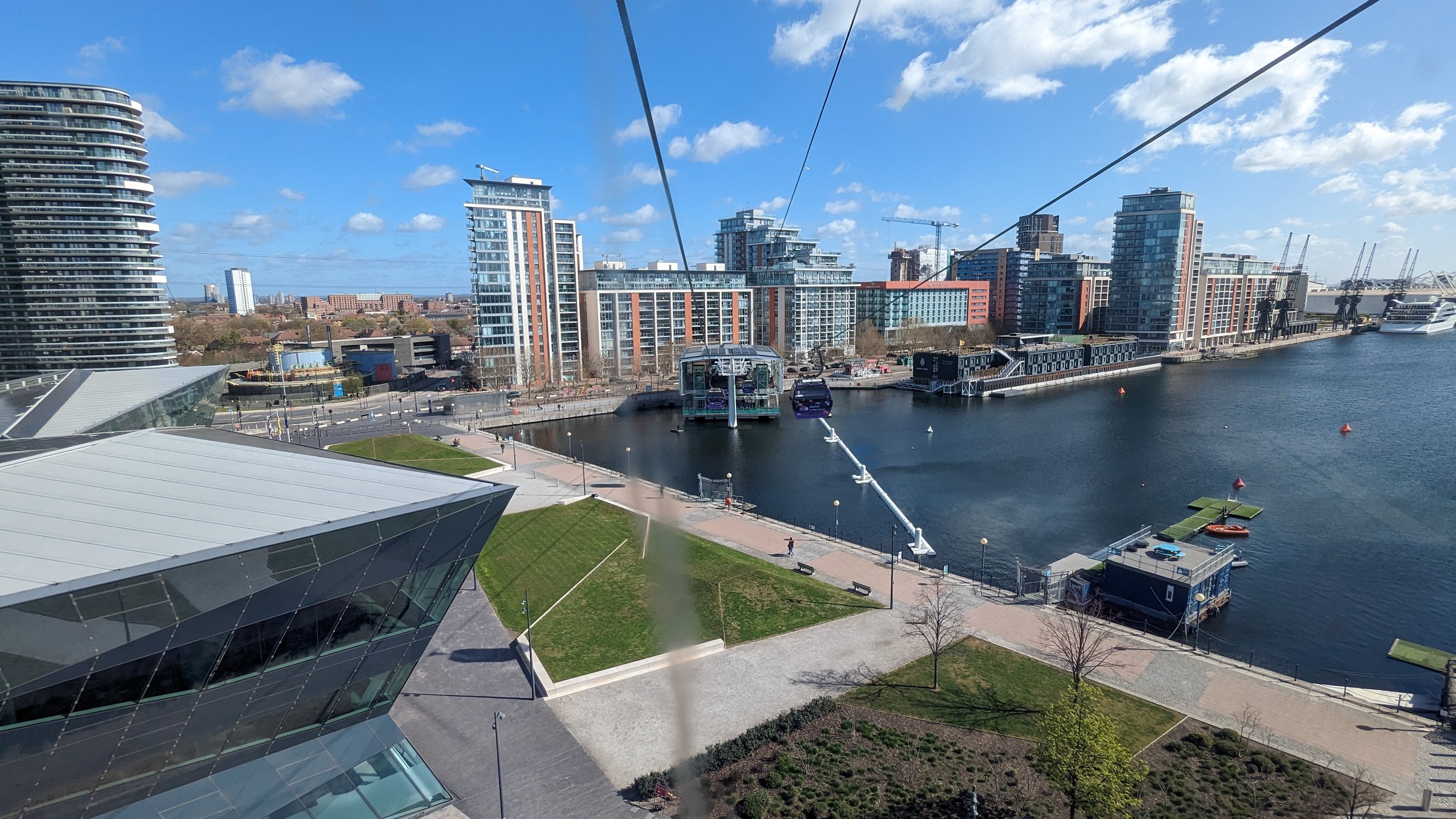
Today, myself, Mrs P, the son and the three grandchildren took a bus from Sidcup to Greenwich Peninsula. The IFS Cloud Cable Car is a short walk from the bus terminus outside North Greenwich station. Fares are £6 for adults and £3 for children between the age of 5 and 15. Children under 5 travel free of charge. It cost us £24 for a one way trip to the other side of the river. We took the lift from the ticket office to the cable car platform and within minutes several gondolas arrived. As it was 10:30 AM on a Thursday, during the Easter holidays, most of the passengers were tourists. Access is safe and easy. Staff are available to help passengers accordingly. We were fortunate to have a gondola to ourselves and as the weather was bright without too much cloud, we had optimal conditions to enjoy the 10 minute journey over the river Thames.
Greenwich Peninsula, Canary Wharf, Poplar and Silver Town have been extensively redeveloped over the last 40 years. There are a few cranes preserved for posterity indicating that the area was at one time, a busy dock. However the waterfront and surrounding areas are now home to the O2 Arena, the ExCel Centre, City Hall and an ever expanding number of luxury apartments (owned by Chinese property developers and Russian oligarchs). Opulent yachts are moored in the Royal Victoria Dock and planes come and go at City Airport. The area certainly presents the modern face of London. Furthermore, there are still large swathes of land in the vicinity that are currently under development, indicating that the view from the IFS Cloud Cable Car may well be even more impressive in 5 years time.
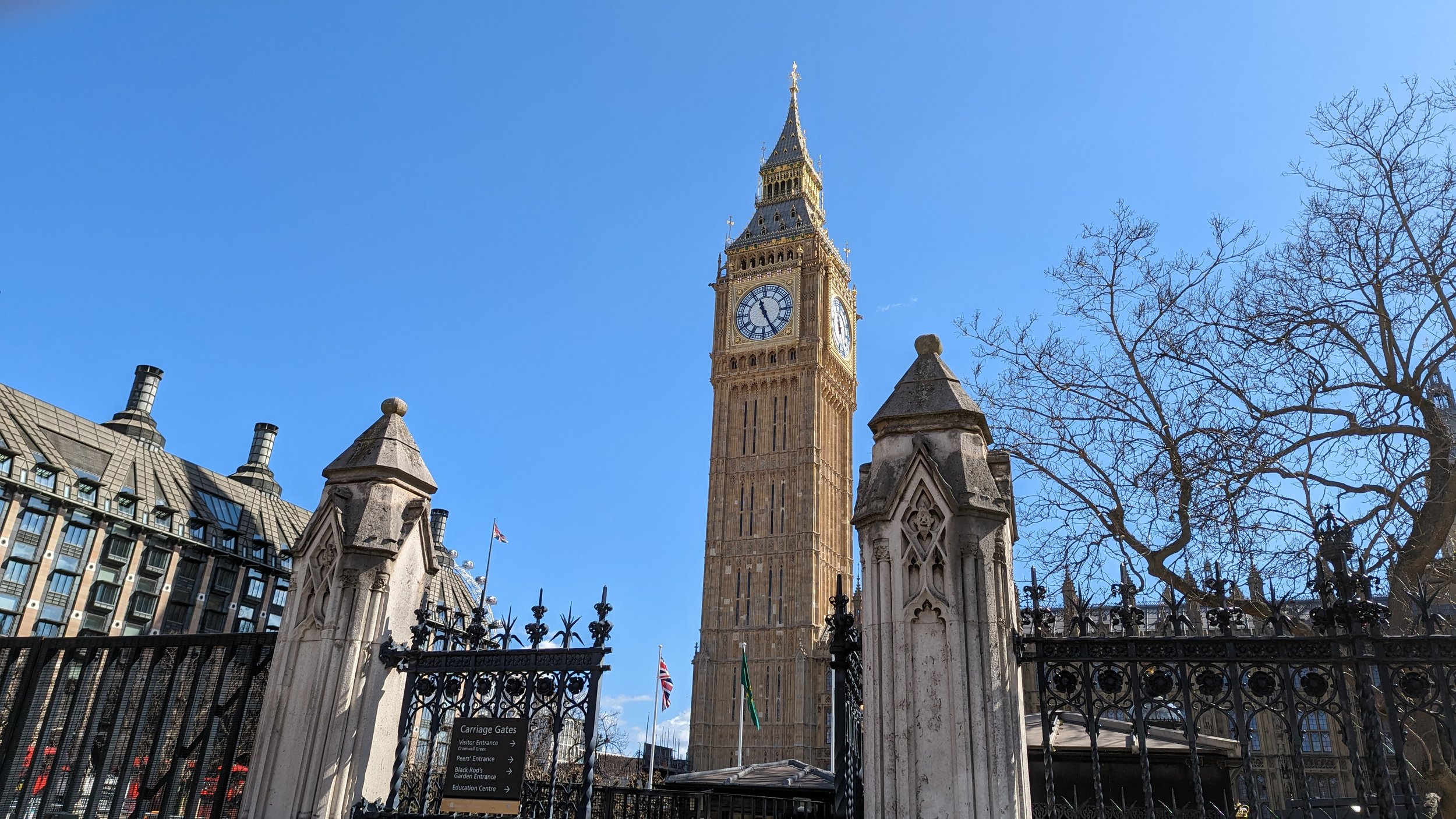
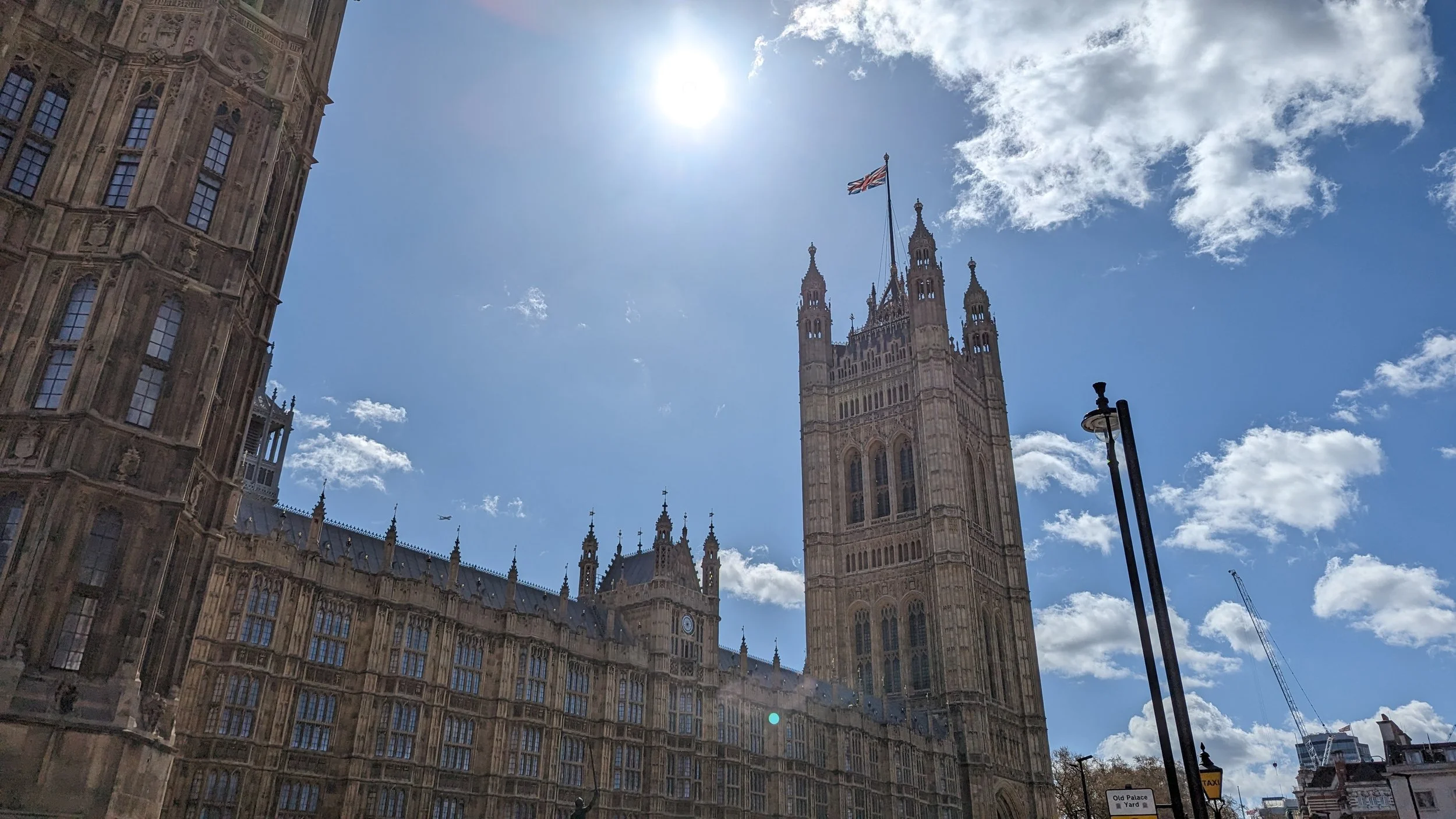
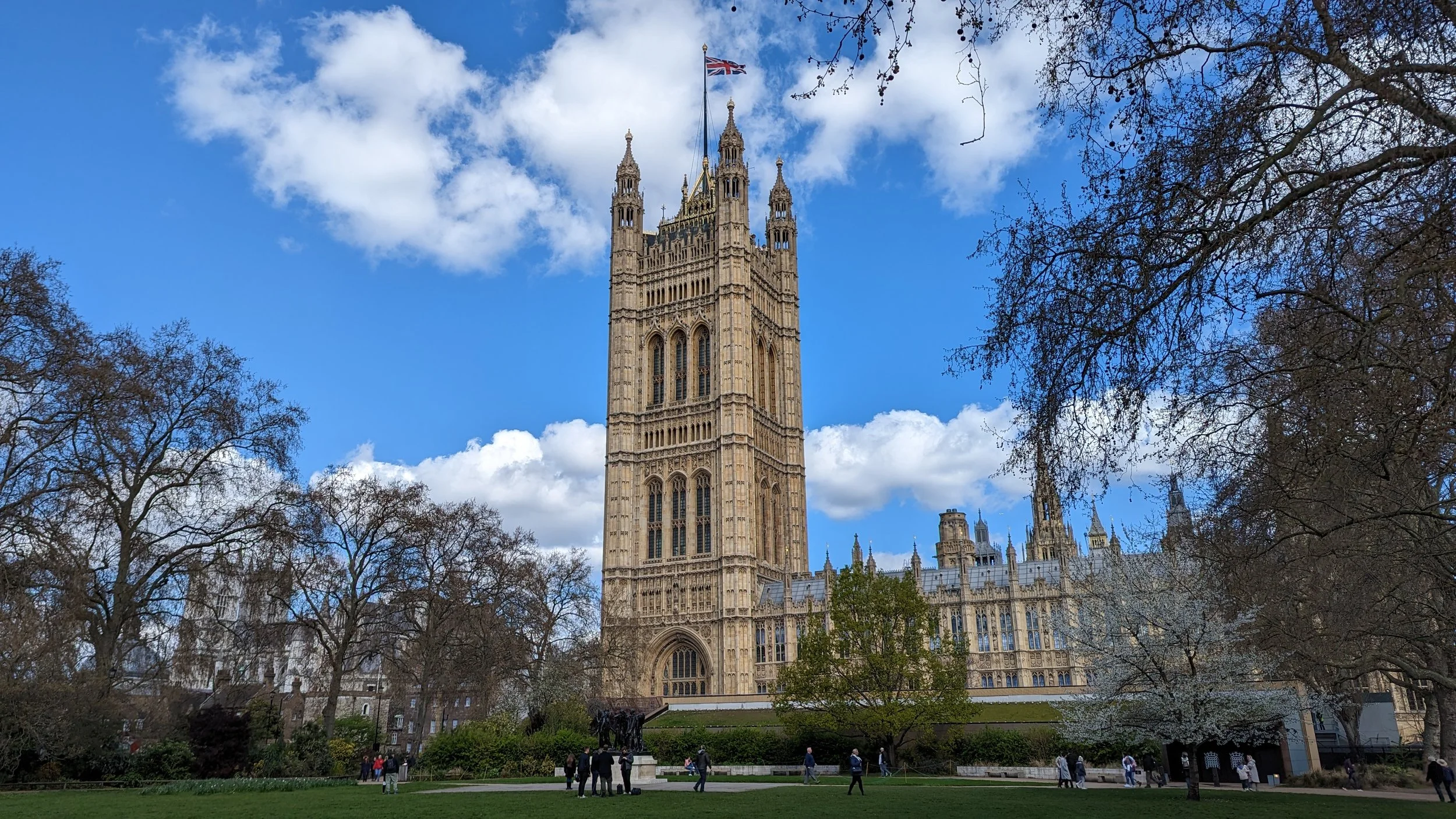
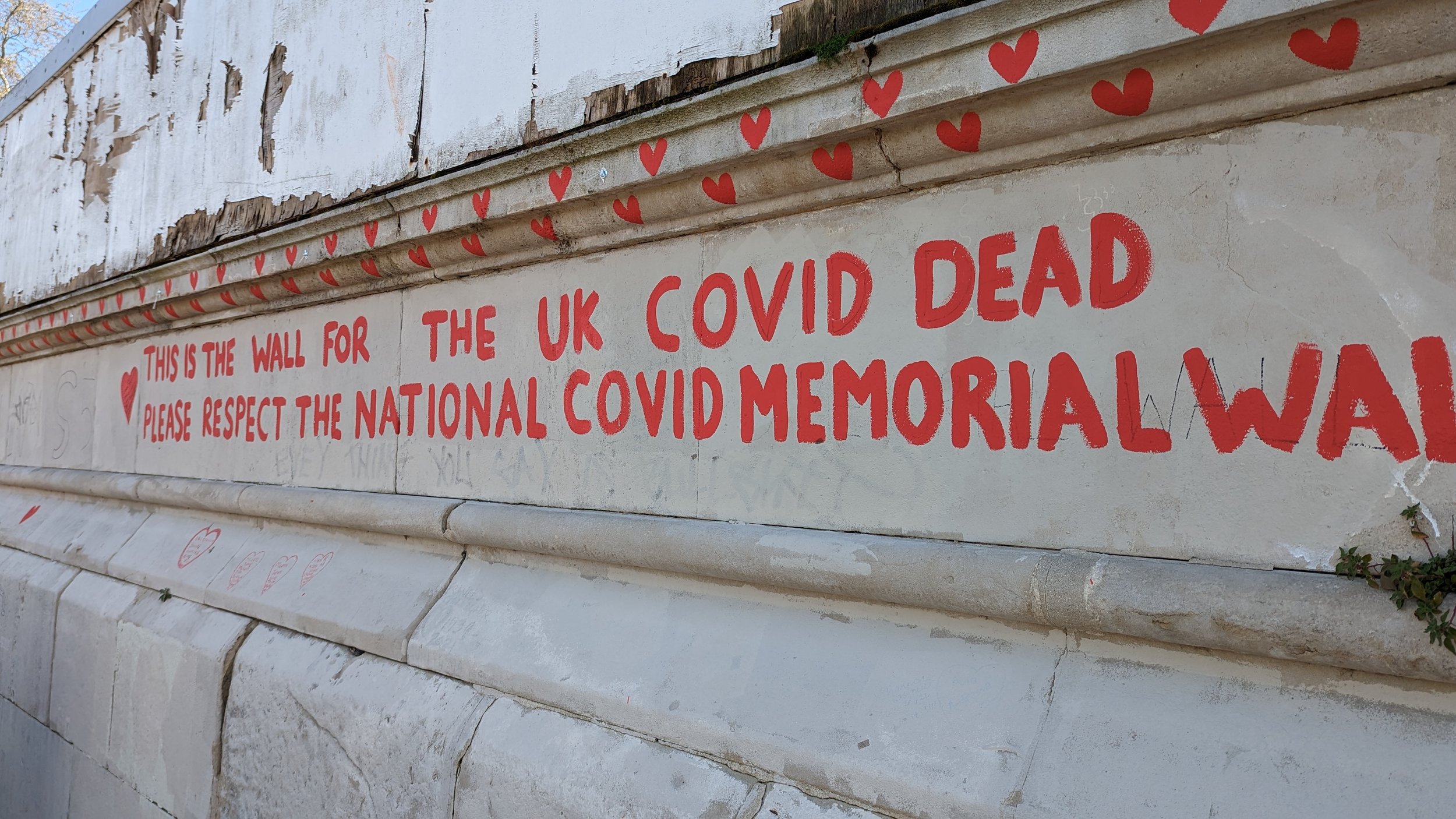
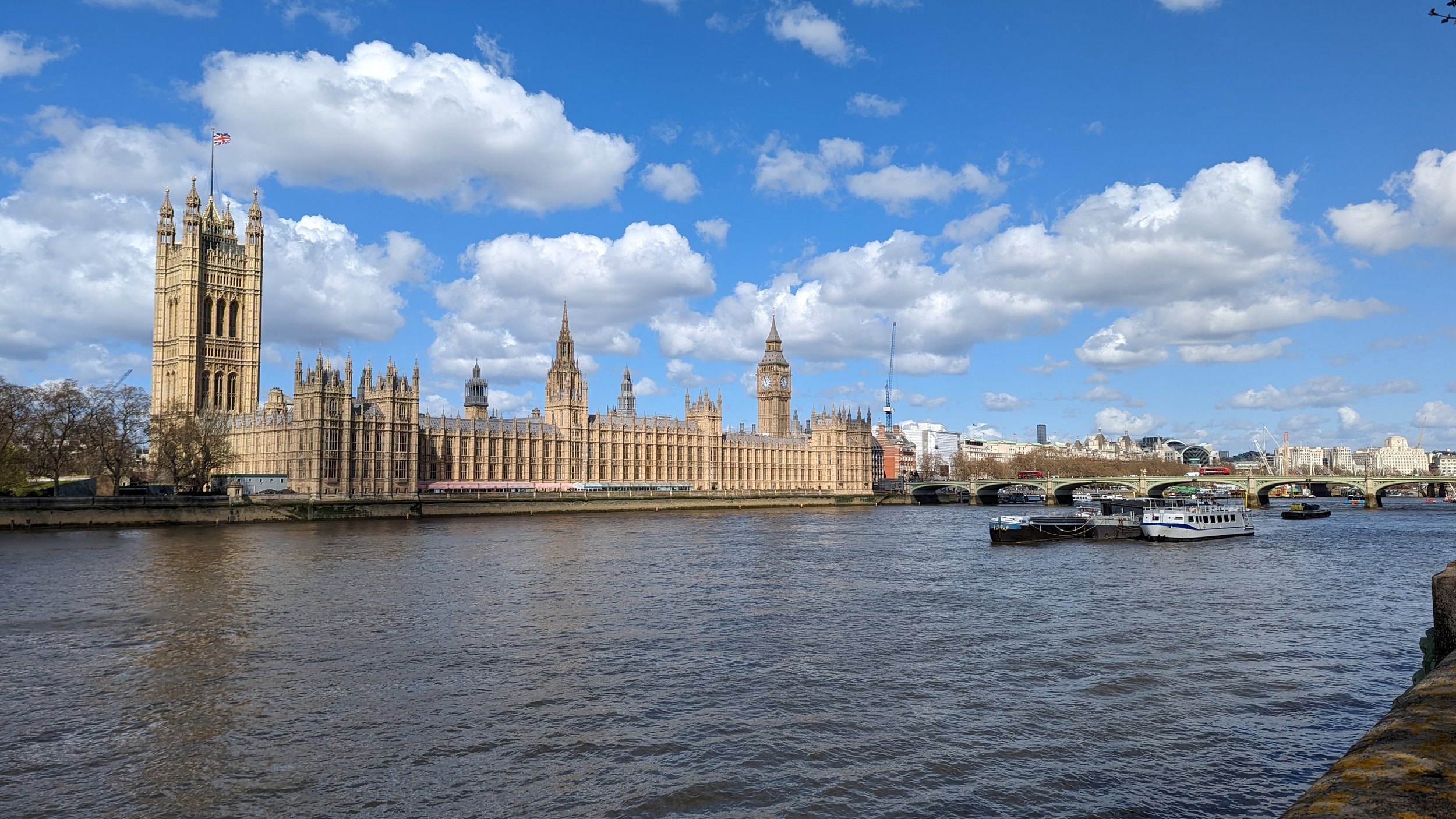
Upon arrival on the other side of the Thames, we walked to Royal Victoria station and made our way to Westminster to see The Houses of Parliament. We then took a stroll through Victoria Tower Gardens South and crossed the Thames again at Lambeth Bridge. We walked along Albert Embankment path, past the National COVID Memorial Wall. It was our intention to take a riverboat back to Greenwich but there were delays as only a partial service was running. So we crossed back over the river at Westminster Bridge and caught a train back home from Charing Cross station. I used my prepaid Oyster Card for the various bus, tube and train journeys and the total cost was £13.20 which is extremely good value. Overall it was an interesting and enjoyable day and I would recommend the IFS Cloud Cable Car for its London views.


The Problem With Ever Changing Band Lineups
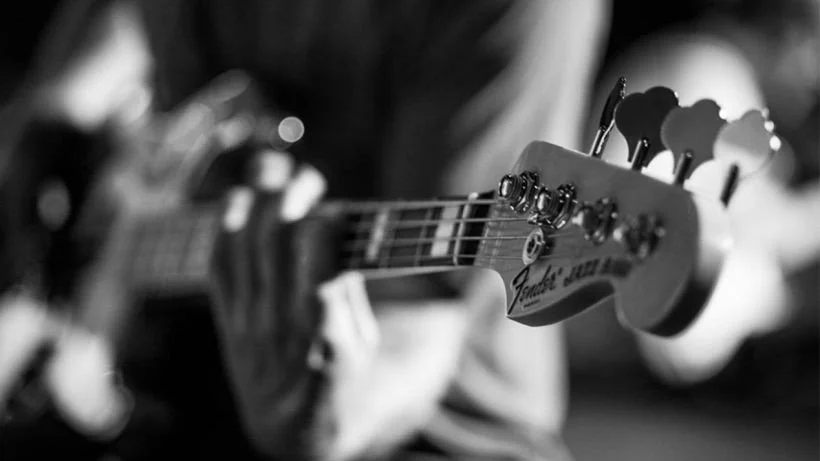
I was reminiscing about the music of my youth the other day which led me to listen to a track by Pro-Pain. The band formed in NYC in 1991 and their debut album Foul Taste of Freedom got some traction in the UK. I lost track of them after the next album and moved on musically. However, because of my recent fit of nostalgia, I looked the band up on Wikipedia and discovered that they were still going. Now thirty years is quite a long period of time and nothing stays the same forever but even I was surprised to see that the lineup of Pro-Pain had changed over a dozen times. The only original artist in the band today is bass player, lead vocalists and founder member, Gary Meskil. As ever this started a train of thought about the subject. How so many bands have made substantial changes in their lineup over the course of their careers and the respective pros and cons of such decisions.
Pro-Pain Gary Meskil
I was reminiscing about the music of my youth the other day which led me to listen to a track by Pro-Pain. The band formed in NYC in 1991 and their debut album Foul Taste of Freedom got some traction in the UK. I lost track of them after the next album and moved on musically. However, because of my recent fit of nostalgia, I looked the band up on Wikipedia and discovered that they were still going. Now thirty years is quite a long period of time and nothing stays the same forever but even I was surprised to see that the lineup of Pro-Pain had changed over a dozen times. The only original artist in the band today is bass player, lead vocalists and founder member, Gary Meskil. As ever this started a train of thought about the subject. How so many bands have made substantial changes in their lineup over the course of their careers and the respective pros and cons of such decisions.
Being in a band is a stressful work environment. Creative differences, the amount of time you spend in each other's company and the constant travelling take their toll. Change is an inevitability. But when you change the line up of a band, how much of an impact does it have? Well that depends upon who is leaving and what contribution they made overall. If the outgoing member defined the band’s sound, wrote most of their material or had the biggest personality, then their absence is significant. Think Michael Jackson and The Jackson 5. If their contribution was more arbitrary, then replacing them may not be such an issue. Pete Best “leaving” The Beatles springs to mind. Sometimes the departure of a band member creates an opportunity for a band to reinvent themselves. In the case of Adam and the Ants, the entire band bar Adam left to form Bow Wow Wow. Adam then found new Ants and moved from Punk to New Wave.
Adam and the Ants “Ridicule is nothing to be scared of”
Another problem that arises from bands that have enjoyed great longevity and numerous changes in their line up, is that they will end up with a canon of work that is rich and varied. Fans therefore may not necessarily share the same point of entry into this oeuvre, or enjoy the same material. In such a case, do fans even like the same band? Is there an unbridgeable gulf between Dexy’s Midnight Runner fans who favour the 1980 album Searching for the Young Soul Rebels and those who preferred Too-Rye-Ay, two years later? And to complicate matters further, sometimes a successful band will not just see multiple lineup changes but will split into multiple iterations of the same band, due to legal and financial wranglings. At one point there were two versions of the popular English Reggae band UB40. One using the original name and the other being known as UB40 featuring Ali Campbell and Astro. That’s just weird.
The music industry has always been a battleground between art and business. Bands can be a collective of evolving musical artists, trying to produce art, as well as an established commercial product providing an ongoing service. Sometimes one trumps the other but it more often than not seems to be the latter. But music provides many things beyond artistic appreciation. Music nostalgia is a major psychological comfort blanket. If you see an iconic band like The Rolling Stones, do you really want to listen to their latest musings or just their greatest hits? It does seem like the provision of a service. However, due to the line up changes over the years, how authentic is that experience? Following a similar train of thought, can you really ever truly experience Queen any more, since the death of Freddie Mercury? However, Judging by ticket sales, this may not be an issue.
The Stranglers
The Stranglers are down to their last original member, Jean-Jacques Burnel. Whether the band will produce any more albums or tour remains to be seen but it does seriously raise the question: are The Stranglers really The Stranglers any more? You can argue from a logical, semantical or emotional perspective and I’m not entirely sure if there is a right or wrong answer. You can have a band where all the original members are dead or retired, so what do people do? They form a bloody tribute act. Again, we return to the power of nostalgia and the money that it can generate. Regarding the original point of the post about the ever changing lineups that some bands have, I suppose you decide for yourself what, if any, lines in the sand you personally draw. I guess music has become like the film and TV industry. When talking to someone, if you state that you like such and such a band, you then have to clarify which version, or which period of their work you enjoy. That’s “fun”.




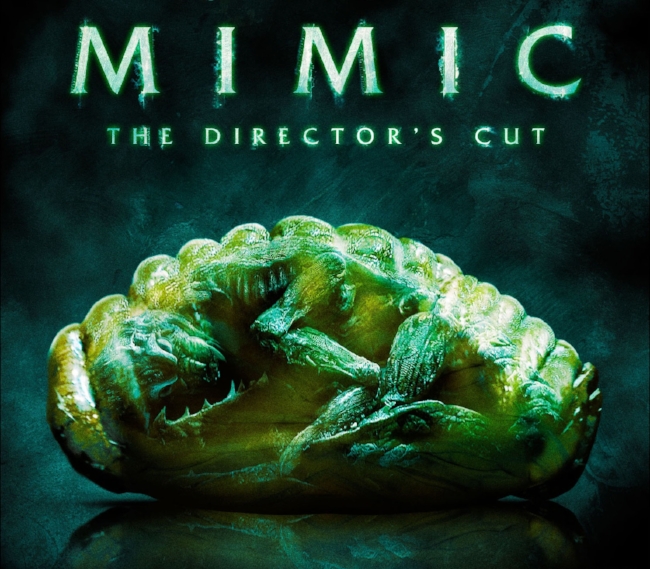
Dead Heat (1988)
Throughout the eighties, two of the most commercially successful genres in Hollywood were buddy cop movies and horror films. Therefore it was inevitable that someone, somewhere would eventually combine them. Dead Heat is a comedy action movie with both horror and science fiction elements. If you think such an eclectic blend of themes is a little incongruous, then watching the movie will validate your assumption. All things considered, Dead Heat is a bit of a mess. However, despite its faults, of which there are several, it remains quite an enjoyable film. A textbook example of the over the top eighties action movie, utterly removed from established police procedures and indeed reality. It is also one of two feature films directed by renowned film editor, Mark Goldblatt, whose credits include Rambo: First Blood Part II, RoboCop and Terminator 2: Judgment Day.
Throughout the eighties, two of the most commercially successful genres in Hollywood were buddy cop movies and horror films. Therefore it was inevitable that someone, somewhere would eventually combine them. Dead Heat is a comedy action movie with both horror and science fiction elements. If you think such an eclectic blend of themes is a little incongruous, then watching the movie will validate your assumption. All things considered, Dead Heat is a bit of a mess. However, despite its faults, of which there are several, it remains quite an enjoyable film. A textbook example of the over the top eighties action movie, utterly removed from established police procedures and indeed reality. It is also one of two feature films directed by renowned film editor, Mark Goldblatt, whose credits include Rambo: First Blood Part II, RoboCop and Terminator 2: Judgment Day.
“Loose cannon” LAPD cops, Roger Mortis (Treat Williams) and Doug Bigelow (Joe Piscopo), are hot on the trail of a gang that are robbing jewellery stores. After a chaotic shootout the gang are shot dead and the subsequent autopsies by coroner Dr. Rebecca Smythers (Clare Kirkconnell) indicates that they were dead prior to the robberies. Doug and Roger follow a lead to Dante Pharmaceutical, a company owned by millionaire industrialist Arthur P. Laudermilk (Vincent Price). While investigating the company headquarters, Roger is attacked by another animated corpse. After suffocating in a decompression chamber, Roger is resurrected via an experimental machine that Rebecca and Doug have discovered in a secure laboratory. However, Roger’s new lifespan is only twelve hours, giving him little time to complete his investigation.
Dead Heat telegraphs exactly what sort of film it is within the first ten minutes. The reanimated thieves are dense comic foils to the cool detectives who endorse their clichéd credentials by driving around in a convertible and playing “upbeat rock music” (according to the Blu-ray subtitles). Treat Williams is the suit wearing straight guy, where Joe Piscopo is the “chews with his mouth open”, uncouth sidekick with a mullet. The latter of the two lead characters will either irritate or amuse you. The jokes are a bit hit and miss and due to the brevity of the theatrical edit, the story line doesn’t quite add up. There are several other versions of the film with some additional scenes that do make the plot a little more linear. However, the action scenes are suitably excessive and the prosthetic effects are very well realised. Sadly, many of them did not make it into the US theatrical version in their entirety due rating restrictions at the time.
Dead Heat is fast paced and never dull, with Treat Williams doing much of the heavy lifting. Veteran character actor Darren McGavin also delivers, despite the screenplays shortcomings and his limited screen time. Keye Luke (Gremlins) and Robert Picardo (Star Trek: Voyager) also have cameo appearances. But the standout scene of the entire film is when Roger and Doug follow a lead to a Chinese restaurant which has a prototype resurrection machine. This results in a multitude of items on the menu coming back to life and attacking our heroes. It is filled with old school, practical effects and is both unpleasant and droll. So if you can accommodate the plot holes, the tonal inconsistency and Joe Piscopo’s “love him or loathe him” performance, then Dead Heat may well amuse you. It is very much a product of its time and is the sort of film that would struggle to find a backer these days.









Nightmares (1983)
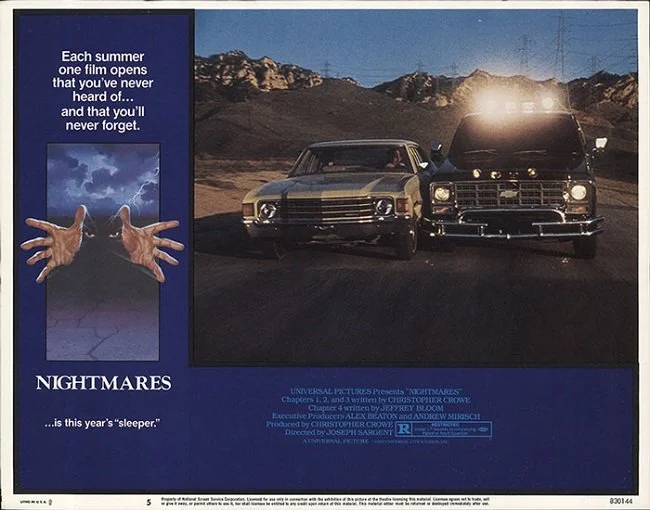
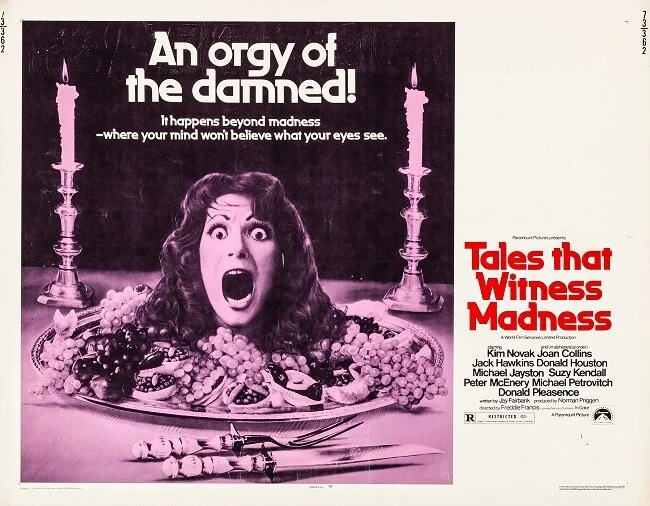
Due to the commercial success of George A. Romero’s Creepshow in 1982 and the Twilight Zone: The Movie in 1983, there was a resurgence of anthology horror films in the eighties and nineties. Nightmares is one of many “portmanteau movies” that followed and is neither the worst, or the best that the genre has to offer. Originally conceived as a pilot for a NBC TV show, the completed film was deemed too “intense” for television and eventually released theatrically with an “R” rating. Judged by today’s standards, it is not especially violent and the strongest content is in the first chapter of the four part story. Written by Jeffrey Bloom and Christopher Crowe, both of whom have a background in popular seventies television, Nightmares has the look and feel of a TV production.
Due to the commercial success of George A. Romero’s Creepshow in 1982 and the Twilight Zone: The Movie in 1983, there was a resurgence of anthology horror films in the eighties and nineties. Nightmares is one of many “portmanteau movies” that followed and is neither the worst, or the best that the genre has to offer. Originally conceived as a pilot for a NBC TV show, the completed film was deemed too “intense” for television and eventually released theatrically with an “R” rating. Judged by today’s standards, it is not especially violent and the strongest content is in the first chapter of the four part story. Written by Jeffrey Bloom and Christopher Crowe, both of whom have a background in popular seventies television, Nightmares has the look and feel of a TV production.
The first story, Terror in Topanga, follows a homicidal patient who escapes from a mental institution and attacks a police officer. Meanwhile, chain smoking housewife Lisa (Christina Raines) drives to the local store to buy cigarettes. Will their paths cross? The second chapter, The Bishop of Battle, follows teenager J.J. (Emilio Estevez) obsessive battle to reach the mysterious thirteenth level of a video game in his local arcade. J. J. learns that all is not quite as it appears. The third chapter, The Benediction, stars Lance Henriksen as priest Frank MacLeod, who leaves his parish after a crisis of faith. He is stalked on a remote desert road by a black pickup truck that has murderous intent and potentially supernatural origins. The final chapter, Night of the Rat, features a suburban family (Richard Masur, Veronica Cartwright and Brigette Andersen) being menaced by a particularly large and intelligent rat.
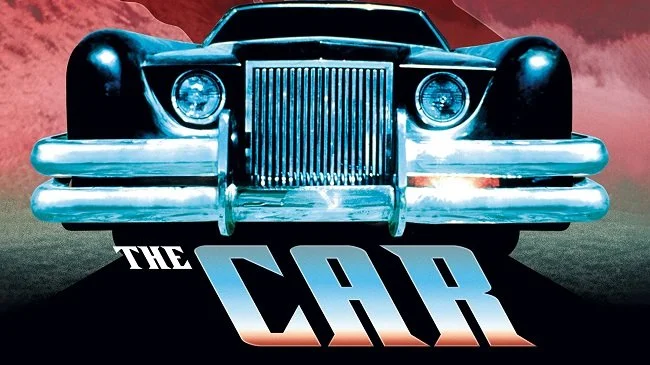
Nightmares is efficiently directed by veteran filmmaker Joseph Sargent. However, the inherent problem with portmanteau films is ensuring that all stories are equally engaging. Sadly that is not the case here. Terror in Topanga is the most efficient of the four chapters. It sets out its stall and delivers a suitable climax to its story arc. But the next instalment, The Bishop of Battle is a major tonal shift from horror to fantasy and an obvious and uninspired tale. The Benediction offers a variation on an established theme (see Duel or The Car) but is carried by the presence of Lance Henriksen. Night of the Rat, which was intended to be the bravura ending to Nightmares, is somewhat stilted due to a weak script and an unlikeable lead character. Yet despite these inconsistencies Nightmares doesn’t out stay its 99 minute running time. It manages to get its pacing right. Something other anthologies often fail to do.
When viewed with a contemporary eye, Nightmares has some interesting points of interest. Setting aside the trope of the escaped murderer, Terror in Topanga uses smoking as a central plot device. Something that seems somewhat archaic today. The Bishop of Battle provides a window not only on arcade culture from the eighties but touches upon hardcore punk, with songs by Black Flag and Fear. The Benediction features a truck stunt that was used heavily in the marketing of the film. Such a thing would nowadays be done digitally, but here it is a physical effect and more impressive for it. Overall, Nightmares now serves mainly as a nostalgic reminder of the popularity of the anthology genre during the horror boom of the eighties. It is an amusing diversion for those well disposed towards such material and may play better to those who grew up during this era.

Crawl (2019)
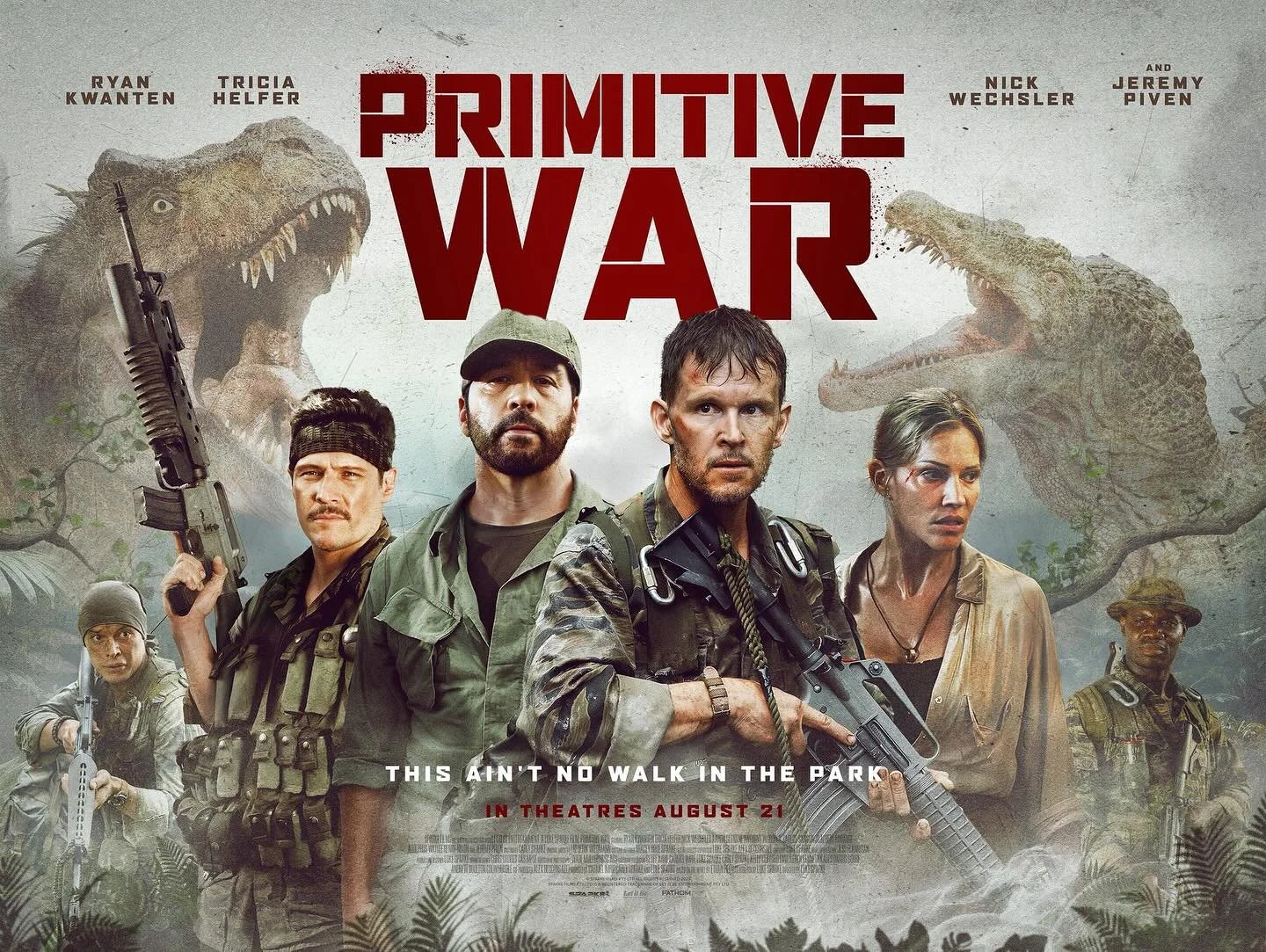
It is no secret that the film industry relies on a handful of common tropes as the mainstay of their cinematic output. It uses timeless themes, storylines and archetypes that have featured in folk tales, plays and literature throughout history. Hence their familiarity with audiences around the world. Where the skill in filmmaking lies is to take a common, well known idea and interpret it in a new and innovative fashion. Akira Kurosawa took Shakespeare’s MacBeth and retold the tale through the prism of Japanese feudalistic culture. The result, Throne of Blood, is considered a masterpiece. Similarly, The Lion King retells the same story through the medium of animation and anthropomorphic wildlife. All of which proves that the key to successfully retelling a familiar tale is to be creative with regard to setting, presentation and perspective.
It is no secret that the film industry relies on a handful of common tropes as the mainstay of their cinematic output. It uses timeless themes, storylines and archetypes that have featured in folk tales, plays and literature throughout history. Hence their familiarity with audiences around the world. Where the skill in filmmaking lies is to take a common, well known idea and interpret it in a new and innovative fashion. Akira Kurosawa took Shakespeare’s MacBeth and retold the tale through the prism of Japanese feudalistic culture. The result, Throne of Blood, is considered a masterpiece. Similarly, The Lion King retells the same story through the medium of animation and anthropomorphic wildlife. All of which proves that the key to successfully retelling a familiar tale is to be creative with regard to setting, presentation and perspective.
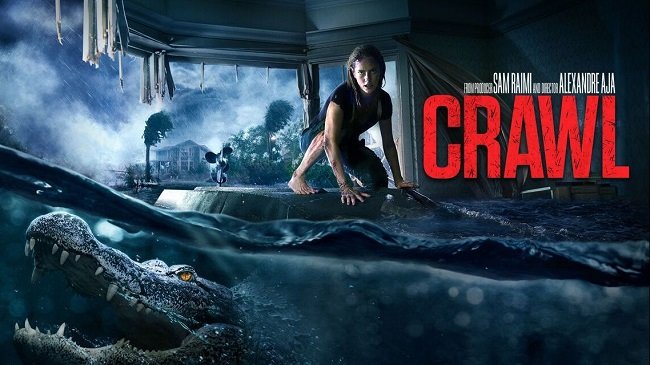
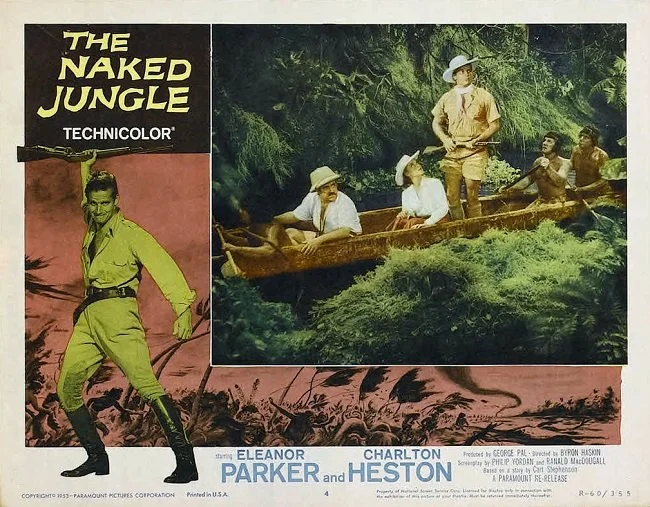
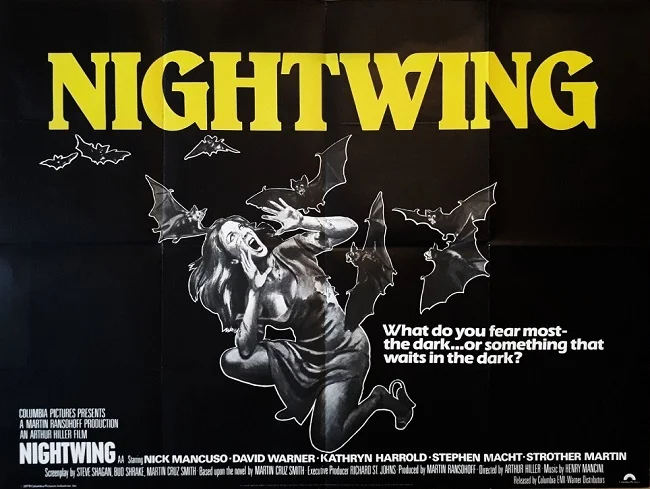
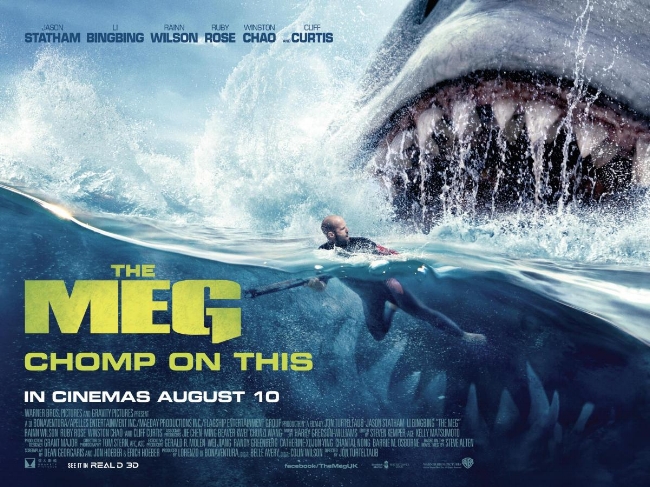
Which neatly brings me to Crawl. A creature feature where the central “McGuffin” is a group of people trapped by wayward wildlife. Hollywood has explored this plot device many times before. Consider The Naked Jungle (1954) in which Charlton Heston faces a swarm of South American ants. Then there is Hitchcock’s The Birds (1963). More recently Bait (2012) features a group of people trapped in a flooded supermarket along with a Great White Shark after a tsunami. Crawl (2019) has a father and daughter trapped in a house during a hurricane. Due to the Florida setting the dangerous beasties are Alligators on this occasion. What makes the film a cut above the average genre outing is a solid script with plausible characters and a decent cast that give life to the proceedings. Director Alexandre Aja builds a genuine sense of tension and punctuates the 87 minute running time with some robust set pieces.
Filmed in Belgrade, the production seamlessly recreates Florida. The digital effects convincingly depict a hurricane and the Alligators are a mixture of animatronics and CGI. But the film’s greatest assets are the main performances by Kaya Scodelario as Haley Keller and Barry Pepper as Dave Keller. Daughter Haley is an aspiring swimmer and her estranged father Dave is her former coach. The screenplay by Michael Rasmussen and Shawn Rasmussen keeps the scope of the narrative simple and immediate, resulting in a plausible family dynamic. The wider cast is minimal and although some characters are merely “red shirts” intended to expedite the threat of the Alligators with their timely deaths, the screenplay doesn’t treat them in a totally arbitrary fashion. The scenes of violence, are well realised, suspenseful and surprisingly unpleasant.
Crawl is content to stick within the parameters it has set itself and concentrates on telling its story to the best of its ability. There is an assumption from some critics that genre movies are by their nature, no more than the sum of their parts. Those with a more enlightened perspective believe that all types of film can craft well told stories and explore deep themes. Crawl is a prime example of an old story told from a fresh and different perspective. Yes, it does include horror elements but that is not all that it has to offer. At its heart this is a film about the perennial theme of fathers and daughters, which Crawl explores this well. It also has a point to make about climate change. However, if you’re just looking for a quality creature feature, complete with jump scares and grisly shocks, then the film also delivers this in spades.


How Important is Your Operator Skin?
I don’t mind buying an occasional bundle from the store in DMZ, although it is often the weapon blueprint that determines my choice. Today I bought Overgrown 2, which includes the Ghillie Monster operator skin, to see if it offered any significant advantage. However, as I am not what you would call a “top tier” player, my subsequent experience and anecdotal evidence is hardly compelling. If you go prone in the desert, a shrubbery or among general herbidacious flora then it does offer a degree of camouflage. However, in suburban areas and the outlying villages of Al Mazrah, you look like a Wookie on a daytrip and I can’t see any advantage. So upon reflection, two questions spring to mind. Firstly, do any of the skins currently available in the game offer any tangible benefits? If not is it just a question of operator skins are 100% cosmetic and just about tickling a players fancy and getting them to put their hand in their pockets.
I don’t mind buying an occasional bundle from the store in DMZ, although it is often the weapon blueprint that determines my choice. Today I bought Overgrown 2, which includes the Ghillie Monster operator skin, to see if it offered any significant advantage. However, as I am not what you would call a “top tier” player, my subsequent experience and anecdotal evidence is hardly compelling. If you go prone in the desert, a shrubbery or among general herbidacious flora then it does offer a degree of camouflage. However, in suburban areas and the outlying villages of Al Mazrah, you look like a Wookie on a daytrip and I can’t see any advantage. So upon reflection, two questions spring to mind. Firstly, do any of the skins currently available in the game offer any tangible benefits? If not is it just a question of operator skins are 100% cosmetic and just about tickling a players fancy and getting them to put their hand in their pockets.
As to the tangible, practical benefits of specific operator skins, I am not aware of any hard data on the matter. The only observations I can bring to bear on the subject are those born out of common experience. IE What we can all see. As previously mentioned, ghillie suits do offer some camouflage in appropriate areas, depending on their respective colour. Similarly outfits that are predominantly black have benefits in darker areas and at extreme range. Ashika Island with its underground network and closely packed buildings favours darker coloured operator skins. Traditional operator skins featuring regular camouflage military apparel also follow suit. But these minor benefits do not make a player undetectable. A thermal scope on a weapon or a handheld spotter device reveals players regardless.
All the benefits listed above are situational and as DMZ feature a multitude of ecosystems, a green ghillie suit will only be beneficial in a limited amount of regions. It will potentially stand out due to contrast in others. And it is this latter point that may be the Achilles Heel of purely cosmetic operator skins. Especially those operator skins that are excessively colourful, and flamboyant. As Call of Duty frequently licences content from major pop culture franchises, there is currently a Shredder (from teenage Mutant Ninja Turtles) operator skin available in the game. Although it is very striking and I can see the appeal, it stands out like a sore thumb in most in-game environments. Another consideration regarding non-standard operator skins is that they are more prone to clipping through walls, which can be fatal.
Overall, I think that the potential benefits of certain operator skins are modest and that as ever, it is the skill of the player that is the greatest factor in their success. I personally like the option to customise the look of my character in any video game I play and have my own particular preferences. Hence I have no objection to a broad selection of operator skins in the in-game store when playing DMZ. I won’t necessarily purchase “novelty” skins such as Rambo, John McClane and RoboCop, which were available in the previous version of Warzone. But I don’t have any “ideological problem” with such content being available in the game. Video games are a leisure activity and therefore they should be fun. The FPS genre has a tendency to attract some players who take it all very seriously, which can be wearisome. A little levity goes a long way.
A Month in Gaming
Here we are again with another summary of my gaming activities in recent months. Or in this case since last September. It’s been a while but I’ve been on a blogging hiatus until recently. However, I’ve kept myself busy gaming wise and often I find the hunt for news video games, just as entertaining as I do playing them. Perhaps that could be a future blog post. Back to the matter in hand. Gaming wise, pretty much all things related to the MMORPG genre are currently on the back burner. I’ll give specifics later but I am taking a break from these for the present. I am currently looking at trying games outside my usual comfort zone and also trying to test whether you can or cannot teach an old dog new tricks. Fortunately, the answer appears to be yes you can. Enough summation, on to the specifics.
Here we are again with another summary of my gaming activities in recent months. Or in this case since last September. It’s been a while but I’ve been on a blogging hiatus until recently. However, I’ve kept myself busy gaming wise and often I find the hunt for news video games, just as entertaining as I do playing them. Perhaps that could be a future blog post. Back to the matter in hand. Gaming wise, pretty much all things related to the MMORPG genre are currently on the back burner. I’ll give specifics later but I am taking a break from these for the present. I am currently looking at trying games outside my usual comfort zone and also trying to test whether you can or cannot teach an old dog new tricks. Fortunately, the answer appears to be yes you can. Enough summation, on to the specifics.
LOTRO Update 34: Before the Shadow. Let me state for the record that I still consider The Lord of the Rings Online to be a robust and entertaining realisation of Middle-earth. It has kept me entertained since late 2008. If you are new to the game there is a ton of content, a huge amount of lore references and a supportive and friendly community. But the last update had very little to offer veteran players. The new content was aimed at level 1 to 32 players. So apart from a new story, nothing much of note was added to the game for those with level cap characters and that is pretty much why I’m tired of this game. All it ever offers is “more of the same”.
Due to changes within EG7, I suspect a lot of the promised updates like the graphics overhauls and the console version will never be carried out and LOTRO is fated to remain essentially as it is. No major new systems or gameplay mechanics will be added. Just variations on existing content. For me that is no longer sufficient to hold my interest. Hence I played through some of Update 34: Before the Shadow when it was released last November but after a few days I just stopped logging in. I didn’t feel especially upset. In fact it felt like the right response. When you’re done, you’re done.
Red Dead Redemption 2. I returned to this RPG in January and picked up exactly where I left off in 2020. The plot was still familiar to me so it really was a seamless continuation. I played through the main story and was amazed at what a compelling experience it was. As I’ve already written a blog post about this remarkable game I won’t repeat myself too much but I consider this to be one of the best video games ever. Great game play, a compelling narrative and a feeling of immense satisfaction when you reach the end. It also keeps you thinking and reflecting upon it for days afterwards. As all great art does.
Hogwarts Legacy. Controversy aside, I really enjoyed this game. It offered everything I personally wanted from a Hogwarts themed video game. I was surprised at the quality of some of the companion side quests, especially the Sebastian Sallow story arc. I will happily return to the game if further DLC is released and I may at a future date play through the entire thing again with a new character. If they are in another house there are some unique storylines. In the meantime, the only content left to me to do is some completionist, busy work, so for the present I’ve finished with this title. It did provide over 70 hours of entertainment.
Sniper Elite 5. Nowadays, most games have a relatively short life cycle. One year is usual, so I was quite surprised to discover that Sniper Elite 5 was to get a second season pass with another “years worth” of content. New maps, new weapons, new cosmetic skins. Some may argue it’s all a bit thin but I just fundamentally like the concept behind this game. Slow, measured and tactical driven gameplay for those who want it. For those who like to run and gun, that is still an option. This fifth iteration of the game has really refined the sniping mechanics and the weapons customisation means you really can create a loadout that suits your need and style. I like the stealthy approach and setting booby traps and the game excels at this. Invasion mode where another player can gatecrash your game and hunt you down, still keeps me on my toes. I’ll happily play for another year.
Star Trek Online. What I like about this MMORPG is that you know exactly where you stand with it. You can complain about the monetisation, the ground combat and “lack of diplomatic missions” but the game doesn’t lie to you about its nature. STO is the gaming embodiment of a quid pro quo. If you grind a new event, you get a reward. If you grind all the events scheduled throughout the year, you get a bigger reward. There’s always something to do in this game. If you have time to kill, then you can play through all story arcs on all factions. There’s a lot. Alternatively, if you just have 30 minutes of gaming time, why not do the latest Task Force Operation? This is why STO is always in my gaming rotation.
Warzone 2.0 DMZ. I ended up buying a new graphics card because of Call of Duty: Modern Warfare II, when it was released last November. The latest iteration of the franchise also saw the release of a new version of Warzone, its free multiplayer counterpart. I’m simply not a good enough player to get the most out of the battle royale mode but the new DMZ variant, which is an extraction shooter, is damn compelling. Yes the game is flawed at present and a lot of the community are sociopathic but occasionally you get a game that hits the spot perfectly. You find a good squad, play in a coordinated fashion and gain some phat loot. And any fool that crosses your path, gets wrecked. You then exfil in the helicopter, under the cover of smoke, back in time for corn flakes. These are the days when gaming is good.
The Hunter: Call of the Wild. Finally, I bought this hunting game after watching a “let’s play” video on YouTube and am happy to report that it is a very interesting alternative take on the "first person shooter" genre. The game is slow, methodical and surprisingly immersive. It rewards patience. I didn’t think this genre would have any appeal for me but it is certainly holding my interest at present. It also has a substantial playerbase and community on reddit who are happy to share tips and information. I wasn’t expecting any of this which is an added bonus.
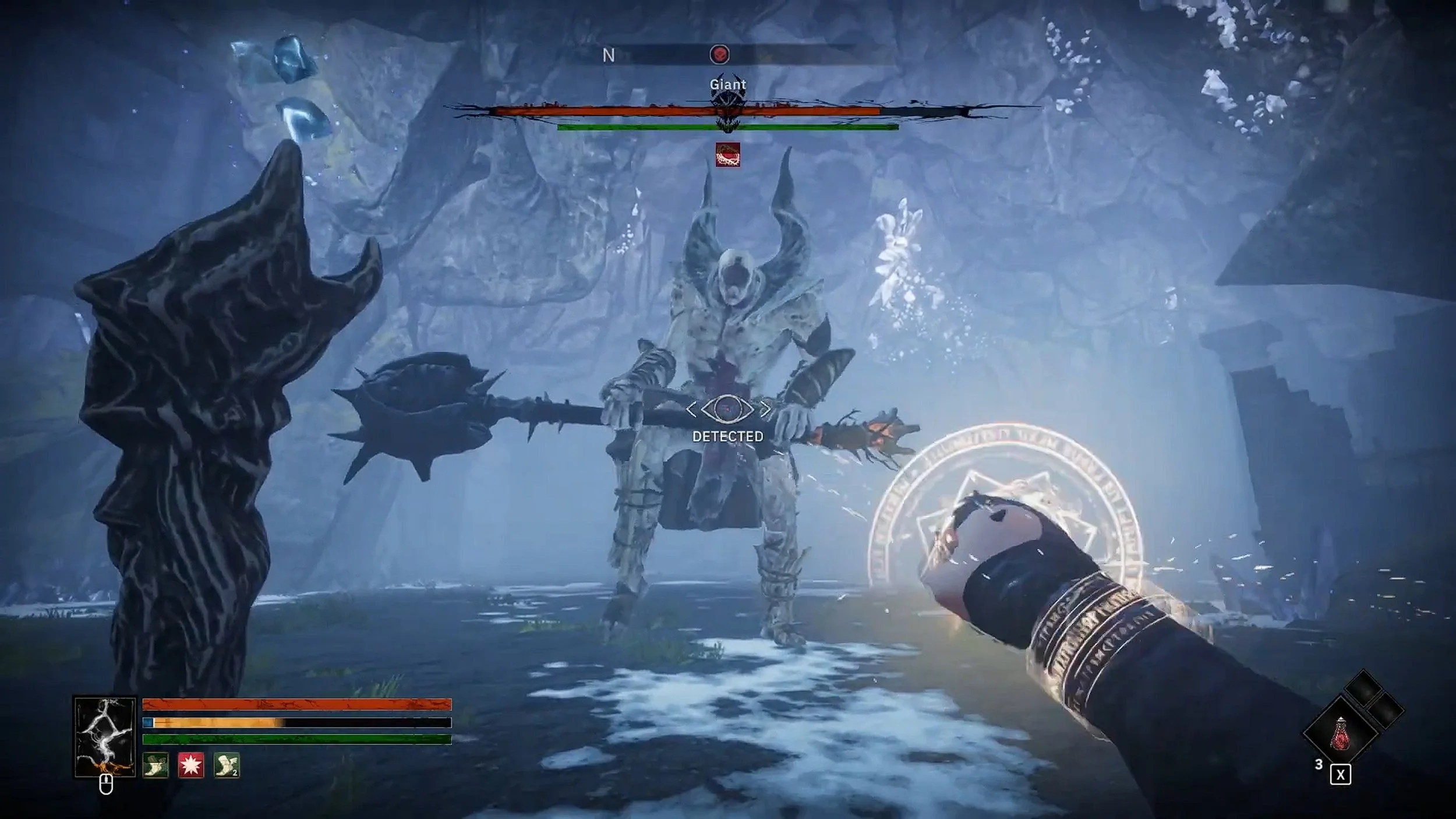
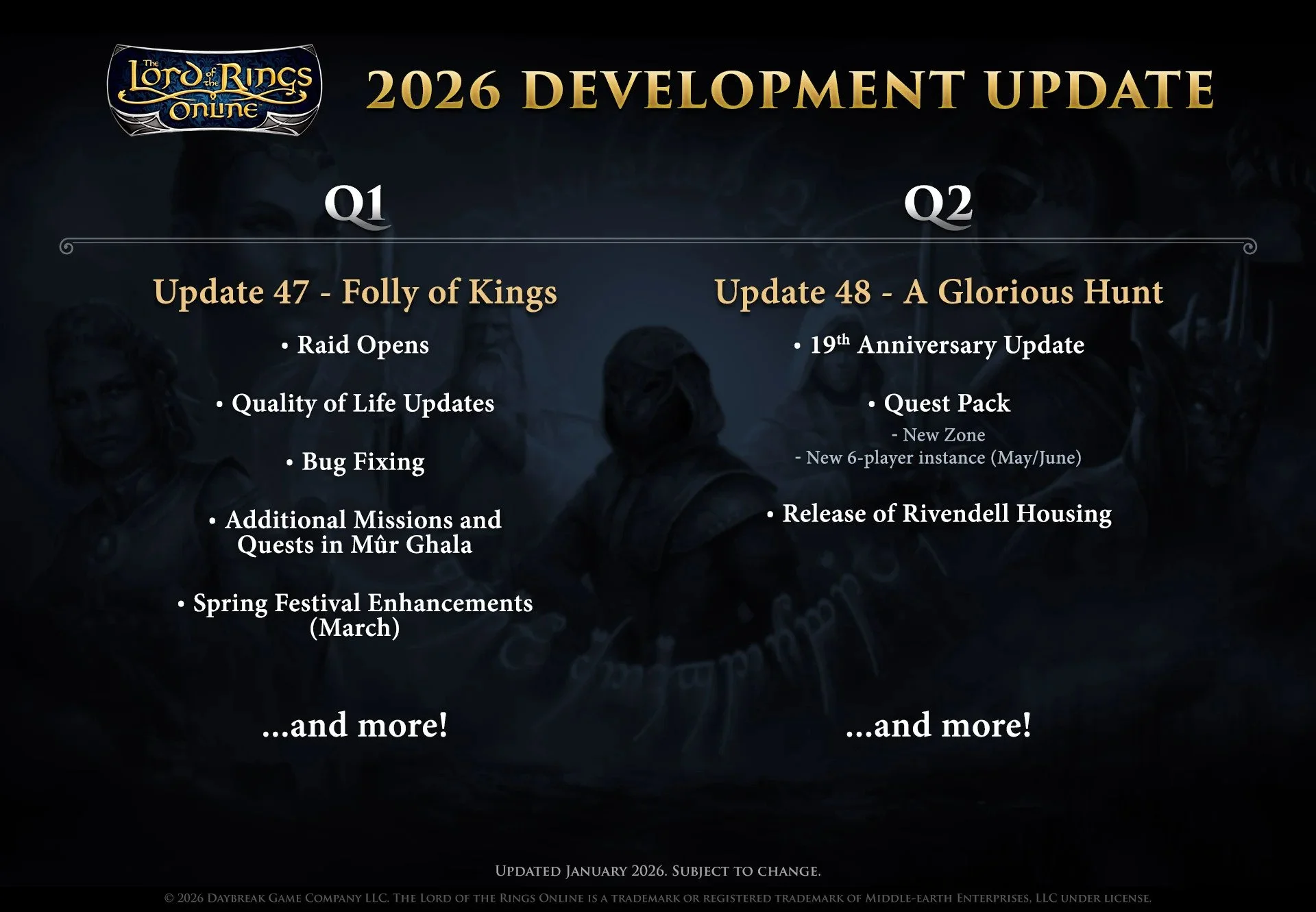
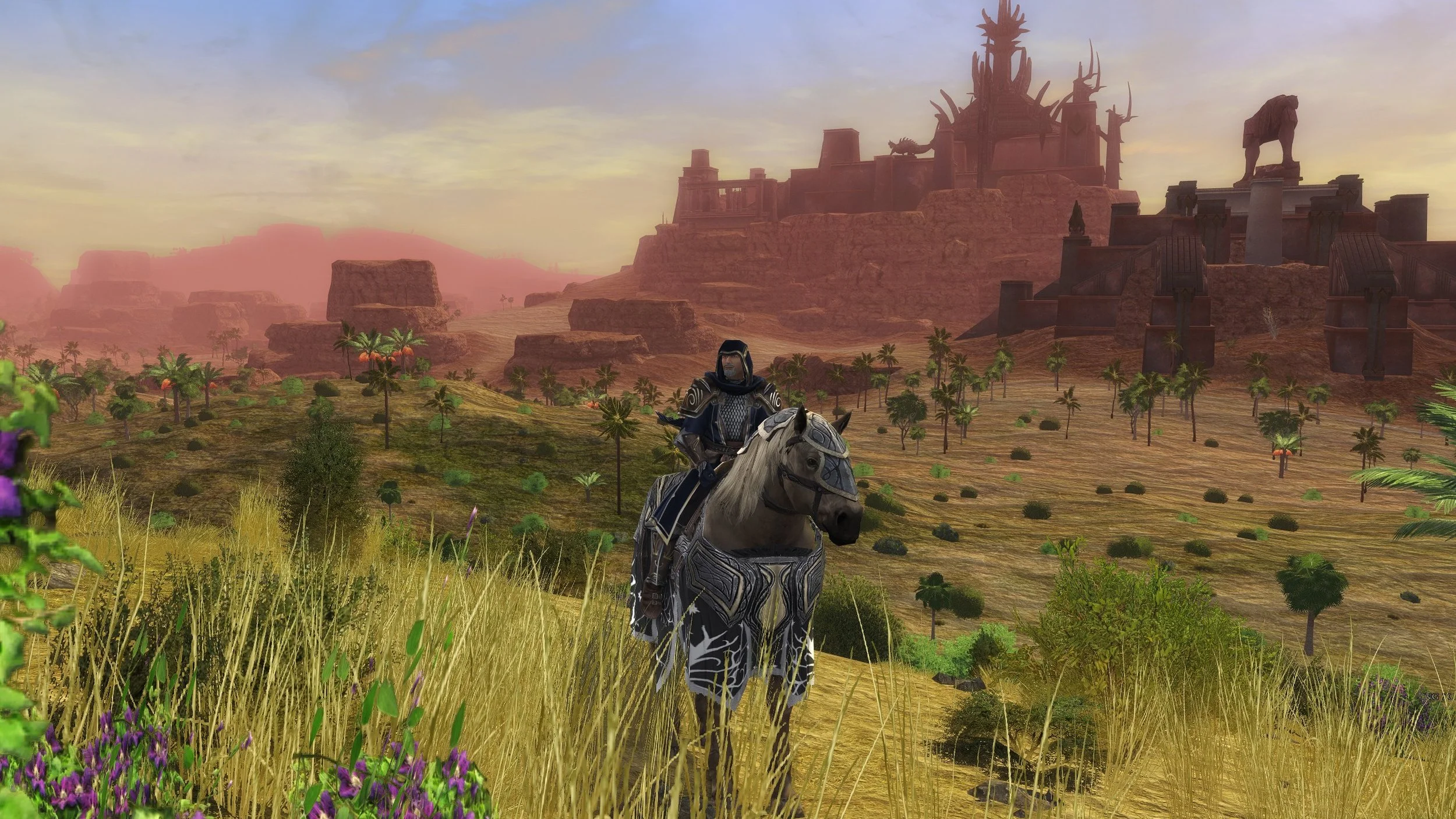
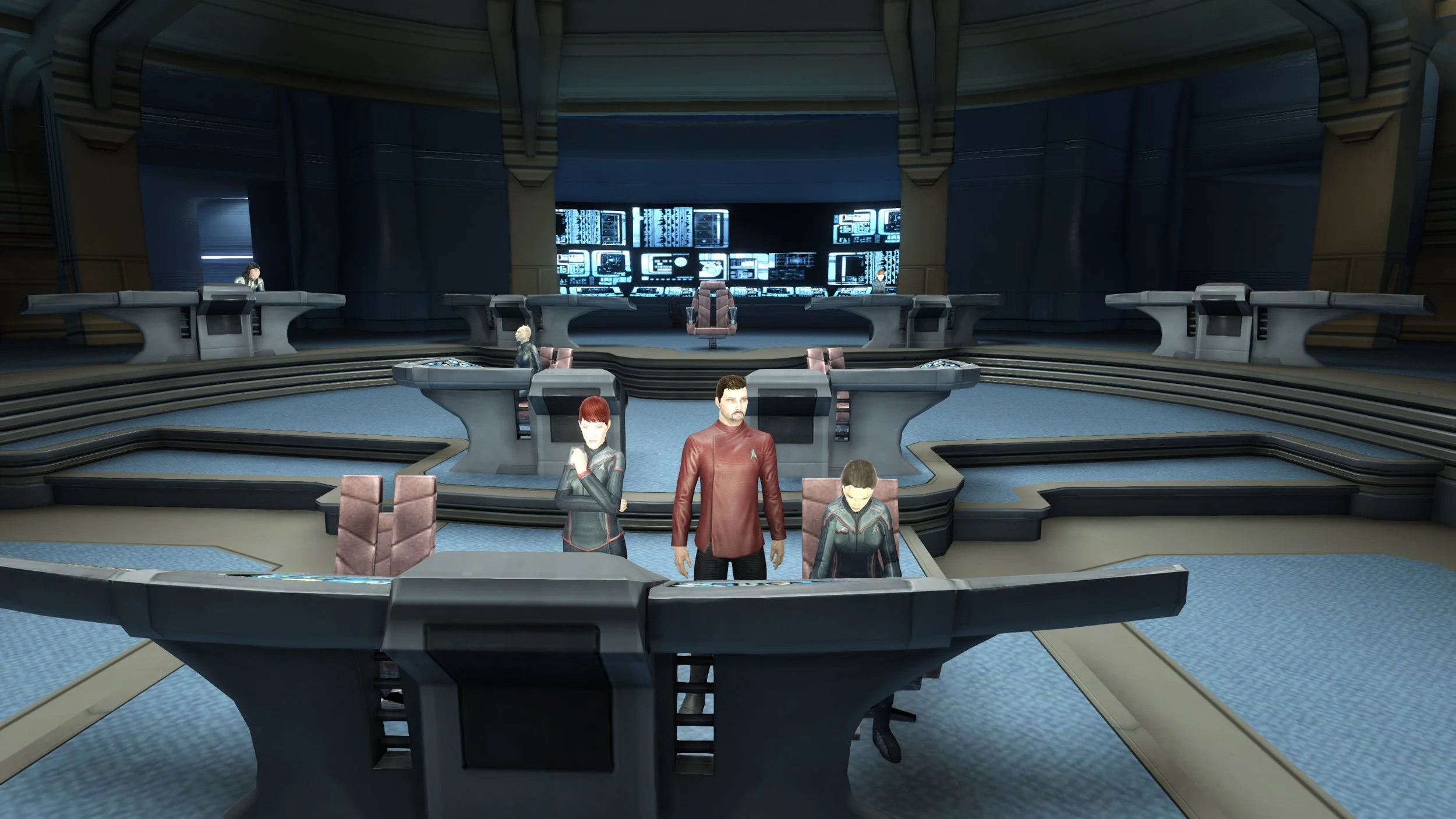
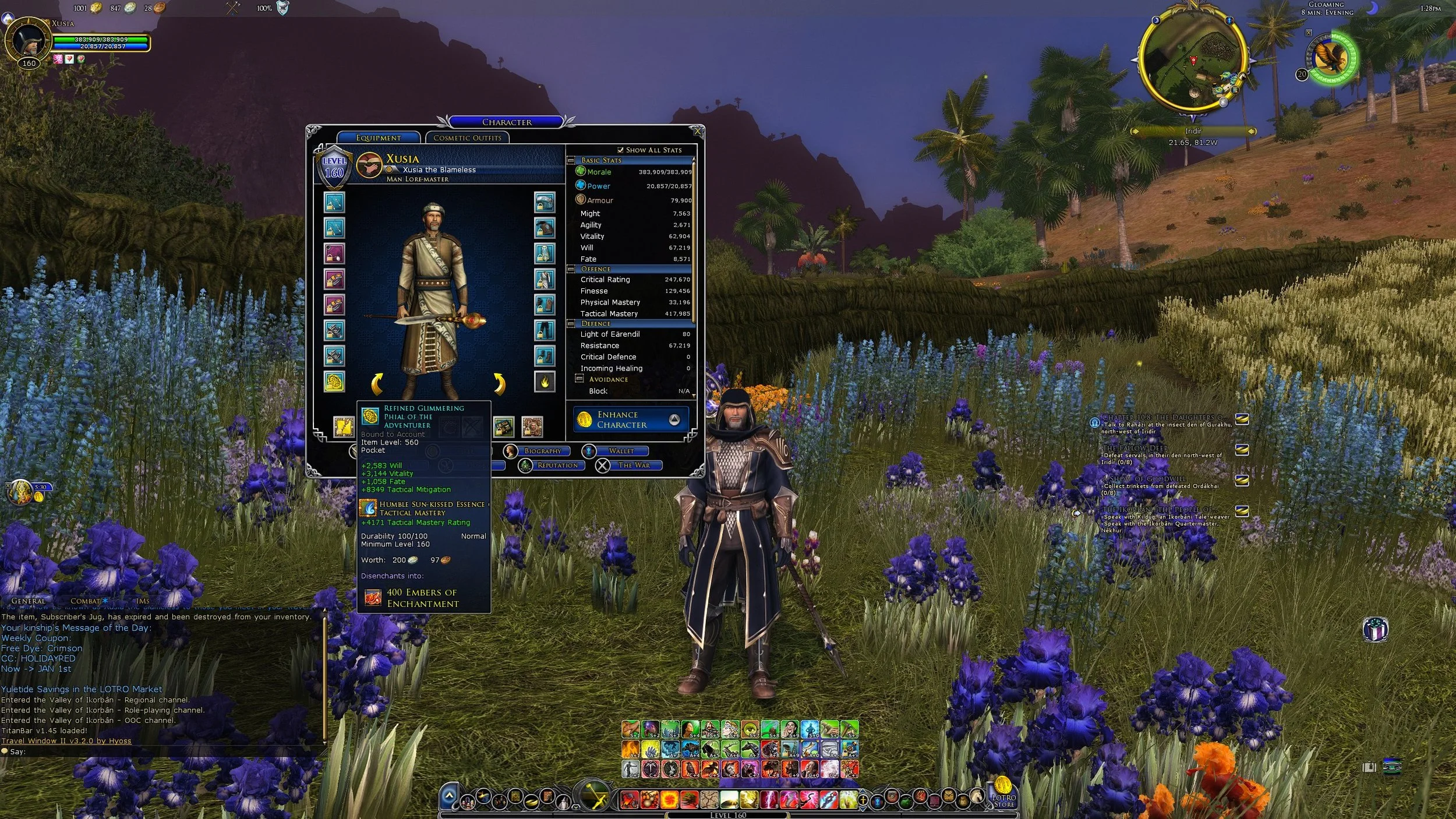
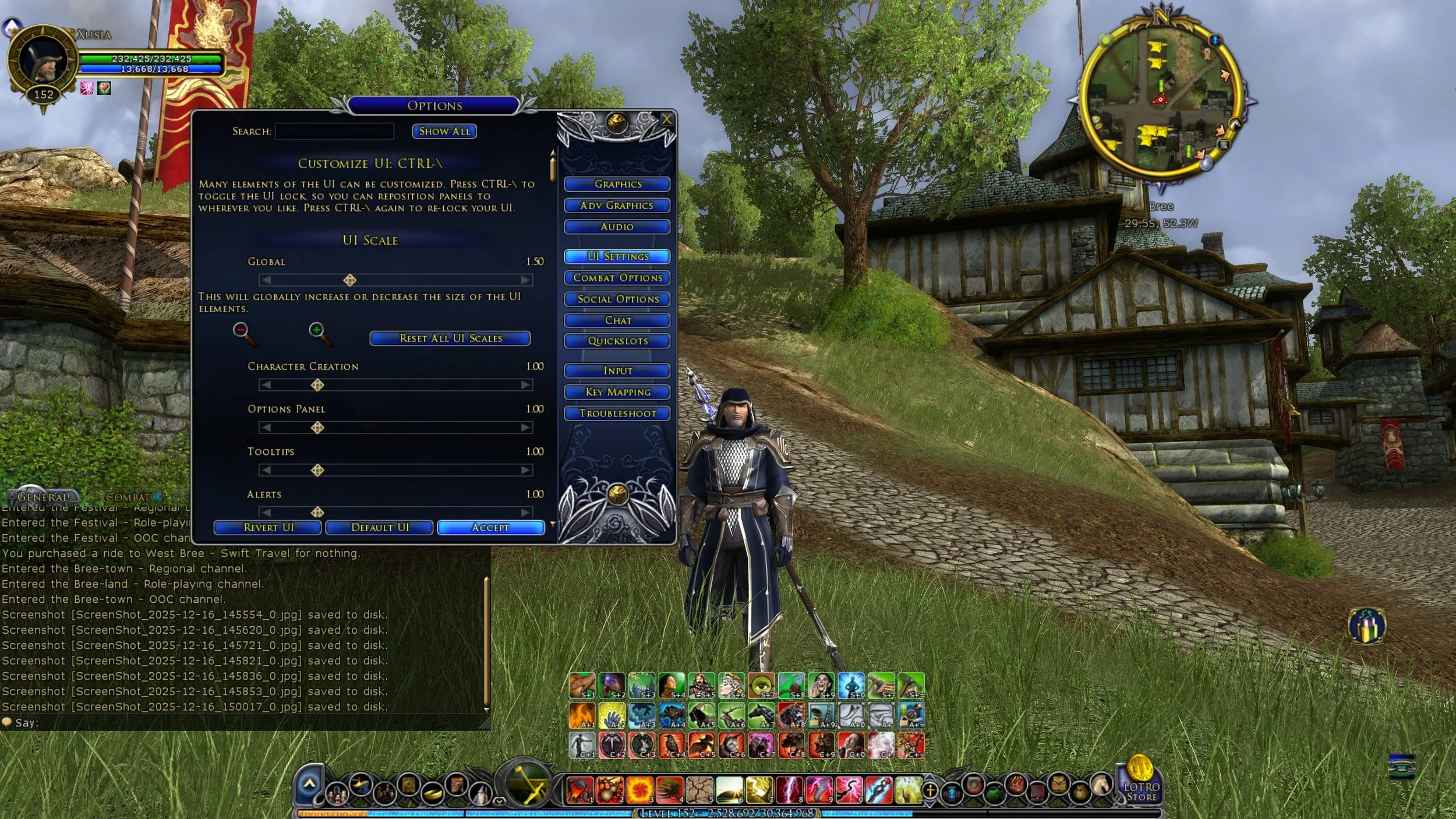




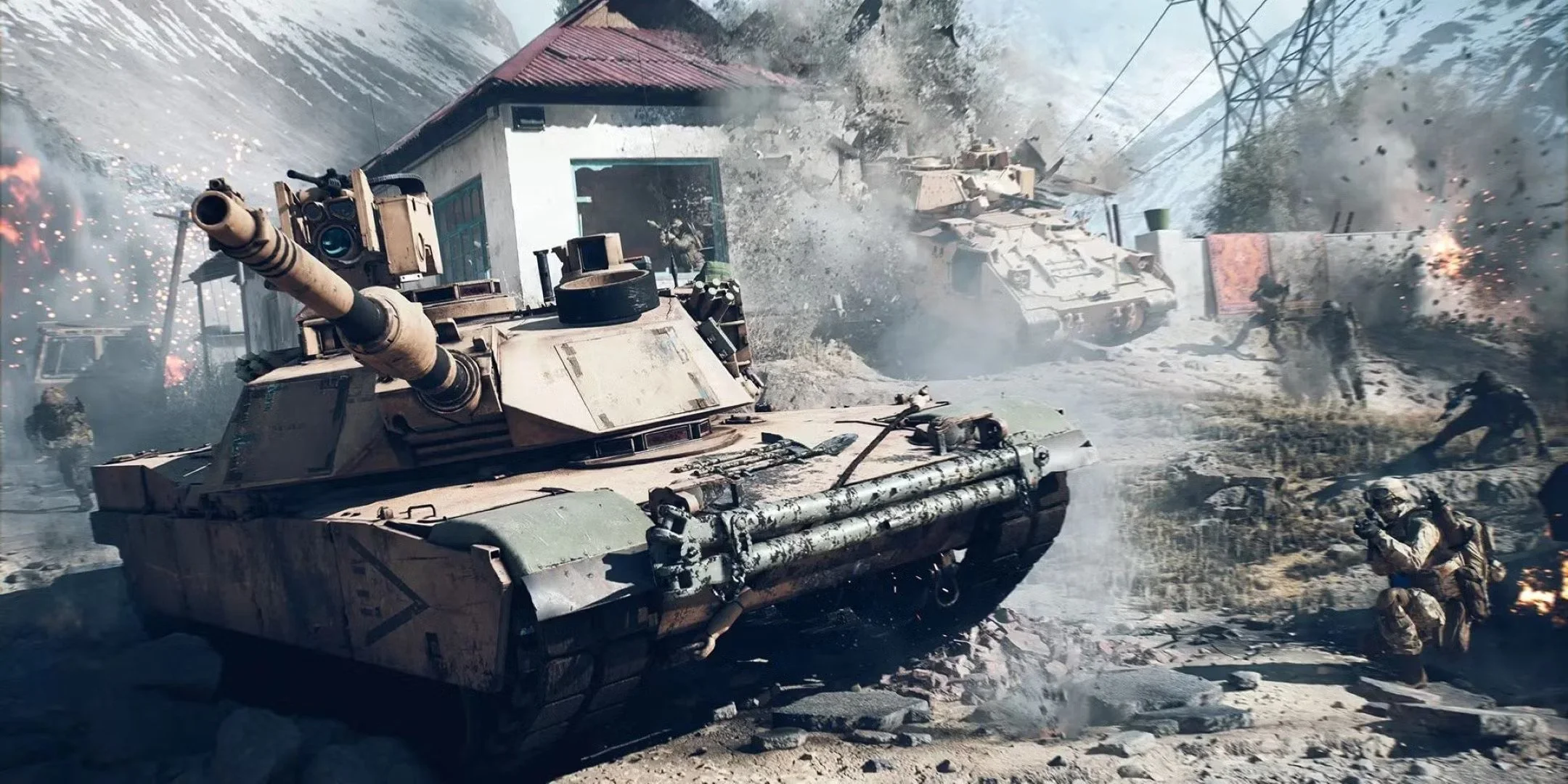
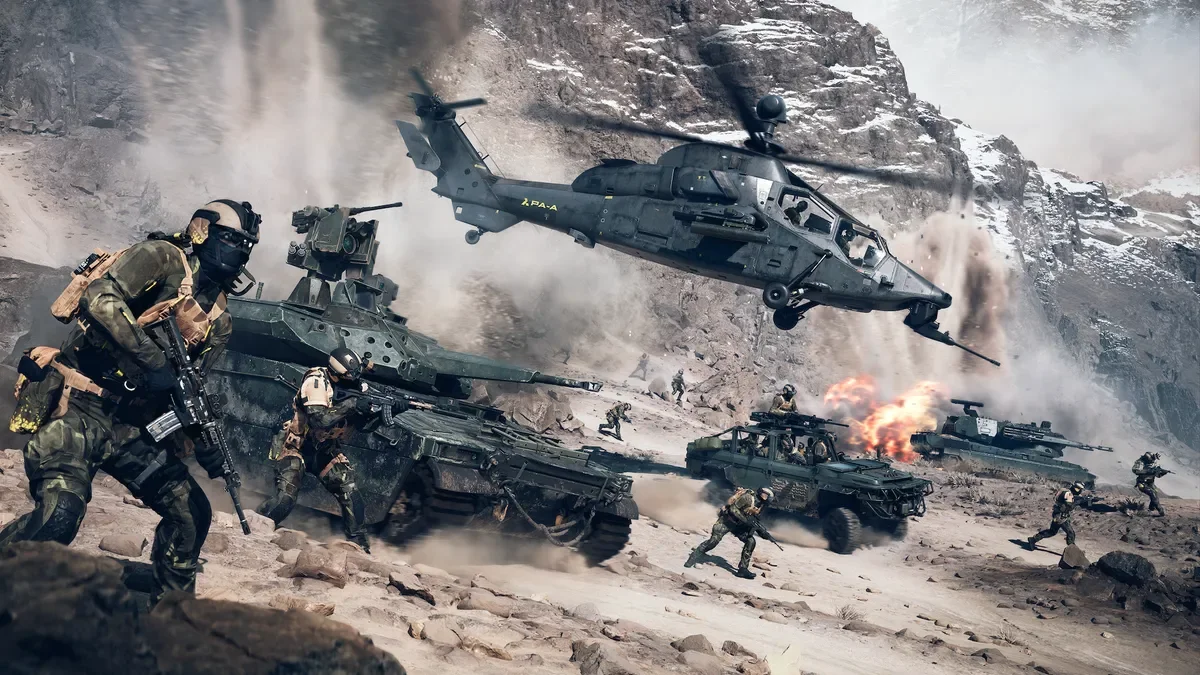
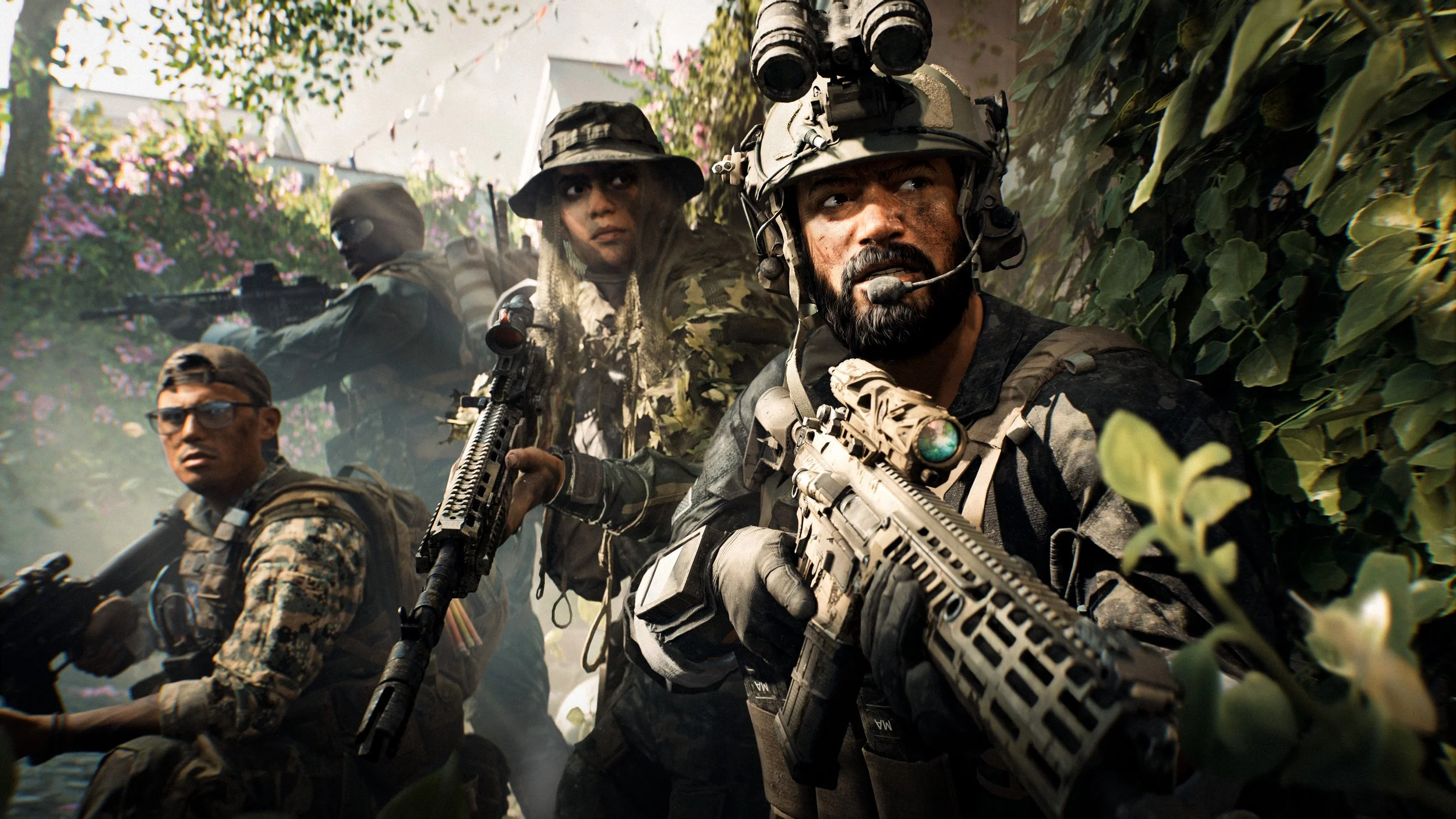
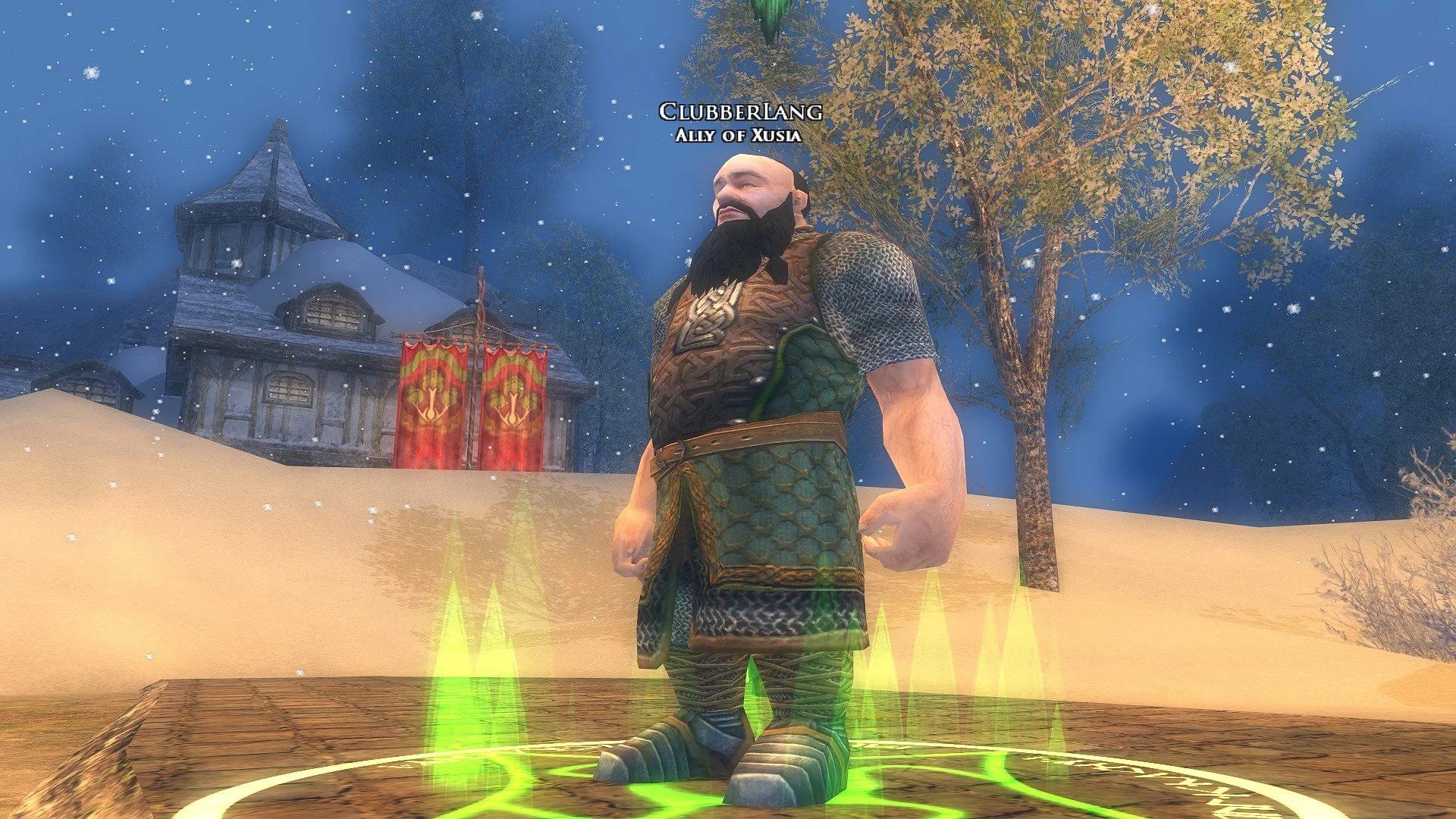


The Hunter: Call of the Wild
I have always dismissed hunting games as “not my thing”. Perhaps that stems from my ambivalent views about hunting per se. Yet after recently watching a YouTube video for The Hunter: Call of the Wild, I revised my opinion. The footage showed a slow and thoughtful game and I was also surprised to see that there was a campaign with a story. Hence I decided to step outside of my comfort zone and give the game a try. The base edition can be purchased for £20 on Steam and there is a wealth of optional DLC. I bought a bundle that included some additional maps, weapons packs and a dog that can be used for tracking. I also bought a quad bike as this is invaluable for traversing the open world, which is enormous. As ever with steam, the installation was easy and hassle free and within an hour I found myself exploring Layton Lake District, which is based upon the Pacific Northwest geographic region.
I have always dismissed hunting games as “not my thing”. Perhaps that stems from my ambivalent views about hunting per se. Yet after recently watching a YouTube video for The Hunter: Call of the Wild, I revised my opinion. The footage showed a slow and thoughtful game and I was also surprised to see that there was a campaign with a story. Hence I decided to step outside of my comfort zone and give the game a try. The base edition can be purchased for £20 on Steam and there is a wealth of optional DLC. I bought a bundle that included some additional maps, weapons packs and a dog that can be used for tracking. I also bought a quad bike as this is invaluable for traversing the open world, which is enormous. As ever with steam, the installation was easy and hassle free and within an hour I found myself exploring Layton Lake District, which is based upon the Pacific Northwest geographic region.
The Hunter: Call of the Wild was released in 2017, yet has been continuously supported by developers Expansive Worlds since then. Over the last five years the game has received new content and had its systems revised. The last patch was 14th March this year and it appears that there is a robust community of players. The game, much to my surprise, supports multiplayer gameplay and does something most unusual in so far as you can play on maps you don’t own while in co-op mode. This “try before you buy” approach is most equitable. Furthermore, the DLC seems to be functional and doesn’t fall into the “pay to win” category. There are cosmetic skins, weapons packs and most significantly, new maps featuring locations from all over the world. The prices are reasonable, although if you do decide to be a completionist and buy everything, you will end up spending an additional £115 on top of the base game.
Upon starting The Hunter: Call of the Wild, the player finds themselves on a jetty in the Layton Lake District, armed with an entry level rifle, revolver and shotgun. The tutorial (more on this later) and story is supplied via the Huntermate handheld device. This is a cross between a GPS tracker and a cell phone. You receive updates, missions and back story details via the reserve warden Colton “Doc” Locke. The Huntermate can display details of tracks, droppings and blood trails. It is also a means of taking screen captures in-game as it has a photo mode. From here the game quickly has you learning the basics of tracking, using lookout points which open up locations of note on the map and finding outposts. The latter are bases where the player can purchase resources, change their loadout, access their dog and quad bike, if purchased. Outposts also facilitate quick travel.
Hunting games are by their very nature, stealth games and The Hunter: Call of the Wild is no exception. This is a genre where it is beneficial to take a slow and methodical approach. Tracking is simple in principle but far trickier in reality. The player has to keep their noise level down (this is tracked by an in-game meter) and be aware of the wind direction as their scent can give their presence away (again there is a HUD display for this). Lures can be used to attract animals and the optional dog is great for tracking wildlife. Animals are also subject to a night and day cycle. There are also specific locations to be found where wildlife graze and drink water. All these factors come to bear when hunting. Due to the expansive open world, the quad bike is invaluable, although it is also noisy so has to be abandoned when you get near your quarry.
Talking of noise, sound design is an integral part of The Hunter: Call of the Wild. The ambient sounds are both atmospheric and functional. Footsteps alter depending upon where you walk and what you walk upon. Animal sounds can alert you to their presence but conversely, they may also tip you off when they have detected you. Wind, rain and moving water all contribute to the overall environmental atmosphere. At night, the sound design becomes positively alarming at times, utilising animal sounds that you may not immediately expect from such creatures as deers and rabbits. The game uses ambient music sparingly but each map does have its own bespoke theme which is appropriate. There is also support for Dolby Atmos and it showcases all the aforementioned attributes well. Sound is so often the one aspect of game design that gamers are inattentive of, turning it down or even off.
When it comes to actually shooting an animal, the game offers a similar amount of complexity to tracking. An appropriate calibre firearm has to be selected depending on the prey. Ammunition also is a key factor offering improved accuracy or penetration. Lying prone stabilises your shot but sway is still a factor, so the game uses a “hold your breath” mechanic found in most FPS games. However, perhaps the most important skill is choosing where to aim for a “quick, clean kill”. This requires the player to learn about animal anatomy and how shots to vital organs are the most desirable. Be warned, most of your initial kills will not be instantaneous and will require the player to track a blood trail to find their deceased target. Animals that you have successfully killed can be examined to determine where the bullets penetrated and what damage they did. There’s even a posthumous x-ray mode.
Now some may find all of this distasteful but I would point out that a game such as Sniper Elite does all the above but the target of choice are people, so I am not going to debate the morality of this particular game here. So far, The Hunter: Call of the Wild has proven absorbing, leisurely and at times quite impressive in the scope of its virtual world. I was pleasantly surprised by the narrative campaign and love my dog, which has skills that you can level up. The game is mainly in first person but can optionally switch to third when riding on a quad bike. Sadly, the tutorial is woefully lacking, leaving you dependent on internet searches. Also running and walking seem a little off and akin to wading through molasses. But these quibbles aside, the game’s greatest appeal is its pacing, which eschews the boisterous nature of so many other genres. The Hunter: Call of the Wild rewards the player who wants to take their time and consider their plan of action.
Adulthood
When I was a child I often dreamt about the “wonders” of the “grown up” world. I would muse upon this while in bed, peeved by the fact that the adults were now indulging in some magnificent activity that was beyond my comprehension and that I was excluded from. What exactly did adults do during the time I was at school or asleep? It was obvious there were gaps in my knowledge and in my naivety, I had the most fanciful speculations. Life for a child in the UK during the seventies was a very regimented process. School dominated the day. This was followed by a short period of “freedom” upon returning home, a meal, homework, some TV and then bed. Furthermore you were constantly reminded by adults to be content being a child. “You don’t want to grow up too quickly” I was told on many occasions. Apparently this part of my life was the best bit. So I rolled with the situation and got on with my childhood. Yet the adult world was still there, like something on the horizon that was always out of reach. Hence my nocturnal flights of fancy.
A simple visual metaphor
When I was a child I often dreamt about the “wonders” of the “grown up” world. I would muse upon this while in bed, peeved by the fact that the adults were now indulging in some magnificent activity that was beyond my comprehension and that I was excluded from. What exactly did adults do during the time I was at school or asleep? It was obvious there were gaps in my knowledge and in my naivety, I had the most fanciful speculations. Life for a child in the UK during the seventies was a very regimented process. School dominated the day. This was followed by a short period of “freedom” upon returning home, a meal, homework, some TV and then bed. Furthermore you were constantly reminded by adults to be content being a child. “You don’t want to grow up too quickly” I was told on many occasions. Apparently this part of my life was the best bit. So I rolled with the situation and got on with my childhood. Yet the adult world was still there, like something on the horizon that was always out of reach. Hence my nocturnal flights of fancy.
Five decades later the reality of adult life is abundantly clear to me as I have followed my parents down a similar path of employment, marriage and raising a family. I realise now that while I was a child in bed, my parents were not having a “fantastic adventure”. They were simply sitting exhausted, watching something on TV, trying to catch a few minutes respite from the rigours of their busy lives. I understand this now because I have done the very same myself. At some point in my midteens I suddenly realised that I wasn’t going to be ushered into a secret “adults club” upon becoming 18, where I would be given the “adults guidebook to life”. I realised that my parents were just “winging it”. Buying a home, getting a mortgage and enrolling your children in school were all things that they had to address as they came up. Cooking, cleaning and running a home were also skills learnt on the fly.
A Dickensian Treadmill
Being a grown up is essentially a combination of routine, obligation and managed stress, punctuated with brief moments of joy. I cannot emphasise the latter enough. I fear that modern society far too often pedals the myth to teenagers that adulthood is all about fun, enjoyment and doing the stuff that you want. Social media compounds this misconception further, fooling people into thinking that the staged managed and curated images they see are what adulthood is really like. The reality is that for most people, life as an adult is not a continuous cavalcade of fun but a functional and repetitive process, dominated by work. Perhaps the most beneficial thing that an adult can have in their life is stability. A stable job that you know inside out makes the working day more manageable. Less stress at work often leads to less stress at home. Stress is the societal blight of this century.
Another defining aspect of adulthood is embracing, or at least accepting, the concept of personal responsibility. When you move out of the family home for the first time, you suddenly realise that it’s down to you to ensure there’s food on the table and that you pay your rent or mortgage each month. Clothes don’t magically wash and iron themselves. The recycling doesn’t teleport itself to the curb awaiting collection. If you don’t do these arbitrary tasks, then there are consequences. Some may be minor inconveniences. Others such as failure to pay your utility bills or taxes will leave you seriously at risk of sanction. But all of these things are framed as “boring” or a “drag” if you’ll pardon my sixties hip-speak. People all too often want the pleasures and freedoms of adult life but without the baggage that goes with it such as responsibility and accountability.
A Victorian family photo
However, I don’t believe it is all doom and gloom. Modern adulthood is not the same as it used to be. My parents lived in a society that was very formal and rigidly structured. There were three stages to life. Childhood, middle-age and old age. The notion of a teenager was yet to be constructed by the advertising industry. Each age group had its own modes of behaviour and even dress. I look at pictures of UK society during the seventies and people often appear to look older than they actually were. Plus doing something “inappropriate for your age” was a common criticism. Once you became an adult you were expected to put away “childish things”. Comics were replaced by reading “the classics”. Romance and relationships were indulged for a short window of time then you were expected to settle down and put such things behind you. Old age was for gardening, voluntary work and awaiting death.
Nowadays such rigid social conventions have faded. The way one dresses, behaves and what social activities you pursue are no longer defined within strict age based parameters. There’s still ageism but it’s nowhere near as bad as it used to be. No people embrace new hobbies and pastimes in old age, seek new relationships and even have families. You can still indulge the same interests from your childhood into adult life. Maybe this is why I am comfortable being an adult. Unlike my parents, I am doing it slightly on my own terms. I certainly don’t envy the young, especially teenagers. They are growing up in a rapidly changing and less stable world. Oh and before I go, let’s lay to rest that awful phrase “adulting”. Being an adult isn’t a mode that you turn on and off. It is a personal epiphany, an acceptance of a social contract and the adopting of a philosophical lifestyle. Either you are or you aren’t an adult. Biological maturity and society’s chosen age of majority are not the same thing.
More Games We Cannot Play
Nearly six years ago, I wrote a post about games that I wanted to play but couldn’t due to my inherent lack of skill and coordination. Since then I have also written about several games that I would like to enjoy but can’t, because they’re multiplayer and I do not know anyone else that plays them. I have also pointed out in subsequent posts that my personal experience of some games is nothing like that shown in the promotional videos. This is often due to the two aforementioned reasons. C’est la vie. Such is the nature of video games. Some you can play, others you can’t. Fortunately the latter doesn’t happen that often and by and large, I get by just fine. However, recently the phenomenon of “games we cannot play” has raised its ugly head once again. So I thought I’d share my latest thoughts on the matter.
Nearly six years ago, I wrote a post about games that I wanted to play but couldn’t due to my inherent lack of skill and coordination. Since then I have also written about several games that I would like to enjoy but can’t, because they’re multiplayer and I do not know anyone else that plays them. I have also pointed out in subsequent posts that my personal experience of some games is nothing like that shown in the promotional videos. This is often due to the two aforementioned reasons. C’est la vie. Such is the nature of video games. Some you can play, others you can’t. Fortunately the latter doesn’t happen that often and by and large, I get by just fine. However, recently the phenomenon of “games we cannot play” has raised its ugly head once again. So I thought I’d share my latest thoughts on the matter.
The First Person Shooter genre is no easy ride. The most popular titles are the embodiment of twitch gaming, where the nimble fingered and quick witted rule and those adjusting their Pince-nez and squinting at their monitors are destroyed. But they can be very entertaining and often the developers will build mitigations into the various game systems to help those on a “death streak”. Also if you can’t out gun other players you can sometimes out think them, so even the slower gamer can still enjoy such franchises as Call of Duty, Battlefield and Fortnite. However, if you want a really hardcore FPS which focuses on realism and with minimal perks, then there is Hell Let Loose. This World War II themed game features 50 vs. 50 battles between two teams of either Germans, Americans and Soviets forces.
The Tactical Brit plays Hell Let Loose
Hell Let Loose is a tough FPS with no regenerating health, weapons with iron sights and squad based dynamics. It requires coordination, situational awareness and skill. The maps feel authentic and combat is compelling and intense. No matter how good a player you are, you will die. Frequently. Sadly, I find the game so punishing as a whole, I cannot enjoy it personally. If you wish to succeed in Hell Let Loose, then you have to commit to the game and dedicate yourself to learning the maps, honing your skills and cultivating a group of like minded friends. For me that is too steep a learning curve and I don’t think the “journey” would be fun. So for the present I have relegated Hell Let Loose from a game I play to a game I watch other play on Twitch or YouTube.
Another title that I recently tried is Dark and Darker. If you’ve ever wondered what would happen if you took an extraction shooter such as Escape From Tarkov and crossed it with Morrowind, then you end up with Dark and Darker. You create your character from a selection of classic fantasy classes, then form a group either with friends or “random players” and then enter the dungeon. You undertake missions, cross swords with other players and then you exit. This is another game where the reality of playing is different from what you think it may be. The first person perspective is difficult when it comes to swordplay and using a bow. The maps are hard to learn and at present in the game’s development (early access), the segregation of new and seasoned players is not always effective. This can lead to unbalanced encounters with other players. Dark and Darker is also a game where if you play with a group of friends you will enjoy a far superior experience to simply playing solo or with random players.
Character creation in Dark and Darker
Finally, I wish to return to the matter of my Nintendo Switch. There are a wealth of good games available for this handheld device but I have now concluded after two years that buying this was a mistake. It’s not just a question of not enjoying games via a handheld device, I think it is entirely down to being institutionalised by my existing gaming habits. I equate gaming with playing via my PC. I also spend a great deal of my time sitting at my desk reading, writing and perusing the internet. The PC is the hub of these activities. I even connected my Nintendo Switch to one of my monitors so I could play while at my desk but to no avail. It remains this adjunct to my existing status quo and despite trying, I can’t change my perspective. But ultimately, that’s okay. You can’t accommodate and embrace everything, be it in gaming or in real life. There are games we cannot play and indeed consoles we can’t either.