
Star Trek Online: Max Level Boost
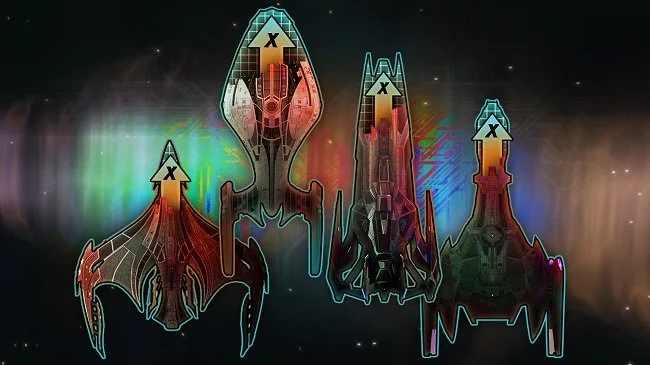
In January this year, Star Trek Online ran the Klingon Recruitment Event to celebrate the streamlining and revision of all KDF content in the MMO. I created a Klingon Engineer and over the following weeks progressed to level cap. Let it suffice to say that the Klingon story arc is now greatly improved and has the sense of grandeur and melodrama that one expects. I then decided to buy the Legendary Klingon Defense Force Captain Bundle, mainly because I wanted a Tier 6 D7 Battlecruiser. I had tried to get by with an upgraded Tier 5 fleet version of this iconic ship but it was somewhat underpowered. So I purchased the bundle, unlocked the ship and went about the business of equipping it with the best gear I had at my disposal. The bundle also came with a Max Level Boost but as my existing Klingon character was already at level cap, I left this item unclaimed.
In January this year, Star Trek Online ran the Klingon Recruitment Event to celebrate the streamlining and revision of all KDF content in the MMO. I created a Klingon Engineer and over the following weeks progressed to level cap. Let it suffice to say that the Klingon story arc is now greatly improved and has the sense of grandeur and melodrama that one expects. I then decided to buy the Legendary Klingon Defense Force Captain Bundle, mainly because I wanted a Tier 6 D7 Battlecruiser. I had tried to get by with an upgraded Tier 5 fleet version of this iconic ship but it was somewhat underpowered. So I purchased the bundle, unlocked the ship and went about the business of equipping it with the best gear I had at my disposal. The bundle also came with a Max Level Boost but as my existing Klingon character was already at level cap, I left this item unclaimed.
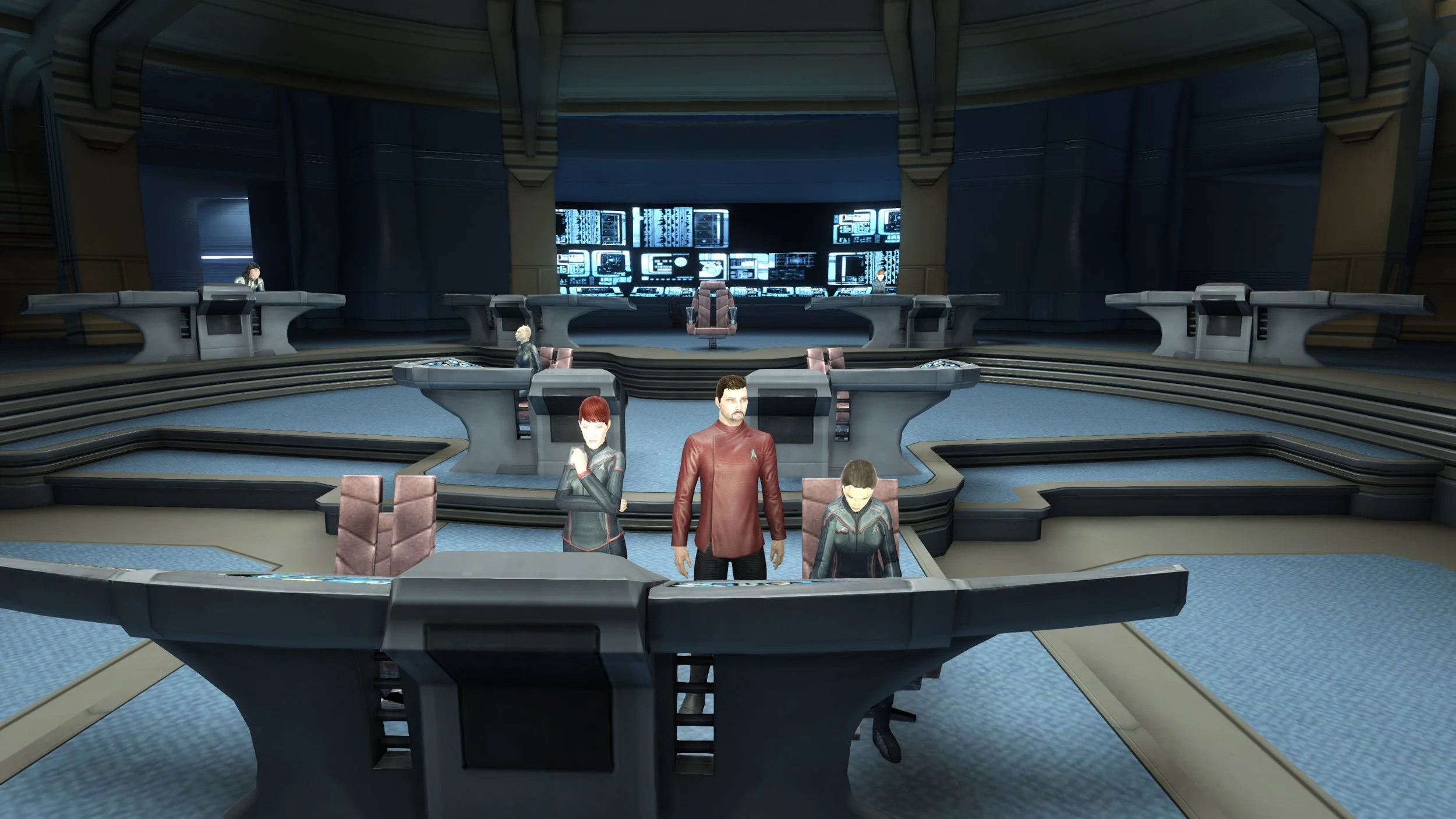
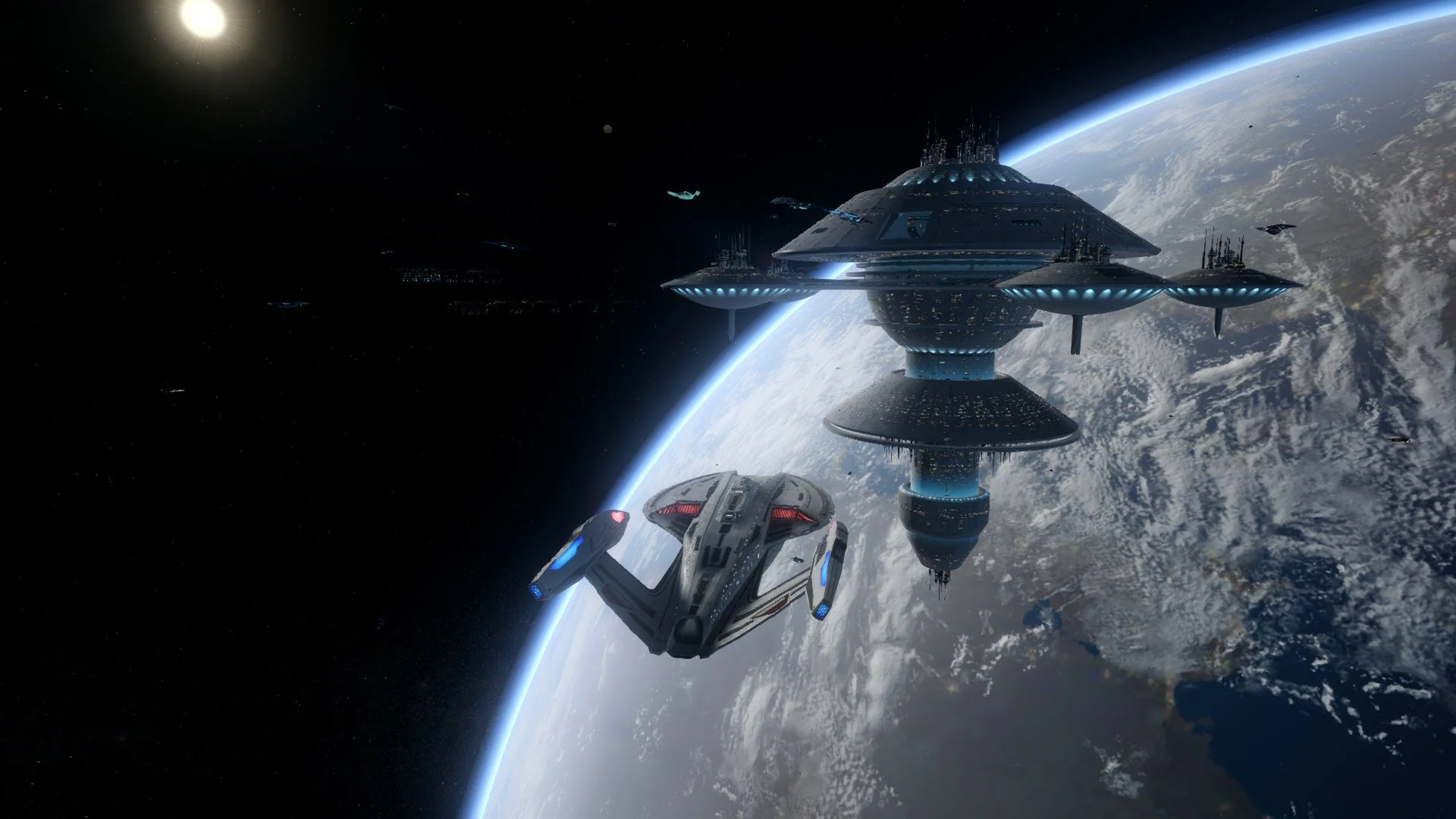
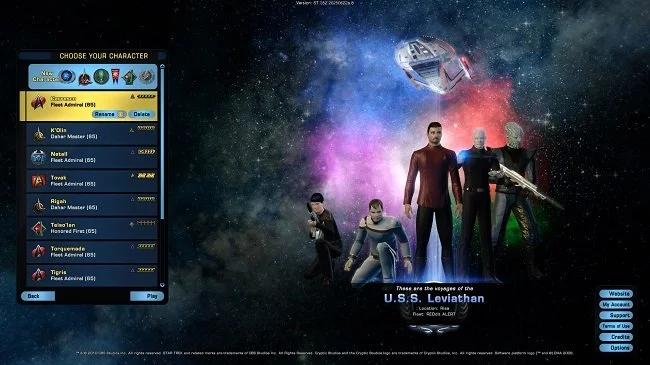
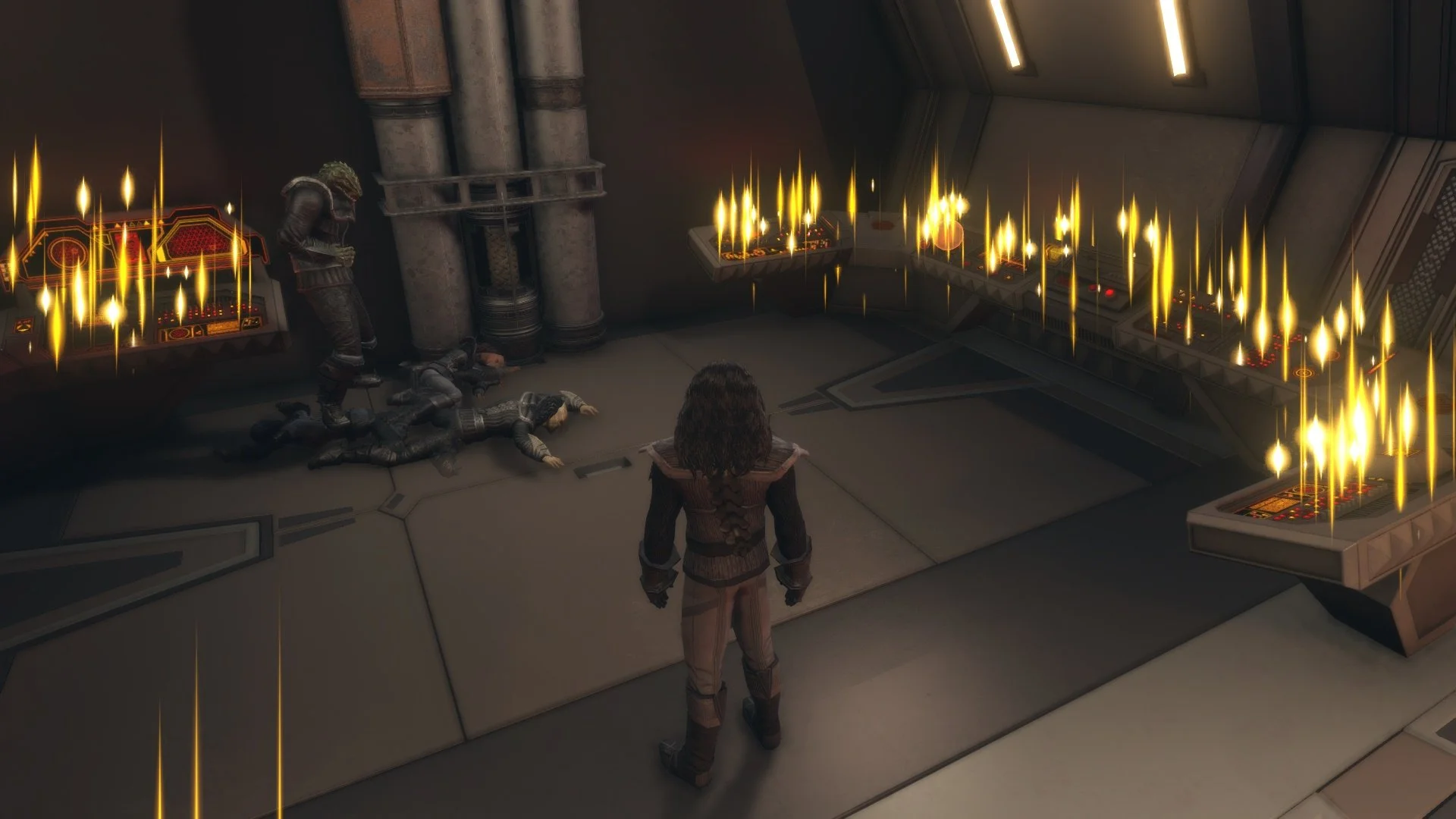
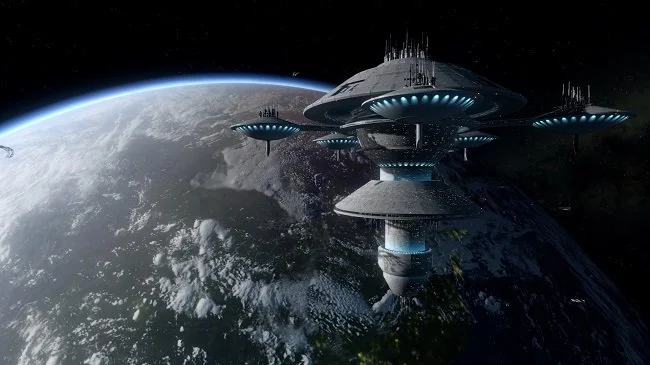
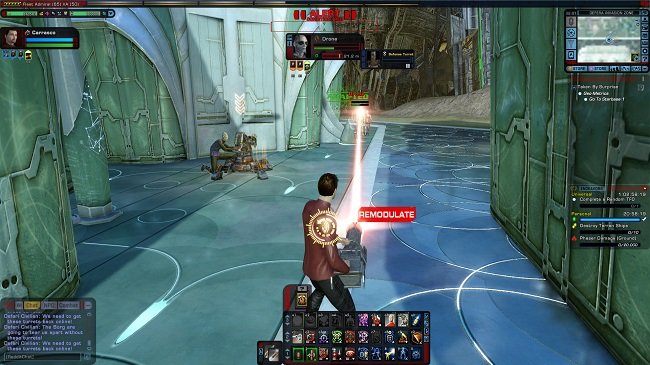
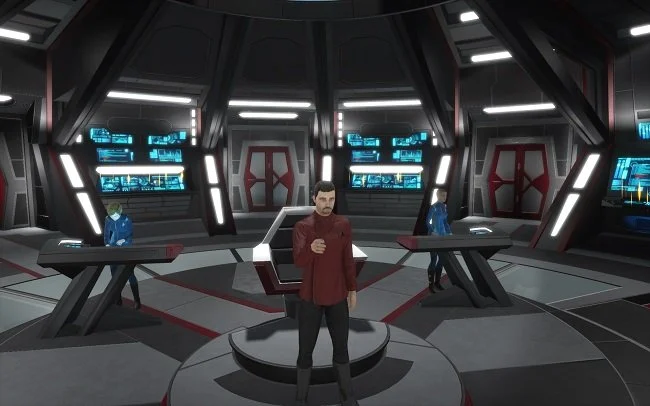
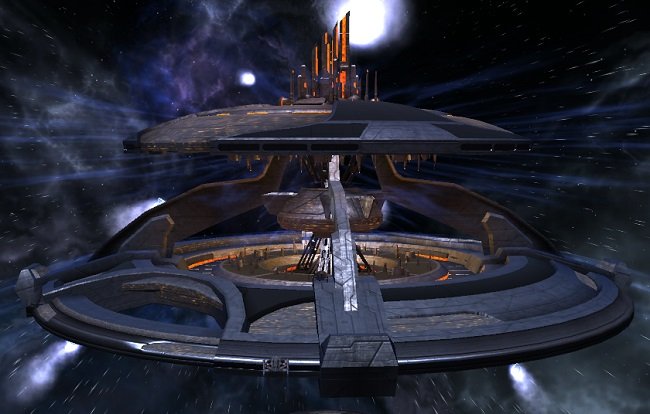
Roll on April and Cryptic decided to re-run The Delta Recruitment Event. This time round you could create Federation, Romulan Republic and Klingon Defense Force characters and receive perks and benefits while levelling. So I rolled new alts from each faction and really enjoyed playing through the entirety of both the Federation and Romulan storylines. I managed to get both of these alts to level cap but ran out of “enthusiasm” when it came to the Klingon character, as I had already done something similar with this faction only three months previously. So poor old Lieutenant Rigah was left in the Vlugta Asteroid Field to mine Dilithium and function solely as a resource management alt. Until yesterday when I remembered that I had an unused Max Level Boost. So I relocated this Gorn character to Genalda Space Station, unequipped all items and utilised the boost.
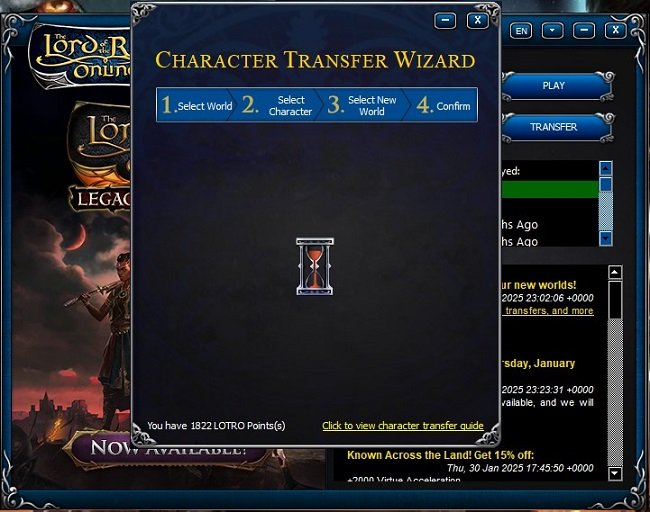
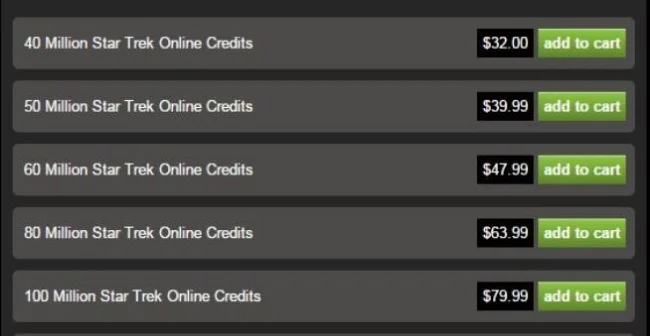
The Good: The boost promptly takes you to the current level cap with minimal onscreen hassle. You don’t have to sit around waiting an eternity as confirmation messages fly across the screen (I’m looking at you LOTRO). Once the boost has completed its task you get a nice splash screen that summarises everything that you’ve been granted. This includes 36 x Inventory Slots, 12 x Bank Slots, 6 x Bridge Officer Slots and 2 x Starship Slots as well as 46 Skills Points and 15 Specialisation Points.
The Bad: The Ground Kit and Modules, along with the Space Weapons, Consoles and Ship Equipment are all decidedly lacklustre (as is the ground gear). They are all “very rare” quality, Mark XIV level and are of the kind you usually buy from a vendor. Frankly it would have been preferable if Cryptic had given you a larger quantity of Energy Credits (you get 1,000,000) and let you see what you could buy on The Exchange.
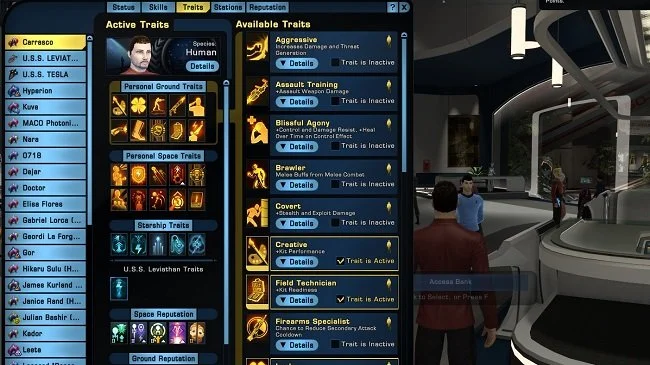
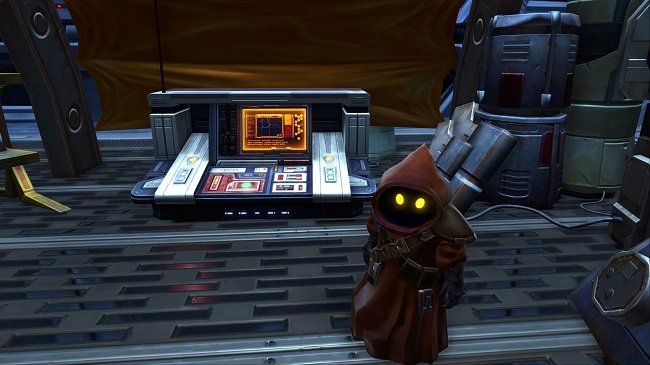
The Adequate: I was surprised to see that you get six bridge officers all pre-promoted to the rank of Commander, pre-equipped with Mk XIV Very Rare equipment and Very Rare-quality traits. This is actually quite useful, although you may wish to tinker with their individual builds before you’re content. The Projected Stasis Beam Universal Console is an acceptable “slot filler” until you find something more bespoke for your ship build. It’s a nice Star Trek TAS reference.
Overall, this Max Level Boost has proven okay and a convenient means to an end. It came with a bundle and was not something I specifically sought out. I’m not sure if I’d buy this if it was sold separately. Knowing how Cryptic tends to price things, it may not offer sufficient value for money. But in this specific situation it has served its purpose. At level 65 I can now access Task Force Operations, Red Alerts and Patrols, providing me with an alternative to just progressing through the story mission arcs once again. The equipment supplied is sufficient to keep me going until I can acquire superior reputation crafted gear. The account unlocks from previous events is also a good source of additional weapons, consoles and devices. And once this character has been played for 20 hours (they’re at 13 at present) I can claim the Tier 6 Bird of Prey that was made available for all alts during the Klingon Recruitment Event.


The Problem with “Adaptable” Recipes
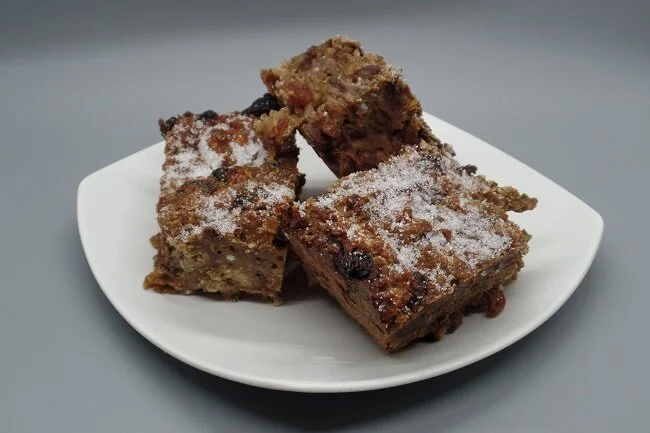
It’s curious how some things that you think are simple and mundane, can turn into complex and time consuming problems. They go on to haunt you for years to come. In many ways such a scenario is a variation of the old idiom that “no good deed goes unpunished. So let me begin this story back in 2001 around Easter. A chance conversation arose about how people tend to buy cakes from the supermarket as opposed to making their own. This was just before baking shows became popular on TV. I subsequently referenced how my Mother used to make bread pudding back in the seventies. Needless to say, no sooner had I uttered those words, then I immediately desired the aforementioned dessert and it has been an albatross around my neck ever since. The problem isn’t that bread pudding is as rare as Tanzanite or rocking horse droppings. There are plenty of recipes available. Therein lies the rub. There are numerous regional and international variations. Too many in fact.
It’s curious how some things that you think are simple and mundane, can turn into complex and time consuming problems. They go on to haunt you for years to come. In many ways such a scenario is a variation of the old idiom that “no good deed goes unpunished. So let me begin this story back in 2001 around Easter. A chance conversation arose about how people tend to buy cakes from the supermarket as opposed to making their own. This was just before baking shows became popular on TV. I subsequently referenced how my Mother used to make Bread Pudding back in the seventies. Needless to say, no sooner had I uttered those words, then I immediately desired the aforementioned dessert and it has been an albatross around my neck ever since. The problem isn’t that Bread Pudding is as rare as Tanzanite or rocking horse droppings. There are plenty of recipes available. Therein lies the rub. There are numerous regional and international variations. Too many in fact.
So for those who are not familiar with the aforementioned “delicacy”, Wikipedia describes it thus. “Bread Pudding is a bread-based dessert popular in many countries' cuisines, made with stale bread and milk or cream, generally containing eggs, a form of fat such as oil, butter or suet, and depending on whether the pudding is sweet or savory, a variety of other ingredients. Sweet bread puddings may use sugar, syrup, honey, dried fruit, nuts, as well as spices such as cinnamon, nutmeg, mace, or vanilla. The bread is soaked in the liquids, mixed with the other ingredients, and baked”. They go on to mention a savoury version but that’s just crazy talk and the spawn of Beelzebub. So now that everyone’s au fait with bread pudding, I have spent the last twenty years trying to find a recipe that is close to how my Mother used to make it. Obviously, I asked her back in 2001 but she had mislaid the recipe. Subsequently interrogations have yielded less data as she is now in her nineties.
Now you may well be asking yourself, what exactly is the point I am trying to make here. Am I advocating that all family recipes should be committed to text and filed away for future reference. Well yes, but that is not my primary concern. I find that the sort of recipes that lend themselves to be “adapted” can be both a boon and a bane. Being able to easily expunge an ingredient that you don’t like and replace it with one that you do, without radically altering the dish, is a godsend. But some recipes have a tendency to be too flexible. Even nebulous. For example, Spaghetti Bolognese has many permutations. Chicken Tikka Masala is another. You could theoretically dine at a different Indian restaurant every day of the year, ordering the aforementioned dish and potentially have 365 meals of incredible diversity. Some may vary greatly from your expectations rendering them unpalatable. Conversely, a dish such as Beef Wellington is quite specific and doesn’t lend itself to radical augmentations.
Often one gains a liking for a particular meal either through dining together as a family or via a specific restaurant. Thus your perception and preferences for that meal are determined by the unique recipe of a family member or local chef. It can be confusing and sometimes even awkward, when you encounter somebody else’s version, especially if you don’t like their culinary interpretation. They might have removed the mushrooms or used shallots instead of regular onions. People can’t even agree as to the best way to make an omelette or even poach an egg. This is one of the reasons why fast food chains are so popular because they offer a homogeneous experience. A quarter pounder with cheese is virtually identical irrespective of whether you buy it from a McDonald’s in Kent or Aberdeenshire. It is comforting to know that you are going to have the same experience as last time, free from any “surprises”.
And so we return to the subject of Bread Pudding. I am finally reconciled to the fact that I shall never be able to recreate this dessert exactly as I experienced it in my youth. My Mother’s recipe has gone and so is my Mother in-law’s which came a very close second. I have however, discovered several variations that I do find quite palatable and the local Baker’s does one that is quite passable. I have even gone so far as to experiment myself and feel that using brown sugar and nutmeg are essential. As for the wider issues regarding “adaptable” recipes, I do tend to ask a lot more questions before ordering a meal in a restaurant. Most of the time, staff are happy to discuss what makes their version of a classic dish “different”. This often proves invaluable. Like many other things in life it’s best not to assume anything. Certainly don’t think, “I’ll order the Shepherd’s Pie. They can’t get that wrong”, because you’ll be surprised how they can.



Thoughts on Blogging Part 15
At the time of writing we are halfway through the Blaugust 2021 Festival of Blogging event. Whenever the subject of personal blogging is raised, there are those who immediately declare that “blogging is dead”. According to Google, out of 1.7 billion websites that currently exist worldwide, 500 million or so of those are blogs of some kind. These generate over 2 million blog posts daily. So I wouldn’t say that blogging per se is done and dusted. However it certainly has evolved considerably over the last 15 years. At the start of the current century blogging was a novel activity providing the means of keeping a personal journal online. Inevitably, popularity and ubiquity led to commercialisation and a necessity to monetise. There was a period of time when clicks, traffic and advertising could generate popularity as well as an income. But other forms of social media offering greater immediacy eventually usurped this potential. Now blogging is seen as more of a niche market activity or corporate tool.
Blogging is dead: At the time of writing we are halfway through the Blaugust 2021 Festival of Blogging event. Whenever the subject of personal blogging is raised, there are those who immediately declare that “blogging is dead”. According to Google, out of 1.7 billion websites that currently exist worldwide, 500 million or so of those are blogs of some kind. These generate over 2 million blog posts daily. So I wouldn’t say that blogging per se is done and dusted. However it certainly has evolved considerably over the last 15 years. At the start of the current century blogging was a novel activity providing the means of keeping a personal journal online. Inevitably, popularity and ubiquity led to commercialisation and a necessity to monetise. There was a period of time when clicks, traffic and advertising could generate popularity as well as an income. But other forms of social media offering greater immediacy eventually usurped this potential. Now blogging is seen as more of a niche market activity or corporate tool.
Blogging for pleasure: At present it is the microblogging site Tumblr that dominates the bloggersphere, hosting over 400 million blogs (WordPress hosts 60 million). However, this is not really a platform for in-depth, longform writing. Perhaps that is the main reason for blogging becoming less popular. Writing competently does require both skill and time. Modern social media platforms are the opposite, offering immediacy and brevity. Plus there is far more of a focus upon monetisation and building an audience these days. Hence many bloggers are choosing to write not so much about personal subjects but are pursuing material that is marketable, such as Lifestyle and Travel blogs. Product reviews are another popular subject. Yet despite the fact that there are many commercial prospects available, current data from Google indicates that only about 10% of all bloggers generate any income. Broadly speaking the primary motivation for personal blogging is passion, fandom and pleasure.
Amending existing posts: I wrote a blog post back in May of this year about how the RPG The Elder Scrolls V: Skyrim was fast approaching ten years old. At that time there was a lot of speculation but no definitive answer as to whether the game developer Bethesda were going to do anything formal to celebrate this anniversary. This has now changed and a Skyrim Anniversary Edition has now been announced. So I updated the post with an additional paragraph and added a date reflecting the amendment. I think that this is a valid policy, providing value for your readers and also maintaining your credibility as a writer. I think it’s especially important if you are writing about a news story and the facts are constantly being updated and possibly corrected. Updating or appending a post is also a useful form of self-promotion.
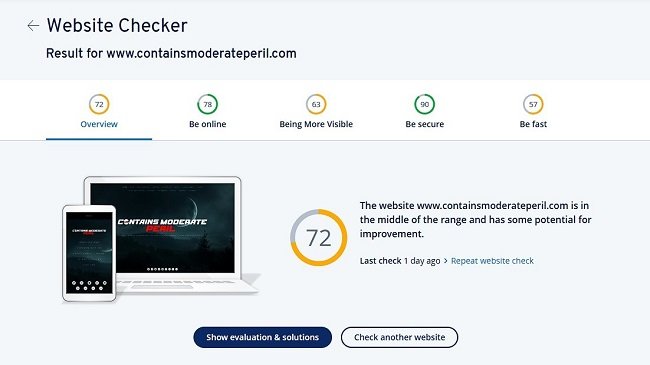
Changes in traffic sources: Squarespace has an integral analytical service which provides statistics and data for Contains Moderate Peril. I even have an app on my phone that I can check if I see fit. I also have the website linked to Google Analytics which generates and emails to me very useful monthly summary of website traffic. Over the last decade, due to the success of smartphones and tablets, there has been a major shift in how people browse the internet and consume content. Over 46% of those who visit Contains Moderate Peril, do so from a mobile device. Hence it is important as a blogger to ensure that the template you use for your blog is “responsive” and adapts and optimises your content for mobile platforms. There are various sites available that can test your template and provide a preview of what your blog looks like on a mobile device. I would recommend that that all new bloggers look into this to ensure that their site is responsive, so they do not unintentionally exclude potential readers.






















The LOTROCommunity Forums to Close
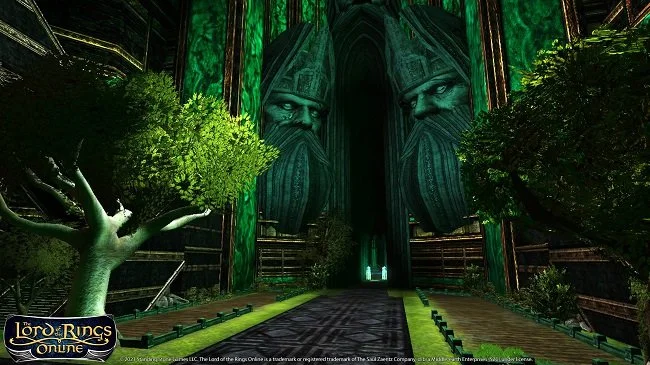
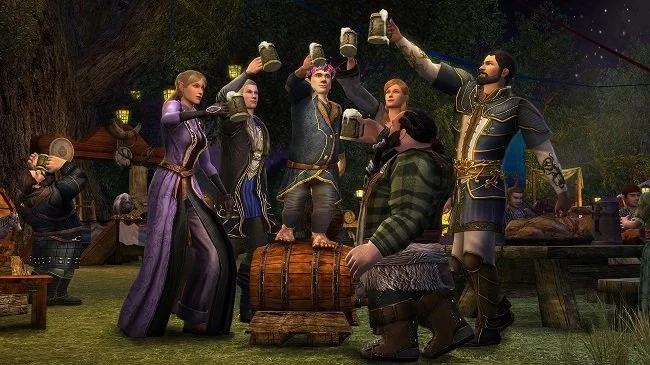
One 1st June 2011, Turbine officially took back control of the European service of the MMORPG The Lord of the Rings Online. Prior to this it was operated by Codemasters Online Gaming. There were several unique distinctions between the two services. Codemasters were far more proactive in running community events and they also maintained a totally separate set of forums, catering to their European customers. When LOTRO was consolidated in the US under the auspices of Turbine, the European forums faced closure and the loss of all the valuable game related data that they held. However, a private, fan maintained forum was quickly established by MueR and the old Codemaster data was archived. Over the next ten years the LOTROCommunity, as it was known, grew in membership and overtime found itself to be an independent alternative to the official LOTRO forums run by Turbine and later Standing Stone Games.
The LOTROCommunity Forums
One 1st June 2011, Turbine officially took back control of the European service of the MMORPG The Lord of the Rings Online. Prior to this it was operated by Codemasters Online Gaming. There were several unique distinctions between the two services. Codemasters were far more proactive in running community events and they also maintained a totally separate set of forums, catering to their European customers. When LOTRO was consolidated in the US under the auspices of Turbine, the European forums faced closure and the loss of all the valuable game related data that they held. However, a private, fan maintained forum was quickly established by MueR and the old Codemaster data was archived. Over the next ten years the LOTROCommunity, as it was known, grew in membership and overtime found itself to be an independent alternative to the official LOTRO forums run by Turbine and later Standing Stone Games.
There was a point when there was a great deal of rivalry between the two communities. The official LOTRO forums were frequently moderated with a heavy hand and frankly any criticism, regardless of its validity, was quashed. The forums subsequently became dominated by a small cadre of bombastic LOTRO fanboys who hailed from the “if you’re not playing it the same as me, then you’re playing it wrong” school of thought. Hence the unofficial LOTROCommunity forums saw an influx of new members and became increasingly vocal in the way the MMO was run and how the official forums were moderated. Matters reached a head in mid 2013 when the Helm’s Deep expansion was being beta tested and it became clear that Mounted Combat, Epic Battles and the changes to the class "trait tree" system were far from good. Turbine circled the wagons and effectively stifled any relevant debate on these subjects and so the LOTROCommunity forums became a beacon of dissent and anger towards Turbine.
The Official LOTRO Forums
Gamers are a passionate bunch. MMO players may be more so, due to the long term investment required. Hence there were times when members of the LOTROCommunity were inflammatory and went out of its way to pick fights not only with Turbine but with specific players on the official forums that they saw as “shills” and “lick spittles”. There were occasions when members of one forum would surreptitiously create an account on the rival platform and indulge in some untrammeled trolling. Yet despite the sniping and the unpleasantries perpetuated by a handful of members, the LOTROCommunity was often a source of invaluable news, analysis and game related data. There was also some important information leaked by beta testers breaking NDAs. Turbine has always had a propensity for being unduly tight-lipped yet the LOTROCommunity was always there to fill in the blanks. Plus for a lot of the time, I enjoyed actively posting and participating there. I took a break when it got too partisan but there was always more good there than bad.
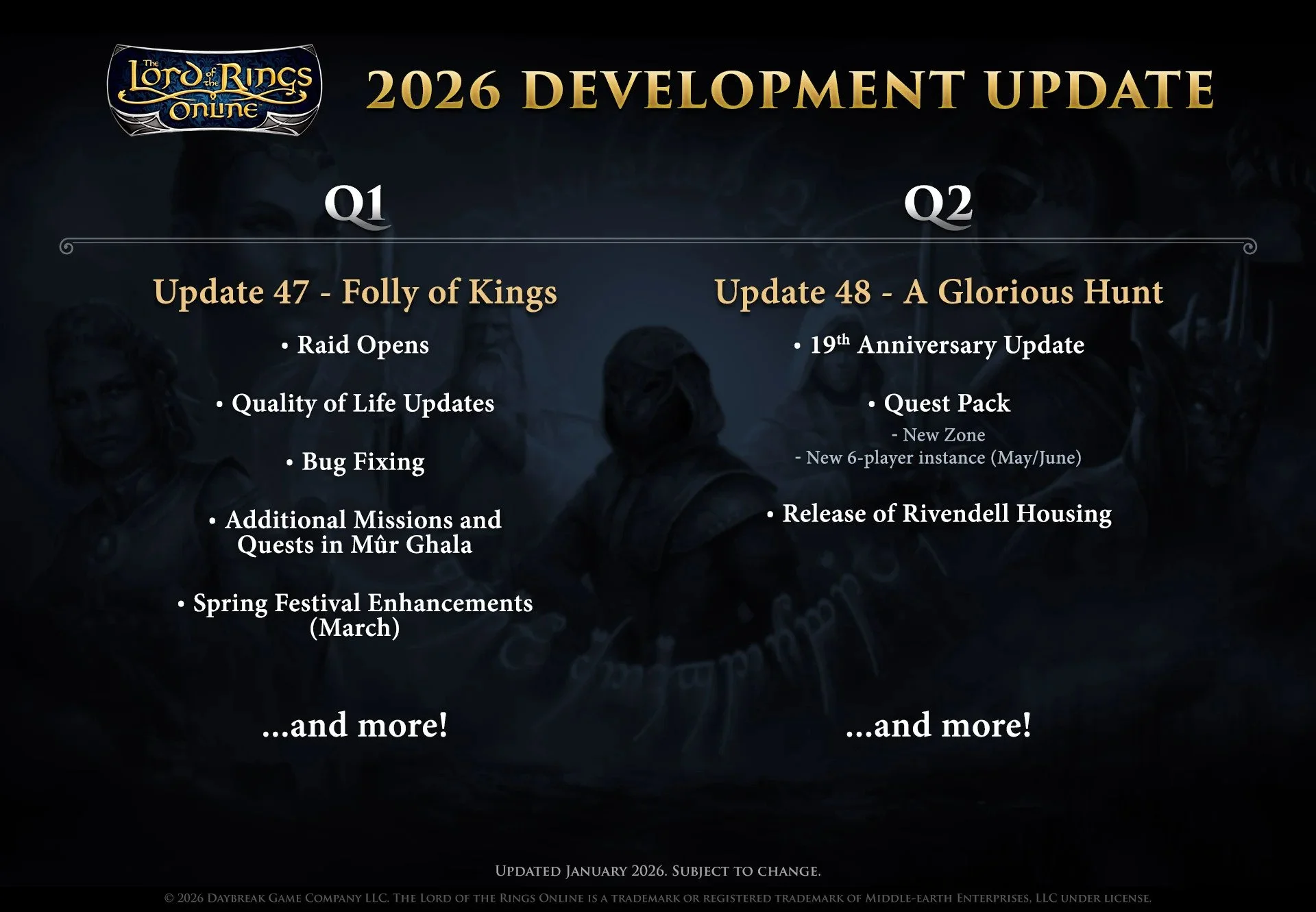
In recent years the LOTROCommunity has fallen into decline. Mainly because a lot of the core members simply stopped playing LOTRO and moved on to other games. There was a brief resurgence when Standing Stone Games extracted themselves from Turbine in December 2016. A further spike occurred during mid 2020 when the pandemic kept a lot of people at home and SSG made a lot of LOTRO content free. Overall it would appear that the LOTROCommunity has followed the lifecycle of LOTRO itself and has waxed and waned accordingly. There is now a core of dedicated players who keep the MMO ticking over but the general buzz around the game has declined. The official forums are now a lot quieter and the willingness for a flame war has long since diminished. Hence MueR has decided that its time to call it a day for the LOTROCommunity forums and it will close on 1st October 2021.
The Archived Codemasters LOTRO Forums
I don’t know what will happen to the archived data from Codemasters that is still preserved there, nor do I know how long the forums themselves will stay online. But it does smack of the end of an era, although this may seem trivial to those who have not been active LOTRO players or immersed at any point in the games wider community. I can recollect a time when I would sit up late burning the midnight oil, trawling through threads on the LOTROCommunity forums, investing possibly a little too much time into heated debates. LOTRO was my first MMO and it has played a major part in my personal gaming experience. I’ve blogged frequently about the game and got into podcasting because of it as well. The LOTROCommunity forums have also contributed greatly to this overall experience. So thank you MueR for running the site for so long. Good luck with your future endeavours. It feels odd for an MMO to outlive its fan related forum but that’s the way it is. Nothing lasts forever.



Would You Rather? - The Gaming Edition
Ah, there’s nothing like an internet questionnaire to help you out when you’re scratching your head, desperately trying to think of something to write about. I don’t consider Blaugust to be complete unless there’s at least one of these “question and answer” style blog posts doing the rounds. This one is courtesy of Krikket over at Nerd Girl Thoughts. Do go and have a look at their unique take on the various questions. Naithin has also tackled this line of enquiry and you can find his answers at Time to Loot. As ever I tend to deviate from the somewhat binary nature of the questions but that’s the whole point, isn’t it? To open up the scope of the discussion and potentially encourage others to join in. This is why I like these sorts of internet questionnaires and think they contribute much to Blaugust.
Ah, there’s nothing like an internet questionnaire to help you out when you’re scratching your head, desperately trying to think of something to write about. I don’t consider Blaugust to be complete unless there’s at least one of these “question and answer” style blog posts doing the rounds. This one is courtesy of Krikket over at Nerd Girl Thoughts. Do go and have a look at their unique take on the various questions. Naithin has also tackled this line of enquiry and you can find his answers at Time to Loot. As ever I tend to deviate from the somewhat binary nature of the questions but that’s the whole point, isn’t it? To open up the scope of the discussion and potentially encourage others to join in. This is why I like these sorts of internet questionnaires and think they contribute much to Blaugust.
Q: Would you rather play games only on console? OR Would you rather play games only on PC?
A: It very much depends upon the game. I recently bought a Nintendo Switch to be able to have access to games such as Mario Kart 8. Playing games of this variety with a controller is ideal. However, I find that playing some game franchises on a PC is preferable, such as Assassin’s Creed. Both platforms serve specific purposes and occupy a particular niche. As I’ve written previously, I made the change from console to PC gaming roundabout 1995, although for a few years I used both platforms equally. I do find console exclusive titles a little frustrating although from a business perspective I see the sense of them. This is why I was both surprised and pleased when Days Gone was unexpectedly ported from the PS5 to the PC. However, all things considered PC gaming is my platform of choice and the majority of the games that I own are for this format.
Q: Would you rather play only singleplayer games? OR Would you rather only play multiplayer games?
A: I am predominantly disposed towards singleplayer games, as your enjoyment and progress are not in any way dependent on other people. However, I have spent many a happy hour in the company of friends in an MMORPG. Out of all the varieties of multiplayer games, that is the genre I enjoy the most. Mainly because your interaction is with established colleagues who are a known quantity and there is less scope for drama and shenanigans. Although I will play games such as Call of Duty: Warzone, it is a lottery as to whether you’re going to have an enjoyable and productive time, due to the random grouping that occurs and the overall nature of pickup groups. I think that multiplayer games, where possible, should always have an AI bot option.
Q: Would you rather play only games you already own? OR Would you rather play only games you would need to still acquire?
A: The grass is always greener, especially with regard to games you do not own and that everyone else is playing. I have numerous game libraries spanning multiple platforms filled with games that I haven’t yet played. And then there is the Epic Game Store which regularly gives away premium titles. Do I really need them? No. Do I still acquire them? Yes. I suppose what this ultimately highlights is the ephemeral nature of video games. A game is the talk of the internet one day and then six months later, very much yesterday’s news. However, if you’re content to play titles that others may consider “old hat”, then you’ll have plenty of good and reasonably priced games to play through.
Q: Would you rather play only games that challenge you mentally? OR Would you rather play only games that challenge you physically?
A: I primarily play games for entertainment. That may include a degree of both mental and physical challenge. However, I tend to avoid games that are based exclusively upon either of these two options. I no longer play complex platformer games where rhythm and coordination are paramount as I find them frustrating. I don’t like games that are rife with puzzles or require you to manage numerous resources because to me that simply isn’t fun, it’s a job. I don’t mind a challenge in a game but I don’t actively seek those titles that are comparable to the labours of Hercules. I don’t seek or require personal validation through success in a video game. I have, however, fallen off my chair playing Mortal Kombat.
Q: Would you rather play only long / endless games? OR Would you rather play only games that are less than 20 hours long?
A: Again both types of games have their virtues. I like MMOs as they do grow in content over time and their longevity offers the illusion of stability and routine, which is very comforting. However, I like games that can be completed in 20 or thirty hours. Some RPGs can outstay their welcome, narratively speaking. As ever with video games, what I play is very much dependent upon my frame of mind.
Q: Would you rather play only games released in the last 10 years? OR Would you rather play only games released more than 10 years ago?
A: ’m not overly enamoured with the binary nature of this question, as I play both old and new games. Furthermore, there are numerous games from a decade ago that still hold up incredibly well. The Elder Scrolls V: Skyrim, Mass Effect 2 and L.A. Noire for example. However, from a logical perspective, sticking with newer games is by far the better option. Older games get reboots or remasters and there is always a continuous output of new material. Hence, this choice is the best of both worlds.












Sleep
A cursory Google search on the subject of sleep will instantly regale you with a wealth of trivia on the subject. 12% of people dream entirely in black and white. Two thirds of a cat's life is spent asleep. A giraffe only needs 1.9 hours of sleep a day, whereas a brown bat needs 19.9 hours a day. Humans spend 1/3 of their life sleeping. The record for the longest period without sleep is 11 days. Trivia aside, sleep is an important function for both the mind and body. It has multiple restorative benefits and is essential to a person’s wellbeing. Furthermore, most people’s relationship with sleep changes over the course of their life. Often as children, we resent sleep. I still do to a degree. It does seem a waste of valuable time. Conversely, as we get older the virtue of a good night’s sleep becomes something to embrace and even enjoy. And by the time we reach our dotage sleep often becomes a leading factor in life, bordering on a default position. However, whatever your thoughts on sleep, the moment you have difficulties with it, you have a serious problem.
A cursory Google search on the subject of sleep will instantly regale you with a wealth of trivia on the subject. 12% of people dream entirely in black and white. Two thirds of a cat's life is spent asleep. A giraffe only needs 1.9 hours of sleep a day, whereas a brown bat needs 19.9 hours a day. Humans spend 1/3 of their life sleeping. The record for the longest period without sleep is 11 days. Trivia aside, sleep is an important function for both the mind and body. It has multiple restorative benefits and is essential to a person’s wellbeing. Furthermore, most people’s relationship with sleep changes over the course of their life. Often as children, we resent sleep. I still do to a degree. It does seem a waste of valuable time. Conversely, as we get older the virtue of a good night’s sleep becomes something to embrace and even enjoy. And by the time we reach our dotage sleep often becomes a leading factor in life, bordering on a default position. However, whatever your thoughts on sleep, the moment you have difficulties with it, you have a serious problem.
Until fairly recently, I’ve had increasingly poor-quality periods of sleep. There were multiple reasons for this, including me staying up too late, too much light coming into the bedroom and the fact that the bed was over a decade old. The mattress was far from comfortable. I would go to bed between 1:00 and 2:00 AM and then struggle to settle and sleep. Outside activity in the street, such as people leaving for work would further disturb me. I live in a bungalow and the bedrooms are in the front of the property. So back in January 2019, a new bed was bought during the sales. As both the bed frame and mattress from Hypnos were made to order, we had to wait a month before they were delivered. However, upon arrival, the new mattress and base had a transformative effect upon the quality of my sleep. Also the curtains in the bedroom were replaced with ones with a heavier blackout lining, which not only cut out ambient light but reduced noise.
Hence over the last two years the quality of my sleep has improved greatly. I now own a Huawei Smartband which monitors a wealth of bodily metrics including sleep. I can’t vouch for the veracity of the number it assigns as a sleep rating but it shows a consistently high number within its own scale. I broadly take this to be a good sign. Certainly, until I caught COVID-19, my sleep patterns have proven stable and refreshing. Now I have a tendency to still awake feeling tired. However, this is more to do with my wider health which is currently being investigated and not in any way a reflection upon my sleep pattern. I have also started going to bed a little earlier, usually about midnight and aim for a solid 7 hours sleep. I find that making an early start at around 7:30 AM is good for my productivity. I certainly find writing first thing in the morning a lot easier than late at night.
Although the importance of a suitable bed for a good night’s sleep should not be understated, there are other factors that also should be considered. Light and noise levels, I’ve mentioned already. Ventilation and temperature are two others. Hydration is a consideration as well. Though you should not drink too much beforehand for obvious reasons. Going to bed when one is ready is another point to consider. Sometimes it is important to unwind and decompress before turning in, especially if you’ve been mentally engaged prior to this. A little light reading helps some or a phone game. All these factors can be controlled to a degree and you need to find what is right for you. However, there are some aspects that you cannot manage as well. The biggest being sharing a bed with another person. Differing sleep habits and patterns can be a major bone of contention but that is a completely separate blog post. For a good night’s sleep, focus upon what you can change and then do so. You won’t regret it.



















Guild Wars 2: Once Bitten, Twice Shy
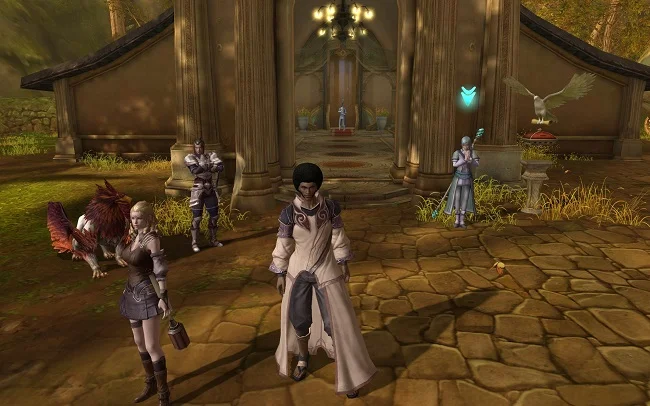
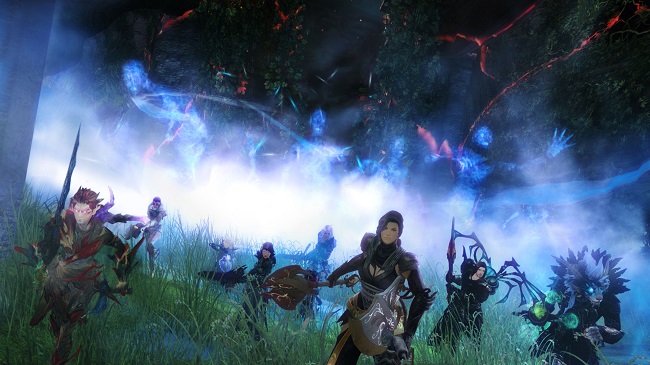
When Guild Wars 2 launched in the summer of 2012, I was very enthusiastic about the game on the Contains Moderate Peril podcast. I had participated in the beta and was impressed by many of the game's mechanics and its overall accessibility. Although I did not expect the game to be the focal point of my gaming activities, I (and many others I suspect) felt that this casual MMO had a lot to offer and would become a firm favourite. And that was pretty much the case up until 2015 when the first expansion, Heat of Thorns, was released. I have written in the past about how this new content changed the nature of Guild Wars 2 and contradicted its existing laissez-faire approach to solo game play. I didn’t want content gated behind skills I didn’t enjoy earning, Nor did I want my access to zones subject to player unlocks and thus making my gaming activities dependent on others. Hence I parted company with the MMO and have not returned.
When Guild Wars 2 launched in the summer of 2012, I was very enthusiastic about the game on the Contains Moderate Peril podcast. I had participated in the beta and was impressed by many of the game's mechanics and its overall accessibility. Although I did not expect the game to be the focal point of my gaming activities, I (and many others I suspect) felt that this casual MMO had a lot to offer and would become a firm favourite. And that was pretty much the case up until 2015 when the first expansion, Heat of Thorns, was released. I have written in the past about how this new content changed the nature of Guild Wars 2 and contradicted its existing laissez-faire approach to solo game play. I didn’t want content gated behind skills I didn’t enjoy earning, Nor did I want my access to zones subject to player unlocks and thus making my gaming activities dependent on others. Hence I parted company with the MMO and have not returned.
Since then, there has been a second expansion, Path of Fire, which added mounts to the game as well as new content. I believe that this expansion was more equitable than the previous and friends and colleagues have assured me that I can return to the game and bypass the material I didn’t previously like. However, this still did not prove sufficient to tempt me back to the game in 2017 as I felt that Guild Wars 2 was simply one of those games that just wasn’t applicable to me any longer. All too often when I return to an MMO that I have previously left, I enjoy a few hours of excitement mainly due to all the things that have been added to the game in my absence. Then after a while, I find that all the things I didn’t like are still there, or that there is a massive progression gap to be overcome before I can join my friends at the endgame. I believe we as gamers, have an inherent blind spot where we substitute the reality of a situation with what we would “like” a game to be.
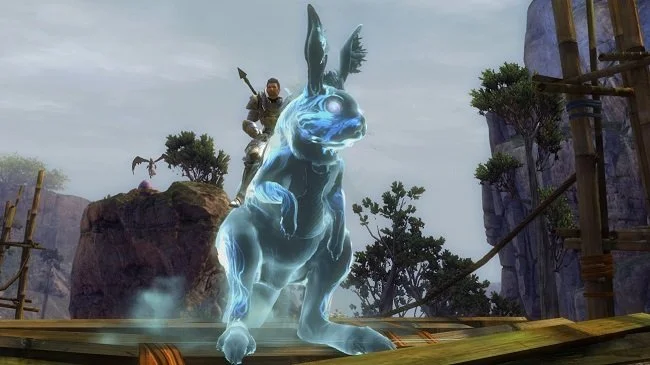
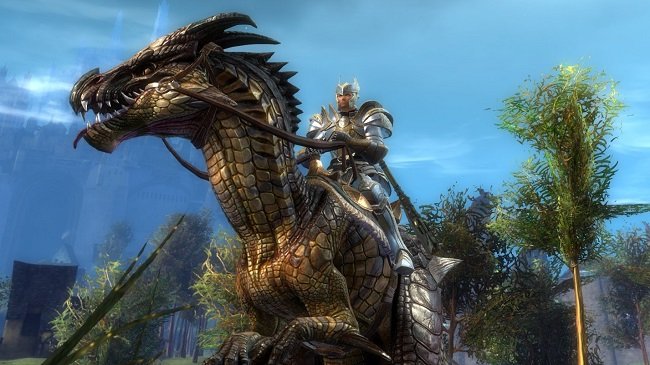
There is now a third expansion for Guild Wars 2 on the horizon. Provocatively called End of Dragons. Despite my past experience and the fact that the MMO genre has evolved greatly since the launch of this game, I have a worrying urge to re-install the game and see what is “going on”. The rational part of my mind predicts that I’ll spend an evening downloading the game client, log in to my primary character in Divinity’s Reach and then spend some time riding around on my flying carpet. I’ll quickly establish that the game is not really that different than before and then promptly log out. I did exactly the same with The Secret World: Legends, Star Wars: The Old Republic and Neverwinter. But the irrational part of my mind is adamant that I’m missing out on “the best MMO around” and that “it’s way better than last time” and I really do need to check things out. I’m curious to see which point of view wins, although common sense urges that it should be the former.

Job Hierarchies and Thoughts on Employment
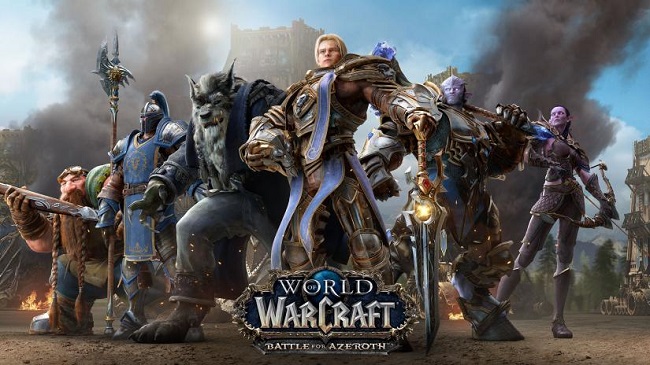
I appreciate that this is a somewhat ponderous blog title but I’m trying to consolidate several ideas and streams of thoughts into one post. So to begin with it is the third week of the Blaugust 2021 Festival of Blogging event. Specifically it’s “Developer Appreciation Week”. At first glance a laudable undertaking. An opportunity to praise the developers of a game that’s close to your heart. However, given the current debacle with Blizzard Entertainment, I think there’s a conversation to be had about how fans virtual deification of specific developers of World of Warcraft and how treating them like rock stars, may well have had some bearing on their subsequent misdemeanours. I would in fact go further and say that the video game industry is another sector of work, like film, TV, music and sport that is perceived to be glamorous, aspirational and generally put on a pedestal. Fans lose sight of the fact that these companies have a lot of staff who don’t get any kudos and endure tough working conditions. Just like more conventional jobs.
I appreciate that this is a somewhat ponderous blog title but I’m trying to consolidate several ideas and streams of thoughts into one post. So to begin with it is the third week of the Blaugust 2021 Festival of Blogging event. Specifically it’s “Developer Appreciation Week”. At first glance a laudable undertaking. An opportunity to praise the developers of a game that’s close to your heart. However, given the current debacle with Blizzard Entertainment, I think there’s a conversation to be had about how fans virtual deification of specific developers of World of Warcraft and how treating them like rock stars, may well have had some bearing on their subsequent misdemeanours. I would in fact go further and say that the video game industry is another sector of work, like film, TV, music and sport that is perceived to be glamorous, aspirational and generally put on a pedestal. Fans lose sight of the fact that these companies have a lot of staff who don’t get any kudos and endure tough working conditions. Just like more conventional jobs.
There has always been a hierarchy of jobs in the public consciousness, although logically all forms of employment are essentially the same in principle. People providing a service in return for money. But life doesn’t exclusively operate within logical parameters. Hence vocational and professional jobs come with a lot of cultural baggage. Rightly or wrongly, the moment you declare to someone what you do for a living, they will instantly make assumptions and judgments about you. Often these will be erroneous or spurious but this sadly is the prevailing trend. Cleaners, carers, shop workers all do essential and invaluable work (as 2020 clearly highlighted). Yet such work is often frowned upon by certain parts of the population. Despite the fact that many who work in such sectors do so out of necessity and may well be overqualified. In fact there are stereotypes associated with jobs of all spectrum. Academia, working in the law and banking being seen as the prerogative of the rich. Estate agency (real estate) being seen as “barrow boys” and chancers. Oh and IT is exclusively populated by the socially dysfunctional.
During the course of my lifetime, the job market has evolved and changed rapidly. Applying for jobs in the eighties was a very formal process. Hand written applications and questionnaires were used to filter candidates, prior to interview by panel. Vacancies were predominantly advertised in newspapers, recruitment agencies or the government run “Job Centres”. Qualifications gated many positions, even for the most entry level administrative roles. When I started working for the DWP in 1990 on the first rung of the ladder, you still needed to have 3 GCE “O” level exams with passing grades. Nowadays, the job market is far more fast paced and like so many things, now predominantly handled online. Having a customisable curriculum vitae (or resume), that can be tailored to specific applications is essential. Sadly, the new job market has little room for feedback. Most applications never garner any sort of response. Keyword searches eliminate those who are not relevant and such automated services do not generate a polite “sorry you weren’t successful” letter.
However, these major changes to the overall employment landscape has led to an increasing amount of job homogenisation. Especially here in the UK where traditional industries have been replaced with service ones. Hence we have seen an increase in employment dissatisfaction and the rise of so-called “bullshit jobs”. I am currently reading a book on the subject by American anthropologist David Graeber. He contends that “over half of societal work is pointless and becomes psychologically destructive when paired with a work ethic that associates work with self-worth”. Graeber describes five types of meaningless jobs, in which workers pretend their role is not as pointless or harmful as they know it to be: flunkies, goons, duct tapers, box tickers, and taskmasters. He argues that the association of labour with virtuous suffering is recent in human history, and proposes universal basic income as a potential solution. I certainly wouldn’t argue against these things having had such positions in my career.
Hence we return to the jobs that are perceived as aspirational or a means to bypass the rat race, or at the very least, manage it on your own terms. Many young people look to social media as a means of escaping the fate of their parents. Because the social contract that has existed in most western societies in the post World War II era has been proven false. If you study, work hard and live within your means you’ll be able to raise a family, afford a home and the state will assist you in your autumn years. Young people know first hand that this is a lie. Many modern jobs have no formal working hours, no employee protection or rights and pay insufficient to keep an individual, let alone a family. Bullshit jobs are rife and work is a treadmill. Which is why the allure of being an “influencer” is so strong. And why a rock star game developer who gets to write really cool games and hangout at conventions and trade shows is infinitely preferable to toiling in a call centre and having to ask your 30 year old, sociopath boss if you can go to the bathroom.
There’s a good chance that I may have to return to the workplace when my caring duties end. Let it suffice to say that such a prospect does not fill me with glee. It is highly unlikely that I will seamlessly resume a career in IT and at comparable rates to what I was earning in 2016. Although the law is supposed to prevent discrimination, I’m certain my age will work against me as will no doubt my health. Furthermore, I’m not sure if my personality is cut out for the modern workplace which has become a much more complicated socio-political environment. Hence working from home and the gig economy is an obvious solution, although many creative forms of work have been devalued by internet culture. Writing for money is certainly not an immediate path to fortune and glory. People expect “all that” for free nowadays.
Therefore, if you are one of the minority of people who are actively employed in a job you actually enjoy, then count yourself very fortunate. The rest of society either just tolerates their employment and employer or actively hates them. Condemned to carry out arbitrary and pointless tasks, for people who just see them as an asset or a resource. The modern day workplace is often an endless grind and in some examples a form of indentured slavery. Oh and with regard to Blaugust, rather than thinking about those high profile game developers, who love to preen themselves on stage at E3, spare a thought for all the other staff that do the nuts and bolts work and never get a name check. It would appear they get put upon, ripped off and abused, just as much as the guy who delivers your pizza or the lady who works the checkout at your local store.
LOTRO: Wildwood, Deeds and Virtues
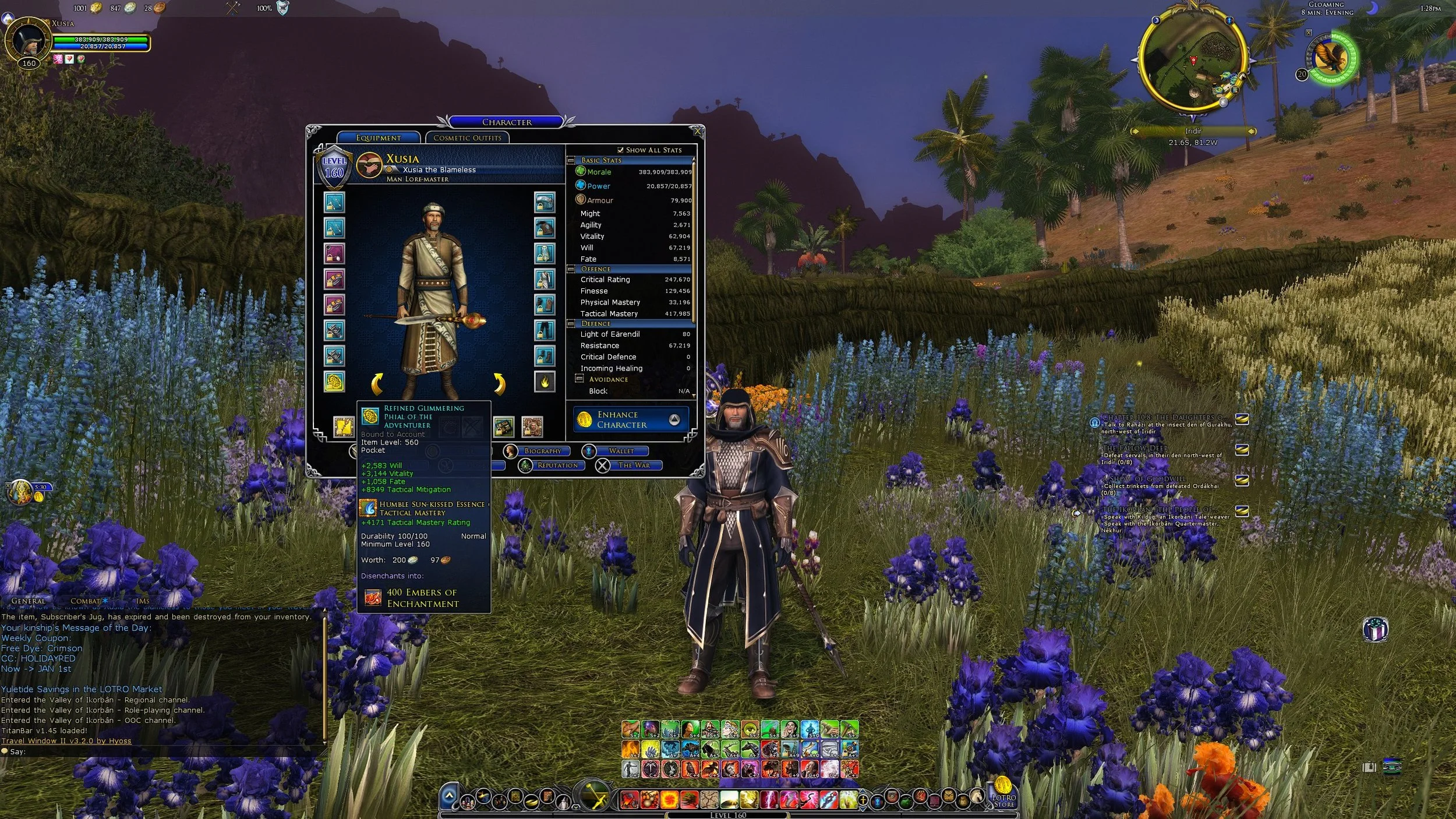
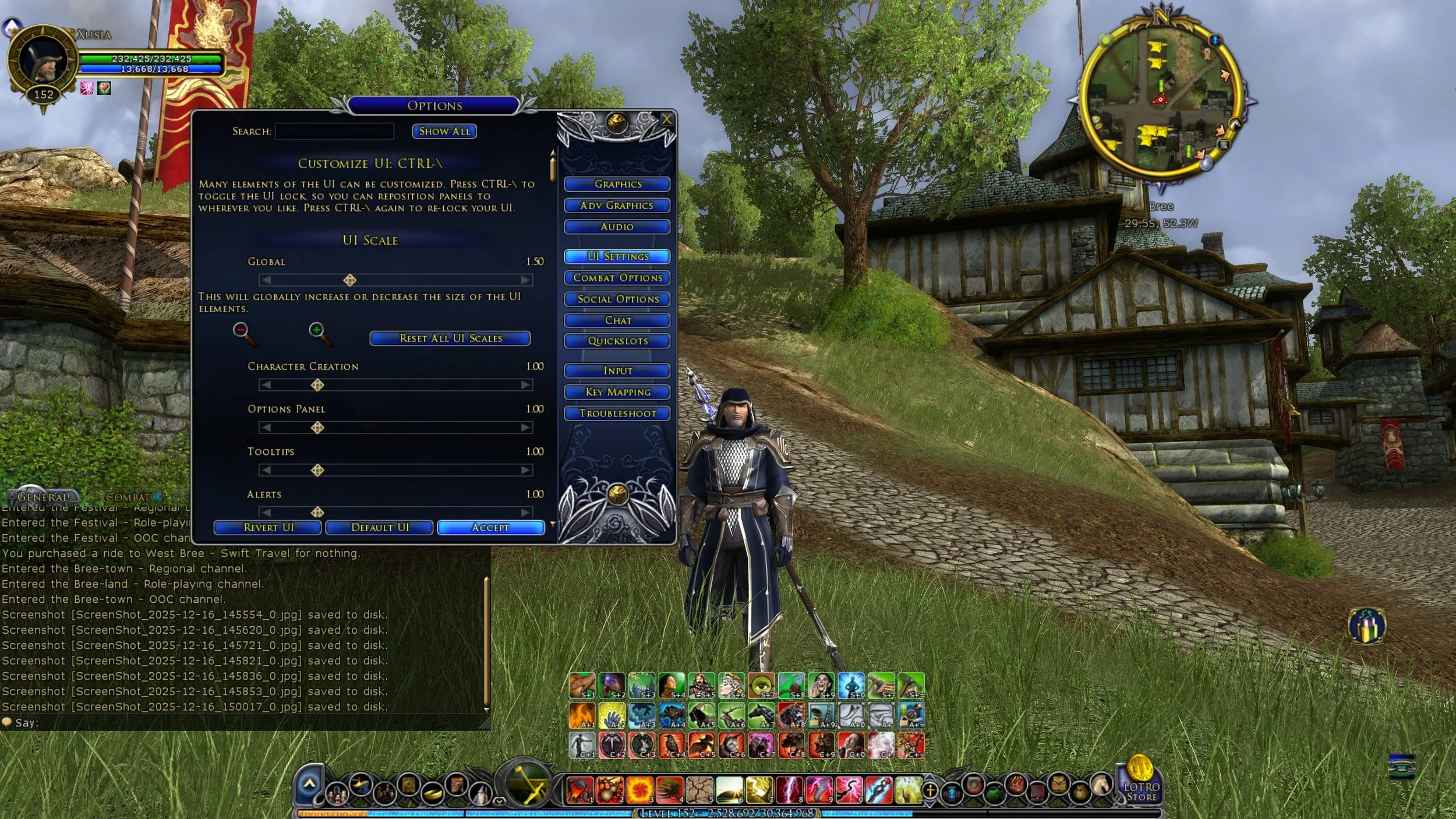
I recently logged into the MMORPG The Lord of the Rings Online with the intention of completing Update 30: Blood of Azog. I got as far as some of the wrapper quests which set up the main story and then I lost interest when I reflected upon the content ahead. I tire of some of the excessively dour regions one has to play through in LOTRO, although I realise they are fully lore appropriate. LOTRO is also one of those games where I frequently struggle to see what is going on if there is low lighting. In such instances I have to tinker with the video settings to try and improve things. So with all this in mind, I decided instead of participating in the Battle of Azanulbizar, I would go and visit the Wildwood region in Bree-land which was added to the game in April. Now you may ask why take a level cap Lore-master to a zone that has content at level 45? Well the answer is simple. There are deeds to be completed.
I recently logged into the MMORPG The Lord of the Rings Online with the intention of completing Update 30: Blood of Azog. I got as far as some of the wrapper quests which set up the main story and then I lost interest when I reflected upon the content ahead. I tire of some of the excessively dour regions one has to play through in LOTRO, although I realise they are fully lore appropriate. LOTRO is also one of those games where I frequently struggle to see what is going on if there is low lighting. In such instances I have to tinker with the video settings to try and improve things. So with all this in mind, I decided instead of participating in the Battle of Azanulbizar, I would go and visit the Wildwood region in Bree-land which was added to the game in April. Now you may ask why take a level cap Lore-master to a zone that has content at level 45? Well the answer is simple. There are deeds to be completed.
For those who are unfamiliar with the deed system in LOTRO, each region of the game, such as The Shire, Bree-land or Wildwood has a set of deeds available for completion. These range from visiting key locations, slaying specific amounts of foes and completing a fixed number of quests. Upon completing any deed you are awarded “virtue experience” which is tied to the virtue trait system. Virtues traits grant bonuses to your character's base stats. The player can slot five at a time, usually picking those they deem appropriate for their class. Therefore, the discerning player can choose one of their five virtues and then undertake specific deeds to level it to 75 which is the current cap. You then repeat the process until you’ve levelled all of your equipped traits. It’s not as if you’ll run out of deeds. The game is rife with them.
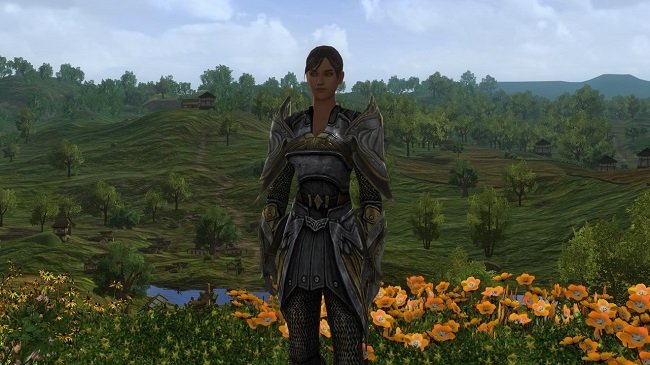
It took 48 hours to play through the main content in Wildwood. As ever with LOTRO, it is the story driving the questlines that made the experience enjoyable. I like the fact that you can start the zone by either helping the Woodcutter's Brotherhood in Trestlebridge Gate or League of the Axe at Trader's Wharf in Evendim. The Wildwood itself is not difficult to traverse and is green and leafy, making it a pleasant environment to quest in. Too often the developers at Standing Stone Games go out of their way to make navigating a zone very esoteric. While undertaking the various quests in the area, I maintained a policy of “kill everything” and it didn’t take too long for the deeds to rack up. I didn’t even bother using a deed accelerator. Hence by the time I finished the region I was at maximum reputation with both factions and had increased two of my five virtue traits to level 75 (they were previously 72).
Playing content above level does have some advantages. Not having to worry about combat allows you time to focus on the story and enjoy the environment that you’re travelling in. LOTRO is a game where zones are often densely populated with mobs. To the point that you feel that it’s been done just to try and slow you down. However, LOTRO does something that other MMOS don’t. It has a peculiar mechanic in which if you’re several levels above the mobs, they ignore you. You can stand right next to them and they behave as if you’re not there. It makes taking screenshots a lot easier. It certainly made completing Wildwoods quicker. Overall, it has been a productive and entertaining endeavour. My virtue traits have increased plus I have bought two additional “return to” skills (Trestlebridge and Traders Wharf) from the faction quartermasters. I suppose it’s now time to move on to Update 30.
Star Trek Online: Then and Now
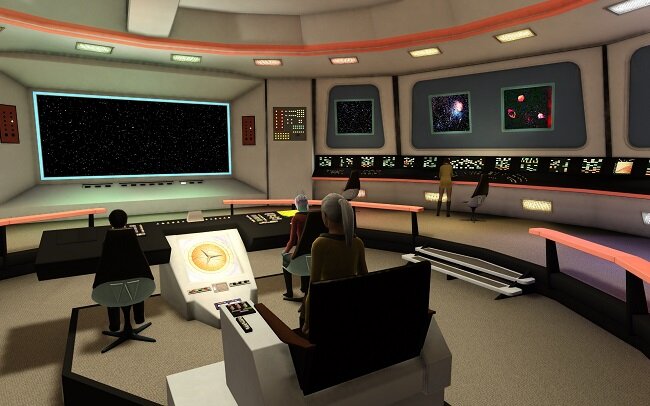
I recently found my original post about the MMORPG Star Trek Online from February 2010. I pre-ordered the Steam Digital Deluxe Edition version of the game for £40 a month prior. I remember that I was very excited about the launch of this MMO and I wasn’t at the time au fait with its tumultuous development history. Myself and two friends started playing virtually immediately and I can remember struggling to find the game’s virtues. It was confusing, unfinished and unbalanced. My friends quickly got tired of the situation and returned to The Lord of the Rings Online. I stuck with STO for about a year before moving on. I briefly returned to the game in early 2013 but it was still unpolished. It wasn’t until the Delta Recruitment Event of 2015 that I found that the game had finally hit its stride. I’ve been playing regularly since then. Reading back over my original thoughts is quite a trip down memory lane.
I recently found my original post about the MMORPG Star Trek Online from February 2010. I pre-ordered the Steam Digital Deluxe Edition version of the game for £40 a month prior. I remember that I was very excited about the launch of this MMO and I wasn’t at the time au fait with its tumultuous development history. Myself and two friends started playing virtually immediately and I can remember struggling to find the game’s virtues. It was confusing, unfinished and unbalanced. My friends quickly got tired of the situation and returned to The Lord of the Rings Online. I stuck with STO for about a year before moving on. I briefly returned to the game in early 2013 but it was still unpolished. It wasn’t until the Delta Recruitment Event of 2015 that I found that the game had finally hit its stride. I’ve been playing regularly since then. Reading back over my original thoughts is quite a trip down memory lane.
Star Trek Online is a classic example of a product that was released before it was ready. The open beta which ran for several months, revealed multiple bugs and glitches. However, since the February 2nd launch date, the game still feels like it is unfinished and is being patched on a daily basis. This has made progression through the game very hard and where I have persevered, two of my online colleagues have already abandoned it. Discussion boards and forums are filled with comments that support this argument.
Here are just a few of the issues I feel are causing problems. The game does not have any semblance of a manual. There is an online guide but it simply does not tackle the game mechanics in any depth. So, after the standard tutorial you are pretty much on your own. If you’ve played other MMOs then you can draw on that experience to look for similarities, in which there are many. However, if you are a casual player then this game has a steep learning curve.
Now Cryptic Studios have decided not to run region specific servers, so effectively all user traffic is centralised. There have been periods where users have to queue to log on. The game relies heavily on instances to handle the flow of traffic and travelling therefore becomes a sequence of loading screens. The single environment approach means the chat channel is extremely fast moving. It is currently spammed continuously by gold farmers. As a means of in game communication it is redundant.
Certain “episodes” require teamwork and the game uses an automatic system which theoretically groups players of a comparable level. This can be beneficial as you gain from the completion of tasks by other members of your team. However, on several occasions, I have found myself in a team on an away mission, pitched against opponents of a much higher level. There was no realistic chance of completing the task in hand except by quitting the team and hoping that the next random group would be more balanced.
I could list a lot more, but do not wish to sound excessively negative, as STO, despite all its faults, has the potential to be a very good MMO. It looks very impressive and certainly catches the atmosphere of the franchise. Like so many games these days, the soundtrack is extremely good and embellishes the game, especially the space battles. The depth to which you can customise your character is also laudable. The storylines themselves are engaging and have the feel of a classic episode of the series.
Cryptic Studios have taken a gamble with this MMO. It has had a troubled development and if it were any other product, may have fallen at the first hurdle. But due to the good will of the fan base regarding this franchise, they have to be able to make mistakes without too many repercussions. To be fair, they are working hard to address issues and are listening to their user base as this recent statement from Cryptic shows. I shall be continuing with STO and it will be interesting to assess the status quo in the sixth month’s time.
28th February 2010.
All things considered I believe this remains a fair assessment of STO at launch. It certainly was not the most auspicious of beginnings and as Cryptic were contractually bound to deliver a functional game by a specific date and had to rewrite most of the previous developers work. However, a great deal has changed over the last decade and the game has greatly improved. Today STO is a healthy MMO with a wealth of good content behind it. Many of the cast who appeared in the various TV shows over the years, have voiced their characters again in the game. The change is so profound it is hard to reconcile the two versions of the game. Sadly I do not have that many screenshots from this period. If you wish to see how the game was at launch then I would recommend the YouTube channel Hailing Frequency which did much to promote the game in the run up to February 2nd 2010. It shows clearly how rough around the edges STO was at the time and how far the game has come.
Fall Guys: Is it Just Me?
Before I began writing this post, I tried to do some research regarding odds, percentages and statistics associated with the game Fall Guys: Ultimate Knockout. However, I soon discovered that this appears to be a contested field with conflicting data. Furthermore you have to navigate a lot of forum posts and subreddits which are filled with players bragging and talking shit. So I haven’t got any tangible data to present as such, yet I believe that my suppositions are as logical as they can be. Moving on, Fall Guys: Ultimate Knockout, is a platform battle royale game developed by Mediatonic and published by Devolver Digital. It was released for Microsoft Windows and PlayStation 4 on 4 August 2020. I began playing it a few days after launch and have continued to do so regularly over the last twelve months.
Before I began writing this post, I tried to do some research regarding odds, percentages and statistics associated with the game Fall Guys: Ultimate Knockout. However, I soon discovered that this appears to be a contested field with conflicting data. Furthermore you have to navigate a lot of forum posts and subreddits which are filled with players bragging and talking shit. So I haven’t got any tangible data to present as such, yet I believe that my suppositions are as logical as they can be. Moving on, Fall Guys: Ultimate Knockout, is a platform battle royale game developed by Mediatonic and published by Devolver Digital. It was released for Microsoft Windows and PlayStation 4 on 4 August 2020. I began playing it a few days after launch and have continued to do so regularly over the last twelve months.
The game consists of 60 players competing over 5 rounds. Each round 11 or so players are eliminated although this can vary depending on the type of game. Some rounds are races through obstacle courses, others are puzzle solving or memory tests. There are also team based events which are especially annoying because your success depends on other carbon based life forms. Another major factor that impacts upon your success is other players' behaviour. Bottlenecks frequently occur. If one player falls over then it can start a cascade. And then there is the grab facility. Yes, other players can grab you and actively attempt to impede you if they see fit. Hence the game often evokes a broad spectrum of emotions among players. One minute you can genuinely be in fits of laughter as a whole bunch of players tumble off a pivoting platform, the next you fail to qualify due to some asshole grabbing you just before the finish line.
But these are the terms by which you play Fall Guys: Ultimate Knockout. It is a fun game but it can also be brutal with its unwavering mechanics. You can be diving for the finish just as the timer runs down and if you’re not over the line, then you’re out of the game, no ifs, no buts. Hence I tend to play in short bursts and if I feel myself getting vexed then I log out and do something else. Or alternatively, I just mess around with the cosmetic options which are an utter delight by the way. Judging by the comments I’ve read on Steam, many a game controller has been hurled across a room due to this game. I find that there are simply some rounds in the game that I just cannot do. Lily Leapers is a new round and requires the player to bounce on the lily pads to cross the course. I can get about a third of the way, then find I just cannot gain sufficient clearance to reach the next pad. I often just wait this particular round out and collect my points for participating at the end.
Much has been written online about this game, analysing the various rounds and activities. To be fair it would appear that developers Mediatonic do listen to player feedback and adjust the game with each season. Yet I do feel that the game is in danger of at times being its own worst enemy. It is supposed to be light hearted fun and not a purely competitive game and “tryhard” magnet. Yet that seems to be the way it is going. Mario Kart does little things to “encourage” the player who’s always at the back. Perhaps Fall Guys: Ultimate Knockout should do the same. I’ve been playing for a year and still haven’t won five rounds in a row. The nearest I’ve got so far is four. Which is why I’ve been trying to find some meaningful analysis of the game, so I can see if this is just me. Am I just a bad player? Is it a question of “git gud”? Or am I in a far larger group than I think and the odds are actually more likely that I lose rather than win? I’m curious as to the answer.

Looks Matter
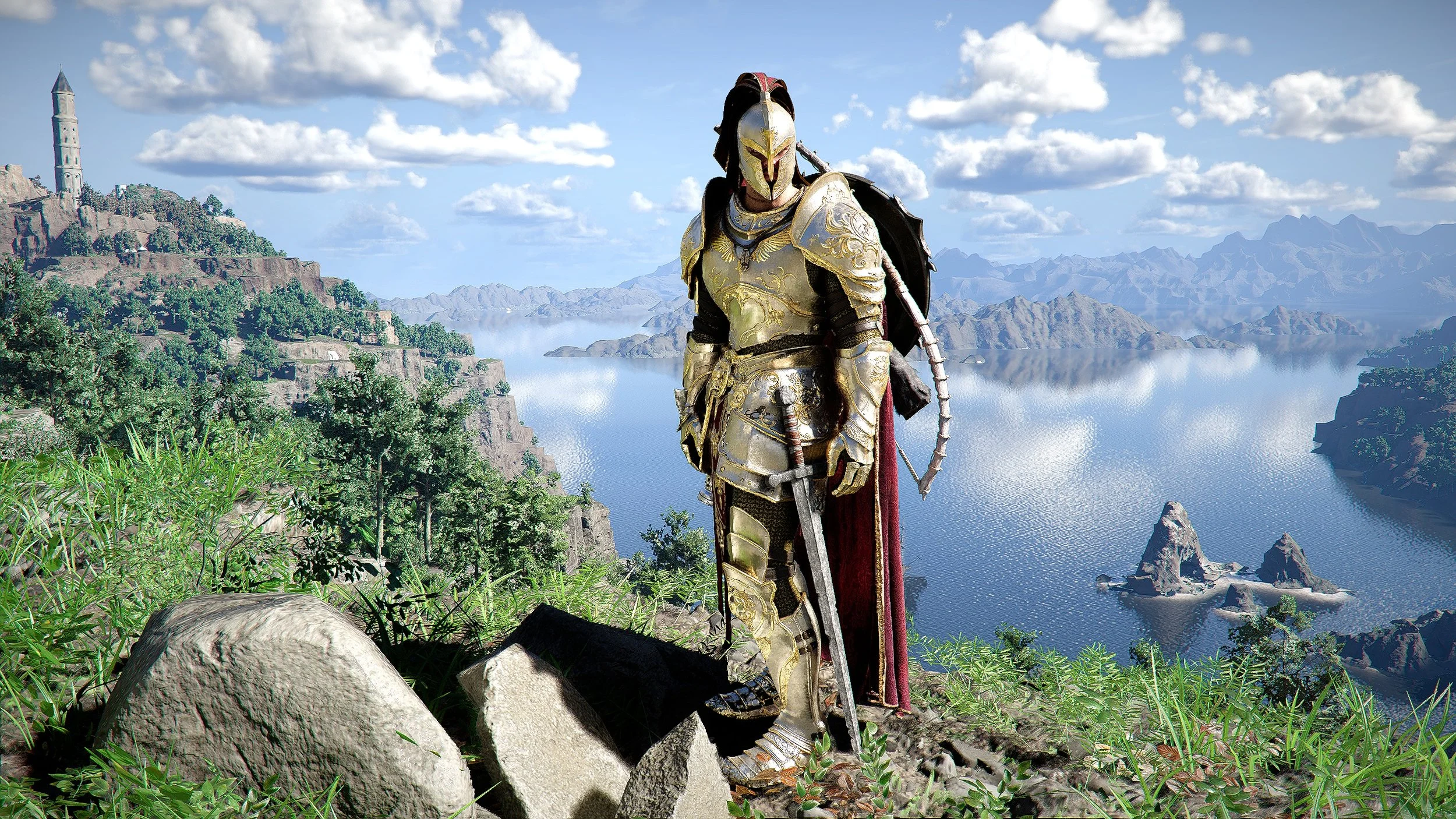
You’re strutting around in your favourite MMORPG, dressed to the nines in your finest outfit. You recently acquired The Tabard of Marginal Statistical Improvement after finally beating that particularly difficult raid boss. As you stroll into the auction house with the confident air of someone who knows they’re looking damn good, you keep an eye on the chat window anticipating comments and praise from other players. You stop in front of an NPC and stand their basking in presumed public adulation and revelling in your own self satisfaction. Suddenly another player appears on the periphery of your monitor and catches your attention. Oh calamity, their avatar looks virtually identical to your. Same fez, monocle and handlebar moustache. They’re also wearing The Tabard of Marginal Statistical Improvement, except theirs is in electric pink. Oh the humiliation. Oh the humanity. Oh Vienna. You log off in tears, your ego crushed, a victim of a game with insufficient character customisation and diversity.
You’re strutting around in your favourite MMORPG, dressed to the nines in your finest outfit. You recently acquired The Tabard of Marginal Statistical Improvement after finally beating that particularly difficult raid boss. As you stroll into the auction house with the confident air of someone who knows they’re looking damn good, you keep an eye on the chat window anticipating comments and praise from other players. You stop in front of an NPC and stand their basking in presumed public adulation and revelling in your own self satisfaction. Suddenly another player appears on the periphery of your monitor and catches your attention. Oh calamity, their avatar looks virtually identical to your. Same fez, monocle and handlebar moustache. They’re also wearing The Tabard of Marginal Statistical Improvement, except theirs is in electric pink. Oh the humiliation. Oh the humanity. Oh Vienna. You log off in tears, your ego crushed, a victim of a game with insufficient character customisation and diversity.
Wolfy over at Through Wolfy’s Eyes wrote a very astute post yesterday about the significance of character customisation in the MMO genre. He makes some very good points and also offers some suggestions regarding improvements that could be made. This is exactly the sort of post that other bloggers can use to riff off, as the subject of character customisation is pretty important to the MMO genre. Hence I thought I would add my own thoughts on subjects having been an active MMO player since late 2007. Simply put, you cannot have enough character customisation options in this genre of game. Creating your own unique avatar is as essential to the players enjoyment of the game as the story and the gameplay. I will often spend an hour or more fine tuning my character, pondering a suitable name and even reflecting upon a backstory for them if the game supports such an option. Your character is the conduit through which you experience the game so from my perspective I want that avatar to be as much to my liking as possible.
Gamers approach character creation in different ways. Some players strive to make a virtual game persona that is based upon themselves to provide a more personal gaming experience. Many strive just to make something unique, different or quirky that amuses them. A fun character who it will be enjoyable to customise further with cosmetics, as they progress through the game. Other gamers may well try and create some sort of aspirational "imago". An avatar that they desire to be on some level. In some MMOs that are based on particular intellectual properties, gamers sometimes try to recreate their favourite character from the franchise. And sometimes, players just like to see how extreme and incongruous they can make their avatar. However, the success of all of these endeavours depends on how expansive the character customisation options are. Yet even in those titles where the scope is limited, never underestimate player ingenuity.
I believe that for some players, creating their avatar in a popular game is more significant than merely making a “fun character”. For some individuals, video games and especially the MMORPG genre provides a virtual environment in which they can be themselves. Something they feel they cannot do in their day to day life. Creating and customising their in-game character is a cathartic process allowing them to express their true nature and feel comfortable and free. This is why I feel that it is essential to have as many options as possible with character customisation and that these variables should not to be arbitrarily gated and segregated by traditional cultural notions. Gender, race, body size and such like should be equally accessible across all classes and factions. Possibly the only mollifying factor should be a game’s own internal lore but even that should not be a sacred cow.
Perhaps at its most fundamental level, character creation in video games is just another example of human beings trying to make some sort of personal mark upon the world, as they journey through life. It’s a basic human instinct. Wherever you live, you try to arrange things in a way that suits you. Regardless of your budget you try to personalise your living space, be it through expensive décor or just putting up a poster and putting your plushies on the shelf. We do something comparable in the games we play. We create a character according to our personal whims and needs, then enter a virtual world and say “here I am”. It is a very personal statement while being at the same time somewhat ephemeral. Which is why many of us take so many screen captures of our in-game characters. The video game industry would do well to reflect upon the significance of this facet of gaming and do their utmost to develop it.
Gamergate: Seven Years On
Not so long ago, Gamergate was referenced in a chat channel on one of the Discord servers that I frequent. Contrary to what I was expecting, this passing remark sparked very little response. Due to the age of some of the people present, they had to Google Gamergate to determine what it was all about. Those who were more au fait with the entire debacle broadly expressed the following sentiments. Firstly, was it seven years ago already? Secondly, in light of the ongoing Blizzard Entertainment controversy, it doesn’t seem that much has changed either within the gaming industry or the wider gaming community. The angry backlash against progressivism in video games now just seems to be focused elsewhere in society. Overall Gamergate was just one facet of the ongoing culture wars. At present that battle is being fought over some other issues and in a different field. But it’s still out there.
Not so long ago, Gamergate was referenced in a chat channel on one of the Discord servers that I frequent. Contrary to what I was expecting, this passing remark sparked very little response. Due to the age of some of the people present, they had to Google Gamergate to determine what it was all about. Those who were more au fait with the entire debacle broadly expressed the following sentiments. Firstly, was it seven years ago already? Secondly, in light of the ongoing Blizzard Entertainment controversy, it doesn’t seem that much has changed either within the gaming industry or the wider gaming community. The angry backlash against progressivism in video games now just seems to be focused elsewhere in society. Overall Gamergate was just one facet of the ongoing culture wars. At present that battle is being fought over some other issues and in a different field. But it’s still out there.
As someone who is interested in gaming as an artform as well as a leisure activity, I was fascinated but not surprised that video games became a focal point for such an angry controversy. Art is by its very nature political and many leisure activities have become more mainstream and accessible in recent years. Commercial success means change and inclusion. Such things are not universally well received. And five years hence exactly the same pushback exists. You’ll find it on subreddits and on twitter whenever some change is proposed to a game to make it accessible to a wider audience. People like to see themselves in the games they play. Sadly, some others don’t want to see them for “reasons”. Mercifully the angry mob is a bit light the Eye of Sauron. It attends to some places more than others, according to its need. At present there’s more traction to be had through anti-vax propaganda and fighting the oppression of COVD-19 and the pandemic.
The question that is most commonly raised in connection to Gamergate is whether it spoiled video games and the associated culture. I’d argue that the video games industry was spoiled a long time ago. The rot set in with changes to monetisation and the overall business model, which has fundamentally broken the way games are made. But Gamergate certainly had an impact on the wider gaming community. Specifically, I’ve seen a lot of good people withdraw from gaming culture because they don’t feel welcome and have been exhausted by the daily diet of bullshit and vitriol aimed at them or their communities. That grieves me because I see diversity as a great strength as well as a source of joy. Furthermore, I worry that Gamergate is akin to a dose of Malaria and at some point in the future it will return to trouble the community once again. It’s been seven years and counting.
Another Boat Missed
It would appear that due to the ongoing woes of Blizzard Entertainment, that the world and his wife are migrating from MMORPG World of Warcraft and relocating to the alternative game, Final Fantasy XIV. Other games are feeling the benefits of this ongoing exodus but it seems that FFXIV is by far picking up the most new players. I certainly think that the fact that several high profile streamers moved from WoW to FFXIV has contributed to this trend and the resulting surge in social media postings about the game has had a further impact. Furthermore, judging from what I have read about FFXIV and been told by my peers, the game has a lot going for it. There’s a wealth of content, solid mechanics and a favourable environment for group gameplay. And yet despite all these positive attributes I have looked at FFXIV and decided that this game is not for me.
It would appear that due to the ongoing woes of Blizzard Entertainment, that the world and his wife are migrating from MMORPG World of Warcraft and relocating to the alternative game, Final Fantasy XIV. Other games are feeling the benefits of this ongoing exodus but it seems that FFXIV is by far picking up the most new players. I certainly think that the fact that several high profile streamers moved from WoW to FFXIV has contributed to this trend and the resulting surge in social media postings about the game has had a further impact. Furthermore, judging from what I have read about FFXIV and been told by my peers, the game has a lot going for it. There’s a wealth of content, solid mechanics and a favourable environment for group gameplay. And yet despite all these positive attributes I have looked at FFXIV and decided that this game is not for me.
There are three major aspects of a video game that have an impact upon my decision whether or not I buy and play them. Gameplay, intellectual property/story and aesthetics. Where FFXIV scores well with the first, yet I find the narrative impenetrable and the game’s visual style unappealing. I have spent some time looking through various sub reddits aimed at new players and the advice on offer doesn’t exactly mollify my concerns. Opinions over how complex the learning curve is vary greatly. Some players advocate a lot of “studying” before you start playing the game. Others talk about customisation of the UI being essential. All of which are red flags as far as I’m concerned. I genuinely like The Elder Scrolls Online but the fact that you need addons to be able to play the game without impediment is a borderline deal breaker. It sounds to me that FFXIV requires as much preparation and homework, which is hardly a positive advertisement.
I don’t like the so-called Asian video game aesthetic, just as I don’t really care for the visual style of anime. It is purely a question of personal taste, the same way as someone may not like cubism in art or country music. The problem with my position is that not liking the look of a video game is a big deal, considering it is an essentially visual medium. Human beings are hardwired to interpret the world via their eyes (or else we would have evolved sonar), so I will not dismiss my dislike as trivial. Hence I shall not be joining my peers in playing FFXIV. Just like WoW, it would seem that FFXIV is another popular boat that I am going to miss. However, it can sometimes be quite an interesting position to stand outside of a popular phenomenon and simply spectate it, rather than be an active participant. Conversely, it can also be a little sad just to be a spectator. Such is the nature of gaming. You can’t like or play everything.
Blaugust 2021: Getting to Know You
According to the Blaugust 2021 Festival of Blogging schedule it is “getting to know you week”. Although I have been knocking around the blogging community since 2007 it would be extremely arrogant of me to assume that people know who I am. Plus, as I am allegedly a mentor in the Blaugust event, it is both polite and proper to introduce myself to those who are new participants. I’ve never been especially keen on the whole standing up and introducing yourself thing that comes up from time to time in one’s social and working life but it is a necessary evil. Whenever I used to attend training courses for work, I’d always go first when it came to introductions, just so I could get it out of the way. So with all that in mind let’s tackle this now. Here are a few minor facts about me so that people can “get to know me”, so to speak.
According to the Blaugust 2021 Festival of Blogging schedule it is “getting to know you week”. Although I have been knocking around the blogging community since 2007 it would be extremely arrogant of me to assume that people know who I am. Plus, as I am allegedly a mentor in the Blaugust event, it is both polite and proper to introduce myself to those who are new participants. I’ve never been especially keen on the whole standing up and introducing yourself thing that comes up from time to time in one’s social and working life but it is a necessary evil. Whenever I used to attend training courses for work, I’d always go first when it came to introductions, just so I could get it out of the way. So with all that in mind let’s tackle this now. Here are a few minor facts about me so that people can “get to know me”, so to speak.
Firstly, I use my real name, Roger Edwards, for my writing. I did initially start writing under my gaming handle but found it a somewhat bizarre form of social etiquette. Having conversations with Jubal the Questionable or Cardinal Spleen has always struck me as odd. So I just started posting under my own name which is fairly unremarkable. Plus I did at one point harbour aspirations to be a professional writer. Anyway, I do understand why people wish to compartmentalise their lives and certainly if you’re posting content on the internet, the anonymity helps keep the crazy people at bay.
Captain Scarlet
I was born on 18th December 1967. One week before Christmas. From an early age I discovered that anyone who said anything along the lines of “I’ve bought you a joint birthday and Christmas present” was a cheapskate bastard. 1967 was an interesting year. Sandie Shaw won the Eurovision Song Contest with Puppet on a String, Captain Scarlet and The Prisoner were on TV and The Beatles released Sgt. Pepper's Lonely Hearts Club Band.
I live with she who is known colloquially as “Mrs P (short for Mrs Peril). This is the agreed method to reference her online. I have a son who is 29 and three grandchildren. Twin granddaughters who are 6 and a grandson who is 6 months old. I used to be a IT consultant for small businesses but gave up full time work in 2016 to look after my ageing and disabled parents. My Father passed away last September at the age of 91. My Mother is 90 and now the focus of care. I am currently 53. Mrs P’s age is not for public disclosure. She took early retirement from work. We have a bungalow in South East London in what can be described as a “leafy suburb”. Walter lives with us.
Walter
As far as hobbies and interests, I like writing, reading, films, walking for pleasure and exercise. I’m not really interested in sport although I’m not hostile to it. It serves a purpose. I can swim, draw and paint competently. I used to sing and was in several choirs as a child. And then it all stopped and I can’t remember exactly why. I cannot play any musical instruments but I have a great passion for the craft of making music. I find it frustrating that I don’t know the correct terms when trying to write about music. I love words, logical arguments and critical thinking. I eschew ill conceived points of view, emotive debating and the overall infantilization of public discourse. It boils my piss that people will get up in arms about Geronimo the Alpaca but don’t seem disposed towards protesting against child poverty in the UK. Oh and binary, tribal politics is a constant source of irritation.
Here are a few more random facts. Mrs P and I don’t have pets due to health issues. In the past we’ve had dogs and cats. I am currently on a diet and need to shed about 18lbs. I’m trying to get down to 168lbs. I like good food and wine as well as good company. The latter is in short supply at present. I am not a practising Christian, although I grew up in the seventies when the UK was still very much culturally disposed towards that faith. Humour is extremely important to me and I consider it to be a kind of societal safety valve. I am not an extrovert although I can be social, even gregarious when I choose to be. I don’t like small talk and don’t tend to suffer fools gladly. Does anyone? However, politeness is hardwired into my social programming.
I enjoy church architecture
Finally, here is an anecdote from my childhood for your consideration. Around the age of five or six, I was compelled to appear in a school play. You didn’t have a choice in such matters. If you expressed dissent you were beaten (Yay, the seventies). The play was Snow White and I was assigned the role of The Huntsman who lets Snow White go. Dressed in a green felt ersatz Robin Hood outfit, I delivered my lines with all the disinterest of a school careers advisor. I then remember the audience laughing in that patronising “oh isn’t he adorable” parental fashion. Apparently I turned and scowled at all the assembled adults in a manner that my Father subsequently described as saturnine. The reason I mention this is because if I ever commit murder, I shall base my entire legal defence upon this traumatic experience. That and the fact I never got a model train set as a child.
Deciding the Scope of Your Blog
One of the most helpful pieces of advice you can give someone who is just about to take up blogging for the first time is “write about what you know”. Expressing opinions and views on subjects that you’re familiar with or especially knowledgeable enables you to write with confidence. Stepping outside of your comfort zone is a more complicated proposition, unless you're writing to specifically document your learning experience. Which is why most of the people that I know who maintain a blog tend to write about the games they’re currently playing. Sometimes if someone is especially enamoured with a particular title, that single video game will be the sole focus of their blog. I did this in 2008 with Misadventures in LOTRO which catalogued my experiences playing the MMORPG The Lord of the Rings Online. It was a fun starting point and being focused on a single subject, kept me engaged with my writing.
One of the most helpful pieces of advice you can give someone who is just about to take up blogging for the first time is “write about what you know”. Expressing opinions and views on subjects that you’re familiar with or especially knowledgeable enables you to write with confidence. Stepping outside of your comfort zone is a more complicated proposition, unless you're writing to specifically document your learning experience. Which is why most of the people that I know who maintain a blog tend to write about the games they’re currently playing. Sometimes if someone is especially enamoured with a particular title, that single video game will be the sole focus of their blog. I did this in 2008 with Misadventures in LOTRO which catalogued my experiences playing the MMORPG The Lord of the Rings Online. It was a fun starting point and being focused on a single subject, kept me engaged with my writing.
However, there is an obvious downside to putting all your eggs in one basket, especially with regard to video games. What happens when you tire of the very subject that is integral to your blog or you just want to write about something else? This can be particularly troubling if you have found a niche for yourself and have built an audience through your writing. Will they stay if you diversify your writing? One possible solution is to set up a separate blog but that requires a great deal of discipline as you now have double the work, effectively having to produce and promote content for two sites. When I found myself in this situation I decided to broaden my blog’s remit and cover a wider spectrum of games. However, I didn’t feel that my existing blog could accommodate subjects such as films, TV, books etc so I set up a second site. As time progressed and I became more confident with my writing, I saw the sense in posting all my material on a single site. I wish in some respects I’d done this initially but sometimes you have to learn through experience.
You may wish to blog exclusively about Etruscan pottery
Therefore, my advice to anyone setting up a new blog is to keep the scope of your writing as broad as possible unless you have very specific goals associated with a single subject or are targeting a specific niche. At first glance a food blog or fitness blog may seem like subjects with clear lines of demarcation but that is actually not the case. A food blog can explore cooking, recipes, ingredients, world cuisine and much more. Writing about fitness allows the writer to discuss not only exercise but associated products, the social aspect of keeping yourself in shape and wider topics such as diet and general wellbeing. It’s the same if you blog about travel, sport, fashion and lifestyle. There is plenty of wiggle room in those subjects, affording the writer the opportunity to vary their content and hopefully prevent them from getting bored or burned out.
If you do maintain a “variety blog”, you can segregate content if you prefer, allowing your readers to focus on the material they like best. This is not an issue as many blog templates support such a magazine approach. Writing on a multitude of subjects is also beneficial for developing your overall writing skills. How you write about your experiences in a particular game is not the same as writing a book or film review. Running a varied blog means you can write think pieces, essays, reviews, streams of consciousness and other types of posts. All of which can help with refining your writing technique. The other benefit of writing about multiple subjects is that it adds depth to your writing persona and the way you as a writer are perceived. If you intend to write professionally, a blog with a spectrum of different content can be an important part of your portfolio.
Contains Moderate Peril circa July/June 2015
Some bloggers will cogently argue that blogging about a very specific subject or occupying a clearly defined niche is a lot easier to monetise. It also makes search engine optimisation a lot easier. However, I suspect that neither of these two points are necessarily driving factors for the new blogger who is just starting out. Most bloggers just want to come up with a snappy title for their new blog and to try and find a writing schedule that they can manage and that they’re comfortable with. I therefore cautiously suggest that establishing a fairly broad remit of things to write about will certainly be helpful in discovering the latter. It should also help keep so-called “writers block” at bay. However, choice is not always a good thing and some bloggers prefer to have the focus of a single subject blog. As ever there is no “one size fits all” solution. Ultimately, it is up to you to decide what the scope of your blog is to be, so pick what works for you the best.
Should You Monetise Your Blog?
If you search online for advice on “how to monetise your blog” you’ll find a wealth of articles claiming to have all the answers. There’s a veritable cottage industry out there offering guidance and help on how to make money from your writing. Such posts range from proven business advice to utter bilge peddled by the worst sort of snake oil salesmen. Yet good or bad, there is a strong demand for this sort of information because blogging is still perceived by a lot of people as a means to make money. It would appear that the idea of setting up a blog, making a living off it and quitting your day job is still a common goal and the various “lockdowns” we’ve all experienced in the last 18 months have only boosted such perceptions. Some people have been successful with their home businesses in 2020, although I would argue that the market has been anomalous, to say the least.
If you search online for advice on “how to monetise your blog” you’ll find a wealth of articles claiming to have all the answers. There’s a veritable cottage industry out there offering guidance and help on how to make money from your writing. Such posts range from proven business advice to utter bilge peddled by the worst sort of snake oil salesmen. Yet good or bad, there is a strong demand for this sort of information because blogging is still perceived by a lot of people as a means to make money. It would appear that the idea of setting up a blog, making a living off it and quitting your day job is still a common goal and the various “lockdowns” we’ve all experienced in the last 18 months have only boosted such perceptions. Some people have been successful with their home businesses in 2020, although I would argue that the market has been anomalous, to say the least.
I have maintained a writing presence online since 2007 and despite growing a modest audience have never made a red cent from my blog (although I have been paid for my writing elsewhere). In fact Contains Moderate Peril, The Gaming Blog Nexus and sundry podcasts such as Burton and Scrooge always have been and remain to date a financial black hole. I’ve written in the past about the financial realities of running a blog or similar online platform as the costs do add up over time. In purely notional terms, I would welcome a means to recoup my operating costs. Unfortunately, I have not found a method to do this that I find acceptable. However, as the purpose of the blog post is to address this very question, let’s indulge in some critical thinking and see if we can come up with some valid ideas regarding how to monetise your blog.

Is there value in your content? This is a complex question. It requires a degree of introspection and self scrutiny which might make you uncomfortable. However, value is a very open ended term and people find merit in all sorts of things. If you’re writing gaming guides or collating data from public test servers for a popular game, then you may well have a very clear market. Providing commentary on a popular topic or making yourself the “go to” news source for something specific also can make your writing of value. Sometimes it may come down to whether your readers like the “cut of your jib”. Also it’s not just about what others think about your writing. Your own opinion is important. If you are confident that your body of work is marketable then why not try and monetise it. Other aspects that may well have a bearing on this matter are your writing schedule, how unique your work is and how much content you are offering.
Optimising your writing for monetisation. If you’re looking to make your writing commercially viable, then you need to decide who you’re writing for. If you are looking to cover popular trends and the latest talking points then that is a distinctly reactive process. You may also have to consider “optimising” your writing to fit the broadest of demographics. Things such as your personal opinion and taste may well have to be sidelined as you go where the audience currently is. All of which are perfectly acceptable things to do. You are still providing a service, just one that is driven by the needs of your readers as opposed to your own likes and dislikes. There may well be occasions when those two positions overlap. The reverse of this is writing purely for yourself, which can be immensely preferable from a personal perspective but comes with the caveat that your readers may not always share your passion. However, writing for yourself may benefit if you have a strong writing persona.
How to monetise your writing.
The most obvious is advertising although the rise of ad blockers has had a real impact upon this option.
Affiliate marketing is another longstanding solution, although you need to make a lot of referrals to third party websites and hope those referrals make a purchase.
Influencer marketing can be lucrative but you need to reach a critical mass of followers before that becomes viable, so it’s certainly not an option with a quick ROI.
Creating an eBook is another option. This may suit writers who write reviews or write longform essays.
Offering premium content behind a paywall can work well for those who write prodigiously and have an established audience.
Sponsored content doesn’t necessarily mean selling your soul to the Devil, as long as you hold such material to the same editorial standards of your other content.
Patreon and other subscription services can generate revenue but again requires you to write specific additional content for paying customers.
Blog to promote another primary business. This is a very particular business approach but it can prove beneficial. This approach works best if you offer some sort of online service.
Offer bespoke writing services. Again this is more of an option for an established writer.
Have an online “tip jar”. Possibly the most benign and optimistic way to try and monetise your writing.
Out of the ten options listed I only feel that three are applicable to myself, if I decided to try and monetise my writing. I have considered in the past expanding some of my film reviews and creating an eBook. It certainly seems like a logical progression. I have also previously considered using Patreon, specifically when I was producing a regular podcast. The editing process makes producing two versions of a weekly show quite straightforward and in principle it seems like an easy idea to market. I also like the concept of a “tip jar” as I’ve been surprised by readers' generosity in the past. In 2014 when Contains Moderate Peril exceeded the bandwidth restrictions of its then hosting package, I was taken aback by how many people offered to help with the cost of migrating to a more expensive, yet viable solution. The other options mentioned above just don’t seem to fit my needs. Ultimately asking your readers for money is a big ask and you’ve got to feel right about it. That’s one of the reasons why I haven’t done it so far. However times can change.
The Chairman (1969)
The Cold War was a mainstay of many a thriller and action movie throughout the sixties, seventies and eighties. However, all too often it was depicted in terms of the US versus the Soviet Union. China didn’t seem to feature so much, although it was just as equally an “enemy” of the West. Hence when I recently read about The Chairman (which has just had a Blu-ray release), it was of interest to me. An espionage story, starring Gregory Peck with a hidden bug implanted in his skull, infiltrating China to steal a secret enzyme formula is quite an intriguing premise. Furthermore, director J. Lee Thompson had previously worked with Peck on The Guns of Navarone, which is a solid action movie. Therefore I was initially optimistic that this film which I was previously unaware of, would be an interesting diversion. Unfortunately, having now seen The Chairman, all I can really describe it as is a cinematic curiosity. One of numerous films produced by a big studio in the late sixties that failed to satisfy anyone's expectations.
The Cold War was a mainstay of many a thriller and action movie throughout the sixties, seventies and eighties. However, all too often it was depicted in terms of the US versus the Soviet Union. China didn’t seem to feature so much, although it was just as equally an “enemy” of the West. Hence when I recently read about The Chairman (which has just had a Blu-ray release), it was of interest to me. An espionage story, starring Gregory Peck with a hidden bug implanted in his skull, infiltrating China to steal a secret enzyme formula is quite an intriguing premise. Furthermore, director J. Lee Thompson had previously worked with Peck on The Guns of Navarone, which is a solid action movie. Therefore I was initially optimistic that this film which I was previously unaware of, would be an interesting diversion. Unfortunately, having now seen The Chairman, all I can really describe it as is a cinematic curiosity. One of numerous films produced by a big studio in the late sixties that failed to satisfy anyone's expectations.
Nobel Prize-winning scientist Dr John Hathaway (Gregory Peck) receives a letter from a former Professor Soong Li (Keye Luke), who now resides in The People's Republic of China, requesting his assistance. Raising concerns with the US authorities, Hathaway is "invited" by Lt. General Shelby (Arthur Hill) to visit the Professor, who has allegedly developed an enzyme that allows crops to grow in any kind of climate. Hathaway subsequently agrees and finds himself embroiled in a joint operation between the U.S. and the Soviet Union. A transmitter is implanted in Hathaway's skull which can be monitored by a satellite. He is not informed that the device also includes explosives that can be triggered by the Americans if necessary. Neither the U.S. nor the Soviet Union wants the enzyme to remain exclusively in Chinese hands. Hathaway flies to Hong Kong to request “authorisation” to visit China and meets Security Chief Yin (Eric Young) who is deeply suspicious of his motives.
The Chairman has high tech trappings, similar to those seen in The Forbin Project or even Fantastic Voyage. Staff sit at computers monitoring Hathaways pulse and respiration, big screens track his locations and military staff pace up and down drinking coffee from plastic cups. The basic premise is sound and Peck makes for an unlikely hero. But once the plot has been established, very little happens. Hathaway goes to Hong Kong, meets the shadowy figure of Yin and then is granted permission to travel to China. There is a brief diversion when a Chinese agent attempts to seduce him while another searches his apartment but nothing is made of the plot device. On arrival in China Peck is given an official tour of the country, with a few nods to the continuous military presence everywhere. He next meets Mao Tse Tung (the chairman of the communist party and leader of China) who needs his help in finding a way to mass produce the enzyme. They trade political views and philosophy over a game of table tennis.
Peck is always compelling to watch and it’s interesting to see a story which attempts to explore the fear of China at the time. But there simply isn’t sufficient to sustain the narrative. There is an action sequence at the end of the film when Hathaway flees the remote experimental compound with the help of a deep cover Soviet operative played by Burt Kwouk. There’s then a chase to the border and an attempt to penetrate the minefield and electrified fences. But it’s too little, too late. The film ends with all three superpowers sitting on the information they all share and Peck attempting to place the information in the public domain for the benefit of mankind. It is a suitable ending and the film is quite concise at 98 minutes but it all feels very undeveloped and unremarkable. The main point of note is a solid score by the ever dependable Jerry Goldsmith.




Red Tails (2015)
In 1944, the USAAF faces increased losses of Allied bombers conducting operations over Europe. The 332d Fighter Group (The Tuskegee Airmen), consisting of young African-American fighter pilots, are confined to ground attack missions in Italy and hampered with ageing, poorly maintained Curtiss P-40 Warhawk aircraft. After the Tuskegee Airmen distinguish themselves in support of the Allied landings at Anzio, Col. A.J. Bullard (Terence Howard) is surprised when the USAAF Bomber Command asks him if his men will escort the Boeing B-17 Flying Fortress bombers on their day time raids. Casualties have become unacceptably high. Bullard accepts on the condition his unit be supplied with the new North American P-51 Mustang. The tails of the new aircraft are painted bright red and become the unofficial name of the outfit. Bullard orders his pilots to remain with the bombers that they’re escorting and their first escort mission proves a success without the loss of a single bomber. Slowly, entrenched racist attitudes within the USAAF begin to change.
In 1944, the USAAF faces increased losses of Allied bombers conducting operations over Europe. The 332d Fighter Group (The Tuskegee Airmen), consisting of young African-American fighter pilots, are confined to ground attack missions in Italy and hampered with ageing, poorly maintained Curtiss P-40 Warhawk aircraft. After the Tuskegee Airmen distinguish themselves in support of the Allied landings at Anzio, Col. A.J. Bullard (Terence Howard) is surprised when the USAAF Bomber Command asks him if his men will escort the Boeing B-17 Flying Fortress bombers on their day time raids. Casualties have become unacceptably high. Bullard accepts on the condition his unit be supplied with the new North American P-51 Mustang. The tails of the new aircraft are painted bright red and become the unofficial name of the outfit. Bullard orders his pilots to remain with the bombers that they’re escorting and their first escort mission proves a success without the loss of a single bomber. Slowly, entrenched racist attitudes within the USAAF begin to change.
George Lucas is not known for his subtlety as a director, focusing more on visual flair than finely honed character development. Mercifully Red Tails does not do any sort of disservice to the memory of The Tuskegee Airmen. However, it doesn’t do them a great justice either. There are many aspects of the production that are outstanding, such as the ensemble cast featuring Nate Parker, David Oyelowo and Tristan Wilds and striking visual effects. But the weak link in the chain yet again is the screenplay by John Ridley and Aaron McGruder. It is laboured and pitched at a rather simplistic level. Subjects such as institutionalised bigotry, fascism and personal sacrifice need to be dignified with a bit more intelligence when depicted on screen. They are too important and complex issues to be portrayed in such an arbitrary fashion and sadly that is exactly how Red Tails plays out.
As a piece of populist entertainment, Red Tails works sufficiently. With the full weight of Industrial Light and Magic behind the visual effects, there is plenty of spectacle and the traditional story arc follows a distinctly tried and tested formula. The characters are engaging but this is predominantly due to the personalities of the respective actors. There is very little depth to the screenplay and the cast are mainly tasked with providing archetypes. The film will certainly play well to audiences who may not be so familiar with this aspect of World War II. The mixture of action and fast paced story should suit a youth demographic. But for the more sophisticated viewer, Red Tails will seem a bit light in content and lacking anything to make it distinctive. Portraying the Germans as “bad” because they are “Germans”, does not wash and seems a hangover from war films of the fifties. Furthermore the film seems to imply that after the success of The Tuskegee Airmen that the systemic problems of a segregated Air Force are effectively remedied. This sadly was not the case.
All films regardless of genre, require the suspension of disbelief by the audience to varying degrees and Red Tails is no different. Unfortunately George Lucas requires the audience not only to do this but to actively leave their common sense as home. You don’t have to be a military plane enthusiast to quibble over obvious technical inaccuracies or liberal bending of the laws of physics. One expects this to a degree in mainstream filmmaking but there are limitations. In this respect Red Tails does cross over the line. Ultimately, this could have been a superior film as opposed to just adequate, if a more seasoned director had been at the helm, armed with a more robust screenplay. One has to wonder exactly how much influence executive producer George Lucas had over various aspects of this production as Red Tails does exhibit the usual in-balance of content associated with his work.




The Marksman (2021)
Former United States Marine Corps Scout Sniper and Vietnam War veteran Jim Hanson (Liam Neeson) lives on a ranch on the Arizona-Mexico border. The mortgage on the property is in arrears after the death of his wife has left him medically bankrupt. One day while patrolling his property he encounters Mother Rosa (Teresa Ruiz) with her son Miguel (Jacob Perez) illegally crossing the border fence. He calls his step daughter Sarah (Katheryn Winnick) in the border patrol and reports them as they’re miles from any habitation. However, Rosa and Miguel are fleeing a drug cartel and Mauricio (Juan Pablo Raba), one of their enforcers. When Mauricio and his men try to forcibly take Rosa, Jim intervenes and a car chase and firefight ensue. Mauricio’s brother is killed and Rosa is fatally wounded. She gives Jim a note with her family's address in Chicago and he reluctantly agrees to take Miguel there.
Former United States Marine Corps Scout Sniper and Vietnam War veteran Jim Hanson (Liam Neeson) lives on a ranch on the Arizona-Mexico border. The mortgage on the property is in arrears after the death of his wife has left him medically bankrupt. One day while patrolling his property he encounters Mother Rosa (Teresa Ruiz) with her son Miguel (Jacob Perez) illegally crossing the border fence. He calls his step daughter Sarah (Katheryn Winnick) in the border patrol and reports them as they’re miles from any habitation. However, Rosa and Miguel are fleeing a drug cartel and Mauricio (Juan Pablo Raba), one of their enforcers. When Mauricio and his men try to forcibly take Rosa, Jim intervenes and a car chase and firefight ensue. Mauricio’s brother is killed and Rosa is fatally wounded. She gives Jim a note with her family's address in Chicago and he reluctantly agrees to take Miguel there.
The various trailers and advertisements for The Marksman give the impression that this is an action film but that is not the case. This thoughtful, low key drama is far more of a character study of the relationship between Jim and Miguel. The film explores bereavement and loss, the plight of migrants across the US border and what happens when the “American Dream” turns bad. It bears a lot of similarities to Clint Eastwood’s A Perfect World (1993). Critics claims that the story is formulaic are indeed true and there are not many plot surprises along the way. However, the film’s strength lies in the two central performances which are both very good. There is genuine pathos as opposed to contrived sentimentality and again we are reminded that Neeson is a serious actor who reinvented himself as an action star. Plus it helps that Neeson can do “gruff” and “sad” with his eyes shut. He does much with the simple dialogue to establish his Rooster Cogburn credentials. “Nobody needs to call me, and I like it that way” he exclaims when asked why he doesn’t own a cell phone.
The Marksman is obviously made on a modest budget yet its cinematography by Mark Patten is handsome and makes the most of the vistas and scenery of Arizona and Wyoming. The film does a good job of conveying the immense size and often remote nature of the US border states. The action scenes are functional and do not strain the viewer's sense of credulity. Neeson is supposed to be an ageing Marine and not a special forces operative. He handles himself well in a fight but he also takes a beating. Everything of this nature remains within the confines of the film’s PG-13 rating which is fine as this is a story about characters bonding rather than breaking bones. Director Robert Lorenz has one final trick up his sleeve after teasing us with an action movie and giving us a character drama for 100 minutes. The ending, as Liam Neeson takes a bus to return home, is very reminiscent of Midnight Cowboy. It’s a little unexpected but in step with the film’s overall tone. The Marksman is by no means a masterpiece but is certainly better than its marketing campaign implied.