
Banks
I was having a discussion with extended family over Christmas and someone asked the interesting question “what is the most pointless shop in the high street”. Me being me, I asked for some clarification as to the parameters of this axiom, which I eventually got. The refined version of the question was to name a business that no longer enjoyed the custom that it did fifty years ago. This could be due to societal or technological change. There were some initial suggestions such as the newsagents but this was quickly dismissed. Newsagents don’t just sell newspapers anymore and are effectively small franchise, general purpose stores these days. Butchers were also put forward but subsequently rejected. They still exist and tend to be confined to more affluent areas. But I digress. The answer that was finally agreed upon were banks.
I was having a discussion with extended family over Christmas and someone asked the interesting question “what is the most pointless shop in the high street”. Me being me, I asked for some clarification as to the parameters of this axiom, which I eventually got. The refined version of the question was to name a business that no longer enjoyed the custom that it did fifty years ago. This could be due to societal or technological change. There were some initial suggestions such as the newsagents but this was quickly dismissed. Newsagents don’t just sell newspapers anymore and are effectively small franchise, general purpose stores these days. Butchers were also put forward but subsequently rejected. They still exist and tend to be confined to more affluent areas. But I digress. The answer that was finally agreed upon were banks.
I opened my first bank account in 1984, before I left school, in preparation for entering the job market. I visited my local branch of Lloyds Bank, where I provided my National Insurance Number as ID and deposited £10. Within a week I was sent a chequebook. At the time I worked casually and was paid cash, so I had to go to the bank every few weeks to pay money in. A few years later when I had left school and secured a full time job with the UK civil service, my wages were paid monthly, directly into my bank account. Hence my visits become less frequent. By this time ATMs were becoming commonplace, especially in major cities, so I started using these for my cash requirements. Throughout the nineties, I would visit a bank to deposit cash into a savings account and there would also be occasional visits to arrange a loan, mortgage or to purchase foreign currency for a holiday.
Since then I have embraced every new technological innovation that banks have offered and as result have used my local branch less and less. I no longer have a chequebook and very rarely pay one into my account. If I do it can be done via my phone. Today I have two bank accounts and two savings accounts. My primary interaction with any of them is always via a phone app or my desktop PC. Out of those four banks, two of them do not have any physical premises, existing as purely online entities. The other two “legacy” banks still have local branches throughout the UK but these are rapidly vanishing due to a lack of demand. Small businesses that handle cash and older customers still use the counter services provided at branch level but it’s not sustainable in the long term. Some bank chains would happily close all local branches immediately but decline to do so, as it has become a political hot potato.
Toscana Italian Restaurant, formerly a branch of Lloyds Bank
Domestic banking has traditionally been free in the UK. A basic bank account does not charge a customer for cash withdrawal or levy transaction fees. However, in recent years some banks have broadened their business model and there are now fees on high interest accounts or a requirement to maintain a minimum balance. There has also been an increase in foreign banks offering domestic banking services and these often do charge fees, especially for customers with low credit ratings. The financial landscape has also radically changed in my lifetime. The majority of the UK workforce now have their salary paid into their bank account on a monthly basis. Payment in cash is far less common and the use of cash in day-to-day transactions is also declining. Credit is far more readily available compared to the seventies. Saving has become less popular with many people having little or no reserves of money.
Hence, it would appear that for many people, especially the under 30s, banks are “the most pointless shop in the high street”. I last visited mine in March last year because I was dealing with the dispersal of funds from my late parents estate. I have not been again since then. Looking at my local highstreet, many of the “legacy” bank branches have closed. Due to their prime locations, many become bars. The branch of Lloyds where I opened my first account in 1984 is now a very good Italian restaurant. However, a few branches still persist, proving old habits die hard. Although I use a debit card, I still ensure I have cash on me, favouring a belt and braces approach. However, I suspect there will come a time in the not too distant future, when domestic banks will finally vanish from the high street and the UK finally becomes a cashless society as well.
















Blog Post Counter
I used WordPress as a website platform for 5 years. One of the things I used to like about it was the ability to track data and generate stats. However, I moved Contains Moderate Peril to Squarespace in 2015 for technical and financial reasons. I’ve been broadly happy with the results but there are a few niggles. Squarespace has a solid analytical package available which provides an adequate summary of website traffic. I can also determine what keywords have been used for searching the site and what posts are popular. However, basic information such as how many blog posts I’ve made over the last 9 years is conspicuously absent. I also have no obvious way of finding out what the average length of a blog post is or what the estimated reading time is.
I used WordPress as a website platform for 5 years. One of the things I used to like about it was the ability to track data and generate stats. However, I moved Contains Moderate Peril to Squarespace in 2015 for technical and financial reasons. I’ve been broadly happy with the results but there are a few niggles. Squarespace has a solid analytical package available which provides an adequate summary of website traffic. I can also determine what keywords have been used for searching the site and what posts are popular. However, basic information such as how many blog posts I’ve made over the last 9 years is conspicuously absent. I also have no obvious way of finding out what the average length of a blog post is or what the estimated reading time is.
As Squarespace lacks such functionality by default, it would appear that I have to look to third party plugins to provide such services. So far several Google searches have proven unproductive. The results tend to lean more towards post views and associated data. All I want is a simple counter that keeps a tally of how many blog posts have been published to the site. It doesn’t strike me as an unreasonable statistic to track. Another thing I have noticed about Squarespace plugins is that many of them are chargeable. I am not against this in principle but $70 is not pocket change. Running a blog already comes with a cost and in recent years that has increased due to inflation. I don’t want to pay $70 for a simple backend blog post counter unless there really is no other option, so I’ll keep looking for cheaper options.
I want a blog post counter primarily for my own benefit. A simple means to keep an eye on how much material is hosted on Contains Moderate Peril. Upon reflection, having such a counter on the public side of the blog could be of use. It may convey to new readers a sense of consistency. That content is posted regularly, which is often a factor when it comes to growing an audience. However, until I find a suitable post counter, I have simply counted all my published content manually. To date, there are 1,890 posts on this blog, which isn’t too shabby. Some are related to ephemeral news stories but the film, TV and book reviews have much greater longevity. These make up the bulk of traffic to the blog. Maybe if I can find an appropriate counter it should be included along with the site search facility. I have a feeling this could become a New Year project.

















Are MMORPGs Expensive to Play?
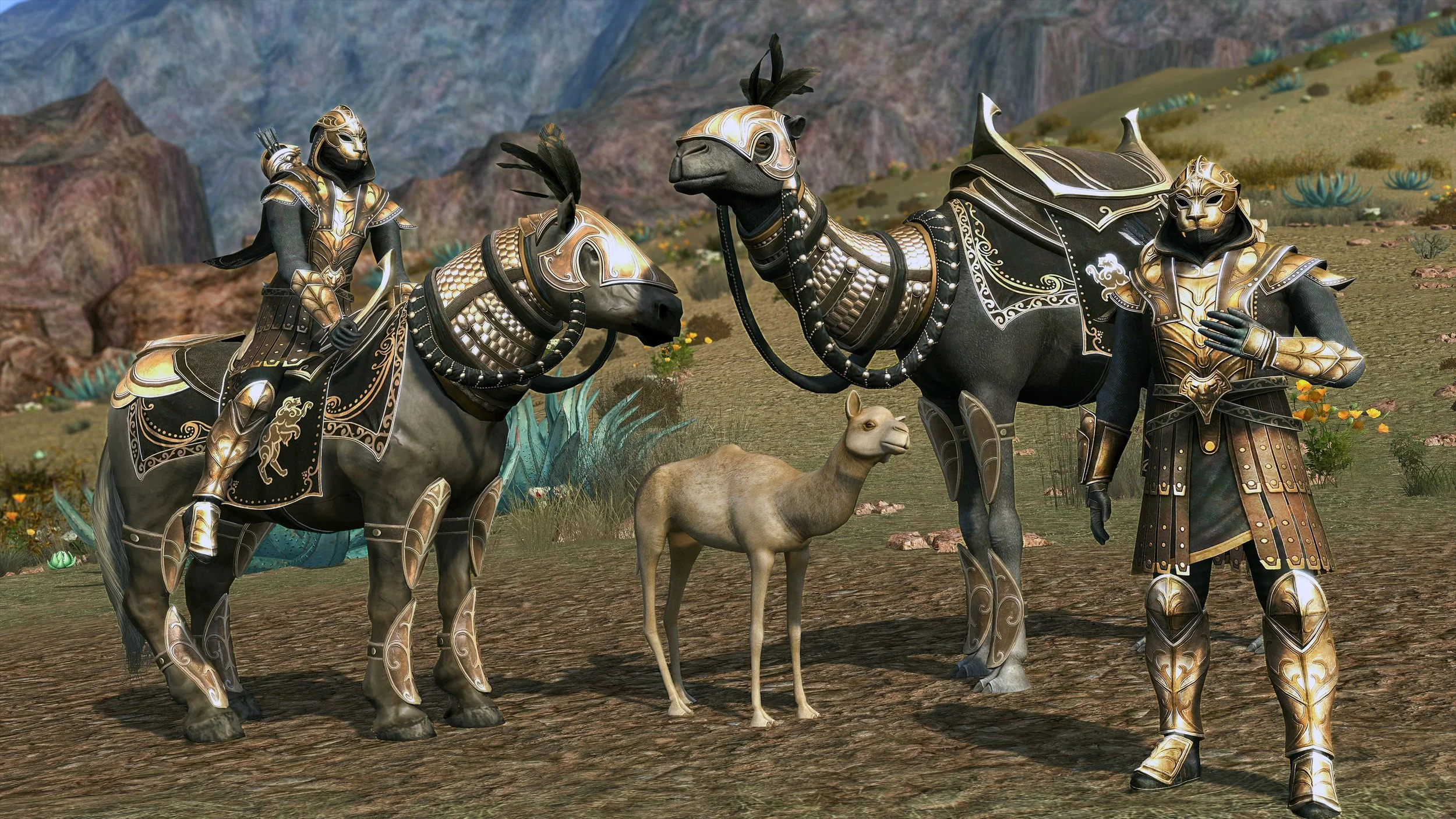
Bree Royce, editor-in chief at Massively Overpowered, recently asked the question “what is the most expensive MMORPG right now”. My first thought was to search through my old draft blog posts and track down an MMO cost analysis I wrote circa 2019. It includes data such as subscription rates and the price of current expansions. There was also information on what were the most popular cash shop items at the time. However, I then read some of the comments that had been left on Bree’s post and I quickly realised that this wasn’t just a matter of financial expenditure. Whether or not an MMO is expensive is also determined by one’s disposable income, respective wealth and personal relationship with money. The latter is perhaps the most important, irrespective whether you consider yourself rich or poor.
Bree Royce, editor-in chief at Massively Overpowered, recently asked the question “what is the most expensive MMORPG right now”. My first thought was to search through my old draft blog posts and track down an MMO cost analysis I wrote circa 2019. It includes data such as subscription rates and the price of current expansions. There was also information on what were the most popular cash shop items at the time. However, I then read some of the comments that had been left on Bree’s post and I quickly realised that this wasn’t just a matter of financial expenditure. Whether or not an MMO is expensive is also determined by one’s disposable income, respective wealth and personal relationship with money. The latter is perhaps the most important, irrespective whether you consider yourself rich or poor.
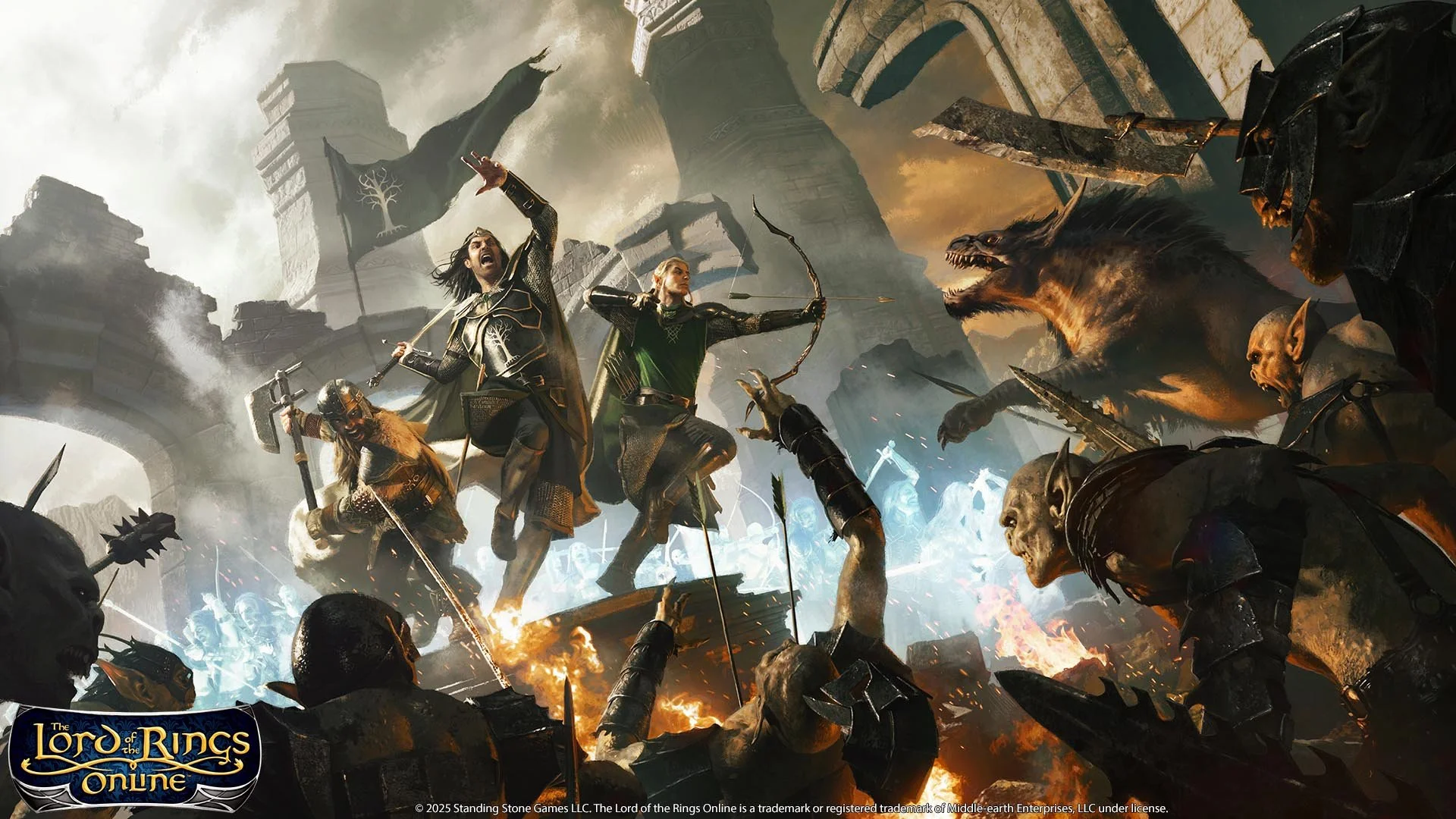
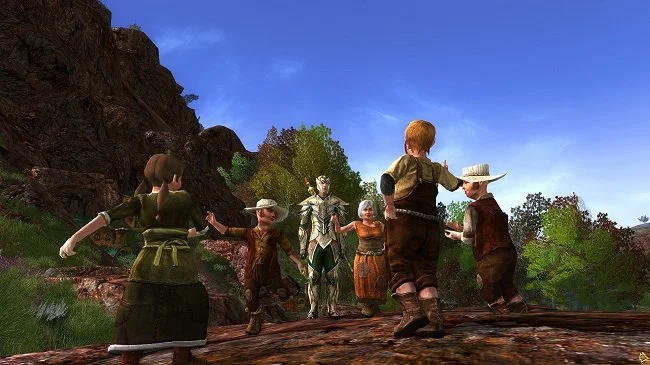
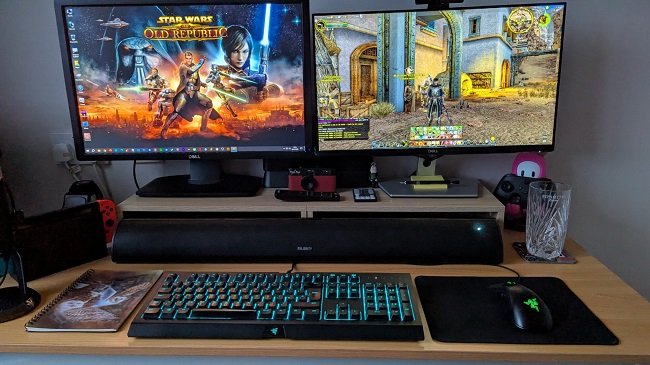
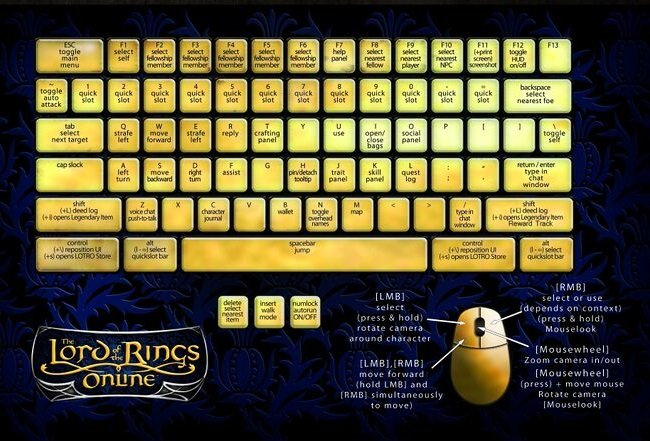
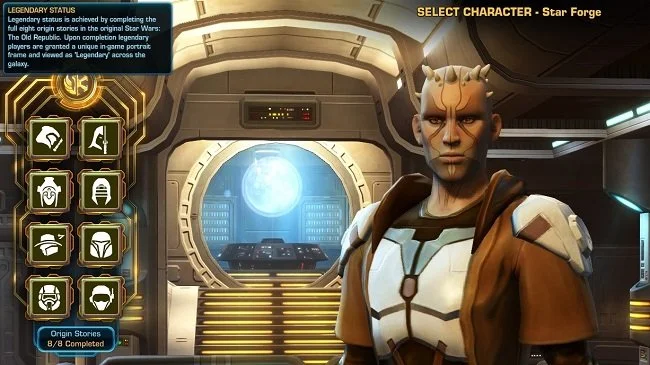
I play several MMORPGs over the course of a year. I tend to return to a game when there’s sufficient outstanding content to keep me busy for a few months, such as a new expansion. Hence I will binge play games such as The Lord of the Rings Online, Star Wars: The Old Republic and The Elder Scrolls Online. While I am playing any one of these titles, I will subscribe to ensure that I am not impeded by any “free-to-play” restrictions. I will also buy some in-game currency so I can obtain any cash shop items I desire. Hence, if I play SWTOR for three months or so, I can end up spending between £60 to £75. It is therefore entirely possible that I can spend £300 a year across multiple MMOs. Broadly, this breaks down to about £6 a week. I personally do not feel that this is a lot of money.
Every hobby has some sort of cost associated with it. From golf, fishing, gardening, painting lead figures to trainspotting. Compared to others, I consider video games good value, especially the MMO genre. However, this is very subjective. Some people may consider my spending to be profligate. Others may think that I’m penny pinching. It all comes down to our own relationship with money. Something that varies between generations and other social divides. I know very wealthy people who will balk at costs that are just pocket change to them. I know others on what would be considered a relatively low income, to happily embrace in-game expenditure because it is the primary source of leisure and entertainment. Furthermore, “whales” do exist and are a big enough factor to influence a video game’s business model.
However, setting aside one’s own finances, there is another factor that counts here. One that is a matter of perspective. Most gamers understand that games cost money to develop and that there is a requirement to generate revenue to finance new content. Hence we broadly accept that there will be charges such as a subscription or the sale of cosmetic items. What matters here is setting a cost that feels appropriate. If this is done right then the player does not feel abused or exploited. A $5 or $10 cosmetic mount is therefore acceptable. Not so, $50 or more. Sadly, publishers often push egregious charges upon developers and mandate that they are included in the game. All too often a deliberate bottleneck or grind is artificially created in an MMO which can only be bypassed with a paid solution. This is the main bone of contention with many gamers.
As I’ve stated in other posts recently, what we expect from a video game is very much determined with what we have grown accustomed to and that varies depending on age. Paying once and getting everything was the norm during the eighties and nineties. But those days are gone and are not coming back. Therefore one has to adjust one’s expectations. It is also true that video game studios only pitch a business model that they can get away with. Sometimes, a live service game fails because it delivers too little and charges too much. The business models for games like LOTRO and SWTOR persist because the players ultimately tolerate it. They may complain but they continue paying. Unless you are prepared to stop paying you cannot exercise any leverage. Ultimately, the only intellectually honest answer to the question “what is the most expensive MMO right now” is the one you’ve chosen not to play.




Booking Tickets
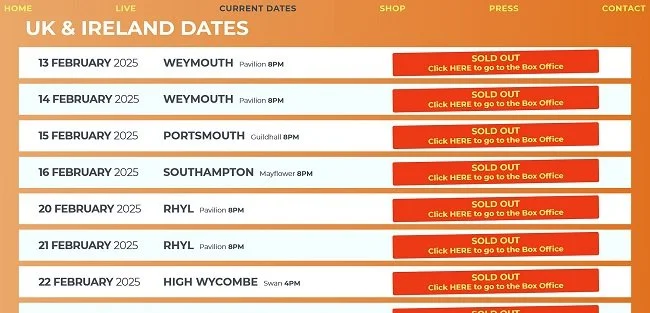
Last night Mrs P said apropos of nothing, “shall we go and see John Bishop”? For those who don’t know, John Bishop is an established UK comedian who is currently touring the country. So I went online and checked the details of his tour. We were quite happy to travel to see his show as it would provide an opportunity for a weekend away. Sadly, to cut a long story short we were unable to secure any tickets that suited our needs. From January to April, the tour is mainly using smaller venues such as local theatres and art centres. Later in the year during October and November, the tour moves to arenas, conference centres and stadiums. I find these very impersonal and don’t see any merit in sitting far away from the stage, watching an artist on a giant video screen. We had hoped we could get tickets at one of the smaller theatres but sadly we couldn’t find two seats together.
Last night Mrs P said apropos of nothing, “shall we go and see John Bishop”? For those who don’t know, John Bishop is an established UK comedian who is currently touring the country. So I went online and checked the details of his tour. We were quite happy to travel to see his show as it would provide an opportunity for a weekend away. Sadly, to cut a long story short we were unable to secure any tickets that suited our needs. From January to April, the tour is mainly using smaller venues such as local theatres and art centres. Later in the year during October and November, the tour moves to arenas, conference centres and stadiums. I find these very impersonal and don’t see any merit in sitting far away from the stage, watching an artist on a giant video screen. We had hoped we could get tickets at one of the smaller theatres but sadly we couldn’t find two seats together.
This anecdote illustrates two issues. The first being what do you need to do to keep up to date with tour information for bands, other musical artists and comedians? The second being the actual acquisition of tickets, which is frequently a far from equitable process. Because in the past and by that I mean the eighties and nineties, buying tickets went something like this. After spotting an advert for a forthcoming tour in the music press, I would either phone or visit the venue where the show was to be held and buy tickets from their box office. Alternatively, I would go to a third party ticket agent in Leicester Square and buy tickets there. Sometimes there would be a queue but if you were shrewd about the timing, there would be no major issues. However, this process was subsequently ruined by the internet and online booking services.
The most egregious problem associated with buying tickets nowadays is the rise of automated bots that buy en masse for touts. Another problem associated with the lottery that is the first come, first served approach, are the virtual queues that occur when tickets go on sale at designated times. I spent exactly 14 minutes in an online queue last year, in a vain attempt to buy two tickets for a popular podcast’s live recording. By the time I finally got to the front of the queue, I was greeted with a message that all tickets were sold out. How is this fair and equitable? Furthermore it is far from good PR for the artists in question. Last year’s sale of Oasis reunion tickets really caught the public's attention due to the poor way the process was handled. The question of regulating ticket sales has now even been raised in parliament.
Another issue that occurs, sometimes with smaller venues, is when there are limited tickets left. Some websites refuse to sell pairs of tickets if that sale leaves a single seat on its own. I noticed this when trying to buy two circle tickets from a local theatre recently. I received a pop up message that would not allow the purchase as it left an isolated seat that the venue would naturally find harder to sell. What I want to know is since when did the venue's business problems become mine? To add insult to injury, the ticket software subsequently encouraged me to purchase a third ticket and “bring a friend”. I was utterly flabbergasted by the hubris of this approach and was tempted to call the theatre in question personally. Upon reflection I decided why harass some minimum wage, box office clerk. It’s not as if they set the sales policy.
With regard to being notified in advance about upcoming tours, the obvious solution is to simply register for email notification from the artists respective website. It is also prudent to do the same with both small and large venues. However, I was told by a friend who works in the marketing industry that this approach isn’t quite as simple and foolproof as it would appear. Although bands and artists will notify fans in advance of tours, there exists within this process a two tier system. Those who have previously bought merchandise above a certain value are given priority and first access to ticket sales. A similar system exists with large venues such as the O2 Arena. “Valued” customers are notified in advance and again given access to priority ticket sales.
There are other issues arising that are worth considering. Third party brokers and their additional charges. Then there are the vagaries of the phrase “restricted view”. Some websites include a photo of the view from your seat. Others seem to go out of their way to be as vague as possible. Overall, it seems that ticket sales is a rather ethically questionable business. It may well serve the needs of the vendors but it doesn’t benefit consumers. Many artists try to distance themselves from this process, blaming the fact that it is run by third parties and thus not their fault. However, it would appear that this issue is getting greater scrutiny by the media and consumer groups. The industry may well be facing greater regulation this year. It certainly needs it. In the meantime I have learned from my experience and am better prepared for next time I wish to book tickets for an event.
PC Game Pass
As a retired person, my monthly income is dependent on interest rates and the state of the wider economy. The UK economic prospects for 2025 are not looking especially good at present. As such, I shall be adopting a more cautious financial policy in the New Year, especially with regard to my spending on leisure activities. New release video games have crept up in price in recent years, with new titles costing between £75 and £100 if you want the full game, season pass and bonus content. There is always a cheaper option to buy just the base game but that tends to be a false economy, especially if you enjoy the title you’ve bought. Hence buying several new video games over the course of a year can be quite an expensive proposition. The obvious way to save money is to wait several months until prices drop as a game’s ages within the context of its lifecycle.
As a retired person, my monthly income is dependent on interest rates and the state of the wider economy. The UK economic prospects for 2025 are not looking especially good at present. As such, I shall be adopting a more cautious financial policy in the New Year, especially with regard to my spending on leisure activities. New release video games have crept up in price in recent years, with new titles costing between £75 and £100 if you want the full game, season pass and bonus content. There is always a cheaper option to buy just the base game but that tends to be a false economy, especially if you enjoy the title you’ve bought. Hence buying several new video games over the course of a year can be quite an expensive proposition. The obvious way to save money is to wait several months until prices drop as a game’s ages within the context of its lifecycle.
Sometimes, waiting until a game becomes financially viable is an acceptable option. On other occasions, playing a game as soon as it launches is an integral part of the overall experience associated with it. Sometimes, it simply comes down to the fact that you like a franchise so much that you just want to play the latest instalment as soon as possible. The latter returns us to the matter of day one costs once again. However, there is a potential way around this. That being the PC Game Pass from Microsoft. If the games that you desire are available on this platform, then you can access them from “day one” for the price of a £10 a month subscription. Often, you can pay just £1 for the first month as part of an ongoing promotion. A year’s subscription is therefore £111, which is an exceedingly good deal if you want access to an extensive catalogue of new releases and older titles.
At present I would like to play the recently released Indiana Jones and the Great Circle along with the forthcoming Sniper Elite Resistance which is released at the end of January 2025. The premium versions of these games retail at £85.99 and £69.99 respectively. A total of £155.98 if bought via a platform such as Steam. Compare that cost with paying £1 for the first month of a subscription to PC Game Pass. Theoretically, you could play through both games in a month. Even if it took a little longer, say three months, the overall cost via this platform would only be £21 which is incredibly reasonable. If it is simply a matter of having access to new titles, then PC Game Pass is an extremely good financial proposition. However, the elephant in the room that still persists for many people, is the matter of ownership. The moment you stop paying for PC Game Pass, you lose access.
In the past I have advocated strongly for the virtues and benefits of ownership. I still believe such arguments are valid. Yet I am aware that the wider cultural tide is changing whether I like it or not. Essentially the things that you take as read and consider “normal” are often purely dependent on the era in which you grew up. The business model for selling video games that existed in the nineties, where you just paid once and got everything, is alien to younger generations of gamers. They have grown up with chargeable DLC, game passes, in-game stores and purchasable cosmetic items. Ownership is simply not their default position. Things change. Hence I have decided to subscribe to PC Game Pass in the New Year so I can play these games. If I enjoy them and wish to return to them at a future date I can always buy them when they are discounted. This approach seems to be the best of both worlds.


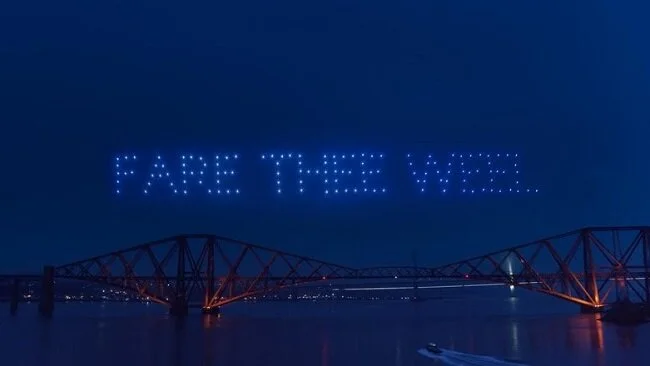
Goodbye 2024
In my teenage years, there was a social obligation to go out on New Year’s Eve. This often meant congregating in some dismal pub, queuing at the bar for 30 minutes to get a drink, then trying to find a corner where you could stand and struggle to have a conversation with your friends, above the noise of the crowd. The evening was dull, noisy and often ended in a fight. Then, around 1:00 AM we were summarily turfed out into the street and had to make our way home. Buses always run at this time of year to serve a public need but the “drunk express” was never a pleasant means of transportation. Quite frankly the whole experience was shit but the hubris of youth meant we deluded ourselves that we were having a good time. If someone suggested something similar today, I would laugh in their face. I am happy to spend New Year’s Eve indoors and away from it all.
In my teenage years, there was a social obligation to go out on New Year’s Eve. This often meant congregating in some dismal pub, queuing at the bar for 30 minutes to get a drink, then trying to find a corner where you could stand and struggle to have a conversation with your friends, above the noise of the crowd. The evening was dull, noisy and often ended in a fight. Then, around 1:00 AM we were summarily turfed out into the street and had to make our way home. Buses always run at this time of year to serve a public need but the “drunk express” was never a pleasant means of transportation. Quite frankly the whole experience was shit but the hubris of youth meant we deluded ourselves that we were having a good time. If someone suggested something similar today, I would laugh in their face. I am happy to spend New Year’s Eve indoors and away from it all.
As for 2024 it hasn’t been an especially good year. Mrs P and I have had a lot of health issues which hopefully have now been addressed. We want to get back into the habit of having an extended weekend away each quarter in 2025. It’s nice to have social activities and events of your choice on the calendar and have something to look forward to. On a personal note my return to writing has been beneficial for my mental well being. I like setting an alarm and getting up early to write while my brain is still fresh. Once the seasonal celebrations are finally over, I am aiming to write every day in 2025 if possible. I also have some other projects to pursue which require learning new skills. It is important to keep the mind active and not to lapse into a purely sedentary and unchallenging lifestyle.
Outside of my immediate life 2025 is not looking like a good year with regard to geopolitics. However, I am not going to allow myself to be excessively anxious about it. Mrs P and I have discussed practical things that we may have to address, such as shortages or increasing inflation. Beyond that it’s really just a question of battening down the hatches and weathering the storm. By storm I mean the tsunami of bullshit that is going to hit the news cycle and the consequences of it. However, there are also some simple steps you can take to improve your state of mind and stay positive. Limiting your time on social media. Reading only the news headlines, rather than wallowing in the endless speculation and negative conjecture. I find keeping busy also helps. Sometimes, it’s best not to look too far into the future. Instead just focus on the present and take things one day at a time.
Happy New Year.
















A Year in Gaming
It is customary for me to write an end of year summary of my gaming activities but I suspect that on this occasion it will be somewhat short. For me, 2024 has really hammered home the notion of the ephemeral nature of video games as well as their commercial ubiquity. The moment a game fails to satisfy for whatever reason, rather than complain or worry about it, I just move on to something else. It’s not as if there’s a shortage of games out there. I have a substantial back catalogue of games that Epic and Amazon prime regularly giveaway. I have bought numerous discounted bundles in the past, in the pious hope that I’ll play one of the games included, at some point in the future. Games may well be enjoyable and engaging but many are also disposable. That’s not to say they’re bad. While playing them you are indeed “entertained”. However, when you’re “done”, it’s amazing how you quickly find another and forget what you were previously playing.
It is customary for me to write an end of year summary of my gaming activities but I suspect that on this occasion it will be somewhat short. For me, 2024 has really hammered home the notion of the ephemeral nature of video games as well as their commercial ubiquity. The moment a game fails to satisfy for whatever reason, rather than complain or worry about it, I just move on to something else. It’s not as if there’s a shortage of games out there. I have a substantial back catalogue of games that Epic and Amazon prime regularly giveaway. I have bought numerous discounted bundles in the past, in the pious hope that I’ll play one of the games included, at some point in the future. Games may well be enjoyable and engaging but many are also disposable. That’s not to say they’re bad. While playing them you are indeed “entertained”. However, when you’re “done”, it’s amazing how you quickly find another and forget what you were previously playing.
I started the year playing Call of Duty Modern Warfare III, the 2023 entry in the never ending franchise. These games have a 12 month lifecycle and frequently “evolve” during their quarterly updates. Hence many of the aspects of MW III that I liked when I started playing, were altered, nerfed or simply removed, six months later. The community is also vile and seems to be a magnet for the emotionally dysfunctional. This doesn’t help, especially when trying to find information on builds and tactics via the games subreddit. I found myself in a minority as I actually liked the open world approach to the Zombie play mode. The latest iteration of the game released in October has returned to the traditional round based approach, which I don’t like. So roundabout summer, I stopped playing as the game no longer yielded sufficient fun. I uninstalled it a few months later.
I fancied playing a traditional high fantasy RPG this year and found exactly that in Dragon’s Dogma 2. I quite liked the fact that the game deliberately eschews fast travel and is designed so that the player has to travel slowly around the world map, fighting as they go. I also liked the pawn system in which you could hire up to 3 NPC companions from multiple classes. These can be either prebuilt pawns provided by the game itself, or ones that other players had created. I got quite attached to some of them with their quirky names and dialogue, until I outlevelled them. The combat was more challenging than I had expected but I liked the fact that you could climb onto some of the exotic beasts you fought and attack vital areas. Some players were disappointed by the story, claiming it was somewhat generic. I felt it was adequate and often wonder if games such as these, made by international developers, lose something in translation.
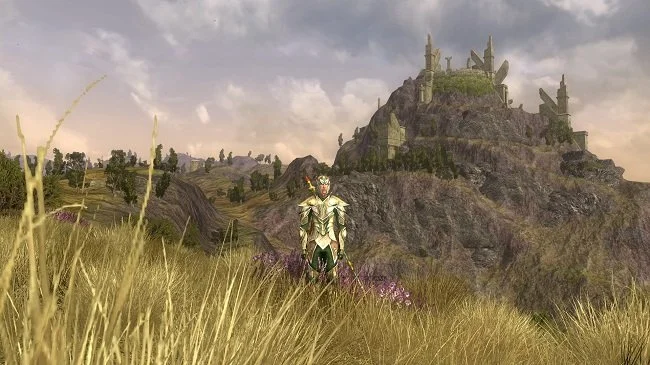
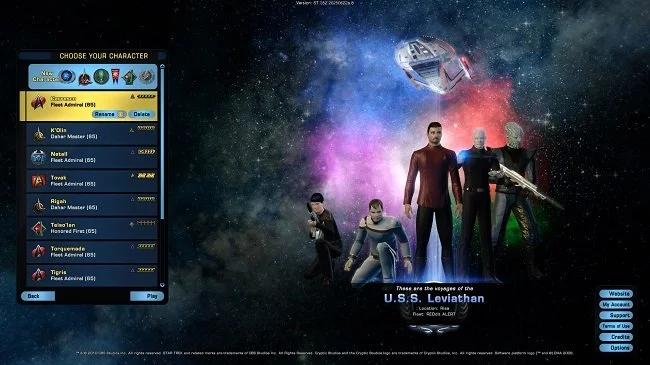
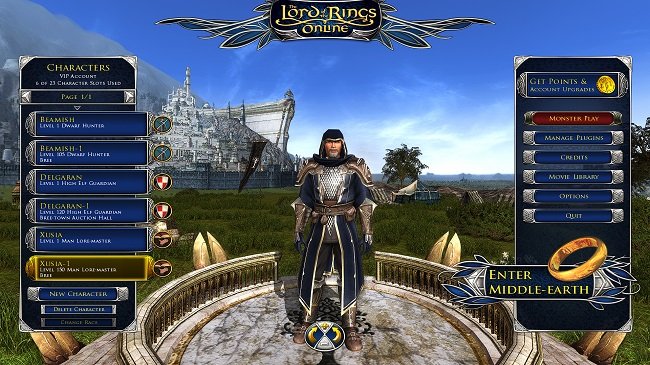
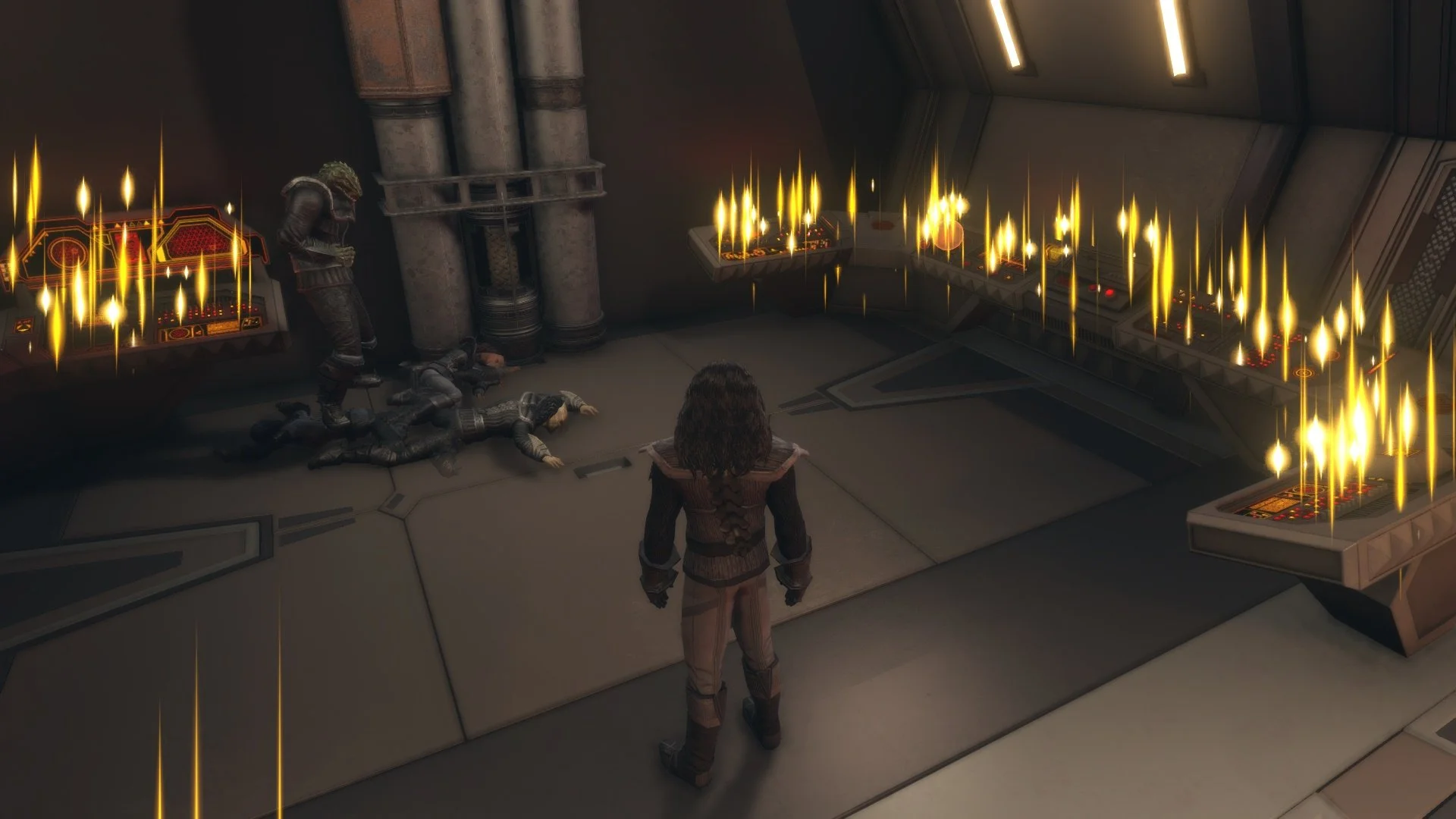
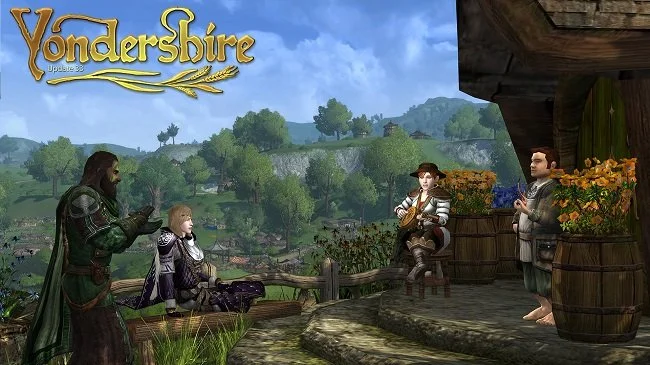
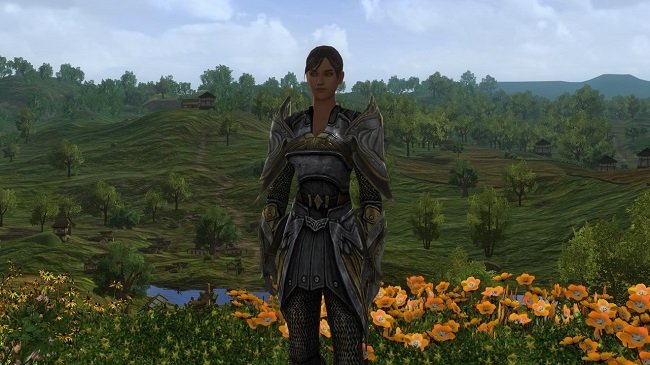
I returned to several MMOs this year. Star Trek Online continues to be a mainstay, due to its continuous calendar of short term events. Such an approach is not a real substitute for longer, story based missions which are becoming more infrequent these days. But STO does afford the casual gamer a quick fix and a means to jump straight into some action if you have limited leisure time. I also resumed playing The Lord of the Rings Online having one update and an expansion to catch up with. I reached the new level cap with my primary character and weathered the ill conceived changes that were made to the Lore-master class. When will developers learn that if it ain’t broken, don’t fix it? LOTRO still benefits from well written and innovative stories to underpin all their quests. It also has a knack of creating interesting zones. Overall the game does sufficient to keep me engaged.
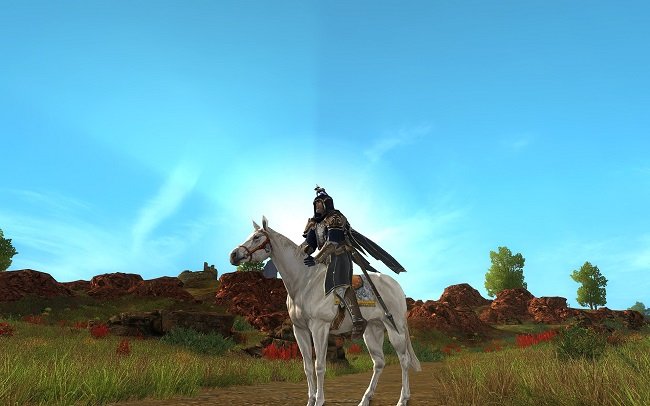
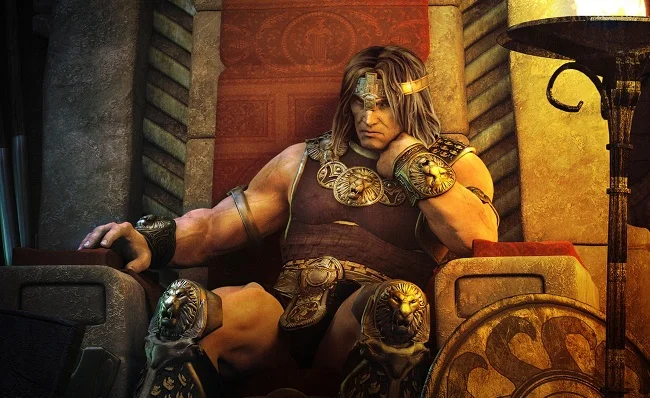
For reasons I can’t quite articulate, I decide to revisit Age of Conan. I found my original character from 2011 along with an MMO that is in maintenance mode. It still has players although they tend to congregate in the cities and most of the time, you’ll find yourself alone when out questing. As such, it can be played as an RPG but I decided not to pursue playing any further than satiating my thirst for nostalgia. Instead I opted to dive back into Star Wars: The Old Republic as there were three classes that I hadn’t played. To date, I have now completed the Sith Inquisitor and Jedi Consular classes and am now focusing on the Judi Knight. The great thing about SWTOR is that each class has a unique story, as does each planet in the game. Hence there is always something new to return to.
2024 was certainly not a standout year for gaming, at least from my perspective. Video games still provided an entertaining pastime but nothing really loomed large and made an impact upon me such as Red Dead Redemption 2 or Skyrim. Such games are becoming increasingly rare. MMOs once again proved to be a comfortable form of gaming and I am still enjoying my return to SWTOR. I also have the latest LOTRO expansion to play through, which I am keeping in reserve for the moment. I have my eye on the new Indiana Jones game in the New Year along with the latest instalment of Sniper Elite. However, the cost of buying new titles is becoming quite expensive. Especially if you want the most comprehensive version of a video game. However, I have a potential solution for that problem but that is a blog post for the New Year.
A Year in Movies
The last time I wrote A Year in Movies post was back in 2020. That was naturally an unusual year and it certainly had a radical impact upon the film industry and the way new movies are distributed. In many ways the pandemic accelerated the inevitable move towards cross platform, same day releases. 4 years on and it is quite usual for films to have a short cinema release before becoming available on streaming media. They often appear on physical media at the same time. Effectively you can go to the cinema, or simply watch at home on the platform of your choice if you prefer. Rent, buy or subscribe, the film studios still get their pound of flesh and everyone is happy. Sometimes if a film has failed to gain sufficient traction at the cinema, its release will be cut short and it will go to streaming even quicker. Direct to video from the eighties and nineties has been superseded with direct to streaming.
The last time I wrote A Year in Movies post was back in 2020. That was naturally an unusual year and it certainly had a radical impact upon the film industry and the way new movies are distributed. In many ways the pandemic accelerated the inevitable move towards cross platform, same day releases. 4 years on and it is quite usual for films to have a short cinema release before becoming available on streaming media. They often appear on physical media at the same time. Effectively you can go to the cinema, or simply watch at home on the platform of your choice if you prefer. Rent, buy or subscribe, the film studios still get their pound of flesh and everyone is happy. Sometimes if a film has failed to gain sufficient traction at the cinema, its release will be cut short and it will go to streaming even quicker. Direct to video from the eighties and nineties has been superseded with direct to streaming.
My personal cinema experience has greatly improved of late due to the opening of a new local independent cinema in Summer 2023. The Sidcup Storyteller has three screens which are best described as “petit” and “bijou”. However, this is advantageous as it tends not to attract a youthful audience seeking the latest multiplex fodder. Instead customers tend to be of an older age group who still cleave to old school cinema etiquette. The seats are roomy and the sound system is not turned up to 11 but instead is actually configured so dialogue is audible. Films are shown throughout the day which is convenient if you want to grab something to eat afterwards and still be home at a reasonable hour. Ticket prices are acceptable and on average are about £10, although there are often discounts and promotions that can reduce the price as low as £6.30 which is very reasonable.
I went to the cinema 3 times in 2024, which is possibly an all time low. A decade earlier I would go at least once a month and could always find something that I wanted to watch. Sadly this decline all comes down to the content that monopolises cinema chains these days. I’m tired of being charitable and advocating a live and let live policy. Franchise moves are a blight on quality film making. They indirectly condition their audience towards spectacle, rather than dialogue and story. Furthermore, they foster short attention spans. Through no fault of their own modern audiences are often incapable of watching anything outside of a narrow spectrum of material and are effectively cinematically illiterate. It is a sorry state of affairs and ultimately it’s the audience that loses out.
As for the three films that I saw at the cinema this year, they were as follows. One Life about the British humanitarian Nicholas Winton (Anthony Hopkins) and his involvement in the Kindertransport during World War II. It is a very low key film with the focus on performance. It doesn’t overreach itself by being too epic in scope and makes its point perfectly. Back to Black is a biography of singer Amy Winehouse. The plot is somewhat factually spurious but the central performance by Marisa Abela is sound, especially her singing. Finally, the last film of the year was Paddington in Peru. Not quite as good as the first two movies but it is still entertaining, mainly due to the strong supporting cast. Antonio Banderas being especially droll. I considered going to the cinema to see Blitz, Alien Romulus and Gladiator II but ultimately chose to watch them all at home.
Despite a decline in mainstream cinema, there are still plenty of good quality films available. You just have to look a little harder to find them. They are often buried in the streaming menus and need to be sought out. I find that word of mouth from friends and critics that I know and respect is often a reliable heads up. I found Robot Dreams that way, along with Longlegs. Both are entertaining genre offerings but very different films. Another solid film recommended by a reliable source is Juror #2, directed by Clint Eastwood. This was released without much fanfare but it is a no nonsense courtroom drama, filmed in Eastwood usual matter of fact style. It achieves exactly what it sets out to do, delivering a strong indictment of the US legal system. The fact that films such as these three are still made does give me hope that quality mainstream filmmaking is not quite dead and that good stories still appeal to audiences.
Star Wars: The Old Republic Dynamic Encounters
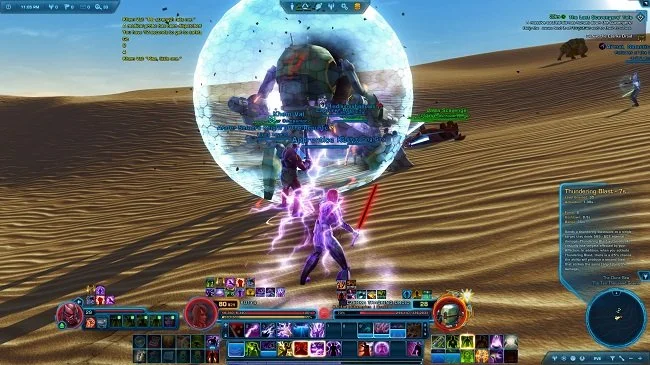
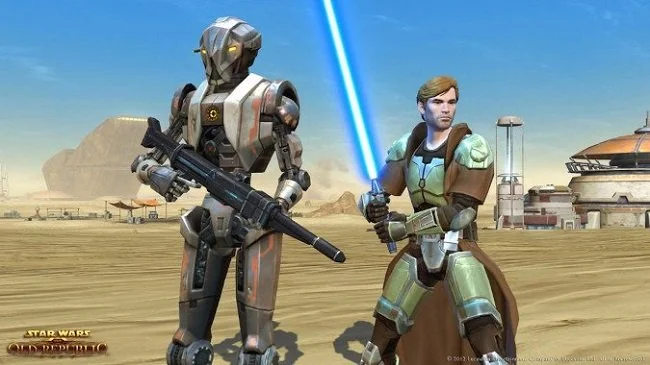
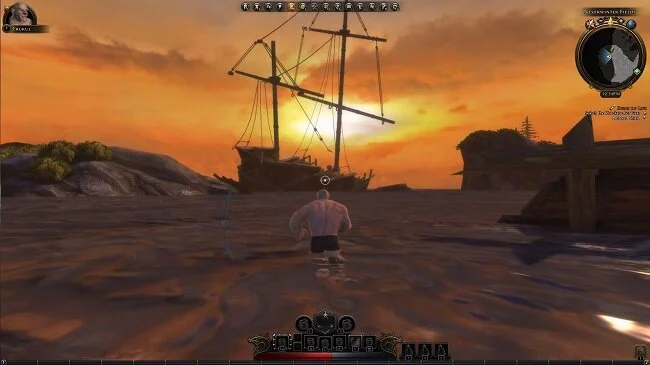
The MMORPG Star Wars: The Old Republic recently added Dynamic Encounters to the game in the latest patch. These are repeatable, time limited public event quests that randomly appear at present on the planets Tatooine, Hoth and Rishi. Some events are combat focused with a set amount of enemies to defeat before a boss appears. Others are more leisurely, involving herding Banthas or catching juvenile Tauntauns. Dynamic Encounters vary in difficulty, ranging from easy to hard. All players participating in Dynamic Encounters share progress with NPC kills. Thankfully, there is no sharing or competing for item looting. Dynamic Events run for between 30 and 60 minutes and repeat every 2 hours. Overall these are broadly similar to comparable events in Guild Wars 2 or The Elder Scrolls Online.
The MMORPG Star Wars: The Old Republic recently added Dynamic Encounters to the game in the latest patch. These are repeatable, time limited public event quests that randomly appear at present on the planets Tatooine, Hoth and Rishi. Some events are combat focused with a set amount of enemies to defeat before a boss appears. Others are more leisurely, involving herding Banthas or catching juvenile Tauntauns. Dynamic Encounters vary in difficulty, ranging from easy to hard. All players participating in Dynamic Encounters share progress with NPC kills. Thankfully, there is no sharing or competing for item looting. Dynamic Events run for between 30 and 60 minutes and repeat every 2 hours. Overall these are broadly similar to comparable events in Guild Wars 2 or The Elder Scrolls Online.
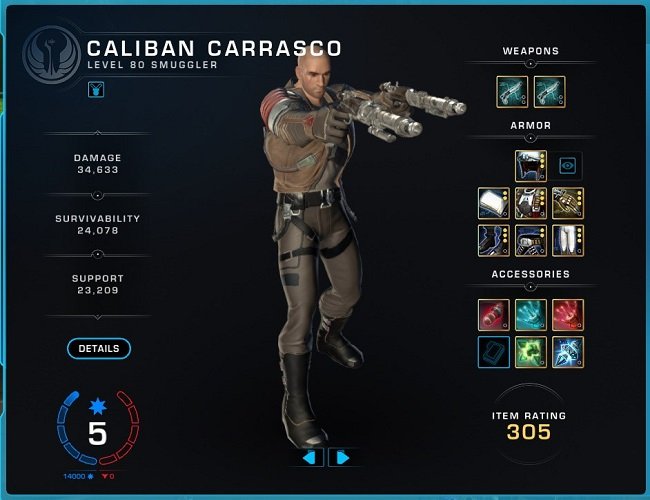
Although I was aware of the Dynamic Encounters system, I have been focused on levelling my new alts of late, so they haven’t been my primary consideration. However, while undertaking a companion quest on Tatooine over the weekend, I walked into the middle of one outside Mos Ila. Needless to say I immediately joined the event and quickly repelled the Republic incursion. I subsequently spent the next few hours travelling around the region actively pursuing the various Dynamic Events as they afford a convenient and enjoyable quick fix of action. Plus there isn’t a wealth of narrative to plow through beforehand. Furthermore, because these are a new addition to SWTOR, they are at present very well attended. If you find yourself the first player at the location of a new event, you will quickly find yourself joined by other players.
I am curious to see whether players determine a process by which to play through all the Dynamic Encounters on each planet. Will we be seeing the SWTOR equivalent of the Queensdale Champion train that existed for a while in Guild Wars 2. This was a group rotation around the spawning points of several high value bosses that players farmed. I won’t be surprised if such a thing evolves in SWTOR, as players determine what is the optimal way to complete all Dynamic Encounters and gain the best rewards. As for the value of this new game mechanic, I think they are a welcome addition to the activities available in SWTOR. Let us hope that they are regularly added too and updated, rather than just left, as so often happens to new features in the MMO genre.



MMO Tropes: Name Unavailable
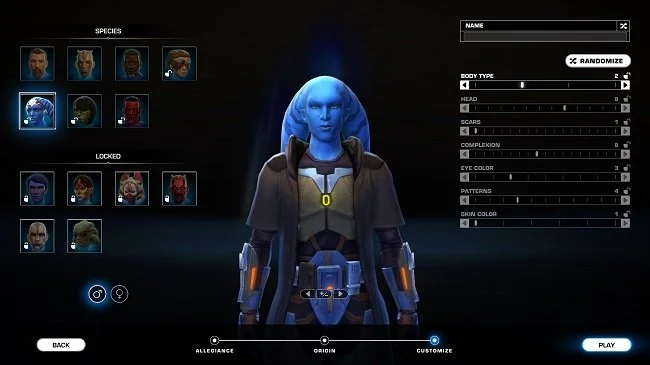
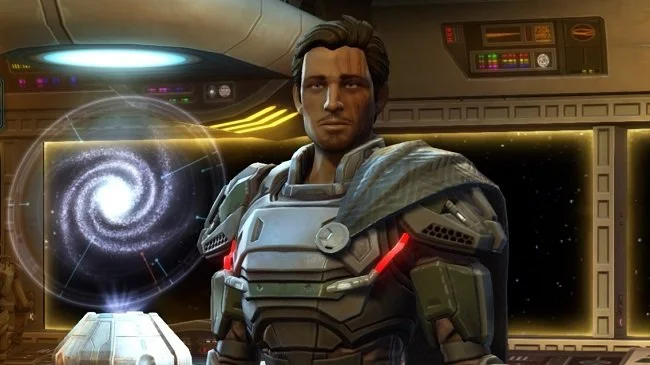
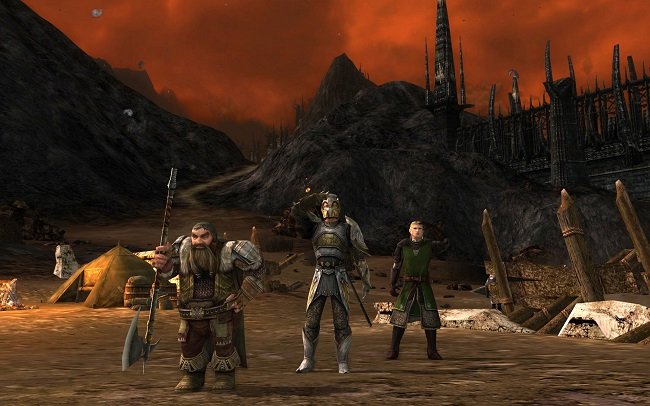
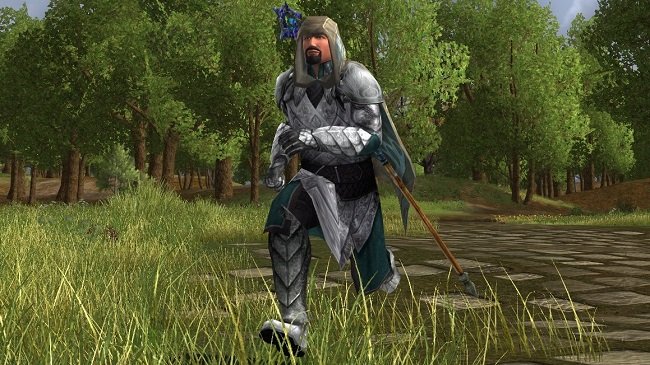
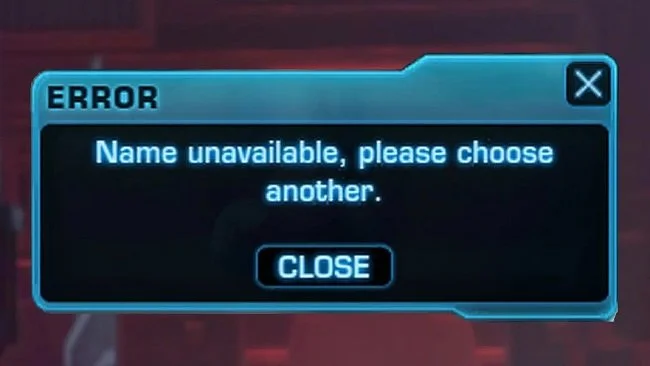
If you’ve ever played an MMORPG, then you have more than likely encountered this problem. Especially if you start playing a game that has been long established. You diligently create your character and spend time and effort customising them to suit your needs. All you’ve got to do next is choose a name, so you type in a pithy and droll title only to find that it has already been taken. So you quickly come up with another and that too is rejected. Next you try the same name but with some “alternative” spelling but the game resolutely tells you that even that permutation is already in use. I have found that even with a list of names that I’ve drawn up prior to playing the game, it can still take anything from 5 to 30 minutes to find one that is available. Naturally, this process is very frustrating, which is hardly the ideal user experience for a new player.
If you’ve ever played an MMORPG, then you have more than likely encountered this problem. Especially if you start playing a game that has been long established. You diligently create your character and spend time and effort customising them to suit your needs. All you’ve got to do next is choose a name, so you type in a pithy and droll title only to find that it has already been taken. So you quickly come up with another and that too is rejected. Next you try the same name but with some “alternative” spelling but the game resolutely tells you that even that permutation is already in use. I have found that even with a list of names that I’ve drawn up prior to playing the game, it can still take anything from 5 to 30 minutes to find one that is available. Naturally, this process is very frustrating, which is hardly the ideal user experience for a new player.
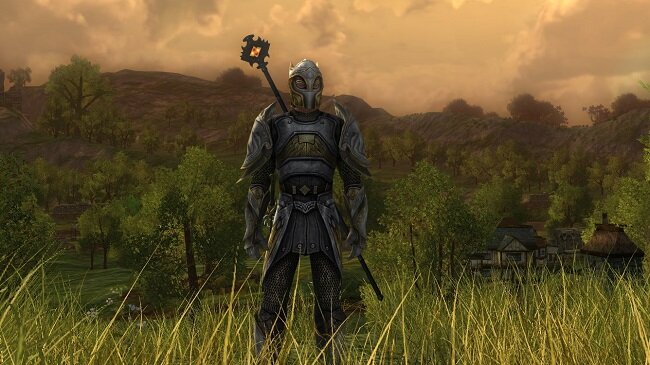
This problem is common to a lot of older MMOs. The Lord of the Rings Online, Star Wars: The Old Republic and Age of Conan are prime examples. Newer games tend to have a more flexible naming system often using a surname that is account wide. This often negates any issues with duplicate names. New players are often aware in advance that securing their name of choice in an older game is going to be problematic. The main issue is that a lot of these games do nothing to help beyond rejecting your choice. They do not give you any clues as to what names are available or any potential spelling changes that are required to bypass the problem. They basically say “no clues” and you’re left to randomly try various permutations until one is accepted. The problem with all this, is that if you do not secure your name of choice it can diminish your gaming enjoyment.
If you’re of a sceptical disposition about the monetisation of MMOs, then you’ll see a direct correlation between this inherent naming problem and the fact that renaming tokens are readily available to purchase in the respective game store. Such items can cost anything between £5 to £10 which seems excessive when you consider that the game itself has contributed to the player ending up with a name they’re not happy with. Although it may sound trivial to some gamers, having “the right name” is an important aspect of character creation for a lot of other players. I like to have character names that don’t obviously clash with the in-game lore and I don’t really care for “humorous” monikers. As previously mentioned, a new player should not really be having these sorts of problems. Surely the best business practice is to make their introduction to a new game as frictionless as possible?
My recent return to SWTOR was prompted by a scheduled “character name purge”. Developers Broadsword sent all players an email stating that inactive accounts would lose their names if they didn’t log into the game by a specific date. That date has now been and gone and as far as I’m aware a substantial amount of names have been released so that new players can access them. When I reclaimed my Age of Conan account recently, I had to rename my old character as a similar policy had been implemented. I didn’t complain as I last logged into the game a decade ago when it went free to play. All of which goes to show that game developers are fully aware of the importance of character names. In light of such, it would be nice if the MMO genre adopted a more equitable policy regarding them.

A Year in TV
It is fair to say that we live in an age where we do not lack quality TV. There are numerous shows that have garnered critical acclaim or a strong word of mouth following that are deemed “must see” viewing. No doubt you, like myself, have a long “to do” list of programs that you need to “get round to watching” on top of those shows which are staples of your viewing regime. If you didn’t have enough programmes already to catch up with, we all have friends and family telling us about a “great show” that’s on a platform we don’t subscribe to, that we really need to see. It is quite extraordinary and a far cry from my youth when the UK simply had three terrestrial channels until satellite TV became popular in the late eighties. To paraphrase the former Prime Minister Harold Macmillan “we’ve never had it so good”.
It is fair to say that we live in an age where we do not lack quality TV. There are numerous shows that have garnered critical acclaim or a strong word of mouth following that are deemed “must see” viewing. No doubt you, like myself, have a long “to do” list of programs that you need to “get round to watching” on top of those shows which are staples of your viewing regime. If you didn’t have enough programmes already to catch up with, we all have friends and family telling us about a “great show” that’s on a platform we don’t subscribe to, that we really need to see. It is quite extraordinary and a far cry from my youth when the UK simply had three terrestrial channels until satellite TV became popular in the late eighties. To paraphrase the former Prime Minister Harold Macmillan “we’ve never had it so good”.
Yet there are downsides. The most obvious one is the fact that most people cannot subscribe to all the platforms they would like to and that there are simply too many competing services. So we all make tough choices based on what permutation of subscriptions offers us the most choice and then use other family member’s login details to cover the shortfall. Then there is the concept of “TV poverty” for those on low incomes who have no other recourse other than what is available for free. Internet access is still poor in some regions of the UK, meaning that streaming is not always the best option available. It has been mooted that the UK government intends to phase out digital terrestrial television by 2030 and replace it with streaming exclusively but until the internet divide is addressed i cannot see this being viable.

Freely, the proposed streaming replacement for UK digital terrestrial TV
TV has always had a curious relationship with cinema. In many ways they have been opposites at different periods of time. In the fifties and sixties cinema was considered the cerebral medium and TV was the poor, populist relation. At present it is the opposite. Film is driven by franchise spectacles, where TV is the home of complex, well written dramas. That being said, TV is not averse to creating franchises with an eye on long term longevity. This can come with its own set of problems. I started watching From on the understanding that this complex sci-fi horror drama would not make the same mistakes as the TV show Lost. Sadly the plot is dragging and there is little progression. One cannot escape the feeling that this show with its interesting premise and strong cast, is deliberately being dragged out for obvious financial reasons at the risk of the public just getting bored and switching off.
Another issue is time that elapses between seasons of a popular show. If more than a year goes by then it can be a struggle to recollect all nuances of the plot. Sometimes, I will have to rewatch the final episode of the previous season to jog my memory. On a few occasions, I have watched YouTube summaries of the previous series to bring me back up to speed. I find it kills your interest in a show if you have to do homework to keep on top of it. Sadly, some shows just drag on too long and end up diminishing their brand. It is argued that the optimal number of seasons is between five and seven. NCIS is a prime example of a popular show that has just gone on for too long. The most beloved characters have gone and it currently suffers from very poor writing. Conversely, its recent spinoff show, NCIS Origins, is the complete opposite with tightly written, well conceived and minimalist episodes.
NCIS Origins is a far better written show than NCIS
I enjoy good television but if left unchecked it could totally monopolise all my leisure time. Therefore I will make the decision to not watch some shows as I would rather spend the time on some other hobby. Unfortunately, just like the film industry, the current business model for television has an element of “fear of missing out” built into its marketing. Do you want to be one of the “cool kids” discussing the latest episode of a show and thus be part of a shared cultural moment, or will you watch it a couple of years later and discover that none of your mates want to talk about it anymore as they’ve moved on? Another cultural change is whether we “accept” that YouTube is a form of TV? I regularly watch YouTube on my lounge TV and for many, this is what they watch instead of “old school” TV. I suspect that 2025 will have more changes in store for us and will therefore be an equally interesting year in television.
LOTRO: Staying Busy
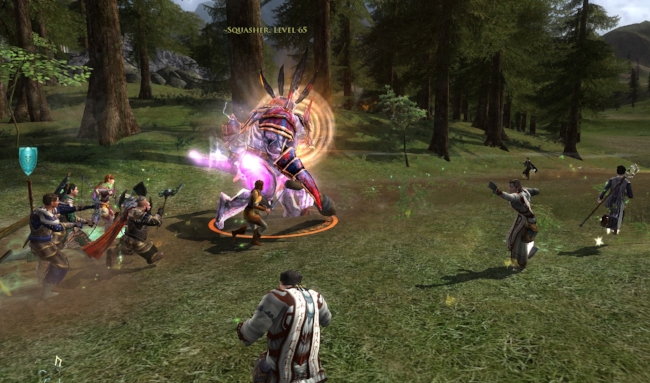
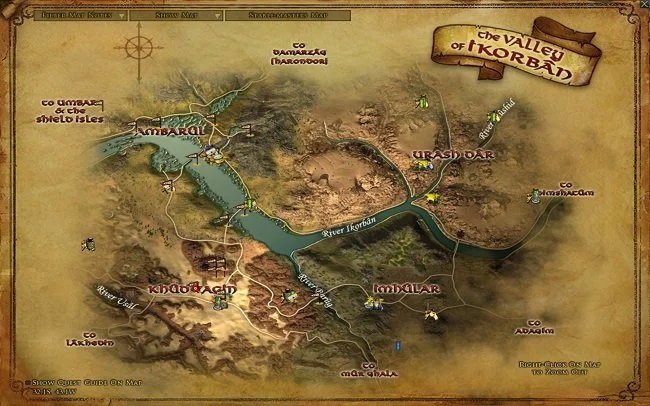
Exactly what do you do when you reach level cap in the MMORPG, The Lord of the Rings Online? Raiding is the obvious answer and arguably the one the developers would suggest. But only a small percentage of players regularly raid. The last raid I participated in was early 2012 when twelve of our kinship attempted the “Tower of Orthanc”. If memory serves, we failed miserably after investing about 4 hours of our time. Many of us found that we simply didn’t have sufficient time available to pursue raiding in any meaningful way. Those members of the kinship that were focused on this aspect of gameplay ended up leaving and moving to other guilds. I have used the group finder on occasions since then but it has seldom yielded good results. Hence, for me most multiplayer content in LOTRO is “off the table”.

Exactly what do you do when you reach level cap in the MMORPG, The Lord of the Rings Online? Raiding is the obvious answer and arguably the one the developers would suggest. But only a small percentage of players regularly raid. The last raid I participated in was early 2012 when twelve of our kinship attempted the “Tower of Orthanc”. If memory serves, we failed miserably after investing about 4 hours of our time. Many of us found that we simply didn’t have sufficient time available to pursue raiding in any meaningful way. Those members of the kinship that were focused on this aspect of gameplay ended up leaving and moving to other guilds. I have used the group finder on occasions since then but it has seldom yielded good results. Hence, for me most multiplayer content in LOTRO is “off the table”.
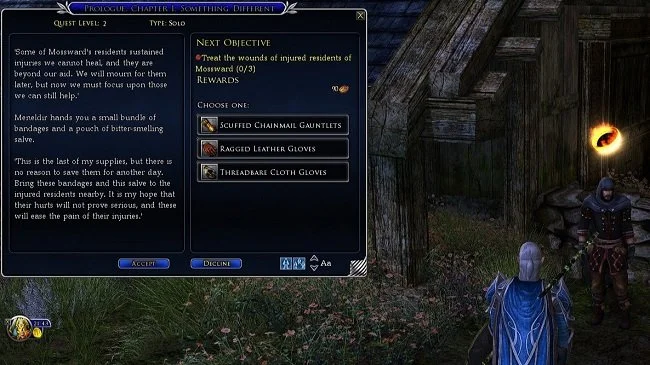
My experience is far from unique and it was for this reason that Standing Stone Games introduced the Mission system into LOTRO as an alternative to raiding. Missions offer instanced based activities with specific goals. They often contain a “twist” such as environmental effects or a boss with a specific debuff, to make them suitably challenging. They scale to the player’s level and can be played solo or duo. Delvings are Missions variants that allow level cap players to increase the difficulty to gain superior rewards. Missions and Delvings are repeatable, although there is a cooldown period. Tokens gained from Missions and Delvings can be bartered for gear that is comparable to that rewarded by completing raids. Overall this is a good system although the quality of the Mission is variable. Some are quite well conceived and require a tactical approach but others can be arbitrary.
Another aspect of LOTRO that is a potential source of content is crafting, although it is not for everyone. I have always enjoyed the resource gathering element of this game system, as it can be a good source of XP when levelling and the refined resources can be sold on. When I originally created my Lore-master, I chose the Forester, Prospector and Tailor professions, specifically so I could collect wood, ore and hides which were at the time very marketable commodities. Upon checking recently, I discovered that I had not kept my professions up to date so spent some time travelling around Gundabad and Umbar, gathering resources and levelling my crafting proficiency. I tend not to actually manufacture specific items as I find the costs involved are excessive. However, I do like to buy and sell via the Auction House as a mini game.
LOTRO has several other game systems that can keep you busy, although not all of them are as engaging as story content. As previously mentioned, there are multiple reputation factions throughout the various zones. All of which offer useful rewards upon completion. Besides housing items and cosmetic pets, there are “return to” swift travel skills that will teleport the player to a key location in the zone. If you have bought the “Returning Traveller” and “Expedient Traveller” modifiers from the LOTRO store, then you can reduce the cooldown on all travel skills to 5 minutes. Completing deeds is another option if you are looking for some simple gameplay. Finding locations, treasure caches or completing a specific number of quests all provide XP towards Virtue Traits. Then there are the infamous slayer deeds in which you inflict species specific genocide upon local areas of Middle-earth.
If the aforementioned activities all seem a little formal, there are plenty of informal and social alternatives. Some players upon reaching level cap become in game philanthropists. They become active within their guild organising events and activities. Others simply travel throughout Middle-earth offering assistance to others. Exploring every corner of Standing Stone Games’ world and taking screenshots is another leisurely pastime. It can also be enjoyable to spend some time experimenting with the cosmetic systems within LOTRO, as well as collecting pets and mounts. So it would appear that there is quite a lot that a player can do to keep busy in LOTRO. And then of course there is the issue of returning to the login screen and simply creating a new alt. That however, is a separate blog post altogether.
A Year in Music
This post is not intended to be a comprehensive review of music per se in 2024. It is simply a few thoughts on what I’ve been listening to over the course of the year and my ever changing relationship with the Terpsichorean muse. As a man in his fifties who has always enjoyed multiple genres of music and it is a comforting presence in day-to-day life. Up to a year ago, I relied upon my own music collection on my PC as the source of music to which I listened. Yet, this meant that I was somewhat locked into my own existing tastes and there was limited scope for me to find new material. This changed last December when I started subscribing to Spotify and since then it has become my primary source of music. It caters to my tastes, which at times are quite niche and it gently introduces me to new material without being too invasive. This has proven most beneficial.
This post is not intended to be a comprehensive review of music per se in 2024. It is simply a few thoughts on what I’ve been listening to over the course of the year and my ever changing relationship with the Terpsichorean muse. As a man in his fifties who has always enjoyed multiple genres of music and it is a comforting presence in day-to-day life. Up to a year ago, I relied upon my own music collection on my PC as the source of music to which I listened. Yet, this meant that I was somewhat locked into my own existing tastes and there was limited scope for me to find new material. This changed last December when I started subscribing to Spotify and since then it has become my primary source of music. It caters to my tastes, which at times are quite niche and it gently introduces me to new material without being too invasive. This has proven most beneficial.
In a world of “big data”, naturally Spotify has crunched the numbers relating to my usage over the last 12 months and has collated a presentation about my listening habits. My top five artists are a strange mix. I was not surprised to see Rammstein at the top of the list as I find their pounding songs to be an excellent form of stress release. Seeing the late, great Slim Whitman so high in the list was unexpected. I “inherited” my love of this man’s yodelling abilities and his three octave range falsetto from my mother. She adored him and hence I became very familiar with his back catalogue. As for Howard Shore and John Barry, their respective presence is due to my love of sumptuous movie soundtracks. With respect to The Stranglers, I consider them an underrated UK band. A band where there’s more than meets the eye.
Slim Whitman
I apparently listened to 10,558 minutes of music this year. If you assume an average running time of 3.5 minutes for a song, that’s a little over 3000. Like most data presented out of any sort of context, I have no idea if that is a lot or a little compared to other users. It averages out at about 8 songs a day which doesn’t seem a lot. Maybe 30 minutes of music each time. I suppose it all depends on your circumstances. I spend a lot of time at my desk using my PC, so I’ll often listen to something while writing or gaming. Plus I did some travelling at the start of the year, which provided additional time to listen to Spotify via headphones. Overall, enjoying music is certainly part of my daily routine. Just like listening to podcasts and watching YouTube channels that I subscribe to. Having what I want, when I want, without any hassle certainly makes things a lot easier.
Rammstein
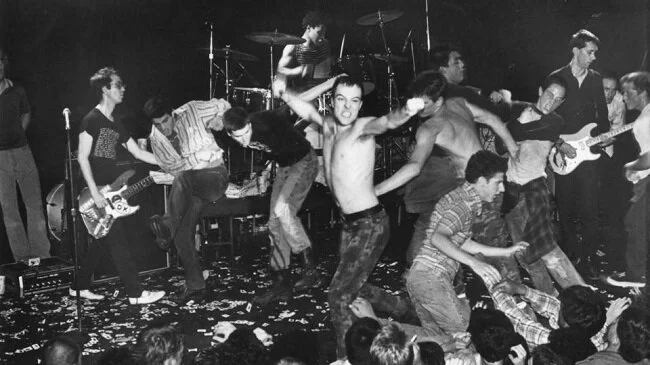
Perhaps the biggest change I can see with regard to listening to music, is that I don’t take it quite so seriously anymore. I remember my teenage years and being very proud and protective of the bands and artists I liked. Music being such an integral part of youth culture. I no longer see music in terms of being cool or uncool, mainstream or indie. It simply comes down to whether a tune gets a positive reaction or not. If it does, then I’ll add it to a playlist. As to my wider musical aspirations, it has been a long time since I’ve seen any live music. Perhaps the biggest reason for this is that being a gentleman of a certain age, I like to sit down. Something that is not always viable at a concert. But I feel it is time to see a big, stadium band next year. Mainly because if I don’t go and see anything in 2025, I’ll probably never do such a thing again.




Thoughts on Blogging Part 21
When you initially start blogging, your aspirations tend to be very straightforward. Choose a title, find a niche and get into the habit of writing. Simple tasks that can still take a while to master. Once your blog is established and has endured for a while, you may not have any further long term goals other than to just keep going. However, if you feel that you want to achieve more then you have to tackle a new set of problems. There is a great deal of “advice” in the public domain about growing and monetising your blog. A lot of it is questionable but there are some approaches that do work. However, these require you to write to a specific process, chasing the ever changing whims of your potential readership. You have to compromise. And for many bloggers, that is the deal breaker.
When you initially start blogging, your aspirations tend to be very straightforward. Choose a title, find a niche and get into the habit of writing. Simple tasks that can still take a while to master. Once your blog is established and has endured for a while, you may not have any further long term goals other than to just keep going. However, if you feel that you want to achieve more then you have to tackle a new set of problems. There is a great deal of “advice” in the public domain about growing and monetising your blog. A lot of it is questionable but there are some approaches that do work. However, these require you to write to a specific process, chasing the ever changing whims of your potential readership. You have to compromise. And for many bloggers, that is the deal breaker.
Hot takes, “ambulance chasing” and generally attempting to move from bandwagon to bandwagon may well find you an audience and possibly a line of revenue. But it strikes me as a soulless and empty way to write. I much prefer to write about what interests me, although I recognise that some of that is going to be extremely niche specific. However, some subjects can prove quite popular and can gain traffic. I find that film reviews and essays can gain traction and have the advantage of longevity. Writing detailed guides, FAQs and tips for specific subjects can also prove fruitful. It is harder to gain an audience by being a raconteur but some writers do maintain an audience through their personality or reputation. Remember that blogs are very personal things and your personality is a factor whether you realise it or not.
Assuming you have an online presence with a big enough audience to seriously consider monetisation, the next stage is to decide exactly what method you wish to adopt. Personally I don’t consider advertising to be viable anymore. The halcyon days of having banner ads on your blog are gone mainly because ad blockers are ubiquitous and broadly speaking people find advertising pervasive and annoying. For it to work you need a lot of traffic before you see a red cent, so I really don’t think it is a solution for many bloggers. Plus there are ethical concerns as you may not necessarily have any control over what advertising is shown to your readership. Hence, the most logical business model to pursue is one of reader patronage, where they can subscribe to show support and access an additional source of exclusive content. Patreon or something similar.
If you pursue reader patronage then you have to produce extra content to justify their support. This will require either having exclusive material on a third party site or having a members area on your existing website. Naturally it will entail extra work and you can argue that the moment you embark upon a process of monetisation you have fundamentally changed the nature of your writing. You now have an obligation to serve the needs of your customers. At the very least the commercial nature of your blog may impact upon what you choose to write about. Alternatively, you can simply add a donation facility to your site which is less transactional. However, it may not yield a reliable source of revenue and a lot of bloggers just find this approach uncomfortable. All of which are good reasons for bloggers to think long and hard about the ramifications of monetisation.
Many bloggers are content to just write as and when they like and do not have any plans beyond that. That is a very healthy mindset, providing very comfortable parameters to work within. But some bloggers, myself included, have an itch to see if they can grow their blog. To try and increase their reach. If one writes publicly, then there is some aspiration that someone will read it. However, this is not an easy thing to achieve. The “blogosphere” is not a meritocracy, seeming more often like a race to the bottom. You may often find what you consider to be your best work is ignored and something you deem inconsequential gains traction. There are no definitive paths to success. But if you already have a blog and have been maintaining it for a while, you are already ahead of those who have stopped and those who elevate procrastination into an artform. As with most things in life, it’s important to maintain forward momentum while you’re trying to figure the details out.










MMO Tropes: The Time Sink
It would appear that one of the reasons potential new players avoid the MMORPG genre is due to the perception that they are all time sinks. I wouldn’t argue against this assumption because the reality is that it’s true. However any game that you enjoy, irrespective of genre, can become a time sink. That being said, the main difference between other genres and MMOs is as follows. A new player can jump straight into a FPS game and within minutes enjoy some multiplayer action, whereas in an MMO, a new player has to play through a tutorial and several hours of a starter zone before they start making headway in the game. This distinction does not have to be a deal breaker. An FPS can provide a quick fix of gaming and as such fulfils a need. MMORPGs can provide long term entertainment which scratches an ongoing gaming itch. Both are valid ways to enjoy gaming.
It would appear that one of the reasons potential new players avoid the MMORPG genre is due to the perception that they are all time sinks. I wouldn’t argue against this assumption because the reality is that it’s true. However any game that you enjoy, irrespective of genre, can become a time sink. That being said, the main difference between other genres and MMOs is as follows. A new player can jump straight into a FPS game and within minutes enjoy some multiplayer action, whereas in an MMO, a new player has to play through a tutorial and several hours of a starter zone before they start making headway in the game. This distinction does not have to be a deal breaker. An FPS can provide a quick fix of gaming and as such fulfils a need. MMORPGs can provide long term entertainment which scratches an ongoing gaming itch. Both are valid ways to enjoy gaming.
Now that we’ve got that out of the way, I do want to talk about the time I have “invested” into two specific MMORPGs. That investment, or commitment if you prefer, is no small beer. It is a substantial period of time that I could have spent on other leisure activities. Or even non leisure activities, perish the thought. My spare time is possibly one of the most sought after commodities I possess, judging by the amount of businesses, organisations and bodies that pursue it. Hence, I don’t consider spending so much time on MMOs to be something arbitrary. It is a considered choice, one that I constantly review to ensure it is still proving to be satisfactory. The fact that I am still spending time regularly on these two games and enjoying them, validates the overall investment.
I have been playing The Lord of the Rings Online since December 2008. As of 18th November 2024, I have invested 7 months 1 week 6 days 1 hour 7 minutes 28 seconds into my primary character,a human Lore-master. That is 5426 hours. I have two other alts but they have a negligible amount of time spent on them. No more than a dozen or so hours each. Similarly, I have played Star Trek Online since its launch in 2010. However, I have created several alts and really didn’t start playing this MMO seriously until 2013 when the first major expansion was released and a lot of the game’s problems were resolved. My primary character, a Federation Tactical Officer has accrued to date, 72 days, 10 hours, 30 minutes, 33 seconds time investment. That is 1738 hours. Not as much as LOTRO but still a tidy sum.
The obvious question arising from this information is what else could I have done with that collective amount of time (over 7000 hours)? Well, the logical answer is lots of things. I could have learned another language during that time or taken a degree. Yet such introspection is misplaced because I don’t regret my choice. I really don’t. Some people go fishing, bake, play sport, paint lead figures, ring bells, collect stamps, plot world domination or spot trains. I play games. The time I’ve spent has always been “leisure time” and I have never played at the expense of other work or family obligations. If you crunch the numbers, out of the 15 years that have elapsed I have spent about 5% of that time playing MMOs. A similar amount of time could easily be spent watching football as millions of other people do.
Time sink is a loaded and somewhat hyperbolic term. It not only describes the chronological investment but it also infers that it is by its very nature a negative choice. Despite videos becoming a mainstream pastime, there still persists an attitude in certain quarters that they are a childish waste of time and that you’d be better served doing something “productive”. In fact I’ll go so far as to say I know people who still struggle to see the benefits of leisure time per se. They tend to be very two dimensional thinkers. I certainly do not consider investing time in a hobby, working towards goals and the associated positive social interactions as bad things. Quite the opposite. They are very good for one’s overall well being, as are the tangential activities that can arise from gaming, such as this blog. Perhaps we should retire the term time sink and replace it with something more benign like time investment or time intensive.
Bluesky
A couple of weeks ago I decided, like so many others, to create an account on Bluesky. My decision to do so wasn’t so much driven by a personal dislike of Twitter/X but because so many people that I follow had gone. I fully recognise that Twitter has been in decline since it was bought by Elon Musk but I still have found the social media platform useful, even during recent months. Through judicious use of the block and mute facilities, I have managed to keep my timeline relatively free of crap. However, the advertising has become more pervasive of late and most of the people whose Tweets I have enjoyed over the years have either migrated to other platforms or simply stepped away from social media altogether. It was the desire to spend time with a like minded community that ultimately prompted my move to Bluesky.
A couple of weeks ago I decided, like so many others, to create an account on Bluesky. My decision to do so wasn’t so much driven by a personal dislike of Twitter/X but because so many people that I follow had gone. I fully recognise that Twitter has been in decline since it was bought by Elon Musk but I still have found the social media platform useful, even during recent months. Through judicious use of the block and mute facilities, I have managed to keep my timeline relatively free of crap. However, the advertising has become more pervasive of late and most of the people whose Tweets I have enjoyed over the years have either migrated to other platforms or simply stepped away from social media altogether. It was the desire to spend time with a like minded community that ultimately prompted my move to Bluesky.
I joined Twitter in August 2010. Most of the people I started following I knew from the video games blogging community. Twitter was a great means at that point to promote one’s work and share material. Over time, I started following a broader spectrum of individuals and found Twitter to be a great source of breaking news. At its peak, the social media platform was a key source of both social activity and information. I used Tweeten as my Twitter client and had it running continuously on my second monitor throughout the day. When I was away from my desk, I had Hootsuite on my phone. For a while, Twitter was very much a focal part of my day. However, overtime, I learned that this wasn’t necessarily a good thing and I curtailed my enthusiasm. The loss of key individuals that I followed, contributed a lot to this change in mindset. Social media is only as good as the people you follow.
New technological mediums often start with innovative pioneers that create a new market and subsequently dominate it for a while. Twitter falls into that category, just like Steam and Netflix. All have had their day in the sun where they effectively enjoyed a monopoly. However, competitors and a fragmenting market ultimately have knocked them all off their respective pedestals. In the case of Twitter, management decisions have contributed to the diminishment of the brand. I suspect that in time, there will be several social media platforms that become the established leaders and people will make their choice depending on a multitude of personal factors. Politics may be one. Friends, community and the ability to carefully curate your timeline may be others. A year or two from now, what social media platform you use may become a key question in market research.
With regard to Bluesky, I find that its functionality is nearly identical to that of Twitter. I was very pleased to find so many old friends so quickly and at present, there are many familiar faces in my timeline. Plus I have discovered many new people to follow with similar interests and hobbies. I have already started proactively policing my timeline to ensure it suits my needs. There is a lot that you can do to mute words, block people and generally ensure that you’re not exposed to a load of tedious and unnecessary bullshit. Social media has the capacity to do a lot of harm to one’s mental wellbeing, therefore it is very important to ensure that it serves you and not the other way round. As for Twitter, I still have an account but I’m not especially active. It is sad how things have changed but that is just the nature of life. Keep moving forward. See you on Bluesky.




VPNs, Web Browsers and Synchronising Bookmarks
I tend to compartmentalise my online activities. I use different browsers and apps for specific tasks. For example, I specifically use Opera to access websites that are geo-blocked in the UK. This is because it has an integral VPN that up until today, has been free. Sadly, it is now disabled by default and requires a subscription to activate. I’m not really surprised by this move. It was free while being developed and tested and naturally during this period of time, many users have become reliant on it. The cost of a subscription from Opera is no different to that of any other established VPN provider, although they offer a lot more functionality. So I decided to take advantage of the current Black Friday sales and bought an18 month subscription to Surfshark, which comes with a lot more bells and whistles. This includes extensions for all the main web browsers along with more complex VPN tools.
I tend to compartmentalise my online activities. I use different browsers and apps for specific tasks. For example, I specifically use Opera to access websites that are geo-blocked in the UK. This is because it has an integral VPN that up until today, has been free. Sadly, it is now disabled by default and requires a subscription to activate. I’m not really surprised by this move. It was free while being developed and tested and naturally during this period of time, many users have become reliant on it. The cost of a subscription from Opera is no different to that of any other established VPN provider, although they offer a lot more functionality. So I decided to take advantage of the current Black Friday sales and bought an18 month subscription to Surfshark, which comes with a lot more bells and whistles. This includes extensions for all the main web browsers along with more complex VPN tools.
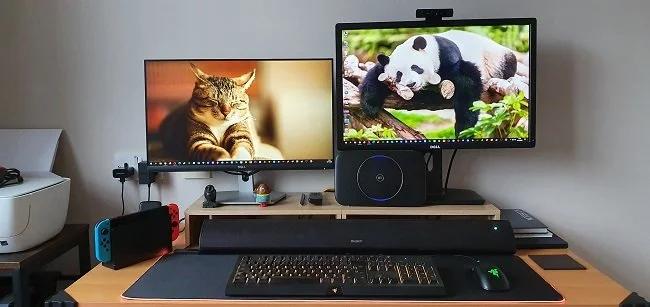
As a result of this change, I no longer have any need for Opera and so I have uninstalled it. I use Chrome and Firefox for everyday use. I run Chrome on my primary monitor for general browsing and Firefox on my second screen specifically for Twitter/X, Mastodon and Blue Sky. I like to keep an eye on my various social media timelines for breaking news and to see what my internet chums are up to. Both browsers have AdBlocker Ultimate and Adblock for YouTube extensions installed. I simply wouldn’t browse the internet without them. I have some additional quality of life extensions installed on Chrome, such as an audio recorder and a Flash emulator. I also have a very useful add-on called New Tab Draft which allows you to write in plain text on any new tab opened. These are kept permanently until deleted. It’s very useful for quickly copying and pasting information or writing some notes on the fly.
For convenience, it is useful to synchronise bookmarks between web browsers. Until recently, this was something I did manually but it was a pain in the butt. I would often forget to copy links over, so there were frequent discrepancies between browsers. However, like so many online “problems”, you can always find someone who has already encountered it and addressed it. xBrowserSync is a free service that allows for seamless synchronisation of bookmarks via a simple extension. It is quick, easy and password protected. Having such a facility also encourages me to undertake regular housekeeping with regard to bookmarks. I recently purged several dozen, many of which were for obsolete services or for websites that don’t even exist anymore. Bookmarks are a worrying catalogue of all my passing interests and I had many for video games and TV shows that have “been and gone”.
After 30 years plus of internet access, it is nice to finally have my browsing requirements so well catered for on PC. It is a shame that the same cannot be said for web browsing on a phone or tablet. I may be incorrect but there just doesn’t seem to be the same ecosystem of extensions and add-ons available. I tend to avoid web browsing on my phone as it quickly becomes a hellish nightmare of pop ups, autoplaying videos and pervasive advertising. Combined with the ongoing “enshittification” of apps, the whole matter gets worse over time. I will look for workarounds in the New Year and see if internet access via your phone can be made more manageable. I suspect it may well be a harder problem to solve than PC web browsing but again, I’m sure some smart people have already taken steps to address the matter.


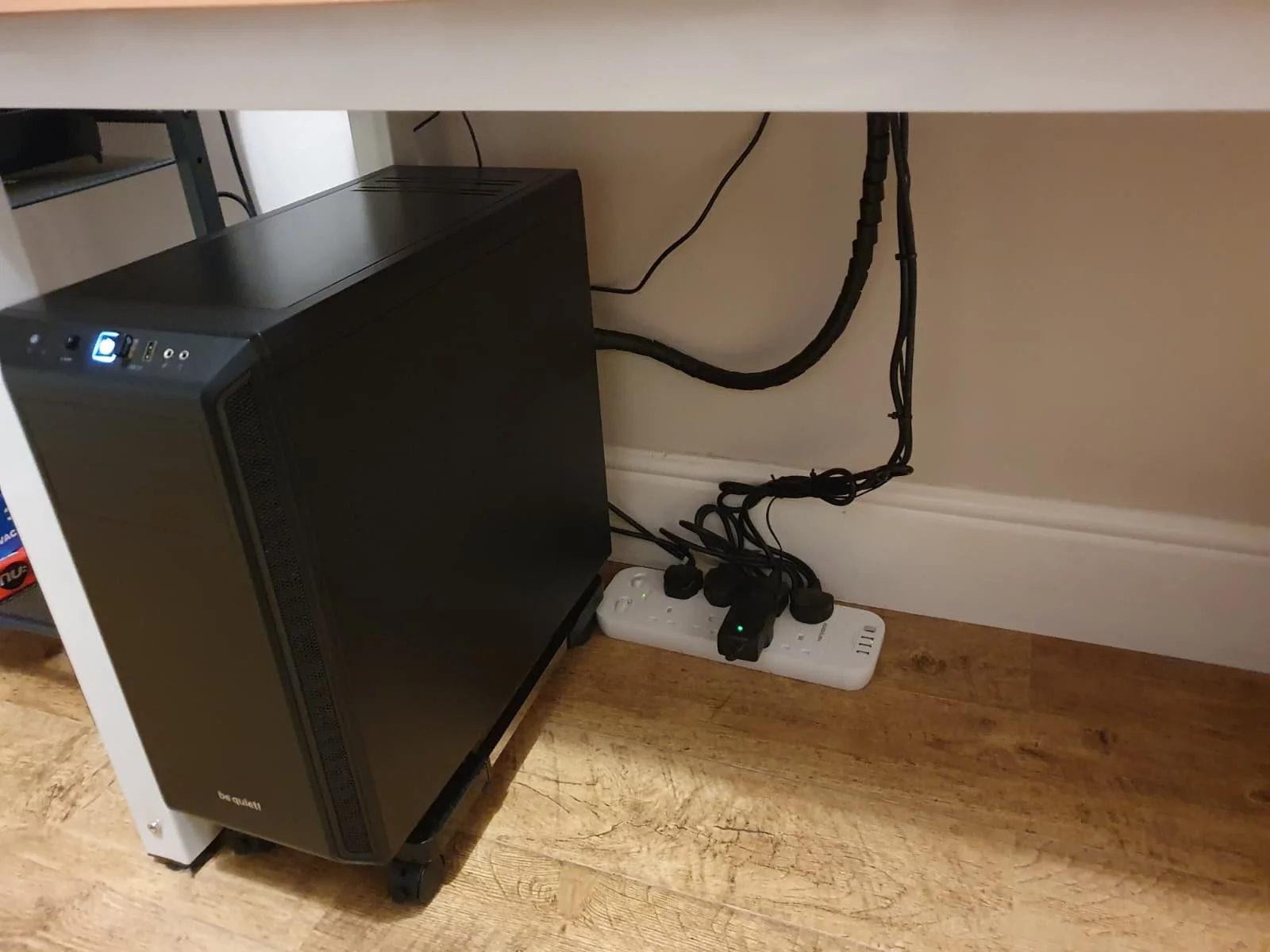
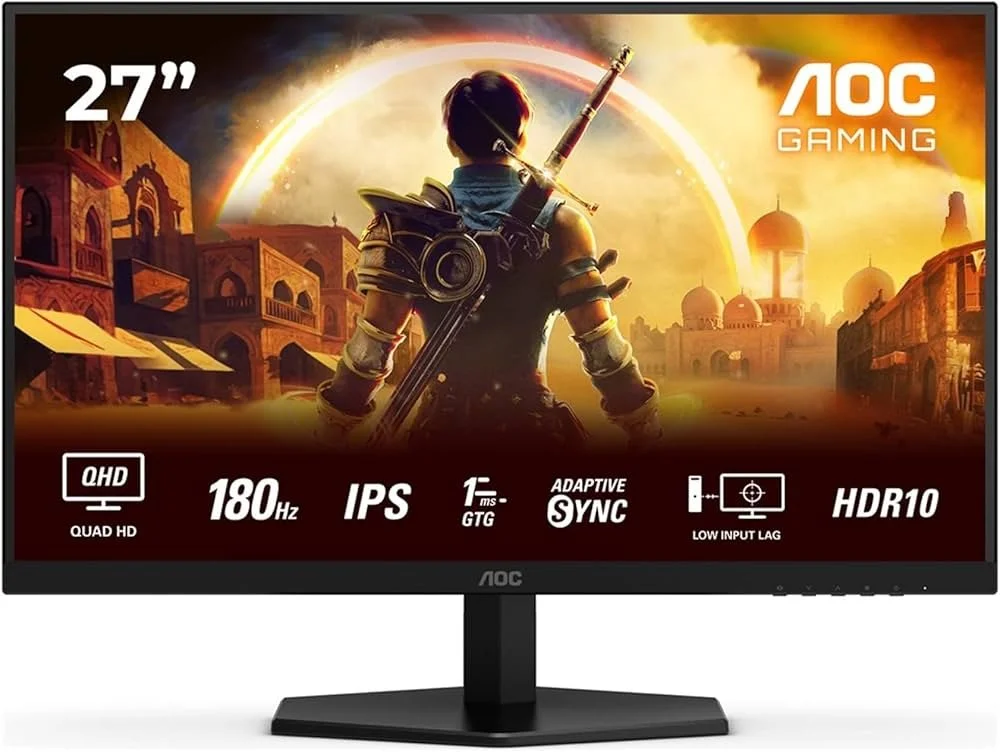


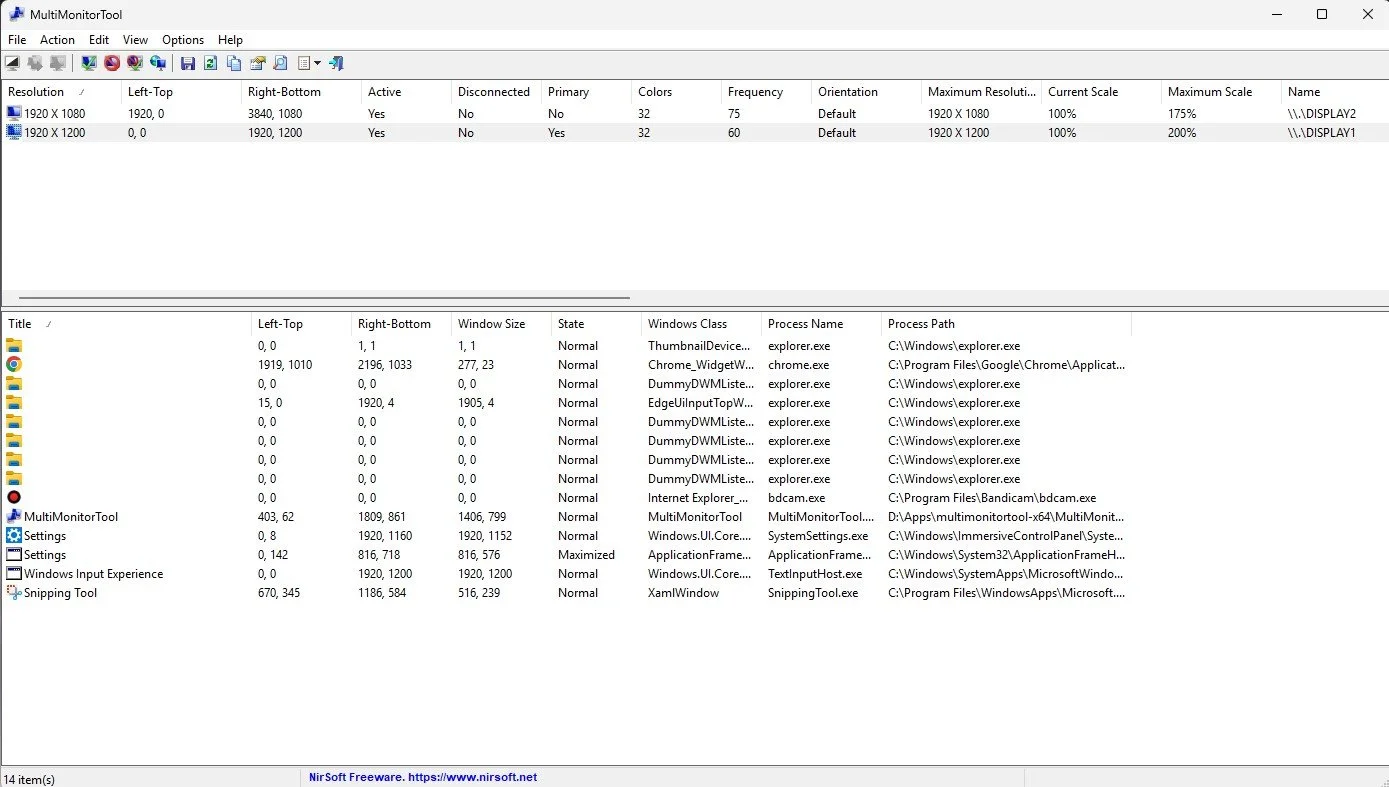
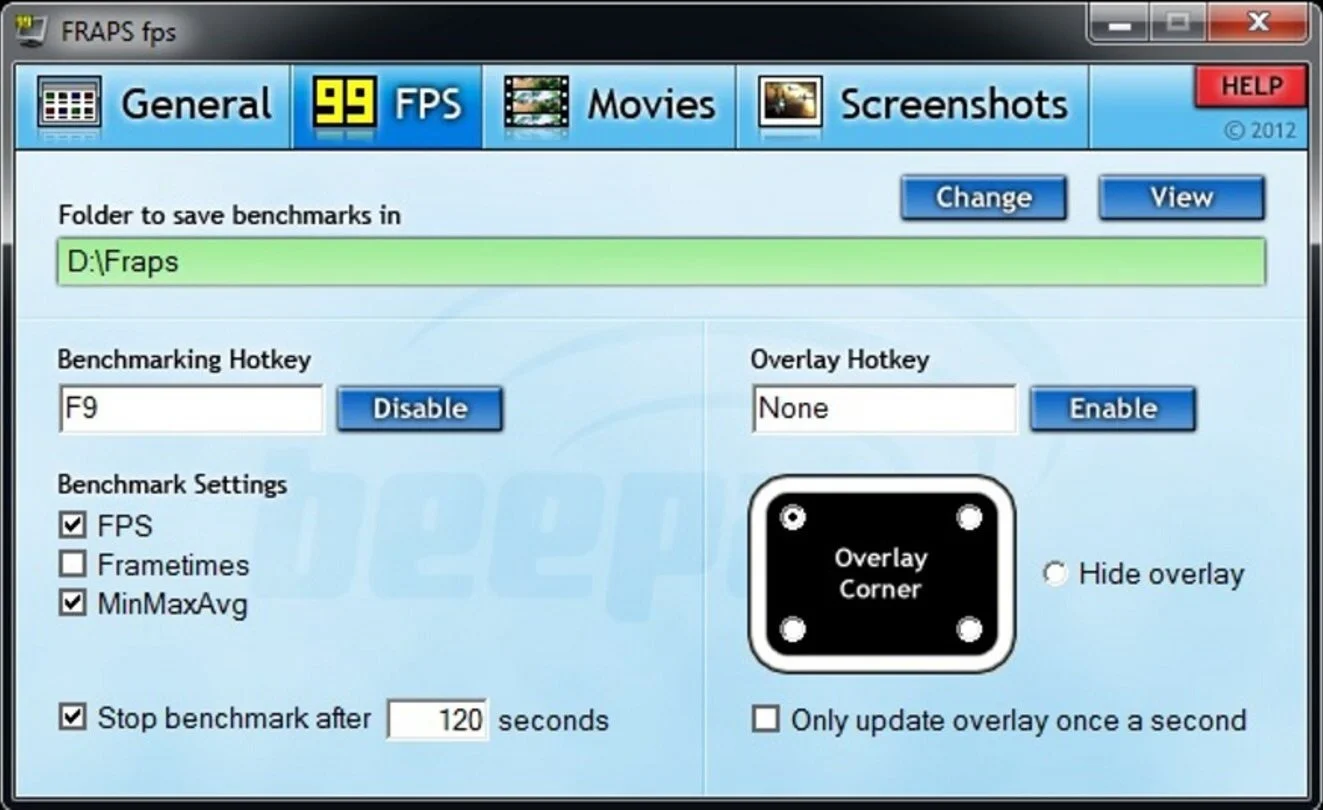
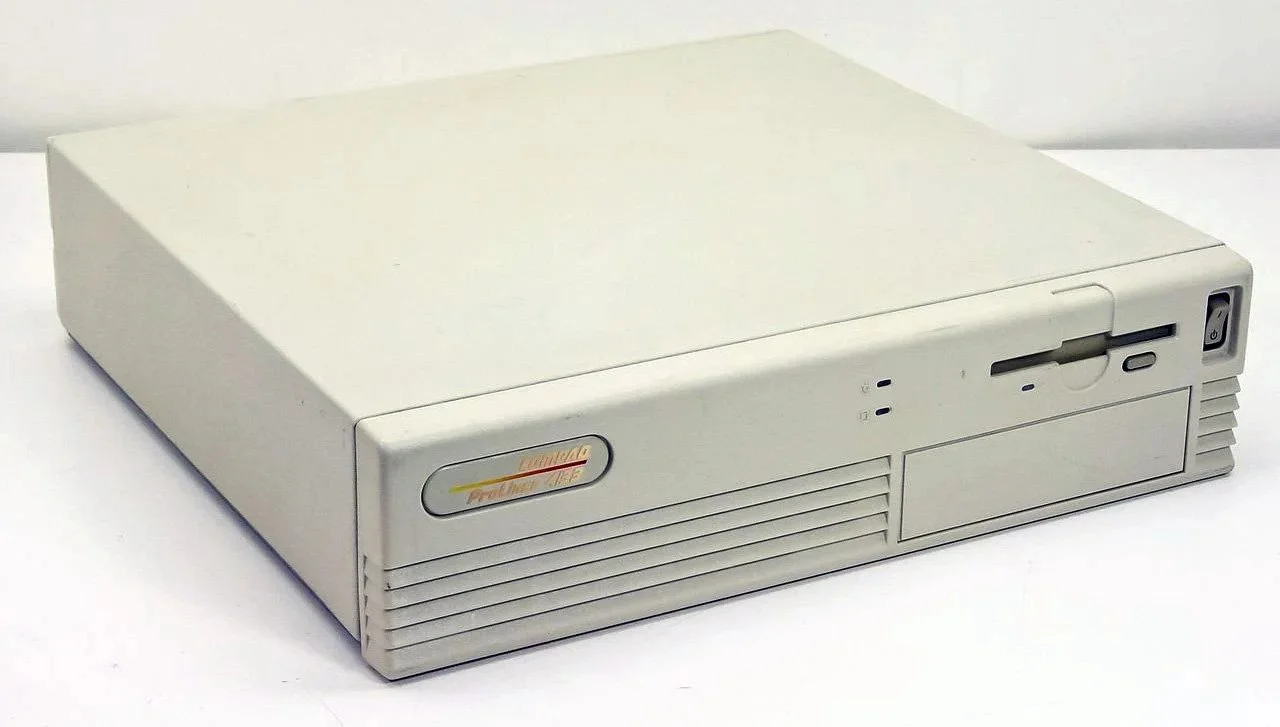


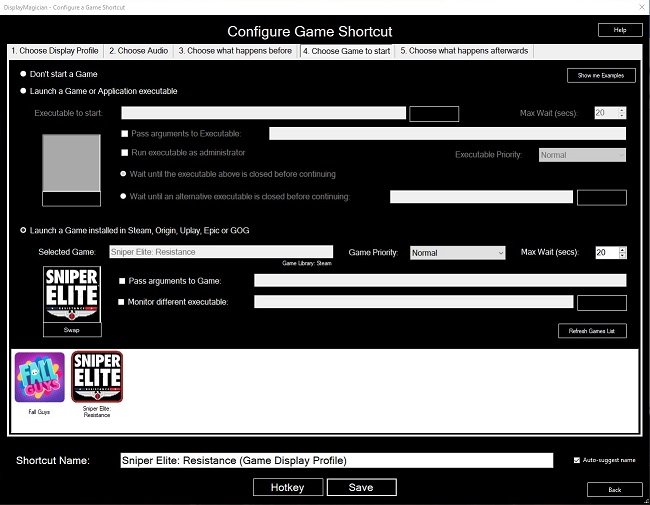







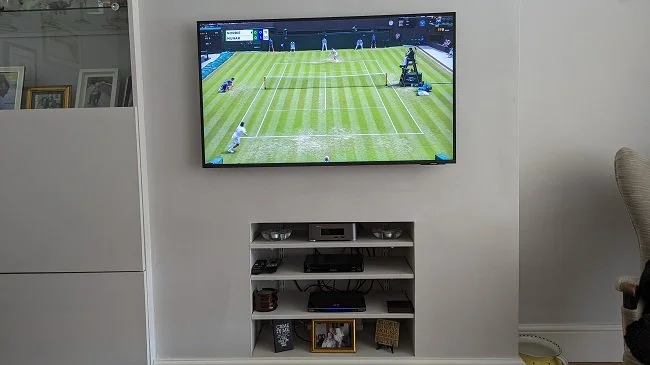
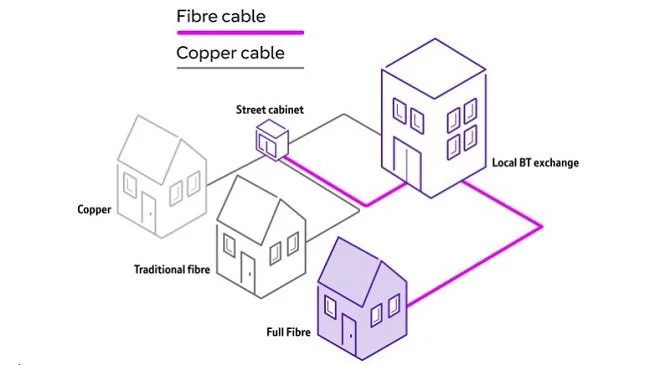
Revisiting Star Wars: The Old Republic Part 3
A recent email prompted me to return to the MMORPG, Star Wars: The Old Republic. Developers Broadsword are “encouraging” former players to log back into the game to prevent the potential “release” of character names from “inactive” accounts. This has happened in the past, so I decided it would be a good time to return to the game. I last played in early 2022 when I created Trooper, Sith Warrior and Imperial Agent alts. The great thing about SWTOR is that all classes have unique stories so alts are never dull. This time I intend to complete the Jedi Consular, Jedi Knight and Sith Inquisitor classes. So I reinstalled the game, subscribed to enjoy full access to all content and also purchased a few Cartel Coins in case anything in the game store took my fancy. Hence the latest instalment of this recurring post, after a sizable break.
A recent email prompted me to return to the MMORPG, Star Wars: The Old Republic. Developers Broadsword are “encouraging” former players to log back into the game to prevent the potential “release” of character names from “inactive” accounts. This has happened in the past, so I decided it would be a good time to return to the game. I last played in early 2022 when I created Trooper, Sith Warrior and Imperial Agent alts. The great thing about SWTOR is that all classes have unique stories so alts are never dull. This time I intend to complete the Jedi Consular, Jedi Knight and Sith Inquisitor classes. So I reinstalled the game, subscribed to enjoy full access to all content and also purchased a few Cartel Coins in case anything in the game store took my fancy. Hence the latest instalment of this recurring post, after a sizable break.
When I last played SWTOR, I “acquired” a substantial quantity of in-game currency which I shared among alts for miscellaneous spending. I placed the remainder in Legacy Storage, which is an account-wide vault. The Legacy system itself offers some useful account wide unlocks which are very beneficial for alts. Both the money and early access to a companion, has made levelling a new Jedi Consular character relatively hassle free. I am currently playing through the class story at a leisurely pace and have also decided on a whim, to try and unlock the HK-51 Assassin Droid companion. The game certainly doesn’t lack content for a new or returning player. As well as each class having a unique story, so does each planet. There have also been various expansions released over the years. Plus there’s all the group instances that you can quickly jump into and endless amounts of cosmetics to mess about with.
As I said in the previous instalments of this post, SWTOR exudes Star Wars ambience through its design and style. The game is 14 years old but the stylised, cartoonesque graphics still hold up well and were definitely the right choice. I feel that Bioware/Broadsword have done a much better job of creating original content than Disney. The stories and their approach to the source material is far more creative and adult than a lot of the TV shows and films. There is a genuine appreciation of the source material and an intelligent extrapolation and exploration of its core themes. SWTOR has an exceptional score, especially the material for the original base game. Many MMOs have strong musical accompaniment but SWTOR seems to go that extra mile and has numerous robust cues that all seem to be in exactly the right Star Wars idiom. It all makes for a very immersive experience.
Naturally, there are some aspects of SWTOR that do betray its age. These are often design choices that were commonplace among the previous generation of MMOs. The ever increasing time penalty between being defeated and revived is one example. It is archaic by modern standards and singularly annoying. Impeding a player from playing your own game is staggeringly crass. Combat is somewhat slow, especially when your level is lowered for the zone that you’re in. Your DPS is weak but you’re sufficiently robust to not be in any tangible danger. Hence it feels like you’re whittling away at a big stick with a very small penknife. The game also does a very poor job of explaining itself. I’m sure that I’m not getting as much as I can out of the Galactic Season and I seem to have accrued a lot of the game’s currencies, yet am at a loss as to whether I can spend them on something useful.
I don’t have any particular thoughts on the state of SWTOR’s endgame at present because I have no experience of it. I know new content has been delayed and that longterm players have concerns about the immediate future. However, for new or returning players SWTOR has a lot to offer, as long as you are cognisant of its terms. As for myself, I have goals to achieve and some minor problems to resolve. I need to recruit a few more players to my existing guild, mainly so they can then invite my new alts. I would also like to complete all story content on my oldest character, a Smuggler, that I’ve taken the furthest into the game. I also think it’s time I explored more group content. I suspect that’s where the good gear is all stashed. With the Christmas holiday season imminent, now is the perfect time to re-engage with this MMO.
Thinking Out Loud
I appreciate that talking about illness can often make people uncomfortable. It’s not exactly my favourite thing. However, I do not subscribe to the school of thought of avoiding such matters. We all get ill from time to time to varying degrees and we’re all going to die one day. You can’t just wish problems away. My significant other, Mrs P, has a history of heart disease and her overall health has declined this year. To cut a long story short, she is having surgery on 28th November to effectively repurpose a previously bypassed artery. Throughout this month we have been going to outpatient clinics as well as meetings with consultants. We have also been busy putting practical measures in place for her recovery. As you can imagine, it is a worrying time. Hence, I have not written much in recent weeks as her well being is my current focus.

Here we are again with another post consisting of some random thoughts and ideas that I’ve been recently contemplating. Some could be a bog post in themselves but that isn’t really the point of this recurring post. It’s more a case of just throwing some ideas out there. Please note that the first point of discussion is an explanation as to why things have been quiet of late, here at Contains Moderate Peril. As always, please feel free to leave a comment.
Illness
I appreciate that talking about illness can often make people uncomfortable. It’s not exactly my favourite thing. However, I do not subscribe to the school of thought of avoiding such matters. We all get ill from time to time to varying degrees and we’re all going to die one day. You can’t just wish problems away. My significant other, Mrs P, has a history of heart disease and her overall health has declined this year. To cut a long story short, she is having surgery on 28th November to effectively repurpose a previously bypassed artery. Throughout this month we have been going to outpatient clinics as well as meetings with consultants. We have also been busy putting practical measures in place for her recovery. As you can imagine, it is a worrying time. Hence, I have not written much in recent weeks as her well being is my current focus.
Blogging and more
With regard to my current blogging activities, I will post occasionally between now and the end of December but it will be very much on a “as and when” basis. At present, it is my intention to resume a more structured writing schedule in the New Year. I am also considering some additional projects. Let’s see how the year pans out and I’ll review the situation in January.
MMORPGs
I have a cyclical relationship with the MMORPG genre of games. Certain MMOs such as The Lord of the Rings Online get and Star Trek Online get played at regular intervals. They are a gaming mainstay throughout the year. Others such as Guild Wars 2, The Elder Scrolls Online and Star Wars: The Old Republic get played every 18 months, or so. Often an event, expansion or even a YouTube video can prompt a return to a particular game. Recently I received an email from Broadsword, the developers of SWTOR, that they may reuse names from dormant accounts, so I reinstalled the game. As each class has a unique story associated with them, the game has a great deal of replayability. I have yet to play the Sith Inquisitor, Jedi Knight or Jedi Consular class, so I think I’ll resubscribe and play a new character over December.
This nostalgic reverie for MMOs got me thinking about Age of Conan, which I have not played since 2011. Although effectively in maintenance mode by developers Funcom, I was able to log into my old account and reinstalled the game client. My original character was still where I left them but I had to rename them due to 13 years of account inactivity. I spent a few hours trying to figure the control out and actually managed to complete a few basic quests. Although the game has aged somewhat, it runs well and has a great deal of content to play through. I am tempted to create a new character and play through the game’s main storyline. However, it should be noted that this MMOs population is low. I only saw about five other players while on the Crom server, so if I do replay Age of Conan then I shall treat the game as an RPG.
Presents
Christmas is fast approaching, which raises the spectre of presents. Mrs P and I do not buy presents for each other, mainly because we don’t need anything. We don’t see the point in “novelty” gifts or anything that is just arbitrary. Plus I have a birthday that is a week before Christmas which further compounds the complexity of the issue. Hence presents are bought mainly for the grandchildren, our son and daughter-in-law. Let it suffice to say that through no fault of their own, the grandchildren are thoroughly spoilt with respect to presents. I actually witnessed them getting bored with opening Christmas presents, a few years ago. So we have tried to show some moderation this year but it remains to be seen whether any other family members will follow suit.
There is often a complex social dynamic to both giving and receiving gifts. People feel obliged by tradition to give presents and often are confused by comments like “ I don’t need anything, thanks”. Hence, I often find myself the recipient of novelty socks, aftershave and gin. I see these sorts of presents as the lesser of two evils. IE something you don’t need but don’t mind, as opposed to something that just isn’t needed and ends up going to a charity shop or being re-gifted. In a perfect world, it would be nice if someone actually considered what my hobbies and interests are and used those as a guide. A £20 Steam or Audible voucher would be most welcome but alas, is never considered. It was all much easier when I was a child in the seventies. My present aspirations seldom went beyond Lego and if I was lucky enough to get any, it was considered the proverbial “top brick of the chimney”.






Being Organised
I recently “tooted” on Mastodon “sometimes it’s a real drag to be the person who always has their shit together”. Although meant humorously, there was an element of truth to the remark. Allow me to explain. I always have a shopping bag in my coat pocket. Our household always has a supply of those things that you often run out of or need occasionally. Such as AA batteries, stamps and envelopes. If Mrs P and I are going out for the day, we’ll check the weather and traffic before we set off. There’s always a spare toner and drum unit for the printer, as well as paper. We’ll book a table at our favourite restaurant in advance of going to the West End show. Why do we do these things? Because we’re organised. I’m not trying to be smug about it, that’s just our default position and how we were raised. Perhaps it’s a generational thing?
I recently “tooted” on Mastodon “sometimes it’s a real drag to be the person who always has their shit together”. Although meant humorously, there was an element of truth to the remark. Allow me to explain. I always have a shopping bag in my coat pocket. Our household always has a supply of those things that you often run out of or need occasionally. Such as AA batteries, stamps and envelopes. If Mrs P and I are going out for the day, we’ll check the weather and traffic before we set off. There’s always a spare toner and drum unit for the printer, as well as paper. We’ll book a table at our favourite restaurant in advance of going to the West End show. Why do we do these things? Because we’re organised. I’m not trying to be smug about it, that’s just our default position and how we were raised. Perhaps it’s a generational thing?
Do organised people attract each other? I’m not sure if that is always the case. However, it is with Mrs P and myself. We are both organised when it comes to admin and finances. We tend not to “put off to tomorrow what can be done today” and we both have a capacity to think ahead and anticipate things that can come up and thus plan for them. It’s seldom rocket science or anything tricky. If we’re collecting the grandchildren from school and looking after them for a few hours, it’s pretty obvious to have food in the freezer and a cupboard full of snacks. Mrs P is always good at remembering birthdays and buying suitable gifts. It isn’t some sort of quasi super power. She just listens to people and makes a note in her diary. I have learned from this and tend to use the calendar and notes features on my phone. Being organised is a lot easier these days with the tools we have.
However, despite the obvious benefits of being prepared, it does come with its own set of problems. Once you are identified by others as “having your shit together” you find that an ad hoc network grows around you. It ranges from those who become at a low level, semi dependent upon your organisational skills, to members of your family that just end up in some pain in ass, symbiotic relationship. This manifests itself in a spectrum of enquiries and requests. At one end you have low level stuff like “can you scan this for me and turn it into a PDF”? At the other extreme there’s “I’ve been accused of a heinous crime. Will you bank roll my legal defence”? This can all become a little frustrating. Don’t get me wrong, I believe that it is important that we all help each other as we journey towards the grave but it can get a little one sided at times.
I used to work with someone who would always ask me the same question every three months or so. The answer could easily be found in the administrative code manual. After a while I said to the person in question “why do you keep asking me this. You should have learned this by now”. They replied “I don’t need to learn it, as I have you”. They meant it sincerely and as a compliment but it really left me aghast because to me it was an appalling personal philosophy. To a degree, I feel this way at times with those who keep asking me “can I borrow your lawn mower”. It would be nice if those who seem dependent, could occasionally manage their own needs. Mrs P thinks I’m being a little harsh and so I usually end up relenting. Hence “sometimes it’s a real drag to be the person who always has their shit together”.