
A Year in TV
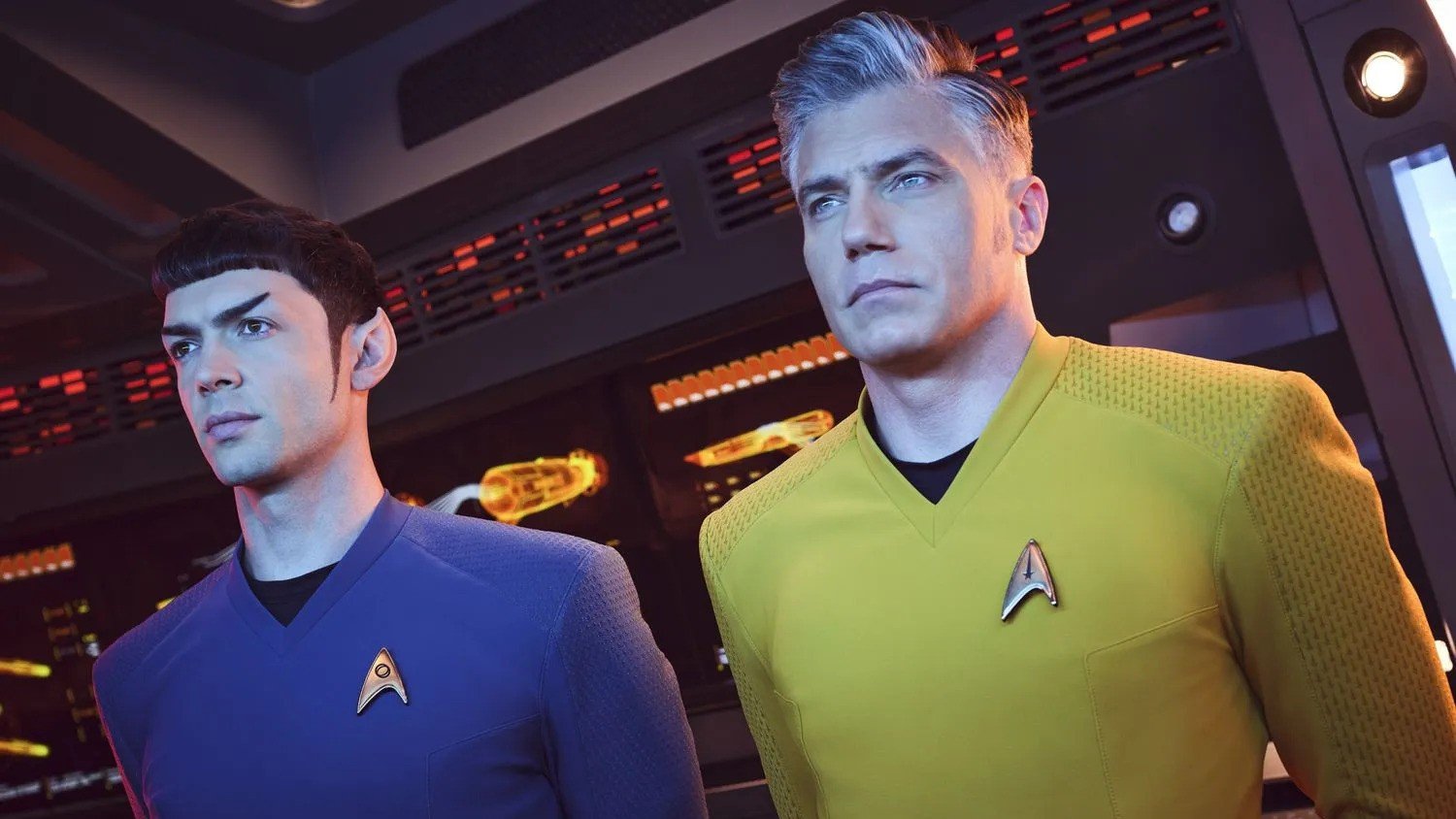
I have not watched as much TV as I usually do, this year. Mainly because I have become a little weary of the ways contemporary TV is produced, especially with regards to streaming shows. Due to the costs, shows such as Star Trek: Strange New Worlds only have 10 episodes per season. Simply put, the season begins to hit its stride and then is abruptly over. This problem (if you see it as such) is then further compounded by there being a significant wait between seasons. In the case of STSNW it was two years between season two and season three. Not all shows fall foul of this. Apple TV produces two seasons of the excellent espionage drama Slow Horses at a time, ensuring a prompt release schedule. However, even this has issues. Due to the complexity of the plots of many contemporary TV shows, something that is a marketing point, some viewers cannot remember the plot after a twelve month hiatus. Network TV shows seldom have these issues with each season being 20 plus episodes long and story arcs that are seldom as complex.
I have not watched as much TV as I usually do, this year. Mainly because I have become a little weary of the ways contemporary TV is produced, especially with regards to streaming shows. Due to the costs, shows such as Star Trek: Strange New Worlds only have 10 episodes per season. Simply put, the season begins to hit its stride and then is abruptly over. This problem (if you see it as such) is then further compounded by there being a significant wait between seasons. In the case of STSNW it was two years between season two and season three. Not all shows fall foul of this. Apple TV produces two seasons of the excellent espionage drama Slow Horses at a time, ensuring a prompt release schedule. However, even this has issues. Due to the complexity of the plots of many contemporary TV shows, something that is a marketing point, some viewers cannot remember the plot after a twelve month hiatus. Network TV shows seldom have these issues with each season being 20 plus episodes long and story arcs that are seldom as complex.
I find the formula of the obligatory cliffhanger ending for each season, to keep viewers “keen”, rather wearisome. Again, each season of Slow Horses is a self contained story, based on a specific novel. I wish more shows took this approach. I don’t relish having to watch summary videos on YouTube to refresh my memory. However, I think this is symptomatic of a wider malady that is affecting modern TV. Despite high production values, adult themes and complex narratives, many feel to me as well crafted contrivances but contrivances no less. Essentially big budget and immaculately made curate’s egg. There have been several shows that I have started watching and have been broadly entertained by, yet I have at some point abandoned them simply because on some level I just couldn’t be bothered to continue. Furthermore, I didn’t see my abandonment to be a loss. I stopped watching The Last of Us season 2 for this very reason.
Another thing that has come to my notice is the gulf between what shows get written about in the online press and what the public actually watch. For example Succession was dissected in great detail by critics and had praise heaped upon it. However, despite respectable viewing figures, it is not by any means the most popular show on TV. NCIS and Tracker have far more substantive audiences but seem to be more written about on entertainment websites rather than formal online newspapers. This to me is evidence of the ever increasing cultural divide that is becoming apparent in western culture. People not only live and work in their own bespoke bubbles but can also have separate viewing habits. Another growing factor is “TV poverty”. Succession is a cable/streaming show whereas NCIS and Tracker are available on digital terrestrial TV. The cost of subscribing to multiple “premium content” platforms is simply too prohibitive.
I won’t list all the shows that I have enjoyed this year but I will name a few. Dept. Q was a very absorbing contemporary crime drama. Mark Gatiss was excellent in Bookish, channeling a great deal of Agatha Christie and sporting a handsome post WWII production design. Season 2 of Andor totally nailed the zeitgeist with its sociopolitical commentary. Alien Earth was far better than I was expecting and worked well within its canonical restrictions. Murder Before Evensong found the sweet spot between cozy drama and grim murder mystery. Season 2 of NCIS Origins is also maintaining a high standard of writing that is sadly lacking in its long running predecessor. Dark Winds continued to be a solid police drama, following two Navajo Tribal Police officers in the seventies. There were several popular shows that I decided not to watch for various reasons. I chose not to get on the hype train with regard to The Traitors and Pluribus.
Finally, I have noticed that I do not seem to watch comedy anymore. Apart from the occasional standup special by a comedian that I like, I don’t really watch any comedy panel shows anymore, such as Would I Lie To You, or entertainment shows such as Taskmaster. My granddaughters like US sitcoms such as Young Sheldon and Georgie & Mandy’s First Marriage but I find them incredibly bland. Safe, non-controversial entertainment that is amusing but no more. I like satire and sadly, it appears to be running scared at the moment for obvious reasons. However, I did watch The Franchise in late 2024 and was hoping for a second season of its excellent dissection of a film studio that definitely isn’t Disney. Sadly, it’s been cancelled. Which brings me back to my original point about annoying foibles of modern TV production. Add great shows being cancelled to the list.












A Year in TV
It is fair to say that we live in an age where we do not lack quality TV. There are numerous shows that have garnered critical acclaim or a strong word of mouth following that are deemed “must see” viewing. No doubt you, like myself, have a long “to do” list of programs that you need to “get round to watching” on top of those shows which are staples of your viewing regime. If you didn’t have enough programmes already to catch up with, we all have friends and family telling us about a “great show” that’s on a platform we don’t subscribe to, that we really need to see. It is quite extraordinary and a far cry from my youth when the UK simply had three terrestrial channels until satellite TV became popular in the late eighties. To paraphrase the former Prime Minister Harold Macmillan “we’ve never had it so good”.
It is fair to say that we live in an age where we do not lack quality TV. There are numerous shows that have garnered critical acclaim or a strong word of mouth following that are deemed “must see” viewing. No doubt you, like myself, have a long “to do” list of programs that you need to “get round to watching” on top of those shows which are staples of your viewing regime. If you didn’t have enough programmes already to catch up with, we all have friends and family telling us about a “great show” that’s on a platform we don’t subscribe to, that we really need to see. It is quite extraordinary and a far cry from my youth when the UK simply had three terrestrial channels until satellite TV became popular in the late eighties. To paraphrase the former Prime Minister Harold Macmillan “we’ve never had it so good”.
Yet there are downsides. The most obvious one is the fact that most people cannot subscribe to all the platforms they would like to and that there are simply too many competing services. So we all make tough choices based on what permutation of subscriptions offers us the most choice and then use other family member’s login details to cover the shortfall. Then there is the concept of “TV poverty” for those on low incomes who have no other recourse other than what is available for free. Internet access is still poor in some regions of the UK, meaning that streaming is not always the best option available. It has been mooted that the UK government intends to phase out digital terrestrial television by 2030 and replace it with streaming exclusively but until the internet divide is addressed i cannot see this being viable.

Freely, the proposed streaming replacement for UK digital terrestrial TV
TV has always had a curious relationship with cinema. In many ways they have been opposites at different periods of time. In the fifties and sixties cinema was considered the cerebral medium and TV was the poor, populist relation. At present it is the opposite. Film is driven by franchise spectacles, where TV is the home of complex, well written dramas. That being said, TV is not averse to creating franchises with an eye on long term longevity. This can come with its own set of problems. I started watching From on the understanding that this complex sci-fi horror drama would not make the same mistakes as the TV show Lost. Sadly the plot is dragging and there is little progression. One cannot escape the feeling that this show with its interesting premise and strong cast, is deliberately being dragged out for obvious financial reasons at the risk of the public just getting bored and switching off.
Another issue is time that elapses between seasons of a popular show. If more than a year goes by then it can be a struggle to recollect all nuances of the plot. Sometimes, I will have to rewatch the final episode of the previous season to jog my memory. On a few occasions, I have watched YouTube summaries of the previous series to bring me back up to speed. I find it kills your interest in a show if you have to do homework to keep on top of it. Sadly, some shows just drag on too long and end up diminishing their brand. It is argued that the optimal number of seasons is between five and seven. NCIS is a prime example of a popular show that has just gone on for too long. The most beloved characters have gone and it currently suffers from very poor writing. Conversely, its recent spinoff show, NCIS Origins, is the complete opposite with tightly written, well conceived and minimalist episodes.
NCIS Origins is a far better written show than NCIS
I enjoy good television but if left unchecked it could totally monopolise all my leisure time. Therefore I will make the decision to not watch some shows as I would rather spend the time on some other hobby. Unfortunately, just like the film industry, the current business model for television has an element of “fear of missing out” built into its marketing. Do you want to be one of the “cool kids” discussing the latest episode of a show and thus be part of a shared cultural moment, or will you watch it a couple of years later and discover that none of your mates want to talk about it anymore as they’ve moved on? Another cultural change is whether we “accept” that YouTube is a form of TV? I regularly watch YouTube on my lounge TV and for many, this is what they watch instead of “old school” TV. I suspect that 2025 will have more changes in store for us and will therefore be an equally interesting year in television.

A Year in TV
Let it suffice to say that due to current “circumstances”, Mrs P and I have watched a lot more TV this year. However, rather than just reiterate what we’ve viewed, which is already covered in my recurring blog post The Idiot Box, I thought I’d take the time to reflect upon some wider issues. TV has become a major source not only of entertainment but psychological support during this year’s social restrictions. The closure of cinemas for the majority of the past twelve months has meant that TV has had little or no competition. Furthermore, many of the films that may well have drawn audiences away, have come to the smaller screens a lot quicker. Never has so much TV been voraciously consumed. There’s also been a degree of nostalgia as viewers have watched popular shows at broadly similar times, reviving that sense of a shared experience that was so common in the seventies and eighties. However, the pandemic has also caused a slow down in TV production. Will the shortage of new content that many have predicted finally manifest itself next year?
Let it suffice to say that due to current “circumstances”, Mrs P and I have watched a lot more TV this year. However, rather than just reiterate what we’ve viewed, which is already covered in my recurring blog post The Idiot Box, I thought I’d take the time to reflect upon some wider issues. TV has become a major source not only of entertainment but psychological support during this year’s social restrictions. The closure of cinemas for the majority of the past twelve months has meant that TV has had little or no competition. Furthermore, many of the films that may well have drawn audiences away, have come to the smaller screens a lot quicker. Never has so much TV been voraciously consumed. There’s also been a degree of nostalgia as viewers have watched popular shows at broadly similar times, reviving that sense of a shared experience that was so common in the seventies and eighties. However, the pandemic has also caused a slow down in TV production. Will the shortage of new content that many have predicted finally manifest itself next year?
Naturally, I am not the only blogger to have regularly written about their revised viewing habits this year. Wilhelm Arcturus has also been doing so and recently he posted a very interesting summary of his experiences and posed some very interesting talking points. His thoughts have inspired reciprocal blog posts by Bhagpuss and MagiWasTaken, both of whom have given their own perspective on the issues that he has raised. So I’ve decided to follow suit, as I think that we are seeing a gradual sea change in the way we consume TV content. I’ve written in the past about so-called TV Poverty and the notion that unless you pay for content, your choice will ultimately be limited. Can traditional broadcast television maintain its audience and more importantly, advertising revenue, indefinitely? I think not. The cosy and somewhat quaint notion of the nuclear family, gathered around the TV, enjoying a shared experience is fast becoming obsolete.
Here are the bullet points that Wilhelm collated in his original post. I shall address them accordingly:
“No commercials is pretty nice”. Yes, I agree. I hate commercials, on screen graphics, promotional banners about what is on next, continuity announcers talking over program credits and basically anything that intrudes on a TV show. All of which are absent from premium streaming TV services. However, commercial channels often have on demand players and these sadly still have advert breaks etc.
“I still won’t buy pay-per-view”. I will only pay to see something if there is a pressing need to do so for review purposes and if it cannot be sourced elsewhere. For example, I took out a free trial to Shudder so I could see the Zoom based horror film Host. I subscribed to BritBox so I could evaluate the new series of the puppet based satirical comedy show, Spitting Image. But I seldom pay to watch a new release film. I have more to say on this subject in my thoughts on the next point.
“There are too damn many streaming services”. Yes there are. New ones seem to be appearing every day. Furthermore, you cannot subscribe to all of them. I have a budget for such leisure activities and it can only sustain so many streaming services. At present I subscribe to Netflix, Amazon Prime and BritBox. However, I indulge in that phenomenon that is “subscription sharing”. Most services allow you to access content from several devices, so myself and other family members “share” login credentials. Hence I can access Disney + and Now TV. In the past when Contains Moderate Peril was a bigger concern I got myself on the press list for a few marketing and distribution companies. This allowed me to see films and other content for review purposes. Let it suffice to say I still have access to some of these industry channels.
“Finding things is hard”: Never a truer word spoken. You can waste hours of your life, slowly trawling through various categories or pitifully typing via the TV remote control, the name of a show or film that the streaming service in question doesn’t have. I find the easiest thing to do before watching is to search what content is available and where, via a web browser on a phone or PC. I then add the program I desire to my “wish list”, so it’s waiting for me when I watch the TV in the lounge. I see that Amazon’s Alexa has an add-on device you can attach to the TV, that can search through all your subscribed services but from what I’ve seen, it’s not especially reliable
“I am torn on weekly versus all at once content”. I’m not. I’ve never liked waiting so having an entire season available as soon as it’s launched is fine with me. I also find that binge watching greatly helps me keep up with a show’s plot, especially if it’s complex. Again, being able to watch a season in its entirety makes reviewing it a lot easier. Waiting for weekly content is consequently a nuisance. I’m currently waiting for all episodes of Season 3 of Star Trek: Discovery to become available so I can binge watch it. The weekly wait for The Mandalorian was frustrating, although I can understand why Disney made such a decision.
“We have been biased towards shows versus movies”. Mainstream cinema has become somewhat bland and safe. Especially the major studio output. TV on the other hand is becoming experimental and diverse, although that’s not always the case. For example, if a fantasy based TV show is successful, then the following year you’ll find a wealth of others. However, the scope and quality of TV shows on streaming platforms has become broader. From an actors point of view, a feature film may offer you a two hour window to develop a character. A TV show can offer ten or more. Plus cinemas are often havens for assholes who are hell bent on doing absolutely anything other than sit quietly and apply themselves to a film. At least at home you can control this problem. And if you can’t, then those assholes spoiling your viewing are your own family.
“I could cut the cord were it not for sports”. Although we have cable services in the UK, satellite was the first to corner the subscription market. And hence this is where a lot of the sport “is at”. The BBC struggles to secure broadcast rights for major sporting fixtures due to the bidding wars that have come along with the advent of third party broadcasters with much bigger content budgets. Either way, it’s irrelevant to me as “I don’t do sport”. Our household said goodbye to satellite TV circa 2006.
“It really sucks when the internet goes down”. British Telecommunications is my ISP and I live 15 minutes walk from the local exchange/data centre. I pay for a “fibre to the cabinet” internet connection, with the bridging connection being over copper phone lines. The cabinet is at the end of my road. Thus I have a robust connection. I’ve endured one internet outage that lasted under 3 hours, over the last 5 years. I can’t vouch for other countries but in the UK, if you live in one of the major cities, then the internet connections tend to be pretty stable as they have to serve the needs of numerous domestic and business customers. Out in the rural areas it is another story altogether.
“It does not replace the theater experience”. Viewing at home does not replace cinema viewing. I enjoy going to film festivals and the National Film Theatre where audiences are civilised. I don’t miss my local multiplex where often the films are shown out of focus, in the wrong aspect ratio or with the lights still left on. And some audiences just cannot behave. Why go to see a visual, narrative driven medium if you’re going to talk through it or fuck about on your phone (or in my Dad’s case during WW II, someone was sitting in the audience plucking a chicken). In the New Year, we’re buying a 43 inch 4K HDR TV and a new media player that can handle the same format. This may not be comparable to the cinema experience but it’s not far off.
“I still cannot watch exactly what I want on demand”. Despite the wealth of material that is available on streaming services, there’s always something that falls between the cracks and is conspicuously absent. BBC iPlayer has some great, classic documentary series such as Civilisation and Life on Earth. However, Jacob Bronowski’s The Ascent of Man is not available. And it is exactly this which is the Achilles Heel of all streaming services. Content is licensed and therefore comes and goes, which is infuriating. However, there are ways to “address this”. An essential pro-tip is to sign up to a quality VPN service. For example, Netflix has a lot of regional variations. Changing regions enables you to potentially access material you otherwise wouldn’t be able to. And for everything else that you may require that the streaming services cannot provide, all I can say is “seek and the internet will provide”.
So what of 2021? Well, if there is a shortage of new content to watch, I’ll catch up with older material I may have missed such as shows like Justified or I’ll re-watch some classics like The Prisoner. Digital terrestrial network TV produces little to enthral me these days. The BBC tries its best to maintain standards but quality has given way to populist entertainment. And for every robust and well written drama such as Endeavour, the commercial stations in the UK produce twice as many reality shows. But the arguments for public broadcasting are not popular at present and if we give way to untrammelled “market forces”, certain content will decline rapidly. However, I’ll cross that bridge as and when we as a nation come to it. In the meantime, I will use the various means I’ve described above to ensure I have access to suitable material in the year ahead.
A Year in TV
In recent years TV and cinema have effectively exchanged roles. When I was a child, cinema was the home of narrative driven drama, the exploration of complex social issues and at times even art. It attracted the best writer and as a result the best actors; whereas TV was the home of Airwolf. Thirty years on the opposite is now true. Cinema is often choked with bloated, bombastic franchises, largely devoid of any depth or substance. Television produces numerous multi-layered adult dramas that provide both writers and actors with far broader concepts to explore. Of course there are exceptions on both sides but broadly the analogy rings true.
In recent years TV and cinema have effectively exchanged roles. When I was a child, cinema was the home of narrative driven drama, the exploration of complex social issues and at times even art. It attracted the best writer and as a result the best actors; whereas TV was the home of Airwolf. Thirty years on the opposite is now true. Cinema is often choked with bloated, bombastic franchises, largely devoid of any depth or substance. Television produces numerous multi-layered adult dramas that provide both writers and actors with far broader concepts to explore. Of course there are exceptions on both sides but broadly the analogy rings true.
Once again the past twelve months has provided far more quality television than I could possibly keep up with. Therefore I have confined myself to watching a handful of shows that I can apply myself to. Fortunately some content producers are now favouring shorter seasons, so I have managed to binge view some additional series after their initial run along with someone off dramas and miniseries. Here is a selection of some of the material that I have found entertaining and engaging in 2015.
The Blacklist
In spring I had a gap in my viewing schedule and decided to try season one of The Blacklist. I must admit the pilot episode with its strong opening gambit really grabbed my attention. Needless to say I voraciously consumed the first two seasons. So why is this show so good? Well frankly that question needs a blog post in itself but here are a few bullet points:
The Blacklist maintains a good balance between traditional procedural stories and the ongoing mystery of Raymond "Red" Reddington.
The case and the criminals that feature are consistently inventive and provide a great vehicle for guest star appearances.
The long term back story unfolds at a measured pace and doesn’t overwhelm the episodic format.
James Spader is utterly compelling and just excels at these sorts of roles.
Thunderbirds Are Go
Rebooting a show such as Thunderbirds is a tall order. For it to work you need to be inventive and find a way for the format to appeal to both old and new audiences. It’s a balancing act between keeping the heart of the old show and establishing a new identity. However ITV Studios and Pukeko Pictures have manged to do this and do it well. The production is a superb blend of CGI and miniatures, providing the show with as strong visual aesthetic. Yet despite providing a very contemporary technological environment Thunderbirds Are Go still has numerous homages to the original series.
Ultimately Thunderbirds Are Go strength lies in its scripts and characterisations. Despite running half the length of the original shows the Tracey brothers have established their identities over the first season and are extremely likeable. The stories often have a subtle moral subtext that extols the virtues of team work and collaboration. Furthermore the score by Ben and Nick Foster is suitably heroic. Keeping David Graham as the voice of Parker was also an incredibly good call. I’m very pleased that this show has found an audience and that the kids like it. Roll on season two!
The Hunt
The BBC has always been at the cutting edge of documentary film making. They continue to employ the best wildlife photographers in this field and showcase their work to great effect. Obviously the dulcet tones of Sir David Attenborough are an invaluable asset to these productions. His narrations are informative, enthralling and humane. This latter attribute is especially important as The Hunt focuses on the continual struggle between predator and prey in the natural world. It can be quite grim at times but such is the nature of subject. Over the course of its seven episodes viewers are shown Crocodiles ambushing the migrating Wildebeests, Cheetahs stalking Gazelle and Polar Bears climbing a steep cliff face to feed on the eggs and chicks of nesting birds.
The Hunt is a prime example of intelligent and engaging wildlife documentary film making. Too many natural history programs these days seem to be nothing more than “isn’t nature amazing” or “aren’t we clever, we built a Penguincam”. Considering the scope of The Hunt, the show manages to find the right tone. We are shown the predators stalking their prey but the kills are not excessively dwelt upon. That is not to say that the film makers shy away from the very nature of the subject. Instead they show a measured approach, ensuring that the show remains accessible to a broad audience. The behind the scenes footage shown at the end of each episode are also very insightful and informative.
Ash vs Evil Dead
I was sceptical about Ash vs Evil Dead when I first heard about the show. Not because of its pedigree which is outstanding; my concerns where with the thirty minute format, which traditionally is the province of sitcoms. However after having watched most of season one I can say that my fears were unfounded. Ash vs Evil Dead uses this relatively short running time to its benefit. Each week the story is advanced, there is a wealth of amusing banter between the cast and a blood soaked set piece. The creative freedom that cable networks afford is invaluable to this production. This show is profane, violent and has lashings of gallows humour. Sam Raimi’s original tone is still maintained and runs through each episode. Oh and Bruce Campbell is a joy to watch.
The Man in the High Castle
I first found out about this show via a billboard outside a supermarket I regularly use. At first I thought it was an advertisement for a movie, and then I noticed that it was an Amazon Prime production. A little research piqued my curiosity so I took advantage of a free trial for the video on demand service and binged viewed the entire first season. I must admit that although I enjoyed this curious story set in an alternative reality where Germany won World War II, I was somewhat wrong footed by its philosophical and metaphysical subtext and plotlines. However that in many ways is part of the shows charm as it doesn’t just pursue a traditional linear “alternative history” storyline.
As ever with dramas, the most interesting characters are the villains and those who seem to be at the mercy of fate. Both Rufus Sewell as SS Obergruppenführer Smith and Cary-Hiroyuki Tagawa as Trade Minister Nobusuke Tagomi, give robust performances and at times are more interesting than the main protagonists. The production design is also a continuous source of interest with common place items, iconic buildings and everyday technology given a veneer of Nazi aesthetic or Japanese ambience. It should be noted that as this is not a network show so the content is pitched at a more mature audience. The cliffhanger ending of episode ten was very intriguing. I have high expectations for season two.
I don’t really celebrate New Year’s Eve anymore. By that I mean, I don’t go to the pub or any other social gatherings. Nor do we have guests ourselves. Mrs P often doesn’t stay up to midnight. Mainly because she tends to go to bed relatively early, by default. One year changing to another seems a somewhat arbitrary excuse for a celebration to me. However, I realise that New Year is a big deal for some. I used to work with someone who said, very philosophically, that Christmas was for the children and New Year was for the adults. He was of Scottish antecedents and so New Year’s Eve was of more cultural significance to him. Also if you’ve had a difficult, problematic or traumatic 2025, then I fully understand that you may well be happy to see the back of 2025 and look to 2026 to be a significantly better year. Or at least, not to be as shit.