
“Do Try and Keep Up”
Justin Olivetti posed an honest question on Massively Overpowered yesterday. “Do you have any clue what’s going on in your MMO’s storyline?” he asked and I must admit that my answer varies greatly according to what I’m playing. Yet before I give a more comprehensive response, let me make clear that one of the aspects of the MMO genre that I enjoy the most is its penchant for complex and sprawling narratives. Both The Lord of the Rings Online and Star Trek Online are based upon intellectual properties with in-depth lore and an established canon. I was also drawn to the RPG Skyrim due to its enigmatic story which linked into a much wider history. It was one of the reasons I started playing The Elder Scrolls Online, as every quest seems to have a story that is connected to another. My enjoyment of these dense plots found in the MMO genre stems from my love of reading as a child.
Justin Olivetti posed an honest question on Massively Overpowered yesterday. “Do you have any clue what’s going on in your MMO’s storyline?” he asked and I must admit that my answer varies greatly according to what I’m playing. Yet before I give a more comprehensive response, let me make clear that one of the aspects of the MMO genre that I enjoy the most is its penchant for complex and sprawling narratives. Both The Lord of the Rings Online and Star Trek Online are based upon intellectual properties with in-depth lore and an established canon. I was also drawn to the RPG Skyrim due to its enigmatic story which linked into a much wider history. It was one of the reasons I started playing The Elder Scrolls Online, as every quest seems to have a story that is connected to another. My enjoyment of these dense plots found in the MMO genre stems from my love of reading as a child.
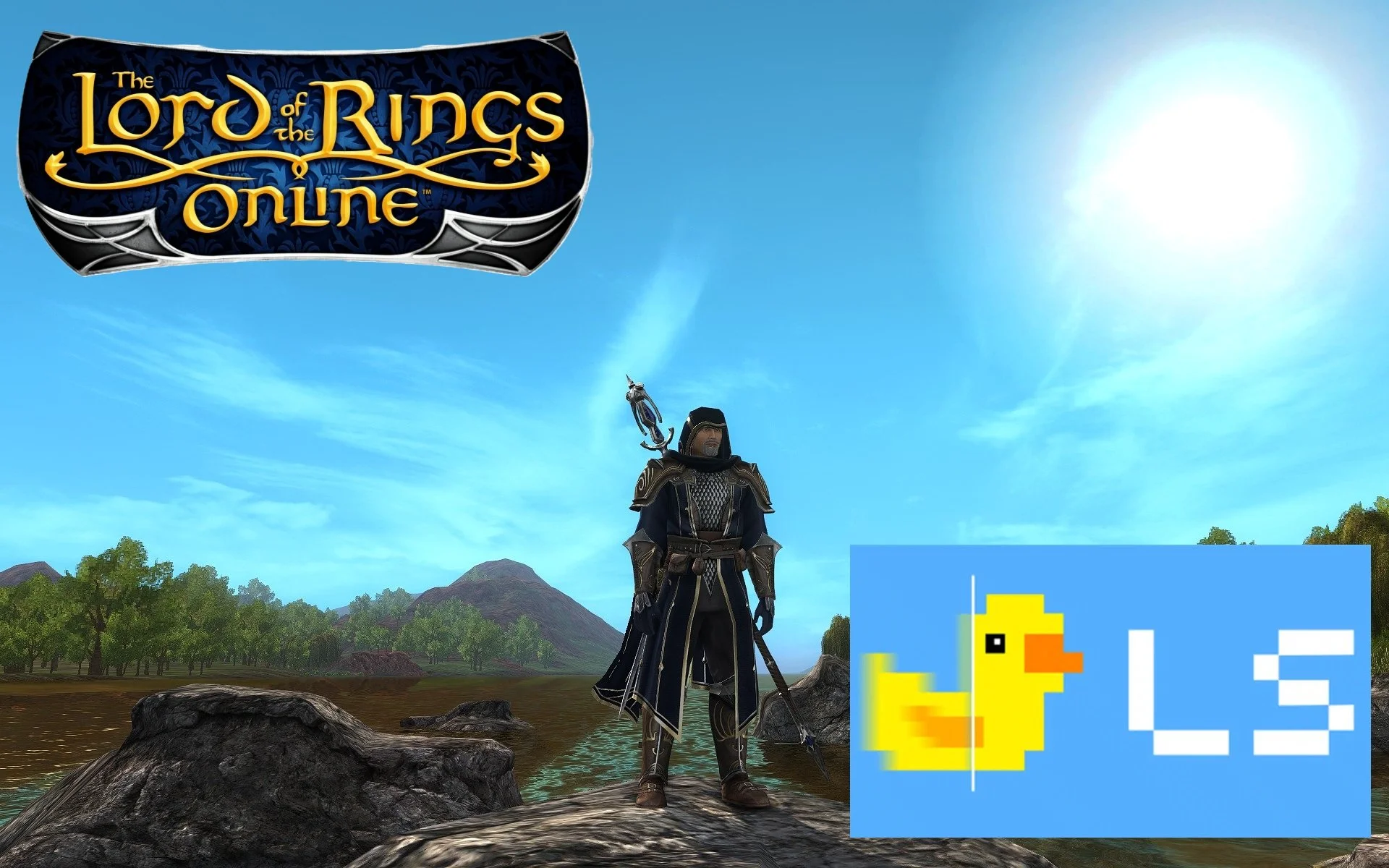
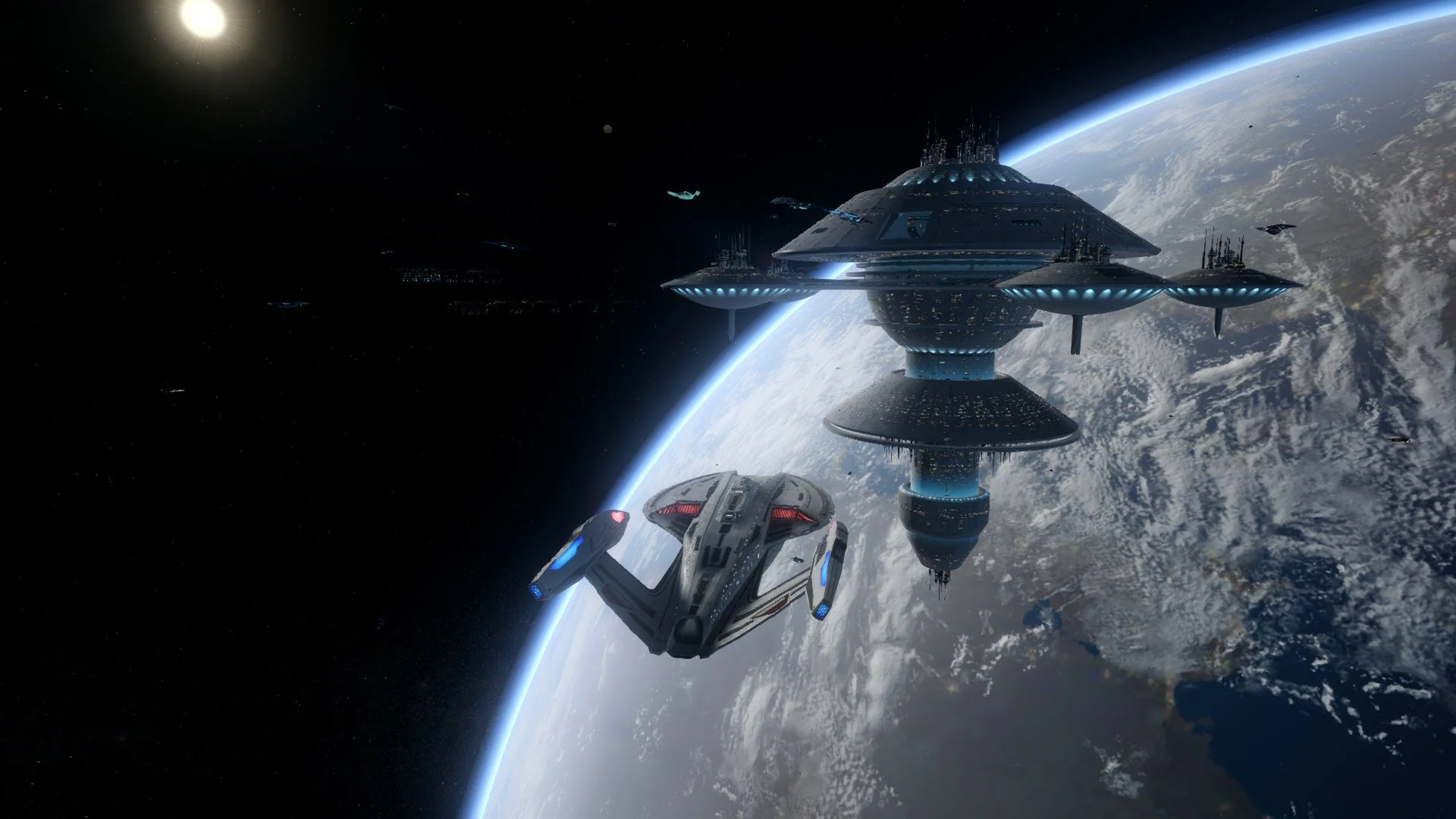
So with this in mind, I believe I am currently on top of the ongoing plot and story elements found both in LOTRO and STO. I tend to have a primary alt in most MMOs that I play and work my way through a game’s content in narrative order. I must admit, at times it has been hard to keep up with LOTRO and I have refreshed my memory regarding the plot and especially characters by referring to the games well maintained Wiki. The game has a habit of bringing back protagonists from early stories. STO is far more episodic in its approach to stories and arcs frequently end in a definitive manner. Furthermore, expansions tend to be themed and frequently dovetail into lore from specific shows. So for example, if you’re familiar with Star Trek: Voyager then it’s far easier to keep up with the storyline featured in the Delta Rising expansion. It also helps with both LOTRO and STO that I play these games regularly throughout the year. Keeping your hand in, so to speak, helps immensely in this respect.
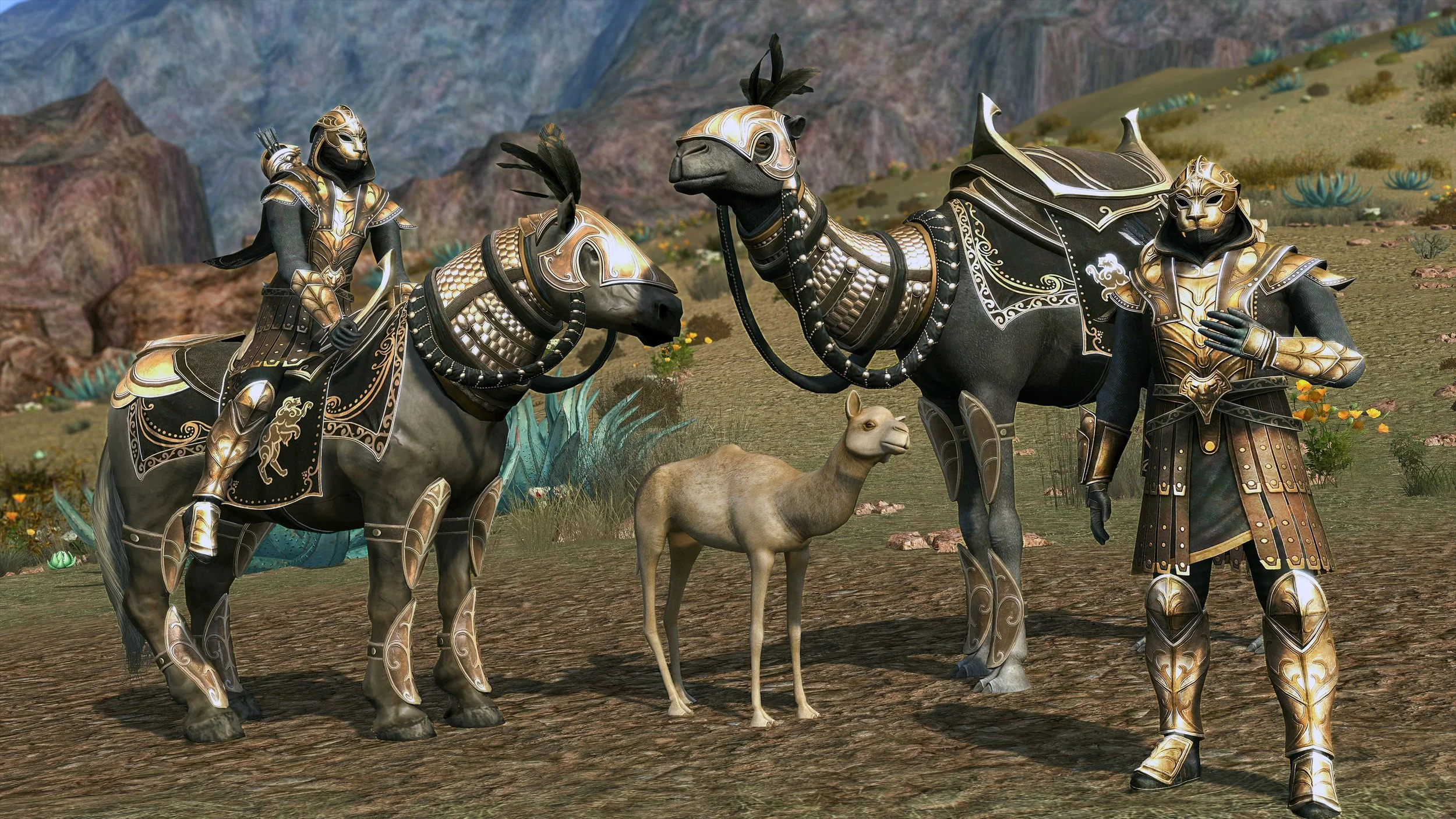
Keeping abreast of the major plotlines in ESO is a more difficult undertaking. Firstly, I don’t tend to play the game with the same regularity as both LOTRO and STO. I return mainly when the yearly expansion launches and then I stick around for a month or two. I came back to the game two weeks ago when Blackwood launched and immediately struggled to recall the various reasons for my quest in Vvardenfell. Fortunately some characters, such as the put upon manservant Stibbons, stick in the mind. However, in my defence it is fair to say that many of the sidequest plotlines featured in ESO centre around the shenanigans of various Daedric Princes. At times it does come across as somewhat repetitive to the casual player. The main stories tend to be far more accessible and have plenty of exposition. Indeed there is even a mechanism in the game where NPCs will give you a plot summary if you need to know exactly what your motivation is.
But let us not forget that my approach to the MMO genre is far from universal. For every player that loves the intricacies and nuances of the story there are those who are totally disinterested by it. They will dismiss cutscenes (where possible) and dialogue windows as soon as they appear. It is also fair to say that not every MMORPG has a good story to begin with. I quickly lost track of what was going on in Rift as the plot seemed very formulaic. I also struggled to “keep up” in Neverwinter for similar reasons. Plus I had no prior knowledge of the franchise associated with that game and I believe having some advance personal investment certainly helps. Overall, I find that persistence is perhaps the best way of following a plot in a game. But as I vary what I play regularly, it can be an issue at times. Judging by the comments left on Justin’s original post, I suspect this is a common issue among gamers.

Army of the Dead (2021)
One of the biggest issues associated with modern film production is creative interference by the studios financing them. Despite employing known writers and directors who have an established track record and creative style, all too often control is taken from these individuals and changes are imposed upon the production, usually to the detriment of the overall film. Hence, you can understand why more and more filmmakers are taking their work to Netflix and similar platforms. Streaming services are apparently far more accommodating and understanding. Martin Scorsese himself made his last film The Irishman, for Netflix. However, such creative freedom can be a double edged sword. Some directors need to be tempered, the same way that some writers need a good editor. There is often a fine line between creative freedom and self indulgence.
One of the biggest issues associated with modern film production is creative interference by the studios financing them. Despite employing known writers and directors who have an established track record and creative style, all too often control is taken from these individuals and changes are imposed upon the production, usually to the detriment of the overall film. Hence, you can understand why more and more filmmakers are taking their work to Netflix and similar platforms. Streaming services are apparently far more accommodating and understanding. Martin Scorsese himself made his last film The Irishman, for Netflix. However, such creative freedom can be a double edged sword. Some directors need to be tempered, the same way that some writers need a good editor. There is often a fine line between creative freedom and self indulgence.
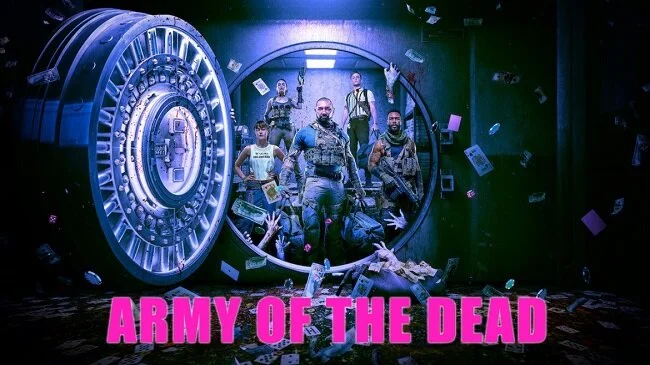
Following an zombie outbreak due to a military “accident”, Las Vegas has been wall off to contain the walking dead. Former decorated soldier Scott Ward (Dave Bautista), who led the initial evacuation, is employed by casino owner Bly Tanaka (Hiroyuki Sanada) to break into the quarantine zone and recover $200 million from his casino vault, before the US military obliterates the city with a tactical nuclear warhead. Ward has mixed feelings about returning to Vegas as he had to kill his wife during the evacuation when she was bitten by a zombie. He recruits his former teammates Maria Cruz and Vanderohe, along with helicopter pilot Marianne Peters, German safecracker Ludwig Dieter, and Chicano sharpshooter Mikey Guzman, who brings along his associate Chambers. Tanaka sends his right hand man Martin to provide access to the casino vault. Enroute Ward encounters his estranged daughter Kate (Ella Purnell); a volunteer in the Vegas refugee camp.
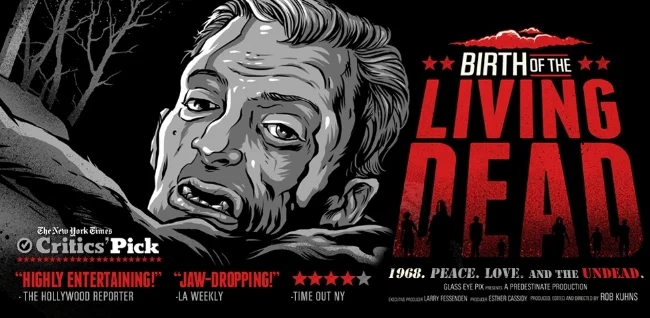
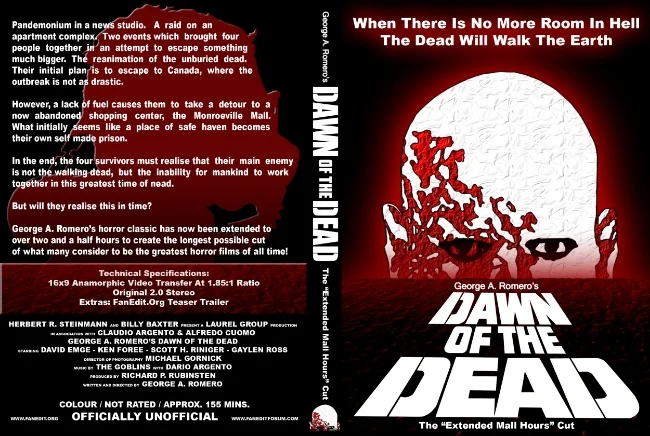
Zack Snyder’s latest film, Army of the Dead, is a textbook example of “indulging” a filmmaker and not legitimately questioning any of their creative decisions. As a result the handful of innovative ideas get lost among the bloated set pieces and mitigated by the crass screenplay with its puerile dialogue. I was raised on classic zombie movies and therefore am more disposed by default to favour the “Romero rules” governing zombie behaviour. However, I am open to alternative ideas and was not averse to the rather threatening fast moving zombies in Snyder’s previous remake of Dawn of the Dead. Sadly, the inclusion of the so-called “Alpha” zombies in Army of the Dead does more harm than good. By making zombies less mysterious and giving them more specific human cognitive abilities, it essentially robs them of their mystique. They become a far more rationalised threat and hence less of the enigmatic metaphor for wider social issues as in other films.
Army of the Dead is overlong, too dependent on CGI rather than physical effects and is filled with characters who are woefully undeveloped or even interesting. It lacks the narrative subtly of Romero’s work and the cast carry out their duties in a perfunctory manner. Zack Snyder has an eye for visuals and certainly can produce better work (as his extended version of Justice League proves). However, I feel that he needs a creative partner who can curb his excesses and nurture his valid ideas. As it stands Army of the Dead is a ponderous viewing experience, with no hardboiled action movie cliché left unturned. It wastes the presence of Dave Bautista, who has proven he can be a personable lead and saddles us with a dull, obvious narrative. Rather than advance or reinvigorate the zombie horror movie subgenre, it succinctly demonstrates why it has fallen by the wayside by doing absolutely nothing new of note during it’s 148 minute running time.




Enjoying LOTRO Through Others
When you’ve been doing any leisure activity for a long time, there comes a point where over familiarity does become an issue. It tempers one’s enjoyment and impacts upon the way you experience that particular pastime. I’ve written about this situation before with regard to my relationship with cinema and films. More recently it has started to occur with my gaming activities, especially with the MMORPG The Lord of the Rings Online. I have been playing this game since December 2008 and I’ve had a long and complicated relationship with it over the course of twelve years. The game was a mainstay of my life at a time when I was living alone and doing contract work. Hence I had a lot of leisure time to sink into LOTRO and few other obligations whenever I wasn’t working. It was in many ways the perfect time to enjoy an MMO as I could “commit” to it. And so I embarked upon the same gaming journey that many others have taken.
When you’ve been doing any leisure activity for a long time, there comes a point where over familiarity does become an issue. It tempers one’s enjoyment and impacts upon the way you experience that particular pastime. I’ve written about this situation before with regard to my relationship with cinema and films. More recently it has started to occur with my gaming activities, especially with the MMORPG The Lord of the Rings Online. I have been playing this game since December 2008 and I’ve had a long and complicated relationship with it over the course of twelve years. The game was a mainstay of my life at a time when I was living alone and doing contract work. Hence I had a lot of leisure time to sink into LOTRO and few other obligations whenever I wasn’t working. It was in many ways the perfect time to enjoy an MMO as I could “commit” to it. And so I embarked upon the same gaming journey that many others have taken.
Nowadays, LOTRO is very much a game that I have placed on the back burner, so to speak. Having experimented with various alts over the years, I now play a single, primary character (a level cap Lore-master) and only return to the game when there is new content to experience. I enjoy my time in-game but LOTRO is no longer my gaming obsession. Many of my fellow gaming bloggers have invoked an analogy about video games being like relationships, as they do often share a similar course. Nowadays, LOTRO is a trusted friend whom I meet up with several times a year and spend some time together. We tend to cover the same old ground but it is still fun to do. As for recapturing that sense of excitement I felt in 2008, well we all know the expression about how “you can never go home again”. It is certainly relevant here.
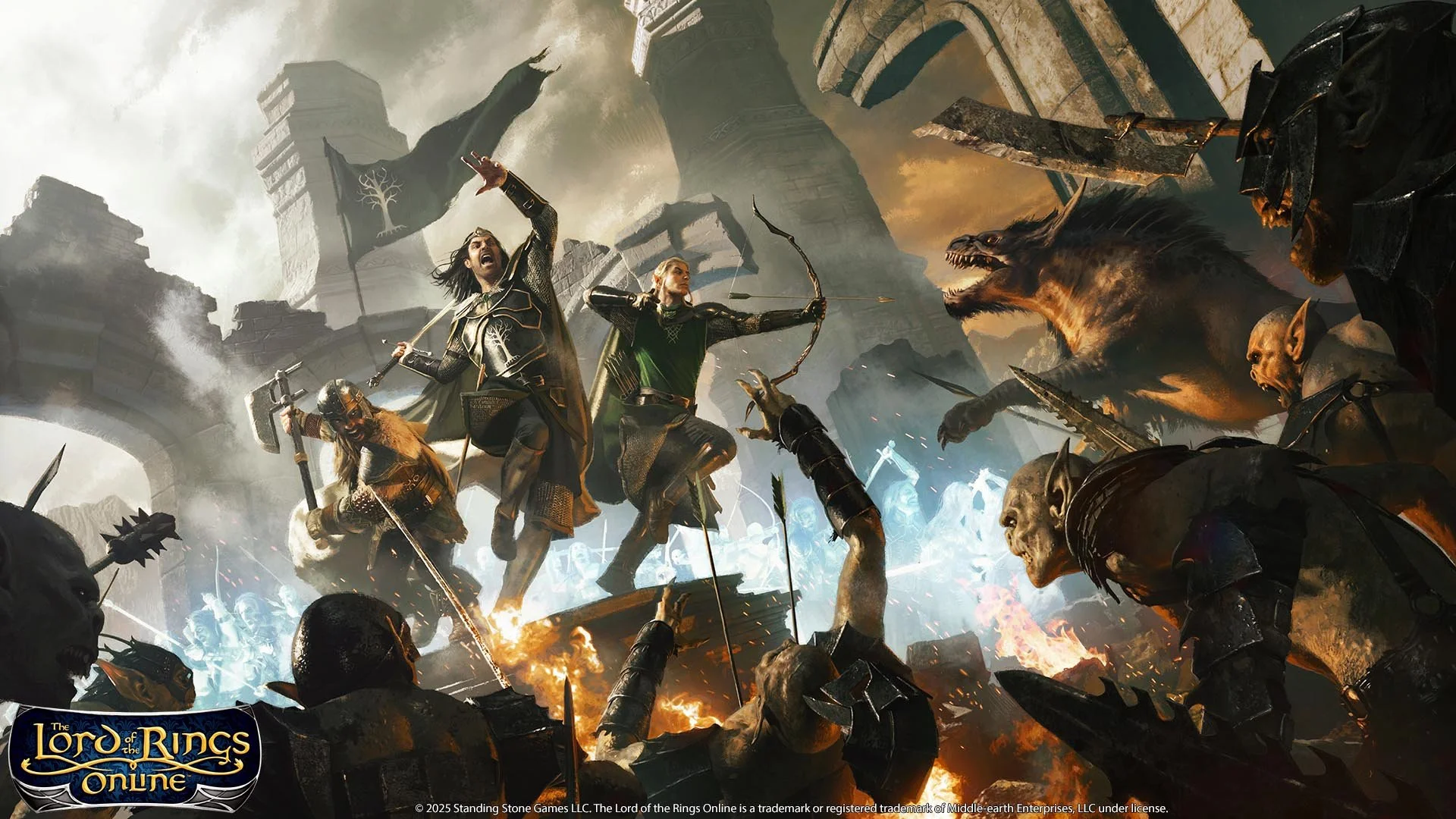
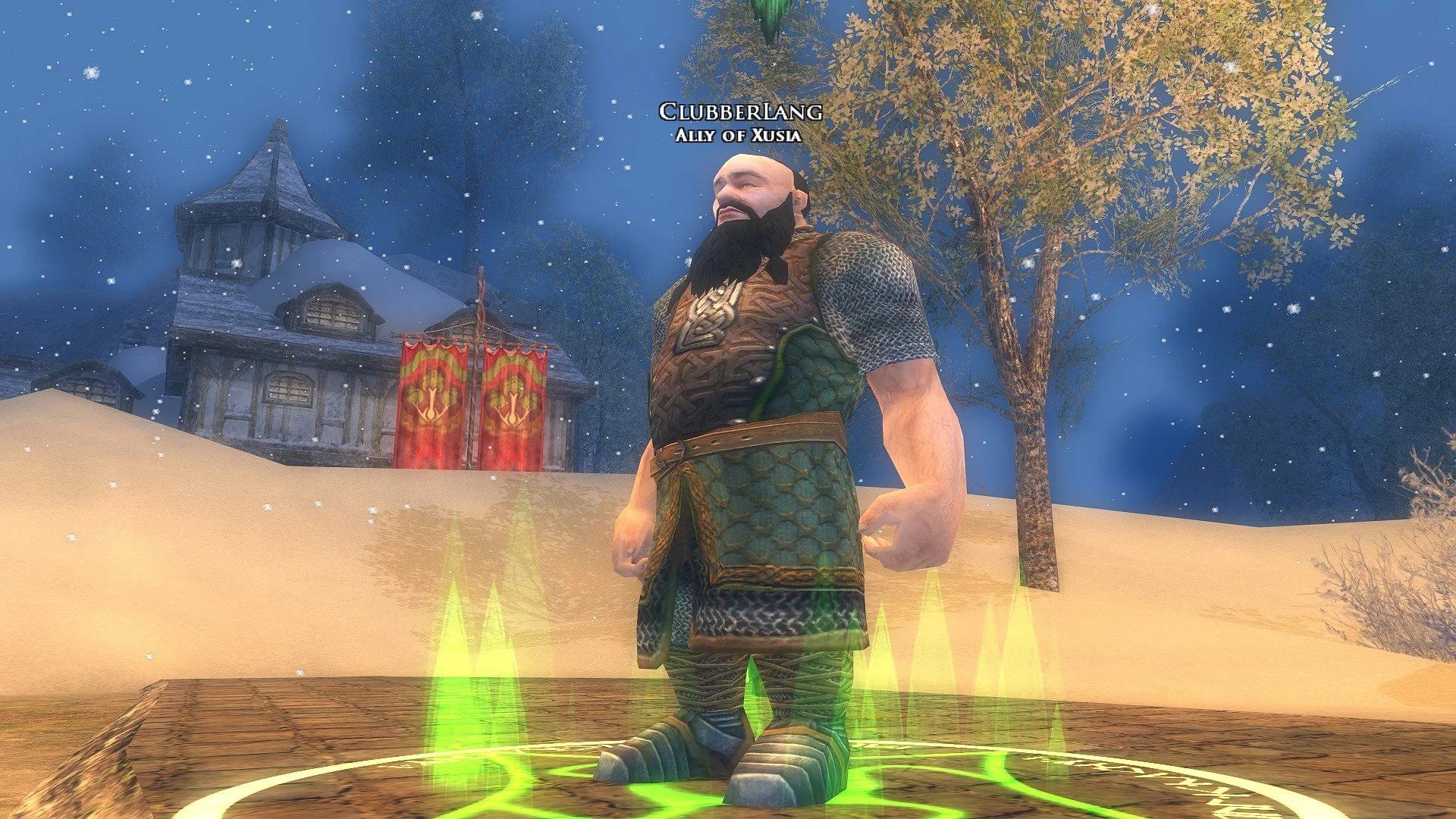
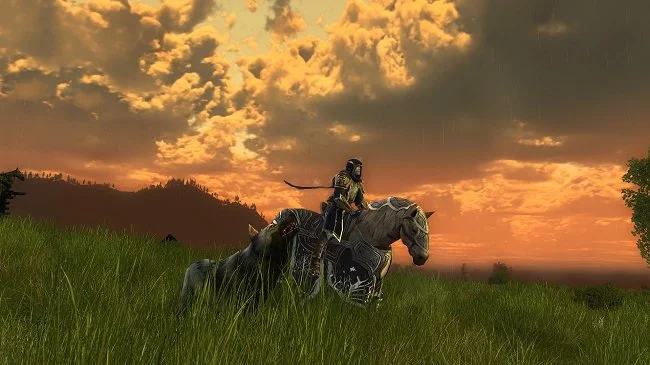
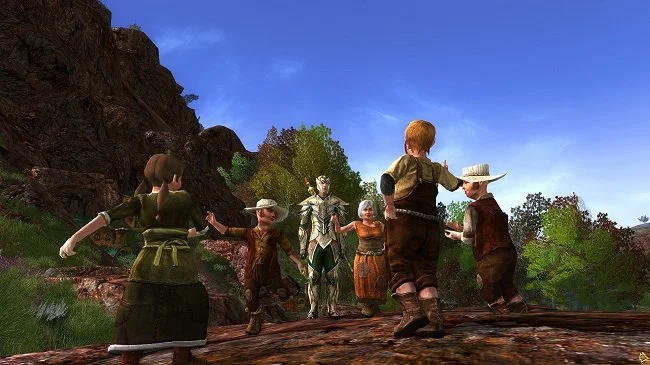
However, sometimes what is needed to revitalise a situation such as this, is a fresh set of eyes or a new perspective. And that is exactly what I inadvertently discovered yesterday. During the afternoon, I had my Twitter client open and I noticed that someone was just about to go-live on Twitch TV and that they were playing LOTRO for the first time. This piqued my interest so I joined their stream and then spent the next three or so hours watching them discover the game for themselves. The streamer in question Omar, is obviously a fan of Tolkien and it was therefore doubly enjoyable as he picked a class and race, logged into the game and undertook the initial stages of LOTRO. It was nice to be able to experience this MMO from a new player perspective, especially when he recognised lore references or realised that it was Strider himself who was leading him through the initial quest stages.
I was one of several existing LOTRO players present in the chat channel and hopefully we made ourselves useful with our advice, as opposed to being a nuisance. Sometimes you have to curb your enthusiasm and let people find their own feet. In fact that adds to the vicarious enjoyment that I felt, as I watched someone navigating a new game and the complexities of LOTRO’s systems and mechanics. Omar also comes from a console background and has only recently come to PC gaming. So in many respects he really has jumped into the proverbial deep end. However, he did well and clearly had a good time, which in itself was a timely reminder of how I used to feel when playing LOTRO. And that was a major shot in the arm for my own gaming enthusiasm. It was like when you watch a classic film with someone who hasn’t seen it before and they really enjoy it. Perhaps I should watch more streams like this.




Walking for Pleasure: Eltham and Well Hall
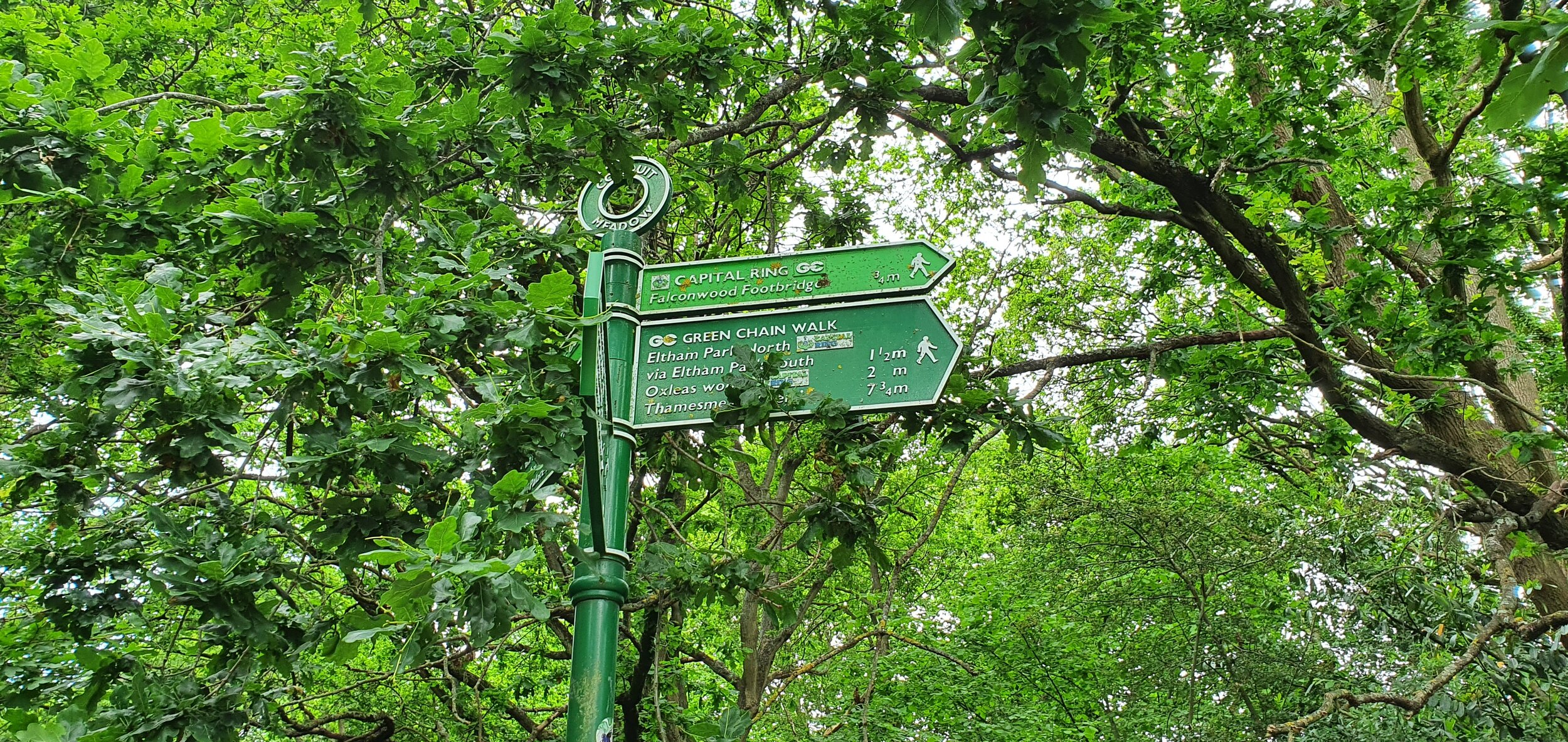
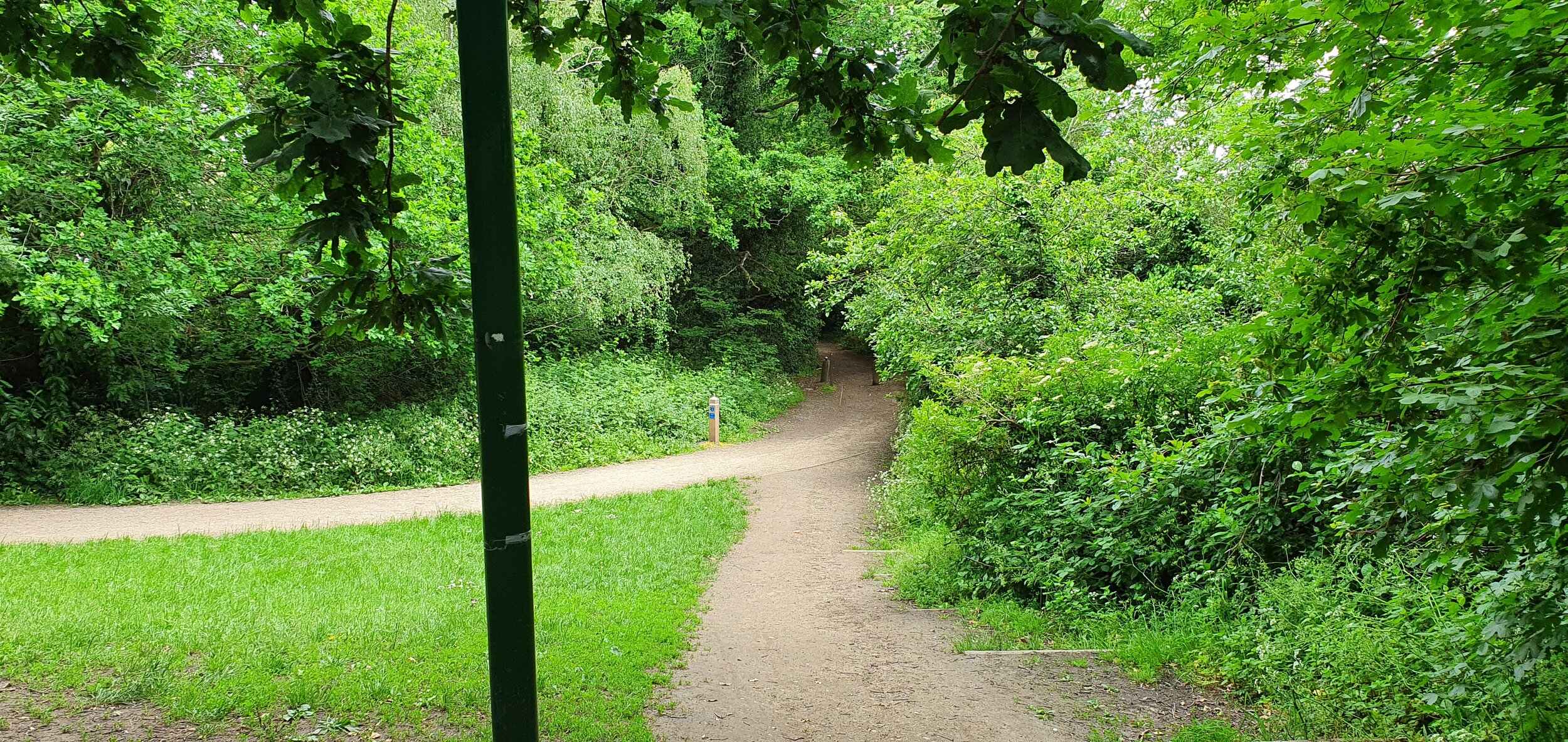
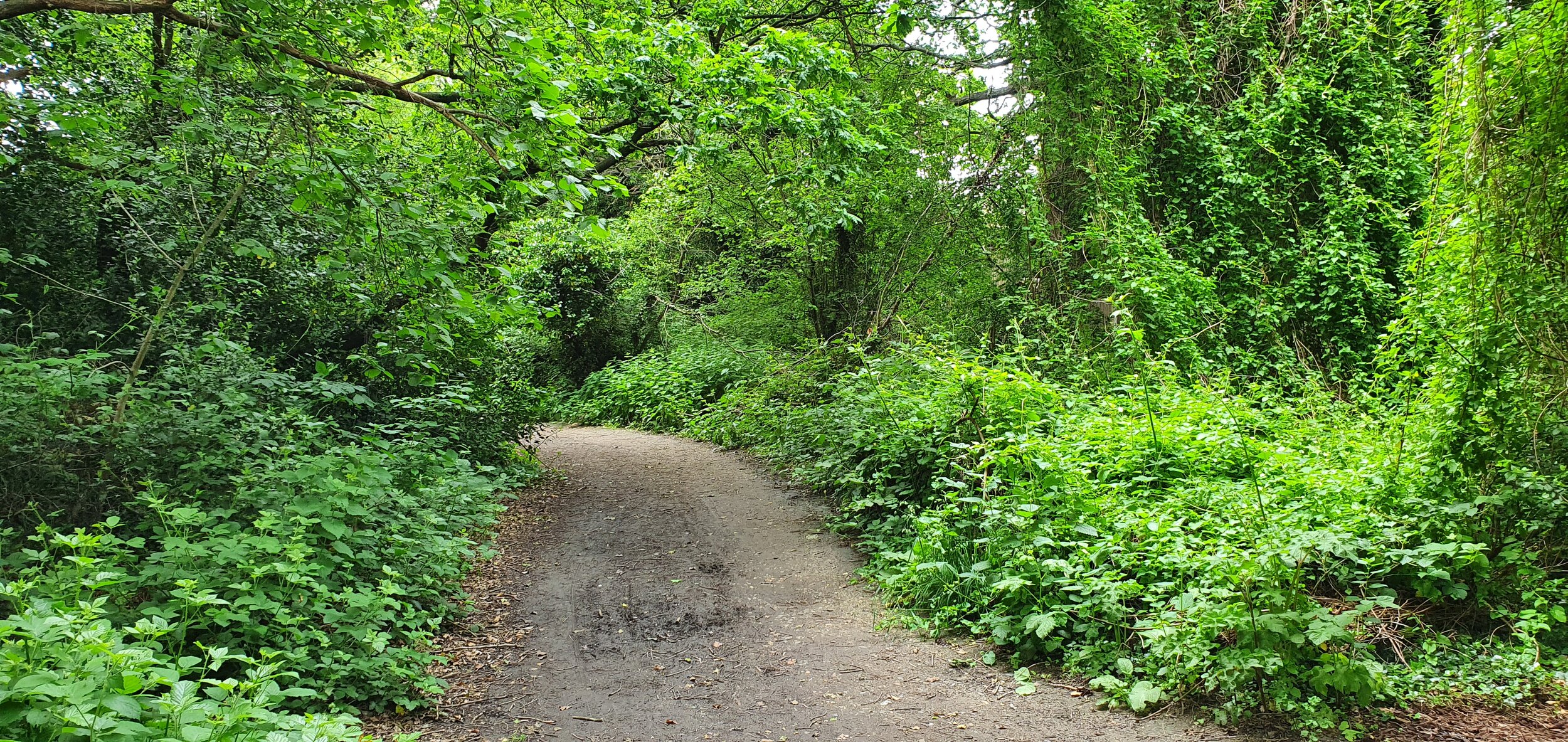
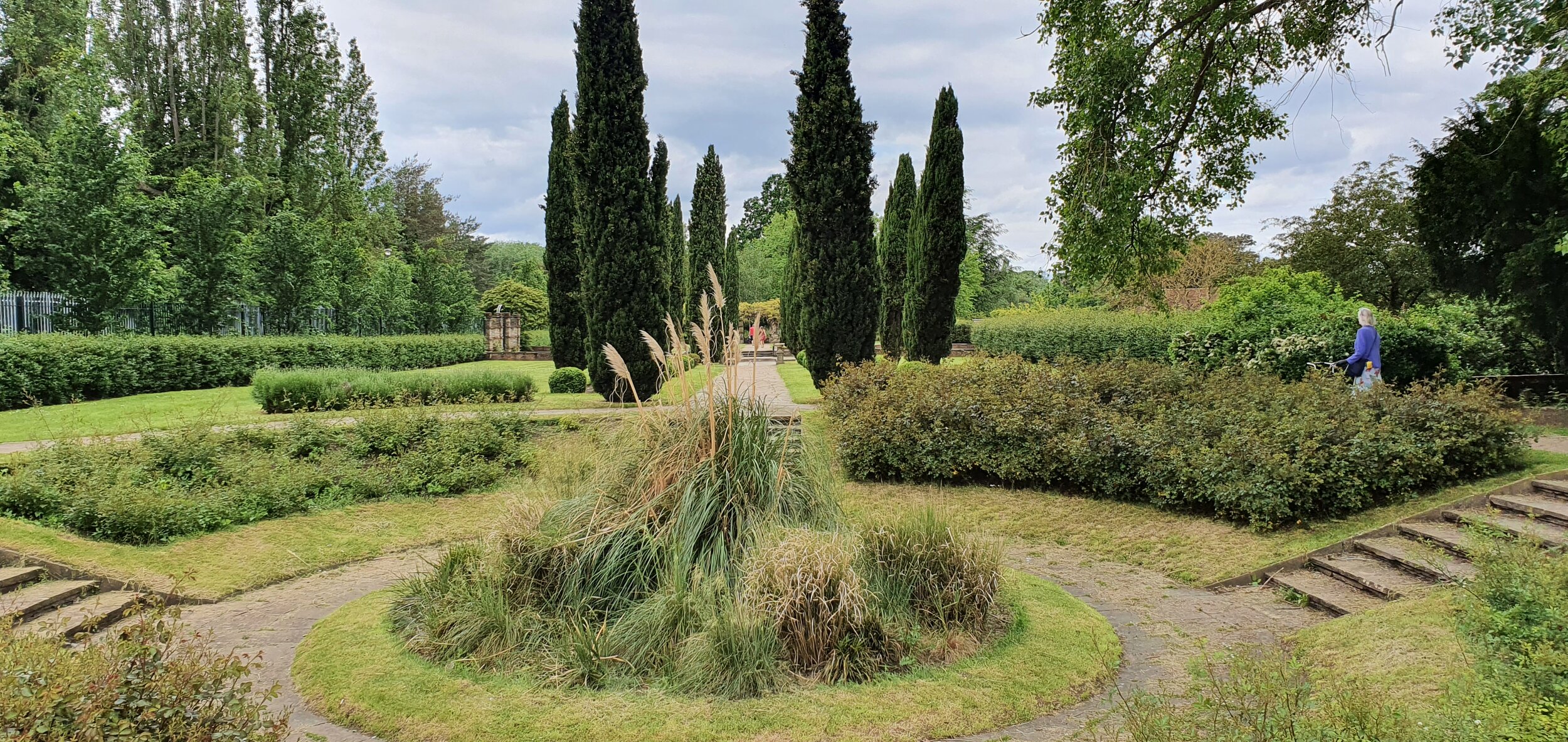
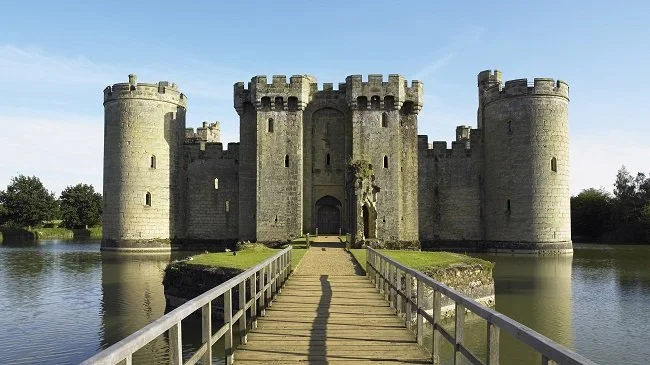
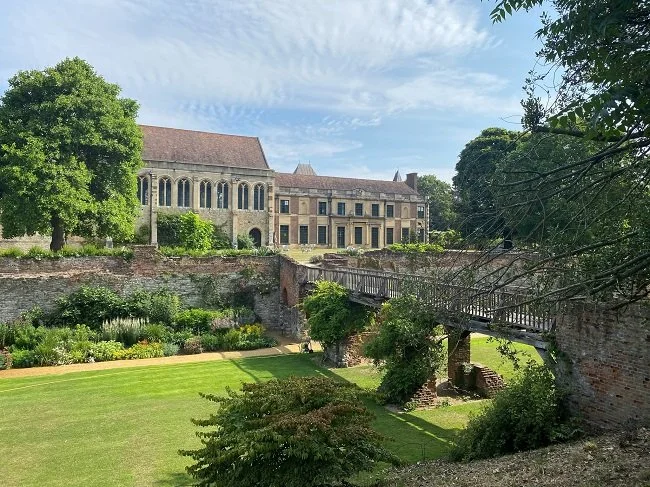
Today’s weather was perfect for walking with light clouds, a gentle breeze and temperatures around 23 Celsius (73 Fahrenheit). So Mrs P and I decided that we’d like to take a leisurely stroll somewhere local. Fortunately, we live in south east London and not far from the Green Chain Walk. This is a network of managed trails and pathways through various woodlands and parks that span four Boroughs. We decided to walk to Avery Hill Park and then follow the Green Chain Walk to Eltham. From there we then walked through the high street to Well Hall and visited the Pleasaunce. Our journey covered a distance of about 4.5 miles or so. We took our time and frequently stopped to enjoy the surroundings. Overall we walked for about 2 hours. We then decided to return home by bus, as the weather had become somewhat overcast.
Today’s weather was perfect for walking with light clouds, a gentle breeze and temperatures around 23 Celsius (73 Fahrenheit). So Mrs P and I decided that we’d like to take a leisurely stroll somewhere local. Fortunately, we live in south east London and not far from the Green Chain Walk. This is a network of managed trails and pathways through various woodlands and parks that span four Boroughs. We decided to walk to Avery Hill Park and then follow the Green Chain Walk to Eltham. From there we then walked through the high street to Well Hall and visited the Pleasaunce. Our journey covered a distance of about 4.5 miles or so. We took our time and frequently stopped to enjoy the surroundings. Overall we walked for about 2 hours. We then decided to return home by bus, as the weather had become somewhat overcast.
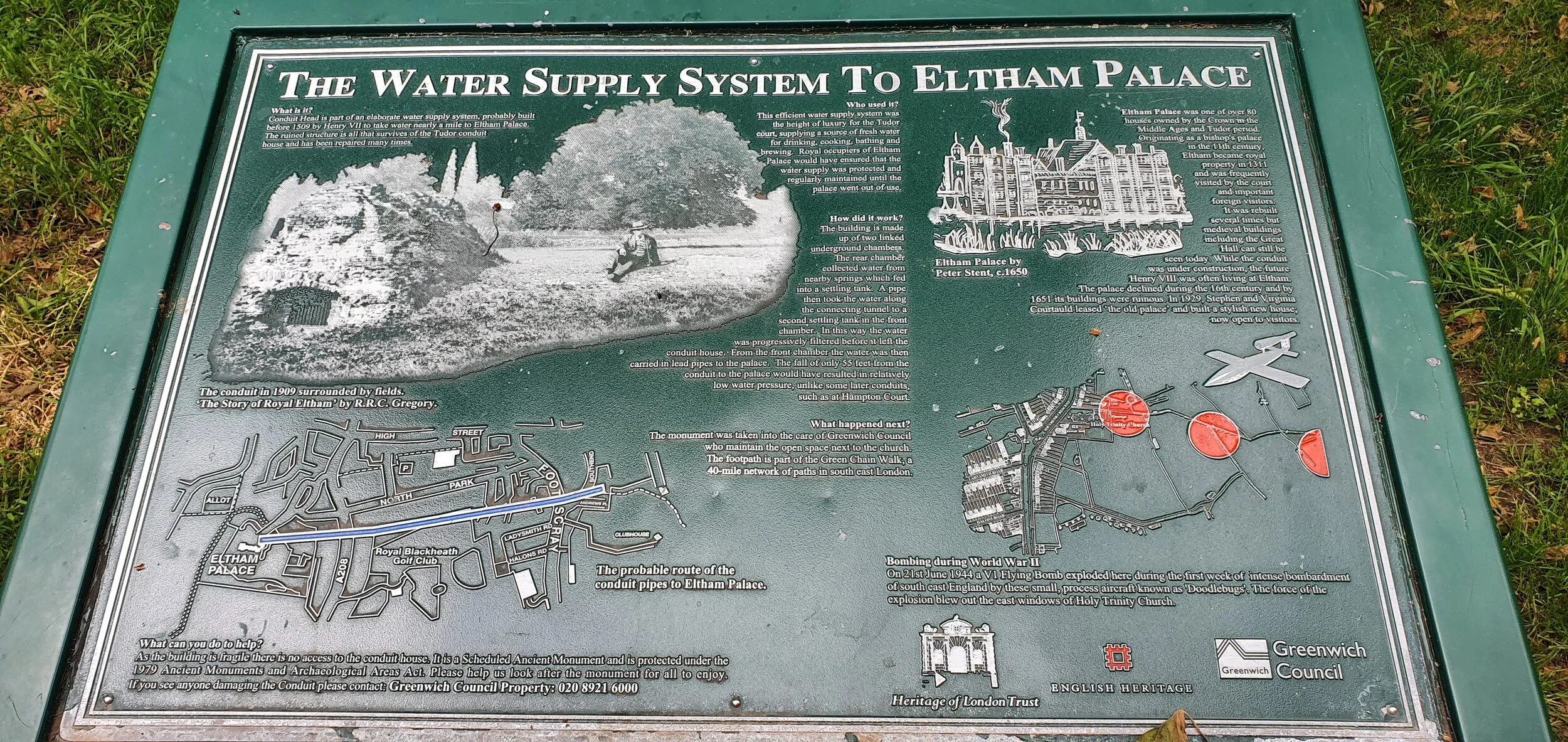
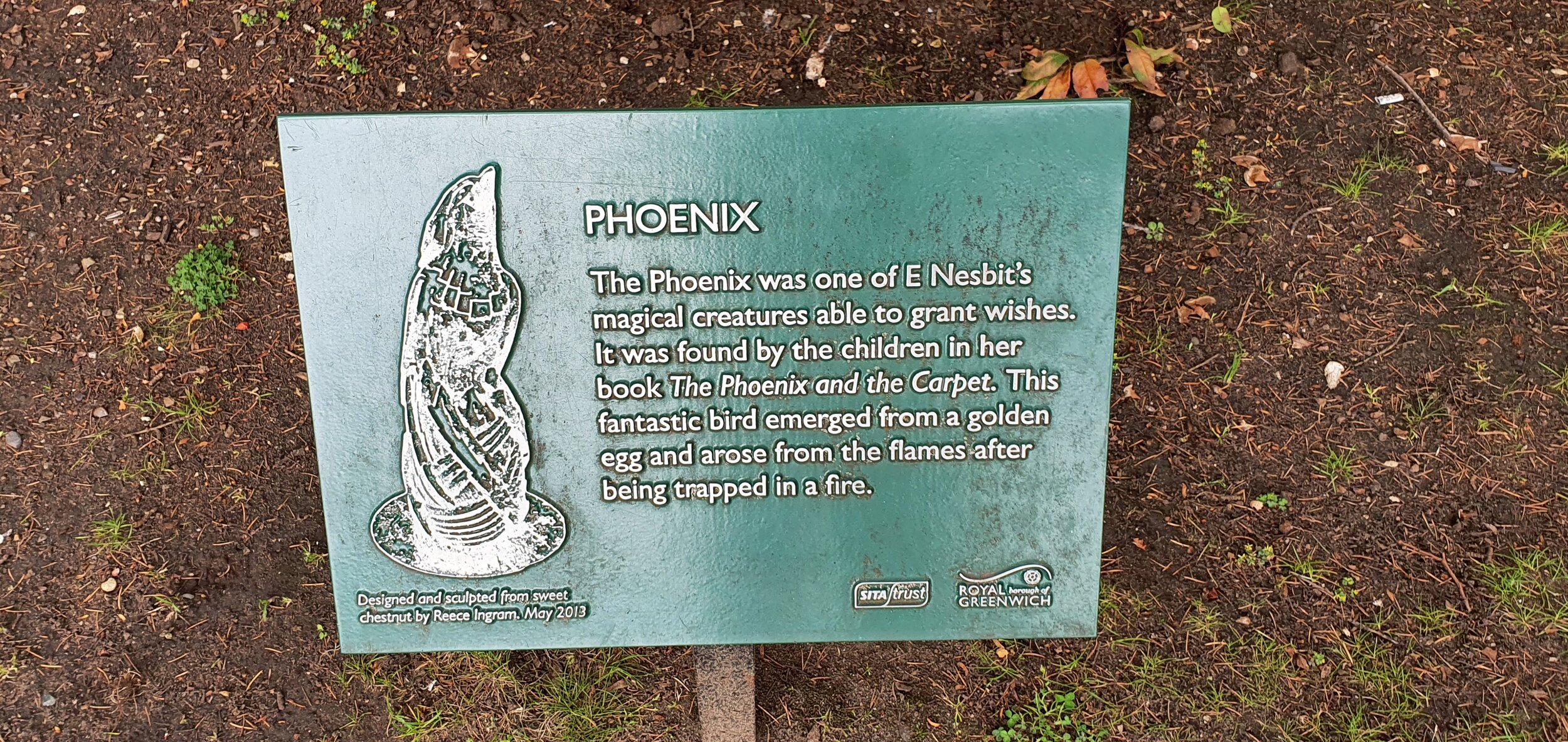
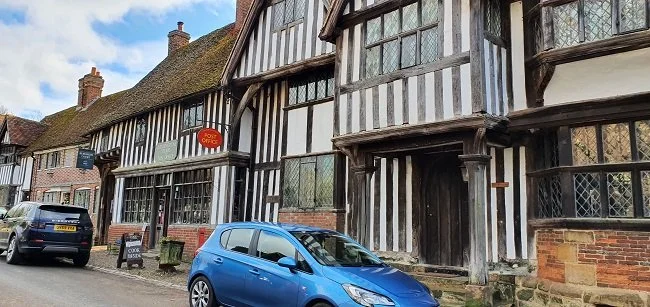
Eltham lies on a high plateau which gave it a strategic significance in Medieval times. Although it is difficult to see this topographical feature nowadays, as the area has been totally developed by the Greater London sprawl. Its importance throughout early English history is mainly due to it being close to the main route to the English Channel ports in Kent. Several Tudor monarchs intermittently resided at Eltham Palace and hence the area has a lot of associated history. The Well Hall Pleasaunce features several ornamental gardens, a bowling green and various water features. There is a Tudor Barn which dates back to the 16th century that is located towards the north part of the park. It is now a restaurant that caters for park users and is available to hire for private functions. The well maintained grounds are very peaceful despite being next to a main road.
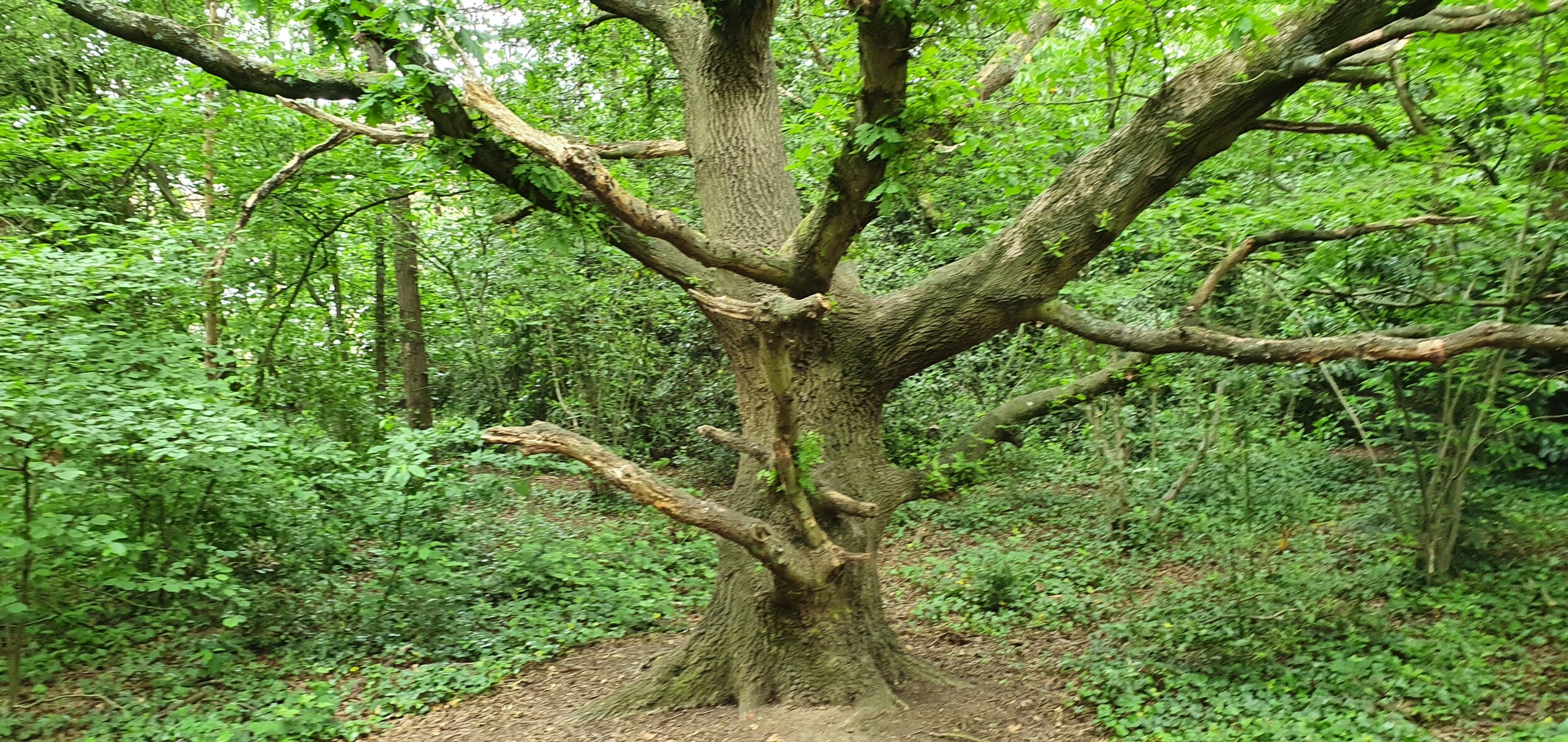
I enjoy walking for pleasure as it often affords an opportunity to escape from the hustle and bustle of urban living. Avery Hill Park was busy today, as the weather was fine and it offers a lot of facilities for family entertainment. However, once you leave the open spaces and follow the various paths, you find things a lot more tranquil. The surrounding trees do much to insulate you from the noise and the trails are mainly used by dog walkers and rambling enthusiasts. The environment is perfect for personal introspection and reflection. There is also plenty of wildlife to observe on the Green Chain walk, as the paths are maintained to have minimal impact upon the surrounding environment. If the current weather persists, we may well take a waterside walk in the next few days along the Thames at Erith. London is fortunate to have so many preserved “green spaces” such as these.
















It's Nice to be Playing an RPG Again
I managed to purchase the Role Playing Game Greedfall recently at the bargain price of £15. I’ve had my eye on this particular title for a while. It is not a so-called triple A game but has garnered a lot of critical praise since its release in September 2019. Developed by Spiders, a French game company and published by Focus Home Interactive, Greedfall is set in an ersatz 17th century-style setting and has liberal doses of fantasy. It has a complex narrative which takes a lot of tropes from European history from that era and blends them with classic fantasy elements such as magic and mythical beasts. It seems to have filled the space previously occupied by BioWare games of this genre, having a similar focus on characters and story. To date it has sold over a million copies. I’ve only played 5 hours or so at present but I like what I see so far.
I managed to purchase the Role Playing Game Greedfall recently at the bargain price of £15. I’ve had my eye on this particular title for a while. It is not a so-called triple A game but has garnered a lot of critical praise since its release in September 2019. Developed by Spiders, a French game company and published by Focus Home Interactive, Greedfall is set in an ersatz 17th century-style setting and has liberal doses of fantasy. It has a complex narrative which takes a lot of tropes from European history from that era and blends them with classic fantasy elements such as magic and mythical beasts. It seems to have filled the space previously occupied by BioWare games of this genre, having a similar focus on characters and story. To date it has sold over a million copies. I’ve only played 5 hours or so at present but I like what I see so far.
I can wax lyrical at great length about all the things common to the RPG genre that I like. Such as intricate character creation, involving storylines and complex narrative choices. An open world to explore, builds to experiment with gear to collect and augment. I am also aware that these things are also present in the MMORPG. However, one of the things I enjoy about RPGs is the lack of other players. I was playing The Elder Scrolls Online recently and naturally the new expansion has attracted a lot of new and returning players. Therefore the quest hubs were heaving and it was often tricky to find the required NPC or access your bank. For most of the time, it’s nice to see other players bustling about in the MMO genre but sometimes when you want to concentrate on the game, the constant activity can be very distracting. RPGs offer a haven away from this hubbub and there’s also no world chat which is another blessing.
Greedfall has an interesting story with its feuding factions, governorship of a mysterious island and political intrigue. It immediately made me think of Frank Herbert’s Dune. The 17th century aesthetic is also a good selling point as it ties in nicely with the themes of colonialism. Beyond that I can’t say much as I’m still in the starter zone of the game but I am enjoying many aspects so far. Greedfall has also confirmed another theory that I’ve often thought. That the voice acting is often superior for the female version of the central character. I found this to be the case for all three Mass Effect games, Assassin’s Creed Odyssey and numerous other games. And one of the benefits of picking up a game such as this a year after its original release, is that there are plenty of wikis, YouTube videos and walkthroughs available, should you need any help with quests, builds or general tips.
So overall, I am very pleased that I’ve found an RPG to lose myself in for a while. However, so far I have run afoul of a minor issue found in the RPG genre. I like to explore any new virtual environment I find myself in. This is exactly what I did when I found myself in the starting area of the port of Sérène in Greedfall. So I walked around, opened up the entire map and looted anything I could along the way. Later on, after a few quests I sold all the loot I deemed irrelevant, only to discover later that one was a quest item. I could not return to the location and loot it again but mercifully could buy the item back from the vendor I sold it to. I always think that such items should be protected or flagged as important to prevent such issues. But that’s just me playing in a manner the developers either didn’t think of or assumed wouldn’t happen. But it hasn’t done any long term harm. So it’s a case of onwards and upwards with Greedfall. I hope it can continue to deliver the right sort of entertainment.







When the Game Stops You From Playing
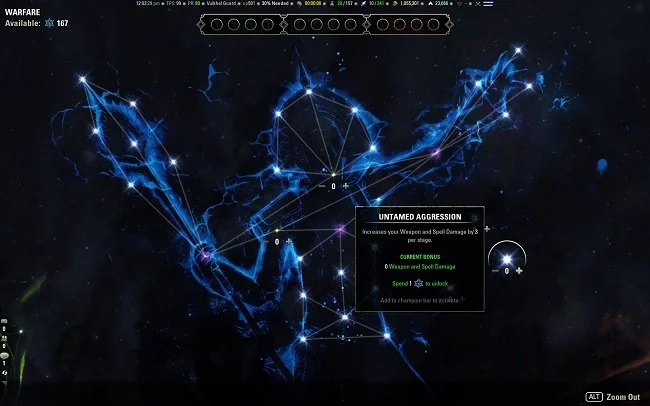
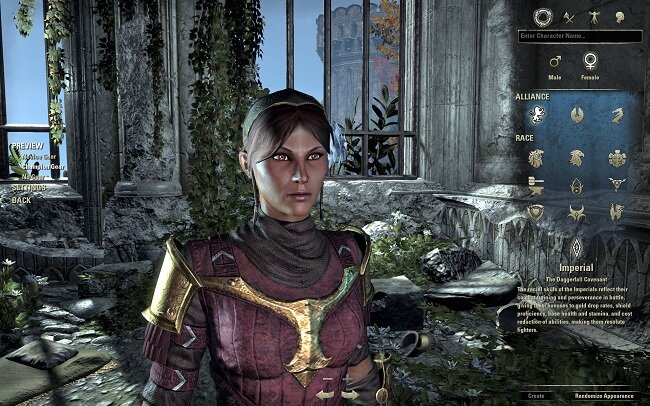
Last night, I finally had sufficient time to log into The Elder Scrolls Online and check out the new Blackwood expansion. The plan was to go straight to the new zone and complete the relevant quests to obtain the two companions that have been added to the game. Unfortunately, life seldom goes to plan as Robert Burns alluded to in his famous quotation. As I haven’t played ESO for a while, I’ve missed several major game updates. Consequently all my champion points have been reset, along with all my skills. So, I had to spend some time trying to remember how my Dragonknight was previously set up. I checked a few screenshots to see what skills were on the hotbars but as they don’t display the name, plus the icons change after morphing a skill, it was tricky trying to reverse engineer my prior build. Eventually I just winged it and managed to blag my way through the two quests.
Last night, I finally had sufficient time to log into The Elder Scrolls Online and check out the new Blackwood expansion. The plan was to go straight to the new zone and complete the relevant quests to obtain the two companions that have been added to the game. Unfortunately, life seldom goes to plan as Robert Burns alluded to in his famous quotation. As I haven’t played ESO for a while, I’ve missed several major game updates. Consequently all my champion points have been reset, along with all my skills. So, I had to spend some time trying to remember how my Dragonknight was previously set up. I checked a few screenshots to see what skills were on the hotbars but as they don’t display the name, plus the icons change after morphing a skill, it was tricky trying to reverse engineer my prior build. Eventually I just winged it and managed to blag my way through the two quests.
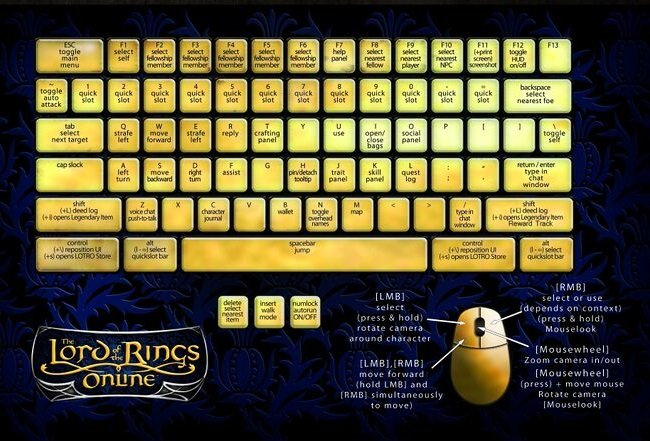
Today, I spent some time researching a DPS Stamina build for solo PVE play using a Dragonknight. I further had to refine my search to ensure it was intended for two handed weapons and a bow. Eventually I found something appropriate and copied it as best as I could. Some of the skills recommended I don’t have morphed as of yet. I then made sure I had an appropriate buff from a Mundus Stone, as well as some food that gave my character a stamina boost. All in all, this process took about 90 minutes or so to sort out. I also had to tweak a few addons as these had inevitably got out of date since I last played a year ago. Finally now that these changes have been implemented, I finally feel that I’m in a position to play through the new content. I have had to print out a key map to refer to as I’m struggling to remember what skills are assigned where.
This is the great paradox that comes with the MMO genre. The games are often predicated on complex systems and arcane mechanics. For many players, this is part of their appeal. If you are the sort of gamer that relishes intricate processes and likes to master complicated rules, then good luck to you. Players such as I rely on the likes of you to produce the sort of guides that I referred to today to get my Dragonknight up and running. But not everyone enjoys this aspect of MMOs. MMO monogamy is a thing of the past these days. People come and go, flitting between games depending upon their likes and dislikes. Hence many players will return to a game such as ESO after a period of time away only to find that they’ve forgotten how to play their class or that they’ve fallen foul of a system reset like the one I encountered. In such cases the game often does nothing to help these players, which upon reflection seems counterproductive.
Elite, competent and knowledgeable players do not make up the majority of the player base in ESO or any other MMO. Over the years it has been clearly established that many players do not visit forums, read wikis, research their builds or focus on getting the best gear for their class. They just log into the game and play in a manner that suits them, often just using gear that is given as quest rewards. Skill points are assigned via guess work or random choice. Simply put these gamers are content to potter about in a laid back fashion. Hence if confronted with a major barrier to progress when returning to a game, they will often take the path of least resistance to bypass it. Which is why so many players just roll a new alt when revisiting an MMO after a lengthy absence, as the game does not make it easy to pick up where you left off. The other option is that the player just becomes frustrated that they can’t do the thing they wish to do, logs off and goes and plays something else. Which is not good for business.
If game developers and publishers want to reduce player churn, then they should try and address the needs of the returning players. Often the solutions to the problems that they face are simple. Sometimes a player just needs a brief refresher course in their class skills and such like. This could be solved by having a tutorial that can be repeated at any point in the game. Alternatively having an interactive advisory service associated with all the games systems and mechanics would be beneficial. Something that could be toggled on and off that gives a simple overview when you hover your mouse over an active window. ESO currently provides build and skills advice. Having preset builds that could be applied at the click of a mouse would be the logical next step. They don’t have to be optimal, just sufficient to allow the player to undertake PVE content in the manner they prefer.
Now there will be a small percentage of MMOs players who will balk at my suggestions but I find “git gud” culture and the self flagellating mindset of such gamers both tiresome and irrelevant. If you want to impose some self improvement ideology onto a game for your own enjoyment, that’s fine. But you have no authority to impose your competitive and self aggrandising dogma on anyone else. Video games are ultimately consumer products and as such need to be accessible and accommodating. The player who is not playing due to the games systems effectively blocking them, is a player who is not happy or more importantly not spending money. If they leave in frustration, then that’s effectively a lost sale and in today’s competitive market, that’s an error you can afford to keep making.
When Eight Bells Toll (1971)
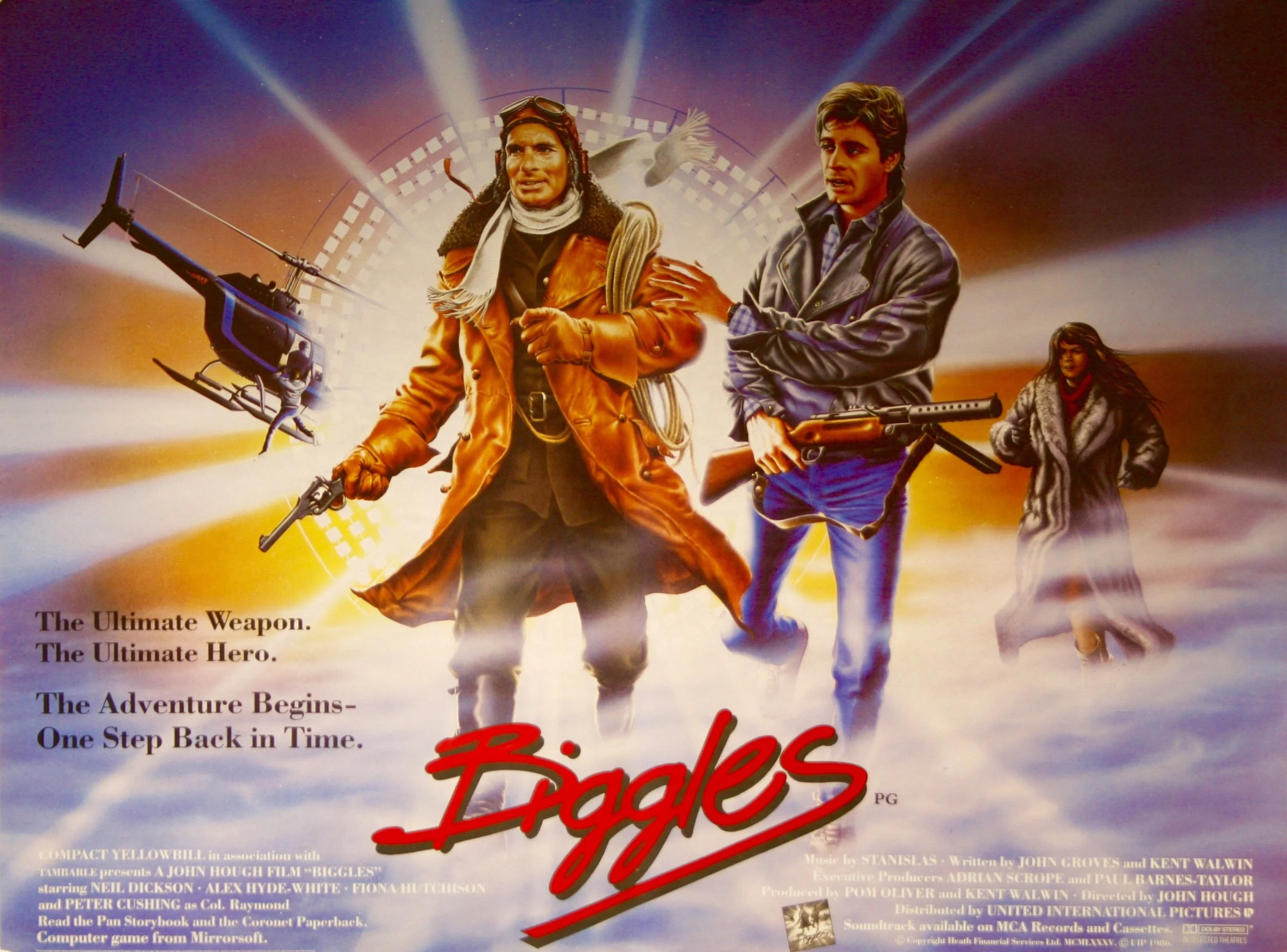
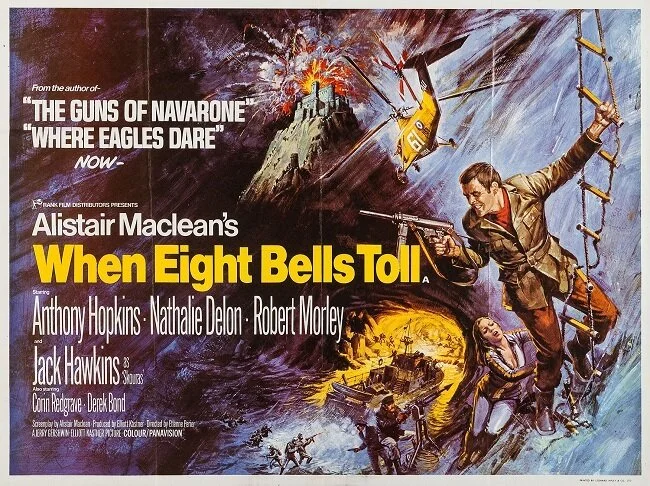
One of the stand out tropes of the modern action film is that the stakes are always cranked right up to 11. Terrorists, biological weapons and nuclear bombs are common threats in such movies with a hero or heroes trying to save the world from death and destruction or worse. However, back in the sixties and seventies, things were a little more straight forward and in some respects more credible. Take When Eight Bells Toll, released in 1971, for example. British Treasury secret agent Phillip Calvert investigates the theft of £8,000,000 in gold bullion by a gang of international smugglers. In the context of the times this was no small beer however it’s somewhat mundane compared to fighting super villains and their space lasers. Frankly I prefer these low key plot devices as they can make a film a little more plausible within the confines of the genre. A concept that is often forgotten today.
One of the stand out tropes of the modern action film is that the stakes are always cranked right up to 11. Terrorists, biological weapons and nuclear bombs are common threats in such movies with a hero or heroes trying to save the world from death and destruction or worse. However, back in the sixties and seventies, things were a little more straight forward and in some respects more credible. Take When Eight Bells Toll, released in 1971, for example. British Treasury secret agent Phillip Calvert investigates the theft of £8,000,000 in gold bullion by a gang of international smugglers. In the context of the times this was no small beer however it’s somewhat mundane compared to fighting super villains and their space lasers. Frankly I prefer these low key plot devices as they can make a film a little more plausible within the confines of the genre. A concept that is often forgotten today.
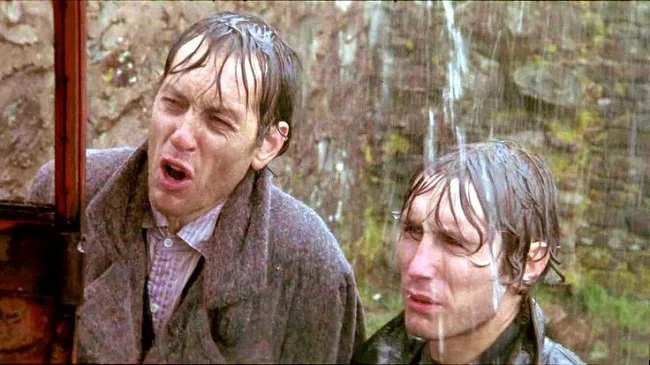
Phillip Calvert (Anthony Hopkins) an undercover British treasury agent along with his intelligence officer partner Hunslett (Corin Redgrave) are assigned to find five cargo ships that have gone missing in the Irish Sea. They track a ship,The Nantesville, which is carrying £8 million in gold bullion, to the Scottish Highlands before it mysteriously goes missing. Posing as marine biologists, Calvert and Hunslett find the local inhabitants both suspicious and hostile. A Cypriot shipping tycoon Sir Anthony Skouras (Jack Hawkins), whose luxury yacht Shangri-La is anchored off the coast, may be involved in the theft of the gold bullion. While searching the surrounding area by helicopter, Calvert makes contact with a group of remote shark fishermen who appear more friendly than Torbay's locals. Calvert also meets Lord Kirkside (Tom Chatto) and his teenage daughter in their remote hilltop castle. Both act strangely and are uncooperative. Calvert’s helicopter is then shot down and he only just manages to escape back to his boat. However, he then finds that Hunslett is missing.
Based upon a novel by Alistair MacLean, When Eight Bells Toll is a lean and focused thriller that eschews the excess of the James Bond franchise. There are no gadgets or globe trotting to exotic locations. The story confines itself to the sea and some remote Scottish islands.The plot moves fast and is punctuated by some low key but hard hitting action scenes. Veteran stunt arranger Bob Simmons stages the fights sequences and shootouts in an efficient manner. Anthony Hopkins trained and lost weight for the role and handles these scenes well. There is a casual efficiency to the violence. After one fight, Calvert wraps a length of chain around a incapcitated enemy and throws overboard. Later while breaking into Lord Kirkside’s castle he knocks out another heavy and promptly throws him out of a nearby window into the sea below. Although unpleasant it does bring an air of authenticity to the proceedings.
When Eight Bells Toll benefits from the casting of Anthony Hopkins. He brings his acting talent to bear on the role and is suitably sarcastic and menacing as a good spy should be. Screenplay is at its best when he is being upbraided by his superior officer, “Uncle Arthur”, played with aplomb by the great Robert Morley. Morley is sceptical of Calvert, suspecting he went to an “indifferent school”. The class divide and snobbery inherent in the UK government services is wittily explored but ultimately doesn’t get in the way of Uncle Arthur and Calverts business relationship. Jack Hawkins again has his voice dubbed by Charles Gray as his treatment for throat cancer had robbed him of his distinct voice. Perhaps the weakest role is that of Charlotte (Sir Anthony’s second wife) played by Nathelie Delon. The character is supposed to be scheming and duplicitous but is sadly underwritten, thus making Calvert’s involvement with her somewhat curious. Lavorski, the leader of the smuggling ring played by Ferdy Mayne, is also a two dimensional villain who we learn little about.
Overall When Eight Bells Toll is a concise and focused action movie which benefits from good performances from Hopkins and Morely as well as some solid set pieces. Sadly director Étienne Périer does not bring much flair to the production. Despite having some wonderful Scottish scenery the cinematography by Arthur Ibbetson is somewhat stark. Perhaps that was the look they were looking for, It contrasts with the interior shots which do feel very studio bound. The editing is also somewhat pedestrian. However, the film’s score by Angela Morley (credited as Walter Stott) is sublimely brassy and bombastic, reflecting the accepted musical idiom of the spy movie genre from that time. Sadly, despite the producer’s hope to start a franchise, there were no further Phillip Calvert films, which is a shame. The minimalism and lack of glamor is reminiscent of The Ipcress Files and Calvert is an interesting anti-hero.







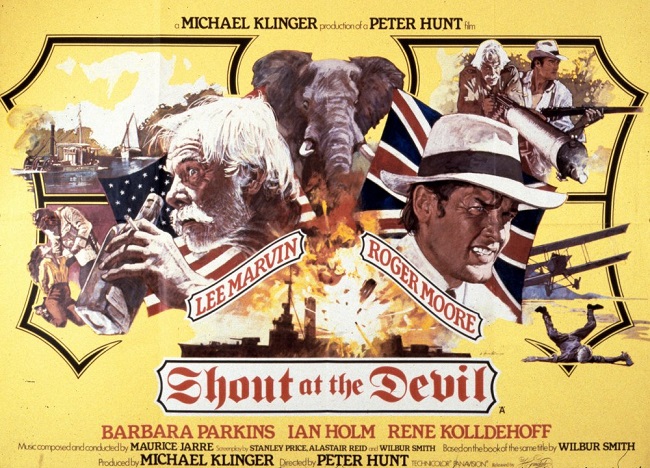
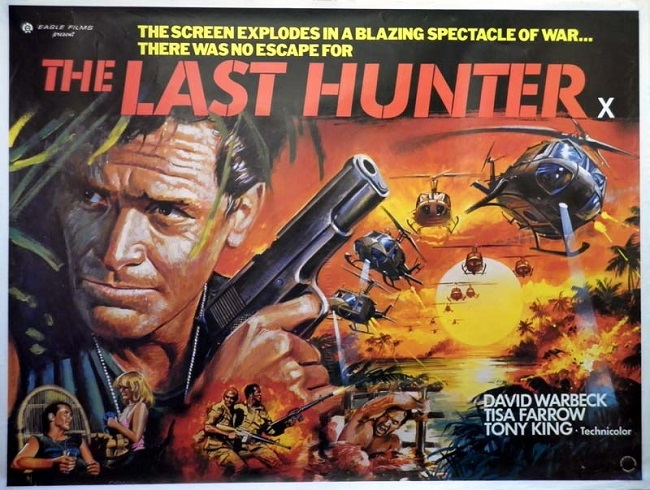
Grizzly (1976)
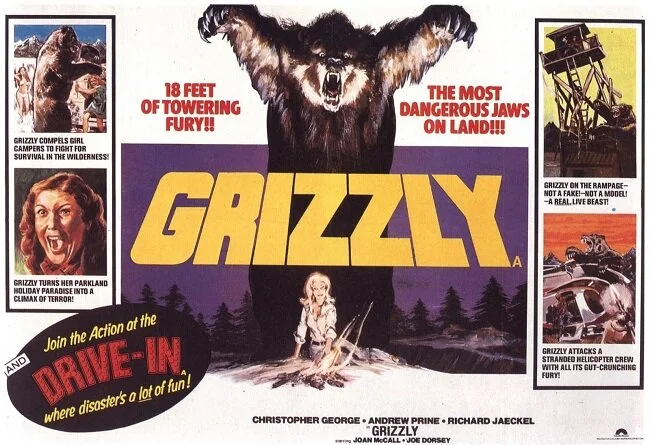
After the critical and commercial success of Jaws in 1975, a veritable tsunami of “creature feature” movies followed in its wake. A few titles, such as Alligator (1980) and Piranha (1978) managed to do something different with the rogue animal trope, both providing a quirky and satirical look at the genre along with plenty of exploitation mayhem. However, most of the rest were low budget productions of negligible quality. However, such qualities are not always an impediment at the box office. Grizzly (1976) was hastily made on a budget of $750,000 yet earned an impressive $39,000,000 at the box office. The critics hated it but the public loved it and it went on to be the second most financially successful independent feature film in the US that year (the first being Monty Python and the Holy Grail). Grizzly is in many ways a microcosm of the exploitation genre from the seventies and needs to be viewed through that prism if it is to be enjoyed.
After the critical and commercial success of Jaws in 1975, a veritable tsunami of “creature feature” movies followed in its wake. A few titles, such as Alligator (1980) and Piranha (1978) managed to do something different with the rogue animal trope, both providing a quirky and satirical look at the genre along with plenty of exploitation mayhem. However, most of the rest were low budget productions of negligible quality. However, such qualities are not always an impediment at the box office. Grizzly (1976) was hastily made on a budget of $750,000 yet earned an impressive $39,000,000 at the box office. The critics hated it but the public loved it and it went on to be the second most financially successful independent feature film in the US that year (the first being Monty Python and the Holy Grail). Grizzly is in many ways a microcosm of the exploitation genre from the seventies and needs to be viewed through that prism if it is to be enjoyed.
In an unspecified National Park in South Eastern America, Chief Ranger Michael Kelly (Christopher George) and his team search for two female hikers who are overdue after breaking camp. Kelly is joined by photographer Allison Corwin (Joan McCall) who subsequently stumbles upon human remains that have been partially buried. Tracks in the area and a subsequent autopsy confirm that there is a large predator loose in the park. Charley Kittridge (Joe Dorsey) the park supervisor, blames Kelly and naturalist Arthur Scott (Richard Jaeckel) as all bears were supposed to be tagged and removed from the tourist areas before the vacation season began. After further attacks Kittridge invites local hunters to kill the bear. Kelly and Scott decide to track the Grizzly down themselves. With the help of local helicopter pilot and Vietnam veteran Don Stober (Andrew Prine), they journey into the wilderness and attempt to set a trap. But the 15 ft, 2000 lbs bear proves more cunning than they anticipate.
One of the most often cited criticisms of Grizzly is it’s slavish adherence to the plot of Jaws. Director William Girdler attempts to duplicate many of the plot details from Spielberg’s iconic film. Hence we have a senior public official who refuses to take action when necessary, the near death of a child being a major catalyst of events and a trio of heroes who take on the task of hunting down the predator themselves. Sadly, Grizzly lacks the production polish and the quality dialogue that Jaws has in spades. The screenplay by Harvey Flaxman and David Sheldon is perfunctory to say the best and weak even by the standards of the exploitation genre. All major characters are woefully undeveloped and Christopher George, Andrew Prine and Richard Jaekel struggle to do much with their roles, often having to rely on their own personalities to get by. The location photography is good but the dense forest and striking mountains are not used to their full advantage.
Due to several plotlines and characters vanishing from the proceedings, shortly after being introduced, it seems likely that Grizzly was edited down from a longer film into the tight 89 minutes that makes up the theatrical release. Native American culture is alluded to but then plays no further part of the plot. Kelly’s romance with Allison Corwin simply ceases to be relevant halfway in and is dispensed with after a time. The levels of violence are also inconsistent. The first two onscreen deaths feature a severed arm flying across the screen. After this the kills are somewhat tamer. However, Grizzly ups the ante when a child is attacked in his garden. His Mother beats the bear with a broom, who drops the young child revealing his left leg bitten off below the knee. She herself is then mauled to death. This disparity in content again suggests last minute editing to secure a lower rating. Allegedly the first cut was R rated and featured more nudity and gore. It was then reduced for a PG rating.
Perhaps the weakest aspect of Grizzly is the bear itself. In a few of the attack sequences, the bear is a stunt performer in a suit but for the vast majority of the film, a real Kodiak bear (called Teddy) was used. Sadly, this particular bear never appears particularly menacing or threatening. Apparently the bear wrangler used marshmallows on a stick to make the animal stand and reach. Its subsequent slavering looks more comical than enraged. The bear certainly is imposing, due to its height but it never truly instills fear. Yet perhaps I am looking at this film with the perspective of a genre aficionado in his middle fifties, who has seen a lot of movies over the years. In the late seventies, this sort of fodder would have appealed greatly to the youth market (as the box office returns show). Director William Girdler went on to direct The Manitou, which I am very fond of. As for Grizzly, it remains an interesting example of how being in the right place at the right time is often essential to successful exploitation cinema.
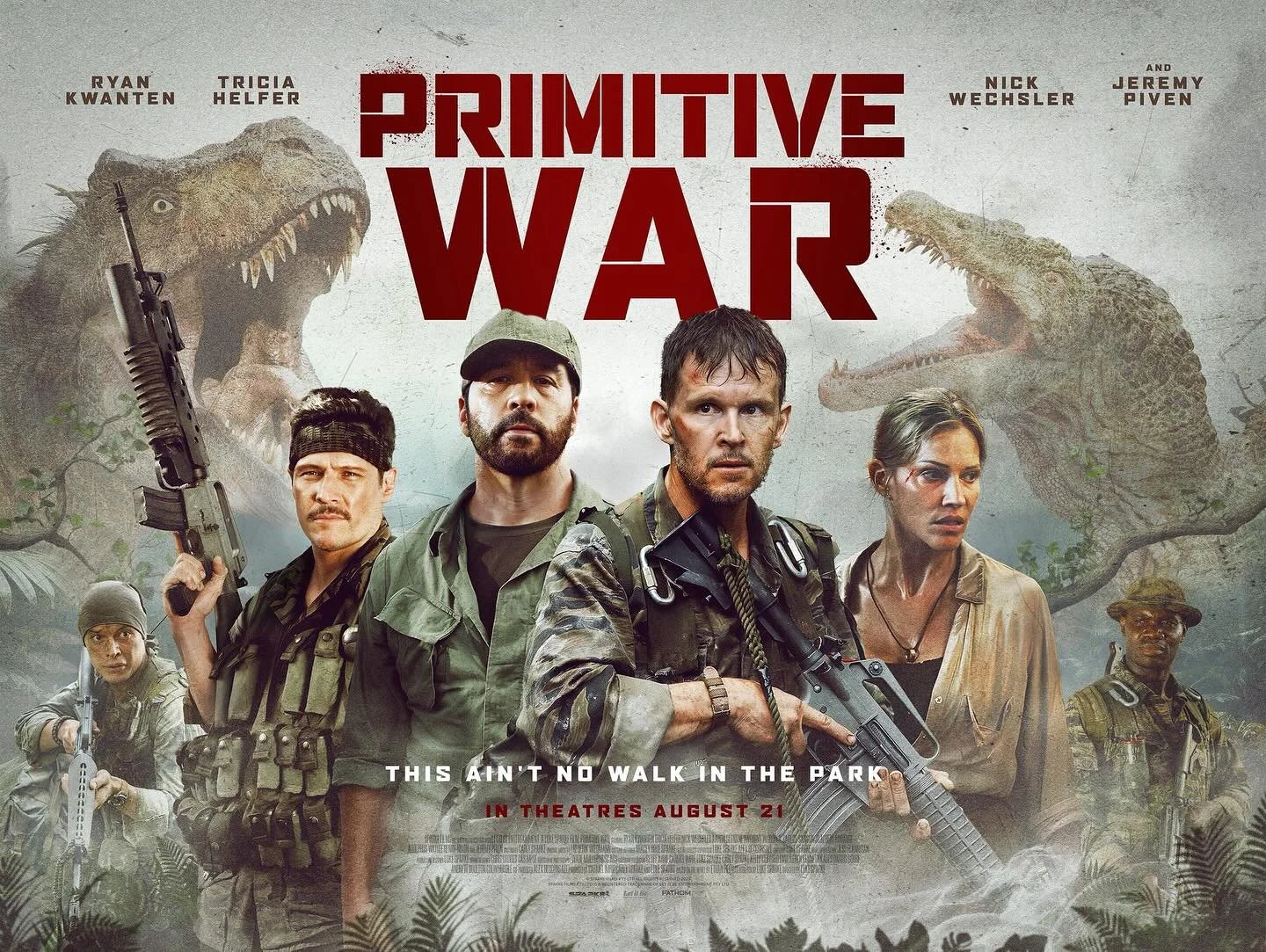

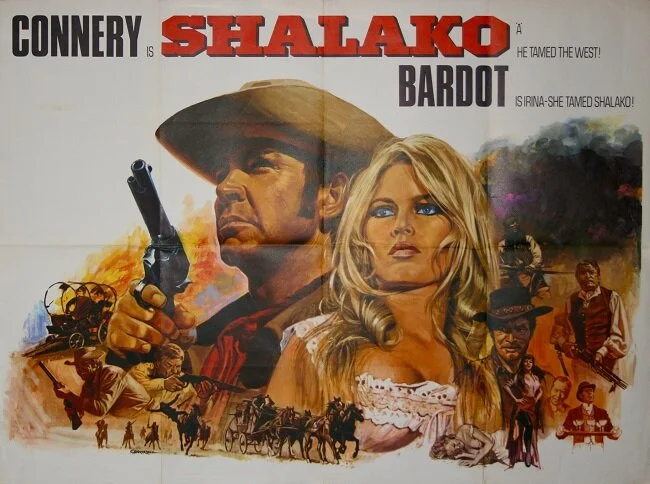
Shalako (1968)
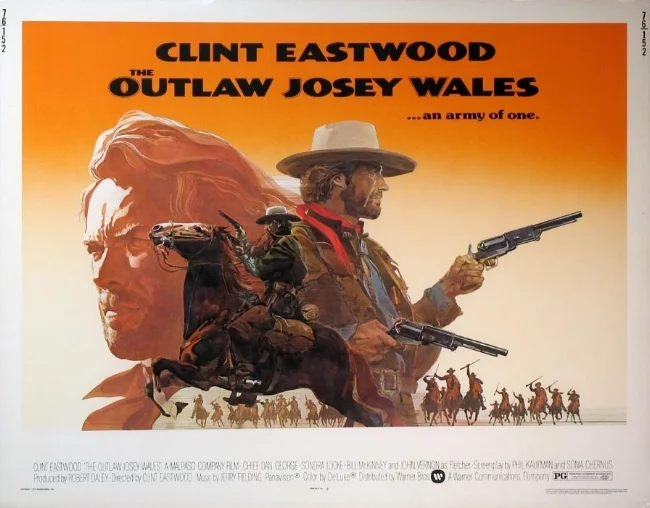
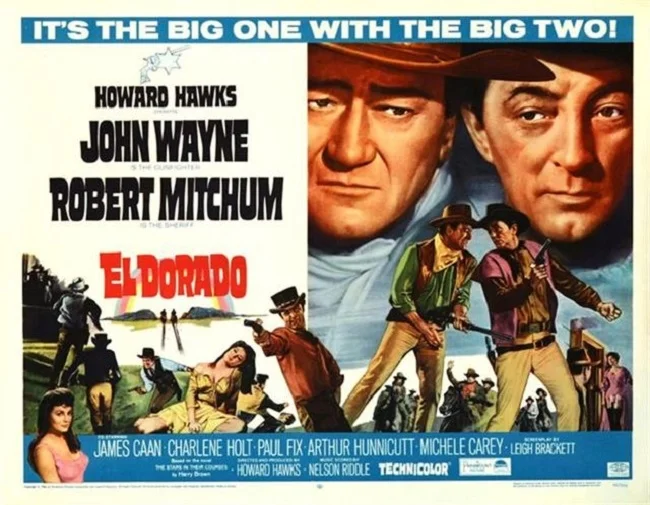
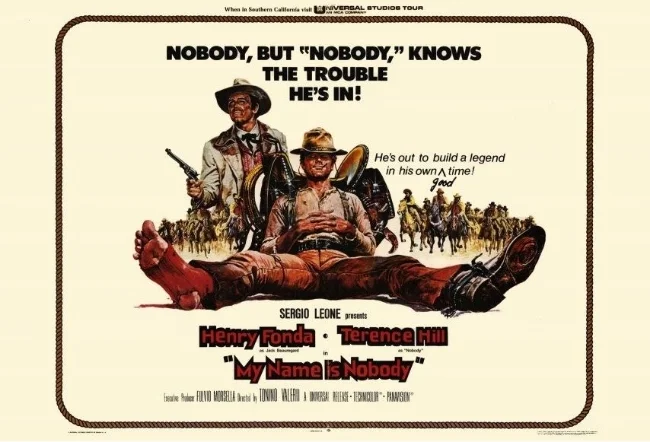
From the 1950s to the mid 1970s, most major film stars would appear in a western at some point in their career. The western genre was simply too popular and lucrative to avoid or dismiss. So it probably won’t come as a surprise to learn that after he walked away from James Bond in 1967, Sean Connery appeared in the western Shalako, a year later. Based on a novel by Louis L’Amour, this European financed production with an international cast is a curious beast that straddles two competing approaches to the genre. The traditional, romanticised western with its stylised tropes was giving way to a grittier, revisionist approach. Shalako still feels like an example of the former but director Edward Dmytryk does not shy away from the more contemporary use of violence. The film drags, especially during the awkward romantic interludes between Connery and Brigitte Bardot. But the action scenes are quite gritty and some of the story’s themes are quite dour.
From the 1950s to the mid 1970s, most major film stars would appear in a western at some point in their career. The western genre was simply too popular and lucrative to avoid or dismiss. So it probably won’t come as a surprise to learn that after he walked away from James Bond in 1967, Sean Connery appeared in the western Shalako, a year later. Based on a novel by Louis L’Amour, this European financed production with an international cast is a curious beast that straddles two competing approaches to the genre. The traditional, romanticised western with its stylised tropes was giving way to a grittier, revisionist approach. Shalako still feels like an example of the former but director Edward Dmytryk does not shy away from the more contemporary use of violence. The film drags, especially during the awkward romantic interludes between Connery and Brigitte Bardot. But the action scenes are quite gritty and some of the story’s themes are quite dour.
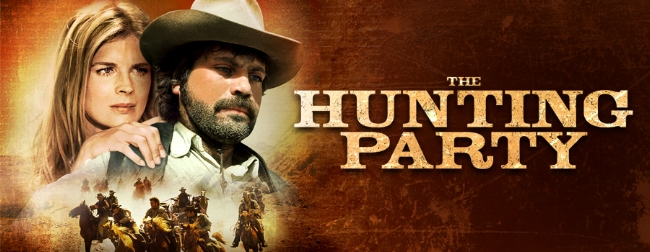
Shalako starts with an opening crawl by author Louis L’Amour, stating how many European nobles and dignitaries came to American to hunt and to experience the frontier. The story then focuses on a party of visiting aristocrats and a U.S. senator who are on a hunting expedition, while bringing all the trappings of their lifestyle with them. Servants, vintage wine and silverware as well their socioeconomic based hubris. Their questionable guide Bosky Fulton (Stephen Boyd) foolishly camps on Apache land incurring the wrath of the local chief and his warriors. When Countess Irina (Bardot) is waylaid by the Indians she is rescued by ex-army scout Shalako (Sean Connery), who had previously brokered a peace between the Indians and the US government. The pair return to the camp and inform Baron Frederick Von Hallstatt (Peter van Eyck) of the impending attack. However, neither the European dignitaries or Fulton and his men take the threat seriously. The subsequent raid the following dawn is barely repelled and leaves many dead. Fulton abandons his employer and his men take all the remaining food, water and ammunition. It is up to Shalako to lead the survivors out of Indian territory.
Filmed in Almeria, Spain, where so many international westerns were, Shalako boasts a strong cast, a desolate location and some well choreographed action scenes staged by former Bond stunt arranger Bob Simmons. On paper it all has the making for a solid western. Unfortunately the reality is somewhat different. The pacing is somewhat pedestrian and the screenplay struggles with the themes it attempts to explore. There’s a lot of unrequited love, marital resentment and lust simmering away among the characters. Senator Henry Clarke (Alexander Knox) blames his wife’s ethnicity for his political career stalling. Lady Daggett (Honor Blackman) despises her older husband (Jack Hawkins) and flirts with their guide Fulton. And Countess Irina is expected to marry the Baron but is conflicted by her desire for Shalako. These plot threads initially seem like they are going to be handled in a modern way, reflecting the changing morality of the sixties. Sadly all are resolved in a distinctly twee, old school fashion.
The story lurches between such dated scenes and several action sequences which although not especially graphic are tonally quite strong. One of Fulton’s team is captured by Indians and tied over a broken lance, while precariously balanced in a stress position. When he inevitably can no longer support his own body weight, he collapses and is impaled. One of the Baron’s staff is shot with a flaming arrow. He dies during a desperate attempt to remove it. Lady Daggett is captures by an Indian war party and there is a rather disturbing threat of rape as she is tormented by her captors. The casting of African American actor Woody Strode as an Apache is dated and somewhat risible. There is also an excess of the cast riding through the utterly barren terrain. Overall it feels as if the film could have lost fifteen minutes to tighten the flow of the story. The title song is another unnecessary hangover from earlier western films.
Shalako did not fare well in the US but did surprisingly well at the box office in Europe. However, due to the complexities of the film’s financing, the production just about broke even. Producer Euan Lloyd had a penchant for looking back at the golden age of Hollywood and attempting to recreate it at a time when the industry was moving on. Many of his later films would fall between similar stools. Paper Tiger, The Wild Geese and Who Dares Wins all boast strong casts and robust production values but are also saddled with politically naive storylines that are out of step with the contemporary views of the times. Shalako, as mentioned earlier, seems to want to be gritty and yet clings to a very formal western idiom at times. An odd outcome considering director Edward Dmytryk’s pedigree, with films such as The Caine Mutiny (1954) and Alvarez Kelly (1966). At most Shalako remains a cinematic curiosity. The only western that Sean Connery made and a rare British produced genre entry.

Investing Time in TV Shows
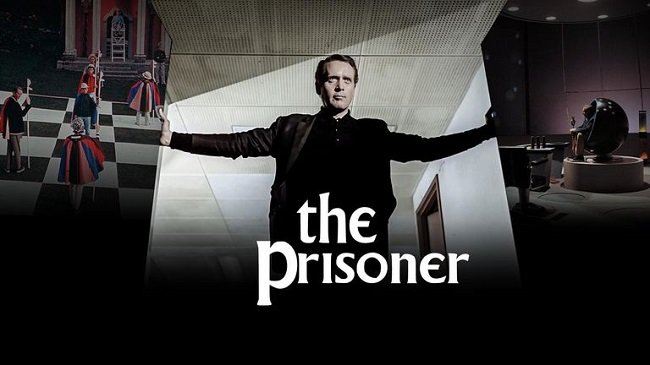
Whenever someone mentions the TV show Lost, I often feel a pang of mild irritation. As I’ve mentioned before, I watched four seasons of that show before I realised it was effectively trolling its viewers and that the writers were making it up as they went along, flying by the seat of their pants. I appreciate that the entire “what the hell is happening now” approach was very appealing to some viewers but I felt I was being manipulated. I believe that there is a loose and informal social contract between the viewer and the powers that create and run popular television shows. I recognise that it is their intellectual property so they can do what they please but one cannot totally ignore viewer expectations. It is not unreasonable to expect story arcs to be concluded or at least progress in a manner that gives them meaning. When watching Lost, I got that same feeling I get when watching a street magician. Yes, they are doing something clever but ultimately they are misdirecting you.
Lost
Whenever someone mentions the TV show Lost, I often feel a pang of mild irritation. As I’ve mentioned before, I watched four seasons of that show before I realised it was effectively trolling its viewers and that the writers were making it up as they went along, flying by the seat of their pants. I appreciate that the entire “what the hell is happening now” approach was very appealing to some viewers but I felt I was being manipulated. I believe that there is a loose and informal social contract between the viewer and the powers that create and run popular television shows. I recognise that it is their intellectual property so they can do what they please but one cannot totally ignore viewer expectations. It is not unreasonable to expect story arcs to be concluded or at least progress in a manner that gives them meaning. When watching Lost, I got that same feeling I get when watching a street magician. Yes, they are doing something clever but ultimately they are misdirecting you.
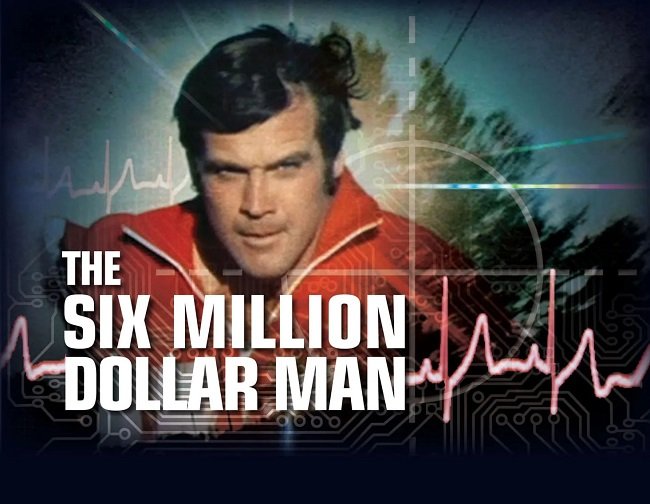
However, I learned a very important lesson from this experience and as a result, I am a lot more discerning in what I choose to watch these days. Not only do I filter shows now that I think may have plans for a long, sprawling and ponderous story arc, I also keep an eye out for those that could get cancelled. That is another factor that I find very frustrating. In the seventies, US shows would appear on UK TV between 6 months to a year after their US broadcast. As there was no internet at the time, a new television series would air in the UK and I and many others would become avid fans, not knowing that the commissioning network in the US had already cancelled it due to low audience ratings. This still happens today. The only difference this time round is that many shows are now broadcast simultaneously or within a few days of each other. So instead of retrospectively finding out if a show’s been canned, we now all play a form of viewing Russian Roulette.
Awake
Firefly, Almost Human and Awake are just a few examples of good shows that were poorly marketed and never found the audience they deserved. I won’t include Manimal in that list but I was gutted as a teenager. However, with the advent of streaming services, shows can sometimes get a second chance. I was pleased that Designated Survivor got a final season, courtesy of Netflix. But a lot of good television just doesn’t make it. I liked Timeless and felt that it needed a third season. I currently have grave concerns for Clarice as that show has virtually been hidden from the public with the intermittent scheduling it’s received. Which brings me back to the investment of time by the viewers. It feels like a slap in the face when a show is ignominiously cancelled. It can also be frustrating when the opposite happens and a show is drawn out too long and deliberately treads water, rather than seizing the nettle and writing a reasonable and satisfactory ending.
Manimal
I read an interview recently with Line of Duty writer, Jed Mercurio, in which he stated how writing for TV had become more complex in recent years, as we now watch and re-watch programs on demand. Social media allows for fans to quickly assess and dissect an episode, then share ideas. It’s a far cry from watching a TV show, once a week as it was broadcast, as we did back in the seventies. Naturally, contemporary showrunners wish to cater to this more sophisticated audience and intricate viewing pattern. Hence we find more complex shows, with evolving narratives that seek to continue across multiple seasons. However, this is a hard task to achieve which returns me to my concerns over shows like Lost. And because there is so much good quality TV these days, hard decisions have to be made regarding what gets watched. As well as all the usual factors that we consider before watching a new show, for me at least, I will reflect on whether I am willing to invest my precious leisure time into a particular show or all the reasons stated above.
Debris
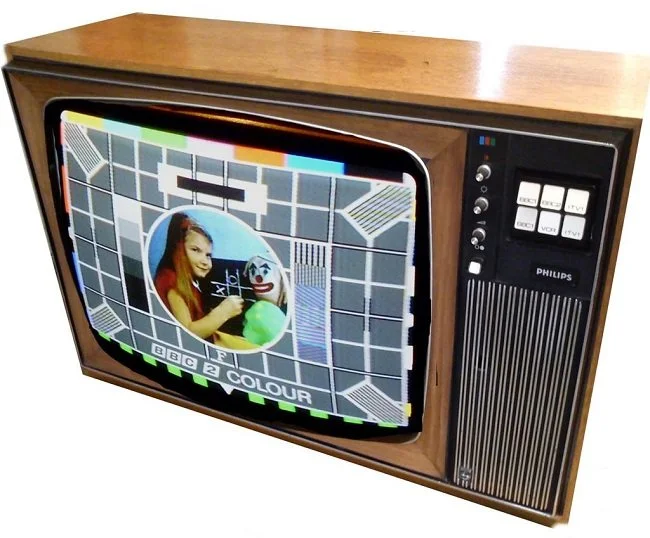
Over the last three months, I’ve been watching Debris, the new science fiction show from J. H. Wyman, the creator of Fringe. It is cerebral, complex and requires the viewer to think to keep up. Over thirteen episodes, the scope of the plot has broadened from an investigation of alien technology, into a far reaching global power struggle. I like it but it has the hallmarks of a show that could, like Fringe, sprawl across several years requiring the viewer to invest a lot of their time. Conversely, its dense plot may discourage sufficient viewers leading to NBC to pull the plug. It will be interesting to see what happens next and which option comes to pass. In the meantime, there are plenty of shows that sustain self-contained story arcs within each season. These can be more satisfying, as they provide a narrative journey but do not leave viewers hanging if the production ceases. However, looking at the bigger picture, we do live in curious times when the decision to watch a TV show becomes such a complex process, fraught with such trepidation. Watching Manimal was a lot easier.






Dual Monitors
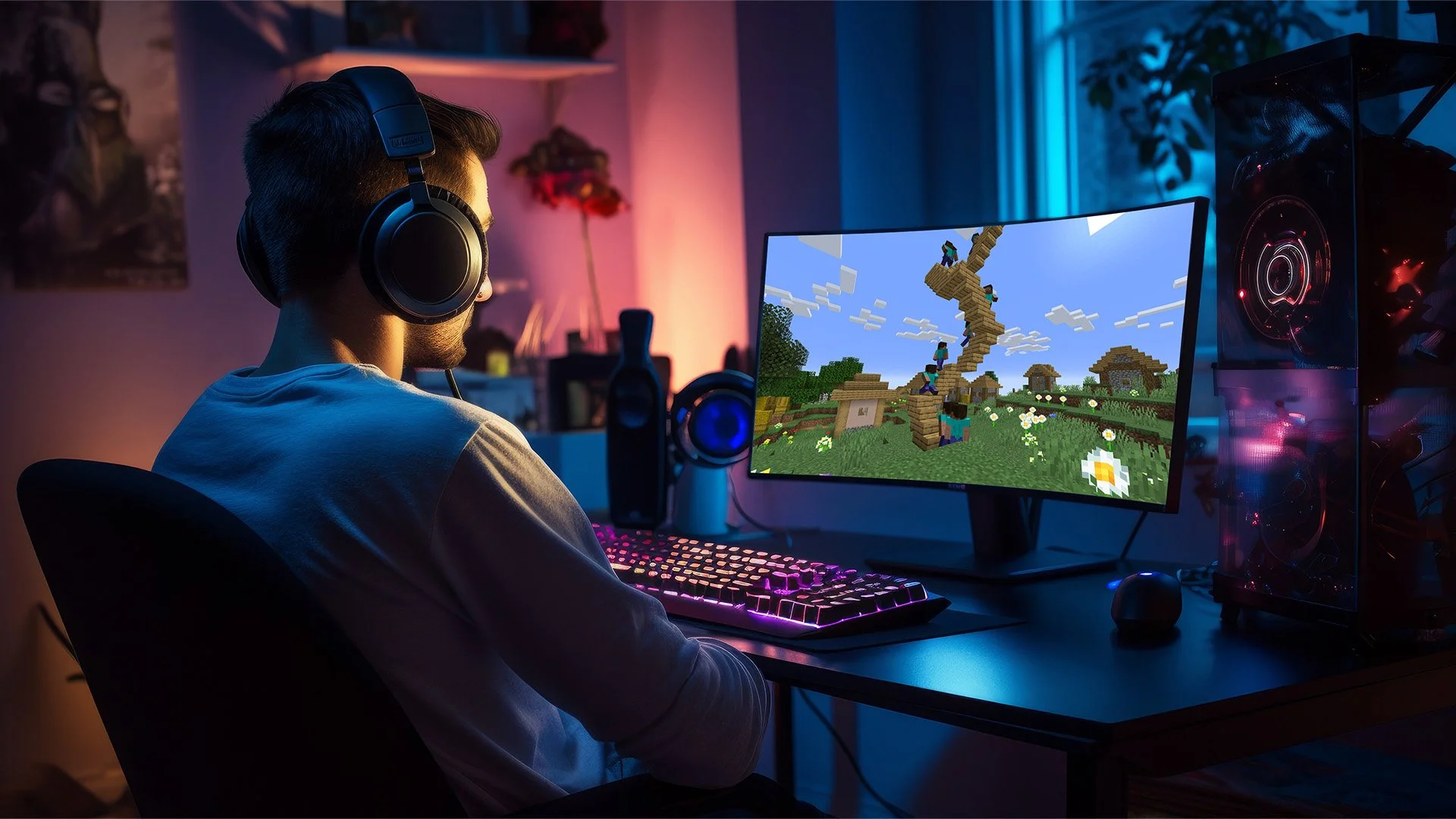
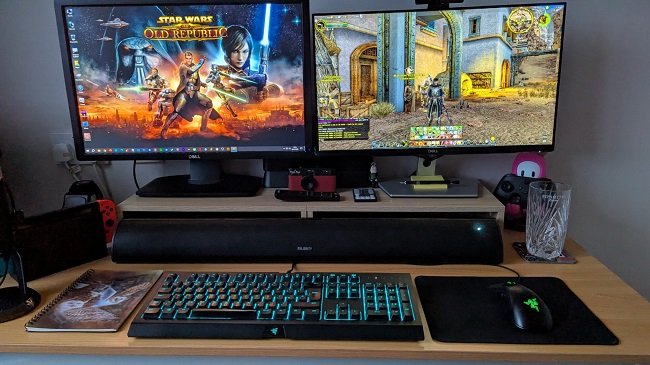
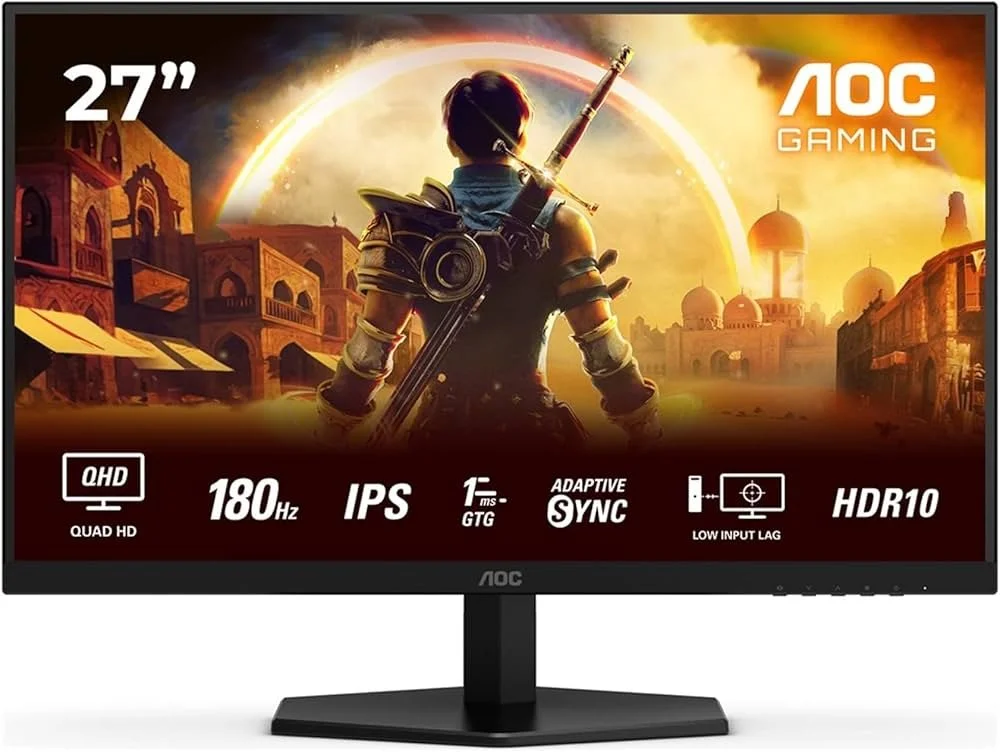
After years of trying to come up with some sort of half-assed compromise, I’ve finally bought a quality second monitor. A 24 inch 16:9 1080p Dell monitor was delivered on Tuesday and integrated into my existing desktop setup. I bought this model as it had two HDMI inputs and integral speakers. As well as serving as a second monitor for my PC, I also wanted the ability to connect my Nintendo Switch. Needless to say it all works perfectly. My primary monitor is another Dell 24 inch model but with a 16:10 ratio and a resolution of 1920 x 1200. I use this for writing and gaming. The second monitor is for web browsing, Twitter and other stuff that I tend to keep running when either blogging or playing an MMO. I bought new monitor stands and spent some time working out the optimal height for each screen so I don’t have to look up or down continuously while working. Both screens fit well within my field of vision, so do not require me to turn excessively from one to the other.
After years of trying to come up with some sort of half-assed compromise, I’ve finally bought a quality second monitor. A 24 inch 16:9 1080p Dell monitor was delivered on Tuesday and integrated into my existing desktop setup. I bought this model as it had two HDMI inputs and integral speakers. As well as serving as a second monitor for my PC, I also wanted the ability to connect my Nintendo Switch. Needless to say it all works perfectly. My primary monitor is another Dell 24 inch model but with a 16:10 ratio and a resolution of 1920 x 1200. I use this for writing and gaming. The second monitor is for web browsing, Twitter and other stuff that I tend to keep running when either blogging or playing an MMO. I bought new monitor stands and spent some time working out the optimal height for each screen so I don’t have to look up or down continuously while working. Both screens fit well within my field of vision, so do not require me to turn excessively from one to the other.
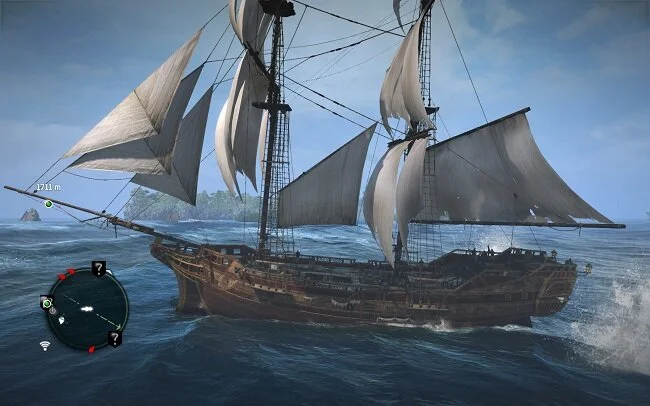
I started using my Father’s old Acer flat screen monitor a few years ago but it had a low resolution and was not particularly large, so I only used it when I was experimenting with live streaming. I also tried to use my Fire HD 10 tablet as a substitute monitor but it wasn’t a convenient or efficient workaround. My recent purchase of a Switch proved the best incentive as I can’t always use it with the lounge TV. Although I will play games such as Mario Kart in handheld mode, I prefer other titles such as Assassin’s Creed Black Flag to be played via a more substantial screen. Hence I’ve finally embraced the practicality of dual monitors. I also took the opportunity to replace my ageing twin speakers and subwoofer with a convenient soundbar. One particular model appeared in several of the reviews I read, so I ended up buying the Majority Snowden II. It provides the required level of quality without costing a fortune.
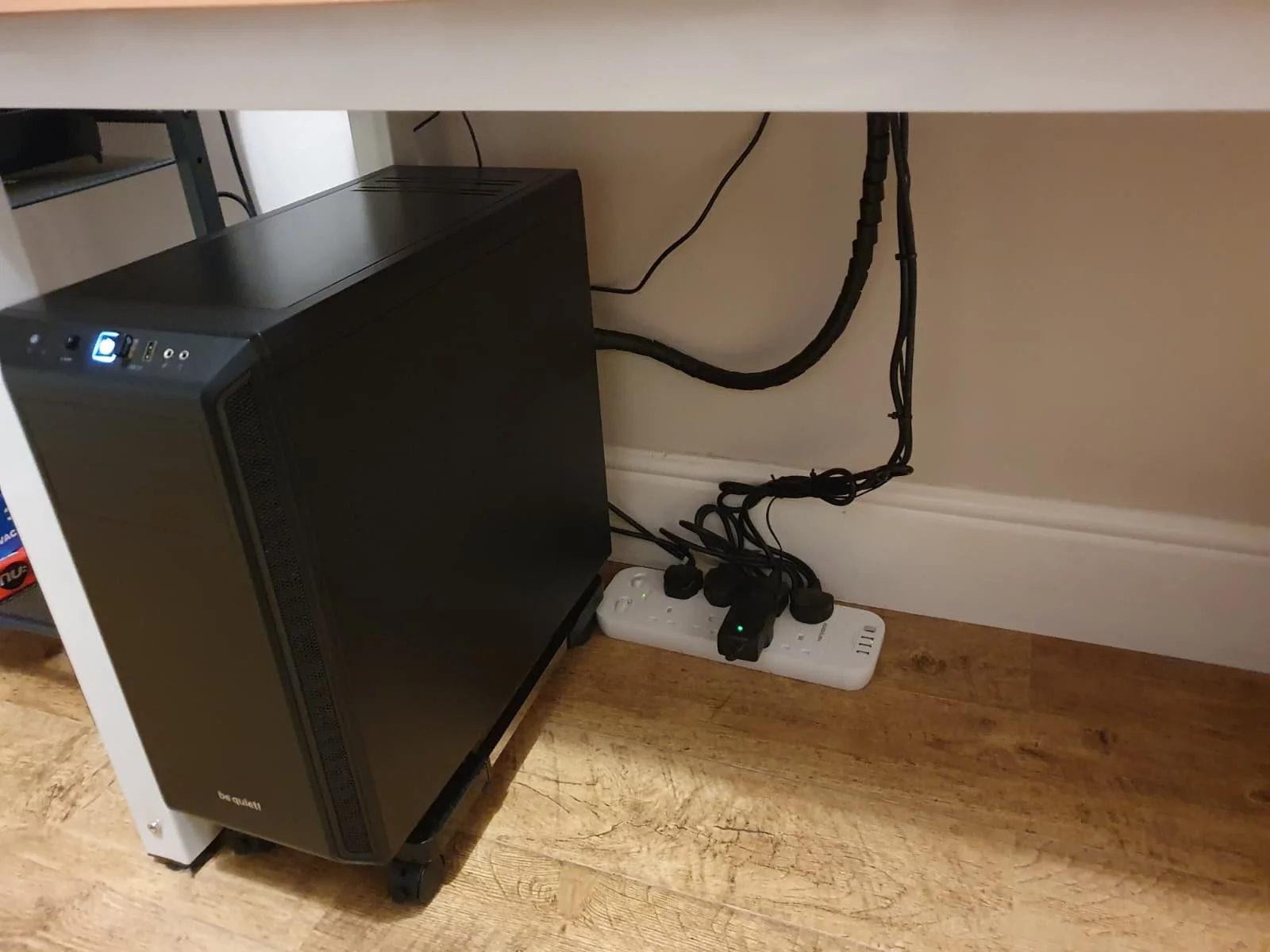
These changes have certainly improved the cable management under my desk, although it still remains somewhat complex. Although adding both these items of kit was simple in principle, the reality proved quite different. I had to disconnect every peripheral to accommodate my new desktop layout and it took a couple of hours of scrabbling around in confined spaces to sort it all out. However, I colour codes both ends of all cables in use, so if at some future date I have to unplug things, it will be a lot easier to identify which lead belongs to which device. Overall, I am pleased with my new desk layout. I’ve removed my “in tray”, the piles of notebooks and the mug filled with pens. I have just one of each item discreetly hidden behind my soundbar. Whether these changes will improve my writing productivity remains to be seen. However, they have made me feel better about my work and leisure space, which is half the battle. Perhaps I should have done this a lot sooner.





EG7 to Consolidate All Titles on its 4Game Platform
EG7 is very slick when it comes to corporate communications. Earlier today the company posted their Q1 Report Presentation and Q&A on YouTube. Although specifically designed for the company’s investors, CEO Robin Flodin stated that he was aware that many gamers watch these presentations and are welcome. However, he did point out that any major game related news would always come via their appropriate outlets, thus making it clear that there was not any consumer information in his briefing. He then went on to discuss how well EG7 was faring financially and even to the layperson, it is clear that the company did very well last year. However, there were two nuggets of information that were interesting from a gamer’s perspective. The first was that EG7 is going to consolidate all of its games on their current 4game platform. The second was that the company was developing a new AAA MMO linked to a major intellectual property.
EG7 is very slick when it comes to corporate communications. Earlier today the company posted their Q1 Report Presentation and Q&A on YouTube. Although specifically designed for the company’s investors, CEO Robin Flodin stated that he was aware that many gamers watch these presentations and are welcome. However, he did point out that any major game related news would always come via their appropriate outlets, thus making it clear that there was not any consumer information in his briefing. He then went on to discuss how well EG7 was faring financially and even to the layperson, it is clear that the company did very well last year. However, there were two nuggets of information that were interesting from a gamer’s perspective. The first was that EG7 is going to consolidate all of its games on their current 4game platform. The second was that the company was developing a new AAA MMO linked to a major intellectual property.
For those who may not be aware, most game publishers have a bespoke platform that allows customers to install and manage all the titles that the company produces. Activision Blizzard has Battle.net, EA has Origins, Ubisoft has Uplay and Good Old Games has Galaxy. Then there are the big digital stores such as Steam and Epic Games which similarly have their own “launchers” as they are known. So it makes sense the EG7 is to add all the titles it acquired when it bought the Daybreak Game Company. When and how this change will happen is not yet known. Will players be required to reinstall LOTRO or DDO also remains to be seen. However, Standing Stone Games’ existing launcher for LOTRO is dated and painfully slow. The other advantages of consolidating all products on a single platform are more effective marketing and dissemination of information. As and when LOTRO is added to 4games, it may well lead to an influx of new players.
The news of an AAA MMO being developed is very intriguing although somewhat vague. Robin Flodin referred to it being based upon “one of the greatest brands in the world”. Whether he was referring to franchises that EG7 already hold or something that they’ve recently acquired is a matter for speculation. As fellow blogger Wilhelm Arcturus pointed out in his post, Daybreak currently has a license for a Marvel game. Or has the recent closure of Amazon Game Studios Middle-earth based MMO, cleared the way for another? Are EG7 considering a LOTRO 2.0 or something similar? Whatever the outcome, things have certainly gotten a lot more interesting since the company acquired DGC. In the meantime let us see how both these two items of news are received by the LOTRO community. The consolidation of LOTRO, DDO and other titles onto the 4games launcher is an especially interesting development and needs to be handled well.
Fury (2014)
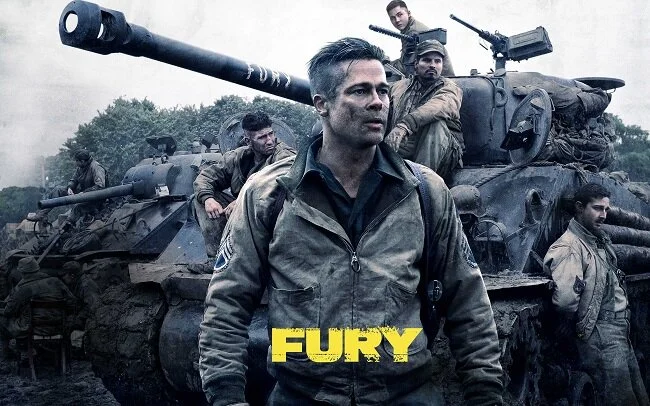
One of the things that immediately strikes you when watching Fury is its credibility and realism. The film reeks of authenticity. Every aspect of the production has been meticulously researched, from uniform and equipment, to ordnance and tactics. The M4A3E8 Sherman tank was not only the workhorse of the US Army but also a home for its five man crew. Director David Ayer makes this idea the foundation of his movie and then proceeds to explore those two perennial themes, the horrors of war and the loss of innocence. The film focuses on the experiences of the crew consisting of Don "Wardaddy" Collier (Brad Pitt), gunner Boyd "Bible" Swan (Shia LeBeouf), loader Grady "Coon-Ass" Travis (Jon Bernthal), and driver Trini "Gordo" Garcia (Michael Peña). They’re a tight knit family, relying on each other to stay alive and keep their mental stability.
One of the things that immediately strikes you when watching Fury is its credibility and realism. The film reeks of authenticity. Every aspect of the production has been meticulously researched, from uniform and equipment, to ordnance and tactics. The M4A3E8 Sherman tank was not only the workhorse of the US Army but also a home for its five man crew. Director David Ayer makes this idea the foundation of his movie and then proceeds to explore those two perennial themes, the horrors of war and the loss of innocence. The film focuses on the experiences of the crew consisting of Don "Wardaddy" Collier (Brad Pitt), gunner Boyd "Bible" Swan (Shia LeBeouf), loader Grady "Coon-Ass" Travis (Jon Bernthal), and driver Trini "Gordo" Garcia (Michael Peña). They’re a tight knit family, relying on each other to stay alive and keep their mental stability.
In many respects Fury tells a very traditional story, as a new crew member Norman Ellison (Logan Lerman) joins the team and the movie is told from his perspective. What makes the proceedings different is the setting (with its tangible sense of claustrophobia) and the reluctance by the director to place the protagonists on a pedestal. These soldiers have a job to do and they deal with it by stripping away the moral ambiguity and psychological ramifications associated with warfare. They undertake their duties in a clinical and functional manner out of necessity and it's not pretty. In some respects Fury has many similarities with Sam Peckinpah’s Cross of Iron (1977) and Samuel Fuller’s The Big Red One (1980). It certainly doesn't have the rose tinted, moral perspective of Spielberg's Saving Private Ryan (1998) which was undermined by its bookend scenes.
With a movie such as this where the plot hinges on the tight knit social dynamics of the tank crew, you need a strong cast and Fury has this in spades. All actors put in strong performances, especially Shia LeBeouf who plays a lay preacher struggling to reconcile his faith with the carnage around him. Director Ayer also cranks up the tension outside of the battle scenes. After capturing a German town the tank crew enters a house to find two terrified women who naturally expect the worst. In a desperate attempt for normality and for a brief respite from the war, Sergeant Collier tries to impose some order on their lives by having a meal around a dinner table. Sadly, it does not go well and highlights the mental strain that all are under.
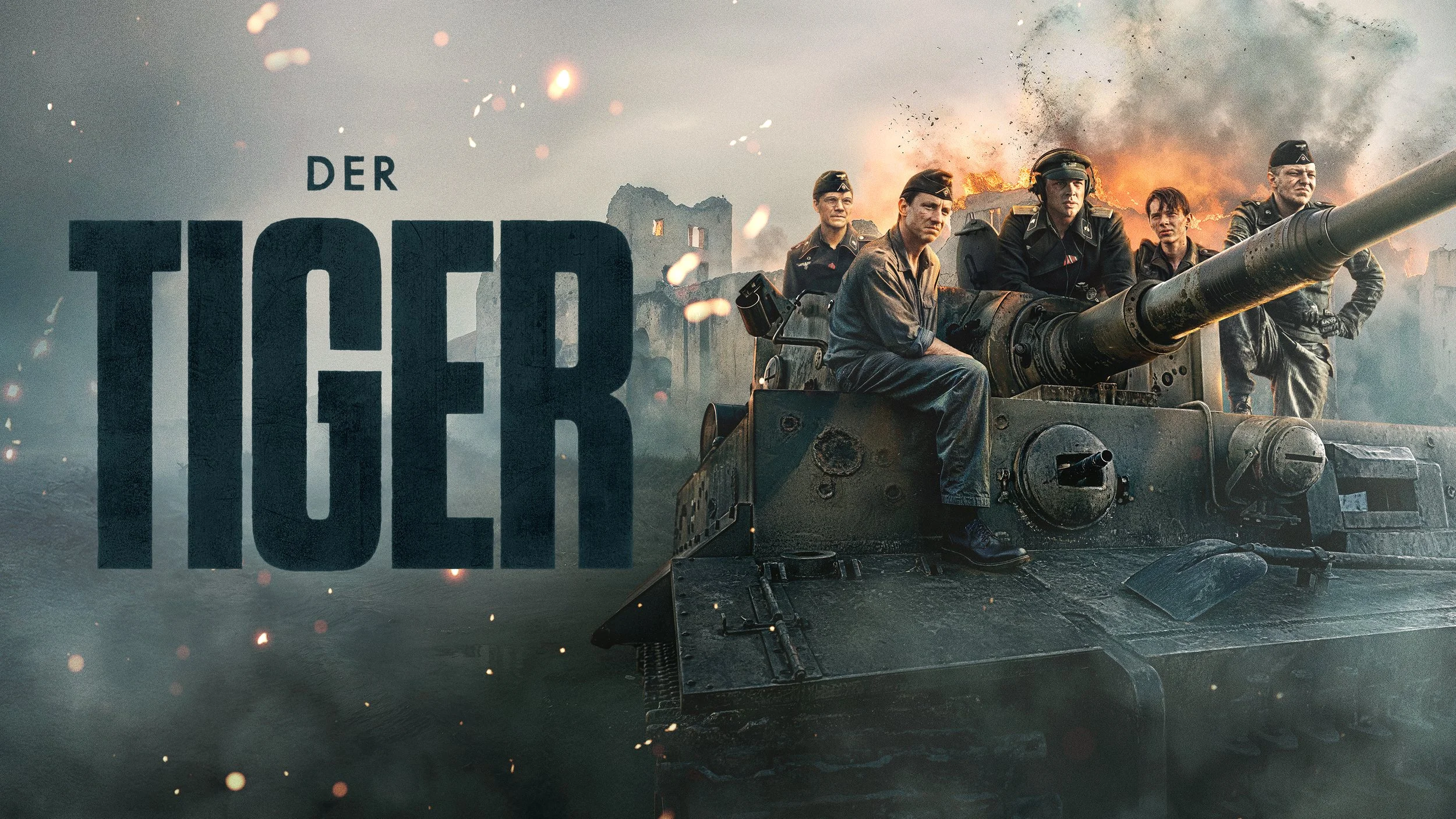
There are two stand out battle scenes in Fury that really leave their mark on the viewer. One involves a formation of four Sherman tanks taking on a German Tiger I, which was a technically superior vehicle. The tactics are credible and realistic, as is the depiction of the damage armour piercing ordnance can do. Then there is the climactic battle in which the crew of Fury expend all the ammunition they have in an attempt to fend off a column of three hundred Waffen-SS infantry. Both these scenes are compelling and tense. We see the realities of being on the receiving end of a .50 calibre Browning or a shell loaded with white phosphorus. However, director David Ayer finds the right balance with these scenes of violence and injury and does not teeter into excess.
The ending of Fury may not come as any surprise and it makes perfect sense within the context of the story. Anything else would harm the credibility of the movie and possibly be disrespectful to those who did serve under such conditions. There is a nod to traditional war movie symbolism as the film starts and ends with a white horse. As World War II recedes further into the past and the public’s connection to it becomes less and less each year, it is important that the subject is still explored by cinema. Fury offers a fresh perspective on the conventional trope that "war is hell". It is a theme that remains relevant and still provides quality film makers with a rich vein of material to mine. It is technically accurate and certainly flies in the face of standard Hollywood depictions of military engagements.
LOTRO: Bullroarer Update 30 - Preview #1
On Wednesday evening, Standing Stone Games made Update 30 The Blood of Azog for the Lord of the Rings Online available on the Bullroarer test server. The preview includes the forthcoming raid The Fall of Khazad-dûm and the continuation of the Epic Story from War of Three Peaks. They are also testing some balance changes to all classes in the game. According to community manager Cordovan “we've had to reconsider the balance of certain major group buffs and debuffs that were overpowered in the context of large fellowships. This has led to the reduction of several of these effects in order to hopefully allow for a wider breadth of class compositions in such content. We are balancing this work by not just focusing on nerfs, but DPS increases and other buffs as well”. As ever with content on Bullroarer, it is subject to change and may be altered further before final release.
On Wednesday evening, Standing Stone Games made Update 30 The Blood of Azog for the Lord of the Rings Online available on the Bullroarer test server. The preview includes the forthcoming raid The Fall of Khazad-dûm and the continuation of the Epic Story from War of Three Peaks. They are also testing some balance changes to all classes in the game. According to community manager Cordovan “we've had to reconsider the balance of certain major group buffs and debuffs that were overpowered in the context of large fellowships. This has led to the reduction of several of these effects in order to hopefully allow for a wider breadth of class compositions in such content. We are balancing this work by not just focusing on nerfs, but DPS increases and other buffs as well”. As ever with content on Bullroarer, it is subject to change and may be altered further before final release.
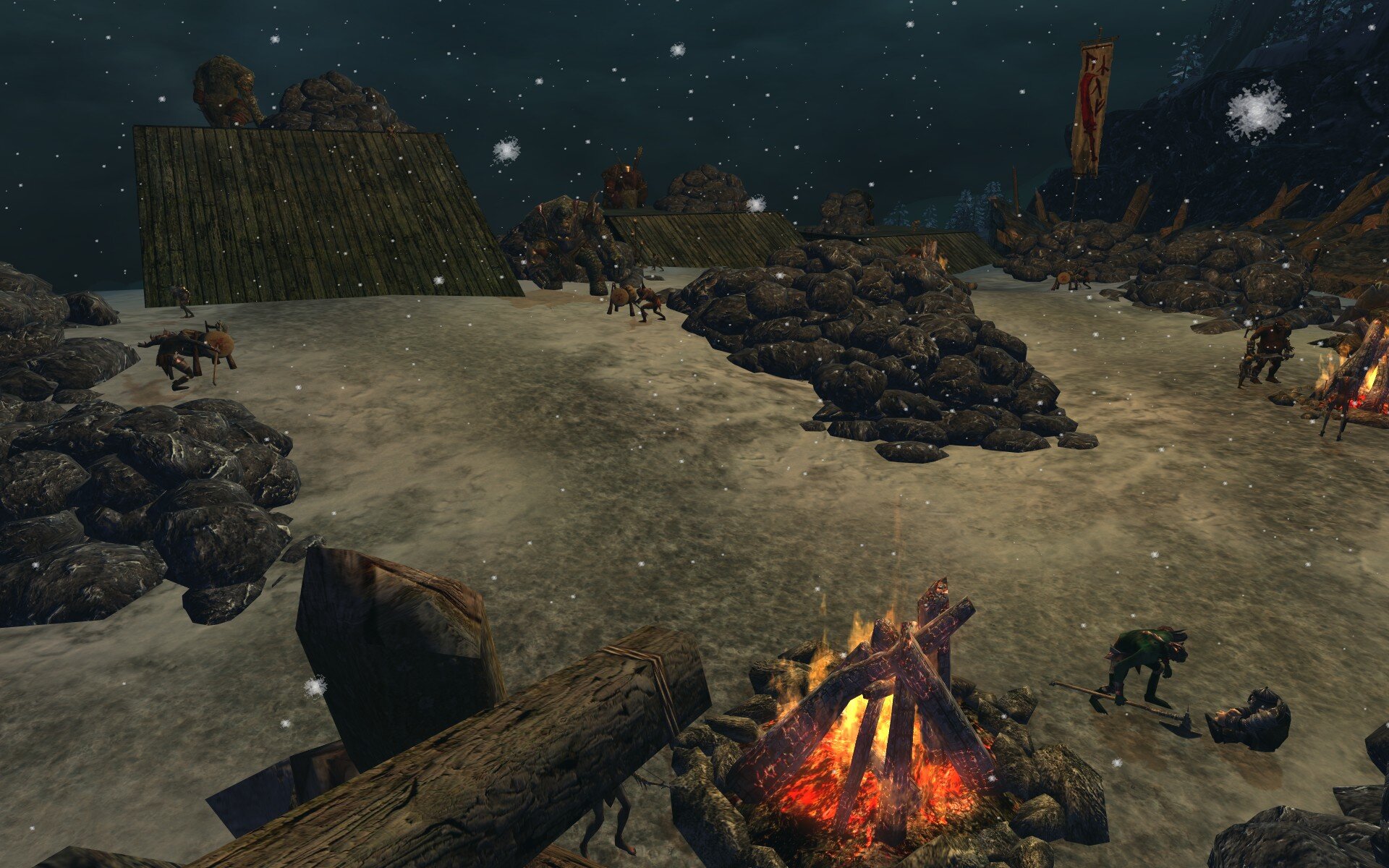
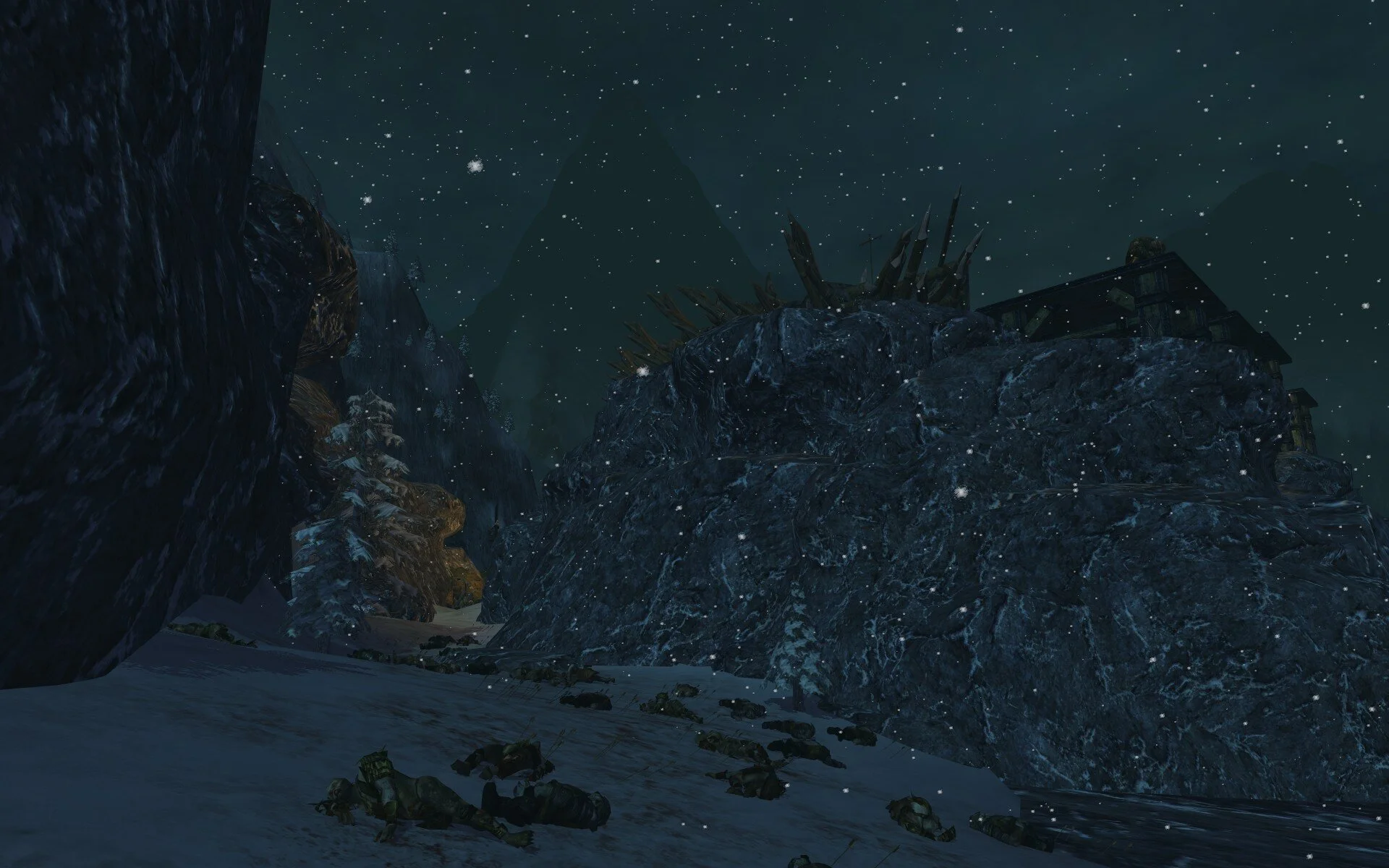
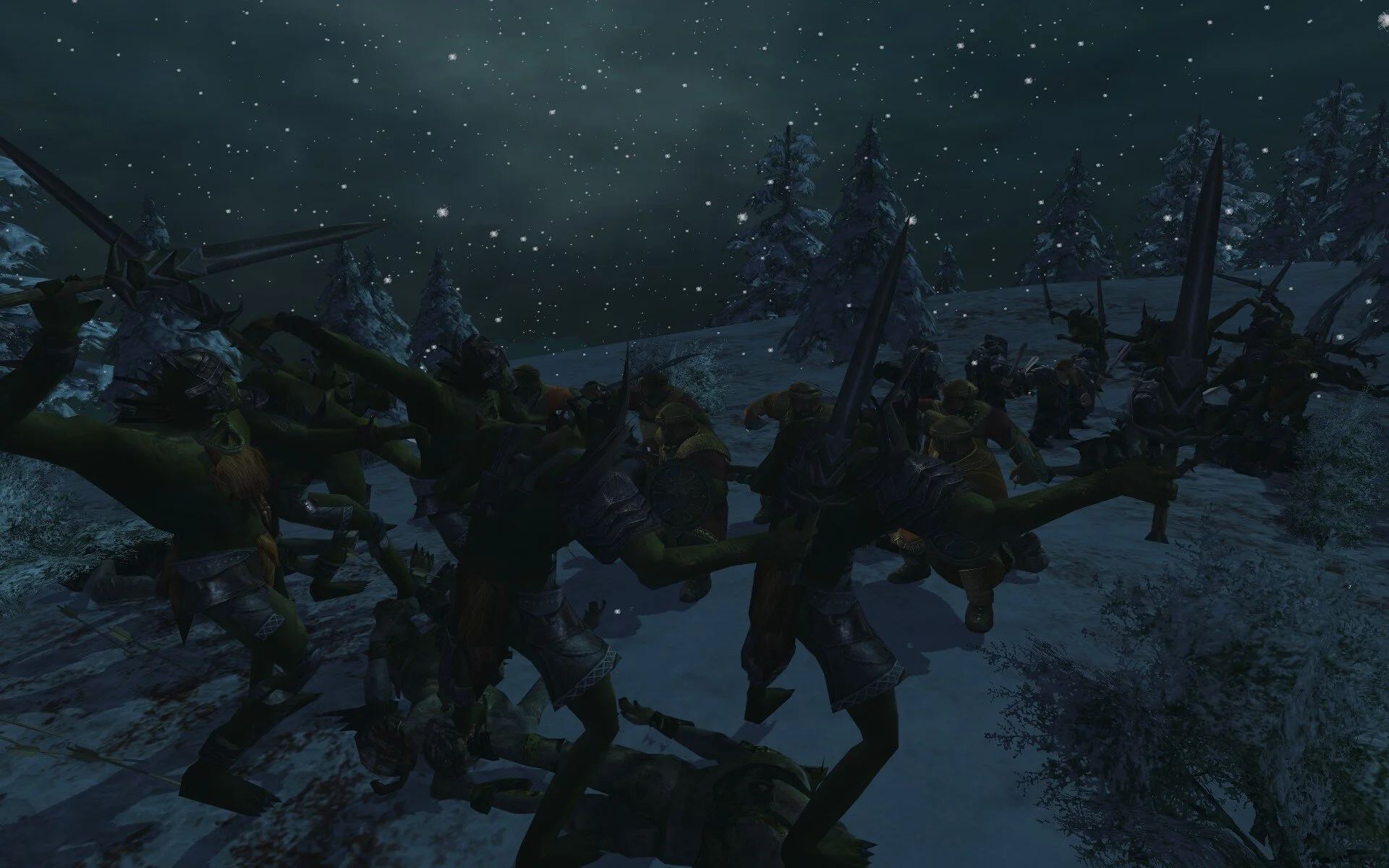
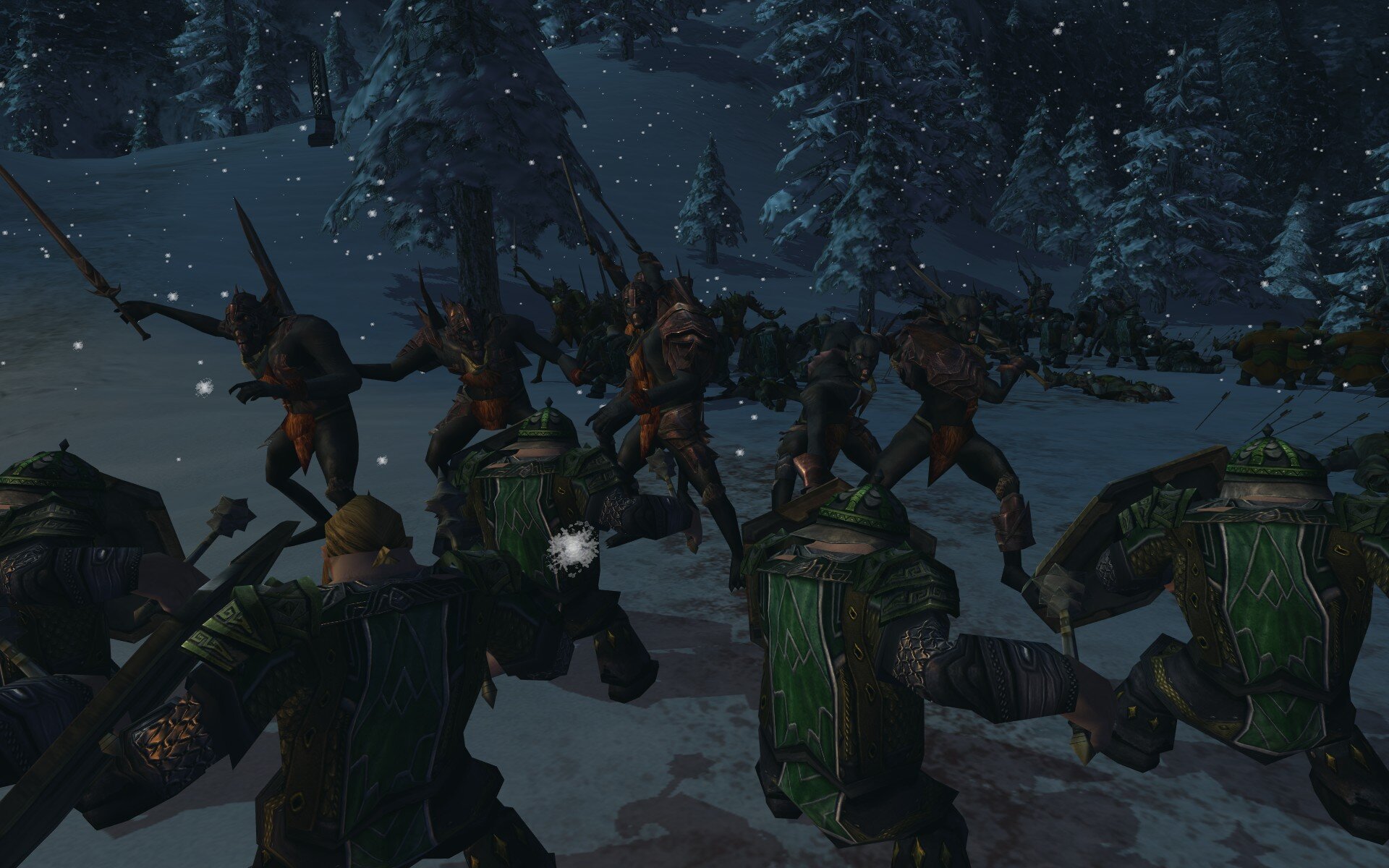
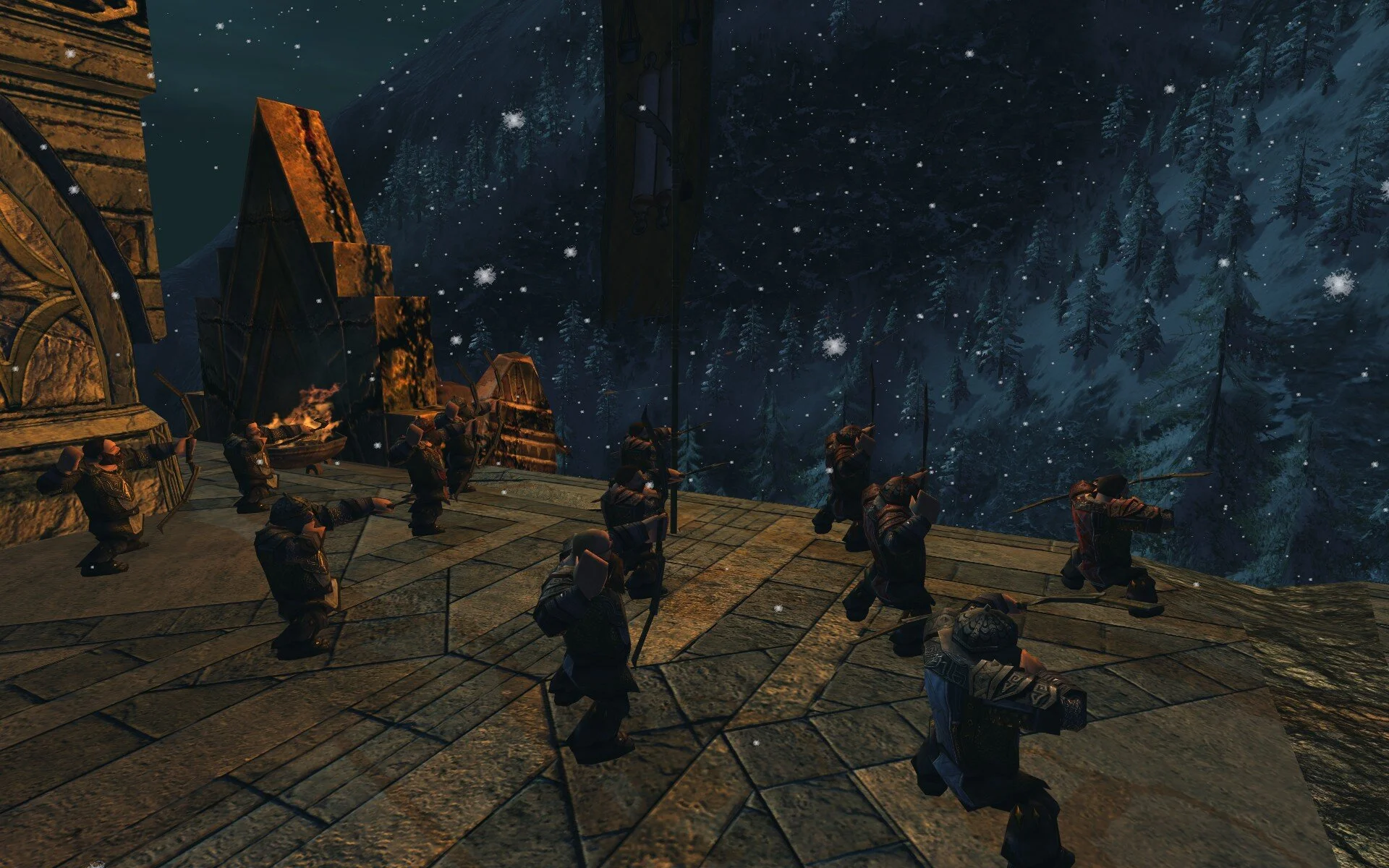
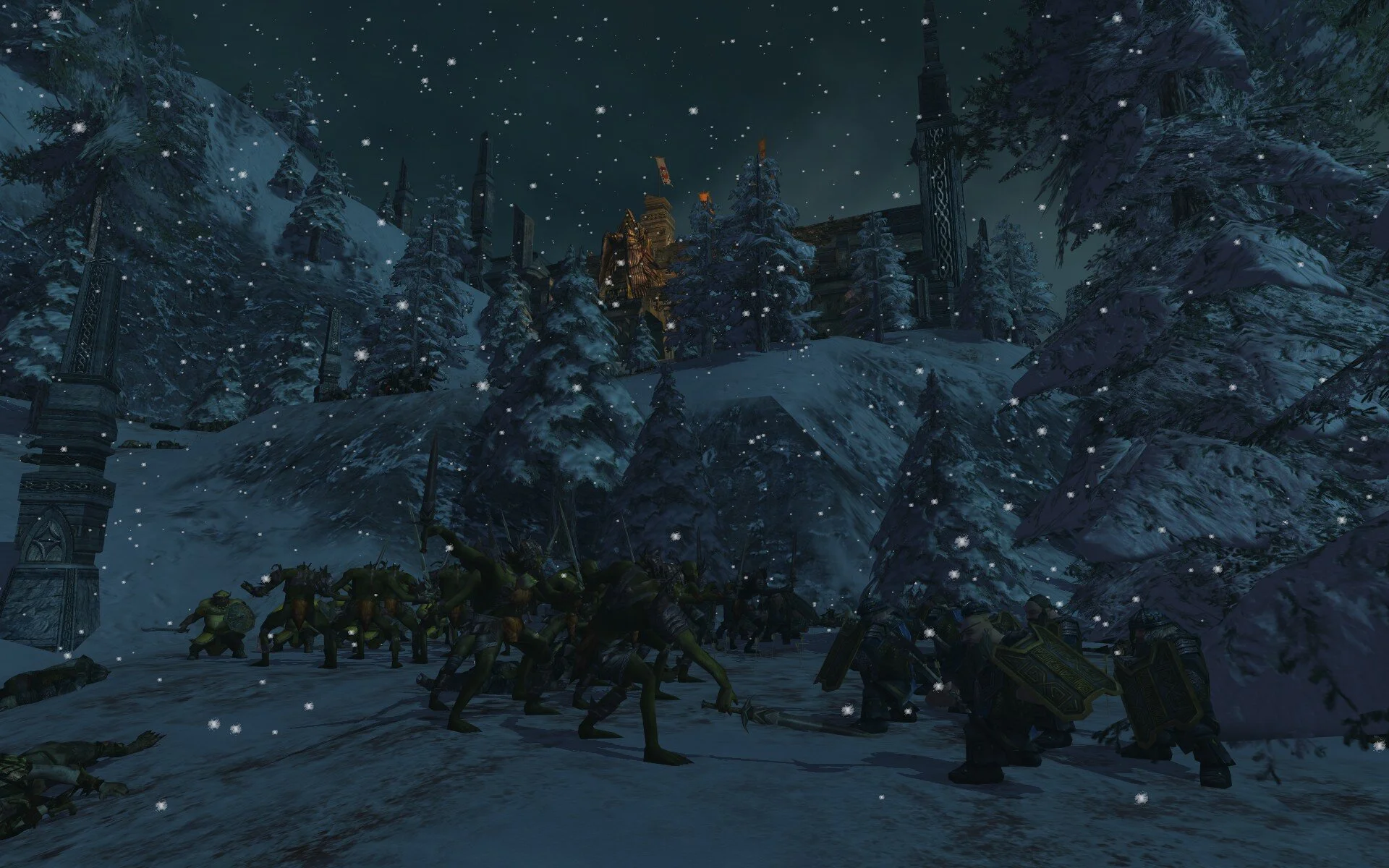
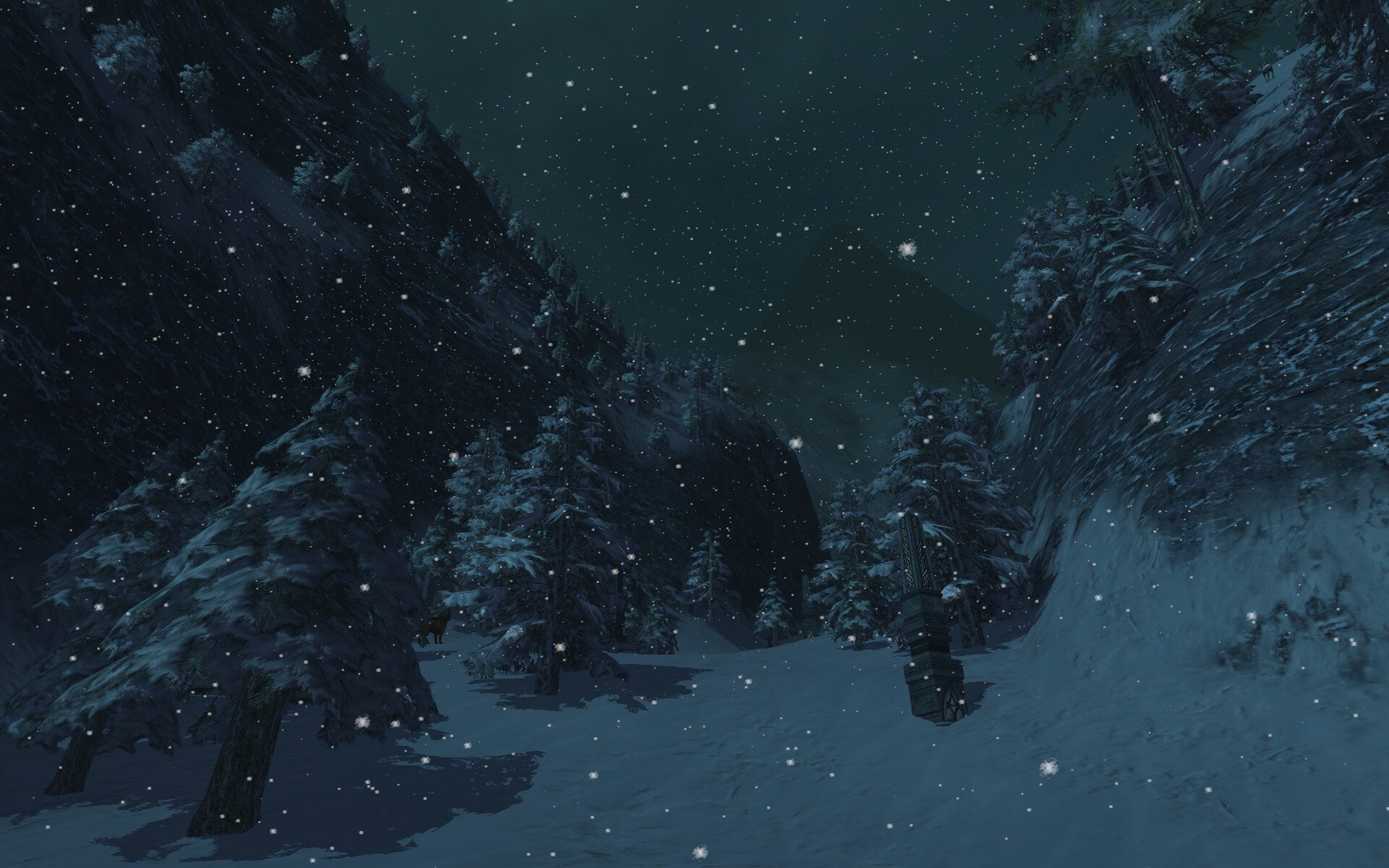
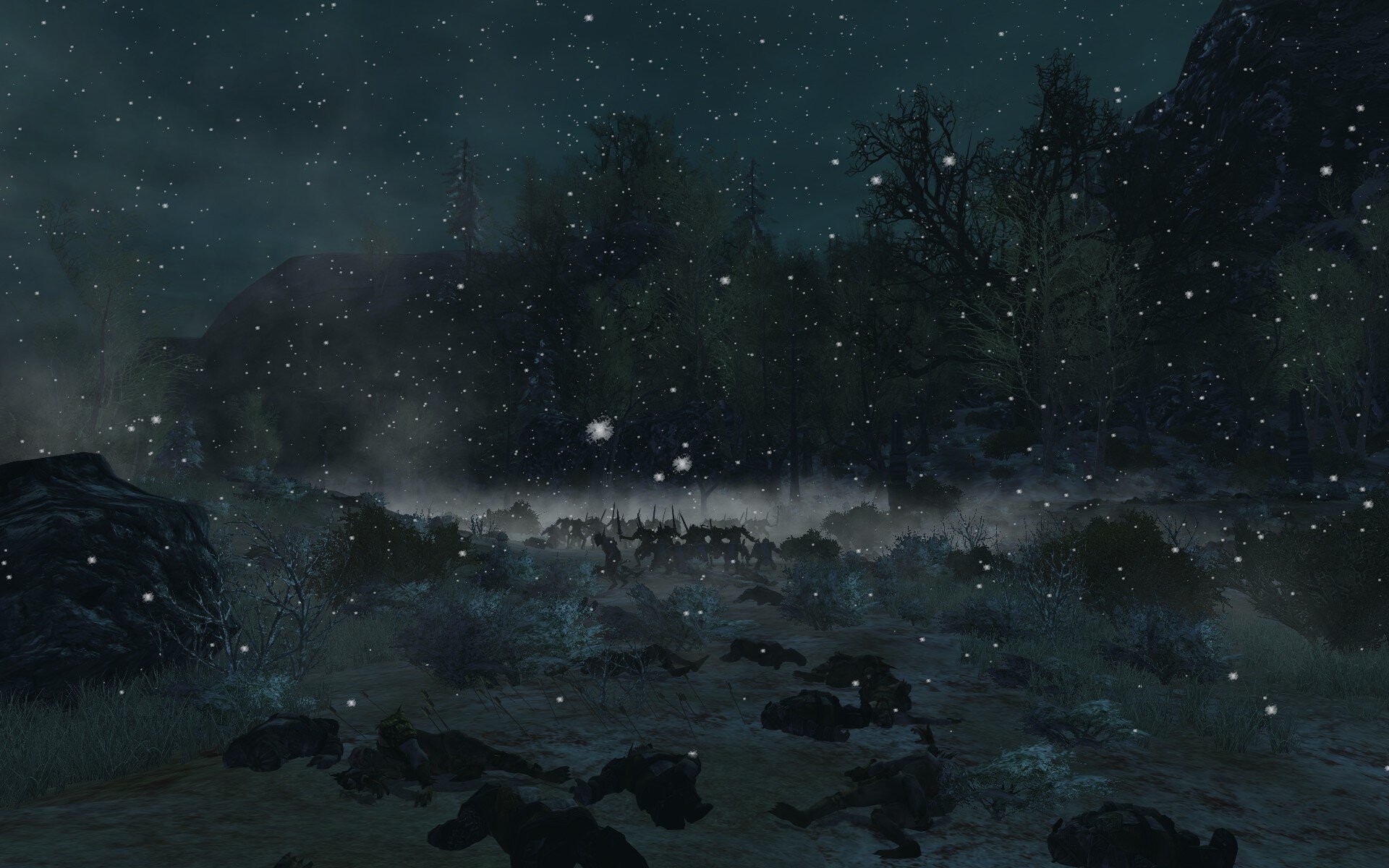
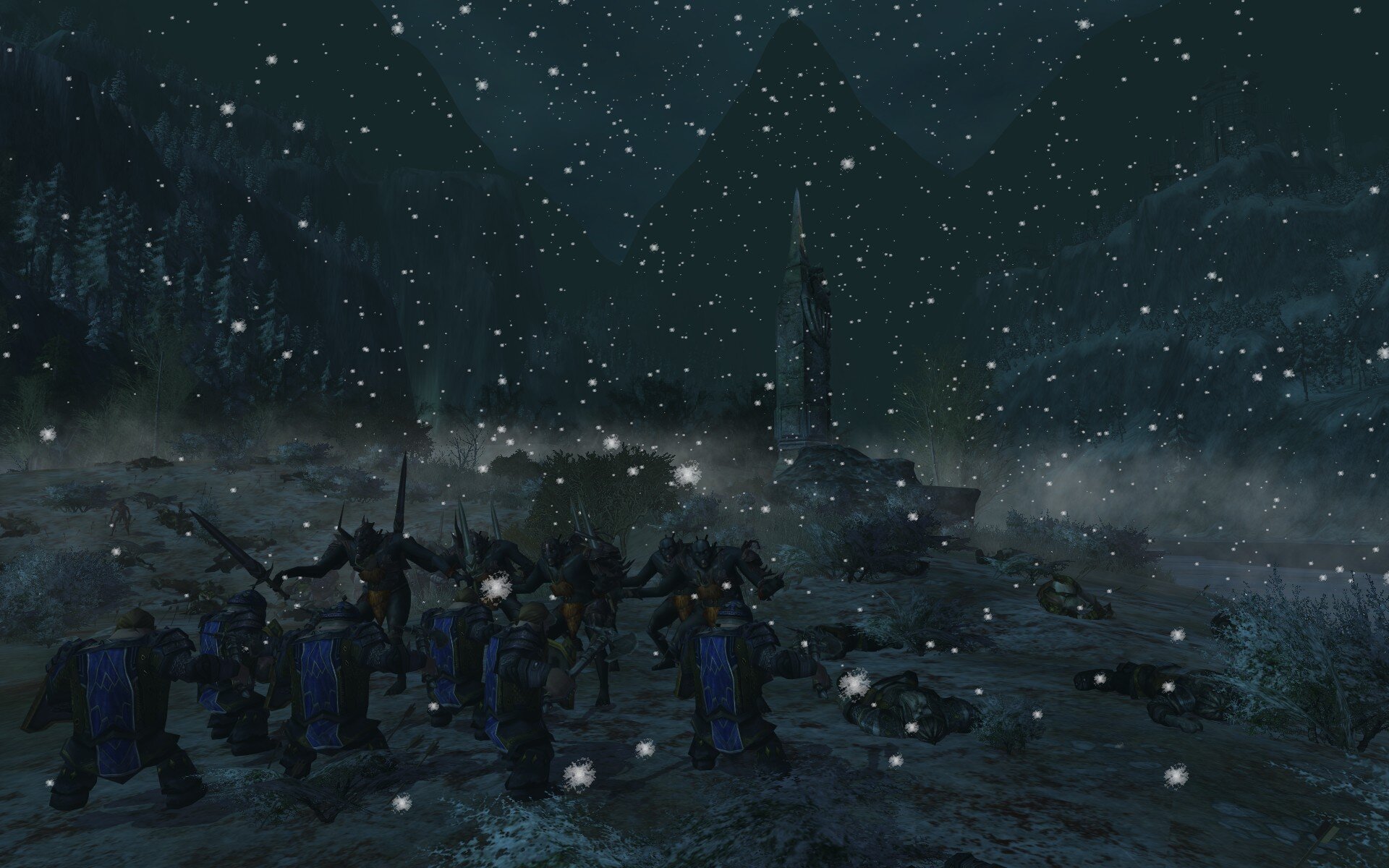
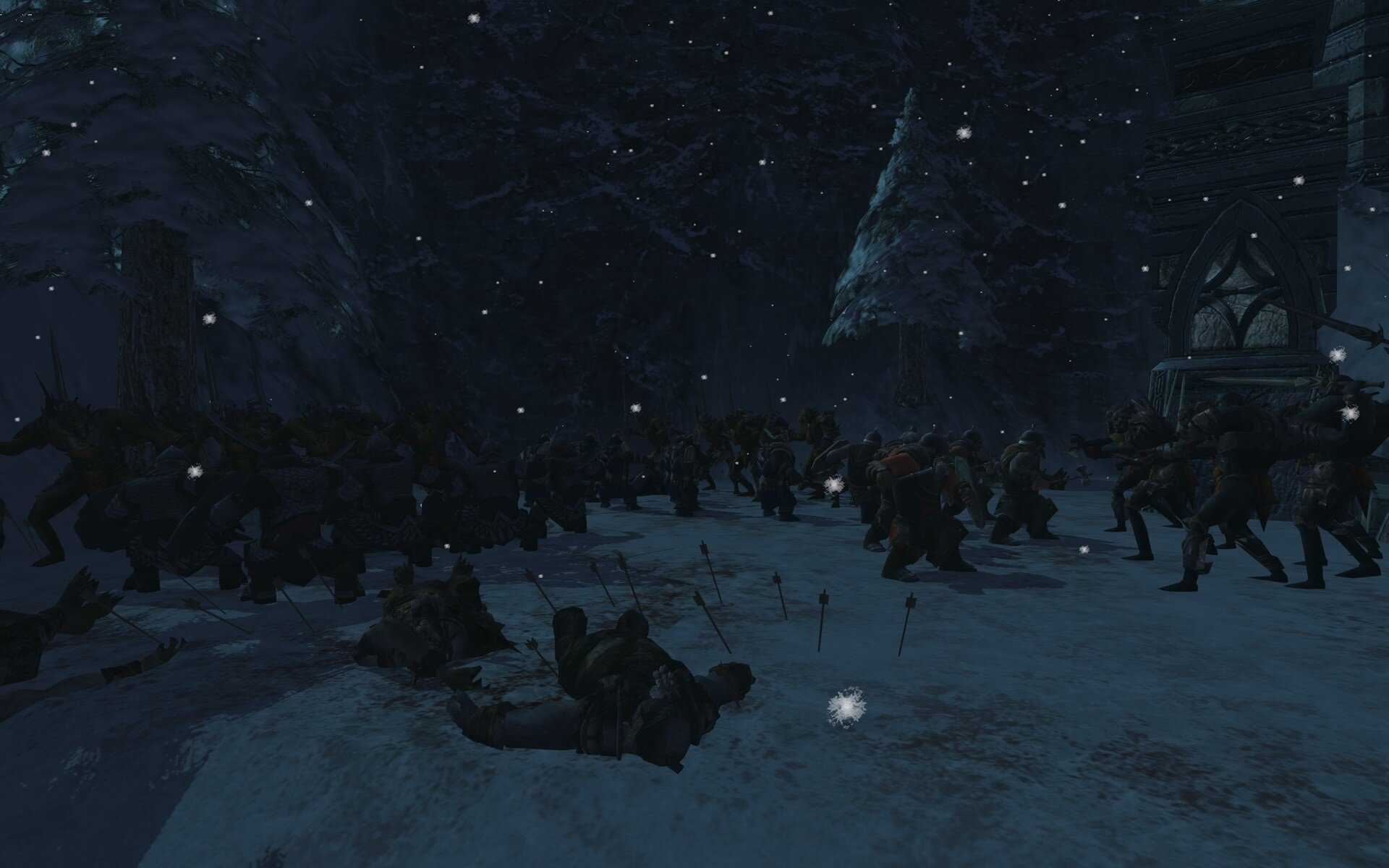
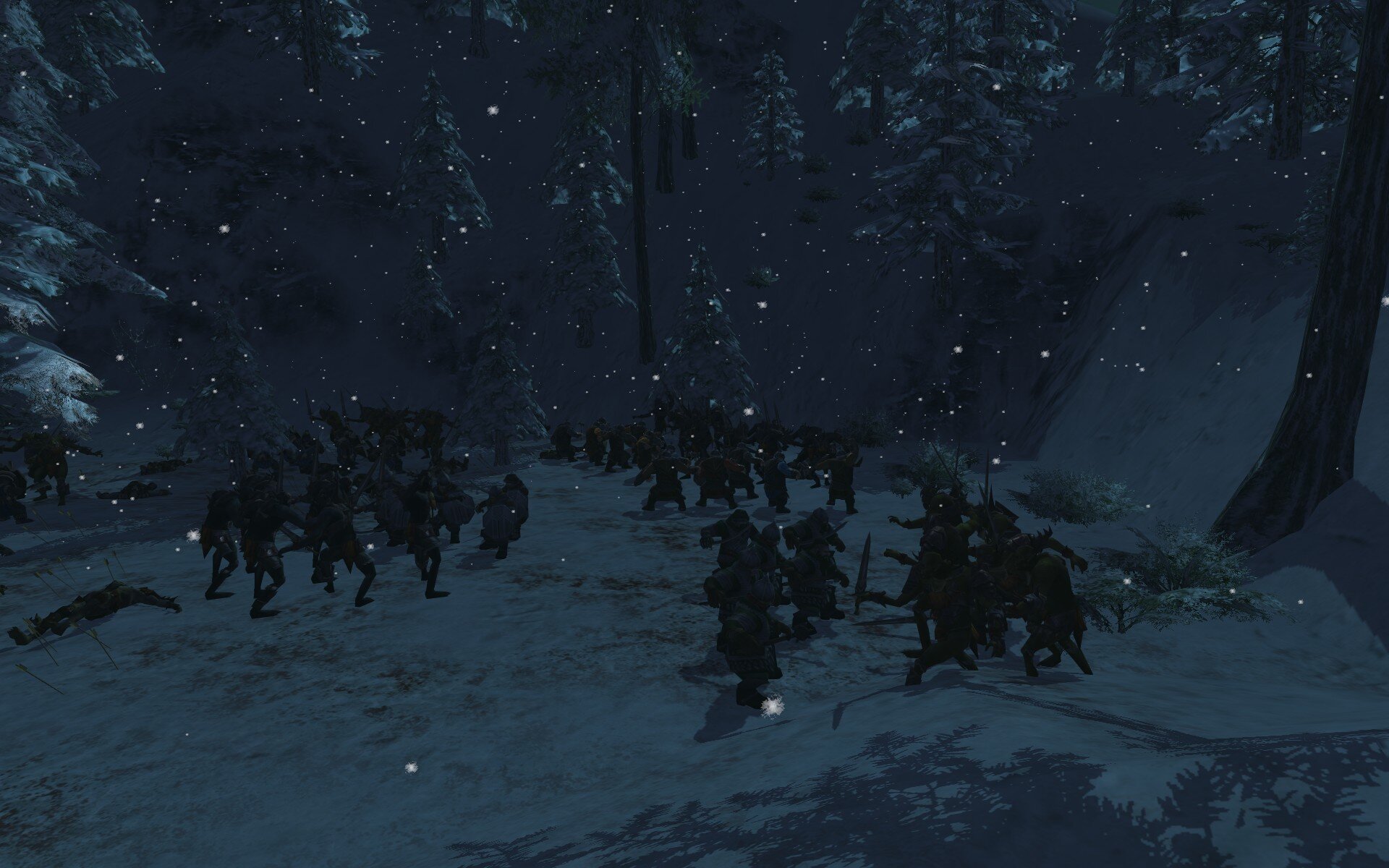
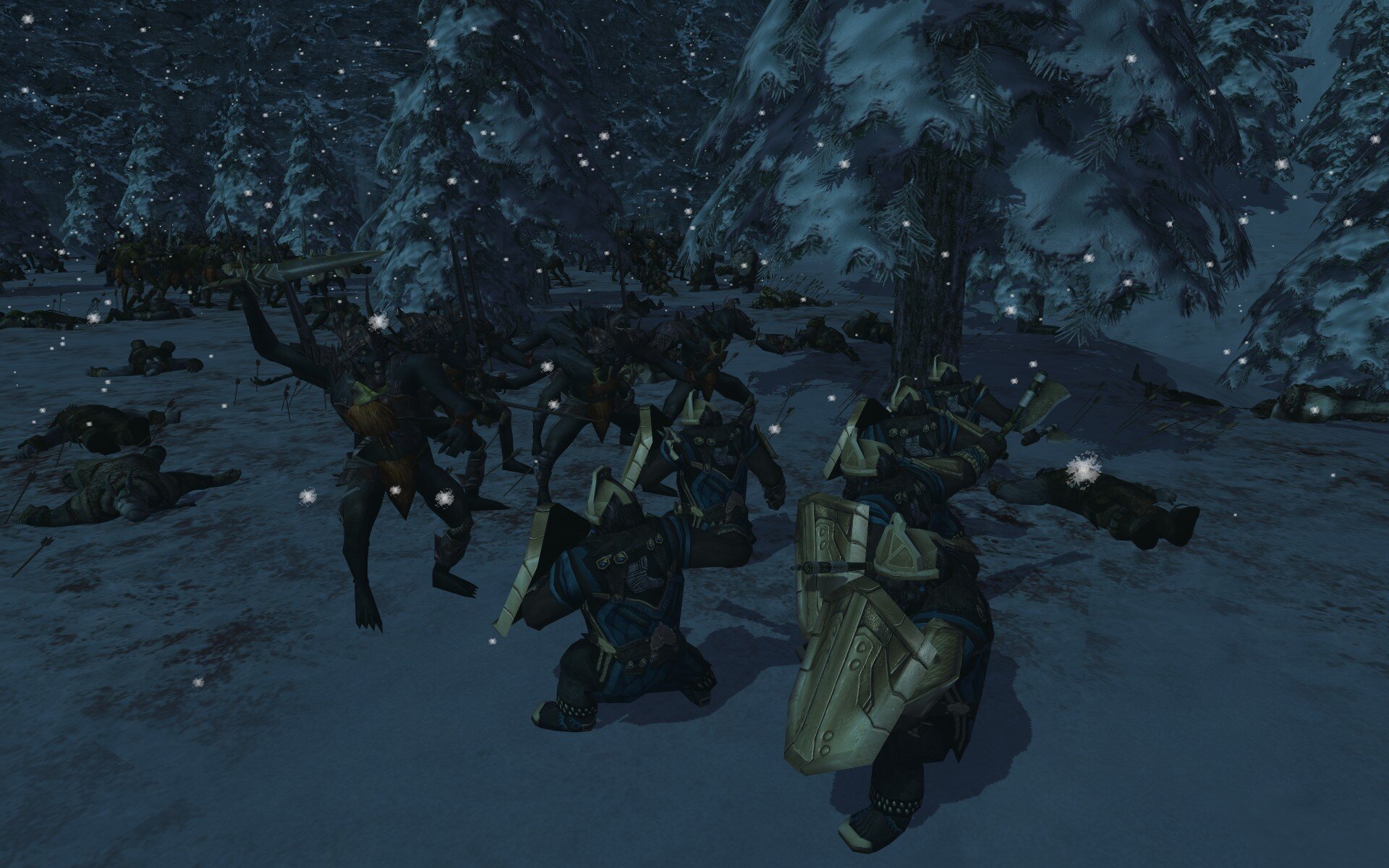
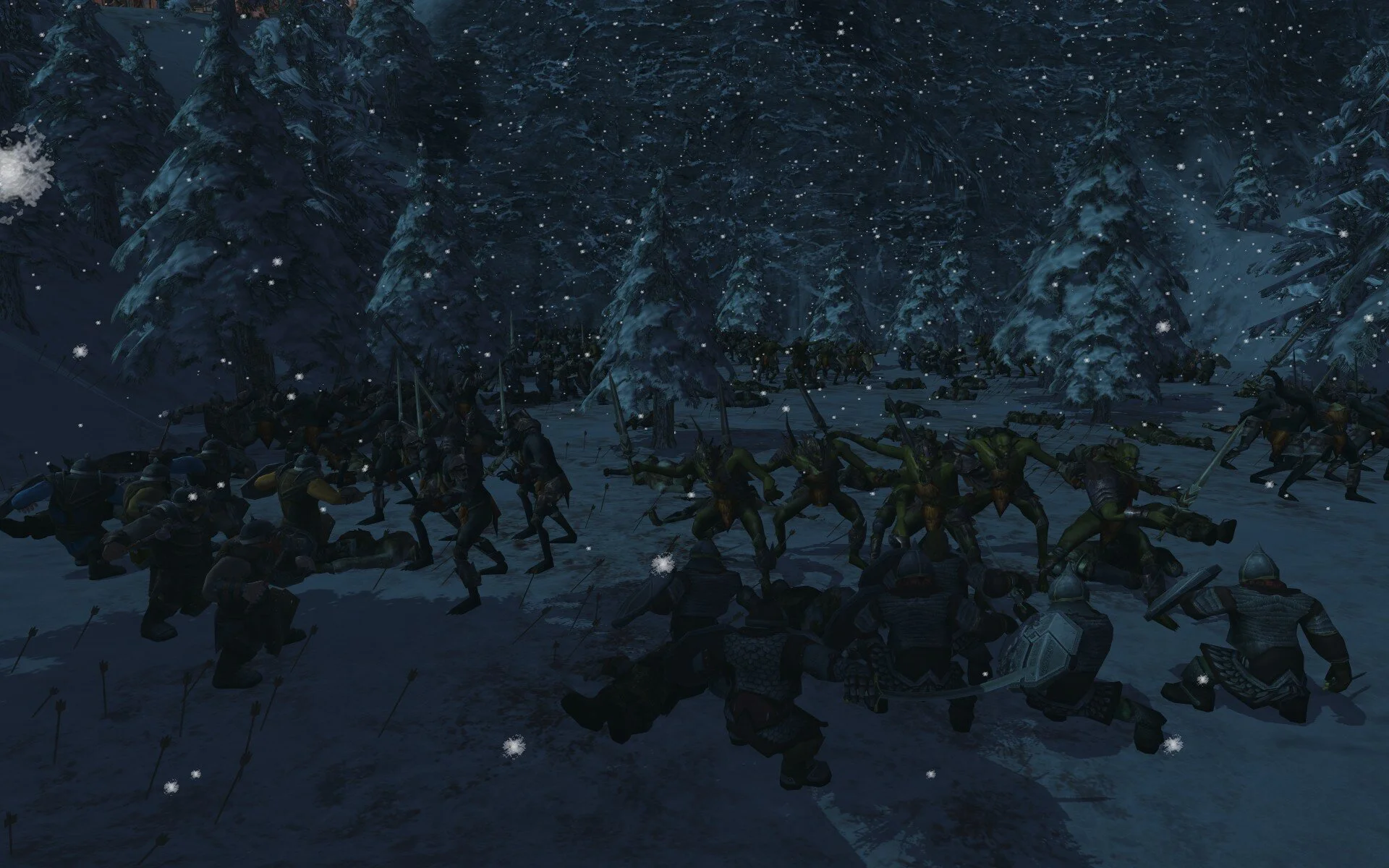
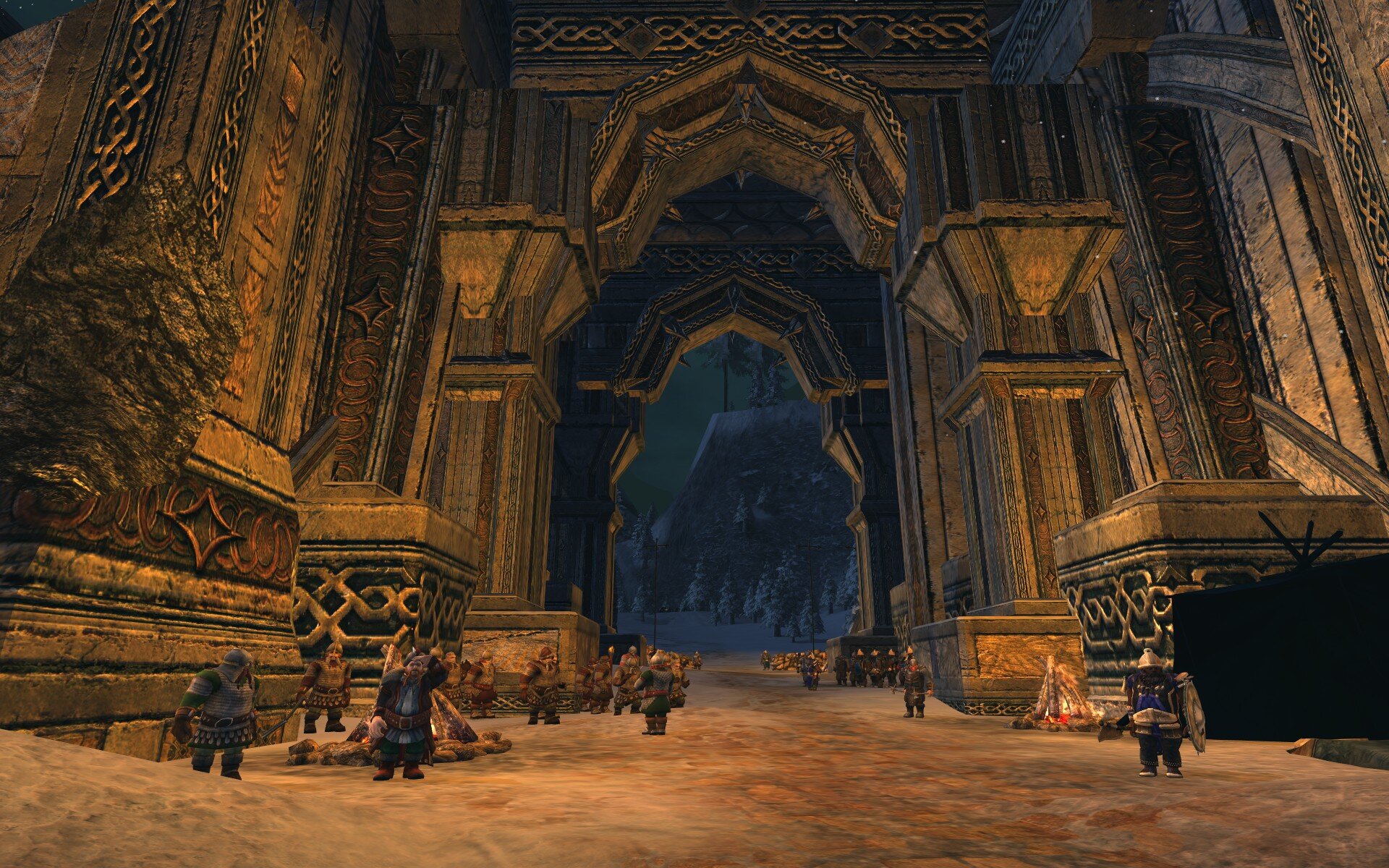
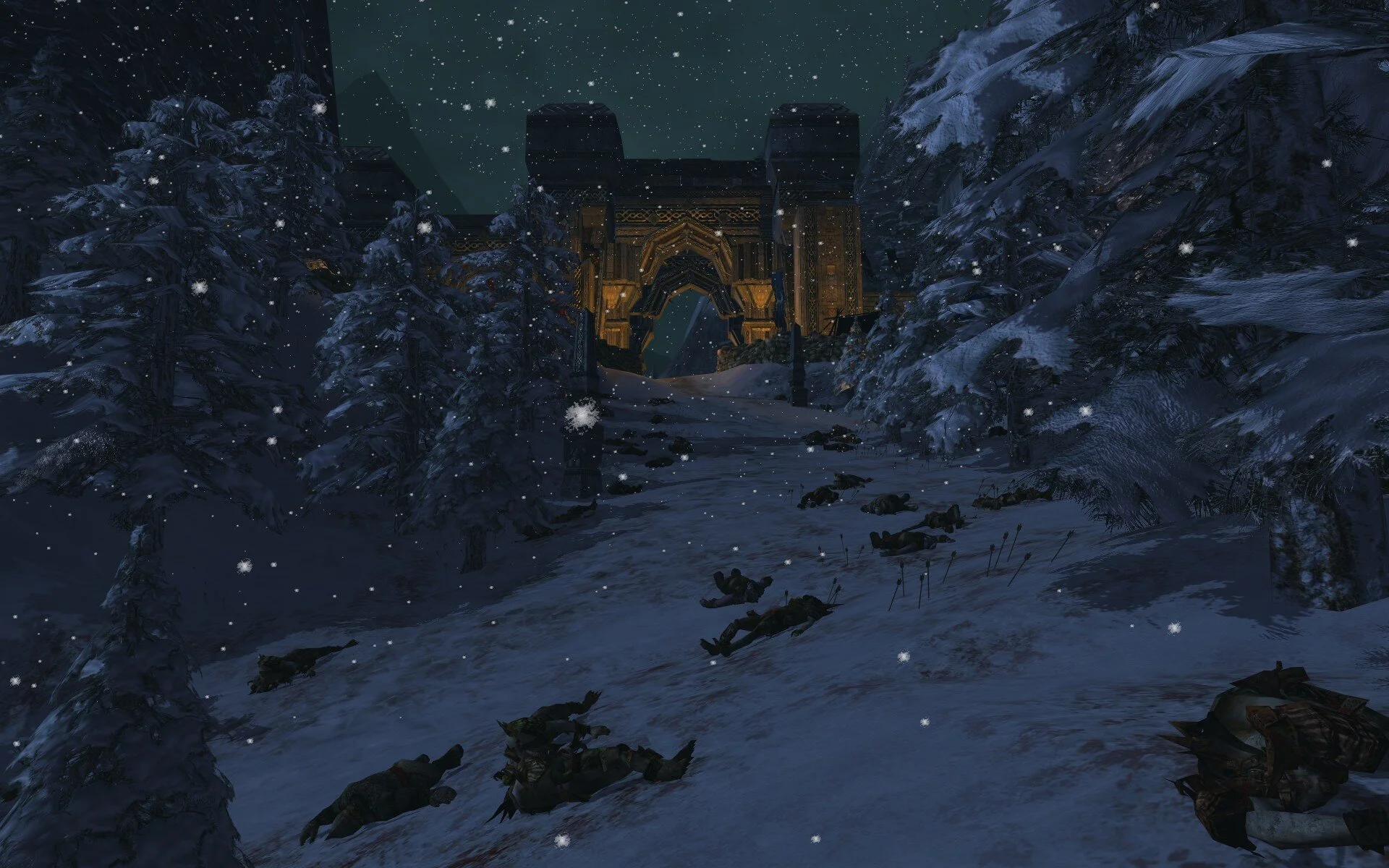
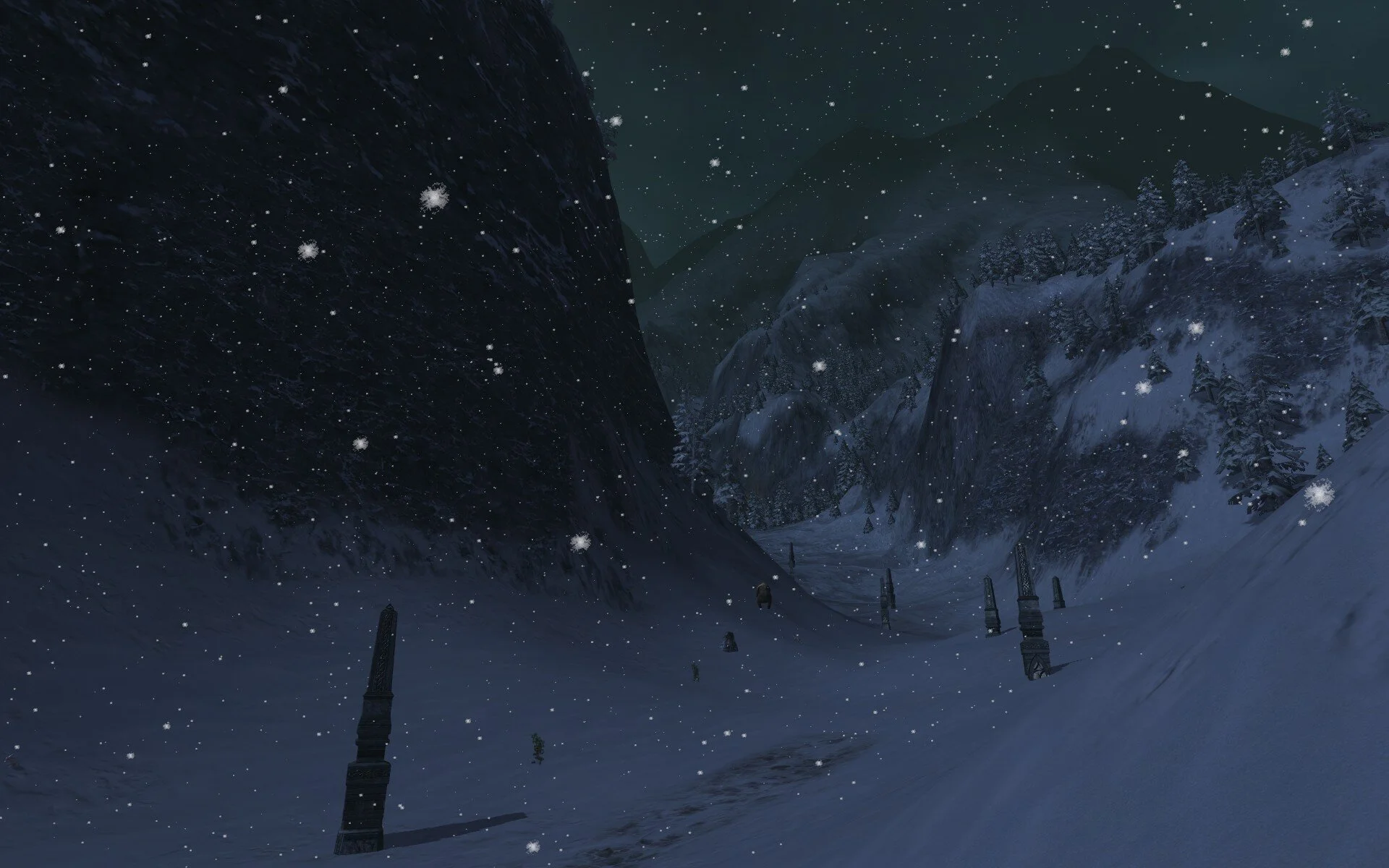
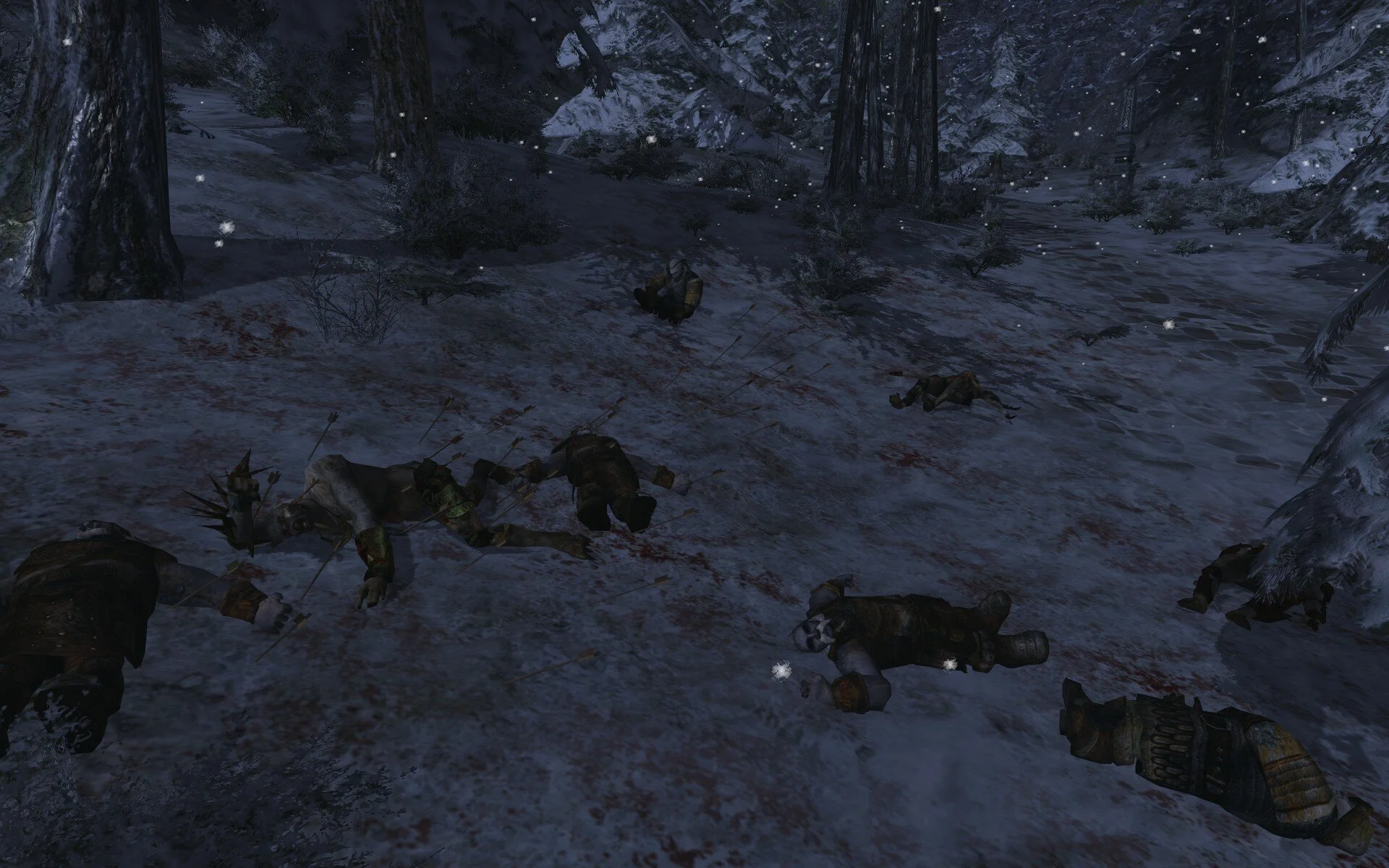
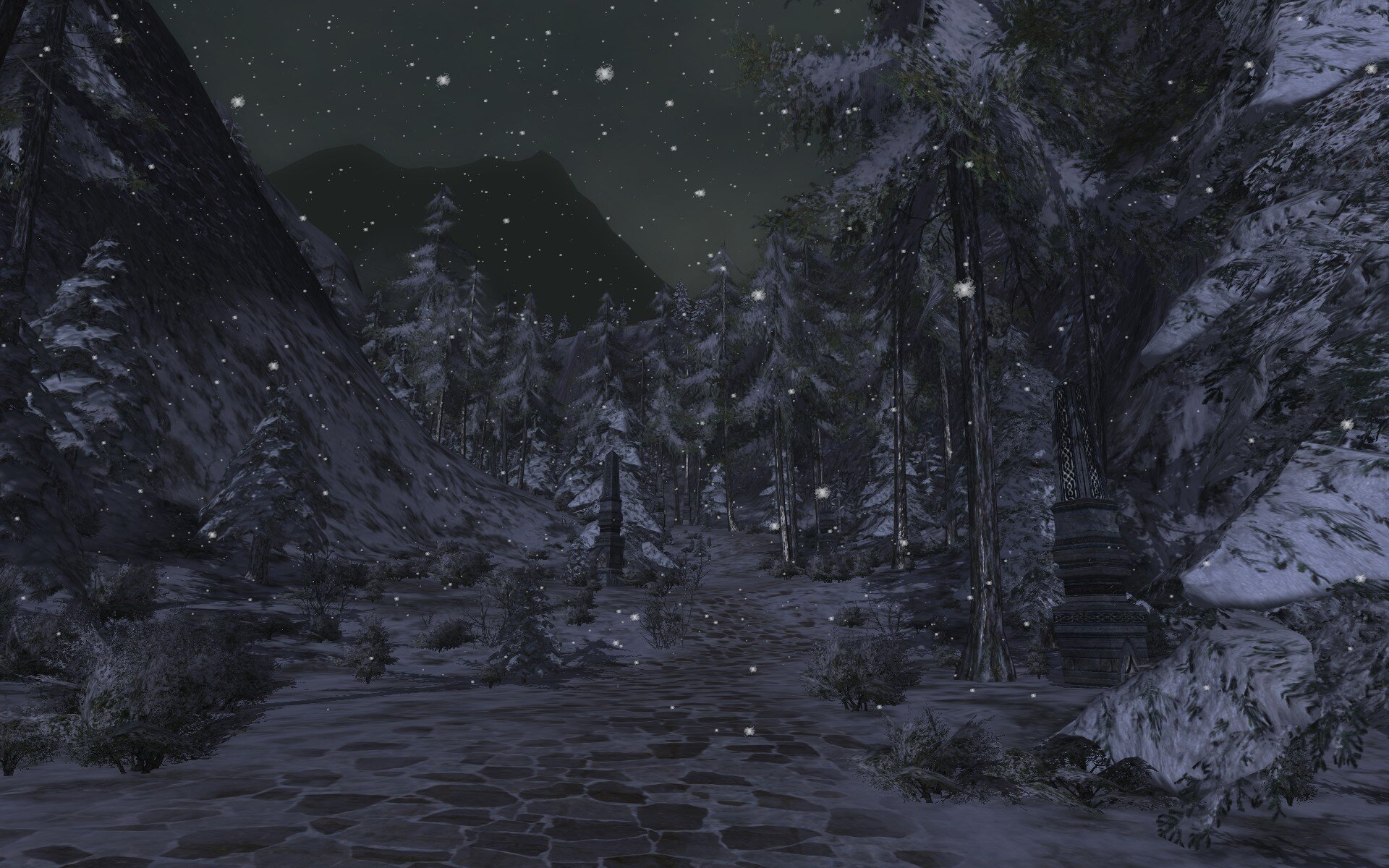
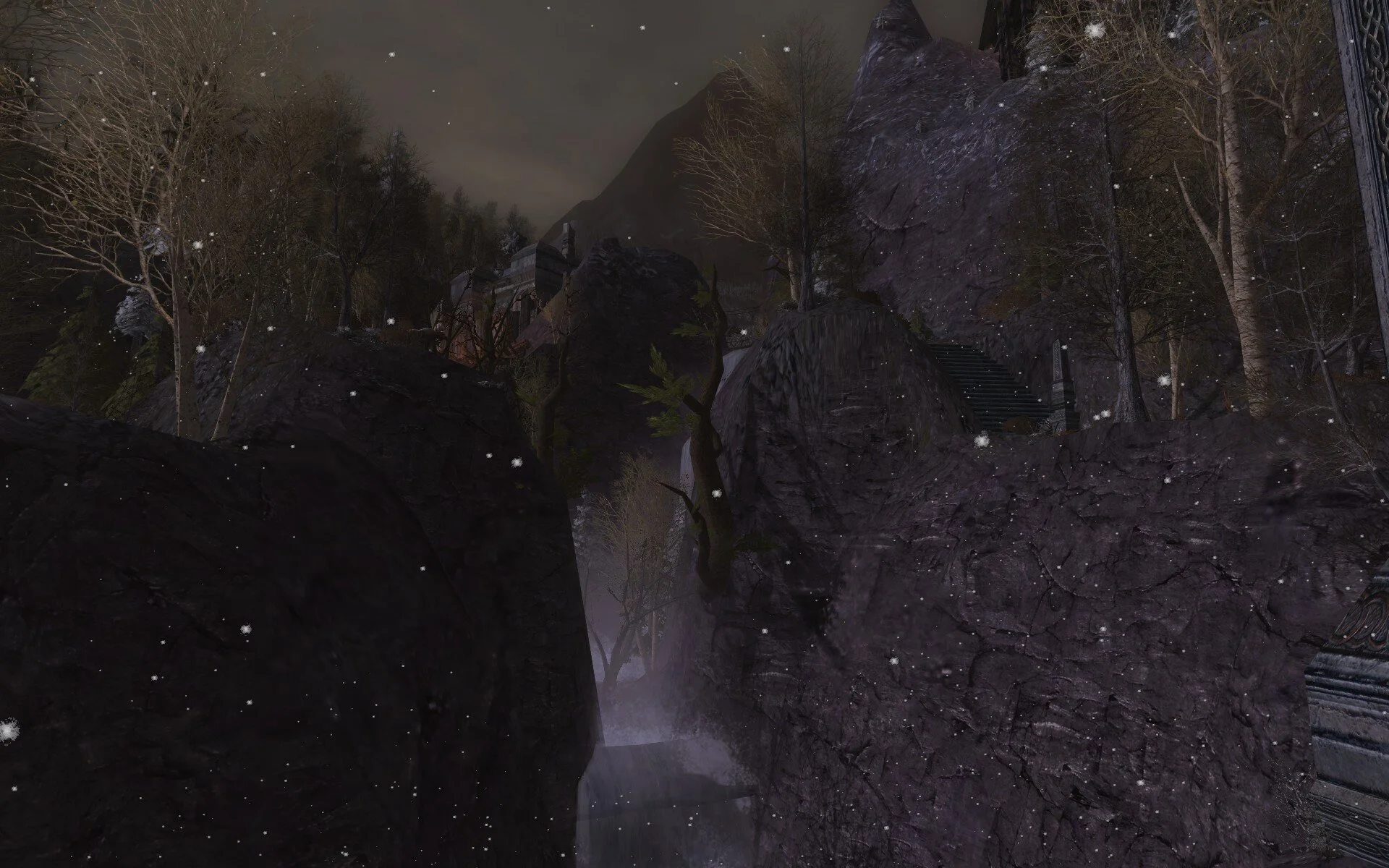
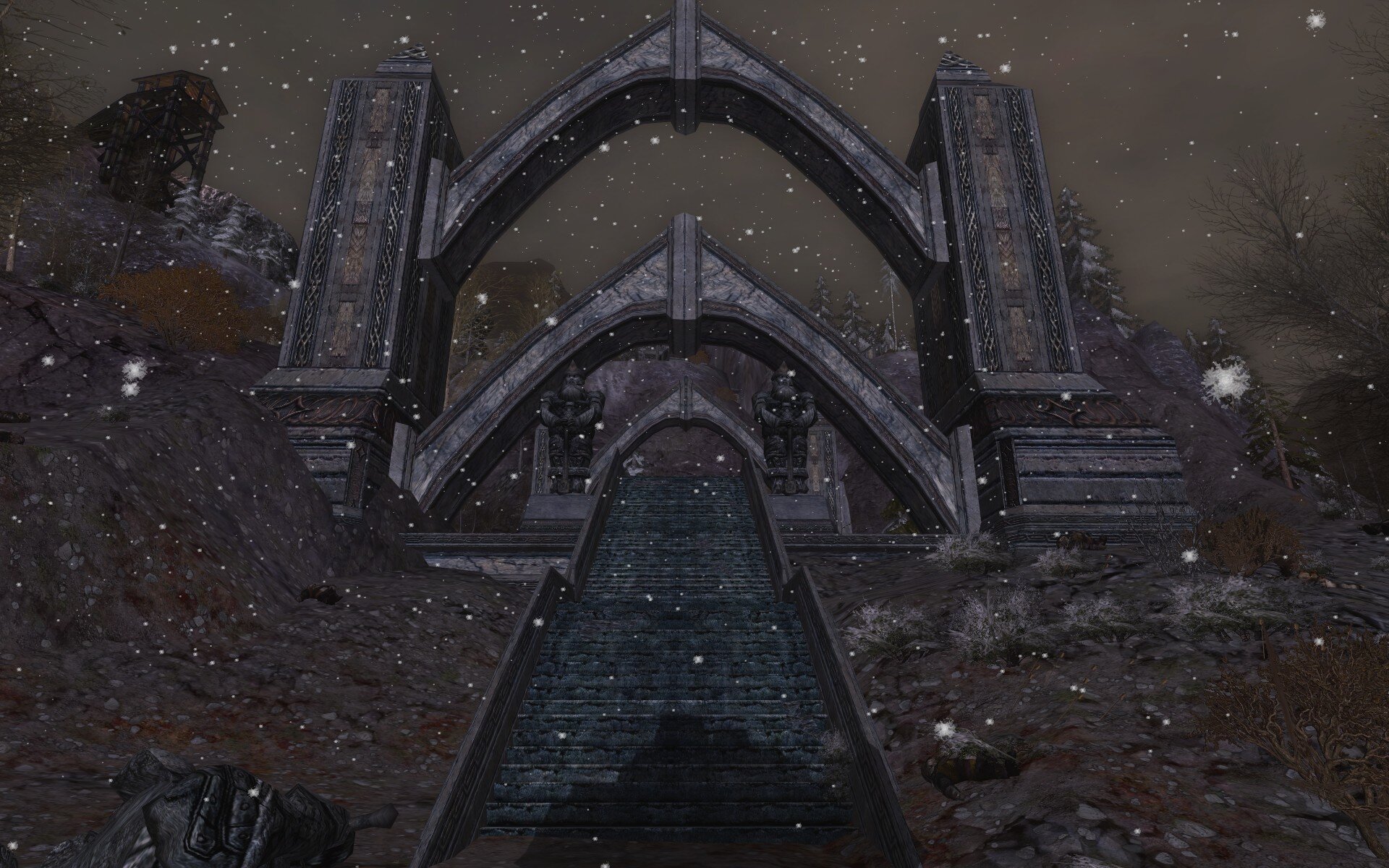
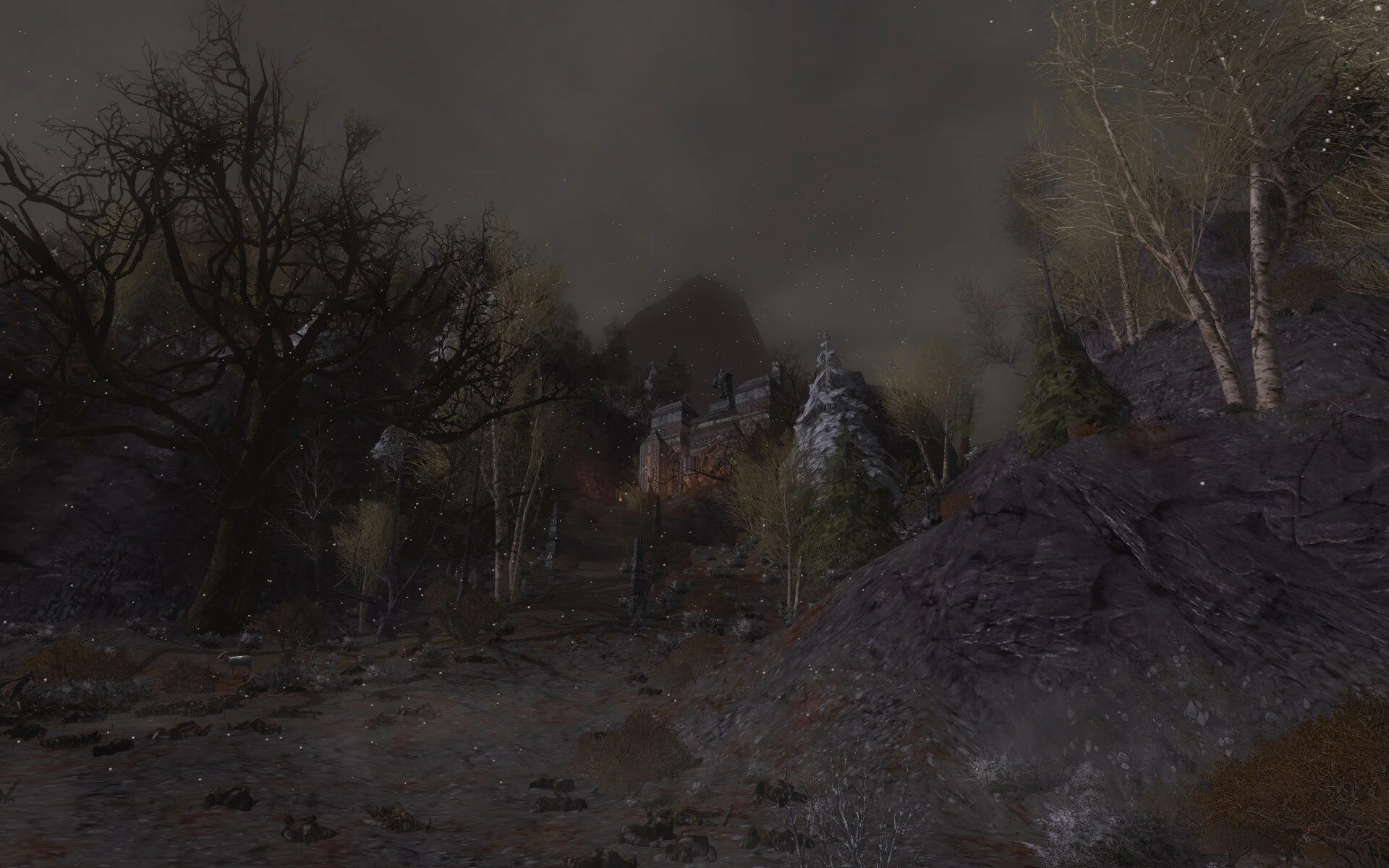
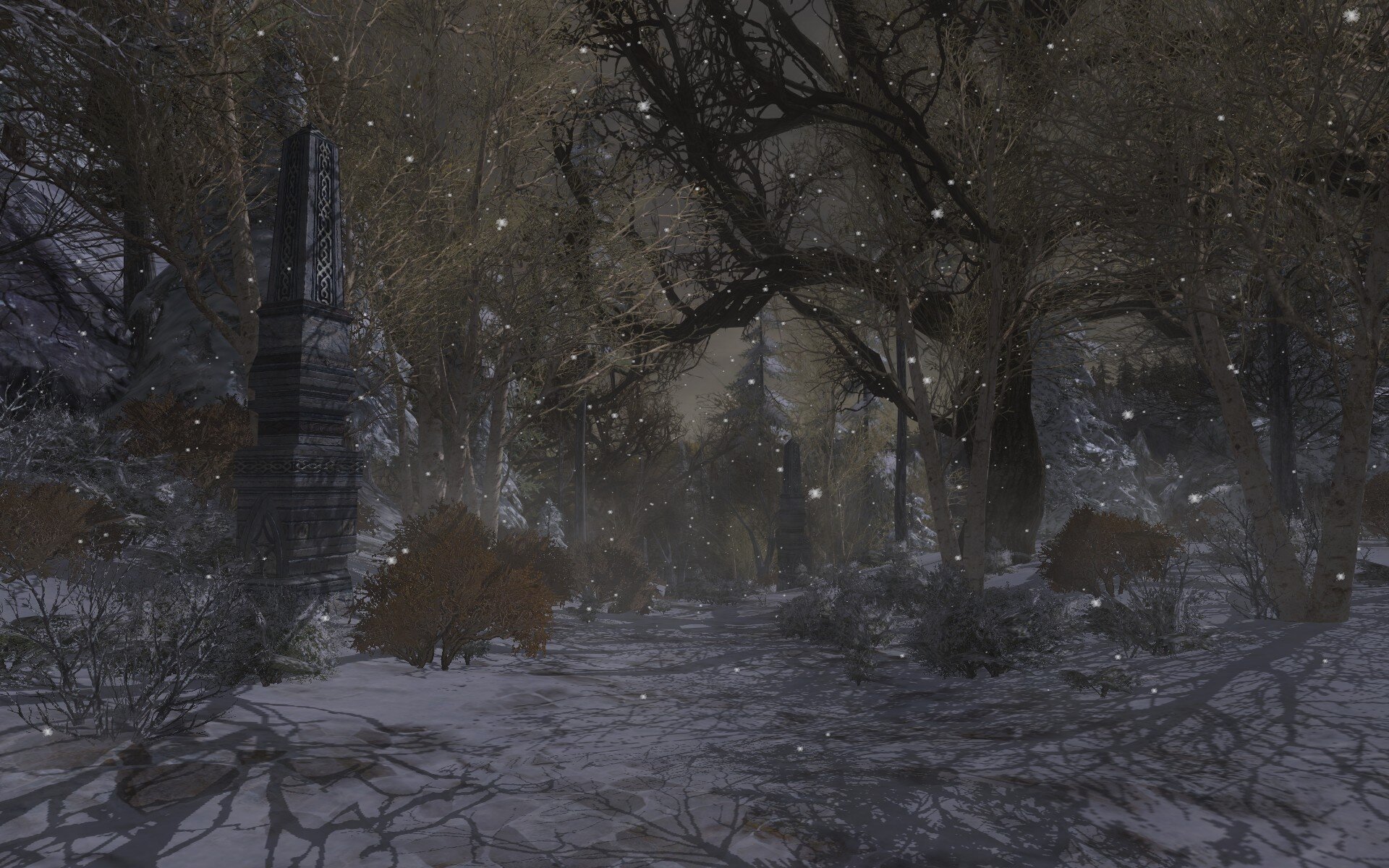
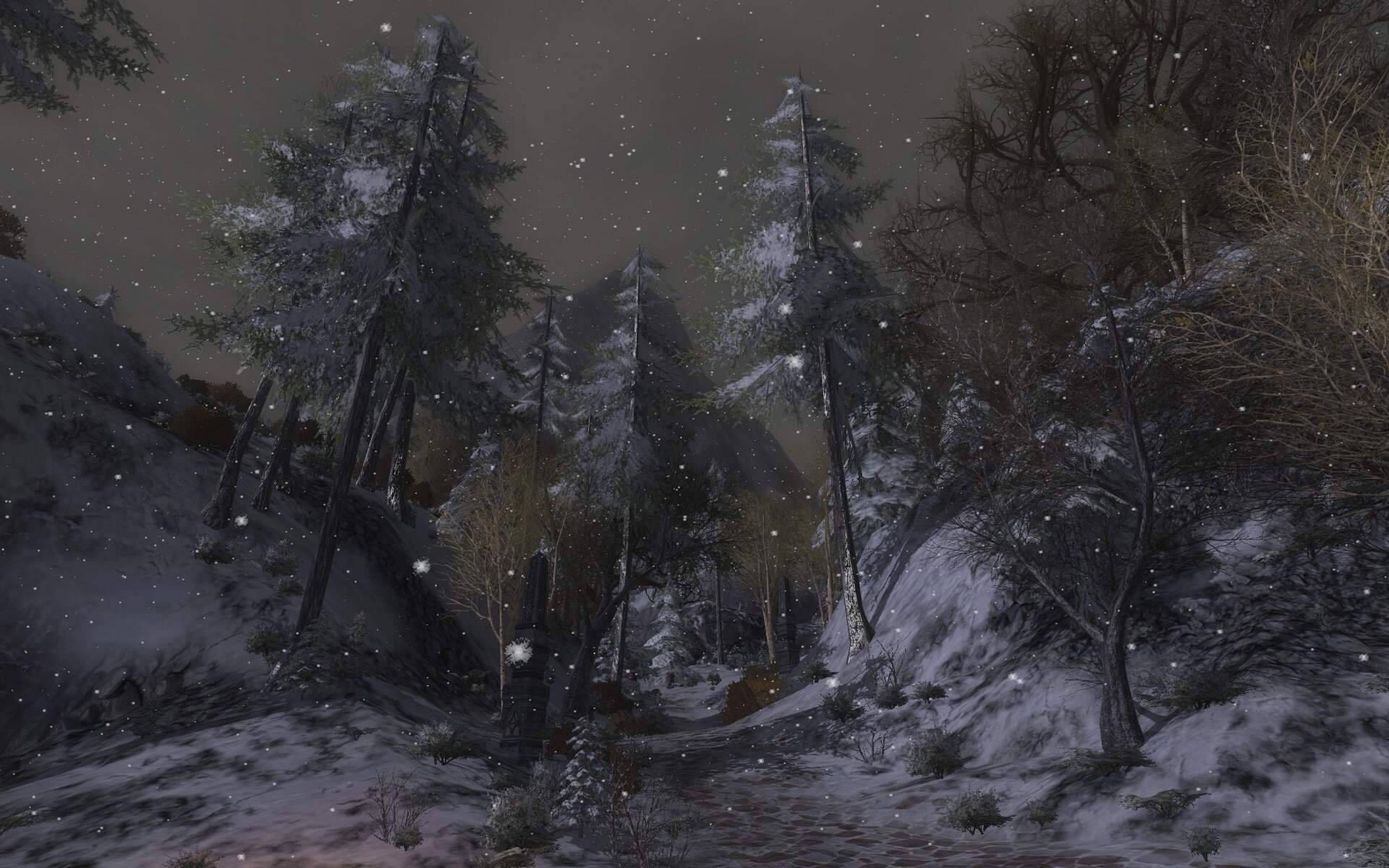
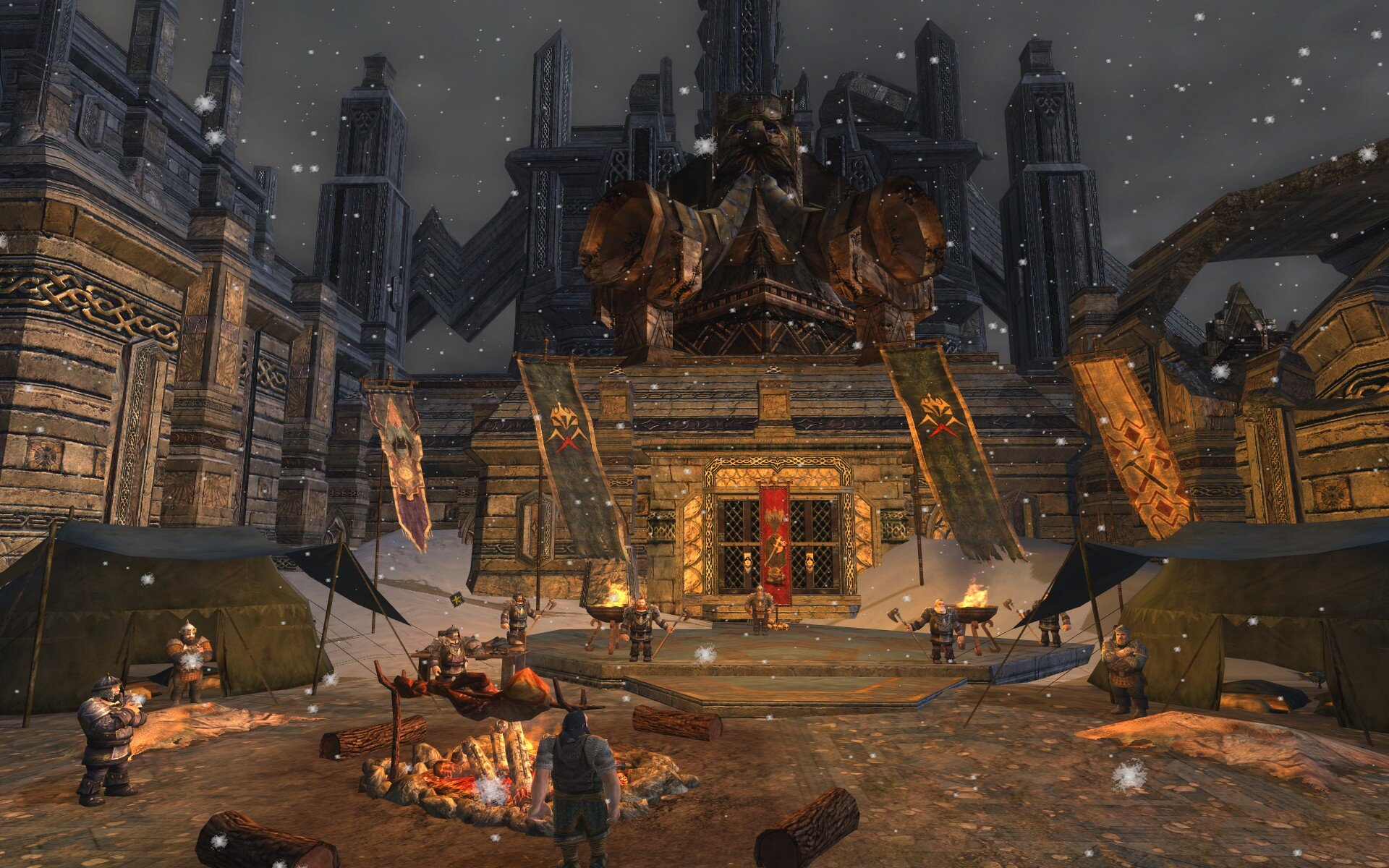
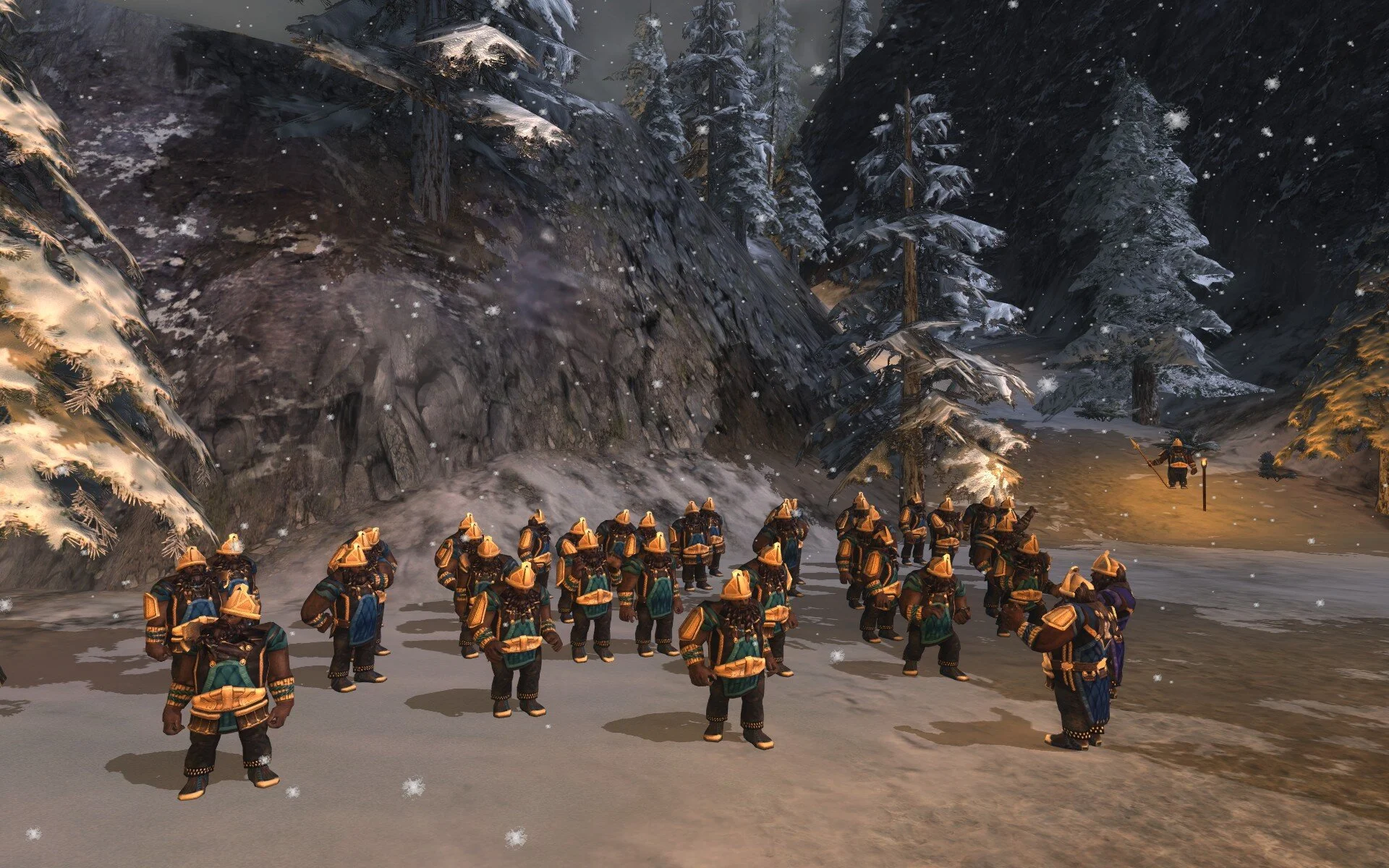
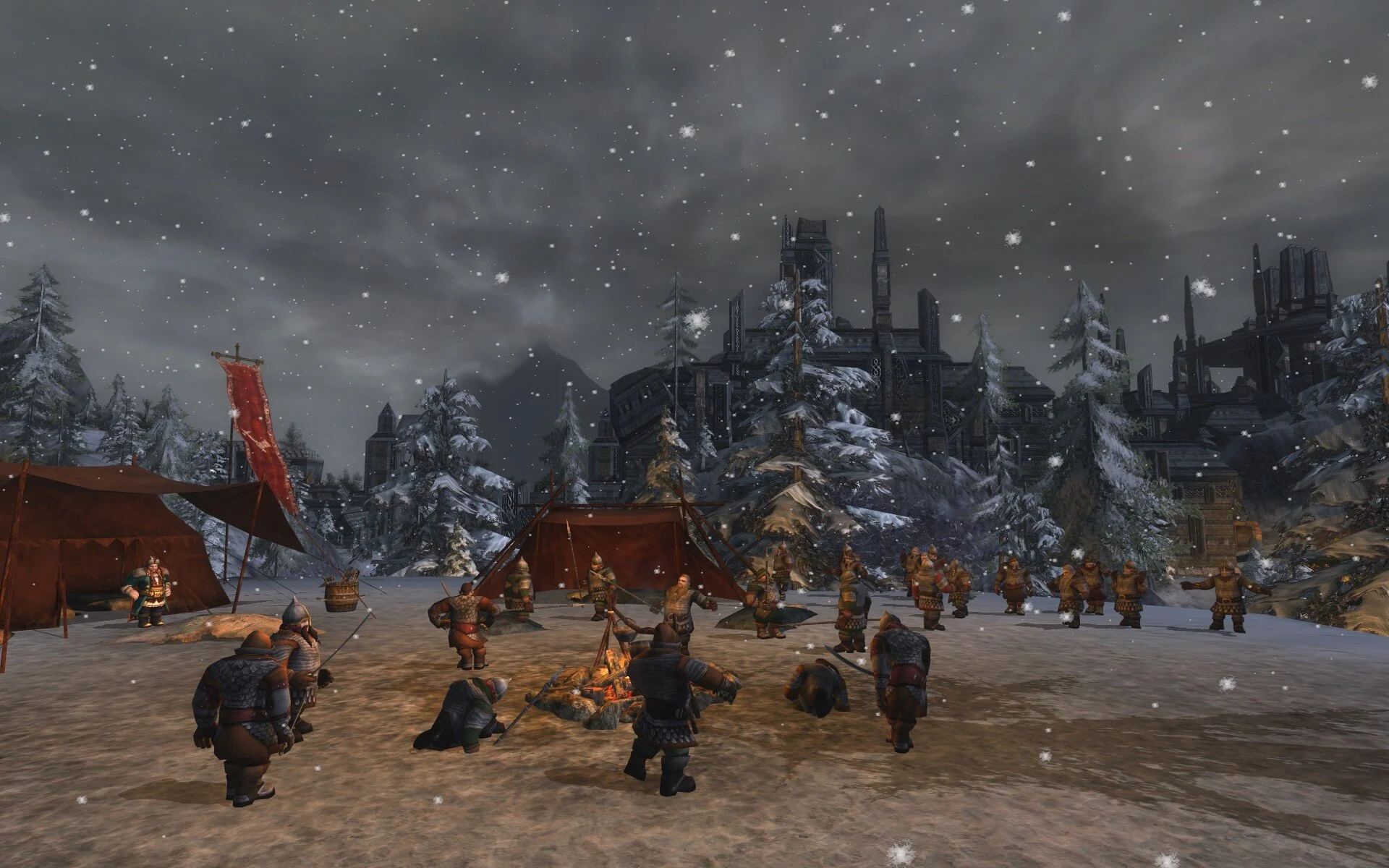
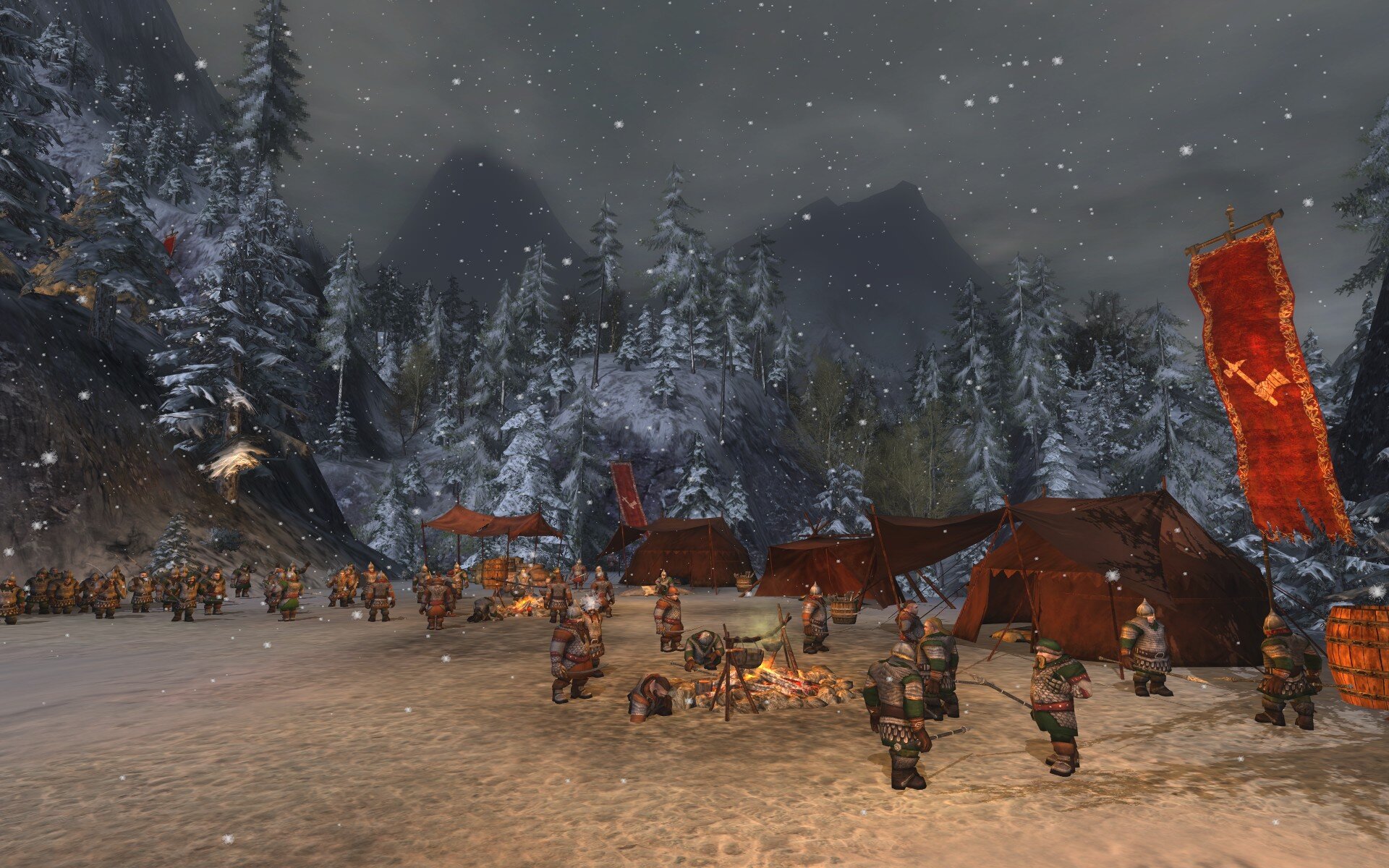
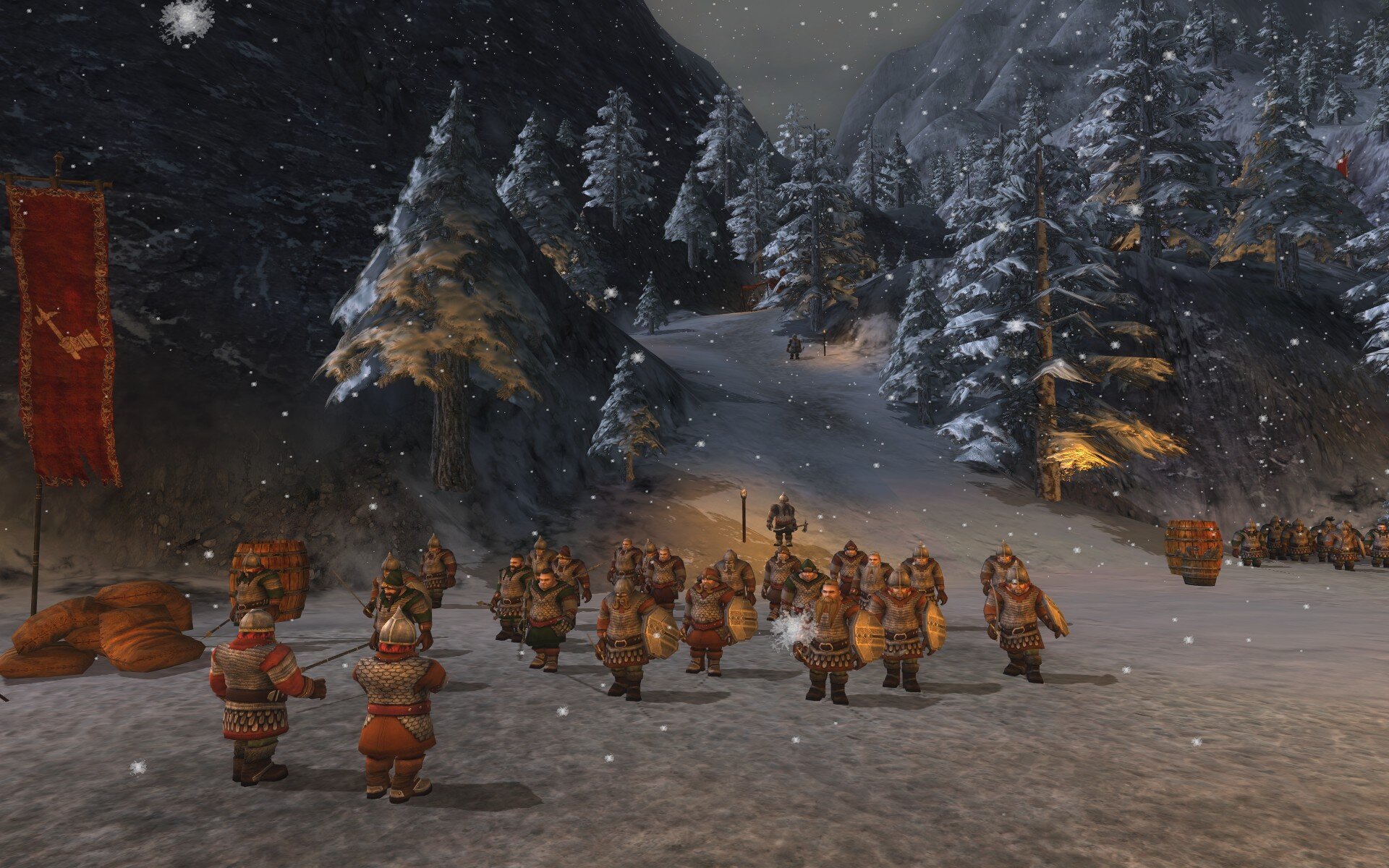
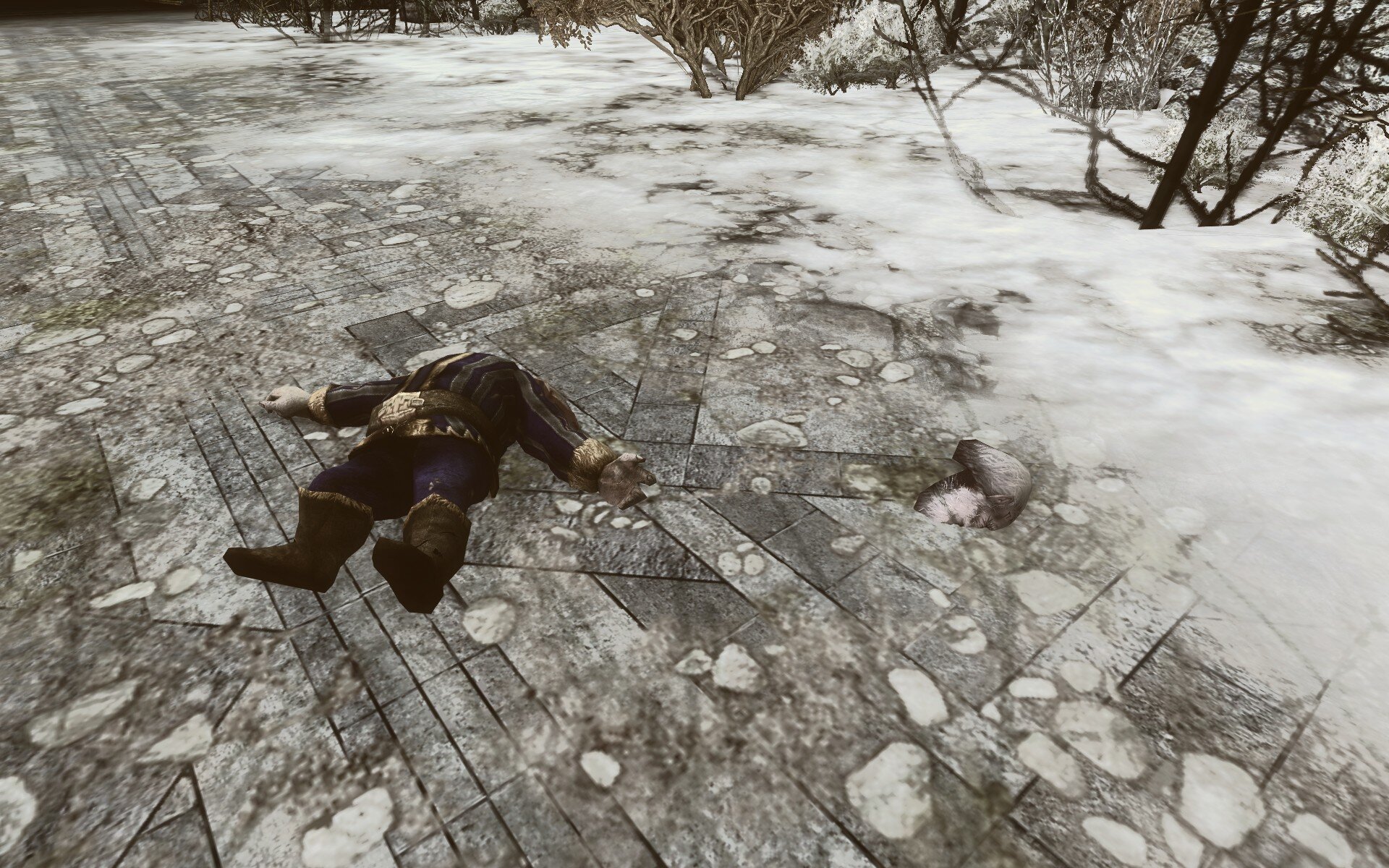
As I am not part of an active raiding guild, I specifically logged on to Bullroarer to look at the next instalment of the main story. Prince Durin is unhappy with the escape of Gorgar, son of Bolg and the sealing of the gates of Mount Gundabad by Hrímil Frost-heart. He is keen to launch a further assault against his foes, however Glóin hopes that a lesson in history might temper the Prince’s plan. Hence through a clever narrative contrivance, the player experiences the Battle of Azanulbizar in 2799 of the Third Age, through the eyes of Hermáth Stormhammer, a hero of Durin’s Folk. Effectively this is like Mordor Besieged in Update 25 Minas Morgul. This revised map of Dimrill Dale is a cold and harsh zone where the snow falls heavier the higher you climb toward Moria and the Redhorn Pass. As well as PVE quests there are also missions set in Azanulbizar (T.A. 2799).
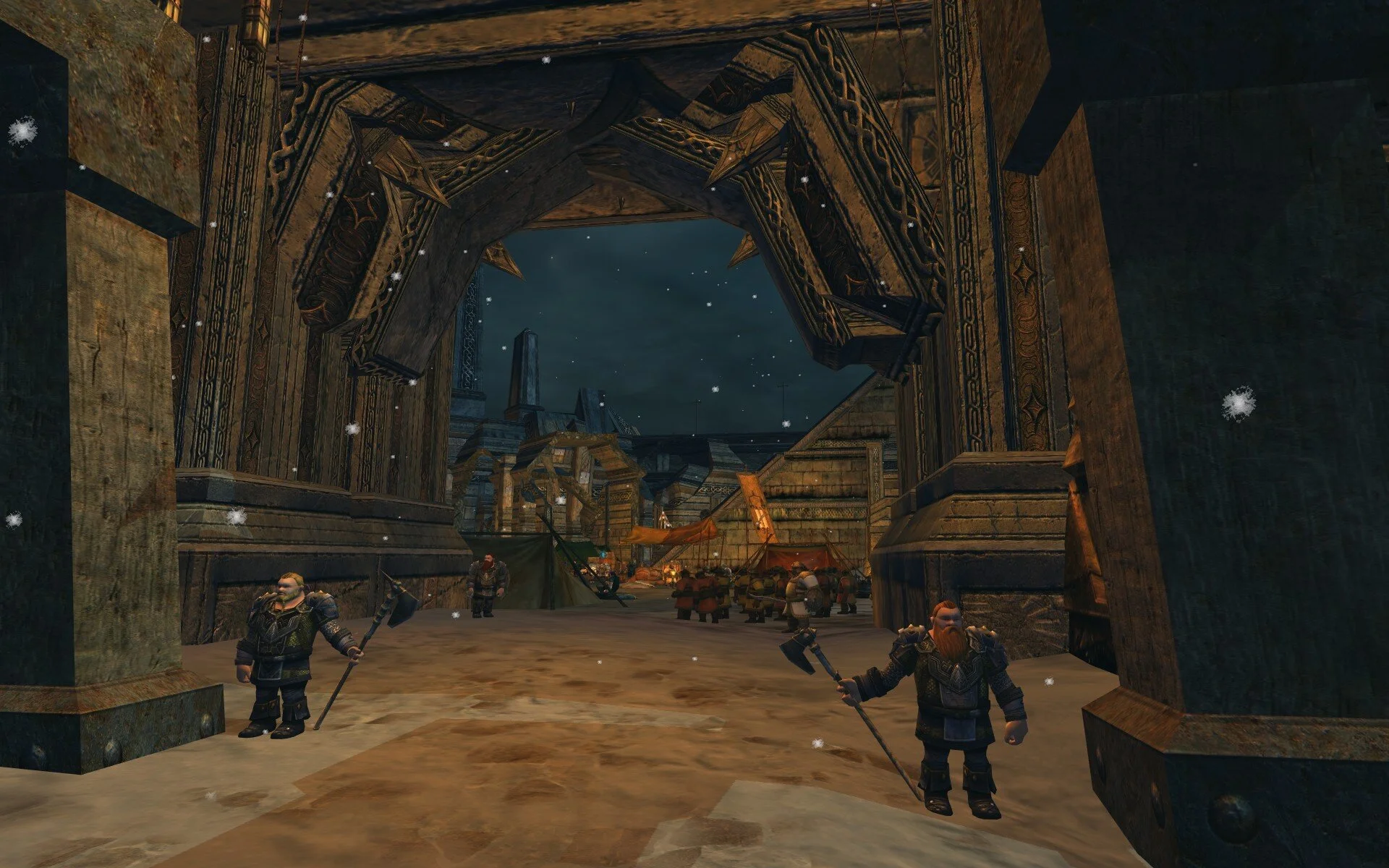
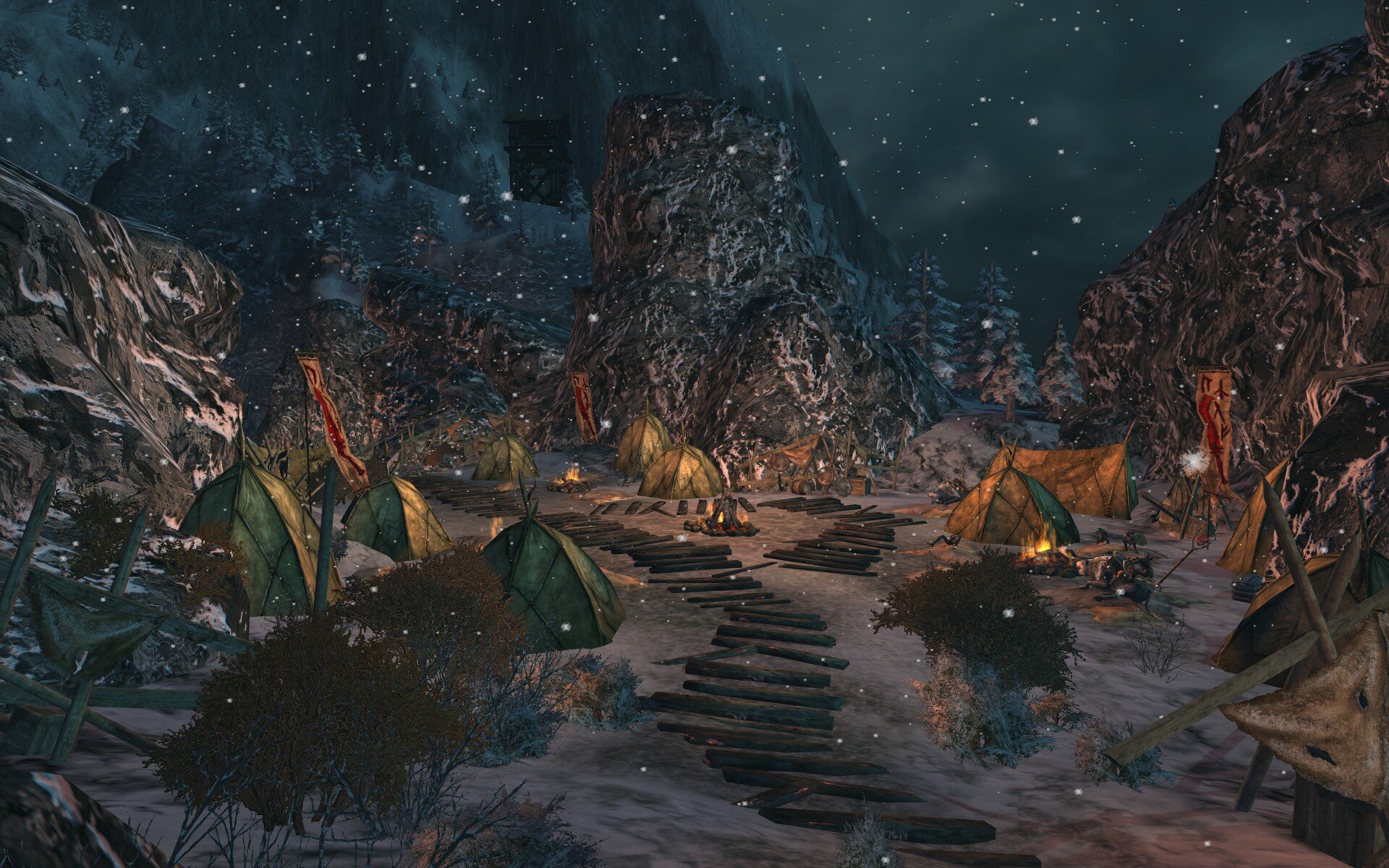
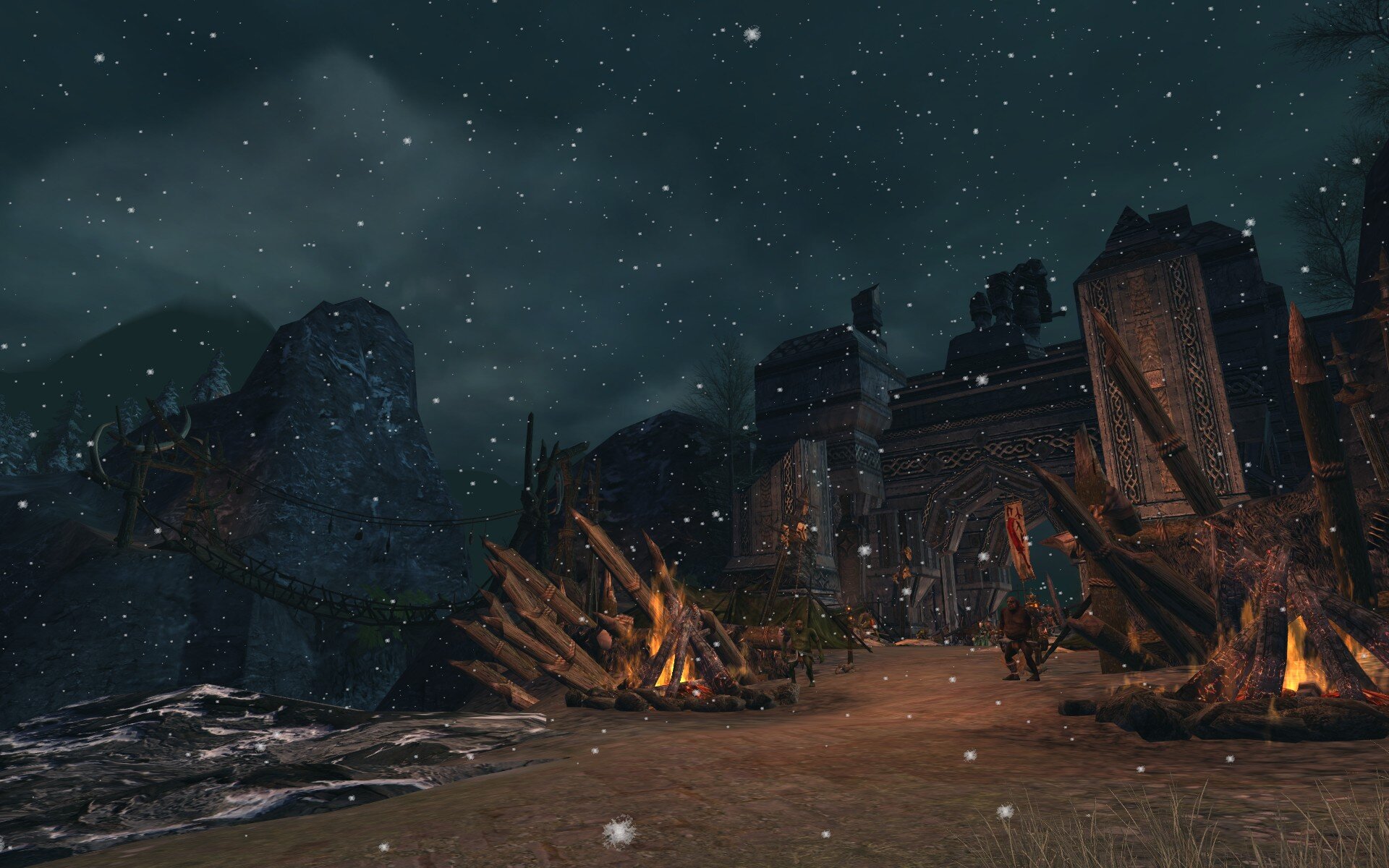
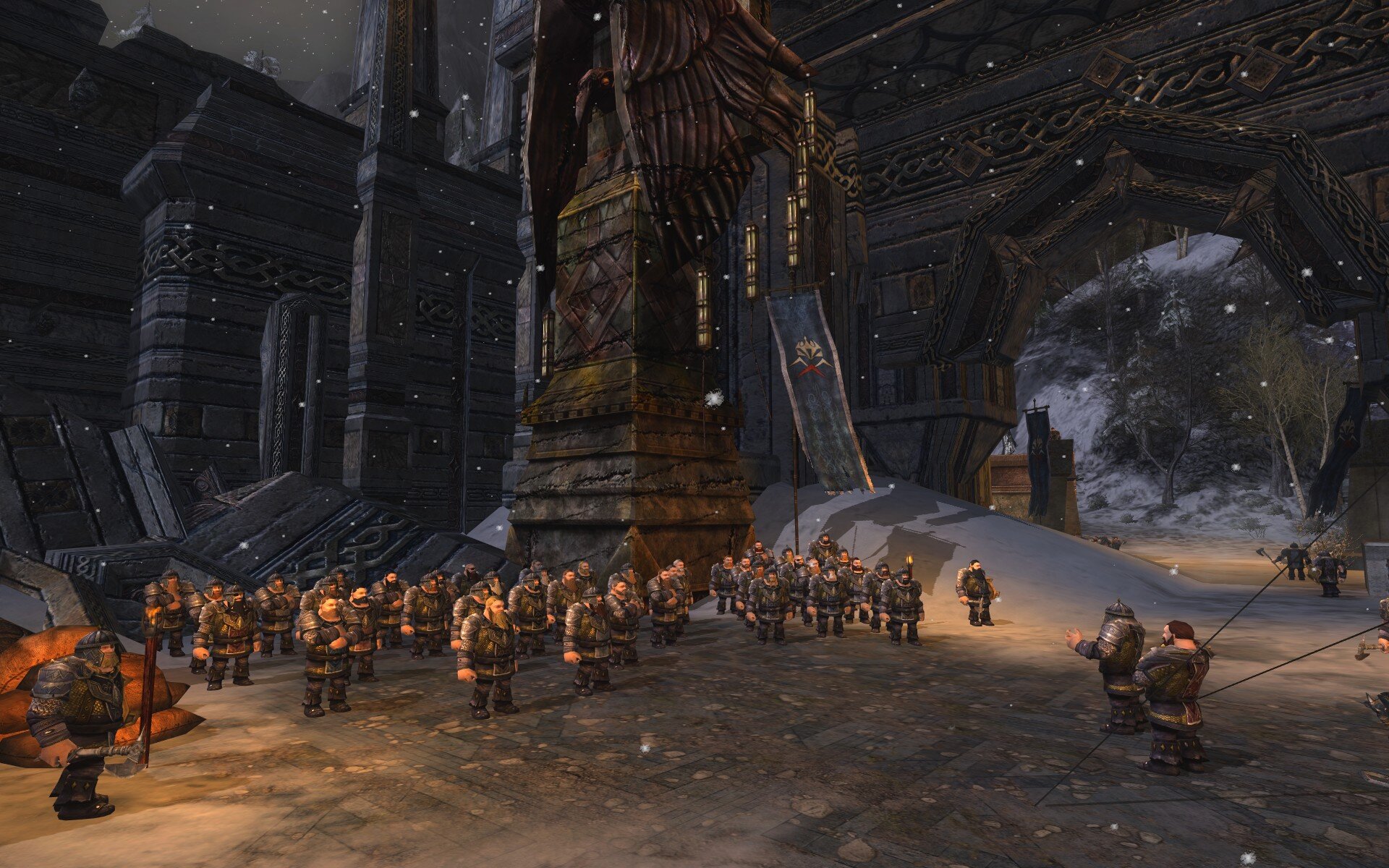
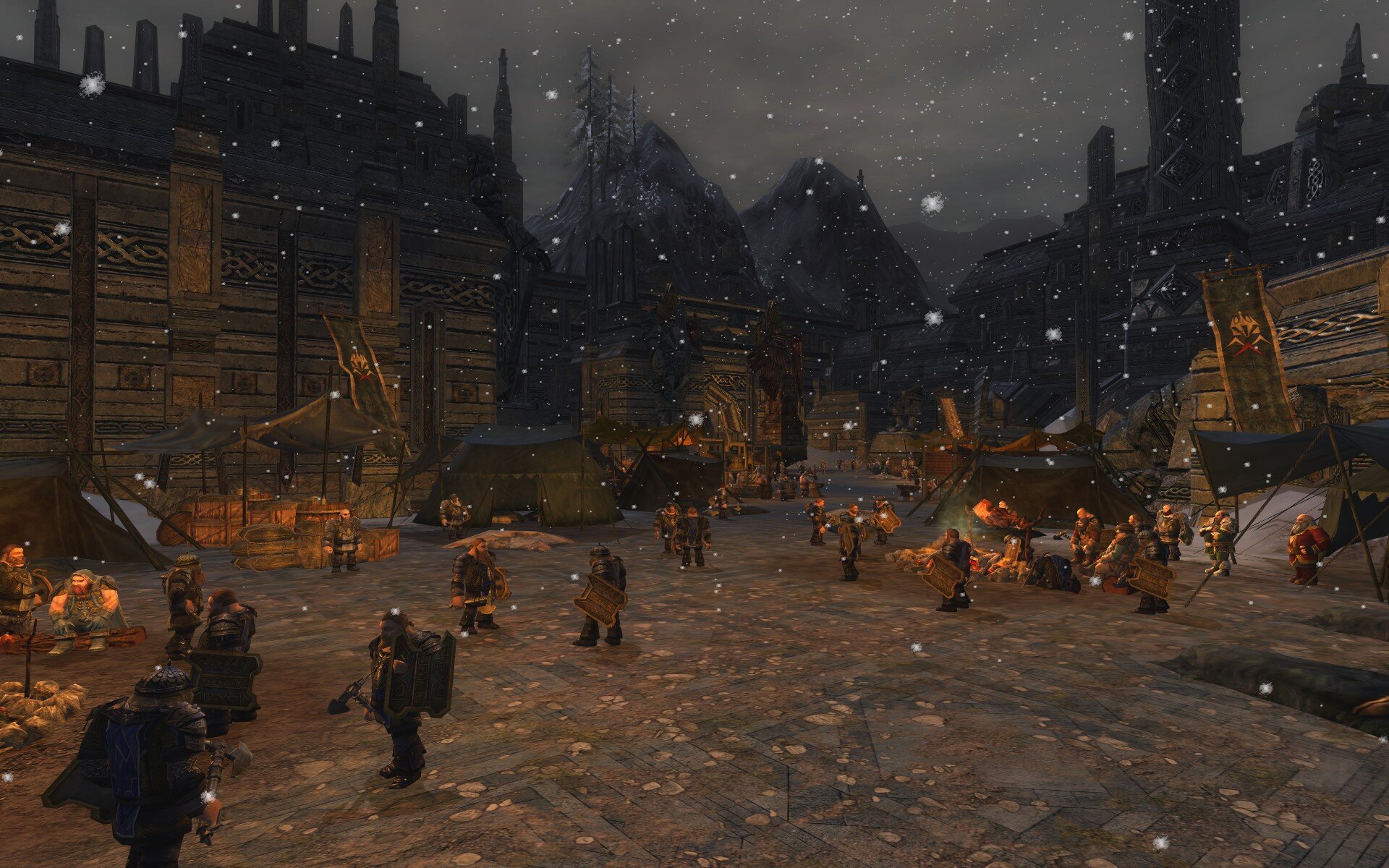
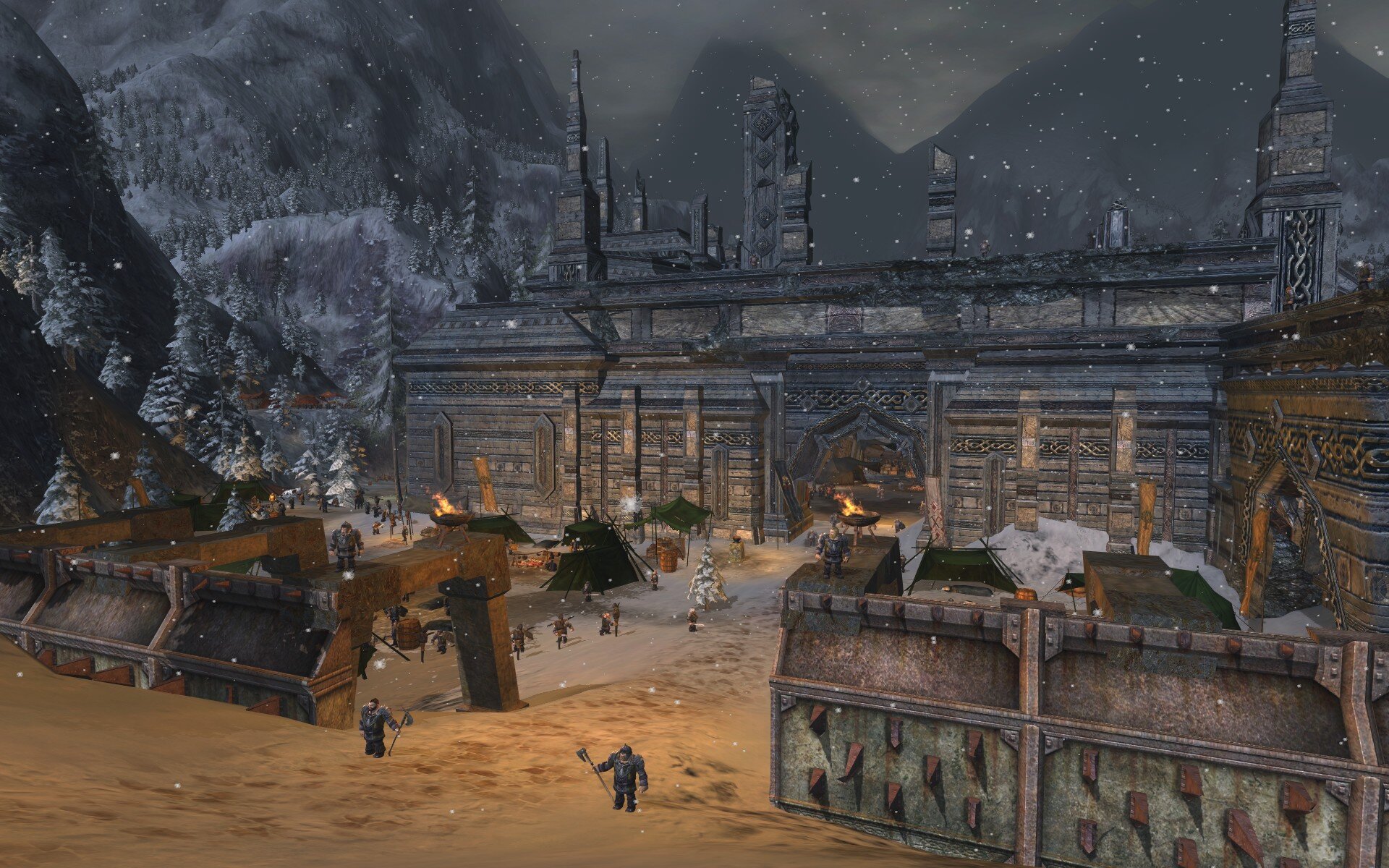
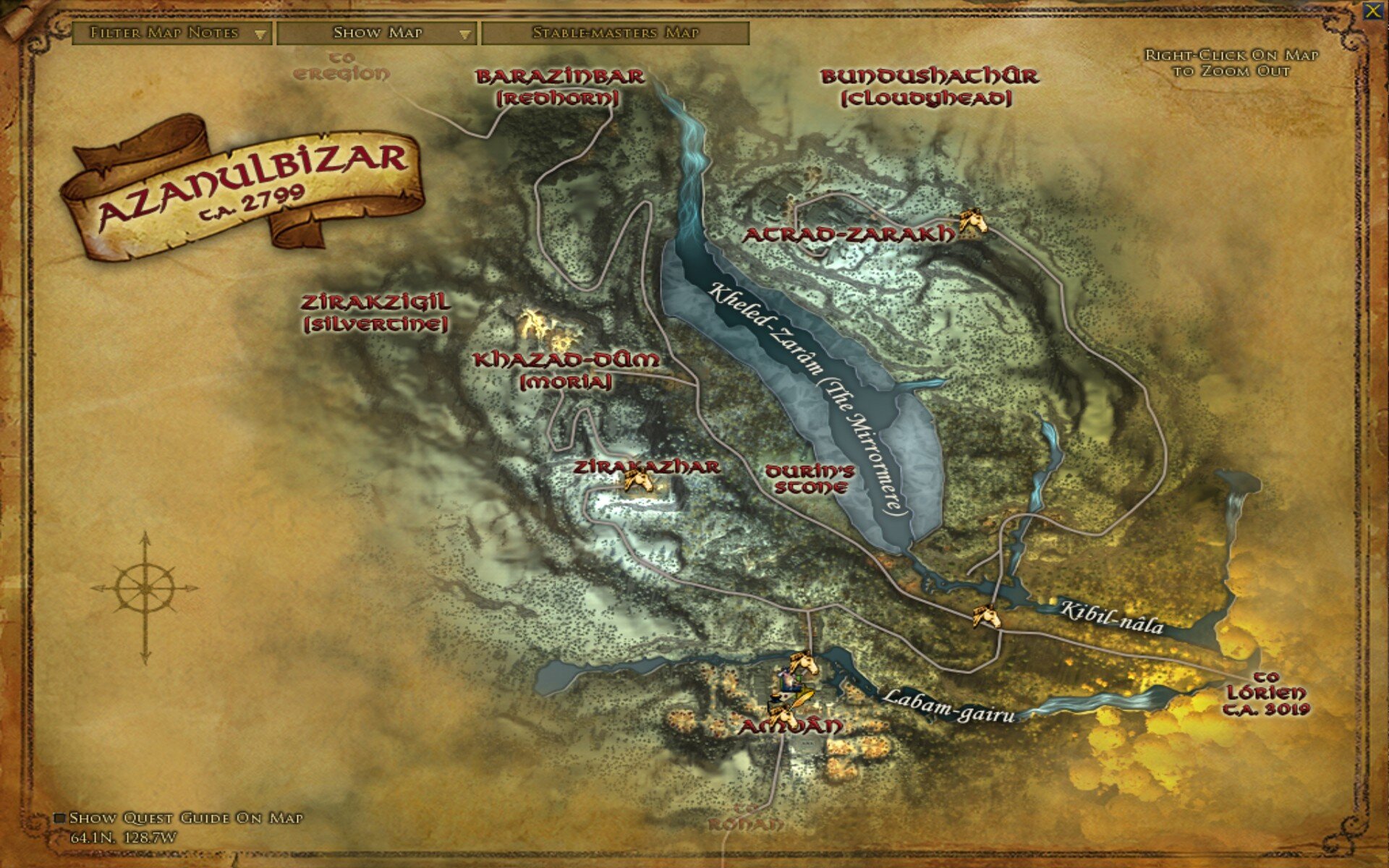
The new zone extends from the Misty Mountains in the North West to the borders of Lorien in the South East. The entrance to Khazad-dûm is heavily fortified by Azog’s Orcs. A central road runs diagonally through Dimrill Dale, running parallel to the Mirrormere. A further two paths can be found hugging the mountain walls on either side of Dimrill Dale. There are six Dwarven camps in the area, four of which have stables. The major camp is Amdân to the South, on the road that leads to Rohan. You will find Dwarves of many different clans here. Within a short distance of all of these Dwarven camps there are comparable Orc fortifications, which block the roads. There are ongoing battles between both factions in strategic places such as Zirakazhar and Atrad-Zarakh. There are a few wild animals such as wolves, bears and birds in the area. Attempting to pass through the Orc encampments is problematic due to mob density.
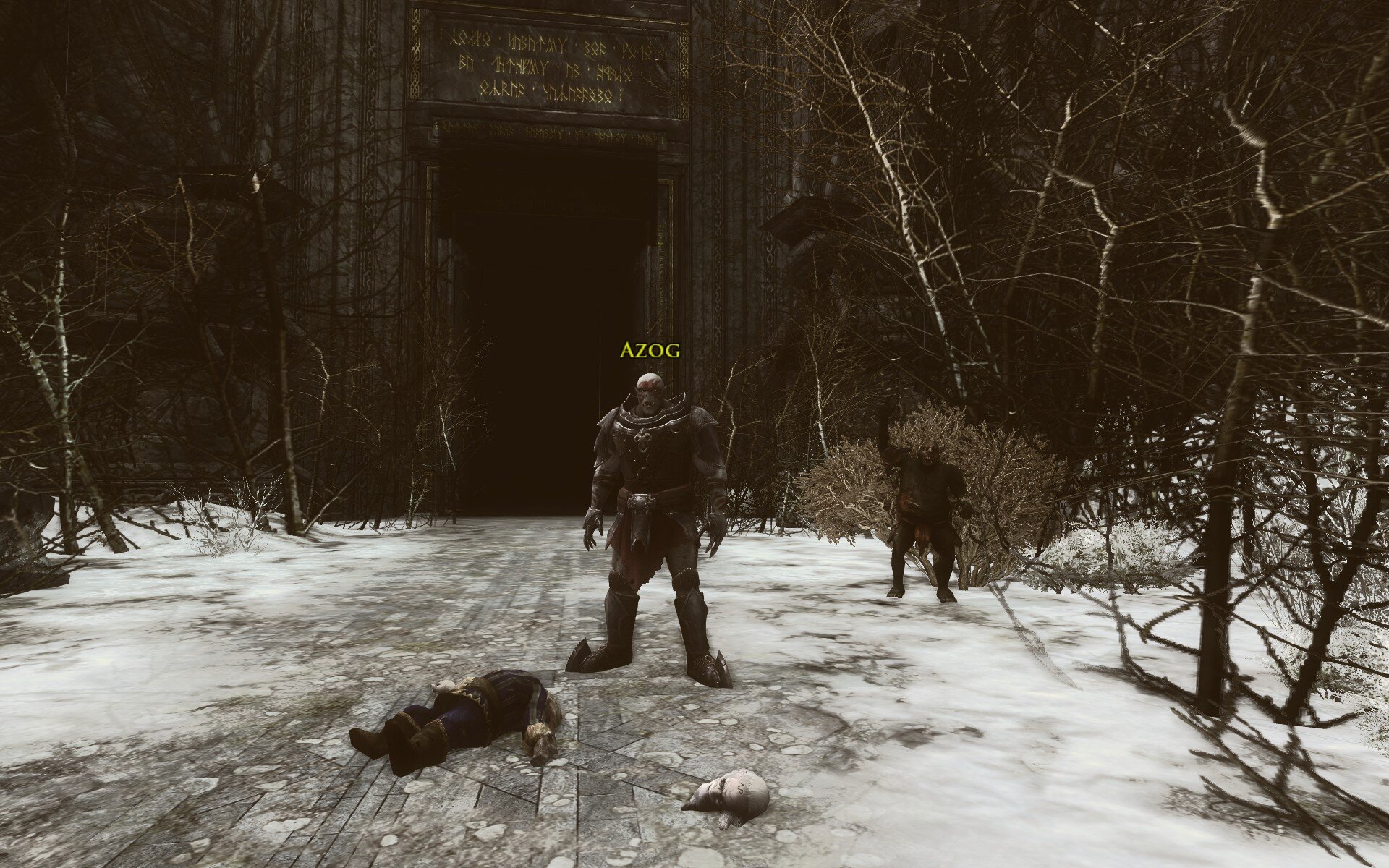
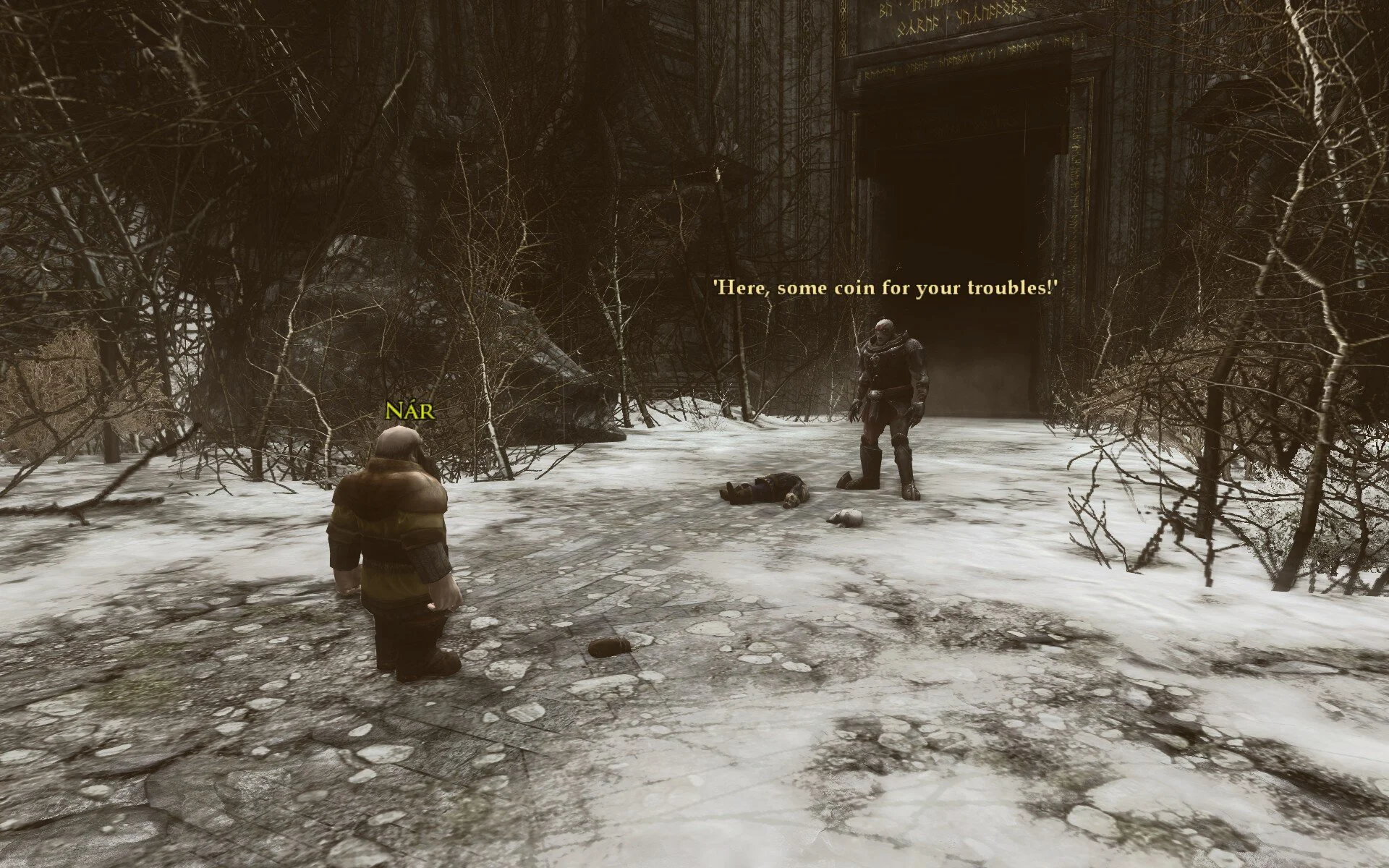
As ever, the new zone has a great atmosphere and a suitably rousing soundtrack. There is a rather good preface to the new area in which we witness the history of Thror and Nár and their ill-fated quest to reclaim Khazad-dûm. Thror meets a suitably unpleasant fate at the hands of Azog which then leads to the Sixth War of the Dwarves and Orcs. I tend not to play too much content during these Bullroarer previews but from what I’ve seen the PVE quests are structurally very similar to those in the previous mini expansion. I’m sure that SSG will supply a good story as ever but I am concerned that many of the quests will be repeatable and of the “kill so many things” variety. There will naturally be a new reputation faction to complete and barter rewards. From what I’ve seen, Update 30 The Blood of Azog seems to be standard new LOTRO content. That is not a value judgement but a statement of fact. SSG continues to follow their established formula.
The Alts We Do Not Level
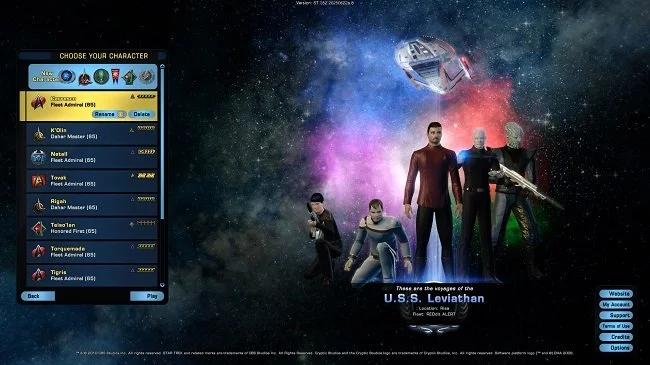
There are many factors that can add to an MMORPGs replayability. Multiple races, classes and factions can all potentially offer a new experience to the player. Some games even have unique stories associated with different types of characters, ensuring that rolling a new alt means that the player doesn’t repeat material they’ve already completed. Many gamers enjoy this aspect of the genre and will experiment with different builds, resulting in a character selection screen filled with numerous alts in various states of progress. However, irrespective of whether you get to experience a new story or if you indeed like the new character you’ve created, there comes a point when you look at your new alts progression and reflect upon the long, long journey to level cap. It is at this point that many alts fall by the wayside. The aforementioned character selection screen is often populated with unfulfilled potential.
There are many factors that can add to an MMORPGs replayability. Multiple races, classes and factions can all potentially offer a new experience to the player. Some games even have unique stories associated with different types of characters, ensuring that rolling a new alt means that the player doesn’t repeat material they’ve already completed. Many gamers enjoy this aspect of the genre and will experiment with different builds, resulting in a character selection screen filled with numerous alts in various states of progress. However, irrespective of whether you get to experience a new story or if you indeed like the new character you’ve created, there comes a point when you look at your new alts progression and reflect upon the long, long journey to level cap. It is at this point that many alts fall by the wayside. The aforementioned character selection screen is often populated with unfulfilled potential.
Some MMOs make levelling a new alt a relatively easy experience. Star Trek Online is very generous with experience points and a player can level a new character to level cap (65) over a weekend if they’re diligent. The Elder Scrolls Online similarly does not make levelling an alt to 50 a chore. Dolmen farming in the Alik’r Desert is an expedient alternative to playing through story content. The Lord of the Rings Online is a horse of a different colour and even though much of the early content in the game has been streamlined for fast levelling, progression can slow down once the player arrives in Rohan. At present the biggest levelling bottleneck is Mordor, which has a massive change in difficulty compared to previous content. However, MMOs are not just about the journey to level cap. As and when you arrive there is the issue of obtaining appropriate gear. Depending on the game this may mean working your way through various reputation progressions to get your hands on what you need or spending a fortune on the auction house. Further reasons why so many alts never arrive at cap.
However, many game developers have a “solution” to these levelling issues. Rather than seeing a mid level alt, languishing in the doldrums as an indictment of their game design, they prefer to interpret it as a business opportunity to sell the player a boost to level cap. Needless to say, such “services” divide the player base. Some see this as a convenience and a way to quickly get a new alt to level cap without the grind. Others see it as a game breaking anathema and a personal slight against their entire life and value system. And then there are those who don’t really give a shit either way. More often than not, if an alt has been abandoned then there are usually good reasons for it. It’s play style may not be to our taste or it may have failed to meet our expectations. Perhaps we didn’t like the associated story. Whatever the reason, once sidelined, abandoned alts are seldom returned to.
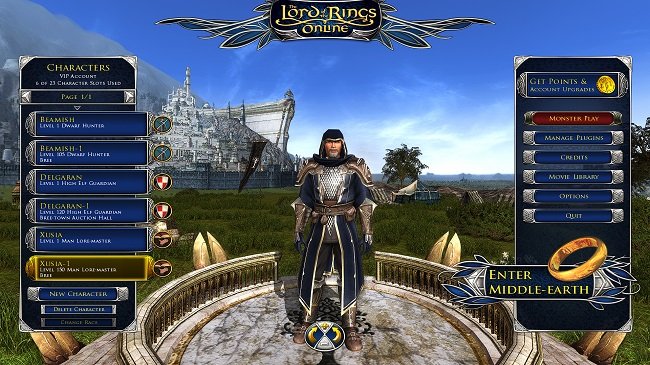
So what of my superfluous alts? Well I tend not to have that many. Once I find a class in an MMO that I like, I tend to go all in and focus on it. However, I do from time to time experiment. Currently in ESO I have an Argonian Necromancer, who is just kicking his heels in Shadowfen. I decided to create a new Dragonkinght and take them through the game’s entire story in narrative order. Hence the Necromancer got sidelined. In LOTRO my Dwarf Hunter is loitering around the crafting hall in Bree. Crafting eventually became too complex and so he remains a fixture next to the forge, doomed to stay at level 105. However, things are more fortunate for my new Gorn Captain in STO. He is permanently stationed in the Vlugta Asteroid Field, mining and refining Dilithium ore. It may not be the most glorious of destinies but it beats not being used at all. Such is the fate of the alts we do not level. What do you do with yours?
LOTRO: Password Reset for Dormant Accounts
Here’s a nugget of information that passed under the radar, or at least it passed under mine. The following post appeared on the official LOTRO forums last week regarding resetting password on dormant player accounts. “As part of our effort to keep people's game accounts secure we have reset the passwords for all game accounts that have not been logged into in more than two years. Your game account and all of its data remains intact! In order to log in, you will need to reset your password through the Forgot My Password? reset procedure. To further help protect your account, we also recommend that you regularly update your password details, and never share your password with anyone. If you need further assistance, please contact Account Support”. Cordovan (Community Manager).
“Is it secret? Is it safe?”
Here’s a nugget of information that passed under the radar, or at least it passed under mine. The following post appeared on the official LOTRO forums last week regarding resetting password on dormant player accounts. “As part of our effort to keep people's game accounts secure we have reset the passwords for all game accounts that have not been logged into in more than two years. Your game account and all of its data remains intact! In order to log in, you will need to reset your password through the Forgot My Password? reset procedure. To further help protect your account, we also recommend that you regularly update your password details, and never share your password with anyone. If you need further assistance, please contact Account Support”. Cordovan (Community Manager).
I am not directly affected by this situation as I regularly log in to The Lord of the Rings Online, regardless of whether I am actively playing or not. I do so to take screen captures for posts, check on new content added to the game or to see if there have been any messages left by kinship members. However, I know lots of people who have not logged into the game for 24 months but do not consider themselves “done” with the game. From a players perspective, two years may not seem like an especially long period of time to be absent from LOTRO. Real world events may mean that they can’t play at present or they may be awaiting a specific expansion or some new content. However, from a game developer’s point of view, an account that has been inactive for two years is not only not playing the game but not spending money. Such data must be very telling and certainly must give SSG food for thought.
Dormant, not Dormouse…
I understand why SSG has decided to reset the passwords on such accounts from a security perspective. But I also think that this situation presents a golden opportunity to do some proactive public relations work and marketing. In the past Cryptic, developers of the MMORPG Star Trek Online, would email players with dormant accounts and offer them incentives to return to the game. This would sometimes be a rare ship that wasn't available elsewhere. I’m not sure how effective this approach was but you would see these unique ships in-game and know that it belonged to a returning player. Would it really be too much to ask for SSG to adopt a similar approach and to offer an incentive to those players who have drifted away from LOTRO to return? Alternatively, if targeting lapsed players is too controversial (as there would naturally be complaints from some current players), why not run a welcome back event with benefits available to all? As ever with LOTRO and SSG, such obvious ideas remain conspicuously absent.
Write Now, Edit Later
"Don't get it right, just get it written". James Thurber. This is a quote that is often bandied about with regard to creative writing. I was watching a documentary last night about a guy trying to find financing for an independent film he was making and a variation of this philosophical statement came up. I suppose that the reason it is so commonplace is because it is true. All writers at some point find themselves procrastinating to a greater or lesser degree. While writing this simple blog post, I’ve been distracted by incoming email and a message notification from my phone. Sometimes I will draw the curtains in my office so I don’t end up aimlessly staring out of the window at life’s rich pageant or the bird on Mrs Coletart’s roof. Because I am an organised person and like to plan, sometimes I focus too much upon the detail of my writing, rather than just getting the raw ideas down. Hence even the most simplistic of blog posts can at times take an hour or more to get written.
"Don't get it right, just get it written". James Thurber. This is a quote that is often bandied about with regard to creative writing. I was watching a documentary last night about a guy trying to find financing for an independent film he was making and a variation of this philosophical statement came up. I suppose that the reason it is so commonplace is because it is true. All writers at some point find themselves procrastinating to a greater or lesser degree. While writing this simple blog post, I’ve been distracted by incoming email and a message notification from my phone. Sometimes I will draw the curtains in my office so I don’t end up aimlessly staring out of the window at life’s rich pageant or the bird on Mrs Coletart’s roof. Because I am an organised person and like to plan, sometimes I focus too much upon the detail of my writing, rather than just getting the raw ideas down. Hence even the most simplistic of blog posts can at times take an hour or more to get written.
One of the first things I learned when writing is not to correct your work as you go along. If you do, you end up obsessively re-writing the same sentence over and over again. It is very inefficient and far less enjoyable. Hence "don't get it right, just get it written" is such good advice. Especially so if your writing style is more of a stream of consciousness. I tend to favour bullet points when creating a post. These can be used for ideas or an argument and then counter argument. Later, they can then be developed into paragraphs or combined to make wider points. I also create a lot of draft documents. If an idea comes to me then I open a new document in Google Drive, give it an obvious title and then add a few points that are relevant or simply write the original thought(s) that came to me. This way, good ideas have a better chance of coming to fruition and becoming fully formed blog posts.
A dilemma I often wrestle with is exactly how much to write on any given subject. There are different schools of thought on this and it very much depends who you are writing for. Commercial writing is usually far more targeted and specific. Hence brevity and the use of easy to understand language is important. I prefer a more substantive approach and enjoy using my vocabulary, creating metaphors and making obscure pop culture references. I like my arguments to be clear and backed up with supporting data. However, there’s longform writing and then there’s just being verbose and I worry that I drift too often into the latter. Thankfully, this is why we edit and as a writer one has to be ready to make hard choices with regard to what stays in the final version of your post and what gets cut out. I am currently trying to hone my editing skills, to be more ruthless and produce more succinct posts.
With all this in mind, I am going to do some experimentation with my writing over the next few months, to see if I can produce shorter posts and to also try and speed up my writing process. But it can be hard to break yourself of certain habits. For example I have an odd attitude towards writing three paragraphs or less in a post. I feel that it is too insubstantial and even lazy. Yet other bloggers I know produce concise and on point material and I don’t think the same of them. So I’m going to try to do things differently. This has the added benefit of making the actual process of writing a little more interesting and adding a sense of variety. Because writing like any other task, takes focus and discipline and at times can be a chore. Trying to transfer the thought, idea or point that is abundantly clear in your mind, onto the virtual page is not as easy as it sounds. But that is also part of the fun. It also brings me back to the James Thurber quote. "Don't get it right, just get it written". Make this your mantra.













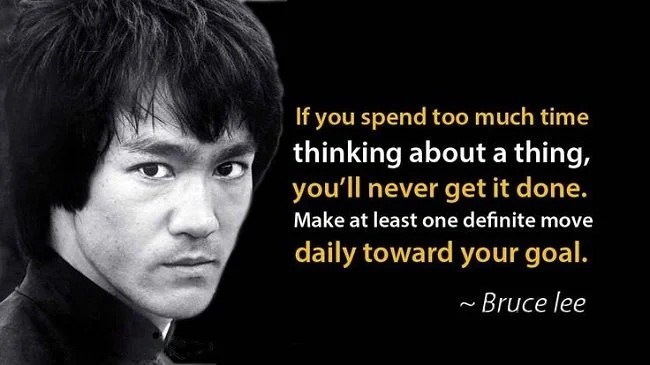


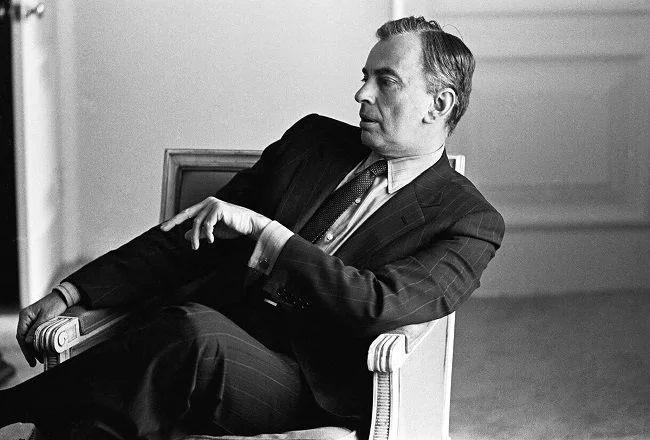



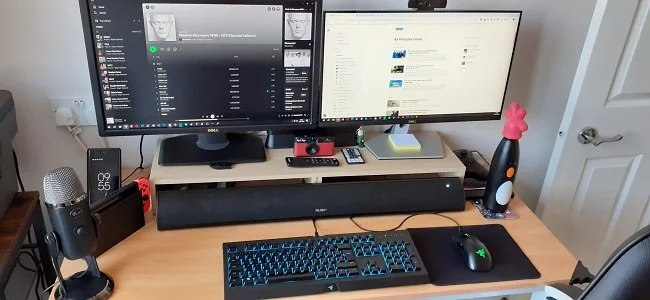
Those Who Wish Me Dead (2021)
Forensic accountant Owen Casserly (Jake Weber) flees his home with his teenage son Connor (Finn Little) when he discovers he has been targeted by a pair of assassins (Nicholas Hoult and Aidan Gillen) who have been hired to stop him giving evidence in a major corruption case. Connor witnesses the murder of his father after their car is run off the road. Entrusted with important written evidence, he escapes into the dense forests of the Montana wilderness pursued by the killers. Seeking help he runs into smokejumper Hannah Faber (Angelina Jolie) who is stationed at a remote fire lookout tower. Hannah suffers from PTSD from a previous forest fire in which she was unable to save three young boys. Hannah attempts to lead Connor through the forest to safety. Meanwhile the assassins set fire to the forest to divert the attention of the authorities and cover their tracks.
Forensic accountant Owen Casserly (Jake Weber) flees his home with his teenage son Connor (Finn Little) when he discovers he has been targeted by a pair of assassins (Nicholas Hoult and Aidan Gillen) who have been hired to stop him giving evidence in a major corruption case. Connor witnesses the murder of his father after their car is run off the road. Entrusted with important written evidence, he escapes into the dense forests of the Montana wilderness pursued by the killers. Seeking help he runs into smokejumper Hannah Faber (Angelina Jolie) who is stationed at a remote fire lookout tower. Hannah suffers from PTSD from a previous forest fire in which she was unable to save three young boys. Hannah attempts to lead Connor through the forest to safety. Meanwhile the assassins set fire to the forest to divert the attention of the authorities and cover their tracks.
Upon reading the plot synopsis for Those Who Wish Me Dead, I immediately thought of the 1998 action movie Firestorm starring Howie Long. However upon further consideration the similarities lie purely in the setting. Those Who Wish Me Dead aspires to be a little more than just an action vehicle although it includes many familiar tropes. Angelina Jolie treads Liam Neeson territory with her “wounded Lion” role. The central character is a “wild card” with a past who is seeking redemption. However, despite a plethora of familiar plot themes, director Taylor Sheridan (Yellowstone) chooses to focus on character and story. There are some solid and somewhat brutal action scenes but they are not the heart of the proceedings. The film’s pacing is somewhat languid as a consequence. The writer of the source novel, Michael Koryta, is credited as having co-written the screenplay and it may be the case that he wanted to focus more on the characters nature, rather than their deeds.
Angelina Jolie acquits herself well and is very watchable, handling the physical demands of her role well. Finn Little similarly is a plausible young teenager, suitably traumatised and yet resourceful. Teenagers are so often depicted in a tiresomely formulaic manner in these sorts of films, so it is quite refreshing to have a more palatable character. Furthermore, Those Who Wish Me Dead flips several common place genre tropes. The two assassins are in fact brothers and this gives an interesting dynamic to their interactions. They’re both clearly psychotic and simply view their work as a process, which they undertake in a very matter of fact manner. We don’t necessarily learn a lot about them but they are more than just the standard “off the peg” bad guys required in action movies And then there’s the pregnant wife of the local sheriff, Alison played by (Medina Senghore) who quickly contradicts the woman in danger trope.
Overall Those Who Wish Me Dead is a more polished and finely honed action movie than your average studio genre material. It is raised to a higher standard because of the central performances and due to the competence of the cast. The digital FX work is also very good finding the right balance between creating spectacle and not overplaying its hand. As a result the burning forest seems a genuine threat. These high production values along with a story that is prepared to fly in the face of some of the genre’s more common attributes makes Those Who Wish Me Dead better than average. The presence of Angelina Jolie may well broaden the film’s appeal beyond action fans. She has the acting chops to play a firefighter, although she still doesn’t quite look the part. And if given a choice I would recommend Those Who Wish Me Dead over Firestorm.
Skyrim: 30 Million Copies Sold and a Decade Later
I read the following post over at Kotaku recently, “Skyrim Player Tries To Kill Every Single Living Thing In The Game” and it struck me how Skyrim is still popular with gamers after ten years. Since its initial launch back on 111th November 2011, The Elder Scrolls V: Skyrim has sold over thirty million copies worldwide, across multiple platforms making it one of the best selling games of all times. Originally released on the PC, PS3, and Xbox 360 Skyrim has been ported to all subsequent generations of consoles including the Nintendo Switch. A remastered Special Edition of the game that was released in 2016 and a VR version followed in 2017. It has proven extremely popular with the video game modding community and currently supports thousands of nds and addons. You can log on to Twitch at any time of the day and find someone playing Skyrim. That is quite a legacy for a game that’s a decade old.
I read the following post over at Kotaku recently, “Skyrim Player Tries To Kill Every Single Living Thing In The Game” and it struck me how Skyrim is still popular with gamers after ten years. Since its initial launch back on 111th November 2011, The Elder Scrolls V: Skyrim has sold over thirty million copies worldwide, across multiple platforms making it one of the best selling games of all times. Originally released on the PC, PS3, and Xbox 360 Skyrim has been ported to all subsequent generations of consoles including the Nintendo Switch. A remastered Special Edition of the game that was released in 2016 and a VR version followed in 2017. It has proven extremely popular with the video game modding community and currently supports thousands of nds and addons. You can log on to Twitch at any time of the day and find someone playing Skyrim. That is quite a legacy for a game that’s a decade old.
There are lots of reasons why this game seems to have such enduring appeal. In many ways it is a blueprint for the role playing genre. For the sake of brevity, I would suggest the following. Skyrim provides a blank canvas for the character that the player creates. There is scope for a prodigious amount of customisation. The region in which the story is set, as well of the wider world of Tamriel, is filled with dense and complicated lore. Which contributes to the illusion that this is a living environment filled with peoples and history. The game’s combat system supports a wide degree of variety and caters to players with differing taste and skill levels. The central story is engaging and nuanced, rather than feeling like a hand holding exercise. The side quests and associated DLC are also narratively well conceived, rich and varied. And the open world environment packs a surprisingly large amount of content into its virtual 15 square miles. The wealth of mods and addons available also adds to the game’s existing replay value.
There was a time when the sprawling role playing games were a niche market, still driven by stats and random chance like their distant pen and paper game ancestors. Skyrim changed that by making systems more accessible and making story and content king. The open world format is now commonplace and key to the success of tiles such as Assassins Creed: Valhalla the Far Cry franchise. The wider gaming community have adjusted to the complex game mechanics previously only found in the RPG genre because of Skyrim. Players now expect to be able to create a unique avatar and construct hybrid builds. The focus upon complex lore and branching narratives is now a major staple in modern video games. The mechanics, systems and tropes that developers Bethesda created with Skyrim have directly led to more recent games such as The Witcher III. It is a legacy that looms large within the industry.
Fans are an observant bunch. It has been noted that the amount of time that has passed since the release of Skyrim is double that between the earlier instalments, Morrowind and Oblivion. Developers Bethesda are busy with several titles at present but will they mark the 10th anniversary of Skyrim? There has been some speculation from gamers as to whether there will be a full new remaster or some bespoke anniversary DLC. Sadly, it doesn’t appear that Bethesda has any specific plans of this nature. Last May, Bethesda senior VP of marketing and communications Pete Hines said that The Elder Scrolls VI will only be released “years from now” and that another title, Starfield, will be launched first. So it would seem that this auspicious decade will go unmarked officially. However, that is not to say that gamers cannot celebrate themselves and I suspect that there will be a lot of events on Twitch and other streaming platforms. Skyrim has earned its place as a genre milestone and its ubiquity and reputation are thoroughly deserved.
Update. Bethesda Softworks is releasing the Skyrim Anniversary Edition on November 11th to mark the RPG’s 10th anniversary. The Skyrim Anniversary Edition will include the Special Edition version of the game. A remastered release with high-resolution textures, upgraded visual effects, and the Dawnguard, Hearthfire, and Dragonborn DLC. It will also include more than 500 pieces of Creation Club content as well as new quests, dungeons, bosses, weapons, spells, and more. Further details can be found at the Bethesda website. (22.08.21)
LOTRO to End Support for Windows XP
"The Lord of the Rings Online will be deprecating support for Windows XP and earlier operating systems as of June 8th, 2021. All of your characters and progress will remain, and you can continue to play the game by running LOTRO on a Windows 7 or newer operating system. Players who need to can contact Account Support at help.standingstonegames.com. Thank you" Cordovan. If my time working in IT has taught me anything, it’s that once someone has found a computer setup that works for them and that they’re comfortable with, they’ll move heaven and earth to keep it. Not everyone is an early adopter. Not everyone upgrades just because an upgrade is available. Money is also a major factor. £100 may be a trivial amount to one person but a month’s wages to another. Bearing all this in mind, it is fair to say that not everyone upgrades their hardware or software willy-nilly. Hence it is not unusual to find PC’s running Windows XP in peoples homes.
"The Lord of the Rings Online will be deprecating support for Windows XP and earlier operating systems as of June 8th, 2021. All of your characters and progress will remain, and you can continue to play the game by running LOTRO on a Windows 7 or newer operating system. Players who need to can contact Account Support at help.standingstonegames.com. Thank you" Cordovan. If my time working in IT has taught me anything, it’s that once someone has found a computer setup that works for them and that they’re comfortable with, they’ll move heaven and earth to keep it. Not everyone is an early adopter. Not everyone upgrades just because an upgrade is available. Money is also a major factor. £100 may be a trivial amount to one person but a month’s wages to another. Bearing all this in mind, it is fair to say that not everyone upgrades their hardware or software willy-nilly. Hence it is not unusual to find PC’s running Windows XP in peoples homes.
However, Microsoft officially ended support for Windows XP on April 8th, 2014. So I am quite surprised that Standing Stone Games has still been supporting LOTRO on this operating system for so long after it was formally retired by the manufacturer. Considering there have been four further iterations of Windows since XP, SSG are certainly justified in their decision to draw a line under this particular version. Certainly, if the game is to evolve and have the graphical upgrade that has been suggested, along with a port to the current generation of consoles, it cannot be restricted by a requirement to run on older hardware and software. I doubt if they’ll do it but I would be very interested to know exactly what percentage of LOTRO players are still running the game on this operating system. I suspect it may be more than what many people think.
This raises the question as to what players affected by this change will do. A license key for Windows 10 can cost anything from £35 to £140. There are deals to be had from grey market vendors if you search online. However, if you have a PC that came with Windows XP installed, it will be between 12 and 20 years old. Are the hardware specifications of such systems going to cope with the latest iteration of Windows 10? If so, the need to upgrade an operating system could end up as a need to buy a new PC. Will people do that just to play LOTRO? Linux enthusiasts will happily inform anyone with a pulse that it will run on an abacus and that it also supports LOTRO. But not everyone wants to go down such an alternative route. In the meantime, I’ll be keeping an eye on the LOTRO forums to see what sort of feedback this announcement generates and how supportive SSG are of those affected by this imminent change.