
LOTRO: Thoughts on the Current Downtime
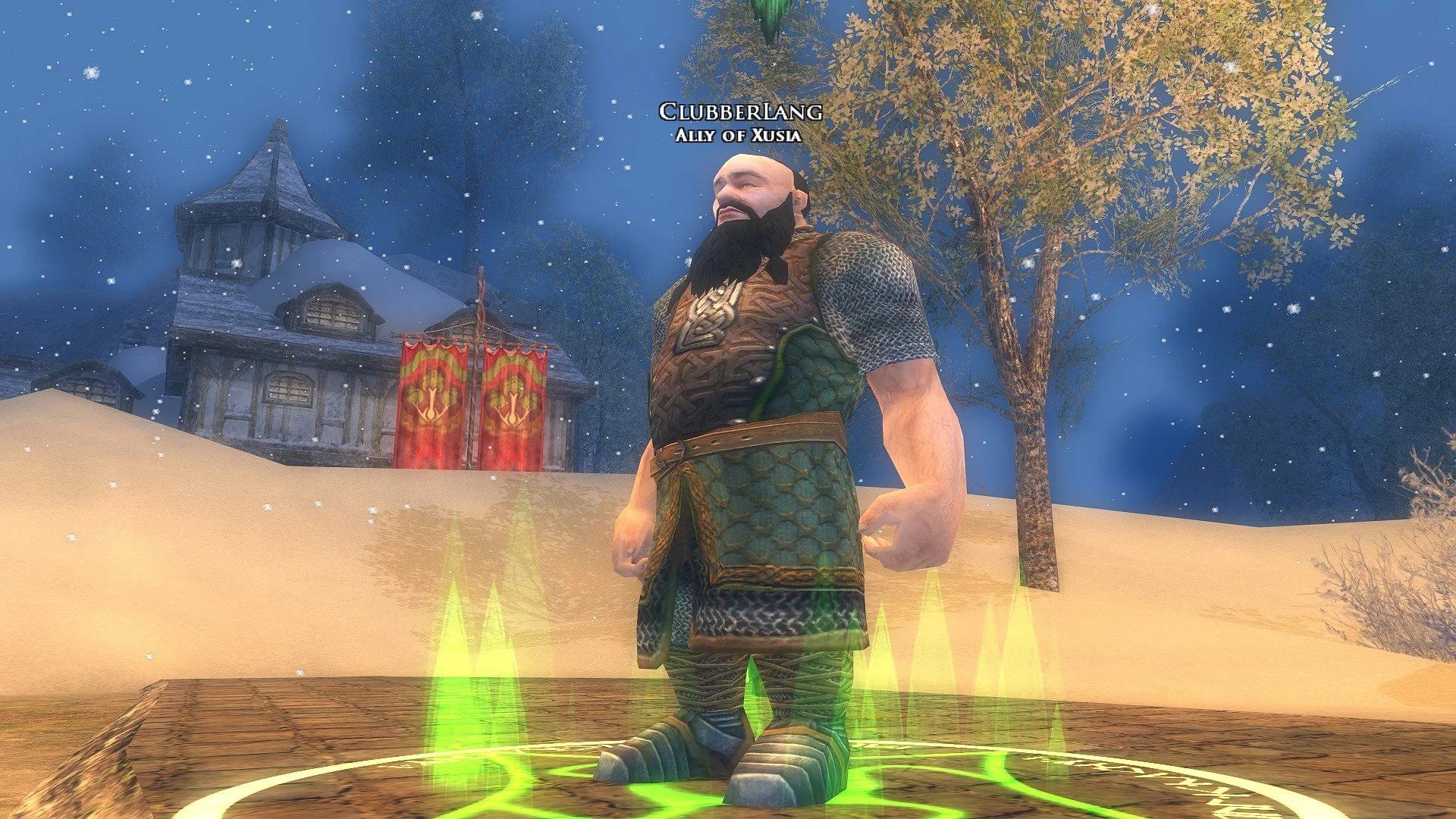
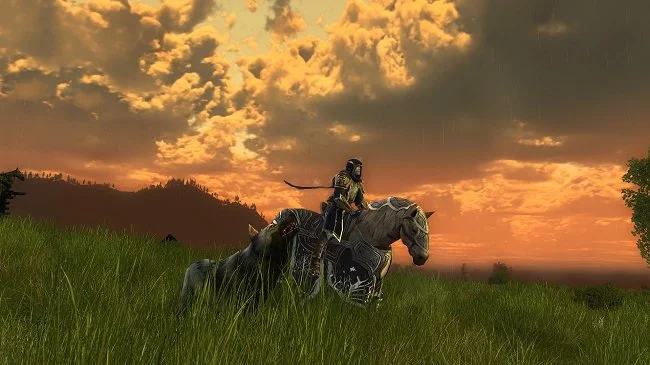
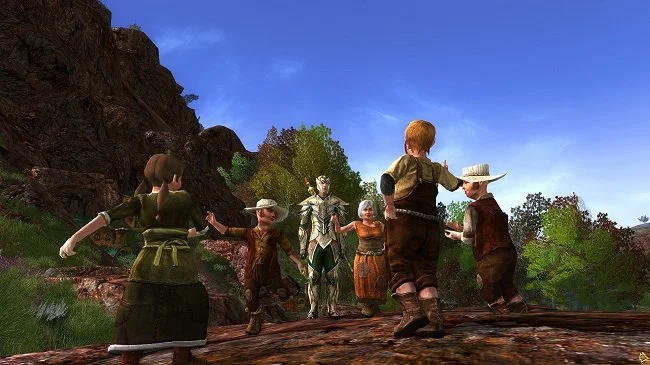
As I am writing this post, the popular MMORPG The Lord of the Rings Online has been offline since 2:00 AM EST on 6th March (7:00 AM GMT). The game servers, website and account portal are offline for maintenance and it would appear that the actually physical hardware is being relocated within the datacentre that Standing Stone Games uses. Like any complex IT project of this nature there are always potential problems and it would appear that some have occurred as the initial 22 hours projected down time has now become nearly 3 days. Naturally this has had an impact upon the LOTRO community as Friday evening is often prime gaming time. From SSG’s perspective the extended outage is not good for business or community relations and so they have been using social media to keep players informed.
As I am writing this post, the popular MMORPG The Lord of the Rings Online has been offline since 2:00 AM EST on 6th March (7:00 AM GMT). The game servers, website and account portal are offline for maintenance and it would appear that the actually physical hardware is being relocated within the datacentre that Standing Stone Games uses. Like any complex IT project of this nature there are always potential problems and it would appear that some have occurred as the initial 22 hours projected down time has now become nearly 3 days. Naturally this has had an impact upon the LOTRO community as Friday evening is often prime gaming time. From SSG’s perspective the extended outage is not good for business or community relations and so they have been using social media to keep players informed.
Community manager Cordovan (Jerry Snook) presented a brief live stream earlier tonight to provide a more hands on summary of issues and to endeavour to placate LOTRO players. He re-iterated that the downtime was too facilitate a server move and that there have been hardware issues and other related problems as a result. He also stated that no data had been lost. Third party contractors are involved, and overall trouble shooting is progressing. He stated that the downtime would continue to at 6:00 PM EST (11:00 AM GMT March) and that hopefully by then “there would be good news. Once service has been resumed for both LOTRO and DDO, there would be a more comprehensive statement put out about player compensation, an extension of the skirmish event and general billing enquiries. He couldn’t be specific at present, but he was clear that players would be suitably recompensed as they have been in the past.
“In technical terms, I thinks it’s totally fucked. Let’s blame it on the intern Colin”.
Having worked in the past in such technical environments as datacentres and been involved in projects of similar scope, I am sympathetic towards SSGs plight. No matter how well you plan there is always potential for something to go pear shaped. It’s often something innocuous or an aspect of the project that was deemed trivial and left to the intern Colin to sort out. Frankly there is never a good time to shut a server down. Just a period that is the “least inconvenient”. Clearly in this case the situation has gone beyond this and I ‘m sure there are a lot of folk working very hard to pull the company’s proverbial chestnuts out of the fire. Who knows, maybe this extended downtime has a valuable moral lesson to teach us about something or other. I’m not really sure, as I’m not known for my morality and I’ve just played more Star trek Online instead. However, I am looking forward to seeing LOTRO back online. I’d miss it if it wasn’t about anymore.
Update:
Cordovans deadline has been and gone and sadly the downtime has been further extended. As of 23:25 PM GMT the current speculative end to the outage is 12:00 PM Eastern (5:00 AM GMT) Saturday, March 9th.



Learning How to Live Stream Part 1
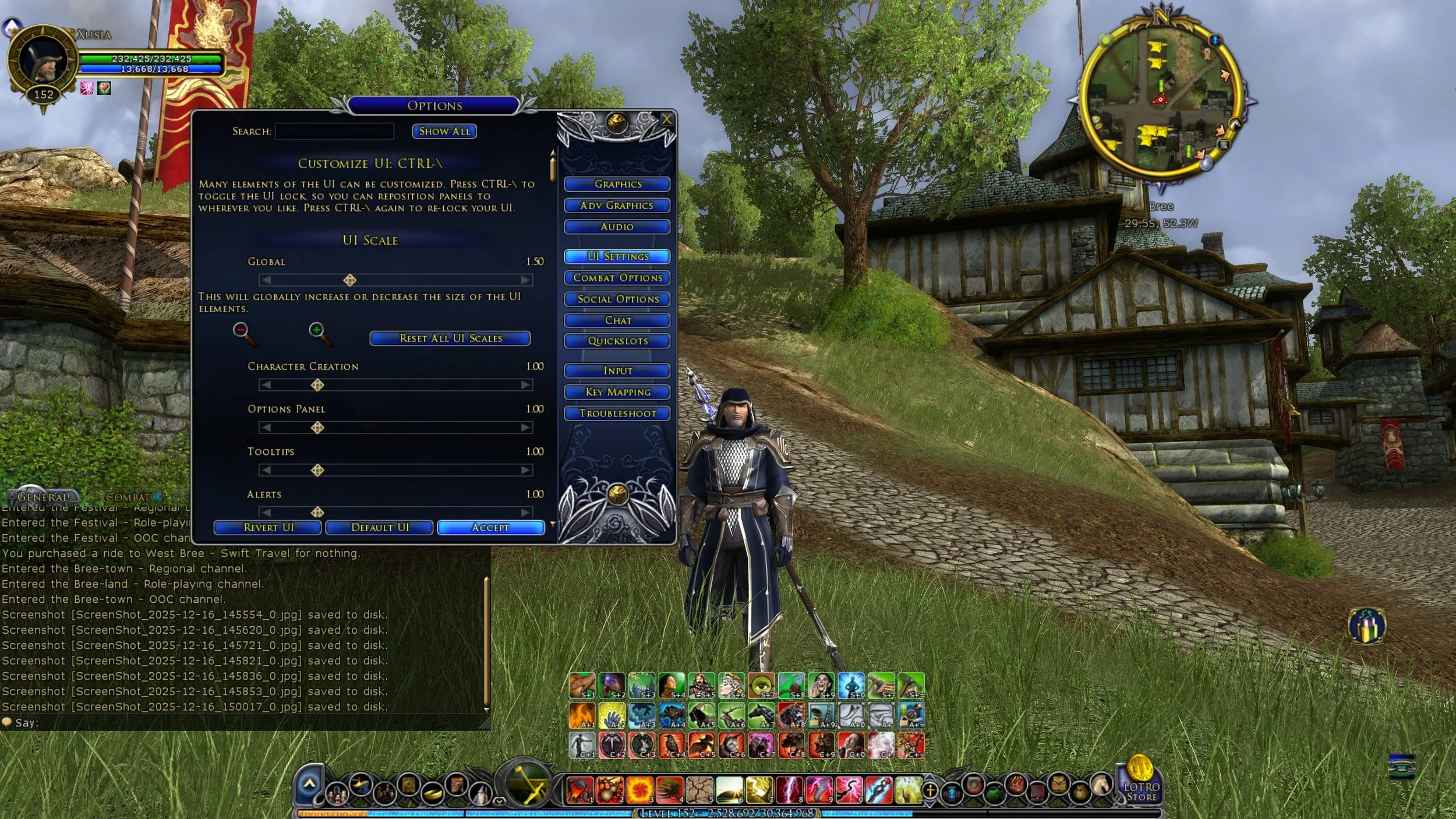
Sometimes, it’s good to try something different and to learn new skills. I’ve been mentally restless of late and miss applying myself to technical problems and expanding my skills. It’s one of the few aspects of traditional “work” that I miss. So after some deliberation, I’ve decided to try live streaming. Whether I’m successful at it and maintain a regular streaming schedule is another matter altogether. But I’m going to give it a go and have already determined how I intend to approach it and what “my angle” is going to be. However, first things first. Matters such as style, tone and presentation are concerns for later. I spent today getting to grips with Streamlabs OBS and learning the basics. I thought I’d share my experiences because it hasn’t been as straight forward a process as I’d imagined.
Sometimes, it’s good to try something different and to learn new skills. I’ve been mentally restless of late and miss applying myself to technical problems and expanding my skills. It’s one of the few aspects of traditional “work” that I miss. So after some deliberation, I’ve decided to try live streaming. Whether I’m successful at it and maintain a regular streaming schedule is another matter altogether. But I’m going to give it a go and have already determined how I intend to approach it and what “my angle” is going to be. However, first things first. Matters such as style, tone and presentation are concerns for later. I spent today getting to grips with Streamlabs OBS and learning the basics. I thought I’d share my experiences because it hasn’t been as straight forward a process as I’d imagined.
First off, this post is not intended as a guide, it is more of a commentary on SLOBS and the wealth of information that is available online. Like most “free software” there is a minimal amount of information contained within the program itself. There are some video links for a standard installation and an overview of the software’s functionality. New users are encouraged to use the SLOBS Discord channel but getting help in such an environment is a mixed bag. You’re at the mercy of who’s online, how helpful they are and whether they’re a good communicator. The latter is a criticism that plagues most of the You Tube content on this matter. I sat through dozens of videos today, that were intended to help and share information. Sadly most were rambling, vague and poorly expressed. Fortunately, I have access to an existing streaming community who managed to answer most of my enquiries. Therefore I’d say lesson number one is to speak to other streamers if you can and try to replicate their settings.
Having configured SLOBS, I attempted a test. Rather than “Go Live” on my Twitch account, I opted to record the results. This proved very useful. New streamers will save themselves hours of grief if they ensure from the beginning to run SLOBS as an administrator. Otherwise it will not find the game that you’re streaming. Another foible of the software happens when tabbing between the game you’re playing and SLOBS itself, which mutes the sound of your live stream. This is an “active window” issue and the only immediate solution is to not do this while you’re “live”. Fortunately, there is a SLOBS Remote app for phones and tablets, so you can manage your scene transitions and management without the need to tab to SLOBS itself. However, this brings me to lesson number two. It is not essential, but it will certainly make matters easier if you have a second monitor.
And therein lies the rub. It is casually implied by Streamlabs and many of the internet guides that you can just install the software and “go”. However, the reality is not quite as simple. SLOBS has multiple functionality and there’s a wealth of widgets you can add to manage subscriptions and social interactions. It even integrates the chat from your Twitch channel into the UI when you “Go Live”. Therefore having a second monitor, a mobile device for SLOBS Remote and establishing a lot of additional key binds for extra functions are all desirable. All of which have to be implemented in a way that is accessible, while you’re playing a game. I’m sure a lot of good streamers get by in their own unique fashion, but for optimal performance, you need a large desk with lots of space, a multiple monitor set up and possibly a tablet or bespoke device such as Stream Deck.
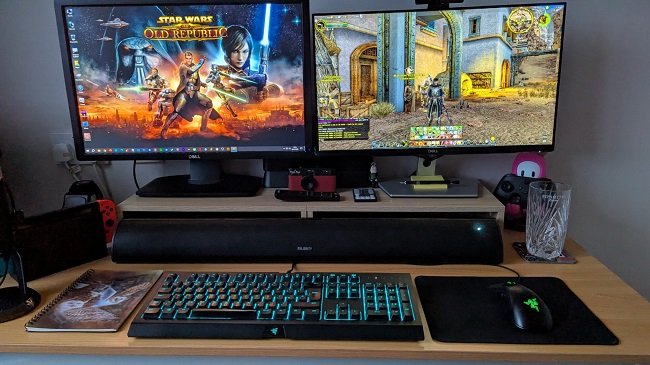
I don’t really have the room for a second monitor on my desk nor want at this stage in the proceedings to invest in any further hardware. So I’ve settled for having SLOBS Remote on my phone for scene management and having chat from my Twitch channel displayed on my tablet. At this point I am not going to complicate matters by having a webcam and integrating myself into my live streams. Coming form a podcast background I prefer things to be about what is being discussed rather than my sartorial elegance and rugged good looks. Today’s test streams worked although they were minimalist in nature. Now comes the task of templates and scene design, although I want to keep this as basic and functional as possible. I shall cover the next stage of my “adventures” in my next post on live streaming. In the meantime, I have adjusted my opinion on all who try this medium as it isn’t as straightforward as it first seems.


















Cryptic to Close the Foundry
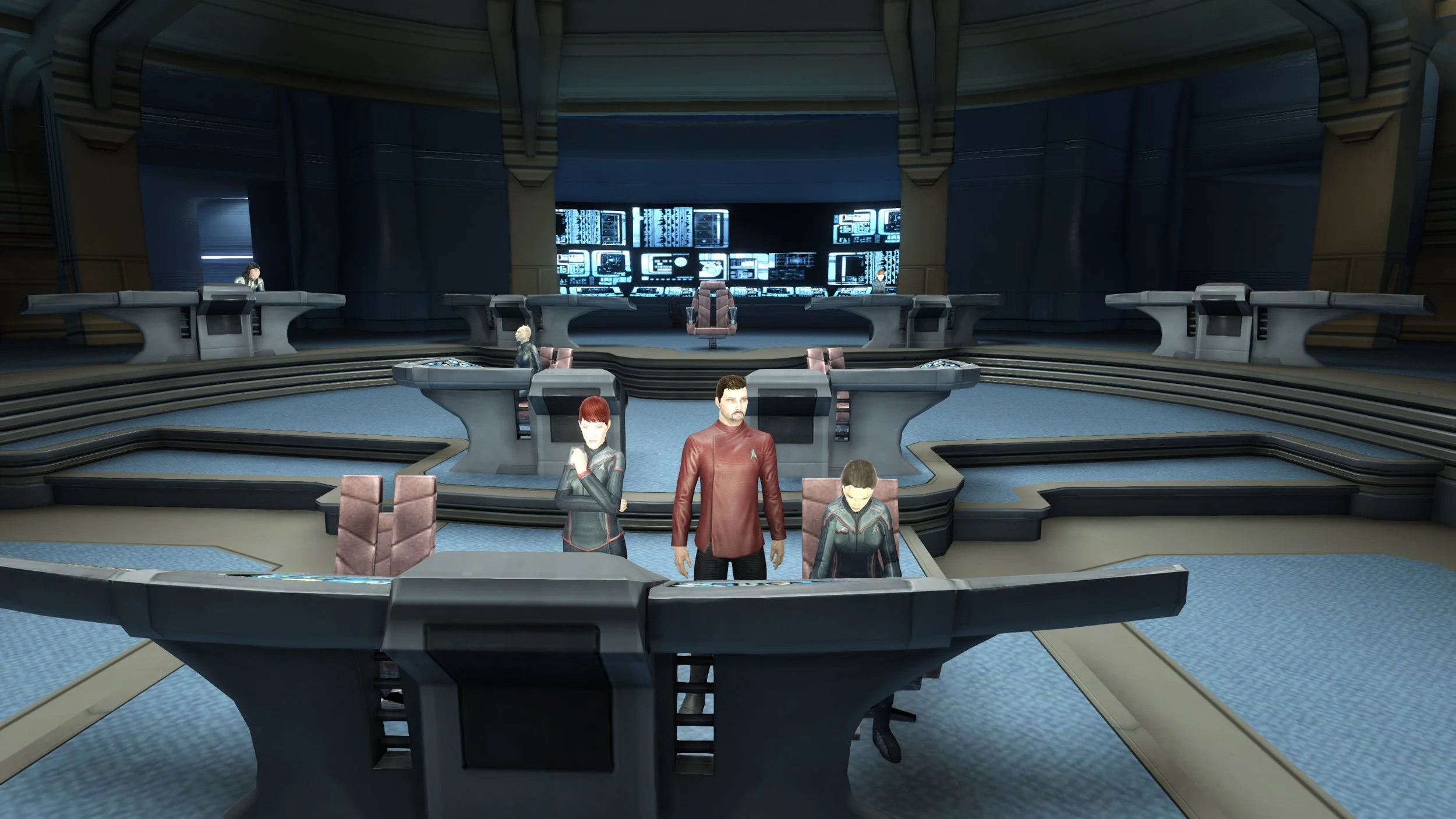
Cryptic have announced that they will be removing the Foundry from both Star Trek Online and Neverwinter on April 11th. The Foundry was first introduced to STO back in 2011 and has proven a popular means for players to create and share their own missions, using in-game assets. Cryptic state in their press release that “the legacy knowledge required to maintain the Foundry at our quality standards is no longer available”. This is a roundabout way of saying that the member of staff responsible for curating and quality testing the service has no left the company. Naturally, Cryptic has stated that they will acknowledge those players who have contributed to the Foundry over the years by handing out various virtual trinkets and baubles. There has been quite a strong reaction of the STO subreddit as no one like to see content removed from a game. However, the isn’t a black and white as it first appears, because the Foundry has been broken for a while.
Cryptic have announced that they will be removing the Foundry from both Star Trek Online and Neverwinter on April 11th. The Foundry was first introduced to STO back in 2011 and has proven a popular means for players to create and share their own missions, using in-game assets. Cryptic state in their press release that “the legacy knowledge required to maintain the Foundry at our quality standards is no longer available”. This is a roundabout way of saying that the member of staff responsible for curating and quality testing the service has no left the company. Naturally, Cryptic has stated that they will acknowledge those players who have contributed to the Foundry over the years by handing out various virtual trinkets and baubles. There has been quite a strong reaction of the STO subreddit as no one like to see content removed from a game. However, the isn’t a black and white as it first appears, because the Foundry has been broken for a while.
I personally haven’t played a Foundry mission for at least two years and have often only tried those I’ve specifically read about. One of the systems biggest faults is poor indexing and curation. Finding good player created content beyond the most popular missions that has been voted to the top of the list, has always been a challenge. Then for several years now every time Cryptic have revised STO in some way or simply added a new feature episode, it has always resulted in the Foundry going offline. Yes there have been some standout player created missions over the years that reflect the passionate nature of the STO community and that of Trek fans per se. But for every good mission you also get three indifferent ones. Often the latter have been created by opportunists trying to facilitate some sort of in-game benefit or provide a fast path to advancement. And on a narrative level, many of these missions are just further examples of poor fan fiction.
The recent introduction of the Personal Endeavor system in STO, pretty much the last nail in the coffin for the Foundry. Endeavors are essentially daily missions that earn statistical upgrade points and are designed to encourage players to try Task Force Operations (group PVE content) and repeat old missions. However, many players looked to Foundry content to try and clear Endeavors as quickly as possible. Why spend thirty minutes in a structured TFO that runs to a timed script, when you can run a player created mission that allows you to achieve your goal far quicker? Naturally, Cryptic were not going to allow this to continue. So when you consider this along with the flaky nature of the system to begin with, and the fact that no one is available to maintain it, it’s surprising that the plug wasn’t pulled earlier.
The Foundry in STO is one of those concepts that looks great on paper and seems like an invaluable community service when discussed. But the reality is that it never delivered as much good content as hoped for and its curation and cataloguing further hindered “the cream from rising to the top”. It can also be argued that Cryptic never promoted the service as much as they could. But irrespective of the quality of content and its accessibility, this is still a case of something being taken out of both STO and Neverwinter and that is never an easy sell. If content is taken out, one naturally feels that something else should replace it. Whether Cryptic does this remains to be seen and I won’t hold my breath. As for the Foundry, I suspect it’s a bit like the concept of “shopping locally”. It’s something we all like in principle but seldom do in reality, therefore we as players, have actively contributed to its demise.


The Cost of Content Creation
Back in July 2017 I wrote a blog post about how monetising your content fundamentally changes the relationship you have with your audience and how that isn’t always a good thing with regard to maintaining ones creative independence. I then went on to describe how I see both my blog and podcast as personal “indulgences” and that I had no intention of using Patreon or having a virtual tip jar. This remains the case and I’m not looking to my readership for funding of any kind. However, it is spring and for me at least, that means that a lot of yearly costs associated with my content creation are up for renewal. Therefore I thought it an appropriate opportunity to discuss the subject of the cost of blogging, podcasting, streaming and other forms of content creation.
Back in July 2017 I wrote a blog post about how monetising your content fundamentally changes the relationship you have with your audience and how that isn’t always a good thing with regard to maintaining ones creative independence. I then went on to describe how I see both my blog and podcast as personal “indulgences” and that I had no intention of using Patreon or having a virtual tip jar. This remains the case and I’m not looking to my readership for funding of any kind. However, it is spring and for me at least, that means that a lot of yearly costs associated with my content creation are up for renewal. Therefore I thought it an appropriate opportunity to discuss the subject of the cost of blogging, podcasting, streaming and other forms of content creation.
Rather than use a free service such as WordPress, I host Contains Moderate Peril via Squarespace which is a subscription service. The infrastructure is robust, secure and the service has several advantages over others that don’t charge. Squarespace has its own statistical package which affords me more than an overview of my website traffic. My current subscription also allows me to host my podcast, which saves me using another service such as Libsyn. At present I choose to pay monthly, so if my circumstances quickly change (and as a carer they certainly can) I can simply cancel the service. At present, the subscription costs £11.14 per month. I also recently renewed my domain, which I do via Go Daddy. It currently costs £23.38 per year, which is about £1.95 per month.
Although there are free alternatives, I still use Microsoft Office and subscribe to Office 365. Last year I bought year’s subscription for a little over £30 from a third-party key seller. Sadly, I couldn’t find such a deal this time, so I have opted to pay £5.99 per month. This is not the most economical option, but it suits my current needs. I have always been a strong advocate of both Microsoft Word and Outlook and rely heavily on the functionality they provide. I use Word for more than just blogging, having a great deal of administrative work to do. Similarly, I manage multiple email accounts and find that Outlook is by far the best tool for this. Email for Contains Moderate Peril, along with a second domain linked to my former business, are both handled via a hosted Microsoft Exchange service costing £17.86 per month.
Overall, it costs me £36.94 to maintain a blog and produce a monthly podcast. That may not sound like a lot of money, but how you view what is and what isn’t expensive is highly subjective. As a carer on a fixed income I’ve had to think long and hard about such expenditure and I’ve briefly considered cheaper options. However, I do not like to dependent on free services and prefer to have the safety net of customer support and legal recourse that comes with paid third-party vendors. So for the present I shall continue to pay in the manner I’ve described. I’d be interested to hear from fellow bloggers and content creators regarding their expenditure or whether they manage to get by without spending anything. Is there a price limit on your hobby or have you been tempted to look to a service such a Patreon to cover costs?




















The Idiot Box
Thoughts on TV shows and my current viewing habits.
Tonight’s season finale of Endeavour was possibly the best episode to date. All the outstanding plot lines were resolved and despite my concerns that a tragedy may occur with regards to one of the central characters, the ending saw the prevailing status quo of previous seasons restored. This series has been exceedingly creative with regard to the subjects and themes it has explored and there have been some exceptional performances from Anton Lesser and Roger Allam. Writer Russell Lewis (a very interesting person in his own right) continues to embellish the proceeding with “metatextuality” which is always a source of joy for me. Recent references to Gordon Murray’s Trumpton, Camberwick Green and Chigley were exceeding droll, yet if the causal viewer missed them, there is still plenty of practical story and historical referencesfor all to get their teeth into. I also thought that the final episodes exploration of a tower block collapse was particularly brave and relevant, considering that the Grenfell Tower Inquiry is still proceeding.
Thoughts on TV shows and my current viewing habits.
Tonight’s season finale of Endeavour was possibly the best episode to date. All the outstanding plot lines were resolved and despite my concerns that a tragedy may occur with regards to one of the central characters, the ending saw the prevailing status quo of previous seasons restored. This series has been exceedingly creative with regard to the subjects and themes it has explored and there have been some exceptional performances from Anton Lesser and Roger Allam. Writer Russell Lewis (a very interesting person in his own right) continues to embellish the proceeding with “metatextuality” which is always a source of joy for me. Recent references to Gordon Murray’s Trumpton, Camberwick Green and Chigley were exceeding droll, yet if the causal viewer missed them, there is still plenty of practical story and historical referencesfor all to get their teeth into. I also thought that the final episodes exploration of a tower block collapse was particularly brave and relevant, considering that the Grenfell Tower Inquiry is still proceeding.
Ricky Gervais is a controversial figure and opinions surrounding him are often binary. His work is often challenging, and I fully understand why some find it such difficult viewing. However, comedy and satire can be incredibly astute vehicles for analysis and criticism of the human condition, and I believe that is something Mr Gervais does well when his work hits the mark. So having seen the various trailers for his new show After Life, I am cautiously optimistic. After Life follows Tony, who enjoys a good life until his wife suddenly dies. After considering suicide, he subsequently decides to live long enough to punish the world for his wife's death by literally saying and doing whatever he wants to. His behaviour has unexpected results. I suspect that this show will touch upon numerous subjects close to my heart, such as the superficial nature of modern life, social etiquette and pointlessness of many contemporary jobs. The entire season of eight episodes is released on Netflix on 8th March.
In between my other viewing commitments, when ever I have a spare hour, I try to catch up with Star Trek: Voyager. It is one of the few Trek shows I neglected upon release as I only watched the first season. Like other shows in the franchise, it took a few seasons to get going and find its feet but by late season three, it started to reach its potential. I am currently watching this via Netflix (UK) which has the rights to all Star Trek shows. Sadly, unlike TOS and TNG, Star Trek: Voyager has not been remastered and is not available at present in High Definition (The same is true for Star Trek: Deep Space Nine). Therefore the image does look a little “soft” at times which is especially noticeable in some of the FX shots. Like TNG, although the live action was shot on film, the show was edited via video and so there are no trational master negatives of each episode. A full restoration means remastering the live action and recombining it with the FX elements and credits, making it a very costly endeavour. I suspect that the right holders will have to think long and hard before financing such a project. In the meantime, what is available on Netflix will have to suffice.
Finally, as a grandparent I end up watching a lot of children’s TV either directly, or by being around when it is on in the background. Surprisingly enough, a lot of it is inoffensive and usually has some lesson to impart to its young audience. I do find the associated toy marketing a nuisance as I have spent about a year now having to endure Paw Patrol both on and off the screen. However, one show I do admit to enjoying is Hey Duggee. This animated program is set in The Squirrel Club, an activity group for children, similar to The Scouts. The children take part in all kinds of activities, have adventures and earn badges for their accomplishments. The novelty lies in the fact that the children are an Octopus, Rhino, Crocodile, Mouse and Hippo. Duggee, the leader of The Squirrel Club, is a big floppy eared dog who communicates via the onomatopoeia "Woof". Yet everybody understands him perfectly. This is another show that smuggles a great deal of pop culture references into the short seven-minute stories. A simple journey in a river boat to find a missing sheep quickly alludes to both Joseph Conrad’s Heart of Darkness and Coppola’s Apocalypse Now. Who would have thought that children’s TV could become so “meta” and clever.









A Month in Gaming
Every other video game blogger I know writes a monthly summary of what they’ve been playing and then details what they hope to achieve in-game over the next four weeks. It’s a very effective example of blogging as it’s easily to relate to and it’s nice to see what everyone else is focusing their “gaming attention” on. So I’ve decided to do the same. It’s a relatively straight forward post to write and it also makes collating an end of year analysis of my gaming habits a lot easier. So here is a broad breakdown of what I got up to last month, gaming wise.
Every other video game blogger I know writes a monthly summary of what they’ve been playing and then details what they hope to achieve in-game over the next four weeks. It’s a very effective example of blogging as it’s easily to relate to and it’s nice to see what everyone else is focusing their “gaming attention” on. So I’ve decided to do the same. It’s a relatively straight forward post to write and it also makes collating an end of year analysis of my gaming habits a lot easier. So here is a broad breakdown of what I got up to last month, gaming wise.
February in review:
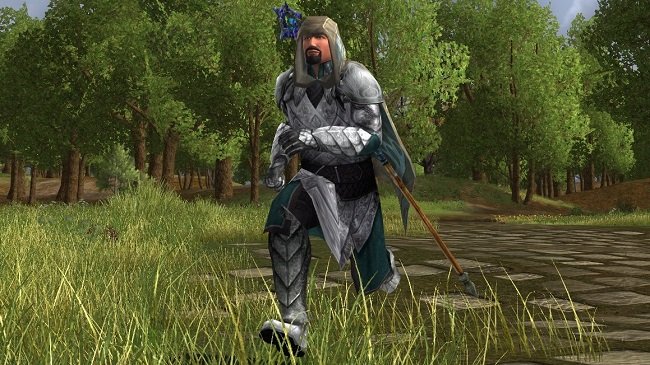
I initially put off starting the Siege of Mirkwood expansion in LOTRO because it remains as frustrating a zone as it was back upon its release in 2009. The mobs are densely packed and it’s a dull and dismal region that’s difficult to navigate. So I spent some time levelling both in Enedwaith and in The Great River zones, which was more enjoyable and challenging. Having reached level 70 on my Guardian a few days ago, I have now returned to Southern Mirkwood and will blitz through the Epic Story. As I’ve out levelled the content, this shouldn’t be such an uphill struggle and I can focus on the narrative which is the main point of interest for me at present.
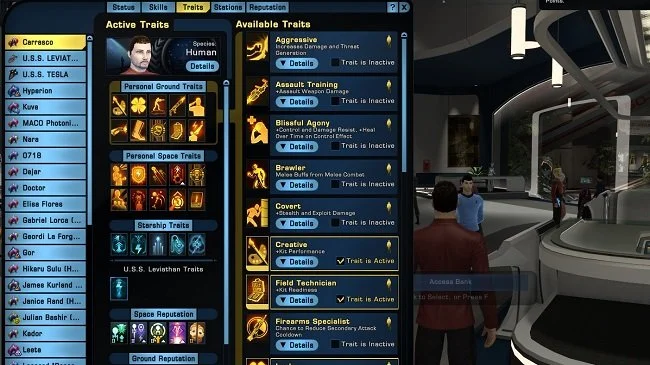
Having created a new Discovery era alt in Star Trek Online, I’ve been working my way through the various episodic missions and it’s been quite a revelation. Like LOTRO, a lot of the earlier content found in the game has been revised, streamlined and has new cutscenes added. Hence there are cameo appearances by Trek actors early on in the game. However, although the stories do make sense, there are often details and embellishments to be found when you create a new alt from a different race and experience the same story form a different perspective. Also levelling this new alt is proving a lot easier this time round as I have access to a lot of account wide assets, that I’ve unlocked on previous characters. Playing through at a lower level makes experimenting with different ship builds a lot cheaper.
Alas, my return to Tamriel has stalled and I haven’t progressed beyond installing ESO and tweaking my addons. Plus to effectively play the game, it’s best to subscribe as this unlocks all DLC and gives the player a separate crafting inventory, which greatly improves loot management. However, I don’t really want to subscribe until I’m in a position to play the game regularly and at present I don’t think that’s a realistic option. I am beginning to come to terms with the fact that my present circumstances only allow me to focus on two MMOs. However, I shall keep ESO installed and updated, just in case things change.
March Goals:
I’m currently re-installing the Bullroarer test client for LOTRO, as SSG were hinting recently that new content would be available for testing soon. LOTRO is currently saddled with a very slow installer that drags on for hours, irrespective of the speed of your internet connection, so I thought it best to get this copy of the game installed now, rather than on the day when Bullroarer next goes live.
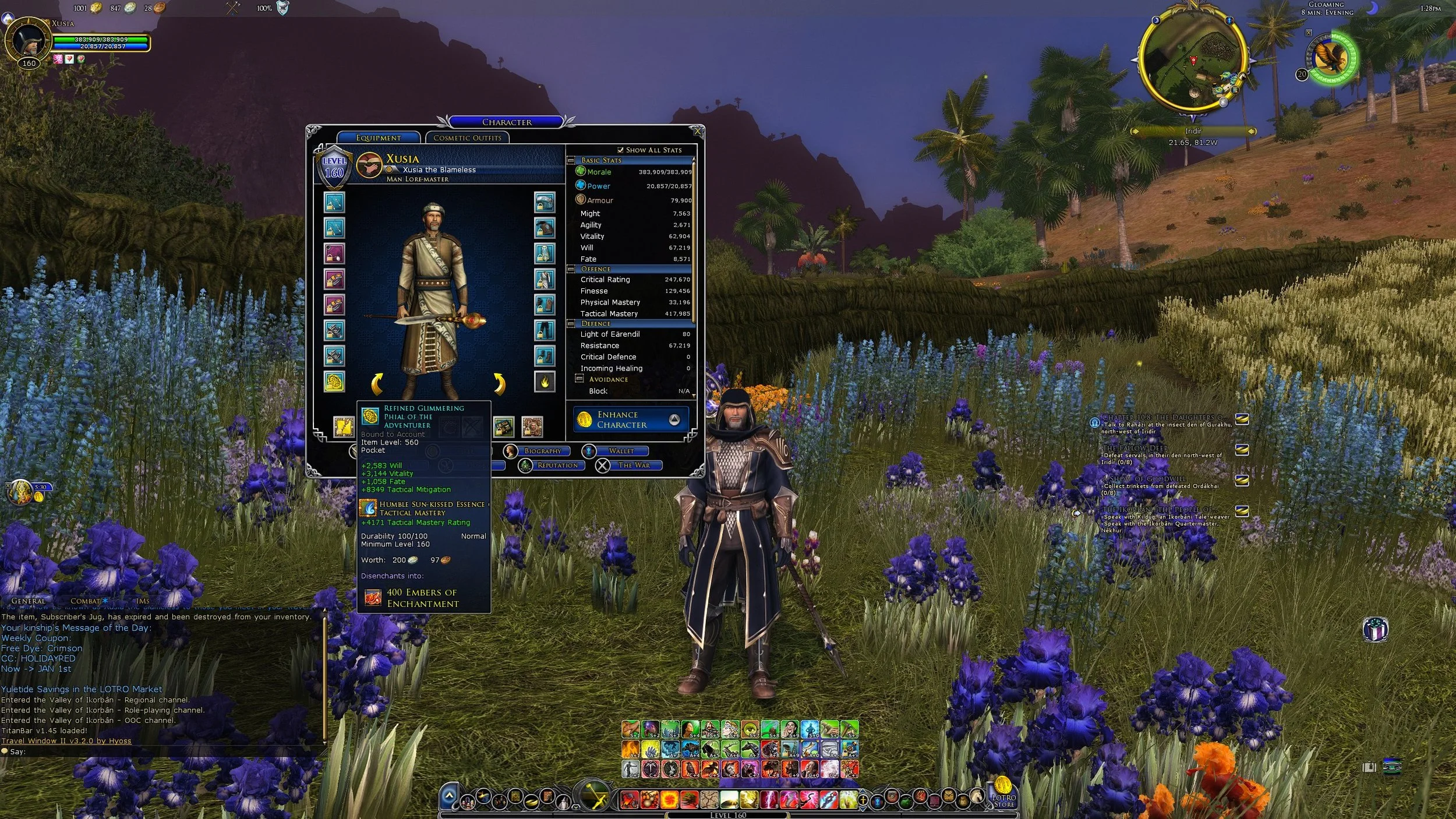
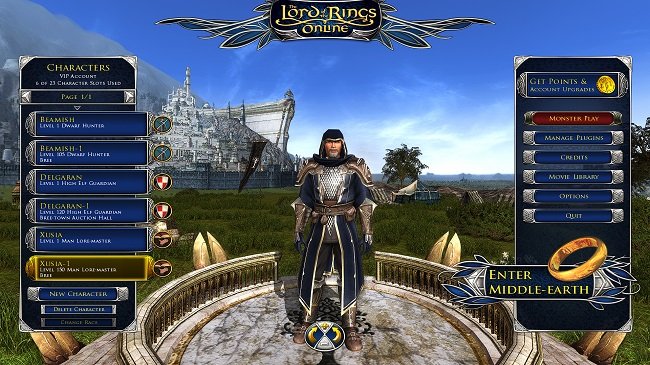
I’m also considering returning to my primary, level cap Lore-master on Laurelin and clearing some of the outstanding deeds I have. Deeds have always been a grind in LOTRO however many now provide Motes of Enchantment, which the player can then barter for gear or cosmetic items. Plus if I have all virtues at maximum level by the time SSG revise the system it means I won’t have to spend any additional time on improving them.
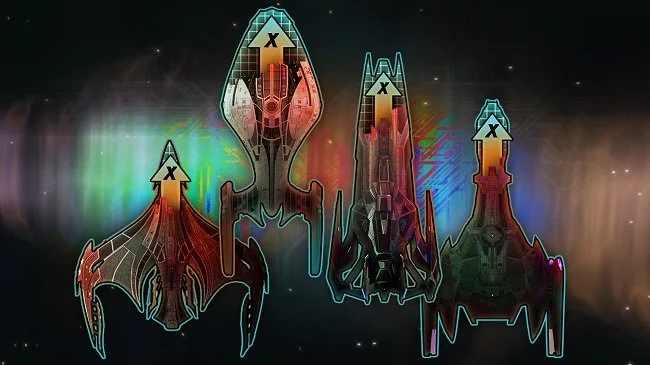
I want to diversify my ship builds in STO as I tend to broadly favour the existing meta, which is primarily beam boats. I’ve been experimenting with cannons although success does hinge upon effectively flying your ship and be able to strafe efficiently. I find torpedoes interesting and have been reading about how the Quantum Phase Torpedo can be a major asset in a projectile based build. The great thing about STO is that a lot of the best gear in the game is tied to specific missions, all of which are repeatable. So it’s easy to collate a shopping list and clearly work towards what you want.

Death in MMOs
There was a post today over at Keen and Graev’s Gaming Blog, which raised the subject of “corpse runs” in old school MMOS such as Ultima Online. In-game death came with penalties back then and there was the prospect of XP loss or that your corpse could be looted, and you could potentially lose rare gear. It got me thinking because I’ve never played an MMO that has had, to my mind, such harsh sanctions. In fact game mechanics such as permadeath, corpse runs, and the loss of equipment will put me off playing any such game that has them. I suspect that unless you’re a player who is particularly motivated by achievement, competitiveness and challenge, then such systems are seen mainly as an inconvenience and impediment.
There was a post today over at Keen and Graev’s Gaming Blog, which raised the subject of “corpse runs” in old school MMOS such as Ultima Online. In-game death came with penalties back then and there was the prospect of XP loss or that your corpse could be looted, and you could potentially lose rare gear. It got me thinking because I’ve never played an MMO that has had, to my mind, such harsh sanctions. In fact game mechanics such as permadeath, corpse runs, and the loss of equipment will put me off playing any such game that has them. I suspect that unless you’re a player who is particularly motivated by achievement, competitiveness and challenge, then such systems are seen mainly as an inconvenience and impediment.
Death in MMOs and the function it is supposed to serve, is just another aspect of the genre that has changed over time. The genre is not the same time sink it used to be and an ageing player base has meant that many core mechanics have had to become more flexible and accommodating to shorter periods of gameplay. Many players who played MMOs because of the raiding, competitive PVP and the culture of league tables and results have moved on to other games that still focus on such systems. For me, MMOs are about the narrative, levelling and occasional social gameplay. Death is mainly an inconvenience and not something I wish to have any greater impact than it does already. Gaming is for me a primarily a leisure activity.
In STO, death means just respawning and mainly serves as a warning to change your strategy or to consider revising your build. If you play the TFOs at a higher level, then your ship will get damaged if destroyed, but the cost of repair is hardly prohibitive. In LOTRO defeat is again not a major setback. If you’re playing in a group, then your team mates can revive you and the only cost incurred is your armour repairs. However, reviving yourself is limited to once per 2 hours, which means that if you cannot do so, you must retreat to a Rally Circle. This is a nuisance in the more recent zones as SSG doesn’t seem to be so generous with the quantity of rally circles in the game. Also being kicked from an instance can mean a major journey back to the entrance. ESO has a similar mechanic with either self-resurrection via Soul Gems or retreating to a Wayshrine. However, I found that stockpiling Soul Gems is an easy undertaking, therefore easily mitigating death.
I’ve mention in the past that as games have become more mainstream and more monetised, players have subsequently revised their own perspective on death mechanics. If you aren’t interested in the challenge of planning a carefully considered strategy to avoid death, its presence just becomes a source of annoyance. Especially if you see video games more as a leisure service, rather than means of testing yourself. Being inconvenienced by a mechanic in a game that you are paying for is a difficult line to tread. An incentive that shapes your gameplay is one thing. A penalty that wastes your time is something entirely different. Hence, I think it is something we will continue to see diminished in mainstream MMOs, yet I suspect it will linger as a key component of more challenging games.
Politics and Video Games
I frequently read blog posts, forum comments and reddit rants that can be broadly filed under the heading “keep politics out of video games”. Actually, there’s a tendency to put a far more possessive inflection on the statement by saying “keep politics out of my video games”. It’s a rather unsophisticated response to a broader and more nuanced question about the whether it is both desirable or indeed possible to keep a socio-political subtext out of any gaming narrative. But as a lot of gamers don’t do “nuance” and there’s a growing aversion to thinking per se these days, debating such a position is often an uphill struggle. However, I saw a gaming news story today that addressed this issue head on, and it wasn’t the usual pussyfooting around the issue.
I frequently read blog posts, forum comments and reddit rants that can be broadly filed under the heading “keep politics out of video games”. Actually, there’s a tendency to put a far more possessive inflection on the statement by saying “keep politics out of my video games”. It’s a rather unsophisticated response to a broader and more nuanced question about the whether it is both desirable or indeed possible to keep a socio-political subtext out of any gaming narrative. But as a lot of gamers don’t do “nuance” and there’s a growing aversion to thinking per se these days, debating such a position is often an uphill struggle. However, I saw a gaming news story today that addressed this issue head on, and it wasn’t the usual pussyfooting around the issue.
Ndemic Creations, the developers behind the virus-spreading strategy simulator Plague Inc, are to add a new scenario to the game which sees anti-vaxxers as the threat. This is due to a request from core fans who felt that this subject was both topical and relevant to the game. They even went so far as to set up an online petition. Ndemic responded via Twitter and stated, “If this petition gets to 10k, will add a specific new anti-vaxxer scenario to Plague Inc.”. The requirement was subsequently met and so Ndemic are now working on creating a suitable scenario and integrating it into the game.
At a time where there is a significant increase in measles cases across the United States, it is reassuring to see a video games company buck the trend and make an overt political statement on an issue that affects everyone. Hopefully by adding to the public debate on the issue and robustly standing against the ludicrous position of anti-vaxxers, it will contribute to a positive outcome. Already State legislatures in both Washington and Oregon are considering laws that would remove non-medical exemptions for the routinely administered measles vaccine. Both states currently allow parents to opt out of the measles immunisations if they have a religious or philosophical objection.
As for those players of Plague Inc and the wider gaming community, who may object to such an overtly political subject being added to “their game”, I would encourage them to step back for a moment and reflect upon the nature of the what is it that they’re exactly playing. Plague Inc is a Pathogen simulator designed to infect the world. The game touches upon such issues as vaccination, global pharmaceutical companies and the political aspects of combating a global pandemic. The CDC have even talked to the games developer regarding how the game can be used to educate the public. All of which are directly or indirectly political issues in themselves. Surely this renders any complaints redundant?
Not all, but many video games have some sort of underlying narrative to facilitate the game’s systems and mechanics. Irrespective of the genre, there is usually some sort of plot that justifies the players actions in the game. It may be something simple and childish such as theft of bananas in Donkey Kong Country, but it’s there all the same. And unless the developers go out of their way to make this narrative as basic and neutral as possible, there is scope for it to be interpreted in wider socio-political terms. Furthermore, many mainstream, popular games are predicated on violence, conquest, the acquisition of territory and the vanquishing of an opponent. None of these are apolitical ideas and themes. Which is why I despair of the “keep politics out of my video games” mantra. It shows an immense lack of self-awareness. Plus consciously trying to purge video games of any semblance of political opinion is by its very nature, a political act.















They Don't Work for Us
If you want a good quote to use as a starting point for a blog post then Bree Royce, the Editor-in-Chief and writer for the video game website Massively Overpowered, seems to have a good line in them. In the latest Massively OP Podcast, Bree and Justin Olivetti where discussing the recent round of layoffs that have seen over 800 Activision Blizzard staff lose their jobs. Like many others, Bree and Justin were far from impressed with these events, especially in light of the companies increased profits. When referencing the faux angst of CEO Bobby Kotick who claimed it was a “tough call”, Bree stated “they’ve definitely proven who they work for. It ain’t us”. A simple and inescapable conclusion about the triple A video game industry. Yet it is something that many gamers still struggle to come to terms with. Because so many do not see video games purely as a product, there seems to be an emotional blind spot associated with the game themselves, the developers who make them and the companies that publish them.
If you want a good quote to use as a starting point for a blog post then Bree Royce, the Editor-in-Chief and writer for the video game website Massively Overpowered, seems to have a good line in them. In the latest Massively OP Podcast, Bree and Justin Olivetti where discussing the recent round of layoffs that have seen over 800 Activision Blizzard staff lose their jobs. Like many others, Bree and Justin were far from impressed with these events, especially in light of the companies increased profits. When referencing the faux angst of CEO Bobby Kotick who claimed it was a “tough call”, Bree stated “they’ve definitely proven who they work for. It ain’t us”. A simple and inescapable conclusion about the triple A video game industry. Yet it is something that many gamers still struggle to come to terms with. Because so many do not see video games purely as a product, there seems to be an emotional blind spot associated with the game themselves, the developers who make them and the companies that publish them.
Perhaps this is why so many ill-conceived, crowd funded gaming projects get championed my enthused gamers, who choose to ignore the realities of modern business practises. The romantic notion that independent games development is some sort of artisan “cottage industry” still persists. That devs exist in anarco-sydicalist communes, producing quality games and thriving on the bountiful revenue supplied by the likes of Kickstarter, is still believed by some. But such success stories are few and far between. Crowd funded games have a high mortality rate, often due to poor management and unrealistic promises. Which leaves the mainstream industry which exists primarily to make money and to keep shareholders happy. That’s not to say that they don’t make good games, because they do. We’ve played them. But too often the artistic and creative vision of the developers is either sidelined or hobbled to accommodate multiple means of monetising the overall product.
The triple A video game industry seems to be pursuing unsustainable growth and if left unchecked, will eventually end in a crash. Gamers will eventually balk at their business practices, although they still seem to be enabling them at present, and the fall in revenue will lead to an exodus of investors as they seek a new market to exploit. Venture capital companies seldom have any deep and abiding commitment to that which they seek to monetise. Their loyalty is to profit and if it becomes financial expedient to play the opposite side of the fence to that which they’re playing today, then they’ll do so. It’s not personal, it’s just business. And that is why the likes of Activision Blizzard don’t work for you. Gamers are not strictly the customer. The gamer or should I say the gamer’s money is the crop to be harvested. The shareholders are the real customers and they bankroll the tools needed to harvest that “available cash”. Therefore gamers need to get over the way their passion for their hobby blinds them to the nature of business.
The Ongoing Gaming Divide
Love him or loathe him, Gevlon has been a fixed constant in the video games blogging community for over a decade. But he has recently seen fit to hang up his spurs and is no longer going to be maintaining his blog. Fair enough, if you see no value in what you do or feel that your pastime is no longer what it used to be, then I understand moving on. Gevlon likes games that offer challenge and then enjoys trying to find the formula for success. Many gamers do this enjoying coming to grips with a competitive game, mastering the underlying systems and then excelling in their gameplay. However, that is not the only approach to video games. Sadly Gevlon has always maintained a somewhat binary view on the subject and he cannot see beyond his own interpretations of what gaming is. The world has moved on and he has not. It is ultimately immaterial whether he or other gamers care for this or not. Life is predicated upon change and it happens in every aspect of our lives. Leisure activities included.
Love him or loathe him, Gevlon has been a fixed constant in the video games blogging community for over a decade. But he has recently seen fit to hang up his spurs and is no longer going to be maintaining his blog. Fair enough, if you see no value in what you do or feel that your pastime is no longer what it used to be, then I understand moving on. Gevlon likes games that offer challenge and then enjoys trying to find the formula for success. Many gamers do this enjoying coming to grips with a competitive game, mastering the underlying systems and then excelling in their gameplay. However, that is not the only approach to video games. Sadly Gevlon has always maintained a somewhat binary view on the subject and he cannot see beyond his own interpretations of what gaming is. The world has moved on and he has not. It is ultimately immaterial whether he or other gamers care for this or not. Life is predicated upon change and it happens in every aspect of our lives. Leisure activities included.
The evolution of video games from the seventies to the present day is a tale of a niche, hardcore pastime slowly becoming more widely popular. The arrival of online gameplay offered social interaction and a new approach to competitive gameplay. Yet increasing popularity has attracted money and this has often made gaming about adapting to what is popular and sells, thus moving away from previously established conventions. Plus there are multiple generations of gamers who have had differing experiences determined by what time they adopted this leisure activity. The first generation of MMO players have had their perspective shaped by the likes of Ultima Online. Those playing The Elder Scrolls Online today are being shaped by a very different game environment and set of rules. Plus so many gaming terms, labels and definitions have changed. The net result is that the term gamer is a very broad church and doesn’t really indicate anything more than a penchant for playing games. The same way that being a reader doesn’t say anything about what you read or enjoying music indicates the subtleties of your personal taste.
It is very hard to try and quantify gaming and break it down into clearly delineated groups and parts. One of the major handicaps of writing about this pastime is that you often have to speak in broad generalisations and prefix your points with caveats and contextualisation. For example, the overall point of this post is to highlight that there is a gaming divide. There are those who play as a test of skill, for competitive reasons and personal achievement. You can argue that these are similar motives to those who play sports. Then there are those who game more as a social and recreational activity, who feel that it is “the journey and not the destination”, so to speak. Yet both these two points are far too definitive and don’t hold up to close scrutiny. Gaming is not a Venn Diagram made up of just two intersecting circles but potentially hundreds. However, from a business point of view, such a diversity and complexity of player needs and preferences, makes it hard to create a product that satisfies the majority.
Overall, I believe there is an established gaming divide, although it is currently framed in very broad and not entirely accurate terms. This matter is further compounded by the current culture of “pigeonholing” and the general partisan nature of culture and politics that exist at the moment. I don’t have a lot of sympathy for video games publishers as they are pretty much in the same category of bankers and estate agents. All are group that compound and exploit the problems associated with their field of work, rather than address them. But I do understand the frustration that game developers must constantly encounter. There is never an overall consensus and every point regarding a game system or mechanic is frequently hotly contested. Plus because developers don’t hold the purse strings, they are often compelled to pursue what is popular, or proven to sell, over innovation and following their own creative leads. It seems that the commercial success of gaming is actively contributing to the gaming divide.
Returning to the matter of the disgruntled games blogger who is unable or unwilling to change and adapt to the new reality of the video games market, I think it highlights the folly of untempered fandom and any other social, political or cultural dogma. Change is a reality in our daily lives, and we seems as a society to cope with it fairly well (although that is now becoming debatable). Yet I suppose everyone has, or potentially has, a blind spot for something or other, and when they encounter it, make it the hill they’re prepared to die on. I guess it all comes down to a choice. There are several big budget games scheduled for release this year, that fall outside of my personal tastes. However, I do not see this as a problem, the same way I don’t resent all the products in my local supermarket that I don’t care for. There are still games that I like in existence and being developed. But I have never understood the mindset that dislikes what others enjoy, as if that is the sole reason why their needs are seemingly neglected. But again this is something that is becoming more prevalent both in gaming and wider culture. The net result of this outlook further exasperates the divisions in gaming, making the matter a cyclical problem.
Taking It Too Seriously?
In the past I’ve often been left somewhat flummoxed when I’ve read stories about fans knitting baby clothes for pregnant characters in soap operas. I’ve also been bemused when reading about actors being berated in the streets by members of the public, who seem incapable of separating the person from the fictional character they play. Such anecdotes have always been met with tutting and shaking of the head from myself. However, I have recently had to temper this rationalist outlook, due to a sudden fit of emotional investment in certain TV dramas. This curious epiphany has led me to conclude that it’s not just a case of good writing and acting (although these are key reasons), but ultimately a question of identifying with a character and empathising with them. Furthermore, who we identify with possibly says something about us to.
In the past I’ve often been left somewhat flummoxed when I’ve read stories about fans knitting baby clothes for pregnant characters in soap operas. I’ve also been bemused when reading about actors being berated in the streets by members of the public, who seem incapable of separating the person from the fictional character they play. Such anecdotes have always been met with tutting and shaking of the head from myself. However, I have recently had to temper this rationalist outlook, due to a sudden fit of emotional investment in certain TV dramas. This curious epiphany has led me to conclude that it’s not just a case of good writing and acting (although these are key reasons), but ultimately a question of identifying with a character and empathising with them. Furthermore, who we identify with possibly says something about us to.
To give the previous statement some context, I was watching Endeavour last night which is now in its sixth season. One longstanding character, Chief Superintendent Reginald Bright, a senior officer who is coming to the end of his career has had more than his share of woes of late. His command was merged with a larger regional neighbour and he has been side lined to head of traffic. His core team have all be reassigned and the murder of one of his officers remains unsolved. Played with great dignity by Anton Lesser, Bright is an anachronism, representing the old guard in a Police force that is modernising to address the social and political change of the late sixties. He is a refined man, steeped in old world manners and social etiquette. But he’s also a loyal and open-minded policeman who commands the respect of those who truly know him.
Perhaps my description already shows that I have become invested in this character, although the show has many more similarly compelling protagonists. So when the Sunday evening’s episode revealed that PCS Bright’s wife (Carol Royale) had lung cancer and that she had only a short amount of time left, it was a crushing development. This plot development was underpinned by the calibre of the understated acting and minimalist script. The emotion of this turn of events was carried by the actor’s non-verbal performance and our emotional connection to him. I was genuinely moved and even tweeted such. A little later I reflected upon how a drama could have such a strong emotional impact upon me, and judging from my Twitter timeline, numerous other viewers.
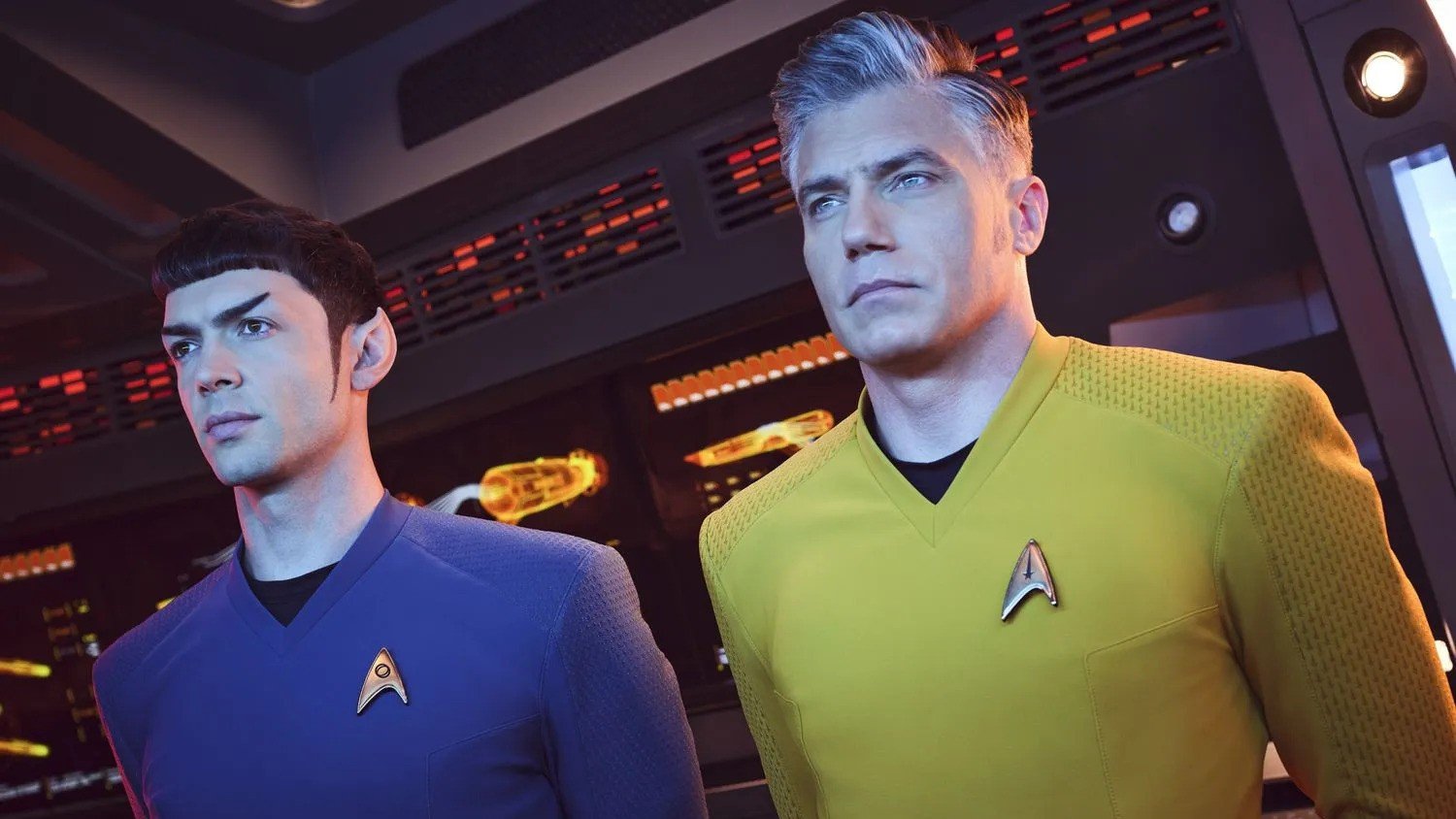
I think the reason we connect, identify or feel some sense of rapport with a fictional character ultimately is down to being able to relate to their experiences or agreeing with what they represent and extoll. The moment you make a personal connection, see parallels to your own life or just find yourself in some state of accord, then a character becomes more than the sum of their parts. Perhaps the concept of the Imago is relevant here? I’m not trained in such scholarly study, so I best not focus on too much armchair psychology. But as I’ve got older, I have found that well written dramas can strike this strong emotional chord and now I can see why people take fictional characters to their heart so. Perhaps I’ve felt this way before and just haven’t recognised it. Spock being a prime example. As for PCS Reginald Bright, I shall see where the story takes us both and no doubt I’ll be further saddened. Yet it will at least be a journey I care about. As for the criticism of “taking it too seriously”, I shall think long and hard before I say such a thing again.
Classic Movie Themes: Alien
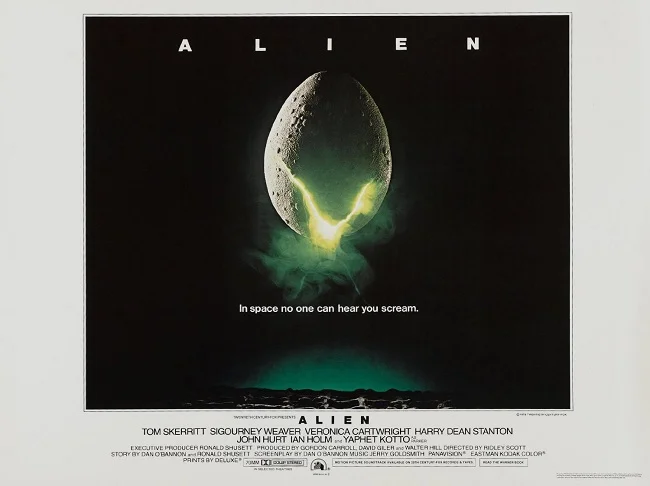
Alien is a unique genre milestone. It challenged the established aesthetic created by 2001: A Space Odyssey of space travel being pristine, clinical and high tech and replaced it with a grimy, industrial quality. The space tug Nostromo is also a conspicuously “blue collar”, civilian venture, underwritten by a large corporation. As for H. R Giger’s xenomorph, it redefined the depiction of extraterrestrial life in movies. Director Ridley Scott brought visual style and atmosphere to particularly unglamorous and dismal setting. He also scared the hell out of audiences at the time with his slow burn story structure and editing style that hints, rather than shows. Overall, Alien is a text book example of how to make a horror movie and put a new spin on a classic and well-trodden concept.
Alien is a unique genre milestone. It challenged the established aesthetic created by 2001: A Space Odyssey of space travel being pristine, clinical and high tech and replaced it with a grimy, industrial quality. The space tug Nostromo is also a conspicuously “blue collar”, civilian venture, underwritten by a large corporation. As for H. R Giger’s xenomorph, it redefined the depiction of extraterrestrial life in movies. Director Ridley Scott brought visual style and atmosphere to particularly unglamorous and dismal setting. He also scared the hell out of audiences at the time with his slow burn story structure and editing style that hints, rather than shows. Overall, Alien is a text book example of how to make a horror movie and put a new spin on a classic and well-trodden concept.
Jerry Goldsmith’s sombre and portentous score is a key ingredient to the film’s brooding and claustrophobic atmosphere. Yet despite the quality of the music, Goldsmith felt that the effectiveness of his work was squandered by Ridley Scott and editor Terry Rawlings who re-edited his work and replaced entire tracks with alternative material. However what was left still did much to create a sense of romanticism and mystery in the opening scenes, then later evolving into eerie, dissonant passages when the alien starts killing the crew. The fully restored score has subsequently been released by specialist label Intrada and has a thorough breakdown of its complete and troubled history.
Perhaps the best track in the entire recording is the triumphant ending and credit sequence, which was sadly removed from the theatrical print of the film and replaced with Howard Hanson's Symphony No. 2 ("Romantic"). This cue reworks the motif from the earlier scene when the Nostromo undocks from the refining facility and lands on the barren planet, LV-426. It builds to a powerful ending which re-enforces Ripley’s surprise defeat of the xenomorph and its death in the shuttles fiery exhaust. Seldom has the horror genre been treated with such respect and given such a sophisticated and intelligent score. Despite its poor handling by the film’s producers, Alien remains one of Jerry Goldsmith’s finest soundtracks from the seventies and yet another example of his immense talent.







Star Trek Online: Non-Combat Missions
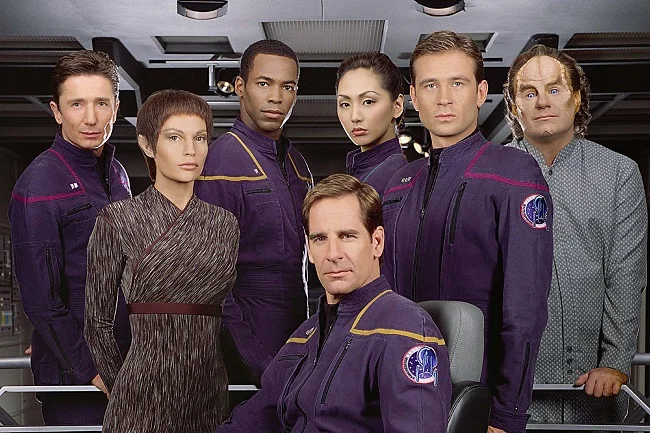
One of the commonest laments you’ll hear from Star Trek Online devotees is that the game is too orientated around confrontation and combat; there aren’t enough diplomatic, exploration and general non-combat missions in the game. It’s a matter I have mixed feelings about, because if you watch Star Trek TOS, then Kirk and the crew of the Enterprise didn’t always live up to the ideals that The Federation extols. However, this did change in later shows. I certainly wouldn’t be averse to having more non-combat missions in the game, although they would have to be of some substance to merit my interest. The removal of the Exploration Cluster missions from STO, in July summer 2014 was justified in my opinion, as they were somewhat arbitrary. However, if you take content out of a game, then it would be preferable to see something else put back in its place.
One of the commonest laments you’ll hear from Star Trek Online devotees is that the game is too orientated around confrontation and combat; there aren’t enough diplomatic, exploration and general non-combat missions in the game. It’s a matter I have mixed feelings about, because if you watch Star Trek TOS, then Kirk and the crew of the Enterprise didn’t always live up to the ideals that The Federation extols. However, this did change in later shows. I certainly wouldn’t be averse to having more non-combat missions in the game, although they would have to be of some substance to merit my interest. The removal of the Exploration Cluster missions from STO, in July summer 2014 was justified in my opinion, as they were somewhat arbitrary. However, if you take content out of a game, then it would be preferable to see something else put back in its place.
Having recently created a new Star Trek: Discovery era alt, I’m playing through the games content once again and have noted that a lot of it has been revised and streamlined. However, despite the removal of some content deemed sub-par or no longer relevant to the narrative, there are still some odd missions here and there that vary from the standard design. One of which is “Trade Deal” which can be found on Starbase 39 via Lt. Commander Brocal. She is trying to broker a trade deal between the Federation, Ferengi, Rigelians and the Deferi. Naturally there’s a snag and an impasse has been reached so the player has to visit each Ambassador and listen to their side of the story. Depending on how you respond, additional dialogue options then appear which give you a greater insight into the matter so you can successfully resolve the matter. Despite its somewhat linear design it is an enjoyable change from the standard “pew pew” missions.
Success in “Trade Deal” comes from reading all the dialogue and not rushing to what obviously appears to be the next stage. However, the fact that it requires reading, and playing at a measured pace will not endear it to some STO players. However, it does provide a hint as to what more non-combat missions could be like. There is also a diplomatic mission on Vulcan called “Ancestral Sin” where the player has to solve a threat made against a visiting Romulan Ambassador. Again the successful resolution of this mission comes down to the sequence of events that the player pursues and although a little dry, it does make for a welcome change from simply taking aggressive action against the latest Federation enemy. If Cryptic are going to ever integrate more of these sorts of activities in to STO then they would have to try and make them narratively engaging and possibly add a puzzle element to them to give them some added interest.
As for exploration, to make such a mechanic have any real depth other than the superficial, you’d need to have a lot of hidden mission chains placed in new map areas. Simply exploring an area and getting an accolade for cataloguing what is physically there is not something I’d want to do for too long. Going to a star system and making first contact with a race and then establishing trade or diplomatic relations is an interesting prospect, but then you’re effectively creating full blown feature episodes. The choice for Cryptic would then be do they create new narrative based around exploration or continue to write missions around established lore and canonical material. I’d personally like to have both, but I get the impression that the developers tend to stick with what has proven to work. However, as Star Trek Online seems to be faring well due to the current interest in Star Trek: Discovery, may be further resources will be allocated to expanding non-combat content in the game in the future.
LOTRO: A Lesson in Semantics
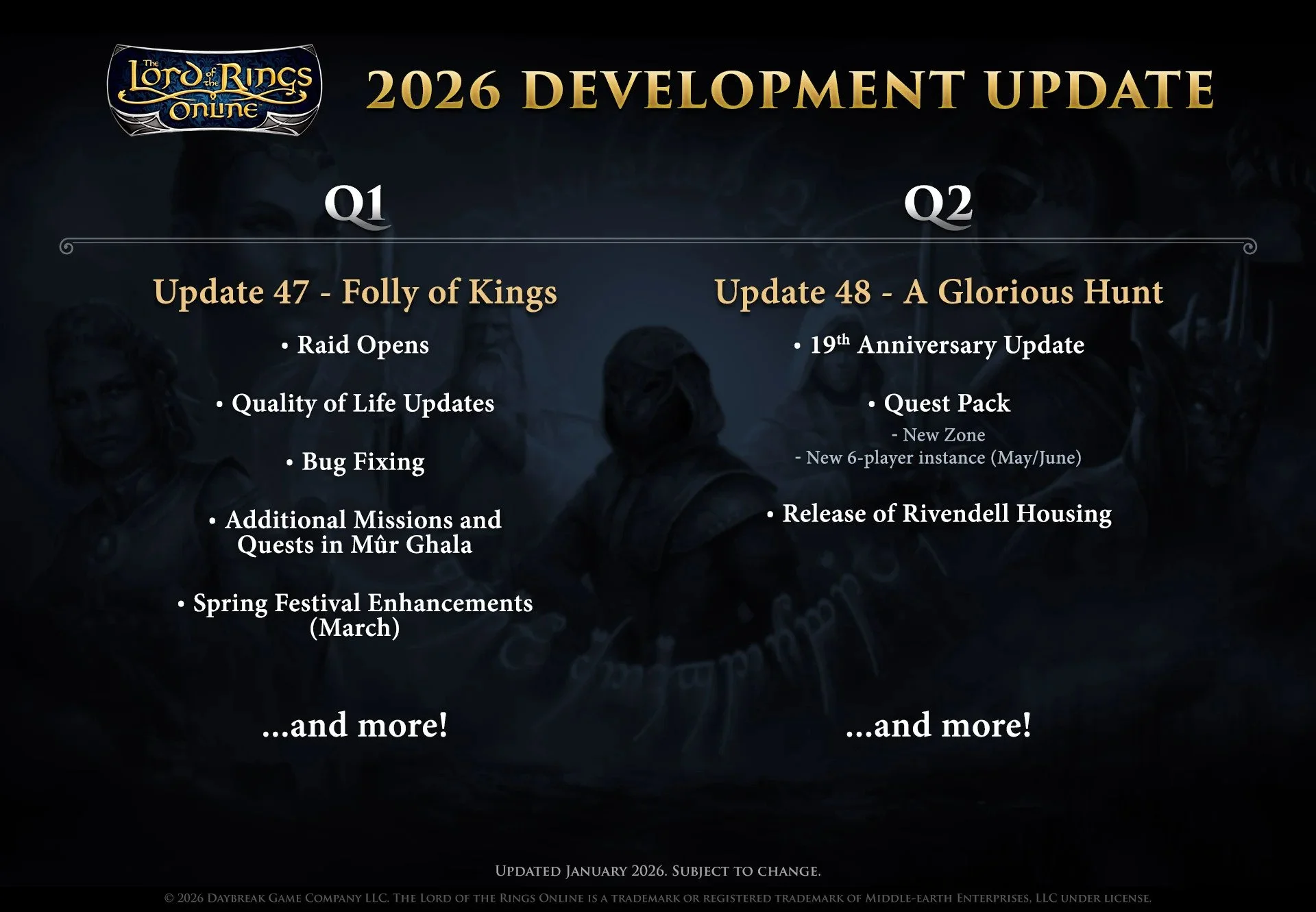
It’s always nice to know what a video game developer has in mind, especially given the currently volatility of the MMO market. Most of the MMO related news of late has been regarding studio closures and job layoffs. So the arrival of a new Producer’s Letter from Rob Ciccolini (AKA Severlin) is at first glance most welcome. Communication is not exactly Standing Stone Games greatest strength and there hasn’t been a great deal of news filtering down to the player base in the last six months. So this missive is welcome, as it does broadly feature this year’s road map for LOTRO. Furthermore, the details are interesting with further content and systems changes in development. As a long time LOTRO player who purchased the Legacy Bundle in December 2018, I want the MMO to continue grow and evolve.
It’s always nice to know what a video game developer has in mind, especially given the currently volatility of the MMO market. Most of the MMO related news of late has been regarding studio closures and job layoffs. So the arrival of a new Producer’s Letter from Rob Ciccolini (AKA Severlin) is at first glance most welcome. Communication is not exactly Standing Stone Games greatest strength and there hasn’t been a great deal of news filtering down to the player base in the last six months. So this missive is welcome, as it does broadly feature this year’s road map for LOTRO. Furthermore, the details are interesting with further content and systems changes in development. As a long time LOTRO player who purchased the Legacy Bundle in December 2018, I want the MMO to continue grow and evolve.
The list of features under development appear to be appropriate for a ten-year-old MMORPG. Naturally players at level cap want new content and so moving onto the Vale of the Anduin seems to be a logical choice. The unresolved plot regarding Shelob is also going to be addressed, with a return to Minas Morgul. Addressing difficulty issues and adding additional tiers to instances seems an equitable solution to those wanting a harder challenge. Over hauling the virtue system is long over due and it will be nice to see it made relevant again. Although I only dabble with crafting, I appreciate it is a source of enjoyment and challenge for many players. It SSG wish to expand and improve the system that’s fine with me, as it will hopefully mean a lot of new crafted gear appearing in the auction house. The ongoing work on the new 64-bit Windows client is eagerly anticipated, especially if it can address the games performance issues.
However, the Producer’s Letter is just as much as a PR and marketing exercise as it is a formal piece of communication. Therefore the devil is very much in the detail and in this case, the semantics. Consider the following quote. “So, while this does provide a road map for the year, the following letter focuses more on our goals for the game in 2019”. Goals being the key word. Because goals are not the same as formerly announced and mandated business commitments. They are aspirational achievements that can either be met or not. I think that SSG has chosen to use such language deliberately because their plans are dependent on revenue projections, set by their publisher the Daybreak Game Company. A company that is having a somewhat tumultuous time at present. So perhaps it would be wise for LOTRO players to temper their expectation for 2019, as there seems to be a clue in Mr Ciccolini’s words.
Auto Manage
As someone who plays video games for fun, rather than competitively, there are many common mechanics that I don’t care for or that I’m broadly indifferent to. These usually tend to be fiddly, time consuming tasks such as inventory management or having to excessively (a very subjective term) fine tune gear. The Legendary Item system in LOTRO being a great example of this. I fully appreciate that there are players who really dig this sort of thing and I am not in any way advocating that they have their “fun” taken away. However, what I would like to see in more games, especially MMOs, is the ability to auto manage some of these systems. To be able to just click a button and have the peace of mind that the most relevant item in my inventory will be equipped by default.
As someone who plays video games for fun, rather than competitively, there are many common mechanics that I don’t care for or that I’m broadly indifferent to. These usually tend to be fiddly, time consuming tasks such as inventory management or having to excessively (a very subjective term) fine tune gear. The Legendary Item system in LOTRO being a great example of this. I fully appreciate that there are players who really dig this sort of thing and I am not in any way advocating that they have their “fun” taken away. However, what I would like to see in more games, especially MMOs, is the ability to auto manage some of these systems. To be able to just click a button and have the peace of mind that the most relevant item in my inventory will be equipped by default.
Allow me to give an example. Back in 2003 I use to play a tactical squad based shooter called Hidden and Dangerous 2. You could spend ages equipping your team, meticulously pawing over the stats of each item and trying to ensure you had a cache of ammunition and supplies that suited your strategy. Or you if you preferred, you could click on a handy "auto manage" button that selected and equipped an adequate selection of items automatically. These were not the best or the worse items available and if you decided to choose for yourself you could do better. But they were sufficient for the task in hand, allowing the player to move on to the next step of the game. Overall the system was a nice compromise.
Requesting such a system (albeit rhetorically), is not such an outrageous demand, because a quasi-version of auto manage already exists in many games. For example, many shooters, such as the COD franchise come with default builds for each class. Again these may not be the best permutation of gear and weapons available, but they certainly work. In fact on occasions I have stuck with such loadouts without any major impediment. Such a facility also exists in real time strategy games. I can remember playing Star Wars: Rebellion back in the late nineties and allowing the AI to manage resources on the planets that were occupied. Again this was not the optimal choice, but it served a purpose if you didn’t wish to be bogged down in the minutiae of planning, building and maintaining factories, army barracks and ship yards.
Having an option to auto manage is about choice and allowing the player to do things in a fashion that suits them. There are many popular titles at present that have inventory management as a core game mechanic. Having a means to manage this process may well make such games attractive to a broader audience. Another factor to consider is the finite availability of leisure time. I certainly cannot spend an entire evening playing as I did a decade ago. Therefore when I do spend an hour or two playing a game, I want to be as productive as possible. The inclusion of some sort of auto manage facility would certainly contribute toward this and help with achieving goals in-game goals. The content gamer is one who is happy to log back in the next day. In an age of “live services” and an industry governed by churn, surely a content gamer is desirable?
MMOs I No Longer Play
I started playing MMORPGs over a decade ago, at a point when the genre was growing. It seemed at one point that every developer wanted to produce the game that usurped World of Warcrafts crown. I therefore ended up trying many of these massively multiplayer online games yet ended up sticking with few. All too often many of these titles were too generic or had an inherent flaw or flaws that killed my enjoyment. Sometimes it was just a case that the game just didn’t chime with me. Naturally over time, I have revisited some of these MMOs and a few have become a mainstay of my gaming activities. The Lord of the Rings Online, Star Trek Online and The Elder Scrolls online are three such examples. Yet there are numerous other games from this genre that I have not returned to or if I have, I still found them to be problematic, so they have not become part of my leisure activities.
I started playing MMORPGs over a decade ago, at a point when the genre was growing. It seemed at one point that every developer wanted to produce the game that usurped World of Warcrafts crown. I therefore ended up trying many of these massively multiplayer online games yet ended up sticking with few. All too often many of these titles were too generic or had an inherent flaw or flaws that killed my enjoyment. Sometimes it was just a case that the game just didn’t chime with me. Naturally over time, I have revisited some of these MMOs and a few have become a mainstay of my gaming activities. The Lord of the Rings Online, Star Trek Online and The Elder Scrolls online are three such examples. Yet there are numerous other games from this genre that I have not returned to or if I have, I still found them to be problematic, so they have not become part of my leisure activities.
Age of Conan: Hyborian Adventures (or Unchained as it is now suffixed) was one of the first MMOs I tried after LOTRO. Broadly I enjoyed the game although I found combat to be somewhat cumbersome. I liked the aesthetic of the game and the atmosphere, but like so many other players, was extremely disappointed when I discovered that the voice acting, and extensive cut scenes only applied to the starter zone of Tortage. And because it was a time when there was plenty of competition available, I can remember just abandoning the game and moving on to another title. Oddly enough that was STO but that game had a bad launch and was incomplete in spring 2010. It took several years for it to find its feet. Therefore I didn’t stay there for too long either.
Rift was my next MMO port of call and although I wasn’t especially inspired by the game’s lore and story, there was a broad spectrum of possibilities when it came to class builds. By now the novelty of traditional social gaming, participating in organised guilds and devoting large amounts of time was beginning to wear a little thin. The dynamic events that Rift introduced where you could simply join a zerg and participate in a localised event, was a welcome change. Yet Rift fell between two stools. Although it did new and innovative things it still struggled with skills bloat and was saddled with too many traditional MMO mechanics. So I moved on again, just in time for Star Wars: The Old Republic in December 2011. Out of all the MMOs that I’ve played over the years, this was the one that seemed to have the most expectations associated with it.
I like so many other gamers, really wanted to like SWTOR. So I gave it possibly more of a chance than it deserved. I liked many aspects of the game; the gunslinger smuggler class that I chose, the companion system and oddly enough the ship that wasn’t quite a house. The narrative was extremely good, and I liked the way gear could be upgraded. But there were quite a lot of negative points as well. The combat was slow and there was an excess of skills, many of which could simply be ignored. Plus, although it was Star Wars, it wasn’t the period of history that so many players wanted access to. Perhaps the biggest issue was that once you had burned through all the PVE content, there was little to do at level cap. Hence there was a mass exodus of players leading to the game having to go free-to-play just to survive. A lot has been done with the game since then and I did return a couple of times but although the narrative was still strong the game is just too old school for my liking.
And so in 2012, I dabbled with The Secret World in the hope that Funcom would honour their promises to do something different with the genre. And broadly that’s what they did. The story was adult and uncompromising. There was a lot of dialogue, which I enjoyed, and the game made you think. The skill wheel system did indeed lend itself to a far more nuanced approach to fine tuning your character. But the combat was slow, repetitious and far from fun and if you wanted to spend your skill points elsewhere, they were not transferrable. Hence you had to repeat content. Needless to say I parted company with The Secret World and moved on to possibly the last big MMO release Guild Wars 2. I could easily write an entire blog post about what I liked about this MMO. But for the sake of brevity, I shall say the flexibility of the classes, the horizontal progression, the fluid combat and the fact that there was always something to do. Out of all the titles I played, this is possibly the most frictionless, although I say this only of the base game. Things changed too much for me with the first expansion Heart of Thorns. But for the first year of two Guild Wars 2 was the most casual friendly MMO I played. You could return after a while and jump straight back in and pick up where you left off.
It’s odd how business demands will sometimes take you in the opposite direction of where you intend to go. The first expansion for Guild Wars 2 essentially put into the game all the systems and ideas that were conspicuously absent from it at launch. I could no longer easily freelance and join zergs to accomplish what I wanted. And as I was never a big fan of the lore, I had nothing to hold me when things changed. In fact lore appears to be a major selling point for me in the MMO genre. ESO is odd in so much as unlike LOTRO and STO, I was not familiar with the lore and history of the franchise, prior to playing. But because I consider the writing to be of a high standard, I do actually consult the games Wiki to gain a greater understanding of things. And ESO has established for me that action combat, a sensible amount of skills and systems is how a modern MMO should be. It will be interesting to see what changes another decade brings to the genre and what, if anything, I’ll still be playing.
An Angry Discourse
“Video game discourse has gotten me down lately. Why are some people so shitty about their favorite hobby?” This comment from Jake Baldino, a presenter over at Gameranx, appeared in my Twitter timeline today and garnered some interesting responses. A lot of people stated it was all down to a “loud minority” of gamers, which is a very common refrain. But I’m not so sure. Whereas I may well have trotted out such a response a decade ago, recent events seem to indicate otherwise. I have a sneaking suspicion that “people” aren’t as nice as we may have previously thought and that includes gamers. Yes, the anonymity of the internet does encourage some hostility among “keyboard warriors”, but you only have to turn on your TV to see people happily being bellicose and objectionable in public. So perhaps it’s not just a case of the “the squeaky wheel” getting noticed. May be there has been and continues to be, a major cultural shift in the way we interact with each other.
“Video game discourse has gotten me down lately. Why are some people so shitty about their favorite hobby?” This comment from Jake Baldino, a presenter over at Gameranx, appeared in my Twitter timeline today and garnered some interesting responses. A lot of people stated it was all down to a “loud minority” of gamers, which is a very common refrain. But I’m not so sure. Whereas I may well have trotted out such a response a decade ago, recent events seem to indicate otherwise. I have a sneaking suspicion that “people” aren’t as nice as we may have previously thought and that includes gamers. Yes, the anonymity of the internet does encourage some hostility among “keyboard warriors”, but you only have to turn on your TV to see people happily being bellicose and objectionable in public. So perhaps it’s not just a case of the “the squeaky wheel” getting noticed. May be there has been and continues to be, a major cultural shift in the way we interact with each other.
Contemporary politics has shown us that despite what a lot of us thought, we don’t all share the same values. Politics and the wider discussion to be had around it, has become far more partisan. There’s no longer seems to be any attempt to “agree to disagree”. A lot of the media are no longer concerned with balance. It’s all about clicks, viewing figures and “likes”. So pretty much everything in the news, be it politics, economics or social issues is just presented as a binary choice. You’re then invited to pick a side and scream, because we live in an age where we are encouraged to get angry and its fast becoming a national pastime. And this mindset then bleeds out into everything else. The work environment gets angrier as a result. People will fly off the handle while queuing at the supermarket. So it’s therefore hardly surprising to see such behaviour appear in out leisure activities.
Gaming is a broad church but two of its biggest defining features are competitiveness and social interaction. These are things that people become very passionate about. Furthermore, we live in an age of growing identity politics and defining who we are on our own terms. Gaming has therefore become a facet of personal identity for some, as opposed to just a leisure activity. When you mix such a mindset into a wider culture that is becoming increasingly adversarial, then you’ll eventually encounter problems. Despite what some people think, you cannot keep politics and social commentary out of gaming because it has become more than the sum of its parts. Whenever people interact and engage on masse, you’ll find pockets of an emergent communal identity. Groups then become mediums for wider ideas. But groups can also lead to hierarchies, power struggles and conflict.
It is also naïve to ignore the financial dynamic to gaming culture and the impact that it has. Becoming a cash cow in a relatively short period of time is not always as beneficial as you may think. Money has a habit of causing conflict. What gamers and game developers want are not necessarily the same thing. So when you add this to the seismic change in public interactions and the angry world that we now find ourselves in, it is hardly surprising that video games discourse has taken a reciprocal nose dive. Perhaps the eternal optimists among use need to recalibrate and come to terms with the fact that a lot of people aren’t inherently good. I’m not saying that the battle is lost and that we have to roll over and play dead. Human failings should be challenged and not ignored. But I think we need to come to terms with societal change and temper our expectations with regard to video games discourse, until the pendulum swings the other way again.
The Elder Scrolls Online and Addons
After recently watching several friends stream The Elder Scrolls Online, I have re-installed the game (funny how that often happens). I played quite consistently last spring and the game finally “clicked” for me. The narrative driven structure is something I enjoy, and I also like way you can pick and choose the content you undertake. So after letting the 70.9 GB game client download overnight, I fired up the game yesterday and found my level 50 High Elf Sorcerer in Auridon, where I left them last Easter. The first thing that immediately stood out was the plain vanilla default UI, which is minimalist to say the least. After a heavy sigh, I realised that if I wanted to continue efficiently playing ESO I would have to install a bunch of addons via Minion. The only minor problem was that after replacing my Hard Drive last November, despite backing up most data, I had not made a note of which addons I was using. Luckily, a friend who still had the game installed went through their current installation, so I was able to collate a suitable list.
After recently watching several friends stream The Elder Scrolls Online, I have re-installed the game (funny how that often happens). I played quite consistently last spring and the game finally “clicked” for me. The narrative driven structure is something I enjoy, and I also like way you can pick and choose the content you undertake. So after letting the 70.9 GB game client download overnight, I fired up the game yesterday and found my level 50 High Elf Sorcerer in Auridon, where I left them last Easter. The first thing that immediately stood out was the plain vanilla default UI, which is minimalist to say the least. After a heavy sigh, I realised that if I wanted to continue efficiently playing ESO I would have to install a bunch of addons via Minion. The only minor problem was that after replacing my Hard Drive last November, despite backing up most data, I had not made a note of which addons I was using. Luckily, a friend who still had the game installed went through their current installation, so I was able to collate a suitable list.
I don’t feel inclined to debate the rights and wrongs of addons in this post, simply let it suffice to say that they are a necessary evil in the case of ESO. Not having them makes playing a lot less efficient and frankly less enjoyable. However, third party addons need to be regularly updated and maintained but as their creators are not paid professionals, contractually bond to do so, they effectively become a lottery, to say the least. Then there is the issue of conflicts, UI errors and poor documentation, all leading to hours of tweaking settings and loading and unloading each add-on to get it to work as described. At present I have this tedious chore ahead of me because as you can see from the screen capture, my UI is an absolute dog’s dinner at present. However, once I’ve sorted the issue out according to my preferences, the presences of 16 addons should enhance my gameplay experience and I can get on with enjoying ESO.
Considering that ESO seems to be doing well within the MMO market and that developer ZeniMax are regularly producing new content and expansions for the game, I find it curious that there is still a reliance upon third party addons. Surely some time and attention could be spent improving and upgrading the UI, officially. Could ZeniMax not take a lead from the most popular addons and create something comparable and officially integrate them into the game? Doesn’t Blizzard Activision have a similar policy with World of Warcraft? It seems odd in an age of corporate control and the monetisation of all aspects of a game, that there is still a relatively free and unregulated culture of third-party addons allowed in some MMOs. Perhaps it’s a cultural hangover from the success of Skyrim? In the meantime I’ll get around to tweaking my own addons in ESO and hopefully won’t have to worry about them for a while. Not until the next expansion Elsweyr is released on June 4th and promptly breaks them all.
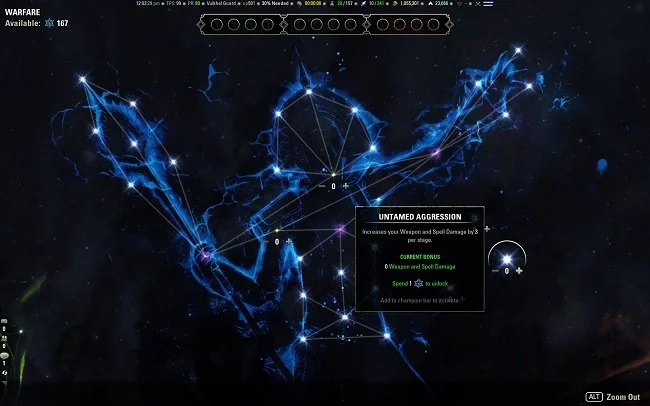
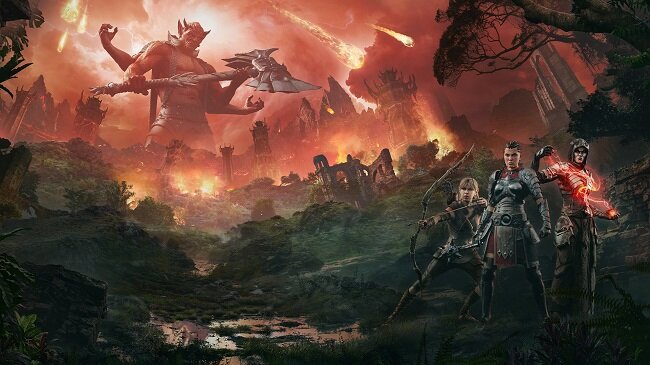
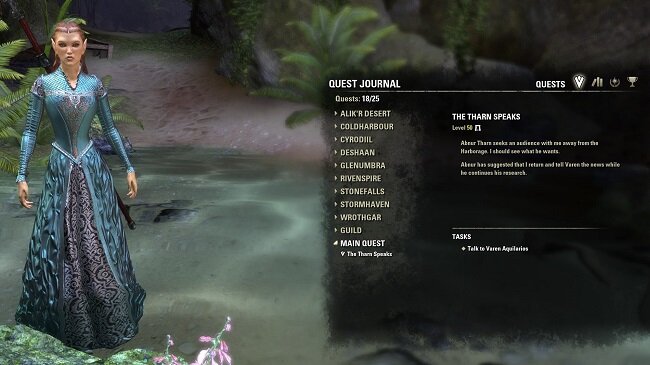
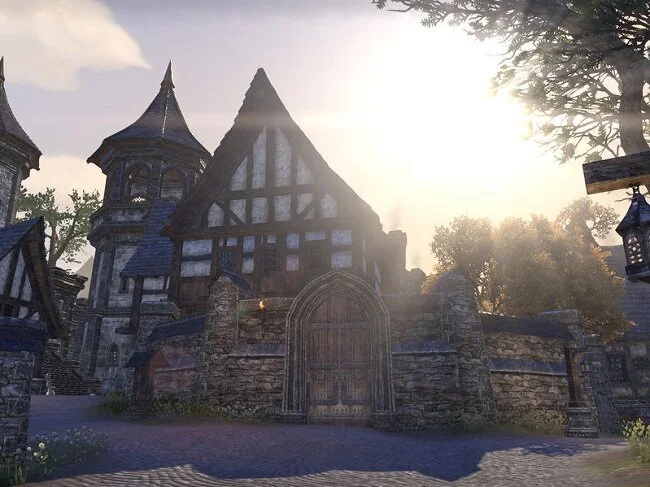
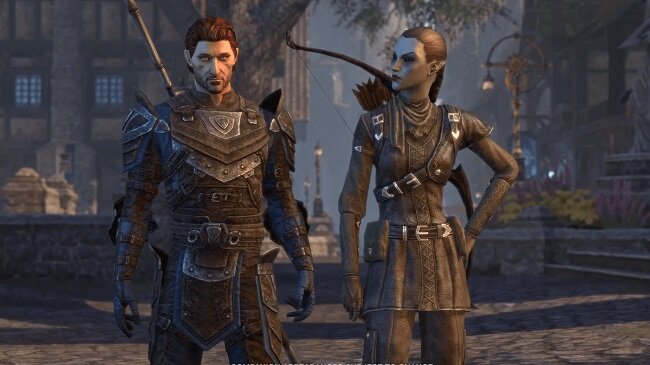
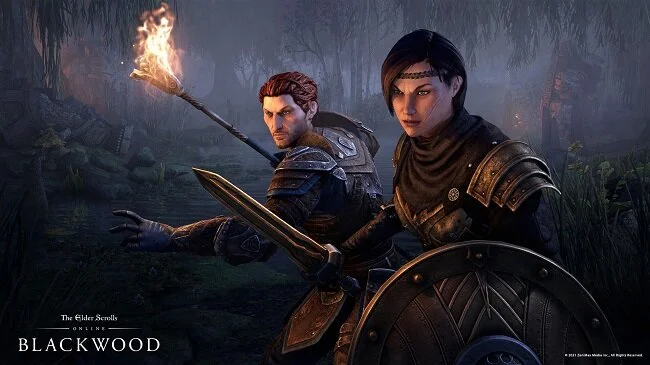
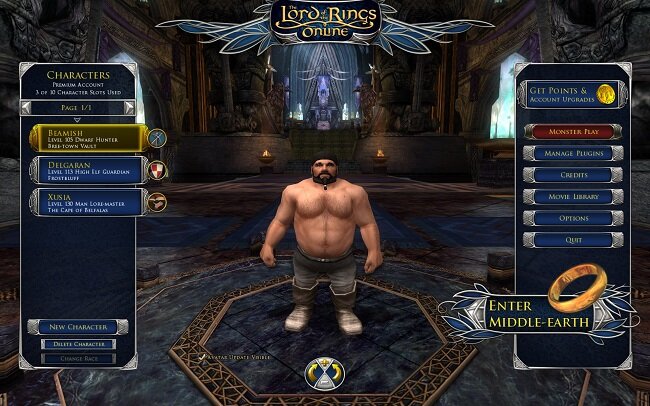
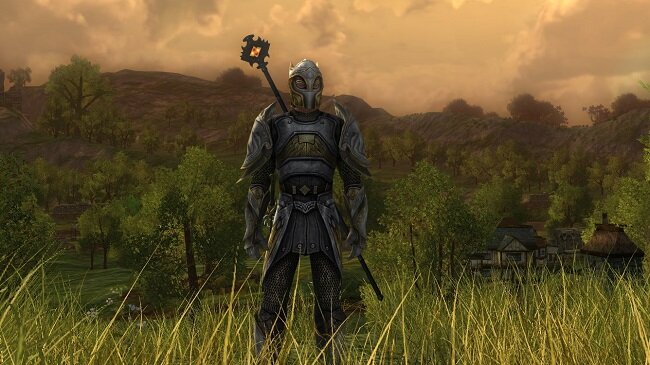
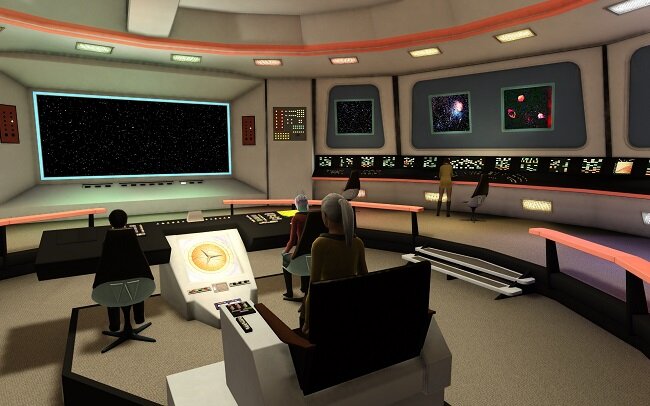
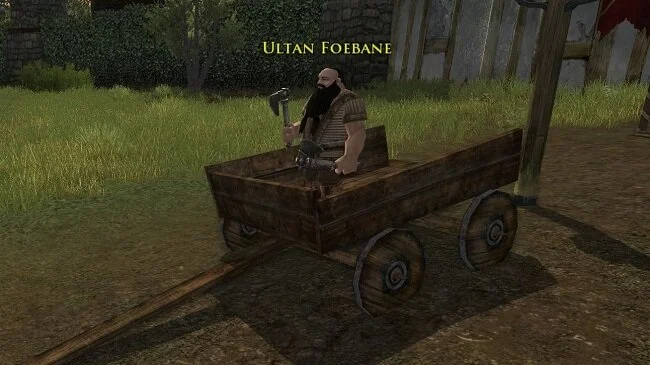


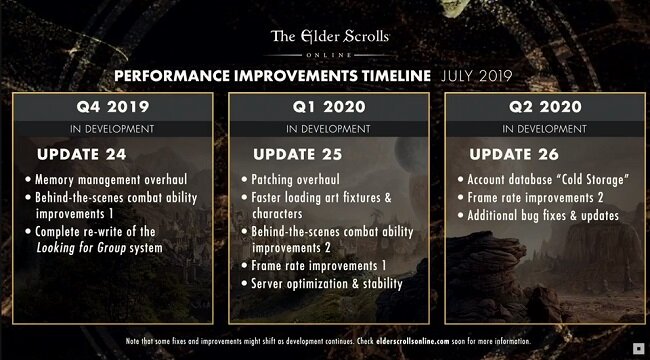
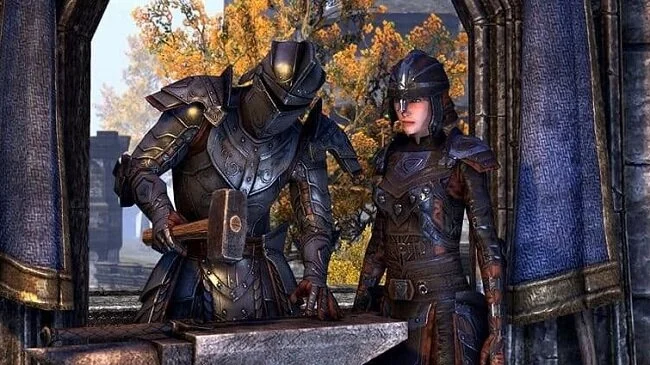
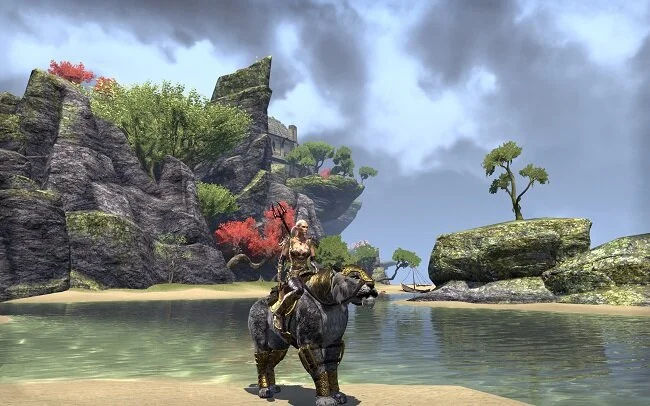

General Rock Renton and the Moon Rangers
I am a big fan of the detective drama Endeavour, considering it to be one of the best UK shows currently in production. It has well rounded, interesting characters and their journey through the sixties affords the writer, Russell Lewis, plenty of opportunity to explore the political and social issues of the time. Lewis further embellishes the scripts with numerous period and contemporary pop culture references, all of which add to the shows charm and appeal. Tonight’s episode “Apollo” set against the historical moon landings of Apollo 11, saw Morse and Thursday investigating the death of a promising young astrophysicist and his girlfriend. Initially thought to be a car accident, it becomes clear that there is foul play. As ever the plot was complex and established story arcs were moved forward. Shaun Evans also made his directorial debut with this episode.
General Rock Renton and the Moon Rangers.
I am a big fan of the detective drama Endeavour, considering it to be one of the best UK shows currently in production. It has well rounded, interesting characters and their journey through the sixties affords the writer, Russell Lewis, plenty of opportunity to explore the political and social issues of the time. Lewis further embellishes the scripts with numerous period and contemporary pop culture references, all of which add to the shows charm and appeal. Tonight’s episode “Apollo” set against the historical moon landings of Apollo 11, saw Morse and Thursday investigating the death of a promising young astrophysicist and his girlfriend. Initially thought to be a car accident, it becomes clear that there is foul play. As ever the plot was complex and established story arcs were moved forward. Shaun Evans also made his directorial debut with this episode.
What made “Apollo” especially enjoyable for me, was the story featuring a pair of television producers who bore more than a passing resemblance to Gerry and Sylvia Anderson of Thunderbirds fame. Jeff and Hildegard Slayton (Matthew Cottle and Mary Stockley) ran a studio producing puppet shows very much in the “Supermarionation” idiom. As the murder victim was a scientific advisor on their latest show, Moon Rangers, Morse and Thursday had reason to visit the production studios which were not to dissimilar to those of Century 21 Television at Slough. Hence viewers were treated to footage of the Slayton’s watching daily rushes of a model car crash, the miniature crew blowing up a rocket on a replica moon surface and the puppeteers on a gantry over a miniature set operating marionettes. All of which lovingly referenced the halcyon days of Stingray and Thunderbirds.
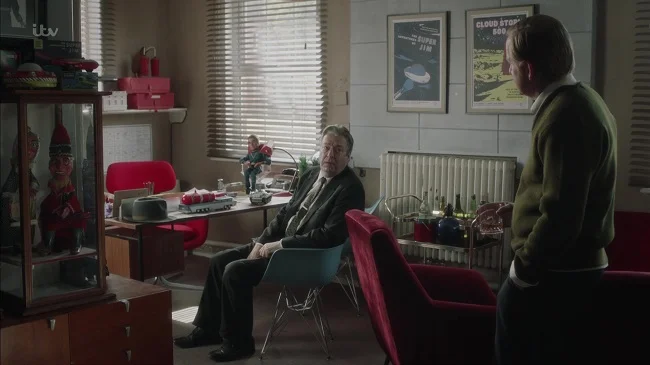
Note posters for faux shows “The Adventures of Super Jim” and “Cloud Stop 500”.
And how were such wonders so lovingly recreated? Via the talented folk over at Century 21 Films, the spiritual successor to the original Anderson production company. Having recreated several puppets for their 2014 documentary Filmed in Supermarionation, the team of talent staff subsequently formed a multi-faceted production company providing documentary services as well as miniature and other practical effects. In 2015 to celebrate the 50th anniversary of Thunderbirds, they produced three brand new episodes of the show using all the classic techniques. The series, produced in association with copyright holders ITV, was based upon three original 1960s voice recordings. With such talent available who else were Mammoth Screen, the producers of Endeavour, going contract to create the fictitious General Rock Renton and the Moon Rangers?
This possibly is the biggest and most complex, pop culture reference and homage to feature in Endeavour to date. However, I don’t see it as self-indulgent but an accurate portrayal of the public interest in science at the time. The real shows that the Anderson’s produced reflected and capitalised upon the optimistic attitude towards the space race. Therefore, having characters such as the Slaytons in Endeavour is a historically relevant. As for the Moon Rangers, for the casual viewer this was a nice period aside. For the Supermarionation aficionados, it was hog heaven. Miniatures, explosions, very familiar looking puppets and the voice talents of Justin Lee and the wonderful David Graham (Parker, Grandpa Pig and The Wise Old Elf). Even Century 21 Films director, Stephen La Rivière, got a cameo appearance as part of the puppet crew on the gantry. As a fan all I can really say is well done to all involved. You made one of my favourite shows, even better.
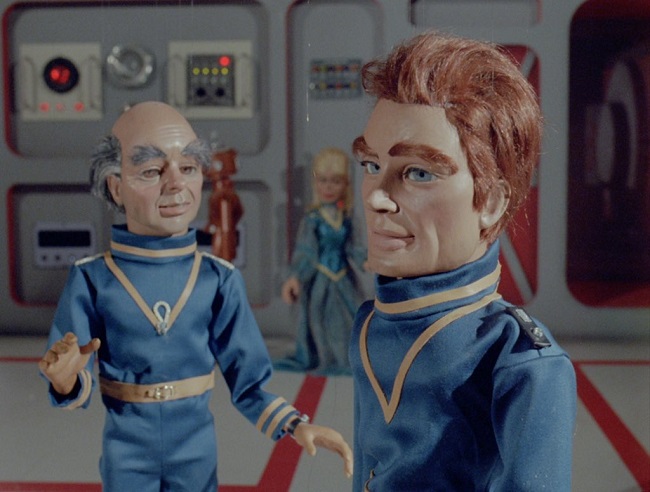
Emotes, the "Carlton Dance" and Copyright
Actor Alfonso Ribeiro has been told he cannot copyright the "Carlton Dance" his character performed in the hit US sitcom Fresh Prince of Bel-Air. Ribeiro, who played Will Smith's pretentious cousin Carlton Banks in the popular TV show, had tried to sue both Take-Two Interactive and Epic Games over use of the routine as an emote in the video games NBA2K16 and Fortnite. The US Copyright Office's denial of the claim was revealed in a motion to dismiss Ribeiro's lawsuit against Take-Two Interactive. Although a court is not bound by the determination, it is very likely that it will take it into consideration. A hearing on the motion to dismiss the lawsuit is scheduled for 18th March. If successful it will effectively end any current legal action taken by Mr Ribeiro and potentially set a precedence for any future lawsuits of this nature. Or will it?
Actor Alfonso Ribeiro has been told he cannot copyright the "Carlton Dance" his character performed in the hit US sitcom Fresh Prince of Bel-Air. Ribeiro, who played Will Smith's pretentious cousin Carlton Banks in the popular TV show, had tried to sue both Take-Two Interactive and Epic Games over use of the routine as an emote in the video games NBA2K16 and Fortnite. The US Copyright Office's denial of the claim was revealed in a motion to dismiss Ribeiro's lawsuit against Take-Two Interactive. Although a court is not bound by the determination, it is very likely that it will take it into consideration. A hearing on the motion to dismiss the lawsuit is scheduled for 18th March. If successful it will effectively end any current legal action taken by Mr Ribeiro and potentially set a precedence for any future lawsuits of this nature. Or will it?
We live in curious times when existing laws regarding copyright and the protection of intellectual property struggle to keep up with the digital age. The Ribeiro case reminded me of brouhaha from late 2017 when singer Taylor Swift sought to copyright phrases from her album Reputation "in order to use them on a wide range of merchandise that includes everything from guitar picks to t-shirts". And then we have the ongoing culture war between Star Wars fans and Disney, regarding fan films and the like. Regardless of which side of the debate you support, these situations highlight the paradox of popular culture. People absorb and the re-iterate the tropes and motifs that appeal to them, but unlike traditional mediums such as the written word, determining who is the “owner” of the source content is far harder. There may well have to be a recalibration of such things in the not too distant future and like any big legal change it may prove to be an uphill struggle and will have substantial consequences.
Which brings me back to video games and in particular emotes, that are so popular among players. I have no idea what the specific psychology is that makes these short-animated vignettes so enthralling, but gamers desire them and that is sufficient for them to be monetised and become valuable source of revenue to publishers. Furthermore, many of these emotes have their roots in pop culture, which makes Ribeiro case so interesting. Star Trek Online features a “Zombie” dance emote which obviously comes from Michael Jackson’s iconic Thriller dance routine. There’s also an “Unusual” dance emote that is suspiciously similar to the “Carlton Dance”. They’ve been there for a while and naturally haven’t garnered any attention as the MMO doesn’t have an audience comparable to that of Fortnite. But if these were to be removed from the game along with all the emotes in LOTRO, ESO and every other multiplayer title, then it would diminish the enjoyment of the games for a substantial group of players. It may not be a deal breaker for all, but the loss of emotes may well be an impediment for role-players. It would also mean a loss of revenue as so many emotes are granted via lootboxes.
If, for the sake of argument, emotes did become intellectual property and protected by copyright, then naturally some developers would remove them from their games to avoid paying potential licensing costs. Could such a situation lead to wider pop culture references becoming similarly subject to copyright law and eliminated from current products? Such a situation would certainly prove a headache for the likes of Blizzard and their flagship MMORPG World of Warcraft. We live in an age of increasingly bold business practices and a prevailing ethos of “if it can be monetised then do it”. Hence artists will look to all aspects of their work as a source of revenue, be it a dance unique to them, a catchphrase or even a style or aesthetic. And naturally video games as a “live service” want to include such things as emotes and cosmetic skins in their products. But although all parties like the idea of making financial charges, no one like to be on the receiving end of them. Ultimately, this all becomes a very difficult circle to square. I suspect that the Ribeiro case is not the last we shall here about this matter.