
The Haunting of Hill House (2018)
Shirley Jackson’s 1959 novel The Haunting of Hill House is considered one of the best literary ghost stories published during the 20th century. It was adapted for film in 1963 by Nelson Gidding and directed by Robert Wise under the title The Haunting. Although only doing moderate box office upon release, the movie was moderately well received at the time and over the years has gained a critical reassessment. Contemporary critics consider it one of the finest genre movies of its era. Hence the prospect of a new ten-part television adaptation made exclusively for Netflix, was initially met with a great deal of scepticism. However, writer and director Mike Flanagan has wisely chosen not to retell the original story, but instead taken its themes and concepts and woven them into a compelling and very contemporary tale of a dysfunctional family traumatised by their collective experience at Hill House. Jettisoning the classic trope of a paranormal investigation into a haunted house, he instead presents us with two narratives that run in parallel and regular intersect with startling results.
Shirley Jackson’s 1959 novel The Haunting of Hill House is considered one of the best literary ghost stories published during the 20th century. It was adapted for film in 1963 by Nelson Gidding and directed by Robert Wise under the title The Haunting. Although only doing moderate box office upon release, the movie was moderately well received at the time and over the years has gained a critical reassessment. Contemporary critics consider it one of the finest genre movies of its era. Hence the prospect of a new ten-part television adaptation made exclusively for Netflix, was initially met with a great deal of scepticism. However, writer and director Mike Flanagan has wisely chosen not to retell the original story, but instead taken its themes and concepts and woven them into a compelling and very contemporary tale of a dysfunctional family traumatised by their collective experience at Hill House. Jettisoning the classic trope of a paranormal investigation into a haunted house, he instead presents us with two narratives that run in parallel and regular intersect with startling results.
Hugh and Olivia Crain (Henry Thomas and Carla Gugino) professionally renovate and refurbish dilapidated houses and “flip” them for resale. Both are gifted professionals; Hugh being the consummate problem solver and Olivia the creative and sensitive interior designer. The couple move into Hill House with their five children, Steve, Shirley, Theo, Luke and Nell only to find the building problematic in several ways. There are no accurate plans, there’s a hidden basement and a locked room that remains resolutely inaccessible. The children start to experience disquieting nocturnal phenomenon that their parents at first ignore or rationalise away. Yet over time Olivia begins to succumb to the malign atmosphere, culminating in a tragedy and the family fleeing the house. Years later each surviving member of the Crain family are dealing with the fallout of their respective experience. Nell suffers night terrors and sleep paralysis, while Luke struggles with drug addiction. Theo is a child therapist and Shirley has become a mortician. Steve the eldest who believes he never actually experience the supernatural and that his family is blighted by hereditary mental illness has become a successful author specialising in writing about the paranormal. Events start to occur which then draw them all inexorably back to Hill House.
The Haunting of Hill House unfold at a measured pace to facilitate focus upon the central characters. The first five episodes are designed to explore the backstory of each family member both in the present and in the past. Over time, several key events are shown from different perspectives, each adding another layer of complexity and nuance to the proceedings. The adults cast, and their child counterparts are universally good, providing strong and credible performances. Viewers need to keep the wits about them as there is often a lot going on at key moments, both front and centre and in the periphery of shots. There is often a palpable air of tension and the jump scare and shocks are well crafted. Several spectral characters such a “bent neck lady” and “bowler hat man” are well conceived and suitable ghoulish. Hill House itself has a grim and morose presence and although largely digital, the illusion of a decaying, malevolent and possibly sentient structure is well maintained. The screenplay frequently uses passages of classic dialogue from the source text at exactly the right moment. Iconic scenes are also expressed in interesting new ways, such as “who’s hand was I holding” and the seminal wall pounding sequence.
But the productions real strength is the way it uses the family in crisis trope as the foundation of the story. Not everyone is a sympathetic character but they’re all relatable. The female leads are especially strong, and their story arcs have the most substance to them. There are several genuinely emotional revelations that have real weight, rather than being just arbitrary kicks in the “feels”. The final resolution of the Crain family’s trial and tribulations is complex and dares to explore the paradoxical symbiosis between the supernatural and those who experience it. The only major criticism I can level against this production is that the languid pace may not be to everyone’s taste. Some viewers may want a more concise story, where I was content to let matters unfold at their own pace. This point notwithstanding, The Haunting of Hill House is a superior piece of dramatic, cerebral genre fare. It successfully takes something old, established and much loved and revitalises it with a healthy dose of imagination, creativity and human insight. It is features robust scares as well as moments of note and is superior to a great deal of its current cinematic counterparts.











Halloween (2018)
It is a bold move to write off six sequels and effectively retcon a major horror cinematic milestone after forty years. Yet that is exactly what Director and co-writer David Gordon Green has done, producing a follow up movie to John Carpenter’s 1978 original, that is distinctly more than the sum of its parts. And in the process of doing this, Halloween has attracted a great deal of media attention that has somewhat skewed subsequent reporting. There has been a great deal of hyperbole and marketing hype in the lead up to the film’s release which is concerning, because in an atmosphere of such exuberance and fan excitement, it can be difficult to accurately gauge the public mood. I have only ever experienced the one other deferred sequel that generated such a similar buzz and that was Psycho II back in 1983. Despite a lot of reservations, that proved to be a worthy successor to Hitchcock’s classic.
It is a bold move to write off six sequels and effectively retcon a major horror cinematic milestone after forty years. Yet that is exactly what Director and co-writer David Gordon Green has done, producing a follow up movie to John Carpenter’s 1978 original, that is distinctly more than the sum of its parts. And in the process of doing this, Halloween has attracted a great deal of media attention that has somewhat skewed subsequent reporting. There has been a great deal of hyperbole and marketing hype in the lead up to the film’s release which is concerning, because in an atmosphere of such exuberance and fan excitement, it can be difficult to accurately gauge the public mood. I have only ever experienced the one other deferred sequel that generated such a similar buzz and that was Psycho II back in 1983. Despite a lot of reservations, that proved to be a worthy successor to Hitchcock’s classic.
However, I am pleased to say that Halloween is as good as the early reviews indicated. It takes many of the essential themes of the original film and presents them from an alternative perspective. To summarise the uncomplex plot, Michael Myers escapes from custody while being transferred to a new psychiatric facility. Meanwhile, Laurie Strode now traumatised, fixated and estranged from her own daughter Karen (Judy Greer) and granddaughter Allyson (Andi Matichak), prepares for the inevitable return of her nemesis. Throughout its 106-minute running time Halloween frequently makes clever and wise nods to its predecessor. The movie has a very dark tone, but it knows when to lighten things with some humorous banter. There is a higher body count and certainly the mayhem is more graphic this time round, but this is not to the detriment of the movie and simply reflects the style and tastes of the contemporary horror genre and its consumers.
The film benefits from a strong and focused performances by all three female leads. Jamie Lee Curtis excels in her role, providing a fulcrum for the narrative. There is also a robust support role from Will Patton as local Sheriff Frank Hawkins. If there is a weak link it the character of Dr. Ranbir Sartain (Haluk Bilginer) who is the new “Sam Loomis” and telegraphs his intentions quite early in the story. However, his role is needed to expedite events and assemble everyone for the inevitable showdown. There are some excellent tracking shots by cinematographer Michael Simmonds and some cunningly contrived set pieces set around the alley ways and back entrances of suburban Haddonfield. The classic score from the original movie has been re-arranged and further embellished with some superb additional cues written by John Carpenter himself, his son Cody Carpenter and David Davies. Some of which stray into Goblin territory, which is magnificent.
Films of this nature that are directly connected to established and iconic cinematic milestones, need to do far more than recreated that which has gone before. They need to juxtapose classic scenes or sequences and explore content from a different perspective. The key element of this that features in Halloween, is the concept of predator and prey. It is cunningly reversed during the film’s climax and there are several scenes that mirror those from the 1978 movie but are done with a tangible difference. To reference them would be to spoil them, so I’ll simply say that fans of the original movie will recognise them when they see them and should hopefully be impressed by the new inflection that the director imbues them with. Overall, irrespective of the hype Halloween is a genuinely worthy successor to John Carpenter’s original. It is inventive, intelligent, suspenseful and knows when to hit the audience right between the eyes.
Analysing Blaugust
There is a blog post over at the Greedy Goblin, where Gevlon crunches the numbers to see how many bloggers are still writing a month and a half on from Blaugust. Needless to say, I am not surprised by his results. Writing events such as Blaugust and before that, The Newbie Blogger Initiative, have always had a high attrition rate. I know lots of good writers who cannot sustain a regular writing schedule due to their work commitments. This is especially true of those with families. Then there are those bloggers who simply run out of stamina. Posting regular content is hard and requires focus and discipline. Producing in-depth and longform posts with any regularity is even harder. So, Gevlon’s summary merely proves what many of us new in advance. But I guess you'd find the exactly the same results if you were analysing the aftermath of an event that encouraged podcasting, live streaming or posting videos of You Tube. Creating content of any kind takes time and effort. The better the quality of that material, the more time it takes. Hence some will cease their efforts.
There is a blog post over at the Greedy Goblin, where Gevlon crunches the numbers to see how many bloggers are still writing a month and a half on from Blaugust. Needless to say, I am not surprised by his results. Writing events such as Blaugust and before that, The Newbie Blogger Initiative, have always had a high attrition rate. I know lots of good writers who cannot sustain a regular writing schedule due to their work commitments. This is especially true of those with families. Then there are those bloggers who simply run out of stamina. Posting regular content is hard and requires focus and discipline. Producing in-depth and longform posts with any regularity is even harder. So, Gevlon’s summary merely proves what many of us new in advance. But I guess you'd find the exactly the same results if you were analysing the aftermath of an event that encouraged podcasting, live streaming or posting videos of You Tube. Creating content of any kind takes time and effort. The better the quality of that material, the more time it takes. Hence some will cease their efforts.
Another point of note is how some of the blogs listed (such as my own) no longer exclusively focus upon gaming. I can shed some light upon this matter. There comes a point in the life of a fan where you look back through your past posts and realise you've pretty much said everything you can about that which you enjoy. I started blogging about games back in 2008 and the apple of my eye at the time was LOTRO and the MMO genre. Those halcyon days are gone and MMOs are now a specific niche, so unless a major controversy raises its head, then I don’t have that much to say about things. The gaming industry “is what it is”. It's corporate driven and focused primarily on satisfying the needs of shareholders. Hence, I am no longer surprised or appalled by poor business decisions, egregious monetisation strategies or the general indifference it habitually shows towards customers. It's like shouting at a compass for pointing north.
So regardless of the inevitable attrition rate that come with events such as Blaugust, if it leads to just a handful of new writers who stay the course and continue to post good material, then the undertaking has served its purpose. And if this event is held again next year, I believe you’ll see very similar results. Because Blaugust not only provides support and encouragement to new writers, it also offers a crash course in the realities of writing. It’s a bit like looking after someone else’s dog for a week while they’re on holiday, allowing you to realistically assess whether you really want one of your own. Furthermore, it isn’t always necessary to look at all leisure activities in terms of “success or failure”. For me, part of the appeal of events such as Blaugust, is the ongoing enjoyment of reading new posts and interacting with those who are participating. Sometimes it can be about the journey and not just the destination.



















LOTRO: Improvements and Suggestions
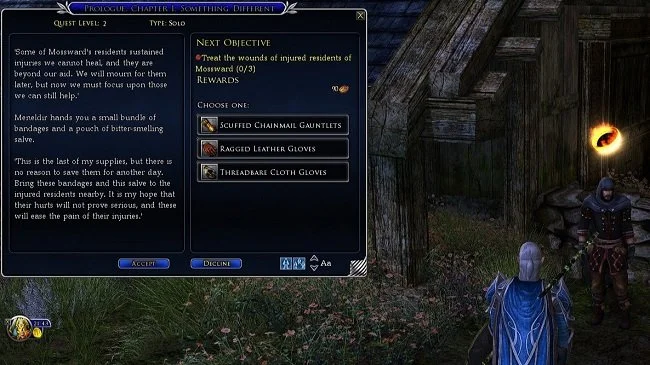
I returned to LOTRO in August and have been playing continuously since then, working my way through the last expansion and Update 22. The upside to this ongoing commitment has meant that I have really applied myself to the unfolding narrative and have absorbed a lot more of the story than previously. It is very enjoyable to see the way various strands of different plots all tie together. I have also taken the time to revise my Lore-master build and attempt to optimise it to reflect the prevailing game meta. Broadly speaking, I have been successful so far. But there have been a few negative aspects to returning to the game. Many of them are actually issues that have always be present and have been compounded by the games age. LOTRO lacks some of the modern convenience and functionality we take for granted in more recent MMOs. So, I thought I’d take time out to list a few helpful suggestions that Standing Stone Games can then promptly ignore.
I returned to LOTRO in August and have been playing continuously since then, working my way through the last expansion and Update 22. The upside to this ongoing commitment has meant that I have really applied myself to the unfolding narrative and have absorbed a lot more of the story than previously. It is very enjoyable to see the way various strands of different plots all tie together. I have also taken the time to revise my Lore-master build and attempt to optimise it to reflect the prevailing game meta. Broadly speaking, I have been successful so far. But there have been a few negative aspects to returning to the game. Many of them are actually issues that have always be present and have been compounded by the games age. LOTRO lacks some of the modern convenience and functionality we take for granted in more recent MMOs. So, I thought I’d take time out to list a few helpful suggestions that Standing Stone Games can then promptly ignore.
Auto-pathing. This subject was raised recently by fellow blogger Telwyn over at GamingSF. Unlike other MMOs, LOTRO relies mainly on the player when it comes to navigating their way around the map and travelling from quest to quest. Telwyn is indeed right that you can click on an object a small distance away such as a resource node or a quest item and your avatar will auto-path to it. But you cannot set a waypoint and safely auto-travel to it, nor are you given a visual bread crumb trail to help travel to especially esoteric locations. SSG and Turbine before them seem to delight in making navigating a real chore in LOTRO. The developers seem to have a real aversion to straight lines and intuitive paths. Try getting from one side of Dale, Moria or Galtrev easily.
Naturally I would like to see changes to this current state of affairs. In towns and safe areas, it would be nice to see auto-pathing on a practical level. For example, if you arrive at South Bree Entrance and click on Lalia’s Market, it would be convenient to simply automatically ride there without hinderance. It would also be useful to do the same out in quest zones, although to make things equitable I think players should maintain the risk of aggravating mobs they stray to close to. In default of this, I happily accept a visual route marker around some of the more esoteric areas, especially when it comes to reaching quest rings displayed on the mini map.
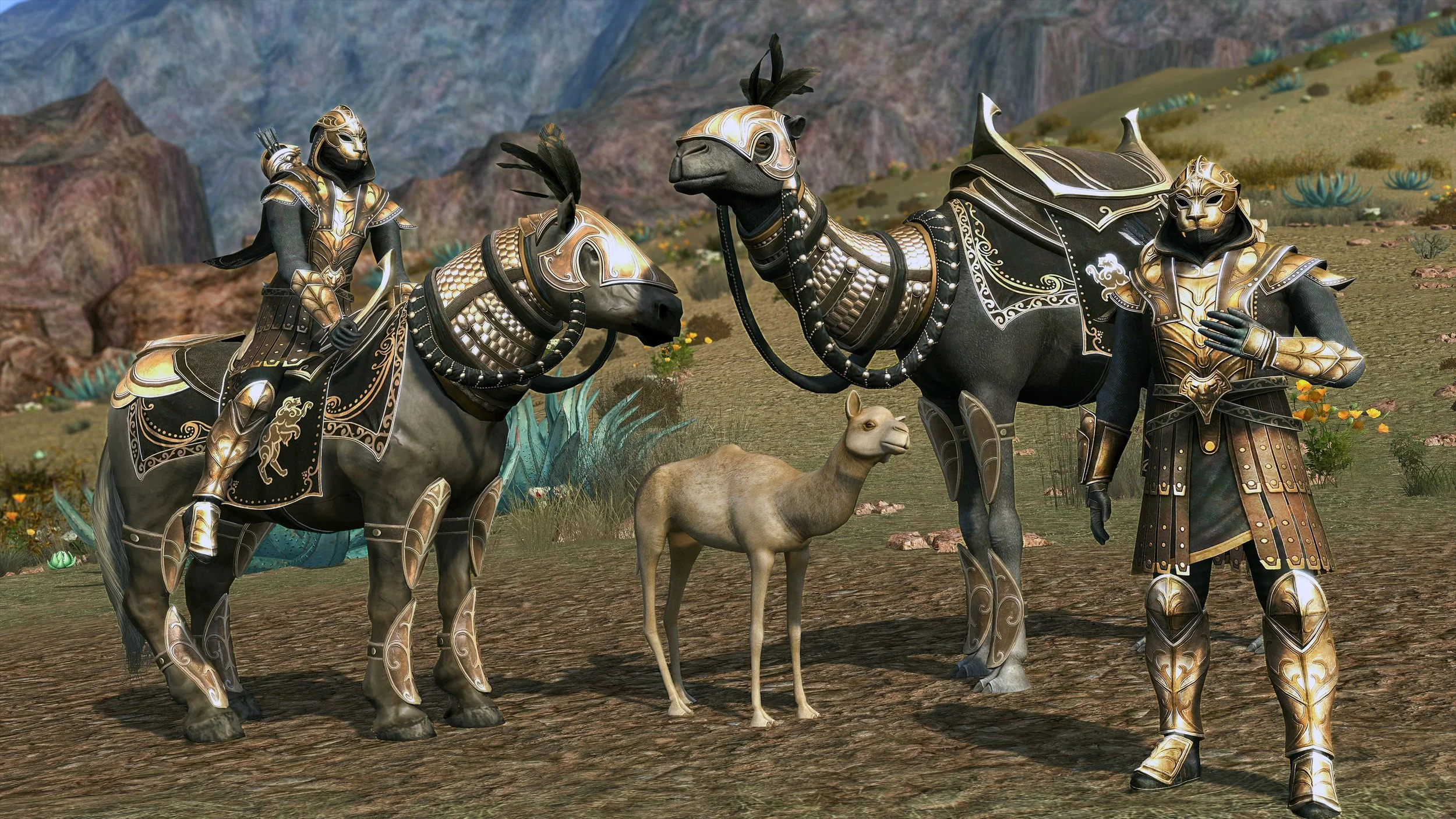
Landscape Soldiers. Back in 2012 when Update 6: Shores of the Great River was released, we gained the ability to summon our skirmish soldiers while PVE questing. I have often used this facility over the years as I like having backup in tricky areas and being “overpowered” (or at least robustly equipped). Broadly this tactic works but it can be like herding cats at time. Landscape soldiers are a somewhat blunt tool with little or no navigational control. You often have to dismiss them or re-summon them to avoid pulling all mobs in a given area. Having recently played Ghost Recon: Wildlands, I have learned what good AI companions can be like. So, if LOTRO could add some simple controls to landscape soldiers (just like Lore-master pets for example) then that would be really helpful.
Barter Currencies. There are simply too many of these in the game and many of them end up becoming redundant very quickly. In a previous post I mentioned that it’s worthwhile revisiting old currencies and seeing what you can trade them in for, but there comes a point when there’s nothing else useful and they just end up as being baggage. What I would like to see is some kind of currency exchange system that would allow you to hand in the old in return for new. It’s something that’s already available in-game for skirmish marks and to a degree within some of the barter currencies themselves. So, there’s no real technical reason why SSG cannot implement such a system, it’s just that the devil would be in the detail. Trying to find a fair and equitable exchange rate would be the real challenge.
Instance Finder. Ten years on, LOTRO is still a very social game. People do help and are surprisingly generous. However, try using the in-game instance finder and you’ll know the true meaning of loneliness. I don’t know whether it’s the times that I play, but I have never got the instance finder to successfully form a PUG. Usually, I run instances via my kinship but that’s not always convenient, so having a functional auto-grouping instance finding tool would be a real boon. SSG should take a leaf out of fellow developers Cryptic’s book, who have just added enhanced rewards to incentivise PUG and random queues. I don’t believe in coercing players into collaborating and favour instead the tried and tested method of providing a “carrot on the end of the stick”. If I could gain quality gear by running random or under represented instances, I’d certainly give it a try.
These are just four suggestions to improve LOTRO that I’ve quickly thought about. They’re not in any order or preference. They literally just came to mind as I was drafting this post. I’m sure most players have a comparable amount they can quickly bring “to the table”. As ever, I’d be very interested to hear reader suggestions, so feel free to leave suggestions in the comments. If LOTRO wishes to continue to move forward it would be wise for SSG to at least consider some changes. Yes, the age of the game and its respective code does impact upon what can and cannot be done, but simply expanding some of the existing functionality in to other areas of the game would be a good starting place. As ever time will tell.






The Expendables 2 (2012)
After viewing The Expendables 2, I read back through my notes. They ran as follows: People were shot. Stuff exploded. Quips were made. Amusing. And that is pretty much all you need to know, because if you watch this movie expecting anything more, then you'll be disappointed (and possibly a fool). So, Barney Ross (Stallone) and co are back and this time they have a better (by genre standards) script which is a little more equitable with the screen time (Terry Crews and Randy Couture fans take note). Gallows humour and self-referential one-liners abound, and the plot is rife with over the top situations and features an absurdly named villain (Jean-Claude Van Damme). Mickey Rourke is replaced by Chinese star Yu Nan’s Maggie, and Liam Hemsworth. Oh, and there's lots of mayhem. The movie has the trademark high body count.
After viewing The Expendables 2, I read back through my notes. They ran as follows: People were shot. Stuff exploded. Quips were made. Amusing. And that is pretty much all you need to know, because if you watch this movie expecting anything more, then you'll be disappointed (and possibly a fool). So, Barney Ross (Stallone) and co are back and this time they have a better (by genre standards) script which is a little more equitable with the screen time (Terry Crews and Randy Couture fans take note). Gallows humour and self-referential one-liners abound, and the plot is rife with over the top situations and features an absurdly named villain (Jean-Claude Van Damme). Mickey Rourke is replaced by Chinese star Yu Nan’s Maggie, and Liam Hemsworth. Oh, and there's lots of mayhem. The movie has the trademark high body count.
Director Simon West provides the audience with a suitable homage to eighties action movies, that is a slicker, more robust and at ease with itself that its predecessor. He does not quite reach the heights of his Magnum Opus, Con-Air, but The Expendables 2 is a worthy genre piece. Furthermore, he presents the action is a way that is discernible to the viewer and fun. We are not subjected to a lot of shaky cam, lightning edited bilge, but actually get to see the carnage in all its glory (although a lot of that is CGI bullet hits). The physical stunts are top notch and the fights extremely well-choreographed.
The plot is standard with the team sent to collect the content of a crashed military airplane. Of course, it's not as easy as that, with other parties showing an interest in its plutonium cargo. The subsequent clash between groups results in the death of one of the team, making matters personal. You don't have to be a genius to figure out what happens next. Not only are we treated to one hundred minutes of old school action, but also a who's who of eighties action heroes. Furthermore, they are all happy to send themselves up. It's all a lot better this time round because the production team know what works and what doesn't. Dolph Lundgren steals the show with his banter and casual asides. It is this shift in tone that improves this outing over the first.
Not everything succeeds as well as it could, though. The climatic shootout is not as strong a set piece as some of the proceeding sequences and somehow, I expected the arrival of Schwarzenegger, Willis, and Chuck Norris to have a little more impact. That's not to say it's not good. I was just expected something more bombastic. Two of the three have been out of the acting game for a while (at the time of filming), so I guess we should cut them some slack. It is also curious to note that although the film has a lot of violence, the use of profanity is quite restrained. It is present but tends use a lot of milder terms. A concession of some kind perhaps? It certainly does not spoil The Expendables 2. I picked up on it just because bad language is so prevalent in this genre.
The Expendables 2 manages to find the right balance between loud action, tongue in-cheek humour and respect for the genre. It is also a most welcome change to modern PG-13 rated action movies that want to be hard hitting and tough but cannot countenance depicting violence for fear of tipping over into a higher rating. It is the honesty of The Expendables 2 that is one of its strongest assets, along with the fact that it does exactly what it sets out to do. That and of course Schwarzenegger and Willis in a Smart Car, shooting the crap out of things. When you add on top of that Chuck Norris quoting his own "facts" then you are in action movie hog heaven.







Classic Movie Themes: The Day the Earth Stood Still
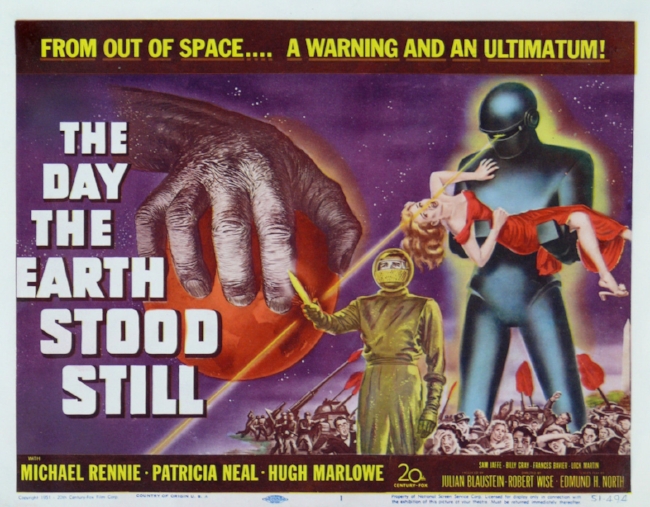
Film producer Julian Blaustein had a long-standing desire to make a film that addressed the fears and concerns of the post war Atomic Age. With the backing from Fox Studio Executive Darryl F. Zanuck, he hired screenwriter Edmund North to adapt the short story Farewell to the Master by Harry Bates. The screenplay provided a moral commentary about the ongoing arms race and featured an alien visitor with Christ like qualities who delivers an apocalyptic message. Veteran director Robert Wise was brought in head the project and a fine cast of established characters actors such as Michael Rennie, Patricia Neal Hugh Marlowe and Sam Jaffe was assembled. The finished movie has proven to be one of the greatest science fiction movies ever; it is The Day the Earth Stood Still made in 1951.
Film producer Julian Blaustein had a long-standing desire to make a film that addressed the fears and concerns of the post war Atomic Age. With the backing from Fox Studio Executive Darryl F. Zanuck, he hired screenwriter Edmund North to adapt the short story Farewell to the Master by Harry Bates. The screenplay provided a moral commentary about the ongoing arms race and featured an alien visitor with Christ like qualities who delivers an apocalyptic message. Veteran director Robert Wise was brought in head the project and a fine cast of established characters actors such as Michael Rennie, Patricia Neal Hugh Marlowe and Sam Jaffe was assembled. The finished movie has proven to be one of the greatest science fiction movies ever; it is The Day the Earth Stood Still made in 1951.
Alfred Newman was Director of Music at 20th Century Fox at the time and decided to assign the project to Bernard Herrmann, who has recently relocated to Los Angeles. Director Robert Wise had worked previously with Herrmann on The Magnificent Ambersons in 1942 and the pair had a good working relationship. So, he effectively gave him an open remit to create something different and special. Herrmann was far from a musical traditionalist and chose to craft an innovative soundscape to highlight the differences between the Alien Klaatu the bellicose and bombastic nature of humanity. He therefore elected to remove acoustic string and woodwind instruments from the orchestra and expanded the horn section. He then further embellished the sound of the film by adding such diverse instruments as an electric violin, Theremins, Hammond organs, vibraphones, and a celesta.
“Prelude and Outer Space” is a magnificent opening cue which highlights Herrmann genius in capturing the narratives emotional essence. The opening credits roll against a shifting panorama of stars and the sumptuously eerie main motif, featuring multi-tracked Theremin and tuba, juxtaposed by piano arpeggios, horns and crystalline harp. Herrmann further embellishes this portentous theme with a vibraphone played backwards. This cue is a masterpiece in both conception and execution. “Radar” offers another incredible track, which demonstrates Herrmann’s compositional aptitude. As the world watches on at the alien space ship, a harp glissando preludes a rapid duet between two pianos, one with bass and the other with vibraphone, which are octaves apart.
Bernard Herrmann was one of the most innovative composers of his generation who endeavoured to bring new and dynamic methods to the process of film scoring. His decision to remove the acoustic instruments from the string and woodwind sections of the orchestra and to augment his score with the abstract otherworldly sounds of the Theremin, vibraphone, and celesta was a bold move. Yet it proved to be a genre defining decision and adds another layer of subtlety to the storytelling. Over the years, many of the unique aspects of the film score have become standard genre tropes. You only have to listen to Danny Elfman’s main them for the 1996 Tim Burton movie, Mars Attacks to hear the reach of Herrmann’s influence.







LOTRO: The State of the Game
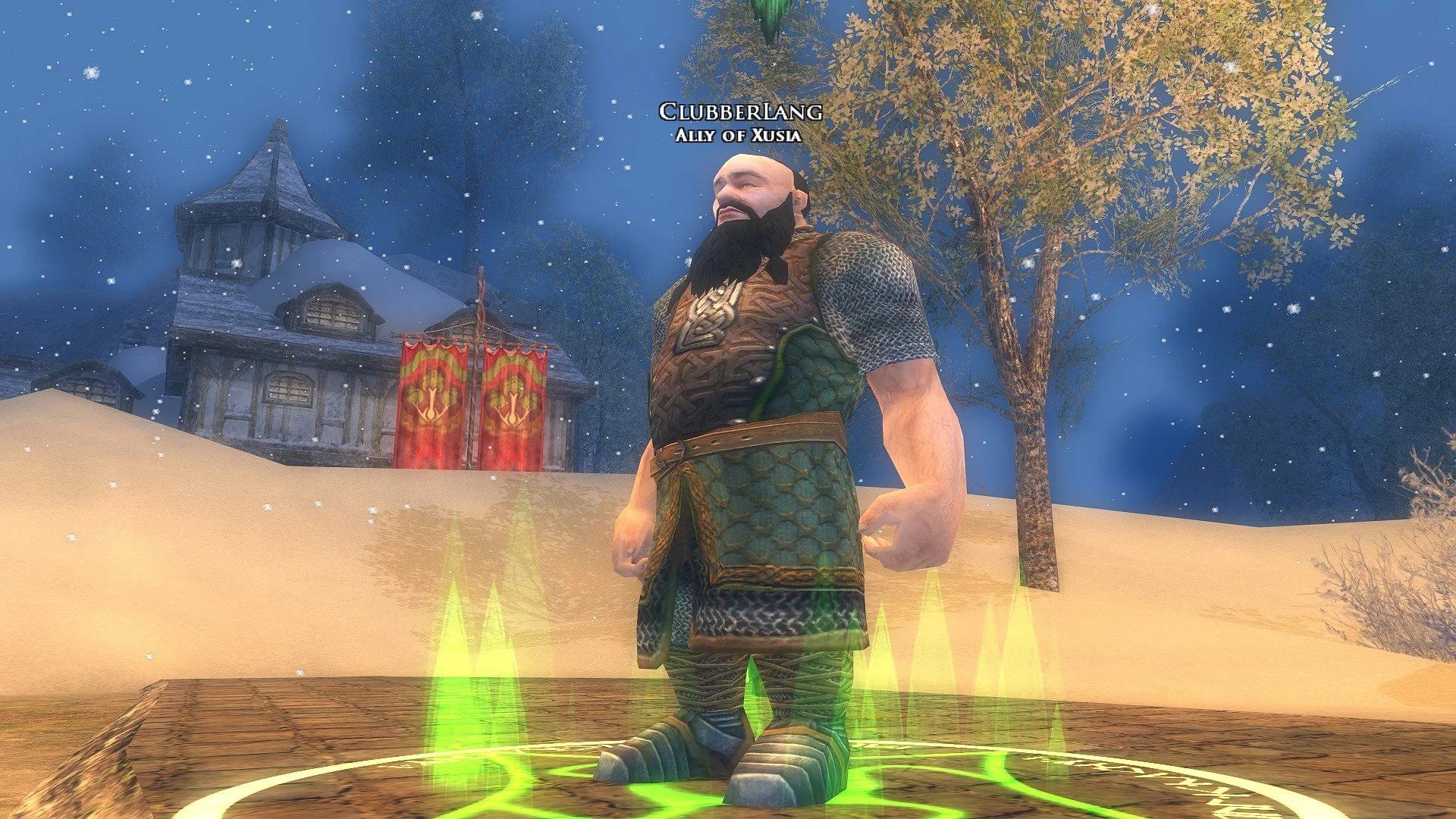
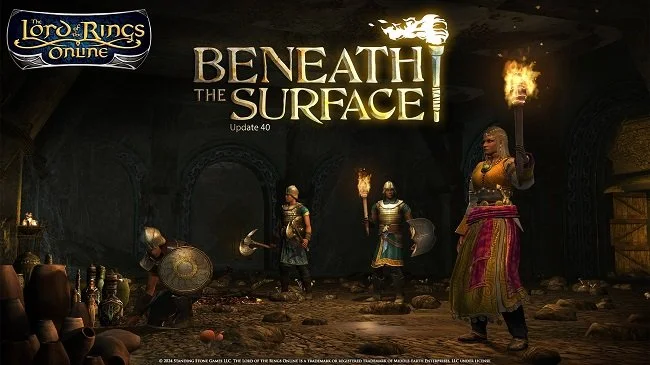
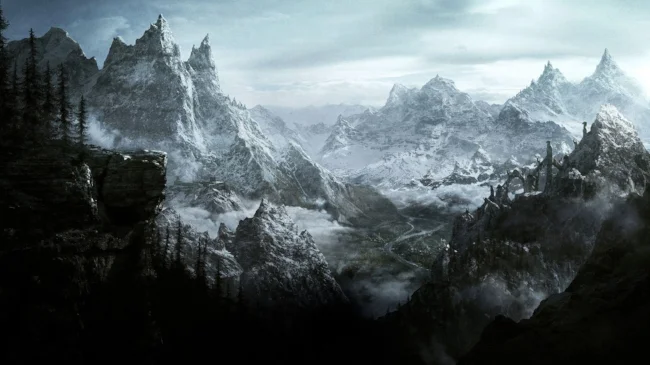
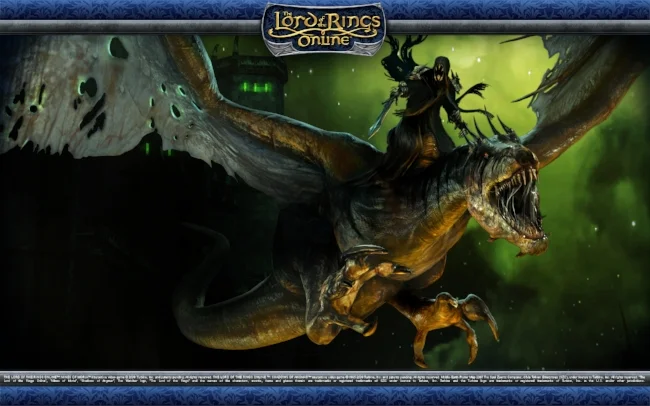
I am fast approaching my ten-year anniversary of playing the MMORPG The Lord of the Rings Online. So, I thought I write a few thoughts about how I find the current state of the game. I returned to LOTRO this August and finally decided to tackle all the outstanding content that I had allowed to build up. Because I initially had issues with the Mordor expansion when it first was released, I had started to level up elsewhere in the game. Thus, when I resumed playing I was two levels or so above the designated rank of most quests. The final region of Mordor, Talath Úrui, I completed last night at level 118. I have always preferred to play this way and like to ensure that I am adequately equipped for a zone. If you are underpowered combat becomes a chore. I am currently finishing off the final stages of Update 22: Legacy of the Necromancer, having worked my way through Northern Mirkwood, Lake-town, Dale on to Erebor. I always attempt content in a linear fashion, so I can stay conversant with the various storylines. By the time I finish the Erebor quests and start the new content in Update 23: Where Dragons Dwell, I shall probably be at the new level cap of 125.
I am fast approaching my ten-year anniversary of playing the MMORPG The Lord of the Rings Online. So, I thought I write a few thoughts about how I find the current state of the game. I returned to LOTRO this August and finally decided to tackle all the outstanding content that I had allowed to build up. Because I initially had issues with the Mordor expansion when it first was released, I had started to level up elsewhere in the game. Thus, when I resumed playing I was two levels or so above the designated rank of most quests. The final region of Mordor, Talath Úrui, I completed last night at level 118. I have always preferred to play this way and like to ensure that I am adequately equipped for a zone. If you are underpowered combat becomes a chore. I am currently finishing off the final stages of Update 22: Legacy of the Necromancer, having worked my way through Northern Mirkwood, Lake-town, Dale on to Erebor. I always attempt content in a linear fashion, so I can stay conversant with the various storylines. By the time I finish the Erebor quests and start the new content in Update 23: Where Dragons Dwell, I shall probably be at the new level cap of 125.
The Story. A year on after the release of Mordor and LOTRO has begun to forge ahead into quasi non-canonical territory, effectively fictionalising the events that are referenced in the appendix of The Lord of the Rings. There have been times in the past when I have found the underlying narrative of LOTRO too convoluted and frankly uninteresting. I remember little of Enedwaith and Dunland and felt that the stories based around the inter-tribal Dunlending feuds were a distraction. Beyond their function of giving further insight into the treason of Isengard they were not the most gripping of tales. I also lost track of many of the Thanes of Rohan and their respective stories during the Riders of Rohan expansion. Yet broadly, the Epic Story that runs through the entire game has been gripping and from time to time, memorable characters do stand out.
I felt that the Mordor storyline was very good, offering a plausible depiction of a ruined but not necessarily beaten realm. The notion of former acolytes of Sauron vying for dominance in a power vacuum was explored well. I also felt the plight of the Stout-axes was an interesting tale. Recent updates have also seen a more honed style of narrative, where wider issues are seen through the experience of a handful of relevant characters. The refugee quests in Dale was well handled and struck a contemporary chord. Although I usually tend to be ambivalent towards Elven focused narratives, I enjoyed the cleansing of Mirkwood and the way Thranduil’s story tied into the High Elf starter storyline. From what I’ve seen so far SSG are doing well with their post downfall of Sauron adaptations. I’m looking forward to seeing what happens next in Ered Mithrin.
Gear, statistics and combat. I’ve recently started using the Raven as my regular Lore-master pet. I’m currently using the Red Line Trait Build with a Legendary Weapon tweaked towards optimal fire-based damage, so using a combat pet that enhances this is common sense. At present I have mainly Teal and Purple armour purchased via the High Elf Enchanter along with all Teal Jewellery. Hence PVE outside of Ered Mithrin is not proving problematic. I have also adjusted my skill rotation, as Ring of Fire was nerfed in the latest update and now has become invaluable. I find there’s a fine line in any MMO between challenging combat and fights simply taking too long. At present I feel the balance is just right in LOTRO. I’m not a serious number cruncher when it comes to my characters statistics. I noticed that my moral levels have dropped since the last patch, but other adjustments to enemy stats mean that combat is not quite so grindy.
Abandoned systems and obsolete content. I briefly wanted to mention one of the inevitable consequences of a decade old MMO. LOTRO has several game systems that have either fallen by the wayside, or that remain as “work in progress”. I recently revisited Epic Battles and feel that the main flaw they have is the intial lack of agency you have as a player, on what is going on around you. You need to put a lot of points into the various “promotions” before you actually start impacting upon the flow of battle. Too me that’s simply bad design. I don’t expect to slog away for a month before something finally becomes compelling. It needs to be so right from the start. Then there are skirmishes, which are thoroughly entertaining and a great way to level outside of traditional quests. Sadly, we haven’t seen any new skirmishes in the game since 2010 or so. Hobbies and housing are other aspects of the game that have much potential but remain underdeveloped.
Due to LOTRO’s ever growing level cap, there are several gear related systems at various points in the game that are now obsolete. If you create a new alt, many of these systems can now be bypassed with alternative gear provided elsewhere. The Hytbold quest line was an involving diversion upon its initial release but it is highly unlikely that you’d ever revisited it with another character. More recently, the Allegiance system was introduced to the game. In the space of two updates it has become obsolete. I am currently level 22 with The Kingdom of Gondor, but as my primary character in now 118, none of the gear it can offer is of any use. I bought three items recently which had lower stats to what I was using, so I simply destroyed the items for Motes of Enchantment. LOTRO more than other MMOs that I play seems to have an excess of game systems that have to be experienced on level or else they end up redundant (except to the completionist player).
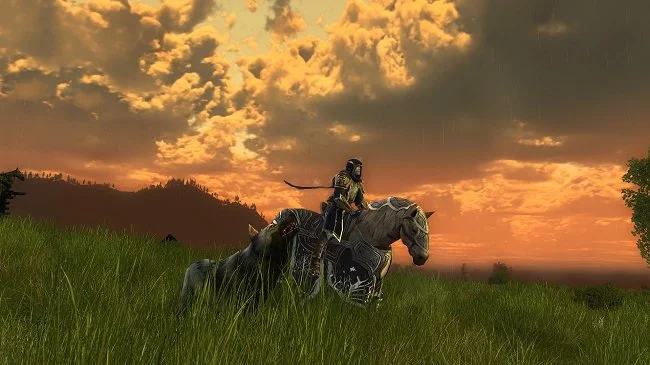
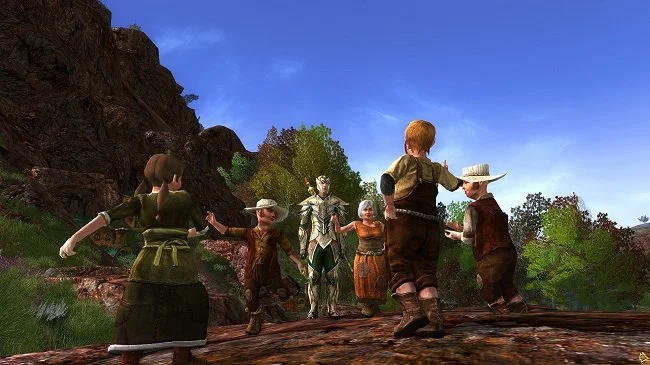
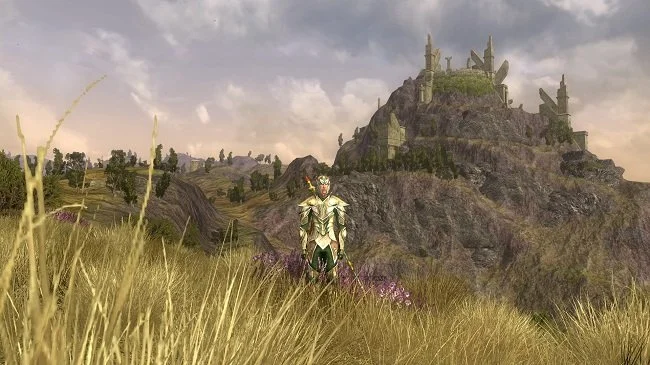
Lore, ambience and music. After ten years Standing Stone Games realisation of Middle-earth still captures the essential essence of Tolkien’s work. The game engine is some what old now and the graphic are very much of the era that created the game, but the world reflects the source text and the stories regularly tap into the lore in both obvious and subtle ways. I often find myself intrigued by a minor aside in the narrative or a reference to a character or place. When I subsequently research these on the internet or via my various Tolkien reference books, I always find that the writers have drawn upon genuine lore. Bar practical changes, adaptations and embellishments that are designed to facilitate the MMO genre, I have never found the stories in LOTRO objectional or taking excessive liberties with accepted canon.
Finally, I would like to reference the soundtrack of LOTRO which has grown prodigiously over the years. It remains an integral facet of the games appeal, and a means of giving an older MMO with minimal dialogue, the emotional impetus the narrative needs. There are some wonderful new (relatively speaking) themes that play around Lake-town, Dale and Erebor that suit the environment perfectly. The game also has several motifs associated with the different races, although I must say those pertaining to Dwarves are by far the best. They simply nail the cultural and philosophical idiom of the race. I know SSG have made music from the game available, but I feel they should release more. Hopefully that is something they can address in the future.
LOTRO remains for me my go to MMO and despite its flaws, it still offers me an interesting diversion in my leisure time and a rich narrative experience based upon one of my favourite intellectual properties. As long as it continues to operate within these parameters, I shall continue to support the game. I do not think I am alone in this philosophy and believe that many players have made their peace with the games foibles and embraced it for what is actually is and the needs it fulfils. Certainly, the game have provided me with a great deal of enjoyment and entertainment over the last decade and has been great value for money. Therefore, I wholeheartedly hope that it continues to grow and move the story forward in the years to come.
Trial by Social Media
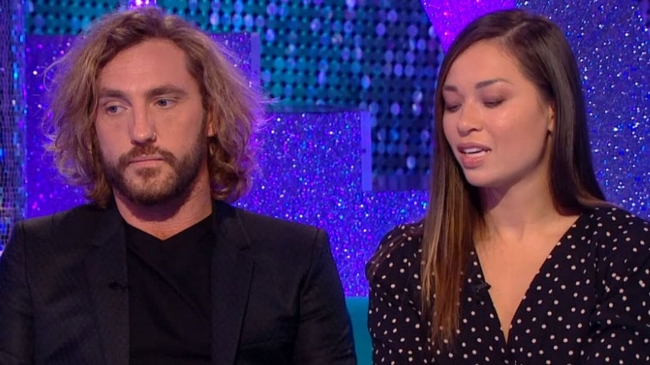
The upbeat social media buzz around popular reality TV show Strictly Come Dancing took a turn for the worse this week, after celebrity contestant Seann Walsh was photographed kissing his professional partner Katya Jones. To the casual observer, this is simply standard fare for the tabloid press; a storm in a tea cup and nothing of note. However, four days after publication the story has grown from celebrity tittle-tattle to a major topic of national debate. This is because of several reasons. Mr Walsh was at the time when the picture was taken, in a long-term relationship. Katya Jones is married to fellow Strictly Come Dancing professional dancer, Neil Jones. Subsequently, actress Rebecca Humphries split up with Seann Walsh and released a statement online citing deficiencies in the five-year relationship and alluding to “controlling” behaviour. It is this later aspect, rather than just faux prurient outrage by the tabloids about the celebrity indiscretion, which has made this “story” persist. It links into the ongoing debate over “toxic masculinity” and the #MeToo movement.
The upbeat social media buzz around popular reality TV show Strictly Come Dancing took a turn for the worse this week, after celebrity contestant Seann Walsh was photographed kissing his professional partner Katya Jones. To the casual observer, this is simply standard fare for the tabloid press; a storm in a tea cup and nothing of note. However, four days after publication the story has grown from celebrity tittle-tattle to a major topic of national debate. This is because of several reasons. Mr Walsh was at the time when the picture was taken, in a long-term relationship. Katya Jones is married to fellow Strictly Come Dancing professional dancer, Neil Jones. Subsequently, actress Rebecca Humphries split up with Seann Walsh and released a statement online citing deficiencies in the five-year relationship and alluding to “controlling” behaviour. It is this later aspect, rather than just faux prurient outrage by the tabloids about the celebrity indiscretion, which has made this “story” persist. It links into the ongoing debate over “toxic masculinity” and the #MeToo movement.
I have no interest in dissecting or commenting on in any depth, the former relationship between Rebecca Humphries and Seann Walsh, nor the actual drunken kiss that started this furore. The only information we have on these matters is anecdotal and has been refracted through the prism of the tabloid press. Nuance and facts are conspicuously absent. But none of that is relevant because we live in an age where we are regularly presented with a “news story” that is designed to make us angry and encouraged to sake a side. This mindset dominates political and social debate and is the ruination of western society. As a nation we are actively participating and enabling a parasitical tabloid culture, which is harmful to not only those who are the “story”, but also to ourselves with the erosion of empathy and critical thinking. The hypocrisy of a media driven “public shaming” with “showbiz journalism” taking the moral high ground is utterly reprehensible. And then there is the blunt tool that is the internet lynch mob and the all too common “trial by social media” to consider. Something that is becoming increasingly weaponised by those entities with a political agenda.
The BBC decided to head off this ongoing controversy last night as Strictly Come Dancing is their flagship Saturday night family entertainment show, with viewing figures of 9 million. Hence Seann Walsh and Katya Jones made an embarrassing appearance on Strictly Come Dancing: It Takes Two, to obliquely apologies for the situation. However, I’m not so sure if it has done any good because this entire matter is no longer being driven by either Mr Walsh or Ms Humphries. This debacle is now a “cause” and there are clearly defined sides fighting wider ideological points, along with a percentage of professional malcontents who simply thrive on public discord. If the levels of “outrage” do not subside and the BBC gets cold feet, then we could see Mr Walsh either step down from the show or be removed. This would then make him a martyr for those in the opposite camp of the #MeToo movement and would more than likely result in an unjust backlash against Rebecca Humphries.
It’s a curious thing how the internet and social media with all it’s potential to breakdown barriers and be a force for good in the world, has often just pandered to the worst aspects of the human nature. It has fed our prejudices, depersonalised our interactions with others and turned other people’s misery into disposable entertainment. Too many people viewing via their own bespoke online portal, see life as something happening in a “petri dish”, removed and sperate from themselves. Then there is the entire tabloid “showbiz” industry that is inherently unethical and repellent, growing rich off suffering that they’ve often contrived. Yet the market for such material seems to be voracious, so it would be naïve of me to simply pooh-pooh it with a glib moral soundbite. However, I think as a society we need to think long and hard about the road we’re following. The destination doesn’t look too promising. But like any big change, it starts with a small step and that first step is down to us. The next time a salacious story appears in your social media timeline, inviting you to pick a team and start screaming, just take a breath and move along. It is not imperative to have an opinion on everything, nor wise to make snap judgments. Most of us are flawed and wanting in some respect. And remember that people such as Seann Walsh and Rebecca Humphries are not abstractions but flesh and blood, with feelings and family. Would you want what they are currently enduring to happen to you?















The Last Stand (2012)
Upon release The Last Stands opening weekend box office returns were not as much as Lionsgate pictures had anticipated. The long-term worldwide gross was only $48 million, for a movie that had cost over $40 million. There was talk in the mainstream movie press of Arnie's comeback stalling and that the sky was falling for R rated action movies. Theatres at the time were thriving on “Jason Bourne” style thrillers and the ubiquitous Marvel Cinematic Universe. Critics were also mixed in their opinions regarding the film. Some were quite dismissive, citing the very things that an ageing Arnold Schwarzenegger brings to the table in The Last Stand, as faults. Exactly what were they expecting? It's like criticising a dog for barking.
Upon release The Last Stands opening weekend box office returns were not as much as Lionsgate pictures had anticipated. The long-term worldwide gross was only $48 million, for a movie that had cost over $40 million. There was talk in the mainstream movie press of Arnie's comeback stalling and that the sky was falling for R rated action movies. Theatres at the time were thriving on “Jason Bourne” style thrillers and the ubiquitous Marvel Cinematic Universe. Critics were also mixed in their opinions regarding the film. Some were quite dismissive, citing the very things that an ageing Arnold Schwarzenegger brings to the table in The Last Stand, as faults. Exactly what were they expecting? It's like criticising a dog for barking.
When I saw The Last Stand upon its UK release, it was well received by the audience. There was laughter at the one liners and at some of the death scenes. There was even a smattering of applause at the end. As we left the screening, knowing looks and nods were exchanged. By and large the consensus was one of a job well done, because The Last Stand provided everything that we expected. A modern action movie, with an ageing star, making copious amounts of references to his age and the incongruity of the situation in a humorous way. The set pieces were competent and hard edged, and the overall film was relatively low key compared to the excesses of the star’s former works, such as Total Recall. A recent second viewing has re-iterated my opinion that it was the right sort of comeback vehicle for such a star.
The story is a very traditional set up, that lends itself perfectly to delivering the sort of content that fans of this genre (and in particular this star) actually want. The head of a Mexican drug cartel (Eduardo Noriega) escapes FBI custody, leaving a senior agent (Forest Whitaker) pondering how he will get across the border. The trail points to the sleepy town of Sommerton Junction. As an army of hired mercenaries descend upon the town to facilitate their bosses return to Mexico, it falls to local Sheriff (Schwarzenegger) and his deputies, Jamie Alexander, Luis Guzman and Zach Gilford to thwart their plans. Assisted by eccentric local gun collector Lewis Dinkum (Johnny Knoxville) they barricade the main street and make their proverbial last stand.
The Last Stand is surprisingly a little more than just the sum of its parts. Director Kim Ji-woon brings a subtly different look and feel to the proceedings, taking what is essentially a western and tempering it with an Asiatic aesthetic and better than average script (as far as action movies go). The movie benefits from interesting characters who you can relate to and who are quite endearing. There are elements of emotional drama here, that you don't often get in this genre. Arnold Schwarzenegger is actually a better actor than a lot of people think, and his portrayal of world-weary sheriff Ray Owens is pretty good. When a particular cast member dies in the second act, it is handled well by all the cast and it is a surprisingly sad scene. It's not Shakespeare but is light years beyond a lot of movies these days, who are populated by disposable characters you are totally indifferent to.
The less is more (by Arnie standards) approach of The Last Stand works well. It is nice to see physical car stunts and action set pieces when they’re used in these sorts of productions. Yes, there are elements of CGI but not to the extent of other genre movies. It is also a pleasant change to see a production of this kind receiving a higher rating and nailing its colours firmly to the mast. Also, an action movie of this scope with a body count in the dozens rather than hundreds, seems to be far more appropriate for a man of Mr. Schwarzenegger age. The Last Stand is not a perfect movie, but it is certainly not the pedestrian misfire some would have you believe. However, Arnold Schwarzenegger appeal is a generational thing. Upon mature reflection, if this movie had been released on Netflix then it may well have found a wider audience among fans who grew up with his work.
The Thirteenth Doctor
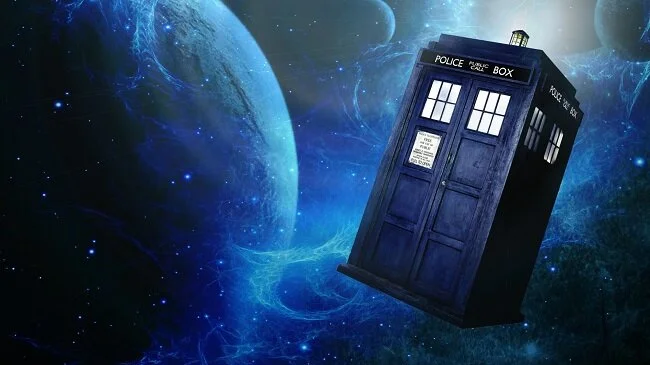
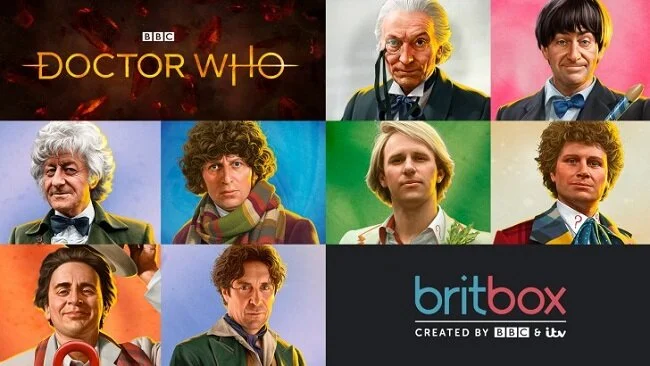
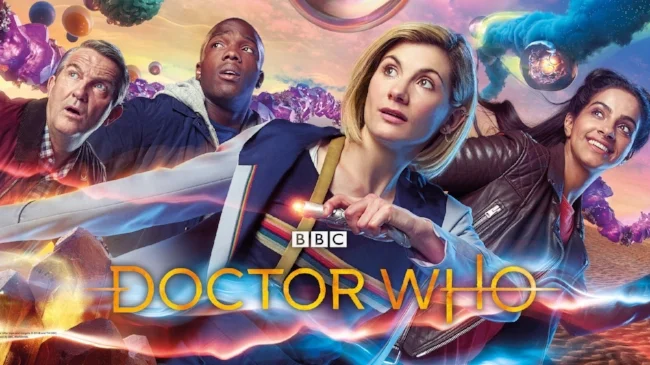
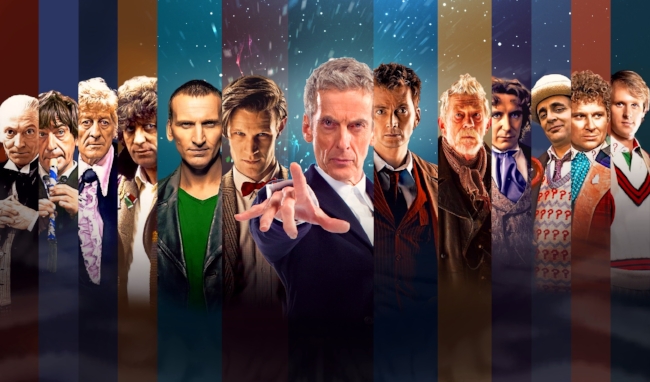
Last night Jodie Whittaker made her debut as the thirteenth incarnation of that iconic Time Lord known as The Doctor. And despite eighteen months of negative comments, criticism and bile from those who disliked the idea of a female lead, the first episode, The Woman Who Fell to Earth was watched in the UK by 8 million people. At this point, popular opinion appears to be broadly positive and the franchise has weathered the storm. Naturally, there are some fans who have elected not to continue watching and there are those who intend to remain in the wings spouting disproportionate criticisms because they feel that something has been taken away from them. However, churn is a common facet of all industries and TV entertainment is no different. The BBC may well lose some long-time viewers due to this casting change, but I think it will gain far more new ones. I say this with some confidence because I too have chosen to return to the Doctor Who fold.
Last night Jodie Whittaker made her debut as the thirteenth incarnation of that iconic Time Lord known as The Doctor. And despite eighteen months of negative comments, criticism and bile from those who disliked the idea of a female lead, the first episode, The Woman Who Fell to Earth was watched in the UK by 8 million people. At this point, popular opinion appears to be broadly positive and the franchise has weathered the storm. Naturally, there are some fans who have elected not to continue watching and there are those who intend to remain in the wings spouting disproportionate criticisms because they feel that something has been taken away from them. However, churn is a common facet of all industries and TV entertainment is no different. The BBC may well lose some long-time viewers due to this casting change, but I think it will gain far more new ones. I say this with some confidence because I too have chosen to return to the Doctor Who fold.
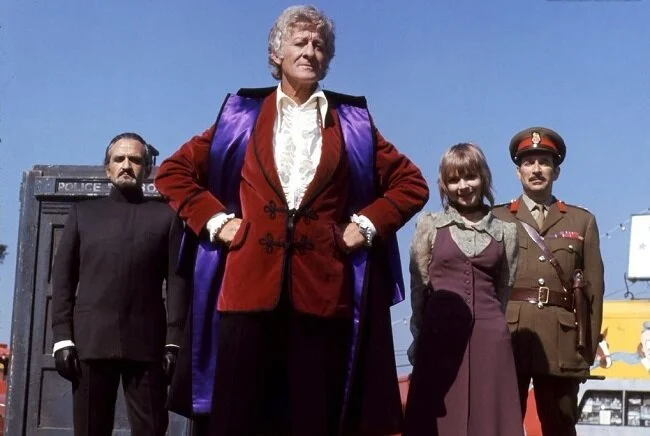
I started watching Doctor Who upon its return in 2005 and enjoyed the first couple of seasons. Despite growing up in the glory days of the Pertwee and Baker era, I happily made the transition to the new, modern and contemporary Doctor. However, as time progressed I felt that the show and the wider fan community were becoming a little too inward gazing. Furthermore, under Steven Moffat’s auspices, the show started to become excessively narratively convoluted, self-referential and frankly a little too smug for its own good. In many ways it came across as a massive fans service first and frequently felt like a big “in-joke” shared among fans but to the exclusion of the wider public. For many Doctor Who ceased to be a show that you could easily return to. Something that was reflected in the viewing figures, which more or less halved from the initial halcyon days of Russell T Davies’ creative tenure.
I suspect that the arrival of new show runner Chris Chibnall will address these issues. I am certainly not going to theorise in-depth about the long-term direction that the franchise will now take, purely on the strength of one episode. However, I think it gives viewers an indication of Mr. Chibnall’s approach. It was stripped back, immediate and very accessible. Yes, there was the signature techno-babble but it was an embellishment, rather than pivotal plot device that required viewers to take notes. The new companions were plausible, coming from a diverse city such as Sheffield. Although I do not doubt that the new season will honour many of the classic tropes and facets of established lore, I like the way that this fresh start has not thrown up any obvious barriers to entry. This is something that Star Trek: Discovery has managed to achieve. Perhaps it is this choice to shun exclusivity that has upset some fans. Regardless of the anger that is still raging in some quarters, I am happy to watch this new season of Doctor Who as it has seen fit to offer the wider public an olive branch. I suspect that if handled well, the new Doctor will settle in to the existing cannon just fine.

Strictly Come Dancing 2018: Part 1
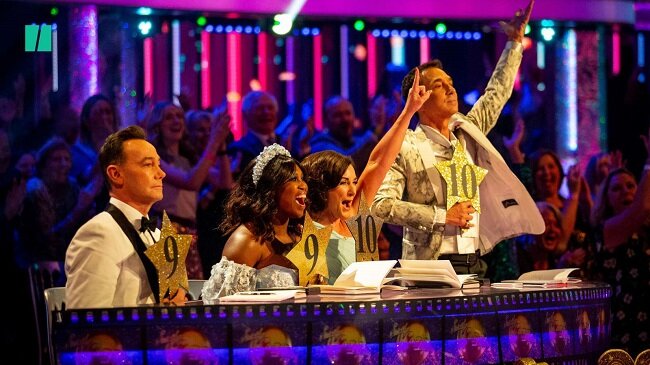
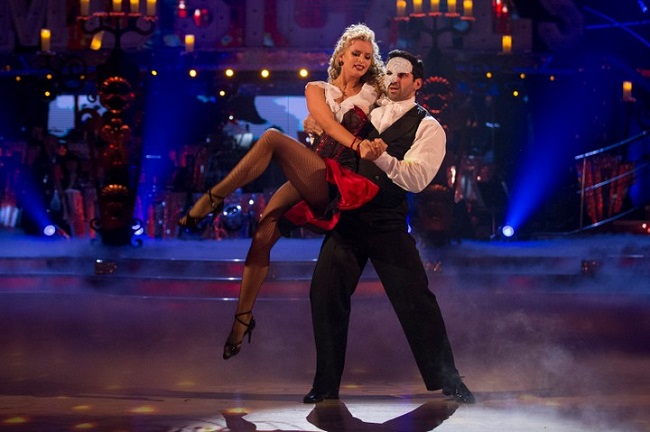
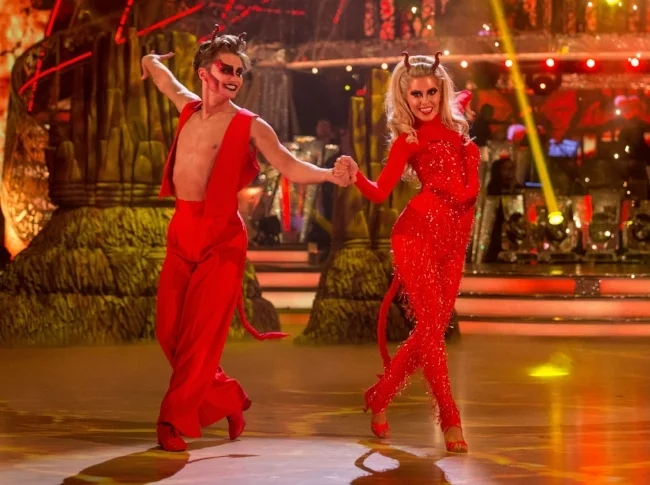
With each successive season of Strictly Come Dancing there appears to be more and more celebrity participants who seem to be “good”, right from the get-go. For many years now there have been ongoing debates about whether those from certain backgrounds, IE music, acting and possibly even sport, have an advantage over the usual chefs, astrologers and ageing minor celebrities. Although I can see the initial sense of such arguments, I don’t think they hold up to close scrutiny. Having performed a few arbitrary dance moves whilst touring or having done a stilted routine for a TV drama or play is not the same as the rigour and scrutiny that comes with Strictly Come Dancing. However, setting aside this perennial question, despite only being three weeks into series sixteen, we saw some extremely strong movie themed performances last night and the potential emergence of several dark horses. Subsequently tonight’s results were interesting.
With each successive season of Strictly Come Dancing there appears to be more and more celebrity participants who seem to be “good”, right from the get-go. For many years now there have been ongoing debates about whether those from certain backgrounds, IE music, acting and possibly even sport, have an advantage over the usual chefs, astrologers and ageing minor celebrities. Although I can see the initial sense of such arguments, I don’t think they hold up to close scrutiny. Having performed a few arbitrary dance moves whilst touring or having done a stilted routine for a TV drama or play is not the same as the rigour and scrutiny that comes with Strictly Come Dancing. However, setting aside this perennial question, despite only being three weeks into series sixteen, we saw some extremely strong movie themed performances last night and the potential emergence of several dark horses. Subsequently tonight’s results were interesting.
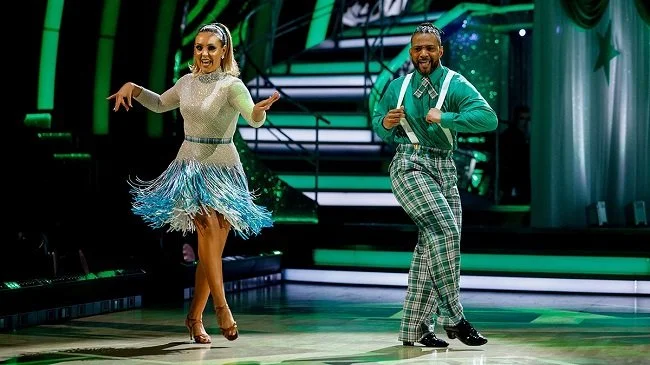
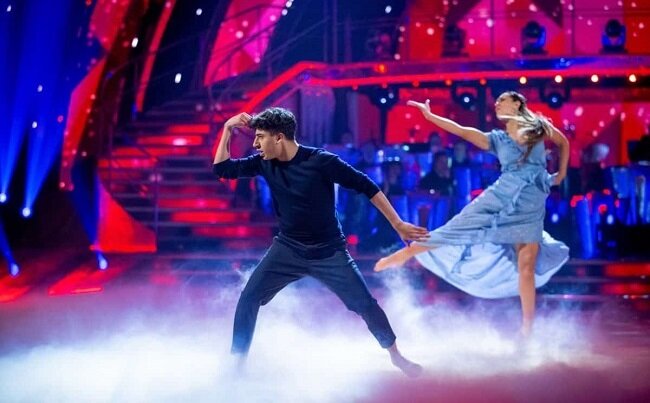
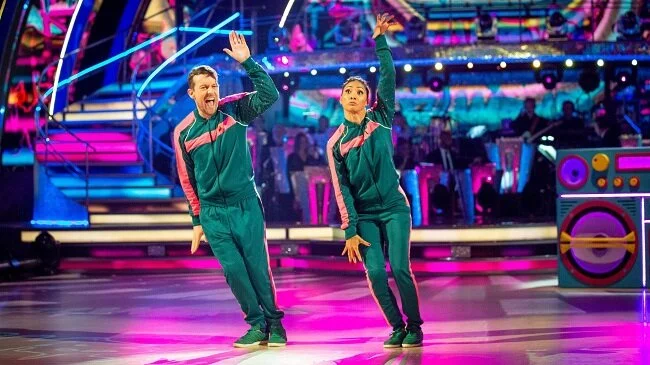
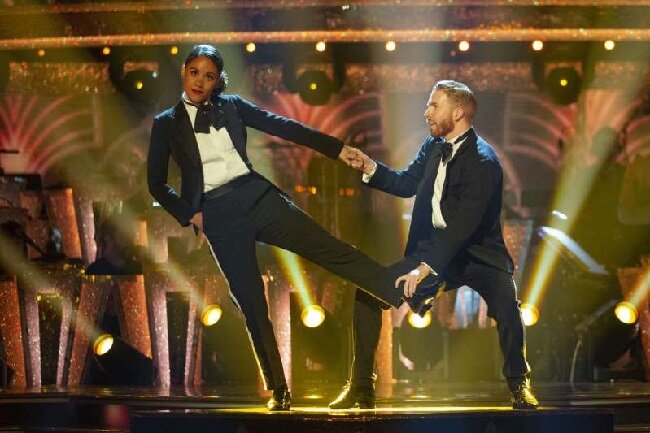
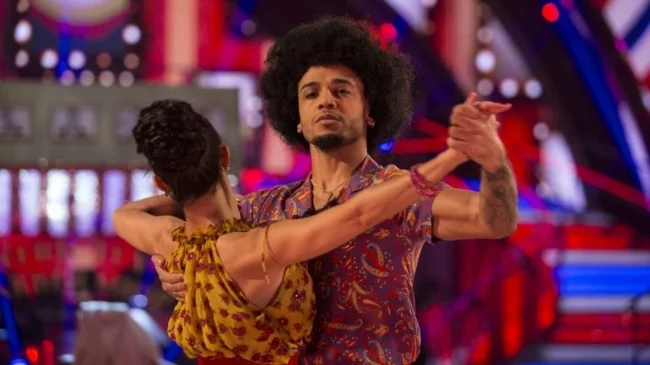
As many expected, the top of the leaderboard was occupied by Faye and Giovanni, along with Ashley and Pasha. Both couples delivered, innovative, polished and spirited performances with their respective Quick Step and Salsa. However, Vick Hope struggled with aspects of her Salsa and similarly Joe Sugg did not deliver a strong American smooth. Although commendable performances, the technical deficiencies were reflected in their scores, which was surprising considering both have been already identified as potential finalists. Conversely, several other couples who as of last week appeared to still be in the early stages of their Strictly Come Dancing journey, came out fighting with robust performances. Graeme and Oti’s Spider-man themed Charleston was both entertaining and delivered with style. Stacey and Kevin’s jive was also a major crowd pleaser. And just as pundits and online commentators were beginning to write off comedian Seann Walsh, he came back with an intense Paso Doble, cunningly choreographed by Katya Jones.
The net result of this was that a lot of couples that the public expected to do well were pushed further down the leaderboard and found themselves in danger of getting their marching orders. I was surprised to see both Lauren and Dr. Ranj so near the bottom. And as ever with Strictly Come Dancing, there is the public vote to consider which varies from being at times utterly predictable and at others a real wild card. Hence, I was not expecting to find Charles Venn in the dance off this evening. Despite his penchant to referring to himself in the third person I think he so far shown potential as a dancer and certainly has the performance as well as charisma parts covered. As for Lee Ryan, he’s had two problematic dances in a row. Yes, there has certainly been some technical issues, but he cannot be accused of not trying. But again, it comes down to the whether or not he has a fan base or not and it would appear that he has not. I am not aware of any major transgression he may have made in his personal life that may have upset the public but then again, I’m not of an age or mindset to be interested in the murky world of tabloid celebrity tittle-tattle.
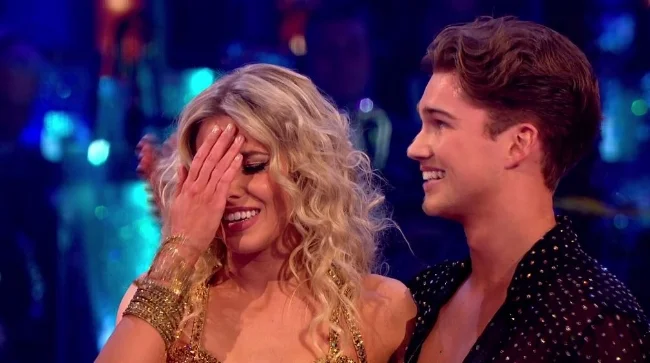
So, as Mr Ryan leaves the show, I’m left thinking that we may have further upsets in the weeks to come. I suspect that Katie Piper may out stay her welcome by being championed by the public as this year’s underdog. She’s a lovely lady but I think her lack of confidence is here to stay. I also think Dr Ranj may also plateau quite quickly. Enthusiasm can only carry you so far if the ability doesn’t improve. Then there is the issue of specific professional dancers who sometimes make poor choices when it comes to creating routines. Too much content, trying too hard, and breaking rules with regards to lifts are common pitfalls. Such mistakes always antagonise me as they are not the celebrity partners fault, but they suffer. I suspect that AJ Pritchard will once again go down this road, instead of letting his partner find her confidence. But all of these aspects and considerations are part of the excitement and joy of the annual Strictly Come Dancing journey. Although the show has a formula, it’s nice to have these unpredictable elements from time to time. Roll on next Saturday.








Star Trek Online: Red Alert Controversy
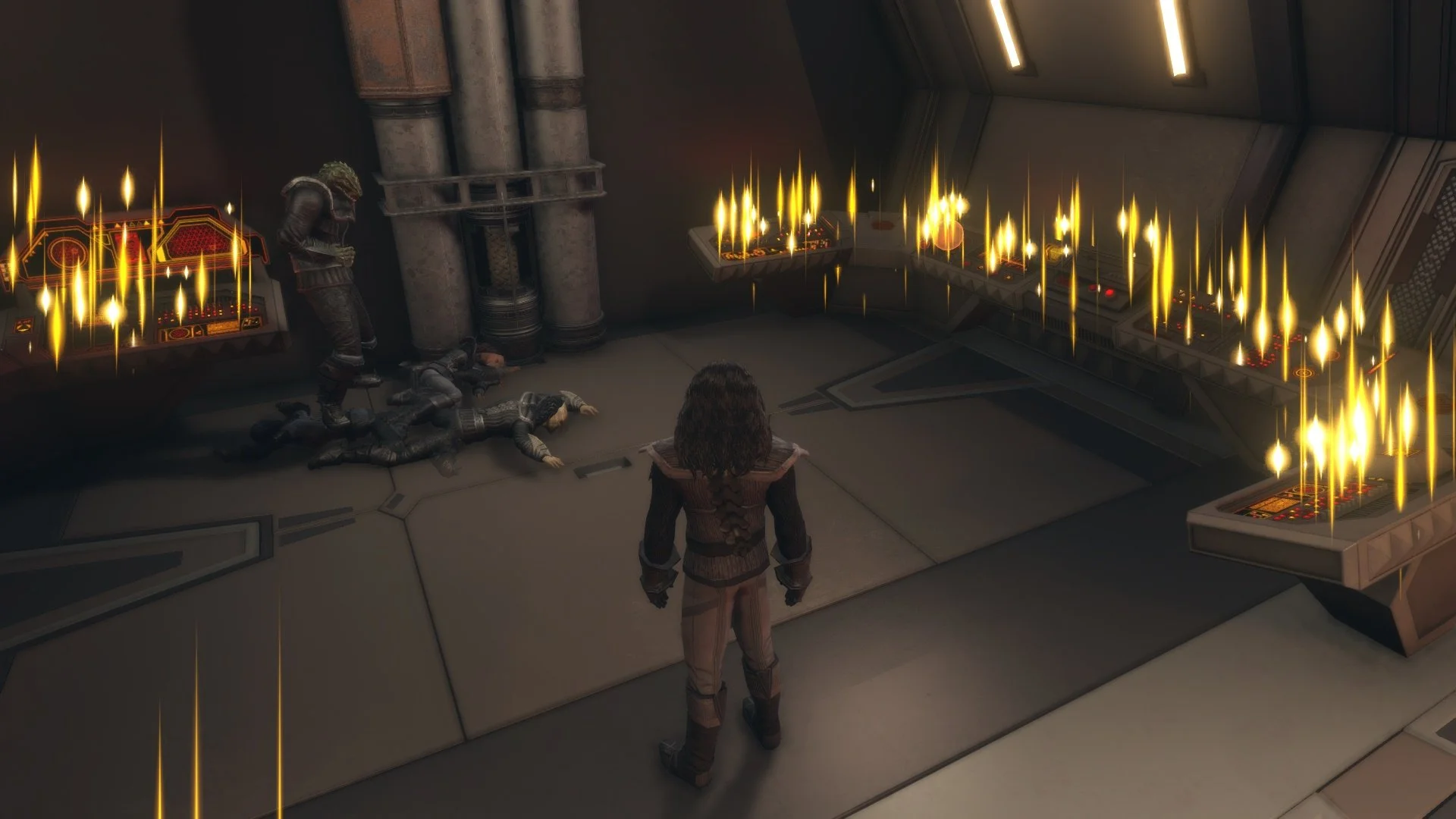
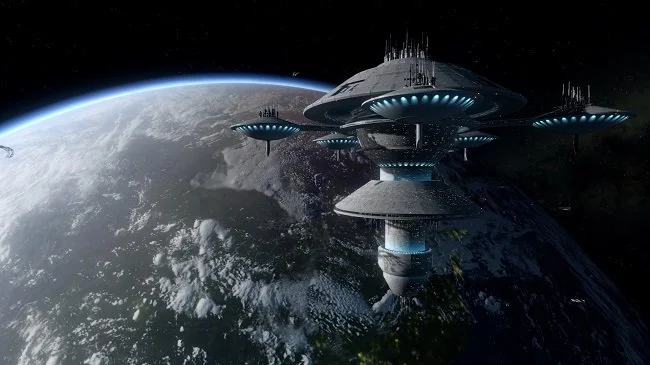
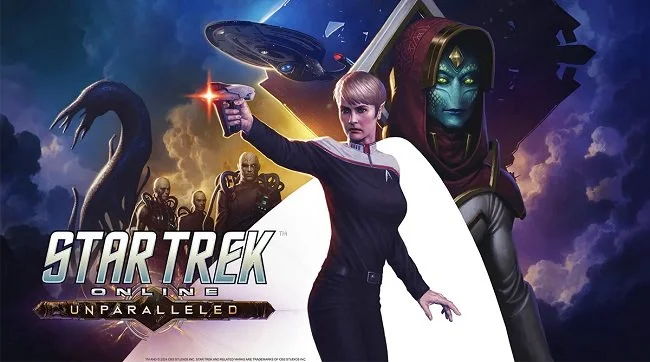
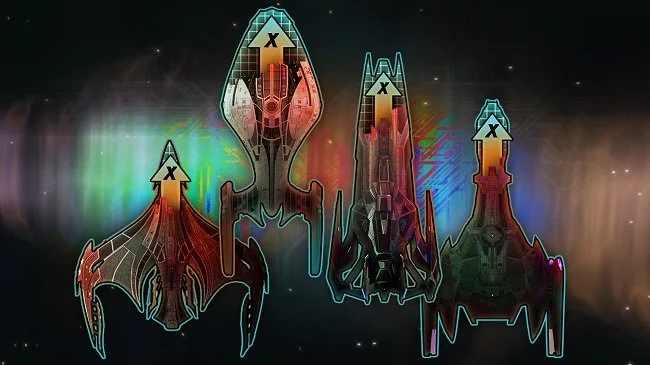
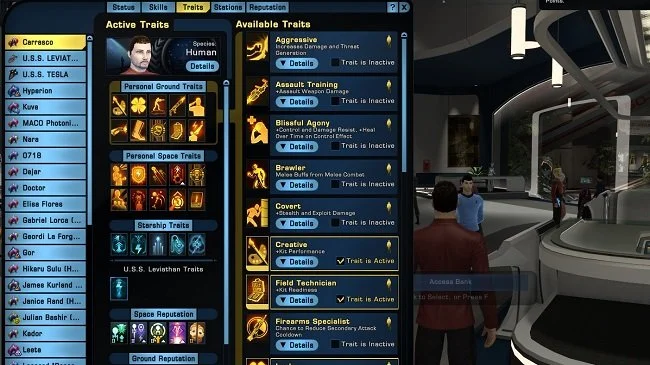
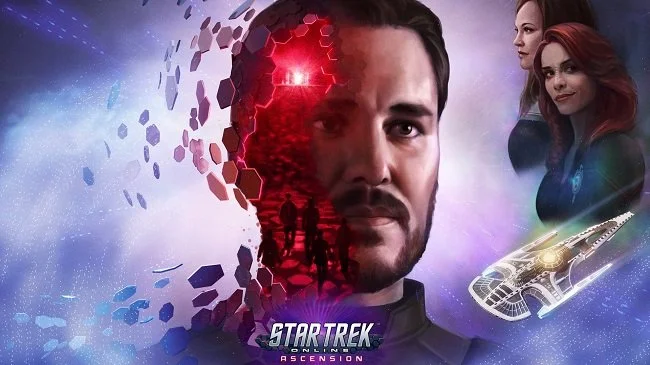
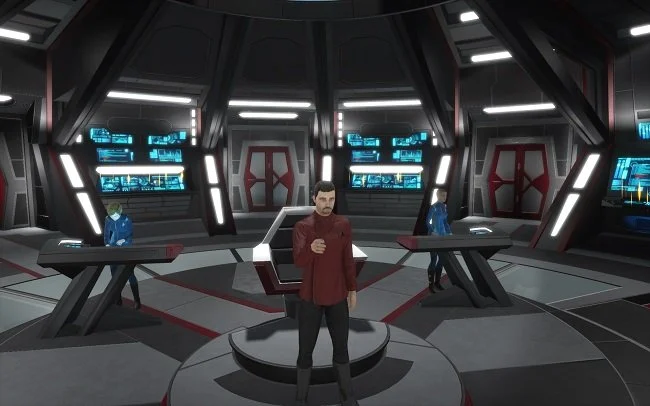
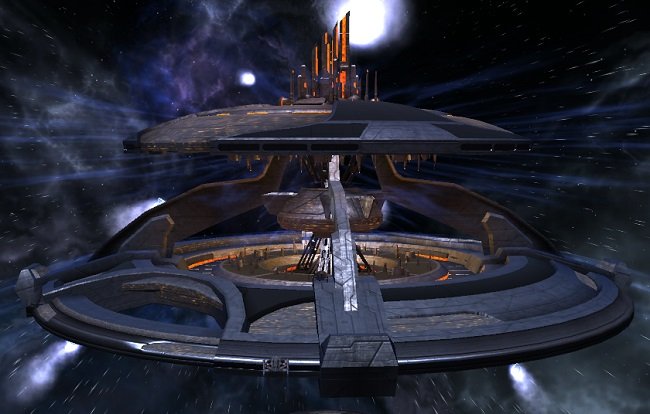
Developer’s Cryptic announced this week that the various Red Alerts that are currently available continuously in Star Trek Online would hence forward, only be available to players on the weekend. Their official explanations was as follows. Starting this weekend, Red Alerts are moving from being always available to being special weekend events, with improved rewards! When these Red Alerts are live, you’ll be able to earn 35 Marks of your choice every time you play, with no cooldowns to prevent you from getting back into the action. These Task Force Operations will return to the galaxy regularly, as the groups of invaders do their best to take control of the four quadrants of the galaxy. As with any change of this nature, it has not been met with open arms by the STO reddit community and the official forums.
Developer’s Cryptic announced this week that the various Red Alerts that are currently available continuously in Star Trek Online would hence forward, only be available to players on the weekend. Their official explanations was as follows. Starting this weekend, Red Alerts are moving from being always available to being special weekend events, with improved rewards! When these Red Alerts are live, you’ll be able to earn 35 Marks of your choice every time you play, with no cooldowns to prevent you from getting back into the action. These Task Force Operations will return to the galaxy regularly, as the groups of invaders do their best to take control of the four quadrants of the galaxy. As with any change of this nature, it has not been met with open arms by the STO reddit community and the official forums.
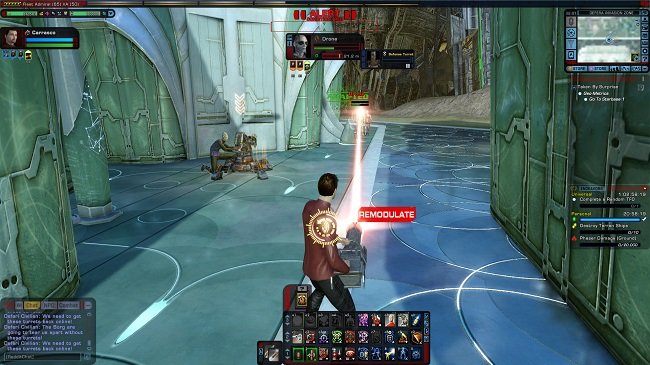
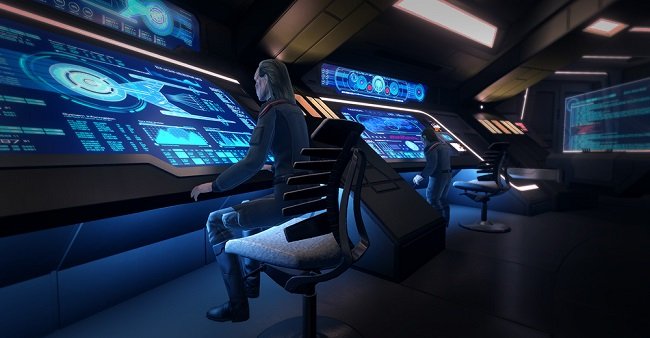
Red Alerts are spaced based, five player PVE events that can be joined either through the in-game queue listing facility or via an onscreen “distress call” while travelling is certain areas of sector space. They have a simple set of objectives, culminating in a capital ship fight, that have to be achieved in a ten-minute period. There are several varieties of Red Alert, themed around the Borg, Elachi, Tholians and the Tzenkethi. Once completed the player received 480 Dilithium ore and a reputation mark package that allows them to choose from a selection of factions. Red Alerts up until this change have been on a 30 minutes cooldown. However, many players consider them a quick and convenient facet of the game. If you are pushed for time they provide a quick fix of gameplay, they are also convenient for testing a gear build, and naturally they are a very useful means of earning marks for full reputation and rep related gear projects.
It has been noted by the STO community that this change to Red Alerts has come shortly after a recent announcement via the Priority One podcast, that PVE queues per se are having a random Task Force Operation added to them. One of the biggest problems with these group PVE activities available in STO is that some, unlike the Red Alerts, only offer a specific kind of reputation mark as a reward. There is a very strong game meta in STO with regard to builds, leading to certain reputation gear being more popular than others. Hence some group PVE events available in the queue manager are continuously busy and finding a five-man team is not a problem. Conversely, for the others the opposite is true. You can join a PVE queue for Battle for Procyon V, which only offers Fleet and Temporal marks as a reward and wait all evening for another 4 players to join. Because of this Cryptic feel that introducing an optional random Task Force Operation that offers enhanced rewards and quicker cooldowns will help resolve the problem.
Unfortunately, there are cogent arguments to be made that such a facility will have quite the opposite effect. Those players with more time available may well be happy to endure the caprices of random queues. After all, reputation marks of all types are useful. However, those who have less time at their disposal, seeking specific rep marks will find themselves even less likely to find a group in a timely fashion. Plus, there is the issue of the reduction of choice. Although the proposed random queues are optional let us not forget the removal of the convenient Red Alerts. And players are also concerned about the commercial ramifications that could come with this change. The reputation mechanic in STO is getting an additional sixth tier added to it in the months ahead. Naturally this will require further rep marks to achieve. Yet it is being added at a time when the opportunity for earning such marks is being altered; or as some players see it, restricted. Will the in-game store be offering purchasable rep marks in the foreseeable future?
As ever with F2P games, there is scope for game content and systems to be subordinate to revenue generation, rather than putting quality and player experience first. I can see how developers Cryptic do not want to introduce the expanded rep system only to see veteran players complete it too quickly due to stockpiled assets. However, I as a player do not want to find my progress in the game go from an equitable pace to a tedious grind. The potential of a cash store workaround also concerns me. It remains to be seen whether this debacle will encourage Cryptic to change their current course of action. The game is still in a very good place overall at the moment with both console and PC versions doing well. The tie-in with Star Trek: Discovery is certainly a marketing boon, so it would be a shame to see the game commit an act of self-harm. As ever with the MMO genre, it’s a question of wait and see, although I think a response from Cryptic and some clarity would go a long way.


LOTRO: An Unnecessary Increase in Level Cap?
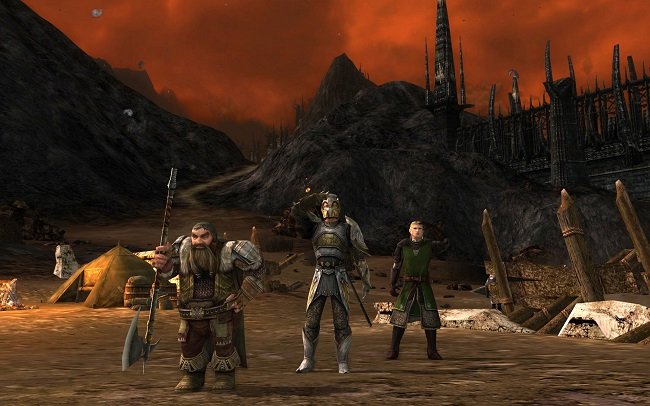
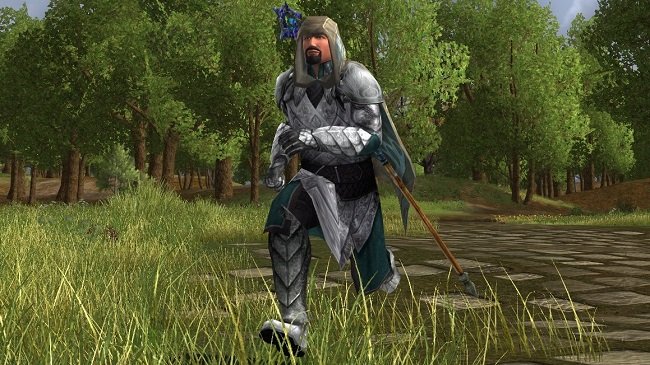
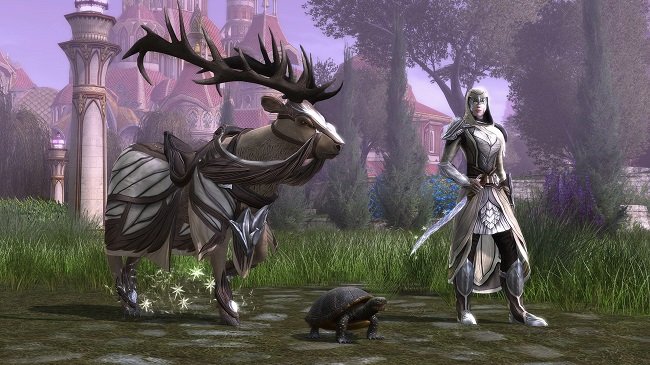
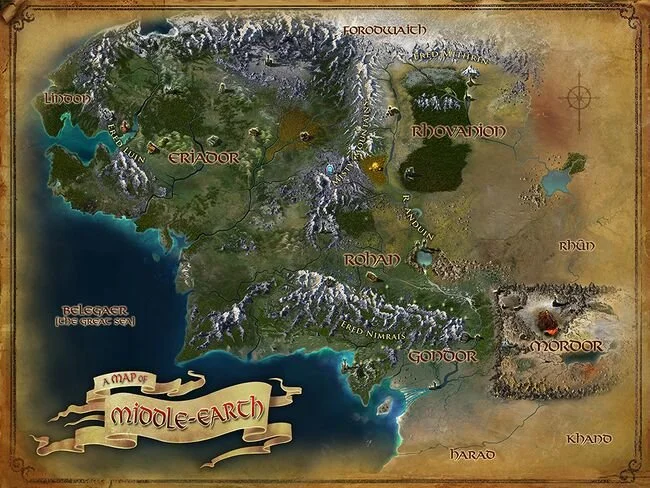
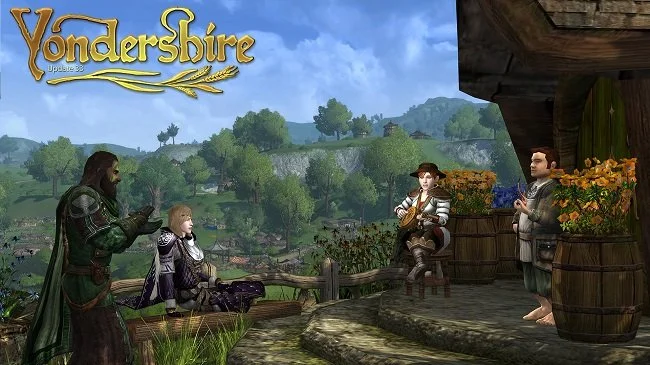
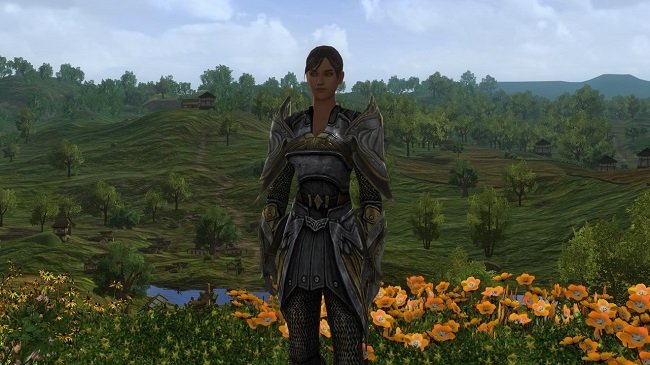
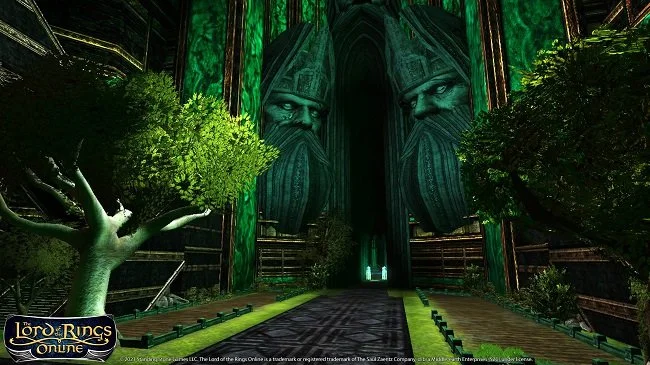
I’ve logged into the Bullroarer test server and looked around several of the preview builds of Update 23 for LOTRO recently. So far what I’ve seen has broadly met with my approval. It’s pretty much more of the same, with the main selling point being the story and a new area of Middle-earth to explore. However, there’s one aspect of the soon to be released Update 23: Where Dragons Dwell that does strike me as a little odd. The level cap is being increased from 115 to 120. Last summer’s Mordor expansion raised the cap by ten to 115, so this new increase does feel a little too soon to me. However, if you look at the LOTRO Wiki, it would appear that increases tend to occur regularly every eighteen months to two years, so it can be argued that this pending change isn’t anything unusual. Yet, it somehow feels “off” to me, which I shall now endeavour to explain.
I’ve logged into the Bullroarer test server and looked around several of the preview builds of Update 23 for LOTRO recently. So far what I’ve seen has broadly met with my approval. It’s pretty much more of the same, with the main selling point being the story and a new area of Middle-earth to explore. However, there’s one aspect of the soon to be released Update 23: Where Dragons Dwell that does strike me as a little odd. The level cap is being increased from 115 to 120. Last summer’s Mordor expansion raised the cap by ten to 115, so this new increase does feel a little too soon to me. However, if you look at the LOTRO Wiki, it would appear that increases tend to occur regularly every eighteen months to two years, so it can be argued that this pending change isn’t anything unusual. Yet, it somehow feels “off” to me, which I shall now endeavour to explain.
The Mordor expansion presented players with a major statistical and gear adjustment. More so than at other points in the game. The in-game quest rewards gave players a helping hand but to secure a full set of equipment to successfully traverse the rigours of the zone, you needed to repeat content, run instances and raids. Lootboxes and keys also initially dropped in-game and provided a supplement to the above. Then of course there was the LOTRO store that could provide keys instantly for a price. However, in the past year there has been various tinkering by the developers and keys drops are now less common place. To date there are still a lot of players working through the expansion as well as Dale-lands, attempting to earn enough barter rewards to acquire the right gear set. The coming level cap increase will effectively bring that process to a halt and negate any ongoing hard work by introducing a new rep faction and barter reward system.
Is a new gear grind really required so soon after the last expansion? It’s a debatable point. For every high-end achiever who wants the “best of the best”, there are two laid back players who are running a new alt through Ered Luin once again, just for the fun of it. LOTRO has a very diverse player base. Which is why I think that this decision to raise the level cap is somewhat of divisive. I have felt in recent years that the gear progression system has become a little too endgame focused. Although I appreciate that raid gear should not be given out on a whim and should be gated behind high end content, I often feel that intermediate players spend too much time levelling in under specified armour and jewellery. Once a player has finished a zone such as Mordor or similar, they may well find themselves adequately equipped for their level, but if they don’t run endgame content regularly, they don’t see any major benefit from it.
I have vivid memories of running group content back in the Moria expansion days, trying to earn First Age Lore-master Staff. I finally obtained one about ten days prior to the Siege of Mirkwood expansion that immediately made it obsolete. I find it similarly saddening that by the time I perfect my level 115 build it will be negated by the availability of new 120 items. For me if SSG could make a mid-tier of gear available that could be used for those players between casual and hardcore, that would be a good compromise. They’ve done this before. The floral barter system in Ithilien which came with Update 19: March of the King provided a satisfactory alternative to gear gained from endgame content. May be something similar will be made available in future level 120 content. In the meantime, I remain sceptical of the pending level cap raise. I do not like being under powered in MMOs and like to be able to earn items that improve my stats while I’m still levelling.
Unfriended: Dark Web (2018)
I wondered recently whether Unfriended (2014) would kick start an entire subgenre comparable to the “found footage” format. It would appear that it has, and these movies shot on phones, computers and other digital devices have subsequently been labelled “screenlife” films. It’s worth noting that Unfriended: Dark Web is produced by Russian filmmaker Timur Bekmambetov who has already produced two other movies (Profile and Searching) using this technique. So, it won’t be surprising to see further forays into this style of film making. It is cheap, quick to make with a lot of box office potential. So, it’s hardly surprising to see Jason Blum (of Get Out and The Purge fame) attached to the credits as well. As for Unfriended: Dark Web it’s suitably nasty, voyeuristic, fare that is competently made. At this point the novelty of the “screenlife” films has yet run out, but it is still a physically challenging format to endure (as I found with its predecessor).
I wondered recently whether Unfriended (2014) would kick start an entire subgenre comparable to the “found footage” format. It would appear that it has, and these movies shot on phones, computers and other digital devices have subsequently been labelled “screenlife” films. It’s worth noting that Unfriended: Dark Web is produced by Russian filmmaker Timur Bekmambetov who has already produced two other movies (Profile and Searching) using this technique. So, it won’t be surprising to see further forays into this style of film making. It is cheap, quick to make with a lot of box office potential. So, it’s hardly surprising to see Jason Blum (of Get Out and The Purge fame) attached to the credits as well. As for Unfriended: Dark Web it’s suitably nasty, voyeuristic, fare that is competently made. At this point the novelty of the “screenlife” films has yet run out, but it is still a physically challenging format to endure (as I found with its predecessor).
Technically talented slacker with a heart of gold Matias (Colin Woodall) “acquires” a new MacBook and sets about installing all his own files and personalising it. He’s working on a speech to text and signing app for his deaf girlfriend, Amaya (Stephanie Nogueras). She is not overly impressed because its primary purpose is to make it easy for her to understand him and not the other way around. As it’s “game night” he joins a group Skype call with his friends, tech wiz Damon, conspiracy theorist AJ, DJ Lexx, and couple Serena and Nari. After numerous reboots and a series of DMs intended for the previous owner, Matias starts digging around the root directory of his new laptop. This leads to a hidden folder filled torture and snuff videos. Matias soon realises that he and his friends are being watched online, by the computer’s original owner. They wants it back because it’s the only way to access a secure account with a substantial cryptocurrency deposit in it.
Writer director Stephen Susco certainly makes the most out of the “screenlife” format using every glitch, software buffering and packet loss to his advantage. Like the previous movie, the medium used to convey the story adds to the tension and growing suspense. However, once again to enjoy the movie to the fullest I had to watch on my 24-inch computer monitor, rather than on my lounge TV. Unfriended: Dark Web is convincingly acted by the young cast, in so far as the performances do feel like they’re captured from real life, which that’s not an easy thing to achieve. Again, the characters are flawed and therefore do come across as credible. The hubris and tempestuous emotions of youth are reflected well in the serviceable screenplay. The group of friends are overly confident in their collective tech abilities and is never crosses their mind that they’re being “played” until it’s too late.
The evil mastermind behind all these shenanigans is called Charon, which is the name of the ferryman in Greek mythology who took the dead over the river Styx to Hades. The movie then runs with this metaphor as the cast are bumped off in innovative ways. The main difference this time round is that there is a clear human agency behind all the mayhem, rather than the supernatural theme of the first movie. Although Unfriended: Dark Web is far from a milestone in the horror genre, it does have a point to make about voyeurism and the screen-dominated lives and social media leisure habits of the younger generation. Horror like any other cinematic genre has its elitists and snobs and I think that this movie got a tough time from those who see themselves “gatekeepers” or who are simply a few generations removed from such online culture. It’s not without flaws, but its not a complete dogs dinner and if approached with the right mindset it can be rewarding.
Diary of a Podcaster Part 15
I’ve been pondering a new podcast project for a while, since Contains Moderate Peril ended a year ago. As I’ve discussed in previous posts, I want to create a movie-based show and have been considering of late exactly what sort of format to adopt. I don’t go to the cinema often enough these days to produce a contemporary review orientated podcast, plus I don’t find a lot of mainstream releases to be sufficiently engaging. Despite looking and pursuing discrete enquiries, I haven’t been able to find a co-host who is sufficiently knowledgeable, motivated or available to do a regular show producing the audio equivalent of long form criticism of films and the movie industry. So, it’s been a bit of a chore to try and work out which niche to explore. However, I have now a clear idea of what I want to do.
I’ve been pondering a new podcast project for a while, since Contains Moderate Peril ended a year ago. As I’ve discussed in previous posts, I want to create a movie-based show and have been considering of late exactly what sort of format to adopt. I don’t go to the cinema often enough these days to produce a contemporary review orientated podcast, plus I don’t find a lot of mainstream releases to be sufficiently engaging. Despite looking and pursuing discrete enquiries, I haven’t been able to find a co-host who is sufficiently knowledgeable, motivated or available to do a regular show producing the audio equivalent of long form criticism of films and the movie industry. So, it’s been a bit of a chore to try and work out which niche to explore. However, I have now a clear idea of what I want to do.
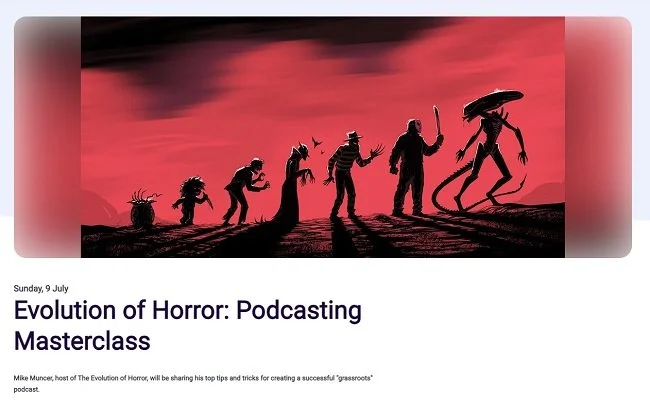
Although I like podcasts that analyse in great depth a specific subject matter (such as The Evolution of Horror), they are very labour intensive to produce to a high standard. I’m looking to create a monthly show that is easy to arrange, record and edit. Round table discussions with one host and two to three guests tend to fit this format well. So, I’ve taken a leaf from fellow blogger Murfs book. He is currently working his way through a series of classic movies and then writing his thoughts on them. To me that seems like a perfect format for a show. Have the guests watch in advance a movie of note, then have a group discussion about their respective thoughts and impressions. I will be the host and endeavour to ask pertinent questions as well as provide my own insights where appropriate. Such a podcast just requires a few scheduled recording sessions, which can be done well in advance of the planned publishing of each episode. This is not a time sensitive production.
The internet certainly doesn’t have a shortage of lists and “top ten’s” of movies that can serve as a point of debate. The project certainly doesn’t require any new hardware. There are some other minor technical issues that will need “tweaking” to get the show active on iTunes but it’s nothing too difficult. The name of the show is currently undecided, but I don’t see that as being major issue. The biggest hurdle is to line up some willing guests and then schedule some recording sessions. However, I’m not looking at releasing the first episode until January 2019, so I have plenty of time to address all these matters. In the case of everything coming together quicker than I have anticipated, then there may be a show available prior to Christmas. Overall, I’m cautiously optimistic about the sustainability of this project and am excited by the prospect of a return to podcasting.
















The Expendables Extended Director's Cut (2010)
If you are expecting more violence, explosions and sundry mayhem in the extended director's cut of The Expendables, then you'll find none. What you will discover is an additional ten minutes of character development and back story, which greatly improves the overall film. The theatrical cut was certainly not lacking in the action department but was a bit thin on narrative and back story. This extended version of the movie with over two hundred changes to the original cut, bolsters the dramatic elements of the plot. We get to know more about the team and as a result care a little more for them. You can find a comprehensive comparison over at moviecensorship.com of both versions of the movie.
If you are expecting more violence, explosions and sundry mayhem in the extended director's cut of The Expendables, then you'll find none. What you will discover is an additional ten minutes of character development and back story, which greatly improves the overall film. The theatrical cut was certainly not lacking in the action department but was a bit thin on narrative and back story. This extended version of the movie with over two hundred changes to the original cut, bolsters the dramatic elements of the plot. We get to know more about the team and as a result care a little more for them. You can find a comprehensive comparison over at moviecensorship.com of both versions of the movie.
A further improvement that has been made in the extended director's cut is that several of the action scenes have been re-edited. Not for any censorship reasons but mainly to improve the flow of the content. The water-boarding sequence now seems more relevant and clinical, rather than just brutal. The infamous knife twisting in the throat scene which was dropped from the UK theatrical print has been shortened in the extended cut. The hand amputation and decapitation that proceeded it, have had a few frames added and the entire sequence now seems to be structured better, allowing the viewer to follow what is happening on screen a lot more easily. I am not a fan of the modern style of lightning editing and felt that some sequences where quite jarring when I first saw The Expendables in the cinema. These revisions and others have addressed this issue. The style is still very fast but what is depicted can be visually assimilated a lot more easily.
Although there is much to enjoy about this film, one of its biggest shortcomings is its reliance on CGI FX over traditional physical effects. A lot of the bullet hits, knife wounds and blood splatter have been added in post-production. I'm sure time constraints and budgetary restrictions where deciding factors as to why the production chose this approach, but the reality is that these FX sequences often don't work. Take for the example the scene where the Somalia pirate gets blown in half by Dolph Lundgren. The sequence does not look at all credible and all the surrounding extras are conspicuously free from blood splatter. A simple physical effect using a prosthetic body would have been infinitely superior. Eric Roberts demise is similarly poorly realised, which is a shame because it diminishes the impact of the scene.
I don't expect to be schooled in military geo-politics by a movie such as The Expendables. Nor do I expect it to afford me any insight into the human condition, the horrors of war or the nature of the soul (although the scene where Mickey Rourke talks about how he failed to stop a suicide attempt was extremely well acted and somewhat out of place). What I do expect is hard edged action, quirky characters, witty banter and genuine love of the genre in question. The Expendables achieves all of these and does so with aplomb. Too often, equivalent movies fail to do this because they’re fundamentally dishonest. The soulless manner in which they’re contrived to retrofit a money-making formula shows nothing but contempt for their target audience. Whatever your view on the merits of The Expendables its heart is clearly in the right place, which is a rare quality these days.
A Creature of Habit
I woke up on Saturday morning only to discover that my watch had stopped. I still wore it throughout the day as I don’t feel properly dressed without a wristwatch. As I was out for the day I wasn’t able to immediately resolve the issue. Today I decided rather than replace the battery, why not just buy a new watch. So, I went to my local branch of Argos and bought exactly the same make and model of watch. When I used to work in “the city” I wore a quality Rotary analogue watch that my wife had bought me as a gift. However, due to my work it kept getting scratched and damaged, so I swapped to something cheap and functional. This change has now become a habit and the fancy watch only gets worn on high days and holidays. Hence, I bought yet another a bog standard analogue black Casio watch today. It costs £7.99 which is about the same price I’d be charged for the battery to be replaced in the old one.
I woke up on Saturday morning only to discover that my watch had stopped. I still wore it throughout the day as I don’t feel properly dressed without a wristwatch. As I was out for the day I wasn’t able to immediately resolve the issue. Today I decided rather than replace the battery, why not just buy a new watch. So, I went to my local branch of Argos and bought exactly the same make and model of watch. When I used to work in “the city” I wore a quality Rotary analogue watch that my wife had bought me as a gift. However, due to my work it kept getting scratched and damaged, so I swapped to something cheap and functional. This change has now become a habit and the fancy watch only gets worn on high days and holidays. Hence, I bought yet another a bog standard analogue black Casio watch today. It costs £7.99 which is about the same price I’d be charged for the battery to be replaced in the old one.
We all have foibles and habits that we adhere to and naturally I have my fair share. Now that I’ve retired and no longer have to deal with clients, I don’t worry too much about sartorial issues. I dress functionally and again tend follow a “like for like” replacement policy when it comes to clothing. I’m not as bad as Seth Brundle (Jeff Goldblum) in The Fly and have a wardrobe full of the same outfits but I do tend to stick with the same brands and styles. For example, once a year I buy two pair of a particular type of Reebok Hiking Shoes. One black and one white. I then wear them in rotation when I’m not required to wear formal shoes and just run them into the ground. They are practical, functional and sufficiently presentable, so why burden myself with the dilemma of choosing another brand and product line?
There are other telltale signs that show that I’m a creature of habit. For example, as a household we recently decided to try a different supermarket. Broadly the change has proven successful as we find that we’re reduced our monthly grocery spend without compromising on quality. Cleaning products do not command brand loyalty. Bleach is bleach. However, there are certain items that I will not swap brand. Baked Beans is one such item. Tea and coffee are others. I guess everybody has some personal lines in the sand that they will not cross. I am always interested in a bargain but not at the expense of my enjoyment. Cheap biscuits are indeed cheap, but they are seldom pleasant, which is their fundamental purpose.
I’m also a great one for plans and I seldom do anything significant on a whim. If I arrange to meet someone at a restaurant or venue that I’m not familiar with, I always check transport arrangement in advance and use Google Maps and Street View to familiarise myself with the area. Again, when I worked in central London, a friend of mine found it fascinating that I had an exit strategy if there ever was a major incident. If the important transport hubs were shut down, I had a route planned in which I could effectively walk home. Funny how some folk saw this as an odd thing, where to me it seems like common sense. I like the peace of mind that planning in advance provides. I also hate it when someone else included in any social arrangement makes an ill-conceived change that has a knock-on effect on everyone else.
Now although I may be a creature of habit, I am not a slave to routines. In certain aspects of my life I am very happy to be adventurous. I will happily try any type of international cuisine, with my only real stipulation about food being that it has to be dead when it’s served up in front of me. I guess a lot of my personality foibles stem from my upbringing and the world view I’ve adopted over the years. My Father has an academic background and favours logical, reasoned based thinking. One of the greatest lessons he’s taught me is the importance of focusing and marshalling your thoughts, especially before speaking. Hence, I have a methodology that I bring to bear on most aspects of my life. It may make me a creature of habit, but it also makes me a content one.
Peppa Pig World
Having twin granddaughters who are three years old makes our family prime candidates for Peppa Pig World. So, we decided to go this year, rather than leave it to next summer, only to find that the twin’s tastes have changed. Today was a beautiful autumnal day with plenty of sunshine, making it ideal for adventures in a theme park. Peppa Pig World is actually just part of Paultons Park, which has a broad variety of rides and entertainment. However, the girls age restricts them from a lot of these, so we remained at Peppa Pig World which proved sufficient to keep children and adults busy. We ended up spending seven hours, perusing the park and went on most rides. Despite the lateness of the season, Peppa Pig World was still well attended and there was a large crowd throughout the day. However, the theme park is very well organised and run so there were no major problems.
Having twin granddaughters who are three years old makes our family prime candidates for Peppa Pig World. So, we decided to go this year, rather than leave it to next summer, only to find that the twin’s tastes have changed. Today was a beautiful autumnal day with plenty of sunshine, making it ideal for adventures in a theme park. Peppa Pig World is actually just part of Paultons Park, which has a broad variety of rides and entertainment. However, the girls age restricts them from a lot of these, so we remained at Peppa Pig World which proved sufficient to keep children and adults busy. We ended up spending seven hours, perusing the park and went on most rides. Despite the lateness of the season, Peppa Pig World was still well attended and there was a large crowd throughout the day. However, the theme park is very well organised and run so there were no major problems.
Like most outdoor events, if you arrive early then you get the best parking. We secured places near to the entrance. Parking is martialled by stewards who are polite and helpful. We had pre-booked our tickets and received a substantial discount. There were four adults in our party which cost £110 and the children being under 1 metre, got in free. Regular tickets bought at the gate cost £34.25 each. On arrival the granddaughters were given green wristbands that designated which rides were suitable, through a colour code system. It was then a short five-minute walk through parts of Paultons Park before we got to Peppa Pig World which is a separate enclave. The moment you cross over the threshold, you’re acutely aware of various jingles, incidental music and of course the theme tune from Peppa Pig. Most children seem unconcerned by this pervasiveness. Adults may require opiates.
Some rides are more popular than others, so my advice to any family planning on visiting is to determine which ones are most important and go there first. For the first couple of hours of the day the average queue time is about 10 to 15 minutes but eventually this goes up to about 30 minutes by sheer weight of numbers. The rides are all fairly straight forward, sedate and very child friendly. They are mainly permutations of riding around in a themed vehicle or conveyance, through a semi interactive environment. The water-based rides such as Grandpa Pig’s Boat Trip and Grampy Rabbit’s Sailing Club are especially enjoyable, offering a more dynamic mode of transport. Peppa Pig’s Balloon Ride is also quite exciting, offering great views of the park and immediate area. Personally, I thought the most complex and involving ride was the Windy Castle. It lasted the longest, mainly to accommodate getting passengers on and off their respective “clouds.
As well as rides there are other attractions. There is a “meet and greet” with Peppa and George along with an accompanying stage show. As you can imagine, this is very popular, so if you arrive late, you’ll find yourself at the back of a large crowd, struggling to see. There are numerous photo opportunity such as Peppa Pig’s House and various animatronic displays. There also a soft play area that is very well provided for. As part of the wider attractions of Paultons Park, there is a penguin enclosure, which is directly adjacent to Peppa Pig World. The is a talk at feeding time, twice daily that is most informative. Like any theme park, there are numerous gift shops, eateries and kiosks, all designed to separate adults from their hard-earned cash. Sadly, the prices here are somewhat high and so feeding your family may prove expensive. We also noticed that the regular exits were closed, and we had to vacate the park via the gift shop, which was a little pervasive.
Overall, Peppa Pig World is a good day out for those with appropriately aged children. As we stayed from 10:00 AM to 5:00 PM, I felt is was value for money. We certainly didn’t run out of things to do and the queue times were not too excessive. The staff were very friendly, helpful and above all, good at their jobs. The logistical facilities, such toilets, information and “lost children” collection centres where all top notch and it would seem that the park can deal with any issues quickly. Unless you live relatively locally, I would advise potential guests to come down a day early and stay in one of the numerous hotels in the area. Hampshire has a good tourist industry and there’s accommodation available to suit all budgets. Certainly, our granddaughter had a great day out, but as I mentioned earlier, many theme parks are governed by a specific age window. I suspect that our visit was exactly at the “right time” and Disneyland Paris will more than likely be the next destination.




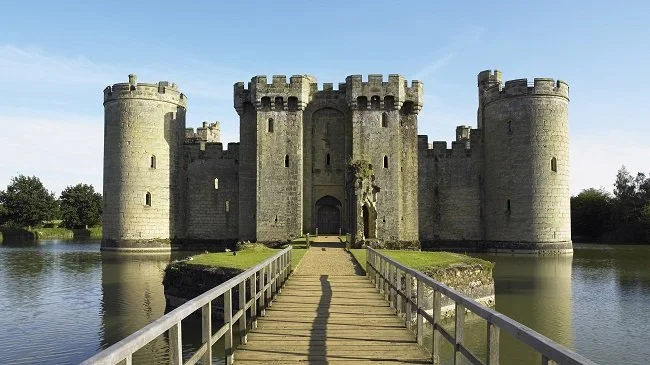

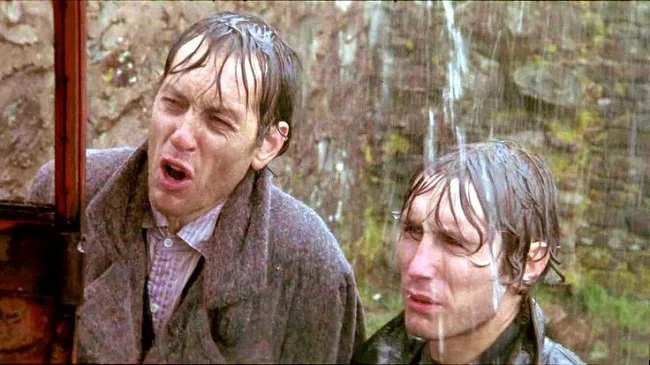

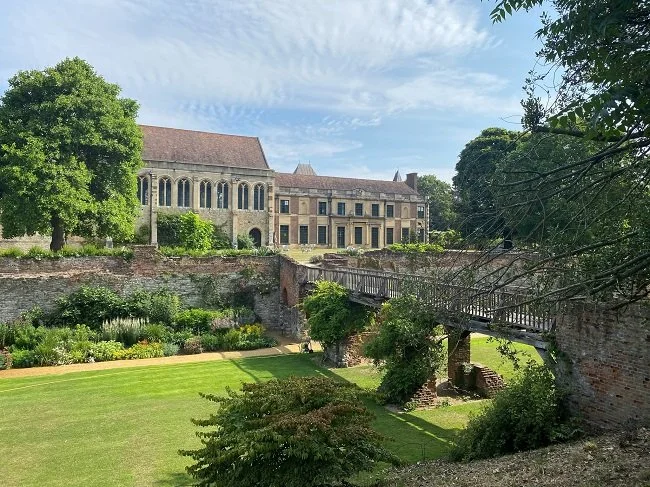












Where's That Fire? (1940)
Until a copy was found by the BBC television in 1975, this was considered a lost film. Where's That Fire? is an often over looked comedy. Will Hay plays Captain Viking of the Bishop Wallop fire station in his usual seedy incompetent fashion. He and his trusty assistants Albert (Graham Moffatt) and Harbottle (Moore Marriott) run an antiquated Victorian fire tender but seldom put out any fires. After the Town Hall burns down they find that their jobs are on the line. Viking tries to solve their problems by inventing a new fire-retardant foam as well as renting the tender to a film production company, who may not be quite what they seem. It all ends in mayhem, with an attempted robbery of the Crown Jewels at The Tower of London.
Until a copy was found by the BBC television in 1975, this was considered a lost film. Where's That Fire? is an often over looked comedy. Will Hay plays Captain Viking of the Bishop Wallop fire station in his usual seedy incompetent fashion. He and his trusty assistants Albert (Graham Moffatt) and Harbottle (Moore Marriott) run an antiquated Victorian fire tender but seldom put out any fires. After the Town Hall burns down they find that their jobs are on the line. Viking tries to solve their problems by inventing a new fire-retardant foam as well as renting the tender to a film production company, who may not be quite what they seem. It all ends in mayhem, with an attempted robbery of the Crown Jewels at The Tower of London.
More ambitiously staged than most of the team's efforts, Where's That Fire? has several brilliantly orchestrated slapstick sequences. One has our trio trying to install their new firemen's pole, causing a traffic jam in the street, wrecking a china shop, bothering a man confined to bed with gout and finally demolishing his roof. Charles Hawtrey has an amusing cameo as a schoolboy “swot” who provides geometrical and linguistic advice. There is also an elaborate physical FX sequence when a local garage gets set ablaze. Harbottle mistakenly connects the fire hoses to the fuel pump instead of the water mains, with hilarious incendiary results.
Ultimately, the film succeeds because of the timeless characters that have been created. Some of the jokes may have dated somewhat, but the interaction between the three leads is still credible today. Hay's blustering inanity, Marriott's rambling Octogenarian and Moffatt's wide boy are all still accessible archetypes. The dialogue between them is loaded with that unique sense of British irony and sarcasm. Two visitors disbelieve that Hay is the Captain of the fire station. "Tell them what I am" he says to Graham Moffatt. "What? Out loud" he replies. Where's That Fire? is a wonderful piece of cinema, from a quieter, gentler time. Recommended to those seeking nostalgia and to those who may wish to familiarise themselves with the work of Will Hay.
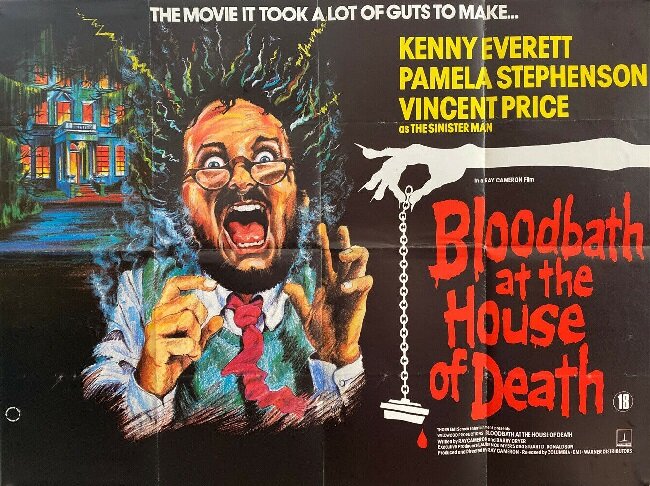
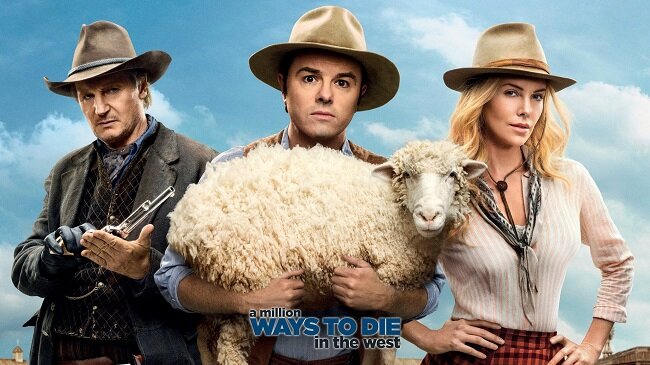

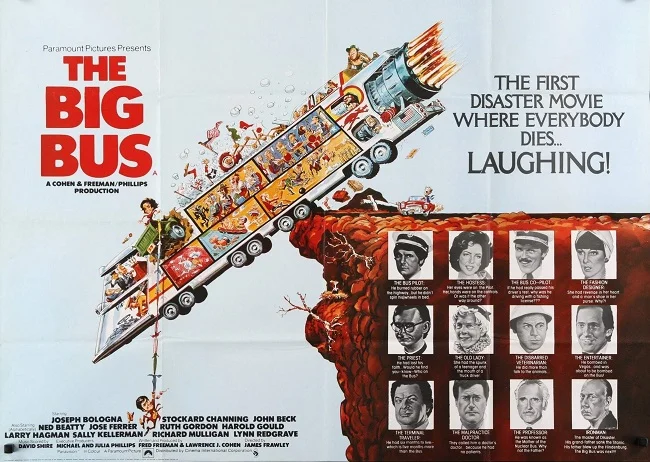

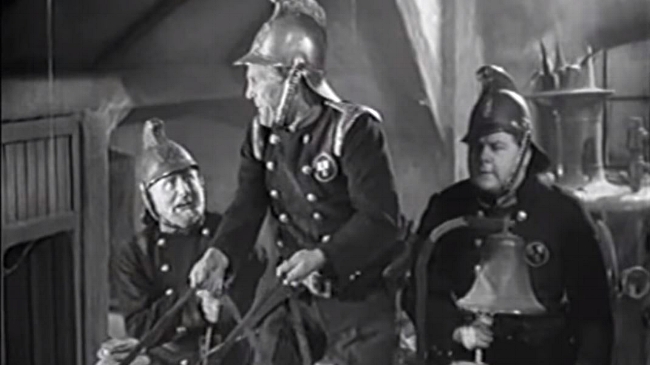
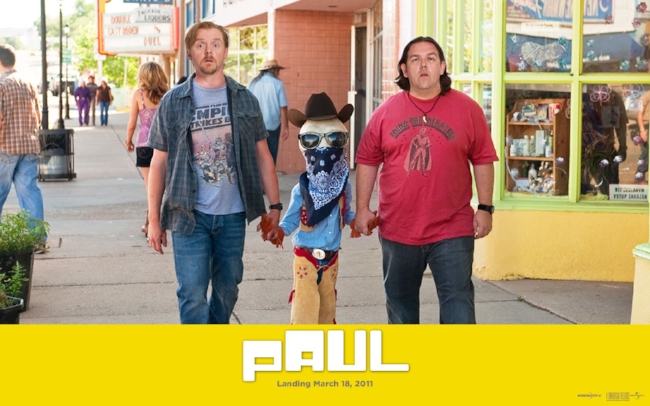

Sherlock Holmes: A Game of Shadows (2011)
Sherlock Holmes: A Game of Shadows, is very much a film of two halves. The initial hour is filled with gunfights, explosions, and bullet time fist fights. Sherlock Holmes (Robert Downey, Jr.) and Dr. Watson (Jude Law) unravel the sinister plans of Professor Moriarty (Jared Harris) and proceed to deal with it in the idiom of Frank Martin, as director Guy Ritchie's pulls every visual trick he knows out of the bag. The pace is fast yet a fairly strong script and superb chemistry between central characters, makes this a cut above the usual PG-13 rated action fodder served to the masses at present. It is beneficial that the bulk of the original cast and crew returned for this sequel as it maintains a strong sense of continuity with it predecessor.
Sherlock Holmes: A Game of Shadows, is very much a film of two halves. The initial hour is filled with gunfights, explosions, and bullet time fist fights. Sherlock Holmes (Robert Downey, Jr.) and Dr. Watson (Jude Law) unravel the sinister plans of Professor Moriarty (Jared Harris) and proceed to deal with it in the idiom of Frank Martin, as director Guy Ritchie's pulls every visual trick he knows out of the bag. The pace is fast yet a fairly strong script and superb chemistry between central characters, makes this a cut above the usual PG-13 rated action fodder served to the masses at present. It is beneficial that the bulk of the original cast and crew returned for this sequel as it maintains a strong sense of continuity with it predecessor.
Inspector Lastrade (Eddie Marsan) is sidelined in this story and Holmes's love, Irene Adler (Rachel McAdams) is dispensed with quite early in the proceedings, leaving us with much more interaction between Holmes and Watson. A dynamic that is skewed by Watson's marriage, leading to an unconventional love triangle. Sadly, there are a few weaknesses in the finished film. Gypsy leader Madam Simza Heron (Noomi Rapace) has a great introduction then is left somewhat under developed. Also, the disgraced Colonel and crack shot, Sebastian Moran is similarly vague. He also drops out of the film towards the end, providing a suitable antagonist for a third instalment.
But these issues notwithstanding, the second half, quickly shifts from action to the traditional game of intellectual cat and mouse between our hero and his arch nemesis. It is during these verbal confrontations that the more traditional elements of Sir Arthur Conan Doyle's work come through. The final battle via a game of chess on a balcony overlooking the Reichenbach falls, is ingenious and enthralling. Guy Ritchie's has certainly found the right mix between old school cerebral sleuthing and contemporary action styles. He also understands that the linchpin of these films is the relationship between leads and he handles this dynamic skilfully. Hans Zimmer's soundtrack once gain embellishes the film and avoids the usual musical clichés associated with this unique sub-genre.
Sherlock Holmes: A Game of Shadows is very entertaining holiday fare and is certainly not an inferior sequel. Twice now director Guy Ritchie has exceeded expectations and made amends for previous sins (need we list them?). Plus, it is always a pleasure to see genre stalwart, rent-a-German and purveyor of Ferrero Roche, Wolf Kahler back on the screen. On a parting note, Sherlock Holmes: A Game of Shadows is quite surprisingly strong in content. It is interesting to see how Mr. Ritchie has carefully shot and choreographed the violence so as to secure a PG-13 rating/12 Certificate. I was quite surprised about one scene in which Sherlock Holmes is rather brutally interrogated. Although the unpleasantness is justified, viewers should be aware of this hard edge to the movie.