San Andreas (2015)
San Andreas makes the same mistake that most modern disaster movies tend to; namely the human story is simply drowned out by the size of the unfolding disaster. There seems to be some sort of curious inverse scale in this particular genre, in which the greater the magnitude of destruction, the less the audience gives a crap about those experiencing it on-screen. San Andreas is essentially a CGI FX showreel with some bland and indifferent narrative bolted on to it. It taps into societies morbid fascination with our own mortality and the fragile nature of our modern life style. It is odd how we seem to relish visions of our own destruction. I’m sure psychologists have a lot to say on this matter. However, beyond providing a spectacle San Andreas has precious little else to offer. Once again, the only redeeming aspect of the film is the presence of Dwayne Johnson.
San Andreas makes the same mistake that most modern disaster movies tend to; namely the human story is simply drowned out by the size of the unfolding disaster. There seems to be some sort of curious inverse scale in this particular genre, in which the greater the magnitude of destruction, the less the audience gives a crap about those experiencing it on-screen. San Andreas is essentially a CGI FX showreel with some bland and indifferent narrative bolted on to it. It taps into societies morbid fascination with our own mortality and the fragile nature of our modern life style. It is odd how we seem to relish visions of our own destruction. I’m sure psychologists have a lot to say on this matter. However, beyond providing a spectacle San Andreas has precious little else to offer. Once again, the only redeeming aspect of the film is the presence of Dwayne Johnson.
I like Dwayne Johnson; he's an amiable on-screen presence who sticks to what he does best. Yet San Andreas manages to tax an already forgiving audiences sense of disbelief by casting him as a search and rescue pilot. It’s not the first role you associate with him is it? The “stupidity meter” reading quickly increases once a series of earthquakes the West Coast destroying the Hoover Dam and spreading to Los Angeles. People start behaving illogically and according to the movie cliché hand book. The faux science espoused at this point is ludicrous. The rating then goes off the chart when Chief Raymond 'Ray' Gaines (Johnson) just happens to chance upon his ex-wife Emma (Carla Gugino), despite Los Angeles having a population of four million and rescues her in the ensuing mayhem.
If you like to play arbitrary plot device bingo, you're score card will be full by the time San Andreas finishes. These include such clichés as the serious actor playing an academic (Paul Giamatti), whose sole purpose is to facilitate narrative exposition and explain what’s happening next to the intellectually challenged. Then there's the news reporter who's always in the right place at the right time to “get the story”. Oh, and we even get the evil new boyfriend who works in real estate (to be honest it’s a good indicator). As the credits finally roll, you’ll more than likely be partially deaf and have a headache brought about by the hyperactive cinematography. However, despite being immensely stupid there are a few crumbs of entertainment to be had due to Mr Johnson. He is disarmingly watchable. If you need to keep the kids quiet and kill two hours, then San Andreas will fit the bill. Expect nothing more.







Soldier Blue (1970)
Soldier Blue is an American Revisionist Western from 1970, directed by Ralph Nelson, telling a fictionalised account of the events surrounding the 1864 Sand Creek massacre in the Colorado Territory. It was written by John Gay based on the novel "Arrow in the Sun" by Theodore V. Olsen and starred Candice Bergen, Peter Strauss, and Donald Pleasence. The title song was performed by Buffy Sainte-Marie. Released during the height of the Vietnam War against the backdrop of the Mỹ Lai massacre, it provided a depiction of a notorious incident in the history of the American frontier, in which troops massacred an undefended village of Cheyenne and Arapaho Indians. The film creates a back story involving the escape of white survivors from an earlier massacre of U.S. Cavalry troops by Indians. The film was controversial at the time not only as a revisionist western but for its graphic levels of violence. Director Nelson, pushed the depiction of the violence to new levels, showing graphic rape scenes, as well as "realistic" atrocities.
Soldier Blue is an American Revisionist Western from 1970, directed by Ralph Nelson, telling a fictionalised account of the events surrounding the 1864 Sand Creek massacre in the Colorado Territory. It was written by John Gay based on the novel "Arrow in the Sun" by Theodore V. Olsen and starred Candice Bergen, Peter Strauss, and Donald Pleasence. The title song was performed by Buffy Sainte-Marie. Released during the height of the Vietnam War against the backdrop of the Mỹ Lai massacre, it provided a depiction of a notorious incident in the history of the American frontier, in which troops massacred an undefended village of Cheyenne and Arapaho Indians. The film creates a back story involving the escape of white survivors from an earlier massacre of U.S. Cavalry troops by Indians. The film was controversial at the time not only as a revisionist western but for its graphic levels of violence. Director Nelson, pushed the depiction of the violence to new levels, showing graphic rape scenes, as well as "realistic" atrocities.
Forty-eight years later, what is the current opinion of this film? Well an integral aspect of any film review is the prevailing social mood and context at the time of release. Seventies America looked upon this piece of work with very different eyes than today. Liberal, anti-establishment sentiment was still not totally acceptable by the mainstream. America had still not come to terms with its past relationships with its indigenous people. In that respect Soldier Blue was considered to be quite an outspoken and radical piece of cinema, that despite its shocking nature, still had a social conscience. Soldier Blue gained a reputation, that followed it over the years, but overtime the focus on the films politics was lost. When I was growing up in the early eighties amid the "video nasties" witch hunt in the UK, this film was mentioned in the same breath as The Exorcist, Zombie Flesh Eaters or A Clockwork Orange and its political agenda was forgotten.
Considering the film with a more contemporary outlook, Soldier Blue is an awkward mixture of heavy-handed pacifist arguments, with such clichés as the cavalry riding roughshod over the American flag, light comedy and brutal violence. It is very much of its time in its approach to its subject. The female lead is an outspoken feminist and the young cavalry officer a naive puritan. The social stigma of a woman captured by Indians is explored and the military are painted as degenerate, homicidal rapists, run by cruel leaders with a genocidal agenda. Roy Budd's soundtrack is oddly inappropriate and misleads the audience as to the films tone. The films ending is still powerful but is not as visually shocking as you may anticipate. The depiction of violence and its acceptance into all aspects of mainstream TV and cinema really has softened the impact of the climatic massacre. On a purely technical level, special effects have improved so much over the decades. But it is the change in public perceptions toward violence itself, that makes an overall difference. I'm sure that if a group of contemporary teenagers were to watch this film, a percentage would simply not be moved or shocked by what they saw. However, I'm sure that an audience of a more senior nature, particularly parents may still be distressed by what they saw.
To truly appreciate the emotional impact of the films ending, you need to have a grasp of the historical legacy of the Native Americans and a sense of social conscience. Ralph Nelson film, being a product of its environment and time, may not necessarily connected to a modern audience. Over the years, there have been numerous releases of Soldier Blue in censored versions. In the UK, the current DVD release is still incomplete, missing much violence and several horse stunts that have been deemed cruel. However, the US Region 1 release is uncut, as is the Region 2 German copy. There are also Blu-ray releases featuring the uncut print of the film. Soldier Blue is a clumsy yet sincere piece of cinema. It tries to over simplify a historical incident so that it can draw parallels to the ongoing political misdeeds of its own time. It is of interest mainly due to its significance in the evolution of modern cinema. Falling between stools it remains a misguided curiosity and essentially a talking point among film historians.

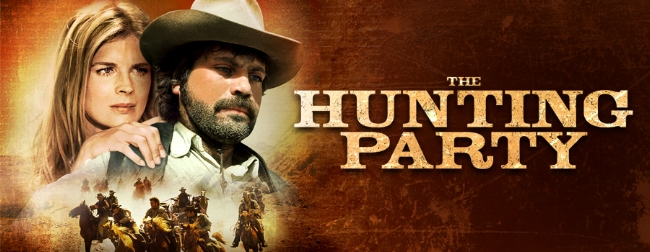
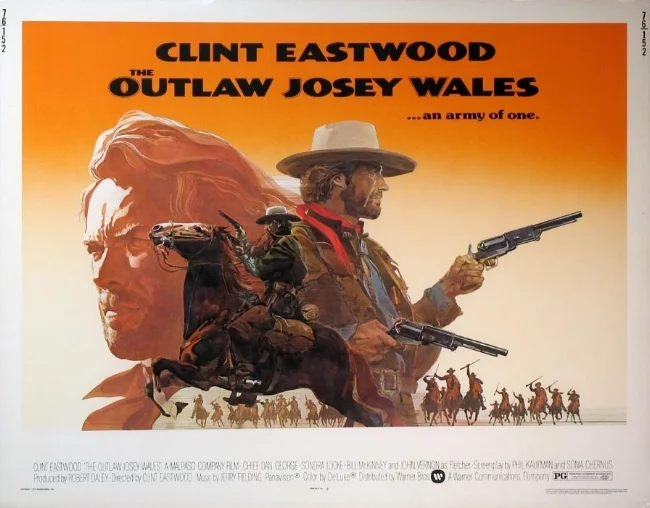
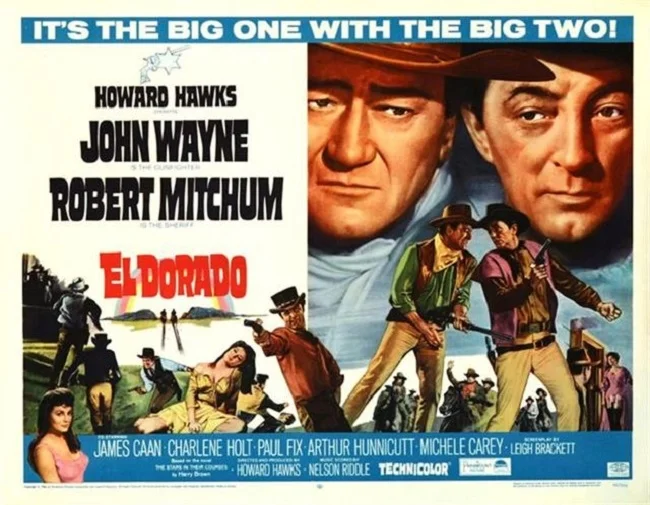
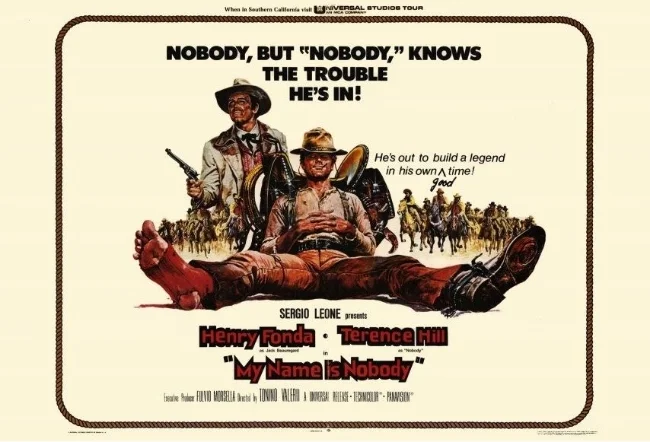
Your First Mistake Was Having Expectations
Two stories have broken today regarding a pair of established and much-loved pop culture franchises. The first is the news that actor Henry Cavill has been cast as Geralt of Rivia, in the forthcoming Witcher TV show currently in production by Netflix. The second is regarding how newly established games developers Athlon Games are currently working on a new F2P Middle-earth based MMO. Considering there is no further details on either of these two points beyond what has already been stated, one could be tempted to say rhetorically “nothing to see here, move along”. However, this is the age of social media, so let it suffice to say that both these announcements have caused a degree of consternation in certain quarters. Namely fans of those already established iterations of The Witcher and The Lord of the Rings.
Two stories have broken today regarding a pair of established and much-loved pop culture franchises. The first is the news that actor Henry Cavill has been cast as Geralt of Rivia, in the forthcoming Witcher TV show currently in production by Netflix. The second is regarding how newly established games developers Athlon Games are currently working on a new F2P Middle-earth based MMO. Considering there is no further details on either of these two points beyond what has already been stated, one could be tempted to say rhetorically “nothing to see here, move along”. However, this is the age of social media, so let it suffice to say that both these announcements have caused a degree of consternation in certain quarters. Namely fans of those already established iterations of The Witcher and The Lord of the Rings.
As I get older and therefore less sentimental and less invested in fandom per se, I do find the sort of complaints, criticism and sundry “brouhaha” that has accompanied both of these developments, somewhat irrelevant. All are based on a misplaced assumption that existing fans needs are the primary force driving both projects. But they are not. Yes, I agree that the look, feel and voice of Geralt of Rivia where honed to perfection in CD Projekt Red’s video games. This will naturally determine a lot of people’s conception of the character, the same way that a handful of artists such as John Howe and Alan Lee have shaped the popular opinion of what Tolkien’s characters should look like. Another example that is age dependent, is who you consider to be the best incarnation of James Bond. But artistic interpretation as a concept tends to “pooh-pooh” such dogmatic ideas as “the definitive version”.
From what I’ve gleaned from the information that’s available about Netflix’s The Witcher TV show, it is not intended to be merely a fan service to those that enjoyed the three video games. It is a broader adaptation of the original source material by by Polish writer Andrzej Sapkowski, intended to reach as wide an audience as possible. Fantasy as a genre is very popular and marketable at present. Thus, casting a known quantity such as Henry Cavill, who has experience of genre productions along with matinee idol good looks is hardly surprising. The objections of a minority of “core fans” is frankly just standard operational collateral damage when adapting such a franchise. Frankly, when you consider the current trend for remakes, reboots, altering race, gender and generally repurposing any franchise or brand if it is deemed profitable to do so, complaining about the casting of Henry Cavill is somewhat redundant.
As for there being a new Tolkien based MMORPG that is set at some point in The Lord of the Rings timeline, I really don’t see it being a major issue for the existing ten-year-old LOTRO. It’s hardly uncommon for multiple licensed products to share a specific market place at the same time. Look at Neverwinter and DDO for example. Furthermore, it is highly likely that both games will be very different from each other and therefore not in direct competition. I recently wrote about the possibility of a LOTRO 2.0 and how those players “joined at the hip” with the existing iteration of the game are not necessarily disposed towards migrating to a new and more modern game. A new title with contemporary bells and whistles would seek a new audience who favour such mechanics. I see it very much as an “apples and orange” situation. Plus, the point has already been raised as to whether the new Middle-earth based MMO is going to be linked in someway to the TV show that is currently under development for Amazon Prime.
Both of these examples reflect once again the inherent myopia that seems to accompany contemporary fandom. They represent a failure to see both of these franchises for what they are; products. And as such they can be augmented by the rights holder in whatever way they see fit. That doesn’t mean that fans can’t have an opinion. They are of course free to like or not like something. But considering the nature of the global market that all products must compete in these days, the uniquely subjective needs of fans only makes up a small percentage of potential customers. Therefore, these bespoke “requirements” are far from paramount. If you want a more specific example, then consider how the Marvel Cinematic Universe has “adapted” the source material to make it accessible to a wider audience. Lore has been altered and known box-office names have been cast to ensure a wide reach. Yes, some fans have disliked what they’ve seen, but in business terms Disney have struck gold. In a world where hype, following trends and number crunching dictates policy, it’s hardly surprising that the Henry Cavill has been cast as Geralt of Rivia and that a new Middle-earth based MMO is going to embrace the current foibles of the F2P business model. To those bemused by all this, your first mistake was having expectations.




LOTRO: Fishing
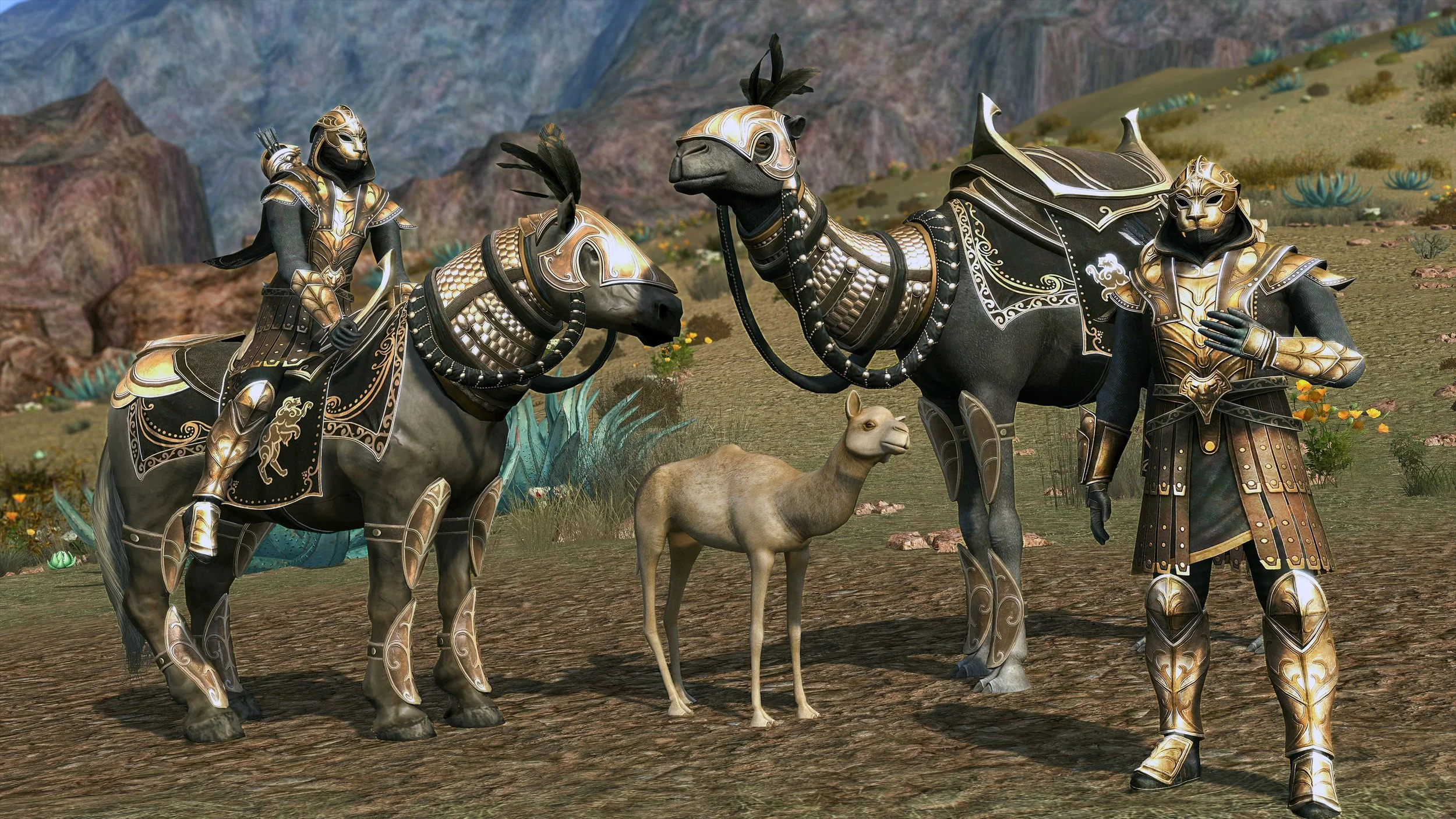
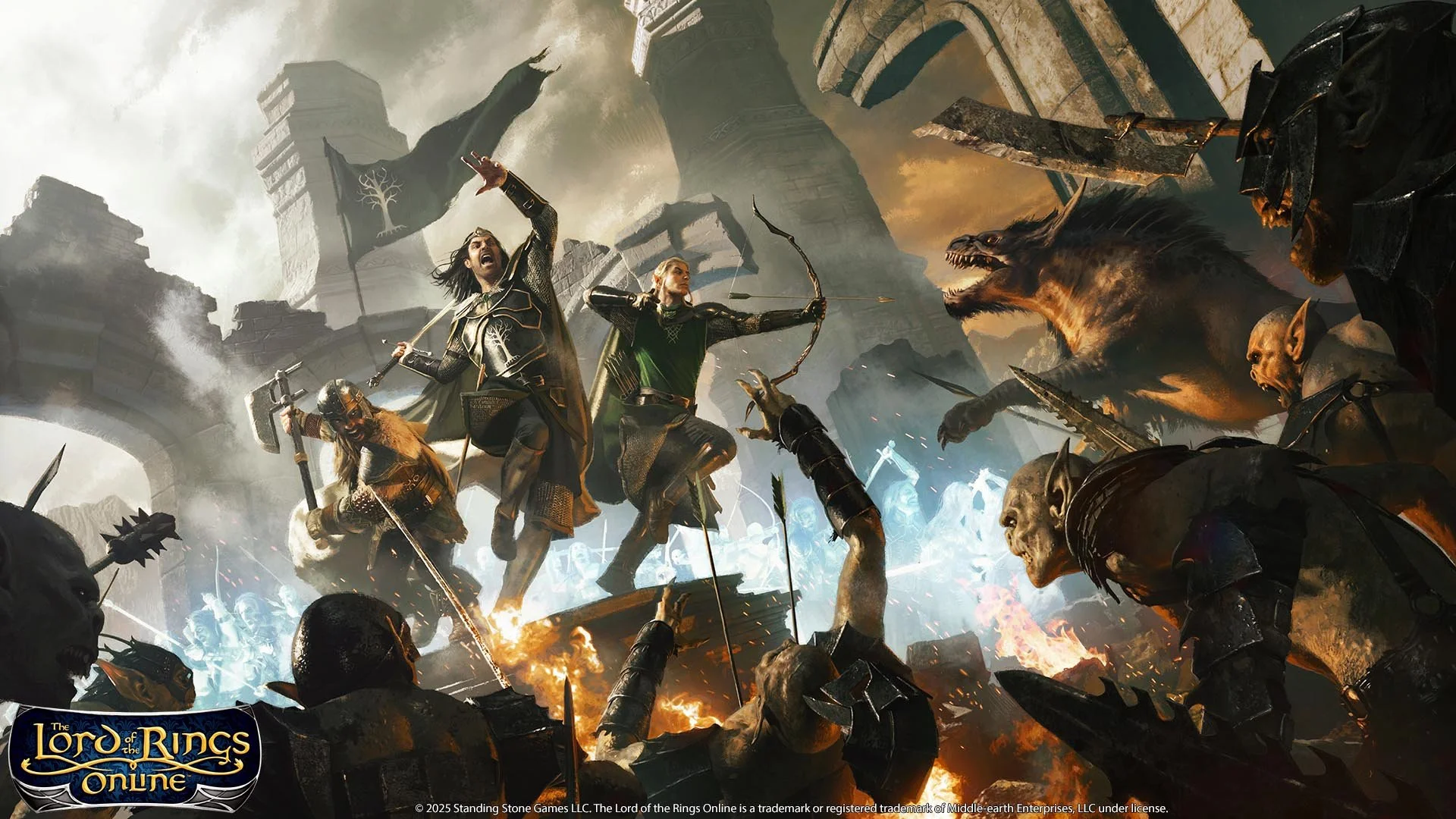
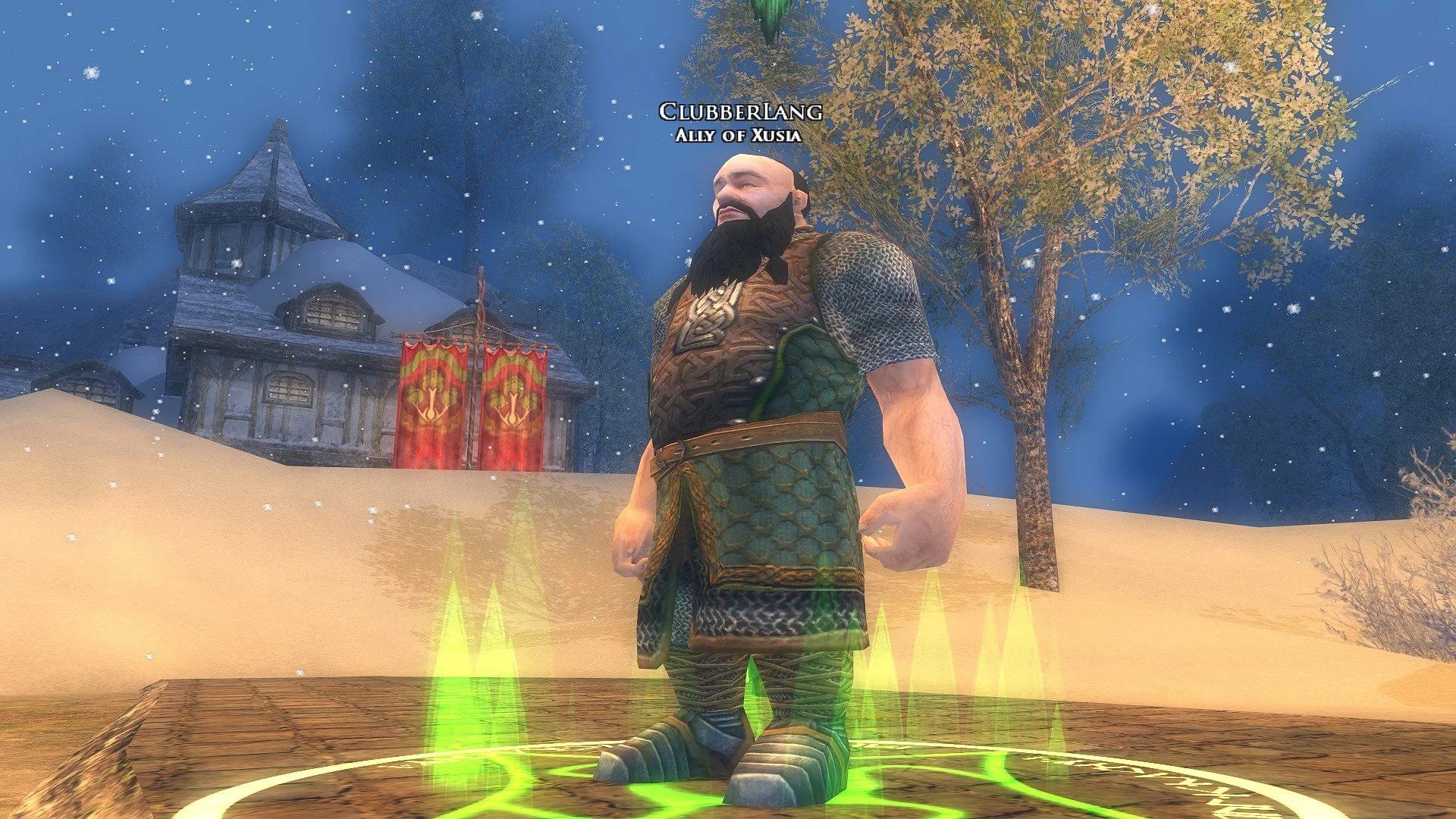
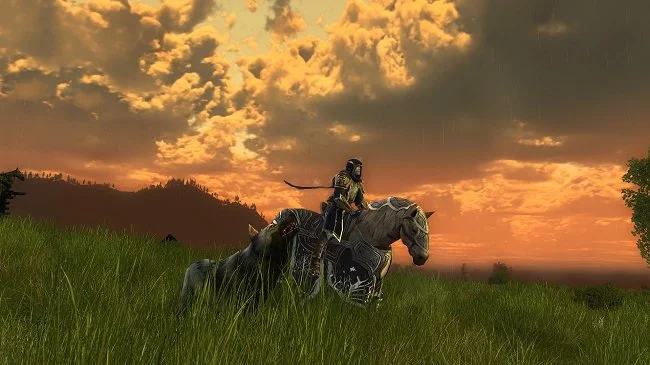
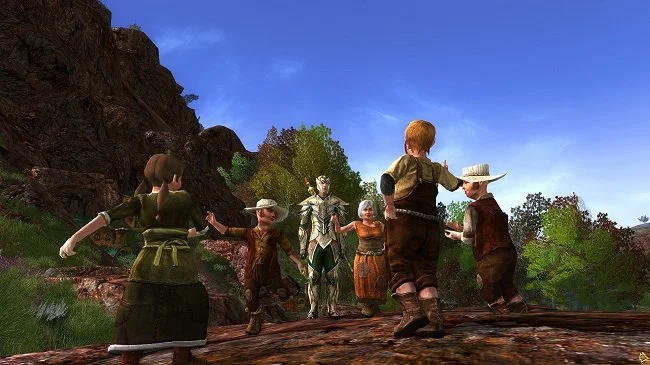
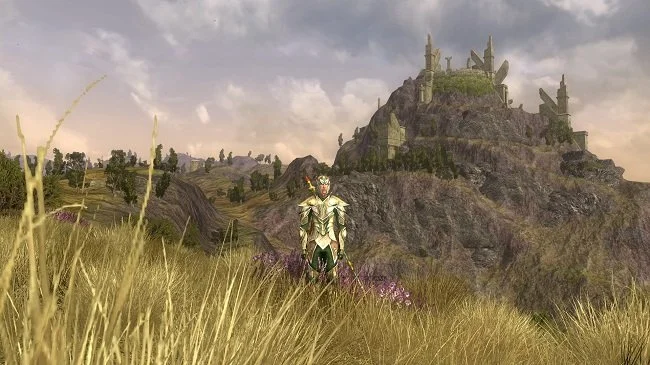
Many MMOs have “hobbies” as part of the activities they have on offer. These are usually leisurely undertakings done for their own inherent fun, rather than providing a tangible in-game benefit. In LOTRO the only hobby that is currently available (despite the game existing for over decade) is fishing. It’s a relatively simple affair that’s been further refined (dumbed down, some may argue) over time. When I started playing LOTRO in 2008, fishing had an extra component to its underlying mechanic. There were various types of bait (consumables) that provided a bonus to your fishing skill. These included Leech Bait, Nightcrawler Bait and Red Wiggler Bait. However, this mechanic was removed possibly around the time of the “free to play” conversion. As it currently stands, fishing now just requires accepting the hobby from the Hobby Master NPC (Simon Quinlank would be proud), buying a basic fishing rod and finding a body of water. You equip the rod instead of a weapon and add the fishing skill to your quick slot bar. If you click the skill it will cause a casting animation. You then wait for the fish to bite, which is signified buy your rod bending and twitching. The player then clicks the skill again to land whatever they’ve caught.
Many MMOs have “hobbies” as part of the activities they have on offer. These are usually leisurely undertakings done for their own inherent fun, rather than providing a tangible in-game benefit. In LOTRO the only hobby that is currently available (despite the game existing for over decade) is fishing. It’s a relatively simple affair that’s been further refined (dumbed down, some may argue) over time. When I started playing LOTRO in 2008, fishing had an extra component to its underlying mechanic. There were various types of bait (consumables) that provided a bonus to your fishing skill. These included Leech Bait, Nightcrawler Bait and Red Wiggler Bait. However, this mechanic was removed possibly around the time of the “free to play” conversion. As it currently stands, fishing now just requires accepting the hobby from the Hobby Master NPC (Simon Quinlank would be proud), buying a basic fishing rod and finding a body of water. You equip the rod instead of a weapon and add the fishing skill to your quick slot bar. If you click the skill it will cause a casting animation. You then wait for the fish to bite, which is signified buy your rod bending and twitching. The player then clicks the skill again to land whatever they’ve caught.
Like any activity in a game of this nature, fishing is subject to a levelling mechanic. The maximum rating is level 200 and the player can gain 10 points per day (the "clock" resets at midnight EST). There are currently seven different types of rod available in LOTRO, ranging from the aforementioned basic rod and the latest Exquisite Elven Fishing Rod which adds +10 Fishing. However, these rods are gated behind reputation factions in level specific regions, so you can’t buy a fancy rod and expect to fast path to level cap. It should also be noted that there are multiple deeds associated with fishing (hardly a surprise as LOTRO is rife with deeds) and some of the fancier fish that you can catch can be taken to a taxidermist and turned into trophies and used as housing items. As stated earlier, fishing is mainly a recreational activity which may also appeal to the goal orientated completionist who likes to do everything for personal satisfaction.
Standing Stone Games are obviously not conversent with UK slang.
I started fishing when I first subscribed to LOTRO. At that point in time, MMOs were new to me and I found all of the games foibles endearing. I’ve never pursued fishing seriously and have mainly used it as it was intended, just as something easy to do in-game while unwinding. As you can fish pretty much from any body of water in the game, I’ve often done fishing while waiting for colleagues to log in or while I’m on Discord chatting to friends. It’s something I’ve done casually over eight years and not something I’ve ever monitored. Recently, while fishing in Long Lake, I noticed a notification telling me I was level 183. So, I investigated a little further and determined I was not far from the cap. As a result, I decided to actually complete this deed, mainly due to a “why not” mindset and the want of anything else more significant to do. So, I toured various regions of Middle-earth and spent an hour here and there, slowly working towards my goal. Needless to say, a few days ago I hit level 200 hundred after a decade of not especially trying to do so. It gave me a moments satisfaction and a reason for a blog post, so I guess I shouldn’t “pooh-pooh” this achievement. I wonder whether Standing Stone Games have any new plans to add further hobbies to the game. If they do perhaps I’ll complete them as well in another ten years’ time.






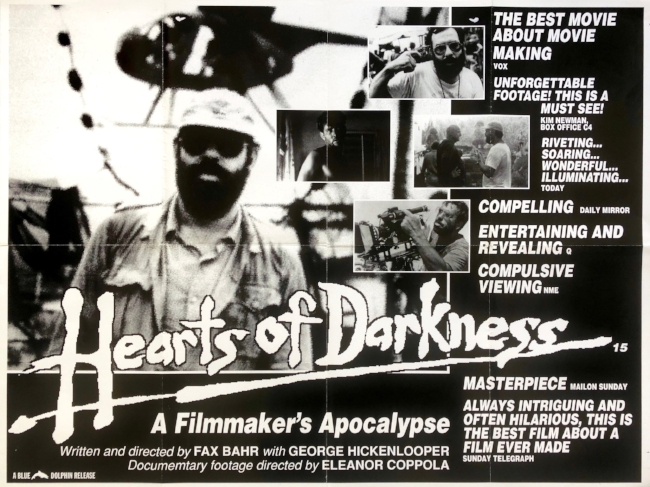
Hearts of Darkness: A Filmmaker's Apocalypse (1991)
There was a time when film making was seen as an artistic endeavour and the idea of the auteur director pursuing a vision was considered a romantic and even noble undertaking. Big multi-million-dollar productions were welcomed when they filmed on location, providing work and glamour to the local population. The might of the dollar would often grease the wheels of industry, making the impossible possible. Egos were massaged, and actors were indulged and treated like minor deities. Huge sets would appear in the middle of nowhere, like Victorian follies and luxury items would be flown around the world to placate the capricious nature of the various Hollywood stars. Money would flow like water, much to the dismay of the producers, sitting back in the offices in the US or Europe. But this era has now past. Big budget movies are still made but it is now driven by corporate accounting and artistic vision is no longer a primary consideration. It is now a rather soulless business process. Hence a movie such as Apocalypse Now would never be made today in the same manner that it was back in 1976 when the production started.
There was a time when film making was seen as an artistic endeavour and the idea of the auteur director pursuing a vision was considered a romantic and even noble undertaking. Big multi-million-dollar productions were welcomed when they filmed on location, providing work and glamour to the local population. The might of the dollar would often grease the wheels of industry, making the impossible possible. Egos were massaged, and actors were indulged and treated like minor deities. Huge sets would appear in the middle of nowhere, like Victorian follies and luxury items would be flown around the world to placate the capricious nature of the various Hollywood stars. Money would flow like water, much to the dismay of the producers, sitting back in the offices in the US or Europe. But this era has now past. Big budget movies are still made but it is now driven by corporate accounting and artistic vision is no longer a primary consideration. It is now a rather soulless business process. Hence a movie such as Apocalypse Now would never be made today in the same manner that it was back in 1976 when the production started.
Hearts of Darkness: A Filmmaker's Apocalypse is one of the best “movies about the making of a movie” ever made. It provides not only a window into them making of one of the most important movies of the seventies but also offers a snapshot of a kind of film making that simply doesn’t exist anymore. After several years of pre-production writer/director Francis Ford Coppola arrived in the Philippines in 1976 and quickly found himself drowning in the logistical, political and human aspects of this mammoth project. He asked his wife Eleannor to document the process which she dutifully did, filming events on and off set and recording conversations with her husband as the production started to spiral out of control. Hearts of Darkness: A Filmmaker's Apocalypse shows all this and more, in broad chronological order over the period of the extended location shoot. As for all the stories surrounding the “troubled” production of Apocalypse Now, they’re all broadly true. To catalogue them is somewhat redundant as it fails to adequately convey they’re true significance or magnitude. But to watch them happening first hand is utterly astounding.
Two of aspects of the production of Apocalypse Now that really stand out are the complex logistical requirements and human management. This was a big budget movie made in the days before computer effects. Therefore, the action scenes where shot on location and for real. A shot requiring a napalm strike in the treeline would subsequently feature a low fly-by by a jet plane and then tons of gasoline exploded by the effects crew, all flawlessly timed. Another scene featuring the crew exploring the jungle and encountering a tiger again would be undertaken with a live tiger and a handler. If the script required an ageing temple set in the jungle, then one would simply be built by local labour. Despite a typhoon destroying multiple sets early on in the production, the moment the weather nominally abated, then the crew were out filming, incorporating the extreme conditions into the narrative. And then there was the entire issue of the cast and their “personal journeys”. To reflect the reality of a soldier’s life in Vietnam, drugs were freely used among the production crew and actors. And presiding over this chaos was Coppola himself. Eleannor Coppola wrote of his experience “The film Francis is making is a metaphor for a journey into self. He has made that journey and is still making it. It's scary to watch someone you love go into the centre of himself and confront his fears, fear of failure, fear of death, fear of going insane. You have to fail a little, die a little, go insane a little, to come out the other side. The process is not over for Francis”.
But perhaps the most significant obstacle to challenge the production was its very own star, Marlon Brando. The seventies were a decade in which the “Hollywood Star” was still a revered, cultural icon. I cannot think of a circumstance nowadays in which a lead artist would be allowed to inconvenience an entire film production so much, while being indulged and cossetted. Brando’s intransigence and hubris were monumental, and he arrived on set late into the production with little or no preparation for the role. His continual questioning and debating the script verged upon gas lighting and his utter indifference to the rest of the cast was a major impediment. It is much to Coppola’s credit that he allowed the actor to eventually just extemporise around certain plot elements and from the hours of footage shot, collate such a powerful performance. When the production finally ended after sixteen months, it took a further year for the director to assemble a workable print of the movie. Half of the original script, written by John Milius, was re-written by Coppola himself and post production required the return of many cast members to re-record new lines and the framing narration.
If one has no knowledge of film history, it would be reasonable to assume after watching the documentary Hearts of Darkness: A Filmmaker's Apocalypse, that the resultant film, Apocalypse Now, was an absolute disaster both critically and financially. However, that was not the case and the movie is now hailed as a “haunting, hallucinatory Vietnam war epic” and “cinema at its most audacious and visionary”. Certainly, the entire production and associated apocrypha surrounding the film can be seen as a metaphor to the entire Vietnam War in itself. As for Hearts of Darkness: A Filmmaker's Apocalypse it is an invaluable exploration of film making process of the times. It not only catalogues but appears testifies to the notion that creating art is a painful and extremely difficult process. Yet the key to success is to stay true to your artistic vision, whatever the cost. Whether you agree with such concepts is up to you to decide. Is Hearts of Darkness: A Filmmaker's Apocalypse showing us the struggles of an auteur director or simply recording the runaway indulgences of an ego maniac? Either way it is an incredible and utterly fascinating documentary to watch.







Writing and Time
Fellow blogger Sandrian recently asked on the Blaugust Discord server, “how do people find the time. I've been nothing but exhausted for the past three weeks and barely remember to post stuff for Blaugust”. It’s a common question asked by people coming to grips with regular content creation. After a decade plus of writing in some shape or form, I believe I have two possible answers. The first and short response is a quote by the great Montgomery Scott, “if something's important, you'll make the time”. The second is a more detailed breakdown of my daily schedule and how I integrate my writing process into it. Perhaps aspects of my approach to writing will be of use to others, however I will once again state that there is no “one size fits all” approach to any sort of content creation. You have to find what is best for you and then build upon it. There is no magic solution and however you undertake your writing, podcasting or streaming, it takes discipline and a degree of self-sacrifice if you wish to persevere.
"Time, time, time see what's become of me. While I looked around for my possibilities".
Fellow blogger Sandrian recently asked on the Blaugust Discord server, “how do people find the time. I've been nothing but exhausted for the past three weeks and barely remember to post stuff for Blaugust”. It’s a common question asked by people coming to grips with regular content creation. After a decade plus of writing in some shape or form, I believe I have two possible answers. The first and short response is a quote by the great Montgomery Scott, “if something's important, you'll make the time”. The second is a more detailed breakdown of my daily schedule and how I integrate my writing process into it. Perhaps aspects of my approach to writing will be of use to others, however I will once again state that there is no “one size fits all” approach to any sort of content creation. You have to find what is best for you and then build upon it. There is no magic solution and however you undertake your writing, podcasting or streaming, it takes discipline and a degree of self-sacrifice if you wish to persevere.
To begin with, I have demands on my time like everyone else. I retired from work to become a carer to both my parents who are disabled. However, both have clearly structured days and routines, so although I am kept busy, I have a very clear idea how my time will be spent at the beginning of each week. I am mainly occupied between the hours of 11:00 AM and 6:00 PM during week days. This affords me time in the morning and the evening to write. I live with my significant other who also took early retirement and is now a lady of leisure. We spend time together each evening and regularly have days out, but we also pursue individual interests. My son is an adult with a family of his own so childcare is no longer an issue, although we do regularly babysit our twin granddaughters. Overall, my life is busy but tends to be well organised. I’m also a “night owl” and will stay up late, getting by quite well with just five hours of sleep. Hence, there are distinct windows of opportunity each day to write, both in the morning and at night.
"hello computer".
Because of the subjects that I write about, at least half of my weekly content is planned in advance. I have an ongoing “to do list” of movies and TV shows which I methodically work through. I take notes as I watch and use these to structure reviews or analysis. Most of the long form “think pieces” that I write about popular culture and gaming are planned ahead of writing and developed over several writing sessions. The other half of my writing is driven by what I read. I will often riff off a talking point in the gaming news or give my perspective on an ongoing debacle or controversy. I keep a spreadsheet on my Windows “start list” where I frequently jot down ideas. If I’m out and about and something worth writing about pops into my head, I’ll use the voice recorder on my phone to collate my thoughts. I also have word installed on my Samsung S8, and have frequently written bullet points for a blog post, while sitting in a hospital waiting room with one of my parents. Again, “if something's important, you'll make the time”.
There are twenty-four hours in a day. If you want to write, then you can always set an alarm and get up an hour early. Or you can skip a superfluous TV show that you watch mainly because you don’t want to get off the couch. Time can be found, if you choose to do so. But that can lead into another potential problem. After creating that window of opportunity and finding yourself in front of your PC, you have to motivate yourself to write. I prefer writing in the morning when I’m feeling enthused and energetic. It is demonstrably harder to do so later at night after a gruelling day. And this is where mental discipline raises it’s head. You have to consciously decided to ignore all distractions (such as cat videos on You Tube) and focus on getting your content out of your head and into a coherent written form. Now if you feel that this is all a little too heavy and you only want to write just for fun, then cool. If the shit fits, wear it as they say. But you’ll soon find that your output will become infrequent and that in itself can kill your motivation further. If you want to pursue a more rigorous writing schedule, then you have to knuckle down and just do it.
Mr T. Insert something pithy, hip and motivational here.
Once you start writing, get as much down as you can in the time that you have. Do not edit as you go, as that really slows you down. Just concentrate in getting the thrust of you post written and worry about spelling, grammar and coherency later. If you find that the writing is “flowing” and that your plan is coming together in such a way it would make Hannibal Smith happy, then capitalise on the experience. If you can get two or more posts written, then do so and bank them. Building up a stockpile of blog posts is great insurance policy for those days when everything you touch turns to shit. Plus, it’s highly likely that you’ll have a holiday at some point during the year, or social engagements that will keep you out all night, so having material in reserve is a real boon. Another point to remember is that every blog post doesn’t have to be an epic. Brevity can be good. Three paragraphs that are on point are far better than six that are vague and flatulent.
Ultimately, how you blog and what you blog about have an impact upon the length and complexity of your output. But if you diligently set aside the time, sit yourself down in a suitable writing environment and focus upon the task in hand, you will find that writing will get easier over time. Blaugust is great for providing the budding writer with a reality check about the nature of regular content creation. Many will have found the experience hard, which is why I sincerely congratulate all those who met the targets that they set themselves. What happens next is in some respects a lot harder. You now have the choice to continue to write, purely for yourselves and not because you publicly agreed to undertake a challenge. But you’ve already proven that you can. You have all the tools that you need at your disposal along with a month’s experience. If you set your mind to it, you will continue to write and integrate it into your regular life. I hope that many of those who partook in Blaugust Reborn this year will do exactly that.






















The Tunnel (2011)
The Tunnel was released direct to Region 3 DVD on 19th May 2011, much the same as any other low budget horror movie. What made the marketing of this minor Aussie "Mockumentary" horror different to other similar products, is that the distributors decided to make a barebones copy of the film available for download, free of charge. The accompanying viral marketing campaign gained quite a lot of traction resulting in The Tunnel being heavily seeded across Bit Torrent sites and exposing the film to an audience of millions globally. Subsequently, when the movie was then showcased in the US and Europe and commercially released in other regions, its profile had been considerably raised. As a result of this novel marketing campaign and the fact that the movie is a better than average example of the found footage genre, The Tunnel won several awards on the festival circuit.
The Tunnel was released direct to Region 3 DVD on 19th May 2011, much the same as any other low budget horror movie. What made the marketing of this minor Aussie "Mockumentary" horror different to other similar products, is that the distributors decided to make a barebones copy of the film available for download, free of charge. The accompanying viral marketing campaign gained quite a lot of traction resulting in The Tunnel being heavily seeded across Bit Torrent sites and exposing the film to an audience of millions globally. Subsequently, when the movie was then showcased in the US and Europe and commercially released in other regions, its profile had been considerably raised. As a result of this novel marketing campaign and the fact that the movie is a better than average example of the found footage genre, The Tunnel won several awards on the festival circuit.
The Tunnel has a somewhat generic storyline, following an investigation into a government cover-up over an abandoned reservoir project, that intended to use a network of abandoned train tunnels under Sydney. TV journalist Natasha Warner (Bel Deliá) and her crew, Peter Ferguson (Andy Rodoreda), Steve Miller (Steve Davis), Jim ‘Tangles’ Williams (Luke Arnold), look for the truth within the subterranean maze, only to find themselves hunted by someone or something. The film consists of video footage taken by the crew on both HD and night vision cameras. Material taken by CCTV and webcams are also used to great effect. Where The Tunnel differs from other films shot in this style, is that it is presented as a completed documentary, and is intercut with "talking heads" from the surviving members of the crew.
Now it could be argued that the format of the film indicates quite quickly who lives and who dies, thus mitigating the suspense. However, this is not the case. It actually adds to the sense of faux credibility. The story unfolds at a measured pace and introduces us to the lead characters, all of whom are quite plausible. Steve Davis, a real-life cameraman, give a very good performance, effectively playing himself and drawing on his working experience. Luke Arnold, makes a suitable foil for him as soundman "Tangles". Director Carlo Ledesma builds a suitable back story regarding the politics of the reservoir project and the aims of the TV journalists before taking the action into the tunnels of the title. The shocks are efficient and subtle. The mysterious entity that stalks the network under the city is kept wisely off camera for most of the proceedings. Less is more in this case.
Once again, Australian cinema shows that it has far greater understanding of the craft of film making that mainstream Hollywood. The Tunnel is certainly formulaic, yet due to a better than average script and measured performances, manages to produce a superior genre offering. Unlike recent equivalent films such as Paranormal Activity franchise, it does not jump the shark when it comes to the scares and maintains sustained tense and threatening atmosphere. The found footage genre, like so many other subsets of horror, can often be no more than a vehicle for lazy and uninspired film making. The key to success in this case is to use the format in an innovative fashion and tell a story from a new perspective. The Tunnel achieves this by maintaining a credible pretence of being a genuine documentary. The framing narrative justifies a lot of the usual questions that arise from this genre, especially the ubiquitous “why keep filming”? Hence, The Tunnel is a superior genre entry and worth seeing by both horror fans and causal viewers.










Caring for the Elderly: Part 5
At the end of July, my Father went into Respite Care for two weeks. He was placed in a local private nursing home, via borough social services. The placement was intended to provide him a change of scenery and give the rest of the family with a short break from the ongoing caring requirements. Sadly, things did not work out well. After seven days away from home, my Father became ill and after three trips to A&E (over a period of four days), he was finally admitted to hospital with Aspiration Pneumonia. He was deemed to be at extreme risk by the medical staff and we were told at one point to “prepare for the worse”. However, despite being seriously ill, he recovered and much to everyone’s surprise was discharged and returned home after ten days. Sadly, his already impaired state of health has been further diminished. Three weeks on it is becoming clear that it is unlikely that he will return to the level of ability that he had at the start of July. His health and the quality of his life has been further reduced. Subsequently, the various healthcare professionals that deal with my Father have now started using the term palliative care.
At the end of July, my Father went into Respite Care for two weeks. He was placed in a local private nursing home, via borough social services. The placement was intended to provide him a change of scenery and give the rest of the family with a short break from the ongoing caring requirements. Sadly, things did not work out well. After seven days away from home, my Father became ill and after three trips to A&E (over a period of four days), he was finally admitted to hospital with Aspiration Pneumonia. He was deemed to be at extreme risk by the medical staff and we were told at one point to “prepare for the worse”. However, despite being seriously ill, he recovered and much to everyone’s surprise was discharged and returned home after ten days. Sadly, his already impaired state of health has been further diminished. Three weeks on it is becoming clear that it is unlikely that he will return to the level of ability that he had at the start of July. His health and the quality of his life has been further reduced. Subsequently, the various healthcare professionals that deal with my Father have now started using the term palliative care.
Palliative care is an often-misunderstood term. It does not just mean preparing for death, as many people think. Palliative care can and is utilised to serve the needs of those with life-threatening or terminal illnesses. But it also helps patients stay on track with their health care goals and maintain an optimal baseline. Palliative care is intended to improve the quality of life for those at any age, at any stage of serious illnesses. Ultimately it is a course of action design to facilitate symptom management and improving quality of life. It’s about how one can palliate a patient’s suffering, whether that suffering is physical, emotional, spiritual or financial. This also includes focusing upon the family of the patient as well, and those also involved in caring. As one Doctor put it “it’s about finding the best way for you to navigate your illness for you and your loved ones”. However, despite a clear definition of palliative care, what does all this mean in practical terms with regard to looking after my Father?
The two biggest changes to happen since being discharged from hospital are continence issues and general levels of strength. Prior to August my Father could get out of bed, wash and dress and navigate his home adequately. It was never a fast process and he would from time to time, run into difficulties but he could cope on his own, as long as someone was around to keep an eye out. He now has very limited reserves of energy and requires assistance getting out of his hospital bed and getting washed and dressed. This process is complicated further by a catheter and bowel incontinence. We were initially told that these issues were temporary, but it is now clear that they are not. So catheter care has been added to the District Nurses ongoing care plan and we have contracted a private care company to assist with twice daily ablutions. Our local Doctor has reviewed my Father’s current medication and has removed those no longer deemed relevant. The Dietician team have also made some adjustments to his night time feed (my Father has been nil by mouth since September 2016), which have significantly reduced vomiting and general stomach discomfort.
As I have mentioned before, there is still a taboo or fear about discussing matters associated with long term illness and death in Western society. As a carer I have recently joined an online support forum so that I can share my perspective and learn from others. I am still surprised by a percentage of people who despite being faced with extremely difficult, terminal scenarios, still seem reticent come to terms with their situation. Some look to a medical miracle to resolve matters, where others simply think that the status quo will just prevail. However, I have chosen to embrace the reality of my Father’s situation and decided that it is my duty to ensure I do what I can to improve his immediate situation. He is now very aware that he is running his last lap, as he chooses to phrase it and is as comfortable as a person can be in such circumstances. We have spoken at length, ensuring that everything is in place for the rest of the family when he is no longer here, and as a result this has brought a degree of clarity and peace of mind to day-to-day life. It’s not a good situation and the quality of his life is far from ideal, but it could also be a lot worse, especially if all of our family’s actions were governed solely by our emotions. But by deciding to tackle matters head on, talking to others and seeking professional advice and support, things are bearable.















Final Destination 5 (2011)
Having recently re-watched all of the Final Destination franchise, I’ve been toying with the idea of writing about them. However, they are a somewhat formulaic series of movies and I’m not sure if they each warrant a review to substantiate their respective merits or failings. The first movie was satisfactory in establishing the underlying theme of the franchise and came up with some innovative death scenes. The second instalment was a satisfactory sequel, that upped the ante and gave more of the same. Part three was noticeably superior to what had proceeded, with a more accessible group of protagonists and wider exploration of the idea of death seeking to restore its plan. The fourth film jumped on-board the trend for 3D movies, but effectively became a caricature of itself. The characters were two dimensional and the movie just felt like a group of flamboyant set-pieces, clumsily dovetailed into a contrived bridging plot. However, and somewhat unusually, it is the fifth iteration of Final Destination, that tries to do something different and so is the entry in the series that I’d like to explore further.
Having recently re-watched all of the Final Destination franchise, I’ve been toying with the idea of writing about them. However, they are a somewhat formulaic series of movies and I’m not sure if they each warrant a review to substantiate their respective merits or failings. The first movie was satisfactory in establishing the underlying theme of the franchise and came up with some innovative death scenes. The second instalment was a satisfactory sequel, that upped the ante and gave more of the same. Part three was noticeably superior to what had proceeded, with a more accessible group of protagonists and wider exploration of the idea of death seeking to restore its plan. The fourth film jumped onboard the trend for 3D movies, but effectively became a caricature of itself. The characters were two dimensional and the movie just felt like a group of flamboyant set-pieces, clumsily dovetailed into a contrived bridging plot. However, and somewhat unusually, it is the fifth iteration of Final Destination, that tries to do something different and so is the entry in the series that I’d like to explore further.
Now we all know the storyline for this franchise, don’t we? (No? Well I suggest you cram via this link). As ever, Final Destination 5 hinges upon a group of people, escaping a catastrophe due to one of them having a premonition. On this occasion it is a group of employees who are travelling to a company retreet. They manage to avoid a rather spectacular suspension bridge collapse, only to be grilled by the FBI who find their miraculous survival a little too convenient. Furthermore, at the memorial service local coroner William Bludworth (Tony Todd) ominously tells the survivors that "Death doesn't like to be cheated," and tells them to be careful. Elaborately contrived death scenes then ensue, including an accident involving laser eye surgery and a nasty fall by a gymnast from a balance beam. Yes, it’s more of the same in the shock horror department, but the movie is less jovial and darker in tone this time round. Final Destination 5 attempts to vary the established rules of the previous filsm and add a new twist. Previous instalments have always sought a solution to appease death. This time round a much bleaker proposition is offered. Kill another person to balance the books. This new theme provides an additional moral dilemma alongside the protagonists existing knowledge of their own doom.
Let me stress that any praise offered is still relative. These are disposable horror movies, designed to be enjoyed and not pondered upon. But within its own context, Final Destination 5 managed to re-invigorate the franchise in a similar way that Friday 13th Part 6: Jason Lives did back in 1986. It’s arguably the most thoughtful entry in the series for a long time and not a bad horror film in itself. If you’ve not seen any of the prior instalments, then this can be a perfectly good starting point. However, let us maintain a sense of proportion. This film is no The Thing or Misery. Although it is slick, fun and features Tony Todd being as creepy as fuck, it is no more than the sum of its parts. Curiously, despite being well received by fans, some critics and doing well at the box office, the franchise ended here and there have been no further sequels. However, with horror becoming the flavour of the month with film studios once again, may be a reboot or new entry will be forthcoming. In the meantime, mind how you cross the road, watch you step and avoid chalk dust.
Cyberpunk 2077 Gameplay Reveal: 48-Minute Walkthrough
Two months ago, those attending E3 tradeshow were afforded a behind-the-scenes demo of Cyberpunk 2077 by developer CD Projekt Red. Finally, that same footage has been made available to the general public today. Here is the link. I do recommend that you watch the entire video and assimilate the details. Because, I’m sure there’s going to be a great deal of hyperbole, bluster and hype going around in the next 48 hours regarding the Cyberpunk 2077 Gameplay Reveal on You Tube. I’m sure there’ll also be a handful of professional malcontents who’ll immediately look to find fault or take a critical posture because, hey, that’s what some folks do. Speaking as a mature player of games, who takes a calm and measured approach to marketing and tries not to get sucked into the hysteria that can sometimes arise from the wider community, I must say I am intrigued by what I’ve seen so far.
Two months ago, those attending E3 tradeshow were afforded a behind-the-scenes demo of Cyberpunk 2077 by developer CD Projekt Red. Finally, that same footage has been made available to the general public today. Here is the link. I do recommend that you watch the entire video and assimilate the details. Because, I’m sure there’s going to be a great deal of hyperbole, bluster and hype going around in the next 48 hours regarding the Cyberpunk 2077 Gameplay Reveal on You Tube. I’m sure there’ll also be a handful of professional malcontents who’ll immediately look to find fault or take a critical posture because, hey, that’s what some folks do. Speaking as a mature player of games, who takes a calm and measured approach to marketing and tries not to get sucked into the hysteria that can sometimes arise from the wider community, I must say I am intrigued by what I’ve seen so far.
I was very impressed by CD Projekt Red’s last game, The Witcher III: Wild Hunt. I liked the open world, the aesthetic of the game and its level of complexity. It managed to balance the technical requirements of an RPG, with gear, skills points and system progression and ensure that it didn’t tip over into an excess of resource management. But above all I loved the story. It eschewed the binary morals of other games and offered us a world of hard decisions, complexity and consequences. And this is what appears to be at the heart of Cyberpunk 2077. Furthermore, the Gameplay Reveal seems to indicate that there are multiple paths to take with each mission that shape the outcome of content later in the game. Again, the balance between systems, the complexity of combat and narrative progression seems to be appropriate. As for the issue of first person perspective that has already been hotly debated, it seems to be justified from what I’ve seen. The way it reverts to third person for cutscenes and exposition looks like a good compromise.
I suspect that as well as a lot of hype, Cyberpunk 2077 is also going to encounter a lot of controversy as it’s release date gets close. The game is overtly political (by the developers own admission) and will explore a great deal of adult and challenging themes. Violence, transhumanism and evolving human identity will not be welcome in some quarters. And anything of a sexual nature always ruffles the feathers of the usual suspects. Oh, I’m certain that Cyberpunk 2077 will be pilloried in corners of the gaming community. Another potential issue is going to be the games minimum specifications. I think this may be the title that will force me finally replace my current four-year-old PC. However, I shall temper my modest enthusiasm, with a pinch of cynicism that I’ve learned the hard way after thirty plus years of gaming. “There’s many a slip between cup and lip” as the old saying goes. So, for the immediate future, I’ll remain just “interested” and content to just, watch, wait and reflect upon Cyberpunk 2077.
Immortals (2011)
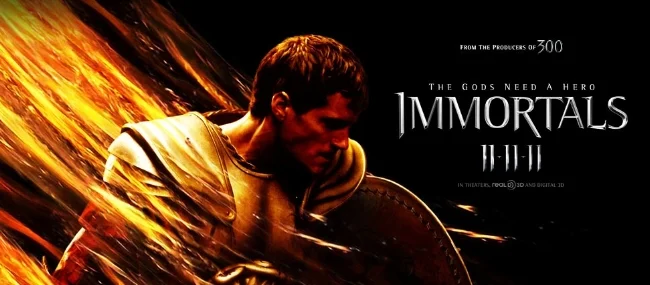
Tarsem Singh's Immortals follows in the wake of Zac Snyder’s 300 with a similar aesthetic and editing style. Despite an interesting cast, featuring the talents of John Hurt, Mickey Rourke and Henry Cavill, it’s a singularly uninspired film, devoid of any story telling of any substance. Immortals main selling points are glossy, stylised visuals and a striking production design which is very derivative of Italian cinema from the sixties. There are also liberal doses of violence and heaving oiled flesh to enliven the proceedings, but it is all feels somewhat arbitrary and a bit of a box ticking exercise. Overall what surprises me the most is how a film maker with all of the drama and excitement of Greek mythology at his disposal, can still make such a turgid and dull movie as this?
Tarsem Singh's Immortals follows in the wake of Zac Snyder’s 300 with a similar aesthetic and editing style. Despite an interesting cast, featuring the talents of John Hurt, Mickey Rourke and Henry Cavill, it’s a singularly uninspired film, devoid of any story telling of any substance. Immortals main selling points are glossy, stylised visuals and a striking production design which is very derivative of Italian cinema from the sixties. There are also liberal doses of violence and heaving oiled flesh to enliven the proceedings, but it is all feels somewhat arbitrary and a bit of a box ticking exercise. Overall what surprises me the most is how a film maker with all of the drama and excitement of Greek mythology at his disposal, can still make such a turgid and dull movie as this?
Years after the Gods defeated the Titans, a new evil threatens. King Hyperion (Mickey Rourke) scours Greece in search of the legendary Epirus Bow, a weapon of unimaginable power forged in the heavens by Ares. Once he possesses this bow he can unleash the Titans, who have been imprisoned deep within the bowels of Mount Tartaros. In Hyperion’s hands, the bow can also annihilate the Gods. But ancient law dictates the Gods must not intervene in man's conflict. Yet they can work through a proxy, so a peasant named Theseus (Henry Cavill) is chosen by Zeus, to save his people from Hyperion and his armies. Rallying a band of fellow outsiders, including visionary priestess Phaedra (Freida Pinto) and cunning slave Stavros (Stephen Dorff), Theseus must lead an uprising, or watch his homeland fall into ruin and the Gods vanish from the world.
Director Tarsem Singh has a noticeable visual style, developed during his earlier career where he made several very high-profile music videos. As a result, one cannot deny that Immortals looks impressive. The colour palette is vivid in it’s use of contrasting colours, especially in the end battle between Gods and Titans. Gold, red and black feature in a very striking fashion. There is also an ethereal quality to some of the supernatural elements of the story. I certainly felt that there was an element of Mario Bava and even Michael Powell and Emeric Pressburger in the proceedings. The action scenes are stylised and brutal yet lack any dramatic power due to their heavily orchestrated presentation. At times they seem like they’d be more at home in a Giallo, rather than a tale of Ancient Greece.
However, despite all the positive aspects of the production design, my biggest criticism of Immortals is that it wilfully neglects any attempt at true story telling and character development. Viewers are presented with the most arbitrary depictions of both heroes and villains and given no specific reason to care about them, apart from the fact that they’re merely archetypes. It feels like the main focus of this movie is the presentation, rather than the story. It seems to be an all too familiar complaint these days. Compared to thirty years ago, film makers nowadays have access to an array of tools that allow them to make the most visually impressive and technically accomplished productions. But there is a noticeable lack of humanity in this process and it becomes a very apparent when you finally watch the finished product. Immortals suffers in this way, saying precious little in the most lurid and bombastic fashion.


Sweeney Todd: The Demon Barber of Fleet Street (2007)
It is a curious fact that because of the way that the film was marketed and due the public's propensity for assumption, many people did not realise that Sweeney Todd: The Demon Barber of Fleet Street was in fact a musical upon its release. I find this strange, but then again not everyone is like me and shows the same degree of interest in cinema. It would appear that not everyone reads reviews or does any preliminary research on a movie before committing to watch it. Often viewers will make a snap decision based on the casting of a particular actor. Sometimes a film’s poster and promotional art can entice the public to take a punt on a movie. I must admit, I would be most interested to establish exactly what it was that some viewers were expecting in the case of Sweeney Todd. But then again, considering director Tim Burton’s body of work, that's a somewhat paradoxical question.
It is a curious fact that because of the way that the film was marketed and due the public's propensity for assumption, many people did not realise that Sweeney Todd: The Demon Barber of Fleet Street was in fact a musical upon its release. I find this strange, but then again not everyone is like me and shows the same degree of interest in cinema. It would appear that not everyone reads reviews or does any preliminary research on a movie before committing to watch it. Often viewers will make a snap decision based on the casting of a particular actor. Sometimes a film’s poster and promotional art can entice the public to take a punt on a movie. I must admit, I would be most interested to establish exactly what it was that some viewers were expecting in the case of Sweeney Todd. But then again, considering director Tim Burton’s body of work, that's a somewhat paradoxical question.
Sweeney Todd: The Demon Barber of Fleet Street is the story of Benjamin Barker (Johnny Depp), a barber, wrongly sentenced to a life of hard labour in Australia by debauched Judge Turpin (Alan Rickman), who covets Barker's wife, Lucy (Laura Michelle Kelly). Returning 15 years later, having escaped the Penal Colony, Barker adopts the alias of Sweeney Todd and says goodbye to his friend, sailor Anthony Hope (Jamie Campbell Bower), who rescued him from the sea. He then returns to his old flat above Nellie Lovett's (Helena Bonham Carter) pie shop on Fleet Street. She tells him that after his arrest Turpin raped his wife, and she poisoned herself out of humiliation. Turpin then took Barker's daughter Johanna in as his ward. After receiving this news, Todd vows revenge and reopens his barber shop in the upstairs flat. Throats are cut, corpses disposed of and pie sales increase!
This "Gothic" tale of revenge and cannibalism certainly lends itself to the big screen. It has been filmed several times before, with the 1936 version starring the aptly named Todd Slaughter being the most memorable. Yet the version that Tim Burton has chosen to bring to the big screen is Stephen Sondheim's 1979 musical. It was this fact that seems to have been downplayed in the studio's advertising campaign. As to why, it’s not really clear. Burton’s quirky films still manage to find and audience. If they weren’t confident that such a musical would be successful, then why exactly did they finance such a project? Irrespective of these questions, Sweeney Todd: The Demon Barber of Fleet Street works extremely well. Surprising as it may seem, the story lends itself very well to musical interpretation. The songs are very morose, bleak and bitter. However, they reflect the narrative perfectly and the lead stars perform them exceptionally well.
Mr. Depp exhibits an interesting vocal style that is reminiscent of both David Bowie and Anthony Newley. As usual with Tim Burton's work, the production design and costumes are very stylised and influenced by German Expressionism. There is also a very strong moral subtext to the entire proceedings that isn't necessarily the one you'd expect it to be. At time the tone seems more befitting of opera. I wholeheartedly recommend it. However, I would add as a proviso, only if you like the director’s previous work or have a love of the baroque, unusual and violent. The casual viewer should otherwise best avoid it, especially if they are not a fan of such off-kilter musicals.



Language, Style and Tone
One of the many choices that you’re presented with when you start blogging is what style to adopt. You can make a conscious decision right from the outset regarding the tone and language you intend to use, or you just “dive right in” and see what evolves over time. Blogging is a far less formal kind of writing compared to traditional mediums and therefore lends itself to a wider range of choice and means of expression. Language, style and tone certainly have an impact upon your work and are key (along with content) in creating your identity and online brand. Therefore, they have a direct bearing upon what sort of readership you may attract and cultivate. Hence it is beneficial to be aware of the significance of language, style and tone.
One of the many choices that you’re presented with when you start blogging is what style to adopt. You can make a conscious decision right from the outset regarding the tone and language you intend to use, or you just “dive right in” and see what evolves over time. Blogging is a far less formal kind of writing compared to traditional mediums and therefore lends itself to a wider range of choice and means of expression. Language, style and tone certainly have an impact upon your work and are key (along with content) in creating your identity and online brand. Therefore, they have a direct bearing upon what sort of readership you may attract and cultivate. Hence it is beneficial to be aware of the significance of language, style and tone.
So here are a few thoughts on all three of these factors. Their relevance depends on what you write about and how seriously you consider your work. Although language, style and tone are important, if you are writing light and entertaining material that is meant to be enjoyed rather than dissected, then it is not necessarily such a pressing matter. If you like to write reviews or opinion pieces and are happy to express opinions about controversial issues, then their significance and impact are greater. It is for you to decide if these three aspects of writing are important to your content creation.
Language:
Brief and concise writing using plain and simple words can be an eminently practical approach to blogging. It allows you convey your thoughts quickly and easily. If you are writing anything explanatory, then writing in this manner is ideal. Guides, walkthroughs and FAQs benefit immensely from an economy of words. But writing is not a “one size” fits all undertaking. Long, complex and even verbose writing can be appealing to certain demographics. Sometimes you can more accurately express yourself when using florid language. Brevity can be constraining and doesn’t always allow you to accurately convey your thoughts and sentiments. Hence, there are times when long form writing, written in a scholarly manner is an appropriate means to an end. The great thing about the English language is that it there are multiple words meaning the same thing, so you get to choose the ones that best serve your needs.
How you use language, naturally has a bearing on your readership. Some will prefer concise and straightforward prose. Others will seek out the opposite. Newspapers are a prime example of this, adopting the language that best suits their target audience. And let us not be naïve and fail to recognise that there’s a culture of snobbery surrounding language. It is after all a socio-political tool. Whether you like it or not your written content will be judged in part by the very words that you use, or in some instances not use. This is why some writers will spend a great deal of time editing their work to ensure that they use the right language to express their point clearly and unequivocally. Of course, you can also do the complete opposite if that is your intention.
Style:
I personally favour a conversational style with my online writing. I am sharing my thoughts which I rhetorically question and analyse. As such, I do not see the need to couch them in the formality associated with a scholarly essay or that of a broadsheet newspaper. I will make quips and jokes to lighten the tone, as well as using pop-culture references. Yet I still use conventional methodologies if I am constructing a reasoned argument. Premises and conclusions need to be established and if I’m writing a “think piece” about a subjective matter, I will try an include multiple perspectives on the subject.
Because I do enjoy “word play” and believe wholeheartedly in the old adage “you must say what you mean, or else how can you mean what you say”, I am somewhat verbose. But words are nothing to fear and if someone uses one that you’re not familiar with then there is no shame in asking for an explanation. Indeed, add it to your personal lexicon. Expanding your vocabulary is empowering. However, I fully recognise that others are far more comfortable doing the opposite. Namely, writing as they would speak among their peers. It all about finding what’s right for you and your content. A twenty-year-old and someone twice that age can both express the same point, but their choice of words will often be radically different. That is one of the pleasures of reading other peoples blogs. Not only to learn what they think, but to enjoy how they express themselves.
Tone:
In some respects, a writer’s tone is the most telling thing about themselves, their content and world view. It is the written equivalent of body language and verbal expression. Tone lets the reader know if the author is angry or amused, outraged or enthused. It also determines whether a written point is being presented for your consideration or whether it is being expressed as an unassailable “truth” or empirical fact. Tone also provides scope for an author to be frivolous, welcoming, measured or bellicose. Some writers are cognisant of tone to the extent that they can use it along with style as a way of controlling the way readers perceive them. Why state when you can imply? Ambiguity has advantages when exploring certain subjects. Again, tone is something you can choose to use within your writing. For some writers, it just inherently bleeds out into their work. It is something else that readers can use to judge the author.
Blaugust Reborn: Five Questions Answered
Back at the beginning of August, several of the bloggers participating in Blaugust Reborn 2018, provided some interesting writing prompts designed to inspire those new to creating online content. Although I don’t consider myself to be a “newbie”, having maintained a web presence since 2007, some of those prompts were very interesting. Certainly, a short list of questions posted over at Endgame Viable offered a variety of talking points too good to pass up. So, I’ve selected four of those listed and one other from Moonshine Mansion (who also had an interesting selection) and decided to explore them further in today’s post. I’ll try and be as concise as possible because each specific question could sustain an entire blog post of their own. But sometimes brevity can be a good thing, so here for your consideration are my thoughts on the following:
Back at the beginning of August, several of the bloggers participating in Blaugust Reborn 2018, provided some interesting writing prompts designed to inspire those new to creating online content. Although I don’t consider myself to be a “newbie”, having maintained a web presence since 2007, some of those prompts were very interesting. Certainly, a short list of questions posted over at Endgame Viable offered a variety of talking points too good to pass up. So, I’ve selected four of those listed and one other from Moonshine Mansion (who also had an interesting selection) and decided to explore them further in today’s post. I’ll try and be as concise as possible because each specific question could sustain an entire blog post of their own. But sometimes brevity can be a good thing, so here for your consideration are my thoughts on the following:
What do you use Twitter for? Is it a conversation platform? Is it a notification platform? Is it safe? How do you use retweets and favourites?
I primarily use Twitter to converse and stay in touch with online friends. I like to swap news, have conversations and indulge in light-hearted banter. It also provides me with news updates from established outlets. I also use Twitter to promote my own written work. Having built up a respectable following this can have a positive impact upon my website traffic. Twitter can be safe a platform as long as you proactively police who you follow, what conversations you pursue and retweet. I use “mute” judiciously and regularly prune followers that aren’t active.
Are game reviews valuable anymore? Or are they just entertainment?
I find this a curious question as it infers that game reviews are not of value anymore. I draw upon a broad spectrum of game reviewers. Some are from established gaming websites and others are from You Tube. Those that I follow often tend to have a similar outlook upon gaming as myself and favour the similar genres as I do. Twitch also now supplements written reviews, and I’ll often watch someone playing a new title before I make up my mind to buy it. Although there have been controversies of late in some quarters, they often seem to affect reviews and reviewers that are outside of my experience. So, from my perspective, I still seek out intelligent and measured game reviews and have no difficulty finding them.
What are your favourite or most engrossing stories delivered through a game?
The Witcher III: Wild Hunt remains the benchmark for quality games writing. It was the first time that I encountered a game with a narrative as gripping and compelling as a quality novel. The dramatic scope and the emotional intelligence of many of the themes and storylines are outstanding and the game does not render complex ideas into binary outcomes. Like real life the stories are often ambiguous with outcomes that have both good and bad consequences. Another game that has quality storylines is the MMO The Lord of the Rings Online. It has always run a parallel course to Tolkien’s narrative and explored aspects of the source text that are just alluded to by the author. Since the game has now gone beyond the downfall of Sauron, it has continued to maintain a similar high standard with creatively extrapolating what is in the appendices of the original trilogy.
What are your thoughts on lockboxes? Are they necessary? Are they exploitative?
Lootboxes can be both divisive and exploitative. Yet as games are commercial undertakings with a need for monetisation one can argue that they are a necessary evil, or at very least a quick and solution. So, my attitude to lootboxes is one of ambivalence, until I find myself in a situation where their use may be required. Then it’s time to apply my own personal cost analysis to see if it is expedient to buy them. In a game such as Star Trek Online, lootboxes offer additional content. Their main selling point are ships which although varied and unique, are not significantly superior to those that can be earned elsewhere in the game. Therefore, you can play the game effectively without having to ever pay to unlock one. However, in LOTRO the other day, I needed some additional “ashes” to be able to afford a specific armour set and opening lootboxes meant that I could bypass “grinding”. I resented buying keys but not enough to go “grind” for the gear elsewhere. And that’s why these egregious items continue to remain in games. Until we as players are prepared to “go without” to uphold a principle, then publishers will continue to count their cash while laughing at our “hypocrisy”.
What gets you hyped about an upcoming game?
Precious little really. As a mature (in years at least) player of games, I’ve grown tired with the excessive marketing that accompanies major launches. Pre-orders, early access and hype culture are the ruination of gaming and have proven to seldom live up to the expectations they foster. As a result, I don’t often buy a game at launch and will often wait until the release of the “Game of the Year Edition”. That is not to say that I don’t become intrigued by certain titles when they appear on my radar, but I’ve learned to drastically temper my expectations. It’s a habit I have in most other areas of my life. But because I have a strong sense of gallows’ humour and of schadenfreude, I often get more excited by the inevitable PR disasters that frequently incur when the hype train becomes derailed. Star Wars Battlefront II being a prime example.
The Eyes and Guard Tavern
LOTRO like many other MMOs has a test server. Players can transfer existing characters to Bullroarer when it is available and preview all aspects of any new content that is being beta tested. If you do not wish to or do not have a level appropriate character available to transfer, you can create a new one and then visit The Eyes and Guard Tavern in Archet. This hostelry hosts a range of NPCs that can advance your alt through content, bestow deeds as well as upgrade virtues and traits. Effectively, you can gain everything that is available in the game from level 1 to the new cap of 120. It is therefore an invaluable in-game facility. If you wish to visit the latest zone, then you can jump to level cap and port directly to the region. Min-maxers and those who have a penchant for build experimentation can spend hours perusing new gear and such like. However, despite being a beneficial facility, The Eyes and Guard Tavern is a somewhat blunt tool.
LOTRO like many other MMOs has a test server. Players can transfer existing characters to Bullroarer when it is available and preview all aspects of any new content that is being beta tested. If you do not wish to or do not have a level appropriate character available to transfer, you can create a new one and then visit The Eyes and Guard Tavern in Archet. This hostelry hosts a range of NPCs that can advance your alt through content, bestow deeds as well as upgrade virtues and traits. Effectively, you can gain everything that is available in the game from level 1 to the new cap of 120. It is therefore an invaluable in-game facility. If you wish to visit the latest zone, then you can jump to level cap and port directly to the region. Min-maxers and those who have a penchant for build experimentation can spend hours perusing new gear and such like. However, despite being a beneficial facility, The Eyes and Guard Tavern is a somewhat blunt tool.
First off, if you transfer a character from the live server that is already progressing towards level cap you cannot use the appropriate NPC at The Eyes and Guard Tavern to advance straight to 120. I spent an hour tinkering with my build tonight with a level 40 hunter, before I realised my predicament. You can only take advantage of level advancement if you create a completely new character. Starting from scratch then comes with further problems. Adding all the games’ different aspects to your build, such as reputation and completion of the Epic Story, takes time. A lot of time. Furthermore, if you decide to flag all of the Epic Story as completed, the NPC will often port you to different locations in Middle-earth as part of that process. You then have to make your way back from Angmar, Edoras, or Anorien to the The Eyes and Guard Tavern, multiple times.
Creating new legendary weapons and fine tuning them is another very complex and time-consuming process. As is selecting your gear and applying appropriate essences. Re-learning all your crafting skills adds further time to this “work in progress”. Simply put, if you wish to create a level cap character with the best of the best gear, that has all rep and has progressed through all of the game’s story, then you can expect to spend three hours or more on such an undertaking. Again, I would like to make it clear that for some players, this prospect is a pleasure and not a chore. But for others, who simply want to visit the new region and may be try some of the new quests, such an investment of time is prohibitive. Another consideration is that to access the Bullroarer test server, you have to download and install a completely separate client. For those on slow internet connections or with data caps, that is another hurdle to overcome.
I have written in the past about the “average LOTRO player” and fully understand that those who play casually are not necessarily the core demographic of those accessing the Bullroarer test server. Hence the services available in The Eyes and Guard Tavern although lengthy and convoluted, are tailored to the liking of a more “involved” group. However, it would be beneficial if Standing Stone Games could add some additional facilities that met the needs of intermediate players who primarily want to visit Bullroarer test server to access the new zones and their respective quests. The provision of cookie-cutter endgame builds, that could be applied with a single click via an NPC is one example I can think of. Or if a player wants to be just a “virtual tourist”, perhaps some sort of temporary invincible mode could be made available, where you do not aggro the mobs and can explore freely. This facility already exists in (to a degree) when you use the stable service to travel between zones.
Overall, The Eyes and Guard Tavern is a functional and multi-layered service. To get the most out of it, be prepared to invest an considerable amount of time. If you are interested in accessing the Bullroarer test server and have not transferred an alt before or used the The Eyes and Guard Tavern, then I would recommend reading the official LOTRO guide that is buried within the official LOTRO forums or alternatively, read the helpful FAQ over at LOTRO Players website. As SSG is endeavouring to tidy up numerous outstanding “loose ends” in LOTRO, perhaps this service will have some “quick” options added to it in the future or they’ll find a way to streamline the services provided.
Bullroarer Update 23 Preview #2
Despite some set backs and the loss of time, I did manage to create a new alt that was sufficiently specified to visit the Grey Mountains and The Iron Hills. The second preview of Update 23 has made further revisions to the new zone. I explored the Withered Heath and the expanded areas of Erebor more thoroughly this time and returned to The Iron Hills during daylight. The new region looks detailed and more populous this time round. The gallery below has a selection of images from the new areas. As ever, remember that this is still content that is under development and it may be subject to change.
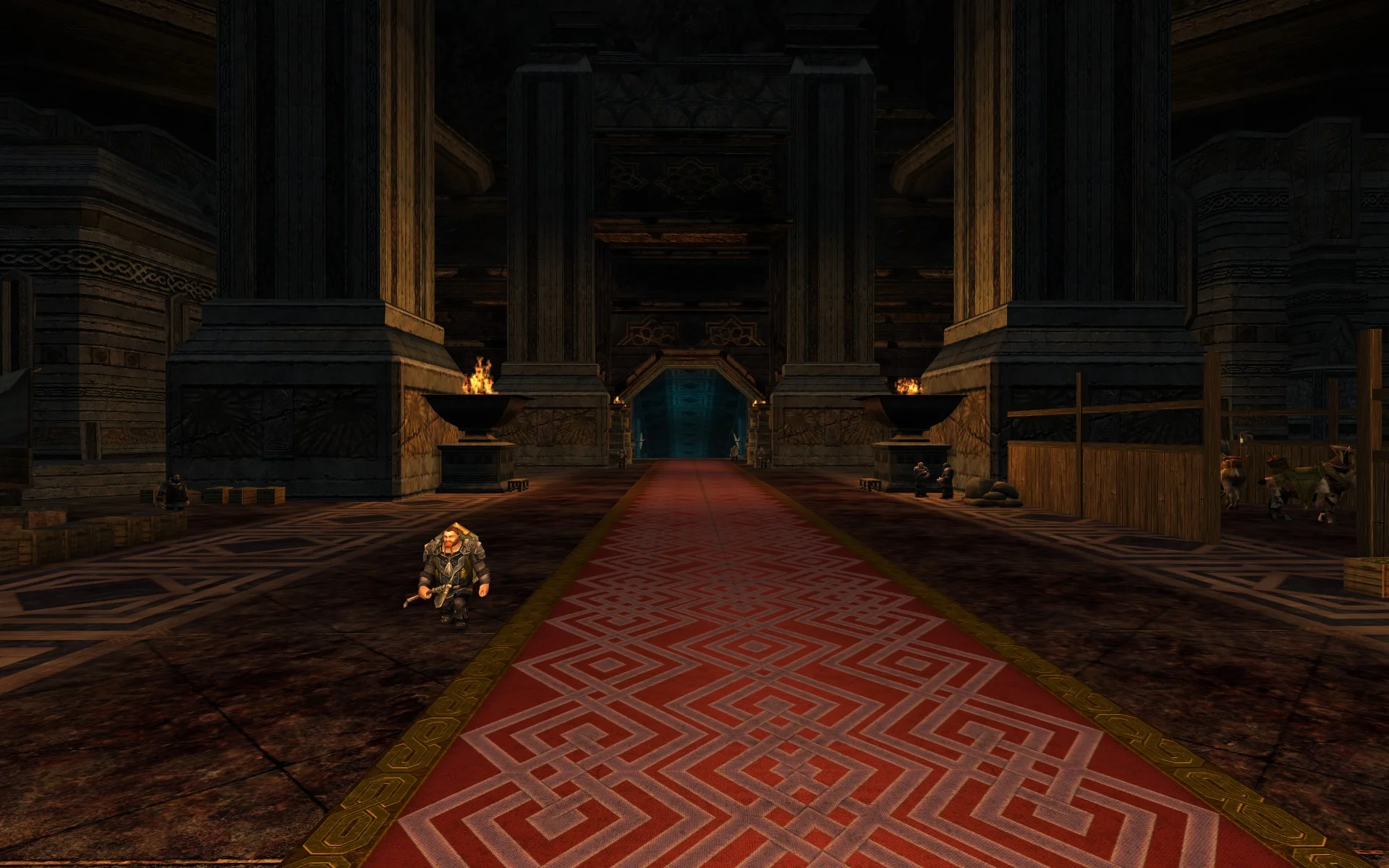
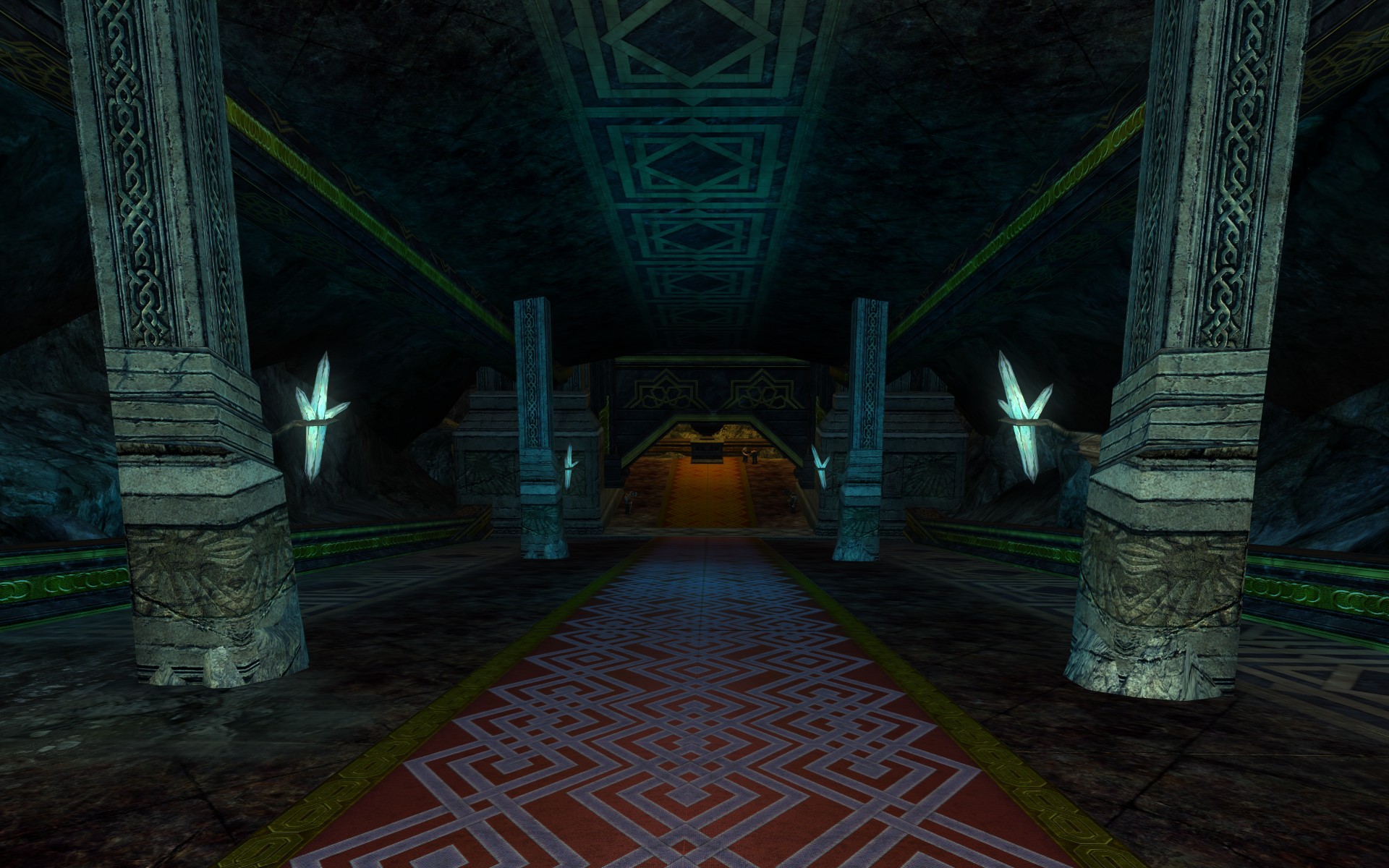
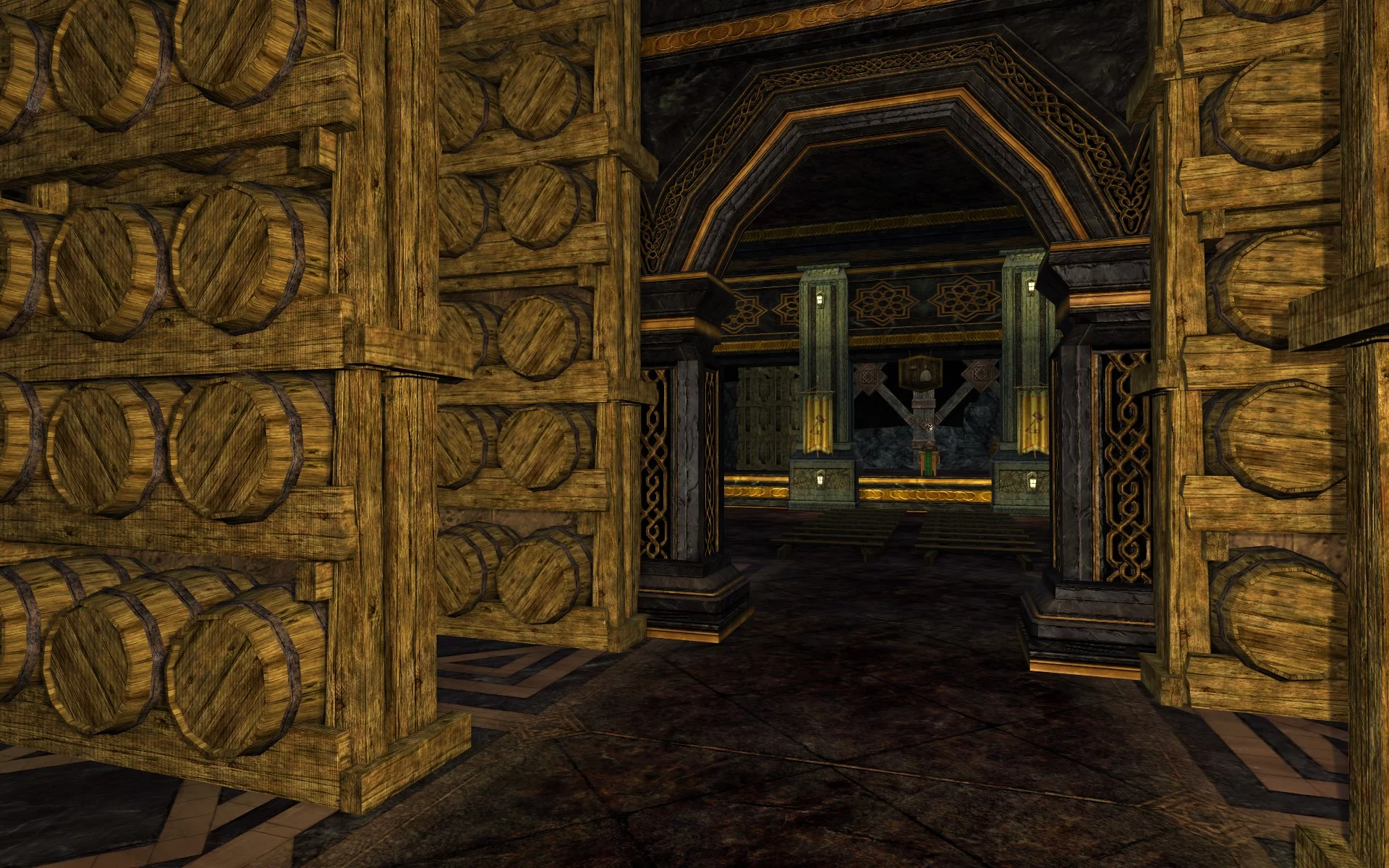
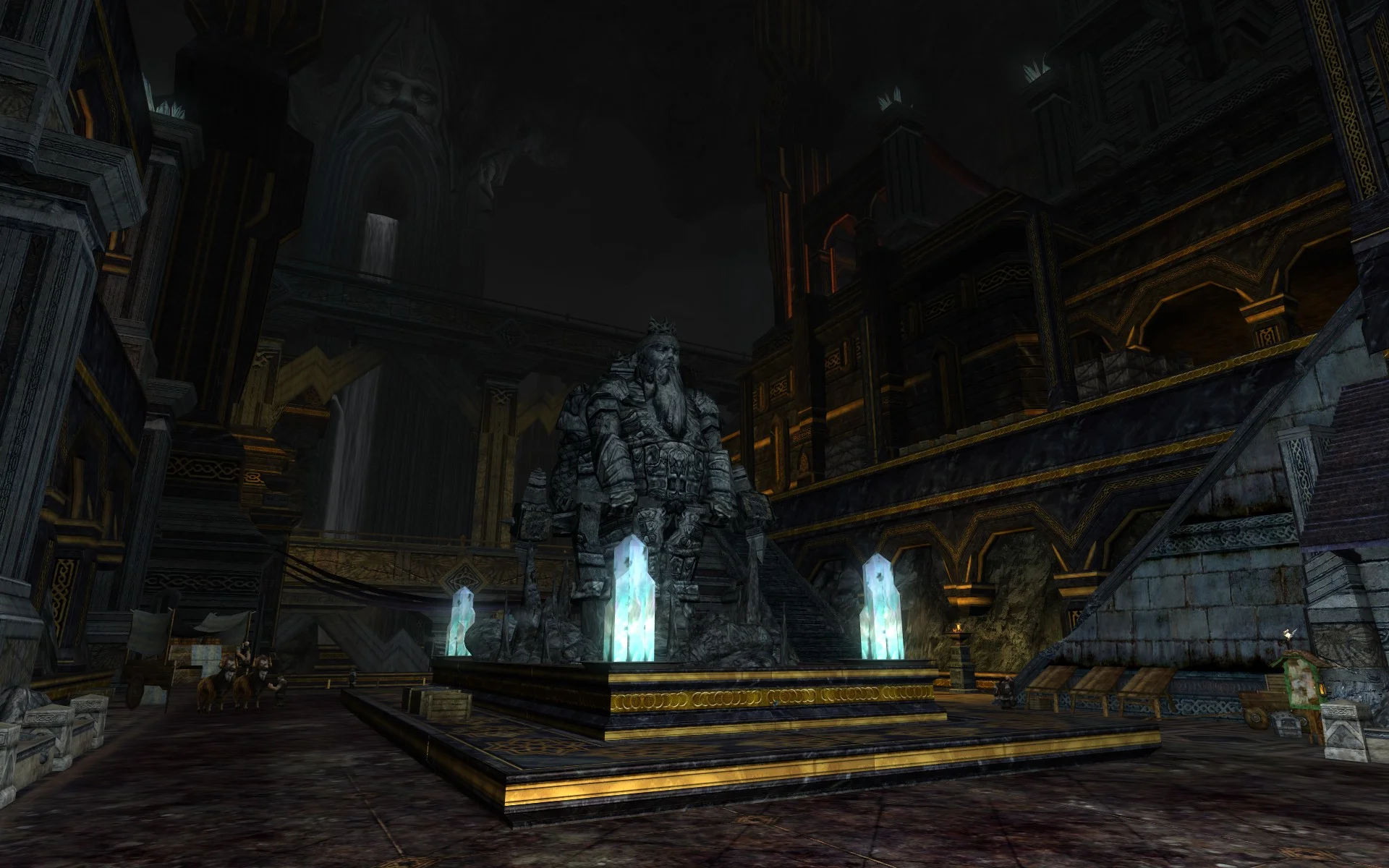
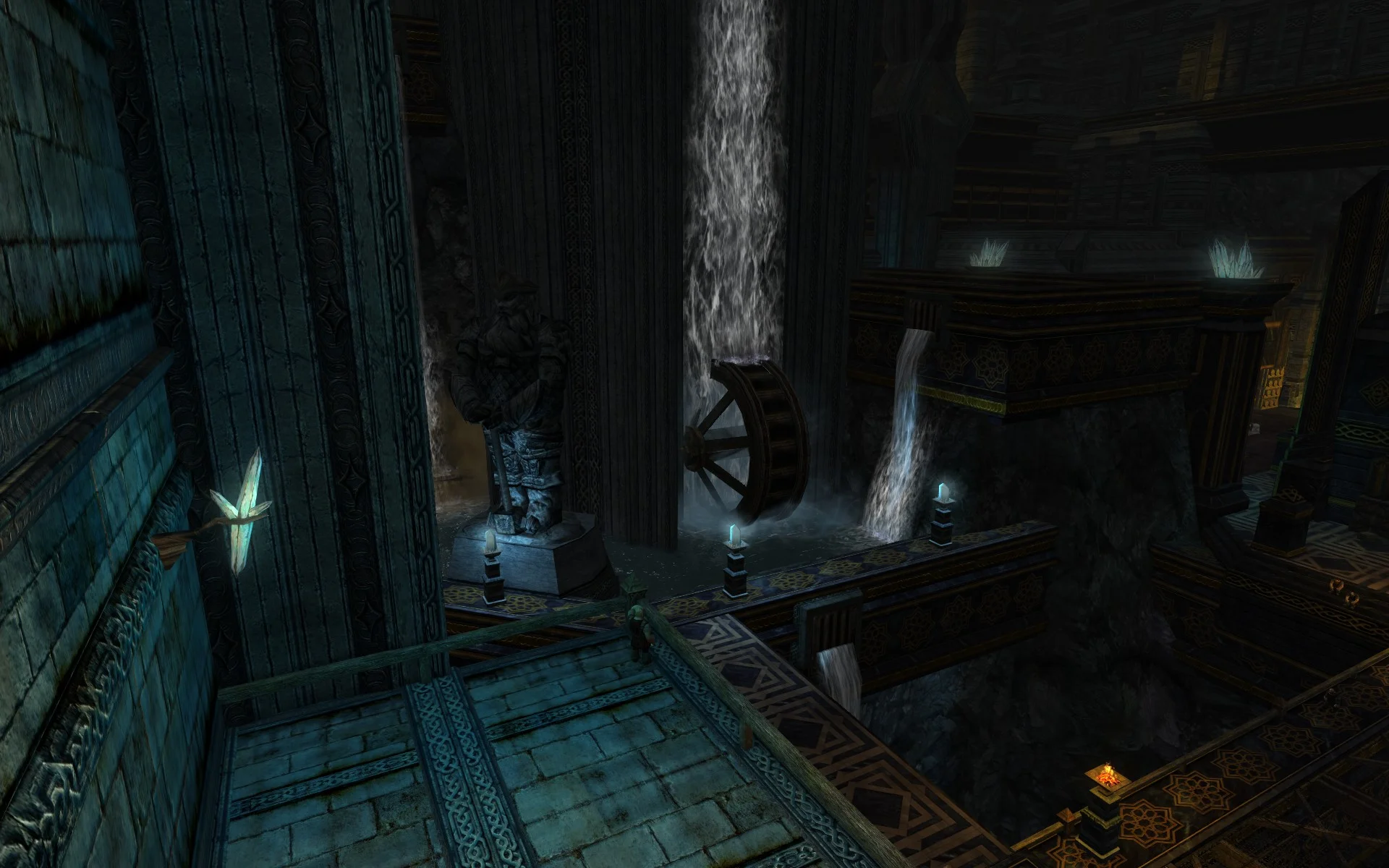
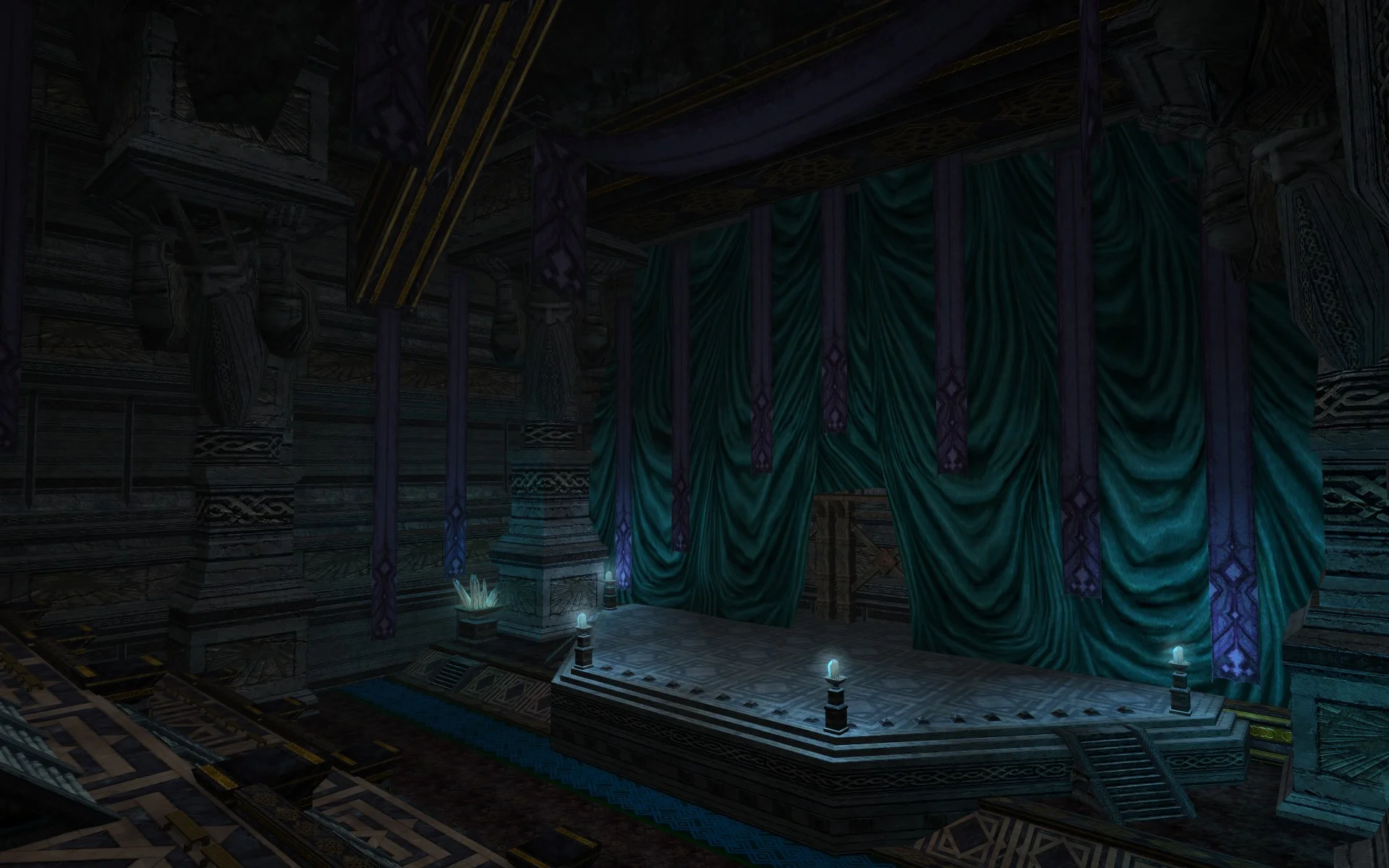
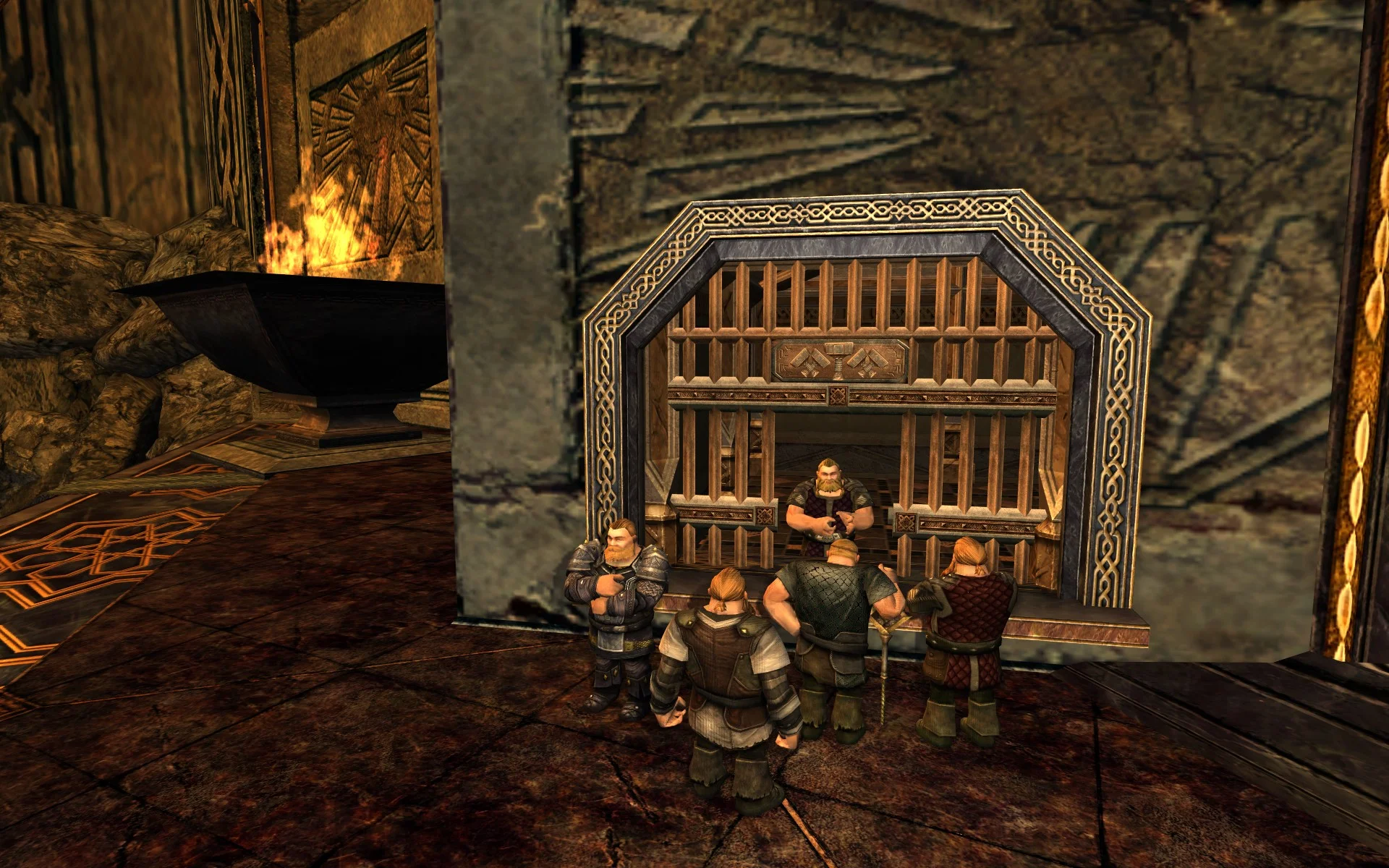
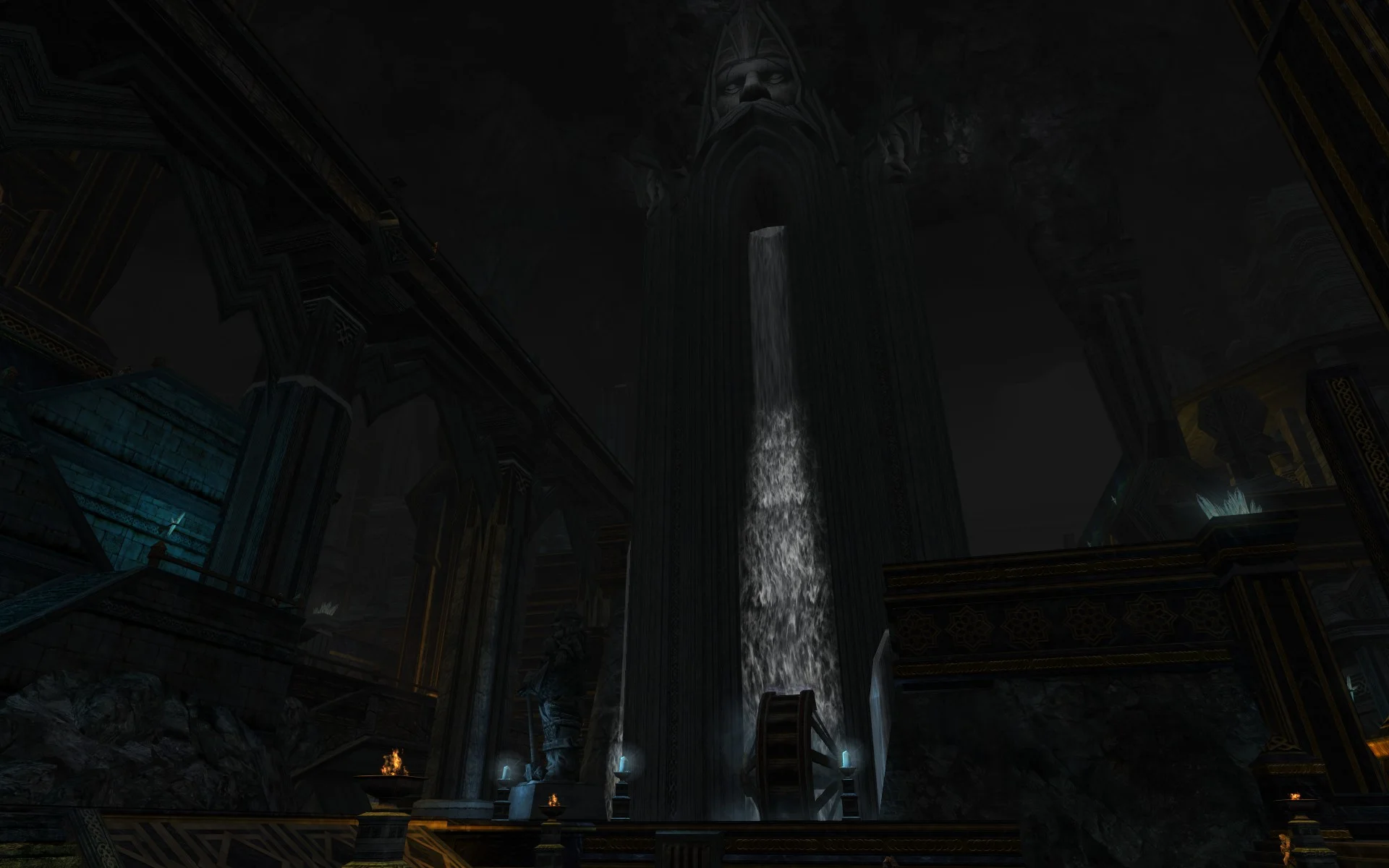
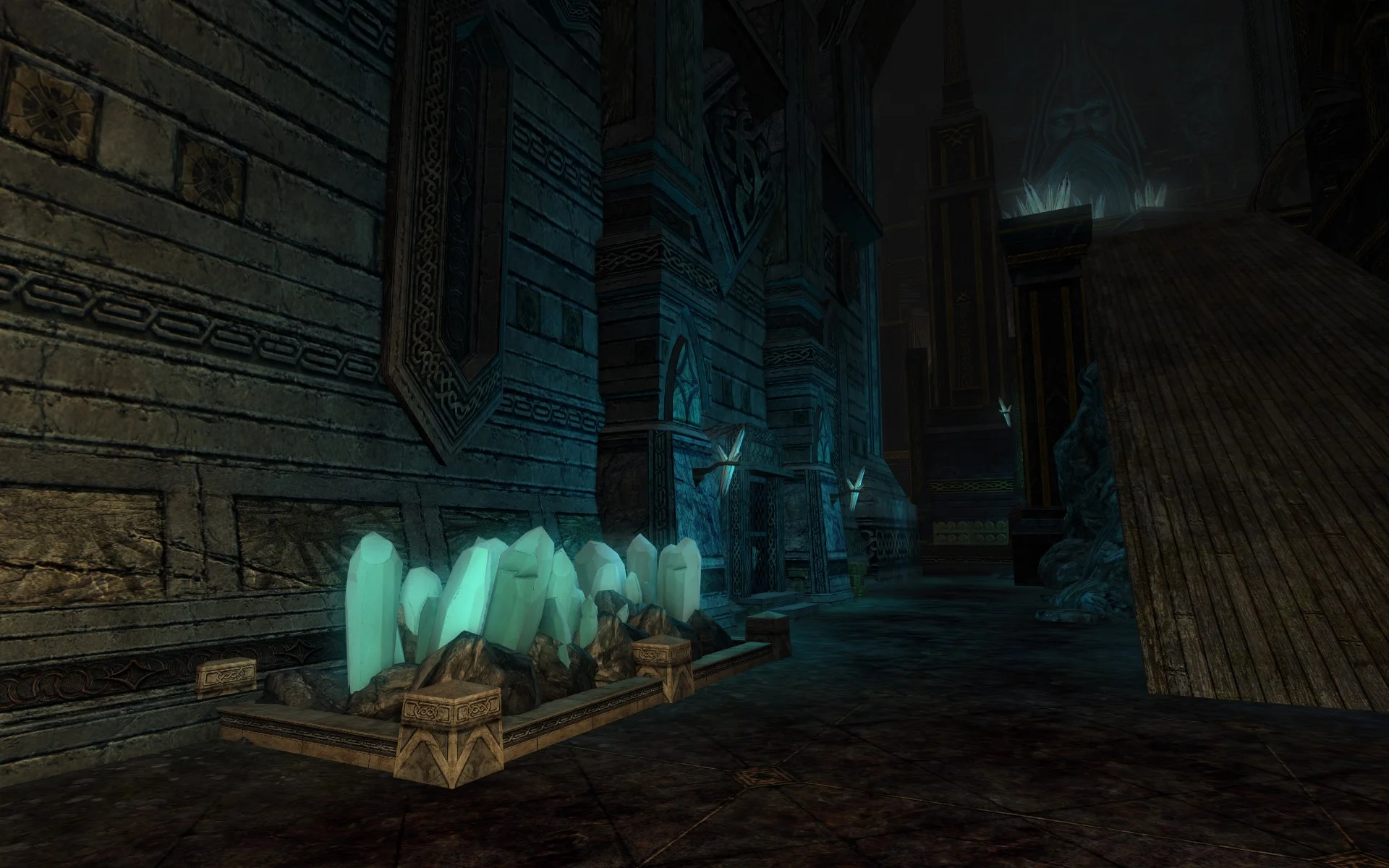
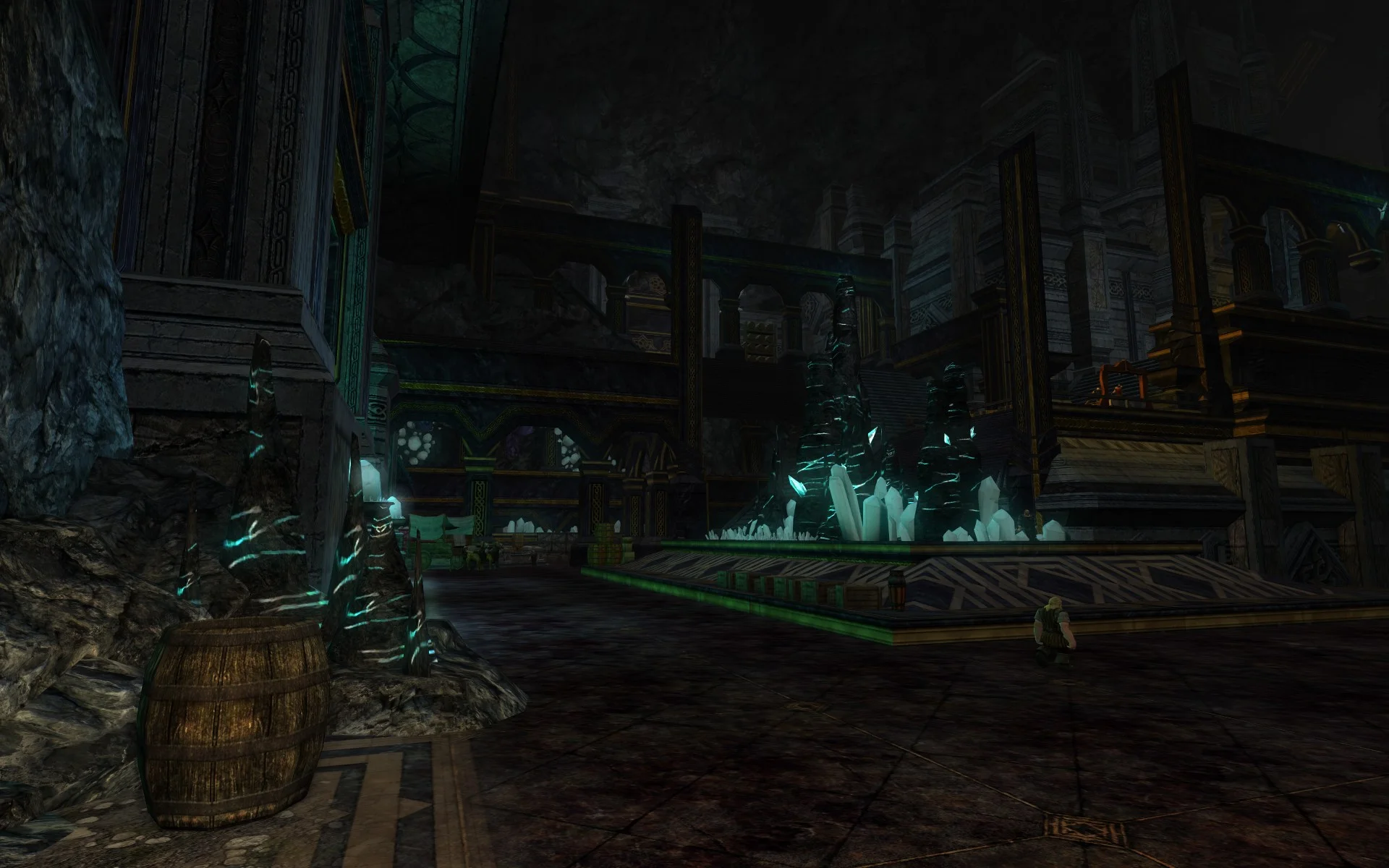
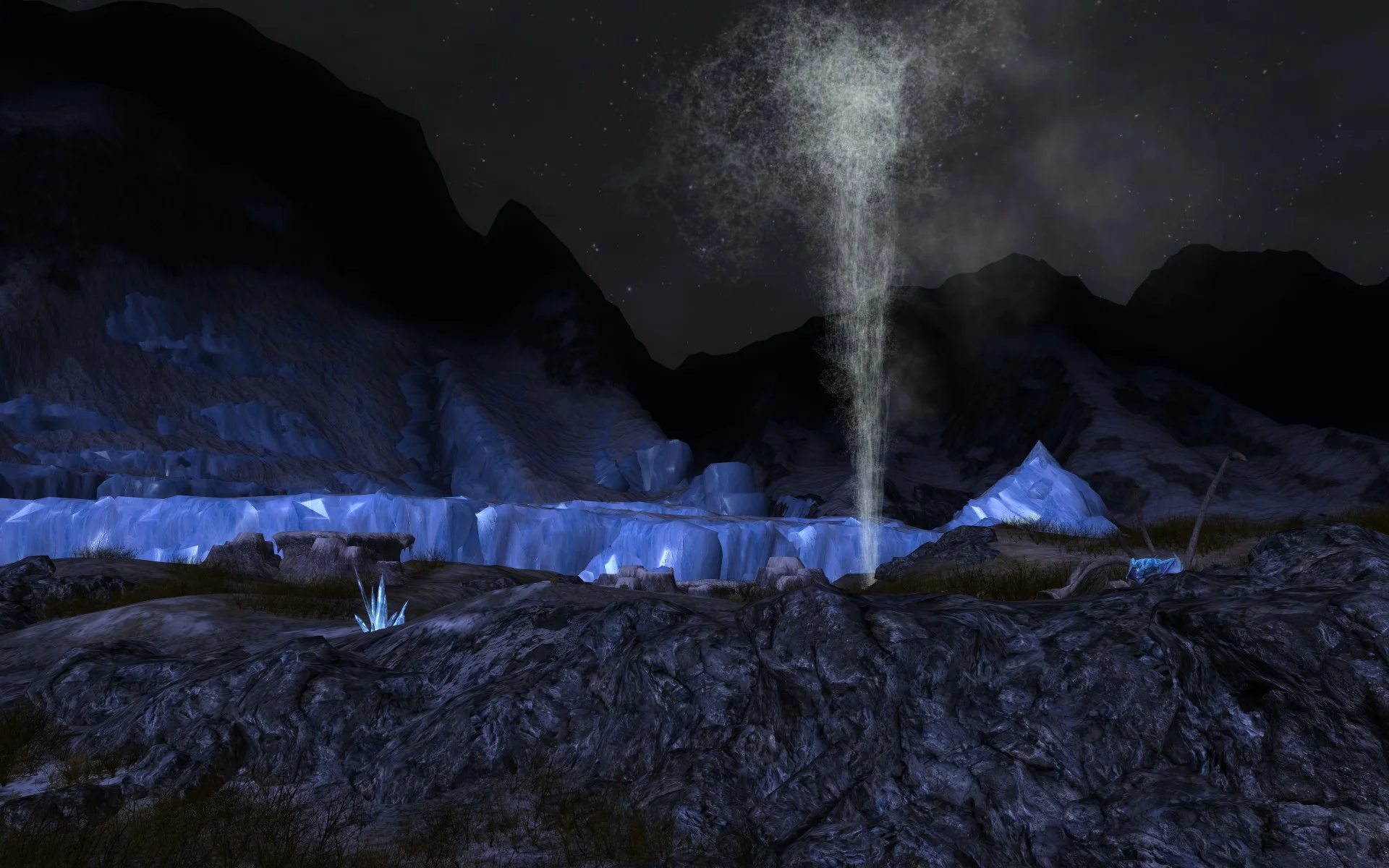
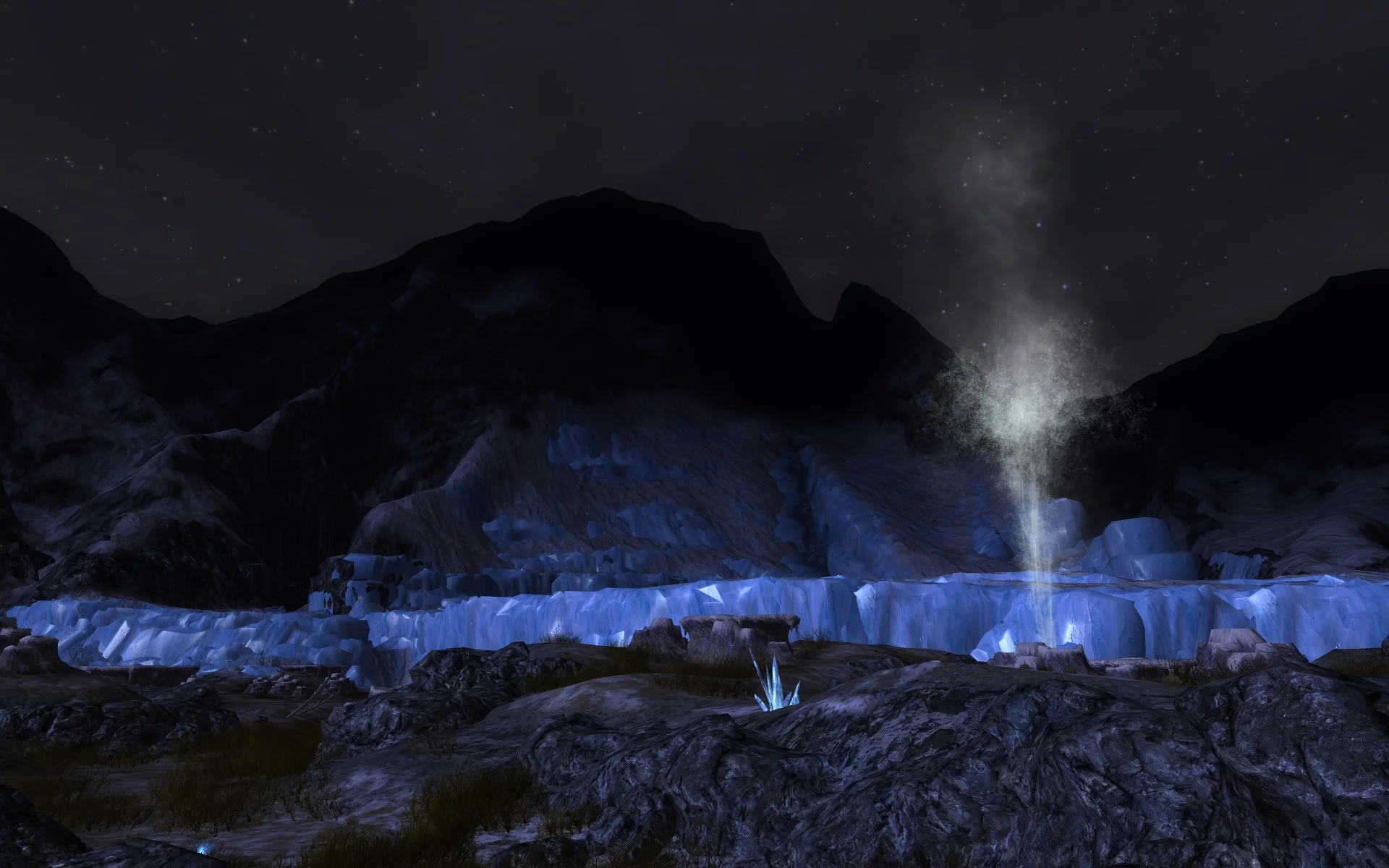
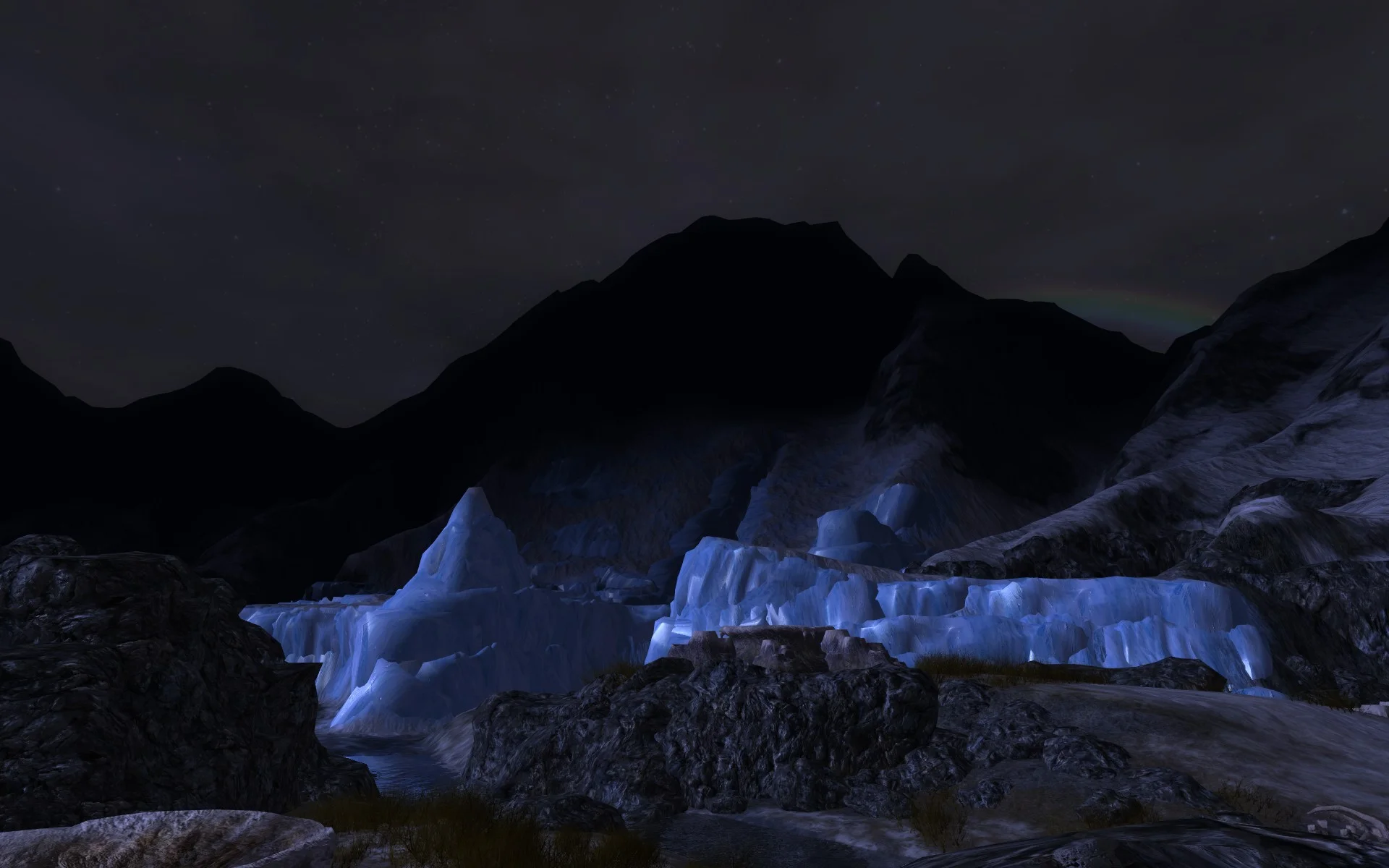
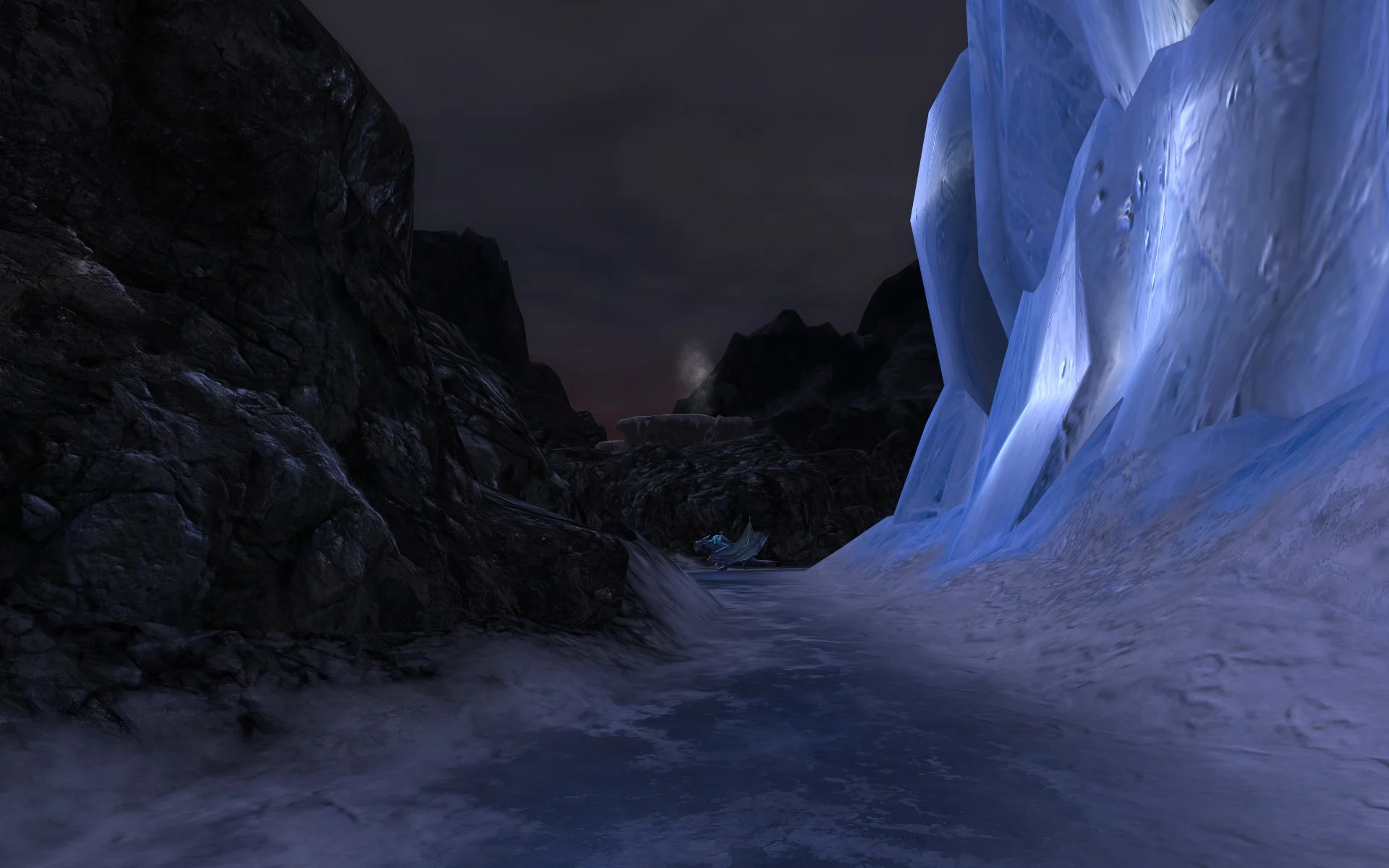
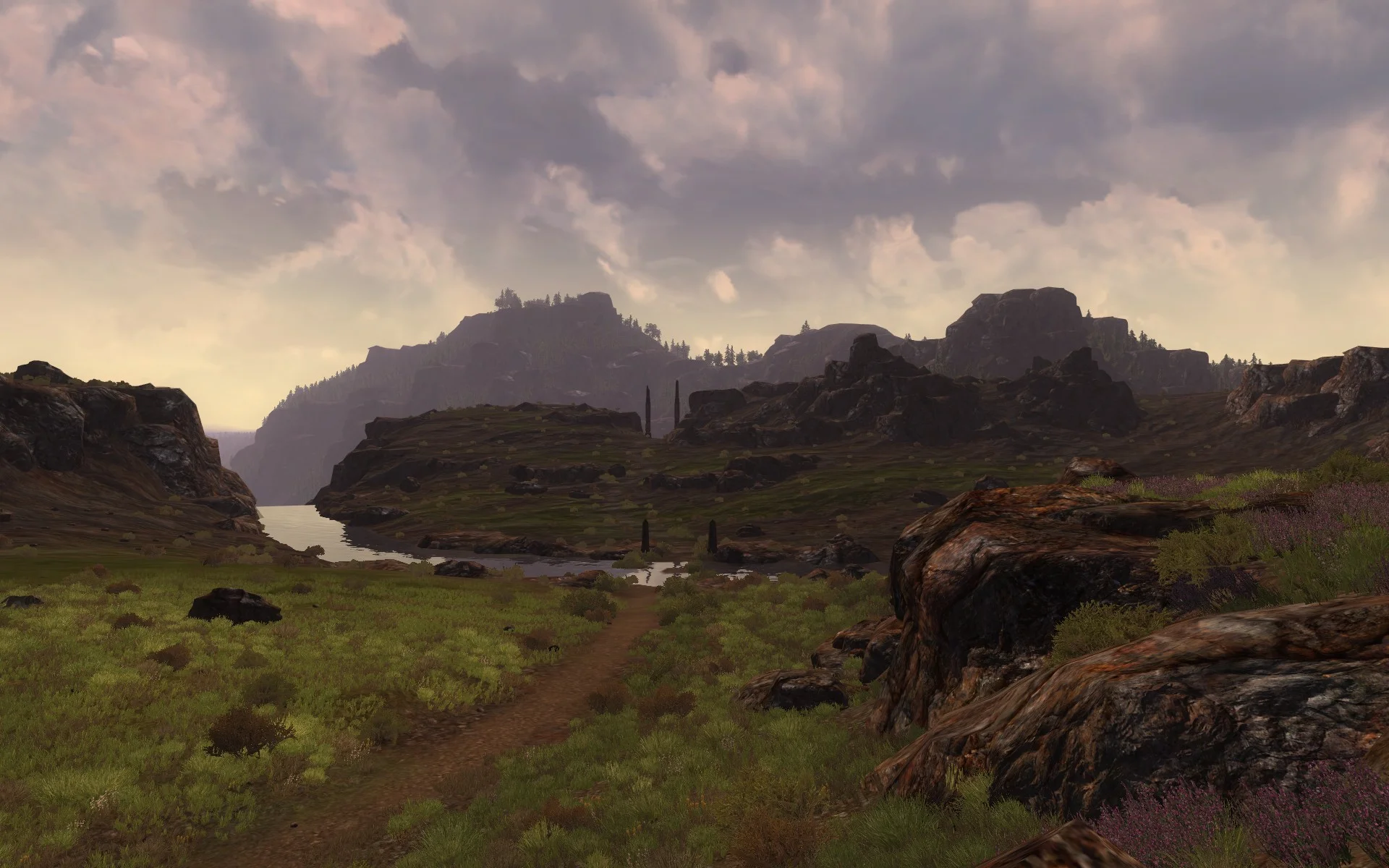
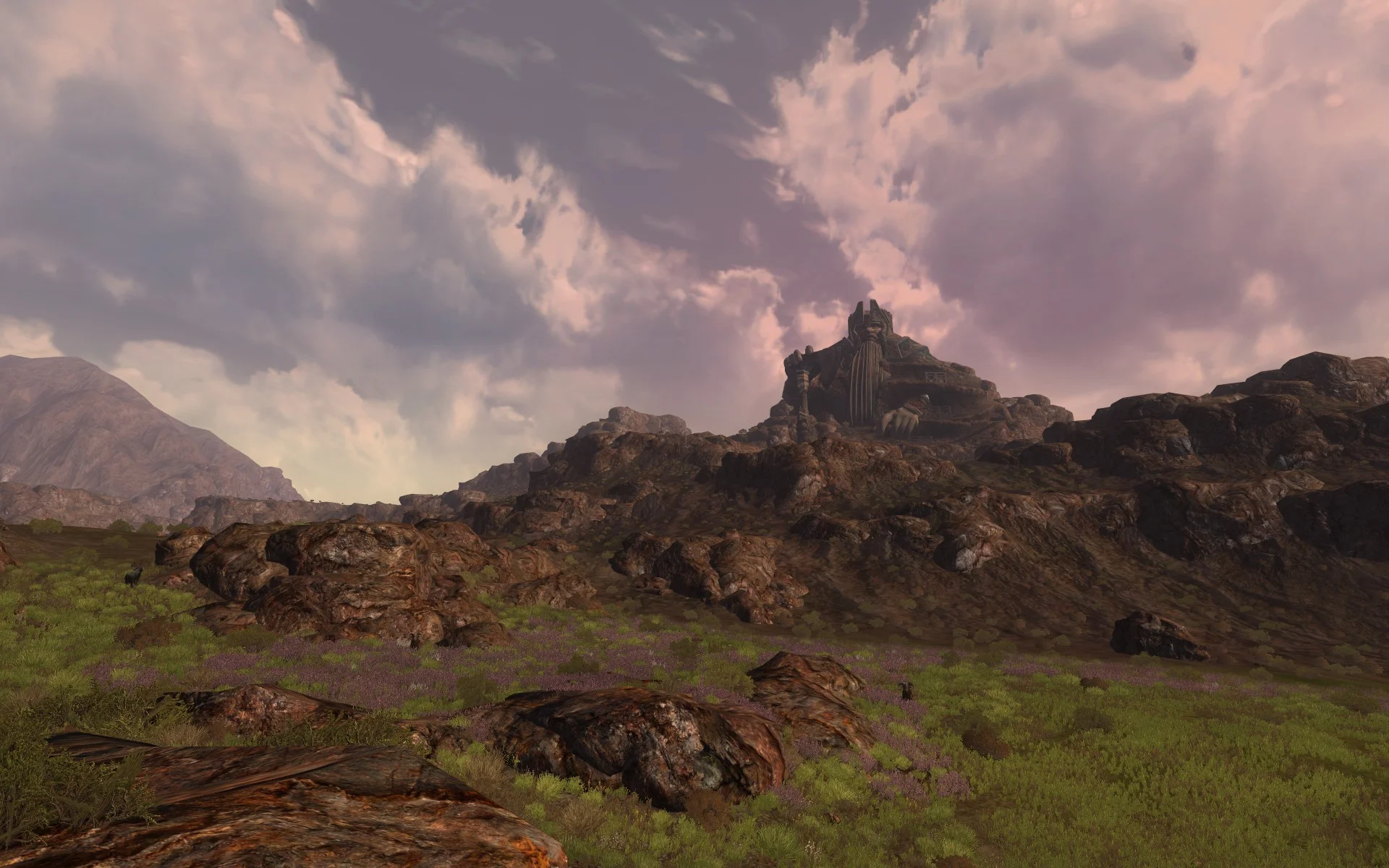
Classic Game Themes: Some of my Personal Favourites
A ten months ago, I wrote about the LOTRO soundtrack and listed some of my favourite tracks. This time round rather than just limit myself to music from one game, I thought it may be more interesting to broaden the remit. So, I have decided to upload seven of my favourite tracks and music cues from various games I have played over the last two decades. As with cinema, the soundtrack of a game plays a very important role. It can make a substantial impact on the players perceptions and enjoyment. The following tracks are examples that I feel have greatly enhanced a game. They’re also ones that I find particularly enjoyable. They are not in any order of preference.
A ten months ago, I wrote about the LOTRO soundtrack and listed some of my favourite tracks. This time round rather than just limit myself to music from one game, I thought it may be more interesting to broaden the remit. So, I have decided to upload seven of my favourite tracks and music cues from various games I have played over the last two decades. As with cinema, the soundtrack of a game plays a very important role. It can make a substantial impact on the players perceptions and enjoyment. The following tracks are examples that I feel have greatly enhanced a game. They’re also ones that I find particularly enjoyable. They are not in any order of preference.
Lord of The Rings Online. Mines of Moria: A Journey in the Dark. By Chance Thomas
This is a superb track. The blend of strings and vocals catches the enigma of Moria beautifully. I personally consider it to be the highlight of the expansions soundtrack.
Battlefield 1943: Main Theme. By Joel Eriksson
This utterly rousing track by Swedish composer Eriksson, totally embodies military action and a call to arms. Sadly, the more contemporary arrangements that have featured in more recent instalments of the franchise have less impact.
Age of Conan: The Damp Barachan Nights. By Knut Avenstroup Haugen
I was greatly surprised by the sophistication of the Age of Conan soundtrack. This acoustic piece beautifully captures the tropical nights of the Island of Tortage.
Tomb Raider: Main Theme. By Nathan McCree and Martin Iveson
An iconic theme that still holds up very well after twenty-two years.
Lord of The Rings Online. Shadows of Angmar: Stars and Glory. By Chance Thomas
This cue plays in the Lonelands at night. It was one of the first tracks from LOTRO that left a lasting impression on me.
Call of Duty Modern Warfare 2: Estate Escape. Hans Zimmer
Hans Zimmer brings his "A" list Hollywood talent to this franchise. I love the Middle Eastern elements that he brings to this piece.
Warhammer - Dark Omen: Main Theme. Mark Knight
An unsettling and creepy electronic score from 1998, It suits the game perfectly.



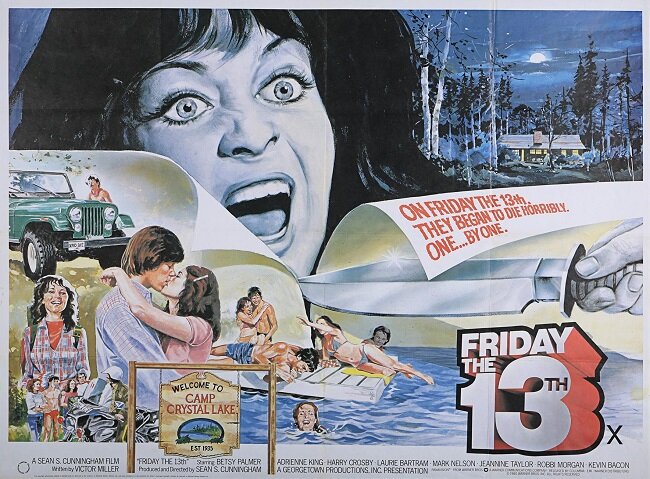

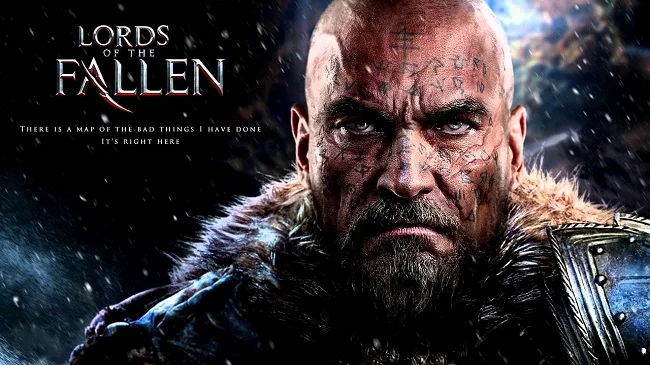
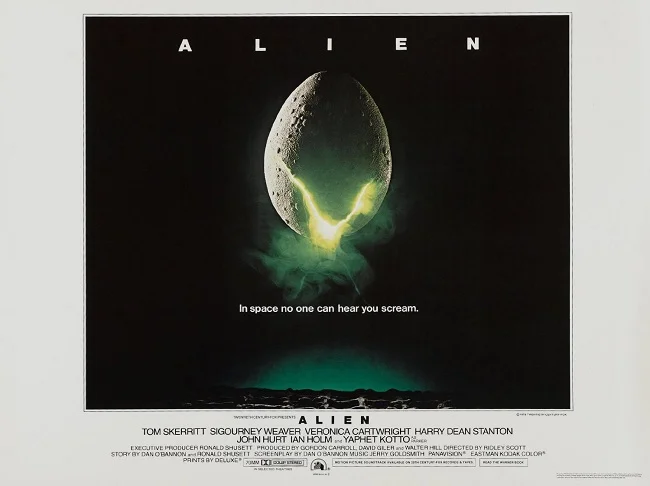

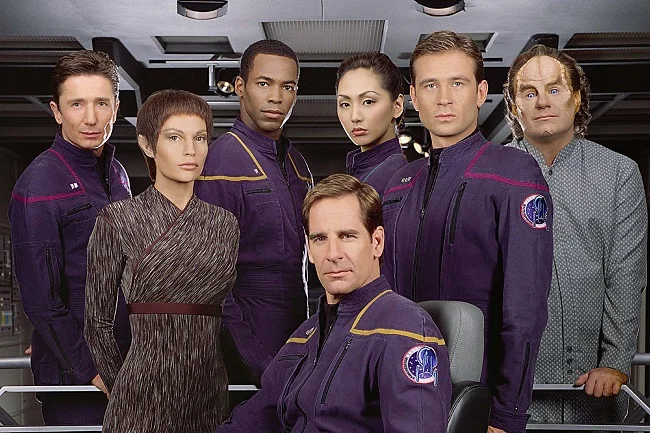
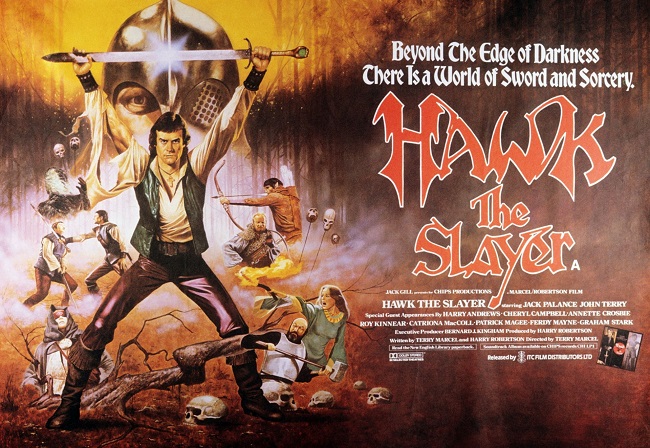


Cockneys vs Zombies (2012)
Back in the summer of 2012, the red band trailer for Cockneys vs Zombies set a very high benchmark and certainly raised expectations for the final movie. The title itself was also somewhat of a gamble, either raising a wry smile among horror fans or eliciting a roll of the eyes and a deep sigh for a genre in decline. I was unable to attend the premier at Frighfest 2012, but the general feedback at the time was that that that the movie was extremely well received by horror fans. Finally, six years later, I finally caught up with the film on Amazon Prime and I’m happy to report that Cockneys vs Zombies does live up expectations and is a thoroughly entertaining, quirky and very British horror movie. It manages to balance both visceral horror with a healthy dose of black humour, which is no mean feat.
Back in the summer of 2012, the red band trailer for Cockneys vs Zombies set a very high benchmark and certainly raised expectations for the final movie. The title itself was also somewhat of a gamble, either raising a wry smile among horror fans or eliciting a roll of the eyes and a deep sigh for a genre in decline. I was unable to attend the premier at Frighfest 2012, but the general feedback at the time was that that that the movie was extremely well received by horror fans. Finally, six years later, I finally caught up with the film on Amazon Prime and I’m happy to report that Cockneys vs Zombies does live up expectations and is a thoroughly entertaining, quirky and very British horror movie. It manages to balance both visceral horror with a healthy dose of black humour, which is no mean feat.
Is Cockneys vs Zombies a ground-breaking genre classic with a subtext of social commentary like George Romero's Dawn of the Dead? Of course not. It’s a lot closer to Return of the Living Dead and Sean of the Dead with its comedy violence and offbeat, quirky characters. It does not redefine the genre, but it certainly embellishes it and offers entertaining new slant. The screenplay by James Moran is witty and packed with clever homages and references to both horror and gangster movies. The cast both young and old acquit themselves well and the visual effects and production design are impressive for a modest budget production. The undead meet a multitude of unpleasant demises, often accompanied by a pithy quip. Full marks go to director Matthias Hoene for correctly ascertaining what audiences want and delivering it in spades.
The central plot device (or MacGuffin) of Cockneys vs Zombies is a group of senior citizens fighting the undead and defending their residential care home. It’s a simple idea that works extremely well. The likes of Richard Briers, Dudley Sutton and Honor Blackman effortlessly inject humour and pathos in to their characters, demonstrating their collective acting talent. Alan Ford excels with a new variation of the traditional East End hard man that he has played many times before. It is with these actors that James Moran's screenplay really finds its stride. The dialogue is profane, dry and filled with the most tortuous Cockney rhyming slang ever. It is also well observed, honest and very entertaining. The secondary plot in which a group of younger protagonists attempts to rob a bank to raise fund for their grandparent’s care home, is not quite so compelling.
Cockneys vs Zombies achieves it aims because it does not over stretch itself. The movie is content to work within the parameters it sets and make great use of its London setting. So many horror films these days fail because they lose sight of what they are about or because they are made by people who fundamentally disrespect the genre. Cockneys vs Zombies is the complete opposite and is clearly a labour of love. There's no parody or self-referential postmodern pretension. Just honest humour and a lot of zombie-based gore. It’s far from subtle, but who wants subtlety in a zombie movie?
LOTRO: Progressing Through Mordor
It was in May that I last subscribed to LOTRO and attempted to progress through the Mordor expansion. I was under geared and under powered and the initial zone of Udûn was proving to be an up-hill struggle. So, I decided to level elsewhere in the game and managed to get as far as 111 (the current level cap is 115). I still couldn’t improve my gear so there was no point bypassing Mordor and going straight to the Dale-lands which were released in June in Update 22. So, I decided to spend my gaming time elsewhere and left LOTRO. However, the recent Bullroarer preview of Update 23 rekindled my interest in the MMO. Surely Mordor wasn’t the immovable obstacle that I thought? So, I subscribed once again, and returned to the game on Friday evening. Luckily, there were several kinship members online and they generously helped me until I reached the “tipping point” of the Mordor expansion. Two days later and I’ve nearly hit level cap and the game although challenging, it’s no longer the grind that it was a few months ago.
It was in May that I last subscribed to LOTRO and attempted to progress through the Mordor expansion. I was under geared and under powered and the initial zone of Udûn was proving to be an up-hill struggle. So, I decided to level elsewhere in the game and managed to get as far as 111 (the current level cap is 115). I still couldn’t improve my gear so there was no point bypassing Mordor and going straight to the Dale-lands which were released in June in Update 22. So, I decided to spend my gaming time elsewhere and left LOTRO. However, the recent Bullroarer preview of Update 23 rekindled my interest in the MMO. Surely Mordor wasn’t the immovable obstacle that I thought? So, I subscribed once again, and returned to the game on Friday evening. Luckily, there were several kinship members online and they generously helped me until I reached the “tipping point” of the Mordor expansion. Two days later and I’ve nearly hit level cap and the game although challenging, it’s no longer the grind that it was a few months ago.
In a nutshell the key to success in Mordor is gear. Specifically gear that has the “Light of Eärendil” defensive stats. This is designed to counteract a cumulative debuff known as the “Shadow of Mordor”. This is simply a new version of the Radiance stat that was found on Moria and Mirkwood raid sets back in the day. Without “Light of Eärendil” a player is severely gimped. Mordor is essentially a major gear check for LOTRO. You start getting random pieces of new armour by clearing regional quests but it’s all very piecemeal. Hence the initial few levels above 105 are a slog. However, once you get to level 112, you become eligible to buy gear sets via the High-enchanter NPC, using the “Ash of Enchantment” barter currency. Players obtain this currency by deconstructing surplus gear they’ve obtained via quest, loot drops or Gorgoroth Steel-bound Lootboxes. Any item that has the “Light of Eärendil” can be broken down into “Ash of Enchantment” by using “Flame of Ancalamír” crystal.
To cut a long story short, I was given several lootboxes and keys which provided me with enough “Ash of Enchantment” to buy a level appropriate gear set. I chose the “Light Tower Set” which favours DPS builds. Upon equipping the gear, my stats were significantly boosted, thus making questing in Mordor significantly easier. I have subsequently progressed through the Epic Story and some of the regional quests and expect to hit 115 in the next day or so. I have even gone so far as to plan ahead and determine which set I shall buy next. I estimate that to obtain all armour and jewellery for the “Light Expedition's Vanguard Incomparable Set” will cost about 4,800 “Ash of Enchantment”. The irony is however, that I shall only enjoy the benefits of this set for about a month or so, because once Update 23 is released the level cap is increased to 120 and they’ll be new gear.
Now what has become apparent to me as I’ve progressed through Mordor over the weekend is the way that lootboxes have become more significant in LOTRO and I suspect that this may only get worse in future updates. A player can grind quests to get gear to convert to ash, but lootboxes offer a “far quicker solution”. I suspect that we are now finally seeing the consequences of Standing Stone Games “business relationship” with the Daybreak Game Company. However, that is a different blog post entirely. For the meantime, I’m back in LOTRO, making progress and having fun. Now that I’m no longer fixed upon the grind of the game, I must say that the various storylines in the Mordor expansion are very good. I like the way the SSG draws upon characters we’ve seen before in the game. It was a pleasant surprise to see Alti Spider-bane again. So, to those of you who have also fallen victim to the Mordor grind, there is a solution available, although it is not necessarily one that benefits the solo player. Being in a supportive guild and having access to shared resources helps immensely. Good luck.
The Awakening (2011)
The Awakening has a strong opening with a scene involving a seance. Set in the post WWI years of the early twenties, the film explores the concept of a nation coming to terms with grief. It is here that we are introduced to Florence Cathcart (Rebecca Hall) a professional hoax exposer and paranormal investigator. Is she solely dedicated to debunking the supernatural or does she have a yearning to encounter something genuinely supernatural? This opening sequence is perhaps the highpoint in The Awakening, as it is clever and thought provoking and could have been developed into a story in itself. Although the narrative moves on and maintains a strong grip on the audience for the next two acts, it never quite recaptures the atmosphere and depth of its opening.
The Awakening has a strong opening with a scene involving a seance. Set in the post WWI years of the early twenties, the film explores the concept of a nation coming to terms with grief. It is here that we are introduced to Florence Cathcart (Rebecca Hall) a professional hoax exposer and paranormal investigator. Is she solely dedicated to debunking the supernatural or does she have a yearning to encounter something genuinely supernatural? This opening sequence is perhaps the highpoint in The Awakening, as it is clever and thought provoking and could have been developed into a story in itself. Although the narrative moves on and maintains a strong grip on the audience for the next two acts, it never quite recaptures the atmosphere and depth of its opening.
She is subsequently commissioned to investigate the strange happenings at a boarding school, by schoolmaster Robert Mallory (Dominic West). A boy has reportedly died of fright at seeing a ghostly apparition of a child with a "twisted face". Florence naturally suspects mass hysteria or some distinctly earthly subterfuge. Yet matters are obviously more complex that they first seem, and the plot unfolds into realms of PTS, sexual repression, self-harm. Along the way much ghostly literature is referenced (think M R James, Algernon Blackwood and Shirley Jackson) along with some classic films of a similar idiom, such The Orphanage, The others and The Devil's Backbone.
The Awakening is professionally constructed with a handsome production design and sinister atmosphere. The cast is exceptionally strong, and the film is dominated by Rebecca hall's performance. There are nods to other genre classic and a scene that appears to have been lifted directly from The Changeling, but we will consider this a homage rather than plagiarism. Yet the third act sees the film over reach itself and stray into the realm of incredulity. Considering how much the film initially gets right it is somewhat surprising that such a mistake could have been made at this point. The screenplay co-written by director Nick Murphy and Stephen Volk (Ghostwatch) is very much at fault here and perhaps the least experienced of the pair, Murphy, is the culprit. The twist ending is unfortunately not so much of a surprise and seem to rush to fill in the logical gaps in the plot.
However, despite its faults, I applaud The Awakening for daring to be more traditional in its approach to the genre and for eschewing cheap shocks and tricks that are so prevalent in contemporary horror. The period production design is also authentic and adds to the movies ambience. If you can forgive a somewhat flawed ending you will be rewarded with an atmospheric and thoughtful supernatural drama with solid performances and an understanding of the genre. This film with all its failings is still in a different league to that which Hollywood is currently producing.
LOTRO: Update 23 Preview
I managed to spend an hour or so today, exploring the latest preview of Update 23 for LOTRO, that is currently being beta tested on the Bullroarer server. Sadly, due to my schedule, I did not get to spend as much time as I would like, exploring the new zones, and by the time I reached the Withered Heath, the server closed. However, I did see sufficient for me to be able to gauge progress. Overall this is an interesting zone which offers new iterations of Dwarven culture. Standing Stone Games once again have found the right balance between using established in-game assets and integrating them with newer designs. The results are two regions that are bright, roomy and distinctly Dwarven. However, it should be noted that as ever with these beta previews, the build is subject to change.
I managed to spend an hour or so today, exploring the latest preview of Update 23 for LOTRO, that is currently being beta tested on the Bullroarer server. Sadly, due to my schedule, I did not get to spend as much time as I would like, exploring the new zones, and by the time I reached the Withered Heath, the server closed. However, I did see sufficient for me to be able to gauge progress. Overall this is an interesting zone which offers new iterations of Dwarven culture. Standing Stone Games once again have found the right balance between using established in-game assets and integrating them with newer designs. The results are two regions that are bright, roomy and distinctly Dwarven. However, it should be noted that as ever with these beta previews, the build is subject to change.
Update 23 focuses on the Longbeards, descendants of Durin the Deathless. To begin with, there is an expanded version of Erebor, which adds far more to this Dwarven capital. There are now ornamental gardens, Gemcutter’s court and even a theatre. It certainly feels more like a thriving community. SSG have also added the legendary mines where the Arkenstone of Thrain was found. For those expecting tunnels and diggings like those seen in Peter Jackson’s The Hobbit movies, we’ll you’re in for a disappointment. They are depicted here in the same way as they are elsewhere in LOTRO, IE in a functional and practical fashion, with linear tunnels and mine car tracks. It may not look as opulent as other depictions, but it feels authentic.
East of Dale, SSG have created the fabled Iron Hills. This zone is spacious with a mixture of green plains and brown “hills” filled with iron ore. Hammerstead is the major Dwarven settlement of the region and there is ongoing conflict with the Easterlings, who have occupied one of the other towns in the area. It should be noted that there is a clear influence of Easterling culture on Dwarven armour and weapons in this region. This is also apparent in the Grey Mountains to the North of Erebor. Here we find another Dwarven enclave, Skarhald. This area has clearly suffered under the depravations of Dragons and the zone is littered with their ancient bones. There is a nearby mine, Glimmerdeep, that has fallen to Orcs from Mount Gundabad. This delving is very reminiscent of the Silvertine Lodes in Moria. The Witherted Heath is an interesting addition to the game, featuring bleak and fire blasted steppe region with a large glacier extending down from the mountains. It is also populated with drakes and worms.
As well as new zones and Epic Story content, there are two new Instances for up to three players, and one new Instance for up to six players, in development. There are also ongoing changes to the Hobbit avatars, to bring them in line with the updates made to the other races in recent months. It should be noted that Update 23 will bring an increase in level cap, from 115 to 120. Naturally, the chnage will bring about new gear and cosmetics items, and no doubt there will be yet more factions to gain rep with. Overall, it seems very much like business as usual for LOTRO with this forthcoming update, but as this seems to be what players enjoy, then it is by no means a problem. Certainly, these new zones are a welcome addition to the game and an uplifting alternative to Mordor that still remains a crossroad (or dare I say stumbling block) in the game for some players.