
Nope (2022)
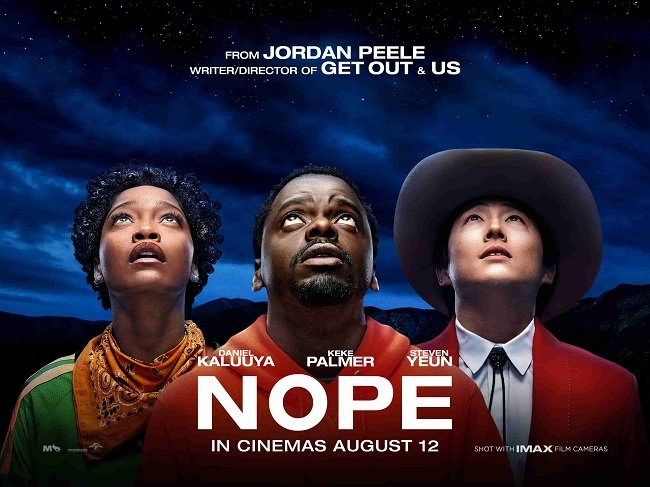
In Agua Dulce, California, the Haywood family trains horses for film and TV productions. One day at the Haywood ranch, small metal objects unaccountably fall from the sky. One of which, a nickel, kills Otis Haywood Sr (Keith David). His children, Emerald “Em” Haywood (Keke Palmer) and Otis “OJ” Haywood Jr. (Daniel Kaluuya), continue to run the business. However, due to the loss of a contract, they have to sell some of the horses to Ricky “Jupe” Park (Steven Yeun), who operates a Western theme park called Jupiter's Claim. One night, the Haywood’s notice the electricity supply fluctuating and their horses violently reacting to an unknown presence. They discover that something has been taking their horses and regurgitating inorganic matter, which OJ believes caused their father's death. The Haywood’s decide to obtain proof and subsequently ask electronics store employee and UFO enthusiast, Angel Torres (Brandon Perea) to set up surveillance cameras.
In Agua Dulce, California, the Haywood family trains horses for film and TV productions. One day at the Haywood ranch, small metal objects unaccountably fall from the sky. One of which, a nickel, kills Otis Haywood Sr (Keith David). His children, Emerald “Em” Haywood (Keke Palmer) and Otis “OJ” Haywood Jr. (Daniel Kaluuya), continue to run the business. However, due to the loss of a contract, they have to sell some of the horses to Ricky “Jupe” Park (Steven Yeun), who operates a Western theme park called Jupiter's Claim. One night, the Haywood’s notice the electricity supply fluctuating and their horses violently reacting to an unknown presence. They discover that something has been taking their horses and regurgitating inorganic matter, which OJ believes caused their father's death. The Haywood’s decide to obtain proof and subsequently ask electronics store employee and UFO enthusiast, Angel Torres (Brandon Perea) to set up surveillance cameras.
Nope is a contemporary telling of an old tale. It has many of the standard tropes you expect from the “creature feature” genre but with a contemporary spin. Just as George A. Romero’s Dawn of the Dead is also a vehicle for a critique of capitalism and consumerism, director Jordan Peele tackles a wealth of sociopolitical points via Nope. He dissects modern media culture, internet fame and the relationship between race and employment. There are no traditional white scientists, didactically explaining things and expediting the plot in received English. The protagonists are all blue-collar workers, who speak and act in a realistic manner. The cast are very good, and the characters are interestingly quirky. The screenplay’s innovation comes from showing a group of people who usually are not the traditional participants in such genre movies. Yet they figure things out on their own terms and the conspicuous absence of the military, local police or newspaper reporter is refreshing.
Nope also excels in depicting a truly original monster. One that is genuinely scary because of the nature of the threat. The digital effects are subtle and it is not until the climax of the film that the audience gains a clearer grasp of the nature of the creature. One sequence is reminiscent of a comparable scare in The Borderlands (2013) and some viewers may consider this a step too far. However, if you’ve made it this far then I would argue that you’re pretty much onboard with wherever Nope is going to go. Although it can be argued that being 30 minutes shorter may have helped proceedings. There is an entire subplot involving Ricky “Jupe” Park, who was a child actor in a sitcom with a chimp called Gordy. This fascinating and tragic vignette seems a little incongruous in relation to the main story and may well have worked better as the basis for a separate film. Minor criticisms aside, Nope is creative, different and superior to much of current mainstream horror cinema. However, its niche approach may not be everyone's cup of tea.





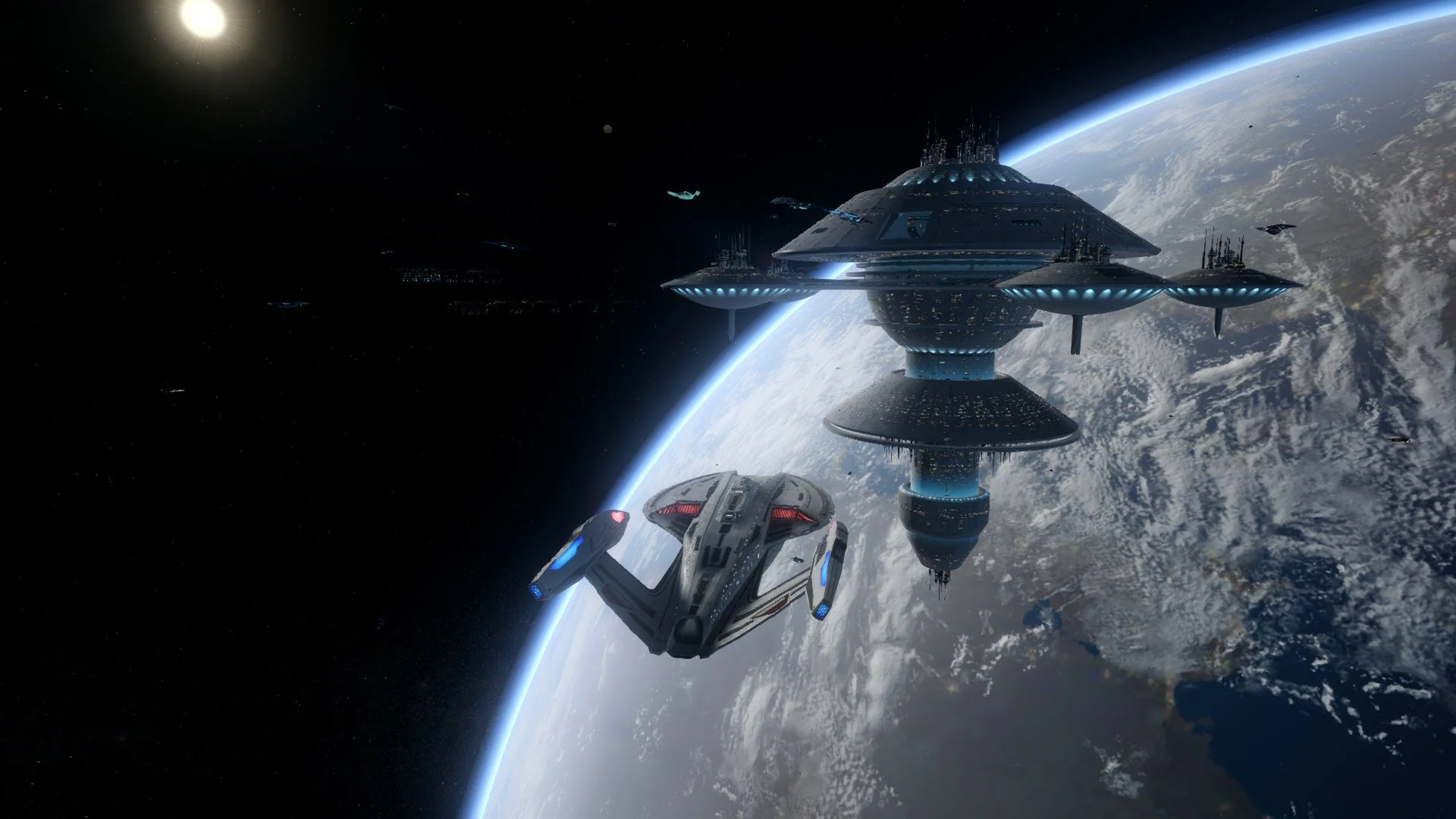
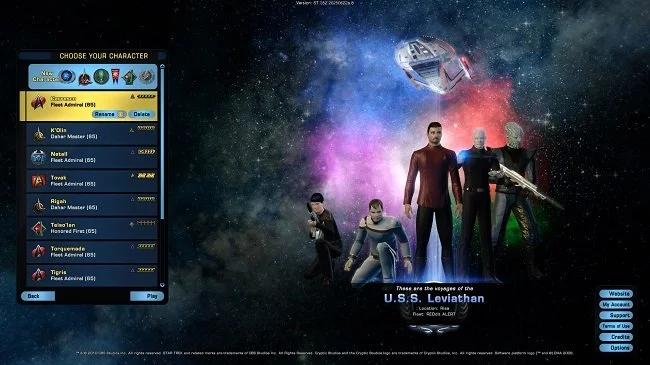
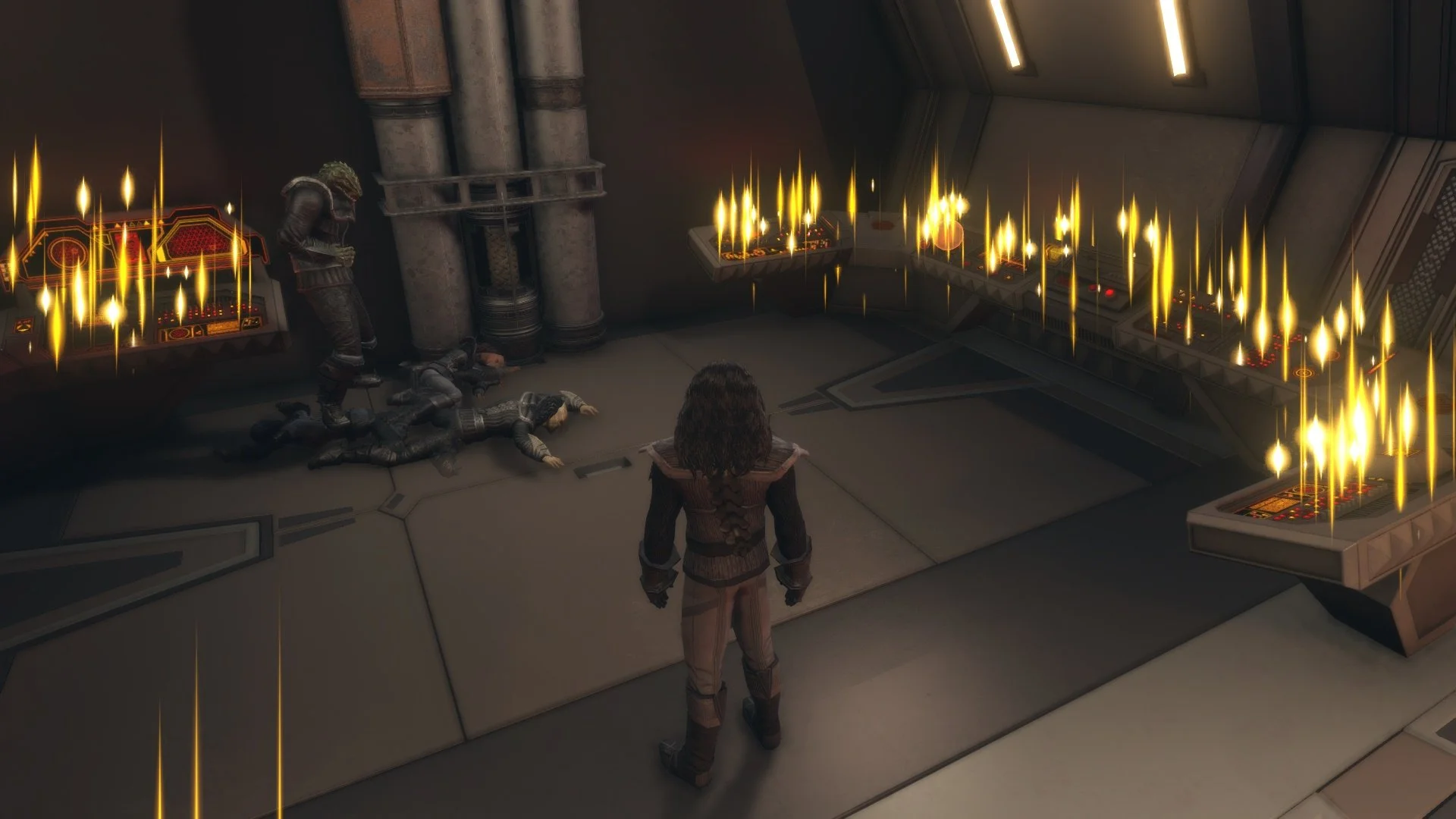
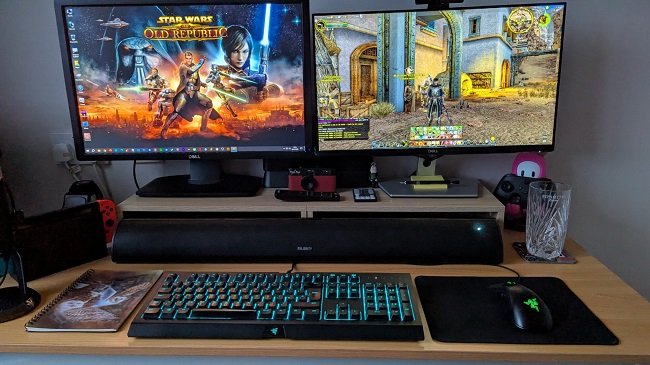
Star Trek Online: Upgrade Your Ship Even Further?
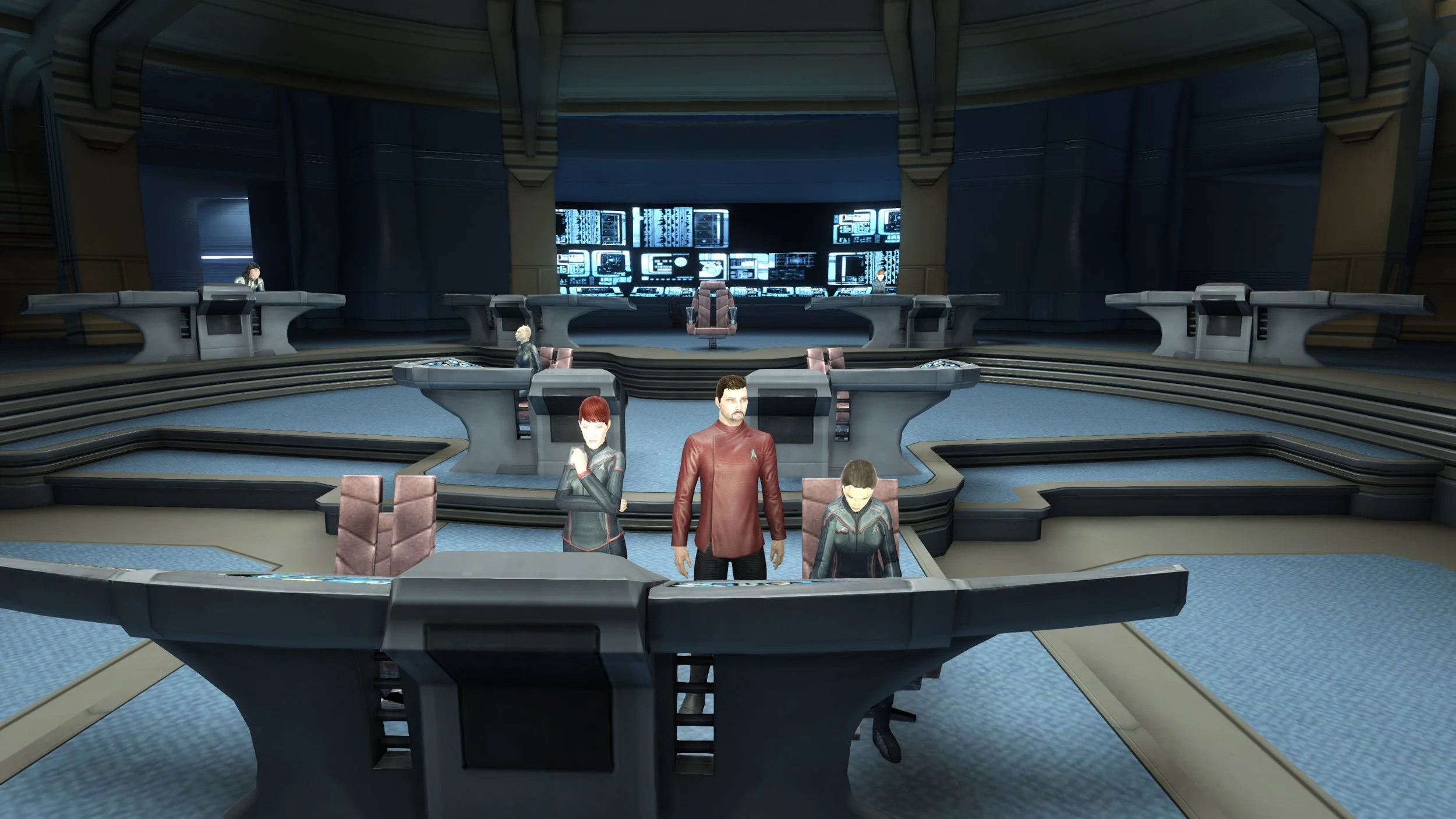
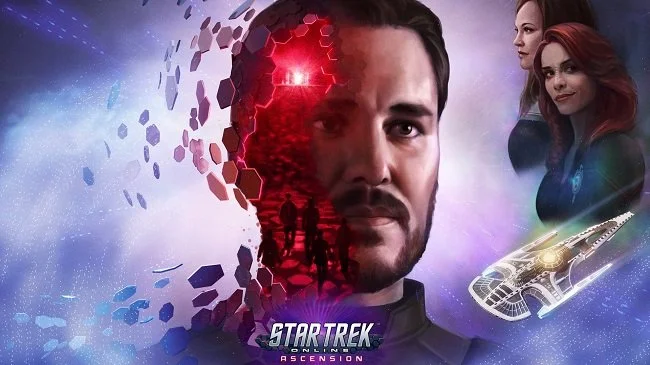
Cryptic used the same statement on their recent news release. Except they ended it with an exclamation mark whereas I’ve chosen a question mark instead. Because I really do question the wisdom of expanding the Experimental Ship Upgrade path and the benefits of applying additional tokens to your ships, unlocking further device, console and trait slots. This is a classic example of doing something because you can, as opposed because you should. Do players at level cap who have already upgraded their ship(s) from Tier 6 to Tier 6-X really need to augment it further? Beyond the immediate stats boost, does it offer any significant benefit to the player or the game in the long run? Or does this situation simply boil down to the fact that it’s another cynically contrived excuse for Star Trek Online developers, Cryptic, to sell you something. For the record, Experimental Ship Upgrade tokens are available for sale in the Zen Store (for money) or can be purchased via Phoenix Prize Pack (for dilithium).
Regarding the title of this post, Cryptic used the same statement on their recent news release. Except they ended it with an exclamation mark whereas I’ve chosen a question mark instead. Because I really do question the wisdom of expanding the Experimental Ship Upgrade path and the benefits of applying additional tokens to your ships, unlocking further device, console and trait slots. This is a classic example of doing something because you can, as opposed because you should. Do players at level cap who have already upgraded their ship(s) from Tier 6 to Tier 6-X really need to augment it further? Beyond the immediate stats boost, does it offer any significant benefit to the player or the game in the long run? Or does this situation simply boil down to the fact that it’s another cynically contrived excuse for Star Trek Online developers, Cryptic, to sell you something. For the record, Experimental Ship Upgrade tokens are available for sale in the Zen Store (for money) or can be purchased via Phoenix Prize Pack (for dilithium).
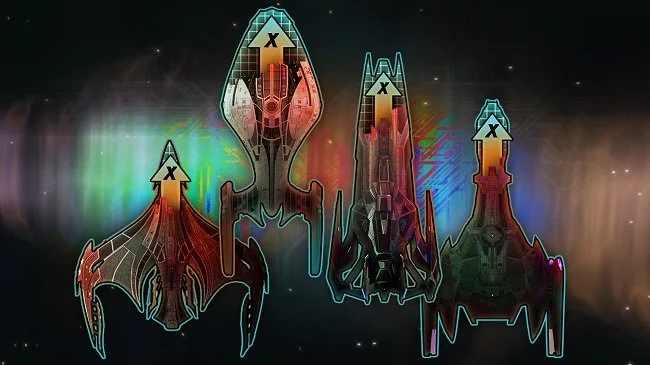
Levelling to cap in STO is not such an arduous struggle as it is in other MMORPGs. Furthermore, the average player can gain acceptable gear for their starship via PVE content, the reputation system or joining a fleet. There are guides available online that show that you can throw together the most basic gear and traits and still have a perfectly serviceable vessel that can adequately play through endgame content. However, for a percentage of players the endgame in STO is all about increasing their DPS statistics via bespoke builds. At present, such a player can assemble the right selection of gear resulting in substantial DPS output. The introduction of Tier 6-X Experimental Ship Upgrade tokens in late 2020, provided an interesting steppingstone for all players. Those playing casually with average gear, benefitted from the additional device, console and ship trait slots. High end players could tweak their builds further and perfect them. Players could also choose not to use them.
Therefore, it can be argued that the introduction of the Tier 6-X upgrade system was justified and equitable. The same arguments don’t seem so applicable with regard to Tier 6-X2. The benefits no longer seem to be couched in terms of levelling the playing field and seem to be simply about purchasing an optional and possibly superfluous statistical upgrade. Cynics will also note that to receive the benefits of a Tier 6-X2 upgrade, the player has to use a further two Experimental Ship Upgrade tokens. Yet despite paying twice the cost, you still only get the same unlocks as with the first upgrade. All of which makes me wonder whether this is worth it. I suspect not and I certainly don’t think I will be hobbling myself if I choose not to. Furthermore, this situation highlights the problem all MMOs have with power creep and the fact that it would be more appropriate for Cryptic to find a comprehensive solution to that problem, rather than offering this money making stop gap..




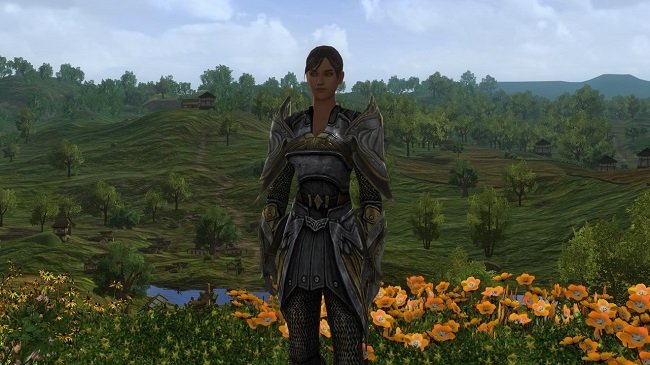
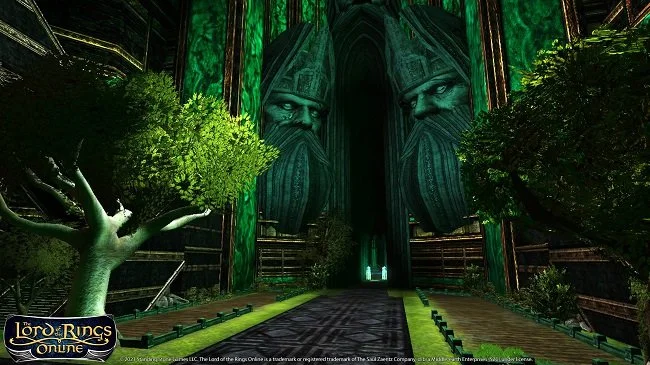
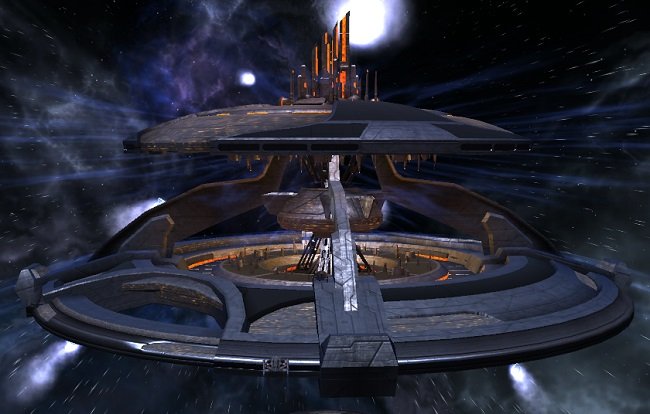
Playing Starfield Part 3: Play Randomly or Follow a Guide?
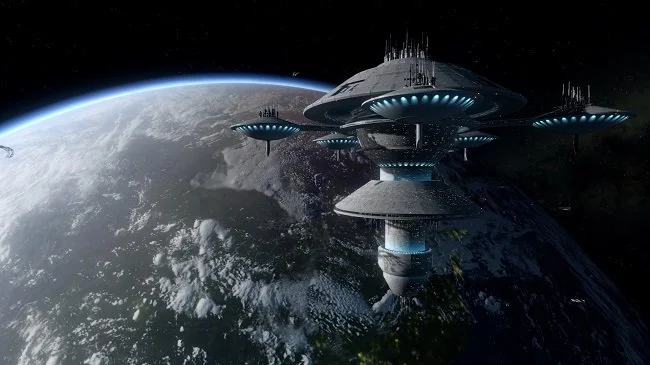
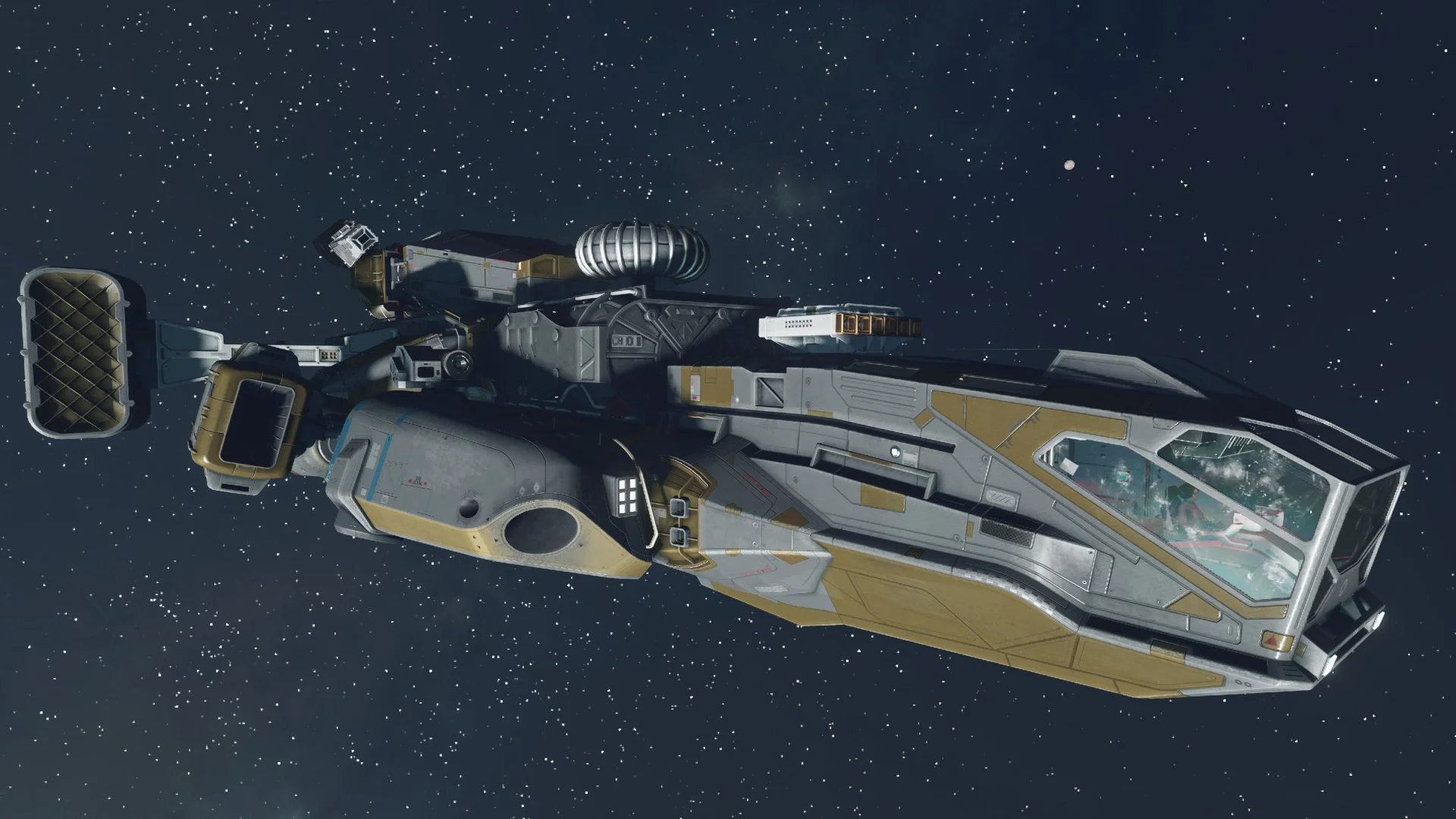
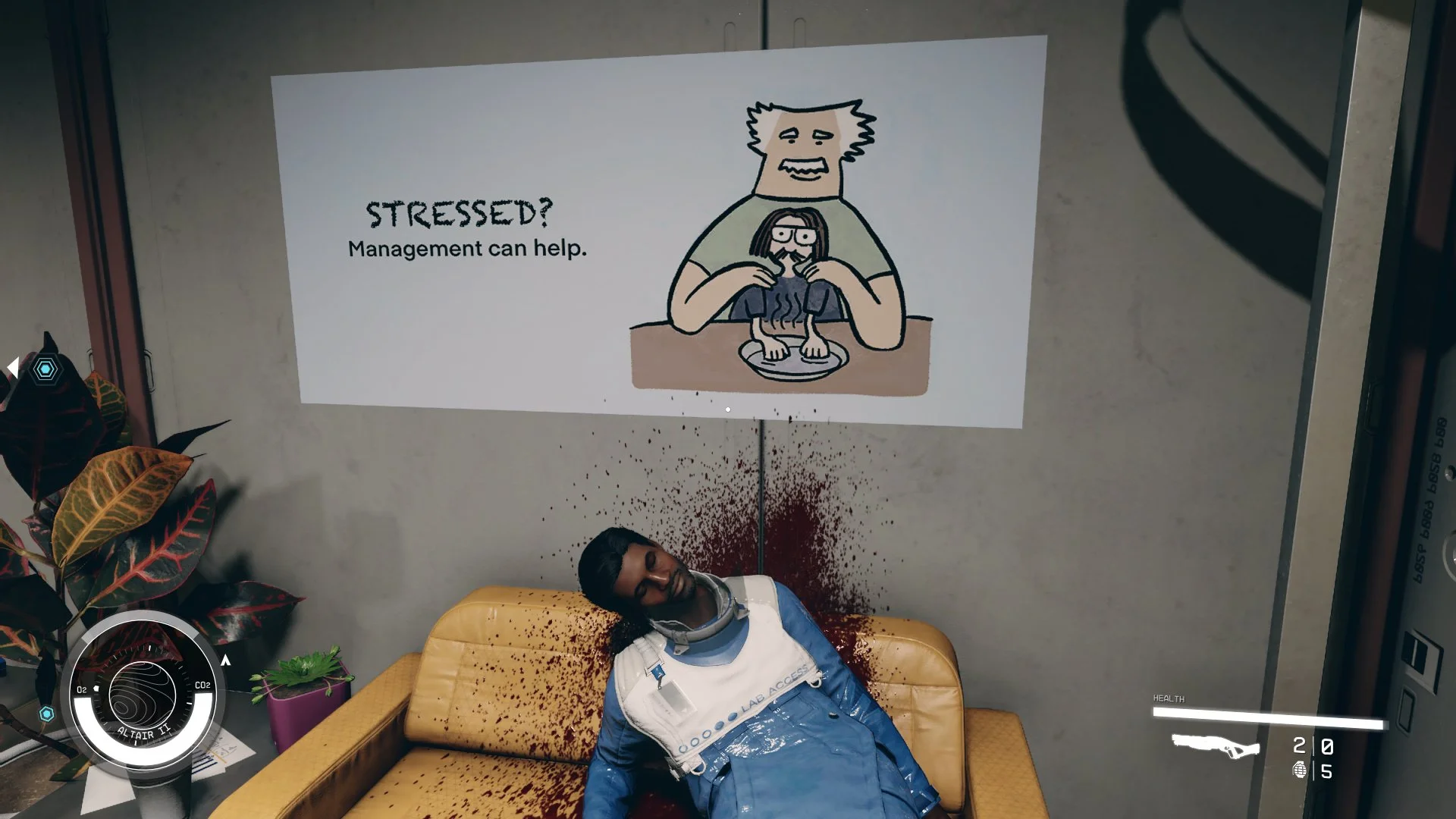
It is quite easy to get overwhelmed by the sheer quantity of things to do in Starfield. You can be walking through the plaza in New Atlantis, pass a pair of NPCs talking about something and the next thing you know you have a new mission to complete. As with most video games, there is a hierarchy of importance when it comes to the various tasks you are asked to undertake. Players may feel obliged to focus upon the main story during their initial first six hours or so. Such a strategy usually provides players with an overview of the game’s mechanics as well as providing some essential items such as gear. But it can feel a little smothering to have content continuously added to your mission journal. Especially if you’re the sort of player that likes to impose structure upon your gaming and likes to undertake tasks in an orderly and methodical fashion.
It is quite easy to get overwhelmed by the sheer quantity of things to do in Starfield. You can be walking through the plaza in New Atlantis, pass a pair of NPCs talking about something and the next thing you know you have a new mission to complete. As with most video games, there is a hierarchy of importance when it comes to the various tasks you are asked to undertake. Players may feel obliged to focus upon the main story during their initial first six hours or so. Such a strategy usually provides players with an overview of the game’s mechanics as well as providing some essential items such as gear. But it can feel a little smothering to have content continuously added to your mission journal. Especially if you’re the sort of player that likes to impose structure upon your gaming and likes to undertake tasks in an orderly and methodical fashion.
This can lead to a minor dilemma. If you play through Starfield randomly, going where you want and dealing with missions as and when you encounter them, you may unintentionally miss content that yields beneficial results. Especially at lower levels. For example, after an early encounter with pirates, there’s a good chance that you’ll end up with a datapad with a message titled “secret outpost!” in your inventory. Let it suffice to say, reading it starts a mission that is well worth pursuing early on in the game. Doing so when you’ve sixty or seventy hours in may not yield such good results. And it is this sense of not knowing, “am I making bad decisions” and “am I playing this wrong” that can lead to a kind of gaming paralysis for some players. Especially if you later feel that you’ve inadvertently “gimped” yourself.
The alternative to this situation (if it is something that personally affects you) is to watch videos and use Google for information. Already there is a wealth of Starfield gaming guides available which opine about the best traits, weapons and ships, as well as a which order to complete the various missions. However, it can be argued that once you opt to go down this road the game may lose some of its mystery, as its overall experience is rendered structural by the player. Yet, some are happy with this trade off compared to the worry of making a suboptimal choice and FOMO. I have watched a few YouTube videos from creators I trust and have picked up a few useful tips, without any major spoilers. And I proactively researched how and when I could get a new ship, as the Frontier is woefully underpowered. However, this again raises the point that I am managing my experience of the game.
At the time of writing this post, I have played Starfield for 20 hours. I have resolved all performance issues and am happy with the current graphics settings. The story and side missions are well written and the voice acting is very good. I have mastered the basics of the game and can now shoot and navigate ground combat competently. Space combat has improved immensely after putting a skills point into Targeting Control Systems and replacing my starter ship with something more robust. Here are a few more bullet points of things to consider about Starfield.
The lack of a viable ground map is very inconvenient. Trying to find vendors without any guidance is a nuisance.
There is little or no detail regarding the weapon select wheel. I only realised there was one when I saw it on a YouTube video. This is essential to be able to hot swap weapons on the fly.
Inventory management is slow and complex. You can store items on your character, or with a companion or in your ship’s hold. You have to manually trawl through all of these entries to use or trade. It is an inefficient process.
Do not make the mistake of looting too much and becoming overburdened while exploring a planet. You cannot use swift travel back to your ship when overburdened and it makes the journey back long and tedious.
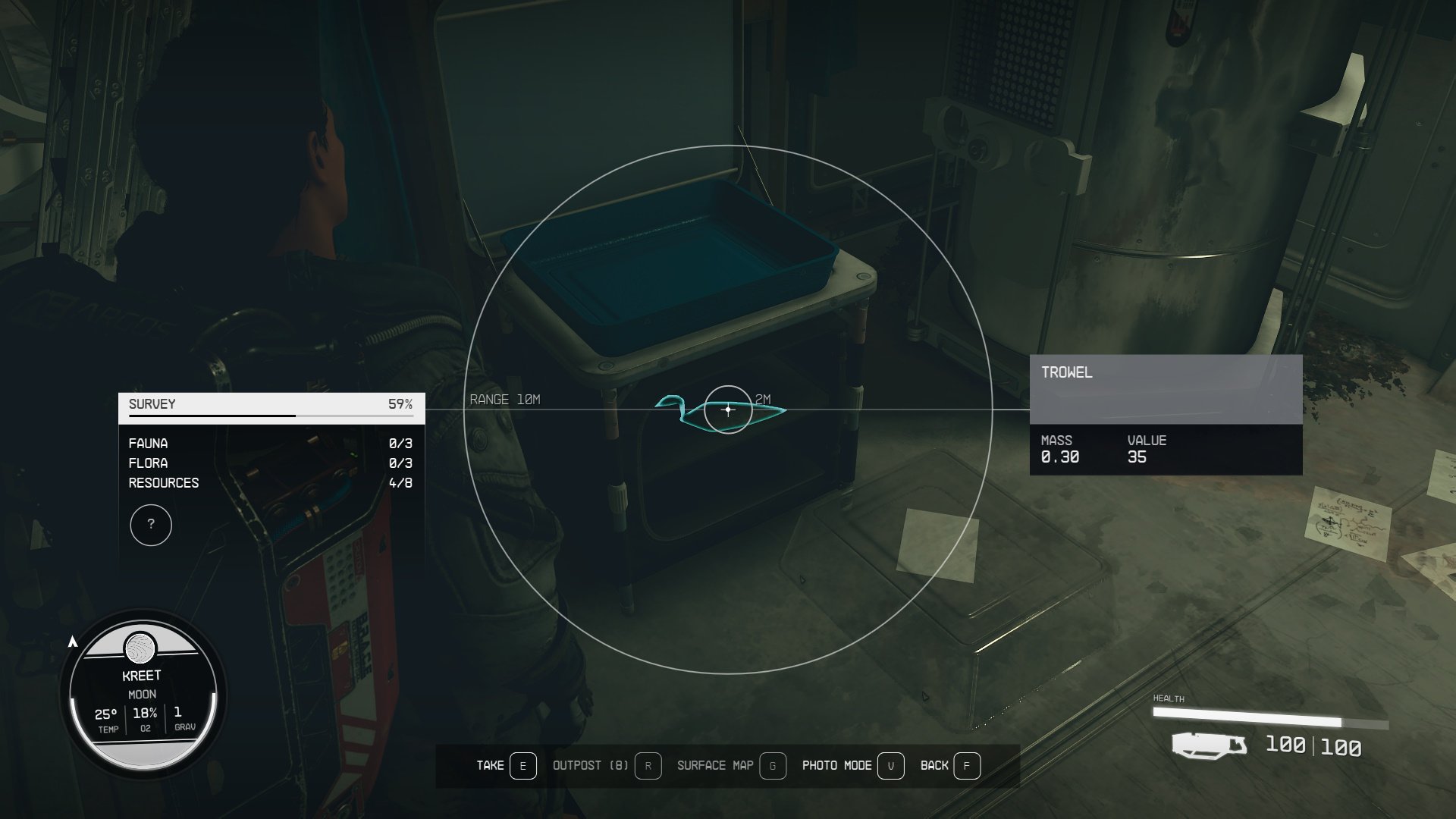
Surveying a planet is an arduous chore. It would be greatly improved if your scanner could detect more from a distance, so you didn’t have to run around trying to find a few elusive flora and fauna to get 100% completion. Some sort of vehicle would improve this process.










Playing Starfield Part 2: Installation and Early Access
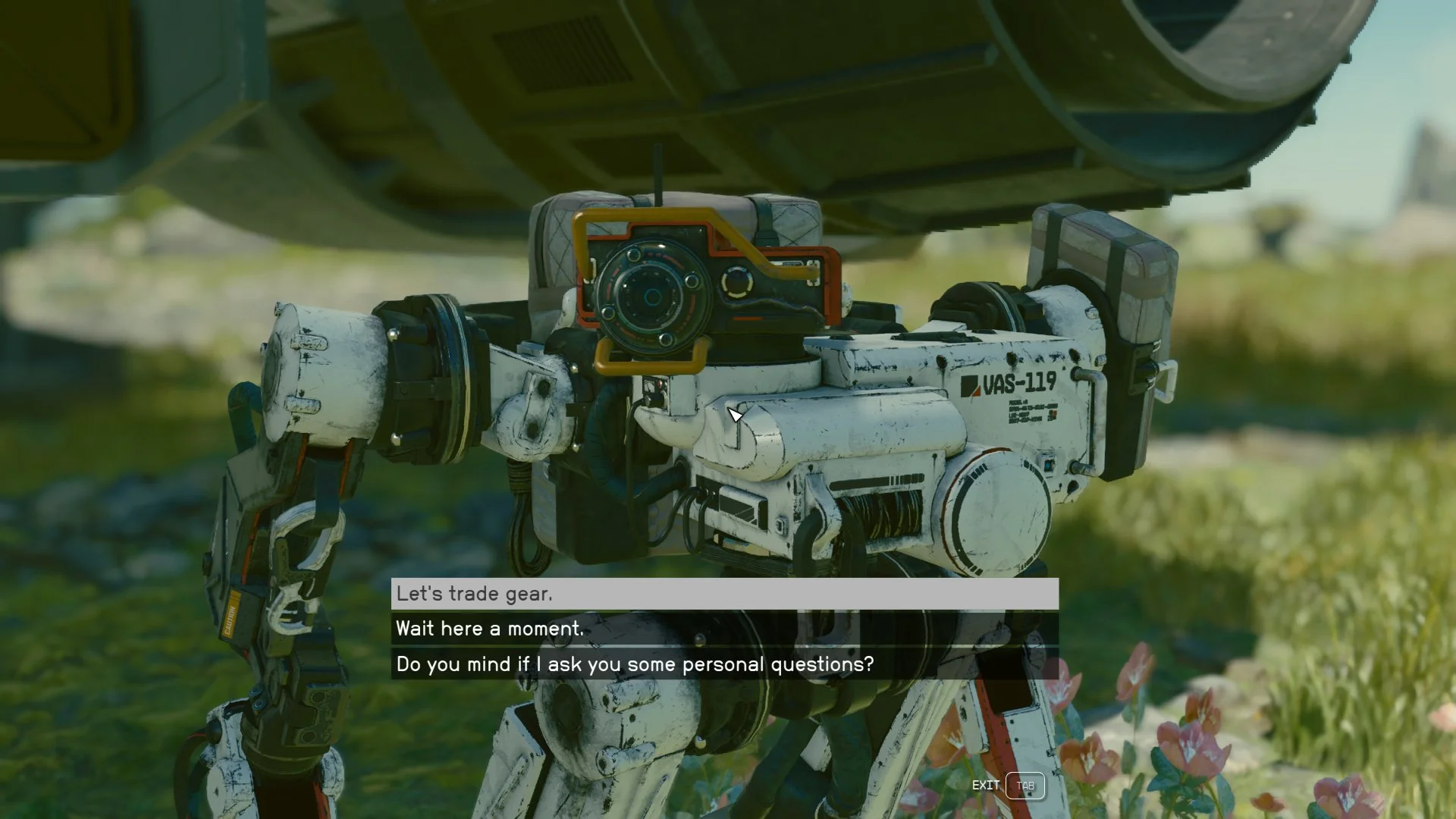
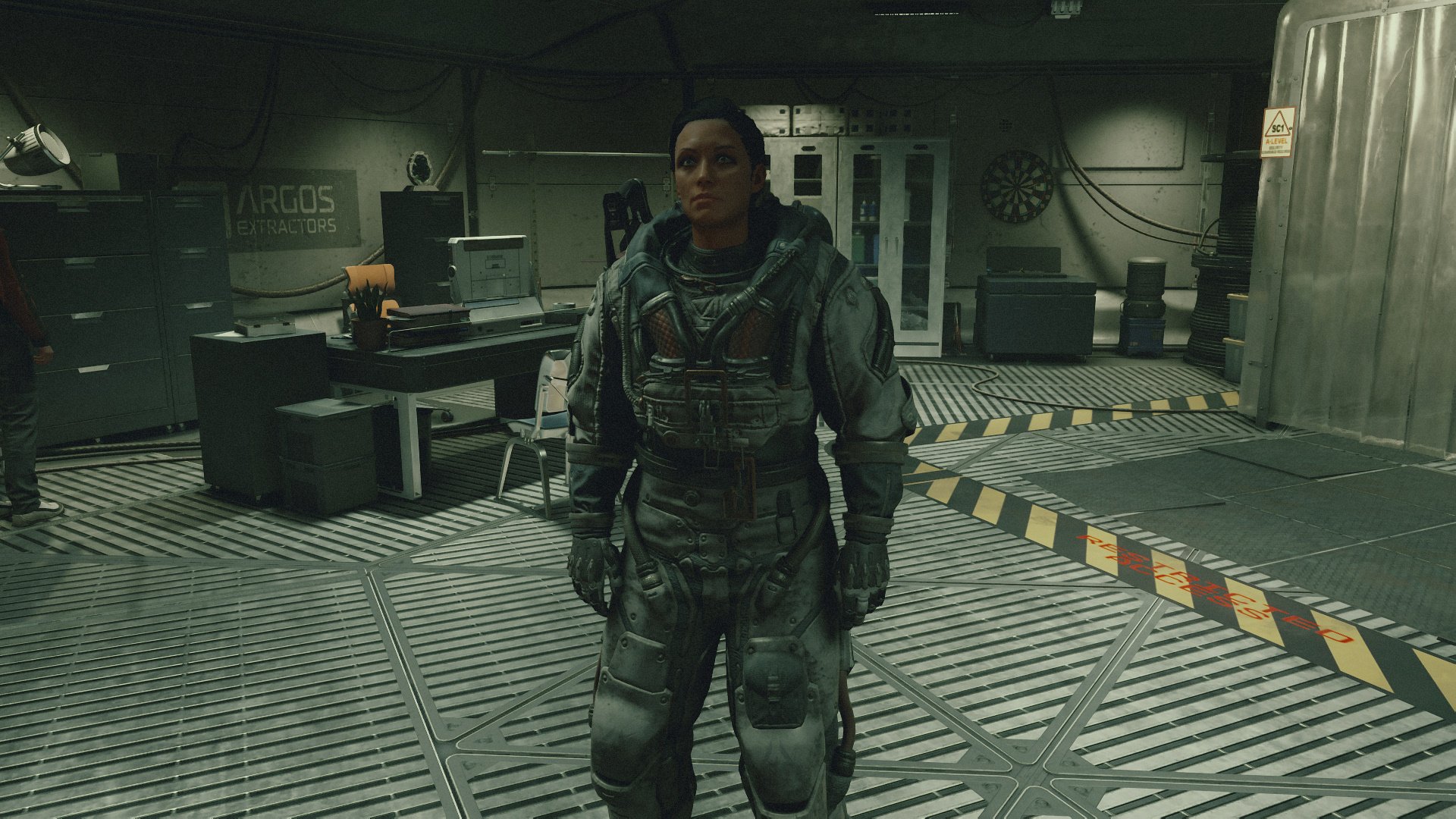
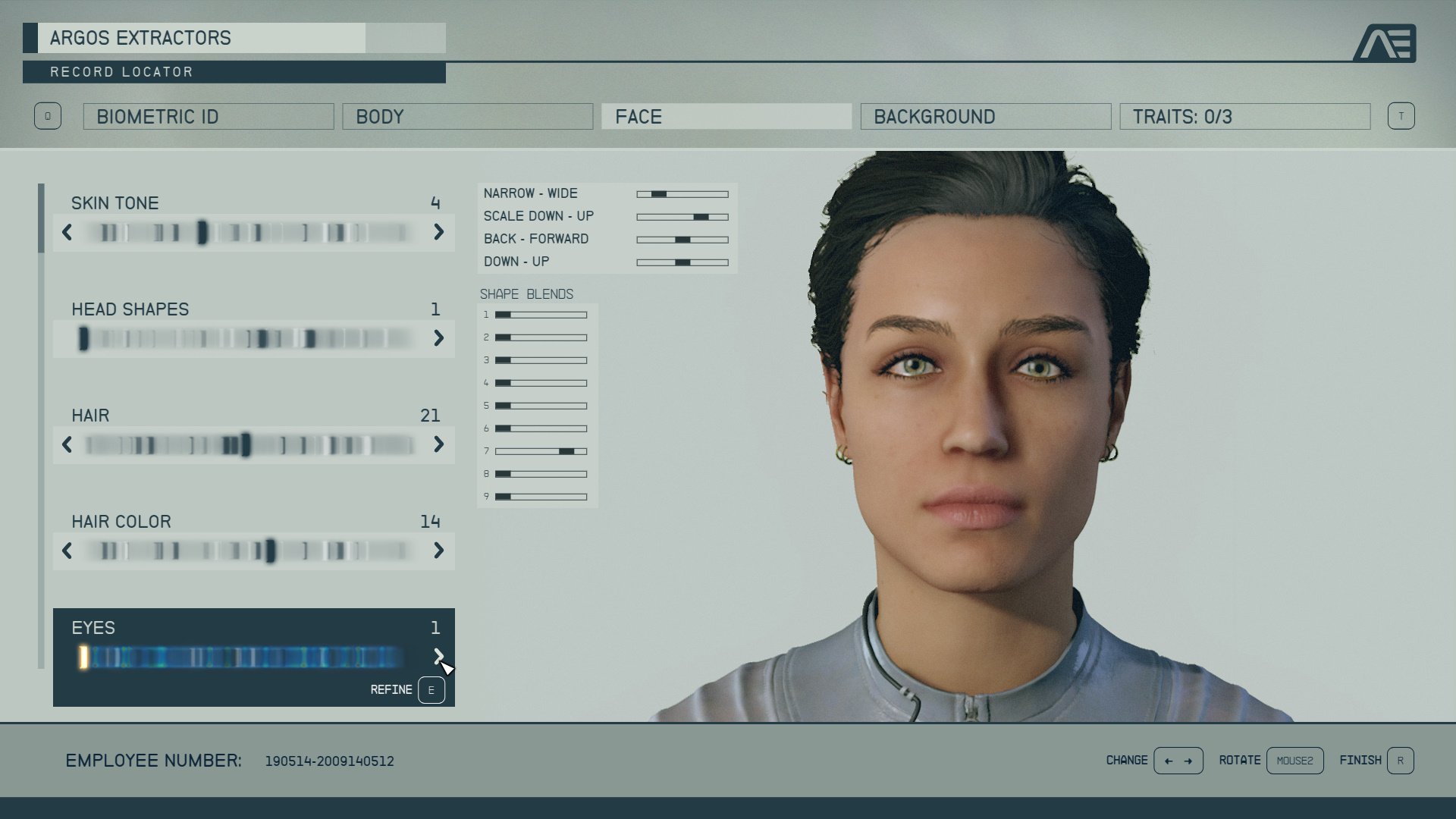
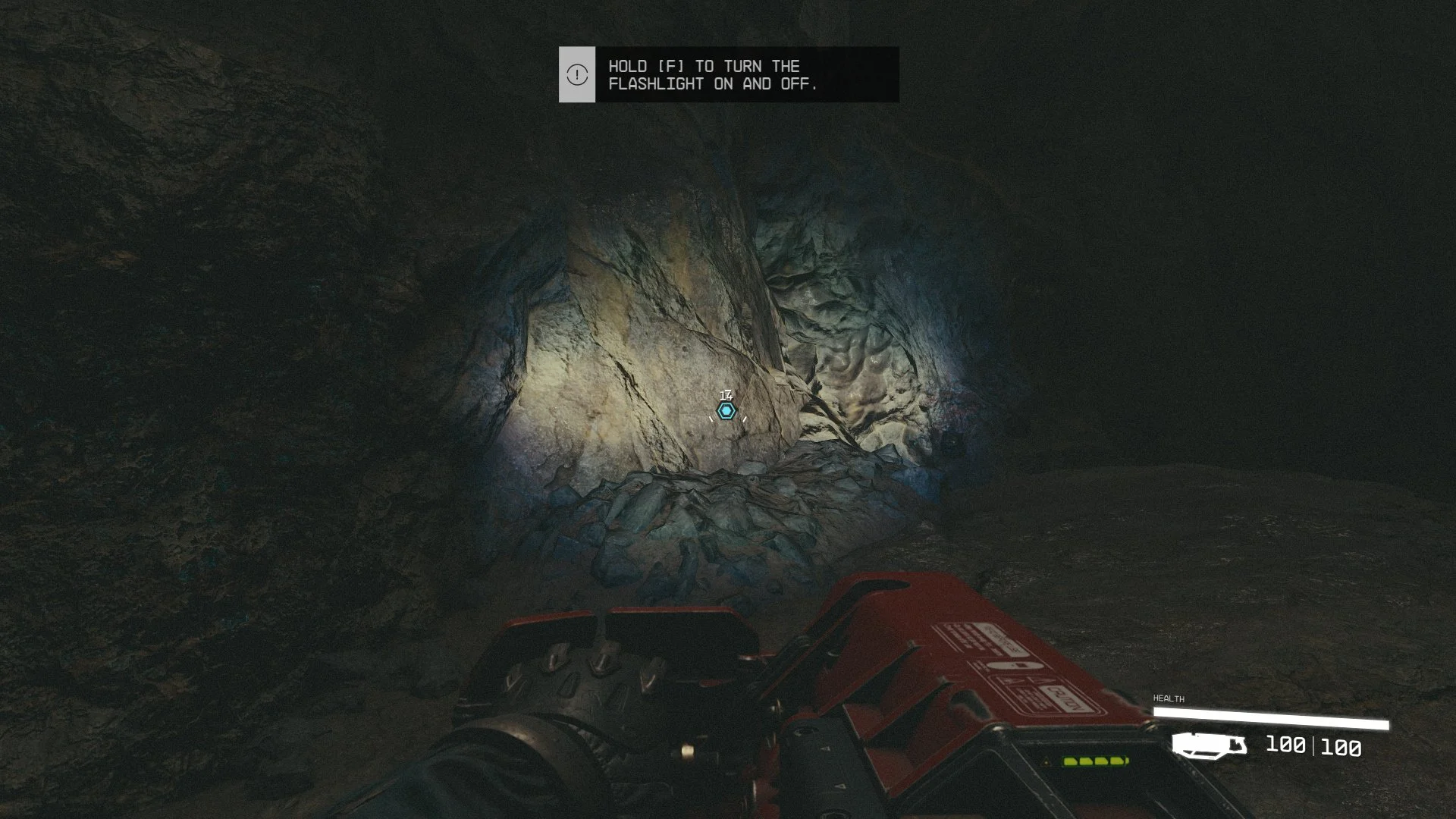
I pre-installed Starfield, via Steam, on Wednesday 30th August. Early access started in the UK at 1:00 AM today. However, I didn’t get around to playing until about 10:00 AM this morning. It took about an hour or so to unpack the pre-installed game. It currently occupies a little over 116GB of space. As I wasn’t sure how well my PC would handle Starfield, I decided to use my second monitor to play the game at a resolution of 1920x1080 (16:9). I have an Nvidia GTX 1660 Super GPU. Initially, I turned all the graphics to “high” and set the game to render at full resolution. Initially the game seemed to run well. I got through the initial story which takes place in a mine. I also got to the character customisation, which in true Bethesda style takes place after the story has progressed for a while. However, the moment I entered space in my ship, the game started running poorly. The graphics stuttered and the audio desynced.
I pre-installed Starfield, via Steam, on Wednesday 30th August. Early access started in the UK at 1:00 AM today. However, I didn’t get around to playing until about 10:00 AM this morning. It took about an hour or so to unpack the pre-installed game. It currently occupies a little over 116GB of space. As I wasn’t sure how well my PC would handle Starfield, I decided to use my second monitor to play the game at a resolution of 1920x1080 (16:9). I have an Nvidia GTX 1660 Super GPU. Initially, I turned all the graphics to “high” and set the game to render at full resolution. Initially the game seemed to run well. I got through the initial story which takes place in a mine. I also got to the character customisation, which in true Bethesda style takes place after the story has progressed for a while. However, the moment I entered space in my ship, the game started running poorly. The graphics stuttered and the audio desynced.
I made a few tweaks, dropping some settings but as I played through the first mission on the planet Kreet, I found that random lag spikes were making the game unplayable. They often occurred during combat. So I soldiered on until I had completed the main mission and then I elected to leave and move on to the primary quest hub of New Atlantis. I then immediately saved the game and spent some time looking for solutions online. After reading several posts regarding the game’s performance, I adjusted my graphics settings accordingly. It would appear that unless you have a top of the range GPU, then most systems should use the render resolution facility. I set it to 75% and then dropped a few further settings to medium. I also migrated the game installation from the 4TB hard drive I have for games, onto the 1TB SSD I use for the PC operating system. These changes improved performance significantly.
Having addressed the performance issues, I then continued the game and progressed through the story as far as joining the Constellation group. I then stopped for a break and to collate my thoughts. I shall now present my initial thoughts on the gameplay, mechanics and the central story as bullet points, for reasons of brevity. I may well revise some of these thoughts and opinions as I progress and become more familiar with the things.
First and foremost, the game lacks a coherent tutorial. A few basic skills are imparted via the game’s opening but if you are distracted, then you will miss the information.
I therefore had to continuously tab out of the game and search online for instructions and clarification of how to do basic things. This is not acceptable.
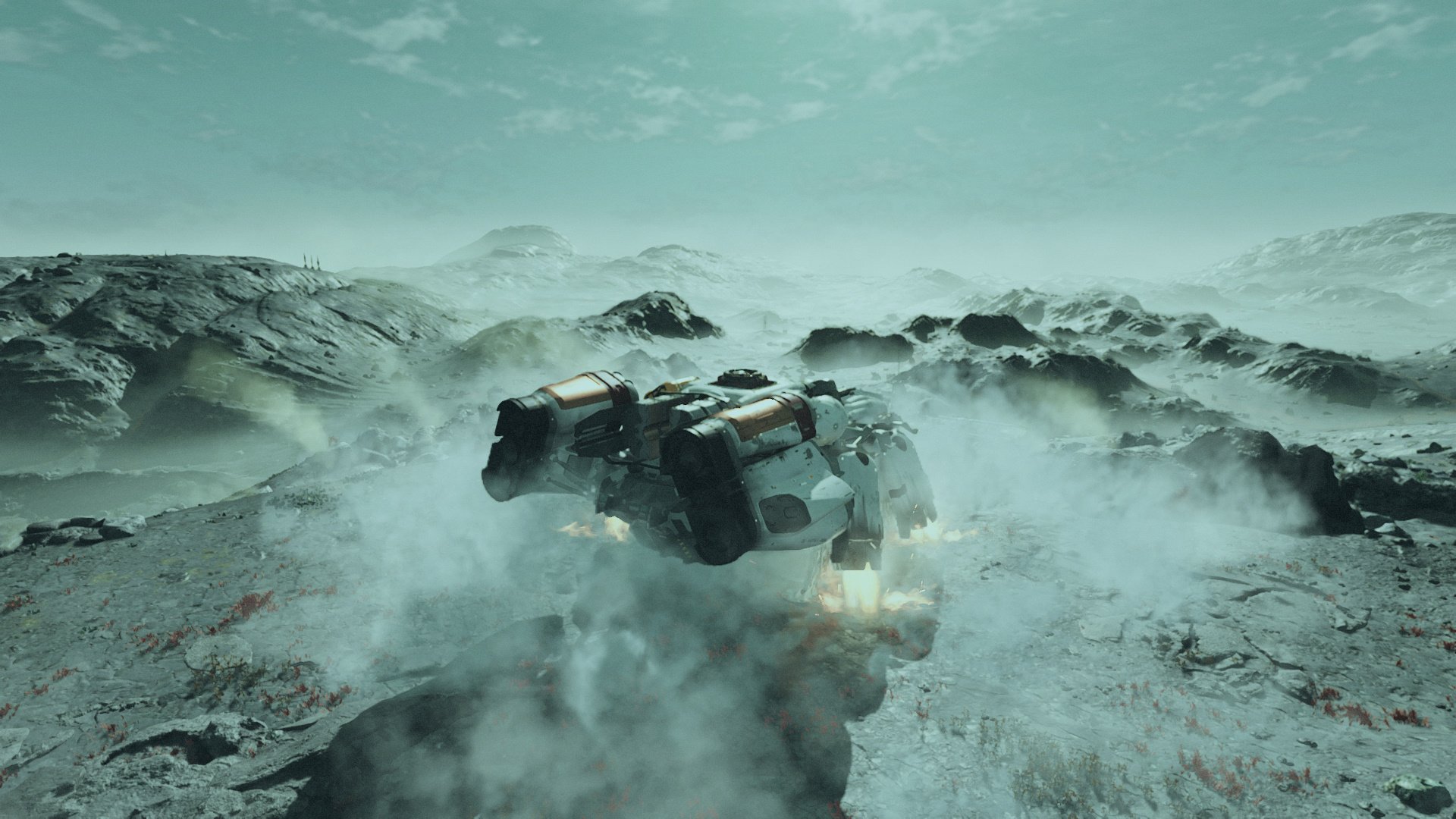
Space combat and operating your ship are introduced quite quickly. Again, if you miss any on screen information you have to “improvise” and assume that things work in a similar fashion to space combat in other games. Fortunately, they do.
Being a Bethesda game, there is a wealth of lootable items, littering the game’s initial zone. Most of it is irrelevant and inconsequential. However, some items appear important so there is a risk of hoarding material that later turns out to be of no value.
Combat feels about right but requires sensible use of cover and accurate fire. Check the range of your weapon of choice, to ensure it is appropriate to the situation.
Learn to use your scanner correctly. Some flora and fauna need to be scanned multiple times to register as “collected”. This is how it is supposed to work.
Look for means to make money as soon as possible. Weapons sell well. Ensure you loot fallen foes.
Take time to learn the new locking picking system. It requires a degree of thought.
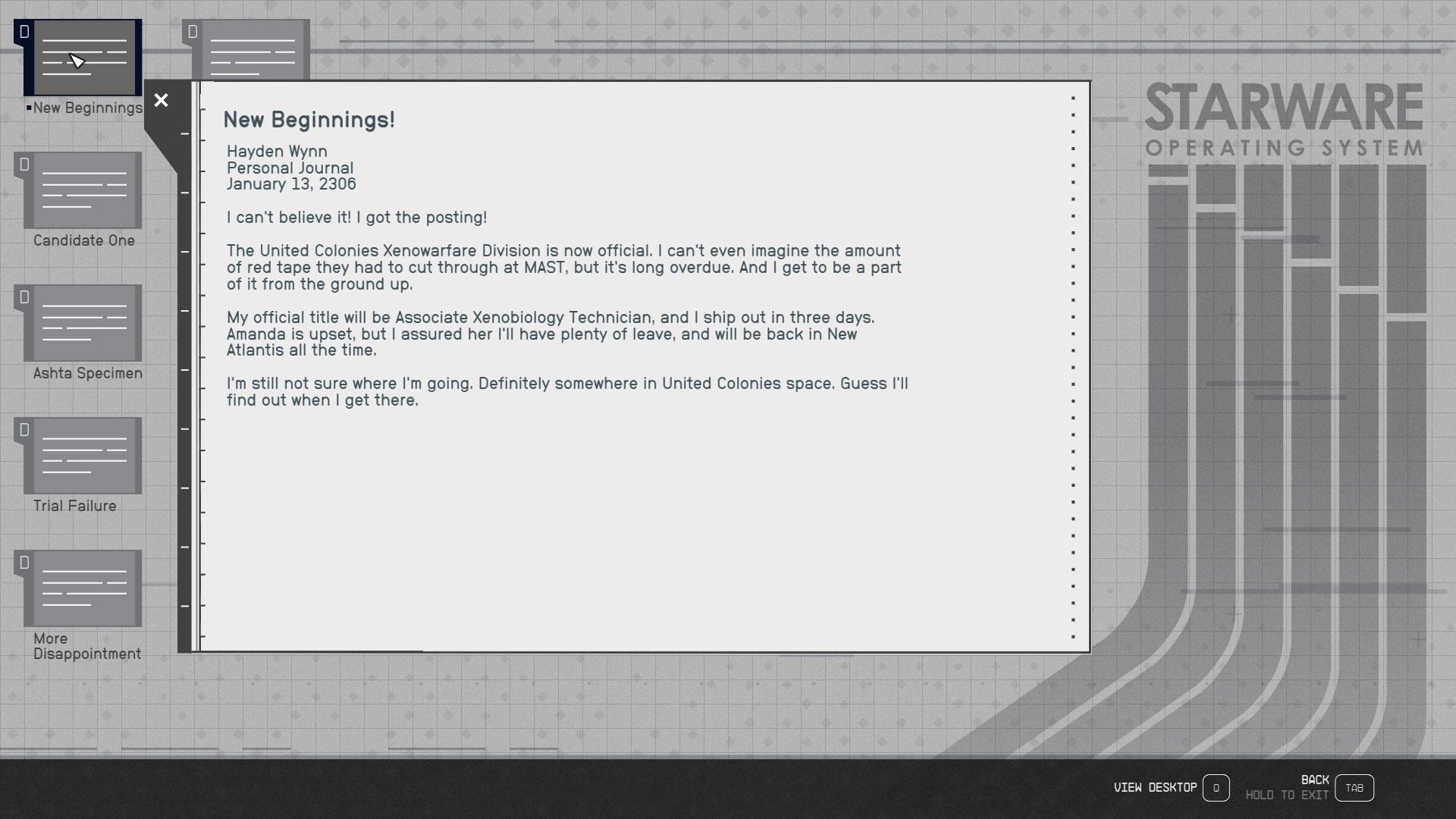
Overall, I have enjoyed Starfield so far. It is epic in scope but not necessarily as revolutionary in its gameplay. You cannot for example fly your ship from the surface of a planet, through the atmosphere and out into space. Getting from space to the surface of a planet involves cutscenes. Also, once the initial sense of awe has worn off, you will find that Starfield has many of the tropes and foibles associated with Bethesda games. Dialogue trees are quite rich and varied and so far I haven’t encountered a scripted response I don’t like. I don’t feel that I’ve been forced into a “stupid” response. I suspect that the main appeal of Starfield will lie in the characters and story. It will be interesting to see whether my opinions change after another day of playing and exploring. I am still a little annoyed at the lack of information the game provides but sadly that seems to be the industry standard these days.



The Return of “Walter Watches”
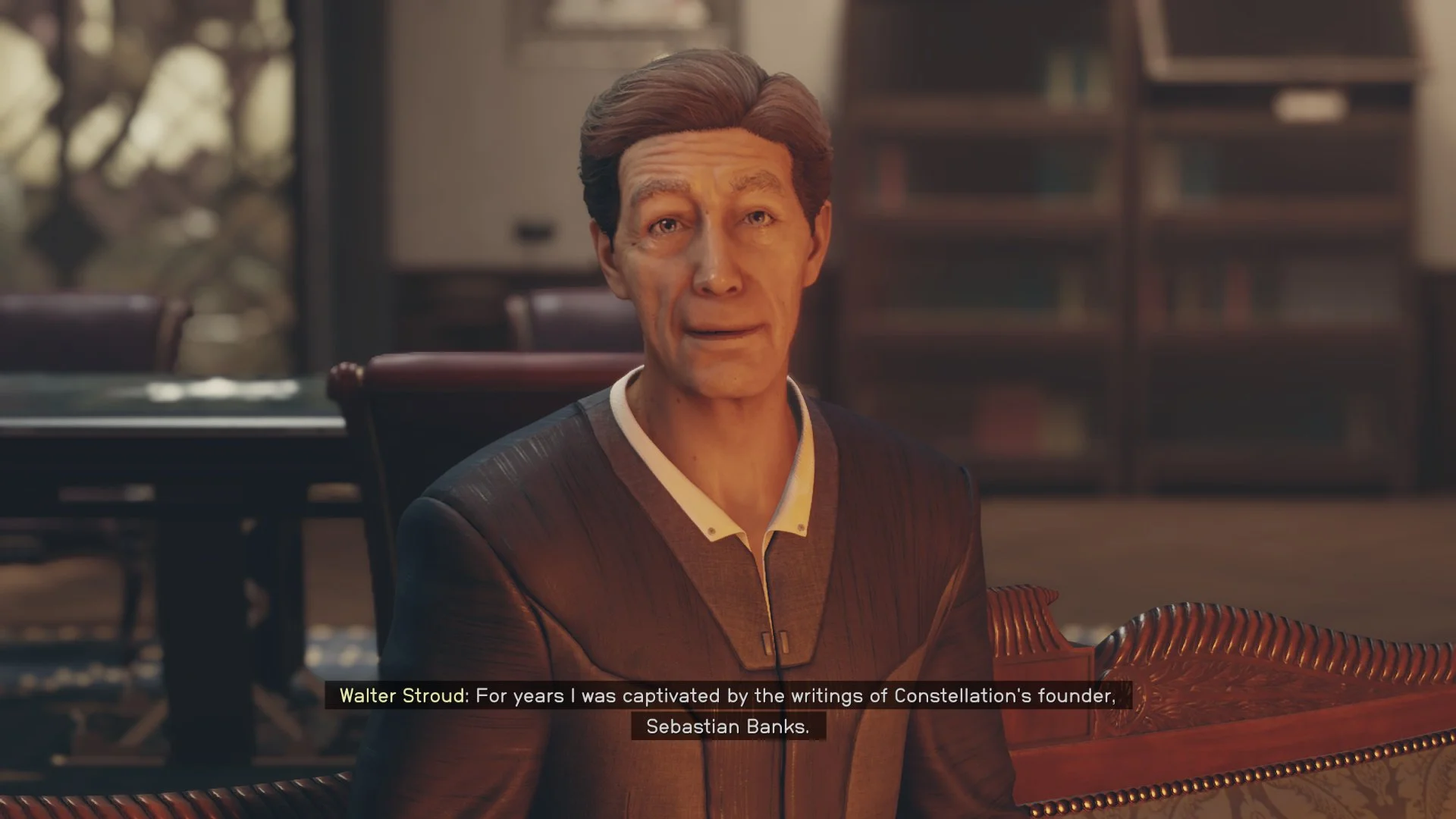
Anyone who writes regularly, sooner or later will have the following epiphany. The realisation that the post you consider your best work seldom finds an audience. Furthermore, the most inconsequential, disposable things that you have written on a whim, will often end up being the one article that gets a big response. It can be very frustrating but it is a reality of writing. It is with that idea in mind, I wish to move on to the matter of “Walter Watches”. In late March 2019, I took a picture of Walter sitting in his chair, watching a classic episode of The Twilight Zone. I subsequently Tweeted this image along with a descriptive caption. This gained a number of “likes” and retweets, so a day later I posted another. This time Walter was watching the film Krull (1983) and I added a humorous caption. Let’s just say I got more of a response for that one Tweet than I had for anything else I had posted over the previous nine years when promoting a blog post.
Anyone who writes regularly, sooner or later will have the following epiphany. The realisation that the post you consider your best work seldom finds an audience. Furthermore, the most inconsequential, disposable things that you have written on a whim, will often end up being the one article that gets a big response. It can be very frustrating but it is a reality of writing. It is with that idea in mind, I wish to move on to the matter of “Walter Watches”. In late March 2019, I took a picture of Walter sitting in his chair, watching a classic episode of The Twilight Zone. I subsequently Tweeted this image along with a descriptive caption. This gained a number of “likes” and retweets, so a day later I posted another. This time Walter was watching the film Krull (1983) and I added a humorous caption. Let’s just say I got more of a response for that one Tweet than I had for anything else I had posted over the previous nine years when promoting a blog post.
Such are the origins of “Walter Watches”. I continued posting pictures until the end of May 2019. I resumed again in January 2020 and continued until the end of February. During these two “seasons”, I selected a variety of cult and famous films for Walter (and his nephew Finwë) to comment upon. Because of my love of cinema and filmmaking, I must admit I did find this process entertaining. And obviously so did others, because “Walter Watches” continued to receive “likes” and retweets while it was “a thing”, as the kids say. Which brings me to the point of this post. Things are far from peachy at present, if you take a step back and take a long hard look at the world. It’s all a bit depressing. Hence, I have decided to bring just a little bit of fun and mirth back to social media with a third “season” of “Walter Watches”.
There are to be no changes in the format. If something isn’t broken, then there is no requirement to fix it. However, as well as being posted on social media, there is now a designated “Walter Watches” page here on Contains Moderate Peril. Walter’s sage wisdom and keen insights will be available here to view and ponder. I shall also be reposting all previous instalments for continuity. It should also be noted that last year we upgraded the TV in our lounge, so Walter now has the luxury of watching in 4K UHD. Whether this has any significant impact upon his musings, remains to be seen. As does whether Walter will consider requests from readers to watch specific things. We shall have to wait and see. Season three should begin by the middle of September. As the saying goes, “watch this space”.





Fallen (1998)
Detective John Hobbes (Denzel Washington) visits convicted serial killer Edgar Reese (Elias Koteas), prior to his execution. An unrepentant Reese poses a riddle for Hobbes then lapses into a strange language. He goes to his execution singing “Time Is On My Side” by The Rolling Stones. Shortly after, Hobbes receives an anonymous tip by phone of a murder. On arrival at the crime scene, Hobbes and his partner “Jonesy” (John Goodman) find that the murder victim has been killed in an identical fashion to those killed by Reese. Furthermore, the same riddle has been written on the wall. Despite warnings from his senior officer, Lieutenant Stanton (Donald Sutherland), not to pursue solving the riddle, Hobbes persists in his investigation. It leads to a highly decorated policeman who killed himself under mysterious circumstances and a pattern of events not dissimilar to those that Hobbes is currently facing.
Detective John Hobbes (Denzel Washington) visits convicted serial killer Edgar Reese (Elias Koteas), prior to his execution. An unrepentant Reese poses a riddle for Hobbes then lapses into a strange language. He goes to his execution singing “Time Is On My Side” by The Rolling Stones. Shortly after, Hobbes receives an anonymous tip by phone of a murder. On arrival at the crime scene, Hobbes and his partner “Jonesy” (John Goodman) find that the murder victim has been killed in an identical fashion to those killed by Reese. Furthermore, the same riddle has been written on the wall. Despite warnings from his senior officer, Lieutenant Stanton (Donald Sutherland), not to pursue solving the riddle, Hobbes persists in his investigation. It leads to a highly decorated policeman who killed himself under mysterious circumstances and a pattern of events not dissimilar to those that Hobbes is currently facing.
Fallen did not do well upon its initial release. It received mixed reviews from the critics and failed to recoup its production costs at the box office. However, not being commercially successful doesn’t mean that a film is bad. Sometimes it can be because a film is not marketed correctly and has failed to find its audience. Or that it was released at the wrong time and cinema goers may have been struggling with genre fatigue. If you want a textbook example of this consider the 1989 James Bond film Licence to Kill. This seems to be the case with Fallen (1998), directed by Gregory Hoblit. More recently, opinions have been revised regarding this film and it has developed a cult following. There is definitely more to it than the plot synopsis suggests.
Fallen is a character driven, performance lead, slow burn. An intellectual game of cat and mouse between Hobbes and his potentially supernatural adversary. There are a few minor action scenes but they are not the film’s raison d'être. Instead the script by Nicholas Kazan (who also wrote Matilda and Enough) explores the nature of the “daily” evil that the police face and how it impacts upon their lives. Hobbes is a morally upright man, who tries to do his best, both at work and at home where he looks after his special needs brother and young nephew. The theological elements are handled very discreetly and the protagonists gradual realisation that something potentially supernatural is afoot is managed well. The film doesn’t make the mistake of trying to force a romantic situation between Hobbes and the only major female character in the story.
I suspect that the subtlety of the supernatural elements in Fallen and a distinct lack of any overt genre sensationalism may have contributed to it not being a commercial success. There are similarities between this film and The Hidden (1987) which handles the theme of a transient killer moving from host to host far more graphicly. Such trappings are absent here by choice. However, if you have the patience to apply yourself to a thoughtful, understated, psychological thriller then Fallen has much to offer. The strong cast, especially Washington himself, holds your attention and although the ending may not necessarily be to everyone's liking, it at least brings the story full circle. This is thoughtful genre filmmaking with the emphasis on suspense and a requirement for audiences to think. The latter often alienates a percentage of viewers.









The Six Million Dollar Man (1973-78)
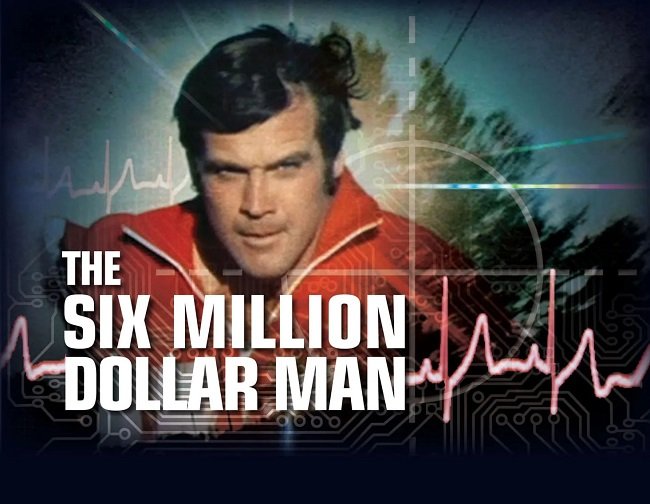
I was seven when The Six Million Dollar Man was first broadcast in the UK in late 1974. As a young and impressionable child, who was already fascinated by Doctor Who, Star Trek (TOS) and the films of Ray Harryhausen, this show was essential weekly viewing. I believe for the first couple of seasons, we sat and watched it as an entire family. Television was less sophisticated back then and dominated by sitcoms, police procedurals and traditional dramas. So a weekly show blending the espionage genre with science fiction themes was revolutionary. It also inspired a generation of school kids to run around the playground in “slow motion” and give themselves hernias as they attempted to lift heavy objects. And don’t get me started on the range of Steve Austin toys. One had a “bionic eye” which meant it had a lens in the front of the action figure’s face and you could look through the back of his head like a telescope. What a time to be alive!
I was seven when The Six Million Dollar Man was first broadcast in the UK in late 1974. As a young and impressionable child, who was already fascinated by Doctor Who, Star Trek (TOS) and the films of Ray Harryhausen, this show was essential weekly viewing. I believe for the first couple of seasons, we sat and watched it as an entire family. Television was less sophisticated back then and dominated by sitcoms, police procedurals and traditional dramas. So a weekly show blending the espionage genre with science fiction themes was revolutionary. It also inspired a generation of school kids to run around the playground in “slow motion” and give themselves hernias as they attempted to lift heavy objects. And don’t get me started on the range of Steve Austin toys. One had a “bionic eye” which meant it had a lens in the front of the action figure’s face and you could look through the back of his head like a telescope. What a time to be alive!
In case you are unfamiliar with The Six Million Dollar Man, it was a popular TV show based upon the novel “Cyborg” by Martin Caidin. Astronaut Colonel Steve Austin (Lee Majors) is catastrophically injured after a crash testing an experimental lifting body. He has “bionic” implants, replacing his left eye, right arm and both legs. These robotic replacement parts give him enhanced strength, speed and vision. He subsequently becomes an operative of the Office of Scientific Intelligence (OSI) upon recovery. The Six Million Dollar Man ran for five seasons and spawned a spinoff show, The Bionic Woman. As the show progressed the science fiction elements became more fantastic. People were replaced by robot doubles. Aliens and Bigfoot became a recurring plot. And there was a rogue Russian probe designed for the harsh atmosphere of venus. The show often featured notable guest actors such as John Saxon, Monte Markham and William Shatner.
To say that The Six Million Dollar Man was influential would be an understatement. The show remained popular for five years or more and its audio-visual trappings such as slow motion fights, sound effects and electronic ambient sounds became a major part of pop culture of the time. Between 1974 and 1980, there wasn’t a comedy sketch show that didn’t at some point lampoon The Six Million Dollar Man. Subsequently films such as RoboCop and video games such as Deus Ex have drawn heavily on its themes. Then there was the range of toys as mentioned earlier, as well as the comic strips, books and other marketing paraphernalia. It made actor Lee Majors a household name and yet he wasn’t typecast by the role. He successfully went on to another successful show, The Fall Guy, in the early eighties and has remained a busy actor ever since.
Recently, UK TV channel Legend has started repeating The Six Million Dollar Man. It is interesting to note that they are showing the episodes that were prepared for syndication after the show’s initial success. Hence, the three pilot TV movies are each broadcast as two part episodes. Also the opening credits have been shortened, presumably for a standard running time. However, these minor technicalities aside, it has been interesting to see the show once again. I recently watched a particularly iconic episode, “Day of the Robots”. This featured the first appearance of evil Doctor Dolenz and his robot replacements. It culminates in a slow motion fight between Steve Austin and a robot version of his friend Major Sloan played by John Saxon. I was haunted as a child by the robot’s face being knocked off and it subsequently being impaled upon a girder. Although it’s incredibly tame by today’s standards.
Having revisited this show that was an integral part of my youth, I have reached an interesting conclusion. Not too dissimilar to my experience when I re-watched Space 1999. One’s enjoyment of a TV show, film or book can often be contextual and based upon one’s circumstances and mindset at the time. Television was narratively less complex in the seventies and genre material was often treated as a novelty. I was a child with less discerning tastes. There was nothing really comparable to The Six Million Dollar Man at the time and so it had a strong impact. Yet viewed through contemporary eyes, it is simplistic, the special effects are dated and the pacing of the shows are slow. Despite the nostalgia, there is a risk of undermining my fond memories with an over analytical, contemporary view. So I’ve chosen not to watch anymore and to keep my memories as they are. This may not be the case with all old TV shows but I think it prudent in this instance.













Blaugust 2023: Lessons Learned
This is the last week of Blaugust 2023: Festival of Blogging and it is customary at this point to reflect on the event and one’s own contribution to it. For me, the stand out aspect of this year is the number of people participating and the diversity of blogs. I find it most reassuring that so many people have chosen to express themselves online and share their thoughts and insights. It has also been most gratifying to see so many people join the Discord server. There have been a lot of interesting and enjoyable discussions over the last few weeks. I hope that the support and resources available have proven useful for new and returning bloggers and that the event has been beneficial for them. I always find that Blaugust is good for bolstering my enthusiasm for writing and getting me back in the proverbial saddle.
This is the last week of Blaugust 2023: Festival of Blogging and it is customary at this point to reflect on the event and one’s own contribution to it. For me, the stand out aspect of this year is the number of people participating and the diversity of blogs. I find it most reassuring that so many people have chosen to express themselves online and share their thoughts and insights. It has also been most gratifying to see so many people join the Discord server. There have been a lot of interesting and enjoyable discussions over the last few weeks. I hope that the support and resources available have proven useful for new and returning bloggers and that the event has been beneficial for them. I always find that Blaugust is good for bolstering my enthusiasm for writing and getting me back in the proverbial saddle.
September is now on the horizon and in many ways it offers the hardest challenge of all for new bloggers or those that have recently returned. That being to keep blogging and to find some sort of routine or schedule that is appropriate. Sadly, some bloggerss will become increasingly intermittent in their output and a few will go into a hiatus. Such is the nature of blogging. Not everyone has a work/life balance that can sustain it and it is also fair to say that some will discover that as a hobby, blogging simply isn’t for them. But that is part of what Blaugust is about. It is an opportunity to work out and explore one’s own relationship with writing. What approach works for you and what motivates you to write or produce the material that you do. It is about being realistic and honest with yourself.
I have found, once again, that Blaugust has provided the impetus to encourage me to write every day. I think this just comes down to being in the company of like minded individuals, who are all trying to do the same. The event also provides a tremendous sense of satisfaction in seeing a series of posts build up over the course of the month. And it is nice to engage with those who leave comments. What I would like to do in the months ahead is see if I can increase the readership, which has naturally declined during the period I have not been writing. I am hoping that regularly blogging about Starfield will prove an enjoyable experience and of potential interest to readers. In the meantime I need to revisit the Blaugust Achievement list and determine which ones I can claim. To everyone else who participated, well done. I hope you’ve had a successful Blaugust.

























Playing Starfield Part 1: The Purchase
I have already written about the hype associated with the forthcoming RPG Starfield and my thoughts on that particular issue have not changed. However, regardless of the iniquities of the marketing industry and the unrealistic expectations of some gamers, Starfield is a significant release from an established developer with a proven track record. Hence there is a great deal of interest in this game due to the scope of its content and breadth of vision. Plus many of Bethesda’s competitors will be watching the launch on September 6th very closely, especially those with similar products in development. Whatever your perspective on the game, there’s going to be a lot of interest in it, so I’ve decided to document my experiences with Starfield.
I have already written about the hype associated with the forthcoming RPG Starfield and my thoughts on that particular issue have not changed. However, regardless of the iniquities of the marketing industry and the unrealistic expectations of some gamers, Starfield is a significant release from an established developer with a proven track record. Hence there is a great deal of interest in this game due to the scope of its content and breadth of vision. Plus many of Bethesda’s competitors will be watching the launch on September 6th very closely, especially those with similar products in development. Whatever your perspective on the game, there’s going to be a lot of interest in it, so I’ve decided to document my experiences with Starfield.
Let’s start at the very beginning, which according to Julie Andrews, is a very good place to start. Yesterday I received an email from an online vendor with a significant discount coupon for Starfield. I have used this company before and they are legitimate. However, it is always wise to be sceptical of these sorts of deals and some key sellers, as there are some iffy websites out there. This vendor was not only offering a good discount but also allowed me to apply another code based upon prior purchases. I therefore bought the Digital Premium Edition of Starfield (PC) for £67 and received the key within minutes. For comparison the same edition costs £100 for Windows and £85 on Steam. The Digital Premium Edition contains the base game, “Shattered Space” story expansion, some cosmetic items and 5 days early access. The Standard Edition retails at £70 for Windows and £60 on Steam.
Having activated the aforementioned key and secured a copy of Starfield, I then checked to see when I could install the game in preparation for the early access that begins on 1st September for Digital Premium Edition owners. If you have bought this edition via the Xbox store you can start preloading the game now. PC owners who have purchased via Windows or Steam can download the game on August 30th. Steam has indicated that the installation requires 120GB of space and is best hosted on an SSD. I shall endeavour to download the game over night, ready for early access on September 1st. I have already adjusted my expectations accordingly, having participated in the launch of many games in the past. I shall document how well these things go (or not as the case may be) in my next post.
Star Trek Online: Trait Bug
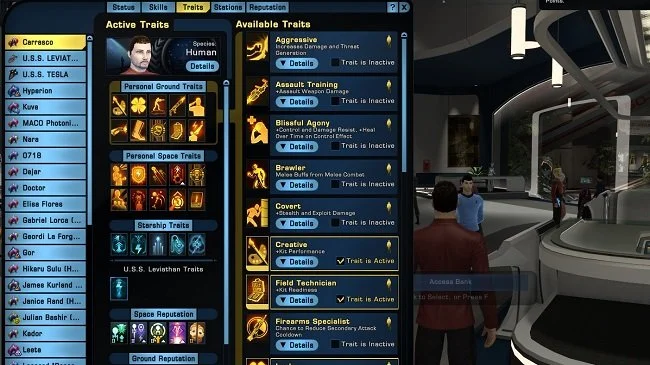
All MMORPGs have bugs. It is a certainty in life, just like death and taxes. However, some have more than others. I’m sure we could argue for hours as to which particular game has the most but I’ll leave that discussion to others. Star Trek Online has its share, many of which have persisted for years. But there is one that stands out, due to its longevity and sheer annoyance. To be specific, the “trait bug”. Like many MMO’s STO has a trait system that offers a range of passive or active buffs, skill boosts and statistical tweaks. STO is very much a number game, especially if you are chasing a high DPS output, which lots of players do. The trait bug is the random “unslotting” of some of your characters traits. It can affect any of the seven categories of traits but tends to most often happen to Personal Space Traits and Starship Traits. Unless you regularly check, most players will not immediately know this has happened.
All MMORPGs have bugs. It is a certainty in life, just like death and taxes. However, some have more than others. I’m sure we could argue for hours as to which particular game has the most but I’ll leave that discussion to others. Star Trek Online has its share, many of which have persisted for years. But there is one that stands out, due to its longevity and sheer annoyance. To be specific, the “trait bug”. Like many MMO’s STO has a trait system that offers a range of passive or active buffs, skill boosts and statistical tweaks. STO is very much a number game, especially if you are chasing a high DPS output, which lots of players do. The trait bug is the random “unslotting” of some of your characters traits. It can affect any of the seven categories of traits but tends to most often happen to Personal Space Traits and Starship Traits. Unless you regularly check, most players will not immediately know this has happened.
The trait bug tends to happen when changing instances within STO. IE When transitioning from sector space to system space or when travelling to a planet surface or visiting a space station. It can also happen after the release of any content update. As STO rotates through a schedule of yearly events, the bug manifests itself quite regularly. However, despite it persisting in the game years, it is hard to pin down a specific set of factors that cause it. It is capricious by nature, which makes it more frustrating. The “unslotting” of traits will impact upon space and ground combat and it is often the feeling that your current build feels “gimped” that leads players to discover that a selection of random traits have vanished from their existing setup. A further source of annoyance is the fact that there isn’t a permanent fix or a workaround that is 100% effective.
At present, the nearest I have got to a solution is as follows. Clear all existing traits and save to a new loadout. Overwrite existing loadouts to remove them. Log out of the game and close the client. Then log back in. Go to system space above the homeworld of your faction. Set all your traits as you desire and save the loadout. I would also advise taking a screenshot or making a written note of your trait selection. This broadly works but can fail after a content update. This bug is an especially poor reflection upon Cryptic because it has been around so long. I would happily forgo a content update, if the developers spent time and resources on a comprehensive bug fix. Sadly, I suspect that is not going to happen. In the meantime, if anyone has any other workarounds, I’d be interested to know them.
Meg 2: The Trench (2023)
Back in 2018 I wrote the following about The Meg in my review. “My interest doesn’t go so far as a sequel. This sort of movie is the equivalent of a greasy burger you buy at the funfair. It’s fine once in a while as an indulgence, despite the fact that you know it’s bad, but you would soon tire of them being a regular part of my diet”. Five years later, I foolishly thought it may be “fun” to give the sequel, Meg 2: The Trench (2023), a go. Especially in light of the fact that it’s directed by Ben Wheatley. Surely such a filmmaker would bring some creativity and a fresh perspective to this franchise? Nope. Turns out he didn’t. Meg 2: The Trench lacks everything that made its predecessor tolerable. This superfluous sequel is an uninspired, poorly written mess which confuses turning everything up to eleven with entertainment. It gets nowhere near “it’s so bad, it’s good” territory. Instead it makes the biggest mistake a film of this nature can do. It’s dull.
Back in 2018 I wrote the following about The Meg in my review. “My interest doesn’t go so far as a sequel. This sort of movie is the equivalent of a greasy burger you buy at the funfair. It’s fine once in a while as an indulgence, despite the fact that you know it’s bad, but you would soon tire of them being a regular part of my diet”. Five years later, I foolishly thought it may be “fun” to give the sequel, Meg 2: The Trench (2023), a go. Especially in light of the fact that it’s directed by Ben Wheatley. Surely such a filmmaker would bring some creativity and a fresh perspective to this franchise? Nope. Turns out he didn’t. Meg 2: The Trench lacks everything that made its predecessor tolerable. This superfluous sequel is an uninspired, poorly written mess which confuses turning everything up to eleven with entertainment. It gets nowhere near “it’s so bad, it’s good” territory. Instead it makes the biggest mistake a film of this nature can do. It’s dull.
Five years on from the first film, Jonas Taylor (Jason Statham) now works for Mana One Marine Research centre, which is currently exploring the depth of the Mariana Trench where the Megalodons and other unknown ichthyofauna live. Along with company director Jiuming Zhang (Wu Jing), Taylor takes two submersibles to an uncharted part of the trench and finds to his surprise an illegal mining operation on the ocean floor. They are ambushed by a mercenary named Montes (Sergio Peris-Mencheta) and forced to abandon their vessels and walk along the ocean floor to reach the unknown mining base. After contacting Mana One, they learn that the rescue submarine has been sabotaged. Furthermore, an explosion caused by the mining operation has breached the thermocline barrier and provided a means for three megalodons and other creatures to reach the surface.
Like its predecessor Meg 2: The Trench has solid production values. A lot of money has been spent on the production design and sets. Meg 2: The Trench is far from cheap and cheerful. The film also handles dialogue in two languages well, as several characters frequently switch between conversing in English and Mandarin. Sadly the screenplay is perfunctory and the dialogue predictable. Most of the characters are two dimensional and hence disposable. When the big reveal happens involving a team member who has betrayed their colleagues, it has no impact. There is also a conveyor belt of “red shirt” mercenaries who are regularly introduced, just to provide the various beasties something to chow down on. There is also a somewhat anachronistic comedic African American character, played by Page Kennedy, that feels it’s been cribbed from an eighties action movie.
The action scenes are competently constructed but like most “creature features”with a PG-13 rating, they are mostly bloodless and free from any real threat or dramatic weight. There is an attempt to try and make some of the deaths a little more creative to try and compensate for this. One character’s exosuit implodes and the visual effects handle this quite well. But the same problem from the first movie persists into the second. The Megalodons are so large they swallow people and things whole, which effectively mitigates any shock factor. The giant Octopus is handled more discreetly and as a result is a more interesting antagonist. However, this is the sort of movie where you know well in advance who will live and who will die. Not even Jason Statham’s pugnacious character can up the ante. Overall Meg 2: The Trench is a classic example of “the same but more” and a squandered opportunity. I was left sadly feeling “so what?” at the end.
Save Scumming
Throughout history, there’s always some asshole who confuses their own personal opinion for some undeniable, unassailable, universal truth. This misconception often ends in tragedy. Sadly it is the doom of men (especially Colin) that they forget. Hence, life continues to be regularly assailed by the following cycle. An asshole talks bollocks and advocates an erroneous position or philosophical stance that is unsustainable in the face of reality. A shit storm ensues. The asshole’s position is utterly and unequivocally demolished by facts and data. Everyone else then has to pick up the pieces, while the asshole, due to a lack of critical thinking and emotional literacy, still thinks that they’re right and that “they’re the victim”. This scenario manifests itself in many aspects of day-to-day life. Domestic politics, your places of employment etc. It is also an integral part of gaming culture and a core tenet of Gamers (™).
Throughout history, there’s always some asshole who confuses their own personal opinion for some undeniable, unassailable, universal truth. This misconception often ends in tragedy. Sadly it is the doom of men (especially Colin) that they forget. Hence, life continues to be regularly assailed by the following cycle. An asshole talks bollocks and advocates an erroneous position or philosophical stance that is unsustainable in the face of reality. A shit storm ensues. The asshole’s position is utterly and unequivocally demolished by facts and data. Everyone else then has to pick up the pieces, while the asshole, due to a lack of critical thinking and emotional literacy, still thinks that they’re right and that “they’re the victim”. This scenario manifests itself in many aspects of day-to-day life. Domestic politics, your places of employment etc. It is also an integral part of gaming culture and a core tenet of Gamers (™).
The latest poorly conceived and intellectually questionable outrage is about “save scumming”. The act of saving a video game just before you embark on a potentially risky in-game undertaking. Hence, if you fail or incur consequences that you deem suboptimal, you can simply reload the game and try once again with the benefit of foresight and knowledge. Apparently this “belt and braces” approach to gaming, usually in single player RPGs, is an appalling act of self abasement and a rejection of the “gaming code” as espoused by Gamers (™). It is apparently a worse crime than pissing in the Queen’s handbag and offending a Shaolin Temple. Those that indulge in such questionable gaming practices are members of the “Guardian-reading, tofu-eating wokerati” who undermine traditional values and lower property prices. It clearly ruins gaming and won’t someone please think of the children?
This perennial debacle has raised its head once again, mainly due to the success of Baldur’s Gate 3. That game is based upon the Dungeons & Dragons 5th edition ruleset and many actions in the game are dependent upon the rolling of dice. Therefore failure is not necessarily due to poor strategy or lack of skill but the capricious nature of the random number generator. However, “save scumming” has been a thing for decades so let’s not lose sight of the big picture. The so-called pushback against saving and reloading is just another manifestation of the hubris and ignorance of Gamers (™), who seem to think that gaming per se is a pastime that should exclusively cater to their specific wants and needs. How they play is the only correct way to do so, and their views are evangelised with the all fervour that their zealotry can muster.
Back in the real world, functioning adults that enjoy gaming for fun, larks, relaxation and the social aspect, go about their business happily saving and reloading single player games. Why? Because games are perceived as a leisure activity by many gamers. They do not want a reality simulator with a comparable chance of an inequitable outcome, nor do they desire the labours of Hercules. They do not seek to test themselves or deem games to be “the fire in which they forge their own destiny” or some such similar “untermensch” bullshit. So called “save scumming” is a legitimate option available in most games by design. It is also purely optional but the lunatic fringe seldom has the emotional literacy to comprehend the subtlety of this distinction. So carry on saving and reloading and ignore the usual suspects along with their tiresome argument. “Certainty ends inquiry” as Jacob Bronowski wisely said.








Blaugust 2023: Staying Motivated
I have participated in Blaugust numerous times over the years and also in several other similar events. I have therefore written about the subject of “staying motivated” quite a few times already and as a result it is quite hard to come up with a new angle on the problem and not to sound like a scratched record. I also appreciate that my rather hardline and fundamentalist message of “stop complaining and just write, no excuses” may not necessarily resonate or inspire everyone. We all have to tackle this problem in our own unique way. So today, I’ve decided to adopt a more conciliatory stance and offer five straight forward and practical points that may help the aspiring blogger to keep on writing in the weeks ahead.
“Gonna fly now, flying high now” and other motivational stuff
I have participated in Blaugust numerous times over the years and also in several other similar events. I have therefore written about the subject of “staying motivated” quite a few times already and as a result it is quite hard to come up with a new angle on the problem and not to sound like a scratched record. I also appreciate that my rather hardline and fundamentalist message of “stop complaining and just write, no excuses” may not necessarily resonate or inspire everyone. We all have to tackle this problem in our own unique way. So today, I’ve decided to adopt a more conciliatory stance and offer five straight forward and practical points that may help the aspiring blogger to keep on writing in the weeks ahead.
Focus on your own blog and not what others are doing. It is natural to look to other blogs for ideas and inspiration. Ideas for both templates and posts are shared and this is how popular formats and styles become established. However, other people’s blogs can also be a distraction. Especially if you feel that they are gaining a degree of success and yours isn’t quite getting the same sort of traction. Just like obsessing over website traffic and stats, worrying too much about what others are doing is problematic. It can sow the seeds of discontent and undermine your output. Which is why it is important to stay focused upon your own writing. There comes a point where you must draw a line under tweaking your blog’s design and apply your energies to writing. A fancy looking blog without any regular content is redundant.
Brainstorm ideas. Keep notes somewhere practical. Be it in a physical notebook or electronically. Write down ideas, as and when they come to you. Better still, brainstorm potential writing prompts and talking points. Write them down, put them in some semblance of order and start banking ideas for the future. Write draft posts if that is your style and get the basics down first. Ideas become bullet points, bullet points become paragraphs and paragraphs can be built into a full blog post. If you have a good idea, don’t squander the opportunity. You may have an angle on a particular subject that others haven’t covered yet.
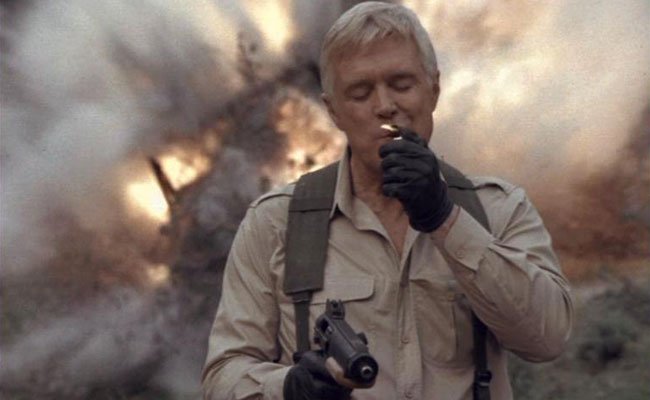
Hannibal Smith likes a plan
Plan posts. Brainstorming ideas and collating draft posts allows you to plan content in advance. Some bloggers like to write spontaneously or react to what is happening around them. But not everyone favours such an ad hoc and impromptu style. Hence planning posts in advance may well increase your chances of them completed and out the proverbial door. If fate provides you with both the time and inclination to write two posts in a day, then seize the opportunity. Some subjects may well need to be tackled in more than one post. Therefore planning an appropriate arc to accommodate a weighty subject may be the best approach. Committing to a series of posts may also provide a degree of stability that you need. It means not having to think of new material for a while which can take the pressure off.
Set achievable goals. Blogging becomes a lot easier if you are entirely honest with yourself. We all know what we can and cannot achieve with regard to writing and balancing the requirements of the rest of our life. Therefore, don’t commit publicly to writing material everyday and then fail to achieve it. You will disappoint yourself and your readers. If you can realistically post one post a week then embrace that reality and ensure that you do your best. Placing unnecessary pressure upon yourself is counterproductive, so don’t do it. Be candid about what you can produce, with the time and resources you have and then focus upon getting it done. Something is usually better than nothing when it comes to blogging.
Reward yourself. Finally, reward yourself after writing. If you have set yourself a target of three posts in a week and you achieve it, then claim whatever prize you have set for yourself. A carrot on the end of a stick is better at motivating than just a stick on its own. Gamification is often a good tool to increase productivity. So find a way to reward yourself that will actively encourage you to write. Obviously, if you fail to hit your target and still reward yourself, you’re an unconscionable hypocrite and calumniator, who will burn in perdition’s flames. But that’s blogging for you and the universally accepted code of writing. No blog post. No cakes. Or meth. Or whatever your personal indulgence is.
Insidious: The Red Door (2023)
I was surprised to learn that a fifth film had been made in the Insidious franchise. However, I like this series sufficiently well enough to indulge a further entry, especially in light of the fact that the story has returned its focus on the Lambert family. It is also worth noting that lead actor Patrick Wilson who plays Josh Lambert in the first two films directs Insidious: The Red Door. Perhaps the story, which explores the emotional fallout of the previous events, appealed to him both in front and behind the camera. It is this approach to the fifth instalment which keeps things fresh and ensures that the film doesn’t solely revisit familiar territory. That also might also be the reason why this latest instalment didn’t quite get the same critical and commercial traction that previous entries did.
I was surprised to learn that a fifth film had been made in the Insidious franchise. However, I like this series sufficiently well enough to indulge a further entry, especially in light of the fact that the story has returned its focus on the Lambert family. It is also worth noting that lead actor Patrick Wilson who plays Josh Lambert in the first two films directs Insidious: The Red Door. Perhaps the story, which explores the emotional fallout of the previous events, appealed to him both in front and behind the camera. It is this approach to the fifth instalment which keeps things fresh and ensures that the film doesn’t solely revisit familiar territory. That also might also be the reason why this latest instalment didn’t quite get the same critical and commercial traction that previous entries did.
After the events of the first two films, Josh (Patrick Wilson) and Dalton Lambert (Ty Simpkins) are voluntarily hypnotised so that they forget their astral voyage to the Further. Ten years later in the present, Josh has never fully got his life back on track and has subsequently divorced Renai Lambert (Rose Byrne) and is estranged from his children. The family meet up at the funeral of Lorraine Lambert, Josh’s mother and Renai suggests Josh drive Dalton to the university as a means to reconcile. However, the trip ends in an argument that both regret. Dalton is studying art with Professor Armagan (Hiam Abbass) who asks her students to look deep into themselves for inspiration. Dalton discovers hidden memories that manifest themself through his art. His roommate Chris (Sinclair Daniel) soon discovers that Dalton can astral project and the pair wonder if this is the key to unlocking his secret past.
Insidious: The Red Door is a different beast from previous instalments. The first two films are about a family coming apart due to supernatural events, whereas this entry is very much about external events bringing people back together. There is a degree of sentimentality about fathers and sons but it is quite well handled. Josh and Dalton don’t hate each other. They just don’t know each other and the one shared experience that they have is a suppressed memory. This theme is the focus of the plot and hence the demons of the Further are relegated to a more of a supporting role. There are some solidly constructed jump scares, with one taking place in an MRI scanner. They are artfully lit and well constructed, yet they are not quite as impactful as in previous films. Possibly because they are not so pivotal to the story.
Insidious: The Red Door doesn’t suffer from an excess of characters and Dalton has a great foil in his roommate Chris. She is wise and open minded about events and the screenplay doesn’t feel obliged to turn their relationship into a romantic one. There’s a good sense of continuity, with prior characters turning up in inventive ways. Specs (Leigh Whannell) and Tucker (Angus Sampson) appear in a YouTube video and Elise Rainier (Lin Shaye) even manages to make a meaningful appearance. There’s also a poignant scene between Josh and Renai which succinctly explains the inevitable collapse of their marriage. Overall, I thought this to be quite a different sort of sequel but sadly, therein lies the problem. Many viewers wanted a more traditional exploration of the subject and expansion of the lore. Hence Insidious: The Red Door has met with a degree of ambivalence.


Holocaust 2000 (1977)
The commercial and critical success of The Exorcist upon its release in late 1973 led to an increase in major studios investing in big budget, star driven horror films. The Omen (1976) further established this horror renaissance, which moved away from the traditional gothic horror of Hammer Studios and Roger Corman’s AIP releases. Horror was now about evil and biblical predictions manifesting in the modern world. As ever, with any successful film or genre, there are those subsequent productions that seek to imitate and cash-in. Holocaust 2000 is such a film. A British-Italian co-production, it features Kirk Douglas (who does much of the film’s heavy lifting), several well known British character actors and some notably violent set pieces. It takes the fashionable theological threat of the Antichrist and also adds an interesting nuclear angle, where a fusion plant built to solve the energy crisis could prove to be a harbinger of doom.
The commercial and critical success of The Exorcist upon its release in late 1973 led to an increase in major studios investing in big budget, star driven horror films. The Omen (1976) further established this horror renaissance, which moved away from the traditional gothic horror of Hammer Studios and Roger Corman’s AIP releases. Horror was now about evil and biblical predictions manifesting in the modern world. As ever, with any successful film or genre, there are those subsequent productions that seek to imitate and cash-in. Holocaust 2000 is such a film. A British-Italian co-production, it features Kirk Douglas (who does much of the film’s heavy lifting), several well known British character actors and some notably violent set pieces. It takes the fashionable theological threat of the Antichrist and also adds an interesting nuclear angle, where a fusion plant built to solve the energy crisis could prove to be a harbinger of doom.
Industrialist Robert Caine (Kirk Douglas) is looking to build the world’s first nuclear fusion reactor in the Middle East to resolve the energy crisis. While visiting the proposed site with local politicians, journalist Sara Golan (Agostina Belli) shows him a hidden cave where early christians met. It is portentously destroyed during the groundbreaking ceremony. On returning to London Caine finds that his project is strongly opposed. His home is surrounded by protesters and his wife Eva (Virginia McKenna) states she will use her shares in Caine Industries to halt the plan. Eva is subsequently killed by a radical protester whose intended target was Caine himself. Despite this and other setbacks, Caine’s son Angel (Simon Ward) supports the project wholeheartedly and urges him to forge ahead. A chance encounter with a Monsignor (Romolo Valli) on a flight, gives Caine pause for thought. Is the project safe? Does Angel have an ulterior motive? Are there more sinister forces at work?
Director and writer Alberto De Martino was a seasoned Italian filmmaker, having worked as a second unit director for Sergio Leone. Like many genre directors of his time, he had an eye for visual composition and lighting. As ever with Italian genre cinema, the visuals often trump a film’s narrative. There are elements of this in Holocaust 2000. When it is revealed that Robert Caines son, Angel, is the Antichrist there is no explanation as to how this has happened. Also, will Caine’s second son equally be of note. Sadly the screenplay chooses not to explore these points. Instead it invests time and effort in building towards several set pieces. There is a notable dream sequence in which the seven fusion reactors built on towers, rise from the sea and transform into a seven headed hydra. There are some striking death scenes including a nasty accident involving helicopter rotors.
Although Holocaust 2000 treads very familiar territory it has sufficient innovation to keep viewers engaged and benefits greatly from the visual flair inherent in Italian filmmaking. The use of iconic British locations such as Bigbury-on-sea in Devon and Carlton House Terrace in London add to the atmosphere. The cast of solid British actors adds weight to the proceedings. The idea of the Devil using a fusion reactor to destroy the world is clever and the background stories of the energy crisis and the political turmoil in the Middle East are timely. The film is further bolstered by an Ennio Morricone soundtrack. However, several cultural tropes have aged poorly, such as the ageing man with a much younger lover. Kirk Douglas was 61 at the time where co-star Agostina Belli was 30. There’s a plot line where Caine pressurises Sara to have an abortion that feels archaic.
Holocaust 2000, like so many international films, was released in the US and other territories under several different names. It was called Rain of Fire in some prints and The Chosen when it was released in North America by American International Pictures. This version is shorter and has an alternative ending. Where Holocaust 2000 ends ambiguously with Caine fleeing back to Sara’s home in the Middle East, to raise their new child, The Chosen has a more definitive conclusion. Caine flies to Geneva where Angel is holding a board meeting and kills himself and everyone else with a concealed bomb. Sadly the editing and the hastily created miniature effects are poor, undermining the film’s climax. The original ending is the better of the two, reflecting the anxieties of the seventies after several nuclear accidents and the ongoing hostilities between the Arab world and Israel. Italian exploitation cinema doesn’t always try this hard, which makes Holocaust 2000 an interesting entry in the demonology genre.
The Deadly Mantis (1957)
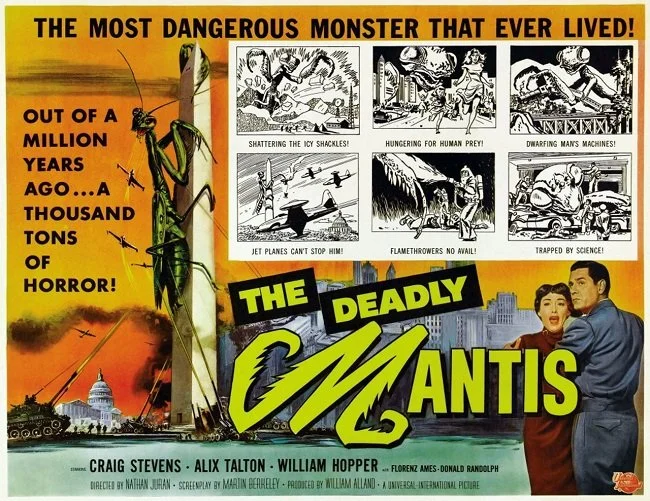
Not to be confused with the Shaw Brothers martial arts film of the same name from 1978, The Deadly Mantis (1957) is a creature feature in the idiom of Them! (1954). Unlike that film’s mutant ants, the monster on this occasion is not the product of the atomic age but a giant prehistoric praying mantis that has been released from the polar ice caps. Exactly how a creature associated with more tropical regions came to be at the North Pole is never explained. In fact precious little is in The Deadly Mantis. The film’s overall scope is somewhat limited with a basic story, limited action scenes and a rather dull cast of generic characters. There is an over reliance upon stock footage from period military documentaries and previous Universal Studio feature films. The film’s biggest failing is the giant praying mantis which does most of its rampaging conveniently off camera. It’s all rather disappointing.
Not to be confused with the Shaw Brothers martial arts film of the same name from 1978, The Deadly Mantis (1957) is a creature feature in the idiom of Them! (1954). Unlike that film’s mutant ants, the monster on this occasion is not the product of the atomic age but a giant prehistoric praying mantis that has been released from the polar ice caps. Exactly how a creature associated with more tropical regions came to be at the North Pole is never explained. In fact precious little is in The Deadly Mantis. The film’s overall scope is somewhat limited with a basic story, limited action scenes and a rather dull cast of generic characters. There is an over reliance upon stock footage from period military documentaries and previous Universal Studio feature films. The film’s biggest failing is the giant praying mantis which does most of its rampaging conveniently off camera. It’s all rather disappointing.
In the South Seas, a volcano erupts and the subsequent seismic disturbance disturbs North Pole polar ice sheets, releasing a 200 foot praying mantis that has been trapped there since prehistoric times. The monster attacks a remote outpost of Red Eagle One, a military early warning station. Despite personally leading the search, Commanding officer Col. Joe Parkman (Craig Stevens) cannot account for the incident or find an elusive blip that appears on radar. After a transport plane is attacked, a curious claw-like object is found in the wreckage. When Doctor of palaeontology, Nedrick Jackson (William Hopper), is asked to identify it he deduces that it is a spur from an insect's leg. Possibly from some unknown species of praying mantis. Dr. Jackson and photographer Marge Blaine (Alix Talton) travel to Red Eagle One to conduct further research. Shortly afterwards, the monster attacks again before migrating south to warmer climates, endangering the USA.
Director Nathan Juran, who was a competent genre film maker, has very little to work with in The Deadly Mantis. The budget is low and the script is arbitrary. The monster appears and the protagonists are confused. Then an academic identifies the threat and expedites the plot. A plucky female character is thrown into the mix for “love interest”. The praying mantis itself attacks a few miniature buildings, a fishing vessel and some vehicles. Minor cast members are killed off camera. The acting is adequate but the dialogue is perfunctory. The film paints with broad brush strokes and its primary saving grace is that it doesn’t outstay its welcome. Perhaps its best achievement is highlighting how superior Them! (1954) and The Beast from 20,000 Fathoms (1953) are. Both of those films do more than the bare minimum and boast enjoyable screenplays and quirky characters.
Amityville 3-D (1983)
The Amityville Horror (1979) performed extremely well commercially upon release. Hence a prequel, Amityville II: The Possession (1982), was made three years later to capitalise on that box office success. Both films are allegedly based upon real events. The first film depicts the haunting of the Amityville house and the events that befell the Lutz family that moved in. The second explores the original DeFeo murders which took place earlier, although here the family is renamed Montelli. A third film, Amityville 3-D, was released in 1983 and is a curious sequel. Unlike previous instalments, it was an original story and did not attempt to mine the wealth of books associated with the Amityville case. It also jumped on the 3-D revival bandwagon that was popular at the time with such films as Friday 13th Part III and Jaws 3-D. It is a very workmanlike production, directed by Richard Fleischer.
The Amityville Horror (1979) performed extremely well commercially upon release. Hence a prequel, Amityville II: The Possession (1982), was made three years later to capitalise on that box office success. Both films are allegedly based upon real events. The first film depicts the haunting of the Amityville house and the events that befell the Lutz family that moved in. The second explores the original DeFeo murders which took place earlier, although here the family is renamed Montelli. A third film, Amityville 3-D, was released in 1983 and is a curious sequel. Unlike previous instalments, it was an original story and did not attempt to mine the wealth of books associated with the Amityville case. It also jumped on the 3-D revival bandwagon that was popular at the time with such films as Friday 13th Part III and Jaws 3-D. It is a very workmanlike production, directed by Richard Fleischer.
After exposing a pair of mediums who have been using the Amityville house for bogus seances, investigative journalist John Baxter (Tony Roberts), decides to buy the property as he is getting divorced and needs a new home. His photographer friend, Melanie (Candy Clark), takes several pictures of John and real estate broker Clifford Sanders (John Harkins) at the house. Shortly afterwards Sanders dies in the attic under mysterious circumstances. When Melanie develops the photos she finds the images of Sanders are distorted and she takes the film and camera to Dr. Elliot West (Robert Joy), at the Institute for Psychic Research. Susan (Lori Loughlin), John’s daughter, is keen to see the alleged haunted house but her mother, Nancy Baxter (Tess Harper), does not want her to stay there. Paranormal events begin to escalate and it becomes clear that a malevolent force is at work.
Amityville 3-D begins by establishing protagonist John Baxter as a dyed in the wool sceptic, who writes about lurid cases in an equally lurid magazine. Initially after buying the Amityville house, all the subsequent supernatural events happen to others. When Baxter asks why he hasn’t experienced anything, Melanie portentously exclaims “maybe the house has other plans for you”. After a deliberate, slow paced first act, several of the lead characters die and it is clear to Baxter that the house is a malign influence. Eventually Dr. West and his team are called in to investigate the Amityville house and its infamous well. This culminates in a climax filled with 3-D special effects with everything bar the kitchen sink being hurled at the camera (including a stuffed swordfish). The story is neatly concluded with an opening for a sequel, yet nothing is really explained beyond a cursory reference to the house being built on an Native American burial ground.
Amityville 3-D starts as a low key supernatural tale with the emphasis on scares, rather than gore. The first death scene harks back to the swarm of flies that attacked Rod Steiger in the first film. The next few set pieces revolve around gusts of freezing wind, a free falling elevator and a bathroom wall that moves. Then at the start of the third act, it all becomes somewhat grimmer with one cast member burnt to death. The climatic demon is also somewhat left field. It’s all somewhat inconsistent as if the production couldn’t quite decide what to do with its competent cast of character actors. There are cinematic nods along the way to The Omen and Poltergeist. The 3-D cinematography leaves the 2.35:1 image a little blurred at the left and right of the frame. The film plays out against a suitably eerie soundtrack written by British composer Howard Blake of The Snowman fame.
Linus Tech Tips: What Did You Expect?
Another week, another internet “drama”. I don’t actively seek this shit out. It just bleeds through into my social media timeline with tedious regularity. This latest debacle is regarding the popular (by which I mean over 15 million subscribers) technology product review YouTube channel, Linus Tech Tips. There have been claims of factual inaccuracies in recent reviews and a focus in getting content produced quickly at the expense of quality. Then a former employee made allegations of a toxic work environment and sexual harassment. As a result there has been a great deal of “online outrage” from those who assumed up until now that Linus Tech Tips was a bastion of integrity. Then there was the formal reply video from Linus Tech Tips about the allegations, which made matters worse by joking about the situation and running ads. As a result the YouTube channel has suspended video production for a week. You can read more details on this situation on the Forbes website.
Another week, another internet “drama”. I don’t actively seek this shit out. It just bleeds through into my social media timeline with tedious regularity. This latest debacle is regarding the popular (by which I mean over 15 million subscribers) technology product review YouTube channel, Linus Tech Tips. There have been claims of factual inaccuracies in recent reviews and a focus in getting content produced quickly at the expense of quality. Then a former employee made allegations of a toxic work environment and sexual harassment. As a result there has been a great deal of “online outrage” from those who assumed up until now that Linus Tech Tips was a bastion of integrity. Then there was the formal reply video from Linus Tech Tips about the allegations, which made matters worse by joking about the situation and running ads. As a result the YouTube channel has suspended video production for a week. You can read more details on this situation on the Forbes website.
The allegations made against Linus Tech Tips are serious. I therefore hope that due process is followed and if the claims are substantiated, then appropriate action is taken. Setting these specific matters aside, I would like to discuss the wider and more commonplace phenomenon of businesses (especially those in traditional and new media industries) going rogue. If you are in anyway shocked by the revelations about Linus Tech Tips my question to you is “what the fuck did you expect”? And if your reply is “honesty, integrity and professionalism” then please excuse the howls of derision from the galleries. YouTube is a commercial enterprise that is “self regulating”. It has precious few external checks and balances brought to bear against it, compared to mainstream media. Why do so many people still equate the immediate and informal nature of YouTube with somehow being a sign of trust and even friendship?
Once again we find ourselves at the “something, something, capitalism bad” part of the post. You may well roll your eyes at this old cliche but when will people fucking learn? The internet is no longer the utopian frontier, free from the grasp of corporate interests that it aspired to be decades ago. Just like the real world, small businesses have been squeezed out and monopolies have been established. Any successful YouTube channel that is dependent upon ad revenue to survive has a clear hierarchy of needs. One where the viewer is not necessarily the priority and ethics are an obstacle. Capitalism has been around long enough that it has been established that if you expect big business to do the right thing, it won’t. Business doesn’t like rules or being told “no”. Which is why we have regulations in most industries. The internet seems to have escaped these for the present.
When you have an environment where there is no fear of sanction, you’ll continuously get debacles like the one facing Linus Tech Tips. So instead of naively throwing up your hands in horror when such stories break, why not lobby for change instead? Because change is needed. As a society we’re becoming too dependent on information, tools and resources that are controlled by corporate entities that are broadly outside the sphere of governmental control and regulation. Look at how Twitter/X has changed for the worse in the last twelve months. So once again I reiterate, YouTube is not your friend. Neither are the big players who have successful channels. Game developers and publishers aren’t in their line of work for the betterment of humanity and your wellbeing. We really need to stop seeing the internet as something different from other industries and being surprised when the metaphorical bear defecates in its own habitat.

























Taxis and Minicabs
In case you don’t know already, I don’t drive. Haven’t got a licence or taken a test. Never have and never will. The post I’ve linked to explains why, so we won’t be discussing that any further here. Mrs P is our household’s designated driver. Not that she minds as she has always enjoyed driving. However, she is currently immobile due to a fracture in her right leg. Hence we aren’t using the car at present which causes a few problems. Firstly, as Mrs P’s leg injury is still being treated, there is the travel to the various outpatients clinics at the hospital. Then there are our grocery shopping requirements. The latter is easily addressed by home deliveries. The former is more of a problem. Although London has good public transport, travelling while in a wheelchair is far from ideal. Hence we won’t use buses to get to hospital. Which means using taxis or minicabs, which presents its own unique challenges.
In case you don’t know already, I don’t drive. Haven’t got a licence or taken a test. Never have and never will. The post I’ve linked to explains why, so we won’t be discussing that any further here. Mrs P is our household’s designated driver. Not that she minds as she has always enjoyed driving. However, she is currently immobile due to a fracture in her right leg. Hence we aren’t using the car at present which causes a few problems. Firstly, as Mrs P’s leg injury is still being treated, there is the travel to the various outpatients clinics at the hospital. Then there are our grocery shopping requirements. The latter is easily addressed by home deliveries. The former is more of a problem. Although London has good public transport, travelling while in a wheelchair is far from ideal. Hence we won’t use buses to get to hospital. Which means using taxis or minicabs, which presents its own unique challenges.
To begin with, let me clarify the terms being used, as I shall be referring to the UK definitions. By taxis, I mean the iconic black cabs or hackney carriage. In Greater London, these vehicles are licensed by The Taxi and Private Hire office under the auspices of TFL (Transport for London). Taxi drivers have to pass “The Knowledge”, an “in-depth study of a number of pre-set London street routes and all places of interest in the capital”. Taxi drivers do not rely upon satnav. There are also various security checks required before a licence is issued. Taxis can be hailed in the street or booked online, via apps. Minicabs is the term used to cover any other form of private vehicle hire. From big companies such as Addison Lee, local firms and of course Uber. These vary greatly in quality.
I won’t use Uber because on several occasions the driver has simply abandoned the job and failed to turn up, which is singularly inconvenient to put it mildly. Similarly, local minicabs are equally unreliable, often taking the booking but failing to arrive in time. Also most vehicles are not wheelchair friendly and the drivers will do little or nothing to assist the passenger(s). Hence, if I have to use a minicab, I use Addison Lee which has higher standards for their drivers and a good online booking and tracking system. However, by choice I will always use a taxi as the vehicles are by design wheelchair friendly, with a ramp allowing easy access. The drivers are always helpful and considerate taking routes with the minimal amount of “traffic calming measures” AKA speed bumps. The booking apps such as Gett are efficient and reliable.
What has become apparent over the last two and half weeks since Mrs P had her accident and we’ve had to rely on taxis and minicabs, is how the cost of travelling by such means has increased. This is due to the cost of living crisis as well as several other factors. It takes 20 minutes to drive to the hospital at Woolwich and that journey cost £30 including tip. Hence a cost of £60 per round visit. However, there are two other factors that complicate the situation. Since the pandemic, approximately 5,000 London based taxi drivers are no longer active. This shortfall means that booking on the fly is a lot harder. Conversely, some apps will only allow booking one hour in advance. Also, a lot of taxis are reluctant to take shorter journeys, instead favouring longer trips that pay more. It’s a classic consequence of the free market. Like many situations in life, you only become familiar with them when there is a need to. Until recently, taxis and minicabs have been an occasional requirement. However, I count us fortunate that we are in a position to use such services, rather than the alternative.
16 Years of Blogging
Today is my blogging anniversary. I have been inflicting my thoughts upon the world for 16 years. I started writing online regularly in March 2007, although my early blogging projects were somewhat scattershot as I struggled to find an appropriate niche. August 16th standouts because it was the date I registered my first domain name, in a fit of enthusiasm. In the previous seven months, I created and abandoned three sites before I finally found a subject that I could focus upon and that would sustain my writing. Hence for practical reasons I consider August 16th my starting date as I spent money on my hobby, which I believe shows some kind of commitment. I won’t bore readers yet again with my origin story as I’ve covered that before. To keep things short and sweet, I’ve kept writing this long because I enjoy it. Maybe in a different life, I would have liked to have made it my career.
Today is my blogging anniversary. I have been inflicting my thoughts upon the world for 16 years. I started writing online regularly in March 2007, although my early blogging projects were somewhat scattershot as I struggled to find an appropriate niche. August 16th standouts because it was the date I registered my first domain name, in a fit of enthusiasm. In the previous seven months, I created and abandoned three sites before I finally found a subject that I could focus upon and that would sustain my writing. Hence for practical reasons I consider August 16th my starting date as I spent money on my hobby, which I believe shows some kind of commitment. I won’t bore readers yet again with my origin story as I’ve covered that before. To keep things short and sweet, I’ve kept writing this long because I enjoy it. Maybe in a different life, I would have liked to have made it my career.
I like long-form writing that utilises the English language well. It can be informative, galvanising and even revolutionary. Well chosen words give weight to ideas and concepts. They can inspire and call people to action. They can also empathise, amuse and educate. The right words can echo through time or make you spit out your coffee. Hence I like the acerbic wit of Charlie Brooker and the emotional depth of Al McIntosh. Then there is the wisdom and reverence of Carl Sagan and Ann Druyan. I also enjoy Agatha Christie, Jacob Bronowski, M.R. James and Roger Hargreaves. All great writers in their respective fields. I could list names indefinitely. My point is that when you encounter good writing, it doesn’t just make its point. It elicits an emotional response and resonates with you in a meaningful way. It can be four panels of Calvin and Hobbes, Shakespeare’s St. Crispin's Day speech from Henry V, or Martin Luther King’s I Have a Dream.
As a blogger, although I cannot reach the standards of the writings I have referenced, I believe I can learn and improve overtime. It doesn’t matter what you’re writing about or what your style is. If you keep writing, thinking and trying to hone your skills, you will. Hopefully your blogging journey will be enjoyable, rewarding and even therapeutic. I know mine has over the years. I’ve met (online) many talented, interesting people and learned a lot simply by reading other people’s experience of daily life. It becomes apparent very quickly that we have more in common, than we do differences. I also believe that we are actively encouraged to be docile and to lose ourselves in memes and ephemeral online content. We willingly embrace an infantilised and lazy use of language. In doing so we restrict our own freedom of expression. Blogging flies in the face of this. It is about exercising your right to free speech, free thought and rejecting the status quo.
I hope that I’m still writing in another 16 years time, as it is such an integral part of my daily life. However, I suspect my liver and arteries have other plans. Plus the growing corporate stranglehold over the internet may well mean that blogging becomes more and more like pissing in the wind. I don’t think that any company would be crass enough to block content directly that isn’t under their auspices, but it isn’t too far fetched to envisage an algorithm that bypasses anything that isn’t “affiliated”. But enough of this existential navel gazing. We haven’t quite reached an Orwellian dystopia yet. Therefore, in the meantime remember that words are good. They are your friend and ally. They will serve you well if you approach them with an open mind. Don’t forget the old maxim, you must say what you mean, if you wish to mean what you say. Keep writing.