Taken 2 (2012)
If it worked once already, why not just do it all again irrespective of logic and statistical likelihood? Thus, in Taken 2 Ex-CIA operative (and mail order catalogue) Bryan Mills (Liam Neeson) is struggling to come to terms with his daughter Kim (Maggie Grace) growing up and his relationship with his ex-wife Lenore (Famke Janssen). If life wasn't complicated enough with being a Dad, Bryan finds himself up against a vengeful Albanian gang. It would appear that they're somewhat annoyed that he slaughtered their brethren in the previous instalment. Hence Bryan and Lenore are kidnapped whilst on vacation in Istanbul and face a grim death at the hands of the gang's patriarch, Murad Hoxha (Rade Šerbedžija). Once again, the criminal fraternity underestimates the resourcefulness of Mr. Mills and it is not long before the tables are turned.
If it worked once already, why not just do it all again irrespective of logic and statistical likelihood? Thus, in Taken 2 Ex-CIA operative (and mail order catalogue) Bryan Mills (Liam Neeson) is struggling to come to terms with his daughter Kim (Maggie Grace) growing up and his relationship with his ex-wife Lenore (Famke Janssen). If life wasn't complicated enough with being a Dad, Bryan finds himself up against a vengeful Albanian gang. It would appear that they're somewhat annoyed that he slaughtered their brethren in the previous instalment. Hence Bryan and Lenore are kidnapped whilst on vacation in Istanbul and face a grim death at the hands of the gang's patriarch, Murad Hoxha (Rade Šerbedžija). Once again, the criminal fraternity underestimates the resourcefulness of Mr. Mills and it is not long before the tables are turned.
Taken 2 is a tonally odd movie. It bookends the action content with what feels like a quasi-soap opera. A sort of "Life with the Mills family", where Bryan blunders through every stereotype about being a modern Dad. Again, there are plot holes a mile wide along with a total disregard for the laws of sovereign nations. It would appear that running gun battles, car chases and the use of hand grenades are not a big deal in Turkey, just like they weren't in Paris in the first movie. In this alternative universe, people also recover very quickly from traumatic, life altering events such as kidnapping, a near fatal wound and both physical and psychological torture. "Oh, those pesky Albanian gangsters really are a nuisance. Who wants an ice cream?"
Yet despite the complete stupidity of virtually every aspect of Taken 2, it still manages to shrug off all these criticisms and play a lone trump card that saves it. Yes, Liam Neeson manages to carry Taken 2, by the sheer force of his personality, irrespective of the ludicrous dialogue, crass narrative and total lack of internal logic. I don't quite know how to define it, but Mr. Neeson has a quality about him that somehow cancels out all these negative points. He commands the viewers’ attention by being a sort of alpha male, “pater familias”, sexy old death machine. A real achievement for a sixty-year-old man (at the time of filming).
There is a paradox regarding the action sequences in Taken 2. There are some very interesting techniques used, but they are somewhat difficult to discern due to the lightning editing. There is a telescopic baton fight of note and a climatic hand-to-hand battle that is very impressive. Again, I can only recommend the unrated version of the film. The theatrical version was reduced in content to obtain lower ratings on both sides of the Atlantic. Unlike the perfunctory nature of US action movies, there is a noticeable cruel streak running through Taken 2. Some may find this unpalatable. The torture of Lenore focuses very much upon her psychological suffering as the villain brandishes the instruments, he intends to use upon her.
Critics lined up to pour scorn on Taken 2 upon release. Director Olivier Megaton was quickly accused of being the French McG. The film certainly is quite spectacularly preposterous, yet still manages to entertain with it's interesting locations and the towering presence of Liam Neeson. Plus, any movie that advocates locating people by using a map, a bootlace, a pen and several hand grenades deserves some credit. So, I do not feel disposed to join others in beating of this particular cinematic piñata. We all choose to adopt some waif and stray or lost cause at some point. Taken 2 is mine.







The Proust Questionnaire Part 1
The Proust Questionnaire was popularized by Marcel Proust, the French essayist and novelist, who believed that, in answering the questions, an individual provides an insight into his or her true nature. Whether that is true is debatable, but I do find the internets fondness for Q&A sessions, curiously fascinating. And as this very questionnaire has been recently resurrected by Vanity Fair magazine and has also been utilised on the Ricky Gervais is Deadly Sirius podcast, I though I’d jump on the same bandwagon, as I’m behind in my writing and this is an easy post. As there are thirty-five questions, I thought I’d tackle them over two days. So, without further ado, here are my considered and measured thought on the first seventeen.
The Proust Questionnaire was popularized by Marcel Proust, the French essayist and novelist, who believed that, in answering the questions, an individual provides an insight into his or her true nature. Whether that is true is debatable, but I do find the internets fondness for Q&A sessions, curiously fascinating. And as this very questionnaire has been recently resurrected by Vanity Fair magazine and has also been utilised on the Ricky Gervais is Deadly Sirius podcast, I though I’d jump on the same bandwagon, as I’m behind in my writing and this is an easy post. As there are thirty-five questions, I thought I’d tackle them over two days. So, without further ado, here are my considered and measured thought on the first seventeen.
1). What is your idea of perfect happiness? I find that I am at my happiest when I am in a tranquil environment. Noise, crowds and any place or activity that has the potential to generate anger of bellicose behaviour are the bane of modern-day life. Give me a quiet, calming location, that is warm and pleasant, and I quickly feel relaxed and thereby better disposed to others. Populate such a place with those who I care about and whose company I enjoy, and it becomes even better. Adding Gin, Pimm’s or a quality red wine doesn’t do any harm either.
2). What is your greatest fear? Putting aside pain which I think is a red herring when tackling this question, for me my greatest fear is losing the capacity to think, reason and martial my thoughts. Senility, Alzheimer's disease and generally any form of mental decay terrify me. These are cruel conditions both for those who suffer from them and their families. To be afflicted in such a way and to slip into a mental decline, only to have occasional moment of lucidity, sends my blood cold.
3). What is the trait you most deplore in yourself? If I make someone a promise, then I’ll keep it. If I take onboard a project that involves others, I will do my part because I have an obligation that I need to honour. Yet, I don’t always maintain this standard if the only person involved is myself. I’ll let things slide if I’m the only one affected.
4). What is the trait you most deplore in others? I’m tempted to say existing in the first place, but that is a little misanthropic. So, on reflection I’ll go with wilful ignorance. There’s nothing wrong with not knowing something. I am poor at languages and there are lots of gaps in my academic knowledge. But if something comes to my attention that I don’t know about, I’ll research it. We live in an age where it has never been so easy to look something up. Yet so many people choose not to. And others even appear to revel in their ignorance. Thinking means having to read, analyse, consider and then make a decision. All things that many do not want to do at present. Every day is a chance at self-improvement, why choose to do the opposite?
5). Which living person do you most admire? This is a tough question. It’s hard to single out just one man or woman, because there are many who worthy of praise. So here are a few just off the top of my head in no order of preference. Ennio Morricone, because his music profoundly moves me, and he bring beauty into a dark world. Human rights campaigner Peter Tatchell, not so much because of his politics, but mainly because of his dedication. He fights for what is just possibly at the expense of his own happiness. I couldn’t do that. The world needs people like this. I may even go so far as also citing Queen Elizabeth II. I’m not a major royalist but I think she is a unique individual. One that really has spent her life serving the nation. The wealth is a merely a trapping. She is about duty to the country. And man, she has had to put up with some appalling visiting heads of state over the years, on top of a never-ending succession of utterly shite Prime Ministers.
6). What is your greatest extravagance? A signed picture of Peter Cushing. Cost a fortune. But it’s the Cushmeister. Say no more.
7). What is your current state of mind? Relaxed. I have arranged to take a brief 36-hour respite from my caring duties. I have tinkered with my PC today, eaten far too many Pork Loins and am now on the Guinness. The world is nicely on the other side of the front door and I’m listening to Anthony Newley. A cold caller phoned earlier by I told them to fuck right off. Take pleasure in the simple things, I say.
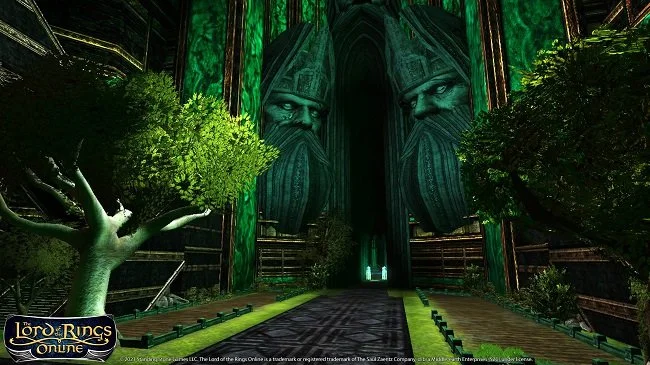
8). What do you consider the most overrated virtue? I believe this refers to the twelve virtues attributed to Aristotle, rather than those found in the MMO The Lord of the Rings Online. All of those classical virtues were fairly sound, so I don’t feel the need to pick on one. Using a more contemporary yardstick, being humble is considered a virtuous thing to be. Sadly, it often manifests itself in the form of the humble brag, which is quite the opposite. Plus, virtues are a poison chalice these days. Make a principled stand and you’ll be accused of virtue signalling, which is a pejoratives term.
9). On what occasion do you lie? I like any other human being living in western civilisation, skirt around the truth, make factually incorrect statements and lie by omission on a daily basis. You cannot have a society that runs smoothly if everyone was 100% truthful all the time. Emotions and the truth are a bit like oil and water. So, lying has become a fundamental part of human interaction, although it is governed by a lot of rules. For example, it is okay to lie to children. “There is a Santa Claus”. “Oh, that’s a lovely picture”. And my personal favourite, “you can be anything you want to be”. As an adult we also lie as a social nicety. “No, of course you don’t look like a sack of shit tied up in the middle with a dead tape worm” etc. But there are lines in the societal sand. Lying in grown-up situations around issues of relationships, arson, murder and cannibalism are definite non-starters.
10). What do you most dislike about your appearance? At the age of nearly fifty-one I am beginning to lose that bloom of youth and my saturnine good looks are slowly fading. Plus, I’m not too keen on my eyes. It’s not the colour that concerns me but that old adage about the eyes being the windows of the soul. The realities of the modern world and the fact that life is mostly a bleak and futile experience, akin to picking at a scab, is reflected in my brown eyes. This frequently causes people to recoil and pets to defecate in flowerbeds. It’s not a good look for family photos either.
11). Which living person do you most despise? I don’t think it is healthy or wise to be consumed with abject hate for a person or thing. You can righteously disdain an individual or a course of action, but it helps if you maintain a sense of proportion. That said, there is no shortage of odious lickspittles and shit chiselling fuck monkeys in our world today. They are usually self obsessed, thin skinned, ignorant and devoid of empathy. It’s hard not to want to stove in their skull with a tent mallet. If you asked me this question when I was nine, I would have said Colin Robertson, without missing a beat, as he broke my eagle eye Action Man on purpose. The git.
12). What is the quality you most like in a man? A well developed and nuanced sense of humour. I like raconteurs and people who view the absurdities of the world through the prism of wit. I find that humour helps me no end, especially in my duties as a carer to two elderly people. If I didn’t laugh at what I encounter every day, I weep uncontrollably. I also like people who don’t try and dodge buying a round of drinks when it’s their turn.
13). What is the quality you most like in a woman? Why should this be any different to the quality I most like in men? Unless we’re going down the road of sexual qualities, to which I say keep your nose out of my peccadilloes (not to be confused with hands of my Armadillo). I guess this is just a legacy question from an age when the cultural divide between the sexes was more pronounced and entrenched.
14). Which words or phrases do you most overuse? “Nebulous”, on “mature reflection” and “go piss up a rope, fuck stick”. I am also obsessed with obscure pop culture references, usually taken from my most formative years. Therefore, I’ll frequently drivel on about stuff from seventies and eighties TV, music and movies. For example, I often plagiarise a line from a classic Derek and Clive sketch, regarding “a bird on Mrs Coltart’s roof”.
15). What or who is the greatest love of your life? Mrs P, obviously. If we’re talking about “love” in so far as a passion for an activity, then it is writing and maybe podcasting. There was a about a three-year period when Contains Moderate Peril got a little traction and writing every day was a joy and recording the weekly podcast with Brian and guests was an absolute hoot. Good times.
16). When and where were you happiest? This question implies that I have some how peaked in the happiness stakes and that it’s now just a slow and painful decline into misery and despair, while listening to Lacrimosa by Zbigniew Preisner really loudly. Fuck this question. I live in the moment and there has been happiness throughout my life, as there will be in the years to come. That said, my granddaughters really make me happy as they are so young, loving and unspoilt by life.
17). Which talent would you most like to have? I’d like to be able to play the Baliset like Gurney Halleck.
To be continued.




















Re-installing MMOs
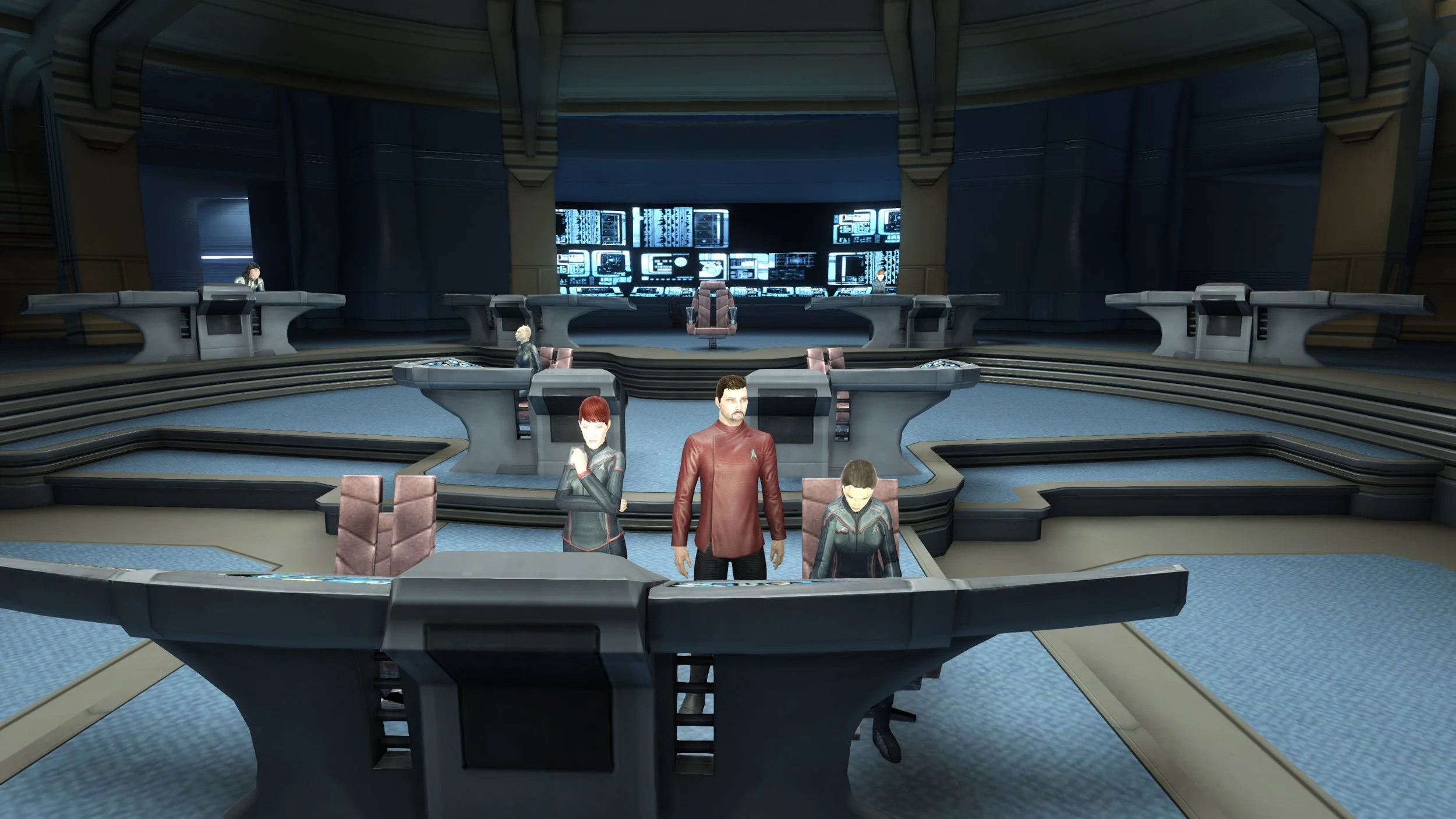
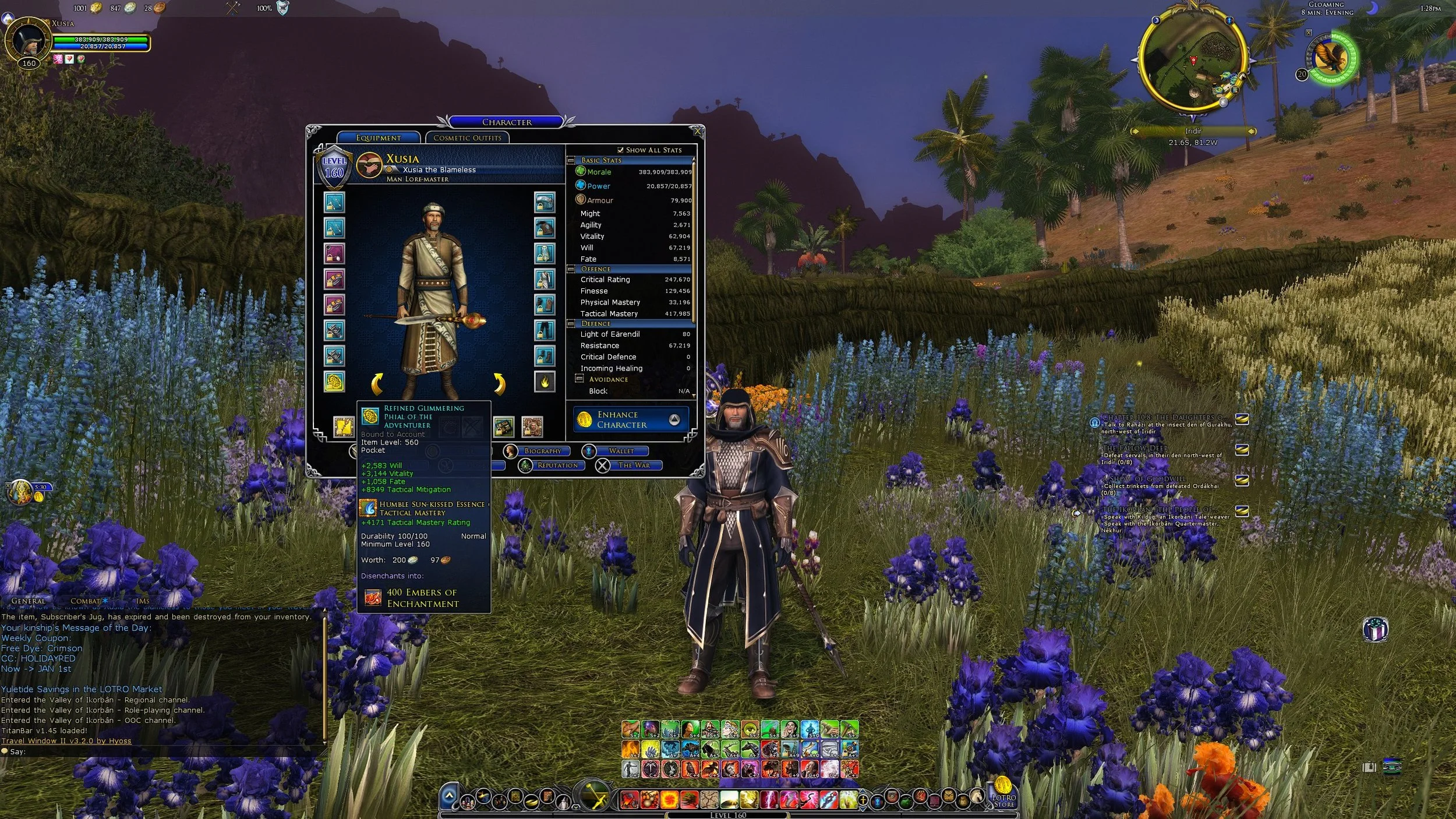
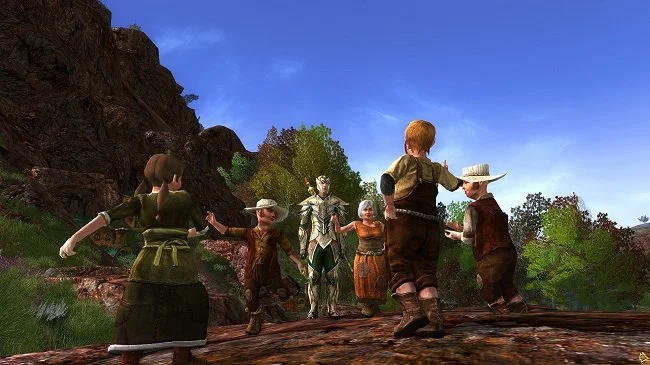
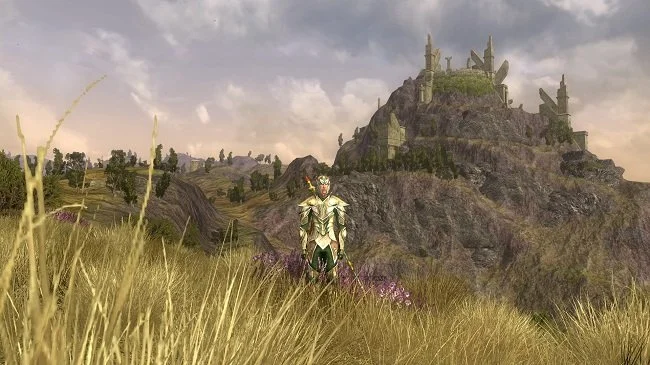
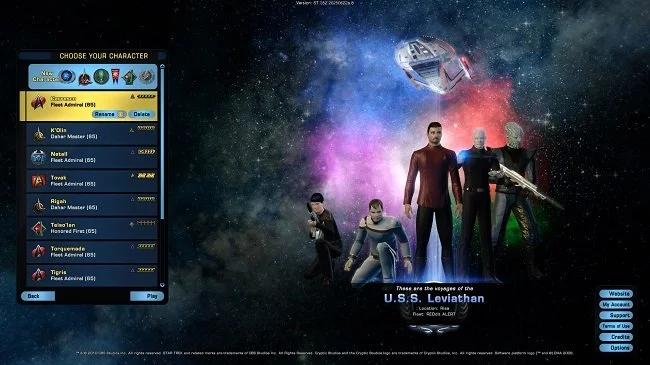
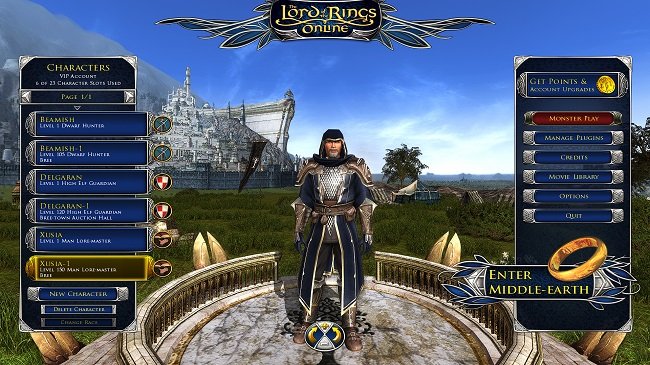
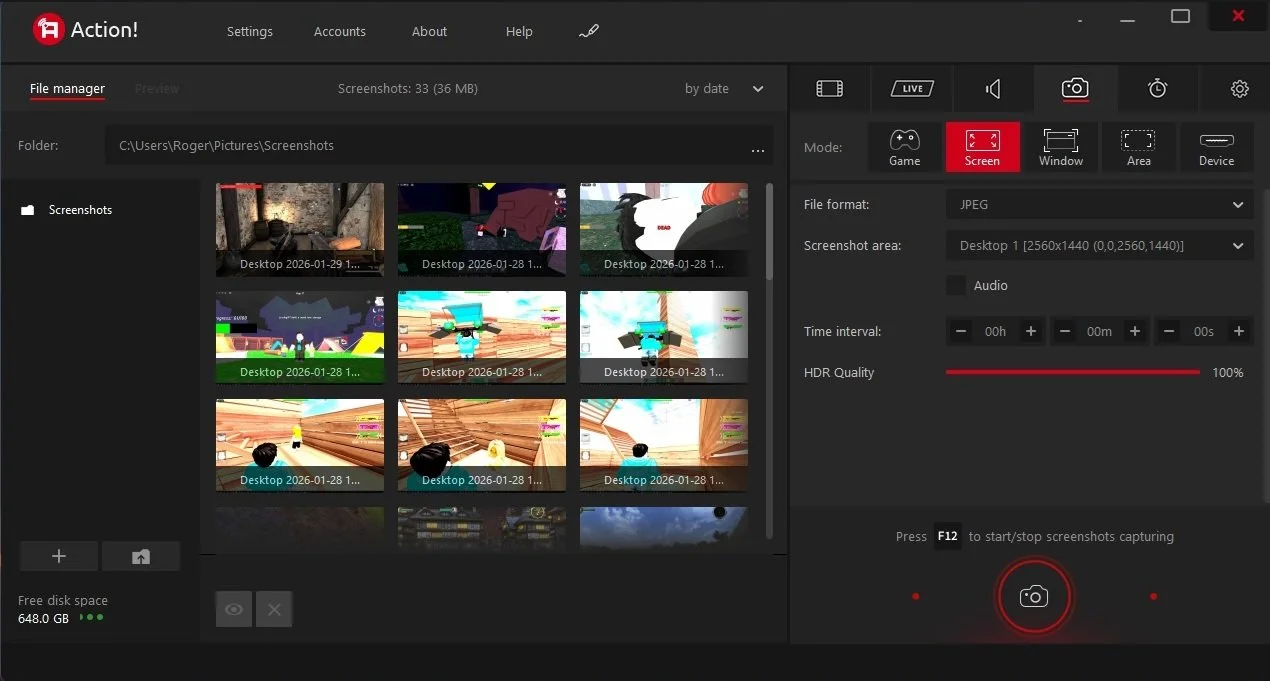
Having replaced my hard drive with a solid-state drive, I’ve had to re-install various games, along with all the other apps and programs I use. However, the smaller size of the new SSD has meant I’ve had to think long and hard about which title I choose. At present, I’ve limited myself to the two MMOs that I regularly play; namely The Lord of the Rings Online and Star Trek Online. Both have improved loading times as a result of running via a SSD and are performing a lot better than previously. I also prefer clean installations, rather than long term game setups that have been through numerous patches and updates. It was interesting to note that LOTRO now installs into a Standing Stone Games folder, rather than one marked Turbine. Sadly, STO required using either Steam or Arc as a means of installing the game. I opted for Arc, purely because it has a useful facility for redeeming game codes build into the launcher. Plus, you can bypass Arc and launch the game client directly if you want.
Having replaced my hard drive with a solid-state drive, I’ve had to re-install various games, along with all the other apps and programs I use. However, the smaller size of the new SSD has meant I’ve had to think long and hard about which title I choose. At present, I’ve limited myself to the two MMOs that I regularly play; namely The Lord of the Rings Online and Star Trek Online. Both have improved loading times as a result of running via a SSD and are performing a lot better than previously. I also prefer clean installations, rather than long term game setups that have been through numerous patches and updates. It was interesting to note that LOTRO now installs into a Standing Stone Games folder, rather than one marked Turbine. Sadly, STO required using either Steam or Arc as a means of installing the game. I opted for Arc, purely because it has a useful facility for redeeming game codes build into the launcher. Plus, you can bypass Arc and launch the game client directly if you want.
LOTRO being the older of the two games and still saddled with only a 32-bit client, proved to be the more problematic to download and install. The Akamai service that handles this process is very slow, irrespective of your internet connection. Despite having a 65MB fibre connection it took over four hours to install LOTRO, which is presently a 28GB download. STO being more of a space-centric game is a smaller 14GB install and was done in under ninety minutes. Due to the instanced nature of many of the zones, you can start playing the game while it downloads. With LOTRO you have to simply watch and wait as the blue bar slowly inches across the screen. Let us hope that SSG address this installation issue if we ever see the alleged 64-bit version of the game they’re developing. I also had to update my Nvidia graphic drivers and install Direct X 11 to get both games up and running. Something I shall prepare for in advance if I have to re-install any of these games again any time soon.
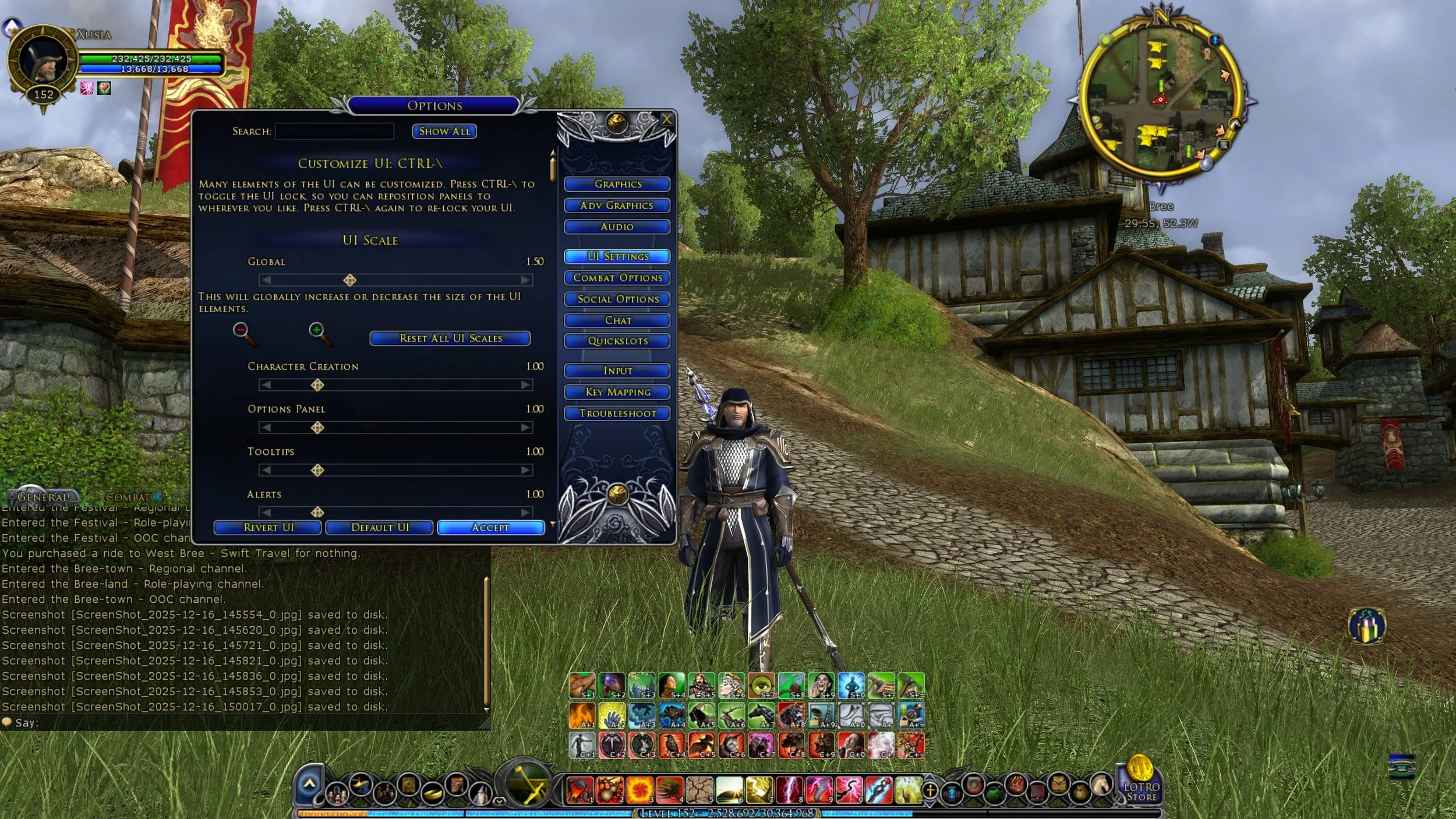
Here’s a tip if you find yourself in a similar position with either of these two MMOs. You may wish to back up the various files in “The Lord of the Rings Online” folder, which is usually a sub-folder of “Documents” on a standard Windows installation of LOTRO. These have details of minor UI customisations such as the order of your bags on the quickslot bar and what chat channels you utilise. It also has all your personal settings regarding screen resolution and general game preferences. It’s not essential that you do this, but it can save you some time tweaking your new installation once its complete. Similarly, with STO, you may also wish to copy your screenshots folder (usually located here: {Local path to program}\Star Trek Online_en\Star Trek Online\Live\screenshots\). Not only does it contain your previous screen captures, but more importantly it has details of any custom outfits you may have created for your characters.




PC Upgrade Time Again
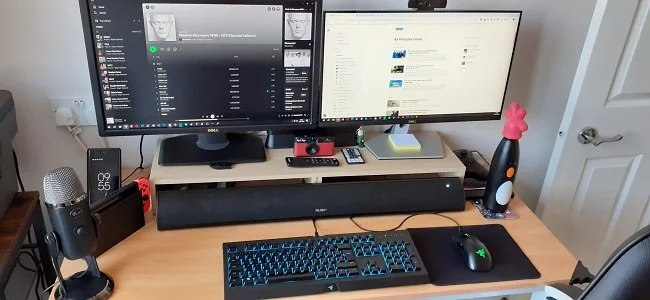
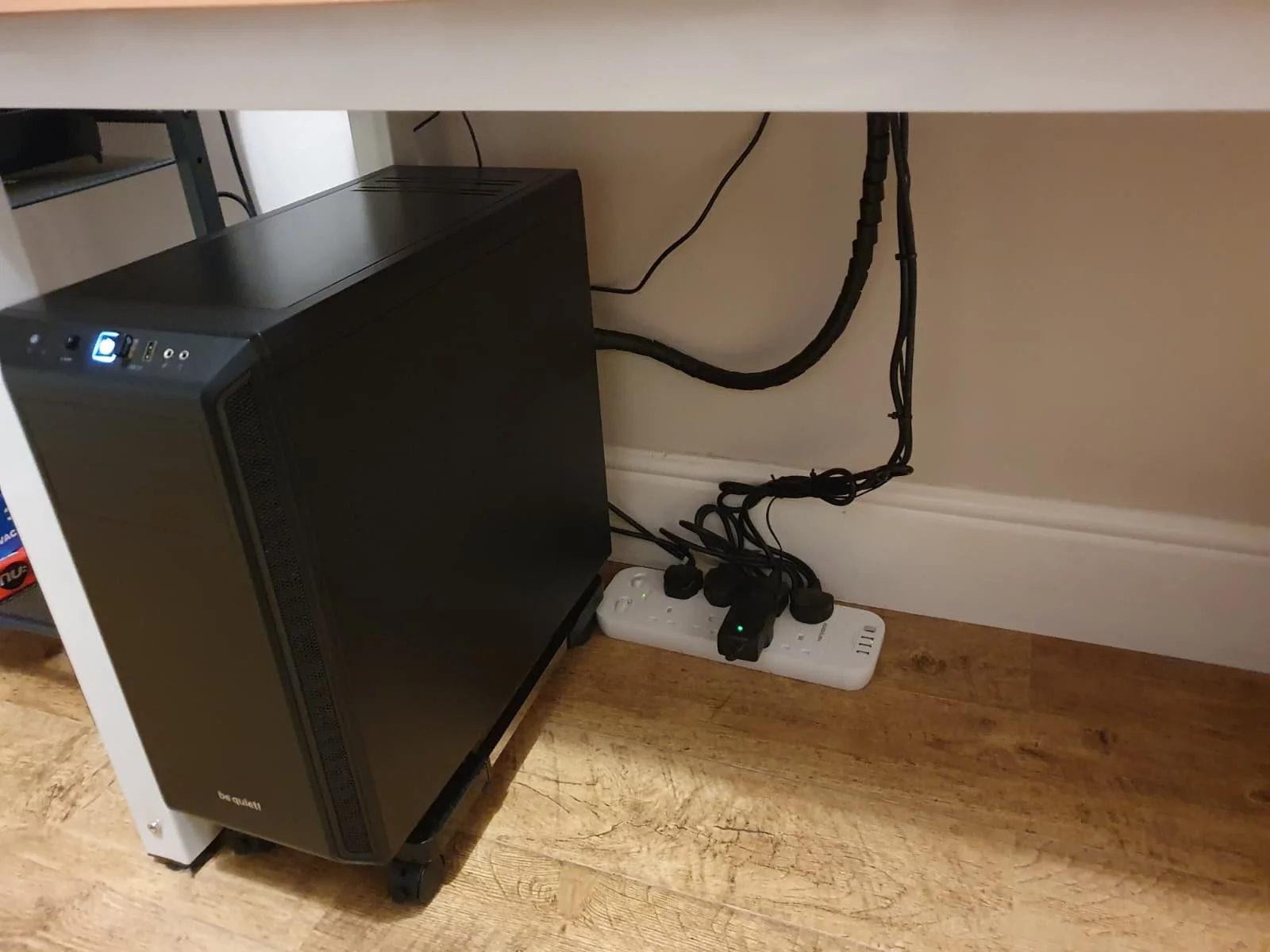
It was this time last year that I increased the RAM from 8GB to 16GB in my PC, and replaced the ageing GeForce GTX 650Ti 2GB, with a relatively better GTX 1050Ti 4GB. The PC is based around an Intel Quad Core i5-3340 3.10GHz processor, which is a third generation Ivy Bridge model circa 2013. Yet despite being five years old, it is still adequate for my gaming, writing and editing podcasts needs. At present, the 2TB Seagate hybrid SSHD that I installed in November 2016 is performing very poorly. Boot up times have grown longer in recent months and despite using the manufacturers diagnostic tools, I cannot find a specific technical problem with the drive or the Windows 10 start-up sequence. So, I have decided to replace the drive with a new SSD and install the operating system on it, then reformat the older SSHD and re-use it for data storage (mainly music and videos).
It was this time last year that I increased the RAM from 8GB to 16GB in my PC, and replaced the ageing GeForce GTX 650Ti 2GB, with a relatively better GTX 1050Ti 4GB. The PC is based around an Intel Quad Core i5-3340 3.10GHz processor, which is a third generation Ivy Bridge model circa 2013. Yet despite being five years old, it is still adequate for my gaming, writing and editing podcasts needs. At present, the 2TB Seagate hybrid SSHD that I installed in November 2016 is performing very poorly. Boot up times have grown longer in recent months and despite using the manufacturers diagnostic tools, I cannot find a specific technical problem with the drive or the Windows 10 start-up sequence. So, I have decided to replace the drive with a new SSD and install the operating system on it, then reformat the older SSHD and re-use it for data storage (mainly music and videos).
I briefly considered replacing the entire PC or at least buying a new motherboard and processor but both options were far from economical. Unlike so many computer related websites and forums, I do understand the underlying concept of working within a budget. After perusing Amazon, I manged to get a SanDisk SSD PLUS 240GB Sata III 2.5-inch Internal SSD and a 2.5-inch HDD/SSD to 3.5-inch HDD mounting frame for £47, including free next day delivery. The plan is to remove the existing drive, fit the SSD and do a fresh installation of Windows 10 and Office 365. As the SSD is only 240GB I shall be reserving the majority of the space for future Windows and Office updates. Therefore Steam, photos, videos and music will all go on another drive. However, I may install the two MMOs that I regularly play (LOTRO and STO) on the new SSD due to the performance boost it will afford them.
While researching this upgrade, I did consider cloning my existing SSHD to avoid having to re-install and migrate everything on it, but that meant having to purchase a 2TB SSD (at a cost of £300 minimum) or having to tinker with the cloning process to only copy specific files to fit a smaller sized drive. Such a strategy would be time consuming and increase the chance of errors occurring. Hence manually re-installing programs and migrating data is the path I have chosen. It at least affords me the opportunity to do some housekeeping on my current data. There are files that can be purged and games and programs that don’t require being re-installed. However, it will still prove to be a long process and I will not be content until I have essential items such as Outlook, fully replaced. The only other factor to consider is when is the optimum time to start this project. Sadly, it is not something that can be automated but requires user intervention in real time. If things go wrong expect another blog post.















Taken (2008)
Sometimes when a movie chimes with the public is goes from being a box office success to becoming part of popular culture. The Taken franchise has done exactly that and a piece of iconic dialogue has now become a perennial internet meme. But if you look beyond this “baggage” and subsequently judge the film by the standards of the genre, you’ll find there’s more than meets the eye. On paper Taken is a fairly formulaic thriller. But it boasts a more interesting pedigree than other movies of this kind. Written by Luc Besson and directed by Pierre Morel (of District 13 fame), the action driven story set in Paris, has all the benefits that come from a European production. But the most intriguing aspect of Taken is the casting of the lead character Bryan Mills. Instead of relying on a known action star, the part ended up with Oscar nominated actor Liam Nesson. As you can imagine, the results are not as you would expect and as a result a serious actor re-invented himself as an action star.
Sometimes when a movie chimes with the public is goes from being a box office success to becoming part of popular culture. The Taken franchise has done exactly that and a piece of iconic dialogue has now become a perennial internet meme. But if you look beyond this “baggage” and subsequently judge the film by the standards of the genre, you’ll find there’s more than meets the eye. On paper Taken is a fairly formulaic thriller. But it boasts a more interesting pedigree than other movies of this kind. Written by Luc Besson and directed by Pierre Morel (of District 13 fame), the action driven story set in Paris, has all the benefits that come from a European production. But the most intriguing aspect of Taken is the casting of the lead character Bryan Mills. Instead of relying on a known action star, the part ended up with Oscar nominated actor Liam Nesson. As you can imagine, the results are not as you would expect and as a result a serious actor re-invented himself as an action star.
Bryan Mills (Liam Nesson), a retired US government agent, is trying to rebuild his relationship with his 17-year-old daughter Kim (Maggie Grace) who lives with his ex-wife (Famke Janssen) and her new husband. Kim, despite her father’s concerns, takes a trip to Paris with her friend Amanda on the pretext of seeing the sights. Her real motive is to follow U2 as they tour Europe. However, events take a bad turn when both girls are abducted by the Albanian Mafia who intend to sell them into slavery. But they do not realise that Kim's Father has a unique set of skills gained from his former line of work. He subsequently brings them to bear in rescuing his daughter. Naturally mayhem follows.
The plot is simple and doesn’t attempt to re-invent the wheel. There are numerous logical flaws, and some may argue that Taken trivialises the issue of human trafficking. But this is an action film and therefore its not obliged to serve as a serious analysis on contemporary social problems. What it does have is a lead actor who is skilled in his craft, bringing an element of credibility and gravitas to a genre known for poor performances. There is also the advantage of a French director who approaches the subject with a little more respect than average US studio. There is no smug humour, designed to mitigate the violence. There is also no moral agenda, self-justification or a requirement for redemption. The characters do what they do and are what they are.
Taken has its flaws. It ignores the laws of a sovereign nation and has an ending similar to that of the 1979 action film Ashanti, which also dealt with modern day slavery. But it also has exceptionally plausible fight scenes using credible techniques. Fight choreographer Olivier Schneider (Transporter, Kiss of The Dragon and District 13) utilises throat punches, wrist and elbow locks, along with realistic knife usage and accurate gun stances. Liam Neeson, an ex-boxer who is well over 6 foot, acquits himself well for a man of his age (he was 56 at the time of shooting). Taken and its subsequent sequels were all edited for a PG-13 rating when released theatrically in the US. However, uncut versions are available on DVD and Blu-ray and it is these editions that action fans should seek out.
Looper (2012)
Rian Johnson's Looper is a thoughtful, bleak and inventive new spin to the time travel genre. The first act quickly establishes the main protagonists and the economically ravaged future he inhabits. I won't burden you with another re-iteration of the plot, because any of the trailers available on YouTube can do that far more efficiently than I. Let it suffice that the central conceit is the paradox that arises from a hitman meeting his younger self. What I would like to point out that after watching so many poorly conceived films, with little or no narrative, Looper stands out as a piece of thought provoking, quality film making. Mainstream Hollywood needs to take a long hard look at this movie and reacquaint themselves with the proper and full potential of the science fiction genre.
Rian Johnson's Looper is a thoughtful, bleak and inventive new spin to the time travel genre. The first act quickly establishes the main protagonists and the economically ravaged future he inhabits. I won't burden you with another re-iteration of the plot, because any of the trailers available on YouTube can do that far more efficiently than I. Let it suffice that the central conceit is the paradox that arises from a hitman meeting his younger self. What I would like to point out that after watching so many poorly conceived films, with little or no narrative, Looper stands out as a piece of thought provoking, quality film making. Mainstream Hollywood needs to take a long hard look at this movie and reacquaint themselves with the proper and full potential of the science fiction genre.
Looper hinges on the dynamic between Bruce Willis and Joseph Gordon-Levitt which works very well. Willis always seems to give his best performances in genre productions, however I would concede that this really Gordon-Levitt's film. His characterisation and deportment is extremely good. The narrative veers from dry asides about the complexity of time travel movie to occasions of quite jolting violence, but keeps you guessing as to where it will ultimately end up. Looper does not make the mistake of wallowing in the excesses of its own scope of vision and has a minimal amount of effects work. Ultimately it is an exploration of whether you can escape your own destiny and a rather sombre, self-contemplative tale.
To say more would be to spoil Looper for those who have not yet seen it, and it is a movie that benefits from as little prior knowledge as possible. That is not to say that it is dependent on a major plot twist in the third act, because it is not. Viewers will however, benefit by reflecting upon what they have seen. Which of course is what quality film making is all about. Rather than being presented with a stereotypical dystopian future, we are shown an all to plausible scenario and characters who face exactly the same moral and ethical issues as we do. That is the movies greatest strength and also its most disturbing quality. The acknowledgement that no matter how much things change, they remain the same.







X-Men: First Class (2011)
Falling somewhere between a sequel and a reboot, director Matthew Vaughn has managed to make X-Men: First Class a worthy entry in the X-Men franchise that successfully explores the origins of the characters as well as Christopher Nolan did with Batman Begins. X-Men: Last Stand painted the movie series into a difficult corner by killing off key characters. This movie provides a clever means of bypassing such issue by offering an origins story that subsequent leads in later sequels to an alternative timeline that redresses past mistakes. X-Men: First Class opens with a rather bleak and dark pre-credit sequence set in a WWII concentration camp that sets up the central protagonists and antagonist. It then maintains a steady pace and unlike other more recent bloated blockbusters, it's running time works in its favour and not against it.
Falling somewhere between a sequel and a reboot, director Matthew Vaughn has managed to make X-Men: First Class a worthy entry in the X-Men franchise that successfully explores the origins of the characters as well as Christopher Nolan did with Batman Begins. X-Men: Last Stand painted the movie series into a difficult corner by killing off key characters. This movie provides a clever means of bypassing such issue by offering an origins story that subsequent leads in later sequels to an alternative timeline that redresses past mistakes. X-Men: First Class opens with a rather bleak and dark pre-credit sequence set in a WWII concentration camp that sets up the central protagonists and antagonist. It then maintains a steady pace and unlike other more recent bloated blockbusters, it's running time works in its favour and not against it.
Underpinning the film are the central performances of James McAvoy and Michael Fassbender as Charles Xavier and Erik Lensherr. Both excel in their respective roles, and unusually for a genre piece, have been given a screenplay that doesn't merely paint them as black and white caricatures. The set pieces, especially the denouement set against the Cuban blockade, are impressive but do not overwhelm the story line. The plot device of setting the film in 1963, works surprisingly well and does not make the mistake of becoming some sort of sub Austin Powers cliché. There is even room for homages to such films as Goldfinger, The Odessa File and The Marathon Man, courtesy of the films Nazi sub-plot.
Despite its PG -13/12 rating, X-Men: First Class cunningly exploits as much adult material that the classification allows. The is a high emphasis on sexuality and some rather hard-edged action. I was amused to see the use of one major profanity, which was neatly designed to embellish a standout vignette featuring a clever cameo. Overall this is a superior mainstream comic adaptation that seems to knowingly cater for all viewing demographics. The film also fairs well due to the rather lacklustre previous entry in the franchise. It is hard not to be superior to the incredibly flat and by the numbers X-Men: Last Stand. The emphasis this time is on motivation, politics and revenge rather than a need to string together endless scenes of destruction.
Gerry Anderson’s Firestorm
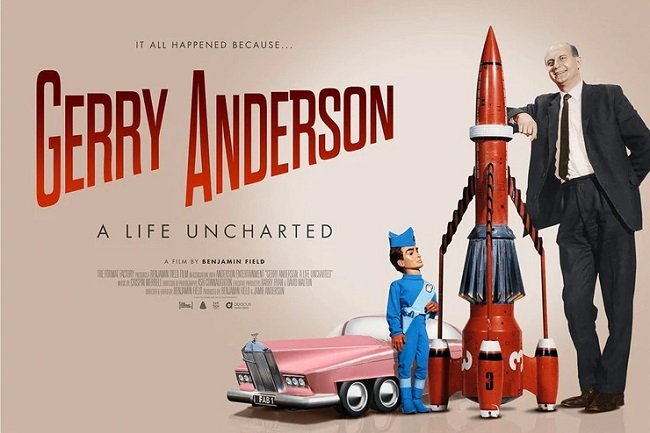
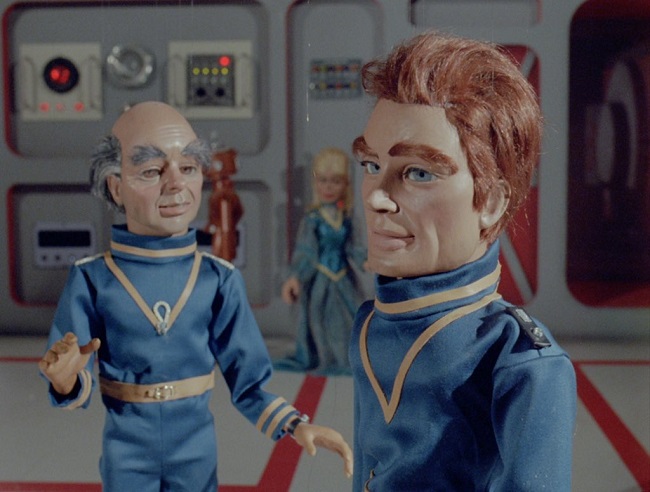
Firestorm originally started as a Japanese anime series co-created by Gerry Anderson and John Needham back in 2003. The show combined CGI animation for mecha and traditional cel animation for characters and the environment. Despite the quality of the production and an emphasis on the futuristic hardware that has always been a core tenet of Gerry Anderson productions, the anime version of Firestorm didn’t find an audience in Japan. The show subsequently failed to secure a wider release and so became a more obscure part of Anderson Canon. However, in 2014 Anderson Entertainment (under the auspices of Jamie Anderson, Gerry’s son) announced a crowdfunding campaign to produce a pilot episode for a new television series of Firestorm using practical film-making techniques including miniature effects and puppetry. It’s been a long road since then but today a debut “minisode” was shown at MCM Comic-Con London and simultaneously released on You Tube.
Firestorm originally started as a Japanese anime series co-created by Gerry Anderson and John Needham back in 2003. The show combined CGI animation for mecha and traditional cel animation for characters and the environment. Despite the quality of the production and an emphasis on the futuristic hardware that has always been a core tenet of Gerry Anderson productions, the anime version of Firestorm didn’t find an audience in Japan. The show subsequently failed to secure a wider release and so became a more obscure part of Anderson Canon. However, in 2014 Anderson Entertainment (under the auspices of Jamie Anderson, Gerry’s son) announced a crowdfunding campaign to produce a pilot episode for a new television series of Firestorm using practical film-making techniques including miniature effects and puppetry. It’s been a long road since then but today a debut “minisode” was shown at MCM Comic-Con London and simultaneously released on You Tube.
While making Firestorm, the production team returned Gerry Anderson’s original documents. The story is set in the year 2102 and follows the adventures of Firestorm, an elite international team comprising of Sam Scott, Nagisa Kisaragi and Drew McAllister. They battle ongoing acts of sabotage by the elusive Black Orchid organisations. The miniature effects crew includes film industry veterans Steve Begg, Bill Pearson and Mike Tucker (whose collective body of work include Bond films and Doctor Who). The puppets are produced by the company Mackinnon and Saunders. Firestorm is made in “Ultramarionation” (the spiritual successor to “Supermarionation”), which features rod operated and animatronic puppets, physical sets, and actual explosions. The debut “minisode” marks the first new Anderson production since 2005. If all goes to plan, there is the possibility of full series of 26 episodes of 22 minutes apiece, which will hopefully begin full production in 2019.
According to Jamie Anderson, Managing Director of Anderson Entertainment who will be producing the new series "We've updated the Firestorm concept my father created with the development of “Ultramarionation”, the next generation of production techniques to really bring the wow factor back to the small screen”. The short but succinct “minisode” certainly showcases all the major selling points of the new show. The puppetry is incredibly detailed, allowing the characters to walk, run and emote. The physical effects and miniatures are of the highest calibre. And most importantly of all, there is scope to give the characters interesting back stories and explore their lives. This was always the big selling point of previous Gerry Anderson productions, especially Thunderbirds. I hope that a suitable backer can be secured so we see a full and expanded series for this franchise. In the past Anderson productions have had a close business association with ITV, yet a show such a Firestorm would be a real catch for the likes of Netflix or Amazon Prime.


What’s in a Name?
“What's in a name? That which we call a rose by any other name would smell as sweet”. William Shakespeare, Romeo and Juliet.
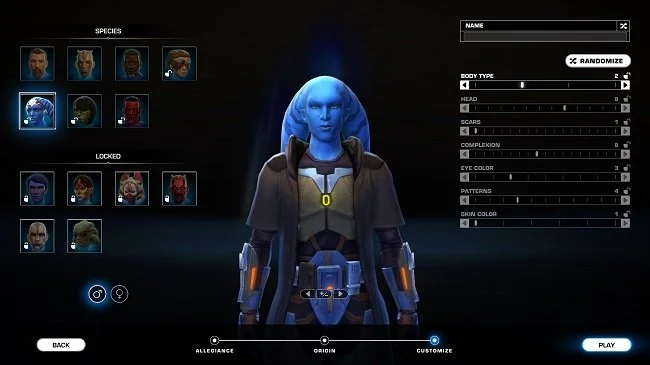
There are two types of MMO players (actually there aren’t but I’m invoking a figure of speech as an opening gambit for the overall thrust of this post, so there). Those who meander through the character creation screens only to be taken by surprise by the fact that at the end, they now have to provide their avatar with a name of some kind. And then there are those who have a complete dossier compiled in advance, shedding light on the entire back story and life history of their new alt. Naturally, the latter group will already have a name prepared with much love and care. It will be relevant, appropriate and most importantly of all, it will afford them a much greater degree of connection with their in-game character. Because names are an integral part of identity and that is a much bigger aspect of MMO player psychology than some imagine. Would you simply want an index number instead of a character name?
Tee-hee, chortle and guffaw
“What's in a name? That which we call a rose by any other name would smell as sweet”. William Shakespeare, Romeo and Juliet.
There are two types of MMO players (actually there aren’t but I’m invoking a figure of speech as an opening gambit for the overall thrust of this post, so there). Those who meander through the character creation screens only to be taken by surprise by the fact that at the end, they now have to provide their avatar with a name of some kind. And then there are those who have a complete dossier compiled in advance, shedding light on the entire back story and life history of their new alt. Naturally, the latter group will already have a name prepared with much love and care. It will be relevant, appropriate and most importantly of all, it will afford them a much greater degree of connection with their in-game character. Because names are an integral part of identity and that is a much bigger aspect of MMO player psychology than some imagine. Would you simply want an index number instead of a character name?
I take a fairly hard line when it comes to character naming in the MMO genre. If a game has specific guidelines to begin with then they should be respected. I’m all for player freedom but an MMO is by its very nature shared space and so that means (or at least should in principle) that other players are due a degree of consideration. So, let us take it as read that inflammatory names, racial abuse, religious trolling and like have no place and should not be tolerated. In a game such a LOTRO, there is a great deal of lore that impacts upon names. The game goes so far as to make suggestions depending on race and region etc, which can be helpful. However, if you simply wish to give your character a generic fantasy sounding name, I don’t have a problem with that. What I do find tedious are the endless permutations of known character names, such as Legolas (in LOTRO) and James T Kirk (in STO). But for me, the greatest sin in naming after this, is giving your character your own name. Is there anything that screams “I have had the capacity to think creatively surgically removed” more than a Hunter running about the major quest hubs named “Colin Peters” or “Jacinda Barrington-Humphries”?
They drink it in the Congo…
Now joking aside, not everyone is equally creative, which is why there are plenty of online name generators that can assist you when it comes to the right name. Another strategy if you run multiple alts is to follow a naming convention and use various permutations thereof. This is a useful workaround and certainly is helpful to friends and colleagues who loose track of who is and who isn’t online within the guild. I have used name generators for inspiration in the past. However, I also think it’s important to find a name that suits your character (especially if you’re of a role-playing bent) and that is also user friendly and pronounceable. It’s all very well coming up with a cunning, lore appropriate name for your High Elf window dresser, but if everyone subsequently mangles said name every time you’re on Discord (because you always end up being known to your guild mates by your primary characters name and not your own), it gets very old fast.
Isn’t there a hat company there, on Bagel Street?
One of the things I use to get frustrated with about LOTRO was that it would suggest names, irrespective of whether they had been taken or not. Thus, you’d find a cool name for your shiny new Dwarf Quantity Surveyor only to discover there were already a dozen or so variants already on the server. More recent MMOs have addressed this issue by having an account name that suffixes your chosen name, thus accommodating duplicates. The issues still persists in LOTRO, but I have solved it for myself by not creating any alts. Overall, I think that as character customisation becomes more complex in gaming, then there needs to be scope and support for equally complex naming conventions. I know that jarring, trivial and puerile names can spoil the immersion of some players in MMOs. So why can’t phasing technology be used to remove those that bother us, or at least allow you to rename the offenders from your own perspective? Because it’s clear that despite the various changes and trends that have come and gone in the MMO genre over the last decade, names remain a very important facet of player engagement.
Numbers, Spreadsheets and Calculations
Over the last few days, I’ve been working towards achieving “ally” reputation status with the Men of Dale while playing LOTRO. There were two particular armour pieces that I desired, which would enhance my statistics, that were gated behind this achievement. I’ve been also grinding for several jewellery items, which require 5,000 Motes of Enchantment. I was sufficiently close last night that I actually took the time to work out exactly how much XP was outstanding and what was the optimal way to earn it. I made a few notes on paper and determined that three repeatable quests and five tasks would be sufficient to reach the target. As of today, the calculation proved right, and I now have the two armour pieces equipped. The jewellery is proving more difficult as Motes of Enchantment are a lot harder to come by. That project remains an ongoing concern.
Over the last few days, I’ve been working towards achieving “ally” reputation status with the Men of Dale while playing LOTRO. There were two particular armour pieces that I desired, which would enhance my statistics, that were gated behind this achievement. I’ve been also grinding for several jewellery items, which require 5,000 Motes of Enchantment. I was sufficiently close last night that I actually took the time to work out exactly how much XP was outstanding and what was the optimal way to earn it. I made a few notes on paper and determined that three repeatable quests and five tasks would be sufficient to reach the target. As of today, the calculation proved right, and I now have the two armour pieces equipped. The jewellery is proving more difficult as Motes of Enchantment are a lot harder to come by. That project remains an ongoing concern.
Now an odd thing occurred as I did the mental arithmetic last night and figured out exactly what permutation was required to get the required rep. Just for a moment I had this brief flash of insight in which the arbitrary nature of MMO mechanics became very clear. And for an instance it spoilt my fun. Luckily this was a fleeting experience, and, in a few moments, I was back to killing spiders in Lhingris for spiny carapaces and chatting on Discord to friends. It is the social element of MMOs that helps mitigate the mundane nature of some of the basic mechanics of the genre. It is a curious thing though because where as I find all the number crunching, min-maxing and esoteric formulas somewhat dull, others consider learning all this data and becoming an expert as part of the games allure. I have a basic grasp in LOTRO of the various stats and which ones are relevant for Lore-masters. However, the intricate details are lost on me. I choose not to know because in doing so, it diminishes my enjoyment of the game.
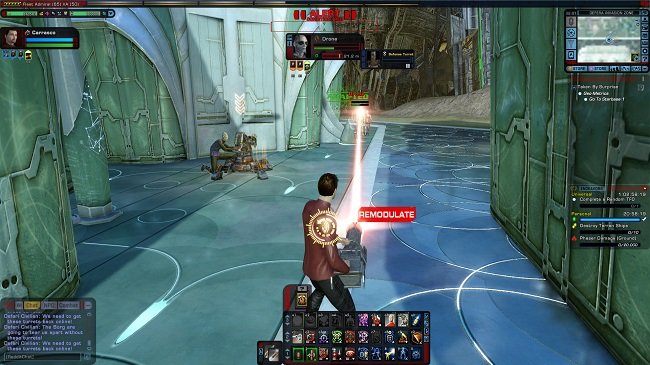
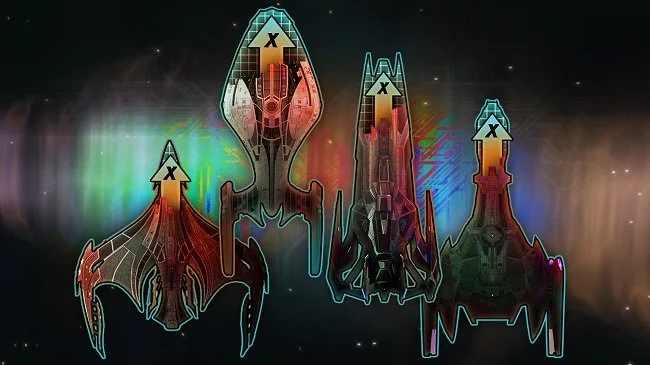
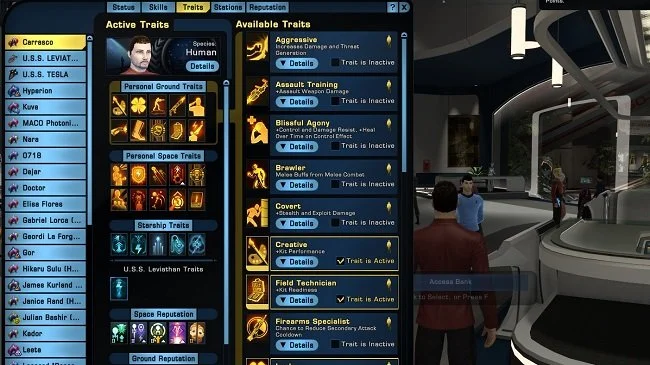
Star Trek Online is another MMO that has a player base that delve deep into the mathematics behind the game. You will find endless discussions on the games sub-reddit regarding builds and how best to maximise DPS or survivability. It is surprisingly complex and at first glance quite captivating. I have flirted with DPS parsers and tweaked my build in the past. However, it quickly becomes clear that a lot of people’s preferences are subjective and not just based on data. Weapon type, class and play styles determine various schools of thought. Also, if you want to pursue the “best builds” you frequently need access to a lot of rare items and traits, which are really only the province of the long term and heavily invested player. That’s fine and I certainly don’t begrudge those players that play so diligently, but for us who are somewhere between the shallow and the deep end, such tinkering is not applicable to us.
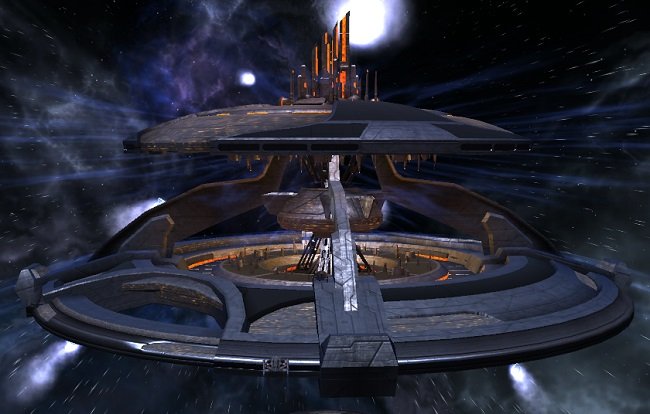
When thinking of the “spreadsheet” culture that goes hand-in-hand with some games, I suppose the most obvious example is EVE Online. I never got any further than four days into a two-week trial with that niche product and I learned very quickly that the realities of that MMO were far removed from what I had assumed. For me, the selling points of the two MMOs that I play the most are their narrative, intellectual property and the provision of goal orientated achievements. The social aspect is also a strong consideration. Although both LOTRO and STO require an element of analysis and technical understanding, it never overshadows the leisure that they provide. A quick skirmish or random task force can satisfy my urge for combat. Riding around Middle-earth or meandering round the promenade on Deep Space Nine helps me relax after a tough day. A game that requires me to track everything, weigh up every pro and con and maintain a complex inventory simply doesn’t strike me as fun. However, it is very much a question of “horses for courses”.

The Meg (2018)
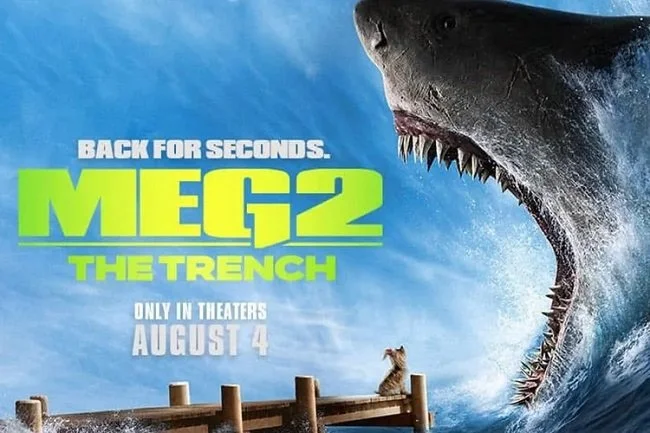
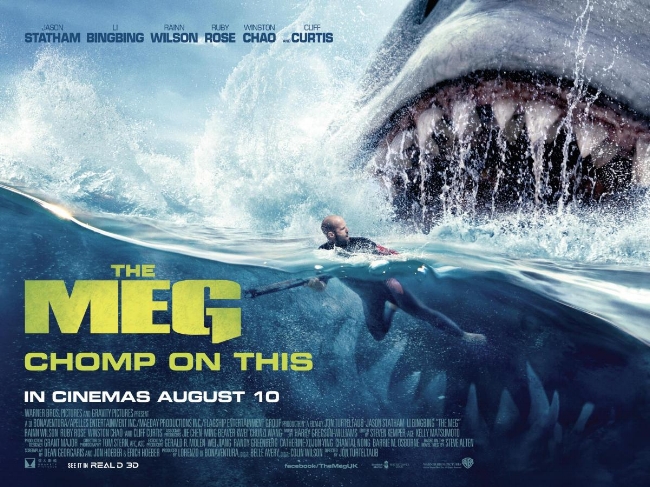
If you have seen any of the marketing material or trailers for The Meg, then you know exactly what you’re getting right from the get-go. All movies inherently require the viewer to suspend their sense of disbelief to various degrees. Naturally, the “creature feature” genre asks audience to go the extra mile with this concept. The Meg takes a major gamble by insisting that everyone goes further still, not by believing in a giant prehistoric shark (Megalodon) but that Jason Statham is a ex-navy, deep sea rescue diver. However, it pays off and the resulting movie is staggeringly stupid, but mercifully entertaining in an undemanding way. Recent movies such as Into the Storm and Geostorm are crass and made worse by their implicit assumption that their viewers are stupid. The Meg is far from cerebral but has an upbeat tone and a sense of playfulness that knowingly invites the audience to come aboard with the silliness. It’s a big distinction and the reason why I smiled a lot and frequently rolled my eyes while watching The Meg, but never with derision.
If you have seen any of the marketing material or trailers for The Meg, then you know exactly what you’re getting right from the get-go. All movies inherently require the viewer to suspend their sense of disbelief to various degrees. Naturally, the “creature feature” genre asks audience to go the extra mile with this concept. The Meg takes a major gamble by insisting that everyone goes further still, not by believing in a giant prehistoric shark (Megalodon) but that Jason Statham is a ex-navy, deep sea rescue diver. However, it pays off and the resulting movie is staggeringly stupid, but mercifully entertaining in an undemanding way. Recent movies such as Into the Storm and Geostorm are crass and made worse by their implicit assumption that their viewers are stupid. The Meg is far from cerebral but has an upbeat tone and a sense of playfulness that knowingly invites the audience to come aboard with the silliness. It’s a big distinction and the reason why I smiled a lot and frequently rolled my eyes while watching The Meg, but never with derision.
Plot wise, no cliché, genre trope or established cinematic convention is left unturned. Jonas Taylor (Jason Statham) retires with a cloud over his head after leaving several fellow divers behind during a deep-sea rescue. His claim there was an imminent danger from some unknown sea creature, is not believed by fellow team mate Dr Heller (Robert Taylor), who suspects he may have suffered pressure-induced psychosis. Five years later an incident involving a submersible, trapped in the Marianas Trench, forces Jonas out of retirement and into a confrontation with his aquatic nemesis, a prehistoric Megalodon. The creature subsequently escapes the depth of the ocean trench and threatens the safety of an underwater research station, Mana One, owned by billionaire Jack Morris (Rainn Wilson) and run by oceanographer Dr. Minway Zhang (Winston Chao) and his daughter and fellow scientist Suyin Zhang (Li Bingbing). After a failed attempt to destroy the shark, the creature heads off towards the major tourist resort of Sanya Bay in Hainan Province, China. Digital effects abound, scenery is chewed by the cast, Statham is gruff and does everything one expects of him.
The Meg is effectively a big budget copy of the sort of movies The Asylum make, which is ironic on multiple levels when you think about it. It is one of the few recent US-Chinese co-productions that actually manages to maintain a sense of identity. Often when trying to please multiple markets, cultural and social differences are stripped back from the narrative resulting in a very bland and homogeneous product. The Meg manages to maintain a foot in both nations’ respective zeitgeist and the brief scenes showing the Chinese middle-classes indulging in identical leisure activities to their western counterparts is an interesting reflection of the nature of globalism. However, this brief moment of depth is more than likely purely accidental. As for the shark itself, it suffers from being purely a CGI creation and oddly enough, it’s size actually makes it less threatening. This isn’t Jaws where victims are slowly dismembered as the shark feeds. This is a Megalodon that can swallow multiple people in one mouthful. As a result, the climatic action scene at Sanya Bay is fun but oddly not that shocking. The Meg certainly doesn’t push the boundaries of its rating.
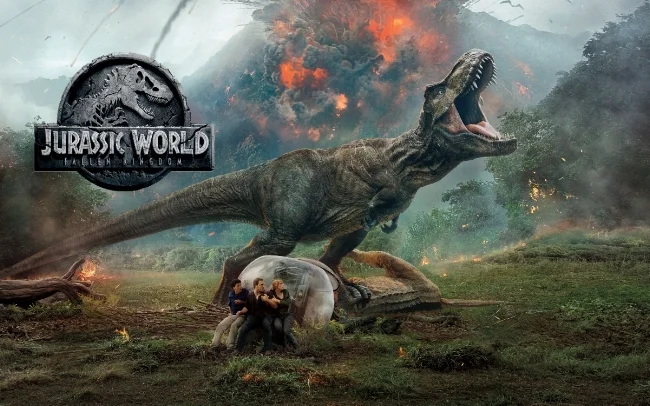
Some viewers will still find The Meg too “stupid” for their tastes. It is the sort of movie that is best viewed in the company of likeminded friends, late on a Friday night, after an evening in the pub. It is fair to say that if it wasn’t for the presence of Jason Statham, Cliff Curtis and Shuya Sophia Cai then this would have simply been a DTV release with an unusually big budget. It’s difficult to put an exact finger upon it, but Jason Statham has created his own unique niche within the action movie genre and he carries this movie by his own curious form of star appeal. Plus, the “creature feature” genre still seems to have an inherent attraction with audiences, as the box office returns of the Jurassic Park franchise prove. I’ll be honest and state that my interest in The Meg doesn’t go so far as a sequel. This sort of movie is the equivalent of a greasy burger you buy at the funfair. It’s fine once in a while as an indulgence, despite the fact that you know it’s bad, but you would soon tire of them being a regular part of my diet.

LOTRO: Legendary Server
Standing Stone Games announced today the launch of a new LOTRO "Legendary Server" later this autumn. This is essentially a progression server by any other name. It will be accessible to VIP monthly and lifetime subscribers allowing access initially to core content from levels 1 to 50 via The Shadow of Angmar story. It should be noted that this is not “classic” LOTRO as it existed back in 2007. The new server will offer the game as it is now with all its revised systems. Hence High Elves and Beorning classes will be available as will the skills tree system. SSG intend to update content every four months but will keep it all within the parameters of the level cap on the"Legendary Server". The developers have also made it clear that this new service does not come at the expense of regular new content for the existing game. “We have no intention of adjusting our frequent, regular, and active development of the non-Legendary game worlds, and have plans for them well into the future”.
Standing Stone Games announced today the launch of a new LOTRO "Legendary Server" later this autumn. This is essentially a progression server by any other name. It will be accessible to VIP monthly and lifetime subscribers allowing access initially to core content from levels 1 to 50 via The Shadow of Angmar story. It should be noted that this is not “classic” LOTRO as it existed back in 2007. The new server will offer the game as it is now with all its revised systems. Hence High Elves and Beorning classes will be available as will the skills tree system. SSG intend to update content every four months but will keep it all within the parameters of the level cap on the"Legendary Server". The developers have also made it clear that this new service does not come at the expense of regular new content for the existing game. “We have no intention of adjusting our frequent, regular, and active development of the non-Legendary game worlds, and have plans for them well into the future”.
I have never been a great one for alts and replaying old content. The most I’ve managed in ten years of playing LOTRO, is to get one new character to level 55 and then used the Aria of the Valar booster that that came with the Mordor expansion, to auto level to 105. Oh, the countless alts that I’ve created to try other classes, only to delete roundabout level 30 or so. However, I can see the appeal of running through the game with both old and new friends. I guess that is one of the major obstacles for a lot of lapsed players or those who want to start playing but are put off by the immense level gap. As have purchased all expansions and I’m currently a VIP and will likely remain so for the immediate future, I may well consider the new server if friends intend to do the same. That for me is the main appeal of this service. It’s been a long time since I’ve group consistently. I played essentially the first 60 levels of the game with friends. How things have changed.
It remains to be seen if this new service will attract much interest, although I suspect that it may. Its appeal may well attract players of all kind and its subscription only option means that it should eliminate any problem element. I’m interested to see how well the actual levelling works because many of the early zones in LOTRO such as Evendim and The Lone Lands have been revised several times and progression from 1 to 30 is quite rapid then changes pace again from 31 to 50. Stepping back from this new service and considering the wider changes that have come to LOTRO of late, it certainly appears that developers SSG are trying to maximise the flow of revenue into the game. The recent experimentation with lockboxes that came with the Mordor expansion appears to have been dialled back, possibly due to the ongoing legal scrutiny such mechanics are currently coming under. There was talk not so long ago of a new class, which has subsequently been down played. But when it does arrive, it will doubtless be chargeable. In light of the news about the "Legendary Server" I wonder if SSG will make any further announcements of this kind before the year ends?

Where is the Community?
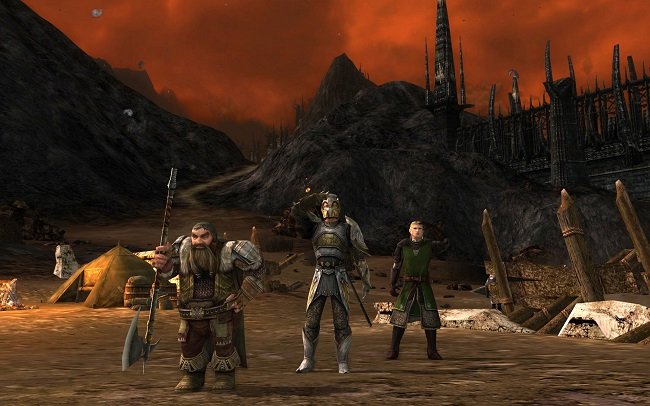
The title to this post is rhetorical. I’ve figured out where the specific community in question is. As regular readers know, my first MMORPG was The Lord of the Rings online back in 2008. It had back then an active blogging community, which still exists today to a degree. The official forums are active and continue to be useful for information, but for me the primary source of news, guides and general analysis of the game is written content that is maintained by individual players. There are also lots of active streamers and video on You Tube, but I find I can locate and digest the information I require far quicker when it is presented as text. I guess I am simply a product of my generation and prefer the written word as my primary source of data for most things. However, more recent MMOs have developed communities around different platforms. As a result, it can take a while to determine where they are and get used to their habits and ways.
The title to this post is rhetorical. I’ve figured out where the specific community in question is. As regular readers know, my first MMORPG was The Lord of the Rings online back in 2008. It had back then an active blogging community, which still exists today to a degree. The official forums are active and continue to be useful for information, but for me the primary source of news, guides and general analysis of the game is written content that is maintained by individual players. There are also lots of active streamers and video on You Tube, but I find I can locate and digest the information I require far quicker when it is presented as text. I guess I am simply a product of my generation and prefer the written word as my primary source of data for most things. However, more recent MMOs have developed communities around different platforms. As a result, it can take a while to determine where they are and get used to their habits and ways.
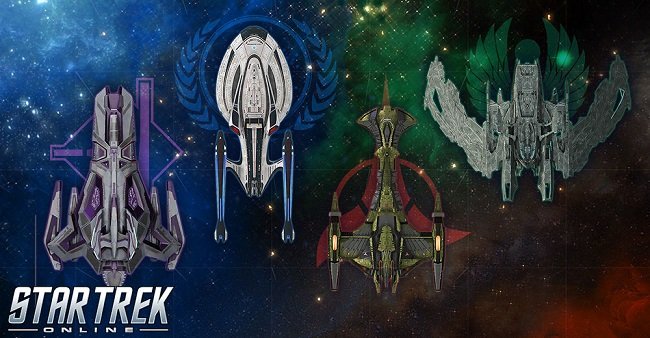
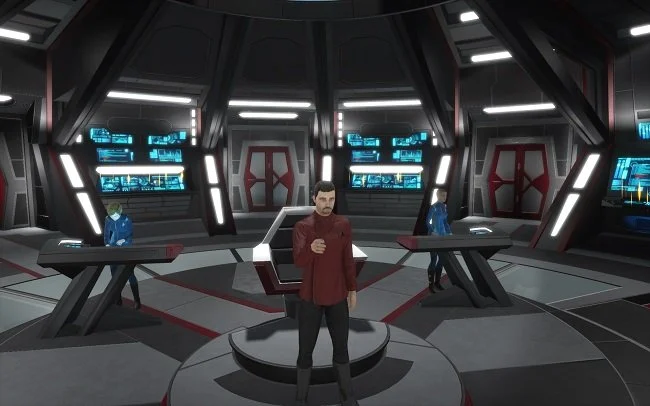
I also play Star Trek Online and have a lifetime subscription. This MMO has an active official forum but the biggest community associated with the game is based on reddit. There are several individuals who regularly post STO related content to You Tube, although the majority are focused upon ship builds and DPS parsing. Sadly, the game does not seem to have a major blogging community. Yes, there are some but that is not where the major interaction and discussion around the game takes place. So, if you want to stay abreast of developments in STO and keep an eye on community opinion, then you have to embrace the appropriate sub-reddit. And therein lies the rub. I don’t find this platform especially useful. It’s greats for informal discussions, but not so good at collating and indexing detailed content in an easily accessible fashion. I often have to tab out of the reddit and use Google to search it effectively.
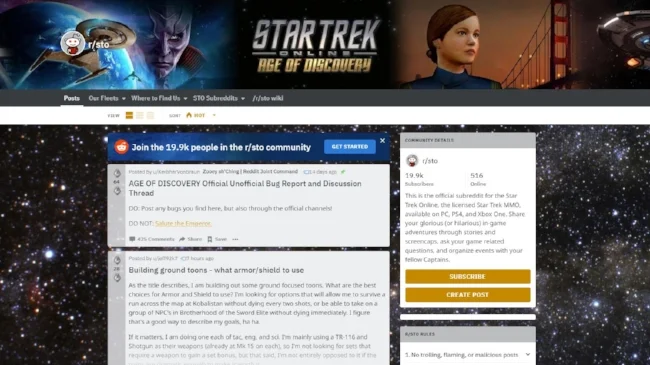
Blog posts broadly have the advantage of being clear and unambiguous “chunks” of information. Reddit by its conversational nature tends to explore a topic in a very episodic fashion. You have to sift a thread to remove the irrelevant and superfluous and then try and collate and distil that which is left for the detail you require. Plus, although, lore and wider aspects of the game are discussed, the STO community is very much fixated upon the prevailing meta, builds and number crunching. I have a passing interest in these subjects but would like to see more material based around player experience, lore and general community activities and such like. Or is it a case that these elements are simply not what most STO players want? Is it a game that is predominantly driven by the intellectual property and player min-maxing? I’m still not entirely sure, so I’ll continue to look. Perhaps there are still STO blogs to be found, out there in the “final frontier” beyond reddit.

Bullet to the Head (2012)
Walter Hill is a director whose work is often overlooked or marginalised by critics who fail to appreciate its wider merits. Yet despite this, over the course of four decades he has consistently produced thoughtful, intelligent and sometimes positively subversive movies. He has a connection with the past and succeeds in creating stories that often reflect periods of transition and how such times effect the protagonists. There is no denying his flair for crating action sequences and frequently coaxes strong performances from actors, often with the minimum of dialogue. He also has a great understanding of the importance of a movies soundtrack and his collaboration with Ry Cooder has produced some memorable scores.
Walter Hill is a director whose work is often overlooked or marginalised by critics who fail to appreciate its wider merits. Yet despite this, over the course of four decades he has consistently produced thoughtful, intelligent and sometimes positively subversive movies. He has a connection with the past and succeeds in creating stories that often reflect periods of transition and how such times effect the protagonists. There is no denying his flair for crating action sequences and frequently coaxes strong performances from actors, often with the minimum of dialogue. He also has a great understanding of the importance of a movies soundtrack and his collaboration with Ry Cooder has produced some memorable scores.
So, it was Walter Hill's name on the credits for Bullet to the Head that was my main interest. He has not made many movies of late, having focused on his television and movie production work. Naturally seeing his credentials attached to an action picture offered great promise, especially in an age when the art of making such movies is waning. However, I was well aware that the production of Bullet to the Head had not been a straight forward enterprise and that many individuals involved with the project had come and gone. Therefore, I was not expecting a movie comparable to 48 Hrs or Southern Comfort.
The story centres around hit man James "Bobo" Bonomo (Stallone) who is double-crossed by his employers, leaving his partner Louis (Jon Seda) dead. Jimmy has to form an uneasy alliance with cop Taylor Kwon (Sung Kang) as they go up against crime lord Morel (Adewale Akinnuoye-Agbaje) and his enforcer Keegan (Jason Momoa). It's formulaic and strictly by the numbers with all the standard tropes of the buddy movie sub-genre. Cultural difference, borderline racism and snappy one liners. Bullet to the Head is exceeding conventional in its remit. Even the old plot device of a family member being kidnapped is thrown into the mix. Yet it is saved from totally mediocrity due to the charisma of Stallone, the banter between the main characters and the fact that even with such safe material, Walter Hill still manages to stamp his own brand on the action sequences.
The real selling points for Bullet to the Head are Adewale Akinnuoye-Agbaje and Jason Momoa who manage to achieve performances of interest, despite the fact that the screenplay gives them little to go on. Alessandro Camon’s adaptation of Alexis Nolent’s graphic novel is perfunctory to say the least. Things like the use of voice-over to bridge the narrative are tired clichés. Yet every now and then there is a spark in the dialogue between leads or a nod and a wink to the old days of the genre. Overall, there are enough positive attributes to Bullet to the Head to cancel out its own stupidity and down play its familiar nature. Without the direction of Walter Hill, this movie would have been a misfire. The director has a flair for the excessive that few other film makers can get away with (like an axe fight). As it is, it’s a step down from Red Heat, which itself was inferior to 48 Hrs.
The Haunting of Hill House (2018)
Shirley Jackson’s 1959 novel The Haunting of Hill House is considered one of the best literary ghost stories published during the 20th century. It was adapted for film in 1963 by Nelson Gidding and directed by Robert Wise under the title The Haunting. Although only doing moderate box office upon release, the movie was moderately well received at the time and over the years has gained a critical reassessment. Contemporary critics consider it one of the finest genre movies of its era. Hence the prospect of a new ten-part television adaptation made exclusively for Netflix, was initially met with a great deal of scepticism. However, writer and director Mike Flanagan has wisely chosen not to retell the original story, but instead taken its themes and concepts and woven them into a compelling and very contemporary tale of a dysfunctional family traumatised by their collective experience at Hill House. Jettisoning the classic trope of a paranormal investigation into a haunted house, he instead presents us with two narratives that run in parallel and regular intersect with startling results.
Shirley Jackson’s 1959 novel The Haunting of Hill House is considered one of the best literary ghost stories published during the 20th century. It was adapted for film in 1963 by Nelson Gidding and directed by Robert Wise under the title The Haunting. Although only doing moderate box office upon release, the movie was moderately well received at the time and over the years has gained a critical reassessment. Contemporary critics consider it one of the finest genre movies of its era. Hence the prospect of a new ten-part television adaptation made exclusively for Netflix, was initially met with a great deal of scepticism. However, writer and director Mike Flanagan has wisely chosen not to retell the original story, but instead taken its themes and concepts and woven them into a compelling and very contemporary tale of a dysfunctional family traumatised by their collective experience at Hill House. Jettisoning the classic trope of a paranormal investigation into a haunted house, he instead presents us with two narratives that run in parallel and regular intersect with startling results.
Hugh and Olivia Crain (Henry Thomas and Carla Gugino) professionally renovate and refurbish dilapidated houses and “flip” them for resale. Both are gifted professionals; Hugh being the consummate problem solver and Olivia the creative and sensitive interior designer. The couple move into Hill House with their five children, Steve, Shirley, Theo, Luke and Nell only to find the building problematic in several ways. There are no accurate plans, there’s a hidden basement and a locked room that remains resolutely inaccessible. The children start to experience disquieting nocturnal phenomenon that their parents at first ignore or rationalise away. Yet over time Olivia begins to succumb to the malign atmosphere, culminating in a tragedy and the family fleeing the house. Years later each surviving member of the Crain family are dealing with the fallout of their respective experience. Nell suffers night terrors and sleep paralysis, while Luke struggles with drug addiction. Theo is a child therapist and Shirley has become a mortician. Steve the eldest who believes he never actually experience the supernatural and that his family is blighted by hereditary mental illness has become a successful author specialising in writing about the paranormal. Events start to occur which then draw them all inexorably back to Hill House.
The Haunting of Hill House unfold at a measured pace to facilitate focus upon the central characters. The first five episodes are designed to explore the backstory of each family member both in the present and in the past. Over time, several key events are shown from different perspectives, each adding another layer of complexity and nuance to the proceedings. The adults cast, and their child counterparts are universally good, providing strong and credible performances. Viewers need to keep the wits about them as there is often a lot going on at key moments, both front and centre and in the periphery of shots. There is often a palpable air of tension and the jump scare and shocks are well crafted. Several spectral characters such a “bent neck lady” and “bowler hat man” are well conceived and suitable ghoulish. Hill House itself has a grim and morose presence and although largely digital, the illusion of a decaying, malevolent and possibly sentient structure is well maintained. The screenplay frequently uses passages of classic dialogue from the source text at exactly the right moment. Iconic scenes are also expressed in interesting new ways, such as “who’s hand was I holding” and the seminal wall pounding sequence.
But the productions real strength is the way it uses the family in crisis trope as the foundation of the story. Not everyone is a sympathetic character but they’re all relatable. The female leads are especially strong, and their story arcs have the most substance to them. There are several genuinely emotional revelations that have real weight, rather than being just arbitrary kicks in the “feels”. The final resolution of the Crain family’s trial and tribulations is complex and dares to explore the paradoxical symbiosis between the supernatural and those who experience it. The only major criticism I can level against this production is that the languid pace may not be to everyone’s taste. Some viewers may want a more concise story, where I was content to let matters unfold at their own pace. This point notwithstanding, The Haunting of Hill House is a superior piece of dramatic, cerebral genre fare. It successfully takes something old, established and much loved and revitalises it with a healthy dose of imagination, creativity and human insight. It is features robust scares as well as moments of note and is superior to a great deal of its current cinematic counterparts.








Halloween (2018)
It is a bold move to write off six sequels and effectively retcon a major horror cinematic milestone after forty years. Yet that is exactly what Director and co-writer David Gordon Green has done, producing a follow up movie to John Carpenter’s 1978 original, that is distinctly more than the sum of its parts. And in the process of doing this, Halloween has attracted a great deal of media attention that has somewhat skewed subsequent reporting. There has been a great deal of hyperbole and marketing hype in the lead up to the film’s release which is concerning, because in an atmosphere of such exuberance and fan excitement, it can be difficult to accurately gauge the public mood. I have only ever experienced the one other deferred sequel that generated such a similar buzz and that was Psycho II back in 1983. Despite a lot of reservations, that proved to be a worthy successor to Hitchcock’s classic.
It is a bold move to write off six sequels and effectively retcon a major horror cinematic milestone after forty years. Yet that is exactly what Director and co-writer David Gordon Green has done, producing a follow up movie to John Carpenter’s 1978 original, that is distinctly more than the sum of its parts. And in the process of doing this, Halloween has attracted a great deal of media attention that has somewhat skewed subsequent reporting. There has been a great deal of hyperbole and marketing hype in the lead up to the film’s release which is concerning, because in an atmosphere of such exuberance and fan excitement, it can be difficult to accurately gauge the public mood. I have only ever experienced the one other deferred sequel that generated such a similar buzz and that was Psycho II back in 1983. Despite a lot of reservations, that proved to be a worthy successor to Hitchcock’s classic.
However, I am pleased to say that Halloween is as good as the early reviews indicated. It takes many of the essential themes of the original film and presents them from an alternative perspective. To summarise the uncomplex plot, Michael Myers escapes from custody while being transferred to a new psychiatric facility. Meanwhile, Laurie Strode now traumatised, fixated and estranged from her own daughter Karen (Judy Greer) and granddaughter Allyson (Andi Matichak), prepares for the inevitable return of her nemesis. Throughout its 106-minute running time Halloween frequently makes clever and wise nods to its predecessor. The movie has a very dark tone, but it knows when to lighten things with some humorous banter. There is a higher body count and certainly the mayhem is more graphic this time round, but this is not to the detriment of the movie and simply reflects the style and tastes of the contemporary horror genre and its consumers.
The film benefits from a strong and focused performances by all three female leads. Jamie Lee Curtis excels in her role, providing a fulcrum for the narrative. There is also a robust support role from Will Patton as local Sheriff Frank Hawkins. If there is a weak link it the character of Dr. Ranbir Sartain (Haluk Bilginer) who is the new “Sam Loomis” and telegraphs his intentions quite early in the story. However, his role is needed to expedite events and assemble everyone for the inevitable showdown. There are some excellent tracking shots by cinematographer Michael Simmonds and some cunningly contrived set pieces set around the alley ways and back entrances of suburban Haddonfield. The classic score from the original movie has been re-arranged and further embellished with some superb additional cues written by John Carpenter himself, his son Cody Carpenter and David Davies. Some of which stray into Goblin territory, which is magnificent.
Films of this nature that are directly connected to established and iconic cinematic milestones, need to do far more than recreated that which has gone before. They need to juxtapose classic scenes or sequences and explore content from a different perspective. The key element of this that features in Halloween, is the concept of predator and prey. It is cunningly reversed during the film’s climax and there are several scenes that mirror those from the 1978 movie but are done with a tangible difference. To reference them would be to spoil them, so I’ll simply say that fans of the original movie will recognise them when they see them and should hopefully be impressed by the new inflection that the director imbues them with. Overall, irrespective of the hype Halloween is a genuinely worthy successor to John Carpenter’s original. It is inventive, intelligent, suspenseful and knows when to hit the audience right between the eyes.
Analysing Blaugust
There is a blog post over at the Greedy Goblin, where Gevlon crunches the numbers to see how many bloggers are still writing a month and a half on from Blaugust. Needless to say, I am not surprised by his results. Writing events such as Blaugust and before that, The Newbie Blogger Initiative, have always had a high attrition rate. I know lots of good writers who cannot sustain a regular writing schedule due to their work commitments. This is especially true of those with families. Then there are those bloggers who simply run out of stamina. Posting regular content is hard and requires focus and discipline. Producing in-depth and longform posts with any regularity is even harder. So, Gevlon’s summary merely proves what many of us new in advance. But I guess you'd find the exactly the same results if you were analysing the aftermath of an event that encouraged podcasting, live streaming or posting videos of You Tube. Creating content of any kind takes time and effort. The better the quality of that material, the more time it takes. Hence some will cease their efforts.
There is a blog post over at the Greedy Goblin, where Gevlon crunches the numbers to see how many bloggers are still writing a month and a half on from Blaugust. Needless to say, I am not surprised by his results. Writing events such as Blaugust and before that, The Newbie Blogger Initiative, have always had a high attrition rate. I know lots of good writers who cannot sustain a regular writing schedule due to their work commitments. This is especially true of those with families. Then there are those bloggers who simply run out of stamina. Posting regular content is hard and requires focus and discipline. Producing in-depth and longform posts with any regularity is even harder. So, Gevlon’s summary merely proves what many of us new in advance. But I guess you'd find the exactly the same results if you were analysing the aftermath of an event that encouraged podcasting, live streaming or posting videos of You Tube. Creating content of any kind takes time and effort. The better the quality of that material, the more time it takes. Hence some will cease their efforts.
Another point of note is how some of the blogs listed (such as my own) no longer exclusively focus upon gaming. I can shed some light upon this matter. There comes a point in the life of a fan where you look back through your past posts and realise you've pretty much said everything you can about that which you enjoy. I started blogging about games back in 2008 and the apple of my eye at the time was LOTRO and the MMO genre. Those halcyon days are gone and MMOs are now a specific niche, so unless a major controversy raises its head, then I don’t have that much to say about things. The gaming industry “is what it is”. It's corporate driven and focused primarily on satisfying the needs of shareholders. Hence, I am no longer surprised or appalled by poor business decisions, egregious monetisation strategies or the general indifference it habitually shows towards customers. It's like shouting at a compass for pointing north.
So regardless of the inevitable attrition rate that come with events such as Blaugust, if it leads to just a handful of new writers who stay the course and continue to post good material, then the undertaking has served its purpose. And if this event is held again next year, I believe you’ll see very similar results. Because Blaugust not only provides support and encouragement to new writers, it also offers a crash course in the realities of writing. It’s a bit like looking after someone else’s dog for a week while they’re on holiday, allowing you to realistically assess whether you really want one of your own. Furthermore, it isn’t always necessary to look at all leisure activities in terms of “success or failure”. For me, part of the appeal of events such as Blaugust, is the ongoing enjoyment of reading new posts and interacting with those who are participating. Sometimes it can be about the journey and not just the destination.
LOTRO: Improvements and Suggestions
I returned to LOTRO in August and have been playing continuously since then, working my way through the last expansion and Update 22. The upside to this ongoing commitment has meant that I have really applied myself to the unfolding narrative and have absorbed a lot more of the story than previously. It is very enjoyable to see the way various strands of different plots all tie together. I have also taken the time to revise my Lore-master build and attempt to optimise it to reflect the prevailing game meta. Broadly speaking, I have been successful so far. But there have been a few negative aspects to returning to the game. Many of them are actually issues that have always be present and have been compounded by the games age. LOTRO lacks some of the modern convenience and functionality we take for granted in more recent MMOs. So, I thought I’d take time out to list a few helpful suggestions that Standing Stone Games can then promptly ignore.
I returned to LOTRO in August and have been playing continuously since then, working my way through the last expansion and Update 22. The upside to this ongoing commitment has meant that I have really applied myself to the unfolding narrative and have absorbed a lot more of the story than previously. It is very enjoyable to see the way various strands of different plots all tie together. I have also taken the time to revise my Lore-master build and attempt to optimise it to reflect the prevailing game meta. Broadly speaking, I have been successful so far. But there have been a few negative aspects to returning to the game. Many of them are actually issues that have always be present and have been compounded by the games age. LOTRO lacks some of the modern convenience and functionality we take for granted in more recent MMOs. So, I thought I’d take time out to list a few helpful suggestions that Standing Stone Games can then promptly ignore.
Auto-pathing. This subject was raised recently by fellow blogger Telwyn over at GamingSF. Unlike other MMOs, LOTRO relies mainly on the player when it comes to navigating their way around the map and travelling from quest to quest. Telwyn is indeed right that you can click on an object a small distance away such as a resource node or a quest item and your avatar will auto-path to it. But you cannot set a waypoint and safely auto-travel to it, nor are you given a visual bread crumb trail to help travel to especially esoteric locations. SSG and Turbine before them seem to delight in making navigating a real chore in LOTRO. The developers seem to have a real aversion to straight lines and intuitive paths. Try getting from one side of Dale, Moria or Galtrev easily.
Naturally I would like to see changes to this current state of affairs. In towns and safe areas, it would be nice to see auto-pathing on a practical level. For example, if you arrive at South Bree Entrance and click on Lalia’s Market, it would be convenient to simply automatically ride there without hinderance. It would also be useful to do the same out in quest zones, although to make things equitable I think players should maintain the risk of aggravating mobs they stray to close to. In default of this, I happily accept a visual route marker around some of the more esoteric areas, especially when it comes to reaching quest rings displayed on the mini map.
Landscape Soldiers. Back in 2012 when Update 6: Shores of the Great River was released, we gained the ability to summon our skirmish soldiers while PVE questing. I have often used this facility over the years as I like having backup in tricky areas and being “overpowered” (or at least robustly equipped). Broadly this tactic works but it can be like herding cats at time. Landscape soldiers are a somewhat blunt tool with little or no navigational control. You often have to dismiss them or re-summon them to avoid pulling all mobs in a given area. Having recently played Ghost Recon: Wildlands, I have learned what good AI companions can be like. So, if LOTRO could add some simple controls to landscape soldiers (just like Lore-master pets for example) then that would be really helpful.
Barter Currencies. There are simply too many of these in the game and many of them end up becoming redundant very quickly. In a previous post I mentioned that it’s worthwhile revisiting old currencies and seeing what you can trade them in for, but there comes a point when there’s nothing else useful and they just end up as being baggage. What I would like to see is some kind of currency exchange system that would allow you to hand in the old in return for new. It’s something that’s already available in-game for skirmish marks and to a degree within some of the barter currencies themselves. So, there’s no real technical reason why SSG cannot implement such a system, it’s just that the devil would be in the detail. Trying to find a fair and equitable exchange rate would be the real challenge.
Instance Finder. Ten years on, LOTRO is still a very social game. People do help and are surprisingly generous. However, try using the in-game instance finder and you’ll know the true meaning of loneliness. I don’t know whether it’s the times that I play, but I have never got the instance finder to successfully form a PUG. Usually, I run instances via my kinship but that’s not always convenient, so having a functional auto-grouping instance finding tool would be a real boon. SSG should take a leaf out of fellow developers Cryptic’s book, who have just added enhanced rewards to incentivise PUG and random queues. I don’t believe in coercing players into collaborating and favour instead the tried and tested method of providing a “carrot on the end of the stick”. If I could gain quality gear by running random or under represented instances, I’d certainly give it a try.
These are just four suggestions to improve LOTRO that I’ve quickly thought about. They’re not in any order or preference. They literally just came to mind as I was drafting this post. I’m sure most players have a comparable amount they can quickly bring “to the table”. As ever, I’d be very interested to hear reader suggestions, so feel free to leave suggestions in the comments. If LOTRO wishes to continue to move forward it would be wise for SSG to at least consider some changes. Yes, the age of the game and its respective code does impact upon what can and cannot be done, but simply expanding some of the existing functionality in to other areas of the game would be a good starting place. As ever time will tell.
The Expendables 2 (2012)
After viewing The Expendables 2, I read back through my notes. They ran as follows: People were shot. Stuff exploded. Quips were made. Amusing. And that is pretty much all you need to know, because if you watch this movie expecting anything more, then you'll be disappointed (and possibly a fool). So, Barney Ross (Stallone) and co are back and this time they have a better (by genre standards) script which is a little more equitable with the screen time (Terry Crews and Randy Couture fans take note). Gallows humour and self-referential one-liners abound, and the plot is rife with over the top situations and features an absurdly named villain (Jean-Claude Van Damme). Mickey Rourke is replaced by Chinese star Yu Nan’s Maggie, and Liam Hemsworth. Oh, and there's lots of mayhem. The movie has the trademark high body count.
After viewing The Expendables 2, I read back through my notes. They ran as follows: People were shot. Stuff exploded. Quips were made. Amusing. And that is pretty much all you need to know, because if you watch this movie expecting anything more, then you'll be disappointed (and possibly a fool). So, Barney Ross (Stallone) and co are back and this time they have a better (by genre standards) script which is a little more equitable with the screen time (Terry Crews and Randy Couture fans take note). Gallows humour and self-referential one-liners abound, and the plot is rife with over the top situations and features an absurdly named villain (Jean-Claude Van Damme). Mickey Rourke is replaced by Chinese star Yu Nan’s Maggie, and Liam Hemsworth. Oh, and there's lots of mayhem. The movie has the trademark high body count.
Director Simon West provides the audience with a suitable homage to eighties action movies, that is a slicker, more robust and at ease with itself that its predecessor. He does not quite reach the heights of his Magnum Opus, Con-Air, but The Expendables 2 is a worthy genre piece. Furthermore, he presents the action is a way that is discernible to the viewer and fun. We are not subjected to a lot of shaky cam, lightning edited bilge, but actually get to see the carnage in all its glory (although a lot of that is CGI bullet hits). The physical stunts are top notch and the fights extremely well-choreographed.
The plot is standard with the team sent to collect the content of a crashed military airplane. Of course, it's not as easy as that, with other parties showing an interest in its plutonium cargo. The subsequent clash between groups results in the death of one of the team, making matters personal. You don't have to be a genius to figure out what happens next. Not only are we treated to one hundred minutes of old school action, but also a who's who of eighties action heroes. Furthermore, they are all happy to send themselves up. It's all a lot better this time round because the production team know what works and what doesn't. Dolph Lundgren steals the show with his banter and casual asides. It is this shift in tone that improves this outing over the first.
Not everything succeeds as well as it could, though. The climatic shootout is not as strong a set piece as some of the proceeding sequences and somehow, I expected the arrival of Schwarzenegger, Willis, and Chuck Norris to have a little more impact. That's not to say it's not good. I was just expected something more bombastic. Two of the three have been out of the acting game for a while (at the time of filming), so I guess we should cut them some slack. It is also curious to note that although the film has a lot of violence, the use of profanity is quite restrained. It is present but tends use a lot of milder terms. A concession of some kind perhaps? It certainly does not spoil The Expendables 2. I picked up on it just because bad language is so prevalent in this genre.
The Expendables 2 manages to find the right balance between loud action, tongue in-cheek humour and respect for the genre. It is also a most welcome change to modern PG-13 rated action movies that want to be hard hitting and tough but cannot countenance depicting violence for fear of tipping over into a higher rating. It is the honesty of The Expendables 2 that is one of its strongest assets, along with the fact that it does exactly what it sets out to do. That and of course Schwarzenegger and Willis in a Smart Car, shooting the crap out of things. When you add on top of that Chuck Norris quoting his own "facts" then you are in action movie hog heaven.
Classic Movie Themes: The Day the Earth Stood Still
Film producer Julian Blaustein had a long-standing desire to make a film that addressed the fears and concerns of the post war Atomic Age. With the backing from Fox Studio Executive Darryl F. Zanuck, he hired screenwriter Edmund North to adapt the short story Farewell to the Master by Harry Bates. The screenplay provided a moral commentary about the ongoing arms race and featured an alien visitor with Christ like qualities who delivers an apocalyptic message. Veteran director Robert Wise was brought in head the project and a fine cast of established characters actors such as Michael Rennie, Patricia Neal Hugh Marlowe and Sam Jaffe was assembled. The finished movie has proven to be one of the greatest science fiction movies ever; it is The Day the Earth Stood Still made in 1951.
Film producer Julian Blaustein had a long-standing desire to make a film that addressed the fears and concerns of the post war Atomic Age. With the backing from Fox Studio Executive Darryl F. Zanuck, he hired screenwriter Edmund North to adapt the short story Farewell to the Master by Harry Bates. The screenplay provided a moral commentary about the ongoing arms race and featured an alien visitor with Christ like qualities who delivers an apocalyptic message. Veteran director Robert Wise was brought in head the project and a fine cast of established characters actors such as Michael Rennie, Patricia Neal Hugh Marlowe and Sam Jaffe was assembled. The finished movie has proven to be one of the greatest science fiction movies ever; it is The Day the Earth Stood Still made in 1951.
Alfred Newman was Director of Music at 20th Century Fox at the time and decided to assign the project to Bernard Herrmann, who has recently relocated to Los Angeles. Director Robert Wise had worked previously with Herrmann on The Magnificent Ambersons in 1942 and the pair had a good working relationship. So, he effectively gave him an open remit to create something different and special. Herrmann was far from a musical traditionalist and chose to craft an innovative soundscape to highlight the differences between the Alien Klaatu the bellicose and bombastic nature of humanity. He therefore elected to remove acoustic string and woodwind instruments from the orchestra and expanded the horn section. He then further embellished the sound of the film by adding such diverse instruments as an electric violin, Theremins, Hammond organs, vibraphones, and a celesta.
“Prelude and Outer Space” is a magnificent opening cue which highlights Herrmann genius in capturing the narratives emotional essence. The opening credits roll against a shifting panorama of stars and the sumptuously eerie main motif, featuring multi-tracked Theremin and tuba, juxtaposed by piano arpeggios, horns and crystalline harp. Herrmann further embellishes this portentous theme with a vibraphone played backwards. This cue is a masterpiece in both conception and execution. “Radar” offers another incredible track, which demonstrates Herrmann’s compositional aptitude. As the world watches on at the alien space ship, a harp glissando preludes a rapid duet between two pianos, one with bass and the other with vibraphone, which are octaves apart.
Bernard Herrmann was one of the most innovative composers of his generation who endeavoured to bring new and dynamic methods to the process of film scoring. His decision to remove the acoustic instruments from the string and woodwind sections of the orchestra and to augment his score with the abstract otherworldly sounds of the Theremin, vibraphone, and celesta was a bold move. Yet it proved to be a genre defining decision and adds another layer of subtlety to the storytelling. Over the years, many of the unique aspects of the film score have become standard genre tropes. You only have to listen to Danny Elfman’s main them for the 1996 Tim Burton movie, Mars Attacks to hear the reach of Herrmann’s influence.