
Cyberpunk 2077 Gameplay Reveal: 48-Minute Walkthrough
Two months ago, those attending E3 tradeshow were afforded a behind-the-scenes demo of Cyberpunk 2077 by developer CD Projekt Red. Finally, that same footage has been made available to the general public today. Here is the link. I do recommend that you watch the entire video and assimilate the details. Because, I’m sure there’s going to be a great deal of hyperbole, bluster and hype going around in the next 48 hours regarding the Cyberpunk 2077 Gameplay Reveal on You Tube. I’m sure there’ll also be a handful of professional malcontents who’ll immediately look to find fault or take a critical posture because, hey, that’s what some folks do. Speaking as a mature player of games, who takes a calm and measured approach to marketing and tries not to get sucked into the hysteria that can sometimes arise from the wider community, I must say I am intrigued by what I’ve seen so far.
Two months ago, those attending E3 tradeshow were afforded a behind-the-scenes demo of Cyberpunk 2077 by developer CD Projekt Red. Finally, that same footage has been made available to the general public today. Here is the link. I do recommend that you watch the entire video and assimilate the details. Because, I’m sure there’s going to be a great deal of hyperbole, bluster and hype going around in the next 48 hours regarding the Cyberpunk 2077 Gameplay Reveal on You Tube. I’m sure there’ll also be a handful of professional malcontents who’ll immediately look to find fault or take a critical posture because, hey, that’s what some folks do. Speaking as a mature player of games, who takes a calm and measured approach to marketing and tries not to get sucked into the hysteria that can sometimes arise from the wider community, I must say I am intrigued by what I’ve seen so far.
I was very impressed by CD Projekt Red’s last game, The Witcher III: Wild Hunt. I liked the open world, the aesthetic of the game and its level of complexity. It managed to balance the technical requirements of an RPG, with gear, skills points and system progression and ensure that it didn’t tip over into an excess of resource management. But above all I loved the story. It eschewed the binary morals of other games and offered us a world of hard decisions, complexity and consequences. And this is what appears to be at the heart of Cyberpunk 2077. Furthermore, the Gameplay Reveal seems to indicate that there are multiple paths to take with each mission that shape the outcome of content later in the game. Again, the balance between systems, the complexity of combat and narrative progression seems to be appropriate. As for the issue of first person perspective that has already been hotly debated, it seems to be justified from what I’ve seen. The way it reverts to third person for cutscenes and exposition looks like a good compromise.
I suspect that as well as a lot of hype, Cyberpunk 2077 is also going to encounter a lot of controversy as it’s release date gets close. The game is overtly political (by the developers own admission) and will explore a great deal of adult and challenging themes. Violence, transhumanism and evolving human identity will not be welcome in some quarters. And anything of a sexual nature always ruffles the feathers of the usual suspects. Oh, I’m certain that Cyberpunk 2077 will be pilloried in corners of the gaming community. Another potential issue is going to be the games minimum specifications. I think this may be the title that will force me finally replace my current four-year-old PC. However, I shall temper my modest enthusiasm, with a pinch of cynicism that I’ve learned the hard way after thirty plus years of gaming. “There’s many a slip between cup and lip” as the old saying goes. So, for the immediate future, I’ll remain just “interested” and content to just, watch, wait and reflect upon Cyberpunk 2077.
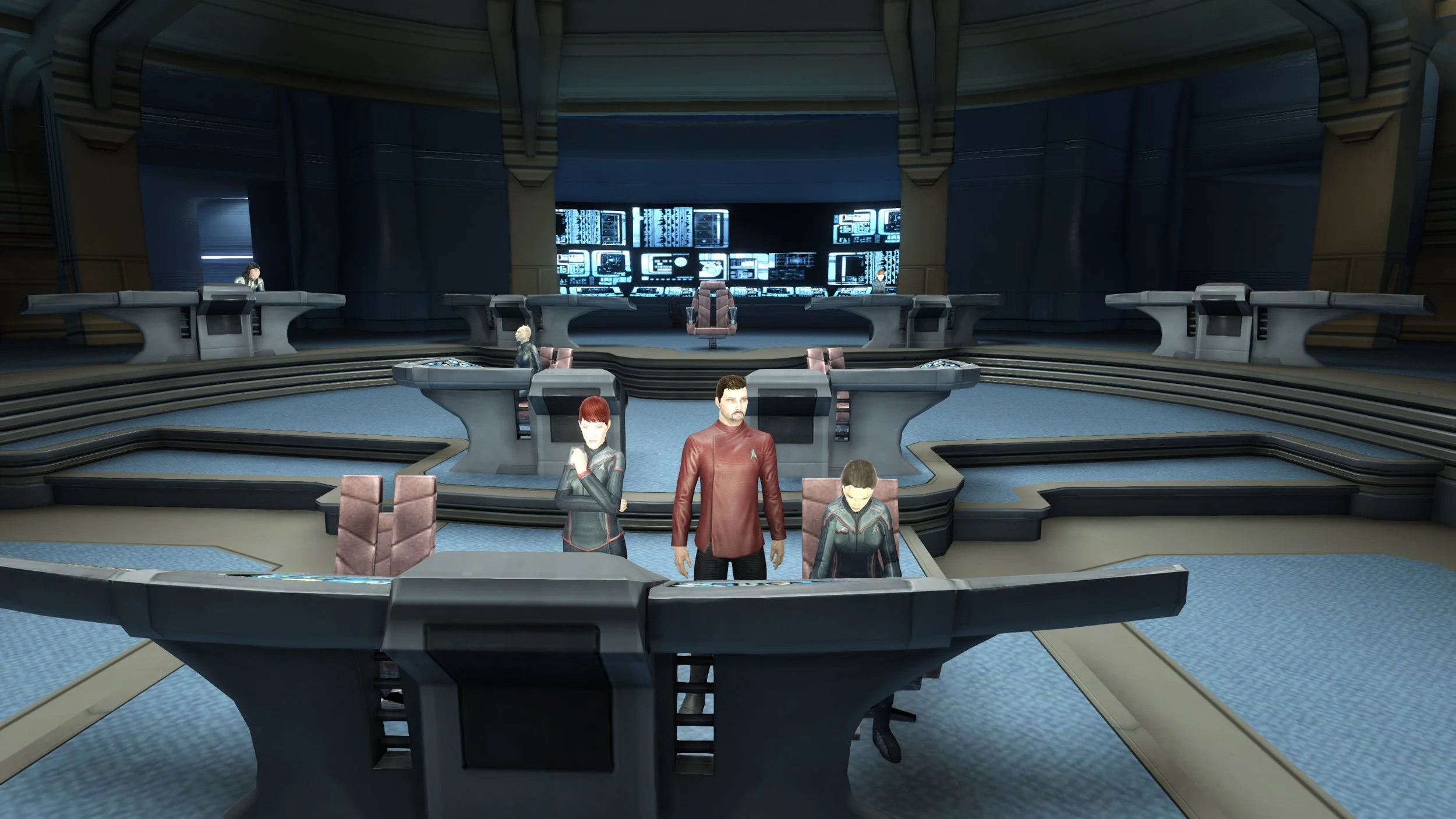
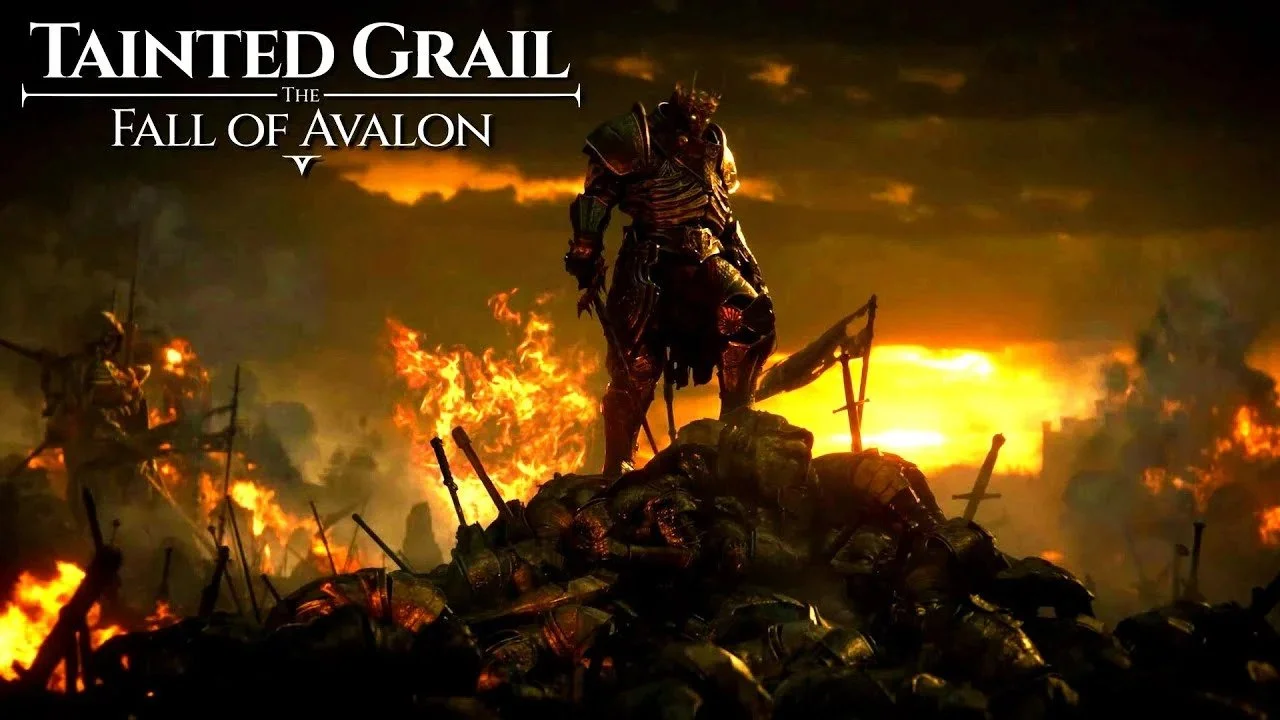
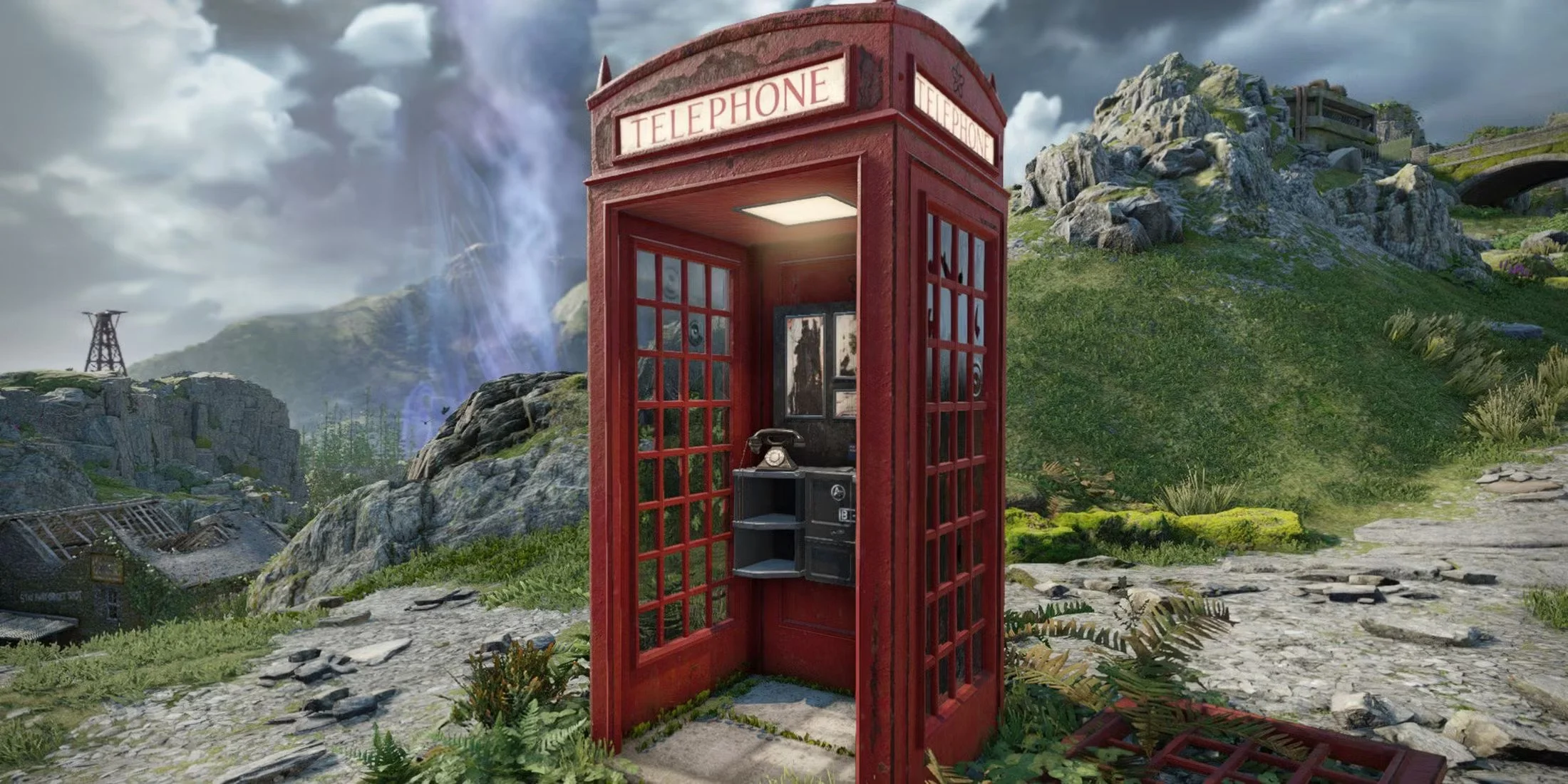
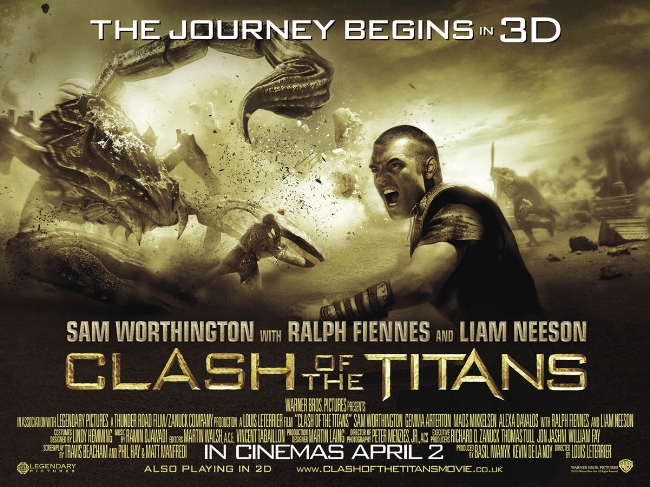
Immortals (2011)
Tarsem Singh's Immortals follows in the wake of Zac Snyder’s 300 with a similar aesthetic and editing style. Despite an interesting cast, featuring the talents of John Hurt, Mickey Rourke and Henry Cavill, it’s a singularly uninspired film, devoid of any story telling of any substance. Immortals main selling points are glossy, stylised visuals and a striking production design which is very derivative of Italian cinema from the sixties. There are also liberal doses of violence and heaving oiled flesh to enliven the proceedings, but it is all feels somewhat arbitrary and a bit of a box ticking exercise. Overall what surprises me the most is how a film maker with all of the drama and excitement of Greek mythology at his disposal, can still make such a turgid and dull movie as this?
Tarsem Singh's Immortals follows in the wake of Zac Snyder’s 300 with a similar aesthetic and editing style. Despite an interesting cast, featuring the talents of John Hurt, Mickey Rourke and Henry Cavill, it’s a singularly uninspired film, devoid of any story telling of any substance. Immortals main selling points are glossy, stylised visuals and a striking production design which is very derivative of Italian cinema from the sixties. There are also liberal doses of violence and heaving oiled flesh to enliven the proceedings, but it is all feels somewhat arbitrary and a bit of a box ticking exercise. Overall what surprises me the most is how a film maker with all of the drama and excitement of Greek mythology at his disposal, can still make such a turgid and dull movie as this?
Years after the Gods defeated the Titans, a new evil threatens. King Hyperion (Mickey Rourke) scours Greece in search of the legendary Epirus Bow, a weapon of unimaginable power forged in the heavens by Ares. Once he possesses this bow he can unleash the Titans, who have been imprisoned deep within the bowels of Mount Tartaros. In Hyperion’s hands, the bow can also annihilate the Gods. But ancient law dictates the Gods must not intervene in man's conflict. Yet they can work through a proxy, so a peasant named Theseus (Henry Cavill) is chosen by Zeus, to save his people from Hyperion and his armies. Rallying a band of fellow outsiders, including visionary priestess Phaedra (Freida Pinto) and cunning slave Stavros (Stephen Dorff), Theseus must lead an uprising, or watch his homeland fall into ruin and the Gods vanish from the world.
Director Tarsem Singh has a noticeable visual style, developed during his earlier career where he made several very high-profile music videos. As a result, one cannot deny that Immortals looks impressive. The colour palette is vivid in it’s use of contrasting colours, especially in the end battle between Gods and Titans. Gold, red and black feature in a very striking fashion. There is also an ethereal quality to some of the supernatural elements of the story. I certainly felt that there was an element of Mario Bava and even Michael Powell and Emeric Pressburger in the proceedings. The action scenes are stylised and brutal yet lack any dramatic power due to their heavily orchestrated presentation. At times they seem like they’d be more at home in a Giallo, rather than a tale of Ancient Greece.
However, despite all the positive aspects of the production design, my biggest criticism of Immortals is that it wilfully neglects any attempt at true story telling and character development. Viewers are presented with the most arbitrary depictions of both heroes and villains and given no specific reason to care about them, apart from the fact that they’re merely archetypes. It feels like the main focus of this movie is the presentation, rather than the story. It seems to be an all too familiar complaint these days. Compared to thirty years ago, film makers nowadays have access to an array of tools that allow them to make the most visually impressive and technically accomplished productions. But there is a noticeable lack of humanity in this process and it becomes a very apparent when you finally watch the finished product. Immortals suffers in this way, saying precious little in the most lurid and bombastic fashion.


Sweeney Todd: The Demon Barber of Fleet Street (2007)
It is a curious fact that because of the way that the film was marketed and due the public's propensity for assumption, many people did not realise that Sweeney Todd: The Demon Barber of Fleet Street was in fact a musical upon its release. I find this strange, but then again not everyone is like me and shows the same degree of interest in cinema. It would appear that not everyone reads reviews or does any preliminary research on a movie before committing to watch it. Often viewers will make a snap decision based on the casting of a particular actor. Sometimes a film’s poster and promotional art can entice the public to take a punt on a movie. I must admit, I would be most interested to establish exactly what it was that some viewers were expecting in the case of Sweeney Todd. But then again, considering director Tim Burton’s body of work, that's a somewhat paradoxical question.
It is a curious fact that because of the way that the film was marketed and due the public's propensity for assumption, many people did not realise that Sweeney Todd: The Demon Barber of Fleet Street was in fact a musical upon its release. I find this strange, but then again not everyone is like me and shows the same degree of interest in cinema. It would appear that not everyone reads reviews or does any preliminary research on a movie before committing to watch it. Often viewers will make a snap decision based on the casting of a particular actor. Sometimes a film’s poster and promotional art can entice the public to take a punt on a movie. I must admit, I would be most interested to establish exactly what it was that some viewers were expecting in the case of Sweeney Todd. But then again, considering director Tim Burton’s body of work, that's a somewhat paradoxical question.
Sweeney Todd: The Demon Barber of Fleet Street is the story of Benjamin Barker (Johnny Depp), a barber, wrongly sentenced to a life of hard labour in Australia by debauched Judge Turpin (Alan Rickman), who covets Barker's wife, Lucy (Laura Michelle Kelly). Returning 15 years later, having escaped the Penal Colony, Barker adopts the alias of Sweeney Todd and says goodbye to his friend, sailor Anthony Hope (Jamie Campbell Bower), who rescued him from the sea. He then returns to his old flat above Nellie Lovett's (Helena Bonham Carter) pie shop on Fleet Street. She tells him that after his arrest Turpin raped his wife, and she poisoned herself out of humiliation. Turpin then took Barker's daughter Johanna in as his ward. After receiving this news, Todd vows revenge and reopens his barber shop in the upstairs flat. Throats are cut, corpses disposed of and pie sales increase!
This "Gothic" tale of revenge and cannibalism certainly lends itself to the big screen. It has been filmed several times before, with the 1936 version starring the aptly named Todd Slaughter being the most memorable. Yet the version that Tim Burton has chosen to bring to the big screen is Stephen Sondheim's 1979 musical. It was this fact that seems to have been downplayed in the studio's advertising campaign. As to why, it’s not really clear. Burton’s quirky films still manage to find and audience. If they weren’t confident that such a musical would be successful, then why exactly did they finance such a project? Irrespective of these questions, Sweeney Todd: The Demon Barber of Fleet Street works extremely well. Surprising as it may seem, the story lends itself very well to musical interpretation. The songs are very morose, bleak and bitter. However, they reflect the narrative perfectly and the lead stars perform them exceptionally well.
Mr. Depp exhibits an interesting vocal style that is reminiscent of both David Bowie and Anthony Newley. As usual with Tim Burton's work, the production design and costumes are very stylised and influenced by German Expressionism. There is also a very strong moral subtext to the entire proceedings that isn't necessarily the one you'd expect it to be. At time the tone seems more befitting of opera. I wholeheartedly recommend it. However, I would add as a proviso, only if you like the director’s previous work or have a love of the baroque, unusual and violent. The casual viewer should otherwise best avoid it, especially if they are not a fan of such off-kilter musicals.





Language, Style and Tone
One of the many choices that you’re presented with when you start blogging is what style to adopt. You can make a conscious decision right from the outset regarding the tone and language you intend to use, or you just “dive right in” and see what evolves over time. Blogging is a far less formal kind of writing compared to traditional mediums and therefore lends itself to a wider range of choice and means of expression. Language, style and tone certainly have an impact upon your work and are key (along with content) in creating your identity and online brand. Therefore, they have a direct bearing upon what sort of readership you may attract and cultivate. Hence it is beneficial to be aware of the significance of language, style and tone.
One of the many choices that you’re presented with when you start blogging is what style to adopt. You can make a conscious decision right from the outset regarding the tone and language you intend to use, or you just “dive right in” and see what evolves over time. Blogging is a far less formal kind of writing compared to traditional mediums and therefore lends itself to a wider range of choice and means of expression. Language, style and tone certainly have an impact upon your work and are key (along with content) in creating your identity and online brand. Therefore, they have a direct bearing upon what sort of readership you may attract and cultivate. Hence it is beneficial to be aware of the significance of language, style and tone.
So here are a few thoughts on all three of these factors. Their relevance depends on what you write about and how seriously you consider your work. Although language, style and tone are important, if you are writing light and entertaining material that is meant to be enjoyed rather than dissected, then it is not necessarily such a pressing matter. If you like to write reviews or opinion pieces and are happy to express opinions about controversial issues, then their significance and impact are greater. It is for you to decide if these three aspects of writing are important to your content creation.
Language:
Brief and concise writing using plain and simple words can be an eminently practical approach to blogging. It allows you convey your thoughts quickly and easily. If you are writing anything explanatory, then writing in this manner is ideal. Guides, walkthroughs and FAQs benefit immensely from an economy of words. But writing is not a “one size” fits all undertaking. Long, complex and even verbose writing can be appealing to certain demographics. Sometimes you can more accurately express yourself when using florid language. Brevity can be constraining and doesn’t always allow you to accurately convey your thoughts and sentiments. Hence, there are times when long form writing, written in a scholarly manner is an appropriate means to an end. The great thing about the English language is that it there are multiple words meaning the same thing, so you get to choose the ones that best serve your needs.
How you use language, naturally has a bearing on your readership. Some will prefer concise and straightforward prose. Others will seek out the opposite. Newspapers are a prime example of this, adopting the language that best suits their target audience. And let us not be naïve and fail to recognise that there’s a culture of snobbery surrounding language. It is after all a socio-political tool. Whether you like it or not your written content will be judged in part by the very words that you use, or in some instances not use. This is why some writers will spend a great deal of time editing their work to ensure that they use the right language to express their point clearly and unequivocally. Of course, you can also do the complete opposite if that is your intention.
Style:
I personally favour a conversational style with my online writing. I am sharing my thoughts which I rhetorically question and analyse. As such, I do not see the need to couch them in the formality associated with a scholarly essay or that of a broadsheet newspaper. I will make quips and jokes to lighten the tone, as well as using pop-culture references. Yet I still use conventional methodologies if I am constructing a reasoned argument. Premises and conclusions need to be established and if I’m writing a “think piece” about a subjective matter, I will try an include multiple perspectives on the subject.
Because I do enjoy “word play” and believe wholeheartedly in the old adage “you must say what you mean, or else how can you mean what you say”, I am somewhat verbose. But words are nothing to fear and if someone uses one that you’re not familiar with then there is no shame in asking for an explanation. Indeed, add it to your personal lexicon. Expanding your vocabulary is empowering. However, I fully recognise that others are far more comfortable doing the opposite. Namely, writing as they would speak among their peers. It all about finding what’s right for you and your content. A twenty-year-old and someone twice that age can both express the same point, but their choice of words will often be radically different. That is one of the pleasures of reading other peoples blogs. Not only to learn what they think, but to enjoy how they express themselves.
Tone:
In some respects, a writer’s tone is the most telling thing about themselves, their content and world view. It is the written equivalent of body language and verbal expression. Tone lets the reader know if the author is angry or amused, outraged or enthused. It also determines whether a written point is being presented for your consideration or whether it is being expressed as an unassailable “truth” or empirical fact. Tone also provides scope for an author to be frivolous, welcoming, measured or bellicose. Some writers are cognisant of tone to the extent that they can use it along with style as a way of controlling the way readers perceive them. Why state when you can imply? Ambiguity has advantages when exploring certain subjects. Again, tone is something you can choose to use within your writing. For some writers, it just inherently bleeds out into their work. It is something else that readers can use to judge the author.






















Blaugust Reborn: Five Questions Answered
Back at the beginning of August, several of the bloggers participating in Blaugust Reborn 2018, provided some interesting writing prompts designed to inspire those new to creating online content. Although I don’t consider myself to be a “newbie”, having maintained a web presence since 2007, some of those prompts were very interesting. Certainly, a short list of questions posted over at Endgame Viable offered a variety of talking points too good to pass up. So, I’ve selected four of those listed and one other from Moonshine Mansion (who also had an interesting selection) and decided to explore them further in today’s post. I’ll try and be as concise as possible because each specific question could sustain an entire blog post of their own. But sometimes brevity can be a good thing, so here for your consideration are my thoughts on the following:
Back at the beginning of August, several of the bloggers participating in Blaugust Reborn 2018, provided some interesting writing prompts designed to inspire those new to creating online content. Although I don’t consider myself to be a “newbie”, having maintained a web presence since 2007, some of those prompts were very interesting. Certainly, a short list of questions posted over at Endgame Viable offered a variety of talking points too good to pass up. So, I’ve selected four of those listed and one other from Moonshine Mansion (who also had an interesting selection) and decided to explore them further in today’s post. I’ll try and be as concise as possible because each specific question could sustain an entire blog post of their own. But sometimes brevity can be a good thing, so here for your consideration are my thoughts on the following:
What do you use Twitter for? Is it a conversation platform? Is it a notification platform? Is it safe? How do you use retweets and favourites?
I primarily use Twitter to converse and stay in touch with online friends. I like to swap news, have conversations and indulge in light-hearted banter. It also provides me with news updates from established outlets. I also use Twitter to promote my own written work. Having built up a respectable following this can have a positive impact upon my website traffic. Twitter can be safe a platform as long as you proactively police who you follow, what conversations you pursue and retweet. I use “mute” judiciously and regularly prune followers that aren’t active.
Are game reviews valuable anymore? Or are they just entertainment?
I find this a curious question as it infers that game reviews are not of value anymore. I draw upon a broad spectrum of game reviewers. Some are from established gaming websites and others are from You Tube. Those that I follow often tend to have a similar outlook upon gaming as myself and favour the similar genres as I do. Twitch also now supplements written reviews, and I’ll often watch someone playing a new title before I make up my mind to buy it. Although there have been controversies of late in some quarters, they often seem to affect reviews and reviewers that are outside of my experience. So, from my perspective, I still seek out intelligent and measured game reviews and have no difficulty finding them.
What are your favourite or most engrossing stories delivered through a game?
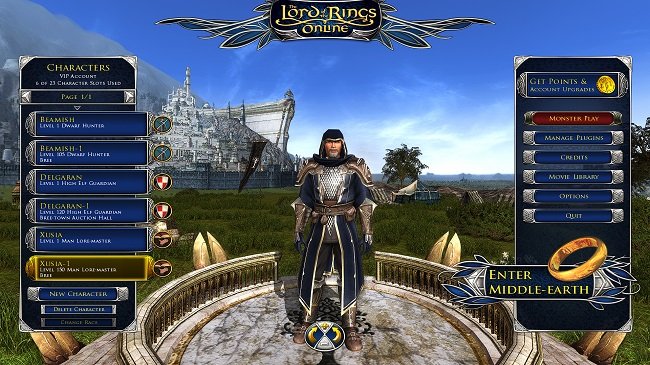
The Witcher III: Wild Hunt remains the benchmark for quality games writing. It was the first time that I encountered a game with a narrative as gripping and compelling as a quality novel. The dramatic scope and the emotional intelligence of many of the themes and storylines are outstanding and the game does not render complex ideas into binary outcomes. Like real life the stories are often ambiguous with outcomes that have both good and bad consequences. Another game that has quality storylines is the MMO The Lord of the Rings Online. It has always run a parallel course to Tolkien’s narrative and explored aspects of the source text that are just alluded to by the author. Since the game has now gone beyond the downfall of Sauron, it has continued to maintain a similar high standard with creatively extrapolating what is in the appendices of the original trilogy.
What are your thoughts on lockboxes? Are they necessary? Are they exploitative?
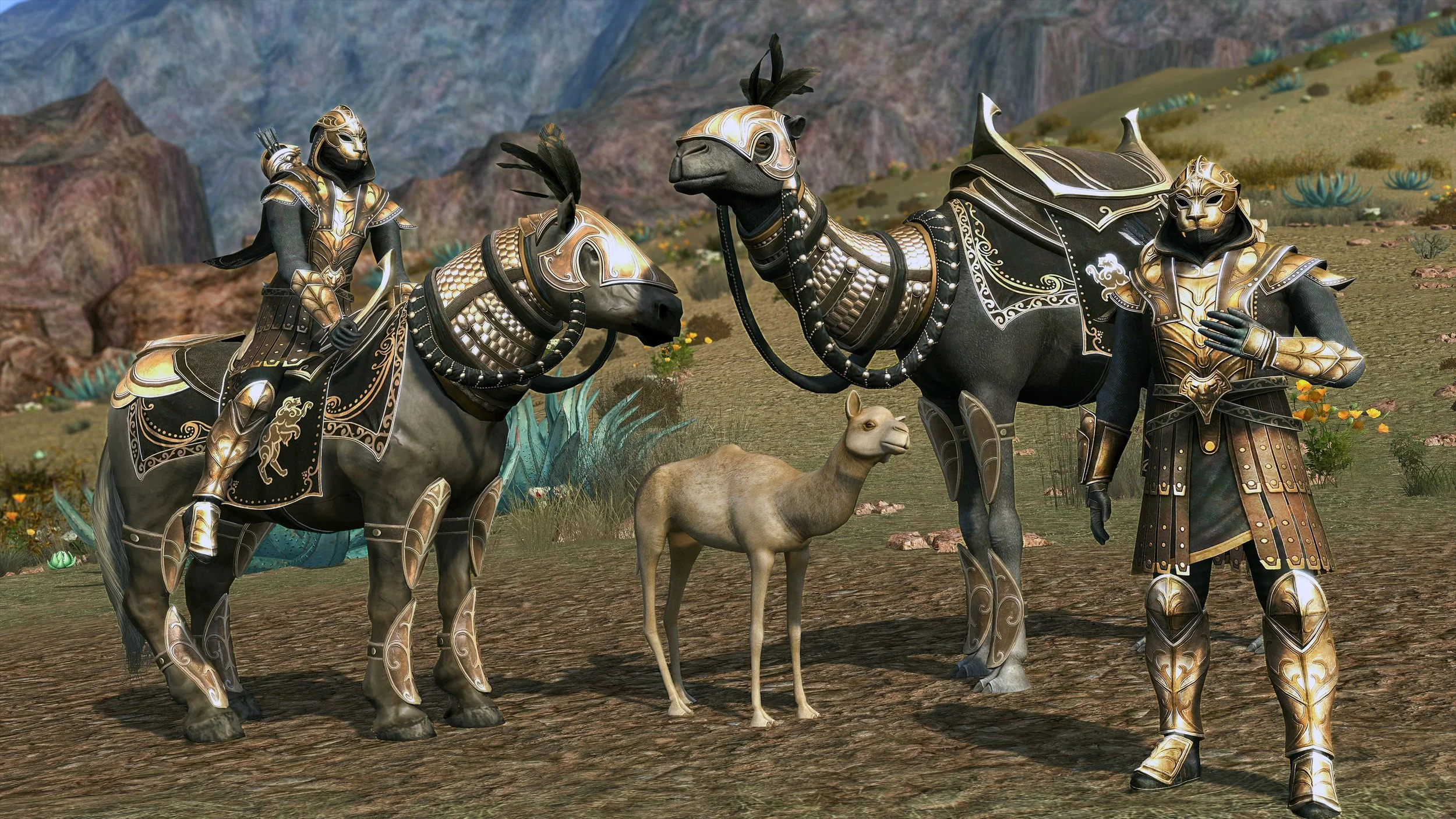
Lootboxes can be both divisive and exploitative. Yet as games are commercial undertakings with a need for monetisation one can argue that they are a necessary evil, or at very least a quick and solution. So, my attitude to lootboxes is one of ambivalence, until I find myself in a situation where their use may be required. Then it’s time to apply my own personal cost analysis to see if it is expedient to buy them. In a game such as Star Trek Online, lootboxes offer additional content. Their main selling point are ships which although varied and unique, are not significantly superior to those that can be earned elsewhere in the game. Therefore, you can play the game effectively without having to ever pay to unlock one. However, in LOTRO the other day, I needed some additional “ashes” to be able to afford a specific armour set and opening lootboxes meant that I could bypass “grinding”. I resented buying keys but not enough to go “grind” for the gear elsewhere. And that’s why these egregious items continue to remain in games. Until we as players are prepared to “go without” to uphold a principle, then publishers will continue to count their cash while laughing at our “hypocrisy”.
What gets you hyped about an upcoming game?
Precious little really. As a mature (in years at least) player of games, I’ve grown tired with the excessive marketing that accompanies major launches. Pre-orders, early access and hype culture are the ruination of gaming and have proven to seldom live up to the expectations they foster. As a result, I don’t often buy a game at launch and will often wait until the release of the “Game of the Year Edition”. That is not to say that I don’t become intrigued by certain titles when they appear on my radar, but I’ve learned to drastically temper my expectations. It’s a habit I have in most other areas of my life. But because I have a strong sense of gallows’ humour and of schadenfreude, I often get more excited by the inevitable PR disasters that frequently incur when the hype train becomes derailed. Star Wars Battlefront II being a prime example.
The Eyes and Guard Tavern
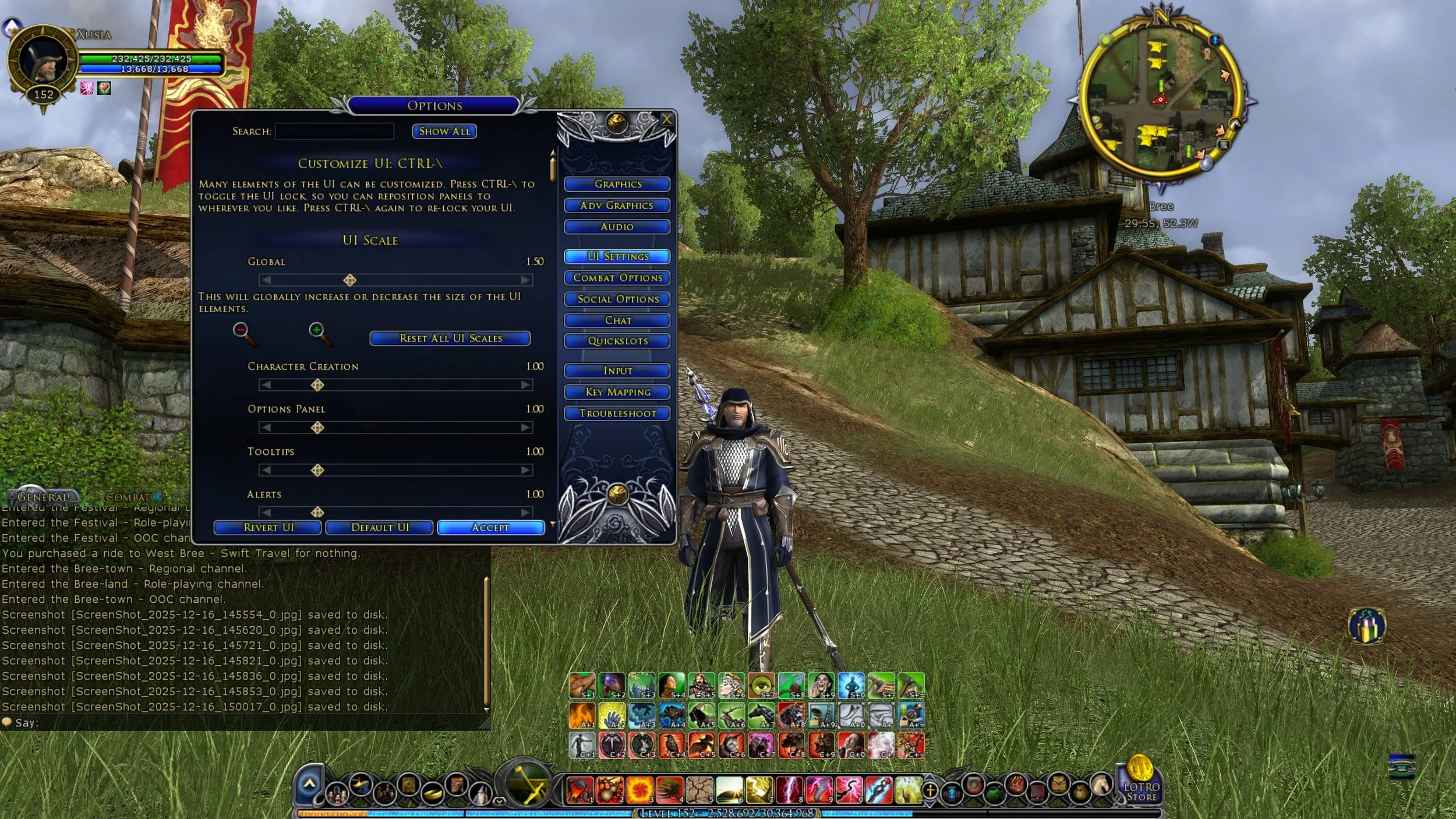
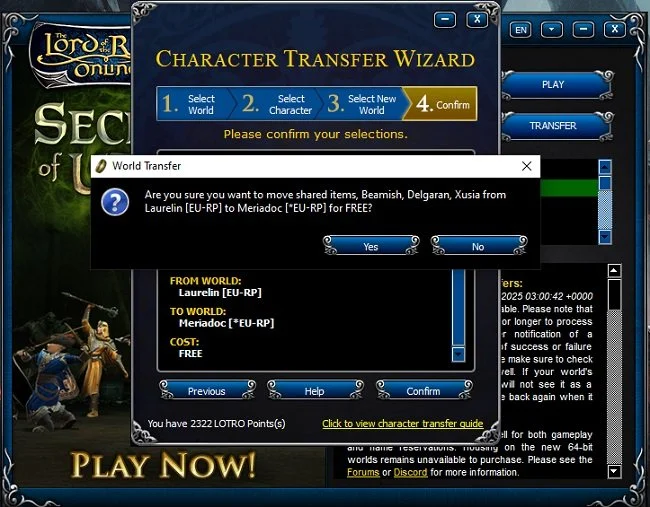
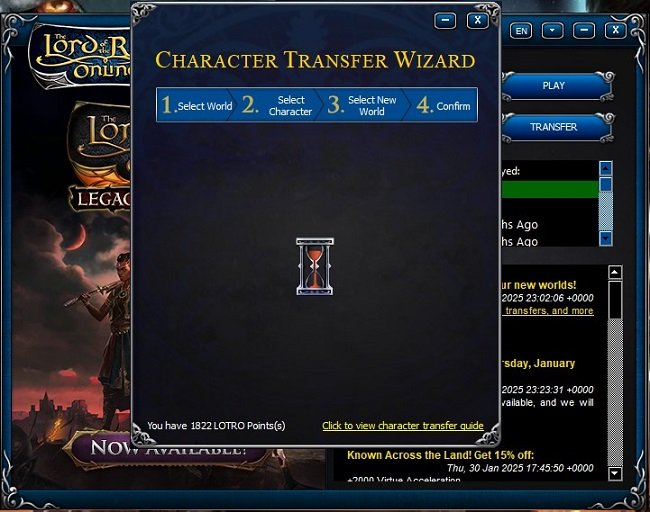
LOTRO like many other MMOs has a test server. Players can transfer existing characters to Bullroarer when it is available and preview all aspects of any new content that is being beta tested. If you do not wish to or do not have a level appropriate character available to transfer, you can create a new one and then visit The Eyes and Guard Tavern in Archet. This hostelry hosts a range of NPCs that can advance your alt through content, bestow deeds as well as upgrade virtues and traits. Effectively, you can gain everything that is available in the game from level 1 to the new cap of 120. It is therefore an invaluable in-game facility. If you wish to visit the latest zone, then you can jump to level cap and port directly to the region. Min-maxers and those who have a penchant for build experimentation can spend hours perusing new gear and such like. However, despite being a beneficial facility, The Eyes and Guard Tavern is a somewhat blunt tool.
LOTRO like many other MMOs has a test server. Players can transfer existing characters to Bullroarer when it is available and preview all aspects of any new content that is being beta tested. If you do not wish to or do not have a level appropriate character available to transfer, you can create a new one and then visit The Eyes and Guard Tavern in Archet. This hostelry hosts a range of NPCs that can advance your alt through content, bestow deeds as well as upgrade virtues and traits. Effectively, you can gain everything that is available in the game from level 1 to the new cap of 120. It is therefore an invaluable in-game facility. If you wish to visit the latest zone, then you can jump to level cap and port directly to the region. Min-maxers and those who have a penchant for build experimentation can spend hours perusing new gear and such like. However, despite being a beneficial facility, The Eyes and Guard Tavern is a somewhat blunt tool.
First off, if you transfer a character from the live server that is already progressing towards level cap you cannot use the appropriate NPC at The Eyes and Guard Tavern to advance straight to 120. I spent an hour tinkering with my build tonight with a level 40 hunter, before I realised my predicament. You can only take advantage of level advancement if you create a completely new character. Starting from scratch then comes with further problems. Adding all the games’ different aspects to your build, such as reputation and completion of the Epic Story, takes time. A lot of time. Furthermore, if you decide to flag all of the Epic Story as completed, the NPC will often port you to different locations in Middle-earth as part of that process. You then have to make your way back from Angmar, Edoras, or Anorien to the The Eyes and Guard Tavern, multiple times.
Creating new legendary weapons and fine tuning them is another very complex and time-consuming process. As is selecting your gear and applying appropriate essences. Re-learning all your crafting skills adds further time to this “work in progress”. Simply put, if you wish to create a level cap character with the best of the best gear, that has all rep and has progressed through all of the game’s story, then you can expect to spend three hours or more on such an undertaking. Again, I would like to make it clear that for some players, this prospect is a pleasure and not a chore. But for others, who simply want to visit the new region and may be try some of the new quests, such an investment of time is prohibitive. Another consideration is that to access the Bullroarer test server, you have to download and install a completely separate client. For those on slow internet connections or with data caps, that is another hurdle to overcome.
I have written in the past about the “average LOTRO player” and fully understand that those who play casually are not necessarily the core demographic of those accessing the Bullroarer test server. Hence the services available in The Eyes and Guard Tavern although lengthy and convoluted, are tailored to the liking of a more “involved” group. However, it would be beneficial if Standing Stone Games could add some additional facilities that met the needs of intermediate players who primarily want to visit Bullroarer test server to access the new zones and their respective quests. The provision of cookie-cutter endgame builds, that could be applied with a single click via an NPC is one example I can think of. Or if a player wants to be just a “virtual tourist”, perhaps some sort of temporary invincible mode could be made available, where you do not aggro the mobs and can explore freely. This facility already exists in (to a degree) when you use the stable service to travel between zones.
Overall, The Eyes and Guard Tavern is a functional and multi-layered service. To get the most out of it, be prepared to invest an considerable amount of time. If you are interested in accessing the Bullroarer test server and have not transferred an alt before or used the The Eyes and Guard Tavern, then I would recommend reading the official LOTRO guide that is buried within the official LOTRO forums or alternatively, read the helpful FAQ over at LOTRO Players website. As SSG is endeavouring to tidy up numerous outstanding “loose ends” in LOTRO, perhaps this service will have some “quick” options added to it in the future or they’ll find a way to streamline the services provided.
Bullroarer Update 23 Preview #2
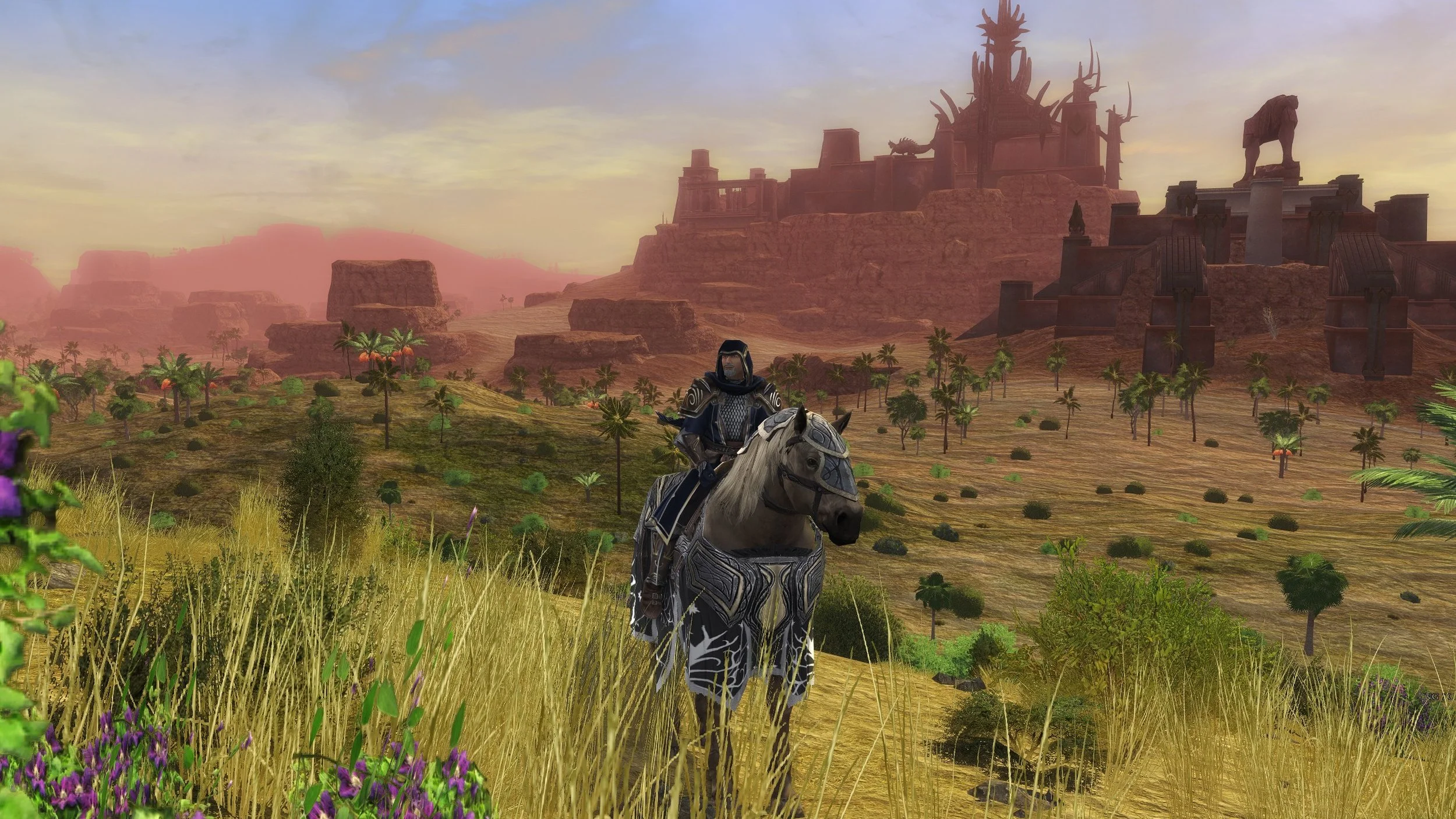
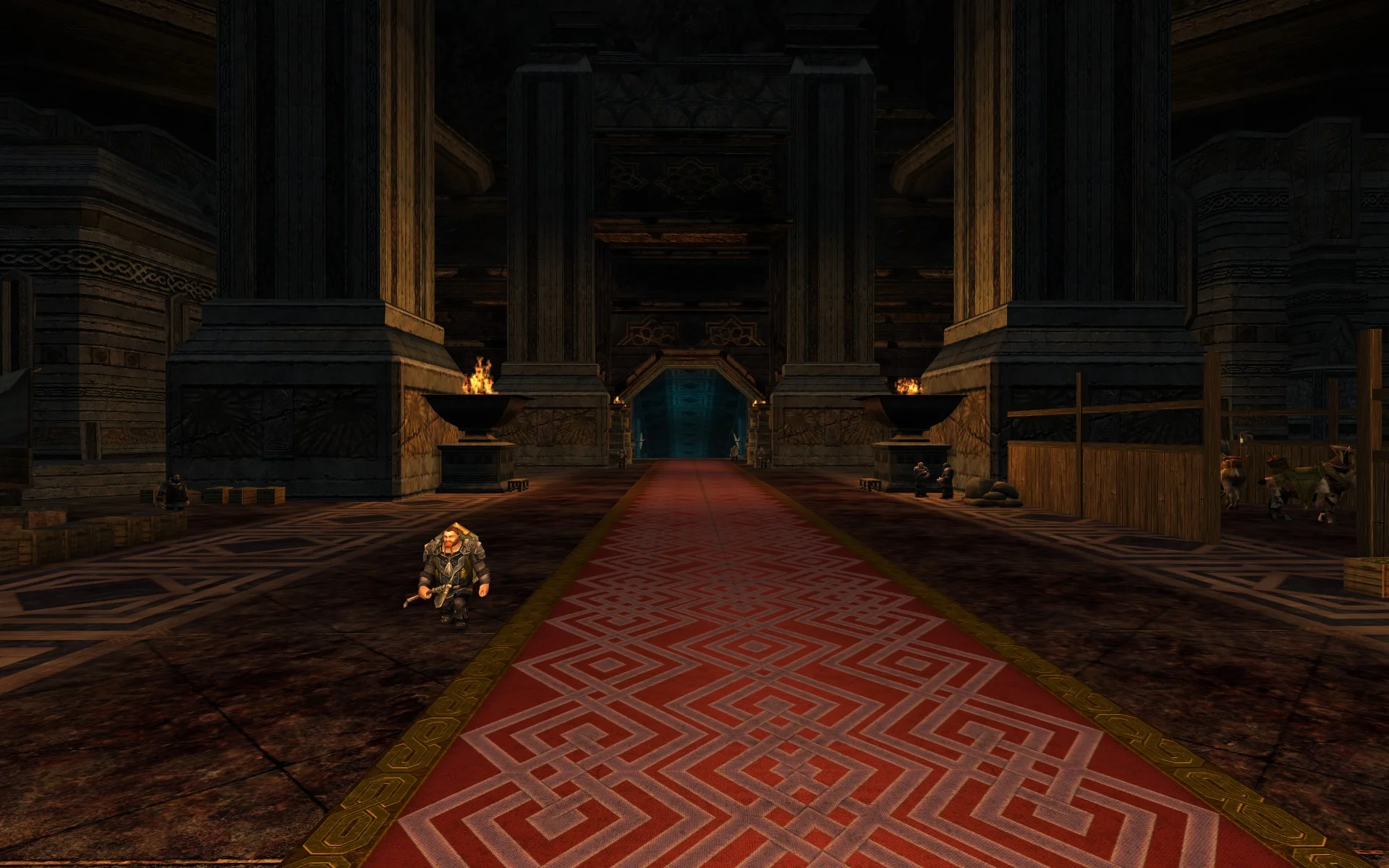
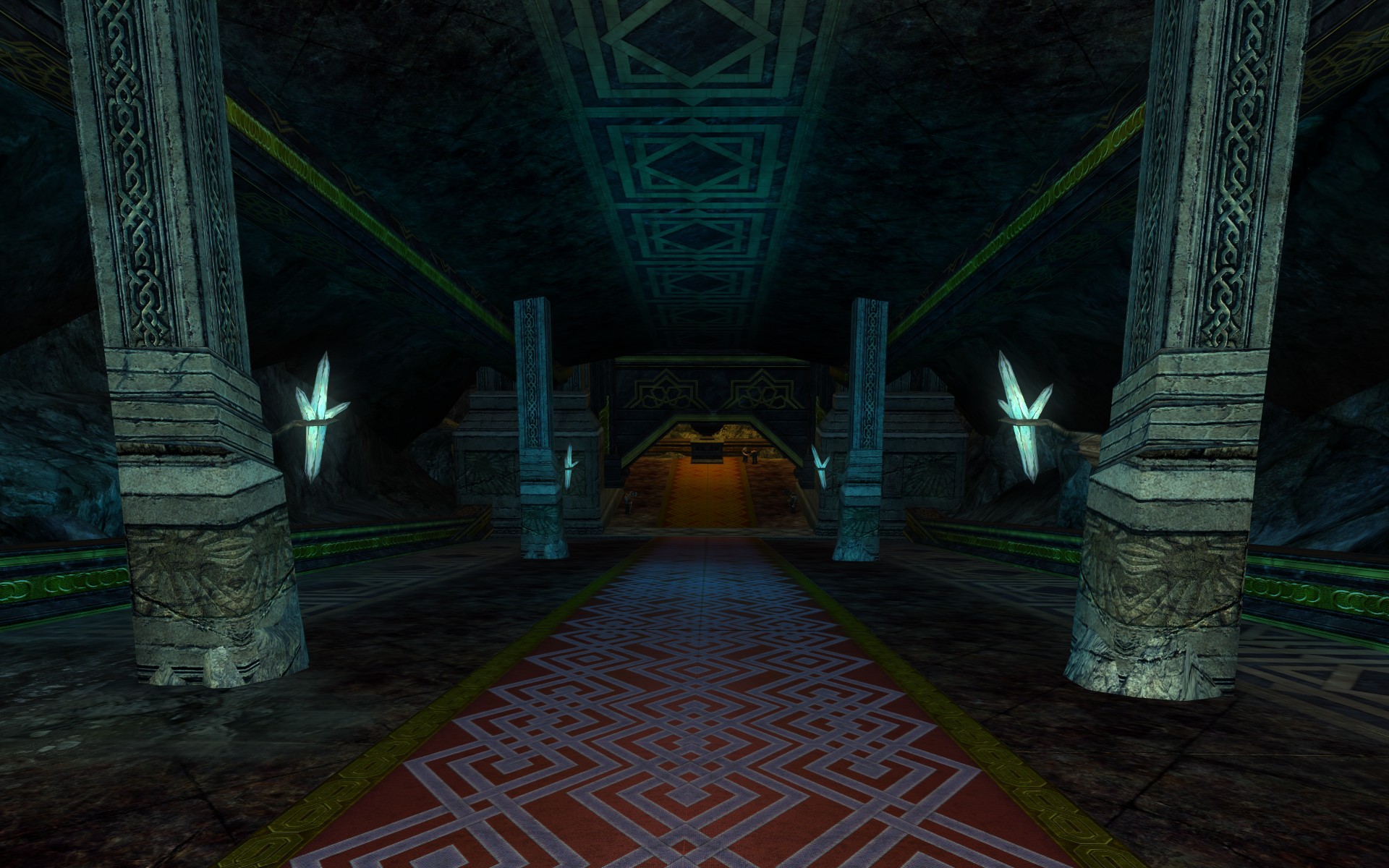
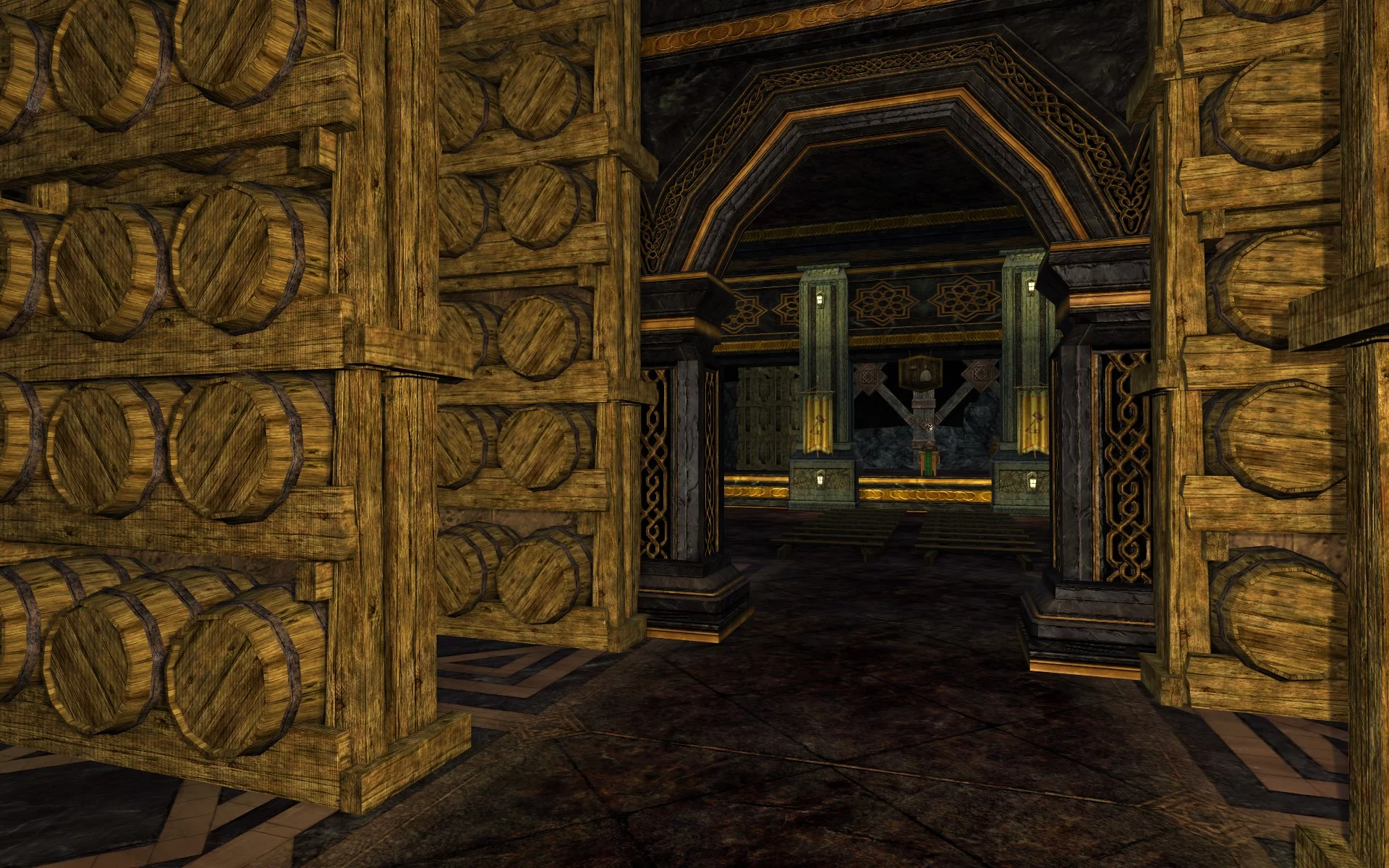
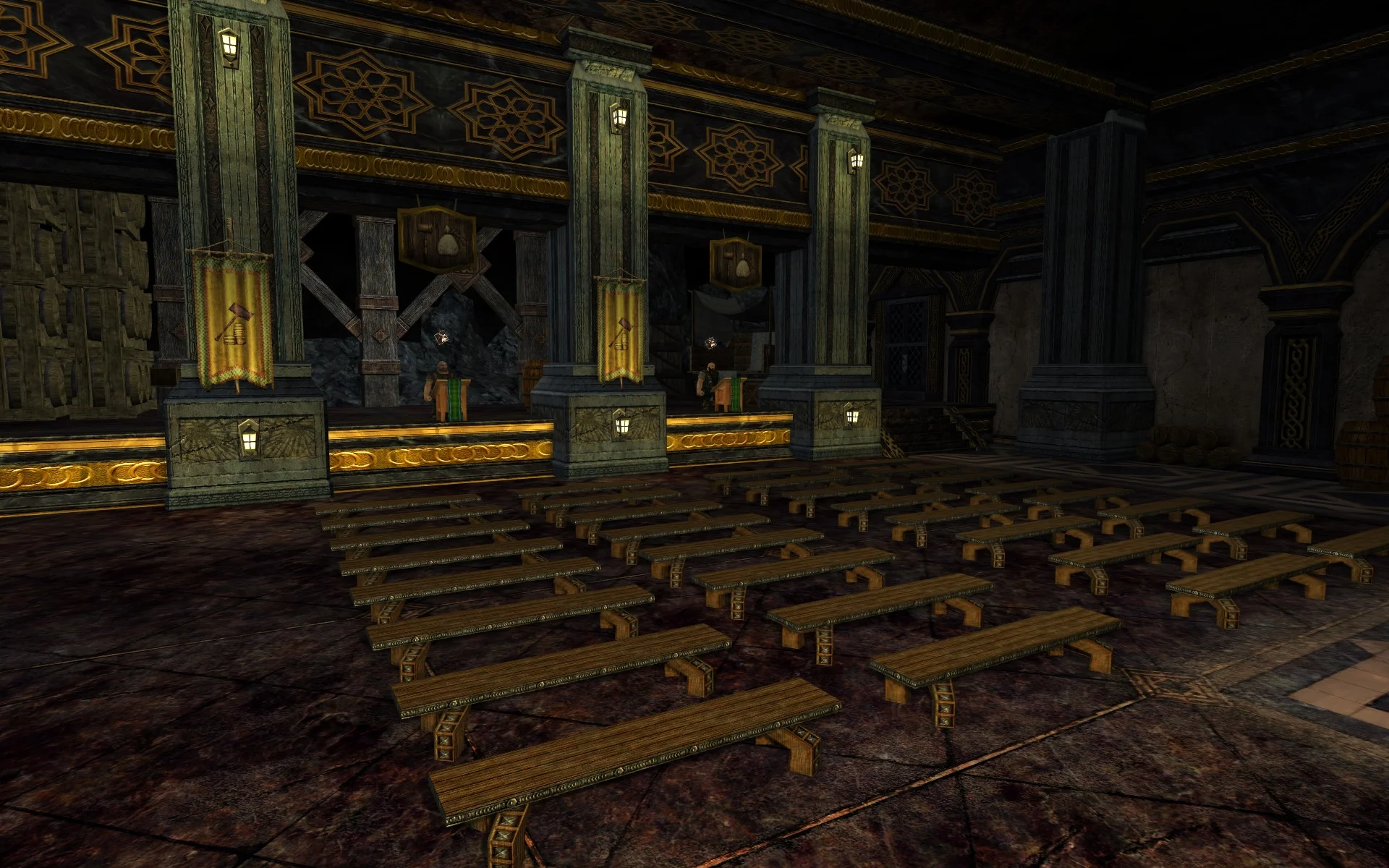
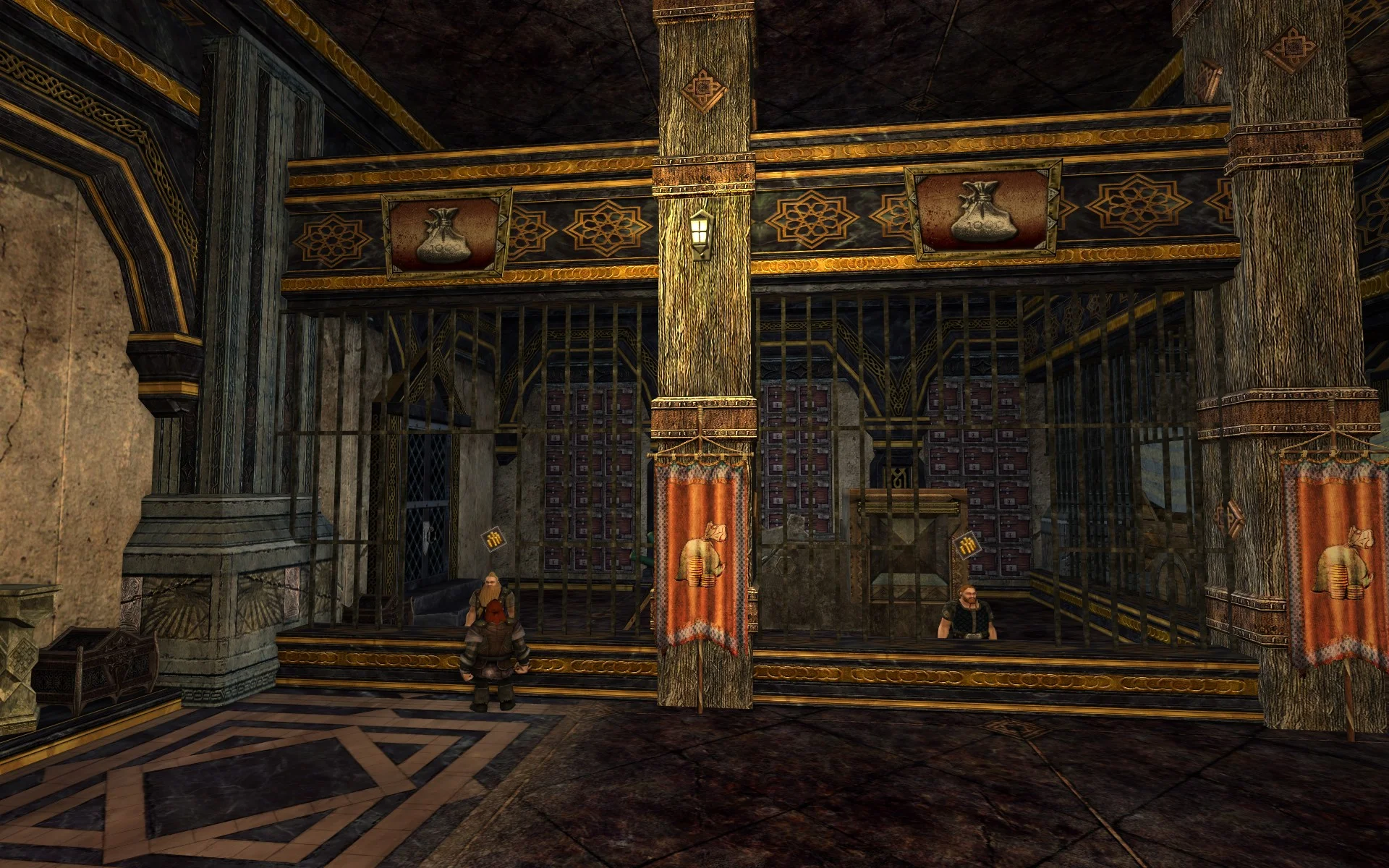
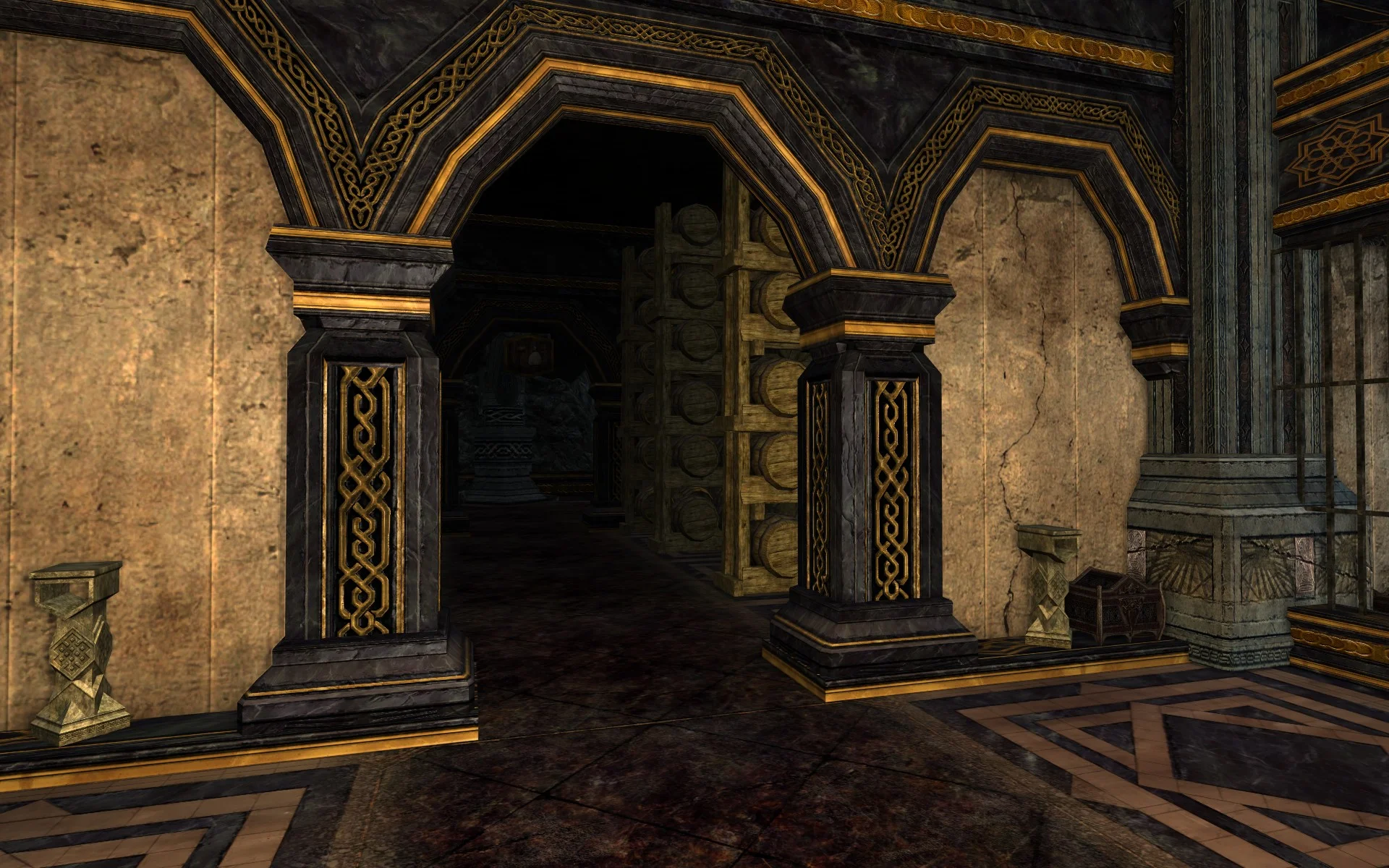
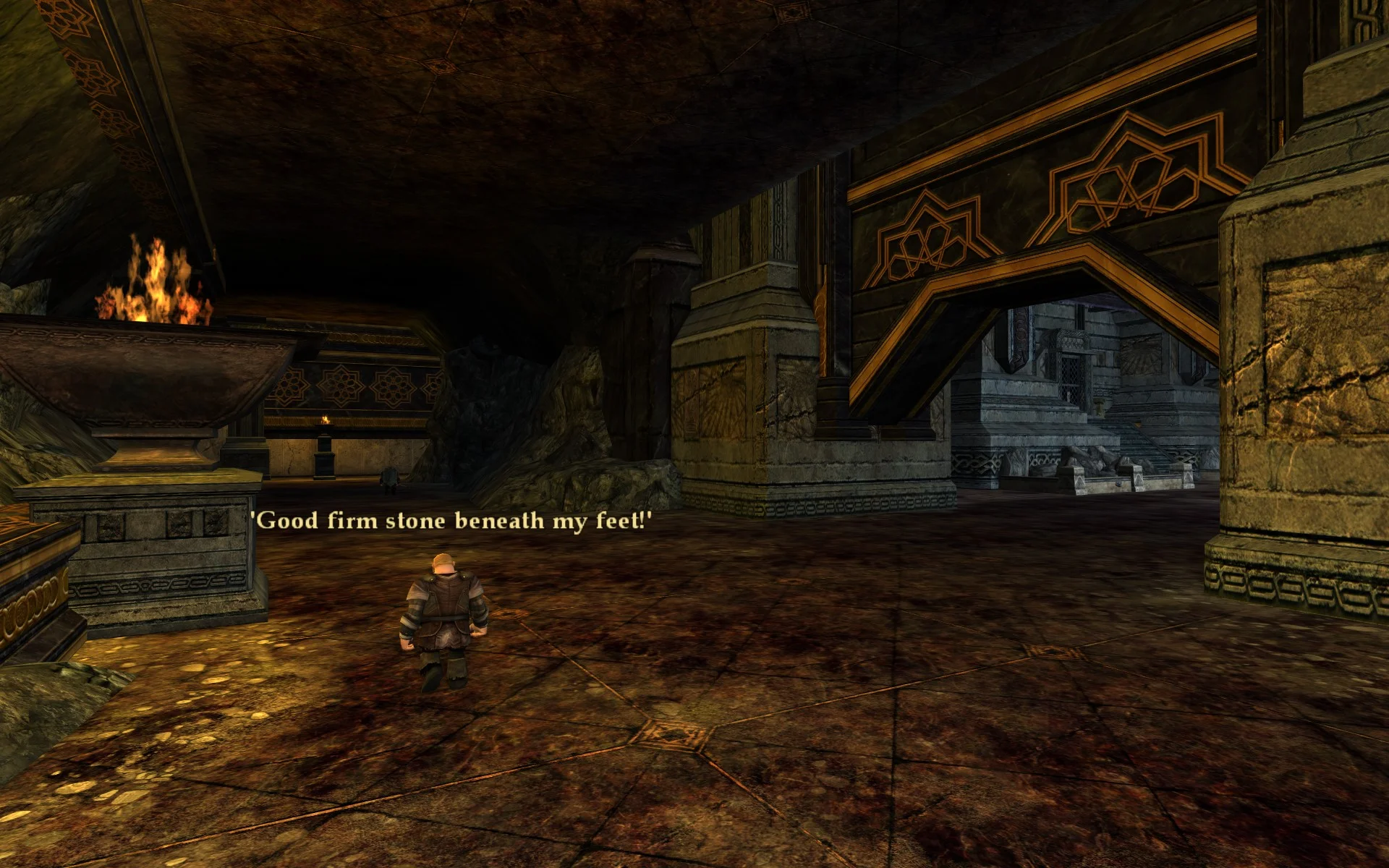
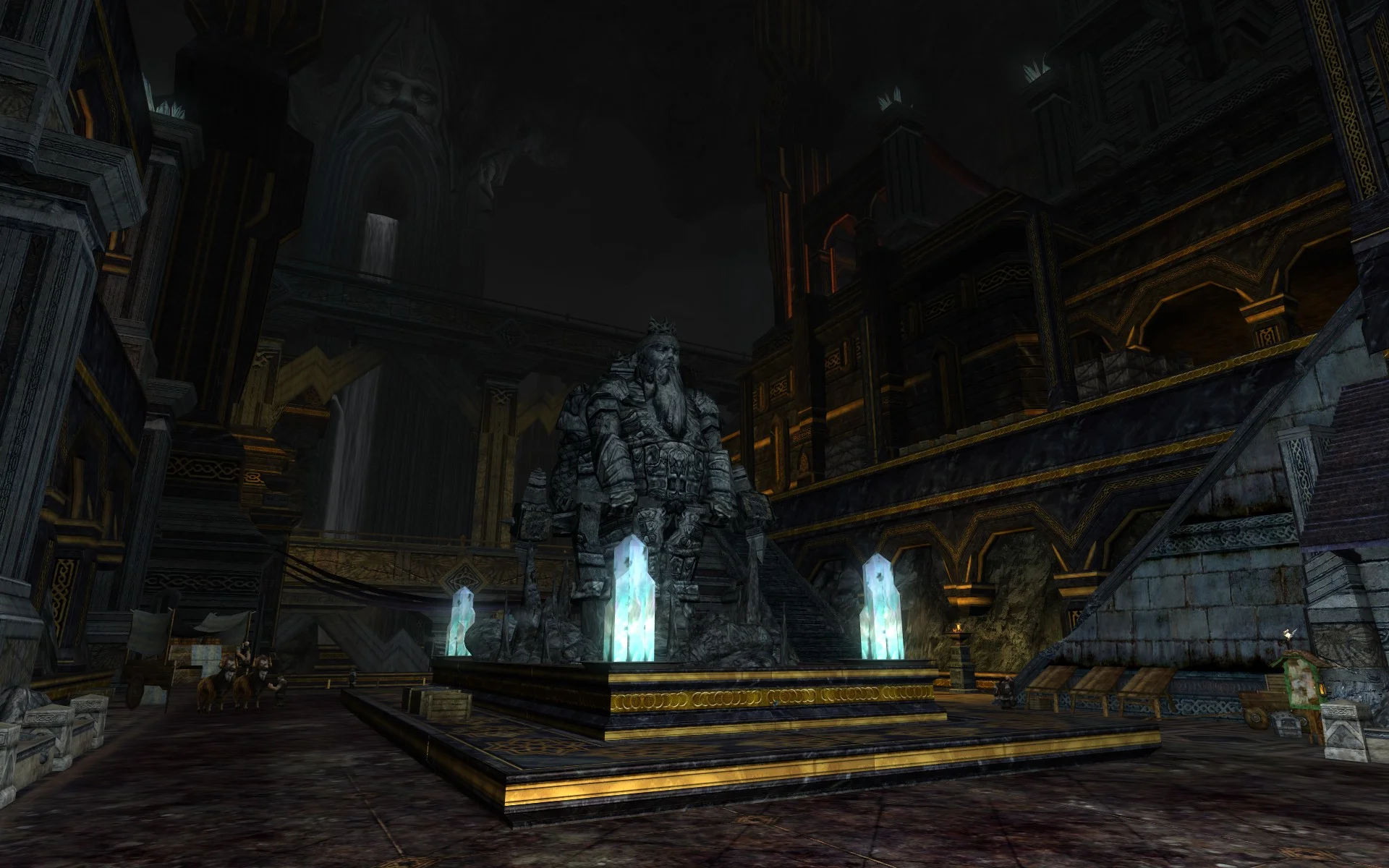
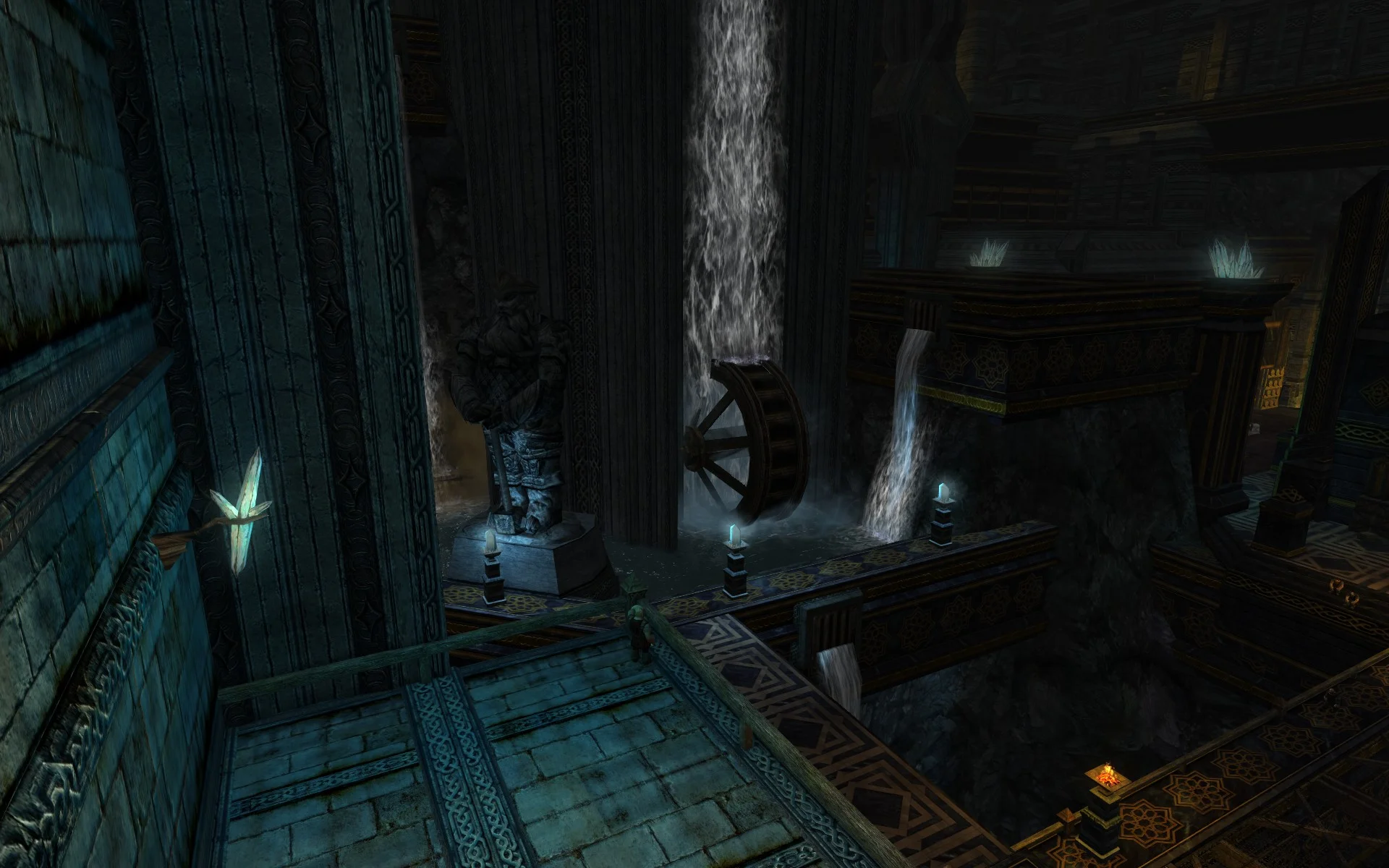
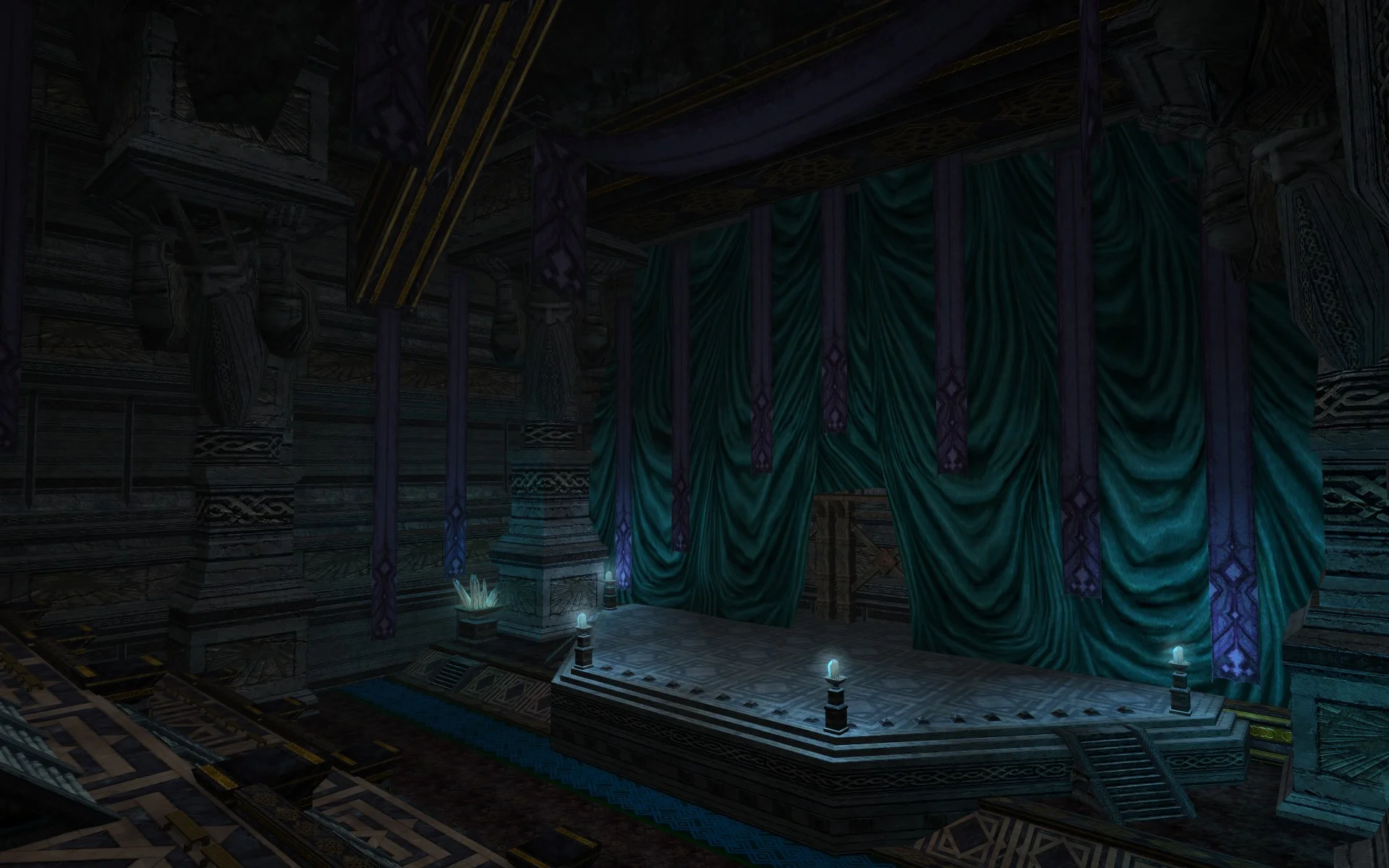
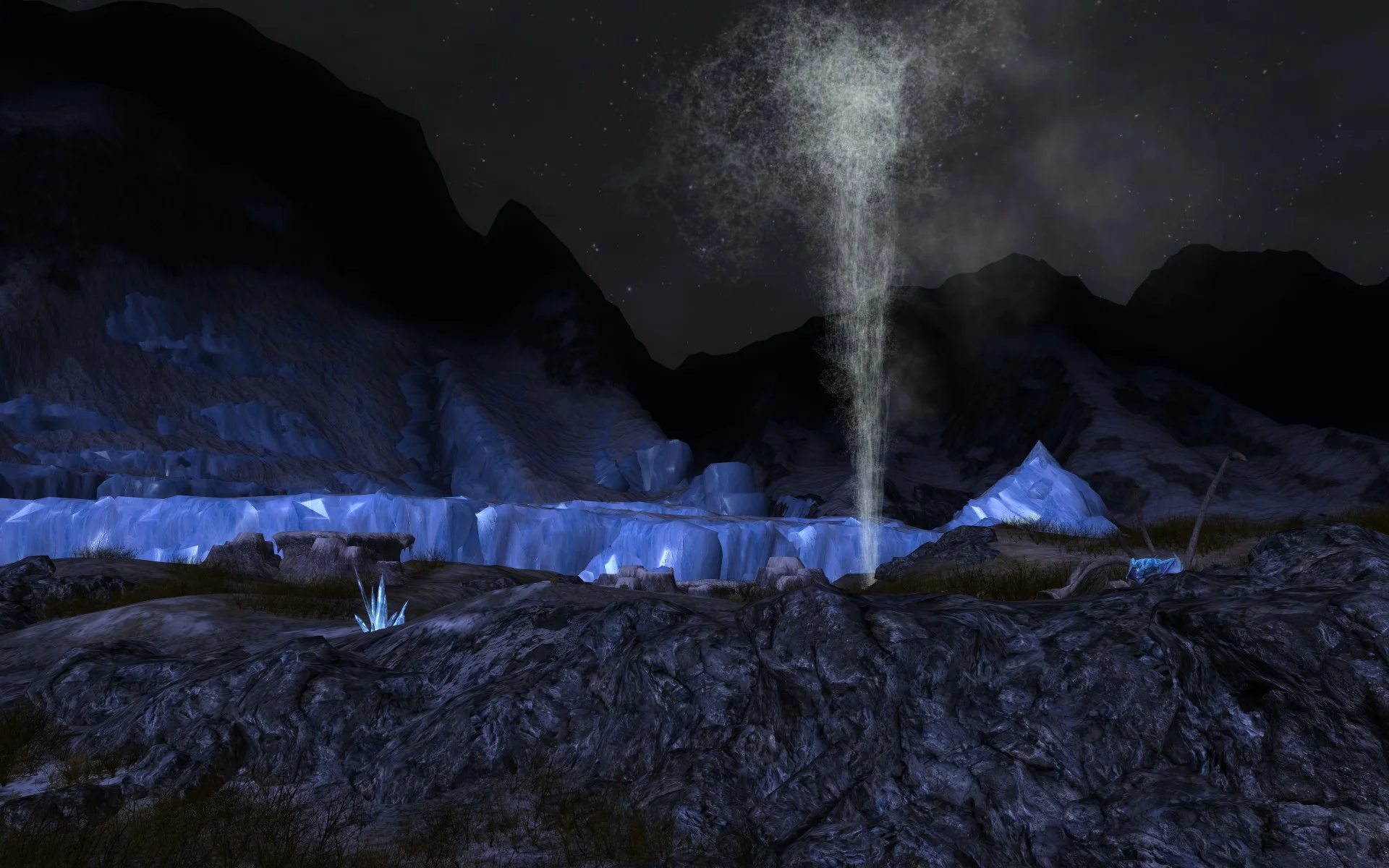
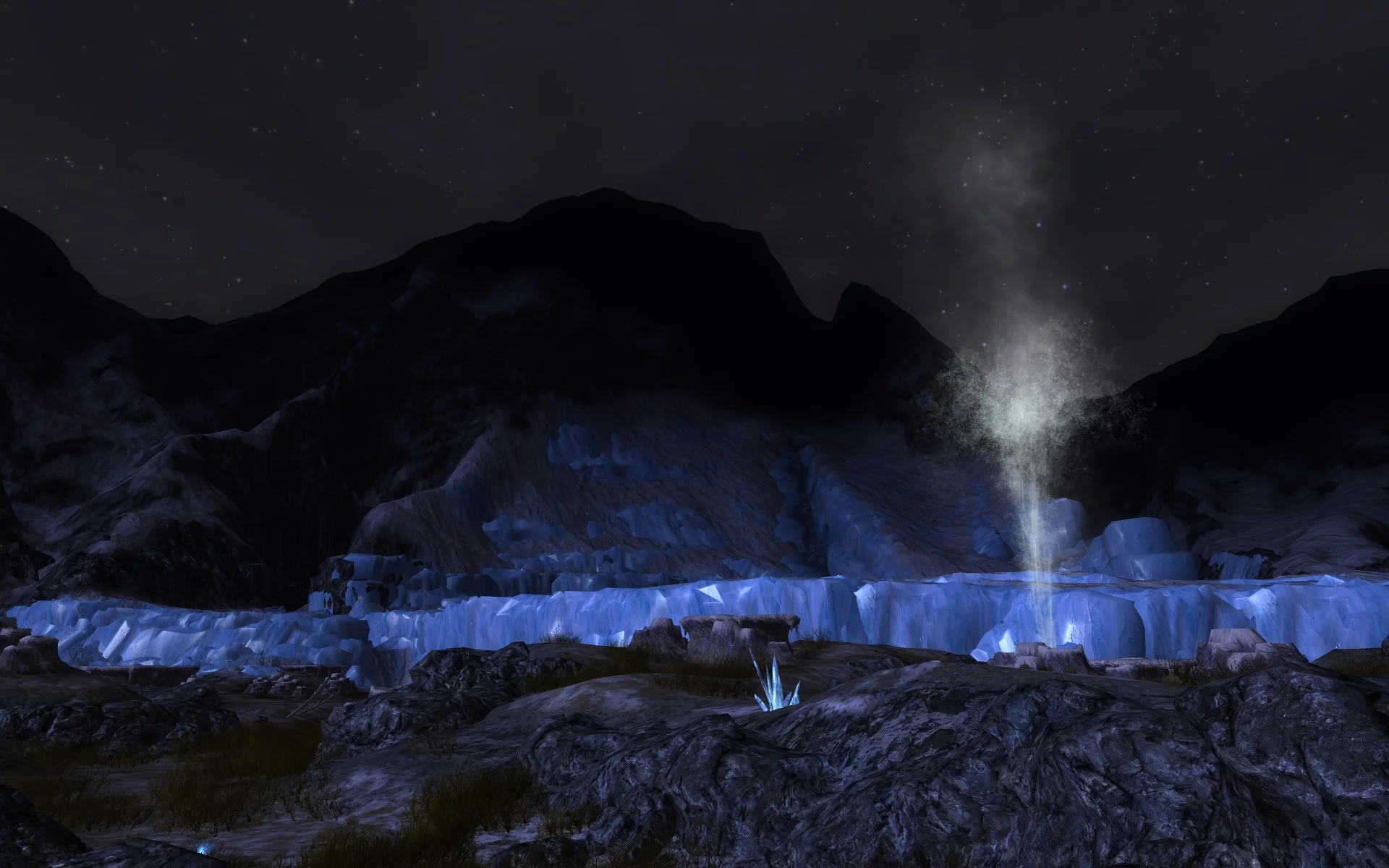
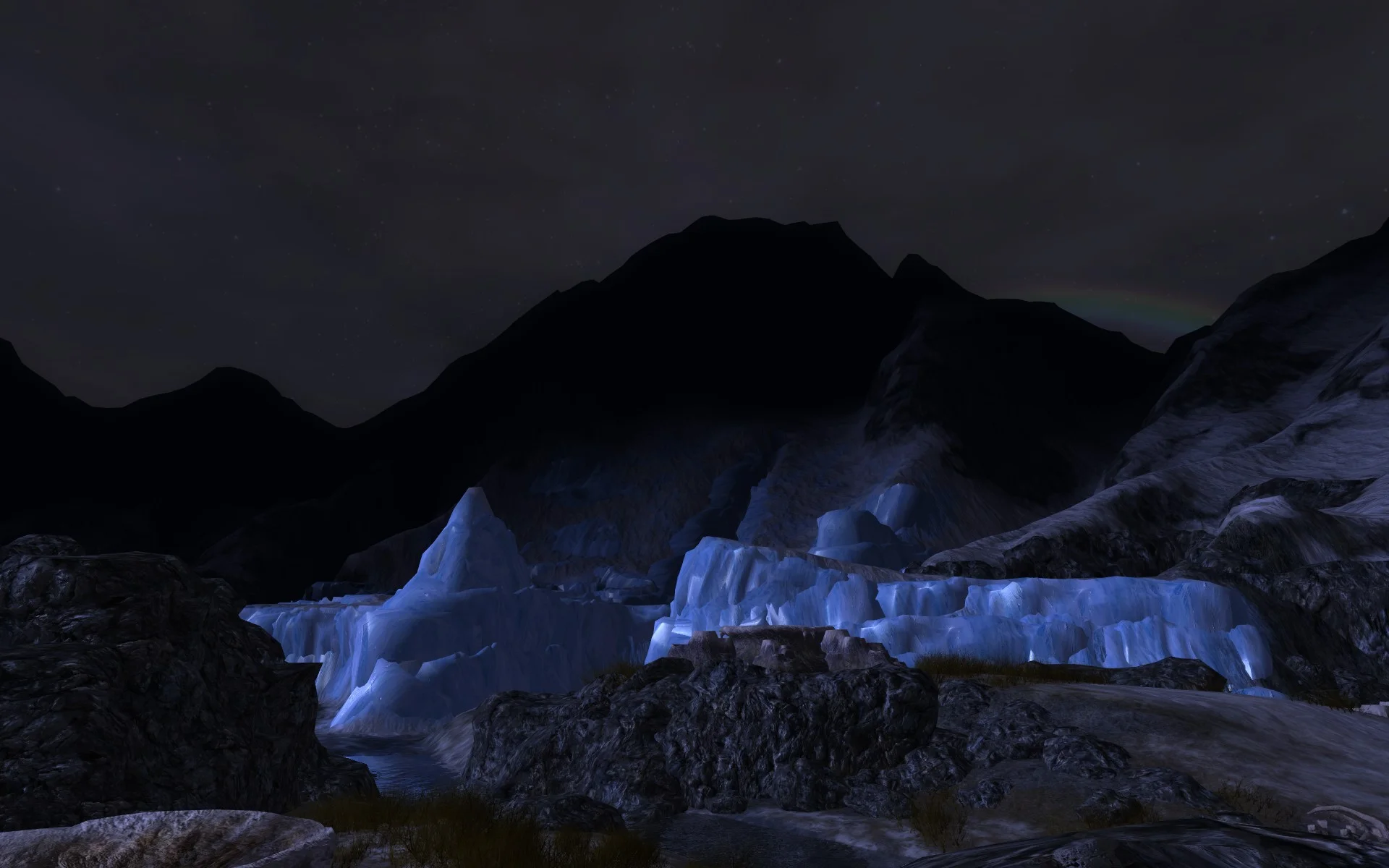
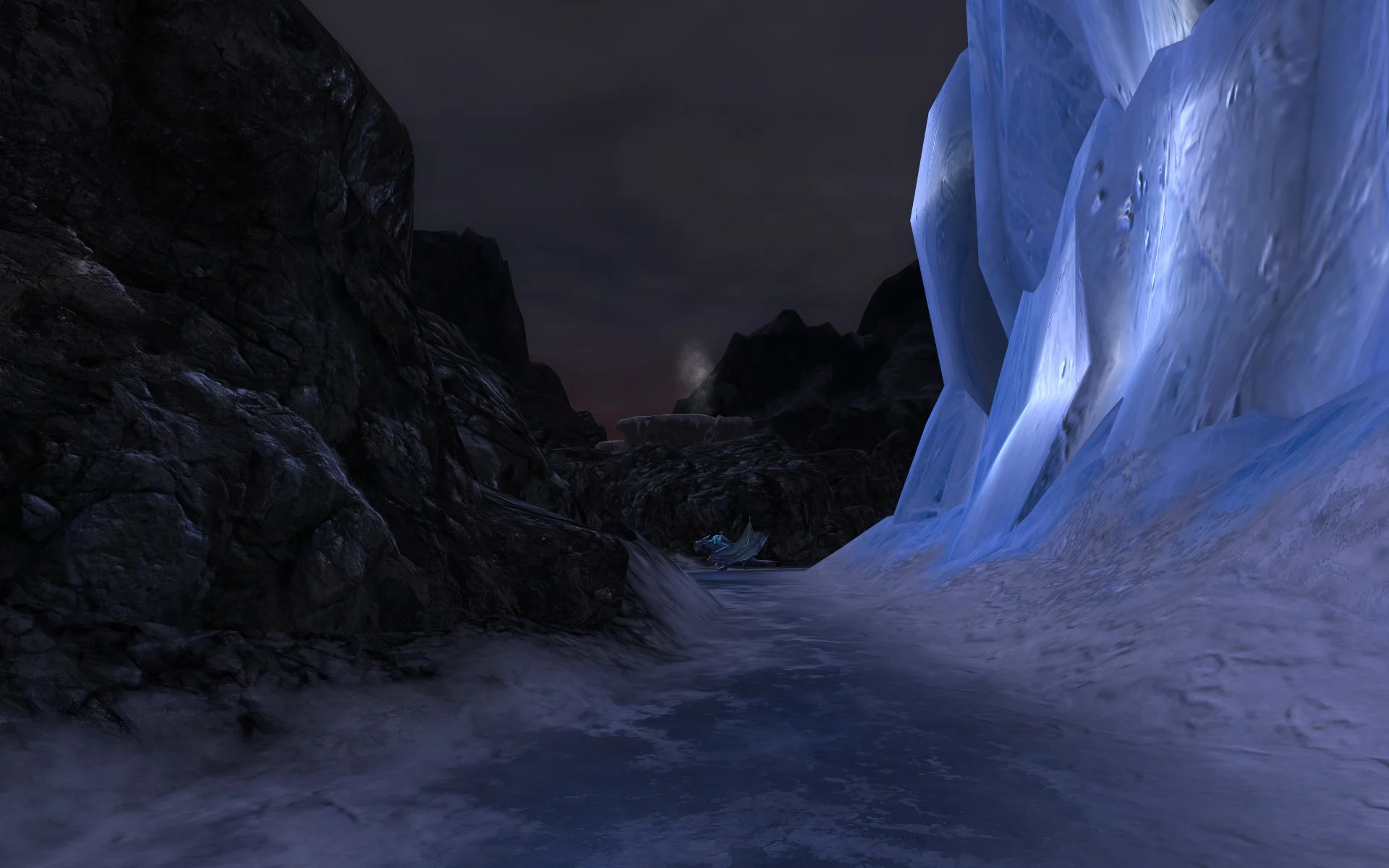
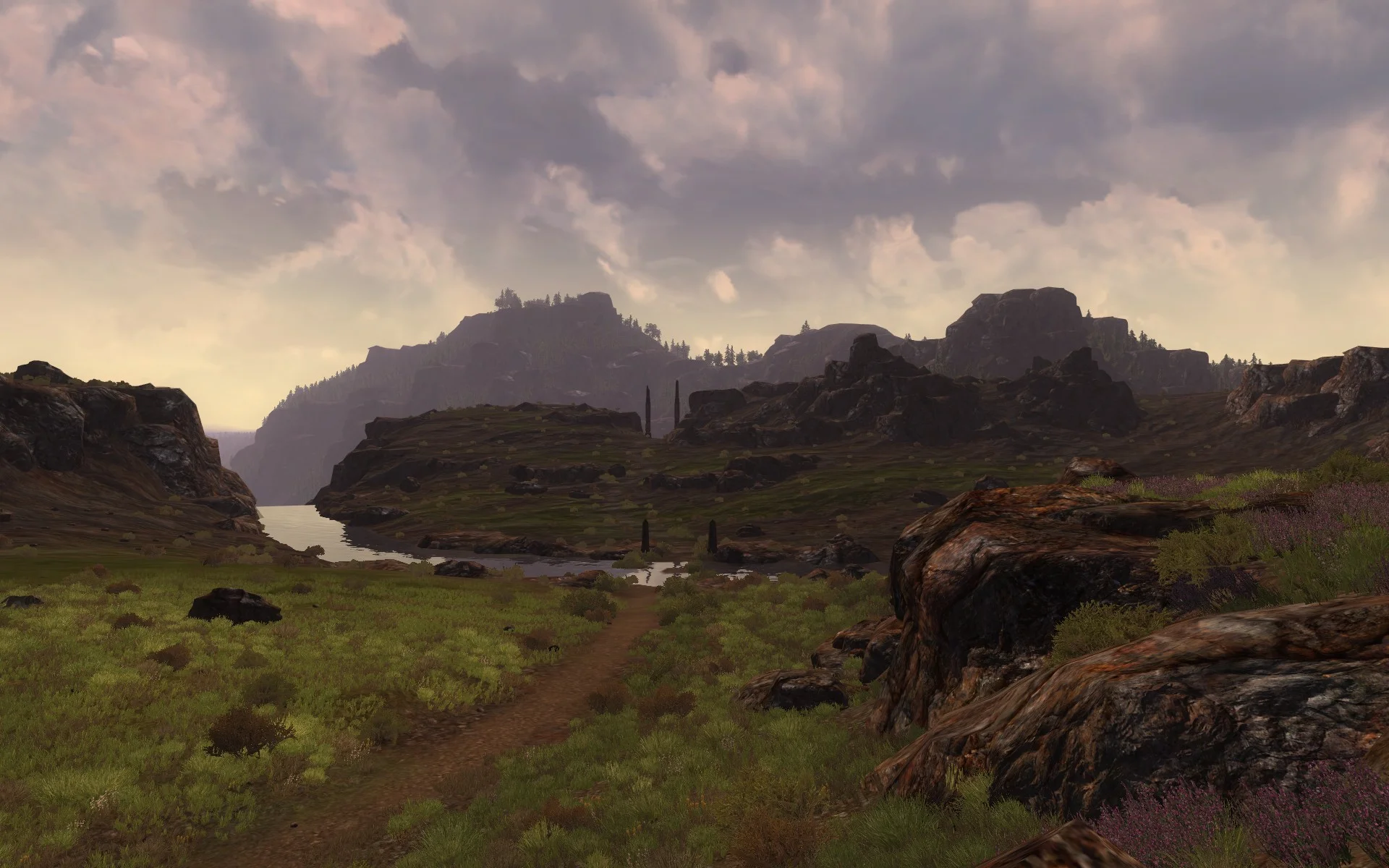
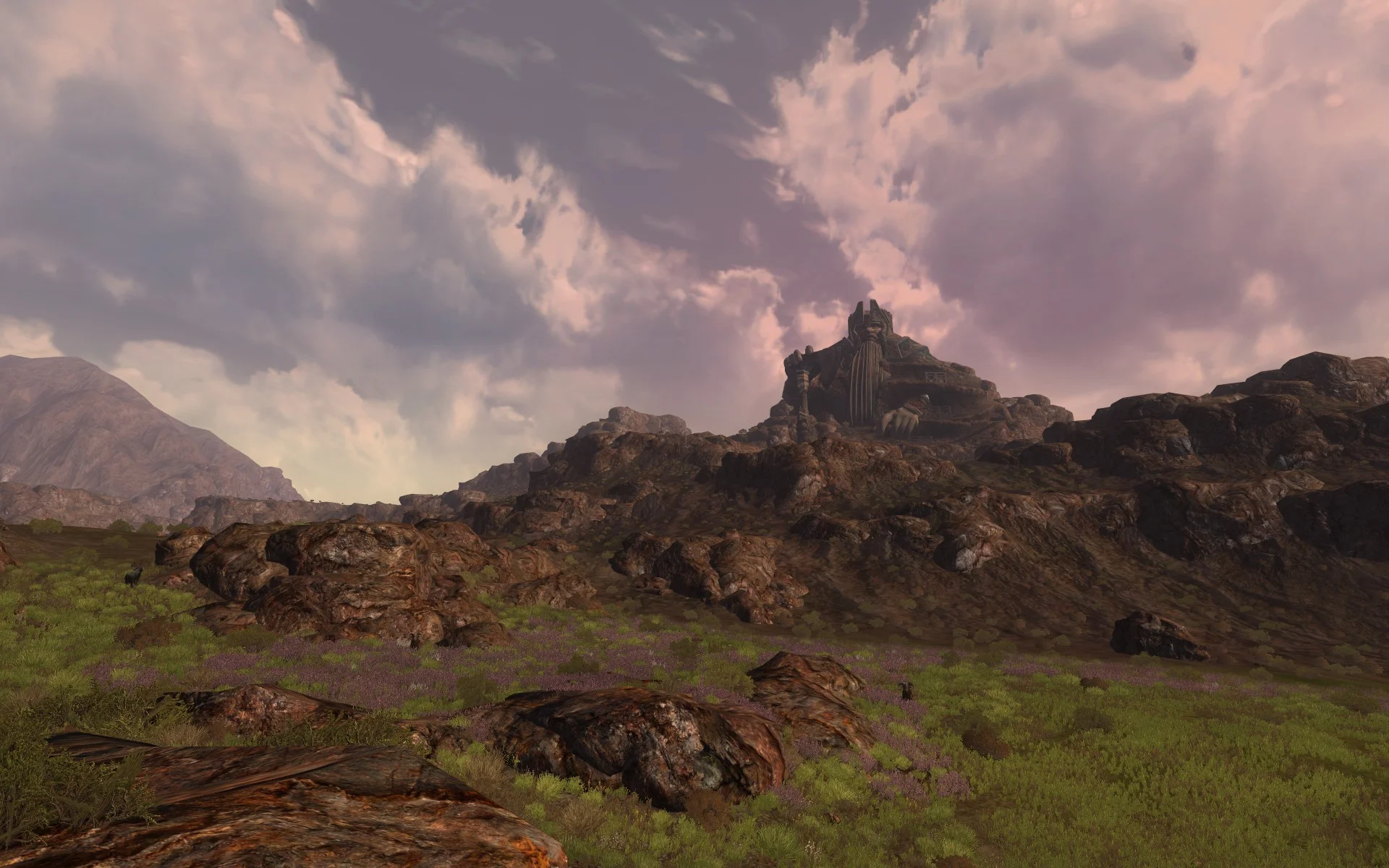
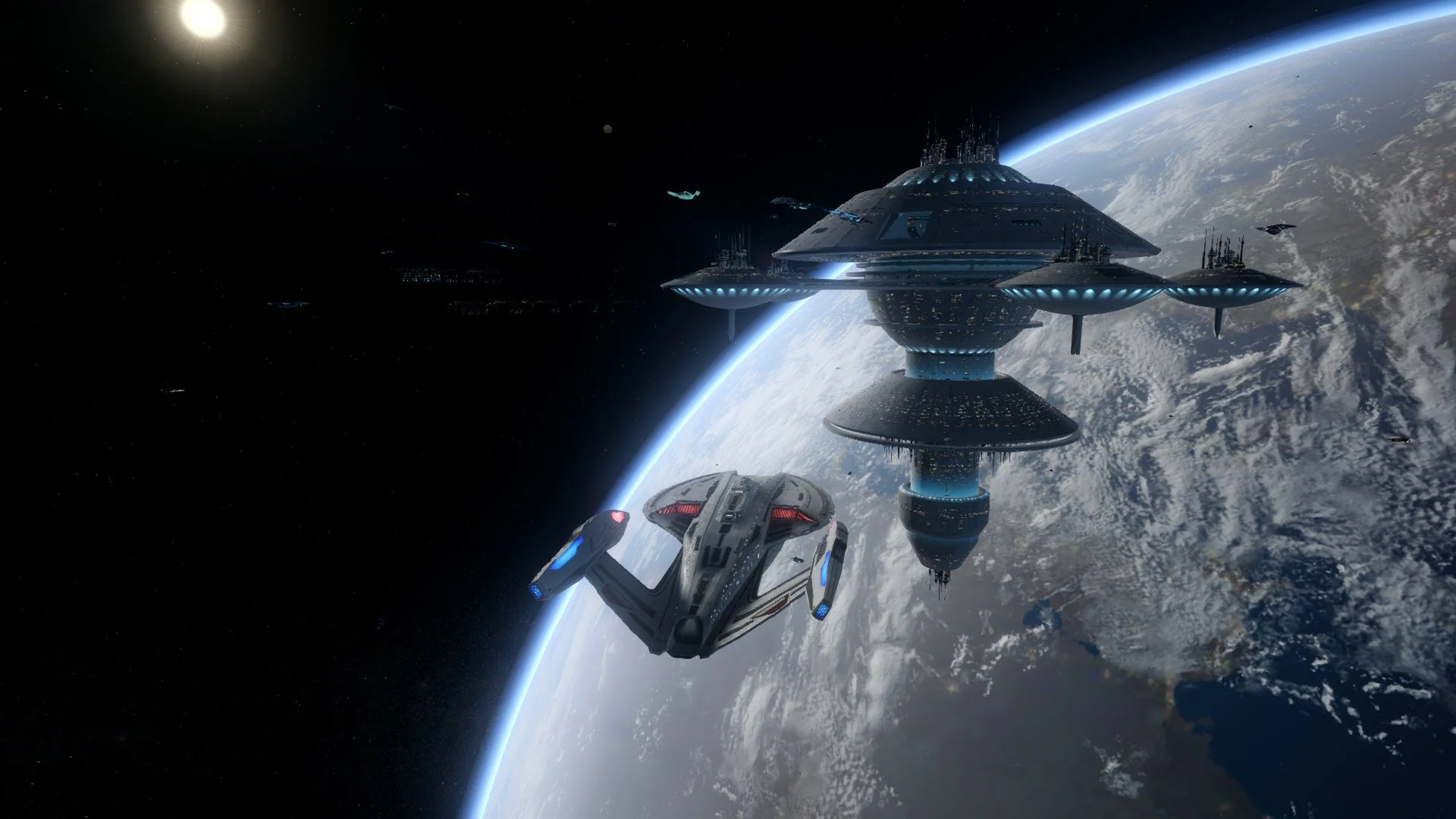
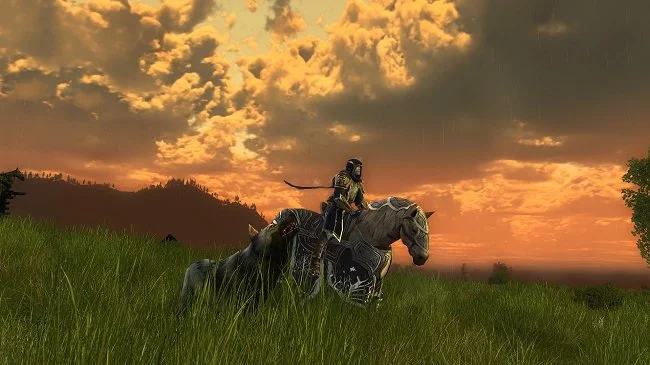
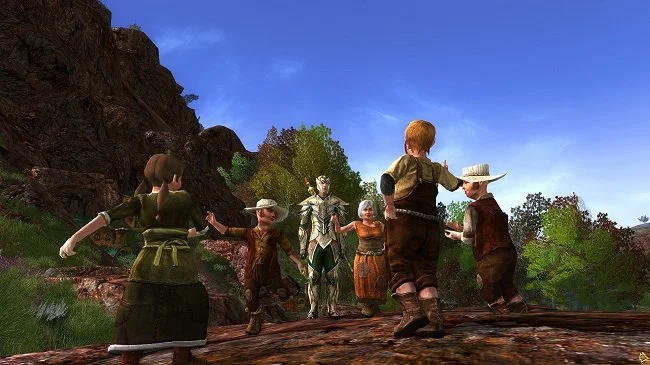
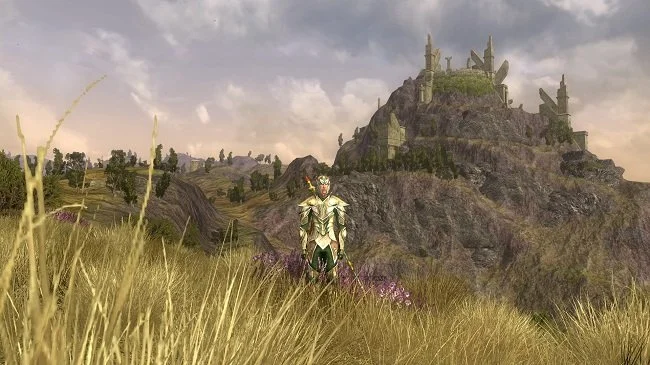
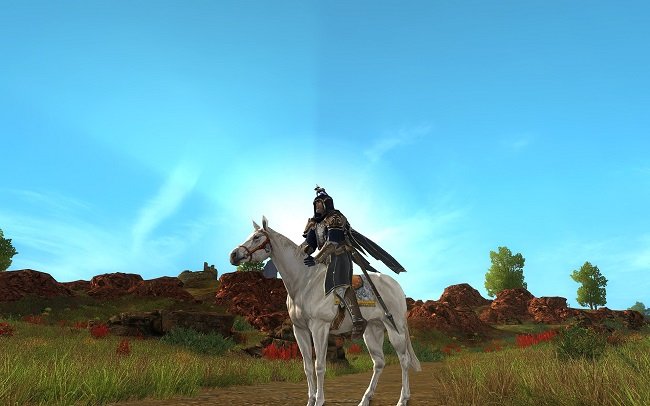
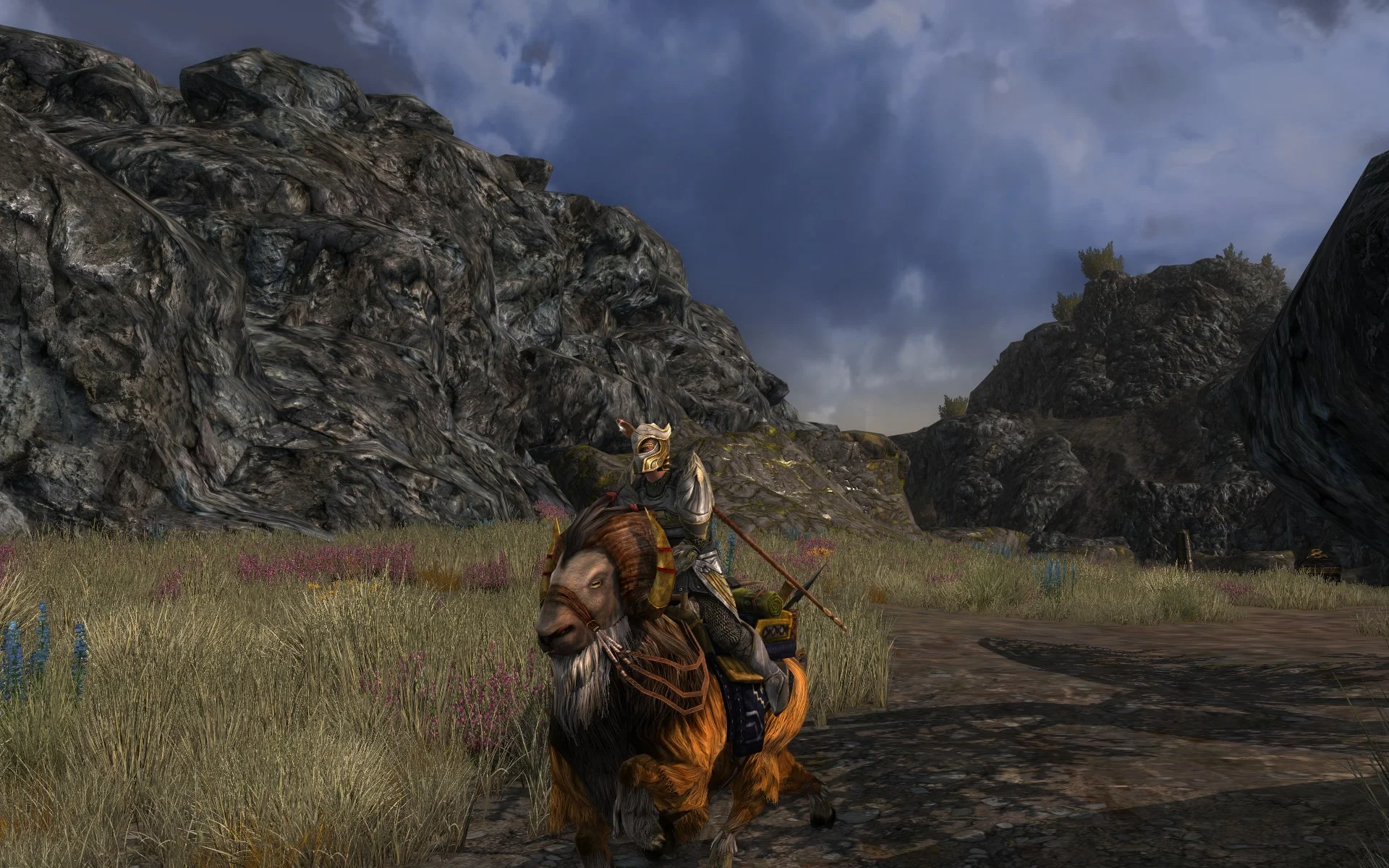
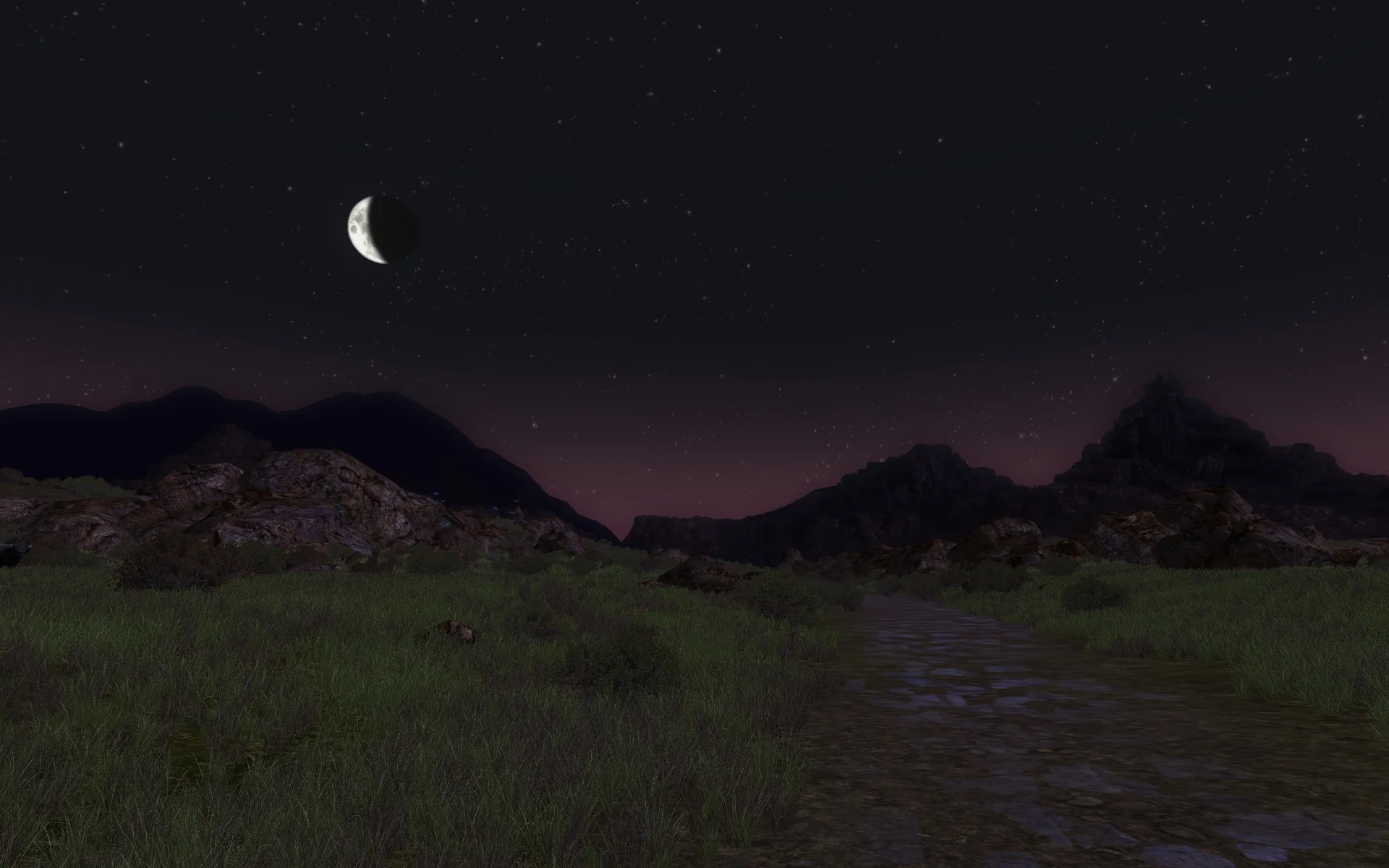
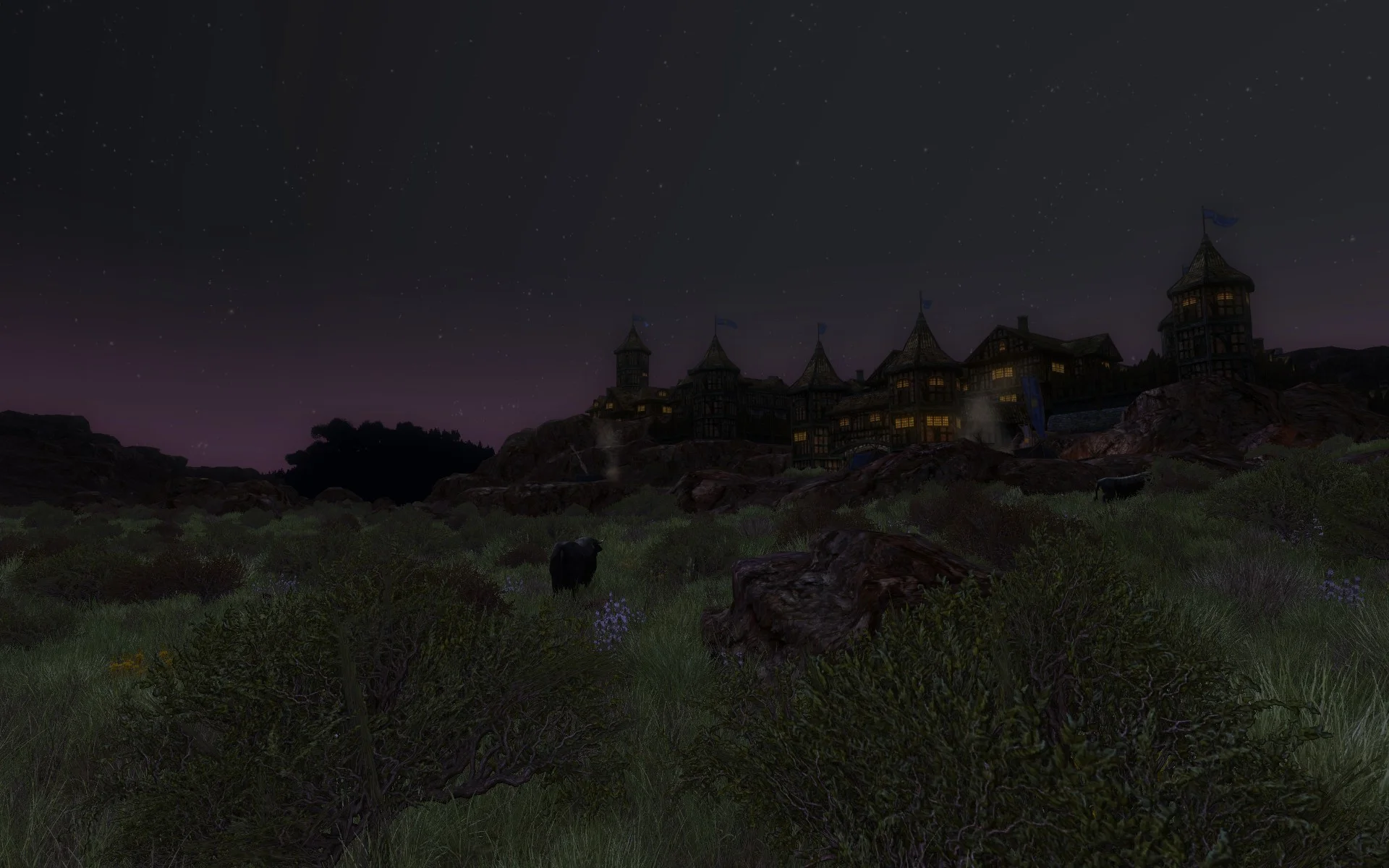
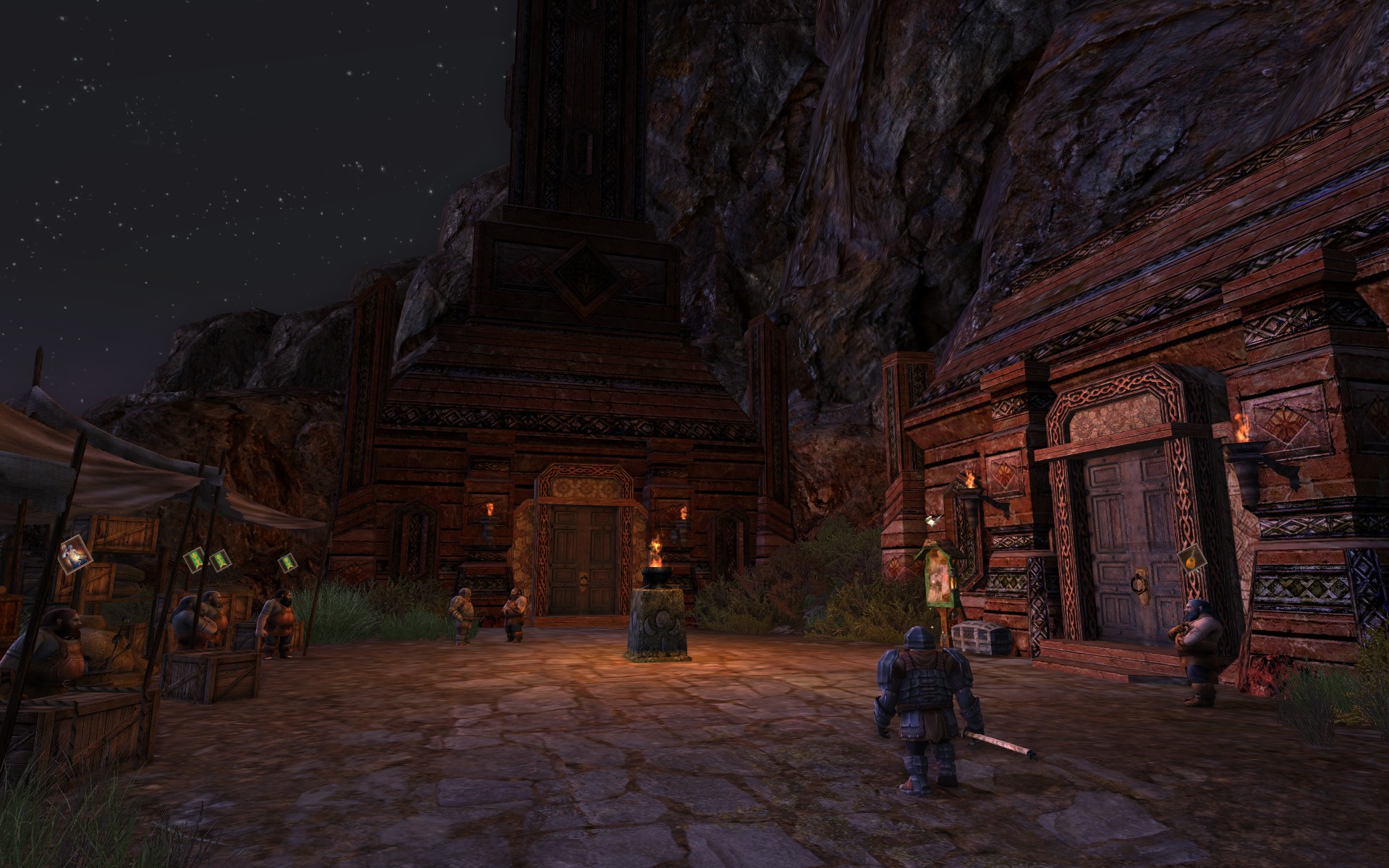
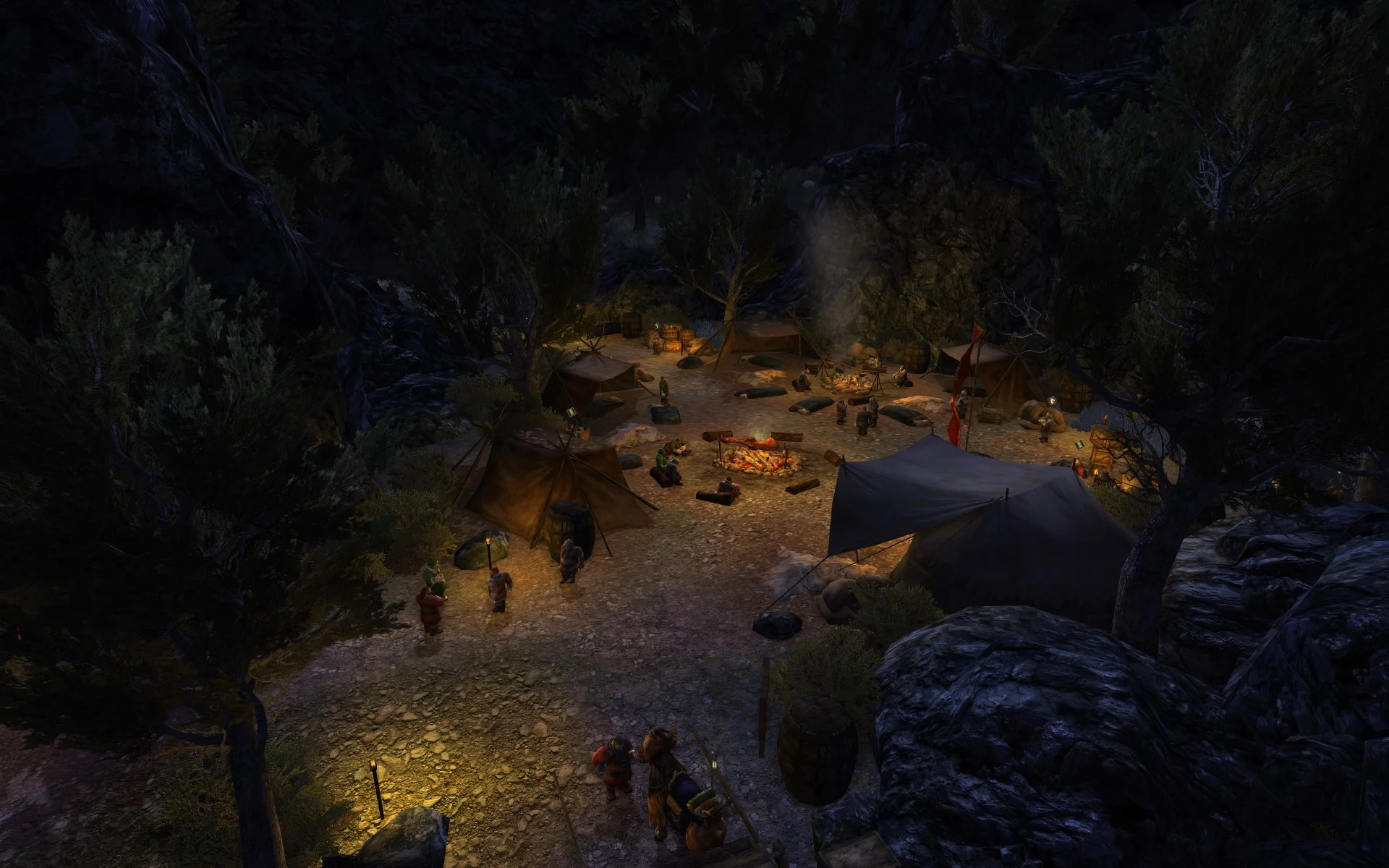
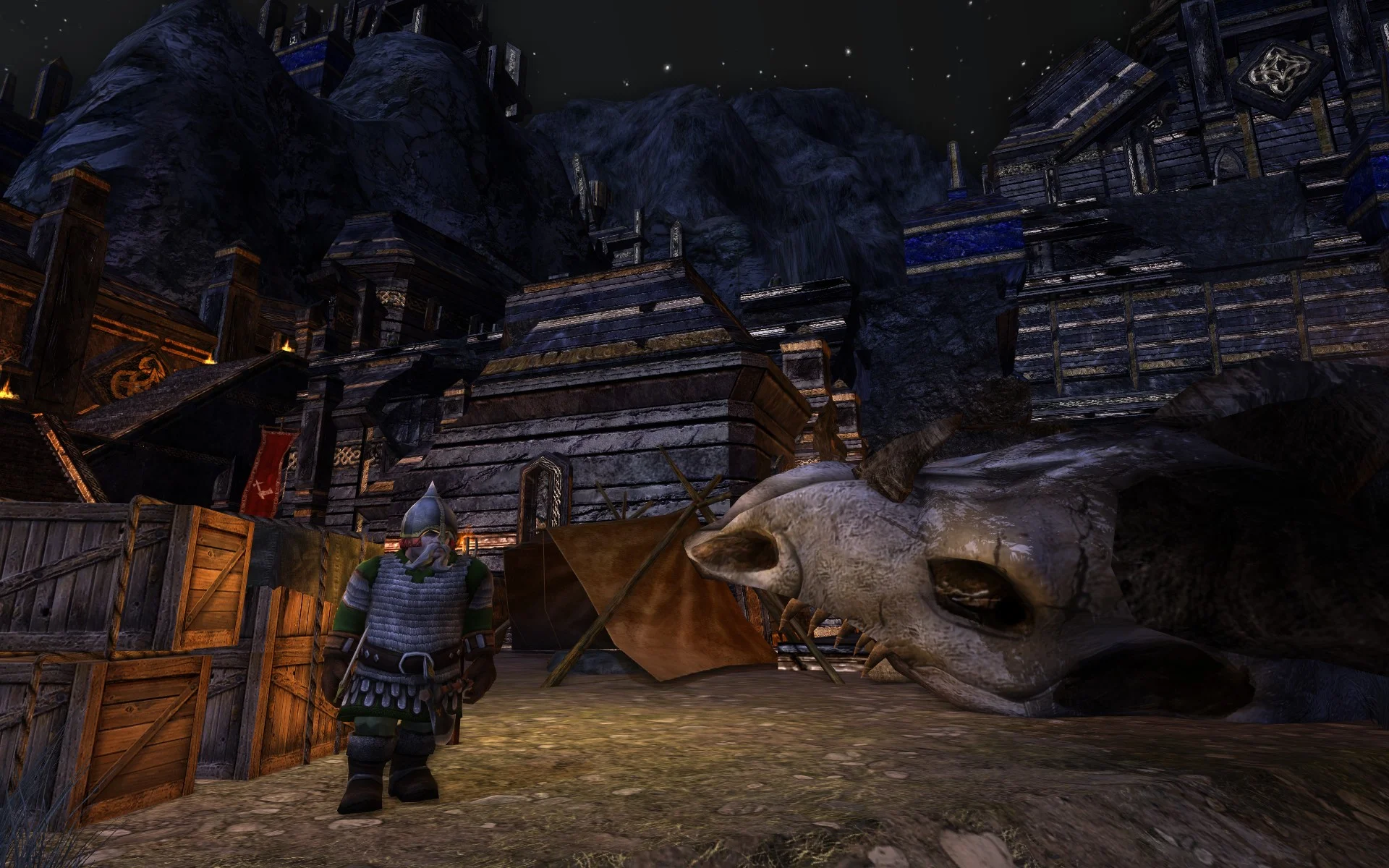
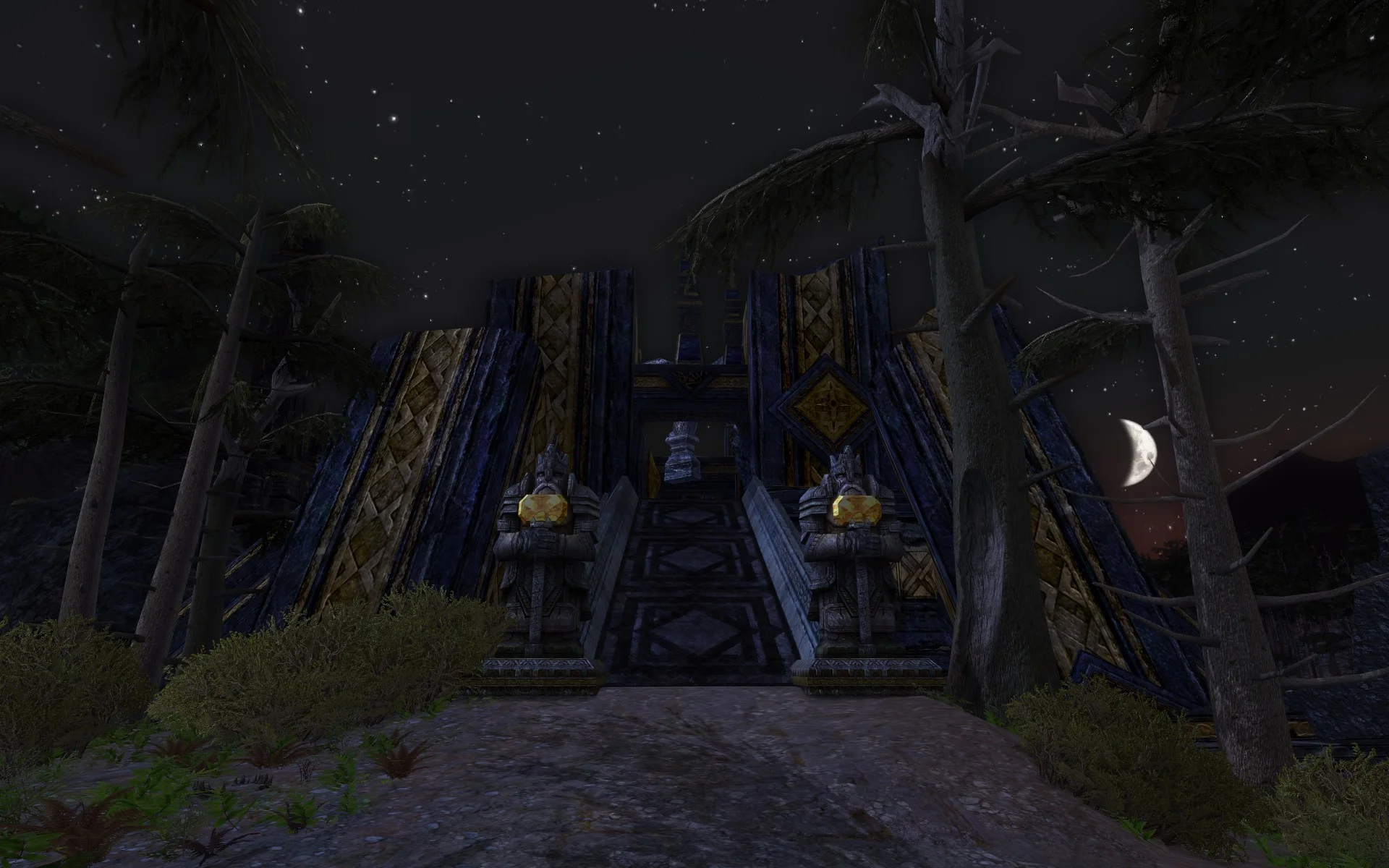
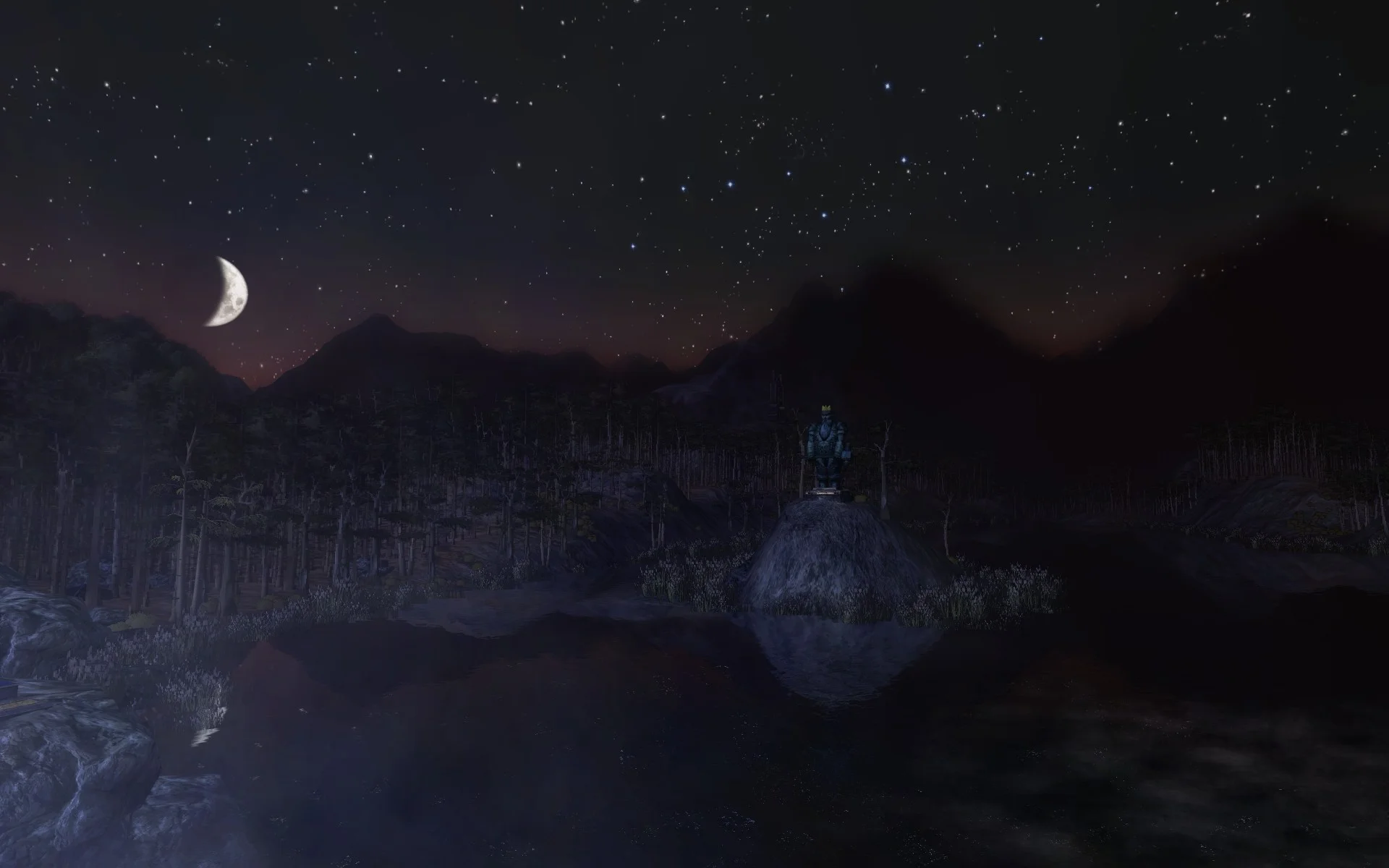
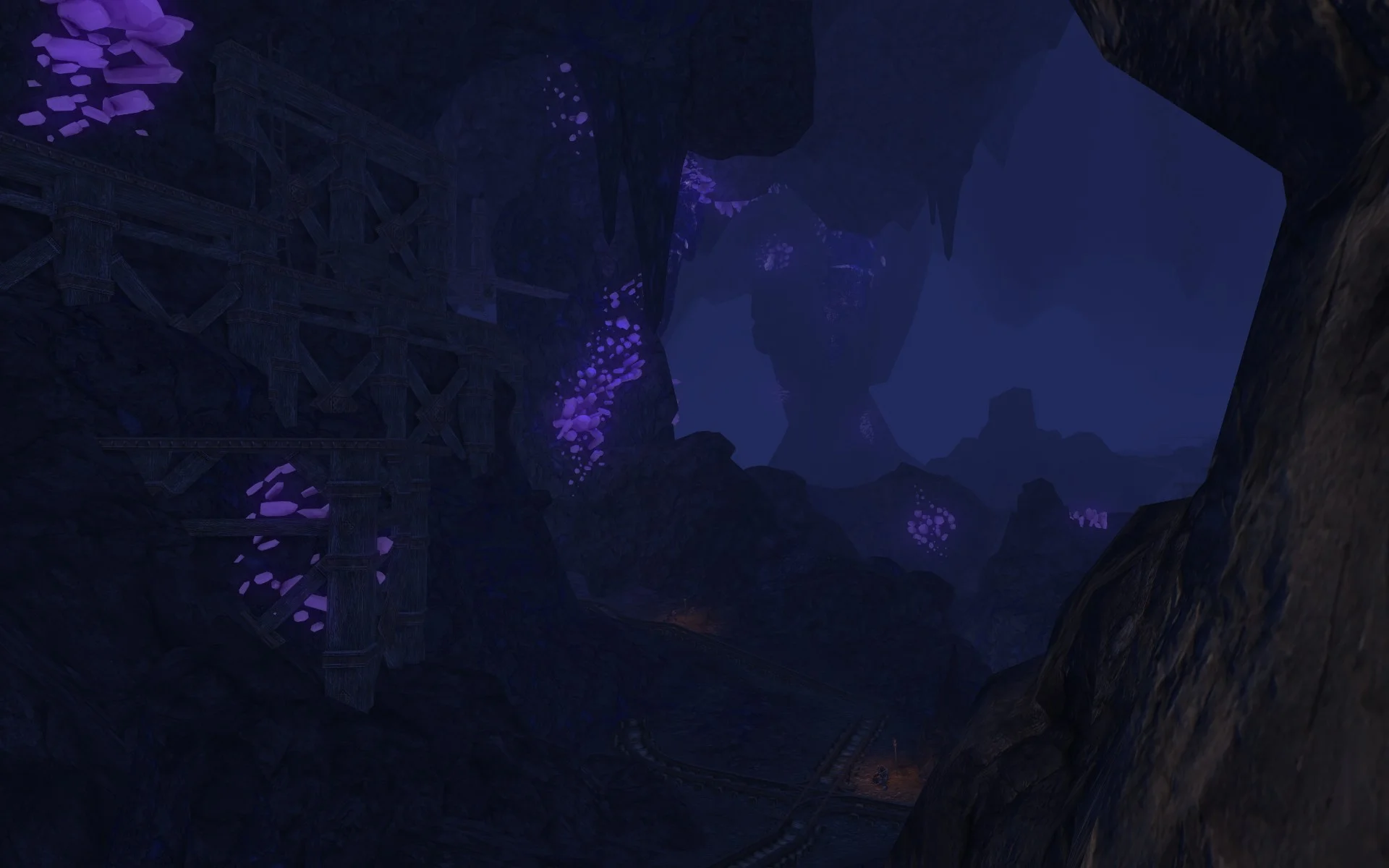
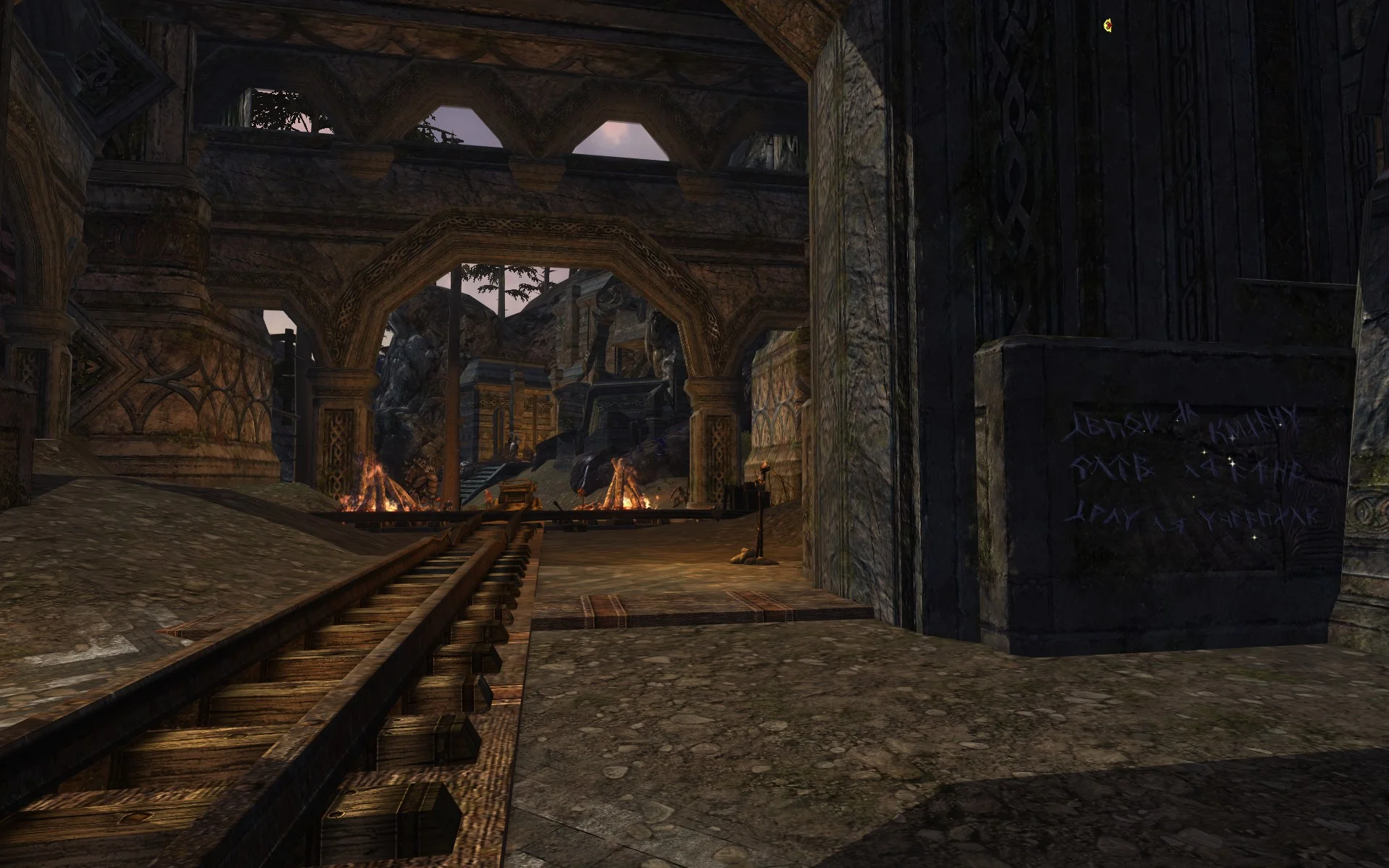
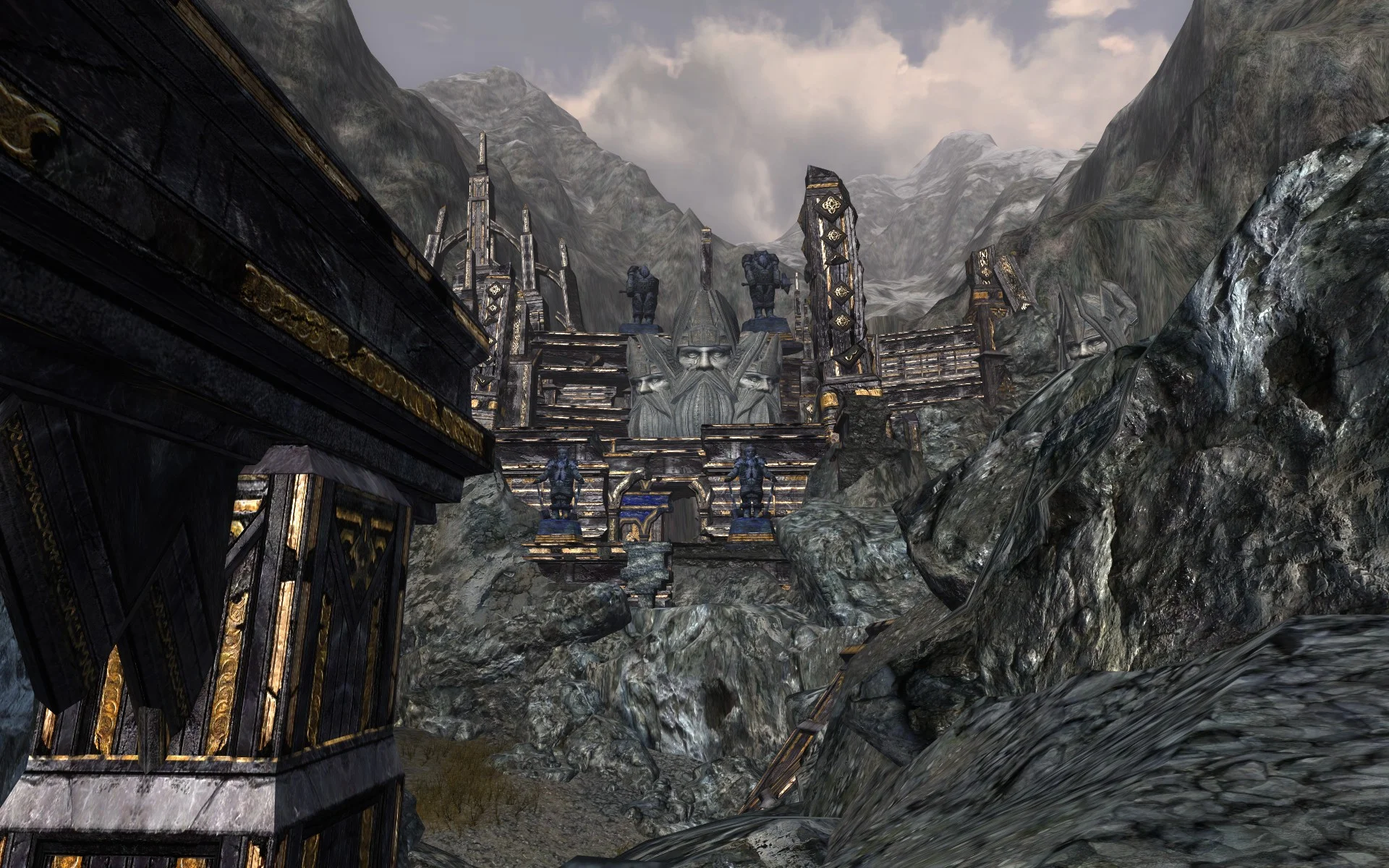
Despite some set backs and the loss of time, I did manage to create a new alt that was sufficiently specified to visit the Grey Mountains and The Iron Hills. The second preview of Update 23 has made further revisions to the new zone. I explored the Withered Heath and the expanded areas of Erebor more thoroughly this time and returned to The Iron Hills during daylight. The new region looks detailed and more populous this time round. The gallery below has a selection of images from the new areas. As ever, remember that this is still content that is under development and it may be subject to change.
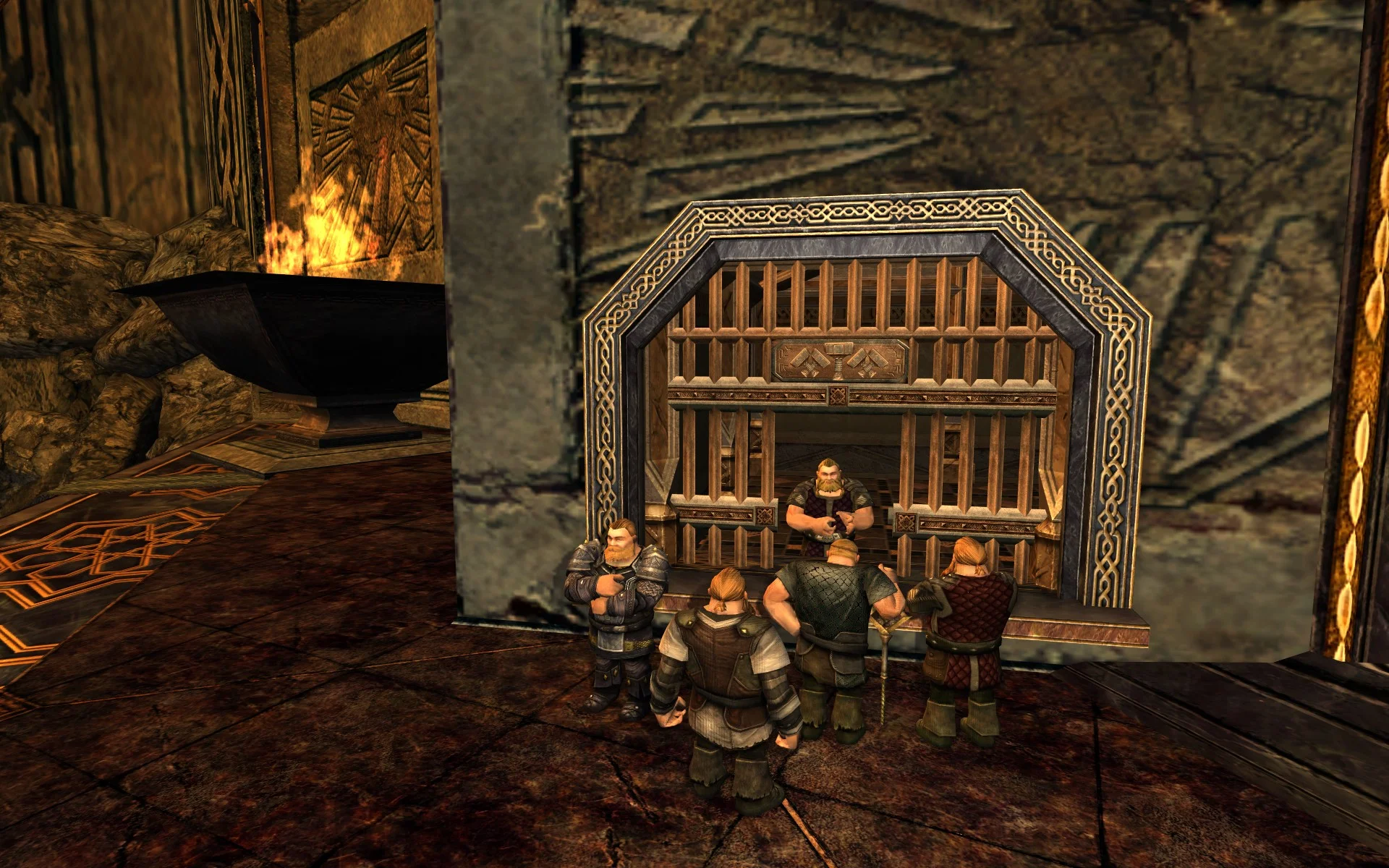
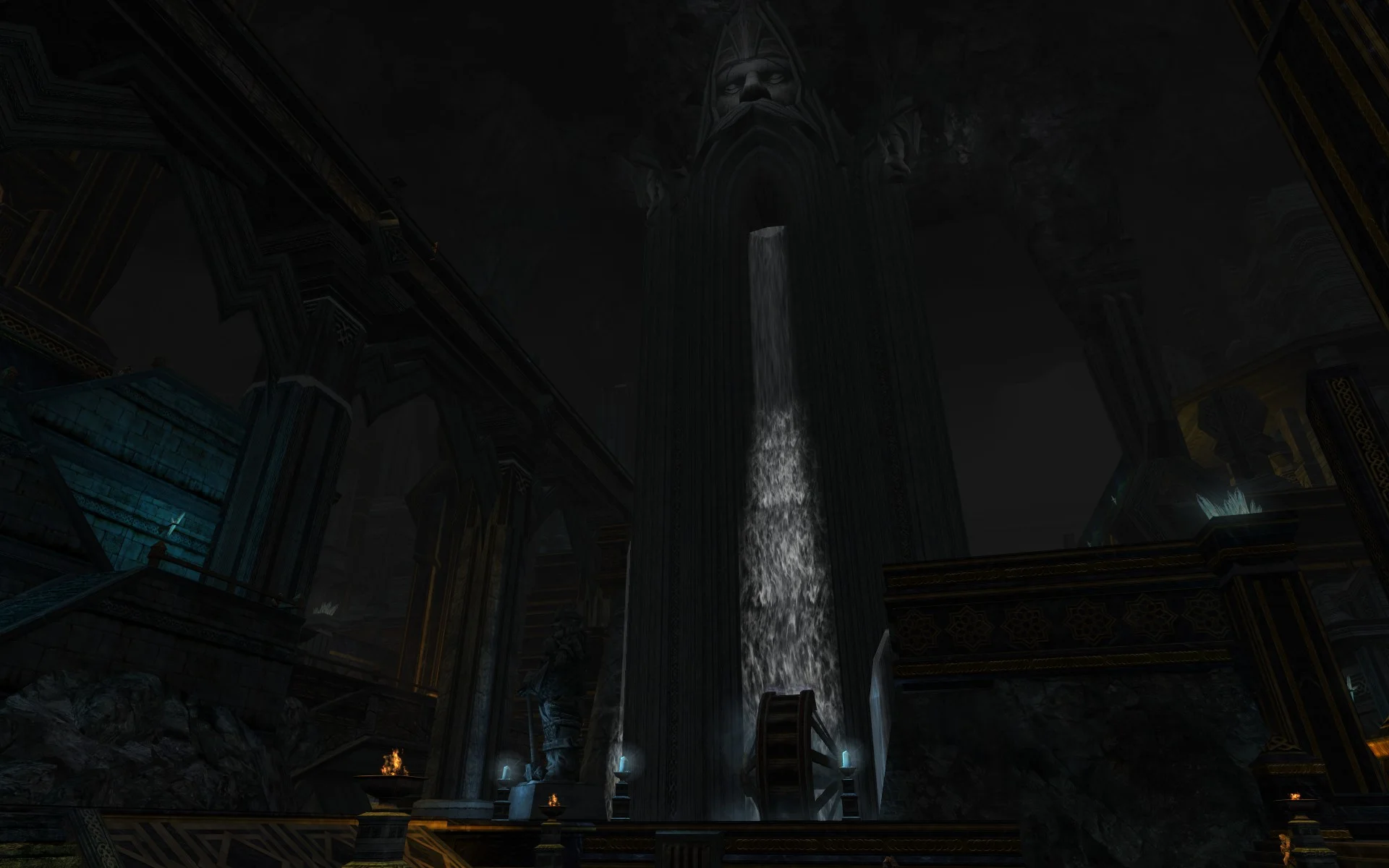
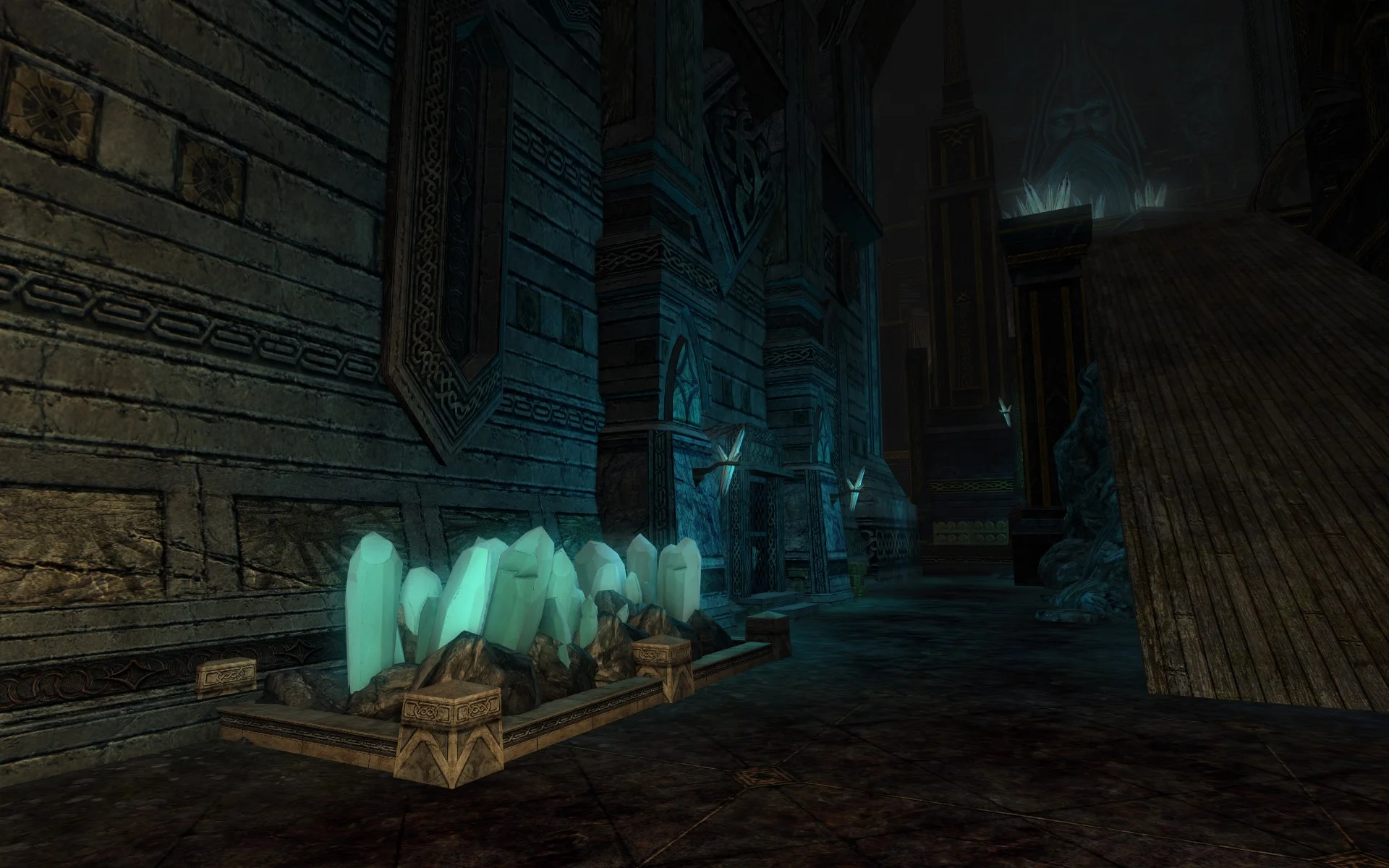
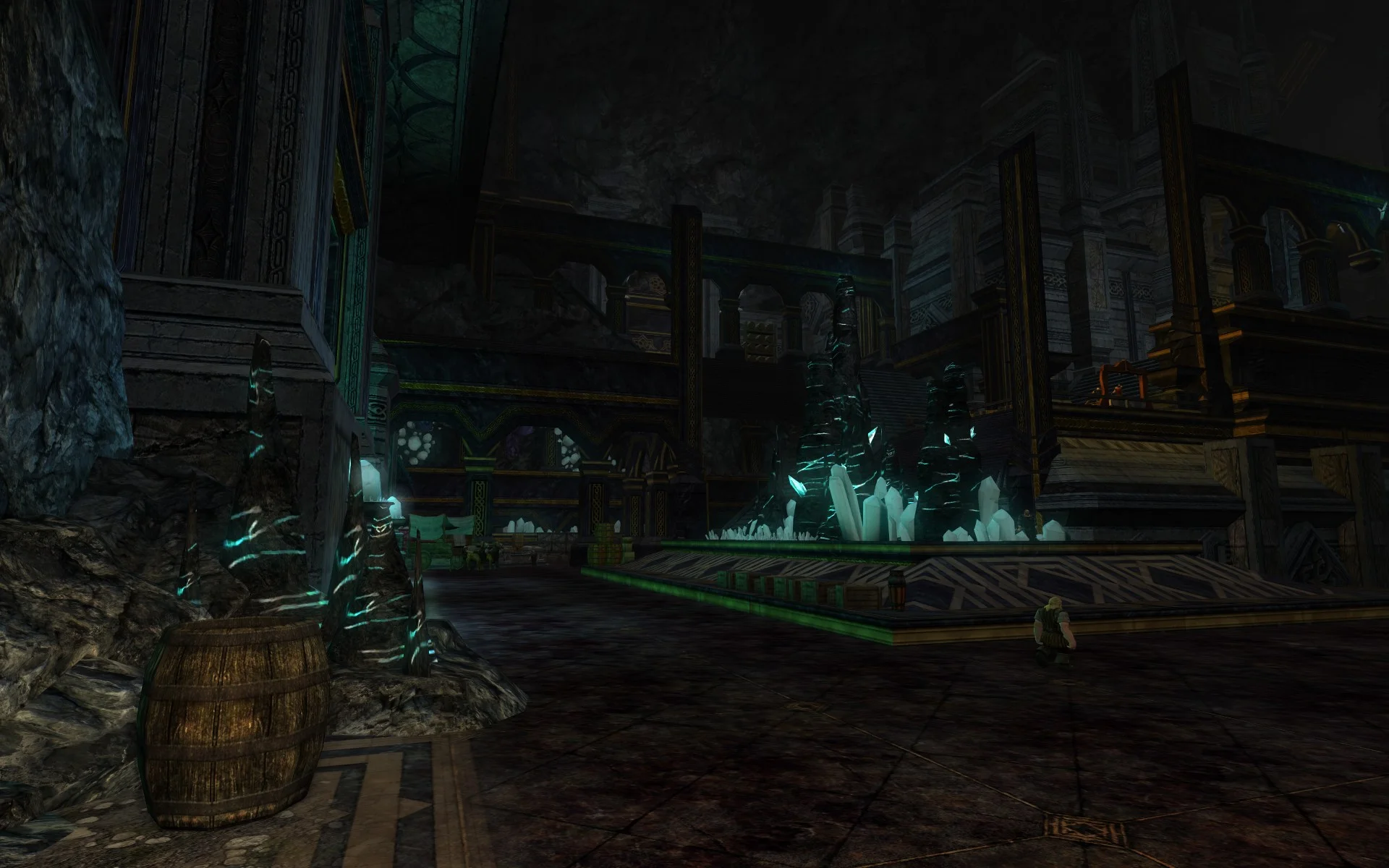




Classic Game Themes: Some of my Personal Favourites
A ten months ago, I wrote about the LOTRO soundtrack and listed some of my favourite tracks. This time round rather than just limit myself to music from one game, I thought it may be more interesting to broaden the remit. So, I have decided to upload seven of my favourite tracks and music cues from various games I have played over the last two decades. As with cinema, the soundtrack of a game plays a very important role. It can make a substantial impact on the players perceptions and enjoyment. The following tracks are examples that I feel have greatly enhanced a game. They’re also ones that I find particularly enjoyable. They are not in any order of preference.
A ten months ago, I wrote about the LOTRO soundtrack and listed some of my favourite tracks. This time round rather than just limit myself to music from one game, I thought it may be more interesting to broaden the remit. So, I have decided to upload seven of my favourite tracks and music cues from various games I have played over the last two decades. As with cinema, the soundtrack of a game plays a very important role. It can make a substantial impact on the players perceptions and enjoyment. The following tracks are examples that I feel have greatly enhanced a game. They’re also ones that I find particularly enjoyable. They are not in any order of preference.
Lord of The Rings Online. Mines of Moria: A Journey in the Dark. By Chance Thomas
This is a superb track. The blend of strings and vocals catches the enigma of Moria beautifully. I personally consider it to be the highlight of the expansions soundtrack.
Battlefield 1943: Main Theme. By Joel Eriksson
This utterly rousing track by Swedish composer Eriksson, totally embodies military action and a call to arms. Sadly, the more contemporary arrangements that have featured in more recent instalments of the franchise have less impact.
Age of Conan: The Damp Barachan Nights. By Knut Avenstroup Haugen
I was greatly surprised by the sophistication of the Age of Conan soundtrack. This acoustic piece beautifully captures the tropical nights of the Island of Tortage.
Tomb Raider: Main Theme. By Nathan McCree and Martin Iveson
An iconic theme that still holds up very well after twenty-two years.
Lord of The Rings Online. Shadows of Angmar: Stars and Glory. By Chance Thomas
This cue plays in the Lonelands at night. It was one of the first tracks from LOTRO that left a lasting impression on me.
Call of Duty Modern Warfare 2: Estate Escape. Hans Zimmer
Hans Zimmer brings his "A" list Hollywood talent to this franchise. I love the Middle Eastern elements that he brings to this piece.
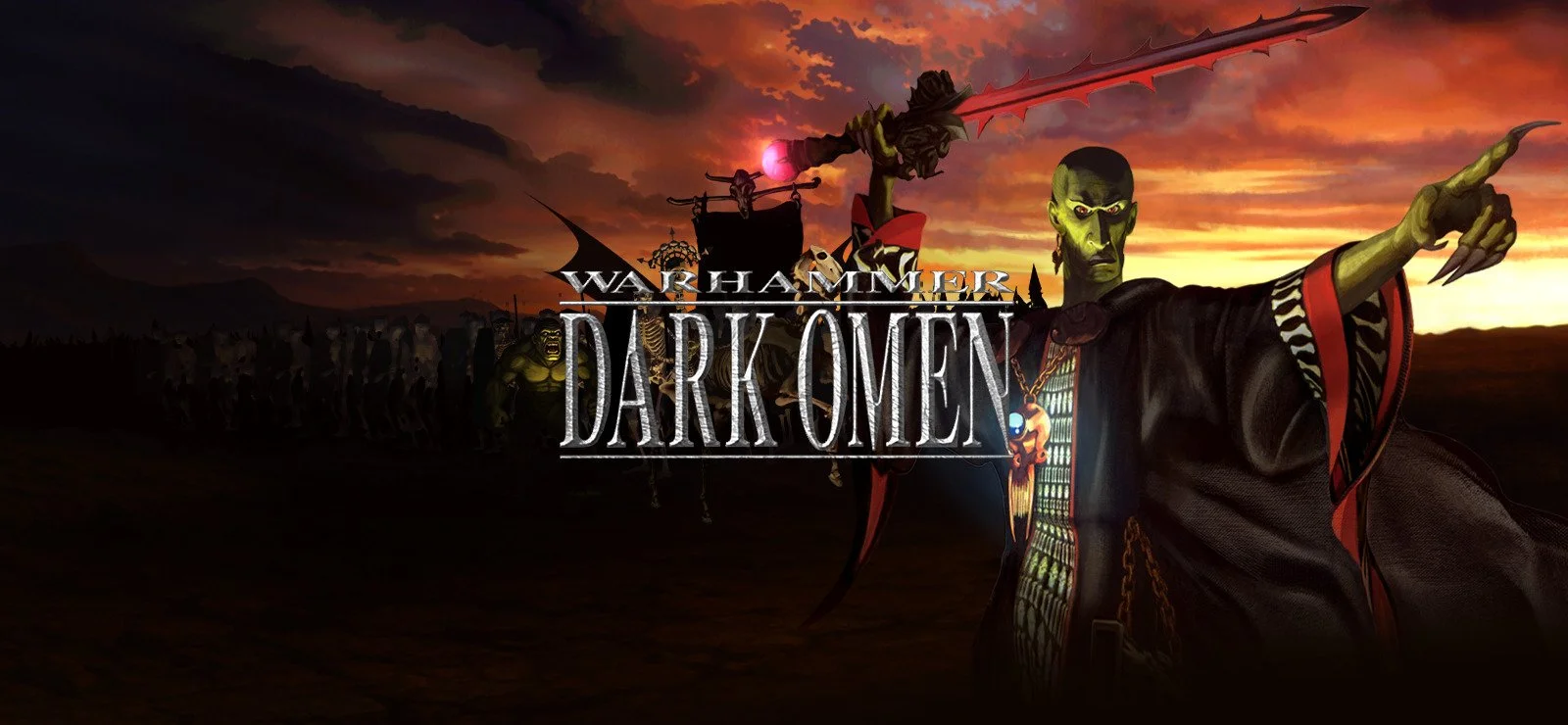
Warhammer - Dark Omen: Main Theme. Mark Knight
An unsettling and creepy electronic score from 1998, It suits the game perfectly.







Cockneys vs Zombies (2012)
Back in the summer of 2012, the red band trailer for Cockneys vs Zombies set a very high benchmark and certainly raised expectations for the final movie. The title itself was also somewhat of a gamble, either raising a wry smile among horror fans or eliciting a roll of the eyes and a deep sigh for a genre in decline. I was unable to attend the premier at Frighfest 2012, but the general feedback at the time was that that that the movie was extremely well received by horror fans. Finally, six years later, I finally caught up with the film on Amazon Prime and I’m happy to report that Cockneys vs Zombies does live up expectations and is a thoroughly entertaining, quirky and very British horror movie. It manages to balance both visceral horror with a healthy dose of black humour, which is no mean feat.
Back in the summer of 2012, the red band trailer for Cockneys vs Zombies set a very high benchmark and certainly raised expectations for the final movie. The title itself was also somewhat of a gamble, either raising a wry smile among horror fans or eliciting a roll of the eyes and a deep sigh for a genre in decline. I was unable to attend the premier at Frighfest 2012, but the general feedback at the time was that that that the movie was extremely well received by horror fans. Finally, six years later, I finally caught up with the film on Amazon Prime and I’m happy to report that Cockneys vs Zombies does live up expectations and is a thoroughly entertaining, quirky and very British horror movie. It manages to balance both visceral horror with a healthy dose of black humour, which is no mean feat.
Is Cockneys vs Zombies a ground-breaking genre classic with a subtext of social commentary like George Romero's Dawn of the Dead? Of course not. It’s a lot closer to Return of the Living Dead and Sean of the Dead with its comedy violence and offbeat, quirky characters. It does not redefine the genre, but it certainly embellishes it and offers entertaining new slant. The screenplay by James Moran is witty and packed with clever homages and references to both horror and gangster movies. The cast both young and old acquit themselves well and the visual effects and production design are impressive for a modest budget production. The undead meet a multitude of unpleasant demises, often accompanied by a pithy quip. Full marks go to director Matthias Hoene for correctly ascertaining what audiences want and delivering it in spades.
The central plot device (or MacGuffin) of Cockneys vs Zombies is a group of senior citizens fighting the undead and defending their residential care home. It’s a simple idea that works extremely well. The likes of Richard Briers, Dudley Sutton and Honor Blackman effortlessly inject humour and pathos in to their characters, demonstrating their collective acting talent. Alan Ford excels with a new variation of the traditional East End hard man that he has played many times before. It is with these actors that James Moran's screenplay really finds its stride. The dialogue is profane, dry and filled with the most tortuous Cockney rhyming slang ever. It is also well observed, honest and very entertaining. The secondary plot in which a group of younger protagonists attempts to rob a bank to raise fund for their grandparent’s care home, is not quite so compelling.
Cockneys vs Zombies achieves it aims because it does not over stretch itself. The movie is content to work within the parameters it sets and make great use of its London setting. So many horror films these days fail because they lose sight of what they are about or because they are made by people who fundamentally disrespect the genre. Cockneys vs Zombies is the complete opposite and is clearly a labour of love. There's no parody or self-referential postmodern pretension. Just honest humour and a lot of zombie-based gore. It’s far from subtle, but who wants subtlety in a zombie movie?







LOTRO: Progressing Through Mordor
It was in May that I last subscribed to LOTRO and attempted to progress through the Mordor expansion. I was under geared and under powered and the initial zone of Udûn was proving to be an up-hill struggle. So, I decided to level elsewhere in the game and managed to get as far as 111 (the current level cap is 115). I still couldn’t improve my gear so there was no point bypassing Mordor and going straight to the Dale-lands which were released in June in Update 22. So, I decided to spend my gaming time elsewhere and left LOTRO. However, the recent Bullroarer preview of Update 23 rekindled my interest in the MMO. Surely Mordor wasn’t the immovable obstacle that I thought? So, I subscribed once again, and returned to the game on Friday evening. Luckily, there were several kinship members online and they generously helped me until I reached the “tipping point” of the Mordor expansion. Two days later and I’ve nearly hit level cap and the game although challenging, it’s no longer the grind that it was a few months ago.
It was in May that I last subscribed to LOTRO and attempted to progress through the Mordor expansion. I was under geared and under powered and the initial zone of Udûn was proving to be an up-hill struggle. So, I decided to level elsewhere in the game and managed to get as far as 111 (the current level cap is 115). I still couldn’t improve my gear so there was no point bypassing Mordor and going straight to the Dale-lands which were released in June in Update 22. So, I decided to spend my gaming time elsewhere and left LOTRO. However, the recent Bullroarer preview of Update 23 rekindled my interest in the MMO. Surely Mordor wasn’t the immovable obstacle that I thought? So, I subscribed once again, and returned to the game on Friday evening. Luckily, there were several kinship members online and they generously helped me until I reached the “tipping point” of the Mordor expansion. Two days later and I’ve nearly hit level cap and the game although challenging, it’s no longer the grind that it was a few months ago.
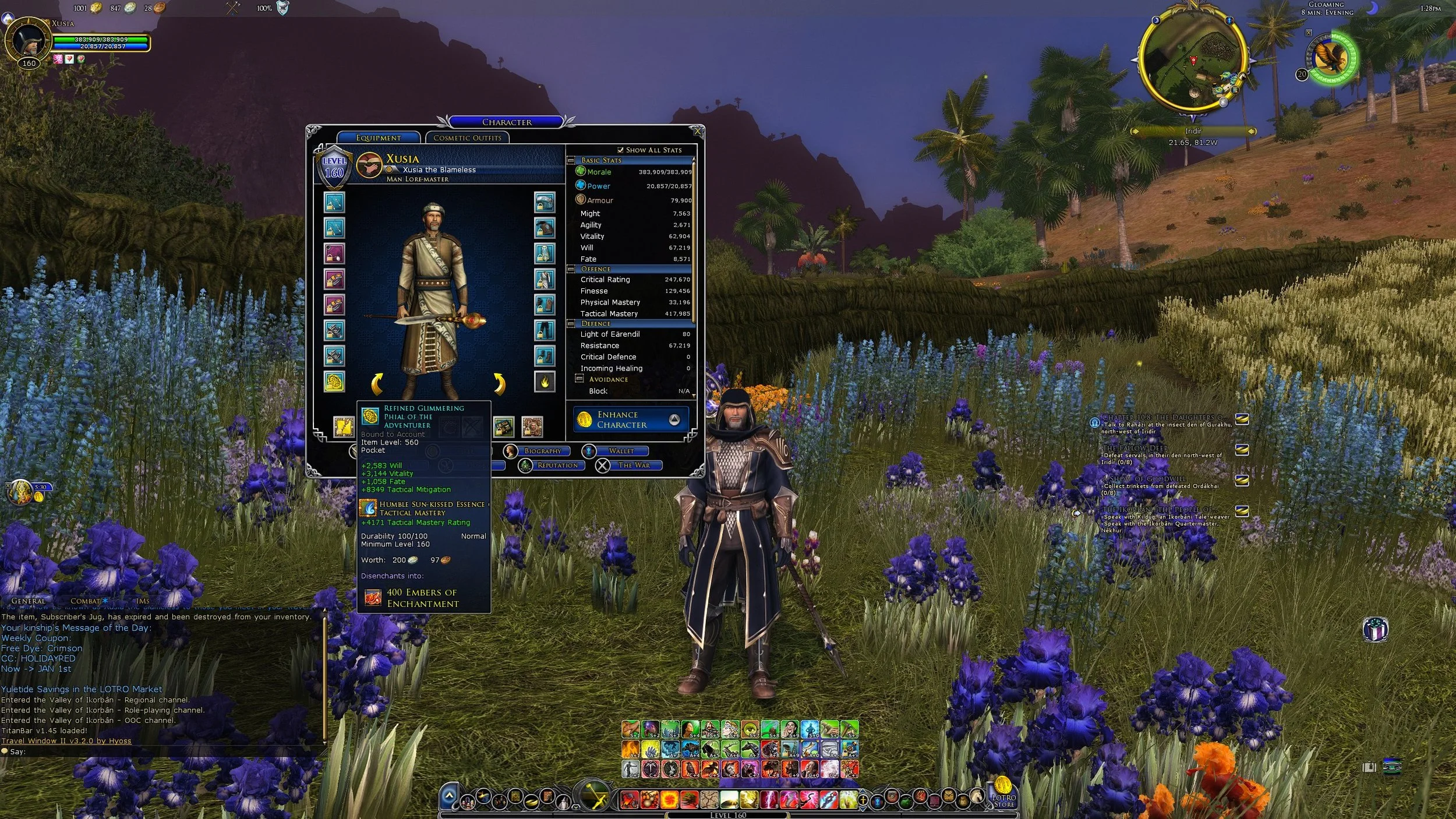
In a nutshell the key to success in Mordor is gear. Specifically gear that has the “Light of Eärendil” defensive stats. This is designed to counteract a cumulative debuff known as the “Shadow of Mordor”. This is simply a new version of the Radiance stat that was found on Moria and Mirkwood raid sets back in the day. Without “Light of Eärendil” a player is severely gimped. Mordor is essentially a major gear check for LOTRO. You start getting random pieces of new armour by clearing regional quests but it’s all very piecemeal. Hence the initial few levels above 105 are a slog. However, once you get to level 112, you become eligible to buy gear sets via the High-enchanter NPC, using the “Ash of Enchantment” barter currency. Players obtain this currency by deconstructing surplus gear they’ve obtained via quest, loot drops or Gorgoroth Steel-bound Lootboxes. Any item that has the “Light of Eärendil” can be broken down into “Ash of Enchantment” by using “Flame of Ancalamír” crystal.
To cut a long story short, I was given several lootboxes and keys which provided me with enough “Ash of Enchantment” to buy a level appropriate gear set. I chose the “Light Tower Set” which favours DPS builds. Upon equipping the gear, my stats were significantly boosted, thus making questing in Mordor significantly easier. I have subsequently progressed through the Epic Story and some of the regional quests and expect to hit 115 in the next day or so. I have even gone so far as to plan ahead and determine which set I shall buy next. I estimate that to obtain all armour and jewellery for the “Light Expedition's Vanguard Incomparable Set” will cost about 4,800 “Ash of Enchantment”. The irony is however, that I shall only enjoy the benefits of this set for about a month or so, because once Update 23 is released the level cap is increased to 120 and they’ll be new gear.
Now what has become apparent to me as I’ve progressed through Mordor over the weekend is the way that lootboxes have become more significant in LOTRO and I suspect that this may only get worse in future updates. A player can grind quests to get gear to convert to ash, but lootboxes offer a “far quicker solution”. I suspect that we are now finally seeing the consequences of Standing Stone Games “business relationship” with the Daybreak Game Company. However, that is a different blog post entirely. For the meantime, I’m back in LOTRO, making progress and having fun. Now that I’m no longer fixed upon the grind of the game, I must say that the various storylines in the Mordor expansion are very good. I like the way the SSG draws upon characters we’ve seen before in the game. It was a pleasant surprise to see Alti Spider-bane again. So, to those of you who have also fallen victim to the Mordor grind, there is a solution available, although it is not necessarily one that benefits the solo player. Being in a supportive guild and having access to shared resources helps immensely. Good luck.
The Awakening (2011)
The Awakening has a strong opening with a scene involving a seance. Set in the post WWI years of the early twenties, the film explores the concept of a nation coming to terms with grief. It is here that we are introduced to Florence Cathcart (Rebecca Hall) a professional hoax exposer and paranormal investigator. Is she solely dedicated to debunking the supernatural or does she have a yearning to encounter something genuinely supernatural? This opening sequence is perhaps the highpoint in The Awakening, as it is clever and thought provoking and could have been developed into a story in itself. Although the narrative moves on and maintains a strong grip on the audience for the next two acts, it never quite recaptures the atmosphere and depth of its opening.
The Awakening has a strong opening with a scene involving a seance. Set in the post WWI years of the early twenties, the film explores the concept of a nation coming to terms with grief. It is here that we are introduced to Florence Cathcart (Rebecca Hall) a professional hoax exposer and paranormal investigator. Is she solely dedicated to debunking the supernatural or does she have a yearning to encounter something genuinely supernatural? This opening sequence is perhaps the highpoint in The Awakening, as it is clever and thought provoking and could have been developed into a story in itself. Although the narrative moves on and maintains a strong grip on the audience for the next two acts, it never quite recaptures the atmosphere and depth of its opening.
She is subsequently commissioned to investigate the strange happenings at a boarding school, by schoolmaster Robert Mallory (Dominic West). A boy has reportedly died of fright at seeing a ghostly apparition of a child with a "twisted face". Florence naturally suspects mass hysteria or some distinctly earthly subterfuge. Yet matters are obviously more complex that they first seem, and the plot unfolds into realms of PTS, sexual repression, self-harm. Along the way much ghostly literature is referenced (think M R James, Algernon Blackwood and Shirley Jackson) along with some classic films of a similar idiom, such The Orphanage, The others and The Devil's Backbone.
The Awakening is professionally constructed with a handsome production design and sinister atmosphere. The cast is exceptionally strong, and the film is dominated by Rebecca hall's performance. There are nods to other genre classic and a scene that appears to have been lifted directly from The Changeling, but we will consider this a homage rather than plagiarism. Yet the third act sees the film over reach itself and stray into the realm of incredulity. Considering how much the film initially gets right it is somewhat surprising that such a mistake could have been made at this point. The screenplay co-written by director Nick Murphy and Stephen Volk (Ghostwatch) is very much at fault here and perhaps the least experienced of the pair, Murphy, is the culprit. The twist ending is unfortunately not so much of a surprise and seem to rush to fill in the logical gaps in the plot.
However, despite its faults, I applaud The Awakening for daring to be more traditional in its approach to the genre and for eschewing cheap shocks and tricks that are so prevalent in contemporary horror. The period production design is also authentic and adds to the movies ambience. If you can forgive a somewhat flawed ending you will be rewarded with an atmospheric and thoughtful supernatural drama with solid performances and an understanding of the genre. This film with all its failings is still in a different league to that which Hollywood is currently producing.
LOTRO: Update 23 Preview
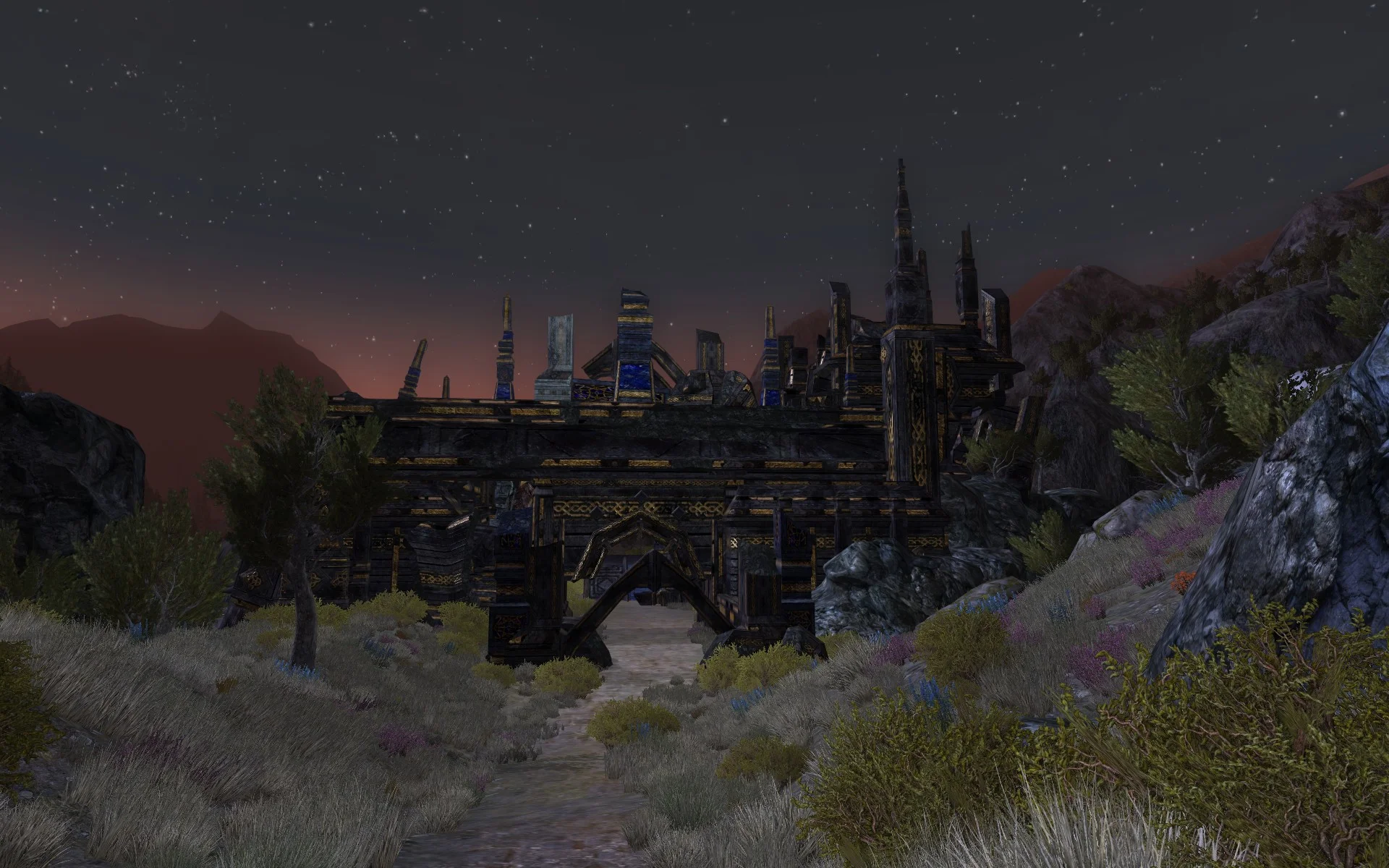
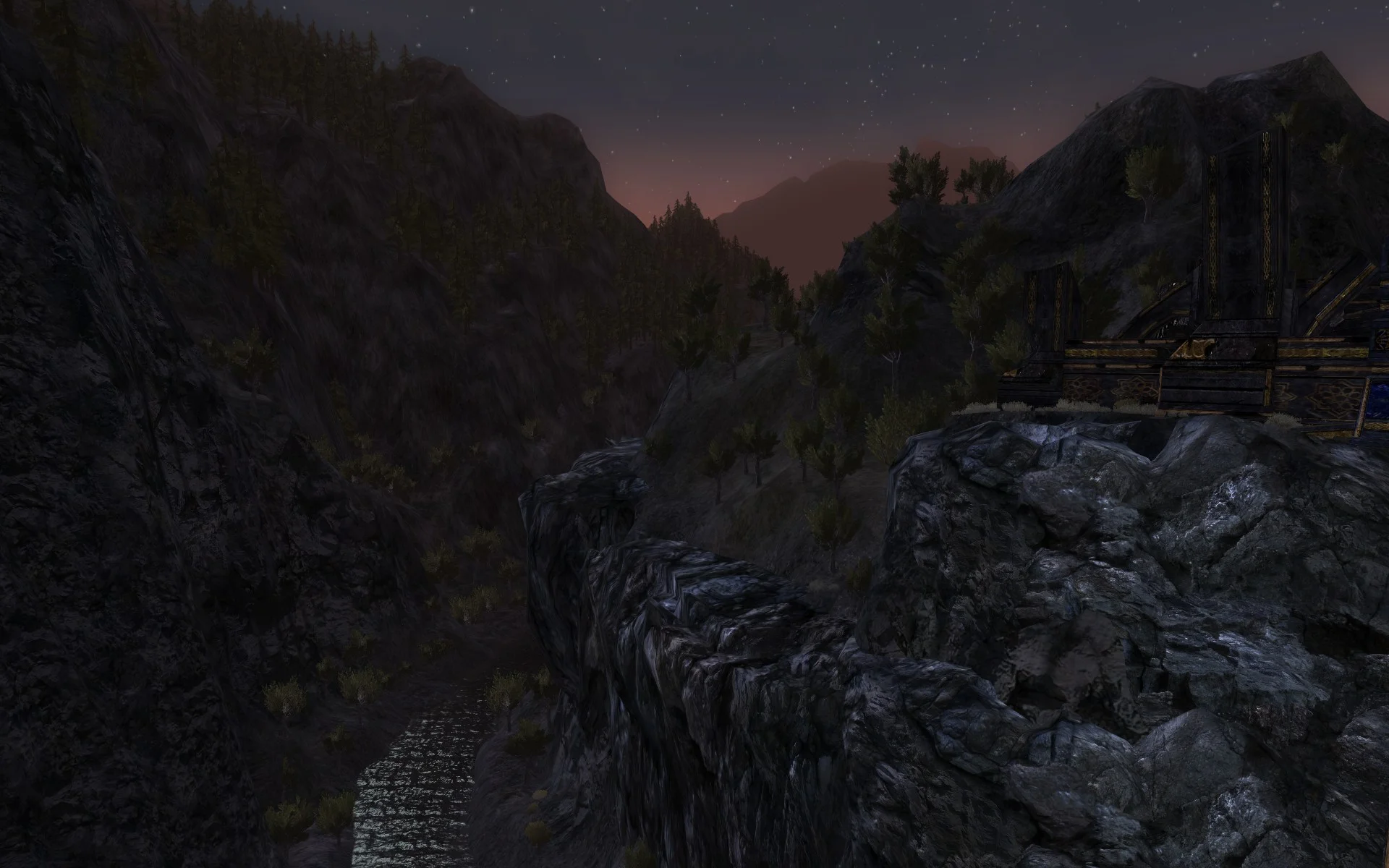
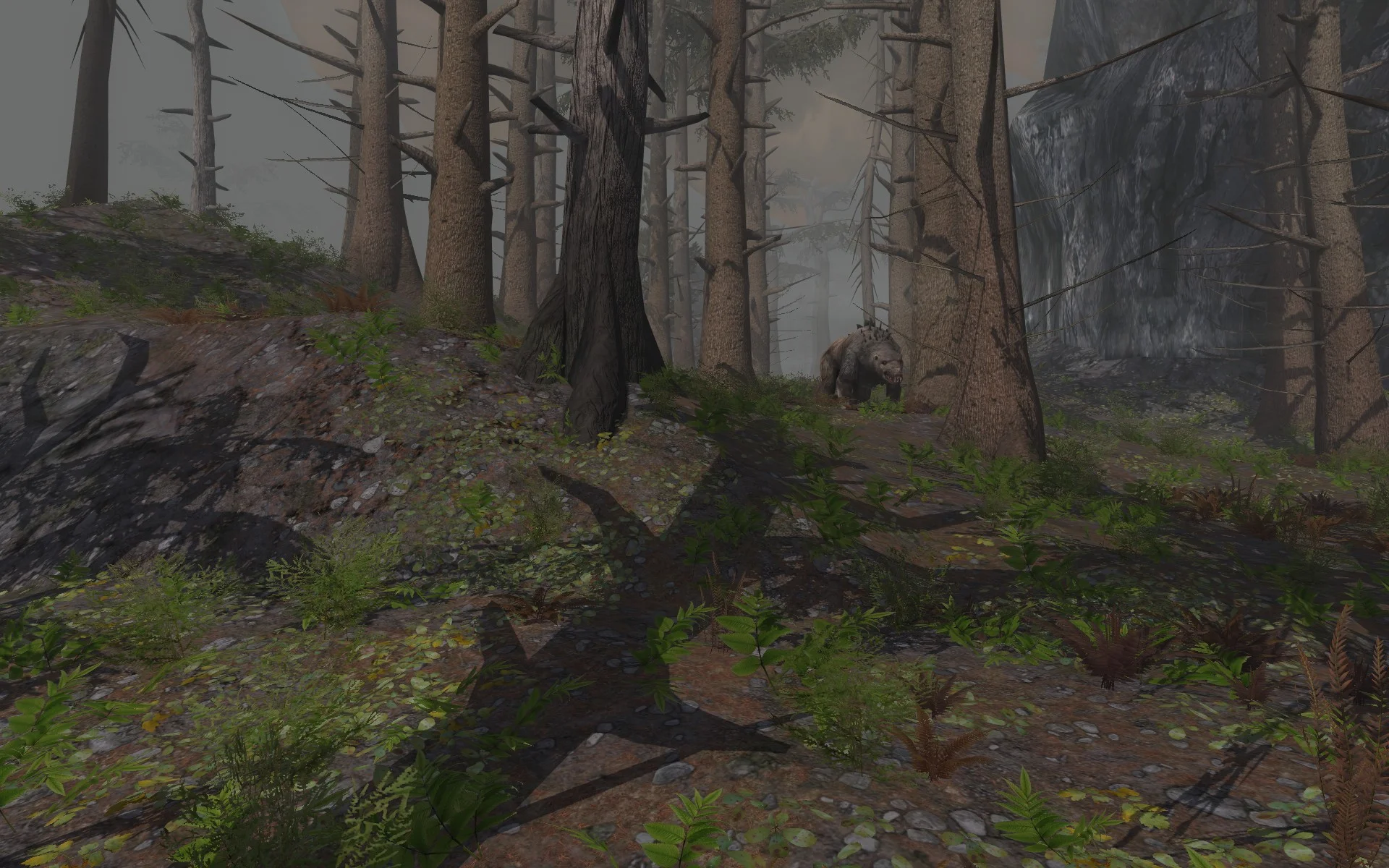
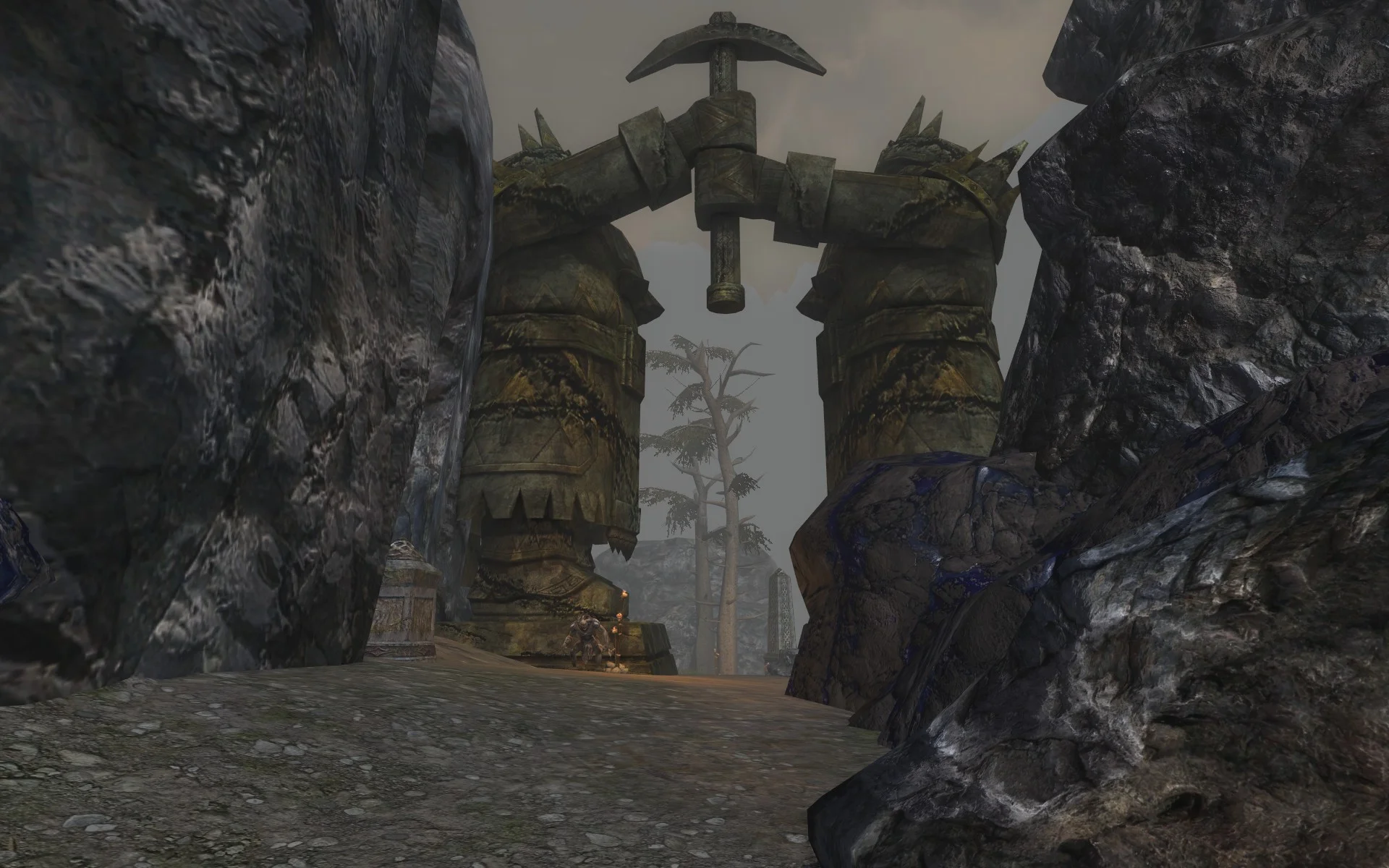
I managed to spend an hour or so today, exploring the latest preview of Update 23 for LOTRO, that is currently being beta tested on the Bullroarer server. Sadly, due to my schedule, I did not get to spend as much time as I would like, exploring the new zones, and by the time I reached the Withered Heath, the server closed. However, I did see sufficient for me to be able to gauge progress. Overall this is an interesting zone which offers new iterations of Dwarven culture. Standing Stone Games once again have found the right balance between using established in-game assets and integrating them with newer designs. The results are two regions that are bright, roomy and distinctly Dwarven. However, it should be noted that as ever with these beta previews, the build is subject to change.
I managed to spend an hour or so today, exploring the latest preview of Update 23 for LOTRO, that is currently being beta tested on the Bullroarer server. Sadly, due to my schedule, I did not get to spend as much time as I would like, exploring the new zones, and by the time I reached the Withered Heath, the server closed. However, I did see sufficient for me to be able to gauge progress. Overall this is an interesting zone which offers new iterations of Dwarven culture. Standing Stone Games once again have found the right balance between using established in-game assets and integrating them with newer designs. The results are two regions that are bright, roomy and distinctly Dwarven. However, it should be noted that as ever with these beta previews, the build is subject to change.
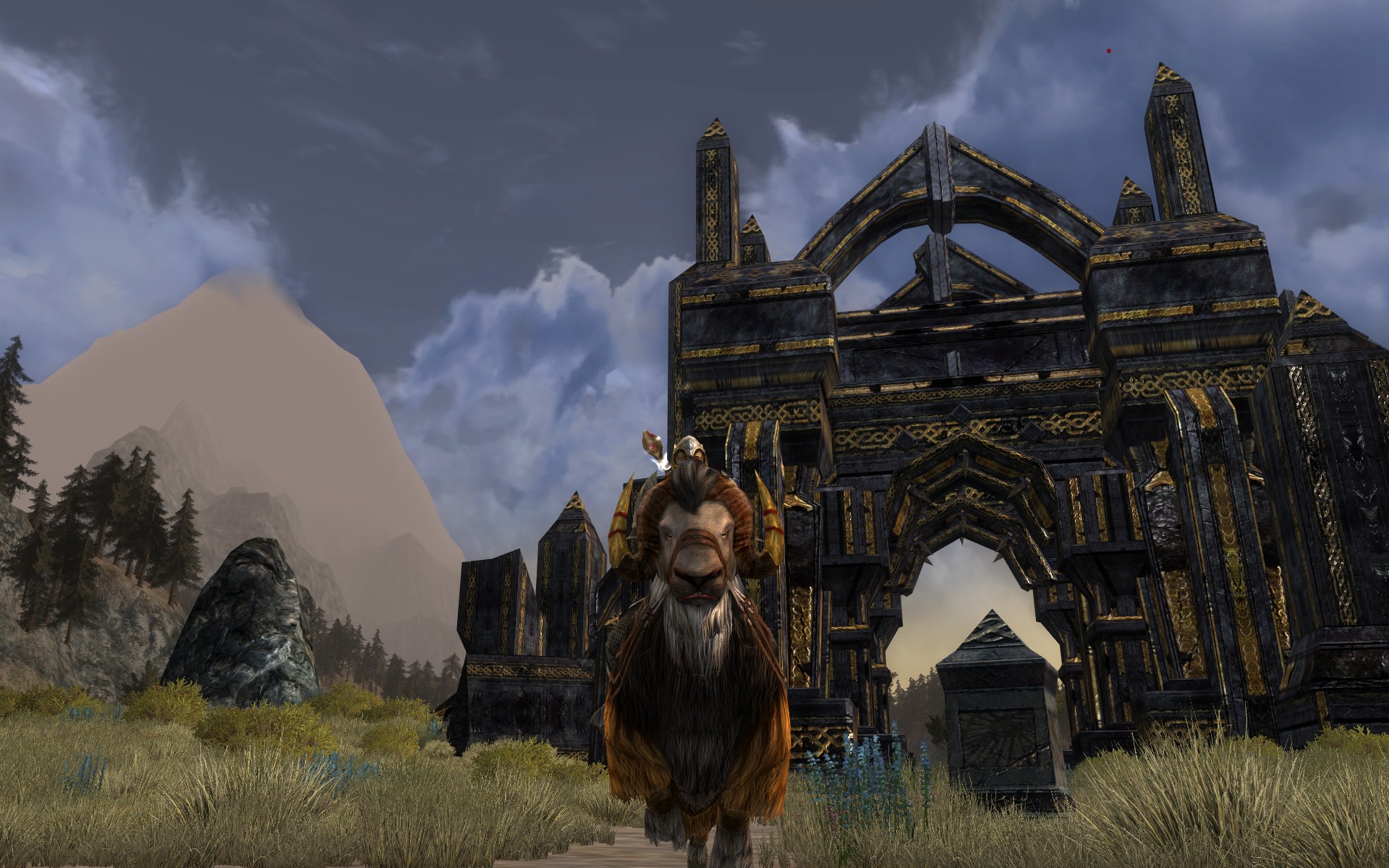
Update 23 focuses on the Longbeards, descendants of Durin the Deathless. To begin with, there is an expanded version of Erebor, which adds far more to this Dwarven capital. There are now ornamental gardens, Gemcutter’s court and even a theatre. It certainly feels more like a thriving community. SSG have also added the legendary mines where the Arkenstone of Thrain was found. For those expecting tunnels and diggings like those seen in Peter Jackson’s The Hobbit movies, we’ll you’re in for a disappointment. They are depicted here in the same way as they are elsewhere in LOTRO, IE in a functional and practical fashion, with linear tunnels and mine car tracks. It may not look as opulent as other depictions, but it feels authentic.
East of Dale, SSG have created the fabled Iron Hills. This zone is spacious with a mixture of green plains and brown “hills” filled with iron ore. Hammerstead is the major Dwarven settlement of the region and there is ongoing conflict with the Easterlings, who have occupied one of the other towns in the area. It should be noted that there is a clear influence of Easterling culture on Dwarven armour and weapons in this region. This is also apparent in the Grey Mountains to the North of Erebor. Here we find another Dwarven enclave, Skarhald. This area has clearly suffered under the depravations of Dragons and the zone is littered with their ancient bones. There is a nearby mine, Glimmerdeep, that has fallen to Orcs from Mount Gundabad. This delving is very reminiscent of the Silvertine Lodes in Moria. The Witherted Heath is an interesting addition to the game, featuring bleak and fire blasted steppe region with a large glacier extending down from the mountains. It is also populated with drakes and worms.
As well as new zones and Epic Story content, there are two new Instances for up to three players, and one new Instance for up to six players, in development. There are also ongoing changes to the Hobbit avatars, to bring them in line with the updates made to the other races in recent months. It should be noted that Update 23 will bring an increase in level cap, from 115 to 120. Naturally, the chnage will bring about new gear and cosmetics items, and no doubt there will be yet more factions to gain rep with. Overall, it seems very much like business as usual for LOTRO with this forthcoming update, but as this seems to be what players enjoy, then it is by no means a problem. Certainly, these new zones are a welcome addition to the game and an uplifting alternative to Mordor that still remains a crossroad (or dare I say stumbling block) in the game for some players.
Cinema, Risk Aversion and Creativity
Paramount Pictures’ recent decision to forgo a worldwide theatrical release for Alex Garland’s innovative science fiction movie Annihilation and to sell it directly to Netflix, is still a matter of debate. It raises a wealth of issues from the current culture of financial risk aversion that dominates Western society, right the way through to gender politics. It certainly highlights the fact that the bottom line is now the primary motivator of any mainstream studio film production. All other considerations be they artistic, socio-political or just telling a good story are now subordinate to whether or will not a movie will make a predefined return on investment. It can therefore be cogently argued that many classic films from the sixties and seventies such as Bullitt, Deliverance and Dog Day Afternoon or would not be approved for production if they were pitched to studios in the current climate.
Paramount Pictures’ recent decision to forgo a worldwide theatrical release for Alex Garland’s innovative science fiction movie Annihilation and to sell it directly to Netflix, is still a matter of debate. It raises a wealth of issues from the current culture of financial risk aversion that dominates Western society, right the way through to gender politics. It certainly highlights the fact that the bottom line is now the primary motivator of any mainstream studio film production. All other considerations be they artistic, socio-political or just telling a good story are now subordinate to whether or will not a movie will make a predefined return on investment. It can therefore be cogently argued that many classic films from the sixties and seventies such as Bullitt, Deliverance and Dog Day Afternoon or would not be approved for production if they were pitched to studios in the current climate.
In many respects this is about morality, principles and ethics. Things that are frequently common to directors, writers and actors, especially those just beginning their careers. But such qualities can be conspicuously absent in twenty first century businesses. And their scarcity subsequently impacts upon the scope and quality of movies currently in production. It is worth considering that if current attitudes had prevailed seventy-eight years ago, then Chaplin may well have never made one of the greatest political satires ever, The Great Dictator. Something he did at considerable risk to himself. The thing is that when cinema is at its best, it is art. Art has always been an invaluable means of challenging the status quo. It can highlight new ideas, critique social and political issues or simply just bring matters to the publics attention, for their consideration. Art is therefore political and very much a question of expressing an opinion. Sadly, to Hollywood politics and “opinions” are risky. Disney’s recent parting company with director James Gunn highlights this.
Not all movies meet the nebulous criteria to be deemed as art and many more are happy just to entertain and to provide audiences with an amusing diversion. But even a mainstream production can still have a positive impact on audiences’ opinions and influence change. For example I Am a Fugitive from a Chain Gang shed light on a topical issue at the time of its release in 1932, and helped instigate change with regard to such penal practices. The studio and the film makers behind the movie made political enemies as a result but it still did not deter them. It is this moral component that seems to be conspicuously absent these days. Perhaps such notions of ethics and social responsibility have finally been driven out of mainstream US film making. If that is the case, then it is a tragedy for both the industry and consumers alike.
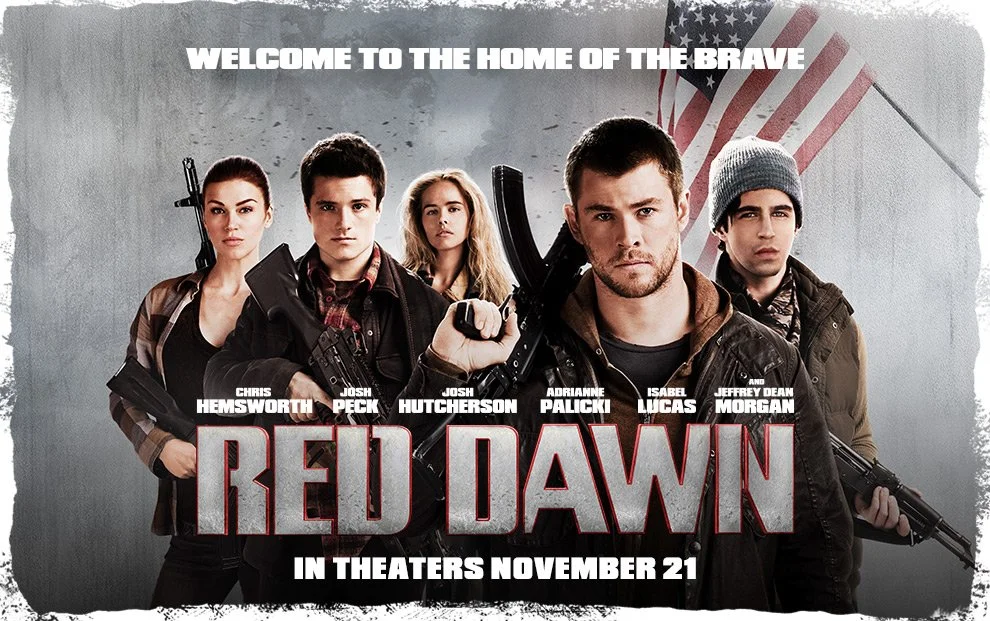
In recent decades we have scene a reversal of roles between TV and cinema. TV is now the home of cerebral, character driven narratives that explore complex and difficult themes. Commercial cinema is now about light and undemanding entertainment. Hence, we have seen the rise of the lucrative PG-13 rating, which has been tailored to satisfy the need for a degree of adult themes and violence, yet still accommodates broader audiences to ensure maximum box office returns. Yet demanding that movies conform to such a strict set of content criteria is extremely restrictive creatively. Furthermore, the growth of international markets, especially China, also impacts upon the scope and tone of movies. Striving to create a generic product that fits all international markets, usually means divesting them of local flavour and style. It can certainly impact upon content. The Red Dawn remake of 2010 sat of the shelf for two years after the collapse of MGM studios. When it was finally released in 2012, the Chinese market had grown lucrative, forcing the new owners to repurpose the film and change the main antagonist from China to North Korea. The final release is a dog’s dinner.
It would appear that this cultural reticence to engage with certain subjects, less they harm sales, is so great that even A list directors are now being shown the door. Hence, we find alternative platforms such as Netflix, providing an environment where a director can pursue a “higher risk” project more freely. Naturally independent film makers will still pursue their own agenda and will not be perturbed by commercial considerations and constraints. In the long term, the current culture of risk aversion versus creativity will result in films simply moving to the platforms and out lets that suit their needs best. However, while the current trend remains dominant, it does mean that mainstream choice will become increasingly homogenous. Yet such a policy is ultimately sowing the seeds of its own destruction. There will come a time when the market for Super Hero movies and Star Wars sequels will be saturated and once again, Hollywood will look to the independent sector to innovate and fill the gaps in the market. Movie making is after all, cyclical and governed by trends like all other leisure industries.
Spock
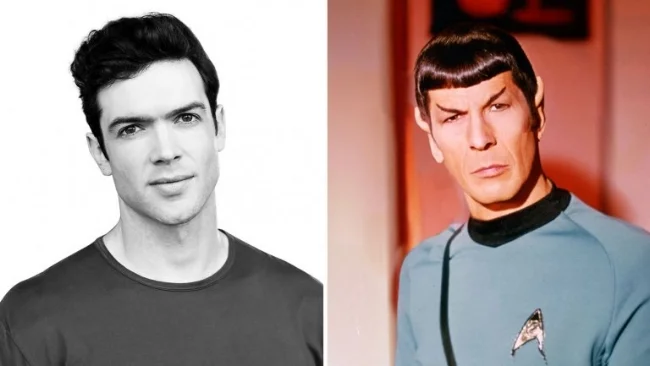
I’ve written in the past about the problems that can arise from untempered fandom. If enthusiasm and inspired love are not balanced by contextual reason and a healthy dose of reality, then it can get a little bit over zealous. Need I cite Star Wars fans and The Last Jedi as an example of unchecked fandom. However, I am now going to stray a little into the “Twilight Zone” of fandom myself, although I shall attempt to apply a healthy dose of realism into the proceedings. Because I want to discuss the fact that Ethan Peck has been cast to play one of the most iconic characters in popular culture. Yes, Gregory Peck’s grandson (and there’s plenty of “baggage” there) has been cast to play Spock in season two of Star Trek: Discovery. Furthermore, rather than be concerned, I am very excited by this development and I really look forward to seeing how this pans out.
I’ve written in the past about the problems that can arise from untempered fandom. If enthusiasm and inspired love are not balanced by contextual reason and a healthy dose of reality, then it can get a little bit over zealous. Need I cite Star Wars fans and The Last Jedi as an example of unchecked fandom. However, I am now going to stray a little into the “Twilight Zone” of fandom myself, although I shall attempt to apply a healthy dose of realism into the proceedings. Because I want to discuss the fact that Ethan Peck has been cast to play one of the most iconic characters in popular culture. Yes, Gregory Peck’s grandson (and there’s plenty of “baggage” there) has been cast to play Spock in season two of Star Trek: Discovery. Furthermore, rather than be concerned, I am very excited by this development and I really look forward to seeing how this pans out.
As a fan of not only Star Trek but wider popular culture, I believe that specific iconic characters are extremely pertinent and in their own way, beacons of hope and cultural touchstones for good in contemporary society. I personally believe that Spock as a fictious character is a positive force in the world, comparable to the likes of Sherlock Holmes. These characters are inspirational, provide hope and area source of introspection and self-reflection. The genius of Star Trek and other science fiction vehicles is that they provide alien characters and culture as a medium to examine the human condition. Leonard Nimoy struggled with this complex conundrum throughout his life, but he ultimately reconciled himself to the positive aspects of embracing such a multifaceted character as Spock, and saw him as a force for good. I sincerely hope that Ethan Peck has a similar opportunity, because we really need the wisdom and “humanity” of Spock in the wider world at the moment.
I like many others, was initially flummoxed by the aesthetic changes that came with Star Trek: Discovery. However, after a while I adjusted to this shift and focused upon the narrative of the new show and soon found that it embraced much of what I consider to be the core values of classic TOS. Considering the timeline and the specific lore that this new show has chosen to explore, ignoring Spock Prime is not really an option and I had a gut feeling that the character would have to be brought into the narrative at some point. It’s a bold move considering the esteem in which Spock is held by fans and the fact that only two other actors have ever played the character as an adult. I personally am not au fait with Ethan Peck’s previous work as an actor. However, I am prepared to continence the fact that the showrunners of Star Trek: Discovery are not going to doing anything rash when it comes to casting such a key role in Star Trek lore.
So rather than wringing my hands and focusing on the negative, I am prepared as a Star Trek fan to take a calculated gamble and remain positive about not only the casting of Ethan Peck, but the fact that the current writers wish to explore this legendary character further. So, I shall be looking forward to season two of Star Trek: Discovery when it premieres at the end of the year. I’m sure that the exploration of Spock’s career, prior to him meeting James T. Kirk will be insightful and informative. I believe that the essential character of Spock still has much to teach us and that this significant period of his life, associated with Captain Christopher Pike will be an most illuminating. As for actor Ethan Peck, welcome to the Star Trek family and I hope that this iconic role that you’ve bravely accepted will be both challenging and rewarding.




![Star Trek Discovery S01E01 The Vulcan Hello.mkv_snapshot_07.19_[2017.09.25_17.54.13].jpg](https://images.squarespace-cdn.com/content/v1/54e310f0e4b0f4a6ba3ac899/1506359625650-D976K1OBW47HSSSFN2S2/Star+Trek+Discovery+S01E01+The+Vulcan+Hello.mkv_snapshot_07.19_%5B2017.09.25_17.54.13%5D.jpg)



Classic Movie Themes: Basic Instinct
Paul Verhoeven has seldom made a movie without some semblance of controversy associated with it, and his 1992 neo-noir Basic Instinct was no different. Even before its US release, Basic Instinct courted controversy due over its overt sexuality and graphic depiction of violence. It was strongly opposed by gay rights activists, who criticised the film's depiction of homosexual relationships and the portrayal of a bisexual woman as a homocidal narcissistic psychopath. The opening murder with an icepick is still shocking twenty six years later and is an excellent showcase for makeup FX artists Rob Bottin.
Paul Verhoeven has seldom made a movie without some semblance of controversy associated with it, and his 1992 neo-noir Basic Instinct was no different. Even before its US release, Basic Instinct courted controversy due over its overt sexuality and graphic depiction of violence. It was strongly opposed by gay rights activists, who criticised the film's depiction of homosexual relationships and the portrayal of a bisexual woman as a homocidal narcissistic psychopath. The opening murder with an icepick is still shocking twenty six years later and is an excellent showcase for makeup FX artists Rob Bottin.
The plot is a text book example for the genre. Troubled police detective (Michael Douglas), returns from suspension to investigates a brutal murder, in which a manipulative and seductive woman (Sharon Stone) could be involved. Events quickly get out of hand as detective Nick Curran becomes personally involved in the case. The script by Joe Eszter has smoulders with sexual tension and is further punctuated by explosions of violence. Performances are universally good, elevating what is essentially a rather sleazy murder mystery into a far classier undertaking. The film also offers an interesting social commentary on contemporary US sexual politics. Let it suffice to say that beauty often harbours a dark heart.
Regardless of your views on the merit of the movie, Jerry Goldsmith score for Basic Instinct is absolute gem, finely balancing the suspense and the on-screen sexuality. He brilliantly blends mystifying strings, woodwinds, harp, along with piano to build a sense of tension. The soft, wistful title theme is both alluring as well as ominous; a subtle warning of the events that follow in the movies opening scene. The strings section carries the burden of the work, as they do for every other cue throughout the remainder of the score. Basic Instinct remains a text book example of the craft of the late Jerry Goldsmith, bringing distinct elements of class and maturity to the raw passion of the movie.
The Land That Time Forgot (1975)
I first saw The Land That Time Forgot way back in 1975 at the Odeon Isle of Wight, when it was first released. We were on holiday at the time, which was cause for celebration in itself, as these were few and far between during my youth, due to the state of the UK economy at the time. But to then go to the cinema and see a fantasy film, filled with action, adventure and monsters, was the icing on the cake for an over excited eight-year-old. Adapted by Michael Moorcock and James Cawthorn from the 1924 the novel by Edgar Rice Burroughs, The Land That Time Forgot is a classic example of high adventure on a low budget. Its technical shortcomings were even apparent to me as a child, yet there was a charm and honesty to this curious British production, that had the audacity to try and compete with the likes of more expensive US productions such as The Golden Voyage of Sinbad and Island at the Top of the World.
I first saw The Land That Time Forgot way back in 1975 at the Odeon Isle of Wight, when it was first released. We were on holiday at the time, which was cause for celebration in itself, as these were few and far between during my youth, due to the state of the UK economy at the time. But to then go to the cinema and see a fantasy film, filled with action, adventure and monsters, was the icing on the cake for an over excited eight-year-old. Adapted by Michael Moorcock and James Cawthorn from the 1924 the novel by Edgar Rice Burroughs, The Land That Time Forgot is a classic example of high adventure on a low budget. Its technical shortcomings were even apparent to me as a child, yet there was a charm and honesty to this curious British production, that had the audacity to try and compete with the likes of more expensive US productions such as The Golden Voyage of Sinbad and Island at the Top of the World.
The Land That Time Forgot has a rather unusual production pedigree as it was financed by Amicus Productions who were best known during the seventies for their series of portmanteau horror films such as Tales from the Crypt (1972), Asylum (1972). It boasts a robust cast of British characters such as the late Keith Barron (Captain Bradley), Susan Penhaligon and Anthony Ainley. Barron got the role because he bought a house from the producer John Dark, who was casting at the time. Seeking a “known quantity” for the US market, actor Doug McClure secured the lead role as Bowen Tyler. McClure was popular due to his regular appearance in the successful TV western series, The Virginian. British actor John McEnery who played U-Boat Captain Von Schoenvorts, was not deemed to be “sufficiently German” when the movie entered post-production and subsequently had all his dialogue re-dubbed by Anton Diffring.
The Land That Time Forgot is a fairly faithful big screen version of the source novel. Set during World War I, the survivors of a torpedoed British merchant ship manage to capture the German U-Boat that sunk them. However, the German second officer Dietz, sabotages the compass resulting in the U-Boat straying into uncharted waters. Low on fuel and supplies, the combined crew find a strange volcanic sub-continent amid the frozen sea. Captain Von Schoenvorts surmises that this may be the “lost” island of Caprona, which was referenced by Italian explorer Caproni in 1721. Finding an underwater channel, the U-Boats manages to penetrate the outer cliff wall only to find a lush tropical zone, populated by both Dinosaurs and prehistoric people. While Captain Von Schoenvorts and Biologist Lisa Clayton contemplate the mystery of Caprona’s curious ecosystem, Engineer Bowen Tyler searches for a viable source of oil that they can refine and so escape back to civilisation.

The Land That Time Forgot is very much a product of its time, being made on a very modest budget. Yet despite its technical shortcomings the movie holds up very well. Roger Dickens dinosaur effects, which are mainly rod puppets, have a certain charm about them. They are not as sophisticated as Ray Harryhausen’s stop frame animated marvels, but they get the job done. Praise was heaped upon Derek Meddings’ superb miniature effects at the time and they are still impressive today. But what The Land That Time Forgot manages to achieve that many modern equivalent movies fail to do, is being honest and respectful towards its source material. Just because the movie is based upon a pulp fiction novel, it isn’t trivialised or presented in an ironic and self-deprecating way. The cast obviously took their roles seriously and delivered a very sincere film, irrespective of its humble origins and restricted production values.
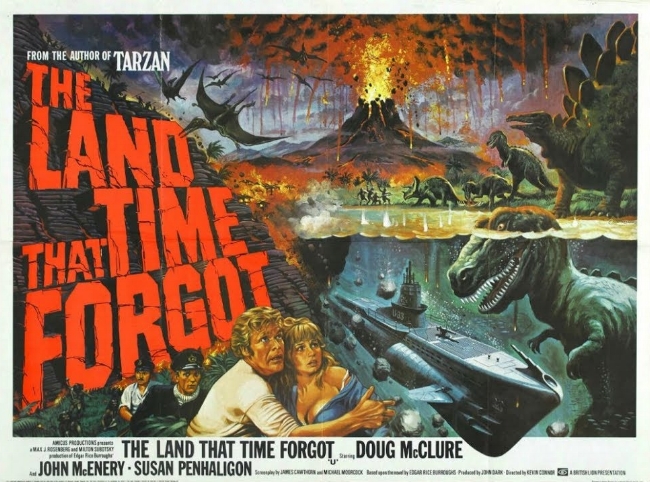
The Land That Time Forgot is an excellent example of low budget, but creative independent film making that was common place in the seventies. It has a simple plot, with clearly defined characters. The action scenes and dramatic scope of the film are ambitious considering the financial constraints and although casually violent, as so many family films ironically were at the time, it is never gratuitous. Susan Penhaligon’s role sadly reflects gender-based attitudes of the time. The movie doesn’t make any attempt to accurately reflect the state of geopolitics of the period. The hero is robust, masculine and decisive. The Germans are “bad” because the film requires an arbitrary set of antagonists. Naturally they also reflect the prevailing stereotypes and prejudices common to the UK society at the time. The film poster certainly overstates the scope of the production, promising action of a far more spectacular nature and a lot more dinosaurs. Yet it all works very well and is still very entertaining, if you accept it for what it is and when it was made.
Video Games: The Broadest of Churches
I started playing video games in the eighties, mainly coin-op arcade machines. By the time the nineties console boom began, I was out of school, working and therefore bought several generations of home entertainment systems. By the late nineties I moved over to the PC and subsequently got access to a wider variety of games. I came relatively late to the MMO boom, although I had played other types of multiplayer internet-based games. Thirty-five or so years later, I find myself a mature player of games (I do not identify as a gamer per se but that’s another blog post entirely) with a bunch of views, opinions and expectations shaped by the decades I’ve lived (and played) through. Simply put, my head is at a different place to those who are ten, twenty or thirty years my junior. Games have evolved, just like popular music, TV and movies. The associated culture around video games has also been subject to change. You may well think I’ve just stated the “bleedin’ obvious”, but in my experience it doesn’t hurt to re-iterate this point when addressing a new trend or craze that on first inspection seems somewhat abstract to us.
I started playing video games in the eighties, mainly coin-op arcade machines. By the time the nineties console boom began, I was out of school, working and therefore bought several generations of home entertainment systems. By the late nineties I moved over to the PC and subsequently got access to a wider variety of games. I came relatively late to the MMO boom, although I had played other types of multiplayer internet-based games. Thirty-five or so years later, I find myself a mature player of games (I do not identify as a gamer per se but that’s another blog post entirely) with a bunch of views, opinions and expectations shaped by the decades I’ve lived (and played) through. Simply put, my head is at a different place to those who are ten, twenty or thirty years my junior. Games have evolved, just like popular music, TV and movies. The associated culture around video games has also been subject to change. You may well think I’ve just stated the “bleedin’ obvious”, but in my experience it doesn’t hurt to re-iterate this point when addressing a new trend or craze that on first inspection seems somewhat abstract to us.
The cue for this post came from Wolfy over at Through Wolfy’s Eyes. He stumbled across a video from a young Fortnite player and then wrote about his general bemusement of the Battle Royale scene and its associated popularity with younger gamers. I broadly agree with his sentiments about this particular genre. Battle Royale games have become ubiquitous and are now the de facto style for most forms of multiplayer PVP. They are also frequently egregiously monetised. Because they are founded upon competitive play, bragging rights and bellicose self-pride are an integral part of the associated culture. Like many other game genres, this too has developed its own a lexicon of slang and associated tropes and memes. If you are not part of this “world”, it can look quite alien and bewildering. What is the appeal of Battle Royale? Why has Fortnite found such a fanbase among the under twenty-fives? Why are “kids” (like the one Wolfy references) writing songs and posting them on You Tube. However, if you take a step back and reflect less on the game and more on the culture, it does start to fall into place. Wolfy reached his own conclusion, and I would like to expand upon it further.
Fortnite Battle Royale was in the right place at the right time. PUBG initially whet competitive gamers appetite with a simple innovative new spin on PVP. Fortnite simply refined that formula further with a game that looks more appealing, colourful and dynamic. Hence it found its home with the youth audience and because of its chosen visual style, it doesn’t at first glance look problematic to the passing parental glance. The fact that the game is also accessible across multiple platform is another reason why it’s taken hold. It also has a degree of cross platform support. And let us not forget that it’s a free-to-play product, so the initial barriers to entry are low. All things considered it’s hardly a surprise that it found success with its current demographic. Developers Epic Games have subsequently ensured that the game has regular tie-ins with other franchises that match its customer base. Thus, the game has keeps growing and making money. Lots of money.
Humans are social creatures and our teenage years are a time where we seek to establish our own identities and affiliate with some social group to find a sense of belonging. Fortnite, although boasting players of all ages, has most certainly been claimed by the youth market. It is a fast and frenetic game that requires quick reflexes, both physically and mentally. Such gameplay favours the young. And like anything else that the youth market claims as it own, a bespoke culture has quickly grown around it. And that culture is by exclusionary by design. Teens want to have things that are their own. Unlike the adult world that they inhabit, here is something that they can control. They broadly remain gatekeepers to this sub-culture. Frankly they want adults to be bamboozled and sceptical of it because the last thing they want is to share it. Cast you mind back to when you were young. The quickest way to kill your interest in a band would be for one of your parents to claim to like them.
So it’s hardly surprising that videos such as the Fortnite Anthem Rap Song spring up on You Tube. Although it is obvious that the kid in the video has had a lot of assistance from others older than him, this is simply just a contemporary example of fan culture. It’s about bragging rights, cultural ownership and it’s also a clear snub to those who are not part of the “in crowd”. Far from being something alien it is in fact utterly and even re-assuredly normal. It wouldn’t be difficult to write 500 words as to why this phenomenon is just a question of “same meat, different gravy”. However, I could also write a comparable amount about why this sort of fandom can also segue way into less desirable territory. Fortnite can bring people together and offer them fun, as well as a sense of belonging. But this video reflects elements of the associated hubris that can come with competitive play. Ego, winning at all costs and smack talk are only a stone’s throw away from tribalism, bullying and prejudice. Some schools are at a loss as to how to deal with things like the “floss dancing” and insults couched in Fortnite terminology. Perhaps some are over reacting, but any popular craze can always be used as a means of exclusion and oppression. Children can also be notoriously cruel.
So, I broadly understand these new manifestations of gaming culture. Whether I like them or not is a separate issue and not really relevant. However, I don’t see them as unfathomable because they’ve happened before, and they’ll happen again. Battle Royale games are enjoying their moment in the sun, just as MMOs did and traditional FPS titles like Call of Duty. Gaming despite pushback from certain quarters, has grown from a niche market pastime to a mainstream leisure industry. It is now an extremely broad church which simply reflects the diversity of society. If I were 15 years old now, I no doubt would be playing Fortnite and being a little shit about it. But as I’m 35 years older than that, I am content to let this game pass me by, as I clearly see it’s not targeted at me. The games selling points are focused elsewhere. But paradoxically, if you analyse a fan’s rap song about Fortnite and then do the same with a two-hour documentary about the works of Ennio Morricone, that I’d really enjoy, you’ll find that they’re not that different. Although we wouldn’t want any reciprocal enjoyment of each other’s work.
The Games (1970)
The Games is the story of four marathon runners and their preparations for the Olympics. Harry Hayes (Michael Crawford) is a British runner with a highly demanding coach (Stanley Baker). US athlete Scott Reynolds (Ryan O’Neal) is reaching the end of his career and continues to run, even though it might kill him. Czechoslovakian world record holder Pavel Vendik (Charles Aznevour) is “encouraged” out of retirement to competes for the glory of his country, and then there’s Aboriginal Australian runner Sunny Pintubi (Athol Compton) who competes as a way of escaping his life of poverty and racial oppression. All come under media scrutiny and must confront their own demons before competing in the race that will possibly define their life.
The Games is the story of four marathon runners and their preparations for the Olympics. Harry Hayes (Michael Crawford) is a British runner with a highly demanding coach (Stanley Baker). US athlete Scott Reynolds (Ryan O’Neal) is reaching the end of his career and continues to run, even though it might kill him. Czechoslovakian world record holder Pavel Vendik (Charles Aznevour) is “encouraged” out of retirement to competes for the glory of his country, and then there’s Aboriginal Australian runner Sunny Pintubi (Athol Compton) who competes as a way of escaping his life of poverty and racial oppression. All come under media scrutiny and must confront their own demons before competing in the race that will possibly define their life.
X is an extremely interesting snapshot of the world of international sport during the early seventies. It is a fast paced, tightly edited movie (like many of Michael Winners movies) and features many international locations. The cast is eclectic but strong and the dialogue tight and to the point. It is a revelation to see Michael Crawford, best known in the UK for his seventies comedy hijinks, playing against such internationals stars as Ryan O’Neal and Stanley Baker. It was also the first time I’d seen Sam Elliot before he was grey and grizzled. Winner gets the most from his location shooting and creates a genuine feel for what it is life to actually participate in such an Olympic event. Although many of the characters are not particularly sympathetic there is a compelling quality to their respective stories and subsequent fate.
Michael Winner is not the first name you think of when considering a movie about sport, but his style compliments the subject matter. The Games manages to take what is essentially a not particularly interesting spectator sport and it into an intriguing and somewhat sleazy drama. The first two acts focus on the respective characters and their own personal challenges. As the main event draws near we see the financial and political pressure that comes to bear on each of them and how they each deal with it. The last act of the movie depicts the marathon through Rome as the gruelling endurance test that it is. Yet the editing and pacing build a strong sense of drama as to who will win the race. The depiction of drug abuse, along with the unbridled egos of some of the athletes still rings true today. As does the insidious influence of big business and corporate sponsorship.
Curiously enough the print of The Games that I recently watched sported the original BBFC rating which was curiously a U certificate. I do not think the movie would be so fortunate today. The use of habit forming performance enhancing drugs, the casual sexual undercurrent as well as depictions of institutional racism would possibly attract a higher rating. However, all of these themes are explored cogently. The depiction of aboriginal runner Sunny Pintubi (Athol Compton) was particularly good and was in some way the most interesting character in the movie. The way he turns the tables on those who seek to exploit him is suitably satisfying. Overall, The Games is an accurate assessment of the state on international athletics at the time, reflecting the political propaganda wars of the East and West. It also portrays the hubris of US sports from the era, as well as the blinkered and misplaced notion of English exceptionalism that still remained among some UK athletes.
Are You Not Entertained?
I distinctly remember when I finished the main story in Saints Row the Third and had completed the majority of the content available. I’d bought the game as part of a bundle for a mere £3.99 and had spent over sixty hours in-game, so overall, I considered this money well spent. But what made the experience particularly memorable, as I logged out of the game knowing that I was effectively done with it, there was an overwhelming sense of satisfaction. Not only was there the sheer value for money that I have mentioned, but I felt that I had been entertained (hence the Russell Crowe reference in the title of this post). This happened again recently when I completed the final DLC for Sniper Elite 4 and also when I finished the main story in Tom Clancy’s Ghost Recon: Wildlands. Although there was a sense of achievement, I predominantly felt pleased by the fact that I had fun. The latest expansion for Star Trek Online, Victory is Life made me feel this way too.
I distinctly remember when I finished the main story in Saints Row the Third and had completed the majority of the content available. I’d bought the game as part of a bundle for a mere £3.99 and had spent over sixty hours in-game, so overall, I considered this money well spent. But what made the experience particularly memorable, as I logged out of the game knowing that I was effectively done with it, there was an overwhelming sense of satisfaction. Not only was there the sheer value for money that I have mentioned, but I felt that I had been entertained (hence the Russell Crowe reference in the title of this post). This happened again recently when I completed the final DLC for Sniper Elite 4 and also when I finished the main story in Tom Clancy’s Ghost Recon: Wildlands. Although there was a sense of achievement, I predominantly felt pleased by the fact that I had fun. The latest expansion for Star Trek Online, Victory is Life made me feel this way too.
Subsequently, these ruminations have got me thinking about such issues as satisfaction, entertainment and public declarations that a game has been an overall positive experience. The latter is especially of interest to me because it is something I seldom see in my news feeds, twitter time line, or featured in the blogs I read. It could be a case of I'm looking in the wrong places, but I can't help but think that the notion of “entertainment” as a selling point is in some way overlooked. Too often criteria such as game mechanics or visual aesthetics are focused upon and deemed to be a game’s selling point. Is there an underlying message to the narrative or does the title in question have a killer new feature? Entertainment seems to be erroneously associated with perfection. Or dependent on mastering the skills to succeed when playing a game. Sometimes, trying to pin down exactly why a game in entertaining is difficult. But if it’s lacking in a title, it won’t be long before I put it aside and look elsewhere.
There are many things in life that when scrutinised, measured and analysed are judged not to be of the highest standard. However, that does not mean that they cannot be entertaining. A pop song may well be uninspired musically but can still infectious. A meal at a fast food chain may not be the most nutritious but it can be extremely satisfying. Movies often recycle the same old ideas and themes, but a new spin can lead to an entertaining diversion. Have lost sight of this with regard to games? I'm not averse to criticism so if a game is lacking in some capacity, then by all mean draw attention to it. But surely, if a flawed product has proven entertaining, then surely that needs to be reported and reflected upon. I think this issue is somewhat akin to the post I wrote recently about the use of the word “adequate”. I get the impression that is some quarters terms such “fun” and “entertaining” are considered superficial.
Gaming is very much about hype, marketing and "the next big thing" these days. Sometimes the public is let down by the developers failing to deliver on their promises and on other occasions the players themselves have unrealistic expectations. Yet despite both perceived and actual problems, titles still sell, and players spend substantial amounts of their money and time. Surely, they must derive some pleasure from these games and gain a modicum of enjoyment from their overall experience? Or do people play through titles, enduring an uninspired games inadequacies and inherent mediocrity with stoic fortitude? I certainly think the price that you’ve paid has some bearing on the matter. I recently bought No Man’s Sky at a considerable discount. I’ve subsequently discovered that it’s not really for me, but I’ve still had some fun messing around within its procedurally generated worlds. I suspect though that I would have enjoyed it less if I had paid the full price at launch.
I do see some of my fellow bloggers writing about games they’ve enjoyed and clearly exploring why they had fun and found it entertaining. But I do not see such sentiment as often within professional games journalism. It seems to be an aspect of gaming that is overlooked. Reviews will breakdown many facets of a game but neglect to state clearly whether it is fun or not. I'm not advocating mandatory evangelising about games, but I don't think we should be reticent about publicly declaring if a game has entertained us. Even if a game has flaws, that doesn't mitigate the fun we had while playing it. Perhaps that is why it is something that is dwelt on less. The subjective and nebulous nature of fun and entertainment are hard to quantify. And we do so live in an age that likes to render everything in to statistics and neatly label it. However, I think we need to eschew the binary and the penchant for taxonomy. A bit of honesty about whether we did enjoy a game may even help future development. After all, as Mr. Crowe said, "Is this not why you're here"?
Appaloosa (2008)
I have been revisiting the western genre and reacquainting myself with some of its more cerebral examples. Ulzanna’s Raid (1972) and Tom Horn (1980) certainly helped remind me of the diversity of themes and the scope of subjects that this genre has explored over the years. Obviously due to the westerns decline in popularity, there are fewer examples to cite from recent years, although I would single out Open Range (2003) and 3:10 to Yuma (2007). However, Appaloosa (2008) is a movie that embodies all the narrative qualities that a good western can achieve and furthermore it does so without the need to re-invent the wheel. In structural terms, this is old school cinema and all the better for it.
I have been revisiting the western genre and reacquainting myself with some of its more cerebral examples. Ulzanna’s Raid (1972) and Tom Horn (1980) certainly helped remind me of the diversity of themes and the scope of subjects that this genre has explored over the years. Obviously due to the westerns decline in popularity, there are fewer examples to cite from recent years, although I would single out Open Range (2003) and 3:10 to Yuma (2007). However, Appaloosa (2008) is a movie that embodies all the narrative qualities that a good western can achieve and furthermore it does so without the need to re-invent the wheel. In structural terms, this is old school cinema and all the better for it.
Ed Harris directs, co-writes, co-produces, sings (a ballad over the end credits) and stars in this traditional Western, based on a book by Robert B. Parker. Unlike other revisionist or deconstructionist westerns, Appaloosa feels more like a genre classic like John Ford’s My Darling Clementine. The film focuses on the characters rather than action and although there are shoot-outs, they are not overstated. The production feels very authentic (if there is such a thing to be found in the mythology of the cinematic western) and the cinematography by Dean Semler is outstanding, reflecting the harsh landscape and stark functional towns.
Central to this film is the friendship between Harris’ marshal, Virgil Cole, and Viggo Mortensen’s deputy, Everett Hitch. It’s the sort of deep understated relationship where one character can finish another’s sentences. Often more is conveyed by what’s not said. Such friendships are based on loyalty and this is an integral theme in Appaloosa. The status quo is sorely tested by the introduction of Widow Renée Zellweger and crooked rancher Jeremy Irons. Harris and Mortensen, who co-starred in A History of Violence (2005) are superb and there is solid support from the likes of Timothy Spall and the underrated Lance Henriksen.
Harris directs well and focuses on modern parallels, especially the distinction between enforcing the law and just killing people. His film extols the old-world virtues of honour and loyalty. He also explores the theme of a woman trying to survive in a man’s world and the tough choices she has to make to get by. The climatic showdown is more about the battle between a man and his conscience, rather than two dimensional notions of good versus evil. This is a thoughtful and somewhat old-fashioned film, that will suit those in a reflective mood, rather than action fans. It also clearly showcases why the western is such a broad and flexible genre that never grows old.

Opinions, Debate and Courting Controversy
This post has been sitting in “draft” for a while and for the want of Blaugust Reborn, it may well have remained there. I guess I've held fire on writing it because I've gotten somewhat tired of pissing in the wind. Because that is what speaking out on certain subjects frequently feels like these days. There is a sense of tedious inevitability that any post that expresses an opinion on social issues or any form of societal marginalisation will eventually lead to a torrent of vile, ill-informed and just plain dumb comments. It puts me in mind of that quote from Platoon "Hell is the impossibility of reason". And you'll find precious little reason on the internet. What bothers me about all this is why does it have to always be this way? Is there anything that can be done? Well I believe there is.
This post has been sitting in “draft” for a while and for the want of Blaugust Reborn, it may well have remained there. I guess I've held fire on writing it because I've gotten somewhat tired of pissing in the wind. Because that is what speaking out on certain subjects frequently feels like these days. There is a sense of tedious inevitability that any post that expresses an opinion on social issues or any form of societal marginalisation will eventually lead to a torrent of vile, ill-informed and just plain dumb comments. It puts me in mind of that quote from Platoon "Hell is the impossibility of reason". And you'll find precious little reason on the internet. What bothers me about all this is why does it have to always be this way? Is there anything that can be done? Well I believe there is.
Before I start don't go looking for a miracle cure in this post because I don’t have one. What I am suggesting is fairly basic and certainly requires lots of time. In a nutshell, just keep writing and debating. Don't throw in the towel. I know it's very tempting sometimes, hence my pissing in the wind reference. Yet if we do, then the only information that remains out there is misinformation. Therefore, we should not shy away from speaking out on difficult matters. Furthermore, we can also do a lot to minimise the resulting shit storm that will more than likely will arise. Here are few thoughts on the matter.
Research and a well-constructed argument: Debating is a skill. There is also a process to discussing and arguing a point, the same way as mathematics and grammar have rules. Unfortunately, most folk don't consider either of these points and are happy to jump in feet first. It's a shame more schools do not teach critical thinking as it is an invaluable skill that can be brought to bear on so many aspects of life. However, it is prudent to consider that logic and objectivity cannot always be imposed upon a debate. Emotions do play a part and cannot necessarily be set aside. Especially if you have first-hand experience of the very matter being debated.
I believe Tobold asked the question "There cannot be any meaningful discussion of any subject if you start out by declaring only one side of the argument as valid". That is perhaps true of some subjects, especially if you are debating a matter that hinges on subjectivity and personal taste. However, in a debate regarding a subject such as racism, I cannot logically see any argument to validate a discriminatory stance. Some questions may well be open and shut cases but not all.
Life is not simple: If you are intending to hold forth on a particular subject, it never does any harm to remember that most problems are what they are because of their complexity. Which is a bummer because contemporary society really doesn't like or "do" complex (Brexit for instance). Listen to any radio phone-in, read any internet forum or just glance through a newspaper and you'll find many of the most difficult and contentious problems the world currently faces, distilled in to some rather glib and factually questionable sound-bites. Furthermore, the public lap these up because they're easy to remember and trot out. It's far easier to spout some superficial bullshit you gleaned from the pages of a tabloid, rather than spend time researching a subject and actually having to think.
Bear this in mind when you tackle a big issue. Question whether you are in a position to make a substantive point. Seek guidance from those who know what the wider implications are, such as academics and associated experts on the matter. Invite people to consider your views and reflect upon your stance. Do not just arbitrarily hector them or be excessively judgemental. There are actually times when being blunt, forceful and even rude are justified, but it need not be your default position and standard opening gambit. Aim to be disarmingly persuasive.
Change takes time: Progress is a long and often arduous path. Entrenched social attitudes and ideologies do not change overnight. Often it is a generational thing. For example, my parents were born in the Thirties and both have specific views on social status, race, religion, politics, patriotism and that other old favourite drugs. A quarter of the world was part of the British Empire during their most formative years and this era definitely shaped their world view. They have made some changes over the years but on some matters their beliefs hold strong. No amount of arguing will ever change that. However, such views are not so endemic with my own or my son’s generation. Simply put, some of the more unsavoury views from my parents’ generation will die with them. Change doesn't always come by winning "hearts and minds".
However, as with complexity, many people these days can't be doing with "long waits". Thus, we live in a time where knee-jerk reactions and crass, ill-conceived quick fixes abound. Why should gaming (or whatever else you’re advocating or lobbying for) be any different from politics? All I can really say to the ardent campaigner or blogger with a strong social conscience, is that it really helps to cultivate some patience.
Be measured and fair: If for example, you as a gamer want to lobby the games industry with regard to the depiction of women in games, there is ultimately a requirement for you to engage with those who are either a part of the problem or who seem to be indifferent to it. It's all about winning the middle ground and generating a head of steam. This process needs to be handled with subtlety and tact. Although passion is inspiring, and anger can be power (or so The Clash said), step too far over the line and perceived militancy (whether it is real or not) will work against you. It scares people and it may even drive those you need on-board to the other "side". So, pick your battles, be firm, measured and civil.
Another thing to be considered is the use of knowledge. Some gamers (and bloggers) are not as smart as others. Some folk are smart but driven by their emotions. It can therefore be easy sometimes for the intelligent or knowledgeable party to run rings around the other. Be careful in how you "wear" your intelligence. There's being clever and then there's wanting to be seen as being clever. Crushing a person publicly through Vulcan like logic does not necessarily mean that they will immediately recant their views and embrace yours. Quite the opposite. You may have made matters worse. Just watch them dig their heels in. You can be smart and make your point without being condescending or smug. However, that can be a difficult path to tread. Like it or loathe it, dealing with people in these situations requires a degree of diplomacy.
I sure we can all think of other points to add to the list. There's also an element of finding an approach that is right for you. Then of course there is always the option to simply not create content about anything controversial or to stray in to certain areas of debate. Whether you run a website, visit forums or partake of Twitter, you are not obliged to tackle the big issues. If you want to create content that simply focuses on the things you enjoy, be it kittens, making jam or grave robbing, then by all means do so. I am merely suggesting that if you feel the need to broach more complex subjects, then you should not be deterred by the facts that it is hard to engage with some groups and that progress and effecting change takes time as well as work.
As I get older I do find that my passions have tempered over time. I do not find the need to go on that many demonstrations, nor to hold an "absolute" opinion on everything under the sun. I do tend to focus on more immediate issues that affect myself and my family (like the closure of my local A&E) rather than wider international matters. But even in my most sceptical of moments, I cannot truly advocate a total withdrawal of interaction on social issues. Because that means handing the floor over to the idiot brigade and therein lies madness. Plus, if we all did that then blogging and most other forms of online content would be a lot less interesting.