Fury (2014)
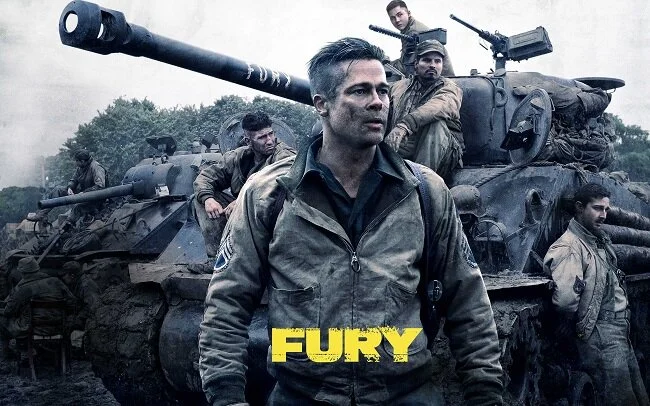
One of the things that immediately strikes you when watching Fury is its credibility and realism. The film reeks of authenticity. Every aspect of the production has been meticulously researched, from uniform and equipment, to ordnance and tactics. The M4A3E8 Sherman tank was not only the workhorse of the US Army but also a home for its five man crew. Director David Ayer makes this idea the foundation of his movie and then proceeds to explore those two perennial themes, the horrors of war and the loss of innocence. The film focuses on the experiences of the crew consisting of Don "Wardaddy" Collier (Brad Pitt), gunner Boyd "Bible" Swan (Shia LeBeouf), loader Grady "Coon-Ass" Travis (Jon Bernthal), and driver Trini "Gordo" Garcia (Michael Peña). They’re a tight knit family, relying on each other to stay alive and keep their mental stability.
One of the things that immediately strikes you when watching Fury is its credibility and realism. The film reeks of authenticity. Every aspect of the production has been meticulously researched, from uniform and equipment, to ordnance and tactics. The M4A3E8 Sherman tank was not only the workhorse of the US Army but also a home for its five man crew. Director David Ayer makes this idea the foundation of his movie and then proceeds to explore those two perennial themes, the horrors of war and the loss of innocence. The film focuses on the experiences of the crew consisting of Don "Wardaddy" Collier (Brad Pitt), gunner Boyd "Bible" Swan (Shia LeBeouf), loader Grady "Coon-Ass" Travis (Jon Bernthal), and driver Trini "Gordo" Garcia (Michael Peña). They’re a tight knit family, relying on each other to stay alive and keep their mental stability.
In many respects Fury tells a very traditional story, as a new crew member Norman Ellison (Logan Lerman) joins the team and the movie is told from his perspective. What makes the proceedings different is the setting (with its tangible sense of claustrophobia) and the reluctance by the director to place the protagonists on a pedestal. These soldiers have a job to do and they deal with it by stripping away the moral ambiguity and psychological ramifications associated with warfare. They undertake their duties in a clinical and functional manner out of necessity and it's not pretty. In some respects Fury has many similarities with Sam Peckinpah’s Cross of Iron (1977) and Samuel Fuller’s The Big Red One (1980). It certainly doesn't have the rose tinted, moral perspective of Spielberg's Saving Private Ryan (1998) which was undermined by its bookend scenes.
With a movie such as this where the plot hinges on the tight knit social dynamics of the tank crew, you need a strong cast and Fury has this in spades. All actors put in strong performances, especially Shia LeBeouf who plays a lay preacher struggling to reconcile his faith with the carnage around him. Director Ayer also cranks up the tension outside of the battle scenes. After capturing a German town the tank crew enters a house to find two terrified women who naturally expect the worst. In a desperate attempt for normality and for a brief respite from the war, Sergeant Collier tries to impose some order on their lives by having a meal around a dinner table. Sadly, it does not go well and highlights the mental strain that all are under.
There are two stand out battle scenes in Fury that really leave their mark on the viewer. One involves a formation of four Sherman tanks taking on a German Tiger I, which was a technically superior vehicle. The tactics are credible and realistic, as is the depiction of the damage armour piercing ordnance can do. Then there is the climactic battle in which the crew of Fury expend all the ammunition they have in an attempt to fend off a column of three hundred Waffen-SS infantry. Both these scenes are compelling and tense. We see the realities of being on the receiving end of a .50 calibre Browning or a shell loaded with white phosphorus. However, director David Ayer finds the right balance with these scenes of violence and injury and does not teeter into excess.
The ending of Fury may not come as any surprise and it makes perfect sense within the context of the story. Anything else would harm the credibility of the movie and possibly be disrespectful to those who did serve under such conditions. There is a nod to traditional war movie symbolism as the film starts and ends with a white horse. As World War II recedes further into the past and the public’s connection to it becomes less and less each year, it is important that the subject is still explored by cinema. Fury offers a fresh perspective on the conventional trope that "war is hell". It is a theme that remains relevant and still provides quality film makers with a rich vein of material to mine. It is technically accurate and certainly flies in the face of standard Hollywood depictions of military engagements.

Those Who Wish Me Dead (2021)
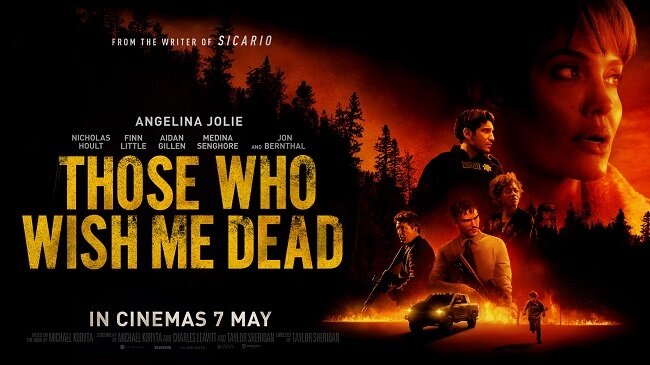
Forensic accountant Owen Casserly (Jake Weber) flees his home with his teenage son Connor (Finn Little) when he discovers he has been targeted by a pair of assassins (Nicholas Hoult and Aidan Gillen) who have been hired to stop him giving evidence in a major corruption case. Connor witnesses the murder of his father after their car is run off the road. Entrusted with important written evidence, he escapes into the dense forests of the Montana wilderness pursued by the killers. Seeking help he runs into smokejumper Hannah Faber (Angelina Jolie) who is stationed at a remote fire lookout tower. Hannah suffers from PTSD from a previous forest fire in which she was unable to save three young boys. Hannah attempts to lead Connor through the forest to safety. Meanwhile the assassins set fire to the forest to divert the attention of the authorities and cover their tracks.
Forensic accountant Owen Casserly (Jake Weber) flees his home with his teenage son Connor (Finn Little) when he discovers he has been targeted by a pair of assassins (Nicholas Hoult and Aidan Gillen) who have been hired to stop him giving evidence in a major corruption case. Connor witnesses the murder of his father after their car is run off the road. Entrusted with important written evidence, he escapes into the dense forests of the Montana wilderness pursued by the killers. Seeking help he runs into smokejumper Hannah Faber (Angelina Jolie) who is stationed at a remote fire lookout tower. Hannah suffers from PTSD from a previous forest fire in which she was unable to save three young boys. Hannah attempts to lead Connor through the forest to safety. Meanwhile the assassins set fire to the forest to divert the attention of the authorities and cover their tracks.
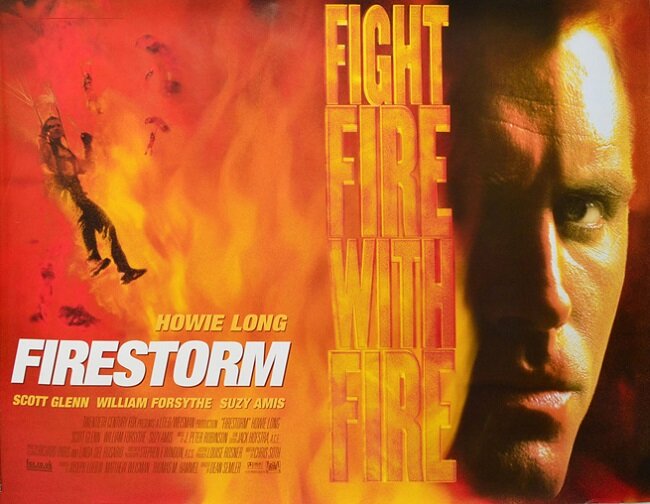
Upon reading the plot synopsis for Those Who Wish Me Dead, I immediately thought of the 1998 action movie Firestorm starring Howie Long. However upon further consideration the similarities lie purely in the setting. Those Who Wish Me Dead aspires to be a little more than just an action vehicle although it includes many familiar tropes. Angelina Jolie treads Liam Neeson territory with her “wounded Lion” role. The central character is a “wild card” with a past who is seeking redemption. However, despite a plethora of familiar plot themes, director Taylor Sheridan (Yellowstone) chooses to focus on character and story. There are some solid and somewhat brutal action scenes but they are not the heart of the proceedings. The film’s pacing is somewhat languid as a consequence. The writer of the source novel, Michael Koryta, is credited as having co-written the screenplay and it may be the case that he wanted to focus more on the characters nature, rather than their deeds.
Angelina Jolie acquits herself well and is very watchable, handling the physical demands of her role well. Finn Little similarly is a plausible young teenager, suitably traumatised and yet resourceful. Teenagers are so often depicted in a tiresomely formulaic manner in these sorts of films, so it is quite refreshing to have a more palatable character. Furthermore, Those Who Wish Me Dead flips several common place genre tropes. The two assassins are in fact brothers and this gives an interesting dynamic to their interactions. They’re both clearly psychotic and simply view their work as a process, which they undertake in a very matter of fact manner. We don’t necessarily learn a lot about them but they are more than just the standard “off the peg” bad guys required in action movies And then there’s the pregnant wife of the local sheriff, Alison played by (Medina Senghore) who quickly contradicts the woman in danger trope.
Overall Those Who Wish Me Dead is a more polished and finely honed action movie than your average studio genre material. It is raised to a higher standard because of the central performances and due to the competence of the cast. The digital FX work is also very good finding the right balance between creating spectacle and not overplaying its hand. As a result the burning forest seems a genuine threat. These high production values along with a story that is prepared to fly in the face of some of the genre’s more common attributes makes Those Who Wish Me Dead better than average. The presence of Angelina Jolie may well broaden the film’s appeal beyond action fans. She has the acting chops to play a firefighter, although she still doesn’t quite look the part. And if given a choice I would recommend Those Who Wish Me Dead over Firestorm.






Source Code (2011)
I wanted to watch Source Code for a second time before I wrote about it. This is because numerous internet debates have arisen regarding the plausibility of the film’s ending. I find this a somewhat curious stance considering that the story, written by Ben Ripley, deals with temporal travel and multiple timelines. All of which are purely theoretical and not currently subject to singular, definitive interpretations. I would further add that the science of the film is simply a plot device and is not its raison d'être. But that’s movies for you. People love to discuss them and more recently we have seen the rise of “explanation” videos on YouTube. However, the latter is a separate debate and something I may write about in the future. As for Source Code, I enjoyed it even more the second time round, as I had the time to focus on the minor details rather than trying to stay abreast with the main plot, as I did on my first viewing.
I wanted to watch Source Code for a second time before I wrote about it. This is because numerous internet debates have arisen regarding the plausibility of the film’s ending. I find this a somewhat curious stance considering that the story, written by Ben Ripley, deals with temporal travel and multiple timelines. All of which are purely theoretical and not currently subject to singular, definitive interpretations. I would further add that the science of the film is simply a plot device and is not its raison d'être. But that’s movies for you. People love to discuss them and more recently we have seen the rise of “explanation” videos on YouTube. However, the latter is a separate debate and something I may write about in the future. As for Source Code, I enjoyed it even more the second time round, as I had the time to focus on the minor details rather than trying to stay abreast with the main plot, as I did on my first viewing.
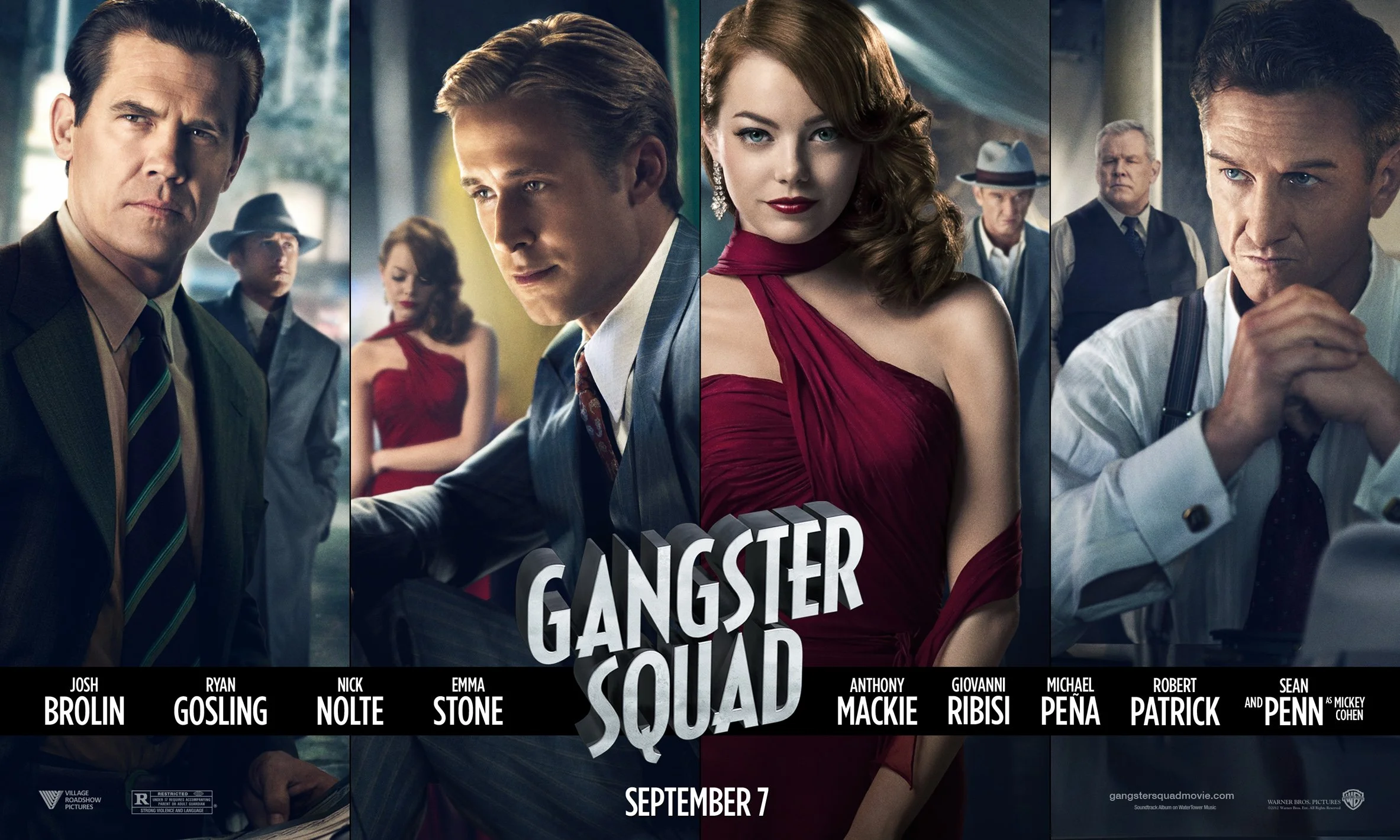
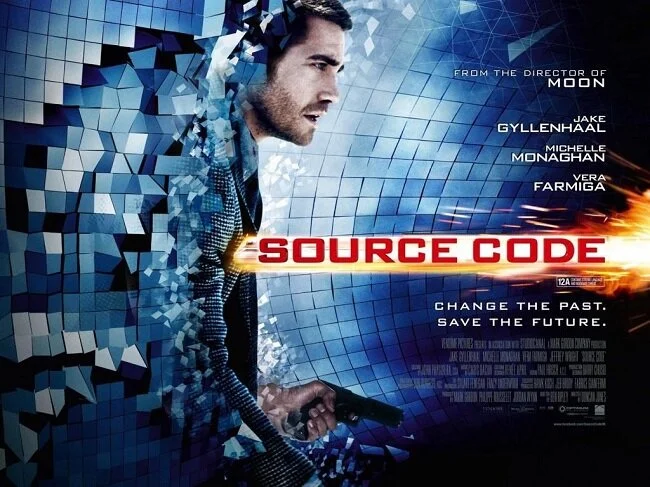
Army Captain Colter Stevens (Jake Gyllenhaal) wakes to find himself on a train, occupying the body of a teacher called Sean Fentress who is commuting to work in Chicago. Stevens is confused and disorientated as the last thing he remembers is being on a mission in Afghanistan. 8 minutes later the train explodes due to a terrorist bomb. He then awakes again to find himself in a dimly lit cockpit. Communicating via a video link, Air Force Captain Colleen Goodwin (Vera Farmiga) explains that he is on a covert mission to identify the terrorists that caused the attack before returning him back to the train to relive the 8 minutes again. Stevens is sceptical at first as he has no memory of events prior to the mission. However he surmises that he is being tested and continues to return to the train multiple times in an attempt to gain vital intelligence. As he observes the other passengers he forms a bond with his traveling companion Christina (Michelle Monaghan). Can he change the events that have happened or is he simply creating an alternative reality?
Source Code is an intelligent, well packaged film that manages to provide mainstream entertainment without the need to condescend to its audience. Director Duncan Jones, is cinematically literate and the film has clear nods to Groundhog Day, Rashomon and even Tony Scott's Deja View. He explores themes such as personal identity and the nature of existence, yet does not allow such philosophical musing to slow the action or bore the viewer. As science shatters traditional myths such as linear time, the film challenges our perceptions with some creative ideas. The central performances by Jake Gyllenhaal and Michelle Monaghan, are very strong. The concept of two strangers forming a strong bond under extreme circumstances reminded me of David Niven and Kim Hunter in A Matter Of Life And Death. There is an amusing homage to the cinematic cliché of the "evil scientist", with actor Jeffrey Wright sporting a walking stick. It should also be noted that the Source Code storyline unfolds in a tidy ninety plus minutes and does not suffer from the current Hollywood trend of out staying its welcome.
Christopher Nolan set the bar very high with Inception, proving that films with strong narratives and requiring the audience to think, can be financially successful. Source Code was similarly met with equally strong critical and public approval upon its release. Its narrative is not quite as complex as Nolan’s opus but it does require a degree of reflection by the viewer. Where Source Code compensates for its convoluted science fiction plotline is with its characters and the human drama they share. Captain Stevens isn’t just on a mission to identify a terrorist. He quickly becomes invested in trying to save the passengers on the train. His companion Christina is a very engaging foil and the romantic element of the plot is very much a hark back to the golden age of Hollywood. The film ends in quite a bold fashion with both good and bad events occurring in separate realities. Science fiction films seldom have this emotional depth, making Source Code far more accessible to wider audiences.







Flight of the Living Dead (2007)
Sometimes just the name of a film is sufficient to sell it to you. I originally discovered this zombie crossover movie thanks to film critic Mark Kermode's video blog from the 2008 Cannes Film Festival. He reported on how the film festival was also a major marketplace for independent movie makers trying to find international distribution for their products. Flight of the Living Dead was one of the lurid flyers he was given. Writer and director Scott Thomas claimed at the time that despite the obvious plot similarities with Snakes on a Plane, his film was not intended to be a quick cash-in on Samuel L. Jackson’s sleeper hit from 2006. The basic concept and the pre-production phase of Flight of the Living Dead supposedly pre-dates the aforementioned exploitation movie. Considering how long it can take for a small independently funded movie to find a distributor this may well be true.
Sometimes just the name of a film is sufficient to sell it to you. I originally discovered this zombie crossover movie thanks to film critic Mark Kermode's video blog from the 2008 Cannes Film Festival. He reported on how the film festival was also a major marketplace for independent movie makers trying to find international distribution for their products. Flight of the Living Dead was one of the lurid flyers he was given. Writer and director Scott Thomas claimed at the time that despite the obvious plot similarities with Snakes on a Plane, his film was not intended to be a quick cash-in on Samuel L. Jackson’s sleeper hit from 2006. The basic concept and the pre-production phase of Flight of the Living Dead supposedly pre-dates the aforementioned exploitation movie. Considering how long it can take for a small independently funded movie to find a distributor this may well be true.
Dr. Bennett (Erick Avari) and his team of scientists are en route to Paris, transporting a cryogenically frozen coffin in the hold of the plane. The flight crew are unsettled not only by the presence of a cadaver but by the fact there's an armed guard securing it. The plane finds itself in the middle of a violent storm, which inevitably leads to the coffin accidentally being opened. It contains a mysterious woman, who doesn't appear to be quite dead. After attacking the guard she soon starts to spread her contagion among the rest of the crew and passengers. The survivors, including a policeman and prisoner as well as a golf pro and his wife, make a desperate last stand against the zombies and try to land a damaged plane. However, the authorities have other ideas and a military option soon becomes apparent.
Director Scott Thomas does not leave a single horror cliché left unturned in what is a surprisingly enjoyable tongue in cheek "B" horror movie. There is a capable cast of TV and genre actors such as David Chisum, Kristen Kerr, Kevin J. O'Connor, Richard Tyson and Raymond J. Barry. Furthermore Thomas has crafted a professional looking production despite the limited budget at his disposal. The make-up FX's are perfectly acceptable and the CGI work is better than what you usually see in such low budget movies. The script is the weakest aspect of the film and could have been tighter and a little more satirical. It struggles at times to decide what direction it wants to take. Overall the cast has a great time despite these shortcomings and I couldn't help but enjoy the film, as it has no pretensions to be anything other than what it is.
Flight of the Living Dead is the very essence of direct-to-video filmmaking and "high concept" movie and that's meant as a compliment. Long time horror fans have a highly attuned grading system when it comes to these sorts of movies. This movie is a cut above your standard cash-in bullshit. It puts a grin on your face with the sheer gall of its title and manages to maintain that goodwill for the remaining ninety minutes. Sometimes these DTV titles have a candour about them that is absent in the bigger budget and often more pretentious cousins. It is not as gory as it could be and the scope of the story pretty much remains within the confines of the title but if you want 90 minutes of zombie mayhem set on a plane then Flight of the Living Dead meets that requirement.




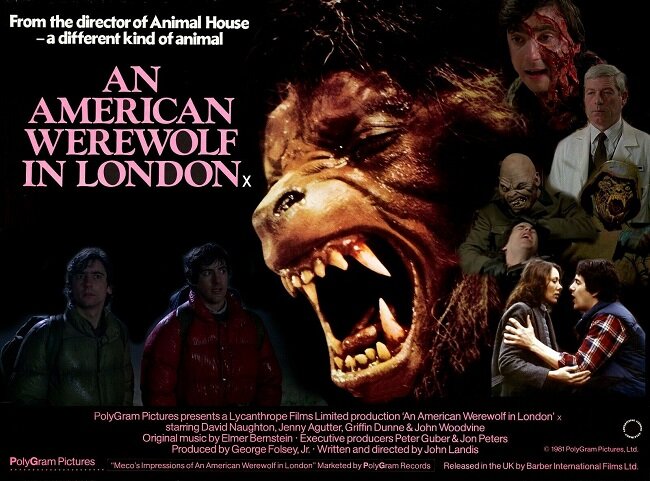
Classic Movie Themes: An American Werewolf in London
An American Werewolf in London is a genre milestone and one of the few horror films that successfully manages to balance humour and suspense without mitigating the overall tone of the story. 40 years on from its theatrical release it still holds up well with its bitter sweet love story, tragic themes and ground breaking transformation effects by Rick Baker. Director John Landis never really bettered this concise and effective genre outing. It hits the mark in virtually every part of the production. However, there is one aspect of the film that does suffer as a result of the director’s personal choices. Whether it is to the detriment of the overall film is debatable. The point in question is the film’s soundtrack and the director’s focus upon the song Blue Moon by Richard Rodgers and Lorenz Hart.
An American Werewolf in London is a genre milestone and one of the few horror films that successfully manages to balance humour and suspense without mitigating the overall tone of the story. 40 years on from its theatrical release it still holds up well with its bitter sweet love story, tragic themes and ground breaking transformation effects by Rick Baker. Director John Landis never really bettered this concise and effective genre outing. It hits the mark in virtually every part of the production. However, there is one aspect of the film that does suffer as a result of the director’s personal choices. Whether it is to the detriment of the overall film is debatable. The point in question is the film’s soundtrack and the director’s focus upon the song Blue Moon by Richard Rodgers and Lorenz Hart.
Hollywood veteran, Elmer Bernstein, was commissioned by Landis to write the score for An American Werewolf in London. But Landis had already decided to use a selection of songs to play during key scenes. All of which referenced the moon in some fashion, thus ironically highlighting the significance of the lunar cycle in lycanthropy. Hence the film starts with Blue Moon by Bobby Vinton playing over the opening credits. Moondance by Van Morrison is used during a love. Bad Moon Rising by Creedence Clearwater Revival accompanies a scene where the lead actor David Naughton anxiously paces round Nurse Price’s flat. Then perhaps the most notable use of a song is during the iconic werewolf transformation scene, which features Blue Moon by Sam Cooke. Finally, the end credits roll to a doo-wop version of Blue Moon by The Marcels.
The use of these songs is appropriate and more to the point works within the context of the film. I certainly understand why John Landis chose to juxtapose the shocking imagery of the werewolf transformation sequence with the sweat and wholesome tones of Sam Cooke. However, it does raise the question why employ such a canny and talented composer as Elmer Bernstein if you’re not really going to use their work. Because Bernstein did indeed compose a cue specifically for the werewolf scene, despite being told by Landis that it wouldn’t be required. He apparently produced a lot more material for the film that wasn’t used but did so as a safety net in case Landis could not secure the licenses for the songs he intended to use. You can find a detailed account of the story behind this decision over at Hollywood and All That, which makes for interesting reading if you’re a movie trivia aficionado.
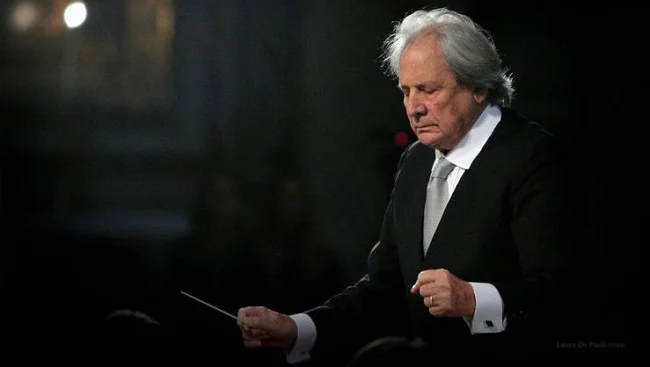
There has never been a comprehensive or in fact any kind of release of Elmer Bernstein’s score for An American Werewolf in London. Soundtrack albums associated with the film tend to focus on the songs. There is a disco album by Meco called Impressions of An American Werewolf in London, which is best not talked about. However, one of the unused cues for the film surfaced in 2005. Composer and arranger Nic Raine specialises in re-recording classic film soundtracks in conjunction with the Prague Philharmonic. The Essential Elmer Bernstein Film Music Collection features a track called “Metamorphosis”. It is a five minute piece with two distinct phases. It has subsequently been determined that part of this is indeed the cue that Bernstein wrote for the werewolf transformation. Furthermore, attentive listeners have determined that elements of this track were used in Michael Jackson’s Thriller, which was also directed by John Landis and credits Elmer Bernstein for scary music.
At present, there are only bootleg scores for An American Werewolf in London or YouTube videos featuring music extracted directly from DVD or Blu-ray releases of the film. One such track circulating under the title “An American Werewolf in London suite”, features just under 4 minutes of material from Bernstein’s soundtrack. I have included it here because, despite its brevity, it includes the beautiful central motif played on piano.
As a bonus, we also have Nic Raine’s re-recording of the lost “Metamorphosis” cue. Perhaps one day a comprehensive reconstruction of the entire score will be undertaken. Until then enjoy these two tracks.







Death Race (2008)
I must admit that I did not have particularly high hopes for Paul W S Anderson's remake of the 1975 Roger Corman produced cult classic. Anderson’s work varies greatly. Event Horizon and Soldier are solid genre films but I still have not fully come to terms with Alien vs. Predator. Jason Statham is also a name that divides the public, with solid material such as The Transporter and unfathomable tosh like Revolver. But despite these considerations, Death Race is in fact quite a surprise and does not follow the path that so many remakes do. It takes the basic themes and concept associated with the original and tries to do something different with them. It doesn’t reinvent the wheel nor is it a genre milestone. But it does offer a different spin on things, have some engaging action scenes and provide some dumb but enjoyable entertainment. When combined with snacks and some beer this is a passable way to kill 111 minutes.
I must admit that I did not have particularly high hopes for Paul W S Anderson's remake of the 1975 Roger Corman produced cult classic. Anderson’s work varies greatly. Event Horizon and Soldier are solid genre films but I still have not fully come to terms with Alien vs. Predator. Jason Statham is also a name that divides the public, with solid material such as The Transporter and unfathomable tosh like Revolver. But despite these considerations, Death Race is in fact quite a surprise and does not follow the path that so many remakes do. It takes the basic themes and concept associated with the original and tries to do something different with them. It doesn’t reinvent the wheel nor is it a genre milestone. But it does offer a different spin on things, have some engaging action scenes and provide some dumb but enjoyable entertainment. When combined with snacks and some beer this is a passable way to kill 111 minutes.
Death Race is not an exact retread of the original movie. It bears more similarities to Arnold Schwarzenegger's The Running Man but avoids any attempt at social commentary. The plot is very matter of fact and established very quickly. In the near future, the US has suffered a complete economic collapse. Unemployment and poverty stalk the land, like two giant stalking things (to quote Blackadder). Ex-professional driver Jensen Ames (Jason Statham) is framed for his wife’s murder and ends up in the proverbial big house. Evil Warden Hennessey (Joan Allen) who makes a profit from the prison system by staging a brutal set of fatal demolition derby’s, blackmails Jensen into driving under the guise of punters favourite, “Frankenstein”. The deal is that he’ll earn his freedom if he co-operates. He is aided in his endeavours by institutionalized mechanic “Coach” (Ian McShane) and his navigator Case (Natalie Martinez).
Death Race is actually an honest action movie, avoiding the usual pitfalls of being too OTT or having delusions of grandeur. The script is tight and serviceable, not straying from the accepted formula. There are no major surprises but it is not predictable to the point of tedium. The visual feel and production design are solid and the stunt driving and FXs work are good. There are several affectionate homage to well known road and action movies. The violence is strong but not gloating or gratuitous. For a genre piece, the actors and performances are above average. It’s nice to see Joan Allen indulge in action movie smacktalk. “Okay cocksucker. Fuck with me and we’ll see who shit’s on the sidewalk!” The soundtrack is also very appropriate for the subject matter, with a good selection of songs and metal riffs.
Director Anderson meets audience expectations with Death Race. Don’t get me wrong, this film is still a somewhat niche market product. Fans of costume dramas and character studies will still struggle to define the film's philosophical subtext. But for those wanting a fix of old school action with a squared jawed hero, you can’t go far wrong with Death Race. The film was sufficiently successful to spawn three direct-to-video sequels. Death Race 2 (2010), Death Race 3: Inferno (2013) and Death Race: Beyond Anarchy (2018). However, Jason Statham didn’t see fit to return so is conspicuously absent from them. He is replaced by Luke Goss in the first two follow ups and then Zach McGowan in the last. The budgets and quality decline exponentially as the franchise progresses, as is often the case with these sorts sequels. So I can’t recommend them to anyone but the most ardent genre aficionado.
The Happening (2008)
I revisited M Night Shyamalan's The Happening recently to try and determine whether he is indeed suffering from Orson Welles syndrome. IE that he has made all his best work at the beginning of his career. Because he’s never quite recaptured the critical or artistic success of The Sixth Sense, Unbreakable and Signs. I was one of the few that actually liked The Lady in The water but I could see why viewers would assume that he had become a victim of his own style and technique with that particular movie. Casting yourself as an author whose work will reshape society and change the course of history is at the very least, a little egotistical and at worst an act of immense hubris. Then in recent years we have had The Last Airbender and After Earth, both of which have performed poorly. However I thought I'd give The Happening another chance as it remains the directors only R rated movie to date.
I revisited M Night Shyamalan's The Happening recently to try and determine whether he is indeed suffering from Orson Welles syndrome. IE that he has made all his best work at the beginning of his career. Because he’s never quite recaptured the critical or artistic success of The Sixth Sense, Unbreakable and Signs. I was one of the few that actually liked The Lady in The water but I could see why viewers would assume that he had become a victim of his own style and technique with that particular movie. Casting yourself as an author whose work will reshape society and change the course of history is at the very least, a little egotistical and at worst an act of immense hubris. Then in recent years we have had The Last Airbender and After Earth, both of which have performed poorly. However I thought I'd give The Happening another chance as it remains the directors only R rated movie to date.
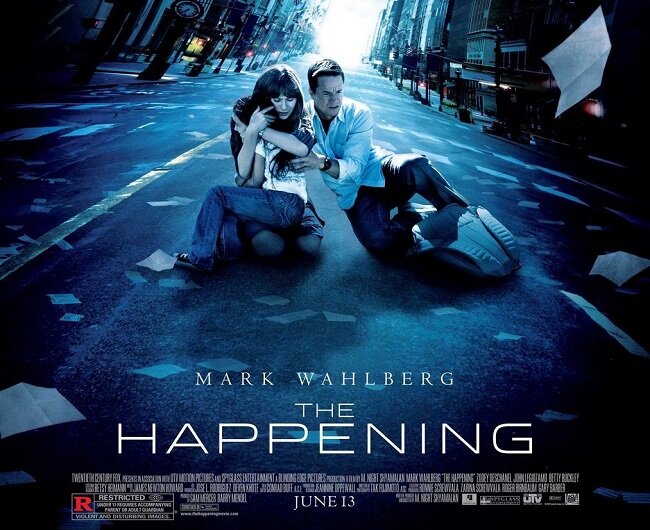
Elliot (Mark Wahlberg) and Alma Moore (Zooey Deschanel) are a married couple caught up in a mass panic spreading across the East Coast of the US. A wave of inexplicable suicides has started among the general public. They flee from New York with work colleague Julian (John Leguizamo) and his young daughter Jess, only to find that the disaster is spreading further West across the country and becoming more accurate in targeting humans. What was initially assumed to be an act of bio-terrorism turns out to have a far more esoteric answer. Writer and director M Night Shyamalan focuses on the perennial theme of how humans deal with extreme situations and threats to their own mortality. There are also some interesting ideas about the environment and nature being a living entity that responds when the balance is drastically altered. The topical matter of the ongoing decline of the honey bee is also a facet of the plot.
Sadly, while the initial premise is intriguing, its execution adds further weight to the argument that Shyamalan should defer to more accomplished screenwriters capable of developing his ideas more effectively. Despite a reliable cast of character actors, the dialogue is obvious and at times crass, leaving all concerned with little to do except emote sincerely. There is also an air of sanctimony about the screenplay that rather spoils the interesting premise. Once the ecological plot twist is revealed the narrative takes a somewhat didactic tone. The central characters are also somewhat weak and not especially likeable. A rift in the main protagonist's relationship turns out to be only minor. It would have been far more challenging if one was actually an adulterer, thus making their redemption harder to achieve. A greater sense of societal panic is also absent. The film needs clearer examples of social disorder and breakdown to reinforce the magnitude of events
Yet despite these criticisms, there are some sequences that show a great deal of creative flare. There's a shocking scene when construction workers start to hurl themselves from the roof of the building they're working on. A tracking shot following a Police officer's handgun as it is used in subsequent suicides, is also impressively realised. Once again, composer James Newton Howard embellishes Shyamalan's work with an exceptionally clever and subtle score. The two seem to have a very good creative relationship. Upon its initial release, the distributors made much of the film’s rating. Perhaps they saw this as it's only virtue. There is more violence compared to his other work. Given the subject matter this is understandable. Overall The Happening is a missed opportunity. Again I feel that Mr. Shyamalan's work would benefit from an additional writer to strengthen his weaknesses and curb his excesses. Sadly several movies on from The Happening and the same mistakes keep getting made.
Fandom: Experiencing the Same Thing Differently
I like films. I have done so since I was a young child, mainly because we watched them as a family. Furthermore, both my parents weren’t just casual viewers. They were fans who were knowledgeable about their hobby. Plus they came from a generation where going to the cinema was a major part of their life and a very accessible pastime. Hence my love of film, filmmaking and analysis. But like any form of fandom, it can often be a very broad church. For example, I may be at a social gathering such as a dinner party or a fundraising event for the Humber and District Catholic River-Wideners Club and I strike up a conversation with a stranger. The stilted conversation turns to film (or more informally “movies) and for a brief moment, there is the possibility of a shared interest. However, if the other party then indicates that they are a committed advocate of the works of Ben Stiller, then that common ground evaporates like a politician's promises after election day.
I like films. I have done so since I was a young child, mainly because we watched them as a family. Furthermore, both my parents weren’t just casual viewers. They were fans who were knowledgeable about their hobby. Plus they came from a generation where going to the cinema was a major part of their life and a very accessible pastime. Hence my love of film, filmmaking and analysis. But like any form of fandom, it can often be a very broad church. For example, I may be at a social gathering such as a dinner party or a fundraising event for the Humber and District Catholic River-Wideners Club and I strike up a conversation with a stranger. The stilted conversation turns to film (or more informally “movies) and for a brief moment, there is the possibility of a shared interest. However, if the other party then indicates that they are a committed advocate of the works of Ben Stiller, then that common ground evaporates like a politician's promises after election day.
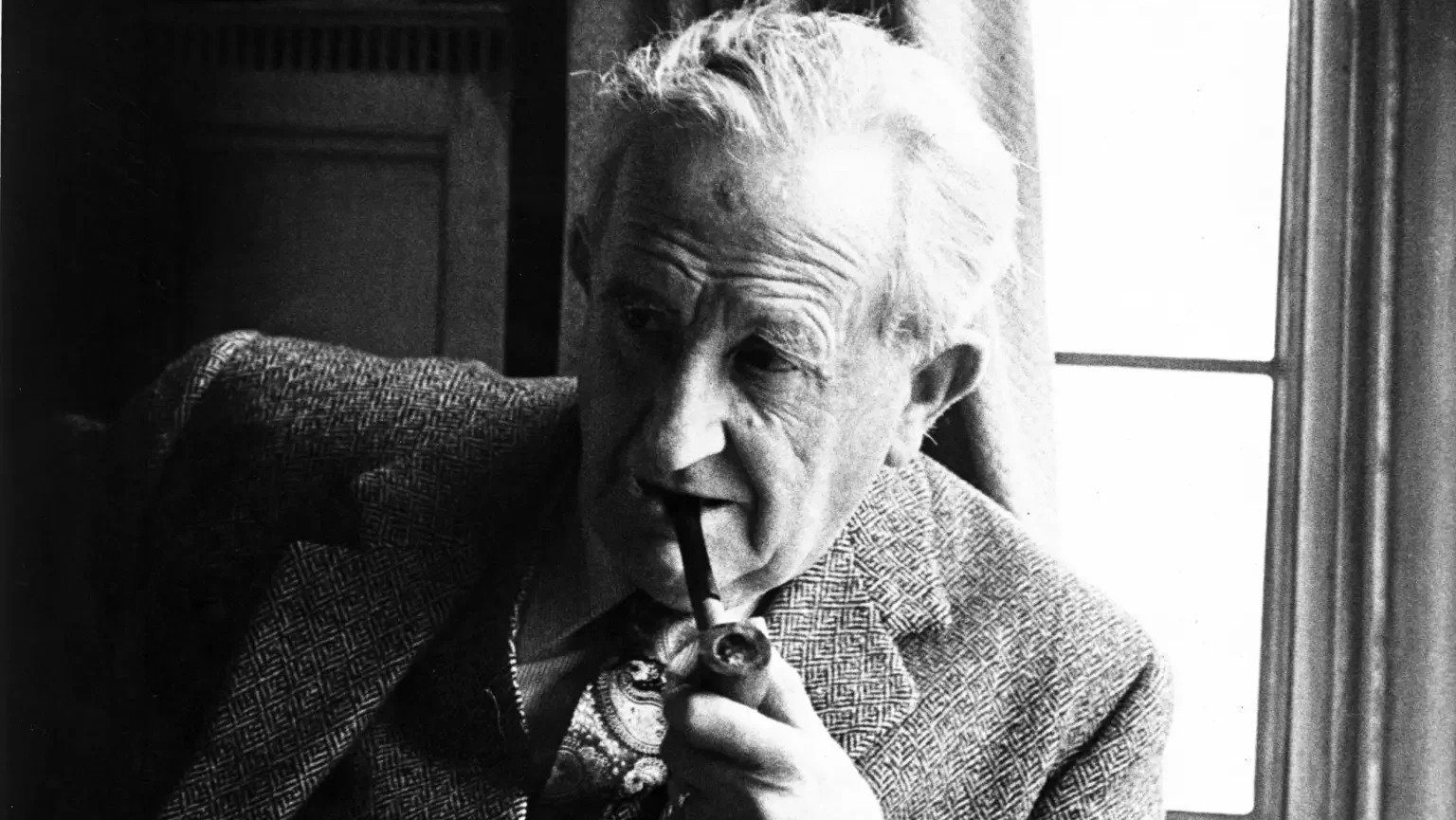
Belghast wrote a very interesting blog post today about “subculture and gatekeeping” and how fandom is often very personal as we seek to define ourselves during our teenage years. Hence it can lead to a sense of ownership and even gatekeeping. Tangentially, one sentence in the post stood out for me and is relevant to the theme of this post. "RHCP (Red Hot Chilli Peppers) had sorta been one of those arcane signals of belonging that helped us find more members of our tribe. Even though that “tribe” was contorted as fuck because none of us actually had the exact same ideals or beliefs or even hobbies". That is a succinct description of the point I was making earlier. E.g. “I like movies. You like movies as well? Oh, you like those movies”. Again we return to the concept that fandom as a broad church and that a shared interest does not guarantee that you and the other party will have lots of other things in common. Something I discussed at length in a post about a shared love of Tolkien and how I was surprised when I found out that his work found traction with politicians I’m “at odds” with.
However, differing opinions can be a good thing and provide an alternative perspective upon a shared interest. They can also provide an opportunity to reappraise something. Film criticism is not pure science. One can make comments made upon objective facts, such as how well a film is edited, the quality of the cinematography and other technical aspects of the production. But whether a joke is funny, a character is likeable or a story arc is engaging or not is ultimately very personal and subjective. It comes down to taste and one’s own expectations. Which brings me to the point that sparked this post in the first place. The 1978 conspiracy thriller, Capricorn One. Blogger and writer Syp shared his thoughts on the film over at Mutant Reviewers. They differ from mine and it would appear that the aspects of the film that I specifically like, Syp does not. I like the seventies hard boiled dialogue and focus on verbal exposition. I also didn’t have an issue with the pace of the film.
I briefly spoke to Syp via Twitter regarding this, not to instigate a fanboy bunfight but to determine his perspective and it highlighted some very interesting points for me. Contemporary film and TV has a particular idiom and certainly a very fast pace, compared to material from the eighties and older. Hence if you are watching a TV show from the seventies or a movie from the forties, then it requires a form of mental recalibration so that you’re prepared for the obvious stylistic and technical differences. That is fine if you are approaching the content in a scholarly fashion or for an in depth critical analysis. If you’re simply watching for entertainment, then having to make that shift in perspective is quite a big ask and not necessarily one that is conducive to having fun. It is important to remember that we don’t all have the same relationship with a shared fandom and that we don’t all approach it with the same intent.
Every form of fandom has its own set of self appointed gatekeepers. They’re often also responsible for perpetuating an apocryphal dogma and trying to convince us it’s somehow legitimate. For example, in film fandom there is the cult of Stanley Kubrick in which any deviation from the consensus of his genius is deemed as heresy. Although I will strongly argue positively regarding the technical and thematic talent of the filmmaker, I would not say that all his work is accessible to everyone. The “detonator” for this particular debate being 2001: A Space Odyssey. As far as I’m concerned it is perfectly acceptable not to like a so-called “cinematic great”. I don’t care for Ridley Scott’s Blade Runner. I recognise the skill inherent in its making and I understand it’s cultural significance (like certain literary classics) but I don’t warm to the film.
So today was a timely reminder that the only universal constant in fandom is the inherent difference between fans themselves. I shall continue visiting Mutant Reviewers specifically because they will continue to offer an alternate view to my own, on many films that I love. Furthermore, those views are backed up with valid arguments, which is good because reviews that aren’t are ultimately just a series of unqualified statements. I will also continue to gently encourage people to step outside of their personal boundaries and to give wider material a try. However, I won’t give them a hard time if they do so and subsequently don’t enjoy the experience. Fandom is about shared enjoyment and enthusiasm, although paradoxically, that itself can be used to reinforce hierarchies and can lead to preposterous gatekeeping and the nonsensical “true fan” fallacy. Stay clear of all that. You do you. And if you really like the work of Ben Stiller, then so be it.











Zack Snyder's Justice League (2021)
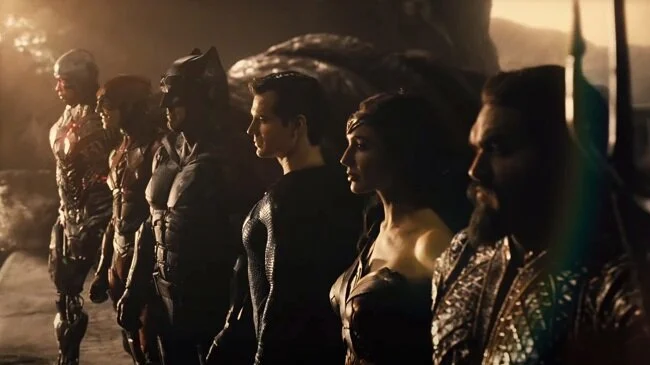
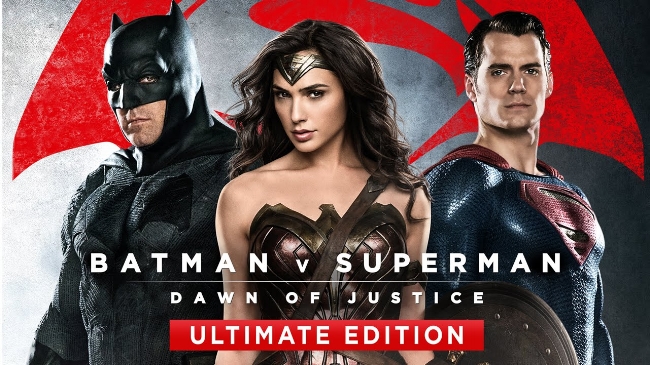
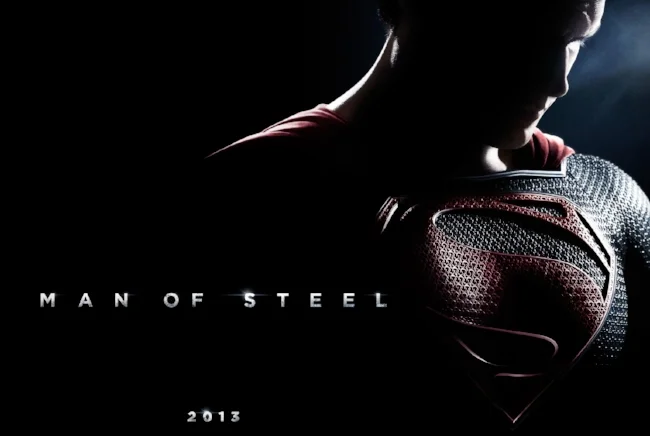
I enjoyed both Man of Steel and Batman v Superman: Dawn of Justice Ultimate Edition and consider them to be more than just standard, visual effects driven blockbusters. Zack Snyder’s exploration of the DC Expanded Universe blends the mythological fantasy of metahumans with a more cerebral dissection of their role in society. The political and philosophical dimensions of their presence is a key theme in both films. As a consequence there is ambiguity, darkness and violence. Snyder certainly has a penchant for visual flair, as seen in previous movies such as 300 and Watchmen. But his directorial style seems to be at odds with the very studios that employ him. Snyder tells a story in however much time it takes. Studios prefer standard running times that lend themselves to as many screenings a day, as possible. Hence there is always a clash of ideas and sadly those that hold the purse strings usually get their way.
I enjoyed both Man of Steel and Batman v Superman: Dawn of Justice Ultimate Edition and consider them to be more than just standard, visual effects driven blockbusters. Zack Snyder’s exploration of the DC Expanded Universe blends the mythological fantasy of metahumans with a more cerebral dissection of their role in society. The political and philosophical dimensions of their presence is a key theme in both films. As a consequence there is ambiguity, darkness and violence. Snyder certainly has a penchant for visual flair, as seen in previous movies such as 300 and Watchmen. But his directorial style seems to be at odds with the very studios that employ him. Snyder tells a story in however much time it takes. Studios prefer standard running times that lend themselves to as many screenings a day, as possible. Hence there is always a clash of ideas and sadly those that hold the purse strings usually get their way.
I see no reason to go over the sad circumstances that lead to Zack Snyder leaving the post-production phase of Justice League in 2016. Simply put Warner Bros. wanted the film to be released on schedule and so Joss Whedon was brought onboard to complete the production. 80 pages of rewrites and two month of additional shooting later led to a radically altered movie. It was demonstrably different in style as well as tone and it failed to find an audience. I found it to be ponderous, underwritten and underwhelming. Warner Bros. were far from pleased by the box office returns. Justice League, released in late 2017, merely yielded double its production costs, making $600 million. Roll on 4 years and we now have Zack Snyder's Justice League. A director’s cut of the film which is far more aligned with his original vision. Due to the pandemic, this version has gone direct to subscription services and has not seen a theatrical release. It would’ve been interesting if it would have fared any better at the box office second time round.
Before I start with my thoughts on Zack Snyder's Justice League, let me put my cards on the table. I am not a fully paid up DC aficionado. My exposure to this comic franchise is mainly through previous films. I have no knowledge of the wider lore, nor do I have any personal baggage with regard to personal attachment to characters. I grew up with Christopher Reeves as Superman and his performance was totally applicable to those times. However, that cinematic interpretation is era specific and not necessary now. So I consider myself open minded with regard to this franchise. What I expect from a film such as Zack Snyder's Justice League or indeed any other major franchise movie is for it to be accessible to both existing fans and the general public. Films of this nature need to engage with a much wider audience to be financially successful. Hence I expected Zack Snyder's Justice League to have a coherent narrative. Something the theatrical cut was lacking.
Mercifully, Zack Snyder's Justice League has a very linear and episodic story. In fact it is divided into chapters delineating the plot into specifically themed sections. This not only reflects the essential structure of comics themselves but allows the viewer to digest the sprawling narrative and its respective themes. There is a lot of exposition at various junctures in the story arc so breaking things down in this way again helps with making the plot accessible. Zack Snyder's Justice League is double the running time of the theatrical cut and clocks in at over 4 hours. Effectively all material that Zack Snyder shot has been reinstated and a great deal of it is character backstory. There are also major changes to the film’s visual FX, with villain Steppenwolf having a major makeover. Danny Elfman’s score has also been replaced by a new one by Tom Holkenborg. For a comprehensive breakdown Den of Geek has a very thorough article listing all differences.
The question on everyone’s lips, be they a layperson or a hardcore fan, is whether Zack Snyder's Justice League is better than Joss Whedon’s theatrical version? The answer is most definitely “yes” but that’s not to say that the film isn’t without faults. Perhaps the most positive change that standouts from the new director’s cut is the focus on each character’s motivation. This is especially beneficial for Victor Stone/Cyborg (Ray Fisher) whose backstory was utterly negated in the theatrical release. Here we see the troubled relationship he had with his Father and the tragedy of his Mother’s death and his own near fatal accident. His abilities show him the injustices of the world and how even a man with his powers would struggle to effect meaningful change. His story arc is far more engaging, meaningful and poignant. Similarly Arthur Curry/Aquaman (Jason Mamoa) has more depth to his story and does not come across as simply bellicose as he did in the Whedon version.
Zack Snyder's Justice League also offers a far more rounded and interesting villain this time round. Steppenwolf, voiced by Ciarán Hinds, now boasts a more threatening design and now has significantly more screen time, offering viewers an insight into his motivations and aspirations. Instead of being an arbitrary “bad guy” who is simply there to do “bad things”, we now have a character who is struggling with the internal politics of his own faction. Steppenwolf is a lieutenant who is seeking to advance his position after previously erring in his duties. He needs to get back in the good graces of his master, Darkseid. However, he does not have direct access to him and is forced to communicate via DeSaad, Darkseid's consigliere. Although far from Shakespeare, it is much more engaging to have an antagonist that has some depth to them, rather than just being a thematic placeholder.
However, Zack Snyder's Justice League is not without flaws. It is a little tonally inconsistent when it comes to the depiction of violence. The epic flashback to the Age of Heroes has a surprising amount of bloodshed compared to other sequences. Random acts of violence occur through the remainder of the film and every now and then, one will be somewhat more visceral than others. But perhaps the most incongruous aspect of Zack Snyder's Justice League is the inclusion of yet another vision of an apocalyptic future. This worked very well in Batman v Superman: Dawn of Justice Ultimate Edition, showing a possible timeline in which Superman had gone rogue due to the death of Lois Lane. But considering that a major element of Zack Snyder's Justice League is the necessity to bring Superman back from the dead thus restoring not only a balance of power but reiterating him as a force for good, it seems self defeating to infer the possibility that all of this may be for naught.
Naturally, fans of Zack Snyder’s work and his vision for the DC Expanded Universe, will enjoy this new director’s cut and extol its merits from a fans perspective. I certainly enjoyed it more than the theatrical release and was glad to see the back of the changes that Joss Whedon made. Barry Allen/The Flash (Ezra Millar) is no longer a trite comic foil and the new cut eliminates the rather crass diminishing of Diana Prince/Wonder Woman (Gal Godot) via all the flirting and objectification. For those who may be put off by the prodigious running time, the film now lends itself to being watched in instalments. The 4:3 aspect ratio is somewhat curious, although Snyder has stated that the film was shot open matte to make the framing optimal for the IMAX format. Paradoxically, Zack Snyder's Justice League is currently non-canonical. Joss Whedon’s theatrical cut made tonal and narrative shifts that have been continued into subsequent films. The success of the director’s cut may instigate a major course correction to this franchise. Or not. Studios seldom care about continuity, lore or even logic in comparison to the bottom line.
Batman: Return of the Caped Crusaders (2016)
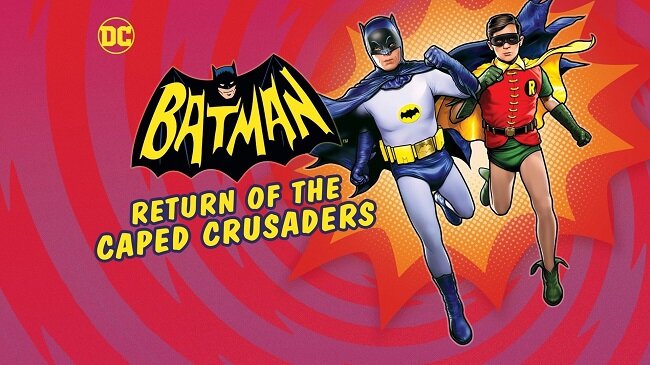
Although I have a passing interest in the franchise per se, I'm not a consummate fan of all things Batman. Hence a lot of content passes me by or I catch up with it years later. So it came as a great surprise when I discovered Batman: Return of the Caped Crusaders; a 2016 release in the ever growing catalogue of DC themed direct to DVD animated films. The movie is a de facto continuation of the sixties TV series, with the original actors reprising their roles (where possible). The cast includes Adam West as Batman, Burt Ward as Robin and Julie Newmar as Catwoman. Due to the death of actors Cesar Romero, Burgess Meredith and Frank Gorshin the voices for The Joker, The Penguin and The Riddler have been provided by Jeff Bergman, William Salyers and Wally Wingert. All of whom do their best to recreate the tone and idiom of the original artists.
Although I have a passing interest in the franchise per se, I'm not a consummate fan of all things Batman. Hence a lot of content passes me by or I catch up with it years later. So it came as a great surprise when I discovered Batman: Return of the Caped Crusaders; a 2016 release in the ever growing catalogue of DC themed direct to DVD animated films. The movie is a de facto continuation of the sixties TV series, with the original actors reprising their roles (where possible). The cast includes Adam West as Batman, Burt Ward as Robin and Julie Newmar as Catwoman. Due to the death of actors Cesar Romero, Burgess Meredith and Frank Gorshin the voices for The Joker, The Penguin and The Riddler have been provided by Jeff Bergman, William Salyers and Wally Wingert. All of whom do their best to recreate the tone and idiom of the original artists.
Bruce Wayne and Dick Grayson are watching their favorite show, Gotham Palace, when it is revealed that one of the bands playing has been replaced by the Joker, the Penguin, the Riddler, and Catwoman. Upon arriving at Gotham City Police Department, they receive a riddle from Commissioner Gordon and Chief O'Hara, which indicates that the villains are robbing the Acme Atomic Energy Laboratory. After a brief fight, the criminals manage to escape with the Replication Ray. Batman tracks the gang to an abandoned TV dinner factory. However, this is a trap as Catwoman plans to make Batman join the villains by scratching him with a substance called "Batnip". An altercation occurs and Catwoman uses her Batnip on Batman. It initially appears to have no effect but later Batman becomes more bellicose and fires Alfred. Using the recently recovered Replication Ray, Batman decides to duplicate himself to crack down on crime in Gotham. Mayhem ensues.
Batman: Return of the Caped Crusaders certainly captures the essence of the 1966 TV show. The character designs are all spot-on. The classic theme music is present and the overall score is composed in the idiom of Nelson Riddle’s original music for the show. And of course we get the onomatopoeia onscreen captions during various fist fights. The story and dialogue are very faithful to the source material with regular use of alliteration as well as Batman's penchant for imparting important life lessons to Robin at regular intervals. The first 20 minutes is very much like an episode of the TV series, with Batman and Robin pursuing their foes, engaging in fisticuffs and escaping contrived death traps. The plot takes an interesting change of direction in the second act, with Batman turning into an insufferable martinet. Overall, the screenplay manages to sustain the viewer’s interest and keep them onboard with the film’s central conceit.
Batman: Return of the Caped Crusaders works well because it isn’t a po-faced superhero action film. Writers Michael Jelenic and James Tucker lovingly poke fun at the source material and include numerous Batman related cameos and homages. Adam West even quotes several lines from Frank Miller's The Dark Knight Returns. No aspect of the original TV show is left unturned, throughout the film’s 78 minute running time. The fight scenes feature the “Dutch tilt”, Robin still has the ability to deduce Riddler's conundrums via the most incongruous logical gymnastics and Batman still sports the most incongruous selection of items on his utility belt. Not once does it feel that the source material is being mocked and the production’s affection for the original TV show is abundantly clear. Hence Batman: Return of the Caped Crusaders is a genuine homage and camp alternative to the somewhat dour, contemporary depictions of the Caped Crusader.







Star Trek: The Motion Picture - Director's Edition HD Recreation v3 (1979)
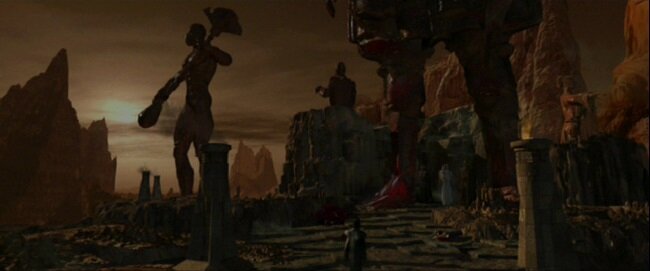
Star Trek: The Motion Picture is a wonderful paradox in the Star Trek cinematic pantheon. It is possibly the most hardcore science fiction story that the franchise has explored and is both simultaneously Trek-like and un-Trek-like. Director Robert Wise and the production team worked hard to deliver a completed film for the scheduled December 1979 release date. However, he felt that the theatrical version was only a “rough cut”. Hence in late 2001 he supervised a Director’s Edition of the film which runs 136 minutes (4 minutes longer than the theatrical release)and reinstates some additional scenes and replaces some of the optical effects with new CGI creations. Critics were divided as to whether the Director’s Edition improved the film overall but Wise felt that this version was much closer to his original vision. The Director’s Edition was released exclusively on DVD in standard definition.
Star Trek: The Motion Picture is a wonderful paradox in the Star Trek cinematic pantheon. It is possibly the most hardcore science fiction story that the franchise has explored and is both simultaneously Trek-like and un-Trek-like. Director Robert Wise and the production team worked hard to deliver a completed film for the scheduled December 1979 release date. However, he felt that the theatrical version was only a “rough cut”. Hence in late 2001 he supervised a Director’s Edition of the film which runs 136 minutes (4 minutes longer than the theatrical release)and reinstates some additional scenes and replaces some of the optical effects with new CGI creations. Critics were divided as to whether the Director’s Edition improved the film overall but Wise felt that this version was much closer to his original vision. The Director’s Edition was released exclusively on DVD in standard definition.
To date, only the theatrical version of Star Trek: The Motion Picture has been released on Blu-ray. The main stumbling block regarding the Director’s Edition appears to be the CGI FXs that were created by Foundation Imaging. There is an ongoing debate over whether the source material still exists (allegedly it does) and whether it is at a sufficient resolution for use in a high definition format. Until these matters are resolved, the Director’s Edition remains conspicuously absent on regular Blu-ray and UHD. However, never underestimate the resourcefulness of fans. I recently discovered a fan edit called Star Trek: The Motion Picture - Director's Edition HD Recreation v3. Created by the delightfully named ElectricTriangle. This is a robust recreation of the Director’s Edition but in 1080p. Like most fan edits it is not intended for commercial sale and is therefore not widely available.
I was fortunate enough to see a Star Trek: The Motion Picture - Director's Edition HD Recreation v3 recently and it achieves exactly what it sets out to do. ElectricTriangle has primarily sourced their fan edit from HDTV, which uses the same transfer as the Director’s Edition. The HDTV version suffers from a degree of low detail and compression but it has superior grain and contrast than the current Blu-ray release. The unique footage from the Director’s Edition DVD has been upscaled and some material color-corrected. To recreate some of the specific changes in the Director’s Edition, ElectricTriangle had to combine HD and upscaled SD footage and create some additional animation to seamlessly join them. There are in fact two finished versions of Star Trek: The Motion Picture - Director's Edition HD Recreation v3. A primary version uses the DE DVD effects when appropriate but also uses the original theatrical unaltered effects to preserve HD quality. And then there’s a purist edition that includes most all of the shots altered for the DE DVD. These have been upscaled. Both versions contain the additional dialogue scenes featured in the DE DVD.
Until Paramount decides to pay for a restoration of the Director’s Edition in high definition, ElectricTriangles version remains the last word with regard to Star Trek: The Motion Picture, unofficially speaking. It is as near as damn it, identical to Robert Wise’s extended cut and looks very handsome in 1080p. However, it should be noted that irrespective of the changes that both Robert Wise and in this case ElectricTriangle have made, the film remains slow and dialogue driven. That’s just the way the film was made and you cannot edit this quality away. However, the sedate pace affords the viewer plenty of time to appreciate Jerry Goldsmith’s sumptuous score, which remains one of the film’s greatest assets. To paraphrase the tagline that accompanied the film upon its original release, “the human adventure is just beginning”. It’s just that it’s not in a hurry.

Star Trek: Beyond the Barrier (1989)
Fan Edits are a curious film sub genre. Some simply reinstate deleted scenes to maximise the running time of a movie. Others will remove footage and seek to reorder events in the name of coherency. But a few are far more ambitious. Rather than just reshape what is there, they will shoot new footage to replace material deemed substandard and seek to totally reimagine a movie. On even rarer occasions a few manage to actually improve upon the original, rather than just offering an augmented version. Which leads me onto Star Trek: beyond the Barrier, an interesting and very enjoyable fan edit of Star Trek V: The Final Frontier by Anti-Matter from deLimited Productions. It attempts to repair many of the problems found in the theatrical release of the movie. Some would argue that such a task is a Kobayashi Maru test in itself. However, the results are surprisingly good and some tongue in cheek humour shows that the creator understands the nature of their task.
Fan Edits are a curious film sub genre. Some simply reinstate deleted scenes to maximise the running time of a movie. Others will remove footage and seek to reorder events in the name of coherency. But a few are far more ambitious. Rather than just reshape what is there, they will shoot new footage to replace material deemed substandard and seek to totally reimagine a movie. On even rarer occasions a few manage to actually improve upon the original, rather than just offering an augmented version. Which leads me onto Star Trek: beyond the Barrier, an interesting and very enjoyable fan edit of Star Trek V: The Final Frontier by Anti-Matter from deLimited Productions. It attempts to repair many of the problems found in the theatrical release of the movie. Some would argue that such a task is a Kobayashi Maru test in itself. However, the results are surprisingly good and some tongue in cheek humour shows that the creator understands the nature of their task.
Star Trek V: The Final Frontier had a troubled production that is very well documented. The film’s Wikipedia page provides a lot of detail but to summarise, the budget was cut during production due to other studio projects under performing at the box office and the contracted effects company failed to deliver acceptable material. The screenplay lapses into self satire, possibly to compensate for the production deficiencies and it diminishes the story’s impact. However, despite these substantial issues, there are some good ideas and several key scenes involving the Trek Trinity (Kirk, Spock and McCoy) which are very good. As ever, Jerry Goldsmith’s score is sublime and does a lot of the “heavy lifting”, dramatically speaking. William Shatner’s direction is far from bad and he certainly got a raw deal on this production. This is what Anti-Matter deals with in Star Trek: Beyond the Barrier.
The theatrical release of Star Trek V: The Final Frontier is 106 minutes. Star Trek: Beyond the Barrier has a leaner running time of 93 minutes. The most noticeable content excised are the humorous scenes. Gone is Kirk falling from the El Capitan, Checkov and Sulu getting lost in Yosemite, Uhura’s “fan dance”, Scotty knocking himself out on a bulkhead and Uhura subsequently flirting with him. All these scenes undermine the characters and the plot. There are some subtle dialogue alterations making Spock’s references to Sybok being his brother more figurative. When the main protagonists finally meet the entity on Sha Ka Ree, some of the scenes are ordered differently. Along with these changes, much of the visual effects footage has been replaced with new CGI material. There are also some wholly original visual effects sequences briefly showing the true nature of the entity, along with its single minion.
Anti-Matter took a crash course in 3D animation to create his new content and although it is clearly generated on consumer software, it is superior to the sub par optical effects that were used in the theatrical release. Despite removing much of the humorous content from the film, he adds a new and rather unique sight gag. Let it suffice to say that Captain Klaa is now shooting at some rather different space junk. Although I like most of the changes they’ve made, I still think the ending is a little muddled. The twist that the entity is evil is now somewhat diluted. However, I like the new additional material inferring its escape along with its minion. Perhaps this edit's greatest success is the way it focuses upon the key scenes with Kirk, Spock and McCoy that work, emphasizing their dramatic power. Overall Star Trek: Beyond the Barrier does not fix all the problems of the theatrical release but it does present its best content more effectively. I therefore recommend it to Star Trek fans and those with an interest in fan edits per se.
Keeping Up
I was a teenager during the eighties and the music that I listened to at the time was a major part of my overall experience. My musical taste influenced how I dressed and sometimes even determined friendships. Going to a gig and seeing music performed live was a major rite of passage. Furthermore, due to there only being a handful of TV channels in the UK at the time, meant that certain key programs were responsible for the dissemination of a broad spectrum of musical genres. Hence, while you waited for a band that you liked to come on, you’d sit and be exposed to a wealth of different artists. Something that tends not to happen nowadays as there is far more choice available. My passion for music persisted throughout the nineties and then began to wane round about the turn of the century. Work and the practicalities of daily life made it increasingly difficult to “keep up”. I used to read the music press and know about contemporary artists. I no longer do this. I often don’t even know what the current Number 1 record is.
I was a teenager during the eighties and the music that I listened to at the time was a major part of my overall experience. My musical taste influenced how I dressed and sometimes even determined friendships. Going to a gig and seeing music performed live was a major rite of passage. Furthermore, due to there only being a handful of TV channels in the UK at the time, meant that certain key programs were responsible for the dissemination of a broad spectrum of musical genres. Hence, while you waited for a band that you liked to come on, you’d sit and be exposed to a wealth of different artists. Something that tends not to happen nowadays as there is far more choice available. My passion for music persisted throughout the nineties and then began to wane round about the turn of the century. Work and the practicalities of daily life made it increasingly difficult to “keep up”. I used to read the music press and know about contemporary artists. I no longer do this. I often don’t even know what the current Number 1 record is.
The last twenty years has seen a major shift in focus of youth culture. The sales of physical media such as CDs have declined and music is now consumed via streaming services or even YouTube. The concept of the album is waning. Consumers favour selected tracks and personally curated playlists, rather than sitting down and studiously listening to all the tracks from a classic album in order. Traditional terrestrial TV no longer commands the audiences that it used to. Streaming TV means we can watch what we want, when we want. Subsequently, younger people no longer make TV such a focal point of their leisure activities. Twitch, YouTube are often their first ports of call for information, news and finding out about the things they enjoy. And then there are video games. A medium that for many is now the major social hub of their online activities. For many, games are where you find out about music and pop culture by the references that exist within them. Traditional mediums are no longer a core facet of their culture. Therefore the following article on the Guardian website came as no surprise. If you’re sceptical, ask any parent who has a child old enough to be enamoured with Fortnite.
I see no point in lamenting these social changes, nor passing judgement upon them. As Spock said “change is the essential process of all existence” and who am I to contradict such wisdom? Being au fait with a particular subject can at times feel like a job in itself. Certainly, keeping abreast of the music I liked felt that way during my teen years. It took time and effort to read the music press and then listen to everything. Plus this interest would then compete with my love of cinema, as both would monopolise large swathes of time. Frankly, reaching an age when I could let some of these things slide was a major relief. Between 2006 and 2011 I worked as an IT contractor and would often find myself in an environment in which a radio would be on all day, often tuned to a generic commercial channel. It is interesting how exposure to such a thing, even if you are not consciously paying attention to it, suddenly increases your familiarity. For a short period I became aware of the UK charts once again.
For over a decade, I have been writing to varying degrees about the video games industry and that has become a focal point of interest and fandom for me. Like music in my youth, this has dictated what I read, what media I consume online and has even had an impact upon the social circles in which I move. Sadly, I find that my excitement for this genre is waning, as it has exactly the same failings as other entertainment industries. And so I find myself once again at a point where I feel it is time to simply stop immersing myself in this particular interest. That not to say that I shall ignore it outright. I shall simply start to slow down my consumption of industry news and stop trying to be aware of all major new releases and industry trends. I shall swap being proactive with reactive. If an interesting nugget of gaming news crosses my path or I encounter a new game that has become a talking point, I shall no doubt write about such things. But I no longer feel the need to spend the first 90 minutes of my day, trying to read dozens of gaming news articles via Feedly.
One of the best lessons anyone can learn in life is that you cannot do everything. Once I made peace with this concept I felt a lot better in myself. Therefore it is not so difficult nowadays to let a hobby or pastime go. I miss podcasting but I cannot see myself fitting all the work it entails into my schedule. At present I have sufficient time to play games, watch movies and read. Those activities provide me with sufficient material to write about. But I no longer feel a compulsion to totally immerse myself into my leisure activities, nor do I seek to be an “armchair expert”. It no longer bothers me if someone mentions an artist that I’m not immediately familiar with. If I’m sufficiently interested then Google will yield an answer. Therefore, I am content to embrace the cyclical nature of fandom, hobbies and interests. I prefer now to savour a bottle of fine wine rather than strive to consume the entire vintage.
















The Thing (2011)
I wrote an article back in 2009 as to why I felt a remake of The Thing was a bad idea. At that time, the project was in development hell and didn’t look like getting off the ground. Subsequently, the production evolved into a prequel and managed to find financial support, culminating in a theatrical release in late 2011. Like many interested parties, I watched the initial teaser trailer with a mixture of curiosity and trepidation. Then when the red band trailer arrived I felt that the shark was well and truly jumped. Too much was shown (a common problem with modern trailers) and there the internet was awash with discontented mutterings from John Carpenter purists. Hence I refrained from watching this movie for several years. When I finally got round to doing so, I was not well disposed towards it. However, over the Christmas holidays, I decide to give this prequel a second viewing and see if I could approach it with a less partisan mindset.
I wrote an article back in 2009 as to why I felt a remake of The Thing was a bad idea. At that time, the project was in development hell and didn’t look like getting off the ground. Subsequently, the production evolved into a prequel and managed to find financial support, culminating in a theatrical release in late 2011. Like many interested parties, I watched the initial teaser trailer with a mixture of curiosity and trepidation. Then when the red band trailer arrived I felt that the shark was well and truly jumped. Too much was shown (a common problem with modern trailers) and there the internet was awash with discontented mutterings from John Carpenter purists. Hence I refrained from watching this movie for several years. When I finally got round to doing so, I was not well disposed towards it. However, over the Christmas holidays, I decide to give this prequel a second viewing and see if I could approach it with a less partisan mindset.
Watching The Thing prequel and trying to maintain an open mind is an extremely difficult task. I have made no bones about the fact that I’m a greater admirer of the 1982 movie and that I consider it one of the best genre pieces of the decade. It is what I call a “blue print” movie as every aspect of its production is a textbook example of how to do things right in cinematic terms This is not simply fanboy adulation. Do some research and you’ll see that Carpenters film is very well respected by his peers and those that study the craft of filmmaking. So from my perspective, for this prequel to work, it needs to add something new to the themes and ideas established in the previous film. The story and ideas need to be advanced rather than just repeated. There are several good sequels and prequels that have done this successfully. Psycho II, Mad Max 2 (AKA The Road Warrior), Aliens and X-Men: First Class. Sadly, The Thing prequel struggles to do this.
The prequel explores the story of the ill-fated Thule Station in Antarctica. Mary Elizabeth Winstead plays an American Palaeontologist, Kate Lloyd, who is flown in to assist a Norwegians scientific team with a curious discovery. Specifically, a crashed alien spacecraft and a body frozen in the ice. As you would imagine, the narrative is rather constrained by the fact that we know the inevitable outcome, as seen in the opening scenes of John Carpenter’s original movie. Yet there are attempts to vary the direction of the story, within the limited confines. There is some exploration of gender politics of the period. Also the titular creature spends more time in transitional states rather than in human form. Another positive factor is the degree of continuity between both films. There is also a great deal of visual similarity in the creature design and the overall production design.
Director Matthijs van Heijningen Jr. is unfortunately handicapped by a somewhat pedestrian script by Eric Heisserer, a writer with an uneven track record. He was responsible for the awful A Nightmare on Elm Street remake and the amusing Final Destination 5. The film is therefore somewhat perfunctory, rather than tense. Marco Beltrami’s score telegraphs forthcoming shocks, undermining any suspense. Yet the Norwegian actors and dialogue do lend a welcome difference to the proceedings and there is just enough levity for a picture of this kind. The film uses the language barrier effectively. The lack of any major “star” also keeps the attention focused on the proceedings. Sadly, although a great deal of the visual effects were created by Amalgamated Dynamics using traditional physical techniques, these were replaced with CGI in post production.
There are indeed things to like about The Thing Prequel and it is not a total disaster. It is well paced, shot on 35 millimeter film and edited in a comparable idiom to the original. There is a sense of continuity present. But it ultimately fails because it is essentially a redundant enterprise. It would also appear that studio interference was an issue, with the ending being reshot and the decision to replace the practical FX with computer animation. There simply isn’t enough variations on established themes or scope of vision to make this production stand out sufficiently as being different from the original. I am still at a loss as to why someone thought making a prequel to The Thing was a good idea to start with, let alone keeping the title identical. Overall, this film is similar to Gus Van Sant’s frame for frame remake of Psycho in so far as there simply isn’t any need for either of them.
A Year in Movies
In 2019, I went to the cinema just once to see Star Wars: The Rise of Skywalker. I didn’t write a summary of the films I’d seen throughout that year, as I felt that mainstream releases had become far too formulaic and dull. 2020 has done little to change my perspective. The global pandemic has meant that Cinemas have spent most of the time closed and therefore many of this year’s major film releases have ended up on video on demand services. A few titles remain indefinitely postponed, such as the latest Bond movie No Time to Die, while Sony Pictures wait to see if “normality” resumes. But a film that is sitting on the shelf is not a film making money. Hence, Warner Bros. have announced that all their major releases for 2021 will be across multiple platforms simultaneously, thus ensuring a broader flow of revenue. This has not pleased director’s such as Christopher Nolan who argue passionately regarding the merits of cinema. But I doubt Mr. Nolan has ever had to endure an out of focus screening in the wrong aspect ratio at Cineworld, Rochester, where audiences talk and mess with their phones continuously.
In 2019, I went to the cinema just once to see Star Wars: The Rise of Skywalker. I didn’t write a summary of the films I’d seen throughout that year, as I felt that mainstream releases had become far too formulaic and dull. 2020 has done little to change my perspective. The global pandemic has meant that Cinemas have spent most of the time closed and therefore many of this year’s major film releases have ended up on video on demand services. A few titles remain indefinitely postponed, such as the latest Bond movie No Time to Die, while Sony Pictures wait to see if “normality” resumes. But a film that is sitting on the shelf is not a film making money. Hence, Warner Bros. have announced that all their major releases for 2021 will be across multiple platforms simultaneously, thus ensuring a broader flow of revenue. This has not pleased director’s such as Christopher Nolan who argue passionately regarding the merits of cinema. But I doubt Mr. Nolan has ever had to endure an out of focus screening in the wrong aspect ratio at Cineworld, Rochester, where audiences talk and mess with their phones continuously.
I am passionate about film and cinema. I recognise that seeing a film with the right audience can certainly add to the overall experience. But I only encounter that sort of environment when I go to The National Film Theatre in London or attend a film festival at some niche, arthouse cinema. Viewing at home has the advantage of being in control of both the environment and audience. It is also a lot more cost effective. Audiences are often more forgiving of an average film, when viewed from the comfort of their own home. Their overall opinion may well be different if they’d have to travel to the cinema and pay a higher price in a potentially less pleasant setting. When it was announced that Mulan was to be shown on Disney + for $30, there were initially complaints from some quarters. But once the public considered the cost of taking an average sized family to the cinema to see this movie, then the value of this price became clear. I believe the quick acceptance and uptake of this alternate means of releasing films is highly significant. Perhaps the film industry is finally experiencing a sea-change in its business model. In the same way the music industry did two decades ago.
Shatter AKA Call Him Mr. Shatter (1975)
The closure of the cinemas has not been an impediment to watching quality films. I am constantly amazed by how even the most niche market and obscure titles now get remastered and a Blu-ray or even UHD release. Hence in 2020, I found myself watching films such as Hannibal Brooks, Shatter and The Light at the Edge of the World; all in high definition and a far cry from the pan and scan VHS copies that I originally saw. What times we live in. A quick perusal of forthcoming releases for 2021 show that this trend is increasing. However, rather than focus on the old, I suppose this post should cover some new content. So begin with I like to mention two films that fell wide of the mark but are interesting as they were early examples of big cinema releases going straight to a major streaming service.
Scoob is an origin story for the perennial Scooby-Doo franchise and was obviously intended to launch a new series of movies. The film is inconsistent and alternates between capturing the spirit of the original sixties TV series and veering into modern CGI self indulgence. It’s undemanding fare for children although hard work for adults. However, it proved a success on VOD and certainly pleased Warner Bros with its performance. The World War II naval drama Greyhound was another early release to streaming TV, this time being bought by Apple TV. I think that if this film had been released theatrically in any other year, it would have been a box office failure. Although a tight and technically accurate recreation of naval tactics against submarines, the story has very little character development and Tom Hanks is left with little to do. However, home viewing as opposed to a trip to the cinema, somewhat cushioned the blow of this disappointment.
Host (2020)
However, some films positively benefited by not having to compete with major studio releases at the cinema. His House found a home on Netflix after debuting at several film festivals at the start of the year. This standout horror film covers a lot of ground, offering not only an atmospheric supernatural tale but also an intelligent analysis of UK immigration policy and those fleeing war torn countries. The horror genre has always been a valuable source of social commentary and His House offers both shocks and a chance for reflection upon one of the most divisive subjects of current time. The global pandemic, despite closing cinemas, has also fuelled the creation of home grown horror. Host, a supernatural drama filmed via Zoom, is a prime example of necessity being the mother of invention. Clever, timely and genuinely scary, this is a standout low budget production and a breath of fresh air for the genre.
Despite there now being several vaccines available, I don’t see daily life returning to normal anytime soon. Here in the UK it looks like the New Year will see another period of strict lockdown as we ride out the second wave of COVID-19. As and when cinemas reopen, it will take a long time before I feel sufficiently confident to return to them. Let us not forget that classic scene in Outbreak where the virus is spread via a cinemas air conditioning. And regardless of whether film director’s like it or not, I think we are even closer to same day release across multiple platforms becoming the standard business practise for new films. Finally viewers will be able to see new movies in a fashion that suits their personal preferences. In the meantime, my viewing “to do” list continues to grow bigger and bigger, although it is now predominantly filled with older material rather than just the new. Let us see what 2021 brings.

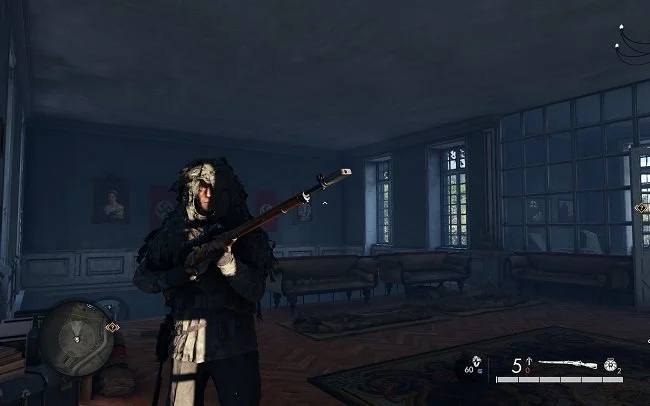



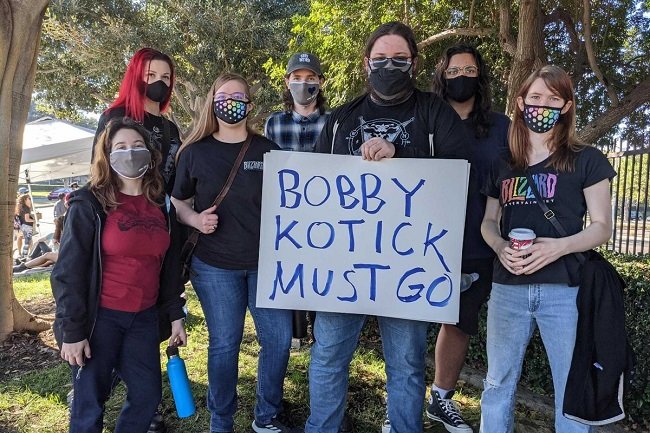

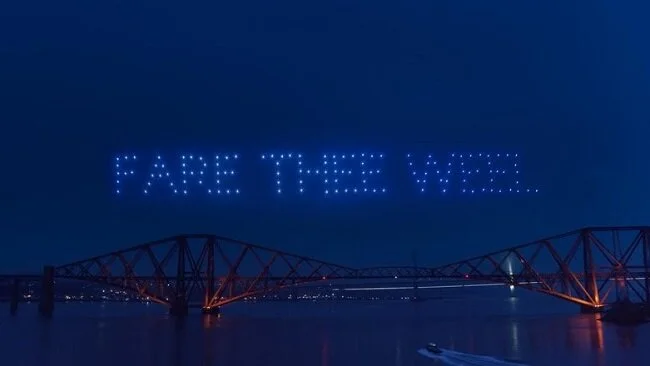
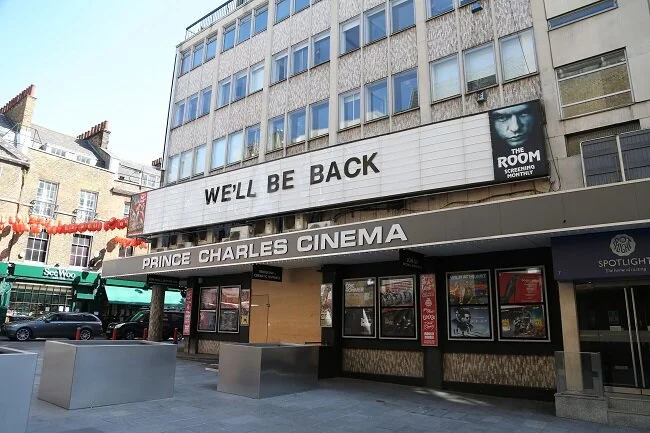






A Christmas Carol (2009)
There are three key elements to Disney’s 2009 3D computer-animated adaptation of A Christmas Carol. Firstly, director Robert Zemeckis clearly seeks authenticity and hence includes a lot of original dialogue from the novel, as well as a bleaker depiction of the period. Secondly, he uses the digital production tools at his disposal to create sweeping vistas of 19th century London as well as highly stylised caricatures of the central characters. Thirdly, as this is a Disney production, there is an occasional lapse visual humour and levity that is required by their business model. Sadly all of these aspects of the production make for strange bedfellows that are at odds with each other. The result is a visually sumptuous film that loses its way as it lurches between bleak drama, odd humour and CGI driven spectacle.
There are three key elements to Disney’s 2009 3D computer-animated adaptation of A Christmas Carol. Firstly, director Robert Zemeckis clearly seeks authenticity and hence includes a lot of original dialogue from the novel, as well as a bleaker depiction of the period. Secondly, he uses the digital production tools at his disposal to create sweeping vistas of 19th century London as well as highly stylised caricatures of the central characters. Thirdly, as this is a Disney production, there is an occasional lapse visual humour and levity that is required by their business model. Sadly all of these aspects of the production make for strange bedfellows that are at odds with each other. The result is a visually sumptuous film that loses its way as it lurches between bleak drama, odd humour and CGI driven spectacle.
Produced via motion capture, a technique used in his previous films The Polar Express (2004) and Beowulf (2007), Zemeckis presents the viewer with a very traditional looking Scrooge, whose dour demeanour and gruff voice is effectively provided by Jim Carrey. Carrey also provides the voice acting for the Ghost of Christmas Past and the Ghost of Christmas Present. The story starts with Jacob Marley lying in his coffin and Scrooge quickly establishes his miserly credentials by taking the pennies off his late partner’s eyes. Due to the stylised nature of the character design, Bob Cratchit is diminutive and nephew Fred is rotund and ruddy cheeked. The story does much to highlight the social disparity between rich and poor. Oddly, despite attempting to explore and depict the events of the book in an authentic fashion, the emotional focus upon Tiny Tim is somewhat lacking in this adaptation and his character is used sparingly.
Yet despite a robust cast of fine voice actors, including Gary Oldman, Colin Firth and Bob Hoskins, they have very little to do. Hoskins as Fezziwig has no more than four lines. The early focus upon drama and providing a true reflection of the social injustices of the period, soon gives way to the most indulgent visual spectacle once the first spirit arrives. The viewer is presented with expansive recreations of the London skyline and the British countryside and the camera swoops and soars interminably through these virtual environments. Towards the end of the film there is also an tedious and utterly unnecessary chase scene involving Scrooge and a phantom hearse. One gets the impression that the director was a little too enamoured by the potential to craft such CGI creations and lost track of the central story. Or perhaps there was pressure from the studio to add some “action” to the film to pander to a wider demographics.
However, the use of motion capture and immersive 3D environments are not all overblown. There is a especially creative montage involving the Ghost of Christmas Present and mankind’s children, Ignorance and Want. The emaciated waifs morph into their potential future selves; one a violent robber and the other a drunken prostitute. It is quite a shocking scene and bold in its artists scope. But it also highlights the bleakness of this adaptation, which sits awkwardly with the Disney brand. Marley’s ghost is especially terrifying with his bottom jaw becoming unhinged at one point. And so to counter such ghoulish imagery, there are bouts of humour and thus Marley secures his jaw with a handkerchief but ties the knot too tight, thus preventing him from talking. Such japery tends to confuse rather than amuse.
This particular adaptation of A Christmas Carol was not a financial success at the box office and it is clear to see why. It tries to be too many things and by partnering with Disney Studios, Zemeckis is forced to make some concessions to the film that are a poor fit. Hence the story shifts tonally and does not have a coherent vision as to what it exactly wishes to be. The viewer is left with some dark scenes, frenetic chase sequences, an incessantly laughing Ghost of Christmas Present and a display of sentiment at the film’s conclusion that seems incongruous given Scrooge’s scant interaction with the Cratchit household and Tiny Tim. Furthermore, the final scene between Scrooge and the Ghost of Christmas Yet to Come is virtually identical to that in Mickey’s Christmas Carol. Overall, it may have been wiser to take the cast and the budget available and made a more traditional live action version of this classic tale, focusing on the story and atmosphere, rather than production design and visual effects.


The Godfather Coda: The Death of Michael Corleone (1990)
The Godfather Part II (1974) effectively ended the story of Michael Corleone. The man who so resolutely argued he would not become like his father ended up doing exactly that. In doing so it cost him his wife, his relationship with his children and arguably his soul. The film ends with Michael reflecting upon his past and family, all powerful but utterly alone. So in many ways, there was no major artistic or narrative requirement for a third instalment. Francis Coppola himself had no desire to return to the story. However a decade later, after a string of box office failures, he found himself in debt and in need of a financial solution. It was at this point that Paramount Pictures long standing offer to make a third Godfather movie, suddenly became a practical necessity. Coppola never intended it to be a comparable instalment to the original duology but more of a cinematic codicil. Sadly, the studio, the critics and ultimately, the viewing public never saw it that way. The rest is cinematic history and The Godfather Part III (1990) remains to this day a strongly debated film.
The Godfather Part II (1974) effectively ended the story of Michael Corleone. The man who so resolutely argued he would not become like his father ended up doing exactly that. In doing so it cost him his wife, his relationship with his children and arguably his soul. The film ends with Michael reflecting upon his past and family, all powerful but utterly alone. So in many ways, there was no major artistic or narrative requirement for a third instalment. Francis Coppola himself had no desire to return to the story. However a decade later, after a string of box office failures, he found himself in debt and in need of a financial solution. It was at this point that Paramount Pictures long standing offer to make a third Godfather movie, suddenly became a practical necessity. Coppola never intended it to be a comparable instalment to the original duology but more of a cinematic codicil. Sadly, the studio, the critics and ultimately, the viewing public never saw it that way. The rest is cinematic history and The Godfather Part III (1990) remains to this day a strongly debated film.
Numerous story ideas were conceived and abandoned while writing The Godfather Part III. Francis Coppola and co-writer Mario Puzo considered several grandiose plots before deciding that less is more and focusing on a narrative driven by Michael Corleone’s need for redemption and even forgiveness. Some critics felt that this approach contradicted the first two movies which culminated in Michael dispassionately embracing his fate. However, a man in his autumn years has much to reflect upon and therefore the film themes of redemption and trying to reinvent oneself were plausible and relevant. In fact one could argue that Coppola was trying to do as much himself. But therein was the problem. Coppola wanted a low key appendix to his previous work where the studio and public wanted another sprawling saga of criminal endeavour and a further examination of the dark heart of American culture. And so both groups fought every step of the way. They fought over the title, action set pieces, casting (as they did with the original film) and overall the scope of the story.
Upon release, many were wrong footed by the tone and direction of The Godfather Part III. It wasn’t so much that a sacred cow had been violated but that viewer expectations and the vision of the director were poles apart. The disappointment that some felt was palpable and so criticism was vocal and mainly directed at Coppola’s casting of his own daughter, who had stepped into the role out of necessity. Her performance is tonally different from the rest of the cast but is not as questionable as some would have. Certainly Al Pacino and Diane Keaton are on superb form, effortlessly picking up their respective roles and reasserting them with confidence. The standout of the film is certainly Andy Garcia who plays Vincent Mancini, the illegitimate son of Sonny Corleone. His character is straight out of King Lear and he gives a dynamic performance. The lack of Robert Duvall as Tom Hagen is a sore blow. George Hamilton plays a more contemporary corporate shark, B. J. Harrison but he lacks the emotional impact of his predecessor.
Because of the nature of the story, The Godfather Part III swaps the historical settings that were so lovingly recreated in the first two movies for the rather less enthralling world of big business circa 1979-80. There are location shots in Rome and Sicily but the change in scope does pale in comparison with the grandeur of the parts I and II, with its recreation of 1917 New York, Havana and pre-war Sicily. However, the cinematic style of Gordon Willis’ cinematography provides a sense of ongoing continuity. Willis shot both previous films although here, much of the story is swathed in shadow and darkness, reflecting the theme of spiritual doubt and conflict. These subtle changes in direction all contributed to the sense of confusion and conflict so many felt about The Godfather Part III. The best analogy I’ve seen that summarises this is that of a major recording artist, who having to two hit and and genre defining albums, then follow them up with a far more modest and specific musical foray that is far more low key in its intent.
Such has been the legacy of The Godfather Part III up until now. Coppola has recently released a revised edition of the film in which he strives to bring things back to his original vision. Retitled The Godfather Coda: The Death of Michael Corleone (his preferred title) there are a range of revisions intended to make the story’s intent clear and to present it for criticism on its own merits, rather than on its pop culture baggage. Firstly, the original opening scene depicting the now vacant Corleone home on Lake Tahoe, with all it’s associated memories, has gone. The new edit starts with Michael negotiating the bailout of the Vatican bank and it emphatically states the film’s core theme; the need for redemption. Gone is the ceremony in which he receives a medal from the church for his charitable work. The film now continues with the story of how Michael is dragged kicking and screaming back into a world of crime, despite wanting to reconnect with his son and daughter. Five minutes has been removed overall and some changes are simply alternate takes or a reordering of scenes. The biggest and most subtle change is the ending. Originally, this showed Michael a broken old man, reflecting on the past and then dying in his garden chair. This time round the montage of memories are exclusively about his dead daughter and the scene then fades to black. His titular death is now figurative and not literal.
The original theatrical version of the death of Don Licio Lucchesi
I would like to reference one change that noticeably stands out in The Godfather Coda: The Death of Michael Corleone. The first two movies were considered violent by the standards of the time and that violence was depicted credibly, rather than sensationally. Coppola worked with makeup effects legend Dick Smith resulting in several iconic and powerful scenes. Moe Green getting shot in the eye while having a massage, Don Fanucci getting shot in the face, Don Ciccio’s stabbing. Although the original theatrical release of The Godfather Part III in 1990 had some shootouts and bloodshed, it lacked any of the director’s signature bravura set pieces. The nearest that came to this was the death of Don Licio Lucchesi, who was stabbed in the carotid artery with his own broken pair of glasses. This was edited down to the briefest of shots in the initial release, which then focused on the bloody aftermath. In this revised edition an alternative take is used featuring major prosthetic work from Tom Burman. The scene now sports a bloody wound and a jolting arterial spurt. Compared to the violence that proceeds it this is shocking but justifiable within the film's own internal logic.
The revised version of the death of Don Licio Lucchesi
Overall this re-edit is a subtle reframing of the theatrical edition, rather than a wholesale revision. Some of the issues inherent in the first cut are still present. Too many of the new characters are not as well written compared to those that are already established. The Vatican storyline although interesting, may not be as appealing to some viewers expecting more traditional gangster tropes. Coppola recently revisited his 1984 production of The Cotton Club, which is another example of his work suffering due to studio interference. The revisions to that film, now retitled The Cotton Club Encore, have significantly altered and improved the narrative, by focusing more upon the African American cast members, who were so egregiously marginalised in the theatrical version. The Godfather Coda: The Death of Michael Corleone does not achieve this degree of transformation. Instead it is content with just polishing the previous presentation by thoughtfully restructuring what was already there. Hopefully in doing so, it will lead to a more level headed reassessment of the film where it is finally judged for what it is, rather than what people wanted it to be.



A Christmas Carol (1982)
At first glance, there is not much to distinguish this low budget production by Burbank Films Australia, from any of the other adaptations that were ubiquitous during the seventies and eighties. However, attentive viewers will discover a few details that lift this particular version above the mundane. Firstly, this is the second animated adaptation to feature the voice acting of Ron Haddrick as Ebenezer Scrooge. He had previously voiced the character in Air Programs International's shorter version of A Christmas Carol in 1969, thirteen years earlier. Secondly, despite the modest production values, there are a few additional scenes taken from the source text by Dickens, that don’t usually make it most film and TV adaptations. It is these minor embellishments that compensate for the simplicity of the animation (during the opening scene, some background characters do not move).
At first glance, there is not much to distinguish this low budget production by Burbank Films Australia, from any of the other adaptations that were ubiquitous during the seventies and eighties. However, attentive viewers will discover a few details that lift this particular version above the mundane. Firstly, this is the second animated adaptation to feature the voice acting of Ron Haddrick as Ebenezer Scrooge. He had previously voiced the character in Air Programs International's shorter version of A Christmas Carol in 1969, thirteen years earlier. Secondly, despite the modest production values, there are a few additional scenes taken from the source text by Dickens, that don’t usually make it most film and TV adaptations. It is these minor embellishments that compensate for the simplicity of the animation (during the opening scene, some background characters do not move).
Artistically, this production follows a very formulaic depiction of London in the 19th century as well as the key characters of the story. Scrooge is a balding, hook nosed, old man with a rasping voice. Dogs flee from him and he works in a shabby and drab counting house. There’s a quite startling realisation of Marley’s ghost complete with black shadows around his eyes, making him look like a member of Kiss. His message of neglected social responsibility to Scrooge is presented as a montage, which is quite innovative and effective. The Spirit of Christmas Past is on this occasion is a teenager in a chiton. It’s a novel look. Overall the voice acting is efficient and steeped in stylised British tropes with Cockney street urchins and upper class business men. The score by Neil Thurgate composer is also quite different from the usual fare.
Despite the simplicity of the animation, no doubt due to restrictions of the budget, this adaptation uses large sections of the source text as dialogue. It also visually realises some minor scenes that often get overlooked in most versions of A Christmas Carol. There is a scene where the poor are queuing outside the Baker’s on Christmas morning to have to have their dinner’s cooked. Also there is a greater focus on his failed relationship with Belle including a scene where Scrooge sees a vision of his ex-fiancée with her family and husband. A family that could have been his under different circumstances. This adaptation also strives to add a further human dimension to Scrooge as he reminisces over his past mistakes and gives in to his feelings. Overall, all though not in any way a definitive version of Dickens’ classic tale, there is sufficient here to make it different from others.

Conspiracy (2001)
Conspiracy is a 2001 co-production between the BBC and HBO, that dramatises the events of the Wannsee Conference of 1942. Based upon secret minutes of the meeting, the drama explores the businesslike manner in which the German State decided and implemented the "Final Solution of the Jewish Question" during World War II. Set in a confiscated lakeside villa in the Berlin borough of Wannsee, the plot unfolds around a conference table. The screenplay by Loring Mandel is free from theatrics and hyperbole. Instead it focuses upon a chilling meeting in which genocide is calmly debated in the same way as armament quotas or economic growth. Frank Pierson’s direction is straightforward and uncomplicated allowing the viewer to dwell on the manner and tone of the proceedings. Conspiracy features an ensemble cast, including Kenneth Branagh as Reinhard Heydrich, Stanley Tucci as Adolf Eichmann, Colin Firth as Dr Wilhelm Stuckart and an early appearance by Tom Hiddleston.
Conspiracy is a 2001 co-production between the BBC and HBO, that dramatises the events of the Wannsee Conference of 1942. Based upon secret minutes of the meeting, the drama explores the businesslike manner in which the German State decided and implemented the "Final Solution of the Jewish Question" during World War II. Set in a confiscated lakeside villa in the Berlin borough of Wannsee, the plot unfolds around a conference table. The screenplay by Loring Mandel is free from theatrics and hyperbole. Instead it focuses upon a chilling meeting in which genocide is calmly debated in the same way as armament quotas or economic growth. Frank Pierson’s direction is straightforward and uncomplicated allowing the viewer to dwell on the manner and tone of the proceedings. Conspiracy features an ensemble cast, including Kenneth Branagh as Reinhard Heydrich, Stanley Tucci as Adolf Eichmann, Colin Firth as Dr Wilhelm Stuckart and an early appearance by Tom Hiddleston.
Conspiracy achieves much, considering the scope and implications of the subject matter. It manages to juggle a dozen characters, all of whom are from distinct and diverse backgrounds with clear agendas of their own. Soldiers, government officials and civil servants all seem to view the “final solution” as an administrative, logistical and legal problem. Dr Rudolph Lange (Barnaby Kay) states how execution by shooting is bad for troops' morale. It is an incongruous comment that focuses on psychological welfare of those conducting mass murder. Yet the screenplay successfully provides insight into this broad group’s motivations. Heydrich is shown to be a consummate manipulator as he cajoles and coerces all present into towing the official party line. It soon becomes clear that the decision to commit genocide had already been taken and that this meeting was not designed to agree it but to officially implement it and bind all present to the undertaking by collective involvement.
Conspiracy is a difficult film to watch, in that the magnitude of what is being discussed verges upon the incomprehensible. Performances are universally strong and compelling. There are several key incidents that occur that indicate the inevitability of the proposed “final solution”. Those looking to legitimise the proceedings legally are forced to abandon such a position. One bureaucrat even considers the implementation of this policy as being beneficial to his career. But perhaps the most chilling of all of these is the way in which Heydrich makes all present complicit with the decision, binding them by guilt. And then once the task is complete, all attendees calmly depart back to their regular jobs and posts. Heydrich comments about moving into the villa in which the conference has been held, once the war is over. Conspiracy ends with a summary of what happened to those attending the Wannsee Conference. Many were acquitted by Allied military tribunals after the war and lived the remainder of their lives in West Germany.


His House (2020)
If you are labouring under the erroneous assumption that the horror films are apolitical and devoid of wider social commentary, then I suggest you go and watch Dawn of the Dead, Get Out or Pan’s Labyrinth. The horror genre has for many years been addressing social issues and cultural foibles. So the timely arrival of His House comes as no major surprise. Immigration has become more than a point of debate in recent years, having been usurped and subverted by tabloid hyperbole and populist rhetoric. However, this horror thriller film written and directed by Remi Weekes indulges in none of the negative traits associated with the subject. It intelligently weaves social themes into an atmospheric and disquieting genre tale. Although in many ways the ground that His House treads is classic ghost story territory, it is both the perspective of Sudanese culture and the trauma of their migrant journey that make this such a fresh and engaging film.
If you are labouring under the erroneous assumption that the horror films are apolitical and devoid of wider social commentary, then I suggest you go and watch Dawn of the Dead, Get Out or Pan’s Labyrinth. The horror genre has for many years been addressing social issues and cultural foibles. So the timely arrival of His House comes as no major surprise. Immigration has become more than a point of debate in recent years, having been usurped and subverted by tabloid hyperbole and populist rhetoric. However, this horror thriller film written and directed by Remi Weekes indulges in none of the negative traits associated with the subject. It intelligently weaves social themes into an atmospheric and disquieting genre tale. Although in many ways the ground that His House treads is classic ghost story territory, it is both the perspective of Sudanese culture and the trauma of their migrant journey that make this such a fresh and engaging film.
Bol (Sope Dirisu) and Rial (Wunmi Mosaku) are refugees fleeing from the civil war in South Sudan. While crossing the Mediterranean, a sudden storm causes their overcrowded boat to sink. Many drown including Bol and Rial’s daughter Nyagak. After spending 3 months in a UK refugee centre the couple are granted probational asylum. They are assigned a dilapidated inner city house and given strict instructions not to move or seek employment or they face potential deportation. Their case worker Mark (Matt Smith), tells them the house is “better than what he got” and how he hopes the couple are one of "the good ones". However, soon after moving in nocturnal disturbances, noises and bad dreams afflict Bol and Rial. Bol desperately wants to fit in and stubbornly refuses to acknowledge the presence of the supernatural. But Rial wants to return home and feels there is no place for them in the UK. Has something followed them from South Sudan and are the couple harbouring a secret?
His House covers a lot of ground and works on multiple levels. If you’re just looking for a tense horror then it provides exactly that and has the added bonus of referencing non-european superstitions and supernatural folklore. The digital effects are surprisingly creative and most effective during several dream sequences depicting Bol and Rial’s dangerous sea crossing. There is a strong sense of unease to be found both inside and outside of the house as the story progresses. When the scare’s come they hit home effectively and the film has a very strong sound design. Also throughout the story there is a robust streak of real social horror but it is intelligently explored. Bol is automatically followed by security when he visits a discount department store. The UK immigration service is depicted as indifferent to the couple’s emotional trauma. And in a very bold move, Rial is racial abused by a black British youth and told to “go back to Africa”. His House also works as a tale exploring the loss of a child and the conflict it causes between the grieving couple.
But at the heart of the story, driving it forward are the compelling performances by Sope Dirisu and Wunmi Mosaku. They are a plausible, vulnerable and very likeable couple. British writer-director Remi Weekes handles the proceeding assuredly and delivers a well timed curveball two thirds into the film, which puts the events in a different perspective. The story’s conclusion manages to avoid being overtly bleak but instead reflects upon reconciliation and coming to terms with the past. It has been a while since I have seen such a universally strong directing debut and I am eager to learn what Remi Weekes’ next project is going to be. His House is a fine example of how the horror genre can deftly explore more than just the supernatural. It also provides some robust and innovative scares, as well as a very timely contemporary storyline that leaves you thinking long after you’ve finished viewing.