
Zack Snyder's Justice League (2021)
I enjoyed both Man of Steel and Batman v Superman: Dawn of Justice Ultimate Edition and consider them to be more than just standard, visual effects driven blockbusters. Zack Snyder’s exploration of the DC Expanded Universe blends the mythological fantasy of metahumans with a more cerebral dissection of their role in society. The political and philosophical dimensions of their presence is a key theme in both films. As a consequence there is ambiguity, darkness and violence. Snyder certainly has a penchant for visual flair, as seen in previous movies such as 300 and Watchmen. But his directorial style seems to be at odds with the very studios that employ him. Snyder tells a story in however much time it takes. Studios prefer standard running times that lend themselves to as many screenings a day, as possible. Hence there is always a clash of ideas and sadly those that hold the purse strings usually get their way.
I enjoyed both Man of Steel and Batman v Superman: Dawn of Justice Ultimate Edition and consider them to be more than just standard, visual effects driven blockbusters. Zack Snyder’s exploration of the DC Expanded Universe blends the mythological fantasy of metahumans with a more cerebral dissection of their role in society. The political and philosophical dimensions of their presence is a key theme in both films. As a consequence there is ambiguity, darkness and violence. Snyder certainly has a penchant for visual flair, as seen in previous movies such as 300 and Watchmen. But his directorial style seems to be at odds with the very studios that employ him. Snyder tells a story in however much time it takes. Studios prefer standard running times that lend themselves to as many screenings a day, as possible. Hence there is always a clash of ideas and sadly those that hold the purse strings usually get their way.
I see no reason to go over the sad circumstances that lead to Zack Snyder leaving the post-production phase of Justice League in 2016. Simply put Warner Bros. wanted the film to be released on schedule and so Joss Whedon was brought onboard to complete the production. 80 pages of rewrites and two month of additional shooting later led to a radically altered movie. It was demonstrably different in style as well as tone and it failed to find an audience. I found it to be ponderous, underwritten and underwhelming. Warner Bros. were far from pleased by the box office returns. Justice League, released in late 2017, merely yielded double its production costs, making $600 million. Roll on 4 years and we now have Zack Snyder's Justice League. A director’s cut of the film which is far more aligned with his original vision. Due to the pandemic, this version has gone direct to subscription services and has not seen a theatrical release. It would’ve been interesting if it would have fared any better at the box office second time round.
Before I start with my thoughts on Zack Snyder's Justice League, let me put my cards on the table. I am not a fully paid up DC aficionado. My exposure to this comic franchise is mainly through previous films. I have no knowledge of the wider lore, nor do I have any personal baggage with regard to personal attachment to characters. I grew up with Christopher Reeves as Superman and his performance was totally applicable to those times. However, that cinematic interpretation is era specific and not necessary now. So I consider myself open minded with regard to this franchise. What I expect from a film such as Zack Snyder's Justice League or indeed any other major franchise movie is for it to be accessible to both existing fans and the general public. Films of this nature need to engage with a much wider audience to be financially successful. Hence I expected Zack Snyder's Justice League to have a coherent narrative. Something the theatrical cut was lacking.
Mercifully, Zack Snyder's Justice League has a very linear and episodic story. In fact it is divided into chapters delineating the plot into specifically themed sections. This not only reflects the essential structure of comics themselves but allows the viewer to digest the sprawling narrative and its respective themes. There is a lot of exposition at various junctures in the story arc so breaking things down in this way again helps with making the plot accessible. Zack Snyder's Justice League is double the running time of the theatrical cut and clocks in at over 4 hours. Effectively all material that Zack Snyder shot has been reinstated and a great deal of it is character backstory. There are also major changes to the film’s visual FX, with villain Steppenwolf having a major makeover. Danny Elfman’s score has also been replaced by a new one by Tom Holkenborg. For a comprehensive breakdown Den of Geek has a very thorough article listing all differences.
The question on everyone’s lips, be they a layperson or a hardcore fan, is whether Zack Snyder's Justice League is better than Joss Whedon’s theatrical version? The answer is most definitely “yes” but that’s not to say that the film isn’t without faults. Perhaps the most positive change that standouts from the new director’s cut is the focus on each character’s motivation. This is especially beneficial for Victor Stone/Cyborg (Ray Fisher) whose backstory was utterly negated in the theatrical release. Here we see the troubled relationship he had with his Father and the tragedy of his Mother’s death and his own near fatal accident. His abilities show him the injustices of the world and how even a man with his powers would struggle to effect meaningful change. His story arc is far more engaging, meaningful and poignant. Similarly Arthur Curry/Aquaman (Jason Mamoa) has more depth to his story and does not come across as simply bellicose as he did in the Whedon version.
Zack Snyder's Justice League also offers a far more rounded and interesting villain this time round. Steppenwolf, voiced by Ciarán Hinds, now boasts a more threatening design and now has significantly more screen time, offering viewers an insight into his motivations and aspirations. Instead of being an arbitrary “bad guy” who is simply there to do “bad things”, we now have a character who is struggling with the internal politics of his own faction. Steppenwolf is a lieutenant who is seeking to advance his position after previously erring in his duties. He needs to get back in the good graces of his master, Darkseid. However, he does not have direct access to him and is forced to communicate via DeSaad, Darkseid's consigliere. Although far from Shakespeare, it is much more engaging to have an antagonist that has some depth to them, rather than just being a thematic placeholder.
However, Zack Snyder's Justice League is not without flaws. It is a little tonally inconsistent when it comes to the depiction of violence. The epic flashback to the Age of Heroes has a surprising amount of bloodshed compared to other sequences. Random acts of violence occur through the remainder of the film and every now and then, one will be somewhat more visceral than others. But perhaps the most incongruous aspect of Zack Snyder's Justice League is the inclusion of yet another vision of an apocalyptic future. This worked very well in Batman v Superman: Dawn of Justice Ultimate Edition, showing a possible timeline in which Superman had gone rogue due to the death of Lois Lane. But considering that a major element of Zack Snyder's Justice League is the necessity to bring Superman back from the dead thus restoring not only a balance of power but reiterating him as a force for good, it seems self defeating to infer the possibility that all of this may be for naught.
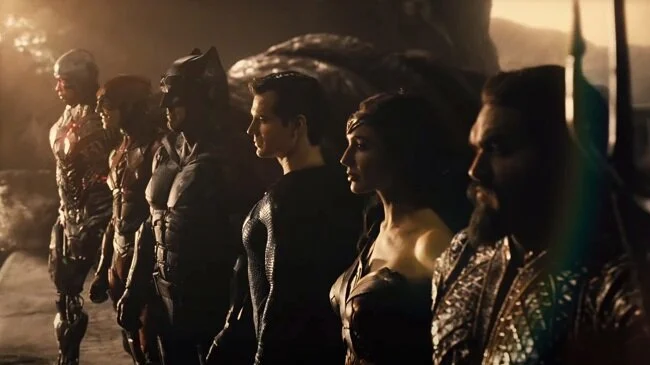
Naturally, fans of Zack Snyder’s work and his vision for the DC Expanded Universe, will enjoy this new director’s cut and extol its merits from a fans perspective. I certainly enjoyed it more than the theatrical release and was glad to see the back of the changes that Joss Whedon made. Barry Allen/The Flash (Ezra Millar) is no longer a trite comic foil and the new cut eliminates the rather crass diminishing of Diana Prince/Wonder Woman (Gal Godot) via all the flirting and objectification. For those who may be put off by the prodigious running time, the film now lends itself to being watched in instalments. The 4:3 aspect ratio is somewhat curious, although Snyder has stated that the film was shot open matte to make the framing optimal for the IMAX format. Paradoxically, Zack Snyder's Justice League is currently non-canonical. Joss Whedon’s theatrical cut made tonal and narrative shifts that have been continued into subsequent films. The success of the director’s cut may instigate a major course correction to this franchise. Or not. Studios seldom care about continuity, lore or even logic in comparison to the bottom line.
Batman: Return of the Caped Crusaders (2016)
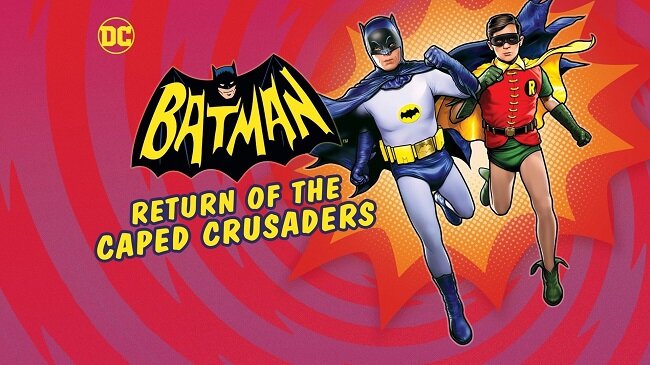
Although I have a passing interest in the franchise per se, I'm not a consummate fan of all things Batman. Hence a lot of content passes me by or I catch up with it years later. So it came as a great surprise when I discovered Batman: Return of the Caped Crusaders; a 2016 release in the ever growing catalogue of DC themed direct to DVD animated films. The movie is a de facto continuation of the sixties TV series, with the original actors reprising their roles (where possible). The cast includes Adam West as Batman, Burt Ward as Robin and Julie Newmar as Catwoman. Due to the death of actors Cesar Romero, Burgess Meredith and Frank Gorshin the voices for The Joker, The Penguin and The Riddler have been provided by Jeff Bergman, William Salyers and Wally Wingert. All of whom do their best to recreate the tone and idiom of the original artists.
Although I have a passing interest in the franchise per se, I'm not a consummate fan of all things Batman. Hence a lot of content passes me by or I catch up with it years later. So it came as a great surprise when I discovered Batman: Return of the Caped Crusaders; a 2016 release in the ever growing catalogue of DC themed direct to DVD animated films. The movie is a de facto continuation of the sixties TV series, with the original actors reprising their roles (where possible). The cast includes Adam West as Batman, Burt Ward as Robin and Julie Newmar as Catwoman. Due to the death of actors Cesar Romero, Burgess Meredith and Frank Gorshin the voices for The Joker, The Penguin and The Riddler have been provided by Jeff Bergman, William Salyers and Wally Wingert. All of whom do their best to recreate the tone and idiom of the original artists.
Bruce Wayne and Dick Grayson are watching their favorite show, Gotham Palace, when it is revealed that one of the bands playing has been replaced by the Joker, the Penguin, the Riddler, and Catwoman. Upon arriving at Gotham City Police Department, they receive a riddle from Commissioner Gordon and Chief O'Hara, which indicates that the villains are robbing the Acme Atomic Energy Laboratory. After a brief fight, the criminals manage to escape with the Replication Ray. Batman tracks the gang to an abandoned TV dinner factory. However, this is a trap as Catwoman plans to make Batman join the villains by scratching him with a substance called "Batnip". An altercation occurs and Catwoman uses her Batnip on Batman. It initially appears to have no effect but later Batman becomes more bellicose and fires Alfred. Using the recently recovered Replication Ray, Batman decides to duplicate himself to crack down on crime in Gotham. Mayhem ensues.
Batman: Return of the Caped Crusaders certainly captures the essence of the 1966 TV show. The character designs are all spot-on. The classic theme music is present and the overall score is composed in the idiom of Nelson Riddle’s original music for the show. And of course we get the onomatopoeia onscreen captions during various fist fights. The story and dialogue are very faithful to the source material with regular use of alliteration as well as Batman's penchant for imparting important life lessons to Robin at regular intervals. The first 20 minutes is very much like an episode of the TV series, with Batman and Robin pursuing their foes, engaging in fisticuffs and escaping contrived death traps. The plot takes an interesting change of direction in the second act, with Batman turning into an insufferable martinet. Overall, the screenplay manages to sustain the viewer’s interest and keep them onboard with the film’s central conceit.
Batman: Return of the Caped Crusaders works well because it isn’t a po-faced superhero action film. Writers Michael Jelenic and James Tucker lovingly poke fun at the source material and include numerous Batman related cameos and homages. Adam West even quotes several lines from Frank Miller's The Dark Knight Returns. No aspect of the original TV show is left unturned, throughout the film’s 78 minute running time. The fight scenes feature the “Dutch tilt”, Robin still has the ability to deduce Riddler's conundrums via the most incongruous logical gymnastics and Batman still sports the most incongruous selection of items on his utility belt. Not once does it feel that the source material is being mocked and the production’s affection for the original TV show is abundantly clear. Hence Batman: Return of the Caped Crusaders is a genuine homage and camp alternative to the somewhat dour, contemporary depictions of the Caped Crusader.








Batman v Superman: Dawn of Justice Ultimate Edition (2016)
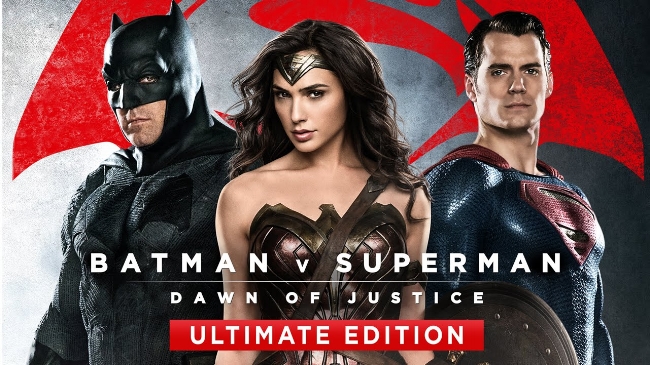
I have not seen the theatrical version of Batman v Superman: Dawn of Justice, although I’ve been informed that it was a somewhat confused and flawed edit of the film. The Ultimate Edition clocks in at three hours and three minutes; thirty-two minutes longer than the version shown in cinemas. That is over half an hour of more exposition and character development. More than enough to have a significant impact upon the movie, its themes and narrative. Judging purely by the version that I saw, along with the fact that I have no major familiarity or investment with either of these characters, beyond their cinematic depictions, I was entertained by Batman v Superman: Dawn of Justice. I thought it maintained the cerebral approach to DC Expanded Universe that we previously saw with Man of Steel. Furthermore, despite its sprawling nature and an overabundance of CGI driven action scenes, the film explores some very contemporary issues about societal paranoia and upsetting the political status quo.
I have not seen the theatrical version of Batman v Superman: Dawn of Justice, although I’ve been informed that it was a somewhat confused and flawed edit of the film. The Ultimate Edition clocks in at three hours and three minutes; thirty-two minutes longer than the version shown in cinemas. That is over half an hour of more exposition and character development. More than enough to have a significant impact upon the movie, its themes and narrative. Judging purely by the version that I saw, along with the fact that I have no major familiarity or investment with either of these characters, beyond their cinematic depictions, I was entertained by Batman v Superman: Dawn of Justice. I thought it maintained the cerebral approach to DC Expanded Universe that we previously saw with Man of Steel. Furthermore, despite its sprawling nature and an overabundance of CGI driven action scenes, the film explores some very contemporary issues about societal paranoia and upsetting the political status quo.
Having recently re-watched Man of Steel, the segue into Batman v Superman: Dawn of Justice was seamless and the movie picked up the previous story and instantly got cracking on expanding it. Several events from the climax of Man of Steel where subsequently shown from the perspective of Bruce Wayne. This then sets the plot of Batman siding with an ever increasingly paranoid establishment that see’s Superman as an uncontrollable threat. As ever, with any threat to the established order, it is the rich and powerful that fear the new, as it may rob them of their privilege. Yet the poor and the disenfranchised, see Superman as their advocate. In this respect, Director Zack Snyder has made a very political movie. He also ponders the vigilante aspects of Batman’s character, who at this time works outside the law and has established himself as judge, jury and indirect executioner. He brands his victims, which makes them clear targets when placed in a prison environment.
So far, the first two instalments of the DC Expanded Universe have been dark, dour and have not shied away from social commentary. Certainly, the themes explored are especially pertinent in the light of contemporary US politics. Presenting super hero stories in such a fashion certainly puts to bed the notion that comic book movies are kiddie fodder. The levels of violence in the Ultimate Edition are also unusual for this genre but completely justified considering the nature of the story and the noticeably more cerebral pitch the producers are trying to make. However, because this is a genre movie it still feels obliged to regularly punctuate the proceeding with major action based set piece. I find that is not the scope of these sequences, that are the problem. They often display arresting imagery and novel ideas. It is their duration that is the issue. There is a finite amount of destruction and mayhem one can endure, before it becomes tedious and bombastic. These sequences also slow up the narrative, which surprisingly enough, does become the selling point of the film.
Like Man of Steel before it, Batman v Superman: Dawn of Justice also has a controversial scene. In the previous movie, it was having Superman act out of character and take a life. As a plot device, it actually worked, taken in context of the films own internal logic. This time round, an armoured Batman defeats Superman, through the use of weaponised Kryptonite. Yet a single incidental remark, spoken in desperation by Superman, stays Batman’s hand and sets him upon a path of introspection. His subsequent epiphany shows Bruce Wayne exactly how far he has fallen, morally. This scene divided fans. Some felt that it was contrived and hokey. Again, I was content to go along with it and felt in principle it was an acceptable concept. Perhaps it could have been implemented a little better but I did not see it as a deal breaker in any way. Again, I think that my willingness to go along with the director vision, stems from my lack of personal baggage with the source material. Fans often forget that a movie is an invitation to share the film makers vision. You can blame a movie for perceived faults in its production but is patently unrealistic to complain that the studio has not made the film that you had in your head. That was never on offer to begin with.
There were several other facets of Batman v Superman: Dawn of Justice that I enjoyed. I was happy with all main performances. Jesse Eisenberg as Lex Luthor was a bold piece of casting. However, it was prudent to fly in the face of established depictions of the supervillain. This was a far more contemporary Lex Luthor, pertinent to the technology and the fears of our age. I also enjoyed the subplot regarding metahumans and the extended cameo by Gal Godot as Diana Prince. We were also given a far more “hands on” Alfred Pennyworth, who is technically adept and happy to put his employer, Bruce Wayne, in his place. Jeremy Irons is the sort of actor who can project this sort of moral authority. Another aspect of the film that improves its dramatic scope, is its global perspective. The events of the story do not just happen within an inward-looking US. Superman interacts with all people and nations. Catastrophic events also have international implications.
Even in this extended form, Batman v Superman: Dawn of Justice is not a perfect movie. It is somewhat bloated and has an uneven pace. Yet is it now narratively coherent and doesn’t suffer from the plot holes apparent in the theatrical release. It approaches its subject matter in a manner that is appropriate to our current world. We no longer live in the Fifties so it would be crass to depict the concept of metahumans in such a way. Superman is no longer a seen as a benevolent, extraterrestrial immigrant who has embraced the American dream. He is now viewed suspiciously by those who harbour an inherent fear of the unknown and that which they can’t control. Kal -El is no longer the bland, one dimensional embodiment of patriotism. He is now a potentially rogue messiah who is acutely aware of the divisions that he causes. Such ideas certainly make for interesting viewing and intellectual reflection. So far, because of the manner in which all these ideas have been handled, I am still sufficiently invested to pursue them further. Thus, I am looking forward to watching both Suicide Squad and Wonder Woman. Hopefully, these adult fantasies will continue to offer spectacle and food for thought in equal measure.
Man of Steel (2013)
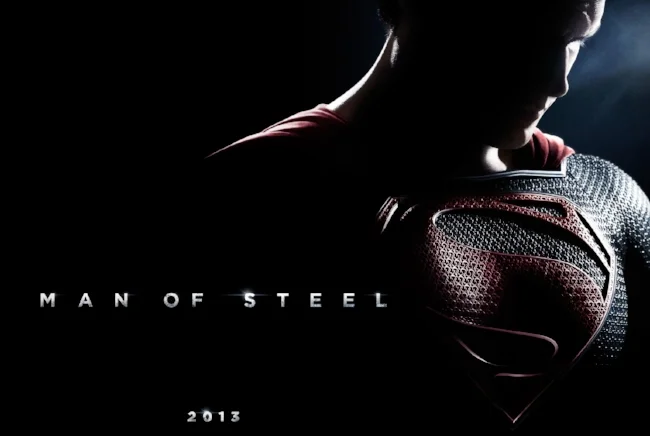
Although I was one of the few that actually enjoyed Superman Returns back in 2006, I can appreciate why it failed at the box office. It made the mistake of trying to bridge the gap between the iconic Christopher Reeve era and the post 9/11 world and ended up falling between two stools. Zack Snyder's Man of Steel does not make this mistake and reboots the franchise in completely the right manner for a modern audience. The movie takes quite a cerebral approach to its exploration of the character and wrestles with several weighty themes that previous adaptations elected not to tackle. However, as this is a very specific genre movie, the production has to make concession towards its core audience. Therefore, there’s a requirement for mayhem and destruction. As result the film does at times feel like it's pulling in different directions and the third act is more predictable and ponderous than the first two.
Although I was one of the few that actually enjoyed Superman Returns back in 2006, I can appreciate why it failed at the box office. It made the mistake of trying to bridge the gap between the iconic Christopher Reeve era and the post 9/11 world and ended up falling between two stools. Zack Snyder's Man of Steel does not make this mistake and reboots the franchise in completely the right manner for a modern audience. The movie takes quite a cerebral approach to its exploration of the character and wrestles with several weighty themes that previous adaptations elected not to tackle. However, as this is a very specific genre movie, the production has to make concession towards its core audience. Therefore, there’s a requirement for mayhem and destruction. As result the film does at times feel like it's pulling in different directions and the third act is more predictable and ponderous than the first two.
Man of Steel starts with a visually impressive opening set on the planet Krypton. The pace of the narrative is very intense and there is a lot to assimilate. Russell Crowe is well cast as Jor-El and successfully moves the plot forward with regard to the destruction of Krypton and his infant son's exodus to Earth. It is the story of Clark Kent's youth, told in flashback which provides the movies strongest dramatic punch. The scenes with his foster parent Jonathan and Martha Kent (played by Kevin Costner and Diane Lane) is where the script excels. Both actors offer sublime performances, embodying the quintessential wholesomeness and decency of cinemas idealised notion of Midwestern America.
It is in the second act that Man of Steel finds its narrative depth. This goes beyond Spider-Man's "With great power comes great responsibility". Kal-El is a virtual deity but his fear stems from concerns that society will reject him, because humans inherently fear what they don't understand or more importantly can control. It is at this point Henry Cavill's performance moves up a gear and he becomes more than just the stereotypical national icon, with finely chiselled features. He is also provided with a better than average nemesis in the guise of General Zod, played by Michael Shannon. This character has a far greater depth than usually seen in this genre, driven by his genetic imperative. "No matter how violent, every action I take is for the greater good of my people" he menacingly states. When robbed of this purpose he becomes even more dangerous.
During the movies finale that Man of Steel settles into more familiar action adventure territory and suffers from one too many climaxes. It is at this point the story decides to focus on Perry White (Laurence Fishburne) and his team but because we have had little exposure to them it's hard to connect emotionally. I get the impression that during editing, Director Zack Snyder may well have been under studio pressure to make trade-offs between dialogue and spectacle. A lengthier version of the film with greater narrative continuity may flow more evenly and be more cohesive. Sadly, four years on a longer edit of the movie has yet to materialise. Either way the theatrical version of the film is still very good with far more positive aspects than negative. Writers David S.Goyer and Christopher Nolan have successfully taken a character that is in some ways two-dimensional and given him a soul and the depth required for today's world.
Finally, it is rather telling that the name "Superman" only used three time during Man of Steel and on one occasion it's done with a degree of irony. The movie's ending clearly sets up a franchise, with all the key players, redefined and in place. Zack Snyder, a film maker of extremes, has certainly surprised a good many people by finding the exactly the right tone for Man of Steel and stepping away from the traditional perception of Superman that is indelibly linked to the late, great Christopher Reeve. It would also be remiss of me not to mention the contribution made by composer Hans Zimmer. Once again, he demonstrates his affinity to the genre, with a dignified, portentous score. It's central bi-tonal motif is very effective and in total accord with the story and its overall themes. As the first entry into the DC Extended Universe Man of Steel takes a strong lead.
I enjoyed both Man of Steel and Batman v Superman: Dawn of Justice Ultimate Edition and consider them to be more than just standard, visual effects driven blockbusters. Zack Snyder’s exploration of the DC Expanded Universe blends the mythological fantasy of metahumans with a more cerebral dissection of their role in society. The political and philosophical dimensions of their presence is a key theme in both films. As a consequence there is ambiguity, darkness and violence. Snyder certainly has a penchant for visual flair, as seen in previous movies such as 300 and Watchmen. But his directorial style seems to be at odds with the very studios that employ him. Snyder tells a story in however much time it takes. Studios prefer standard running times that lend themselves to as many screenings a day, as possible. Hence there is always a clash of ideas and sadly those that hold the purse strings usually get their way.