Classic Movie Themes: Assault on Precinct 13
Assault on Precinct 13 was John Carpenter's second feature film. The movies score was composed and recorded by Carpenter himself on a synthesizer over a period of three days. It features a minimalist style comprising of just four distinct music cues, which are used sparingly throughout the movie. The pulsating beats and elongated eerie notes combine with a mournful main melody. This lean, pared back approach suits the narrative perfectly and reflects the tonal trend of cinema at the time. There are hints of Morricone (who Carpenter later worked with on The Thing) and Lalo Schifrin in the soundtrack.
Assault on Precinct 13 was John Carpenter's second feature film. The movies score was composed and recorded by Carpenter himself on a synthesizer over a period of three days. It features a minimalist style comprising of just four distinct music cues, which are used sparingly throughout the movie. The pulsating beats and elongated eerie notes combine with a mournful main melody. This lean, pared back approach suits the narrative perfectly and reflects the tonal trend of cinema at the time. There are hints of Morricone (who Carpenter later worked with on The Thing) and Lalo Schifrin in the soundtrack.
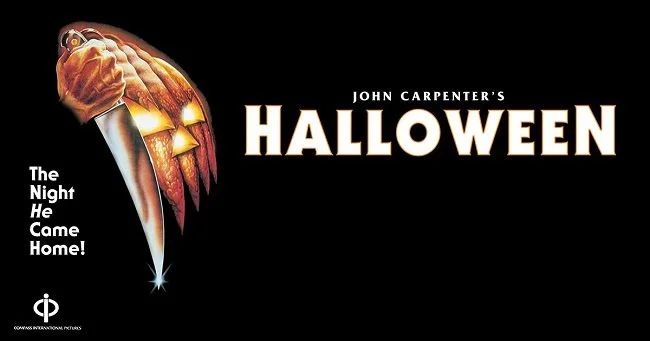
It's interesting that Carpenter's subtle and understated compositions were perhaps more influential on minimalist electronic music, rather than on contemporary movie scores. Certainly Carpenter's style became grander and musically more complex as he continued to score his later movies such as Prince of Darkness and later In the Mouth of Madness. Although he may well best known for the Halloween theme, the Assault on Precinct 13 soundtrack provided the original musical blueprint and is in many ways its equal. Film composers working today could learn valuable lessons from its simple eloquence.





The Stone Killer (1973)
In many respects, Michael Winner's 1973 hard-boiled cop movie, The Stone Killer contains pretty much all the obligatory tropes and memes associated with both the genre and the decade. Hippies, black militants, casual racism and of course disgruntled Vietnam veterans. In the absence of any no computers, Detective Lou Torrey (the ubiquitous Charles Bronson) favoured method of solving crimes is to beat, threaten and shoot everyone who may be a suspect. Obviously remembering to read people their Miranda rights is far too much like hard work. This is how cop movies were in the seventies and the public ate them up.
In many respects, Michael Winner's 1973 hard-boiled cop movie, The Stone Killer contains pretty much all the obligatory tropes and memes associated with both the genre and the decade. Hippies, black militants, casual racism and of course disgruntled Vietnam veterans. In the absence of any no computers, Detective Lou Torrey (the ubiquitous Charles Bronson) favoured method of solving crimes is to beat, threaten and shoot everyone who may be a suspect. Obviously remembering to read people their Miranda rights is far too much like hard work. This is how cop movies were in the seventies and the public ate them up.
The Stone Killers has an unnecessarily complex plot about a group of Sicilian Dons, led by Martin Balsam, hiring a group of ex-soldiers (The Stone Killer of the title) to eliminate the current heads of a national crime syndicate and right a wrong from forty years ago. Mr. Bronson stumbles across the plot and effectively kills everyone until the mystery is solved. He's aided by Ralph Waites who plays a racist redneck cop and rookie patrolman John Ritter. The movie is casually racist, misogynist and shows the seventies for the utterly shit decade that they were aesthetically. As ever the great Michael Winner directs with glee and revels in the seedier aspect of the plot. The movie also benefits from a get-down-funky, Roy Budd score that has a superb psychedelic vibe running through it. There are several well shot car chase which were essential action sequences at the time. It's quite nostalgic to watch the gas guzzling, unaerodynamic cars lumbering through the harsh cityscapes.
The movie also contrast great wealth with great poverty with some excellent shots of inner city decay. There is also some interesting attention to detail with regard to the mercenaries’ military tactics. Having gunned down their targets at the movies climax, the leader goes around all the bodies and shoots them with a pistol to ensure all are dead. The Stone Killer also has a dated penchant for the use of dummies in several high falls; the results are hilarious rather than shocking.
The Stone Killer is an interesting example of the sort of bleak, mainstream action fodder that was prevalent in the movie theatres at the time. As ever Bronson is compelling to watch, despite not playing an especially likeable character. Then again, there are no especially nice ones either. Despite being an action thriller, the viewer still has to think about the plot. Something that seems to have fallen by the wayside in modern equivalent movies. The film ends on a curiously philosophical note, with Bronson alluding to the fact that the bad guys may well have got away with things and be untouchable by the law, but it's only a matter of time before their own community turns on them. The Stone Killer is not up to the standards of Dirty Harry or The Mechanic but it is still a good example of an old-school genre film making.
Super Mario Run
Super Mario Run is now available for Android smartphones, so I thought I’d show willing and check it out. Despite Nintendo’s shockingly inane business decisions in recent years and their dogged determination to still approach the video games market as if it were still the nineties, I like many others still have a degree of good will towards them due to their franchises. So, I downloaded the game from the Google Play Store to find that, despite it’s free moniker, it is effectively a trial. Players get access World Tour, Toad Rally, and Kingdom Builder modes, with a selection of courses. The full game requires a single in-app purchase of $9.99 after which there are no further micro-transactions.
Super Mario Run is now available for Android smartphones, so I thought I’d show willing and check it out. Despite Nintendo’s shockingly inane business decisions in recent years and their dogged determination to still approach the video games market as if it were still the nineties, I like many others still have a degree of good will towards them due to their franchises. So, I downloaded the game from the Google Play Store to find that, despite it’s free moniker, it is effectively a trial. Players get access World Tour, Toad Rally, and Kingdom Builder modes, with a selection of courses. The full game requires a single in-app purchase of $9.99 after which there are no further micro-transactions.
Essentially, Super Mario Run is an automatic running game that uses simple touch controls to perform various types of aerial acrobatics. You can increase the size Mario's jump, delay the following fall and ricochet off enemies to reach inaccessible areas. The game utilises the screen relatively well, so I didn’t find my view obscured by my own finger and hand. However, the game also hinges on the basic mechanic of Mario’s continuous forward movement. Although it is easy in principle to grasp what needs to be done to successfully navigate the game environment, the skill lies in pulling it off.
Super Mario Run is a moderately fun return to the Mushroom Kingdom, yet it inherently lacks any major new wow factor. We’re still fighting the same trash mobs and bosses in the same old fashion. The levels designs are novel but the game seems to have one foot in the past. Now I know that nostalgia is a driving factor here and that fans expect to see key elements of the franchise but there is still a need to present a mixture of old and new to engage with players. The game overall feels too much like previous Mario outings and doesn’t make sufficient use of the benefits a mobile platform can provide. I was essentially disappointed with Super Mario Run.
And it would seem that I’m not alone in feeling that way. Although the game has had more than 78 million downloads since its December launch on iOS, only 5 percent of players paid to unlock the game. I was part of that niche group and although it is a relatively small sum of money, the game didn’t really live up to my expectations or provide any real long term value. Perhaps that is the problem. Nintendo are simply hamstrung by the nostalgic mindset of their player base and their own inability to fully embrace mobile platforms to the full. Either way, I think I shall certainly be far more cautious before buying another one of their mobile titles. That’s assuming that they still intend to pursue this particular market.
Update 20: Battle of the Black Gate
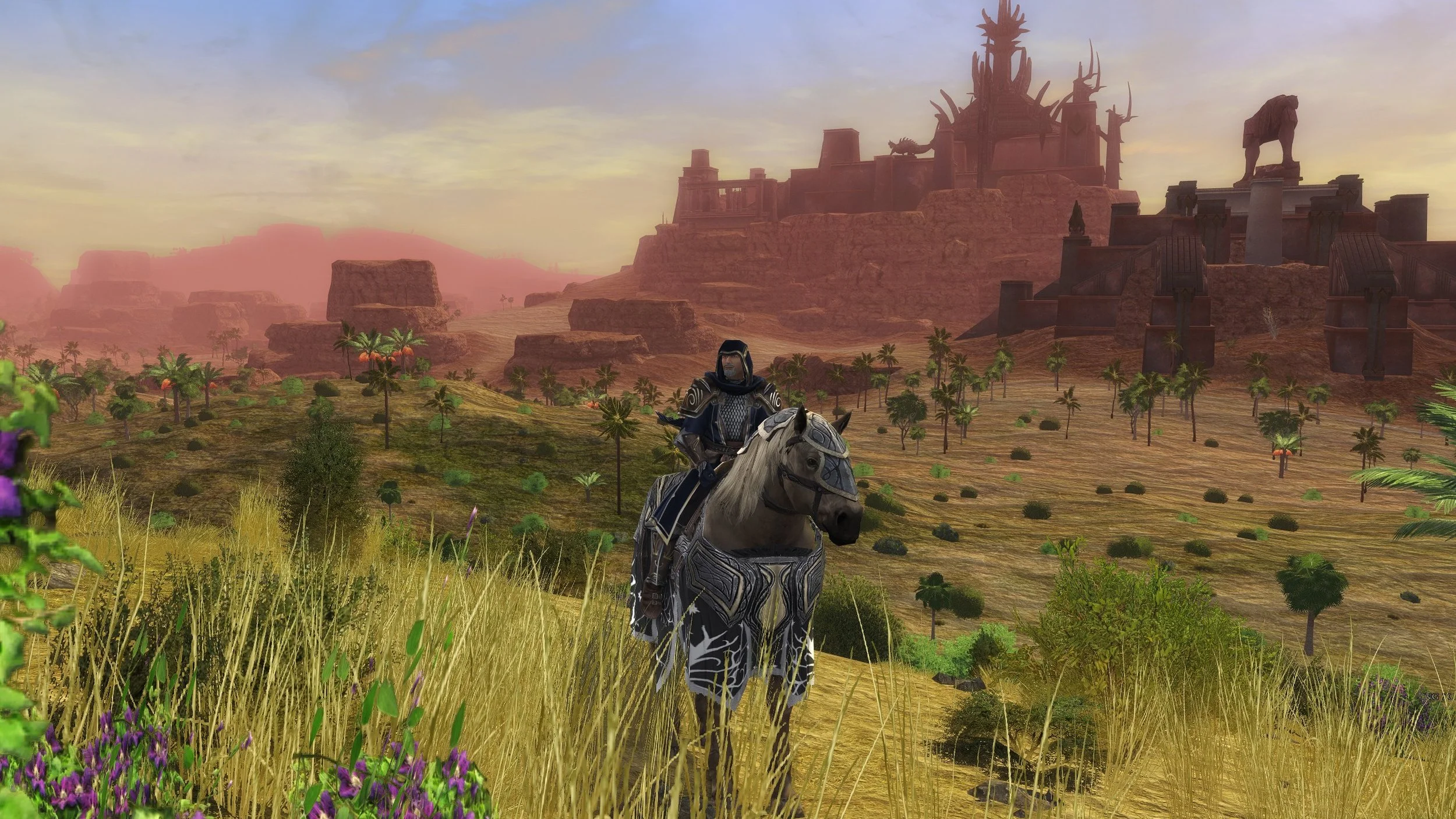
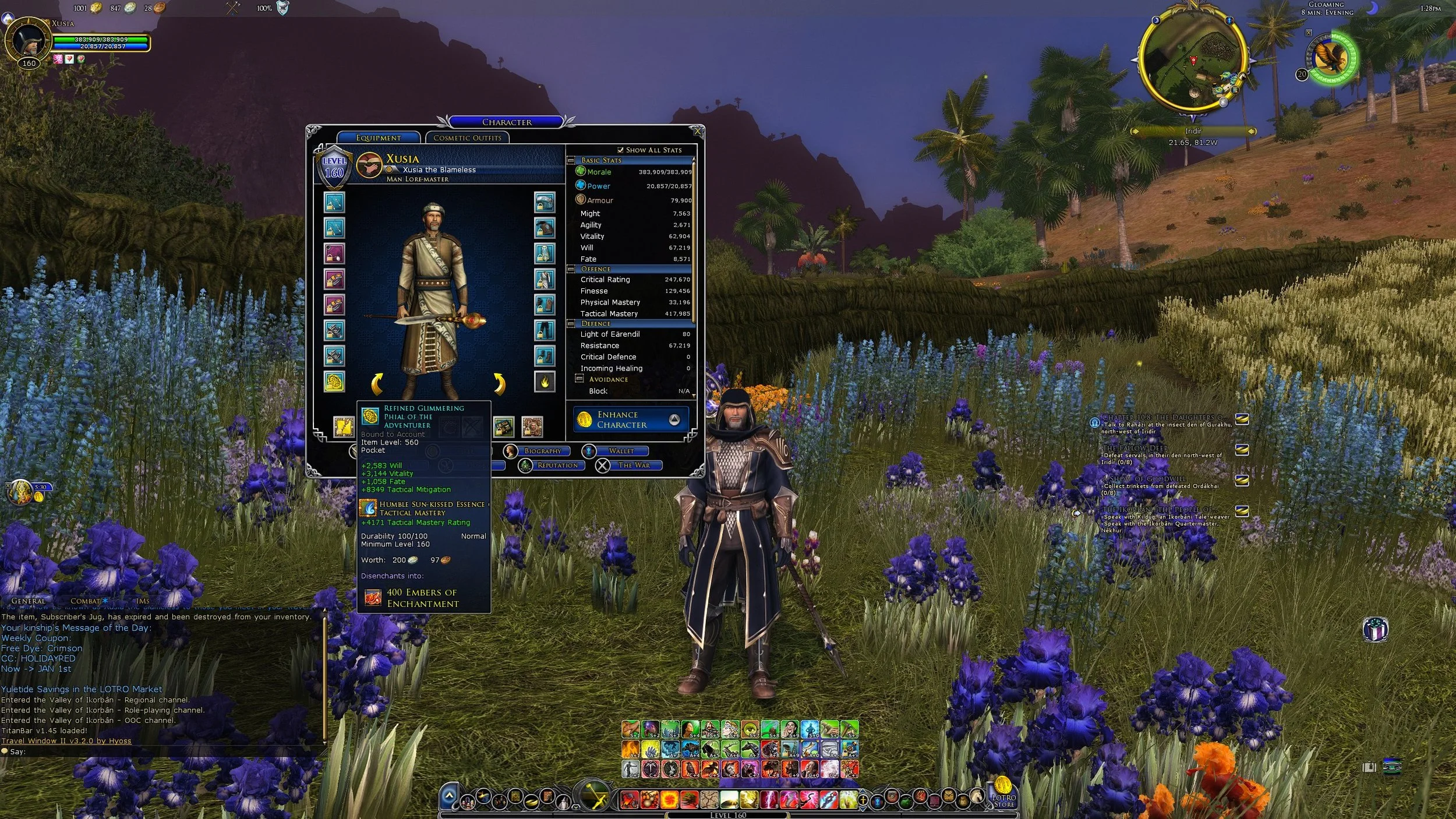
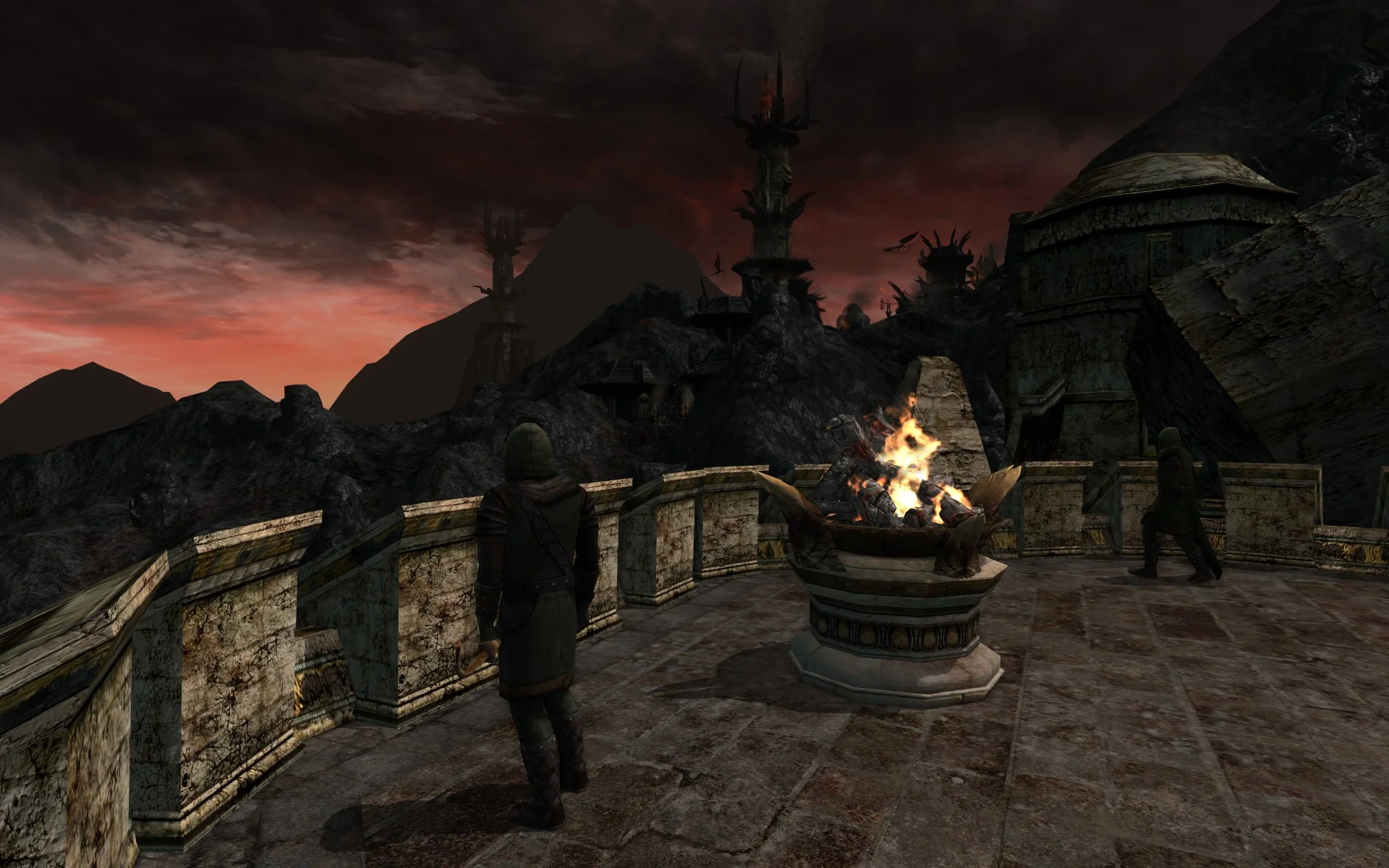
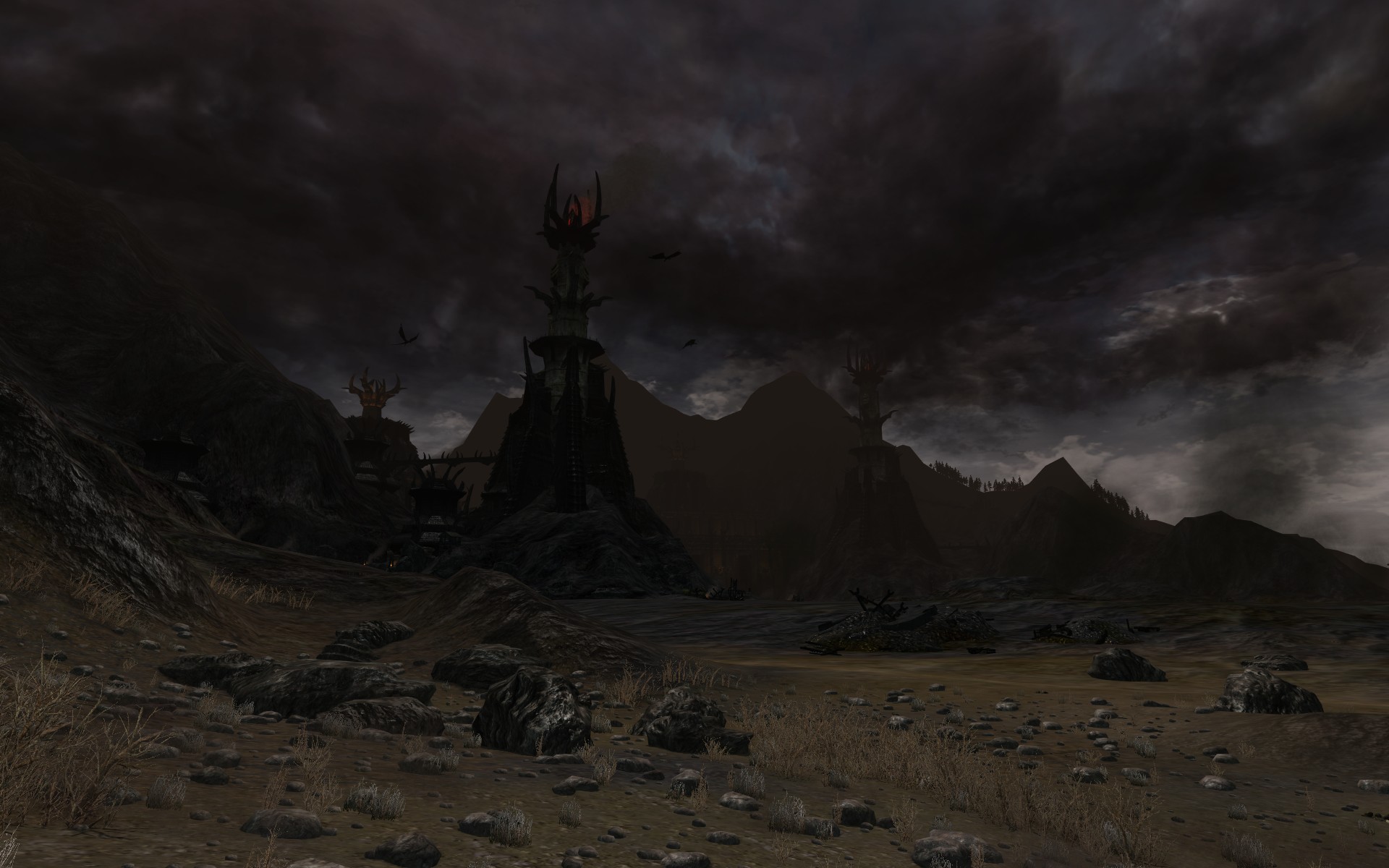
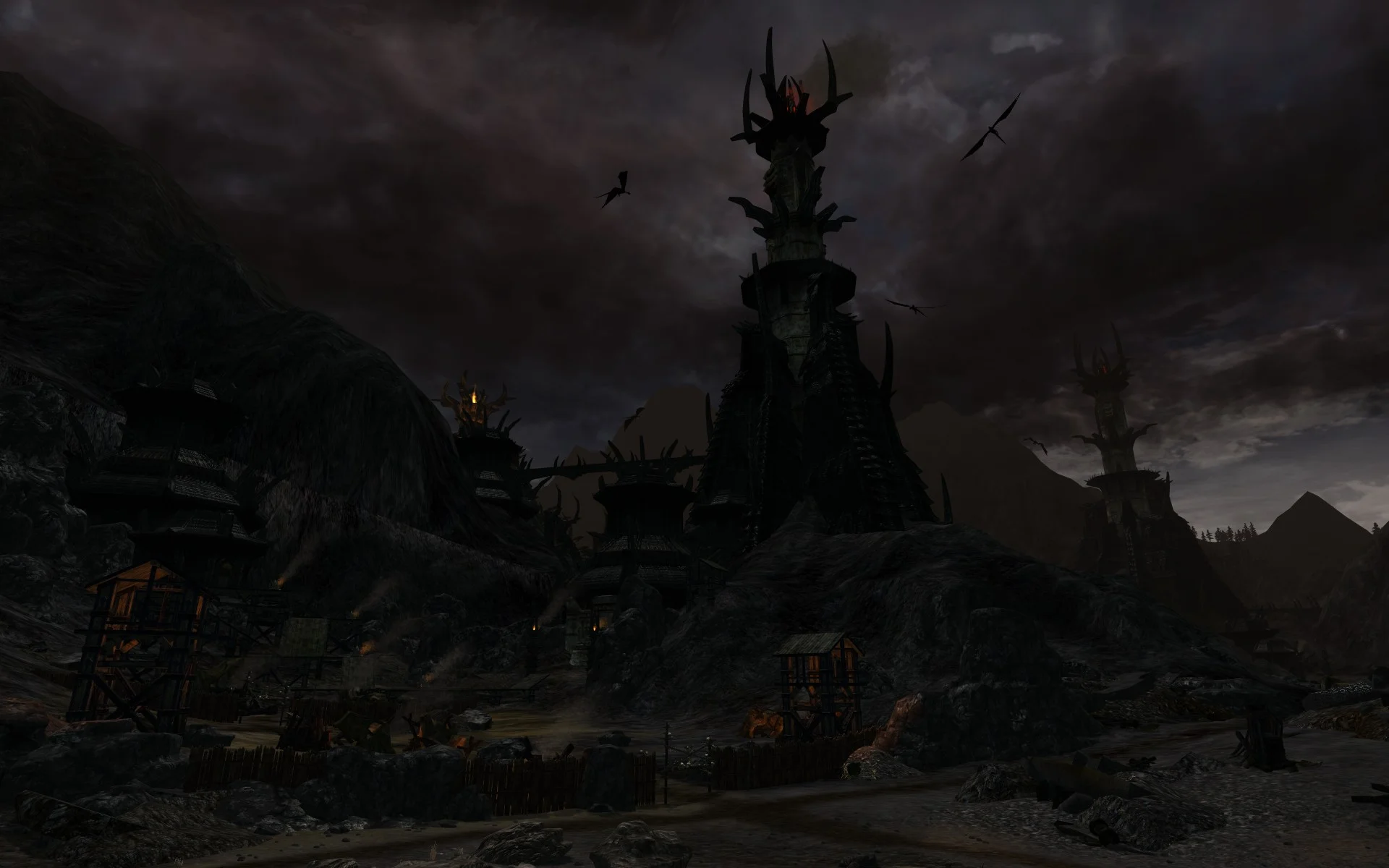
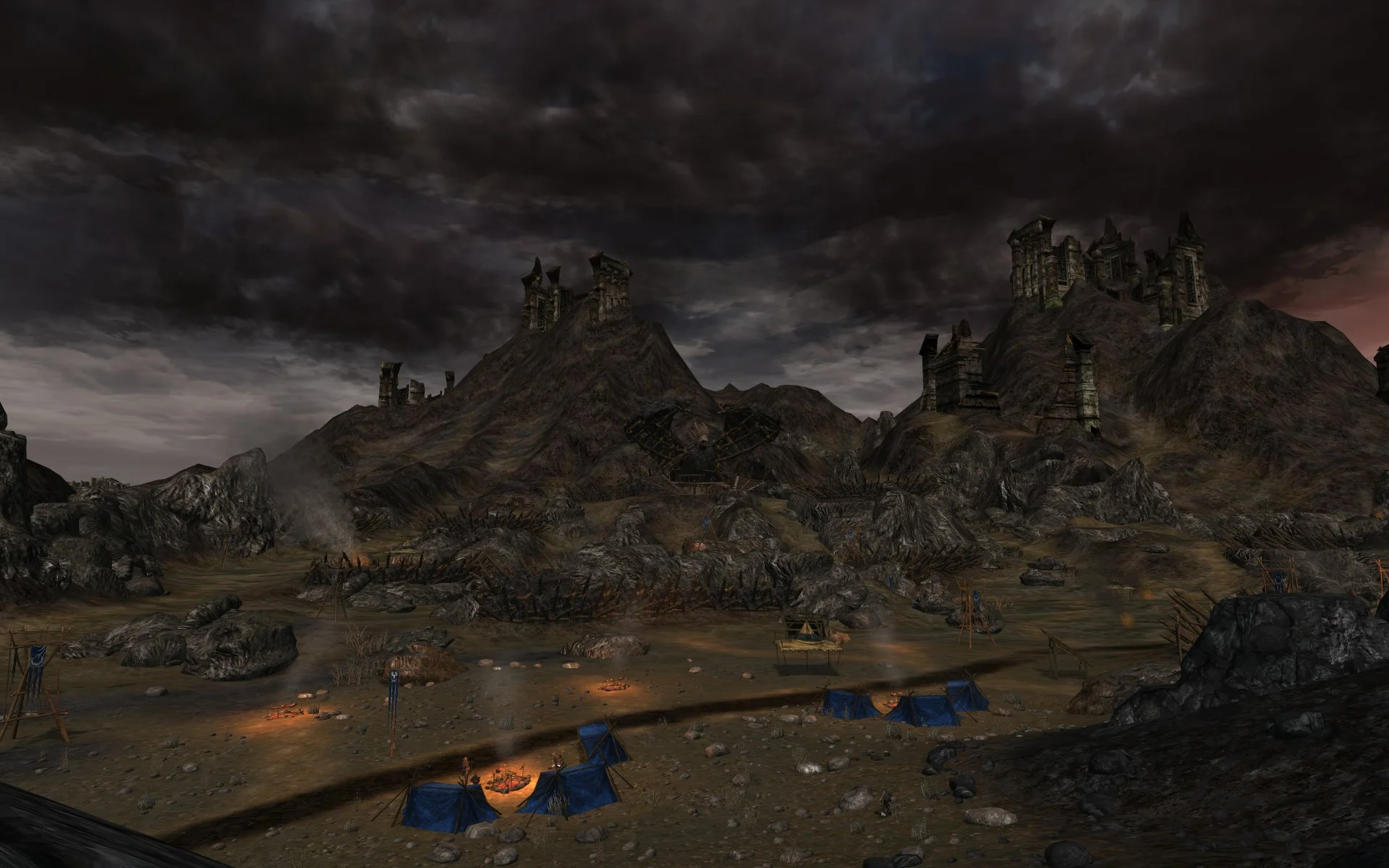
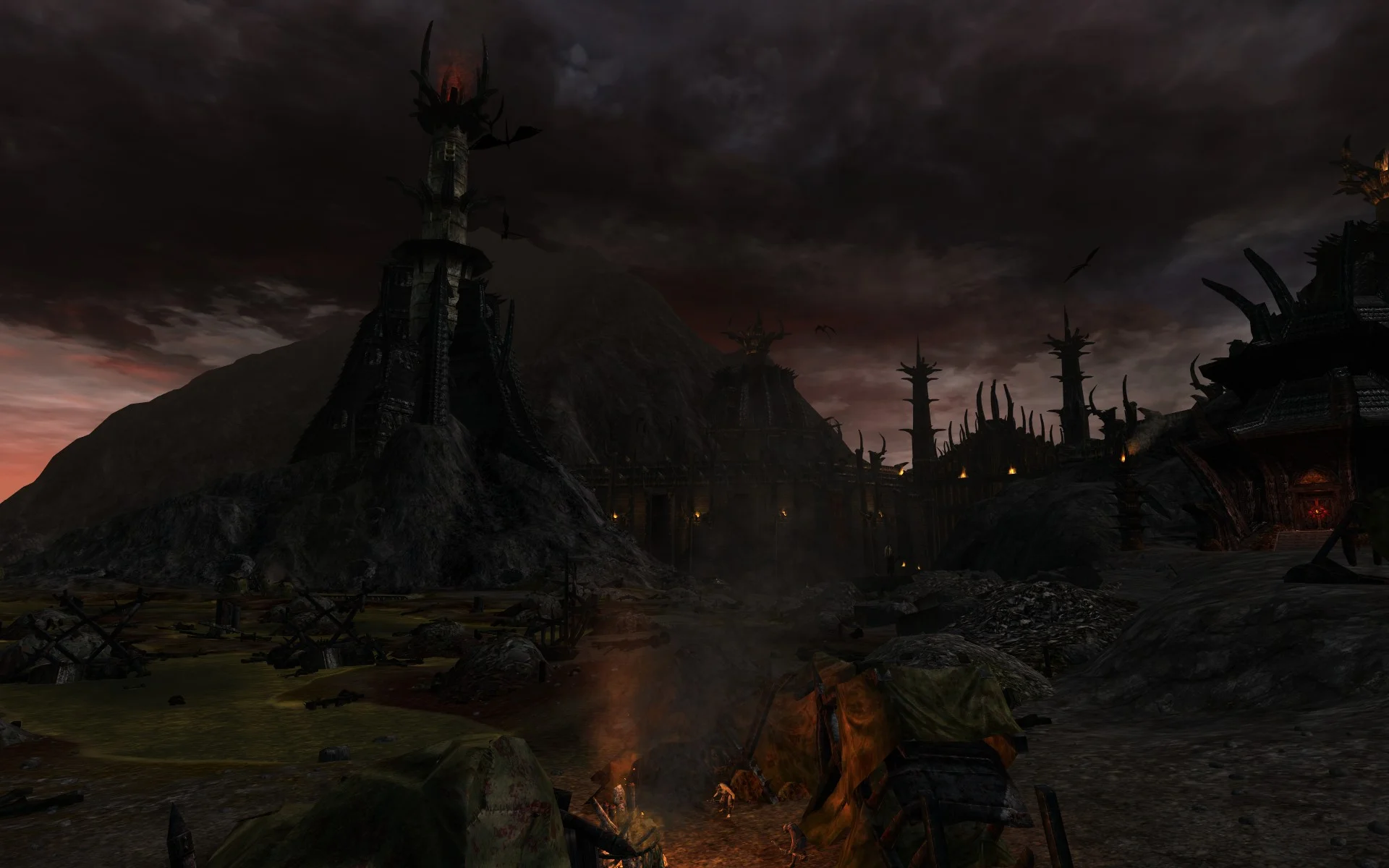
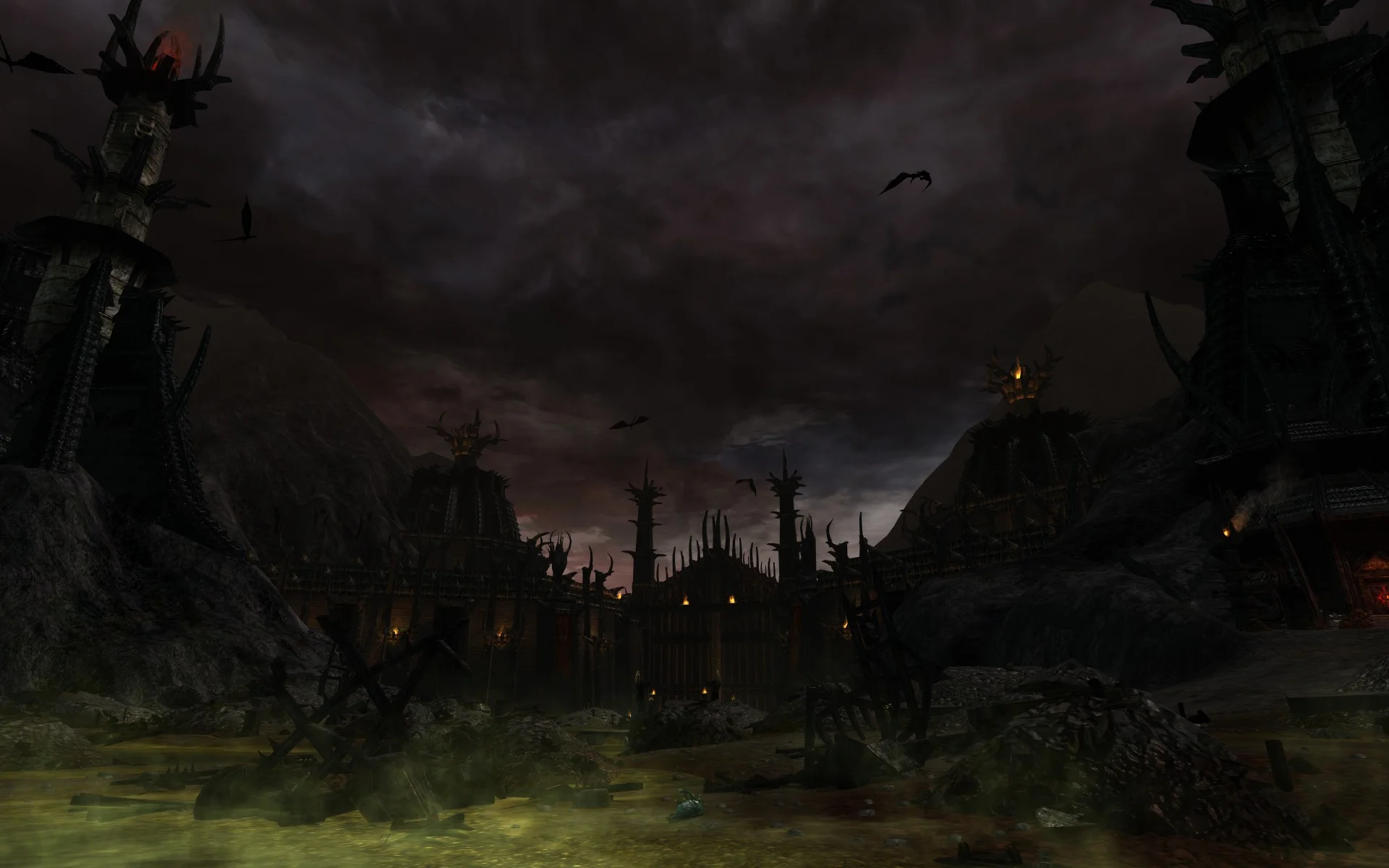
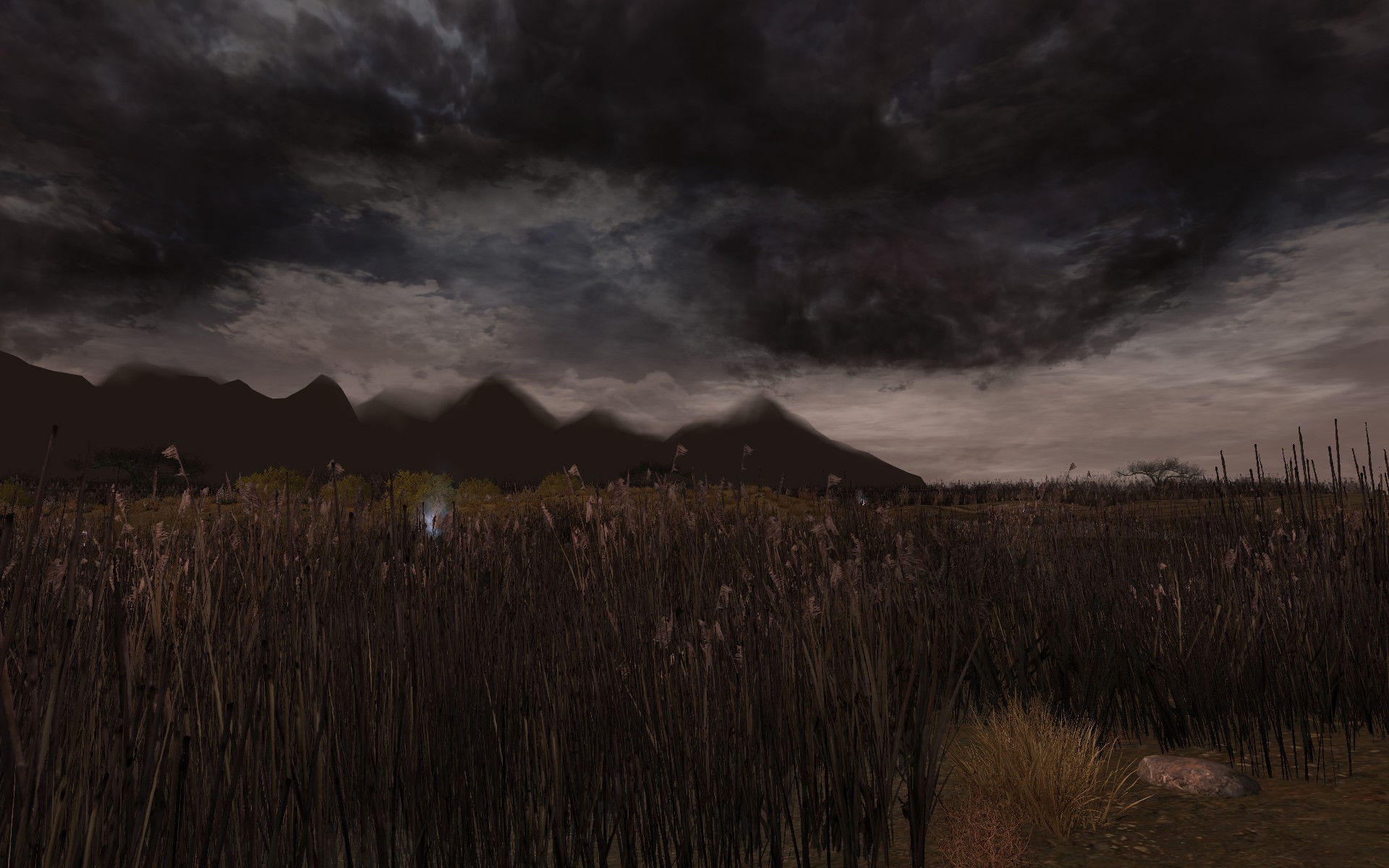
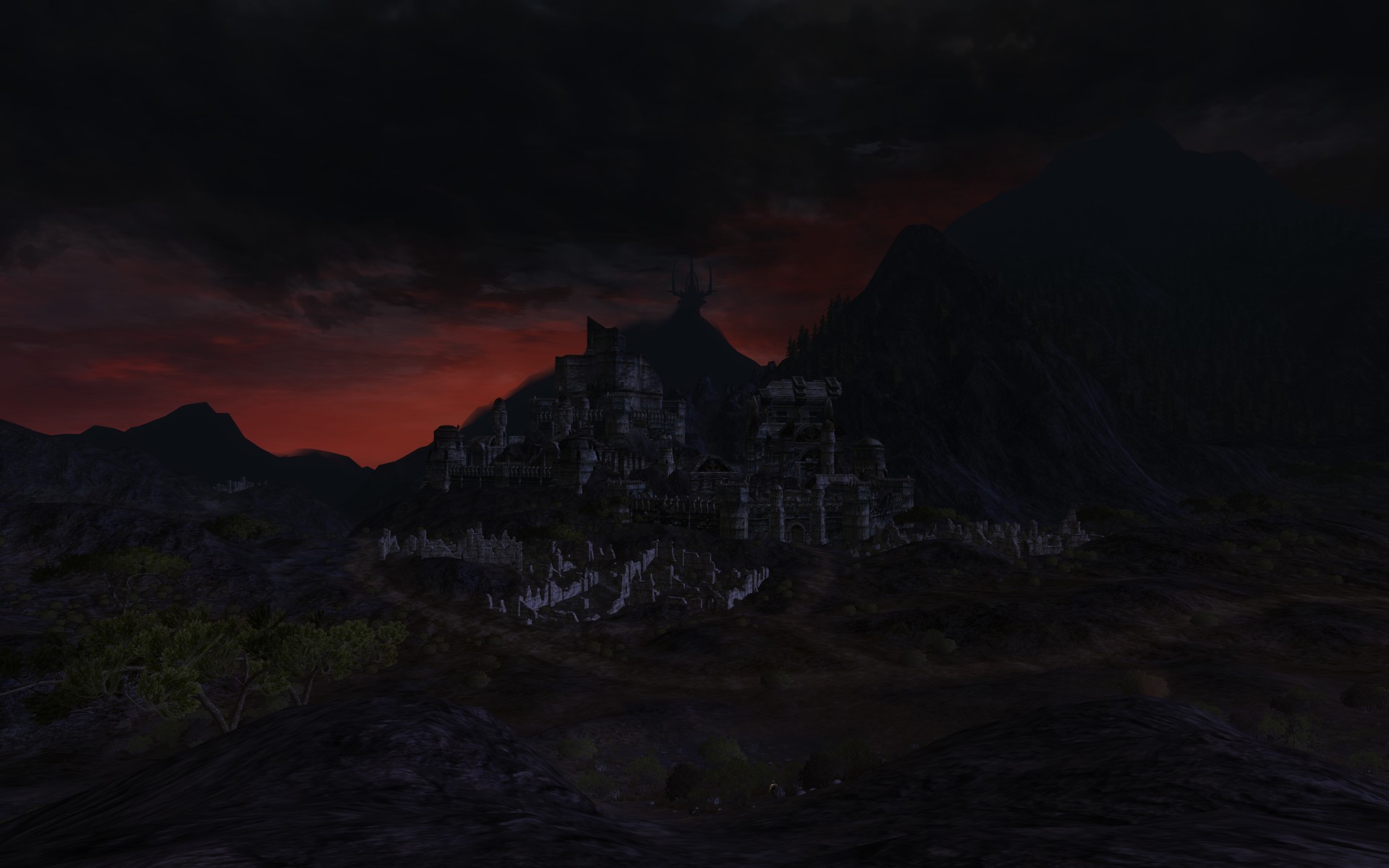
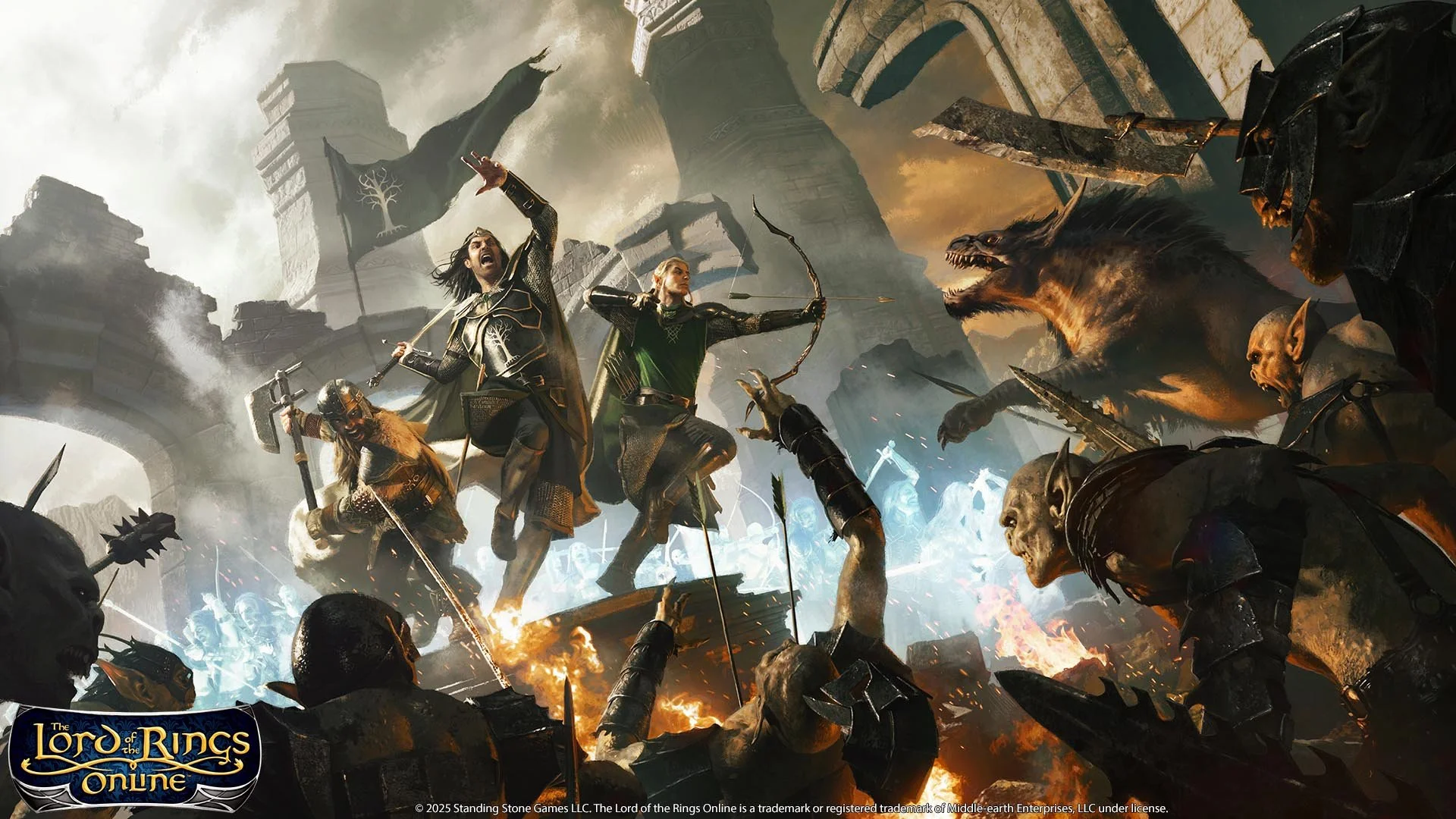
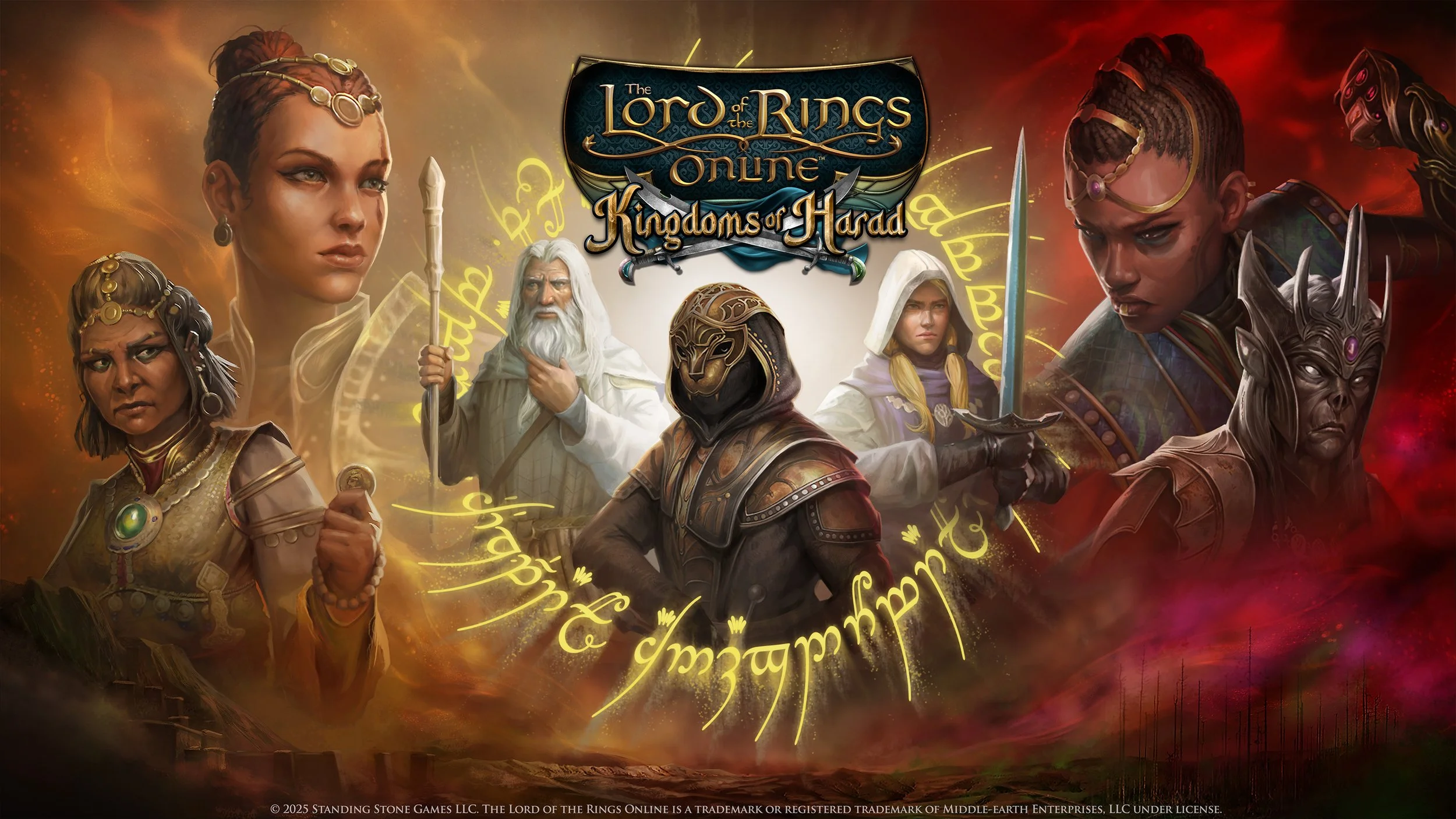
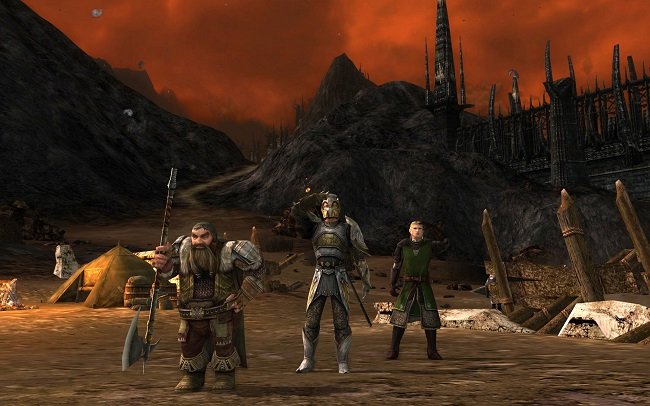
Finally, ten years after the launch of LOTRO, we find ourselves outside the Black Gates of Mordor. Dagorlad is the latest zone to feature in Update 20, released today and it’s a stark contrast after the lush and verdant hills of North Ithilien. Yet as ever with LOTRO the new area is beautifully realised and filled with lore references. The fact that we’ve finally arrived before the Morannon and will be entering Mordor in the next expansion, compensates to a degree for the years of unnecessary diversion we’ve endured, with prior zones such as Mirkwood, Enedwaith and Dunland. I make no bones about the fact that I never liked these areas and felt the stories they told were somewhat superfluous. However, that is all behind us now and Mordor awaits.
Finally, ten years after the launch of LOTRO, we find ourselves outside the Black Gates of Mordor. Dagorlad is the latest zone to feature in Update 20, released today and it’s a stark contrast after the lush and verdant hills of North Ithilien. Yet as ever with LOTRO the new area is beautifully realised and filled with lore references. The fact that we’ve finally arrived before the Morannon and will be entering Mordor in the next expansion, compensates to a degree for the years of unnecessary diversion we’ve endured, with prior zones such as Mirkwood, Enedwaith and Dunland. I make no bones about the fact that I never liked these areas and felt the stories they told were somewhat superfluous. However, that is all behind us now and Mordor awaits.
The Epic Story is central to my enjoyment of LOTRO. The developers have always managed to create clever narratives that either reference the source text or allow us to visit the Fellowship via session play. Over the years, this game mechanic has allowed us to play as a Dwarf during the Fall of Moria, as one of the Dead Men from Dunharrow and even as a horse. This time the game excels itself as we get to play as Gollum. Unlike the film adaptations which painted a more tragic picture of Frodo’s nemesis, here he is depicted in a far more sinister, as he sneaks off in to the heart of Cirith Ungol to strike a deal with Shealob. This is a great game event that exudes atmosphere. It’s a shame that a minor foible of the game intruded upon my enjoyment.
### Chat Capture: General 03/21 11:41 PM ###
No Other Way
"Up, up, up the stairs, gollum. Gollum. And then... the tunnel, yes... this way, good hobbitses... yes..."
New Quest: Interlude: No Other Way
Entered the Trade channel.
Entered the LFF channel.
Entered the World channel.
Entered the Trade channel.
Entered the LFF channel.
Entered the World channel.
[Trade] Faelox: 'WTB tome of will 5,6 // WTB sturdy steel key x2'
Screenshot [ScreenShot00052.jpg] saved to disk.
[World] Lucwald: 'you may get attacked for wandering around like a mel gibson super fan from the passion haha'
Frodo says, ''Come on, Sam! We're nearly at the top!''
[World] Calanais: 'do you actually know any muslims ilmate?'
Samwise says, ''I have had my fill of stairs, Mr. Frodo.''
[World] Calanais: 'well yes probably but that was hyperbole'
Frodo says, ''Me too, Sam. Me too.''
Samwise says, ''What was it Gollum said was at the top of the stairs?''
[World] Pren: 'Is it the 10 year Anniversairy this year?'
Frodo says, ''A tunnel, he said.''
[World] Ilmate: 'Dude, I already provided several links. Another guy did the same. I said lets close this subject.'
[World] Asabairn: 'mhm'
Samwise says, ''That's right. I don't much care for tunnels.''
Frodo says, ''The stairs, the tunnel... and Mordor.''
[World] Pren: 'Nice cosmetic pets being realeased then!'
Samwise says, ''Who would have thought we'd make it there, Mr. Frodo?''
[World] Ilmate: 'And yeah, I have several muslim friends.'
Frodo says, ''I think we are almost at the top.''
[World] Colherlus: 'There is always evil in people, race or religion doesn't matter. Even in Middle Earth, so no point arguing.'
Samwise says, ''I can't believe it! At last!''
[World] Calanais: 'friends?'
[World] Morellian: 'the dog is adorable <3'
[World] Gonursua: 'Your links were about as reliable as the National Enquirer.'
Frodo says, ''A tower... there is a tower above the pass.''
Samwise says, ''I don't like the look of that at all.''
[World] Calanais: 'oh so they're not all evil christian killers'
Samwise says, ''Your secret way is guarded after all, Gollum!''
Samwise says, ''I suppose you knew that all along! Leading us into a trap, are you?''
Frodo says, ''He is right, Sam. Every way into Mordor will be watched, in some fashion.''
[World] Ilmate: 'Muslims immigrants that assimilate with another's culture and ideals are a rare breed.'
Frodo says, ''Look, we can rest over here, out of the wind.''
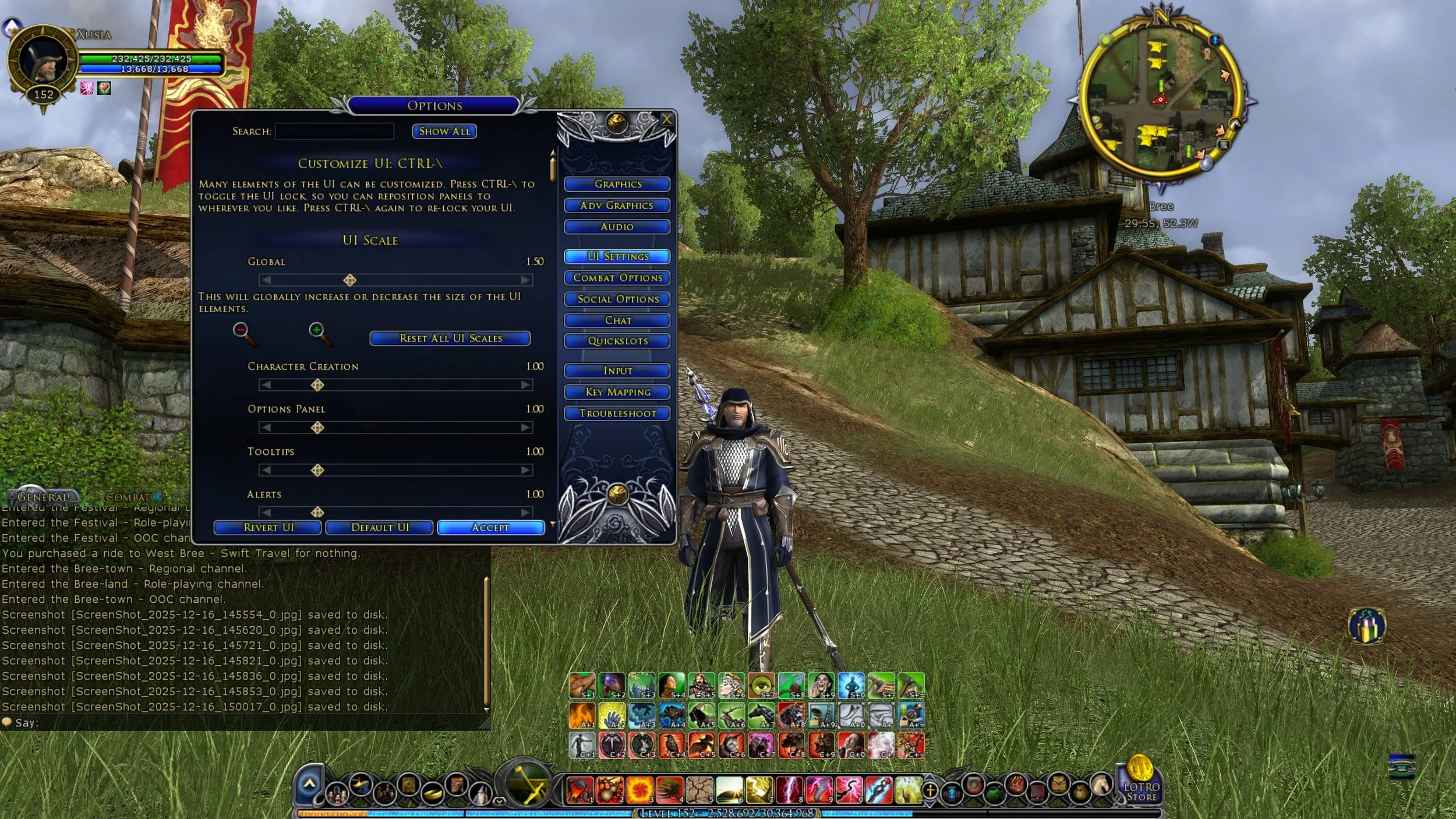
It should be noted that when you enter session play, as you’re playing a unique character, all custom settings of your UI reset to their defaults. Thus, World Chat is enabled. Often when I’m playing through new content there is much to see, so I can at time miss the onscreen dialogue from the NPCs. I therefore re-read this text in the chat window. During a key scene during the Gollum session play I suddenly found text from World Chat appearing in between dialogue from the game. It was disconcerting to say the least and more than a little immersion breaking. I managed to capture the text and you can read it below. The lesson of this story is to load your UI customisations as soon as you start session play, if this sort of thing bothers you. Furthermore, I think the chat log makes a perfect case for avoiding this particular chat channel.
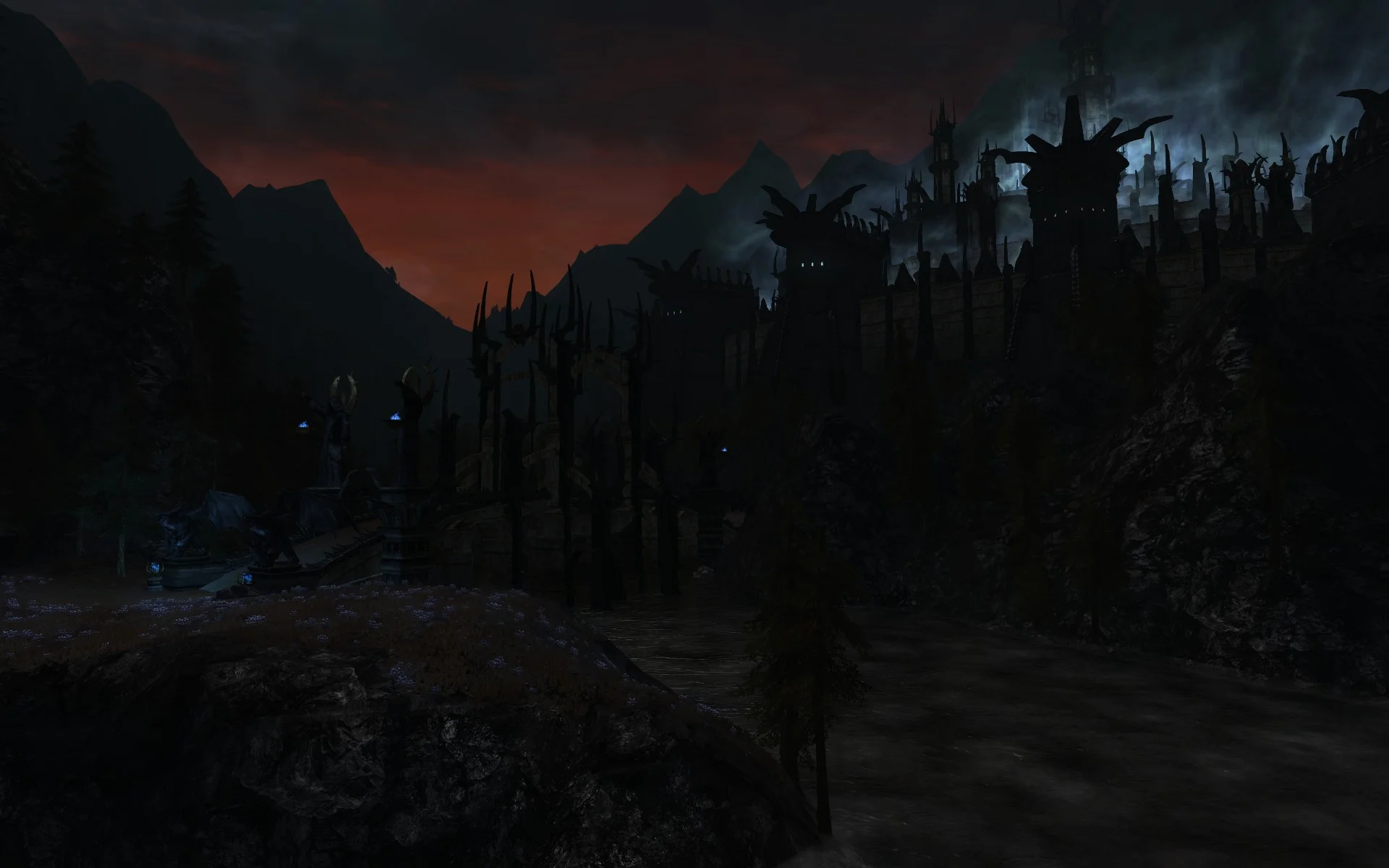
As I mentioned, LOTRO excels at including many minor facets of Professor Tolkien’s source text into the MMO. I read a post recently on BioBreak regarding a quest chain in North Ithilien that ends with Gandalf entering the Morgul Vale and destroying the bridge to Minas Morgul. It is a small aspect of the story and not in any way essential to the overall plot. It is however a fine embellishment to the game. I hadn’t done this particular instance myself and when I checked my quest log, found an unfinished series of quests that led to this event. Needless to say, I completed them and got to experience this interesting vignette myself.
So, for the present, I shall be logging into LOTRO several times a week and slowly working my way through the new content. There’s plenty to do and I am pleased that I prepared for this new zone by upgrading much of the armour and jewellery on my primary character. There are still things that I need to investigate and familiarise myself with, such as the new ore nodes that are available in Dagorlad. They yield some sort of resource that can be converted in to a barter currency. Plus, there is an area of the new map, Dol Acharn, that seems to be inhabited by some sort of wight. Approaching the ruins there causes your character’s morale to deplete very rapidly. I would assume that there is some sort of event associated with this. All these matters can be explored over the weeks to come ensuring that LOTRO continues to be a major part of my leisure time.




Acquainting Yourself with Classics Films
Let us take a moment to consider those movie lists you often come across on websites and in magazines. Why? Because there’s a lot of them about. You know the sort, one hundred movies that you must see before you go senile, according to some well-known critic or august institution like the BFI. Or if you prefer something more hip and eclectic then here’s another one collated by British filmmaker Edgar Wright. Furthermore, these lists are often somewhat homogeneous, containing a mixture of bonafide yet ubiquitous classics, a percentage of obscure arty-farty bollocks and a few wild cards that they put in for a laugh. These will be either so-called cult movies or examples from the “it’s so bad, it’s good” school of film making.
Let us take a moment to consider those movie lists you often come across on websites and in magazines. Why? Because there’s a lot of them about. You know the sort, one hundred movies that you must see before you go senile, according to some well-known critic or august institution like the BFI. Or if you prefer something more hip and eclectic then here’s another one collated by British filmmaker Edgar Wright. Furthermore, these lists are often somewhat homogeneous, containing a mixture of bonafide yet ubiquitous classics, a percentage of obscure arty-farty bollocks and a few wild cards that they put in for a laugh. These will be either so-called cult movies or examples from the “it’s so bad, it’s good” school of film making.
Bearing that all-in mind, I thought it would be interesting to see what someone's reaction would be when watching one of these titles for the first time. Classic films such as Stanley Kubrick's 2001: A Space Odyssey, Vittorio De Sica's The Bicycle Thieves or Orson Welles' Citizen Kane. All of these examples have established and prodigious reputations as well as a lot of artistic and cultural baggage attached to them. Would a first-time viewer feel obliged to follow herd and add their voice to the prevailing consensus? Or if they did not enjoy the movie and felt it had specific flaws would they have the courage of their convictions to call a spade a spade?
Well to cut a long story short, if you want something done properly, then do it yourself. Therefore, I shall be kicking the process off by watching that classic sixties Bullitt. Yes, I have never seen this alleged defining point in Steve McQueen’s acting career, so I thought it would be a great example to begin with. Bullitt is a movie I’ve only ever seen snatches of. The sort of movie you find while channel surfing and watch a few minutes of before turning over yet again. Each time, I say to myself, I must get around to watching that and then I never do. Oddly enough I do own the Lalo Schifrin soundtrack which is extremely cool in that sixties movie idiom. So, I’ve secured a nice high definition copy of the film and shall endeavour to watch it and review it this week. It will be interesting to see the famous ten-minute car chase within it’s right context and make a measured judgement about it.
Now I make no bones about the fact that I like some specific types of movies more so than others. I would much rather watch a film about a serial killer murdering a bunch of teenagers by sticking a Dyson up their wazoo, than some tedious, worthy human drama about a Bolivian praegustator coming to terms with the death of their next-door neighbour’s budgie, during the Boer War. However, I also feel that it is important to be well versed in all aspects of cinema, if you wish to have an informed opinion on the subject. Therefore, the next couple of months could be very interesting as I work my way through the following films. You can also expect some eclectic reviews. If you have any interesting suggestions, feel free to leave a comment and I’ll see what I can do about adding them to the list.
Bullitt (1968)
Rashômon (1950)
Les Vacances de Monsieur Hulot (1953)
Wake in Fright (1971)
Freaks (1932)
Solaris (1972)
Thief (1981)
Sorcerer (1977)
Metropolis (1927)
M (1931)
Is the UK Voting System Broken?
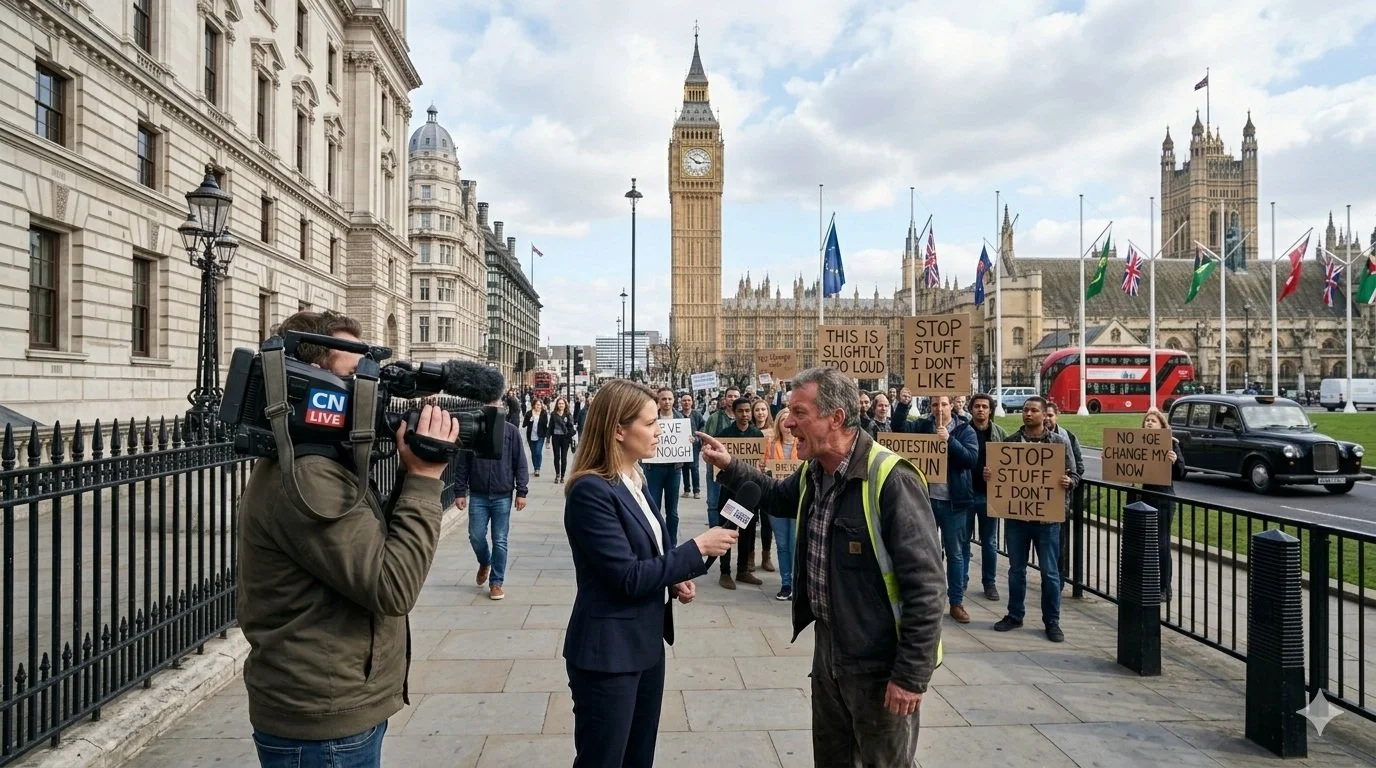
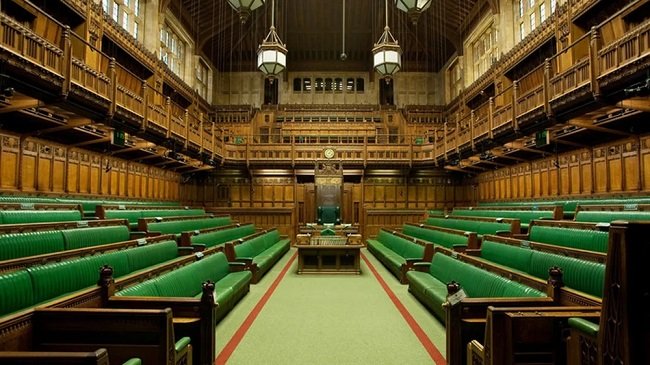
At present, there is talk in political circles of the prospect of an early General Election in the UK as a means of dealing with several looming political problems. If such a situation were to arise, then it has to contend with the fragmented state of the UK electorate as well as voter apathy and low turnouts. Perhaps the biggest issue is the mechanics of the election process itself. It has its roots in the past when there were two major parties. Things have changed in recent years with more political groups competing for parliamentary seats and the system now seems to be inequitable. So I thought it may be of interest to readers to offer a broad overview of the process. It differs quite considerably from other countries and as you'd expect with anything British, it has more than a few quirks and foibles. This is not in any way a discussion about party politics. I am simply writing about the actual mechanics of the UK First Past the Post system that determines who will form a government.
At present, there is talk in political circles of the prospect of an early General Election in the UK as a means of dealing with several looming political problems. If such a situation were to arise, then it has to contend with the fragmented state of the UK electorate as well as voter apathy and low turnouts. Perhaps the biggest issue is the mechanics of the election process itself. It has its roots in the past when there were two major parties. Things have changed in recent years with more political groups competing for parliamentary seats and the system now seems to be unequitable. So I thought it may be of interest to readers to offer a broad overview of the process. It differs quite considerably from other countries and as you'd expect with anything British, it has more than a few quirks and foibles. This is not in any way a discussion about party politics. I am simply writing about the actual mechanics of the UK First Past the Post system that determines who will form a government.
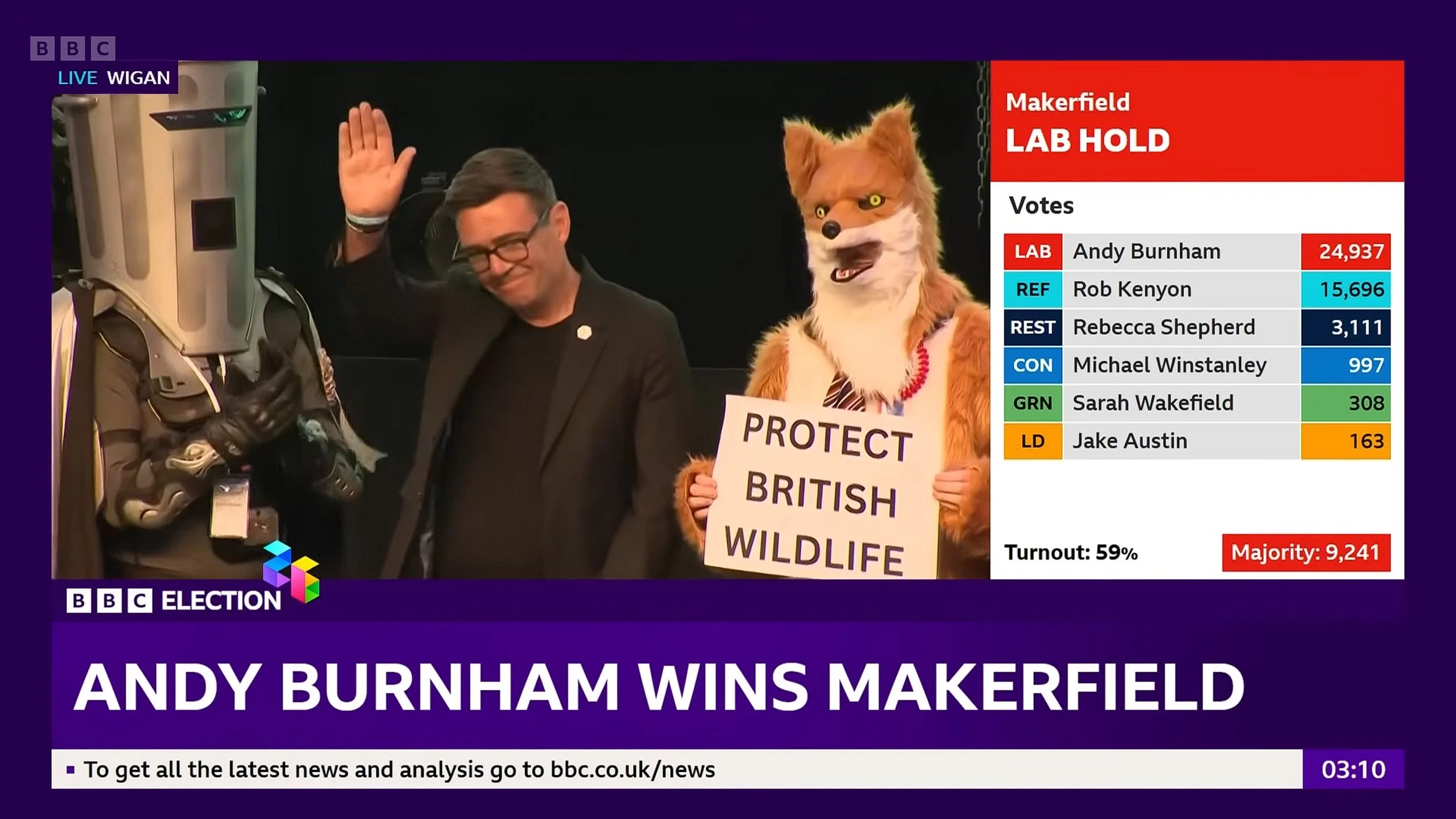
There are 650 parliamentary constituencies in the UK, each returning a Member of Parliament (MP). For a single political party to form a government they need to have at least 326 MPs duly elected. When UK voters go to the polls, they are not voting for the specific leader of a particular party IE they are not voting who will be the British Prime Minister. They are voting for a specific candidate, who will represent their constituency at Parliament. This choice is dependent upon which candidates are standing for which parties in each constituency.
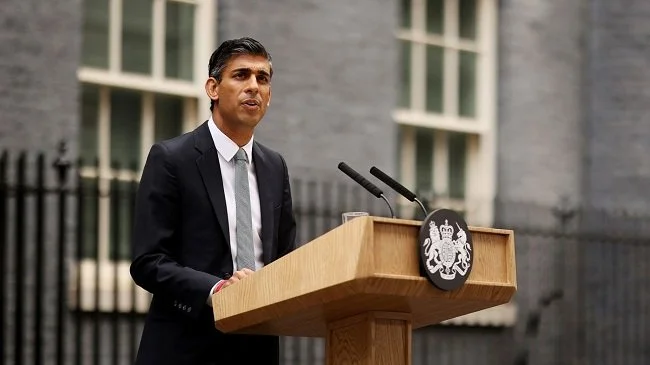
The party that wins 326 parliamentary seats or more is then in a position to form a government. The leader of that party then becomes Prime Minister by default. It should be noted that the UK Prime Minister is not also the head of state. That role which is non-political is assumed by the current Monarch.
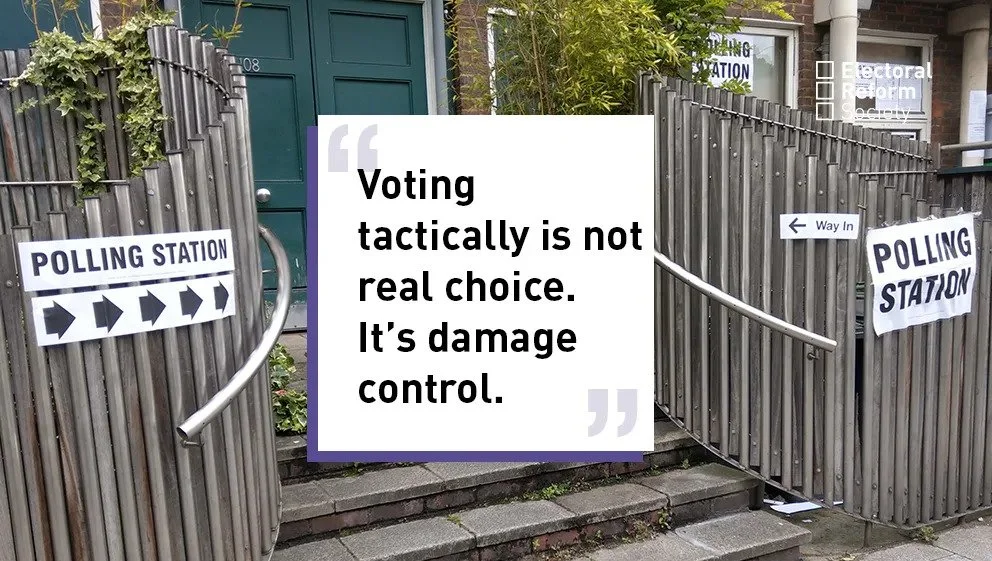
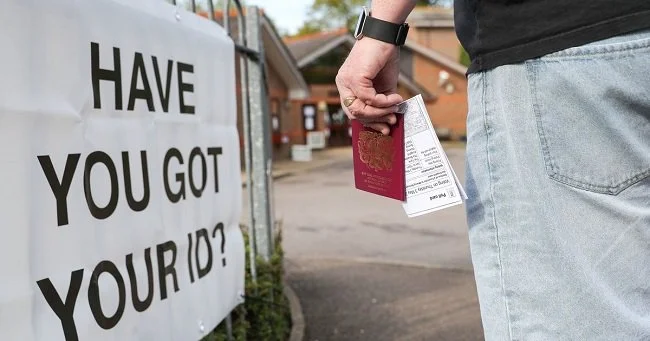
At present in the UK, votes in local, regional and national elections are written by hand on Ballot Papers and counted manually. Not only does this reduce potential fraud but it actually makes the counting process easier. It also affords voters a chance to deface or spoil their ballot paper if they see fit. Something you cannot do if you vote mechanically or electronically. Disallowed votes are counted as such and statistics are kept.
Now here’s the part I and many other UK voters find most frustrating. Out of the 650 constituencies in the UK, approximately 456 are considered to be safe seats IE the current incumbent has a sufficient majority of votes from the local electorate to be able to maintain their position. Only 194 Parliamentary seats are based in constituencies that are deemed marginal. There is no fixed definition of a marginal but it is usually defined as seats with majorities of 10% or less that require a swing of 5% for the incumbent party to lose. Safe seats tend to remain constant. Marginal seats play a key role in elections.
I live in the constituency of Old Bexley and Sidcup, in South East London. It is the embodiment of a white, middle class, residential borough and has been a safe seat for the Conservative Party for years. The electorate is about 65,000 in total. The turnout in the last election was about 69%. James Brokenshire the incumbent MP has a majority of over 15, 000 votes (he actually poled 24,500 votes).
No matter what my party politics and how I personally vote, Mr. Brokenshire is very likely to remain my MP by the simple fact he has an unassailable majority. He may lose some votes in protest but not enough to unseat him. The likelihood of 8,000 plus voters changing their political allegiances, in a constituency that is already socio-economically disposed towards the Conservative Party is highly unlikely. Similar arguments can be made regarding the static nature of all other so-called safe seats.
This raises one of the major failings of the current UK voting system and safes seats. If you live in such a constituency and vote against the current favoured incumbent, your vote effectively counts for nothing and has no impact on the UK political landscape. For years the UK has mainly been a two-party country and as a result the political system has evolved to reflect that. In 2010, the UK had a referendum on changing to the AV voting system that had elements of proportional representation. The change was rejected. Since then, several new parties have emerged and gained favour, while the two main parties have waned and lost some of their broad public support. We now live in a multi-party environment but lack a voting system to adequately reflect that.
Presently, the only voters that can tangibly make change in their constituencies are those that live in the 194 marginal seats. Because the incumbent's majority is often low in such situations and there are far more floating or tactical voters, ardent campaigning can yield results and make swings in either political direction. Effectively it is these constituencies and the voters that live in them that determine the UK General Election results. Because of such issues as population density, some of these marginal seats may have small electorates. In some cases, it's simply the floating voter within a few streets that can change things. It is both fascinating and a little concerning to consider that the next five years of government are effectively decided by a small percentage of the electorate.
The other issue that the UK faces in an election is the prospect of no party being an outright winner. The prospect of a coalition raises its head. Although coalitions have been effective in many other European nations, the UK is not culturally used to them. Where the younger generation seems to warm to the concept, those of an older age group with more entrenched party loyalties balk at the notion of "forced collaboration". However, I think this change in the UK's political landscape is here for good and if anything, there will be even more new parties in the next decade, especially if the Labour Party disintegrates. In the meantime, the only voters determining the outcome of the current election are those living in marginal seats. According to some political experts, this may be as few as 250, 0000 voters out of a total of 46,000,000 registered to vote.
To me is seems self-evident that the ageing First Past the Post system is not fit to serve a modern electorate and needs to be replaced by a fairer procedure. It is ironic that UK representatives standing as MEPs in the European Parliament are subject to a proportional representation voting system, as are the devolved parliament in Scotland and Wales. However, to expect a change to be implemented by the very party in government that directly benefits from the current status quo is naïve. In the meantime, we must continue to endure the flaws inherent in the process that is in place.











How Long Should a TV Show Run For?
Over the course of a year I tend to try five or six new TV shows. Like everyone else I have a finite amount of leisure time and I therefore try to split it evenly among my various interests. Overall, I watch no more than ten shows regularly. I like to do some research before selecting something new to watch and I also consider recommendations from my peers very important. Once I’ve decided upon what I shall try, I tend to give each new show a fighting chance to build up a head of steam. Not all shows hit the mark immediately. Some need at least half a dozen episodes. Some need several seasons. So far Designated Survivor has proven gripping and well-conceived. It also doesn’t make the usual mistake that densely-plotted dramas so often do, in continuously taking one step forward and another two back.
Over the course of a year I tend to try five or six new TV shows. Like everyone else I have a finite amount of leisure time and I therefore try to split it evenly among my various interests. Overall, I watch no more than ten shows regularly. I like to do some research before selecting something new to watch and I also consider recommendations from my peers very important. Once I’ve decided upon what I shall try, I tend to give each new show a fighting chance to build up a head of steam. Not all shows hit the mark immediately. Some need at least half a dozen episodes. Some need several seasons. So far Designated Survivor has proven gripping and well-conceived. It also doesn’t make the usual mistake that densely-plotted dramas so often do, in continuously taking one step forward and another two back.
Another show I’ve started watching on a whim that turned out to be far more entertaining than anticipated is Timeless. Although time travel is a somewhat hackneyed concept dramatically, this show flies in the face of the traditional “non-interference” trope. History is altered regularly in both positive and negative ways. The main characters are also very engaging. However, the show obviously is an expensive production due to the constantly changing period setting. Timeless also has a plot that cannot be indefinitely sustained. There is far too much scope for temporal paradoxes and for the storyline to ties itself in knots. Therefore, I've been pondering the question "how long should a TV show run for"?
I think a shows premise and central plot ultimately determines the overall answer. Police procedural dramas or those set-in Hospitals, Courts or other permanent institutions, have the luxury of being able to carry on ad infinitum. You only have to look at shows like Law and Order SVU or the NCIS franchise for successful examples. Characters and cast members may come and go but the central plot device provides an inexhaustible supply of material. Furthermore, apart from some minor story arcs usually associated with the lead actors, it is not always essential to watch these sorts of shows continuously. You can return to them as and when you like. It is this undemanding quality that often contributes to a shows success.
However, this is not the case with dramas with a more traditional linear storyline. Producers are faced with the dilemma of maintaining an audience and the need to expedite the plot. Lost is a classic example of a show that out stayed its welcome, as far as I'm concerned. I initially enjoyed the convoluted scenario and air of intrigue that was perpetuated but soon I got exhausted by the lack of narrative advancement. I sat through several seasons during which nothing discernible happened to illuminate me as to what was going on. So eventually I abandoned Lost. TV is a time intensive pastime and I don’t like for mine to be wasted. So, I’ll happily abandon any show that fails to meet my viewing criteria. It’s not as if there’s a shortage of competing material.
It is interesting to note that several cable companies are now opting to produce shows with shorter season lengths. Naturally, cost is a factor in this situation but market research seems to indicate that viewers prefer more succinct and concise story arcs. Twenty plus episodes are being replaced with anything between eight and thirteen episodes. The recent trend towards binge viewing may also be a factor in this gradual cultural shift. Netflix and Amazon Prime by their very nature have a great deal of consumer data at their disposal. This has led them to produce some exceptionally good quality shows that seem to have extremely equitable running times and season lengths. Stranger Things, The Crown and The Man in the High Castle are just some examples that came to mind.
Overall, I think for mainstream US network television, a maximum of five to six seasons can sustain a good show to its maximum potential. Person of Interest managed to maintain a complex and entertaining plot, with multiple personal story arcs, for over five years. It also managed to deliver a satisfactory conclusion, without disappointing fans or cutting any narrative corners. Elementary, another show I watched on a whim that’s proved to be well written and topical. It is currently in its six season and doesn’t seem to have boxed itself in or exhausted its creativity. However, for such shows driven by their lead actors the biggest issue is how long will they be content to play the same role? With so many factors to consider, it is extremely difficult know when exactly is the right time to end a TV show. Financial success and ratings are a big incentive to continue but there is a great deal of artistic credibility in quitting while your ahead. There’s also an old adage about leaving your audience wanting more.
Am I a Whale?
Whenever reading about game monetisation, I often come across the term “whale” and their alleged importance to the free-to-play business model. Primarily they seem to be associated with the mobile gaming industry, due to the way the games are constructed. Paying does more than enhance game play, it is required to facilitate it. However, the whale is no stranger to the MMO genre. The proliferation of cash stores, lock boxes and cosmetic customisation means that there’s always something that people want. Furthermore, gaming in many respects can be a more economic form of entertainment compared to others. Therefore, occasional expenditure is often seen as providing value for money. Fans also like to support the developers that create the games that they enjoy, so again spending money is perceived as a positive thing.
Whenever reading about game monetisation, I often come across the term “whale” and their alleged importance to the free-to-play business model. Primarily they seem to be associated with the mobile gaming industry, due to the way the games are constructed. Paying does more than enhance game play, it is required to facilitate it. However, the whale is no stranger to the MMO genre. The proliferation of cash stores, lock boxes and cosmetic customisation means that there’s always something that people want. Furthermore, gaming in many respects can be a more economic form of entertainment compared to others. Therefore, occasional expenditure is often seen as providing value for money. Fans also like to support the developers that create the games that they enjoy, so again spending money is perceived as a positive thing.
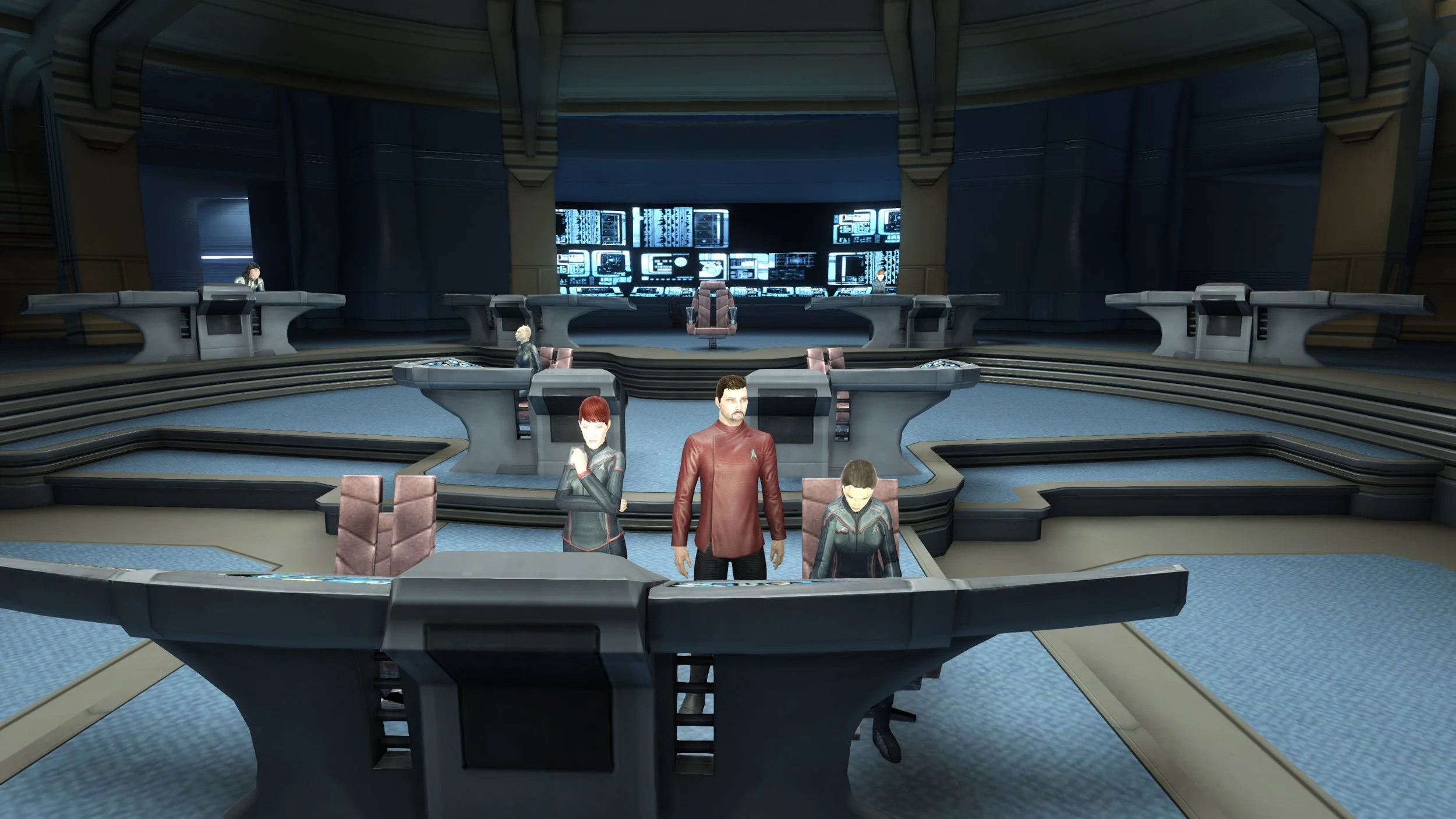
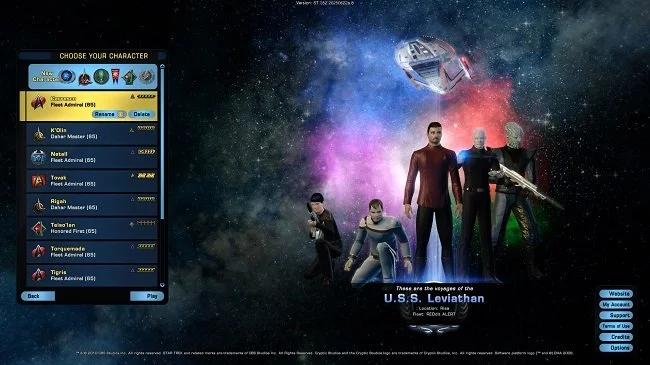
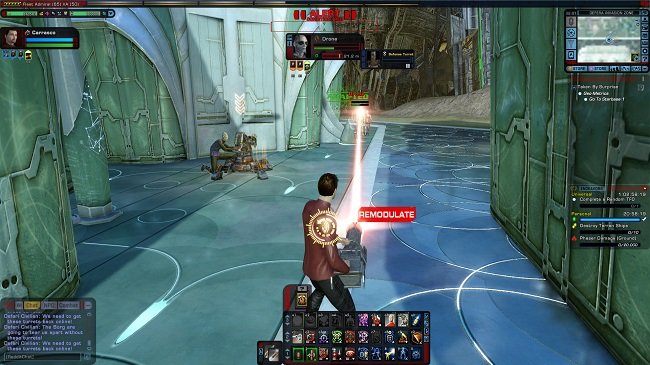
I play at present three MMOs. Lord of the Rings Online, The Elder Scrolls Online and Star Trek Online. I subscribe in LOTRO and do not own a life time account. ESO is a buy to play title with an optional sub for access to additional content. At present, I have bought the base game only. STO is the one game in which I bought a life time account. All these titles have in-game stores offering cosmetic or convenience based items. As I’m relatively new to ESO, I’ve yet to determine if the store has anything I desire. In LOTRO, I have bought milestone skills, stat tomes and other items that improve “quality of life”. Beyond these items, I have purchased relatively little, despite receiving a monthly stipend of in-game currency. It is in STO that I have regularly spent the most money, mainly because they sell ships, weapons and equipment.
Over the course of 2016, I spent £143.89 in Star Trek Online buying Zen, one of many in-game currencies. I bought items from the C-Store that I either used, traded or converted into Dilithium. Compared to other games in which I spend very little, this can be seen a large amount. Does this make me a whale? Probably not within the STO community. My primary character in STO is part of the Reddit Alert Fleet and you’ll frequently find other members discussing their relative expenditure in the chat channel. In this fleet you’ll find a lot of high end players who will regularly buy new ships and often in the cross faction bundles. For example, prior to the launch of the Agents of Yesterday expansion, Cryptic marketed the Temporal Agents Pack, featuring a wealth of ships, gear and items. It retailed at the time at £99.99 and I was surprised at how many colleagues bought this.
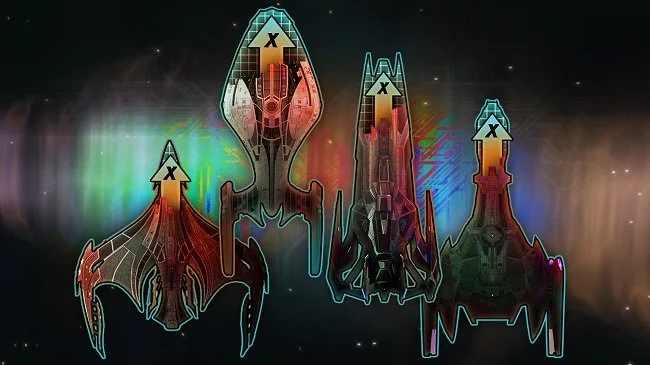
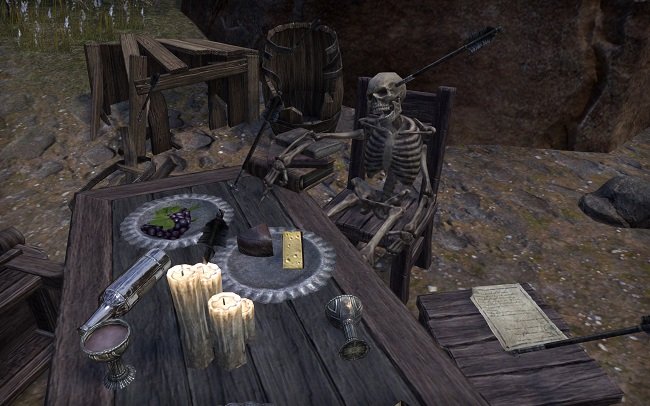
This picture is tenuously relevant. No clues. You figure it out.
Now regarding my non-whale status in STO, it should be noted that I spent a further £153.83 via the “grey” market. Bringing my total spend over the year to nearly £300. To put that number in to context, that averages out to broadly £6 per week. A comparable cost to coffee, sandwiches or beer. It is also unlikely that I will spend a similar amount of money on STO this year. I have maxed out my primary character and a lot of the items I’ve bought, are available account wide. However, what I think this minor analysis proves is that, if I deem it viable, I will spend money in a game. Therefore, I may well invest in another game at a future date if it suits my needs to do so. Considering that in most F2P games, the majority of the player base spend nothing, maybe I do have Cetacean tendencies after all. According to research 46% of all revenue comes from .22% of player base. If I am part of that group, all I can say is “Thar she blows of the starboard bow!”.



Along Came a Spider (2001)
Along Came a Spider, the second Alex Cross story to be adapted in to a feature film, once again takes a very procedural approach to its plot and keeps the action low key. As with Kiss the Girls, this reflects the intellectual nature of the central character, once again played by Morgan Freeman. This is a thriller where the focus is on using deductive reasoning and psychology to solve a crime rather than kicking down doors and breaking heads. The sequel is not quite as dark in tone as its predecessor and is more accessible with its traditional kidnapping plot about a congressman's daughter being abducted by her teacher. Naturally the case is far from black and white and Alex Cross soon discovers more complicated motives.
Along Came a Spider, the second Alex Cross story to be adapted in to a feature film, once again takes a very procedural approach to its plot and keeps the action low key. As with Kiss the Girls, this reflects the intellectual nature of the central character, once again played by Morgan Freeman. This is a thriller where the focus is on using deductive reasoning and psychology to solve a crime rather than kicking down doors and breaking heads. The sequel is not quite as dark in tone as its predecessor and is more accessible with its traditional kidnapping plot about a congressman's daughter being abducted by her teacher. Naturally the case is far from black and white and Alex Cross soon discovers more complicated motives.
The opening set piece in which Detective Cross loses his partner features an appalling CGI car crash, which does somewhat diminish the drama of the scene. However, the plot soon picks up speed with a well-conceived and executed kidnapping. Michael Wincott's performance as the sociopath Mr. Soneji is robust and he works well under the prosthetics he has to wear in the in the movies first act. Mika Boorem performs convincingly as the abductee Megan Rose. I find that child actors can frequently be a little too worldly and slip into precociousness but that is not the case here. The character is both likeable and plausible.
The interaction between Alex Cross and Secret Service agent Jezzie Flanagan is credible and Monica Potter puts in a suitably world weary performance. The plot twist that inevitably arrives in the third act is adequate, being neither too incredible or underwhelming. The script fumbles the ball a few times with its reliance upon media coverage of the kidnapping and the internet as a plot device to advance the story. Movies seldom get technology right and even by the standard of the time, they vastly over play what is achievable using online resources. However, this is usually something that audiences can overlook as it has simply become an accepted cinematic trope.
Along Came a Spider benefits from a Jerry Goldsmith soundtrack which is suitably distinguished. The movie is purposely restrained so it can focus upon the actual detective work. Director Lee Tamahori is usually known for more overt action movies such as Die Another Day and Next, yet adapts to a more minimalist approach on this occasion. The few action scenes that are featured such as the ransom money delivery and initial kidnap itself are well realised. Along Came a Spider may not have the same gritty edge that Kiss the Girls had but in some respects, it is more mainstream movie. Sadly, a third entry was not made in this series and the 2012 reboot, Alex Cross, was a misfire due to its focus on action rather than character.




Kiss the Girls (1997)
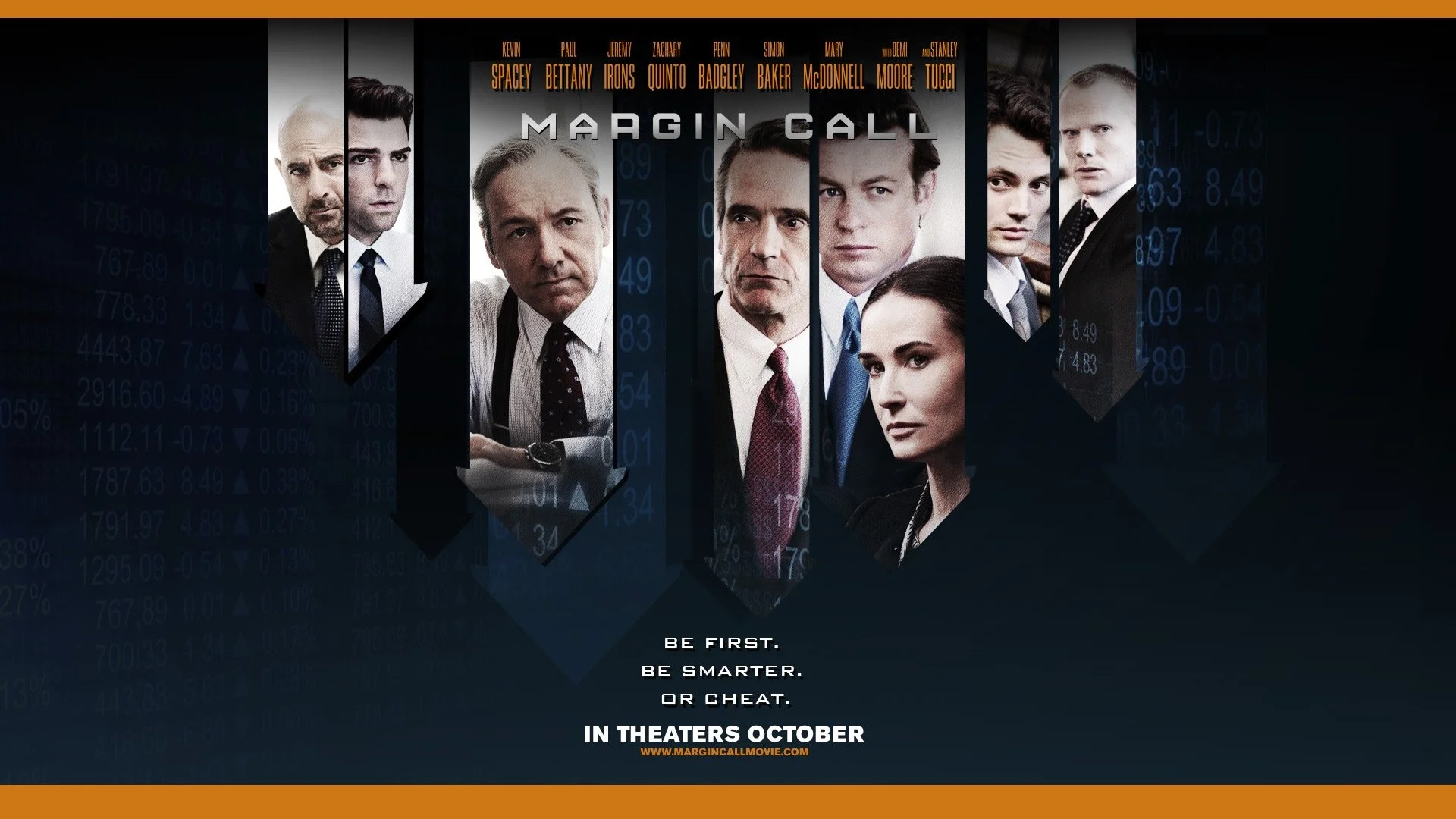
I recently re-watched Alex Cross, the 2012 movie based upon author James Patterson's character. My opinion on the movie has not changed and I still consider it to be a cinematic misfire. The main flaw being trying to take a cerebral character away from the procedural nature of their work and retrofit them into a modern action movie. It simply doesn't work and subsequently the film studio failed to reboot the franchise. However, because Cross himself is such an interesting creation, being a former FBI agent and psychologist, I thought I would take a look at the two previous movie adaptations starring Morgan Freeman. The first of which, Kiss the Girls (1997) I review here. The latter, Along Came A Spider (2001) I will write about in a separate post
I recently re-watched Alex Cross, the 2012 movie based upon author James Patterson's character. My opinion on the movie has not changed and I still consider it to be a cinematic misfire. The main flaw being trying to take a cerebral character away from the procedural nature of their work and retrofit them into a modern action movie. It simply doesn't work and subsequently the film studio failed to reboot the franchise. However, because Cross himself is such an interesting creation, being a former FBI agent and psychologist, I thought I would take a look at the two previous movie adaptations starring Morgan Freeman. The first of which, Kiss the Girls (1997) I review here. The latter, Along Came A Spider (2001) I will write about in a separate post.
Kiss the Girls is cut from the same cloth as other cat and mouse style serial killer dramas. Unlike The Silence of the Lambs and Se7en, it is quite low key and avoids the more sensational aspects of the plot. Murders take place off screen and the ubiquitous mortuary scenes are avoided. This works strongly in the films favour allowing the narrative to focus on Dr. Alex Cross (Morgan Freeman), his methods and his nature. Freeman brings a very humane quality to the character and fits the role comfortably. The emphasis in this movie is on his investigation skills and mental processes. He's also a skilled politician and knows how to handle people and when to take risks.
The plot focuses on a serial abductor who is "collecting" beautiful and talented women. When his niece is taken, Cross decides to head down to North Carolina and lend a hand to the local Police. A major break occurs in the case when the latest kidnap victim, intern Doctor Kate McTiernan (Ashley Judd), escapes from captivity. It soon becomes apparent that the kidnapper, known as Casanova, may well be working in conjunction with a similar West Coast predator called the Gentleman Caller. Will the pursuit of either serial killers lead back to where the adducted women are held?
The main strength of Kiss the Girls lies in the dynamic between Cross and McTiernan. There is a strong rapport between the two as they mutually support each other. McTiernan needs Cross so that she can rise above her perceived victim status. Cross needs McTiernan so he can find and save his niece. The movie also explores the practical detective work that is done in solving the case, rather than relying on doors being kicked down and suspects being beaten senseless. It is unfortunate that the one weak link in the film's plot chain is the character of Casanova. Although a satisfactory conclusion is arrived at, it would have been nice to have learned more about his past, his collaboration with the Gentleman Caller and his exact motivations.
Kiss the Girls is an interesting first attempt at bring Alex Cross to the big screen. It handles a very troubling subject with a degree of skill and director Gary Fleder is to be applauded for not lapsing into sensationalism. It is interesting to see that special make-up effects artist Steve Johnson is credited although very little of his work makes it into the final cut of the movie. It is also rewarding to see a different take on the savant detective. Overall the movie is a cut above the average, due to performances, solid script and directorial focus. It is also content to be about detection and solving crimes, rather than crossover needlessly into other genres.
Diary of a Podcaster Part 5
Although we at the Burton & Scrooge podcast are not driven by numbers, it would be nice to see the audience grow. We seem at present to have plateaued somewhat and maintain a robust but fixed listenership. Currently our back catalogue of shows is available via SoundCloud, iTunes and Stitcher. However it would appear that other directories and aggregation services are available, so it would seem prudent to ensure that we are listed with them. My colleagues tell me that the Google Play Store and iHeartRadio are beneficial to register with. I believe that there may well also be comparable services aimed specifically at the console market. However, as our show is more geared towards PC gaming, I don’t see the need to pursue these.
Although we at the Burton & Scrooge podcast are not driven by numbers, it would be nice to see the audience grow. We seem at present to have plateaued somewhat and maintain a robust but fixed listenership. Currently our back catalogue of shows is available via SoundCloud, iTunes and Stitcher. However it would appear that other directories and aggregation services are available, so it would seem prudent to ensure that we are listed with them. My colleagues tell me that the Google Play Store and iHeartRadio are beneficial to register with. I believe that there may well also be comparable services aimed specifically at the console market. However, as our show is more geared towards PC gaming, I don’t see the need to pursue these.
Another way to attract new listeners is to invite guests from other shows. However, this is not as easy as it sounds. First off there’s the practical logistics of trying to set up a call between multiple parties across several time zones. For example, it takes a great deal of organisation and persistence, to assemble all the guest on the quarterly TGEN Tribunal roundtable. Secondly, there is the issue of whether or not your requests are accepted or not. For every guest that you manage to get on your show, at least another three requests have fallen on deaf ears. You need to be both determined and a diplomat; knowing when to push to secure someone and when to let an invitation go.
At present, I am currently collating ideas for the next episode of Burton & Scrooge and considering whether it would to appropriate to have a guest. It very much depends on what we intend to discuss and whether we need “expertise” or an alternative point of view. Brian and I did record some material last Friday but when I sat down to edit it today, I felt that we were not really giving our best. We didn’t have particularly detailed show notes and as a result our discussion was a bit nebulous and without any coherent points. I always feel that we give our best when we are invested in a subject and well informed. Too many opinions these days seem to lack an underlying argument or overall philosophy. On a positive note the new microphone works fine.
As far as reaching a wider audience, I will try and encourage our existing listeners to promote the show via their network of friends and colleagues. Personal recommendation and word of mouth should never be underestimated. Perhaps some cross show and blog promotion would prove useful. TGEN use to have a policy of ensuring that each affiliate show included a “commercial” for another network member. Maybe I should even look in to the viability of paid advertising? It’s not as if we’re seeking global domination. It would just be rewarding to see the podcast expand its reach. After all, content creation is time intensive and it would be satisfying to see some tangible results from the fruits of our labour.












What’s My Name Again?
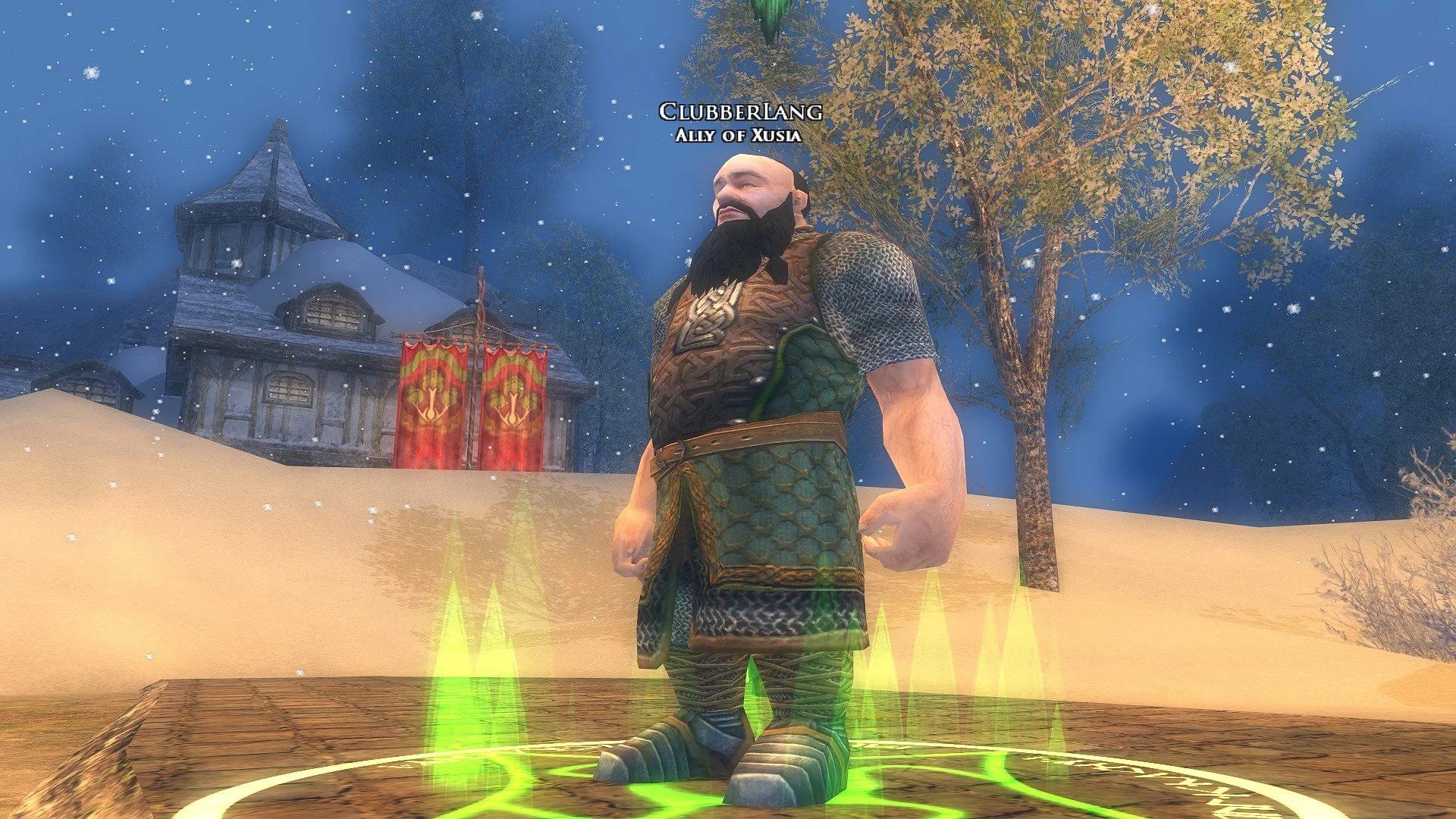
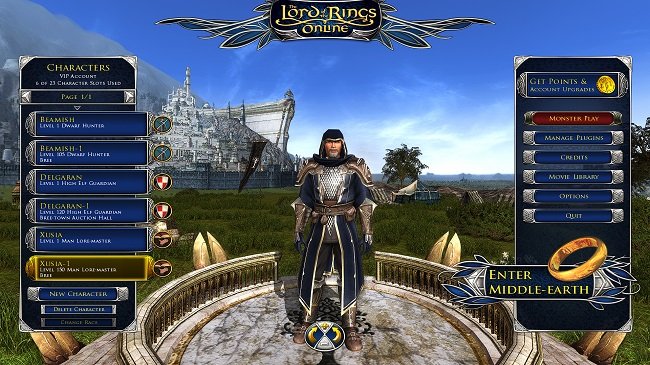
A few Weeks ago, I created a new Dwarf Hunter in LOTRO and started playing through the game from scratch. Why? Because I wanted to. As ever with MMOs that have been around for a while, all the best names are taken. I spent at least thirty minutes trying various names that I had planned in advance. All were conspicuous by their absence, including Burton, which really irked me. I remember having a similar experience trying to secure a suitable name during the WildStar beta. I wanted Brother Numpsay but it was not available, so I had to settle for Captain Queeg. I guess WildStar players are more conversant with Eddie Murphy than Herman Wouk. But I digress. I ended up calling my new Dwarf Hunter Gryg, as a homage to a character in the film The Last Starfighter.
A few Weeks ago, I created a new Dwarf Hunter in LOTRO and started playing through the game from scratch. Why? Because I wanted to. As ever with MMOs that have been around for a while, all the best names are taken. I spent at least thirty minutes trying various names that I had planned in advance. All were conspicuous by their absence, including Burton, which really irked me. I remember having a similar experience trying to secure a suitable name during the WildStar beta. I wanted Brother Numpsay but it was not available, so I had to settle for Captain Queeg. I guess WildStar players are more conversant with Eddie Murphy than Herman Wouk. But I digress. I ended up calling my new Dwarf Hunter Gryg, as a homage to a character in the film The Last Starfighter.
Well to cut a long story I want to change the name. However, this come with a cost, as you would expect in a MMO with a hybrid free-to-play business model. In this case a rename token is 995 LOTRO points. That works out at a little over £10, which I thought was a little steep for correcting a minor nominative error. So as I had recently received my monthly stipend of 500 points, I foolishly decided to grind out the remaining 495 required to purchase the token. Man alive, was that a mistake. Grinding slayer deeds is exquisitely tiresome and time consuming. I eventually ended up switching to my primary level cap character and mopping up a few residual deeds to speed the process along.
Earlier today, I found that I had earned sufficient LOTRO points that I could go ahead and buy the rename token. Here’s a useful tip. As soon as you purchase the token, it immediately opens a rename window. I was expecting an item in my bag that was manually used. However regardless of this somewhat peremptory message, you do not have to use the rename immediately, especially if you are still considering names. You can cancel the window and access it again at a more convenient time from your Alerts window. So I logged out of the game, to start drafting a new list of prospective names. I also logged back in to make sure nothing screwed up, which it hasn’t. I like to be thorough.
Now as I’m a community orientated and socially inclined individual, I thought I would consider reader suggestions for Gryg’s new name, before making a final choice. So if you have any witty ideas, then feel free to leave a comment here or on Twitter. I’ll wait until the end of the week and see what sort of results we have. If a suitable name is suggested than I’ll use it and take screen captures to verify that it’s been implemented. As we’re all fully rounded grownups I don’t have to stipulate any caveats about offense, religion, racism or sexism, do I? No. Didn’t think so. Good. Then let us all put are thinking caps on and we’ll reconvene in four days’ time.
New Captain Scarlet (2005-6)
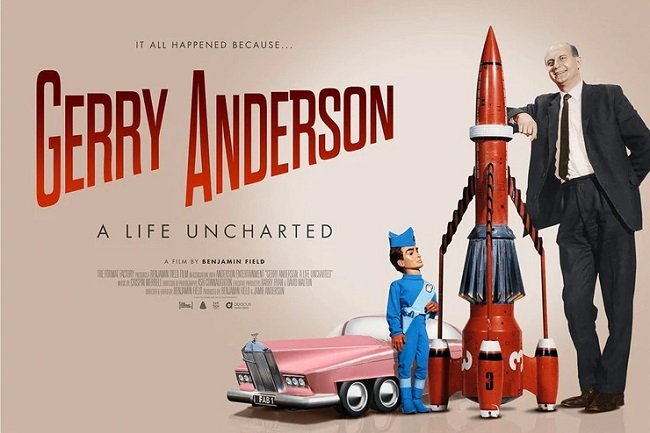
I’m not usually a big fan of “re-boots” and “re-imaginings” of classic material. There have been some successful examples in recent years, such as the Bond franchise and Doctor Who but many others have failed. Jonathan Frakes 2004 feature film Thunderbirds was the epitome of this. It total misjudged the target audience, completely failed to grasp the key aspects that made the original series so appealing and excluded the man himself, Gerry Anderson, from any involvement. It also failed to make use of any of Barry Grays sublime back catalogue of music, apart from the main theme. Conversely, the 2015 TV show Thunderbirds Are Go, managed to not only provide a suitable homage to the original show but successfully update the concept for a contemporary audience.
I’m not usually a big fan of “re-boots” and “re-imaginings” of classic material. There have been some successful examples in recent years, such as the Bond franchise and Doctor Who but many others have failed. Jonathan Frakes 2004 feature film Thunderbirds was the epitome of this. It total misjudged the target audience, completely failed to grasp the key aspects that made the original series so appealing and excluded the man himself, Gerry Anderson, from any involvement. It also failed to make use of any of Barry Grays sublime back catalogue of music, apart from the main theme. Conversely, the 2015 TV show Thunderbirds Are Go, managed to not only provide a suitable homage to the original show but successfully update the concept for a contemporary audience.
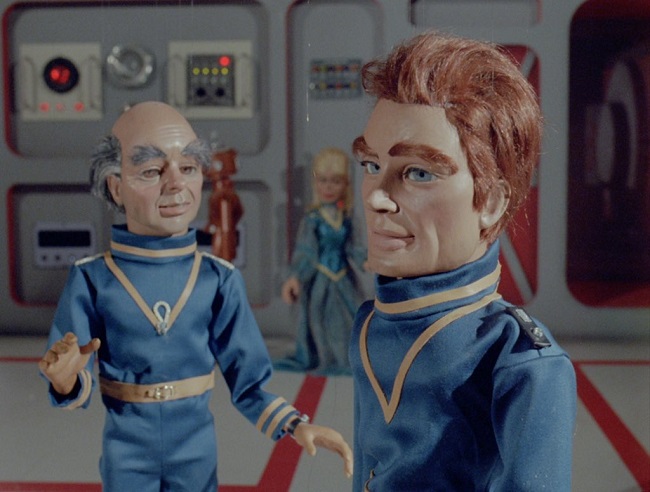
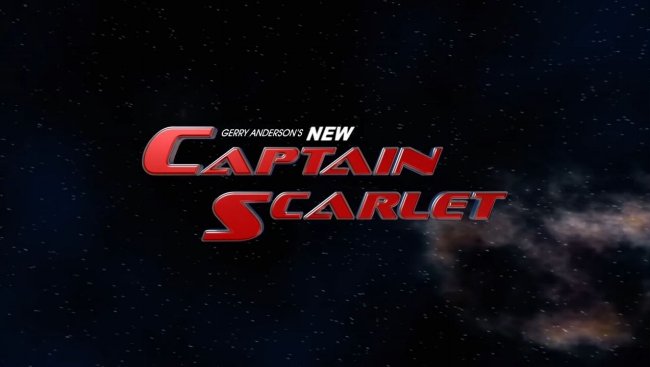
Yet Thunderbirds Are Go was not the first of Gerry Anderson’s shows to be remade. Anderson himself created New Captain Scarlet in 2005; a computer animated reworking of his original show Captain Scarlet and the Mysterons. Sadly, due to a catalogue of problems that occurred with the shows distribution, New Captain Scarlet is often overlooked. Twenty-six episodes where made in total and New Captain Scarlet premiered on ITV's children show The Ministry of Mayhem in February 2006. Despite Anderson's long business association with ITV, the programs were not treated with any semblance of respect. They were cut for violence (something Anderson has never shied away from) and each episode was split into three, seven minute segments, to be broadcast during The Ministry of Mayhem three hour running time. The end credits were also conspicuous by their absence. The viewers were not engaged and the critics simply passed on by.
Subsequently the series did not really get the attention or praise it deserved. I recently caught up with the seasons 1 & 2 on DVD and saw them as they were intended to be seen. The results are very good. The series holds true to the 1967 original. All the main members of Spectrum are present, although some such as Lieutenant Green have changed gender. Characters are expanded and their backstories are often quite adult. There are complex love triangles, moral dilemmas and as stated earlier, a surprising amount of violence. The stories are often morally ambiguous and do not always have a happy resolution. Each episode manages to cover a lot of ground in their twenty-five-minute running time. The iconic hardware from the original show has been updated obviously with an eye to the toy franchise. For example, the Spectrum Pursuit Vehicle has now become the Rhino.
My opinions on TV based computer animation are mainly based on the 1999 animated series Roughnecks:Starship Trooper Chronicles. That was a fine show for the times with very good graphics from Foundation Studios. Similarly, New Captain Scarlet, produced by British animators Indestructible Production Company, is also outstanding by the standards of the 2005. The main characters move fluidly due to the use of motion capture and are well rendered with a high level of detail. The action sequences are surprisingly good with a focus on hand to hand combat. Because of the current genre tastes, there is a propensity for the men to be somewhat buff and the female characters tend to be voluptuous. Terrain and lighting are also surprisingly detailed. As ever it is hair that is the major weakness. However, it is not obtrusive enough to spoil the proceedings.
There are a few negatives aspects to the show though. The contemporary soundtrack by Crispin Merrell is adequate but not in the league of the original iconic music by Barry Grey. This reduces the creepy ambience that made the 1967 series such a pleasure. There is also a lot more concessions made to the international market. As a result, there is a slight loss of “Britishness” from the proceedings. But these do not in any way out weight the positive aspects of New Captain Scarlet. All things considered, this is a very enjoyable production that maintains the style and substance of all Gerry Anderson's work. As with the original show the storylines are often a lot more adult than expected and there is a pleasingly dark tone to the narrative. At present New Captain Scarlet is only available on DVD, however the original masters for the show have recently been reclaimed and so fans remain hopeful of a full HD release on Blu-ray in the future.


Alex Cross (2012)
The last time we saw F.B.I. profiler Alex Cross on the big screen, he was played by Morgan Freeman in both Kiss the Girls (1997) and Along Came a Spider (2001). The franchise, inspired by novels of author James Patterson, were subsequently rebooted in 2012 with Tyler Perry in the lead role. Alex Cross attempts to establish the origins of the character and explore a pivotal case he investigated while a detective in Detroit. Alex Cross and his partners Tommy Kane (Edward Burns) and Monica Ashe (Rachel Nichols) cross swords with a serial killer they dub Picasso (Matthew fox), who is murdering the business associates of French Industrialist Mercier (Jean Reno). During the course of the investigation it becomes clear that the killer has a specific interest in Cross himself.
The last time we saw F.B.I. profiler Alex Cross on the big screen, he was played by Morgan Freeman in both Kiss the Girls (1997) and Along Came a Spider (2001). The franchise, inspired by novels of author James Patterson, were subsequently rebooted in 2012 with Tyler Perry in the lead role. Alex Cross attempts to establish the origins of the character and explore a pivotal case he investigated while a detective in Detroit. Alex Cross and his partners Tommy Kane (Edward Burns) and Monica Ashe (Rachel Nichols) cross swords with a serial killer they dub Picasso (Matthew fox), who is murdering the business associates of French Industrialist Mercier (Jean Reno). During the course of the investigation it becomes clear that the killer has a specific interest in Cross himself.
Alex Cross is based upon a central protagonist whose primary skills are his mental and analytical abilities. By nature, the character is first and foremost a thinker. Unfortunately, this element is quickly abandoned in the movie which opts for a pure action approach to the material. Suspense and drama are replaced with more obvious visual cues. Matthew Fox despite looking the part has an ill-defined role. The weak script by Marc Moss and Kerry Williamson is content to establish him as an evil character simply by the violent act he commits. Furthermore, Tyler Perry's overtly theatrical performance somewhat smothers the subtleties of Alex Cross.
Director Rob Cohen uses a great deal of visual gimmickry and cranks the pace, editing and volume up to eleven. It is his signature approach that works well with certain types of movies but seem jarringly inappropriate with this material. The same could also be said for Ricardo Della Rosa's under-lit cinematography with its muted colour palette. The movies tone puts it at odds with its PG-13 rating. Alex Cross therefore cannot fully explore its own strong themes and seems more to titillate than shock. The entire movie reeks of contemporary board room film making in the way that the source material has been so obviously misunderstood. Talk about trying to put a square peg in a round hole.
Alex Cross is a stilted endeavour and a missed opportunity. The central roles are miscast and the directing is in the wrong idiom. The movie needs to decide what it exactly wants to be. As it is, it sits awkwardly between a psychological thriller and a generic action movie. Its faults are further compounded by its mean-spirited nature. As a result Alex Cross did not kickstart a lucrative franchise, despite the threat of a sequel. For a closer approximation of the central character revisit the earlier adaptations. They are not without flaw but are better than this.
Classic Movie Themes: Theatre of Blood
Theatre of Blood is a rather unique horror movie about crazed egotistical thespian named Edward Lionheart. Played by the great Vincent Price, this Shakespeare-obsessed actor commits suicide rather publicly, after being allegedly "cheated" out of an award. However when a spate of murders targeting theatre critics occurs, with each victim dispatched in an homage to the Bard, Scotland Yard begins to suspect the actor may have faked his death. This hilariously baroque revenge picture directed by Douglas Hickox, benefits from a great cast of some of Britain's finest character actors. The film also serves as a wonderful window in to the mid-seventies Britain.
Theatre of Blood is a rather unique horror movie about crazed egotistical thespian named Edward Lionheart. Played by the great Vincent Price, this Shakespeare-obsessed actor commits suicide rather publicly, after being allegedly "cheated" out of an award. However when a spate of murders targeting theatre critics occurs, with each victim dispatched in an homage to the Bard, Scotland Yard begins to suspect the actor may have faked his death. This hilariously baroque revenge picture directed by Douglas Hickox, benefits from a great cast of some of Britain's finest character actors. The film also serves as a wonderful window in to the mid-seventies Britain.
The proceeding are greatly enhanced by a fantastic score by Welsh composer Michael J. Lewis. For the Theatre of Blood soundtrack, composer Lewis crafts a sumptuous orchestral score, the main title theme being the most succinct example. From its gentle beginnings it grows in power reflecting the tumultuous disposition of the actor Edward Lionheart. Yet it maintains a melancholic quality that is very apt to the movie. Overall it's a fine example of the composers craft. It is also one of Vincent Price's better movies from this era.
A War on Critics
Last year film director Alex Proyas famously threw his proverbial toys out of the pram, after his fantasy movie Gods of Egypt received universally poor reviews. He labelled critics “deranged idiots” and “diseased vultures” in a heated post on his Facebook page. He went on to accuse critics as slaves to the prevailing consensus. Proyas is not the only film maker to clash with critics. Uwe Boll famously had a similar antagonistic relationship with the press after being accused of being the world’s worst film maker. His solution to the problem was to challenge his detractors to meet him in the boxing ring. Some did so, not realising that Boll has a background in boxing. It did not go well for them.
Last year film director Alex Proyas famously threw his proverbial toys out of the pram, after his fantasy movie Gods of Egypt received universally poor reviews. He labelled critics “deranged idiots” and “diseased vultures” in a heated post on his Facebook page. He went on to accuse critics as slaves to the prevailing consensus. Proyas is not the only film maker to clash with critics. Uwe Boll famously had a similar antagonistic relationship with the press after being accused of being the world’s worst film maker. His solution to the problem was to challenge his detractors to meet him in the boxing ring. Some did so, not realising that Boll has a background in boxing. It did not go well for them.
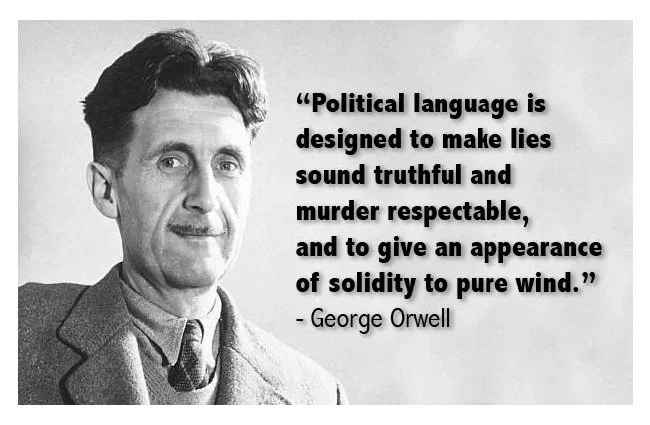
These are just two examples of how contemporary individuals have chosen to deal with criticism. As the film industry is synonymous with egos and self-indulgence, at first glance these responses do not seem so unusual or odd. However, upon mature reflection I believe it is indicative of a broader corrosive mind-set that is growing in modern society. Consider the way that modern politics has become far more adversarial of late. In the UK, those who are opposed to Brexit or at the very least concerned about it implementation are branded “enemies of the people” or traitors in the tabloid press. In the US, the President himself has question the legitimacy of his countries own legal infrastructure, referring to the judiciary as “so called Judges”, in a pejorative fashion. It would seem that there is no interest in tackling criticism in an intelligent and measure fashion. The best way to counter it is to simply try and shut it down.
You Tube is fast becoming the most important platform for criticism and reviews of consumer products. The shift away from traditional print media and even long-form criticism on websites, means that high profile You Tube personalities and streamers can have a major impact upon sales and more importantly pre-sales of a games. This has proven challenging for the publishers who now have to “wine and dine” a broad cross section of independent individuals, rather than mainstream publishing businesses, if they want to gain any traction. We’ve already seen what happens when a PR company foolishly tries to control the flow of information and impede critics and reviewers from doing their job, as the Middle-earth: Shadow of Mordor debacle from 2014 demonstrated. Sadly, we now see what happens when negative reviews are published and do not meet with corporate approval. People simply sue or spuriously use the online tools designed for legitimate disputes, to try and control criticism.
Jim Sterling recently quashed the outstanding lawsuit that had blighted his You Tube channel for the last year. A judge dismissed the case with prejudice, effectively ending the bogus suit brought by video game developers Digital Homicide. Unfortunately, Mr Sterling appears to have become a magnet for such actions. He is currently involved in another dispute with small independent developer, Sti Cli Games, who have gone down the route of using a trademark dispute as a means to try and silence his criticism of his work. The company has even gone so far as including caveats in their products EULA, trying to prohibit any use of their content in videos without prior written consent. EULA cannot enforce such rules. They also seem to think that they can legally refuse refunds on a platform such as Steam, which they cannot.
If we look beyond gaming, you’ll find similar stories about hoteliers and small bed and breakfast owners trying to stop customers from leaving poor reviews on trip advisor and similar websites. One individual had the gall to make a further charge against a customer’s credit card for allegedly “defaming” their business. Furthermore, you’ll find stories in the newspapers about parents suing other parents because a child was not invited to another’s birthday party. The more you look the more absurd stories of this nature you’ll find. It would appear that the chronically thin skinned, the duplicitous and the downright dodgy are now happy to use any legal weapon in their arsenal to prevent criticism or more to the point exposure. This in itself raises a wealth of other issues about the state of our society. Are we as culture becoming less emotionally sophisticated, less confident in ourselves and generally too obsessed with others perceptions of ourselves? Or is this just a matter of Divas, crooks and scammers just acting in accord with their true nature?
While the social scientists ponder the reasons for such behaviour, I certainly think that those who do not approve of such behaviour need to do more than just condemn it. We need to actively challenge it. Therefore the artist who throws a hissy fit should be firmly countered and their rhetoric and hyperbole exposed for what is. The politicians more than ever, need to be robustly countered for any sort of misinformation, ab hominem argument or abuse of power that seeks to stifle debate. And those that choose to abuse the terms and conditions of social media platforms such as You Tube to prevent scrutiny of their own iniquities, needs to exposed and denounced for exactly what they are; namely calumniators and thieves. Furthermore the institutions that facilitate these abuses need to take greater responsibility. Apply leverage with both your wallet and your social media presence.
The internet is still a great medium with many positive aspects. It continues to give a voice to many who previously did not have one. It allows the public to express themselves which is their democratic right. However, freedom to speech is a two way street and if you wish to express an opinion in a public forum, you have to accept that fact that others have an equal right to dispute, criticise and refute your views. Attempting to by bypass this status quo is most overt repudiation of democracy I can think of. Furthermore, we need to ensure that those who embark upon such a route are shown that there are direct consequences for such a decision. We cannot allow this toxic mind set to become the “norm”. Because if we do this will go beyond being a war on critics, criticism and dissent. It will lead to a reality where the loudest and most obnoxious, who can afford the best legal counsel, simply win by default.
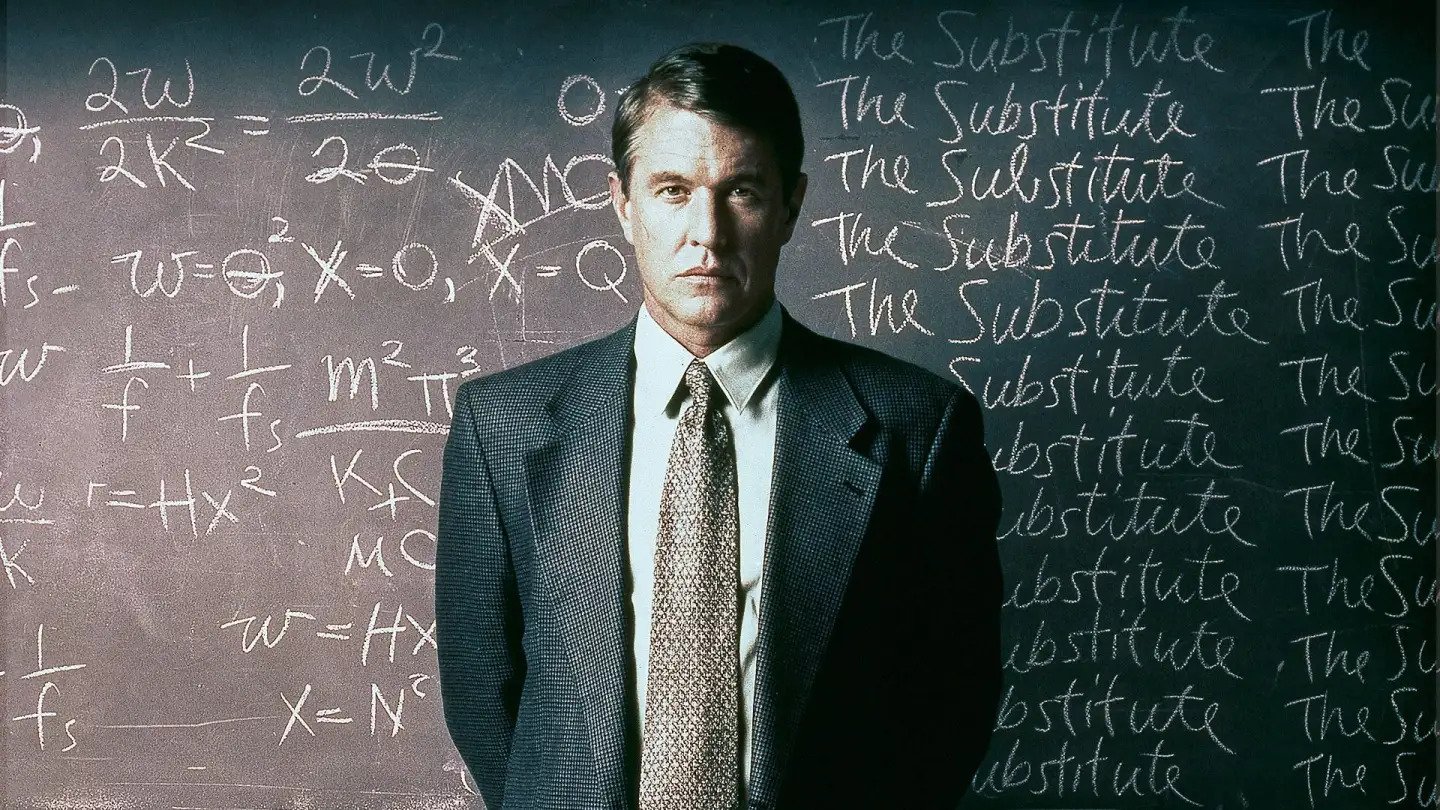



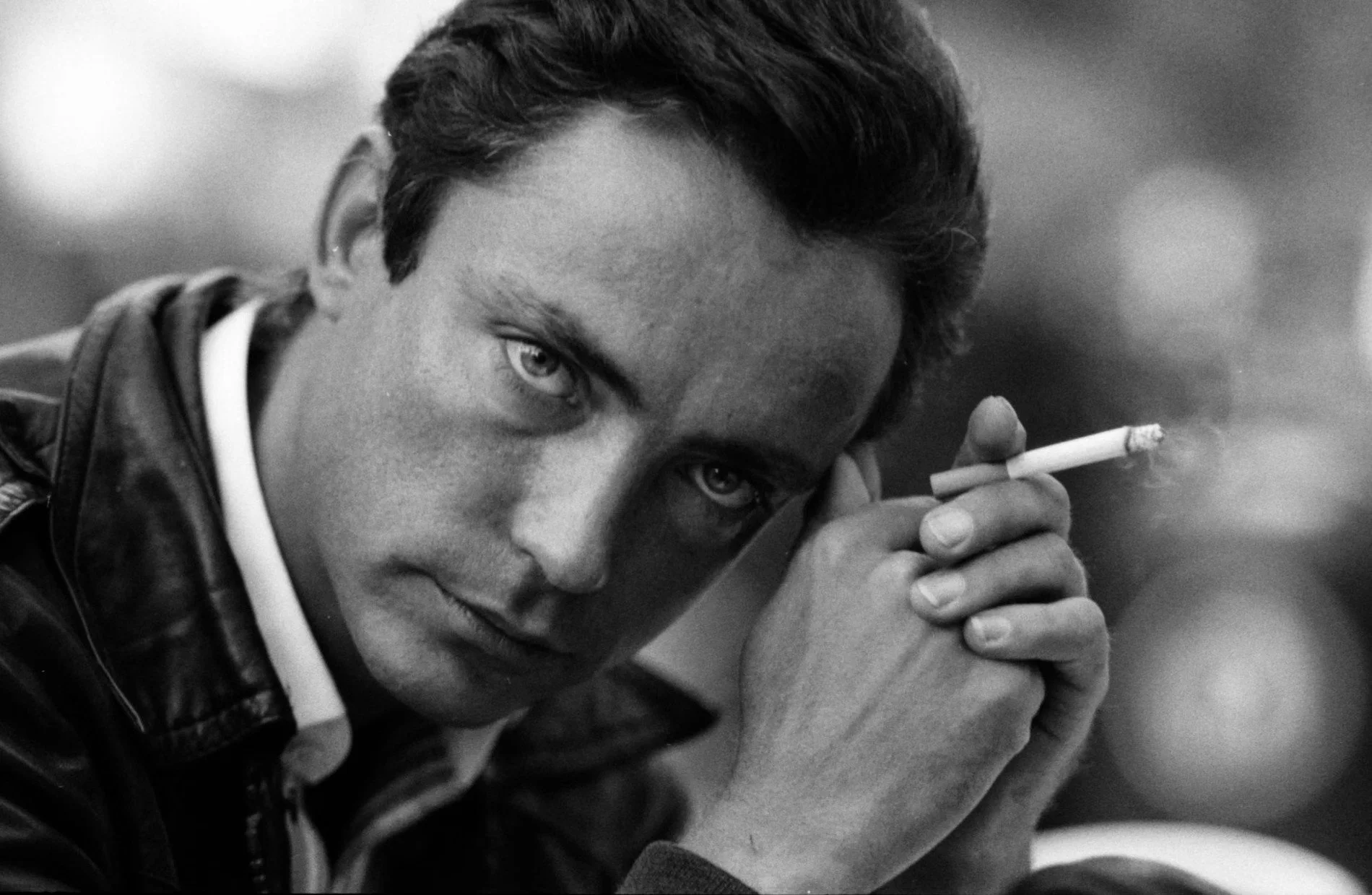

Side by Side (2012)
Keanu Reeves both presents and produces the intelligent and compelling documentary Side by Side, offering a very interesting insight into the changing world of film. The production discusses with over forty directors, cinematographers, editors, producers and technical innovators the rapid replacement of traditional photochemical film with digital technology. It's a story of science versus art and emotion. How the practitioners of traditional methods are coping with the reality of change and it is a seismic change. It impacts upon the way films are made and by whom, how they're perceived, produced, exhibited, experienced and preserved. Side by Side explores whether the democratisation of film making will destroy the art of cinema.
Keanu Reeves both presents and produces the intelligent and compelling documentary Side by Side, offering a very interesting insight into the changing world of film. The production discusses with over forty directors, cinematographers, editors, producers and technical innovators, the rapid replacement of traditional photochemical film with digital technology. It's a story of science versus art and emotion. How the practitioners of traditional methods are coping with the reality of change and it is a seismic change. It impacts upon the way films are made and by whom, how they're perceived, produced, exhibited, experienced and preserved. Side by Side explores whether the democratisation of film making will destroy the art of cinema or release it.
Virtually every major talent in contemporary film making is here. From digital pioneers and zealots, such as James Cameron and Danny Boyle to stalwart traditionalists like Christopher Nolan and his resident director of photography Wally Pfister. Passions runs high and the language is strong at times. Mr Pfister firmly states “I’m not going to trade my oil paints for a set of crayons.” Other opinions range from embracing the inevitable to welcoming a new challenge. In accordance with the documentary's title, the proceedings are fairly even handed and balanced. Side by Side also gives a great insight into each individual artists relationship with film, some of which are quite surprising. I even went so far as to revise my opinion of George Lucas after he was given an opportunity to speak freely.
The technical nature of the underlying discussion does make this a niche market documentary. Yet it is very compelling all the same, providing a very pertinent view into an evolving industry. It also reaches positive conclusions about the future of film making and that the medium is not destined to collapse due to the sheer volume of mediocre amateur productions. Quality, ability and raw talent will simply adapt to the new tools and rise to the top. However, it is acknowledged that the ongoing change will continue to have some negative impacts. The digital era in providing new methods of product delivery does lead to the diminishing of older ways. There is an air of sadness and loss for the old days, when cinema was a far more communal and shared experience.
I first watched Side by Side in 2012 upon it's initial release. Brian and I also discussed it at length on the Contains Moderate Peril podcast. Five years on, after a second viewing and a little further research, it would appear that all the predictions made in the documentary have come true. The majority of all cinema releases are shot digitally and photochemical film is usually only used if the cost can be justified. Event movies such a Tarantino's The Hateful Eight, which was shot using theUltra Panavision 70, being a prime example. As far as cinema projection goes, this too is now predominantly digital. Although convenience is a major factor, automation has resulted in a loss of technical understanding. I have on several occassions watched film shown in the wrong aspect ratio. As a result Side by Side can now be seen not so much as a phrophetic documentary but more as a historical dissertation.




Star Trek Online: Beyond Endgame
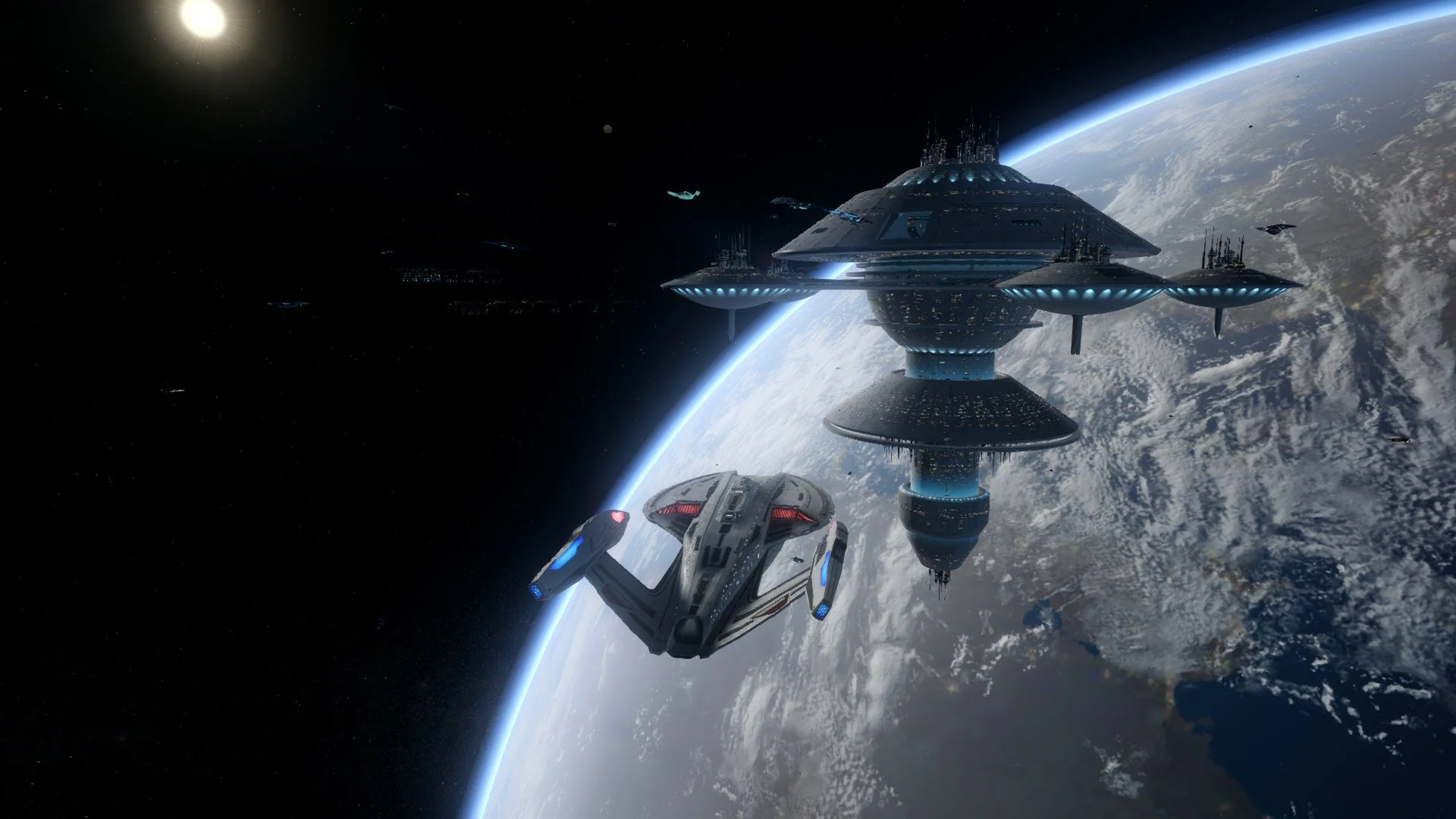
The recent Arena of Sompek Event in STO was immense fun and presented me with an opportunity to fine tune the ground build on my primary character. Furthermore, the current return of the Phoenix Prize Pack has allowed me to spend a lot of my surplus Dilithium. I obtained a Kobali Samsar Cruiser [T6] last night which allowed me to complete the Kobali Space Set. It’s also nice to be able to finally own the iconic Red Matter Converter, which was only previously available in the Collector’s Edition of STO on launch. However, for me the best item available from the Phoenix Prize Pack is the special Phoenix Upgrade Tech (equivalent to multiple Universal Superior Tech Upgrades, with no Dilithium costs). I have used a hundred plus and have now managed to upgrade a lot of my gear to Epic quality. Finally, after months of tweaking and customising, I’ve broken the 30K DPS barrier.
The recent Arena of Sompek Event in STO was immense fun and presented me with an opportunity to fine tune the ground build on my primary character. Furthermore, the current return of the Phoenix Prize Pack has allowed me to spend a lot of my surplus Dilithium. I obtained a Kobali Samsar Cruiser [T6] last night which allowed me to complete the Kobali Space Set. It’s also nice to be able to finally own the iconic Red Matter Converter, which was only previously available in the Collector’s Edition of STO on launch. However, for me the best item available from the Phoenix Prize Pack is the special Phoenix Upgrade Tech (equivalent to multiple Universal Superior Tech Upgrades, with no Dilithium costs). I have used a hundred plus and have now managed to upgrade a lot of my gear to Epic quality. Finally, after months of tweaking and customising, I’ve broken the 30K DPS barrier.
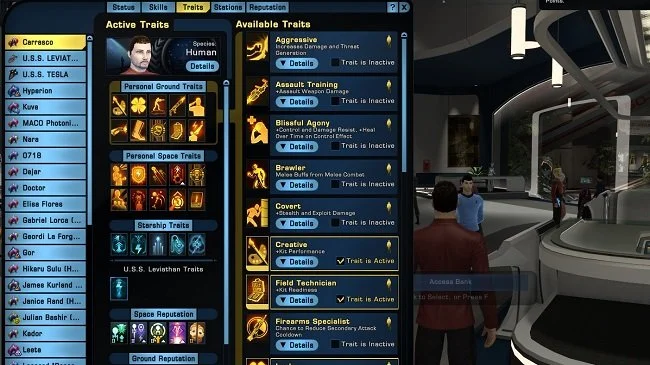
Once you reach level cap in STO you quickly find that the bulk of the endgame is focused upon experimenting with builds and striving to increase your DPS. Although featured episodes and events are regularly added to the game, there are no traditional dungeons offering fancy gear as rewards. Gear is created through the reputation system and then upgrading it offers the opportunity to add modifiers. Events and PVE queues are effectively used as proving grounds. Once a player reaches a certain level of DPS, it requires a comprehensive program of subtle changes to see any further improvements. It also requires a great deal of in-game resources, such as Dilithium and Energy Credits to facilitate improvements. Success requires multiple alts to farm materials and a liking of spreadsheets and min-maxing.
Eighteen months ago, I wrote a post asking advice about a suitable tactical build for a Guardian Cruiser. I fortunately received none whatsoever, which then forced me to trawl through various subreddits and websites and learn about the mechanics of STO. I’ve now reach a DPS level that is certainly above average and I’m pleased with that achievement. However, I don’t see any reason to pursue any further increase because I suspect it will not be that much fun. So, I’ve decided to take heed of my recent return to LOTRO, where I am currently starting from scratch with a new alt. In the case of STO, rather than create a new character I already have three that remain incomplete. The most prudent one to focus upon is my Agents of Yesterday Federation Tactical Officer. Working my way through all the old content will yield multiple account unlocks that would be very beneficial. I can already craft Ultra Rare Mark XIII gear due on all my alts due to a reputation achievement on the AoY character.
Accolades, duty officer missions and cosmetic customisation are all other potential avenues of interest and fun to pursue in STO. Something else that is always overlooked is the fact that you can play through the various story arcs in the game in a group if you see fit. STO is an MMO yet I’ve spent so little time of the game in groups, apart from STFs and events. Playing through some of the stories with others can put a fresh perspective on them. Certainly, grouping in the Delta Quadrant will definitely give you an advantage and allow you to progress through the zone a lot more quickly. And of course, there is always the potential to role play, if that is your thing. Although, I find some of the activities and chat that goes on in Drozana Station and Risa beyond my ken.
As you can see, the endgame in STO doesn’t have to be DPScentric if you don’t want it to be. Like many MMOs, you get out of the game exactly what you put in. The people you associate with can also improve or kill the game for you. Finding the right fleet helps and there are plenty out there. There nothing wrong with taking your time and trying a few before committing to one. Also rushing to level cap is not essential second or third time round. There is plenty of detail and lore to be experienced along the way in the old content. So, I’m going to broaden my outlook and return to an older character and see where it takes me. If everything else fails I can always fall back upon cosmetic changes and goals for my away team. If you can’t be good be beautiful.
Where Have all the Bloggers Gone?
I’m a creature of habit. I don’t mean “if it’s Wednesday, it’s Pork Chops”, I’m referring to simple routines that help me organise my days. One example is my morning ritual. As soon as I wake, I get straight up, shower and dress. I then sit myself down at my computer with a mug of coffee and catch up with my emails, Twitter and Feedly. I also get a flash news briefing from Alexa. These things appraise me of what is going on in the world and often give me potential writing prompts. Feedly has been invaluable source of inspiration in the past. I subscribed to half a dozen professional gaming and movie news websites and a further thirty of so blogs, written by my peers.
I’m a creature of habit. I don’t mean “if it’s Wednesday, it’s Pork Chops”, I’m referring to simple routines that help me organise my days. One example is my morning ritual. As soon as I wake, I get straight up, shower and dress. I then sit myself down at my computer with a mug of coffee and catch up with my emails, Twitter and Feedly. I also get a flash news briefing from Alexa. These things appraise me of what is going on in the world and often give me potential writing prompts. Feedly has been invaluable source of inspiration in the past. I subscribed to half a dozen professional gaming and movie news websites and a further thirty of so blogs, written by my peers.
I wrote a post last year for the NBI about the importance of blogging. The sentiment still holds, more so than ever at present. The world is changing and not necessarily for the better. Therefore, it is important for people to build communities, exchange ideas and interact in a civilised capacity. Not only do we need to get along but to tolerate and coexist with those who hold differing views to our own. Sadly, this appears to be “asking the impossible” at present. The world is becoming binary, tribal and aggressively territorial. This is reflected in the blogging world. Opinions are not to be debated but shutdown. There is no rooms for dissent. “You’re either with us or against us” seems to be the prevailing attitude. Facts and intellectual rigour are seen as unfair barriers to having an equal say.
As a result of this cultural shift, I find that the blogging community that I am apart of has greatly diminished in the last eighteen months. The thirty or so blogs, written by my peers that I mentioned are now either updated irregularly or virtually abandoned. The podcasting network that I am a member of still endures but has no aspiration to grow or expand. Apathy, disinclination and a sense of even defeat seems all too common. I should know, all of these things blighted my writing agenda last year. Then of course let us not forget that we are all getting older and people simply change. Life makes many demand on are time and even fandom has to bow before the school run, redecorating the bathroom and getting that promotion. Plus, perceptions of the internet have changed. The Frontier Town community spirit has given way to corporate formalisation. Being connected to other people from all round the world is no longer a big deal. Familiarity does have indeed breed contempt, or at least indifference.
Another thing to consider is the personal nature of writing. It also requires a modicum of skill and effort. A well penned post about EVE Online or the iniquities of pre-order culture can take a surprising amount of time to draft and publish. Maintaining a regular writing schedule requires discipline. Coming up with engaging content needs thought and creativity. Constantly writing takes its toll on the author eventually. For some, it’s too much of a “big ask” to begin with. Hence, you’ll find many people relegate their writing aspirations to forum comments. It easier to be reactive than proactive. It’s a shame. I see some really good ideas among the comments of a site such as Massively OP. Material that would make a good blog post in its own right.
Aaaron from Don't Fight Ducks. An enjoyable LOTRO streamer.
Although I do feel that You Tube and Twitch do provide a useful service and have a role to play within the gaming community, they are still primarily entertainment mediums. Live streams are often about the social interaction between the streamer and their audience. It’s a more ephemeral experience to writing. You Tube let’s play videos are a double edge sword. The pace of the video dictates the dissemination of information. Often, I can read an explanation of a game’s mechanics far faster than the ten-minute video that shows me. Plus, not everyone is a good or engaging narrator. Improving your writing skills is possibly easier than fixing your video presentation skills. However, that is not to say that there isn’t an audio/visual equivalent of long-form writing, because there is. It’s just hard to find among the internet white noise. Overall, the democratisation of online broadcast mediums has fragmented the potential audience. Couple that with the current mindset and each niche seems to stay on its own turf.
I decided in the New Year to return to writing daily and one of my motivations was to try and encourage others. I endeavour to leave comments on blogs and retweet other people’s work. I’ve also persevered with streamers and You Tubers and I’ve found several that meet my expectations. Upon mature reflection, I don’t feel that the community that I enjoy so much, is totally in decline. It’s more of a case of natural ebb and flow. However, I still think that the blogging scene needs a shot in the arm. If the veterans can’t continue to carry the torch, then maybe it’s time to pass it on to others? Which raises the issue of events such as the Newbie Blogger Initiative. People have asked me whether they’ll be another this year. The answer is it’s depends on whether someone wants to run it, because it really is an event that needs a core group or an individual to drive it forward.
I have a lot of demands on my time. I’m a carer with two disabled parents. I write as much as I can and do not have the time to be in the driving seat of a community event such as the NBI. However, I am happy to strike the following bargain. If someone wants to seriously run the NBI this year in an organised fashion and with clear goals, I’ll resurrect the Gaming Blog Nexus. This was a website that indexed gaming blogs, aggregating content and driving traffic back to the source sites. In 2014 it had over one hundred contributors and was an invaluable means of finding new writers. It was and can be again a good community resource. So, it now remains to see whether anyone wishes to seize the day and get the ball rolling. Is there any interest in an NBI 2017? Would people welcome a return of the Gaming Blog Nexus? Or am I spitting in to the wind?

















The Secret Service (1968)
The Secret Service is somewhat of an enigma, being the last Supermarionation show that Gerry Anderson produced. It was poorly received not only by critics but also by its own financier, Sir Lew Grade and was therefore given a limited broadcast upon its initial release. However, it marked the end of an era for Century 21 productions as they turned their creative attentions to film and live action TV after a decade of puppets shows. Subsequently, The Secret Service fell into obscurity over the following years and never gained the same degree of attention from the public, as previous Supermarionation shows had.
The Secret Service is somewhat of an enigma, being the last Supermarionation show that Gerry Anderson produced. It was poorly received not only by critics but also by its own financier, Sir Lew Grade and was therefore given a limited broadcast upon its initial release. However, it marked the end of an era for Century 21 productions as they turned their creative attentions to film and live action TV after a decade of puppets shows. Subsequently, The Secret Service fell into obscurity over the following years and never gained the same degree of attention from the public, as previous Supermarionation shows had.
Having recently caught up with the entire series and being a consummate Gerry Anderson fan, it is hard for me to be excessively critical of the show. I have a lot of love for his earlier work, especially Thunderbirds and Captain Scarlet. The Secret Service has many of the aspect that made previous shows enjoyable and unique. There are quirky and amusing characters, a rich and detailed production design and superb miniature effects by the legendary Derek Meddings. Once again, the score and ambient sounds created by Barry Gray play an integral role in the show. Yet even I must admit that two major flaws standout and validate why this final series was Anderson’s weakest.
Firstly, from Four Feathers Fall to Joe 90, there had always been an element of substituting human footage for material that puppets could not do. This was usually limited to shots of hands. However in The Secret Service this technique was greatly expanded upon. There are long shots of characters walking into building, along with footage of them driving vehicles down country lanes. The central character Reverend Stanley Unwin, is directly modelled on its voice actor Stanley Unwin. Furthermore, live footage of the said actor is frequently intercut into each episode. Although it can be argued that this innovative approach covered some of the puppets technical deficiencies, it also breaks the shows immersion. Is this a puppet or live action drama?
Secondly, Stanley Unwin himself was a comedian who became well known for his use of “Unwinese”, a faux comic language of his own creation. It was an odd choice to cast such an actor with a uniquely English comic trait, namely our love of linguistic humour and word play, into a television show destined for international distribution. Gerry Anderson’s argument was that Stanley Unwin’s occasional lapse into this verbal slapstick was to purposely confound all viewers. However, I think that rather than amuse the viewers it simply perplexed them. It was sufficient for Sir Lew Grade to lose confidence in the production and pull the plug.
If like me you have been raised on Gerry Anderson’s back catalogue, The Secret Service, despite its shortcomings, is still engaging and quality entertainment. It is yet another example of Century 21 Productions refining their process. However, for the more casual viewer, who is broadly familiar with Thunderbirds, this may be a little too niche market and obscure. The show also seems to have a somewhat nebulous view on Christian denominations. Stanley Unwin seems to frequently alternate between the Anglican and Roman Catholic faiths. Therefore, I can really only recommend The Secret Service to hardcore Anderson fans and those who are simply curious and forgiving.
Historically, the failure of The Secret Service although marking the end of Supermarionation ultimately led to Century 21 productions first live action TV series, UFO. A show that was a possibly five years ahead of its time. With regard to The Secret Service, after a consistently successful decade, the concept of the puppet series had run its natural course by the late sixities. One of Gerry Anderson’s great strength from this era was his capacity to experiment. The Secret Service shows us that not all experiment work, but even those which are deemed failures can still be or merit and quality.