
Side by Side (2012)
Keanu Reeves both presents and produces the intelligent and compelling documentary Side by Side, offering a very interesting insight into the changing world of film. The production discusses with over forty directors, cinematographers, editors, producers and technical innovators the rapid replacement of traditional photochemical film with digital technology. It's a story of science versus art and emotion. How the practitioners of traditional methods are coping with the reality of change and it is a seismic change. It impacts upon the way films are made and by whom, how they're perceived, produced, exhibited, experienced and preserved. Side by Side explores whether the democratisation of film making will destroy the art of cinema.
Keanu Reeves both presents and produces the intelligent and compelling documentary Side by Side, offering a very interesting insight into the changing world of film. The production discusses with over forty directors, cinematographers, editors, producers and technical innovators, the rapid replacement of traditional photochemical film with digital technology. It's a story of science versus art and emotion. How the practitioners of traditional methods are coping with the reality of change and it is a seismic change. It impacts upon the way films are made and by whom, how they're perceived, produced, exhibited, experienced and preserved. Side by Side explores whether the democratisation of film making will destroy the art of cinema or release it.
Virtually every major talent in contemporary film making is here. From digital pioneers and zealots, such as James Cameron and Danny Boyle to stalwart traditionalists like Christopher Nolan and his resident director of photography Wally Pfister. Passions runs high and the language is strong at times. Mr Pfister firmly states “I’m not going to trade my oil paints for a set of crayons.” Other opinions range from embracing the inevitable to welcoming a new challenge. In accordance with the documentary's title, the proceedings are fairly even handed and balanced. Side by Side also gives a great insight into each individual artists relationship with film, some of which are quite surprising. I even went so far as to revise my opinion of George Lucas after he was given an opportunity to speak freely.
The technical nature of the underlying discussion does make this a niche market documentary. Yet it is very compelling all the same, providing a very pertinent view into an evolving industry. It also reaches positive conclusions about the future of film making and that the medium is not destined to collapse due to the sheer volume of mediocre amateur productions. Quality, ability and raw talent will simply adapt to the new tools and rise to the top. However, it is acknowledged that the ongoing change will continue to have some negative impacts. The digital era in providing new methods of product delivery does lead to the diminishing of older ways. There is an air of sadness and loss for the old days, when cinema was a far more communal and shared experience.
I first watched Side by Side in 2012 upon it's initial release. Brian and I also discussed it at length on the Contains Moderate Peril podcast. Five years on, after a second viewing and a little further research, it would appear that all the predictions made in the documentary have come true. The majority of all cinema releases are shot digitally and photochemical film is usually only used if the cost can be justified. Event movies such a Tarantino's The Hateful Eight, which was shot using theUltra Panavision 70, being a prime example. As far as cinema projection goes, this too is now predominantly digital. Although convenience is a major factor, automation has resulted in a loss of technical understanding. I have on several occassions watched film shown in the wrong aspect ratio. As a result Side by Side can now be seen not so much as a phrophetic documentary but more as a historical dissertation.
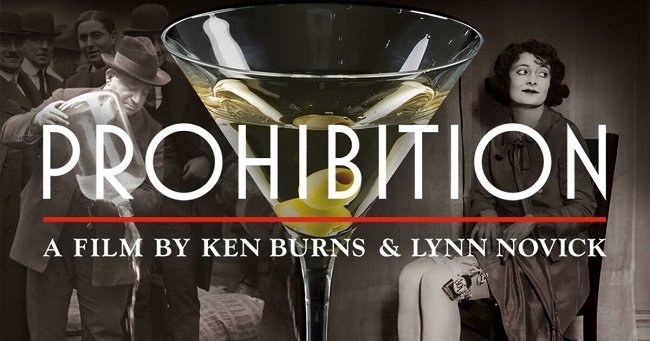
Despite being an analysis of the past there is a portentous air about Ken Burns and Lynn Novick’s Prohibition. A fascinating five-and-a-half-hour documentary produced for PBS in 2011. The history of this disastrous experiment, the banning of alcoholic beverages, is a textbook example of how the transactional nature of US politics can be effectively used upon “wedge” issues. Prohibition follows the format and style of Burns previous documentaries such as the Civil War (1990) and The War (2007) with the wider subject broken down and analysed according to protagonists, events and the political background. Specific historical figures and key players are followed throughout the documentary’s narrative, giving viewers a sense of focus. Hence we meet the hatchet-wielding Carrie Nation, Wayne Wheeler from the Anti-Saloon League and media savvy gangsters like Al Capone. It is interesting to note that some themes continue from Burns’ previous work, such as the political and cultural conflict between native-born Americans and European immigrants. The rural heartlands versus the big cities.
Joel Allen Schroeder's documentary Dear Mr. Watterson is a curious beast insofar that it takes some time before it decides exactly what it wants to focus upon. It begins by examining the cultural impact of the hugely popular comic strip “Calvin & Hobbes” and what it means to people around the world. However, little information is given about the creator, Bill Watterson beyond a very simple biography. Joel Allen Schroeder’s also makes no attempt to contact and interview the reclusive Mr. Watterson to find out more about the man and his iconic work. Instead, the documentary eventually settles into an assessment of Watterson’s work by other industry luminaries and a broader accounting of the overall decline of the newspaper cartoon as a social institution. The presentation is bright, stylish and there’s a lot of love for the subject but it takes some time before it commits to a specific approach.

“Kurt Vonnegut: Unstuck in Time” is a sprawling, non-linear eulogy to the to the life of writer Kurt Vonnegut, by Emmy-winning director Robert B. Weide (“Curb Your Enthusiasm”), who was a friend of Vonnegut's throughout the last 25 years of his life. Weide himself features heavily throughout the two hour running time, which is something Weide says he usually hates in documentaries. However, what unfolds is a story of a documentary maker who wanted to film his idol and was granted an opportunity to do so in the early eighties. The project was never completed and both Weide and Vonnegut continuously returned to it over the years as their friendship grew, leading to Weide eventually becoming Vonnegut’s personal archivist. However, despite this curious relationship, this is still very much a film about Kurt Vonnegut, the author, the social commentator and the man. It becomes quite clear why he is considered one of the most important writers of the 20th century.
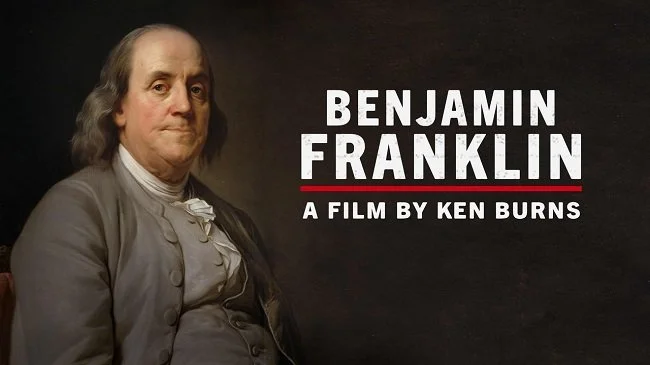
Benjamin Franklin is in many ways the most interesting of the American Founding Fathers. A self taught man who went on to become a polymath. An inventor, accomplished writer and publisher. A diplomat who successfully held multiple public offices. A loyalist who went on to become a “reluctant revolutionary”. A slave owner who eventually became an abolitionist. A questionable parent who favoured specific children over others, as well as a negligent husband. Franklin was all these things, as Ken Burns’ documentary takes great pains to highlight. A broad cross section of historians tackle these foibles and contradictions from multiple perspectives. As Joseph J. Ellis states, Benjamin Franklin was “a Nobel-calibre scientist, the greatest prose stylist of his generation, and probably the greatest diplomat in American history”. His legacy is chronologically analysed over four hours in two distinct episodes.
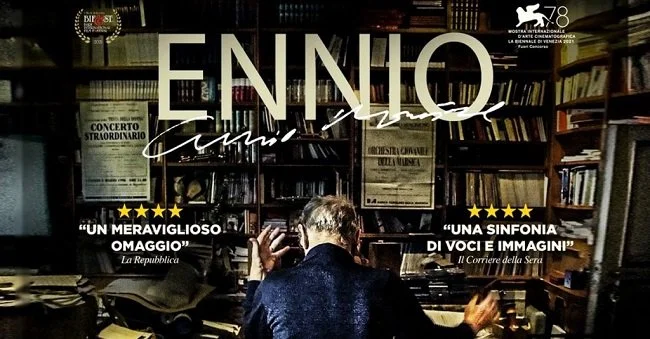
Giuseppe Tornatore’s sprawling documentary Ennio, is a finely detailed and absorbing exploration of prolific and iconic Italian composer Ennio Morricone. Despite its very traditional approach to its subject matter, looking at Morricone’s career chronologically, intercut with celebrity talking heads, it still manages to convey the unorthodox, innovative and experimental nature of the composer. The 156 minute running time is not necessarily the impediment that one expects. Rather it is the sheer weight of the emotional impact that comes from Morricone’s music that is at times overwhelming. Archival footage and a new and comprehensive interview recorded just prior to the composer’s death in 2020 is intercut with a wealth of audio cues and concert footage from a broad cross section of his work. The result is most illuminating with regard to the man and his approach to composing. The conclusion backed by many of those interviewed is that Ennio Morricone has shaped the nature of film music and elevated it to an artform.
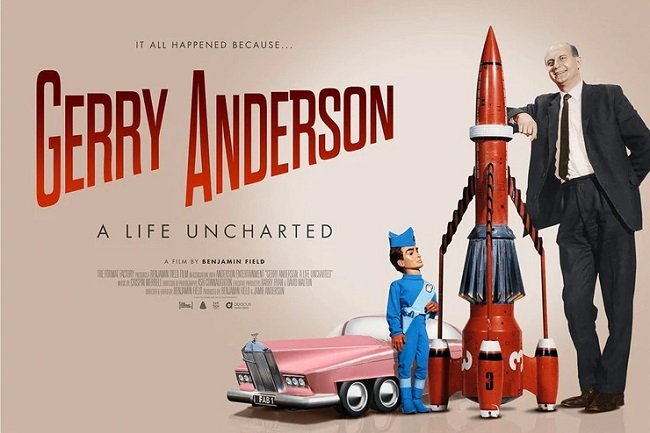
Gerry Anderson: A Life Uncharted is a documentary that focuses specifically on the man, rather than the shows that he created. If you are more interested in the latter then you would be better off watching Filmed in Supermarionation (2014), which provides a comprehensive overview of all productions, wrapped in a cosy blanket of nostalgia and fandom. Gerry Anderson: A Life Uncharted offers a more challenging viewing experience due to its honesty and candour. Gerry Anderson had a difficult childhood and suffered a bereavement early in life. During the course of this 88 minute exploration of his life it becomes clear that these traumas both drove his creativity as well as marred his own personal life. Furthermore, this documentary is also about a son looking for answers, as Jamie Anderson attempts to learn more about his father’s past.
Star Trek documentaries are very much like Bruce Lee documentaries, in so far as they’re both a saturated market and more often than not, new content frequently ends up covering the same ground. However, fans tend to watch anything new in the hope that they will find a few new nuggets of information. Brian Volk-Weiss’ new 11 part series, The Center Seat: 55 years of Star Trek, not only covers established facts about the iconic show but also expands upon them as well as providing a wealth of new information. Volk-Weiss has previously explored popular culture with documentaries such as The Toys That Made Us and The Movies That Made Us. The Center Seat: 55 years of Star Trek is an in-depth chronological study of the Star Trek franchise, from its creation at Desilu Productions in 1965 all the way through to the latest iterations, Star Trek: Picard and Star Trek: Discovery.
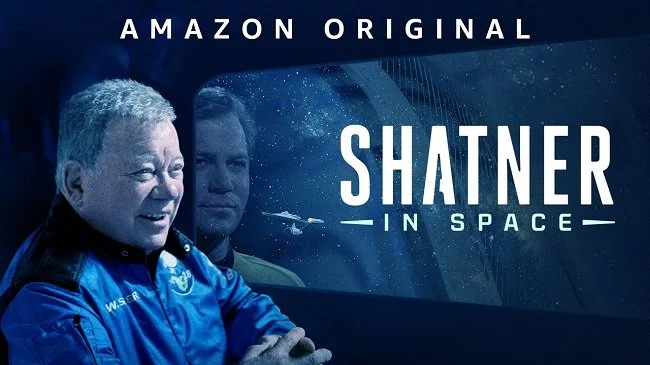
Shatner in Space is a 45 minute documentary about the 90 year old actor, William Shatner and his recent foray into space via Jeff Bezos’ Blue Origin sub-orbital spaceflight service. Considering the provenance of this entire undertaking, attitudes in general towards billionaires and the obvious publicity seeking hubris of sending a cultural icon into space, it’s easy to dismiss Shatner in Space as nothing more than a very, very expensive infomercial. However, the quiet dignity of Mr Shatner whose age and experience means that he draws a very different conclusion from his space flight than his fellow passengers, is utterly compelling and possibly a little profound. If you can endure the soulless polish of the scenes with an immaculately staged managed Jeff Bezos, then you’ll be rewarded with the philosophical musings of a man approaching the end of his life who is naturally curious about his own mortality.
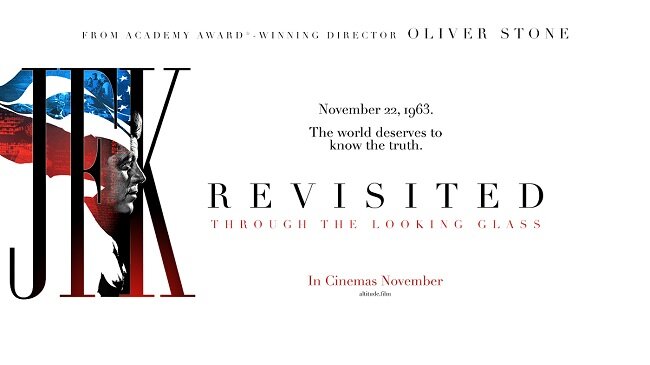
I am not a fan of conspiracy theories, nor those who are heavily invested in them. There are many reasons to repudiate such ideas but for me the main one is just a simple observation on human nature. Any major conspiracy, plot or cover up requires large swaths of people to participate and remain quiet about the facts. Yet one of the most common attributes of the human condition is peoples total inability to shut up. Simply put, most conspiracy theories don’t hold water because someone would have blabbed. Hence, documentaries about how the moon landings were faked or how 9/11 was an “inside job” tend not to “butter any parsnips” with me. However, JFK Revisited: Through the Looking Glass is a surprisingly different beast. I was surprised by its measured approach and its inferred conclusion. Has old age mellowed the filmmaker Oliver Stone?
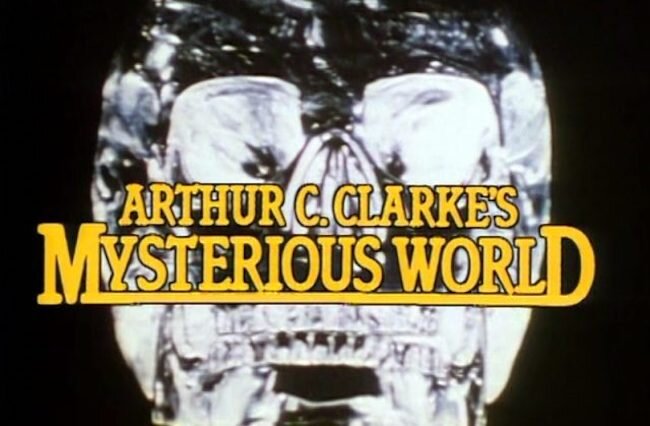
Television programmes that deal with the so-called supernatural, mysterious and the unexplained are commonplace these days. They fill the schedules of channels that used to broadcast quality wildlife, historical and scientific documentaries. All too often these shows focus on the sensational nature of their subject matter and lack any real objectivity, analysis and scientific rigour. The idea is not to impartially explore a subject to determine its veracity but to simply provide a degree of spectacle for as broad a viewing demographic as possible. However, that was not always the case. Back in 1980, Yorkshire Television produced Arthur C. Clarke's Mysterious World. A high profile exploration thirteen-part British television series looking at unexplained phenomena from around the world. The presence of Clarke, who introduced and book-ended the various subjects the show explored, brought a degree of impartiality and credibility to the proceedings.

Over the years I have seen many documentaries about World War II. Although I do not claim in any way to be an expert, I believe I have a good grasp on the causes and the course of that six year conflict. However, it recently struck me that I could not say the same about World War I. In my youth I watched a repeat showing of the BBC documentary series The Great War (1964) but I remember very little of its prodigious 26 episodes. The one thing that stood out were the interviews with veterans. So I was very pleased when perusing BritBox over the weekend to find the 2003 documentary The First World War, based upon the book of the same name by Professor Hew Strachan. This ten part analysis takes a global view of the conflict, rather than excessively focusing upon the Western Front and also debunks a lot of the apocryphal ideas and notions that have persisted over the years. I found it so compelling that I binged watched the entire thing over two evenings.

The music business is a strange, interesting and broad church. A spectrum of musical styles and personalities all fulfilling the needs of different markets. There are pop stars who are buoyant but ephemeral. Then there are singer/songwriters who take their work seriously as they express their critique of the human condition via their music. There are also style icons, novelty acts, indie bands, lounge crooners and a myriad of other niche acts, all doing their own thing. And occasionally there are enigmas. Artists and bands that fly in the face of prevailing trends and commercial interest, who do consider their work to be an artistic endeavour and an expression of themselves and as such, do not see the virtue of personal compromise or corporate interests. Esoteric musicians who reinvent themselves continuously as they grow and age. Constantly defying the expectations of both their own fans and naysayers. Sparks are such a musical entity and the subject of a fascinating documentary by director Edgar Wright.
Carl Sagan's seminal science documentary Cosmos: A Personal Voyage was initially broadcast in the US between 28th September and 21st December 1980. Six months later it was shown in the UK on BBC One throughout the summer of 1981. I was thirteen years old at the time and this science documentary series had a tremendous impact upon not only me but an entire generation. The complexity of some of the subjects explored and discussed by Carl Sagan often left me perplexed. However, I knew that there was something special about this show and the way it presented science in such a personal manner. Therefore, I found myself going to both my local and school library to further read about the topics raised in each episode. But perhaps the most standout aspect of the show was Sagan himself. His commentary delivered directly to the camera was both enthralling and lyrical. His love and enthusiasm was palpable and clearly bled through into every aspect of the show. His ability to communicate clearly, complex and at times esoteric ideas, was a revelation and in many ways a gift. Similar to that of Jacob Bronowski and David Attenborough.
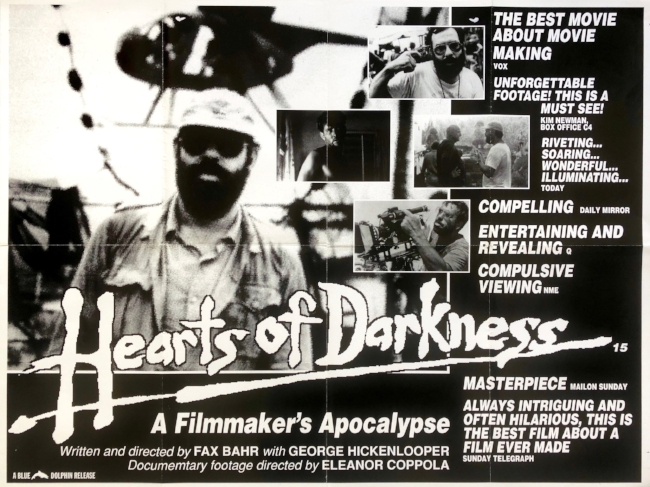
There was a time when film making was seen as an artistic endeavour and the idea of the auteur director pursuing a vision was considered a romantic and even noble undertaking. Big multi-million-dollar productions were welcomed when they filmed on location, providing work and glamour to the local population. The might of the dollar would often grease the wheels of industry, making the impossible possible. Egos were massaged, and actors were indulged and treated like minor deities. Huge sets would appear in the middle of nowhere, like Victorian follies and luxury items would be flown around the world to placate the capricious nature of the various Hollywood stars. Money would flow like water, much to the dismay of the producers, sitting back in the offices in the US or Europe. But this era has now past. Big budget movies are still made but it is now driven by corporate accounting and artistic vision is no longer a primary consideration. It is now a rather soulless business process. Hence a movie such as Apocalypse Now would never be made today in the same manner that it was back in 1976 when the production started.
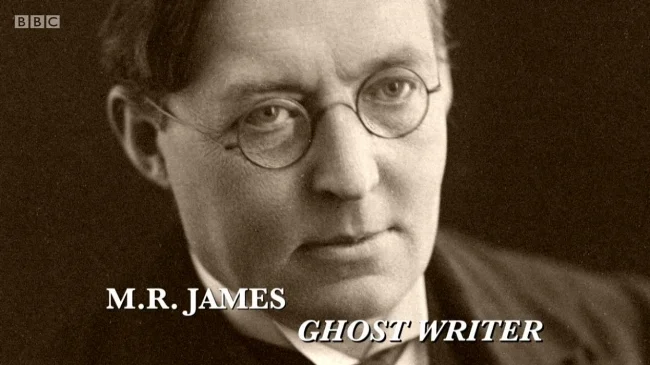
MR James: Ghost Writer is a sixty-minute documentary written and presented by Mark Gatiss, exploring the life of Britain's foremost ghost story writer. Gatiss, a long-time admirer of James, delves in to the life of the author from his devout Anglican upbringing and close-knit family life, through to his ascent to the summit of academia at King's college, Cambridge. The program seeks to discover what motivated this scholarly bachelor to create some of the most iconic and chilling ghost stories in English literature. By following in James’s footsteps, the documentary attempts to gain a greater insight in to the enigmatic author.
Music by John Williams is a documentary celebration of the famous composer and his illustrious body of work. It provides some interesting biographical background information as to how the man was born into a family of talented musicians. It then traces his rise from pianist for hire to the most well known film composer today. Along the way, anyone who is anyone in film and music appears to heap justifiable praise upon him and his body of work. It also features a continuous medley of John Williams’ greatest hits, as it catalogues his work in broadly chronological order. Music by John Williams is an upbeat and positive love letter to the composer and exactly what you would expect, when you consider that the documentary was produced by his friends and peers.