Classic Movie Themes: Theatre of Blood
Theatre of Blood is a rather unique horror movie about crazed egotistical thespian named Edward Lionheart. Played by the great Vincent Price, this Shakespeare-obsessed actor commits suicide rather publicly, after being allegedly "cheated" out of an award. However when a spate of murders targeting theatre critics occurs, with each victim dispatched in an homage to the Bard, Scotland Yard begins to suspect the actor may have faked his death. This hilariously baroque revenge picture directed by Douglas Hickox, benefits from a great cast of some of Britain's finest character actors. The film also serves as a wonderful window in to the mid-seventies Britain.
Theatre of Blood is a rather unique horror movie about crazed egotistical thespian named Edward Lionheart. Played by the great Vincent Price, this Shakespeare-obsessed actor commits suicide rather publicly, after being allegedly "cheated" out of an award. However when a spate of murders targeting theatre critics occurs, with each victim dispatched in an homage to the Bard, Scotland Yard begins to suspect the actor may have faked his death. This hilariously baroque revenge picture directed by Douglas Hickox, benefits from a great cast of some of Britain's finest character actors. The film also serves as a wonderful window in to the mid-seventies Britain.
The proceeding are greatly enhanced by a fantastic score by Welsh composer Michael J. Lewis. For the Theatre of Blood soundtrack, composer Lewis crafts a sumptuous orchestral score, the main title theme being the most succinct example. From its gentle beginnings it grows in power reflecting the tumultuous disposition of the actor Edward Lionheart. Yet it maintains a melancholic quality that is very apt to the movie. Overall it's a fine example of the composers craft. It is also one of Vincent Price's better movies from this era.





A War on Critics
Last year film director Alex Proyas famously threw his proverbial toys out of the pram, after his fantasy movie Gods of Egypt received universally poor reviews. He labelled critics “deranged idiots” and “diseased vultures” in a heated post on his Facebook page. He went on to accuse critics as slaves to the prevailing consensus. Proyas is not the only film maker to clash with critics. Uwe Boll famously had a similar antagonistic relationship with the press after being accused of being the world’s worst film maker. His solution to the problem was to challenge his detractors to meet him in the boxing ring. Some did so, not realising that Boll has a background in boxing. It did not go well for them.
Last year film director Alex Proyas famously threw his proverbial toys out of the pram, after his fantasy movie Gods of Egypt received universally poor reviews. He labelled critics “deranged idiots” and “diseased vultures” in a heated post on his Facebook page. He went on to accuse critics as slaves to the prevailing consensus. Proyas is not the only film maker to clash with critics. Uwe Boll famously had a similar antagonistic relationship with the press after being accused of being the world’s worst film maker. His solution to the problem was to challenge his detractors to meet him in the boxing ring. Some did so, not realising that Boll has a background in boxing. It did not go well for them.
These are just two examples of how contemporary individuals have chosen to deal with criticism. As the film industry is synonymous with egos and self-indulgence, at first glance these responses do not seem so unusual or odd. However, upon mature reflection I believe it is indicative of a broader corrosive mind-set that is growing in modern society. Consider the way that modern politics has become far more adversarial of late. In the UK, those who are opposed to Brexit or at the very least concerned about it implementation are branded “enemies of the people” or traitors in the tabloid press. In the US, the President himself has question the legitimacy of his countries own legal infrastructure, referring to the judiciary as “so called Judges”, in a pejorative fashion. It would seem that there is no interest in tackling criticism in an intelligent and measure fashion. The best way to counter it is to simply try and shut it down.
You Tube is fast becoming the most important platform for criticism and reviews of consumer products. The shift away from traditional print media and even long-form criticism on websites, means that high profile You Tube personalities and streamers can have a major impact upon sales and more importantly pre-sales of a games. This has proven challenging for the publishers who now have to “wine and dine” a broad cross section of independent individuals, rather than mainstream publishing businesses, if they want to gain any traction. We’ve already seen what happens when a PR company foolishly tries to control the flow of information and impede critics and reviewers from doing their job, as the Middle-earth: Shadow of Mordor debacle from 2014 demonstrated. Sadly, we now see what happens when negative reviews are published and do not meet with corporate approval. People simply sue or spuriously use the online tools designed for legitimate disputes, to try and control criticism.
Jim Sterling recently quashed the outstanding lawsuit that had blighted his You Tube channel for the last year. A judge dismissed the case with prejudice, effectively ending the bogus suit brought by video game developers Digital Homicide. Unfortunately, Mr Sterling appears to have become a magnet for such actions. He is currently involved in another dispute with small independent developer, Sti Cli Games, who have gone down the route of using a trademark dispute as a means to try and silence his criticism of his work. The company has even gone so far as including caveats in their products EULA, trying to prohibit any use of their content in videos without prior written consent. EULA cannot enforce such rules. They also seem to think that they can legally refuse refunds on a platform such as Steam, which they cannot.
If we look beyond gaming, you’ll find similar stories about hoteliers and small bed and breakfast owners trying to stop customers from leaving poor reviews on trip advisor and similar websites. One individual had the gall to make a further charge against a customer’s credit card for allegedly “defaming” their business. Furthermore, you’ll find stories in the newspapers about parents suing other parents because a child was not invited to another’s birthday party. The more you look the more absurd stories of this nature you’ll find. It would appear that the chronically thin skinned, the duplicitous and the downright dodgy are now happy to use any legal weapon in their arsenal to prevent criticism or more to the point exposure. This in itself raises a wealth of other issues about the state of our society. Are we as culture becoming less emotionally sophisticated, less confident in ourselves and generally too obsessed with others perceptions of ourselves? Or is this just a matter of Divas, crooks and scammers just acting in accord with their true nature?
While the social scientists ponder the reasons for such behaviour, I certainly think that those who do not approve of such behaviour need to do more than just condemn it. We need to actively challenge it. Therefore the artist who throws a hissy fit should be firmly countered and their rhetoric and hyperbole exposed for what is. The politicians more than ever, need to be robustly countered for any sort of misinformation, ab hominem argument or abuse of power that seeks to stifle debate. And those that choose to abuse the terms and conditions of social media platforms such as You Tube to prevent scrutiny of their own iniquities, needs to exposed and denounced for exactly what they are; namely calumniators and thieves. Furthermore the institutions that facilitate these abuses need to take greater responsibility. Apply leverage with both your wallet and your social media presence.
The internet is still a great medium with many positive aspects. It continues to give a voice to many who previously did not have one. It allows the public to express themselves which is their democratic right. However, freedom to speech is a two way street and if you wish to express an opinion in a public forum, you have to accept that fact that others have an equal right to dispute, criticise and refute your views. Attempting to by bypass this status quo is most overt repudiation of democracy I can think of. Furthermore, we need to ensure that those who embark upon such a route are shown that there are direct consequences for such a decision. We cannot allow this toxic mind set to become the “norm”. Because if we do this will go beyond being a war on critics, criticism and dissent. It will lead to a reality where the loudest and most obnoxious, who can afford the best legal counsel, simply win by default.






Side by Side (2012)
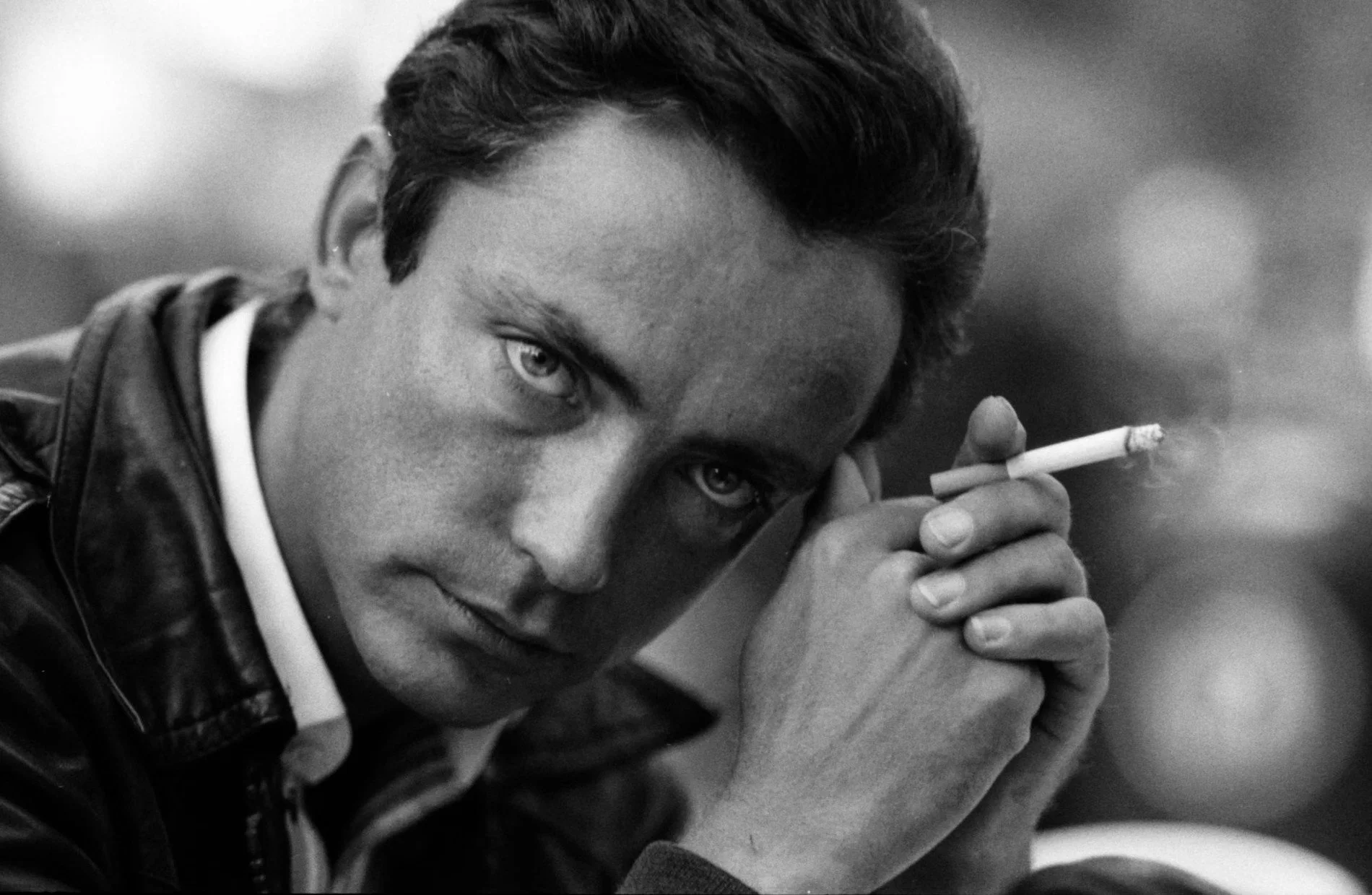
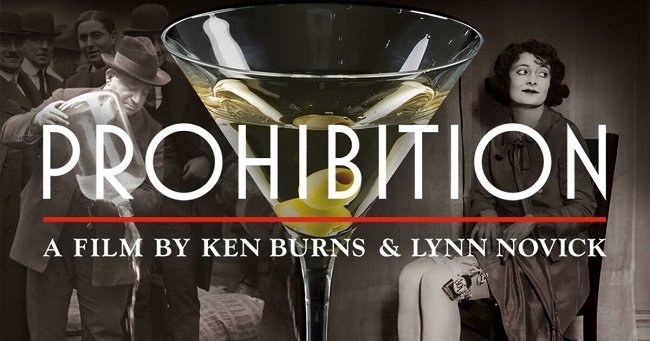
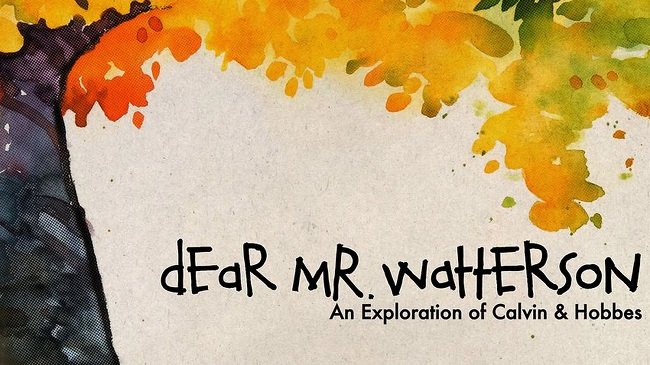
Keanu Reeves both presents and produces the intelligent and compelling documentary Side by Side, offering a very interesting insight into the changing world of film. The production discusses with over forty directors, cinematographers, editors, producers and technical innovators the rapid replacement of traditional photochemical film with digital technology. It's a story of science versus art and emotion. How the practitioners of traditional methods are coping with the reality of change and it is a seismic change. It impacts upon the way films are made and by whom, how they're perceived, produced, exhibited, experienced and preserved. Side by Side explores whether the democratisation of film making will destroy the art of cinema.
Keanu Reeves both presents and produces the intelligent and compelling documentary Side by Side, offering a very interesting insight into the changing world of film. The production discusses with over forty directors, cinematographers, editors, producers and technical innovators, the rapid replacement of traditional photochemical film with digital technology. It's a story of science versus art and emotion. How the practitioners of traditional methods are coping with the reality of change and it is a seismic change. It impacts upon the way films are made and by whom, how they're perceived, produced, exhibited, experienced and preserved. Side by Side explores whether the democratisation of film making will destroy the art of cinema or release it.
Virtually every major talent in contemporary film making is here. From digital pioneers and zealots, such as James Cameron and Danny Boyle to stalwart traditionalists like Christopher Nolan and his resident director of photography Wally Pfister. Passions runs high and the language is strong at times. Mr Pfister firmly states “I’m not going to trade my oil paints for a set of crayons.” Other opinions range from embracing the inevitable to welcoming a new challenge. In accordance with the documentary's title, the proceedings are fairly even handed and balanced. Side by Side also gives a great insight into each individual artists relationship with film, some of which are quite surprising. I even went so far as to revise my opinion of George Lucas after he was given an opportunity to speak freely.
The technical nature of the underlying discussion does make this a niche market documentary. Yet it is very compelling all the same, providing a very pertinent view into an evolving industry. It also reaches positive conclusions about the future of film making and that the medium is not destined to collapse due to the sheer volume of mediocre amateur productions. Quality, ability and raw talent will simply adapt to the new tools and rise to the top. However, it is acknowledged that the ongoing change will continue to have some negative impacts. The digital era in providing new methods of product delivery does lead to the diminishing of older ways. There is an air of sadness and loss for the old days, when cinema was a far more communal and shared experience.
I first watched Side by Side in 2012 upon it's initial release. Brian and I also discussed it at length on the Contains Moderate Peril podcast. Five years on, after a second viewing and a little further research, it would appear that all the predictions made in the documentary have come true. The majority of all cinema releases are shot digitally and photochemical film is usually only used if the cost can be justified. Event movies such a Tarantino's The Hateful Eight, which was shot using theUltra Panavision 70, being a prime example. As far as cinema projection goes, this too is now predominantly digital. Although convenience is a major factor, automation has resulted in a loss of technical understanding. I have on several occassions watched film shown in the wrong aspect ratio. As a result Side by Side can now be seen not so much as a phrophetic documentary but more as a historical dissertation.



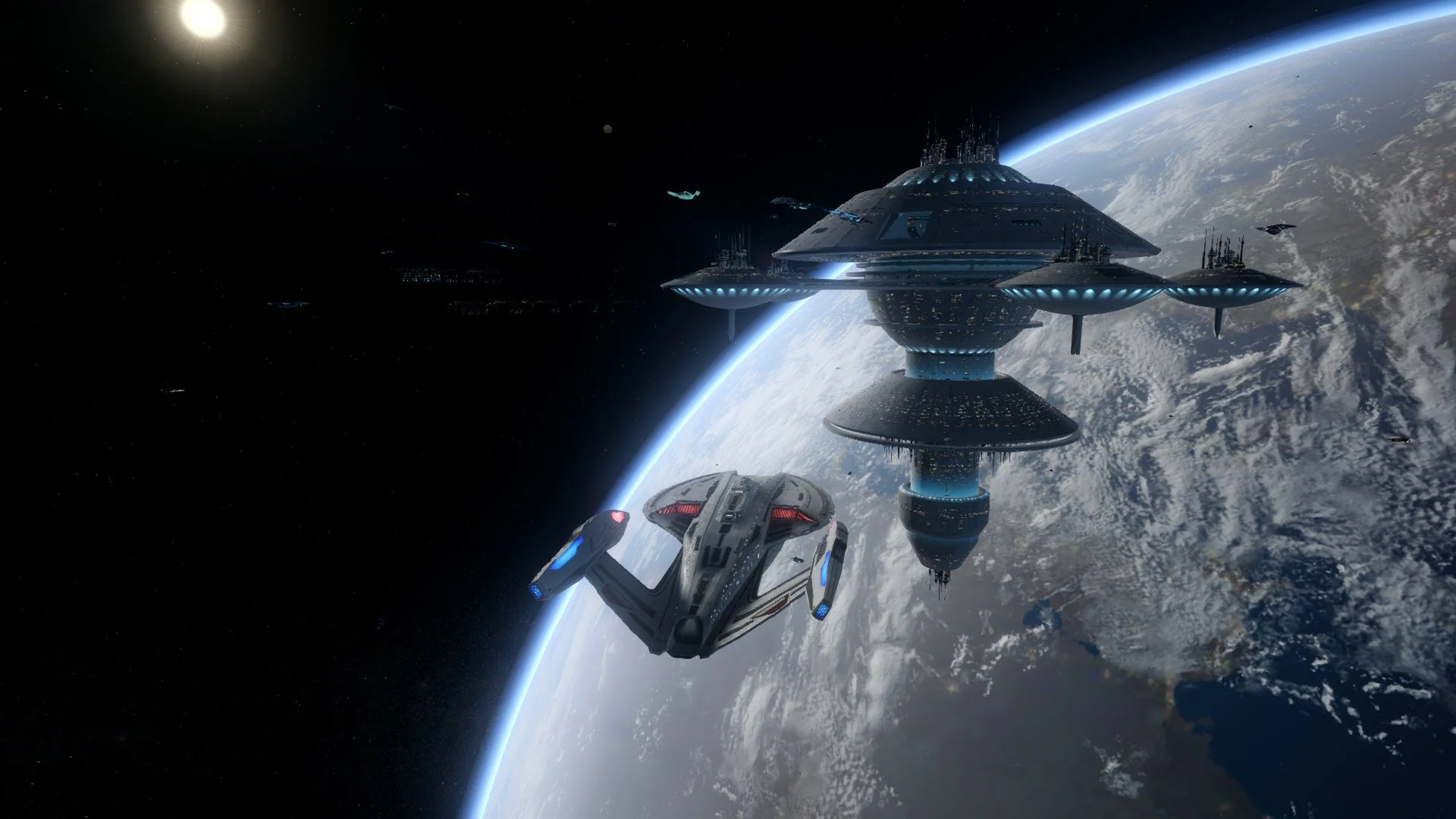
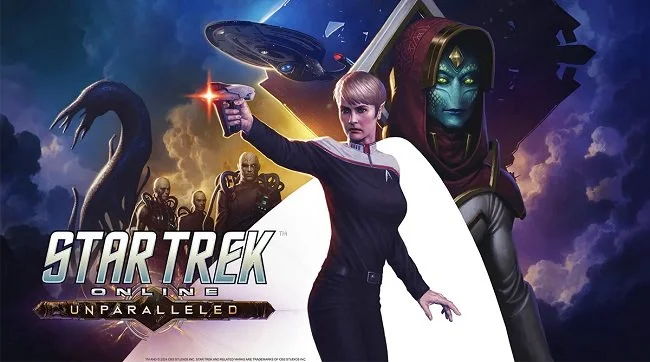
Star Trek Online: Beyond Endgame
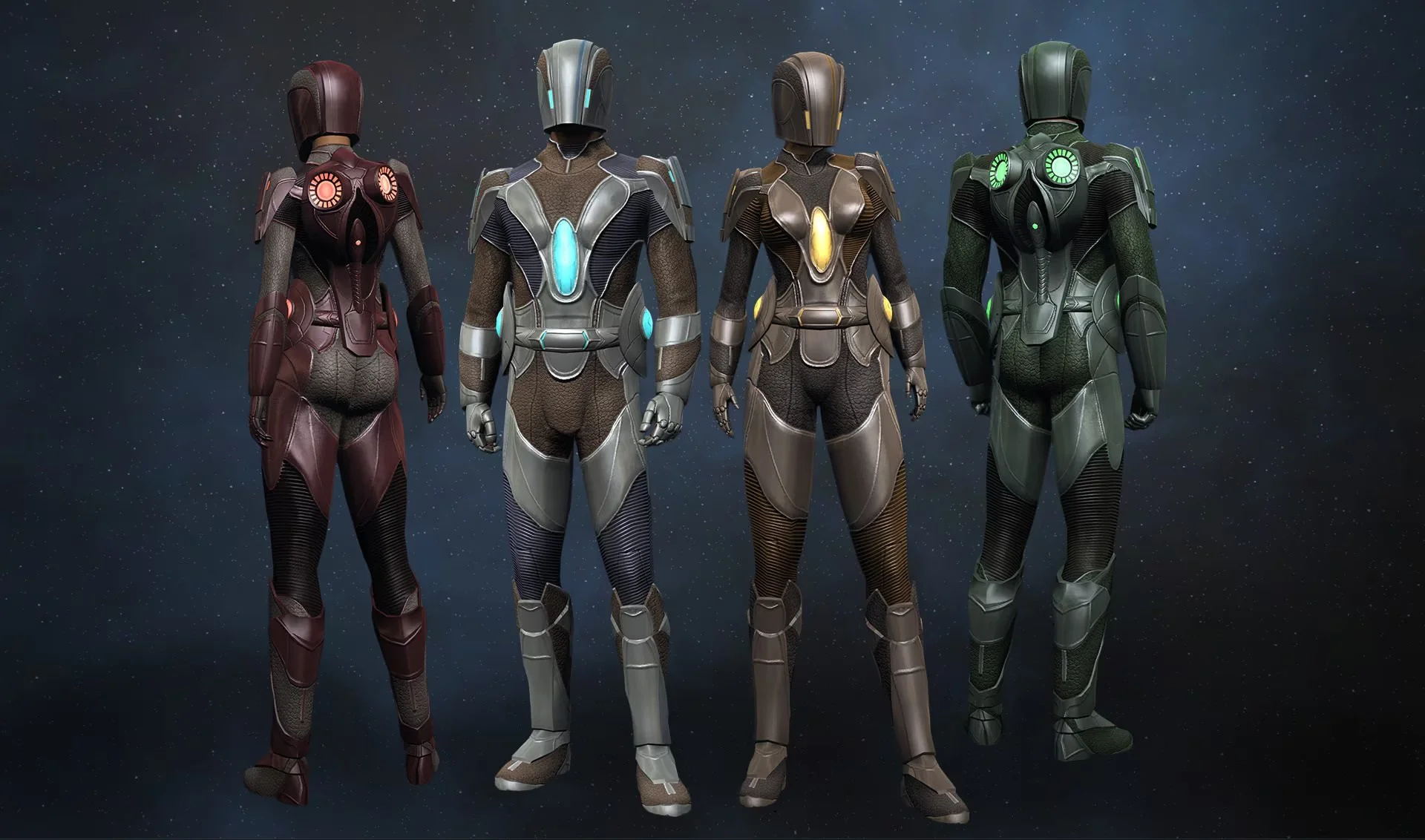
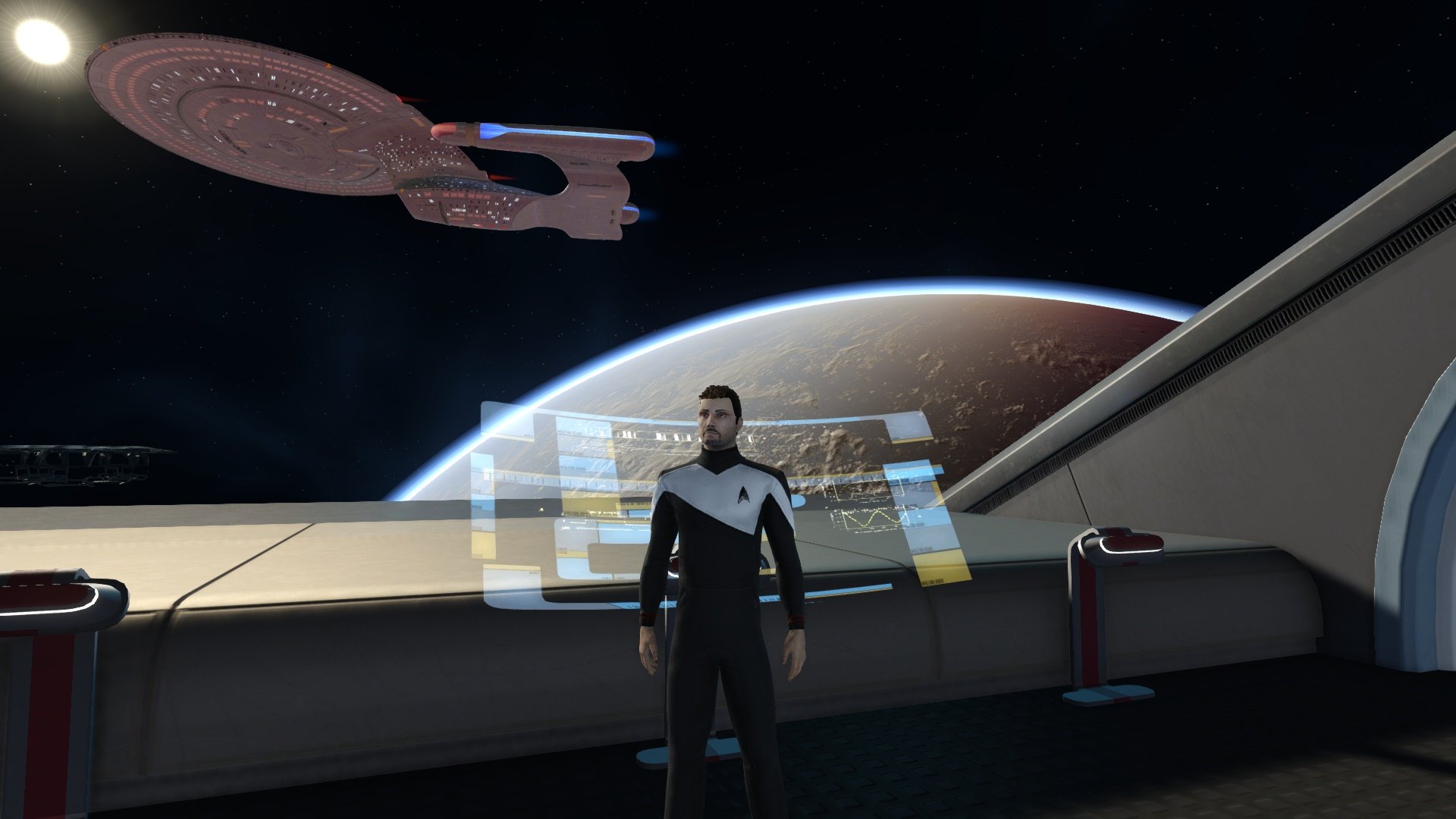
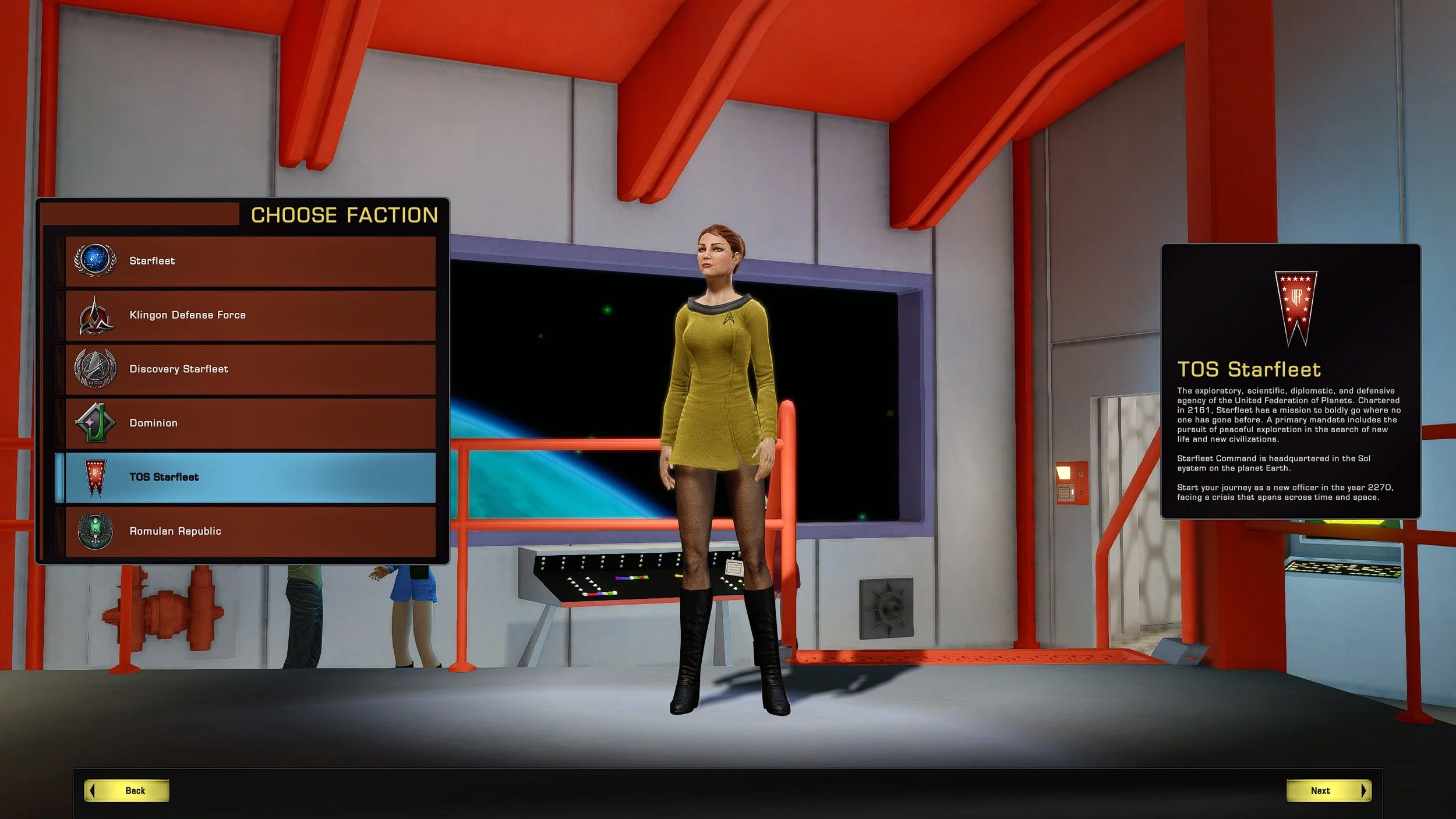
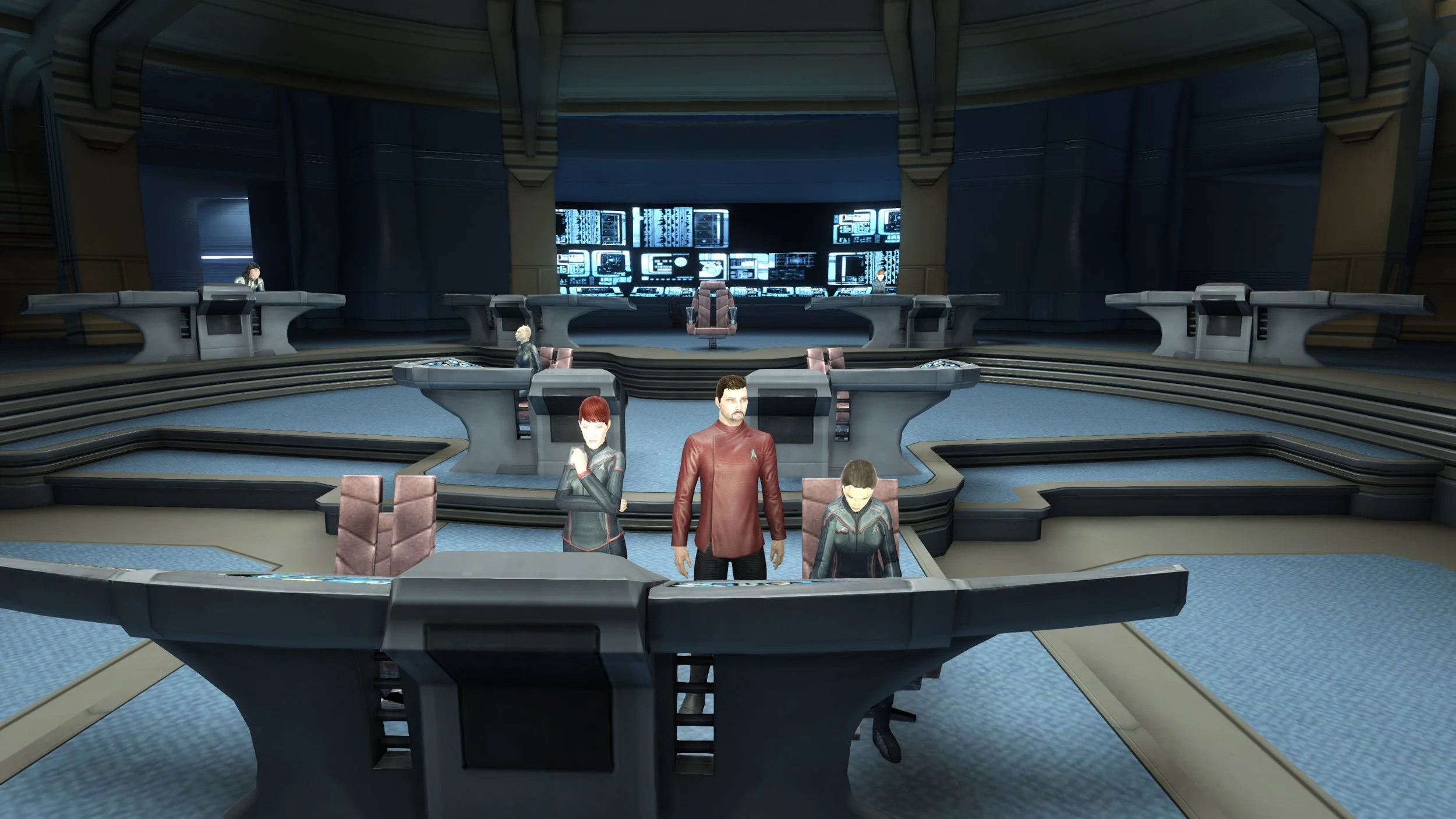
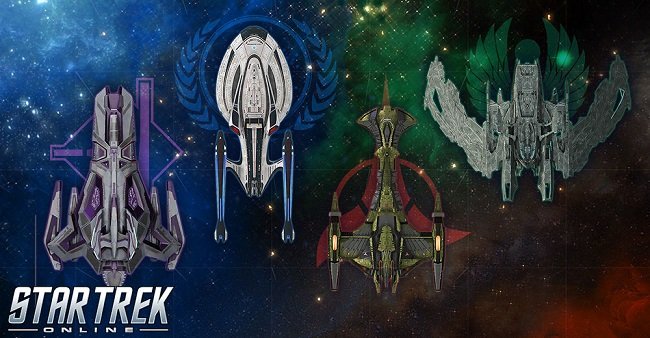
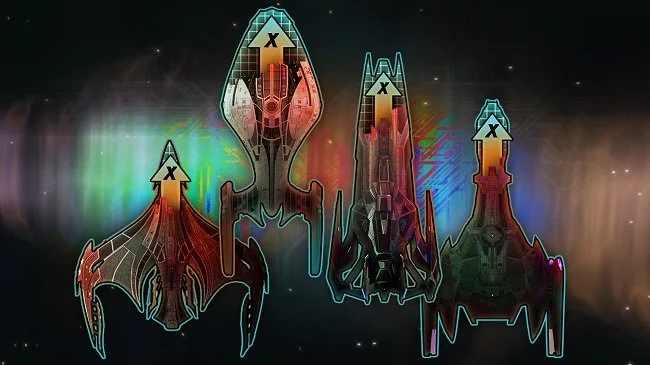
The recent Arena of Sompek Event in STO was immense fun and presented me with an opportunity to fine tune the ground build on my primary character. Furthermore, the current return of the Phoenix Prize Pack has allowed me to spend a lot of my surplus Dilithium. I obtained a Kobali Samsar Cruiser [T6] last night which allowed me to complete the Kobali Space Set. It’s also nice to be able to finally own the iconic Red Matter Converter, which was only previously available in the Collector’s Edition of STO on launch. However, for me the best item available from the Phoenix Prize Pack is the special Phoenix Upgrade Tech (equivalent to multiple Universal Superior Tech Upgrades, with no Dilithium costs). I have used a hundred plus and have now managed to upgrade a lot of my gear to Epic quality. Finally, after months of tweaking and customising, I’ve broken the 30K DPS barrier.
The recent Arena of Sompek Event in STO was immense fun and presented me with an opportunity to fine tune the ground build on my primary character. Furthermore, the current return of the Phoenix Prize Pack has allowed me to spend a lot of my surplus Dilithium. I obtained a Kobali Samsar Cruiser [T6] last night which allowed me to complete the Kobali Space Set. It’s also nice to be able to finally own the iconic Red Matter Converter, which was only previously available in the Collector’s Edition of STO on launch. However, for me the best item available from the Phoenix Prize Pack is the special Phoenix Upgrade Tech (equivalent to multiple Universal Superior Tech Upgrades, with no Dilithium costs). I have used a hundred plus and have now managed to upgrade a lot of my gear to Epic quality. Finally, after months of tweaking and customising, I’ve broken the 30K DPS barrier.
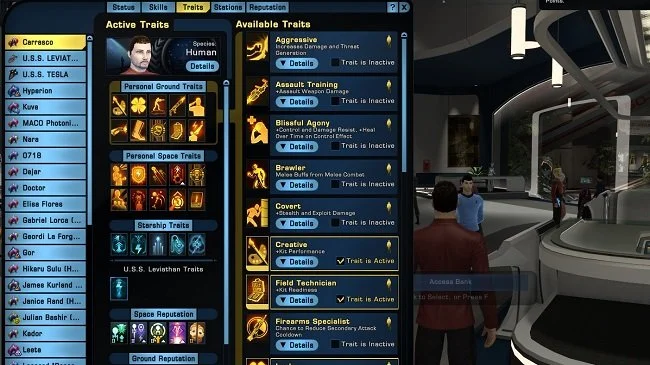
Once you reach level cap in STO you quickly find that the bulk of the endgame is focused upon experimenting with builds and striving to increase your DPS. Although featured episodes and events are regularly added to the game, there are no traditional dungeons offering fancy gear as rewards. Gear is created through the reputation system and then upgrading it offers the opportunity to add modifiers. Events and PVE queues are effectively used as proving grounds. Once a player reaches a certain level of DPS, it requires a comprehensive program of subtle changes to see any further improvements. It also requires a great deal of in-game resources, such as Dilithium and Energy Credits to facilitate improvements. Success requires multiple alts to farm materials and a liking of spreadsheets and min-maxing.
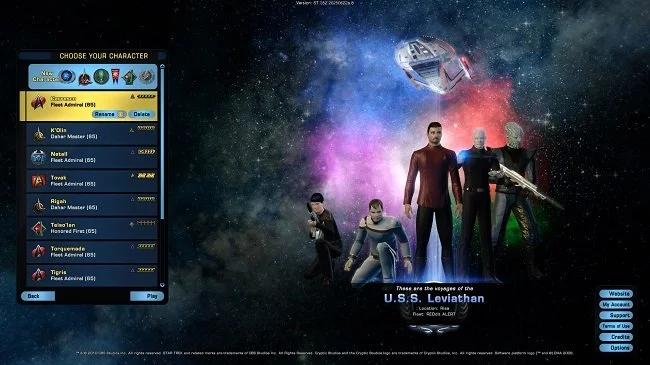
Eighteen months ago, I wrote a post asking advice about a suitable tactical build for a Guardian Cruiser. I fortunately received none whatsoever, which then forced me to trawl through various subreddits and websites and learn about the mechanics of STO. I’ve now reach a DPS level that is certainly above average and I’m pleased with that achievement. However, I don’t see any reason to pursue any further increase because I suspect it will not be that much fun. So, I’ve decided to take heed of my recent return to LOTRO, where I am currently starting from scratch with a new alt. In the case of STO, rather than create a new character I already have three that remain incomplete. The most prudent one to focus upon is my Agents of Yesterday Federation Tactical Officer. Working my way through all the old content will yield multiple account unlocks that would be very beneficial. I can already craft Ultra Rare Mark XIII gear due on all my alts due to a reputation achievement on the AoY character.
Accolades, duty officer missions and cosmetic customisation are all other potential avenues of interest and fun to pursue in STO. Something else that is always overlooked is the fact that you can play through the various story arcs in the game in a group if you see fit. STO is an MMO yet I’ve spent so little time of the game in groups, apart from STFs and events. Playing through some of the stories with others can put a fresh perspective on them. Certainly, grouping in the Delta Quadrant will definitely give you an advantage and allow you to progress through the zone a lot more quickly. And of course, there is always the potential to role play, if that is your thing. Although, I find some of the activities and chat that goes on in Drozana Station and Risa beyond my ken.
As you can see, the endgame in STO doesn’t have to be DPScentric if you don’t want it to be. Like many MMOs, you get out of the game exactly what you put in. The people you associate with can also improve or kill the game for you. Finding the right fleet helps and there are plenty out there. There nothing wrong with taking your time and trying a few before committing to one. Also rushing to level cap is not essential second or third time round. There is plenty of detail and lore to be experienced along the way in the old content. So, I’m going to broaden my outlook and return to an older character and see where it takes me. If everything else fails I can always fall back upon cosmetic changes and goals for my away team. If you can’t be good be beautiful.


Where Have all the Bloggers Gone?
I’m a creature of habit. I don’t mean “if it’s Wednesday, it’s Pork Chops”, I’m referring to simple routines that help me organise my days. One example is my morning ritual. As soon as I wake, I get straight up, shower and dress. I then sit myself down at my computer with a mug of coffee and catch up with my emails, Twitter and Feedly. I also get a flash news briefing from Alexa. These things appraise me of what is going on in the world and often give me potential writing prompts. Feedly has been invaluable source of inspiration in the past. I subscribed to half a dozen professional gaming and movie news websites and a further thirty of so blogs, written by my peers.
I’m a creature of habit. I don’t mean “if it’s Wednesday, it’s Pork Chops”, I’m referring to simple routines that help me organise my days. One example is my morning ritual. As soon as I wake, I get straight up, shower and dress. I then sit myself down at my computer with a mug of coffee and catch up with my emails, Twitter and Feedly. I also get a flash news briefing from Alexa. These things appraise me of what is going on in the world and often give me potential writing prompts. Feedly has been invaluable source of inspiration in the past. I subscribed to half a dozen professional gaming and movie news websites and a further thirty of so blogs, written by my peers.
I wrote a post last year for the NBI about the importance of blogging. The sentiment still holds, more so than ever at present. The world is changing and not necessarily for the better. Therefore, it is important for people to build communities, exchange ideas and interact in a civilised capacity. Not only do we need to get along but to tolerate and coexist with those who hold differing views to our own. Sadly, this appears to be “asking the impossible” at present. The world is becoming binary, tribal and aggressively territorial. This is reflected in the blogging world. Opinions are not to be debated but shutdown. There is no rooms for dissent. “You’re either with us or against us” seems to be the prevailing attitude. Facts and intellectual rigour are seen as unfair barriers to having an equal say.
As a result of this cultural shift, I find that the blogging community that I am apart of has greatly diminished in the last eighteen months. The thirty or so blogs, written by my peers that I mentioned are now either updated irregularly or virtually abandoned. The podcasting network that I am a member of still endures but has no aspiration to grow or expand. Apathy, disinclination and a sense of even defeat seems all too common. I should know, all of these things blighted my writing agenda last year. Then of course let us not forget that we are all getting older and people simply change. Life makes many demand on are time and even fandom has to bow before the school run, redecorating the bathroom and getting that promotion. Plus, perceptions of the internet have changed. The Frontier Town community spirit has given way to corporate formalisation. Being connected to other people from all round the world is no longer a big deal. Familiarity does have indeed breed contempt, or at least indifference.
Another thing to consider is the personal nature of writing. It also requires a modicum of skill and effort. A well penned post about EVE Online or the iniquities of pre-order culture can take a surprising amount of time to draft and publish. Maintaining a regular writing schedule requires discipline. Coming up with engaging content needs thought and creativity. Constantly writing takes its toll on the author eventually. For some, it’s too much of a “big ask” to begin with. Hence, you’ll find many people relegate their writing aspirations to forum comments. It easier to be reactive than proactive. It’s a shame. I see some really good ideas among the comments of a site such as Massively OP. Material that would make a good blog post in its own right.
Aaaron from Don't Fight Ducks. An enjoyable LOTRO streamer.
Although I do feel that You Tube and Twitch do provide a useful service and have a role to play within the gaming community, they are still primarily entertainment mediums. Live streams are often about the social interaction between the streamer and their audience. It’s a more ephemeral experience to writing. You Tube let’s play videos are a double edge sword. The pace of the video dictates the dissemination of information. Often, I can read an explanation of a game’s mechanics far faster than the ten-minute video that shows me. Plus, not everyone is a good or engaging narrator. Improving your writing skills is possibly easier than fixing your video presentation skills. However, that is not to say that there isn’t an audio/visual equivalent of long-form writing, because there is. It’s just hard to find among the internet white noise. Overall, the democratisation of online broadcast mediums has fragmented the potential audience. Couple that with the current mindset and each niche seems to stay on its own turf.
I decided in the New Year to return to writing daily and one of my motivations was to try and encourage others. I endeavour to leave comments on blogs and retweet other people’s work. I’ve also persevered with streamers and You Tubers and I’ve found several that meet my expectations. Upon mature reflection, I don’t feel that the community that I enjoy so much, is totally in decline. It’s more of a case of natural ebb and flow. However, I still think that the blogging scene needs a shot in the arm. If the veterans can’t continue to carry the torch, then maybe it’s time to pass it on to others? Which raises the issue of events such as the Newbie Blogger Initiative. People have asked me whether they’ll be another this year. The answer is it’s depends on whether someone wants to run it, because it really is an event that needs a core group or an individual to drive it forward.
I have a lot of demands on my time. I’m a carer with two disabled parents. I write as much as I can and do not have the time to be in the driving seat of a community event such as the NBI. However, I am happy to strike the following bargain. If someone wants to seriously run the NBI this year in an organised fashion and with clear goals, I’ll resurrect the Gaming Blog Nexus. This was a website that indexed gaming blogs, aggregating content and driving traffic back to the source sites. In 2014 it had over one hundred contributors and was an invaluable means of finding new writers. It was and can be again a good community resource. So, it now remains to see whether anyone wishes to seize the day and get the ball rolling. Is there any interest in an NBI 2017? Would people welcome a return of the Gaming Blog Nexus? Or am I spitting in to the wind?
















The Secret Service (1968)
The Secret Service is somewhat of an enigma, being the last Supermarionation show that Gerry Anderson produced. It was poorly received not only by critics but also by its own financier, Sir Lew Grade and was therefore given a limited broadcast upon its initial release. However, it marked the end of an era for Century 21 productions as they turned their creative attentions to film and live action TV after a decade of puppets shows. Subsequently, The Secret Service fell into obscurity over the following years and never gained the same degree of attention from the public, as previous Supermarionation shows had.
The Secret Service is somewhat of an enigma, being the last Supermarionation show that Gerry Anderson produced. It was poorly received not only by critics but also by its own financier, Sir Lew Grade and was therefore given a limited broadcast upon its initial release. However, it marked the end of an era for Century 21 productions as they turned their creative attentions to film and live action TV after a decade of puppets shows. Subsequently, The Secret Service fell into obscurity over the following years and never gained the same degree of attention from the public, as previous Supermarionation shows had.
Having recently caught up with the entire series and being a consummate Gerry Anderson fan, it is hard for me to be excessively critical of the show. I have a lot of love for his earlier work, especially Thunderbirds and Captain Scarlet. The Secret Service has many of the aspect that made previous shows enjoyable and unique. There are quirky and amusing characters, a rich and detailed production design and superb miniature effects by the legendary Derek Meddings. Once again, the score and ambient sounds created by Barry Gray play an integral role in the show. Yet even I must admit that two major flaws standout and validate why this final series was Anderson’s weakest.
Firstly, from Four Feathers Fall to Joe 90, there had always been an element of substituting human footage for material that puppets could not do. This was usually limited to shots of hands. However in The Secret Service this technique was greatly expanded upon. There are long shots of characters walking into building, along with footage of them driving vehicles down country lanes. The central character Reverend Stanley Unwin, is directly modelled on its voice actor Stanley Unwin. Furthermore, live footage of the said actor is frequently intercut into each episode. Although it can be argued that this innovative approach covered some of the puppets technical deficiencies, it also breaks the shows immersion. Is this a puppet or live action drama?
Secondly, Stanley Unwin himself was a comedian who became well known for his use of “Unwinese”, a faux comic language of his own creation. It was an odd choice to cast such an actor with a uniquely English comic trait, namely our love of linguistic humour and word play, into a television show destined for international distribution. Gerry Anderson’s argument was that Stanley Unwin’s occasional lapse into this verbal slapstick was to purposely confound all viewers. However, I think that rather than amuse the viewers it simply perplexed them. It was sufficient for Sir Lew Grade to lose confidence in the production and pull the plug.
If like me you have been raised on Gerry Anderson’s back catalogue, The Secret Service, despite its shortcomings, is still engaging and quality entertainment. It is yet another example of Century 21 Productions refining their process. However, for the more casual viewer, who is broadly familiar with Thunderbirds, this may be a little too niche market and obscure. The show also seems to have a somewhat nebulous view on Christian denominations. Stanley Unwin seems to frequently alternate between the Anglican and Roman Catholic faiths. Therefore, I can really only recommend The Secret Service to hardcore Anderson fans and those who are simply curious and forgiving.
Historically, the failure of The Secret Service although marking the end of Supermarionation ultimately led to Century 21 productions first live action TV series, UFO. A show that was a possibly five years ahead of its time. With regard to The Secret Service, after a consistently successful decade, the concept of the puppet series had run its natural course by the late sixities. One of Gerry Anderson’s great strength from this era was his capacity to experiment. The Secret Service shows us that not all experiment work, but even those which are deemed failures can still be or merit and quality.




The Average LOTRO Player
Despite my claims to be a casual gamer, I tend to go all-in when a title takes my interest. Therefore, I will make it my business to read and learn about the various mechanics and systems in a game. I also like to be active in the wider community, so I write and podcast about the games I enjoy. Social media is an invaluable way to keep up-to-date with both developers and publishers. Forums and websites also play an integral role in keeping a player informed, by providing guides, press releases and a platform for sharing opinions. In recent years, many games have looked to Reddit as an additional way of communicating with their player base and fostering a community.
Despite my claims to be a casual gamer, I tend to go all-in when a title takes my interest. Therefore, I will make it my business to read and learn about the various mechanics and systems in a game. I also like to be active in the wider community, so I write and podcast about the games I enjoy. Social media is an invaluable way to keep up-to-date with both developers and publishers. Forums and websites also play an integral role in keeping a player informed, by providing guides, press releases and a platform for sharing opinions. In recent years, many games have looked to Reddit as an additional way of communicating with their player base and fostering a community.
When I started playing LOTRO in late 2008 the focal point for information and interaction between players and the development team was the official forums. Then in 2010 there was a brief time where the unofficial forums became essential reading. There were also a great many guides available online providing a wealth of information about armour, crafting and other facets of the MMO. In many respects, at the time of its free to play conversion, LOTRO was one of the most well documented MMOs around. Seven years on, the official forums can still answer most questions a new player may ask. You Tube also provides an alternative repository of information.
When you consider all these options, you’d be forgiven for thinking that the average LOTRO player is well informed. The latest news is even emblazoned on the game launcher. Yet something happened recently in kin chat that made me realise that this is not the case and that the official forum and twitter are more of a haven for active and vocal gamers. They are not really a true cross section of a games player base. The developers have said this many times in the past. The forums, the fansites and other sub-communities are populated by players affiliated to specific niche groups, such as raiders, role players, or ardent solo completionists. Yet my kinship on Laurelin is filled with people who do not fall into these categories.
With regard to the incident I mentioned, someone in kin chat referenced how they were looking forward to High Elves being added to the game. A point that was met with surprise by many other kinship members who were logged in. Needless to say, an interesting discussion followed. To cut a long story short, I would estimate that about two thirds of our kin are oblivious to the finer points of the last producers letter. Furthermore, most of them never go to either forums, read the developer diaries or do any sort of proactive research into the game. Fan blogs and guides are effectively ignored. The Bullroarer test server is also an unknown quantity to many that I talk to. Overall I believe the majority of our kinship on Laurelin, just play the game and have no major interest in everything else.
I’m of the opinion that there is nothing unique about our kinship and its approach to LOTRO. I’m persuaded to think that a lot of LOTRO players are of a similar mindset. Therefore, this beggars the question is there such a thing as an average LOTRO player? This is not a term that I mean in a pejorative way. It’s just that for all the ardent raiders and high achievement players, there are many others that are just content to play through the game in their own way and at their own pace. They work things out as they go along and take their pleasure along the way. So, I’ve been trying to collate ideas regarding the average LOTRO player to try to form a sort of profile, based around common attributes and habits. Here are a few bullet points of some that I’ve considered.
- LOTRO players are not always gamers per se. Most of my kinmates only play LOTRO and are simply not interested in any other games. They do not own high end gaming PCs or have fast broadband connections.
- By far the biggest selling point of LOTRO for such players is the IP. They are first and foremost Tolkien fans. The most common refrain I hear is that the game provides an opportunity to play as a Hobbit, Elf or Dwarf in Middle-earth. There is no alternative MMO or game that offers the same experience.
- Many of the players in our kinship, or those I have spoken to outside of it, have never participated in a raid of any kind, despite the opportunities to do so. The idea either does not interest them, they simply do not have the time or they are not disposed towards the perceived social pressures of such activities.
- For every member of my kin who has multiple alts at level cap, there is another who has a list of alts that have been abandoned or who are still work in progress. Again, this is mainly due to time commitments or the fact that some folk just like to roll new alts for fun, rather than to pursue a structured levelling path.
- The officers in kinships I’ve been involved with tend to be those who play a lot and to the highest level. It is these people who are often the most informed about the game and the kin looks to them for the dissemination of news. In our kin, if you want to know anything about anything, you ask a handful of senior players.
I spend a lot of time talking to other LOTRO players, both in and out of the game. From what I have discerned a large amount of the player base are satisfied with what the game has to offer. Infact they always have been. Despite the calls from the raiding and PVP communities for more content that favours their needs, many players are happy to play casually and just "potter" about LOTRO. They’re not fussed about statistical changes, the Flora barter system, grinding for essences or the complexities of imbuing your legendary items. The game as it stands provides them with exactly what they want. A Middle-earth themed environment for them to explore and hangout in. This seems especially true of the RP players. Bree appears to serves all their needs.
Furthermore, many players are not in any way aggrieved by the alleged “iniquities” of the LOTRO store. When the total cost of everything they have ever spent on LOTRO is averaged out, many still feel that it is an extremely cheap form of entertainment, compared to other real world activities such as going to the movies, or out for a meal. Overall LOTRO is looked upon as a pleasant means of relaxation, in a virtual environment that most find agreeable. It is common for players in my kin to come home from work, cook some food and then spend time in LOTRO unwinding from the pressures of the day and enjoying the company of their fellow kinmates. The importance of the social ties associated with the game cannot be stressed enough. Gear grinds or the tedium of crafting are actually considered positive things by many of the players I know. Some folk like structured goals.
So, after considering these points, I'd say that there are lots of players that are content with LOTRO and who have little concern or even knowledge of the various changes that are coming this year. The major alterations that caused furor on the official forums over LOTRO’s lifespan, such as the move away from raids to epic battles and the introduction of the class skills tree, have had little impact upon such players. As long as they can continue to do the things that keep them happy, then all is right in their virtual world. Such players will continue to play and pay LOTRO until the servers close. They do not have any major beefs with the development team or community manager because they simply do not move in the same circles.
There are many subsets of LOTRO players but I get the feeling that this relatively low profile group of quiet and content players are by far the largest. When the fancy take’s them they will use the store because it is not an ideological anathema to them. It offers fun and useful items that enhances their play. That should make them a very important demographic to developers Standing Stone Games. In the meantime, the official forums although a useful portal are in danger of slowly becoming an insular private members club, busy preaching to the converted. Although many good points are raised and debated there as well on such site as Massively OP, they never really never travel beyond their virtual confines.
So, the average player that I have described is potentially the majority group that is now bank rolling LOTRO. If that is the case, then all SSG needs to do is to keep producing content that meets their requirements. That means that the trend towards streamlining and refining LOTRO, rather than adding to its complexity, seems to be the way to go. Now naturally, there will be a percentage of players and ex-players who will state that it is this very process that is "killing the game". Ultimately it comes down to a question of taste of what you want in a MMO. However, if I am right in my summation about the average LOTRO player, I think it proves why the MMO is facing its tenth-year anniversary, where so many others have gone to the wall. It is this groups loyal support and quite pursuit of their own style of game play that is LOTRO’s foundation
10 Sad Movie Death Scenes Part 2
Up (2009). The opening scenes of Up are a beautiful distillation of the life of Carl Fredricksen (Ed Asner), the movies main character. Comprising of a montage, we are shown him meeting his childhood sweatheart Ellie and there subsequent marriage. The narrative then explores the major events of their life together. The couple are not blessed with children and also have to sideline their ambitions to travel the world, due to the realities of work and married life. Ellie grows sick in her autumn years and dies leaving Carl a widower. The sequence plays out wordlessly against a winsome and understated score by Michel Giacchino. The emotional depth and craftsmanship apparent in these scenes are of a quality seldom seen in modern film making. They validate the skills of Pixar Animation Studios and the medium of animation.
Up (2009). The opening scenes of Up are a beautiful distillation of the life of Carl Fredricksen (Ed Asner), the movies main character. Comprising of a montage, we are shown him meeting his childhood sweatheart Ellie and there subsequent marriage. The narrative then explores the major events of their life together. The couple are not blessed with children and also have to sideline their ambitions to travel the world, due to the realities of work and married life. Ellie grows sick in her autumn years and dies leaving Carl a widower. The sequence plays out wordlessly against a winsome and understated score by Michel Giacchino. The emotional depth and craftsmanship apparent in these scenes are of a quality seldom seen in modern film making. They validate the skills of Pixar Animation Studios and the medium of animation.
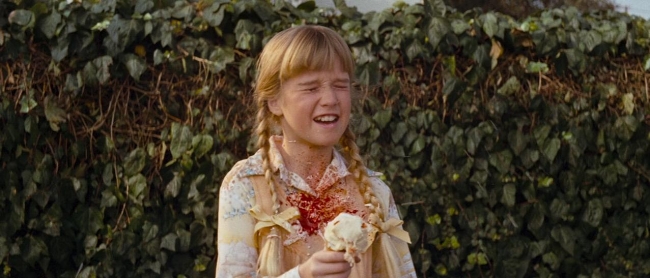
Assault on Precinct 13 (1976). The killing of a child on screen is still very much a cinematic taboo and very few film makers have the nerve to do it. The murder of Kathy (Kim Richards) as she buys an ice cream in Assault on Precinct 13 is still very shocking to this day. Yet director John Carpenter handles the scene in a very measured fashion and although he shows the shooting quite calmly he avoids excessive melodrama or voyeurism. The subsequent sequence where the girl's Father returns from the pay phone to find his child dead on the sidewalk is very powerful. The way actor Martin West blankly stares blankly ahead trying to make sense of what he sees is disturbingly plausible. I've always found the way he takes off his jacket and covers his daughters corpse very touching.
Red Sun (1971). Former Bond director Terence Young struggles with an international cast, bland screenplay and slipshod editing in the 1971 Western Red Sun. Starring Charles Bronson and Toshiro Mifune, beyond its initial appeal of mixing the genres, the film fails to meet it's potential. It is none the less still entertaining mainly through the performances of the two leads. Toshiro Mifune had an inherent gravitas that made him a compelling actor. As a child I was fascinated by the skill and dexterity of the Samurai Kuroda, along with his cultural sophistication. It was a stark contrast to the rather two dimensional caricature that Mr. Bronson was saddled with. Yet despite the obvious shortcomings of the screenplay the relationship that grows between the two is engaging. Kuroda's rather obvious death at the movies denouement always upset and annoyed me. It was unjust and simply just lazy writing.
Enemy Mine (1985). If you've ever seen John Boorman's Hell in the Pacific, then you'll quickly get the measure of Enemy Mine. Director Wolfgang Peterson does a competent job of crafting a tale of inter species conciliation, set against a science fiction back story. The movie had a very problematic production history and it is to everyone involved credit that it turned out as well as it did. Dennis Quaid and Louis Gossett Jr. deliver strong performances as Willis "Will" Davidge and Jeriba Shigan. Chris Walas does stirling work with the alien Drac prosthetic effects. There is a poignant duality to Jeriba Shigan's death scene as he dies in childbirth (Dracs reproduce asexually) and Davidge has to come to terms with promise he made to raise the child Zammis and return him to his homeworld.
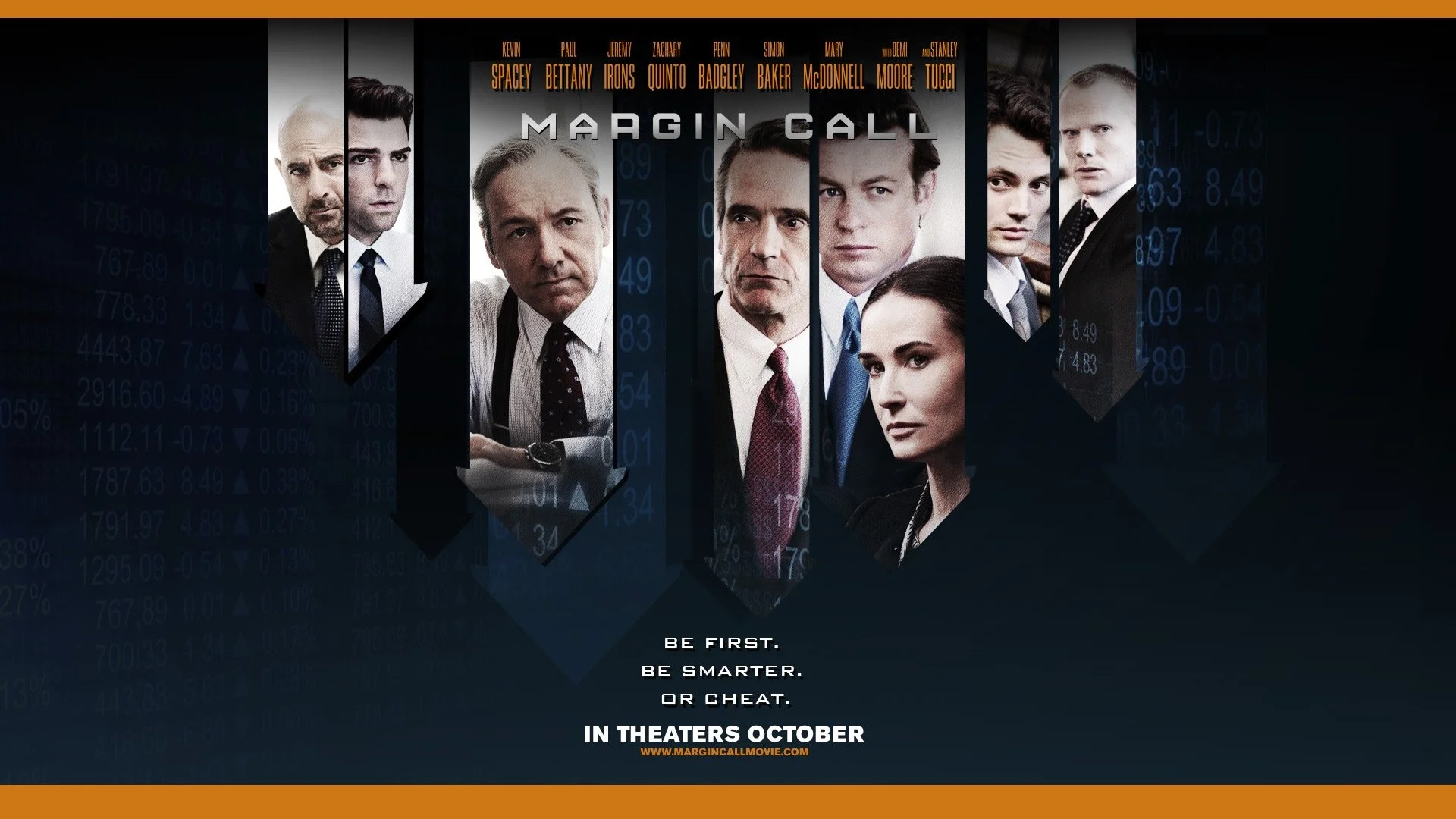
The Mist (2007). Frank Darabont is a very astute director and he strongly resisted studio pressure to change the ending of The Mist. Based on a Stephen King novella, the movie centres around an eclectic group of survivors trapped in a supermarket by an mysterious mist. Once you look beyond the standard trappings of a creature feature, you'll find a rich and compelling character study of people desperately trying to cope and rationalise inconceivable events. The cast and performances are outstanding, especially Thomas Jane, Toby Jones and Marcia Gay Harden. Darabont skilfully shows how the superficial trappings of civilised society are quickly dispelled in a crisis. He also holds his nerve and offers the audience a terribly bleak yet compelling ending. Desperate, lost and out of hope survivor David Drayton, by mutual consent, turns his gun on his fellow companions (including his own son) to spare them a slow death. Out of ammunition and unable to kill himself, he contemplates the magnitude of what he has done. It is at this point that the mist clears and rescue is at hand. It is one of the most powerful and heartbreaking movie endings I have ever seen.

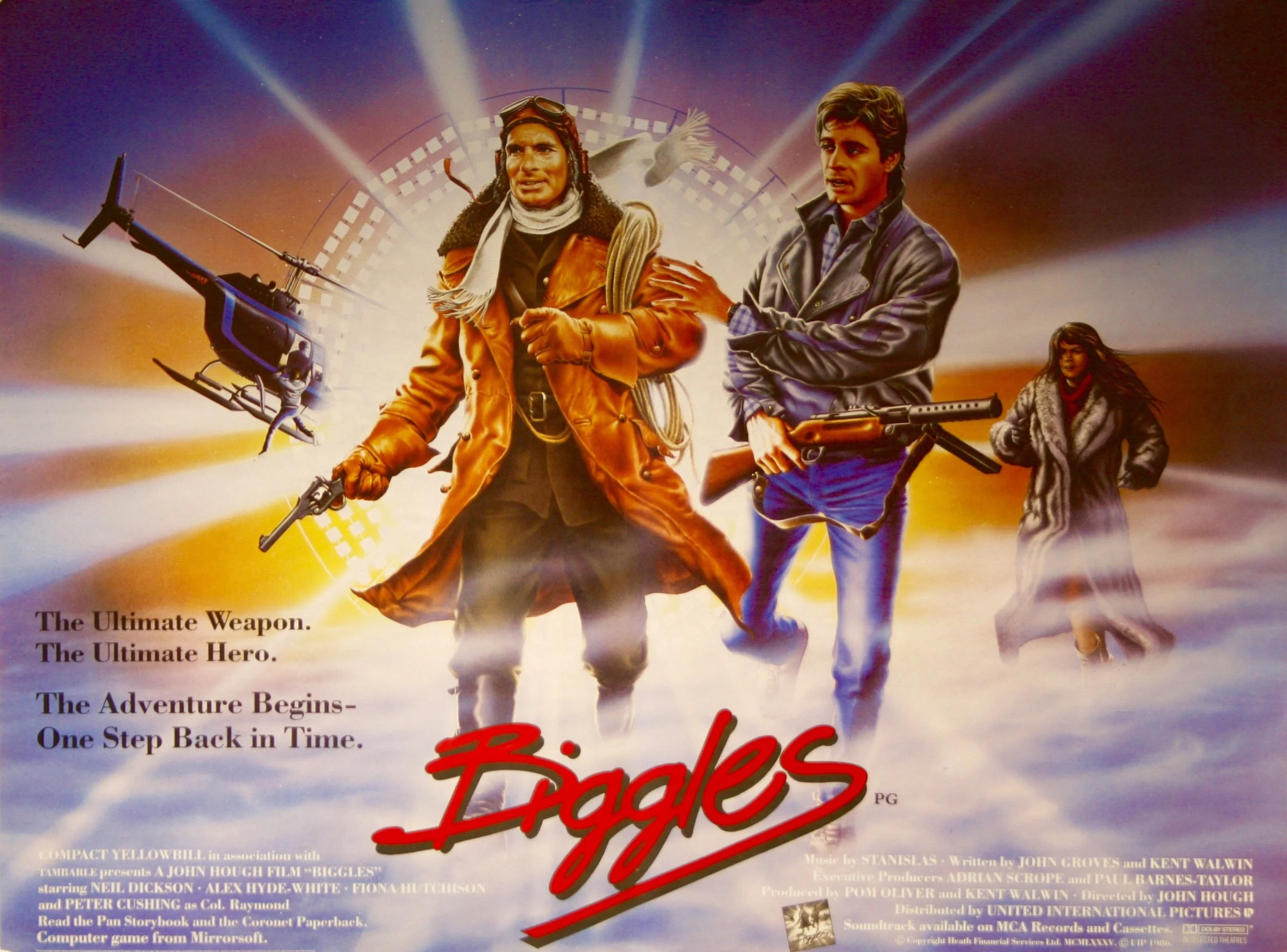
10 Sad Movie Death Scenes Part 1
The Black Hole (1979). Like many Disney's movies, The Black Hole has hidden depth and is more than just a late seventies Space Opera. The relationship between the anthropomorphic robots Bob and V.I.N.CE.N.T. has an interesting metaphysical subtext. The voice casting of Slim Pickens and Roddy McDowall is sublime and provides the audiences with an immediate connection to the characters. Bob's death scene rises above the contrived as a result of this and has genuine pathos. It is further enhanced by the skill of the animatronics effect work and the subtleties of their physical performances. The way V.I.N.CE.N.T. lowers his eyes when Bob shuts down is wonderful embellishment. The sequence is completed by John Barry's beautiful and dignified music cue.
The Black Hole (1979). Like many Disney's movies, The Black Hole has hidden depth and is more than just a late seventies Space Opera. The relationship between the anthropomorphic robots Bob and V.I.N.CE.N.T. has an interesting metaphysical subtext. The voice casting of Slim Pickens and Roddy McDowall is sublime and provides the audiences with an immediate connection to the characters. Bob's death scene rises above the contrived as a result of this and has genuine pathos. It is further enhanced by the skill of the animatronics effect work and the subtleties of their physical performances. The way V.I.N.CE.N.T. lowers his eyes when Bob shuts down is wonderful embellishment. The sequence is completed by John Barry's beautiful and dignified music cue.
The Fly 2 (1989). Our emotional connection with our pets has always provided film makers with a rich vein of material to explore or exploit, depending on your point of view. The death of a canine companion has become a established cinematic trope. Consider Mad Max 2, The Beastmaster and Big Jake for example and you'll find exemplars of the "Martyr Dog" concept. In The Fly 2, Martin Brundle (Eric Stoltz) discovers that his childhood pet dog, which he thought had died in a failed teleportation experiment, is still alive and suffering as a result of its horrific transformation. Martin pets the decrepit animal who recognises him and feebly tries to greet him. He finally puts the poor creature out of its misery with chloroform. It can be argued that this is just a Palovian exercise in emotional button pushing but I find that there is an sense of honesty to the scene and the manner in which it is presented.
The Wild Geese (1978). The cultural complexities and hierarchy of the British military are a microcosm of the class distinctions that run through the United Kingdom. This is superbly highlighted in Victor McLaglens's 1978 movie The Wild Geese, which centres around a group of mercenaries and their attempt to rescue a deposed African political leader. Regimental Sergeant Major Sandy Young (Jack Watson) is a very traditional soldier and extremely deferential to his friend and superior, Colonel Alan Faulkner (Richard Burton). In a scene establishing the mutual respect between the two men, Faulkner jokingly quips that RSM Young can call him by his first name if he wishes. Ironically the only time he does this is when he is fatally shot at the movies climax. It's a genuinely moving vignette mainly due to the credibility of Jack Watson's performance.
The Plague Dogs (1982). If you were shocked as a child by the content of Martin Rosen's animated film Watership Down, then prepare yourself for an even more gruelling experience with The Plague Dogs. This is an intelligent but incredibly sad exploration of man's exploitation of animals. Upon it's initial release many people including the distributors were not expecting such a bleak and hard hitting story from an animated feature film. As a result the movie was cut from one hundred and three minutes to eighty two. The story follows two dogs, Snitter (John Hurt) and Rowf (Christopher Benjamin), who escape from a government research laboratory and are pursued by the military. A reoccurring theme throughout the film is that the pair may find safety on a secluded island away from the "whitecoats". After several harrowing adventures The Plague Dogs ends with the dogs on the point of utter exhaustion, swimming towards an island that may not exist. It is never established whether they survive or not.
On Her Majesty's Secret Service (1969). Often considered the most controversial of all the Bond movies, due to its replacement of Sean Connery and radical change in tone, On Her Majesty's Secret Service has enjoyed a renaissance in popular opinion in recent years. Directors such as Steven Soderbergh consider it to be an underrated classic. I've always enjoyed the movie and its core theme of Bond (George Lazenby) finding meaningful love and fulfilment with Contessa Teresa "Tracy" di Vicenzo (Diana Rigg). Unfortunately a happily married Bond was not exactly what the producers were looking for back in 1969. Therefore there is a rather sad inevitability to the abrupt death of Mrs. Bond just minutes after the pairs wedding. Fans have drawn parallels with 2006 reboot, Casino Royale and the death of Vesper Lynd (Eva Green), although the relationship between the two leads in that instance is not so closely defined.
To be continued.
Doomsday (2008)
Neil Marshall's third film is fast paced action movie, which pays homage to the "Post Apocalypse" genre and much more. It is a text book example of a film in three acts and is also pretty much the sum of its parts. The dialogue is minimalist, the acting adequate and the action frenetic and violent. Be warned, this film has earned it's 18 certificate for its UK release. However, none of these attributes are bad things. Doomsday makes its intention clear right from the beginning. If you want any further clues, take a look at the UK theatrical poster. The club with spikes is a fair indication that subtlety is not this movie’s strong point.
Neil Marshall's third film is fast paced action movie, which pays homage to the "Post Apocalypse" genre and much more. It is a text book example of a film in three acts and is also pretty much the sum of its parts. The dialogue is minimalist, the acting adequate and the action frenetic and violent. Be warned, this film has earned it's 18 certificate for its UK release. However, none of these attributes are bad things. Doomsday makes its intention clear right from the beginning. If you want any further clues, take a look at the UK theatrical poster. The club with spikes is a fair indication that subtlety is not this movie’s strong point.
A deadly plague, known as the “Reaper Virus,” has killed hundreds of thousands and left Scotland devastated. In desperation, the British Government evacuates as many survivors as it can out of the infected area, and then builds a wall, preventing the remainder from escaping. Thirty years later, with the wall still up and the victims all but forgotten, the virus appears to breaks out again in London. The Government decides to send a crack team of operatives, led by Major Eden Sinclair, into the hot zone behind the wall, to investigate the possibility of a cure.
Neil Marshall’s previous two films, Dog Soldiers and The Descent were very well received by both the public and critics. The latter was tightly written and directed and stood out compared to the usual contrived commercial studio fodder. Doomsday is a far more main stream affair and does not have the same level of tension and sophistication. It is a high octane action film that deliberately pays tribute to such pictures as Escape From New York, The Medieval Dead and Mad Max 2. However, the story unfolds at such a fast pace and lurid fashion, it is easy to overlook the plot flaws and inherent silliness of the premise.
The first act showing the outbreak of the reaper virus, the isolation of Scotland and then the subsequent raid into the forbidden territory, is by far the most engaging. Acts two and three are a series of action sequences in two different environments. They serve to expedite and close some plot lines and whittle down the cast. The production values are good and the film is littered with visual jokes and references. Performances are exactly the kind you need in such a movie. Bob Hoskins gives it plenty of "South London", Malcolm McDowell is suitably sinister and Craig Conway is cheerfully psychotic. Rhona Mitra proves that women can happily take on the role of action hero.
Doomsday is very entertaining on a "what you see is what you get" basis. It may particularly appeal to people of the director’s age group. Those who can remember the "Post Apocalypse" direct-to-video releases that saturated the market in the eighties. The soundtrack by Tyler Bates reflects this with its use of synthesisers and songs by "Adam and the Ants" and "Frankie Goes To Hollywood". The car chases and pyrotechnics are good for the films budgetary limitations. Be warned, as I said earlier, this film is violent. Bodies are crushed, limbs hacked off and there's even cannibalism.
My only criticism relating to Doomsday is the modern, rapid fire editing, that seems to be so fashionable these days. This actually dilutes some of the action sequences, rather than enhance them, which is a shame as some of the combat scenes have been well choreographed. But apart from this issue, I consider Doomsday to be a solid and affectionate tribute to the action genre of the eighties and nineties. Viewers get a professionally crafted action vehicle, that is tonally spot on for such genre material. It may not be the director’s best work but it’s possibly the most fun.
Village of the Damned (1995)
The original 1960 version of Village of the Damned is regarded as a classic of science fiction film genre and it remains one of the creepiest movies of its kind. The mixture of nuclear age paranoia and “evil children” reflect the social concerns of the decade. The 1995 remake directed by John Carpenter, trades subtlety for more explicit chills and violence. That is not to say it doesn’t show the director’s usual creative flair and the basic premise of the story remains effective, drawing on the original 1960 screenplay and John Wyndham’s novel, The Midwich Cuckoos. However, despite being stronger in content than the original film, Carpenter’s movie actually has a softer tone overall and opts for a less bleak and somewhat incongruous ending.
The original 1960 version of Village of the Damned is regarded as a classic of science fiction film genre and it remains one of the creepiest movies of its kind. The mixture of nuclear age paranoia and “evil children” reflect the social concerns of the decade. The 1995 remake directed by John Carpenter, trades subtlety for more explicit chills and violence. That is not to say it doesn’t show the director’s usual creative flair and the basic premise of the story remains effective, drawing on the original 1960 screenplay and John Wyndham’s novel, The Midwich Cuckoos. However, despite being stronger in content than the original film, Carpenter’s movie actually has a softer tone overall and opts for a less bleak and somewhat incongruous ending.
In the tiny, idyllic town of Midwich, a strange mist causes the entire population to fall asleep, and when everyone awakes the town physician (Christopher Reeve) discovers that ten women, including his wife and a local teenage virgin, have mysteriously become pregnant. Their children are all born on the same day, with matching white hair and strange glowing eyes. They grow at an accelerated rate, thus raising Reeve's suspicion that they are not of earthly origin. The children can control minds and wreak havoc with the power of their thoughts, so of course they must be destroyed. Now before you shout "xenophobia", it should be noted that attempts to communicate with the aliens are made, yet prove fruitless. The alien children wish to dominate over man.
Village of the Damned is driven by a measured cast of character actors, such as Kirstie Alley, Mark Hamill and Peter Jason. The depiction of a close-knit community is credible as the town inhabitants struggle to understand what has happened to them. There are some superficial updates to the narrative, one of which alludes to the government doing more harm than good during their clumsy intervention with the aliens. The effects work by the KNB EFX group is relatively minimal and the emphasis is still very much on tone and atmosphere. Sadly, despite several well-conceived ideas Village of the Damned never seems to assert itself in any particular way. It struggles to find its tone, which is unusual for John Carpenter.
Ultimately it is Christopher Reeve who dominates this somewhat superfluous remake with sufficient credibility to hold the viewer's attention. Once his character establishes how to break the alien children’s mind control there is a genuine sense of tension. This was his last major role before the tragic accident that led to his paralysis. As mentioned previously there’s a concession towards a more mainstream ending than the original film, which is a little weak. Yet despite its flaws, Carpenters version of Village of the Damned is still intriguing and shows the occasional flash of innovation. However, if you want chills of a subtler nature, check out the original version. It runs twenty minutes shorter and is twice as spooky.
Outlander (2008)
Sometimes a movie can have a premise that is sufficient to carry the proceedings. If you then add some quality character actors and ensure that the production values are high, then you can bluff your way to the end credits before the audience realises they're watching something really dumb. Outlander achieves this prodigious feat. It is an incredibly stupid film yet perversely entertaining. It boasts beautiful cinematography, a cast that is more than capable and perfectly acceptable CGI. At times, you feel like the entire production is challenging you to shout out loud quite how dumb the plot is. However the audience blinks first and director Howard McCain gets away with it.
Sometimes a movie can have a premise that is sufficient to carry the proceedings. If you then add some quality character actors and ensure that the production values are high, then you can bluff your way to the end credits before the audience realises they're watching something really dumb. Outlander achieves this prodigious feat. It is an incredibly stupid film yet perversely entertaining. It boasts beautiful cinematography, a cast that is more than capable and perfectly acceptable CGI. At times, you feel like the entire production is challenging you to shout out loud quite how dumb the plot is. However the audience blinks first and director Howard McCain gets away with it.
After his spaceship crashes, Kainan (Jim Vaviezel) finds himself the sole survivor of his crew and marooned in Norway circa 709 AD. Furthermore, a dangerous and intelligent beast called Moorwen who was a prisoner aboard his ship, has escaped. While pursuing the creature he is captured by Wulfric (Jack Huston), a Viking warrior and brought before King Hrothgar (John Hurt). His claims that he is hunting "a dragon" are mocked but as the body count grows the Vikings begin to take his story more seriously. After saving the King's life Kainan finds himself accepted by his captors. Can he fashion a suitable weapon to defeat Moorwen who has established a den and is now breeding?
Yes, this is a movie about a spaceman, Vikings and a beast with nasty big pointed teeth. The storyline is predictable and formulaic. Enemies becoming friends, important lessons about life are learned and minor characters die in the finest Red Shirt tradition. There is an arbitrary romantic sub-plot involving the King's daughter Freya (Sophia Myles) and an orphan child who becomes a surrogate for Kainan's own lost family. The dialogue is functional and nothing more, taking the movie from A to B. The action is violent and perfunctory. Yet the movie still works irrespective of its own logical flaws and inherent stupidity.
When a bad movie still proves to be entertaining, it's often comes down to tone and the underlying conviction of those involved with it. I believe that Outlander was made with the genuine goal of entertaining the public. Unlike a movie like Brick Mansions which just oozes contempt for the viewer, Outlander is laughing along with the audience and not at them. It's also better than the other Viking themed action movie Pathfinder, starring Karl Urban, which explored the lofty concept of Vikings versus Native Americans. Outlander also has a modicum of sympathy for the main antagonist, Moorwen. If that angle had been explored further then this may well have been a better movie. As it stands its acceptably crass and is best enjoyed with a beverage. Please note this film may offend Norwegians.
Middle-earth: Shadow of War
I was sceptical about Middle-earth: Shadow of Mordor when it was first announced back in 2014. Let it suffice to say that despite the hype and the marketing controversy that ensued, the game was surprisingly good, especially the nemesis system. The "extrapolation" of the lore was also quite intriguing and although I tend to be a Tolkien purist at heart, I really liked the narrative and the overall aesthetic of the game. The look and feel of Middle-earth: Shadow of Mordor was very much based on Peter Jackson's movies. At the time of the games launch, I managed to purchase a discounted steam code via a CD key seller and also received the "Dark Ranger" cosmetic skin as a bonus. Overall, I spent about one hundred and forty hours playing Middle-earth: Shadow of Mordor which was good value for money.
I was sceptical about Middle-earth: Shadow of Mordor when it was first announced back in 2014. Let it suffice to say that despite the hype and the marketing controversy that ensued, the game was surprisingly good, especially the nemesis system. The "extrapolation" of the lore was also quite intriguing and although I tend to be a Tolkien purist at heart, I really liked the narrative and the overall aesthetic of the game. The look and feel of Middle-earth: Shadow of Mordor was very much based on Peter Jackson's movies. At the time of the games launch, I managed to purchase a discounted steam code via a CD key seller and also received the "Dark Ranger" cosmetic skin as a bonus. Overall, I spent about one hundred and forty hours playing Middle-earth: Shadow of Mordor which was good value for money.
Considering both the critical and commercial success of the game, it’s hardly surprising that a sequel has been developed. Last year, there were several hints that a follow up game was in production. The most notable of which was when an accomplished stunt and motion capture performer, Lauren Mary Kim accidently cited working on the sequel on her resume. However, the rumours have finally been validated as US retailer Target prematurely posted pre-orders for Middle-earth: Shadow of War, on all major gaming platforms. The listing has subsequently been removed but the game developers, Monolith Productions, have confirmed their involvement in the project. According to a further report on Kotaku, Middle-earth: Shadow of War will continue the story of Talion and Celebrimbor, as they work together to forge their own Ring of Power to battle Sauron.
I am pleased that this franchise will continue and am hoping that it will expand upon the systems and game mechanics that were showcased in the prequel. I also have a curious interest in the narrative as it is such a bold gambit do something so demonstrably non- canonical. It would appear that Middle-earth: Shadow of War will feature two Nemesis expansions, two story expansions, and a "Gold War Chest” over the course of its life cycle. The Nemesis expansions will include a new Orc tribe, enemies, missions, and more, while the story expansions will introduce a new campaign and playable character. Early adopters and pre-order junkies can expect to pay $100 up front for access to all content on 22nd August. I may well wait to the end of the year when a Game of the Year edition is inevitable.
Update:
A cinematic trailer has now been released. It does not feature any in-game footage but does set up the narrative for Middle-earth: Shadow of War. A further trailer coming in march will showcase actual footage from the RPG. Pre-orders are now available on all platforms.
For Honor: Multiplayer Problems
Most multiplayer games use peer-to-peer networking as a cheap and easy way to connect players. Running dedicated servers and writing the accompanying connection code is costlier and requires a greater degree of developer involvement with a game, post launch. If you play Overwatch or any of the Call of Duty franchise, then you’ve experience multiplay via this technology. It’s cost and convenience are offset against its technical weaknesses. The player that hosts a game has a potential speed advantage and if they quit the game will pause while a new host is found among those still playing. Then there are exploits and cheats that can be used by unscrupulous players such as lag switches and DDoS attacks. Thus, P2P networking is far from an ideal alternative to dedicated third party hosts.
Most multiplayer games use peer-to-peer networking as a cheap and easy way to connect players. Running dedicated servers and writing the accompanying connection code is costlier and requires a greater degree of developer involvement with a game, post launch. If you play Overwatch or any of the Call of Duty franchise, then you’ve experience multiplay via this technology. It’s cost and convenience are offset against its technical weaknesses. The player that hosts a game has a potential speed advantage and if they quit the game will pause while a new host is found among those still playing. Then there are exploits and cheats that can be used by unscrupulous players such as lag switches and DDoS attacks. Thus, P2P networking is far from an ideal alternative to dedicated third party hosts.
During its beta test, it became very apparent that For Honor had issues regarding its use of P2P networking. Developers Ubisoft opted for a variation of this technology in which all players are connected simultaneously to each other when playing competitively. Unfortunately, this does not bypass all the issues associated with a dedicated host. The weak link in this multiplayer chain still remains the player with the poorest connection and it has a tangible impact upon game play. Furthermore, the sheer volume of people playing For Honor from various parts of the globe means that matches are regularly blighted by lag and subsequently players quitting mid-game. I have experienced this frequently and it often impacts on the outcome of multiplayer or ends will all parties leaving.
At present, there is no major penalty for “rage quitting” a multiplayer game in For Honor, beyond the loss of the rewards that you would’ve received if you had stayed the course. Thus, it is something that some players will do the moment something doesn’t go their way. For example, if you die early in a group game, then you have to wait out the round, which is far from ideal. Quitting resolves this. Furthermore, if you are a more competitive player who is concerned about your bragging rights or statistics, then abandoning a game is a convenient way to keep you’re your record unblemished. Combine this option to quit, with more specific exploits and you find yourself playing in a community were a substantial percentage of the multiplayer games you play end questionably. This is not exactly good publicity for a game that has been developed to set up a new franchise and become a mainstay of competitive gaming.
For Honor has a nuanced combat system that is based around timing, anticipation and skill. Button mashing is not really an option when playing online against other people. It seems risible that Ubisoft would release a game that is patently skills based with such a flawed networking system in place. Now it is fair to say that not every online game is problematic. The majority of games that I’ve played online since I bought For Honor have been perfectly adequate. However, problem matches are sufficiently common place to be noticeable. Even a casual player such as myself has encountered them and recognises that for the meantime they are a reality. It remains to be seen whether Ubisoft will do anything about this issue, if there is anything that can be done. I cannot see them implementing any major changes in this release of the game. May be there’ll be some revisions made to multiplayer in the sequel. Assuming that the player base sticks around long enough to warrant one.
Starting from Scratch
I was watching a LOTRO stream this week by Kaz Travio who is currently levelling a Dwarf Hunter on the EU server Laurelin. The Hunter class is both enjoyable and straightforward to play. It can satisfy your “pew pew” itch and doesn’t have a particularly steep learning curve. It’s porting and poison curing skills use to be invaluable. Overall, the Hunter is a great way for a new player to discover and explore the Lord of the Rings Online. This becomes very apparent in Kaz Travio’s stream. So, to cut a long story short, I decided to create a new Hunter myself and go tool around in Middle-earth.
I was watching a LOTRO stream this week by Kaz Travio who is currently levelling a Dwarf Hunter on the EU server Laurelin. The Hunter class is both enjoyable and straightforward to play. It can satisfy your “pew pew” itch and doesn’t have a particularly steep learning curve. It’s porting and poison curing skills use to be invaluable. Overall, the Hunter is a great way for a new player to discover and explore the Lord of the Rings Online. This becomes very apparent in Kaz Travio’s stream. So, to cut a long story short, I decided to create a new Hunter myself and go tool around in Middle-earth.
Much to my surprise, instead of being the five-minute wonder that I thought it would be, I’ve been quite engaged with my new character. It’s been a long time since I’ve spent some time in the starter zones of LOTRO. Due to the streamlining of much of the content in recent years by the developers, you can quickly out level a region and are encouraged to forge ahead. However, I have not felt disposed towards doing that. I particularly want to refresh my memory on some of the quest story lines, plus there’s a good chance there’s some new content in there that wasn’t about when I last breezed through these zones in 2009. So it would appear that my new Dwarf Hunter Gryg, is going to be around a while. However, that presents me with another problem.
I am mainly starting from scratch for narrative reasons; I’m here for the story. What I don’t especially enjoy in the early stages of LOTRO, is the gear, virtue and skills point treadmill. With 105 levels ahead of me, there’s a great deal of disposability with regard to armour, weapons, and jewellery. You’ll not find much of this kind of gear on the auction house nowadays. The alternatives are running skirmishes to barter for equipment or simply crafting it myself. Neither of these options appeal to me. So, I’m considering a different approach. I can purchase from the LOTRO store, either the Gift or the Blessing of the Valar and instant level to 50 or 95. That way I can return to the start of the game, overpowered and geared to a suitable level to bypass any grind or in-game obstacle.
Now I’m sure my approach will not suit everyone, which is fine. Some players are happy to do everything over again. If this delights them, then that’s fine by me. I just don’t want to be burdened with the usual game mechanics that you experience on your first play through of content. I want to be able to focus on the stories the game offers and not have to worry about my ability to perform. Yet my instant levelling solution does come with a price tag. The Gift of the Valar cost approximately £30 and the Blessing of the Valar about £40, which are not exactly pocket change. There is the option to earn the LOTRO points in-game but the effort it would entail would negate the need to buy the aforementioned items. By the time I had amassed sufficient points, I’d be level 60 or so.
As of yet, I have not made a decision as to what I shall do. I also think that my personal “dilemma” actually touches on a bigger issue. I think many players would like to create new characters and have access to classes they have not played before. However, many people, like myself, are not enamoured with the prospect of replaying 105 levels and all the content that goes with it. So, I’d like a fair and equitable means to create a level cap alt (or as near as damn it). Now I realise that means bypassing a lot of content and so I’m happy to consider some way of supporting Standing Stone Games, if they can accommodate my needs.
For example, in Star Trek Online once you’ve gained maximum reputation with a faction, you can create a token that you can use on one of your alts, that reduces the reputation experience required by 50%. How about introducing s similar system in LOTRO, allowing a player to similarity fast path an alt? I want to play LOTRO and logically it is to Standing Stone Game’s advantage if I continue to do so. I hope now that the company is free of the shackles of Warner bros. they will now pursue a more creative business policy. One that finds a way of accommodating long time players, such as myself. In the meantime, I shall continue to my Dwarf Hunter but I suspect the moment an obstacle emerges, be it a gear check or an especially difficult quest, I’ll more than likely stop. Fun is surprisingly not universal and very subjective. Convenience is king.
Arena of Sompek Special Event
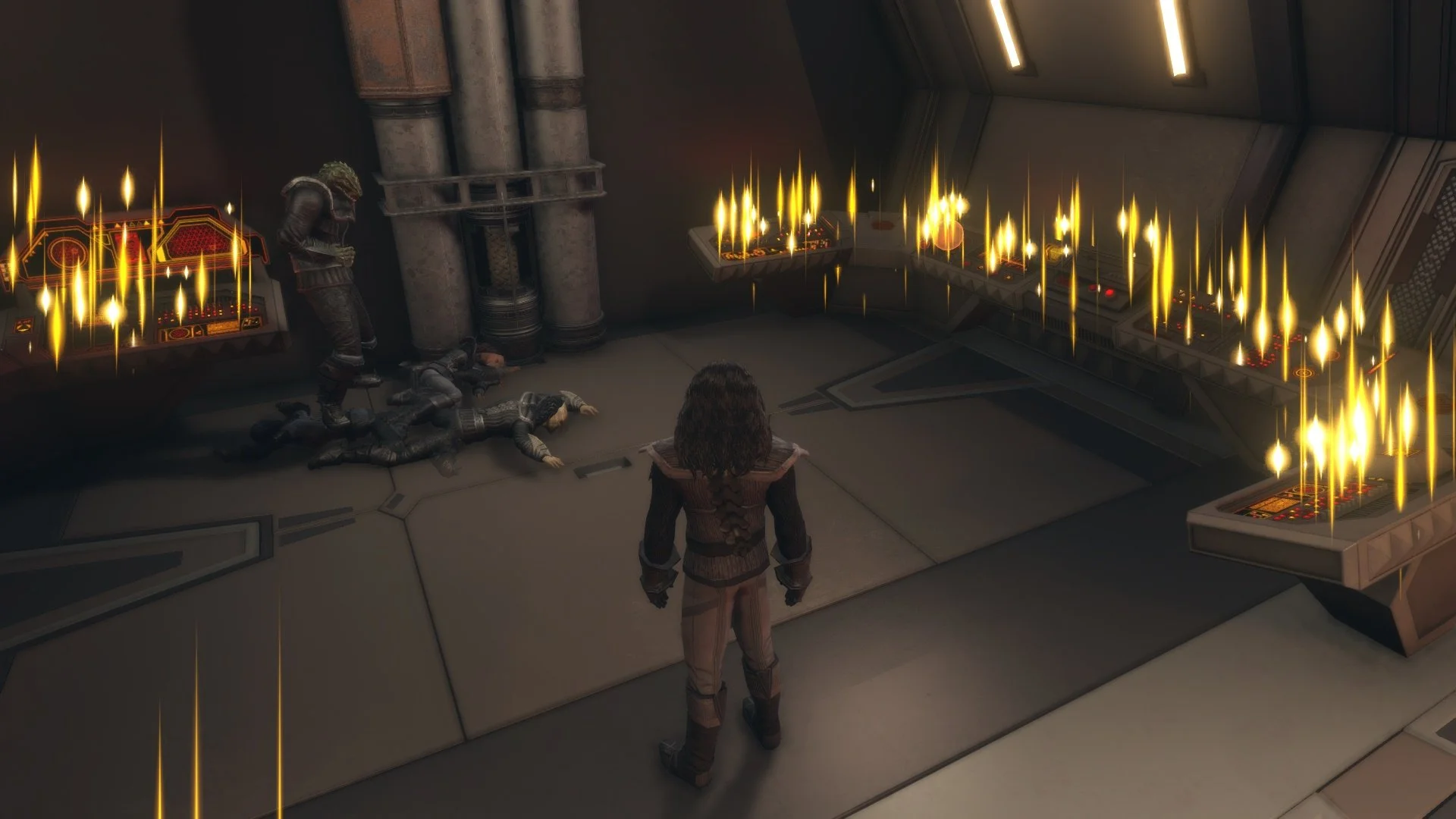
Star Trek Online regularly runs short term events with unique rewards to keep the player base engaged. The latest of these, the Arena of Sompek Special Event, has just gone live today and will run until to February 27th at 9:00 AM PST (17:00 PM GMT). Level 50 to 60 Captains can queue publicly or form bespoke groups to battle in the ancient Klingon tradition of the qaD HoS; an endless battle against allies and enemies alike. Set in a holodeck, teams of six players face waves of ever increasingly powerful enemies as well as environmental hazards. There are infinite respawns as long as there’s one active player. Once all players are incapacitated, the event ends and rewards are distributed based on how many rounds are completed. These include a choice of reputation marks, Dilithium, crafting materials and a voucher once per day, that can be applied toward a special reward, The Sompek Lightning Universal Kit Module.
Star Trek Online regularly runs short term events with unique rewards to keep the player base engaged. The latest of these, the Arena of Sompek Special Event, has just gone live today and will run until to February 27th at 9:00 AM PST (17:00 PM GMT). Level 50 to 60 Captains can queue publicly or form bespoke groups to battle in the ancient Klingon tradition of the qaD HoS; an endless battle against allies and enemies alike. Set in a holodeck, teams of six players face waves of ever increasingly powerful enemies as well as environmental hazards. There are infinite respawns as long as there’s one active player. Once all players are incapacitated, the event ends and rewards are distributed based on how many rounds are completed. These include a choice of reputation marks, Dilithium, crafting materials and a voucher once per day, that can be applied toward a special reward, The Sompek Lightning Universal Kit Module.
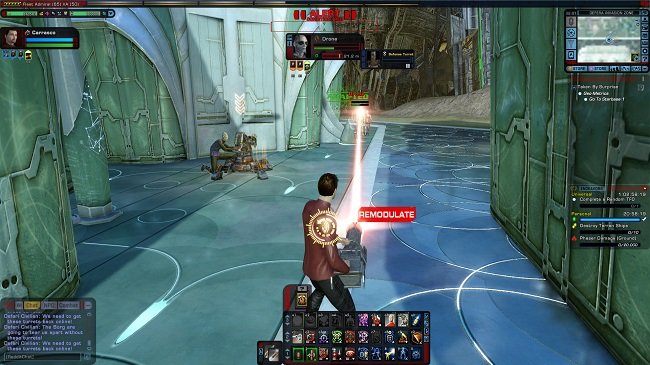
The Arena of Sompek is extremely enjoyable as well as quite challenging. I jumped straight in to this event today as soon as the servers came up after patching, joining a team via the group finder. Fortunately, all participants were well geared and soon came to grips with the event mechanics. Fire barriers, lighting strikes and the central zone becoming toxic, soon teach you to main your situational awareness and not to stay in one position. The enemies become increasingly stronger each time they spawn and can be from any of the factions, races and species that exist in the game. You may face the Borg so bring a frequency remodulator or a TR-116B rifle. Cover shields, overcharge turrets, solar gateways and other devices are invaluable. Teamwork helps.
Your success in this event very much depends upon who you group with. Therefore, you’ll likely to do better in an organised team rather than in a PUG. However, there is immense fun to be had irrespective of how you play the event. Our group managed to last twenty-six rounds on our first attempt which I thought was respectable. No one complained or was difficult in team chat which is always an added bonus these days. Furthermore, the STO community has been quick to post videos on You Tube and share tactics on the official subreddit. As ever the DPS focused community have already clocked in high round scores and doubtless a league table will follow. Yet this is an event that can be enjoyed by all STO players and is something Cryptic intend to make available regularly throughout the year, very much like “Hearts and Minds”. If they can tweak the time delay between rounds, they may well be on to a winner here.
Classic Movie Themes: The Black Hole
The Black Hole was a major gamble for Disney back in 1979 as they tried to capitalise of the post Star Wars sci-fi boom. Although audiences are still split over the strange mix of anthropomorphic robots, armchair philosophising and the one of the most metaphysical endings ever filmed, John Barry's score is universally praised. It features all his hallmark musical signatures and greatly embellishes the on-screen action with its stately and portentous style. There is also a substantial amount of music, with over an hour of cues for the ninety eight minute running time. This was the second space themed score that Barry wrote that year, the first being Moonraker, the eleventh Bond film.
The Black Hole was a major gamble for Disney back in 1979 as they tried to capitalise of the post Star Wars sci-fi boom. Although audiences are still split over the strange mix of anthropomorphic robots, armchair philosophising and the one of the most metaphysical endings ever filmed, John Barry's score is universally praised. It features all his hallmark musical signatures and greatly embellishes the on-screen action with its stately and portentous style. There is also a substantial amount of music, with over an hour of cues for the ninety eight minute running time. This was the second space themed score that Barry wrote that year, the first being Moonraker, the eleventh Bond film.
The "main title" theme for The Black Hole is in some ways one of the most compelling and grand themes crafted by veteran composer John Barry. It has an ominous majesty to it with its off-kilter waltz. It’s a skillful blending of orchestra with synthesisers which was quite an innovative style at the time. It has an altogether eerie ambience that neatly sets the tone for the movie, which was quite a bold experimental piece of studio cinema. Barry did not make the mistake of simply trying to replicate the grandeur of John Williams Star Wars theme but instead constructs something far more Gothic.
“Durant is Dead,” is a major shift in musical cue and it clearly signals the start of the movies climatic third act. Its pounding brass and substantial rhythm is unmistakably Barry. Once again the piece has a sinister overtone, forcing the audience to contemplate the fact that the heroes may not be able to avert disaster and events may not end well. It is important to remember that this was a Disney production so the target audience more than likely came to the theatre with clear preconceptions regarding style and tone. Barry's skill as a composer contributed to standing those notions on their head.
Diary of a Podcaster Part 4
Over the recent weeks, it’s become increasingly apparent that the two new podcast projects that I’m currently working on are taking too much time to produce. Like many people, my leisure time is a finite commodity. At present I am writing daily, maintaining a presence in two MMOs, as well as trying to keep abreast of several TV shows and a growing list of movies. So far, despite a lot of work, the new projects have not yielded any satisfactory results. So, rather than produce nothing, I deemed it prudent to return to my previous podcast creation. Thus, the Burton and Scrooge Podcast has been reinstated and been given a production makeover. At present, both Brian and I are well disposed towards gaming and other pop culture subjects, so have plenty to discuss. We always find are recordings are more rigorous when we are enthused, as opposed to mildly interested.
Over the recent weeks, it’s become increasingly apparent that the two new podcast projects that I’m currently working on are taking too much time to produce. Like many people, my leisure time is a finite commodity. At present I am writing daily, maintaining a presence in two MMOs, as well as trying to keep abreast of several TV shows and a growing list of movies. So far, despite a lot of work, the new projects have not yielded any satisfactory results. So, rather than produce nothing, I deemed it prudent to return to my previous podcast creation. Thus, the Burton and Scrooge Podcast has been reinstated and been given a production makeover. At present, both Brian and I are well disposed towards gaming and other pop culture subjects, so have plenty to discuss. We always find are recordings are more rigorous when we are enthused, as opposed to mildly interested.
In another development, I’ve finally decided to stop using my gaming headset for recording content. The Logitech H600 Wireless Headset has proven to be a useful tool for both gaming and podcasting in recent years. However, the microphone picks up not only the squeaking of my computer chair but the creaking of the plastic headband and ear cups as I talk. So, I decided to replace it with a USB condenser microphone. A little research soon found a suitable match for my needs and budget. I now own a LynxPro SMU-1 which cost £39.99 form Amazon and also got a deal on a suitable adjustable stand. The TONOR Adjustable Microphone Suspension Boom Scissor Arm Stand with Table Mounting Clamp cost an additional £18.99 and came with a metal shock mount and pop filter. For the present, I feel this is the only new kit that I require as I’m still happy to record via Zencastr and edit using Audacity.
Once again, I’ve had to be realistic with regard to my content creation and make a decision based upon the reality of my situation. It is better to do one thing well than severally things poorly. Placing the two proposed new podcasts on the back burner means a proven and tested show while continue to be produced for an established audience. I will continue to work on the new projects but in a reduced capacity. The investment in new hardware, coupled with my current positive attitude, means that the existing show is being made to the best of our abilities and is not in any way a compromise. It is important to be invested in what you do and that your motivations are unambiguous. Therefore, we’ve several ideas with regard to broadening the content of the Burton and Scrooge Podcast and keeping both ourselves and our listeners engaged. We are also considering a new marketing strategy which I shall discuss in more depth in my next Diary of a Podcaster post.
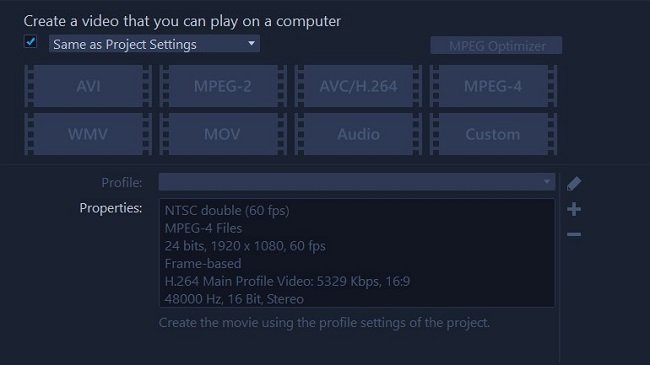






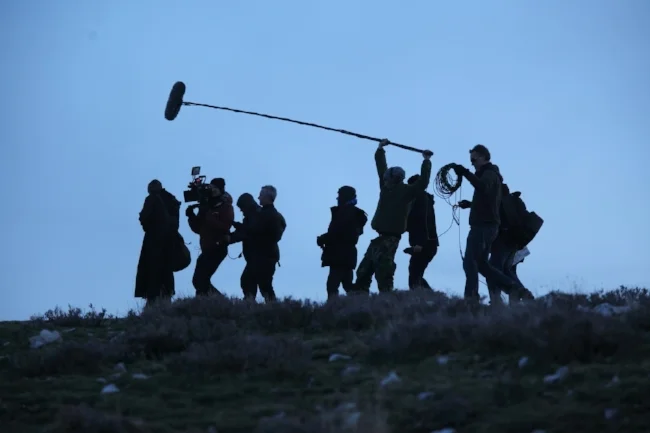
Burton & Scrooge Podcast #31
After a short hiatus, Messrs Burton and Scrooge make a welcome return to the world of podcasting with their lavishly tooled and finely crafted show. No expense has been spared upon the production as once again this esteemed broadcasting duo, bring you another erudite and august debate. As ever they focus on the relevant issues and ensure that their scholarly discussions are free from unnecessary phatic language and tabloid hyperbole. The podcast also sports a new introductory voiceover and complimentary epilogue at the close of the show. Liam Neeson has graciously endorsed Burton and Scrooge yet again.
After a short hiatus, Messrs Burton and Scrooge make a welcome return to the world of podcasting with their lavishly tooled and finely crafted show. No expense has been spared upon the production as once again this esteemed broadcasting duo, bring you another erudite and august debate. As ever they focus on the relevant issues and ensure that their scholarly discussions are free from unnecessary phatic language and tabloid hyperbole. The podcast also sports a new introductory voiceover and complimentary epilogue at the close of the show. Liam Neeson has graciously endorsed Burton and Scrooge yet again.
In this latest instalment, our hosts turn their attention to the popular MMORPG, Lord of the Rings Online and ponder the games ongoing renaissance, since the it changed developers and publishers. They also ponder the recent brouhaha, caused by popular You Tuber PewDiePie. Is he a misunderstood artist of just another jumped up blackguard? Finally, to close the show, Messrs Burton and Scrooge ponder the merits of season four of the television drama Sherlock. Was it a worthy entry in to the pantheon or “a load of old bollocks”, to coin a phrase?
So why not settle down in your favourite fireside chair, ask your batman to pour you a glass of Amontillado and treat yourself to seventy-five minutes of auditory delight. Remember your podcasting enjoyment is assured as Messrs Burton and Scrooge have a reputation for being purveyors of the finest quality podcasts throughout the civilised world. If you don’t enjoy the experience, then you’re obviously listening incorrectly and need to raise your own personal game. You may benefit from listening to previous episodes as a means of educating yourself.
Burton and scrooge. Condescending to their listeners since 2010.
Birth of the Living Dead (2013)
These day’s zombies are a somewhat ubiquitous plot device and enjoy an entire literary, artistic and cinematic sub-genre. The Walking Dead is one of the most popular TV shows internationally and hundreds of thousands of gamers fight the undead, online every day. Yet there was a time when zombies were just a minor subset of the horror genre and far from a popular one. That all changed in 1968, when a low-budget, independent film called Night of the Living Dead was released upon an unsuspecting public. The movie’s impact upon the film industry and popular culture was extraordinary. Rob Kuhns’ appropriately titled documentary Birth of the Living Dead analyses the creation of George A. Romero’s seminal classic and strives to determine how a single movie could have such impact.
These day’s zombies are a somewhat ubiquitous plot device and enjoy an entire literary, artistic and cinematic sub-genre. The Walking Dead is one of the most popular TV shows internationally and hundreds of thousands of gamers fight the undead, online every day. Yet there was a time when zombies were just a minor subset of the horror genre and far from a popular one. That all changed in 1968, when a low-budget, independent film called Night of the Living Dead was released upon an unsuspecting public. The movie’s impact upon the film industry and popular culture was extraordinary. Rob Kuhns’ appropriately titled documentary Birth of the Living Dead analyses the creation of George A. Romero’s seminal classic and strives to determine how a single movie could have such impact.
The then 27-year-old Romero, learnt his craft working for local television (mainly children shows) and producing commercials via his company Latent Image. Relative success and ambition lead to a decision to make a movie and it was determined that a horror production would be cheapest to make. It was also potentially the most lucrative. Having previously read Richard Matheson’s novel I Am Legend, Romero decided to adapt one of his own short stories into the movie. The project was financed via friends and business partner who all contributed the grand sum of $600 each. Film stock was bought, an abandoned farmhouse was rented and the guerrilla-style production commenced. “Who knew that we were ever going to finish this thing” Romero has retrospectively stated.
Kuhns specifically explores Night of the Living Dead in the social and political context of the era, focusing on the radical casting of African-American actor Duane Jones in the lead role. The character’s race was unspecified in the script and the fact that it’s never a narrative issue in the film itself was particularly ground breaking at time. Sidney Poitier was a major box office star in the late sixties, yet there were still major cultural constraints on the depiction of black characters in mainstream movies. The documentary also focuses on the social and political climate of America at the time and the fact that much of the prevailing cultural angst seems to have seeped into the finished movie.
Where Birth of the Living Dead succeeds the most is in cataloguing the minor and more mundane aspects of the film’s production. For example, one of the investors provided real entrails as they ran a meat packing business. A genuine television news broadcaster played such a character the film, authentically writing his own dialogue. Most of the cast members performed additional roles, including designing the producing the makeup effects and local residents were recruited to play the marauding zombie hordes. Full co-operation was gained from the local law enforcement authorities who provided dog handlers and even a police helicopter. At one point, it seemed that pretty much every local business in Pittsburgh was involved in some capacity.
Birth of the Living Dead provides a succinct overview about one of the most iconic movies of the sixties. It is affectionate and informative, although it does get a little bogged down when it tackles the socio-political element of the movie. There are some insightful interviews with horror filmmaker Larry Fessenden (who also executive produced the documentary), Walking Dead producer Gale Anne Hurd, and cultural commentators as Mark Harris, Elvis Mitchell and Jason Zinoman. At a little over seventy five minutes it manages to pack a lot in. I did find some of the material a little curious, such as the teacher at a Bronx elementary school who was enthusiastically extolling the virtues of the movie to a class of pre-teens. Also, the documentary does not in any way touch upon any of Romero's later work or sequels.
Documentaries have become increasingly more popular with mainstream viewers in recent years. The benchmark appears to be whether you can engage a viewer who is not overtly familiar with the subject matter. Birth of the Living Dead achieves this as well as appealing to the die-hard horror fan. There has been a great deal written about Romero's Night of the Living Dead over the years and a lot of DVD “extras” have paid lip service to his work. For the time being Birth of the Living Dead has put all such commentary in the shade, offering the definitive exploration of the movie.