
Classic Movie Themes: The Black Hole
The Black Hole was a major gamble for Disney back in 1979 as they tried to capitalise of the post Star Wars sci-fi boom. Although audiences are still split over the strange mix of anthropomorphic robots, armchair philosophising and the one of the most metaphysical endings ever filmed, John Barry's score is universally praised. It features all his hallmark musical signatures and greatly embellishes the on-screen action with its stately and portentous style. There is also a substantial amount of music, with over an hour of cues for the ninety eight minute running time. This was the second space themed score that Barry wrote that year, the first being Moonraker, the eleventh Bond film.
The "main title" theme for The Black Hole is in some ways one of the most compelling and grand themes crafted by veteran composer John Barry. It has an ominous majesty to it with its off-kilter waltz. It’s a skillful blending of orchestra with synthesisers which was quite an innovative style at the time. It has an altogether eerie ambience that neatly sets the tone for the movie, which was quite a bold experimental piece of studio cinema. Barry did not make the mistake of simply trying to replicate the grandeur of John Williams Star Wars theme but instead constructs something far more Gothic.
“Durant is Dead,” is a major shift in musical cue and it clearly signals the start of the movies climatic third act. Its pounding brass and substantial rhythm is unmistakably Barry. Once again the piece has a sinister overtone, forcing the audience to contemplate the fact that the heroes may not be able to avert disaster and events may not end well. It is important to remember that this was a Disney production so the target audience more than likely came to the theatre with clear preconceptions regarding style and tone. Barry's skill as a composer contributed to standing those notions on their head.
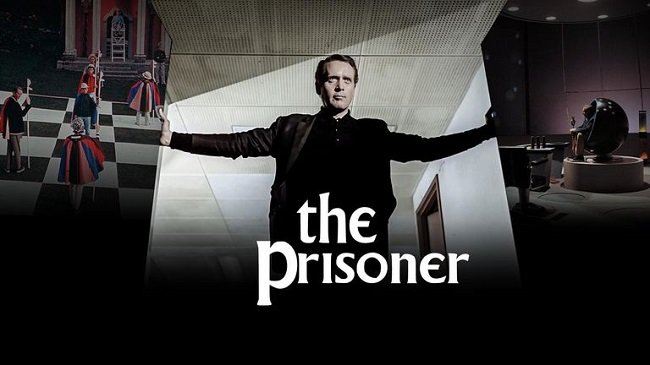
Ronald Erle Grainer (11 August 1922 – 21 February 1981) was a prolific Australian composer who is best remembered for his work in the United Kingdom during the sixties and seventies. He wrote numerous notable scores and theme music for several iconic television shows such as Doctor Who, Steptoe and Son and Tales of the Unexpected. He also composed the soundtrack for several major motion pictures such as Some People (1962), The Assassination Bureau (1969) and The Omega Man (1971). Grainer relocated to London from Australia in 1952 but it was not until 1960 that he gained critical success after writing the music for the popular TV show Maigret. He subsequently received an Ivor Novello award for “Outstanding Composition for Film, TV or Radio”.

The following is about a cultural change. That is not to say that it’s a value judgement or one of those posts you so frequently read by bloggers of a certain age, that essentially boil down to “things were better in my day”. It is merely an observation and like all observations it is not 100% universal. There will always be exceptions to the rule. I am simply painting with broad strokes a general truism for your consideration. My point being that people listen, experience and enjoy music differently these days compared to how they did three to four decades ago. I’m not talking about the science of hearing or anything complex like that. I am merely highlighting the change in the way we choose to experience music and how that has an impact upon its creation and presentation. So like Anne Elk, presenting her theory on the Brontosaurus, here is the axiom at the heart of this post.
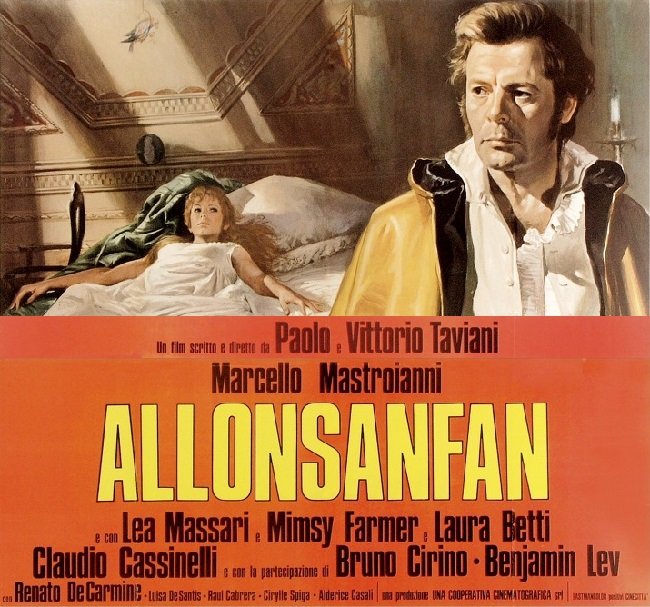
Allonsanfàn (1974) is an Italian historical drama film written and directed by Paolo and Vittorio Taviani. The title of the film derives from the first words of the French Revolutionary anthem La Marseillaise (Allons enfants, IE “Arise, children”). It is also the name of a character in the story. Set against the backdrop of the Italian Unification in early 19th-century Italy, Marcello Mastroianni stars as an ageing revolutionary, Fulvio Imbriani, who becomes disillusioned after the Restoration and endeavours to betray his companions, who are organising an insurrection in Southern Italy. Allonsanfàn is a complex film that is not immediately accessible to those unfamiliar with the intricacies of Italian political history nor the arthouse style of the Taviani brothers. However, it is visually arresting and features a rousing score by Ennio Morricone.
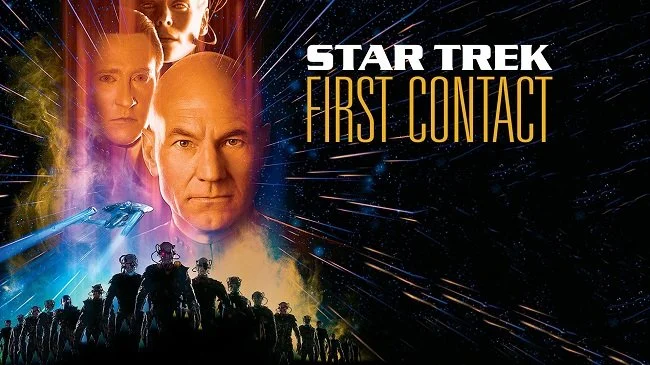
Jerry Goldsmith’s contribution to Star Trek is immense. Yet simply listing the films and TV episodes he wrote music for does not adequately encapsulate the significance of his contribution to the franchise. His majestic, thoughtful and uplifting musical scores provide an emotional foundation that reflects the core ethos of Star Trek. They also create an invaluable sense of continuity that spans multiple shows and movies. Perhaps the most obvious example of this is his iconic title music for Star Trek: The Motion Picture (1979) that was subsequently adopted as the theme tune for Star Trek: The Next Generation. His work was held in such high regard, when Star Trek V: The Final Frontier (1989) ran into production issues, it was thought that a Jerry Goldsmith soundtrack may well elevate the film. Sadly it didn’t but his work on that instalment was outstanding and among his best.
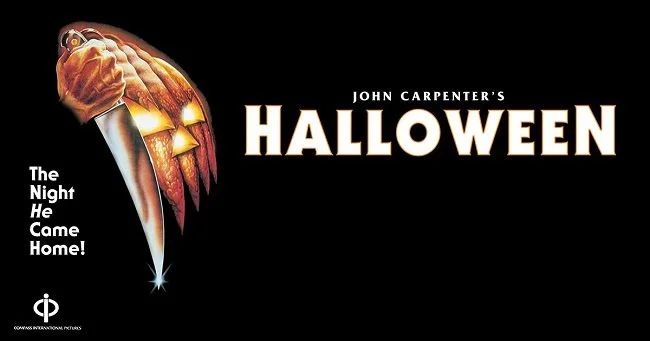
Halloween (1978) is both a genre and cinematic milestone. It made stars of Jamie Lee Curtis and director John Carpenter as well as kickstarting the slasher genre that dominated the box office for the next 15 years. Unlike many of the inferior imitations that followed in its wake, Halloween is not a gorefest but a far more suspenseful and unsettling film. It’s shocks and sinister atmosphere are the result of sumptuous panavision cinematography by Dean Cundey and inventive editing by Tommy Wallace and Charles Bornstein. Another invaluable asset to the film’s effectiveness is John Carpenter minimalistic synth and piano score which perfectly embellishes the film with an air of menace. After 33 years and various re-arrangements in subsequent sequels, the original Halloween Theme is still as effective today as it was when the film was first released.
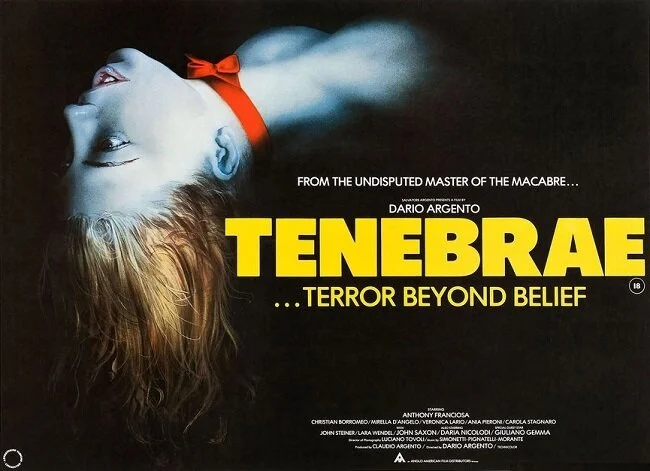
Tenebrae (1982) is probably Dario Argento’s most accessible “giallo” for mainstream audiences. Although violent, it is not as narratively complex as Deep Red (1975) or as bat shit crazy as Phenomena (1985). The story centres on popular American novelist Peter Neal (Anthony Fanciosa) who is in Rome to promote his latest book. Events take a turn for the worst when a series of murders appear to have been inspired by his work. The plot twists and turns, the director explores themes such as dualism along with sexual aberration and blood is copiously spattered across the white walled interiors of modernist buildings. It is slick, disturbing and has a pounding synth and rock score by former Goblin members, Claudio Simonetti, Fabio Pignatelli, and Massimo Morante.
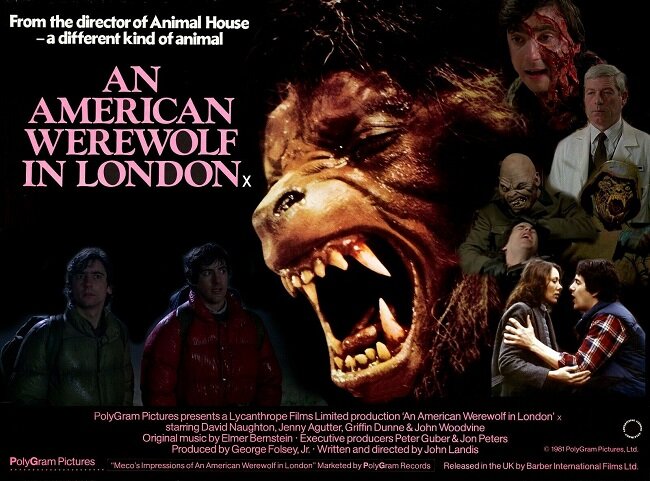
An American Werewolf in London is a genre milestone and one of the few horror films that successfully manages to balance humour and suspense without mitigating the overall tone of the story. 40 years on from its theatrical release it still holds up well with its bitter sweet love story, tragic themes and ground breaking transformation effects by Rick Baker. Director John Landis never really bettered this concise and effective genre outing. It hits the mark in virtually every part of the production. However, there is one aspect of the film that does suffer as a result of the director’s personal choices. Whether it is to the detriment of the overall film is debatable. The point in question is the film’s soundtrack and the director’s focus upon the song Blue Moon by Richard Rodgers and Lorenz Hart.
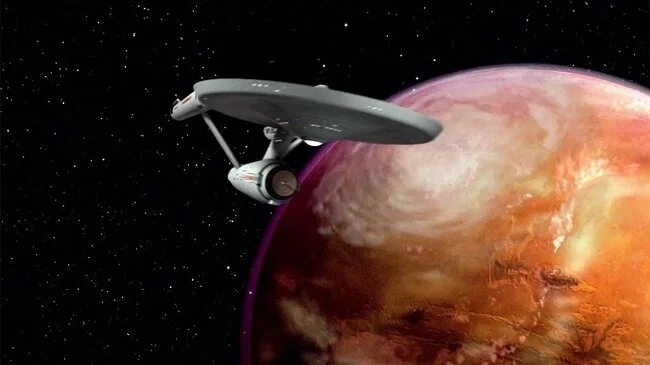
Before we start, no I am not writing about Alexander Courage’s classic main theme for the original Star Trek show. I can add nothing further to that particular discussion and it remains iconic and inspiring, even when distilled down to just the initial fanfare. In this post I want to draw your attention to another piece of music from Star Trek that has permeated its way into popular culture. A cue that when heard, if the listener is familiar with its provenance, will instantly conjure up images of flying drop kicks, ear claps and judo chops. A piece of music that can be added to pretty much any video footage and instantly make it more heroic. Yes, I am talking about what has become generically known as Star Trek “fight music”. Or more specifically, the "The Ancient Battle/2nd Kroykah" cue from Amok Time (S02E01) composed by Gerald Fried. The scene during the koon-ut-kal-if-fee ritual in which Spock fights Kirk on the planet Vulcan for complicated “reasons”.

Classical music has often been used to great effect in cinema since the advent of sound. It has certain advantages over bespoke compositions, in that it can imbue a scene with a sense of gravitas and emotionally connect with viewers who may already be familiar with the piece being played. Legendary director Stanley Kubrick famously rejected Alex North’s score for 2001: A space Odyssey after finding the classical tracks he used for the temporary soundtrack complement the visuals perfectly. Over the years, some particular pieces of classical music have proven to be very popular and flexible, thus appearing in a wide variety of films across multiple genres. Hence, I have chosen two well known tracks that demonstrate this. I would also like to highlight contemporary classical music and have also selected one example that I feel demonstrates how the genre sublimely compliments cinema.
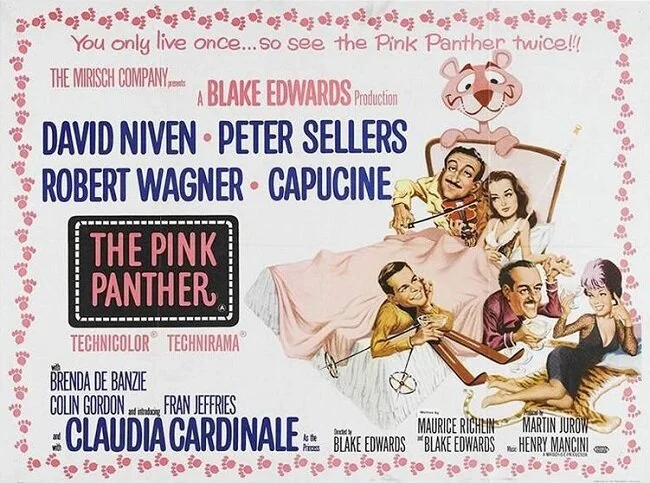
If you mention The Pink Panther (1963) I’d hazard a guess that most people will instantly think of Inspector Clouseau (and possibly throw in a quote in faux French about “Minkeys”) or hum or whistle the iconic theme tune. It’s blend of cool sixties Jazz and Lounge is both classy and evocative. Henry Mancini’s contribution to the Pink Panther franchise is commensurate to that of Peter Sellers and Blake Edwards. If you removed his musical scores from any of the films they would be greatly diminished. In fact one can argue that the movies made in the eighties after Sellers’ death are greatly bolstered by Mancini’s intelligent and accomplished musical accompaniment. The franchise may have run out of steam but Mancini never did so.
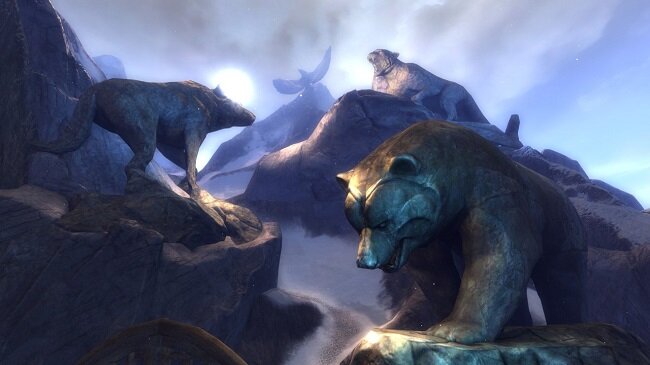
Back in August 2018, I posted seven of my favourite tracks from various video games that I’ve played over the years. I thought recently that it was high time that I did the same again. So here are a further five musical cues that I especially enjoy. All of which contribute greatly to the respective games that they feature in. Unlike film composers, musicians that write for video games do not always enjoy comparable exposure or attention. Yet often they have a more complex remit, having to write material for dozens of hours of content, rather than just two or three. Furthermore, the complete soundtrack to many video games often remain conspicuously absent, with fans having to data mine the game client to find the tracks that they love. Which is why it is important for those that enjoy video game music to show their support. Perhaps then more publishers will release full and comprehensive game soundtracks for digital download.
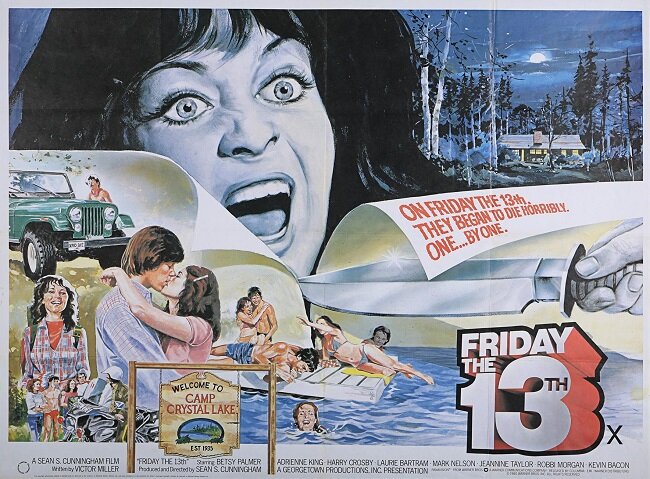
It was Friday the 13th yesterday, so I thought it was about time that I added Harry Manfredini’s iconic score to the annals of Classic Movie Themes. The 1980 slasher movie Friday the 13th has become as legendary in the pantheon of cinematic horror history as John Carpenter’s Halloween. Although there are marked differences between these two films, both use minimalist musical scores extremely effectively to punctuate the proceedings and embellish the overall atmosphere. However, Manfedini did not want to provide viewers with obvious audio cues during scenes of building tension. He preferred to focus his score upon the activities of the franchise's iconic killer, Jason Voorhees, and hence have strong musical cues when he was on screen. This approach meant that he had to use a unique musical motif to denote potential tension, without diminishing its effect on the audience by excessive use of obvious and melodramatic cues.

Game of Death was Bruce Lee’s fourth Hong Kong martial arts movie. Due to the success of his previous films he found himself in a position where he could finally write and direct a project himself. Filmed in late 1972 and early 1973, the film was put on hold midway through production when Hollywood offered him a starring role in Enter the Dragon. He died shortly after completing the US backed movie that made him an international star, so Game of Death remained unfinished. Several years later the rights to the raw footage were sold and recycled for a new movie, that kept the name but bore little resemblance to Lee’s original vision. For most of Game of Death, Kim Tai-jong and Yuen Biao double for Bruce Lee and it is only in the final act that audiences actually get to see about 12 minutes of material that he shot himself. The 1978 release of Game of Death, directed by Robert Clouse, is a mess but remains a cinematic curiosity. The scenes which genuinely feature Bruce Lee are outstanding, even in an abridged form.
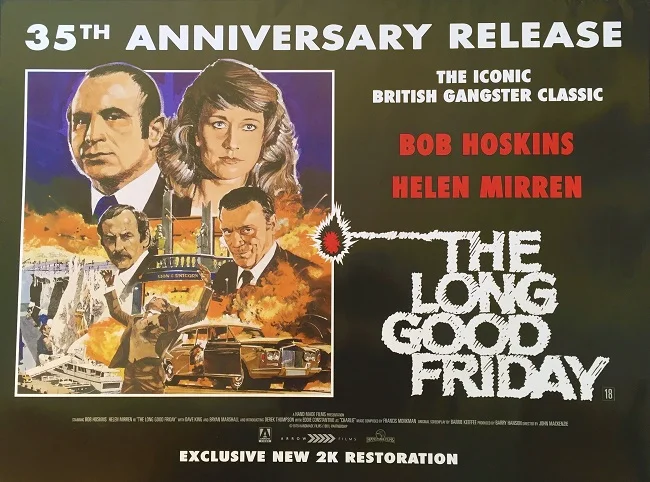
The Long Good Friday not only launched then career of Bob Hoskins but remains a uniquely British take on the gangster genre. Featuring authentic performances and a credible plot, the screenplay touches upon many of the social and political issues of the time; police corruption, the IRA, urban renewal and the decline of industry, along with EEC membership and the free-market economy. It’s a gritty and unrelenting drama that is still relevant today. Furthermore, the film is filled with quotable dialogue and has several stand out scenes that showcase Bob Hoskins’ smouldering performance. It’s also offers of “who’s who” of British character actors and there is one sequence still has the power to shock even today.
A few years ago, I wrote a post about cult movie soundtracks and how many of these movies are often blessed with a high quality score from an established composer. The subject came up again recently when I was visiting the British Film Institute with friends, and several other examples were discussed. Hence, I thought it would be prudent to write a follow up post with another selection of material, as it continues to amaze me how often the most appalling films can still have outstanding soundtracks. With this idea in mind I've collated five films that are for various reasons are labelled “cult” and have suffered the “slings and arrows of outrageous fortune” over the years. All have scores of interests and note, though for different reasons. I have chosen a track from each soundtrack which I think highlights the musical excellence and integrity of the composers involved. The genres are varied as are the musical styles and nuances of each piece. All clearly demonstrate how a well-conceived score can embellish and enhance a movie, effectively becoming a character in its own right.
 Roger Edwards
The Planet of the Apes movie franchise took a radical change of course with its third entry in the series. The first two films were set in the future and benefited from high production values to help realise a post apocalyptic earth. However, due to a substantial reduction of budget, Escape from the Planet of the Apes uses a time travel plot device to bring the ape protagonists to present day Los Angeles (1971 in this case). The result is a film with a much smaller narrative scope. However, although it lacks the science fiction spectacle of its predecessors, it features an interesting satirical exploration of celebrity culture and ponders what it is like to be deemed an enemy of the state. As ever, Roddy McDowell and Kim Hunter provide exceptional lead performances as the Chimpanzees Cornelius and Zira. Escape from the Planet of the Apes also captures the pop culture vibe of seventies America.