LOTRO Classic
In the last month or so, I’ve spent some time perusing the official forums for the MMORPG The Lord of the Rings Online. It suffers from many of the shortcomings you find on fan driven gaming forums, insofar as it’s monopolised by a small cadre of partisan minded players that are not an especially broad cross section of the LOTRO community. However, a wide range of thoughts and ideas about the game are discussed on these forums. Sometimes, if the planets are in the correct alignment, staff from Standing Stone Games will even deign to reply. Recently, a particularly interesting question that has frequently been raised by players finally got addressed by SSG developer Jeff Libby (AKA MadeOfLions). Namely, will there ever be a release of LOTRO Classic? An “old school” server with the game as it was when it launched in 2007. The fact that they actually answered is the main surprise here. Everything else about the actual reply is par for the course and embodies everything that is wrong with SSG and their community relations. Here is the original question and the subsequent answer.
In the last month or so, I’ve spent some time perusing the official forums for the MMORPG The Lord of the Rings Online. It suffers from many of the shortcomings you find on fan driven gaming forums, insofar as it’s monopolised by a small cadre of partisan minded players that are not an especially broad cross section of the LOTRO community. However, a wide range of thoughts and ideas about the game are discussed on these forums. Sometimes, if the planets are in the correct alignment, staff from Standing Stone Games will even deign to reply. Recently, a particularly interesting question that has frequently been raised by players finally got addressed by SSG developer Jeff Libby (AKA MadeOfLions). Namely, will there ever be a release of LOTRO Classic? An “old school” server with the game as it was when it launched in 2007. The fact that they actually answered is the main surprise here. Everything else about the actual reply is par for the course and embodies everything that is wrong with SSG and their community relations. Here is the original question and the subsequent answer.
Question by LotroVidz: Also most of the devs seem to not be original devs from 2007, so how can they know without asking the player base? MOL didn't even understand why players ask for a classic version of the game. He doesn't seem to understand how much of a different game the original Lotro was.
Answer by Made of Lions: Hi there, original dev from 2007 here. No, I understand it. I also love a lot of the games I played years ago (the amount of money I've spent buying digital versions of the games I loved from the 90s is downright embarrassing), so I know what it is to look back at something and miss it. I would personally love to see a version of LOTRO from launch, to run around in old-timey Eriador and see it in all of its 2007 glory. I stood in line at my local Gamestop on launch day to buy the strategy guide I also helped compile, and I remember running around Breeland listening to players be... stumped... about the location of the Hanging Tree, which was harder to find back then. There's just something about a brand-new MMO, when it's a vast and undiscovered world of mystery and full of promise. You won't find a bigger fan than me, and I would have a great time running around Original Recipe LOTRO. That would be a great afternoon.
But it doesn't have the longevity you remember. It's a snapshot, frozen in time, and from our perspective it's a snapshot that would remove tens of thousands of fixes, some minor, but many serious. "But I liked it better before!" you say. "I want a version that only has what I like, and doesn't have anything that I don't! I want you to restore Frodo's Burden to the slow and frustrating experience it started as." I hear you, and I understand, but our Engineers have plenty on their plates already without being tasked to revert LOTRO to the years-old state that best suits your taste. Engineers in particular are allergic to undoing their own fixes, since those tend to be the most important when compared to the kind of things Content usually has to fix. Frodo's Burden, alas, will remain in its adjusted state. MoL
It can be difficult sometimes to accurately interpret the tone that may or not be present within any written response. Some people believe that there is a degree of condescension present in Jeff Libby’s reply and that again we see SSG dealing with customer questions as if they’re an inconvenience or nuisance. Whether that is true or not is something that we have to decide for ourselves. Semantics and diplomacy aside, the statement does raise some interesting points.
Does the original code for the Shadows of Angmar version of LOTRO still exist? Are there backups of previous server builds or would all previous patches and content updates have to be manually “unpicked”?
Assuming that an earlier version of LOTRO could be made available, exactly how would SSG monetise it? This is an important question as there would naturally be costs incurred when running LOTRO Classic. Would the VIP subscription yield enough revenue to make such a venture viable? There was no store present in LOTRO in 2007 and the game as it was then has no immediate means of running store based transactions in-game.
Would producing and maintaining LOTRO Classic be a wise division of SSGs development resources? Is SSG just too small a gaming developer to be able to sustain multiple servers with multiple iterations of the same product?
Would LOTRO and the player community be better served by SSG focusing their finite resources on a major bug fixing project? Would the overhauling of problematic systems and developing new kinds of innovative content attract new and lapsed players back to the MMO and extend the games lifespan?
But I think the biggest issue with Jeff Libby’s response is his point that players may well think they’d like to play LOTRO Classic but they don’t really want it, because their judgement is being clouded by nostalgia. I consider this to be a patently false axiom. A similar argument was perpetuated by Blizzard for years, when players asked for World of Warcraft Classic. It proved totally wrong and we now have such an iteration of that game and it appears to be doing fine. Many LOTRO players would love to get their hands on some of the older systems that have now been replaced, or play through some of the instances and raids before they were nerfed and split up. One of the major appeals for roleplayers is simply being able to exist in a virtual Middle-earth. The game as it was in 2007, although technically smaller, felt bigger than it does now. Travelling around originally took longer and players did not immediately have access to mounts. LOTRO Classic may even tempt some newer players to come and see how much the games changed over time.
The LOTRO Community can be myopic and even a little partisan. But many have grown old with the game and are fully aware of what they’d be getting if a version of LOTRO Classic became available. They are fans but not necessarily fools and it is disingenuous for anyone at SSG to patronise them. I’m of the opinion that SSG could, if they wanted too, produce a form of LOTRO Classic. They just don’t want to as I’m sure it will be a lot of hard work and that the issue of integrating the in-game store is a major problem for them. But because of the way that SSG handles communication and interacts with its community, this question is never going to go away. If they clearly, politely and categorically said that they can’t or won’t produce a form of LOTRO Classic and then gave a sound reason, then the player base may well move on. But candid and direct communication is not their style. However, there may be a small ray of hope. Ultimately, the decision regarding LOTRO Classic may not be SSGs to make. If their “publisher” Daybreak Game Company felt that there was money in such a project, there could be a complete U-turn on this subject.




Wake Wood (2009)
Sometimes when making a film, less can indeed be more. Practical things like keeping the scope of your story simple, working within your budget and not feeling obliged to justify or explain every aspect of the plot can prove invaluable. If you can do all of these things with a robust cast, intelligent direction, while maintaining your viewers attention, then you have achieved something that many studios and independent filmmakers usually cannot do. Director David Keating has managed to do this with the 2009 horror film Wake Wood. Along with Brendan McCarthy who he co-wrote the screenplay with him, Wake Wood efficiently and charismatically tells its tale. It is well paced, with relatable characters and good performances. The atmosphere builds and there are some jolting moments of horror. Furthermore, it is both unusual and rewarding to see pagan rituals portrayed as an extension of rural life, in the same way as farming and animal husbandry. It is neither malevolent or benign but just an ever present force.
Sometimes when making a film, less can indeed be more. Practical things like keeping the scope of your story simple, working within your budget and not feeling obliged to justify or explain every aspect of the plot can prove invaluable. If you can do all of these things with a robust cast, intelligent direction, while maintaining your viewers attention, then you have achieved something that many studios and independent filmmakers usually cannot do. Director David Keating has managed to do this with the 2009 horror film Wake Wood. Along with Brendan McCarthy who he co-wrote the screenplay with him, Wake Wood efficiently and charismatically tells its tale. It is well paced, with relatable characters and good performances. The atmosphere builds and there are some jolting moments of horror. Furthermore, it is both unusual and rewarding to see pagan rituals portrayed as an extension of rural life, in the same way as farming and animal husbandry. It is neither malevolent or benign but just an ever present force.
Vet Patrick Daley (Aiden Gillen) and his wife Louise (Eva Birthistle), a pharmacist, move to the rural village called Wake Wood, after their daughter Alice (Ella Connolly) is mauled to death by a dog. Louise struggles to come to terms with her loss and the fact she can have no further children. One evening after their car breaks down, Patrick and Louise go to the nearby house of Patrick's veterinary colleague, Arthur (Timothy Spall), for assistance. Louise witnesses Arthur conducting a pagan ritual but says nothing to Patrick. Lousie becomes increasingly aware that something is not quite right with the village and that Arthur saw her observing the ritual. Soon afterwards a farmer is killed by his own bull while Patrick is tending to it. Horrified by another accidental death the couple plan to leave, but Arthur convinces them to stay. He claims he can bring their daughter back but only for three days and only if she has been dead for less than a year. The conflicted couple agree to his offer on the understanding that they must remain in Wake Wood forever.
If you are familiar with The Wicker Man, Don’t Look Now or any of the adaptations of Stephen King’s Pet Sematary then you’ll find several similar themes present in Wake Wood. This is a film about loss, how people cope with bereavement and what personal sacrifices you would make just to see your loved one again. Fortunately for such a character driven story, performances are universally good. Aiden Gillen is very plausible as a man throwing himself into his work to avoid his feelings. Eva Birthistle excels as a Mother who cannot move on after the death of her only child. Timothy Spall compliments the cast as retired veterinarian Arthur. He brings an air of normalcy to the pagan elements of the plot and his performance is quietly understated rather than overtly theatrical.The Irish setting and cultural heritage gives a uniquely Celtic feel to the proceedings and provides sufficient difference from other genre movies that have trodden a similar path. Overall, Wake Watch does not overreach itself and contains some rather flamboyant Fulci-eque violence to boot. Hence it is a superior genre movie. Competitors should take note.









A Month in Gaming
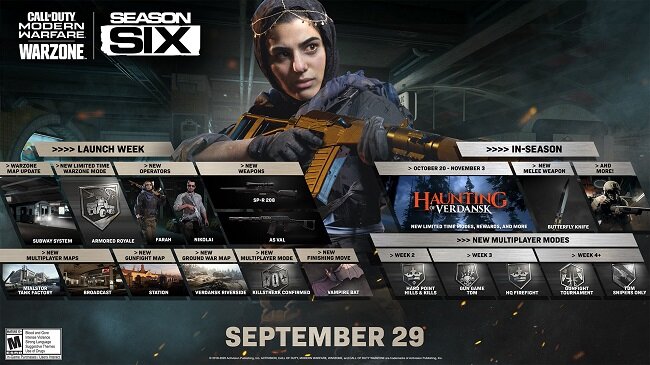
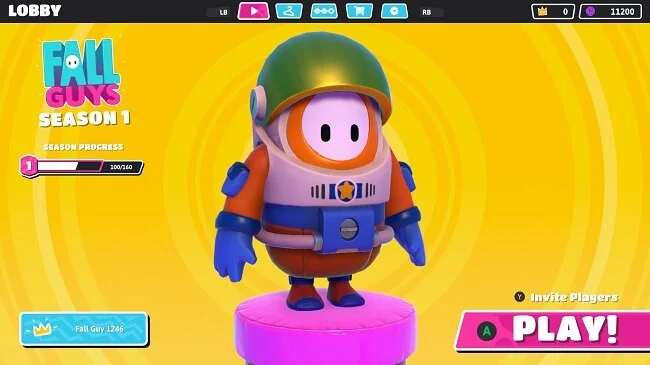
The last 31 days have gone by really fast, or at least that’s the way it feels. Despite having bought several new games recently and acquired yet more for free from the Epic Store, I did not embark on anything new throughout October. Due to the unexpectedly prompt release of the new “mini expansion” for The Lord of the Rings Online and the launch of a new event in Star Trek Online, I found myself focused upon the MMORPG genre, yet again. And after playing continuously for six months, Call of Duty Modern Warfare/Warzone has finally begun to lose its lustre. I didn’t especially enjoy the Halloween event, not that there was anything inherently wrong with it. It just wasn’t for me. I played a little Fall Guy: Ultimate Knockout but quickly discovered that the “season” system is just another gear treadmill, although the gear in this instance are novelty cosmetic outfits. I don’t want to be tied to too many games in this fashion (it’s bad enough with MMOs), so this is another title that has been relegated to occasional play when the fancy takes me.
The last 31 days have gone by really fast, or at least that’s the way it feels. Despite having bought several new games recently and acquired yet more for free from the Epic Store, I did not embark on anything new throughout October. Due to the unexpectedly prompt release of the new “mini expansion” for The Lord of the Rings Online and the launch of a new event in Star Trek Online, I found myself focused upon the MMORPG genre, yet again. And after playing continuously for six months, Call of Duty Modern Warfare/Warzone has finally begun to lose its lustre. I didn’t especially enjoy the Halloween event, not that there was anything inherently wrong with it. It just wasn’t for me. I played a little Fall Guy: Ultimate Knockout but quickly discovered that the “season” system is just another gear treadmill, although the gear in this instance are novelty cosmetic outfits. I don’t want to be tied to too many games in this fashion (it’s bad enough with MMOs), so this is another title that has been relegated to occasional play when the fancy takes me.
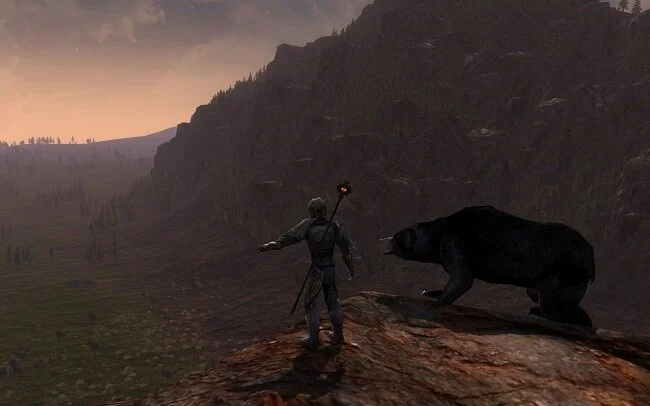
Upon my return to LOTRO, a quick review of my account status showed that I own everything up to and including Update 27: The Great Wedding. Hence I decided not to subscribe to the game. The downsides to this are negligible. I can live without the monthly stipend of LOTRO points and do not mind having to use mailboxes to access in-game mail. And so I played through the entire of the Mists of the Wildlands and The Great Wedding updates and enjoyed both. Contrary to my expectations The Great Wedding was not a litany of “fetch quests” and so offered an enjoyable change of pace and content. The focus was on the narrative and it was fun to see SSG bring back characters that had featured previously in the game. Questing in the Wells of Langflood was also agreeable. I found the Holbytlan village of Lyndelby to be a welcome break from continual combat. I also liked the lore based stories that occur while travelling with Léothred. Having built up a modest amount of LOTRO points, I took the opportunity to replace all my gear with items from Adventurer's Steel-bound Lootbox. I like to be prepared and as well equipped as possible.
As I indicated in previous posts, I bought the Standard Edition of the War of Three Peaks “mini expansion”. I simply couldn’t see any value in the other editions and I still grumbled about being charged £15 for the base version. So far, I am not overly impressed with War of Three Peaks. It is not so imaginative as other content updates and feels rather perfunctory. Too often the player is funnelled from A to B with dynamic quests popping up along the way. Quests rely too heavily on killing a fixed quantity of mobs of a certain type. And SSG do they’re usual trick of substituting genuine challenge with forcing the player into an area that’s densely packed with enemies. Simply traversing such places ceases to be enjoyable and just becomes a chore. Once again the biggest saving grace is the storyline. Those focused on the endeavours of the Dwarves always seem to be the strongest in this game.
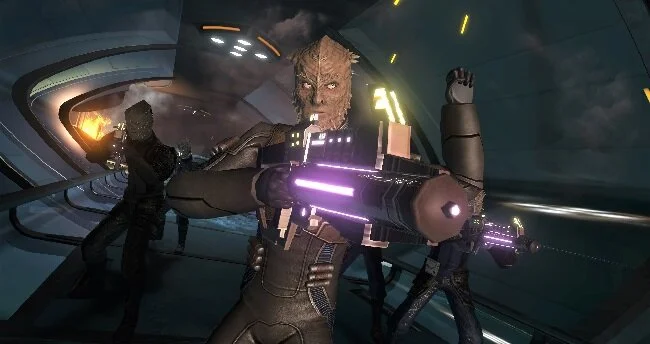
STO always has an abundance of timed events, so there’s always something new going on in the game. However, the rewards vary so I don’t always feel the need to participate in all of them. I have not done so for the last three. However The Widening Gyre event offers an Imperial Rift Space Set (a 5 piece set of equipment for your ship) so I decided to grind through 20 daily Task Force Operations and subsequently earned the reward. It is a good set and gave me an excuse to return to this MMO. The current story arc in STO is the Klingon Civil War and there were three episodic missions outstanding for me to complete. Developers Cryptic are currently revising a lot of the Klingon based content in the game. As ever it is impressively voice acted by such actors as J.G Hertzler, Robert O’Reilly and Rekha Sharma. Cryptic have also added a new feature to the game allowing players to add an Experimental Upgrade to existing T6 or T5-U starships. The tokens are available in the C-Store and add +1 Device Slot, +1 Universal Console Slot and +1 Starship Trait Slot. I applied one of these to a Tucker Class Miracle Worker Cruiser which now has a formidable 13 consoles.
Life is often full of surprises. I, like many others, was expecting a second lockdown here in the UK and one begins for a month (provisionally) on Thursday 5th of November. What I wasn’t expecting was to have to self isolate again. To cut a long story short I have come into contact with several people who have tested positive for COVID-19 and now have to stay indoors for 14 days. Although this is an inconvenience to a degree, it does offer an opportunity for some additional gaming. This is beneficial when focusing on MMOs which are by their very nature time sinks. Hopefully, if I can catch up with all current content in both LOTRO and STO I can then focus on playing one of the new RPGs that I’ve recently bought. I have a feeling that Christmas is going to be a somewhat insular affair this year, so such a game will be an ideal entertainment solution.


Sean Connery (1930 - 2020)
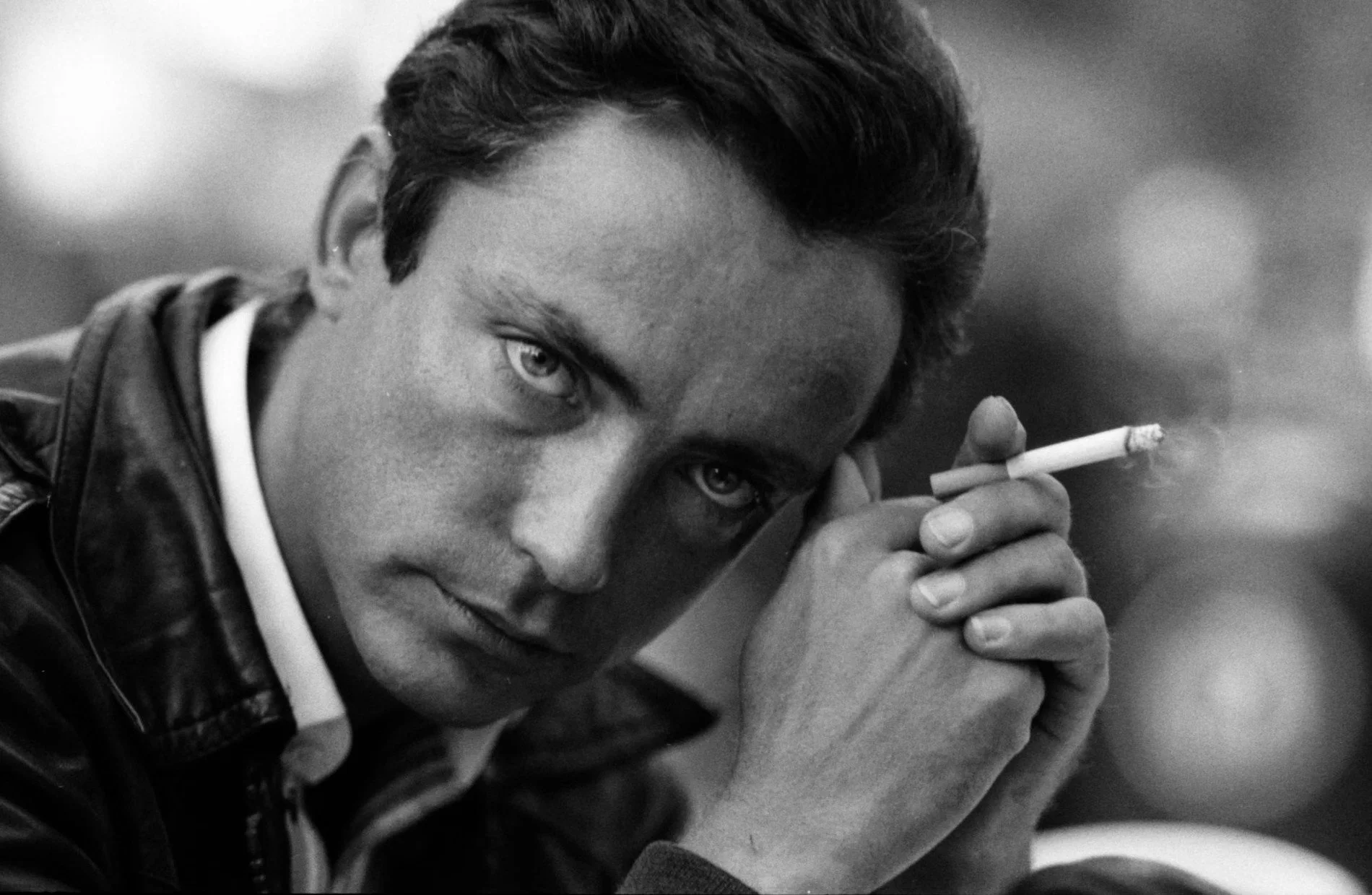
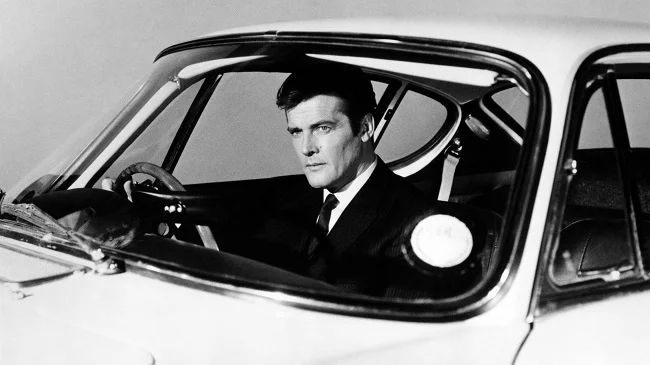
Growing up in the seventies, by the time I became aware of Sean Connery as an actor he had already transcended the role of James Bond and become an international “superstar”. Roger Moore was my generation’s 007 but I was constantly reminded by the “older people” that he “couldn’t hold a candle to Sean Connery”. For many the Scottish actor defined this iconic role and so before I even became familiar with the man and his work, I was aware that there was some kind of mystique surrounding him. Around the time I was eight, I was finally introduced to his inimitable acting style with his performances as Mulai Ahmed er Raisuni in The Wind and the Lion (1975). It was a larger than life performance of a larger than life character; the sort of role that came to define Sean Connery in his later years. On paper it was utterly preposterous. A Scottish man playing an Arab potentate. But it worked and left a marked impression upon me.
Growing up in the seventies, by the time I became aware of Sean Connery as an actor he had already transcended the role of James Bond and become an international “superstar”. Roger Moore was my generation’s 007 but I was constantly reminded by the “older people” that he “couldn’t hold a candle to Sean Connery”. For many the Scottish actor defined this iconic role and so before I even became familiar with the man and his work, I was aware that there was some kind of mystique surrounding him. Around the time I was eight, I was finally introduced to his inimitable acting style with his performances as Mulai Ahmed er Raisuni in The Wind and the Lion (1975). It was a larger than life performance of a larger than life character; the sort of role that came to define Sean Connery in his later years. On paper it was utterly preposterous. A Scottish man playing an Arab potentate. But it worked and left a marked impression upon me.
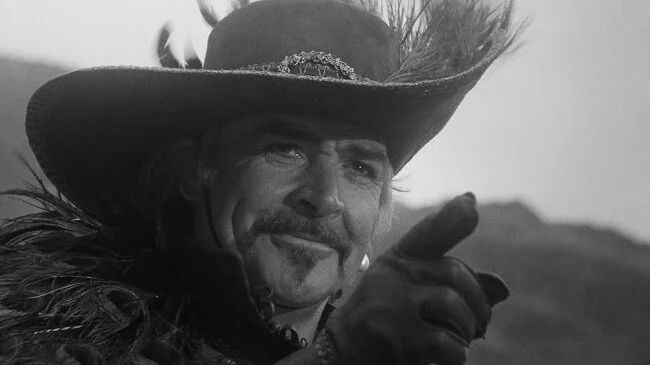
As I grew older, I finally caught up with Sean Connery’s tenure as James Bond and the films were notably different to those that followed in his wake. The first two Bond instalments were quite brutal and 007 was not quite the caricature he later became. I also understood why Connery tried so hard to break away from that character and the stifling trappings of the success it brought. Yet many of the experimental roles he decided to take during the seventies, which were the polar opposite from Bond, did not find an audience or box office success. By the eighties he appeared to finally embrace the bravura roles that he was constantly offered and carved a new niche for himself, endearing him to a new generation of fans. Again the casting of Sean Connery was often incongruous. Look no further than Juan Sánchez-Villalobos Ramírez in the Highlander. But on other occasions, characters such as Henry Jones in Indiana Jones and the Last Crusade were spot on and pure Hollywood gold.
Sean Connery remains a curious paradox. In many ways he was a textbook example of a Hollywood star whose sheer charm and charisma could carry him through roles that were somewhat implausible. Consider for a moment his Oscar winning performance in The Untouchables (1987) where he played an Irish Cop with a distinct Scottish accent. Yet he could provide nuance when required or more to the point when it suited him. His acting chops are clear in films such as The Man Who Would Be King (1975), The Offence (1973) and The Hill (1965). But more often than not, filmmakers just wanted Sean Connery “the star” in their movies and so that is what he gave them. He liked big speeches and monologues; scenes in which his character would philosophise or reflect upon life. Often John Milius, a writer and director he’d worked with before, would “fix” scripts to provide such dialogue for him.
However, in 2003, old age and a growing frustration with a film industry that was run by “idiots” prompted Connery to retire. He turned down the role of Gandalf in Peter Jackson’s The Lord of the Rings trilogy and a second opportunity to play Henry Jones again. In many ways this was a wise decision.Not only were quality roles declining but the media is seldom kind to ageing celebrities. For many, seeing “James Bond” grow old would have been unbearable. Even now it is quite difficult to reconcile the reality of his death with his show business persona. However, he leaves behind a broad body of work filled with numerous, eminently watchable films. The Hunt for Red October showcases Connery the Hollywood star. Marnie or Robin and Marian highlight a different side to the actor. Personally I’ve always had a soft spot for his performance as Agamemnon in Time Bandits and as Marshal O'Niel in Outland.




The Man Who Could Cheat Death (1959)
The stories of Hammer films “horsetrading” with the British Board of Film Censorship (as the BBFC were called at the time) make for some interesting reading. If you're interested in the history of the studio I thoroughly recommend the book A New Heritage of Horror: The English Gothic Cinema by David Pirie. However, the BBFC felt that they’d been hoodwinked after the release of The Curse of Frankenstein in 1957, which had managed to smuggle additional unpleasantries into the final theatrical edit. Henceforth the board took a more formidable stance when dealing with Hammer and all subsequent releases. Hence The Man Who Could Cheat Death feels somewhat tame compared to earlier Hammer films. Although cuts were made to the final edit of the movie, one gets the impression that maybe the more salacious and graphic content was possibly reduced when writing the screenplay. However, with that all said, The Man Who Could Cheat Death is still a handsome, performance driven Hammer horror.
The stories of Hammer films “horsetrading” with the British Board of Film Censorship (as the BBFC were called at the time) make for some interesting reading. If you're interested in the history of the studio I thoroughly recommend the book A New Heritage of Horror: The English Gothic Cinema by David Pirie. However, the BBFC felt that they’d been hoodwinked after the release of The Curse of Frankenstein in 1957, which had managed to smuggle additional unpleasantries into the final theatrical edit. Henceforth the board took a more formidable stance when dealing with Hammer and all subsequent releases. Hence The Man Who Could Cheat Death feels somewhat tame compared to earlier Hammer films. Although cuts were made to the final edit of the movie, one gets the impression that maybe the more salacious and graphic content was possibly reduced when writing the screenplay. However, with that all said, The Man Who Could Cheat Death is still a handsome, performance driven Hammer horror.
In 1890, Dr. Georges Bonnet (Anton Diffring) is the talk of the Parisian art scene due to his lifelike sculptures and his ongoing affair with his model Margo Philippe (Delphi Lawrence). At a party to unveil his latest work, Bonnet meets Dr. Pierre Gerrard (Christopher Lee) and his companion Janine Du Bois (Hazel Court). Janine had a torrid romance with Dr. Bonnet ten years ago in Italy. Against his better judgement Bonnet resumes his affair with Janine, although he refuses to explain why he vanished a decade prior. In the meantime, Bonnet awaits the arrival of his lifelong friend, Dr. Ludwig Weiss (Arnold Marlé) from Switzerland. Weiss is a pioneer in his medical field and Bonner is dependent upon him to perform a unique operation that he needs to stay alive. However, when Weiss finally arrives he has suffered a stroke and can no longer use his right hand. Perhaps Dr. Gerrard can be persuaded to perform the procedure. However, matters are further complicated not only by the love triangle between Bonner, Janine and Gerrard but by a visit from Inspector Legriss (Franics De Wolff), who is investigating the sudden disappearance of Margo Phillippe.
The Man Who Could Cheat Death is a typical Hammer production in so far as it is studio based with little or no exterior shots. The sets are suitably atmospheric and gothic, though some were redressed from the previous production, The Hound of the Baskervilles. Cinematographer Jack Asher used pastel coloured filters when lighting the more sinister scenes, especially when Dr. Bonnet is in his laboratory, drinking his elixir or suffering the ill effects of his medical condition. As ever with Hammer films, the lead cast do much to carry the plot and distract the viewer from the shortcomings of the screenplay. Sadly, as mentioned previously, the horror content is rather light in this film. Several murders happen either offscreen or with the killer blocking the audience's view. There was some additional nudity shot for the European and Asian markets but no such material made it into the UK and US release. The most ghoulish scene occurs at the film’s denouement and also features some interesting stunt work.
The Man Who Could Cheat Death is neither the best example of Hammer Film Productions output from the fifties nor the worst. Anton Diffring does well in the lead role which was originally intended for Peter Cushing. The film does not out stay its welcome with a running time of 83 minutes, although it is rather verbose with the emphasis upon narrative drama, rather than action. Naturally judged by today’s standards it is all rather tame but films such as this were causing quite a stir at the time and there was a lot of critical disdain for these lurid, technicolor horror stories. However Hammer chose to focus on the box office returns and so continued producing to a tried and tested formula. They had a knack for making their films look more sumptuous than they really were due to clever production design and inventive photography. They also new that sex sells and were not averse to focusing on the moral corruption that usually goes hand in hand with violence and horror.
The Reptile (1966)
After his brother Charles dies in mysterious circumstances, Harry Spaulding (Ray Barrett) inherits his cottage in the Clagmoor Heath, Cornwall. He quickly moves in with his new bride, Valerie (Jenifer Daniel), with a view to finding out what happened. However, he is shunned by the locals apart from the village publican, Tom Bailey (Michael Ripper), who befriends him. The only other resident in the vicinity of the cottage is Dr. Franklyn (Noel Willman), the owner of the nearby Well House. He lives with his daughter Anna (Jacqueline Pearce), who is attended by a silent Malay servant (Marne Maitland). Anna is a strange girl who seems to be harbouring a secret. Her father treats her contemptuously and does his utmost to keep her confined to Well House. When the local village eccentric, Mad Peter (John Laurie), dies in a similar fashion to Charles Spaulding, both Harry and Tom decide to take matters into their own hands and to investigate further.
After his brother Charles dies in mysterious circumstances, Harry Spaulding (Ray Barrett) inherits his cottage in the Clagmoor Heath, Cornwall. He quickly moves in with his new bride, Valerie (Jenifer Daniel), with a view to finding out what happened. However, he is shunned by the locals apart from the village publican, Tom Bailey (Michael Ripper), who befriends him. The only other resident in the vicinity of the cottage is Dr. Franklyn (Noel Willman), the owner of the nearby Well House. He lives with his daughter Anna (Jacqueline Pearce), who is attended by a silent Malay servant (Marne Maitland). Anna is a strange girl who seems to be harbouring a secret. Her father treats her contemptuously and does his utmost to keep her confined to Well House. When the local village eccentric, Mad Peter (John Laurie), dies in a similar fashion to Charles Spaulding, both Harry and Tom decide to take matters into their own hands and to investigate further.
Filmed simultaneously with The Plague of Zombies with which it shared several sets, The reptile is a slower paced, more thoughtful film that prefers to focus on the psychological collapse of its central characters, rather than set pieces. It is one of the best Hammer movies from the sixties which blends traditional horror elements with more mainstream period costume dramas. The production design is stylish and captures the atmosphere of a claustrophobic Cornish village. The interiors of Well House are an interesting juxtaposition to this, with Dr. Franklyn’s exotic flowers and penchant for Indian culture. As for the Reptile makeup by Roy Ashton, it works well by the standards of the time. Director John Gilling wisely keeps scenes featuring the transformed Anna, to a minimum and lights them favourably. Another ghoulish embellishment is the way the victims turn black and purple after being bitten.
However, it is the central performance by Jaqueline Pearce which is the standout feature of The Reptile. She gives a haunting performance often relying purely on her demeanour, rather than dialogue to express her torment. Noel Willman, who was a substitute for Peter Cushing, is also notable as Anna’s guilt wracked father. He is the architect of both his own and his daughter’s ruin while also being a victim of her curse. Another enjoyable aspect of The Reptile is seeing Hammer stalwart Michael Ripper in an expanded role and not meeting a grisly demise. Sadly, some cuts originally made to the film by the BBFC for its theatrical release, still persist and the material has not been found or restored to the current Blu-ray release. Yet The Reptile remains a superior example of Hammer’s work from this era, before they felt compelled to make their content more salacious to stay competitive.
MMO Nostalgia
Every now and then, when I log into The Lord of the Rings Online, as I ride through a new zone and drink in the vividly realised landscape and sumptuous ambient music, I am smitten by a wave of nostalgia. Just for a few seconds, I recall the emotional excitement of being in a virtual Middle-earth for the first time. I also remember the camaraderie and good company I experienced when I started playing this MMO in 2008. It is a powerful experience but sadly very short lived. Something subsequently happens to take me out of my reverie and bring me back to the current state of the game with a bump. This can be hitching, a major lag spike or a Dwarf irritatingly jumping up and down in my peripheral vision as I peruse the Auction House. Hence my present relationship with LOTRO and indeed the MMORPG genre is one based upon nostalgia and a hint of sadness. I still enjoy LOTRO mainly because of the stories and lore, as well as my friends in our kinship. But I no longer experience the game, as I did over a decade ago. And I miss that.
Every now and then, when I log into The Lord of the Rings Online, as I ride through a new zone and drink in the vividly realised landscape and sumptuous ambient music, I am smitten by a wave of nostalgia. Just for a few seconds, I recall the emotional excitement of being in a virtual Middle-earth for the first time. I also remember the camaraderie and good company I experienced when I started playing this MMO in 2008. It is a powerful experience but sadly very short lived. Something subsequently happens to take me out of my reverie and bring me back to the current state of the game with a bump. This can be hitching, a major lag spike or a Dwarf irritatingly jumping up and down in my peripheral vision as I peruse the Auction House. Hence my present relationship with LOTRO and indeed the MMORPG genre is one based upon nostalgia and a hint of sadness. I still enjoy LOTRO mainly because of the stories and lore, as well as my friends in our kinship. But I no longer experience the game, as I did over a decade ago. And I miss that.
LOTRO was my introduction to the MMORPG genre. And when I started playing, “multiplayer” was still an integral aspect of such games. It was clear right from the get go that much of the content was designed for groups and if you wished to progress through the game, you’d be dependent on playing with others. However, I was at a point in my life where I had the time available to sink into such a game, mainly because I was living alone. Furthermore, this kind of gaming experience was still novel for me and I enjoyed the company of other gamers. I fortunately hooked up with some like minded gamers who were loitering around a particularly nasty enemy and necessity brought us together to defeat it. Names were subsequently added to a friends lists and shortly thereafter I found myself joining a kinship (guild) with the same people. Circumstances, along with a lack of exposure to games of this kind meant that for the next few years this MMO was my game of choice.
Between 2008 and the present, I have played most major MMOs at some point. Each new game has always promised something “different”. Sometimes this has been the case. Rift brought “dynamic content” to the mainstream. However, over time trends have changed. Tab targeting and skill rotations have given way to action combat and greater situational awareness. The reliance on the traditional “trinity” of classes has been replaced by more flexible builds. But if you can heal yourself and adapt to different situations, then the need to group is negated. Social game play has become optional and for many players unnecessary. Other genres have successfully adopted elements from the MMO. Hence, many cooperative games have poached former MMO players. Thus, several decades on from the halcyon days of Ultima Online and EverQuest, the MMO genre has now become a distinctly niche market product. It retains loyal gamers but is no longer seen by the video games industry as the “future of gaming (AKA cash cow) they once thought it to be.
It can be argued that the MMORPG genre has never reached its full potential. The right balance of features and game mechanics has never quite been implemented in any game. Players cannot make any lasting changes upon the virtual world that they play in. Housing has never really progressed beyond a cosmetic storage zone. Linear progression and grinding for gear is still the primary focus of many games. The social aspect of these types of games have all too often diminished and the developers seldom do anything to incentivise such activities. And many players never fully experience the majority of the content that a game has to offer. Twelve years on, I often get this sense of a missed opportunity whenever I log into LOTRO. It’s a somewhat saddening feeling. The game get’s content updates but it tends to be just more of the same and there’s no innovation from developers Standing Stone Games. The same can be said for other MMOs to a greater or lesser degree. They seldom do anything radically different from their competitor and once established, just continue doing things in the same idiom. It may be that this is part of the genre’s appeal. It certainly isn’t too difficult to migrate from one MMO to another, as they all broadly do the same thing.
Nostalgia is a powerful emotion and the video games industry has wisely chosen not to ignore it. Hence in recent years we have seen “classic” iterations of various MMOs where early versions of a game are made available again. The growth in rogue servers of games that have long been officially shutdown is another interesting development. The evolution of MMOs has not been to everyone’s liking and some gamers hanker for “how things used to be”. For me, my relationship with MMOs peaked between 2008 and 2011. A perfect storm of events contributed to this genre being the apple of my eye. But change is an inherent part of life. MMOs and I are no longer what we used to be. Yet I still play them in memory of what was and for those occasional, fleeting moments when I briefly reconnect with the past. And then it briefly feels like going home. One day I shall finally part company with this genre and move on. But not yet.

Gaming News Roundup
Once again, here are a handful of gaming news stories from the last ten days or so that caught my eye. I have refrained from writing an entire blog post on each, either because they are too trivial and cannot sustain an article in their own right, or because they might fuel a rant of some kind. I’m too old for that kind of nonsense nowadays. The video game industry really has transitioned from the unique independent position it enjoyed three decades ago, into just another corporate business. Rife with all the usual iniquities and failings. But it’s not all doom and gloom as one story indicates. Ridiculous character crossovers can still bring joy to gamers who love such things.
Once again, here are a handful of gaming news stories from the last ten days or so that caught my eye. I have refrained from writing an entire blog post on each, either because they are too trivial and cannot sustain an article in their own right, or because they might fuel a rant of some kind. I’m too old for that kind of nonsense nowadays. The video game industry really has transitioned from the unique independent position it enjoyed three decades ago, into just another corporate business. Rife with all the usual iniquities and failings. But it’s not all doom and gloom as one story indicates. Ridiculous character crossovers can still bring joy to gamers who love such things.
Alex Hutchinson and Streaming.
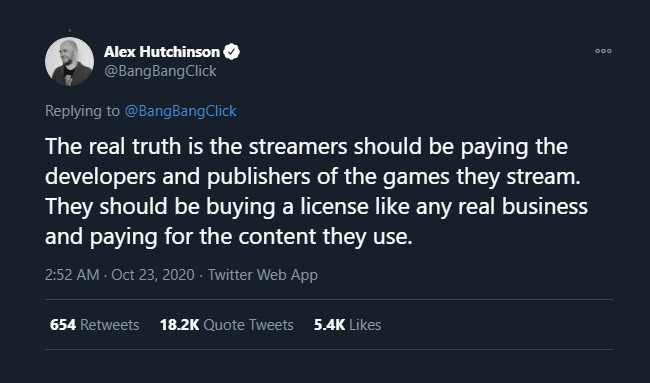
Alex Hutchinson, creative director of Stadia Games and Entertainment's Montreal studio thinks that “streamers should be paying the developers and publishers of the games they stream. They should be buying a license like any real business and paying for the content they use”. As you can imagine, these comments were not well received by streamers and some video games companies that have a close association with such platforms. Once again we have to endure the spectacle of someone opening their mouth and holding forth, without the benefit of engaging their brain. It’s becoming tediously commonplace these days. Mr Hutchinson’s arguments are flawed and lack any critical thinking. The benefits of having your products streamed are immense and most of those doing such things are far from “high rollers”. But stupid is as stupid does. However common sense prevailed from Google's global head of gaming for YouTube Ryan Wyatt. He tweeted that "publishers and creators have a wonderful symbiotic relationship that has allowed a thriving ecosystem to be created. One that has mutually benefited everyone".
Whatever Happened to VR?
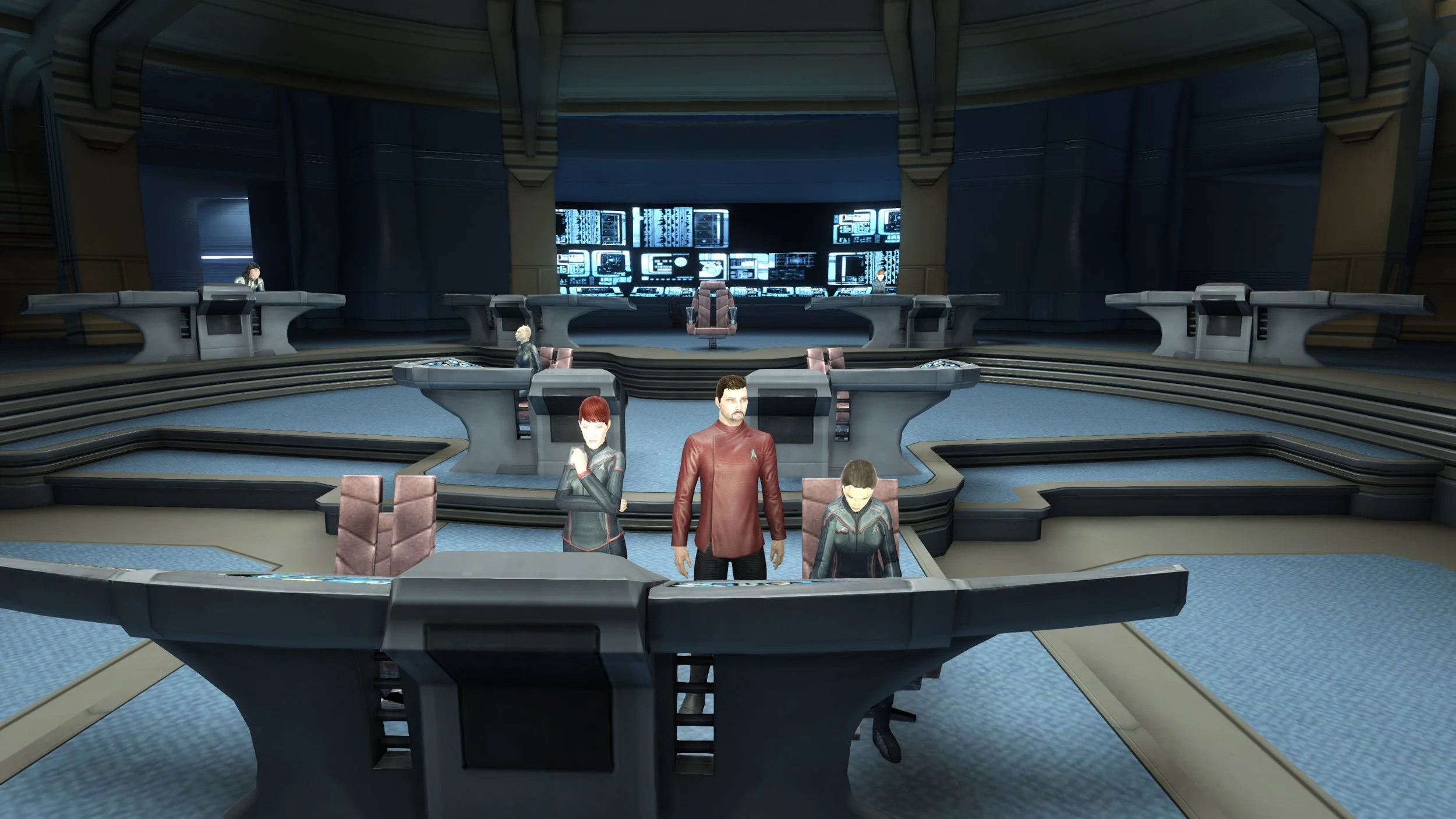
Popular gaming website Massively Overpowered raised an interesting question recently. “Are we going to see a VR revolution and do you care?” This got me thinking about my own experience with this specific subset of gaming. A few years ago I bought the game Star Trek: Bridge Crew. The nature of the game is self-evident by the name. It was specifically designed to be a VR title but possibly due to poor sales, it was soon patched so it could also be played on the PC in a conventional, non VR fashion. And therein lies the inherent problem with VR. As of yet there does not seem to be a “killer game” that has a universal appeal and incentivises consumers to buy a VR headset. I am reminded of Wii Sports which in many ways played a major role in making the Nintendo Wii a success. VR lacks at present anything like this. Another reason I suspect the uptake of VR in its current form will always be limited is the need for the headset itself. The prospects of having something bulky and cumbersome over my eyes for any length of time, is not a good one. I suspect it is why 3D films have come and gone so many times.
More Exclusive Content for Consoles.
Call of Duty: Black Ops Cold War is to offer an exclusive Zombie mode on both the PS4 and PS5 for one year. Zombies Onslaught has two-players facing increasingly difficult waves of zombie hordes. The goal is naturally to kill the undead and survive. Zombie Onslaught mode will deploy players to locations from various multiplayer maps. Both participants have access to the custom loadouts as they do in existing Zombies and Multiplayer modes. Sounds fun for those who dig such things. But once again it highlights the divisive nature of exclusive content. It is often perceived by gamers not so much as a case of offering something bespoke to one particular group but as taking something out of a game for a significantly bigger group. I think exclusive cosmetics are a much more benign method of marketing and less likely to divide the player base.
Celebrity Guest Characters in Gaming.
Mortal Kombat has always been a shamelessly commercial franchise but because it has made no bones about this since the game’s inception, I don’t really have a problem with developers NetherRealms Studios. You know where you stand with them. As they have the publishing muscle of Warner Bros. Interactive Entertainment behind them they are quite creative in their choice of “celebrity guest characters”. So far the game has included Robocop (voiced by original actor Peter Weller) and The Terminator (based on Arnie’s image but without his voice acting). The next iconic screen persona to be added to the game is John J Rambo (with Stallone providing the voice). You’ll be able to do some fancy knife work, fire explosive arrows and rip out your opponents throat as a finishing move. It’s harmless fun and if I may quote Cupid Stunt “all done in the best possible taste”. And they say that creativity is dead.

LOTRO: Update 28 - War of Three Peaks
Players of the popular MMORPG The Lord of the Rings Online were informed just 24 hours ago by developers Standing Stone Games, that the new “mini expansion” would be released today. Under normal circumstances, Update 28 - War of Three Peaks would have just been marketed as a content update and have been free to VIP subscribers, lifetime account holders and purchasable with LOTRO points by F2P players. However, these are far from normal circumstances. From March to May this year, LOTRO enjoyed a major renaissance as the lockdown brought players back to the game. SSG felt so confident in this surge in the playerbase that they made all previous updates available for free. However throughout June, July and August the game suffered major technical problems that lead to the majority of game servers being down for weeks. During that time many players took their business elsewhere or at the very least deferred subscribing until the technical issues were resolved. This left a major hole in SSG’s finances, hence the latest update miraculously became a chargeable “mini expansion”.
Players of the popular MMORPG The Lord of the Rings Online were informed just 24 hours ago by developers Standing Stone Games, that the new “mini expansion” would be released today. Under normal circumstances, Update 28 - War of Three Peaks would have just been marketed as a content update and have been free to VIP subscribers, lifetime account holders and purchasable with LOTRO points by F2P players. However, these are far from normal circumstances. From March to May this year, LOTRO enjoyed a major renaissance as the lockdown brought players back to the game. SSG felt so confident in this surge in the playerbase that they made all previous updates available for free. However throughout June, July and August the game suffered major technical problems that lead to the majority of game servers being down for weeks. During that time many players took their business elsewhere or at the very least deferred subscribing until the technical issues were resolved. This left a major hole in SSG’s finances, hence the latest update miraculously became a chargeable “mini expansion”.
A month ago the new update was previewed on the Bullroarer test server and it became clear that it was just more of the same. IE Just another zone with multiple quest hubs. Essentially the same sort of material that SSG have been producing for the last few years. So if this was to be sold as a “mini expansion” then there would have to be some additional content included as well to justify selling it. Hence, the LOTRO community braced themselves as they awaited the pricing details for the War of Three Peaks, as Update 28 has been formally named. SSG usually sells three versions of an expansion. A Standard Edition, a Collector’s Edition and an Ultimate Fan Bundle. It should be noted there have been controversies in the past over previous legitimate expansions and their respective value for money. Oddly enough, SSG decided not to announce the price or exact content of all three editions until today when the “mini expansion” formally launched. However, marketing emails were sent out to some players so the pricing of the three editions became known by midday.
As you can see, the pricing for this mini expansion” is broadly comparable to the previous full expansion Minas Morgul. Considering that War of Three Peaks is just the size of a regular content update, the prices are exorbitant. The Standard Edition is the only one that I will even consider buying as there are insufficient extras in the other two versions to justify their cost. There has already been a degree of “pushback” over on the official LOTRO forums as players voice their displeasure at the pricing and the entire way this situation has been handled. I suspect that if the outcry is big enough, you may find SSG adding additional content to the Collector’s Edition and Ultimate Fan Bundle to try and redress the balance. But there are wider issues here beyond the mere price of this “mini expansion”. Are we about to see a major restructuring of the games business model? If so, is this change in policy down to SSG or their publisher (and potentially owners) Daybreak Game Company?
Charging all LOTRO players for future content updates may well become the “new normal”. Up until now, content updates have been free to subscribers and lifetime account holders. F2P players would purchase Quest Packs for new zones. However this may not have proven especially profitable. When I play LOTRO I subscribe a month at a time. The monthly fee is £9. Quest Packs cost on average 795 LOTRO points (approximately £8). During the course of a month I could play through two or three zones, making a subscription a lot more economical than buying all the respective Quest Packs. Furthermore, lifetime account holders have always received (up to now) access to all new content updates free of charge, so SSG has never made any revenue of this type from this section of the LOTRO community. It has often been argued that lifetime accounts for LOTRO were sold too prolifically during the game’s early years and as a result there is a large percentage of players that do not have to spend any money except for major expansions. If these current practises cease and everyone who plays has to buy new content three times a year then there is scope for SSG to increase their revenue.
However, if the sale of all new content became mandatory, it would invalidate the need for a monthly subscription. At present the only real advantage of subbing is free access to new content and the following additional services. Mailbox Field Access. Custom character portrait frame. Access All Character Trait Slots. Daily +100% XP*. 500 LOTRO Points per month. Free weekly Gold Hobbit Present.Access All Quest Packs and Skirmishes*. Access All Monster Classes. Many of these could be sold individually via the LOTRO store or bundled into a “starter pack” or something similar. The stipend of LOTRO points is a nice bonus and one that I enjoy but it is totally dependent on a subscription. It therefore isn’t really “free” but more of a quid pro quo. It should be noted that the MMORPG Star Trek Online removed subscriptions as of Spring 2018. Many of the benefits that came with subbing to that game simply became one off purchases.
All things considered, perhaps the release of War of Three Peaks as a “mini expansion” is more than just a short term fiscal adjustment, designed to fill a shortfall in the quarterly balance sheet. It may be part of a complete recalibration of the business model for LOTRO and a way to ensure that all players pay equally for the new future content that comes to the game. If that is the case then SSG needs to ensure that all updates meet a high standard. The LOTRO community is very supportive of the game and has more than its share of “whales” who buy cosmetic items prodigiously. However, potential changes such as these indeed to be implemented carefully and require adept community relations, marketing and PR to effectively sell them to the players. Skills that SSG are not renown for. It will be interesting to see how things pan out in the weeks to come. Firstly with the immediate reception of the new “mini expansion” and its respective value for money. Secondly, whether SSG formally announce a revision of the game’s business model. All of which could be a turning point for LOTRO but whether for good or ill remains to be seen.
LOTRO: Even More Community Management Problems
Video games are a somewhat unique consumer product, in so far that we, the customers, broadly seem to have a far more personal relationship with them compared to other recreational activities. For example, I subscribed to several online streaming services that produce TV and film content. However, I never worry about how well their business model is performing, nor do I particularly concern myself with their public relations image. I simply “pay and consume” and as long as I have no technical problems that impede my access, then that is the extent of my relationship with them. I also enjoy Hendrick’s Gin but I don’t worry about the manufacturer, William Grant & Sons. But for some reason, my relationship with video games is different. I am far more au fait with the activities of both the developers and publishers, as well as their overall corporate standing. I suppose it’s because video games are an interactive activity and that make things more personal.
Video games are a somewhat unique consumer product, in so far that we, the customers, broadly seem to have a far more personal relationship with them compared to other recreational activities. For example, I subscribed to several online streaming services that produce TV and film content. However, I never worry about how well their business model is performing, nor do I particularly concern myself with their public relations image. I simply “pay and consume” and as long as I have no technical problems that impede my access, then that is the extent of my relationship with them. I also enjoy Hendrick’s Gin but I don’t worry about the manufacturer, William Grant & Sons. But for some reason, my relationship with video games is different. I am far more au fait with the activities of both the developers and publishers, as well as their overall corporate standing. I suppose it’s because video games are an interactive activity and that make things more personal.
Hence, as a long time player and supporter of the MMORPG The Lord of the Rings Online I worry about the games long term future. It can be cogently argued (and I have done so myself in the past many times) that it is pointless adopting such a stance but I think this ultimately is just a foible of the human condition. It is in our nature to form communities around the things we love irrespective of whether such communities genuinely have any impact and traction. So bearing this in mind, I think that LOTRO is at a crossroads and that a triumvirate of problems could coalesce and have a very negative impact. The first of these three are technical issues that stem from the fact that LOTRO is a 13 year old game. If a subscription game doesn’t run reliably and consistently then some players take their business elsewhere. The next problem is the business model and the way that Daybreak Game Company is squeezing too hard. Update 28 becoming a “mini expansion” is a succinct example of this. And finally there’s the community relations and communications. They’re poor and often conducted in a very peremptory tone.
There has been a conspicuous lack of information regarding The War of Three Peaks since the preview on the Bullroarer test server on 23rd September. I don’t think the player base was especially impressed with what is essentially just another content update. However, SSG recently stated that the “mini expansion” would be coming in the next week or so. But when asked for further details community manager Jerry Snook stated that SSG would not reveal details of the three different versions of the new content update until the day of its release. If this were any other developer I would’ve been surprised by such a response but after years of such indifferences from SSG, I simply shrugged. They’ve always been shocking at marketing their own content. In recent years, teaser videos have always been hastily produced and hardly make the new content look exciting. Information has always been confined to the forums and never shouted from the rooftops. So the fact that SSG feels disinclined to market The War of Three Peaks is frankly par for the course. I used to think they were just bad at this stuff. I now think they just take their customers for granted.
In the past decade there have been several occasions where the future of LOTRO has appeared to be in doubt. Whether this was the case or not is another matter. However, due to the lack of communication that habitually blights this games community management, we’ve worried about license renewals, corporate takeovers and server relocations over the game’s lifespan. Ultimately, LOTRO has survived and continues to so due to its devoted community. They love the game and its realisation of Middle-earth. The fact that there is no alternative is another major factor. Yet SSG seem to be oblivious to this and have basically given a key role that is supposed to act as a conduit between consumer and vendor to a very grumpy man who always gives the impression he’d much rather be doing something else. They need to fix this problem, along with the technical issues and the business model. God help them if The War of Three Peaks is a dog’s dinner. You can’t keep kicking your community indefinitely, because eventually it will turn on you and leave.
The Woman in Black (1989)
They say that “absence makes the heart grow fonder”. Well until recently the 1989 UK television adaptation of Susan Hill’s ghost story, The Woman in Black has been conspicuously unavailable. There was a limited VHS release exclusive to the store WHSmith in 1990. This was followed by a Region 1 DVD release in 2000 which was a relatively small pressing of the media. Since then rights issues have dogged this TV movie, turning it into a genre classic among horror fans, which has often been discussed in hushed tones by those who saw the original TV broadcast and were left traumatised by “that scene”. However, Network Distribution have finally released a remastered Blu-ray (and DVD), complete with commentary from such luminaries as Mark Gatiss, Kim Newman and Andy Nyman (who appears in this adaptation). It can be viewed in a reframed 16:9 widescreen format or in its original 4:3 aspect ratio.
They say that “absence makes the heart grow fonder”. Well until recently the 1989 UK television adaptation of Susan Hill’s ghost story, The Woman in Black has been conspicuously unavailable. There was a limited VHS release exclusive to the store WHSmith in 1990. This was followed by a Region 1 DVD release in 2000 which was a relatively small pressing of the media. Since then rights issues have dogged this TV movie, turning it into a genre classic among horror fans, which has often been discussed in hushed tones by those who saw the original TV broadcast and were left traumatised by “that scene”. However, Network Distribution have finally released a remastered Blu-ray (and DVD), complete with commentary from such luminaries as Mark Gatiss, Kim Newman and Andy Nyman (who appears in this adaptation). It can be viewed in a reframed 16:9 widescreen format or in its original 4:3 aspect ratio.
In 1925, London solicitor Arthur Kidd (Adrian Rawlins) travels to the coastal market town of Crythin Gifford in North East England to attend the funeral and settle the estate of a reclusive widow, Alice Drablow. Upon exiting the train, Kidd meets Sam Toovey (Bernard Hepton), a local landowner who is unsettled by his prospective dealings in the affairs of the late Mrs Drablow. Kidd finds the townspeople reluctant to talk about either the Drablow's home, Eel Marsh House and the family in general. When Kidd attends the funeral with local solicitor Pepperell, he notices a woman in black in the church and then again standing among the gravestones. He mentions the woman to Pepperell who seems most perturbed by the sighting. While travelling through the village, Kidd witnesses a lumber truck shed its load, hitting and crippling a Romani child. He rescues her, while the villagers watch on, preventing her from being crushed to death by further falling logs. Later as he goes through Mrs Drablows papers at Eel Marsh House, Kidd experiences disturbances of a supernatural nature. Are several voice recordings made on wax cylinders by Mrs Drablow the key to the mystery?
Based upon the 1983 novel, this made for television adaptation was written by genre stalwart Nigel Kneale. It is broadly faithful to the source text (unlike the 2012 remake) but makes some subtle changes. The ending in this instance is bleaker than that of the book but all the better for it. Kneale, a writer with a knack for atmosphere and dialogue, creates a delicious, slow burn ghost story with several disquieting scenes and an iconic jump scare that has now entered the annals of horror fame. Although he touches upon many familiar tropes of the genre he brings a fresh eye to them. The way the locals close ranks and balk at the mention of the Drablow family is quite palpable and the appearances of the woman in black herself are deftly handled. Initially the viewer doesn’t even realise she is a spectre. The production also uses sound effectively to build tension such as the clatter of hoofbeats on the misty causeway outside Eel Marsh House.
The Woman in Black is perfectly paced, building a sense of portentous ambience. Performances are spot on and the production is polished with a lot of period detail. The subject matter of infanticide is bleak but well handled. There is little violence or overt unpleasantness. Just a sense of growing menace in which a child ball can suddenly become an object of terror. Director Herbert Wise understood that less is more in certain instances and he cleverly executes simple and immediate set pieces. Like all good ghost stories, just enough information is provided to hold the supernatural elements together. The notion that a spirit over time loses all facets of their personality leaving behind only an all consuming rage, is thought provoking. And rather than offering a story of spiritual redemption or of laying a ghost to rest, The Woman in Black is more of a cautionary tale. The moral being that no good deed goes unpunished.
Slayground (1983)
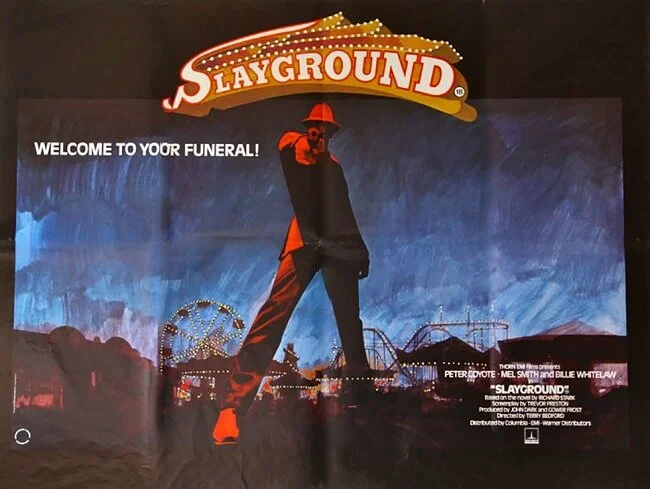
There have been several movie adaptations of the books of Jonathan Stark (AKA Donald E. Westlake) featuring his career criminal lead character, Parker. Sadly not all of them have fared well, either critically or at the box office. Many have deviated from the source material, often just using mere aspects of the original plot as the basis of their screenplay. Perhaps the most successful of these has been Point Blank (1967), directed by John Boorman and starring Lee Marvin. Slayground sadly follows the pattern set by previous adaptations. It changes several character names and takes two main elements from the source text and uses them as a premise. Specifically, a robbery that goes wrong which results in an accidental death and a climactic shootout in an out of season fairground. Due to the financing of the film, half of the story takes place in the US and the other in the UK. Much of the cast are British, resulting in a curious and at first glance somewhat incongruous film.
There have been several movie adaptations of the books of Jonathan Stark (AKA Donald E. Westlake) featuring his career criminal lead character, Parker. Sadly not all of them have fared well, either critically or at the box office. Many have deviated from the source material, often just using mere aspects of the original plot as the basis of their screenplay. Perhaps the most successful of these has been Point Blank (1967), directed by John Boorman and starring Lee Marvin. Slayground sadly follows the pattern set by previous adaptations. It changes several character names and takes two main elements from the source text and uses them as a premise. Specifically, a robbery that goes wrong which results in an accidental death and a climactic shootout in an out of season fairground. Due to the financing of the film, half of the story takes place in the US and the other in the UK. Much of the cast are British, resulting in a curious and at first glance somewhat incongruous film.
Long term thief Stone (Peter Coyote) and his accomplice Joe Sheer (Bill Luhrs) arrive in a rundown part of New York State to rob an armoured car. When their usual driver Laufman fails to join them, Sheer employs local driver Lonzini (Ned Eisenberg). Despite successfully undertaking their robbery, Lonzini collides with another car while making their getaway. When Stone investigates the wreckage he discovers all passengers are dead including a young girl. Shocked and outraged by this needless tragedy, Stone threatens to kill Lonzini, however, Sheer intervenes and the gang go their separate ways. But the Father of the dead girl (Michael M. Ryan), a wealthy sports businessman, hires charismatic assassin Costello (Phillip Sayer) and instructs him to find all involved in her death and to kill them. Stone soon learns that he is a marked man, when Lonzini is found brutally murdered. He flees to the UK and seeks out former associate Terry Abbatt (Mel Smith), in the hope of lying low and avoiding the price on his head. But Costello is tenacious and pursues him, relentlessly killing all in his path.
Slayground was written and adapted by British screenwriter Trevor Preston, a veteran of such British cop shows as The Sweeney. Hence several scenes reflect his customary gritty and hard boiled dialogue. The movie starts in a run down part of the US and then relocates to a comparably run down part of the UK. This narrative continuity may well have had a greater significance initially. But Slayground feels like a film that may have substantially re-edited prior to release. It runs for a tight 89 minutes and doesn’t waste it’s time on niceties or unnecessary embellishments. The direction by former cameraman Terry Bedford is uncomplicated and reflects the down-at-heel lifestyle and world of the main characters.
Yet there are major narrative gaps in the proceedings. Where Walter Hill wrote deliberately minimalist characters for The Driver, the flow of events in Slayground gives one the distinct impression that there is 10 to 15 minutes of expositional material is missing. Furthermore, the hitman Costello has a penchant for arranging the bodies of his victims. Yet these scenes are brief and their actual death sequences are conspicuously absent.
Hence the cast are left with precious little to do. Stone is no more of an archetype, rather than a fully rounded character. Billie Whitlaw has only a few scenes as Madge, the owner of a financially failing amusement park, although she gets by on the strength of her personality. And Mel Smith doesn’t arrive until the film’s final act. He delivers a particularly powerful soliloquy about a criminal’s lot in life and we get a brief glimpse of his straight acting talent. But again the proceedings surge ahead towards the climactic showdown between Stone and Costello and the production seems to dismiss the gaps in the plot . What we should have experienced throughout Slayground is a man’s journey through his past as he reflects upon the lifestyle he has chosen and its consequences. Sadly we are instead taken on a journey from A to B to C, where everyone we meet becomes another corpse within minutes of being introduced.
Yet despite its multiple shortcomings, there are a few aspects of Slayground that standout. The film starts with a small vignette that shows the fate of the original getaway driver, Laufman. It is a creative opening gambit. The hitman Costello is also an enigmatic character with his fedora hat and the way we never fully get to see his face. His playful tanting of his victims is an interesting foible. The denouement in the amusement park is suitably creepy, as the fairground automatons are caught in the crossfire. But ultimately this movie fails to reach its full potential, either because of ill conceived editing designed to “streamline” the story, or because the director simply didn’t have the experience to craft a more rounded and detailed narrative. As it stands, Slayground remains a curious anomaly. One of four films produced by Thorn EMI in the early eighties under the auspices of Verity Lambert. The others being Comfort and Joy, Morons from Outer Space and Dreamchild.




Hard Drives and Data Migration
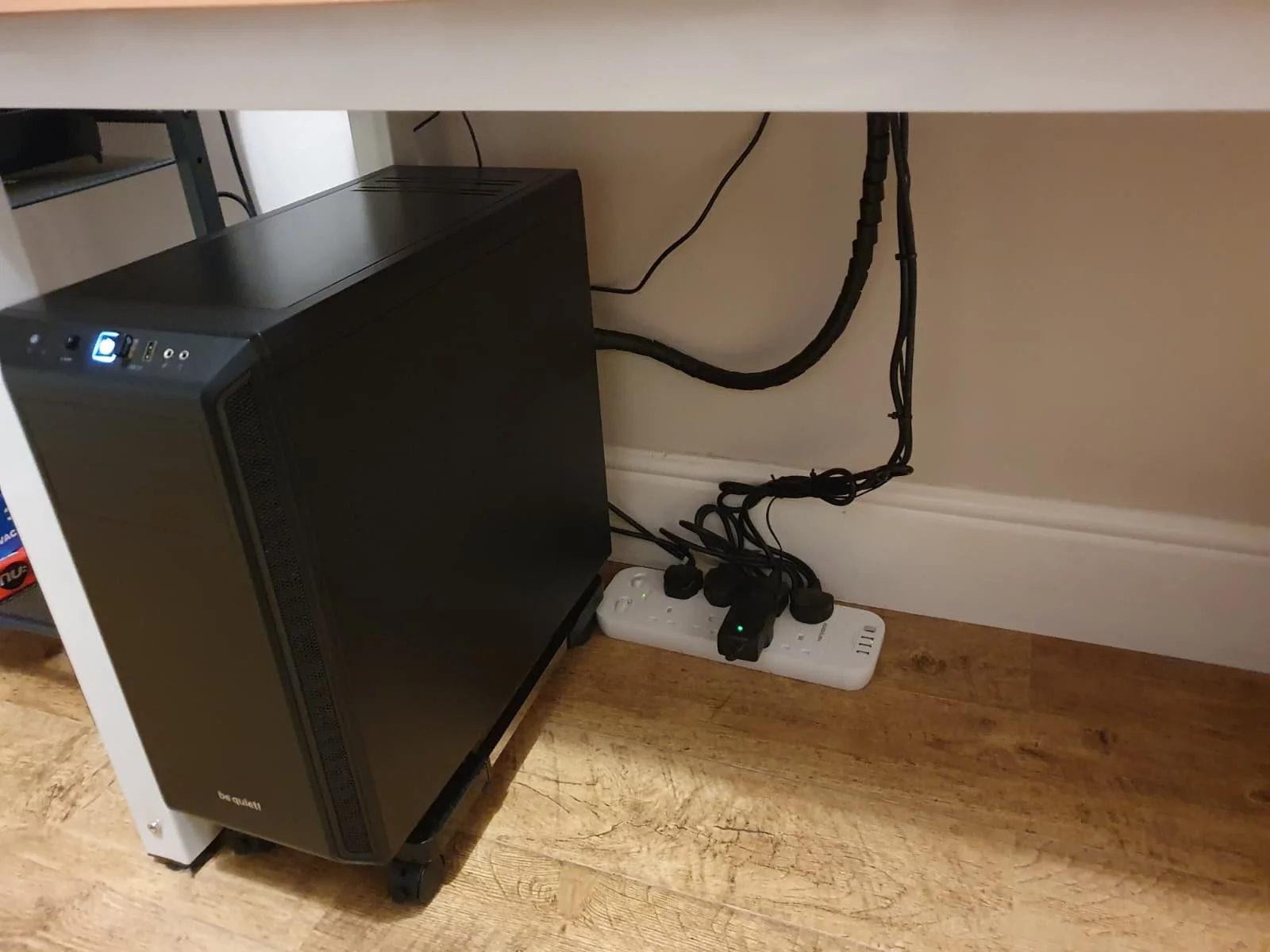
I recently bought three new drives. A 2TB external hard disk drive, a 1TB solid state drive and a 4TB internal hard disk drive. I got all three from Amazon for £250, which was a good price. The external 2.5 inch 2TB HDD is attached to the Blu-ray player in the lounge. This is used for the storage of TV shows and movies. The other two drives are upgrades for my PC. The 1TB SSD replaces an older 240GB model. This is mainly reserved for the operating system and programs such as Microsoft Office. The larger 4TB HDD is for game installations and data storage such as music and photos. All drives are branded names such as Western Digital, Crucial and Toshiba and were chosen because of their performance specifications and capacity. It’s all a far cry from the 120MB HDD that came with my first desktop PC in the middle nineties.
I recently bought three new drives. A 2TB external hard disk drive, a 1TB solid state drive and a 4TB internal hard disk drive. I got all three from Amazon for £250, which was a good price. The external 2.5 inch 2TB HDD is attached to the Blu-ray player in the lounge. This is used for the storage of TV shows and movies. The other two drives are upgrades for my PC. The 1TB SSD replaces an older 240GB model. This is mainly reserved for the operating system and programs such as Microsoft Office. The larger 4TB HDD is for game installations and data storage such as music and photos. All drives are branded names such as Western Digital, Crucial and Toshiba and were chosen because of their performance specifications and capacity. It’s all a far cry from the 120MB HDD that came with my first desktop PC in the middle nineties.
However, there is a downside to replacing drives in your PC and that is the prospect of data migration. Reinstalling an operating system is not as problematic as it used to be and there are now lots of useful tools to make this process easy. The most time consuming task is customising your installation and ensuring that you don’t overlook any important software and files. For example having to reload The Elder Scrolls Online from scratch and then set up all your add-ons is a pain in the ass and hardly a prospect that fills me with glee. The game has a notoriously slow client installer and then making sure your mods are correctly configured is very much a case of trial and error. So with this in mind, I decided to clone my existing C: drive to see if this approach would be easier and quicker. A colleague recommended using Macrium Reflect software as it has a 30 day free trial which doesn’t limit the scope of the software.
To cut a long story short, I successfully cloned the contents of the old SSD but the partition on the new drive was set to the size of the original, which was smaller. I then tried to extend the partition to encompass the entire size of the new Crucial SSD but here’s where the problems began. The drive refused to boot after this change. It was at this point I decided not to conduct some sort of tech based autopsy but to grasp the nettle and undertake a new installation of the operating system, games and apps. So I created a bootable USB flash drive containing Windows installation media and had a fully patched, up to date version of Windows 10 on my PC within two hours. I then started migrating my videos, music, photos, pictures and documents over to the new D: drive. I automated this process and let it run overnight. I use TeraCopy for file transfer, rather than the native Windows Explorer utility, as it is more flexible and reliable.
The Good: I was surprised to learn that it is easy to copy games that have been installed via Battle.net such as Call of Duty Modern Warfare/Warzone. This was most gratifying as the current version is 225GB in size. All I had to do was reinstall the Battle.net client and then copy a single folder which contained the entire game. Similarly, The Elder Scrolls Online can be moved without any major problems. Minion mod manager can also be relocated. Just copy the main installation folder and then the additional “.minion” folder that can be found in the “users\your name” directory. There is also a further “Elder Scrolls Online” directory in the default “Documents” folder that needs to be migrated. Once these three data sources were relocated to reciprocal locations on the new drives, I could log into ESO with all my addons and settings intact.
The Bad: Older games such as The Lord of the Rings Online are temperamental and don’t like to be messed with. So rather than risk moving my current installation, I just started a new download. Again, this is another task I let run overnight as the patch servers are woefully slow. Before I logged into the game, I downloaded and installed DirectX End-User Runtime Web Installer. This ensures you have the appropriate DirectX software that this older game requires. After successfully logging in, I migrated the following files from my old installation to ensure my custom settings were maintained. The “UI folder”, “UserPreferences.ini” and “UserPreferences64.ini”, all of which are found in “The Lord of the Rings Online” Folder, which is located by default in “Documents”. Although this is a fairly straightforward process it takes a long time to download the game and LOTRO isn’t always co-operative with more recent hardware.
The Ugly: I have a wireless HP Deskjet 3630 printer, scanner and copier. I can connect to it via a USB cable but wireless access makes it easier for Mrs P when she uses her laptop in the lounge and wants to print something. HP regularly produces comprehensive all in one driver and operating software for their devices. This is often bloated, resource heavy and the kind of program that likes to get it’s claws into every aspect of your operating system. I don’t like any software that doesn’t allow you to fully control its functionality. Hence, I was not impressed with their latest offering “HP Smart”. Admittedly, this software did set up access to my printer quickly and efficiently. But it also gated a great deal of functionality behind cloud based services. Therefore if you want to scan a document you have to “set up an account” and the data will be held online for you to “access anywhere”. Let it suffice to say a few choice Anglo-Saxon terms were bandied about and this software was summarily removed. I found an older version which provided the functionality I required and expected.
Two days later and I now have a fully functional PC once again. I used this opportunity to purge some software from my standard PC build and am now trying to maintain a policy of only installing programs that I use everyday. It is nice to have a PC free from bloatware and partially uninstalled software. The new drives are performing well and I certainly won’t have to worry about storage space anytime soon. I may even make backup images of both the C: and D: drives for any future eventualities and store them in one of the cloud storage options I currently have. Obviously, the temptation with additional disk space is to install more games, irrespective of whether I play them or not. In the meantime I have all the immediate benefits of a PC hardware upgrade as well as those that come through data “housekeeping”.















White Noise (2005)
Successful writer Anna Rivers (Chandra West) goes missing prior to the launch of her new book. Shortly after, her car is found abandoned by the roadside and her body is discovered in the harbour. The Police conclude that there's been a tragic accident. Her husband, architect Jonathan Rivers (Michael Keaton), is devastated by her loss. When he is approached by Raymond Price (Ian McNeice), who claims he has recorded messages from Anna through electronic voice phenomena (EVP), Jonathan is both sceptical and angry. However, his curiosity eventually gets the better of him and he meets with Raymond and quickly becomes immersed in EVP phenomenon. As Jonathan experiments with EVP recording he begins to discern messages from the dead. However, it soon becomes apparent that these communications are of a precognitive nature and that there are more sinister forces at work.
Successful writer Anna Rivers (Chandra West) goes missing prior to the launch of her new book. Shortly after, her car is found abandoned by the roadside and her body is discovered in the harbour. The Police conclude that there's been a tragic accident. Her husband, architect Jonathan Rivers (Michael Keaton), is devastated by her loss. When he is approached by Raymond Price (Ian McNeice), who claims he has recorded messages from Anna through electronic voice phenomena (EVP), Jonathan is both sceptical and angry. However, his curiosity eventually gets the better of him and he meets with Raymond and quickly becomes immersed in EVP phenomenon. As Jonathan experiments with EVP recording he begins to discern messages from the dead. However, it soon becomes apparent that these communications are of a precognitive nature and that there are more sinister forces at work.
White Noise is a slick and glossy production, sporting a modern clean aesthetic that reflects the world of its central character. Much of the story takes place in Jonathan’s home which is a brightly lit, glass palace. The visual style along with the use of what was contemporary technology effectively juxtapose the arcane nature of the supernatural. In this film the shadowy forms of the dead appear on TV screens and monitors, instead of dimly lit corridors. It’s an interesting divergence from typical ghost story tropes but it alone cannot sustain the story. Pretty much everything else about White Noise is formulaic and predictable. That’s not to say that the production is poorly constructed. Director Geoffrey Sax keeps proceedings on track and the story doesn’t out stay its welcome. It’s just that there’s very little that’s different on offer. Keaton and the rest of the cast rely on their acting personas to keep the audience engaged, as all characters are not especially well defined.
It is not easy to quickly and efficiently establish a loving relationship in the first act of a film, and make it seem natural. It requires subtle writing and a talent for focusing on the little things that we share daily with our loved one, to imbue such scenes with a sense of credibility. You’ll find it in Poltergeist (1982) and its depiction of the Freeling family. In White Noise, the opening scenes that try and convey the love between Anne and Jonathan just seem contrived and perfunctory. Hollywood’s predilection for alway making successful, white, middle class men the protagonist in most films, is also an impediment when it comes to generating emotional investment. Beyond the superficial, IE a man who is grieving, it is not difficult to warm to Jonathan Rivers. He’s not a bad man, just a bland one. The way he sidelines his young son due to his growing obsession is hardly endearing either.
Fifteen years on, despite its visual style, White Noise already seems somewhat dated. The continual advance of technology being every film’s Achilles’ heel. It’s quite nostalgic to return to a world filled with CRT TVs and monitors, MiniDiscs, Nokia phones, audio cassettes and VHS tapes. But beyond this minor appeal, the film is underdeveloped and lacking in distinguishing attributes. The story as it is, would be better suited as an episode of The Twilight Zone. The scares are mainly of the “quiet, quiet, loud” variety and any unpleasantness falls squarely into the shallow end of the PG-13 rating. If you want a straight forward, uncomplicated, horror-lite supernatural tale, then White Noise may well scratch that itch. But for genre enthusiasts, this is a somewhat indifferent film, which is possibly a bigger failing than being a bad one.
The McPherson Tape (1989)
In many ways the story behind The McPherson Tape is a lot more interesting than the film itself. This early found footage movie from 1989, was shot on home video on a virtually non-existent budget. The director Dean Alioto eventually found a distributor but on the eve of the movie’s home video release, the warehouse burned down and allegedly destroyed the master tape and all the promotional artwork. Yet this was not the end of the story. It was common practice in the eighties for small distributors to send advance copies to local independent video stores. Hence The McPherson Tape found its way into the pirate video ecosystem. It then migrated to the UFO community where it was circulated as being a video of a legitimate alien abduction. Dean found himself in the unusual position of having to debunk his own work. Three decades later due to the intriguing tale associated with The McPherson Tape, it has been remastered from the newly rediscovered 3/4" tape and re-released.
In many ways the story behind The McPherson Tape is a lot more interesting than the film itself. This early found footage movie from 1989, was shot on home video on a virtually non-existent budget. The director Dean Alioto eventually found a distributor but on the eve of the movie’s home video release, the warehouse burned down and allegedly destroyed the master tape and all the promotional artwork. Yet this was not the end of the story. It was common practice in the eighties for small distributors to send advance copies to local independent video stores. Hence The McPherson Tape found its way into the pirate video ecosystem. It then migrated to the UFO community where it was circulated as being a video of a legitimate alien abduction. Dean found himself in the unusual position of having to debunk his own work. Three decades later due to the intriguing tale associated with The McPherson Tape, it has been remastered from the newly rediscovered 3/4" tape and re-released.
On the evening of October 8, 1983, the Van Heese family gather in the Connecticut mountains to celebrate the birthday of 5-year-old Michelle. The family consists of Ma Van Heese (Shirly McCalla), her three sons Eric (Tommy Giavocchini), Jason (Patrick Kelley), and Michael (Dean Alioto), Eric’s wife Jamie (Christine Staples), his daughter Michelle (Laura Tomas) and Jason’s girlfriend Renee (Stacey Shulman). Michael uses his hand-held camera to record the night’s events, much to the amusement and irritation of his family. They chat and argue as families do as the evening progresses. However when a circuit breaker trips the brothers go outside to restore power. An unusual red light overhead arouses their curiosity so they walk to a neighbouring property, only to find a spacecraft has landed. They flee back to their own house when they are noticed by the extraterrestrial occupants. Armed with shotguns they nervously await pursuit. When something tries to enter via a window, Eric shoots it and brings the body into the house as “evidence”. Is this the end of the siege or do further perils await them?
There is the germ of a good idea in The McPherson Tape and first time writer and director Dean Alioto should be applauded for trying to do something so unusual and ambitious like this back in 1989, when this genre was still in its infancy. But the film struggles to sustain its relatively short hour running time. Despite all the logical concessions that you can make to both the production and cast, this is a ponderous undertaking and a tough watch. It genuinely does at times come across as exactly watching someone’s home videos. Despite restoration, the picture quality is poor however that does work in the films favour to a degree. The characters act in a relatively plausible fashion, arguing among themselves and generally acting impulsively and without any critical thinking. But events take too long to go anywhere and by the time we reach a point where things start to get “interesting” the film ends because it has achieved its purpose.
Hence, I cannot recommend The McPherson Tape to the casual viewer, as it doesn’t really meet mainstream entertainment standards. This is most definitely a niche market product that will best suit the genre completist and aficionado. The editing is minimal and cleverly disguised making The McPherson Tape look very much like a continuous piece of footage. The camera at times is out of focus or points at a plate or the floor. Keeping things simple in scope certainly helps the proceedings and therefore we only see a small amount of the UFO and the aliens themselves. The commentary track on the new Blu-ray release is by far the biggest selling point and it is fascinating to learn how a small budget film ended up fuelling alien abduction conspiracy theories. The director later went on to remake the film with a larger budget and studio backing in 1998, under the title Alien Abduction: Incident in Lake County.
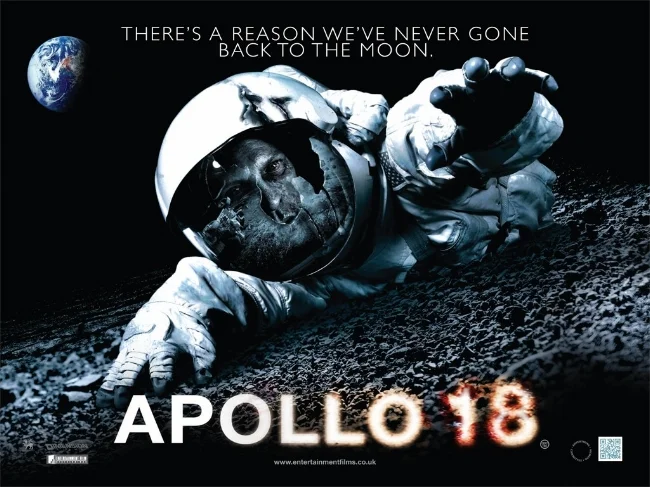
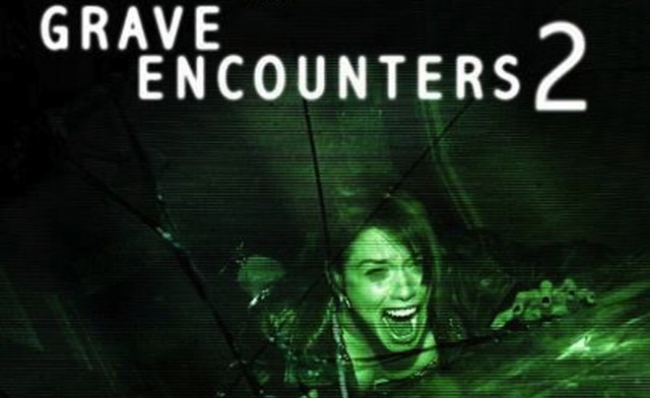

Star Trek Online: Beginners Guide Part 2 - Careers, Factions and Species
Welcome to the second part of my Star Trek Online: Beginners Guide. I thought it may be useful to write a series of posts, offering practical information for those who are just starting out in STO. Nothing fancy or in any way definitive. Just a few basic tips that may help orientate the new player. I’ve been playing STO since its launch in 2010 and this MMO has seen a lot of changes. The game features a lot of systems and mechanics that are not always immediately intuitive to grasp. So I’ll be doing my best to cover a selection of these in each post and try to provide a broad overview. Like a lot of advice, it can be subjective. Ultimately it comes down to each player how they wish to play. In this instalment, I shall be writing about career paths, factions and races.
Welcome to the second part of my Star Trek Online: Beginners Guide. I thought it may be useful to write a series of posts, offering practical information for those who are just starting out in STO. Nothing fancy or in any way definitive. Just a few basic tips that may help orientate the new player. I’ve been playing STO since its launch in 2010 and this MMO has seen a lot of changes. The game features a lot of systems and mechanics that are not always immediately intuitive to grasp. So I’ll be doing my best to cover a selection of these in each post and try to provide a broad overview. Like a lot of advice, it can be subjective. Ultimately it comes down to each player how they wish to play. In this instalment, I shall be writing about career paths, factions and species.
Q: Which career is best for new players?
A: The answer to this conundrum really comes down to playstyle and personal choice. There is no optimal path as such in STO. Yes some builds can deliver higher DPS but game skill also plays a part. Having the so-called “best” doesn’t mean you’ll perform in a comparable fashion. So to begin with there are three career paths in STO. A Tactical Captain deals damage, an Engineering Captain is designed to absorb damage and is thus a tank and a Science Captain focuses on buffs, debuffs, energy drain, hold and heals. All three careers have their own strengths and weaknesses. However, these can be tempered by your choice of traits, skills, ground and space gear and ship. And this is where the enjoyment lies; creating your own hybrid build. IE an Engineer using a heavy cruiser to tank, or a Science Captain focusing on healing while using a fast tactical escort.
Q: What faction should I choose?
A: At present there are six factions in Star Trek Online.
Starfleet (the 25th century Federation faction).
Klingon Defence Force.
Romulan Republic.
TOS Starfleet (the 23rd century Federation faction).
Dominion.
DSC Starfleet (the 23rd century Federation faction, Discovery era and pre-TOS).
All of which offer levelling from 1 to 65 (the present level cap) apart from the Dominion which starts at 60 and extends to 65. Each faction has bespoke traits and offer an initially unique storyline for approximately a third of the game. There then comes a point when certain missions are completed, the main story becomes centralised and applicable to all factions. At this juncture, Dominion faction players and Romulan Republic players must decide whether to ally themselves with either Starfleet or the KDF. Once this choice is made, it cannot be changed. However, at this point, as the story is the same to all factions, the only major differences are the NPCs who bestow missions and more importantly what vessels you have access to. The latter is an important consideration.
Personally, I don’t think any faction has a superior story arc. All have been overhauled over the years and are now very well realised. I think most players choose a faction based upon their personal relationship with Star Trek. I was raised on reruns of Star Trek TOS, so the TOS Starfleet faction certainly provided a great “fan service”. If you love Klingon culture then the KDF faction is an ideal choice. Remember that STO has a wealth of voice acting from original cast members which greatly adds to the game’s ambience. It can be argued that the Dominion faction and DSC Starfleet faction storylines are a little shorter than others but such brevity may suit some players. It should also be noted that developers Cryptic have been pragmatic and created the most ships for the most popular faction in the game, which is Starfleet. There are not quite as many vessels available for some factions. However, the allegiance system has addressed this. Plus there are some unique crossfaction vessels.
Q: What species should I pick?
A: Again, there is no single species that has a definite advantage over others in STO, although some have desirable unique traits. But as I previously mentioned, there are many other factors that affect your build and its viability, so it is ultimately a matter of choice. Each faction has a variety of races available. Lore dictates that certain races cannot be accessed by certain factions but Cryptic have been quite inventive with regard to fudging this to a degree. At present the following species are available to the following factions.
Starfleet: Andorian, Bajoran, Benzite, Betazoid, Bolian, Caitian*, Cardassian*, Ferengi, Human, Klingon*, Liberated Borg**, Pakled, Rigelian, Saurian, Talaxian**, Tellarite, Trill, Trill (Joined)*, Vulcan, Alien.
Klingon Defense Force: Cardassian*, Ferasan*, Gorn, Klingon, Lethean, Liberated Borg**, Nausicaan, Orion, Talaxian**, Trill (Joined)*, Alien.
Romulan Republic: Romulan, Reman, Liberated Borg**, Alien
TOS Starfleet: Andorian, Human, Tellarite, Vulcan.
Dominion: Jem’Hadar, Jem’Hadar Vanguard*.
DSC Starfleet: Human, Vulcan, Alien.
* Purchasable from C-Store
** Requires lifetime subscription
If you cannot make up your mind or because of your choice cannot access a specific species, then consider picking “alien” as a race. It has the most visual customisation options available in the game and hence you can create an avatar that looks Human, Vulcan, Andorian etc. You can also create faux Cardassians and replicate a passable facsimile of many other races in the game. Another advantage of the “alien” is that it doesn’t have fixed racial traits and the player can choose an additional ground and space trait instead.

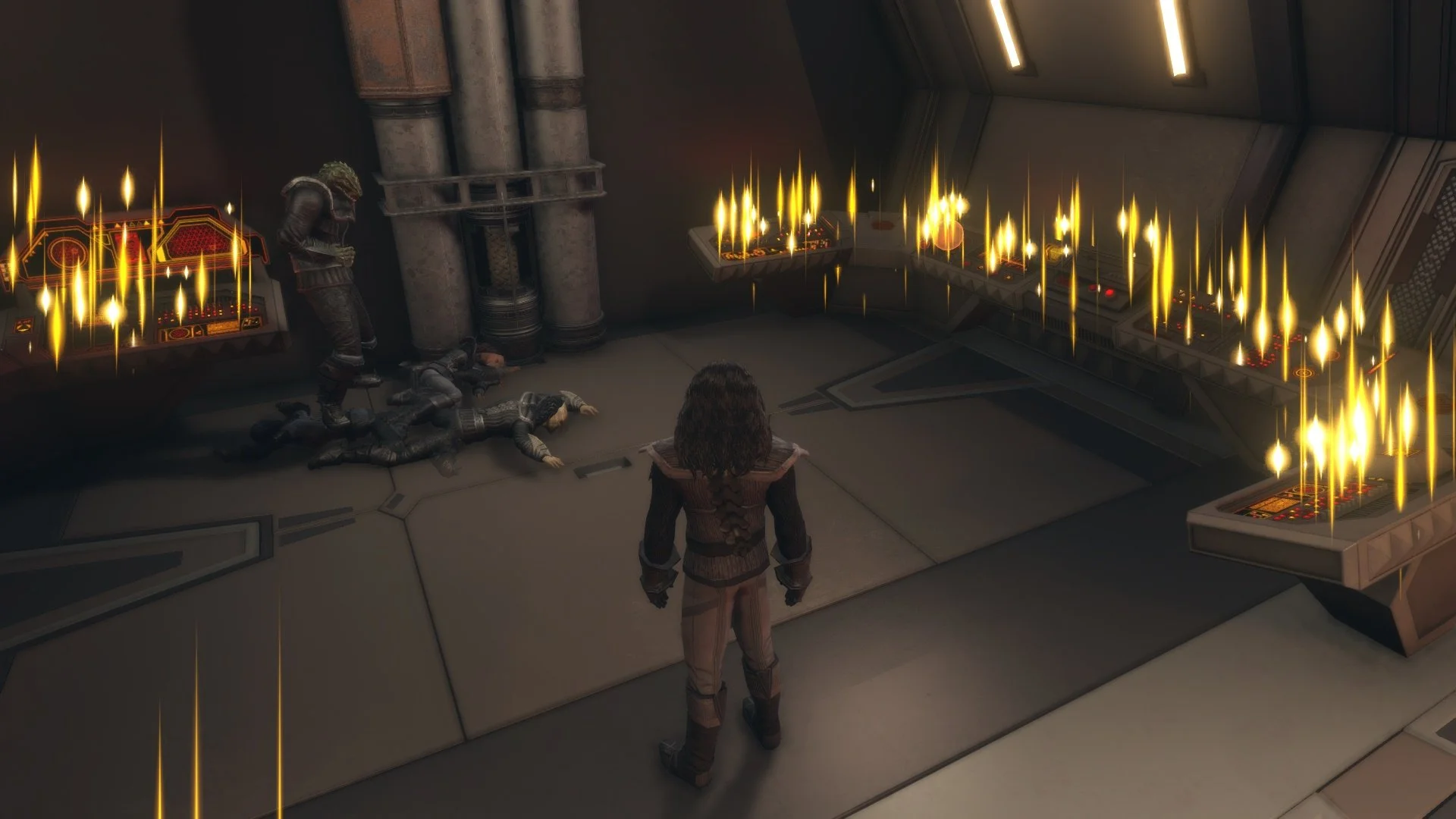

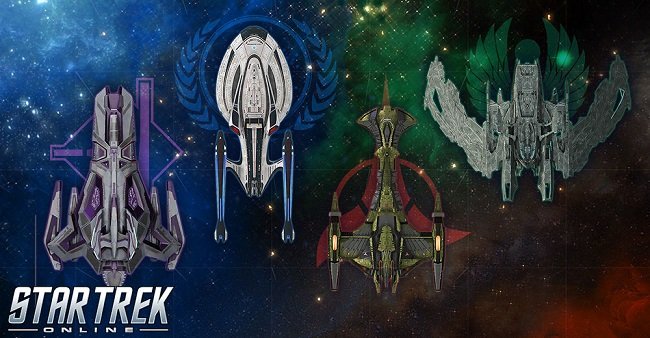
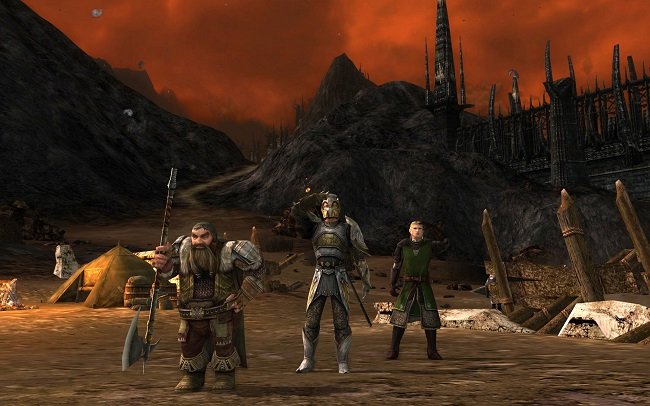
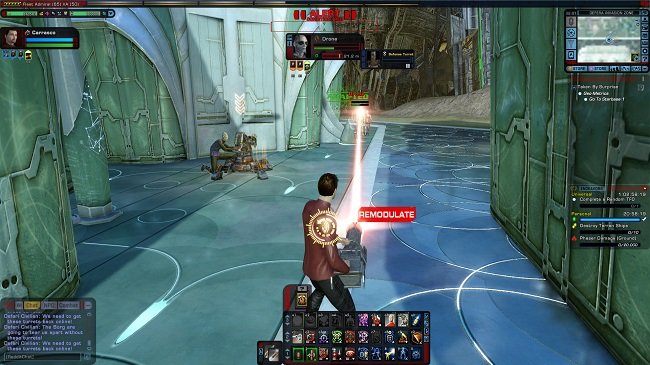
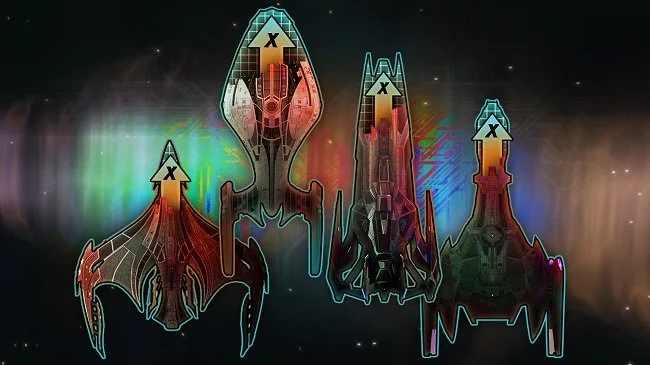
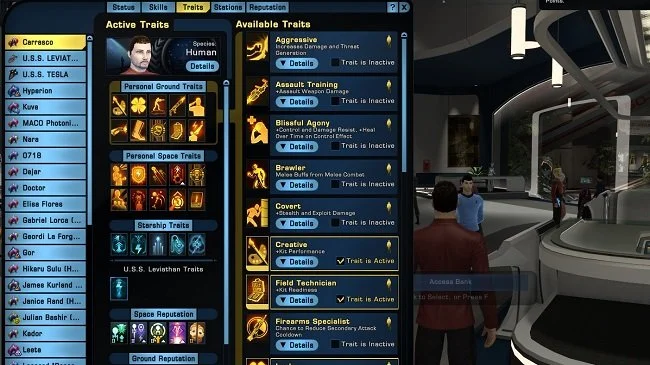
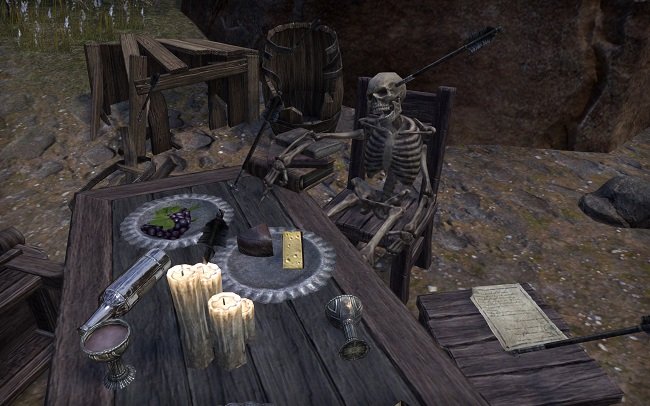
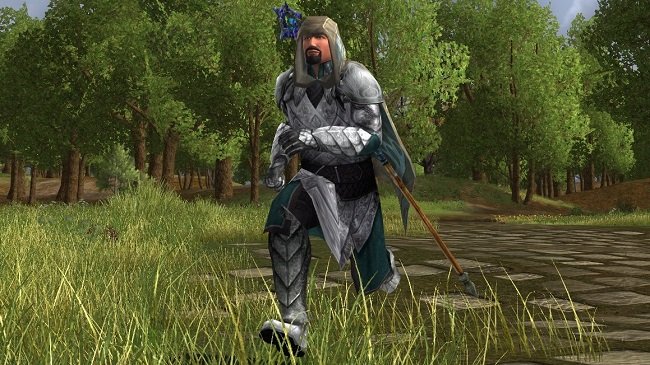
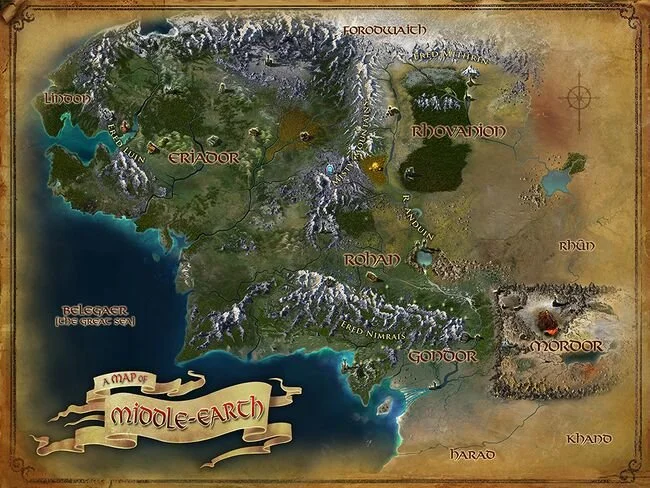
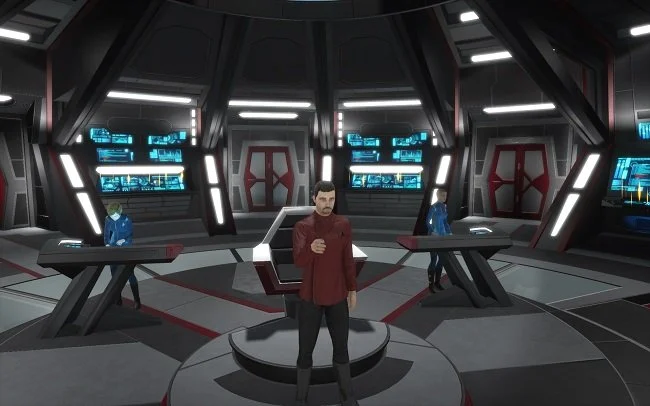
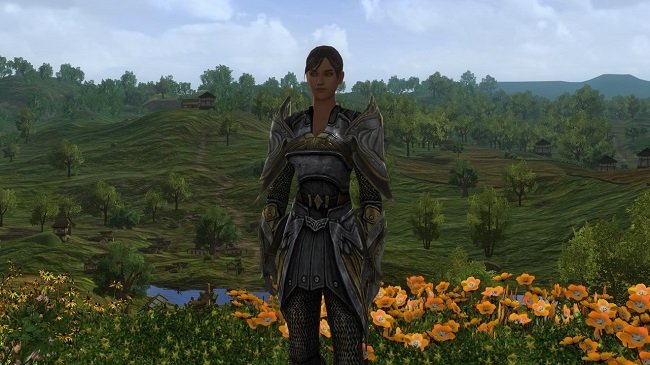
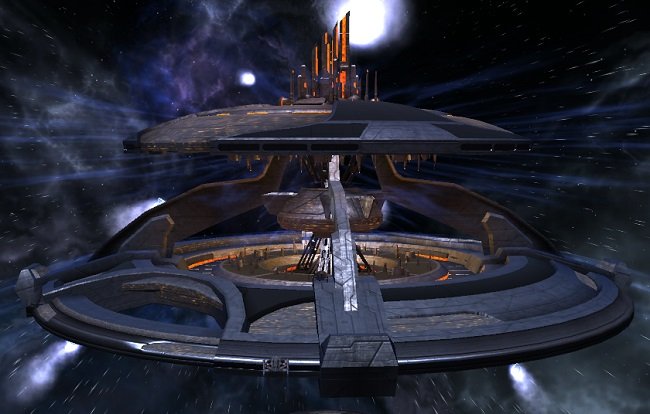
Caring for the Elderly Part 13
The funeral service for my late Father was held today. As ever I would like to collate my thoughts and present them here in the hope that I may be able to assist someone else who is currently dealing with a bereavement. Funerals can be challenging at any time but are further complicated at the moment due to the various restrictions imposed due to the global COVID-19 pandemic. However, there is still scope to give a loved one a fitting send off. You just have to be a little more creative about it and try to be understanding of the current regulations regarding social gatherings. Despite my concerns today’s service at our local Borough crematorium went well, if such a term is appropriate. I feel that my Father was honoured appropriately and that his family and friends were able to pay their respects and celebrate his life in a manner that he would approve of.
The funeral service for my late Father was held today. As ever I would like to collate my thoughts and present them here in the hope that I may be able to assist someone else who is currently dealing with a bereavement. Funerals can be challenging at any time but are further complicated at the moment due to the various restrictions imposed due to the global COVID-19 pandemic. However, there is still scope to give a loved one a fitting send off. You just have to be a little more creative about it and try to be understanding of the current regulations regarding social gatherings. Despite my concerns today’s service at our local Borough crematorium went well, if such a term is appropriate. I feel that my Father was honoured appropriately and that his family and friends were able to pay their respects and celebrate his life in a manner that he would approve of.
When my Father died on September 16th one of the first tasks that followed was the registering of his death. During that process there was the option to include the details of which Funeral Directors you are utilising. As I had done some research prior to speaking to the registrar, I had already chosen the Co-op Funeralcare as my vendor of choice. I made this decision based on recommendations from two friends who had used their service and because of the comprehensive FAQ the company has on their website. They have clear guidance of what to do after a bereavement from registering the death, notifying all relevant third parties, administering a will and the etiquette and protocol of arranging a funeral. The information is clear and accessible. Co-op Funeralcare also has a range of products which suit a variety of budgets. They also offer environmentally friendly options and can accommodate humanist and non-religious services.
I subsequently booked an appointment with my local branch of Co-op Funeralcare and was seen five days after my Father’s death on 21st September. The Funeral Arranger was sympathetic, supportive and exceedingly helpful. We discussed a range of potential options for my Father’s funeral in a relaxed atmosphere. The offices are designed to be “homely” and less like standard corporate premises. The first question discussed is whether the deceased was to be buried or cremated. Cremation was the case in this instance. I then picked a coffin from an extensive range. As the family did not wish a viewing, there was no requirement for an open casket, embalming or any other morticians services. We then moved on to the logistics of the service. Usually the coffin is brought to the crematorium via a hearse. There are limousines available to bring family members. However, due to the lockdown there are restrictions on the use of limousines, so it is more efficient to simply make your own way to the crematorium. My Father wasn’t a religious man so there was no requirement for a minister of any kind. Hence, the overall costs for the funeral were quite low.
All of this was arranged on my first visit to the funeral directors. When I left, the date had been set for the service, which was to be held at the local Borough Crematorium. With regard to the costs, there were several payment plans available from the funeral directors, depending on the customer’s financial circumstances. I paid the entire cost by bank transfer the following day. Over the next week there were a few additional tasks to sort out. I had to choose two pieces of music to be played at the service. One for when guests arrive and take their seats in the chapel. The other at the end when they exit into the garden of remembrance. For the former I opted for Tchaikovsky: Souvenir d'un lieu cher, Op.42 - 3. Mélodie performed by Janine Jansen. I chose this because my Father played the violin in his youth and loved such music. For the second piece my Father had specifically requested Ich hatt' einen Kameraden ("The Good Comrade"). This is a popular tune played at German military funerals. My Father had a penchant for military culture, having done his National Service after WWII and then joined the Territorial Army in the Fifties. I must admit I was pleasantly surprised when the funeral director’s managed to find the latter track performed on the Trumpet by Dirk Jess. Apparently a lot of UK funeral directors use the Wesley Media library which is quite comprehensive.
I took some clothes to the funeral directors. Although my Father was in a closed casket, I wanted him dressed in his regimental blazer and tie, rather than just a funeral shroud. Another aspect associated with funerals are floral tributes. My Father left instructions that attendees not buy any as he considered this wasteful. Instead he suggested that a charitable donation was made in his name, in lieu of flowers. In this case his charity of choice was The Royal British Legion, which provides financial, social and emotional support to members and veterans of the British Armed Forces, their families and dependants. However, I did order a floral spray for the coffin, so it was not completely unadorned when placed on the catafalque. The final arrangement I had to make was creating and printing an Order of Service. There are plenty of online printers that offer this service, providing templates in all the most common formats, so this was not a major problem. Adobe also offers a free online service for editing photos. This proved useful in restoring an old photo of my Father, for use in the Order of Service.
Once all of the above preparations were made, it was simply a case of inviting family and friends to the service. Under current rules up to 30 people can attend a funeral in the UK. The service is allotted 30 minutes running time. Which brings me to today’s events; the funeral service itself. We all met at the Eltham Crematorium which has an outside waiting area inbetween it’s two chapels. At present the internal waiting rooms are closed. The noticeboard told us which of the two chapels our service had been assigned. The hearse arrived and I was greeted by the funeral director. We had been given a choice in advance as to whether a party of mourners wished to carry the coffin into the chapel. We decline this and my Father’s coffin was carried in by staff with suitable reverence. The first piece of music played and we entered and sat on the pews in a socially distanced manner. There were ten people in total. I welcome all attendees and then read my eulogy to my father. My Aunt, his only surviving Sister (93) then gave some lovely personal reminiscences about their childhood. Finally, one of my Father’s best friends spoke of their 65 year friendship and how they met in the Territorial Army. There was then a minute's silence for prayer and reflection. We then exited in the garden of remembrance and made small talk, as you do at such events. As there was no function or wake in light of the pandemic, we said our goodbyes and departed.
So these are my recent experiences of arranging and attending a funeral for a loved one in 2020. Due to my Father’s specific wishes, I don’t know if the service would have been radically different even if there wasn’t a pandemic. We may have used the limousine service and perhaps have sung a few of his favourite hymns but beyond that I don’t think there would have been too many further embellishments. Overall I did not find this an emotionally overwhelming experience and certainly feel that Co-op Funeralcare did much to make the arrangements and logistics as straightforward as possible. In the space of three weeks, I have administered as many of my Father’s affairs as I can. Some must now be dealt with by solicitors. I think the funeral service struck the right tone. There was deference and dignity but the speeches focused on celebrating my Father’s life. And so, now that everything that can be done, has been done, it’s a question of moving forward. In a week I can collect my father’s ashes. I’m sure the reality of my loss will catch up with me then and I shall grieve in my own way. But life goes on.


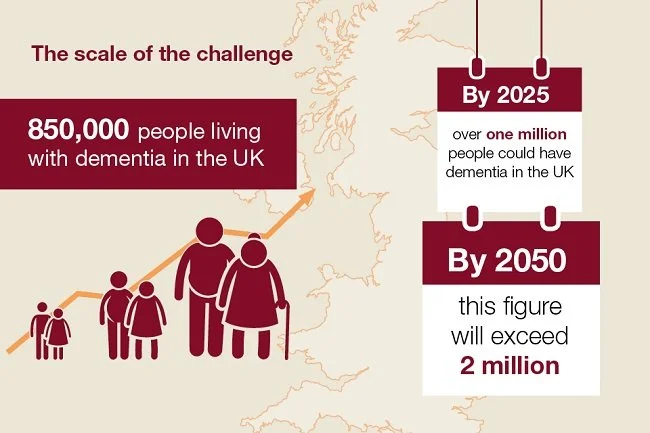











I, Monster (1971)
I, Monster is a low budget Amicus production and a cunning retelling of Robert Louis Stevenson’s “The Strange Case of Dr. Jekyll and Mr. Hyde”. Due to copyright reasons, these names are not used in the film and are replaced with new characters, Marlowe and Blake respectively. However, despite the modest budget and the aforementioned legal issues, this is a very faithful adaptation of the original gothic novella. Milton Subotsky’s screenplay incorporates all the essential elements of the source text which is both a boon and a bane. A boon because it really does capture the essence of Stevenson’s concept, which has been drastically misrepresented by previous adaptations. And a bane in so far that the original novella is a little too insubstantial to sustain a feature film. Even at a modest 75 minutes running time I, Monster feels somewhat “thin”.
I, Monster is a low budget Amicus production and a cunning retelling of Robert Louis Stevenson’s “The Strange Case of Dr. Jekyll and Mr. Hyde”. Due to copyright reasons, these names are not used in the film and are replaced with new characters, Marlowe and Blake respectively. However, despite the modest budget and the aforementioned legal issues, this is a very faithful adaptation of the original gothic novella. Milton Subotsky’s screenplay incorporates all the essential elements of the source text which is both a boon and a bane. A boon because it really does capture the essence of Stevenson’s concept, which has been drastically misrepresented by previous adaptations. And a bane in so far that the original novella is a little too insubstantial to sustain a feature film. Even at a modest 75 minutes running time I, Monster feels somewhat “thin”.
Psychologist Charles Marlowe (Christopher Lee), a strong advocate of Sigmund Freud, argues about man’s capacity for evil with his colleagues at his Gentlemen’s club. Dr. Lanyon (Richard Hurndall) refutes his assertions on medical grounds. Enfield (Mike Raven) reflects on a life based upon self gratification. Utterson (Peter Cushing), Marlowe’s Lawyer argues that human civilisation is based upon governing our passions. But Marlowe feels that research in this field could reduce patient’s inhibitions, which are often the root cause of their problems. He subsequently uses a drug he has created on two of his patients. It seems to either make the subject docile or facilitate their secret urges. As he ethically cannot risk any further tests, he takes the drug himself, releasing his alter ego Edward Blake. At first Blake is content with the most obvious worldly pleasures but over time he becomes more violent and uncontrollable. Marlowe’s friends are unaware of his experiments and fear that Blake is simply a ruffian that is blackmailing the doctor.
I, Monster is a somewhat set bound production with a few locations scenes. As the screenplay is true to the novella, a lot of Blake’s crimes are discussed retrospectively by the main cast and not shown on screen. There is a knife fight and a chase scene that culminates in a murder but overall, the film is some what light on unpleasantries for a horror film. It isn’t especially long either which is another issue. However, Christopher Lee’s performance is compelling and does much to mitigate the production’s shortcomings. Unlike other film adaptations there are no overly theatrical transformation scenes. When Lee initially “releases” his alter ego, we simply see his stern Victorian demeanour relax into a rather sinister and lascivious smile. Over time Blake’s features become coarser. His rictus smile is like that of a slavering beast and his complexion reflects his debauched lifestyle. Simple make-up is effectively used to reinforce Lee’s physical performance.
The rest of the cast provide robust support, with Peter Cushing as ever bringing dignity, gravitas and conviction to his modest role. There is a simple fight scene at the end of the film which takes place within a small room. Filmed through the exterior windows, it does “quite a lot with very little” and works well. It makes the conflict between Utterson and Blake very personal. This is where the film’s budget provides some creativity and innovation. Sadly, despite practical cinematography by Moray Grant, the film has an unpleasant colour palette with an emphasis on greens and yellow. This may be due to a 3D process that was originally intended but subsequently abandoned prior to release. Ultimately I, Monster did not perform well at the box office. Its brevity and lack of scope couldn’t compete with bigger budget, more contemporary horror movies that were replacing the gothic genre. However, the film has seen a critical reassessment in recent years, mainly due to Lee’s strong performance.
A Month in Gaming
September has been a difficult month. A family crisis and subsequent bereavement meant that gaming got pushed down the daily agenda. However, after the various chores and duties were done I did need some downtime and means to relax. Hence I did play some games in a limited fashion. Nothing fancy, just stuff like Fall Guys: Ultimate Knockout and Gang Beasts, which are light-hearted and undemanding. I also took the time to log on to The Lord of the Rings Online test server and check out the preview of the forthcoming “mini-expansion”. Not only was this informative but it provided material for a blog post. But overall I didn’t really achieve anything substantial with my gaming throughout September. Gaming was relegated to being just a convenient diversion from the immediate problems I’ve been facing but as such, it did fulfil that role well.
September has been a difficult month. A family crisis and subsequent bereavement meant that gaming got pushed down the daily agenda. However, after the various chores and duties were done I did need some downtime and means to relax. Hence I did play some games in a limited fashion. Nothing fancy, just stuff like Fall Guys: Ultimate Knockout and Gang Beasts, which are light-hearted and undemanding. I also took the time to log on to The Lord of the Rings Online test server and check out the preview of the forthcoming “mini-expansion”. Not only was this informative but it provided material for a blog post. But overall I didn’t really achieve anything substantial with my gaming throughout September, apart from finishing the main story in The Sinking City . Gaming was relegated to being just a convenient diversion from the immediate problems I’ve been facing but as such, it did fulfil that role well.
At present, Call of Duty Modern Warfare/Warzone continues to provide what I call “quick fix” gaming. I’ve been playing since April and every new season, developer’s Infinity Ward continue to add new features to keep the game engaging. Season Six started on 29th September and came with some interesting new maps and weapons to unlock. At present there appears to be a glitch with the SP-R-208 marksman rifle, as there is no bullet drop. Hence it has temporarily become the weapon of choice of all “wannabe” snipers. Even I can hit things with this weapon. There’s also another glitch with the AS VAL silenced assault rifle. When converted to use SPP ammunition, these armour piercing rounds penetrate everything with no reduction in bullet velocity. You can effectively shoot through an entire building and hit a target. I suspect that a patch will quickly eliminate these issues.
Despite my lack of time for in-depth gameplay during September, I did acquire four new games, which came as a surprise to me given the circumstances. Firstly, I was gifted Spiritfarer via Steam. This is a charming and thoughtful game. You play as Stella, (accompanied by her pet cat Daffodil), who takes over from the mythological Charon as the new Spiritfarer. As a ferrymaster you must sail the sea to find spirits, grant their last wishes and finally take them to the Everdoor, the gateway to the afterlife. This is a game that provides relaxation and an opportunity to reflect on the nature of life and death. I also bought two new RPGs. Elex and Horizon Zero Dawn. The latter is a known quantity and a recent console conversion. The former is a smaller title developed by Piranha Bytes who previously made the Gothic and Risen franchises. Elex mixes futuristic and medieval locations, in which the player can use guns, swords and magic against enemies. Finally Toren is an action adventure puzzle game from a small independent Brazillian developer. I found the basic premise of a baby girl protagonist who grows up as she progresses through a trap filled tower intriguing.
In October, I plan to start playing one of the above RPGs and try again to see if I can catch up with content in The Lord of the Rings Online. I’m hoping that there will be an improvement in server performance. It will also be interesting to see how the community responds to the “mini-expansion”. I may return to Star Trek Online but that is more of a question of conducting research for a series of blog posts. What I crave the most from my gaming at present is something different. Hence I have tried content outside of my usual genres during the lockdown. I cannot find any compelling reason to return to The Elder Scrolls Online at present. That is a game I like to apply myself to, due to the richness of the lore. I don’t want to just dabble with it, so I think I’ll keep it in reserve for later. I suspect it may well be a difficult autumn and winter so perhaps an MMO such as this, will be the ideal solution to the dark nights.
COVID-19 Pandemic 2020 Part 6
When I last wrote about the COVID-19 Pandemic in May, the UK was just beginning to see an easing of lockdown restrictions. As a lot of people surmised, the government was trying to do too much, too soon and without the appropriate logistical support. Hence the last five months have been a litany of political disasters, all of which have contributed to the UK having the highest COVID-19 related deaths in all of Europe. Furthermore, the government's failure to provide PPE, make available a universally accessible testing service and implement an effective national tracing service, has highlighted their lack of talent and overall incompetence. Every week another “dead cat” is thrown on to the altar of politics in an attempt to divert the attention of 24 hour rolling news away from their utter ineptitude. Hence on top of the COVID-19 Pandemic, we’ve seen the spectre of both BREXIT and the “migrant crisis” re-emerge.
When I last wrote about the COVID-19 Pandemic in May, the UK was just beginning to see an easing of lockdown restrictions. As a lot of people surmised, the government was trying to do too much, too soon and without the appropriate logistical support. Hence the last five months have been a litany of political disasters, all of which have contributed to the UK having the highest COVID-19 related deaths in all of Europe. Furthermore, the government's failure to provide PPE, make available a universally accessible testing service and implement an effective national tracing service, has highlighted their lack of talent and overall incompetence. Every week another “dead cat” is thrown on to the altar of politics in an attempt to divert the attention of 24 hour rolling news away from their utter ineptitude. Hence on top of the COVID-19 Pandemic, we’ve seen the spectre of both BREXIT and the “migrant crisis” re-emerge.
There is a general malaise of confusion abroad in the UK at present, as local lockdowns and seven months of constantly changing messages have left people perplexed or indifferent to the latest rules. Several high profile transgressions of the lockdown by senior politicians and their special advisors has further contributed to the crumbling of public support. It has become clear that we are not all in this together. The poor have to return to work regardless of the risks and the rich want them to do so because they require access to the service industries that employ the poor. And then there are the COVID deniers and those who object to the minor inconveniences that arise from being considerate. Who would have thought that wearing a mask as you enter a shop, would be held up as an unconscionable violation of human rights? And by a demographic group that up until now, haven’t been especially concerned about such things. What times we live in.
For my family, life goes on in much the same way as it did in March. My Mother is disabled and housebound, having daily carer visits. Those who care for her still wear PPE and maintain scrupulous hand hygiene. Although my Sister is currently off sick, the government department for whom she works, is still mainly working from home. It is unlikely that staff of her garde will return to the Central London offices anytime soon. I visit their home daily at present although I am looking to reduce this schedule. I go shopping twice a week and visit the pharmacy and doctor’s surgery once a month. Beyond these journey’s I remain in my own home which is one road away. I have coped with the lockdown quite well and maintain a strong social presence online. However, Mrs P who in normal circumstances has a packed social schedule, has found the travel restrictions quite frustrating. But we try to work within the regulations to come up with viable ways to do some activities.
I fully expect the next three to four months to be bad both economically and with regard to COVID-19 deaths. I think we can finally dismiss all thoughts that the pandemic will be a touchstone for social change and a fair and equitable restructuring of the UK’s job market. The country is divided and volatile. Traditional politics has been subsumed by a culture war and it is playing out exactly as expected. Everyone is retreating into their respective “safe space” and battening down the hatches. It’s just a case that some people’s “safe spaces” are better than others. Oh and the panic buying is happening again. As soon as it was announced last week that the Prime Minister was to address the nation, the middle class started block booking all the supermarket delivery time slots and toilet paper once again began flying off the shelves. So I shall do my best to enjoy whatever curious Christmas 2020 has to offer. Because I suspect that it might be the calm before the storm. COVID-19 may well turn out to be an unwelcome New Year guest.