
The Raid 2 (2014)
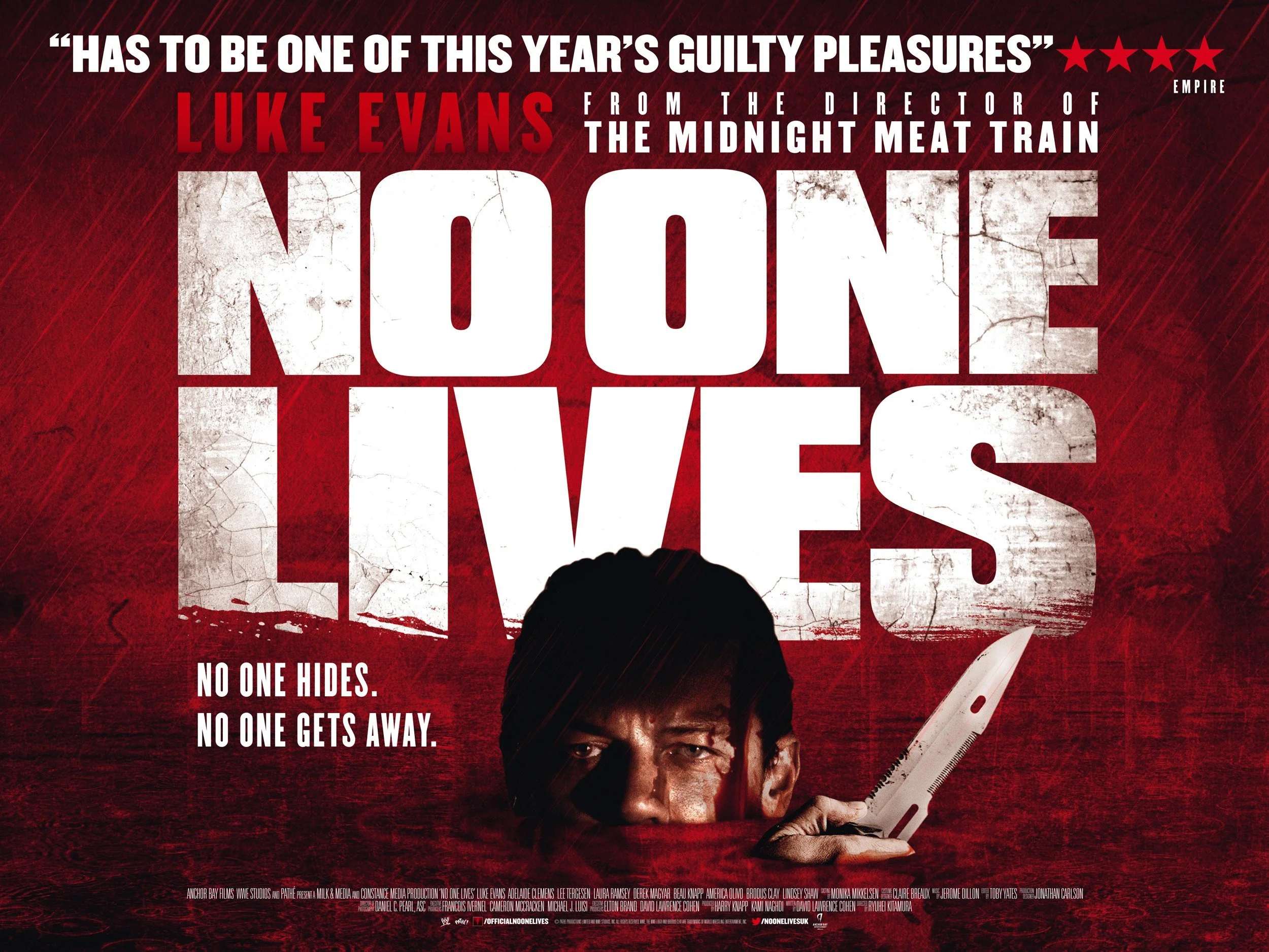
It is very difficult to write about The Raid 2 without descending into hyperbole or gushing like a fanboy. As the movie poster shows, the popular press used pretty much every cliché available on the film’s release in 2014. If I remember, they did this previously with the original movie, The Raid in 2011. I may have leaned towards such enthusiasm myself when reviewing the previous movie. One thing that can be said about The Raid 2 is that it's a game changer and a genre milestone. It is more than just an action movie, in the same way that Enter the Dragon is more than just a martial arts movie and Singin' in the Rain is more than just a musical. Director Gareth Evans has stepped beyond the traditionally narrow scope of the genre to produce something far more ambitious.
It is very difficult to write about The Raid 2 without descending into hyperbole or gushing like a fanboy. As the movie poster shows, the popular press used pretty much every cliché available on the film’s release in 2014. If I remember, they did this previously with the original movie, The Raid in 2011. I may have leaned towards such enthusiasm myself when reviewing the previous movie. One thing that can be said about The Raid 2 is that it's a game changer and a genre milestone. It is more than just an action movie, in the same way that Enter the Dragon is more than just a martial arts movie and Singin' in the Rain is more than just a musical. Director Gareth Evans has stepped beyond the traditionally narrow scope of the genre to produce something far more ambitious.
The Raid 2 exceeds the claustrophobic confines of its predecessor and offers a far more ambitious plot. Following two hours after the siege on Boss Tama’s tower block complex (as seen in the first film), cop Rama (Iko Uwais) is asked to go undercover in a maximum-security prison so he can infiltrate a Jakarta crime syndicate. Rama manages to penetrate the inner circle of Ucok (Arifin Putra), the son of crime boss Bangun (Tio Pakusodewo). When rival gang leader Bejo (Alex Abbad) instigates a turf war for the streets of Jakarta, Rama quickly finds that all may not be as it seems, both in prison and within the ranks of his own police department.
The Raid 2 has a running time of two and a half hours, but it does not out stay its welcome despite its length. It manages to keep the narrative moving forward and switches seamlessly from action scene to occasional exposition. It is clear that director Evans has been influenced by the works of Akira Kurosawa, Park Chan-wook, Takeshi Kitano and Alan Mak, both visually and thematically. There are clear homages to several genre classics; a mass fight in a prison yard that has turned to mud, the use as claw hammers as a weapon and the complex inner politics of the crime syndicate. The movie also excels with its cinematography, editing and choreography. The action is superbly framed and presented in such a way that allows the audience to enjoy the frenetic pace but still see exactly what is happening on screen.
The Raid 2 is not for the squeamish. It is a brutal and unflinching in its depiction of violence. Yet there is a poetical quality to the never-ending litany of broken limbs, stabbings and sundry mayhem. Edwards manages to succeed in making the violence both titillating and disturbing at once. The audience is never quite sure what is going to happen next. It is this element of unpredictability that works so well in the film favour. It’s a radical change in approach to the distinctly passive experience that contemporary mainstream action movies have become in the west. Four years on we have yet to see a third instalment of this franchise, which is a shame. There is still talk of a US remake of the original film, for those viewers that cannot cope with subtitles or a non-American cast. For viewers with broader cinematic taste, The Raid 2 is well worth seeking out and seeing in its original language, because it is a superior, stylish and honest product.







The Raid (2011)
I was not a big fan of Gareth Evans 2009 movie Merantau. Although it was an interesting showcase for Iko Uwais and Pencak Silat martial arts, the story had a ponderous narrative and was thirty minutes too long. The human drama seemed at odds with the action content. However, in early 2011 I started to hear positive things about his follow up movie The Raid. When I finally got to see the international version of the film the following year, I was summarily impressed. The Raid was the most entertaining, all out, kick you in the nuts action film I’d seen since Hard Boiled at that point. Every so often, a film comes along that breathes new life in to an ageing and tired genre. The Raid was exactly such a movie and it didn’t take long for people to take note.
I was not a big fan of Gareth Evans 2009 movie Merantau. Although it was an interesting showcase for Iko Uwais and Pencak Silat martial arts, the story had a ponderous narrative and was thirty minutes too long. The human drama seemed at odds with the action content. However, in early 2011 I started to hear positive things about his follow up movie The Raid. When I finally got to see the international version of the film the following year, I was summarily impressed. The Raid was the most entertaining, all out, kick you in the nuts action film I’d seen since Hard Boiled at that point. Every so often, a film comes along that breathes new life in to an ageing and tired genre. The Raid was exactly such a movie and it didn’t take long for people to take note.
Seven years on (and a sequel later) I recently watched this movie for a second time. Let it suffice to say it still boasts a formidable pedigree. It reaches high gear within minutes of starting and simply does not let up for its hundred-minute duration. It is atmospheric, mean and dirty with one of the highest bodycounts to running time ratios I’ve encountered. And it remains extremely hard hitting. If your forays into the action genre have been mainly PG-13, mainstream US fodder, then you’re in for a “great big fucking surprise” as Jack Watson said in The Wild Geese. This is a fast paced and frenetic movie with a hard edge. It’s violent slick and compelling. It’s lack of Hollywood gloss makes it gritty and a refreshing change from other western genre movies.
A group of elite SWAT style specialist cops launch a dawn raid on 30 floor tenement block that doubles as armed fortress for an evil local drugs baron. However, the textbook plan goes terribly wrong, leaving the forces of law and order decimated. The fire fights with automatic weapons give way to hand to hand combat as honest cop Rama (Iko Uwais) tries to keep the remainder of his team alive and carry out their mission. The Raid boast a grimy production design which is credible and atmospheric. The cinematography by Matt Flannery captures the rundown aesthetic of Jarkarta’s slums very well. Even when the mayhem becomes somewhat balletic, the down to earth setting keeps the viewer grounded. There are shades of Carpenter’s Assault on Precinct 13 in the narrative as well as nods to John Woo and Walter Hill. Director Gareth Evans balances tone, pacing and a feel for action sequences perfectly.
The Raid succeeds because it does not aim to high. There is a wealth of action and wall to wall mayhem. Blood flows freely, but the movie does not make the mistake of copying standard Hollywood output. We don’t have a hero who is bullet proof, blessed with limitless ammunition and can take down a plane with a single shot. We have a flawed hero, who bleeds. Of course, we have to suspend our sense of disbelief. But we do not have to seal it in a lead container and drop it into the ocean to be recovered at a later date. If you like old school action movies, then see The Raid. You won’t regret it. If only Hollywood would take note. Less is more in this case. Also using a talented director who knows what he’s doing, helps. Unfortunately, the US studios seem oblivious to what the fans want and still blithely continue churning out there “targeted products”.
Here is some further trivia on The Raid. The title of the movie was altered from The Raid to The Raid: Redemption in the United States because the production company SPC could not secure the rights to the title; this also allowed Gareth Evans to plan out future titles in the series. The US version also sports a different soundtrack. While the original film was still in production, in May 2011, Sony Pictures Worldwide Acquisitions acquired the distribution rights of the film for the U.S. and asked Mike Shinoda of Linkin Park and Joseph Trapanese to create a new score for U.S. release. The original score from the Indonesian version was composed by Aria Prayogi and Fajar Yuskemal, who worked with Evan's on his previous film, Merantau. This version can be found on the international DVD and Blu-ray release of the movie.
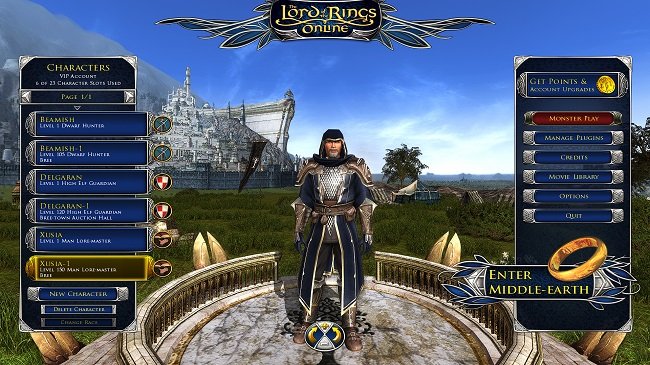
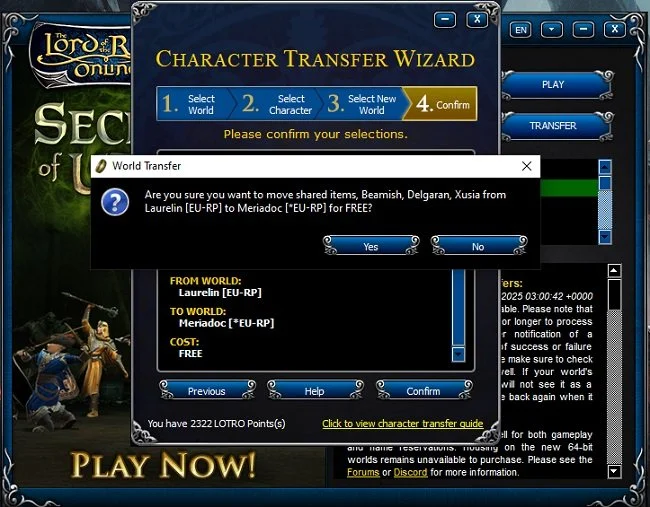
LOTRO: Resetting the Economy
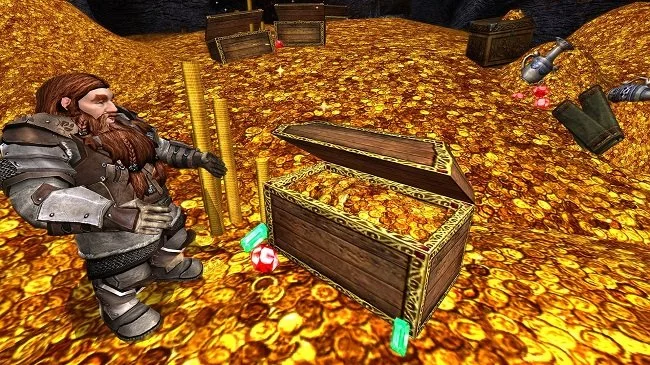
If you go to the auction house on Laurelin server, you will see all the hallmarks of an established, long term playerbase that have multiple characters at level cap. IE Mainly nothing but high-end crafted items being sold at ridiculously high prices. MMO inflation is a weird thing. Naturally people who have played LOTRO for a long time have substantial reserves of in-game gold. Gold therefore is not an asset of value in itself per se. Yet due to peoples complicated relationship with money, be it real or virtual, there is still a propensity to hoard it and increase one’s reserves. Hence, relatively sought-after items tend to be posted for sale on auction house at grossly inflated prices. Now regardless of the reasons why this inflation happens, the net result is always the same. A skewed economy with increased prices at one end of the gear spectrum and a shortage of items at the other, because no one is crafting anything beyond what they need for their new alts.
If you go to the auction house on Laurelin server, you will see all the hallmarks of an established, long term playerbase that have multiple characters at level cap. IE Mainly nothing but high-end crafted items being sold at ridiculously high prices. MMO inflation is a weird thing. Naturally people who have played LOTRO for a long time have substantial reserves of in-game gold. Gold therefore is not an asset of value in itself per se. Yet due to peoples complicated relationship with money, be it real or virtual, there is still a propensity to hoard it and increase one’s reserves. Hence, relatively sought-after items tend to be posted for sale on auction house at grossly inflated prices. Now regardless of the reasons why this inflation happens, the net result is always the same. A skewed economy with increased prices at one end of the gear spectrum and a shortage of items at the other, because no one is crafting anything beyond what they need for their new alts.
However, the launch of the two new Legendary Servers on November 8th provided an interesting opportunity, economically speaking. Some resources, perks and benefits in LOTRO are account wide, such as cosmetic items associated with the purchase of expansion packs. However, gold, mithril coins and skirmish marks are all server bound and can only be shared between alts therein. Thus, no one came to Anor and Ithil with the advantage of previously earned wealth. As a result, it has done wonder for these servers’ economies. Players are having to craft all the items they need and sell the surplus. There is also a healthy trade in the resources that sustain crafting. Two weeks on from launch and the acquisition of gold is still a relatively balanced process. Subsequently, buying new gear is still a viable option beyond that which you earn through questing. There are also lots of new kinships which support the needs of their members. So far, the game economy is not derailed.
As ever, it will be very interesting to see if this balanced and broadly equitable situation continues over the month to come. Perhaps the release of further content in four-months’ time will alter the status quo. By then there will likely be a percentage of wealthy players at level cap, along with those who are doing “okay” and some who are neither at cap or have a proverbial “pot to piss in”. Such is the nature of MMOs and those who play them. The other thing to keep an eye out for on the new servers is the presence of gold farmers. As gold is not transferable between existing servers, it has to be earned from its current location. So far, there is not a sufficient surfeit of gold to be assimilated and “redistributed” by such third party “institutions”. This again main change when the Mines of Moria expansion is added to both legendary servers. In the meantime, I am already buying any potential bargains I find on auction house, not only for my primary alt’s current needs but for the future as well. It certainly is a pleasant change from the dearth of choice currently found on the older LOTRO servers.



Amazon Fire HD 10
I find that the key to successfully buying any new item of technology is to know in advance exactly what you want from it and setting yourself a realistic budget. The next step, which is detailed research, is the one that I struggle with. Because it always involves a particular foible of human nature that really sets my teeth on edge. Far too many reviewers and technology journalists don’t fully grasp the concept of budgets as well as the idea of committing to the item that they are writing about. IE I often encounter sentiments such as “the Gruntmeister 2000 is a good option, but if you spend a little bit more you can get the 3000 model”. It’s habit that infuriates me. A budget of £100 is exactly just that. No more, no less. Therefore, if a buyer has specified their financial limit then it is illogical, crass and frankly damned rude to mention products that fall outside of that price range. Oh, it makes me want to punch until there’s brain matter on the walls. However, now that we’ve got that out of the way, I managed to track down exactly the new tablet that I needed. Furthermore, I got a bargain as it’s “Black Friday”.
I find that the key to successfully buying any new item of technology is to know in advance exactly what you want from it and setting yourself a realistic budget. The next step, which is detailed research, is the one that I struggle with. Because it always involves a particular foible of human nature that really sets my teeth on edge. Far too many reviewers and technology journalists don’t fully grasp the concept of budgets as well as the idea of committing to the item that they are writing about. IE I often encounter sentiments such as “the Gruntmeister 2000 is a good option, but if you spend a little bit more you can get the 3000 model”. It’s habit that infuriates me. A budget of £100 is exactly just that. No more, no less. Therefore, if a buyer has specified their financial limit then it is illogical, crass and frankly damned rude to mention products that fall outside of that price range. Oh, it makes me want to punch until there’s brain matter on the walls. However, now that we’ve got that out of the way, I managed to track down exactly the new tablet that I needed. Furthermore, I got a bargain as it’s “Black Friday”.
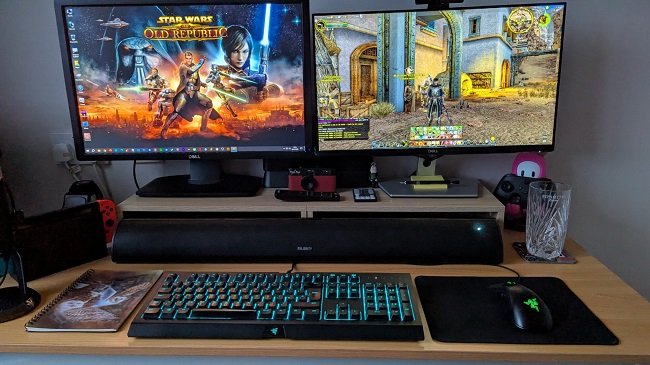
I like to do specific tasks via specific devices. As my phone is constantly with me, I primarily use it to access emails, texts, WhatsApp and Twitter. My desktop PC is where I write, create and edit podcasts and play games. My tablet is mainly for the consumption of content, such as podcasts, e-books and reading comics. The form factor lends itself to comfortably sitting on the sofa, reading a good book. A decent case means it can sit on bathroom unit, while I soak in the bath and listen to one of my favourite shows. And of course, perusing a quality graphic novel on a 10-inch screen is definitely a good way to enjoy the medium. So, bearing all this in mind, I knew in advance that I didn’t need a top end Samsung tablet along with it’s accompanying price tag. It soon became apparent that the Amazon Fire HD 10 would cover all my needs and I am happy to confirm that it certainly does. Its total cost was £100, although I also bought the matching case which added a further £25 on the overall price.
To start with let’s get the “negative” points out of the way first. Samsung and Apple tablets always feel incredibly robust, solid and “good quality” when you handle them. The Amazon Fire HD 10 feels cheaper. That’s not to say fragile because it’s not. But it’s rudimentary plastic build is what it is. The Fire operating system is not pure Android but Amazon’s own customised build. This is optimised towards Amazon’s own eco-system and therefore excludes rival apps. However, it is far from difficult to sideload Google Play store and add those apps you desire. The camera is also below par, but as it’s not really what I bought the table tablet for, it seems irrelevant. Frankly does anyone buy a tablet for the camera? The Amazon Fire HD 10 plus points are by far more important. First off there’s a nice 1920 x 1080 display. Its is sharp bright and vibrant making it eminently suitable for watching movies and streaming content. Battery life is also robust offering 10 hours of “mixed” use. The MediaTek quad-core processor is combined with 2GB of RAM and performs well. Navigation is smooth and there’s no major lag when navigating the interface. And then there’s the price which is approximately a third of the latest iPad.
I bought the 32GB version of the Amazon Fire HD 10, which so far is adequate for my needs. If there are any issues, then I can make use of the microSD card slot which offers up to another 256GB of storage space. Contrary to what I expected I have not had to make too many changes to the UI. I have turned off some of the superfluous Amazon promotional features and have dragged the unnecessary icons into a single tidy folder. I quickly found simple instructions online as to how to install the various Google apps I needed. At present my tablet has both Netflix and Amazon Prime, along with Podcast Addict, You Tube and Challenger Comics Viewer. I have no immediate intention of bloating OS with additional services, although I’m sure it can easily accommodate them. I also like the simple but functional Amazon case that I bought. Overall, I am pleased with this purchase as it has totally met my expectations. Compared to the past where I used to jump in feet first with new tech and tended to be an early adopter, I now favour this more targeted and measured approach. If your tablet needs are equally as straight forward to mine, you too may find the Amazon Fire HD 10 to be the best option currently on the market.










Thoughts on Blogging Part 5
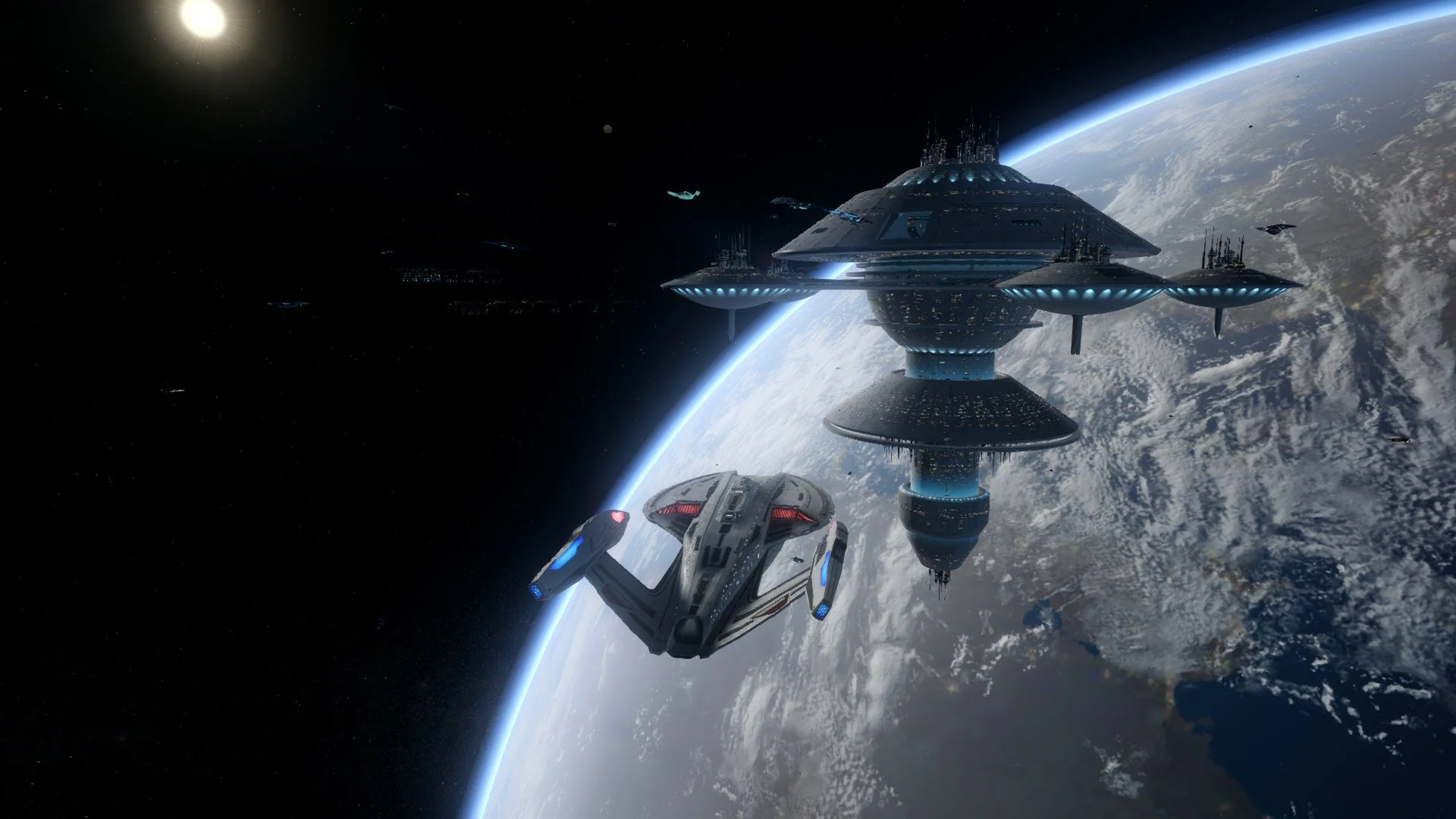
This week, a rather high profile sub-reddit associated with the Star Trek Online community, changed its status to “private” as a means of protesting against the state of the game and the way developers Cryptic are handling things. That matter was surprisingly resolved within 24 hours after an olive branch was extended from the STO community manager on reddit. However, it is not the protest itself nor the state of the game that I wish to focus upon, but the importance of /r/stobuilds as a shared community resource. A lot of STO players enjoy optimising their builds and tweaking their loadout and this site it the place to go to share such information. There is also a group of hardcore players that dig deep into the games data and comprehensively crunch number and generate useful information. Hence if a resource such as this was taken offline for longer period of time, it would have a tangible impact upon players and the wider community.
This week, a rather high profile sub-reddit associated with the Star Trek Online community, changed its status to “private” as a means of protesting against the state of the game and the way developers Cryptic are handling things. That matter was surprisingly resolved within 24 hours after an olive branch was extended from the STO community manager on reddit. However, it is not the protest itself nor the state of the game that I wish to focus upon, but the importance of /r/stobuilds as a shared community resource. A lot of STO players enjoy optimising their builds and tweaking their loadout and this site it the place to go to share such information. There is also a group of hardcore players that dig deep into the games data and comprehensively crunch number and generate useful information. Hence if a resource such as this was taken offline for longer period of time, it would have a tangible impact upon players and the wider community.
Now not every fansite, blog or player run resource are of a comparable size and significance, but I would cogently argue that they all contribute to their respective communities in essentially the same manner. They’re sharing information, enthusiasm and support for the things that they love and are entertaining and communicating with others. A fellow blogger who wrote a popular MMO fansite, once told me that they considered their writing as a public service in a way. I do not think the remark was a reflection of their vanity. It simply showed that they enjoyed participating in a wider community and sharing what they knew. However, they also remarked that once you find yourself in a position where your work becomes important to the wider community, you can become a “prisoner of your own success”. This then raises the spectre of “obligation” over writing for pleasure. If you’re creating guides for an MMO or data mining the latest patch, then you can end up in this position.
I have a plethora of websites and blogs, bookmarked in my web browser. Most are run by fans and despite the fact they are amateur publications, many are of an extremely high standard. In fact, they often put the professionals to shame. Such blogs are often done by sole individuals, busy couples or over stretched collectives who are passionate about their subject. A lot of people benefit from the hard work that they put in. The recent LOTRO renaissance has highlighted for me just how many great fan-based resources still exist, but it has also reminded me of how many blogs and podcast have retired of “faded” over the years. The absence of some are still sorely missed. Expressing yourself through written words is more labour intensive than producing content for other platforms. It is less ephemeral due to the thought and consideration that good writing takes. In some respects, the bloggers surrounding certain games are a microcosm of the of the wider community.
There’s been a lot of talk of late regarding preserving video games history. It is indeed an interesting proposition because it is in historical terms such a relatively recent phenomenon. However, if you wish to preserve games per se, as we currently do with other art forms such as movies, music and books, then surely preserving their associated impact on popular culture is equally as important? Fifty years from now when it can be safely assumed that World of Warcraft should have run its course, having access to the myriad of websites and fan resources that evolved around the MMO will be key to understanding the popularity of the game itself. Surely, such a concept logically extends to blogging around any aspect of popular culture? Naturally not every site or blog is destined to be of paramount historical importance, but all contribute in their own unique way to bigger community picture. Consider that next time you write, and it may help motivate you. Or it may do the opposite.














Hanna (2011)
Some people seem to draw parallels between Hanna and Mathew Vaughn’s Kick-Ass but the similarities are somewhat superficial. One is traditional, intelligent action thriller about a youthful female assassin. The other is a tongue-in-cheek neo-exploitation movie, involving a preteen vigilante. The more you compare them the greater the differences become. So, let us start by dismissing such erroneous comparisons.
Some people seem to draw parallels between Hanna and Mathew Vaughn’s Kick-Ass but the similarities are somewhat superficial. One is traditional, intelligent action thriller about a youthful female assassin. The other is a tongue-in-cheek neo-exploitation movie, involving a preteen vigilante. The more you compare them the greater the differences become. So, let us start by dismissing such erroneous comparisons.
One of the most compelling reason to see Hanna is Saoirse Ronan's performance, previously seen in Atonement and Peter Jackson’s The Lovely Bones. It is precise and utterly compelling. Another selling point is Joe Wright's tight and well measured direction. This is a real revelation as his previous works tend to be costume pieces or worthy human dramas. Yet he shows a real feel for the genre proving that some directors can successfully change verticals (unlike Marc Forster, who struggled to grasp the concept of a Bond movie, with Quantum of Solace).
The plot is a straight forward affair about an individual raised in isolation and subsequently discovering on contact with the real world, that they are “different”. There is the implication that Hanna is not only the product of her upbringing, by ex-assassin Eric Bana, but potentially the child of a genetic experiment. Once the initial premise has been established, the script is essentially a series of action sequences, shot in a very contemporary fashion (hence achieving its PG-13/12A rating). The story is neatly structured although formulaic, with a twist ending that really isn't that much of a revalation.
Yet director Joe Wright manages to expand the story's subtext, providing more rounded characters than you would expect in a genre piece such as this. Cate Blanchett and Tom Hollander, provide superior performances as the films antagonists. The score by the Chemical brothers is another innovative aspect that should be applauded. Soundtracks in the action movies are so often perfunctory, these days. Hanna overall is pure escapism but is elevated above the mundane by the significant talent of Joe Wright. Let us hope that he continues to experiment with different genres.
The Tractate Middoth (2013)
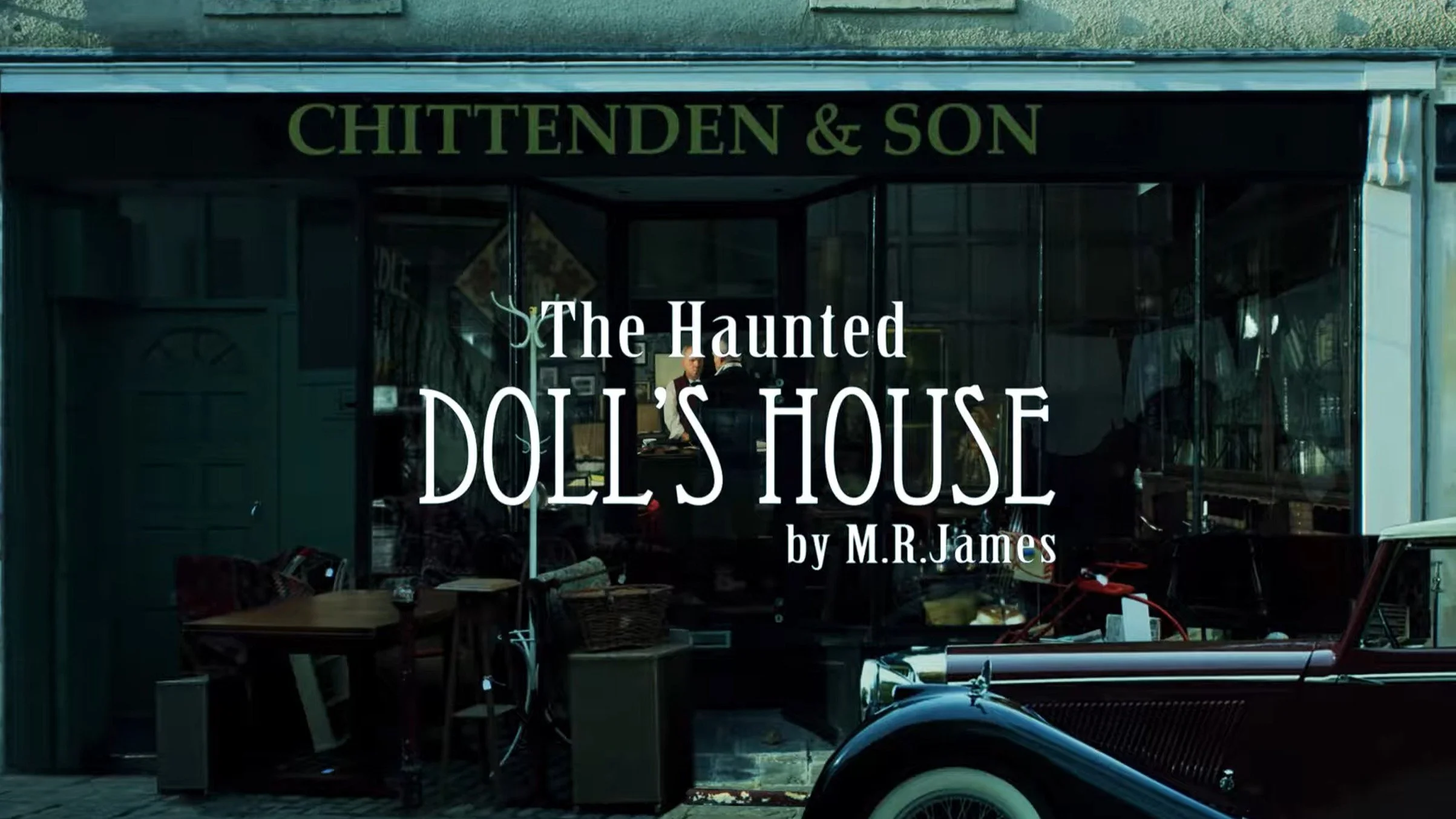
The BBC has a long and illustrious history of commissioning innovative adaptations of the works of M R James. Consider a moment the likes of Jonathan Miller's Whistle and I'll Come to You or The Ash Tree by Lawrence Gordon Clark. If you are unfamiliar with these short television dramas, then I strongly advise you to seek them out. They are the epitome of quality television forays into the world of the supernatural. The Tractate Middoth, written and directed by Mark Gatiss, once again demonstrates how well the finely crafted short stories of Monty James lend themselves to the medium of film. Mr. Gatiss has a clear understanding and passion for the horror genre and proves (as he did with Sherlock) that "adaptation" does not have to mean "bastardisation".
The BBC has a long and illustrious history of commissioning innovative adaptations of the works of M R James. Consider a moment the likes of Jonathan Miller's Whistle and I'll Come to You or The Ash Tree by Lawrence Gordon Clark. If you are unfamiliar with these short television dramas, then I strongly advise you to seek them out. They are the epitome of quality television forays into the world of the supernatural. The Tractate Middoth, written and directed by Mark Gatiss, once again demonstrates how well the finely crafted short stories of Monty James lend themselves to the medium of film. Mr. Gatiss has a clear understanding and passion for the horror genre and proves (as he did with Sherlock) that "adaptation" does not have to mean "bastardisation".
The Tractate Middoth relocates the events of the story from the Edwardian era, to the early Fifties but apart from this change the production remains remarkably faithful to the text. We meet young librarian Mr. Garnett (Sacha Dhawan) who has a rather disturbing experience while searching for an old tome of Hebrew text for an irascible academic John Eldred (John Castle). It would appear that a mysterious third part may have an interest in the book. While recovering from his shock, with a dose of country air, Mr. Garnett meets Mrs. Simpson (Louise Jameson) and her daughter Anne (Charlie Clemmow). They tell a strange tale of a missing last will and testament that would make them heir to a sizeable inheritance. Unfortunately, the document has been written in an obscure book. Could it be the very same volume that lead to Mr. Garnett's supernatural experience?
This delightful adaptation blends the erudition and macabre atmosphere of M R James with the wit and intelligence of Mark Gatiss. The two complement each other very well. M R James's liking for comedic minor officials and bureaucrats is embellished by Mark Gatiss, leading to some clever observational humour and comic asides. However, this is not done to the detriment of the brooding atmosphere or the central supernatural plot. The thirty-minute adaptation has a minimum of superfluous CGI, keeping as much effects work as possible in-camera, thanks to the stylish cinematography of Steve Lawes. The prosthetics for the central ghost are suitably ghoulish and very much in accord with the original story.
The period feel is authentic and still maintains M R James cardinal rule that a good ghost story should always be set in the past and related by those who have indirectly experienced it. Performances are universally good ensuring that characters do not descend in to genre caricatures. The handsome production design and art direction reflect the architectural and topographical detail that is synonymous with all of James's short stories. It is to the director’s credit that the supernatural climax is effectively carried out in broad daylight without losing any dramatic impact. The final sting in the tail, although a whim of Mark Gatiss, is far from out-of-place.
As with the BBC adaptations from the seventies, this latest production has a distinguished pedigree, sporting such names as Una Stubbs, Eleanor Bron and John Castle. There is also a clear sense that everyone involved has a love and respect for the work of Montague Rhodes James. The Tractate Middoth is text-book example of the sort of quality television that can be produced when the right people are involved and deferred to. Mark Gatiss has spoken of the freedom afford to him by the BBC Arts Department and it is clear that their trust in him has paid off. The Tractate Middoth, is well paced and lovingly crafted, delightfully unsettling. There are several jolts leading to a classic Jamesian Wallop (Thank you Will Ross and Mike Taylor for coining that phrase).









Awake (2007)
Publicity and word of mouth are curious bedfellows. Awake came to my attention mainly because it starred Hayden Christensen, an actor whose portrayal of a young Darth Vader, looms large over his career. Not necessarily for the right reasons. The gossip of the time inferred that his performance in Awake was of a similar nature. Yet the basic premise for the movie is quite intriguing, so I decided to see for myself. Medical based thrillers are a curious and underrepresented sub-genre. Directed by Joby Harold, Awake is a "high-concept" movie that deals with the universal fear of hospitals, surgery and "anaesthetic awareness". It also features several plot twists that takes the film in a direction that the viewer may not have anticipated. The production shows signs of being influenced by the works of Hitchcock and M. Night Shyamalan and the Italian Giallo genre.
Publicity and word of mouth are curious bedfellows. Awake came to my attention mainly because it starred Hayden Christensen, an actor whose portrayal of a young Darth Vader, looms large over his career. Not necessarily for the right reasons. The gossip of the time inferred that his performance in Awake was of a similar nature. Yet the basic premise for the movie is quite intriguing, so I decided to see for myself. Medical based thrillers are a curious and underrepresented sub-genre. Directed by Joby Harold, Awake is a "high-concept" movie that deals with the universal fear of hospitals, surgery and "anaesthetic awareness". It also features several plot twists that takes the film in a direction that the viewer may not have anticipated. The production shows signs of being influenced by the works of Hitchcock and M. Night Shyamalan and the Italian Giallo genre.
Clay Beresford (Hayden Christensen) is a young industrialist, with a heart defect. Secretly engaged to his secretary Sam (Jessica Alba), Clay worries about their future. He shares these with his heart surgeon friend, Dr. Jack (Terrence Howard) who urges surgery. On the very night of his secret marriage, a heart donor is found, and Clay is rushed into hospital. His controlling mother (Lena Olin) wants her choice of surgeon to handle the transplant. Once under general anaesthesia, Clay finds he is fully awake but unable to communicate his condition to any of the operating theatre staff. As the heart transplant procedure begins, Clay must endure the agony. With all his senses working, he soon learns that greater threats lie ahead and that his current situation is far from a medical mistake.
The narrative unfolds quite rapidly during the first act of Awake, moving the film along at a fast pace. Unfortunately, this is at the expense of character development. Both Alba and Christensen give adequate performances, but the film is carried by the Olin, and Howard who frankly have more interesting roles to sink their teeth into. I got the feeling that there was a lot of dialogue removed from the final edit of the film. The narrative seems too focused on moving forward. There are apparently seven deleted scenes on the Region 1 DVD release. Perhaps the film would have benefited from their reinstatement.
The despite horrific idea of "Anaesthesia Awareness", it is explored with a degree of subtlety. The scenes of surgery are unpleasant but not excessive and are sufficient to put your teeth on edge. Writer and director Joby Harold decide to employ several plot twists that increasing tax the audience’s suspension of disbelief. It is here that opinion divides. Some critics felt that there were simply too many narrative indulgences that strained credibility. There is also a specific point in the story when the film takes an unexpected turn into a completely different genre. I would also argue that even the most casual of viewer would see through some of the medical inconsistencies.
Awake had a troubled production with multiple cast change. As a result, the studio lacked confidence in the film. In more experienced hands, the scares would have been harder and the performances stronger. Yet despite these shortcomings, I still enjoyed Awake. It reminded me of film noirs of the fifties such as DOA and also of the sort of tales you’d find in The Twilight Zone. Even considering its faults, at least we have a film that tries to approach its subject with a degree of creativity. Awake does not wholly deserve the battering it received at the hands of the critics. So, if you are of a forgiving nature and have a liking for more traditional thrillers, it may be worth ninety minutes of your time.


Pick-up Groups and MMOs
Star Trek Online has recently revamped group PVE activities and rebranded them Task Force Operations. These are just instanced events designed for five players, that have a handful of objectives and a boss fight at the end. Players can group with friends or use the auto-grouping tool that is available, to play through TFO of their own choosing. Alternatively, there is the option to join a pick-up group and play a random TFO for greater rewards. Now although not unduly complex, TFOs usually have a basic set of rules to follow if you want to complete them quickly and efficiently. For example, closing dimensional portals reduces the number of trash mobs joining the TFO, so it makes sense for at least one of the five players to focus on this activity. However, PUGs are open to all players and therefore there is always a chance that you may group with an inexperienced player or someone who wants to do things “their way”. Either way, if you are seeking optimal gameplay, then PUGs may not be the best place to look.
Star Trek Online has recently revamped group PVE activities and rebranded them Task Force Operations. These are just instanced events designed for five players, that have a handful of objectives and a boss fight at the end. Players can group with friends or use the auto-grouping tool that is available, to play through TFO of their own choosing. Alternatively, there is the option to join a pick-up group and play a random TFO for greater rewards. Now although not unduly complex, TFOs usually have a basic set of rules to follow if you want to complete them quickly and efficiently. For example, closing dimensional portals reduces the number of trash mobs joining the TFO, so it makes sense for at least one of the five players to focus on this activity. However, PUGs are open to all players and therefore there is always a chance that you may group with an inexperienced player or someone who wants to do things “their way”. Either way, if you are seeking optimal gameplay, then PUGs may not be the best place to look.
Now, you may well ask “why are you stating the bleedin’ obvious about PUGs?” Well the reason I’ve chosen to succinctly distil and reiterate their respective pros and cons is because I continuously come across gamers regularly lamenting the iniquities of PUGs, as if they’re supposed to function in a fashion that is contrary to their nature. It’s a bit like complaining about a compass for pointing north or a politician for lying. Joking aside, pick-up groups are not intended to be efficient. They are designed to facilitate group play in an expedient manner. Many MMOs have players who either cannot find a guild, do not want to be in a guild or simply have time restrictions that impede grouping with regular friends and online colleagues. PUGs and auto grouping tools are a means to facilitate such players in accessing instances and other content designed to be played as a group. It’s not as if game developers are oblivious to the potential shortcomings of such systems. Hence in STO and other MMOs, players will receive a bonus reward for playing via auto grouping.
The key to successfully using any PUG mechanic in an MMO is to greatly temper your expectations and to use auto grouping tactically. For example, I recently used LFF chat in LOTRO to run a particular 6-man instance. I did not expect to successfully complete everything but was simply tagging along to see if we could defeat the first boss, which I needed for a deed. The group performed poorly, and it was a struggle to progress, but we did get to the end. Not only did I complete the deed, but I also got the benefit of some loot that I wasn’t anticipating on getting. For me this was an added bonus, so I was not discouraged by the multiple wipes that the group endured. Where some players felt we’d performed poorly, I was pleasantly surprised because I had been realistic about what we could achieve as a group, right from the start.
PUGs are not always a bad experience and there are many factors that determine their outcome. Some groups in certain games require very little direct interaction. The TFOs in Star Trek Online can be undertaken without any need for chat. I personally always say “hello” and “good game” but it’s not essential. Quitting a group for whatever reason usually doesn’t involve too big a penalty. It may result in a thirty-minute sanction or reduced rewards but nothing more. Depending on the game, some will offer rewards even if the primary goals of an instance aren’t even achieved. This alone can make the use of auto grouping viable for some players. As the MMO genre has been around for over two decades, it has developed several universal foibles. One of these is the capricious nature of collaborating with random strangers. Would you expect five random people in the real world to work extremely efficiently together after just meeting? Of course not. So why should something as frivolous as a game be any different? Frankly excessive criticism of the PUG system with regard to MMOs is redundant. PUGs in other genres of games is a separate matter.

LOTRO: Coming Full Circle
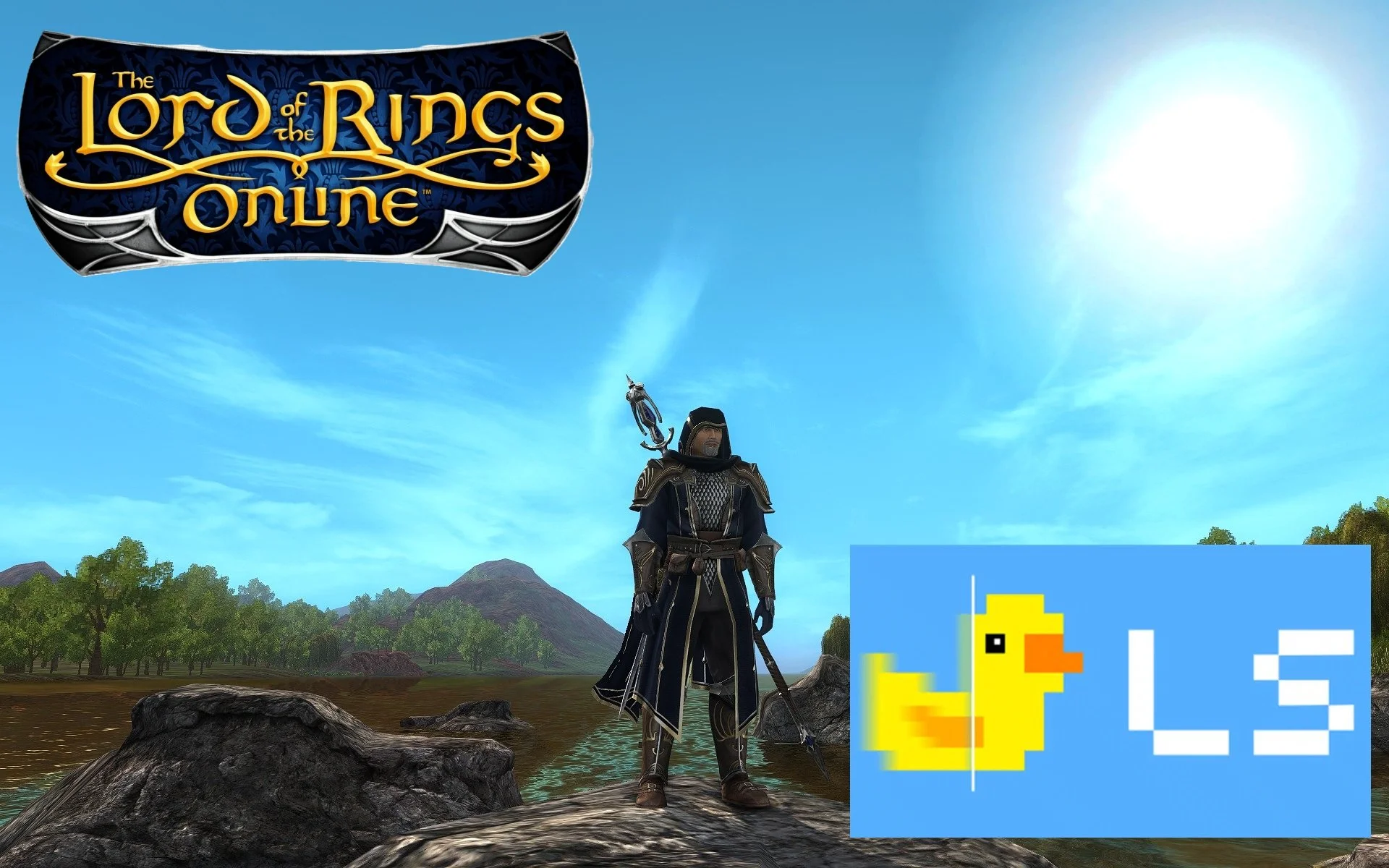
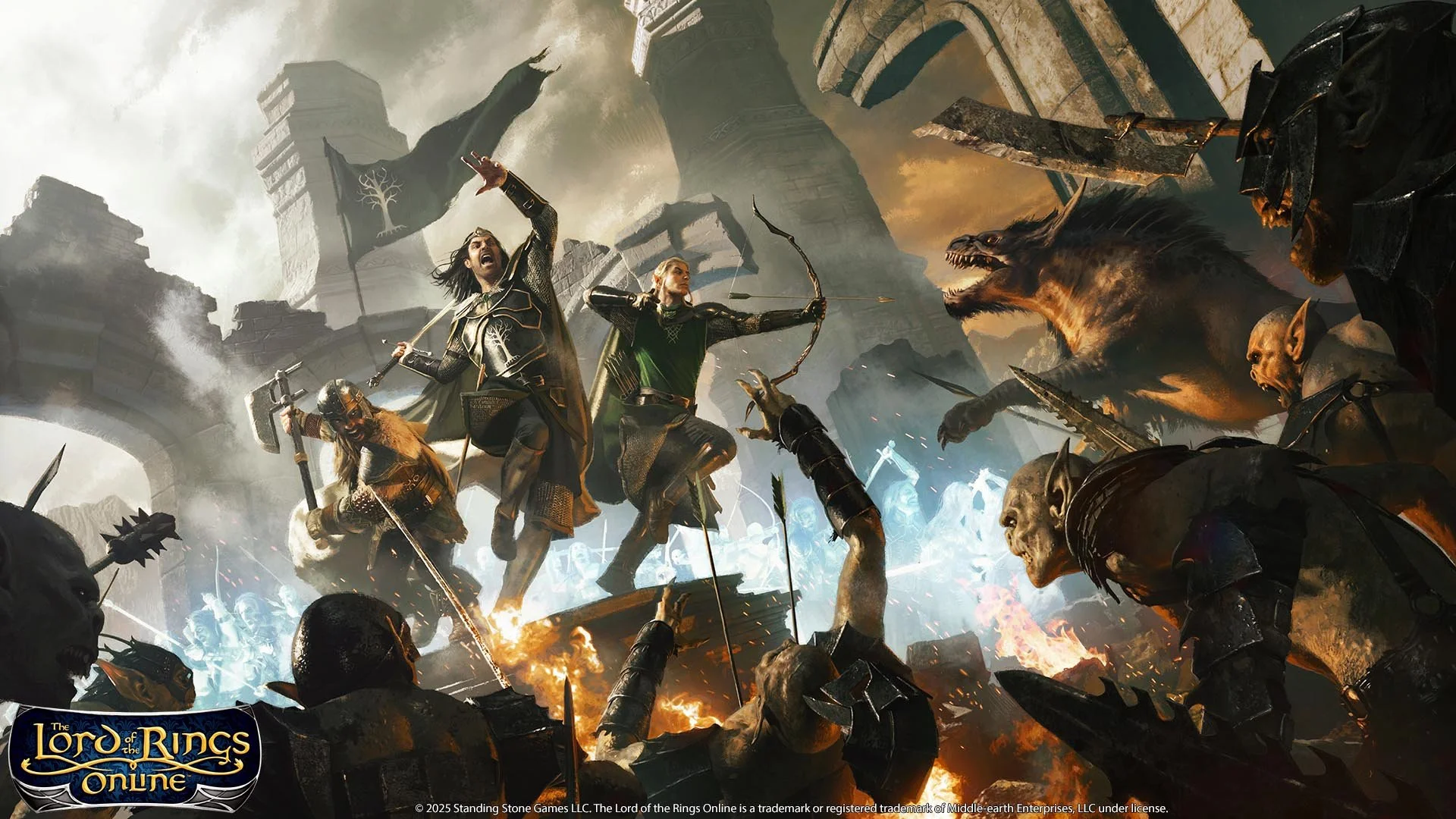
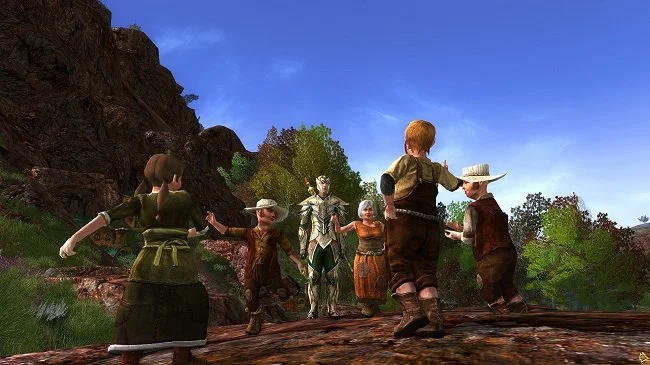
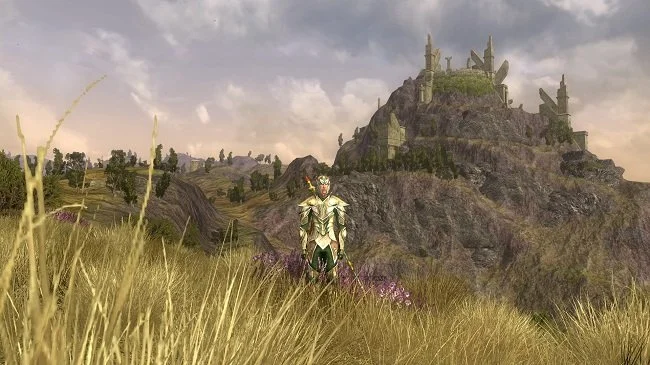
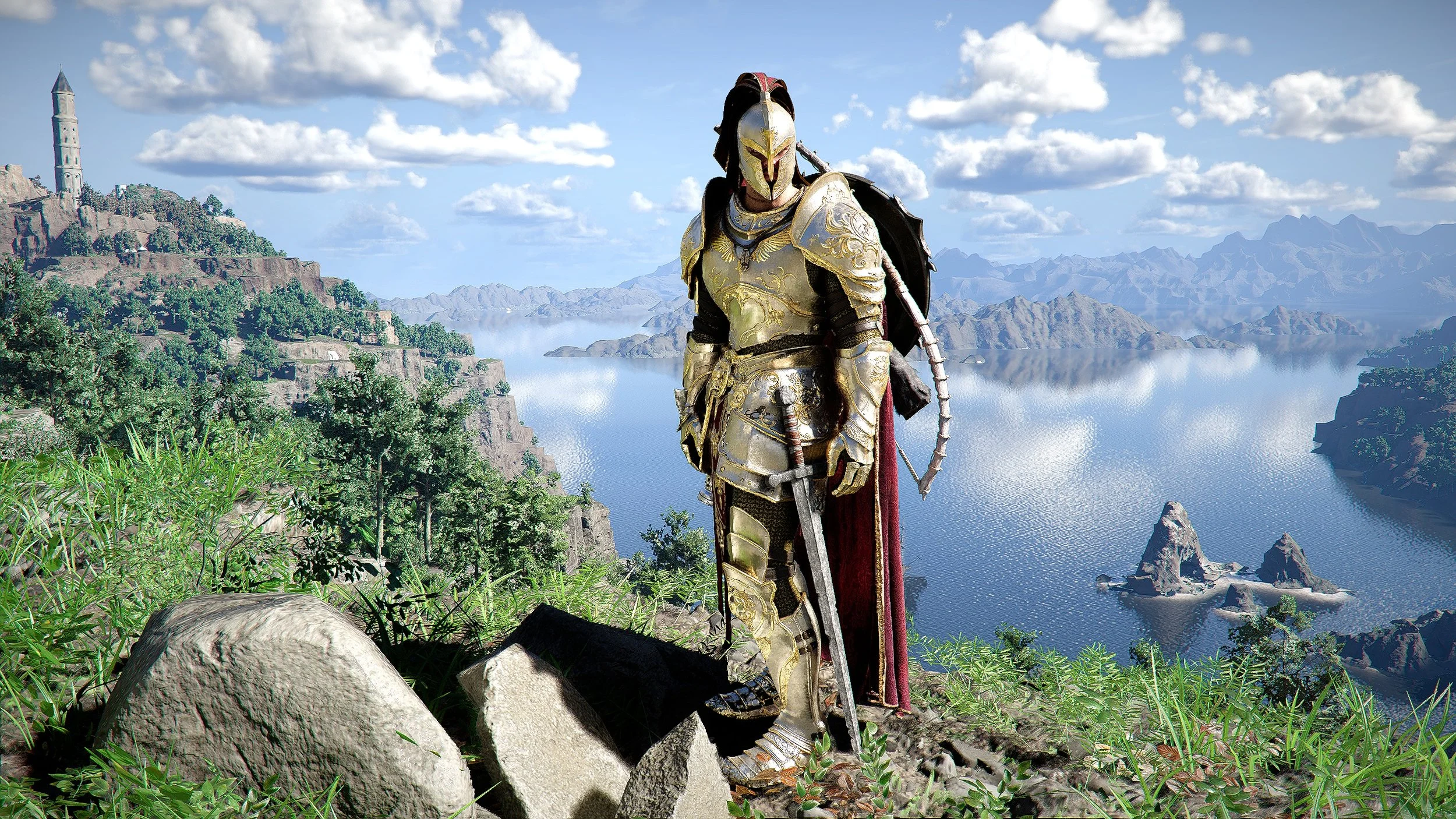
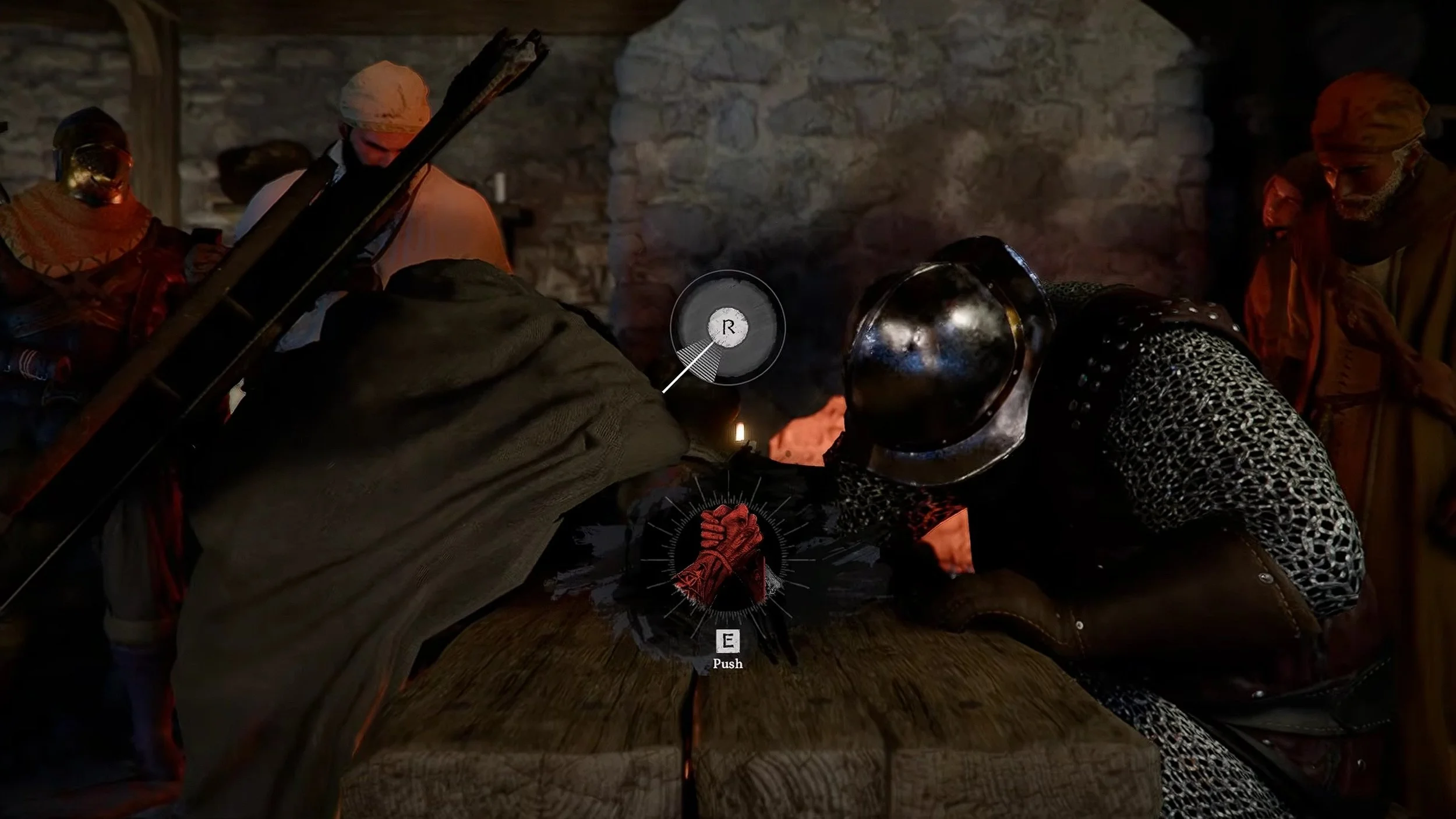
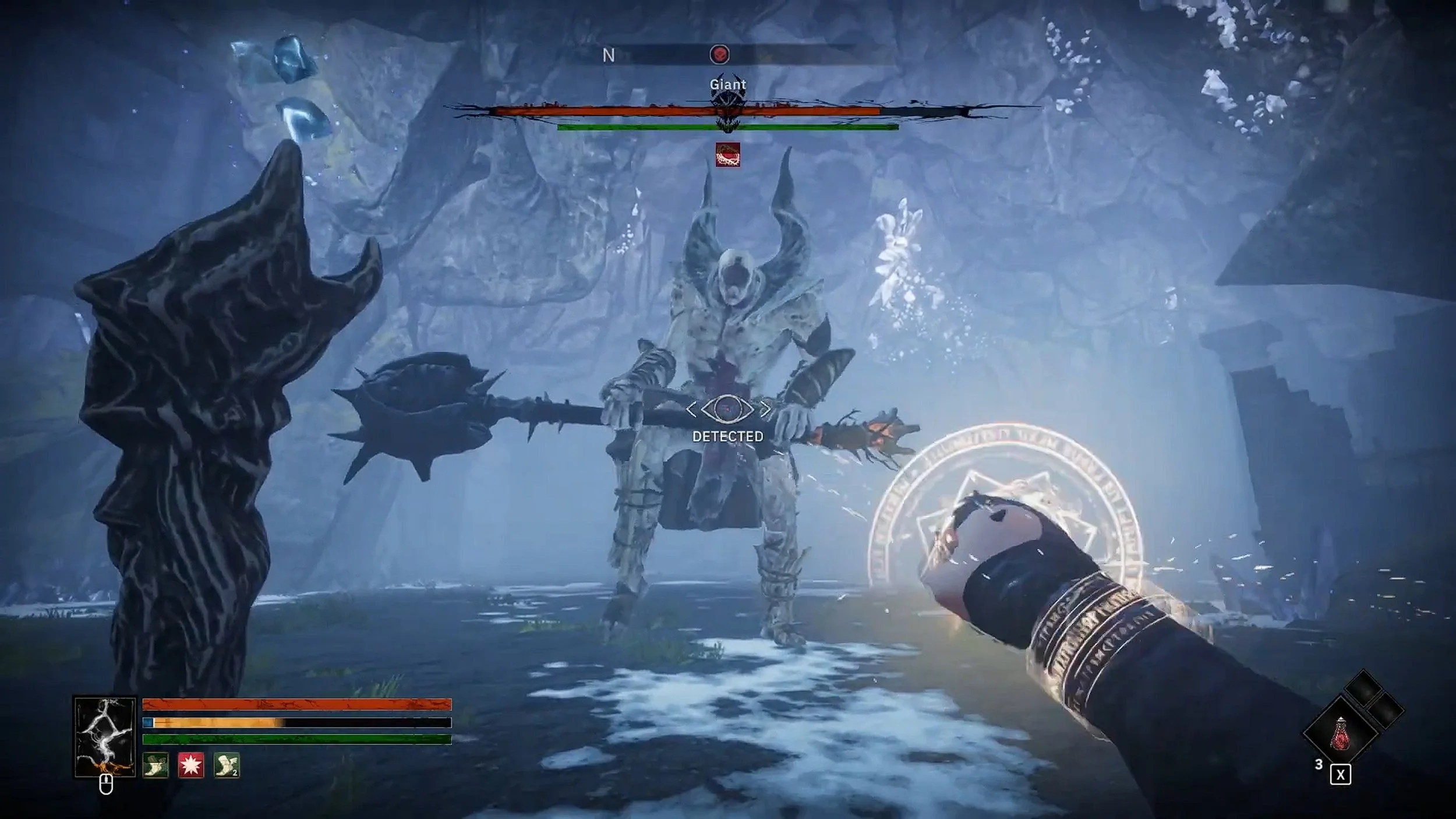
I returned to LOTRO in August and started to work through all the outstanding content that had built up during my absence. I have subsequently completed the Mordor expansion pack, along with all of Update 22: Legacy of the Necromancer and Update23: Where Dragons Dwell. This has meant consistently playing, re-gearing my primary character (twice) and generally tweaking different aspects of their build. I have applied myself to the various stories and have not felt overwhelmed by the narrative. Overall, I haven’t played LOTRO this diligently since I joined back in late 2008. This recent experience, along with launch of the Legendary Server, has been extremely satisfying. It’s all been very nostalgic, and I have found myself of late occasionally recapturing the feelings that I had a decade ago. Especially so when questing with friends and tackling group content. I have also thoroughly enjoyed the new Dwarven focused storyline in the Grey Mountains. It’s a rugged yet interesting zone with some exceeding good ambient music.
LOTRO: 14th September 2009
I returned to LOTRO in August and started to work through all the outstanding content that had built up during my absence. I have subsequently completed the Mordor expansion pack, along with all of Update 22: Legacy of the Necromancer and Update23: Where Dragons Dwell. This has meant consistently playing, re-gearing my primary character (twice) and generally tweaking different aspects of their build. I have applied myself to the various stories and have not felt overwhelmed by the narrative. Overall, I haven’t played LOTRO this diligently since I joined back in late 2008. This recent experience, along with launch of the Legendary Server, has been extremely satisfying. It’s all been very nostalgic, and I have found myself of late occasionally recapturing the feelings that I had a decade ago. Especially so when questing with friends and tackling group content. I have also thoroughly enjoyed the new Dwarven focused storyline in the Grey Mountains. It’s a rugged yet interesting zone with some exceeding good ambient music.
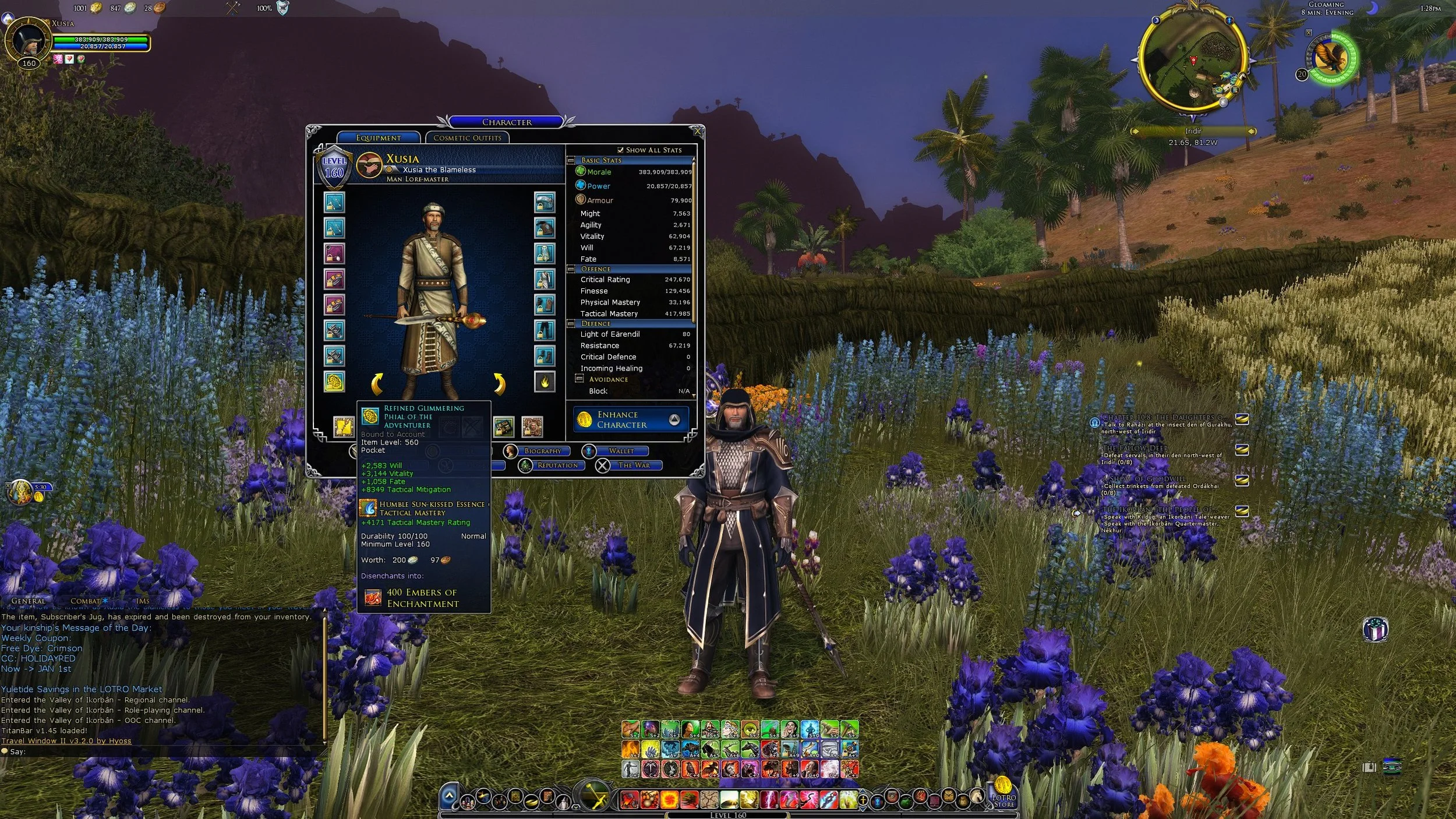
It’s a curious thing, that despite having regularly played a specific MMO for a decade, I am not exactly an expert on any of the games systems or the specifics of my primary characters statistics. I often just inspect other players of the same class and have copied their build. I have not been especially selective about the skills tree either and have simply maxed out the red line and put the few remaining points into what seem relevant in the blue and yellow lines. It is only since August that I’ve started taking a greater interest in min-maxing in LOTRO, mainly because the gear check that appears early on in Mordor is so abrupt. As a result, I’ve changed my virtue traits, replaced settings, runes and gems on my LI and been far more particular about the stats on any gear that I equip. The subsequent benefits have been quite noticeable. I even pay more attention now to my skills rotation and vary it according to the enemy. It’s only taken ten years for me to start playing at this “level”, although I still find an excess of number crunching ultimately quite dull.
LOTRO: 16th November 2018
Despite having changed PC several times since I started playing LOTRO and re-installed the game numerous times, I still have every screen capture I’ve ever taken. I found on taken on 14th September 2009 back when I was playing on the European server, Gilrain. My Lore-master is sporting a very simply cosmetic outfit, comprising of some Elvish light armour (bought in Rivendell) and dyed black. In a fit of nostalgia, I promptly recreated the outfit today and am currently wearing it for old time sake. It’s strange but this simple act seems to embody the sense I have at present of coming full circle. Playing the same MMO for a decade is a substantial investment of time. A lot has happened both in-game and to me personally during this period. I suspect that a good many other players are also having similar such moments of introspection at present. The Legendary Servers seem to have roused many lapsed players into returning to the game. A LOTRO renaissance if you will. Who would have thought it?
LOTRO: Releasing the Complete Soundtrack
I have written in the past about the quality of the soundtrack for the MMO The Lord of the Rings Online and how it is far more than an embellishment to the game but a character in itself. Now the developers of LOTRO Standing Stone Games (formerly Turbine) have released over the years a variety of soundtrack CDs and digital downloads, offering a selection of music usually associated with specific expansions for the game. Although these have been well received, they have only provided a percentage of the music that is present in the current release of LOTRO. In the latest build there is approximately 4GB of audio in the game. Admittedly some of this will be dialogue and ambient sounds but the majority of that is music cues in .ogg format. I sure I’m not the only LOTRO aficionado who would like to see a more comprehensive release of the games musical content.
I have written in the past about the quality of the soundtrack for the MMO The Lord of the Rings Online and how it is far more than an embellishment to the game but a character in itself. Now the developers of LOTRO Standing Stone Games (formerly Turbine) have released over the years a variety of soundtrack CDs and digital downloads, offering a selection of music usually associated with specific expansions for the game. Although these have been well received, they have only provided a percentage of the music that is present in the current release of LOTRO. In the latest build there is approximately 4GB of audio in the game. Admittedly some of this will be dialogue and ambient sounds but the majority of that is music cues in .ogg format. I sure I’m not the only LOTRO aficionado who would like to see a more comprehensive release of the games musical content.
When LOTRO was released in 2007, there was a soundtrack CD in the Collector’s Edition. This included 26 tracks from the Shadow of Angmar written by composers Chance Thomas and Steve DiGregorio. A similar CD was then released in the Collector’s Edition of The Mines of Moria expansion. This included 18 tracks. I believe that Turbine also made a digital download available comprising of 61 cues from the base game, shortly after this. Neither of these two official soundtrack CDs were ever made commercially available outside of these boxsets. The digital download is also no longer available. Since 2010, when LOTRO went free-to-play, there have been three further soundtrack CDs released (also available via digital download). Two of which are music written by composer Chance Thomas for the Riders of Rohan and Mordor expansions. Then there’s a tenth anniversary CD and download featuring a compilation of 26 tracks, of mainly previously available material by both composers. Some of these are alternative versions and there are a handful of new cues. These CDs are still available. It should also be noted that composer Steve DiGregorio has posted the soundtrack for the Helm’s Deep expansion and Update 14: Paths of the Dead on his Soundcloud account.
Music rights, licensing and distribution arrangements can be legally complex to administer. I am not privy to the specific arrangements that Standing Stone Games has with regard to the game’s soundtrack and its respective composers. However, the fact that music from the game has been released previously must be a positive sign. What I can say with confidence is that LOTRO’s music is held in very high regard among both fans and wider MMO players, due to its particular high standard and artistic scope. Therefore, if SSG wanted to release a more comprehensive selection of music from the game, that was broken down by region, race or release date, I’m sure it would receive a warm welcome from the player base and more importantly, sell very well. Furthermore, it is a non-egregious form of monetisation that they could continue to perpetuate as the game grows. It remains to be seen if lobbying for such a release will yield any results, but I can’t help but feel that SSG are missing out on an opportunity in this instance.
Gone Girl (2014)
Gone Girl is an exquisitely crafted piece of contemporary film making. Its visual aesthetic is sleek, elegant and ever so modern. At times the interior shots of Nick and Amy’s Missouri home, take on an almost clinical quality. Everything is of the finest quality but utterly soulless. This of course is the central theme of the entire movie. This is a tale to two people with no true identity of their own, who are desperately pursuing an abstract concept of who and what they should be. Gone Girl is about utterly dysfunctional, broken people, the worst excesses of the consumerist culture and the stark impact that rolling news has upon public opinion. It is not the overall storyline that is horrific but the reality of the world in which it takes place. It makes for fascinating viewing but leaves one feeling incredibly bleak about certain quarters of society.
Gone Girl is an exquisitely crafted piece of contemporary film making. Its visual aesthetic is sleek, elegant and ever so modern. At times the interior shots of Nick and Amy’s Missouri home, take on an almost clinical quality. Everything is of the finest quality but utterly soulless. This of course is the central theme of the entire movie. This is a tale to two people with no true identity of their own, who are desperately pursuing an abstract concept of who and what they should be. Gone Girl is about utterly dysfunctional, broken people, the worst excesses of the consumerist culture and the stark impact that rolling news has upon public opinion. It is not the overall storyline that is horrific but the reality of the world in which it takes place. It makes for fascinating viewing but leaves one feeling incredibly bleak about certain quarters of society.
Failing author Nick Dunne (Ben Affleck) comes home to find his wife Amy (Rosamund Pyke) missing and signs of struggle. The Police are initially sympathetic but when Nick fails to behave in accordance with public expectations at the press conference, opinion and tabloid outrage turns against him. It is not long before evidence indicates that not all is well in their relationship and Nick becomes the prime suspect in a potential murder investigation. Of course, nothing is as it seems and the movie re-invents itself several time during the two and half hour duration.
Gone Girl does not shy away from examining the reality of a failed relationship and the dialogue is frequently ripe and the camera unflinching. Director David Fincher, along with writer Gillian Flynn who adapted her own novel, dissects the hollow existence of the aspirational classes as well as their warped interpretation of the institution of marriage. Perhaps the movies boldest move is its scrutiny of sexual politics and gender roles in modern America. There are monologues stripped straight from the book that may shock those of a more conservative nature, in that “did she really say that out loud” way?
Like so many movies of this nature that are centred on a complex mystery and plots within plots, it falls down somewhat during the third act when trying to neatly bring all the plot threads together. Yet this does not mitigate the films core themes, nor diminish the strength of the lead performances. Rosamund Pyke is hypnotic whenever on screen. It would also be remiss of me if I didn't mention the movies only likeable character that of Detective Rhonda Boney played with conviction by Kim Dickens.
On many levels Gone Girl is an extremely laudable piece of film making. It is confident, technically outstanding and emotionally detached from its subject matter. Often, we are simply shown events and left to dwell on them from our own moral and ethical perspective. Yet my enjoyment of the movie was tempered by the fact that I was consciously prejudice towards the central characters. This is a movie about what I consider to be awful human beings and the very culture that makes them the way they are. Such an exploration is fascinating to behold but simultaneously repellent due to my lack of empathy towards these dry husks, masquerading as people.
World War Z (2013)
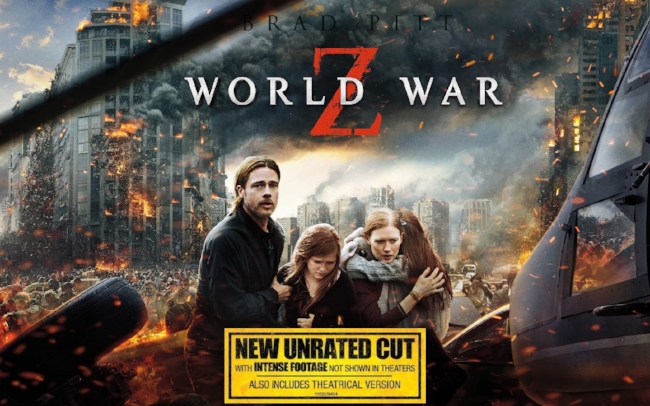
Contrary to a lot of the pre-release doom and gloom regarding re-edits and extensive new footage being shot, World War Z turned out to be far from the disaster that some critics implied. Ultimately there were some good ideas and snatches of interesting dialogue. Some of the characters were unusual and there seems to have been an attempt do something different with the genre. All of these things are laudable. Unfortunately, despite these positive attributes the movie clearly shows the signs of post-production interference and material from the extensive re-shoot is all too apparent. That’s not to say that is bad because that is not the case. It’s because it is noticeably different in style and tone from the rest of the film.
Contrary to a lot of the pre-release doom and gloom regarding re-edits and extensive new footage being shot, World War Z turned out to be far from the disaster that some critics implied. Ultimately there were some good ideas and snatches of interesting dialogue. Some of the characters were unusual and there seems to have been an attempt do something different with the genre. All of these things are laudable. Unfortunately, despite these positive attributes the movie clearly shows the signs of post-production interference and material from the extensive re-shoot is all too apparent. That’s not to say that is bad because that is not the case. It’s because it is noticeably different in style and tone from the rest of the film.
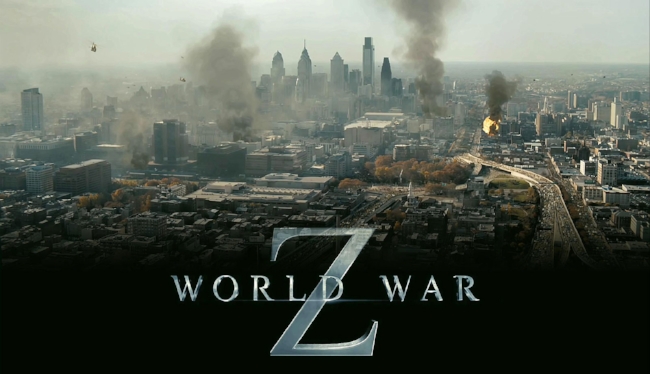
World War Z performs best in the first act, in which the global disaster is convincingly set up. We are efficiently introduced to a likeable lead Gerry Lane (Brad Pitt) and his family and within minutes they are caught up in a major outbreak incident in Philadelphia. The movie excels at showing large scale and convincing scenes of destruction, scratching that perennial cinematic itch audiences seem to have for scenes of an apocalyptic nature. Yet even at this point, the narrative has moments of hesitation which undermine the overall movie. World War Z is reticent to clarify exactly whether this is a true Zombie scenario or some sort of viral outbreak. If this was done for dramatic effect, I can understand it as a plot point to reinforce the sense of national confusion. But I feel the ambiguity is actually a result of the movies re-editing.
The plot soon takes on a globetrotting sub plot as our World Health Organisation hero (Brad Pitt) travels from South Korea, to Israel and then to Wales in attempt to find patient zero. We meet many characters along the way, yet few of them have sufficient screen time to become anything more than just a means of exposition. The Navy seal officer who sacrifices himself, the ex-CIA agent turned arms trader, the Hispanic parents who become infected and turn on their own children, all show promise dramatically. The dialogue also has possibility, showing a leaning towards the more philosophical. Perhaps an extra twenty minutes of material could correct these deficiencies. Zombies hurling themselves at potential victims cannot sustain a movie.
As I stated earlier the final act, although interesting, doesn't sit well with the previous two. Set in a WHO laboratory in Wales, it is a far more sedate and traditional denouement. The absence of the shaky cam and lightning editing of the first hour is noticeable. There is also the incongruous casting of Peter Capaldi as a research scientist which, after years of seeing him as Malcolm Tucker in The Thick of It, it becomes hard to see him in a role where every other word is not a profanity. Furthermore, the movie's conclusion, although plausible within the context of the story, is derailed by it being solely the brain work of Gerry Lane. The whole point of World War Z is surely its global dimension and thus its resolution is based upon the involvement of multiple parties. The one man saves the day concept seems somewhat lazy.
Ultimately, despite promising concepts World War Z fails to satisfy any of its target audiences and demographics. The PG-13 rating forces too many restrictions upon a genre that by its very nature has to be visceral. Death is cruel and ugly, and zombies reflect this. Yet such a low rating has meant that the producers have had to obfuscate and fudge the violence and horror through rapid editing and out of shot framing. The movie does have a dark and brooding tone, but this is not enough to sustain the horror theme alone. Perhaps Max Brooks' book, which is very challenging to adapt, would have been better suited to a TV mini-series. But is that required in the wake of The Walking Dead? I certainly question whether Marc Forster was the right person to direct World War Z. In the mean time if you do elect to watch World War Z then seek out the unrated version which at least has a little more gore and an increase sense of urgency.



Searching Content on Contains Moderate Peril
If you are a WordPress user, there are a multitude of plugins that you can apply to your blog to tweak and customise it. The only downside of this is that every time WordPress upgrade their software, all your plugins subsequently need to be updated. Many plugins are written by third parties and therefore you do not have guaranteed long-term support. Plugins can also be exploited, which is why I ultimately decided to stop using WordPress for my website. I made the transition to Squarespace for my hosting needs in August 2015 and have never looked back since then. However, I have been using the same template for three years now and I was pondering recently whether it was time to change it. Yet a change of this kind is bound to have knock-on effects and could potentially end up creating more problems than it solves. So rather than go off half cocked, I decided to do some research to see if I could improve the functionality of my blog.
If you are a WordPress user, there are a multitude of plugins that you can apply to your blog to tweak and customise it. The only downside of this is that every time WordPress upgrade their software, all your plugins subsequently need to be updated. Many plugins are written by third parties and therefore you do not have guaranteed long-term support. Plugins can also be exploited, which is why I ultimately decided to stop using WordPress for my website. I made the transition to Squarespace for my hosting needs in August 2015 and have never looked back since then. However, I have been using the same template for three years now and I was pondering recently whether it was time to change it. Yet a change of this kind is bound to have knock-on effects and could potentially end up creating more problems than it solves. So rather than go off half cocked, I decided to do some research to see if I could improve the functionality of my blog.
After taking an in-depth look at my blog stats, both via Squarespace and Google Analytics, it’s clear that a third of readers are using their phones to access Contains Moderate Peril. Fortunately, the template I’m currently using is mobile friendly and I’m pleased with its performance. For PC users the blog is functional, despite lacking is certain interactive elements such as sidebars, blog rolls and social media links. All posts are clear and easy to read. As I think that content is by far the most important aspect of any blog, as long as it is accessible and easy to navigate then the current template is doings its job. I also consider it important to provide readers with links to similar material to that which they are already reading. Hence, all articles have a list related posts at the bottom of the body of text. This is invaluable for building an audience and exposing readers to more of your work. I find it most rewarding when I look at my blog stats and see that someone has read an article about LOTRO and then perused further content of a similar theme.
However, there is one limitation to these “summary blocks” as Squarespace calls them. They only display a maximum of 28 links to previously posted content. Subsequently as more content is added to Contains Moderate Peril, older material is gradually excluded from the “summary blocks”. Yet there is an obvious and convenient workaround. All posts are indexed by categories displayed at the page footer. If you click on any category it will then list all other posts associated with it. Hence clicking on “movies” will list all posts in that category. The site shows twenty posts at a time and readers can then access the next twenty by clicking on “older”, again at the bottom of the page. You can search by author in the same fashion. There is also a calendar on the Post Archive page (which you can access via the top menu) which lists all posts for the month. The month can be adjusted, and so readers can comprehensively see all posts that have been published since Contains Moderate Peril migrated to Squarespace. There is also a search facility for the entire site, again found on the top menu.
Ultimately, all the changes I have made to the website template are to the backend. Minor changes to SEO, key words and indexing will hopefully improve performance and allow readers to find further material if they so wish. It will be interesting to see if this post has an impact upon traffic and the way the site is used. As I’ve said in such events as The Newbie Blogger Initiative and Blaugust, writers or bloggers shouldn’t be driven by purely stats and website traffic. But if you are publicly publishing your work it is logical to make it as accessible to you readers as possible and to ensure they can search it effectively. Promotion of content via social media is one way of doing this but having an online presence that is easy and intuitive to use is also essential. Not all posts are time specific and there may be occasions when you specifically want your audience to find older content that is still pertinent. Therefore, if you aren’t already using a “related posts” or a post archive facility on your blog then you are doing yourself and more importantly your readers a disservice.
Chappie (2015)
In the near future, crime is patrolled by an oppressive mechanized police force. But now, the people are fighting back. When one police droid, Chappie, is stolen and given new programming, he becomes the first robot with the ability to think and feel for himself. As powerful, destructive forces start to see Chappie as a danger to mankind and order, they will stop at nothing to maintain the status quo and ensure that Chappie is the last of his kind. Sony Pictures Entertainment
There is much to praise about Chappie, which in turn makes me reticent to catalogue its subsequent failings. Once again Blomkamp uses a near-future Johannesburg to effectively paint a convincing picture of urban decay and social division. He manages to seamlessly integrate CGI with the physical and the overall design of all the paramilitary hardware on display is very credible. Image Engine once again created some solid visual effects and actor Sharlto Copley provides not only the voice for the titular Chappie but also a motion captured performance. The screenplay by Neil Blomkamp and Teri Tatchell makes a laudable attempt to explore the subject of Cartesian Dualism.
In the near future, crime is patrolled by an oppressive mechanized police force. But now, the people are fighting back. When one police droid, Chappie, is stolen and given new programming, he becomes the first robot with the ability to think and feel for himself. As powerful, destructive forces start to see Chappie as a danger to mankind and order, they will stop at nothing to maintain the status quo and ensure that Chappie is the last of his kind. Sony Pictures Entertainment
There is much to praise about Chappie, which in turn makes me reticent to catalogue its subsequent failings. Once again Blomkamp uses a near-future Johannesburg to effectively paint a convincing picture of urban decay and social division. He manages to seamlessly integrate CGI with the physical and the overall design of all the paramilitary hardware on display is very credible. Image Engine once again created some solid visual effects and actor Sharlto Copley provides not only the voice for the titular Chappie but also a motion captured performance. The screenplay by Neil Blomkamp and Teri Tatchell makes a laudable attempt to explore the subject of Cartesian Dualism.
Sadly, Chappie is tonally all over the place. It veers from Robocopesque violence one moment to Short Circuit sentimentality in another. Some of the plot devices are clumsy and contrived as the director struggles to take the narrative from points A to B. Many of the interesting ideas that the film raises are abandoned along the way. Then of course there are the Chappie's adopted parent, two criminals played by musical artists Ninja and Yolandi Visser. Neither are professional actors and although they have the appropriate deportment and atttitude by dint of their music careers, they fail to live up to their roles. The characters they play are also questionable and at times their manipulation of chappie is not far from child abuse.
Ultimately Chappie pursues an action-based climax and offers a semi twist ending designed to leave the audience musing upon the nature of consciousness, how parental responsibilities impact on society and the privatisation of law enforcement. Yet due to the uneven structure of the movie and its fundamental mistake of trying to be too many things at once, a lot of viewers may well end the movie dissatisfied or confused. Alex Garland's Ex Machina explored many similar themes far more effectively. Then of course the shadow of Steven Spielberg’s AI: Artificial Intelligence, looms large.
The trouble with scoring a hit with your debut picture, such as Blomkamp did with District 9, is that you're often hamstrung by your own previous success. The critics and public can be very unreasonable at times and simply expect lightning to strike twice. This is the second time that Neil Blomkamp appears to have fallen between two stools. The movie smacks of a picture that simply hasn't found the right edit and has already suffered from a lot of post-production tinkering. Apparently after initial shooting in Johannesburg, there was further re-shooting in British Columbia. So perhaps Chappie may benefit from an extended edition or a director’s cut sometime in the future. In the meantime, it remains an intriguing but uneven movie that doesn't meet its potential.





Death Wish (2018)
The latest movie adaptation of Brian Garfield’s notorious 1972 novel has not had an easy journey to the big screen. Over more than a decade, multiple directors have been associated with the project, including Sylvester Stallone, Joe Carnahan as well as Aharon Keshales and Navot Papushado. Actors such as Liam Neeson, Russel Crowe and Frank Grillo have been on the shortlist to play Paul Kersey. Yet due to differing opinions as to how the subject matter of vigilantism should be approached, most of these earlier projects failed. Joe Carnahan apparently wanted to explore the concepts of “toxic masculinity” and gun culture but studio executives simply wanted a more traditional action thriller. This resulted in a particularly acrimonious public falling out in which the boss in question was labelled a “gutless turd” by Carnahan. Oddly enough the job of remaking Death Wish finally went to horror film maker Eli Roth. And as you would expect from a director with such credentials as Cabin Fever, Hostel and The Green Inferno, his grisly signature set pieces take pride of place in the proceedings.
The latest movie adaptation of Brian Garfield’s notorious 1972 novel has not had an easy journey to the big screen. Over more than a decade, multiple directors have been associated with the project, including Sylvester Stallone, Joe Carnahan as well as Aharon Keshales and Navot Papushado. Actors such as Liam Neeson, Russel Crowe and Frank Grillo have been on the shortlist to play Paul Kersey. Yet due to differing opinions as to how the subject matter of vigilantism should be approached, most of these earlier projects failed. Joe Carnahan apparently wanted to explore the concepts of “toxic masculinity” and gun culture but studio executives simply wanted a more traditional action thriller. This resulted in a particularly acrimonious public falling out in which the boss in question was labelled a “gutless turd” by Carnahan. Oddly enough the job of remaking Death Wish finally went to horror film maker Eli Roth. And as you would expect from a director with such credentials as Cabin Fever, Hostel and The Green Inferno, his grisly signature set pieces take pride of place in the proceedings.
As a crime wave grips Chicago, surgeon Paul Kersey (Bruce Willis) experiences first hand the resulting increase in gunshot wounds as he treats both police and criminal alike. Kersey is a law-abiding citizen and doesn’t own any firearms and seems bemused by the violence of society, as he watches various TV talk shows and listens to radio phone-ins. When his wife Lucy (Elisabeth Shue) is fatally shot and his daughter Jordan (Camilla Morrone) is left comatose after a bungled burglary, Kersey looks to the police and Detectives Kevin Raines (Dean Norris) and Leonore Jackson (Kimberly Elise) to track down the culprits. But it soon becomes apparent that crimes of this nature are seldom solved, so grief and anger drive the doctor to seek a gun and roam the streets at night. After he intervenes in a carjacking, a video taken by a passer-by goes viral on the internet. Labelled “The Grim Reaper” by the press, public opinion is divided over his actions. As the police turn their attention on this urban vigilante, Kersey stumbles upon evidence that points to those who attacked his family and sets out to track them down.
Death Wish is professionally made with a robust cast of character actors. The production is not lacking and certainly doesn’t look cheap or rushed. The location work is appropriate contrasting the opulence of the wealthy suburbs with the poverty and decay of the inner city. Sadly, what is lacking is a quality screenplay and a willingness to explore any of the subjects and themes that the narrative sets up. Eli Roth has simply made a seventies exploitation movie with the trapping of a contemporary thriller. If you are just looking for violent set pieces, then you’ll find them here. There is a particular wince inducing torture scene in which Bruce Willis slices into a bad guys sciatic nerve with a scalpel and then pours brake fluid into the wound. There is also a fight sequence that culminates in a random bowling ball incommoding a villain, that could have come straight out of the Wile E. Coyote playbook. If you like your movies nasty and meanspirited, then Death Wish has those qualities in spades.
What Death Wish fails to do is follow through on any of the “hooks” it uses in the first two acts. Talk radio shows, social media, populist news channels are touched upon in setting up “The Grim Reaper” but then fail to dissect and debate the contentious nature of such a social phenomenon. The subject of gun control is referenced and then utterly side-lined in the third act to accommodate the required blood-spattered denouement. As for the character of Paul Kersey, his journey from sedate model citizen to cold blooded killer is perfunctory to say the least. Bruce Willis still has a degree of inherent charisma, but he doesn’t give a performance of note, nor does the much re-written screenplay give him any depth to explore. The remainder of the film is littered with further missed opportunities. There’s a brief appearance by Stephen McHattie as the Chief of Detectives who seems concerned about the appearance of a vigilante. However, this political angle is abandoned. Then there’s Vincent D'Onofrio as Paul Kersey’s brother. Yet the potential of this role as an underachiever who’s always in his brother’s shadow is left undeveloped.
Considering the current political climate in the US along with the thorny issue of gun control and mass shootings, Death Wish could have said something relevant on a multitude of issues if it had wished to. The studio chose conspicuously not to do so. Instead we have a rather glib throwback exploitation movie that achieves nothing new. Compared to The Equalizer 2, which touches upon similar themes and wraps them in a character driven narrative, Eli Roth’s movie is a pale imitation. If you are simply looking for a violent and undemanding thriller to fill an evening, without having to apply yourself in anyway, then Death Wish will tick those boxes. If you want something more then I would recommend James Wan’s Death Sentence, which explores similar territory but actually sticks it’s neck out (especially in the unrated version) and tries to bring some moral consequences to the subject of vigilantism. And then there’s always Michael Winner’s original Death Wish to consider. Although a product of its time it at least had something more to say on the subject, than this current remake. Choose accordingly.
The Predator (2018)
It’s a fairly common habit for a film studio to seek out a particularly skilled director who has an established track record with regard handling specific types of movies, only to subsequently micro-manage and impede them as they go about the task they were employed to do. The net result is often a movie that falls between two stools and lacks any conviction. Furthermore, this is a malady that seems to happen far more often with genre movies. All too often you’ll read about film makers that endured tumultuous productions, running battles with studio executives and ultimately chose to disassociate themselves from the final cut of a movie. With The Predator, we have a curious situation where the opposite appears to be true. Genre luminaries Shane Black and Fred Dekker were both hired to write the screenplay and Black then went on to direct this fourth instalment in the franchise. The idea was to use their established talents to create something that would please core fans and return to the spirit of the first movie. Yet I can only describe the finished results as a classic case of trying too hard. The Predator feels like a caricature of its predecessors and fails to hit its mark.
It’s a fairly common habit for a film studio to seek out a particularly skilled director who has an established track record with regard handling specific types of movies, only to subsequently micro-manage and impede them as they go about the task they were employed to do. The net result is often a movie that falls between two stools and lacks any conviction. Furthermore, this is a malady that seems to happen far more often with genre movies. All too often you’ll read about film makers that endured tumultuous productions, running battles with studio executives and ultimately chose to disassociate themselves from the final cut of a movie. With The Predator, we have a curious situation where the opposite appears to be true. Genre luminaries Shane Black and Fred Dekker were both hired to write the screenplay and Black then went on to direct this fourth instalment in the franchise. The idea was to use their established talents to create something that would please core fans and return to the spirit of the first movie. Yet I can only describe the finished results as a classic case of trying too hard. The Predator feels like a caricature of its predecessors and fails to hit its mark.
Army Ranger sniper Quinn McKenna (Boyd Holbrook) and his team are attacked by a "classic" Predator while on a hostage retrieval mission. McKenna incapacitates the Predator and escapes with part of its armour as a government team arrive. McKenna suspecting the worse sends his evidence by courier to his former home address. After being arrested by government agent Will Traeger (Sterling K. Brown), he written off as "insane" and used as an alibi to cover the governments tracks. McKenna is subsequently shipped off with a bus full of other "troubled" ex-army members. This includes ex-Marine Gaylord "Nebraska" Williams, military veterans Coyle and Baxley, helicopter pilot Nettles, and Lynch, another ex-Marine. Meanwhile Traeger takes the captured Predator to a lab for experimentation and observation, recruiting evolutionary biologist Casey Bracket (Olivia Munn) to study it. The Predator awakes, breaks out of its bonds, and escapes so it can find it's missing equipment that is now in the hands of McKenna's autistic son, Rory (Jacob Tremblay). However, it becomes apparent that a second genetically enhanced Predator is en route, pursuing its own agenda.
It's difficult to know where to start, as there as so many aspects of the film that are problematic. Many of them have been raised by others already. But here are a few off the top of my head that stand out. The plot is tediously generic, simply falling back on an arbitrary trope to justify a “bigger and better” monster (which is neither). The protagonists (and antagonists) are cookie-cutter characters who have zero development. The dialogue strives to be hardboiled, punctuated by dry quips and banter, but sadly comes across as crass, unrelenting and strident, like teenagers trying to out gross each other. The film reeks of re-editing and frequent changes to the production. Characters and plot devices come and go, such as Jake Busey as Scientist Sean Keyes, the son of Peter Keyes from Predator 2 (played by his own father Gary Busey). The alien dog storyline also runs out of steam and ends up being killed quickly out of frame. Then there’s the unpleasant trend of portraying autism as some kind of super power or novelty ability. The action scenes are violent but soulless and of course the villain is underused. The list goes on and on.
What The Predator clearly needed was for the writers to be reined in and for each idea to be developed in a measured and relevant fashion. The “everything bar the kitchen sink” approach that permeates the movie quickly becomes wearing. I have only seen Boyd Holbrook previously in Logan; a role in which he was more of a plot device rather than a defining aspect of the movie. On the strength of The Predator I am far from convinced he can carry a film such as this. Even the score by Henry Jackman overreaches itself. It riffs on previous cues and themes by Alan Silvestri too frequently and the new material sounds more satirical than a homage. The only flashes of inspiration remain the Predator make up effects work by Tom Woodruff Jr (but only for the “classic” predator) and for the brief exchanges of dialogue between the school bullies (it reminded me so much of the Monster Squad). But these are just fleeting positive aspects during one hundred and six minutes of bad choices. I am still aghast that a studio such as Twentieth Century Fox could spend $88 million on an established franchise, employ the best in the genre writing and production wise, only to still fumble the ball so monumentally.
The Predator franchise has spawned numerous comics and novels that have endeavoured to approach the core story from new and innovative angles. Why have none of these been optioned or at least used as a premise for a bespoke screenplay? For example, setting Predator hunts in different periods of world history is a promising premise. Why not explore the backstory of the Predator culture and history? Are there other alien cultures that oppose Predator hunts? Is there any form of law enforcement body that intercedes in their activities? All of these ideas are better and more to the point, have the scope to be developed into something far superior to the sorry mess that is The Predator. Perhaps the studio will reflect upon such feedback before they proceed with yet another instalment. I won’t hold my breath however, as film studios are notoriously tone deaf when it comes to feedback and franchise management. The Predator despite all it’s failings still doubled its budget at the world box office. And the way the movie ends sets things up nicely for further sequels, although given the standard of this one and it’s childish cliffhanger, who would want more of the same?
LOTRO: Legendary Servers Launch
First off, fellow blogger Wilhelm Arcturus wrote a blog post that predicted pretty much everything that happened today, with regard of the launch of the new Legendary Servers. Yes, you read that right. Servers, plural. Apparently, there was so much interest in Anor, it led to massive login queues, so Standing Stone Games very quickly set up a second Legendary Server named Ithil to deal with the over flow. To ensure that folks get to be with their friends and kinmates, there’s also a free transfer grace period. I guess there’s no such thing as a smooth launch, be it a new game or a variation of it. The more cynical among us, may even go so far as to postulate that the server queues were planned to generate a “buzz” and the “need” for a second server. However, it’s more likely that SSG just miscalculated and had to think on their feet. There could well be server merges ahead when the excitement, queues and possibly player numbers die down. Either way, the job is now done and LOTRO now has two progression servers.
First off, fellow blogger Wilhelm Arcturus wrote a blog post that predicted pretty much everything that happened today, with regard of the launch of the new Legendary Servers. Yes, you read that right. Servers, plural. Apparently, there was so much interest in Anor, it led to massive login queues, so Standing Stone Games very quickly set up a second Legendary Server named Ithil to deal with the over flow. To ensure that folks get to be with their friends and kinmates, there’s also a free transfer grace period. I guess there’s no such thing as a smooth launch, be it a new game or a variation of it. The more cynical among us, may even go so far as to postulate that the server queues were planned to generate a “buzz” and the “need” for a second server. However, it’s more likely that SSG just miscalculated and had to think on their feet. There could well be server merges ahead when the excitement, queues and possibly player numbers die down. Either way, the job is now done and LOTRO now has two progression servers.
I logged into Anor shortly after 5:00 PM GMT today. The launcher initially showed that I was some ridiculous number in a queue and it quickly became apparent that it wasn’t decreasing, and the client had indeed stalled (Ctrl-Alt-Delete and Task Manager are your friend). So, I started multiple copies of the launcher and logged in the game and eventually one connected with the new server. I knew what class I was going to play and what my character name was in advance, so setting up a new avatar was not an issue. I skipped the tutorial, loaded my saved custom UI and then pushed ahead with the intro quests. Needless to say, the starter zone was heavily populated, and it took a while to kill the standard number of Boars or Wolves as required. However, the zerg had its benefits and tricky areas like the spider filled basement under Sprigley’s Farm was easy to navigate.
World chat was very active and relatively civilised, and players broadly seem to accommodate each other. Orderly queues formed to kill the likes of Jagger Jack and people were happy to group to make clearing quests easier. Eight hours on from launch and there was already crafted items appearing on Auction House for sale. Despite the “all about the journey” mantra your often see banded around on the official forums by many traditionalist LOTRO players, by the time I logged off there were already people approaching level 30 or so. It was also pleasant to see a lot of Kinships recruiting. Judging from world chat, there are a lot of retuning players who have been absent for quite a while. I have set up a Contains Moderate Peril kin, mainly just for fun and larks but if players stay the course, I see no reason not to run some of the endgame content.
Nostalgia is a curious thing. I liked the way the SSG has re-instated the original music at the character select screen. Playing with a low-level character is pleasingly uncomplicated with only a handful of skills. There is also a very re-assuring sense of familiarity with the game when it’s presented like this. The sheer volume of players bustling about also reminded me what the original allure of the MMO genre was; a thriving living world or at least the appearance of one. More than a decade on simply being online with others has lost its mystique and is something you just take for granted. This evening gave me a pleasant reminder of how exciting it was back in 2008 to see a town filled with other people. However, there are a few things that bring you back down to earth, such as the absence of all the items you have purchased on your regular server. Vault space was quickly filled and at present there is no kinship or personal house to use as an overflow. I also just couldn’t get used to wondering around without my standard cosmetic outfit, so I’ve already put my hand in my pocket and bought it again, which was probably SSG’s motivation all along.
It will be interesting to see if player numbers are sustained before the release of new content to Anor and Ithil in four months’ time. There’s is no real reason to leave if you’re a returning player because they are not burdened with over familiarity with the content or harbour a grudge over previous changes to game mechanics. But there will be an inevitable decrease of player as some get bored and kinships find it harder to run content due to a lack of “bums on seats”. Personally, I don’t see any problems getting to level 50. I always liked this part of the Epic Story and I tend to level quite fast due to structured and planned sessions. It’s what comes next that is a stumbling block for many. Even a revamped Moria is still a big ask for some players. However, the LOTRO community is very tenacious and often flies in the face of established wisdom. So, I shall simply wait and see how things pan out on the Legendary Servers, while having fun progressing through Bree-land and beyond.
Taken 3 (2015)
Life in the Mills family is never easy. After surviving two previous kidnappings, Brian (Liam Neeson) now finds that his ex-wife Lenore (Famke Janssen) has been brutally murdered. Framed for the crime, goes on the run from the Police, in an attempt to discover the true perpetrator and clear his name. Is Lenore's current partner, Stuart St. John (Dougray Scott) involved in some way? Can Brian protect his pregnant daughter Kim (Maggie Grace)? Has he ever stopped to consider why so many bad things happen to him? Why wasn’t this movie set in Europe like the others? What happens to the huge cuddly Panda seen at the start of the movie? Who in the name of all that is holy edited this movie?
Life in the Mills family is never easy. After surviving two previous kidnappings, Brian (Liam Neeson) now finds that his ex-wife Lenore (Famke Janssen) has been brutally murdered. Framed for the crime, goes on the run from the Police, in an attempt to discover the true perpetrator and clear his name. Is Lenore's current partner, Stuart St. John (Dougray Scott) involved in some way? Can Brian protect his pregnant daughter Kim (Maggie Grace)? Has he ever stopped to consider why so many bad things happen to him? Why wasn’t this movie set in Europe like the others? What happens to the huge cuddly Panda seen at the start of the movie? Who in the name of all that is holy edited this movie?
There's no denying it Taken 3 (or Taken to the Cleaners as I like to call it) is a loud, insanely edited, contrived and downright stupid movie. Once again, just like it’s immediate predecessor, it feels like a bad soap opera for the first thirty minutes until the action kicks in. As before there are two versions of the film available; a PG-13 cut where the fights and set pieces are lightning edited to the point of confusion. Then there’s an unrated edition with a more graphic body count that uses alternative material. The plot and dialogue are often risible with numerous plot holes, to the point that its almost becomes self-parody. At one-point Brian Mills kills two henchmen with a defibrillator, begging the question why wasn't it used in an attempt to resuscitate the screenplay? Yet despite its utter mediocrity, headache inducing visual style and overall stupidity, I still enjoyed Taken 3. That doesn't pardon its sins in anyway. I just find Liam Neeson compelling to watch, even in a movie such as this. He has a very humane, even avuncular quality about him. But an uncle who is also a bit of a sociopath.
Director Oliver Megaton is a very inconsistent film maker. Previous movies such as Colombiana and The Transporter 3 have been more than serviceable. Yet more recent titles such as Taken 2 and Taken 3 are lacking in polish. In this latest instalment the even the ever-dependable Forest Whitaker is left with precious little to do as the Police Inspector tracking down Brian Mills. He tries to bring embellishments to the character, such as his habit of wearing rubber bands around the wrists and carrying a solitary chess piece, but there simply isn't enough material for him to work with. Sam Spruell similarly has a vague role, as Malankov, the villain of the proceedings. Both these actors are potential assets to the movie, but Megaton simply neglects them, focusing more of unnecessary chases and CGI effects.
A Walk Among the Tombstones proved that Liam Neeson can still produce quality performances when given a well written screenplay. He is a good actor and a genuine screen presence. It is the latter attribute that allows him to bluff his way through such unmitigated nonsense as Taken 3. I won't deny that I had fun watching the film (the unrated version naturally), although that was mainly due to my revelling in its iniquities and failings. However, I do recognise that if you are not as forgiving towards Mr. Neeson as I am, then all you will see if a crass, overcooked action movie starring an ageing Irish man who seems nice in-between breaking people’s limbs.
LOTRO: The Return of Lifetime Subscriptions?
Please note the question mark in the title. This is not a news post announcing that Standing Stone Games are offering lifetime subscriptions for The Lord of the Rings Online once again. Don’t go getting over excited. I am simply raising the question as to why they haven’t chosen to do this since they announced their “acquisition” of both LOTRO and DDO back in December 2016. Because broadly speaking, it would appear that LOTRO is doing well under the auspices of SSG as opposed to Turbine. The game had a much-needed expansion, Mordor, added a new race and has a clear road map for what is beyond the recently released Update 23: Where Dragons Dwell. Furthermore, we have the imminent launch of a new progression server on the 8th of November. The licensing issue has been laid to rest and changes at Middle-earth Enterprises and the Tolkien Estate have surely had beneficial results. The game may not have the player base of some MMOs, but its core audience appears to be loyal and stable. Surely, with LOTRO enjoying a gaming renaissance, now would be a good period to capitalise upon?
Please note the question mark in the title. This is not a news post announcing that Standing Stone Games are offering lifetime subscriptions for The Lord of the Rings Online once again. Don’t go getting over excited. I am simply raising the question as to why they haven’t chosen to do this since they announced their “acquisition” of both LOTRO and DDO back in December 2016. Because broadly speaking, it would appear that LOTRO is doing well under the auspices of SSG as opposed to Turbine. The game had a much-needed expansion, Mordor, added a new race and has a clear road map for what is beyond the recently released Update 23: Where Dragons Dwell. Furthermore, we have the imminent launch of a new progression server on the 8th of November. The licensing issue has been laid to rest and changes at Middle-earth Enterprises and the Tolkien Estate have surely had beneficial results. The game may not have the player base of some MMOs, but its core audience appears to be loyal and stable. Surely, with LOTRO enjoying a gaming renaissance, now would be a good period to capitalise upon?
Some people will argue that lifetime subscriptions are not necessarily good for the MMO genre. It raises capital for the developers in the short term but may discourage further expenditure from players in the future. Certainly, in the days of subscription only MMOs, that may have been plausible. However, as most games of this type now have a F2P hybrid model with additional tiers of payment, I’m not sure if such an argument holds true. Lifetime accounts may well offer a monthly stipend of in-game store currency, but it doesn’t cover expansions packs and such like. Furthermore, stipends accrue at a fixed rate and sometimes having only half of the cost of an in-store item may encourage the player to avoid waiting and buy further currency. Simply put, you could write multiple posts about the psychology of MMO players and what determines their personal spending habits. Hence binary statements about the effectiveness of lifetime subscriptions are not so relevant.
Star Trek Online, another MMO with a hybrid business model, still offers lifetime subscriptions. They currently have a sale where the price for such an account has been discounted from $299.99 to $199.99 (sale ends 6th December). The game no longer offers monthly subscriptions (which was $14.99) and has replaced them with a “starter pack” that allows you to permanently unlock most of the same perpetual benefits for a one-time fee. However, when you add up the cost of all the services and features that are contained with the lifetime subscription, there is still a substantial discount compared to purchasing them individually. I bought such a subscription back in April 2015 and consider it to be excellent value. In recent months I have begun to feel that it was a mistake not to have done the same with LOTRO back in the Codemasters days. The irony is that I tracked down a Collector Edition, complete with a lifetime account code, earlier this year. Sadly, the grace period in which SSG honoured such products has long expired.
SSG have experimented with various methods of monetising LOTRO over the last two years. The Mordor expansion saw an increase in lootboxes within the game that has subsequently been dialled back, possibly due to their unpopularity and the changes in the law in specific European countries. The new Legendary Server which launches soon requires a VIP subscription for access. Then there is the outstanding issue of a new class being added to the game, that will naturally require purchasing. Surely offering lifetime subscriptions or something of a similar nature is the next logical step. There are many LOTRO players who already have them, but there are equally players like me, who missed the boat or were reticent to buy last time they were available. Because a lot of the doubts about the games long term future have now been addressed, I would welcome the opportunity to purchase such a service. LOTRO has a very dedicated playerbase, many of whom are “altaholics”. I suspect that the demand for a new lifetime subscription offer would be surprisingly high. I hope that SSG therefore considers this option.