
The Complexity of Socialising
A couple of things have prompted the train of thought that is the basis of this post. The first was the recent BBC television documentary by Chris Packham about autism and how it has shaped his life. The second was a post over at Massively Overpowered regarding “playing alone together”. The reader comments ended up becoming a discussion of the old “introverts versus extroverts” debate. Both of these have got me thinking about the complexity of social interaction and the stress it may or may not cause to various individuals. Social skills and group dynamics are things we learn through osmosis. The prevailing culture allegedly shapes us, yet precious little is taught formally. Our parents have an impact at the beginning of our lives but then we find ourselves at school for the lion share of the day, trying to get along with a wide variety of differing personalities. Simply put, socialising is complex and to be successful at it by societies standards, requires a very specific set of skills.
Courtesy of Socially Awkward Misfit
A couple of things have prompted the train of thought that is the basis of this post. The first was the recent BBC television documentary by Chris Packham about autism and how it has shaped his life. The second was a post over at Massively Overpowered regarding “playing alone together”. The reader comments ended up becoming a discussion of the old “introverts versus extroverts” debate. Both of these have got me thinking about the complexity of social interaction and the stress it may or may not cause to various individuals. Social skills and group dynamics are things we learn through osmosis. The prevailing culture allegedly shapes us, yet precious little is taught formally. Our parents have an impact at the beginning of our lives but then we find ourselves at school for the lion share of the day, trying to get along with a wide variety of differing personalities. Simply put, socialising is complex and to be successful at it by societies standards, requires a very specific set of skills.
When addressing a topic such as this, the first question I had to seriously ask myself was the most obvious. Do I consider myself an introvert or an extrovert? As most regular readers know, I’m not a fan of binary choices when it comes to complex questions. There have been times in my life when I have veered from one extreme to the other. As a teenager, I was the clown of my peer group. I thought it would resolve a lot of issues although all it really did was paint me into a corner. It was not until my thirties that I truly found my social confidence. This mainly came about through working in a field that I enjoyed and felt comfortable in. I also learned how to become a more effective public speaker. Having children also forces you to deal with things and step outside of your comfort zone. However, despite improving my social skills there are still many scenarios and situations I’m not good at. Talking about sport and dancing in public are two that spring to mind. I’m also not a big on “hugging”. But the fact remains, I can be social and deal with such situations. For me, the key to success lies in picking and choosing how and where I do it.
Writing is a form of communication and social interaction that I especially enjoy. Mainly because it’s a medium that a lot easier to manage, rather than a face to face Conversation. I am also confident when it comes to podcasting, for similar reasons. I tend to record with people whose company I enjoy and know quite well. However, despite our best efforts none of us gets to deal with life exclusively on our own terms. Especially if you’re in a relationship, as you have to make concessions to social situations. For example, I have a wedding coming up in December. I’d be lying if I said I was looking forward to it. It’s not a case of I’m bad in these sorts of social situations. It’s a case of I don’t care for them. It’s not as if my presence is essential to the success of proceedings, plus I really don’t dig small talk and the low-key conversation it is best to pursue at these events. It probably sounds a terrible thing to say but these situations bore me. I appreciate that very few people are raconteurs of the calibre of Stephen Fry, Peter Ustinov and Michael Winner. I don’t expect that. I just feel that it would be a far better use of my time if I applied it to something productive, rather than some pointless social banter with strangers.
After watching the aforementioned documentary about autism, I raised the question as to whether I was possibly on the spectrum with my significant other, due to some of my personality foibles. I meant the question genuinely and was certainly not making light of such medical conditions. She said that it was unlikely that I was, because I could cope with all the social things that Chris Packham can’t. The difference was where he is incapable, I am simply unwilling due to my “personality”. So, it would appear that I have no diagnosable conditions that affects my behaviour. I am merely a curmudgeonly git. She further added that despite my reticence to be social and participate in events of that nature, I was very much a product of my generation and broadly culturally conditioned not to be rude. Hence, I do grudgingly participate. On mature reflection I conceded that this is indeed true. However, that doesn’t alter the fact that if I could avoid the entire wedding scenario I would.
Overall, I believe the reality is that I’m neither introvert nor extrovert but somewhere in the middle. I enjoy the company of handpicked friends and when the mood suits, can be quite gregarious. I am also comfortable when left alone. I don’t mind my own company. I guess what I balk at, when considering the wider discussion around this topic, is the usual binary viewpoints. Introversion should not be seen as something that needs to be fixed, especially by extroverts. I believe everyone is somewhere on a scale between those two positions and chooses to deal with the world on their own terms. As for extroverts, they can be a very positive force for good in life. They can often provide a rallying point through the strength of their personalities, be supportive individuals and be good representatives for causes and charities. But they can also be extremely wearing and tedious people, taking up all the oxygen in any given social space. We need as a society to shift the focus away from these two extremes and encourage an understanding of all personality types as well as a recognition that socialising isn’t governed by two approaches.




















Read the Label
Despite living in an age where access to information has never been easier, the concept of an informed choice still seems to elude a substantial percentage of the population. Take for example the new television show Gunpowder, which was broadcast last night at 9:10 PM on BBC One in the UK. The very fact that it is being broadcast after nine o’clock at night should be indicative of adult content. Otherwise it would have been broadcast prior to that time. The next logical step for any potential viewer, should have been to at the very least, to consult a TV Guide. This would have informed the audience of the show’s content. And being a drama set in a period of history in which Catholics were persecuted and publicly tortured, it would be logical to conclude that there may well be scenes of this nature. Furthermore, the first episode of the drama was prefixed by a warning about its content prior to broadcast. However, a small percentage of viewers were still surprised by the violent content and saw fit to complain about in either directly to the BBC or via twitter.
Despite living in an age where access to information has never been easier, the concept of an informed choice still seems to elude a substantial percentage of the population. Take for example the new television show Gunpowder, which was broadcast last night at 9:10 PM on BBC One in the UK. The very fact that it is being broadcast after nine o’clock at night should be indicative of adult content. Otherwise it would have been broadcast prior to that time. The next logical step for any potential viewer, should have been to at the very least, to consult a TV Guide. This would have informed the audience of the show’s content. And being a drama set in a period of history in which Catholics were persecuted and publicly tortured, it would be logical to conclude that there may well be scenes of this nature. Furthermore, the first episode of the drama was prefixed by a warning about its content prior to broadcast. However, a small percentage of viewers were still surprised by the violent content and saw fit to complain about in either directly to the BBC or via twitter.
It would appear that even in this day and age, there are still a lot of people that decide to watch programs blind. Therefore, it is not surprising that it is this group that frequently holds up their hands in horror at being exposed to something they do not care for. The fact that they brought the situation upon themselves seems to be conveniently ignored and typically the displeased viewer immediately seeks to find someone else to blame for this outrage. Take for example the latest series of the historical drama Victoria, currently being broadcast in the UK on ITV. A gay kiss prompted a small quantity of complaints that the tabloid newspapers were quick to capitalise on. We won’t stray into debating the homophobia but what amazes me is the fact that the inclusion of these scenes upset some people. Yet despite the scene being justifiable within the context of the drama, we still find a few voices claiming moral outrage and an erosion of “family values”. All too often one gets the sense that some folk are simply looking to be “offended” and that it’s become a national pastime.
Although we do live in broadly more tolerant times than we did forty years ago, a cursory trawl of the Internet shows a wealth of similar situations. There seems to be someone getting upset by what they’ve seen, read or heard, every day. Most of these incidences stem from the fact that people simply haven’t bothered to check what they are watching or what website they were visiting beforehand. This problem has reached such large proportions, that some organisations have seen fit to add an extra layer of consumer information in attempt to inform the public. One such example is the British Board of Film Classification, which are responsible for classifying and rating all cinema and video related material available in the UK. They call this additional tier of consumer advice on their website, “insight”. Often the detailed description of the movie’s content will include plot spoilers but once read a viewer would be under no illusion about the material included in the film. Below is the “insight” details for the horror movie Jigsaw.
Returning to the subject of television and the regulation of its content, people will argue that video on demand services such as Netflix negate the concept of the watershed. That is a valid point. Streaming allows continuous access to a broad range of material. This shift in viewing habits increasingly places the onus on the viewer to be even more aware of exactly what they are watching. It also demonstrates the importance of parental control over children’s viewing, a functionality that is built into most streaming platforms. Sadly, in an age where family and communal viewing is in decline and a television in every room is commonplace, too often such parental duties are neglected. “Will someone please think of the children” is a common refrain often heard after a child is upset by something they shouldn’t have seen. Yet if the parent or guardian had exercised their duties correctly to begin with, then the entire situation could have been avoided.
Of course, this problem also manifests itself in the world of video games. How often do we hear about parents who have gone to a retail outlet, purchased a game that clearly has a rating on the packaging stating that its intended for a mature audience, only to hand it over to a child? The fact that they have technically breached the law is always conspicuously overshadowed by their misplaced shock and indignation, when they subsequently see the nature of the game that their child is playing! The resultant outrage never ceases to amaze me. But of course, it’s always somebody else’s fault these days, isn’t it? And then the same problem spills out into music. A good many parents will have absolutely no idea of what their children may be listening to. Dare I mention reading material as well?
And therein lies the problem. You can provide the public with an indefinite amount of consumer advice but you cannot ensure that they’ll actually take heed of it. In a democratic society, there really isn’t an alternative way to tackle such problems. I do not like Draconian laws that favour the stupid minority at the inconvenience of the sensible majority. So, the only tactic we are left with is to continue to reiterate the message and to trust in attrition. In the meantime, next time some dumb ass complains in the public in the fashion I’ve described, I would strongly advocate that rather than give that missed guided individual the oxygen of publicity, we should simply point and laugh as loudly as we can. Stupidity may not be a crime but it is the ruination of Western civilisation and should be challenged wherever it appears.
Jury Service
If you wish to enjoy the benefits of living in a “civilised” and democratic society, then there are certain “obligations” that the state calls upon its citizens to fulfil. Taxation is one. It’s is not especially popular but most rational people understand that the machinery of government and the provision of public services needs financing. Another example of a “civic duty” is jury service. All UK citizens have a right to trial by jury of my peers, should the need require. Naturally, these juries have to be filled with people, so you may well be invited to serve if you meet the following criteria.
- Between the ages of 18 and 70 years old.
- Registered to vote in parliamentary or local government elections.
- A registered citizen in the UK, the Channel Islands or the Isle of Man for at least five years since their 13th birthday.
If you wish to enjoy the benefits of living in a “civilised” and democratic society, then there are certain “obligations” that the state calls upon its citizens to fulfil. Taxation is one. It’s is not especially popular but most rational people understand that the machinery of government and the provision of public services needs financing. Another example of a “civic duty” is jury service. All UK citizens have a right to trial by jury of my peers, should the need require. Naturally, these juries have to be filled with people, so you may well be invited to serve if you meet the following criteria.
Between the ages of 18 and 70 years old.
Registered to vote in parliamentary or local government elections.
A registered citizen in the UK, the Channel Islands or the Isle of Man for at least five years since their 13th birthday.
There are the usual caveats that may exclude you from participation, such as mental impediment and being a convicted criminal. The courts can also waive participation under extenuating circumstances. Four years ago, I received a letter for jury service at The Old Bailey in London. The court deals with major criminal cases from within Greater London. Trials at the Old Bailey, as at other courts, are open to the public; however, they are subject to stringent security procedures. As I was self-employed at the time and didn’t have any reasons not to attend, I happily went along. It proved to be a very interesting yet emotionally challenging experience. One that I regularly reflect upon, hence this post.
I arrived late at the Old Bailey in October 2013. There had been a major storm on the day in question and rail services were heavily disrupted. Luckily, many other serving jurors were also affected so there was no consequence for me being behind schedule. The first thing that struck me was the security at the main entrance to the court. I had to show my letter from the court services along with proof of identity. I then proceeded through a series of x-ray machines and metal detectors, while my personal effects were examined. I then went up to the juror’s lounge and had to sign the court attendance register. I then identified myself again at reception where I was assigned an ID badge. I was told to take a seat and wait to be called. Within an hour I and twenty-four other jurors were randomly called and taken down to one of the courts for a case that was about to begin. We were then split in to two groups of twelve. My group remained in the court we were in and the other were taken elsewhere. The Judge then asked if any of us came from a specific area of London or were familiar with the accused. No one indicated that they were. Both the defence and the prosecution barristers were happy with the jury’s demographics so the case then immediately proceeded.
It is this latter point that I found fascinating. Within minutes of being called down to the court we were sworn in (I got to choose between a faith based or a secular oath) and then allocated specific seats on the jury benches. The case then began within minutes. We were immediately shown CCTV footage from a bus in which a teenage boy stabbed another who was sitting. The prosecution made a short speech about establishing a case that this was an act of premeditated murder. The defence offered a counter argument that the accused was defending himself. I specifically remember thinking, “wow, I was not expecting things to get so heavy, so quickly”. The lady next to me was very upset by the footage that we watched and broke down in tears. The reality of death is seldom like how it is presented on TV. Needless to say, over the next few days, we were regaled with a far more detailed account of events. There was further CCTV footage from the vicinity of the attack, along with the testimony of the witnesses on the bus. The coroner proved to be very informative and not at all what I expected. Furthermore, the cross examination of the witnesses by each barrister was extremely low key and a far cry from the hyperbolic melodrama we see depicted on TV. As ever with life, it’s the little things that somehow leave the strongest impressions. The prosecution barrister had a fancy briefcase for all his legal documentation. It actually had a fold out flap on which he lent while holding forth in court. Conversely, the defence had a similar mannerism when public speaking but instead used a box of leaflets to similar effect.
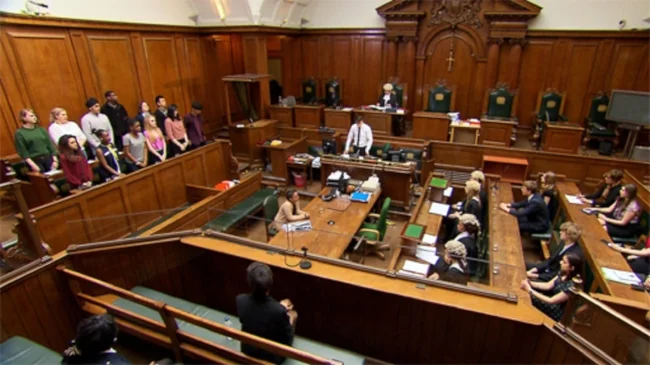
Another major point of interest in this experience were my fellow jurors. To my mind, the responsibility that had been placed upon our collective shoulders was immense. We had to decide another human being’s guilt or innocence. Depending upon our verdict that individual would then lose their liberty. I was concerned as to whether everyone else took the task in hand as seriously as I did. Thankfully they all did. In fact, the integrity of my fellow jurors did much to restore my dwindling faith in humanity. There was individual who I did think lacked the necessary rigour to undertake the task. Their attention would frequently wander and they had a propensity for garrulous inanities. However, they seemed to be content to go with the flow, which was essentially missing the point of jury service but it did make the proceeding a lot easy. Another gentleman sadly, took umbrage at some poorly phrased comments by fellow jurors which he felt were racially biased. He then decided to take a particular stance irrespective of the facts of the case, on a matter principle. There were also two other jurors who reached their positions regarding the verdict a little too quickly in my view and I suspect that where driven more by emotion, rather than the facts and logical thinking.
The case ran for two weeks and we spent three days deliberating our overall verdict. I was initially sceptical of guilty verdict. The CCTV footage was incomplete, as a key camera had failed on the bus and therefore didn’t provide essential footage. However, it was the forensic evidence that convinced me otherwise. Combined with the witness testimony and the CCTV footage which we did have, the facts indicated that the accused had struck first and not in self-defence. Furthermore, the nature of the injury demonstrated a level of force that could not be classified as anything other than deadly. Thus, we arrived at a verdict of guilty by eleven votes to one. The judge then thanked us for our service and gave us the option of being dismissed. However, due to unusual circumstances, the judge decided to pass sentence of the defendant that same day. The majority of the jury felt that as we had seen fit to reach this verdict, we should stay for the sentencing. So, eleven of us remained and listened to the judge pass sentence. The defendant although sixteen years old had been a minor when the offense took place. Therefore, a plethora of Home Office rules had to be applied which tempered the judge’s verdict. One consideration was that the defendant had spent nearly a year in a young offender’s unit, awaiting trial. The final sentence was seven years. Four years on, with “good behaviour”, the defendant may well now be eligible for parole.
I could write a lot more about this experience but I that’s not really practical. Plus, I guess even four years on I shouldn’t really give too many specifics of the case away. We were bound to silence at the time of the trial for obvious reasons. However, there are a few more random points that I would briefly like to make. It is often said that the senior judiciary in the UK are old and out of touch but this was not the case in this instance. This particular QC was worldly and understanding. He was very aware that due to the nature of the case, the defendant as well as many of the witnesses were young and may be intimidated by the formality of the court. He therefore waived a lot of the traditional trappings of the courts conduct to provide a more accommodating environment. Another thing that impressed me was the efficiency of the courts themselves. Considering the fluid nature of their work, they coped very well with managing the logistics. Oh and here’s a fun anecdote; one juror on another case was apparently always late back from lunch. Finally, after their third warning, the judge asked why they were late. “I bought a new coat in the sales. I save nearly a hundred pounds” they replied. And that is the amount they were subsequently fined for wasting the courts time.
Four years on, every now and then I still reflect upon my time on jury service. We live in troubling times and I have a somewhat sceptical outlook upon life and many of its major institutions. However, I found jury service to be a positive experience. The people I served with were a diverse but sound group of individuals. I felt that we did do the right thing by returning a guilty verdict and that justice was served. However, I cannot help but feel that there were no winners in this particular situation. The whole case, which I am not at liberty to describe in further detail, was an utter tragedy. If one chooses to stand back and look at the wider picture, both parties involved were a microcosm of so many of the social ills that blight this country. That however, is a much bigger discussion and not one I shall embark upon here. So, I’ll end this post as I started it, with the subject of “civic duty”. Having seen first-hand how the courts works, as well as how jurors still to this day take their role seriously, I believe that the system that we have in place is still inherently sound. It’s not perfect and I’m sure much can be done to improve it. Yet until we as a society come up with something better, I think we should stick with it. So if you ever get asked to participate, I would urge you to do it. It is both socially responsible and a very sobering personal experience.












Gaming Heresy: Part 1 My Gaming Epiphany
It’s been a while since I’ve had a rant, frothed at the mouth and vigorously shaken my clenched fist at clouds. If you do this too often when running a blog you can paint yourself into a corner. Ranting then becomes the defining aspect of how your writing is perceived. Another reason why I don’t want to write an endless succession of irate screeds about the failings of the gaming industry and its associated player communities, is because as I get older, I simply do not care as much about these things. The recent debacle about microtransactions in Middle-earth: Shadow of War, garnered nothing more than a raised eyebrow from me. A decade ago I would’ve been marshalling a restless lynch mob, armed with hoes, rakes and flaming torches. Time and old age have a habit of cooling one’s ardour. However, letting off steam can be very cathartic, so I’ve decided to inaugurate this infrequent column in which I shall vent my spleen about the things that displease me and express views that may well fly in the face of the prevailing consensus.
It’s been a while since I’ve had a rant, frothed at the mouth and vigorously shaken my clenched fist at clouds. If you do this too often when running a blog you can paint yourself into a corner. Ranting then becomes the defining aspect of how your writing is perceived. Another reason why I don’t want to write an endless succession of irate screeds about the failings of the gaming industry and its associated player communities, is because as I get older, I simply do not care as much about these things. The recent debacle about microtransactions in Middle-earth: Shadow of War, garnered nothing more than a raised eyebrow from me. A decade ago I would’ve been marshalling a restless lynch mob, armed with hoes, rakes and flaming torches. Time and old age have a habit of cooling one’s ardour. However, letting off steam can be very cathartic, so I’ve decided to inaugurate this infrequent column in which I shall vent my spleen about the things that displease me and express views that may well fly in the face of the prevailing consensus.
So, let us begin. Here’s a thought. Gaming is just another commercial leisure industry that is of no greater merit than TV, Movies and popular music. It’s driven primarily by commercial considerations, with art are ethics being secondary issues. Like other entertainment mediums it can be pitched at various ends of the intellectual spectrum and made to varying degrees of quality and professionalism. Although gaming can highlight specific issues and offer social commentary it has no more significant power to impact upon events than other artforms. Games themselves can on occasions be “art” but by and large, most products are just disposable entertainment. Just like a sitcom, an action movie or a pop song. Games are not special, important or unique, when compared to other leisure activities. The social aspects that so many extol exist because of the players themselves and the games are merely a conduit. Essentially, the expression “it’s just a game” is true. It’s not a denigration but simply a statement of fact.
Richard Nixon has no relevance to this article...
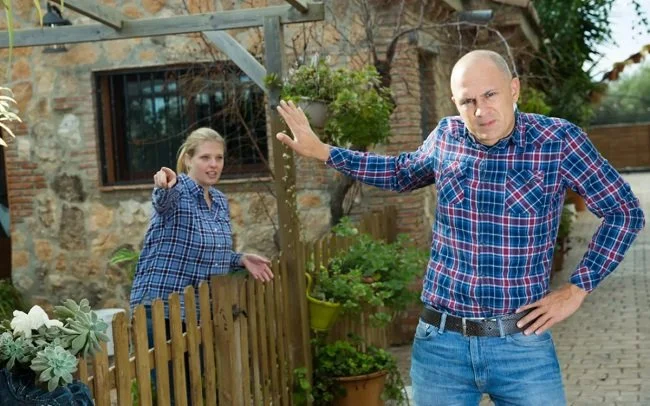
And if gaming per se is simply a commercial exercise in mainstream leisure and thus nothing exceptional, then surely the same must be said for fandom? Therefore, claims of gamers being problem solving savants and alternative, high end achievers are bogus. Gaming and its subset of related fandom is a breeding ground for a myriad of unpleasant opinions and facilitates antisocial behaviour. It is a microcosm of the entire “first world problems” mentality that blights Western popular culture. It contributes to the growing infantilization of public discourse and social interaction as well as playing directly into the hands of the “bread and circuses” policies of the political classes. Why waste your time campaigning, lobbying and fighting for universal healthcare, affordable housing and accountable government? Someone on a game development team has nerfed the Sword of Kagnazax and gimped your build, so why not send them death threats?
I was walking around a very large branch of WHSmith recently. Despite the proliferation of digital media, magazines have not yet vanished from the shelves. In fact the number of fan and enthusiast based publications available is still prodigious. Gardening, fishing, mud wrestling are all represented. It’s a similar story if you go online. There are forums and subreddits for every conceivable leisure activity. If you decide to dip your toe in the respective waters of each community you will find one common factor in them all. Drama. All discuss the minutiae of the object of their affection as if it were the meaning of life itself. It soon becomes very apparent that it is not really fandom that is the issue but people. The bastards. Show me a problem and I’ll show you someone called Colin who’s responsible. All of which is just further evidence that gaming is merely another facet of humanity’s habit of slapping itself on the back, while simultaneously kicking some other poor sod in the nuts. When put in such a context, the reality is clear. Gaming ain’t all that.
This is my gaming epiphany. It’s not something that happened on the road to Damascus or overnight in a Premier Inn outside of Chester. It has come about over a period of time in which the iniquities, trivialities and pomposities of both the gaming industry and its fans have been dripped upon me like Chinese water torture. Don’t get me wrong, irrespective of this rant, I enjoy gaming and do not regret the time I’ve spent pursuing it. I just see it for what it is; an amusing diversion, an enjoyable challenge and one of the many pointless activities we fill our lives with before death cold embrace and the inevitable void. Sadly, it is because my perspective is not a common one, that the gaming industry acts with the impunity that it does and treats its customer base so poorly. I wonder if there will be a major shift in perception among fans, in another twenty years? Only time will tell. In the meantime, a percentage of gamers will continue to shriek “Git Gud” and I’ll continue to shake my head at their misplaced sentiments and watch as democracy is dismantled around them.











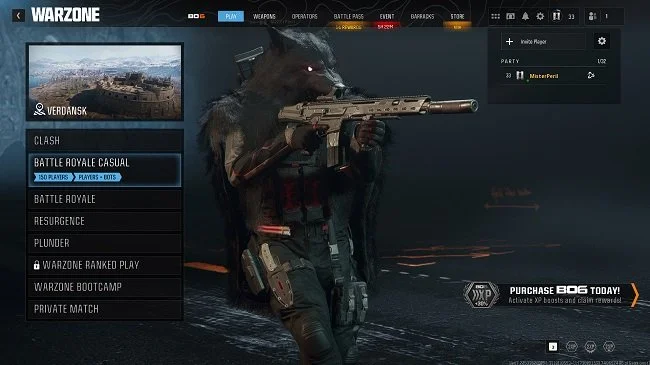
Playing PC Games with an Xbox Controller Instead of a Keyboard and Mouse
To fill the gap in my current gaming activities, I decided to try one of the various titles that I have stockpiled. Often these have been bought on a whim but there’s always something of interest to try and explore. So, having recently enjoyed the open world of Mafia 3, I decided to return to GTA V. I’ve owned this title since December 2015 but have never seriously played through in story mode. Last time I dabbled with it was when I bought it and I just fooled around with the various cheat codes that are available and spent a few hours causing mayhem. This time round I’ve decided to apply myself to all facets of the game. However, I ran into one issue with GTA V that I can usually ignore with other titles. Namely, the control set up. I’ve previously played many games that have been developed for multiple platforms or have been direct console conversions. Although such games are intended to be played with traditional games controllers, I have happily managed to play them using a keyboard and mouse. Sometimes I’ve had to spend a lot of time re-mapping keys but I've always got by.
To fill the gap in my current gaming activities, I decided to try one of the various titles that I have stockpiled. Often these have been bought on a whim but there’s always something of interest to try and explore. So, having recently enjoyed the open world of Mafia 3, I decided to return to GTA V. I’ve owned this title since December 2015 but have never seriously played through in story mode. Last time I dabbled with it was when I bought it and I just fooled around with the various cheat codes that are available and spent a few hours causing mayhem. This time round I’ve decided to apply myself to all facets of the game. However, I ran into one issue with GTA V that I can usually ignore with other titles. Namely, the control set up. I’ve previously played many games that have been developed for multiple platforms or have been direct console conversions. Although such games are intended to be played with traditional games controllers, I have happily managed to play them using a keyboard and mouse. Sometimes I’ve had to spend a lot of time re-mapping keys but I've always got by.
However, on this occasion I found that that was not the case. The games driving mechanics simply do not lend themselves to keyboard use. The weapons system and object interaction also consist of a very esoteric selection of keys. I spent a considerable amount of time trying to relocate specific functions but it simply wasn't viable. Often, I would solve one problem only to create another. GTA V with its combination driving, third person shooting and point and click narrative simply favours a bespoke device. So eventually I gave up my experimenting and simply fetched my Xbox controller. As this Xbox peripherals is compatible with the PC, it was no problem to install it and set up the device. However, the next stage was not so easy. Namely, becoming accustomed to using the Xbox controller. It’s a major mental and physical change. I found that driving vehicles was an easy transition to make. Using the left and right triggers to brake and accelerate is extremely intuitive and feels very natural. Controlling my avatar was far more challenging. Walking, climbing and interacting with objects felt far more sluggish and unwieldy. Aiming via the thumb stick takes a long time to get used to. It doesn’t feel as accurate or as responsive as using a mouse.
This “problem” is very much a case of “conditioning” and “muscle memory”. I made the transition from console gaming to the PC in the middle nineties. There was a time when I use to play both platforms but the PC ultimately won because it’s a multifunctional tool. So, for over twenty years, the keyboard and mouse have been my primary means for interacting with games. I assign the most commonly used keys around WASD, so they could all be easily reached with my left hand. My right operates a five-button mouse. The system works for me and trying to change such a mindset is a big ask. However, it can be done. I am now able to navigate the open world of Los Santos using my Xbox controller. The key is patience and perseverance. You have to stop relying your reflexes and get into the habit of thinking in advance, exactly what it is that you want to do, then implementing it via the Xbox controller. I’m reminded of how Nigel Hawthorn told Clint Eastwood in the movie Firefox to “think in Russian”. However, I cannot see myself playing all future titles with a game controller. It is something I have done out of necessity to accommodate GTA V. A keyboard and mouse remains my primary choice for playing games, although using an Xbox controller has been an interesting experience.
Is Shared Fandom a Bridge to Reconciliation?
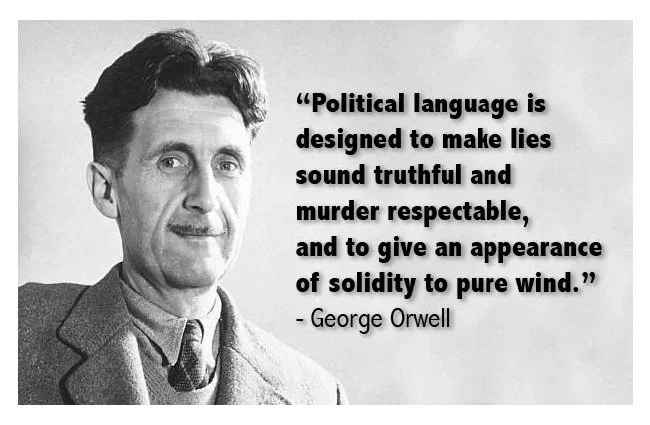
There are and always will be books that have a clear political agenda or make a very particular statement. Orwell’s 1984 springs to mind as an obvious example. Then there are also books that attract political interpretations by the nature of their plot or the subjects that they explore. Whether the author intended such a debate about the work or not, is a secondary issue. I have always taken Tolkien’s work at face value and to be what he stated they were. Epic and intricate faux histories, free from allegory. Furthermore, I appreciate that the moral position and themes of his work stem from the authors world view, personal experiences as well as the prevailing social dogma of the time. I find it interesting how his work attracts praise and adulation from a wide variety of groups. Catholics will naturally gravitate towards Tolkien’s writings due to his faith and that is the prism through which they will critically view his work. There are of course other examples about how The Hobbit and The Lord of the Rings appeals to different people in different ways. It is a common aspect of fandom.
Fandom by Tom Preston
There are and always will be books that have a clear political agenda or make a very particular statement. Orwell’s 1984 springs to mind as an obvious example. Then there are also books that attract political interpretations by the nature of their plot or the subjects that they explore. Whether the author intended such a debate about the work or not, is a secondary issue. I have always taken Tolkien’s work at face value and to be what he stated they were. Epic and intricate faux histories, free from allegory. Furthermore, I appreciate that the moral position and themes of his work stem from the authors world view, personal experiences as well as the prevailing social dogma of the time. I find it interesting how his work attracts praise and adulation from a wide variety of groups. Catholics will naturally gravitate towards Tolkien’s writings due to his faith and that is the prism through which they will critically view his work. There are of course other examples about how The Hobbit and The Lord of the Rings appeals to different people in different ways. This is a common aspect of fandom.
Bearing this in mind, it should not come as surprise to learn that Tolkien’s writing also has fans among the political class. The UK Conservative Party MEP Daniel Hannan is one who has written essays on his love of the Professor’s work and its literary merits. For example, Mr Hannan says “Here is a book that, as much as any I can think of, needs to be read aloud. Tolkien, like many Catholics of his generation, understood the power of incantation. He knew that—as, funnily enough, Pullman once put it—a fine poem fills your mouth with magic, as if you were chanting a spell”. Upon reading more of his analysis of Tolkien’s work, it becomes apparent that several of his political colleagues share his passion. It would seem many Conservative MPs find that Tolkien’s writing contains themes and concepts that they equate with their political ideology. Curiously enough what they see in the Professor’s work, I have never experienced. Again, they view it and quantify it in a different way to myself. This raises some interesting points about when you discover that you share a liking for something with a group you didn’t expect.
I suppose the optimistic way to interpret this situation is to focus on how fandom can build bridges and that there is now theoretically common ground between both parties concerned, despite their obvious differences. However, I feel that it’s a more complex situation than that. In this instance, I do not hold with a lot of the opinions and world view of this particular group of people. I think that many of the policies that the Conservative party have implemented since they came to power in 2010, have been harmful to both individuals and to society. Therefore, does simply having a shared passion for one specific thing bridge an otherwise, vast cultural, philosophical, political divide? I do not think that it does. If I were to meet Mr Hannan in a social situation, I would endeavour to be civil to him and focus on our common ground but ultimately our shared love for Tolkien is not a path to reconciliation. He would still remain at odds with my political sensibilities and continue to be a Conservative party member.
Reflecting upon this example and other comparable ones, certainly raises some interesting questions. It is a timely reminder that fandom does not give you any sense of ownership towards the object of your affection. Nor do you get to decide who can like or not like the thing in question, or who are “true fans”. The reality is that what appeals to you about the thing you love, is not necessarily the same for everyone and that we all interpret and respond to art as well as literature in a different way. Furthermore, when you do find out that you share a common love for something with those who are radically different to yourself, their presence should not spoil that very thing for you. Irrespective of the fans and their differences, the object of affection (in this case Tolkien’s writing), remains untouched. Overall, I guess this matter is a timely reminder about tolerance and sharing.
The analogy that springs to mind is one regarding religion, specifically Christianity. It is a faith that is rife with different denominations. All allegedly cleave to the same fundamental principles, yet interpret the scriptures differently. Is this situation about the differences between fan bases not dissimilar to the divide between Anglicans and fundamentalist Evangelicals? Also, history shows that many fine things have been liked, embraced or advocated by the morally questionable. So, it would appear that a shared love is not an assured ticket to harmony and reconciliation. The divided nature of the gaming community is an ongoing testament to that. The fallout over the recent casting of a female actor as Doctor Who is further proof that fandom is a broad but far from united church. As for Tolkien, I shall simply content myself with my own personal enjoyment of his work and leave others to do so in their own way. However, what I will not allow unchecked is for others to usurp his writing and claim it justifies something that it empirically does not.
Tradesmen
I don’t care for the popular interpretation of the “Renaissance Man”. IE someone who attempts all jobs around the house. I’m a firm believer in deferring to professionals. If I need electrical work carried out, then I’ll happily hire an electrician. The same goes for plumbers, builders and decorators. I even employ a handyman for those niggling trivial jobs. There are several reasons why I take such an approach. First and foremost, I am fully aware of my limitations and what I can and cannot do. It’s a philosophy espoused by Harry Callahan, so who am I to contradict? If I want a job done, I want it done properly and not bodged. Secondly, if you formally employ someone to undertake a job that has been fully costed via bona fide quotation, then you have legal recourse should things go south. Thirdly, I do not care for manual labour. That is not to say I think it’s beneath me. Quite the opposite. I admire anyone who earns their crust through their physical toil. Nope, I just don’t like such work. I prefer using my mind not my back. Finally, I value my leisure time and do not want to see such a precious resource squandered. So, considering all these points, whenever certain jobs or chores arise, I pay others to do them.
I don’t care for the popular interpretation of the “Renaissance Man”. IE someone who attempts all jobs around the house. I’m a firm believer in deferring to professionals. If I need electrical work carried out, then I’ll happily hire an electrician. The same goes for plumbers, builders and decorators. I even employ a handyman for those niggling trivial jobs. There are several reasons why I take such an approach. First and foremost, I am fully aware of my limitations and what I can and cannot do. It’s a philosophy espoused by Harry Callahan, so who am I to contradict? If I want a job done, I want it done properly and not bodged. Secondly, if you formally employ someone to undertake a job that has been fully costed via bona fide quotation, then you have legal recourse should things go south. Thirdly, I do not care for manual labour. That is not to say I think it’s beneath me. Quite the opposite. I admire anyone who earns their crust through their physical toil. Nope, I just don’t like such work. I prefer using my mind not my back. Finally, I value my leisure time and do not want to see such a precious resource squandered. So, considering all these points, whenever certain jobs or chores arise, I pay others to do them.
Now I fully recognise that some people will undertake certain jobs around the home purely due to financial reasons. Hiring tradesmen to build or fix something is costly. This post is not intended to be critical of such individuals. I consider myself fortunate that my finances allow me to contract others. Furthermore, having worked in IT for nearly twenty-five years, often in a self-employed capacity, I understand the nature of market rates and the need to try balance your financial overheads with offering your client a competitive price. Therefore, I like to think that when I hire tradesmen myself, I am not a cheapskate. My own experiences over the years have lead me to conclude you get exactly what you pay for. So, considering all these points, I deem myself to be fairly well disposed toward tradesmen, at least in principle. By hiring them I am helping the wider economy, as well as myself.
Now that we have got all the measured prerequisites and caveats out of the way, in which I have hopefully established myself as a non-prejudicial, even hand and benevolent customer, let me now proceed to catalogue some of the problems I have had of late with tradesmen and the associated culture. My parents have not done any major home improvements since the late eighties. This means a lot of things are now breaking, failing and in need of replacement around their home. In the last few months, several electrical sockets have stopped working and some reading lights developed an intermittent fault. So, an electrician was required. Naturally my first port of call was to look online. I looked for those local to my parents and then once a short list was drawn up, I then tried to establish their reputations. There are many review sites around and although you can game the system, I think these sites can be broadly used as a benchmark.
Having found five electricians that met the criteria, I then proceeded to phone and discuss the work required. Let it suffice to say that four of those five, didn’t seemed especially enthusiastic about the work offered. To cut a long story short, I was brushed off with varying degrees of subtlety because the jobs were deemed to small and not generating sufficient revenue. Luckily the fifth was happy to do the work, which was carried out efficiently and to my complete satisfaction. Needless to say, this particular tradesman is now on my preferred list. Furthermore, I’ve discussed with him this concept of small jobs being trivial. He is aware that many of his colleagues take such a view but he personally takes a more pragmatic approach. I live in an area with a high percentage of elderly, retired homeowners. This means there is a substantial and reoccurring market for minor jobs. It’s a market that this particular individual is happy to serve. It yields as much, if not more revenue in the long run. Yet it is a market that is frequently ignored as tradesmen pursue the “big jobs”.
Another issue I’ve had of late is trying to ascertain what the current market rate is for certain types of work. My parents front garden is finally being turned in to a drive after fifty-seven years. This is mainly being done to accommodate the nurses and health visitors that care for my Dad and visit daily. Because this job is not classified as “trivial work”, I’ve not had problems finding companies willing to tender for it. However, I have had a very broad spectrum of quotes ranging from £4,000 to £10,000. I find this disparity, troubling. Someone is either quoting too cheap, which then infers substandard work. Or someone is charging too much which then makes me question their personal integrity and that of their business. Again, I have tried to do some research online to get a feel for current market rates but as this kind of work is out of my field of expertise, then it does feel like I’m making a calculated guess at times. Plus, the UK is a country that has major regional cost variations. Any service within Greater London, which is where my family live, is always more expensive.
In the immediate future, I have a gardener scheduled to do some clearance work in my parent’s garden. If their work is satisfactory, I’ll happily employ them myself to excuse me from mowing the lawn and pruning bushes. This particular tradesman was recommended to me by a colleague so I suspect that he will be sound. However, this nebulous referral system that so many people rely upon is far from bullet proof. What one person considers good work, may not be the same for another. Plus, not everyone has access to a network of friends and colleagues to make recommendations to begin with. Hence, we have seen an increase in review sites but as I mentioned early, these are not perfect. My concerns are not about dishonest reviews but simply that some trades and business types are represented. My son recently hired a plasterer. Tracking them down was an extremely difficult process. To cut a long story short, when asked why the he didn’t advertise, the plasterer replied he got sufficient work through word of mouth. Their work was so good that they always had another gig to go to. Such a business approach is fine for the tradesman but no so beneficial for potential customers out of the loop.
I believe that tradesmen should be free to find business in whatever fashion they see fit (with the usual caveats about working within the confines of the law). However, I do feel that the present process of finding and hiring them leaves a lot to be desired. I only say this anecdotally but during the course of my recent enquiries, I found that only half of those businesses I researched had an adequate online presence. Some only had a small website or Facebook page with contact details. Others had absolutely no online details apart from reviews written on third party sites. So far, those that I have employed have all had a solid online footprint, detailing professional credentials, prices and references. Furthermore, they have also used a lot of other technology for notifications and billing. So perhaps the change and gradual cultural shift from old school methods to modern practise is underway. Or at least I hope so. Because I need a gas fitter soon to replace an old boiler with a modern alternative and I don’t want to be chasing my own tail.















Imagining the Worst
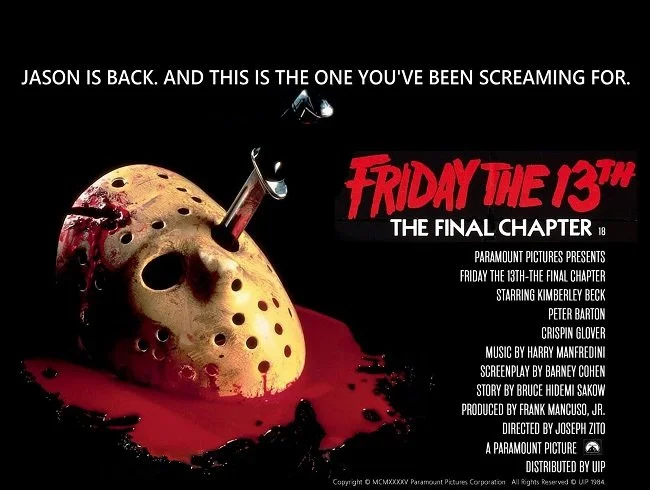
I was technically not old enough to see Outland when it was released in the UK in 1981. The film was rated AA, a now defunct certificate, which required the viewer to be 14 years or older and I was 13. I have strong memories of feeling quite tense going into the cinema. My expectations were based purely on what I had read in the press and from seeing the trailer just once, a few weeks prior. That is how it was before the internet age. You had less advance knowledge of a movie. Furthermore, at this point in time I had not become so inured to cinematic violence, as my viewing habits back then were very much dictated by my parents and the fact that there were only two televisions in our home. Although we had a VCR, we hadn’t yet got bitten by the renting bug. So, I went into the movie theatre expecting to be shocked by Outland based on the movies marketing which promised a head explosion. However, it turned out to be a thoroughly entertaining space western. Yet I vividly remember my sense of relief that its hadn’t been as shocking as I had imagined it would.
I was technically not old enough to see Outland when it was released in the UK in 1981. The film was rated AA, a now defunct certificate, which required the viewer to be 14 years or older and I was 13. I have strong memories of feeling quite tense going into the cinema. My expectations were based purely on what I had read in the press and from seeing the trailer just once, a few weeks prior. That is how it was before the internet age. You had less advance knowledge of a movie. Furthermore, at this point in time I had not become so inured to cinematic violence, as my viewing habits back then were very much dictated by my parents and the fact that there were only two televisions in our home. Although we had a VCR, we hadn’t yet got bitten by the renting bug. So, I went into the movie theatre expecting to be shocked by Outland based on the movies marketing which promised a head explosion. However, it turned out to be a thoroughly entertaining space western. Yet I vividly remember my sense of relief that its hadn’t been as shocking as I had imagined it would.
Over the years I’ve had numerous similar such experiences with other classic films and genre movies. Films such as Zombi 2, The Texas Chainsaw Massacre, Soldier Blue and Cannibal Holocaust, all have strong and controversial reputations. Often this is due to unpleasant acts or levels of violence. Yet after watching all of these films, I have always felt a sense of relief and possibly even disappointment, because of the gulf between what my expectations were and what was actually depicted. The New York Ripper for example does include acts of violence that in principle are totally abhorrent, yet the reality is that the film makeup effects are generally poor. I guess my fear has always been that I will see something so heinous that I’ll be traumatised, physically sick or worse. The latter is the biggest concern and the most nebulous. Somehow, exposure to such material will leave me altered on some level and not for the better.
To a degree this factor still effects a great deal of my viewing to this very day. However, I am now quite sceptical when I read a review which claims that the film in question has shocking scenes or breaks some terrible taboo. Mainstream Hollywood seldom does any of these things at present. The horrific imagery that I can conjure up in my mind’s eye, more often than not is never equalled by what the film-maker chooses to show. It is a perennial debate among film fans that less is more and what the viewer thinks they see is far more disturbing than anything that can be shown. I do agree with this to a degree, although I do feel that violence and graphic imagery can play a part if used appropriately and within context. Yet outside of the mainstream there are still film-makers prepared to the push boundaries that the big studios are not.
There have been several films recently that have courted a great deal of controversy with regard to their content. I have always held the opinion that you cannot effectively comment on films unless you’ve seen it. Therefore, for me to credibly write on such material, I would have to watch it. The problem is I really don’t wish to (more on that later). Two relatively recent examples which spring to mind are A Serbian Film and The Human Centipede II: Full Sequence. If you follow the links for both titles you can read the plot synopsis for each on Wikipedia. The descriptions of both films instantly sets my mind racing with regard to how graphic they can be? Again, it could be the case that my expectations are far worse, fuelled by my mind working overtime. However, it would appear that both these films are quite explicit or so I am told by trusted peers. Potentially, these films could challenge my theory and overturn it, by actually showing the unshowable.
I won’t get into an argument about the artistic merits of both these titles, as that is a separate debate for another time. Ultimately, I believe that my rule of thumb broadly holds true but because we now live in far more liberal times, there is scope for film makers to prove otherwise and depict acts that are worse than I imagine. However, that has not yet become the norm. In the case of the two films I’ve mentioned, I do not think I will benefit in any way from seeing either of them. To do so would be pure voyeurism and pandering to the conceits of the film makers. If horrific imagery is devoid of any context, meaning or the wider purpose, then I may as well just sit and watch the emergency services cut the corpses from car accidents. What sort of person does that for pleasure? As a teenager, I can remember the bragging rights associated with watching the grisliest horror movie one could find. Such puerile rites of passage are common place. However, adulthood comes with a sense of perspective and an ability to curb one’s excesses. It is a habit that I still like to maintain.
I do not feel it is my place to draw lines in the sand with regard to what film-makers can or cannot depict. However, I can and do draw such lines for myself, with respect to what I choose to watch. I therefore think that the feeling of expectation and trepidation I had as a 13-year-old, is a quality I wish to keep. If there comes a time when such a notion fails to enter my head, then I really will have become totally desensitised to cinematic violence. I think maintaining such an emotional safety valve is a healthy attribute to have. So, I've decided to skip A Serbian Film and The Human Centipede II: Full Sequence. They may well live up to the reputation they've gained or simply be an exercise in hype but I don't really want to taint myself or waste my precious time by finding out. I will never dismiss a film out of hand for having the gall to exist but I do feel that having the capacity to say "thanks but no thanks" is important and liberating.










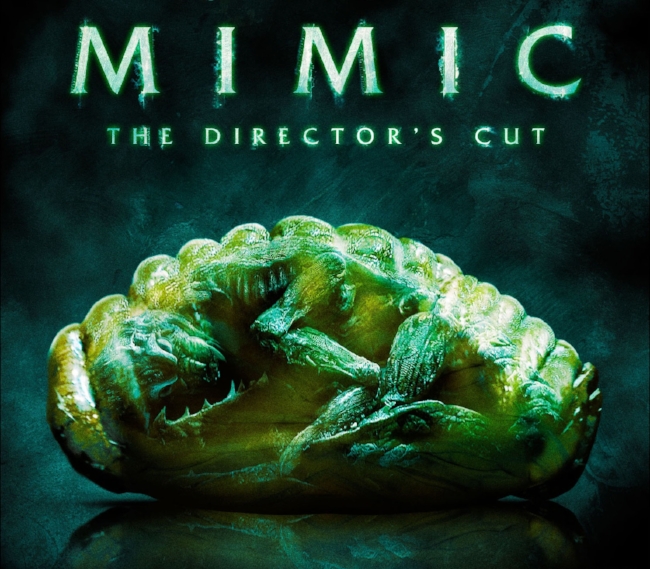
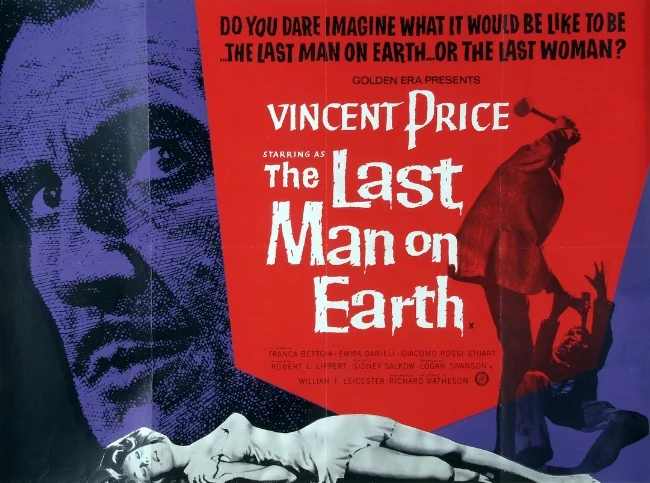

How Do You Solve a Problem Like You Tube?
You Tube like any other online platform has a wealth of rules, term and conditions and other policies. Sadly, what we have seen over recent years is an organisation that has precious little inclination to use them. The facilities that are currently in place are often abused and there are no consequences for misusing the “disputes” procedure. Furthermore, there are still multiple You Tube channels that peddle hate and You Tube personalities that endure without any real sanction for their transgressions. It seems that popular You Tubers are not held to any standard but their own. There is no formal regulation from an external body for this or any other comparable platform. The rules that govern conventional media don’t apply here. It’s a classic example of the law falling behind the technology and change.
You Tube like any other online platform has a wealth of rules, term and conditions and other policies. Sadly, what we have seen over recent years is an organisation that has precious little inclination to use them. The facilities that are currently in place are often abused and there are no consequences for misusing the “disputes” procedure. Furthermore, there are still multiple You Tube channels that peddle hate and You Tube personalities that endure without any real sanction for their transgressions. It seems that popular You Tubers are not held to any standard but their own. There is no formal regulation from an external body for this or any other comparable platform. The rules that govern conventional media don’t apply here. It’s a classic example of the law falling behind the technology and change.
That is not to say that you can get away with anything on You Tube. Theoretically, if you cross certain lines then legal action may well be applicable. Then there is always the threat of the loss of advertising revenue, prestige and sponsorship. However, so far there has not been any major test cases where reality has bitten a wayward You Tuber on the ass for their iniquities. Even if an individual was banned from the platform and had their channel closed, they would still be walking away with their coffers bulging. More than likely, they’d simply pitch their tent elsewhere. One companies embarrassing controversy is another another’s new selling point. We see it in the tabloid press all the time. An odious pundit crosses a line and says something beyond the pale, gets sacked and subsequently gets a new gig with a rival publication. The other problem associated with such issues is the public have very short memories.
Obviously, PewDiePie AKA Felix Kjellberg and his recent behaviour has added fuel to the fire with regard to You Tubes inability to police itself effectively. The platform is now at a crossroad in its business life. The audience that You Tube serves is now so big that third parties cannot easily dispense with it. However, outside business doesn’t like the “frontier town” ethos that still permeates the online portal. The recent Adpocalype shows that advertisers don’t want to be associated with certain channels and personalities. But due to the blunt tool nature of the withholding of revenue and the nebulous criteria of what exactly is “family friendly”, there’s been a lot of collateral damage. And because of Mr Kjellberg’s stupidity we see the use of weaponised DMCA takedowns raising their ugly head once again.
The main risks at present are twofold. You Tube will take action but in a knee jerk fashion, imposing draconian rules and effectively queering the pitch for all parties regardless of what side of the line they are on. Alternatively, if they prevaricate any longer someone outside may step in to deal with the situation. For example, if some idiot is dragged into court, the somewhat grey area of “fair use” which is the foundation of so much content on You Tube, could be scrutinised and a more definitive ruling made. If a precedent is set and it is not a favourable one regarding this catchall term, then it could mean that a hell of a lot of content and channels go the way of the Dodo. Furthermore, such drama and shenanigans could attract the attention of the political classes and the last thing we need is for things like You Tube and Streaming to fall under their remit in any way.
To avoid catastrophe, You Tube should act now but act in a sensible measured way. As a company, it need to start policing its own backyard in a viable fashion. That means not rely on automated procedure that can be gamed but employing moderators who work to a clear set of guidelines. When someone transgresses the rules, action should be swift and clearly explained as to why it has been taken. There also needs to be a fair appeals procedure to ensure that the door swings both ways. Yes, such an undertaking means spending money but considering the alternative, allocating resources wisely now may prevent a massive loss in revenue later. Also, Joe Public needs to up their game and stop cutting offenders so much slack. We as viewers need to stop sitting of the fence and hedging are bets for our own personal convenience. Sooner or later we all need to pick a side, like it or not.
Finally, a few words about PewDiePie. Everyone makes mistakes. I believe in giving people a fair hearing and a second chance where appropriate. Sadly, this individual has proven to be a repeat offender. If your go to curse of choice is a racial slur, then that frankly speaks volumes to me. As far as I’m concerned “I didn’t mean it in a bad way” is the 21st Century Nuremberg defence. You cannot divorce this word from its racially pejorative roots. It exactly the same as calling something “gay”. You may think you’re simply implying that something is not good but you are establishing your proposition by equating being gay as something inherently bad. Considering the diversity of profanity available in the English language, if you wish to express disdain then there are plenty of alternatives words that do not have the same complex socio-political heritage of the term Mr Kjellberg chose to use.
I have seen the term “influencers” bandied about with regard to You Tube and the likes of PewDiePie. It’s a very vague term like so much of the marketing speak we have to endure these days. Its greatest weakness seems to be in the way it is allocated. To be an “influencer” you just need to have a large following. There is no requirement for expertise and talent is a broad and subjective term. It’s time for business to rethink the nature of “influencers” and perhaps reconsider who they show favour too. It is naïve to expect ethics and integrity by default. If you require these virtues then it is incumbent upon you to establish their existence beforehand in those you groom for fame and fortune. However, when one considers the track record of the gaming industry, advertisers and You Tube themselves, I cannot help but be somewhat sceptical that these groups will tackle their respective problems with any degree of success.
Do We Need a Face of Gaming?
In recent years there have been several gaming related stories that have become big enough to gain the attention of the mainstream media. Sadly, when corporate news encounters anything that falls outside of their immediate understanding or frame of reference, they need to package it into terms they and their audience can comprehend. This means simplifying the subject in to binary terms and convenient sound bites. They also like to have a “public face” that can be the go to expert. Someone who can be clearly identified with the issue and then championed or reviled by the public, according to which side they choose to support. That beggars the question do we need a " face for gaming"? If we do then who should it be? It's quite a thought provoking conundrum and raises a lot of issues about the nature of representation. Especially in light of the fact that contemporary media likes to have specific subjects neatly packaged with easy to grasp, core ideas and a photo-friendly public face.
In recent years there have been several gaming related stories that have become big enough to gain the attention of the mainstream media. Sadly, when corporate news encounters anything that falls outside of their immediate understanding or frame of reference, they need to package it into terms they and their audience can comprehend. This means simplifying the subject in to binary terms and convenient sound bites. They also like to have a “public face” that can be the go to expert. Someone who can be clearly identified with the issue and then championed or reviled by the public, according to which side they choose to support. That beggars the question do we need a " face for gaming"? If we do then who should it be? It's quite a thought provoking conundrum and raises a lot of issues about the nature of representation. Especially in light of the fact that contemporary media likes to have specific subjects neatly packaged with easy to grasp, core ideas and a photo-friendly public face.
Although I’ve raised the question as a thought experiment, rather than a genuine request for potential candidates, there may well be some people out there that would like to see such a thing. For me the concept of a "face of gaming" is just another name for "community leader", which is a term I dislike due to is inherent vagueness and utter lack of accountability. So, no, I don't want anyone to be the "face of gaming". I doubt if you can even get a consensus on what the actual term means and what the specific parameters of such a role are. However, for the sake of argument, let us assume that the position existed. As far as I'm concerned if you wish to represent any body of people in some capacity, you need to have been democratically elected, with a popular majority mandate of at least 75%. That way you can at least claim some sort of legitimacy for your role.
Even if such a framework existed for choosing such an individual, the process would instantly fall foul of all the usual political pitfalls that blight any democratic undertaking. There would be endless debate and disagreement over issues such as nationality, gender and race. Gamers are a very nebulous group and they frequently disagree over many aspects of the own culture. Adding a wider socio-political dimension to the debate would only compound the problem. Plus, the driving principle behind this proposed role is to provide a conduit for the mainstream press. An institution that regularly trivialises matters and panders to the lowest common denominator. If there was a "face of gaming" it wouldn't be long before the press focused on who they were dating and what they were wearing, rather than the topics in hand.
Some have suggested that a community leader may be found from the within the gaming industry itself or from that esoteric group known as experts. I have no problem with the concept of experts and it saddens me that their status in society has been diminished in recent years. The cult of "my opinion is of equal value" has slowly eroded the weight of their position. I don't mind the use of independent experts to provide an informed overview for the wider public but if one became a designated spokesperson, they may well lose that impartial status. As for finding a developer or CEO of note who is universally respected, I think that would prove a difficult task. Gamers can be very partisan with regard to specific gaming companies. They also bear grudges.
The gaming community is not like other traditional social bodies. It is extremely diverse and multi-faceted. It has no structure or hierarchy, nor does it have any universally agreed agenda. What it does have is a lot of high profile personalities within that community, each with their own following. Think Total Biscuit AKA John Bain or Jim Sterling. Then there are Community Manager for game specific forums, a high-profile writer or a popular content provide and critic such as YouTube personalities. Some of these individuals have integrity, others do not. However, the trouble with such individuals is that they often end up being inaccessible by the regular. Does that make them truly representative of the average gamers needs? In the past, I have been involved with the organisation of several online events. I tried to contact several high-profile internet personalities to ask for help with the events promotion. I was universally ignored or failed to get beyond their respective gatekeepers.
Personally, I think that a so called "face of gaming" would do more harm than good if it did exist. It would ultimately end up being about them, rather than games and gamers. There are community figures that I know and respect but I don't see them as "leaders" nor have any of them ever claimed to be so. I guess the nearest we'll ever get to equitable representation is via player councils, as long as they are populated with elected representatives. What is required from a role such as the "face of gaming" is impossible to provide, simply because there is no infrastructure to support it. I think most gamers ultimately look to themselves to represent their own needs. If history teaches us anything, it's that we should always be mindful of the centralisation of power. It has seldom proven beneficial for the majority.
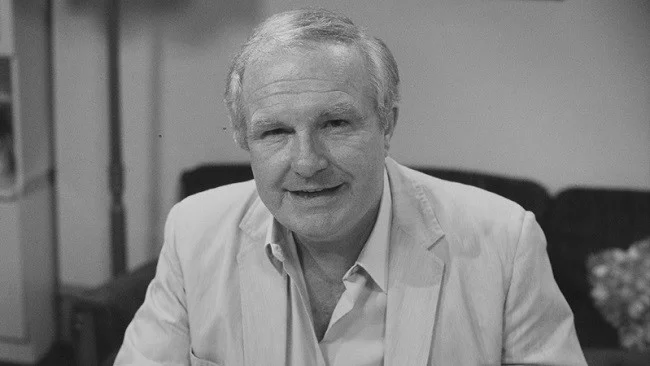
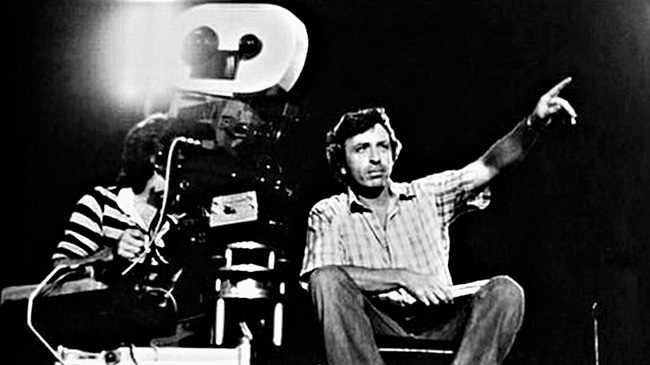
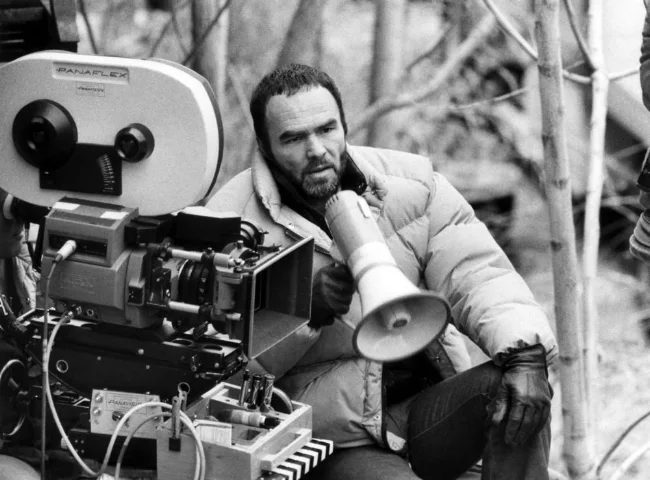
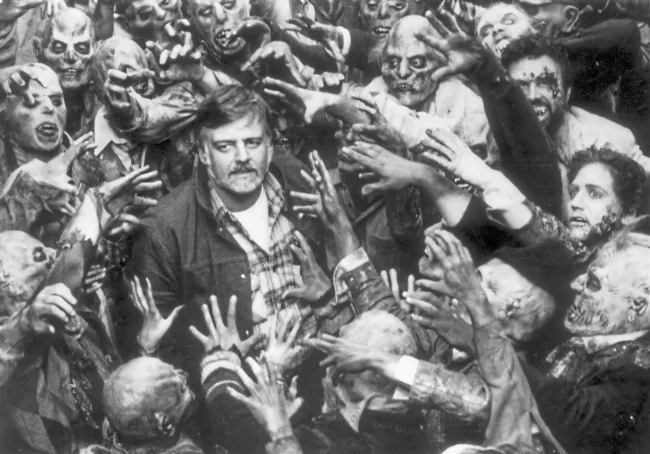
Tobe Hooper (1943 - 2017)
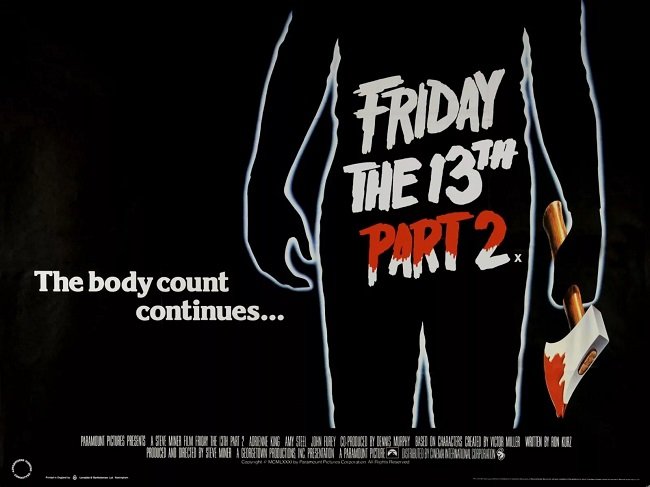
I was seven years old when The Texas Chainsaw Massacre was released in the UK. I used to regularly look at the movie listings in the Evening Standard each Thursday and ruminate upon the lurid posters for the latest releases. My young imagination would frequently run riot at what I saw, fuelled further by the inference of the tag lines. And the UK poster for The Texas Chainsaw Massacre left me utterly terrified. The horrors I conjured up in my mind. It is only in recent years that I learnt that the film was deemed too controversial by the head of the British Board of Film Censorship as it was known back then. Chief film examiner Stephen Murphy felt the films focus on “abnormal psychology” made it unsuitable for even an X certificate. Thus, the movie was denied a rating which amounted to a de facto ban. However, due to a legal loophole, the BBFC decision could be vetoed by local authorities and the Greater London Council granted the movie a rating and so the film was shown in London.
I was seven years old when The Texas Chainsaw Massacre was released in the UK. I used to regularly look at the movie listings in the Evening Standard each Thursday and ruminate upon the lurid posters for the latest releases. My young imagination would frequently run riot at what I saw, fuelled further by the inference of the tag lines. And the UK poster for The Texas Chainsaw Massacre left me utterly terrified. The horrors I conjured up in my mind. It is only in recent years that I learnt that the film was deemed too controversial by the head of the British Board of Film Censorship as it was known back then. Chief film examiner Stephen Murphy felt the films focus on “abnormal psychology” made it unsuitable for even an X certificate. Thus, the movie was denied a rating which amounted to a de facto ban. However, due to a legal loophole, the BBFC decision could be vetoed by local authorities and the Greater London Council granted the movie a rating and so the film was shown in London.
To this day The Texas Chainsaw Massacre remains a terrifying cinematic ordeal to watch. There is a tangible air of disquiet which develops into unbearable tension that is cloying and suffocating. The squalor of the old Hardesty family homestead is vivid and final act of the movie where Marilyn Burns is terrorised by Leatherface and his siblings is utterly gruelling. Her relentless screaming is extremely disconcerting and when the film finally ends the viewer is left drained and bewildered after its relentless ninety minute assault on one’s senses. It is paradoxical that something so intense as The Texas Chainsaw Massacre could be written and directed from someone as softly spoken and thoughtful as Tobe Hooper.
Hooper had a talent for creating tension, depicting dysfunctional families and capturing credible human foibles. It’s all there to see in such movies as Funhouse, Poltergeist and the TV miniseries Salem’s Lot. The latter remains a milestone in Stephen King adaptations and the scene where Danny Glick comes to Mark Petrie's window and asks to be let in, still bothers me to this day. And even the movies he made that failed at the box office, still remain curiously interesting. Lifeforce had an incredibly troubled production, yet remains a gloriously engaging mess, filled with insane dialogue and ghoulish bursts of horror. Such was the talent of Tobe Hooper. Even on a bad day his creative talent eclipsed that of many of his peers. Up and coming film makers should take note and ensure they are familiar with his legacy because he altered the genre forever.









Gaming and Relationships
I stumbled across a lurid tabloid headline recently that read “Fed-up welder divorces his missus because she’s addicted to Candy Crush”. This reminded me about an article I read several years ago regarding gaming and relationships. Divorce Online, a website facilitating non-contested divorce proceedings, claimed that 15% of the cases it has administered in 2011 can be attributed to one party allegedly being addicted to gaming. As per usual, top titles World of Warcraft and the Call of Duty franchise were cited as examples. As I thought that this subject may make for an interesting blog post I decided to do some cursory Google searches on the matter. Within minutes I found numerous links to stories and research on the matter. It would appear that the impact that gaming has upon relationships is a common theme and is widely reported to varying degrees of intellectual and scientific rigour.
I stumbled across a lurid tabloid headline recently that read “Fed-up welder divorces his missus because she’s addicted to Candy Crush”. This reminded me about an article I read several years ago regarding gaming and relationships. Divorce Online, a website facilitating non-contested divorce proceedings, claimed that 15% of the cases it has administered in 2011 can be attributed to one party allegedly being addicted to gaming. As per usual, top titles World of Warcraft and the Call of Duty franchise were cited as examples. As I thought that this subject may make for an interesting blog post I decided to do some cursory Google searches on the matter. Within minutes I found numerous links to stories and research on the matter. It would appear that the impact that gaming has upon relationships is a common theme and is widely reported to varying degrees of intellectual and scientific rigour.
Whenever writing about that nebulous group known as gamers, it's very difficult not to invoke all the standard clichés. Furthermore, if you even hint at going down this route, you will receive a deluge of rebuttals from those who are affiliated to this group, providing a detailed analysis of why they are an exception to the (ambiguous) rule. This is hardly surprising, as no one like to be criticised or associated with a stigmatised social group. It should also be noted that where the online community seems to have a broader understanding about gamers, the tabloid press still like adhere to their hackneyed, eighties perceptions. So, a lot of the headlines I’ve read about this subject, lack a degree of impartiality and favour hyperbole.
So rather than start focusing on the gaming aspect of the subject, let us first look at the subject of relationships itself. Oh the duality of relationships. They can be sublimely simple or fiendishly complex or even both. Although the principle of a relationship is a simple one, there is no dictionary definition or universal standard that all individuals abide by. Although the dynamics of any relationship are theoretically the same, everyone is ultimately unique. Context as ever, is everything. A lot is dependent on the emotional baggage that each participant brings to the situation. Their world view, cultural and religious experiences etc. However, let us not muddy the waters so quickly in the proceedings. Let us agree on some basic concepts with regard to relationships. Such as mutual respect, shared time and the mother of all problems, compromise.
If you are in some sort of a relationship, there is inevitably an expectation that you will do activities together or at least spend some time in each other’s company. This is having to be balanced with the desire to pursue pastimes your partner may not wish to participate in. As there are only a finite number of hours in the day, sometimes choices have to be made and one individual may have to forgo a personal indulgence for the sake of the relationship. For example, Mr and Mrs Coltart are coming round to play Bridge, so you can’t spend the evening paying Hang Gliding Dachshund Simulator 2017. This is not rocket science. It happens in every aspect of life. The simple fact is you want to function within the confines of society you have to give and take. It's not mandatory but if you've never had to do it, then you are a.) lucky, b.) selfish, c.) heading for a major fall at some point.
Back to gaming. It is, as far as I can see, one of the most self-absorbed leisure activities I can think of. I'm not saying that in a judgemental way. I am simply trying to articulate its purpose. Gaming is all about indulging in virtual activities that apart from providing a transient pleasure, serve no wider purpose. Gaming doesn’t produce anything tangible apart from may be RSI. Yes, some will argue that there is an element of social interaction in MMO's but this is a secondary result, a by-product and possibly even a conceit. Therefore, it is fair to say that gaming is inherently solitary in nature which makes it a divisive pastime. Unless you are into gaming, then watching somebody else spend hours online poking trolls with a pointed stick, is hardly entertaining. It is also pointless to try and talk to someone who is engrossed in an MMO or a FPS. You'll only be met by a series of grunts or possibly a tirade of abuse if you put them off. However, getting your partner to agree to less enjoyable activities such as shopping, dinner parties with trying friends and DIY can be cunningly arranged during these conversations.
Naturally, any activity that is undertaken at the expense of time with your partner, is going to cause friction. This is not exclusive to gaming either. Other leisure activities such as fishing, football, train spotting, interpretative dance or being the First Minister of Scotland can keep you from your loved one. However, as gaming can be accessed more immediately than these other activities and is not subject to the weather or a regional election, it can be abused far more easily. Furthermore, the indulgence of profligate gaming is often blamed or labelled as an addiction. However, this is not always the case. The criteria for psychological addiction are very specific. I suspect that some folk conveniently choose to misappropriate such terms to cover for their own hedonism and selfishness.
A simple way to negate this perceived battle between the gamer and non-gamer, is to find another activity that can be shared together. There are plenty to choose from and it can be beneficial in many ways. Mud wrestling, river widening and Kabaddi spring to mind. It will certainly reduce the animosity felt by both parties towards separate hobbies. Of course, there are also couples who share an interest in gaming. Why not try to find a genre or title you can mutually enjoy? MMOs often spring to mind in this respect. I know several couples who play LOTRO together. Indeed I actually know of two people two met specifically because of the game. I'm not stating that MMO's are a bulletproof online dating services and would remind readers to be cautious when meeting someone through a game. However, the social nature of the genre is applicable to relationships.
Ultimately, like everything in life, the question of whether gaming is good or bad for relationships comes down to the choices that each individual makes and their disposition towards their partner. I won’t bore you with details of my personal life but I’ve managed to balance my gaming interests with a relationship. I happily admit that I’ve spent nights staying up late with the latest release. But it’s never became an issue for the simple fact I prefer my significant other’s company to gaming. Common sense dictates when enough is enough. All things considered, whenever someone finds there’s a conflict between their gaming and their relationship with another, is not the game or gaming per se that is the problem. The fault lies with the individual and the choices they make. If you want to spend as much of your leisure time gaming the best way to achieve that is not to have a relationship. You get your game time and no one else gets hurt.
Blogging: Ten Years On
I was digging around in my email archive today trying to find something or other, when I found a receipt from the now defunct blog.co.uk hosting service. It was dated Friday 10th August 2007. So, it would appear that I have been blogging in some shape or form for a decade now. There have been a few disruptions along the way but broadly speaking, I’ve been writing every day for ten years now. I like to think that my writing style has improved over that time and the website traffic would seem to indicate that my output is relatively popular. All things considered I still enjoy writing about a broad spectrum of subjects and see no reason to stop at present. So, I guess that means I may well continue writing for another ten years.
I was digging around in my email archive today trying to find something or other, when I found a receipt from the now defunct blog.co.uk hosting service. It was dated Friday 10th August 2007. So, it would appear that I have been blogging in some shape or form for a decade now. There have been a few disruptions along the way but broadly speaking, I’ve been writing every day for ten years now. I like to think that my writing style has improved over that time and the website traffic would seem to indicate that my output is relatively popular. All things considered I still enjoy writing about a broad spectrum of subjects and see no reason to stop at present. So, I guess that means I may well continue writing for another ten years.
Writing a blog is a very personal undertaking and peoples motivation to write varies. Many often cite an enjoyment of writing itself. It can be argued that a true purist blogger, who is not in any way driven by matters of ego, would not care if their blog remained unread and wouldn’t concern themselves with statistics and traffic. However, I think such people only exist as a notional concept. Many of us also write as a means to communicate our passion for something and to share that with others. Therefore, an audience, comments and feedback are important. Sadly, social media has altered the way in which readers communicate with writers. I am fortunate enough to still receive positive feedback but most of it now come’s via Twitter rather than as comments left on individual posts.
Another thing that has changed over the last decade is the overall perception of blogging. Like so many online activities, blogging was initially a distinctly separate form of writing compared to traditional platforms and outlets. The most obvious difference was that it was a very democratic medium open to anyone. Ironically its greatest asset has also become its greatest weakness but that’s a separate debate. Sadly, like so many new mediums, after an initial period of innovation blogging has become subsumed by the mainstream and the corporate. Blogs are no longer seen exclusively as havens of independent thought and creativity. White noise and marketing nonsense have now muddied the water.
Then there is the culture of expectations to consider. Joe public has got use to “free content”. A fellow blogger who wrote a popular MMO fansite, once told me that they considered their writing as a public service in a way. I do not think the remark was a reflection of their vanity. It simply showed that they enjoyed participating in a wider community. However, they also remarked that once you embark down that road, especially if you are receiving a high level of traffic, it can turn your passion in to a chore. When this blogger did indeed hang up their spurs it was met with mixed reactions from their readership. A sizeable group where far from pleased that they were no longer going to getting their daily fix of “free content” and took a rather peremptory stance on the matter.
Another myth that has finally been laid to rest in recent years is that you can get rich from blogging. That ship has well and truly sailed. The advent of adblockers, combined with an overabundance of free content means that advertising revenue has dried up. If a site such as Massively Overpowered has to supplement its advertising revenue with Patreon donations and merchandise, then it’s highly unlikely that a solo blogger is going to clean up in any way, shape or form. Blogs can still be invaluable in generating a brand and maintaining an online presence but you’ll be lucky if you do anything more than break even financially. Running a blog is an indulgence in some respects and so costs money like any other. You can pursue a free account but that comes with its own set of risks.
So, after ten years of blogging, I remain enthusiastic about writing and am content with the material that I’ve produced. I’m considering returning to a book project that stalled last year due to personal circumstances. It’s a work of non-fiction about cinema and my personal experience thereof. It has been meticulously planned and structured. All I need to do now is to knuckle down and write the remaining 50% of the text. There’s no reason why this can’t be achieved with a well-disciplined schedule and a healthy dose of focus. I also see no reason to stop blogging every day. Irrespective whether some audiences have drifted away from long form criticism, I am still committed to writing and consuming material of that kind. Who knows, I may still be here in another decade’s time still pondering about the state of blogging.




















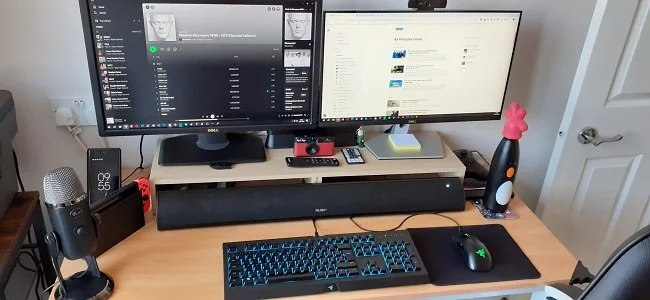



Happy Birthday Hitch
Today is the 118th anniversary of the birth of Sir Alfred Hitchcock. The internet is subsequently awash with editorials and retrospective analysis of his work. The great man himself is always worth scrutinizing, so you'll also find a great many articles that explore his "inner demons" and such like. Such is the extent of Sir Alfred Hitchcock’s reputation and associated apocrypha, that we were given the cinematic biopic Hitchcock, starring Sir Anthony Hopkins in 2012. Not bad for someone who has been dead for thirty-seven years and who's last movie was made in 1976. I doubt if many of today's film directors will leave such a legacy and have their careers pawed over in the decades to come.
Today is the 118th anniversary of the birth of Sir Alfred Hitchcock. The internet is subsequently awash with editorials and retrospective analysis of his work. The great man himself is always worth scrutinizing, so you'll also find a great many articles that explore his "inner demons" and such like. Such is the extent of Sir Alfred Hitchcock’s reputation and associated apocrypha, that we were given the cinematic biopic Hitchcock, starring Sir Anthony Hopkins in 2012. Not bad for someone who has been dead for thirty-seven years and who's last movie was made in 1976. I doubt if many of today's film directors will leave such a legacy and have their careers pawed over in the decades to come.
I won't waste my or your time providing a potted biography of Hitchcok nor critiquing his work, because there are plenty of existing online resources that can provide those services. What I will say is if you are a fan of quality cinema and are not familiar with the work of Alfred Hitchcock then you are doing yourself a disservice. Hitchcock was an innovator of using visual effects and cinematography to their maximum effect, yet it was never at the expense of the story. He was a clever observer of people and the human condition and could quickly weave a narrative that had the audience emotionally invested and in a state of suspense. In a nutshell, he fully understood every facet of cinema and how to use them to create accessible and compelling stories.
A matte painting by artist Matthew Yuricich from North by Northwest 1959
Hitchcock was also a great showman who understood about the power of the press and marketing. Furthermore, Hitch happily bought into the cult of his own personality. Watch the trailer below in which he walks around the set of Psycho making oblique references to the more salacious elements of the plot. Hitchcock manages to suggest enough to pique even the most casual viewers interest and play upon their desire for titillation. If only we had trailers presented in such a comparable style today by similar genuine auteur film makers. Sadly, the current state of mainstream Hollywood doesn’t provide an environment for such personalities to flourish.
Alfred Hitchcock's influence has been extensive among subsequent directors. David Lynch, Brian DePalma, Dario Argento, David Croneberg are but a few of those who have openly praised his work and exhibited homages to Hitchcock in their own material. And let us not forget the great partnership between Hitch and the composer Bernard Herrmann. Hermann crafted eight outstanding scores for the master including the iconic Psycho. The jarring strings of the shower scene have now transcended cinema and become a pop culture reference for anything vaguely horrific. Few creative endeavours have such an impact upon public perceptions.
So, in this age of video on demand and such like, there really is no excuse for remaining oblivious to one of the world’s finest film makers. Why not settle yourself down in a comfy chair, dim the light and partake of one of Alfred Hitchcock's classics. There's plenty to choose from, depending upon your tastes. Be warned, even by today's standard these films are not always family friendly, often containing a strong sexual under current. In his later work, some of the violence is still quite disturbing. But as Hitch said himself "In films murders are always very clean. I show how difficult it is and what a messy thing it is to kill a man"









“I'd Like to Have an Argument, Please”
This post has been fermenting for a while. I’ve postponed writing it because I've gotten somewhat tired of constantly “spitting in the wind”. Because that is what speaking out on certain subjects frequently feels like these days. There is a sense of tedious inevitability that any post on sexism, racism or any form of marginalisation will eventually lead to a torrent of vile, ill-informed and just plain dumb comments. The list of subjects “best avoided” seems to be getting bigger each day. Politics, religion and social issues have now been joined by the likes of economics, education and healthcare. But it doesn’t end there. Critiquing a book, movie, TV show or game can be deemed contentious and open a can of worms. Frankly, soliciting comments on any subject via social media seems to be courting disaster these days. The sad reality is that some people just revel in being vile and trying to hurt others. It puts me in mind of that quote from Platoon "Hell is the impossibility of reason". And you'll find precious little reason on the internet.
This post has been fermenting for a while. I’ve postponed writing it because I've gotten somewhat tired of constantly “spitting in the wind”. Because that is what speaking out on certain subjects frequently feels like these days. There is a sense of tedious inevitability that any post on sexism, racism or any form of marginalisation will eventually lead to a torrent of vile, ill-informed and just plain dumb comments. The list of subjects “best avoided” seems to be getting bigger each day. Politics, religion and social issues have now been joined by the likes of economics, education and healthcare. But it doesn’t end there. Critiquing a book, movie, TV show or game can be deemed contentious and open a can of worms. Frankly, soliciting comments on any subject via social media seems to be courting disaster these days. The sad reality is that some people just revel in being vile and trying to hurt others. It puts me in mind of that quote from Platoon "Hell is the impossibility of reason". And you'll find precious little reason on the internet.
Two things have occurred recently that prompted me to write this post. One is the ongoing decline of both the Official and Unofficial LOTRO forums. The other was a minor twitter exchange I was involved in recently. A simple comment made in reply to a political pundit, meant that my timeline was subsequently flooded by an argument that went on for hours, as all parties chased their own tails and frothed at the mouth. As for the two LOTRO forums, they’ve become so polarised that they now mirror each other with their own militancy and are effectively different sides of the same coin. Both of these events are far from unique. It happens every day (“no matter what you say”, according to Tom Jones). Yet they got me thinking why does it have to always be this way and is there anything that can be done?
Well I believe there is. However, don't go looking for a miracle cure in this post because I don’t claim to have one. What I am suggesting is fairly basic and certainly requires lots of time. In a nutshell, keep writing and debating. Don't throw in the towel. I know it's very tempting sometimes, hence my spitting in the wind reference. Yet if we do, then the only information that will remains out there in the public domain is misinformation. Therefore, we should not shy away from speaking out on difficult matters. In fact, I would go so far as to say that it is our duty to do so. Sooner or later you have to pick a side. The alternative is to do nothing and watch it all go to hell in a hand basket (other portmanteaus and porterage devices are available). Here are few thoughts on what specifically can be done.
Research and a well-constructed argument: Debating is a skill. There is a process applied to discussing and arguing a point, the same way as mathematics and grammar have specific rules. Unfortunately, most folk either aren’t ware of them or feel their opinions are not subject to such criteria and so are happy to jump in to arguments feet first. It's a shame more schools do not teach critical thinking as it is an invaluable skill that can be brought to bear on so many aspects of life. However, it is prudent to consider that logic and objectivity cannot always be imposed upon a debate. Emotions do play a part and cannot necessarily be set aside. Especially if you have first-hand experience of the very matter being debated.
I believe it was the blogger Tobold who stated, "There cannot be any meaningful discussion of any subject if you start out by declaring only one side of the argument as valid". That is perhaps true of some subjects, especially if you are debating a matter that hinges on subjectivity and personal taste. However, in a debate regarding a subject such as equality, I cannot logically see any argument to validate a contrary stance. There are no degrees of equality. You either believe in it and live by it as a concept or you don’t. I guess the same can be said regarding certain scientific discussions, where specific rules and concepts are established. Mind you that doesn’t stop some people. But that raises a different matter where some individuals like to play devil’s advocate just for the fun of it.
Life is not simple: If you are intending to hold forth on a particular subject, it never does any harm to remember that most problems are what they are because of their complexity. Which is a nuisance because contemporary society really doesn't like or do “complex”. Listen to most radio phone-ins, read any internet forum or just glance through a tabloid newspaper and you'll find many of the most difficult and contentious problems the world currently faces, distilled in to some rather glib and factually questionable sound-bites. Furthermore, the public lap these up because they're easy to remember and trot out. It's far less hassle to spout some superficial nonsense you gleaned from the pages of the Daily Bastard, than spend time researching a subject and actually having to think and analyse data.
So, bear this in mind when you tackle a big issue when blogging etc. Question whether you are in a position to make a substantive point. Do your research and ensure you link to the sources you quote. Check the credentials of those supplying data and statistics. Is it a reputable organisation? Do they have any reason to be bias? Too often I see links in comments and forum threads that lead to questionable sources. Therefore, ensure that when you write about complex issues you don't make the mistake of inferring that it's a binary situation and easy to fix. Unless of course it is.
Change takes time: The previous point dovetails nicely in to this one. Progress is a long and often arduous path. Entrenched social attitudes and ideologies do not change overnight. Often, it’s a generational thing. For example, my parents were born in the 1930s and both have specific views on social status, race, religion, politics, patriotism and that other old favourite drugs. A quarter of the world was part of the British Empire during their most formative years and this era definitely shaped their world view. They have made some changes over the years but on some matters their beliefs remain strong. No amount of arguing will ever change that. However, such views are not so endemic with my own or my son’s generation. Simply put, some of the more unsavoury views from my parents’ generation will die with them. Change doesn't always come by winning "hearts and minds".
However, as with complexity, many people these days can't be doing with "long waits". Thus, we live in a time where knee-jerk reactions and crass, ill-conceived quick fixes abound. Why should gaming be any different from politics? All I can really say to the ardent campaigner or blogger with a strong social conscience, is it helps to cultivate some patience. Actually, you’ll need a lot. Bucket loads.
Be measured and fair: If for example, you as a gamer want to lobby the games industry with regard to the depiction of women in games. There is a requirement for you to engage with those who are either directly a part of the problem or those who seem to be indifferent to it. It's all about winning the middle ground and generating a head of steam. This process needs to be handled with subtlety and tact. Although passion is inspiring and anger can be power (or so The Clash said), step too far over the line and your perceived militancy (whether it is real or not) will work against you. It scares people and it may even drive those you need on-board to the other "side" of the debate. So, pick your battles, be firm, measured but always remain civil.
Another thing to be considered is the use of knowledge. Some gamers (and bloggers) are not as smart as others. Some folk are smart but driven by their emotions. It can therefore be easy sometimes for the intelligent or knowledgeable party to run rings around the other. Be careful in how you "wear" your intelligence. There's being clever and then there's wanting to be seen as being clever. Crushing a person publicly through Vulcan like logic does not necessarily mean that they will immediately recant their views and embrace yours. Quite the opposite. You may have made matters worse. Just watch them dig their heels in. You can be smart and make your point without being condescending or smug. However, that can be a difficult path to tread. Like it or loathe it, dealing with people in these situations requires a degree of diplomacy.
I sure we can all think of other points to add to the list. There's also an element of finding an approach that is right for you. Then of course there is always the option to simply not blog about some aspects of gaming or to stray in to certain areas of debate. However, I don’t think remaining “neutral” is a permanent option. Sooner or later you’ll get dragged in through tortuous logic as “opting to not have an opinion is tacit approval of status quo”. That being said, as a blogger, podcaster or streamer you are not obliged to discuss thorny issues if you don’t want to. That is your (and Bobby Brown’s) prerogative and you are free to create content in the manner that makes you happy. I am merely suggesting that if you feel the need to do express a view that may court debate, then you should not be deterred by the facts that it is hard to engage with some groups and that change takes time and work.
As I get older I do find that my passions have tempered over time. I do not find the need to go on that many demonstrations, nor to hold an "absolute" opinion on everything under the sun. I do tend to focus on more immediate issues that affect myself and my family (like the closure of my local A&E) rather than wider international matters. But even in my most sceptical of moments, I cannot truly advocate a total withdrawal of interaction on social issues. Because that means handing the floor over to the idiot brigade and therein lies madness. Plus, if we all did that then blogging would be a lot less interesting. Oh, and don’t forget that an argument is a connected series of statements intended to establish a proposition. It’s an intellectual process. Contradiction is just the automatic gainsaying of any statement the other person makes.
“We're All Journalists Now”
The "bloggers versus the gaming press" debate still lumbers on, despite years of discussion. The matter has now become more complex, due to the popularity of live streaming and You Tube personalities. Ultimately, this entire matter is a subset of the larger argument regarding citizen journalism and its conflict with the fourth estate. I recently read Scott Gant’s book We're All Journalists Now: The Transformation of the Press and Reshaping of the Law in the Internet Age which explores this very matter in-depth. The author has a very interesting attitude toward the democratisation of journalism, which he expresses eloquently. Many of the points that he makes are directly applicable to other fields of journalism and are not exclusive to traditional “news”.
The "bloggers versus the gaming press" debate still lumbers on, despite years of discussion. The matter has now become more complex, due to the popularity of live streaming and You Tube personalities. Ultimately, this entire matter is a subset of the larger argument regarding citizen journalism and its conflict with the fourth estate. I recently read Scott Gant’s book We're All Journalists Now: The Transformation of the Press and Reshaping of the Law in the Internet Age which explores this very matter in-depth. The author has a very interesting attitude toward the democratisation of journalism, which he expresses eloquently. Many of the points that he makes are directly applicable to other fields of journalism and are not exclusive to traditional “news”.
I am still of the opinion that professional and amateur writers complement each other and can be of equal value to the community. This is especially true of gaming related writing. Conventional game news informs and promotes across a broad spectrum of content. Amateur and fan blogs provide subjective detail and a greater degree of depth on the issues. As a gamer, ensuring that you have a mix of commercial sites and blogs in your feed reader, increases the likelihood of you being adequately informed. Obviously, blogs are not always subject to the same editorial scrutiny as professional writing. Thus, there can be issues regarding grammar and logical arguments. However, literary failings do not by default, invalidate an opinion or well-conceived idea. Conversely, working to a formalized style and standard of writing, as well as editorial guidelines can potentially remove eloquence or a writer’s style and replace it with uniformity. As for common sense and logical arguments, an editor and a team of writers can fail to observe these as equally as a single blogger. Thus, there is good and bad in both camps.
Until recently I had a substantial list of fan blogs that I read every day. Some regularly offered exceptionally good think pieces, comparable to professional journalism. Sadly, many of these writers have retired from the scene. There also seems to be a drop in long form writing and in-depth analysis among many of the commercial games news sites. It appears that both the pro and amateur writing scene has fallen victim to a malady that has spread across mainstream news. Namely, tribal, populist writing which eschews facts and data and instead slavishly retrofits content to support a specific mindset or agenda. Gaming has become very binary and entrenched, the same as politics. Bucking the trend can have consequences and subsequently many games bloggers have become tired of the toxic comments, twitter outrage and quit. The commercial sites often pick a side and thereafter pursue vociferously a specific ideological line. As with national newspapers, it leads to a partisan environment in which impartiality and logical debate do not thrive.
I still advocate the democratization of writing and publishing and do feel that “we’re all journalists now” to a degree. However, I also think that bloggers, streamers and You Tube personalities can also fall prey to the same failings of mainstream journalism. Commercial forces can impact heavily upon editorial decisions and shape the narratives in camps. We should not overlook other dubious motivations such as ego and “popularity” which can also have a negative effect upon content creation. Yet despite these issues, I still feel that the writings and musings of my peers is beneficial. I also think that collating daily gaming news is a daunting and unenviable task and am therefore grateful to the professional sites that aggregate such content. As for partisan, spurious and inflammatory games writing, we should reject it pointedly and publicly. Be it from professional outlets or from fans. If we want content of a higher caliber we should lead by example as well as demand it from others. Aim for the standard you wish to see elsewhere and it will be to the advantage of both "bloggers” and the “gaming press".
Moral Relativism in Popular Culture
Contemporary Western culture is far from perfect. Although major positive changes have been made with regard to social attitudes, equality and tolerance, there is still much work to be done. Privilege is still rife, be it financial, political or societal. Just to put one’s cards on the table right from the outset, I am a white, middle class, British male in his late forties. I do not feel in any way, shape or form marginalised. At present I am in one of the most advantageous social economic groups in the UK. That statement is devoid of any emotional connotation. It is simply a statement of fact and a means of providing some context for this post. Although I am acutely aware of discrimination, I have seldom personally experienced it. I mention this because this post is about moral relativism in popular culture and thus it is only fair that I define the prism through which I experience the world.
Contemporary Western culture is far from perfect. Although major positive changes have been made with regard to social attitudes, equality and tolerance, there is still much work to be done. Privilege is still rife, be it financial, political or societal. Just to put one’s cards on the table right from the outset, I am a white, middle class, British male in his late forties. I do not feel in any way, shape or form marginalised. At present I am in one of the most advantageous social economic groups in the UK. That statement is devoid of any emotional connotation. It is simply a statement of fact and a means of providing some context for this post. Although I am acutely aware of discrimination, I have seldom personally experienced it. I mention this because this post is about moral relativism in popular culture and thus it is only fair that I define the prism through which I experience the world.
For most of history, there have been hierarchies that have perpetuated discrimination for personal advantage. The church, nations states and all manner of other social institutions have done this in the past and continue to do so to varying degrees today. Therefore, it is foolish and factually inaccurate to try and avoid depicting this in any narrative medium. The quasi medieval world of Game of Thrones is therefore potentially justified in depicting the unpleasantness of its faux era. However, accuracy is one thing, exploitation is another. The latter often sites the former as a reason to justify "showing all". Sadly, authenticity is not really the real motivation here. It's purely a case of sex and violence sells. So, it is important to consider context. The harsh realities of slavery are shown without titillation in a movie such a 12 Years A Slave. Can the same be said about Mandingo?
There is a difficult line to tread here. Sometimes showing the stark reality of something abhorrent is the best way to make a point and to inform your audience or start a debate on a specific matter. On other occasions, depicting the specific details may not necessarily achieve this. I am of an age where I still remember the debate as to whether the rape scene in the 1988 movie The Accused actually needed to be shown, to make the film’s point about the treatment of women by the US judicial system of the time. On mature reflection, I believe that it did. Showing the assault puts a human face upon the crime and brings home its magnitude. However, can the same be said for “sensational” airport massacre scene in Call of Duty: Modern Warfare 2? Its primary inclusion seems to be to titillate, rather than to make any wider dramatic point.
Some people have very strong moral and ethical world views. These may be driven by faith or politics and they are also shaped by the prevailing social ideas and customs of the times. For example I have very different views on some subjects compared to my eighty year old parents. They are very much products of their era, as I am of mine. As a result, I believe that it is simply illogical to deny the concept of moral relativism. There are some broad common concepts that most cultures can agree upon, such as murder and theft being wrong. However, there is not a globally accepted moral equivalent of the Beaufort Scale or Periodic Table. Hence, we see disparities between men and women’s status and rites in certain cultures and religions.
As a result of this diversity of opinion, it's pretty difficult to deal in absolutes (unless you are the tabloid press). Yet that doesn't stop people from trying. Some folk feel that there are limits on the exploration of specific subjects or that certain things are just taboo. You mustn’t joke about this, never be disrespectful about that, the list can get pretty long. I cautiously take the opposite view. I don't believe anything is truly out of bounds to explore in a democracy as long as it’s done within the confines of the law. However, one must question what ones motivations are for doing so and straying in to such minefields. For me, I use the litmus test that comedian Reginald D. Hunter suggested. "Was there hate in your heart" when the controversial statement in question was said. It may not be the most sophisticated of tools but I believe it is a strong starting point.
Because so much of our perception of the world around us is visual, humans have a strong tendency towards voyeurism; thus, many people find depictions of sex and violence alluring. This is not necessarily in a sinister or unwholesome sense but possibly more due to the cultural attraction of anything designated taboo. In the UK during the early eighties, the home video market was unregulated. Hysteria and panic lead to ill-conceived legislation, namely the 1984 Video Recordings Act, resulting in lot of movies gaining notoriety as they were removed from shelves. Let it suffice to say that this state of affairs made a lot of these titles essential viewing for many teenagers. It became a rite of passage to try to seek them out and endure them. In many respects this is no different from placing an age based embargo upon smoking, drinking and other sundry vices. There is some truth in the clichés regarding forbidden fruit. It's a curious thing that the appeal of such extreme material often wanes with age. Teenagers are still drawn to such movies such as The Human Centipede and A Serbian Film. I however recognise that there is no real benefit in seeing such unpleasant and extreme material. Subsequently I now have self-imposed limitations.
Gender is also an important factor within this debate. Reactions between the sexes can differ drastically on matters such as the depiction of sexual violence and the use of pejorative language. Sadly, most media based industries are far from a level playing field and there is often gender bias when dealing with certain material. Often it is this sort of content that proves most financially viable, regardless of its moral rectitude. It’s a matter that seems to be the bane of video games industry at present. Consider the debacles over Tracer’s sexuality in Overwatch and the aesthetics of female characters in Mass Effect: Andromeda. With regard to TV and specifically Game of Thrones which has often been criticised over its lurid content, I would love to have an accurate age and gender based break down of the viewing figures to determine what aspects of the show appealed to whom. Do you think there would be any major surprises? No, neither do I.
Following on from this, I think that we need to focus on the inherent duality of contemporary society with regard to current social issues. There is still a huge gulf between what people say in public when they’re conscious of maintaining an equitable moral and ethical position, as opposed to what they may think personally. We’re all guilty of this to a greater or lesser degree. Perhaps modern life exacerbates this phenomenon. For instance, most places of employment have clear policies regarding equality and discrimination these days and usually staff publicly endorse them. However, do all employees genuinely support such ideals or is it just expedient to do so? Until recently, the prevailing politically correct mindset has silenced certain quarters. In this post Trump, post Brexit world, a lot of people who previous kept their less inclusive views to themselves now are more comfortable sharing them publicly.
Then of course there is the fact that as a species we just seem to have a knack for failing to live up to our finer principles. Consider a commonly held notion such as not judging a person by their looks. Most people will strongly advocate such an ideal, again to possible project an acceptable public image. Yet despite this, so many of us still do the complete opposite, possibly because the ideal is contrary to our genetic imperatives. I'll freely admit that I regularly fail to live up to the standards that society and more importantly myself set. We live in a world where many of us embrace concepts and ideas in principle only; because we've realised that actually acting upon them requires effort, self-denial or having to step outside of our own personal comfort zone. Morality and ethics often go hand in hand with cognitive dissonance.
There is still much more to say and explore about moral relativism and its impact upon numerous social and ethical issues. It's interesting that many of these subjects manifest themselves in genres that are appealing to gamers, geeks and nerds. Games and comics still court controversy at times with the way they depict women or ethnic groups. The debate over the casting of the first female Doctor Who still rages on. The level of sexual content in shows as American Gods still causes tongues wagging. The BBC is about to embark upon its Gay Britannia season, celebrating 50th anniversary of The Sexual Offences Act 1967, which partially decriminalised gay sex. Expect outrage from specific newspapers. There are still mutterings from some fans over both the critical and financial success of Wonder woman at the box office. This is why we see push back as some see progressive ideals as threatening and don’t want them in their social spheres.
Context and the prevailing Zeitgeist have a bearing on representation of all subjects. Why should popular culture be any different? Therefore, we should not carte blanche deny the reality of moral relativism. However, we should not just use it as a “get out of jail” card to justify an “anything goes” mentality. Moral relativism is an academic debating tool and not a life defining philosophy. Just because something taboo can be shown on TV or a controversial subject used as a plot device, doesn’t mean that it automatically should. I would hope that such a decision was tempered by the application of a good many other criteria first. Because despite what some academics, critics and pundits may think, popular culture is not necessarily trivial by default. It is accessible to swathes of the population and can shape a great many opinions. As such it can be a very powerful medium. Whether it is a force for good or not, is down to us.
Money Changes Everything
When I look back at the various posts I’ve written about gaming over the past decade, several themes regularly occur. Player toxicity, marketing hype and industry shenanigans are three that never seem to go away. Pre-order culture, fans enthusiasm and launch day disappointment are also perennial bad pennies. However, there is one point that I constantly find myself reiterating. Yet despite its staggeringly obvious nature it is habitually overlooked and ignored. Namely that money changes everything. Regardless of the nature of a situation, be it the cost of an item in the cash store, alterations to a games mechanics or the relationship between a You Tube personality and their audience, if it involves some sort of financial exchange then it fundamentally alters the dynamic of that given situation.
When I look back at the various posts I’ve written about gaming over the past decade, several themes regularly occur. Player toxicity, marketing hype and industry shenanigans are three that never seem to go away. Pre-order culture, fans enthusiasm and launch day disappointment are also perennial bad pennies. However, there is one point that I constantly find myself reiterating. Yet despite its staggeringly obvious nature it is habitually overlooked and ignored. Namely that money changes everything. Regardless of the nature of a situation, be it the cost of an item in the cash store, alterations to a games mechanics or the relationship between a You Tube personality and their audience, if it involves some sort of financial exchange then it fundamentally alters the dynamic of that given situation.
People are motivated to blog, podcast, live stream and make videos for a variety of reasons. Some do it to please themselves, where some like to please others. It is actually possible to achieve both. If you are persistent in your endeavours and communicate with your audience positively, then you will get some traction. But there are consequences to being successful and I’m not talking exclusively about having an audience of millions. Even a modest site such as Contains Moderate Peril can be subject to some basic internet cause and effect mechanics. Audiences, or readers in my case, consume content voraciously. They also foster expectations regardless of whether you’ve directly instigated them. If you create new material daily, your audience will grow to expect it daily. If you significantly deviate from such a schedule there are consequences. In my case, between March and April last year I took a break from writing and as a result my traffic tanked. It has taken a year plus to recover. Interruptions to the podcast schedule also killed the listener numbers.
Now the reason I mention this is because, even before you’ve got to the point of taking money from your audience, you have to deal with their expectations, regardless of whether they are founded or not. I have known several fan related sites that have been criticised for changing direction, deviating from perceived schedules or having the unmitigated gall to cease producing their free service. But the moment you accept money from your audience, then your independent status is lost. You are no longer providing content but a service. Fans are often blighted by a malady which seems to equate support with direct input. Add money to that spurious equation and you will inevitably have problems. It doesn’t matter what route you take or what platform you use to raise capital, paying is perceived by some as buying a share in “You Incoporated”. Thus, we have Twitch streamers who are criticised for how they spend the money they are “given”, fansites lambasted for championing or not championing specific issues. And at present, popular You Tube personality Joe “Angry Joe” Vargas is at war with a faction of his so-called “Angry Army” of subscribers.
I have in the past toyed with monetising both this site and the associated podcast(s). For a brief period of time, I asked for PayPal donations when the hosting costs were getting extravagant. However, that ended when I was offered a sponsorship deal with Host1Plus. When I moved the site in 2015 to Squarespace I decided it was easier to simply bank roll all my projects myself because it just guaranteed that I could do my own thing free from any external constraints. That’s not to say that I don’t support the notion that people providing content on the internet should be paid, because I do. It’s just that the Huffington Post business model and the fallacy of “exposure” has done a lot of damage. Sadly, Joe Public has become use to getting “free stuff” and it’s very hard to try and overcome that mindset. So, for the present I look upon my online projects as “indulgences” and will fund them myself to maintain my creative control.
If one broadens the scope of the argument that “money changes everything” it is clear that it permeates everything in life and alters are relationship with it. In the UK, university education used to be selective and free of charge. However, now it is more accessible but as more people use it, is chargeable via a deferred loan. Some students no longer see education as a self-determined process of personal improvement but simply as the buying of a service. Thus, academic under achievement is seen not as a personal failure, but as a business dispute. Such a mindset shows how money alters the perception of any undertaking. Thus, some MMO gamers want bespoke content that suits their needs, You Tube subscribers feel that they should dictate what content is posted on a channel and the entire field of crowdfunded projects is rife with complaints, acrimony and misplaced demands.
Now it is fair to say that there is nothing inherently wrong with the traditional business and customer relationship, as long as both parties accept it as such. The same can be said regarding the free content providers and their audiences. Both are perfectly equitable arrangement as along as everyone understand their respective role. Sadly, the internet has impacted upon this perception. Fans think they’re on the board of director’s, Patreon subscribers fail to understand what “donation” actually means and support for any undertaking in general is seen as a point of leverage. Plus, any sort of financial transaction means some sort of contract. Adding a legal veneer to a situation only adds to its complexity.
As I’m writing this very post, someone on my Twitter timeline has just tweeted about how their patrons can now vote on what they review next. If they are happy with this situation then that is fine but it highlights exactly how “money changes everything”. Contains Moderate Peril is never going to make me rich or even break even. But for the present it is exclusively my platform and that makes the operating costs worthwhile. If you feel the need to tell me what I should or should not be doing on my personal site then that is your prerogative. However, I can also ignore your demands and tell you to fuck right off with a clear conscience. So, my advice to any budding blogger, podcaster or You Tuber, is to think long and hard before you take the proverbial “King’s Shilling”. A source of revenue may well be all fine and dandy but at the costs of your independence?
Social Media and Personal Identity
I'm fascinated by social media and the way it has been adopted by the wider community. A multitude of people utilise in a multitude of ways for so many different reasons. Therefore, I felt that it was time again to focus and discuss the phenomenon in a blog post. I have embraced social media, especially Twitter, mainly to promote my writing. I started “tweeting” in 2010 and along the way my use of the medium has become more socially orientated. I enjoy the interactions I share with a broad and eclectic group of people immensely. However, it should be noted that my Google + page, as well as Twitter and Facebook accounts are all based around Contains Moderate Peril and not my specifically my personal life. I like to maintain a distinction between these different aspects of my life. At present, I believe I have found the right balance.
I'm fascinated by social media and the way it has been adopted by the wider community. A multitude of people utilise in a multitude of ways for so many different reasons. Therefore, I felt that it was time again to focus and discuss the phenomenon in a blog post. I have embraced social media, especially Twitter, mainly to promote my writing. I started “tweeting” in 2010 and along the way my use of the medium has become more socially orientated. I enjoy the interactions I share with a broad and eclectic group of people immensely. However, it should be noted that my Google + page, as well as Twitter and Facebook accounts are all based around Contains Moderate Peril and not my specifically my personal life. I like to maintain a distinction between these different aspects of my life. At present, I believe I have found the right balance.
Now this raises the question of whether my online persona is genuine. How much do readers of Contains Moderate Peril, listeners of the podcast (which is on hiatus at present) and Twitter followers actually see of the "real me"? Well I think they get a measured version of myself. I keep certain aspect of life private while amplifying others. I also think that a certain amount of the "real me" inevitably permeates my writing and online presence by some process of emotional osmosis. Over the last eighteen months I have touched upon more personal aspects of my life, because they are significant aspects of my daily reality. However, I don’t share everything and there is much that I deem off limits.
Some people think this controlled flow of information via social media is somewhat cynical and contrived. Yet I think we all do it to a greater or lesser degree in the real world in our day-to-day relationships. As a species, we always strive to present the best possible representation of ourselves to others. In fact, I've noticed that some cultures are far more invested in this idea than others. In principle, there is nothing wrong with this. Speaking your mind all the time could prove problematic; hence we have social niceties and etiquette. However, if you are continuously trying to reinvent yourself for public consumption because you are inherently uncomfortable in your own skin then that is most definitely a problem.
I think age and how you feel about yourself most certainly have an impact upon how you conduct yourself on Twitter and other platforms. People naturally want to be liked and also be accepted. There is an imperative to be an individual and at the same time “normal”, which is a very nebulous concept. I prefer the broader concept of societal norms and knowing when to accommodate them. Social media as many has pointed out, liberates us from social cues and other vital aspects of communication. Then there is the old chestnut of anonymity and the lack of consequences that come with the internet. There is often scope to forget that we are dealing with another individual when using social media. I think most of us have made this mistake at some point and may have regretted what we've said or how we've treated someone.
Naturally there are counter points to all the above. As I've already stated, I have set limits and constraints on my online interactions. Others go a step further and live completely different lives online, so it is prudent not to take everything on face value. As in the real world, online friendships need to be approached with a similar degree of caution and common sense. I think it is important to focus on the positive things that social media and online friendships can achieve, such as breaking down of geographical boundaries perceived cultural differences. Although Twitter is often associated with birds of a feather flocking together and entrenched views, the complete opposite can often happen. Social media is a great way to bypass misinformation and learn about how others truly live and think. Sometimes the similarities between us speak far louder than the differences.
Collecting
Once again Syp over at Bio-Break has written a post that provides a talking point for other bloggers. This time it’s about collecting which is a very broad church indeed. When I was a child it was a common mantra of adults at the time to “get a hobby”. I suppose from their perspective a busy and engaged child is one that is likely to stay out of trouble and frankly it’s still sound advice. Many hobbies involve collecting and this can tangentially teach positive lessons such as fiscal prudence, patience and learning about that which you enjoy. In his post Syp raises the point as to whether he’s missed out by never having been bitten by the collecting bug but he also reflects on some practical problems associated with such pastimes. I was going to leave a comment on the post but it soon became apparent that it would be a little too long, so this blog post is my response.
Once again Syp over at Bio-Break has written a post that provides a talking point for other bloggers. This time it’s about collecting which is a very broad church indeed. When I was a child it was a common mantra of adults at the time to “get a hobby”. I suppose from their perspective a busy and engaged child is one that is likely to stay out of trouble and frankly it’s still sound advice. Many hobbies involve collecting and this can tangentially teach positive lessons such as fiscal prudence, patience and learning about that which you enjoy. In his post Syp raises the point as to whether he’s missed out by never having been bitten by the collecting bug but he also reflects on some practical problems associated with such pastimes. I was going to leave a comment on the post but it soon became apparent that it would be a little too long, so this blog post is my response.
When I was young, I dabbled with collecting. Comics, trading cards, action figures are some of the things I doggedly pursued. But often I found that time, money and the practicalities of being a child, IE being busy playing, meant that such enterprises were doomed. It was not until the early nineties, when I had a job and a sizeable disposable income, that I was able to sustain the practical realities of collecting. I think this is an important factor to mention. Collecting requires passion which is something available to all age groups. Money is something that we don’t have continuous access to all our lives and it subtly alters the dynamic of collecting. It is far easier to start your collection while you still live at home and have “spare cash”. Marriage, family and mortgages can radically alter this equation.
Being a consummate film fan and an ardent completist, I started collecting films on what was the best physical medium of the time; LaserDiscs. In the early nineties, VHS sell-through tapes where king. However, if you were a serious movie aficionado, who wanted superior picture and sound quality as well as alternative cuts of a film, then LaserDiscs was where it was at (Daddy-o). At the time, a VHS tape of a popular film such as Terminator 2 would cost about £10. If you wanted the Director’s Cut of the same movie, in the correct aspect ratio with optional commentary by the cast, then it would cost between £30 to £40 on LaserDisc. It was a superior viewing experience all round. Although there were UK releases on this format, they were somewhat limited. A far greater choice was available if you bought US and European imports. Buying internationally also added to the allure of collecting.
Because of my passion for film, I bought circa 1991 a LaserDisc player that was dual standard (NTSC/PAL) and a new TV that could handles both UK and US picture standards. I think I spent near £750 on both. Over the next few years, I spent a great deal of time and money building up a collection of classic and cult films. Due to prohibitive censorship laws that prevailed in the UK at the time, a lot of the material I bought was technically illegal to import. There was a network of small companies at the time that worked within various legal loopholes to offer a specialist purchasing service. Thus, I owned the Director’s Cut of George A. Romero’s Dawn of the Dead at a time when it was only available in the UK in a pre-cut version. I also had the Criterion version of RoboCop in all its bloody glory. But the jewel in the crown of my collection was the Star Wars Trilogy in their original theatrical versions. LaserDiscs satisfied my needs as a fan as well as a film purist. For about seven or so years, I spent thousands of pounds on my collection. Being twelve-inch discs, they took up comparable space to a vinyl music collection.
However, time and tide waits for no man and it also doesn’t give a shit about collectors. Towards the end of the nineties, DVD became the de facto medium of choice and so I changed the focus of my collecting activities. Due to regional variations, multiple versions and good old-fashioned censorship, DVD proved to be an even more collectable format than LaserDisc. It was round about this time, when my personal collection of movies was over five hundred that I realised there had been a shift in the pleasure I got from collecting. It was no longer just about seeing the best and most complete version of a much-loved movie. I was in the thrall of the “thrill of the hunt”. A fact borne out by the number of discs I had that remained unwatched, still in their shrink wrap. I was also using up considerable storage space to accommodate my collection and it was proving to be somewhat of a drain on my finances. And then Blu-ray appeared on the market and opened up not only a new avenue of potential collecting but a can of worms. Did I really want to replace so much of my precious hoard?
It’s a curious thing how something that has taken years to amass, can be dispensed with and disposed of in a far quicker time. My Father-in-law was a prodigious collector of coins and medals. He was very proud of his collection and guest were frequently regaled with it. Yet collecting is often very personal and means little to those who do not share similar passions. When my Father-in-law died in 2012, his collection was sold quickly and efficiently to several professional collectors. It was just another asset to be disposed of, once his estate had been settled. And so it was with my film collection. Once I had determined that it was no longer the collection that mattered to me but just the act of acquisition, I felt no reason to continue doing either. The very rare and signed LaserDiscs where sold to a specialist film and memorabilia store. The rest of the DVDs where then sold online, or traded in at game stores. What was left was given away to charity shops.
I’m not sure if I have a major philosophical point to make about collecting, beyond the fact that many people that I’ve spoken to on the subject have had a similar journey. What starts off as a fun undertaking eventually becomes a millstone and possibly a minor addiction. It certainly can become a massive financial drain. I also think that collecting is a very solitary pastime and is not accommodating of relationships and other situations that compete for your time, attention and money. I am now at a point in my life where I have embraced downsizing and decluttering. Technology has also made so much previously rare material readily available. As a film fan, I now live in an age where tracking down high-quality copies of most movies is quite easy. I doubt if I’ll ever collect anything in my life again, yet I cannot totally write off the period of my life in which I did. It was fun initially regardless of where it led and I think it ended up teaching me a lot about myself.
Here's an episode of the Burton & Scrooge Podcast from September 2015. Brian and I have a fairly lengthy conversation about collecting, drawing upon our own personal experiences. The discussion begins at 27:12 into the show.