Time to Move
For many of us, we live where we can afford, rather than where we would like. I have been fortunate in so far as I have lived in South East London most of my life. By London I mean Greater London, a collective administrative district, which comprises 32 boroughs and The City of London. Bexley borough is a typical “leafy suburb” in the commuter belt. If that conjures up all sorts of stereotypes then you’re broadly correct. This is a borough where the middle classes move to raise a family and seek their “forever home”. It is an affluent area with good schools, quality shops, parks, amenities and a sense of community. The average price for a 3 bedroom house in Bexley is £500,000 compared to a national average of £307,000 (according to MoveHub). However, despite the fact I like it here I feel the need for a change of scenery and think it may be time to move.
A new build bungalow of the sort we’re considering
For many of us, we live where we can afford, rather than where we would like. I have been fortunate in so far as I have lived in South East London most of my life. By London I mean Greater London, a collective administrative district, which comprises 32 boroughs and The City of London. Bexley borough is a typical “leafy suburb” in the commuter belt. If that conjures up all sorts of stereotypes then you’re broadly correct. This is a borough where the middle classes move to raise a family and seek their “forever home”. It is an affluent area with good schools, quality shops, parks, amenities and a sense of community. The average price for a 3 bedroom house in Bexley is £500,000 compared to a national average of £307,000 (according to MoveHub). However, despite the fact I like it here I feel the need for a change of scenery and think it may be time to move.
According to Reuters “London is the quintessential megacity: densely populated; intensely connected at regional, national and international levels; and exceptionally productive compared with other cities and regions in the United Kingdom. London has more in common economically with other megacities - such as New York, San Francisco and the Bay Area, Tokyo, Sydney, Auckland, Paris, Beijing and Shanghai - than with most other parts of Britain. Like other megacities, London’s population has boomed over the last three decades, hitting a record of 9 million in 2019, up from just 6.4 million in 1991, according to the UK Office for National Statistics. However, before that, the city’s population had slumped for five decades from a previous peak of 8.6 million in 1941, as inhabitants fled the city for more space and other improvements outside the metropolitan area”. I think this succinctly sums up why I wish to move.
London’s financial district
It is getting noticeably busier in Bexley. Half of the local park which is located behind the street where I live, was sold and has become a housing development. As a result the roads in the immediate area are congested at peak hours and there is much more noise throughout the day. There used to be a time when you went to bed and it was quiet. Now traffic and police sirens persist throughout the night. Changes in social attitudes mean that building work, gardening and other sources of disturbance start far earlier in the day. Due to the high turnover of houses in the street that I live in, there’s always one or two houses in a state of redevelopment. This means the road is always blocked by vans and equipment. The air quality is also deteriorating despite the Ultra Low Emission Zone being expanded. But for me the main issue is noise. It’s something I’ve become keenly aware of as I’ve gotten older and I dislike it intently.
So put it simply “I want to get the hell out of Dodge”. Hence, the plan is to now start provisionally looking to see what sort of home we can buy on our budget and where. The dream is to find a detached bungalow with two or three bedrooms and a little garden on the periphery of a village. Preferably with a view. However, we are not looking for complete seclusion and so for practical reasons we want to have access to essential amenities. Such as a pharmacist, doctor’s surgery, local shops and a few restaurants etc. I think the notion of moving to the other end of the country has finally been dismissed (sorry Blairgowrie) and I think we’ll more than likely stay within the Southern Counties. Internet access is also a factor. I have been fortunate to live in a part of the UK with good technological infrastructure. I currently enjoy FTTP and would like to maintain that.
Which county should we move to?
Sadly this process is not all “fun and larks”. Any sort of move means dealing with estate agents as we call them in the UK and they are not my favourite societal group. Already after doing some cursory searches online, I have found the process frustrating. Information is often withheld, such as floor plan measurements or specific details regarding heating etc. All of this is to ensure you register with the respective website and provide an email address. Plus an estate agent’s lexicon is often questionable, stretching the meaning of accepted terminology and phrases. However, setting aside these minor niggles, Mrs P and I now have to give this entire matter some serious consideration, this side of Christmas. If we do decide to move in 2023, I want it to be an organised affair and not some spur of the moment, descent into chaos.






The Importance of Humour
This post is about humour. A subject that is very dependent on one’s personal tastes. I consider humour to be an extremely important facet of the human condition. I personally use humour as both a sword and a shield in my day to day life. I find such an approach invaluable to maintaining my sanity and a positive disposition. It is also a means of circumnavigating obvious disparities in power, be it social, economic or political. I also consider humour to be an important measure of a person. All the people that I’ve encountered in my life who have been bullies, intransigent, obtuse, cruel, bigoted and superior have lacked a sense of humour. If they ever claimed to have one, it has always been very much a one way street. Hence, humour is an important social tool. Something that I keep an eye out for during the course of my social interactions.
Blackadder (1983 - 1989)
This post is about humour. A subject that is very dependent on one’s personal tastes. I consider humour to be an extremely important facet of the human condition. I personally use humour as both a sword and a shield in my day to day life. I find such an approach invaluable to maintaining my sanity and a positive disposition. It is also a means of circumnavigating obvious disparities in power, be it social, economic or political. I also consider humour to be an important measure of a person. All the people that I’ve encountered in my life who have been bullies, intransigent, obtuse, cruel, bigoted and superior have lacked a sense of humour. If they ever claimed to have one, it has always been very much a one way street. Hence, humour is an important social tool. Something that I keep an eye out for during the course of my social interactions.
Life is filled with social situations of varying degrees of significance. I have a hospital appointment coming up soon in which I’ll have to meet different people in an environment I’m unfamiliar with. I will also undergo some tests which may be a little uncomfortable. Humour is a means to navigate such a socially complex situation. Self deprecating humour or a simple joke about the circumstances can put all parties at ease and make the matter more palatable. Humour is great for breaking the ice at parties, extending an olive branch and making up after arguments. As I said earlier, it is a social tool. One that you can learn quite early in life. Every class at school often has a clown. Sometimes these can be people who quickly become adept at using humour to socialise and establish their identity.
Something, something, pubs, beer and mates
Later in life, you soon realise that if you’re not what society deems to be “good looking”, then be funny instead. Teenage years are often quite traumatic and being the funny one in your peer group has advantages. Ricky Gervais states that there’s nothing funnier than your own group of friends and the humour that arises when you get together is contextually funnier than any material that he can write. However, being funny is not always easy. Sometimes you can try too hard or fail to read the room, so to speak. Where we all know someone who is genuinely witty, we similarly often know someone who never shuts up, can’t take anything seriously and ultimately is very wearing. Social media often flirts with a philosophy that evangelises presenting your “best self”. You can see this on YouTube videos and Twitch Streams. People striving to be a raconteur, or a quick fire comedian. Sadly too many fail, because humour is more than just telling a joke. It requires mastering techniques, reading situations and people.
Perhaps the most powerful aspect of humour, comedy and jokes is as a means of speaking truth to power. As a weapon against pomposity, mendacity and hatred. The venal are often thin skinned and hate being ridiculed or mocked. Humour in that sense is the great leveller. Even the Kings or the middle ages had a fool who was given free reign to mock all regardless of status. But humour comes with responsibility. Words have power and can hurt despite what the old adage says. Hence there is the ongoing debate about whether comedians should “ punch up or down”. Is humour disposed towards specific world views, political positions and ethics by default? Does humour always need a victim or something or someone to be the butt of the joke? Is there always some form of collateral damage in the wake of a joke. Humour is not a black and white issue these days and is subject to a lot of scrutiny from various quarters. The veracity of their scrutiny is questionable at times but it exists no less.
Taskmaster like many other UK comedy shows, has been “re-imagined” for US TV
Humour varies around the world with different cultures focusing on different aspects of the human condition. I see clear differences in humour between the UK and US. These differences often stem from how a nation perceives itself. American humour can be loud, brash and at times very pleased with itself. British humour is often self deprecating, passive aggressive and sarcastic. There are also boundaries that some styles of comedy will not go beyond. This raises questions such as “is there humour in anything”? I believe there is and that it comes down to context . You can use an appalling situation to be a vehicle for humour, without mocking the said situation. And then there is the perceived get out of jail card that if an alleged humorous remark is not well received, you simply say “it’s just a joke” and you are absolved of any fallout. This is a myth and a spurious licence for bullies.
Humour brings happiness. It is an incredibly restorative social construct. Laughter may not be the best medicine as the old saying states, but it does bring other rewards. Mark Twain said that “humour is the great thing, the saving thing after all. The minute it crops up, all our hardnesses yield, all our irritations, and resentments flit away, and a sunny spirit takes their place”. I certainly wouldn’t contradict him. Humour may very well be the great thing. It can be found in nearly every facet of life. 90% of men and 81% of women claim that a sense of humour is the most important quality to have in a partner. It is a skill used by all of society. From great leaders to those just trying to get by. Mel Brooks claimed that “humour is just another defence against the universe”. But for me personally, Simon Wiesenthal summed up humour’s finest quality. “It is the weapon of unarmed people: it helps people who are oppressed to smile at the situation that pains them”.
The New Prime Minister of the United Kingdom (Again)
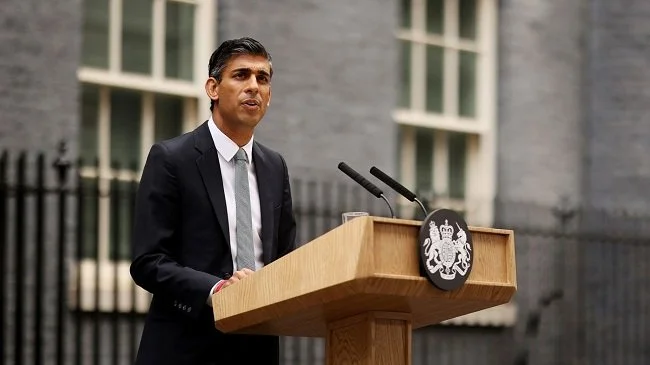
Conservative Party has been in government in the UK since 2010. During that time there have been three Prime Ministers. Today we moved onto the fourth. After Boris Johnson resigned on 7th July, the nation has had to endure a tedious two month process in which the Conservative Party elects a new leader. That person then becomes the PM by default. Many readers unfamiliar with the UK political system may be surprised that a change of leader has not led to a General Election. That is because the Conservative Party still holds a parliamentary majority of 71 elected Members of Parliament. Hence it is still constitutionally quite able to govern, despite Boris Johnson being forced from office. Therefore party members vote for a new party leader who gets the top job by default. Remember that in the UK, the Prime Minister is not the head of state and does not have the executive powers of a President.
Conservative Party has been in government in the UK since 2010. During that time there have been three Prime Ministers. Today we moved onto the fourth. After Boris Johnson resigned on 7th July, the nation has had to endure a tedious two month process in which the Conservative Party elects a new leader. That person then becomes the PM by default. Many readers unfamiliar with the UK political system may be surprised that a change of leader has not led to a General Election. That is because the Conservative Party still holds a parliamentary majority of 71 elected Members of Parliament. Hence it is still constitutionally quite able to govern, despite Boris Johnson being forced from office. Therefore party members vote for a new party leader who gets the top job by default. Remember that in the UK, the Prime Minister is not the head of state and does not have the executive powers of a President.
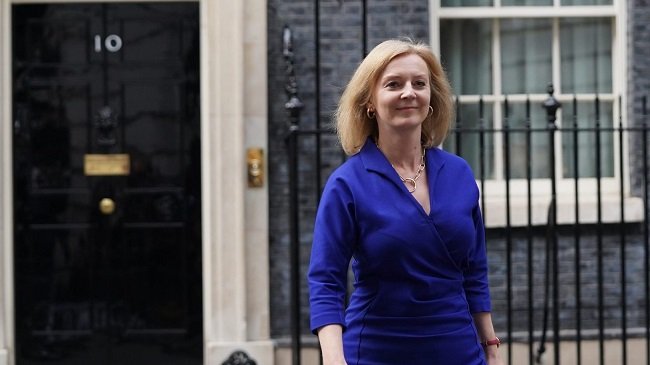
This afternoon the results were formally announced, although polling and market research has strongly indicated that the former Foreign Secretary Liz Truss was more than likely to win. That has now been confirmed. Liz Truss received 81,326 votes (57%) and Rishi Sunak received 60,399 (43%) on a turnout of 141,725 (82.6%). 172,437 Conservative Party members were eligible to vote. If you want to drill down deeper into the numbers Truss received 47% of eligible Tory members. Although she has won the election, it is not a decisive victory. Previous Tory leaders won by greater margins (Boris Johnson 66% and Theresa May 60%). Nor does she enjoy unanimous support from her own MPs, as only 113 saw fit to vote for her as leader (Rishi Sunak earned 137 votes), prior to the ballot being put to the party membership. According to YouGov, only 12% of Britons expect Truss to be a good or great leader, while 52% expect her to be poor or terrible.
To say that Liz Truss has some major political and social problems to tackle in the first month of her leadership is an understatement. Those of a political bent will be aware of her rise through the political ranks of the Conservative Party. The wider public are not so familiar with her apart from what they’ve seen in recent weeks. What they have seen is someone campaigning, not to the nation, but to the party faithful. Hence a lot of what Liz Truss has said has been showboating to the home crowd and politically tone deaf to the wider public. If you use Google to research the new Prime Minister the first thing you’ll find are all the gaffs she’s made in previous years that have now all become memes. If you set aside politics and judge her on her oratorical skills, charisma and overall appeal, she comes up wanting. Those who cry “give her a chance” are spuriously appealing to the alleged sense of fair play of the UK electorate. A quality the government of the last 12 years sorely lacks. It is current Tory policy to change any rule that stands in its way.
Tomorrow the new Prime Minister will announce her new cabinet and it will no doubt be a dismal collection of the intellectually bankrupt and the hopelessly out of their depth. I very much doubt if any of the major political challenges will be addressed in the coming parliamentary session. Real help will not come regarding spiralling energy prices, the Northern Ireland protocol will continue to be insoluble for a pro Brexit government and the ongoing skills and labour shortage, combined with ongoing lack of funding will lead to more public institutions collapsing. Inflation, low wages and rising crime could all contribute to a volatile political climate in 2023. So far, rather than seeking new ideas, Liz Truss has indicated an ideological retreat into Thatcherism, advocating policies and dogma that are no longer relevant in the current political climate.
If you take the time to find and read the serious political pundits, not the client journalists found in the popular UK press, you’ll find a lot of speculation about how the Conservative and Unionist Party is heading for an electoral disaster in 2024 and potentially its own extinction. I sadly feel obliged to remind people that it is “the doom of men that they forget”. Logic and clear evidence no longer shift the political scales like they used to. At best I think a voting pact between all parties that aren’t the Conservatives, may prevail. Perhaps the next government will then be a coalition against them. However, the election is a long way off. Myself and many other politically homeless voters’ biggest concern is the human collateral damage that will be incurred while we wait. Sadly, there is no immediate light at the end of the tunnel and that it also appears to be inordinately long.





Photos
Every few months Mrs P announces to the world in general in a rhetorical flourish “we need to go through all the photos and get some printed”. What photos are these you may well ask. The endless litany of pictures featuring our grandchildren, taken by our son and daughter-in-law. These arrive via WhatsApp on a daily basis. Being of the Instagram generation our son’s family copiously document their lives and share it on social media. Conversely, Mrs P is from the analogue generation where photos must be printed and placed in albums. All pictures remain conspicuously unannotated so in years to come you can argue over who is in them, what year it was and where they were taken. And returning to Mrs P’s statement about getting them printed, that falls to me because “it’s all done online nowadays” and that is apparently my department.
Every few months Mrs P announces to the world in general in a rhetorical flourish “we need to go through all the photos and get some printed”. What photos are these you may well ask. The endless litany of pictures featuring our grandchildren, taken by our son and daughter-in-law. These arrive via WhatsApp on a daily basis. Being of the Instagram generation our son’s family copiously document their lives and share it on social media. Conversely, Mrs P is from the analogue generation where photos must be printed and placed in albums. All pictures remain conspicuously unannotated so in years to come you can argue over who is in them, what year it was and where they were taken. And returning to Mrs P’s statement about getting them printed, that falls to me because “it’s all done online nowadays” and that is apparently my department.
Humans are unique in being the only species that seeks to document their lives. Photos provide a chronological history of our interactions with family and friends as well as our passage through life. Sharing memories is an important social ritual bringing both joy when times are good and comfort when life is bad. Plus photos make great evidence in trials and legal disputes but I digress. During the course of my life I have taken my share of photos, so I am not going to play some sort of “holier than thou” card and claim I am above this social convention. In the early nineties I bought a video camera and went through a phase of recording anything and everything that I did. Like most parents, we have albums full of pictures of our son and now his family as well. I still like to take pictures when I go out on day trips and because of my penchant for social media, especially Twitter, I will take a photo of anything that amuses me that I can share online.

However, there is one noticeable thing that has changed overtime regarding my relationship with photos. I no longer appear to be in many. In fact if you wander around our bungalow and look at all the pictures on bedside cabinets, walls or shelves you’ll probably only find me in one. Potentially this is because I was more than likely the person taking the photo in the first place but I suspect it’s more of a case that no one is really interested in me. If you show photos to friends and family it usually tends to be grandchildren and the things they get up to, or pictures of where you went for holiday. No one pro-actively requests to see photos of an overweight, middle aged white guy. Plus I’m not really keen on having my picture taken anyway. I don’t really buy into selfie culture. Why ruin a nice view by putting me in front of it? I’m far more interested in looking at interesting things and places.
I was recently going through my late Father’s possessions and found several scrapbooks filled with pictures of his Father’s family taken when they lived in India and Burma at the turn of the 20th century. There was an accompanying piece of paper that numbered and identified all the photos. Sadly, the glue my Father had used to stick the photos into the scrapbook had dried out over time and the pictures all had fallen out, rendering the key useless. The descriptions written have allowed me to identify some (such as Great Aunt Persephone and the Archbishop of Rangoon, I kid you not) but others will now forever remain unidentified. Something that may eventually be the fate of my photos unless Mrs P and I annotate them in some fashion. Which reminds me I better log onto Snapfish and order the latest batch of family photos. We don’t want anything to go unwitnessed do we?
Retirement
My carer’s duties ended on April 7th 2022 when my Mother moved into a care home. I stopped claiming Carer’s Allowance (£69.70) from the Department of Work and Pensions and decided to take a few weeks to rest and consider what I was going to do next. Naturally, being 54 years of age, the most immediate consideration has been one of employment. We all need an income to survive. At present the State Pension Age in the UK for men is 67. This is when you will receive your State Pension, which is based upon your National Insurance Contributions that you have paid throughout your working life. That is 13 years away, hence why I’ve been considering returning to work. However, Mrs P took early retirement from the Civil Service seven years ago and raised the point that if I returned to full time work, we would no longer have so much time together. Although caring for my parents has been tough, it revolved around a schedule thus affording Mrs P and I windows of opportunity to do things.
My carer’s duties ended on April 7th 2022 when my Mother moved into a care home. I stopped claiming Carer’s Allowance (£69.70) from the Department of Work and Pensions and decided to take a few weeks to rest and consider what I was going to do next. Naturally, being 54 years of age, the most immediate consideration has been one of employment. We all need an income to survive. At present the State Pension Age in the UK for men is 67. This is when you will receive your State Pension, which is based upon your National Insurance Contributions that you have paid throughout your working life. That is 13 years away, hence why I’ve been considering returning to work. However, Mrs P took early retirement from the Civil Service seven years ago and raised the point that if I returned to full time work, we would no longer have so much time together. Although caring for my parents has been tough, it revolved around a schedule thus affording Mrs P and I windows of opportunity to do things.
With this in mind, I decided to investigate whether part time work is more viable? IT support and management, project management and short term IT contracts tend not to have part time options, so I decided to check out local work of a more general nature. I investigated vacancies in local government and small business. I then spoke to the staff at my local supermarket and newsagents to see what employment was available. The results were very interesting. If I want to return to most fields of IT it is not too difficult. Short term contracts such as a hardware rollout in a hospital or across a series of offices are paying good money for experienced staff, now that so much migrant labour is not available. But taking such work would mean spending extended periods of time away from home, which is not something I desire. The alternative would be to take a position such as an IT Manager for a small business, possibly in Central London. But that raises the spectre of commuting and again is more than likely to be a full time position.
Therefore, I decided to look more into local, part time work as this would theoretically suit my needs. I want to have at least two days a week available for me and Mrs P to spend time together. Financially speaking, the part time job would only have to pay a specific figure that I’ve worked out that I need to get by. However, the more people I spoke to, the more I discovered that is not how things work. Many do not get to work the hours that they want and tend to have little say when they do work. The pay is low, the workload excessive and the general environment pressurised and uncaring. One young man I regularly spoke to at my local supermarket said it was like being on a treadmill and akin to being a prisoner. There was little or no respite from the daily slog and he felt like an asset that was just there to be used when his employers found it convenient. This gave me pause for thought. Why would I want to do such work? Why would anyone want to do it other than out of necessity?
I have had good jobs in the past that I have earned through my skills and experience. I have undertaken them well because that’s what I feel is the foundation of the contract between myself and my employer. It is a civil and polite quid pro quo. But I have never seen my work as defining me in any way. I have worked in the past because I have to, not because I believe in “work setting you free”. There is pride in a job well done but I’m not doing it for a pat on the back. I expect market rates as well as competitive terms and conditions. Everyone should. Sadly, this doesn’t seem to be the default position of many employers these days. They want as much as they can get out of you and for as little as they can get away with paying. Plus work culture is rife with so much bullshit these days. Awareness courses, personal development, the pursuit of the company vision. And let us not forget the psychopaths, sociopath, bullies and the sexual predators that still seem to get through the interview process and climb the greasy pole. Fuck all that.
“ I’ve looked at the numbers and to use a technical term, you have fuck all money”
So having researched the state of the UK job market, I concluded that it either didn’t align with the lifestyle I was aspiring to or it was effectively a form of self torture that didn’t warrant the rewards it yielded. I then decided to consider alternative options so I spoke with a financial advisor. I subsequently discovered that due to change in the UK financial regulations, I could access my own private pension in December this year when I become 55. From 1997 to 2016 I paid money into my own independent pension fund. The amounts were not always consistent and in the last few years of that 19 year period the payments were somewhat erratic due to me mainly doing short term contract work. However, I could access this money and contrary to my belief, it wasn’t as small an amount as I thought. This combined with other assets such as savings, meant I was in a stronger position. The financial advisor said “you can not work if you don’t want to. You’ll be able to get by”.
Retirement is just like this…
As you can tell by the title of this post, it’s not too hard to figure out what option I’ve taken. My Father worked hard throughout his life but he also extolled the value of leisure time. Like many people, the last few years have really made me and Mrs P rethink what we want out of the remainder of our lives. We’d prefer to get by and have time to enjoy ourselves rather than run ourselves into the ground chasing a few extra pounds. I guess this makes me an anathema to the likes of Dominic Raab, Liz Truss and the other authors of Britannia Unchained. But why should I kill myself making someone else rich, especially a socioeconomic group I despise. I am 54 and possibly have 20 good years left if my family’s medical history is anything to go by. I am going to live life on my terms. Therefore I am now retired and will remain so unless my finances or personal situation forces me to do otherwise. I hope that you can do something similar. Remember, you’re a long time dead.
Adaptation, Representation and Those Who Don’t Like Either
I was perusing my Twitter timeline last night and a tweet appeared from someone who doesn’t seem to care for the casting of Lenny Henry as a hobbit in the upcoming Amazon Prime TV show The Lord of the Rings: The Rings of Power. If you’re not familiar with Lenny Henry he’s a British comedian and actor of Jamaican heritage, who was one of first people of colour to establish himself as part of the cultural mainstream in the UK. He’s funny, smart and well respected. However, this particular individual on social media (we will not dignify them with a name check) was not happy about canonical authenticity being subject to the whims of representation. They tried to portray their objections as legitimate criticism based on a good faith argument, but some of the terminology they used clearly showed their true intent was passive aggressive dog whistle racism.
Lenny Henry as Sadoc Burrows
I was perusing my Twitter timeline last night and a tweet appeared from someone who doesn’t seem to care for the casting of Lenny Henry as a hobbit in the upcoming Amazon Prime TV show The Lord of the Rings: The Rings of Power. If you’re not familiar with Lenny Henry he’s a British comedian and actor of Jamaican heritage, who was one of first people of colour to establish himself as part of the cultural mainstream in the UK. He’s funny, smart and well respected. However, this particular individual on social media (we will not dignify them with a name check) was not happy about canonical authenticity being subject to the whims of representation. They tried to portray their objections as legitimate criticism based on a good faith argument, but some of the terminology they used clearly showed their true intent was passive aggressive dog whistle racism.
Setting aside twitter trolls, I’d like to briefly discuss the matter of representation, especially with regard to film and television. Simply put, representation is important. First off there are the moral and ethical reasons. Contemporary films and TV should accurately portray the world in which we live. Hence the diverse nature of society should be reflected both on the small and big screen. Furthermore, such depictions should be credible and fair. Secondly, representation is commercially viable. Paying audiences like to see people like themselves in the films and TV shows that they watch. Hence the success of the Blaxploitation genre during the seventies. Bruce Lee’s rise to fame also did much to make Asian actors and culture more accessible during the same decade. And if representation doesn’t matter, why does Hollywood continuously remake international films for its home market? Shall I also mention the commercial and critical success of Black Panther?
Films are commercial ventures. Directors and writers may well wish to talk about “art” but most major studios are in the movie business to make money. Films and TV shows are products. Representation increases financial viability. It’s as simple as that. So with this in mind, let us consider what happens when the rights to a major intellectual property, such as a beloved series of books, are sold to be adapted into a series of films or a lengthy TV show. The said IP will be repurposed to ensure that it meets certain criteria. These may include a specific rating, the inclusion of specific actors who have box office appeal, irrespective as to whether they are a good match for the part. And obviously representation is a factor. How exactly can a major production justify such potential changes from the source text? The key is the word “adaptation”. The bottom line is once the rights to an IP have been sold, all bets are off unless the original writer has some sort of creative control.
Hollywood has been altering plays, novels and other popular franchises since the film business started. Therefore, it is unrealistic to expect any adaptation of an IP that you enjoy to remain 100% authentic to the source text by default. You can make all sorts of arguments about why this shouldn’t be the case. For example, an author’s work should be respected and their artistic vision maintained and such like. However, such arguments seldom survive long outside of the rarified atmosphere of the classroom and tend to disappear upon contact with capitalism. The movie business is about making a return upon an investment and is not interested in philosophical arguments and ethical abstractions. If there reaches a point when the idea of a black actor portraying James Bond is deemed to be commercially viable, it will happen. Regardless of what the purists and the racists think or want.
Richard Roundtree as John Shaft
Returning to the matter of last night’s Twitter troll, what was noticeable was not so much their racist position which is tediously commonplace in fandom these days, but the way they lacked the courage of their convictions. They tried to represent their position as something it wasn’t. It wasn’t a good faith appeal regarding the sanctity of an author’s work, but just a cheap exercise in unsubtle bigotry. If you’re going to be racist, be upfront about it. As for all the other objections you hear when so-called fans aren’t happy about something, they’re equally as bogus. Despite claims to the contrary, no one can get into your head and retrospectively ruin your childhood. If you don’t like something, ignore it. Be an adult and rise above it. As for The Lord of the Rings: The Rings of Power, I hope it proves a success both critically and commercially. Especially if that pisses off all the bigots.












Caring for the Elderly Part 17
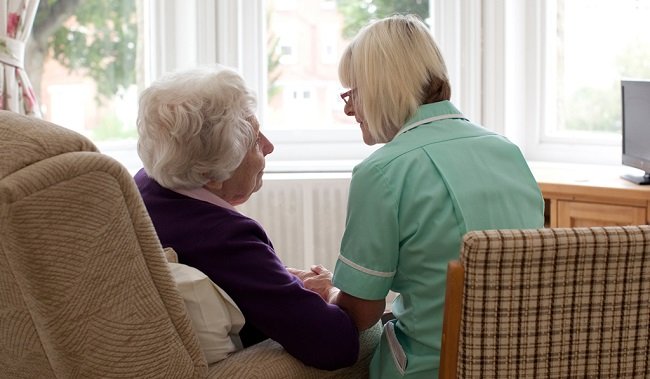
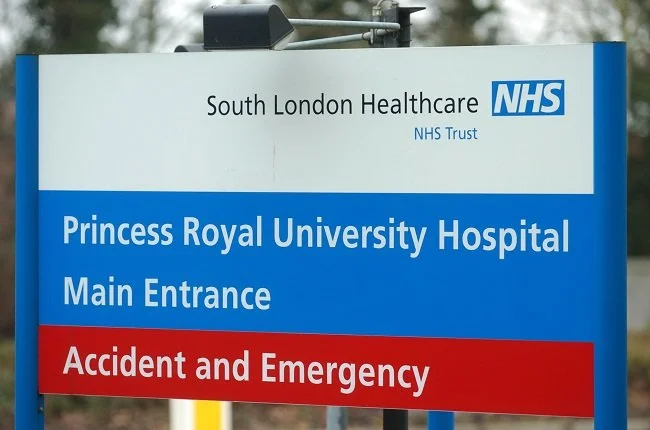
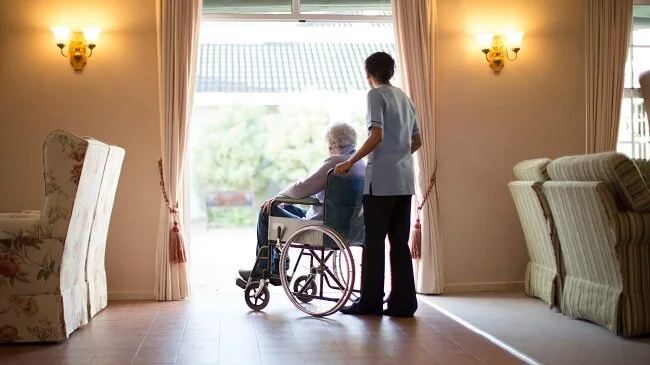
My Mother moved into a care home on April 7th this year. Her health was already very poor due to her age (91). She was bed bound, partially sighted, suffering from increasing hearing loss and unable to feed herself. Rapid onset dementia meant that her behaviour had become erratic and she was a danger to herself. Hence her caring needs could no longer be safely managed within a home environment. Fortunately the care home proved a good choice. For the past four months they have provided outstanding care and have treated my Mother with dignity, respect and genuine kindness. Sadly, during that time my Mother had several bouts of illness that saw her hospitalised four times. Eventually a PEACE plan (Proactive Elderly Advanced Care) was set up allowing treatment to be managed by the care home and local GP. Since July my Mother has enjoyed a stable environment and continuity of care.
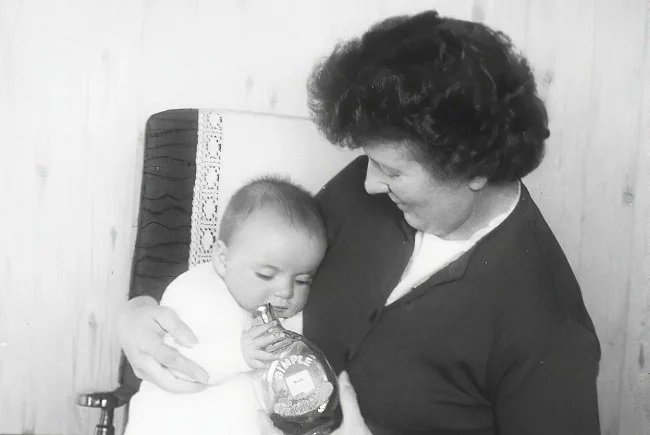
My Mother and Sister circa 1965
My Mother moved into a care home on April 7th this year. Her health was already very poor due to her age (91). She was bed bound, partially sighted, suffering from increasing hearing loss and unable to feed herself. Rapid onset dementia meant that her behaviour had become erratic and she was a danger to herself. Hence her caring needs could no longer be safely managed within a home environment. Fortunately the care home proved a good choice. For the past four months they have provided outstanding care and have treated my Mother with dignity, respect and genuine kindness. Sadly, during that time my Mother had several bouts of illness that saw her hospitalised four times. Eventually a PEACE plan (Proactive Elderly Advanced Care) was set up allowing treatment to be managed by the care home and local GP. Since July my Mother has enjoyed a stable environment and continuity of care.
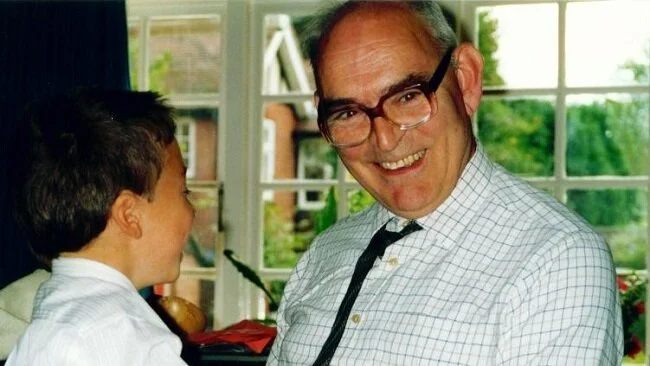
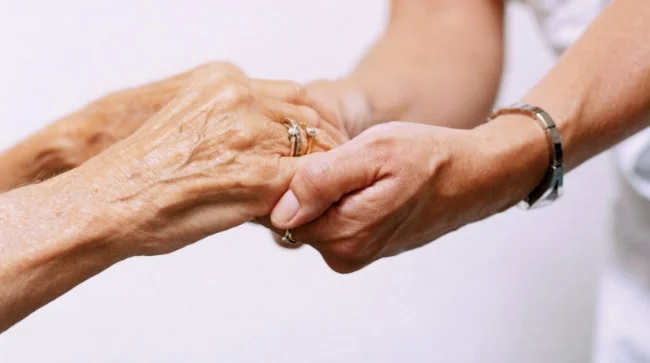
This Thursday I was notified by staff at the care home that my Mother’s health was declining rapidly and that she was not expected to survive the week. I went to visit her and found that she had lost even more weight and was very gaunt. She was not aware of my presence and was focusing all her efforts on breathing. It is a sobering experience to see a parent who was once so indefatigable and energetic, reduced to such a frail and pitiable state. But such is the nature of life and old age is often a process of numerous minor ailments slowly wearing one down. So I sat and held her hand and talked about “the good old days”. I recounted anecdotes from my youth such as how I set fire to the kitchen curtains as a child. I reminisced about the garden which was her pride and joy for many years. And I recalled the family cat, Sam, who she doted upon. I told her I loved her, that she was a great Mum and I appreciated all that she had done for my Sister and I. Our childhood was fun and our family home was filled with laughter. I like to think she heard and understood all this.
Last night, I received a phone call from the care home that my Mother had died, peacefully in her sleep. It was far from a bolt out of the blue. She was approaching 92 and has been struggling with very serious health issues for the last eight months. Death has been a factor in her life for the last decade as she outlived friends and relatives. Last year my Mother asked me to get in touch with the family solicitors so she could “get her affairs in order”. Hence there has been an irresistible inevitability to this week’s events. Yet no matter how much you try to prepare and reconcile yourself to the situation, when it arrives it hits you hard. My Mother, a constant in the last 54 years of my life, is no more. Part of me thinks this is unfair, but then I stop and think about the quality of her life in recent months and what she’s had to endure. To deny her “rest” would be wrong.
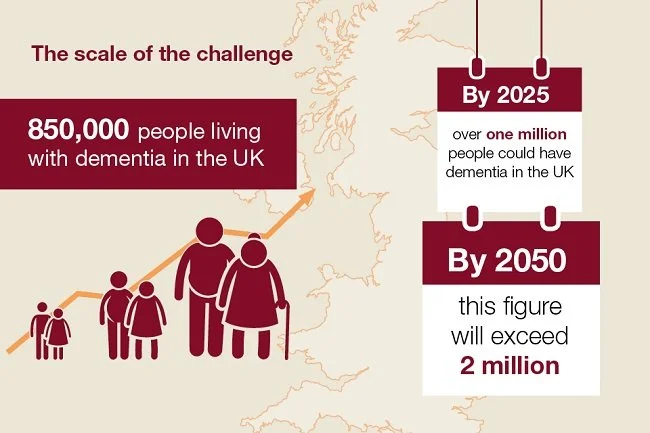
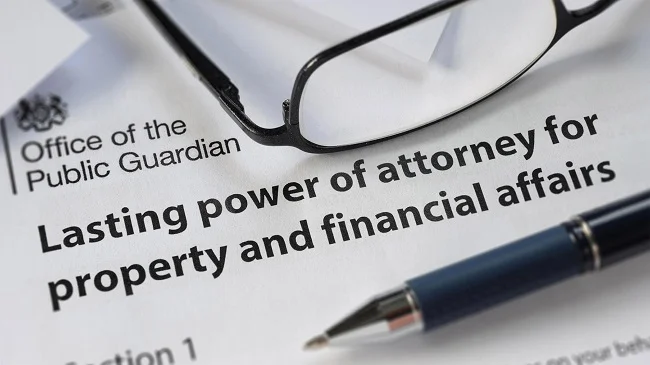
For the present, I must set aside my feelings and concentrate on the task in hand. I administered my late Father’s estate in late 2020 and early 2021 so I have a good idea of what administrative tasks lie ahead. I am somewhat relieved that my Mother decided to get a lot of her personal affairs in order last year, hopefully ensuring a smooth passage through the potentially choppy waters of probate. Then there’s the funeral to arrange and the rather sad fact that few people will attend because so many of my Mother’s family and friends have already died. This is the reality of an ageing society. Thinking ahead, I also suspect that this will be the final entry in this series of posts. Looking back over the last 16 instalments, I hope that my experiences are of use to those who are just embarking upon a similar journey. Remember, 3 in 5 people in the UK will become carers at some point during their lives. You’re therefore never alone.




Smile and Wave
Let me begin with an anecdote. I was putting out the recycling for collection on Sunday afternoon, when a passing car slowed down. The driver then honked the horn and gave me a cheery wave. Being culturally conditioned to be polite, I smiled and waved back. The vehicle then continued on its way and I went back inside my home pondering who the hell it was who had just greeted me in such a friendly fashion. Several days later I still have no idea. This is not the first time such a thing has happened. In fact it’s a fairly regular occurrence. I was going to my local doctor's surgery recently when a lady in her late twenties hailed me and engaged me in conversation. I managed to bluff my way through our exchange and she departed in the same good humour that she began with. To this day I have no clear idea as to her identity or how she knew me. My theory is that she may have been one of my late father’s carers. But I cannot be sure.
“Smile and wave, boys, Smile and wave”
Let me begin with an anecdote. I was putting out the recycling for collection on Sunday afternoon, when a passing car slowed down. The driver then honked the horn and gave me a cheery wave. Being culturally conditioned to be polite, I smiled and waved back. The vehicle then continued on its way and I went back inside my home pondering who the hell it was who had just greeted me in such a friendly fashion. Several days later I still have no idea. This is not the first time such a thing has happened. In fact it’s a fairly regular occurrence. I was going to my local doctor's surgery recently when a lady in her late twenties hailed me and engaged me in conversation. I managed to bluff my way through our exchange and she departed in the same good humour that she began with. To this day I have no clear idea as to her identity or how she knew me. My theory is that she may have been one of my late father’s carers. But I cannot be sure.
I pride myself on being quite an observant person. I notice things. For example, if the grandchildren have messed with anything on my desk, I can tell immediately. My office window looks out onto the street so I tend to notice any changes or things that are out of the ordinary. I also have a good memory for faces. Names I tend to forget, but I am pretty good with faces. So I find it somewhat contradictory when I encounter people who appear to know me and I have absolutely no idea who they are. It is not as if I am oblivious to the people who live in my street. I am on good terms with both neighbours and the people close by. Yet this odd situation persists. I was going to the fish and chip shop a few months ago and a guy of a similar age to myself asked me how I was and talked about how he was having a new kitchen fitted. I managed to move him along politely by saying “don’t let your food get cold”, so he cordially wished me the best and withdrew. Again, who was he?
Maybe I look like someone else in the area and I’m continuously being mistaken for another person. It’s not as if there’s a shortage of overweight, white, middle aged blokes round here. However, I think this is unlikely as I’ve spent a large amount of my life living in this borough. I think I’d know if I had some sort of doppelgänger. Mrs P has a less flattering theory which I must admit, does seem to have some legs. Whenever we’re out and about, she will often start conversations with those passing by. She knows a lot more of the people in the area than me and will often reference them. “I spoke to Velma today. She’s not going to Sorrento this year as she doesn’t want to leave Barnaby alone”. I will then look flummoxed which will elicit a rolling of the eyes from Mrs P and a complex explanation about Velma being the one who lives 5 doors away who had a cyst on her ovary. Barnaby apparently is a highly strung Persian Blue. Allegedly this is data that I should know but for some reason I haven’t retained it.
Barnaby (not really, this is a stock photo)
I suspect that this may be a contributory factor to this phenomena that occasionally blights my life. I am not rude by default, having been raised to be polite or at least civil in everyday social situations. However, I am someone who is very much wrapped up in my own thoughts a lot of the time. I’m not a great one for small talk. If I may quote the 1970 film Scrooge, “it's enough for a man to understand his own business, and not to interfere with other people's. Mine occupies me constantly”. I’m a bit like that. During a lull in any conversation I will retreat into my own thoughts. For example, what shall I blog about today, where’s my Amazon order or what should I have in my sandwich? Hence, it’s hardly surprising that I am not paying full attention to the people that Mrs P is talking to. I guess the fact that I’m there makes people assume that I’m actually listening.
I suppose if that is the answer to this recurring issue, then I shall blame it on a degree of personal introversion. As I stated earlier I can be sociable and broadly speaking am so. But this is predominantly out of necessity. Being civil and polite makes navigating life’s social complexities a lot easier. During lockdown, there was a guy who would regularly talk to me whenever I went to the pharmacy. He was hardly a raconteur but it was courteous to engage with him. Who knows, perhaps the brief exchange was an important part of his day. You never really know someone’s personal situation. But I don’t actively seek out such social interaction, preferring my own company by default. Hence I may be the architect of these mysterious encounters and if I’d paid more attention I’d know who they were. But I really don’t see myself changing. Hence, I suspect more of these occurrences will happen in the future. And my solution is to just “smile and wave, boys. Smile and wave”.
"Doom Pill" Content
There’s an interesting post about “Doom Pill” content over at Indiecator. The thrust of the narrative was the wearisome nature of continuously bleak, fatalist and pessimistic content. You’ll find a great deal of such material on Twitter and other social media platforms. It is very akin to the “everything and everyone is horrible and we’re all going to die” content you find served up daily in the UK tabloid press. I certainly agree that being emotionally and psychologically bludgeoned with content designed to make you upset, frightened and angry is exhausting. Furthermore, the material that is being “reported” upon to elicit such feelings is all too often misrepresented, skewed or downright dishonest. However, “Doom Pill” content has no interest in factual accuracy or editorial honesty. It’s about clicks or in the case of the print media, circulation.
There’s an interesting post about “Doom Pill” content over at Indiecator. The thrust of the narrative was the wearisome nature of continuously bleak, fatalist and pessimistic content. You’ll find a great deal of such material on Twitter and other social media platforms. It is very akin to the “everything and everyone is horrible and we’re all going to die” content you find served up daily in the UK tabloid press. I certainly agree that being emotionally and psychologically bludgeoned with content designed to make you upset, frightened and angry is exhausting. Furthermore, the material that is being “reported” upon to elicit such feelings is all too often misrepresented, skewed or downright dishonest. However, “Doom Pill” content has no interest in factual accuracy or editorial honesty. It’s about clicks or in the case of the print media, circulation.
Bearing this in mind, it seems unreasonable for me to berate anyone who mutes certain subjects or people on social media or who opts out of continual exposure to such material. “Doom Pill” content and “Doomscrolling” is “people vocalising doubts and spreading fear and fatalism” for no good reason other than they can, to quote Dan from his aforementioned post. However, I am concerned that choosing to avoid “Doom Pill” content can potentially foster a mindset that can ultimately make us averse to any thing that we don’t care for. Shutting your eyes to avoid the scary monster that is loose on the streets, doesn’t afford you any real protection from it. I’m not necessarily advocating attempting to tackle the beastie head on. Best leave that to the professionals. But forewarned is forearmed. Therefore, have a quick butchers, before you run off. (That’s have a look before strategically withdrawing for those unfamiliar with UK slang).
Facts are neither negative nor positive. They are simply a statement of reality as we currently understand it. Fear, upset and disquiet stem not from the facts themselves but how we or others choose to react to them. Being scientifically candid about the state of global warming is not what I would classify as “Doom Pill” content. Nor is having a practical discussion of the consequences of the reversal of Roe v Wade in the US. Listing the current benefits of Brexit or lack thereof is also not an act of deliberated scaremongering. Sadly, the ability to tackle difficult issues in an intellectual manner devoid of hyperbole, showboating and partisan politics is becoming increasingly hard. Sections of the media and the public seem to be either incapable or unwilling to do so.
It is important to look after one’s own mental well being. Especially in today’s climate where many institutions seem ill disposed to do so and prefer to do the opposite. But I would also argue that like physical strength, it is important to develop one’s emotional fortitude. Human history is predicated upon change and the change we seem to currently be embarking upon is not necessarily for the better. We live in challenging times. Furthermore, there are many institutions and bodies that are opposed to altering the status quo, thus making matters more difficult. Politics is acrimonious with no conception of seeking a consensus or the middle ground. It’s a shit show out there and it’s part of a deliberate plan to try and spook you, browbeat you into submission and withdraw from the fight. Don’t let them.
Blockade85 wrote yesterday with regard to the situation in the US “I’m angry, and I don’t know what to do. I can’t organise a protest, certainly not here. Too many people here LIKE what just happened. Now, I’m lost. We lost. Everything lost”. At first glance that does seem to be the case. But if you look on social media you’ll soon find that there are lots of people who feel the same and they’re talking about what to do next. You don’t have to be the next Doctor King or Peter Tatchell to play a part. There are a lot of different ways to get involved. Sometimes showing support or retweeting a message is a useful contribution. Letting others know they’re not alone helps. My fear is “ Doom Pill” content and the associated philosophy is being weaponised to keep people out of certain fights. A ploy to kill hope. Fuck that. Look after yourself mentally but don’t allow others to play upon such concerns, so that you end up sidelining yourself. Don’t let a fatigue of “Doom Pill” content kill your legitimate need to know what is actually going on.
Partygate
I try to keep my thoughts on political matters to a minimum here at Contains Moderate Peril, mainly because UK politics and the current state of discourse associated with it has become an absolute shit show in recent years. Brexit broke traditional politics and has made matters far more tribal and partisan. The two main parties have declined from having clear ideologies, identities and manifestos, to becoming either a lobby group for the specific demographic group that supports them, or a conflicted, divided and schizoid shadow of its former self. I’ll let you work out which is which. Politics is no longer about governing a nation for the benefit of all its citizens. Now you simply pick a side and join the ongoing culture war against everyone and everything else. This rotten system produces rotten leaders. Hence, when Alexander Boris de Pfeffel Johnson became Prime Minister in December 2019, it was clear that the nation was taking a major risk on such a man. His failings as a politician and a person are a matter of public record for anyone who has the eyes to see them.
I try to keep my thoughts on political matters to a minimum here at Contains Moderate Peril, mainly because UK politics and the current state of discourse associated with it has become an absolute shit show in recent years. Brexit broke traditional politics and has made matters far more tribal and partisan. The two main parties have declined from having clear ideologies, identities and manifestos, to becoming either a lobby group for the specific demographic group that supports them, or a conflicted, divided and schizoid shadow of its former self. I’ll let you work out which is which. Politics is no longer about governing a nation for the benefit of all its citizens. Now you simply pick a side and join the ongoing culture war against everyone and everything else. This rotten system produces rotten leaders. Hence, when Alexander Boris de Pfeffel Johnson became Prime Minister in December 2019, it was clear that the nation was taking a major risk on such a man. His failings as a politician and a person are a matter of public record for anyone who has the eyes to see them.
Over the last 2 years, Johnson has overseen a litany of political failures. Sadly, the only people with the power to remove him from office are his own MPs. The Conservative party has a long and established history of regicide. They will circle the wagons and defend their leader without question in a crisis, until it becomes clear that the aforementioned leader is an electoral liability and they could lose their own seats. Then the knives are unsheathed, as Margaret Thatcher, John Major, William Hague, Iain Duncan Smith and Michael Howard all found out. However, Johnson is proving to be the most slippery of eels. The fact that there is no clear successor is an invaluable get out of jail card for the PM. The UK is also in the midst of a major cost of living crisis, there’s a war in Europe and the government is about to embark upon a trade dispute with the EU. All of which are sound reasons why no one possibly wants the job at present. However, there’s one scandal that just doesn’t want to go away, like a wayward stool in an avocado coloured, seventies toilet. Partygate.
For those who live outside of the UK who may not be fully up to speed with this issue, I’ll try my best to summarise. If you wish for more detail, then do watch this video from last month by BBC journalist Ros Atkins. From March to December 2020, the UK was subject to some very stringent COVID-19 restrictions. In the run up to Christmas, there were concerns about a resurgence of the virus, so the rules governing social distancing, gatherings and general interaction were tightened. Simply put, people could not meet friends and families, socialising was out of the question and the idea of traditional Christmas celebrations were out of the question. People could not visit sick and dying relatives in hospitals. Funerals were heavily restricted. UK citizens made major personal sacrifices for the greater public good. Unlike the Prime Minister, his staff and various other Cabinet Ministers who broke their own rules as they partied and fraternised. Johnson is far from a complicated individual. He likes to be perceived as a “good guy” and “fun”. Hence, he brought a “play hard” culture with him when he took office. He sadly neglected the “work hard” part.
Now if you are a hardened cynic or feel disposed towards being politically obtuse, you may ask “is this really such a big deal. It’s just a party”. To which I would reply, it wasn’t one there were over a dozen and at least 8 have been subject to a Police investigation resulting in 126 fines, including the Prime Minister himself. But the parties are in many respects a misdirection. To quote Bruce Lee “it is like a finger pointing away to the moon. Don't concentrate on the finger or you will miss all that heavenly glory”. The biggest issue stemming from so-called Partygate is the Prime Minister denying any malfeasance. On multiple occasions, Johnson stated categorically in the House of Commons that there were no parties and all COVID-19 related regulations were followed. Yet he was fined for attending his own birthday party. Something he has justified by claiming he didn’t know it was a party. Let us take a moment to reflect upon this state of affairs. Johnson has denied any wrongdoing time and time again. Yet he is now the only ever serving UK Prime Minister to receive a fine for breaking the law. Laws that he oversaw through Parliament.
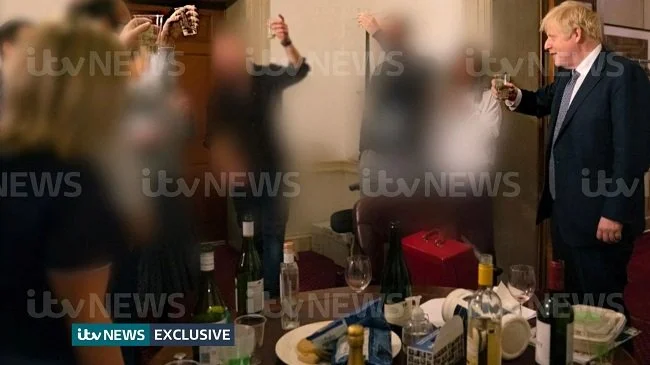
Today, after last week’s announcement by the Metropolitan Police that no further criminal action would be taken against the Prime Minister, several photographs have reached ITV News showing Johnson attending what any sane person would classify as a party. The photo shows at least 7 guests, the PM and were taken by an official photographer. 9 people in a room drinking and clearly socialising, with 6 open bottles of alcohol in view. 7 if they also drank the hand sanitiser. Naturally like all modern digital photos, it contains data pertaining to where and when it was taken. Allegedly that was on November 13th 2020. On 8th December 2020, Labour MP Catherine West asked the Prime Minister in the Commons if a party had taken place in Downing Street on 13th November. Johnson replied “No - but I am sure that whatever happened, the guidance was followed and the rules were followed at all times”. Was this a lie and a clear example of the PM misleading Parliament? Something that has always been considered a resigning offence.
The scandal that is Partygate has been rumbling on since December 2021. The continual drip, drip of information, photos and tip offs grew to the point where it was dominating the political agenda by the end of January this year. Hence Johnson appointed senior civil servant Sue Gray, Second Permanent Secretary in the Cabinet Office, to investigate the matter. Her report has already been delayed once, when in February the Metropolitan Police retrospectively decided to investigate the alleged lockdown infractions. However, her report is due to be published this week and will certainly ensure that the story once again dominates the headlines. Already, several important questions have emerged, prior to its publication. Why did Ms Gray meet with the PM to discuss the report last week? Although Johnson is Ms Gray’s boss, is it appropriate for these parties to meet without the minutes of that meeting being fully disclosed? And why have the Metropolitan Police fined people who attended the party in the picture published today but have not sanctioned the PM for a second time?
A politician's relationship with the truth is often a strained one. However, the role of Prime Minister requires that basic standards are adhered to. For want of another phrase you have to be “sound”, in the Yes Minister and Yes Prime Minister sense of the word. The UK is still a major player on the international stage although that soft power is fast evaporating. A Prime Minister has to be considered trustworthy by their international allies as well as their own electorate. They have to uphold the rule of law and their word must be considered bond. A proven liar cannot do such things and is a calamity for both domestic and international politics. A democracy in which the truth is openly scorned and deemed an impediment is a broken democracy. Sadly, this is where the UK currently stands. If Johnson remains in office then the only remaining route is down. However, the Gray Report may be a scandal too far. There are two By-elections coming up and if the Conservatives lose these seats there may be repercussions for the PM from his own party. I suspect that the PM is in an extremely uncomfortable position at present, both politically and personally. Has good fortune finally deserted him? I do hope so.
Losing Weight
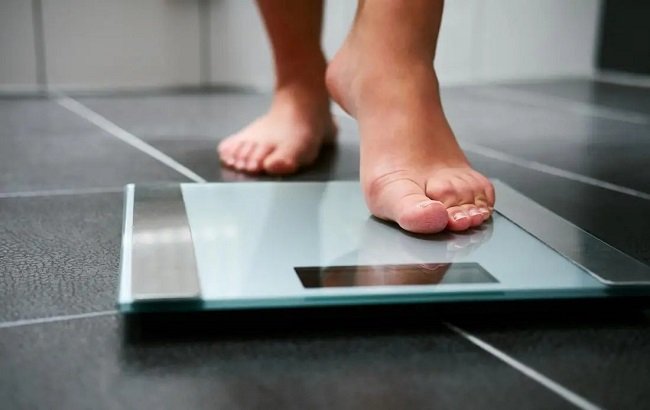
I weighed myself this morning before writing this post. As of 6:05 AM today I weigh 188 lbs (13 stone 6 lbs or 85.3 kg). To give this data some sort of context I am 5’11 tall and 54 years old. Prior to my more recent weight gain, I have had an athletic build for most of my life. During my twenties and thirties, while I was still a smoker, my weight stayed around 133 lbs. When I quit my 30 a day cigarette habit I gained about 14 lbs or so over the following months and then stayed at that weight for a further decade. Even with the onset of middle age my weight has not been excessive and my build has accommodated any gain quite well. It has only been over the last 5 years that it has increased to a level that I consider to be neither flattering or healthy. This was brought home to me a few days ago when I saw my reflection in a mirror while on holiday. The incident has given me pause for thought and galvanised me to take action.
I weighed myself this morning before writing this post. As of 6:05 AM today I weigh 188 lbs (13 stone 6 lbs or 85.3 kg). To give this data some sort of context I am 5’11 tall and 54 years old. Prior to my more recent weight gain, I have had an athletic build for most of my life. During my twenties and thirties, while I was still a smoker, my weight stayed around 133 lbs. When I quit my 30 a day cigarette habit I gained about 14 lbs or so over the following months and then stayed at that weight for a further decade. Even with the onset of middle age my weight has not been excessive and my build has accommodated any gain quite well. It has only been over the last 5 years that it has increased to a level that I consider to be neither flattering or healthy. This was brought home to me a few days ago when I saw my reflection in a mirror while on holiday. The incident has given me pause for thought and galvanised me to take action.
To cut a long story short my excess weight has all gone on the front of my chest and my neck has thickened. My arms, legs and butt seem to have avoided this process. Currently, my profile is somewhere between Alfred Hitchcock and Mr. Greedy. Hence, bending down is difficult due to this bulk physically being in the way. The excess weight is also slowing me down and I find myself getting breathless when exerting myself. Shirts, T-shirts and jackets are now tight across my chest, restricting my breathing and generally contributing to an ongoing feeling of being uncomfortable. I was diagnosed last year with an irregular heartbeat and I’m sure my increase in weight has contributed to this. Setting aside the obvious health benefits of losing weight, I just don’t like the way I look at present. The world has no shortage of overweight, middle aged white guys and I don’t wish to add to their numbers.
I have always enjoyed my food, a habit I inherited from my father. I look forward to meals and consider them as something to relish, rather than just an arbitrary intake of bodily fuel. However, it is clear to me now that in recent years I have fallen into the trap of recreational eating and to a degree comfort eating. And it would be remiss of me not to state how much alcohol contributes to weight gain. Effectively since the first lockdown in 2020, I have treated day to day life like one continuous bank holiday, with regard to my drinking habits. I don’t think I have a drinking problem in any way. I just enjoy a social pint and drinking is an integral part of the UK cultural landscape. But I need to address this and will be abstaining from all forms of booze till the end of the month. I suspect that this may well be a key factor in any weight loss regime.
Like most things I do in life, I shall be working to a plan. Hence I will be logging meals and adjusting portion sizes. I will maintain a three meal a day regime with a moratorium on eating after 8:00 PM. I’ll use the existing health app on my phone (that goes with my smartband) to track my weight. I tend to adhere to processes and schedules more efficiently if I “gamify” them. Furthermore, I shall post my progress here as I find that writing about the various things going on in my life helps me process them. To clarify my goals, I am looking to lose initially 14 lbs (1 stone, 6.3 kg). If this is achieved easily and in a relatively short period of time (perhaps by the end of August), I may then set myself an additional target if I feel there is scope for further healthy weight loss. As ever I welcome comments and opinions, especially from those who are currently embarking upon a similar weight loss plan. If you are, then good luck.




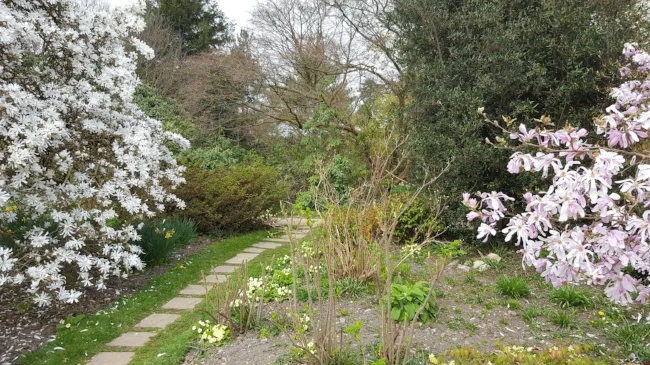

“I’m Entitled to My Opinion and It Should Be Respected”
One of the most curious aspects of the modern corporate culture is the need for businesses to present some sort of ethical persona to their customers and the wider market. It is contradictory to say the least to watch such institutions that are by their very nature predatory, espouse a moral stance on social issues such as climate change and equality. Yet, this is something they do regularly, with a straight face and a tin ear. The recent leak of a draft document by SCOTUS to overturn Roe v. Wade has seen several companies take a stance and release press statements both externally and internally. However, an email sent to Sony staff by PlayStation CEO Jim Ryan, has proven more interesting than others. This is mainly due to Ryan reiterating a common “informal fallacy”; that everyone is entitled to their opinion and by default that opinion should be respected.
One of the most curious aspects of the modern corporate culture is the need for businesses to present some sort of ethical persona to their customers and the wider market. It is contradictory to say the least to watch such institutions that are by their very nature predatory, espouse a moral stance on social issues such as climate change and equality. Yet, this is something they do regularly, with a straight face and a tin ear. The recent leak of a draft document by SCOTUS to overturn Roe v. Wade has seen several companies take a stance and release press statements both externally and internally. However, an email sent to Sony staff by PlayStation CEO Jim Ryan, has proven more interesting than others. This is mainly due to Ryan reiterating a common “informal fallacy”; that everyone is entitled to their opinion and by default that opinion should be respected.
Ryan stated that Playstation employees, as well as customers are a “multi-faceted and diverse” community who hold “many different points of view”. He went on to say that staff and the company “owe it to each other and to PlayStation’s millions of users to respect differences of opinion among everyone in our internal and external communities. Respect does not equal agreement. But it is fundamental to who we are as a company and as a valued global brand”. The logical flaws in this statement stand out like a sore thumb and it would appear that critical thinking and constructing a sound argument are not part of Jim Ryan’s executive skill set. Mind you, such things are conspicuously absent from our politics and public discourse as well, so why should big business be any different?
Plato established a difference between personal opinion or a commonly held belief (doxa) and provable knowledge (episteme) in his theory of forms, over 2,000 years ago. It is still a viable distinction today. A personal opinion is subjective and often uncertain due to reliance upon interpretation, feelings and other nebulous factors. 1+1=2 is a fact that can be clearly proven. In most functioning democracies, all citizens have a right to hold an opinion irrespective of its veracity or rectitude. But that does not mean that one has a right not to have one’s opinion challenged. There is no legal, ethical or logical obligation to respect another’s opinion. Why for example, should any respect, courtesy or deference be extended to a view couched in bigotry and prejudice? Also why should an opinion that cannot be backed up by facts to establish its validity or merit be afforded some sort of protected status?
All too often the claim that “I’m entitled to my opinion and it should be respected” or similarly, “let us agree to disagree” is a means to try and avoid scrutiny and to account for one’s view. It is a petulant and churlish demand that one’s view is given equal consideration with one that can be substantiated. It seeks to establish false equivalence and if denied, often prompts claims of victimhood. It is the faux argument of choice by those that want to compete with knowledge and expertise, without doing the necessary “due diligence”. Too many people conflate losing an argument with losing the right to argue. Obviously in the case of Jim Ryan’s comments, calls to respect differing opinions is also about “cakeism”; trying to please all customers regardless of their perspective. It is not only an intellectually bankrupt stance but a cynical one. Sadly that seems to be a prevailing trait of modern corporate ideology.











The Problem With Online Reviews
I recently broke the “free loop” on my smartband strap (and yes, I had to look that up to find the proper terminology). A quick search on Amazon verified that replacements were easily available. However, I couldn’t find any made by the manufacturer, Huawei, so I then started trawling through the third party clones. I narrowed the choice down to about three and then read their associated “reviews” made by those who may or may not (more on the latter shortly) have bought them. You wouldn’t think that something as innocuous as a silicon watch strap could engender such opprobrium and outrage. But apparently they do. As do so many other products and services. Hence the title of this post and my assertion that most online reviews are redundant. Perhaps it would be prudent to add a tenth level of hell to Dante’s Inferno which addresses this sorry issue.
I recently broke the “free loop” on my smartband strap (and yes, I had to look that up to find the proper terminology). A quick search on Amazon verified that replacements were easily available. However, I couldn’t find any made by the manufacturer, Huawei, so I then started trawling through the third party clones. I narrowed the choice down to about three and then read their associated “reviews” made by those who may or may not (more on the latter shortly) have bought them. You wouldn’t think that something as innocuous as a silicon watch strap could engender such opprobrium and outrage. But apparently they do. As do so many other products and services. Hence the title of this post and my assertion that most online reviews are redundant. Perhaps it would be prudent to add a tenth level of hell to Dante’s Inferno which addresses this sorry issue.
I am going to compliment all of us by assuming that we all know exactly what the function of a product or service review is. Sadly, it is clear by the reviews and comments left on so many sites such as Amazon, Argos, Curry’s and many, many other online retailers that a lot of people don’t. For example, I see no correlation between the font used on a product’s packaging and its ability to perform the function for which it is created. Yet I have seen reviews that suggest this. I have also read reviews for the most trivial of products that have somehow managed to enrage the customer to levels comparable to a Klingon Blood Feud. Exactly how a poorly made, novelty coaster can be seen as a slur on your honour and that of your Shaolin Temple is beyond me. Yet you’ll find these sorts of reviews and comments everywhere. When I was last at the Science Museum in London, someone had left a strident complaint in the visitors book (in capital letters) that it was all a bit too “sciency”.
Now there is scope for this post to become a sprawling catalogue of amusing anecdotes but I don’t think that is really necessary to validate my point. In principle, allowing customers an option to leave feedback about the products they’ve bought is a sound idea. It is sadly hamstrung by the reality that those who feel most disposed to avail themselves of such services, are often those least equipped to do so. Naturally, you have to allow for a percentage of comments that are just pure trolling. However, if you filter those out, you still find a wealth of irate customers who seem to feel that they have been actively conspired against. Upon reflection, such comments and reviews paint a very worrying picture of our society. It brings into question such things as the state of critical thinking, emotional literacy and appropriate behaviour in our wider society.
A lot of people certainly do seem to have unrealistic expectations regarding the products they buy. Is it wise to presume commensurate standards between buying a laptop and buying a multipack of fat balls for your bird feeder. Also, mass production always has scope for some items to fail quality control. If you are unfortunate to have a broken item delivered is it really likely that the manufacturers planned this like a Bond villain in a volcano lair? Is wishing death and damnation to all associated with the company until the tenth generation, really an appropriate response? And then there are those people who happily admit that they haven’t bought the product in question but feel compelled to join in, get involved and “contribute” to the discussion. This particular group worries the hell out of me and seems to be a direct result of the 24/7 society and the way we are driven towards continuous engagement, whether we wish it or not.
I managed to choose a new strap, despite the various comments that the manufacturers were “utter bastards” and that the product was not handmade from the finest materials and brought to my door on a silver platter. I worked out how to attach it without resorting to using a bread knife to saw it off, as one review complained. So far the strap has not presented any problems. If it lasts a year it will have merited its £5 cost. Have I learned a lesson as a result of this experience? Yes I have. I am not going to totally ignore user reviews and comments in future. But I will use any filter function judiciously. “Sort by relevance” is quite effective. If they want to add a means to ignore all crazy comments, I’d happily embrace that functionality. In a modern democracy it is hard to stop the “furiously hard of thinking” from expressing their views. I’d rather not play to their fears of being “cancelled”. But if I can mute their existence during my online experiences I’d consider that a win.
Why I'm Not Leaving Twitter
A lot of people seem to be concerned about Elon Musk buying Twitter. Apparently the billionaire, who describes himself as a “free speech absolutist”, considers the social media platform to be a “digital town square where matters vital to the future of humanity are debated”. Really? I’ve obviously missed all that, unless it’s being done through the use of cat videos. Setting aside Musk’s penchant for hyperbole, legitimate concerns have been raised by various Human Rights groups regarding the new owner’s intent to reduce moderation on Twitter. Also will previously suspended accounts be reactivated? Hence, even in my quiet backwater of Twitter, I’ve seen several discussions about whether people should leave and a lot of concern for what is to come in the weeks and months ahead.
A lot of people seem to be concerned about Elon Musk buying Twitter. Apparently the billionaire, who describes himself as a “free speech absolutist”, considers the social media platform to be a “digital town square where matters vital to the future of humanity are debated”. Really? I’ve obviously missed all that, unless it’s being done through the use of cat videos. Setting aside Musk’s penchant for hyperbole, legitimate concerns have been raised by various Human Rights groups regarding the new owner’s intent to reduce moderation on Twitter. Also will previously suspended accounts be reactivated? Hence, even in my quiet backwater of Twitter, I’ve seen several discussions about whether people should leave and a lot of concern for what is to come in the weeks and months ahead.
For starters, let’s address some of the pachyderms that accompany this situation. Elon Musk is a “curious” character. His perception and personal experience of the nature of free speech will most certainly be different to ours, due to his wealth and power. Remember his “pedo guy” comments? He’s also a thin skinned individual who has often gone after journalists who are critical of him. So I don’t place any credence upon his claim to be a “free speech absolutist”. He’s a businessman and I therefore see his acquisition of Twitter as being a means to an end either for him directly or his peer group. Twitter may or may not be the “town square” that he claims it to be but it certainly is an immense source of useful information, from a corporate perspective. It is also a tool that not only reflects opinion but can potentially be used to shape it. That makes it important.
So what happens next? Is Twitter going to become even more of a Wild West under Elon Musk’s watch? Maybe. Maybe not. He does claim to have other aspirations for the platform and not all of them appear bad. I certainly would favour a clampdown on “bot” accounts. However, if people leave preemptively, especially those from minority groups or with specific political leanings, then that decline that everyone fears will be accelerated. Sometimes, conceding ground is a sound strategy but I don’t believe that is the case in this instance. You don’t counter opposing ideologies by ignoring them or dismissing them. You meet them head on and your arguments stand or fall on their merits. Education is a slow process at times. Retreating won’t achieve any of that. “The line must be drawn here! This far, no further!” if you want a motivational Star Trek quote to validate the argument.
I am fully aware that Twitter can be an utter cesspool at times. But broadly speaking that is not my own personal, daily experience. This is due to the fact that I control what does and doesn’t appear in my timeline. I often get the impression that a lot of people are using the default Twitter client and are not curating their timeline as well as they should. I expect Twitter to make some effort with regard to moderation and sanction when rules are broken but I also think it is incumbent on me to take an active role in managing what I am exposed to. Although I expect the local council to keep the streets clean, I still pay attention as to where I walk. If I step on a dog turd due to my own inattentiveness, that’s on me. Therefore, mute keywords and block users accordingly. It makes a surprising difference to your overall Twitter experience.
If you want a life that is totally devoid of risk, unpleasantness, upset and controversy then perhaps the best policy is to eschew all forms of social media. You may also wish to stay at home, avoid all family and personal relationships and any other form of direct human interaction. I’m not opposed to the concept of “safe spaces” but some mediums simply do not lend themselves to being one. Twitter is one example. Like a swimming pool, someone is always going to piss in it. Therefore, the most you can do is manage your own virtual borders and regularly curate your Twitter timeline. If done wisely your experience online can be very rewarding. Twitter will never be perfect, as it involves people who are by default “flawed”. As to how the platform performs under its new owner’s stewardship, perhaps a “wait and see approach” is appropriate. In the meantime, do what you can to protect yourself and focus on the positive aspects the platform provides.

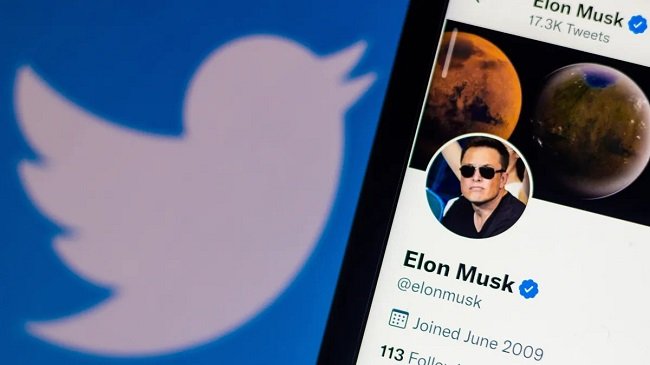


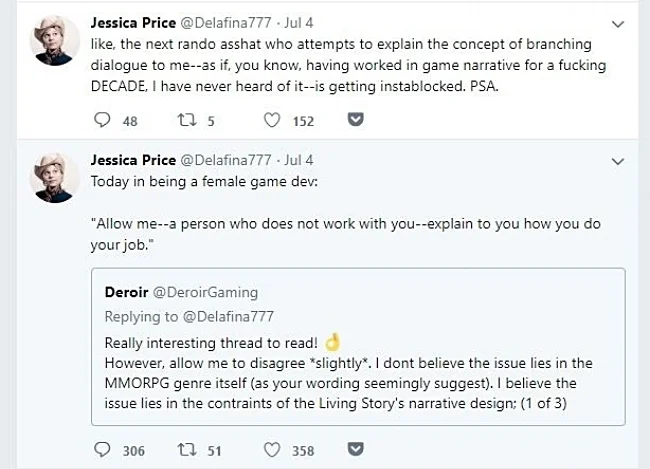

Caring for the Elderly Part 16
Last December, my 91 year old Mother suffered a rapid mental decline and was hospitalised. We have subsequently learned that this is potentially due to another stroke. Whatever the exact medical reasons, my Mother has been left bed bound, unable to feed herself and in a state of mental confusion and distress. When she was discharged home in mid January it quickly became clear that the four care visits that were scheduled each day were not sufficient for her needs, despite the staff doing their best and my Sister and I providing additional support. Matters were further compounded by personal ill health and other external factors. My Sister has worked from home for the last two years but has now started a staged return to the office. As we felt would no longer be able to cope we turned to both Social Services and the local Mental health Team for any assistance that they could provide.
Last December, my 91 year old Mother suffered a rapid mental decline and was hospitalised. We have subsequently learned that this is potentially due to another stroke. Whatever the exact medical reasons, my Mother has been left bed bound, unable to feed herself and in a state of mental confusion and distress. When she was discharged home in mid January it quickly became clear that the four care visits that were scheduled each day were not sufficient for her needs, despite the staff doing their best and my Sister and I providing additional support. Matters were further compounded by personal ill health and other external factors. My Sister has worked from home for the last two years but has now started a staged return to the office. As we felt would no longer be able to cope we turned to both Social Services and the local Mental health Team for any assistance that they could provide.
Both sent staff promptly to visit my Mother in February and assess her needs. The consensus was that a Nursing Home placement would be the best solution. This immediately raised the issue of funding. Fees in the London area are on average about £1000 per week, although they’re lower elsewhere in the UK. If you cannot afford these, you can seek financial assistance via the Local Authority/Borough Council but the criteria is very strict and there is a shortage of available places. Simply put, due to budgetary constraints the Local Authority prefers that people are cared for at home. However, my Mother’s Social Worker suggested applying for NHS Continuing Healthcare. If a patient has specific healthcare issues that require a high degree of support or that are rapidly changing, then NHS funding can be provided. It is in many ways one of the “best kept secrets” of the UK healthcare systems, as so few people seem to be aware of it.
To cut a very long and complex story short, I completed a substantial amount of paperwork and supplied a lot of medical evidence for my Mother’s claim. I attended a three hour meeting via Microsoft Teams in early March to be told at the end that the recommendation going forward was that she wasn’t eligible. As a result, I then focused on a back up plan of taking equity out of my Mother’s home to fund her care. I was therefore very surprised to be told two weeks later that the panel making the final decision had reversed the recommendation and had awarded my Mother full NHS Continuing Care funding. This included the care that was being provided at home as well as a future Nursing Home placement. By the end of March we were contacted by the local NHS CHC team regarding vacancies at suitable homes in the area. Three places were discussed and within a week a room became available in a home that specialises in dementia care.
I am fully aware that my family has been extremely fortunate in our dealings with Social Services, the NHS and in navigating the bureaucracy arising from Adult Social Care. In four months we have made a great deal of progress. I’ve read a lot of forums and subreddits where carers share their experiences in looking after family members and one of the most commonest themes is the slow speed at which the administrative wheels turn. At the beginning of April I met with the manager of the care home that was offering my Mother a place. My Sister and I were also given a comprehensive visit of the premises, which was not a stage managed tour but a very clear insight into the daily life there. We were even shown around the laundry and kitchens. Based upon what we had seen and discussed, as well as the online reports from the Care Quality Commission regarding the home, my Sister and I decided to accept the placement and my Mother moved in on April 7th.
My Mother is often at her most lucid after her midday meal. I took the opportunity to try and explain the situation to her a few days prior to her move. She does not have “capacity” to use medical terminology but I felt obliged to try and explain such a major change to her life. I think she broadly understood that care in her own home was no longer the best option. Her attention wandered after 5 minutes or so but I felt compelled to discuss the matter with her. Perhaps it had more to do with me and the need to come to terms with my actions. I know I’ve made the right choice with regard to my Mother’s care but placing a loved one in a home is a major decision. However, I now think I have reconciled myself to the fact that I am no longer directly responsible for my Mother’s daily wellbeing. The baton has been passed to others and I need to trust them and allow them to do their job.
Update: Life is filled with change and is seldom static. I wrote the bulk of this post the day after my Mother went into care. She spent two and a half days there before becoming ill. On Sunday 10th of April she was taken to hospital and admitted with pneumonia and sepsis. She was given 24 hours to live. The hospital Chaplain sat with her that evening. Amazingly she slowly recovered over the next 12 days and was discharged on April 21st. Due to strict COVID-19 regulations I was not able to visit her in hospital and so I was looking forward to seeing her when she returned to the care home. Fate has intervened once again, as I was informed on April 22nd that she has now tested positive for COVID. She’s not going back to hospital but remains in poor health and is currently having difficulty swallowing. I suspect that she may not bounce back a second time. However, she is being very well cared for.
Thoughts on Work Part 3
As my caring commitments are now over, I find myself in the “interesting” position of being 54 years old and potentially returning to the job market. I use the phrase “potentially” because I am fortunate enough to have a financial safety net in place, so it is not as if I have to find gainful employment immediately. So there is no pressing requirement for me to claim Universal Credit and find work via the UK social security system, which is most fortunate. The DWP has a policy of actively pressuring benefit claimants into accepting any kind of work, irrespective of skills, after a few weeks as part of a policy of trying to keep the employment number low. I have no intention of going down that route and so will look for work in my own way and on my own terms.
A spoof résumé, or is it?
As my caring commitments are now over, I find myself in the “interesting” position of being 54 years old and potentially returning to the job market. I use the phrase “potentially” because I am fortunate enough to have a financial safety net in place, so it is not as if I have to find gainful employment immediately. So there is no pressing requirement for me to claim Universal Credit and find work via the UK social security system, which is most fortunate. The DWP has a policy of actively pressuring benefit claimants into accepting any kind of work, irrespective of skills, after a few weeks as part of a policy of trying to keep the employment number low. I have no intention of going down that route and so will look for work in my own way and on my own terms.
Over the years, my attitude towards the entire concept of work has evolved. At my age I am certainly not concerned about a career, nor am I especially concerned about how others perceive my relationship with work. Work is a quid pro quo although lots of employers seem to have forgotten this. I provide skills to undertake a pre-agreed set of tasks and get financial remuneration in return. Anything outside of that is bullshit. Simply put, I am not defined by work or anything like that. It is a means to an end. Nor do I find myself at a loose end without it. I can happily fill my days with activities and occupy myself. However, I cannot officially retire just yet for financial reasons. Hence I need a source of revenue. But it doesn’t need to be a fortune and therefore there are a lot more options available as to how I can earn it.
Spookily enough they had no vacancies for “head of secret police” or “ninjas”
So with all that in mind, I’ve created three new CVs (curriculum vitae/résumé). One with respect to my IT project experience, tailored to contract work. Another has been weighted towards general administrative experience (my time as a civil servant) and the last focuses upon my writing and podcast skills. I have registered with several job websites and have already started looking at what is out there. This has been most illuminating but not necessarily in a good way. I noticed that some job vacancies do not give any information about the salary. Apparently this is common practice in the US and some European countries. Needless to say I will have no truck with it. I am not going to apply for a position, attend an interview and invest valuable time and effort, only to find out that the pay is inadequate. The tail does not wag the dog.
At present I have a three tier plan with regard to employment. Plan A is focused around writing and podcasting. Can I monetise Contains Moderate Peril or can I write for someone else and get paid for it? Possibly. I’m also thinking about some new writing projects and websites that may lend themselves more to monetisation. I may also try to return to technical writing as I did this back in 2015. Plan B is a return to IT contracting. Oddly enough I received a phone call from a recruitment executive recently who still had my details. They reckoned I still had the necessary skills needed to find work, despite being out of the “game” for 6 years. And if the shit hits the fan, then there’s Plan C. This is the last resort where I take any job that covers my expenses. It is not a prospect I relish, working minimum wage for some 27 year old sociopath.
The office twat
I appreciate that my perspective on employment is not something that everyone has the luxury of sharing. Many people do not have savings to give them a degree of independence while they look for work. Your skills and abilities also determine how much say you have in looking for work as well as the kind of work you undertake. Certain jobs simply do not get the respect and recognition they deserve. We briefly paid lip service to this during the pandemic but it soon evaporated once the status quo resumed. At present the job market is weighted in favour of the employer rather than the employee and this does not make for good pay or terms and conditions. The increasing cost of living also means that many jobs no longer provide the financial security that they once may have done. Overall, it’s not the best time to be looking for work. However, regardless of the results, I’m sure the search itself will make a good blog post.
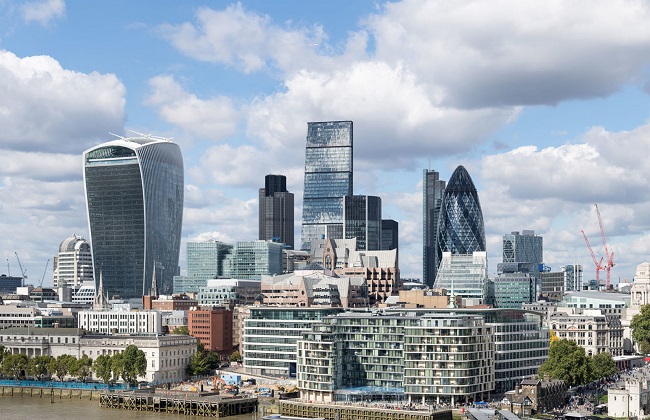
What are You Doing and Where are You Going?
The title for this post is a quote from The Hobbit by J.R.R. Tolkien. I’ve used it as a verbal cue to try and give readers an overview of the point I’m striving to convey. Because I want to talk about modern life in western civilization, specifically its complexity and increasing uncertainty. If you’re extremely wealthy you can mitigate these two points but I’m working on the premise that most of the people who read Contains Moderate Peril are not. The blogging community, of which I am a participant, is a diverse group but from what I’ve observed it’s not populated by millionaires. In fact most of the people I know, both online and in person, are just holding down a job, trying to keep a roof over their head and pay the bills. Often they’re doing the job they do in default of anything else and they’re at the very least ambivalent towards it. The pandemic has also brought home how fragile so-called “normality” is. Modern politics are also volatile and life in general just doesn’t seem as certain as it was twenty years ago.
The title for this post is a quote from The Hobbit by J.R.R. Tolkien. I’ve used it as a verbal cue to try and give readers an overview of the point I’m striving to convey. Because I want to talk about modern life in western civilization, specifically its complexity and increasing uncertainty. If you’re extremely wealthy you can mitigate these two points but I’m working on the premise that most of the people who read Contains Moderate Peril are not. The blogging community, of which I am a participant, is a diverse group but from what I’ve observed it’s not populated by millionaires. In fact most of the people I know, both online and in person, are just holding down a job, trying to keep a roof over their head and pay the bills. Often they’re doing the job they do in default of anything else and they’re at the very least ambivalent towards it. The pandemic has also brought home how fragile so-called “normality” is. Modern politics are also volatile and life in general just doesn’t seem as certain as it was twenty years ago.
We all approach life and deal with its respective slings and arrows in our own way. I am of an age where I was culturally indoctrinated to have a plan. They were very popular in the seventies and eighties. Everyone seemed to have one. Paul Simon, Leonid Brezhnev, Baldrick to name but a few. As a child, the plan that my parents had for me was pretty much the standard one from that era. Go to school and get an education and good qualifications. Find a suitable career. If you’re not sure about a career, then get a good intermediary job. Find a suitable partner and get married. Buy a home, have children and try to improve your lot in life. It was pretty much the white, middle class equivalent of the Xenomorph’s life cycle from Alien. By and large I broadly tried to follow this strategy but I found that reality constantly got in the way and tried to obstruct both me and everyone else who was trying to navigate life’s choppy waters.
So here I am at the age of 54. Life has changed for both my family and me a lot in the last eight years in ways that I never really imagined. This is documented in other posts so I won’t cover old ground here. Returning to the title of this piece, I find myself at a time in my life where I am considering “what am I doing and where and I going?”, so to speak. There are many reasons why we all get philosophically introspective at times. Society expects us to have an orderly trajectory to our lives, passing certain milestones along the way. However, many of these expectations are unrealistic and unattainable, so we then devote an excess of our time and energy examining our perceived failures. It is hardly a recipe for personal happiness and contentment. The information age has also opened our eyes to the reality of our relationship with the government. The various social contracts that are supposed to exist between citizens and state are all broken. Working hard does not necessarily pay off, neither does “doing the right thing”.
It is therefore not unusual to wish for a fairer and stable world. A world where opportunities exist for all, a job pays sufficient to keep a roof over your head and there is equality before the law. Sadly, that is not the case. Here in the UK the political system is broken and taken advantage of. It’s binary nature and tribal culture often means people vote for what they believe is the least worst of two “evils”. Hence people end up directly and indirectly voting at times against their own interests. At present we have a politically and intellectually weak government who are greedy, petty and dangerous. We are isolated internationally during the midst of the biggest geopolitical problem since World War II. The immediate future for the UK is not good politically, economically or socially. It is more upsetting knowing that some of these problems we inflicted upon ourselves.
So returning to the original question of “what are you doing and where are you going?” I have a major decision ahead of me this year. My caring commitments will be coming to an end in April and I have to determine whether I shall be returning to the job market, or whether my personal finances will allow me to officially retire. I suspect that the latter may not be possible and the prospect of the modern work environment doesn’t fill me with joy. My long term plan is to move out of London and attempt to keep the world’s problems at arms length. I just want to live out the remainder of my days in as much peace and quiet as possible. However, that seems more and more like an aspiration rather than a definitive plan, especially if I am reliant upon a job. It seems like no one can escape uncertainty these days. Being free from worry seems to be becoming a prerogative exclusive to the rich. It would be nice to end this post on a positive note but I cannot think of one.
DIY
During the seventies there was a boom in DIY (do it yourself) in the UK and a surge in interest in interior design. It was a decade of home extensions, loft conversions and open plan living. Social attitudes were changing and the formal layout of the family home that had prevailed since Edwardian times was giving way to ideas of a far more informal living space. I experienced this cultural change first hand between 1975 and 1985, as my Father spent a decade renovating the family home, room by room. The time and pace of this decade of DIY were dictated purely by the costs. My Father was working as a teacher and so the school holidays afforded him the time and opportunity. The practical benefits of DIY made the cost far more affordable. Plus, my Father was a mechanical engineer by trade and therefore could competently undertake woodwork, building and basic plumbing.
During the seventies there was a boom in DIY (do it yourself) in the UK and a surge in interest in interior design. It was a decade of home extensions, loft conversions and open plan living. Social attitudes were changing and the formal layout of the family home that had prevailed since Edwardian times was giving way to ideas of a far more informal living space. I experienced this cultural change first hand between 1975 and 1985, as my Father spent a decade renovating the family home, room by room. The time and pace of this decade of DIY were dictated purely by the costs. My Father was working as a teacher and so the school holidays afforded him the time and opportunity. The practical benefits of DIY made the cost far more affordable. Plus, my Father was a mechanical engineer by trade and therefore could competently undertake woodwork, building and basic plumbing.
Sadly, through a caprice of genetics, all such skills have totally bypassed me. I am not happy doing any sort of DIY around the house, apart from the most basic of tasks. I’ll replace light bulbs, not that such a task is a regularity with the new LED bulbs. I replaced the front doorbell in 2020 which involved taking off the wireless button on the door frame outside and replacing it with another. It was no more complex than removing two screws and fixing two new ones. Beyond this I’ll defer to professionals. If any small building, plumbing or electrical work is required, I’ll have it carried out by those who do it for a living. And I am quite content with this arrangement. I am fortunate enough to be able to pay for these services and if anything goes wrong, there’s a right to recourse. I am also not the sort of person who sees not being good at DIY as a slight against his manhood.
Although I am reluctant to undertake DIY in the traditional sense, I’m quite happy to mess with most sorts of technology. Taking apart a laptop, building a PC and software troubleshooting hold no fear for me and I will happily give anything of this nature a go. I can also wire Cat 5e cabling, build a server cabinet and install trunking and tray. I suppose it comes down to training and what you’re familiar with. Plus dealing with tech is not exactly comparable to redecorating your lounge. A bad installation of an operating system can be resolved by a reinstallation. A badly wallpapered lounge is a matter of public record and harder to redress. Which makes me wonder if there is an element of risk aversion in my attitude towards DIY, as opposed to just indifference and possibly a degree of indolence.
However, I recently decided to step outside of my DIY comfort zone and fitted a new letterbox to our front door. The existing one had broken and was a potential security hazard. So I measured the various dimensions and tried to find a replacement on Amazon. Needless to say, things didn’t go as planned and I had to adapt the replacement letterbox to get it to fit. Two plastic fittings that weren’t required were fouling the hole in the uPVC door, so I had to remove them. As this letterbox was a fraction larger than the old one, the existing screw holes didn’t line up. I don’t own a drill but managed to make new ones using a bradawl attachment on a Swiss Army Penknife. It wasn’t an especially difficult job but it was a learning experience. It’s made me think about my household's lack of tools and the disposable nature of so many items these days. It also highlights our lack of traditional skills as a society and the wider question of how most of us have no idea how the things we rely upon actually work.
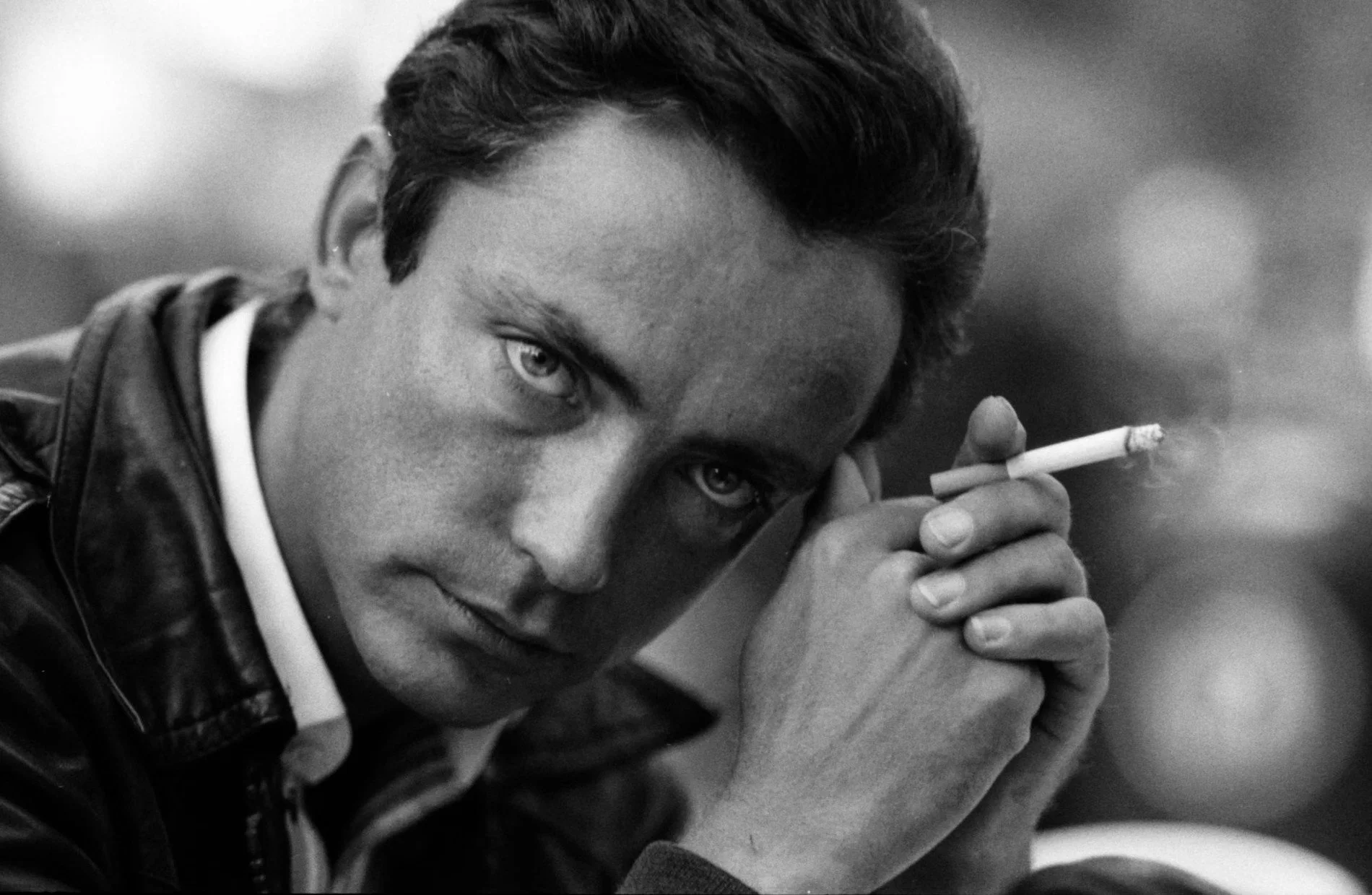
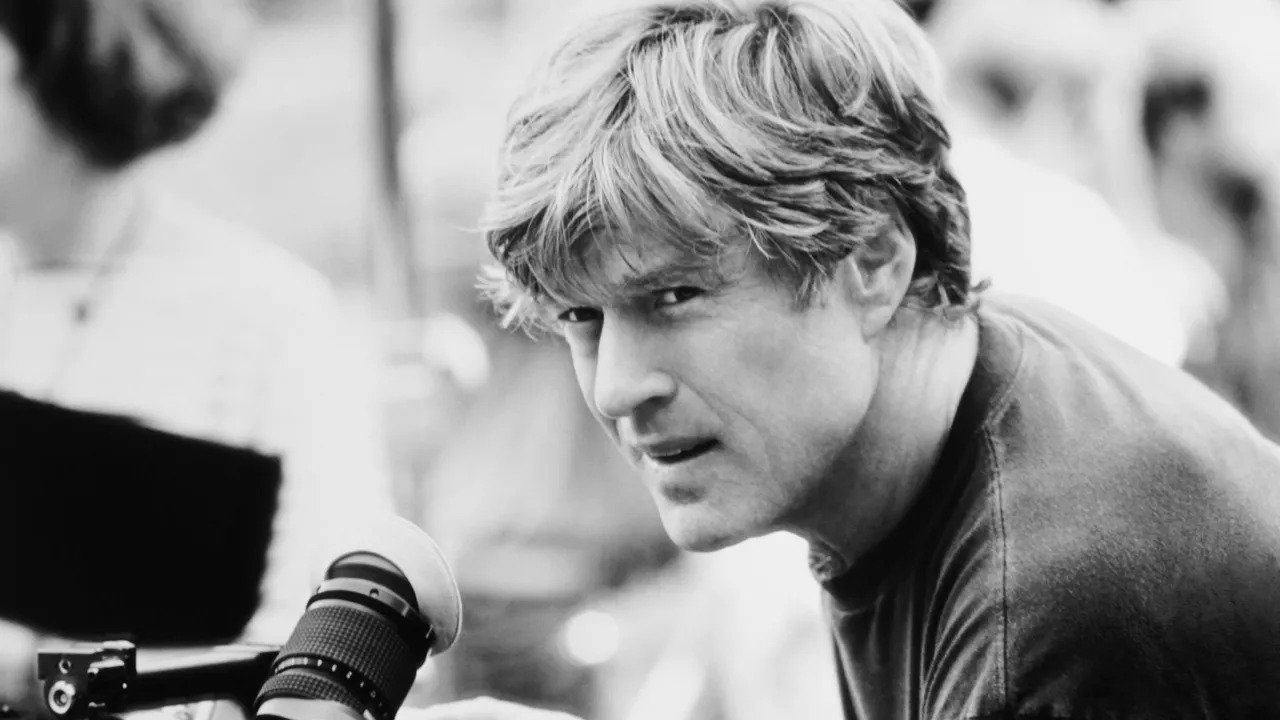
"The World Doesn't Actually Need 10,000 New Indie Games a Year"
One of the reasons I’m not that engaged with politics at the moment is because so many people’s opinions are based upon spurious data, misconceptions and logical fallacies. There are too many hot takes that are based on bluster, faux outrage and a fundamental dislike or fear of change. Sadly, speaking before thinking seems to have become commonplace and has filtered down from political discourse into pretty much every other aspect of public discourse. The furiously hard-of-thinking dominate most public spaces and seem ready to pounce on any subject being debated with an angry, knee-jerk opinion. It is all very wearing. It would seem that being angry about someone or something is as addictive as heroin and a lot cheaper. However, it is equally just as damaging to society.
One of the reasons I’m not that engaged with politics at the moment is because so many people’s opinions are based upon spurious data, misconceptions and logical fallacies. There are too many hot takes that are based on bluster, faux outrage and a fundamental dislike or fear of change. Sadly, speaking before thinking seems to have become commonplace and has filtered down from political discourse into pretty much every other aspect of public discourse. The furiously hard-of-thinking dominate most public spaces and seem ready to pounce on any subject being debated with an angry, knee-jerk opinion. It is all very wearing. It would seem that being angry about someone or something is as addictive as heroin and a lot cheaper. However, it is equally just as damaging to society.
All of which brings me to recent Tweets made by software developer and businessman Jeff Vogel. Please note I have combined three of these in chronological order so we can see the full context of the points he was making. According to Mr Vogel, “When I started writing games for $$$ (1994), it was a weird eccentric thing to do and I didn't think I would make a penny. If I was starting out today, would I write video games? Almost undoubtedly not. This is a whole lot of young, smart, driven people making things nobody wants. At what point does this become a profound waste of human talent? So pointing out the world doesn't actually need 10000 new indie games a year on Steam will make some people super angry. Note: that's almost 300 games a day. Suggestion: Think I'm wrong? Prove it by going out and actually trying 1% of those games. (Yeah, I didn't think so)”.
It can be argued that if one overlooks the emotive element of Mr Vogel’s statement, there are indeed a lot of indie games produced for what is essentially a finite market. Therefore, many will fail commercially and struggle to get noticed. That part of his statement is correct on a logical basis. Beyond this point his words are personal and subjective musings on what people do with their lives and the projects that they invest their time into. He posits in subsequent Tweets that maybe people should put their efforts into other things as society still has lots of ills that need addressing. “The game industry doesn't care about this, it's too big. I think it's more about how it's a massive misallocation of talent. What forces are driving so many people to work so hard making something nobody wants, while so much of society in general is increasingly non-functional?”
The point that Jeff Vogel is making is an old one. I’ve made it myself in past posts. Essentially wouldn’t it be nice if people put the same level of energy and passion that they do with personal projects, into other things that are beneficial for wider society? For example if a local football club is going to be closed, the supporters will lobby hard to prevent it. Would they show the same dedication for a school or a hospital? However, beyond speculation, there is no practical solution to this philosophical conundrum. Because people tend not to think in such terms. For example, when my caring duties end, I shall have to find work. Given my qualifications and skills, returning to the field of IT would be logical, practical and possibly lucrative. It could also be argued as being “beneficial” for the economy and society. However, I do not wish to do this and therefore will not do so unless there is no other option. I wish to pursue a writing career although that will be far harder and pays less.
One of the problems with neoliberalism is that it goes hand in hand with the American dream; the belief that anyone, regardless of where they were born or what class they were born into, can attain their own version of success in a society in which upward mobility is possible for everyone. Hence people pursue what they’d like to do, rather than what may be most beneficial and practical. Hence so many people aspire to be “influencers” on Twitch TV and YouTube, rather than become an administrator for a firm of quantity surveyors. Does this say something about the state of the job market and people’s relationship with everyday life? I’m sure it does. You only have to read the late David Graeber’s book Bullshit Jobs to get an overview of how broken capitalism is for those not at the top. Hence people will pursue the seemingly impossible dream of developing an indie game, rather than endure the iniquities of soul crushingly pointless, underpaid work and having to interact with sociopathic management and social dysfunctional work colleagues.
Perhaps Jeff Vogel may wish to reflect on the following. Firstly, he and nobody else is the gatekeeper of indie games development or anything else for that matter. Any statement that directly or indirectly casts you in such a light is an error of judgement and will certainly provoke a reaction. Secondly, artistic endeavours and pursuing creative activities is enormously beneficial for both the artist and those who experience the resulting work of art. Creating something is not always about being financially successful. There is mental wellbeing, catharsis, mental discipline and a wealth of other benefits. This is why “the arts” are often subsidised in many countries. Art is a process of learning to create ourselves and experience the world in new ways. It supports the bigger view of life: beauty, symbols, spirituality, storytelling, and allows us to be present in the moment. Just because you can’t put a price on something doesn’t mean it’s invalid.
I don’t know that much about Jeff Vogel personally, so I can’t determine whether his Tweets are in good faith or deliberately designed to stir up an internet storm. If I assume that he meant what he said without malice, then perhaps his mistake was the way he phrased and presented his thoughts. If they had been less imperative and presented more as a point of consideration, then maybe they would have been met with less opprobrium. Perhaps such rhetorical questions as “the world doesn't actually need 10,000 new indie games a year” ultimately serve no purpose because of the nature of the human condition. We don’t run on pure logic. It is also a very problematic line of argument that can potentially be usurped to frame allsorts of other unpleasant concepts in a superficially “reasonable light”. Ultimately, the argument if taken to its inevitable conclusion would lead to group A dictating what group B does. That seldom ends well, especially in today’s political climate. People don’t take well to being told what to do. Irrespective of its rectitude.
Goodbye 2021
When I wrote Goodbye 2020 a year ago, I endeavoured to be philosophical and sanguine in my approach. It was a challenging year for all of us and for me it was further compounded by a bereavement. However, I strove to keep matters in perspective and tried to look at things in a broader context. I cannot be as even handed this time. 2021 has been a very difficult year for myself and my family and I will be glad to see the back of it. Nationally speaking, things haven’t been much better. I feel that we’ve squandered the initial progress that the COVID-19 vaccines offered. Obviously, I cannot do anything about the problems that the UK faces in 2022. However, I certainly intend to address some of the issues that I and my immediate family are facing. I am going to tackle some specific problems that need to be laid to rest and set myself some tangible goals to achieve. 2022 isn’t going to be something that just happens and I passively sit back and watch.
When I wrote Goodbye 2020 a year ago, I endeavoured to be philosophical and sanguine in my approach. It was a challenging year for all of us and for me it was further compounded by a bereavement. However, I strove to keep matters in perspective and tried to look at things in a broader context. I cannot be as even handed this time. 2021 has been a very difficult year for myself and my family and I will be glad to see the back of it. Nationally speaking, things haven’t been much better. I feel that we’ve squandered the initial progress that the COVID-19 vaccines offered. Obviously, I cannot do anything about the problems that the UK faces in 2022. However, I certainly intend to address some of the issues that I and my immediate family are facing. I am going to tackle some specific problems that need to be laid to rest and set myself some tangible goals to achieve. 2022 isn’t going to be something that just happens and I passively sit back and watch.
Rather than focus on the negatives, let’s reflect upon the positives. One of the best things that did happen in 2021 was the Blaugust Festival of Blogging. I really do find this yearly event to be very motivating and it is always a pleasure to see new writers starting out and absent friends return. Trying something new, especially something creative is always a lot easier if you have a community to draw upon for advice, support and friendship. It’s also very encouraging to see over 40 blogs in my RSS feed, still actively writing on a regular basis, sharing their thoughts and ideas. It certainly counters that persistent and erroneous narrative that blogging is dead. Furthermore the Discord server created for Blaugust continues to be active throughout the year, which is also very gratifying. A community that continues talking and sharing after the event is clearly a success.
I managed to maintain a fairly regular writing regime this year although that went awry in December due to illness in the family. I intend to increase my output in 2022 as I still feel that I have things to say on a great many matters and that all too often I miss the opportunity to do so just through poor time management. I shall therefore attempt to return to a morning writing schedule, as that seems to be the optimal time of day for me. I have also planned some side projects that I will be announcing in due course. Often it is all too easy to become more enamoured with planning a project rather than actually starting it. I intend to avoid this pitfall this year. I shall also try to be more encouraging to others. I know so many talented people with interesting ideas, who sadly never follow through on them for one reason or another. Perhaps a little nudge will provide the impetus needed.
Usually the closing paragraph of these sorts of posts are either philosophical, motivational or sarcastic. A pithy summation of events of the previous year and one’s hopes and aspirations for the forthcoming one. Frankly, I’m just keen to draw a line under 2021 and move on. I recently hit 54 and I’m very conscious that I am now embarking upon a very different phase of my life compared to that which has gone before. There are important matters that I need to sort out to ensure that life is both manageable and tolerable. I certainly feel motivated at present and so I need to capitalise upon that. Best wishes to all who have supported Contains Moderate Peril over the last twelve months. It is satisfying to know that I’m not just yelling into the void. I’m going to just keep going. I hope that you do the same.