
Caring for the Elderly Part 17
My Mother moved into a care home on April 7th this year. Her health was already very poor due to her age (91). She was bed bound, partially sighted, suffering from increasing hearing loss and unable to feed herself. Rapid onset dementia meant that her behaviour had become erratic and she was a danger to herself. Hence her caring needs could no longer be safely managed within a home environment. Fortunately the care home proved a good choice. For the past four months they have provided outstanding care and have treated my Mother with dignity, respect and genuine kindness. Sadly, during that time my Mother had several bouts of illness that saw her hospitalised four times. Eventually a PEACE plan (Proactive Elderly Advanced Care) was set up allowing treatment to be managed by the care home and local GP. Since July my Mother has enjoyed a stable environment and continuity of care.
My Mother and Sister circa 1965
My Mother moved into a care home on April 7th this year. Her health was already very poor due to her age (91). She was bed bound, partially sighted, suffering from increasing hearing loss and unable to feed herself. Rapid onset dementia meant that her behaviour had become erratic and she was a danger to herself. Hence her caring needs could no longer be safely managed within a home environment. Fortunately the care home proved a good choice. For the past four months they have provided outstanding care and have treated my Mother with dignity, respect and genuine kindness. Sadly, during that time my Mother had several bouts of illness that saw her hospitalised four times. Eventually a PEACE plan (Proactive Elderly Advanced Care) was set up allowing treatment to be managed by the care home and local GP. Since July my Mother has enjoyed a stable environment and continuity of care.
This Thursday I was notified by staff at the care home that my Mother’s health was declining rapidly and that she was not expected to survive the week. I went to visit her and found that she had lost even more weight and was very gaunt. She was not aware of my presence and was focusing all her efforts on breathing. It is a sobering experience to see a parent who was once so indefatigable and energetic, reduced to such a frail and pitiable state. But such is the nature of life and old age is often a process of numerous minor ailments slowly wearing one down. So I sat and held her hand and talked about “the good old days”. I recounted anecdotes from my youth such as how I set fire to the kitchen curtains as a child. I reminisced about the garden which was her pride and joy for many years. And I recalled the family cat, Sam, who she doted upon. I told her I loved her, that she was a great Mum and I appreciated all that she had done for my Sister and I. Our childhood was fun and our family home was filled with laughter. I like to think she heard and understood all this.
Last night, I received a phone call from the care home that my Mother had died, peacefully in her sleep. It was far from a bolt out of the blue. She was approaching 92 and has been struggling with very serious health issues for the last eight months. Death has been a factor in her life for the last decade as she outlived friends and relatives. Last year my Mother asked me to get in touch with the family solicitors so she could “get her affairs in order”. Hence there has been an irresistible inevitability to this week’s events. Yet no matter how much you try to prepare and reconcile yourself to the situation, when it arrives it hits you hard. My Mother, a constant in the last 54 years of my life, is no more. Part of me thinks this is unfair, but then I stop and think about the quality of her life in recent months and what she’s had to endure. To deny her “rest” would be wrong.
For the present, I must set aside my feelings and concentrate on the task in hand. I administered my late Father’s estate in late 2020 and early 2021 so I have a good idea of what administrative tasks lie ahead. I am somewhat relieved that my Mother decided to get a lot of her personal affairs in order last year, hopefully ensuring a smooth passage through the potentially choppy waters of probate. Then there’s the funeral to arrange and the rather sad fact that few people will attend because so many of my Mother’s family and friends have already died. This is the reality of an ageing society. Thinking ahead, I also suspect that this will be the final entry in this series of posts. Looking back over the last 16 instalments, I hope that my experiences are of use to those who are just embarking upon a similar journey. Remember, 3 in 5 people in the UK will become carers at some point during their lives. You’re therefore never alone.
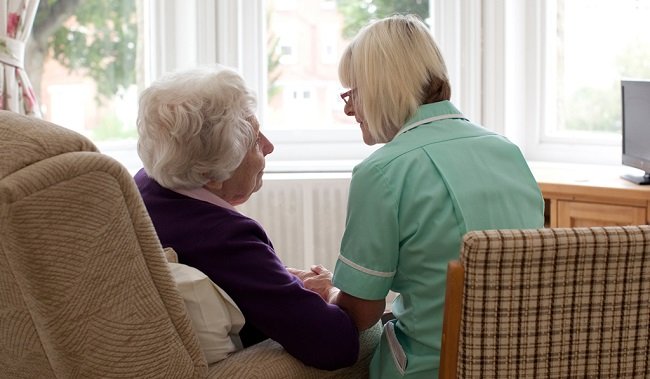
Last December, my 91 year old Mother suffered a rapid mental decline and was hospitalised. We have subsequently learned that this is potentially due to another stroke. Whatever the exact medical reasons, my Mother has been left bed bound, unable to feed herself and in a state of mental confusion and distress. When she was discharged home in mid January it quickly became clear that the four care visits that were scheduled each day were not sufficient for her needs, despite the staff doing their best and my Sister and I providing additional support. Matters were further compounded by personal ill health and other external factors. My Sister has worked from home for the last two years but has now started a staged return to the office. As we felt would no longer be able to cope we turned to both Social Services and the local Mental health Team for any assistance that they could provide.

In this latest post I wish to discuss hospital admissions and how they can become a regular occurrence when caring for the elderly. Being immobile, losing agency with respect to one’s personal hygiene and being dependent on medical equipment can lead to health related problems, irrespective of good home care. For example, my late Father had limited mobility and spent most of his day sitting. Hence, he used a memory foam cushion to protest against pressure sores. He also slept in a hospital bed equipped with an air mattress for similar reasons. Despite having attentive carers twice a day, he was subject to regular skin complaints due to his diet (he was fed via a PEG tube) and lack of sunlight. Perhaps the biggest source of problems came from being catheterised. Despite scrupulous cleanliness he would still regularly contract urinary tract infections. As a result hospital admissions were frequent.
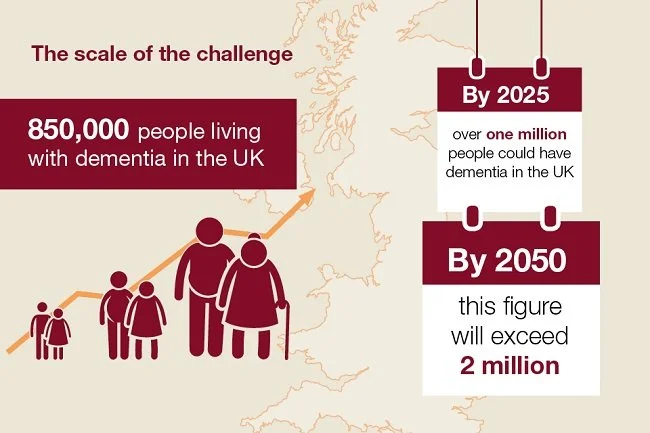
It has been over a year since I’ve written about this subject. The last post was about my late Father’s funeral. Since then life has gone on and my Mother’s ongoing care has become a fixed and somewhat uneventful regime. There are benefits to be gained from such a routine as it offers stability and certainty for both the carer and person being cared for. However, recently there has been a significant change in the status quo that warrants writing about. As always, my desire is to share some points and present my personal experiences in the hope that they may prove useful and informative to those in a similar situation or who may be just embarking upon their caring journey. The main subject of this post is a difficult one and something that is very hard to come to terms with. It is dementia. A medical condition that affects 1 in 6 people over the age of 80 in the UK.
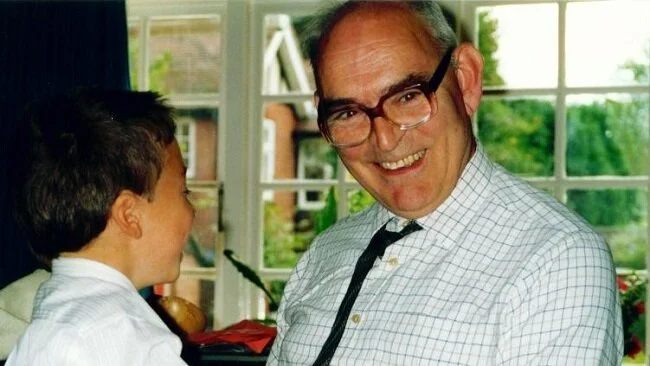
Yesterday, Saturday 17th July, was my late Father’s birthday. He would have been 92. As my granddaughters were staying over the day was upbeat, boisterous and fun due to their exuberance. Today as the bungalow returns to its normal levels of noise and excitement, I have spent some time quietly reflecting upon the nature of bereavement. When my father died last September I was focused upon the practicalities of arranging a funeral during a pandemic, ensuring that his estate was processed and that all possible provisions were made for my disabled 90 year old Mother. These things have now been done and it is only recently that I have had the time to process my own grief. The first Father’s Day (20th June in the UK) without him was naturally a milestone and his birthday has proven similarly so. However, today’s introspection has been beneficial and hence I felt the desire to write about him and share some thoughts on the nature of bereavement.

The funeral service for my late Father was held today. As ever I would like to collate my thoughts and present them here in the hope that I may be able to assist someone else who is currently dealing with a bereavement. Funerals can be challenging at any time but are further complicated at the moment due to the various restrictions imposed due to the global COVID-19 pandemic. However, there is still scope to give a loved one a fitting send off. You just have to be a little more creative about it and try to be understanding of the current regulations regarding social gatherings. Despite my concerns today’s service at our local Borough crematorium went well, if such a term is appropriate. I feel that my Father was honoured appropriately and that his family and friends were able to pay their respects and celebrate his life in a manner that he would approve of.

Long-term care can often end with a bereavement; which is a complex subject in itself. I will not be discussing grief in this post, as that is an immensely personal and subjective experience that we deal with in our own way. Instead, I would like to talk about the administrative and logistical problems that arise after someone has died and use my own recent experiences as an example. My Father died on Wednesday 16th September. He had a series of strokes in 2016 which left him disabled. Over the last four years his level of health has slowly deteriorated and his quality of life has subsequently diminished. This year saw a noticeable change not only in his well being but overall attitude. His stoical outlook finally faded and he lost all interest in life. He fell ill in mid August with Sepsis and then developed a lung infection. When I saw him last on Friday 4th September he told me he was tired and wanted “an end to it all”. Six days later he asked the Senior Doctor on the ward to stop treatment, which wasn’t working anyway. He died a week later on Wednesday 16th September. He was 91.
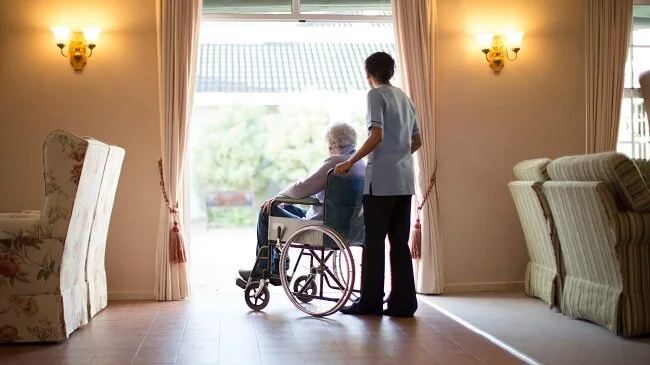
I last wrote a post about “caring for the elderly” in February. There have been significant changes in my family's fortunes since then and like anyone in a caring situation, the lockdown has had a major impact and sadly not for the good. As ever, I choose to recount my own experiences in the hope that they may be of some use to others who are in a similar situation. So to begin with, my Mother went into Respite Care just as the pandemic was hitting the UK and the lockdown was being implemented. Hence her stay in a nursing home was not the best experience. All the additional social activities usually on offer were suspended so all she effectively did was swap one sick room for another. She came back home just as my sister moved from working in London to working from home. Hence from March onwards both her and I have been caring for both my disabled parents on a daily basis. However, my sister has had to hold down a job at the same time.

My Mother, who has had limited mobility for a decade, fell and broke her arm just before Christmas. She subsequently spent nine weeks at a specialist rehabilitation unit at our local hospital. During that time she had surgery on her arm to repair the fracture and extensive physiotherapy to try and increase her mobility. She was discharged at the beginning of February with a support package in place to facilitate her return home. Sadly, despite physiotherapy, she is immobile as the day she was admitted. Until she sees the Consultant at the Fracture Clinic and is told if her arm can bear weight, she is not allowed to do anything for herself. Hence she is currently having four home visits a day from two carers and is confined to her bedroom. The carers help her get washed, dressed and use the commode in her room. Naturally, the current situation and the inability to do anything for herself, along with the uncertainty of her long term recovery and future, is causing a great deal of anxiety not only for my Mother but the rest of the family as well. At present we have a 3 week wait before she gets to see the consultant.

I always try to write the posts in this series in way that proves useful to others who are facing a similar experience. Caring, old age, illness and our own mortality are all matters that will cross our path sooner or later. This time I shall be addressing a subject that many of us tread carefully around. Some people will not countenance discussing it in any way, shape or form as it makes us uncomfortable or even scared. In Western culture death is often the elephant in the room; a topic that should not be avoided but frequently is, due to etiquette and other curious societal foibles. Hence, we use phrase like “passed” or “gone” instead of dead and we often invoke religious based platitudes, regardless of whether we have any particular faith or not. Simply put, our response to the inevitability of our own demise and that of those who we love is ambiguous to say the least. I hope in the years to come we grow up in this respect and find a comfortable means of making death socially acceptable to discuss and plan for.

I started writing this series of blog posts when I first became a carer back in 2016. The idea has always been to use my personal experiences as a point of reference for others. That is the main reason for this latest update. The things that are currently happening to me and my nearest and dearest may happen to you and yours. Over the last three years a lot has changed in my family’s collective life. Both my parents have gone from living relatively independently and managing their own affairs, to becoming disabled with long term degenerative medical conditions. Both are now housebound and require assistance with basic tasks such as washing and dressing, due to reduce mobility and frailty. My Father has been nil by mouth for three years and requires district nurse visits twice a day to deal with his medicine and catheter. My Sister has altered her working hours so she has more time available in the morning before she goes to work. I have given up work to become a fulltime carer. Between us the days is covered. The latest major change has been applying for power of attorney, which I wrote about in my previous post.

Since spring 2016, I have been running my parent’s domestic affairs. Due increasing ill health, neither can visit a bank, conduct business phone calls or deal with administrative paperwork such as utility bills, insurance policies and hospital appointments. However, there are limits on what I can and cannot do. Cheques and legal documents need signatures. UK data protection legislation often prohibits phone conversations with anyone other than the account holder. Hence despite being able to broadly deal with most things that come up, I sometimes have to involve my parents. This mean conversations on speaker phones which are difficult when both my parents have substantial hearing loss. So after some discussion with both of my parents, I have decided to pursue the power of attorney. At present this is specifically for my Father, as most bills and invoices are in his name.
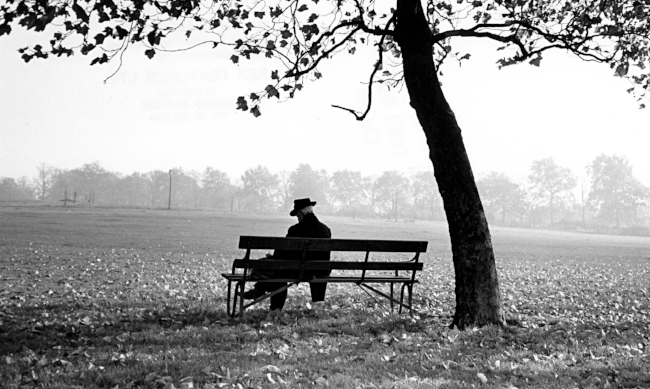
Once again, I find myself writing about this subject in the hope that it will encourage others to reflect upon the nature of old age, illness and the consequences that arise from them. There is still a prevailing culture of not discussing and sometimes not even thinking about such matters, but both are an absolute certainty in everyone’s life. All too often people find themselves in extremely difficult situations brought about by such events and the difficulty and emotional trauma is increased due to there being no plan in place or provision to address matters. Therefore, I strongly advocate the following. Some may seem like very obvious points, but recent conversations I’ve had with other carers and people in similar situations, has shown that many people have not made even the most basic of provisions in this regard.
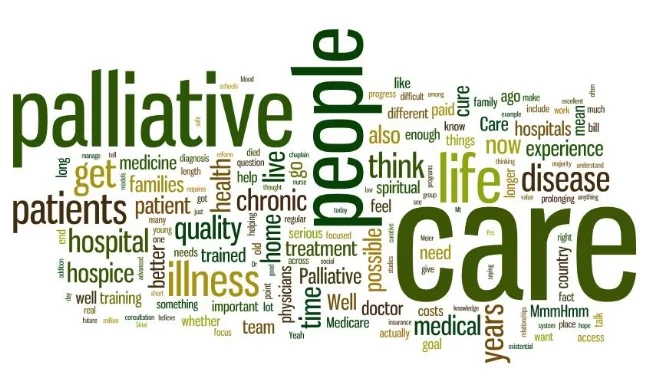
At the end of July, my Father went into Respite Care for two weeks. He was placed in a local private nursing home, via borough social services. The placement was intended to provide him a change of scenery and give the rest of the family with a short break from the ongoing caring requirements. Sadly, things did not work out well. After seven days away from home, my Father became ill and after three trips to A&E (over a period of four days), he was finally admitted to hospital with Aspiration Pneumonia. He was deemed to be at extreme risk by the medical staff and we were told at one point to “prepare for the worse”. However, despite being seriously ill, he recovered and much to everyone’s surprise was discharged and returned home after ten days. Sadly, his already impaired state of health has been further diminished. Three weeks on it is becoming clear that it is unlikely that he will return to the level of ability that he had at the start of July. His health and the quality of his life has been further reduced. Subsequently, the various healthcare professionals that deal with my Father have now started using the term palliative care.

There comes a stage in most people’s life when they start reflecting upon their own mortality. Both my parents have survived two strokes each and are now in the late eighties. At this point in their lives healthcare has moved on from correcting or remedying problems, to instead being more about holding the line and maintaining the status quo. A safe home along with an orderly daily routine provides a stable environment, which broadly allows them both to maintain an adequate degree of independent living. However, both are very aware that their faculties and overall health are gradually diminishing. Neither are naïve or foolish enough to deny this and in recent months have been quite candid about what the future will entail. Simply put both my parents are aware that they are currently “running the last lap”, to use one of their phrases.

I have written in the past about caring for the elderly. I have approached the subject from a personal perspective, as a carer with two disabled octogenarian parents, as well as considering the broader needs of a society with an ageing population. As it has been two years since I formally became a carer to both my parents, I thought I’d share my experiences on the many challenges that my family has faced over the last twenty-four months. I find doing so beneficial and maybe my anecdotes may be of value to others in a similar situation. As I’ve said in my original post, caring for a loved one is something we all potentially face at some point in our lives, and with an ageing population it becomes statistically more likely each year.
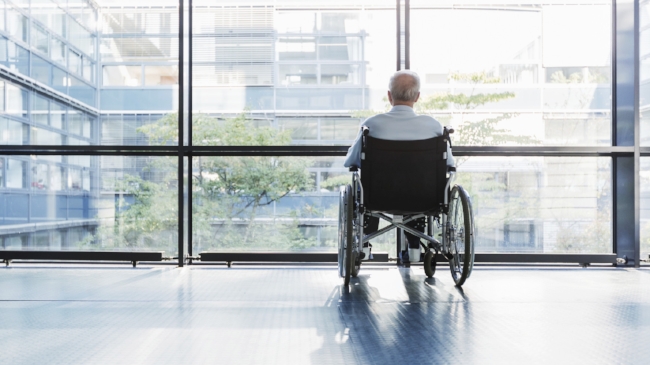
In a previous post, written last summer, I mentioned my caring commitments and reflected upon the realities of being a carer. Since then my family’s circumstances have changed considerably and subsequently so have my own. In the UK, social care has become a major political issue and was a key area of debate for all parties in the recent election campaign. Although the UK has an aging population, then NHS broadly manages to deal with its needs. It is the social care that so often follows time spent in hospital, that causes a bottleneck. Too often, the local authorities struggle to find carers and have them in place when requested. This means that many patients are unable to be discharged and have to remain in hospital. Caring is a profession that seems to be greatly lauded and esteemed by politicians in principle but the reality is far different. Overall it is often a poorly paid job, with little or no employments rights or benefits.

The UK population grew by half a million last year to 65.1 million, according to figures from the Office for National Statistics. Of that number 10% are over 75 years old. At present there are 6.5 million carers in the UK, many of whom are coping with an aging parent(s). As healthcare in the UK improves overall life expectancy, the population is rapidly aging which means that every year over 2.1 million adults become carers (although almost as many people find that their caring responsibilities come to an end). This turnover means that most families in the UK face this issue at some time and 3 in 5 people will become carers during their lives.
Thoughts on Blogging Part 17
I was sitting in my office over the weekend, half-heartedly typing up a blog post about table manners and dining etiquette, when I paused and lapsed into a state of self examination and introspection.
“Isn’t Contains Moderate Peril supposed to be about gaming, movies and popular culture”? “Yes”, I replied to myself via my inner monologue.
“So what the hell am I doing writing about table manners, then?” my inner contrarian retorted.
“Well it is part of our culture, although I wouldn’t argue that it is a defining aspect of the zeitgeist at present” my conciliatory alter ego responded.
“Frankly, I’m getting bored with all of this per se” a third voice stated. It was at this point, I stopped arguing with various facets of my id and went to the pub.
I am currently having a R.J. MacReady moment
I was sitting in my office over the weekend, half-heartedly typing up a blog post about table manners and dining etiquette, when I paused and lapsed into a state of self examination and introspection.
“Isn’t Contains Moderate Peril supposed to be about gaming, movies and popular culture”? “Yes”, I replied to myself via my inner monologue.
“So what the hell am I doing writing about table manners, then?” my inner contrarian retorted.
“Well it is part of our culture, although I wouldn’t argue that it is a defining aspect of the zeitgeist at present” my conciliatory alter ego responded.
“Frankly, I’m getting bored with all of this per se” a third voice stated. It was at this point, I stopped arguing with various facets of my id and went to the pub.
While consuming a chilled libation I reflected upon these matters and contemplated the wider issue underpinning them. Does collating my thoughts for a blog post help me understand a subject better. Does writing allow me to make sense of the world and the human condition? Does maintaining a blog make me happy and provide a sense of purpose? The fact that I am writing this blog post surely indicates that the answer to these three questions is not “no”. However, it wasn’t a resounding “yes” either. If there is a single word that summarises my current emotional, philosophical and political disposition at present it is “ambivalence”. I have mixed feelings about a lot of things. Video games, the industry that creates them, film and TV, popular culture, contemporary politics, the state of the world, the rest of my life.
The pleasures of working working in retail
I have recently realised that I am at a crossroads in my life. After speaking to a financial advisor, I have decided that I won’t be returning to the job market. I am going to retire. Working part time may well improve my finances but I don’t believe it would improve the quality of my life. Work means directly or indirectly accepting a degree of bullshit into your life. This may be a problematic boss or problematic colleagues. Then there’s issues such as leave versus staffing schedules, potential stress (especially if dealing with the public) and lines of demarcation. I’m used to working within the parameters of a clearly defined contract. Yet working culture now seems to permeate one’s life outside of office hours. That is not for me. Plus, I’d be a square peg in a round hole in the modern work environment. A job is a quid pro quo; a means to make money. I have no interest in an employer's vision and how I can contribute to that.
Thus, as I am part of the “great resignation” and am not going back to work. I am focused upon what I intend to do with the years that I hopefully have left. Fortunately, I am never at a loose end and still have lots of interests. Mrs P and I also have numerous activities that we wish to do together. We also realise that we’re very fortunate to be in such a position. However, we have to temper our plans according to our finances, age and health. Hence, if something isn’t positively contributing to the quality of our lives, then it may well need to go. Which brings me back to my penchant for writing. It was once a career goal, then a form of therapy, now it is a hobby (possibly even an indulgence). And hobbies have an arc of their own. For the present, Contains Moderate Peril is going through a quiet patch because so am I. When I next become enthusiastic about something, the blog may well pick up.

On Friday 26th June, I had another random spike in internet traffic to Contains Moderate Peril. The statistical package that comes with my Squarespace account recorded over 13k visits in less than 24 hours, which is not typical (although I wish it was). However, all of these visits to my blog arrived via the default homepage and spent between 1 and 2 minutes there. Hence, it was obvious that this was not human traffic, as there was no evidence of any searches being made of content that is available on my site, nor of the “visitors” clicking on any of the links on the top menu and viewing other posts. This was undoubtedly AI traffic arriving at the designated homepage and simply parsing the site. I had a similar spate of this sort of web traffic last November. The only difference on that occasion is that the traffic all came from China. This time round it hailed from the US. I suspect that this is something that will happen more often as companies set their AI loose on the net for what is effectively training.

Today I started the slow process of auditing every post that has been published on Contains Moderate Peril since 1st August 2016. The goal is to correct any obvious typos and replace all existing images with larger ones. The Squarespace software upgrade I applied to the website at the end of last year has finally allowed me to establish a standard format that I am happy with. Hence the ongoing audit is the perfect opportunity to apply these style rules to all posts. There are also some technical issues and matters regarding functionality that need to be addressed. I need to determine how to embed YouTube videos in such a way that they automatically scale to fit whatever device is viewing them. Another area which needs improving is the website search facility. This needs refinement so that enquiries can be more specific. Older posts also need to be more accessible, although I am still researching how best to achieve this.

It’s nearly two and half months since the Blaugust: Festival of Blogging event ended. During that time I’ve maintained a fairly regular writing schedule and I post every two days or so. Furthermore, I finally dragged my blog template, kicking and screaming, into the modern era. I tweaked a few pages and updated the content of the “about” page. The next task is to start going through all previous posts and replacing older, low resolution images with larger, more appropriate ones. This process also presents an opportunity to ensure that all posts follow a uniform style. IE Are appropriately categorised, have links to related posts at the bottom and are SEO optimised. This will be a lengthy task so I think the best approach will be to tackle two or three posts a day. Hopefully this will raise the profile of older content, which generates the lion’s hare of traffic to this site.

Back in March 2019 I wrote a blog post about the operating costs of running this website. I went into detail with regard to hosting and domain costs, as well as the other software and hardware used to write posts and at that point produce a podcast. Let it suffice to say that five years on, those costs have all increased. If we’re just looking at maintaining a blog simply in terms of hosting and the domain registration, it costs about £20 a month to run Contains Moderate Peril. Theoretically, if I want to reduce those costs I could dispense with a specific domain name and use a free blogging service. However, I feel that such a compromise comes with its own set of problems, such as advertising and a lack of control (to a degree) over your content. I therefore choose to pay to mitigate these concerns. If I then wish to do more, such as produce a podcast, create videos for YouTube or live stream, then those costs increase.

When you initially start blogging, your aspirations tend to be very straightforward. Choose a title, find a niche and get into the habit of writing. Simple tasks that can still take a while to master. Once your blog is established and has endured for a while, you may not have any further long term goals other than to just keep going. However, if you feel that you want to achieve more then you have to tackle a new set of problems. There is a great deal of “advice” in the public domain about growing and monetising your blog. A lot of it is questionable but there are some approaches that do work. However, these require you to write to a specific process, chasing the ever changing whims of your potential readership. You have to compromise. And for many bloggers, that is the deal breaker.
I spent some time in July, making some changes to Contains Moderate Peril. I replaced the branding and made some alterations to the “about” page to ensure that it was up to date and relevant. Not that anyone reads it as I still regularly receive enquiries about guest posts. Something I no longer do. Today, I made some further changes as it is my long term goal to grow the audience for this site. Hence I want to try and make it easier for visitors to find the content they seek and offer them related material. To facilitate this, I have added some additional menu options to the blog homepage. These act as filters, presenting specifically themed content for readers. Hence there is a “movie” button that lists all film reviews and similarly one for “video games”. There are also links for two specific video games, The Lord of the Rings Online and Star trek Online, as website statistics show that these are popular subjects.

I’ve been writing online for 17 years. During that time a modest audience has read my posts and occasionally commented on them, which is the accepted dynamic of blogging. Some of my posts are ephemeral. Others, such as film reviews, have greater longevity. Naturally I want people to read my output and I’ve noticed that the film reviews seem to generate a fair amount of traffic. After consulting my website analytics package, it would appear that the majority of readers find my reviews by searching Google. Promoting my writing via social media does very little. Another issue is that readers tend to read the post they found via their search and then leave. Despite there being links at the bottom of the post to similar material. Currently, my blog does not have an effective means of searching older posts. The landing page has only 20 posts listed. There are approximately 2,500 archived.

As a blogger we are often told by our peers not to obsess over website traffic and statistics in general. There is a degree of sense in this. We should be primarily focused on writing, maintaining an equitable schedule and staying motivated. Stats can have a negative effect on the latter. However, one cannot ignore the subject either. As a writer, at some point you do want people to actually read your material, or else what is the point? I have therefore always kept an eye on traffic and have attempted to grow my readership overtime. The results have been varied. In my experience, you do slowly build up an audience by being persistent with your writing. But you also have to promote your work, which is a job in itself. It’s also something that not everyone is comfortable with. “Therein lies the rub” as the expression goes. How do you attract readers without compromising your own standards?

I was sitting in my office over the weekend, half-heartedly typing up a blog post about table manners and dining etiquette, when I paused and lapsed into a state of self examination and introspection.
“Isn’t Contains Moderate Peril supposed to be about gaming, movies and popular culture”? “Yes”, I replied to myself via my inner monologue.
“So what the hell am I doing writing about table manners, then?” my inner contrarian retorted.
“Well it is part of our culture, although I wouldn’t argue that it is a defining aspect of the zeitgeist at present” my conciliatory alter ego responded.
“Frankly, I’m getting bored with all of this per se” a third voice stated. It was at this point, I stopped arguing with various facets of my id and went to the pub.
March has been a challenging month for several reasons and as a result I’ve written very little. Furthermore, the recently revived podcast has also ground to a halt after just six episodes due to scheduling issues that are beyond myself and Brian’s control. At the end of February, Google made changes to their search algorithm which have had a major impact upon traffic to Contains Moderate Peril. Visits are down by over 20%. I’ll make no bones about the fact that this has really pissed me off. Several years of growth has been unceremoniously swept away at the drop of a hat. So all this, plus the rapidly changing situation regarding my Mother’s care, has found me ill disposed towards writing. To be clear, I’m not talking about writer’s block. I have plenty of ideas and a folder full of draft posts. I just haven’t wanted to write because I feel that I’m just spitting in the wind.
At the time of writing we are halfway through the Blaugust 2021 Festival of Blogging event. Whenever the subject of personal blogging is raised, there are those who immediately declare that “blogging is dead”. According to Google, out of 1.7 billion websites that currently exist worldwide, 500 million or so of those are blogs of some kind. These generate over 2 million blog posts daily. So I wouldn’t say that blogging per se is done and dusted. However it certainly has evolved considerably over the last 15 years. At the start of the current century blogging was a novel activity providing the means of keeping a personal journal online. Inevitably, popularity and ubiquity led to commercialisation and a necessity to monetise. There was a period of time when clicks, traffic and advertising could generate popularity as well as an income. But other forms of social media offering greater immediacy eventually usurped this potential. Now blogging is seen as more of a niche market activity or corporate tool.
By the time that August rolls around this year, I will have been actively blogging and generally sharing my writing online for 14 years. Prior to that, back in the eighties, I was involved in the production of several fanzines. That was indeed a labour of love and although I was happy to write the content, the work involved in physically creating the actual pages was tough. The printing costs were also an early lesson in how writing is not an immediate path to fame and fortune. All things considered, writing has been a major aspect of my life for as long as I can remember. I used to enjoy writing stories as a child and then as I got older I discovered the pleasure of a well constructed essay. I was fortunate to have three very good English teachers during my time at school, who were passionate about their job and very encouraging.

I mentioned not so long ago the possibility of a website revamp. I was concerned that the general layout of the blog was not optimal and that readers couldn’t easily find old material. In the past I even went as far as to write a guide to navigating through Contains Moderate Peril and using the categories to find old posts. Well I got a few emails and Twitter DMs about this and it would appear that folk like things just as they are. So I have reviewed my position and decided to leave things as they are at present. I did a little digging though my website stats, both from Squarespace and Google Analytics and it would appear the summary blocks at the bottom of each post are used and that the bounce rate for my site is not exactly as it first appears. Seems that readers do peruse other articles and the search facility is being used more often, especially for finding film reviews. So if it ain’t broke, don’t fix it.

Due to the ongoing Global Pandemic, many people are now finding themselves working from home or having to stay in for health or childcare reasons. Hence there has been a marked increase in online leisure activities. Steam has been hit by a record number of concurrent users and Netflix and Amazon prime have both seen an increased demand upon their respective streaming services. If you’re not commuting then you are freeing up a substantial amount of hours each week. This potential abundance of “free time” along with a practical need to channel your energy into something to prevent yourself from going “stir crazy”, presents some interesting opportunities. Many people who have previously expressed an interest in writing and content creation now have the leeway to do so. Naturally, as a writing enthusiast and a long time blogger, I am happy to encourage such activities.

The New Year is often a time for revised plans, renewed ambitions and a desire to get back on the proverbial horse when it comes to content creation. More often than not, many of these lofty ambitions wither on the vine or fall victim to our propensity for indolence. Which is why I think it is prudent to ensure that any goals that you set for yourself are realistic and attainable. If for example, you have just started blogging, then it is wiser to focus on developing and maintaining a writing schedule, rather than trying to get a million page views in your first month. Impossible goals lead to disappointment which can then crush your optimism. Measured, targeted achievements, obtained over a credible time period may not seem so satisfying but they get the job done. Which is why I have given a great deal of thought to my own blogging goals for 2020. I am not going to alter or replace the blog template, nor am I going to embark upon too many side projects such a streaming or creating video content. Although I’d like to do such things I cannot sustain them or cope with the volume of work they will create. This year I am just going to try to create as much written content as possible and focus on expanding brand awareness.

The end of Blaugust Festival of Blogging 2019 presents the perfect opportunity to write another entry in my “Thoughts on Blogging” series. According to the Blaugust schedule this is the “lessoned learned week”, although I’m not too keen on that specific phrase. It sounds too much like the sort of bogus, sombre platitudes that politicians trot out in the wake of some national tragedy. But such is the nature of semantics and such is the curious fashion in which my mind works. So rather than worry of the wording, I’ll just simply reflect upon the past month and consider what it means for my writing, both present and future. Because I do believe that over the last month, I have had a minor epiphany with regard to my relationship with blogging.

The last three months have been problematic from a writing perspective and my productivity and motivation have both suffered. I struggle to find appropriate time to sit down and apply myself to writing and when I do, I seldom have the correct mindset to stay focused for long. Yet due to the back catalogue of content available on Contains Moderate Peril, there is still regular traffic coming to the site. Ironically, despite my low productivity, I have started receiving an increase in blog related marketing and have received numerous emails regarding “collaboration”, “featured posts” and “SEO optimisation”. All of which I have no interest in. However, the point remains, I’m not writing as much as I used to and I miss it. The same can be said for podcasting but that’s a tougher problem to fix. It is more labour intensive than writing, so the logical thing to do is to focus on the former and not the latter to fix.

I wasn’t expecting to write another entry in the Thoughts on Blogging series so soon, but something came up that grabbed my attention and got me thinking. A simple question that’s often asked about blogging and one that has many layers to it, as well as numerous answers. A new blogger who recently joined the Blaugust discord server asked for help “getting traffic to their blog”. An enquiry that gave me (and possibly others) pause for thought. Because we all to a degree want to attract traffic to our blogs. But I also think bloggers are too coy about this this subject. We’ll say things like “I write for myself” or “it’s not about the numbers” and although I agree with these points, building an audience is important. Let’s be honest, it can be somewhat disheartening after writing a lengthy post about a subject close to you heart, for it to fall flat and not attract any traffic. As discussed before, often it is the casual blog posts written in a hurry, that can be the most popular and the articles you’re most proud of can go unnoticed. So let us be honest. I think most bloggers want to grow an audience and enjoy the sense of accomplishment that it provides.

I decided to take a short break from blogging last week. I have a lot on at present and the only time I’ve had available to write has been in the late evening. I prefer to write in the morning as I’m more focused and motivated. Plus I haven’t really had a lot of positive things to say of late about the two primary subjects of this website. Broadly speaking there’s not a lot of going on in the video games industry that enthuses me. Similarly, the current crop of film releases have hardly distinguished themselves. At present when I do get writing ideas, they tend to be obscure niche market subjects or commentary on social issues. For example, I’m thinking of writing a post about my continuing enjoyment of the Japanese TV show Takeshi’s Castle. I’m also forming my thoughts for an article about how society’s relationship with wildlife may be “broken”. Stuff that is interesting to me but may not be ideal material for readers of Contains Moderate Peril.
As January comes to an end, I am pleased that I have so far managed to maintain a daily writing schedule. I hope that I can continue in this vein throughout February. As ever the actual process of sitting and writing has proven a somewhat mixed bag so far this year. Some days the word simply spill out of me and a blog post potentially writes itself. On others, composing just three coherent paragraphs is like pulling teeth and much time is spent procrastinating and getting side tracked. But a mixture of self-discipline and a degree of pride have helped oil the creative wheels and kept the content flowing. Whether any of it is any good is for others to decided. However, it was nice to find one of my posts quoted in an article over at Massively Overpowered. It means that at least someone is reading my work and pondering upon the points therein. Writing is after all a means of communication and sharing ideas so it is rewarding to know that you’re not just yelling into the wind all the time.

This week, a rather high profile sub-reddit associated with the Star Trek Online community, changed its status to “private” as a means of protesting against the state of the game and the way developers Cryptic are handling things. That matter was surprisingly resolved within 24 hours after an olive branch was extended from the STO community manager on reddit. However, it is not the protest itself nor the state of the game that I wish to focus upon, but the importance of /r/stobuilds as a shared community resource. A lot of STO players enjoy optimising their builds and tweaking their loadout and this site it the place to go to share such information. There is also a group of hardcore players that dig deep into the games data and comprehensively crunch number and generate useful information. Hence if a resource such as this was taken offline for longer period of time, it would have a tangible impact upon players and the wider community.
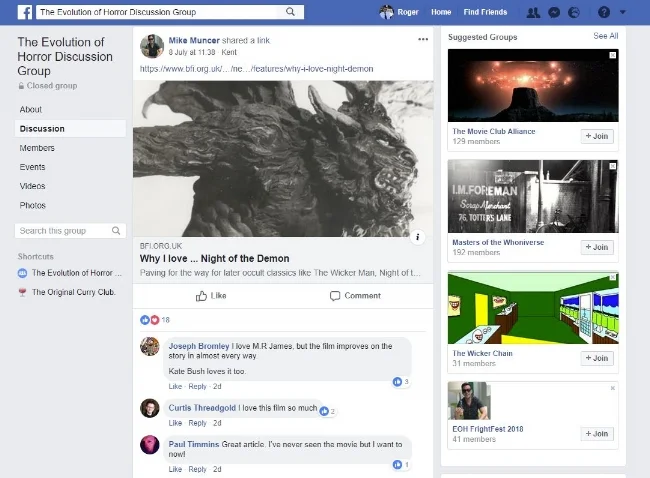
Spending time in the company of others who have similar interests and passions can be an invaluable shot in the arm and a great source of motivation. For example, I recently joined a Facebook group associated with The Evolution of Horror Podcast. It’s an absolute pleasure to be able to pick over the bones of a movie such as The Wicker Man and explore its finer points. You don’t have to adjust your level of conversation for fear of boring people, or dial back your enthusiasm due to concerns of being labelled a nerd or fanboy. Finding these online havens where you feel comfortable are invaluable, regardless of whether your passion is sport, knitting, Lepidoptery or Phrenology. Remember this point. I shall be returning to it shortly.

I read a post over at Tobold’s Blog recently that got me thinking about blogging, popularity, and the ebb and flow of our passions. The reason being is that Tobold, like many other long-term bloggers, has seen a decline in his audience over recent years. He certainly wasn’t carping about it, just simply observing the correlation between reducing your written output, the decline in popularity of his original subject matter and the number of visitors coming to his site. He also made a keen observation that blogging is not necessarily “where it’s at” with regard to cultivating an audience. If you are producing content specifically to grow and maintain a following, then You Tube and Twitch are better platforms for that. Especially if your content is part of the wider gaming scene. For better or for worse, I now associate gaming commentary with visual mediums rather than blogging. Yes, there is still long from criticism being produced but it’s aimed at a niche gaming audience. One that I would guess is older.
I usually write a post early on in the New Year in which I list the various goals I’m focusing on over the next twelve months. To date I have not done this because I am still trying to work out what I can and cannot accommodate within my current schedule. As a carer I’m kept very busy, but my weekly routine does offers windows of opportunity for writing. However, free time is a finite commodity, so I have to really cut my proverbial coat according to my cloth this year. Therefore, I’ve decided to pursue the following projects. I will continue to regularly post on Contains Moderate Peril as I enjoy having my own platform and certainly feel that I still have a lot to write about. Also, the audience is steadily growing, and I think it would be counter productive to fly in the face of such a development. I was also given the opportunity to write for MMOGames recently and have decided to accept this invitation. Writing to deadlines and deferring to editors, is an invaluable learning experience. Plus, it presents my writing to a wider audience which is great for brand awareness and other awful marketing terms.
There wasn’t a Newbie Blogger Initiative this year and I was saddened by that. I’ll make no bones about the fact that I liked this yearly event and the way for a few months after it, you’d see a lot of interesting new blogs spring up, filled with optimism and passion. But, what’s done is done, and life goes on. It’s up to others to pick up that particular torch and run with it, if they wish to see the event to return. I also miss a lot of my colleagues and peers’ blogs and the comradery that stemmed from the associated community. Again, this is a natural and inevitable attrition process, caused by that thing known as “life”. So, to combat my current melancholic malaise, I thought I’d collate a few of my thoughts about writing online and set them down in a semi-regular post, the same way as I do about podcasting.
My Mother moved into a care home on April 7th this year. Her health was already very poor due to her age (91). She was bed bound, partially sighted, suffering from increasing hearing loss and unable to feed herself. Rapid onset dementia meant that her behaviour had become erratic and she was a danger to herself. Hence her caring needs could no longer be safely managed within a home environment. Fortunately the care home proved a good choice. For the past four months they have provided outstanding care and have treated my Mother with dignity, respect and genuine kindness. Sadly, during that time my Mother had several bouts of illness that saw her hospitalised four times. Eventually a PEACE plan (Proactive Elderly Advanced Care) was set up allowing treatment to be managed by the care home and local GP. Since July my Mother has enjoyed a stable environment and continuity of care.