
Raph Koster and Stars Reach
Let’s talk about Raph Koster and his proposed MMORPG Stars Reach. I am aware of the man’s pedigree within the video game industry and what his legacy is perceived to be. I never played Ultima Online and never got beyond a demo of Star Wars Galaxies so my opinion of his work and gaming philosophy mainly comes from what he has written, rather than what I’ve learned through experiencing his games. And what he has made clear time and time again is that he doesn’t like the current cultural norms surrounding the MMORPG genre. He favours a philosophy of player agency and collectivism as a means to harmoniously manage virtual worlds. He has even asserted that encouraging players to take an active role in addressing the emerging communities needs in a virtual world, may encourage reciprocal action in the real world. If you want chapter and verse on his ideas and theories, do visit the Stars Reach YouTube channel and his personal website.
Let’s talk about Raph Koster and his proposed MMORPG Stars Reach. I am aware of the man’s pedigree within the video game industry and what his legacy is perceived to be. I never played Ultima Online and never got beyond a demo of Star Wars Galaxies so my opinion of his work and gaming philosophy mainly comes from what he has written, rather than what I’ve learned through experiencing his games. And what he has made clear time and time again is that he doesn’t like the current cultural norms surrounding the MMORPG genre. He favours a philosophy of player agency and collectivism as a means to harmoniously manage virtual worlds. He has even asserted that encouraging players to take an active role in addressing the emerging communities needs in a virtual world, may encourage reciprocal action in the real world. If you want chapter and verse on his ideas and theories, do visit the Stars Reach YouTube channel and his personal website.
I’m often more interested in the video games industry itself, than I am in the games they produce. This is very much the case, so far, with Stars Reach. As a concept and an attempt to break the existing MMORPG mould, it is a fascinating proposal. But from what I’ve seen so far, the graphics alone are sufficient to put me off. I like eye candy. I make no bones about that. Eyesight is a cornerstone of human experience and therefore I find it rather crass when people try to discount that. We are hardwired to make decisions based on visual data, so please don’t upbraid me for my disdain of “cartoony” graphics. If you’re attempting to make a genre defining title, then I expect it to be made using the Unreal 5 or the Frostbite engine. However, setting aside my personal tastes, I am fascinated by what Raph Koster is proposing. Partly because the ideas are indeed bold but also because I get the distinct vibe of a serious artist about to make a change of direction that may not work out the way they think. Like Bowie with Tin machine.
Raph Koster eschews the theme park elements of MMOs. He favours dynamic worlds that have finite resources and realistic ecosystems. Hence players will need to be mindful of how they use resources. To stop such virtual worlds being a race to the bottom, Mr Koster wants the playerbase to work collectively and cooperatively in his game. “Players form economic dependencies on each other’s characters by advancing in diverse specializations and skills, all of which draw from the common exhaustible resource pools available in each zone, thereby creating a Tragedy of the Commons problem to navigate as a group”. All of which are valid ideas in principle. I have no doubt that if you round up a dozen or so like minded players who agree on the philosophical precepts of the game and give them alpha access, it will yield potentially positive results. But Stars Reach is intended as a commercial product and therefore needs to appeal to fairly broad demographics. From those who want to farm guinea pigs, to those who want to shoot guinea pig farmers in the face and steal their flock.
To put it politely, I do feel that Mr Koster’s philosophical views do come across as a little naive. Players may well want greater agency in their MMO gaming but do they really want a simulator that has the potential to produce all the bureaucratic and hierarchical problems that are inherent in the real world. Democratic decisions tacitly require the notion of “the loser's consent” to be considered legitimate. That is something that is fast vanishing in the real world. Hence, I find it unlikely that such a quality will be more abundant in a video game community. The moment a committee of gamers in Stars Reach place a restriction upon a specific form of action that negatively impacts other players, there will be problems. If you please the guinea pig farmers, you’ll piss off the face shooters and vice versa. And unlike the real world, in-game hassles can be avoided by simply voting with your feet. I therefore see a possible future where everytime Stars Reach implements a major change, it is followed by a major online brouhaha and then a patch to rectify the problem.
Another point to consider is what sort of gamer will be attracted to Stars Reach. I suspect it may be of interest to people who look to MMOs as a refuge from the real world. Players that just want to spend time in a virtual environment where they insulate themselves from the iniquities of daily life and bask in the pleasure of an idealised environment. Some may be vulnerable and fragile. Which then makes Stars Reach a massive target for predatory gamers who take pleasure from causing upset to others. Suddenly the face shooters and guinea pig farmers become bullies and their victims. We’ve seen it happen before with unchecked PVP. Something else to ponder is that Mr Koster is proposing a game under pinned with a specific sociopolitical ideology. There is a culture war going on at present and if Stars Reach got any sort of traction, especially with the youth audience, it would certainly run the risk of being attacked from within by groups with opposing political opinions and goals.
Obviously this post is purely speculative, based on what information there is about the game at present. Games change during their development, as do people. It may be a case that as and when Stars Reach does get released, its aspirations may have changed substantially as many of the ideas were tried in earlier builds and failed. It may be the game is launched true to Mr Koster’s vision but due to its nature, simply becomes a niche product that exists adjacent to mainstream games. A video game version of a kibbutz. Or it could even turn into the biggest video game controversy and shit show since gamergate. Either way there is scope for this to be a fascinating journey. Assuming that Raph Koster has read the room correctly and that sufficient people desire what he is proposing. Alternatively, even if he is wrong, failed endeavours can still yield much that is useful. At the very least the journey that is commencing will more than likely inspire many a blog post among the gaming community.









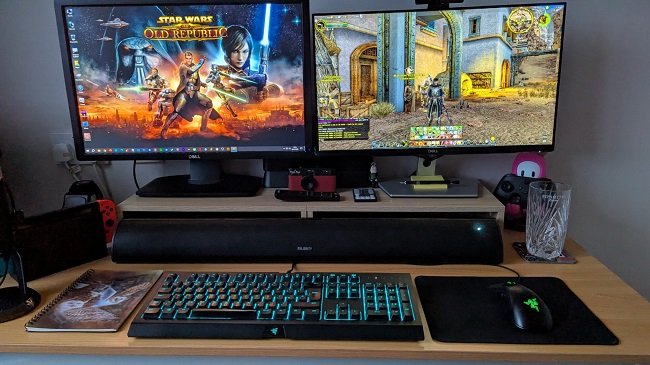
MMO Tropes: Loot
“The MMO genre is rife with its own set of tropes; recurring themes and motifs that have become established and ubiquitous. All of which are ideal material for a hastily produced, lazily conceived, recurring blog post”. One of the integral game mechanics of the MMORPG genre is the acquisition of loot. As you travel your virtual world of choice, committing random murder against all forms of flora and fauna, you acquire miscellaneous items by looting the corpses of the slain or stealing from houses and NPCs. Oh it’s a glamorous genre, the MMORPG. These random items can be crafting resources such as hides or ore. They may be food items or healing potions that provide some kind of statistical buff. If you’re fortunate, they may be gear that corresponds with your class or specific build, providing a much needed upgrade. Loot may also be the in-game currency, thus boosting your respective wealth. As you can see, loot comes in all shapes and sizes but how important is it?
Where is the phat loot?
“The MMO genre is rife with its own set of tropes; recurring themes and motifs that have become established and ubiquitous. All of which are ideal material for a hastily produced, lazily conceived, recurring blog post”. One of the integral game mechanics of the MMORPG genre is the acquisition of loot. As you travel your virtual world of choice, committing random murder against all forms of flora and fauna, you acquire miscellaneous items by looting the corpses of the slain or stealing from houses and NPCs. Oh it’s a glamorous genre, the MMORPG. These random items can be crafting resources such as hides or ore. They may be food items or healing potions that provide some kind of statistical buff. If you’re fortunate, they may be gear that corresponds with your class or specific build, providing a much needed upgrade. Loot may also be the in-game currency, thus boosting your respective wealth. As you can see, loot comes in all shapes and sizes but how important is it?
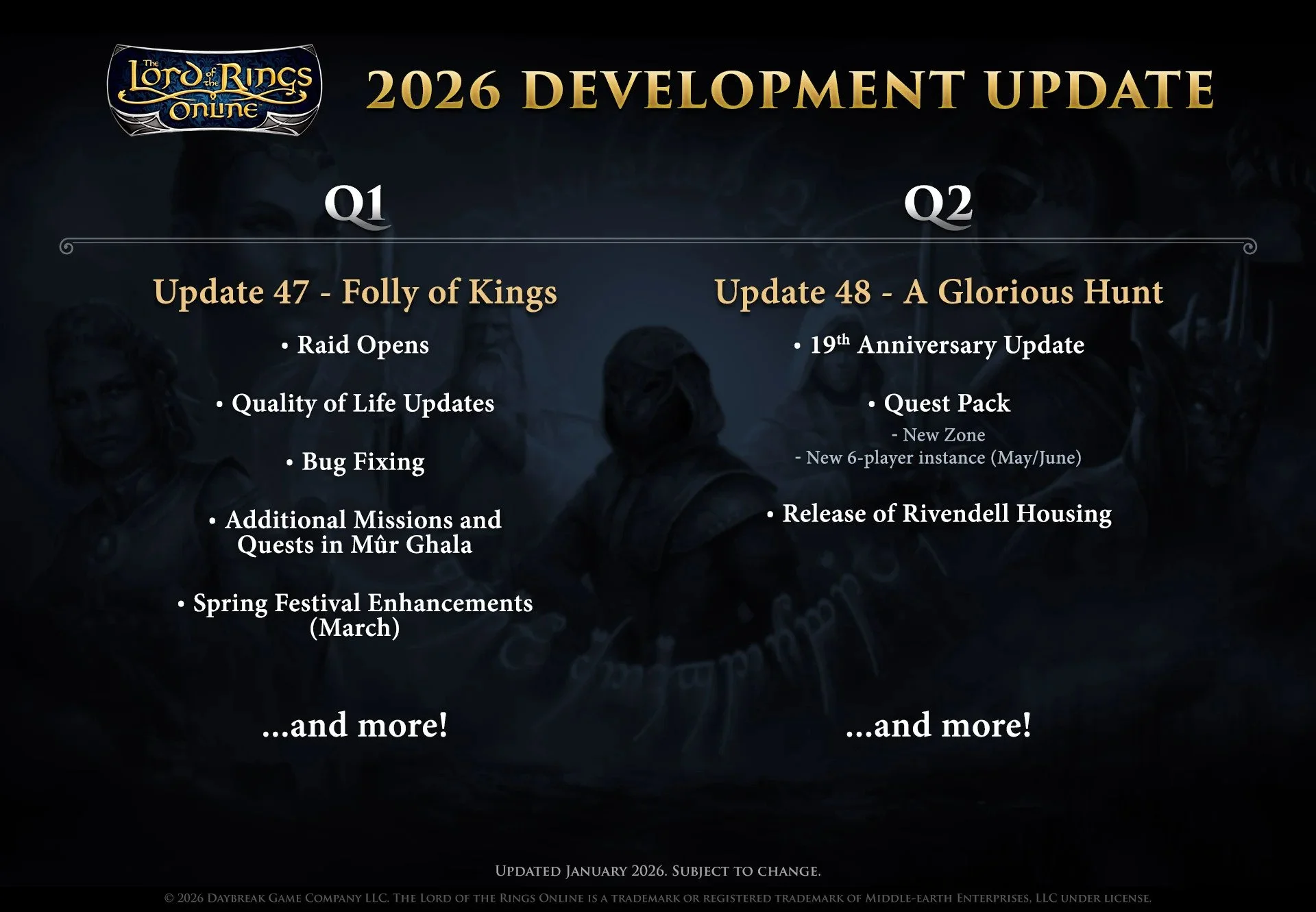
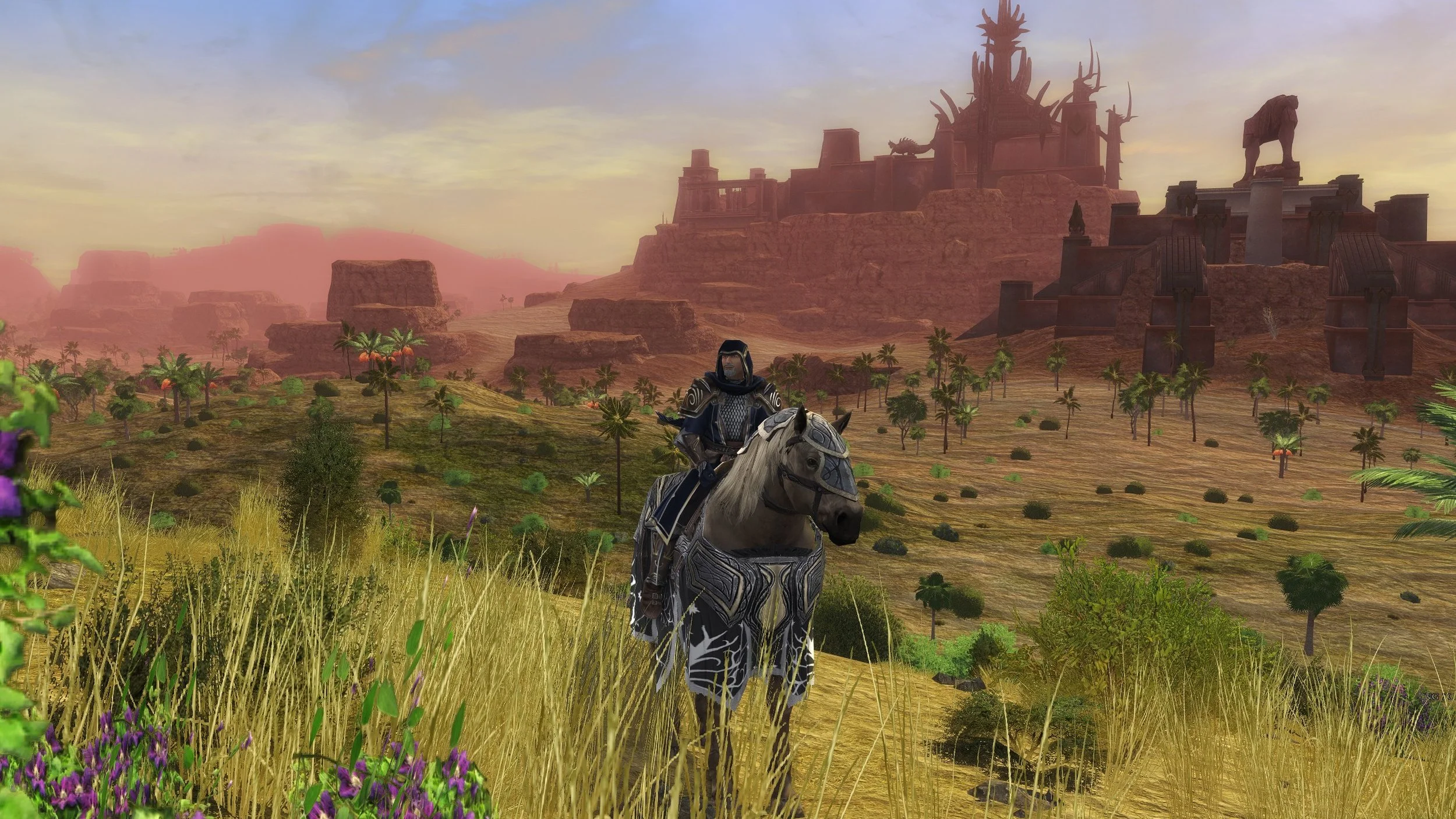
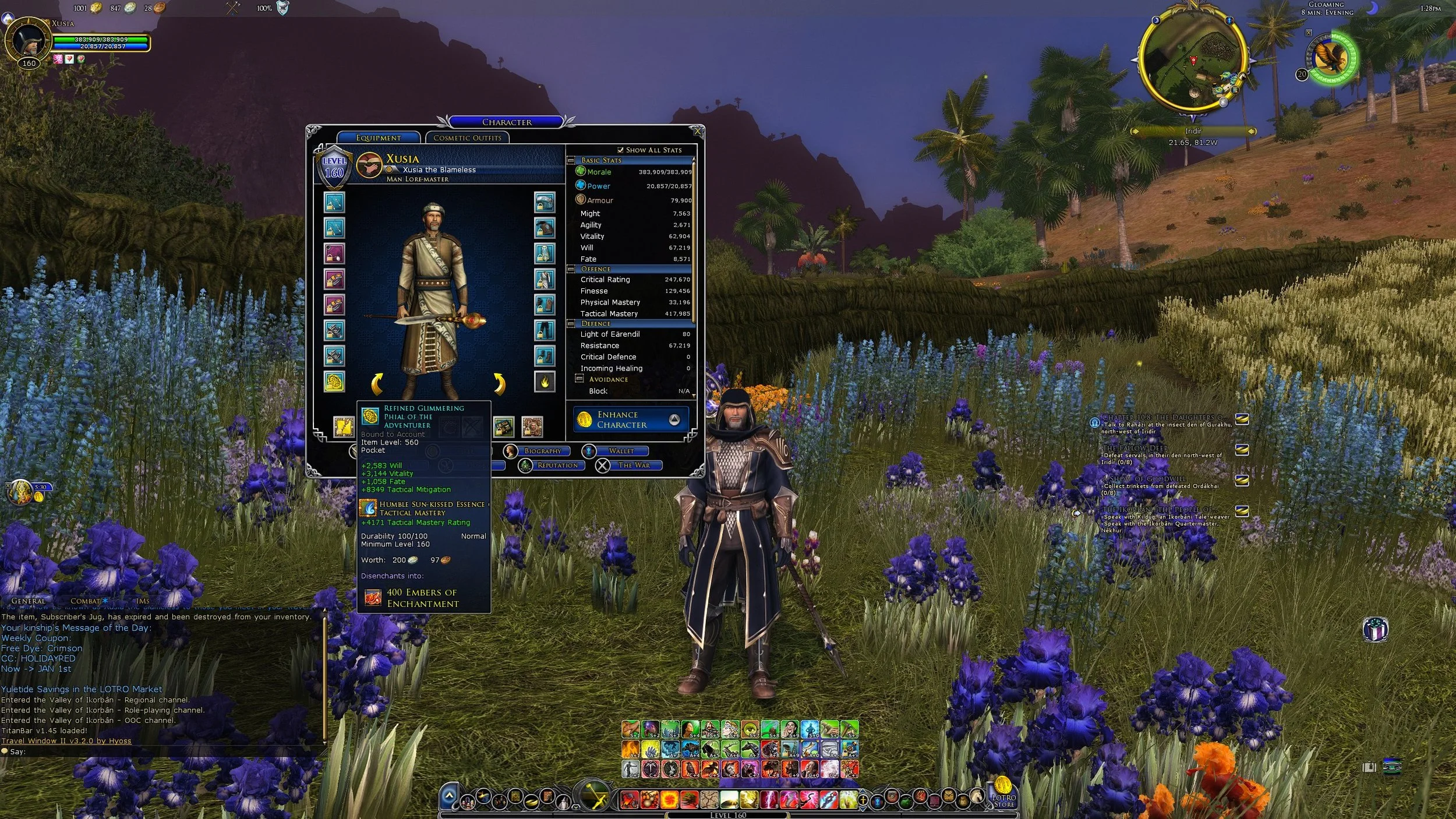
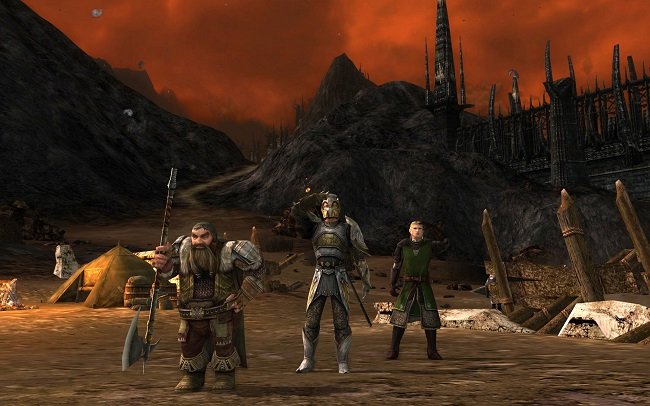
Loot has multiple purposes as a game mechanic. For many players of MMOs, looting is their primary means of earning in-game currency. Loot is farmed and then sold, providing “gold” that can be spent on other requirements. It is a cornerstone of MMO economies. Many of which are fair and equitable when a game is launched, only to go off the rails as players learn how to game the system. But that is another blog post. Returning to the matter of loot, its acquisition goes beyond the practical in some games, instead providing the actual raison d'etre for playing. Games such as the Diablo franchise are an exemplar of this concept and let us not forget that there is an entire genre of games that falls under the banner of “looter shooters”. There is something that appeals to many gamers on a very fundamental level, with regard to acquiring what is colloquially called “phat loot”. I can remember grinding for ages to get a 1st age weapon in The Lord of the Rings Online circa 2009. I was beside myself when I finally got one. I enjoyed it for a week until an expansion invalidated it with new and superior gear.
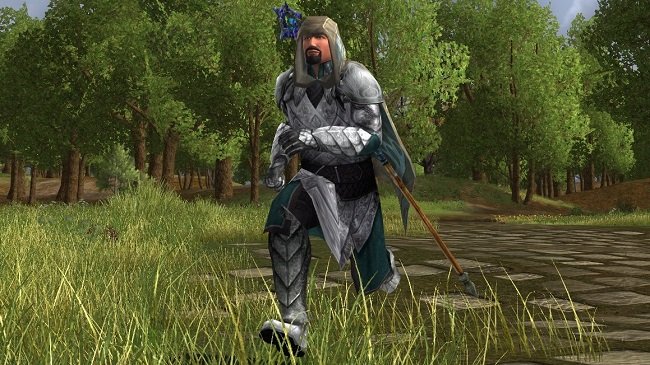
The Captain wasn’t happy with the quality of the loot
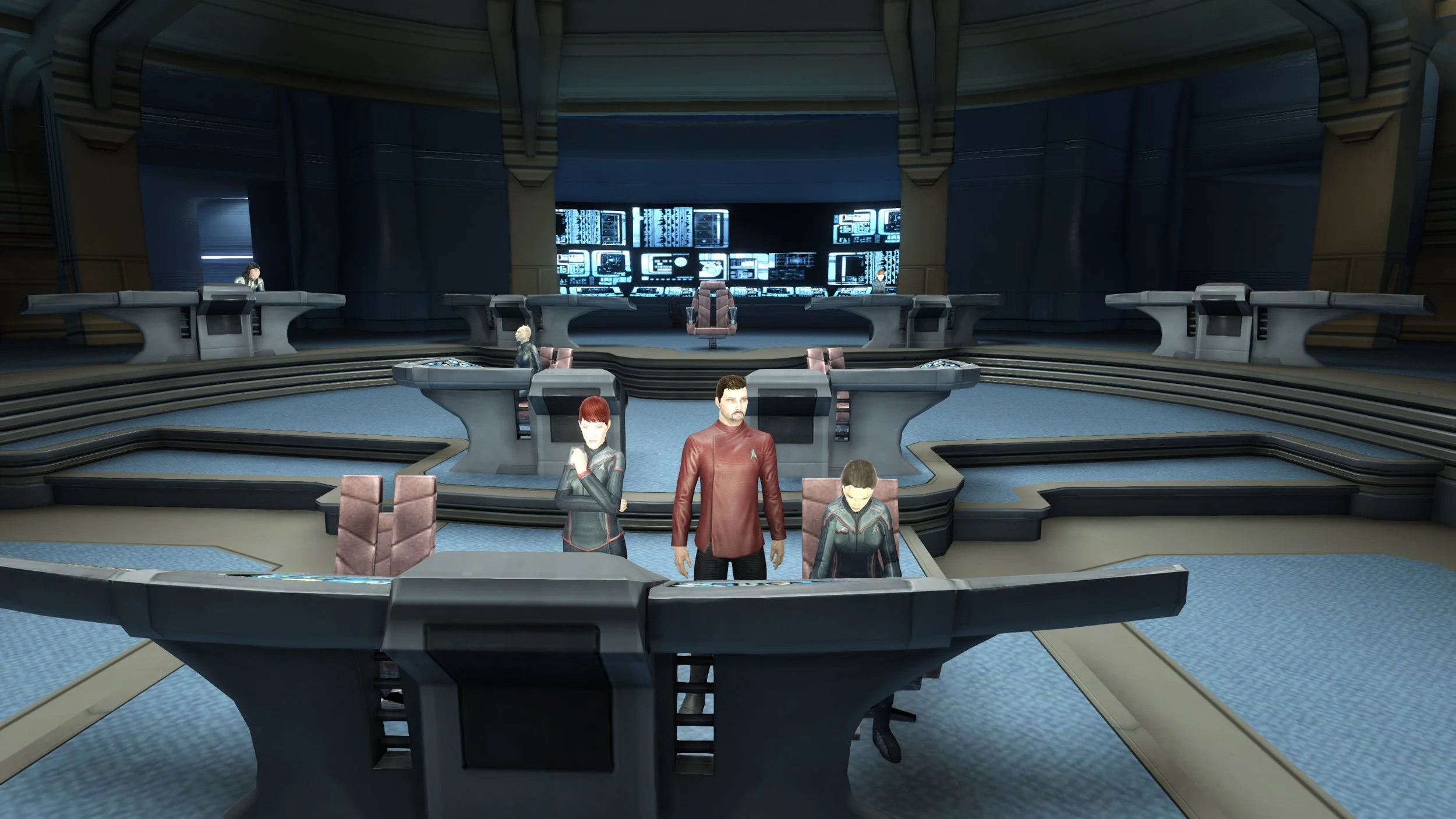
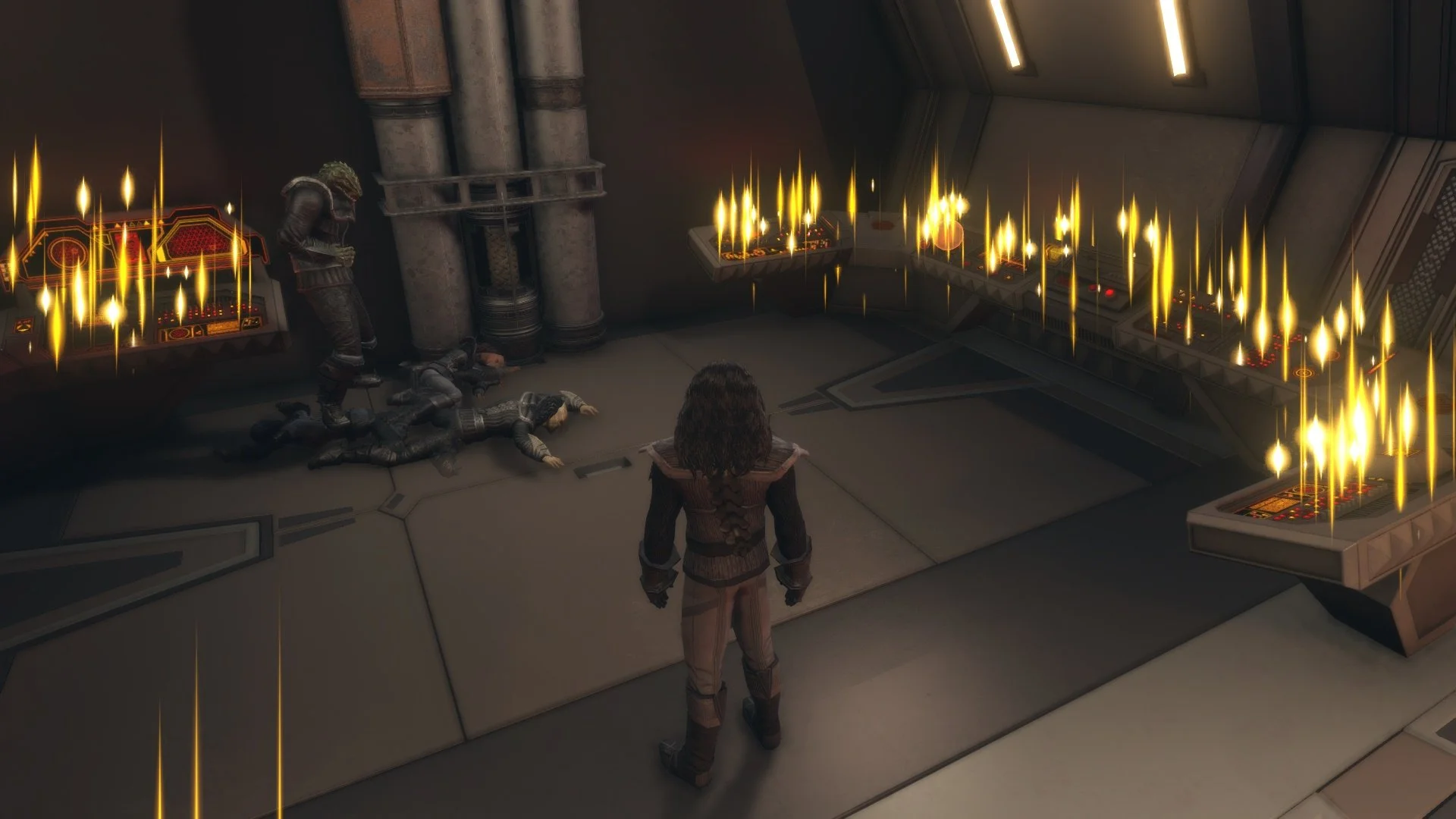
However, not all loot is equal. MMOs usually have various types of loot on an ever increasing scale of rarity and importance. Quality gear and useful item upgrades tend to be scarce, often tied to high level bosses or harder missions. Low value items are commonplace and are accurately labelled “vendor trash”. Many MMOs struggle to get the balance right when it comes to the quality and frequency of loot drops. Star Trek Online is a terrible offender when it comes to this. Specific missions have very good gear rewards but random loot acquired while fighting random mobs is usually of no value at all. It is often pointless low level items and selling them yields little financial reward. Conversely, in The Lord of the Rings Online, a level cap player can make a lot of gold, just by farming zones ten or so levels below them. Especially if they are pursuing deeds, such as killing 200 of a particular species.
MMOs also have another source of loot. Namely raids. These complex, time consuming group events have always been the favoured means for game developers of this genre, to gate the best quality gear. For many years MMO players would invest hours of their time, participating in raids in the hope of getting an opportunity to roll on a unique item. Yes, you read that right. Often there was only one item of high end gear in the loot. It may not have even been relevant to your class at all. If so you got nothing. If it was something you could use, then there was usually a random number generating facility in the chat window and you rolled a virtual dice. The person with the highest number got the item. Everyone else went home with nothing. Assuming the raid leader didn’t steal it for themselves, and then quit the game and the guild. As you can imagine this was the very definition of “fun”. If any old school gamer tries to convince you that MMOs were meritocracies back in the day, tell them to remove themselves to the nearest body of water.
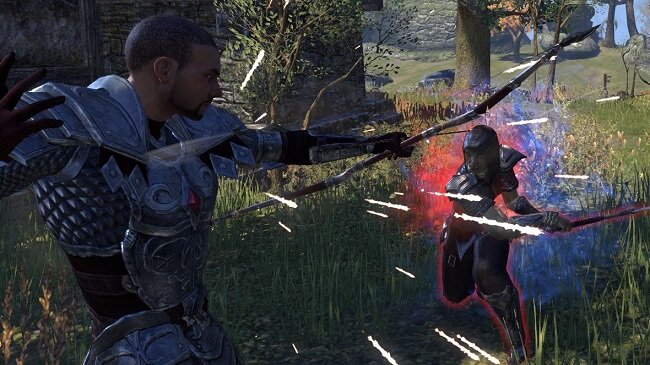
Cheech and Chong themed cosmetic skins and weapon blueprint
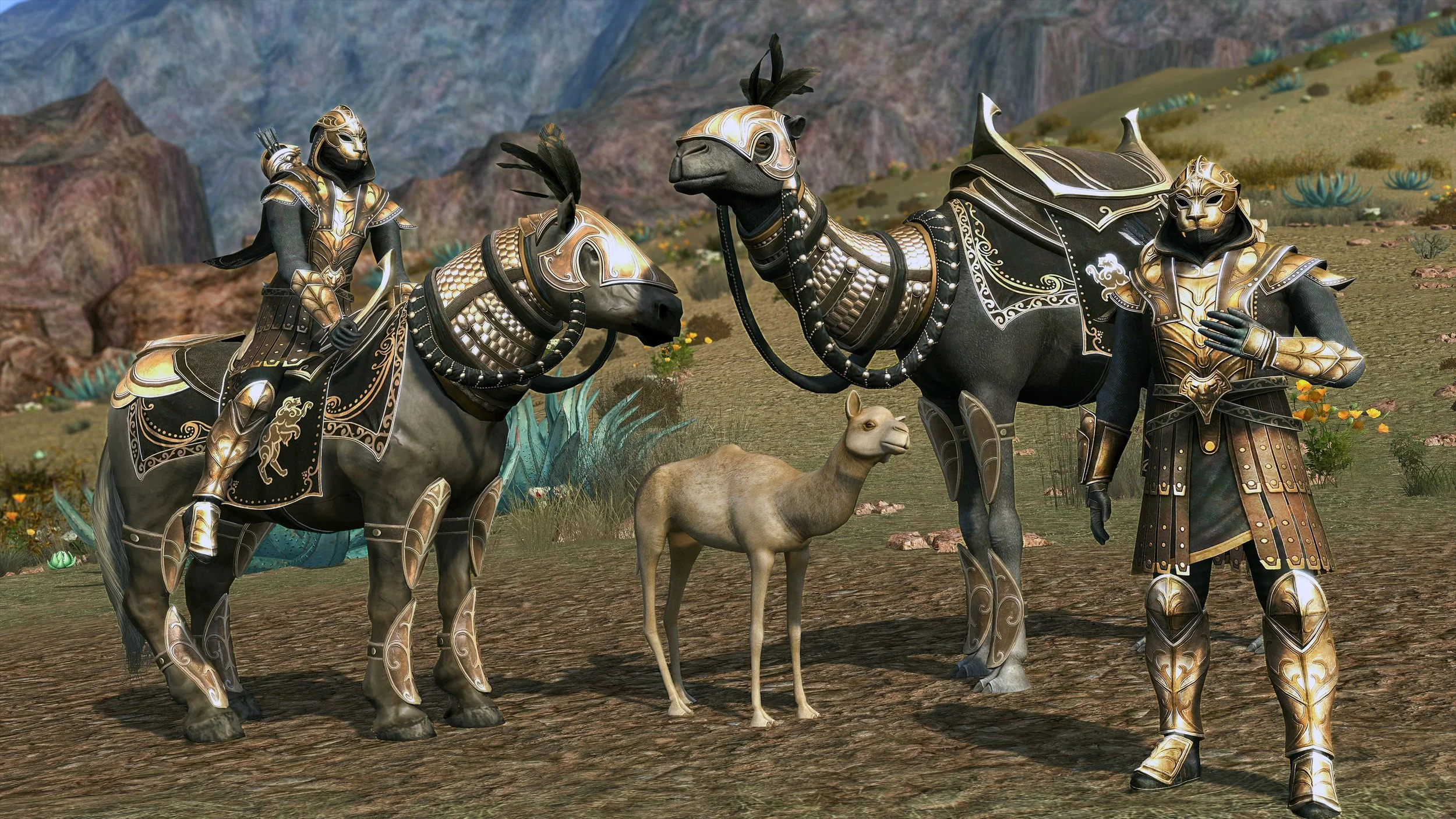
However, things change. Video games have become more popular and game developers have gotten wise to the fact that a lot of their paying customers are buying an experience and an entertainment service. They don’t care about punishing rules and failure conditions. Hence we now live in an era where quality loot can be bought. It is a phenomenon that isn’t to everyone’s liking but again we need to step back from our own preferences and see video games as the transactional business that they are. Call of Duty sells weapon blueprints that are often superior to those available in the base game. Star Trek Online has a multitude of ships available in-game but the most desirable are those from lock boxes. As for me, whenever The Lord of the Rings Online raises the level cap, thus invalidating your current gear, I just spend my monthly subscriber stipend on loot boxes and be done with it, rather than re-gear by grinding.
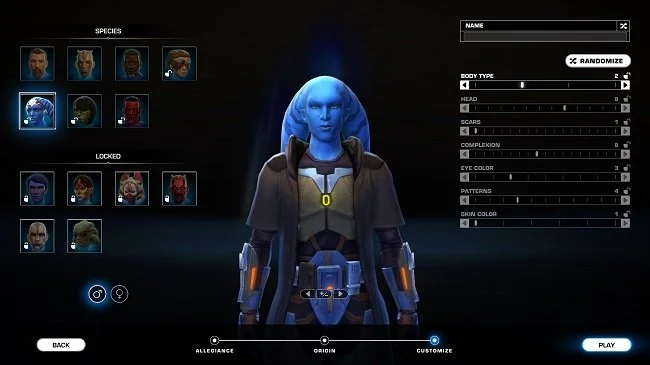
Most people like getting loot when playing MMOs. Or at least they like the concept. Not necessarily the way the mechanic is implemented. I have often thought that we get superior gear at the wrong time. You don’t need it when you hit level cap (unless you buy into the maxim that the real game only begins at level cap) but rather as you’re levelling. Personally, I like upgradeable loot and the ability to keep a much loved item, as seen in Star War: The Old Republic. However it is implemented, loot is a constant in the MMO genre and that is unlikely to change. I don’t think any specific game has a system that is 100% perfect. Perhaps that all seeing oracle and minor deity, Raph Koster, will bring forth a definitive loot related game mechanic in his up and coming game, Stars Reach. Until then we’ll just have to endure the systems that we have. Now please excuse me, I have to sell 3 hides, a kumquat and a rusty ear trumpet for 4 gold.

Blaugust and Me
I wrote a personal introduction for Blaugust last year which still serves its purpose, so I hope you’ll forgive me for not repeating such a post. I thought instead I’d talk a little about Blaugust and my relationship with blogging. I have always enjoyed writing, both creatively and analytically, since school. I was very fortunate to have had several very good English teachers that fostered in me a love of verbal expression and good books. It was therefore only logical that I kept journals and diaries in my younger days and when the internet came along, moved onto writing online. This August, I will have been blogging in some shape or form for 17 years. This blog, Contains Moderate Peril, has existed in several previous iterations. The current site, hosted via Squarespace, has been around for nine years. I believe it has over a thousand posts of varying quality. Then there’s the podcast that accompanied the blog for many years. That is currently on an extended hiatus but who knows, it may make a return one day.
Writing is tiring
I wrote a personal introduction for Blaugust last year which still serves its purpose, so I hope you’ll forgive me for not repeating such a post. I thought instead I’d talk a little about Blaugust and my relationship with blogging. I have always enjoyed writing, both creatively and analytically, since school. I was very fortunate to have had several very good English teachers that fostered in me a love of verbal expression and good books. It was therefore only logical that I kept journals and diaries in my younger days and when the internet came along, moved onto writing online. This August, I will have been blogging in some shape or form for 17 years. This blog, Contains Moderate Peril, has existed in several previous iterations. The current site, hosted via Squarespace, has been around for nine years. I believe it has over a thousand posts of varying quality. Then there’s the podcast that accompanied the blog for many years. That is currently on an extended hiatus but who knows, it may make a return one day.
As you can see, I like writing and enjoy having a specific site for my thoughts and ideas. For me that is one of the main attractions of blogging. It is a means to process one’s thoughts about the world we live in. It is also a means of sharing ideas and mutual pleasures with other like minded people. I have met many people through blogging and remain on agreeable terms with many of them, years on. In fact I would go so far as to say that when Contains Moderate Peril gained some traction circa 2014 and the podcast had a modest audience, these were among the best times I’ve had. However, that was due to a perfect storm of events which were unique to that period. Things have moved on now, as they always do. Blogging is still an excellent pastime but I feel that for me, that period of time between 2010 and 2015 was a golden era.
If you need to take a break then do so
However, blogging regularly takes time and commitment. It often has to compete with other real world issues. Hence we can find ourselves suffering from fatigue and burnout. Or it may be a case of after a while, we just want to do something else. On two occasions I have taken an extended break from blogging. I took three months off in early 2016 and recently stepped away for nine months. Although I didn’t have the stamina at the time to sustain a regular writing regime, the moment I stopped I immediately started to miss it. Which brings me back to Blaugust. Its timely arrival presents me with a perfect opportunity to get back into writing. I shall see if I can produce a daily post for the entire month. I already have about a dozen draft posts waiting in the wings. Furthermore we seem to have gained a particularly enthusiastic and communicative group of new participants this year which is a real boon.
I am fortunate to be in a position where I can focus quite a lot of energy and more importantly time, into Blaugust. I have effectively retired (early) and am currently spared the treadmill of full time employment. I have a spare bedroom that I use as an office and it provides a suitable writing environment. Beyond the festival of blogging, I would like to develop some long standing writing goals that I’ve had outstanding for several years. I have a non-fiction book that has been mapped out and prepped, that I would like to move forward with. I just need to bite the bullet and start putting the meat on the bones. I would also like to see if it is possible to grow the audience of Contains Moderate Peril, back to the levels it enjoyed a decade ago. That however is a more complex proposition, as the blog had the promotional advantage of an accompanying podcast. However, let’s not get ahead of ourselves. Let’s concentrate on the next 30 days of Blaugust first.



























Preparing for Blaugust 2024
Because I have taken a nine month break from maintaining this blog, I thought it would be a good idea to give Contain Moderate Peril a makeover prior to Blaugust: Festival of Blogging commencing on 1st August. Initially I intended to outsource the work but the cost was prohibitive. So I made some changes to the existing blog template myself and had a new logo created via a designer from Fiverr. The changes are sufficient to quash my subconscious concerns and I am now in a position where I won’t obsess (too much) with the look and feel of the site. There is still some work to be done. I have to repost all previous instalments of “Walter Watches”” and ensure that the existing domain for that site points to its new home here. I also have to tweak the blog archive page, so that older content can be found easily. There are over a thousand posts published but it is immediately apparent.
Because I have taken a nine month break from maintaining this blog, I thought it would be a good idea to give Contain Moderate Peril a makeover prior to Blaugust: Festival of Blogging commencing on 1st August. Initially I intended to outsource the work but the cost was prohibitive. So I made some changes to the existing blog template myself and had a new logo created via a designer from Fiverr. The changes are sufficient to quash my subconscious concerns and I am now in a position where I won’t obsess (too much) with the look and feel of the site. There is still some work to be done. I have to repost all previous instalments of “Walter Watches”” and ensure that the existing domain for that site points to its new home here. I also have to tweak the blog archive page, so that older content can be found easily. There are over a thousand posts published but it is immediately apparent.
Although I often write “from the hip”, I also keep a lot of draft posts. Whenever I get an idea that I think may make a suitable blog post I make a note of it and then when I’m sitting at my desk, I create a new document via Google Drive. Some of the draft posts get developed and published quite quickly but others sit in development hell and never see the light of day. Today, I trawled through the drafts folder and expunged those proto-posts that I feel have missed the boat, are unsuitable or no longer interest me. I also added some new draft ideas that came from talking to other bloggers on the Blaugust Discord server. There’s also a lot of mileage in responding to someone else's blog post. It’s a great way of sharing ideas and highlighting other writers' blogs. It is also handy if you’re having one of those days where you’re running low on your own ideas.
Another preparation I made in getting ready for Blaugust was adding all the new participants of this year’s festival to Feedly. I currently have 177 blogs listed in this RSS aggregator but not all are maintained. Some have definitely gone to the wall, so at some point I need to prune them. However, that notwithstanding, it is pleasant and reassuring to see such a substantive quantity of blogs still active. I’m sure there will be more to add over the course of the forthcoming month, as Blaugust always attracts numerous late arrivals. I always try to trawl through Feedly each morning and see what’s new. During Blaugust I also endeavour to leave a comment on all participant blogs as a sign of solidarity and encouragement. I find that comments on my own posts are always a shot in the arm, as it means that at least a handful of people are reading my output. It’s nice to know that I’m not just shouting into the void.
Finally, in the lead up to Blaugust, the community Discord server has gotten busier. I appreciate that not everybody likes this medium but I find it most useful and agreeable. It is nice to meet new and returning bloggers, offer support and encouragement and just swap stories about our respective experiences when it comes to writing. Furthermore, we have a very diverse community who write about a multitude of different subjects. Hence group discussions can provide a wide variety of perspectives. I also find that the Discord server really does create a sense of community. For me that is what is at the heart of Blaugust. Encouraging writing by creating an online community. Hence I am looking forward to tomorrow’s start of this year’s festival of blogging. I hope all who are taking part enjoy the experience as well.
Starting a Blog
I’m sure if I search through the various posts on blogging that I’ve written over the years, I’ll find one pretty much identical to this. But good advice bears repeating. Plus, as the years go by, there are more options available to new bloggers. So here’s some simple, straightforward and candid advice for those who are considering starting a blog. Some of it is universal and you’ll find similar tips on most sites about blogging. Others derive from my personal experiences of writing online over the last 17 years and being part of a community of bloggers. I do not claim to be an expert but I also do not see myself as a “noob”. My advice is exactly that. Advice. It’s purely optional and at the end of the day “you do you”.
I’m sure if I search through the various posts on blogging that I’ve written over the years, I’ll find one pretty much identical to this. But good advice bears repeating. Plus, as the years go by, there are more options available to new bloggers. So here’s some simple, straightforward and candid advice for those who are considering starting a blog. Some of it is universal and you’ll find similar tips on most sites about blogging. Others derive from my personal experiences of writing online over the last 17 years and being part of a community of bloggers. I do not claim to be an expert but I also do not see myself as a “noob”. My advice is exactly that. Advice. It’s purely optional and at the end of the day “you do you”.
First off, before you type a word or consider setting up a blog. Consider the following. A blog that is public can be read by others. It probably won’t get a lot of traffic to begin with but it is in the public domain. Also, nothing on the internet truly goes away. Deleted blogs persist. What I’m driving at is the very act of blogging requires you to put yourself out there. You are sharing of yourself and by dint of the fact that your blog is available to read, you are tacitly inviting people to interact with you, consider you and even judge you. If you are not comfortable with that, then don’t do it. I am not saying that the moment you publish your first post, you’ll receive a tsunami of abuse, co’s you won’t but you’re dealing with people on the internet, so there is scope for things to go south. So choose wisely as the Grail Knight said.
Decide in advance of blogging what you would like to write about, what your goals are and whether you are going to wing it or work to a schedule. These points are connected to a degree, so it helps to have a clear idea before you start. If you’re just writing for your own pleasure and to share your experiences, then a fancy name, specific niche and timetable are not required. If you have your heart set on being the definitive source online about Etruscan pottery, then you need to choose a title that is relevant and then write prodigiously about that subject to build up your audience. For many of us, we are writing mainly for enjoyment, so there aren’t too many big decisions to be made beforehand. But it doesn’t do any harm to consider your options before you begin.
Pick a means of blogging that suits your needs. I would suggest that you choose a free platform or one at least with a free tier of service to begin with. Don’t spend a penny on blogging until you know that it is for you. You can always upgrade and add fancy features at a later date. If you’re the sort of person who gets side tracked or obsessive over design issues, try a blogging service such as Bear or Blot. Both offer simple, plain and unadorned blogging so you can just write, publish and shake it all out. Too many bloggers (and I include myself in this category) will draft plans, fret over logos and templates, plan schedules and generally channel all their energy into the backend of their blog, only to find they have nothing left in the tank when it comes to writing.
Be honest with yourself about what you want from blogging. Many bloggers are not bothered about statistics and traffic. If you’re not then your blogging will be a lot happier. However, there is nothing wrong with wanting to grow an audience and obviously, if you have aspirations of monetisation then numbers and the size of your readership matter. It is a question of tempering your dreams and being realistic about expectations. Growth requires promotion and marketing, although regularly posting new material also helps with regard to Google ranking. SEO also has an impact, like it or not. For the people who are somewhere in between these two positions, it is nice sometimes just to know that your posts are being read by someone and positively received. But even that requires a degree of self promotion and the most obvious means is social media. Blogging communities such as the Blaugust Discord server are also very beneficial. Don’t forget to network.
Modern life is complex with multiple demands on our time. Work, family and real life take priority for obvious reasons. Therefore, you need to figure out when and where you can write. You also need to find a suitable writing environment, if possible. You know the kind. Free from distraction. Once you’ve sorted out a specific time and place to write, then you write. Sounds crass to even say that, doesn’t it? But it is the key to blogging, spookily enough. I’ve said it before and I’ll say it again, writer’s block as it is generally perceived, is not really a thing.
Yes, I said it. Writer’s block isn’t a case of “I can’t write at the moment”. It’s just a case of “I don’t want to write at the moment”. Now before everyone gets shitty with me about this point, I am not referring to the days when some folk find themselves without the spoons to write. That is different. That is a wider mental health issue and not specific to writing. On such spoonless days, not only will you not write, you won’t go shopping or do the laundry. I’m talking about the days when you sit down to write and your heart is just not in it. So you give yourself a free pass claiming writer’s block and go do something else. Come on, that’s bullshit. Do you think plumbers get plumbers block? No, they get on with the job whether they want to or not. Blogging requires a degree of self discipline. I’m not saying it has to be a chore but you do have to apply yourself sometimes. Or else you just won’t produce anything and blogs need content, do they not?
So to review all the above points, if you have decided to write, then figure out what you want to write about and then where. Once you’ve got these things sorted, then just get on with it. I don’t think it has to be any more complex than that and if it is, then I politely suggest that it is you and not blogging per se, that is making it so. Once you’ve got your head in the right place so you can write, then doing so becomes a lot easier. Some days it will feel hard and you may not be exactly happy with your results. Yet these days count and if you can power through them you’ll be a better writer for doing so. And then there’s the days when it’s just like turning on a tap and the words and creativity just spill out of you. Those days are the most satisfying. So, with all this in mind, go start a blog. Or if you have one already and it’s been put on the back burner, then go write something now. Happy blogging.
Thinking Out Loud
Simply put, I got fed up with my ongoing diet last week, so I came off the wagon. There were a few glasses of wine too many and a couple of meals that were larger than the new prescribed portion size. As a result, my weight has remained the same as last week’s. On mature reflection, I am glad it didn’t gain weight as that would be very counterproductive. Weight loss and trying to change your diet are difficult tasks and somewhat joyless. Mainly because you are denying yourself pleasure. However, I don’t like what I see when I look in the mirror, so if I wish to regain my former status as a minor deity and sexual Tyrannosaurus (in my mind), then I need to get back on track.
This is yet another post where I write a series of random thoughts, gathered under the title “Thinking Out Loud”. The fourth, if we’re counting, which we’re not. I tend to do this on Mondays but that’s not legally binding.
The Diet (Again)
Simply put, I got fed up with my ongoing diet last week, so I came off the wagon. There were a few glasses of wine too many and a couple of meals that were larger than the new prescribed portion size. As a result, my weight has remained the same as last week’s. On mature reflection, I am glad it didn’t gain weight as that would be very counterproductive. Weight loss and trying to change your diet are difficult tasks and somewhat joyless. Mainly because you are denying yourself pleasure. However, I don’t like what I see when I look in the mirror, so if I wish to regain my former status as a minor deity and sexual Tyrannosaurus (in my mind), then I need to get back on track.
Digital Terrestrial Television
I seldom watch live television these days, although it is something I did all the time as a child. However, there was no other option at the time until the advent of the VCR. Nowadays I use on demand, streaming services most of the time. Especially those paid services without any advertising and on screen graphics. However, because I am a “belt and braces” sort of person, I recently bought a USB digital terrestrial TV tuner for my PC, in case the internet ever goes down. We still have a roof antenna (although it is in the loft) and there’s an outlet in the spare room that I use as an office. Hence, it was no effort to run a cable from the socket, to the USB device and then to my PC.
I don’t know how bad digital terrestrial TV is in your country but it is pretty poor here in the UK. I’m not talking about the prestige channels such as BBC or Channel 4. I mean the cheap, filler stations that fill the extremities of the TV guide. Most of these channels are in standard definition, with poor digital compression and colour grading. There are far too many adverts, so you sometimes only get 9 minutes of actual content before the next commercial break. As for the actual programs, they tend to be low grade reality shows such as “cooking with ghosts”, or cheap cosy crime dramas about a barista who solves murders by night. If these channels broadcast old classic shows, they’re often edited for content so they can be shown at any time of day. Such is the reality of so-called “free” content. If you’re not paying, this is what you get.
Cleaning the Wheelie Bins
Upon adulthood, regardless of whether you cohabitate or live alone, you quickly discover that there are chores that need to be done. Clothes don’t miraculously wash themselves. You have to go grocery shopping to some degree. If you don’t clean your home, it will become verminous. Hence, we usually get into a routine of dealing with these tasks. How effective this is comes down to you as a person. However, not all chores are immediately apparent or even expected. We have 4 wheelie bins provided by the local council, to handle our rubbish and recycling requirements. Due to the hot weather we’ve had of late, these have all needed cleaning because they contained more maggots than a Lucio Fulci movie. Needless to say this chore fell to me.
Armed with a garden hose, an old mop and a couple litres of disinfectant, I set about keeping this sinister plague at bay. It certainly wasn’t a glamorous job. Nor was it something I ever envisaged doing when younger. Along with unblocking toilets, cleaning up fox shit, removing all spiders from the house, clearing leaves from the guttering and expressing the cat’s anal glands when they’re blocked. No wonder kids don’t want to grow up these days. Due to the internet, they know that adulthood isn’t half as good as it’s cracked up to be.
The Ubiquity of AI
I built a new PC in January which meant a fresh install of Windows 10. My policy regarding this operating system is comparable to one I have regarding my own body. Namely, I don’t install anything that isn’t necessary (I’m not sure if that analogy quite works). Hence I tend to check the various updates that Microsoft regularly shunts out, to ensure that I’m only installing essential patches, rather than superfluous new features. Sadly, this is not a process you can 100% control. Which explains how I found Microsoft Copilot installed on my PC, after an alleged minor update,
Now I am not at present pathologically against AI. Artificial intelligence is a tool and like any tool, it is the manner in which it is used which foremost dictates how it is perceived. Currently, AI seems to be running rampant like a schoolyard craze among kids. The world and his wife is trying to crowbar such services into their business model. All too often the results are not good and are subsequently withdrawn. Take courier company DPD for example and its customer service chatbot. AI is also saturating other markets. Take the freelance marketplace Fiverr. A lot of the design work on offer is now AI generated and frankly shit. YouTube is awash with AI generated content which is generic, simplistic and utterly bland. As for AI voiceovers, they are excruciatingly stilted.
I make it my business now to opt out of any potential AI scraping of material that I produce. Today, I went into my Twitter/X settings to ensure that the Grok AI couldn’t parse my tweets for training purposes. I have done the same with my Squarespace website. Again, I want to keep a level head about AI but suspect that senior management in a lot of major businesses see it as a means of bypassing services that previously they’d have to pay for. It’s not so much AI per se that’s the problem but AI in the hands of unreconstructed capitalism.











The Colbert Questionert
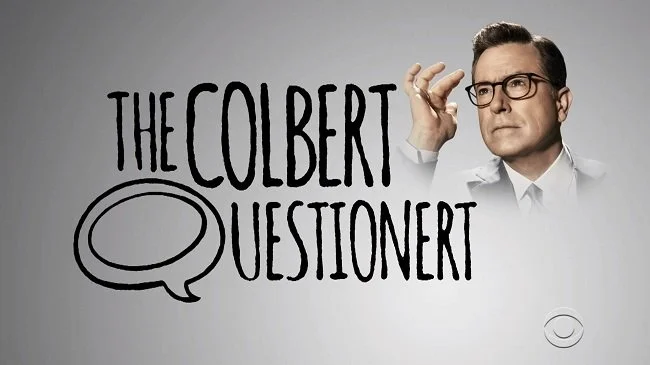
Using his prodigious experience as a chat show host, Stephen Colbert (of the eponymous The Late Show with Stephen Colbert fame) has crafted 15 hard-hitting, probing and perceptive questions, as a means to dissect and analyse his celebrity guests. These include such insightful inquiries as “What is the scariest animal?”, “What do you think happens when we die?” and “Apples or oranges?”. So far these questions have been successfully used by Mr Colbert to interrogate the likes of Keanu Reeves, Jeff Goldblum and Sandra Bullock. Hilarity naturally ensued, or at least by the standard of US network television. I’m not really a fan of the “celebrity talk show” because it doesn’t really exist as such anymore. What we now have instead is the “celebrity with something to sell show” but that gripe is best addressed in a separate blog post.
Using his prodigious experience as a chat show host, Stephen Colbert (of the eponymous The Late Show with Stephen Colbert fame) has crafted 15 hard-hitting, probing and perceptive questions, as a means to dissect and analyse his celebrity guests. These include such insightful inquiries as “What is the scariest animal?”, “What do you think happens when we die?” and “Apples or oranges?”. So far these questions have been successfully used by Mr Colbert to interrogate the likes of Keanu Reeves, Jeff Goldblum and Sandra Bullock. Hilarity naturally ensued, or at least by the standard of US network television. I’m not really a fan of the “celebrity talk show” because it doesn’t really exist as such anymore. What we now have instead is the “celebrity with something to sell show” but that gripe is best addressed in a separate blog post.
However, I’ll cut Stephen Colbert some slack as he is very good at what he does as well as being a major Tolkien fan, thus we have some common ground (the Tolkien bit at least). Furthermore, as I’ve stated time and time again, I do like a vacuous, trite and puerile questionnaire. Mainly because there is always scope to subvert the answers. I can be as serious or as frivolous as I see fit. Hence, despite not being a Hollywood celebrity, I shall now answer “The Colbert Questionert” as it has become known. You can find the source questions here. My answers are purely my own opinion etc. and all that other small print jive. On with the questions.
Q. Best sandwich?
A. One you haven’t made or paid for yourself. The best sandwiches also need to be served at room temperature. Those that have been left in the fridge too long tend to have a somewhat soggy texture and it can kill the subtle flavours of your filling. I used to go to an artisan sandwich shop, round the corner from Saint Paul’s Cathedral. They had a choice of a dozen different types of bread. Happy days. Oh and being a Brit, we butter the bread in our sandwiches. Not a common practice in the States, I’m led to believe.
Q. What's one thing you own that you really should throw out?
A. I’m somewhat at a loss as to how to answer this question because I am not a hoarder to begin with. Once a possession is no longer required or broken I will happily dispense with it. Or is this question more metaphorical? Should I be rejecting my existential angst or irrational fear of people called Colin?
Q. What is the scariest animal?
A. I don’t dig Wolf spiders and I’m not especially keen on Humboldt squids. But I guess the scariest animal is Homo sapiens. Nasty buggers that will steal your eye and comeback for the socket. Consider their track record. The Spanish Inquisition, Idi Amin, and the Air Bud franchise.
Q. Apples or oranges?
A. Apples are less messy to eat and can be thrown at Bill Ferny. I do like blood oranges though.
Q. Have you ever asked someone for their autograph?
A. Only on blank cheques.
Q. What do you think happens when we die?
A. Wikipedia has a very good description of the physical processes that occur and culminate in our current definition of death. What more can I add? I have no religious beliefs and therefore have no spiritual or metaphysical insights to offer. As I see it, once your brain dies, everything you were ceases to exist. The most philosophical thought I can offer is that you may be remembered fondly by loved ones, or those you interacted with in a positive fashion.
Q. Favourite action movie?
A. Aliens, Zulu, Seven Samurai, Enter the Dragon, Die Hard, The Spy Who Loved Me, The Wrong Trousers. I could name hundreds more.
Q. Favourite smell?
A. I caught COVID-19 in April 2020 and it has left me with a greatly reduced sense of smell. This impediment has both advantages and disadvantages. I cannot smell many unpleasant odours, however this can be a problem, for example if something is burning. I still enjoy the smell of bacon cooking.
Q. Least favourite smell?
A. Vomit and other types of faecal matter. Decaying flesh is unpleasant. Sour milk is grim as well. My father dropped a bottle of mint extract in the kitchen while cooking, when I was a child. The stench lingered for weeks. I therefore despise any permutation of this odour.
Q. Exercise: worth it?
A. Exercise is worth it for the health benefits but broadly speaking, I find exercise regimes tiresome. I like to walk and hike for pleasure and this is always far more enjoyable when you have good company. But although I recognise that exercise is a good thing, I find the associated culture surrounding it dull and somewhat self congratulatory.
Q. Flat or sparkling?
A. Both. There is a time and a place for both flat and sparkling drinks, be they water, wine or other beverages.
Q. Most used app on your phone?
A. WhatsApp and Instagram, as both are a means to keep up with what the family are up to. I guess my banking apps would be next.
Q. You get one song to listen to for the rest of your life: what is it?
A. This is a very silly question because if you think about the prospect of only being able to only listen to one song for the rest of your life, it would eventually become a form of torture. Plus any choice I make now, may well change in a week or a month's time.
Q. What number am I thinking of
A. 42
Q. Describe the rest of your life in 5 words?
A. Slowly heading towards inevitable oblivion.














Whitstable Museum and Gallery
Today I had the pleasure of visiting the Whitstable Museum (or to give its full name Whitstable Community Museum and Gallery). This is a fine example of a local heritage centre that curates and displays artefacts and records that reflect the history and culture of the surrounding area. The museum located in Whitstable, Kent, is home to one of the world's oldest steam engines, as well as historical diving equipment that was developed locally. The history of the local oyster trade which has been an integral part of the community for centuries is also a key feature. Established in 1985, the museum was reopened in 2015 following a major refurbishment. There is also an art gallery featuring the paintings by local artists and artworks on loan from an international network of galleries.
Today I had the pleasure of visiting the Whitstable Museum (or to give its full name Whitstable Community Museum and Gallery). This is a fine example of a local heritage centre that curates and displays artefacts and records that reflect the history and culture of the surrounding area. The museum located in Whitstable, Kent, is home to one of the world's oldest steam engines, as well as historical diving equipment that was developed locally. The history of the local oyster trade which has been an integral part of the community for centuries is also a key feature. Established in 1985, the museum was reopened in 2015 following a major refurbishment. There is also an art gallery featuring the paintings by local artists and artworks on loan from an international network of galleries.
One of the things that impressed me about my visit, is the efficient use of space within the museum. There are collections about the natural world, the local oyster trade, early deep sea diving and marine salvage. There are further displays about shipwrecks and maritime archaeology. The museum is home to the unique 1830 steam locomotive Invicta, which operated on the Canterbury and Whitstable Railway. Alongside it is Whitstable's first horse-drawn fire pump, which required twenty-six volunteers to operate. The diving display includes standard diving dress incorporating the Siebe Gorman helmet. There are also relics from the East Indiaman Hindostan, which was wrecked at Margate in January 1803. There are also plenty of hands-on activities for children. They can hunt for shark’s teeth, dress up as a Victorian and complete a museum trail.
At present, the Whitstable Museum has a special exhibition celebrating the actor Peter Cushing. He lived locally with his wife Helen for 35 years until his death in 1994. Peter Cushing's six-decade career included appearances in Star Wars, more than 20 Hammer Horror films and two Doctor Who feature films. Among the previously unseen memorabilia are the carpet slippers that Cushing wore when playing character Grand Moff Tarkin (the boots supplied by the wardrobe department pinched his feet). There is also his bicycle which he used to ride around the town (inspiring the infamous song by The Jellybottys), a full-size Dalek and a life-size cast of his face used for prosthetic special effects for his part in Top Secret. An assortment of the actor's artwork is also on display including sketches and watercolours.
Like the rest of the Whitstable Museum, the Peter Cushing exhibition packs a great deal into a modest space and is a fitting tribute to not only a great actor but a unique gentleman. One is able to gain a degree of insight into the man, his love of acting and his wife, as well as his fondness for the local area. The exhibition certainly seems to be attracting fans from all over the world, judging by comments left in the visitors book. Overall, both this special exhibition along with the displays of local history, make the Whitstable Museum well worth a visit. The entrance fee is modest, considering how much the museum has to offer. It is important that communities have resources such as this available, to preserve the memory of the people and events that make up their heritage.
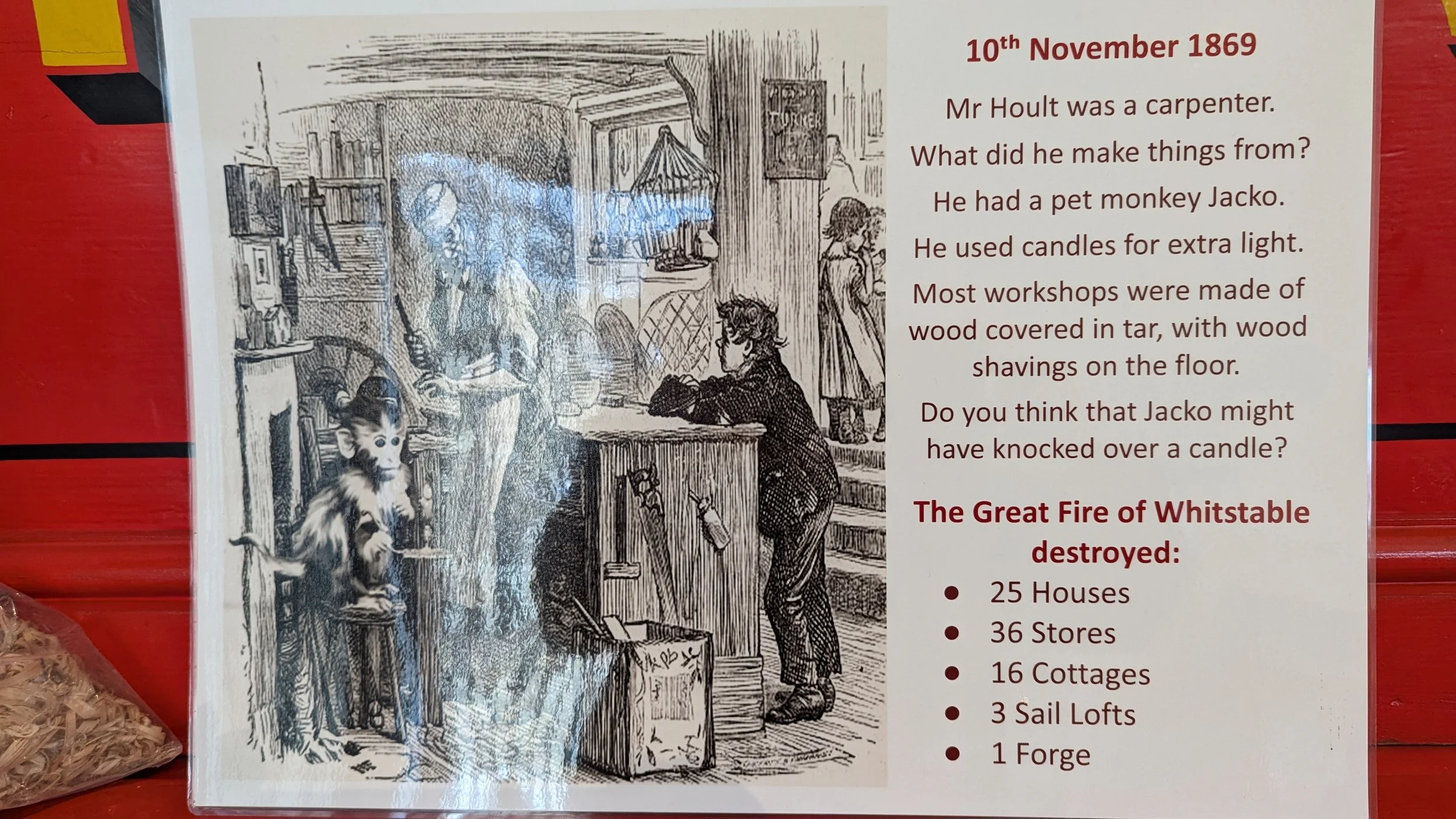
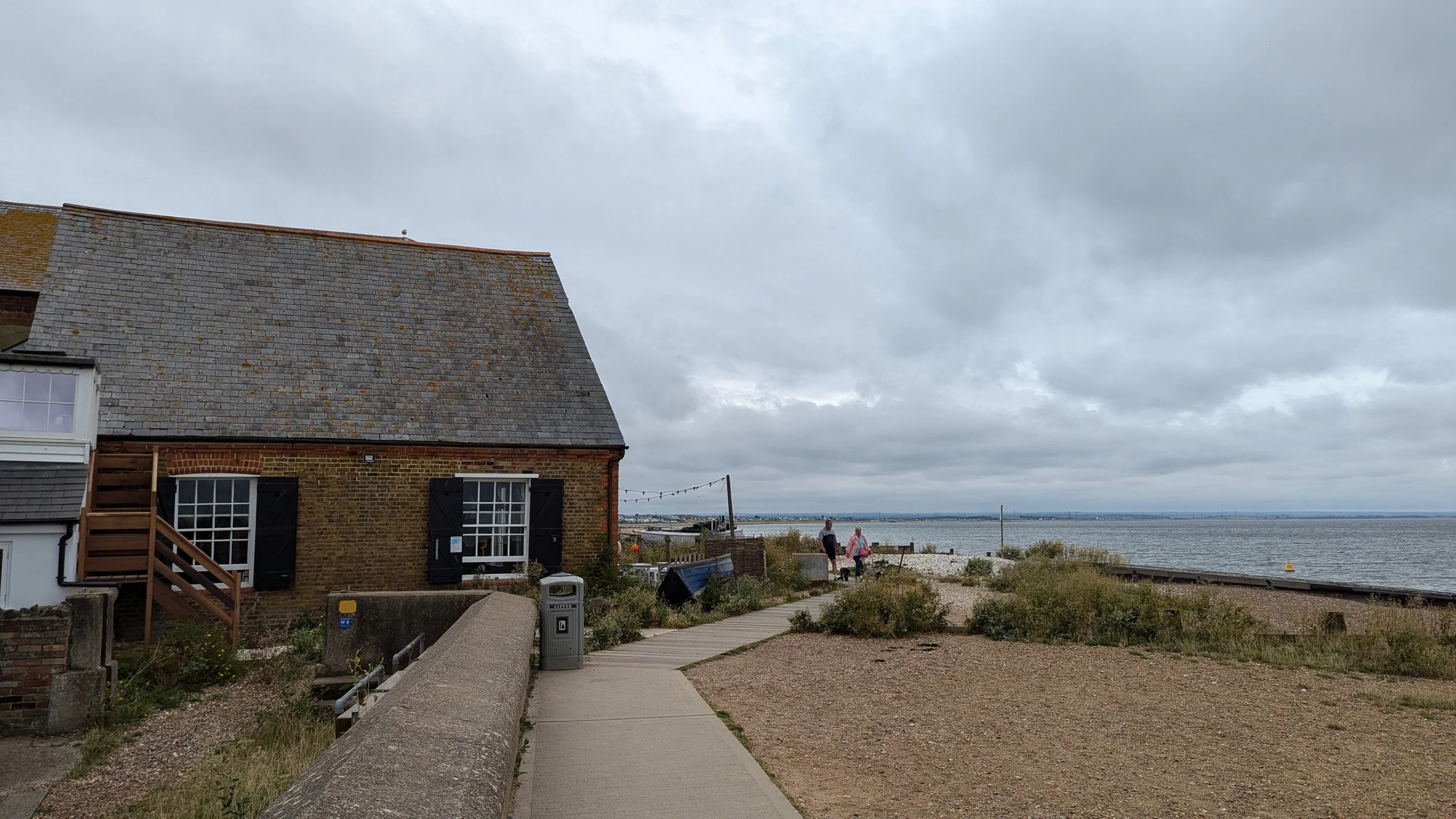
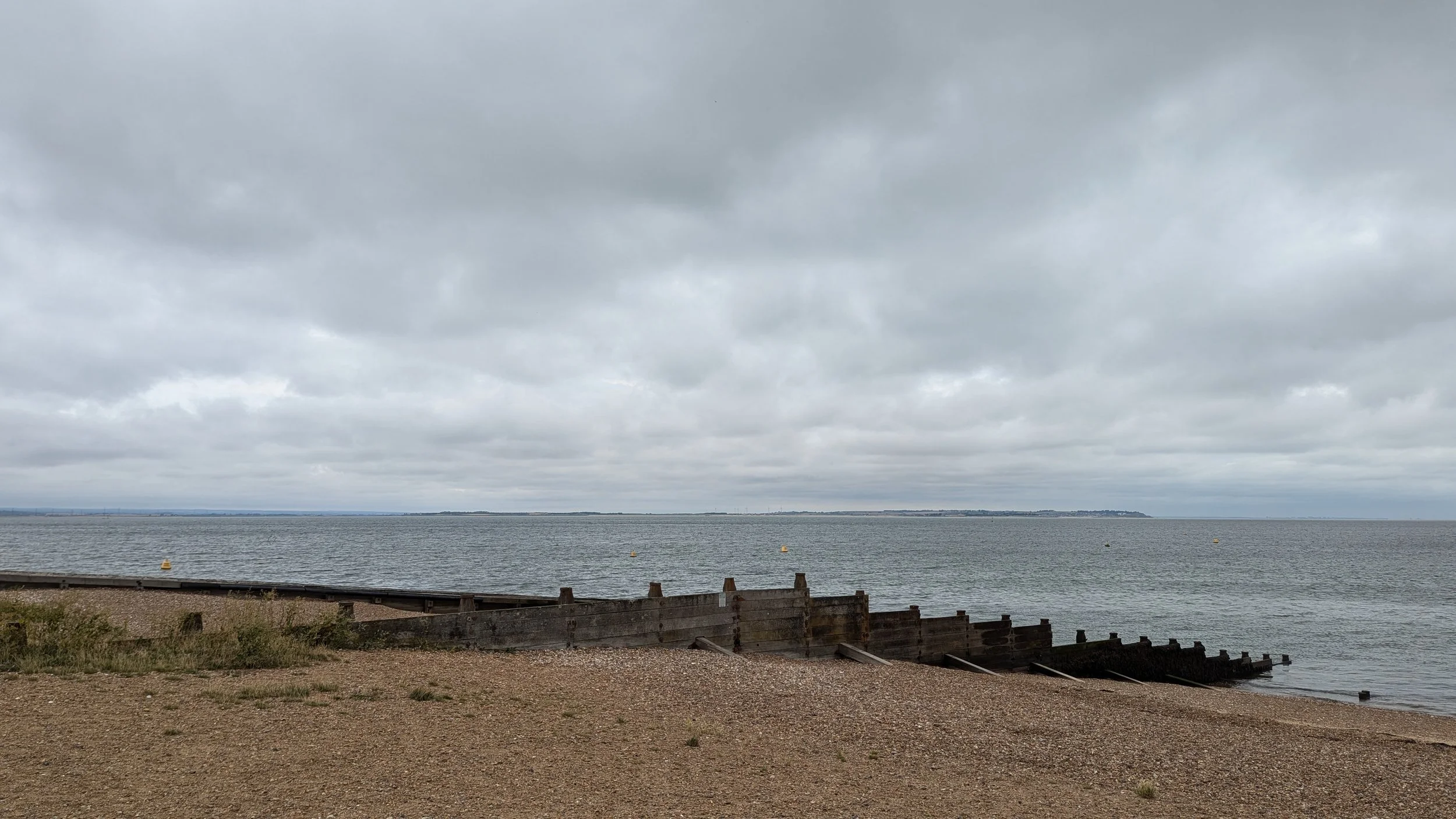
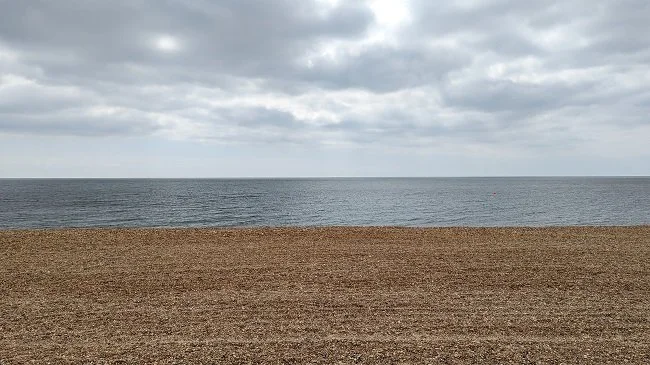
Here are some photos of the Whitstable Museum, Peter Cushing Exhibition and of the beach. Taken on Thursday 25th July 2024.







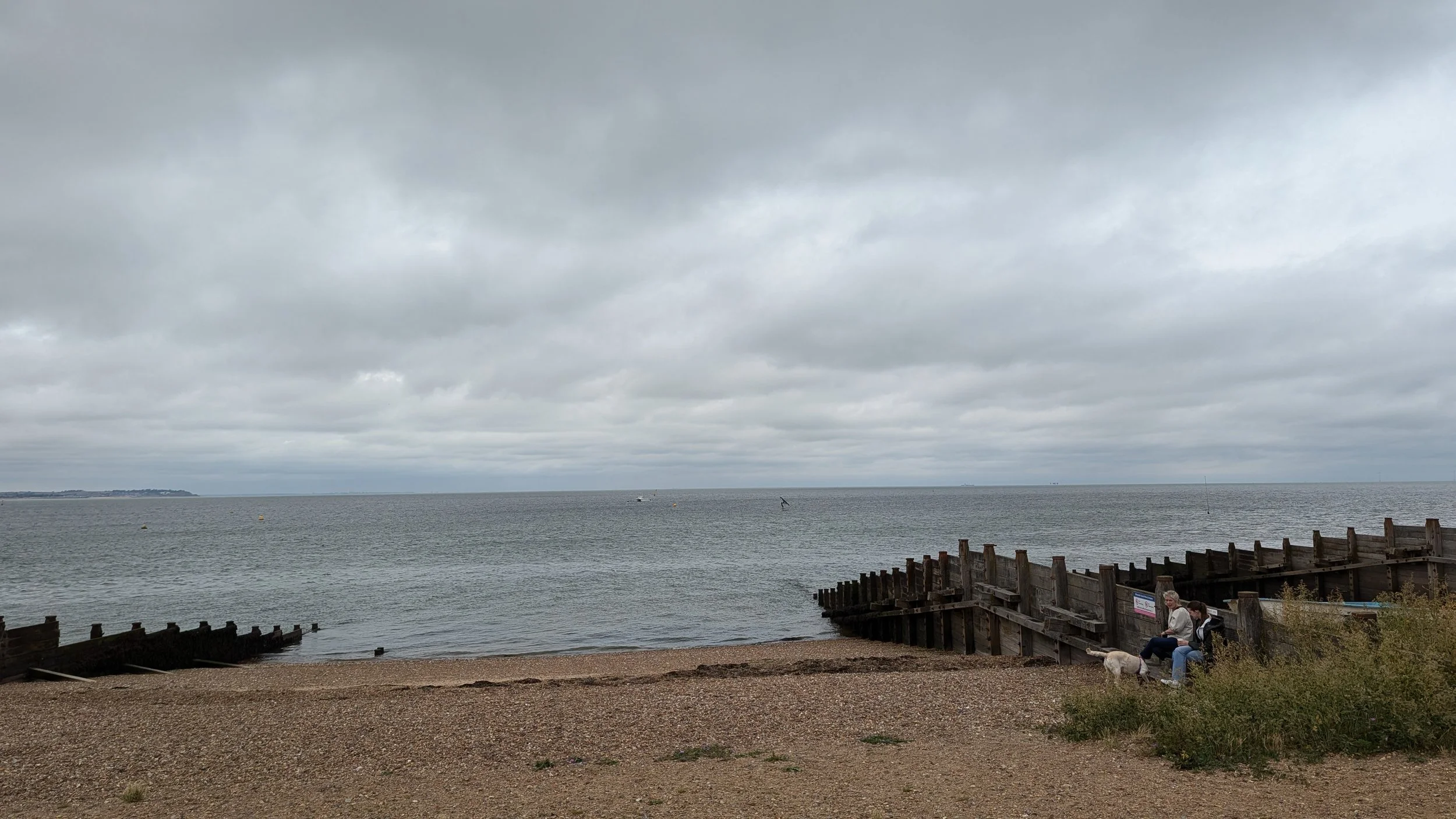

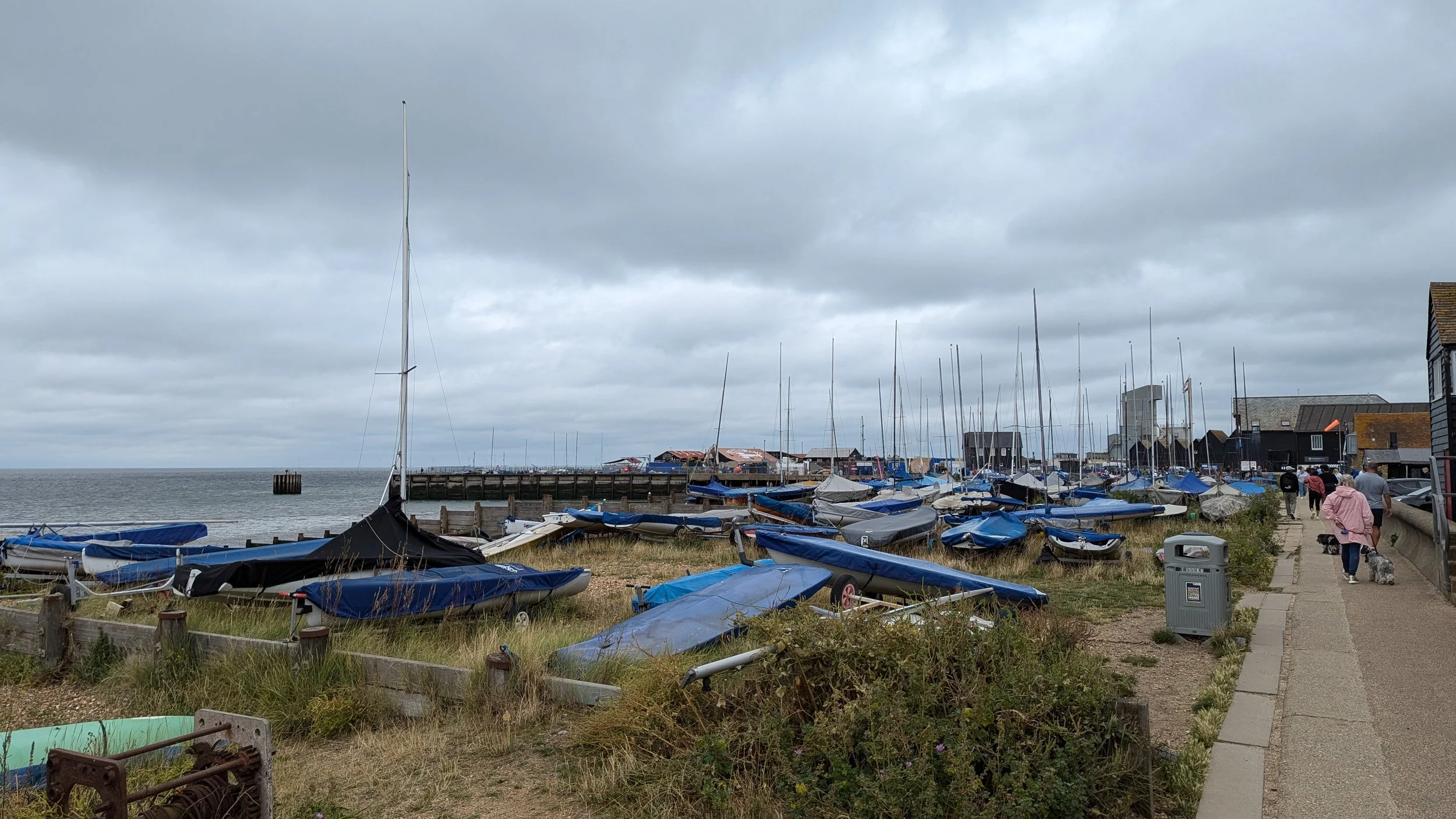
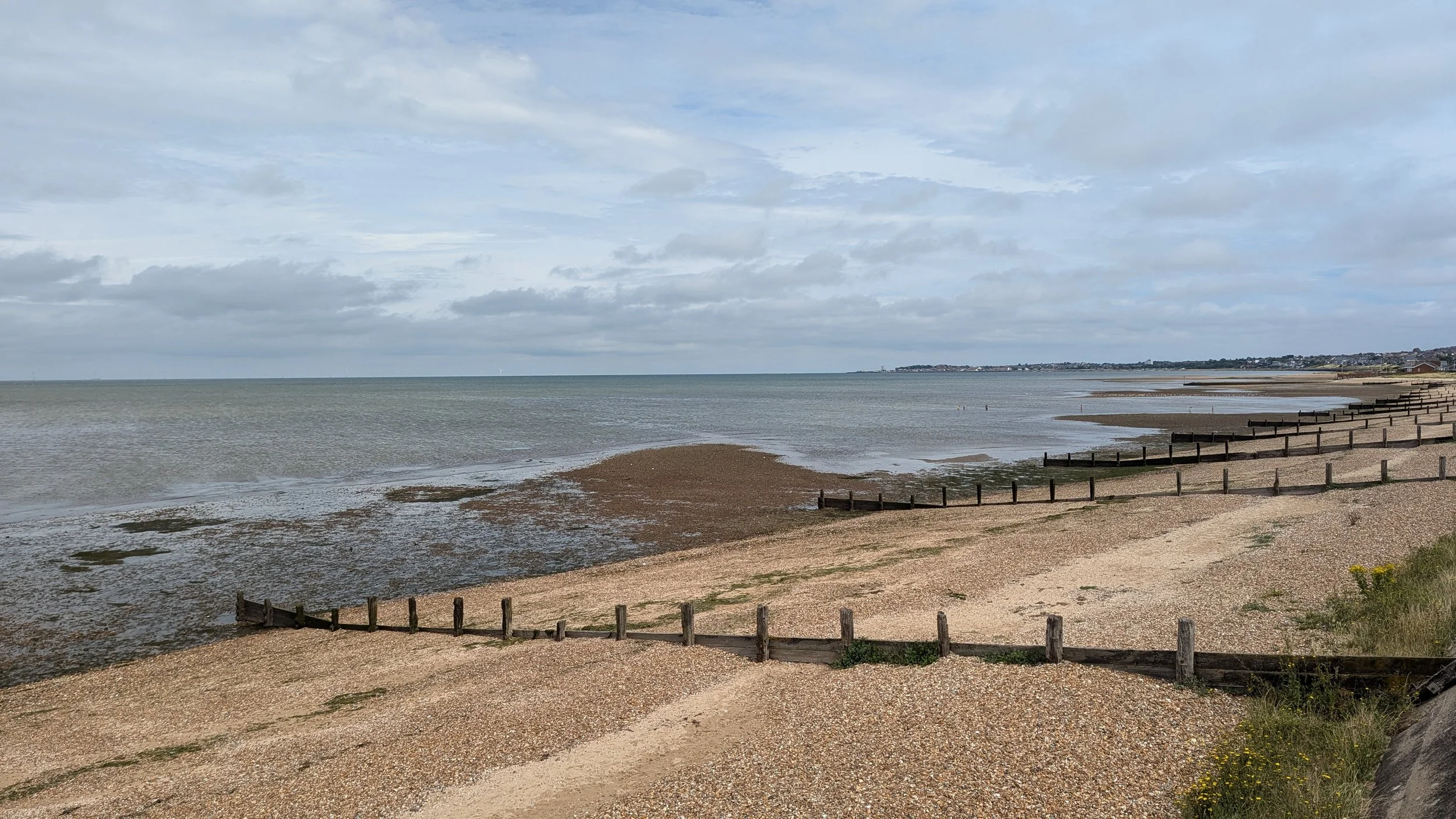
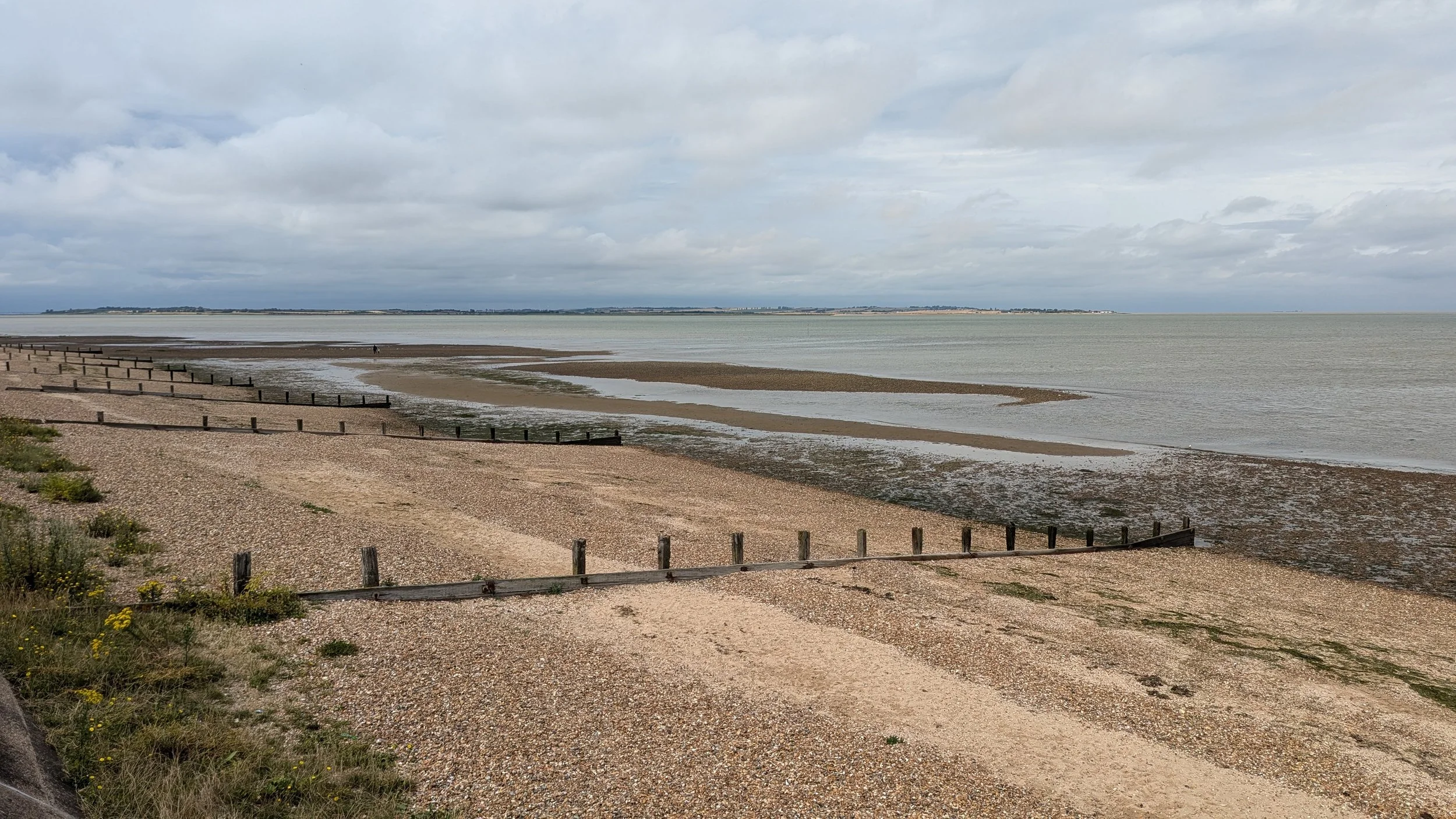
As an added bonus, here is the song “Peter Cushing Lives in Whitstable” by The Jellybottys, as referenced by comedian and Whitstable resident Alan Davis, on the TV quiz show QI.




























Thinking Out Loud
With Blaugust: Festival of Blogging fast approaching, I have decided to close several side projects I started last November (which rapidly ran out of momentum) and focus all my writing endeavours back on Contains Moderate Peril. I have taken a 9 month break which has served its purpose. I have decided to make some minor changes to the base template I am currently using for the blog, as it has remained essentially unchanged since summer 2015. I did toy with the idea of involving a third party developer to improve the site but employing such a company with specific Squarespace experience meant spending between £2000 and £3000, which is far more than my initial budget.
This post is another collection of random thoughts, thrown together in no particular order. All of which is gathered under the functional title “Thinking Out Loud”, which is a recurring blog post that tends to be published on Mondays.
Tweaking Your Blog
With Blaugust: Festival of Blogging fast approaching, I have decided to close several side projects I started last November (which rapidly ran out of momentum) and focus all my writing endeavours back on Contains Moderate Peril. I have taken a 9 month break which has served its purpose. I have decided to make some minor changes to the base template I am currently using for the blog, as it has remained essentially unchanged since summer 2015. I did toy with the idea of involving a third party developer to improve the site but employing such a company with specific Squarespace experience meant spending between £2000 and £3000, which is far more than my initial budget.
I appreciate that such rates are the market standard at present but I simply don’t want to spend such sums of money on a hobby that in principle should not have excessive operating costs. If I was pursuing a business related blog, then it would be a different matter. My advice to new bloggers is to avail themselves of free services or 30 day trials of established products, before committing to any major costs. It is best to determine whether blogging is for you before spending a dime. If you decide that you wish to maintain an online presence and develop your own brand, then the costs have the potential to increase exponentially, the more you do. I wrote a post about the cost of keeping a blog back in 2019. Naturally the prices referenced have gone up but the basic ideas remain the same.
Total Hours Played
Setting aside the MMO genre which is predicated upon its continuous playability based upon the release of regular new content, I usually don’t keep track of the total amount of time I have invested into a video game. I will have a broad approximate notion but if I need specifics, I will go and check the numbers on Steam or whatever platform is pertinent. It can be quite surprising sometimes and often my assumptions are wrong. For example, it felt like I had spent a lot of time playing Starfield upon its release last Autumn. In total it was 136 hours, which may sound a lot but is far short of other RPGs, such as Middle-earth: Shadow of Mordor (186 hours) or The Elder Scrolls V: Skyrim (286 hours). Perhaps that was due to the rather ponderous nature of Starfield, which despite its superficial modernity, ultimately was structured and played like a much older RPG.
I recently returned to Sniper Elite 5 which I have been playing on and off over the last two years plus. Having played through the main campaign, DLC, co-op and multiplayer modes, what brought me back was a renewed interest among the wider gaming community in the so-called “invasion” mode. This interesting variation of PVP, allows another player to enter your ongoing campaign and try to hunt you down while you are battling the various NPC in the game’s story missions. It is purely optional but certainly adds a fascinating and absorbing spin on the proceedings. As the invading Sniper Jäger you have the advantage of being on the same side as the enemy NPC and can tag them. If they subsequently encounter the enemy, their change in status on the mini-map alerts you. However, playing the campaign and having your game invaded can be immense fun as well. There is scope to clear areas of the map and set traps or an ambush for invaders. I find this especially satisfying. It certainly has given the game a new lease of life which is why I discovered last week that I had played 317 hours in total. Seldom does a modern game provide such value.
Alexa Doesn’t Swear
I’ve had some form of Amazon Echo smart speaker since 2016. I have always found these devices useful for timers, general questions such as weather, traffic and train times and for reminders. Its main use in our house is playing music. I probably don’t use a third of its total functionality but I still consider it an asset. However, despite 8 years of ownership, I only recently discovered one of Alexa’s curious foibles. She seems incapable of swearing. Upon reflection, I see the merit in this design choice. Especially if you have young children using the device. I certainly don’t see it as an infringement of free speech. I found out about Alexa’s puritanical streak when I requested specific songs to be played. Usually I request various playlists that I’ve curated but on this occasion I asked for a few songs by name. To my surprise and amusement, the profanities in their titles were “bleeped out” when Alexa confirmed the selection. The songs in question were “Too Drunk to Fuck” by Dead Kennedys and “Pussy” by Rammstein.
Diet Update
When I stood on the scales this morning, I appear to have lost another 2.2 lbs, which is steady progress. At present I weigh 196.4 lbs. I had to cut down a great deal last Wednesday to compensate for the fact that I was going for a meal at a French brasserie on Thursday and I felt obliged to try and ensure that my metaphorical food intake ledger was balanced accordingly. Mrs P and I have decided to not eschew wine completely so it has been incorporated into our weekend “indulgences”. Whether this has a detrimental effect on the overall program, I will find out next Monday.
Blaugust 2024
Every year, Blaugust: Festival of Blogging comes around and I happily participate. I also try to encourage others to do so by giving reasons why writing and being creative in general are worthwhile pastimes. At times it does feel that I’m repeating myself, so this time round I shall keep it very simple. Writing is fun, regardless of how you do it. The benefits of being part of a friendly and supportive community are so obvious, do I really need to list them? Blaugust is always one of the high points of my year and I’ve never regretted the time I’ve spent participating. The “rules” are simple. You do as little or as much as you see fit. You share your content and if you wish to, can interact with others over on the community Discord. There’s no pressure from anyone and if you approach the event with the right mindset, you don’t need to put any pressure on yourself. So follow the link above, read Belghast’s post and consider signing up? To quote Alexei Sayle, “you’ve nothing to lose but your wafers”. No, I have no idea what it means, either.
Every year, Blaugust: Festival of Blogging comes around and I happily participate. I also try to encourage others to do so by giving reasons why writing and being creative in general are worthwhile pastimes. At times it does feel that I’m repeating myself, so this time round I shall keep it very simple. Writing is fun, regardless of how you do it. The benefits of being part of a friendly and supportive community are so obvious, do I really need to list them? Blaugust is always one of the high points of my year and I’ve never regretted the time I’ve spent participating. The “rules” are simple. You do as little or as much as you see fit. You share your content and if you wish to, can interact with others over on the community Discord. There’s no pressure from anyone and if you approach the event with the right mindset, you don’t need to put any pressure on yourself. So follow the link above, read Belghast’s post and consider signing up? To quote Alexei Sayle, “you’ve nothing to lose but your wafers”. No, I have no idea what it means, either.
A perennial statement that is often trotted out with regard to Blaugust is “do people still read blogs”? To which the resounding answer is “yes”. A cursory Google search will show that blogs still enjoy a healthy readership and to suggest otherwise is at the least spurious and at worst disingenuous. Here are a few basic points about the relevance of blogging:
77% of internet users report regularly reading blog posts.
80% of bloggers say that blogging drives results.
50% of bloggers publish weekly or several times per month.
Bloggers who publish the most are most likely to report “strong results”.
Food, lifestyle, and travel niches have the highest percentage of blogs and more than 50,000 blog visits per month.
So, there’s definitely life in the old dog. If you’re writing just for pleasure, then the stats and SEO side of things aren’t that important. However, if you’re writing to build a site or a brand, then Blaugust offers scope to grow, if you put in the effort.
Something that has changed in recent years, that is worth noting, is the advent of Artificial Intelligence. It is now relatively easy to input a few ideas into a site such as ChatGPT or Chat Genie and generate a passable blog post. However, such content is usually easy to spot as it all too often reeks of homogeneity and lacks character. It’s missing all the foibles and quirks that human writers bring to their work. It’s one of the reasons why so much of the content on YouTube is bland and generic. Personally speaking, I would not like to see a world in which real writing becomes a small island in an ocean of AI generated content. It is important that people think and do things for themselves. However, that is another blog post in itself.
Finally, one of the most positive things that has come out of my 17 years of blogging, are the people that I have met along the way. Many of whom I’m still in contact with today. I have always enjoyed reading their blogs and learning about their lives, likings and activities. The thing about writing is that it offers a window into the author’s mindseye. Even if you write under a “nom de plume” and keep your personal life out of your prose, aspects of your personality still bleed through into your content. It is this human quality, be it abundantly clear or subtly woven into your words, that attracts many readers and keeps them returning. This is why I continue to take part in Blaugust. It is an opportunity to make new friends and experience new things. Such as different hobbies or pastimes, life in a country far from your own, or to gain insight into points of view contrary to your own.
And if none of that appeals to you, there’s always pictures of cats. See you around.
Thinking Out Loud
First of all let’s begin with an activity that I have a love hate relationship with. Namely, tinkering with your PC. I’ve been looking at the specs of my computer and it would appear that its performance Achilles heel is the graphic card. In a perfect world, I would just buy the latest top of the range model and be done with it. However, I am not sufficiently wealthy to do such things. Hence, I have to set a budget and then search for what is considered the best option within it. This is a tedious, contradictory and wearisome task. It involves trawling through reviews written by people who often do not understand the concept of a budget and figurative lines in the sand. They are infuriating, but that’s people for you.
This post is a collection of random thoughts, expressed as a stream of consciousness. Put less pretentiously, a few words about the various things that are occurring in my life. Alternatively, they may also be ephemeral talking points from the never-ending news cycle, or even those obscure thoughts you experience while laying awake in your bed. Either way, they are not the sort of material that requires a full blog post. A paragraph or two is sufficient to express a thought or make a point. All of which is collectively gathered under the title “Thinking Out Loud”, which will no doubt become a recurring blog post.
Tinkering With Your PC
First of all let’s begin with an activity that I have a love hate relationship with. Namely, tinkering with your PC. I’ve been looking at the specs of my computer and it would appear that its performance Achilles heel is the graphic card. In a perfect world, I would just buy the latest top of the range model and be done with it. However, I am not sufficiently wealthy to do such things. Hence, I have to set a budget and then search for what is considered the best option within it. This is a tedious, contradictory and wearisome task. It involves trawling through reviews written by people who often do not understand the concept of a budget and figurative lines in the sand. They are infuriating, but that’s people for you.
To cut a long story short, I have ordered the following AMD graphics card. Powercolor AMD Radeon RX 6650 XT Fighter 8GB GDDR6. The reviews are acceptable, my current PC is based around an AMD Ryzen 7 5700X 8-Core Processor so there should be some synergy there, and I got offered a very good price. If this is not to the liking of the selfappointed “Graphics Card Police”, then they can fuck off into the sea. It’s the best I can do for £204 plus postage. Hopefully it will arrive on Tuesday and then I can have the usual fun and games trying to fit it. I can also “defluff” the interior of my PC case. The fun is endless.
Games Should be Fun
I stopped playing Call of Duty in June because it was becoming too much of a treadmill. Playing both Warzone and Multiplayer essentially boiled down to the following. Buy the 2 month Season Pass, grind out the weapons and aftermarket parts, adapt your existing weapons builds to the latest meta, endure the endless succession of unbalanced multiplayer games and swarms of cheaters. Rinse and repeat while being bombarded with endless new novelty skins and weapon blueprints. It all became a dull chore, lacking in fun. So I’ve moved on.
It seems that the notion that a game should at some fundamental level be fun, is no longer a primary consideration. In fact it seems pretty low on the list of requirements, at least with mainstream, triple A titles. Obviously there are still entertaining and enjoyable titles out there but I feel that you just have to look a lot harder to find them, these days. Too many games feel generic, soulless and obvious products rather than interactive mediums for entertainment and enjoyment.
I recently bought a few new games, because why would I want to play any that I had in my library for years? Insane isn’t it? I bought The Stanley Parable: Ultra Deluxe version which is most amusing and incredibly intelligent in its satire of so many video game tropes and idiosyncrasies. It lends itself to binge gameplay until you’ve achieved several of the alternate endings. I also bought the submarine game Cold Waters mainly because I recently watched the 1958 classic movies, Run Silent, Run Deep with Clark Gable and Burt Lancaster. It’s not a full blown submarine simulator but still offers complex gameplay. I also purchased Dragon’s Dogma 2, as I had a hankering for an RPG. Sadly, I’m struggling to find the fun in this game as it is proving confusing both narratively and with its gameplay. I’m also struggling with the keyboard and mouse controls for the PC. I suspect this title plays better on consoles.
Diet (Who Ate All the Pies?)
My diet is far from healthy and has contributed to my gaining a lot of weight. I drink too often as well, which makes matters worse. I have managed to lose weight in the past but this year I have not been so successful mainly because my heart hasn’t been in it. But it is for the sake of my heart that I need to resolve this matter. So Mrs P and I are both embarking on a diet, based on three meals a day, reduced portion sizes and the elimination of a few specific items, including alcohol. I’m not looking forward to it as I derive a great deal of pleasure from eating and drinking. I shall try and gamify the process and work towards goals and rewards. I shall also post details each Monday as to whether I’ve been successful. As of today, my starting weight is 201 lbs. I am looking to shed 28 lbs (2 stone). It’s on, like Donkey Kong, as they say.
Selling My Parents House: Part 3
Last month, my sister and I finally sold our parents house. Our late mother’s will has now been fully administered, all funds have been distributed and I finally signed off the “executor’s approval” document and returned it to the solicitors. A line has finally been drawn under a process that has taken about 15 months. Dealing with an estate (in the legal sense of the word) and selling a family home is not something that you do everyday. It’s usually something that comes up maybe once or twice in your life. Few people (myself included) are fully prepared for such an undertaking when it occurs. Hence I have some observations to share about my experience of dealing with the esoteric world of estate agents and solicitors.
Last month, my sister and I finally sold our parents house. Our late mother’s will has now been fully administered, all funds have been distributed and I finally signed off the “executor’s approval” document and returned it to the solicitors. A line has finally been drawn under a process that has taken about 15 months. Dealing with an estate (in the legal sense of the word) and selling a family home is not something that you do everyday. It’s usually something that comes up maybe once or twice in your life. Few people (myself included) are fully prepared for such an undertaking when it occurs. Hence I have some observations to share about my experience of dealing with the esoteric world of estate agents and solicitors.
It really pays to do some research and find an estate agent that is right for you. Selling a house is a unique process because it is very personal. Therefore you want to be dealing with people you can trust, who listen to you and who aren’t just going through the motions. So read reviews and ask other people for recommendations.
Some estate agents are very obliging. Others do very little for their fee (which is substantial). Do not add to the stress of selling a house by having to constantly chase your estate agents to do things. It is their job to arrange viewings, answer the questions that potential buyers raise and to liaise with your solicitors. If they’re asking you to do any of these things then tell them politely to do it themselves.
You also have to harden your heart. The house you are selling should not be viewed as your home but an asset being professionally marketed. You may not like the manner in which your home is described in the marketing material but it is wise to defer to those who do this for a living. A feature that you may think is quaint and quirky may be an absolute eyesore to others. Those viewing your home may not like your choice of decor and might be vocal about it. Simply put, don’t take things personally. Remain detached from the process and elsewhere when there are viewings.
With regards to solicitors and conveyancing, despite a superficial veneer of modernity, this process is still quite archaic in the UK. The language used is frequently very old fashioned and therefore hard to penetrate. Many of the procedures seem to take purely arbitrary amounts of time. Solicitors also tend to play their card close to their chest and communication between them can be vague at times.
Never make the mistake of using an online company for your conveyancing needs as you’ll often find that their postal address is miles away from where you live. Considering the amount of paperwork this process generates, it’s best to find one that is local.
Also, ensure that you are aware of all the fees involved in this process in advance. Selling a house is expensive. The greater the value of the property, the more it costs. The last thing you need is a final invoice with lots of additional costs, eating into your profits.
Don’t be afraid to ask, if you’re not sure about something or do not understand the legalities. This industry is rife with jargon. However, the answers to many of the obscure questions that arise are often very simple. Therefore, seek clarity from those you are paying.
Finally, be patient. Selling a house can be a lengthy and time consuming process. Use this time to your advantage. Don’t just accept the first offer that’s made. A slightly lower offer from a cash buyer may be a far safer bet than a higher offer from someone who hasn’t sold their own property yet, or has a mortgage offer that’s due to expire. It is also worth remembering that until you’ve signed anything, you can always change your mind. I’m not advocating being difficult for the sake of being, but if you feel that a buyer may be problematic or that something just isn’t working, then vote with your feet.
Overall, my own experience of selling my parents home hasn’t been too problematic or traumatic. I am glad that it is now done and that the house has a new family living in it. I think that my parents would be pleased that my sister and I have dealt with the matter and are now moving on. If I ever have to deal with such a process again, I think I am better prepared now. However, I am hoping that nothing of the kind arises in the immediate future.






















Halloween III: Season of the Witch (1983)
Halloween III: Season of the Witch is a film that often provokes a strong reaction from genre fans. This is mainly due to it not having any direct connection to the previous two films. The absence of Michael Myers in such a franchise was a serious mistake and the subsequent poor box office returns endorsed this. Yet if this film had been released as a separate product it may not have performed so poorly. After re-examining Halloween III: Season of the Witch there are many aspects of interest. Despite a troubled production, the film is an intriguing anomaly that tried to be different during a decade where the established horror formula was “stalk n' slash”. It does have a very bleak tone and some consider it to be mean spirited as the cast are killed off one by one. Perhaps theme of child sacrifice caused audiences to balk?
Halloween III: Season of the Witch is a film that often provokes a strong reaction from genre fans. This is mainly due to it not having any direct connection to the previous two films. The absence of Michael Myers in such a franchise was a serious mistake and the subsequent poor box office returns endorsed this. Yet if this film had been released as a separate product it may not have performed so poorly. After re-examining Halloween III: Season of the Witch there are many aspects of interest. Despite a troubled production, the film is an intriguing anomaly that tried to be different during a decade where the established horror formula was “stalk n' slash”. It does have a very bleak tone and some consider it to be mean spirited as the cast are killed off one by one. Perhaps theme of child sacrifice caused audiences to balk?
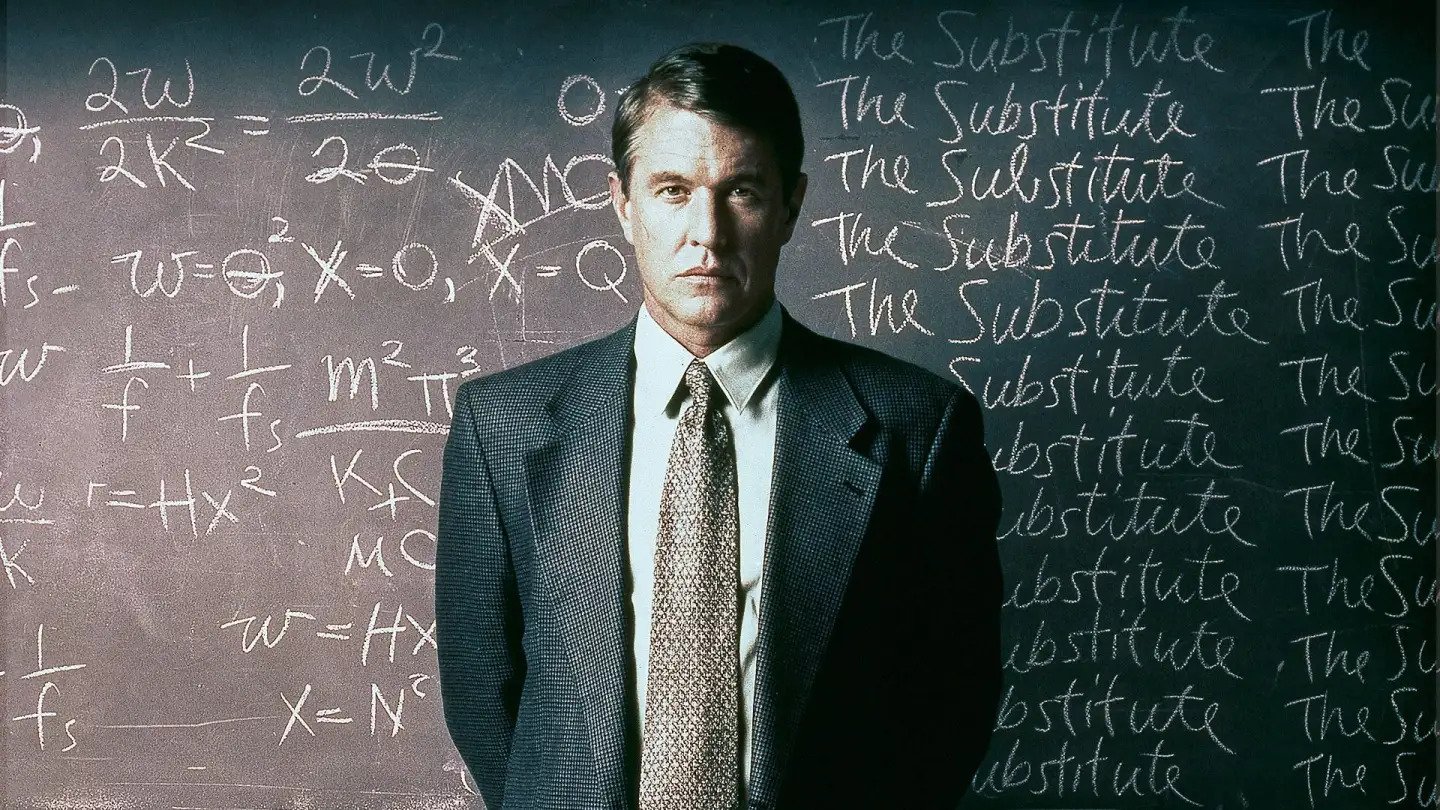
A mysterious patient, Harry Grimbridge (Al Berry) is brought to hospital late at night, after being pursued by several besuited assassins. He is subsequently murdered in his bed and his assassin then kills himself. Dr. Dan Challis (Tom Atkins) is shocked by these events and struggles to comfort Ellie Grimbridge (Stacey Nelkin), the victims daughter who arrives at the hospital seeking answers about her father's death. The pair decide to investigate matters and the trail leads to the town of Santa Mira. Harry, who ran a toy shop, had travelled to the town to collect a shipment of Halloween masks from Silver Shamrock Novelties. On arrival Dan and Ellie find the town dominated by the presence of the Silver Shamrock company and its charismatic owner Conal Cochran (Dan O'Herlihy). Is Cochran connected to the death of Ellie's Father? Who are the mysterious mute assassins in grey suits that are pursue them?
John Carpenter, although only a producer on this film, was still heavily involved in the film’s development. Being a big fan of British writer Nigel Kneale, he commissioned him to write a screenplay. However the final draft did not find favour with financier Dino De Laurentiis, who insisted in the inclusion of more graphic death scenes to placate the target demographic. Kneale subsequently had his name removed from the credits but most of his original material remained in the redrafted screenplay, such as his re-occurring theme of reconciling science and witchcraft. It is paradoxical how Cochran uses contemporary technology to perpetrate an act of pagan sacrifice. The film also draws heavily on the 1956 genre classic Invasion of the Bodysnatchers, with its themes of humans being replaced by a sinister intelligence. The Silver Shamrock factory is set in the fictitious town of Santa Mira, which also features in Don Siegel's movie.
As for the scenes of violence, they are themselves quite unusual. Although gory to a degree, they are also a little surreal. Veteran make-up artist Tom Burman creates several bizarre deaths that reflect the odd nature of the plot. A man is murdered in his hospital bed by having his skull broken. Another has his head pulled off. But the most effective are those caused by the booby trapped Halloween masks. The demise of a particularly unpleasant small boy, involving cockroaches and snakes is both ghoulish and satisfying. The atmosphere and tone of the film is bolstered by an outstandingly minimalist score by John Carpenter and Alan Howarth. There is also an excellent faux commercial for Silver Shamrock masks which is both infuriating and an earworm.
The film also benefits from earnest performance from its main cast. Due to budgetary reasons the leads were character actors and not box office stars. Genre favourite Atkins acquits himself well as the world weary Doctor. But it is Dan O'Herlihy who excels as the sinister head of Silver Shamrock. His soft voice and measured delivery adds weight to the plot and the motives of a man who wishes to punish a nation through the death of it children. He delivers a singularly sinister monologue at the film’s denouement. Director Tommy Lee Wallace (who also directed Halloween II) maintains the tension and imbues the town of Santa Mira with a unsettling quality. He also handles the blending of pagan themes with modern technology well.
Despite its initial failure, over the recent years Halloween III: Season of the Witch has been re-appraised by critics and developed the inevitable cult following. It is seen as a social comment on consumerism and commercialisation. It also explores the roots of a Pagan festival that has now become an integral part of US culture. The bleak ending that was somewhat unpalatable 25 years ago, is now credible to a postmodern audience. John Carpenter was happy to lay Michael Meyers to rest permanently after Halloween II and wanted the subsequent films in the series to be wider in vision, dealing each time with a different supernatural theme. Such a bold idea was not endearing to the prevailing studio mentality of the time. Thus after the box office failure of Halloween III: Season of the Witch, the overall concept was side-lined and "the shape" subsequently resurrected in future sequels.











Ghostwatch (1992)
Ghostwatch is a controversial British horror “mockumentary” produced by the BBC that was first broadcast on October 31st 1992. Written by Stephen Volk and produced by Ruth Baumgarten it is now considered a milestone in UK broadcasting. This was mainly due to the strong reaction it provoked from the public, many of whom failed to grasp that it was a drama. At the time it raised serious questions about responsible programming and caused a furore in the British press. It has curiously never been shown since by the BBC. Ghostwatch remains a talking point to this day and is a text book example of the power of television as well as the publics enduring belief in the supernatural.
Ghostwatch is a controversial British horror “mockumentary” produced by the BBC that was first broadcast on October 31st 1992. Written by Stephen Volk and produced by Ruth Baumgarten it is now considered a milestone in UK broadcasting. This was mainly due to the strong reaction it provoked from the public, many of whom failed to grasp that it was a drama. At the time it raised serious questions about responsible programming and caused a furore in the British press. It has curiously never been shown since by the BBC. Ghostwatch remains a talking point to this day and is a text book example of the power of television as well as the public's enduring belief in the supernatural.
The 90 minute film is shot in a documentary style and appeared as part of BBC Drama’s Screen One series. While it is often incorrectly referred to as a hoax, it is more accurate to call it a “mockumentary”. In many ways it was a precursor to the supernatural reality shows that are prevalent today, such as Most Haunted and Ghost Hunters. Ghostwatch centres on a team of BBC reporters conducting a live, on-air investigation into alleged Poltergeist activity at a family home in Northolt, Greater London. Through the medium of a live broadcast the investigators discover the existence of a malevolent ghost nicknamed “Pipes”, as his banging and crashing were initially attributed to bad plumbing.
As the programme unfolds viewers learn that “Pipes” is the ghost of a psychologically disturbed man called Raymond Tunstill, who is believed to have been possessed by the spirit of a child killer from the 19th century. The manifestations became more intense and terrifying as the investigation progresses, until the frightened reporters realise that the broadcast itself is acting as a focus for a national séance through which “Pipes” is gaining more power. The program ends with poltergeist activity manifesting in the BBC TV studios themselves, before the screen fades to black.
One of the reasons Ghostwatch succeeds is through the use of known and trusted television personalities. Michael Parkinson and real life couple Mike Smith and Sarah Greene brought credibility and professionalism to the proceedings. All were firmly established television broadcasters at the time. The Crimewatch style format, complete with telephone phone in and hand held cameras is oddly prophetic of popular paranormal shows we see today. However the most interesting aspect of the original broadcast was the way the public assumed the show was a genuine investigation and not a drama. Despite the addition of brief credits by the BBC at the start of the broadcast, viewers watched events unfold for over ninety minutes before they began to question the authenticity of them. It also highlights how the supernatural remains an integral part of UK popular culture.
Twenty three years on Ghostwatch is still fascinating and disturbing to watch. The story unfolds in a leisurely manner focusing on a very credible family. Halfway through the proceedings there is a red herring which indicates the alleged phenomena at the house may be a hoax. However this bluff cunningly sets the audience up for further paranormal activity and an interesting plot twist. Having now watched Ghostwatch several times, its dramatic roots are more noticeable with references to Nigel Kneale and even a nod to Orson Welles’ famous broadcast of War of the Worlds. It is still fun to keep an eye out for all the allusive on screen appearances by “Pipes”. Overall Ghostwatch remains a prime example of the power of television and its ability to hoodwink the public. Although similar themes have been tackled in films such as Cannibal Holocaust and The Blair Witch Project, it is the immediacy and intimacy of TV that makes this production so successful.
As an addendum to this post, I've included a short podcast about Ghostwatch that I participated in. It was first published in October 2016, as part of the 31 Days of Scary Movies event at Totally Legit Publishing. I discuss the enigma of the mockumentary with the host Jessica.

Event Horizon (1997)
Event Horizon is a curious movie hybrid, mixing plot elements from classic sci-fi and horror genres. It has been labelled “Hellraiser in Space” by some lazy critics, although I think there's far more to it than that. Perhaps a more apt description would be a Gothic horror story set in space. The movie has garnered a cult reputation since its release in 1997, mainly due to its graphic imagery and troubled production history. It does indeed have some quite shocking sequences but the lightning editing does not show as much as some would think. Paramount forced director Paul W S Anderson to reduce the original one hundred and thirty minute running time down to a more manageable ninety, after unfavourable test screenings. Much of the violence was allegedly removed as a result of that process. Sadly nothing survives of the removed material other than a VHS workprint. Hence a restored director’s cut is therefore unlikely.
Event Horizon is a curious movie hybrid, mixing plot elements from classic sci-fi and horror genres. It has been labelled “Hellraiser in Space” by some lazy critics, although I think there's far more to it than that. Perhaps a more apt description would be a Gothic horror story set in space. The movie has garnered a cult reputation since its release in 1997, mainly due to its graphic imagery and troubled production history. It does indeed have some quite shocking sequences but the lightning editing does not show as much as some would think. Paramount forced director Paul W S Anderson to reduce the original one hundred and thirty minute running time down to a more manageable ninety, after unfavourable test screenings. Much of the violence was allegedly removed as a result of that process. Sadly nothing survives of the removed material other than a VHS workprint. Hence a restored director’s cut is therefore unlikely.
Event Horizon is an experimental spaceship which went missing on its maiden voyage. When the ship mysteriously reappears in orbit above Neptune, a rescue mission is launched by the authorities. The ship's designer Dr. Weir (Sam Neil) is assigned to the rescue vessel Lewis and Clark, commanded by Captain Miller (Laurence Fishburne). The crew consists of Lieutenant Starck (Joely Richardson), pilot Smith (Sean Pertwee), Medical Technician Peters (Kathleen Quinlan), Engineer Ensign Justin (Jack Noseworthy), Rescue Technician Cooper (Richard T. Jones), and Trauma Doctor D.J. (Jason Isaacs). Upon arrival they find that the Event Horizon is empty and the crew dead or missing. The ship's last transmission contains human screams and a cryptic message in Latin. Subsequently the rescue party starts experiencing horrific hallucinations along with a growing sense that unease.
There are many positive aspects to Event Horizon. The cast of character actors are more than competent and the production values are very high. The sets are opulent and the production design conveys the required hi-tech aesthetic. The visual effects have not dated too much although some of the CGI is a little primitive. The prosthetics and animatronics are exceedingly good (and unpleasant). Bob Keen and his creative team were involved in the production although much of their work unfortunately didn't make it into the theatrical version. The movie also manages to maintain a disquieting atmosphere, punctuated by some effective jumps. Sadly the screenplay lurches from the good to the bad and is somewhat inconsistent. The denouement does succeed in explaining the evil entity that is linked to the ship but I would have preferred some further insight. However these narrative inconsistencies may be due to the last minute re-edit that took place prior to release.
However despite these issues, Event Horizon is sustained by its ambition, tone and grotesque visuals. Director Paul W S Anderson has produced a tense and atmospheric blend of genres, despite the studio's interference in post-production. The mixing of advanced technology with Hieronymus Bosch style visions of Hell are quite compelling. Certainly the movie deserves more critical praise than it gained upon release in 1997. It’s a shame that a restored cut of the film is off the table. It would be most interesting to see the gaps in the narrative filled, as well as the visual effects restored to their full glory. Clive Barker managed to achieve a comparable restoration of his movie Nightbreed, which was similarly “butchered” upon release. However, unless the missing material can be miraculously sourced from elsewhere, the theatrical edition of Event Horizon will remain the only version available.
The Car (1977)
The peace of tranquillity of Santa Ynes, Utah, is shattered when the town becomes the focus of several hit and run deaths, by a mysterious and apparently driverless, black car. After the Sheriff (John Marley) is run down, it is down to Captain Wade Parent (James Brolin) and his deputies to protect the town from this sinister threat. Is the car simply a driven by a mad man or is there a more supernatural explanation? When the car menaces a local school marching band, the teachers and students take refuge in the nearby cemetery. Does the cars inability to enter consecrated ground provide a clue to its otherworldly origins and offer a potential solution? As the death count increases and the population becomes more fearful, the Captain and his team of deputies form a desperate plan to see if they can lure the car into a trap.
The peace of tranquillity of Santa Ynes, Utah, is shattered when there are several hit and run deaths by a mysterious and apparently driverless, black car. After the Sheriff (John Marley) is run down, it is down to Captain Wade Parent (James Brolin) and his deputies to protect the town from this sinister threat. Is the car simply a driven by a mad man or is there a more supernatural explanation? When the car menaces a local school marching band, the teachers and students take refuge in the nearby cemetery. Does the cars inability to enter consecrated ground provide a clue to its otherworldly origins and offer a potential solution? As the death count increases and the population becomes more fearful, the Captain and his team of deputies form a desperate plan to see if they can lure the car into a trap.
A movie like The Car needs something else other than its initial premise to keep it going. To provide it with narrative impetus and keep the viewer engaged. Simply put, if the audience is to spend ninety or so minutes watching a group of people in peril then it needs to be able to relate and empathise with them. Surprisingly, that is exactly what director Elliot Silverstein does. Having cut his teeth directing several episodes of The Twilight Zone, he has a good sense of pace and how to build the tension leading up to the “boo” moment. The Car has a solid cast of respectable characters actors and actually makes a decent attempt to try and provide some backstory and sub plots. There is a genuine feeling that this is a real small town. There’s the ex-drunk officer, the wife beater and a lead character living in his father’s shadow. John Marley is good as a sheriff whose world is turned upside down by the arrival of this potentially satanic car. You feel that he genuinely cares.
As ever with movies of this ilk, the low budget means that the scope of action is somewhat restricted. Yet the various death scenes in which innocent members of the public are run down are well constructed with the focus upon tension rather than gore. The Car taps into similar themes as Steven Spielberg’s Duel, with its exploration of our fear of the motor vehicle, its associated anonymity and potential to kill. In one scene the car drives right through a victim’s house to kill them, shattering the presumption that once off the road, you are safe. Certainly fusing the road movie genre with the supernatural was a bold idea. It works better here than in similar films such as Race with the Devil. But one cannot discuss The Car without referencing the customised 1971 Lincoln Continental Mark III designed by George Barris. It is in many ways the real star of the movie, having a genuine presence and posing a credible threat.
The Night Flier (1997)
The key to success in the horror genre is to try and find an innovative new angle on tried and tested themes and tropes. The Night Flier is an often-overlooked gem, that takes a unique perspective on vampirism and features strong performances as well as an intelligent and thoughtful screenplay. It builds a sense of foreboding during it’s first two acts and teases audiences with some unpleasant prosthetic effects, courtesy of KNB EFX Group. The climax of the movie is both thought provoking and suitably unpleasant. Furthermore, The Night Flier even manages to make a coherent criticism of tabloid culture and morals of those journalists working in the industry. It’s a damn shame that this modest but well-crafted genre movie didn’t get the attention it deserved when it was initially released in 1997.
The key to success in the horror genre is to try and find an innovative new angle on tried and tested themes and tropes. The Night Flier is an often-overlooked gem, that takes a unique perspective on vampirism and features strong performances as well as an intelligent and thoughtful screenplay. It builds a sense of foreboding during it’s first two acts and teases audiences with some unpleasant prosthetic effects, courtesy of KNB EFX Group. The climax of the movie is both thought provoking and suitably unpleasant. Furthermore, The Night Flier even manages to make a coherent criticism of tabloid culture and morals of those journalists working in the industry. It’s a damn shame that this modest but well-crafted genre movie didn’t get the attention it deserved when it was initially released in 1997.
Jaded and cynical tabloid reporter Richard Dees (Miguel Ferrer) initially refuses the job of investigating a violent murder at a remote private airfield. So his boss and editor of Inside View (a National Enquirer style publication), Merton Morrison (Dan Monahan), assigns the case to rookie reporter Katherine Blair (Julie Entwisle). When it becomes apparent that there is a serial killer using the network of small, rural airfields and flying under the alias of Dwight Renfield, Dees takes over the assignment. However, Morrison asks Katherine to follow Dees as he’s grown tired of his ego and insubordination. As Dees uncovers more information regarding “The Night Flier”, he starts receiving warnings from the killer himself to stop his investigations. It soon becomes clear that there may well be more to the case than meets the eye and that Dwight Renfield is not a mere serial killer but a vampire.
There are several standout aspects of The Night Flier. The first and most important is the strong lead performance by the late Miguel Ferrer who excels as the journalist Richard Dees. Exactly what is his motivation beyond doing whatever is needed to get the story, is left intriguingly vague. Dees is a bitter and heartless character, but he’s driven and surprisingly good at what he does. Then there’s the intriguing use of the network of small, private airfields that exist across North America and the entire sub-culture of having a pilot’s license. It’s an aspect of life that is unknown to many people. And then there’s our undead antagonist, Dwight Renfield. There’s a fine line between being vague and insubstantial, compared to creating a sense of the enigmatic and uncanny. Yet director Mark Pavia manages to tread such a path, providing only a smattering of implied history for the villain of the piece, while maintaining our interest rather than indifference.
Overall, The Night Flier is a good and faithful adaptation of Stephen King’s novella with the only major creative difference being the bleaker ending adopted for the movie. It serves not only as a fitting and inevitable conclusion to the story arc, but also as an acerbic indictment upon the iniquities of tabloid journalism. All of which leaves Richard Dees philosophy on journalism ringing in one’s ears. "Never believe what you publish and never publish what you believe". Twenty-six years on from its initial release, word of mouth and a revised critical assessment means that The Night Flier is finally reaching a wider audience. In a world filled with so many poor and indifferent adaptations of Stephen King’s work, this “diamond in the rough” is an entertaining and engaging alternative and worth the time of discerning horror fans.
Dr. Terror's House of Horrors (1965)
Dr. Terror's House of Horrors was the first portmanteau horror movie by Amicus Productions. The small British studio was founded by producers and screenwriters Milton Subotsky and Max Rosenberg. As the horror genre grew in popularity due to the success of Hammer films, Amicus saw the potential in the portmanteau format. Subotsky in particular held Ealing Studios 1945 classic Dead of Night in very high regard. Although only a modest budget movie, Dr. Terror's House of Horrors proved to be financially successful and led to a series of similarly structured films over the next decade. These included Torture Garden (1967), The House That Dripped Blood (1970), Asylum (1972), Tales from the Crypt (1972), The Vault of Horror (1973), From Beyond the Grave (1974),
Dr. Terror's House of Horrors was the first portmanteau horror movie by Amicus Productions. The small British studio was founded by producers and screenwriters Milton Subotsky and Max Rosenberg. As the horror genre grew in popularity due to the success of Hammer films, Amicus saw the potential in the portmanteau format. Subotsky in particular held Ealing Studios 1945 classic Dead of Night in very high regard. Although only a modest budget movie, Dr. Terror's House of Horrors proved to be financially successful and led to a series of similarly structured films over the next decade. These included Torture Garden (1967), The House That Dripped Blood (1970), Asylum (1972), Tales from the Crypt (1972), The Vault of Horror (1973), From Beyond the Grave (1974),
Set on a late night train from London to Bradley, five passengers encounter a mysterious Dr Schreck (Peter Cushing) who offers to tell each passenger their future with a deck of Tarot cards. Initially most of them are sceptical, however curiosity eventually gets the better of them. As the Dr. proceeds, each man's story plays out as a vignette plays with a suitably sinister tone. All of which inevitably end unfavourably for the protagonists. Can the five passengers possibly escape their predicted demise? Will a fifth card drawn from the deck hold the key? Each time it is the death card; a conclusion they are far from happy with or ready to accept.
The most notable aspect of Dr. Terror's House of Horrors it its strong cast of British character actors. Jeremy Kemp, Bernard Lee and stately Christopher Lee effortlessly acquit themselves. A young Donald Sutherland was secured for the benefit of selling the movie to the US market. Roy Castle and Kenny lynch add some welcome levity to one story, without derailing the atmosphere. But ultimately it is Peter Cushing as the unshaven and shabby Dr. Schreck, who dominates the proceedings. He strikes the right balance between frailty and malevolence perfectly. The sinister look he gives when the first passenger (Neil McCallum) taps the Tarot card three time shows his prodigious acting talent.
As for the five stories that unfold, The Werewolf and Disembodied Hand are perhaps the strongest and the most traditionally grounded in horror. The others make up for in style what they lack in genuine horror. The Roy Castle's Voodoo tale is quite comic and reminiscent in tone to the Golfing story in Dead of Night. The Creeping Vine in which a family home is menaced by a sentient plant is surprisingly low key (due to minimal special effects) and works better that way. Vampire sees a newlywed Doctor who discovers that his wife may be a vampire. It has a rather clever sting in the tail. The resolution of the entire film holds yet another plot twist, though I'm sure it will come as no surprise to those familiar with this genre.
Despite its modest budget, this was considered a finely crafted horror vehicle at the time and had an X certificate rating. DVD copies currently available in the UK are now rated PG by the British Board of Film Classification. However it must be remembered that the British horror genre at the time was still in a state of transition. Hammer Studios had introduced more lurid elements to the proceedings but many films involving the supernatural still tended to rely on atmosphere and tone. Hence there is an emphasis on dialogue and performances in Dr. Terror's House of Horrors over gore. The atmospheric cinematography by Alun Hume (Star Wars Episode VI: Return of the Jedi, A View to a Kill) and the use of Techniscope elevate this mainly studio based production into something more than the average horror movie.
The portmanteau format proved lucrative for Amicus, mainly due to their focus on inventive writing and their stable of regular stars. The sub-genre fell out of favour in the late seventies as Hollywood scored box office success with blockbuster horror films such as The Exorcist and The Omen. However the influence of Dr. Terror's House of Horrors left its mark and occasionally film makers still try their hand with the multi-story format. The success of George Romero's Creepshow, based upon the baroque style of EC horror comics and Stephen King's Cat's Eye prompted a resurgence of the portmanteau horror in the mid-eighties. With the industries current penchant for rebooting past successes, perhaps we'll see a return of horror compilation.
Ghost Story (1981)
Ghost Story is a deliberately superficial adaptation of the novel by Peter Straub. If you’ve read the book and are expecting a verbatim retelling of the plot, then you will be disappointed. It’s complex narrative structure and the abundance of characters do not immediately lend themselves to mainstream film making. However, if you like tales of the supernatural and solid performances from Hollywood legends, then this may well be for you. John Irvin has always been a workman like director and has therefore often been overlooked. Films such as Hamburger Hill and When Trumpets Fade show a great deal of focus and a clear understanding of the mechanics of cinema.
Ghost Story is a deliberately superficial adaptation of the novel by Peter Straub. If you’ve read the book and are expecting a verbatim retelling of the plot, then you will be disappointed. It’s complex narrative structure and the abundance of characters do not immediately lend themselves to mainstream film making. However, if you like tales of the supernatural and solid performances from Hollywood legends, then this may well be for you. John Irvin has always been a workman like director and has therefore often been overlooked. Films such as Hamburger Hill and When Trumpets Fade show a great deal of focus and a clear understanding of the mechanics of cinema.
Released in the early eighties during the peak of the slasher boom, Ghost Story fell squarely outside that sub-genre and offered the public a more traditional supernatural story. The initial intent was to produce an atmospheric movie built upon performances and suspense. Yet the studio, in their infinite wisdom, felt that there was a need for high profile shocks, so make up effects master Dick Smith was brought onboard to bring the story’s undead antagonist to the screen. Yet despite creating a broad range of ghoulish specters, much of his work never made it to the final edit. What remains is still exemplary and suitably grim, but one gets the sense that punches are being deliberatley pulled.
The plot focuses on the “Chowder Society”, an gentlemen’s club comprising of businessman Ricky Hawthorne, lawyer Sears James, Dr. John Jaffrey, and Mayor Edward Charles Wanderley. The four ageing men regularly meet, dine and swap tales of the sinister and supernatural. When Mayor Wanderley’s eldest son David falls to his death from a luxury apartment, the only clue is an enigmatic woman that he allegedly had a whirlwind romance with. David’s brother Don, soon finds himself in a similar relationship with a beautiful stranger who seems to know not only a lot about him, but the other surviving members of the “Chowder Society”. Don begins to question the woman’s identity and gradually becomes aware of a dark secret that his Father and friends are harbouring.
Ghost story is blessed with an outstanding cast comprising of John Houseman, Douglas Fairbanks Jr, Melvyn Douglas and the great Fred Astaire. They all bring a degree of dignity and gravitas to the proceedings. It is also worth noting that the actors who play the “Chowder Society” in their youth are very well matched. Alice Krige brings a suitably sinister quality to her performance and exudes malevolence. Sadly despite much promise, the screenplay by Lawrence D. Cohen is a little hit and miss in places, as is the editing. One aspect of the plot involving two human familiars in league with the vengeful spirit is never satisfactorily explained. However, as well as strong performances, Ghost Story sports handsome cinematography by Jack Cardiff and a sumptuous score by Philippe Sarde.
The public and critics alike were divided over Ghost Story at the time of its release. Despite good production values and a strong cast, it never really found a suitable market. Younger viewers found the pacing too slow and senior audiences, although attracted by the old stars, were repelled by its “unpleasantness”. Despite its studio heritage it can be argued that Ghost Story is simply a vignette, masquerading as a feature film. Yet irrespective of its flaws, forty five years on the film does now appear to have found a more forgiving fan base. For the horror aficionado Ghost Story has a terrific pedigree as well as an intriguing reputation of being a cinematic throwback, bravely trying to straddle the old and the new.
The Ruins (2008)
The Ruins is similar to both The Mist and Cloverfield , which were released around the same time, in so far that it is rather bleak and unrelenting movie. And like the aforementioned films, its strength lies in the manner in which it tackles the subject of people facing their own death in a credible fashion. In The Ruins the protagonists when faced with the prospect of their own demise quickly descend in to panic and resolutely refuse to face facts. Although these are negative themes that may not be to everyone’s tastes, they make The Ruins both gripping and genuinely scary.
The Ruins is similar to both The Mist and Cloverfield , which were released around the same time, in so far that it is rather bleak and unrelenting movie. And like the aforementioned films, its strength lies in the manner in which it tackles the subject of people facing their own death in a credible fashion. In The Ruins the protagonists when faced with the prospect of their own demise quickly descend in to panic and resolutely refuse to face facts. Although these are negative themes that may not be to everyone’s tastes, they make The Ruins both gripping and genuinely scary.
Four Americans on holiday in Mexico meet up with a German Tourist on his way to join his archaeologist brother, who has recently discovered a new Mayan ruin. Taking the opportunity to see some of the countries heritage first hand, they decide to head off in to the jungle. On arrival they find a Mayan pyramid that is covered in vines and creepers. It would appear that the locals are not too happy with them trespassing and they find themselves herded at gun point in to the ruins. It soon becomes apparent that the ancient temple harbours a deadly secret and that the siege outside is the least of their problems.
Author Scott Smith’s screenplay, adapted from his own novel, effectively depicts American middle class twenty somethings. The characters are well defined and not as unlikeable as one has come to expect from this genre of movie. Trainee doctor Jeff (Jonathan Tucker) is by far the most sympathetic character who keeps his head while his colleagues fail to grasp their situation. Director Carter Smith builds tension in a measured fashion and takes a traditional approach to revealing the films antagonist. There is also only a minimal amount of explanation regarding its predatory nature. He does not however hold back on the shocks, particularly in the unrated version. One scene rivals Misery for leg related trauma.
The Ruins despite its modern setting owes a lot to such films as The Day of the Triffids, Invasion of the Body Snatchers and The Descent. It plays on primeval fears of isolation, hidden predators as well as the alien and abstract nature of plants. The film benefits from a very subtle score that avoids punctuating the shocks and therefore making them melodramatic. The plausible characters behave as they should. As ever in life the most intelligent and sympathetic martyr themselves to save their less worthy friends. Despite having an ending that is somewhat formulaic The Ruins is still a rewarding horror film and is most certainly a cut above the standard of the genre. For the best results, watch late at night in a darkened room. Just ensure that you’re not sitting next to any pot plants.