
Let’s talk about Raph Koster and his proposed MMORPG Stars Reach. I am aware of the man’s pedigree within the video game industry and what his legacy is perceived to be. I never played Ultima Online and never got beyond a demo of Star Wars Galaxies so my opinion of his work and gaming philosophy mainly comes from what he has written, rather than what I’ve learned through experiencing his games. And what he has made clear time and time again is that he doesn’t like the current cultural norms surrounding the MMORPG genre. He favours a philosophy of player agency and collectivism as a means to harmoniously manage virtual worlds. He has even asserted that encouraging players to take an active role in addressing the emerging communities needs in a virtual world, may encourage reciprocal action in the real world. If you want chapter and verse on his ideas and theories, do visit the Stars Reach YouTube channel and his personal website.
I’m often more interested in the video games industry itself, than I am in the games they produce. This is very much the case, so far, with Stars Reach. As a concept and an attempt to break the existing MMORPG mould, it is a fascinating proposal. But from what I’ve seen so far, the graphics alone are sufficient to put me off. I like eye candy. I make no bones about that. Eyesight is a cornerstone of human experience and therefore I find it rather crass when people try to discount that. We are hardwired to make decisions based on visual data, so please don’t upbraid me for my disdain of “cartoony” graphics. If you’re attempting to make a genre defining title, then I expect it to be made using the Unreal 5 or the Frostbite engine. However, setting aside my personal tastes, I am fascinated by what Raph Koster is proposing. Partly because the ideas are indeed bold but also because I get the distinct vibe of a serious artist about to make a change of direction that may not work out the way they think. Like Bowie with Tin machine.
Raph Koster eschews the theme park elements of MMOs. He favours dynamic worlds that have finite resources and realistic ecosystems. Hence players will need to be mindful of how they use resources. To stop such virtual worlds being a race to the bottom, Mr Koster wants the playerbase to work collectively and cooperatively in his game. “Players form economic dependencies on each other’s characters by advancing in diverse specializations and skills, all of which draw from the common exhaustible resource pools available in each zone, thereby creating a Tragedy of the Commons problem to navigate as a group”. All of which are valid ideas in principle. I have no doubt that if you round up a dozen or so like minded players who agree on the philosophical precepts of the game and give them alpha access, it will yield potentially positive results. But Stars Reach is intended as a commercial product and therefore needs to appeal to fairly broad demographics. From those who want to farm guinea pigs, to those who want to shoot guinea pig farmers in the face and steal their flock.
To put it politely, I do feel that Mr Koster’s philosophical views do come across as a little naive. Players may well want greater agency in their MMO gaming but do they really want a simulator that has the potential to produce all the bureaucratic and hierarchical problems that are inherent in the real world. Democratic decisions tacitly require the notion of “the loser's consent” to be considered legitimate. That is something that is fast vanishing in the real world. Hence, I find it unlikely that such a quality will be more abundant in a video game community. The moment a committee of gamers in Stars Reach place a restriction upon a specific form of action that negatively impacts other players, there will be problems. If you please the guinea pig farmers, you’ll piss off the face shooters and vice versa. And unlike the real world, in-game hassles can be avoided by simply voting with your feet. I therefore see a possible future where everytime Stars Reach implements a major change, it is followed by a major online brouhaha and then a patch to rectify the problem.
Another point to consider is what sort of gamer will be attracted to Stars Reach. I suspect it may be of interest to people who look to MMOs as a refuge from the real world. Players that just want to spend time in a virtual environment where they insulate themselves from the iniquities of daily life and bask in the pleasure of an idealised environment. Some may be vulnerable and fragile. Which then makes Stars Reach a massive target for predatory gamers who take pleasure from causing upset to others. Suddenly the face shooters and guinea pig farmers become bullies and their victims. We’ve seen it happen before with unchecked PVP. Something else to ponder is that Mr Koster is proposing a game under pinned with a specific sociopolitical ideology. There is a culture war going on at present and if Stars Reach got any sort of traction, especially with the youth audience, it would certainly run the risk of being attacked from within by groups with opposing political opinions and goals.
Obviously this post is purely speculative, based on what information there is about the game at present. Games change during their development, as do people. It may be a case that as and when Stars Reach does get released, its aspirations may have changed substantially as many of the ideas were tried in earlier builds and failed. It may be the game is launched true to Mr Koster’s vision but due to its nature, simply becomes a niche product that exists adjacent to mainstream games. A video game version of a kibbutz. Or it could even turn into the biggest video game controversy and shit show since gamergate. Either way there is scope for this to be a fascinating journey. Assuming that Raph Koster has read the room correctly and that sufficient people desire what he is proposing. Alternatively, even if he is wrong, failed endeavours can still yield much that is useful. At the very least the journey that is commencing will more than likely inspire many a blog post among the gaming community.
World of Warcraft: Forever becomes available today at 23:00 GMT in the UK. Having participated in multiple MMORPG launches over the years, I expect server queues, lag and difficulty securing character names, if you haven’t done so already. I’m sure once people finally log into the game it will be very atmospheric and affable. Due to the volume of players in the starter areas, I suspect not much will get done but I find that game launches are more about the experience and creating memories, rather than progression. Although I am excited about the launch, I think what happens over the next thirty days, has the potential to be far more interesting and significant. I expect there will be record numbers of new players trying WoW Forever tonight and in the days to come. No doubt many will find everything to their satisfaction. However, I am curious about those who try the game and decide that it is not for them. I’m interested in those who potentially quit.

2026 is proving to be a good year for the MMORPG, Star Trek Online. After wrestling control of their game back and reassembling “the band”, IE as much of the original development team as possible, Developers Cryptic are slowly but steadily addressing the games multiple flaws. This is a much needed undertaking as STO has stagnated for a long time. However, over the last twelve months Cryptic have revised multiple elements of the game such as a general overhaul of Deep Space Encounters and the Endeavour system. These improvements have been well received by players but the jewel in the crown of this ongoing project has been the reinstating of several classic Episodes back into the game, all be it in a revised format. STO needs more story content because sadly what has been released in recent years has been of a lesser standard compared to the halcyon days of the Agents of Yesterday and Victory is Life expansions.

Upon starting up the Battle.net launcher this evening, I was confronted by a message stating that I needed to uninstall the Beta version of World of Warcraft: Forever, now that the testing had finished. So I clicked on the icon and off it went. I didn’t spend as much time in the Beta test as I would’ve liked but certainly enjoyed what I did. I familiarised myself with the UI and controls and endeavoured to get a feel for the way the game handles. I tried three classes during this Beta. Hunter, Warlock and Warrior. However, I haven’t spent enough time with each class to make any sort of decision as to which one will become my main. Having no history with WoW is in some respects a bonus, because I have no inherent prejudices and I am completely oblivious as to the prevailing game meta. I made sure that my research did not overwhelm me with information as this game is very much a dream for spreadsheet aficionados.
I began work on Project Questa on the 27th of September, because I couldn’t get Khazad Voice TTS to work on my PC. Since then I’ve spent several days a week working on my AI narrator utility and have made steady progress. Last time I wrote about the project the production pipeline ran as follows. DXCam, OpenCV, Windows OCR and Microsoft Speech API (SAPI). Over time, I determined that Tesseract was a better OCR and that Kokoro TTS produced superior narration. However, in the last week I found that constant fine tuning across different aspects of the production process was not really producing any significant improvements. The main problems were capturing text from dialogue windows that required scrolling, as well as overall latency in producing narration. A delay over 5 seconds is too long in my assessment. Hence I decided to fundamentally change the overall approach to dialogue capture.
I started playing MMOs in late 2008 by which time the genre was clearly established and dominated by one particular title, World of Warcraft. I chose to play The Lord of the Rings Online, mainly because of my love for the intellectual property the game is based upon. I still play LOTRO today. However, I was very aware of popularity and significance of WoW at the time. It pretty much set the rules for how you design a MMO and it did much to move on from the previous gameplay parameters set by such titles as Ultima Online and EverQuest. It was also the MMO that every other developer was trying to beat. Another compelling factor regarding WoW is that everyone I knew at the time was either actively playing it or had done so at some point. It was for many gamers, the go-to title for socialising. Finally around early 2010, I tried a free trail of WoW to “see what all the fuss was about”. Simply put, I felt that it wasn’t for me.
Over the course of the last 16 years, the MMORPG Star Trek Online has changed greatly. What started as a disjointed, rushed game with unfinished systems and a lack of overall cohesion has now evolved into streamlined MMO with clearly defined systems and very strong narrative arcs. Let it suffice to say that STO makes very good use of its license and the intellectual property it is built upon. Although new content has been continuously added to STO over time and refinements are regularly rolled out, the developer’s have also removed content from the game in the past, that they feel is substandard or too dated in it presentation. Hence in October 2018 Cryptic took out the following eight missions from the game, with the proviso that they would be updated and replaced at a latter date. Until fairly recently, STO players had given up hope on this ever happening and the episodes being reinstated. Eight years is a long time.
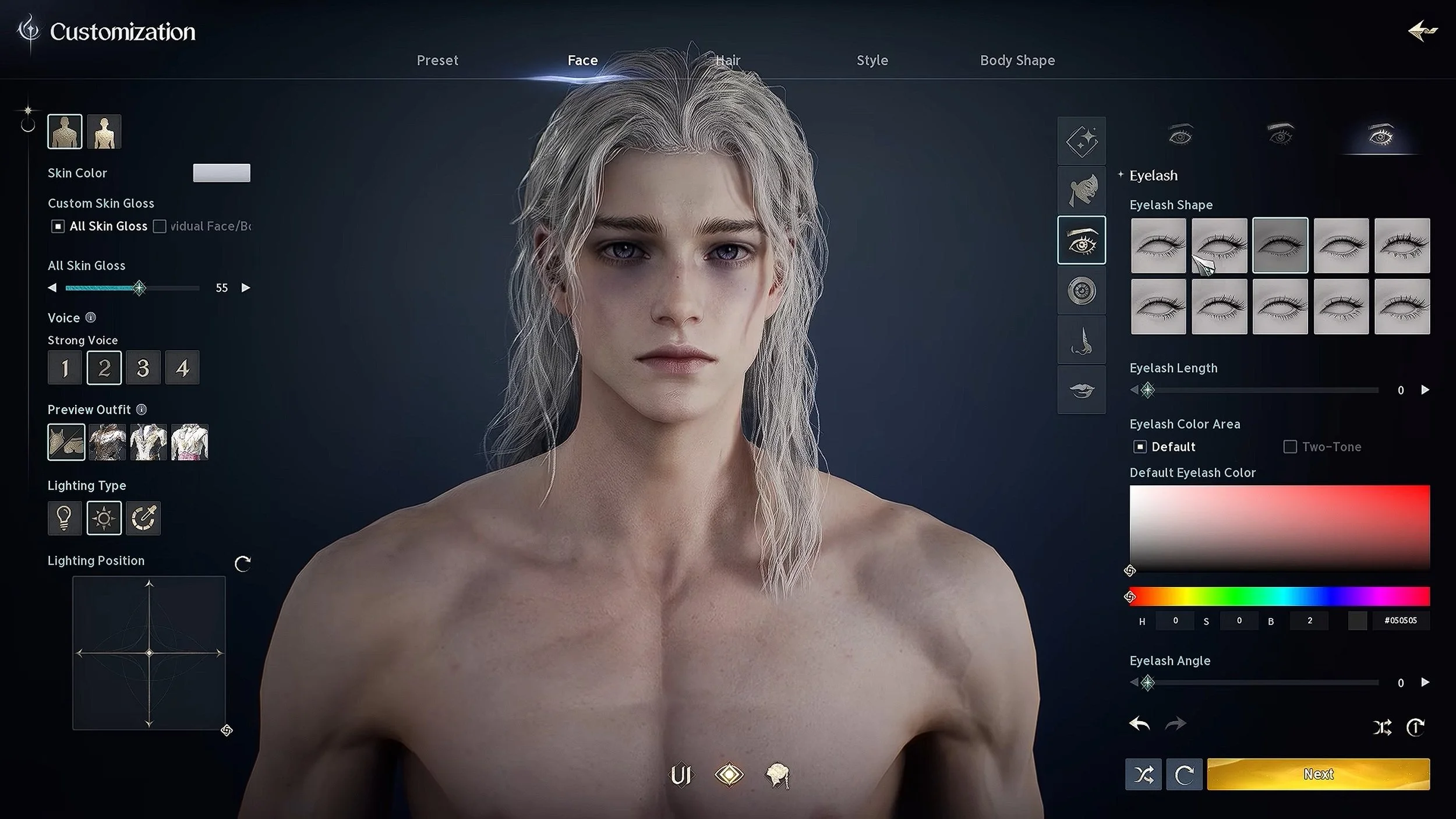
One of the things that I enjoy when playing a new video game is character customisation or character creation. I will spend hours trawling through settings, changing the most minute and consequential aspects of my avatars appearance. I am certain that there is a psychological aspect to this particular game mechanic and that it says something about you as a person. Are your creations shaped just by a need to look good in-game or is there more to it? Are they external manifestations of your sexual preferences or thoughts on body image. Do you treat them as characters from a book that exists in your mind. Do you aspire to recreate the likeness of people you know or admire? Do you strive to make your avatar look like you? Whatever the reasons, it would seem that character creation is something that a lot of gamers enjoy. Hence I am not alone in my borderline obsession. What you look like in-game is equally as important as your character’s name.
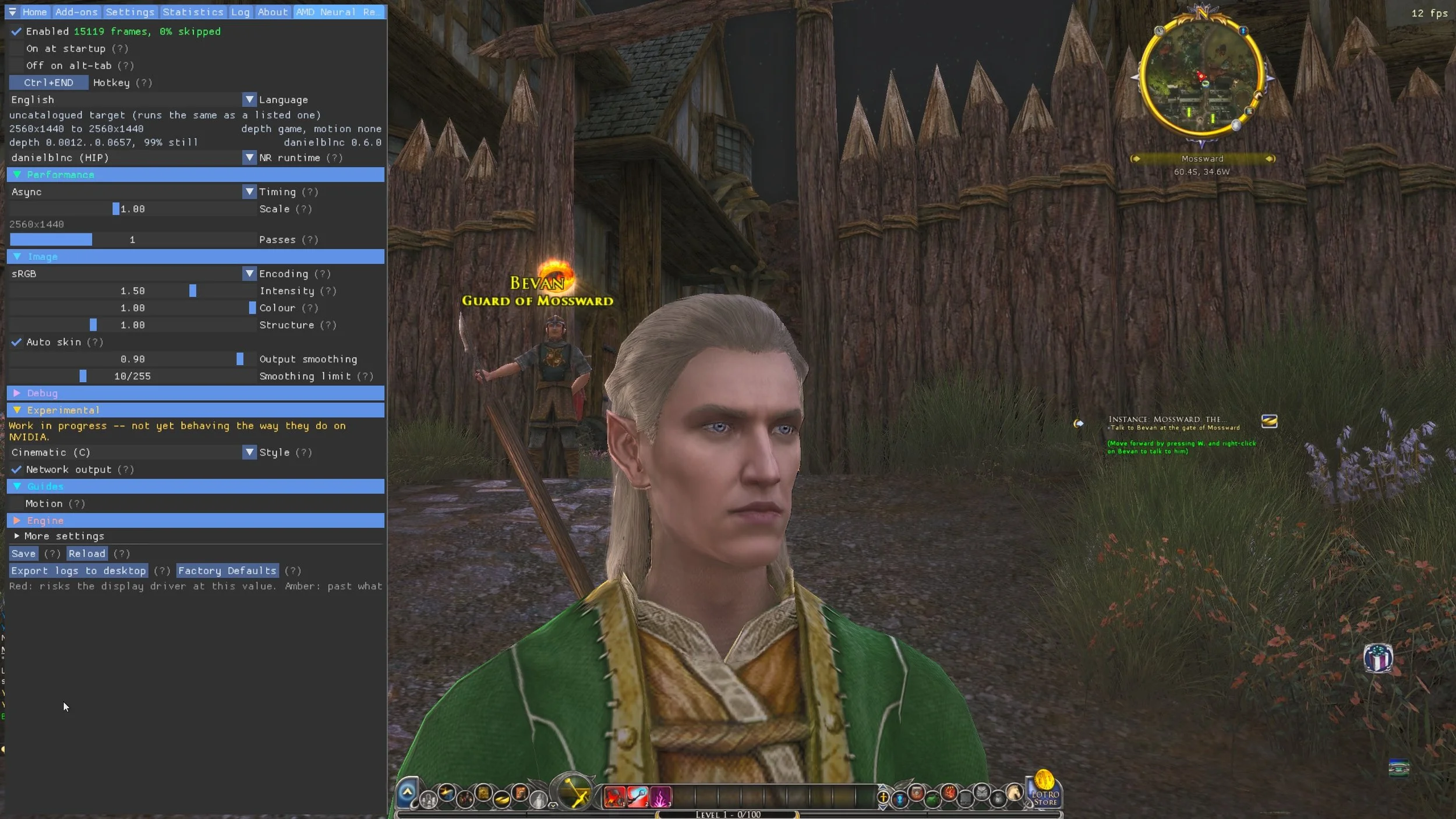
I recently tried to use DLSS 5 Manager with the MMORPG, The Lord of the Rings Online. Unfortunately, things didn’t work out. Today I undertook a similar experiment with AMD Neural Rendering, which is a broadly comparable product. Both utilities use 3D-Guided Neural Rendering, an AI technology that alters how lighting, reflections, and textures look in a game. Instead of just upscaling the image like older versions, DLSS 5 uses an AI network to instantly "re-render" lighting and material responses over the game's layout, achieving photorealistic details that would normally negatively impact a graphics card's performance. Or to put it in less fancy terms, the game graphics are enhanced and modified, although it is highly subjective as to whether the end results are an improvement. However, as a game such as LOTRO is unlikely to ever receive a major graphical overhaul, tools such as these are the nearest players will get to revised graphics.
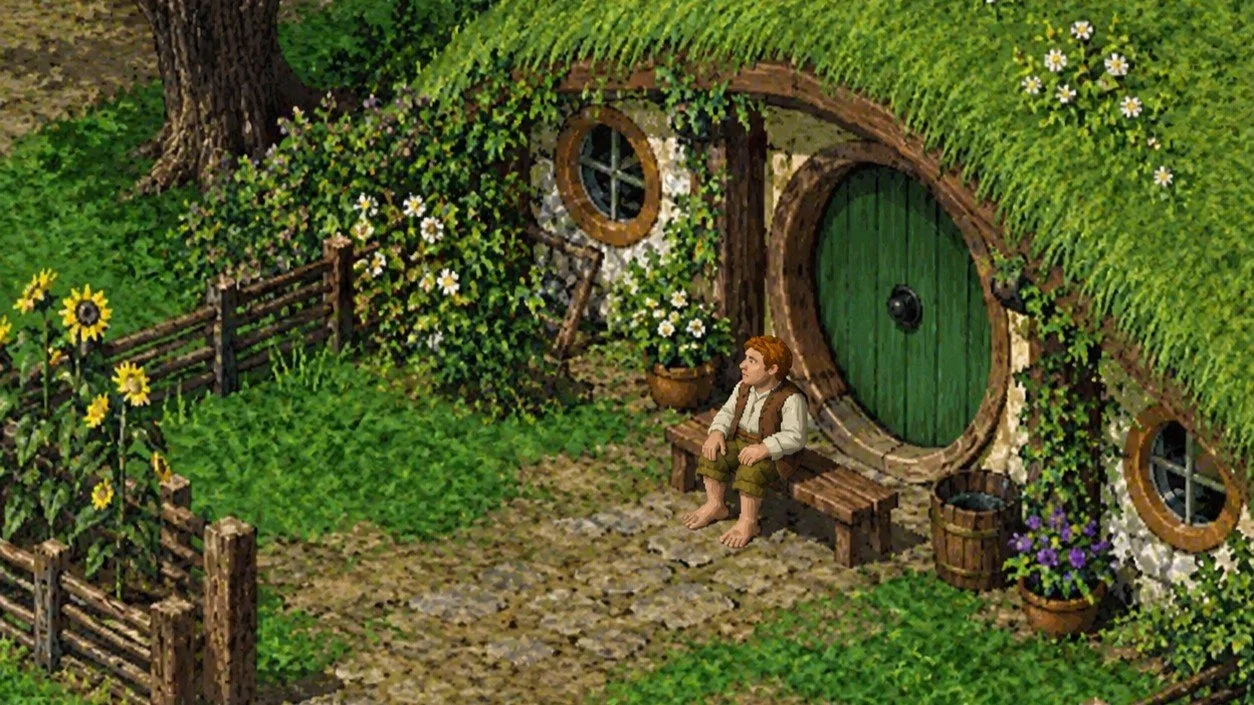
The core game code and engine for the MMORPG, The Lord of the Rings Online, is about 24 years old. LOTRO began originally as Middle-earth Online, developed by Sierra On-Line in 1998. Turbine took over full development of the project in 2003/2004 when their parent company, Vivendi Universal Games, acquired Sierra. The content that had already been developed by Sierra was abandoned and Turbine created a new game using structural elements such as the UI and game engine from their previous release Asheron’s Call 2 from 2002. The Lord of the Rings Online: Shadows of Angmar was officially released in April 2007. Hence, the active public release code is 19 years old. Despite continuous expansion and updates, along with a recent migration to 64-bit architecture, the foundations of LOTRO retains a nearly twenty year old legacy framework. This frequently contributes to modern technical hurdles and engine constraints.
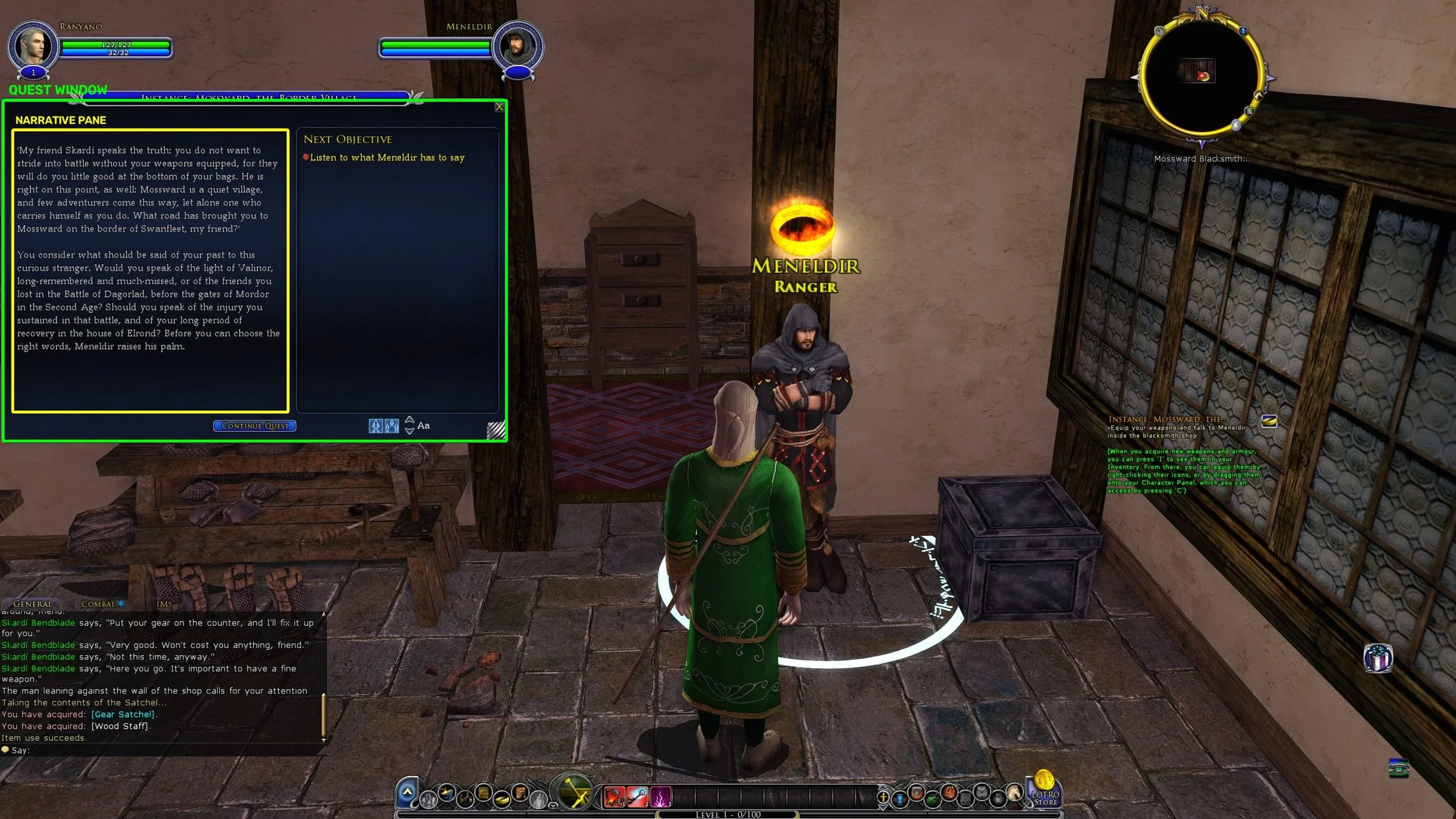
A few years ago, there was a fan created project to provide voice narration of NPC dialogue in the MMORPG, The Lord of the Rings Online. This mainly involved capturing the text in the quest dialogue windows and then sending it to OCR software, before using a text-to-speech program to read it. LOTROVoice as it was known, broadly worked but the creator stopped developing it as it proved troublesome to maintain. However, I recently discovered Khazad Voice TTS which is a separate project that does pretty much the same. I went so far as to install this “immersive AI narrator for LOTRO” after seeing a YouTube video of it being used successfully. Sadly I ran into issues configuring Khazad Voice TTS, because I have two monitors and LOTRO runs on the secondary (by my choice) and not the primary. I couldn’t “lasso” the dialogue windows in LOTRO during the calibration set up, which effectively prevented me from completing the process.
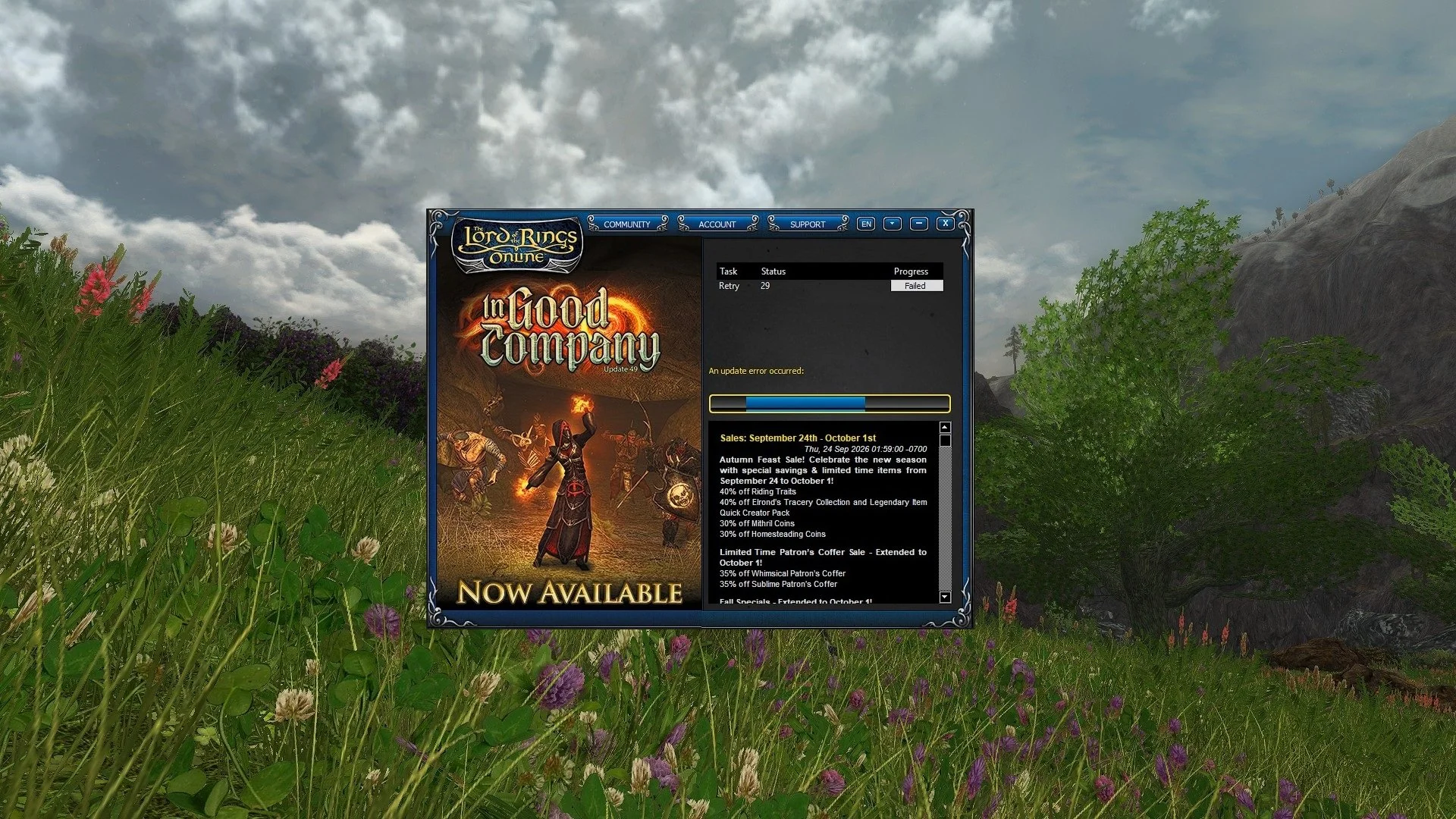
Throughout yesterday and early today, there was an issue logging in to the MMORPG, The Lord of the Rings Online. Upon starting the game launcher, it would attempt to connect to the patch server to download the latest game update. This process would start but then subsequently stall at 33%. The launcher would then attempt to reconnect to the patch server every 60 seconds but could not make any further progress. Some players found that if they left it long enough, it would eventually complete the download and the launcher then progress to the next screen where they could input their username and password. However, for the majority of LOTRO players the problem would simply persists and the launcher would be stuck in a loop. Some players attempted to reinstall the game or use the repair data facility in the launcher but neither of these proved to be successful workarounds. The patch sever needed to be bypassed to resolve the issue.

Two years ago I wrote a post about fine tuning your graphics in the MMORPG The Lord of the Rings Online. Apart from installing ReShade and using AMD Adrenalin, the options were somewhat limited, due to the game’s age and multiplayer status. Since then, I’ve been playing LOTRO with the game settings maxed out, a custom ReShade profile to make the colour palette more vivid and Radeon Image Sharpening enabled within the AMD software. The game looks clear, crisp and the draw distance is pretty good for an ageing game but I still wish the graphics could be tweaked further. Hence, I’ve been trawling the internet in a vain attempt to see if I can find any third party utilities that could be used to enhance LOTRO further. During the course of my search I stumbled across DLSS 5 Manager. This is an open-source, intelligent utility and one-click mod installer designed to inject and manage Nvidia's DLSS 5 neural rendering features, ReShade, and OptiScaler into PC games.
Are video games becoming easier? It’s a perennial subject that is frequently discussed by those who play them. Often the question of whether they have actually become easier is not the focus of the debate, as it seems to be broadly recognised that it is the case. Instead, discussion of this matter tend to drift into the rectitude of this change. Debate’s of this nature are usually awash with subjective opinions and personal preferences which are then put forward as objective facts. It’s not just a question of video games becoming easier, it’s the fact that making them easier is “wrong” and those who want them as such are “not proper gamers” etc. The hours that have been lost to this pointless, tedious debate are uncountable. However, I digress. Let us return to the matter of video games becoming easier, because although fans discuss this a lot and have plenty to say, you don’t often hear from the developers on this subject.
I recently completed the main story in Tainted Grail: The Fall of Avalon. In total I spent about sixty hours playing the game. I began at the start of the year, then took a break for a while but returned to it recently because I wanted to see if I could unlock a specific ending. I did manage to do this. Like so many other RPGs, Tainted Grail: the Fall of Avalon has a central storyline, along with a wealth of side quests, based around factions in specific zones. I think I possibly completed about a two thirds of these. However, once I finished the main story, my interest in the game began to wane. I finally left my character in the last major quest hub in case I wish to return at a future date. I then logged out of the game and uninstalled it from my PC to free up space for whatever I was to play next. In this case its The Sinking City 2. None of this is a negative reflection on Tainted Grail: the Fall of Avalon. I enjoyed the time I spent playing this quirky RPG. I simply had my fill and left to play something else.
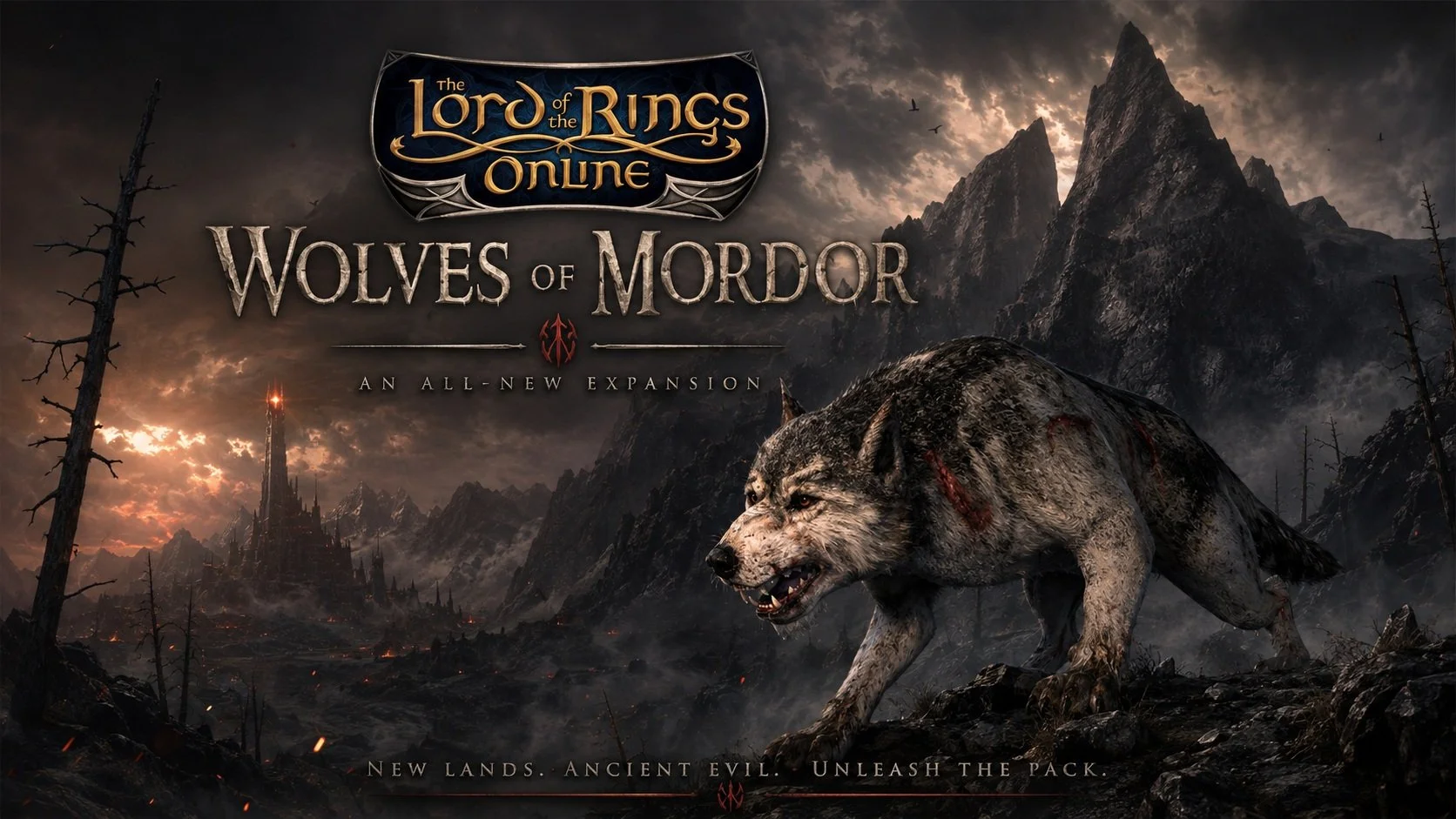
The next expansion for the MMORG, The Lord of the Rings Online, was announced on the 1st August, via the gaming website MMORPG.The Wolves of Mordor, which will launch later in the year, appears ambitious in scope as it will include two new game systems as well as the obligatory story update. This expansion takes place in Draugardh located in the North East of Mordor, beyond the Plateau of Gorgoroth. It includes the new zones of Heledhris, Parth Rhavas and Nan Ogol. These vary environmentally ranging from the arid, volcanic and semi-tropical. Players will encounter the Daugrim in these regions, Werewolves but not in the modern sense. This is not the lycanthropy of Eastern European legends but in the established Tolkien idiom of fell spirits inhabiting the bodies of Wolves. The region also sees the return of the Woses and players can expect to encounter Elves and scouts from Gondor. As ever with LOTRO expansions, there will be new instances as well as a raid.
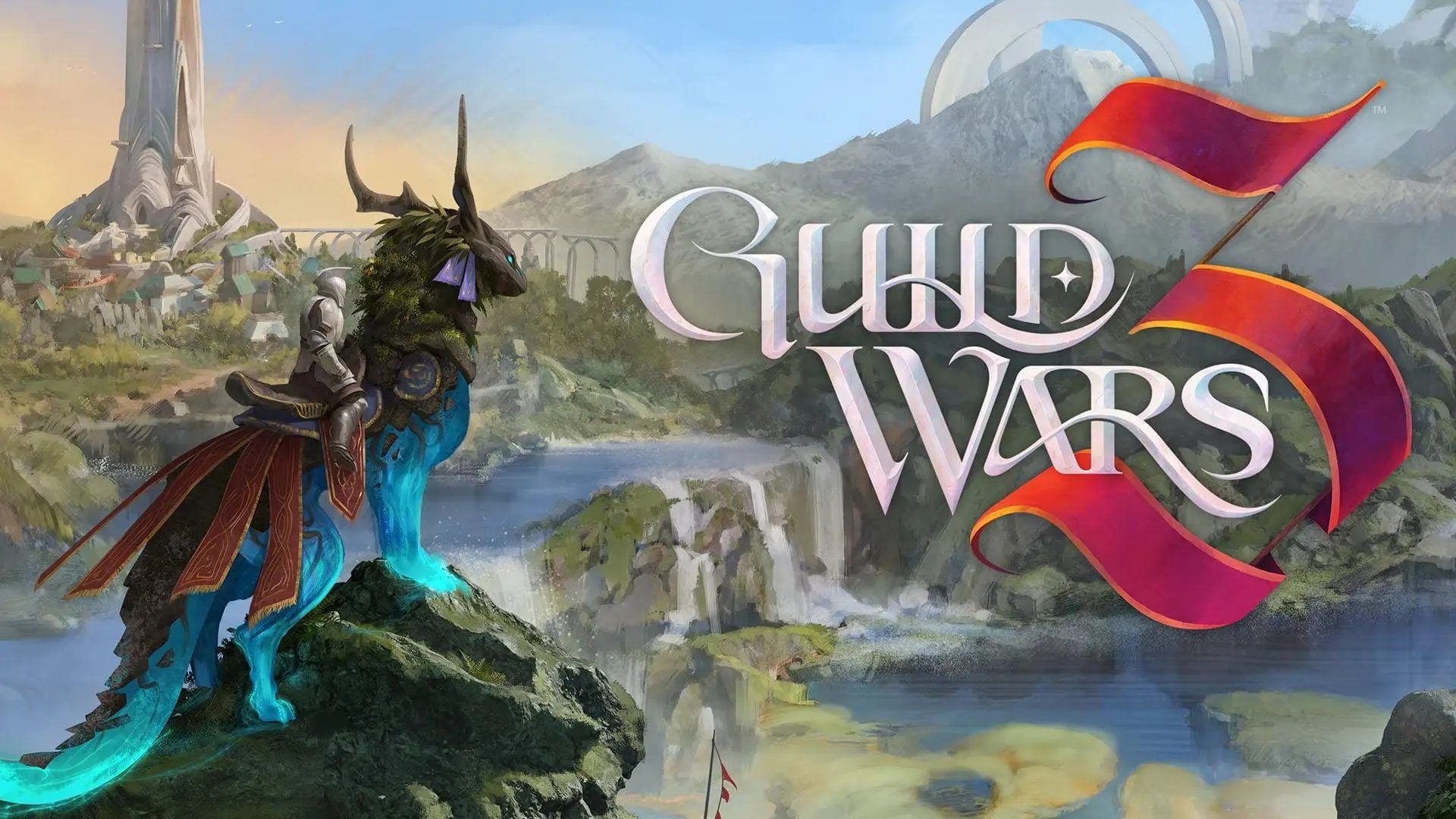
I don’t keep up with gaming news as much as I use to but several noteworthy announcement have come to my attention of late. Firstly, there’s an expansion, Songs of the Past, coming for the Witcher III: Wild Hunt in 2027. No doubt this is to pave the way for the Witcher IV. Next, I also found out about Hand of Fate: Horde. I liked this franchise and was saddened to learn that the original studio, Defiant Development, closed. Hence is was a pleasant surprise to see this new game being developed by members of the original studio. The third announcement was regarding Guild Wars 3. A new MMORPG in active development by a major studio is no small feat and is certainly good news for fans of this franchise and the genre per se. However, once you look beyond this news this announcement raises several questions and has certainly given me pause for thought. Let us take a few moments to consider them.
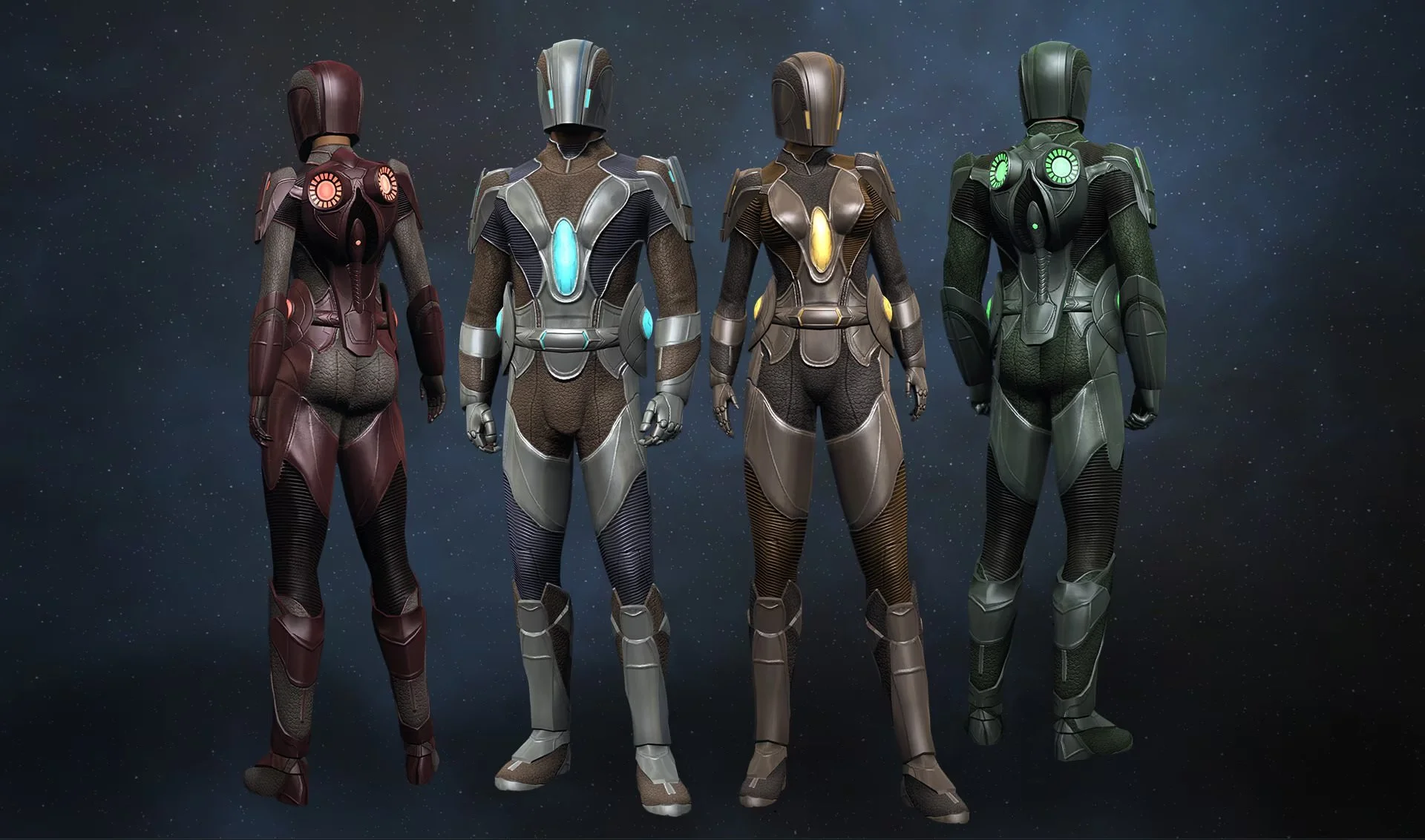
Star Trek Online has many in-game systems that are common to the MMORPG genre. The reputation system is one such example. In STO there are 13 reputation factions. Once a player has reached level 50 they may start progressing through the 6 reputation tiers of each one. Players gain progression through daily projects (20 hours in duration). Hourly projects are also available though they yield less reputation advancement and are limited to three times a day. Hence 20 hour projects are consider by default the most efficient way to gain rep. Projects require 30 Faction Specific Marks (earned via various activities in-game), 15,000 Energy Credits (standard in-game currency) and 2000 Expertise points. The most efficient way to tackle the reputation grind is to build up the necessary resources in advance and then at a designated time each day, start all 13 respective projects. Upon completion projects yield a player bound lockbox containing a random space or ground weapon, a console or Elite Marks which can be used to acquire faction gear.
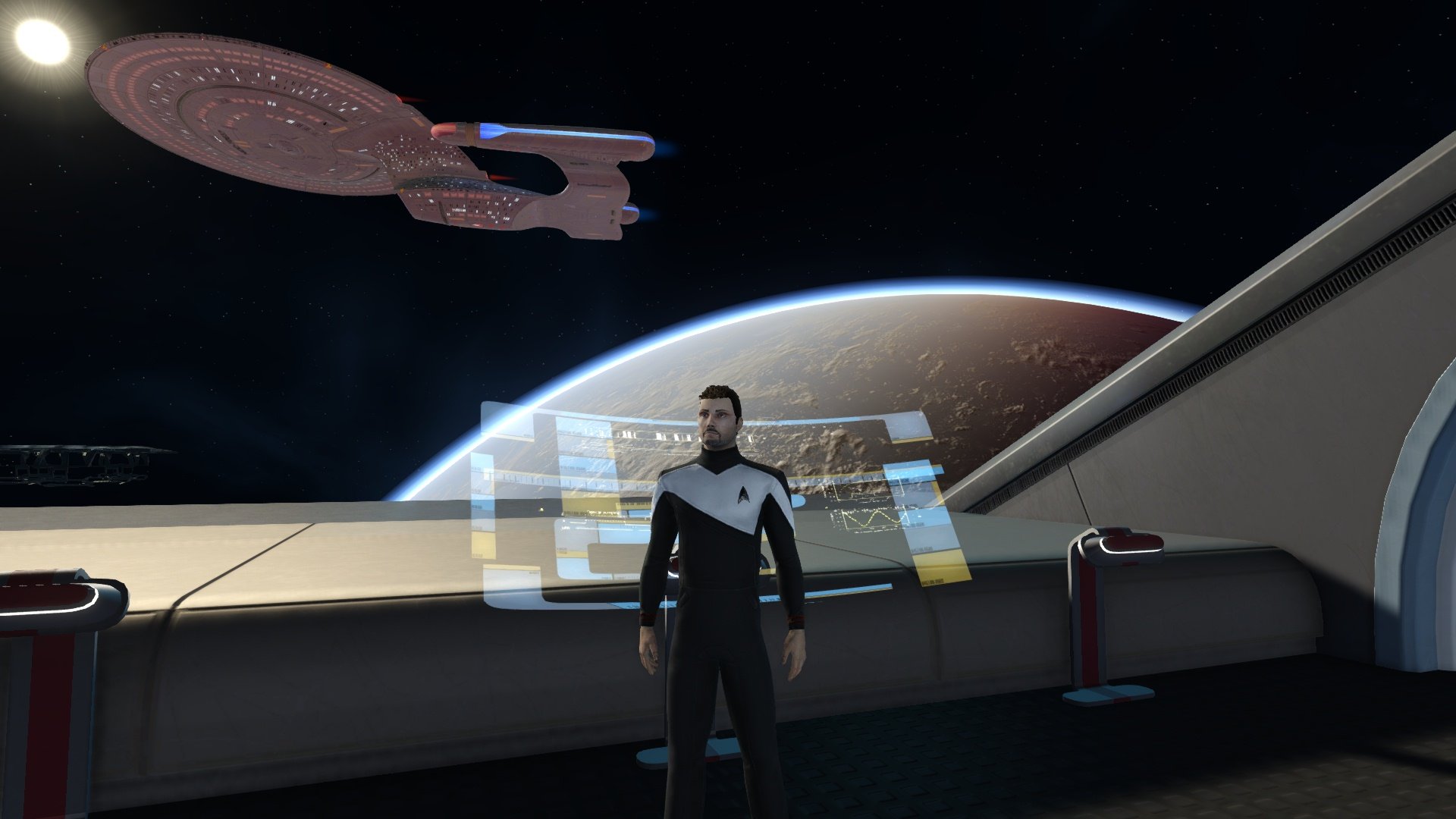
I was recently perusing my archive of old blog posts, when it struck me how much I’ve written about the MMORPG genre over the years. Naturally, there was far more material from between 2008 and 2012 as that was period when I immersed myself in the genre and was very enthusiastic about it. I was at a point in my life when I had the time to dedicate to such games and I was happy to participate in the social aspect of they offered. I would regularly play through group content and spend time socialising online with fellow guild members. My experience remains a textbook example of how online games can be more than the sum of their parts and that where you are at in your life has a major impact upon your overall enjoyment. As I read though various old posts it became clear that my experiences where specific to this particular part of my life and that they cannot be repeated. My relationship with the genre is very different now and that’s fine.
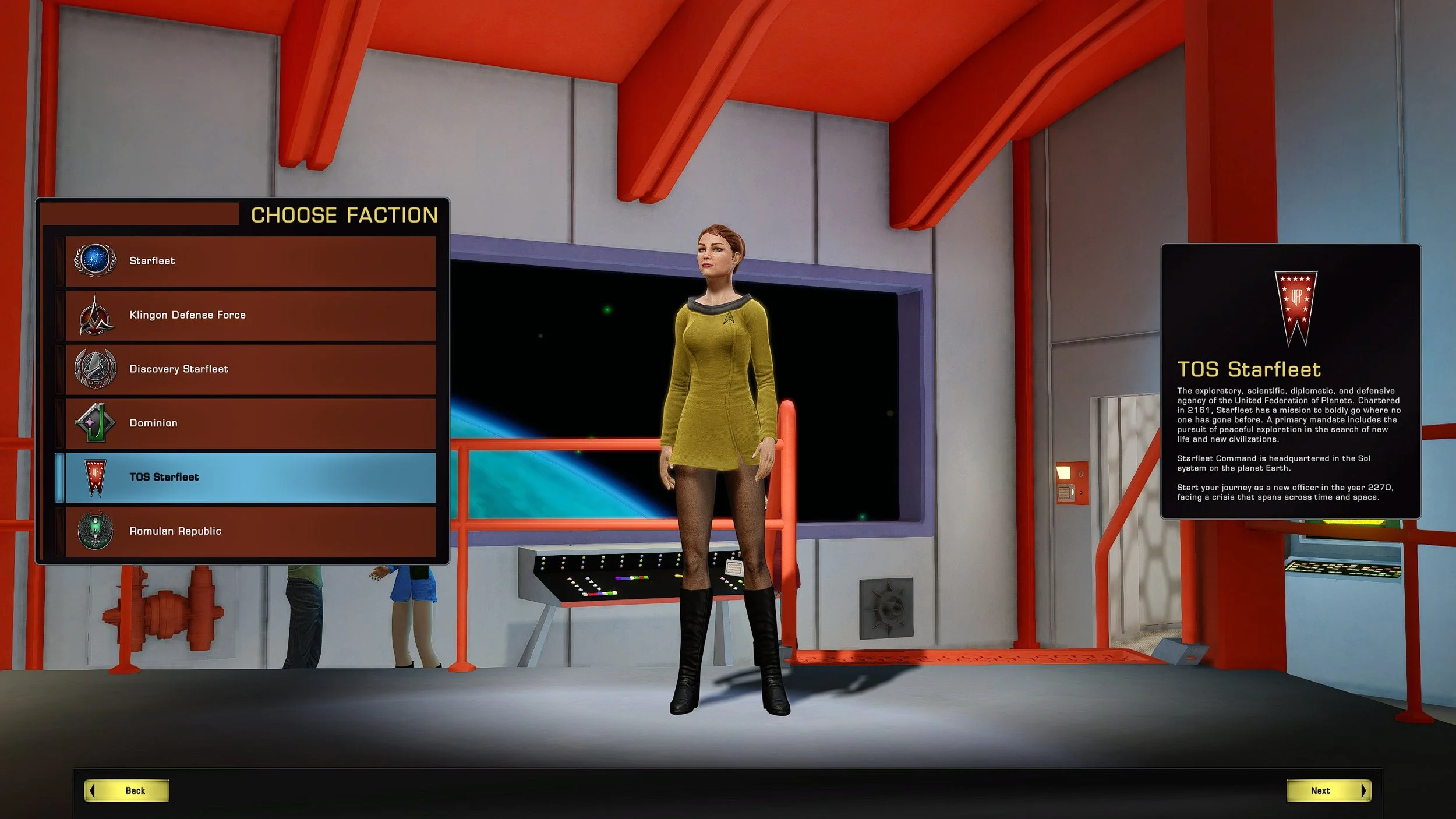
Creating alts is an integral aspect of the MMORPG genre. Many players will create a character of a specific class or faction, play it for a while, lose interest in it or they may decide that it is just not for them. Fortunately it is no effort at all to simply re-roll a new alt and set off once again. Furthermore, lots of players never reach level cap of the MMORPG that there playing. When the going get’s tough, so to speak, you can either soldier on for another 50 levels or simply create a new alt and return to the comfort of tried and tested content. Alts also give you the chance to secure an accolade or achievement that you previously missed. They are also of great benefit to the genres social aspects. Creating a new alt so you can play along with a friend who is just starting is great fun. Developer’s love them too as it means you’re still playing the game.
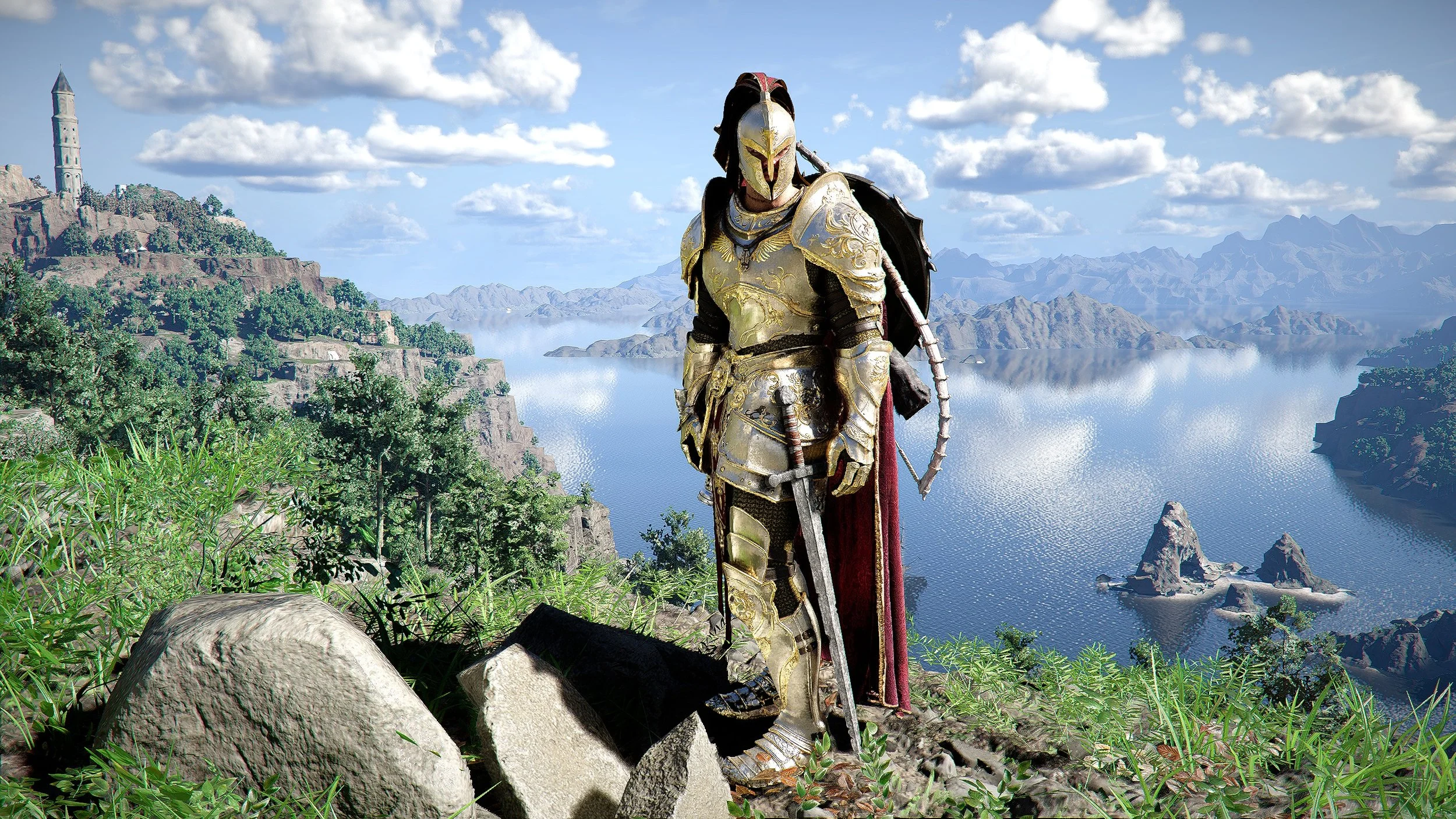
I recently took a break from Crimson Desert choosing instead to to play something familiar and easy going. As I’ve been logging into Star Trek Online daily to participate in the anniversary event, I decided to look through my various alts and see how far they had progressed through the game and what resources they had. At present I have twelve alts. My primary Captain was created in 2015 during the original Delta Recruit Event. I had previously played STO intermittently since its release in January 2010 but I never kept any of those characters. Hence this decade old Tactical Federation Captain has been my main focus when playing. The other eleven alts are the result of other recruitment events or whenever I wanted to try something different, such as playing a specific class or faction. I obviously played a lot of STO during the lockdown as several alts date from that period. Several had maximum reputation across all factions.
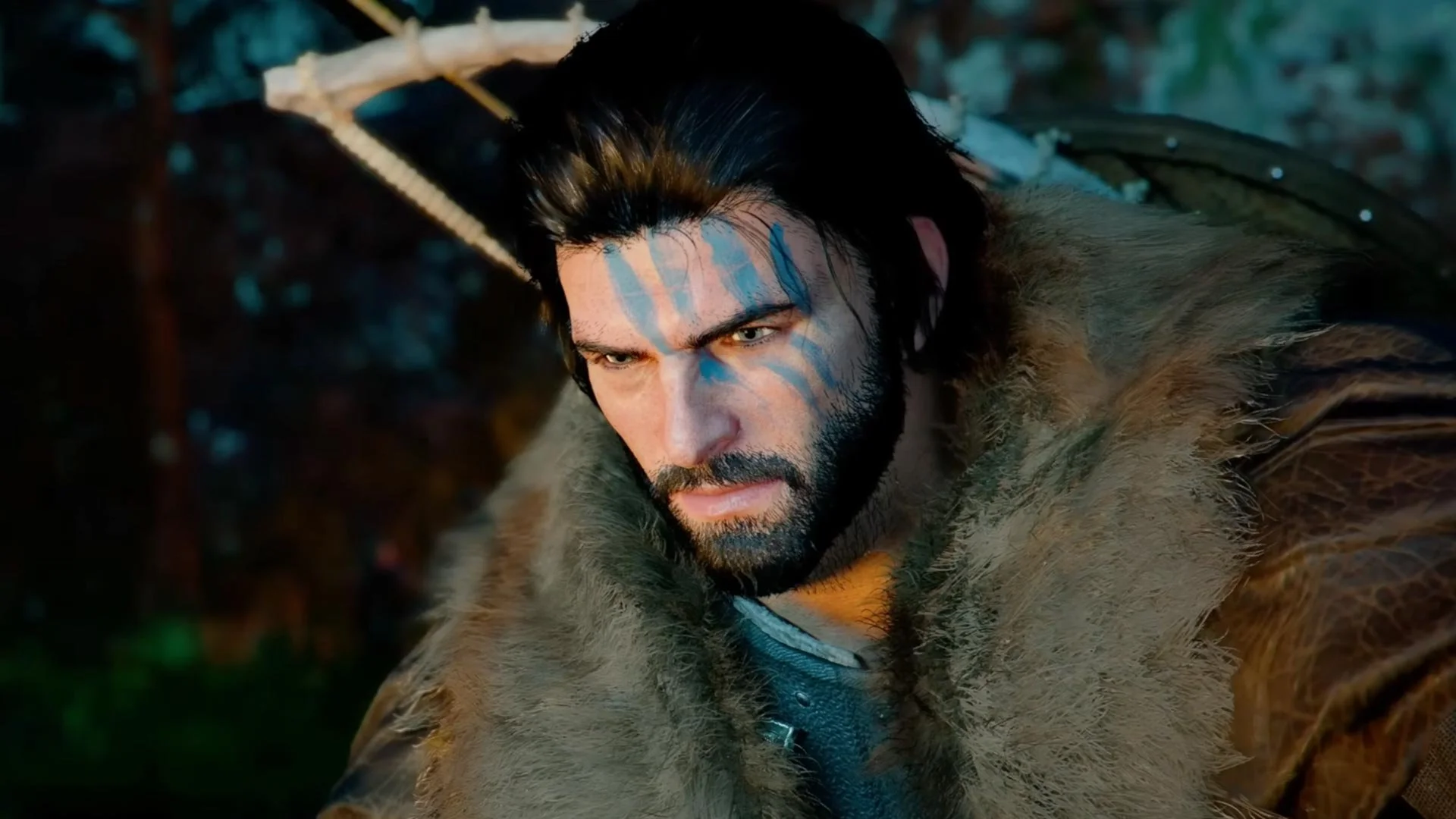
13 days after its release, market analysts estimate that Crimson Desert has already earned $200 million across the four main platforms (PC, PlayStation 5, and Xbox Series X and S). The game is certainly proving popular among gamers with the internet awash with live streams and “let’s play” videos. However, reviews are mixed both among gaming journalists and YouTube influencers. Common complaints about the game include that it is slow to start, the controls are poorly laid out on all platforms and that developer’s Pearl Abyss have done a poor job of explaining most aspects of the game to new players. Although such criticisms are true to a degree, I think these complaints highlight how many gamers are conditioned to expect new titles to follow a specific pattern with regard to pacing, narrative exposition and learning in-game systems. A pattern that Pearl Abyss has chosen to ignore, instead favouring an old school approach.
Last night, I spent the first 45 minutes after the launch of Crimson Desert, watching the 92GB pre-downloaded game files slowly decompressing and installing. I finally launched the game at about 10:50 PM GMT. I then waited a further 5 minutes while shaders were downloaded. It took me about 15 minutes or so to read through the various game settings and choose those that are optimal for my PC. I suspect even if you have a beast of a computer, you’re still going to have to spend some time tweaking settings. As for those players like myself with a gaming rig that is somewhere in the middle of the game’s specifications, be prepared to do a lot of fine tuning both within Crimson Desert itself and your Windows settings.
Video games as a genre are extremely poor at explaining themselves. When you buy a new game you’ll often find little or no information regarding the basic systems and mechanics. The industry assumes that their customers are by default familiar with the fundamentals of playing a modern video game. Hence if a game has a tutorial, it is often based around videos rather than detailed verbal instructions. You are are briefly shown a clip of a specific move being successfully undertaken but it is seldom shown in a wider context. The industry also expects the fan community to take on the role of curating and disseminating information about its games. The move away from forums and bespoke websites to Discord highlights this. Discord is a primarily a real time communication tool and not good at maintaining a historical data archive. If you want an answer to a specific gaming question, you’ll more than likely find it on YouTube in a video made by a fellow gamer.
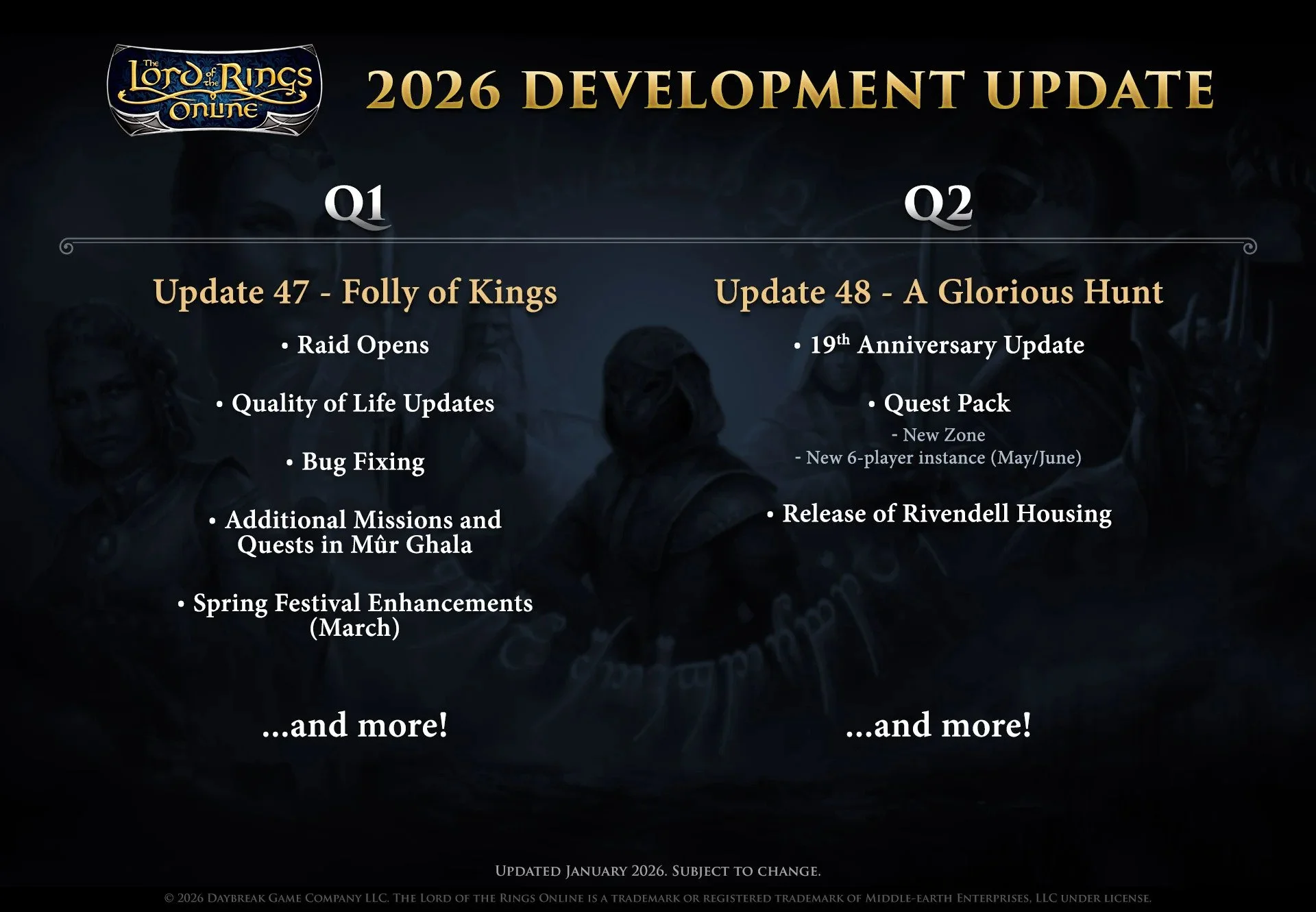
According to the recent “letter to the players”, Standing Stone Games will be adding a new zone to the MMORPG The Lord of the Rings Online in the second quarter of this year. Possibly around May or June. Having spent the last three expansions in the South of Middle-earth exploring the tropical Umbar and the deserts of Harad, I would certainly welcome a change of location. I have gradually warmed to these zones over the last eighteen months but I do find them so incongruous. They are so radically different to the European style content that has been the mainstay of the game for so long. Tolkien’s source text has plenty of detail regarding Eriador and Rhovanion. Information regarding Harad is scarce, hence it has afforded the developers a great deal of artistic freedom. Although exceedingly well realised these tropical zones have taken a while for me to get used to.
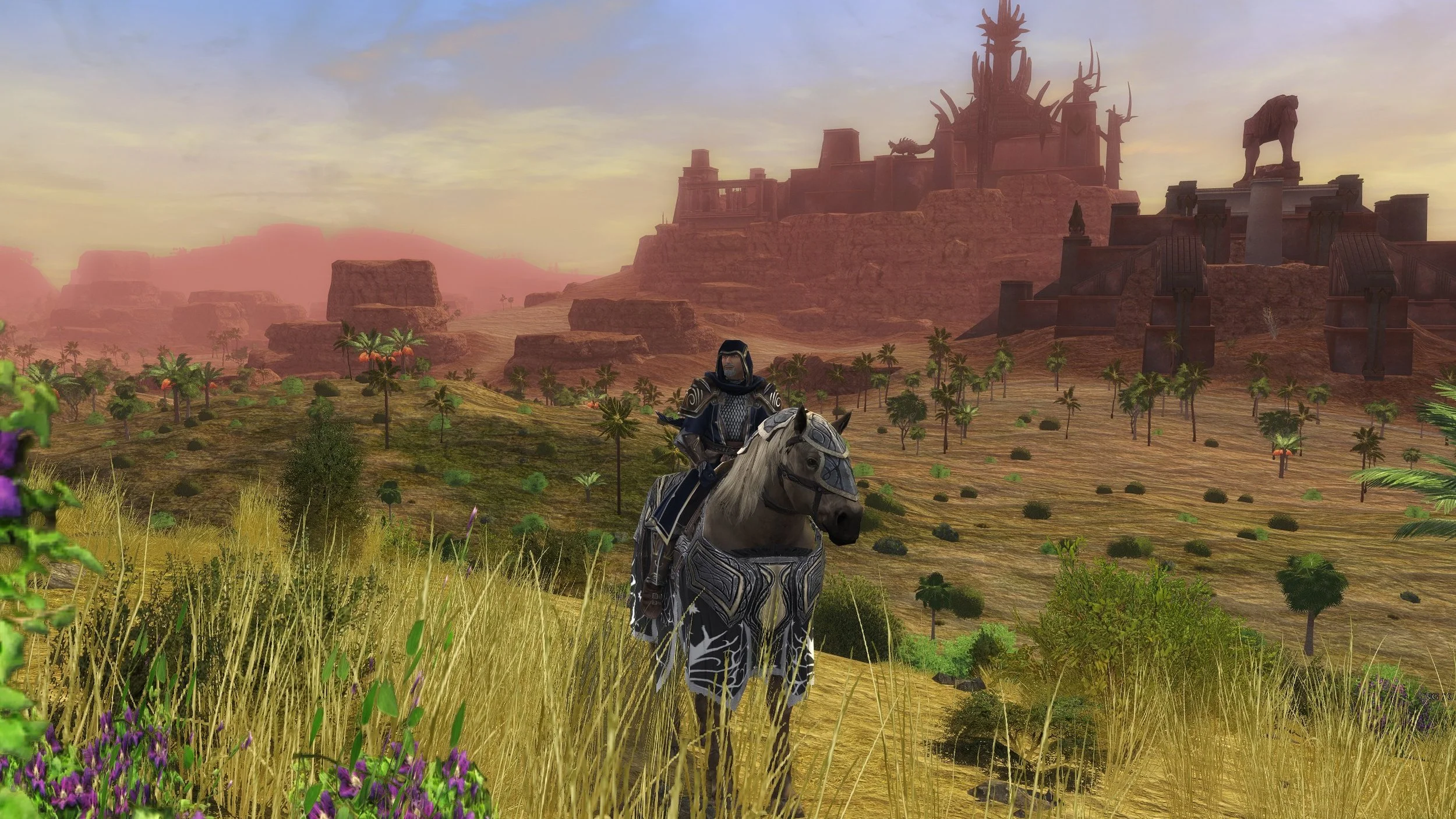
I’m not sure exactly when it started but I’ve recently noticed a graphical bug within the MMORPG The Lord of the Rings Online. This problem often occurs within caves or in areas where there are a lot of rocky surfaces. Hence it has become very apparent in the latest two expansions, set in Umbar and Harad. This graphical glitch causes some surface textures to appear to flash from light to dark intermittently. The resulting strobe effect is hard to ignore and very distracting. Fortunately, a quick online search showed that this is not a problem unique to my installation of LOTRO and is a known problem. Furthermore, there is a very simple workaround, which is to go into the Advanced Graphics setting and uncheck “Per Pixel Lighting”, which immediately remedies the problem. I have no idea why this has recently started to happen but at least it can be resolved.
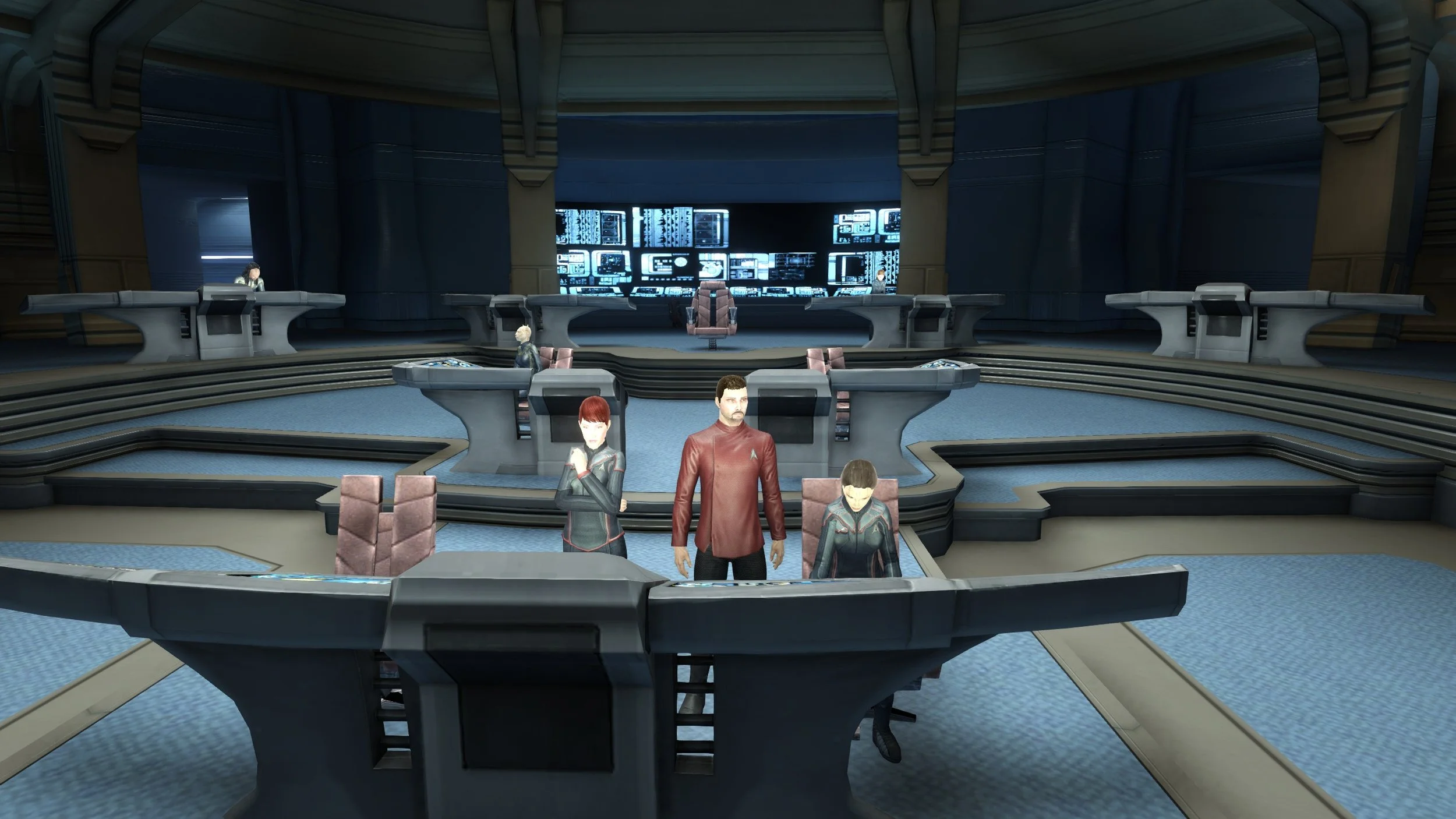
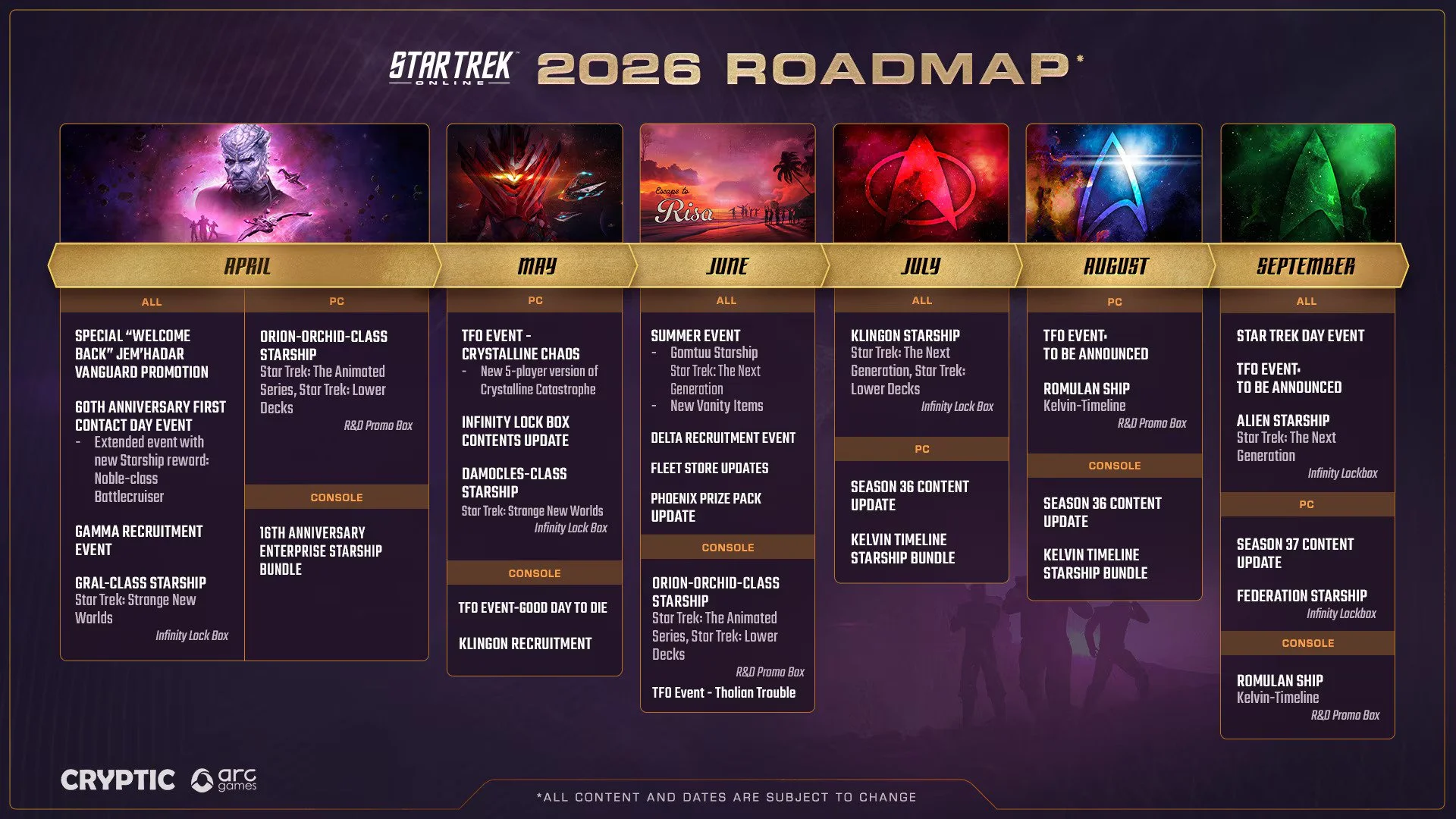
This year is the 60th anniversary of Star Trek. The original TV show was first broadcast in the US on September 8th 1966. If you search online you’ll find details of lots of related events. There are documentaries, conventions, new TV shows and even some video games in development. However, what you won’t find are any details regarding what will be happening with the MMORPG Star Trek Online. So far no road map for 2026 has been posted online by the developers but it is still quite early in the New Year. That being the case, I am not especially optimistic about there being any major plans waiting to be revealed. It is not as if DECA Games have demonstrated or stated any major ambitions for STO beyond keeping the endless events treadmill going and regularly adding content to the in-game store, during their development tenure. The ongoing story arc drags on inexorably and is as dull as ditchwater.
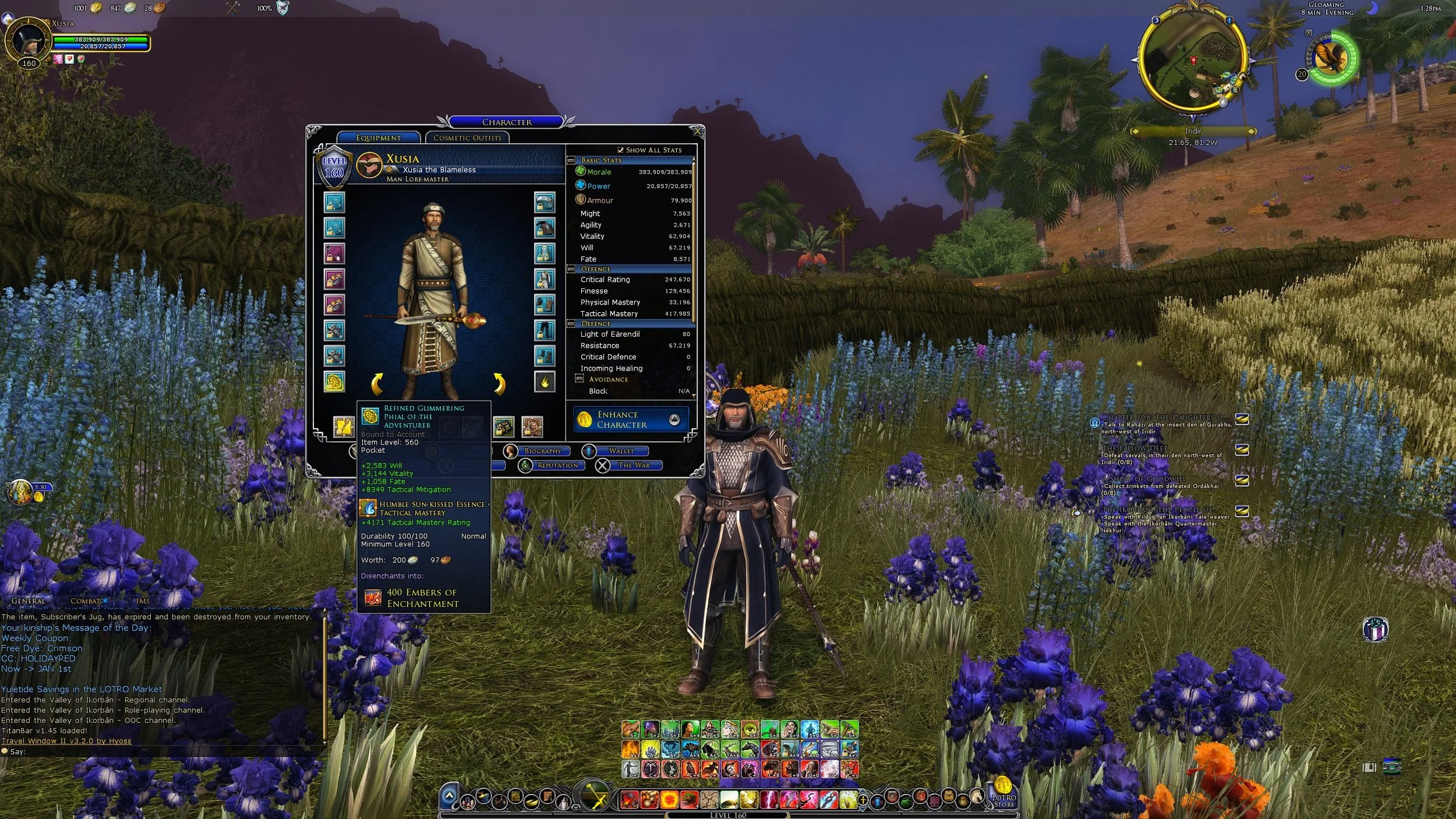
The latest expansion for the MMORPG The Lord of the Rings Online, Kingdoms of Harad, launched on December 3rd. With this release the level cap was raised from 150 to 160. It should also be noted that the cap for virtue traits was also raised from 96 to 100. Naturally these changes meant that there is a requirement to replace all armour and jewellery once the new cap is reached. Similarly Legendary Items have to be reforged and any traceries upgraded or replaced. If you follow the Epic Story it will lead you from quest hub to quest hub. The main quest rewards, along with those from side quests will provide adequate gear as you slowly progress towards the new level cap. The new raids, instances and missions/delvings then provide a means to acquire higher quality level 160 gear. LOTRO and indeed, many other MMOs are consistent in this methodology.
It is customary in a post such as this to list the various games that I’ve played over the last twelve months and share my thoughts on them. Wider analysis of the video game industry is also de rigeur. Unfortunately, I don’t really feel disposed to do either of those two things. My thoughts on the games I’ve played have already been published and can easily be accessed via the links at the bottom of this post. As for the video game industry, it suffers the same flaws as music, TV and cinema. There is creativity and innovation out there but it is often drowned out by mainstream products which are demonstrably inferior due to their inherent mediocrity. As for the business side of things, we once again clearly see the failings of the corporate management class. Sadly, they do not face the consequences of the mistakes that they make.
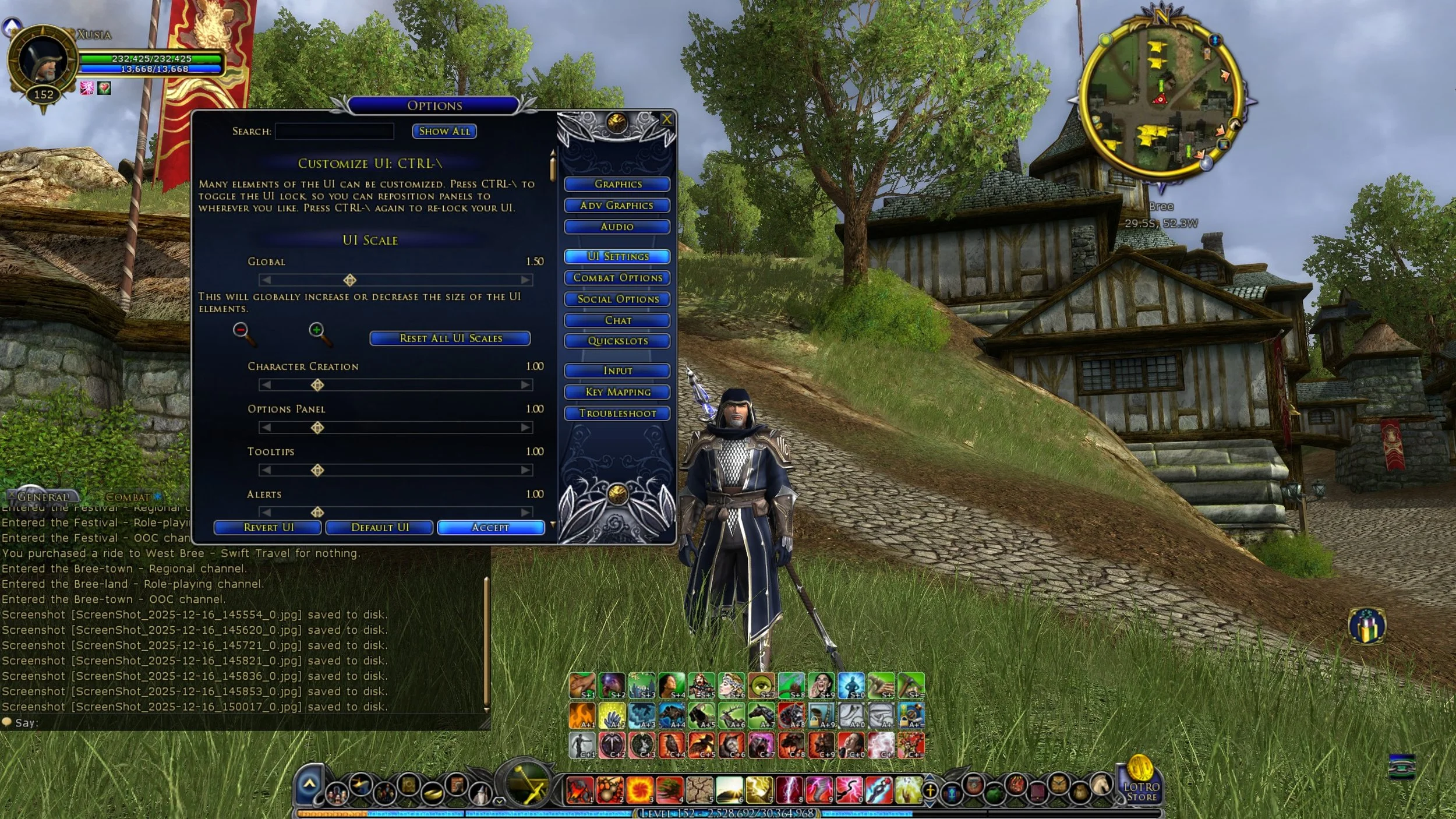
Today Standing Stone Games began beta testing Update 46.1 for the MMORPG The Lord of the Rings Online. The current preview on the Bullroarer test server is mainly for the new instance cluster that comes with the Kingdoms of Harad expansion which launched a few weeks ago. However, it would appear that this latest preview has another feature or note. One that should please LOTRO players. Contrary to what a lot of people thought, myself included, SSG have been working on a scaling UI for 2K and 4K monitors and the results are now available for testing from today Monday 15th through to Friday 19th December. Until now the main workaround to the lack of UI scaling has been to use either Nvidia or AMD graphics software to upscale the game from 1920 x 1080, or a third party app such as LosslessScaling. Having an official solution is a far better option.

For the last six years, Echoes of Angmar, the “unofficial” server for the MMORPG The Lord of the Rings Online, has quietly gone about its business. Its existence has been a known quantity during this time but it has never really become a major talking point. Providing an iteration of LOTRO from November 2007, those who wished to play the “classic” version of the game did so and everyone else stuck with the official version. Middle-earth Enterprises issued a cease-and desist letter in August 2022 but I get the impression it was a formality rather than a serious endeavour to close this unofficial version of the game down. Since then, the two versions of the game have co-existed without any fuss. I briefly tried Echoes of Angmar when they were conducting stress tests and found it a pleasant nostalgia trip for a few days. Ultimately it was not something I wanted to play habitually but it was good to be reminded of how LOTRO was when I started playing in 2008.