
Cyberpunk 2077: Too Much Information
In 1979 I started learning French, as it was a standard part of the UK school curriculum then. For the first year or two, I remember learning the rules of French grammar and keeping pace with what was being taught. And then in the third year, something odd happened. I was asked a question one day and my mind was blank. This wasn’t a case of forgetting something that one can recall when prompted. No. This was due to an informational void. I found myself at a point where I was suddenly and totally out of my depth. Somehow in the months prior, I had reached a point where I had stopped comprehending and absorbing what was being taught. And I had now strayed beyond and was no longer equipped to deal with the situation. For those wondering where I am going with this analogy, allow me to clarify. I found myself in a similar situation with the role playing game, Cyberpunk 2077, within hours (not years) of starting it.
In 1979 I started learning French, as it was a standard part of the UK school curriculum then. For the first year or two, I remember learning the rules of French grammar and keeping pace with what was being taught. And then in the third year, something odd happened. I was asked a question one day and my mind was blank. This wasn’t a case of forgetting something that one can recall when prompted. No. This was due to an informational void. I found myself at a point where I was suddenly and totally out of my depth. Somehow in the months prior, I had reached a point where I had stopped comprehending and absorbing what was being taught. And I had now strayed beyond and was no longer equipped to deal with the situation. For those wondering where I am going with this analogy, allow me to clarify. I found myself in a similar situation with the role playing game, Cyberpunk 2077, within hours (not years) of starting it.
When the first teaser trailer for Cyberpunk 2077 was released back in 2013 I was nominally interested. However, after playing The Witcher 3: Wild Hunt, I became more enthusiastic about the game and the developer’s CD Projekt Red. If it had a similar narrative depth as their successful fantasy based RPG, then it could well be a further genre defining title. Sadly, as soon as it became apparent that the game was going to be in first person perspective, my initial excitement waned. I can tolerate this mechanic in the FPS genre, often where the story is not that important. But in a genre such as the RPG, I think it is essential that you see your avatar from a third person perspective. Especially so when there are dense stories and it is important for the player to have an emotional connection with their avatar. To cut a long story short, over the length of Cyberpunk 2077 long development cycle, I slowly lost interest in the game and was not planning to buy it at launch. And then someone surprised me by “gifting” me a copy as an early birthday present. So I decided to dive right in and play with minimal knowledge regarding the state of the final release.
Now one of the reasons I like the RPG genre is because they usually offer complex stories. A good one is like an interactive novel. Therefore, when I fire up a game such as Cyberpunk 2077 and start playing, I have the subtitles on for all dialogue and I take my time when choosing branching narrative responses. I like to weigh up each reply and consider its ramifications. Just as I do in real life. So I was surprised and far from impressed by some of the timed response sequences that force the player to make a hasty decision on some dialogue choices within a few seconds. This annoys me because my analytical mind will continuously reflect upon whether I have hamstrung myself at some future point in the game. Something that detracts from my ongoing enjoyment of the game in what we call the “moment”.
Another aspect of the game that I struggled with is the collecting and reading of story related data. There are portable drives which are broadly the equivalent of books and scrolls in other fantasy based RPGs. They contain information on characters, institutions and the world the game is set in. I initially started reading each one when collected but I soon put pay to that. As this is a new IP there is a lot to learn and I simply couldn’t assimilate all of this lore in such a manner. Plus on top of all this, there are numerous text messages continuously coming to your in-game phone, plus further messages and data on the computer in your apartment. Naturally not all of it is mission critical but some of it is illuminating in providing backstory to the game world. As such I feel obliged to read it all, otherwise why am I playing an RPG in the first place? If I just want to shoot stuff I can play any FPS.
Naturally, a major part of Cyberpunk 2077 is hacking. One specific type, breach protocol, involves “jacking in” to a terminal and then trying to select a specific sequence of numbers in a short period of time. You are not expected to complete all sequences (there are usually 3) to win, and successfully breach the system you’re hacking. However, the game does an utterly appalling job at explaining a system that is far from clear cut. When I was first confronted with this mechanic it was 2:30 AM and I simply could not comprehend what I was being told to do. It was immensely frustrating. And the game has several other foibles that are equally as frustrating. For example I wanted to get to a particular part of Night City to see if the shops offered more stylish clothing. I set a waypoint on the map and attempted to drive there. But when I crossed into certain areas my screen played a glitch animation and I found myself facing the opposite direction. It seems you cannot just traverse the world as you see fit and some areas don’t open until you reach a certain point in the main story.
Essentially, I have blundered my way through 10 hours of Cyberpunk 2077 and completed 2% of content according to the GOG Galaxy launcher. I have enjoyed aspects of the game but I feel I may have missed some optimal outcomes with my decisions and actions. I don’t feel empowered, enthused or challenged by this. I simply want to trash my existing character and start again. Until I started writing this post, I was slowly sinking because there was “too much information”, as Gordon Sumner sang. However, I have now decided to simply approach the game in a far less methodical fashion. I may even limit the length of my play sessions so I do not find myself going down too many rabbit holes. Often I find myself sounding like a stuck record, repeating the same old observations ad infinitum. Again we have a game that has a poor tutorial and doesn’t adequately inform the player about essential mechanics. Cyberpunk 2077 has also been a timely reminder about the perils of being an early adopter. I suspect the game of the year edition will be far more polished and streamlined. In the meantime I shall continue to play like a child on a bike with training wheels.
Update: I decided to delete my current alt and progress so I could start all over again. I’m also using a Xbox controller for the driving sequences and a keyboard and mouse for the remainder of the game.


Mickey's Christmas Carol (1983)
Upon its theatrical release, Mickey’s Christmas Carol was the first animated film to star Mickey Mouse for thirty years. It was therefore accompanied with a large amount of hype and a wave of nostalgia. The US marketing stated “He’s Back. Mickey Mouse in his first new motion picture” which was somewhat misleading, as the actual animated film was just 26 minutes long. It was shown theatrically along with a re-release of The Rescuers in the US and The Jungle Book in the UK and other territories, in late December 1983. And despite his name being in the title, Mickey doesn’t have a lot of screen time as he plays Bob Cratchit. This is very much a vehicle for Scrooge McDuck as Ebenezer Scrooge. Overall, it’s a succinct distillation of the plot of Dickens’ A Christmas Carol, filled with cameo appearances by classic Disney characters. Naturally it is replete with the humour and sentiment that is inherent in the process known colloquially as Disneyfication. However, does this mitigate the book’s message?
Upon its theatrical release, Mickey’s Christmas Carol was the first animated film to star Mickey Mouse for thirty years. It was therefore accompanied with a large amount of hype and a wave of nostalgia. The US marketing stated “He’s Back. Mickey Mouse in his first new motion picture” which was somewhat misleading, as the actual animated film was just 26 minutes long. It was shown theatrically along with a re-release of The Rescuers in the US and The Jungle Book in the UK and other territories, in late December 1983. And despite his name being in the title, Mickey doesn’t have a lot of screen time as he plays Bob Cratchit. This is very much a vehicle for Scrooge McDuck as Ebenezer Scrooge. Overall, it’s a succinct distillation of the plot of Dickens’ A Christmas Carol, filled with cameo appearances by classic Disney characters. Naturally it is replete with the humour and sentiment that is inherent in the process known colloquially as Disneyfication. However, does this mitigate the book’s message?
Part of the fun of watching Mickey’s Christmas Carol is trying to spot various iconic Disney characters, many of which are in minor roles in the background such as the Big, Bad Wolf and the Three Little Pigs. The larger roles are played by the likes of Donald Duck (Scrooge’s nephew Fred), Goofy (incongruously playing Marley’s ghost) and Jiminy Cricket (the Ghost of Christmas Past). The verbal and visual humour you expect from Disney is clearly front and centre. The scene where Scrooge climbs the stairs to his suite of rooms, followed by Jacob Marley’s spectral shadow, is a wonderfully contrived piece of animation and up to the high standard you’d expect from the studio. As ever there are a lot of innovative shots from aerial perspectives and sequences involving a lot of movement both in the foreground and background. All are lovingly drawn and painted by hand, imbuing the characters with a sense of personality and charisma.
Charm and overt sentimentality are in the very DNA of Disney productions. Hence any material that the studio adapts always has such content enhanced and amplified. This is Disney’s brand of entertainment. For younger, unsophisticated viewers, Mickey’s Christmas Carol plays as a simple but safe morality tale. Bob Cratchit’s poverty is hyperbolic and stylised (he carves a single pea to eat). Scrooge’s meanness and lack of empathy is a caricature, rather than an accurate case study. And so the darker elements of Dickens’ story are neutered due to the “Disneyfication” effect but does it mitigate the power of the story and its essential message? Not really, because the audience has elected to watch a Disney product, so they know in advance that they are not going to get a historically accurate depiction of 19th century deprivation. There is a minor concession to drama at the end, as Scrooge encounters his own hellbound grave which is tonally a little jarring. However, a more practical flaw in the film is making Scrooge essentially comic himself.
By Ebenezer Scrooge being played by Scrooge McDuck, an inherently witty and droll character, the viewer never really disapproves of him or finds him repellent. Hence his redemption at the story’s climax lacks any real impact. Compared to The Muppet Christmas Carol (1992) where Scrooge is played straight, with a cold and smouldering performance by Michael Caine, the comedy occurs around him highlighting his own emotional void. This different approach gives greater weight to the ending in the Muppet version. But I suppose it is critically redundant to apply such analysis to a short animated film that was never intended to be anything more than the sum of its parts. Mickey’s Christmas Carol is an entertaining half hour of family viewing, especially for those with young children still within Disney’s key age demographic. It provides the essential beats of Dickens’ tale along with all the key tropes of the studio that created it.
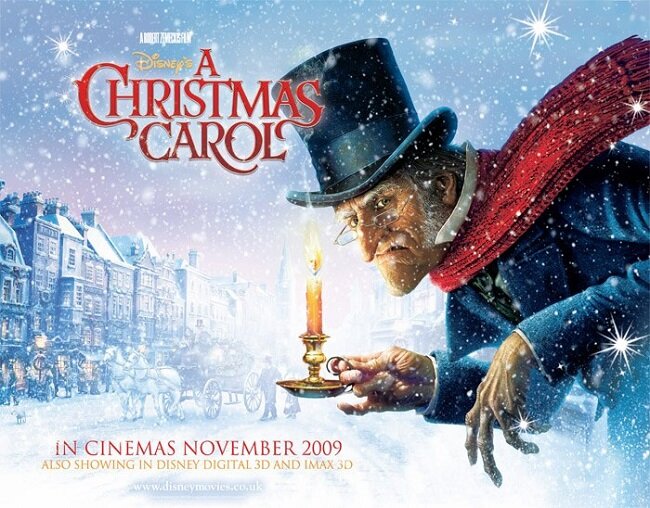


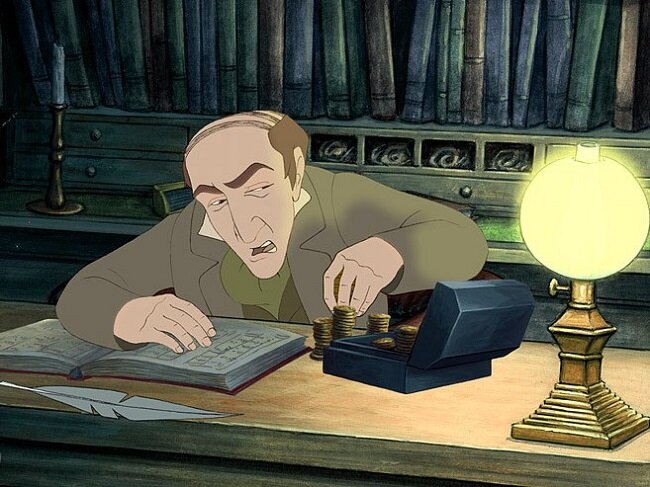
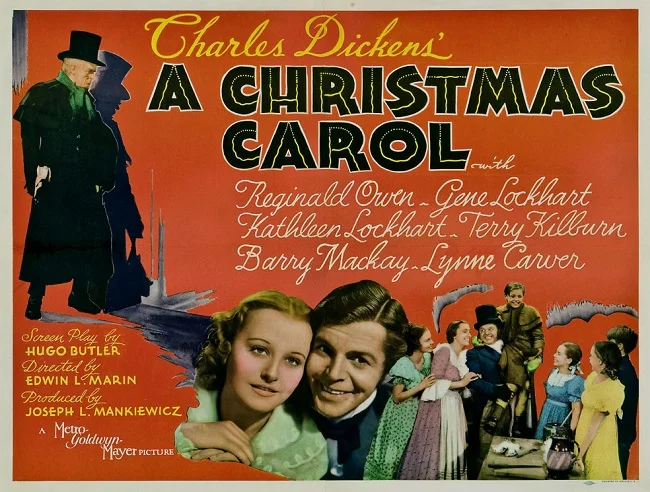


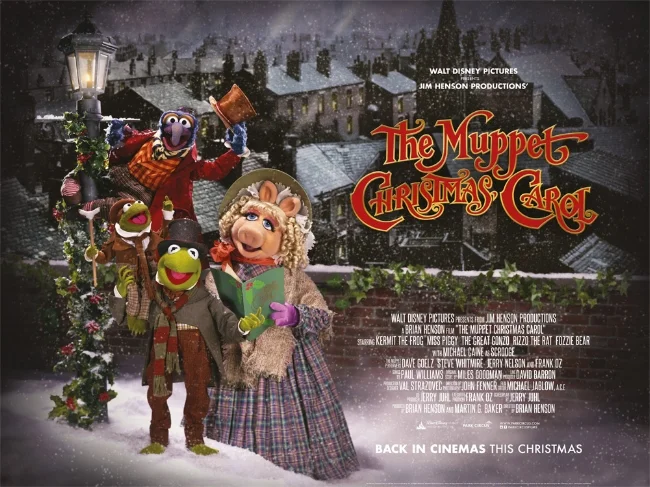

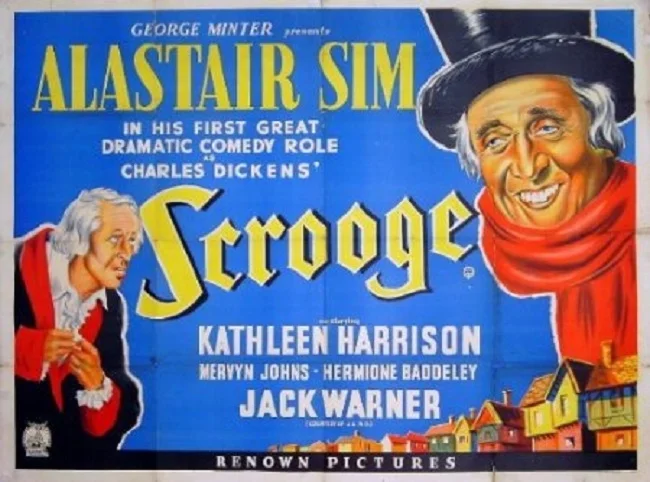
The Godfather Coda: The Death of Michael Corleone (1990)
The Godfather Part II (1974) effectively ended the story of Michael Corleone. The man who so resolutely argued he would not become like his father ended up doing exactly that. In doing so it cost him his wife, his relationship with his children and arguably his soul. The film ends with Michael reflecting upon his past and family, all powerful but utterly alone. So in many ways, there was no major artistic or narrative requirement for a third instalment. Francis Coppola himself had no desire to return to the story. However a decade later, after a string of box office failures, he found himself in debt and in need of a financial solution. It was at this point that Paramount Pictures long standing offer to make a third Godfather movie, suddenly became a practical necessity. Coppola never intended it to be a comparable instalment to the original duology but more of a cinematic codicil. Sadly, the studio, the critics and ultimately, the viewing public never saw it that way. The rest is cinematic history and The Godfather Part III (1990) remains to this day a strongly debated film.
The Godfather Part II (1974) effectively ended the story of Michael Corleone. The man who so resolutely argued he would not become like his father ended up doing exactly that. In doing so it cost him his wife, his relationship with his children and arguably his soul. The film ends with Michael reflecting upon his past and family, all powerful but utterly alone. So in many ways, there was no major artistic or narrative requirement for a third instalment. Francis Coppola himself had no desire to return to the story. However a decade later, after a string of box office failures, he found himself in debt and in need of a financial solution. It was at this point that Paramount Pictures long standing offer to make a third Godfather movie, suddenly became a practical necessity. Coppola never intended it to be a comparable instalment to the original duology but more of a cinematic codicil. Sadly, the studio, the critics and ultimately, the viewing public never saw it that way. The rest is cinematic history and The Godfather Part III (1990) remains to this day a strongly debated film.
Numerous story ideas were conceived and abandoned while writing The Godfather Part III. Francis Coppola and co-writer Mario Puzo considered several grandiose plots before deciding that less is more and focusing on a narrative driven by Michael Corleone’s need for redemption and even forgiveness. Some critics felt that this approach contradicted the first two movies which culminated in Michael dispassionately embracing his fate. However, a man in his autumn years has much to reflect upon and therefore the film themes of redemption and trying to reinvent oneself were plausible and relevant. In fact one could argue that Coppola was trying to do as much himself. But therein was the problem. Coppola wanted a low key appendix to his previous work where the studio and public wanted another sprawling saga of criminal endeavour and a further examination of the dark heart of American culture. And so both groups fought every step of the way. They fought over the title, action set pieces, casting (as they did with the original film) and overall the scope of the story.
Upon release, many were wrong footed by the tone and direction of The Godfather Part III. It wasn’t so much that a sacred cow had been violated but that viewer expectations and the vision of the director were poles apart. The disappointment that some felt was palpable and so criticism was vocal and mainly directed at Coppola’s casting of his own daughter, who had stepped into the role out of necessity. Her performance is tonally different from the rest of the cast but is not as questionable as some would have. Certainly Al Pacino and Diane Keaton are on superb form, effortlessly picking up their respective roles and reasserting them with confidence. The standout of the film is certainly Andy Garcia who plays Vincent Mancini, the illegitimate son of Sonny Corleone. His character is straight out of King Lear and he gives a dynamic performance. The lack of Robert Duvall as Tom Hagen is a sore blow. George Hamilton plays a more contemporary corporate shark, B. J. Harrison but he lacks the emotional impact of his predecessor.
Because of the nature of the story, The Godfather Part III swaps the historical settings that were so lovingly recreated in the first two movies for the rather less enthralling world of big business circa 1979-80. There are location shots in Rome and Sicily but the change in scope does pale in comparison with the grandeur of the parts I and II, with its recreation of 1917 New York, Havana and pre-war Sicily. However, the cinematic style of Gordon Willis’ cinematography provides a sense of ongoing continuity. Willis shot both previous films although here, much of the story is swathed in shadow and darkness, reflecting the theme of spiritual doubt and conflict. These subtle changes in direction all contributed to the sense of confusion and conflict so many felt about The Godfather Part III. The best analogy I’ve seen that summarises this is that of a major recording artist, who having to two hit and and genre defining albums, then follow them up with a far more modest and specific musical foray that is far more low key in its intent.
Such has been the legacy of The Godfather Part III up until now. Coppola has recently released a revised edition of the film in which he strives to bring things back to his original vision. Retitled The Godfather Coda: The Death of Michael Corleone (his preferred title) there are a range of revisions intended to make the story’s intent clear and to present it for criticism on its own merits, rather than on its pop culture baggage. Firstly, the original opening scene depicting the now vacant Corleone home on Lake Tahoe, with all it’s associated memories, has gone. The new edit starts with Michael negotiating the bailout of the Vatican bank and it emphatically states the film’s core theme; the need for redemption. Gone is the ceremony in which he receives a medal from the church for his charitable work. The film now continues with the story of how Michael is dragged kicking and screaming back into a world of crime, despite wanting to reconnect with his son and daughter. Five minutes has been removed overall and some changes are simply alternate takes or a reordering of scenes. The biggest and most subtle change is the ending. Originally, this showed Michael a broken old man, reflecting on the past and then dying in his garden chair. This time round the montage of memories are exclusively about his dead daughter and the scene then fades to black. His titular death is now figurative and not literal.
The original theatrical version of the death of Don Licio Lucchesi
I would like to reference one change that noticeably stands out in The Godfather Coda: The Death of Michael Corleone. The first two movies were considered violent by the standards of the time and that violence was depicted credibly, rather than sensationally. Coppola worked with makeup effects legend Dick Smith resulting in several iconic and powerful scenes. Moe Green getting shot in the eye while having a massage, Don Fanucci getting shot in the face, Don Ciccio’s stabbing. Although the original theatrical release of The Godfather Part III in 1990 had some shootouts and bloodshed, it lacked any of the director’s signature bravura set pieces. The nearest that came to this was the death of Don Licio Lucchesi, who was stabbed in the carotid artery with his own broken pair of glasses. This was edited down to the briefest of shots in the initial release, which then focused on the bloody aftermath. In this revised edition an alternative take is used featuring major prosthetic work from Tom Burman. The scene now sports a bloody wound and a jolting arterial spurt. Compared to the violence that proceeds it this is shocking but justifiable within the film's own internal logic.
The revised version of the death of Don Licio Lucchesi
Overall this re-edit is a subtle reframing of the theatrical edition, rather than a wholesale revision. Some of the issues inherent in the first cut are still present. Too many of the new characters are not as well written compared to those that are already established. The Vatican storyline although interesting, may not be as appealing to some viewers expecting more traditional gangster tropes. Coppola recently revisited his 1984 production of The Cotton Club, which is another example of his work suffering due to studio interference. The revisions to that film, now retitled The Cotton Club Encore, have significantly altered and improved the narrative, by focusing more upon the African American cast members, who were so egregiously marginalised in the theatrical version. The Godfather Coda: The Death of Michael Corleone does not achieve this degree of transformation. Instead it is content with just polishing the previous presentation by thoughtfully restructuring what was already there. Hopefully in doing so, it will lead to a more level headed reassessment of the film where it is finally judged for what it is, rather than what people wanted it to be.





Smart Bands
Mrs P and I enjoy walking for exercise and pleasure. Due to our age and disposition, we like our workouts to be slow and steady, rather than rapid and intense. Walking is therefore ideal. Mrs P also has a heart condition which needs to be monitored and managed if she is to exercise safely. Hence, over the last few years we’ve both started using fitness apps on our smartphones. Keeping a daily step count and settings targets has been fun. Tracking weight loss has also proven beneficial. Having health related data collated and presented in a way that’s easy to understand, has proven useful. It has helped us manage a practical and appropriate fitness regime. Furthermore, the setting of goals has kept us both engaged. Recently, a need arose to monitor Mrs P’s heart rate. So we both decided to buy smart bands as they collect and track more data.
Mrs P and I enjoy walking for exercise and pleasure. Due to our age and disposition, we like our workouts to be slow and steady, rather than rapid and intense. Walking is therefore ideal. Mrs P also has a heart condition which needs to be monitored and managed if she is to exercise safely. Hence, over the last few years we’ve both started using fitness apps on our smartphones. Keeping a daily step count and settings targets has been fun. Tracking weight loss has also proven beneficial. Having health related data collated and presented in a way that’s easy to understand, has proven useful. It has helped us manage a practical and appropriate fitness regime. Furthermore, the setting of goals has kept us both engaged. Recently, a need arose to monitor Mrs P’s heart rate. So we both decided to buy smart bands as they collect and track more data.
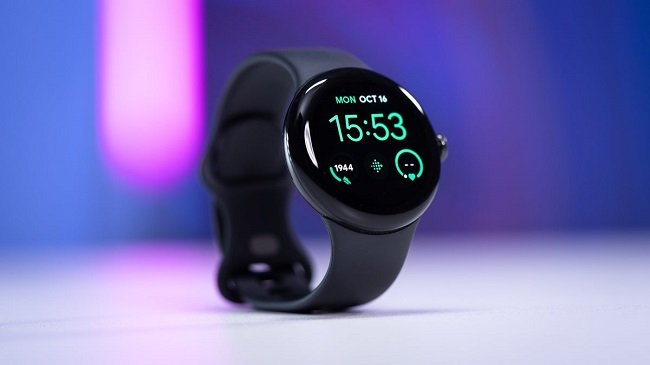
The Black Friday sales provided a perfect opportunity to secure a “deal” and now both of us are proud owners of smart bands. As ever, before making a purchase of this nature I did some research. I looked at what sort of functionality we did and didn’t require, as well as determining which smart bands had an inflated price due to being a “brand premium”. I also had to consider size and aesthetics. Curiously, out of all the tech purchases I’ve made recently, this was the quickest and easiest. I bought a Fitbit Inspire 2 for Mrs P and a Huawei Band 4 Pro for myself. Both devices track all the metrics we want and have intuitive apps to collate the data. The Fitbit is smaller and more elegant with it’s Lunar White strap. The Huawei smart band allows you to download custom watch faces (I wanted an analogue watch display). It also boasts a colour AMOLED screen, where the Fitbit has a simpler black and white display. Both are easy to set up and have quick charging times.
Both of these smart bands have some functionality that we won’t use. The Fitbit app has both a free and subscription version. The latter is fine for those in training for a major sporting event or who have a more complex exercise regime. But the former is ideal for Mrs P’s needs. The other major selling point of the Fitbit, is that it is very easy to use. Mrs P is not a technophobe but she doesn’t warm to gadgets and likes one’s that are intuitive. However, the vertical swiping to change screens and side pinch action to return to the default display suits her fine. I like the text message facility on my smart band and the way you can quickly check to see if a message is important, rather than having to take your phone out of your pocket. Another simple quality of life function is the way the display comes on when you rotate your wrist to look at it. I was initially worried about the display not being on permanently but this resolves the matter perfectly.
In my youth I used to be greatly enamoured by emerging technology and I was often an earlier adopter. Sadly, many of the gadgets and software that I bought into were fads or devices in the middle of a broader development path (such as the PalmPilot). Nowadays I tend to keep my involvement with tech to a functional minimum. Smart bands do exactly what you expect them to and I am not concerned by some of the extra functionality which I regard as superfluous, such as the Bluetooth music playback on your phone. However, I must admit that part of the appeal of the smart band is down to the 1969 film Journey to the Far Side of the Sun. It features a watch that also serves as a cardiac monitor, which is not that different from contemporary smart bands. When I first saw this it left a lasting impression upon me. Pop culture doesn’t always predict the future accurately but on this occasion it did.

















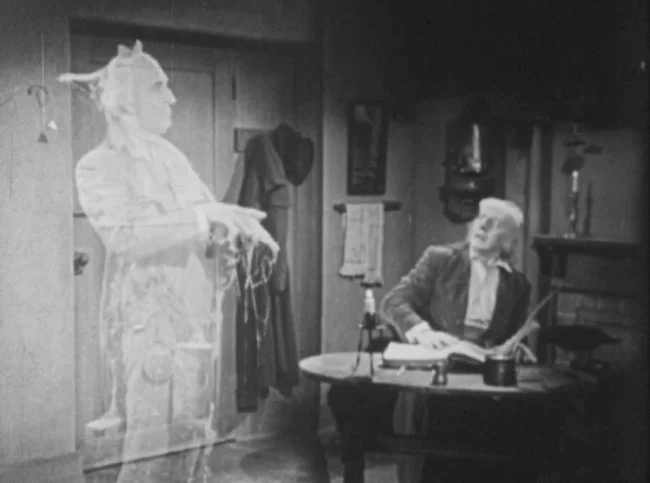
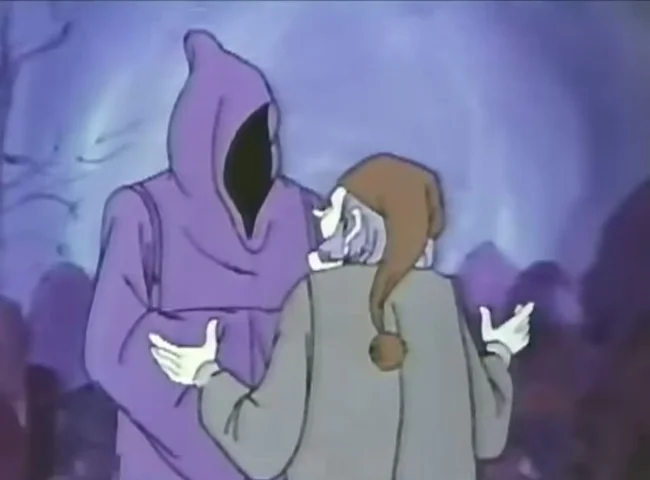
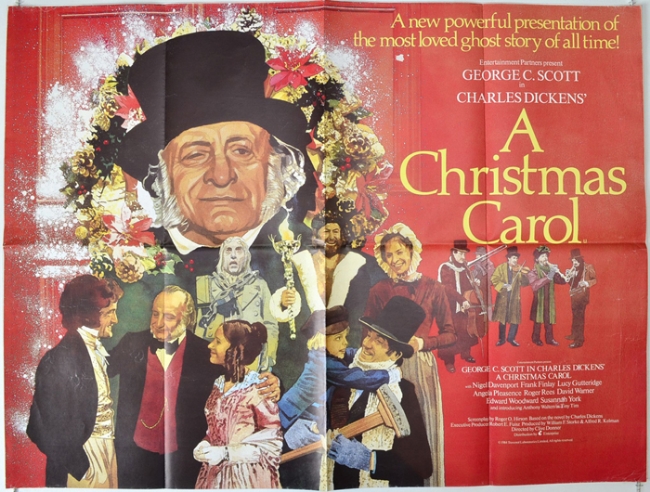
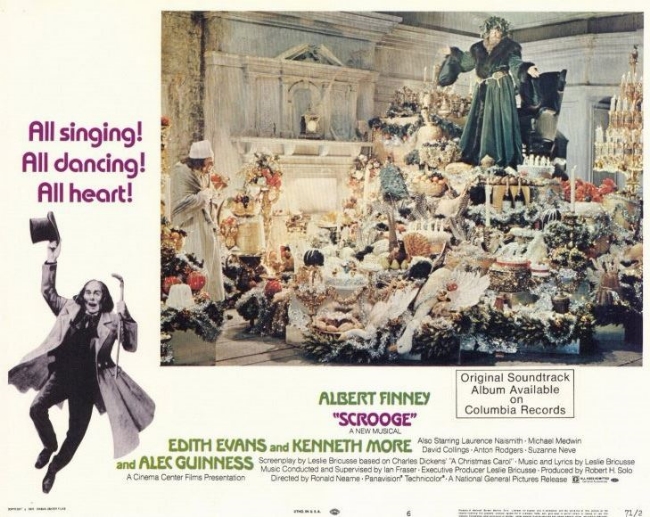
A Christmas Carol (1982)
At first glance, there is not much to distinguish this low budget production by Burbank Films Australia, from any of the other adaptations that were ubiquitous during the seventies and eighties. However, attentive viewers will discover a few details that lift this particular version above the mundane. Firstly, this is the second animated adaptation to feature the voice acting of Ron Haddrick as Ebenezer Scrooge. He had previously voiced the character in Air Programs International's shorter version of A Christmas Carol in 1969, thirteen years earlier. Secondly, despite the modest production values, there are a few additional scenes taken from the source text by Dickens, that don’t usually make it most film and TV adaptations. It is these minor embellishments that compensate for the simplicity of the animation (during the opening scene, some background characters do not move).
At first glance, there is not much to distinguish this low budget production by Burbank Films Australia, from any of the other adaptations that were ubiquitous during the seventies and eighties. However, attentive viewers will discover a few details that lift this particular version above the mundane. Firstly, this is the second animated adaptation to feature the voice acting of Ron Haddrick as Ebenezer Scrooge. He had previously voiced the character in Air Programs International's shorter version of A Christmas Carol in 1969, thirteen years earlier. Secondly, despite the modest production values, there are a few additional scenes taken from the source text by Dickens, that don’t usually make it most film and TV adaptations. It is these minor embellishments that compensate for the simplicity of the animation (during the opening scene, some background characters do not move).
Artistically, this production follows a very formulaic depiction of London in the 19th century as well as the key characters of the story. Scrooge is a balding, hook nosed, old man with a rasping voice. Dogs flee from him and he works in a shabby and drab counting house. There’s a quite startling realisation of Marley’s ghost complete with black shadows around his eyes, making him look like a member of Kiss. His message of neglected social responsibility to Scrooge is presented as a montage, which is quite innovative and effective. The Spirit of Christmas Past is on this occasion is a teenager in a chiton. It’s a novel look. Overall the voice acting is efficient and steeped in stylised British tropes with Cockney street urchins and upper class business men. The score by Neil Thurgate composer is also quite different from the usual fare.
Despite the simplicity of the animation, no doubt due to restrictions of the budget, this adaptation uses large sections of the source text as dialogue. It also visually realises some minor scenes that often get overlooked in most versions of A Christmas Carol. There is a scene where the poor are queuing outside the Baker’s on Christmas morning to have to have their dinner’s cooked. Also there is a greater focus on his failed relationship with Belle including a scene where Scrooge sees a vision of his ex-fiancée with her family and husband. A family that could have been his under different circumstances. This adaptation also strives to add a further human dimension to Scrooge as he reminisces over his past mistakes and gives in to his feelings. Overall, all though not in any way a definitive version of Dickens’ classic tale, there is sufficient here to make it different from others.
LOTRO, Daybreak Game Company and Enad Global 7
It has long been suspected that Daybreak Game Company owned Standing Stone Games and was more than just their publisher. However, being a private company, DGC has been exempt from public scrutiny. Infact, they’ve gone out of their way to keep their cards close to their chest in recent years. Press releases and tweets have been posted and then deleted to try and cover their tracks. To quote Lord Melchett from Blackadder, DGC “twist and turn like a ... twisty-turny thing”. It’s all been somewhat unseemly but at the same time great fun to speculate about. However, on Monday 1st December, Swedish games company Enad Global 7 (EG7) announced that they were buying DGC. Furthermore, as EG7 are a publicly owned company, information about them is freely available. Hence an investor presentation was posted on their website, rich with details of their new acquisition.
It has long been suspected that Daybreak Game Company owned Standing Stone Games and was more than just their publisher. However, being a private company, DGC has been exempt from public scrutiny. Infact, they’ve gone out of their way to keep their cards close to their chest in recent years. Press releases and tweets have been posted and then deleted to try and cover their tracks. To quote Lord Melchett from Blackadder, DGC “twist and turn like a ... twisty-turny thing”. It’s all been somewhat unseemly but at the same time great fun to speculate about. However, on Monday 1st December, Swedish games company Enad Global 7 (EG7) announced that they were buying DGC. Furthermore, as EG7 are a publicly owned company, information about them is freely available. Hence an investor presentation was posted on their website, rich with details of their new acquisition.
Now the foibles and machinations of DGC have become a source of interest for numerous game journalists and bloggers over the years. I therefore strongly recommend the following articles by Bree Royce and Wilhelm Arcturus, as they dissect and delineate the information published in EG7’s investor presentation. Both make for very interesting reading, giving details of the “health and wealth” of the various titles that have been up to now, owned by DGC. I however, will simply focus on the details pertaining to The Lord of the Rings Online, as this is the MMORPG I have the strongest connection to out of all the games listed. Finally, we have some indication of LOTRO’s business performance and its playerbase. In terms of monthly active players, the game has 108,000, of which 37.9% (41,000) subscribe generating nearly $10 million per year. Overall, yearly revenue is $26.7 million. LOTRO has the third-biggest playerbase out of DGC’s (now EG7’s) game portfolio.
So business wise, LOTRO is looking quite healthy. Furthermore, the forthcoming Amazon Prime, Middle-earth based TV show is being cited by EG7 as a potential means of raising consumer awareness of the IP. Something that can then be capitalised upon to promote LOTRO. Any sort of proactive marketing has long been absent from this MMO. Many players were baffled by the lack of any tie-in with the Hobbit movie trilogy, when they were released. Perhaps we will now see a change in policy over the next 12 months. It certainly seems that EG7 has provisional plans. Perhaps the most interesting of these is a proposed graphical and systems overhaul of the current PC version of LOTRO, along with further large content updates and a conversion of the game for “nextgen consoles”. Something that was originally mooted back in 2010, when the game first went free-to-play.
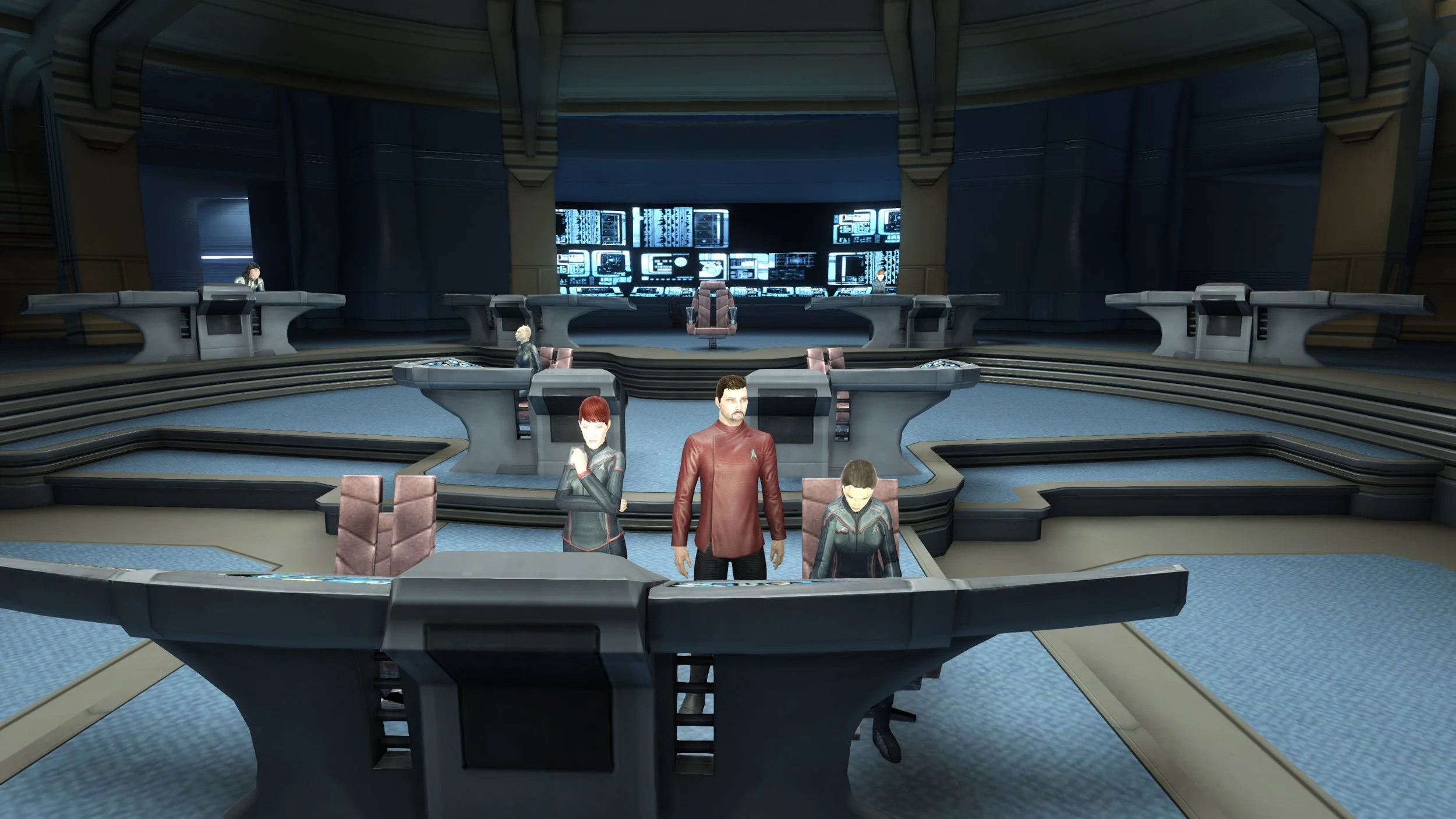
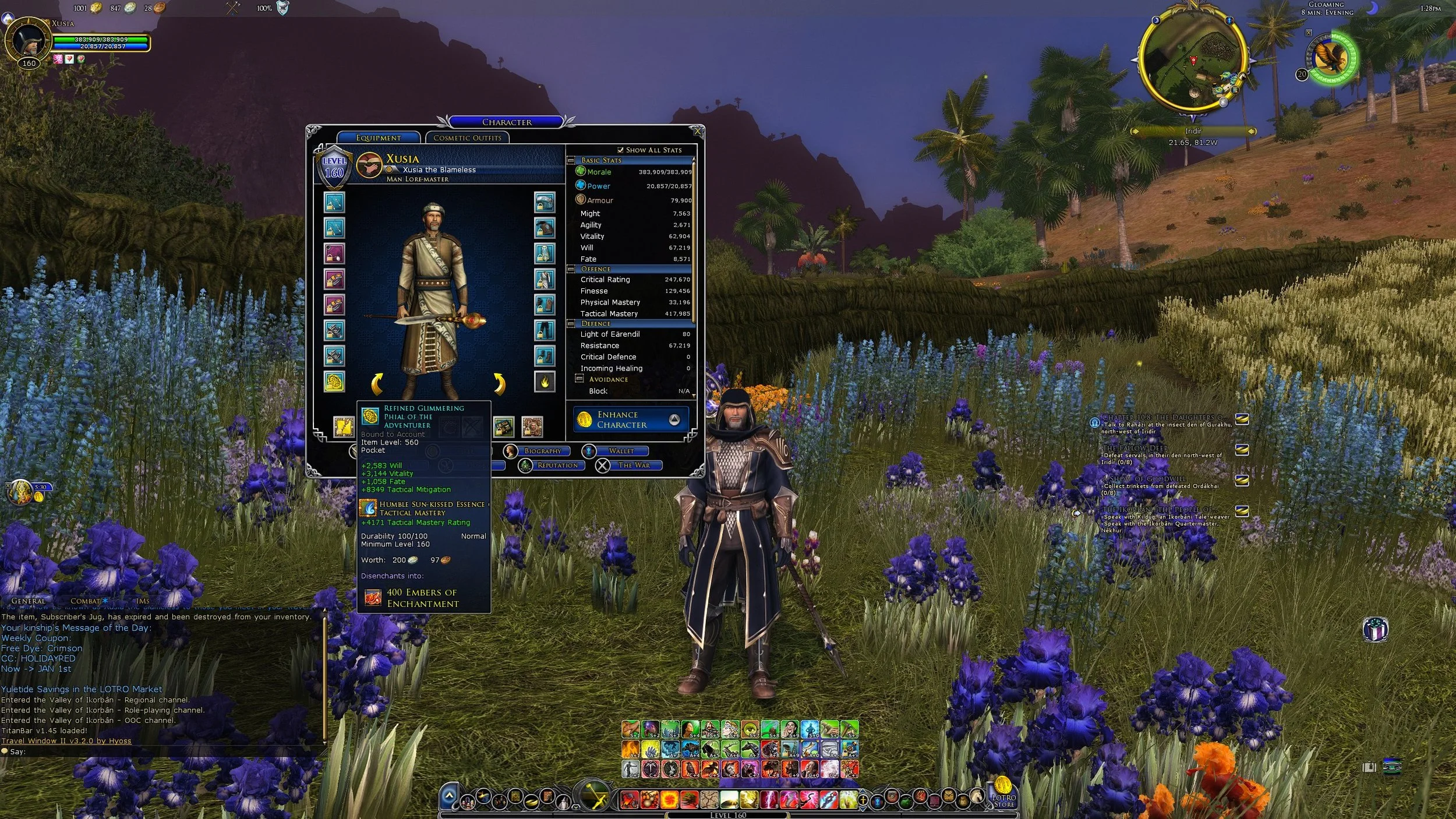
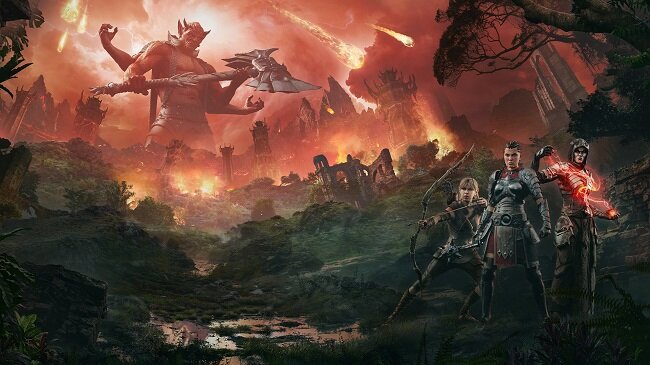
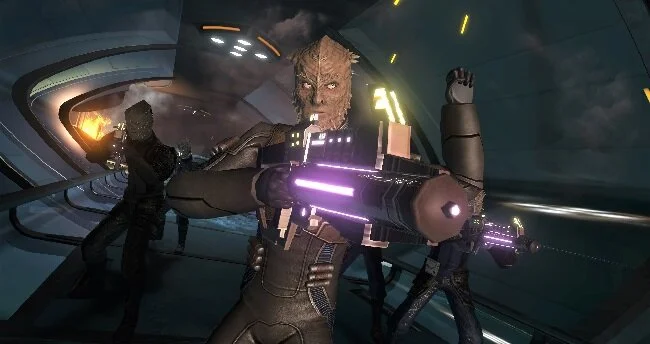
The significance of a console port of LOTRO should not be underestimated. The data in EG7’s investor presentation shows that the console version of DC Universe Online is a popular title and a robust source of revenue. Let us not forget that The Elder Scrolls Online, Neverwinter and Star Trek Online have all increased their players due to the success of their respective console ports. In fact the innovative revision of the UI in STO to accommodate the use of game controllers, actually offers greater functionality than the PC version. LOTRO suffers from a cluttered UI and an excess of quickslots and at present this can only be addressed with plugins. Therefore, a revision of the game may well prove beneficial to all players. Whether the game will support crossplay is another matter. However, I would like to see a console port of LOTRO made available as it would definitely bring new players to the game and re-invigorate the existing community. Let us see whether EG7 proves to be the “new broom that sweeps clean”.
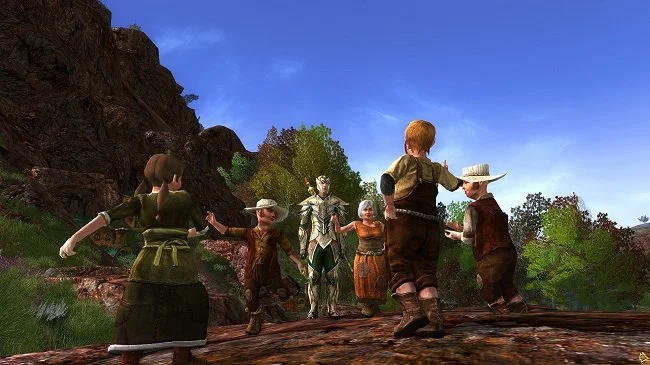
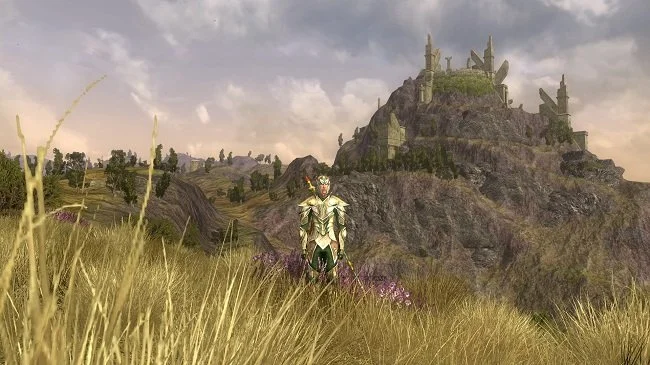
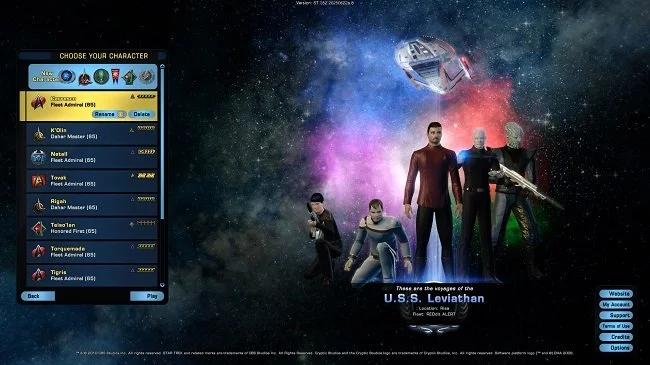
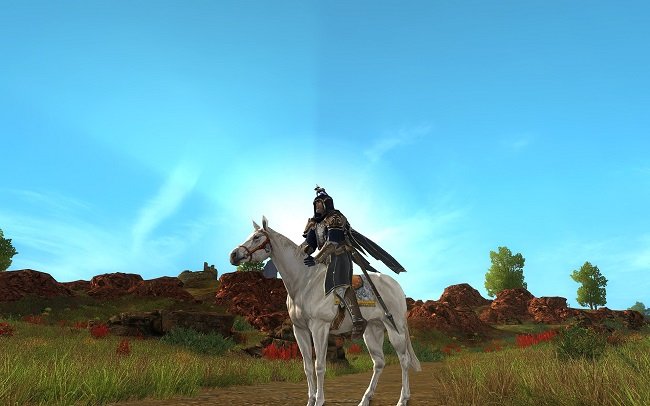



A Month in Gaming
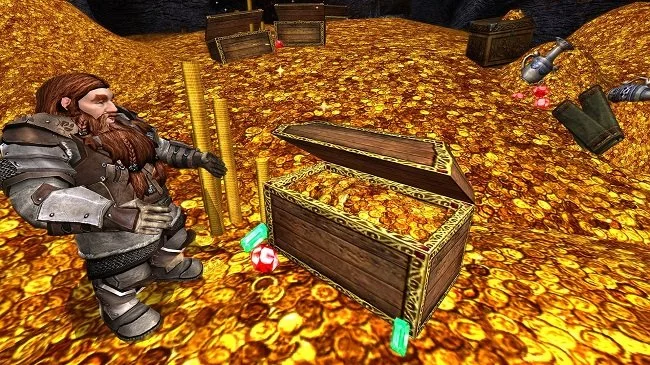
November proved to be a very productive month, gaming wise. I had to self isolate for 14 days, due to coming into contact with someone who had tested positive for COVID-19. Hence I had far more leisure time than usual. For a second month I applied myself to progressing through the new “mini expansion” in The Lord of the Rings Online. The new zone is a two phase map. The first is Elderslade, a mountainous region to the North of the Wells of Langflood. This area contains mainly story quests. The second phase, called War of Three Peaks, is the same zone but during a period of open war between the Dwarves and the Orcs. Quests here are mainly repeatable slayer and achievement quests. I did not discover this until I had completed the first round, so to speak, only to be offered exactly the same quests again by an NPC. As I had reached maximum rank in reputation for this new faction and there were no rewards of any note for me to spend my barter currency upon, I simply stopped playing through this content.
November proved to be a very productive month, gaming wise. I had to self isolate for 14 days, due to coming into contact with someone who had tested positive for COVID-19. Hence I had far more leisure time than usual. For a second month I applied myself to progressing through the new “mini expansion” in The Lord of the Rings Online. The new zone is a two phase map. The first is Elderslade, a mountainous region to the North of the Wells of Langflood. This area contains mainly story quests. The second phase, called War of Three Peaks, is the same zone but during a period of open war between the Dwarves and the Orcs. Quests here are mainly repeatable slayer and achievement quests. I did not discover this until I had completed the first round, so to speak, only to be offered exactly the same quests again by an NPC. As I had reached maximum rank in reputation for this new faction and there were no rewards of any note for me to spend my barter currency upon, I simply stopped playing through this content.
Naturally, I was somewhat disappointed by this development because it highlights how developer’s, Standing Stone Games, have padded this content update so they can sell it as a “mini expansion”. However, I moved onto the new Mission system and spent some time exploring that. The missions themselves are fairly straightforward, instanced areas in which the player has to undertake a couple of tasks. Kill a boss, find so many supply crates etc. The difference here from other instanced content is that the enemies are more reactive. Some Orcs self heal or if not killed quickly, call in reinforcements. Some are a little trickier than others. There’s one where you have to destroy doorways to stop Goblins from spawning in Goblin Town. Crowd control skills are useful here. There’s another droll mission in which you have to dance and drink with “partying” Goblins. But overall Mission’s fails to offer anything overtly different. Again there are reputation tiers and deeds to achieve. But they offer paltry rewards, so why grind through them?
I did however, move a lot closer to maxing out both my Legendary Weapons. I was generously helped by a kinmate, who donated a substantial supply of Anfalas Scrolls of Empowerment. Hence all my legacies (apart from the main ones on each LI) are now at level 83. I’m sure given time, I will be able to acquire sufficient Anfalas Star-lit Crystals to max out the main legacies and finally close the book on the entire LI system. It is nice to see that my recent re-equipping with gear from Adventurer’s Loot Boxes and levelling up of my LI has really improved my overall combat experience. Killing enemies is now a lot quicker with critical hits occurring quite frequently. But I now feel that I’ve done as much as I can with LOTRO for the present. I may participate in the new raids, should my kinship re-appear over Christmas. But until there is new story content and tangible rewards to pursue, this MMO will be placed on a backburner.
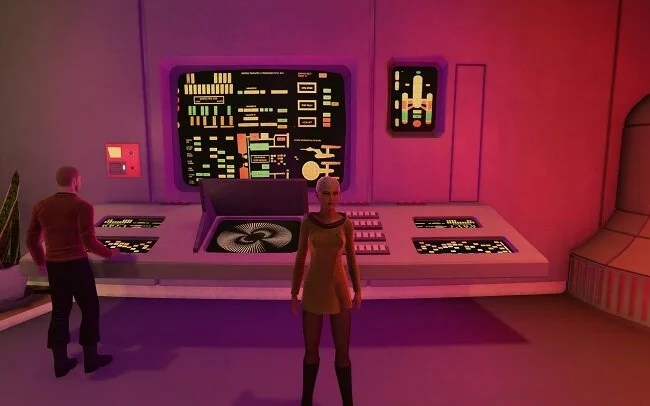
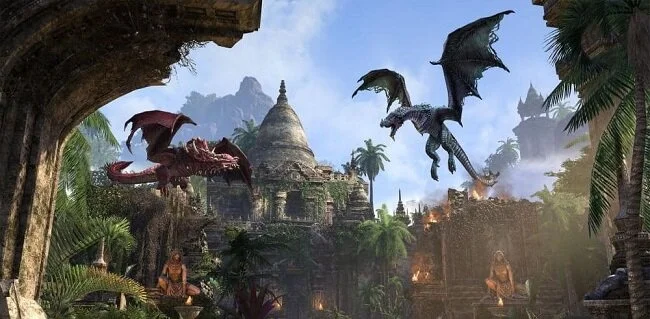
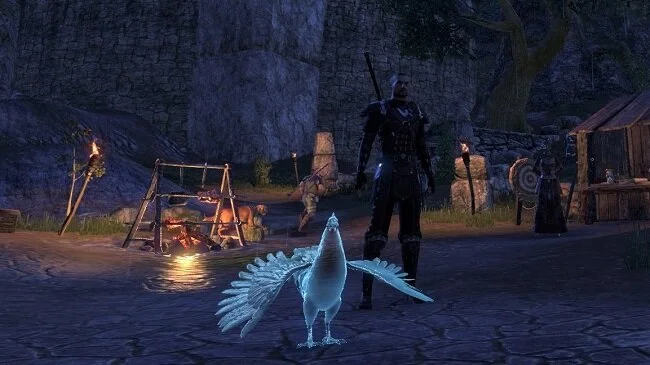
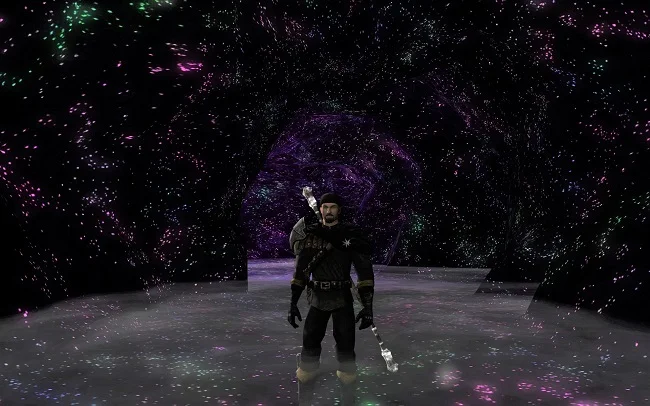
Throughout November, I have been playing the latest event in Star Trek Online. I must admit that I’m getting quite fed up with this approach to new content from Cryptic. I like stories couched in classic Trek lore and there hasn’t been enough of such content this year. So this is another game that is going to be relegated to intermittent play over the next month. Q’s Winter Wonderland festival is due to start next week but sadly it is not offering anything that I want. And then there is my ongoing return to the MMO Neverwinter. I’m having fun but there are many aspects about the game that I’m not impressed by. This is another MMO which trivialises all gear progression below a specific level. Then there is the excess of currencies in the game. I suspect I will get to level 60 or so and then decide that it is time to move on. It’s a shame because I like the combat style and the way the Warlock class handles. I suspect that December may be an odd time where I struggle to find a new game that interests me. However, I already have an eye on returning to Dauntless.



Video Game Tutorials, Again
I’ll try and keep this post concise so it doesn’t sound like a rant. It is intended to be a legitimate complaint. I just find it dispiriting that this topic has raised its head yet again. I am currently playing the MMORPG Neverwinter, a game I haven’t touched for 7 years. I created a new character and am currently working my way through the low level quests. So far the game has had a few tooltips appear on screen and the occasional voice over pointing out issues of importance. Overall, I have seen neither hide nor hair of what I would define as a tutorial. I have managed to bluff my way through the game so far, by drawing upon my experience in other MMOs. As this is a game developed by Cryptic, there are elements of the interface that are similar to Star Trek Online. However, this and my general knowledge of other genre games can only help me so far. I knew that sooner or later, I was bound to be flummoxed by something and today this finally occurred.
I’ll try and keep this post concise so it doesn’t sound like a rant. It is intended to be a legitimate complaint. I just find it dispiriting that this topic has raised its head yet again. I am currently playing the MMORPG Neverwinter, a game I haven’t touched for 7 years. I created a new character and am currently working my way through the low level quests. So far the game has had a few tooltips appear on screen and the occasional voice over pointing out issues of importance. Overall, I have seen neither hide nor hair of what I would define as a tutorial. I have managed to bluff my way through the game so far, by drawing upon my experience in other MMOs. As this is a game developed by Cryptic, there are elements of the interface that are similar to Star Trek Online. However, this and my general knowledge of other genre games can only help me so far. I knew that sooner or later, I was bound to be flummoxed by something and today this finally occurred.
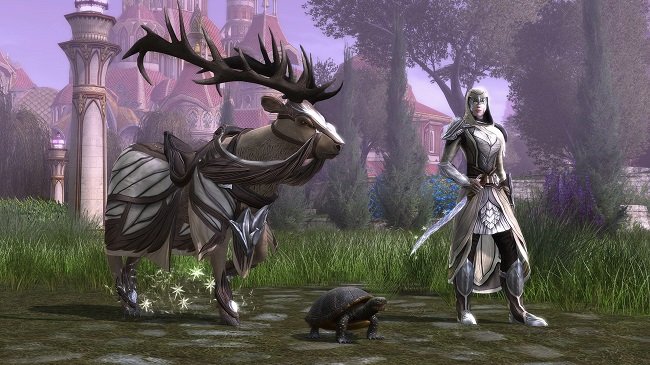
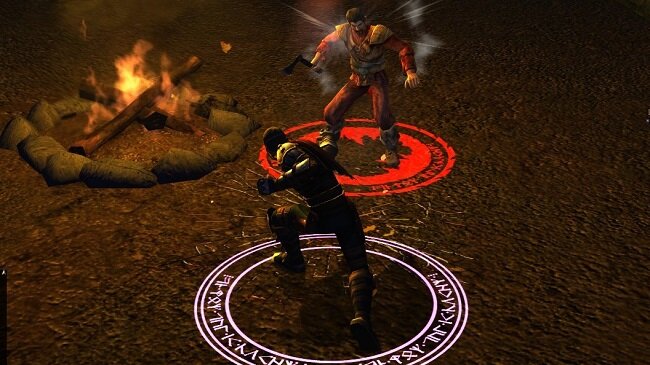
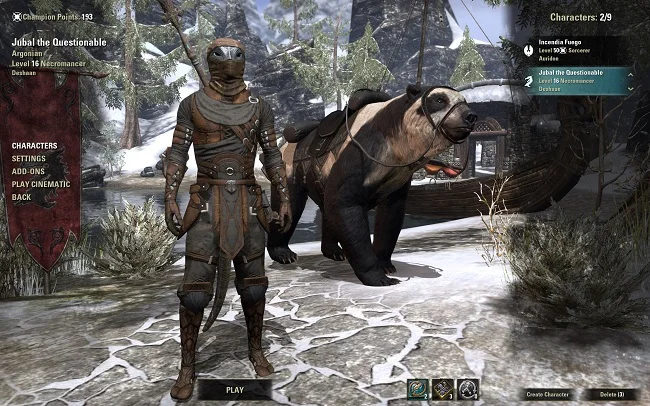
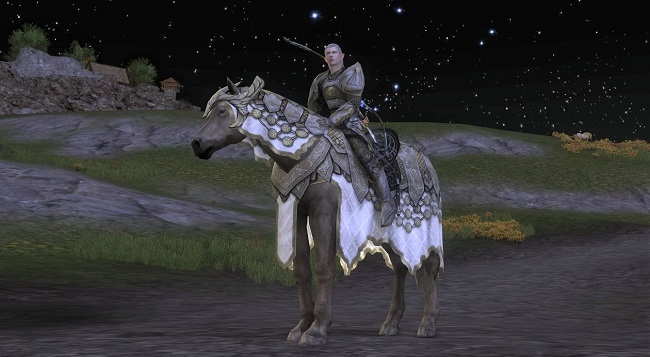
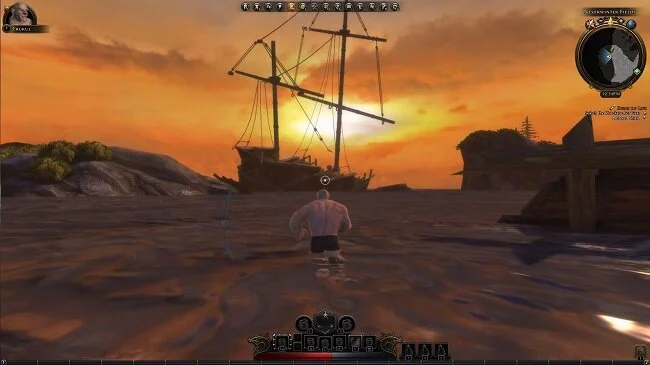
I have three mounts at present in Neverwinter, although they are just horses and nothing fancy. The latest one that I’ve acquired is a little more interesting than the currently equipped one, so I decided to swap them around. It’s a totally innocuous and reasonable request, as well as something that is easily done in other MMOs. However, it took me over 30 minutes to determine how I did this and I was far from pleased when I finally found a solution to the problem. I was expecting to go into my Collections and set a new default mount there, in a similar manner to The Elder Scrolls Online. As this option wasn’t available I thought maybe this is done via my Stable panel. No joy there, so I looked in my Appearance panel. Nope, that didn’t work either. So I found myself doing something I hoped not to do so early on in playing Neverwinter and tabbed out of the game and searched Google.
Let it suffice to say that due to the various changes that have been made to the game and the mount system over the years, it took a while to find a correct solution. It’s also worth noting that as this game is also available on consoles, you have to ensure you search for a PC specific answer. It turns out that you have to select the Mounts tab, then Current and you are presented with an image of your default mount and its respective skills. If you click on where it says Appearance, a new window opens up and you can choose a new mount. It’s a simple solution, apart from the fact that the game provides absolutely no information or clues about this. Nor is there any indication that where it says Appearance is infact a clickable button. I simply discovered this by accident when I clicked in the wrong place in error. After my annoyance over this esoteric functionality subsided, I was left wondering how many more straightforward tasks are hidden in Neverwinter due to poor or indifferent UI design.
Now this anecdote may seem to some as trivial. However, let us step back and look at the situation from a broader perspective. I’m currently enjoying the early levels in Neverwinter and there are lots of new players. Not everyone will have prior experiences with the genre to draw upon. I came to a complete standstill with this problem and found the whole matter infuriating. I don’t think it unreasonable to assume that for some, this incident would prejudice their view of the game. A player that is being thwarted and not having fun, has no reason to stay. Not all gamers want their leisure activities to be one of the twelve labours of Hercules. Simply put, things like this can lose customers. Hence, good tutorials, tooltips and prompts are extremely important. A gamer should never have to leave a game to find out how to play. That’s the game’s job.
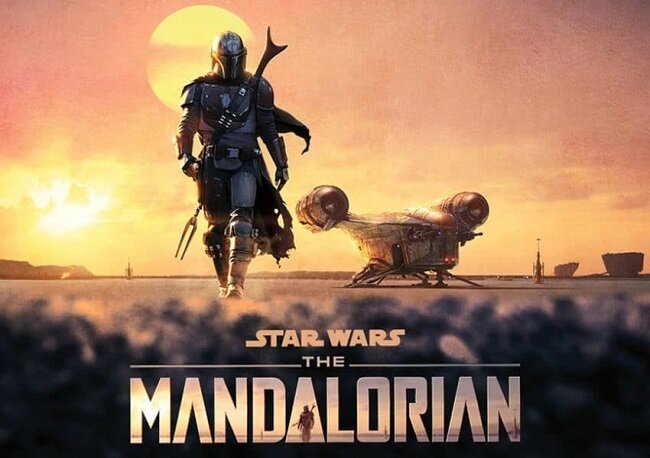
The Mandalorian (2019 - Present)
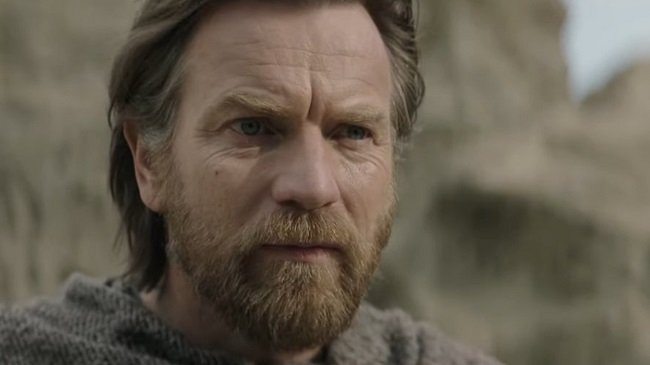
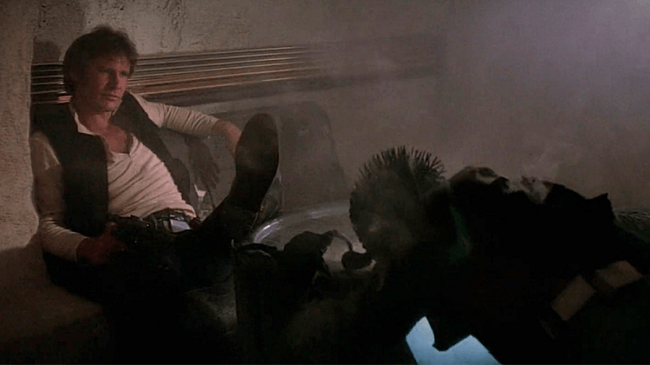
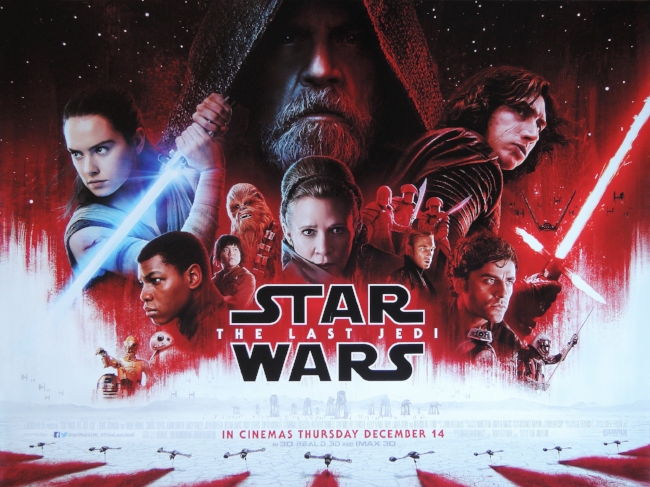
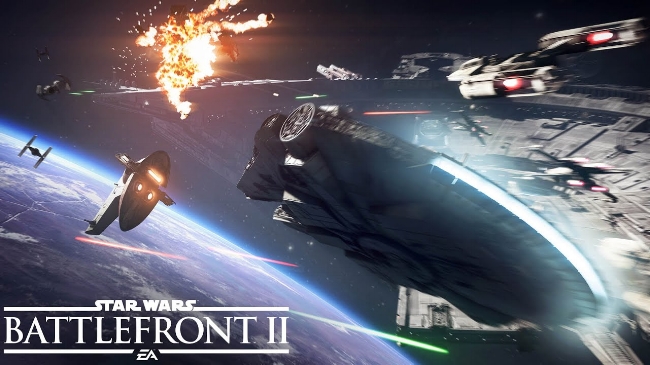
Over the years, I have had what I would describe as an ever diminishing relationship with Star Wars as a franchise. I grew up with the original trilogy, seeing them all when they were originally released. Those three films were a wonderful, self-contained story. I also broadly enjoyed aspects of the Expanded Universe, as it was confined to other mediums such as books or comics. Hence it was an optional extra, as it were. Sadly, over the years, the additional film trilogies proved to be inferior products that suffered under the weight of their own ever expanding lore. The fetishisation of the hardware, actions scenes and overall aesthetic by both the filmmakers and the fans, came at the expense of good narrative content and character development. The one film that tried to take the franchise in a more mature and thoughtful direction, The Last Jedi, proved controversial and divisive. Overall it was the animated TV show Rebels that best showed an understanding of the franchise.
Over the years, I have had what I would describe as an ever diminishing relationship with Star Wars as a franchise. I grew up with the original trilogy, seeing them all when they were originally released. Those three films were a wonderful, self-contained story. I also broadly enjoyed aspects of the Expanded Universe, as it was confined to other mediums such as books or comics. Hence it was an optional extra, as it were. Sadly, over the years, the additional film trilogies proved to be inferior products that suffered under the weight of their own ever expanding lore. The fetishisation of the hardware, actions scenes and overall aesthetic by both the filmmakers and the fans, came at the expense of good narrative content and character development. The one film that tried to take the franchise in a more mature and thoughtful direction, The Last Jedi, proved controversial and divisive. Overall it was the animated TV show Rebels that best showed an understanding of the franchise.
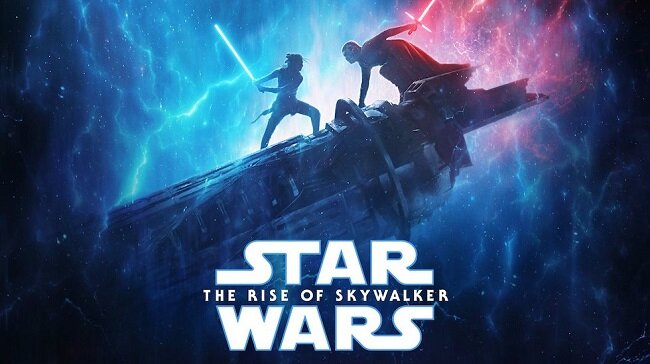
Last year, after the release of The Rise of Skywalker, I was pretty much done with Star Wars. Disney made a major mistake in not having a clearly defined story arc before they made their new trilogy, instead preferring to make it up as each new director was brought onboard. The franchise effectively descended into self parody as it desperately tried to plunder it’s own back catalogue in an attempt to please both fans and stick to a financially successful formula. The other major nail in the coffin was the zealotry of the fanbase. The hubris, bigotry and utter myopia of large swathes of this group, poisoned the well and turned Star Wars into a byword for everything that is wrong and toxic about fandom. And then, just as I was about to walk away and focus on that other major science fiction franchise that is currently experiencing a “renaissance”, along came The Mandalorian which quickly and calmly changed the entire direction and timbre of the Star Wars universe.
John Woo reference
The Mandalorian is an episodic show, much in the idiom of old cliffhanger cinematic serials like Flash Gordon (1936). The very things that inspired George Lucas originally. Some episodes have a plot that moves the story arc forward. Others have minimal dialogue and instead rely on the maxim of “show, don’t tell” to present their narrative . This approach works well for those familiar with the franchise and those without any prior knowledge. Another standout aspect of this show and something the original trilogy did well, is presenting the audience with a functional universe that feels lived in. The technology is not laboriously explained as with Star Trek. And although there is a wealth of lore in the Star Wars universe, this show exploits that with just enough information. Canonical characters are introduced in ways you can quickly come to grips without tons of exposition. The plot obliquely touches upon wider issues, like the way the New Republic struggles with filling the power vacuum left by the Empire. There is also a strong moral undercurrent to the proceedings.
Akira Kurosawa reference
The Mandalorian is clearly made by people who have a strong understanding of what works best with Star Wars. The production team are also extremely cinematically and pop culture literate. The references come thick and fast. Broadly, The Mandalorian has the structure and style of a Western. And a Sergio Leone Western at that. There are obvious elements of the Manga, Lone Wolf and Cub. Plus endless stylistic and visual homages to John Woo, Akira Kurosawa and many more iconic filmmakers. The visual effects work is great but this isn’t a showreel. The stories and characters are still front and centre. The appeal of “The Child” is also a major asset. Now that he has a name and a backstory, he’s transcended just being cute. And it would be remiss of me not to mention the soundtrack by Ludwig Göransson who has chosen to avoid writing in the idiom of John Williams and has instead delivered a more “organic” score. Overall The Mandalorian is an intelligent and well judged reset of a franchise that was until now, poorly managed. Let us hope it continues to maintain such a high standard.








Return to Neverwinter
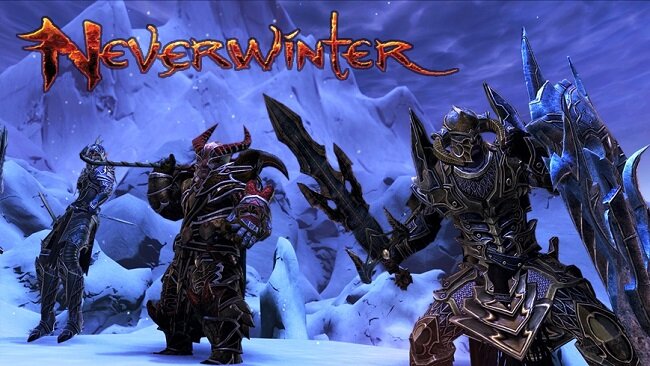
I originally tried the MMORPG Neverwinter during its beta test in early 2013 and having checked my original notes I wrote at the time, I enjoyed it. I think the main reason I didn’t persist with the game was due to not having a major connection to the franchise and that there was a lot of competition from other MMOs at the time. If memory serves my only niggle during the beta was that you couldn’t use your skills while moving. Combat is therefore a question of running, attacking and then repositioning your character. Although you can dodge or perform a variation thereof, fighting in the game is not what I would define as “action combat”. It is more of a hybrid of old and new MMO fighting styles. However, that notwithstanding, I decided to finally re-install the game and give it another go. A lot has happened in the intervening 7 years and Neverwinter is now more polished and has a lot more content to offer.
I originally tried the MMORPG Neverwinter during its beta test in early 2013 and having checked my original notes I wrote at the time, I enjoyed it. I think the main reason I didn’t persist with the game was due to not having a major connection to the franchise and that there was a lot of competition from other MMOs at the time. If memory serves my only niggle during the beta was that you couldn’t use your skills while moving. Combat is therefore a question of running, attacking and then repositioning your character. Although you can dodge or perform a variation thereof, fighting in the game is not what I would define as “action combat”. It is more of a hybrid of old and new MMO fighting styles. However, that notwithstanding, I decided to finally re-install the game and give it another go. A lot has happened in the intervening 7 years and Neverwinter is now more polished and has a lot more content to offer.
I logged into the game and tweaked a few settings. Next, I decided to ignore a previous character and start a new one from scratch. Rather than try to relearn how to play an existing Half-Elf Wizard, I chose to create a Human Warlock. I made my choice by reading the various tool tips and have decided to see exactly how far I can progress in the game, just by relying upon the information provided by the tutorial. In the past, I’ve often researched a new MMO in advance, to ensure I don’t “make any mistakes”. This time round, I’ve elected not to make work for myself and thought it would be an interesting experiment to just fly by the seat of my pants. I like MMOs but at present do not want a major learning curve. I’m mainly looking for fun. It may be a case that eventually I have to go outside of the game for information. However, this way at least lends itself to writing about my experience.
So why a Human Warlock? Well none of the other races grabbed my attention, apart from the ones you have to pay to unlock. Until I’m sure I’ll be playing Neverwinter for a while, I’m not going to spend any money. As for the Warlock Class, it basically struck me as being the same as a Mage/Wizard without having to dress like a keyboard player in a Prog Rock band. This may sound trivial but I get really bored of the aesthetic and sartorial confines of mainstream fantasy preconceptions. Any sort of Wizard or person who dabbles in magic is instantly saddled with a rocking a “Ming the Merciless” look and it gets old real fast. Plus I want to be able to play a ranged DPS class and avoid a bow, which is another tiresome cliche. So the Warlock is a good compromise. It also plays well with the combat so far proving to be fluid. That may just be down to the fact that I’m playing at low level and the enemies are hardly robust. But so far there seems a straightforward rhythm to the skill rotation.
I am interested to see in the days and hopefully weeks to come, whether the story holds my interest and if it does anything unusual compared to the standard fantasy genre fodder. I’m glad that the NPCs are all fully voice acted and that dialogue interactions are handled in a similar fashion to The Elder Scrolls Online. I find a lack of voice acting quite jarring if I come across it in an MMO. Another thing I’m curious about is how long I can play Neverwinter before it becomes apparent that I have to spend some money or else I’m “hobbling” myself. There appears to be something similar to a VIP subscription so I will look into that further if and when it becomes appropriate. Perhaps I will finally gain some insight into the popularity of the official Dungeons and Dragons franchise. It’s another popular culture touchstone that I’m aware of but that has passed me by over the years. Hopefully I can answer all these questions in a future blog post.
Should You Have Expectations of Other Players?
Just for a change, Star Trek Online has another event. “Best Served Cold” is a Task Force Operation in which the 5 players must prevent a prison break from the Klingon gulag Rura Penthe. Complete this TFO 14 times and you can earn rewards including a Nanopulse Targ Combat Pet. If you feel disposed to do so, you can set up a private group and complete this with friends. However, most players simply use the auto-group facility that the game offers. As the interdependency of all classes has diminished in STO, there is no obstacle to quickly joining a pick up group. More often or not, there is little or no criteria for failure for these TFO’s so some players will group and do as little as possible. In some events in STO it is possible to join a group and go AFK. The activity will complete regardless of player participation and all then receive the designated reward.
Just for a change, Star Trek Online has another event. “Best Served Cold” is a Task Force Operation in which the 5 players must prevent a prison break from the Klingon gulag Rura Penthe. Complete this TFO 14 times and you can earn rewards including a Nanopulse Targ Combat Pet. If you feel disposed to do so, you can set up a private group and complete this with friends. However, most players simply use the auto-group facility that the game offers. As the interdependency of all classes has diminished in STO, there is no obstacle to quickly joining a pick up group. More often or not, there is little or no criteria for failure for these TFO’s so some players will group and do as little as possible. In some events in STO it is possible to join a group and go AFK. The activity will complete regardless of player participation and all then receive the designated reward.
Now the reason I mention all this is because I had an interesting experience today while playing STO. As ever, although specifically related to this MMORPG, the wider sentiments discussed here are applicable to many others and indeed any game that features collaborative multiplay. The “Best Served Cold” event is far from difficult and easy to complete. As far as I’m aware your team’s score doesn’t even impact on the rewards. However (and there is always a however in gaming), some players want to complete this daily event to the best of their ability, achieving all the various goals. And to do that all players participating have a part to play. Needless to say that didn’t happen in the TFO in which I was participating and someone had a meltdown in team chat as a result. This raises an interesting question. Exactly what do you expect from a PUG, assuming that you should expect anything in the first place?
After playing the aforementioned TFO several times, a clear pattern of game play emerges. There are three satellites to defend from enemy attack, then there are transports to subdue and capture. Finally, each satellite needs to be protected from freighter being used as suicide bombers. Five ships can handle this easily. Three vessels can cover the satellites while the other two can cover the transports and eliminate the explosive freighters. But of course this seldom happens. Some players meander about, while others go AFK. Often you’ll finish the event with a percentage of transports escaped and may be a satellite damaged or even destroyed. Sometimes a player will attempt to “school” others, via the Team Chat. This is usually a recipe for disaster and abuse. Others will log out of the TFO if they feel that some players are “doing it wrong”. I simply focus on what I’m doing and reconcile myself to the fact that whatever happens, at least I get my daily reward and inch closer to completing the event.
There is a lot to reflect upon here. When someone joins a random group do they have any obligation to the other players. Do they need to learn the mechanics of the event or group undertaking? Is it presumptuous of others to expect that those that they group with come with adequate provisions such as health potions etc. Is it realistic to expect other players to be as prepared as you? Well if the group activity is organised with friends or through your guild, then I’d argue that there is some sort of social contract in place. But I just cannot argue that there is a similar code of conduct for PUGs. I’d think that basic good manners and a degree of social etiquette still exists, as we see it from time to time. The person who says “Hi” in team chat. The player that tries to do multiple tasks in the group event to compensate for those who cannot or will not. Those that say “good game” before leaving the group. But sadly this sort of positive behaviour is in decline both in and outside of games.
The problem with PUGs is that they do not foster any group identity or encourage any social interaction. It is simply a means of bringing a group of players together in an expedient fashion to complete a task. No one knows anyone and most do not talk. It is an impersonal system that just reinforces that sense of anonymity so often associated with the internet. A means to an end to get what you want. Sadly most game developers don’t make any attempt to address this. A simple way to foster good behaviour and more proactive gameplay is to incentivise and reward those who do more than just show up. But until this is done, I suspect it is simply unrealistic to expect anything of other players. Encouraging behavioural change requires diplomacy and needs to be handled sensitively because many players do not take “instruction” well. A proposed change in attitudes and habits will appear to some as a personal attack. Such is the world we live in at present. Therefore, for the present it is best to expect nothing from your fellow players by default. If anything beyond occurs, then it is a bonus.
Harry Price: Ghost Hunter (2015)
I was somewhat perplexed by this curious, one off, TV drama from 2015. Firstly, this is not a biography of the well known and controversial British psychic researcher. Secondly, despite being based upon a novel by Neil Spring, Harry Price: Ghost Hunter doesn’t follow the source text. Instead we are offered an original story in which Harry Price is requested to investigate a series of alleged supernatural events, surrounding a politician’s wife. If judged purely upon its own merits this is quite an enjoyable ninety minutes drama. The production benefits from strong performances, subtle period detail and a story that doesn’t overreach itself. I suspect that Harry Price: Ghost Hunter was intended to be a pilot for a TV series that was never commissioned, which is a shame. There’s a lot of potential in the material and the period setting is ideal for exploring the supernatural, as there was a surge of public interest in spiritualism in the wake of World War I.
I was somewhat perplexed by this curious, one off, TV drama from 2015. Firstly, this is not a biography of the well known and controversial British psychic researcher. Secondly, despite being based upon a novel by Neil Spring, Harry Price: Ghost Hunter doesn’t follow the source text. Instead we are offered an original story in which Harry Price is requested to investigate a series of alleged supernatural events, surrounding a politician’s wife. If judged purely upon its own merits this is quite an enjoyable ninety minutes drama. The production benefits from strong performances, subtle period detail and a story that doesn’t overreach itself. I suspect that Harry Price: Ghost Hunter was intended to be a pilot for a TV series that was never commissioned, which is a shame. There’s a lot of potential in the material and the period setting is ideal for exploring the supernatural, as there was a surge of public interest in spiritualism in the wake of World War I.
Paranormal investigator Harry Price (Rafe Spall) is not averse to faking supernatural activity to solve a case. However he ceases his work after a tragedy occurs on his own doorstep. However, he is visited by senior politician Sir Charles Harwood (Michael Byrne) who wishes him to discreetly investigate a case involving an MP, Edward Goodwin (Tom Ward). Goodwin’s wife, Grace (Zoe Boyle) was recently found walking the streets naked and in a trance. She has also experienced disturbances in her new home. Fearing a scandal Harwood wants the matter resolved. Price is at first reluctant to take the case but when he realises the alternative is for Grace to be committed, he relents. Initially, Edward Goodwin is ambivalent about the investigation and refers Price to the house maid Sarah Grey (Cara Theobald) for any assistance. Sarah doubts Price’s intentions and their working relationship is at first fractious. However, as the investigation proceeds the pair experience further disturbances and discover that the modern residence used to be a Victorian workhouse with a sinister history.
The relationship between Harry Price and Sarah Grey is core to this drama and it works very well. Sarah has a dim view of mediums as her Mother spends money she can ill afford, consorting with them and seeking comfort over the death of her husband. Hence she is initially unhappy with having to accommodate Price. However, matters become more cordial when she discovers that Harry’s wife was committed and that he will not allow a similar fate to befall Grace Goodwin. The screenplay by Jack Lothian touches upon the psychological damage done to an entire nation as a result of World War I and how many sought reassurance in spiritualism. His depiction of emerging gender politics is robust as Sarah chafes at the restrictions placed upon women in the post Edwardian era. She is an intelligent woman who is forced into domestic service out of necessity and a lack of a husband.
There are several plot elements in Harry Price: Ghost Hunter that are somewhat under used. Perhaps these were to be addressed further if a full series had been commissioned. Price is aided by Albert Ogoro (Richie Campbell) in his investigations. When we first meet him he is playing upon his African heritage and performing a fertility ritual for a childless couple. Again we touch upon the theme that purveyors of the supernatural are providing a service for the British public at a time of need. Ogoro is an interesting character but we are left wanting more. Plus those hoping for a more overtly supernatural conclusion may be disappointed. After several red herrings, the story’s conclusion is as one would expect, grounded in human failings, although there is some leeway in attributing Grace Goodwin’s visions to a more ghostly source. Overall, Harry Price: Ghost Hunter provides an entertaining and setup for a show that has sadly not yet emerged. Considering what does get given a greenlight these days this is a sad omission.








Cosmos: A Personal Voyage (1980)
Carl Sagan's seminal science documentary Cosmos: A Personal Voyage was initially broadcast in the US between 28th September and 21st December 1980. Six months later it was shown in the UK on BBC One throughout the summer of 1981. I was thirteen years old at the time and this science documentary series had a tremendous impact upon not only me but an entire generation. The complexity of some of the subjects explored and discussed by Carl Sagan often left me perplexed. However, I knew that there was something special about this show and the way it presented science in such a personal manner. Therefore, I found myself going to both my local and school library to further read about the topics raised in each episode. But perhaps the most standout aspect of the show was Sagan himself. His commentary delivered directly to the camera was both enthralling and lyrical. His love and enthusiasm was palpable and clearly bled through into every aspect of the show. His ability to communicate clearly, complex and at times esoteric ideas, was a revelation and in many ways a gift. Similar to that of Jacob Bronowski and David Attenborough.
Carl Sagan's seminal science documentary Cosmos: A Personal Voyage was initially broadcast in the US between 28th September and 21st December 1980. Six months later it was shown in the UK on BBC One throughout the summer of 1981. I was thirteen years old at the time and this science documentary series had a tremendous impact upon not only me but an entire generation. The complexity of some of the subjects explored and discussed by Carl Sagan often left me perplexed. However, I knew that there was something special about this show and the way it presented science in such a personal manner. Therefore, I found myself going to both my local and school library to further read about the topics raised in each episode. But perhaps the most standout aspect of the show was Sagan himself. His commentary delivered directly to the camera was both enthralling and lyrical. His love and enthusiasm was palpable and clearly bled through into every aspect of the show. His ability to communicate clearly, complex and at times esoteric ideas, was a revelation and in many ways a gift. Similar to that of Jacob Bronowski and David Attenborough.
40 years on, I recently re-watched all 13 one-hour episodes of Cosmos: A Personal Voyage. The documentary has been digitally remastered and each instalment has been appended with an update that was recorded a decade later by Carl Sagan. These revise scientific elements that have changed or supply new information and theories. However, these changes are unobtrusive and do not in any way harm the show. As soon as the theme music by Vangelis began (Heaven and Hell, 3rd Movement) I immediately re-experienced how I felt when I originally watched this series as a teenager. The scope of this documentary remains breathtaking. Cosmos: A Personal Voyage explores multiple scientific disciplines, encompassing not just cosmology but also chemistry, physics, biology and the history of human discovery itself. Furthermore, whatever the subset of science is being discussed, Sagan makes it eminently fascinating and accessible.
Perhaps the most radical aspect of Cosmos: A Personal Voyage is the way it tackles ideas and historical events and presents them in a fashion that the audience can grasp and follow. All too often in the past, scientific discourse was didactic and utilised minimal props. This series decided to show as well as tell and hence we have Sagan’s ship of imagination that allows us to look upon stars and far flung planets. Also through that mainstay of seventies and eighties television, chroma key compositing, we visit the Library of Alexandria in the 3rd century BC. And then there’s the now famous "cosmic calendar", in which the big bang is on 1st January, first life on Earth appears on 25th September and all human endeavours take place in the final 10 seconds of December 31st. It’s a simple visual device which has a massive impact. Some of the props are simple such as a stick in a piece of cardboard. The computer animations are noticeably retro, yet they all do their job efficiently. Often Sagan will stand in front of an object and jsut extemporise. "This oak tree and me, we're made of the same stuff”. Furthermore, key historical events are reenacted simply and unpretentiously. We meet Ptolemy, Copernicus and Kepler.
Sagan and the show’s co-writers Ann Druyan and Steven Soter greatest achievement is in equating the exploration of the Earth to the exploration of space. He asserts that the scientific journeys of the past were the direct forerunners of the Voyager space missions. But Cosmos: A Personal Voyage is not content to confine itself to just science. Sagan was a humanist and an environmentalist long before they became mainstream talking points. He was keen to warn us about climate change in 1980, arguing that the hothouse gases on Venus showed a shocking possible future for our own planet. The spectre of the Cold War also looms large in the show with the possibility of nuclear war. However, despite these ominous warnings, Sagan chose to always offer hope and looked towards a brighter future. One in which humankind transcends its petty differences and looked to the universe to fulfill its destiny. "We have lingered long enough on the shores of the cosmic ocean. We are ready at last to set sail for the stars".
All things considered, Cosmos: A Personal Voyage is thoroughly entertaining and much of that comes down to Sagan himself. Sagan was a storyteller, even a poet when it comes to science and the story he tells is the greatest story of them all. One of alien worlds both within and without us, of scientific breakthroughs and the search for the meaning of life itself. Such a remit is staggering, yet Sagan honestly and enthusiastically takes us by the hand and leads us on this journey. What this landmark show ultimately demonstrates is that science and the mysteries of the cosmos are inherently enthralling in their own right and do not have to be “stage managed” to make them so. Sagan also tries to promote science not just as a body of knowledge but as a way of thinking and perceiving the world. He advocated critical thinking, skepticism and rigorous questioning. Sadly such things are currently in decline in wider society. Despite this, Cosmos: A Personal Voyage, has not diminished with age. It still remains relevant, thought provoking and a joy to watch.
Conspiracy (2001)
Conspiracy is a 2001 co-production between the BBC and HBO, that dramatises the events of the Wannsee Conference of 1942. Based upon secret minutes of the meeting, the drama explores the businesslike manner in which the German State decided and implemented the "Final Solution of the Jewish Question" during World War II. Set in a confiscated lakeside villa in the Berlin borough of Wannsee, the plot unfolds around a conference table. The screenplay by Loring Mandel is free from theatrics and hyperbole. Instead it focuses upon a chilling meeting in which genocide is calmly debated in the same way as armament quotas or economic growth. Frank Pierson’s direction is straightforward and uncomplicated allowing the viewer to dwell on the manner and tone of the proceedings. Conspiracy features an ensemble cast, including Kenneth Branagh as Reinhard Heydrich, Stanley Tucci as Adolf Eichmann, Colin Firth as Dr Wilhelm Stuckart and an early appearance by Tom Hiddleston.
Conspiracy is a 2001 co-production between the BBC and HBO, that dramatises the events of the Wannsee Conference of 1942. Based upon secret minutes of the meeting, the drama explores the businesslike manner in which the German State decided and implemented the "Final Solution of the Jewish Question" during World War II. Set in a confiscated lakeside villa in the Berlin borough of Wannsee, the plot unfolds around a conference table. The screenplay by Loring Mandel is free from theatrics and hyperbole. Instead it focuses upon a chilling meeting in which genocide is calmly debated in the same way as armament quotas or economic growth. Frank Pierson’s direction is straightforward and uncomplicated allowing the viewer to dwell on the manner and tone of the proceedings. Conspiracy features an ensemble cast, including Kenneth Branagh as Reinhard Heydrich, Stanley Tucci as Adolf Eichmann, Colin Firth as Dr Wilhelm Stuckart and an early appearance by Tom Hiddleston.
Conspiracy achieves much, considering the scope and implications of the subject matter. It manages to juggle a dozen characters, all of whom are from distinct and diverse backgrounds with clear agendas of their own. Soldiers, government officials and civil servants all seem to view the “final solution” as an administrative, logistical and legal problem. Dr Rudolph Lange (Barnaby Kay) states how execution by shooting is bad for troops' morale. It is an incongruous comment that focuses on psychological welfare of those conducting mass murder. Yet the screenplay successfully provides insight into this broad group’s motivations. Heydrich is shown to be a consummate manipulator as he cajoles and coerces all present into towing the official party line. It soon becomes clear that the decision to commit genocide had already been taken and that this meeting was not designed to agree it but to officially implement it and bind all present to the undertaking by collective involvement.
Conspiracy is a difficult film to watch, in that the magnitude of what is being discussed verges upon the incomprehensible. Performances are universally strong and compelling. There are several key incidents that occur that indicate the inevitability of the proposed “final solution”. Those looking to legitimise the proceedings legally are forced to abandon such a position. One bureaucrat even considers the implementation of this policy as being beneficial to his career. But perhaps the most chilling of all of these is the way in which Heydrich makes all present complicit with the decision, binding them by guilt. And then once the task is complete, all attendees calmly depart back to their regular jobs and posts. Heydrich comments about moving into the villa in which the conference has been held, once the war is over. Conspiracy ends with a summary of what happened to those attending the Wannsee Conference. Many were acquitted by Allied military tribunals after the war and lived the remainder of their lives in West Germany.


"Why Am I Doing This?"
In-depth story quests, complex systems and incrementable progression are the foundation of the MMORPG genre. The player explores the virtual world, undertakes quests, earns gear and advances through various systems that improve their stats. It’s a formula that has been tried and tested over more than two decades. It works and keeps millions of players engaged with their MMO of choice. However, no matter how much new content developers add to an MMO, there are always a percentage of players that quickly complete it and demand more. The genre is a time sink by nature and many players are happy to do exactly that. Therefore, the most practical way to address this dilemma is to attempt to slow player progression. Hence time gating, making required items “rare” and making content repeatable are just some of the ways developer’s can extend a game’s longevity. And so “grinding” has also become an integral aspect of these games.
In-depth story quests, complex systems and incrementable progression are the foundation of the MMORPG genre. The player explores the virtual world, undertakes quests, earns gear and advances through various systems that improve their stats. It’s a formula that has been tried and tested over more than two decades. It works and keeps millions of players engaged with their MMO of choice. However, no matter how much new content developers add to an MMO, there are always a percentage of players that quickly complete it and demand more. The genre is a time sink by nature and many players are happy to do exactly that. Therefore, the most practical way to address this dilemma is to attempt to slow player progression. Hence time gating, making required items “rare” and making content repeatable are just some of the ways developer’s can extend a game’s longevity. And so “grinding” has also become an integral aspect of these games.
I have mentioned in previous posts that with a little bit of creativity, you can mask grind with a veneer of narrative and panache to make it more palatable. If you put some icing on top of a plain sponge cake and you make it marginally more interesting. However, sometimes game developers dispense with even this, leaving the player facing a lengthy, unenjoyable task that is presented purely as a lengthy, unenjoyable task. And it is at this point the players ask themselves the question, “why am I doing this?” Something that developer’s should never want their paying customers thinking. Because most gamers have a set of criteria that they measure a game against. These are usually on a scale. As long as one or two of these criteria are being met then the player will get some sense of enjoyment out of their gaming activities. The moment “why am I doing this?” arises it often means that the player has reached a point where the game isn’t providing any stimulation for them.
So what are these criteria, expectations or measurements by which an MMO is judged by the player? Rather than list lots of niche and subjective examples perhaps defining three broad categories would be more appropriate? I think that at least one of these categories have to be met for an individual to want to continue playing a specific game.
“Fun”: This is a broad generalisation and a very subjective term. I use it here to mean some sort of emotional engagement that the player experiences while playing. The “fun” may be PVP, participating in a raid, undertaking a story quest, crafting, roleplaying or just riding around a virtual world on your mount. Some people also go all in on the social element of MMOs. And because all these experiences are positive and enjoyable, players are happy to continue these and similar activities.
Quid pro quo (Something for something): Sometimes an activity in an MMO may not be especially enjoyable and therefore may not fall into the “fun” category. But if it offers something in exchange for your time and effort then the player may overlook and endure the activity’s shortcomings and do it purely for the reward. The reward can be both literal or figurative. An item or a title. As long as it satisfies the player then they will keep playing. I find that a lot of my gaming is of this transactional nature. I am at times ambivalent towards what I am doing and instead focused on what it will yield.
Passing the time: This is a nebulous category but also a very common one. Many gamers will log into a game after a day’s work simply to unwind. Games per se offer a convenient and effective means of relaxing from stress and anxiety. Often the quality of the game or the complexity of the task being carried out do not matter that much. Undertaking simple, repetitive tasks such as crafting allow people to focus and destress. This is similar to putting the TV or listening to background music, just to “kill some time”. No matter how arbitrary the task or action may be, if it provides a restful distraction then it is serving a purpose. However, this is a fine line to tread.
If a game fails to satisfy any of the three aforementioned categories then the question “why am I doing this?” is bound to occur. And when it does it is often an epiphany. The MMO genre is one that fosters a culture of dedication and even obligation. The sunk cost fallacy also has a part to play. But gamers need to remember that video games are a leisure activity and service. If you don’t like your meal in a restaurant then you send it back. If you’re not enjoying the book you’re reading then stop doing so. TV shows that don’t engage can be turned off. Why should an MMO be any different? The rhetorical question “why am I doing this?” should be a major alarm bell for any MMO game developer. It should be something ever present in their mind, especially when testing content. It is unreasonable for gamers to expect all content to be an enthralling rollercoaster ride. In fact there are cogent arguments for providing content that give players some “down time”. But content should never be so dull that players question while they even bothered doing it in the first place. That is gamer Kryptonite.
The Crown Season 4
I was originally just going to reference the latest season of The Crown in a paragraph of The Idiot Box, which is my intermittent summary of what I’ve been watching of late. But there seems to be a bit of a brouhaha in the UK tabloid press regarding season 4 which was released on Netflix on 15th November. Hence I want to write more than just a few lines about this show. Mrs P and I watched it in two sessions and feel it was the most enjoyable season yet. This is mainly due to the fact that the events covered this time round are ones we clearly remember. I became a teenager during the Thatcher administrations and also keenly remember the Princess of Wales being ubiquitous in the UK press throughout the eighties. It would appear that this season of The Crown strays beyond what is usually considered artistic license and digresses clearly from historical fact. Some believe the show has a clear agenda. All of which makes it even more fascinating viewing in my view.
I was originally just going to reference the latest season of The Crown in a paragraph of The Idiot Box, which is my intermittent summary of what I’ve been watching of late. But there seems to be a bit of a brouhaha in the UK tabloid press regarding season 4 which was released on Netflix on 15th November. Hence I want to write more than just a few lines about this show. Mrs P and I watched it in two sessions and feel it was the most enjoyable season yet. This is mainly due to the fact that the events covered this time round are ones we clearly remember. I became a teenager during the Thatcher administrations and also keenly remember the Princess of Wales being ubiquitous in the UK press throughout the eighties. It would appear that this season of The Crown strays beyond what is usually considered artistic license and digresses clearly from historical fact. Some believe the show has a clear agenda. All of which makes it even more fascinating viewing in my view.
It’s an obvious point but it is worse reiterating that The Crown is a drama intended for entertainment and not a documentary designed to relate and analyse history. In fact I would go further and say that this show is a multimillion dollar soap opera as it has all the hallmark features of that genre. However, its extremely high production values and the good standard of writing do much to elevate the show above such a label. Performances are universally excellent. You seldom get a show that provides a platform for so many strong female roles these days. But are historians right to expect a more rigid adherence to the facts. Many argue that this is necessary due to The Crown depicting current history. However, considering the amount of misinformation in the press, politics and public discourse that goes uncorrected, it seems a little pedantic to single out this niche market drama as the worst offender. Furthermore, I suspect that many people who watch The Crown have made their minds up and formed opinions regarding the UK monarchy long beforehand.
I am tempted to conclude that many of those critical of the excess of artistic license seen in this show are ardent Royalists and feel that drama reflects badly upon the Queen and her family. Certainly after four seasons, it is fair to say that the depiction of the royal family has not shown them to be paragons of virtue. The constraints of the monarchy certainly have a human cost and we see that in what I can only describe as a dysfunctional family. But I would argue that this humanises “the Windsors” and makes them relatable and accessible to the audience. Ultimately the show brings scrutiny to the real crown in a positive way. It may only be anecdotal evidence but after 4 years of watching The Crown and discussing the show with a broad spectrum of friends (some royalists, some republicans and those who are broadly indifferent), all have expressed a view that the royal family pay a heavy price for their privileged lives.
Unless I’m watching a documentary from a reputable source or reading a non-fiction book from a known author, then I expect any dramatisation of real events to be spurious to a degree. The primary remit of such material is to entertain and anything else is a secondary consideration. Facts don’t always fit the established three arc, dramatic story structure. Hence I do not expect The Crown to be the same as a documentary presented by Simon Schama. And let us not forget that season 4 deals with one of the most divisive figures in contemporary UK history; Margaret Thatcher. I do wonder if some of those complaining the most at present simply do not like the way the former Prime Minister is depicted. Yet regardless of what stance you may take regarding the factual accuracy of The Crown and its political and moral rectitude, the ongoing debate is not in any way harming the show’s popularity. I suspect that the next season may prove even more controversial and popular.
His House (2020)
If you are labouring under the erroneous assumption that the horror films are apolitical and devoid of wider social commentary, then I suggest you go and watch Dawn of the Dead, Get Out or Pan’s Labyrinth. The horror genre has for many years been addressing social issues and cultural foibles. So the timely arrival of His House comes as no major surprise. Immigration has become more than a point of debate in recent years, having been usurped and subverted by tabloid hyperbole and populist rhetoric. However, this horror thriller film written and directed by Remi Weekes indulges in none of the negative traits associated with the subject. It intelligently weaves social themes into an atmospheric and disquieting genre tale. Although in many ways the ground that His House treads is classic ghost story territory, it is both the perspective of Sudanese culture and the trauma of their migrant journey that make this such a fresh and engaging film.
If you are labouring under the erroneous assumption that the horror films are apolitical and devoid of wider social commentary, then I suggest you go and watch Dawn of the Dead, Get Out or Pan’s Labyrinth. The horror genre has for many years been addressing social issues and cultural foibles. So the timely arrival of His House comes as no major surprise. Immigration has become more than a point of debate in recent years, having been usurped and subverted by tabloid hyperbole and populist rhetoric. However, this horror thriller film written and directed by Remi Weekes indulges in none of the negative traits associated with the subject. It intelligently weaves social themes into an atmospheric and disquieting genre tale. Although in many ways the ground that His House treads is classic ghost story territory, it is both the perspective of Sudanese culture and the trauma of their migrant journey that make this such a fresh and engaging film.
Bol (Sope Dirisu) and Rial (Wunmi Mosaku) are refugees fleeing from the civil war in South Sudan. While crossing the Mediterranean, a sudden storm causes their overcrowded boat to sink. Many drown including Bol and Rial’s daughter Nyagak. After spending 3 months in a UK refugee centre the couple are granted probational asylum. They are assigned a dilapidated inner city house and given strict instructions not to move or seek employment or they face potential deportation. Their case worker Mark (Matt Smith), tells them the house is “better than what he got” and how he hopes the couple are one of "the good ones". However, soon after moving in nocturnal disturbances, noises and bad dreams afflict Bol and Rial. Bol desperately wants to fit in and stubbornly refuses to acknowledge the presence of the supernatural. But Rial wants to return home and feels there is no place for them in the UK. Has something followed them from South Sudan and are the couple harbouring a secret?
His House covers a lot of ground and works on multiple levels. If you’re just looking for a tense horror then it provides exactly that and has the added bonus of referencing non-european superstitions and supernatural folklore. The digital effects are surprisingly creative and most effective during several dream sequences depicting Bol and Rial’s dangerous sea crossing. There is a strong sense of unease to be found both inside and outside of the house as the story progresses. When the scare’s come they hit home effectively and the film has a very strong sound design. Also throughout the story there is a robust streak of real social horror but it is intelligently explored. Bol is automatically followed by security when he visits a discount department store. The UK immigration service is depicted as indifferent to the couple’s emotional trauma. And in a very bold move, Rial is racial abused by a black British youth and told to “go back to Africa”. His House also works as a tale exploring the loss of a child and the conflict it causes between the grieving couple.
But at the heart of the story, driving it forward are the compelling performances by Sope Dirisu and Wunmi Mosaku. They are a plausible, vulnerable and very likeable couple. British writer-director Remi Weekes handles the proceeding assuredly and delivers a well timed curveball two thirds into the film, which puts the events in a different perspective. The story’s conclusion manages to avoid being overtly bleak but instead reflects upon reconciliation and coming to terms with the past. It has been a while since I have seen such a universally strong directing debut and I am eager to learn what Remi Weekes’ next project is going to be. His House is a fine example of how the horror genre can deftly explore more than just the supernatural. It also provides some robust and innovative scares, as well as a very timely contemporary storyline that leaves you thinking long after you’ve finished viewing.







Zero Dark Thirty (2012)
I did not watch Zero Dark Thirty upon its initial release, due to the politics surrounding it. I wanted to be able to view it free from bipartisan debate. Eight years on I believe this now achievable and although debate still exists it is now more measured and less strident. Zero Dark Thirty is certainly a compelling movie. It plays as a docudrama, providing an in-depth study of the US intelligence services hunt for Osama Bin Laden. It cannot be faulted on a technical level and the performances are very strong. It does not adopt a celebratory or triumphalist tone in its approach to the story. Director Kathryn Bigelow endeavours to keep the proceedings focused upon the intricacies of an intelligence driven manhunt. There is little or no tubthumping, jingoism. The decision to find Bin Laden is shown as a political and military exercise of foreign policy. The film solely focuses on the story from a US perspective but that is perfectly acceptable as it is not intended to be an exploration of geo-politics.
I did not watch Zero Dark Thirty upon its initial release, due to the politics surrounding it. I wanted to be able to view it free from bipartisan debate. Eight years on I believe this now achievable and although debate still exists it is now more measured and less strident. Zero Dark Thirty is certainly a compelling movie. It plays as a docudrama, providing an in-depth study of the US intelligence services hunt for Osama Bin Laden. It cannot be faulted on a technical level and the performances are very strong. It does not adopt a celebratory or triumphalist tone in its approach to the story. Director Kathryn Bigelow endeavours to keep the proceedings focused upon the intricacies of an intelligence driven manhunt. There is little or no tubthumping, jingoism. The decision to find Bin Laden is shown as a political and military exercise of foreign policy. The film solely focuses on the story from a US perspective but that is perfectly acceptable as it is not intended to be an exploration of geo-politics.
Do not expect to see all the traditional elements of narrative cinema in Zero Dark Thirty. CIA operative Maya (Jessica Chastain) is a driven woman but this is not really explored to any degree, because it is not the focus of the plot. Because she is a senior employee of the CIA, we simply have to assume that she is a patriot and hence culturally traumatised by the events of September 11th. All characters are presented in a similar fashion. We follow their actions and processes, as opposed to scrutinising their personalities and motivations. This is very much a movie about "how" and not "why". A lot is left to the viewer to consider and decide for themselves, should they see fit to do so. Such as is the use of torture effective? Was the US government right to invest so much resources into hunting one man? Was the death of Osama Bin Laden of any real military relevance or simply an act of national closure and political opportunism?
The final act of the movie reconstructs the Navy SEAL raid on the compound at Abbottabad. Those expecting a traditional action sequence will be disappointed. Technically accurate, it is bereft of all the faux melodrama usually associated with Hollywood's depiction of such events. It is depressingly plausible and in some ways anti-climatic. That is not to say that the part of the film is without suspense. It just has an overwhelming air of inevitability. A sentiment that seems to be felt by all involved as the decade long operation reaches its conclusion. The cast as well as the audience are left to ponder, was this a real victory or had its meaning ultimately been lost? Zero Dark Thirty ends it's two and a half hour journey on a note of emotional ambiguity. It makes for strangely fascinating viewing but does no more than present the viewer with the "facts", although there are hints at where the filmmaker's feelings lie.






The Cloverfield Paradox (2018)
Cloverfield (2008) was a surprise hit, earning $172 million worldwide at the box office against a $25 million budget. Paramount Pictures naturally wanted a sequel but director Matt Reeves and writer Drew Goddard struggled to find a suitable narrative means to progress the original story. Both eventually left the project and the production descended into development hell. The subsequent success of Godzilla and Pacific Rim saw the Kaiju genre becoming oversaturated and so the decision to make a direct sequel was re-evaluated. Eventually a “speculative screenplay” called The Cellar was purchased and repurposed to include some additional science fiction elements and became 10 Cloverfield Lane. Despite being a curious genre hybrid which only tenuously links to the original movie, this too fared well at the box office. Therefore it was inevitable that a third movie in the so-called “Cloververse” would follow.
Cloverfield (2008) was a surprise hit, earning $172 million worldwide at the box office against a $25 million budget. Paramount Pictures naturally wanted a sequel but director Matt Reeves and writer Drew Goddard struggled to find a suitable narrative means to progress the original story. Both eventually left the project and the production descended into development hell. The subsequent success of Godzilla and Pacific Rim saw the Kaiju genre becoming oversaturated and so the decision to make a direct sequel was re-evaluated. Eventually a “speculative screenplay” called The Cellar was purchased and repurposed to include some additional science fiction elements and became 10 Cloverfield Lane. Despite being a curious genre hybrid which only tenuously links to the original movie, this too fared well at the box office. Therefore it was inevitable that a third movie in the so-called “Cloververse” would follow.
Due to an emerging energy crisis on Earth, a multinational crew on the Cloverfield Station test the Shepard particle accelerator in an attempt to produce clean and accessible power. The crew consists of English engineer Ava Hamilton (Gugu Mbatha-Raw), American Commander Kiel (David Oyelowo), German physicist Ernst Schmidt (Daniel Brühl), Brazilian medical doctor Monk Acosta (John Ortiz), Irish engineer Mundy (Chris O'Dowd), Russian engineer Volkov (Aksel Hennie), and Chinese engineer Tam (Zhang Ziyi). Ava worries about leaving her husband Michael, especially in light of the recent loss of their children in a house fire. After several years of failed attempts, the accelerator finally works but a subsequent power surge causes a series of strange events. Volkow becomes paranoid and potentially homicidal. A woman is found fused with wires behind a bulkhead. The crew learn that she comes from an identical Cloverfield Station in another dimension. Meanwhile on earth the interdimensional crossovers result in mass destruction. Can the crew of Cloverfield Station rectify the situation?
As Paramount Pictures were so successful in adapting an original script and transforming it into a tangential sequel with 10 Cloverfield Lane, it is understandable why they elected to try this a second time. Hence another spec script, this titled God Particle, was procured and retrofitted into a third edition to the “Cloververse”. The only difference this time is that that transition is far from seamless and results in a film that looks like it has been clearly assembled from separate elements. Many of the plot devices in The Cloverfield Paradox just don’t hang well together. The screenplay focuses on the particle accelerator experiments tearing the fabric of space time and opening portals to multiple parallel universes. Because these incursions can occur at any point in Earth’s timeline, this provides a convenient means to explain both previous sequels. Hence we have a Kaiju attack in 2008 and an alien invasion in 2016. But other elements of the story remain woefully underdeveloped. Michael Hamilton’s rescue of a young girl offers an opportunity to explore his own loss of his children. It is however neglected. The backstory and dynamics of the crew on the Cloverfield Space Station is also very thin.
Director Julius Onah does not manage to pull the elements together cohesively and so The Cloverfield Paradox often feels like a series of clever but ever so contrived CGI set pieces, linked by some clumsy and at times dull plot exposition. What makes it all the more frustrating is that there are some good ideas here and with more care and attention to the screenplay, this could have been a far better film. The final scene pretty much highlights everything that is wrong in the film, as it crassly crowbars in a reference to Cloverfield that couldn’t have been any less subtle if it tried. However, budget overruns and a lack of confidence in the finished product saw Paramount Pictures sell The Cloverfield Paradox to Netflix, rather than risk a theatrical release. Which means that this odd and vicarious trilogy of films, which grew into a franchise out of purely financial reasons, has more than likely run its course.





LOTRO: Revisiting Landscape Soldiers
In March 2012 Turbine released Update 6: Shores of the Great River for The Lord of the Rings Online. This included the ability to summon your Skirmish Soldiers while playing PVE content. Prior to this you only had access to your soldier when playing skirmishes. Whether this was done to compete with other MMOs that have companions or crew such as Star Wars: The Old Republic or Star Trek Online is not clear. It may have been a purely financial decision, as tokens offering an hour’s access to your skirmish soldier soon appeared in the LOTRO store. Like all changes made regarding LOTRO, opinions were divided at the time. Where I saw this as an increase in player choice, others perceived it to be another step away from the spirit of an MMO and further evidence of the solofication of the genre. Eight years later, one thing is certain. Having access to Skirmish Soldiers throughout the game in general, is not the same as having a full blown companion that single player games and some MMOs offer.
In March 2012 Turbine released Update 6: Shores of the Great River for The Lord of the Rings Online. This included the ability to summon your Skirmish Soldiers while playing PVE content. Prior to this you only had access to your soldier when playing skirmishes. Whether this was done to compete with other MMOs that have companions or crew such as Star Wars: The Old Republic or Star Trek Online is not clear. It may have been a purely financial decision, as tokens offering an hour’s access to your skirmish soldier soon appeared in the LOTRO store. Like all changes made regarding LOTRO, opinions were divided at the time. Where I saw this as an increase in player choice, others perceived it to be another step away from the spirit of an MMO and further evidence of the solofication of the genre. Eight years later, one thing is certain. Having access to Skirmish Soldiers throughout the game in general, is not the same as having a full blown companion that single player games and some MMOs offer.
The reason I raise this subject now, is because I’m currently grinding through the War of Three Peaks phase in the new “mini expansion” and it is a litany of kill and fetch quests in a zone densely populated by enemy mobs. Some areas are best tackled by a small fellowship. As it is not much fun, so I decided to see if I could progress quicker by using my Landscape/Skirmish Soldier. I currently have a Warrior that is maxed out. Sadly this tactic has not proven especially beneficial because the Landscape/Skirmish Soldier is nothing more than a blunt tool. It has very limited functionality and certainly doesn't compete with the flexibility of the Captain's Herald and Lore-master's pets. You can direct it to fight a specific target but the cooldown on that skill takes too long to be of tactical use. It also doesn’t seem to do much damage when fighting an enemy. Having levelled a second character in the last 18 months I have noticed that the Landscape/Skirmish Soldier seems to be more effective at lower levels.
Hence I have toyed with the idea of retraining my Landscape/Skirmish Soldier from a Warrior to another type. However, after some research on the official forums and the LOTRO subreddit, it would appear that most folk choose either a Sage or Herbalist. This is because they can provide debuffs and healing, effectively. Archers, Bannerguards and Protectors (as well as the Warrior that I currently have) all suffer from the same problems; chaotic AI, a penchant for getting lost or stuck in the environment and generally not being able to hold enemies and kill them quickly enough. Plus, if I do decide to retrain my Landscape/Skirmish Soldier, there is the cost to consider. It would appear it takes about 60,000 Skirmish Marks to buy a new role and max out the allotted skills. I currently have 23,000 Skirmish Marks and that took a while to build up. So potentially, this could be a lengthy and costly process, which may still not yield the results I seek.
Another disappointing aspect of the Landscape/Skirmish Soldier is that they have no associated backstory and therefore I have no emotional connection or investment in them. They are no more than a meat shield. However, companions in SWTOR have bespoke stories, personalities and a varied set of skills. As there are multiple companions available in the game, you use whichever one is appropriate to your circumstances. Their dialogue and sundry banter can be both endearing and annoying. Either way, at least you care about them. And in Star Trek Online, although your away team do not have individual stories, you can at least customise their skills and gear. Having four NPCs providing support with a small degree of tactical control can be a real asset. It would therefore be nice to see something comparable in LOTRO. You should be able to use your Landscape/Skirmish Soldier in the same way you can your pet. However, I don’t think this is on SSGs priority list. It’s just another facet of LOTRO that has fallen by the wayside. Like hobbies, Epic Battles and mounted combat.