Rush (2013)
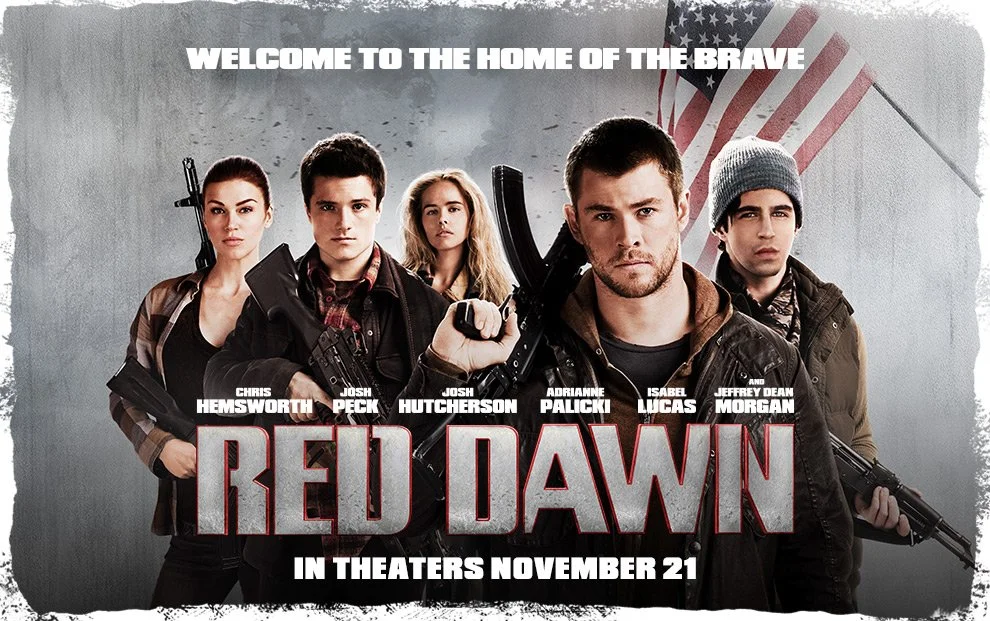
Being a child of seventies, I remember James Hunt being constantly in the Sunday Newspapers and a guest on talk shows. I knew who he was, what he did and that his antics frequently had my parents tutting, the same way as they would at contemporary pop stars shenanigans. But beyond that I wasn't that interested in the man, being obsessed by Star Wars at the time. As an adult I now frequently find myself revisiting this particular decade through books and documentaries and re-appraising events that took place. As a result, I get to put into perspective the things that were happening around me as a child that I didn't fully understand. The miner's strike, apartheid and the trial of Jeremy Thorpe (brilliantly dramatised recently by the BBC in A Very British Scandal). I was hoping to get a similar insight from Rush.
Being a child of seventies, I remember James Hunt being constantly in the Sunday Newspapers and a guest on talk shows. I knew who he was, what he did and that his antics frequently had my parents tutting, the same way as they would at contemporary pop stars shenanigans. But beyond that I wasn't that interested in the man, being obsessed by Star Wars at the time. As an adult I now frequently find myself revisiting this particular decade through books and documentaries and re-appraising events that took place. As a result, I get to put into perspective the things that were happening around me as a child that I didn't fully understand. The miner's strike, apartheid and the trial of Jeremy Thorpe (brilliantly dramatised recently by the BBC in A Very English Scandal). I was hoping to get a similar insight from Rush.
Ron Howard, a very talented director who can turn his hand to most genres and subject matters, has elected to paint a picture with very broad-brush strokes with Rush. If you’re looking for a historically accurate character study, then you may well be disappointed. Rush is a distillation of events, packaged in a very accessible way, aimed at broadest possible audience. That is not to say it is bad, because it is most certainly not. Performances are good, the narrative is very engaging, and the race sequences especially the crashes are utterly hair raising. Rush in many ways is a throwback to the golden age of Hollywood biopics and as a result is very entertaining.
Director Ron Howard successfully achieves making the essentially unlikeable characters of James Hunt and Niki Lauda, very watchable and turning a story of hedonism, egomania and recklessness into a compelling drama. The movie combines big studios’ production values and their predilection for action sequences with that British bent for storytelling. Not bad for an independent production. You would think that a movie pitched in such a fashion, with one eye very squarely on the US market that may not be so familiar with F1, would all be neatly packaged at a PG-13 rating. That is not the case. Rush does not skimp on the realities of the subject matter. Hunt's sexual appetite is starkly shown. There's also a fair amount of profanity in the screenplay and Lauda's crash in 1976 is quite graphic in depicting his extensive burns.
The movie also proves that there’s more to Chris Hemsworth than his action-star persona. I wish he did more material like this. Both he and Daniel Brühl acquit themselves very well. However, in some respects the real star of Rush is cinematographer Anthony Dod Mantle (127 Hours, Slumdog Millionaire) who creates a real sense of tension with his beautifully edited race sequences. Production designer Mark Digby and costumer designer Julian day also deserve commendation for faithfully trying to reproduce the look and feel of the time. But this is the decade that fashion and aesthetics forgot. Modern films no matter how much they try, never quite seem to capture how crap everything looked back then. They always seem to achieve a sort of shit-chic instead.
Rush is a mainstream movie no doubt, but it is exceedingly well crafted and still has lot to offer. I did balk at the rather clumsy voice-overs during the race scenes which are designed to provide exposition for those unfamiliar with F1 racing. However, this can be excused as a necessary concession required to market the film internationally. I must also applaud Ron Howard for the fact that after crafting a tale of rivalry for nearly two hours, he doesn't overtly depict either one as being the absolute winner or loser, especially in moral or philosophical terms. This is left for the audience to ponder upon. Clumsier directors would have made a less nuanced choice. Therefore, if you’re looking for a solid drama, with good performances, compelling action scenes, along with period flavour, then Rush is a sound choice.









Escape Plan 2: Hades (2018)
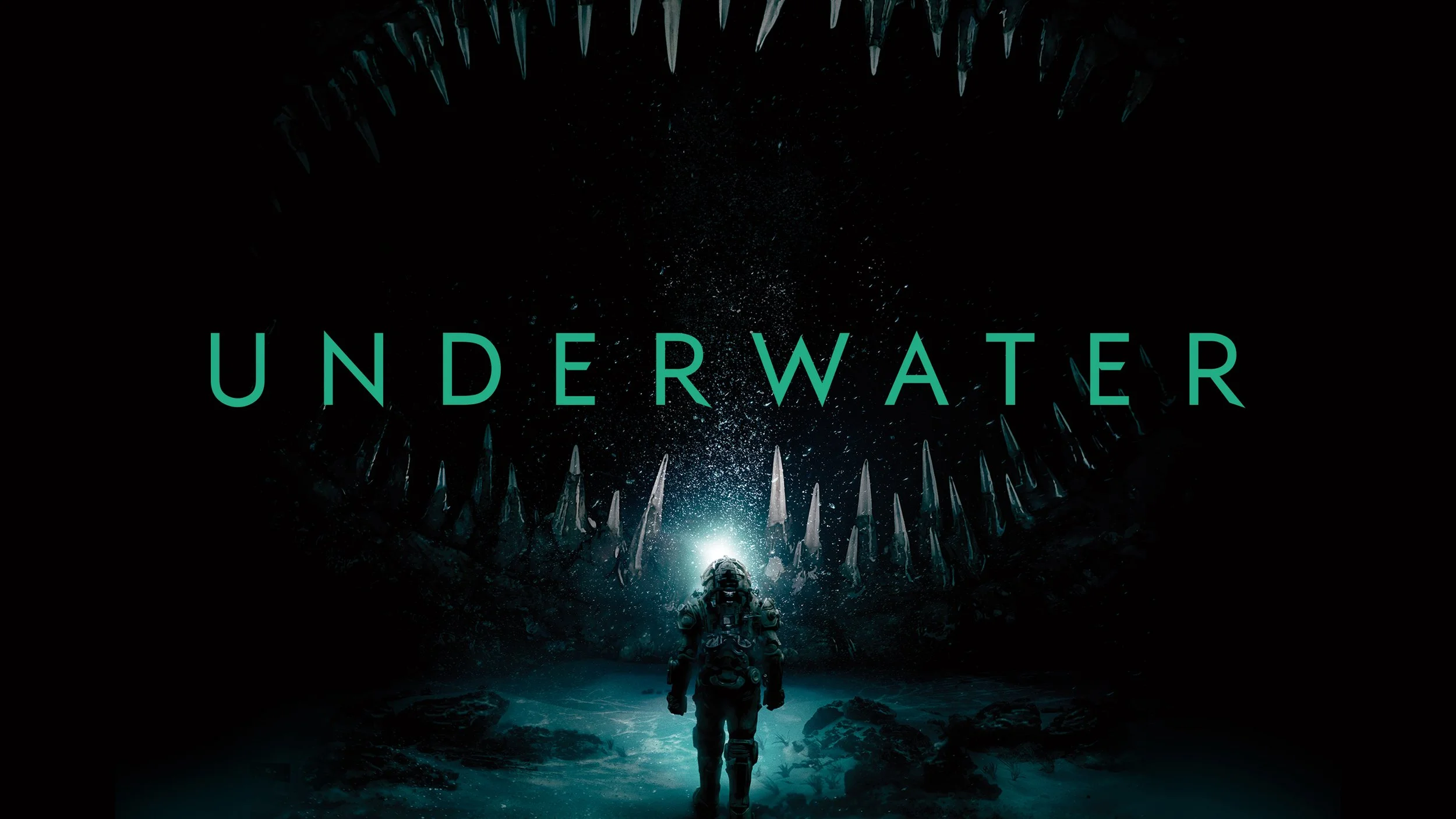
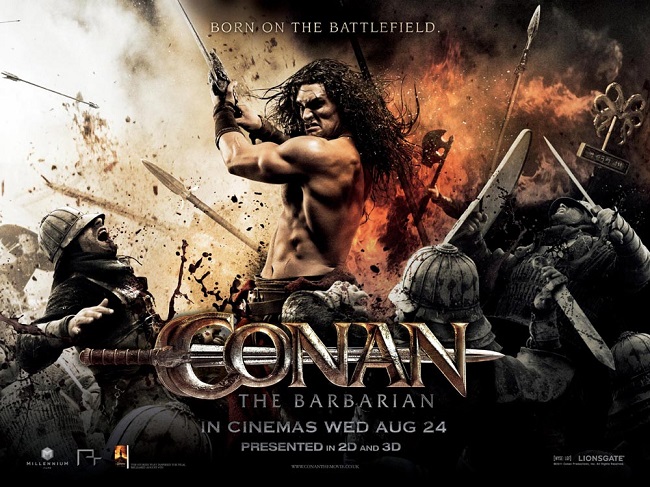
Direct-to-streaming is in some respects the direct-to-video market of the current decade. However, that comes with a few caveats, as sometimes if a studio gets cold feet about a movie they’ll ditch it to streaming, even if it’s a quality product. Alex Garland’s Annihilation being an example of this. However, that isn’t the case of Escape Plan 2: Hades which clearly falls into the category of a cheaper and inferior sequel. Both Sylvester Stallone and Curtis Jackson return respectively to their previous roles, but Arnold Schwarzenegger is conspicuously absent this time round. In other cast changes, Jamie King replaces Amy Ryan as Abigail Ross. Sadly, the marketing for the movie is deliberately misleading and despite featuring prominently in the advertising, Dave Bautista only has a support role, appearing in the final third of the movie. The director for this instalment is Steven C. Miller, whose body of work is predominantly direct-to-streaming action movies and low budget thrillers.
Direct-to-streaming is in some respects the direct-to-video market of the current decade. However, that comes with a few caveats, as sometimes if a studio gets cold feet about a movie they’ll ditch it to streaming, even if it’s a quality product. Alex Garland’s Annihilation being an example of this. However, that isn’t the case of Escape Plan 2: Hades which clearly falls into the category of a cheaper and inferior sequel. Both Sylvester Stallone and Curtis Jackson return respectively to their previous roles, but Arnold Schwarzenegger is conspicuously absent this time round. In other cast changes, Jamie King replaces Amy Ryan as Abigail Ross. Sadly, the marketing for the movie is deliberately misleading and despite featuring prominently in the advertising, Dave Bautista only has a support role, appearing in the final third of the movie. The director for this instalment is Steven C. Miller, whose body of work is predominantly direct-to-streaming action movies and low budget thrillers.
It quickly become apparent when watching Escape Plan 2: Hades that the movie is primarily a vehicle for Chinese star Xiaoming Huang (Ip Man 2) and not Sylvester Stallone. His character, Shu Ren, is a protege of professional escapologist Ray Breslin, who finds himself trapped in the titular high-tech prison Hades. Meanwhile, the rest of Breslin’s team sit around their Atlanta based office pondering why their friend has “vanished from the grid”. It soon becomes clear that Shu Ren’s brother-in-law Yusheng Ma (Chen Ta) is the reason for their incarceration. Yusheng Ma is a tech genius who owns several patents for next-generation satellites. Hades is actually a front for the Ruscho Corporation who want to control this new technology for their own nefarious reason. It’s all somewhat perfunctory and one can’t help but get the impression that the screenplay written by Miles Chapman, who co-wrote the original Escape Plan, has been retrofitted to accommodate the change of focus from a US leading man to a Chinese box office star.
I like many other viewers was not expecting a sequel to Escape Plan, let alone a franchise (there’s a clear indication that a third movie is on the way at the end of this one). Initially, the prospect of more was not inherently unappealing; I’ve seen far worse material get multiple instalments. However, the change of direction and star focus is a surprise. Escape Plan did well internationally, and a sizeable percentage of that box office was the Chinese market, so it’s hardly rocket science that this Chinese backed production has dovetailed a star from the home market into the proceedings. However, the budget for Escape Plan 2: Hades is demonstrably lower than the first movie and the production has that distinct direct-to-streaming look. The cinematography is vivid with a blue, red and green colour palette, but it cannot cover for the inherent cheap feel that permeates the movie. There is a pulsing synth score from The Newton Brothers helps up the ante, but it often drowns out the expositionary dialogue. The fight scenes are also poorly shot and edited, which is a damn shame because Xiaoming Huang clearly has talent. There’s also a plethora of digital blood spray and it’s stand out like a sore thumb.
Sadly, even the presence of Stallone and Bautista cannot save Escape Plan 2: Hades. Their joint input seems very contrived and workmanlike. Perhaps the producers should have eliminated all links to the previous movie and just made this a straight forward original vehicle for Xiaoming Huang. As it stands, the existing franchise baggage (and there’s a surprising lot) and US based scenes gets in the way of the prison-based action. So, all things considered, unless you like the lacklustre ambience of lower end of the action movie market, there isn’t really a lot to recommend Escape Plan 2: Hades. Although, I can’t help but smile at the hubris of the producers, in thinking they could make such radical changes to an established movie vehicle and think they could get away with it. It makes me just a little bit curious to see how contrived the threatened third instalment in the franchise is and whether Mr. Stallone decides to grace it with his presence.





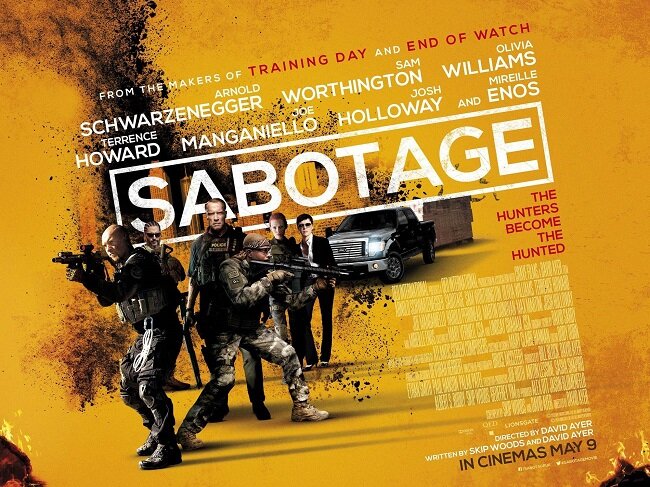
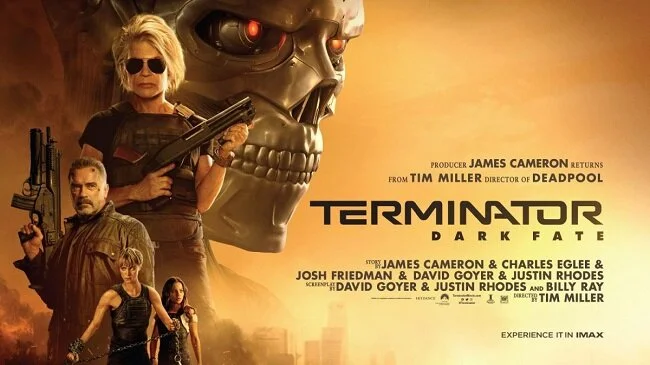


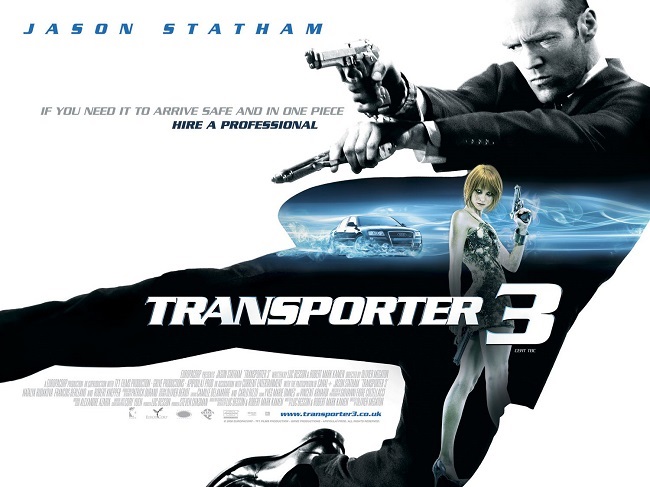

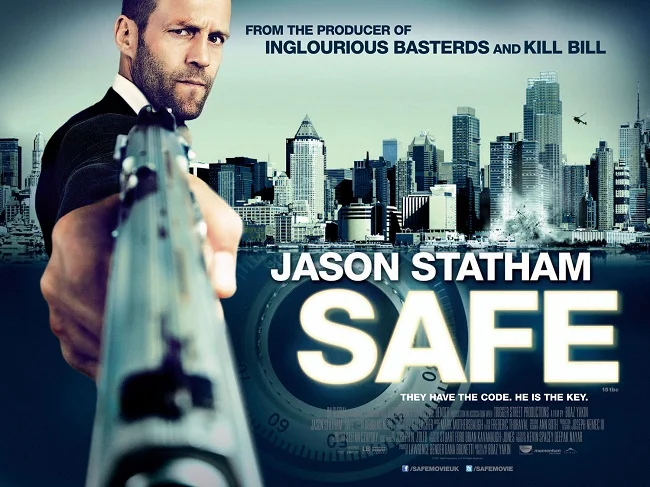
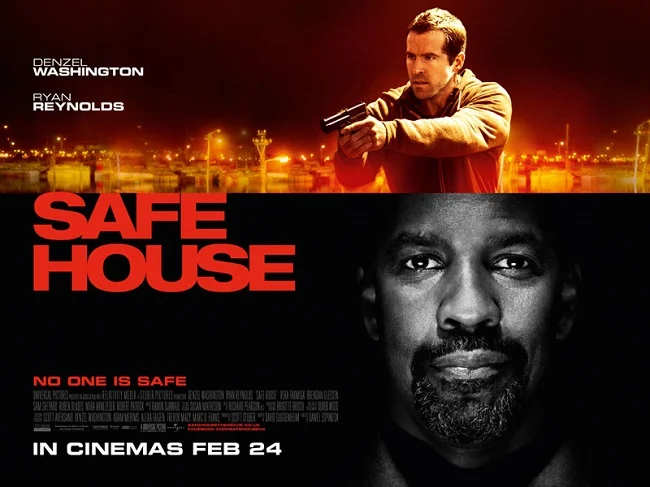
Escape Plan (2013)
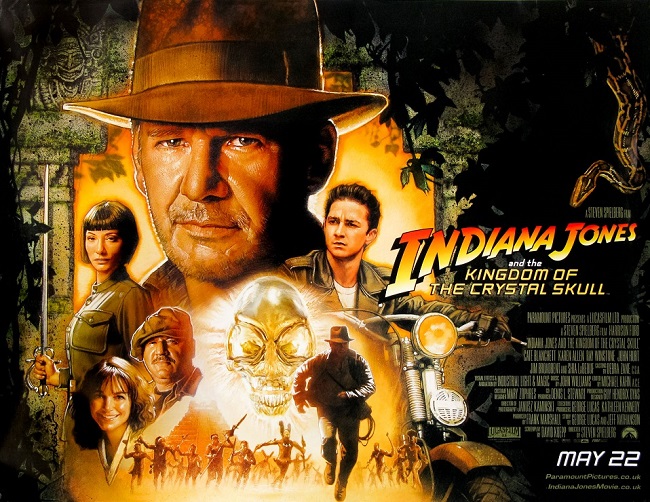
If you are over a certain age, there will be certain actors, TV shows and bands that you’ve grown up with and always enjoyed. Let us consider for a moment the latter. The Stranglers will be playing at the Looe Music Festival in Cornwall on the 23rd September. They’ve been touring and producing albums for nearly forty-five years. The majority of the audience who attend their gigs will be long term fans and they’ll not be there in the hope of hearing a bunch of new material from the latest album. No, they want a concert filled with familiar tunes and greatest hits. I'm pretty sure that is what they will get as well. Escape Plan is the cinematic equivalent of this. A movie that is driven by its two leads and tailor made so they can give their fans exactly what they want.
If you are over a certain age, there will be certain actors, TV shows and bands that you’ve grown up with and always enjoyed. Let us consider for a moment the latter. The Stranglers will be playing at the Looe Music Festival in Cornwall on the 23rd September. They’ve been touring and producing albums for nearly forty-five years. The majority of the audience who attend their gigs will be long term fans and they’ll not be there in the hope of hearing a bunch of new material from the latest album. No, they want a concert filled with familiar tunes and greatest hits. I'm pretty sure that is what they will get as well. Escape Plan is the cinematic equivalent of this. A movie that is driven by its two leads and tailor made so they can give their fans exactly what they want.
On paper Escape Plan is the sort of movie that may have gone straight to video, if it had been made in the eighties. It has a very black and white plot scenario, with a clear three act story structure. The set pieces drive the narrative forward and there’s plenty of boxes ticked. What elevates this formulaic piece of genre cinema is the presence of its two stars, Stallone and Schwarzenegger. I cannot stress how much this is a piece of entertainment whose success hinges upon your personal connection both actors. For some this movie will be like putting on a comfortable pair of old shoes or having that special meal that you always have, when you go to your favourite restaurant.
Security specialist Ray Breslin (Stallone) breaks out of prisons for a living. He is offered a job by the CIA to test a new top-secret facility but soon finds that he has been set up and trapped. Forced to team up with fellow prisoner Emil Rottmayer (Schwarzenegger), Breslin treads a fine line as he attempts to learn more about his surroundings, whilst having to contend with vicious guard Drake (Vinnie Jones) and prison warden William Hobbs (Jim Caviezel). During the two-hour running time there is much fist fighting, improvised "A" Team style device manufacture and hard-boiled dialogue. The prison production design is visually impressive and adds an innovative element to the traditional plot. There's a nice cameo from Sam Neil as the prison's Doctor. We also get to hear Arnie talking in his native tongue which is most discombobulating.
Director Mikael Hafstrom manages to strike the right balance between the light banter of his two stars and the dramatic intensity of the third act. The interaction between Stallone and Schwarzenegger is very organic and they carry the movie through their personal chemistry. There are a few clever nods to the eighties and homages to both stars earlier works. Overall it doesn't seem too forced. This is where the movies strength lies. If you look beyond its high concept foundation, then it is a rather well made but ultimately standard action movie. Returning to my band analogy, the same can be said about many famous songs by high profile artists. When analysed out of context they’re often far from exceptional. But when performed with enthusiasm by those who wrote them, they become something far more sublime. Escape Plan does pretty much the same.
World Cup 2018
A few years ago, I wrote a blog post about how I’m not a major sports fan and how sporting events and their associated culture are not a major part of my life. Let it suffice to say that nothing has occurred to change my perspective since then. Effectively myself and sports exist in two separate spheres and “never the twain shall meet”. I don’t have a deep, abiding hatred of sporting activities; I simply have no interest in them. They’ve never been an integral part of my life, although in my youth I was always happy to try them. If I do have a beef, then it is with some of the wider aspects of sporting culture which can stray into racism, sexism and blind zealotry. The tribal nature of sports is also not to my liking either. However, I strive to maintain a live and let live attitude, so as long as I can keep sport at a comfortable distance, we can mutually ignore each other.
A few years ago, I wrote a blog post about how I’m not a major sports fan and how sporting events and their associated culture are not a major part of my life. Let it suffice to say that nothing has occurred to change my perspective since then. Effectively myself and sports exist in two separate spheres and “never the twain shall meet”. I don’t have a deep, abiding hatred of sporting activities; I simply have no interest in them. They’ve never been an integral part of my life, although in my youth I was always happy to try them. If I do have a beef, then it is with some of the wider aspects of sporting culture which can stray into racism, sexism and blind zealotry. The tribal nature of sports is also not to my liking either. However, I strive to maintain a live and let live attitude, so as long as I can keep sport at a comfortable distance, we can mutually ignore each other.
However, that can be a difficult proposition at times. Sport is a big deal in the UK, especially football (not the US hand egg variety). The 2018 World Cup tournament starts today and because of the time difference between the UK and Russia, most of the major games will be broadcast on network television during the mid-evening. Coverage will subsequently bleed into all media and prove very difficult to ignore or avoid. There will also be major changes to the TV schedules over the next four weeks that will enrage the letter writing brigade, who will subsequently bombard the various consumer programs with a tsunami of epistles denouncing the postponing of Bargain Hunt or Escape to the Country as high treason. Then of course there’s the pundits and armchair experts. The World Cup brings them out of the woodwork in their droves, simultaneously mangling the English language and rational thinking. And for those who miss the halcyon days of Paul the Octopus, this time round we have Achilles the Psychic Cat.
On a more serious note, the World Cup has a tangible knock on effect on productivity and has both positive and negative effects on the UK and global economies. According to Bloomberg, the 2018 World Cup might cost a total of $14.5 bn in lost productivity worldwide. As a result, Brazil's government recently announced that it will allow state workers to adjust their hours when the national team competes. In the UK, it is not unusual for farsighted small employers to show a similar degree of flexibility. I worked for one company that allowed staff to watch various games in the conference room, during the 2002 World Cup, in attempt to reduce “sick leave”. Although there was little productivity during this time, it certainly had a positive effect upon team building and company loyalty. Something that every business could do with more of these days. It will be interesting to see in the weeks ahead whether this trend continues.
Making important preparations for the World Cup... #Russia2018 #WorldCup #Football pic.twitter.com/TKuqBicak5
— Nathan Caton (@NathanCaton) June 12, 2018
For those readers outside of the UK, I cannot impress upon you how much football is part of the UK’s cultural identity. For a substantial part of the population it is an integral part of their lives and the next four weeks will mean the side-lining of a great many other social obligations. The World Cup will therefore bring a great deal of joy as well as acrimony to many a household. And for those who just want to avoid it and get on with their lives, that going to prove a bit of a challenge as it is everywhere. Virtually every conceivable consumer product has done some sort of advertising deal with FIFA. I’m surprised I haven’t seen the World Cup logo adorn my father heart medication. However, let us no be cynical and focus purely on the negative. I suspect over the next four weeks, a lot of MMOs will find that their player base has grown and that a lot of absent veteran are making a return.

















Congratulations. Now Spend More Money
Video games are many things to different people. For some they are art, for others they’re a social platform. Others see games a means to compete and challenge themselves. Others use them as a medium to bolster their self-esteem. And in some quarters, games are a retreat and a safe space from all the things in life that are threatening, such as women, equality and human decency. For me, they provide an amusing diversion and a writing opportunity. But let us not forget what the primary purpose of the video games industry is. Namely, to make money. Video games are not a social service or a similar altruistic medium, although many gamers still delude themselves that they are. They’re a product to be packaged, marketed and sold. And I was given a timely reminder of this today.
Video games are many things to different people. For some they are art, for others they’re a social platform. Others see games a means to compete and challenge themselves. Others use them as a medium to bolster their self-esteem. And in some quarters, games are a retreat and a safe space from all the things in life that are threatening, such as women, equality and human decency. For me, they provide an amusing diversion and a writing opportunity. But let us not forget what the primary purpose of the video games industry is. Namely, to make money. Video games are not a social service or a similar altruistic medium, although many gamers still delude themselves that they are. They’re a product to be packaged, marketed and sold. And I was given a timely reminder of this today.
I’ve recently been playing Tom Clancy's Ghost Recon: Wildlands and slowly progressing through the games central campaign for the last three weeks or so. Last night I finally met the criteria to take down the game’s central villain, El Sueño. On my second attempt I finally made it to the mountain top mausoleum in time and triggered the cutscene which gives the game’s primary ending. This conclusion has been dubbed the “bad ending” by some players and if you then repeat the final mission, you are granted access to a second alternative outcome. Both story denouements are plausible, but I actually preferred the first. To hell with cutting deals and geo-politics. As far as I’m concerned, El Sueño had to die. However, irrespective of which ending I favoured, once he was dispensed with, I simply moved on to mopping up a few residual quests around the game map. Once this is done, then I’ll start the DLC.
This morning, I opened Microsoft Outlook to discover the following email sitting in my inbox. “El Sueño is dead!” was the stark message. Naturally I opened it and read the following. “Congrats for defeating El Sueño. You worked hard, Ghost, fired at the enemy, roamed the dusty roads of Bolivia and flew over with helicopters. Need another challenge? Exchange 100 units to get a 20% discount on a new Ubisoft game!”. It’s hardly the most heavy-handed marketing message I’ve come across in nearly thirty years of gaming, but it is unique, in so far as it was sent directly to me by email after reaching a specific achievement in-game. Effectively, the publishers are saying congratulations, now go spend more money please. Again, this entire situation initially seems very innocuous, but the more I think upon it, the more significant it appears.
I’ve not played a great deal of Ubisoft games over the years and I’ve only recently discovered how the company does it utmost to extend the lifecycle of their products and monetise them to the maximum. I recently found that they have sperate season passes for each year a game has content released. They also lock a great deal of cosmetic items, as well as practical game content such as weapons, behind pay walls. Compared to other companies they are far more “vociferous” in pursuing the content of their players wallets. So in within this context, I guess receiving an email congratulating me on my success while simultaneously encouraging me to contribute further to their shareholders pension fund, is hardly surprising. I found the whole experience to be just “odd”. I wonder if some players find such messages flattering? I also wonder if anyone actually did go straight to the store and start spending. I guess the very existence of such emails indicates that they do.




The Failings of Co-op Gameplay
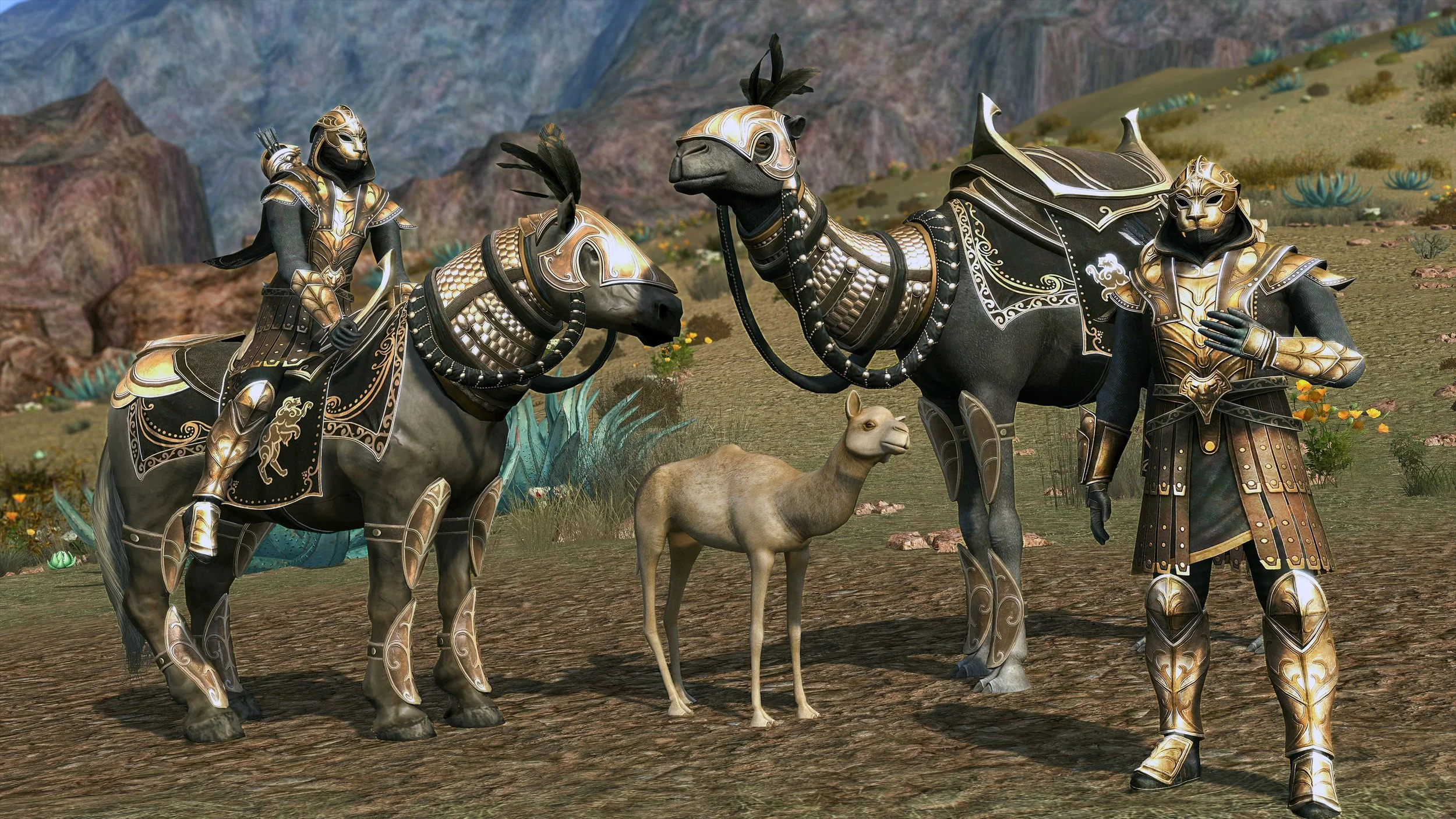
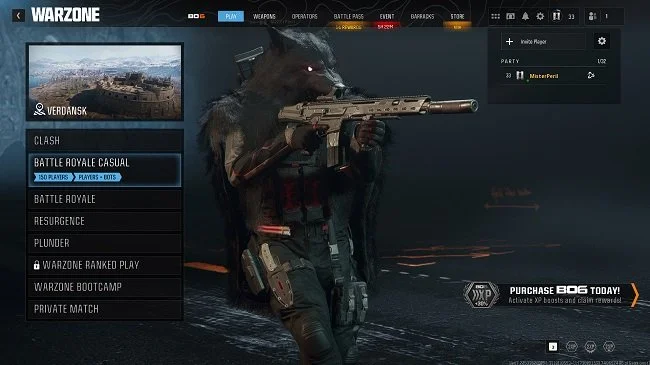
It would appear that Anthem will have a campaign mode that can be played solo or co-op. This is hardly surprising because such a mechanic is pretty much de rigueur these day in gaming. On paper the ability to play through content collaboratively is a great idea. Small groups of four people or so are theoretically easier to manage and co-ordinate, unlike large unwieldy raids in the MMO genre. Discord (and such like) provides a quick and easy way for people to communicate. And despite ongoing improvements in AI technology, playing with other people often provides a superior experience. Mutually agreed tactics are more likely to succeed and if things take a turn for the worse, real players can improvise more effectively. Hence co-op play seems to be industry darling at present and is seriously putting a dent in the MMO market.
It would appear that Anthem will have a campaign mode that can be played solo or co-op. This is hardly surprising because such a mechanic is pretty much de rigueur these day in gaming. On paper the ability to play through content collaboratively is a great idea. Small groups of four people or so are theoretically easier to manage and co-ordinate, unlike large unwieldy raids in the MMO genre. Discord (and such like) provides a quick and easy way for people to communicate. And despite ongoing improvements in AI technology, playing with other people often provides a superior experience. Mutually agreed tactics are more likely to succeed and if things take a turn for the worse, real players can improvise more effectively. Hence co-op play seems to be industry darling at present and is seriously putting a dent in the MMO market.
However, the reality of co-op play is often quite different from its notional benefits. I have dabbled with this functionality via several games in the last twelve months and have had decidedly mixed results. First off, finding a group is very much dependent on the popularity of the game. If the game is a new release, then this is not an immediate problem. But if you’re playing the game of the year edition, twelve months after launch you may well find the player base has greatly diminished. Then there’s the age-old problem of player behaviour, that seems to have become exacerbated of late. I have encountered little or no communication from fellow players, as well as the ubiquitous malcontents who sound off at everyone and everything when things don’ go their way. Which leads to the other major problem that co-op regularly presents. Namely fellow group members leaving because things are not going the way they want. It is by far the most frequent failing of co-op play, in my experience.
Sadly, because online behaviour per se seems to be a race to the bottom nowadays, I cannot advocate the automated group finding tools that many games now have. Last year, I found that Sniper Elite 4 and For Honor could deliver an adequate co-op experience about two thirds of the time. One in every three games was impeded by another member of the group. Twelve months later I find that the opposite is true. Two out of three co-op games are either blighted by player behaviour or suffer due to team members abandoning the group. This is particularly true of Friday the 13th: The Game and as a result the developers are currently working on implementing a penalty system for habitual offenders. When I do find myself in a PUG I frequently find there is a distinct reticence towards communication. It’s as if there’s an assumption that everyone knows what to do and that the task in hand needs to be undertaken as quickly as possible. Sadly, the only people disposed towards talking are those who have little of worth to say.
Perhaps it’s a generational thing and I am unreasonable in expecting both courtesy and a willingness to work together when playing co-operatively. But I am now at an age where my tolerance for the socially dysfunctional, the trite shenanigans of youth and general ill manners are virtually non-existent. So auto grouping is fast becoming a waste of time for me. Which leads me neatly into the only alternative; playing with friends. Simply put, as you get older is common to find your social circle reduce in size. Jobs, relationships and family mainly account for this. Hence a lot of people that I would play with collaboratively a decade ago are not available anymore. From what I’ve seen from You Tube, those players who regularly play co-op games are often half my age. Of my friends who are available, there is the further complexity of time zones and the simple fact that not everyone has the same gaming tastes. More often than not I find that my Steam friends simply don’t play the same games as me. And as I’ve moved away from the MMO genre I find that I really miss the practical benefits of guilds.
Once again, we see something that on paper should be a major boon to the gaming community, being usurped by the lowest common denominator and rendered ineffective as a result. It seems to be the fate of all online social tools these days. Perhaps that’s why many game developers still include a solo mode with AI bots in their games, because they know in advance that a substantial element of their customer base is going to be “problematic”. May be the solution to the co-op play is to make the auto grouping tools more sophisticated and use them in a way to facilitate a good experience. This could be through incentivising acceptable behaviour and rewarding a team if they deem the experience to be positive. Conversely, providing a means to highlight and sanction poor behaviour would also be a positive step. However, such facilities require time and money to develop and policing a community requires human agency. All of which ultimately contribute to a games bottom line, so I won’t hold my breath that this issue is going to be solved any time soon. In the meantime, I’ll just continue to rely upon AI bots and come to terms with the fact the co-op play doesn’t appear to cater for my requirements.
The Need To Challenge Yourself
In March 2016 I effectively took early retirement from my IT consultancy business and became a fulltime carer. Since then I have focused my time on addressing both my disabled parents’ health needs and the logistical and administrative task of running their home. It keeps me busy to say the least, but I find that being organised, proactive and maintaining a tight routine is the key to staying on top off it all. However, what this role doesn’t provide in any shape or form is any serious intellectual challenge. Scheduling appointments, re-ordering medication and liaising with the District Nurse Team and Doctors Surgery mainly require the use of soft skills. It is gratifying to be on top of these tasks, but it doesn’t have the same satisfaction of a rigorous technical conundrum.
In March 2016 I effectively took early retirement from my IT consultancy business and became a fulltime carer. Since then I have focused my time on addressing both my disabled parents’ health needs and the logistical and administrative task of running their home. It keeps me busy to say the least, but I find that being organised, proactive and maintaining a tight routine is the key to staying on top off it all. However, what this role doesn’t provide in any shape or form is any serious intellectual challenge. Scheduling appointments, re-ordering medication and liaising with the District Nurse Team and Doctors Surgery mainly require the use of soft skills. It is gratifying to be on top of these tasks, but it doesn’t have the same satisfaction of a rigorous technical conundrum.
I have always maintained that the educational process doesn’t end the moment you leave school or university. Everyday presents opportunities both big and small to learn something new. Our lives are a continuous ongoing project of self-improvement, or at least potentially so. Sadly, not everyone embraces such an ethos and certainly in recent years, academia and knowledge per se are openly eschewed in some quarters. People want a seat at the top table without actually earning such a place, but that is a separate discussion. I personally enjoy learning and acquiring new skills. I have been raised to embrace curiosity and whenever I encounter something that I’m not au fait with, my first act is to google it and from there explore the matter further.
I have been somewhat discombobulated of late. I can’t think of another way to describe my feelings. I have focused on my parents’ requirements and have ensured that their needs have been met, but despite trying to organise my writing schedule, I have not posted as much new content as I would like. After some personal reflection I have concluded that I’m not being sufficiently intellectually engaged at present. I enjoy a technical challenge, which is one of the reasons I gravitated towards IT as a career. This is absent from my life at present and it is proving to be detrimental to my state of mind. So I’ve decided that it is time to try and take onboard a new project of some kind or learn a specific new skill. Obviously, I have to pick something that can dovetail into my existing daily routine, but I think if I am sensible in what I choose, I can accommodate it.
I recently received the latest brochure for my local Learning & Enterprise College, which provides a spectrum of adult education courses in my Borough. However, the majority of courses are for essential academic skills that I already have. The few leisure focused courses are mainly arts based or socially orientated which are fine but not exactly what I’m looking for at present. Then of course there is the cost to consider. I have clear budget and must adhere to it. Hence if I pursue a new technical project it cannot require an excess of hardware or software. Ideally, I would like to undertake any studying at home, although the social aspect of going to a class and meeting other like-minded individuals has a lot of benefits. However, at present my biggest obstacle is that I haven’t yet decided specifically what I want to do. All I do know at present is that I need to apply my mind to something challenging, as I don’t care for the drifty, listless alternative that is currently on offer. I’m sure a suitable solution will present itself soon.
It is a curious paradox, that although having stepped away from the trials and tribulations of a traditional job, there are aspects of it that I miss. Obviously not the office politics or human drama but the chance to test myself mentally. I think that irrespective of whether I need to work or not, I shall always require some sort of project at some level, to keep my nature placated. Although I enjoy leisure time and understand it’s importance as I get older, I simply don’t wish to stop using my mind. Pursuing a challenge of some kind keeps me sharp and focused and I’m not sure if it would be good for me to have that totally absent from my life. Hopefully next time I write on this subject matter, it will be about what new skill I’m learning or project I have embarked upon. And I firmly believe that it will provide me with the clarity that I feel is currently absent.


LOTRO: Update 22.2
When I first started playing LOTRO in late 2008, I actually read the manual that came with my box copy, before I decided which class I was going to play. I chose the Lore-master as it sounded and interesting mixture of both ranged attacks and the use of pets. Being new to the MMO genre at the time, I didn’t realise that it was actually quite a complex class to play. Although I have dabbled with alts over the years I have stuck with this single character and until 2017, kept them relatively up to date with regard to content and respective skills. Mordor greatly dampened what enthusiasm for LOTRO and as a result I have fallen behind the curve. My gear is poor as I haven’t really progressed far into the lastest expansion. Combat has become a tedious grind, leaving me with a paradoxical situation. Poor gear makes progression slower, but bypassing Mordor leaves my character gimped. Bearing this in mind, I’ve been eagerly awaiting the Lore-master class changes that have come with Update 22.2 in the hope they will improve my situation. Sadly, I don’t think that today’s changes are the solution I’m looking for.
When I first started playing LOTRO in late 2008, I actually read the manual that came with my box copy, before I decided which class I was going to play. I chose the Lore-master as it sounded and interesting mixture of both ranged attacks and the use of pets. Being new to the MMO genre at the time, I didn’t realise that it was actually quite a complex class to play. Although I have dabbled with alts over the years I have stuck with this single character and until 2017, kept them relatively up to date with regard to content and respective skills. Mordor greatly dampened what enthusiasm for LOTRO and as a result I have fallen behind the curve. My gear is poor as I haven’t really progressed far into the lastest expansion. Combat has become a tedious grind, leaving me with a paradoxical situation. Poor gear makes progression slower, but bypassing Mordor leaves my character gimped. Bearing this in mind, I’ve been eagerly awaiting the Lore-master class changes that have come with Update 22.2 in the hope they will improve my situation. Sadly, I don’t think that today’s changes are the solution I’m looking for.
I am not a min-maxer per se and have never been a serious number cruncher when it comes to LOTRO. I broadly know what my skills do and have adopted a rotation that is common to many other LOTRO players who favour the Lore-master class. For me I define my combat effectiveness by the amount of time it takes to kill a single mob, along with how many skills I have to use or how many times I have to repeat my rotation. This may not be the most scientific method, but it works for me. I then temper combat effectiveness with another very subjective factor. Is the combat satisfying or is it a chore? Too often of late in LOTRO combat is the latter. For me, and possibly many other MMO players, there is a very personal tipping point between a credible and engaging fight and a dull, ponderous slog. For me it may be so many seconds, for another player it may be double or triple that time. What I do find with older MMOs is that combat does seem to take a lot longer, compared to modern titles. The Secret World suffered terribly from this problem and it still wasn’t adequately addressed for my liking, when the game was revised into Secret World Legends.
In LOTRO I predominantly follow the red skills line, looking to do maximum DPS. Therefore, the recent upgrade to Burning Embers (applying Gust of Wind to augment it into Searing Embers) is a “interesting” addition. However, the induction animation is a real nuisance and needs to be shortened. Lightning Strike has been tweaked and its cooldown has been shortened. I noticed I was hitting higher critical hits as a result. However, the initial heal from Water-lore has been removed so only the HoT component remains. Thus, you’ll only get the first heal after four seconds. Plus, Ring of Fire is currently broken which is a bit of an inconvenience as its use regularly features in my play style. However, I am concerned that by making the Lore-master’s single target DPS stronger, that our AoE has suffered. Also, the removal of the Wizards Fire component and its replacement with something that is essentially not commensurate, does strike me as an over simplification of gameplay.
After running several skirmishes today, I did conclude that my overall DPS had improved but that was only in specific circumstances. For the casual, PVE-centric player, who plays cautiously, pulling mobs individually or using crowd control to make fights sequential, then this update is an adequate improvement to the class. But for those who do like to group and contribute to a communal fight, then it there isn’t so much on offer. Lore-masters are not so able to deal DoTS and their AoE skills have been reduced. And irrespective of all of these changes, I still find that combat is too slow for my liking. It’s difficult to articulate without the use of numbers, but when fighting I expect at least one skill to do 15 to 20% damage to my opponent’s moral. It still feels too much like an uphill. But this is the conundrum of combat in gaming, especially the MMO genre. Trying to find that right balance that pleases the majority of players, or at least allowing them to augment their effectiveness by accessing the right sort of gear. I’m beginning to feel that the more LOTRO is updated, the gap between what you can achieve and what I currently have, is growing wider and wider. I don’t know if I ever will catch up.
The Poppy Is Also a Flower (1966)
I was aware that The Poppy Is Also a Flower (AKA Danger Grows Wild and a host of other titles) had a reputation as being cinematic oddity, but now having watched it, I would go further and say that it really is an utter mess of a film. Yet because of its movie pedigree both in front and behind the camera, it makes for morbidly fascinating viewing. The nuts and bolts of the plot certainly have legs; on paper at least. But the problems ultimately lie with the tonally inconsistent screenplay and the haphazard directing and editing. Despite the presence of Bond director Terence Young and a plethora of Hollywood stars from the time, the movie lurches from location to location, clumsily expediting the plot and extolling its anti-drug message with all the subtlety of a Rhinoceros horn up the backside. The score by Georges Auric sits uneasily with the on screen action and has been woefully integrated into the movie, quickly informing viewers that something is off about the entire production.
I was aware that The Poppy Is Also a Flower (AKA Danger Grows Wild and a host of other titles) had a reputation as being cinematic oddity, but now having watched it, I would go further and say that it really is an utter mess of a film. Yet because of its movie pedigree both in front and behind the camera, it makes for morbidly fascinating viewing. The nuts and bolts of the plot certainly have legs; on paper at least. But the problems ultimately lie with the tonally inconsistent screenplay and the haphazard directing and editing. Despite the presence of Bond director Terence Young and a plethora of Hollywood stars from the time, the movie lurches from location to location, clumsily expediting the plot and extolling its anti-drug message with all the subtlety of a Rhinoceros horn up the backside. The score by Georges Auric sits uneasily with the on screen action and has been woefully integrated into the movie, quickly informing viewers that something is off about the entire production.
The story begins with an undercover agent (Stephen Boyd) from the United Nations buying up the local opium harvest from a Nomadic Afghan Warlord. However, he is a captured and killed by the that crime syndicate that usually traffics the drug to Europe. The Iranian Army led by Colonel Salem (Yul Brynner) subsequently cross the border and irradiate the next opium shipment, so it can be tracked back to the cartel that distributes it. International Agents Sam Lincoln (Trevor Howard) and Coley Jones (E.G. Marshall) then follow the trail of the refined drugs through Italy, France and Monaco, encountering the victims it leaves in its wake. It soon becomes apparent that millionaire businessman Serge Marko (Gilbert Roland) is a major player in the drugs smuggling business, using his various companies as a front.
The Poppy Is Also a Flower was financed as part of a multi motion picture deal, designed to promote the varied work of the United Nations. Funding partly came via the Xerox company who had a reputation for being a big business with a social conscience who regularly supported philanthropic and moral endeavours. Due to the rectitude of the subject matter an extensive catalogue of international stars were recruited for a cavalcade of extended cameos. Allegedly the cast were paid just $1 each as their fee. Director Terence Young prematurely left filming Thunderball, leaving post production in the hands of Peter Hunt, so he could helm this high-profile project. The film was specifically designed for a TV release on the ABC network in the US, with a longer version produced for an international theatrical release. The theatrical print is currently available on DVD and video on demand.
Despite Terence Young’s track record for managing such international projects, the final results are choppy and lacking in focus. The initial story conceived by Ian Fleming, was then developed into a screenplay by Jo Eisinger. It lacks any major character development, due the extensive number of celebrity cameos. The nearest the story has to main protagonists are agents Lincoln and Jones. However, they seem somewhat miscast due to their respective ages at the time (both being in their mid-fifties). Despite the serious nature of the films central theme, these two agents regularly lapse into light hearted banter and settle decisions by rock, paper, scissors. It all seems at odds the ongoing sombre proceedings. Agents Lincolns amorous advances towards various female cast members also raises an eyebrow. Whenever the script tackles the issues of addiction and the iniquities of drugs, it is hardly nuanced in its approach. The dubbing also works against the English language version of the movie, with poor lip-syncing and questionable voice acting.
Considering the scope of the story with murderous drug gangs and the deprivations of addiction, The Poppy Is Also a Flower is quite restrained in what it shows. Most murders take place off screen and we are shown a few ravaged addicts in an Italian police station but nothing much else. The torture and murder of various agents, along with the consequences of heroin abuse are mainly talked about in government departments or in conference rooms. The marketing of the film focused very much upon the James Bond connection of Terence Young and Ian Fleming, but apart from the glossy European locations, the film lacks the slickness and dynamics of an 007 movie. The theatrical release features an oddly out of place female wrestling match in a sleazy nightclub and an extended (and excruciating) musical performance by Trini López at a gala charity event. The icing on the cake for this odd, misfire off a movie, is a fight scene on a train between Harold Sakata (best known as Odd job in Goldfinger) and a E.G. Marshall. It is rapidly edited to try and cover its incongruous nature and is more of a source of bemusement than excitement, which in many ways is a succinct distillation of The Poppy Is Also a Flower in its entirety.
Non-Driver
As a carer I have to take both of my disabled parents to various clinics, appointments and sundry trips out. Today, it was a visit to the hairdresser with my Mother and then a journey to the audiologist, to collect and be fitted with her new hearing aid. There was then a journey for shopping and a final visit to the pharmacist, before returning home. Luckily, both my parents qualify for the London Taxicard Scheme. The Black Cab are a disabled friendly vehicle and the yearly quota of subsidised journeys are an absolute godsend. However, there is another reason why I find this service invaluable. I do not, nor have I ever held a driving license. To date I have never driven a car and considering my age, the cost of ownership and insurance, along with my personal mindset on the subject, it’s highly unlikely that I ever will.
As a carer I have to take both of my disabled parents to various clinics, appointments and sundry trips out. Today, it was a visit to the hairdresser with my Mother and then a journey to the audiologist, to collect and be fitted with her new hearing aid. There was then a journey for shopping and a final visit to the pharmacist, before returning home. Luckily, both my parents qualify for the London Taxicard Scheme. The Black Cab are a disabled friendly vehicle and the yearly quota of subsidised journeys are an absolute godsend. However, there is another reason why I find this service invaluable. I do not, nor have I ever held a driving license. To date I have never driven a car and considering my age, the cost of ownership and insurance, along with my personal mindset on the subject, it’s highly unlikely that I ever will.
I’ve written in the past about social conventions and how it can be a curious situation if you ever find yourself on the other side of the perceived social norm. Driving is such a common place activity, that it often really flummoxes people when I tell them that I don’t, nor do I own a car. Often the first thing they assume is that I’ve lost my license for legal reasons, as being a non-driver really isn’t common among people of my age (for those who do not know, it’s 50). But I have arrived at this situation, first by circumstance and then in later years through choice. When I was 16, my friend Chris was the first person out of our social group to learn how to drive. As he was a trainee estate agent, his employers paid for his driving lessons and supplied him with a car. He was always happy to drive as it is something that to this day he very much enjoys, being a bit of a petrolhead. So, during my early years, there was no necessity for me to know how to drive and the situation perpetuated from there.
For those readers unfamiliar with the UK and Greater London in particular, there is an abundance of of public transport available in the capital. Cities and wider urban sprawl have grown and evolved differently from more modern cities elsewhere in the world. Hence Buses, the Tube (underground trains) and suburban trains are plentiful in the capital and it is easy (on paper at least) to travel about. Obviously, there are rush hours and demands on all services at key times but getting from home to work or attending social activities has never been a major problem. There’s also less snobbery regarding public transport in the UK compared to say the US. So, during my twenties and thirties, getting to work was a matter of commuting and driving wasn’t required. When I got married my then wife, owned a car and again was someone who enjoys driving for its own sake. Hence, I again managed to avoid having to learn this skill. It is also important to point out the culture of walking that exists in the UK. For me short journeys are carried out on foot, and it is not unusual for me to record a step count of 10 to 15K per day.
Being a non-driver also means that an entire aspect of popular culture has passed me by. I have no interest, let alone love affair, with the cult of cars and shows such a Top Gear have never really appealed to me beyond mild amusement. Where some people idolise performance vehicles and even see their identities and societal status defined by the, I merely see them as modes of conveyance and nothing more. This has resulted in several crest fallen individuals who have bent my ear at social events, telling me about their new shiny [insert name of fancy car here], only to have their anecdote met with a blank look, rather than admiration and valedictory remarks. Also, I have certainly benefitted financially from not owning a car and to date, have not ever found myself inconvenienced in an emergency by my inability to drive, as so many people told me I would.
However, one problem clearly caused by being a non-driver, is that I do not own one of the most common documents used to verify one’s identity. The driving license along with the passport are the pretty much the last word in proving who you are and where you live. Or at least they are here in the UK. If you want to open a bank account, obtain a state pension forecast, or do your taxes online, you’ll have to jump through various hoops to establish who you claim to be. Not owning a driving license makes that demonstrably harder. Therefore, I have gone so far as to consider actually applying for a provisional license simply to address this problem, especially as more and more services are moving online and require you to validate your identity.
I think that in the past, especially during the seventies and eighties, that not owning a vehicle and being able to drive was indeed a disadvantage for a single person. But nowadays, because of where I live and the technology and services that are available, it is by far a lot easier. However, as a caveat I would like to state that raising a family still requires access to a vehicle for convenience and reasons of personal sanity. Yet, once the pressures of raising children have gone, being without a car comes around again in one’s autumn years, although that is usually determined by health and medical factors. Overall, I do not feel that I’ve missed out by not driving and I agree with all those who know me well, and their assertion that I do not have the temperament for it anyway. Yet, I also realise that if I had lived anywhere else other than London during my youth, I may not have remained a non-driver.
Gaming and Outrage Culture
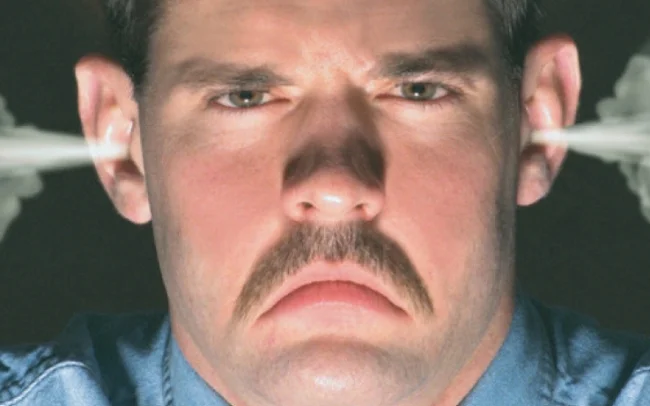
I've written a thousand or so gaming related posts since I started blogging in 2008. I mention this to indicate that I have more than a passing interest in this particular leisure activity. However, that interest has waned somewhat over recent years. As I get older and allegedly wiser, I find that the two things that I like the most about gaming culture IE the actual games and the community, are becoming slowly yet inexorably less appealing. Commercial factors are turning games development into a mirror of the movie and music industry, driven by focus groups and metrics. The broadening of gaming’s mainstream appeal has also led to an angry backlash from alleged "core" fans. The net results are a stagnation of innovation within games development and a slavish adherence to proven formula, as well as an increase in tiresome bickering from specific groups of gamers. Both groups seem to fear change and tend to look backwards rather than forwards.
I've written a thousand or so gaming related posts since I started blogging in 2008. I mention this to indicate that I have more than a passing interest in this particular leisure activity. However, that interest has waned somewhat over recent years. As I get older and allegedly wiser, I find that the two things that I like the most about gaming culture IE the actual games and the community, are becoming slowly yet inexorably less appealing. Commercial factors are turning games development into a mirror of the movie and music industry, driven by focus groups and metrics. The broadening of gaming’s mainstream appeal has also led to an angry backlash from alleged "core" fans. The net results are a stagnation of innovation within games development and a slavish adherence to proven formula, as well as an increase in tiresome bickering from specific groups of gamers. Both groups seem to fear change and tend to look backwards rather than forwards.
As I do not work in the videos games industry, I can only lobby for change and apply whatever leverage I can as a customer and consumer. The gaming community is another matter altogether. I have as much as a stake in it as anyone else and hence an equal voice. Or at least that’s the theory. There are fellow gamers that dislike such philosophies and cleave to their own criteria as to who should have a say and who shouldn’t. Hence the gaming community has fallen victim to that blight which has spread across all online public spaces and social interactions, namely outrage culture. That curiously twenty-first century malady that appears to be the adult equivalent of having a tantrum because you can’t get your own way, or you have to share with others. However, outrage culture sometimes serves a more sinister purpose. It acts as a surrogate for expressing and disseminating more controversial ideas.
Two such examples of this are the recent reveal for Battlefield V and the furore over the game Active Shooter. The first is an instance where a debate about the alleged historical accuracy of depicting women as combat soldiers in World War II, has been hijacked to express displeasure once again at any sort of equal gender representation. The second is about how a cheap and deliberately tawdry game with an exploitative premise, is being championed by a specific group of gamers because they see it as a “fuck you” to the progressive, socially liberal politics that they feel are “taking their games away”. Both points of view are factually, logically and morally questionable, but they are becoming all too common place these days. They reflect a broader infantilisation in the thinking of certain quarters of society, who have dispensed facts and now focus on how they feel, regardless of whether such feelings are justified. It also links into a growing form of zealous fandom that mistakenly equates enjoyment of something with some sort of ownership.
Both of these recent gaming stories are just further examples of ongoing exercises in community-based self-harm. As someone who enjoys being part of that community, I find it utterly depressing. I wonder how many of the participants in these ongoing controversies have stopped for a moment, taken a step back and considered how it looks to the wider world? Precious few I would hazard a guess. Furthermore, the net result of this dispute is that more and more reasonable and level-headed gamers withdraw from engaging with the wider community. This is particularly relevant to female, ethnic minority and LGBT gamers. I consider the marginalisation of any group folly and counterproductive. The net result of ceasing engagement is that is appears to imply that those who shout the loudest have “won” the culture war. Also, as controversy can be bad for business, it often forces game developers to further eschew creativity and experimentation, leading them to double down on tedious tried and tested formulas.
What is becoming clear from these outbursts of gamer outrage, as with wider societal pushback against the status quo, is that western society has not made as much social progression in the last fifty plus years as it may have thought. It has been postulated by many academics that this is the century of "self" and that Western culture has effectively given upon wider socio-political ideologies now. Rather than work cohesively as a collective whole for mutual benefit, we simply apply our consumerist outlook to all situations. We equate our personal expenditure as means of gaining individual representation. Everything is viewed and considered primarily through the prism of how it affects us personally, rather than as a group. This principle manifests itself in all aspects of our life, including gaming. Couple this with a decline in critical thinking and the ability to effectively debate and you end up with outrage, segregation and ongoing culture wars. Thus, by our own hands we fashion the very wedges that divide our community. What was that quote again about why we can't have nice things?
Season Passes
If you are a gamer over a certain age, your interest will have spanned several decades of industry change. By the time I moved from console gaming to the PC, during the mid-nineties, there was already a precedence for expansions to single player games. For example, I was bought Star Trek: Starfleet Academy back in 1998, a few months after its initial release. The game had an adequate amount of content that justified its retail price. A year later publisher Interplay released an expansion pack called Chekov's Lost Missions, featured seven new missions, two new multiplayer games, and various improvements to the game interface. If memory serves this cost half the price of the full game and by the standards of the time was broadly deemed an acceptable. Despite the title of the expansion, this was not content culled from the original game and was purely an optional extra. That was the nature of expansions at the time. They provided new material to enhance a game at a reasonable cost.
If you are a gamer over a certain age, your interest will have spanned several decades of industry change. By the time I moved from console gaming to the PC, during the mid-nineties, there was already a precedence for expansions to single player games. For example, I was bought Star Trek: Starfleet Academy back in 1998, a few months after its initial release. The game had an adequate amount of content that justified its retail price. A year later publisher Interplay released an expansion pack called Chekov's Lost Missions, featured seven new missions, two new multiplayer games, and various improvements to the game interface. If memory serves this cost half the price of the full game and by the standards of the time was broadly deemed an acceptable. Despite the title of the expansion, this was not content culled from the original game and was purely an optional extra. That was the nature of expansions at the time. They provided new material to enhance a game at a reasonable cost.
Today, expansions fall under the broader marketing term of DLC (downloadable content) and the definition is not as black and white as it was two decades ago. DLC can be anything from cosmetic skins, weapons or armour. Then there are PVP and multiplayer maps as well as new missions. In certain cases, the capacity to have further game saves, inventory space or character slots is dressed up as DLC. Nowadays, there are times when a game feels that it’s been gutted of key content that is then withheld and sold back to the player. This can be bought piecemeal as and when required, or pre-ordered through the “miracle” of the season pass, which can add a further £25 or £30 cost on top of the price of the base game. Like or not, the season pass is an established part of a games lifecycle and an integral part of the business model of most major games publishers. It’s a bitter pill to swallow but once done, it should ensure that you’ve got all a games future content in the bag. Or so I foolishly thought.
Usually the lifecycle for a new triple A game is 12 to 18 months and the DLC is released every three months or so. That has mainly been my experience of things with games such as The Witcher 3: Wild Hunt. However, I’ve recently bought some titles from Ubisoft, who seem to drag out their products life cycle far longer. I got a deal on Ghost Recon Wildlands recently which was initially released in March 2017. The Gold Edition included a season pass for DLC, which I assumed (wrongly) covered everything. It would appear not. I noticed last week that there was available in the Uplay store what Ubisoft called a Year 2 pass. Yes, they had released a smattering of further content and wanted me to pay more money for the pleasure of accessing it, as I wasn’t covered by my previous season pass. Suffice to say I wasn’t impressed by this. Furthermore, I've subsequently spotted that Ubisoft have just released a Year 3 pass for further DLC for Tom Clancy's Rainbow Six Siege. A further example of striving to extend a games life and hence its financial yield.
So, it would appear that "games as a service" is slowly becoming a reality. Buying the Gold Edition of a premium new game these days does not guarantee all future content. Yearly DLC passes are a thing and if you want to access further content regardless of how superficial it may be, you have to keep paying. And although I am not alone in being critical of this egregious business approach, it would appear that sufficient numbers of gamers are happy to open their wallets, thus making this practise bear fruit. I would not be surprised if this approach continues to grow and greater functionality will be excised from games and gated behind a paywall. The free-to-play business model of mobile gaming, MMOs and co-op genres could eventually become the de facto industry standard. Ownership as a concept is slowly be erased from gaming and the product is evolving into a continuous service. What times we live in.
Losing Interest in Mainstream Cinema
Before I begin, allow me to clarify the title of this post. I am still very passionate about movies and the film industry per se. And it’s not as if I’m going to run out of content to watch over night. There’s a wealth of older material to watch and the film industry still produces a broad spectrum of new films each year. However, for several years now I have found myself increasingly disinterested in the majority of mainstream films showcased at my local cinema. In 2014 I went to Cineworld in Bexleyheath over a dozen times. The following year that number had halved, and this pattern has continued to the present. In 2017, I went to the cinema just three times. I saw Guardians of the Galaxy Vol. 2, Dunkirk and Star Wars: The Last Jedi. Yet I watched over 150 movies at home the same year. For me the problem lies with the dominance of specific movie franchises and the way they monopolise the major cinema chains.
Before I begin, allow me to clarify the title of this post. I am still very passionate about movies and the film industry per se. And it’s not as if I’m going to run out of content to watch over night. There’s a wealth of older material to watch and the film industry still produces a broad spectrum of new films each year. However, for several years now I have found myself increasingly disinterested in the majority of mainstream films showcased at my local cinema. In 2014 I went to Cineworld in Bexleyheath over a dozen times. The following year that number had halved, and this pattern has continued to the present. In 2017, I went to the cinema just three times. I saw Guardians of the Galaxy Vol. 2, Dunkirk and Star Wars: The Last Jedi. Yet I watched over 150 movies at home the same year. For me the problem lies with the dominance of specific movie franchises and the way they monopolise the major cinema chains.
Allegedly, “choice” goes hand-in-hand with the free market, or so its advocates would have you believe. However, the reality is that box office success is analysed and distilled into a homogeneous formula, leading to the dominance of immaculately produced, yet generic products. Hence, we’ve seen in the last decade, the rise of the franchise movie and every studio desperately trying to establish a sprawling cinematic universe. Reboots strive to capitalise on iconic established movies, although they are seldom interested in doing anything inventive or creative with them. Studios simply see them as hooks or brands, that are already ensconced in popular culture, which means there’s less marketing to do. Films are seldom viewed as a standalone, single piece of entertainment. Sequels can and are frequently retrofitted anywhere where they are “needed”.
During my life, there have been numerous specific movie cycles that have been and gone. All have been successful, but none of them ever seemed to dominate the movie theatres to the detriment of other genres. That seems to have changed with the current fantasy and space opera boom. Disney have robustly maintained the Marvel Cinematic Universe for a decade and are looking to do the same with Star Wars. Other major studio franchises such as Harry Potter, Jurassic Park and DC Extended Universe show no sign of abating. Furthermore, there are also plenty of new ones waiting in the wings, such as the Dark Universe, the MonsterVerse and the Conjuring Universe. Yet despite the current financial success, history shows that the law of diminishing box office returns eventually comes home to roost. Ultimately even the most ardent fans can have too much of a good thing. I would argue that part of the enduring appeal of the original Star Wars Trilogy and to a degree the prequels, stemmed from their infrequency and unique place in cinematic history. Saturating the market is a risk and familiarity breeds contempt.
Another concern I have about this matter is that an entire generation of cinemagoers are being deprived of a wider choice of movies and are subsequently learning about film making as well as establishing their tastes and preferences, solely by watching a limited spectrum of genre movies. I am not trying to pooh-pooh the merits of the MCU, as it has managed to be entertaining and a little more intellectually stimulating that some other movies. However, it does not provide you with an especially broad level of cinematic literacy. It is also raises the debate about the Disneyfication and infantilization of the medium of film, although that is a complex and nuanced discussion. Another thing to consider is the greater variety of platforms that are actively competing with traditional cinema viewing and thus fragmenting the market. The net results are multiple, independent and separate communities both creating art, that are oblivious to each other and their respective work.
Finally, I would like to address the cultural arguments that are often made regarding the “artistic sanctity” of showing films in a traditional cinema and idea of the importance of the “shared viewing experience”. Both of these concepts are notional, born of an age of commonly held social values and etiquette. For good or ill, society has changed, and cinemas are no longer quiet spaces, where the audience are purely there to focus on the film being screened. Inattentive, bored and noisy audience members regularly disrupt others and the ubiquitous mobile phone also impacts upon proceedings. The consumption of food and drink also spoils the overall experience, as far as I’m concerned yet it too financially lucrative to be abandoned. All too often, technical issues also impair a screening of a film with issues such as excessive ambient lighting, films shown in the wrong aspect ratio and loss of sound. The only time I ever have a truly acceptable cinematic experience these days, is when I go to a “specialist” outlet such as the British Film Institute or a genre film festival such as FrightFest.
So, all things considered, I fully expect my visits to my local cinema to remain infrequent for the immediate future. I recently saw Deadpool 2 and although I broadly enjoyed it, I haven’t felt compelled to write about it yet. On mature reflection, I would have equally enjoyed the film three months from now when it becomes available on VOD. A lot of films make me feel this way. There’s a tendency for such movies to be adequate but no more and which really doesn’t justify the increasing cost. I had to cancel my tickets for Solo: A Star Wars Story this week, due to a family illness. I can honestly say I wasn’t that upset by this and will avoid the media circus surrounding the film and see in August or September, in the comfort of my own home free from any disturbance. In the meantime, VOD and retail releases will continue afford me a far broader and varied home cinema experience. Westerns, musicals and human dramas are just some of the genres available to me. I can choose between populist and “highbrow” viewing because both have their respective merits. I just wish that the modern cinemas chains understood this.
Improving My Work and Gaming Environment
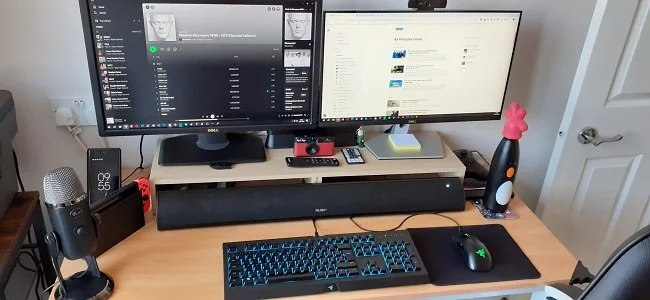
Back in September 2015 when I was living in a flat, I wrote a blog post about my personal work space. I touched upon the subject again in June 2016, as part of the Newbie Blogger Initiative, in a further post about the importance of a good writing environment. The reason I mention this is because today, I finally got around to replacing my old “fun size” desk with a newer, larger model. It’s nothing special, just something I saw on Amazon, that suited my requirements and more importantly budget. However, it provides a wider work surface, allowing me to write free hand (I still make notes in this way) as well as type via the keyboard. The desk also came with a matching monitor stand which raises my screen to a more suitable height, as well as a handy file shelf which allows me to stow pens, my phone and pending correspondence. It also provides a home for Pliny (the Raven). Not bad for £47.99 including delivery.
Back in September 2015 when I was living in a flat, I wrote a blog post about my personal work space. I touched upon the subject again in June 2016, as part of the Newbie Blogger Initiative, in a further post about the importance of a good writing environment. The reason I mention this is because today, I finally got around to replacing my old “fun size” desk with a newer, larger model. It’s nothing special, just something I saw on Amazon, that suited my requirements and more importantly budget. However, it provides a wider work surface, allowing me to write free hand (I still make notes in this way) as well as type via the keyboard. The desk also came with a matching monitor stand which raises my screen to a more suitable height, as well as a handy file shelf which allows me to stow pens, my phone and pending correspondence. It also provides a home for Pliny (the Raven). Not bad for £47.99 including delivery.
My “office” is the spare bedroom of our two-bedroom bungalow. My granddaughter’s cots that I have shared the room with for the last two years have been replaced with a single bed. This has freed up valuable space and provides an alternative place for me to sleep if I am working late into the night and I don’t want to disturb “Mrs. Peril”. She often turns in at a far more respectable hour. Because our main bedroom is right next door to the office, I have started using my gaming headset as an alternative to speakers after a certain time of night. It has been quite a revelation, highlighting the complexity of audio design in contemporary gaming. Friday the 13th: The Game is especially atmospheric, and the soundscape really enhances gameplay. Also, because of my new desk and its facility for cable management, I’ve now permanently attached my Xbox gamepad to my PC for convenience.
While discussing the subject of personal work and gaming environments with friends on Discord, it became very clear how people like to embellish such spaces with personal knick-knacks and trophies. I think that it’s very important to “humanise” what is to all intents and purposes a very functional space. Having trivial items that delight us nearby can be very uplifting and a reminder of the things that we enjoy and inspire us. This can be very useful if you’re labouring over a blog post or article and it isn’t proving as easy to write as you’d imagined. Plus, this personalisation process is another means for us to express ourselves and assert our identity, if you want to get all deep about it. In the meantime, I shall look into the practicality of setting up my desktop microphone or possibly integrating a webcam into my set up. Perhaps rather than return to podcasting, it’s time to move on to streaming of some kind? It’s curious how a minor change in your work and gaming environment can precipitate such a stream of thought and facilitate new ambitions.






















"Adequate"
“Why re-release a game that’s perfectly adequate but doesn’t do anything particularly noteworthy or special?” Rogue Trooper Redux review by Tom McShea. Here we have in a nutshell the ill-conceived attitude that plagues contemporary gaming reviews, although it is also applicable to other mediums. Too often these days, I find myself reading critiques of games, movies and TV shows where the author feels that the product has failed because it is not exceptional. Such reviews will frequently cite numerous positive factors or attributes and reference how the product has been competently assembled. Yet in the final summation, the author will then full back upon the stock criticism that in spite of all this, the game does not “re-invent the wheel” or set a new “benchmark”. It is just “adequate”. However, I believe that this is a much misunderstood and frequently misused word. And that its reoccurring use stems from a culture of unrealistic expectations.
“Why re-release a game that’s perfectly adequate but doesn’t do anything particularly noteworthy or special?” Rogue Trooper Redux review by Tom McShea. Here we have in a nutshell the ill-conceived attitude that plagues contemporary gaming reviews, although it is also applicable to other mediums. Too often these days, I find myself reading critiques of games, movies and TV shows where the author feels that the product has failed because it is not exceptional. Such reviews will frequently cite numerous positive factors or attributes and reference how the product has been competently assembled. Yet in the final summation, the author will then full back upon the stock criticism that in spite of all this, the game does not “re-invent the wheel” or set a new “benchmark”. It is just “adequate”. However, I believe that this is a much misunderstood and frequently misused word. And that its reoccurring use stems from a culture of unrealistic expectations.
The Oxford Dictionary defines the word “adequate” as follows. Satisfactory or acceptable in quality or quantity. The word has its origin in the early 17th century and derives from Latin adaequatus meaning "made equal to", being the past participle of the verb adaequare. Now we have a clear definition, let us consider in what context we would use the word in day-to-day life. Often, when I am hungry I will avail myself of specific chains of restaurants or fast food outlets. They provide satisfactory meals, conveniently at an acceptable price. Therefore, they are adequate. If I was unhappy with any aspect of the food or the service that was provided, then I would not use the word adequate to begin with. If you have to qualify somethings adequacy, then it is not adequate. So, with this in mind there are many things that can be classified as adequate; food, drink, a book, music, a box girder bridge or a drunken sexual dalliance. The moment you apply the term to something, you are clearly stating that it is “not shit”. If you are using the word to mean anything other than its dictionary definition, then you’re using it using it incorrectly.
Contrary to what certain quarters of the media and pop culture may tell you, life isn’t a never-ending series of high octane, boisterous, spiritually fulfilling events that engage all your senses and leave you sated. Day-to-day living is mainly routine, predictable and yes, you’ve guessed it, adequate (if you’re lucky). In fact, for an ever-growing group of the population adequacy is giving way to shit. The reason fun and enjoyable events stand out is because they are not frequent and the punctuate the mundane with brief periods of joy. Any addict will tell you that too much of your “drug of choice” ultimately negates the high you gain from it. Hence not only is adequate a functional and succinct word, it also represents a state of being that is integral too our lives. Like oxygen, it can be argued that humans need a specific amount of adequacy in their lives. An excess either way is not desirable but the right amount in your life provides a context and a scale against which other experiences can be measured and quantified.
So, returning from philosophical musings to the thrust of this post about gaming, I think people should think long and hard before they decided to label a game adequate. If you are trying to crowbar the word into your review as a pejorative, then simply dispense with it and clearly state what you think is wrong. The reality of the situation is that many game releases each year are adequate. Those like Tom McShea who seem to expect the “noteworthy and special” need to recalibrate their personal desires. It is impossible for the video game industry or indeed any other, to continuously innovate and perpetuate a market where every new title pushes boundaries. This why for every L.A Noire there is a Vendetta: Curse of Raven's Cry. Therefore, let us as a gaming community, look to our personal lexicon and start using the English language properly when framing out thoughts. I believe that it is important to precisely say what we mean, or else how can we mean what we say?
Open World Games
The Virtual Bolivia that Ubisoft have created for Tom Clancy’s Ghost Recon Wildlands is truly stunning. This massive open world is approximately 576 square kilometres (222.4 square miles) and features 21 regions and 11 distinct ecosystems. Furthermore, the world is seamless without any loading screens or phasing. You can travel from one end of the map to the other without any immersion breaking transitions. The main story missions and the regional counterparts can be tackled in any order, affording players the freedom to explore and play through content however they want. The game can be played cop-operatively via PUGS or through bespoke custom teams. Tom Clancy’s Ghost Recon Wildlands takes the textbook concept of the “open world” and augments it sufficiently to hang a narrative on. But beyond the overall task of dismantling a sprawling national drugs cartel, the player is given a superbly crafted sandbox and is left to determine their own agenda and play style.
The Virtual Bolivia that Ubisoft have created for Tom Clancy’s Ghost Recon Wildlands is truly stunning. This massive open world is approximately 576 square kilometres (222.4 square miles) and features 21 regions and 11 distinct ecosystems. Furthermore, the world is seamless without any loading screens or phasing. You can travel from one end of the map to the other without any immersion breaking transitions. The main story missions and the regional counterparts can be tackled in any order, affording players the freedom to explore and play through content however they want. The game can be played cop-operatively via PUGS or through bespoke custom teams. Tom Clancy’s Ghost Recon Wildlands takes the textbook concept of the “open world” and augments it sufficiently to hang a narrative on. But beyond the overall task of dismantling a sprawling national drugs cartel, the player is given a superbly crafted sandbox and is left to determine their own agenda and play style.
This is the inherent appeal of the open world game. The provision of a functional environment that provides a setting for events, rather than a means of corralling them. One only has to look at popular MMOs such as ESO and LOTRO and you will often find that their lavishly created regions, despite their aesthetic appeal, are primarily designed to funnel the player from quest hub to quest hub. In LOTRO, especially in the more recent zone such as Gondor and Mordor, large swathes of a map are frequently inaccessible due to topographical constraints or the old mechanic of invisible walls. Hence it not unusual to spot and interesting feature on the horizon or even in the near vicinity, only to find that it is inaccessible. The Argonath is a classic example of this. Conversely in an open world game such as Tom Clancy’s Ghost Recon Wildlands, the open world design along with the ability to travel by helicopter and land directly to remote locations ensures that nothing is out of a player’s reach. Exploring becomes an entire meta game in itself.
The first open world game that really altered my perception of gaming was The Elder Scrolls V: Skyrim. Although I had experienced well designed environments before in the MMO genre, phasing and zone mechanics always broke immersion to a degree. Skyrim with its Scandinavian style climate and terrain was a revelation and simply traversing the region with it’s ambient music and changeable climate was and remains a delight. But it was The Witcher 3: Wild Hunt that really show cased the full potential of the open world concept, with a beautifully realised, diverse yet totally credible environment. The player can walk, ride or sail across the green and verdant, war-torn lands of the South or sail between the monster-islands of Skellige in the North. They have total freedom to discover various places of interest, hunt monster, or simply gather resources and enjoy the world. It is this latter idea of being “at large” in a huge, living and thriving ecosystem is perhaps the biggest selling point of the open world concept. But it is also its potential weakness.
Not all gamers like to be presented with a huge expanse of non-linear content and told “off you go”. Some find such a system and environment daunting and confusing. Both of which are perfectly acceptable opinions. The “theme park” approach provides a means of guiding players through content, ensuring that nothing is potentially missed and providing structure. It should be remembered that some see gaming as escapism from the complexities of modern life and therefore do not wish to see it capricious randomness mirrored in their leisure activities. On a technical note, open world games are also extremely resource hungry and to enjoy them to their fullest, you do need a robust gaming PC. It is because of this issue that we do not see the same technology used in the MMO genre. The rich world of Tom Clancy’s Ghost Recon Wildlands can happily support co-operative play between 4 versus 4 players but sustaining a population of 100 is a very different matter. Yet if the rapid change in gaming hardware over the last decade teaches us anything, then there will eventually come a time when MMO genre will be able to fully embrace a fuller, truer version of the open world concept than we have now.
Looking For a New Game (Yet Again)
I’m between games at the moment, having just cancelled a couple of MMO subscriptions (ESO and LOTRO) and just finished Desolation of Mordor DLC for Middle-earth: Shadow of War. There’s a new expansion, Victory is Life, coming up in June for STO but there’s no reason to rush straight into that on launch. I may keep that as my summer gaming project. So, I have about three to four weeks to fill at present and I’ve been scratching my head as to what will best suit this gaming gap. I’ve started The Witcher 2: Assassins of Kings, but I’m not committed to it in the same way as Witcher 3: Wild Hunt. It is a far more contained and “on rails” experience. I’m mainly playing it for the narrative and to fill in the gaps in the lore. To facilitate this, I’m playing through on the easiest difficulty setting and the linear story lends itself to targeted, time specific sessions of about an hour or so at a time. However, I’m still looking for something else to scratch my current gaming itch. Something “different” by my own personal tastes and standards. At least once a year, I like to tackle a game that falls outside of my usual comfort zone.
I’m between games at the moment, having just cancelled a couple of MMO subscriptions (ESO and LOTRO) and just finished Desolation of Mordor DLC for Middle-earth: Shadow of War. There’s a new expansion, Victory is Life, coming up in June for STO but there’s no reason to rush straight into that on launch. I may keep that as my summer gaming project. So, I have about three to four weeks to fill at present and I’ve been scratching my head as to what will best suit this gaming gap. I’ve started The Witcher 2: Assassins of Kings, but I’m not committed to it in the same way as Witcher 3: Wild Hunt. It is a far more contained and “on rails” experience. I’m mainly playing it for the narrative and to fill in the gaps in the lore. To facilitate this, I’m playing through on the easiest difficulty setting and the linear story lends itself to targeted, time specific sessions of about an hour or so at a time. However, I’m still looking for something else to scratch my current gaming itch. Something “different” by my own personal tastes and standards. At least once a year, I like to tackle a game that falls outside of my usual comfort zone.
Bearing this in mind, I spent some time this evening looking at recent releases to see if any grabbed my attention. Nothing really stands out at present. I certainly don’t want to spend £60 plus on a triple A title at present, such a Far Cry 5 and Monster Hunter: World isn’t available for the PC at present. Also, currently popular games such as PUBG and Fortnite aren’t really my kind of thing. I’m not looking for anything hectic. Plus, why spend money, when I have dozens of games sitting in my Steam library that I’ve never touched, as well a numerous unredeemed game keys from budget bundles. However, despite all these resources at my disposal I still failed to find anything that “floated my boat”. I was going to install Ryse: Son of Rome as the setting is unusual, but felt it was too similar to Middle-earth: Shadow of War in its combat mechanic so decided against it. I also have a farming simulator of some kind, kicking around but wasn’t sufficiently motivated to track it down. Perhaps now is a good time to finally play Alien: Isolation? Oh, the agony of choice and other first world problems, I hear you cry.
Well to cut a long story short, I managed to pick up a bargain in the Green Man Gaming 8th Birthday Sale. I was toying with the idea of buying Tom Clancy's Ghost Recon: Wildlands but as I’m not familiar with the franchise, I thought it may be prudent to buy an earlier instalment in the franchise, so if it isn’t to my liking, it won’t be a costly mistake. So, I bought the Digital Deluxe version of Tom Clancy's Ghost Recon: Future Soldier for £5.78 which is a bargain. Over this games lifecycle there have been three lots of DLC. Two of those have were multiplayer maps, but as the online community has been and gone for this game, I bought just one which expanded the solo campaign. Raven Strike cost me a further £4.25 which again hasn’t put a hole in my financial portfolio. It’s been a while since I’ve played a tactical squad based, third person shooter of this kind. The last one was Hidden & Dangerous 2 back in 2003. Hopefully Future Soldier will prove to be a positive experience. Being a five-year-old game, it shouldn’t offer any performance issues on my PC and from the various You Tube videos I’ve watched it doesn’t look and feel too dated. Let’s see if this keeps me occupied as planned.
"Grinding"
According to Wikipedia, “grinding” is defined as “performing repetitive tasks for gameplay advantage. In MMORPG, for instance, it can be advantageous to repeatedly kill AI-controlled monsters, using basically the same strategy over and over again to advance one's character level and to unlock content. Grinding may be required by some games to unlock additional features such as level progression or additional items”. Although I broadly agree with this summation, I feel that “grinding” is one of those terms that can also be very subjective. Repetitious content has a specific purpose in video games, especially the MMO genre. Not all of it is tedious or egregious. Therefore, it is a question of degrees. Killing 25 mobs of a specific species may be a tolerable number. A challenge but not a task that out stays its welcome. However, double that amount a suddenly a line has been crossed. The entire undertaking now feels like it has been inflated simply to slow player progress down, which is more than likely the exact purpose of the task.
According to Wikipedia, “grinding” is defined as “performing repetitive tasks for gameplay advantage. In MMORPG, for instance, it can be advantageous to repeatedly kill AI-controlled monsters, using basically the same strategy over and over again to advance one's character level and to unlock content. Grinding may be required by some games to unlock additional features such as level progression or additional items”. Although I broadly agree with this summation, I feel that “grinding” is one of those terms that can also be very subjective. Repetitious content has a specific purpose in video games, especially the MMO genre. Not all of it is tedious or egregious. Therefore, it is a question of degrees. Killing 25 mobs of a specific species may be a tolerable number. A challenge but not a task that out stays its welcome. However, double that amount a suddenly a line has been crossed. The entire undertaking now feels like it has been inflated simply to slow player progress down, which is more than likely the exact purpose of the task.
I’m sure we can all think of specific instances of “grinding”. I’ve always found the reputation system in LOTRO to be a ponderous slog and have not bothered with it in recent updates. The Delta Quadrant remains a gruelling zone to progress through in STO. Sadly, the MMO genre gates a lot of interesting rewards using this mechanic, which places the player in a difficult position. Endure something that you do not enjoy, which for many people mitigates the point of playing. Grinding does fly in the face of fun, leisure and enjoyment. Or bypass the content and potentially gimp yourself in some capacity. It’s a bit of a Hobson’s choice. The other option is to stop playing which raises the fundamental Achilles Heel of “grinding”. Developers often cannot create content fast enough for players to consume. So “grinding” is seen as a legitimate means to slow progression or return a player to a specific zone. It also presents useful cash shop opportunities. However, if this fine line is over stepped, it often results in players looking elsewhere for their leisure activities. I have temporarily stopped subscribing to LOTRO, specifically because of the Mordor “grind”.
According to games blogger Gevlon, all playable content is “grinding” and therefore any complaint against it is essentially a complaint against the very game itself. However, this is a flawed definition born of an erroneous binary view. “Grinding” is as I’ve previously stated both a subjective term and an activity that is perceptibly different from standard questing. For example, a repetitive activity may facilitate a scaled set of rewards. 50 kills may provide a bronze reward at tier 1, 100 kills provide a silver reward at tier 2 and finally 150 kills result in a gold reward at the final 3rd tier. Because the player can discern the maths in advanced and it is shown to be an equitable progression, they will undertake this arduous task but not necessarily perceive it as “grind”. However, if the developers decide to make the criteria for tier 3 to be 500 kills, then that cannot be quantified as a logically fair progression compared to the previous two tiers. Hence, the task will be seen as a grind to many players.
Gaming has developed a broad and esoteric lexicon over the last thirty years. Many of the terms are nebulous and interpreted differently. Gaming has become an increasingly broad church and I don’t see that changing in the future. Quite the opposite is likely. There are many mature gamers whose early experiences have shaped their perception of what exactly constitutes as gaming per se. However, times change and not everyone is subsequently exposed to the same conditions. Hence “grinding” is not a fixed and immutable term. One man’s “grind” is another man’s engaging gameplay. Be that as it may, I am prepared to suggest that there is a degree of commonality in the terms meaning. I actually think that the following definition by fellow game enthusiast and blogger Bhagpuss is possibly the most likely definition at present. He sees “grind” as “any repeatable activity you don’t want to do. “Gameplay” is any repeatable activity you do want to do”. And upon mature reflection, I concur.
Eurovision 2018
I have watched the Eurovision Song Contest regularly throughout my life. As a very young child I enjoyed it purely as an opportunity to stay up late. In my teens I loathed it as it appeared to be the antithesis of my own musical tastes at the time. So I watched it purely to mock and deride. It is only in recent years that I have learned to love it for what it is and have finally understood its purpose. Sadly, the UK has a somewhat skewed outlook on many things, due to it’s history and island mentality. We’re often too blinded by our national achievements as well as burdened with a sense of pride and “self-importance by proxy”. As a nation our accomplishments our prodigious, so subsequently we have a tendency to over think matters. With regard to Eurovision we seem to focus on a “killer song”, rather than embrace the spirit of the competition. And that spirit is camp, kitsch and frivolous. Eurovision is theatrical. It’s about tapping into your countries heritage and expressing it as a light hearted, theatrical vocal meme.
I have watched the Eurovision Song Contest regularly throughout my life. As a very young child I enjoyed it purely as an opportunity to stay up late. In my teens I loathed it as it appeared to be the antithesis of my own musical tastes at the time. So I watched it purely to mock and deride. It is only in recent years that I have learned to love it for what it is and have finally understood its purpose. Sadly, the UK has a somewhat skewed outlook on many things, due to it’s history and island mentality. We’re often too blinded by our national achievements as well as burdened with a sense of pride and “self-importance by proxy”. As a nation our accomplishments our prodigious, so subsequently we have a tendency to over think matters. With regard to Eurovision we seem to focus on a “killer song”, rather than embrace the spirit of the competition. And that spirit is camp, kitsch and frivolous. Eurovision is theatrical. It’s about tapping into your countries heritage and expressing it as a light hearted, theatrical vocal meme.
Last night, I watched Eurovision 2018 while chatting with friends on Discord. Last year I had an equally good time doing similar but via Twitter. Eurovision is so much better if treated as a fun communal experience. It is not a song contest in the traditional sense, in so far that it is not the most technically excellent, or most intelligently written composition that wins. It’s about delighting the audience with a flamboyant performance and an insanely catchy hook. That is why Netta won and SuRie didn’t. The former gave a suitably over the top and colourful performance of a song that had a refrain not to dissimilar to Seven Nation Army. A perfect “earworm”. It simply wasn’t something you were going to forget. The latter, however, was hindered by a far more formal pop song written by people that seemed to be oblivious to the core tenets of Eurovision. Although I admire SuRie for continuing her performance despite the stage invasion, song wise it was very much a case of “bringing a knife to a gunfight”. Frankly my favourite songs from this year’s show were the silliest and most ostentatious, like Moldova’s entry. Oh, and as an aside, Moldova were robbed in 2017.
In recent years Eurovision has transcended its traditional geographical boundaries and started finding a truly international audience. It’s nice to see American colleague’s reaction to the unique nature of the show. The contest has become sufficiently well known globally, that 20th Century Fox have decided to make it one of the many subjects of the Deadpool 2 marketing campaign. Frankly, if Canada wants to participate I won’t object, but it’s not down to me. On a less cordial note, due to Brexit, knee jerk nationalism and misplaced anti-European sentiment, there are many in the UK who are naturally hostile toward Eurovision by default. Such individuals even manage to leech the enjoyment out of this glorious international pantomime by muddying the waters with their petulant politics of hatred. However, the best solution to such “rage” is simply to mute the appropriate twitter feeds, ignore the tabloid press and focus on the business in-hand, namely having fun. So, I will no doubt find myself back again in twelve months’ time, marvelling on social media with like minded friends at the delicious awfulness that is Eurovision. I may even put a tenner on Moldova in advance.









Caring for the Elderly: Part 3
I have written in the past about caring for the elderly. I have approached the subject from a personal perspective, as a carer with two disabled octogenarian parents, as well as considering the broader needs of a society with an ageing population. As it has been two years since I formally became a carer to both my parents, I thought I’d share my experiences on the many challenges that my family has faced over the last twenty-four months. I find doing so beneficial and maybe my anecdotes may be of value to others in a similar situation. As I’ve said in my original post, caring for a loved one is something we all potentially face at some point in our lives, and with an ageing population it becomes statistically more likely each year.
A stylised depiction of old age and caring, far removed from the reality.
I have written in the past about caring for the elderly. I have approached the subject from a personal perspective, as a carer with two disabled octogenarian parents, as well as considering the broader needs of a society with an ageing population. As it has been two years since I formally became a carer to both my parents, I thought I’d share my experiences on the many challenges that my family has faced over the last twenty-four months. I find doing so beneficial and maybe my anecdotes may be of value to others in a similar situation. As I’ve said in my original post, caring for a loved one is something we all potentially face at some point in our lives, and with an ageing population it becomes statistically more likely each year.
At the end of March 2017, my Father was discharged back to the care of his local Doctor. He had received six months of both physical and speech therapy via various health visitors and outpatients’ clinics after leaving hospital in October 2016. Despite the severity of his second stroke, the regular visits certainly improved his speech initially. However, once these stopped I noticed that he did not continue with any of the physical or vocal exercises he had been taught, despite encouragement from myself and my Sister. As a result, my hopes of maintaining the status quo have proven rash. My Father’s physical health and cognitive abilities are slowly declining. He cannot retain information and can no longer use his computer effectively. He lacks the manual dexterity to use a mouse and keyboard and his poor eyesight further compounds matters. Thus, his leisure activities are diminishing. He mainly watches familiar TV programs and listens to audio books,
Both my parents have limited mobility and can only walk very short distances. Visits to the Doctors and such like (of which there are many each month) require the use of a wheelchair, which then requires the booking of a Black Cab. Thankfully, as both are registered disabled and in receipt of the higher rate of Attendance Allowance, they qualify for The London Taxi Card scheme which provides them both with an allowance of 60 subsidised journeys each year. Sadly, trips out are usually functional, rather than leisure orientated. My Mother had an undiagnosed stroke roundabout Easter 2017 that has damaged her eyesight and impaired her hearing. However, she can still conduct her own business at the hairdressers which she visits each week. My Father suffers from chronic motion sickness so long taxi journeys are problematic. Even being in the wheelchair is now problematic. During Summer and Autumn, I tried to encourage him to walk short distances but his habitual falling over has effectively ended such plans.
Thus, both of my parents are increasingly housebound with a decreasing list of activities that they can pursue. I find this particularly tragic, as old age and infirmity has robbed them both of their favourite pastimes. My Father was an academic and use to read prodigiously. He liked advanced Mathematics and use to do calculus for pleasure. He can now just about read the newspaper and seldom remembers any once he’s finished. The one thing he longs to do is go out into the world and interact with people. Yet he cannot do so unattended and his poor speech and emaciated physique further complicates matters. My Mother is similarly limited in her social activities due to her lack of mobility. Her passion has always been gardening which she now has to enjoy via the help of a professional gardener. Hence both of them have lifestyles with very specicifc boundaries. Where myself and my sister can provide logistical and administrative support, what my parents really crave is companionship during the day.
Managing a household and day to day life can be challenging enough when you’re relatively young and healthy. For both my parents has naturally becomes a more complex matter. The two key factors I have found to keep things ticking over, are a well-maintained routines and communication. All appointments and trips out are planned in advance and noted on multiple calendars. The most important of which hangs in my parents lounge with everything noted in bold, easy to read text. All medication is logged upon receipt, with renewals dates determined and noted in advance. There is a white board in my Father’s bedroom for the morning and night nurses to leave messages regarding medicine and such like. I open all mail and correspondence for my parents and most bills and regular invoices are now paid by monthly direct debit. Paper work is filed after it has been actioned and I only trouble my parents with essential financial matters. However, it is important for both of them to maintain a sense of involvement in their own affairs, so they are included in all discussions and decisions and naturally have final say in how things are done. However, to assist myself and my sister in conducting business upon their behalf, we have had are names added to various utility accounts and services, so there are no security issues when either of us phone these companies.
There is often a mindset common to the older generation which is driven by such sentiments as “don’t make a fuss”, or “not wanting to be a burden”. Both my parents were children during World War II and are fiercely independent. They come from an era where personal responsibility was paramount to the point where sometimes pride would cause them to refuse legitimate help. However, the reality of their lives has tempered this outlook and I have actively encouraged both my parents to take whatever assistance is available. They have paid their taxes and contributed towards society in various ways during their lives, so I have convinced them that the whole situation is simply a matter of “quid pro quo”. Hence, they have claimed Attendance Allowance and have both qualified for it at the higher rate. Extra money doesn’t make up for their loss of independence, but the funds pay for practical things that improve their life such as a stair lift, disabled friendly showers and a multitude of grab handle strategically placed around the home. My Father greatly enjoys the mobile library that calls once a month and provides him with audio books. It should be noted that this is run purely by volunteers and receives very little local authority funding. My Mother likes the relative freedom her taxi card provides and enjoys her weekly trips to the hairdresser.
Finally, both my parents are very mindful of the roles carers play and have been insistent that both my Sister and I do not give up too much of our personal time and maintain our respective hobbies and interests. In 2016 I was going to close this blog, but my Mother was adamant that I did not give up and continued writing. As a carer it is important to recognise your personal limitations and not to beat yourself up, trying to do absolutely everything. A fatigued, stressed or demoralised carer is of no use to anyone. Sometimes you have to say no or draw lines in the sand regarding what you will or will not do. At present, my family is currently looking into respite care for a week, so we can firstly refurbish my Father’s bedroom and make it more user friendly. Secondly, we have recognised that everyone needs a break and a good night’s sleep. We are currently awaiting to see if we meet the criteria for the local authorities to help us. If not, we will look at alternatives. Such is the nature of caring. Despite all the planning and organising, it remains a fluid situation that can change at any time. In some respects, recognising that helps invaluably. As does simply taking time out and sharing one’s thoughts.