Gaming and Voice Chat
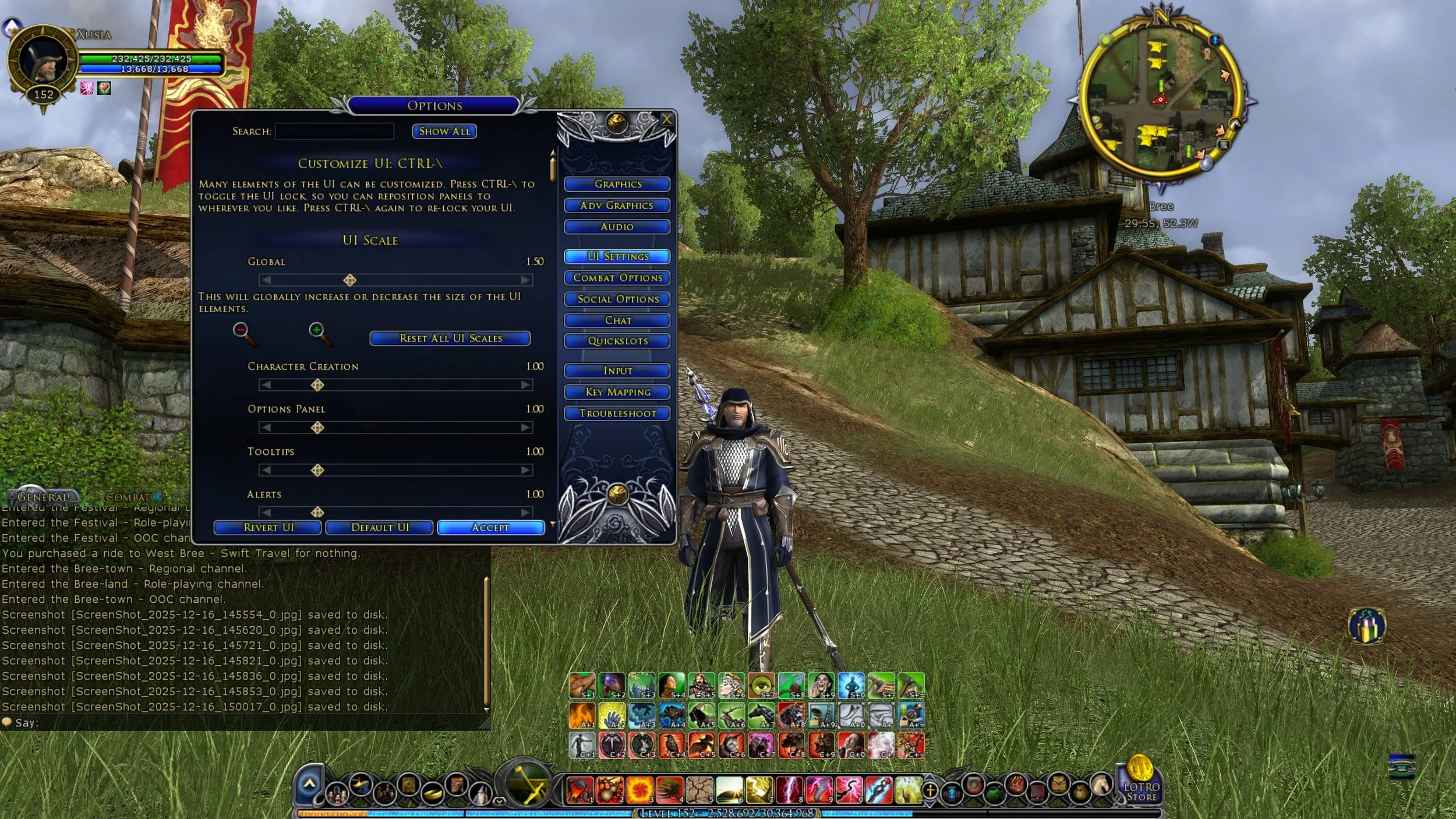
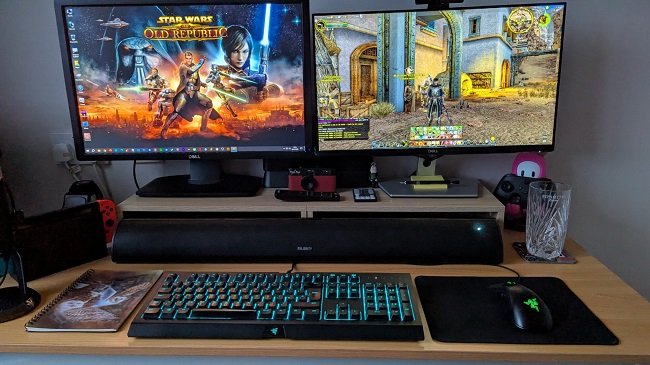
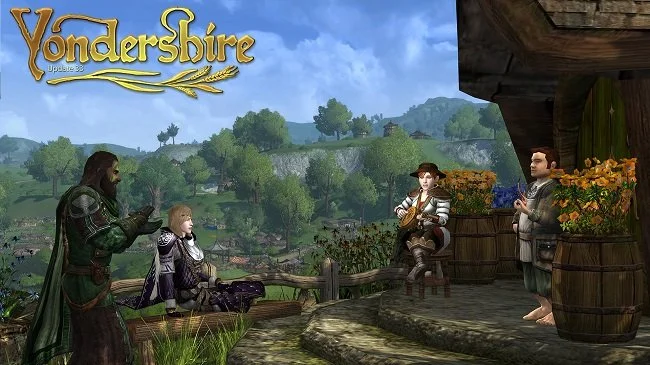
I was reading through the patch notes for the latest test build for LOTRO (Bullroarer Update 21.2 - Beta 1 Take 2) and was interested to find down at the bottom of the list, a reference to some changes that are coming to in-game voice chat. Namely, party member voice volume can be adjusted individually. Party volume control visibility can be toggled by clicking on the party voice chat icon for party members. Default Group Volume preference are to be added to the Voice section of Audio options. The volume slider can be used to set the default voice volume level of new group members. Its 75% volume by default. Well, huzzah with highly polished brass knobs on. I’m pleased that this is being done but isn’t it somewhat late? We could have done with these improvements a decade ago.
I was reading through the patch notes for the latest test build for LOTRO (Bullroarer Update 21.2 - Beta 1 Take 2) and was interested to find down at the bottom of the list, a reference to some changes that are coming to in-game voice chat. Namely, party member voice volume can be adjusted individually. Party volume control visibility can be toggled by clicking on the party voice chat icon for party members. Default Group Volume preference are to be added to the Voice section of Audio options. The volume slider can be used to set the default voice volume level of new group members. Its 75% volume by default. Well, huzzah with highly polished brass knobs on. I’m pleased that this is being done but isn’t it somewhat late? We could have done with these improvements a decade ago.
For years LOTRO players have had the benefit of an in-built voice chat service, rather than having to install and configure a third-party application. It was quite a far-reaching thing to do by then developers Turbine, when the game launched back in 2007. However, for years we’ve also had the endure the following issues. Players whose volume levels are simply too low. Players whose volume levels are simply too high. Microphones picking up and repeating voice traffic. Microphones picking up ambient background noise. Poorly configured microphones, producing "pop", distortion and feedback. For every good experience I’ve had with LOTRO voice chat, I also had a bad one. I’ve spent evenings either being deafened by my colleagues or struggling to understand them due to low volume or distortion.
So, I guess it’s good that these problems are being addressed but I must admit, it’s because of them that I’ve been running a TeamSpeak server for the last seven years. However, third party solutions come with their own set of issues. Some solutions such as TeamSpeak have to be paid for. It’s not a fortune but it does add to your ongoing gaming costs. Other services like Discord are free but that can be subject to change. I’ve always been reticent about becoming reliant on free online services as we have no consumer rights should they change business model or decide to discontinue. Which then returns me LOTRO’s built in voice chat service. Considering how crucial voice chat is to the game and the MMO genre, you’d have thought such a facility would have been more common place in other titles.
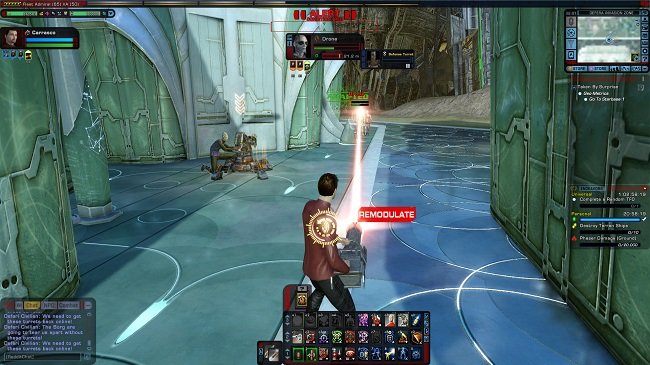
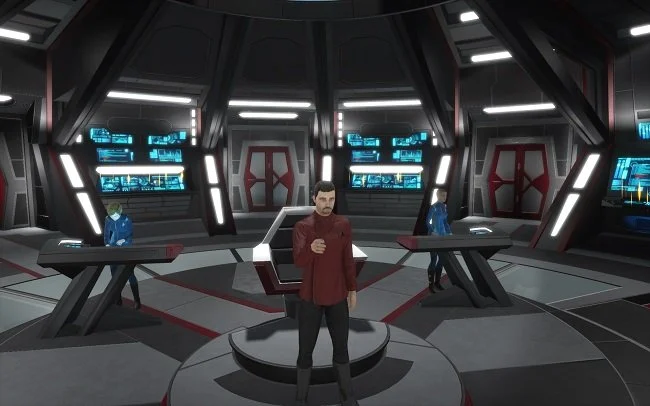
Star Trek Online is the only other MMO that I’m aware of that boasts in-game voice chat. Perhaps the increasingly solo friendly nature of subsequent MMOs has meant that voice chat is no longer considered important. Or perhaps the licensing of the technology added too much to development costs. However, where the significance of voice chat may have diminished in some genres, it has increased in others. Overwatch, Grand Theft Auto Online and PlayerUnkown’s Battlegrounds all include an in-game voice chat service. PUBG actually has a proximity based chat service as well as team support. It offers a rather interesting perspective to be able to hear your opponent. Then of course there is voice support built into software distribution clients such as Steam and origin. It would appear that third party retailers still deem voice chat to be of merit, even if some developers do not.
However, I do acknowledge the fact that not every user is comfortable speaking publicly and that for everyone who is happy to converse whilst playing a game, there others who are not. However, even if you don’t wish to participate in group chat, you can always mute your microphone and still benefit from being able to hear what’s going on. Sadly, it would be naïve to ignore the fact that voice chat can be a gateway into one of the lower circles of hell and that it can be abused. I have voice chat muted whenever I play Overwatch unless I’m among friends. Bearing that in mind, I guess another reason why some developers won’t include voice chat with their products is that they don’t want to be lumbered with the responsibility of having to police it. Not that Blizzard does much in this respect. Anyway, despite the disparity in up take, I believe the ongoing popularity of co-op based games (as opposed to MMOs) will ensure that in-game voice chat doesn’t vanish. Perhaps as the technology improves, it may evolve beyond just audio into video. There’s a scary thought.







Imagining the Worst
I was technically not old enough to see Outland when it was released in the UK in 1981. The film was rated AA, a now defunct certificate, which required the viewer to be 14 years or older and I was 13. I have strong memories of feeling quite tense going into the cinema. My expectations were based purely on what I had read in the press and from seeing the trailer just once, a few weeks prior. That is how it was before the internet age. You had less advance knowledge of a movie. Furthermore, at this point in time I had not become so inured to cinematic violence, as my viewing habits back then were very much dictated by my parents and the fact that there were only two televisions in our home. Although we had a VCR, we hadn’t yet got bitten by the renting bug. So, I went into the movie theatre expecting to be shocked by Outland based on the movies marketing which promised a head explosion. However, it turned out to be a thoroughly entertaining space western. Yet I vividly remember my sense of relief that its hadn’t been as shocking as I had imagined it would.
I was technically not old enough to see Outland when it was released in the UK in 1981. The film was rated AA, a now defunct certificate, which required the viewer to be 14 years or older and I was 13. I have strong memories of feeling quite tense going into the cinema. My expectations were based purely on what I had read in the press and from seeing the trailer just once, a few weeks prior. That is how it was before the internet age. You had less advance knowledge of a movie. Furthermore, at this point in time I had not become so inured to cinematic violence, as my viewing habits back then were very much dictated by my parents and the fact that there were only two televisions in our home. Although we had a VCR, we hadn’t yet got bitten by the renting bug. So, I went into the movie theatre expecting to be shocked by Outland based on the movies marketing which promised a head explosion. However, it turned out to be a thoroughly entertaining space western. Yet I vividly remember my sense of relief that its hadn’t been as shocking as I had imagined it would.
Over the years I’ve had numerous similar such experiences with other classic films and genre movies. Films such as Zombi 2, The Texas Chainsaw Massacre, Soldier Blue and Cannibal Holocaust, all have strong and controversial reputations. Often this is due to unpleasant acts or levels of violence. Yet after watching all of these films, I have always felt a sense of relief and possibly even disappointment, because of the gulf between what my expectations were and what was actually depicted. The New York Ripper for example does include acts of violence that in principle are totally abhorrent, yet the reality is that the film makeup effects are generally poor. I guess my fear has always been that I will see something so heinous that I’ll be traumatised, physically sick or worse. The latter is the biggest concern and the most nebulous. Somehow, exposure to such material will leave me altered on some level and not for the better.
To a degree this factor still effects a great deal of my viewing to this very day. However, I am now quite sceptical when I read a review which claims that the film in question has shocking scenes or breaks some terrible taboo. Mainstream Hollywood seldom does any of these things at present. The horrific imagery that I can conjure up in my mind’s eye, more often than not is never equalled by what the film-maker chooses to show. It is a perennial debate among film fans that less is more and what the viewer thinks they see is far more disturbing than anything that can be shown. I do agree with this to a degree, although I do feel that violence and graphic imagery can play a part if used appropriately and within context. Yet outside of the mainstream there are still film-makers prepared to the push boundaries that the big studios are not.
There have been several films recently that have courted a great deal of controversy with regard to their content. I have always held the opinion that you cannot effectively comment on films unless you’ve seen it. Therefore, for me to credibly write on such material, I would have to watch it. The problem is I really don’t wish to (more on that later). Two relatively recent examples which spring to mind are A Serbian Film and The Human Centipede II: Full Sequence. If you follow the links for both titles you can read the plot synopsis for each on Wikipedia. The descriptions of both films instantly sets my mind racing with regard to how graphic they can be? Again, it could be the case that my expectations are far worse, fuelled by my mind working overtime. However, it would appear that both these films are quite explicit or so I am told by trusted peers. Potentially, these films could challenge my theory and overturn it, by actually showing the unshowable.
I won’t get into an argument about the artistic merits of both these titles, as that is a separate debate for another time. Ultimately, I believe that my rule of thumb broadly holds true but because we now live in far more liberal times, there is scope for film makers to prove otherwise and depict acts that are worse than I imagine. However, that has not yet become the norm. In the case of the two films I’ve mentioned, I do not think I will benefit in any way from seeing either of them. To do so would be pure voyeurism and pandering to the conceits of the film makers. If horrific imagery is devoid of any context, meaning or the wider purpose, then I may as well just sit and watch the emergency services cut the corpses from car accidents. What sort of person does that for pleasure? As a teenager, I can remember the bragging rights associated with watching the grisliest horror movie one could find. Such puerile rites of passage are common place. However, adulthood comes with a sense of perspective and an ability to curb one’s excesses. It is a habit that I still like to maintain.
I do not feel it is my place to draw lines in the sand with regard to what film-makers can or cannot depict. However, I can and do draw such lines for myself, with respect to what I choose to watch. I therefore think that the feeling of expectation and trepidation I had as a 13-year-old, is a quality I wish to keep. If there comes a time when such a notion fails to enter my head, then I really will have become totally desensitised to cinematic violence. I think maintaining such an emotional safety valve is a healthy attribute to have. So, I've decided to skip A Serbian Film and The Human Centipede II: Full Sequence. They may well live up to the reputation they've gained or simply be an exercise in hype but I don't really want to taint myself or waste my precious time by finding out. I will never dismiss a film out of hand for having the gall to exist but I do feel that having the capacity to say "thanks but no thanks" is important and liberating.











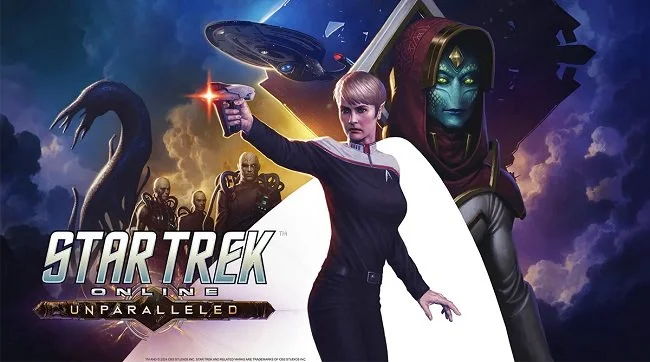
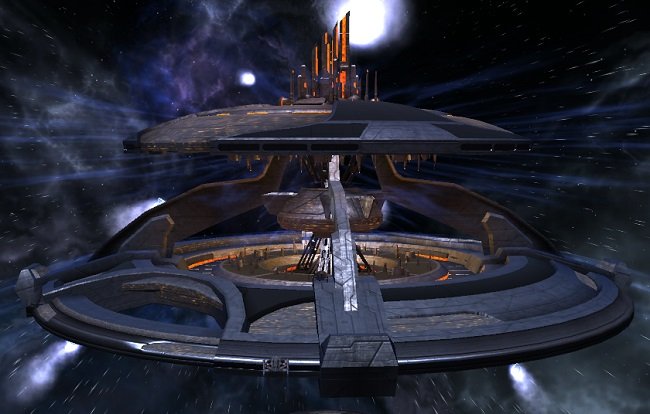
Star Trek Online: Beyond the Nexus
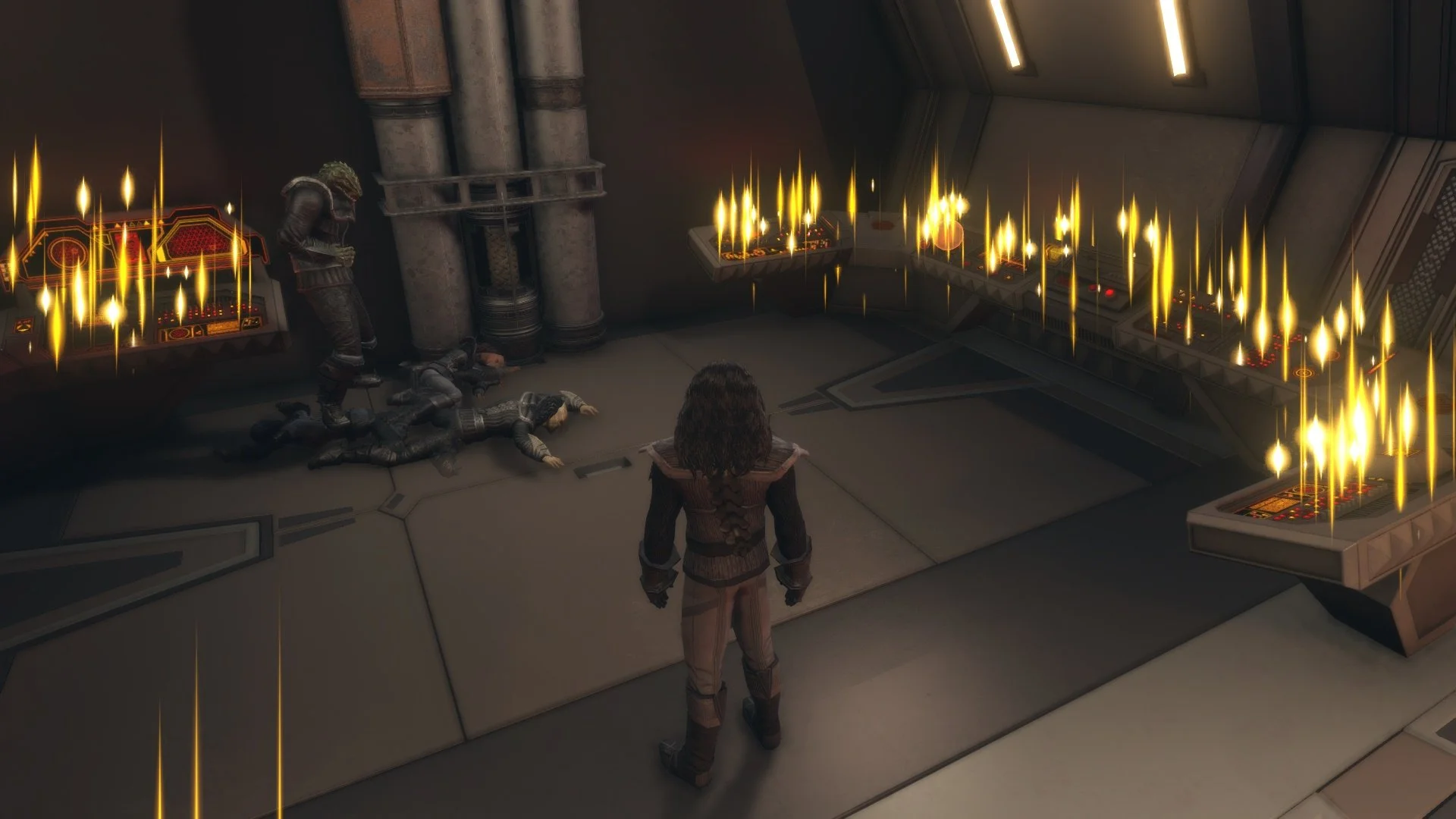
One of the major selling points of Star Trek Online is that it features voice acting from artists who appeared in the various TV shows and feature films. From Star Trek: The Original Series, Leonard Nimoy and Walter Koenig reprised their iconic roles, bringing Spock and Chekov to the game. Michael Dorn and Denise Crosby beamed in from The Next Generation, adding the voices of Worf, Tasha Yar and Empress Sela to several featured episodes. Chase Masterson and Aron Eisenberg came to us from Deep Space Nine to reprise their roles as Leeta and Nog. From Voyager, we have the talents of Tim Russ, Robert Picardo, Jeri Ryan, Ethan Phillips, Garrett Wang, Robert Duncan McNeill, Kim Rhodes, and Lisa LoCicero. Kipleigh Brown and Matt Winston from Enterprise recently joined the roster. The legacy of James Doohan was represented by his son Chris, reprising his father’s role as Scotty. And Zachary Quinto and Joseph Gatt from the Kelvin Timeline Star Trek film franchise have joined the ranks of esteemed Trek alumni in the game.
One of the major selling points of Star Trek Online is that it features voice acting from artists who appeared in the various TV shows and feature films. From Star Trek: The Original Series, Leonard Nimoy and Walter Koenig reprised their iconic roles, bringing Spock and Chekov to the game. Michael Dorn and Denise Crosby beamed in from The Next Generation, adding the voices of Worf, Tasha Yar and Empress Sela to several featured episodes. Chase Masterson and Aron Eisenberg came to us from Deep Space Nine to reprise their roles as Leeta and Nog. From Voyager, we have the talents of Tim Russ, Robert Picardo, Jeri Ryan, Ethan Phillips, Garrett Wang, Robert Duncan McNeill, Kim Rhodes, and Lisa LoCicero. Kipleigh Brown and Matt Winston from Enterprise recently joined the roster. The legacy of James Doohan was represented by his son Chris, reprising his father’s role as Scotty. And Zachary Quinto and Joseph Gatt from the Kelvin Timeline Star Trek film franchise have joined the ranks of esteemed Trek alumni in the game.
More recently we saw J. G. Hertzler reprise his iconic role as General Martok; a much beloved character among Star Trek devotees. However, this week we saw a milestone in STO as LeVar Burton returned as Geordi La Forge in the latest featured episode “Beyond the Nexus”. I must say I was surprised that Cryptic had managed to facilitate such an appearance, considering it has been discretely pointed out in the past that the cost of certain hiring certain actors is prohibitive. But, not being one to look a gift horse in the mouth, I duly logged into STO today to check out the new featured episode and see if Cryptic’s writers had managed to create a vehicle suitable for Star Trek favourite Geordi La Forge. I was intrigued by the concept of revisiting the Nexus that feature in the film Star Trek: Generations. On paper there’s a lot of narrative scope with such a violent, destructive temporal energy ribbon.
Sadly, “Beyond the Nexus” proved to be a squandered opportunity. The story is somewhat formulaic and distinctly average. During the mission, Captain Geordi La Forge and of course yourself investigate two starfleet ships that went missing while studying the infamous energy ribbon, the Nexus. It's discovered that both ship's crews have been taken over by a powerful psionic entity called Khaj'Buur, who has been imprisoned in the Nexus for unknown reasons. The story then becomes a rather linear adventure in which you have to rescue the crew and then defeat Khaj'Buur. Once this is done he surrenders and is imprisoned pending further enquiry. It is mentioned in the mission's conclusion that Khaj'Buur's wish to leave the Nexus is highly unusual, considering the realm surrounds you with the things that make you the happiest.
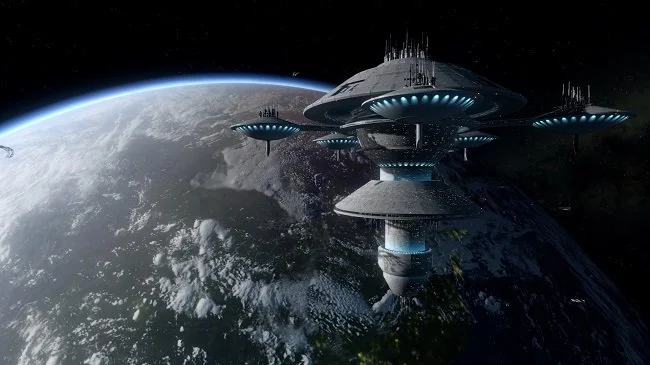
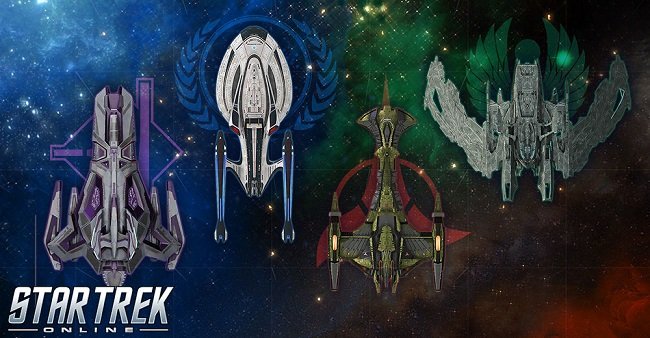
There are some positive aspects to “Beyond the Nexus”. Part of the story takes part on a Galaxy Class vessel, so traversing the ships interior and engine room is a big plus for fans of ST:TNG. As these assets are now in the game it was inevitable that Cryptic would make them available for purchase in the C-Store. Geordi also sports a Type 3 Phaser Rifle which is pleasing to see if you are a lore buff and like things canonical. The weekly rewards are not too shabby either with a three-item gear set on offer. And with regard to the story, although it is rather perfunctory, it does have a few subtle embellishments. The rogue holoprogram written by Ensign Barclay is a nice touch and raised a wry smile. As for Khaj'Buur, I suspect that he’ll feature in later episodes and his back story will be expanded upon. It is also likely that Captain Geordi La Forge has a larger role to play, in next years expansion.



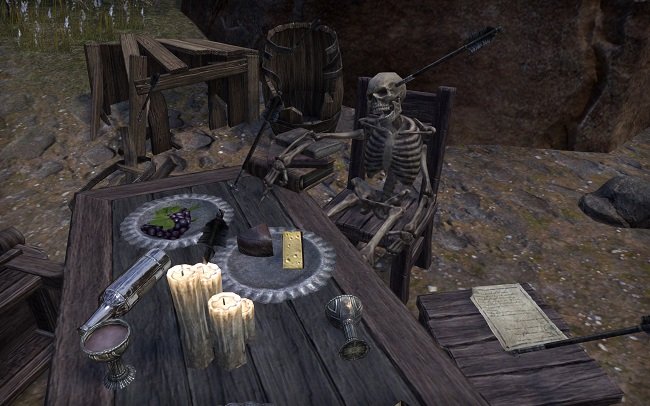
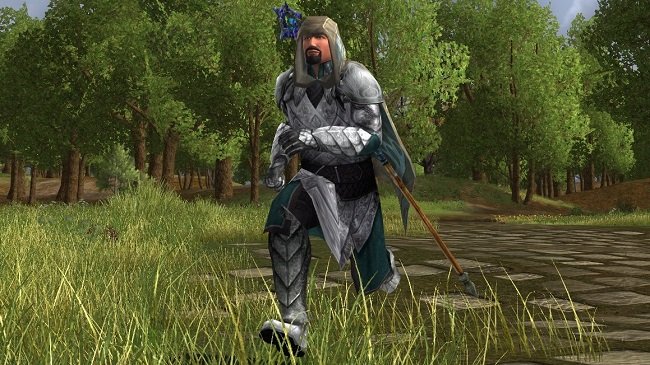
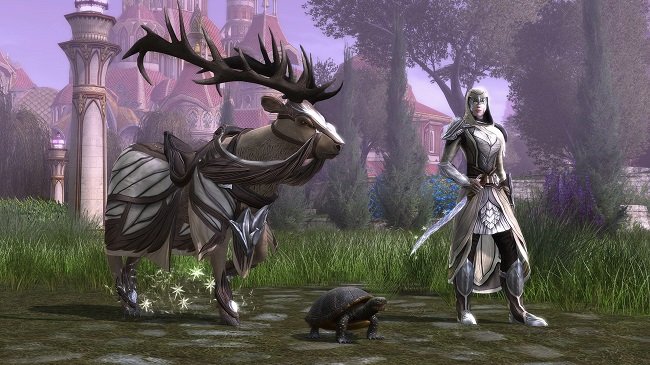
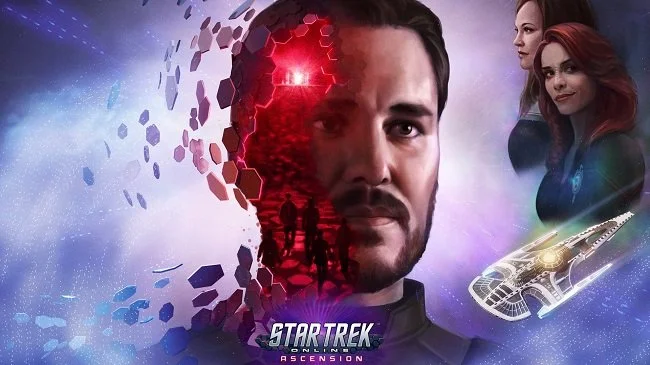
Baby Driver (2017)
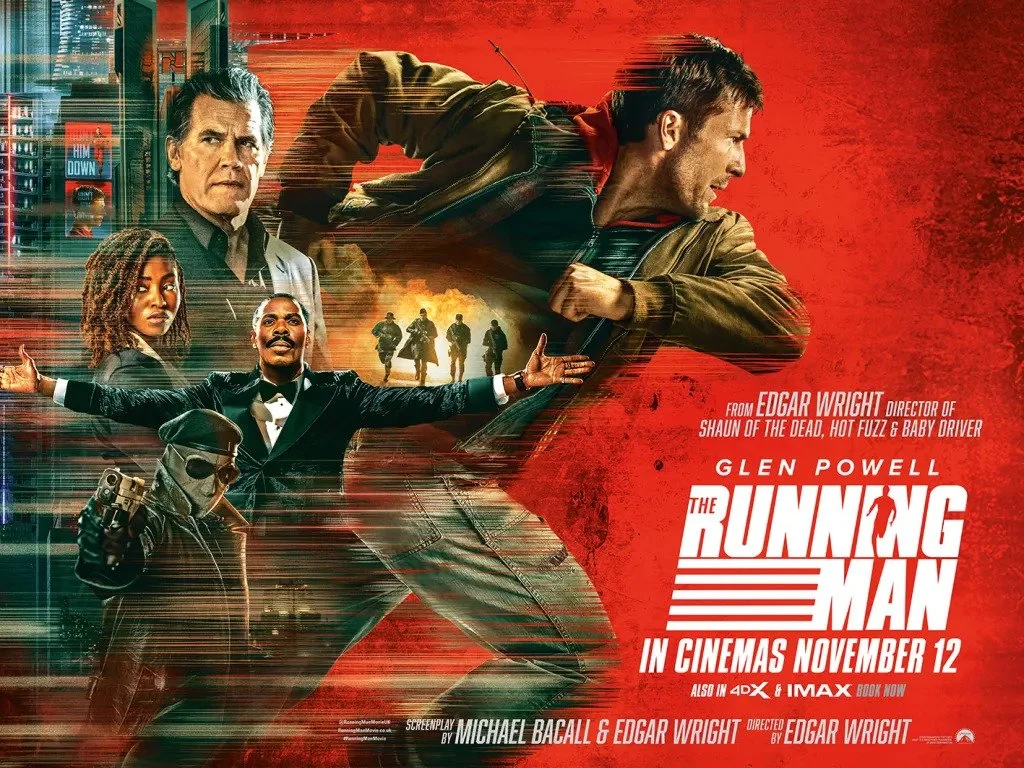
There’s rhythm in every scene of Baby Driver. And Michael Mann may want to consider early retirement because Edgar Wright lights his movies better. These are just some of the thoughts that crossed my mind during the films 113-minute running time. It becomes very apparent when watching Baby Driver that it’s not just a standard heist movie with car stunts and hard-boiled dialogue. This film is definitely something special and totally deserving of all the praise that has been heaped upon it. But then again, it’s not every day you get a story that bears all the hallmarks of a Hollywood musical, slickly and intelligently transplanted into a hybrid of the road and caper genres.
There’s rhythm in every scene of Baby Driver. And Michael Mann may want to consider early retirement because Edgar Wright lights his movies better. These are just some of the thoughts that crossed my mind during the films 113-minute running time. It becomes very apparent when watching Baby Driver that it’s not just a standard heist movie with car stunts and hard-boiled dialogue. This film is definitely something special and totally deserving of all the praise that has been heaped upon it. But then again, it’s not every day you get a story that bears all the hallmarks of a Hollywood musical, slickly and intelligently transplanted into a hybrid of the road and caper genres.
Ansel Elgort’s stars as the eponymous getaway driver, who uses music to continuously drown out the tinnitus he suffers from as a result of a childhood accident. Being on the spectrum he meticulously organises his life around his iPod playlists and records random sounds and dialogue on a Dictaphone which he then mixes with music. He is also a formidable driver who is indebted to local Atlanta criminal Doc (Kevin Spacey). Hence Baby is always “one more job” away from freedom. In his spare time Baby cares for his deaf foster father Joseph (CJ Jones) who worries about whether he’ll ever be able to get away from his obligation to Doc. Baby dreams of escaping with his waitress lover Debora (Lily James) but his plans are foiled when he called upon to drive for one more major robbery. He finds himself in the company of a worrying psychotic crew consisting of Buddy and Darling (Jon Hamm and Eiza González), a latter-day Bonnie and Clyde as well as Bats (Jamie Foxx), a career criminal who favours shooting first and asking questions later.
Baby Driver has it all. A classic boy meets girl narrative, troubled by all the usual cinematic relationship problems. Quirky characters with hard boiled dialogue and some of the most impressive car chases and stunt work I’ve seen in two decades. There’s precious little CGI on display as the Edgar Wright chose to do as much in camera as possible with his stunt co-ordination team (Darrin Prescott, Robert Nagle, Jeremy Fry). Director of photography Bill Pope lights each scene creatively and uses a vivid colour pallet. Furthermore, Baby Driver is comfortable in its own skin and make no concessions to ratings or wider commercial interests. Hence the movie is R rated (15 in UK) which it rightly should be considering its themes and settings.
![Baby Driver.mkv_snapshot_00.04.44_[2017.09.13_13.12.51].jpg](https://images.squarespace-cdn.com/content/v1/54e310f0e4b0f4a6ba3ac899/1505305131884-6JIPQQXD0YMSWRCCOM6V/Baby+Driver.mkv_snapshot_00.04.44_%5B2017.09.13_13.12.51%5D.jpg)
Music and sound are integral to Baby Driver and a great deal of love and attention has been invested in the sound design. Characters, tracking shots and even gun fire are syncopated to the various songs that play throughout the film. And what an intelligent and eclectic selection of classic and original material it is. The opening titles playout across Bob & Earl’s Harlem Shuffle, with the lyrics to the song appearing on walls and street signs. A major getaway after a bank job utilises The Damned’s Neat, Neat, Neat, which for me was a blast from the past and fun to see in a US studio production. And for those who are really anal about homages and obscure references, the soundtrack even sports some classic seventies Morricone lounge music, as the protagonists enter an elevator. Furthermore, the audience gets to share Baby’s tinnitus when he gets stressed and is unplugged from his iPod.
Often when directors set out to try and create a cult movie, their deliberate contrivances are painfully obvious, usually to the films detriments (I’m looking at you The Boondock Saints). Edgar Wright comfortably and confidently allows pop culture references to bleed through into his work, because they are an intrinsic part of who he is. He can dovetail dialogue such as “Don’t feed me any more lines from Monsters Inc… it pisses me off!” into the screenplay without it raising an eyebrow from viewers. An argument by the cast over the right sort of Michael Myers Halloween mask delights rather than rankles. The reason Baby Driver works so well is because it is filled with genuine creativity, genre love and geek passion from a film maker who is honestly trying to entertain, rather than indulge his ego. Do yourself a favour and watch Baby Driver and remind yourself how good cinema is when it’s fuelled by talent and wit.

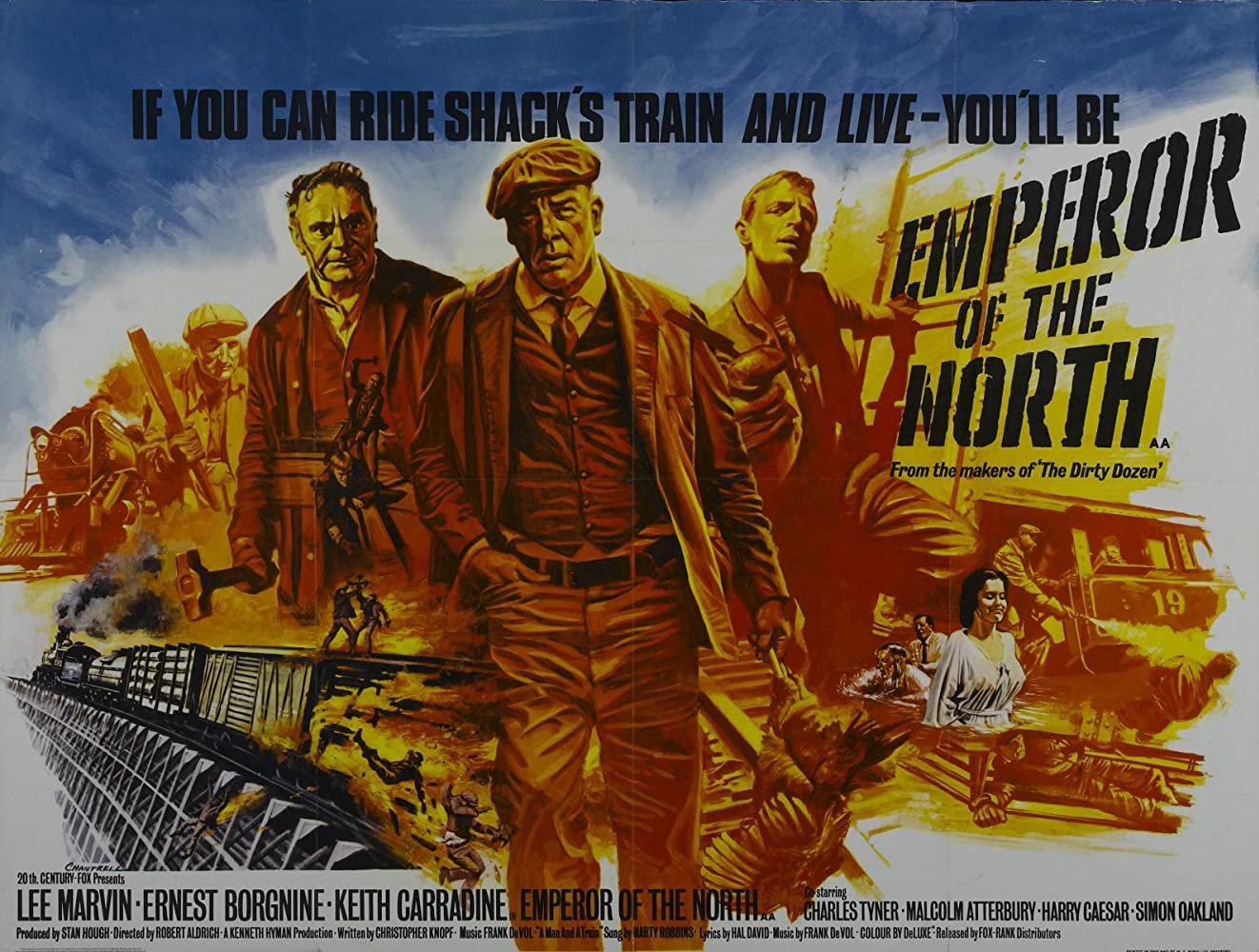

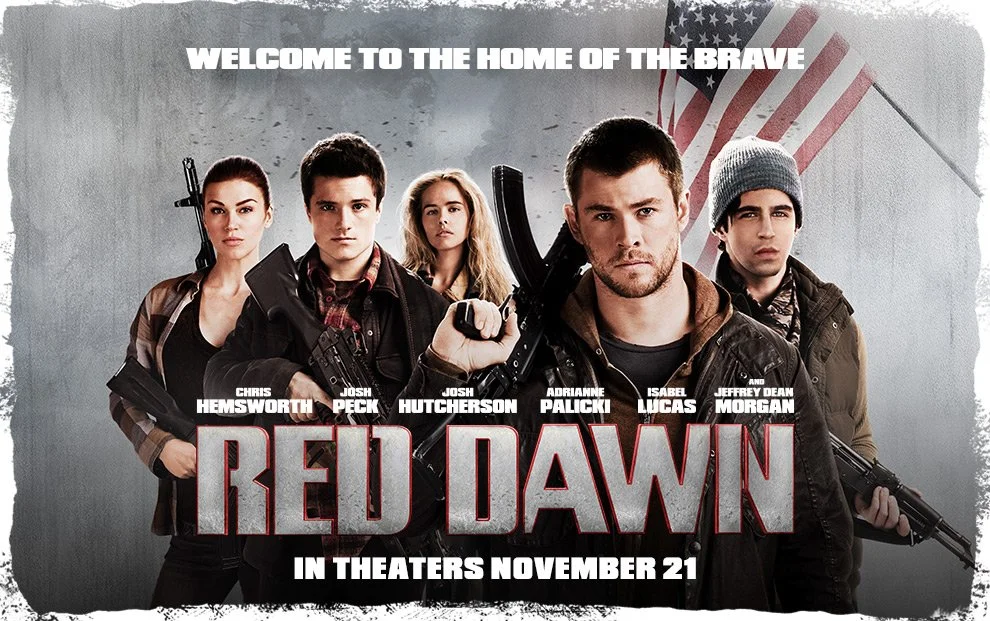
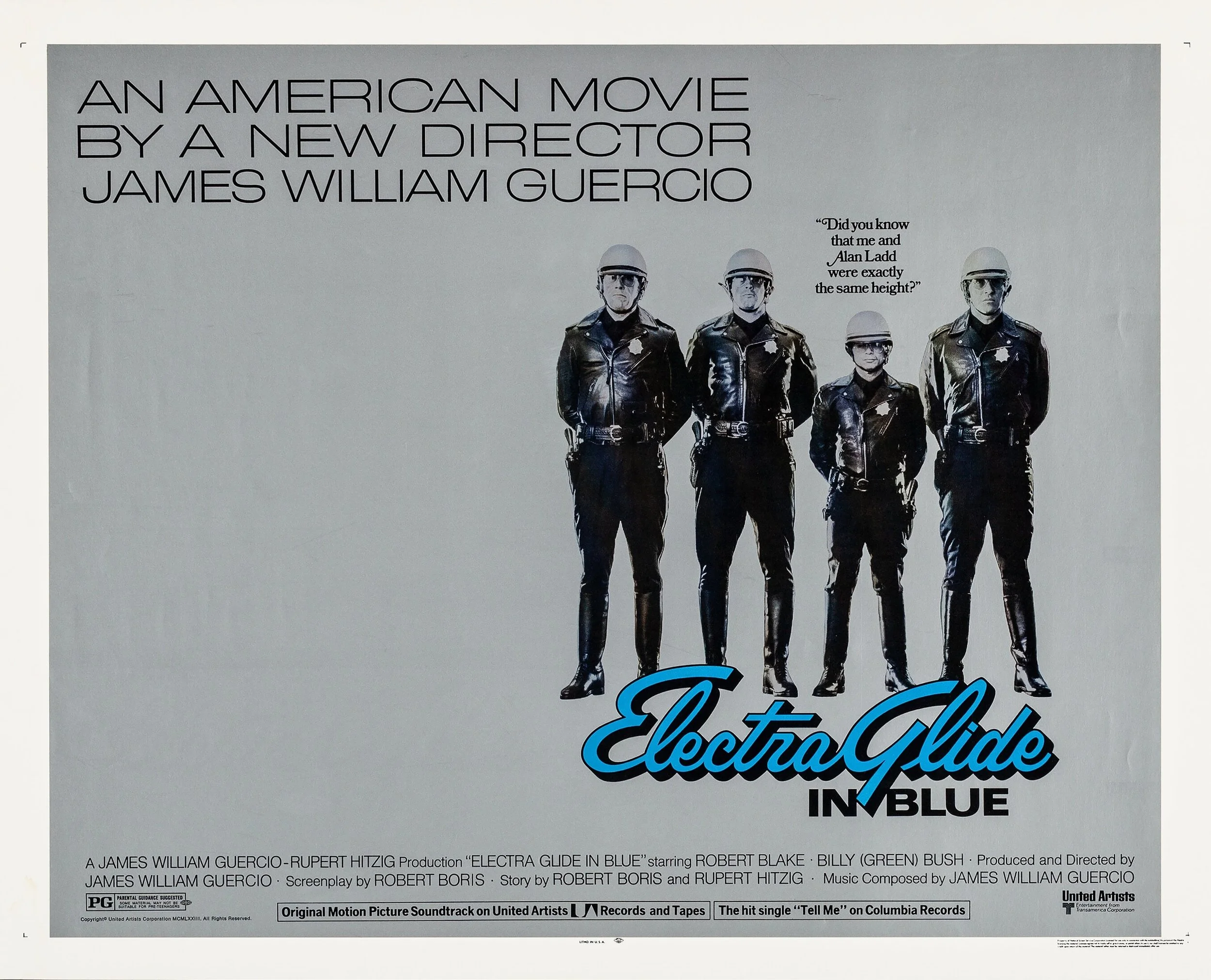
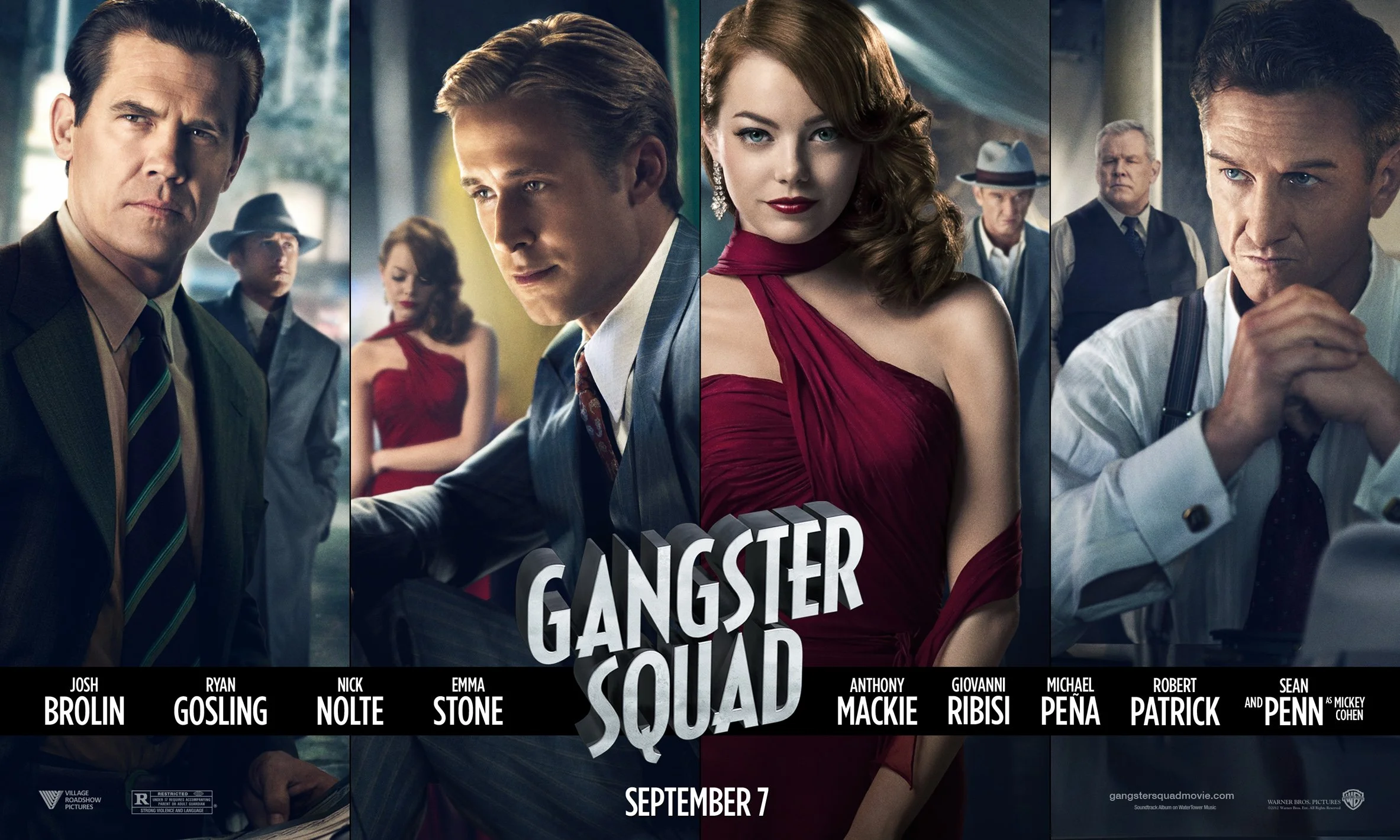



How Do You Solve a Problem Like You Tube?
You Tube like any other online platform has a wealth of rules, term and conditions and other policies. Sadly, what we have seen over recent years is an organisation that has precious little inclination to use them. The facilities that are currently in place are often abused and there are no consequences for misusing the “disputes” procedure. Furthermore, there are still multiple You Tube channels that peddle hate and You Tube personalities that endure without any real sanction for their transgressions. It seems that popular You Tubers are not held to any standard but their own. There is no formal regulation from an external body for this or any other comparable platform. The rules that govern conventional media don’t apply here. It’s a classic example of the law falling behind the technology and change.
You Tube like any other online platform has a wealth of rules, term and conditions and other policies. Sadly, what we have seen over recent years is an organisation that has precious little inclination to use them. The facilities that are currently in place are often abused and there are no consequences for misusing the “disputes” procedure. Furthermore, there are still multiple You Tube channels that peddle hate and You Tube personalities that endure without any real sanction for their transgressions. It seems that popular You Tubers are not held to any standard but their own. There is no formal regulation from an external body for this or any other comparable platform. The rules that govern conventional media don’t apply here. It’s a classic example of the law falling behind the technology and change.
That is not to say that you can get away with anything on You Tube. Theoretically, if you cross certain lines then legal action may well be applicable. Then there is always the threat of the loss of advertising revenue, prestige and sponsorship. However, so far there has not been any major test cases where reality has bitten a wayward You Tuber on the ass for their iniquities. Even if an individual was banned from the platform and had their channel closed, they would still be walking away with their coffers bulging. More than likely, they’d simply pitch their tent elsewhere. One companies embarrassing controversy is another another’s new selling point. We see it in the tabloid press all the time. An odious pundit crosses a line and says something beyond the pale, gets sacked and subsequently gets a new gig with a rival publication. The other problem associated with such issues is the public have very short memories.
Obviously, PewDiePie AKA Felix Kjellberg and his recent behaviour has added fuel to the fire with regard to You Tubes inability to police itself effectively. The platform is now at a crossroad in its business life. The audience that You Tube serves is now so big that third parties cannot easily dispense with it. However, outside business doesn’t like the “frontier town” ethos that still permeates the online portal. The recent Adpocalype shows that advertisers don’t want to be associated with certain channels and personalities. But due to the blunt tool nature of the withholding of revenue and the nebulous criteria of what exactly is “family friendly”, there’s been a lot of collateral damage. And because of Mr Kjellberg’s stupidity we see the use of weaponised DMCA takedowns raising their ugly head once again.
The main risks at present are twofold. You Tube will take action but in a knee jerk fashion, imposing draconian rules and effectively queering the pitch for all parties regardless of what side of the line they are on. Alternatively, if they prevaricate any longer someone outside may step in to deal with the situation. For example, if some idiot is dragged into court, the somewhat grey area of “fair use” which is the foundation of so much content on You Tube, could be scrutinised and a more definitive ruling made. If a precedent is set and it is not a favourable one regarding this catchall term, then it could mean that a hell of a lot of content and channels go the way of the Dodo. Furthermore, such drama and shenanigans could attract the attention of the political classes and the last thing we need is for things like You Tube and Streaming to fall under their remit in any way.
To avoid catastrophe, You Tube should act now but act in a sensible measured way. As a company, it need to start policing its own backyard in a viable fashion. That means not rely on automated procedure that can be gamed but employing moderators who work to a clear set of guidelines. When someone transgresses the rules, action should be swift and clearly explained as to why it has been taken. There also needs to be a fair appeals procedure to ensure that the door swings both ways. Yes, such an undertaking means spending money but considering the alternative, allocating resources wisely now may prevent a massive loss in revenue later. Also, Joe Public needs to up their game and stop cutting offenders so much slack. We as viewers need to stop sitting of the fence and hedging are bets for our own personal convenience. Sooner or later we all need to pick a side, like it or not.
Finally, a few words about PewDiePie. Everyone makes mistakes. I believe in giving people a fair hearing and a second chance where appropriate. Sadly, this individual has proven to be a repeat offender. If your go to curse of choice is a racial slur, then that frankly speaks volumes to me. As far as I’m concerned “I didn’t mean it in a bad way” is the 21st Century Nuremberg defence. You cannot divorce this word from its racially pejorative roots. It exactly the same as calling something “gay”. You may think you’re simply implying that something is not good but you are establishing your proposition by equating being gay as something inherently bad. Considering the diversity of profanity available in the English language, if you wish to express disdain then there are plenty of alternatives words that do not have the same complex socio-political heritage of the term Mr Kjellberg chose to use.
I have seen the term “influencers” bandied about with regard to You Tube and the likes of PewDiePie. It’s a very vague term like so much of the marketing speak we have to endure these days. Its greatest weakness seems to be in the way it is allocated. To be an “influencer” you just need to have a large following. There is no requirement for expertise and talent is a broad and subjective term. It’s time for business to rethink the nature of “influencers” and perhaps reconsider who they show favour too. It is naïve to expect ethics and integrity by default. If you require these virtues then it is incumbent upon you to establish their existence beforehand in those you groom for fame and fortune. However, when one considers the track record of the gaming industry, advertisers and You Tube themselves, I cannot help but be somewhat sceptical that these groups will tackle their respective problems with any degree of success.





















Diary of a Podcaster Part 8
Whenever I encounter a word or term that I’m not familiar with, I will usually Google it. That’s the way I’m wired. I prefer to “know” rather than “not know”. However, it is not the concept of continuous self-improvement that I wish to discuss in this post but something else. Namely sociolinguistics. Earlier today I saw someone mention vocal fry on Twitter. I had no idea what that was so I checked on Wikipedia, watched some You Tube videos and finally read some newspaper articles. An hour later I was aware of not only vocal fry, but run-ons, uptalk, glottal Ts and the fact that the way we speak has a major impact upon our lives, just like education and class. According to sociolinguistics, the manner in which you speak has a major impact on the way you are perceived by others. Sadly, like so many other social markers, it can be used in a discriminatory fashion.
Whenever I encounter a word or term that I’m not familiar with, I will usually Google it. That’s the way I’m wired. I prefer to “know” rather than “not know”. However, it is not the concept of continuous self-improvement that I wish to discuss in this post but something else. Namely sociolinguistics. Earlier today I saw someone mention vocal fry on Twitter. I had no idea what that was so I checked on Wikipedia, watched some You Tube videos and finally read some newspaper articles. An hour later I was aware of not only vocal fry, but run-ons, uptalk, glottal Ts and the fact that the way we speak has a major impact upon our lives, just like education and class. According to sociolinguistics, the manner in which you speak has a major impact on the way you are perceived by others. Sadly, like so many other social markers, it can be used in a discriminatory fashion.
My train of thought subsequently led me to watch a selection of other videos designed for those who are non-native English speakers. These You Tube channels seek to explain the subtleties of the language and provide an insight into phrases and colloquialisms that are not taught in the classroom. There is a wealth of difference between the way any language is taught formerly and how it is used in day-to-day life. Being a native English speaker, I have never stopped to consider how difficult the language is to learn. Upon mature reflection of all these points, I find myself wondering how accessible my previous podcasts have been? Do listeners have any issues with my diction, the phrases and terminology I use? How is my voice perceived?
One thing that has come up from time to time, is that both British and US podcasters often speak very quickly which seems to be a cultural phenomenon. Both Brian and I received an email about this once back in the heyday of the Contains Moderate Peril podcast. It did come a surprise but then we felt we should try and do something to accommodate the point and thus made a conscious effort to speak slower. Since then I’ve made a point of editing the show in a specific fashion to try and reduce the speed of the conversation and pace it in a more accessible manner. However, it is a difficult issue to address. When you are consciously trying to change the manner in which you speak, it can sometimes impact negatively on the way you express yourself. Conversations can sound scripted or artificial.
There are many factors that give your podcast character and these naturally can become selling points. Banter, the way in which you express yourself and the language you use all contribute to whether your audience stays or leaves. Although you cannot please everyone and it’s important to decide upon the niche you wish to pitch to, it doesn’t do any harm to accommodate requests from your listeners. Adjusting aspects of your speech and at the very least being aware that not everyone is a native English speaker, means that you can try to make your show more inclusional. After all, podcasting is all about communicating. It seems counterproductive to contradict that philosophy.
Update:
In the previous instalment of Diary of a Podcaster, I wrote about the issues I was having with iTunes and my Squarespace RSS feed. To cut a long story short, the most prudent course of action to rectify the issue has been to host the show elsewhere. Hence, I have opened up an account with PodBean. They have a variety of plans and I have found one that suits my needs at a reasonable cost. Hopefully, with this technical issue addressed, I can return to podcasting soon.

















The Limehouse Golem (2016)
In Victorian London, a serial killer dubbed The Limehouse Golem by the press, leaves a trail of victims in his wake. The seemingly random murders span across the social with the only clue being a series of cryptic messages written in the blood of his victims. With few leads and increasing public pressure, Scotland Yard assigns the case to Inspector Kildare (Bill Nighy), a seasoned detective who has a sneaking suspicion that he's being set up to fail. Kildare career has stalled due to rumours that “he’s not the marrying type. Investigations eventually yield a list of four potential suspects. The music hall actor Dan Leno, the author George Gissing and revolutionary Socialist Karl Marx. However, Kildare finds that the forth, John Cree, is already dead; poisoned by his wife Elizabeth (Olivia Cooke) who awaits trial for murder. Is the key to the Golem’s identity to be found through further investigation of his murders, or by solving the truth of the Cree case?
In Victorian London, a serial killer dubbed The Limehouse Golem by the press, leaves a trail of victims in his wake. The seemingly random murders span across the social with the only clue being a series of cryptic messages written in the blood of his victims. With few leads and increasing public pressure, Scotland Yard assigns the case to Inspector Kildare (Bill Nighy), a seasoned detective who has a sneaking suspicion that he's being set up to fail. Kildare career has stalled due to rumours that “he’s not the marrying type. Investigations eventually yield a list of four potential suspects. The music hall actor Dan Leno, the author George Gissing and revolutionary Socialist Karl Marx. However, Kildare finds that the fourth, John Cree, is already dead; poisoned by his wife Elizabeth (Olivia Cooke) who awaits trial for murder. Is the key to the Golem’s identity to be found through further investigation of his murders, or by solving the truth of the Cree case?
“Let us begin, my friends, at the end,” declares the music hall actor Dan Leno (Douglas Booth) as the curtain draws back upon both the theatre stage and the beginning of the story. What follows is a period whodunit, told in flashback and set against the backdrop of a dualistic Victorian world. The seat of empire harbours a dark underbelly of vice, depravity and murder. The Limehouse Golem explores the significance of the tabloid press and the role of the music hall in shaping and reflecting popular opinion. This is an age voyeurism and puritanical judgement. There are themes of how the disenfranchised yearn to leave a mark on the world as an act of defiance against their depressing and oppressed lives. The story also paints a picture of an incredibly harsh and unjust society towards women, homosexuals and children.
Jane Goldman (Kick-Ass, The Woman in Black) adapts Peter Ackroyd’s book well providing a screenplay that affords the ensemble cast a lot of scope to interpret their respective roles. Performances are universally good but you can seldom go wrong with the likes of such actors as Eddie Marsan and Daniel Mays. Director Juan Carlos Medina works within a handsome production design, vividly lit and photographed by Simon Dennis. There is more than a hint of Lamberto Bava in the looks and feel of the dark, foggy streets of London. The stylised aesthetic creates a suitable mood for the unfolding tale. Median also uses an interesting plot device in which Inspector Kildare dictates to each suspect what they should write. As each does so, we then see the previous murder from their perspective.
As a whodunit, The Limehouse Golem is a little obvious to the attentive viewer and it doesn’t go out of its way to obscure who the real murderer is. However, it can be argued that this is a movie about the journey to the truth and what impact the final revelation has upon the central characters. It is not so much the “who” that is the major foundation of the plot but “why”. If one looks beyond the circumstances of the “killer”, you find that the story is effectively putting an entire era with its associated socioeconomic and historical baggage on trial. The denouement is poignant with multiple parties having to deal with the fallout of the solved cased. Viewers are left with much to reflect upon as the credits roll, which in my mind is always a sign of quality cinema.
Games That Pass You By
Like many gamers I try to keep abreast of new releases and titles that are in development. Because of my personal likes and dislikes, I filter out a lot of material I don't personally care for. For example, I'm not really au fait with the sports genre or real-time strategy games. I read several news websites and follow a few "gaming commentators" on Twitter and that usually keeps me informed about the things I feel I need to know. However, it is not a full proof system and every now and then I become aware of a title that has completely passed me by. In some respects, this can be quite beneficial as it means I have bypassed several months of hype, marketing and general bullshit and can now potentially jump into a new game without any major prejudice or baggage.
Like many gamers I try to keep abreast of new releases and titles that are in development. Because of my personal likes and dislikes, I filter out a lot of material I don't personally care for. For example, I'm not really au fait with the sports genre or real-time strategy games. I read several news websites and follow a few "gaming commentators" on Twitter and that usually keeps me informed about the things I feel I need to know. However, it is not a full proof system and every now and then I become aware of a title that has completely passed me by. In some respects, this can be quite beneficial as it means I have bypassed several months of hype, marketing and general bullshit and can now potentially jump into a new game without any major prejudice or baggage.
A while ago, I bought a 2K gaming Bundle that was packed with quality titles. It featured Mafia 2, Spec Ops: The Line and the Bio Shock series. It also included the original XCOM franchise which I knew was both critically acclaimed and well received by gamers. However, as I'm not that heavily into turn based tactical games with an overhead POV, I didn't install any of them. Also included in this bundle was The Bureau: XCOM Declassified. I paid little heed to it at the time thinking it was more of the same. Then I stumbled across a review of the game and was surprised to see that it was a departure from the established format. This instalment was a third person, squad based cover shooter with some strategic and RPG elements. The review was actually quite indifferent, neither praising nor damning the game, yet my interested was piqued. So, I subsequently installed the game.
Now the point of this post is not to critique the game in question. Let it suffice to say that it was entertaining in an undemanding way. I liked the sixties setting and the storyline. What I am more interested in is the fact that a major release such as this completely escaped my notice. The game had a troubled development and was delayed several times. Originally it was intended to be a first-person shooter but there were several radical changes in design during its development. Retrospectively I can see that this was well covered in the games media. Yet I remained totally oblivious to it all. I don't even recollect seeing any headlines and just filtering them out, which is something that often happens. It would seem that an entire marketing campaign just passed me by. Something I find on reflection to be rather amusing.
With regard to the games promotion, I have subsequently discovered a series of live action trailers that feature the actor Dominic Monaghan, star of The Lord of the Rings Trilogy and Lost. They are well made and show that a sizeable advertising budget was spent promoting the game. However, it seems that the game ultimately met with mixed reactions and was not as successful as other instalments in the franchise. Perhaps the departure from the established format was the root cause. I find all of this fascinating because I came to the game "cold" and found it to be adequate and acceptable. I had no major preconceptions or baggage to deal with and got a week or so entertainment from a product that cost me very little money.
Since this incident, other examples of game’s that I’ve missed have come to light. Ryse: Son of Rome, Sleeping Dogs more recently Watch Dogs 2 all failed to appear on my radar during the run up to their respective release. All were titles I subsequently discovered through bundles or discount sales. Furthermore, it’s highly likely this will happen again, as I tire of the excessive hype that is now de facto with the launch of so called triple A titles. Personally, I find it a rewarding experience to discover games in this manner, especially if they then prove to be hidden gems or just undemanding entertaining. The Bureau: XCOM Declassified falls into the latter category but was still a pleasant surprise. As a result, I shall be paying closer attention to the various gaming bundles I’ve purchased and have outstanding keys for. I have a suspicion that I may well be sitting on more interesting titles that up until now, I've been unaware of.
The Pact (2012)
The Pact is an enjoyable, yet simultaneously frustrating small budget independent horror movie. The UK poster is a prime example of this, as it clearly indicates that the film is of the horror genre but contains imagery that is not seen in the movie at all. The very title itself doesn't really have any bearing on the story. However, there are still aspects of the film that are noteworthy and overall The Pact shows more promise than a lot of the competition. The story is a traditional favourite of the horror genre. Annie (Caity Lotz) returns to her mother home to attend her funeral. On arrival, she finds that her sister has gone missing and that all is not as it seems at the family home. Family secrets and supernatural goings on slowly emerge.
The Pact is an enjoyable, yet simultaneously frustrating small budget independent horror movie. The UK poster is a prime example of this, as it clearly indicates that the film is of the horror genre but contains imagery that is not seen in the movie at all. The very title itself doesn't really have any bearing on the story. However, there are still aspects of the film that are noteworthy and overall The Pact shows more promise than a lot of the competition. The story is a traditional favourite of the horror genre. Annie (Caity Lotz) returns to her mother home to attend her funeral. On arrival, she finds that her sister has gone missing and that all is not as it seems at the family home. Family secrets and supernatural goings on slowly emerge.
Writer and director Nicholas McCarthy has remade his own short film and expanded it into this feature length presentation, taking many classic themes and tricks from the horror genre and giving them a modern makeover. Skype and Google Maps are used to deliver shocks instead of photos or mirrors. Research is carried out via the internet rather than using microfilm at the library. The movie takes place mainly in one house and has a strong claustrophobic atmosphere. Caity Lotz carries the story with a good performance as strong but socially isolated heroine. Casper Van Dien plays an understanding detective and there is a rather interesting turn by Haley Hudson as a blind medium.
The Pact takes an interesting change in direction in the third act where the supernatural plot-line segues into a new one featuring an earthly killer. The conclusion is formulaic but perfectly adequate and the movie is overall satisfying. Yet despite its positive attributes there are still a number of flaws in the proceedings. The transition from supernatural scares to physical violence is a change in direction that some may find too radical. The narrative strives to create a strong independent female lead then spend a lot of time continuously looking down her cleavage. The ending resolves the story perfectly well but then adds a rather illogical coda. Why do horror film makers feel obliged to do this?
The Pact did receive a UK release back in 2012 although it was somewhat limited. Although not perfect it does have some refreshingly honest scares to offer and is a welcome alternative to more contrived pictures such as The Devil Inside and the Paranormal Activity series. The horror genre needs to re-assert itself by returning to its roots. Many of the finest examples of the genre were made on low budgets, driven by passion and a true understanding of the medium. Nicholas McCarthy has shown with The Pact that he has talent and I certainly look forward to his next project. Let us hope that this movie can pave the way for other comparable material so we can escape the current obsession with found footage movies and Hollywood's current addiction to remaking and cannibalising it's past.
Mafia 3
As I’m between MMOs at present, I decided to purchase a single player game to keep me occupied, until Middle-earth: Shadow of War is released. I settled on Mafia 3 as I had played the previous instalment of the franchise and enjoyed it. As this title came out last October it can now be picked up at a substantial discount if you’re prepared to shop around. There is no game of the year edition at present but I did manage to buy the digital deluxe version for £22, which is a good price. This includes a season pass so I have all the currently released DLC. There is sufficient content available to keep me busy for a month or so. So far, I’ve clocked up 40 hours in-game according to Steam.
As I’m between MMOs at present, I decided to purchase a single player game to keep me occupied, until Middle-earth: Shadow of War is released. I settled on Mafia 3 as I had played the previous instalment of the franchise and enjoyed it. As this title came out last October it can now be picked up at a substantial discount if you’re prepared to shop around. There is no game of the year edition at present but I did manage to buy the digital deluxe version for £22, which is a good price. This includes a season pass so I have all the currently released DLC. There is sufficient content available to keep me busy for a month or so. So far, I’ve clocked up 40 hours in-game according to Steam.
The most striking aspect of Mafia 3 is the story. The game has a very strong narrative that is well written and researched. Set in New Bordeaux, a fictitious version of New Orleans, in 1968 the plot plays out against a background of unrest, civil rights activism and entrenched racism. The writers haven’t shied away from exploring the big socio-political issues of the time. Lincoln Clay is a great protagonist and the supporting characters such as Father James and John Donovan are far from two dimensional. It’s also nice to see the return of Vito Scaletta from Mafia 2. Overall the performances from all the voice actors are good. Although the revenge story is formulaic, the gold is in the depth of characters and the credible reflection of the era, politics and mood of the time.
Mafia 3 offers a very diverse open world environment. There are modern business and civil districts, along with rich and poor residential areas. The game sports a sense of contemporary sixties architecture, as well as colonial elegance. However, if you journey into the bayou you’ll find an abandoned amusement park and decaying shanty towns. As with most games of this genre, there’s a well-defined network of roads and players are encouraged to travel by a wide range of vehicles. The game radio stations are an interesting mixture of music, talk shows, news and faux adverts. The developers have paid top dollar to get the licenses for numerous high profile sixties hits. The game features songs by Jimi Hendrix, The Rolling Stones, Sam and Dave, James Brown and Jefferson Airplane.
However, where the game setting, environment and narrative are all top drawer, the nuts and bolts of Mafia 3 are somewhat formulaic. The third person, cover based combat system is nothing unusual. It’s functional but not sufficiently different or innovative. Once you’ve completed the first act of the story, the game settles down into a series of repetitive quests. To secure each district you have to do the same things, namely destroy or disrupt existing operations, take out key intermediate figures then dispose of the zone boss. Takedown animations also lack variations. The AI is somewhat wonky. Mobs will openly hunt you down which can be a little taxing at the beginning but once you have the right weapons and perks, it becomes a turkey shoot. There are other minor niggles such as no fast travel and a limitation on the number of weapons you carry.
However, the failings of some of the game mechanics are offset by the collectables system and mini games such as racing. These offer a sense of variety. Collectables include albums, Playboy magazines, various types of posters and even religious literature. The Playboy magazines are actually reproductions of genuine issues from the time. I was surprised to find that the old cliché about them featuring “good articles” was actually true. There was an extensive four-page discussion with Stanley Kubrick which was very informative. However, collecting offers no tangible benefit other than the fun of acquiring items. It doesn’t impact upon the game in any way.
From what I’ve seen so far after a week of playing the Mafia 3, the game has pretty much all the same pros and cons as it predecessor Mafia 2. The story and characters are by far the best aspect of the game and if that was lacking, you’d be left with a somewhat average and undistinguished game. But because I favour games with strong story based narratives, I am happy to play through some of the more grindy content to access the major set pieces that punctuate the proceedings. As gamers, I think there is often an unrealistic expectation for ever new game to be a unique experience. For me Mafia 3 is flawed with good and bad points but overall the good outweighs the bad. I enjoy the RPG elements of the game the best. Trying to secure the outcome I want is certainly an amusing challenge. And because of the price I paid, the fun to cost ratio is satisfactory.
Children of Men (2006)
I missed Children of Men on its original release in 2006 and only caught up with recently. If memory serves, the reason the film wasn’t on my radar when it came out was due to the misleading advertising campaign which attempted to pigeon hole and market the film as a sort of post-apocalyptic thriller. Although Alfonso Cuarón's Children of Men explores a violent and dystopian future, it’s cerebral film, grounded in a tangible depiction of a future England and certainly bears little relation to the Mad Max subgenre that the publicity campaign alluded to. A similar mistake was made with the marketing of The Road in 2009 which was sold by Miramax as a post-apocalyptic action film, when it patently isn’t.
I missed Children of Men on its original release in 2006 and only caught up with recently. If memory serves, the reason the film wasn’t on my radar when it came out was due to the misleading advertising campaign which attempted to pigeon hole and market the film as a sort of post-apocalyptic thriller. Although Alfonso Cuarón's Children of Men explores a violent and dystopian future, it’s cerebral film, grounded in a tangible depiction of a future England and certainly bears little relation to the Mad Max subgenre that the publicity campaign alluded to. A similar mistake was made with the marketing of The Road in 2009 which was sold by Miramax as a post-apocalyptic action film, when it patently isn’t.
In 2027, in a socially decaying world in which women have become somehow infertile, a former activist Theo Faron (Clive Owen) agrees to help transport pregnant woman Kee (Clare-Hope Ashitey) to a sanctuary. They are pursued by both the UK government and revolutionaries who seek the baby for political gain. Intelligently written and credibly depicted Children of Men is a worryingly plausible tale. As the wider world crumbles, immigrants flock to the few remaining functional countries resulting in an increasingly authorisation government. Children of Men feels very contemporary indeed. The cast are capable and have ample material to work with. Michael Caine's performance was very engaging and it’s a shame that his character does not a have more screen time. It’s always good to see established actors playing against type. Caine allegedly drew on his experiences and friendship with John Lennon.
Cinema often uses the depiction of technology to establish its futuristic credentials. In the case of Children of Men implies that the technological advance of recent years has ground to a halt, due to the ongoing economic and political decline. What is shown in the way of futuristic technology is subtle and effective. The heads up display on car windscreens is both plausible and non-invasive. The use of small form factor PCs and screens is also credible. Much of this aspect of the production design is a clever extrapolation of hardware that we currently have at our disposal. The overall effect helps create a more convincing and grounded depiction of the near future.
Similarly, the depiction of urban decay in Children of Men is particularly well done. The images of a graffiti ridden, boarded up and burnt out Greater London has an uncomfortable similarity to Gaza or the shanty towns of Zimbabwe. The resulting lawlessness of the disenfranchised was also very well done, especially in light of the London riots of 2011. The trains and buses with wire mesh over the windows, along with the banditry of the Kent countryside have their roots in current global civil unrest. There was similar imagery of social decline in the 1979 TV series Quatermass.
The much praised "single take shots" are suitably engaging, although to facilitate such scenes, a high degree of digital post production work was required. However, in other respects the visual effects work is very low key and does not overwhelm the story, as so often is the case these days. The military assault on the refugee camp at Bexhill looks like a news report, shot on the move complete with shaky cam. It is a fascinatingly chaotic set piece and a welcome change to the usual overblown kind of Hollywood action sequence. The subsequent bombing of the camp by the RAF is seen through fog at a distant and is far more dramatic for it. Presenting the drama in such stark terms and avoiding spectacle, further elevates the movie from simple entertainment to serious drama.
As you would expect from serious movies of this nature that chooses to pursue a more grounded approach to the subject matter, there are few concessions made to populist conventions such as the “happy ending” or good prevailing over evil. Therefore, the ending does not come as a major surprise and is not out of place. Considering the large amount of religious symbolism and imagery in the film, it would have been erroneous to expect anything else under the circumstances. There's sufficient information supplied in the final five minutes of the film for the viewer to draw their own conclusion as to the chain of events that would potentially follow after the films ending. Cuarón is not a fan of excessive plot exposition and comprehensive back story. A philosophy that I often agree within the context of cinema.





Lucy (2014)
Lucy (Scarlett Johansson), a student studying in Taiwan, find herself an unwilling drug mule for crime boss Mr. Jang (Choi Min-sik). When she accidentally ingests the synthetic CPH4 which has been surgically implanted in her abdomen, she rapidly develops advance physical and mental abilities as the drug unlocks the unused parts of her brain. However, this process also puts her life in peril and she soon realises that she requires further doses of the CPH4 to stay alive. Striving to reconcile herself to her situation Lucy reaches out to Professor Samuel Norman (Morgan Freeman), a neuroscientist and expert in the hidden capabilities of the mind. Meanwhile, Mr.Jang does not take kindly to interference in his drug trafficking and sets out to hunt down Lucy.
Lucy (Scarlett Johansson), a student studying in Taiwan, find herself an unwilling drug mule for crime boss Mr. Jang (Choi Min-sik). When she accidentally ingests the synthetic CPH4 which has been surgically implanted in her abdomen, she rapidly develops advance physical and mental abilities as the drug unlocks the unused parts of her brain. However, this process also puts her life in peril and she soon realises that she requires further doses of the CPH4 to stay alive. Striving to reconcile herself to her situation Lucy reaches out to Professor Samuel Norman (Morgan Freeman), a neuroscientist and expert in the hidden capabilities of the mind. Meanwhile, Mr.Jang does not take kindly to interference in his drug trafficking and sets out to hunt down Lucy.
At first glance, the story for Lucy seems somewhat formulaic, based upon the popular misconception about the untapped potential of the human mind and how we as a species only use a small percentage of our brain capacity. However, Lucy is a movie, written and directed by Luc Besson, who brings a distinctly European aesthetic along with his own unique style to the proceedings. The exotic locations, the vivid colour palette and an eclectic international cast results in a curious ninety-minute genre hybrid that may polarise audiences. You will either buy into the far-fetched concept and enjoy the resulting cinematic journey or simply scoff in derision at the preposterous narrative. I happily chose the former option.
It takes a confident director to draw from such movies as Kubrick's 2001: A Space Odyssey and Terrence Malick’s The Tree of Life. Combining philosophical musings about the nature of consciousness with martial arts and gun play is another bold step. Yet it's all done with such aplomb that it broadly works. In an interesting plot twist, Lucy does not descend into megalomania when confronted with her god like powers. Instead the film explores her melancholic attitude towards the impending loss of her "humanity". There are parallels with character of Doctor Manhattan in Watchmen, who faces a similar crisis. Lucy also addresses modern day society's dependence upon the internet and social media, which is another timely theme. Especially in light of Stephen Hawking recent comments about AI and the potential impact it may have upon the world.
Lucy hinges upon the lead performance by Scarlett Johansson and she is extremely watchable as she slows down time, shoots sundry henchmen with pinpoint accuracy and merges with the digital world. The visual effects are striking and the entire film benefits from its rapid pace and overall French sense of panache. It is also pleasant to see such a storyline of this nature based around a female lead and I enjoyed the reference to Lucy sharing her name with the first human being. I feel it is a superior film to Bradley Cooper's 2011 movie, Limitless that shared a similar theme. Lucy also addresses the perennial (and tedious) question about whether a female lead can carry a modern action movie. The answer is a resounding yes.
Classic Game Themes: EVE Online
EVE Online is in many ways the most complex, absorbing and time consuming MMO that I've never played. I didn't survive beyond a twenty-one-day trial and found that the exacting minutiae of the game far too demanding. However, although the mechanics were not to my taste, my limited experience left a strong impression upon me and I still have a healthy respect and a strong sense of fascination for this niche market product. I'm not alone in this. Many gamers do not play EVE Online but are fascinated by both its intricacies and community.
EVE Online is in many ways the most complex, absorbing and time consuming MMO that I've never played. I didn't survive beyond a twenty-one-day trial and found that the exacting minutiae of the game far too demanding. However, although the mechanics were not to my taste, my limited experience left a strong impression upon me and I still have a healthy respect and a strong sense of fascination for this niche market product. I'm not alone in this. Many gamers do not play EVE Online but are fascinated by both its intricacies and community.
Because of the sandbox nature of EVE Online, it's soundtrack is designed to be ambient rather than event specific. Yet the electronic score by Jón Hallur Haraldsson superbly embellishes the games overall atmosphere. CCP have made much of games music (about seven hours in total) available on Soundcloud. If you like such artists as Tangerine Dream and Vangelis you'll find many common parallels with Haraldssons's work.
Although there is much to choose from, I have decided to use the track Below the Asteroids as an example of the composer’s contribution to EVE Online. It has an introspective quality that draws the listener in and adds to the ongoing immersion. Due to its space setting the game has less visual input to engage the player, so must rely more on the soundscape and complexity of the game itself. This track highlights exactly how Jón Hallur Haraldsson does that.








Do We Need a Face of Gaming?
In recent years there have been several gaming related stories that have become big enough to gain the attention of the mainstream media. Sadly, when corporate news encounters anything that falls outside of their immediate understanding or frame of reference, they need to package it into terms they and their audience can comprehend. This means simplifying the subject in to binary terms and convenient sound bites. They also like to have a “public face” that can be the go to expert. Someone who can be clearly identified with the issue and then championed or reviled by the public, according to which side they choose to support. That beggars the question do we need a " face for gaming"? If we do then who should it be? It's quite a thought provoking conundrum and raises a lot of issues about the nature of representation. Especially in light of the fact that contemporary media likes to have specific subjects neatly packaged with easy to grasp, core ideas and a photo-friendly public face.
In recent years there have been several gaming related stories that have become big enough to gain the attention of the mainstream media. Sadly, when corporate news encounters anything that falls outside of their immediate understanding or frame of reference, they need to package it into terms they and their audience can comprehend. This means simplifying the subject in to binary terms and convenient sound bites. They also like to have a “public face” that can be the go to expert. Someone who can be clearly identified with the issue and then championed or reviled by the public, according to which side they choose to support. That beggars the question do we need a " face for gaming"? If we do then who should it be? It's quite a thought provoking conundrum and raises a lot of issues about the nature of representation. Especially in light of the fact that contemporary media likes to have specific subjects neatly packaged with easy to grasp, core ideas and a photo-friendly public face.
Although I’ve raised the question as a thought experiment, rather than a genuine request for potential candidates, there may well be some people out there that would like to see such a thing. For me the concept of a "face of gaming" is just another name for "community leader", which is a term I dislike due to is inherent vagueness and utter lack of accountability. So, no, I don't want anyone to be the "face of gaming". I doubt if you can even get a consensus on what the actual term means and what the specific parameters of such a role are. However, for the sake of argument, let us assume that the position existed. As far as I'm concerned if you wish to represent any body of people in some capacity, you need to have been democratically elected, with a popular majority mandate of at least 75%. That way you can at least claim some sort of legitimacy for your role.
Even if such a framework existed for choosing such an individual, the process would instantly fall foul of all the usual political pitfalls that blight any democratic undertaking. There would be endless debate and disagreement over issues such as nationality, gender and race. Gamers are a very nebulous group and they frequently disagree over many aspects of the own culture. Adding a wider socio-political dimension to the debate would only compound the problem. Plus, the driving principle behind this proposed role is to provide a conduit for the mainstream press. An institution that regularly trivialises matters and panders to the lowest common denominator. If there was a "face of gaming" it wouldn't be long before the press focused on who they were dating and what they were wearing, rather than the topics in hand.
Some have suggested that a community leader may be found from the within the gaming industry itself or from that esoteric group known as experts. I have no problem with the concept of experts and it saddens me that their status in society has been diminished in recent years. The cult of "my opinion is of equal value" has slowly eroded the weight of their position. I don't mind the use of independent experts to provide an informed overview for the wider public but if one became a designated spokesperson, they may well lose that impartial status. As for finding a developer or CEO of note who is universally respected, I think that would prove a difficult task. Gamers can be very partisan with regard to specific gaming companies. They also bear grudges.
The gaming community is not like other traditional social bodies. It is extremely diverse and multi-faceted. It has no structure or hierarchy, nor does it have any universally agreed agenda. What it does have is a lot of high profile personalities within that community, each with their own following. Think Total Biscuit AKA John Bain or Jim Sterling. Then there are Community Manager for game specific forums, a high-profile writer or a popular content provide and critic such as YouTube personalities. Some of these individuals have integrity, others do not. However, the trouble with such individuals is that they often end up being inaccessible by the regular. Does that make them truly representative of the average gamers needs? In the past, I have been involved with the organisation of several online events. I tried to contact several high-profile internet personalities to ask for help with the events promotion. I was universally ignored or failed to get beyond their respective gatekeepers.
Personally, I think that a so called "face of gaming" would do more harm than good if it did exist. It would ultimately end up being about them, rather than games and gamers. There are community figures that I know and respect but I don't see them as "leaders" nor have any of them ever claimed to be so. I guess the nearest we'll ever get to equitable representation is via player councils, as long as they are populated with elected representatives. What is required from a role such as the "face of gaming" is impossible to provide, simply because there is no infrastructure to support it. I think most gamers ultimately look to themselves to represent their own needs. If history teaches us anything, it's that we should always be mindful of the centralisation of power. It has seldom proven beneficial for the majority.
Batman v Superman: Dawn of Justice Ultimate Edition (2016)
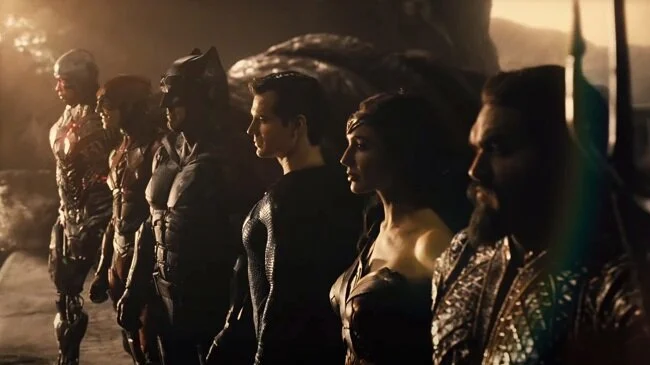
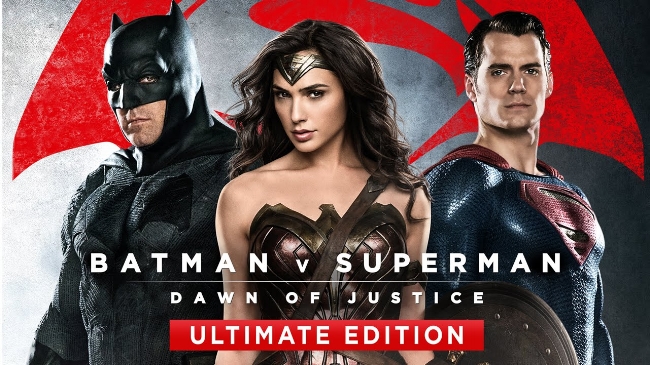
I have not seen the theatrical version of Batman v Superman: Dawn of Justice, although I’ve been informed that it was a somewhat confused and flawed edit of the film. The Ultimate Edition clocks in at three hours and three minutes; thirty-two minutes longer than the version shown in cinemas. That is over half an hour of more exposition and character development. More than enough to have a significant impact upon the movie, its themes and narrative. Judging purely by the version that I saw, along with the fact that I have no major familiarity or investment with either of these characters, beyond their cinematic depictions, I was entertained by Batman v Superman: Dawn of Justice. I thought it maintained the cerebral approach to DC Expanded Universe that we previously saw with Man of Steel. Furthermore, despite its sprawling nature and an overabundance of CGI driven action scenes, the film explores some very contemporary issues about societal paranoia and upsetting the political status quo.
I have not seen the theatrical version of Batman v Superman: Dawn of Justice, although I’ve been informed that it was a somewhat confused and flawed edit of the film. The Ultimate Edition clocks in at three hours and three minutes; thirty-two minutes longer than the version shown in cinemas. That is over half an hour of more exposition and character development. More than enough to have a significant impact upon the movie, its themes and narrative. Judging purely by the version that I saw, along with the fact that I have no major familiarity or investment with either of these characters, beyond their cinematic depictions, I was entertained by Batman v Superman: Dawn of Justice. I thought it maintained the cerebral approach to DC Expanded Universe that we previously saw with Man of Steel. Furthermore, despite its sprawling nature and an overabundance of CGI driven action scenes, the film explores some very contemporary issues about societal paranoia and upsetting the political status quo.
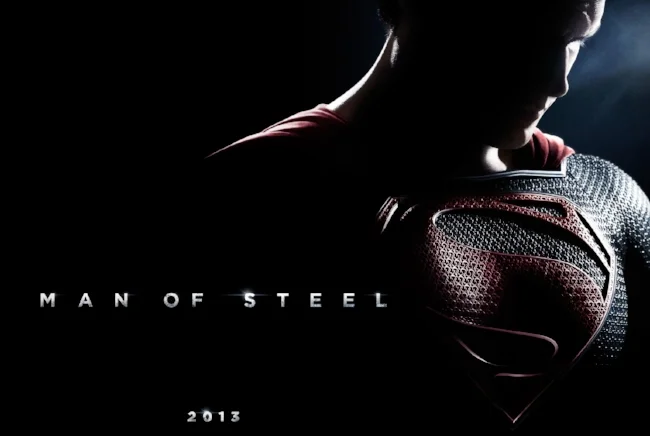
Having recently re-watched Man of Steel, the segue into Batman v Superman: Dawn of Justice was seamless and the movie picked up the previous story and instantly got cracking on expanding it. Several events from the climax of Man of Steel where subsequently shown from the perspective of Bruce Wayne. This then sets the plot of Batman siding with an ever increasingly paranoid establishment that see’s Superman as an uncontrollable threat. As ever, with any threat to the established order, it is the rich and powerful that fear the new, as it may rob them of their privilege. Yet the poor and the disenfranchised, see Superman as their advocate. In this respect, Director Zack Snyder has made a very political movie. He also ponders the vigilante aspects of Batman’s character, who at this time works outside the law and has established himself as judge, jury and indirect executioner. He brands his victims, which makes them clear targets when placed in a prison environment.
So far, the first two instalments of the DC Expanded Universe have been dark, dour and have not shied away from social commentary. Certainly, the themes explored are especially pertinent in the light of contemporary US politics. Presenting super hero stories in such a fashion certainly puts to bed the notion that comic book movies are kiddie fodder. The levels of violence in the Ultimate Edition are also unusual for this genre but completely justified considering the nature of the story and the noticeably more cerebral pitch the producers are trying to make. However, because this is a genre movie it still feels obliged to regularly punctuate the proceeding with major action based set piece. I find that is not the scope of these sequences, that are the problem. They often display arresting imagery and novel ideas. It is their duration that is the issue. There is a finite amount of destruction and mayhem one can endure, before it becomes tedious and bombastic. These sequences also slow up the narrative, which surprisingly enough, does become the selling point of the film.
Like Man of Steel before it, Batman v Superman: Dawn of Justice also has a controversial scene. In the previous movie, it was having Superman act out of character and take a life. As a plot device, it actually worked, taken in context of the films own internal logic. This time round, an armoured Batman defeats Superman, through the use of weaponised Kryptonite. Yet a single incidental remark, spoken in desperation by Superman, stays Batman’s hand and sets him upon a path of introspection. His subsequent epiphany shows Bruce Wayne exactly how far he has fallen, morally. This scene divided fans. Some felt that it was contrived and hokey. Again, I was content to go along with it and felt in principle it was an acceptable concept. Perhaps it could have been implemented a little better but I did not see it as a deal breaker in any way. Again, I think that my willingness to go along with the director vision, stems from my lack of personal baggage with the source material. Fans often forget that a movie is an invitation to share the film makers vision. You can blame a movie for perceived faults in its production but is patently unrealistic to complain that the studio has not made the film that you had in your head. That was never on offer to begin with.
There were several other facets of Batman v Superman: Dawn of Justice that I enjoyed. I was happy with all main performances. Jesse Eisenberg as Lex Luthor was a bold piece of casting. However, it was prudent to fly in the face of established depictions of the supervillain. This was a far more contemporary Lex Luthor, pertinent to the technology and the fears of our age. I also enjoyed the subplot regarding metahumans and the extended cameo by Gal Godot as Diana Prince. We were also given a far more “hands on” Alfred Pennyworth, who is technically adept and happy to put his employer, Bruce Wayne, in his place. Jeremy Irons is the sort of actor who can project this sort of moral authority. Another aspect of the film that improves its dramatic scope, is its global perspective. The events of the story do not just happen within an inward-looking US. Superman interacts with all people and nations. Catastrophic events also have international implications.
Even in this extended form, Batman v Superman: Dawn of Justice is not a perfect movie. It is somewhat bloated and has an uneven pace. Yet is it now narratively coherent and doesn’t suffer from the plot holes apparent in the theatrical release. It approaches its subject matter in a manner that is appropriate to our current world. We no longer live in the Fifties so it would be crass to depict the concept of metahumans in such a way. Superman is no longer a seen as a benevolent, extraterrestrial immigrant who has embraced the American dream. He is now viewed suspiciously by those who harbour an inherent fear of the unknown and that which they can’t control. Kal -El is no longer the bland, one dimensional embodiment of patriotism. He is now a potentially rogue messiah who is acutely aware of the divisions that he causes. Such ideas certainly make for interesting viewing and intellectual reflection. So far, because of the manner in which all these ideas have been handled, I am still sufficiently invested to pursue them further. Thus, I am looking forward to watching both Suicide Squad and Wonder Woman. Hopefully, these adult fantasies will continue to offer spectacle and food for thought in equal measure.
Spec Ops: The Line - Morally Ambiguous and Bleak Gaming
I first played through Spec Ops: The Line back in 2014 when I purchased it as part of a discounted 2K bundle. For once the actually selling point of this action game was the single player campaign, which had a reputation for being well conceived and written, with solid voice acting. After playing for a couple of hours it became apparent that there was a lot more to this third person, cover based shooter and that the praise its received from the gaming press was justified. I have seldom played through a title as compelling as this. This week I re-installed the game and completed it for a second time. This time round I was able to concentrate more closely on the subtleties of the story. For a five year old title, this is still a gruelling experience.
I first played through Spec Ops: The Line back in 2014 when I purchased it as part of a discounted 2K bundle. For once the actually selling point of this action game was the single player campaign, which had a reputation for being well conceived and written, with solid voice acting. After playing for a couple of hours it became apparent that there was a lot more to this third person, cover based shooter and that the praise its received from the gaming press was justified. I have seldom played through a title as compelling as this. This week I re-installed the game and completed it for a second time. This time round I was able to concentrate more closely on the subtleties of the story. For a five year old title, this is still a gruelling experience.
The story is both intriguing and topical. Dubai has been overwhelmed by cataclysmic sandstorms and fallen into a state of anarchy. Troops from the 33rd Infantry Battalion, led by Colonel John Konrad, have gone missing after a failed evacuation. Subsequently a Delta force team is sent to determine what has gone wrong and rescue surviving members of the 33rd. What they find is a city engulfed by sand and a complex tale of mutiny, CIA manipulation and personal insanity. Played from the perspective of Captain Walker, along with a two-man squad comprising of Lieutenant Adams and Sergeant Lugo, the story catalogues their descent into a personal hell and mental disintegration. The game is clearly influenced by Francis Ford Coppola's Apocalypse Now and Joseph Conrad's novel Heart of Darkness, which the movie was based on.
The first thing Spec Ops: The Line does is take all the standard underpinnings from the shooter genre and jettison them. There is no binary conflict between the morally righteous US forces and some generic foreign adversary. The enemy in this fight turns out to be your own side. The game does not glamorise war nor does it offer the FPS gamer the usual experience. Tactical decisions come with consequences and the moral choices offered in the game seldom provide a positive solution. The narrative clearly explores the psychological burden that comes with command and it's not pretty. The games mechanics are somewhat standard but perfectly adequate. Although scripted, the action scenes have a genuine sense of confusion and at times even panic.
Spec Ops: The Line has a worryingly credible narrative that challenges the player to be more than just a voyeur in the proceedings. Many of the standard tropes that you find in this genre are reversed. As the story gets more involved and morally ambiguous, the dialogue between the Delta Force team becomes more agitated. The cool, calm radio chatter we saw at the beginning of the game becomes, accusatory, bellicose and even scared. The strain of having your world view shattered is cleverly reflected in the script. As a result, playing Spec Ops: The Line feels very different to other shooters. Even if you have the flintiest of hearts, the game may well surprise you with its difference and honesty. It’s gameplay and mechanics are formulaic but the story is dark, foreboding and disturbing.
Gaming seldom has narratives as strong as that found in Spec Ops: The Line. Hopefully it provides pause for thought as well as entertainment among those who play. War is still grossly misrepresented in gaming and caricatured in the most abhorrent way. This game challenges the established business approach and raises many ethical questions not only about the nature of warfare, but whether it should be trivialised and used as a means of entertainment? At the very least Spec Ops: The Line is an interesting experiment in gaming narrative and is worth a look on those grounds alone. Whether the gaming industry sees fit to take such an approach with future titles remains to be seen. Recommended but no to the faint hearted.
Game Maps
I've been pondering of late the subject of game maps and how they can vary quite radically from title to title. Size, content and instancing can all have an impact on a maps accessibility and the way they are perceived. Then there is the issue of individual player tastes and preferences. Those who like to explore will happily spend time attempting to access remote nooks and crannies. Others will quickly become frustrated if there is no direct route to their goal, as with Guild Wars 2: Heart of Thorns. A games genre also has a significant impact upon map design. A FPS or MOBA has different requirements from it virtual environment that an MMO. I'm sure there are far more variables involved in a maps creation. However, I think most gamers seem to inherently know when the developers have got it right.
I've been pondering of late the subject of game maps and how they can vary quite radically from title to title. Size, content and instancing can all have an impact on a maps accessibility and the way they are perceived. Then there is the issue of individual player tastes and preferences. Those who like to explore will happily spend time attempting to access remote nooks and crannies. Others will quickly become frustrated if there is no direct route to their goal, as with Guild Wars 2: Heart of Thorns. A games genre also has a significant impact upon map design. A FPS or MOBA has different requirements from it virtual environment that an MMO. I'm sure there are far more variables involved in a maps creation. However, I think most gamers seem to inherently know when the developers have got it right.
For me one such example of a map being "just so" is Skyrim. The landmass is about sixteen square miles, which is big but pales into significance when compared to Just Cause 2 which clocks in at four hundred square miles. However, the thing that Bethesda has got right with Skyrim is the balance between the size of the area, the amount of content and aesthetics. The day and night cycle, coupled with procedurally driven events makes it feel like a living environment. You can watch as villagers go about their tasks and farm animals graze for food. The fact that there's no instancing when travelling above ground until you entered a building, also provides an air of authenticity.
In the halcyon days of LOTRO, Bree-Land was prime example of a rich and varied MMO game map. Although it doesn't have the faux living dynamic of other games, it remains a large and varied landmass with plenty of content to seek out. It also makes a half decent attempt at realising the geography as written in Tolkien's source text. LOTRO still remains a game with a handsome world design but the regions that have subsequently been added of late are far more functional in their construction. Players often cannot access certain areas due to rivers and mountains and find themselves funnelled through pleasant zones on the way to the next quest hub. However more recent MMO's such as ArcheAge and Guild Wars 2 still encourage the exploration of their game worlds and have devised content around players desire to do so.
The open world cities of Mafia 3 or GTA V can also be compelling environments to immerse oneself in. Like their real-world counterparts, both New Bordeaux and Los Santos have distinct zones such as commercial and residential areas. Again random events occur to the citizens as you travel through the map. Weather systems and a customisable day and night cycle again lend credibility to the setting. Unlike fantasy games, these titles have the advantage of contemporary embellishments such as radio stations, roadside advertising and inner-city congestion; all adding to the overall ambience. You can visit bars and diners and watch “life rich pageant” unfold, or at least the developers nearest approximation of it.
However, game maps are still very much determined by the prevailing technology and although things are progressively getting better, there are still limitations. The MMO genre not only has to consider such factors as draw distances and texture loading but there is the question of the players themselves. The game engine has to accommodate both the environment and the population. Unless you have a very high-end gaming PC, then you will often notice system foibles such as "pop-in" as objects appear as you get closer to them. SWTOR and LOTRO are two older MMOs that suffer from this technical idiosyncrasy. Often developers will try to fudge this by blocking line of sight or introducing haze, fog or some other environmental workaround. Single player games have different demands upon them, allowing titles such as Crysis to have draw distance of over nine miles.
Irrespective of a maps design, its success ultimately depends upon how well it is integrated into the game. The two zones of Mordor and Nurn in Middle-earth: Shadow of Mordor are relatively small but diverse and well implemented. There is a wealth of topographical features that break up the landscape in a very organic way. Unlike some MMOs, this is not done is such an arbitrary and linear fashion. North Africa is well realised in Sniper Elite III, affording the player multiple routes to various targets, across varied terrain. This greatly enhances the re-playability of the game. In Sniper Elite IV, the Sicilian villages and seaports are extremely credible and authentic. The rolling fields and forests of The Witcher 3: Wild Hunt are expansive and atmospheric with a distinctly Eastern European feel to them. Furthermore, the landscape is populated in a credible fashion. Bandits will make use of remote and covered areas. Regions of Wilderness are appropriately empty with minimal amounts of NPCs.
Conversely the London maps in a game such as Sherlock Holmes: Crimes and Punishments are far less dynamic and more functional. They are mainly there for ambience and provide little more than a conduit between each crime scene. The maps in both FPS and MOBA genres, have additional criteria to consider. The fluid nature of their game play requires a different approach to their construction. Multiple routes and chokepoints are common place in such designs. Snipers require vantage points but these need to be relatively exposed to ensure that a single location doesn’t dominate the game. The Battlefield franchise takes map design a stage further, with a mechanic that allows players to destroy the environment and thus change the dynamics of the game. This was to be an integral feature of the now defunct EverQuest Next, although I suspect would have been subject to a wealth of caveats.
As players, we also bring a human element when we interact with game maps and there are many factors that shape our perceptions. Ambient music or when or who we’re playing with, influence how we feel about specific in-game zones. As a result, we often have personal favourites. Evendim in LOTRO is an example of a map that I have fond affection for. More recently the region of Toussaint in the Blood and Wine expansion for The Witcher 3, attracted my interest. It’s a sunny and luxuriant zone and a radical change from the usual ice or desert archetypes you find in so many games. Hopefully, as game technology and the hardware it runs on evolves, we will see map design advance accordingly. I look forward to experiencing larger, more detailed open world environments populated with flora and fauna that have their own lifecycles.
Lockboxes
It would appear that lockboxes are being discussed once again. Bhagpuss wrote a post over at Inventory Full yesterday, which subsequently got used as a talking point on Massively Overpowered today. What made the debate a little different this time around, was that Bhagpuss doesn’t object to lockboxses per se, merely that in most games that have them, the content is frequently lacklustre and uninspiring. A point I am compelled to concur with. I too have no major objection to lockboxes in principle and partake of them from time to time in various games. However, they seldom seem to contain anything that I consider to be of tangible benefit to me. I want pets, gear and weapons. But because of vocal complaints from certain quarters, we are more often than not saddled with inconsequential convenience items and minor cosmetics baubles and trinkets.
It would appear that lockboxes are being discussed once again. Bhagpuss wrote a post over at Inventory Full yesterday, which subsequently got used as a talking point on Massively Overpowered today. What made the debate a little different this time around, was that Bhagpuss doesn’t object to lockboxses per se, merely that in most games that have them, the content is frequently lacklustre and uninspiring. A point I am compelled to concur with. I too have no major objection to lockboxes in principle and partake of them from time to time in various games. However, they seldom seem to contain anything that I consider to be of tangible benefit to me. I want pets, gear and weapons. But because of vocal complaints from certain quarters, we are more often than not saddled with inconsequential convenience items and minor cosmetics baubles and trinkets.
Lockboxes in Star Trek Online are themed and are only available in the game for a limited period of time. There is a nominal percentage chance to win gear, or even a ship if you are “lucky enough”. However, at the very least, each lockbox yields a quantity of Lobi crystals which are a barter currency. If one ever buys keys to open lockboxes it is best to consider the transaction as a means of buying currency that can be traded in for items. Winning a desirable item on top as that is then an added bonus. That is how I think of things on the occasions I purchase keys. Such an outlook then mitigates concerns over gambling although I have no major qualms about that subject either.
However, where STO handles lockboxes in a manner I like, many other MMOs do not. I have yet to find anything of note from one in LOTRO, Guild Wars 2 or Overwatch. The propensity to provided cosmetic or housing items means that lockboxes are often the prerogative of the role players or the game completists. I’m sure the developers target such a market because they pay dividends but if they could broaden their outlook and diversify the rewards there is scope for lockboxes to appeal to a wider number of consumers. Offering bag or bank space, or further character slots could potentially be attractive. Personally, I would like to see more game gear included but that would result in sabre rattling form the “pay to win crowd”. I certainly think that all lockbox rewards should be bind on equip and if not wanted available to sell via the game auction system.
Ultimately, lockboxes are symptomatic of game developers struggling to find a universally acceptable means to finance their game. The demise of the subscription model has left many MMOs in the thrall of an unsatisfactory hybrid F2P business models that have done precious little to improve the overall quality of the games. Monetisation of this kind impacts upon the conception and design of both content as well as game mechanics and seldom in a positive way. If this business model can be overturned for something better, then lockboxes may well go the way of the Dodo. However, that is not something that seems imminent at present so what can’t be cured must be endured. The current debate will more than likely have no effect on developers who have a propensity to repeat their mistakes and so the lockbox will continue as a gaming bête noire.
Man of Steel (2013)
Although I was one of the few that actually enjoyed Superman Returns back in 2006, I can appreciate why it failed at the box office. It made the mistake of trying to bridge the gap between the iconic Christopher Reeve era and the post 9/11 world and ended up falling between two stools. Zack Snyder's Man of Steel does not make this mistake and reboots the franchise in completely the right manner for a modern audience. The movie takes quite a cerebral approach to its exploration of the character and wrestles with several weighty themes that previous adaptations elected not to tackle. However, as this is a very specific genre movie, the production has to make concession towards its core audience. Therefore, there’s a requirement for mayhem and destruction. As result the film does at times feel like it's pulling in different directions and the third act is more predictable and ponderous than the first two.
Although I was one of the few that actually enjoyed Superman Returns back in 2006, I can appreciate why it failed at the box office. It made the mistake of trying to bridge the gap between the iconic Christopher Reeve era and the post 9/11 world and ended up falling between two stools. Zack Snyder's Man of Steel does not make this mistake and reboots the franchise in completely the right manner for a modern audience. The movie takes quite a cerebral approach to its exploration of the character and wrestles with several weighty themes that previous adaptations elected not to tackle. However, as this is a very specific genre movie, the production has to make concession towards its core audience. Therefore, there’s a requirement for mayhem and destruction. As result the film does at times feel like it's pulling in different directions and the third act is more predictable and ponderous than the first two.
Man of Steel starts with a visually impressive opening set on the planet Krypton. The pace of the narrative is very intense and there is a lot to assimilate. Russell Crowe is well cast as Jor-El and successfully moves the plot forward with regard to the destruction of Krypton and his infant son's exodus to Earth. It is the story of Clark Kent's youth, told in flashback which provides the movies strongest dramatic punch. The scenes with his foster parent Jonathan and Martha Kent (played by Kevin Costner and Diane Lane) is where the script excels. Both actors offer sublime performances, embodying the quintessential wholesomeness and decency of cinemas idealised notion of Midwestern America.
It is in the second act that Man of Steel finds its narrative depth. This goes beyond Spider-Man's "With great power comes great responsibility". Kal-El is a virtual deity but his fear stems from concerns that society will reject him, because humans inherently fear what they don't understand or more importantly can control. It is at this point Henry Cavill's performance moves up a gear and he becomes more than just the stereotypical national icon, with finely chiselled features. He is also provided with a better than average nemesis in the guise of General Zod, played by Michael Shannon. This character has a far greater depth than usually seen in this genre, driven by his genetic imperative. "No matter how violent, every action I take is for the greater good of my people" he menacingly states. When robbed of this purpose he becomes even more dangerous.
During the movies finale that Man of Steel settles into more familiar action adventure territory and suffers from one too many climaxes. It is at this point the story decides to focus on Perry White (Laurence Fishburne) and his team but because we have had little exposure to them it's hard to connect emotionally. I get the impression that during editing, Director Zack Snyder may well have been under studio pressure to make trade-offs between dialogue and spectacle. A lengthier version of the film with greater narrative continuity may flow more evenly and be more cohesive. Sadly, four years on a longer edit of the movie has yet to materialise. Either way the theatrical version of the film is still very good with far more positive aspects than negative. Writers David S.Goyer and Christopher Nolan have successfully taken a character that is in some ways two-dimensional and given him a soul and the depth required for today's world.
Finally, it is rather telling that the name "Superman" only used three time during Man of Steel and on one occasion it's done with a degree of irony. The movie's ending clearly sets up a franchise, with all the key players, redefined and in place. Zack Snyder, a film maker of extremes, has certainly surprised a good many people by finding the exactly the right tone for Man of Steel and stepping away from the traditional perception of Superman that is indelibly linked to the late, great Christopher Reeve. It would also be remiss of me not to mention the contribution made by composer Hans Zimmer. Once again, he demonstrates his affinity to the genre, with a dignified, portentous score. It's central bi-tonal motif is very effective and in total accord with the story and its overall themes. As the first entry into the DC Extended Universe Man of Steel takes a strong lead.
Tobe Hooper (1943 - 2017)
I was seven years old when The Texas Chainsaw Massacre was released in the UK. I used to regularly look at the movie listings in the Evening Standard each Thursday and ruminate upon the lurid posters for the latest releases. My young imagination would frequently run riot at what I saw, fuelled further by the inference of the tag lines. And the UK poster for The Texas Chainsaw Massacre left me utterly terrified. The horrors I conjured up in my mind. It is only in recent years that I learnt that the film was deemed too controversial by the head of the British Board of Film Censorship as it was known back then. Chief film examiner Stephen Murphy felt the films focus on “abnormal psychology” made it unsuitable for even an X certificate. Thus, the movie was denied a rating which amounted to a de facto ban. However, due to a legal loophole, the BBFC decision could be vetoed by local authorities and the Greater London Council granted the movie a rating and so the film was shown in London.
I was seven years old when The Texas Chainsaw Massacre was released in the UK. I used to regularly look at the movie listings in the Evening Standard each Thursday and ruminate upon the lurid posters for the latest releases. My young imagination would frequently run riot at what I saw, fuelled further by the inference of the tag lines. And the UK poster for The Texas Chainsaw Massacre left me utterly terrified. The horrors I conjured up in my mind. It is only in recent years that I learnt that the film was deemed too controversial by the head of the British Board of Film Censorship as it was known back then. Chief film examiner Stephen Murphy felt the films focus on “abnormal psychology” made it unsuitable for even an X certificate. Thus, the movie was denied a rating which amounted to a de facto ban. However, due to a legal loophole, the BBFC decision could be vetoed by local authorities and the Greater London Council granted the movie a rating and so the film was shown in London.
To this day The Texas Chainsaw Massacre remains a terrifying cinematic ordeal to watch. There is a tangible air of disquiet which develops into unbearable tension that is cloying and suffocating. The squalor of the old Hardesty family homestead is vivid and final act of the movie where Marilyn Burns is terrorised by Leatherface and his siblings is utterly gruelling. Her relentless screaming is extremely disconcerting and when the film finally ends the viewer is left drained and bewildered after its relentless ninety minute assault on one’s senses. It is paradoxical that something so intense as The Texas Chainsaw Massacre could be written and directed from someone as softly spoken and thoughtful as Tobe Hooper.
Hooper had a talent for creating tension, depicting dysfunctional families and capturing credible human foibles. It’s all there to see in such movies as Funhouse, Poltergeist and the TV miniseries Salem’s Lot. The latter remains a milestone in Stephen King adaptations and the scene where Danny Glick comes to Mark Petrie's window and asks to be let in, still bothers me to this day. And even the movies he made that failed at the box office, still remain curiously interesting. Lifeforce had an incredibly troubled production, yet remains a gloriously engaging mess, filled with insane dialogue and ghoulish bursts of horror. Such was the talent of Tobe Hooper. Even on a bad day his creative talent eclipsed that of many of his peers. Up and coming film makers should take note and ensure they are familiar with his legacy because he altered the genre forever.