
Spec Ops: The Line - Morally Ambiguous and Bleak Gaming
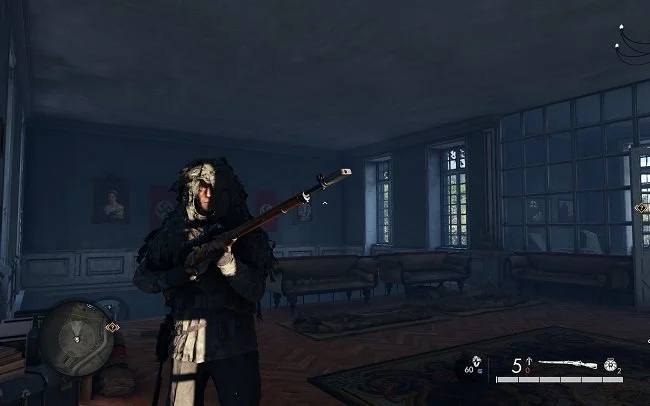
I first played through Spec Ops: The Line back in 2014 when I purchased it as part of a discounted 2K bundle. For once the actually selling point of this action game was the single player campaign, which had a reputation for being well conceived and written, with solid voice acting. After playing for a couple of hours it became apparent that there was a lot more to this third person, cover based shooter and that the praise its received from the gaming press was justified. I have seldom played through a title as compelling as this. This week I re-installed the game and completed it for a second time. This time round I was able to concentrate more closely on the subtleties of the story. For a five year old title, this is still a gruelling experience.
I first played through Spec Ops: The Line back in 2014 when I purchased it as part of a discounted 2K bundle. For once the actually selling point of this action game was the single player campaign, which had a reputation for being well conceived and written, with solid voice acting. After playing for a couple of hours it became apparent that there was a lot more to this third person, cover based shooter and that the praise its received from the gaming press was justified. I have seldom played through a title as compelling as this. This week I re-installed the game and completed it for a second time. This time round I was able to concentrate more closely on the subtleties of the story. For a five year old title, this is still a gruelling experience.
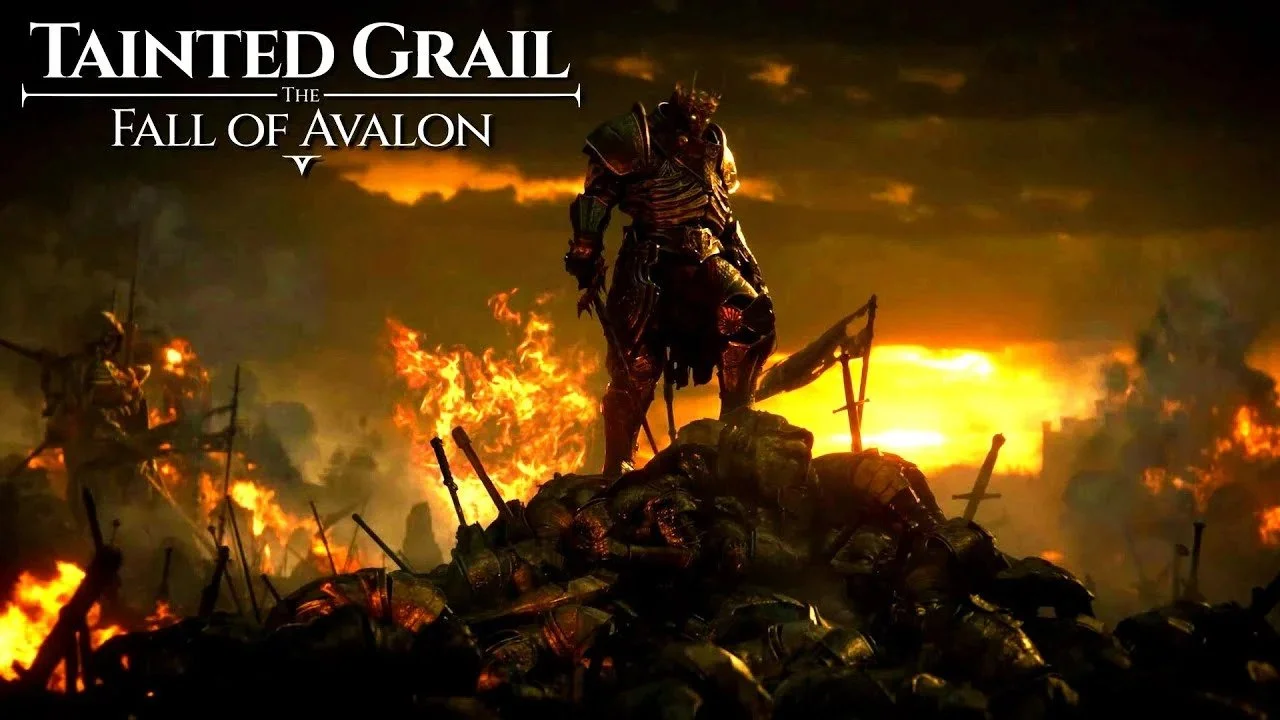
The story is both intriguing and topical. Dubai has been overwhelmed by cataclysmic sandstorms and fallen into a state of anarchy. Troops from the 33rd Infantry Battalion, led by Colonel John Konrad, have gone missing after a failed evacuation. Subsequently a Delta force team is sent to determine what has gone wrong and rescue surviving members of the 33rd. What they find is a city engulfed by sand and a complex tale of mutiny, CIA manipulation and personal insanity. Played from the perspective of Captain Walker, along with a two-man squad comprising of Lieutenant Adams and Sergeant Lugo, the story catalogues their descent into a personal hell and mental disintegration. The game is clearly influenced by Francis Ford Coppola's Apocalypse Now and Joseph Conrad's novel Heart of Darkness, which the movie was based on.
The first thing Spec Ops: The Line does is take all the standard underpinnings from the shooter genre and jettison them. There is no binary conflict between the morally righteous US forces and some generic foreign adversary. The enemy in this fight turns out to be your own side. The game does not glamorise war nor does it offer the FPS gamer the usual experience. Tactical decisions come with consequences and the moral choices offered in the game seldom provide a positive solution. The narrative clearly explores the psychological burden that comes with command and it's not pretty. The games mechanics are somewhat standard but perfectly adequate. Although scripted, the action scenes have a genuine sense of confusion and at times even panic.
Spec Ops: The Line has a worryingly credible narrative that challenges the player to be more than just a voyeur in the proceedings. Many of the standard tropes that you find in this genre are reversed. As the story gets more involved and morally ambiguous, the dialogue between the Delta Force team becomes more agitated. The cool, calm radio chatter we saw at the beginning of the game becomes, accusatory, bellicose and even scared. The strain of having your world view shattered is cleverly reflected in the script. As a result, playing Spec Ops: The Line feels very different to other shooters. Even if you have the flintiest of hearts, the game may well surprise you with its difference and honesty. It’s gameplay and mechanics are formulaic but the story is dark, foreboding and disturbing.
Gaming seldom has narratives as strong as that found in Spec Ops: The Line. Hopefully it provides pause for thought as well as entertainment among those who play. War is still grossly misrepresented in gaming and caricatured in the most abhorrent way. This game challenges the established business approach and raises many ethical questions not only about the nature of warfare, but whether it should be trivialised and used as a means of entertainment? At the very least Spec Ops: The Line is an interesting experiment in gaming narrative and is worth a look on those grounds alone. Whether the gaming industry sees fit to take such an approach with future titles remains to be seen. Recommended but no to the faint hearted.


Game Maps
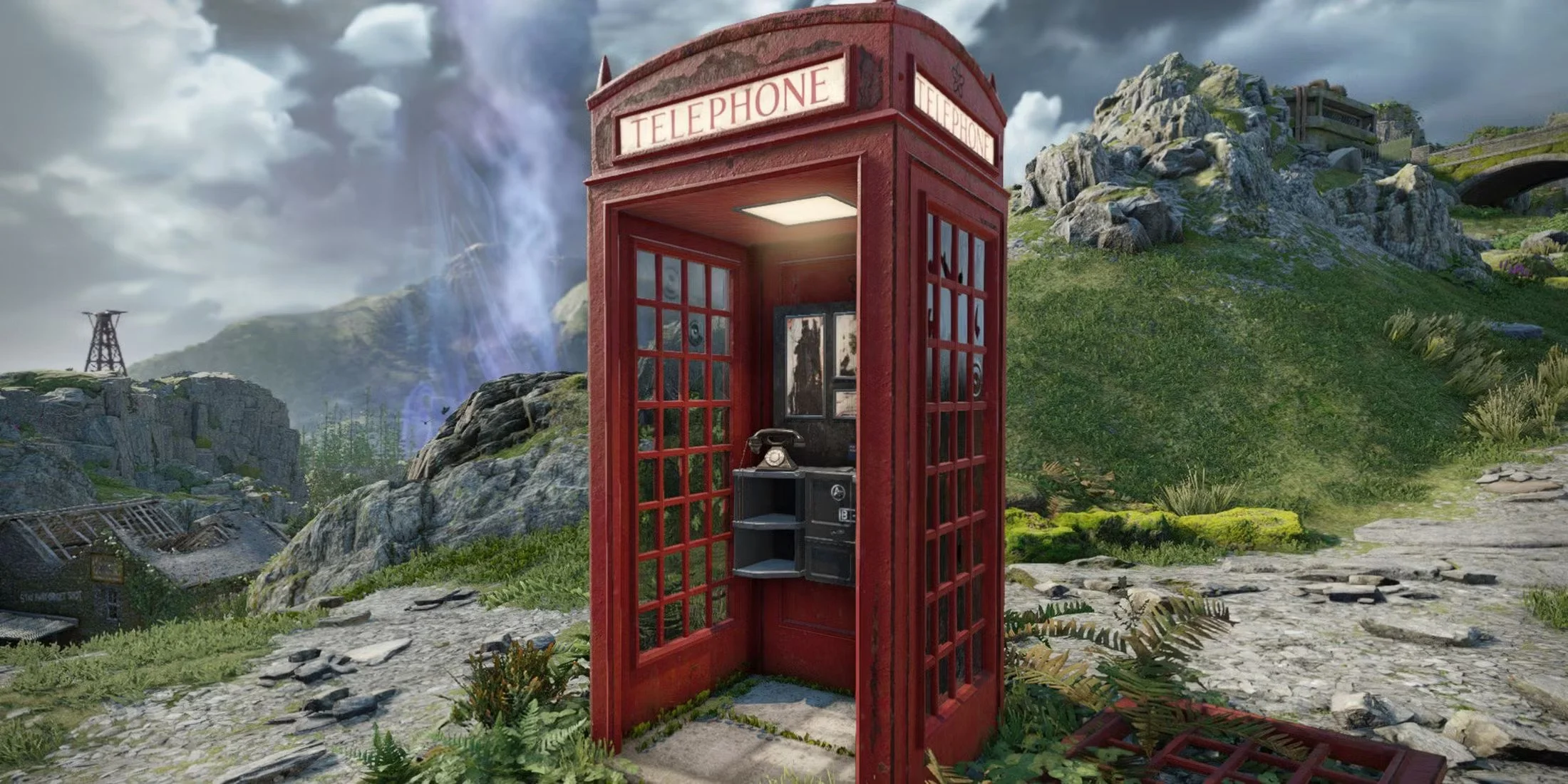
I've been pondering of late the subject of game maps and how they can vary quite radically from title to title. Size, content and instancing can all have an impact on a maps accessibility and the way they are perceived. Then there is the issue of individual player tastes and preferences. Those who like to explore will happily spend time attempting to access remote nooks and crannies. Others will quickly become frustrated if there is no direct route to their goal, as with Guild Wars 2: Heart of Thorns. A games genre also has a significant impact upon map design. A FPS or MOBA has different requirements from it virtual environment that an MMO. I'm sure there are far more variables involved in a maps creation. However, I think most gamers seem to inherently know when the developers have got it right.
I've been pondering of late the subject of game maps and how they can vary quite radically from title to title. Size, content and instancing can all have an impact on a maps accessibility and the way they are perceived. Then there is the issue of individual player tastes and preferences. Those who like to explore will happily spend time attempting to access remote nooks and crannies. Others will quickly become frustrated if there is no direct route to their goal, as with Guild Wars 2: Heart of Thorns. A games genre also has a significant impact upon map design. A FPS or MOBA has different requirements from it virtual environment that an MMO. I'm sure there are far more variables involved in a maps creation. However, I think most gamers seem to inherently know when the developers have got it right.
For me one such example of a map being "just so" is Skyrim. The landmass is about sixteen square miles, which is big but pales into significance when compared to Just Cause 2 which clocks in at four hundred square miles. However, the thing that Bethesda has got right with Skyrim is the balance between the size of the area, the amount of content and aesthetics. The day and night cycle, coupled with procedurally driven events makes it feel like a living environment. You can watch as villagers go about their tasks and farm animals graze for food. The fact that there's no instancing when travelling above ground until you entered a building, also provides an air of authenticity.
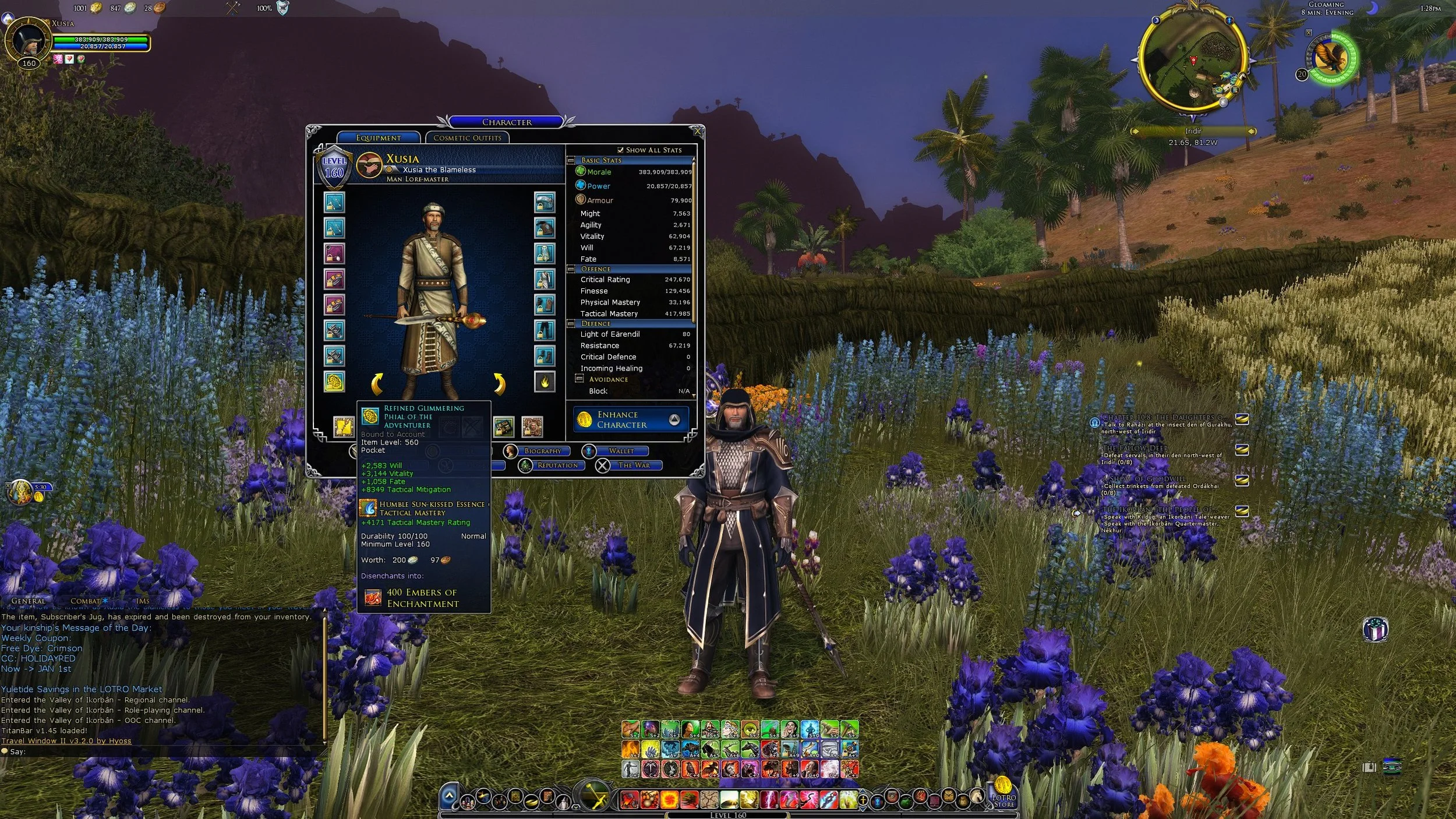
In the halcyon days of LOTRO, Bree-Land was prime example of a rich and varied MMO game map. Although it doesn't have the faux living dynamic of other games, it remains a large and varied landmass with plenty of content to seek out. It also makes a half decent attempt at realising the geography as written in Tolkien's source text. LOTRO still remains a game with a handsome world design but the regions that have subsequently been added of late are far more functional in their construction. Players often cannot access certain areas due to rivers and mountains and find themselves funnelled through pleasant zones on the way to the next quest hub. However more recent MMO's such as ArcheAge and Guild Wars 2 still encourage the exploration of their game worlds and have devised content around players desire to do so.
The open world cities of Mafia 3 or GTA V can also be compelling environments to immerse oneself in. Like their real-world counterparts, both New Bordeaux and Los Santos have distinct zones such as commercial and residential areas. Again random events occur to the citizens as you travel through the map. Weather systems and a customisable day and night cycle again lend credibility to the setting. Unlike fantasy games, these titles have the advantage of contemporary embellishments such as radio stations, roadside advertising and inner-city congestion; all adding to the overall ambience. You can visit bars and diners and watch “life rich pageant” unfold, or at least the developers nearest approximation of it.
However, game maps are still very much determined by the prevailing technology and although things are progressively getting better, there are still limitations. The MMO genre not only has to consider such factors as draw distances and texture loading but there is the question of the players themselves. The game engine has to accommodate both the environment and the population. Unless you have a very high-end gaming PC, then you will often notice system foibles such as "pop-in" as objects appear as you get closer to them. SWTOR and LOTRO are two older MMOs that suffer from this technical idiosyncrasy. Often developers will try to fudge this by blocking line of sight or introducing haze, fog or some other environmental workaround. Single player games have different demands upon them, allowing titles such as Crysis to have draw distance of over nine miles.
Irrespective of a maps design, its success ultimately depends upon how well it is integrated into the game. The two zones of Mordor and Nurn in Middle-earth: Shadow of Mordor are relatively small but diverse and well implemented. There is a wealth of topographical features that break up the landscape in a very organic way. Unlike some MMOs, this is not done is such an arbitrary and linear fashion. North Africa is well realised in Sniper Elite III, affording the player multiple routes to various targets, across varied terrain. This greatly enhances the re-playability of the game. In Sniper Elite IV, the Sicilian villages and seaports are extremely credible and authentic. The rolling fields and forests of The Witcher 3: Wild Hunt are expansive and atmospheric with a distinctly Eastern European feel to them. Furthermore, the landscape is populated in a credible fashion. Bandits will make use of remote and covered areas. Regions of Wilderness are appropriately empty with minimal amounts of NPCs.
Conversely the London maps in a game such as Sherlock Holmes: Crimes and Punishments are far less dynamic and more functional. They are mainly there for ambience and provide little more than a conduit between each crime scene. The maps in both FPS and MOBA genres, have additional criteria to consider. The fluid nature of their game play requires a different approach to their construction. Multiple routes and chokepoints are common place in such designs. Snipers require vantage points but these need to be relatively exposed to ensure that a single location doesn’t dominate the game. The Battlefield franchise takes map design a stage further, with a mechanic that allows players to destroy the environment and thus change the dynamics of the game. This was to be an integral feature of the now defunct EverQuest Next, although I suspect would have been subject to a wealth of caveats.
As players, we also bring a human element when we interact with game maps and there are many factors that shape our perceptions. Ambient music or when or who we’re playing with, influence how we feel about specific in-game zones. As a result, we often have personal favourites. Evendim in LOTRO is an example of a map that I have fond affection for. More recently the region of Toussaint in the Blood and Wine expansion for The Witcher 3, attracted my interest. It’s a sunny and luxuriant zone and a radical change from the usual ice or desert archetypes you find in so many games. Hopefully, as game technology and the hardware it runs on evolves, we will see map design advance accordingly. I look forward to experiencing larger, more detailed open world environments populated with flora and fauna that have their own lifecycles.
Lockboxes
It would appear that lockboxes are being discussed once again. Bhagpuss wrote a post over at Inventory Full yesterday, which subsequently got used as a talking point on Massively Overpowered today. What made the debate a little different this time around, was that Bhagpuss doesn’t object to lockboxses per se, merely that in most games that have them, the content is frequently lacklustre and uninspiring. A point I am compelled to concur with. I too have no major objection to lockboxes in principle and partake of them from time to time in various games. However, they seldom seem to contain anything that I consider to be of tangible benefit to me. I want pets, gear and weapons. But because of vocal complaints from certain quarters, we are more often than not saddled with inconsequential convenience items and minor cosmetics baubles and trinkets.
It would appear that lockboxes are being discussed once again. Bhagpuss wrote a post over at Inventory Full yesterday, which subsequently got used as a talking point on Massively Overpowered today. What made the debate a little different this time around, was that Bhagpuss doesn’t object to lockboxses per se, merely that in most games that have them, the content is frequently lacklustre and uninspiring. A point I am compelled to concur with. I too have no major objection to lockboxes in principle and partake of them from time to time in various games. However, they seldom seem to contain anything that I consider to be of tangible benefit to me. I want pets, gear and weapons. But because of vocal complaints from certain quarters, we are more often than not saddled with inconsequential convenience items and minor cosmetics baubles and trinkets.
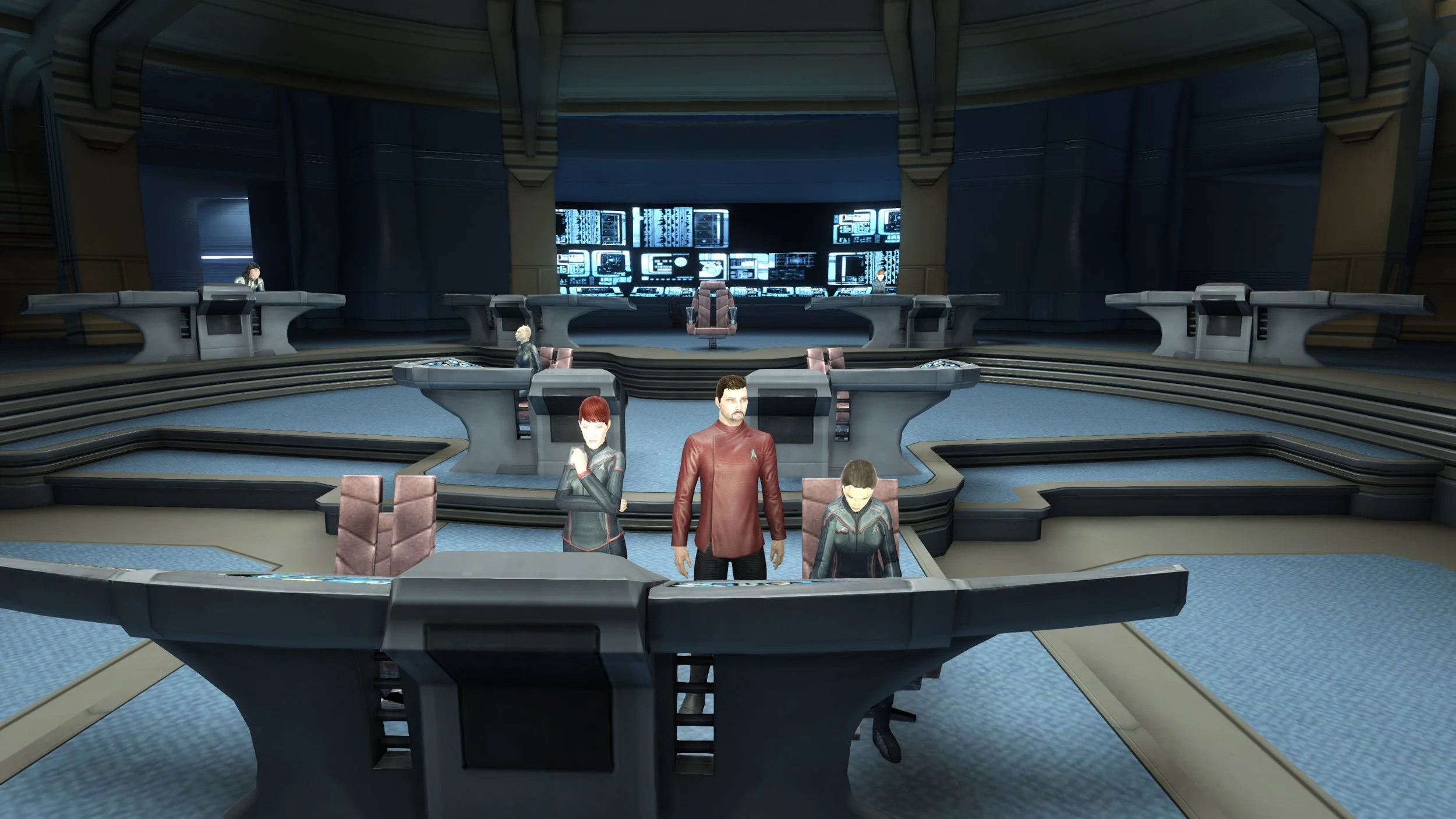
Lockboxes in Star Trek Online are themed and are only available in the game for a limited period of time. There is a nominal percentage chance to win gear, or even a ship if you are “lucky enough”. However, at the very least, each lockbox yields a quantity of Lobi crystals which are a barter currency. If one ever buys keys to open lockboxes it is best to consider the transaction as a means of buying currency that can be traded in for items. Winning a desirable item on top as that is then an added bonus. That is how I think of things on the occasions I purchase keys. Such an outlook then mitigates concerns over gambling although I have no major qualms about that subject either.
However, where STO handles lockboxes in a manner I like, many other MMOs do not. I have yet to find anything of note from one in LOTRO, Guild Wars 2 or Overwatch. The propensity to provided cosmetic or housing items means that lockboxes are often the prerogative of the role players or the game completists. I’m sure the developers target such a market because they pay dividends but if they could broaden their outlook and diversify the rewards there is scope for lockboxes to appeal to a wider number of consumers. Offering bag or bank space, or further character slots could potentially be attractive. Personally, I would like to see more game gear included but that would result in sabre rattling form the “pay to win crowd”. I certainly think that all lockbox rewards should be bind on equip and if not wanted available to sell via the game auction system.
Ultimately, lockboxes are symptomatic of game developers struggling to find a universally acceptable means to finance their game. The demise of the subscription model has left many MMOs in the thrall of an unsatisfactory hybrid F2P business models that have done precious little to improve the overall quality of the games. Monetisation of this kind impacts upon the conception and design of both content as well as game mechanics and seldom in a positive way. If this business model can be overturned for something better, then lockboxes may well go the way of the Dodo. However, that is not something that seems imminent at present so what can’t be cured must be endured. The current debate will more than likely have no effect on developers who have a propensity to repeat their mistakes and so the lockbox will continue as a gaming bête noire.
Gaming and Relationships
I stumbled across a lurid tabloid headline recently that read “Fed-up welder divorces his missus because she’s addicted to Candy Crush”. This reminded me about an article I read several years ago regarding gaming and relationships. Divorce Online, a website facilitating non-contested divorce proceedings, claimed that 15% of the cases it has administered in 2011 can be attributed to one party allegedly being addicted to gaming. As per usual, top titles World of Warcraft and the Call of Duty franchise were cited as examples. As I thought that this subject may make for an interesting blog post I decided to do some cursory Google searches on the matter. Within minutes I found numerous links to stories and research on the matter. It would appear that the impact that gaming has upon relationships is a common theme and is widely reported to varying degrees of intellectual and scientific rigour.
I stumbled across a lurid tabloid headline recently that read “Fed-up welder divorces his missus because she’s addicted to Candy Crush”. This reminded me about an article I read several years ago regarding gaming and relationships. Divorce Online, a website facilitating non-contested divorce proceedings, claimed that 15% of the cases it has administered in 2011 can be attributed to one party allegedly being addicted to gaming. As per usual, top titles World of Warcraft and the Call of Duty franchise were cited as examples. As I thought that this subject may make for an interesting blog post I decided to do some cursory Google searches on the matter. Within minutes I found numerous links to stories and research on the matter. It would appear that the impact that gaming has upon relationships is a common theme and is widely reported to varying degrees of intellectual and scientific rigour.
Whenever writing about that nebulous group known as gamers, it's very difficult not to invoke all the standard clichés. Furthermore, if you even hint at going down this route, you will receive a deluge of rebuttals from those who are affiliated to this group, providing a detailed analysis of why they are an exception to the (ambiguous) rule. This is hardly surprising, as no one like to be criticised or associated with a stigmatised social group. It should also be noted that where the online community seems to have a broader understanding about gamers, the tabloid press still like adhere to their hackneyed, eighties perceptions. So, a lot of the headlines I’ve read about this subject, lack a degree of impartiality and favour hyperbole.
So rather than start focusing on the gaming aspect of the subject, let us first look at the subject of relationships itself. Oh the duality of relationships. They can be sublimely simple or fiendishly complex or even both. Although the principle of a relationship is a simple one, there is no dictionary definition or universal standard that all individuals abide by. Although the dynamics of any relationship are theoretically the same, everyone is ultimately unique. Context as ever, is everything. A lot is dependent on the emotional baggage that each participant brings to the situation. Their world view, cultural and religious experiences etc. However, let us not muddy the waters so quickly in the proceedings. Let us agree on some basic concepts with regard to relationships. Such as mutual respect, shared time and the mother of all problems, compromise.
If you are in some sort of a relationship, there is inevitably an expectation that you will do activities together or at least spend some time in each other’s company. This is having to be balanced with the desire to pursue pastimes your partner may not wish to participate in. As there are only a finite number of hours in the day, sometimes choices have to be made and one individual may have to forgo a personal indulgence for the sake of the relationship. For example, Mr and Mrs Coltart are coming round to play Bridge, so you can’t spend the evening paying Hang Gliding Dachshund Simulator 2017. This is not rocket science. It happens in every aspect of life. The simple fact is you want to function within the confines of society you have to give and take. It's not mandatory but if you've never had to do it, then you are a.) lucky, b.) selfish, c.) heading for a major fall at some point.
Back to gaming. It is, as far as I can see, one of the most self-absorbed leisure activities I can think of. I'm not saying that in a judgemental way. I am simply trying to articulate its purpose. Gaming is all about indulging in virtual activities that apart from providing a transient pleasure, serve no wider purpose. Gaming doesn’t produce anything tangible apart from may be RSI. Yes, some will argue that there is an element of social interaction in MMO's but this is a secondary result, a by-product and possibly even a conceit. Therefore, it is fair to say that gaming is inherently solitary in nature which makes it a divisive pastime. Unless you are into gaming, then watching somebody else spend hours online poking trolls with a pointed stick, is hardly entertaining. It is also pointless to try and talk to someone who is engrossed in an MMO or a FPS. You'll only be met by a series of grunts or possibly a tirade of abuse if you put them off. However, getting your partner to agree to less enjoyable activities such as shopping, dinner parties with trying friends and DIY can be cunningly arranged during these conversations.
Naturally, any activity that is undertaken at the expense of time with your partner, is going to cause friction. This is not exclusive to gaming either. Other leisure activities such as fishing, football, train spotting, interpretative dance or being the First Minister of Scotland can keep you from your loved one. However, as gaming can be accessed more immediately than these other activities and is not subject to the weather or a regional election, it can be abused far more easily. Furthermore, the indulgence of profligate gaming is often blamed or labelled as an addiction. However, this is not always the case. The criteria for psychological addiction are very specific. I suspect that some folk conveniently choose to misappropriate such terms to cover for their own hedonism and selfishness.
A simple way to negate this perceived battle between the gamer and non-gamer, is to find another activity that can be shared together. There are plenty to choose from and it can be beneficial in many ways. Mud wrestling, river widening and Kabaddi spring to mind. It will certainly reduce the animosity felt by both parties towards separate hobbies. Of course, there are also couples who share an interest in gaming. Why not try to find a genre or title you can mutually enjoy? MMOs often spring to mind in this respect. I know several couples who play LOTRO together. Indeed I actually know of two people two met specifically because of the game. I'm not stating that MMO's are a bulletproof online dating services and would remind readers to be cautious when meeting someone through a game. However, the social nature of the genre is applicable to relationships.
Ultimately, like everything in life, the question of whether gaming is good or bad for relationships comes down to the choices that each individual makes and their disposition towards their partner. I won’t bore you with details of my personal life but I’ve managed to balance my gaming interests with a relationship. I happily admit that I’ve spent nights staying up late with the latest release. But it’s never became an issue for the simple fact I prefer my significant other’s company to gaming. Common sense dictates when enough is enough. All things considered, whenever someone finds there’s a conflict between their gaming and their relationship with another, is not the game or gaming per se that is the problem. The fault lies with the individual and the choices they make. If you want to spend as much of your leisure time gaming the best way to achieve that is not to have a relationship. You get your game time and no one else gets hurt.
Game Pricing
Okay let’s begin with a poncey quote “plus ça change, plus c'est la même chose” which usually translated as “the more things change, the more they stay the same”. So said French critic, journalist, and novelist, Jean-Baptiste Alphonse Karr in 1849. This epigram seems especially applicable to the gaming industry because I regularly see the same topics of debate coming up, year after year. It would appear that both developers and gamers seldom learning anything along the way. On this particular occasion, the point in question is that old chestnut about game pricing. This debate was brought to my attention by a post from a fellow blogger Wilhelm Arcturus. Here’s the tweet made recently by Michael Hartman, CEO of Frogdice, a company that makes mobile games that started the debate.
Okay let’s begin with a poncey quote “plus ça change, plus c'est la même chose” which usually translated as “the more things change, the more they stay the same”. So said French critic, journalist, and novelist, Jean-Baptiste Alphonse Karr in 1849. This epigram seems especially applicable to the gaming industry because I regularly see the same topics of debate coming up, year after year. It would appear that both developers and gamers seldom learning anything along the way. On this particular occasion, the point in question is that old chestnut about game pricing. This debate was brought to my attention by a post from a fellow blogger Wilhelm Arcturus. Here’s the tweet made recently by Michael Hartman, CEO of Frogdice, a company that makes mobile games that started the debate.
It would appear the gentlemen is somewhat frustrated by the intransigent nature of consumer spending. It’s a complaint I’m sure that’s common to most businesses. Trying to determine a price for your product that allows you to adequately cover your development costs and make a profit, yet at the same time is attractive to your customers, is very difficult. Joe public will often apply concepts such as value for money to one product, yet consciously overlook it in for another. The fickle nature of consumer behaviour, is a science in itself. Having spent a decade of my working life self-employed I appreciate the frustration associated with pricing, operating costs and trying to get customers to fully comprehend why things cost what they do.
However, having said that, this is where sympathy starts and stops. I understand and relate to the frustration of this tweet at a business level but I do not agree with the subsequent sentiment, tone or false equivalence of the argument. A percentage of any businesses customers will be “difficult”. It’s always been that way and probably will never change. There’s always someone who wants something for nothing or has a different perception of “value”. Criticising those that pay for your products is short-sighted at least and at worst crass. It comes across as entitled, puerile and as a text book example of biting the hand that feeds you.
For me the point of failure in Mr. Hartman’s argument is comparing a $5 latte to a $5 game. They are not comparable products and consumers motivations to buy both are radically different. A coffee bought from a chain outlet is a fixed product. The whole of the fast food industry is predicated on homogeny. A large Stoat and Chive, Guano free Latte bought from chain store is the same every time you purchase one. It guarantees a standard and so the customer knows exactly what they’re getting. Value for money is very much a personal state of mind and not subject to a universal standard. Peoples relationship with spending is also complex and hard to quantify. Being profligate with money and fiscal prudence are habits applicable to both rich and poor alike.
A game, be it is a mobile app or a triple A title, is effectively an unknown quantity. One can read reviews where available and watch live stream or You Tube videos but you can never be fully sure that you’re going to enjoy it until you’ve bought and played it. Unlike the latte this is not a fixed quantity but a proposition filled with variables. Plus, lattes are disposable pleasure bought on a whim or as a convenience. They are intended to satisfy a simplistic urge. A game is a far more complex purchase, being seen as something that will yield more than instant gratification. Therefore, its purchase will simply not be considered in the same arbitrary terms as buying a drink. Irrespective of whether the game is a budget item or a new release, it will be subject to the cost to fun ratio that most gamers use as a yardstick.
Michael Hartman subsequently tweeted that customer apathy towards paying a fair price, is why games are subject to season passes, DLC and microtransactions and that gamers should not complain about such business models. Again, from a purely logical standpoint there may be a degree of truth in his words but it is a school boy error to assume that your customers give a shit about your business problems. Your problems are exactly that. To hector your customers in such a fashion is again very short sighted. The most likely outcome is that the customer will find something else to do or purchase some other product. They may not get what they want but they’ll get something. Whereas the developer will have to endure a drop in sales and will have to deal with the consequences of that. Companies needs customer more than customer need them.
No one in business is entitled to any sort of grace and favour. You have to fight for every sale. Sometimes, bad products get an easy ride and sometimes worthy and good products get over looked. You have to fight your own corner and just deal with the consequences. I’m not obliged to go and see a movie just because the producers want to see a return on their investment. I’m not going to download an album just because the artists needs to clothe their children. If you want me to buy your product you have to ensure that its worth my while. Furthermore, you can do everything right and still fall flat of your face because customers can be dicks at time but that is their god given right. Come to terms with this and focus on doing your job, rather than carping that life ain’t fare. If you want a more level playing field then look for another line of work that’s more likely to yield one.
How Videogames Changed the World (2013)
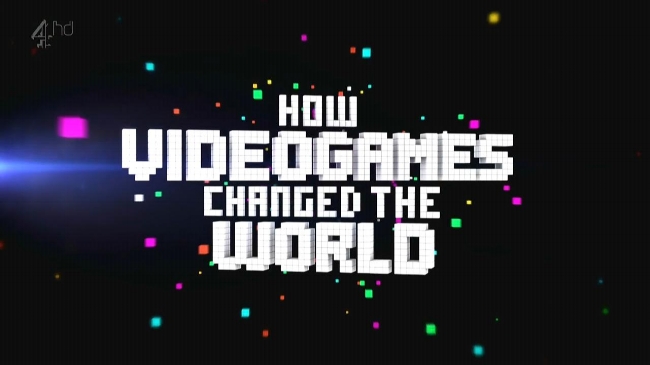
Considering the mainstream popularity of gaming, there is a distinct lack of related content on television. Journalist, writer and social commentator Charlie Brooker attempted to address this in 2009 with Gameswipe but the show remained a one-off production. Then again in late 2013, he had another crack at the subject with the documentary How Videogames Changed the World, providing a broad overview on the genre, exploring key events and titles from the past forty years. As ever with Mr. Brooker, the commentary was intelligent and acerbic. There was also an interesting and diverse selection of talking heads who spoke from personal experience, rather than the usual scripted garrulous inanities.
Considering the mainstream popularity of gaming, there is a distinct lack of related content on television. Journalist, writer and social commentator Charlie Brooker attempted to address this in 2009 with Gameswipe but the show remained a one-off production. Then again in late 2013, he had another crack at the subject with the documentary How Videogames Changed the World, providing a broad overview on the genre, exploring key events and titles from the past forty years. As ever with Mr. Brooker, the commentary was intelligent and acerbic. There was also an interesting and diverse selection of talking heads who spoke from personal experience, rather than the usual scripted garrulous inanities.
The documentary covers a lot of ground, exploring a lot of the usual controversies and debating points that inevitably stem from gaming. The subject of violence is objectively pursued with a very even hand. The cathartic nature of managed fantasy compared against the mean-spirited nastiness of certain titles. Cyber-psychologist Berni Goode raises the matter of "flow; the concept of being totally absorbed in an activity. It would appear that gaming, like knitting can be very theraputic for low-level mental health issues, such as mild depression. Then off course there’s the thorny issue of sexism, misogyny and the objectification of women. Perhaps writer Keza MacDonald sums it up the best.
"It's not so much gaming culture that's unfriendly to women. It's internet culture".
How Videogames Changed the World is far from a male dominated undertaking, with women tech journalists and game writers being fully represented, by the likes of Kate Russell, Aoife Wilson and Rhianna Pratchet. The ubiquitous Felicia Day also makes an appearance; however it would have been a serious omission not to have done so. The show also references Anita Sarkeesian and Feminist Frequency and the associated hate campaign that has arisen. The old chestnut regarding whether game icon Lara Croft is a role model and an empowered female, or just a male fantasy is dutifully trotted out, with surprising results. One conclusion was that over the last three decades, in-game avatars have evolved beyond their original questionably purpose into clearly defined characters. Commander Shepard being a prime example of this.
What How Videogames Changed the World manages to achieve is show how gaming had become a mainstream cultural norm. The rise of "inclusional" gaming via the Nintendo Wii and the significance of Minecraft as educational tool demonstrates the wider impact of games. The rise of e-sports seems to have put pay to the notion that people don't want to watch other people play games. People often find the undertaking of any competitive, skilled based activity to be compelling viewing. Comedian Dara O' Briain also layed to rest the rather tedious argument that gaming is a solitary pastime of little value. A sound-bite that is frequently espoused by those who's major leisure activity is passively watching television.
Given the ninety-minute running time and the scope of the project, it would be unfair to expect How Videogames Changed the World to be the last word on the subject matter. It does however choose a very eclectic selection of key titles to validate its arguments such a Shadow of the Colossus and PaRappa the Rapper. The documentary does not make the fatal mistake that many gamers do, of being too defensive about that which they are passionate about. The unpleasant world of FPS culture and trash talk is not justified in any way and shown for exactly what it is. Mr. Brooker also shows how games had developed a greater sense of narrative depth and social conscience with titles such a Papers Please and The Last of Us.
Perhaps the real reason why gaming has not become a regular feature of the television schedules, is because it has outgrown that particular medium. May be Twitch TV and the like are now the true home of gaming, providing content, news and information on demand direct to a suitable platform. Certainly, the integration of gaming and social media continues, as the next-gen consoles so clearly demonstrate. It can even be argued that Twitter itself is a form of "gamification". Overall it seems that it is not just the technology but the culture and even the ideology of gaming that continues to bleed out in to popular culture.
How Videogames Changed the World is unfortunately no longer available on the 4OD website. However, I would suggest a search of YouTube as an alternative source. Sadly, there are precious few quality documentaries about gaming at present. What is available is either too niche or made by those who are a little too close to the subject, thus lacking in objectivity. Therefore How Videogames Changed the World comes highly recommended to both lifelong gamers and those who have an interest in what "all the fuss is about".





The Cat Lady's House
Earlier in the year I wrote about the Abandoned Graveyard that is located in Bree-land and how LOTRO has several curious locations that appear to be residual abandoned quest lines. Someone today left a comment and mentioned The Cat lady’s House in Bree. For those who are not familiar with landmark, it can be found as you enter Bree via the Eastern gate. As you proceed up the hill, you pass the stable to your left and the forge of Flint Oakhewer to you right. After the forge, there is a flight of stone steps going up through several terraces of houses. This is the Scholar’s Stair. At the top of the stair the passage widens. To the right is a door with a cat outside. It is opposite the recently added Scholars Hall.
Earlier in the year I wrote about the Abandoned Graveyard that is located in Bree-land and how LOTRO has several curious locations that appear to be residual abandoned quest lines. Someone today left a comment and mentioned The Cat lady’s House in Bree. For those who are not familiar with landmark, it can be found as you enter Bree via the Eastern gate. As you proceed up the hill, you pass the stable to your left and the forge of Flint Oakhewer to you right. After the forge, there is a flight of stone steps going up through several terraces of houses. This is the Scholar’s Stair. At the top of the stair the passage widens. To the right is a door with a cat outside. It is opposite the recently added Scholars Hall.
Once inside you will find a lot more cats. The house is full of them. Four of them are named. These are Oliver, Horatio, Wink and Sylvester. At first glance, this may seem like nothing more than a piece of whimsy or a developer’s in-joke. Or you may think that this is another example of the quest hub that was removed from the game, such as the abandoned graveyard. However, The Cat Lady’s House does play a functional role in LOTRO. It is a specific destination in one of the sub quest of the infamous “Chicken Run”, or what the developer more formally refers to as chicken session play. If you are unfamiliar with this mini game then the following link below will provide you with all the details.
There are still a lot of unanswered questions regarding The Cat Lady’s House. It does seem to be a rather large embellishment just to provide a NPC (Wink the cat) for a solitary quest. So perhaps it did have greater significance during the games development. What is the purpose of Oliver and Horatio? Note also the creepy picture on the wall. It seems a little out of place does it not? Does it have any wider significance? Also, who and where is the Cat Lady herself? Or was the name simply added so the location wasn’t called the cat house which has other connotations. It should also be noted that according to the LOTRO Wiki the house used to be only accessible by drinking from the Inn League Keg. Your character would land inside the house drunk and would have to hearth home.
The LOTRO Wiki also indicates that The Cat Lady’s House is linked to several Spring Festival quests. One of which involves some poor love-sick NPC in the Bree market, who wants you to deliver some flowers. Due to a mistake with the address, the quest takes the player to The Cat Lady’s House and allegedly she is in. Sadly, I cannot confirm whether this particular quest is still active. Either way, the entire location is a very nice embellishment to LOTRO. Like so many others, this dates back to games launch. I am not aware of any similar examples being included in more recent content. The last jovial embellishment that I remember is the “Killer Rabbit” homage to Monty Python and the Holy Grail, in The Wailing Hills in Enedwaith. The game does seem to be getting more functional with each expansion and update. So please take note Standing Stone Games and indulge yourself from time to time. Including such whimsy adds to the games overall fun.



MMO Burnout
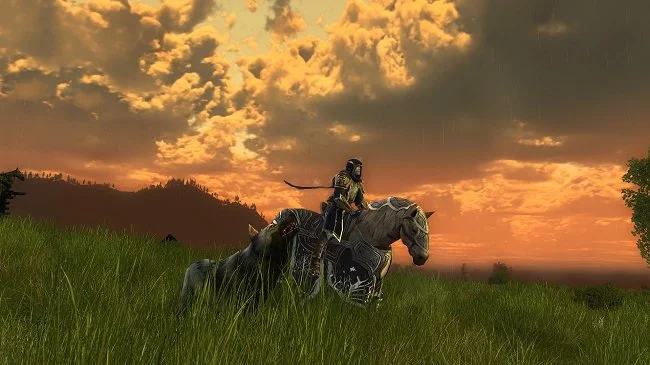
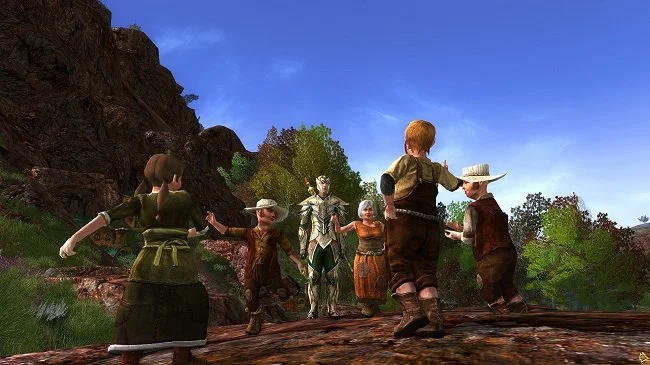
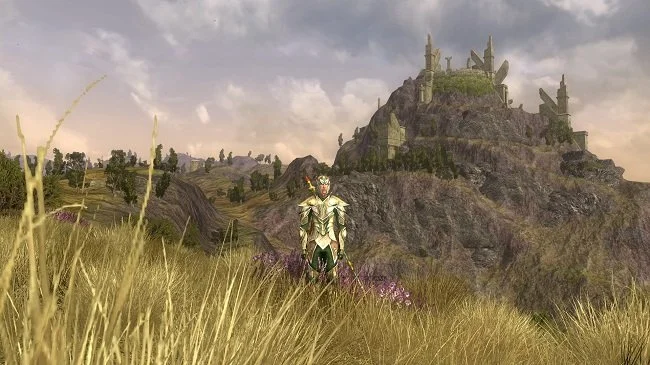
Although I have played numerous other online games, LOTRO has been my main MMO for the last nine years years. I have invested a great deal of time into it, which is hardly surprising as that is the entire raison d'etre of the genre. I recently purchased the Mordor expansion for the game which offers a wealth of new content. Yet despite having all this available I have done precious little in the game of late and have made no significant progress. Currently, I have Guilds Wars 2, The Elder Scrolls Online, Secret World Legends and Star Trek Online installed on my PC. I have dabbled with them all over the last few weeks, trying to rekindle a sense of enjoyment and pursue content that I have not completed. Sadly, none of them seem to hold my interest. I log in to them in the hope that something will grab my attention but I always seem to find myself just kicking my heels and aimlessly wandering through zones with no sense of focus.
Although I have played numerous other online games, LOTRO has been my main MMO for the last nine years years. I have invested a great deal of time into it, which is hardly surprising as that is the entire raison d'etre of the genre. I recently purchased the Mordor expansion for the game which offers a wealth of new content. Yet despite having all this available I have done precious little in the game of late and have made no significant progress. Currently, I have Guilds Wars 2, The Elder Scrolls Online, Secret World Legends and Star Trek Online installed on my PC. I have dabbled with them all over the last few weeks, trying to rekindle a sense of enjoyment and pursue content that I have not completed. Sadly, none of them seem to hold my interest. I log in to them in the hope that something will grab my attention but I always seem to find myself just kicking my heels and aimlessly wandering through zones with no sense of focus.
The social side of MMOs can also be an issue at times. You log in to a game hoping to find something you wish to do, only to be met with a barrage of welcomes and offers to join groups or participate in some collective event. In different circumstances, this can be a wonderful thing. The restorative properties of friendship can wash away the ills of a bad day and can replace a dark mood with a good humour. However, there are occasions when the attention can be somewhat overwhelming. There have been times when I’ve been upon the verge of logging in to an MMO but after reflecting upon athe gauntlet of upbeat cheerfulness that lays ahead, I’ve decided to do something else instead. Joking aside, there are times when socialising can be wearing and you just want to be left alone.
The consensus seems to be among gamers, as we get older we become far more particular about how we spend our time. I have purchased several games this year that I knew from the beginning would have a relatively short lifespan. Single player games often present a core campaign, online multiplay and DLC over a six-month period. You can effectively complete a game and gain a sense of closure that you’ve had your fill. Sniper Elite 4 has provided me with a solid five months of entertainment. I’ve progressed through all the content that I care to play through and have no desire to pursue it any further. Conversely, I have also returned to Middle-earth: Shadow of Mordor, in anticipation of the sequel that comes out in October. I have managed to complete a campaign that previously alluded me and now feel that I’m ready to move on.
It is this sense of finality, short and limited gameplay as well as the option to play alone, that MMOs cannot compete with at present. Gamers are fickle creatures. There are times when I want to invest time, work towards long term goals and chat with my fellow man. Yet after doing those very things for three to six months they can become somewhat smothering. Sometimes virtual worlds are a welcome respite from the daily tragedy and horror on real life. Yet I still cannot help but think that it is not healthy to make them too much of a focus and a permanent substitute for real world engagement. I tend not to regret the time I have spent gaming, yet from time to time, I do question the hours required to make progress. Often this happens when a new mechanic or goal is introduced into a game and I calculate exactly how many days it will take to achieve it.
As I am currently without an MMO, I find myself in need of an alternative distraction. However, when I look at the various titles that are currently available through a vendor such as Steam, the first thing that strikes me is the interchangeable and homogeneous nature of them all. This is hardly a revelation as most industries tend to follow tried and tested formulas. At present, mainstream films and music are staggeringly bland and uninventive, so it is almost inevitable that the gaming industry should follow suit. This perfunctory style is a major obstacle for me. For example, after pondering on whether to try Black Desert, I concluded that it simply didn't have sufficient difference from any other MMO to warrant a purchase. And of course, at times like this, EVE: Online raises its head once again, offering a wealth of perceived opportunities. Yet the reality of the situation is that I do not want to take on a game with such a steep learning curve. Neither do I have the time required to be successful at such a game.
So, it would appear that I’m currently suffering from a gaming, specifically MMO "burnout". Perhaps fatigue would be a better term on reflection. Although I have currently tired to a degree of the MMO genre, I still find myself interested in gaming. What I find trying is that I cannot seem to find that many titles, both new and old, to get excited about, especially MMOs. As a genre, they have so much potential but are simply hamstrung by a lack of vision and innovation. Perhaps single player game with co-op are the answers. Furthermore, I’m tired of the noticeable disparity in game engines between MMOs and other genres of game. I appreciate that developers have to lower the bar for entry to lower specified PCs but too many MMOs look and more importantly play as if they hail from a different era. It would be nice to have an MMORPG that had the combat of either For Honor or Middle-earth: Shadow of Mordor.
Fortunately, I have not put all my eggs in one basket and made my online activities the focus of all my friendships and socialising. This can be a real issue for some people when confronted with potential burnout, as loyalties and social ties can compound the problem. Gaming by its very nature can be indulged in to a far greater degree than say fishing or other traditional hobbies. It is not seasonal and is accessible 24/7.You don't have to go anywhere, prepare in advance and be mindful of things like the weather. Subsequently, unless we consciously decide to regulate ourselves it will simply swallow all our leisure time. Burnout is not a term I associate with train spotting, stamp collecting or campanology. As gaming continues to become a more mainstream activity, burnout is a phrase I think we shall hear more often.
Is Co-op Gaming King?
“Is the popularity of smaller-scale co-op (games) hurting MMORPGs?” This interesting question was posted on Massively Overpowered today as part of their regular Massively Overthinking feature. The subject was explored by members of the writing team then thrown over to reader comments, many of which were very thought provoking. The subject was similar to one we debated recently on the Contains Moderate Peril podcast. That focused on whether traditional MMO players were now outsiders within their own genre of choice. Both of these discussions are about change and a shift in player habits. And change is frequently unsettling and potentially comes at the expense of something else.
“Is the popularity of smaller-scale co-op (games) hurting MMORPGs?” This interesting question was posted on Massively Overpowered today as part of their regular Massively Overthinking feature. The subject was explored by members of the writing team then thrown over to reader comments, many of which were very thought provoking. The subject was similar to one we debated recently on the Contains Moderate Peril podcast. That focused on whether traditional MMO players were now outsiders within their own genre of choice. Both of these discussions are about change and a shift in player habits. And change is frequently unsettling and potentially comes at the expense of something else.
A good MMORPG offers a complex persistent world that can be explored and enjoyed both as a solo player and as part of a group. A decade ago, the genre was very much focused on group run content and I have spent many a rewarding evening running dungeons with my guild mates. These sorts of social activities foster close bonding with fellow players and can be extremely uplifting. Yet raiding culture is by its nature time consuming and requires a lot of organising and commitment. Co-op play in other genres of games can offer the same sort of fix but without half as much baggage.
Running The Rift in LOTRO a decade ago meant everyone turning up on time, with the right gear and consumables. Everyone needed to know their job. Even the most casual of raid groups would have to give up a lot of time and if someone fumbled the ball it meant you got nothing for all your work, bar the fun you had. Teaming with your friends in Overwatch is quick and simple. Within minutes you’re in the middle of the action. You can play as casually or as hardcore as you like. If you fail epically, you still get XP points that can unlock loot creates. Such co-op games may not have the immersive world trappings of an MMO but they offer all the fun without the grind. No wonder so many players gravitate towards them.
I enjoy MMOs but play them differently today than how I did ten years ago. I have written recently about how Sniper Elite 4, For Honor and Overwatch can be great fun when played co-operatively with friends and for me I think this is the future. Co-op scratches that social gaming itch but in a manner that allows you to filter out much of the less desirable elements you find in MMOs. The risk of toxic team mates is far less and you aren’t faced with complex barriers to entry. There’s no need to wait for players to change their gear or empty their bags. Where the MMO player is still martialling his team mates, fifteen minutes after the raid was due to begin, the co-op player is knee deep in action, making the most of their precious game time.
If you look back over the last fifty years of popular culture, you’ll find a long list of popular genres, formats and mediums that have bitten the dust. It is sad but ultimately how markets work. Musicals and Westerns came and went as the most popular movie genres. TV saw the rise and fall of the Variety show. The FPS genre moved beyond the confines of World War II and MMOs evolved from open virtual worlds to tightly scripted and managed theme parks. All of these things happened because the public wanted something else that offered them better value for their time and money. At present, co-op games appear to be king by offering what the MMO genre either can’t or won’t. Developers working with such titles should take note but I’m not sure if there’s time left to fix this.
“I'd Like to Have an Argument, Please”
This post has been fermenting for a while. I’ve postponed writing it because I've gotten somewhat tired of constantly “spitting in the wind”. Because that is what speaking out on certain subjects frequently feels like these days. There is a sense of tedious inevitability that any post on sexism, racism or any form of marginalisation will eventually lead to a torrent of vile, ill-informed and just plain dumb comments. The list of subjects “best avoided” seems to be getting bigger each day. Politics, religion and social issues have now been joined by the likes of economics, education and healthcare. But it doesn’t end there. Critiquing a book, movie, TV show or game can be deemed contentious and open a can of worms. Frankly, soliciting comments on any subject via social media seems to be courting disaster these days. The sad reality is that some people just revel in being vile and trying to hurt others. It puts me in mind of that quote from Platoon "Hell is the impossibility of reason". And you'll find precious little reason on the internet.
This post has been fermenting for a while. I’ve postponed writing it because I've gotten somewhat tired of constantly “spitting in the wind”. Because that is what speaking out on certain subjects frequently feels like these days. There is a sense of tedious inevitability that any post on sexism, racism or any form of marginalisation will eventually lead to a torrent of vile, ill-informed and just plain dumb comments. The list of subjects “best avoided” seems to be getting bigger each day. Politics, religion and social issues have now been joined by the likes of economics, education and healthcare. But it doesn’t end there. Critiquing a book, movie, TV show or game can be deemed contentious and open a can of worms. Frankly, soliciting comments on any subject via social media seems to be courting disaster these days. The sad reality is that some people just revel in being vile and trying to hurt others. It puts me in mind of that quote from Platoon "Hell is the impossibility of reason". And you'll find precious little reason on the internet.
Two things have occurred recently that prompted me to write this post. One is the ongoing decline of both the Official and Unofficial LOTRO forums. The other was a minor twitter exchange I was involved in recently. A simple comment made in reply to a political pundit, meant that my timeline was subsequently flooded by an argument that went on for hours, as all parties chased their own tails and frothed at the mouth. As for the two LOTRO forums, they’ve become so polarised that they now mirror each other with their own militancy and are effectively different sides of the same coin. Both of these events are far from unique. It happens every day (“no matter what you say”, according to Tom Jones). Yet they got me thinking why does it have to always be this way and is there anything that can be done?
Well I believe there is. However, don't go looking for a miracle cure in this post because I don’t claim to have one. What I am suggesting is fairly basic and certainly requires lots of time. In a nutshell, keep writing and debating. Don't throw in the towel. I know it's very tempting sometimes, hence my spitting in the wind reference. Yet if we do, then the only information that will remains out there in the public domain is misinformation. Therefore, we should not shy away from speaking out on difficult matters. In fact, I would go so far as to say that it is our duty to do so. Sooner or later you have to pick a side. The alternative is to do nothing and watch it all go to hell in a hand basket (other portmanteaus and porterage devices are available). Here are few thoughts on what specifically can be done.
Research and a well-constructed argument: Debating is a skill. There is a process applied to discussing and arguing a point, the same way as mathematics and grammar have specific rules. Unfortunately, most folk either aren’t ware of them or feel their opinions are not subject to such criteria and so are happy to jump in to arguments feet first. It's a shame more schools do not teach critical thinking as it is an invaluable skill that can be brought to bear on so many aspects of life. However, it is prudent to consider that logic and objectivity cannot always be imposed upon a debate. Emotions do play a part and cannot necessarily be set aside. Especially if you have first-hand experience of the very matter being debated.
I believe it was the blogger Tobold who stated, "There cannot be any meaningful discussion of any subject if you start out by declaring only one side of the argument as valid". That is perhaps true of some subjects, especially if you are debating a matter that hinges on subjectivity and personal taste. However, in a debate regarding a subject such as equality, I cannot logically see any argument to validate a contrary stance. There are no degrees of equality. You either believe in it and live by it as a concept or you don’t. I guess the same can be said regarding certain scientific discussions, where specific rules and concepts are established. Mind you that doesn’t stop some people. But that raises a different matter where some individuals like to play devil’s advocate just for the fun of it.
Life is not simple: If you are intending to hold forth on a particular subject, it never does any harm to remember that most problems are what they are because of their complexity. Which is a nuisance because contemporary society really doesn't like or do “complex”. Listen to most radio phone-ins, read any internet forum or just glance through a tabloid newspaper and you'll find many of the most difficult and contentious problems the world currently faces, distilled in to some rather glib and factually questionable sound-bites. Furthermore, the public lap these up because they're easy to remember and trot out. It's far less hassle to spout some superficial nonsense you gleaned from the pages of the Daily Bastard, than spend time researching a subject and actually having to think and analyse data.
So, bear this in mind when you tackle a big issue when blogging etc. Question whether you are in a position to make a substantive point. Do your research and ensure you link to the sources you quote. Check the credentials of those supplying data and statistics. Is it a reputable organisation? Do they have any reason to be bias? Too often I see links in comments and forum threads that lead to questionable sources. Therefore, ensure that when you write about complex issues you don't make the mistake of inferring that it's a binary situation and easy to fix. Unless of course it is.
Change takes time: The previous point dovetails nicely in to this one. Progress is a long and often arduous path. Entrenched social attitudes and ideologies do not change overnight. Often, it’s a generational thing. For example, my parents were born in the 1930s and both have specific views on social status, race, religion, politics, patriotism and that other old favourite drugs. A quarter of the world was part of the British Empire during their most formative years and this era definitely shaped their world view. They have made some changes over the years but on some matters their beliefs remain strong. No amount of arguing will ever change that. However, such views are not so endemic with my own or my son’s generation. Simply put, some of the more unsavoury views from my parents’ generation will die with them. Change doesn't always come by winning "hearts and minds".
However, as with complexity, many people these days can't be doing with "long waits". Thus, we live in a time where knee-jerk reactions and crass, ill-conceived quick fixes abound. Why should gaming be any different from politics? All I can really say to the ardent campaigner or blogger with a strong social conscience, is it helps to cultivate some patience. Actually, you’ll need a lot. Bucket loads.
Be measured and fair: If for example, you as a gamer want to lobby the games industry with regard to the depiction of women in games. There is a requirement for you to engage with those who are either directly a part of the problem or those who seem to be indifferent to it. It's all about winning the middle ground and generating a head of steam. This process needs to be handled with subtlety and tact. Although passion is inspiring and anger can be power (or so The Clash said), step too far over the line and your perceived militancy (whether it is real or not) will work against you. It scares people and it may even drive those you need on-board to the other "side" of the debate. So, pick your battles, be firm, measured but always remain civil.
Another thing to be considered is the use of knowledge. Some gamers (and bloggers) are not as smart as others. Some folk are smart but driven by their emotions. It can therefore be easy sometimes for the intelligent or knowledgeable party to run rings around the other. Be careful in how you "wear" your intelligence. There's being clever and then there's wanting to be seen as being clever. Crushing a person publicly through Vulcan like logic does not necessarily mean that they will immediately recant their views and embrace yours. Quite the opposite. You may have made matters worse. Just watch them dig their heels in. You can be smart and make your point without being condescending or smug. However, that can be a difficult path to tread. Like it or loathe it, dealing with people in these situations requires a degree of diplomacy.
I sure we can all think of other points to add to the list. There's also an element of finding an approach that is right for you. Then of course there is always the option to simply not blog about some aspects of gaming or to stray in to certain areas of debate. However, I don’t think remaining “neutral” is a permanent option. Sooner or later you’ll get dragged in through tortuous logic as “opting to not have an opinion is tacit approval of status quo”. That being said, as a blogger, podcaster or streamer you are not obliged to discuss thorny issues if you don’t want to. That is your (and Bobby Brown’s) prerogative and you are free to create content in the manner that makes you happy. I am merely suggesting that if you feel the need to do express a view that may court debate, then you should not be deterred by the facts that it is hard to engage with some groups and that change takes time and work.
As I get older I do find that my passions have tempered over time. I do not find the need to go on that many demonstrations, nor to hold an "absolute" opinion on everything under the sun. I do tend to focus on more immediate issues that affect myself and my family (like the closure of my local A&E) rather than wider international matters. But even in my most sceptical of moments, I cannot truly advocate a total withdrawal of interaction on social issues. Because that means handing the floor over to the idiot brigade and therein lies madness. Plus, if we all did that then blogging would be a lot less interesting. Oh, and don’t forget that an argument is a connected series of statements intended to establish a proposition. It’s an intellectual process. Contradiction is just the automatic gainsaying of any statement the other person makes.























Classic Game Themes: Guild Wars 2
Jeremy Soule's score for Guild Wars 2 is an integral part of the games charm and appeal. It enhances the world of Tyria and is a character in its own right. As a player, whenever you visit one of the vast cities or travel the rolling countryside, it is Soule's music that breathes life into the finely crafted world that ArenaNet have made. Upon the games launch in 2012, the soundtrack for Guild Wars 2 was released in a four-disc box set, via Soule's own record label DirectSong. Sadly, this was a limited pressing and is now out of print. Copies now change hands for exceedingly large sums of money.
Jeremy Soule's score for Guild Wars 2 is an integral part of the games charm and appeal. It enhances the world of Tyria and is a character in its own right. As a player, whenever you visit one of the vast cities or travel the rolling countryside, it is Soule's music that breathes life into the finely crafted world that ArenaNet have made. Upon the games launch in 2012, the soundtrack for Guild Wars 2 was released in a four-disc box set, via Soule's own record label DirectSong. Sadly, this was a limited pressing and is now out of print. Copies now change hands for exceedingly large sums of money.
The score for Guild Wars 2 has a high production value and displays a great attention to detail. The compositional quality of each piece included on the four-disc set are musically and stylistically diverse. There are many stand-out pieces that do more than just provide ambient background atmosphere. This is game soundtrack writing of the highest calibre. It is musically literate, thoughtful and rousing. Sadly, Jeremy Soule was not involved with the soundtrack for the 2015 expansion pack, Heart of Thorns.
The track I have chosen in many ways encapsulates all the positive attributes of the soundtrack. Dawn in Shaemoor plays in the human starter zone of Queensdale and is a beautiful example of the quality of Soule's work. It has a very haunting feel to it and sets the tone for the game.







LOTRO: Mordor and Beyond
Well, I waited till this afternoon before buying the Mordor expansion for LOTRO. Unlike the song, a day really didn’t make that much difference. In true and traditional Standing Stone Games style there were still problems, glitches and hassles to be found twenty-four hours on from the launch. In fact, there’s a hot fix to be deployed tomorrow to iron some of these out. Yet, in spite of all these minor niggles, tonight I found myself officially entering Mordor, ten years after the launch of LOTRO and eight years on from my subscribing to the game. I must admit as the game wrapped up the original story and I said cheer-bye to Frodo and the rest of The Fellowship of the Ring, I did feel a sense of great satisfaction as I reflected on what my character had achieved on behalf of the free peoples of Middle-earth. Why even Gandalf himself thanked me for my courage and effort. And then a message appeared in chat, stating “You’ve earned 5 LOTRO Points”. The irony wasn’t lost and I then went on to ponder exactly why I’ve spent years being a butler to all the NPCs I’ve met in LOTRO.
Well, I waited till this afternoon before buying the Mordor expansion for LOTRO. Unlike the song, a day really didn’t make that much difference. In true and traditional Standing Stone Games style there were still problems, glitches and hassles to be found twenty-four hours on from the launch. In fact, there’s a hot fix to be deployed tomorrow to iron some of these out. Yet, in spite of all these minor niggles, tonight I found myself officially entering Mordor, ten years after the launch of LOTRO and eight years on from my subscribing to the game. I must admit as the game wrapped up the original story and I said cheer-bye to Frodo and the rest of The Fellowship of the Ring, I did feel a sense of great satisfaction as I reflected on what my character had achieved on behalf of the free peoples of Middle-earth. Why even Gandalf himself thanked me for my courage and effort. And then a message appeared in chat, stating “You’ve earned 5 LOTRO Points”. The irony wasn’t lost and I then went on to ponder exactly why I’ve spent years being a butler to all the NPCs I’ve met in LOTRO.
Joking aside, I did enjoy the final interlude where you play once again as Gollum. Standing Stone Games did somewhat stretch the lore to accommodate the player being present at Sam and Frodo’s rescue. However, it does bring a sense of closure to the player. The subsequent epilogue in The Field of Cormallen set up the premise for the next Epic Book nicely. Overall, the cutscenes were well conceived and showed sufficient of the end of the story without over egging matters. The destruction of Barad-dûr, the demise of the Ring Wraiths and the rescue of Frodo and Sam by the eagles were functional. Once again, the developers work well within the technical restrictions of a decade old game engine. It’s just a shame that they couldn’t have created a more exciting launch trailer. The hastily cobbled together effort that was created using in-game footage was very lacklustre and was far from the most effective marketing tool.
At the time of writing there are still some technical glitches with the new character animations. There are clipping and tearing issues especially with certain types of hats and hair. It was very noticeable of my primary character. There were also delays to some players receiving the Aria of the Valar level boost. I’m sure these matters will be addressed but once again it would have been preferable if these had been sorted prior to launch. The current gaming culture of early access, releasing unfinished content and fixing on the fly is hardly edifying for the game community. It is a lazy, finance driven concept that doesn’t take in to account such matters as professionalism and public perception. The LOTRO player base has proven its tolerance time and time again over the years. I’m sure they would have accommodated a delay or better still a later launch date, if it meant that they got a more polished product.
I was fortunate enough to have received the Aria of the Valar when I logged in to the game today. Not everyone has been as lucky. I applied this boost to level 105 to my Dwarf Hunter. He was currently languishing at level 50 something and loitering in Lothlorien, having simply run through Moria. As I wasn’t relishing revisiting such areas as Mirkwood and Dunland and have always fancied an alternative character at level cap, it seemed like the sensible thing to do. The boost provides adequate gear, although none of it is designed for essences and three Third Age legendary items. Virtues are also increased but not to cap and you are also given a modest quantity of skills points. These are mainly the ones you would acquire if you played through the Epic Story. All things considered it’s not a bad service and allows you to go directly to Mordor adequately equipped. However, it is no more than that and shouldn’t be considered a “pay to win” item. After using the Aria of the Valar my Dwarf Hunter had a Physical Mastery rating of 70K.
So finally, the wait is over. LOTRO has now reached the end of the accepted canonical story and is now moving in to wholly original territory, narratively speaking. It feels like a very major step in the games overall life. Yet the more I look around at LOTRO, the reality is that nothing has significantly changed. The new Allegiance system is merely an adaptation of the existing reputation mechanic. Similarly, the Light of Earendil/Shadow of Mordor System appears to be a regional buff/debuff mechanic, not to different to from the old Radiance/Gloom system. Although the Mordor expansion offers LOTRO player a lot more content, it is still just “more of the same”. For many this will be an acceptable arrangement but I can’t help but think that it would be to the game’s advantage if they introduced something truly innovative. Sadly, I think the reality is that the game is simply too old to support anything too complex.
Although I have bought the Mordor expansion and am happy to play through the new quests, I will more than likely move on to pastures new, once I’ve hit the new level cap. Then it’s a question of waiting to see what the next update has to offer. For those that stay it is then a question of levelling alts and repeating content. Due to the social nature of the game and its community, it is the player created content and activities that binds people to this virtual Middle-earth. Standing Stone Games provides the theatre and the players craft their own experiences with their friends and kinships. Although this on paper seems like a very equitable arrangement, I can’t help but feel that it excuses Standing Stone Games from pushing themselves. Rather than taking a proactive role in creating new innovative content, they seem more like paternal “groundskeepers” charged with maintaining a fertile environment for others. Although it’s a valid position I wonder if its sustainable now LOTRO moves beyond Mordor. What do players want next and can the developers provide it for them?
Middle-earth and Non-Canonical Stories
Canon and lore are sacred cows to many fans. Any deviation from the clearly established is met with scepticism and on occasions outrage. It is the hill they are prepared to die, defending. In the past I have felt equally as strong about this matter as others but over the years I have become increasingly relaxed about such things. I guess once you realise that your childhood memories cannot be ruined, despite what some claim, then you cease to worry as much. If you do not like an adaptation, extrapolation or continuation beyond the canon of a particular IP, then you simply say, “it’s not for me” and move on. Not liking an idea or concept because it doesn’t conform your preconceptions and personal tastes does not give you the right to try and quash it. So overall, I don’t mind Tom Cruise being Jack Reacher. A female Doctor Who is fine with me. I even like the movie adaptation of Raise the Titanic.
Canon and lore are sacred cows to many fans. Any deviation from the clearly established is met with scepticism and on occasions outrage. It is the hill they are prepared to die, defending. In the past I have felt equally as strong about this matter as others but over the years I have become increasingly relaxed about such things. I guess once you realise that your childhood memories cannot be ruined, despite what some claim, then you cease to worry as much. If you do not like an adaptation, extrapolation or continuation beyond the canon of a particular IP, then you simply say, “it’s not for me” and move on. Not liking an idea or concept because it doesn’t conform your preconceptions and personal tastes does not give you the right to try and quash it. So overall, I don’t mind Tom Cruise being Jack Reacher. A female Doctor Who is fine with me. I even like the movie adaptation of Raise the Titanic.
However, as I mention, I wasn’t always this easy going. Tolkien’s body of work has long been something I enjoy and hold in high esteem. Thus, when both The Lord of the Rings: War in the North and Middle-earth: Shadow of Mordor were both announced respectively in 2011 and 2014, I was highly sceptical. Initial marketing showed a great deal of imagery devoid of any context. How could a Ranger be a Wraith and why were Eagles being used as mounts? Yet over time, as more information filtered through, it became clear that these were not total bastardisations of Tolkien’s work and I ended up buying and enjoying both games. In fact, I would go so far as to say that it was their innovative extrapolation of the lore that was one of the primary reasons I liked both titles so well.
What becomes apparent when playing The Lord of the Rings: War in the North and Middle-earth: Shadow of Mordor is that although they are derived from Tolkien’s work, they are more of a continuation of Peter Jackson’s cinematic adaptations. They certainly have the same detailed aesthetic and action focus. However, the stories of both games have creative plots that are based heavily in Middle-earth lore. The Lord of the Rings makes it clear in the Appendices that the War of the Ring was fought on multiple fronts. Both Gondor and Erebor were assailed by Sauron’s forces and Dol Guldur was destroyed by the Elves. So, the threat of third front hailing from Angmar, as seen in The Lord of the Rings: War in the North, is hardly a stretch either narratively or militarily. Middle-earth: Shadow of Mordor is equally as creative exploring the fate of Celebrimbor. It delves in to many aspects of Tolkien’s work from the Blue Wizards, Saruman’s hunt for the ring, as well as the ongoing wane of Gondor.
These games along with Standing Stone Games’ Lord of the Rings Online succeed as they journey beyond established canon, due to the love and affection their writers have for the source material. Rather than abandon established ideas, these games develop them and frequently fill in the grey areas of known lore. When one considers the magnitude of Sauron’s empire, surely he would have a much wider chain of command, other than just the Nazgûl. Hence, I do not balk at the Black Númenórean Lieutenant named Agandaûr, or the three Black Captains; the Hammer of Sauron, the Tower of Sauron and their leader, the Black Hand of Sauron. All make sense and play a specific role in the Dark Lord’s military hierarchy. Furthermore, we have seen in the source text, that Orcs and Uruks have personalities, as well as aspirations and agendas of their own. Thus, I found the character Ratbag in Middle-earth: Shadow of Mordor very plausible as he tries to do a deal with Talion to establish his power base. Also, having made some checks, I cannot find any definitive proof that Smaug was the last Dragon in Middle-earth. So I have no major prejudice against Draigoch or Úrgost.
Sadly, where I am happy to accommodate the aforementioned games non-canonical narratives, I feel that I have to draw a line with fan fiction. The standard of knowledge, research and writing seen in LOTRO, The Lord of the Rings: War in the North and Middle-earth: Shadow of Mordor simply isn’t present in grassroot fan generated content. Many fan writers just don’t have the necessary skills to forge a compelling narrative. It’s something you’ll see in many Star Wars and Star Trek fan films. They will often sport exemplary production values given the financial constraints but the dialogue is usually amateurish and embarrassing. Boundless love and enthusiasm are no substitute for genuine talent. Star Trek Continues transcends the traditional fan film label, due to the pedigree of those associated with the production. The Hunt for Gollum and Born of Hope don’t quite hit that level of professionalism, although they certainly raised the bar for Tolkien based fan movies.
It was recently announced that the three-way legal dispute between the Tolkien Estate, Middle-earth Enterprises and Warner Bros. has now been settled, which raises the question of further game development of Tolkien’s IP. Middle-earth: Shadow of War is due to be released on October and I am very interested as to where the story goes next. I see from trailers that Shelob is now part of the narrative, which is a bold move indeed. If this title is as equally successful as its predecessor then surely more games of this idiom will follow. Because of the specific terms of the licence, future material is somewhat tied to the scope just The Hobbit and The Lord of the Rings. Yet because both of these books encompass a vast world of lore, much of which has never been fully explored or even fleshed out, we are potentially faced with a very creative opportunity. At present, due to the standard of what has already been released, I do not fear what may follow. Therefore, perhaps some fans should try and take a fresh look at this situation and revise their opinions regarding non-canonical stories.







Moral Relativism in Popular Culture
Contemporary Western culture is far from perfect. Although major positive changes have been made with regard to social attitudes, equality and tolerance, there is still much work to be done. Privilege is still rife, be it financial, political or societal. Just to put one’s cards on the table right from the outset, I am a white, middle class, British male in his late forties. I do not feel in any way, shape or form marginalised. At present I am in one of the most advantageous social economic groups in the UK. That statement is devoid of any emotional connotation. It is simply a statement of fact and a means of providing some context for this post. Although I am acutely aware of discrimination, I have seldom personally experienced it. I mention this because this post is about moral relativism in popular culture and thus it is only fair that I define the prism through which I experience the world.
Contemporary Western culture is far from perfect. Although major positive changes have been made with regard to social attitudes, equality and tolerance, there is still much work to be done. Privilege is still rife, be it financial, political or societal. Just to put one’s cards on the table right from the outset, I am a white, middle class, British male in his late forties. I do not feel in any way, shape or form marginalised. At present I am in one of the most advantageous social economic groups in the UK. That statement is devoid of any emotional connotation. It is simply a statement of fact and a means of providing some context for this post. Although I am acutely aware of discrimination, I have seldom personally experienced it. I mention this because this post is about moral relativism in popular culture and thus it is only fair that I define the prism through which I experience the world.
For most of history, there have been hierarchies that have perpetuated discrimination for personal advantage. The church, nations states and all manner of other social institutions have done this in the past and continue to do so to varying degrees today. Therefore, it is foolish and factually inaccurate to try and avoid depicting this in any narrative medium. The quasi medieval world of Game of Thrones is therefore potentially justified in depicting the unpleasantness of its faux era. However, accuracy is one thing, exploitation is another. The latter often sites the former as a reason to justify "showing all". Sadly, authenticity is not really the real motivation here. It's purely a case of sex and violence sells. So, it is important to consider context. The harsh realities of slavery are shown without titillation in a movie such a 12 Years A Slave. Can the same be said about Mandingo?
There is a difficult line to tread here. Sometimes showing the stark reality of something abhorrent is the best way to make a point and to inform your audience or start a debate on a specific matter. On other occasions, depicting the specific details may not necessarily achieve this. I am of an age where I still remember the debate as to whether the rape scene in the 1988 movie The Accused actually needed to be shown, to make the film’s point about the treatment of women by the US judicial system of the time. On mature reflection, I believe that it did. Showing the assault puts a human face upon the crime and brings home its magnitude. However, can the same be said for “sensational” airport massacre scene in Call of Duty: Modern Warfare 2? Its primary inclusion seems to be to titillate, rather than to make any wider dramatic point.
Some people have very strong moral and ethical world views. These may be driven by faith or politics and they are also shaped by the prevailing social ideas and customs of the times. For example I have very different views on some subjects compared to my eighty year old parents. They are very much products of their era, as I am of mine. As a result, I believe that it is simply illogical to deny the concept of moral relativism. There are some broad common concepts that most cultures can agree upon, such as murder and theft being wrong. However, there is not a globally accepted moral equivalent of the Beaufort Scale or Periodic Table. Hence, we see disparities between men and women’s status and rites in certain cultures and religions.
As a result of this diversity of opinion, it's pretty difficult to deal in absolutes (unless you are the tabloid press). Yet that doesn't stop people from trying. Some folk feel that there are limits on the exploration of specific subjects or that certain things are just taboo. You mustn’t joke about this, never be disrespectful about that, the list can get pretty long. I cautiously take the opposite view. I don't believe anything is truly out of bounds to explore in a democracy as long as it’s done within the confines of the law. However, one must question what ones motivations are for doing so and straying in to such minefields. For me, I use the litmus test that comedian Reginald D. Hunter suggested. "Was there hate in your heart" when the controversial statement in question was said. It may not be the most sophisticated of tools but I believe it is a strong starting point.
Because so much of our perception of the world around us is visual, humans have a strong tendency towards voyeurism; thus, many people find depictions of sex and violence alluring. This is not necessarily in a sinister or unwholesome sense but possibly more due to the cultural attraction of anything designated taboo. In the UK during the early eighties, the home video market was unregulated. Hysteria and panic lead to ill-conceived legislation, namely the 1984 Video Recordings Act, resulting in lot of movies gaining notoriety as they were removed from shelves. Let it suffice to say that this state of affairs made a lot of these titles essential viewing for many teenagers. It became a rite of passage to try to seek them out and endure them. In many respects this is no different from placing an age based embargo upon smoking, drinking and other sundry vices. There is some truth in the clichés regarding forbidden fruit. It's a curious thing that the appeal of such extreme material often wanes with age. Teenagers are still drawn to such movies such as The Human Centipede and A Serbian Film. I however recognise that there is no real benefit in seeing such unpleasant and extreme material. Subsequently I now have self-imposed limitations.
Gender is also an important factor within this debate. Reactions between the sexes can differ drastically on matters such as the depiction of sexual violence and the use of pejorative language. Sadly, most media based industries are far from a level playing field and there is often gender bias when dealing with certain material. Often it is this sort of content that proves most financially viable, regardless of its moral rectitude. It’s a matter that seems to be the bane of video games industry at present. Consider the debacles over Tracer’s sexuality in Overwatch and the aesthetics of female characters in Mass Effect: Andromeda. With regard to TV and specifically Game of Thrones which has often been criticised over its lurid content, I would love to have an accurate age and gender based break down of the viewing figures to determine what aspects of the show appealed to whom. Do you think there would be any major surprises? No, neither do I.
Following on from this, I think that we need to focus on the inherent duality of contemporary society with regard to current social issues. There is still a huge gulf between what people say in public when they’re conscious of maintaining an equitable moral and ethical position, as opposed to what they may think personally. We’re all guilty of this to a greater or lesser degree. Perhaps modern life exacerbates this phenomenon. For instance, most places of employment have clear policies regarding equality and discrimination these days and usually staff publicly endorse them. However, do all employees genuinely support such ideals or is it just expedient to do so? Until recently, the prevailing politically correct mindset has silenced certain quarters. In this post Trump, post Brexit world, a lot of people who previous kept their less inclusive views to themselves now are more comfortable sharing them publicly.
Then of course there is the fact that as a species we just seem to have a knack for failing to live up to our finer principles. Consider a commonly held notion such as not judging a person by their looks. Most people will strongly advocate such an ideal, again to possible project an acceptable public image. Yet despite this, so many of us still do the complete opposite, possibly because the ideal is contrary to our genetic imperatives. I'll freely admit that I regularly fail to live up to the standards that society and more importantly myself set. We live in a world where many of us embrace concepts and ideas in principle only; because we've realised that actually acting upon them requires effort, self-denial or having to step outside of our own personal comfort zone. Morality and ethics often go hand in hand with cognitive dissonance.
There is still much more to say and explore about moral relativism and its impact upon numerous social and ethical issues. It's interesting that many of these subjects manifest themselves in genres that are appealing to gamers, geeks and nerds. Games and comics still court controversy at times with the way they depict women or ethnic groups. The debate over the casting of the first female Doctor Who still rages on. The level of sexual content in shows as American Gods still causes tongues wagging. The BBC is about to embark upon its Gay Britannia season, celebrating 50th anniversary of The Sexual Offences Act 1967, which partially decriminalised gay sex. Expect outrage from specific newspapers. There are still mutterings from some fans over both the critical and financial success of Wonder woman at the box office. This is why we see push back as some see progressive ideals as threatening and don’t want them in their social spheres.
Context and the prevailing Zeitgeist have a bearing on representation of all subjects. Why should popular culture be any different? Therefore, we should not carte blanche deny the reality of moral relativism. However, we should not just use it as a “get out of jail” card to justify an “anything goes” mentality. Moral relativism is an academic debating tool and not a life defining philosophy. Just because something taboo can be shown on TV or a controversial subject used as a plot device, doesn’t mean that it automatically should. I would hope that such a decision was tempered by the application of a good many other criteria first. Because despite what some academics, critics and pundits may think, popular culture is not necessarily trivial by default. It is accessible to swathes of the population and can shape a great many opinions. As such it can be a very powerful medium. Whether it is a force for good or not, is down to us.
Standing Stone Games: Is the Honeymoon Over?
I was not that surprised when Standing Stone Games announced that their Mordor expansion for LOTRO would be released at the end of July, just weeks after several open beta tests. This is something the developers have done for a while, with all their major updates. One has to remember that despite a change of name, to core team developing LOTRO has not radically changed since they extricated themselves from Turbine. Something that SSG went out of their way to stress when they formally announced their move, last December. The press releases and interviews at the time focused on a sense of continuity and implied that SSG was now free from the corporate yolk of Warner Bros. and Turbine. It led to a great deal of optimism among LOTRO players and sparked a resurgence in the game. The fact that the MMO has now reached the end of Tolkien’s story and is about to embark upon its own original narrative has been well received. Yet LOTRO has always been regarded both by the faithful and by those outside, as a game that never quite lived up to its potential. Perhaps the release of Mordor would remedy that?
I was not that surprised when Standing Stone Games announced that their Mordor expansion for LOTRO would be released at the end of July, just weeks after several open beta tests. This is something the developers have done for a while, with all their major updates. One has to remember that despite a change of name, to core team developing LOTRO has not radically changed since they extricated themselves from Turbine. Something that SSG went out of their way to stress when they formally announced their move, last December. The press releases and interviews at the time focused on a sense of continuity and implied that SSG was now free from the corporate yolk of Warner Bros. and Turbine. It led to a great deal of optimism among LOTRO players and sparked a resurgence in the game. The fact that the MMO has now reached the end of Tolkien’s story and is about to embark upon its own original narrative has been well received. Yet LOTRO has always been regarded both by the faithful and by those outside, as a game that never quite lived up to its potential. Perhaps the release of Mordor would remedy that?
Well it would appear that the honeymoon between Standing Stone Games and the LOTRO player base is now over. There were cracks appearing in the façade of mutual goodwill during the anniversary event, when it became clear that several activities were exclusional. However, it has been the debacle over the pricing structure of the Mordor expansion that has returned community relationships back to how they were previously. Many LOTRO players do not consider the itemisation and costs of the three different editions of the expansion to be equitable. Once again, the game developers appear to be taking their customers loyalty and support for granted. Something that was a regular complaint when LOTRO was administered under the auspices of Turbine. It would appear that LOTRO is still tied to a cycle of controversies, poor decision making and potentially biting the hand that feeds it. So much for the concept of “a new broom sweeps clean”.
For the last seven years, LOTRO players have been left to assume (often by the inference of Turbine themselves) that a lot of the problems associated with the MMOs development have been down to Warner Bros. interference. However, according to information garnered from staff who have either left Turbine or been laid off, it would appear that has not been the case. Turbine were left to run things pretty much as they liked by their corporate owner, who it would seem were merely interested in obtaining the licence. Thus, we must deduce that all the controversies that have happened with the game since 2010, such as the barter wallet, mounted combat and the skills tree revamp, can all be laid at Turbine’s door. It would appear that Standing Stone Games, despite separating themselves from Turbine per se, have brought with them the same business mindset because it was theirs to begin with.
As ever with matters of this kind, unless the public are given specific information gained from inside the company in question, it really comes down to deductive reasoning and making “educated guesses”. We do not know the exact details of the relationship between Daybreak Game Company and Standing Stone Games. Are they just a publisher or are more involved and control the purse strings? Did they have any say in deciding the pricing of the Mordor expansion? We do not know for certain. However, while these questions and others are debated on the forums and gaming websites, LOTRO players once again find themselves robustly supporting a game that still seems to be failing to meet its potential and at odds with a developer that doesn’t seem to listen as well as it claims. When one stands back and objectively looks at the life cycle of LOTRO, it really has dodged several major bullets mainly due to the goodwill of the players, who seem to be exceptionally forgiving. Perhaps too much so. If this MMO was an original IP with a different audience, then I do not think it would have lasted the ten years that it has.
Money Changes Everything
When I look back at the various posts I’ve written about gaming over the past decade, several themes regularly occur. Player toxicity, marketing hype and industry shenanigans are three that never seem to go away. Pre-order culture, fans enthusiasm and launch day disappointment are also perennial bad pennies. However, there is one point that I constantly find myself reiterating. Yet despite its staggeringly obvious nature it is habitually overlooked and ignored. Namely that money changes everything. Regardless of the nature of a situation, be it the cost of an item in the cash store, alterations to a games mechanics or the relationship between a You Tube personality and their audience, if it involves some sort of financial exchange then it fundamentally alters the dynamic of that given situation.
When I look back at the various posts I’ve written about gaming over the past decade, several themes regularly occur. Player toxicity, marketing hype and industry shenanigans are three that never seem to go away. Pre-order culture, fans enthusiasm and launch day disappointment are also perennial bad pennies. However, there is one point that I constantly find myself reiterating. Yet despite its staggeringly obvious nature it is habitually overlooked and ignored. Namely that money changes everything. Regardless of the nature of a situation, be it the cost of an item in the cash store, alterations to a games mechanics or the relationship between a You Tube personality and their audience, if it involves some sort of financial exchange then it fundamentally alters the dynamic of that given situation.
People are motivated to blog, podcast, live stream and make videos for a variety of reasons. Some do it to please themselves, where some like to please others. It is actually possible to achieve both. If you are persistent in your endeavours and communicate with your audience positively, then you will get some traction. But there are consequences to being successful and I’m not talking exclusively about having an audience of millions. Even a modest site such as Contains Moderate Peril can be subject to some basic internet cause and effect mechanics. Audiences, or readers in my case, consume content voraciously. They also foster expectations regardless of whether you’ve directly instigated them. If you create new material daily, your audience will grow to expect it daily. If you significantly deviate from such a schedule there are consequences. In my case, between March and April last year I took a break from writing and as a result my traffic tanked. It has taken a year plus to recover. Interruptions to the podcast schedule also killed the listener numbers.
Now the reason I mention this is because, even before you’ve got to the point of taking money from your audience, you have to deal with their expectations, regardless of whether they are founded or not. I have known several fan related sites that have been criticised for changing direction, deviating from perceived schedules or having the unmitigated gall to cease producing their free service. But the moment you accept money from your audience, then your independent status is lost. You are no longer providing content but a service. Fans are often blighted by a malady which seems to equate support with direct input. Add money to that spurious equation and you will inevitably have problems. It doesn’t matter what route you take or what platform you use to raise capital, paying is perceived by some as buying a share in “You Incoporated”. Thus, we have Twitch streamers who are criticised for how they spend the money they are “given”, fansites lambasted for championing or not championing specific issues. And at present, popular You Tube personality Joe “Angry Joe” Vargas is at war with a faction of his so-called “Angry Army” of subscribers.
I have in the past toyed with monetising both this site and the associated podcast(s). For a brief period of time, I asked for PayPal donations when the hosting costs were getting extravagant. However, that ended when I was offered a sponsorship deal with Host1Plus. When I moved the site in 2015 to Squarespace I decided it was easier to simply bank roll all my projects myself because it just guaranteed that I could do my own thing free from any external constraints. That’s not to say that I don’t support the notion that people providing content on the internet should be paid, because I do. It’s just that the Huffington Post business model and the fallacy of “exposure” has done a lot of damage. Sadly, Joe Public has become use to getting “free stuff” and it’s very hard to try and overcome that mindset. So, for the present I look upon my online projects as “indulgences” and will fund them myself to maintain my creative control.
If one broadens the scope of the argument that “money changes everything” it is clear that it permeates everything in life and alters are relationship with it. In the UK, university education used to be selective and free of charge. However, now it is more accessible but as more people use it, is chargeable via a deferred loan. Some students no longer see education as a self-determined process of personal improvement but simply as the buying of a service. Thus, academic under achievement is seen not as a personal failure, but as a business dispute. Such a mindset shows how money alters the perception of any undertaking. Thus, some MMO gamers want bespoke content that suits their needs, You Tube subscribers feel that they should dictate what content is posted on a channel and the entire field of crowdfunded projects is rife with complaints, acrimony and misplaced demands.
Now it is fair to say that there is nothing inherently wrong with the traditional business and customer relationship, as long as both parties accept it as such. The same can be said regarding the free content providers and their audiences. Both are perfectly equitable arrangement as along as everyone understand their respective role. Sadly, the internet has impacted upon this perception. Fans think they’re on the board of director’s, Patreon subscribers fail to understand what “donation” actually means and support for any undertaking in general is seen as a point of leverage. Plus, any sort of financial transaction means some sort of contract. Adding a legal veneer to a situation only adds to its complexity.
As I’m writing this very post, someone on my Twitter timeline has just tweeted about how their patrons can now vote on what they review next. If they are happy with this situation then that is fine but it highlights exactly how “money changes everything”. Contains Moderate Peril is never going to make me rich or even break even. But for the present it is exclusively my platform and that makes the operating costs worthwhile. If you feel the need to tell me what I should or should not be doing on my personal site then that is your prerogative. However, I can also ignore your demands and tell you to fuck right off with a clear conscience. So, my advice to any budding blogger, podcaster or You Tuber, is to think long and hard before you take the proverbial “King’s Shilling”. A source of revenue may well be all fine and dandy but at the costs of your independence?
The Trivialisation of World War II?
I have enjoyed Sniper Elite 4 and all of the sundry DLC immensely since its release in Spring. The game presents an interesting alternative to the traditional shooter with its stealth based level design. The latest instalment, Obliteration (the third part of an ongoing story), is set in an empty Bavarian town and has an intricate map with an authentic period feel. It offers opportunities for both long range sniping and close quarters stealth kills. Overall, I have found that the franchise provides engaging and complex gameplay, as well as satisfying the players baser need for blood and violence. However, playing this and other similar titles got me thinking. It would appear that World War II, one of the defining periods of the last century that still has ramifications today, is in certain quarters now simply a setting, a plot device or a Hitchcockian MacGuffin. Is the broader subtext of this major event now irrelevant to a generation of players because they have no immediate connection to this period in history? If that is the case, exactly when does it become acceptable for something of this magnitude, to be trivialised in this manner (if that is indeed the case).
I have enjoyed Sniper Elite 4 and all of the sundry DLC immensely since its release in Spring. The game presents an interesting alternative to the traditional shooter with its stealth based level design. The latest instalment, Obliteration (the third part of an ongoing story), is set in an empty Bavarian town and has an intricate map with an authentic period feel. It offers opportunities for both long range sniping and close quarters stealth kills. Overall, I have found that the franchise provides engaging and complex gameplay, as well as satisfying the players baser need for blood and violence. However, playing this and other similar titles got me thinking. It would appear that World War II, one of the defining periods of the last century that still has ramifications today, is in certain quarters now simply a setting, a plot device or a Hitchcockian MacGuffin. Is the broader subtext of this major event now irrelevant to a generation of players because they have no immediate connection to this period in history? If that is the case, exactly when does it become acceptable for something of this magnitude, to be trivialised in this manner (if that is indeed the case).
If memory serves, in early 2010 EA ran into some PR problems during the run up to the launch of Medal of Honor, when it was revealed that in the multiplayer mode players could play as the Taliban. Needless to say, this decision was robustly challenged by sections of the “popular” press, politicians and many bodies representing servicemen and their families. Eventually, EA capitulated and changed the multiplayer game so that the enemy was known as the Opposing Force or OP4 in military jargon. If we dispense with the tabloid hyperbole and faux moral outrage from blustering politicians, it would appear that the main objection to this situation was that there are still many servicemen and women as well as their families that have suffered directly or indirectly at the hands of the Taliban. It is the current and ongoing human connection to the associated events in Afghanistan that were problematic and thus causes potential public outrage.
So, it would seem that time and an emotional link to the matter in hand, decides whether a historical event is either a bonafide setting for a game or nothing more than tasteless exploitation. Because when you apply these criteria to World War II then we find that many people, especially those under twenty-five, have no living relatives that served or grew up during that era. Hence the passage of time renders these profoundly important events into abstract, textbook history. Effectively it becomes something to be read about, but with no immediate bearing on one’s current existence, although obviously the complete opposite is true. This sense of disconnection with the past is further compounded by socio-political and economic change. Culturally speaking contemporary London, as seen through the eyes of a twentysomething, is a world apart from what my Father’s generation experienced, seventy plus years earlier.
Both my Grandfathers served during World War II. One was an Army Surgeon and the other served in the Eighth Army. My Father was born in 1929 and lived in South London during the Blitz. For him and his peers, World War II was a defining point in his life. He still uses to this day the phrase “before the War” as a means to reference the societal difference between then and now. I grew up in the seventies knowing many men and women who had served. There was a Theology teacher at one of my schools who had spent several years in a Japanese P.O.W camp. One of our neighbours when I was growing up, was a veteran and a member of The Burma Star Association. I would conservatively estimate that for at least four decades after the end of World War II, British society was still tangibly experiencing its fallout in some shape or form.
Yet, time and tide wait for no man. Call of Duty will be releasing their latest instalment of their game in November this year and the franchise is returning to its roots with a World War II setting. Due to the immense popularity of this FPS, a substantial percentage of players who are young, will be introduced to a historical setting that they are not overly familiar with. What will they make of the Normandy landings, the scale of the loss of life and the fundamental causes for World War II itself? Will they simply see the Germans as “baddies” by cultural default? Has the inherent evil of Nazi policies and of Hitler himself any immediate significance, or are they now nothing more than clichéd exemplars of stereotypical notions of evil. Have the passage of time and popular culture simply neutered them of their potency?
As I stated at the start of this post, this article stems from a train of thought and still remains a point to ponder, rather than a working theory. Such a subject needs to be explored by greater thinkers than I and no doubt have been. Already I’m pondering counterpoints to my own assertion. For example, I grew up at a time when a substantial number of comics still had stories set in World War II. Precious few were of any note. Where these also contributing to the trivialisation process I have suggested? What about the films and TV dramas that filled theatres and broadcasting schedules during the post war decades? Are comedies such as 'Allo 'Allo! or Hogan's Heroes artistically justified or potentially just as offensive and exploitative as games such as Sniper Elite (assuming you see them in such terms)?
As someone who tries to avoid the binary or a tendency towards knee-jerk responses, these are all difficult questions to answer. Especially at a time when rationality has been usurped by the cult of virtue signalling and an addiction to “finding offense”. I would like to think that common sense may prevail but even that seems to be a term that we cannot agree upon these days. As for the trivialisation of World War II and potentially many other important events and causes, I think that it will remain a hotly debated topic. If you’re looking for games publishers to act and think responsibly then I’m sure the majority will disappoint you. Morality seldom deters and as we have seen, change is usually only embraced if there is risk to the bottom line. As for myself, I have sufficient gumption not to allow the depiction of World War II in video games to impact upon my real-world perspective of those historical events themselves. Yet I still have a nagging feeling from time to time that something about these titles is somehow “troubling”.
"You're Playing Wrong"
There’s one particular topic that appears with tedious regularity on MMO subreddits and forums. That old chestnut about how the genre has become too solo friendly and that it’s to the ruination of the genre. It usually hails from the raiding community and follows a predictable path about high end gear and those who do and don’t deserve it. When you look beyond the initial arguments, you’ll frequently find that such positions are very emotive, couched in judgemental terms and often end in the sentiment “why even play an MMO?” or something comparable. The reason I mention this perennial debate is because it appeared recently on a forum that I still occasionally visit. It saddens me to a degree because, this point has been debunked so many times, yet it still persists (a bit like many political talking points). It also smacks of that attitude I see all too frequently these days. A concern and borderline resentment of what others are doing, irrespective of whether it impacts upon you or not.
There’s one particular topic that appears with tedious regularity on MMO subreddits and forums. That old chestnut about how the genre has become too solo friendly and that it’s to the ruination of the genre. It usually hails from the raiding community and follows a predictable path about high end gear and those who do and don’t deserve it. When you look beyond the initial arguments, you’ll frequently find that such positions are very emotive, couched in judgemental terms and often end in the sentiment “why even play an MMO?” or something comparable. The reason I mention this perennial debate is because it appeared recently on a forum that I still occasionally visit. It saddens me to a degree because, this point has been debunked so many times, yet it still persists (a bit like many political talking points). It also smacks of that attitude I see all too frequently these days. A concern and borderline resentment of what others are doing, irrespective of whether it impacts upon you or not.
So how shall we tackle this question of “you’re playing wrong” because that is effectively what it boils down to. Well, let us start with that very question. Is there a definitive way to play an MMORPG? No is the brief answer. Sure, each MMO has a set of rules and procedures that set out a path of progression. However, nowhere in these rules will you find a statement saying it is mandatory to play this particular way. Humans like to adapt things to suit their own needs. Play is under pinned by imagination and creativity. Therefore, role-players are free to pursue their particular play style in an MMO. Players can create alts and continuously replay specific content only if they wish. It is not essential to be in a guild or to raid and not everyone wants the best gear. Furthermore, I have never seen a major objection towards varied play styles from the developers of an MMO. They usually just seem happy that people can find joy in their creation and the publishers are content to have your money regardless of what you do.
As for the question "why even play an MMO?" it is utterly irrelevant to the debate. A player’s motivation for playing and indeed the very manner in which they play is no business of anyone else as long as it remains within the TOS of the game. Another common argument and variation upon this theme is that MMOs are meant to be social games and that the very foundation of the genre is the need for continuous interaction with other players. I remember Massively OP writer Jef Rehard claiming not so long ago that “this is a social genre. This is not your world. It's our world, and how you interact with and ultimately shape it is most definitely my concern". Yet the reality is that a MORPG is only social in so far as it includes game mechanics that can facilitate group interaction. They are there as an option and are seldom mandatory. Therefore, MMORPGs are not solely "a social genre" and it is worth noting that the word social does not feature in the acronym. It is also a common misconception that the social dimension that can be found in MMOs, is a result of the game itself. It is not. The game certainly provides a framework for group interaction but ultimately the social element is organically generated by the players themselves. The game at most is a conduit. Gather people together in any social interaction, friendship and fun will present itself.
As for the issue, as to "who's world is it", the answer is simple. It's the publishers. Gamers frequently make the mistake of believing they have a far greater stake in the object of their affection, beyond their consumer rights. We are all nothing more than a customer and any claim suggesting some vicarious form of collective ownership is nonsense. Fandom is a wonderful thing and has many positive aspects but at times it does cause a form of “tunnel vision” that impacts upon some players sense of perspective. MMORPGs are products created to make money. That is their primary purpose. They are not there to provide a social service nor are they under any obligation to foster a morally righteous community. Such activities are simply a byproduct of their use by the player base. There is equal scope for the community to go in the other direction and become toxic.
The MMORPG genre has changed greatly over the last decade and is now quite different from how it was. All consumer products evolve over time. Why is this situation any different? If one finds oneself aggrieved by such change surely it would be logical to blame it upon market forces and the nature of capitalism, rather than on those players that have elected to pursue their entertainment in a different way to you, as is their right? Thus, the argument that “you’re playing wrong” is a fundamentally flawed concept based on faulty data and incorrect assumptions. It also stems from fundamental misunderstanding of what a players role is within the traditional business and customer relationship.
So, in conclusion, concerns over other MMO players habits are misplaced. Beyond abiding by a games TOS (and hopefully maintaining good manners and common decency), a solo player has no obligation to anyone else and is free to pursue their own endeavours within a game in whatever fashion they see fit. As ever with debates of this kind, it is largely a matter of semantics and logical thinking. As a player who predominantly plays MMORPGs solo, the only way my actions affect other players is through the indirect medium of prevailing business trends. IE being part of a group that offers more business potential to the developers. Carping about this is a bit like complaining that not enough people buy a particular brand of coffee that you like and as a result the supermarket no longer stocks it.
Finally, there is a slight hint of a sense of moral outrage associated with this re-occurring argument. Such sentiment is misplaced in a reasoned and rational argument. This is ultimately a discussion about business decisions and how market forces govern product change. Personal indignation based upon perceived injustices does nothing more than cloud the debate. Developers know that they can't please all customers and it would be beneficial is gamers reciprocated. If as a gamer find yourself on the wrong side of a change of policy or game mechanic, then that is sad for you but beyond that it is of no more significance. However as reasoned and rational discussion is not de rigueur in any public arena at present, let alone just in gaming, I suspect we haven’t seen the last of the “you’re playing wrong” debate.
The Myth of the Perfect Video Game
Jim Sterling posted an interesting video this morning exploring the ongoing obsession of major games studios with trying to find the perfect video game and how they’re on a hiding to nothing. He cites market research conducted by the food industry in which two rival companies tried to find the perfect pasta sauce. To cut a long story short it turns out there was no universally favoured product and a third of those polled actually wanted a type of pasta sauce that wasn’t even available. The conclusion of this analysis was that success was dependent on offering a broad range of products. To quote Mr. Sterling, “there is no perfect pasta sauce, just perfect pasta sauces”. Let it suffice to say this anecdotes parallels with the gaming industry are obvious. Games perpetuate features that work, which end up being adopted by other rival products. This leads to a lack of innovation and constrained creativity.
Jim Sterling posted an interesting video this morning exploring the ongoing obsession of major games studios with trying to find the perfect video game and how they’re on a hiding to nothing. He cites market research conducted by the food industry in which two rival companies tried to find the perfect pasta sauce. To cut a long story short it turns out there was no universally favoured product and a third of those polled actually wanted a type of pasta sauce that wasn’t even available. The conclusion of this analysis was that success was dependent on offering a broad range of products. To quote Mr. Sterling, “there is no perfect pasta sauce, just perfect pasta sauces”. Let it suffice to say this anecdotes parallels with the gaming industry are obvious. Games perpetuate features that work, which end up being adopted by other rival products. This leads to a lack of innovation and constrained creativity.
After watching this video, I immediately thought of the MMORPG genre and how it is an exemplar of this theory. Since World of Warcraft established its dominance of the market, all major Triple A titles have sought to replicates Blizzard’s success. Thus, there are numerous franchise based and non-franchise based theme park MMOs, running on hybrid B2P and F2P business models. Most are couched in generic fantasy trappings, all offering skills trees, crafting, reputation factions, as well as major or minor quests. MMOs can be entertaining but after you’ve played through three or four, the similarities soon become apparent, with the only major difference being the setting and theme of the overall game. At present, if you want innovation in MMOs you have to look to the independent gaming scene.
The search for a winning formula and how it often leads to generic products, is sadly common to most consumer industries. Boy Bands, Reality TV shows and junk food are just some of the examples of where this can lead. Producing “more of the same” ultimately stagnates the market and so the revenue stream is far from indefinite. The slasher boom of the eighties was lucrative but ultimately ran out of steam. So will the MCU and other major movies franchises. Therefore, why should gaming be any different. However, one thing Jim Sterling doesn’t explore in his video is what happens after the inevitable crash that comes from doggedly pursuing an unobtainable business goal, such as the “perfect video game”.
History shows that when the mainstream ceases to innovate and engage with its customers, creativity emerges from the fringe. It happened in the film industry during the late sixties and early seventies when independent films started to gain both critical and commercial success. The conventional music industry was similarly side lined by the emergence of punk and then later with hip hop. The rise of the internet has facilitated a wealth of content outside of commercial television. It caters to bespoke and niche markets. So, although mainstream gaming may well be heading for a commercial crash, what comes after may well be worth the wait and the current inadequacies of the market. In the meantime, if we as gamers wish to expedite these changes, we need to look to ourselves and what we buy. Exercising consumer choice sends a potent message.
Running Around Shooting Things
I took advantage of the current summer sales and pre-ordered the next instalment of Call of Duty, succinctly named WWII, due to be released in Autumn. After straying far from the established model, it’s nice to see CoD returning to its roots. The Second World War is a tried and tested formula and will no doubt be well received by fans of the franchise. As I have said before, COD is not a revolutionary product and as far as I know has never claimed to be. It provides a standard formula with sufficient variation, which is commercially viable and demonstrably popular. Those gamers that constantly rail against these games are on a hiding to nothing. You might as well complain about pop music being mainstream and accessible.
I took advantage of the current summer sales and pre-ordered the next instalment of Call of Duty, succinctly named WWII, due to be released in Autumn. After straying far from the established model, it’s nice to see CoD returning to its roots. The Second World War is a tried and tested formula and will no doubt be well received by fans of the franchise. As I have said before, COD is not a revolutionary product and as far as I know has never claimed to be. It provides a standard formula with sufficient variation, which is commercially viable and demonstrably popular. Those gamers that constantly rail against these games are on a hiding to nothing. You might as well complain about pop music being mainstream and accessible.
Over the years I played numerous FPS franchises such as Doom, Quake and Battlefield. Recently I’ve strayed in to cooperative variants such as Overwatch and For Honor. They all have their respective merits and downsides. But they all have to be offset against my relative lack of skill with the FPS genre. Map familiarity, optimising your load out and effective tactics are required skills if you want to get the most from the games. Skills that I lack. As a result, many of these titles have never fully satisfied me and lived up to the frenetic experience that the marketing depicted. However, COD, particularly the Treyarch produced instalments, have not fallen into this category.
The barriers to success are lower due to the mechanics of the game. Weapons physics and map designs are less esoteric and there is also an opportunity for luck. Even the most myopic of players will be presented with a chance to get kill sooner or later, even if it is simply by a player spawning in front of you. What some see as dumbing down is the foundation of the games appeal. For those that want a more challenging experience there are harder game modes. But for those that don't want a strict learning curve or the intricacies of more sophisticated games, COD provides a quick fix. There is also the offline multiplayer option in some instalment for those who wish to play against bots.
I have spent time in various incarnations of Battlefield where the multiplayer experience has been very good. But that has often been dependent on the server I was playing on. I have also had times when endless running across the map only to be shot the moment I arrived at the action, became very trying. The way certain players monopolise some of the vehicles is also a pain at times. Simply put, being a poor player inhibits your enjoyment of the game. With CoD, this simply doesn't arise as often. You may at times chance across some tedious troll but this can be addressed with the judicious use of the mute button. Overall you can jump into the action and quickly start enjoying the game without having to think to hard or worry about tactics. Overwatch has a similar accessibility about it. If you desire a greater challenge you can always find it with the variety of options these games offer.
The FPS genre provides a variety of products, catering to a broad range of tastes. Each has its place in the market and arguing that one is better than another seems as senseless to me as saying apples are better than oranges. There are times when I will knuckle down and attempt to up my game when playing something like Red Orchestra 2 Heroes of Stalingrad. It often helps in a more complex environment to be part of an organised team. On other occasions, I am happy to take a more leisurely approach because sometimes, all I want to do is run around and shoot things. It is then that I recapture that enjoyment I had when playing Unreal Tournament, back in 1999. Because isn't having fun what gaming is supposed to be about?