
Beauty and the Beast (2017)
Disney’s live action remake of Beauty and the Beast was the highest grossing movie of the 2017. This clever and sumptuous re-imagining of the 1991 animated feature film grossed $1,263,521,126 at the box office worldwide. The studio wisely decided to retain the iconic songs composed by Alan Menken, Howard Ashman and Tim Rice, as it was clear that they were an integral part of the original films popularity and critical success. Director Bill Condon cleverly oversees the transition from animation to live action with a film that is tonally right, witty, and genuinely emotional. The story and characters are defined in such a fashion as to have appeal to multiple age groups. His even-handed approach to the material and inherent understanding of the genre, means that Beauty and the Beast is extremely accessible. Although being very dependent on modern computer generated visual effects and numerous sequences played out against green screen environments, this is still very much a story driven tale.
Disney’s live action remake of Beauty and the Beast was the highest grossing movie of the 2017. This clever and sumptuous re-imagining of the 1991 animated feature film grossed $1,263,521,126 at the box office worldwide. The studio wisely decided to retain the iconic songs composed by Alan Menken, Howard Ashman and Tim Rice, as it was clear that they were an integral part of the original films popularity and critical success. Director Bill Condon cleverly oversees the transition from animation to live action with a film that is tonally right, witty, and genuinely emotional. The story and characters are defined in such a fashion as to have appeal to multiple age groups. His even-handed approach to the material and inherent understanding of the genre, means that Beauty and the Beast is extremely accessible. Although being very dependent on modern computer generated visual effects and numerous sequences played out against green screen environments, this is still very much a story driven tale.
The film has an outstanding ensemble cast of quality character actors (Ewan McGregor, Stanley Tucci, Emma Thompson and Ian McKellen), all of whom do their own singing. Emma Watson is well cast as Belle and performs keys songs such as songs "Belle" and "How Does a Moment Last Forever (Montmartre)" superbly. I was very impressed with Luke Evans as Gaston, who sports a robust baritone singing voice. All performances are spot on in an appropriate idiom for such material. The script manages to find the right balance between the requisite comedy, drama and scares. Furthermore, the film has a handsome production design, blending both historical styles with Disney’s signature aesthetic. Tobias A. Schliessler’s cinematography uses all the colours of the spectrum, creating a vivid and lush visual canvas. Furthermore, Beauty and the Beast finds the right blend of song and narrative exposition and does not suffer any lulls in its story arc. If you are a cinephile then you’ll especially enjoy the song “Be Our Guest” which features a cornucopia of homages to the golden age of the Hollywood musical.
Although I clearly fall outside the target demographics for such a movie, I found Beauty and the Beast to be entertaining and greatly appreciated its craft as well as cinematic literacy. It would be foolish to compare it to Jean Cocteau’s sublime 1946 version, as they are not like-for-like equivalents. Disney’s Beauty and the Beast is a lavishly tooled and polished, but unashamedly commercial undertaking. A finely tuned and honed product that has been specifically designed to be sold to a clear audience. However, that is not to say that such undertakings cannot be entertaining and Beauty and the Beast more than meets that requirement. If Disney manages to produce a similar re-imagining for The Lion King, then I suspect that consumer goodwill will guarantee another killing at the box office. The question just remains as to whether the public appetite for such remakes is sustainable, but I suspect that the answer is yes.





A Year in Movies
I have always enjoyed the experience of going to the cinema and I still consider it a great night out. Watching an engaging film with good company and then discussing it afterwards over drinks or a meal is one of life’s great pleasures. Sadly, over the course of 2017 I’ve only gone to see a movie at my local multiplex three times. This has nothing to do with audience behaviour or the standard of my local cinema. Both are surprisingly good. This is all down to the films that dominated cinemas at present. Although I have no major axe to grind with the fantasy genre, I do not wish an exclusive cinematic diet of such material. I have seen sufficient Super Hero movies for the present and have become tired with high concept, blockbuster, CGI driven actionfests. It concerns me that viewers who predominantly watch such movies are missing out on a wealth or broader material that could expand their tastes and horizons. I could also argue that mainstream cinema is becoming increasingly infantilised but perhaps that is best left for another blog post.
I have always enjoyed the experience of going to the cinema and I still consider it a great night out. Watching an engaging film with good company and then discussing it afterwards over drinks or a meal is one of life’s great pleasures. Sadly, over the course of 2017 I’ve only gone to see a movie at my local multiplex three times. This has nothing to do with audience behaviour or the standard of my local cinema. Both are surprisingly good. This is all down to the films that dominated cinemas at present. Although I have no major axe to grind with the fantasy genre, I do not wish an exclusive cinematic diet of such material. I have seen sufficient Super Hero movies for the present and have become tired with high concept, blockbuster, CGI driven actionfests. It concerns me that viewers who predominantly watch such movies are missing out on a wealth or broader material that could expand their tastes and horizons. I could also argue that mainstream cinema is becoming increasingly infantilised but perhaps that is best left for another blog post.
A ticket at my local cinema costs between £9 and £12. Prices vary often according to the movie and its distributor. I paid several pounds more than usual when seeing Star Wars: The Last Jedi for example. There is also the additional cost of travel as well as food and drink to be considered. So, it is not unusual for me to spend £25 even if I just go on my own. Although this is not an exorbitant sum, I do think long and hard about whether the film being seen will be sufficiently entertaining, before committing to buying tickets. All too often the movies do not inspire or enthuse me enough to justify a visit. Furthermore, the gap between a movies theatrical release and its availability for home viewing, seems to be getting shorter and shorter. Blade Runner 2049 was shown in theatres from October 6th. It became available on iTunes on December 26th, less than two months later. Furthermore, some titles if they perform poorly in certain regions will subsequently bypass the cinemas elsewhere and go directly to streaming services. This also happens for films that have faired well at the box office. Sometimes services such as Netflix or Amazon Prime will pay a premium to have access to certain titles early. I was surprised to find The Foreigner starring Jackie Chan appear on UK Netflix from December 15th.
So, bearing all the aforementioned points in mind, I have managed to select three movies I feel are good examples of quality film making in 2017. Of this three, the first one I saw in the cinema upon its release. The other two I saw via VOD. First off, there was Christopher Nolan’s Dunkirk. A minimalist (in so far as dialogue) retelling of the Dunkirk evacuation of 1940, narratively framed within three simple, yet absorbing tales of heroism. An Intelligent and thought-provoking piece of cinema without any nationalist or political posturing, although some tried to erroneously couch it in those terms. Next was Edgar Wright’s old school action thriller Baby Driver. This is a film that works well on multiple levels. It is a wonderful homage to sixties and seventies heist movies. It also a well-crafted thriller and human drama. It has great performances, prefect editing and pacing with an eclectic yet innovative score. Finally, I was surprised and immensely impressed by Vince Vaughn’s performance in Brawl in Cell Block 99. Directed by Craig Zahler (Bone Tomahawk), this character driven drama about a prisoner who is forced to extremes to protect his family and settle a debt, features worryingly credible fights, all framed and edited in a style that flies in the face of the contemporary cinematic aesthetic. Yet it is still the story and acting that dominate the proceedings.
Setting aside the issue of the respective quality of mainstream Hollywood film making, there is another issue that has reached a head in 2017. Professional movie criticism has found itself increasingly at odds with fandom. Furthermore, fandom has become more adversarial in its relationship with film makers. The subtlety and nuance of a well-considered review, written by a cinematically literate critic, has been eclipsed by the arbitrary and two-dimensional nature of review aggregation websites such as Metacritic and Rotten Tomatoes. Distilling a movie into just a mark out of five is not exactly good for engendering balanced and broad cinematic appreciation. Also, such aggregation services can be manipulated to make “a point”. Furthermore, the recent fan furore over Star Wars: The Last Jedi shows that for many viewers, their relationship with film is inherently different from others. They see big movie franchises as vehicles for fan service; things to be crafted to their specific desires. The notion of cinema as art and as such being subject to the vision and whims of its makers, does not sit well with them. This perspective has odd parallels with that erroneous crowdfunding mindset and the misguided notion that simply because you like and financially support something it somehow guarantees creative input. Fandom may well end up being a contributory factor to the death of the blockbuster franchise movie.
It is customary to make prediction regarding the forthcoming year. The only one I feel confident in making is that I shall probably go to the cinema less in 2018. Despite some high-profile failures, the main studios seem to still have nothing but sequels, reboots and big budget tentpole releases lined up for the next twelve months. Thankfully, there is a healthy market for older, obscure and cult movies on home media and streaming. Furthermore, these are often remastered and released in high definition. So, although I may find myself absent from my local multiplex, I doubt if I’ll want for quality entertainment. As for titles that I’m looking forward to, I await Paddington 2 to be released on VOD. I’m also intrigued by Guillermo del Toro's The Shape of Water. I suspect that this may well be a serious Oscar contender. Then of course we should not overlook that both Netflix and Amazon Prime are now making their own feature films. They have both the budgets and the market research to entice known directors to work for them. Again, this change in consumer habits has scope to have a major impact upon film in 2018.










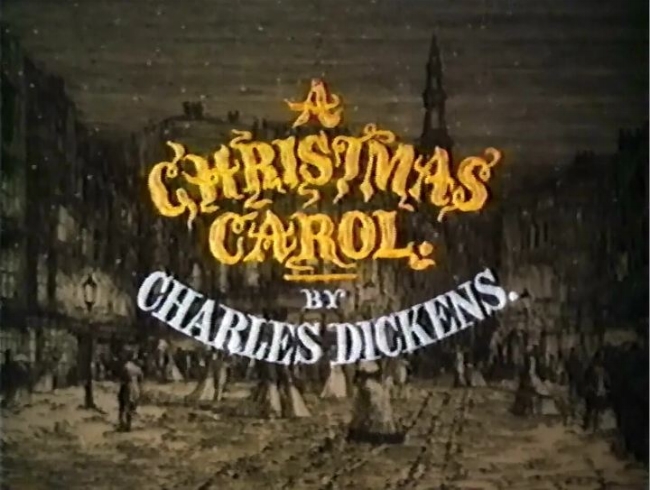
A Christmas Carol (1999)
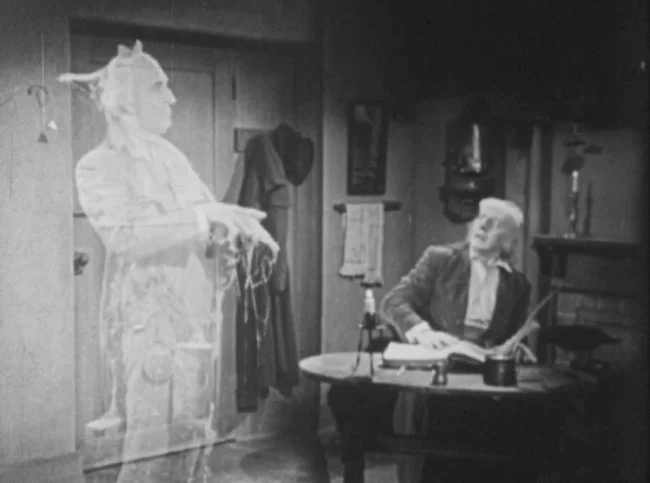
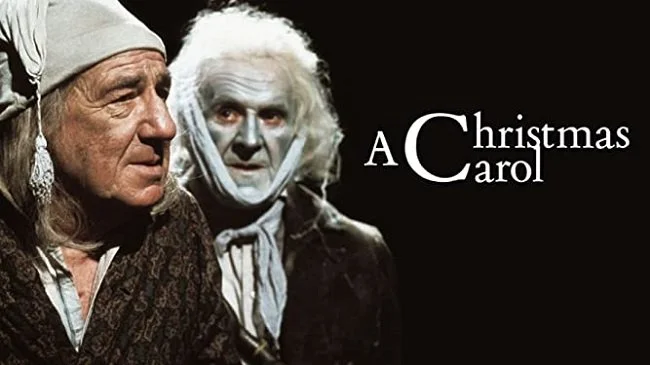
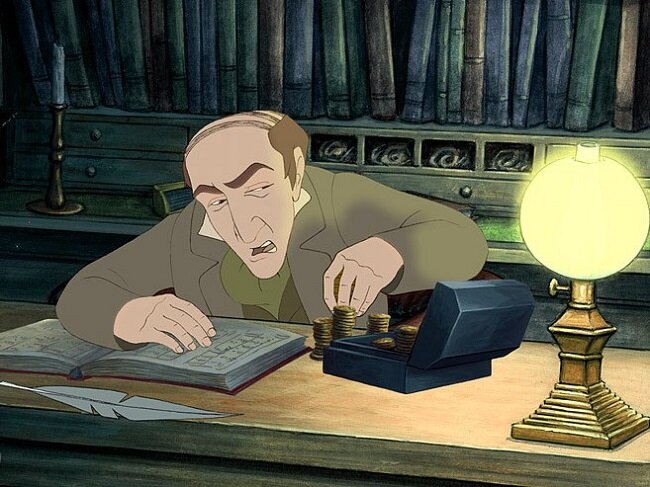
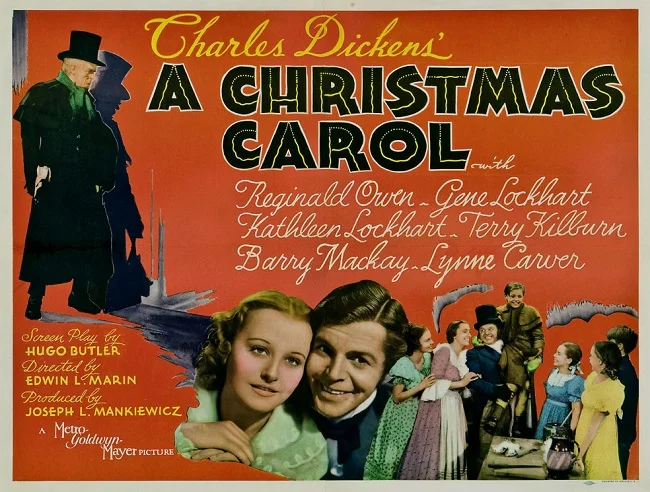
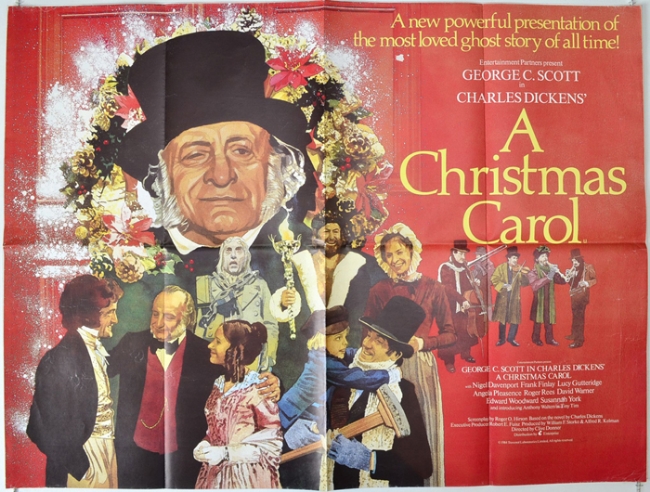
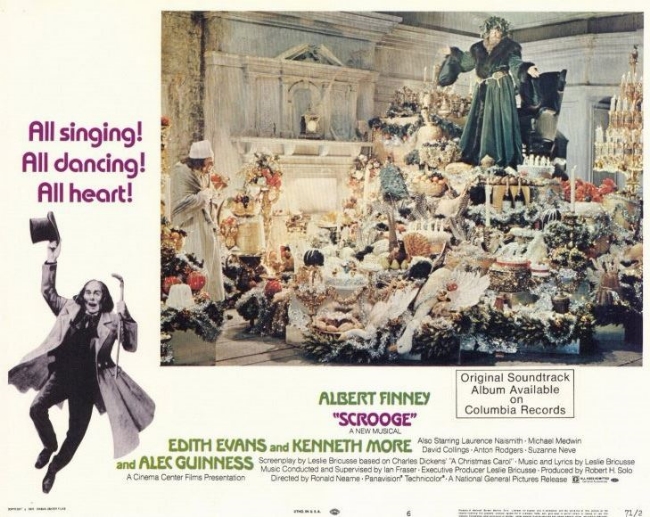
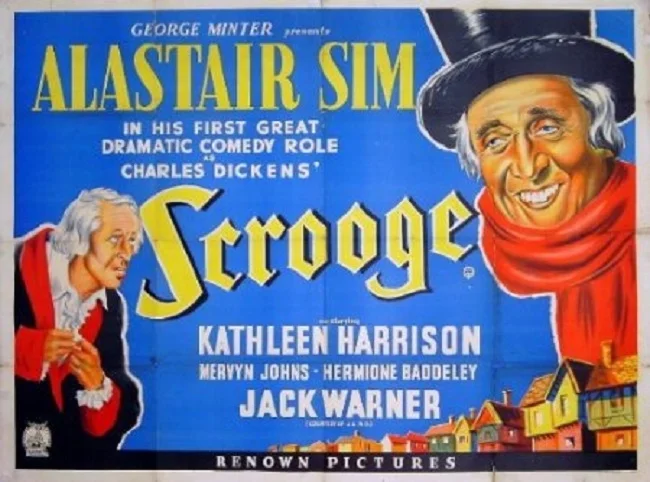
This version of Dickens novel is a very serious and somewhat sombre affair. Patrick Stewart not only stars in this 1999 TV movie but also has a producer credit. Anyone who is familiar with the actor will be aware of his long-standing passion for this tale, as he has starred in several one-man stage performances and narrated an audio book version. Stewart plays his Scrooge as more of an arrogant and aloof businessman. It’s a different Scrooge to that of George C. Scott or Alistair Sim. Here he is much more fearsome and bitter than he is cold and loathsome. Richard E. Grant is a touching, vulnerable Bob Cratchit, who looks decidedly poor and malnourished. There is a more tangible depiction of real poverty here than in other adaptations. The three ghosts are portrayed in a manner closer to the source text, although I could have done without the glowing eyes of the Ghost of Christmas Yet to Come.
This version of Dickens novel is a very serious and somewhat sombre affair. Patrick Stewart not only stars in this 1999 TV movie but also has a producer credit. Anyone who is familiar with the actor will be aware of his long-standing passion for this tale, as he has starred in several one-man stage performances and narrated an audio book version. Stewart plays his Scrooge as more of an arrogant and aloof businessman. It’s a different Scrooge to that of George C. Scott or Alistair Sim. Here he is much more fearsome and bitter than he is cold and loathsome. Richard E. Grant is a touching, vulnerable Bob Cratchit, who looks decidedly poor and malnourished. There is a more tangible depiction of real poverty here than in other adaptations. The three ghosts are portrayed in a manner closer to the source text, although I could have done without the glowing eyes of the Ghost of Christmas Yet to Come.
In many ways, apart from Patrick Stewart’s presence, what makes this version of A Christmas Carol standout from others is its attention to detail and the inclusion of many minor details from Dickens story. For example, Scrooge travels with the Ghost of Christmas Present and visits people from all walks of life celebrating Christmas. This includes Lighthouse Keepers, Sailors, Coal Miners and even convicts in Prison. It’s an important aspect of the text that shows how Scrooge slowly begins to understand the wider meaning of Christmas and its significance to people. There’s also a greater focus upon Fred’s Christmas Day party which provides an explanation as to why he doggedly indulges his obnoxious Uncle year after year. We also get to see more of the escapades or Mr Topper, who is conspicuously single.
It’s a curious thing that for a production that spends so much time and effort, bringing such an accurate depiction of the story to the screen, it paradoxically makes quite a few changes to the original colloquial dialogue. Perhaps this was a conscious decision to try and make the film more accessible to contemporary audiences. Given the budgetary limitations, the film has quite a handsome production design although it can be a little studio bound at times. Overall this is a sufficiently different production that maintains one’s interest, despite being familiar with the story arc. If I were to venture one criticism of this version, it would be that it does feel at time more like a lecture on Dickens’ work, lacking in personal warmth. Yet it compensates for this with its level of detail.





Kingsman: The Golden Circle (2017)
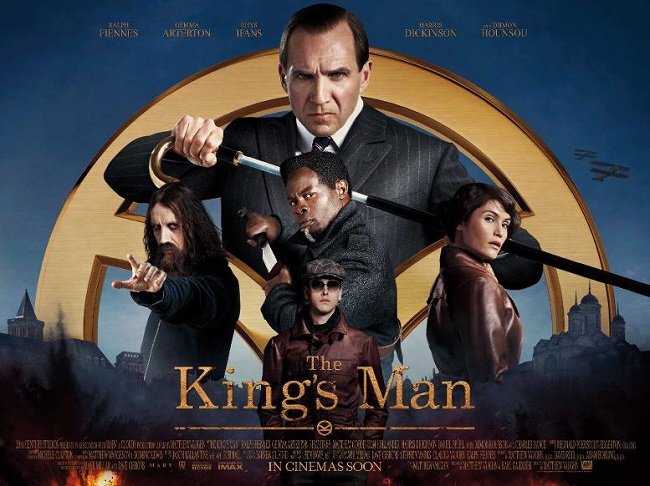
Matthew Vaughn’s sequel to his hit 2015 movie is a curious affair. At times it hits the same heights of its predecessor, but it also frequently misses the mark and lapses into self-indulgence. The stylised approach of the first movie is maintained and again the spy genre is skewered and satirised with a keen eye. Yet as this is a sequel there’s a requirement to be bigger than before and it is this exponential growth that at times tips the balance between keeping the audience on board with the joke and simply over egging the entire concept. A clever cameo featuring Elton John, later becomes an extended joke that then drags on to be a clumsy vignette that out stays its welcome. This succinctly highlights the flaw that runs throughout the film. It’s a real shame that Kingsman: The Golden Circle is so uneven because it has moments of great potential and an absolute superb score.
Matthew Vaughn’s sequel to his hit 2015 movie is a curious affair. At times it hits the same heights of its predecessor, but it also frequently misses the mark and lapses into self-indulgence. The stylised approach of the first movie is maintained and again the spy genre is skewered and satirised with a keen eye. Yet as this is a sequel there’s a requirement to be bigger than before and it is this exponential growth that at times tips the balance between keeping the audience on board with the joke and simply over egging the entire concept. A clever cameo featuring Elton John, later becomes an extended joke that then drags on to be a clumsy vignette that out stays its welcome. This succinctly highlights the flaw that runs throughout the film. It’s a real shame that Kingsman: The Golden Circle is so uneven because it has moments of great potential and an absolute superb score.
Plot wise it’s all somewhat arbitrary. After an unexpected encounter with failed Kingsman initiate Charlie Hesketh (Edwards Holcroft), Eggsy (Taron Egerton) finds that the Kingsman organisation has been virtually wiped out. Along with Merlin (Mark Strong), the pair follow the Doomsday protocol, which leads them to Statesman, a secret American organisation posing as a Bourbon whiskey distillery in Kentucky. They soon learn that the attack upon them was made by Poppy Adams (Julianne Moore) head of the Golden Circle drug cartel who is now blackmailing the US government through the use of poison drugs, to legalise and regulate the sale of proscribed substances. Eggsy also discovers that his former partner and mentor Harry Hart is alive but has lost all memory of his time working for Kingsman. Over the top action, CGI violence and laddish dialogue ensues.
There are some very entertaining ideas featured within Kingsman: The Golden Circle. Poppy Adams’ jungle lair sports an enjoyably kitsch fifties aesthetic, featuring gleaming bowling alleys, diners and nail salons. Because she trusts technology more than people the film features a pair of sinister robot dogs. Then there’s the fun idea of Statesmen, the US equivalent of the Kingsman organisation who sell fine liquor rather than hide behind a Saville row tailors. It boats a quality cast featuring the likes of Jeff Bridges, Pedro Pascal, Halle Berry and a somewhat underused Channing Tatum. There also a clever homage to 007 and On Her Majesties Secret Service, with an amusing set piece in a cable car and mountain Alpine lair. Yet in-between such promising scenes there are several less involving subplots such as the ongoing relationship between Eggsy and Princess Tilde. Also, the laddish humour strays from lampooning to endorsing at times and again there is an ill judged “joke” involving intimately placing a tracking device on a female suspect.
The extended limb-breaking, CGI assisted fight scenes feel even more procedural than last time around, but they fail to top Harry’s church massacre from the previous movie. Thus, we end up with a movie that feels flabby and could easily have fifteen minutes being excised from it’s running time. I must admit, I did like the bold and somewhat controversial idea of the US President secretly facilitating Poppy Adams drug based epidemic, as it would win the war on drugs in one go. But for every good idea in Kingsman: The Golden Circle there are others that fail to engage. I get the impression that writer/director Michael Vaughn perhaps spent too much time servicing fans needs at the expense of focusing on what made the first film witty, knowing and on point. Kingsman: The Golden Circle is not an out and out failure, but it is annoyingly uneven and as a result somewhat unsatisfying. I expect such problems from mainstream Hollywood blockbusters but not from more independently minded film makers. If we must have a third instalment, let us hope Mr Vaughn keeps his eye firmly on the ball next time.






The Muppet Christmas Carol (1992)
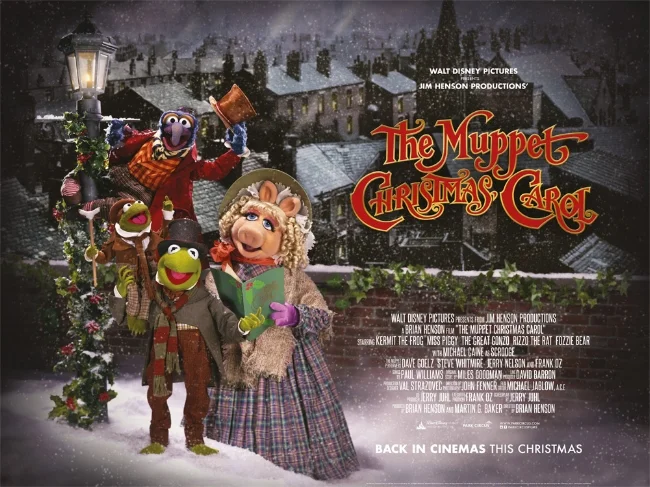
The Muppet Christmas Carol was the first Muppet feature film to be made after the death of Jim Henson. The production maintains his standards and style throughout, although due to the plot, this is a somewhat dark Muppet film. It’s also the one most affectionate of the Muppets movie. The plot follows Charles Dickens's original 1843 novel quite closely with the added bonus of The Great Gonzo playing Dickens himself as an ever-present narrator. Michael Caine provides an excellent performance as Ebenezer Scrooge that wouldn’t be out of place in serious adaptation. Caine attacks his role with his acting prowess and does not end up playing second fiddle to The Muppets themselves. As ever with Muppet movies, neither Caine or any other member of the cast ever question the fact that the Muppets aren’t human.
The Muppet Christmas Carol was the first Muppet feature film to be made after the death of Jim Henson. The production maintains his standards and style throughout, although due to the plot, this is a somewhat dark Muppet film. It’s also the one most affectionate of the Muppets movie. The plot follows Charles Dickens's original 1843 novel quite closely with the added bonus of The Great Gonzo playing Dickens himself as an ever-present narrator. Michael Caine provides an excellent performance as Ebenezer Scrooge that wouldn’t be out of place in serious adaptation. Caine attacks his role with his acting prowess and does not end up playing second fiddle to The Muppets themselves. As ever with Muppet movies, neither Caine or any other member of the cast ever question the fact that the Muppets aren’t human.
In many respects, this is probably one of the most faithful film adaptation of the novel to date. Much of the dialogue is taken directly form the source text. With quotes such as "If they would rather die, they had better do it, and decrease the surplus population”, there is potential to scare younger viewers, yet it works very well. The script, production design and humorous tone balance well with the classic tales more sinister elements. The film's score composed by Miles Goodman with songs written by Paul Williams facilitate the stories subtler themes, making them accessible to younger viewers. "Doomed, Scrooge, you're doomed for all time, your future is a horror story, written by your crimes”, sing the ghosts of the deceased Marley brothers (AKA Statler and Waldorf) in a catchy expositionary ditty. I must admit over the years this soundtrack has really grown on me and I now enjoy such standout tracks as It Feels Like Christmas and Thankful Heart.
The Muppet Christmas Carol does well in tackling this classic tale’s darker elements. It tempers the best aspects of Dickens cautionary narrative with The Muppets signature brand of humour. However, this approach doesn’t negate the drama. "Should we be worried about the kids in the audience?" ask Rizzo Rat. "Nah," says Gonzo. "This is culture." I actually think presenting literary classics in such a fashion makes them more accessible to the audience and may encourage some to tackle the original books. For those who are less interested in the narrative pedigree of this adaptation and who just wish to be entertained, then The Muppet Christmas Carol hits the mark. There is a cornucopia of sight gags, background shenanigans and subtle references, on top of the usual upfront, zany humour from The Muppets. So, if you wish for a different spin on this classic season tale, why not give it a try. You may be surprised by how good an adaptation it is.
Star Wars: The Last Jedi (2017)
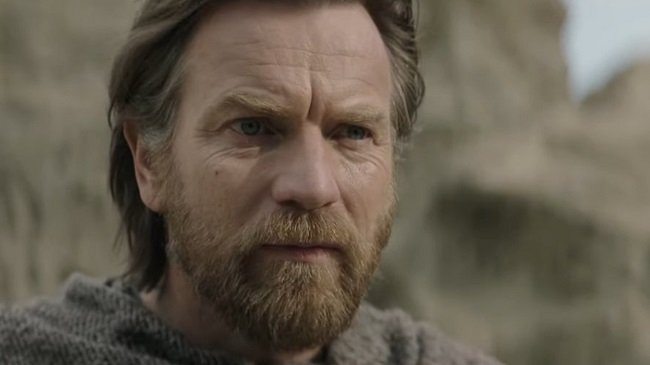
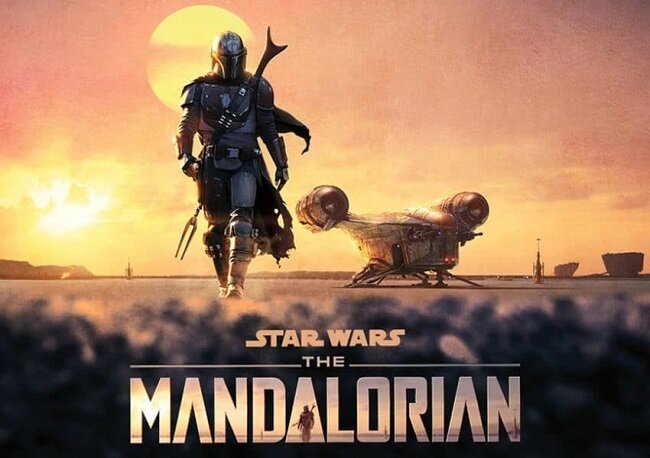
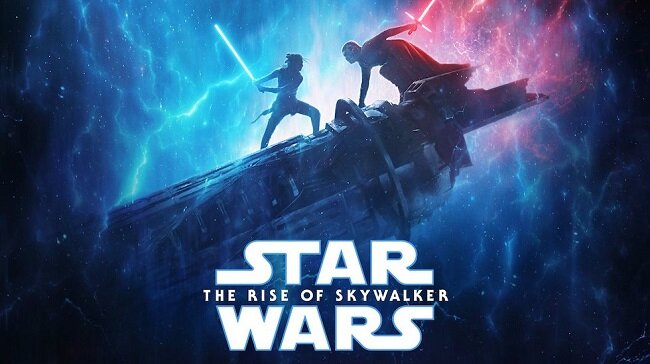
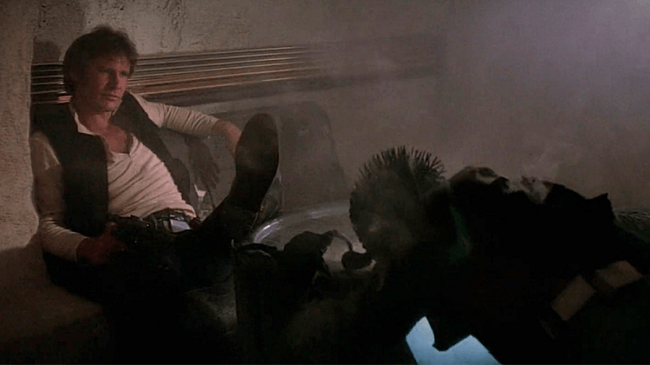
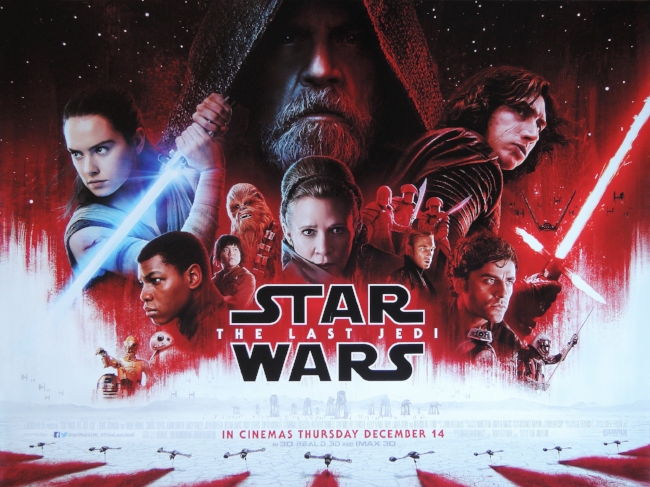
Star Wars has always been about high adventure. The franchise has been outstanding in its creative vision, as well as eminently enjoyable but it has never been as deep as some of the themes and ideas that it has touched upon. George Lucas tried to provide a more complex narrative with his prequels, but it became lost in the clumsy screenplays. Instead of creating political intrigue and complexity, it all seemed somewhat incoherent and naive. Finally, Star Wars: The Last Jedi manages to achieve something that we saw briefly in Episode V. Thematic depth. The latest movie takes a franchise that has primarily been about spectacle as well as entertainment and re-invigorates it with a far greater narrative scope. There are real performances from Mark Hamill and Adam Driver, as well as complex philosophical musings on weighty themes. Finally, Star Wars like a fine wine, has matured and can now provide fans with a more substantial and nuanced story. Simply put, Star Wars has grown up and hence forward it can be more than just a space opera.
Star Wars has always been about high adventure. The franchise has been outstanding in its creative vision, as well as eminently enjoyable but it has never been as deep as some of the themes and ideas that it has touched upon. George Lucas tried to provide a more complex narrative with his prequels, but it became lost in the clumsy screenplays. Instead of creating political intrigue and complexity, it all seemed somewhat incoherent and naive. Finally, Star Wars: The Last Jedi manages to achieve something that we saw briefly in Episode V. Thematic depth. The latest movie takes a franchise that has primarily been about spectacle as well as entertainment and re-invigorates it with a far greater narrative scope. There are real performances from Mark Hamill and Adam Driver, as well as complex philosophical musings on weighty themes. Finally, Star Wars like a fine wine, has matured and can now provide fans with a more substantial and nuanced story. Simply put, Star Wars has grown up and hence forward it can be more than just a space opera.
Rian Johnson continues where JJ Abrams left off and it soon becomes clear that The Last Jedi is not going to be such an obvious reworking of A New Hope as The Force Awakens was. He carefully directs and manages multiple plot threads as they simultaneously play out. To prevent any major spoilers, I’ll summarise the plot simply. Rey begins her Jedi training with a reluctant Luke Skywalker, who is unsettled by her immense potential with the Force and psychic connection with Kylo Ren. Meanwhile, the Resistance retreats from the might of the First Order who are on the verge of finally eliminating them. Can Fin and Resistance engineer Rose Tico them find a way to infiltrate the First Order command ship and sabotage it, buying time for the Resistance fleet to escape. As ever there’s a lot going on and the movie ensures that there are the required set pieces, drama and plot twists, tempered with humour and fan boy references. But writer/director Rian Johnson brings more to the table this time and the central themes are timeless conundrums that have provided drama since the theatre of ancient Greece.
During the second act of The Last Jedi, the narrative splits into three stories. Finn and Rose Tico pursue an elusive pirate and computer coder who may be able to assist them. X-wing pilot Poe Dameron clashes with Vice Admiral Amilyn Holdo over her strategy as the Resistance retreats from the First Order. And Rey seeks the help of an indifferent Luke Skywalker on the remote planet of Ahch-To. It is this latter thread that is the heart of the movie. The trinity of Luke, Rey and Kylo Ren and how they are bound together is by far the most engaging idea. There is an Arthurian quality to this aspect of the film. I was very much reminded of Malory’s Le Morte D’arthur and the notion of a “A king without a sword, a land without a king”. At one-point Luke Skywalker admits that the Jedi may have fundamentally misinterpreted the force because all their actions have ultimately been ruinous. It’s minor comment with a great deal of weight, like a major shift in religion dogma, or when a long held scientific theory is overturned. This notion could lead to a possible renaissance in Jedi culture, led by Rey in future movies.
The Last Jedi, like The Force Awakens, further highlights the passing of the torch from old characters to new. Rose Tico (Kelly Marie Tran) is particularly interesting, providing a window into the world of all those people living under the First Order. All she has known is oppression and cruelty, which she succinctly articulates while on the Casino world of Canto Bight. Yet her motivation in the face of such injustice is not based upon revenge or hatred. I cannot remember the exact line, but she philosophically muses that “It’s not about destroying what you hate, but saving what you love”. Then there is the is Vice Admiral Amilyn Holdo played by the dignified Laura Dern. Wise and experienced in both politics and war she clashes with the impetuous Poe Dameron who foolishly misreads her motives. Benicio del Toro also appears as the enigmatic “scoundrel” DJ. I was surprised how he effectively points out that the war is not as black and white as Finn suspects. It’s interesting the way the moral absolutes of the previous films are not universally upheld this time round. Again, this is evidence that the narrative has become deeper and more nuanced.
Of course, it wouldn’t be a Star Wars film without John Williams. It is an undisputable fact that his scores for the previous seven movies have been integral to their success. The Last Jedi presents him with a wonderful opportunity to revisit many beloved themes. The late Carrie Fisher plays a pivotal role in the films proceeding and it was extremely poignant to hear the Princess Leia theme once again. It’s a truly exquisite piece and within the context of the film, profoundly moving. Again, I have to be careful to avoid spoilers but let it suffice to say that a much-loved character returns and it was an absolute pleasure to listen to the subtle reworking of their leitmotif. Yet of all the music that has featured in the Star Wars movies, for me the jewel in the crown is the sublime and moving Force theme. It plays out at the climax of The Last Jedi and considering the importance of the scene, it is especially poignant
However, with most movies, there are a few negative points to reflect upon. None of them are sufficient to undermine the movie overall but they do at times cause a lull in the proceedings. There was a little too much humour for my taste. Some of it works but other jokes, quips and sight gags fall short. I think the The Force Awakens found a better balance in this respect. There is also an excess of production affectations and visual FX indulgences, particularly with regard to some of the exotic alien lifeforms The Porg’s are somewhat superfluous and seem to be present only as comic foils to Chewbacca. There is also a curious rock dwelling creature that Luke milk’s. Why? Furthermore, the native caretakers of the Jedi Temple on Ahch-To serve no purpose other than to be the butt of some arbitrary slapstick humour. Also, as with the previous movie there are still many unanswered questions and unfilled gaps in the plot. We still know very little about Supreme Leader Snoke, apart from the fact that he is powerful in the ways of the force. It would have been nice to have known a little more about his backstory and his motivation. I was somewhat surprised by the way his story line panned out. Despite its 152-minute running time I still get the impression that significant parts of The Last Jedi were excised. For example, Captain Phasma remains woefully underused.
One thing is very clear. The ending of The Last Jedi closes the book on many aspects of the Star Wars universe that I and so many others grew up with. It leaves scope for a lot of new characters to step in and take multiple plot points and new concepts forward. All things considered this tonal shift in the franchise may not be to all fans liking but these films are not the exclusive province on the self-perceived faithful. Star Wars has grown beyond the confines of the original trilogy. Imbuing the narrative with these Wagnerian undertones such as pondering fate, the nature of our own deeds and the price we ultimately pay has finally allowed Star Wars to become a new incarnation of the classic mythology that George Lucas set out to replicate. Sadly, he lacked the literary skill to realise that dream. Rian Johnson thankfully does not. Hence the plot device of the Jedi order having to completely rethink its appraisal and relationship with the force raises many interesting possibilities. Simply put, after forty years, Star Wars has finally transcended its pulp origins and taken its first step towards becoming the quality fantasy drama it deserves to be.








The Mists (2007)
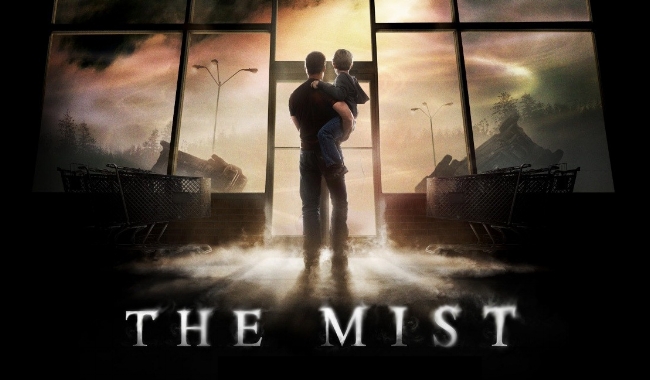
Frank Darabont achieved both critical acclaim and mass appeal with his adaptations of The Shawshank Redemption and The Green Mile. In 2007 he returned once again to the work of Stephen King with his film version of The Mist. It’s a sideways step away from human drama into a more genre piece, yet it still retains a very traditional story at its heart. Once you look beyond the superficial elements of "creature feature" plot, you get yet another well written character study by an ensemble cast, again focusing on how the human condition deals with extreme situations. The particular route it takes and some of the themes it explores may not be to everyone's taste. However, it still focuses on characters and performances. It is also a movie that ends with a somewhat unexpected plot development, that some viewers may find a little extreme. It is one of those film related twists that if known in advance, greatly diminishes once enjoyment of the film.
Frank Darabont achieved both critical acclaim and mass appeal with his adaptations of The Shawshank Redemption and The Green Mile. In 2007 he returned once again to the work of Stephen King with his film version of The Mist. It’s a sideways step away from human drama into a more genre piece, yet it still retains a very traditional story at its heart. Once you look beyond the superficial elements of "creature feature" plot, you get yet another well written character study by an ensemble cast, again focusing on how the human condition deals with extreme situations. The particular route it takes and some of the themes it explores may not be to everyone's taste. However, it still focuses on characters and performances. It is also a movie that ends with a somewhat unexpected plot development, that some viewers may find a little extreme. It is one of those film related twists that if known in advance, greatly diminishes once enjoyment of the film.
Set in yet another small and unobtrusive town (the kind Stephen King exalts), The Mist starts with an unexpected and extreme storm. This inclement weather forces David Drayton (Thomas Jane) and his family retreat to their basement. When they emerge in the morning a tree has crashed through the front window of his house and the power is out. David and his young son go into town for supplies, leaving his wife behind. It’s at the general store where David first realises something is horribly wrong. A man, covered in blood, races into the store screaming “there’s something in the mist!”. Shortly after an unnatural mist rolls across the town and leaves the store cut off and isolated. From this point on the The Mist focuses on how fragile the social bonds of a community and how thin the veneer of a civilised society really is. It’s not long before friends and neighbours turn against each other, with logic and reason being replaced with blame and fear.
The Mist is more than just some monster movie. It’s a careful and inciteful examination of human nature. Darabont’s screenplay develops each character carefully and the film’s real thrills comes from following his group of terrified survivors, rather than the curious beats that accompany the mist. Their individual emotional journeys and the way they fall apart in different ways as they lose hope, makes for compelling viewing. Some turn to God and fatalism, others strive to be logical, where a few remain in denial and pay dearly for their refusal to face facts. David Drayton however, simply refuses to give up, although this is shown not be without ramifications. As ever this is where director Frank Darabont excels. He has a keen eye for social dynamics and credible characters, constructing a worryingly realistic microcosm of American society. Ten years on this film feels worryingly prescient.
Thomas Jane carries the film with his central performance as an artist turned temporary leader. But it’s not just Jane that turns in a solid performance here. The ensemble cast of quality actors not only embody their respective characters but specific facets of contemporary US society. Toby Jones, the quiet and unassuming junior manager of the store, proves to be a robust and stoic character. Marcia Gay Harden excels as the towns religious zealot, happy to use events to fuel her own prejudices. It's been a while since I wanted to see the "bad guy" in a film get what they deserved, quite so much. Such is the strength of her performance. The Mist again shows Darabont's ability to emotionally connected with the central characters. It is what makes the film so effective. You want them to be safe and you're genuinely upset when some meet a brutal end. The mindless hypocrisy of some characters as they clutch at straws and change their allegiance, to simply survive is also plausible and gripping. Perhaps it makes us feel uncomfortable because it rings so true.
If there’s any flaw in the film, it’s in the mechanics of Darabont’s script, which at times leans towards the predictable. All those the cast and characters are compelling, there are few surprises about who will turn out bad and who will be a unsung hero. But like everything Darabont does The Mist connects so well with its audience on an emotional level, that you can forgive these weaknesses. The film’s monsters are there mainly to serve as a catalyst for a much deeper, emotive and thought-provoking story. Although it should be noted that the film does contains a degree of strong violence and language. The creatures themselves are also creative and baroque. The Mist is a clever, character-driven horror film and a human drama. It could also be considered as a metaphor for genocide and ethnic cleansing. You decide. The Mist is recommended to fans of human drama, strong performances and is not the exclusive province of the horror buff.
Trailers and Spoilers
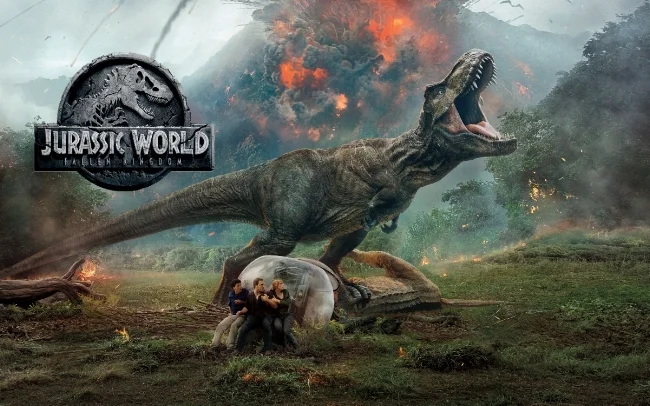
The first major trailer for Jurassic World: Fallen Kingdom has just arrived and even by contemporary standards, it does give a great deal of the film’s plot away. It’s also not coy about showing off the latest dinosaurs that feature in the movie. Overall, as a trailer it certainly does its job and whet’s the audiences appetite. I am certainly interested in seeing this blockbuster next summer. But as ever with anything that happens online, there has been a degree of push back from those who feel that it shows too much and that it should have come with spoiler warnings. Some are arguing that this culture of “showing the best bits” is a recent phenomenon but a cursory review of classic movie trailers on You Tube, will show you that this has always happened.
The first major trailer for Jurassic World: Fallen Kingdom has just arrived and even by contemporary standards, it does give a great deal of the film’s plot away. It’s also not coy about showing off the latest dinosaurs that feature in the movie. Overall, as a trailer it certainly does its job and whet’s the audiences appetite. I am certainly interested in seeing this blockbuster next summer. But as ever with anything that happens online, there has been a degree of push back from those who feel that it shows too much and that it should have come with spoiler warnings. Some are arguing that this culture of “showing the best bits” is a recent phenomenon but a cursory review of classic movie trailers on You Tube, will show you that this has always happened.
So, is there a solution to this problem, if indeed it is actually a problem. Because not everyone sees potential spoilers as a negative thing. Movies are now pitched at international markets as they are dependent on the global box office returns to recoup their prodigious production costs. Japan has always been an important sales region and in recent years China has become increasingly important to sales. Both of these countries often have trailers tailored to their specific tastes and market research shows that these viewers like to know as much about what will happen in a movie as possible. Hence a trailer such as that for Jurassic World: Fallen Kingdom will be warmly received. Plus, there is also evidence to show that western objections to “showing too much” is mainly age related. The old complain where the young (who are often the target audience) do not.
So it would seem that the die has been cast and this style and approach to marketing big budget movies is just a fact of life. As for the solution that I mentioned, the most prudent action would be to just avoid watching any trailers and to keep yourself informed about such movies by simply reading text articles or even just relying upon word of mouth. The internet has utterly changed the way films and produced and sold, with the whole process now being a public spectacle. Things will never return to the way they were, so it is best to adjust accordingly. As for Jurassic World: Fallen Kingdom, I have no doubt that it will clean up at the box office as did its predecessor. Dinosaurs remain a source of fascination for both children and adults and movies such as this simply feed that passion.
The Protector (1985)
During the course of the eighties Jackie Chan made several attempts to break into the US film market and show case his unique talent to American audiences. However, all of these movies failed both critically and at the box office. The US producers had a poor grasp of how best utilise his abilities and market him appropriately. Chan’s work up unto this point had been mainly comedy action movies, with liberal amounts of slapstick and Eastern humour. US film makers simply wanted to shoehorn his prodigious stunt and martial arts abilities into the standard US action movie formula of the time. It was a classic example of trying to mix oil with water and to this day, none of Jackie Chan's US films from this period can hold a candle to his Hong Kong based output. However, The Protector has an interesting production history and although far from a great film, had a impact upon Chan’s career.
During the course of the eighties Jackie Chan made several attempts to break into the US film market and show case his unique talent to American audiences. However, all of these movies failed both critically and at the box office. The US producers had a poor grasp of how best utilise his abilities and market him appropriately. Chan’s work up unto this point had been mainly comedy action movies, with liberal amounts of slapstick and Eastern humour. US film makers simply wanted to shoehorn his prodigious stunt and martial arts abilities into the standard US action movie formula of the time. It was a classic example of trying to mix oil with water and to this day, none of Jackie Chan's US films from this period can hold a candle to his Hong Kong based output. However, The Protector has an interesting production history and although far from a great film, had a impact upon Chan’s career.
![The Protector.mp4_snapshot_01.21.07_[2017.12.10_21.58.03].jpg](https://images.squarespace-cdn.com/content/v1/54e310f0e4b0f4a6ba3ac899/1512943132612-4V5VI8KQBNVSKN7NG8EA/The+Protector.mp4_snapshot_01.21.07_%5B2017.12.10_21.58.03%5D.jpg)
The Protector is a prime example of not getting Jackie Chan. It contains many elements that you do not usually see in his films, such as excessive violence, nudity and profanity. The film's director, James Glikenhaus (The Exterminator, The Soldier) had thrashed out a water tight contract that gave him strict creative control. Possibly his aim was to create an Eastern Clint Eastwood? But this sort of street cop action flick would have better suited Chuck Norris or another established star. Chan seems to be very uncomfortable in the role and it certainly does not reflect his established style. The set pieces and stunt work are adequate by US standards but failed to achieve the levels of his back catalogue. Apparently, Glickenhaus would be satisfied after as little as eight takes, which was heresy by Jackie Chan's standard. The dialogue is especially clumsy and makes no concessions to the fact that Mr Chan's English was poor at the time. Despite robust support from character actor Danny Aiello, the entire proceedings are somewhat stilted.
Subsequently, Jackie Chan refused to release the finished film in the far east in its original version and shot new scenes and re-edited the movie. After reducing the violence and all of the profanity and nudity, a new subplot was added with extra characters. New action sequences were also filmed and they were inserted to compliment the original. However, because of this bad experience, Chan eventually went on to make Police Story which is a seminal film and one of his finest works. The Protector in its US format is therefore not recommended to anyone other than diehard fans. There is the added irony of Jackie Chan singing the excruciating end title song, which again belies the fact that the man has had considerable success as a singer in Hong Kong. For the more curious see if you can track down the expanded Hong Kong version which Chan re-crafted from this mess. It is far from his best material but is a very interesting experience when viewed knowing its production history.
A Christmas Carol (1969)
Over the last few years I’ve reviewed several adaptations of Charles Dickens seasonal story A Christmas Carol. As I stated previously one of the stories greatest strength is that it lends itself perfectly to multiple interpretations. I recently had the good fortune to rediscover the animated version from 1969 by Air Programs International. I remember seeing this animated short as a child but could not recollect sufficient details to allow me to track it down via the IMDB. Then by complete chance, I stumbled across it again on You Tube while doing some research.
Over the last few years I’ve reviewed several adaptations of Charles Dickens seasonal story A Christmas Carol. As I stated previously one of the stories greatest strength is that it lends itself perfectly to multiple interpretations. I recently had the good fortune to rediscover the animated version from 1969 by Air Programs International. I remember seeing this animated short as a child but could not recollect sufficient details to allow me to track it down via the IMDB. Then by complete chance, I stumbled across it again on You Tube while doing some research.
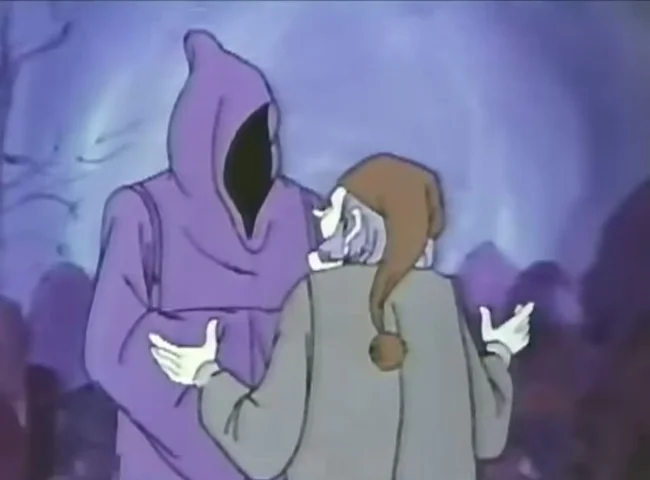
This forty-six-minute-long adaptation was produced by an Australian animation company and has some curious and amusing regional embellishments. The voice acting lapses into Australian accents from time to time and there is an odd song dovetailed into Fred's visit to his Uncle Ebenezer. It's as if the production team where toying with the idea of making a musical and then had second thoughts. However, despite these foibles the functional animation and aesthetic style is grimly appropriate, capturing the grey and dreary Dickensian winter.
The most innovative aspect of this particular adaptation is the inventive depiction of Marley’s Ghost. Unlike other versions of the story that portray Marley as a spectral version of his former human self, here we have a very stylised ghost. His hair is more akin to naked flames which is a rather interesting interpretation of the source text. "The Ghost sat perfectly motionless, its hair, and skirts, and tassels, were still agitated as by the hot vapour from an oven". In addition, the sightless black sockets are rather ghoulish, making this one of the most sinister portrayals of the character.
Overall this is a functional adaptation that manages to convey the key elements of the story. To be honest the story is quite difficult to spoil, unless you are a particularly blinkered film maker. As this version was specifically designed to be pitched at younger audiences, there is some levity introduced into the proceedings. Scrooge continuously stifles a sneeze throughout the story, something that he cannot resolve until he is "redeemed". There are far worse adaptations of this classic tale, so for those who are curious or are just interested in the art of animation, here is the 1969 version for your enjoyment.
The Rambo Phenomenon (1982 - 2008)
The cinematic character of John J Rambo is heavily associated with the politics of the eighties and the ascending right-wing attitudes of the era. His name has entered the popular sub culture and means different things to different people. His name is used as a pejorative term by certain political lobbies, who see him as stereotypical incarnation of blind patriotism and “might is right” minsdet. It is a name also sadly linked to the Hungerford Massacre in the UK by Michael Ryan in 1987. It was alleged, particularly by tabloid newspapers, that Ryan was inspired by the film Rambo: First Blood Part II, with some claiming he wore armed-forces style clothing. Rambo was cited as an example of a negative media influence, which was particularly relevant in the wake of the controversy over video nasties in the UK at that time. It is now claimed that Ryan had never seen the film, but the allegations provided sensationalist headlines and imagery and so the label stuck.
The cinematic character of John J Rambo is heavily associated with the politics of the eighties and the ascending right-wing attitudes of the era. His name has entered the popular sub culture and means different things to different people. His name is used as a pejorative term by certain political lobbies, who see him as stereotypical incarnation of blind patriotism and “might is right” minsdet. It is a name also sadly linked to the Hungerford Massacre in the UK by Michael Ryan in 1987. It was alleged, particularly by tabloid newspapers, that Ryan was inspired by the film Rambo: First Blood Part II, with some claiming he wore armed-forces style clothing. Rambo was cited as an example of a negative media influence, which was particularly relevant in the wake of the controversy over video nasties in the UK at that time. It is now claimed that Ryan had never seen the film, but the allegations provided sensationalist headlines and imagery and so the label stuck.
US President Ronald Reagan made reference to the character on several occasions during his two terms in office. Upon the release of 39 American hostages in June 1985 said, “after seeing Rambo last night, I know what to do next time this happens”. Hardly diplomatic words. Several months later, pleading for tax reform, Reagan said, “Let me tell you, in the spirit of Rambo, we're going to win this thing”. These extraordinary references by an American president attest to the power and ubiquity of the Rambo phenomenon. That fact that a contrived cinematic character could become a powerful political metaphor is still intriguing. Even today Rambo remains a name that gets a reaction and invokes an emotional response. However, often people’s perceptions are erroneous, based around popular headlines rather than an awareness of the central character himself. If we look at the history of the character, it is not as black and white as it first appears.
The first film featuring John Rambo was First Blood, released in 1982 and directed by Ted Kotcheff. It took David Morrell's traumatised twenty-year-old character and turned him into a 36, melancholic and philosophical veteran. The film also made some subtle plot alterations to negate any moral ambiguity that featured in the novel. Stallone is put upon and although violently breaks out of the Police station, does not kill first. Where as in the book, Rambo, instinctively reacts to provocation due to his military training and guts one of the police officers. Kotcheff's tried to tackle the wider issue of how a nation treats it war veterans, especially in light of a military defeat, whereas the book focused on a generation of youth that had been rendered dysfunctional and homicidal due to their training and experience. It is a surprisingly thoughtful film and very much a horse of a different colour, compared to what followed.
Rambo: First Blood Part II was released in 1985 and rather than reflecting on America's historical wounds, offered a populist fantasy in which John Rambo got to re-write history and rescue a group of POWs from Vietnam. It was a massive commercial success and succinctly reflected the social and political mood of the US at the times. There is absolutely no attempt to objectively look at the complex issues that lead to the failure of the Vietnam war. We are instead presented with arbitrary bad guy stereotypes, whose evil status is denoted by their penchant for looking through binoculars fiendishly and speaking in hackneyed foreign accents. School boy politics aside, the film was a solid action vehicle for Stallone and sealed his action star status. It was competently directed by George P. Cosmatos and superbly shot by legendary cinematographer Jack Cardiff. The body count is ludicrously high and Rambo special forces skills go from the credible to the incredible.
By 1988 the world was changing rapidly. The Cold War was slowly coming to an end as Russia entered a new period of Gasnost and Perestroika. Due to production delays, the plot of Rambo III centring around rescuing Colonel Trautman from Afghanistan, seemed somewhat out of step with current affairs. However, the basic premise of the bond of friendship between student and master was sound and the film directed by veteran second unit director Peter MacDonald, supplied copious amount of action. However, due to the backlash in the UK against the franchise by the tabloid press, allegedly over the Hungerford massacre, the film was heavily censored. This arbitrary knee jerk reaction achieved nothing tangible and in subsequent years, all cuts have been waived by the BBFC. This entry is perhaps the most underrated in the series and curiously enough adds a slightly more flippant and humorous facet to Rambo's character.
In Rambo, the fourth instalment of the franchise, directed in 2008 by Stallone himself, finds our protagonist rescuing a group of Christian missionaries, from the Burmese military. Unlike the previous two sequels, there is far less of a political dimension to the story. The Burmese army are simply a catalyst for the action and are not explored in any depth. This time Rambo presents us with the age-old dilemma about the use of violence against violence. The Burmese Army brutally shoot, blow up, bayonet, burn, mutilate, and rape the innocent villagers. Yet exactly the same retribution is visited upon them. One of the Christians muses that it is never justifiable to use violence or to kill. Ironically (or predictably) he beats a soldier to death with a stone at the films climax. Is this an effective illustration of the inevitability of violence? Other films have argued otherwise. Ghandi depicts the destiny of a nation, changed through nonviolent protest. However, he was not faced with the prospect of genocide.
Film critic Mark Kermode slated Rambo as totally morally bankrupt, a claim also made against the 1985 instalment. Stallone counters this argument by stating that violence is simply human nature. It is what we are. A point that is often unpalatable to some intellectual quarters, possibly because it is so near to the truth. The writer Robert A. Heinlein proposed that violence has settled more issues in history than has any other factor and that all actions in human society are governed by force. The very act of voting is a manifestation of exerting one’s dominance. Also, there is the debate that violence can be justified if the cause is morally valid. It is intriguing that the Christians depicted in the 2008 film Rambo, are at odds with their faiths historical legacy on this very issue.
Debating the wider moral and philosophical aspects of this franchise is not as easy a question as one would expect. Is the entire Rambo phenomenon broad escapist entertainment or a politically incorrect cinematic slaughter house? Is it a revisionist western or nihilistic sanguinary pornography? Despite initial statements that a fifth film may manifest itself, Stallone appears to have put that idea to bed. It would seem that the final images of part four, with John Rambo returning to his family home is indeed to be the definitive ending. For good or ill, Rambo has become an integral part of 20th century pop culture and the name has assumed a wider meaning and become part of the contemporary lexicon. Some argue that cinema does not set the cultural agenda but merely reflects it. If that is so, then don’t shoot the messenger, especially when he's an ex Green Beret.
Finally, it would be impossible to write about the Rambo series without mentioning the work of composer Jerry Goldsmith. He provided the score for the first three films and after his death, Brian Tyler continued with his main themes for the fourth movie. Goldsmith's music for the franchise is very accomplished and adds an additional layer to the central character. His various cues especially for the action sequences demonstrates how a musical score can enhance a film. Posted below is the main theme for the first film, which is has become synonymous with the Rambo character and encapsulates the late composer’s immense talent.
Wanted: Dead or Alive (1987)
Wanted: Dead or Alive was a popular western TV show from the fifties starring Steve McQueen. It told the story of Josh Randall, a Confederate war veteran and bounty hunter. It ran for three seasons and is mainly notable for launching the career of its star. The 1987 action movie, Wanted Dead or Alive, starring Rutger Hauer, tenuously links to the television show, however that’s where the similarities end. Ex-CIA operative turned bounty hunter Nick Randall (Hauer) at one point shares a brief anecdote about a Grandfather who used to tell him tall tales of the old west. That is the only reference to the television show that the movie makes. Beyond that, Wanted: Dead or Alive is pretty much a standard eighties action film with a better than average script and cast of supporting actors. It also features the decades most ubiquitous plot device, the stereotypical group of fanatical Arab terrorists.
Wanted: Dead or Alive was a popular western TV show from the fifties starring Steve McQueen. It told the story of Josh Randall, a Confederate war veteran and bounty hunter. It ran for three seasons and is mainly notable for launching the career of its star. The 1987 action movie, Wanted Dead or Alive, starring Rutger Hauer, tenuously links to the television show, however that’s where the similarities end. Ex-CIA operative turned bounty hunter Nick Randall (Hauer) at one point shares a brief anecdote about a Grandfather who used to tell him tall tales of the old west. That is the only reference to the television show that the movie makes. Beyond that, Wanted: Dead or Alive is pretty much a standard eighties action film with a better than average script and cast of supporting actors. It also features the decades most ubiquitous plot device, the stereotypical group of fanatical Arab terrorists.
Director Gary Sherman has made some interesting films during his career. This includes such cult classics as Death Line, Vice Squad and Dead and Buried. All are low budget features that manage to offer a different take on stock movie tropes and story lines. Here he assembles some good character actors such as Robert Guillaume, Jerry Hardin and Hugh Gillin, playing an assortment of duplicitous company men. The plot has a little more depth than most brainless action films of the time. Not only is there the excitement of a straight forward man hunt but an extra political layer showing the divisions within the various security services, each with their own agenda. This perhaps compensates for the celebrity miscasting of Gene Simmons of KISS fame, as the terrorist Malak Al Rahim. His performance is questionable and yet it’s also the sort of eye rolling, scenery chewing excess that fans of this genre like.
The modern audience may find the action scenes somewhat low key but that’s the way it was back then in the eighties. Large budgets and excess were not as abundant as they are now and there is a cogent argument to be made for more minimalist vehicles of this kind today. At least all the stunt work and prosthetics are genuine in-camera effects. It is also fun to see what passed as cutting-edge technology backing the mid-eighties, with car phones and non-windows based computers. Rutger Hauer provides a suitably laid-back performance and his presence lifts the movie above the mundane. The witty one liners and banter do not mitigate the story's point. Wanted Dead or Alive also benefits from a bravura ending with one of the best pay off lines of the decade. Watch if you are an eighties action film fan or a Rutger Hauer aficionado.
Season of the Witch (2011)
After years of war, two 14th century Crusaders (Nicholas Cage and Ron Perlman) returns to a homeland devastated by the Black Plague. The church, deeming sorcery to be the source of the outbreak, tasks the knights to transport an accused witch (Claire Foy) to a remote abbey, where monks will perform a ritual in hopes of ending the pestilence. A priest, a grieving knight, a disgraced trader and an altar boy who dreams of becoming a knight, join the mission across a hostile wilderness. The group soon finds itself at odds with each other over the fate of the girl. When the embattled party finally arrives at the abbey, a horrific discovery jeopardises the knight's pledge to ensure the girl fair treatment, pitting them against an inexplicably powerful and destructive force. Will good or evil triumph?
After years of war, two 14th century Crusaders (Nicholas Cage and Ron Perlman) returns to a homeland devastated by the Black Plague. The church, deeming sorcery to be the source of the outbreak, tasks the knights to transport an accused witch (Claire Foy) to a remote abbey, where monks will perform a ritual in hopes of ending the pestilence. A priest, a grieving knight, a disgraced trader and an altar boy who dreams of becoming a knight, join the mission across a hostile wilderness. The group soon finds itself at odds with each other over the fate of the girl. When the embattled party finally arrives at the abbey, a horrific discovery jeopardises the knight's pledge to ensure the girl fair treatment, pitting them against an inexplicably powerful and destructive force. Will good or evil triumph?
Season of The Witch was submitted to the MPAA for rating twice, prior to release, as the studio tried to secure a “suitable” rating for the movie. The film itself spent an entire year between completion of the production and its theatrical release as various parties tinkered with its final edit. The script had been in development since 2000 and had been passed from both MGM and Columbia pictures before finally being produced by Relatively Media. Despite some striking location work around Eastern Europe, suitable castles and associated building from the required period could not be found. Thus, a great deal of material had to be shot against green screens and added digitally in post-production. However, budgetary restraints had an impact upon this work and its quality. All of these factors are usually indicative of a troubled production, resulting in a flawed film. Sadly, Season of the Witch very much fits that bill.
Season of The Witch is glaringly narratively and tonally inconsistent. The characters are insufficiently developed as are the themes. The story is very derivative and the content conspicuously edited to secure the commercially viable PG-13/12A rating. However, smitten by a fit of unusual generosity, I have to admit that I did enjoy the film. This is mainly because of Ron Pearlman's presence and a handsome production design that is very reminiscent of Hammer studios work and Roger Corman's Poe adaptations. Like 2012 release of Solomon Kane, the film manages to look a lot more sumptuous than it actually is due to its Hungarian and Croatian locations. Furthermore, although the action scenes and set pieces have been very tightly edited for rating reasons, they are still well conceived due to the presence of veteran stunt co-ordinator Vic Armstrong.
The story of two Teutonic Knights escorting a suspected witch to a remote castle for trial, through a world devastated by the Black Death, often comes across as pythonesque. This is mainly due to the similarities in the depiction of the Medieval world. I was also reminded of Terry Gilliam’s Jabberwocky that has a similar grimy depiction of the time. The story is episodic and offers very few surprises. It is entertaining in a very undemanding way and the night attack by wolves in the fog bound forest, is actually well executed. There are even some occasional nods to Ingmar Berman which seem curiously hubristic. However, overall Season of The Witch is an inconsistent viewing experience and a film that falls between several stools. It doesn’t seem to find a level that it is comfortable with, very much like director Dominic Sena's previous film Whiteout. Therefore, only watch is you are feeling tolerant, forgiving and are the most ardent Nicholas Cage fan.







Super 8 (2011)
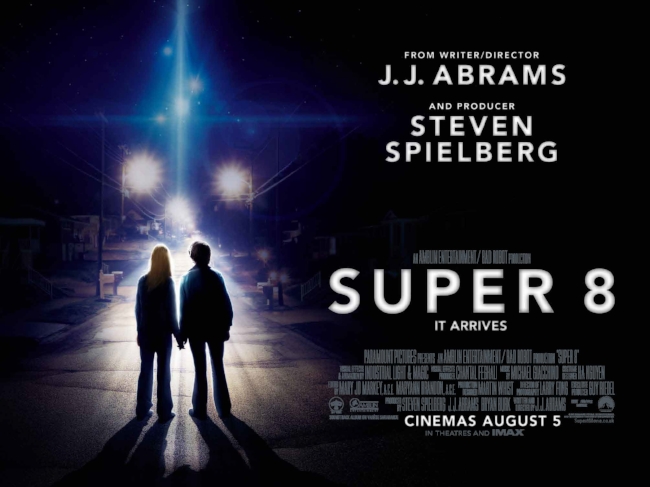
When you see the names of such cinematic luminaries as Steven Spielberg and J.J. Abrams together on the same movie poster, naturally your expectations are going to be high. Yet when watching the various trailers for Super 8, just prior to its release in 2011, I was somewhat cautious. I have discussed in the past at some length the ambiguous nature of trailers and that they can misrepresent a film. Yet even bearing this in mind at the time, I couldn’t help but feel that Super 8 seemed like a somewhat self-indulgent homage to Spielberg's earlier work. I subsequently saw the movie at the cinema in August that year and my suspicions were validated. However, over time I have spoken to several friends who are advocates of the movie, so I thought I’d watch it a second time. Sadly, I still find myself unable to label Super 8 as anything else other than adequate. Now I would hasten to add, that I use adequate within the context of both director’s body of work. An adequate film from either Mr Spielberg or Abrams is still superior to many of their competitors. But that's not the point. I simply expected better from such a project.
When you see the names of such cinematic luminaries as Steven Spielberg and J.J. Abrams together on the same movie poster, naturally your expectations are going to be high. Yet when watching the various trailers for Super 8, just prior to its release in 2011, I was somewhat cautious. I have discussed in the past at some length the ambiguous nature of trailers and that they can misrepresent a film. Yet even bearing this in mind at the time, I couldn’t help but feel that Super 8 seemed like a somewhat self-indulgent homage to Spielberg's earlier work. I subsequently saw the movie at the cinema in August that year and my suspicions were validated. However, over time I have spoken to several friends who are advocates of the movie, so I thought I’d watch it a second time. Sadly, I still find myself unable to label Super 8 as anything else other than adequate. Now I would hasten to add, that I use adequate within the context of both director’s body of work. An adequate film from either Mr Spielberg or Abrams is still superior to many of their competitors. But that's not the point. I simply expected better from such a project.
Super 8 is not a pure monster movie or creature feature. The alien aspect to the film is nothing more than a secondary plot device. This film is mainly about growing up in the seventies, adolescence and bereavement. A lot is done to try and recapture the look and feel of the decade, yet despite the production design and the cultural references, such as period music, CB radio and the use of period slang, the film doesn't quite work. Why? Because the central characters, although steeped in the superficial trappings of the time are a little bit too worldly, articulate, sensitive and thoughtful. They display to many modern sensibilities and concerns. Rather than producing an accurate portrayal of life at the times, Super 8 is very much Abrams homage to the era. And like most odes to a bygone era it paints a sentimental picture, rather than a credible one. That’s not to say that it is bad. It is simply unauthentic.
Don't get me wrong, the central characters played by Joel Courtney, Riley Griffiths and Elle Fanning, are very likeable. Too many movies churn out stereotypical depictions of children or go the opposite way and place them on pedestals. Super 8 features some amusing banter of the sort that kids of this era would have. All the actors involved give good performances. But they all seem a little too perfect, coming across more as archetypes rather than fully rounded characters. I am of a comparable age to J.J Abrams and my childhood was nowhere near as socially complex as that depicted in the movie. Nor were my friends overburdened with such talent or driven by such focused aspiration. What we have in Super 8 is very much an adult’s intellectual deconstruction of childhood, rather than a reflection of it. The boisterous shouting of The Goonies or the smart alec antics of The Monster Squad ring far truer to me.
However, looking beyond this tonal stumbling block, there are some very enjoyable cinematic references in Super 8, many of which seem to be from Mr Spielberg’s back catalogue. For example, a cars electrical system fails at a critical moment, only to come back on with a jolt. Then there's the iconic imagery of kids cycling round idyllic suburban neighbourhoods, free from parental control or interference. There are also subtle nods to films such as John Carpenter’s The Thing with electrical items vanishing, possibly to be utilised by the alien for some makeshift vehicle. There's also a nice theme that's developed in which all the local dogs flee the area. For me, it's these little creative anecdotes that if expanded upon would have given the movie more character and depth.
Yet director Abrams is content to leave these aspects unexplored, in favour of his child centric narrative. As this is the central theme of the film, I can understand why the adult characters are a lot less developed and given less screen time. As a plot device it actually strengthens the under lying theme of the lack of connection between father and son. However, Super 8 falls down quite considerably with regard to its lead villain, Airforce Colonel Nelec played by Noah Emmerich. He is purely arbitrary and denoted as evil purely by his military association and his penchant for killing people by lethal injection. Bad guys are often far more interesting than the virtuous heroes and it's a shame that we do not find out more about him in this instance.
J.J. Abrams has a strong visual sense, very much like Spielberg. There are some very clever images woven into Super 8 over its two-hour running time. The tanks driving through the children's playground for instance and the use of silhouettes. Michael Giacchino's score is very strong and underpins rather than overwhelms the proceedings. There is much to like about the film and if you are not disposed to be as analytical as I am, you will be entertained. But if it had broadened its remit and shied away from the perennial Hollywood trope of canonising beautiful, yet deceased mothers, it could have been a far more rewarding film. A more honest and less emotional depiction of the times, as well as a little more focus on characters and motive would have improved things greatly.
Highlander 2: The Quickening (1991)
I remember the abject disappointment I felt after seeing the 1991 release of Highlander 2: The Quickening. It was narratively disjointed and totally contradicted the premise of the original film. This was all courtesy of the completion bond company pulling the plug on the original production, due to spiralling costs and economic problems in Argentina where the movie was filmed. They then edited the film without the involvement of director Russell Mulcahy, allowing them to make a prompt release in an attempt to recoup their investment. The only flaw in this plan was that this version was universally reviled. Fans were outraged at the transgression of lore. Critics were confused. The only winner appeared to be Sean Connery who was allegedly paid $3.5 million for nine days of filming.
I remember the abject disappointment I felt after seeing the 1991 release of Highlander 2: The Quickening. It was narratively disjointed and totally contradicted the premise of the original film. This was all courtesy of the completion bond company pulling the plug on the original production, due to spiralling costs and economic problems in Argentina where the movie was filmed. They then edited the film without the involvement of director Russell Mulcahy, allowing them to make a prompt release in an attempt to recoup their investment. The only flaw in this plan was that this version was universally reviled. Fans were outraged at the transgression of lore. Critics were confused. The only winner appeared to be Sean Connery who was allegedly paid $3.5 million for nine days of filming.
Subsequently, after some complex legal chicanery, Mulcahy secured control of the film rights and brought out the Highlander II: Renegade Version in 1995. This removed the contradictory plot themes, re-instated previously removed footage and revamped effects shots. This resulted in a more coherent and enjoyable film that jettisoned the extraterrestrial elements of Brian Clemens screenplay and returned to the original concepts of the previous instalment. Despite these major changes the producers, Bill Panzer and Peter Davis still felt there were improvements to be made and brought out a further revised edit of the film in 2004, simply titled, Highlander 2: Special Edition. This included some minor scene alterations and focused more on improving the key visual effects sequences. Rather than catalogue the specific details of the differences between Highlander 2: The Quickening, Highlander II: Renegade Version and Highlander 2: Special Edition I've included a link to the IMDB. This more than adequately analyses all the various versions and their respective idiosyncrasies.
Highlander 2: The Quickening not only has an interesting development history, but a distinguished production pedigree. It’s very British affair, with many members of the crew being Bond veterans. There’s Second Unit Direction by Arthur Wooster, along with visual effects by John Richardson and Chris Corbould. The production design is very striking and there is excellent use of locations in Argentina. The studio work is also very impressive. The petrol tanker jack knife/explosion and freight train fight are all meticulously created. Most importantly, the chemistry between Lambert and Connery is still present in the film. The troubled production history is also a story in itself. If you get the chance to watch the documentary Highlander II: Seduced by Argentina, which is included on various DVD and Blu-ray releases, you get a good insight into the way independent films are financed. What exactly a completion bond is and what happens when the money men take steps to protect their investment, all becomes very apparent.
A lot of Highlander fans ignore this instalment in the franchise as they do not consider it to be canon. Personally, I think the next entry in the franchise is far worse and has a comparable amount of lore contradictions. Yet despite the troubled production, Highlander 2: The Quickening was one of the biggest earners of the series, pulling in three times as much as the original in the US. Its international sales were even higher. Furthermore, these box office returns are based on the initial theatrical print with all its plot flaws and contradictory elements. It is often a curious fact that a film may well be panned by the critics yet still manage to make a respectable financial return, often based on international market and not US box office earnings. Ultimately, Highlander 2: The Quickening regardless of its troubled production still proved lucrative to spawn further entries in the series.
Out of all the various incarnations, I would recommend the 2004 Highlander 2: Special Edition version of the film, as it’s the most polished version available. Hardcore fans may prefer the 1995 Highlander II: Renegade Version as it has a few additional scenes for the completists. I like this film series although I never felt the same way about the TV series and its subsequent move spinoffs. If like me you have a wider interest into the murky world of film production and the politics of movie making, then I would also urge you to watch this film along with the associated documentaries and extras that accompany it, as they are most insightful. Also, any film with a Stewart Copeland soundtrack cannot be bereft of merit. If all other arguments fail, then watch one version of this movie just to see Michael Ironside chewing the scenery. It is a thing of beauty.
Read the Label
Despite living in an age where access to information has never been easier, the concept of an informed choice still seems to elude a substantial percentage of the population. Take for example the new television show Gunpowder, which was broadcast last night at 9:10 PM on BBC One in the UK. The very fact that it is being broadcast after nine o’clock at night should be indicative of adult content. Otherwise it would have been broadcast prior to that time. The next logical step for any potential viewer, should have been to at the very least, to consult a TV Guide. This would have informed the audience of the show’s content. And being a drama set in a period of history in which Catholics were persecuted and publicly tortured, it would be logical to conclude that there may well be scenes of this nature. Furthermore, the first episode of the drama was prefixed by a warning about its content prior to broadcast. However, a small percentage of viewers were still surprised by the violent content and saw fit to complain about in either directly to the BBC or via twitter.
Despite living in an age where access to information has never been easier, the concept of an informed choice still seems to elude a substantial percentage of the population. Take for example the new television show Gunpowder, which was broadcast last night at 9:10 PM on BBC One in the UK. The very fact that it is being broadcast after nine o’clock at night should be indicative of adult content. Otherwise it would have been broadcast prior to that time. The next logical step for any potential viewer, should have been to at the very least, to consult a TV Guide. This would have informed the audience of the show’s content. And being a drama set in a period of history in which Catholics were persecuted and publicly tortured, it would be logical to conclude that there may well be scenes of this nature. Furthermore, the first episode of the drama was prefixed by a warning about its content prior to broadcast. However, a small percentage of viewers were still surprised by the violent content and saw fit to complain about in either directly to the BBC or via twitter.
It would appear that even in this day and age, there are still a lot of people that decide to watch programs blind. Therefore, it is not surprising that it is this group that frequently holds up their hands in horror at being exposed to something they do not care for. The fact that they brought the situation upon themselves seems to be conveniently ignored and typically the displeased viewer immediately seeks to find someone else to blame for this outrage. Take for example the latest series of the historical drama Victoria, currently being broadcast in the UK on ITV. A gay kiss prompted a small quantity of complaints that the tabloid newspapers were quick to capitalise on. We won’t stray into debating the homophobia but what amazes me is the fact that the inclusion of these scenes upset some people. Yet despite the scene being justifiable within the context of the drama, we still find a few voices claiming moral outrage and an erosion of “family values”. All too often one gets the sense that some folk are simply looking to be “offended” and that it’s become a national pastime.
Although we do live in broadly more tolerant times than we did forty years ago, a cursory trawl of the Internet shows a wealth of similar situations. There seems to be someone getting upset by what they’ve seen, read or heard, every day. Most of these incidences stem from the fact that people simply haven’t bothered to check what they are watching or what website they were visiting beforehand. This problem has reached such large proportions, that some organisations have seen fit to add an extra layer of consumer information in attempt to inform the public. One such example is the British Board of Film Classification, which are responsible for classifying and rating all cinema and video related material available in the UK. They call this additional tier of consumer advice on their website, “insight”. Often the detailed description of the movie’s content will include plot spoilers but once read a viewer would be under no illusion about the material included in the film. Below is the “insight” details for the horror movie Jigsaw.
Returning to the subject of television and the regulation of its content, people will argue that video on demand services such as Netflix negate the concept of the watershed. That is a valid point. Streaming allows continuous access to a broad range of material. This shift in viewing habits increasingly places the onus on the viewer to be even more aware of exactly what they are watching. It also demonstrates the importance of parental control over children’s viewing, a functionality that is built into most streaming platforms. Sadly, in an age where family and communal viewing is in decline and a television in every room is commonplace, too often such parental duties are neglected. “Will someone please think of the children” is a common refrain often heard after a child is upset by something they shouldn’t have seen. Yet if the parent or guardian had exercised their duties correctly to begin with, then the entire situation could have been avoided.
Of course, this problem also manifests itself in the world of video games. How often do we hear about parents who have gone to a retail outlet, purchased a game that clearly has a rating on the packaging stating that its intended for a mature audience, only to hand it over to a child? The fact that they have technically breached the law is always conspicuously overshadowed by their misplaced shock and indignation, when they subsequently see the nature of the game that their child is playing! The resultant outrage never ceases to amaze me. But of course, it’s always somebody else’s fault these days, isn’t it? And then the same problem spills out into music. A good many parents will have absolutely no idea of what their children may be listening to. Dare I mention reading material as well?
And therein lies the problem. You can provide the public with an indefinite amount of consumer advice but you cannot ensure that they’ll actually take heed of it. In a democratic society, there really isn’t an alternative way to tackle such problems. I do not like Draconian laws that favour the stupid minority at the inconvenience of the sensible majority. So, the only tactic we are left with is to continue to reiterate the message and to trust in attrition. In the meantime, next time some dumb ass complains in the public in the fashion I’ve described, I would strongly advocate that rather than give that missed guided individual the oxygen of publicity, we should simply point and laugh as loudly as we can. Stupidity may not be a crime but it is the ruination of Western civilisation and should be challenged wherever it appears.


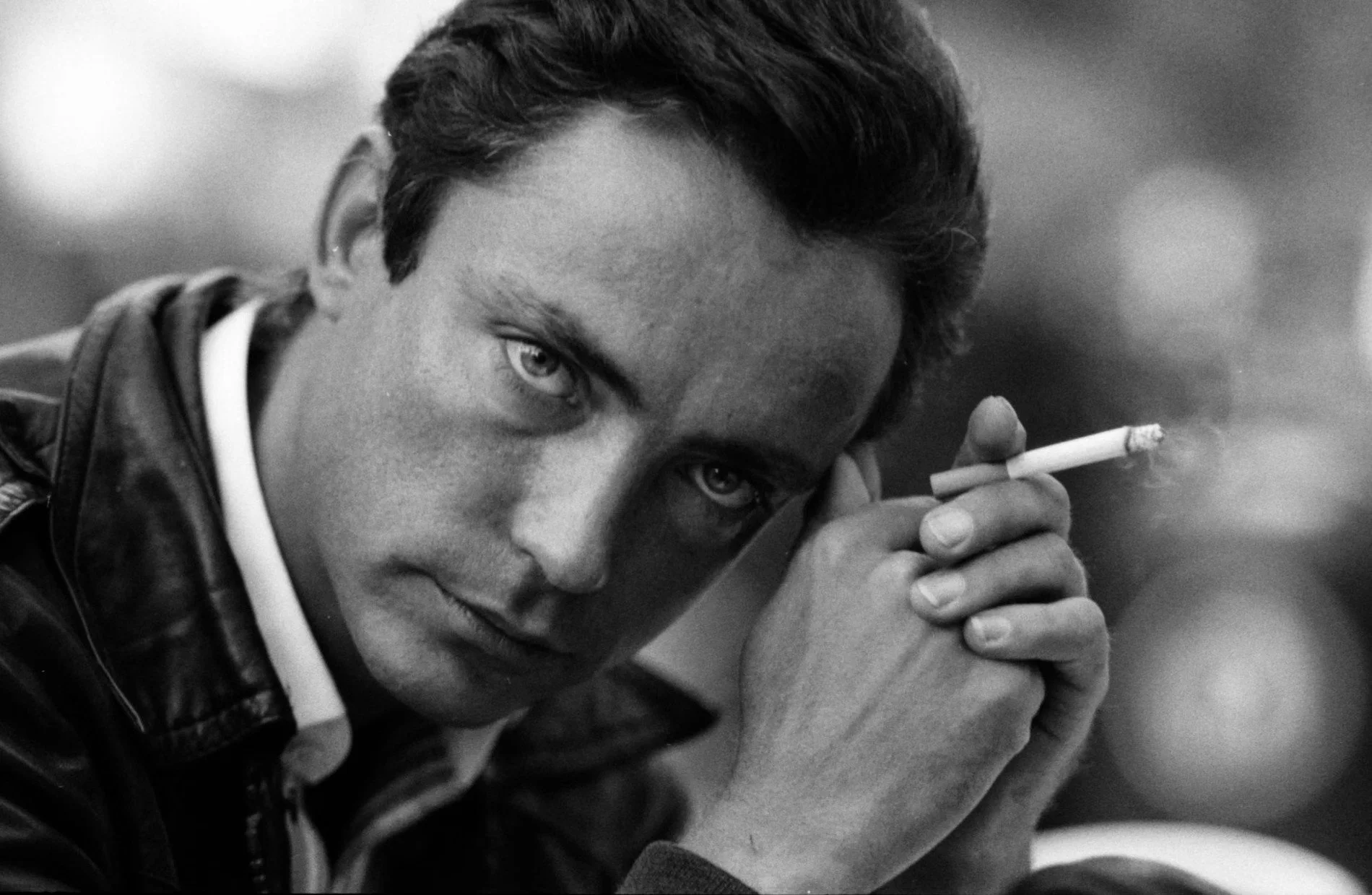


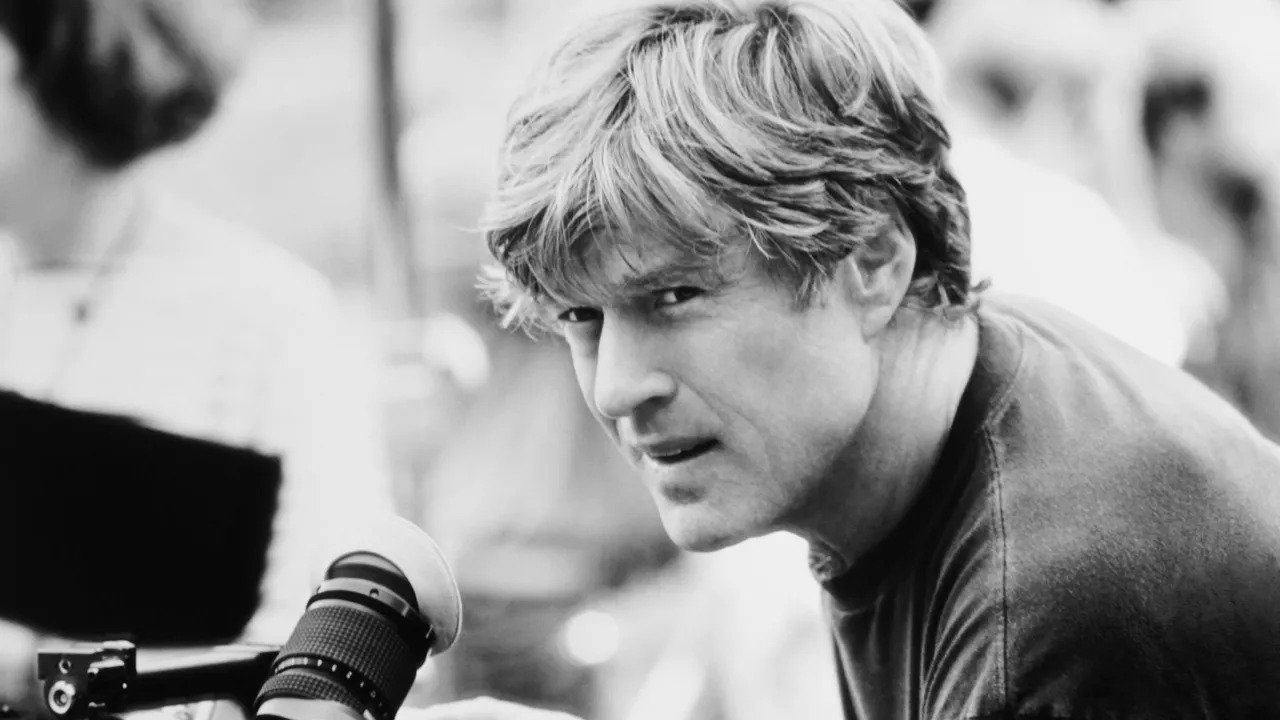







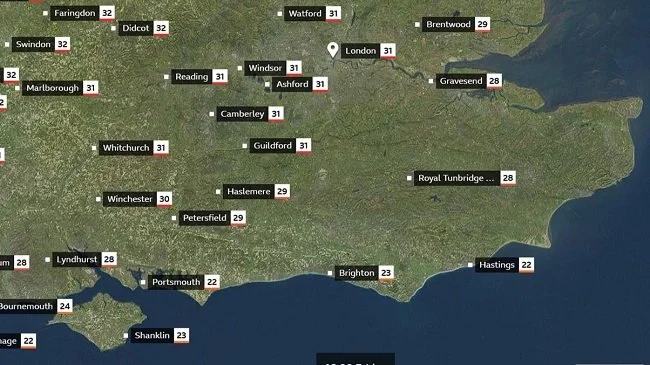




The Living Daylights (1987)
Timothy Dalton is possibly the most technically accomplished and prestigious actor to have played the iconic MI5 agent, James Bond. He was in fact asked by Cubby Broccoli to play the role back in 1969 shortly after Connery's departure from the franchise. Broccoli had been impressed by Dalton’s performance in The Lion in Winter. However, Dalton himself felt he was too young for the job at the time. After Roger Moore retired from the role in 1985 it looked like Pierce Brosnan would certainly to get the part. However, due to contractual reasons and prior commitments, he was not unable to fulfil the proposed shooting schedule. So, Dalton landed what was at the time, the most prestigious action role in film making, by default.
Timothy Dalton is possibly the most technically accomplished and prestigious actor to have played the iconic MI5 agent, James Bond. He was in fact asked by Cubby Broccoli to play the role back in 1969 shortly after Connery's departure from the franchise. Broccoli had been impressed by Dalton’s performance in The Lion in Winter. However, Dalton himself felt he was too young for the job at the time. After Roger Moore retired from the role in 1985 it looked like Pierce Brosnan would certainly to get the part. However, due to contractual reasons and prior commitments, he was not unable to fulfil the proposed shooting schedule. So, Dalton landed what was at the time, the most prestigious action role in film making, by default.
By 1987 there had been a major shift in the production of action movies. The traditional spy genre was in decline. "Cop Buddy" films were becoming increasingly popular and relying more on the major set pieces to bolster their appeal. The ubiquitous action hero was being transformed by such films as Lethal Weapon, Die Hard and Rambo. The expensive and complex action sequences that had for over a decade had been the exclusive province of the Bond franchise, were now becoming common place in many other movies. The competition was raising their game, so Bond needed to modernise and shake off some of the more archaic aspects of his heritage if he wished to remain a viable franchise. The change of actor presented the production with an ideal opportunity to address this very issue.
Director John Glenn decided to use Daltons acting skills as an opportunity to go back to basics and return Bond to the character found in the Fleming’s books. Out went the one liners to soft pedal the violence, that Moore had made his own during his tenure. The screenplay by Ricard Maibaum and Michael J. Wilson therefore maintained the charm along with the panache but it also introduced a ruthless and somewhat cold edge to Bond’s personality. Furthermore, the plot was dialled back from previous extremes to tell a more grounded story set in against the contemporary issues of the time. As a result, Bond this time round, finds himself up against rogue KGB officer, General Georgi Koskov (Jeroen Krabbé), who rekindles an old feud between the two governments respective security services, as a cover for his illegal arms and drugs trafficking in Afghanistan. As another concession to changing times was a subtle reduction in Bond’s promiscuity and a female lead (Maryam d'Abo) who had more depth than usual.
The Living Daylights is therefore a revisionist entry into the series. It stands out along with On Her Majesties Secret Service and For Your Eyes Only as being closer in spirit to the source text. As ever with the franchise this instalment has some very good action sequences and the hand to hand fights scenes are gritty and tough. This was the first film where Bond head butts an opponent, a move that had previously deemed “out of character”. The villainous Necros (Andreas Wisniewski) has a particularly vicious fight with a MI5 agent and at a one point, holds his face against a hot grill. It is a notable change of tone from the camper Roger Moore era. The Living Daylights also has less reliance on the ubiquitous gadgets of "Q" branch. They are present but not quite as preposterous. The overall effect of all these changes was to bring the series back in touch with reality after decades of excess and comic banter.
The Living Daylights also marks the last soundtrack in the Bond franchise to be scored by the great John Barry. He had up until this point written the score for eleven of the Bond films. His contribution to Bond per se is invaluable and certainly his unique lush style helped shaped the image and perception of the character. The title song for the movie, by Swedish band A-ha (Co-written by Barry) works very well as a signature motif throughout the film. The music cues used during Bonds roof top escape in Tangiers and the airfield battle in Afghanistan make use of clever variations of this theme. The film also features two songs by The Pretenders, who at one point were contracted to provide the title theme. However, the producers felt that A-ha were more commercially viable and hoped to repeat the success that they’d had with Duran Duran in the previous film. As ever the material from The Pretenders is of a high standard and Barry manages to work instrumental arrangements of both songs into both the romantic and action scenes. However, it is the piece Barry composed for the "Mujahadin" that stands out the most in the film. Its simplistic beauty encapsulates his talent and remains an example of his finest work.
The pre-digital visual effects work in The Living Daylights are also of note. Industry veteran John Richardson does wonders with traditional methods and techniques. The scale model Lockheed C-130 Hercules used at various points in the film is utterly convincing and the destruction of the Afghan trestle bridge at the film climax, is achieved by the use of a foreground miniature. The aerial sequences featuring stuntmen BJ Worth and Jake Lombard still impress thirty years on. Once again this proves how physical effects and genuine stunts have a great sense of credibility over their computer-generated counterparts. The climactic battle between Bond and Necros in the open cargo bay of a Hercules transporter is a benchmark in eighties action sequences.
Despite changes in public tastes and attitudes The Living Daylights still performed well at the box office. Critically the new bond movie met with a mixed reception but by and large Timothy Dalton was praised. His performance it tonally spot on and his acting range is more than adequate for the scope of the role. As an action movie it is well structured, involving with first class production values. As a Bond movie The Living Daylights has enjoyed a reassessment in recent years and is now seen as a wise change in the franchise’s game plan. However, as the eighties were drawing to a close, the producers were becoming increasingly concerned about the future of the franchise. They decided to tackle the competition head on with the next entry but the radical change in tone along with poor marketing ended up putting James Bond on hiatus for the next six years. It’s a shame because Dalton was never given an adequate chance to build a relationship with fans. I suspect he could have gone on to have made at least two more compelling movies but sadly he fell victim to production delays that ensued.

Hitman (2007)
Hitman apparently had a troubled production and it took several years for Eidos and IO Interactive to find studios that were prepared to finance and distribute the project. It was originally intended as a vehicle for Vin Diesel and he is still credited as an executive producer on the film. Various directors were associated with the project until Xavier Gens finally took the role. Gens was riding high at the time in France due to the critical success of his previous movie Frontier. However, stepping into mainstream corporate film making was a baptism of fire. The movie was subject to numerous re-writes and a lot of his material was reshot at the studios request. Locations were changed and plot devices were altered resulting in a very chaotic production. However, considering all these problems, the theatrical release of Hitman was not the disaster that some expected or claimed it to be. It’s actually a well-paced action film with good set pieces, a competent cast and an unusual setting. Is it high art? No. Is it satisfactory entertainment? Yes. However, I speak as someone who has no major attachment to the video game franchise that inspired it. Fans may differ.
Hitman apparently had a troubled production and it took several years for Eidos and IO Interactive to find studios that were prepared to finance and distribute the project. It was originally intended as a vehicle for Vin Diesel and he is still credited as an executive producer on the film. Various directors were associated with the project until Xavier Gens finally took the role. Gens was riding high at the time in France due to the critical success of his previous movie Frontier. However, stepping into mainstream corporate film making was a baptism of fire. The movie was subject to numerous re-writes and a lot of his material was reshot at the studios request. Locations were changed and plot devices were altered resulting in a very chaotic production. However, considering all these problems, the theatrical release of Hitman was not the disaster that some expected or claimed it to be. It’s actually a well-paced action film with good set pieces, a competent cast and an unusual setting. Is it high art? No. Is it satisfactory entertainment? Yes. However, I speak as someone who has no major attachment to the video game franchise that inspired it. Fans may differ.
I have often said that the action genre was in many ways, at its peak during the eighties. Although contemporary films can offer more sophisticated production values, back then movies had superior editing, physical stunts and most importantly, no requirement to pander to prevailing social trends or political dogma. As a genre they ran on their own internal logic and that was sufficient to sustain them. In this respect Hitman is a throwback to that era. It does not feel the need to provide the protagonists with an in-depth back story. It is simply not important to know the complexities of the title characters background. This is a genre movie and not a human drama. The esoteric nature of agent 47 is part of the character’s appeal. To explore it too far would be to negate his enigma. Mercifully, the film does not make this mistake. The dialogue is spartan and functional. There are hints at there being hidden depths to agent 47 but they are not dwelt on. The primary focus on the movie is the action, which is what fans expect from this sort of material.
Timothy Olyphant is suitably remote in the central role, yet still accessible and credible to viewers. He establishes a good rapport with Olga Kurylenko, who plays a material witness to a complex plot of subterfuge. He also acquits himself well in the action sequences, particularly the four-man sword fight, which is very well choreographed. The use of Eastern European locations, the involvement of Luc Besson and international pedigree of the film crew makes the film more exotic than usual. Hitman has quite a different look and feel than that of your typical US based action film. The globe spanning story line further broadens the appeal. The stunt coordination is solid and delivers the level of carnage associated with the franchise. However, it should be noted that like so many modern films of this genre, there are multiple versions available. The R rated theatrical print is quite strong but the unrated version certainly increases the levels of onscreen violence. It is this version that is currently available on Blu-ray in most regions.
The critics were not kind to Hitman upon its release, finding it hard to see any virtue in it. I personally can think of numerous other films based on video games that have been a lot worse. However, if you have a strong emotional connection to this particular series, then this may be a little too superficial for you. But that is the nature of screen adaptations of popular gaming franchises. They take the major themes, or aesthetic trappings of the source material and try to explore in a different way. Therefore, if you are a more forgiving action film aficionado, Hitman is a perfectly adequate genre offering. This mainly due to the respective performances by Timothy Olyphant and Olga Kurylenko. As ever, out of the two edits of the film, my recommendation is with the unrated version. It does gives the action scenes a more visceral edge. Sadly, the respective virtues of Hitman were not present in the 2015 reboot, Hitman Agent 47. That curious movie reeks of film making by focus group.
Orc Wars (2013)
Having recently sat through Orcs! I decided to take a further chance and watch Orc Wars. It too is a very low budget film, although this time the finances were raised through crowdfunding. Sadly, it is not the fun, tongue in cheek, independent adventure movie the trailer and associated marketing implies. There is very little merit in this production. It's cheap, cheerful and although harmless, it clearly demonstrates that not all fan funded projects are good cinema. Some are just indulgences. The problem is in the title itself, which tries to sell an idea that the movie production is incapable of delivering. Instead of the spectacle of an army of a thousand Orcs pitted against the technological might of the US war machine, we get a few extras in ill-fitting costumes, running skirmishes against no-name actors on quad bikes and a few old Army Surplus vehicles. It's all rather lacklustre and underwhelming.
Having recently sat through Orcs! I decided to take a further chance and watch Orc Wars. It too is a very low budget film, although this time the finances were raised through crowdfunding. Sadly, it is not the fun, tongue in cheek, independent adventure movie the trailer and associated marketing implies. There is very little merit in this production. It's cheap, cheerful and although harmless, it clearly demonstrates that not all fan funded projects are good cinema. Some are just indulgences. The problem is in the title itself, which tries to sell an idea that the movie production is incapable of delivering. Instead of the spectacle of an army of a thousand Orcs pitted against the technological might of the US war machine, we get a few extras in ill-fitting costumes, running skirmishes against no-name actors on quad bikes and a few old Army Surplus vehicles. It's all rather lacklustre and underwhelming.
Ex-Marine John Norton (Rusty Joiner) buys a ranch in the remote American West hoping to escape from his troubled past. He subsequently encounters Elven Princess Aleya (Masiela Lusha) who has fled her home world via an interdimensional portal and is marooned on Earth. A convenient blind Native America Mystic called Whitefeather (Wesley John) informs Norton that he is the appointed guardian. He must defend the Princess from a marauding army of Orcs who wish to use her power to release their dragon god. After the simplistic narrative has been clumsily explained there then follows a series of low budget action scenes involving plastic replica guns with CGI muzzle flashes, along with some indifferently choreographed and poorly edited fight scenes.
The main saving grace of Orc Wars, is the fact that the Orcs themselves look pretty good. It’s clear that the producers spent most of the films meagre budget on the costumes and prosthetic effects. If you think that Orcs look and feel very similar to those seen in Peter Jackson’s The Lord of the Rings Trilogy, there's a specific reason for that. Apparently, props and costumes can be rented from Weta studios when not in use. However, the Orcs themselves cannot save this movie. The dialogue is poor as is the acting but there is a degree of convictions from the cast and director Kohl Glass. However, enthusiasm will only carry afilm so far. The cheeky homage to Zulu at the end of the movie made me spit my drink across the room. If you buy in to the notion of "it's so bad, it's good" then Orc Wars is an amusing ninety-minute diversion. Otherwise, best avoid it.
Orcs! (2011)
As a fan of the horror genre I’ve sat through numerous low budget films in my time. This has usually been at festivals or conventions. Sometimes watching something as part of a group, with likeminded individuals, makes a difference. You find yourself groaning in unison and the shared experience helps compensate for potential deficiencies. Watching questionable material in the comfort of your own home, purely on your own can be a lot tougher. However, due to my abiding love of the genre, I am prepared to cut a lot of cheap ass indie flicks considerably more slack than I would others. So, I'll endeavour to review Orcs! with as much impartiality as possible. Oh, and before we start, let us clarify the term Orcs. Although Middle-earth is not referenced in any way, this film is definitely about Tolkien's creations. Or at least their depiction in another well-known series of films.
As a fan of the horror genre I’ve sat through numerous low budget films in my time. This has usually been at festivals or conventions. Sometimes watching something as part of a group, with likeminded individuals, makes a difference. You find yourself groaning in unison and the shared experience helps compensate for potential deficiencies. Watching questionable material in the comfort of your own home, purely on your own can be a lot tougher. However, due to my abiding love of the genre, I am prepared to cut a lot of cheap ass indie flicks considerably more slack than I would others. So, I'll endeavour to review Orcs! with as much impartiality as possible. Oh, and before we start, let us clarify the term Orcs. Although Middle-earth is not referenced in any way, this film is definitely about Tolkien's creations. Or at least their depiction in another well-known series of films.
Orcs! is a modestly budgeted, independent comedy horror film, set in the fictitious Balancing Rock National Park. Ranger Cal (Adam Johnson) along with Cadet Ranger Hobart (the well-cast Maclain Nelson), discover that the parks visitors and staff are being brutally slain by an unseen force. Aided by Cal's ex-girlfriend and militant environmentalist, Katie (Renny Grames), the trio incompetently investigate the situation. It soon becomes apparent that the spate of deaths is not the work of rogue bears or bigfoot but a band marauding of Orcs (who have arrived and started killing folk for “some particular reason”). Cut off and enable to escape the park, our heroes make a last stand, vowing to make the Orcs sorry they messed with the US Parks Service. Low budget mayhem ensues.
Orcs! is very much a mixed bag. It starts with some fairly broad humour, setting up the central characters. I did find myself warming to the two leads. The action scenes and violence is not to strong and is often mitigated with a wry joke or quip. The Orcs themselves are fairly well realised. Considering the budget, the costumes and armour are well designed. The films greatest assets are several rather clever homages to Peter Jackson's trilogy. Hobart lampoon's Aragorn's tracking skills in a clever pastiche. There are also parallels with the battle of Helm's Deep. The use of drums to denote the massing of the orcs is another clever cinematic homage. Director James MacPherson, even manages to include nods to John Carpenter's Assault on Precinct 13 and James Cameron's Aliens. As is so common in indie flicks of this nature, the film makers do like to heap praise upon their cinematic idols.
But despite these endearing qualities, there are major plot holes and a lack of quality material to adequately fill the eighty-minute running time. Now, with this genre of film, it is not wise to de-construct the plot too much. Genre movies often run on their own unique internal logic. Yet a glaring mistake is made and perpetuated throughout the film. Towards the end, as the Orcs lay siege to the Rangers Headquarters, our heroes discover that the enemy hates the light. Yet for the previous thirty-five minutes, the Orcs have happily been running about in broad daylight. The final battle is also far too long and insufficiently action packed to merit its ponderous running time. I appreciate that financial constraints may well have been an impediment to the director’s vision, yet a more adept production would have been a little more innovative with the resources they had.
By and large I did enjoy Orcs! as I’ve always had a supportive streak towards this sort of production. Irrespective of the film deficiencies, I applaud all involved for at least attempting to do something different. It could be argued that with a larger budget and more involved script, the film would have been superior. Ten minutes of the running time could have been taken from the ending and used earlier on in the film to the productions overall advantage. It certainly would have helped to have explored the Orcs back story some more. As it stands, Orcs! is a flawed but creative low budget genre movie. If you have a broad liking for such movies and enquiring nature, then give it a go. If you like mainstream material and have a low threshold of tolerance for anything that isn’t slick, polished and “Hollywood” then you’d best give it a miss.