
The Next Big Thing
I was chatting with a few fellow gamers recently and was asked if I had pre-ordered any new up and coming titles, such as The Crew 2 and Anthem. They seemed surprised when I responded "no". I subsequently explained that I had reached a stage in my life where I was beginning to tire of hype, false expectations, the continual internet chatter and the crap that accompanies being an early adopter. I think that the whole Star Wars: Battlefront II debacle pretty much put it all into perspective for me and I just don't see the point in going through all that again. Then the subject of early access and soft launches came up and I similarly pointed out that I wouldn’t be jumping on the Sea of Thieves bandwagon either. I like to buy a game when it’s finished and therefore get an entire product. I don’t have to be part of the crowd that’s playing any game on day one of launch.
I was chatting with a few fellow gamers recently and was asked if I had pre-ordered any new up and coming titles, such as The Crew 2 and Anthem. They seemed surprised when I responded "no". I subsequently explained that I had reached a stage in my life where I was beginning to tire of hype, false expectations, the continual internet chatter and the crap that accompanies being an early adopter. I think that the whole Star Wars: Battlefront II debacle pretty much put it all into perspective for me and I just don't see the point in going through all that again. Then the subject of early access and soft launches came up and I similarly pointed out that I wouldn’t be jumping on the Sea of Thieves bandwagon either. I like to buy a game when it’s finished and therefore get an entire product. I don’t have to be part of the crowd that’s playing any game on day one of launch.
I’m frequently unimpressed with the pre-order bonus items associated with buying in advance, as they’re seldom of any real benefit and often smack too much of a cash grab. I appreciate that game developers need to get cash up front, but if I am to spend money prior to a game’s release I want a tangible incentive, not just baubles and trinkets. Plus linking beta testing to pre-orders strikes me too much like hedging your bets. I think it is important to try before you buy these days, as gaming often requires a sizeable cash outlay if you want the full product. To gate beta testing behind a pre-order does seem counter intuitive, potentially alienating many of those who would under other circumstances, be happily testing your product for free. $60 (or more if you want a season pass as well) is a lot to spend on a product that may not eventually be to your liking. I beta tested many MMOs in the past and didn’t buy all of them.
I also have doubts over the future of the MMO genre, so would rather wait a while before purchasing any of the new titles currently in early access. Hence Project: Gorgon and Crowfall remain on my radar through news feeds rather than first-hand experience. I want to see if they succeed or fail and what sort of community grows around them. In the meantime, there are plenty of smaller releases that I am interested in. However, these are not MMOs so do not have the any of the potential risks or problems. I am eagerly awaiting Frogware’s The Sinking City, for example. It won't have the any of the hype and marketing impetus of any of the major studio releases this year, but it will arrive on time and in good order, doing hopefully everything that it's more measured sales campaign promises. I find that many of the smaller game developers still have a sense of perspective and tend not to over sell their products.
The cult of "the next big thing" and the early adopter is really a state of mind. I recently spent some time perusing old titles via Steam and Origin, looking at established games that were over two years old. Such products have usually been patched and fine-tuned, eliminating any bugs. There is also a wealth of online resources should a player require any assistance. Then of course there is the massive price differential. The latter is a very important factor. The net result of my search was that I found the RPG The Witcher 3: Wild Hunt GOTY Edition available via for £15, if you shop around online. Let it suffice to say that unless you need to be at the cutting edge of gaming, you can avoid the respective baggage that accompanies “the next big thing” and find comfort and satisfaction with last year’s titles. Sadly, too many people still are enamoured by pre-order culture and “being there” on day one. Until this culture changes, the egregious bonuses and tat that come with premium pre-orders will continue to blight the industry.






The X-Files: I Want to Believe (2008)
I always enjoyed watching The X-Files and was bitterly disappointed by the way the series ended. It was abrupt, lacklustre and inconclusive. So naturally I was interested when I heard that the franchise was to be resurrected for another cinematic outing in 2008. I, like so many fans, was curious to see how the characters would be developed and whether if any of the more famous story lines would be developed for this second cinematic outing. The fact that series creator, Chris carter, was to direct the film increased my expectations. However, the film that was finally released (at the height of the summer, amid so much competition) was quite different from what the public were expecting.
I always enjoyed watching The X-Files and was bitterly disappointed by the way the series ended. It was abrupt, lacklustre and inconclusive. So naturally I was interested when I heard that the franchise was to be resurrected for another cinematic outing in 2008. I, like so many fans, was curious to see how the characters would be developed and whether if any of the more famous story lines would be developed for this second cinematic outing. The fact that series creator, Chris carter, was to direct the film increased my expectations. However, the film that was finally released (at the height of the summer, amid so much competition) was quite different from what the public were expecting.
Former FBI spooks Mulder (David Duchovny) and Scully (Gillian Anderson) are reinstated to investigate the mysterious abduction of a young female agent. They are assisted by a psychic ex-priest who has been defrocked over child molestation (Billy Connolly). As the agents struggle to unravel the secrets of Father Joseph's visions they also have to confront some personal demons of their own. Whilst unravelling a plot involving bizarre experimentation, Mulder and Scully struggle with their relationship and a sceptical pair of FBI colleagues. There are no conspiracies, shoot outs, alien activity, CGI, or major explosions. The film is curiously low key in both its plot and production.
Unlike the first feature film, the plot does not focus on the series' established "mythos" and instead works as a standalone story, similar to many of the "monster of the week" episodes that were frequently seen in the TV series. This has been done in an attempt to appeal to a broader audience, but ultimately works against the film. It all seems a little too understated and un X-Files-ish. The only above average aspect of the movie is Billy Connolly's performance. But one good performance is not enough to sustain this sort of movie. Also, the major selling point of the original series was the unrequited relationship between the leads. This film ruins this mystique by finally settling the storyline. Mulder and Scully together as an item simply does not work.
The X-Files: I Want to Believe has a strong degree of moralising and religious debate, which is far from subtle. Connolly's character raises several ethical issues, but the script seems ill equipped to explore them to any satisfaction. All things considered, this really is a bit of a misfire. It does seem strange that a major studio such as Fox would bring a franchise out of retirement simply for such a basic film. I'm sure writer and director Carter was attempting to go back to basics and not be artistically fenced in by previous material. Unfortunately, I think he took too many steps back on this one and we are left with a film that is content to be no more in-depth than an average TV episode.








Let the Gamer Beware
Gaming is a very interesting and unique industry. It has evolved a great deal over the last three decades and now deals in virtual products. It’s a far cry from traditional notions of business. Yet despite its modern trappings it is still driven by the same processes and imperatives of any other sector. Therefore, should a customer really treat it any differently? The reason I ask is because it seems to me that gamers have a very different relationship with their respective vendors, compared to other groups of consumers. It is a relationship that I believe to be somewhat skewed and therefore detrimental to both parties.
Gaming is a very interesting and unique industry. It has evolved a great deal over the last three decades and now deals in virtual products. It’s a far cry from traditional notions of business. Yet despite its modern trappings it is still driven by the same processes and imperatives of any other sector. Therefore, should a customer really treat it any differently? The reason I ask is because it seems to me that gamers have a very different relationship with their respective vendors, compared to other groups of consumers. It is a relationship that I believe to be somewhat skewed and therefore detrimental to both parties.
Whether you are buying a house, a new TV or loaf of bread at the supermarket, all business transactions are governed by a basic contract. Goods or services are exchanged for money. Furthermore, those goods and services must abide by a set of pre-agreed criterion. If these are not met, then the goods or services are not fit for purpose and the contract is null and void. The transaction is subsequently cancelled. If funds were paid in advance, then they are returned. There is a logical purity to the process. As a consumer this procedure should be your abiding philosophy and caveat emptor (“let the buyer beware”) your personal mantra. Obviously, consumer legislation has layers of complexity and may vary from region to region, but the basic tenets are universal.
Bearing this in mind let us turn our attention to the gaming genre, specifically MMOs. They are a curious product to begin with. Until recently, initial payment only allowed you to use the client software for first thirty days. To continue using it, a subscription was required. This has changed recently, and the basic product is now given away free, with revenue coming from the sale of enhancements and premium services. Yet despite all this, the business model is still subject to the traditional contract. Therefore, if the vendor defaults in anyway on their obligations, then the buyer has appropriate legal recourse, within the terms and conditions of the service.
Unfortunately, gamers do not simply buy a product and view the transaction with dispassionate and logical legal acumen. Gamers bring enthusiasm and fandom to the equation. Games evolve, and player participation and feedback contribute to that process. The love and time that gamers invest into an MMO elevates the process above a simple business transaction. This is a very big factor in shaping the way gamers perceive their business relationship with the developers. In fact, some lose sight that it is an actual business relationship and see it more as some sort of reciprocal partnership. This is where the problems begin.
Because MMOs are so dependent on customer feedback there is a requirement for forums and an overall dialogue with the player base. This in some ways transcends traditional customer services and takes on a broader role. There is a practical need for a centralised point of information and therefore the role of community manager arises. I consider this to be a contributory factor to the blurring of customer, vendor relationship. Most other businesses have customer service or support. They serve their purpose in providing paying customers with the ancillary service they are due, but they do not alter the dynamics of the relationship. A community manager by their very title infers a community that needs to be "managed", which in turn changes customers with statutory rights into a different group altogether.
Communities in the wider world have a voice. Often, they are solicited by politicians and as such, have power as a lobby group. When this sort of terminology is used with regards to gamers, there is the risk of that they will assume a wider degree of involvement and of their own importance. It is this misinterpretation of what each respective group’s role is, that causes problems. Now consider the gamers above average emotional investment into the products that they are buying. People seldom have a comparable bond with the company that manufactured their fridge. Some fans therefore confuse support and interaction with a vicarious form of co-ownership. Because of roles like community manager and the personalities associated with them, the business relationship then blurs and a more personal one replaces it. It may be well meant initially, but it distorts matters and not for the better. Game developers are commercial entities and making money is their raison d'etre. This should never be forgotten. Ultimately "community management" and other "soft skills" are done out of necessity. They are not driven by altruistic notions and are not providing some sort of benevolent social service for the "greater good". They want your money and will do whatever is required to get it. The vendor is not a friend.
If you use a supermarket and get poor service, you will either complain or more than likely just vote with your feet and never return there again. If you buy a high value electrical item from an established company and find the product faulty as well as the customer support wanting, again you will probably just refrain from purchasing from them in future. As a consumer you may tell others of your bad experience, but you will ultimately get over the matter. After all it is a question of maintaining a degree of perspective. Exactly how much damage has this negative experience done too your life? It not as if your family or a Shaolin Temple has been offended? Now obviously with gaming it is important to consider the time that is invested by the players into the product. This does mean that the consumer has possibly more invested and at stake than the casual shopper that I previously described. However, ultimately the personal investment is something the consumer has brought to the proceedings of their own free will. It has no bearing on the basic business contract that both groups of customers are governed by.
The closure of City of Heroes by NCSoft back in 2012, clearly illustrates this situation. Naturally fans of the game were up in arms and far from happy with its demise. There was a great deal of vocal protest and I have read such statements as "I will never by another NCSoft product" or "they'll never see a red cent of my money again". Emotions were extremely high and some of the opinions expressed seemed to be disproportionate with regard to what had actually happened. It is this type of reaction that I see all too often manifest itself across numerous fans bases. Terms like "betrayal" and "traitor" are used. I have seen these in relation to LOTRO for example. Authors such as George R. R. Martin and Jean M. Auel get hectored by fans who are far from happy with the direction the writers have taken their own creations and work. Again, this all stems from the fact that fans feel that they have some sort of collective ownership or claim to the material they love. Dare I even mention Star Wars?
Passion, fandom and a love of a particular thing can be very positive experience. Ask any scientist, musician or film makers and you'll often find that they were influenced by popular culture. Star Trek has inspired a wealth of our best current achievers. But fandom can also lead to a false entitlement and a very blinkered view of the customer, vendor relationship. Consumers are not the same as creative consultants, nor do they share equal status to those that make the products. This is especially relevant for gamers. The recent launch of Sea of Thieves is a perfect opportunity to reflect upon this matter. If you purchase this game at this point in it's lifecycle, then you need to consider the following.
The game has a finite lifespan, which is governed by its capacity to make money and what other future products the manufacturer has in its portfolio. Buying and playing the game, sinking hours of time and passion into it guarantees nothing. Being active within the wider scene, running a website, hanging out with the community manager at PAX or whatever, does not mean you have more say or clout. Your consumer rights have not altered from what they were on day one. It is very depressing to do so, but my advice is to read the terms and conditions that accompany any MMO (or any other genre of game). They often succinctly tell you exactly where you stand, which is not necessarily where you think. Therefore, let the gamer beware.
The Tree of Life (2011)
Having missed the film on its original theatrical release, I recently saw The Tree of Life as part of a retrospective of the director’s work. Contrary to what some may expect, I am not going to lambast Terrence Malick’s existential reverie. Frankly I applaud the fact that he has endeavoured to do something very different and more importantly very personal. Furthermore, the movie continues to polarise the wider cinematic community, which pleases me greatly. Sometimes there's nothing worse for contemporary cinema than popular consensus. The film certainly elicits an emotional response from viewers, often leading to a debate of the movies respective merits. Yet I consider this to be a good thing, compared to the overall indifference I often feel these days towards an increasing infantilised medium.
Having missed the film on its original theatrical release, I recently saw The Tree of Life as part of a retrospective of the director’s work. Contrary to what some may expect, I am not going to lambast Terrence Malick’s existential reverie. Frankly I applaud the fact that he has endeavoured to do something very different and more importantly very personal. Furthermore, the movie continues to polarise the wider cinematic community, which pleases me greatly. Sometimes there's nothing worse for contemporary cinema than popular consensus. The film certainly elicits an emotional response from viewers, often leading to a debate of the movies respective merits. Yet I consider this to be a good thing, compared to the overall indifference I often feel these days towards an increasing infantilised medium.
Did I enjoy The Tree of Life? No. Did I find myself in accordance with Mr Malick's sentiments, themes and ideas? No. But there again as they are somewhat nebulous, who is to say that I accurately ascertained them. I may well have ended up basing my opinion on my own assumptions and potential prejudices. To be honest, I found myself increasingly more interested in the reaction of other members of the audience as the film unfolded. Being broadly agnostic on matters of faith and spirituality, I was not strongly engaged by the director’s vision. For me the great virtue of the film is the debate that it generates. It raises far more questions than it answers. Something that has been lacking in contemporary cinema for a while.
Narrative cinema is only one approach to film making. Malick certainly does not travel from A to B in a straight line. In fact, he may not be travelling between two points at all. Some may argue that you need to engage your brain to appreciate this film. Others state the opposite and that you simply allow it to lead you through a personal emotional experience. Bear this in mind if and when you see The Tree of Life. If you are still not sure as to whether this film is for you, then consider the following press release that succinctly summarises the proceedings.
From Terrence Malick, the acclaimed director of such classic films as Badlands, Days of Heaven and The Thin Red Line, The Tree of Life is the impressionistic story of a Midwestern family in the 1950s. The film follows the life journey of the eldest son, Jack, through the innocence of childhood to his disillusioned adult years as he tries to reconcile a complicated relationship with his father (Brad Pitt). Jack (played as an adult by Sean Penn) finds himself a lost soul in the modern world, seeking answers to the origins and meaning of life while questioning the existence of faith. Through Malick’s signature imagery, we see how both brute nature and spiritual grace shape not only our lives as individuals and families, but all life.
Filled with religious imagery, philosophical musings over the creation, the birth of morality and visions of the afterlife, The Tree of Life sprawls over a two hour plus running time and pursues its themes in a very erratic fashion. The performances from Sean penn and especially the child actors are strong, although I felt Brad Pitt was somewhat lost in the proceedings. There is also a curious sound design that reflects the enigmatic nature of the film. Some of the imagery will stick with the viewer but the CGI dinosaur section was ill advised. Not because of its technical quality (which is fine) but because of the point it strives to make. Curiously enough, some of the other special effects sequences are filmed using more traditional practical effects. Supervised by Douglas Trumbull, these are somewhat reminiscent in style of Kubrick's 2001: A Space Odyssey, although that is where the similarity ends.
The rampant commercialisation of cinema, particularly in the last thirty years, has certainly reduced the public’s perception of what cinema is and what it can do, down to a very basic level. Expectations are set low and when someone dares to do something different, then it really does throw a spanner in the works. Terence Malick has created something contrary to the current game plan. Admittedly his artistic status affords him an opportunity to do so. It would not be as easy to for a fledgling director to secure the backing of a studio or such a wide distribution deal, to make such a movie. But regardless of the rights or wrongs of The Tree of Life, it continues to remind both the industry and the public alike, of the notion of that cinema can still be art. It is up to you to decide if that is the case in this instance.







007 Legends
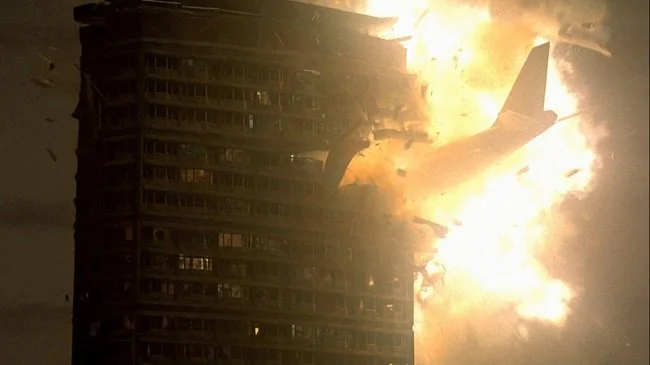
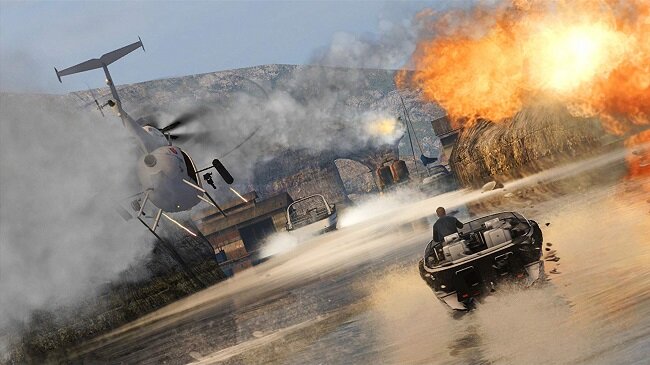
It's a curious thing that some of the most popular movie, TV and book franchises end up being made into the most tedious games. 007 Legends (released 2012) falls squarely into this category. It is woefully uninspired and lacking in any real substance. The previous game in the franchise, James Bond 007: Blood Stone released in 2010, was far from a masterpiece, but shines compared to the ineptitude of 007 Legends. Developers Eurocom seemed to have completely misjudged what it is about this particular intellectual property that the public enjoy. The results are a bastard hybrid FPS with just a thin veneer of 007 added to the proceedings. Curiously enough, this was the last game that Eurocom made before going out of business. Subsequently, 007 Legends has vanished from shelves and has been withdrawn from Steam. However, I still have a “hard” copy for the PC.
It's a curious thing that some of the most popular movie, TV and book franchises end up being made into the most tedious games. 007 Legends (released 2012) falls squarely into this category. It is woefully uninspired and lacking in any real substance. The previous game in the franchise, James Bond 007: Blood Stone released in 2010, was far from a masterpiece, but shines compared to the ineptitude of 007 Legends. Developers Eurocom seemed to have completely misjudged what it is about this particular intellectual property that the public enjoy. The results are a bastard hybrid FPS with just a thin veneer of 007 added to the proceedings. Curiously enough, this was the last game that Eurocom made before going out of business. Subsequently, 007 Legends has vanished from shelves and has been withdrawn from Steam. However, I still have a “hard” copy for the PC.
So where exactly does 007 Legends go wrong? Well to start it’s a formulaic FPS, with arbitrary stealth mechanics. The game engine is inadequate, and the game looks dated (even within the context of 2012). Like James Bond 007: Blood Stone there is a reliance on your in-game smart phone to crack security doors and hack computer systems. It’s hardly the most exciting gadget from Q branch. But it’s the narrative that’s the biggest failing. The game takes classic storylines from past Bond movies and re-imagines them as previous missions undertaken by the Daniel Craig's incarnation of Bond. Unfortunately taking such iconic enemies such as Goldfinger, Odd Job and Jaws out of their respective context doesn't really work. The banter and interaction all seem contrived and modernising these stories robs them of their period charm. It’s a real shame because there’s a grain of a good idea present, but its lost due to the poor realisation.
007 Legends is a who's who from the last fifty years of the Bond franchise, but its utterly lacking in emotional impact. Rather than capturing the spirit of Bond it simply feels like a 007 themed mod for another game. Uninspired character animation, repetitive use of similarly designed locations and appalling AI, culminate in a very dull gaming experience. Like many others, I was very disappointed with 007 Legends upon release and six years on, a second play through has not improved my overall opinion. Many of the levels are so generic, I once again found myself trying to bypass or skip content by simply running to the next checkpoint. Overall, this is a text book example of a product born of think tanks, focus groups and bean counters, who confuse bullet point summaries with true understanding. It is hardly a surprise that this game killed the Activision Bond franchise stone dead. Its subsequent disappearance may indicate that there were long term repercussions from the rights holders.

Interstellar (2014)
I have a suspicion that Interstellar is destined to be a movie that will polarise opinions for years to come. A quick visit to the IMDB already shows a divide between who hailed it as a masterpiece upon release in 2014 and others who left the movie theatre bitterly disappointed. I had mixed feeling about the film when I first saw it but was prepared to put aside its annoying foibles and embrace the bigger narrative picture. A recent second viewing has negated some of the problems I encountered first time round but overall, I still think it’s an enjoyable but cumbersome motion picture. Despite its science heavy plot and dialogue, Interstellar is very much a film about human nature. Director Christopher Nolan cleverly explores the perennial theme of how these two themes are seldom in accord.
I have a suspicion that Interstellar is destined to be a movie that will polarise opinions for years to come. A quick visit to the IMDB already shows a divide between who hailed it as a masterpiece upon release in 2014 and others who left the movie theatre bitterly disappointed. I had mixed feeling about the film when I first saw it but was prepared to put aside its annoying foibles and embrace the bigger narrative picture. A recent second viewing has negated some of the problems I encountered first time round but overall, I still think it’s an enjoyable but cumbersome motion picture. Despite its science heavy plot and dialogue, Interstellar is very much a film about human nature. Director Christopher Nolan cleverly explores the perennial theme of how these two themes are seldom in accord.
There is much to praise about Interstellar. The production design and effects are outstanding. The movie succeeds in visually realising the abstract nature of such phenomena as Black Holes, singularities and temporal anomalies. The robots that aid the crew are especially interesting as they are conspicuously non-anthropomorphic. Their design is functional as are their personalities. Christopher Nolan also wisely chooses to explore a very personal Father and Daughter relationship, set against the back drop of an ongoing global disaster. Although there are moments of spectacle in Interstellar, it is not at the expense of the human element that is essential to the story.
However, the film is flawed and at times struggles under the weight of its aspirations. The pace is languid, and where the leads get plenty of onscreen time, certain characters are woefully neglected and under developed. The final act cannot sustain itself and paints itself into a corner plot wise. After all its intellectual posturing, Interstellar settles for a rather generic Sci-fi plot device to resolve the story. There is a noticeable tonal shift and it may not sit comfortably with some viewers expectations. Imagine being beaten around the head with a science text book for two hours, only for it to be replaced by a philosophical tome at the last moment.
As with Inception, Christopher Nolan once again tries to raise the intellectual horizons of the blockbuster genre. Interstellar at time struggles to render its complex scientific themes into digestible dialogue but as experimental pictures of this nature are so few and far between, it would be short sighted to dismiss the film out of hand on these grounds. It deserves praise for trying to explore weighty themes with greater intellectual rigour than the average Hollywood movie. It should also be applauded for placing science at the heart of the plot. Especially as we live in times when critical thinking and rational thought are in decline. Knowledge and expertise are no longer exclusively viewed as laudable attributes and the “obsessed” scientist is no longer movie common movie trope.
It should be noted that Interstellar is not 2001: A Space Odyssey and doesn't strive to be so. Unlike Kubrick's movie, Christopher Nolan's is far more enamoured with the human condition. It's fundamentally about people and our nature as a species. However, it’s definitely not a movie for everyone and I would not recommend it as such. Don’t see it if you are expecting a space opera or just a story about exploration. Interstellar seeks to engage both your mind and emotions. Furthermore, it expects the audience to think. Although I found as much to dislike as I did to like, within the movie one hundred and sixty-nine-minute running time, I am glad that there are still film makers who are prepared to try something as bold as Interstellar. Sometimes a film that is imperfect can be just as engaging as one that is not.
Dredd (2012)
Dredd is clearly a movie that has been made by people who fully understand and respect the source material. This is by far the films strongest asset and helps carry the production through some of its short comings. It should also be noted that this is one of the most gritty and violent comic adaptation you're likely to see. It was rated R in the US went so far as to achieve an 18 certificate in the UK. The 3D process that accompanied the theatrical release and which is also available on the Blu-ray disc does add a rather sensationalist element to the proceedings with bullets passing through people’s faces in slow motion and blood spattering across the screen. Yet it works quite well and is reminiscent of Judge Dredd's origin on the luridly coloured pages of 2000 AD.
Dredd is clearly a movie that has been made by people who fully understand and respect the source material. This is by far the films strongest asset and helps carry the production through some of its short comings. It should also be noted that this is one of the most gritty and violent comic adaptation you're likely to see. It was rated R in the US went so far as to achieve an 18 certificate in the UK. The 3D process that accompanied the theatrical release and which is also available on the Blu-ray disc does add a rather sensationalist element to the proceedings with bullets passing through people’s faces in slow motion and blood spattering across the screen. Yet it works quite well and is reminiscent of Judge Dredd's origin on the luridly coloured pages of 2000 AD.
As soon as the movie starts viewers are dragged into the decaying, overcrowded and squalid world of Mega-City One. Crime is rampant among the 800 million strong population and the Judges provide summary justice among the city's denizens. A new drug Slo-Mo is rife on the streets, with its reality slowing side effects. Judge Dredd (Karl Urban) along with rookie partner Judge Anderson (Olivia Thirby) investigate the source of the new narcotic. The trail leads to them to a two hundred storey tower block controlled by drug baron Ma-Ma (Lena Headey). After a violent confrontation begins, the judges face having to fight their way out through an army of criminals and killers.
The story is simple and totally in accord with its central character. It is a very targeted production which after opening with establishing shots of Cape Town doubling as Mega-City One, becomes confined mainly to the tower block and surrounding locations. The production design by Mark Digby is very creative and certainly does as much as it can with the movies modest budget. Cinematographer Anthony Dod Mantle creates an interesting visual style by contrasting the overall decay and squalor with the beauty of the slow-motion scenes when people partake of the drug Slo-Mo. The visual effects are stylised and better than I was expecting. CGI violence seldom can compete with physical effects, but it mainly works within this production, suiting the required style.
Alex Garland's script is minimalist and very much in the right idiom. As a result, we get a Judge Dredd who has little to say and remains somewhat of an enigma. The jury is still out as to whether he is an iconic old west style hero or an über fascist. Karl urban excels in the role and firmly keeps his helmet on, which will please the purists. For those looking for a greater character development, Olivia Thirby has somewhat more to do, but overall the narrative is lean on both plot and back story. One can argue that this is all that is required for such a movie, although I would point out that John Carpenter's Assault on Precinct 13 managed to explore similar themes with much more rounded protagonists.
Pete Travis directs with confidence an does not shy away from the nature of the central character. The main reason the 1995 adaptation of Judge Dredd failed, was because it stripped away all the harsher elements of the plot and replaced them with humour, pathos and optimism. It also made the star the focus of the movie and not the character. You'll find none of that here. However, despite all its good points, Dredd does have areas of weakness. Some of the location shots in Cape Town are populated with contemporary vehicles and props that break the immersion. The use of slow motion in some of the action scenes does become a little repetitive at times. The opening narration could have been better and perhaps a little more back story on some of the characters would have been beneficial for narrative reasons. Also, through no fault of its own, the storyline of Dredd bares a similarity to the action movie The Raid, which was released earlier the same year. Sadly this stole some of its thunder.
Ultimately, Dredd is a very solid action film and a rare example of a good comic adaptation. It sticks to its guns (no pun intended) and give the fan base what it wants. There was upon release and remains now, scope for a franchise, although to date this has not happened. As is stand Dredd is a commendable, honest and old school action movie that dares to buck the trend and go for a higher rating, rather than dilute its content in pursuit of wider commercial success. It once again proves that if you want to adapt a comic-based franchise successfully, you need to understand it fully and stay true to its core ethos. Hollywood take note. This is how it's done properly.






Ask a Policeman (1939)
I was raised on old black and white films as a child. My parents age and personal tastes meant that I had exposure to a lot of material that people today may be oblivious to. This was especially true with regard to pre-war UK comic luminaries such as Arthur Askey, Old Mother Riley and Will Hay. I am very grateful in a way, as it has afforded me the opportunity to broaden my cinematic horizons and cultural references. Comedy is also an interesting social barometer of the times and can be quite a useful tool for historians. Its curious how something change there are certain comic tropes that are timeless. Often these are fundamental aspects of the human character but not necessarily the best ones.
I was raised on old black and white films as a child. My parents age and personal tastes meant that I had exposure to a lot of material that people today may be oblivious to. This was especially true with regard to pre-war UK comic luminaries such as Arthur Askey, Old Mother Riley and Will Hay. I am very grateful in a way, as it has afforded me the opportunity to broaden my cinematic horizons and cultural references. Comedy is also an interesting social barometer of the times and can be quite a useful tool for historians. Its curious how something change there are certain comic tropes that are timeless. Often these are fundamental aspects of the human character but not necessarily the best ones.
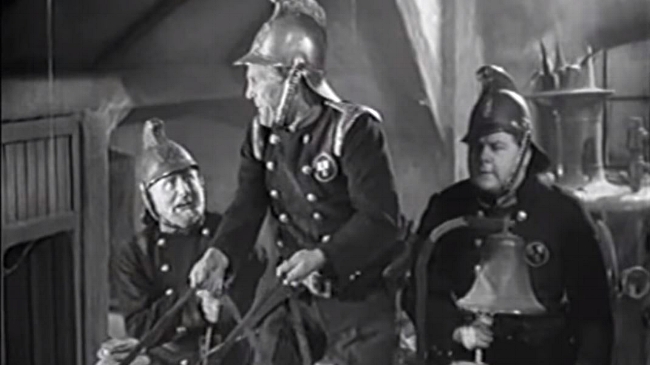
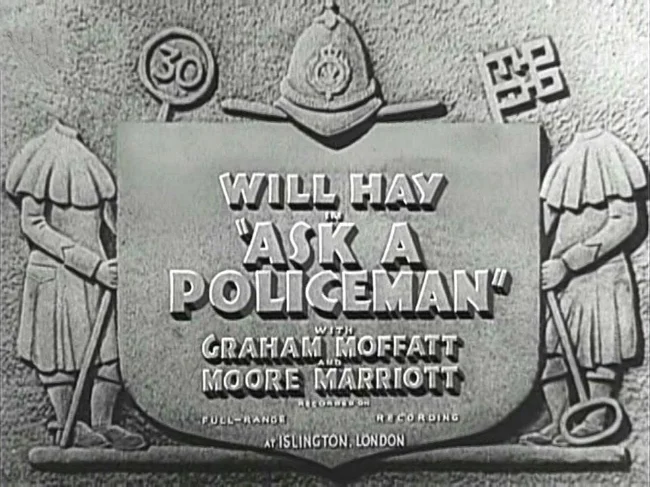
As a result of my youth, I am a consummate Will Hay fan. I find the seedy, incompetent characters that he created to be timeless. There often a lot of substance to his various incarnations, along with cynicism and moral ambiguity. Unlike US comedies of the time, there is also a conspicuous lack of sentiment. The humour is often linguistic, self-deprecating and sarcastic rather than physical and is more sedately paced, compared to the hard-hitting style of today. Although many consider Hay's finest work to be Oh, Mr. Porter! or My Learned Friend, I have a soft spot for the formulaic but enjoyable Ask A Policeman from 1939. It’s a very accessible example of Hay's work and exhibits many of the traits I have listed.
The first half of Ask A Policeman is vintage Hay, which concentrates on the superbly scripted verbal sparring between himself and his usual associates Graham Marriott and Moore Moffatt. The banter is very well observed, and its dry quality still makes it easily accessible. Take for example the following scene where Dudfoot and his two constables have made an arrest.
Sergeant Samuel Dudfoot: Did you search him?
Constable Albert Brown: One pocket book, one watch, one pen-knife and no money.
Sergeant Samuel Dudfoot: One pen-knife and no what?
Constable Albert Brown: No money.
Sergeant Samuel Dudfoot: Come on, turn out your pockets.
Constable Albert Brown: Oh, alright. One pen-knife and fifteen bob.
Sergeant Samuel Dudfoot: Blimey! Will you never learn to be honest? He's as much our prisoner as he is yours... Here you are, five bob each.
The story then broadens to encompass smugglers, headless horsemen, and a poorly conceived bus chase, which unfortunately bears to many similarities with Oh, Mr. Porter! However, these changes in pace and direction do not spoil the film overall and it still remains engaging during it's relatively short eighty-minute running time. I would recommend Ask A Policeman to those who have an interest in classic British comedy and vintage acts that have their roots in music hall and variety.
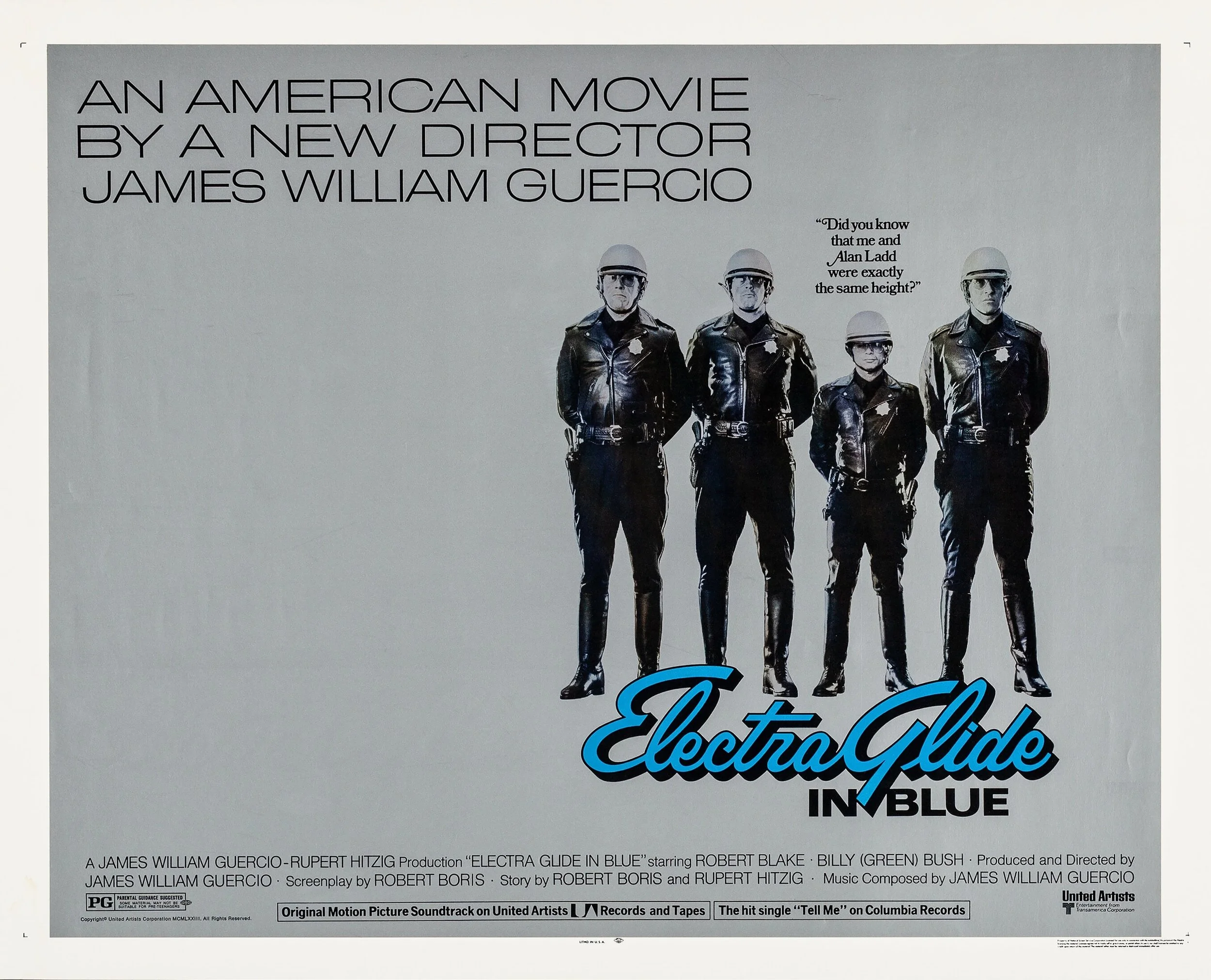
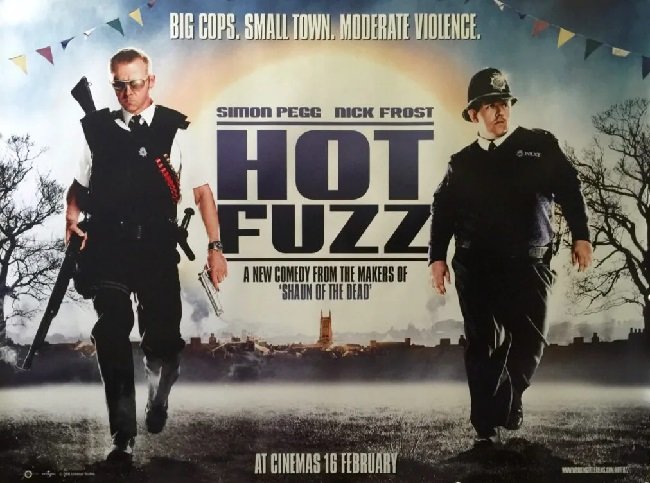
Oddly enough, the film was remade in 1982 by British comic duo, Canon and Ball, under the title The Boys in Blue. Unfortunately, it was rather poorly implemented and lacked the subtly of the original, mainly due to the stars somewhat limited comic abilities. Some folk have tenuously tried to link Edgar Wright's 2007 movie Hot Fuzz to the Hay original, but I believe that is stretching a point.




A Question of Time and Patience
Every couple of days or so, I log into Dauntless and spend an hour or two hunting beasties. I really enjoy the monster hunting but certainly feel that the quests, crafting and the general ancillary mechanics of the game still need working on. From what I can see the EU server appears to be pretty busy and there are certainly a lot of players in the main quest hub area. Yet despite this, I struggle at times in finding a group. It’s not that other player aren’t available. It’s that they seem unable to endure the five minutes it takes to form a four-man team. Often other players will join the group and immediately indicate that they’re good to go. However, I like to wait to see if we can get at least three players out of four, to improve the odds of combat going well. And it is this short period of waiting that seems to be a massive stumbling block for some. Hence it is all too common that some players will disappear within seconds of joining, if the game is not launched immediately.
Every couple of days or so, I log into Dauntless and spend an hour or two hunting beasties. I really enjoy the monster hunting but certainly feel that the quests, crafting and the general ancillary mechanics of the game still need working on. From what I can see the EU server appears to be pretty busy and there are certainly a lot of players in the main quest hub area. Yet despite this, I struggle at times in finding a group. It’s not that other player aren’t available. It’s that they seem unable to endure the five minutes it takes to form a four-man team. Often other players will join the group and immediately indicate that they’re good to go. However, I like to wait to see if we can get at least three players out of four, to improve the odds of combat going well. And it is this short period of waiting that seems to be a massive stumbling block for some. Hence it is all too common that some players will disappear within seconds of joining, if the game is not launched immediately.
As ever, this has got me pondering the nature of countdown timers, as well as time penalties and the whole matter of player patience in gaming. Despite the fact that match making software has to parse huge quantities of data simultaneously and still manages to collate groups within a reasonable amount of time (five minutes), players just don’t seem to have any patience. I’ve noticed the same phenomenon in other games such as Friday the 13th: The Game and Overwatch. Players will quit a group because it isn’t filling up quick enough for them, only to return a few seconds later when they hit “auto group” again and the software reconnects them. It’s curious the way that even a short wait is considered an anathema to some gamers. Often these will be the same individuals that will abandon a game, once they’re dead and unable to respawn. They’re obviously happy to forgo the XP they’ll receive at the end of the round, if they can get straight back into another alternative game. I worry that such an impatient attitude is a contributory factor towards the fractious nature of co-op games.
However, I cannot claim a position of moral rectitude on this subject as I’m far from a big fan of time penalties in games. Although I understand the logic of not instantly respawning a player back at the exact same location of where they just died, I always tend to grind my teeth while waiting to return to a game. I guess it’s comes down to the fact that the adrenaline is flowing, and you’re fired up to get back into combat. In such circumstances, measured and reasonable attitudes seldom prevail. Mercifully, I have mainly avoided most MMORPGs that have any sort of corpse run, death mechanic as I consider this to be an egregious waste of time and an unnecessary delay. There is a fine line between a sensible penalty brought about by specific events and pissing your player base off. LOTRO has a hybrid system that mixes the new with old school mechanics. If you are “defeated” you get one free “rez” on the spot which has an hour cool down. If it happens again you can either respawn using in-game currency or at the nearest rally point on the map. These have become few and far between in recent updates, resulting in further lost time as you ride back to your desired location.
Because time is the key to success in most multiplayer or co-op games as well as a finite commodity for most gamers, I guess that’s why its something that people are sensitive about. I often feel that if I only have a ninety-minute window to play an MMO, I want to use that time efficiently and ensure that it yields some results, or I achieve some goal. However, I am aware that such a mindset can slowly turn a leisure activity into a chore and leech all the pleasure from it. I’m also sufficiently old enough to have had the old adage “time is money” drummed into me. To a certain degree that is the case with the MMO genre if you subscribe or pay in some other fashion. However, as a carer and a grandparent, I like to think I can counter these feeling with a degree of patience that I’ve had to cultivate in recent years for practical reasons. It’s at this point I usually end a blog post with a quip such as “only time will tell”. However, in light of the discussion, I shall decline in this instance.
Gold!
I shall be using the term “Gold” in this post for two reasons. First off, it’s a catch-all, generic phrase that encompasses the primary currency used in most MMOs (irrespective of whether it really is called gold or not). Secondly, it means I can gratuitously crow bar Spandau Ballet references into the proceedings if I see fit. Moving on, I currently have four traditional MMOs installed on my PC, all of which have a main currency that is earned through completing quests and the vendoring of loot. Some of these games make the acquisition of gold relatively easy and others do not. Furthermore, like real life, there are rich and poor players in any MMO and usually for the same reasons. IE Investment of time, at which point you enter the economy, fiscal prudence and the old adage of money going to money. Once you’ve accumulated wealth in an MMO it’s a lot easier to maintain the flow of revenue.
I shall be using the term “Gold” in this post for two reasons. First off, it’s a catch-all, generic phrase that encompasses the primary currency used in most MMOs (irrespective of whether it really is called gold or not). Secondly, it means I can gratuitously crow bar Spandau Ballet references into the proceedings if I see fit. Moving on, I currently have four traditional MMOs installed on my PC, all of which have a main currency that is earned through completing quests and the vendoring of loot. Some of these games make the acquisition of gold relatively easy and others do not. Furthermore, like real life, there are rich and poor players in any MMO and usually for the same reasons. IE Investment of time, at which point you enter the economy, fiscal prudence and the old adage of money going to money. Once you’ve accumulated wealth in an MMO it’s a lot easier to maintain the flow of revenue.
Back in 2008 when I started playing LOTRO, earning gold was a relatively slow but balanced process. Progressing through the game, collecting quest rewards and selling your loot brought in a slow but steady stream of revenue. Occasionally obtaining a rare drop would help increase your personal wealth, once it was sold via the auction house. Furthermore, crafting gear and selling it on could prove lucrative. Then there was playing the in-game economy. One such example would involve buying health potions cheap during the middle of the week only to sell them late on Friday or Saturday evening, when players were busy raiding and demand was high. I’m sure broadly similar scenarios are applicable to other MMOs. However, these processes are not always sustainable because game economies evolve, and dedicated players end up accumulating immense in-game wealth. All of which have a knock-on effect.
In STO, the ability to earn energy credits, the games equivalent of gold, has diminished over time. Vendoring the content of your bags after running several Red Alerts (group instances), does not yield much these days. Yet because the game has a core player base that have maintained multiple alts over the last eight years, there is a lot of concentrated wealth among high achievement players. Many lockbox items are not bound and so desirable items such as ships, weapons and traits are sold at massively inflated prices on the exchange (auction house). If a new player wants a rare Tier 6 vessel they will be looking at a price of 200 to 300 million energy credits. To raise such capital would take a strategy of logging in daily on multiple alts, to run specific events. It may possibly take a year to earn such a sum. Again, you’ll find similar situations in other MMOs. It’s also the reason why gold sellers are still a thing. One year versus a few hours waiting for “Tommy” to drop off your cash.
Interestingly, I did not have any issues earning gold in ESO. I recently created a new character and spent about a month progressing to level cap. During that time, I was able to generate over 150,000 gold which is a tidy sum. It will not kit a player out in legendary quality gear, but it will cover the cost of buying equipment from the next tier down and make them ready to start grinding better gear from the endgame. Although I haven’t played Guild Wars 2 for a while, gold was not in short supply in that game, mainly due to the fact that you could buy a specific in-game currency, gems, with real world money and then convert it back into gold. Obviously, such a system does discriminate against players who don’t wish to or can’t afford to spend real money, but the exchange rate is not especially egregious. Other MMOs have a similar system that let’s player effectively buy gold legitimately. Although some would argue it cures one problem and creates another.
My last point is based more upon a hunch and a feeling, rather than something I can tangibly measure; therefore, I won’t frame it as a fact. When I started playing MMOs a decade or more ago, having a lot of gold was a demonstrable benefit. It was often (not always) a key to getting something that you needed to improve your build or something that aided your gameplay. Nowadays, the in-game store seems to be of more importance and in-game gold is not the currency you need to worry about. The role of gold seems to have diminished because its function cannot easily be monetised in an ageing game economy. Hence the focus on convenience items that can be bought for real money via purchasable currencies. Turns out that maybe gold isn’t necessarily “indestructible” and we shouldn’t “always believe in” it, now we have “the power to know”. Cue Steve Norman saxophone break and accompanying bongos.
The Power of Nostalgia
Due to blog posts by Wilhelm Arcturus and Bhagpuss, I discovered that the MMORPG EverQuest has recently reached its nineteenth anniversary. That’s quite a prodigious feat, all things considered, that a genre title can endure so long. Especially when other similar titles have gone to the wall after far shorter life cycles. The games current owner, Daybreak Game Company have just launched a new progression server, proving that EverQuest is still making money and thus is worth investing in. Beyond this, I can’t comment any further specifically about this game as it’s a one I’ve never played in the past and its highly unlikely that I ever will. What I want from a game and what this one has to offer are two very different things. However, a story such as this will often instigate a debate regarding the key to a video games longevity. One of the most common explanations is nostalgia and many gamers urge to try and recapture the halcyons days of a much beloved, prior experience.
Due to blog posts by Wilhelm Arcturus and Bhagpuss, I discovered that the MMORPG EverQuest has recently reached its nineteenth anniversary. That’s quite a prodigious feat, all things considered, that a genre title can endure so long. Especially when other similar titles have gone to the wall after far shorter life cycles. The games current owner, Daybreak Game Company have just launched a new progression server, proving that EverQuest is still making money and thus is worth investing in. Beyond this, I can’t comment any further specifically about this game as it’s a one I’ve never played in the past and its highly unlikely that I ever will. What I want from a game and what this one has to offer are two very different things. However, a story such as this will often instigate a debate regarding the key to a video games longevity. One of the most common explanations is nostalgia and many gamers urge to try and recapture the halcyons days of a much beloved, prior experience.
Nostalgia is a double-edged sword and it often polarises opinion. In certain quarters it is pooh-poohed and even sneered at but from a business and marketing standpoint, it should not be underestimated. Take the NES and SNES Classic Mini consoles for example. Their merit and viability were questioned by some game pundits, yet they went to sell like hot cakes, proving that people like updated version of stuff they use to have. The thing is nostalgia is far more than just revisiting something from your past. It’s a far more emotional experience. It’s about reconnecting with a trusted product. It’s about the comfort of familiarity and the feeling of being in control with something you know inside out. It isn’t a threat, it doesn’t flummox you by asking you to learn new things and you don’t have to take a gamble on the end results. This is the appeal of the old console or an ageing MMO such as EverQuest. They’re both the gaming equivalent of a comfortable old pair of slippers.
Two other things have crossed my mind of late that are tangentially relevant to this discussion. The first is my Dad at 88, still watching old episodes of Quincy M.E. on TV. I was surprised to find that this show that ran from 1976 to 1983 has been digitally remastered and reframed from 4:3 to 16:9; all of which are an expensive undertaking. Yet some bean counter somewhere obviously did a cost analysis and determined that the price of retrofitting an old show such as this to modern broadcasting standards, was a worthwhile investment when offset against global back catalogue sales. The second point is the buzz around the MMO Project: Gorgon that has just launched on Steam early access. Having watched numerous videos about this titles merits, it is clear that it is aiming to tap into older gamers sense of nostalgia and fill a gap in the market. Judging by my twitter timeline and the chattering of my peers it looks like its working. Hence, once again we must conclude that nostalgia is a powerful force and that it should be underestimated.
The Importance of Bots
The inclusion of AI bots in any multiplayer game is always an added bonus. Playing against bots is a great way of learning the basics of a game and practising your strategy. It also provides a welcome break from the human element of any game, which can become wearisome at times. It’s also a good insurance policy for the future, when a games popularity may have waned and finding an online game may prove difficult. Therefore, I am pleased to see this facility present in titles such as Call of Duty: Black Ops franchise, Overwatch, For Honor, and Friday the 13th: The Game. Bots are also present within the MMO genre. For example, these include your skirmish soldier in LOTRO or your away team in STO. When I played SWTOR I found that some companions were invaluable due to their role as a healer. And let us not forget combat pets. They may well be fluffy and cute or have large pointy teeth, but they’re bots no less.
The inclusion of AI bots in any multiplayer game is always an added bonus. Playing against bots is a great way of learning the basics of a game and practising your strategy. It also provides a welcome break from the human element of any game, which can become wearisome at times. It’s also a good insurance policy for the future, when a games popularity may have waned and finding an online game may prove difficult. Therefore, I am pleased to see this facility present in titles such as Call of Duty: Black Ops franchise, Overwatch, For Honor, and Friday the 13th: The Game. Bots are also present within the MMO genre. For example, these include your skirmish soldier in LOTRO or your away team in STO. When I played SWTOR I found that some companions were invaluable due to their role as a healer. And let us not forget combat pets. They may well be fluffy and cute or have large pointy teeth, but they’re bots no less.
As an advocate of bots, I would like to see them present in a lot more games. One of the main reasons for this, is that I see them as a solution to player toxicity. At least half of all the games I experience in Friday the 13th: The Game are unsatisfactory due to my fellow players fooling around, trolling or simply trying to pursue their own agenda. I stopped playing Overwatch because too many players have become self-appointed arbiters of how to do things “correctly”. And I ceased playing For Honor online due to the proliferation of “lag switch” cheating. Bots resolve all these issues and conspicuously lack a propensity for continuous garrulous inanities. Obviously, if you are a top tier player you may find bots an unsatisfactory opponent. Plus, there’s little fun to be had crowing or taunting a defeated AI opponent. But for the average player, bots can offer an entertaining and enjoyable experience free from stupidity and annoyance.
I would also like to see a greater presence of bots in the MMO genre. Often due to the culture of racing to level cap, if you’re absent from a game for a while, you’ll find yourself in a level appropriate region devoid of other players. If you’re part of a big enough and helpful guild, you’ll may find others to help you through instances and dungeons. But that isn’t always the case and personally, I don’t want to have to be dependent on the good will of other players. I would like to have access to multiple AI companions from different classes that would allow me to tackle what is usually group content. Now some players would consider this an anathema, stating that it mitigates the point of an MMO. However, the Achilles Heel of the genre is the very inter-dependency upon other players. Irrespective of ideological arguments, from a business perspective it is not wise to inconvenience your player base. If I cannot progress, then I will go find something else to do.
I believe that bots may well become more common place in gaming because they ultimately fit into the “live services” mindset that is currently on the rise within the industry. Bots offer convenience and convenience is a marketable commodity. Unlocking a bot healer, DPS class or tank that would allow me to clear content in MMOs that I currently cannot currently do or more to the point, clear more quickly, is something I would pay for. AI technology is also something that is constantly improving, so may be existing prejudice against it will diminish over time. Certainly, the inclusion of AI bots in a game increases its longevity and that therefore impacts positively upon its financial lifecycle. And if we’ve learned anything from the games industry in recent years is that fiscal imperatives drive the market. So, don’t be surprised if the next big thing is the proliferation of bots. I for one will welcome it.
The Borderlands (2013)
I audibly groaned when I discovered that The Borderlands was a found footage movie, as this is a genre that really has been flogged to death of late. However, I subsequently found out that the movie had seen the involvement of writer James Moran, albeit in a non-credited capacity, which piqued my interest. A subsequent positive review by UK critic Mark Kermode led me to seek out a copy of the film and I must concur with his sentiments. Low budgets often produce binary results when it comes to movies. They can either be derivative, formulaic and safe or they can revisit an established idea but do so with innovation and flair. The Borderlands strives to do something more with the confines of the genre and is a little more than the some of its parts.
I audibly groaned when I discovered that The Borderlands was a found footage movie, as this is a genre that really has been flogged to death of late. However, I subsequently found out that the movie had seen the involvement of writer James Moran, albeit in a non-credited capacity, which piqued my interest. A subsequent positive review by UK critic Mark Kermode led me to seek out a copy of the film and I must concur with his sentiments. Low budgets often produce binary results when it comes to movies. They can either be derivative, formulaic and safe or they can revisit an established idea but do so with innovation and flair. The Borderlands strives to do something more with the confines of the genre and is a little more than the some of its parts.
The plot is very straight forward with a team of two Vatican investigators and a technical support engineer exploring allegations of a miracle at a remote country church in Devon, Southwest England. Writer and director Elliot Goldner, keeps the setting and unfolding events distinctly low key which works in the movies favour. There are no overtly contrived jolts initially, just a very clever and subtle use of sound design to create an atmosphere of unease. The movies greatest asset by far is the interaction between Deacon (Gordon Kennedy) and techie Gray (Robin Hill). The dialogue is priceless and very credible. The movie also takes a plausible stance in so far that both Vatican investigators are extremely cynical about their work and through experience naturally expect fraud and deceit.
The film builds nicely, with a few deliberate acts of misdirection. There's a rather unpleasant sequence involving some bored youths setting fire to a sheep that has more than a ring of truth about it. The use of technology is credible and at one point indicates that perhaps some of the strange events are not faked. Yet once the resident priest kills himself, the story then starts heading into the realms of the genuine supernatural. The movie climaxes with the arrival of an expert from the Vatican, Father Calvino (Patrick Godfrey), who finally expedites the plot and performs a banishment ritual. It is at this point that the story takes a leap of faith and asks the viewer to come with them. Ones enjoyment of the ending is very much dependent on whether you are prepared to do that.
The final denouement is most certainly an unpleasant experience for claustrophobes and also has a hint of The Blair Witch Project about it. The final payoff does have its own internal logic and I must admit I quite enjoyed the rather off the wall concept. Given that this was a very low budget movie, it is nice to see the writers trying to rise above the obvious limitations imposed upon them and striving to do something "shocking" as the genre's rules demand. The Borderlands is a destined to gain a cult following and is an enjoyable curiosity as well as a distinctly British variation of a tried and tested theme. As a directorial debut it is a promising first step and a welcome change from mainstream Hollywood horror output.






LOTRO: Out of the Frying Pan, Into the Fire
Considering that the Mordor expansion for LOTRO was released on August 2nd last year, I’ve made precious little progress. I don’t like the zone for reasons I’ve mentioned in a previous blog post, yet I now find myself in a position where I need to clear through its content, so I can move on to the new regions that have become available with Update 22 – Legacy of the Necromancer. So, I decided to see if I could just get away with just completing the central Epic Story and ignoring the secondary quest lines. However, I have once again ground to a halt due to what I consider to be excessive grind. Having entered the fortress of Durthang, I found that rather than offer any sort of meaningful tactical challenge, I was instead just confronted with a series of rooms which are all densely packed with mobs. Furthermore, as the Mordor is effectively a gear check due to the additional ten levels that Standing Stone Games have added to the MMO, all mobs in Mordor have been arbitrarily adjusted. As a result, they are demonstrably harder to kill than those in the Dagorlad Waste or North Ithilien.
Considering that the Mordor expansion for LOTRO was released on August 2nd last year, I’ve made precious little progress. I don’t like the zone for reasons I’ve mentioned in a previous blog post, yet I now find myself in a position where I need to clear through its content, so I can move on to the new regions that have become available with Update 22 – Legacy of the Necromancer. So, I decided to see if I could just get away with just completing the central Epic Story and ignoring the secondary quest lines. However, I have once again ground to a halt due to what I consider to be excessive grind. Having entered the fortress of Durthang, I found that rather than offer any sort of meaningful tactical challenge, I was instead just confronted with a series of rooms which are all densely packed with mobs. Furthermore, as the Mordor is effectively a gear check due to the additional ten levels that Standing Stone Games have added to the MMO, all mobs in Mordor have been arbitrarily adjusted. As a result, they are demonstrably harder to kill than those in the Dagorlad Waste or North Ithilien.
Gear checks and difficulty adjustments are frequently necessary in the MMO genre and I have no problem in principle as to what SSG have done with Mordor. You can justify making the region more difficult just on lore alone. However, the developers have not upped the ante through a new mechanic or by grouping particular types of mobs together to offer a tactical challenge. It would appear that enemies have simply had their moral and defensive attributes “turned up”. The net result is that combat isn’t any more taxing in so far as planning and skill. It just takes longer to burn down an enemy. Therein lies the rub. All players have different tolerance levels and degrees of patience when it comes to combat, as it is such a fundamental aspect of the MMO genre. There is a fine and subjective line between what is challenging and what is tedious. Combat in Mordor doesn’t require a new strategy, it just requires time. A lot of time. And as regular readers know, I tend to view my gaming through the prism of an equation. Time and effort plus sundry other variables offset against the expected results. In a nutshell, Mordor is taking too long and thus negating any enjoyment.
I wrote a post about alternative ways of levelling recently but ultimately it solves one problem only to cause another. It is possible to hit the new level cap outside of Mordor, however such a strategy will leave you without any suitable new gear. I received a new pair of Gloves as a quest reward and although they are only uncommon quality, they have an 100% increase in armour value to those I had equipped. The stats are not to be sneezed at either. What this demonstrates is that SSG expect players to progress through Mordor to acquire more robust gear. If you then play through the endgame content, you’ll receive top tier items to further improve your build. Furthermore, Dale, Erebor and the other new areas in Update 22 are of a comparable difficulty to Mordor. Hence if you go directly to the new region without acquiring any new Mordor related gear, you’ll have seriously gimped yourself. Thus, it presents players struggling to catch up with an interesting dilemma. Do you gird your loins and “endure” the grind of Mordor, or go to new zone and slog through quests there in an underpowered state? It does seem a case of “out of the frying pan, into the fire”. However, there is also a third option. Go play something else, which is what I shall do while I considering a solution to this current problem.





Skyfall (2012)
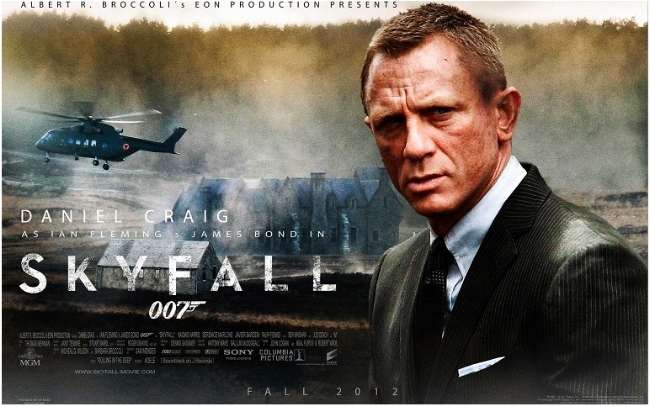
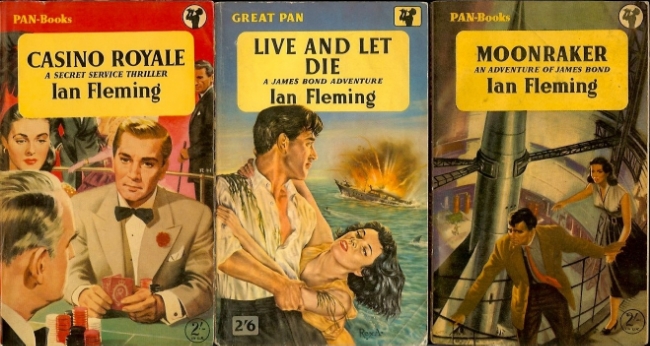
There's nothing better than being proved wrong and having your fears allayed. Sam Mendes was absolutely the right choice to direct the twenty third James Bond movie and delivered a film that embraces both the old and the new. Skyfall was an outstanding way to celebrate fiftieth anniversary of the franchise. This is one of the few occasions when the actual movie managed to live up to the respective hype and marketing. Skyfall is 143 minutes of pure Bond and much more. Seldom has series had this depth of story, characterisation and intelligence. It is a lot closer to Goldfinger than it is Moonraker and offers a fresh perspective on the iconic agent. This is not about defeating some villain in his volcano lair. Skyfall is about the very nature of espionage and the effects upon those who work in its twilight world.
There's nothing better than being proved wrong and having your fears allayed. Sam Mendes was absolutely the right choice to direct the twenty third James Bond movie and delivered a film that embraces both the old and the new. Skyfall was an outstanding way to celebrate fiftieth anniversary of the franchise. This is one of the few occasions when the actual movie managed to live up to the respective hype and marketing. Skyfall is 143 minutes of pure Bond and much more. Seldom has series had this depth of story, characterisation and intelligence. It is a lot closer to Goldfinger than it is Moonraker and offers a fresh perspective on the iconic agent. This is not about defeating some villain in his volcano lair. Skyfall is about the very nature of espionage and the effects upon those who work in its twilight world.
After an exhilarating chase scene set in Turkey, which is totally free from shaky cam and lightning editing that still plagues contemporary cinema, the iconic title credits roll. There are many familiar names that have long been associated with the series over the previous decades. Stunts co-ordinator Gary Powell, miniature and physical effects by Chris Corbould for example. Veteran editor Stuart Baird ensures that you get to see what is actually going on (thank you Mr. Baird). The stunning titles, once again created by Daniel Kleinman. There is also a lot of new talent. Production designer Dennis Gassner brings a fresh and exciting feel to the movie. Roger Deakins' photography is stunning with a vivid colour palette. London has seldom looked so good. The only aspect of the film that didn’t quite chime with me is Thomas Newman contemporary score. It does however touch upon the traditional bond themes and musical idioms.
The plot is simple yet provides a far greater degree of character development and exploration of wider themes. M (Judi Dench) is thrown to the wolves after losing a vital hard drive containing operational data, along with one of her best filed agents. Her replacement Gareth Mallory (Ralph Fiennes) is already waiting in the wings to reform the department. Matters get worse when M becomes the target of vengeful agent Silva (Javier Bardom). Enter 007 (Daniel Craig) returning to MI6 after being presumed dead. However, Bond is not at the top of his game, yet is the only operative that M can trust to resolve the situation. The trail takes Bond from Shanghai, to Macau and then on to London. It becomes clear that Bond must take charge of the fight and returns to his family home of Skyfall to await a final confrontation with Silva.
Sam Mendes crafts a Bond movie that includes all the best aspects of the franchise. The locations, set pieces and glamour are all present. He also manages to bring Bond into the twenty-first century and make MI6 relevant in the current political climate. Skyfall succeeds in being quite thought provoking and showcases exceptionally strong performances from Dame Judi Dench and Daniel Craig. The dynamic between these two characters comes full circle and is both touching and sad. The original gallows humour that Connery brought to the series and that Moore turned into high camp, is present and exceedingly dry. There are moments of self-reference but rather than being indulgences work very well. Adele's theme song is also a welcome throwback.
Javier Bardom is a charismatic villain. His charm and flamboyance are deceptive and when he descends into violence, it is all the more disturbing. Whilst on the subject of content, it should be noted that Skyfall is quite a hard PG-13 (12 certificate) movie. The fights are superbly choreographed and shot. Violence is not trivialised or mitigated with a crass quip. The new Q (Ben Wishaw) is engaging and the film is not smothered by an excess of gadgetry, although it clearly shows the role that technology plays in the world of espionage. It would be a crime for me not to mention the outstanding cameo made by Albert Finney. Let it suffice to say only an actor of his calibre could play such a part.
Considering the evolution of the action movie genre over the last four decades, Skyfall is a prime example of quality film making in an old school idiom. It works so well because all involved truly understand the material and the nature of the audience. Skyfall is in many ways Bond finally coming of age. Is it the best entry in the series? Very possibly. It has so much more to offer than just the superficial, featuring robust performances and a strong narrative arc. Furthermore, the movie's resolution offers a great deal of scope for further exploration of this new and revitalised James Bond. The franchise has been markedly changed by Skyfall successfully combining populist entertainment with quality acting and new found narrative depth.
A Good Day to Die Hard (2013)
Having passed at the chance to see A Good Day to Die Hard during its theatrical I finally caught up with the movie recently. The version I saw was the US theatrical version and not the extended edition that includes three and a half minutes of additional material. It's a curious thing that in an age when blockbuster movies become ever longer and more bloated, frequently running over two and a half hours, that the latest instalment of Die Hard is a brief ninety-nine minutes. That's about an hour and a half once you remove ten minutes or so of CGI credits. Is such brevity to the benefit of the movie? In a nutshell, no. A Good Day to Die Hard is light on plot, character development and viewer engagement. Frankly it’s a caricature of its former self. The notion of the likeable every-man, out of his depth and fighting against incredible odds has given way to a loud-mouth, bullet proof xenophobic who effortlessly moves from one improbable CGI action sequence to another.
Having passed at the chance to see A Good Day to Die Hard during its theatrical I finally caught up with the movie recently. The version I saw was the US theatrical version and not the extended edition that includes three and a half minutes of additional material. It's a curious thing that in an age when blockbuster movies become ever longer and more bloated, frequently running over two and a half hours, that the latest instalment of Die Hard is a brief ninety-nine minutes. That's about an hour and a half once you remove ten minutes or so of CGI credits. Is such brevity to the benefit of the movie? In a nutshell, no. A Good Day to Die Hard is light on plot, character development and viewer engagement. Frankly it’s a caricature of its former self. The notion of the likeable every-man, out of his depth and fighting against incredible odds has given way to a loud-mouth, bullet proof xenophobic who effortlessly moves from one improbable CGI action sequence to another.
The movies first major action spectacle is a lengthy car chase through Moscow, involving an armoured car that destroys pretty much every vehicle that it encounters. The sequence quickly becomes tedious due to its excess and is further tainted by some rather unpleasant moral ambiguity. John McClane dodges an RPG which then destroys an innocent civilian’s vehicle. But of course, in Hollywood terms this doesn't matter at all, as it wasn't an US citizen. Once again, we see a sovereign nation treated with contempt as our hero simply swans around doing whatever he sees fit, irrespective of local law and authority. Well it's their own fault, they don't speak English.
For a movie that hinges on a father and son dynamic, there is no tangible chemistry between Jai Courtney and Bruce Willis. It's all rather perfunctory. I initially assumed that the theatrical version of the movie had been edited down to be low on dialogue high on action. When I heard that the Blu-ray release would include an extended edition I hoped that this would fill some of the narrative gaps. Unfortunately, the extra material is simply a few nominal dialogue scenes and an even longer version of the tiresome car chase. No further plot, or expositionary scenes. But I guess that's my fault for expecting anything more from director John Moore, who previously brought us the pointless remake of The Omen and the inextricable film adaptation of the video game Max Payne.
A Good Day to Die Hard has flashes of interest with villain Alik (Rasha Bukvic) who has a few curious quirks. Unfortunately, he is then effectively side-lined and removed from the narrative far too quickly. The denouement is both excessive and totally implausible, even by the standards of this particular genre. When will film makers learn that once you step over the line and the audience cease to suspend their sense of disbelief, then the battle to hold their attention is lost. We also happen to know by now that the most vulnerable part of a helicopter are both its rotors and that they are not the equivalent of industrial blenders. How dumb do you think we are? On mature reflection, perhaps it’s best not to answer that, as I was the one watching this movie through choice. Sometimes, brand loyalty is a double-edged sword.
There is little good to say about A Good Day to Die Hard. The only thing that made me sit up and take notice was the inclusion of some faux BBC new reports featuring real life news presenter Sophie Raworth. Remember in the nineties how it was always CNN or Sky News that were used in this way? However, overall the movie had nothing new to offer and even its R rating was disappointing. A few profanities and some minor bullet hits cannot recreate the hard edge and elegance of the original movie. Even Bruce Willis' signature kiss off line "Yippee-ki-yay, Motherfucker" is laboured. In all honesty Olympus Has Fallen is closer to the 1988 Die Hard than this shallow cinematic outing. I think it's time for this particular Cowboy to hang up his spurs and retire. Until the inevitable reboot.
Has World of Warcraft's Success Been Detrimental to the MMO Genre?
With the release of Battle of Azeroth due this autumn, I’ve been reflecting upon that MMO heavyweight World of Warcraft. I am not an active player of player of the game but have an interest based more upon its industry standing. I’ve tried World of Warcraft in the past and endeavoured to cultivate an interest in it for the sake of friends and colleagues, but the reality is that I’ve simply never warmed to this particular MMORPG. I don’t especially care for the games aesthetic, have no real interest in its lore or pop culture references and there are plenty of alternative MMOs that are far more appealing to me. So, let me state clearly, that I have no major prejudice against the game; it is just a question of personal taste. The same way I like horror movies, but I don't care for those that have an excess of humour or are dependent upon jump scares. I also fully recognise why World of Warcraft is such a successful MMORPG and appreciate its numerous merit, as well as the impact it has had upon shaping the MMO genre. The game is just not for me and I am content with that.
With the release of Battle of Azeroth due this autumn, I’ve been reflecting upon that MMO heavyweight World of Warcraft. I am not an active player of player of the game but have an interest based more upon its industry standing. I’ve tried World of Warcraft in the past and endeavoured to cultivate an interest in it for the sake of friends and colleagues, but the reality is that I’ve simply never warmed to this particular MMORPG. I don’t especially care for the games aesthetic, have no real interest in its lore or pop culture references and there are plenty of alternative MMOs that are far more appealing to me. So, let me state clearly, that I have no major prejudice against the game; it is just a question of personal taste. The same way I like horror movies, but I don't care for those that have an excess of humour or are dependent upon jump scares. I also fully recognise why World of Warcraft is such a successful MMORPG and appreciate its numerous merit, as well as the impact it has had upon shaping the MMO genre. The game is just not for me and I am content with that.
During the course of researching this blog post, I’ve found many forum and subreddit threads that expressed the view that World of Warcraft has effectively ruined MMO gaming. It’s a common point of discussion. Most of these posts credit the game with the refinement and simplification of many traditional game mechanics which thereby brought MMO genre to a wider audience. However, this is countered with the assertion that the by-product of this process has been the erosion of the social imperative that was at the heart of the genre at the time. This particular point if often explored in detail with clear examples of MMO rulesets prior to World of Warcraft, offset against what are the prevailing current trends. When framed in such terms I think the argument has merit. However, I would ask readers to consider the following. Although World of Warcraft may have been instrumental in setting a trend that deviated from the existing status quo, it doesn't necessarily mean that the established status quo was right or perfect.
My first MMO was The Lord of the Rings Online and I quickly grasped the necessity of social gaming back in 2008 to get ahead. I didn't especially mind this collaborative element, but it is fair to say that there was no choice regarding it. If you balked at team play you got nowhere fast. That was the rule of thumb for most MMOs up until then. So, I tolerated it rather than embraced it. In fact, this very aspect that enthused some players kept others away. Although I can get on with other players and work collaboratively with them, it is seldom done through love of my fellow man. It is simply a means to an end. That may not be a popular sentiment, but it’s is an accurate appraisal of my feeling. I thinks it's fair to say I am not by nature a care bear. However, it should be noted that when I discovered the genre, it had already moved on substantially from the days of EverQuest and Ultima Online. Both of which had far tougher game mechanics and systems. Personally, I am glad that I missed this period of time because, I wouldn’t have found such spartan rulesets to my liking.
Therefore, the tectonic shift in the genre that World of Warcraft pioneered certainly hasn’t inconvenienced players such as me. When I initially played LOTRO I didn't mind the social aspect and was happy to talk in chat and be amiable, as well as actively participate in a guild (or kinship as it is known in that game). However, back in 2008 the social element of the game was waning and by 2010, it was further altered when the game was retooled for the free-to-play market, amking it far more solo friendly. Nowadays I approach most of my MMOs from the position of a single player working towards personal goals. That is what drives me. Although I will group and still hang out with old friends and guild mates, I am not primarily looking for a broader social experience. However, some people still are, and they are the ones who feel displaced by the changes to the genre and possibly the most aggrieved. I understand and respect that, because it is our point of entry with any new leisure activity that usually shapes our experience, expectations and subsequent preferences. Change highlights this. I miss the days of discussing at work the previous nights television programs. I miss writing and receiving letters. But the most human activities are subject to change and progression. Furthermore, we mustn't forget that gaming is a business and ultimately goes wherever the money leads.
What I do believe is true is that the success of World of Warcraft has hindered innovation in the MMORPG genre per se. Too many developers in recent years have wasted precious time simply trying to emulate its formula. Sadly, this has all too often resulted in weak and uninspiring clones. As a result, MMOs in their traditional sense have lost their lustre and many developers are shying away from them. We still do not have a title that has fully broken from the standard mechanics of the genre, although I think Guild Wars 2 and The Elder Scrolls Online have been a step in the right direction. Yet it is this indecision surrounding the future of established MMO, that has led to the tangential rise of MMO variants such as the MOBA and Battle Royale genre. Destiny 2, GTA Online, Overwatch and the like have all thrived by combining the elements of the MMO with other types of games. It would appear that developers think that adding a co-op element to most genres of games is where the future lies, so we shall see more hybrid titles in the months ahead. Sadly, this just highlights the feeling of being disenfranchised by those longing for the old school MMO days.
Pretty much everything in life is about change. Although many gamers would like to see a return to old school MMOS, the casual market is bigger and more lucrative. It really is a numbers game, yet gamers are often blind to the practicality of economics. Perhaps one of the numerous crowd funded projects that are currently under development will provide a solution, although their track record has been somewhat poor of late. Perhaps this particular group of old school gamers needs can be met by a small to medium sized project, which is happy to pitch at a smaller niche market. Then of course there is the emerging trend for vanilla MMO servers, that offer a gameplay experience closer to that of the respective original launch. Rift Prime seems to have met with success and Blizzard clearly think there’s money to be had in World of Warcraft Classic. Will projects such as this satisfy those on the MMO margins? In the meantime, World of Warcraft marches on and although it has lost customers, the next expansion will more than likely bring many absentee players back into the fold.
Although World of Warcraft has caused much change, I do not think that it is the ruination of the MMO genre that some would claim. That can be laid at the door of various developers, who abandoned experimentation and became risk averse. Money may well talk but it also drowns out potential change and innovation. World of Warcraft is ultimately a symptom and not the actual root cause. Then of course there is the old adage that one man’s meat is another man’s poison. For every person who feels that World of Warcraft is the Doctor Beeching of the MMORPG, there are equally those who feel that the game fixed the problems associated with genre. Then of course while you are waiting for a shift in the industry, you can always implement your own. Many people will play MMOs with their own personal ironman rule sets. It is also important to consider that if World of Warcraft hadn’t broken the mould, surely someone else would have? “Convenient” coffee is not the exclusive prerogative of Starbucks. The traditional MMO that emerged from the nineties was the product of a perfect storm of events. Technology and the inherent novelty of the internet certainly had a bearing on the way the genre evolved. But that does not mean that what existed at the time was the optimum or best model. Therefore, considering all these points I suspect that this debate will never truly go away. Nostalgia and sadly recrimination are strong motivators. In the meantime, the market will more than likely allow for both groups to co-exist. Unfortunately for some that is not the desired outcome, as they see things as an ideological issue and a subset of a wider culture war. MMOs are not mere games but a hobby. I’m sure Simon Quinlank would have something to say about that.
Olympus Has Fallen (2013)
Where film makers of note will often take the bull by the horns and address difficult aspects of US history and culture, Hollywood tends to do the complete opposite. Events are simply re-imagined having a more popular, and box office friendly outcomes. Olympus Has Fallen fits squarely into this category, being a post 9/11 denial movie. In this case, the White House, that national symbol of American power and democracy is ruthlessly attacked by evil North Koreans (are there any other kind?), resulting in another sub Die Hard scenario. This movie holds no surprises and seeks to offer nothing more than what is on the poster. However, contrary to what you might think, that is not a bad thing at all.
Where film makers of note will often take the bull by the horns and address difficult aspects of US history and culture, Hollywood tends to do the complete opposite. Events are simply re-imagined having a more popular, and box office friendly outcomes. Olympus Has Fallen fits squarely into this category, being a post 9/11 denial movie. In this case, the White House, that national symbol of American power and democracy is ruthlessly attacked by evil North Koreans (are there any other kind?), resulting in another sub Die Hard scenario. This movie holds no surprises and seeks to offer nothing more than what is on the poster. However, contrary to what you might think, that is not a bad thing at all.
Gerard Butler scowls his way through the movies two hour running time as Secret Service Agent Mike Banning. He is bullet proof and blessed with the marksmanship of a minor deity, while everyone else can't shoot for shit. President Benjamin Asher (Aaron Eckhart) struggles to maintain the dignity of his office while chained to a metal railing. Quality character actors such as Morgan Freeman, Angela Bassett and the great Robert Forster sit around the war room conference table and look as serious as their fees and conscience allow. The only real weak link in the chain are some sub-standard digital effects which diminish the impact of the White House attack. It’s somewhat odd considering that Olympus Has Fallen had a production budget of $70 million.
One aspect of the movie that does leave a somewhat unpleasant taste in the mouth, is the generic nature of the villains. At present due to prevailing economic and political reasons it is the North Koreans. The days of lambasting the Russians and Chinese seem to be long gone, especially as they now constitute lucrative markets for the film studios. Rick Yune's depiction of the movies North Korean bad guy Kang, is arbitrary to say the least. Although the movie is now five years old and has already had a sequel, current diplomatic events in the Korean peninsula put a different spin on the proceedings. As a result, Olympus Has Fallen now appears to have a rather unwholesome warmongering undercurrent.
Unlike so many action movies these days, Olympus Has Fallen has an old school R rating with its bloody body count and liberal use of profanities. Despite being an extremely dumb movie, at least it is content in its own skin. Shamelessly nationalistic, filled with clichéd tropes and generic action movie conventions, Olympus Has Fallen is generic box office fodder. But it doesn't make the mistake of pretentious naval gazing or pontificating on geo-political issues it is ill equipped to debate. Director Antoine Fuqua delivers a bombastic movie with all the subtly of a Rhinoceros horn up the backside. Yet considering the premise, could we really expect anything else? Would we even want it?
DIY Tech Support: A Cautionary Tale
Late in the evening of March 1st I noticed that my default photo viewer, Microsoft Photos, had stopped working. When trying to open a screenshot taken from ESO, the application would launch and then simply close immediately. As I went to shut down my PC I noticed that a Windows 10 update was installing and attributed the problem to this. I erroneously assumed that the matter would be resolved when I restarted my computer the following day. Needless to say, it did not. Now for those who are not especially IT savvy, or more to the point interested in problem solving, the easiest solution was to either assign another program or app as the default picture viewer or install a new one and move on. Sadly, I’m not wired that way.
Late in the evening of March 1st I noticed that my default photo viewer, Microsoft Photos, had stopped working. When trying to open a screenshot taken from ESO, the application would launch and then simply close immediately. As I went to shut down my PC I noticed that a Windows 10 update was installing and attributed the problem to this. I erroneously assumed that the matter would be resolved when I restarted my computer the following day. Needless to say, it did not. Now for those who are not especially IT savvy, or more to the point interested in problem solving, the easiest solution was to either assign another program or app as the default picture viewer or install a new one and move on. Sadly, I’m not wired that way.
Having worked for twenty-five years in the IT industry before retiring, troubleshooting and technical problem solving is somewhat ingrained in me. I am very particular about how my computer is set up and what software I use. I always customise my Windows interface a particular way and even have a preferred set of icons. I detest any change made by the operating system without my prior knowledge and random rogue behaviour such as that demonstrated by Microsoft Photos, really bugs me. My entire borderline OCD approach to technology stems from the way I was mentored and taught. Order, structure and process should always be present, right the way from network topology down to directory organisation and file naming. Don’t get me started on patch panel management.
So, I diligently went about some old school troubleshooting. First off, I checked to see if the problem was with all photo viewing software or just Microsoft Photos. As .jpgs and .png files were working fine with Paint and GIMP, I determine this was a Microsoft issue. I then looked to see exactly what updates had been installed, made note of their credentials and then searched via Google to see if there were any known issues with them. Nothing obviously became apparent, so I decided to do some standard app troubleshooting. I reset the Microsoft Photo app, with no result. I then purged the app cache with again no effect. Next up I did a clean uninstall of the problematic software and then re-installed the latest version. Again, the fault persisted so it was time to up the ante and start some more in-depth trouble shooting. I ran Microsoft Photos, made specific note of the time and then went to the event viewer to see what the log files had to say. They pointed to a problem with the “twinappi.appcore.dll” file.
By now we were no longer in elementary problem-solving territory. You don’t idly mess with .dll files and the registry. So, after establishing a restore point and taking a back up of the Windows Registry, I used Powershell to de-register and then re-register the offending file. The problem with the photo app still continued. By now I was totally focused on the problem and quite prepared to go to great pains to remedy it, simply on principle. Plus, to be fair, I’ve always enjoyed the satisfaction of solving these types of issue. If you ever worked in IT for any length of time you soon learn that victories are often celebrated alone and at obscure times of day. So, because of my bloody mindedness, I made a bootable Linux thumb drive, so I could access the System32 directory and replace the problem file with a copy from another Windows installation. However, the version of Ubuntu I used had limited admin privileges, so I couldn’t amend any Windows system files. I could have used an older or different version of Linux but by now it was late, so I decided to continue trouble shooting the following day.
Google is an incredibly useful tool but often the success or failure of your search hinges upon what search parameters you use. So, the next day, I spent a far longer period of time searching various tech forums and Microsoft resource sites. What I did discover is that Microsoft Photos regularly gets broken by either Windows Updates or common place driver updates from companies such as AMD and Nvidia. I found that many of the steps that I had taken would work for some situations and not for others. I also found some posts that recommended some more risky and potentially labour-intensive solutions. A system restore to an earlier date was probably the most logical of these solutions, but it would have an impact of several other programs I have installed and thus would make additional work. Someone even advised me to do a Windows Reset which would keep my personal file but effectively re-install the operating system which would then mean a crap ton of work loading software back on and tinkering with my PC to get it “as I like it”. Bearing all this in mind and the fact that the problem still wasn’t solved, I sat down with a large Gin and came to a decision.
Age can bring wisdom if you let it. I have put aside my “need” to solve this issue and have simply installed an alternative piece of software. Actually, what I did was create a registry entry that allowed me to access Microsoft Photo Viewer, which is an older photo app that used to be the default viewer in Windows 7. I can live with this compromise. If I double-click on an image file, it opens within an acceptably simple app. I will simply wait for Microsoft to fix this problem in their next cumulative update for Windows 10. The only downside at present is that when I open animated .gif files they are static within the current software. I can live with this. It’s been a while since I’ve done any troubleshooting, mainly because I’ve had precious few issues with Windows 10 since I installed it. I guess my “tight ship” regime may also be a factor. However, what this experience has done is to remind me is how tedious and irritating problems of this nature can be. Also, once again Montgomery Scott has been proven right.” The more they overthink the plumbing, the easier it is to stop up the drain”.


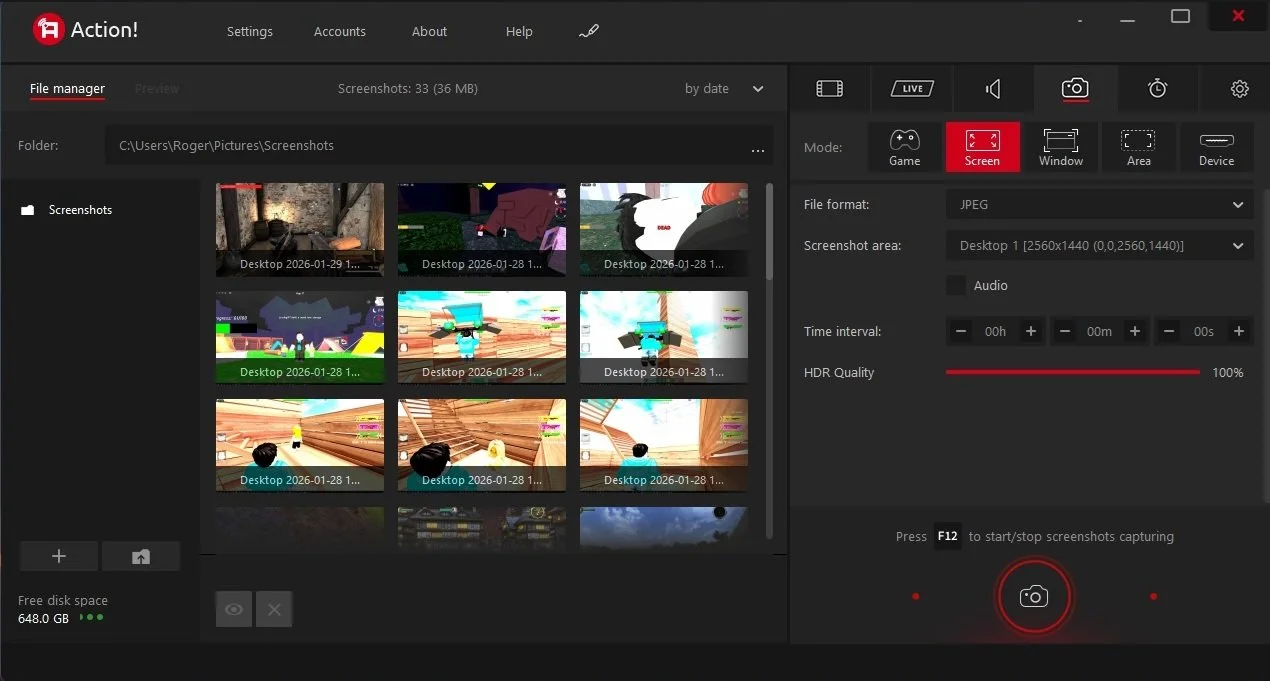









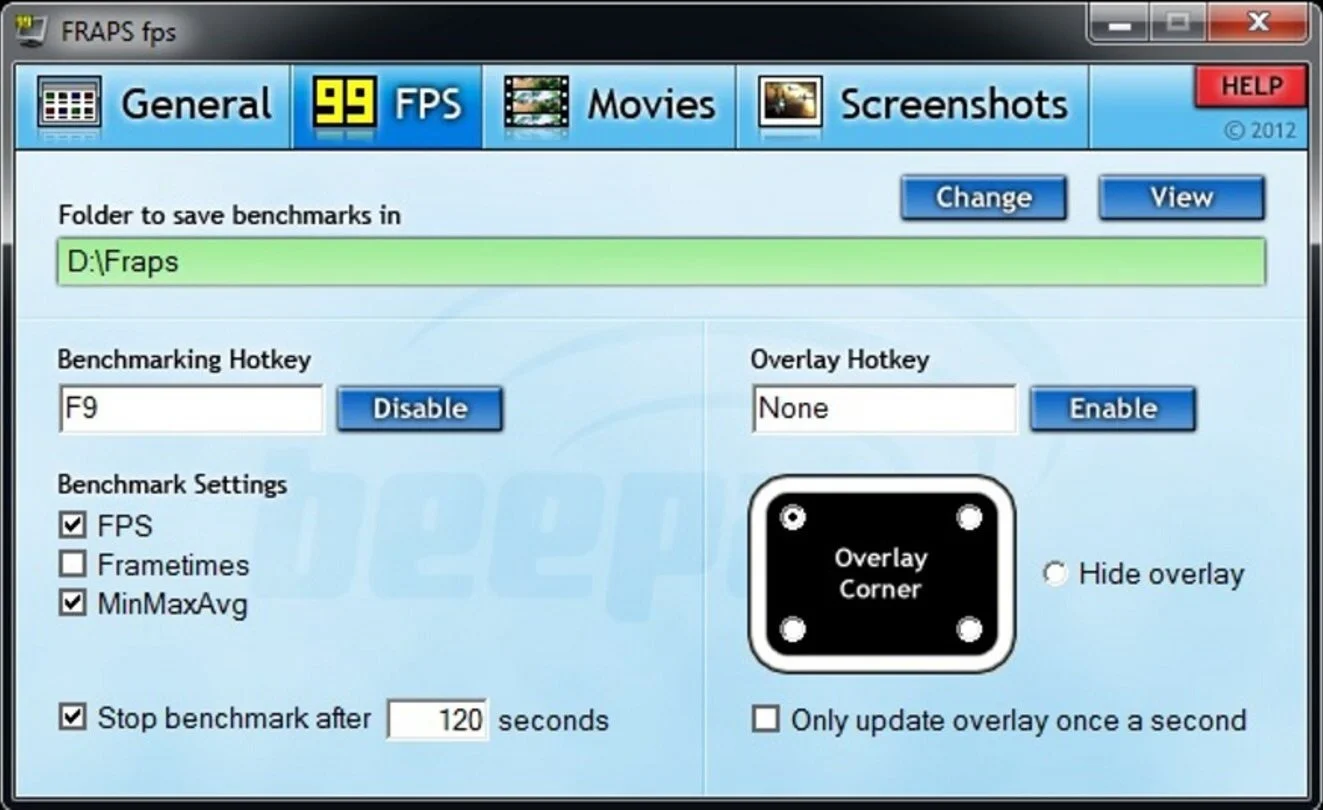












Lifeless Planet
When I first saw the trailer for Lifeless Planet, I found its initial premise very intriguing. It put me in mind of seventies science fiction movies, especially the idea of travelling to a distant planet only to find evidence of human culture. Its minimalist approach also seemed a positive factor, as I tire of games with an excess of controls. So, I placed the title on my wishlist and waited for a suitable sale. It appeared recently as part of a bundle, so I ended up buying it for £4.12 which is ridiculously cheap. Now many of the reviews that I have read seem to be upset by the lack of game play within Lifeless Planet. It is fair to say that navigating the world and solving the puzzles certainly does take second place to the narrative. In fact, it may be better to classify Lifeless Planet as an interactive story. However, I am more than happy with this approach and do not feel that every title should be an arduous struggle of skill and twitch gaming. Things do get a little more taxing as you progress through the levels and advance through the story.
When I first saw the trailer for Lifeless Planet, I found its initial premise very intriguing. It put me in mind of seventies science fiction movies, especially the idea of travelling to a distant planet only to find evidence of human culture. Its minimalist approach also seemed a positive factor, as I tire of games with an excess of controls. So, I placed the title on my wishlist and waited for a suitable sale. It appeared recently as part of a bundle, so I ended up buying it for £4.12 which is ridiculously cheap. Now many of the reviews that I have read seem to be upset by the lack of game play within Lifeless Planet. It is fair to say that navigating the world and solving the puzzles certainly does take second place to the narrative. In fact, it may be better to classify Lifeless Planet as an interactive story. However, I am more than happy with this approach and do not feel that every title should be an arduous struggle of skill and twitch gaming. Things do get a little more taxing as you progress through the levels and advance through the story.
The game follows an Astrobiologist on a trip to a remote planet that is supposed to be rich with life. After a fifteen-year journey the ship unexpectedly crashes on the planet surface. Our protagonist awakes to find his crew missing and the new world a wasteland. As he journeys through the wilderness he finds traces of a Soviet Colony that appears to have been deserted decades ago. Is it all part of some sort of psychological test or has he sustained a head injury? Furthermore, is he alone on the planet or is the elusive female he keeps glimpsing, more than just a hallucination?
Beyond running, jumping and navigating environmental hazards, Lifeless Planet asks very little from the player. Occasionally there are puzzles to solve but they are far from taxing. Obstructions mean that explosives are often nearby. Power cores for the alien generators are never too hard to find. Jumping in the low gravity requires some judgement but is quickly learned. From time to time your jet pack gets a minor boost but it is somewhat perfunctory. As is using the robot arm, which turns up midway through the game. The controls can be a little sluggish at times but rather than this be a deal breaker, I just consider it part of the ambience. Your avatar is after all wearing a cumbersome space suit.
The main selling point of this game is the story, ambience, soundtrack and vistas. Lifeless Planet is more interested in playing with your emotions than taxing your gaming skills. There is no combat, dismemberment or overpowered melee skills. Just a atmospheric tale that slowly builds the intrigue over time. The minimalist dialogue, mainly from flash backs and computer log entries are strangely melancholic. The game's use of music is sparing and often arrives to bolster the drama. However, it does not telegraph or mitigate the plot. The environment itself is also a major character. Although the right path is often easy to find, players are constantly drawn away by an urge to explore.
Lifeless Planet provides five or so hours of entertainment if you take a leisurely approach. The story is enjoyable and despite having a somewhat obvious message, it is earnest and relevant. This is a game to be experienced, rather than franticly "played" through. It oozes atmosphere and is satisfactorily different from standard indie fodder. If you are only interested in the traditional definition of a game, then it may well not be for you. For those that like the science fiction genre and strong narratives that make you think, then Lifeless Planet may well prove to be a very entertaining experience.