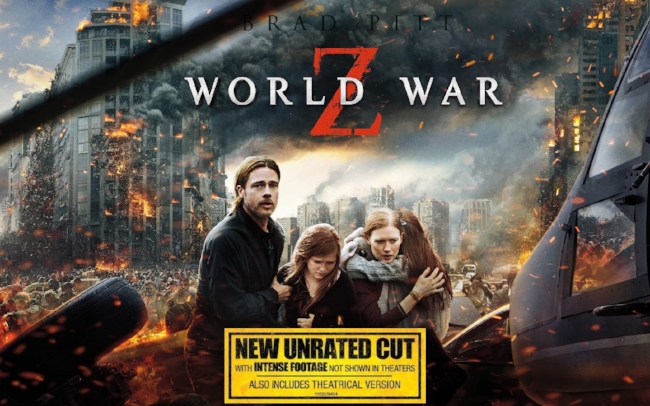
World War Z Unrated Cut (2013)
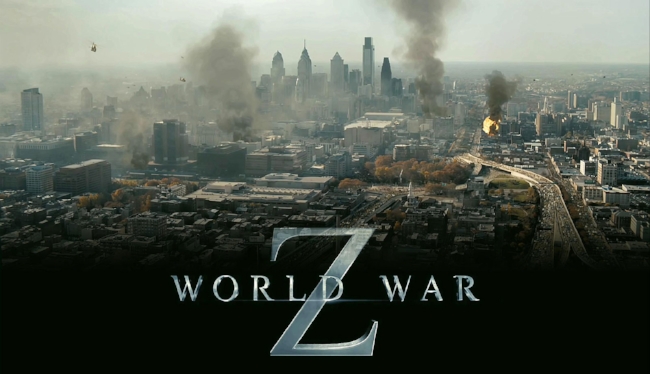
World War Z Unrated Cut runs seven minutes longer than the theatrical version of the movie and contains "intense footage not shown in theaters". The material consists of more violent alternative takes of existing action scenes and features mainly CGI effects work. There is no additional plot, although there may be some nominal changes to dialogue. Overall the unrated cut is an improvement over the theatrical print in so far it offers a more traditional zombie movie experience. However, compared to other examples of the genre, the unrated version of World War Z still remains relatively sedate in terms of violence. The movie focuses on the scale of the zombie outbreak, rather than the visceral mayhem of a George Romero film.
World War Z Unrated Cut runs seven minutes longer than the theatrical version of the movie and contains "intense footage not shown in theaters". The material consists of more violent alternative takes of existing action scenes and features mainly CGI effects work. There is no additional plot, although there may be some nominal changes to dialogue. Overall the unrated cut is an improvement over the theatrical print in so far it offers a more traditional zombie movie experience. However, compared to other examples of the genre, the unrated version of World War Z still remains relatively sedate in terms of violence. The movie focuses on the scale of the zombie outbreak, rather than the visceral mayhem of a George Romero film.
I thought it may be useful to post a selection of screen captures highlighting the major differences between the two versions of World War Z. Again, it is not in any way a comprehensive list but it broadly shows the major differences. If you require further details Movie-Censorship.com has produced a more thorough breakdown. My original opinion of the film itself still stands. World War Z is flawed but has good performances and explores some interesting concepts. The unrated cut of the movie certainly addresses one of the many criticisms levelled at the PG-13 theatrical release; namely that it was too tame. If you have yet to see World War Z, then this is the cut of the film I would recommend.
During the initial zombie outbreak in Philadelphia, we see more blood when people are bitten. Unfortunately, due to the colour palette that is currently in vogue with many film makers it is still not very clear.
Gerry shoots a zombie in the head while trying to find safety in the tenements of Newark. It is the only major head shot depicted in the movie.
Gerry is covered in more blood from the zombie he bayoneted in the stairwell.
In the unrated cut the camera clearly shows that it is Tommy that shoots the zombie attacking Gerry.
When Fassbach trips and accidentally shoots himself, we see the aftermath more clearly.
The imprisoned CIA operative pulls out one of his front teeth, while explaining how North Korea did this to its entire population in twenty four hours, to prevent the spread of the disease.
He then adds the tooth to a collection of others he has removed.
As the zombies overrun Jerusalem, we see more bullet hits as they are shot by Israeli soldiers.
Most of the gunshot wounds have been added in post production by CGI.
When an Israeli soldier uses his grenade, we see more explicit carnage caused by the explosion.
Further CGI blood and gunshot wounds are seen as the zombies are shot through the closed gate and railings.
A further grenade explosion shows more destruction to the zombies.
Segen's hand amputation is more graphic. Unlike the theatrical print it is obvious what Gerry has done.
Gerry binds Segen's wrist and waits to see if she becomes infected or not.
The zombie attack aboard the plane has a lot more CGI blood when victims are bitten.
Again due to lighting and editing, even the more explicit scenes are difficult to see clearly.
Another victim is bitten, prior to the plane explosively decompressing due to a grenade explosion.
Gerry's impalement injury is shown more clearly.
Gerry dodges the attacking zombie and hits it at the base of the spine with a crowbar.
He subsequently stamps on the zombie's face, crushing it.




LOTRO: High Elf Preview
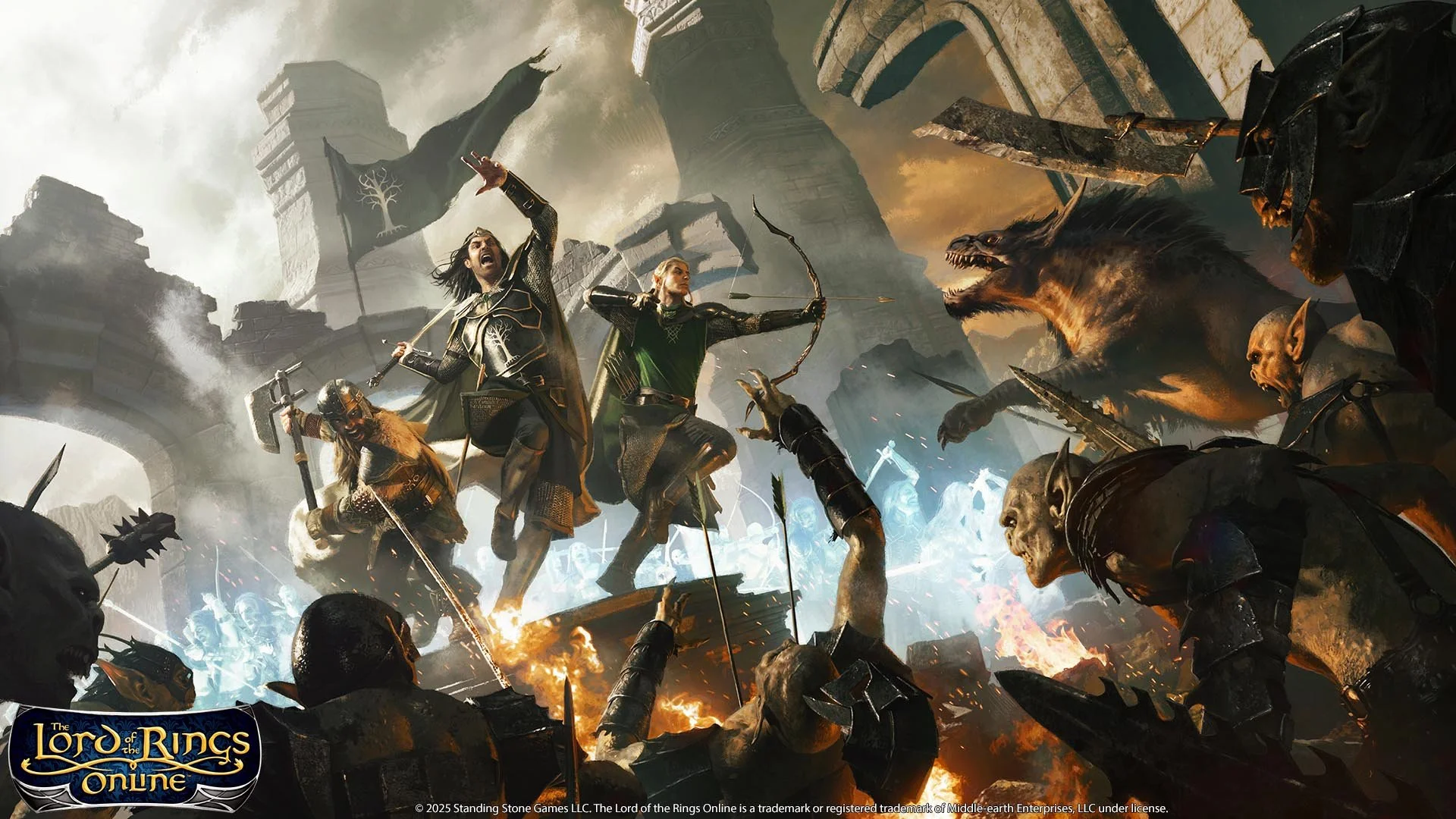
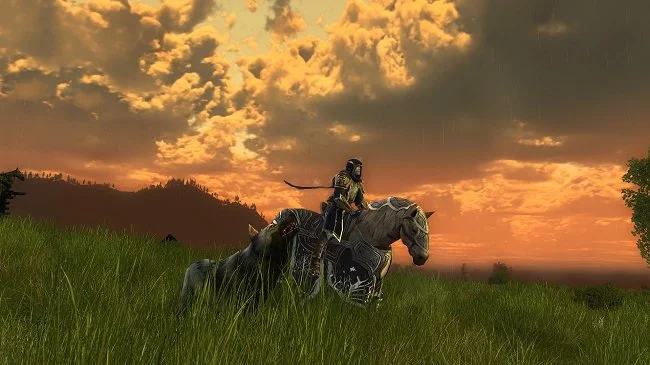
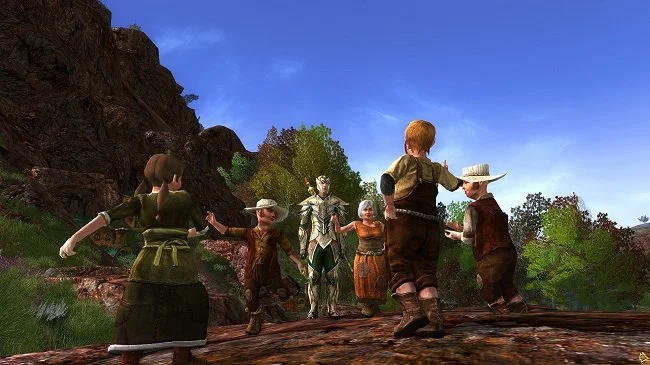
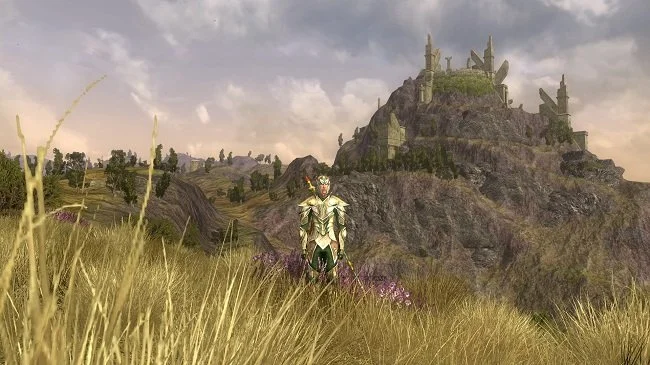
I was more than a little surprised when Standing Stone Games announced the addition of a new race coming to LOTRO. As Elves are already a popular option in the game, I really didn’t see any merit in adding a subtle variation of them, with High Elves. However, as I had time this weekend, I thought I’d take a look at the new introduction for this race, that is currently available for preview on the Bullroarer test server. Like all races in LOTRO, there is a bespoke opening quest line, that orientates players and provides a degree of lore and backstory. Although aspects of the High Elf race are yet to be completed such as the character visualisation, the introduction is in place and has a rather unique narrative compared to the rest of LOTRO.
I was more than a little surprised when Standing Stone Games announced the addition of a new race coming to LOTRO. As Elves are already a popular option in the game, I really didn’t see any merit in adding a subtle variation of them, with High Elves. However, as I had time this weekend, I thought I’d take a look at the new introduction for this race, that is currently available for preview on the Bullroarer test server. Like all races in LOTRO, there is a bespoke opening quest line, that orientates players and provides a degree of lore and backstory. Although aspects of the High Elf race are yet to be completed such as the character visualisation, the introduction is in place and has a rather unique narrative compared to the rest of LOTRO.
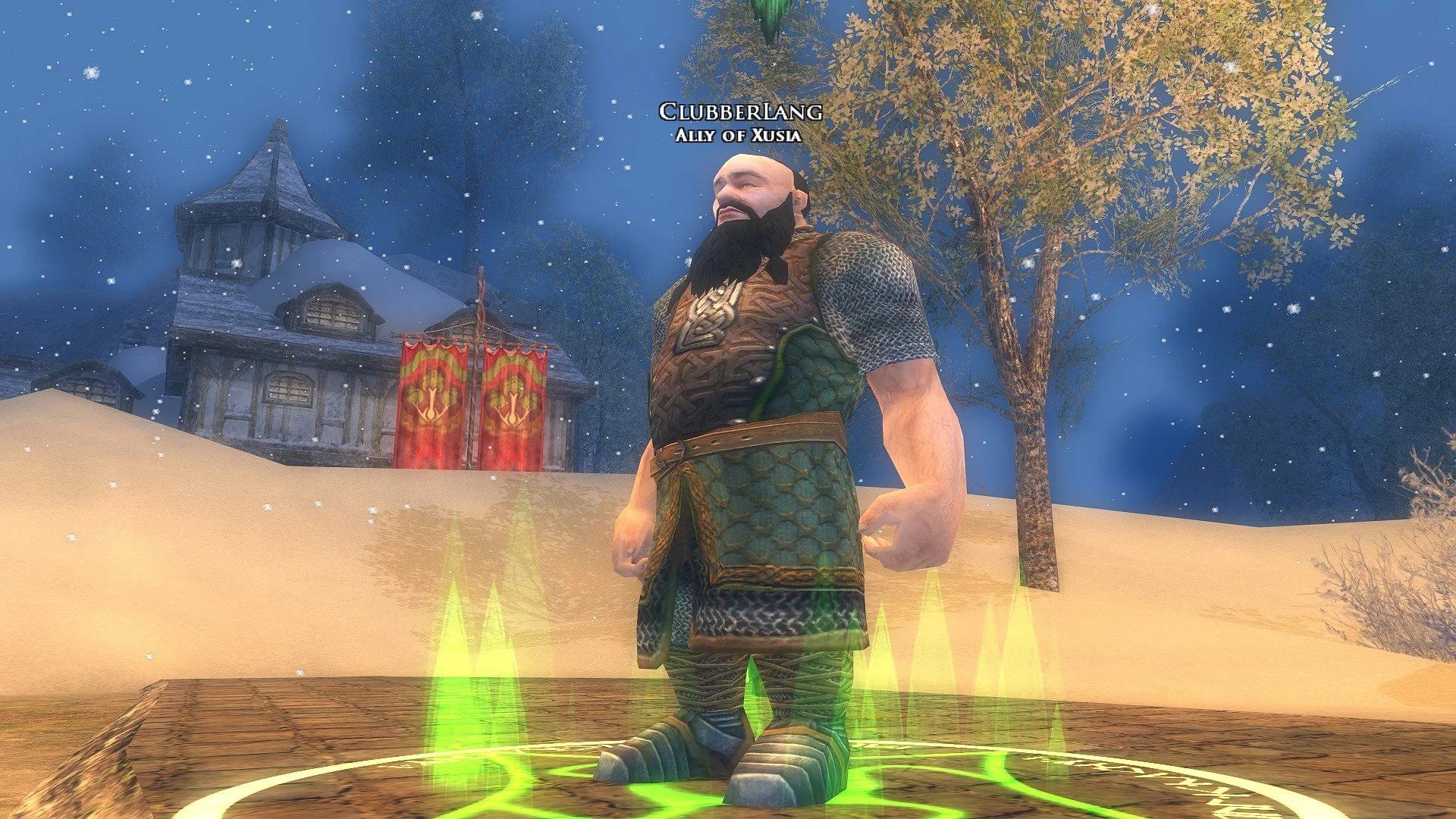
After creating your High Elf character and choosing a suitable name, the action moves to The Battle of Dagorlad, during the end of the Second Age. As part of the Last Alliance and in true LOTRO fashion, you find yourself running errands for none other than Gil-galad himself. This presents an opportunity to name check a lot of iconic characters from Tolkien’s work and certainly provides an interesting story line. High Elves have at present some curious parkour style animations when running and jumping. It actually seems quite fitting, considering the physical and tactical abilities of the race. It should also be noted that your character is at level 110 at this point in the proceedings.
SPOILER ALERT:
Now this is where things get curious. SSG have had to find a suitable plot device to bring your character from SA 3434, to a TA 3001. A passage of time of about three thousand plus years. I must admit, I did laugh out loud at the temerity of their solution. Effectively, your character is stabbed with a Morgul blade with the intent of turning them into a minor wraith. However, you’re rescued and brought to Imladris and healed by Elrond. Due to the severity of your wound, you’ve been convalescing in an Elven coma all this time. Overall, it works and does have a degree of plausibility but it’s all somewhat hokey and somewhat “Buck Rogers”. Furthermore, because your strength has been weakened by this experience, you’ve been reduced to an appropriate level for the starting zones of LOTRO.
Much to my surprise, I did enjoy this opening gambit for the High Elf race. Although it is unpolished in its current state, it is clear that some thought has been put into it. However, like the Beorning class that was introduced into the game in late 2014, once the initial excitement of the introduction has passed, you once again find yourself in the Ered Luin starter zone, forging through familiar territory. It’s a shame that SSG cannot maintain a slightly more customised story play through for each race, as Cryptic do with Star Trek Online. At present High Elves may only appeal to Elven enthusiasts and altoholic completists. In the meantime, I am looking forward to the next preview build to see the new facial options and ongoing refinements of the class.






LOTRO: Mordor Preview
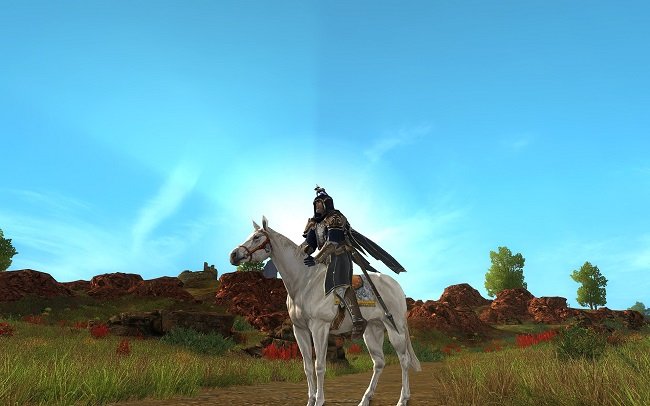
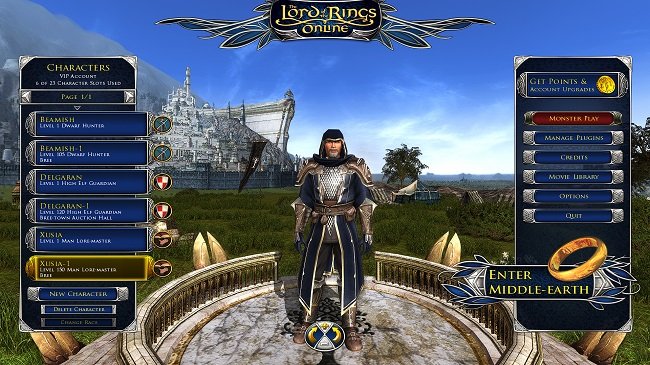
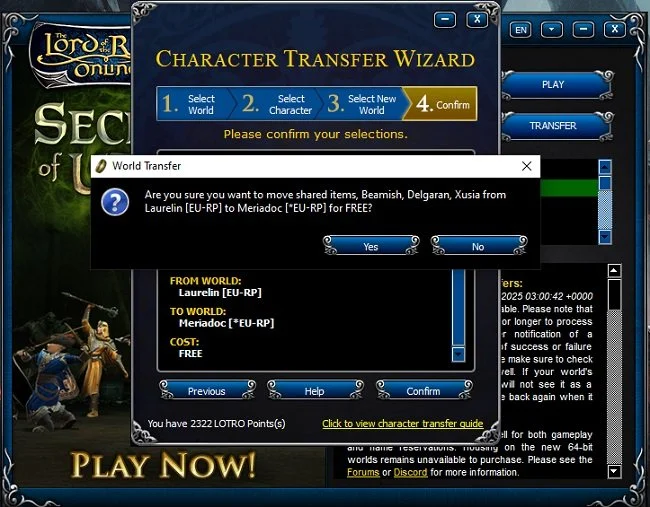
I decided to take a look at the second Mordor preview today, that is currently available on Bullroarer test server. Due to technical issues, I could not initially log into the game. The game client stuck at installing “pre-reqs”. However, by the evening SSG had resolved the problem and I managed to successfully login and copy my level cap character from Laurelin. Access to Mordor is via a teleport horse at the Slag-Hills. As with Helm’s Deep and the Battle of the Pelennor fields, this system of transitioning between multiple phases set at different times, can be a little confusing. Irrespective of this, it was rather droll of SSG to have Boromir as the NPC that bestows access to the Mordor quest line. I subsequently spent several hours touring the region. This post is specifically about my initial impressions of the area and is not a critique of all the new features and systems.
I decided to take a look at the second Mordor preview today, that is currently available on Bullroarer test server. Due to technical issues, I could not initially log into the game. The game client stuck at installing “pre-reqs”. However, by the evening SSG had resolved the problem and I managed to successfully login and copy my level cap character from Laurelin. Access to Mordor is via a teleport horse at the Slag-Hills. As with Helm’s Deep and the Battle of the Pelennor fields, this system of transitioning between multiple phases set at different times, can be a little confusing. Irrespective of this, it was rather droll of SSG to have Boromir as the NPC that bestows access to the Mordor quest line. I subsequently spent several hours touring the region. This post is specifically about my initial impressions of the area and is not a critique of all the new features and systems.
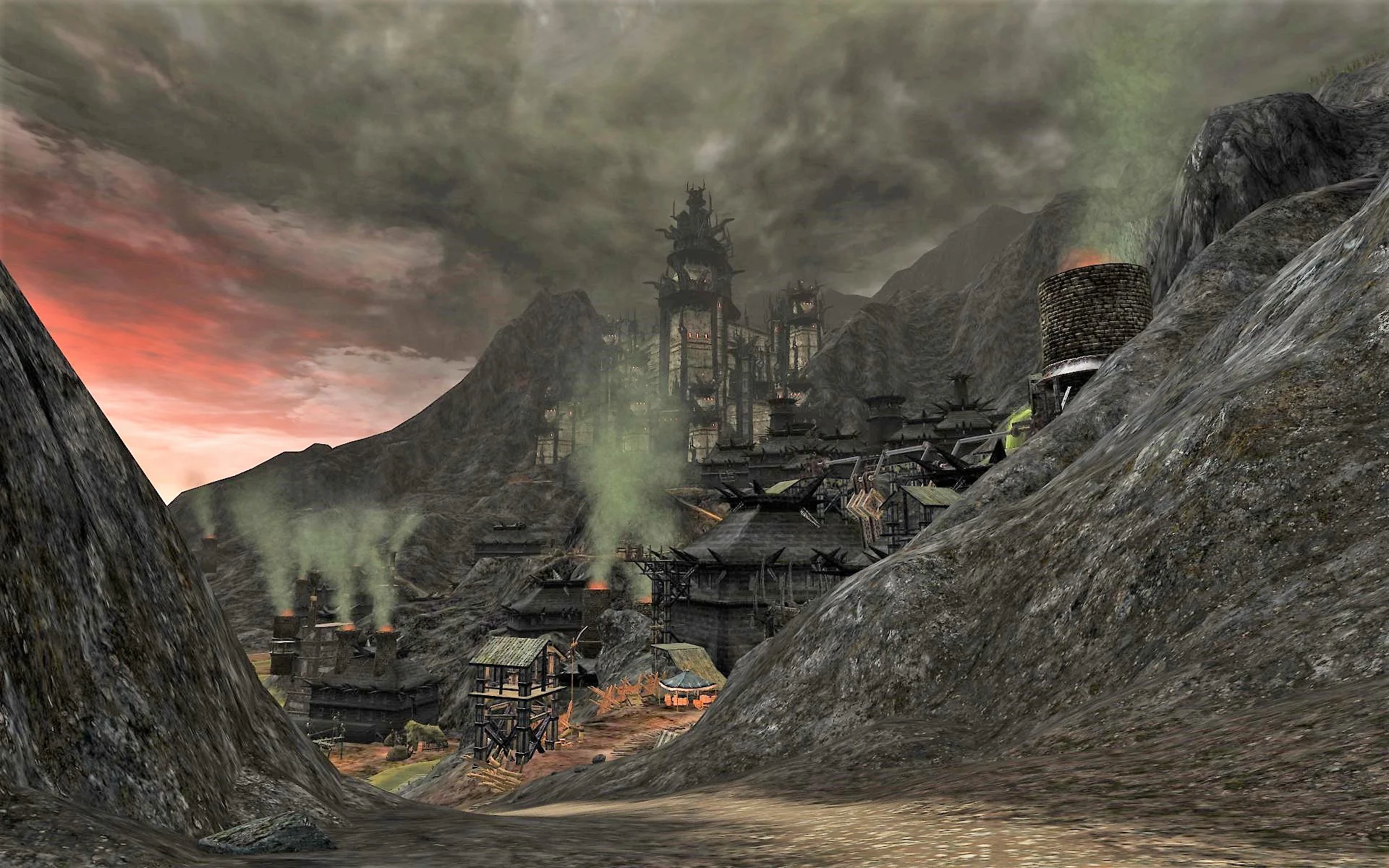
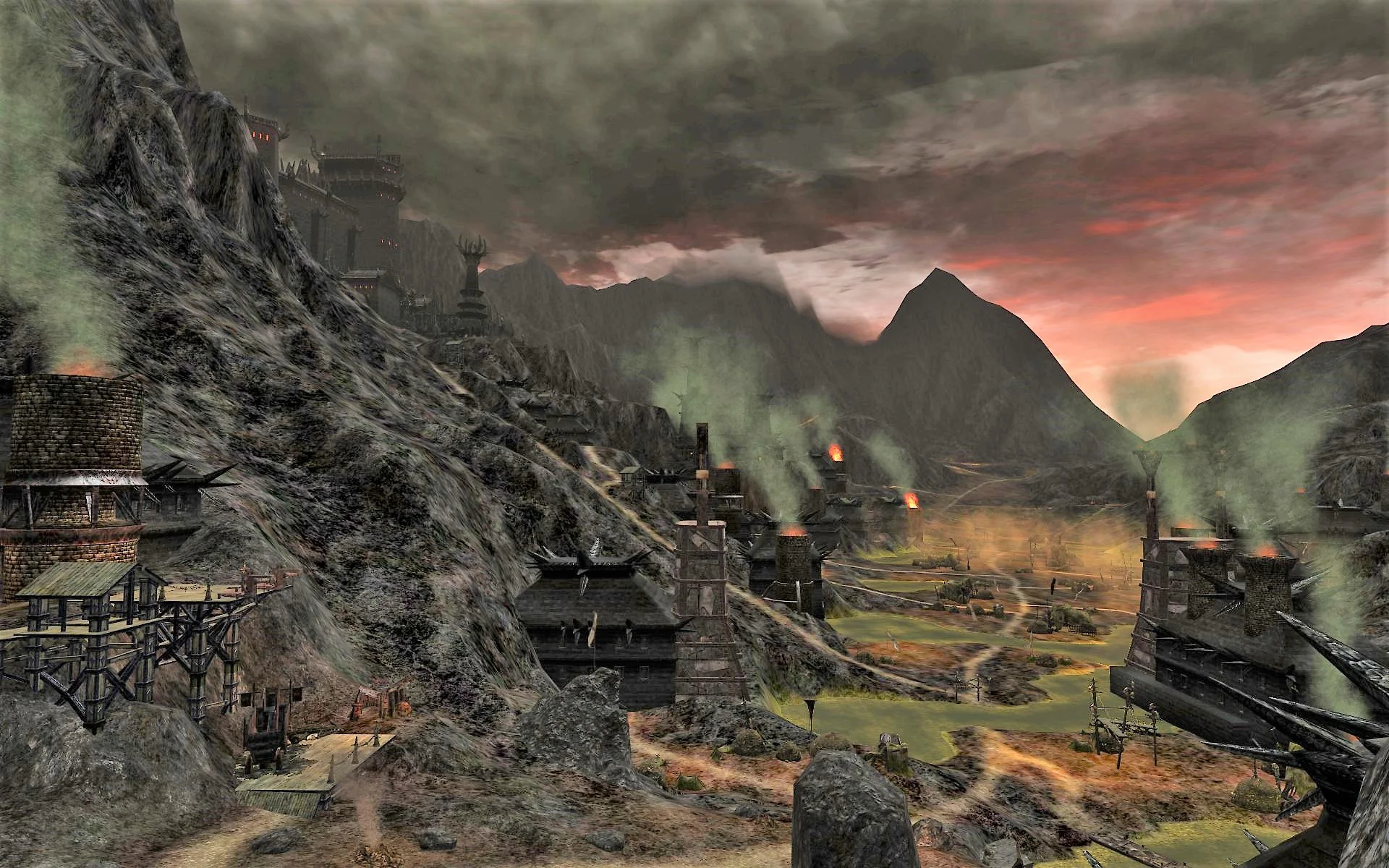
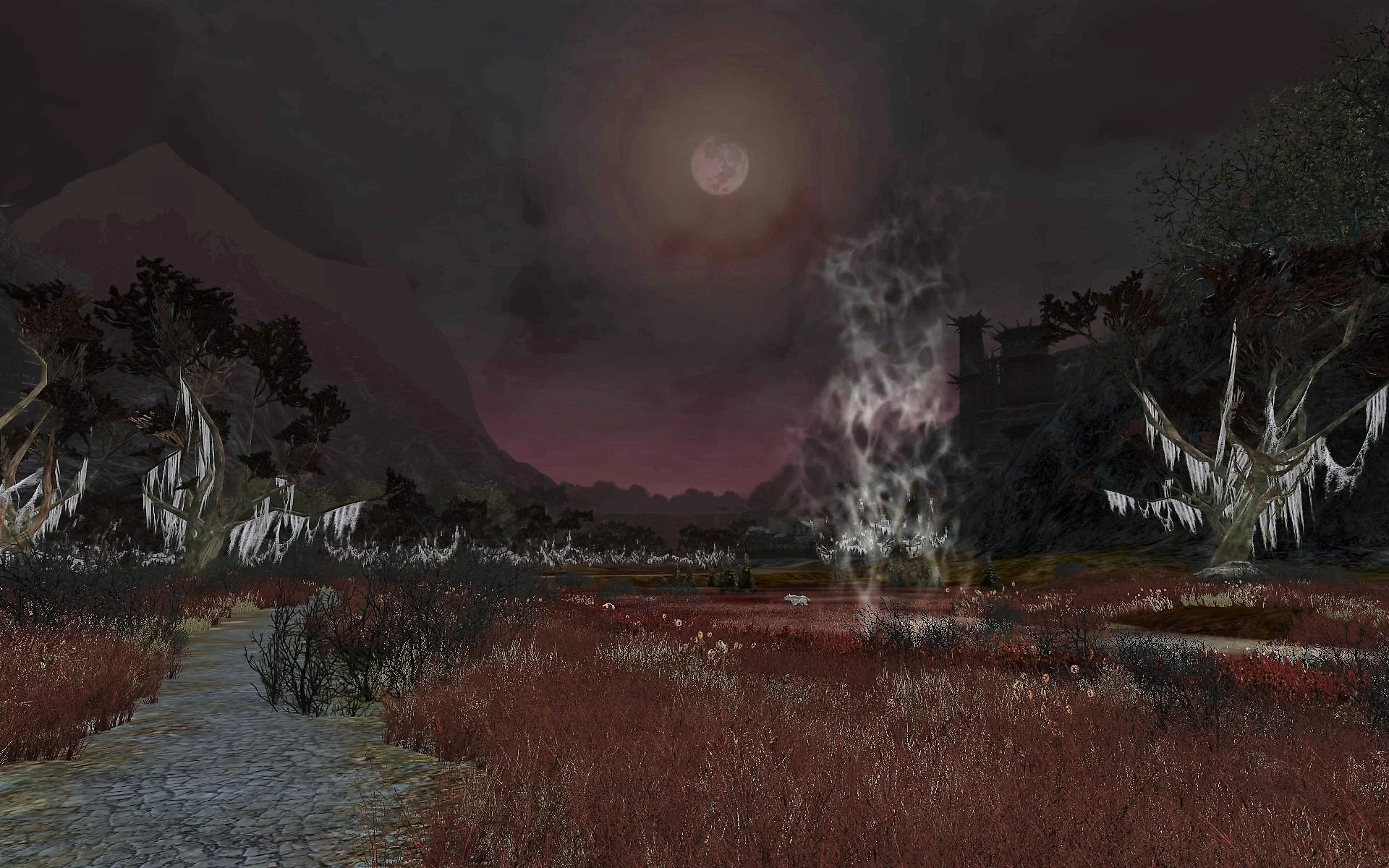
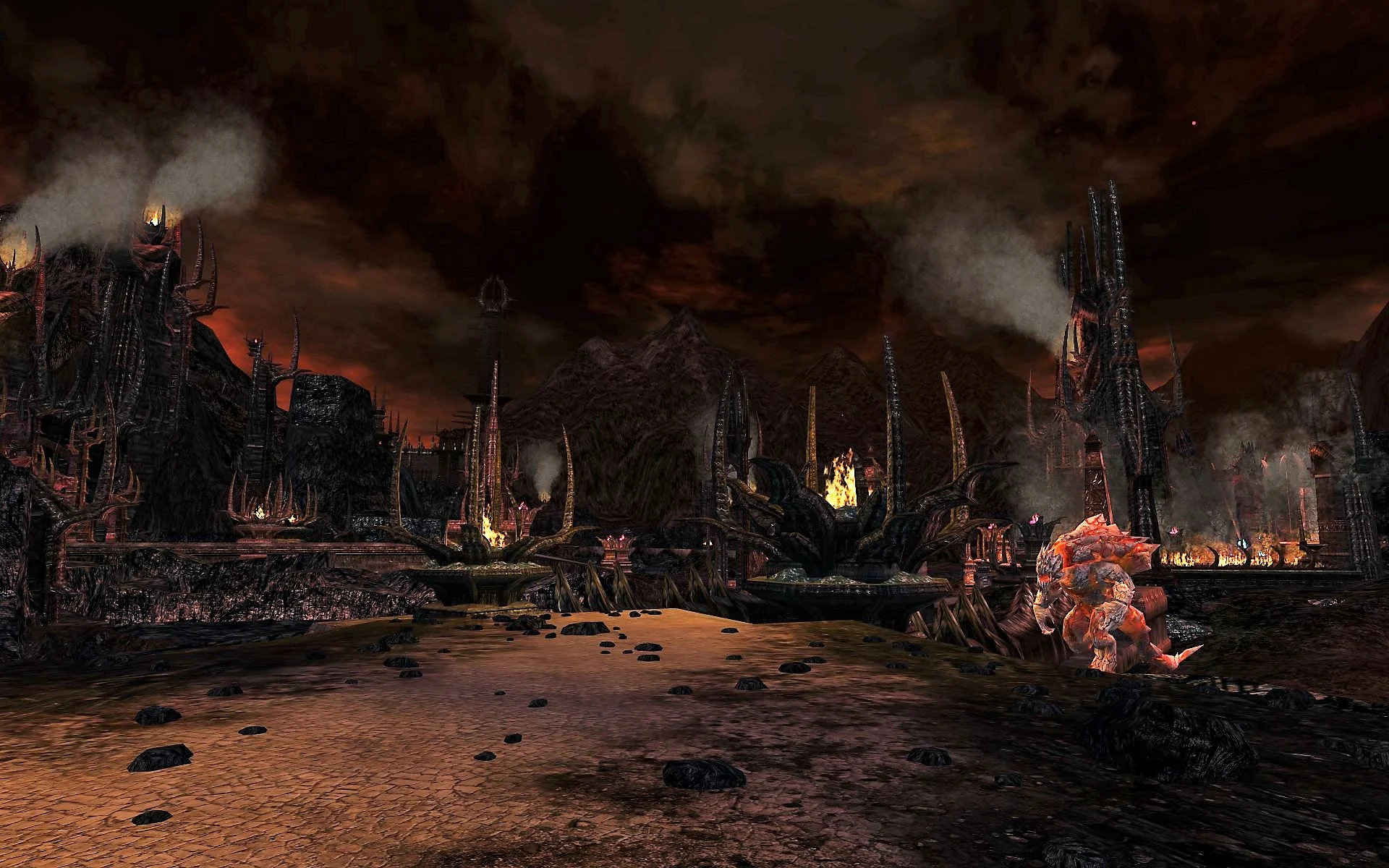
The first thing that struck me about Mordor immediately after the fall of Sauron, was how dark and gloomy it was. I’m sure lore experts will correct me if I’m wrong but wasn’t the storm of Mordor supposed to dissipate after the ring was destroyed? I was hoping that the smoke and dust from the ruined Morannon would lift as I travelled into Udûn and beyond. Sadly, this was not the case. Mordor is dark, smokey and depending upon your monitor and graphics card, a strain on the eyes. I had to pull the curtains in my office to be able to see clearly. LOTRO has several other regions that have low lighting and are dismal; Moria and Angmar. However, visibility is still sufficient to navigate. Mordor is very much like Mirkwood, as in it’s not just dark but blurry.
Standing Stone Games have a lot of placeholder NPCs at present. I found myself battling a Blackwold Ruffian at one point, which was somewhat incongruous. But as the expansion is work in progress one has to expect such workarounds. The architecture of the region is in the same idiom of the Dagorlad and Angmar. It looks appropriate but a lot of assets are simply being reused. There are some new beasts roaming Gorgoroth, such as the Sulokil but most else are just variations on existing themea. Rock worms and fire drakes make a return, along with Fire Grims and Fumaroles. There is a swamp like region to the South East of Mount Doom and the area around Cirith Ungol is heavily populated by the Spawn of Ungoliant. Straying from the road or approaching enemy camps triggers the new Light of Eärendil/Shadow of Mordor system. This is a buff/debuff mechanic that isn’t fatal but does diminish your stats.
From what I have seen so far of Mordor, it certainly seems to fit the aesthetic described in Tolkien’s source text. Once you’ve initially gotten over the excitement of simply walking into Mordor, it really becomes apparent that SSG have provided more of the same. That’s not a bad thing per se. The formula has proven to work. Mordor will have some subtle differences from other zones in LOTRO and bespoke mechnics but it will ultimately have Epic and standard quests, rep factions and new items to obtain or craft. For me, the real test will be how engaging the narrative is, now we have stepped beyond the canonical story. The dark and oppressive nature of the new area may also be an obstacle for some players. I certainly do not see myself engaging in lengthy gameplay sessions as did in Northern Ithilien.
As of yet, SSG have not mentioned a price point for the Mordor expansion. They’ve also not yet clarified some details regarding various new game mechanics. The allegiance system for example seems to be an advance variation of a reputation faction. There is also no news on alleged instance cluster and whether it will be included in the expansion or come after. The price may also be an issue. Although the overall Mordor map looks big, much of it is a rocky barren wasteland. I hope the areas to the South of the Sea of Núrnen are more temperate, as these are supposed to be fertile and the bread basket of Mordor. I do not want to pay an excessive amount for a potentially un-diverse region. Hopefully further information will be forthcoming shortly.
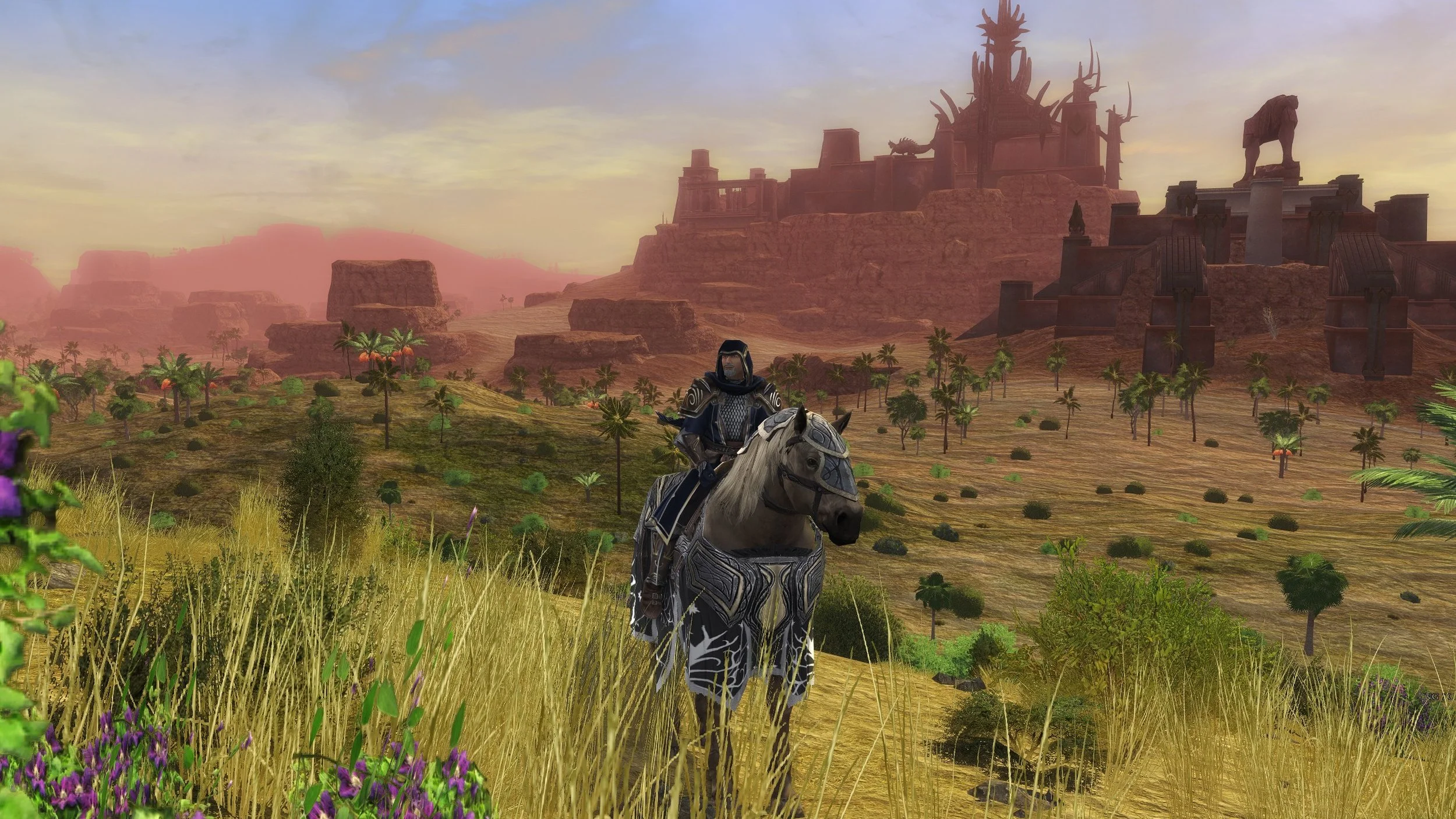
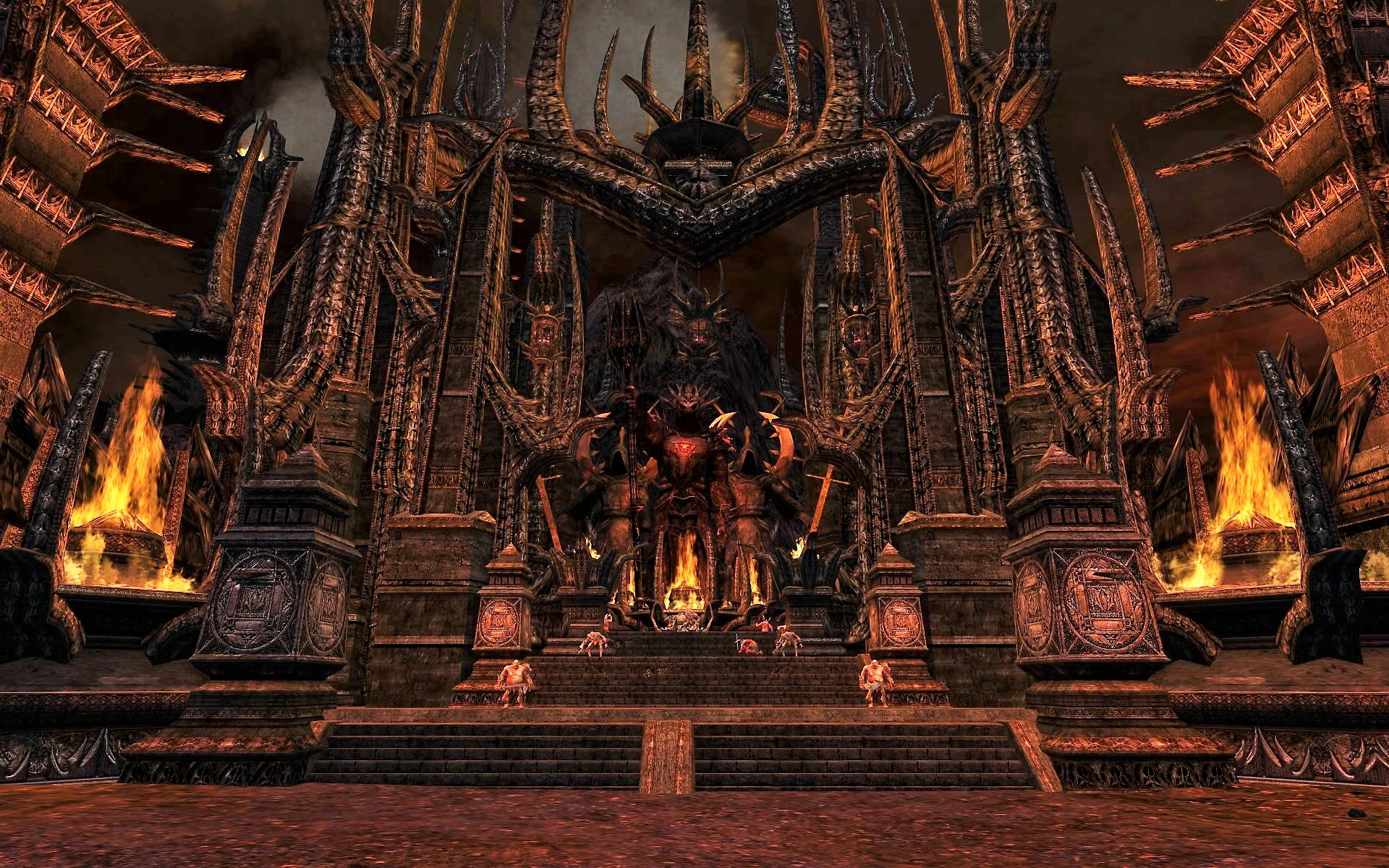
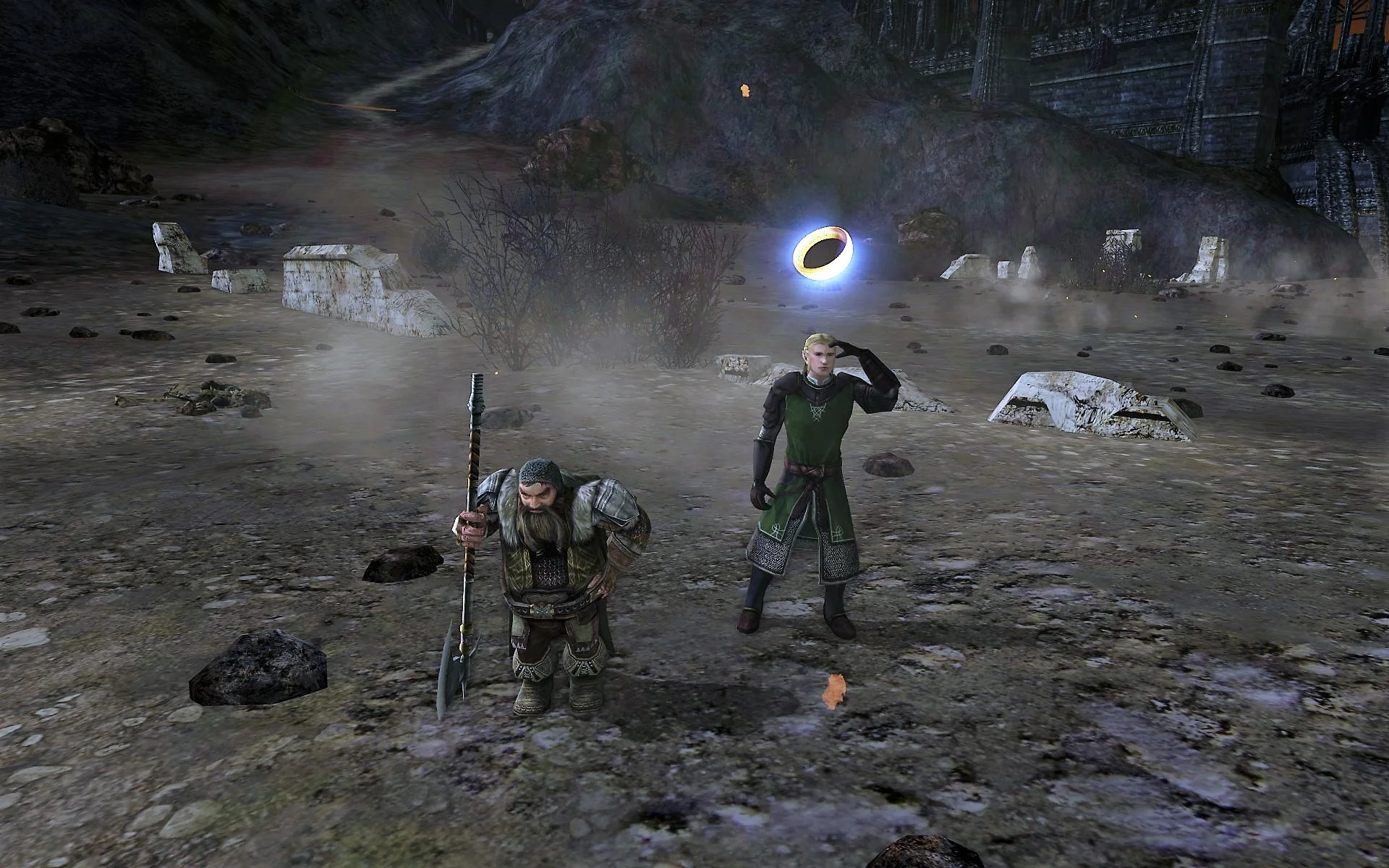
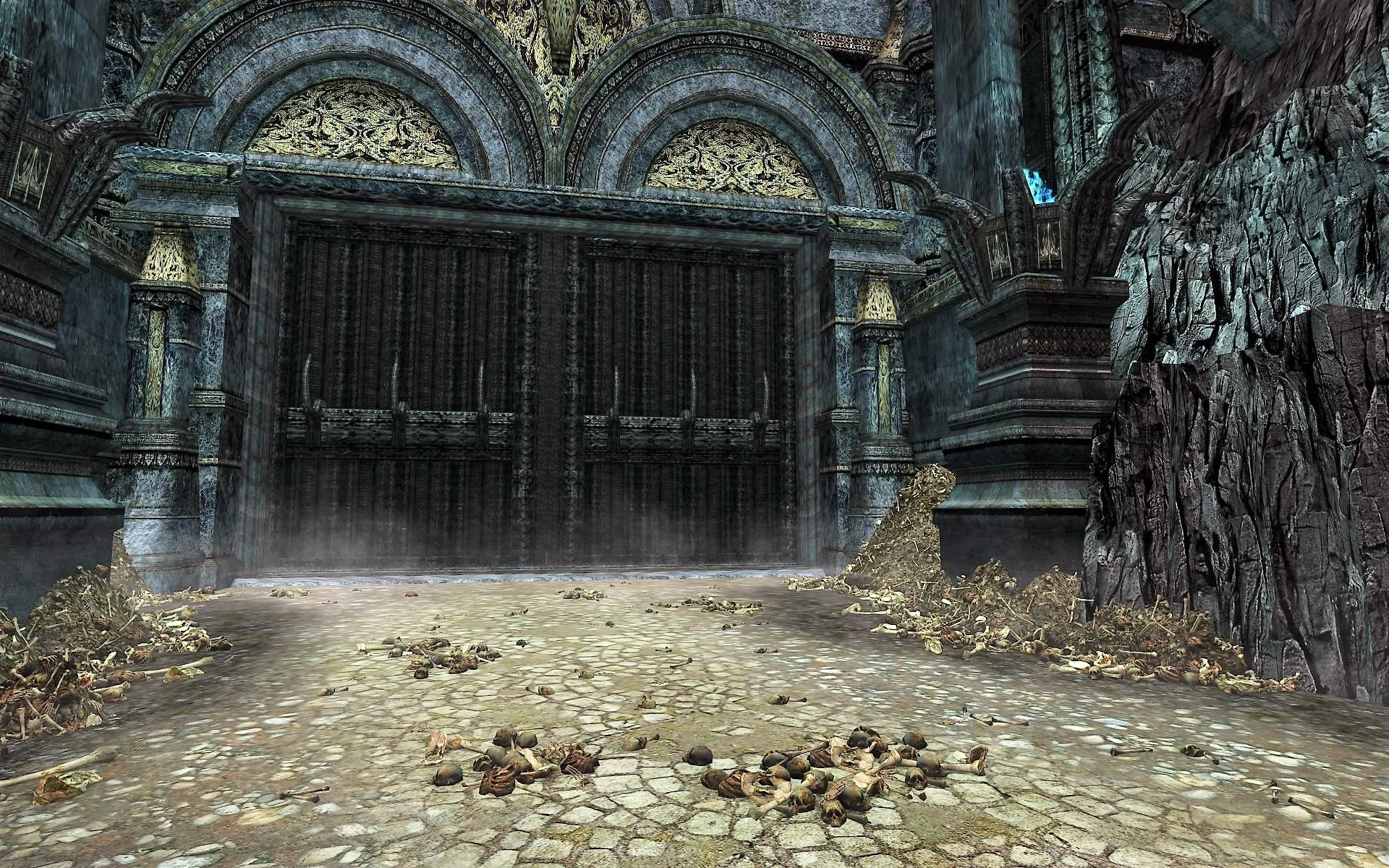
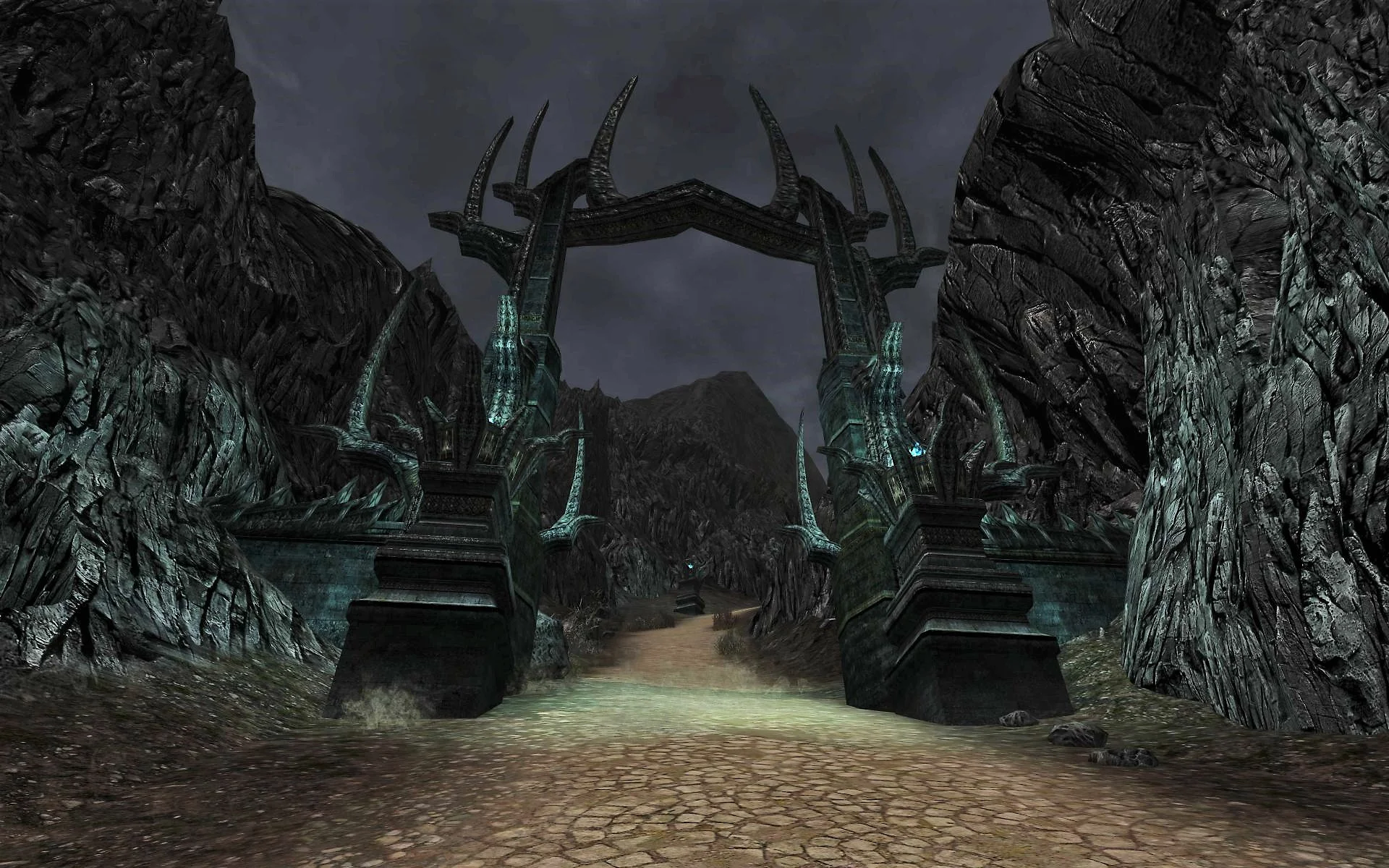
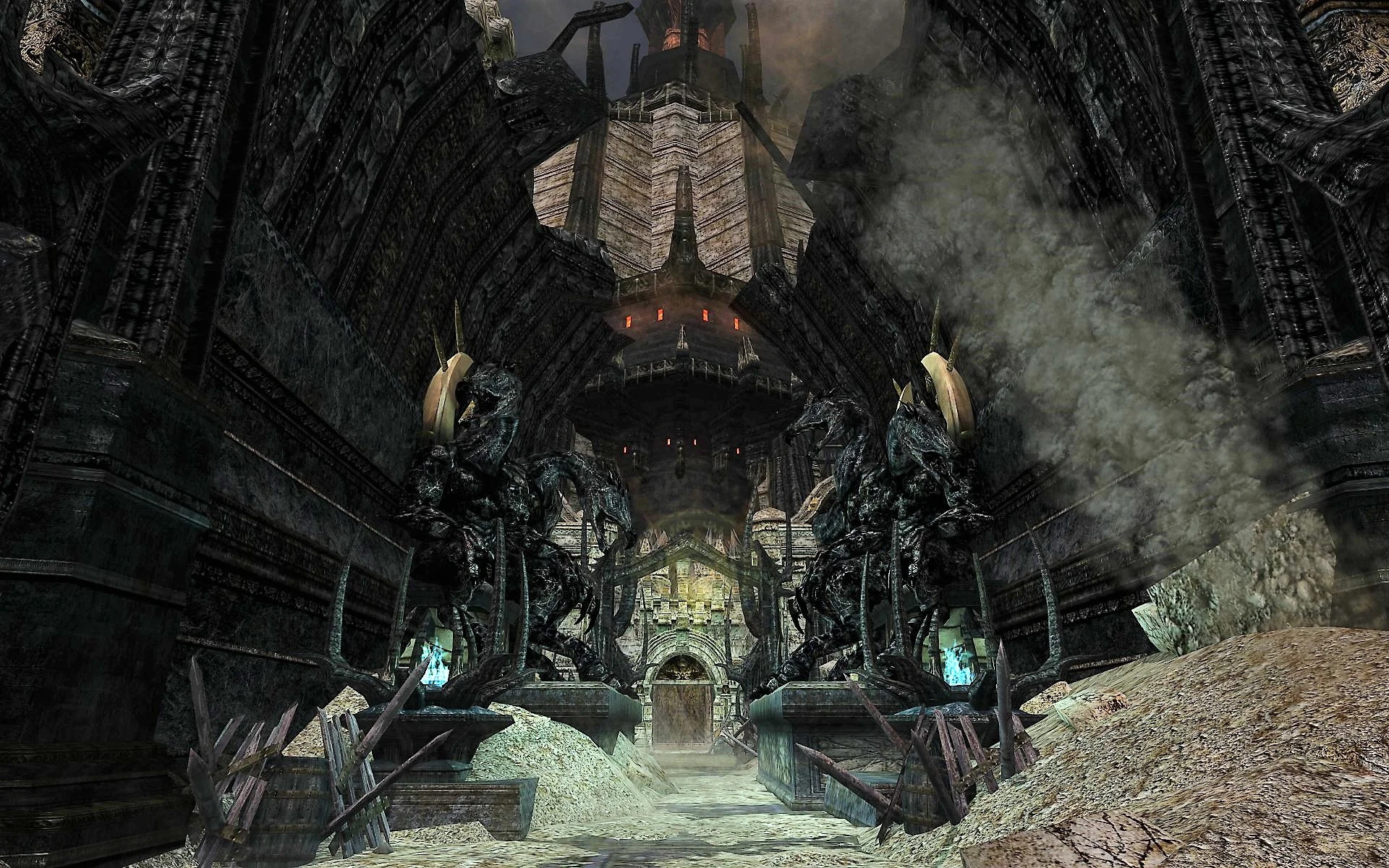
I remain for the present, relatively optimistic about this pending expansion as we’ve not had one for several years. It should be remembered that not every LOTRO player has level cap characters, so for them there is no immediate need to buy more endgame content. The introduction of a new race is therefore an interesting development and I shall write more about this in my next blog post. It’s appeal to altoholics is a practical source of revenue for SSG. I’m also looking forward to the revised character animations and aesthetics. LOTRO was never cutting edge with regards to its avatars so an overhaul is more than welcome in my opinion. In the meantime while we await more news and a third test build, here is a small gallery of screen captures taken throughout Mordor today. Please note I have adjusted the brightness, as they were incredibly dark.
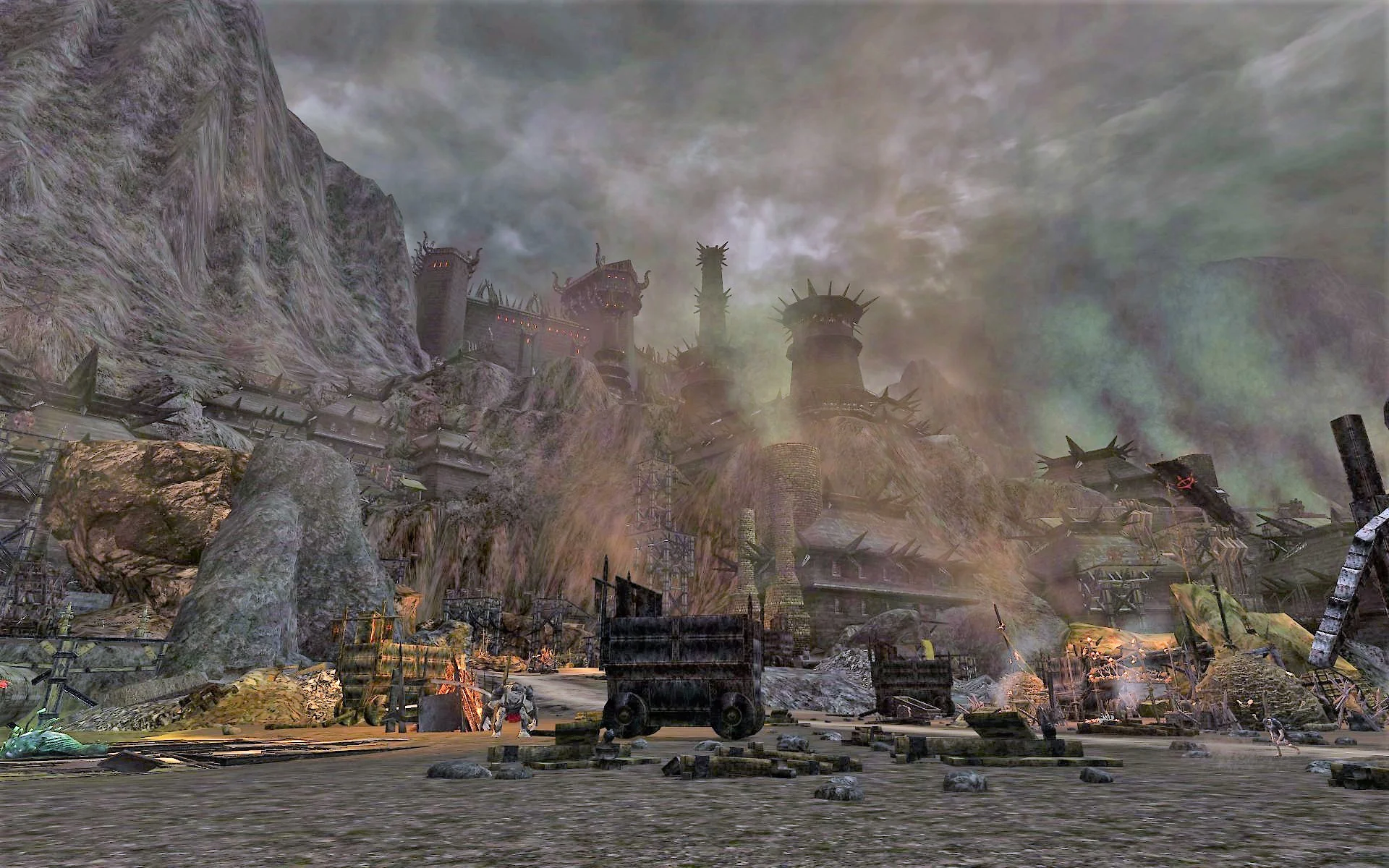
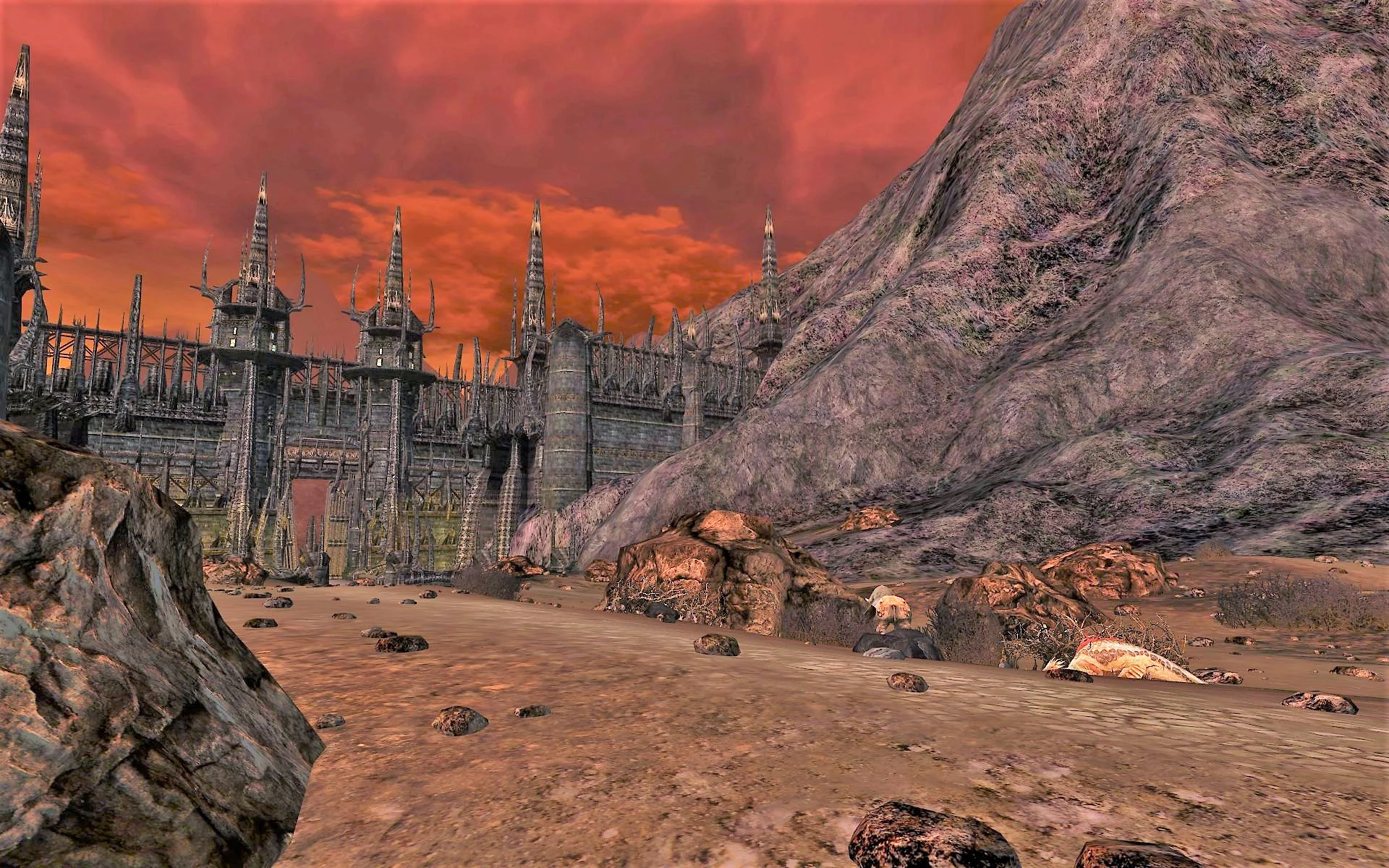
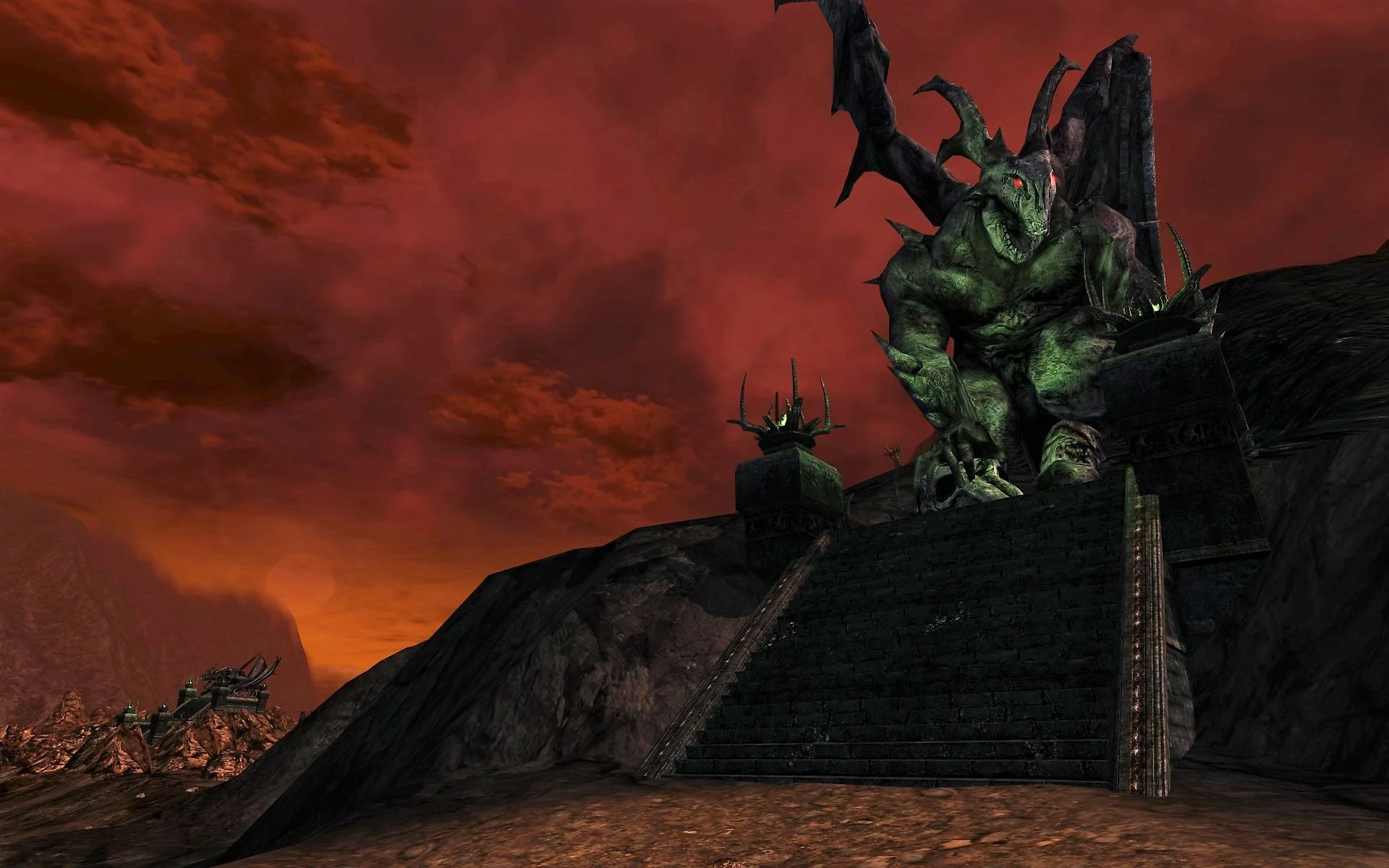
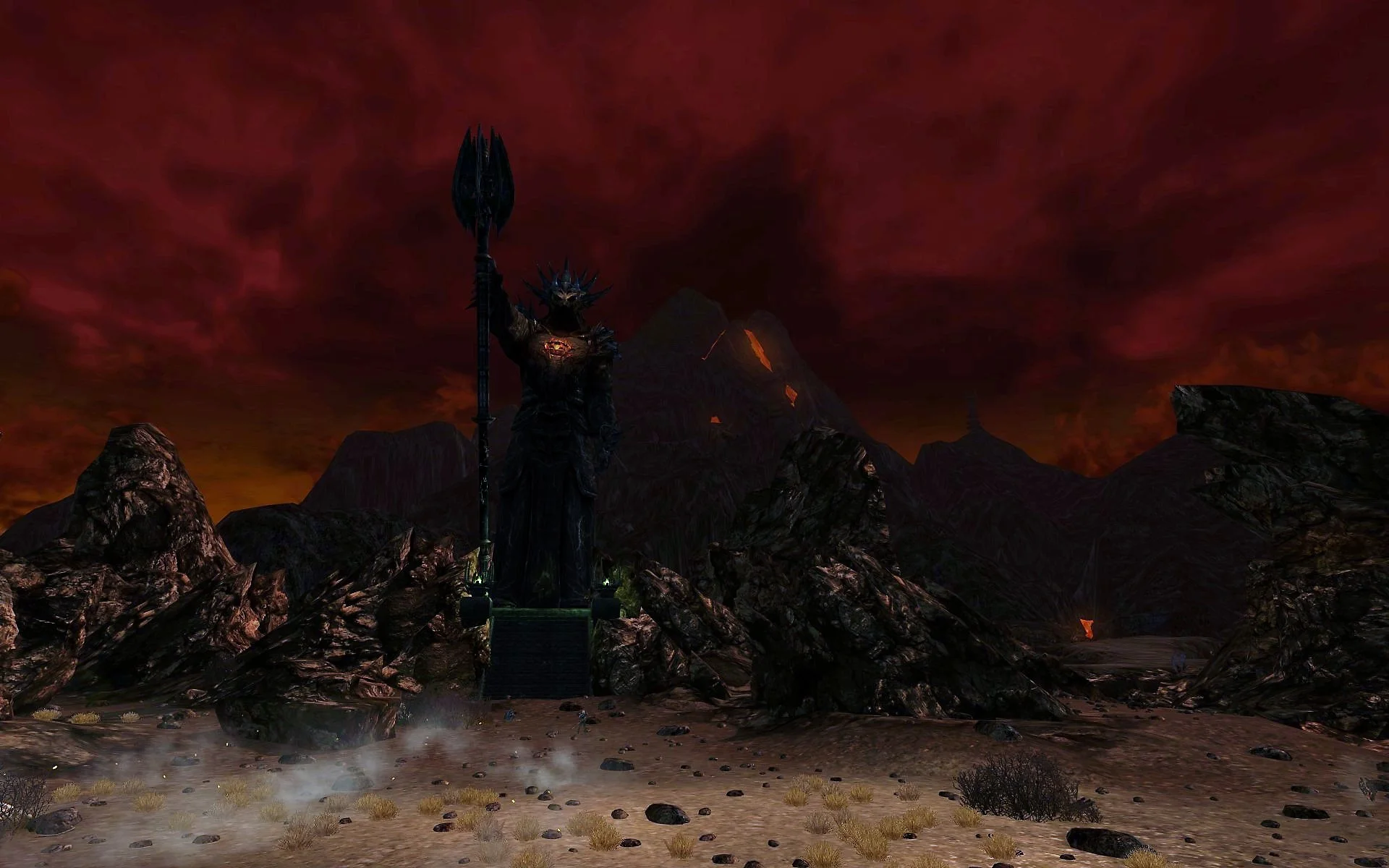

Classic Movie Themes: Mackenna's Gold
Mackenna's Gold is a perfect example of the Western at its most decadent. Made at a time when the genre was becoming increasingly tired and facing strong competition from the Italian market, Hollywood decided that the way to renew public interest was to turn everything up to eleven and turn the Western into a multimillion dollar spectacle. The movie cost Columbia Pictures $14 million in 1969 and boasted an all-star cast, as well as action and special effects. However, it was not a smooth production and the studio seemed to get cold feet prior to its release. The Three hour running time was reduced to one hundred and twenty-eight minutes, leaving the final cut feeling somewhat uneven. Overall, the public were indifferent and the box office takings were low.
Mackenna's Gold is a perfect example of the Western at its most decadent. Made at a time when the genre was becoming increasingly tired and facing strong competition from the Italian market, Hollywood decided that the way to renew public interest was to turn everything up to eleven and turn the Western into a multimillion dollar spectacle. The movie cost Columbia Pictures $14 million in 1969 and boasted an all-star cast, as well as action and special effects. However, it was not a smooth production and the studio seemed to get cold feet prior to its release. The Three hour running time was reduced to one hundred and twenty-eight minutes, leaving the final cut feeling somewhat uneven. Overall, the public were indifferent and the box office takings were low.
Despite the movies flaws there is still much to like about Mackenna's Gold, although one’s enjoyment is frequently linked to the preposterous nature of the screenplay and the varying quality of the visual effects. One such aspect is the rather cool and groovy soundtrack by Quincy Jones. It has all his usual hallmarks such as crescendo's and tone colour shifts. Even within the confines of the Western idiom he manages to include a hint of his jazz and blues roots. The movie also features Jose Feliciano singing "Ole Turkey Buzzard", a song that re-occurs throughout the film. The cautionary lyrics regarding men killing each other in their lust for gold, mirror the on-screen story and change as the narrative progresses. It's catchy nature and somewhat incongruous inclusion in the movie’s score has earned it a somewhat cult reputation.






Gaming and Semantics
Language is an evolutionary thing. It changes over time, reflecting the needs of the culture that use it. Furthermore, each unique sub-set of society seems to create and utilise its own bespoke lexicon. From business, science, politics, religion, to sports and other leisure activities, all use terminology that is pertinent to their own group. Overtime some of these terms crossover from one niche to another to eventually find broad mainstream acceptance. It is a fascinating process and one I think has accelerated in recent years due to the growth of social media.
Language is an evolutionary thing. It changes over time, reflecting the needs of the culture that use it. Furthermore, each unique sub-set of society seems to create and utilise its own bespoke lexicon. From business, science, politics, religion, to sports and other leisure activities, all use terminology that is pertinent to their own group. Overtime some of these terms crossover from one niche to another to eventually find broad mainstream acceptance. It is a fascinating process and one I think has accelerated in recent years due to the growth of social media.
Gaming as a culture typifies this linguistic trend, although some terms are ambiguous and not clearly defined. This subsequently leads to skewed debates and discussion, as there is not mutually agreed frame of reference or definition. Furthermore, when discussing wider issues such as game content, particularly political or social themes, there is often a great deal of pejorative terms and ill-conceived labels bandied about, which are used not to describe but to discredit. This seems to reflect the increasingly bi-partisan nature of all public debates these days, especially politics. Sadly, such language taints the gaming community and damages its reputation.
Something that comes up habitually is the term "carebear". Initially this was a term that was jokingly employed to describe players that preferred the social interaction of PVE content and avoided player versus player gameplay. Now it seems to be a routine epithet to negatively label anyone who doesn't advocate any of the competitive aspects of gaming. If you do not like PVP, or end-game raiding, warzones, skirmishes or the like you are a "carebear". The implication being that caring and compassion are negative things and potentially a sign of weakness. It’s a blanket term design to belittle and standard ammunition in ad hominem attacks.
During the seventies, UK national politics was extremely binary. The right was focused on privatisation, small government and the free market. The left advocated the welfare state, social responsibility and equality. It was during this period that I first became aware of the term "do gooder"; a term broadly meaning a well-meaning but unrealistic or interfering philanthropist or reformer. Yet overtime it simple degenerated into a pejorative label for anyone who's politics were not sufficiently right wing. Any sort of policy that advocated fairness or parity was lambasted with this term, to the point where it became nothing but a vacuous buzz word. The reason I mention this is because the exactly the same thing is happening today with the trite label "social justice warrior".
Like social and political controversies, gaming debates usually grind to a halt under the weight of these pejorative terms. Any sort of meaningful and mature discourse is obscured under a swath of pointless and ultimately meaningless buzzwords. "Feminazi", "delicate snowflake","filthy casual gamer" and other such names are bandied about, dragging the debate away from a level playing field and into the playground. Combine this sort of rhetoric with the prevailing mindset that eschews reason, critical thinking and the scope to disagree in a civil fashion and all rational discussion ends. The winner is simply those who shout loudest. History has shown us that such groups are seldom the best informed.
When this sort of philosophy prevails it ultimately does more harm than good. Sadly, at present, too many gamers are so busy indulging in territorial pissing that they are oblivious to the fact that they are befouling their own waterhole. It's only a matter of time before the well is truly poisoned. If gaming culture genuinely wants to improve for everyone's benefits then it needs start thinking. That begins with the language that we use towards each other. The alternative is to continue down the current road and let those who want to watch Rome burn, do so to the detriment of all. In the meantime, there will be those that disassociate themselves from the mainstream and set up isolated safe havens for likeminded gamers. However, that doesn't really fix the long-term problems. Are smaller more fragmented markets and communities ultimately good for gaming?

Dark City: Director's Cut (1998)
There are many directors who have cut their teeth working in the music industry. They have often fashioned their cinematic style and technique from the music videos they’ve made. Unfortunately, I am not a fan of this school of movie making. McG, for example represents to me the epitome of style over substance. I also detest this current trend for fast editing. It may well be pertinent for the music industry but I believe it is to the detriment of the narrative cinema. But there is one director from this background who has risen above his roots and exhibits true creative talent and a fundamental grasp of film. Alex Proyas, director of The Crow and I, Robot.
There are many directors who have cut their teeth working in the music industry. They have often fashioned their cinematic style and technique from the music videos they’ve made. Unfortunately, I am not a fan of this school of movie making. McG, for example represents to me the epitome of style over substance. I also detest this current trend for fast editing. It may well be pertinent for the music industry but I believe it is to the detriment of the narrative cinema. But there is one director from this background who has risen above his roots and exhibits true creative talent and a fundamental grasp of film. Alex Proyas, director of The Crow and I, Robot.
Dark City is an often-overlooked film, lost in the wake of the media hype surrounding The Matrix. Both have plot similarities and common themes. However, Dark City displays a deeper level of thought which is perhaps t why it lost favour with mainstream audiences not adequately equipped for its cerebral rigour. There is also a lack of a mainstream A list actor. Instead the film relies upon an international cast of established character actors. In 2008, director Alex Proyas re-edited the film, removing the original opening narration, adding additional material and some extra FX footage. The results are quite startling and have had quite an impact on the way the story is presented and which themes and motifs are emphasised.
Dark City starts off as a stylised film noir, with Rufus Sewel waking up in a motel with a dead prostitute. He's soon on the run from hard boiled cop, William Hurt. Can he trust his estranged wife Jennifer Connelly? Is he really mentally ill as his Doctor (Kiefer Sutherland) describes or is there something more sinister going on? Who are the trio of tall strangers dressed in black, who are pursuing him over the ersatz 1950s city? A postcard hints at possible clues that can be found at shell beach, an out of town resort. But despite being clearly sign posted, no underground train seems to go there. Matters just seem to get stranger, as peoples identities change along with streets and buildings. Why is it perpetually night time? As the story soon descends into a disturbing dystopian nightmare it becomes clear that there are sinister forces at work.
This director's cut of Dark City, turns a flawed but accomplished film into one that finally reaches its full potential. The detective story soon gives way to darker plot elements and expands into a gothic vision. The final act reveals an intriguing science fiction style dénouement. To say more would spoil the plot for those who have yet to see it. Let it suffice to say that Dark City is one of a handful of movies that successfully straddles multiple genres. The production design is striking mixing expressionism, art nouveau and fifties Americana. The story is reminiscent of Philip K. Dick work and has more than a hint of Kafka about it.
The cast is very eclectic (and international), featuring the talents of Ian Richardson, Richard O' Brien, Colin Friels, Bruce Spence and even John Bluthal (Frank Pickles from The Vicar of Dibley). Trevor Jones provides an evocative soundtrack. Proyas directs stylishly with a good grasp for story and character. This new cut, removes the voice over at the beginning which clumsily telegraphed the plot and places a more nuanced focus on the initial mystery. The theme of awaking from a perceived reality into a bleaker and more sinister alternative one, as mentioned earlier draws comparisons with The Matrix. However, the messianic allegory of that film is exchanged here for a more Nietzschian subtext.
Dark City by its very nature was always destined to become a cult film. Yet it actually is more than that, working on several levels. It can be viewed as a baroque science fantasy film or as a deeper commentary on the shallow and contrived nature of modern society. It is certainly a visually arresting and thoughtful if sombre film. It is not excessively violent, though it is somewhat grotesque and brooding. The ending may spark a further debate when you consider the implications.

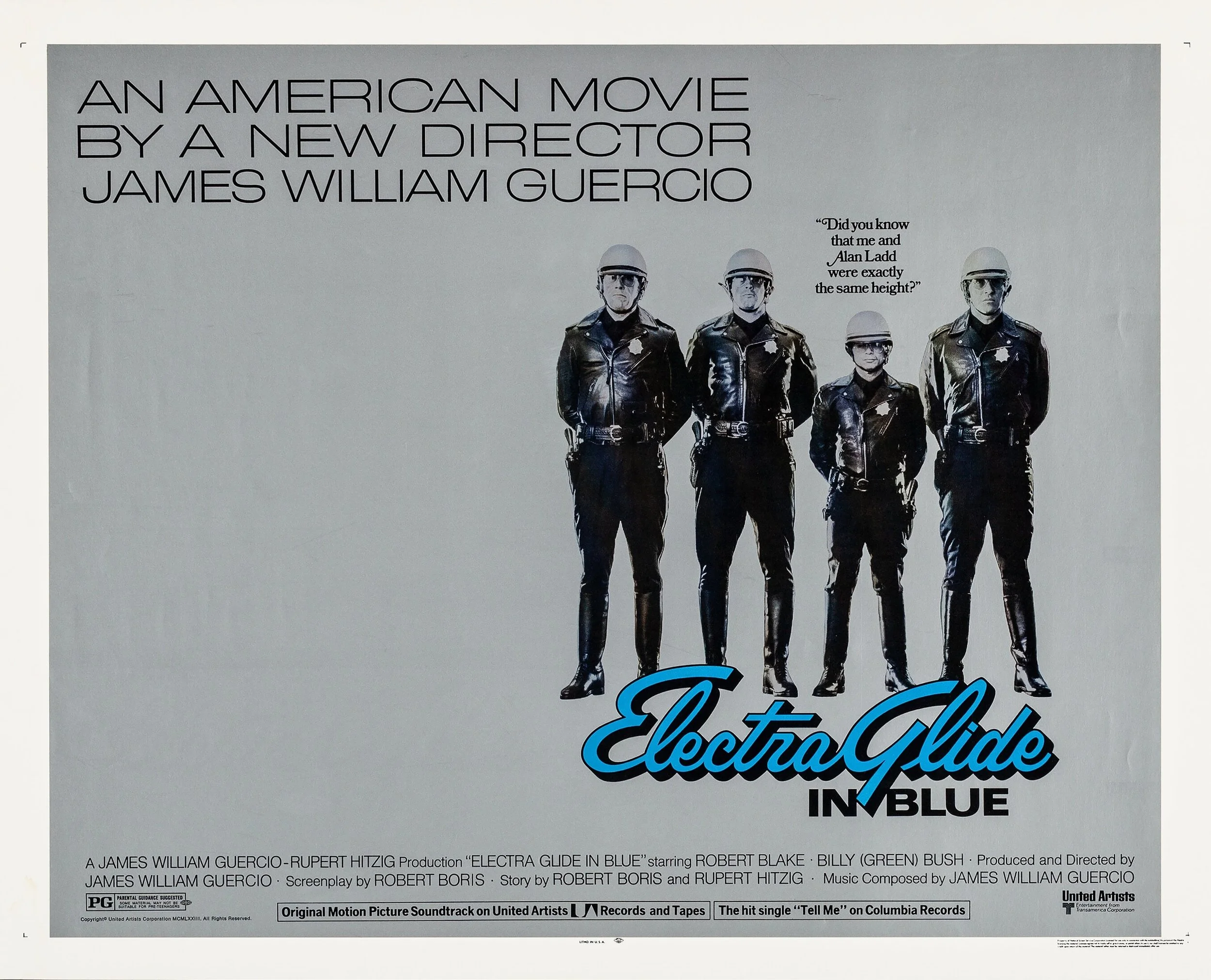
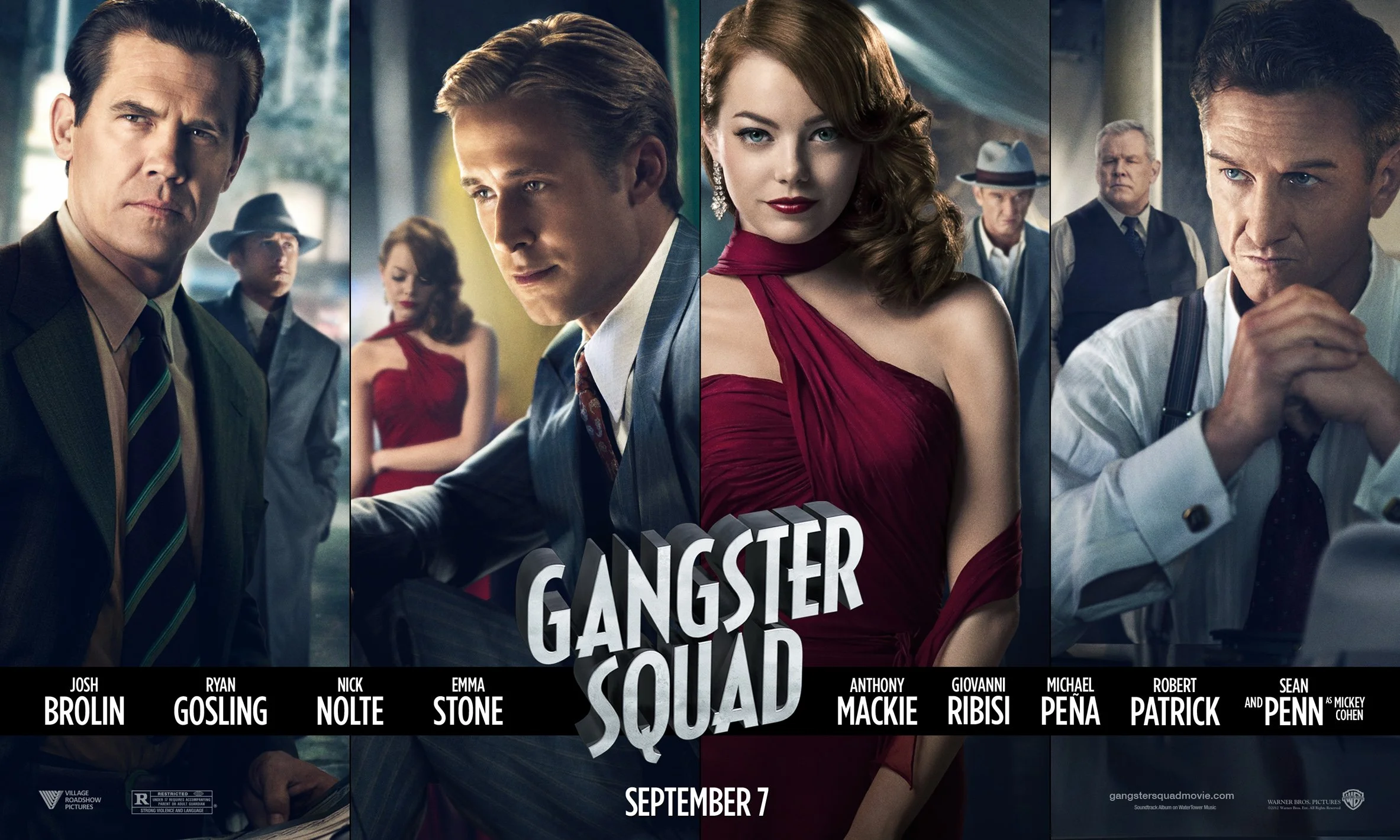
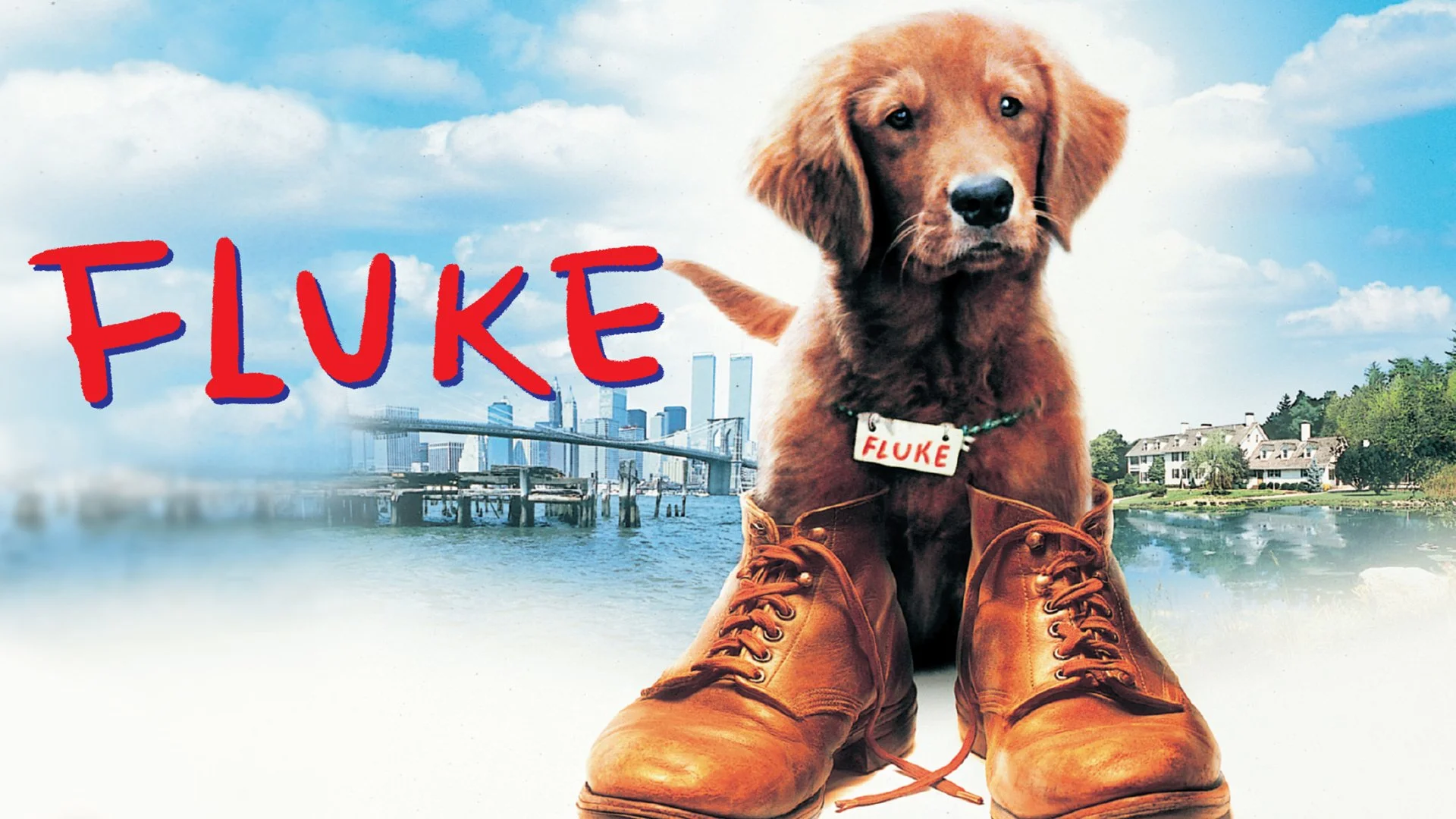



Secret World Legends
Writing a lengthy article as to why you don’t like a game is often a bad idea. It seldom makes for a good post unless you are humorous or have a cogent point to make. Often all the anger, bile and vitriol can be distilled down to the following. “I wanted X and they (the developers) gave me Y”. Its a simple question of differing expectations and personal taste. Well that is what we have here. Simply put, the changes made to The Secret World in its transition to Secret World Legends are insufficient for me to change my overall view of the game. Specifically, I still do not like the combat system and find the UI esoteric and unintuitive. It is easier to play the game now so theoretically I can soldier on to see the narrative that I previously missed. But I still have to endure an unsatisfactory fighting style to do this and that is a big enough hurdle for me to possibly conclude “it’s not worth it”.
Writing a lengthy article as to why you don’t like a game is often a bad idea. It seldom makes for a good post unless you are humorous or have a cogent point to make. Often all the anger, bile and vitriol can be distilled down to the following. “I wanted X and they (the developers) gave me Y”. Its a simple question of differing expectations and personal taste. Well that is what we have here. Simply put, the changes made to The Secret World in its transition to Secret World Legends are insufficient for me to change my overall view of the game. Specifically, I still do not like the combat system and find the UI esoteric and unintuitive. It is easier to play the game now so theoretically I can soldier on to see the narrative that I previously missed. But I still have to endure an unsatisfactory fighting style to do this and that is a big enough hurdle for me to possibly conclude “it’s not worth it”.
One of the things that attracted me to The Secret World when it was initially being beta tested was the idea of the supernatural being countered with modern technology. Thus, firearms were and remain my weapons of choice. However, combat was clunky and awkward at that stage in the games lifespan. I never got the sense that the assault rifle was doing any substantial damage and had to constantly back pedal to stay alive. It was dull and time consuming to clear mobs and make progress. Sadly, despite a streamlining of the combat system in Secret World Legends and a noticeable reduction of skills bloat, combat with pistols and the like, still feels woefully unsatisfying. Yes, foes do now die quicker and I now have a reticule to aim but that is about all that has changed.
What I expected, hoped for, wanted (and I accept the inherent fallacy of thinking in such terms with regards to gaming. After all you get what you’re given and nothing more) was a tangible gun mechanic. Something that felt substantial IE when you fire the gun the enemy took major damage, or recoiled, or at least gave the impression that this was inconvenient for them. However, the problem is where you can credibly scale the DPS of certain weapons or types of attack to suit an MMORPGs progression system, it’s far harder to do with the arbitrary functionality of guns. Firearms do damage per se, based on calibre and rate of fire. Scaling their damage to fit in with the games levelling system renders them tediously impotent at the initial stages of the game. This may come down to perception and they’re probably doing a comparable amount of damage to any other weapon type. But it just feels off and I don’t like wearing mobs down gradually with a pea-shooter.
So, I’ll try to look beyond this “obstacle” and see if I can muster up the interest to persevere with Secret World Legends in the next few days but there’s a fifty-fifty chance I’ll just get bored and move on to pastures new. Oh, and to address some of the inevitable comments one expects from the gaming cognoscenti, firstly, no I don’t want to try any other weapons. I chose guns for a reason. If there was something else I liked I would have picked them. Secondly, no I’m not saying that Secret World Legends is an awful game etc. I am simply highlighting that it has failed to “float my boat” and that comes down to a simple question of taste. As for catching up with the narrative, I’m sure I can probably watch all the relevant cutscenes on You Tube. It wouldn’t be the first time I’d done that to check out a game’s story, without having to go to the hassle of playing it.
Apollo 18 (2011)
A fundamental requirement of cinema is that the audience suspends their sense of disbelief. Anything that breaks this will immediately has a negative impact upon the viewing experience. There are many things can severe this connection but the two most common seem to be obvious plot holes and Scooby Doo behaviour IE “Let’s split up…”. If these are the result of simply poor film making, then they can perhaps be forgiven. Every director has to learn their craft. However, if these two factors are present by design, then that is an unpardonable sin. Assuming that your audience is stupid, is insulting and the worse sort of hypocrisy.
A fundamental requirement of cinema is that the audience suspends their sense of disbelief. Anything that breaks this will immediately has a negative impact upon the viewing experience. There are many things can severe this connection but the two most common seem to be obvious plot holes and Scooby Doo behaviour IE “Let’s split up…”. If these are the result of simply poor film making, then they can perhaps be forgiven. Every director has to learn their craft. However, if these two factors are present by design, then that is an unpardonable sin. Assuming that your audience is stupid, is insulting and the worse sort of hypocrisy.
Apollo 18 has a strong start for a movie built around the found footage concept. It plays very nicely into the current appetite for conspiracy theories. The first thirty minutes where we meet the cast and learn of their covert mission to place monitoring equipment on the moon, is credible and intriguing. The cold war setting and the post-Watergate back drop do a lot to fuel the narrative. During this initial third of the movie, Apollo 18 plays more like a political thriller rather than a sci-fi shocker. But then director Gonzalo Lopez-Gallego goes and jumps the shark and all the previous good work goes out the window. It’s a common problem with contemporary film making. I remember having exactly the same thoughts when I saw Paranormal Activity.
After a string of anomalous events a key character makes the most illogical leap of thought and as a result the credibility simply melts away. You see, I take the attitude that NASA astronauts are trained professional, hand picked because of their skills and analytical mindset. Maintaining rational under extreme circumstances must surely feature in their training. So, I simply do not buy into the idea that, because they’ve found an abandoned Russian Lunar Module, a dead cosmonaut, picked up radio interference, had the flag that they planted removed and found some unidentified marking in the lunar soil, naturally concluded that it must be extraterrestrials. Scientists simply do not think this way.
The rest of the film is arbitrary and derivative bug hunt, with obviously telegraphed jumps. The conclusion involving complicit government agencies is predictable and uninspired. This is a shame because the film is very well made from a technical perspective. But once again we have a production that demonstrates a clear understanding of visuals but not plot construction. Furthermore, Apollo 18 also seems to forget that it is a found footage movie, with scenes and dialogue that are contrived to be more cinematic and come dangerously close to breaking the fourth wall.
With reference to the plot holes, I unlike other critics was not particularly bothered about the nebulous nature of the alien life forms featured in the film. I am happy to watch movies without every answer being given to me on a plate. Life is seldom clear cut, is it? However, I do balk at the fundamental flaw that permeates Apollo 18. The film comprises of 16 mm & 35 mm cine footage along with video material from external cameras. Now the latter may well have been broadcasted and thus been received and recorded back on earth. But the cine film had to be collected and developed. Does the film not hinge on the premise that no mission has subsequently returned to the moon? Also, the Russian Lunar Module and US Command module where both destroyed, therefore eliminating any footage they may have had. No, this is simply bad screen writing and brings me neatly full circle to my original point that I started with.
PVP in MMOs
There has been an interesting debate this week about PVP in MMOs among several of my fellow bloggers. Syp AKA Justin Olivetti wrote an article for Massively OP referencing “gankbox culture” of EVE Online which then garnered a series of reciprocal posts from the likes of Bhagpuss, Jeromai, UltrViolet and Wilhelm Arcturus. Good points have been made by all but I think Bhaggie hit the nail on the proverbial head when he said that the term “PVP”, like so many in the gaming lexicon, is ill-defined. Player versus player can manifest itself in many forms, such as duels, arenas and zerg against zerg. Some games do offer an open world were players can be preyed upon or “ganked” but it is usually regulated to some degree. However, the thing that came out of this discussion that was of the most interest to me was why some people dislike PVP so much?
There has been an interesting debate this week about PVP in MMOs among several of my fellow bloggers. Syp AKA Justin Olivetti wrote an article for Massively OP referencing “gankbox culture” of EVE Online which then garnered a series of reciprocal posts from the likes of Bhagpuss, Jeromai, UltrViolet and Wilhelm Arcturus. Good points have been made by all but I think Bhaggie hit the nail on the proverbial head when he said that the term “PVP”, like so many in the gaming lexicon, is ill-defined. Player versus player can manifest itself in many forms, such as duels, arenas and zerg against zerg. Some games do offer an open world were players can be preyed upon or “ganked” but it is usually regulated to some degree. However, the thing that came out of this discussion that was of the most interest to me was why some people dislike PVP so much?
Cowardice, risk aversion and conflict-phobic are just some of the terms used by my blogging colleagues to explain as to why some players do not like PVP. Some have argued more simply that the mechanic is just a question of taste. However, I think it is more complex than that, as PVP isn’t a passive game mechanic like a buff or a DoT; something you endure due to the design of the game. PVP is another player impinging directly upon your gaming and I think this is the key to the issue. A lot of gamers do not like the idea of another individual having such a tangible impact upon their experience. Especially if there is nothing they can do to control it. The loss of items or experience is one objection but I believe the most fundamental issue is that no one likes being a victim.
I personally have no objection to the PVP mechanic in principle or its presence in MMOs. As long as its optional and consensual or in a bespoke zone then it can be an enjoyable gaming experience for those who pursue it. Duelling, competitive game play and league tables are legitimate modes of play and totally acceptable in other pastimes. Let us also dispel the myth that PVP is the exclusive province of sociopaths, malcontents and the dysfunctional. My experience of group PVP in games such as Overwatch, Battlefield or Call of Duty, has been broadly positive. Sadly, there is a certain type of person that spoils this overall experience and skews the wider reputation of PVP. A minority of players gravitate to this type of gameplay as it offers a platform for bullying and bragging. PVP is seen by some as a rite of passage and a means to bolster their self-esteem.
I play games for fun. Yes, I like a degree of challenge and to work towards specific goal but overall, they are a form of recreational entertainment. As in real life, I do not want to be inconvenienced by others or for them to have a negative impact upon my experience. I want to be segregated from those who could be potentially problematic and I wish to control as many of the variables as I can. Thus, I do not care for open world PVP, where I could be preyed upon at any time and lose items. Plus, another honest reason why I don’t pursue one on one PVP in MMOs, is that I don’t like losing. Who does? I prefer the safety of the zerg or being over powered. Let us not trot out these tired old arguments about “building character” or “it’s the taking part that counts” because neither hold up to close scrutiny.
There is another factor that impacts upon our attitude towards PVP and that is financial. Most games involve some sort of payment and the majority of players meet those costs at some point. As soon as money enters the equation, the dynamic of our gaming experience changes. Being a customer radically alters your perception of what is and what isn’t desirable. The loss of items and XP have a financial cost, as does the time spent earning them. The appeal of being “ganked” by someone and having to pay for the “experience” alludes me. However, we all ultimately view the world, gaming and thus PVP through the prism of our own experience. I’m sure there are bloggers whose opinions are the polar opposite of mine. As for PVP, I am happy for it to be part of gaming, as long as it is never forced or inflicted upon those who do not want it.
LOTRO 10th Anniversary: Remembering LOTRO Part 2
When reminiscing about LOTRO, there are many personal highlights for me to consider. Raiding in the Rift, completing the epic story in Shadows of Angmar, or even getting my first mount. Yet, if I had to pick a personal favourite experience, it would be the great charge across the River Anduin, into Mirkwood. This happened on Gilrain server on Monday 25th of Janurary 2010, the night before Siege of Mirkwood expansion was launched. An enterprising player by the name of Mikeemoo arranged the event via the forums and at the designated time a hundred plus players assembled on the Western bank of The Great River. Once the signal was given we swam en masse to the Eastern shore and swarmed up the bank into the woods. As the zone was not yet accessible the developers had placed NPCs in the vicinity; Mirkeves Fell Arrows that could one shot any player. However, due to the sheer number of players in the zerg and the resulting lag, many made it across. Eventually the server kicked everyone but it was immense fun while it lasted.
When reminiscing about LOTRO, there are many personal highlights for me to consider. Raiding in the Rift, completing the epic story in Shadows of Angmar, or even getting my first mount. Yet, if I had to pick a personal favourite experience, it would be the great charge across the River Anduin, into Mirkwood. This happened on Gilrain server on Monday 25th of Janurary 2010, the night before Siege of Mirkwood expansion was launched. An enterprising player by the name of Mikeemoo arranged the event via the forums and at the designated time a hundred plus players assembled on the Western bank of The Great River. Once the signal was given we swam en masse to the Eastern shore and swarmed up the bank into the woods. As the zone was not yet accessible the developers had placed NPCs in the vicinity; Mirkeves Fell Arrows that could one shot any player. However, due to the sheer number of players in the zerg and the resulting lag, many made it across. Eventually the server kicked everyone but it was immense fun while it lasted.
This anecdote in many ways encapsulates all that makes LOTRO so enjoyable. Teamwork, a sense of community, an environment that lends itself to more than just the scripted gameplay. This is why player generated events thrive in the game and why Standing Stone Games are wise to support such undertakings. Although over the years, the relationship between the player base and the development team hasn’t always been good and it’s fair to say that mistakes have been made on both sides. The transition to F2P was far from smooth for the European players and both Enedwaith and Dunland where hardly highpoints in the games ten-year journey. Then there was the introduction of the skills tree with Helm’s Deep which divided the player base. However, unlike other fickler communities, LOTRO players tend to take a more pragmatic approach to the ups and downs of gaming. They have rolled with the changes over the last decade mainly due to their passion for Tolkien’s work.
As soon as I had bought LOTRO in 2008, I started blogging about the game. In many respects, it was instrumental in my writing on a regular basis, as it tends to be a rule of thumb that you should write about what you enjoy. What quickly became apparent was that there existed a very dynamic and friendly blogging and podcast community associated with the game. Everyone was extremely welcoming and only too happy to help promote each other’s content. The LOTRO Combo Blog was an invaluable source of information, aggregating dozens of fan related sites. There was also a wealth of LOTRO related podcast and shows, all dealing with a unique facet of the game. But I think we can all agree that the jewel in the crown of fan related productions was “A Casual Stroll to Mordor” with Merric and Goldenstar. The show presented LOTRO related news and views each week with a healthy dose of enthusiasm and honesty. It very soon became indispensable listening among fans and in many ways, did a better job of informing players and promoting the game than Turbine.
On a personal note, one of the most agreeable aspects of playing LOTRO over the years has been the friendship that I’ve formed with fellow bloggers, podcasters and guild mates. The kinship system in LOTRO is a subtly different beast to comparable social systems in other games. It doesn’t offer the obvious items advantages of say Guild Wars 2 or STO. It seems to be far more of a labour of love. I have been in the same kinship since spring 2009 and it is a remarkably tight knit social group. Some players come and go but there is a core group that are the heart and soul of the kinship and they are always online, willing to help and blessed with a boundless enthusiasm. As LOTRO has finally reached the Black Gates and Mordor awaits via the next expansion, I’ve seen many a familiar faces return to the kinship roster. It’s amazing the way friendship just resume, as if time has no bearing on the matter.
Ultan Foebane. Holding his chopper and going nowhere since 2007.
In many ways Update 21 is a major crossroad for both LOTRO and Standing Stone Games. Finally, the central story goes beyond Tolkien’s work and it is incumbent upon the in-house writers to maintain the high standard that they have for the last decade. There is scope for this to be a major creative step forward. It could also go the other way. Yet, despite the importance of this transition, the community seems far from nervous about the matter. Good will abounds at present and the recent ten-year anniversary has been well received. Certainly, the transition from Turbine to SSG has repaired a lot of previously burned bridges and the developers seem to be far better at communicating and keeping players informed than they previously were. So, here’s to LOTROs future and years more of fun and fond memories. May the road continue to go on and on.
Godzilla (2014)
Gareth Edwards directing debut Monsters, was a clever, subtle and genuinely moving human drama that just happened to be set against the background of alien lifeforms in a quarantine zone. He also managed to imbue the monsters of the title with a sense of depth. They were intriguing with their bio-luminescent communication and curious vocalisations. They were not simply an arbitrary MacGuffin and hinted at something far more complex. I was therefore very surprised and pleased that he has managed to maintain these qualities in his second feature film Godzilla. Despite being a massive studio undertaking his reboot of the classic franchise has a depth of soul that you seldom find in such mainstream material.
Gareth Edwards directing debut Monsters, was a clever, subtle and genuinely moving human drama that just happened to be set against the background of alien lifeforms in a quarantine zone. He also managed to imbue the monsters of the title with a sense of depth. They were intriguing with their bio-luminescent communication and curious vocalisations. They were not simply an arbitrary MacGuffin and hinted at something far more complex. I was therefore very surprised and pleased that he has managed to maintain these qualities in his second feature film Godzilla. Despite being a massive studio undertaking his reboot of the classic franchise has a depth of soul that you seldom find in such mainstream material.
Ishirō Honda's original Godzilla movie in its uncut Japanese format is a tragic and melancholic tale, as well as a clever metaphor for the nuclear age. Garth Edwards maintain this theme but also adds an environmental element, as well as a philosophical concept with Godzilla being a "force of nature". This is more than an exercise in spectacle and the movie has a genuine sense of awe as it shows us an apocalypse brought about by the natural world, that we are powerless to deal with. The monsters in this movie are more than just caricatures. They are living, breathing entities with complex lifecycles. They are also very much part of the world, a theme that the author Clive Barker was always keen to explore.
The human elements of Godzilla are also handled in a different fashion to the standard formula. We are not saddled with heroes that have all the answers and who can miraculously save the world. As with Monsters there is a domestic drama being played out between Joe Brody (Bryan Cranston) a scientist grieving for his dead wife and his son Lieutenant Ford Brody (Aaron Taylor-Johnson) of the USN. Ford has to constantly bail out his Father from his conspiracy theory driven misadventures. This in turn places a strain on his own domestic relations with his Wife Elle Brody (Elizabeth Olsen) and their son. These simple narrative themes, work well against the catastrophic big picture.
Steven Spielberg has always been good at finding the right balance between the everyday and the incredible, both visually and thematically. There are traces of that approach here in Gareth Edwards directorial style. He elects to be extremely measured in what he shows, very much like Jaws, until the third act. This is a decision that I thoroughly approve of, although it will not be to everyone's liking. Some people have already complained that there is not enough Godzilla in the movie. However, I suspect they are more fans of spectacle and not necessarily interested in the director’s wider vision. I would also argue that the English dialogue version of many of the original Godzilla movies often robbed them of the finer plot points and simply focused on man-in-suit action, thus changing expectations of the US market.
Visually Godzilla is an outstanding experience. Seldom has such destruction been depicted with such gravitas. The movie takes a bleak tone so don't go looking for any witty quips or banter. It’s all played very straight faced. The visual effects give Godzilla an immense sense of scale as well as the M.U.T.O.S. This is one occasion when 3D does help the proceedings. There is also a tangible sense of the human cost to all the mayhem, without resorting to cliché. Furthermore, composer Alexandre Desplat has managed to craft the right sort of soundtrack for the proceedings. It has clear thematic influences from the original Japanese movies and is suitable sombre. Pretty much every aspect of this production seems to have been thought about in an intelligent manner.
Godzilla is a rare beast these days, in so far as it’s a blockbuster with a far greater amount of thought behind it. Not everything works. Sometimes the script follows the less interesting characters about and a few of them drop out of the proceedings without logical real reason. But the movie maintains a sense of integrity about its subject matter. Furthermore, considering that director Gareth Edwards has managed to produce a movie of this type, via the studio system and still managed to stamp his personal style upon it, is a major achievement. This is one of those rare times where I eagerly await a sequel, as long as it maintains the high standard that has been established by the first instalment.
Pacific Rim (2013)
At first glance Pacific Rim may appear to be yet another exercise in Hollywood excess. Another bloated, vacuous spectacle made by cynics who have no other motive than to part the unwary cinemagoer from their hard-earned cash. Fortunately, it is not one of those movies. It is big and certainly visually impressive but it also has a plot, likeable characters, a global overview and a sense of integrity regarding the genre it lovingly references. In every respect, this is a superior example of the summer blockbuster genre and it can all be attributed to the unique talents of Guillermo del Toro.
At first glance Pacific Rim may appear to be yet another exercise in Hollywood excess. Another bloated, vacuous spectacle made by cynics who have no other motive than to part the unwary cinemagoer from their hard-earned cash. Fortunately, it is not one of those movies. It is big and certainly visually impressive but it also has a plot, likeable characters, a global overview and a sense of integrity regarding the genre it lovingly references. In every respect, this is a superior example of the summer blockbuster genre and it can all be attributed to the unique talents of Guillermo del Toro.
Del Toro is a man of passion, intelligence and an inherent understanding of the subtleties of cinema. His diverse portfolio of work shows how he is equally at home with the cerebral and the spectacular. Pacific Rim is very much an example of the latter but it has far more substance than many movies of this kind. The director's clever nuances and flair for creativity are present throughout the movie. Although this a homage to the great Toho productions of the sixties and seventies, Pacific Rim is far from a conceit or an indulgence. It is a very public and accessible ode to a genre that shaped the director's childhood.
So, what makes Pacific Rim head and shoulders above the competition? The fresh perspective that Guillermo del Toro brings to the proceedings. It is not the US that saves the world but people from all nations. The focus of events has a very far eastern flavour and an international cast, all of whom have well developed characters and backstories (by genre standards). There is humour provided by two bickering scientists which not only entertains but is a clear reference to Japanese monster movie tropes. The visuals are both original and creative providing a genuine sense of scale and threat. Yet the Kaiju's still have Godzilla-esque quirks and mannerisms. Ramin Djawadi score also echoes iconic themes from the Toho glory days.
Pacific Rim also eschews the usual broad strokes of Hollywood. The female lead Mako Mori (Rinko Kikuchi) is a far more interesting protagonist than we usually see. The cultural differences between East and West are touched upon but not in any clichéd fashion. As ever the director has a scene in which a small child is terrified and it is a very potent sequence. Yet it has significance to the plot and is far more sophisticated means of explaining motivation. Films so often these days simply think they can define a character’s actions in the most arbitrary manner.
Pacific Rim is not without some shortcomings and the biggest is possibly the length of some of the action scenes. Where younger viewers may delight in an unleavened diet of CGI, the more mature viewer may grow a little tired during the third act. However, there it can be argued that when you get a major studio to bankroll a project such as this for $190 Million, then there is a requirement to indulge them. The 3D process also impacts upon the elegance of Guillermo Navarro cinematography and at times darkens the image too much.
Simply put Pacific Rim puts the Transformers franchise to shame and shows them up for the disposable and hollow products that they are. The movie also showcases the powerful presence of Idris Elba and once again has an American lead character, played by a Brit (Charlie Hunnam). Del Toro regular, Ron Perlman, has an extended cameo and a lot of fun with a rather quirky role. Production designer Andrew Neskoromny gives a very convincing wartime feel to the movie, especially the Jaegers themselves. Under Guillermo del Toro's guidance all these strands come together to make a movie that is far more than the sum of its parts. I'm left pondering how different and potentially better The Hobbit may have been under his creative auspices.
The Expendables 3 Unrated Edition (2014)
The theatrical release of The Expendables 3 in 2014 was severely hamstrung by the producer’s decision to court a wider audience with a PG-13 rating. The film although profitable, still fell short of its predecessor’s box office taking. Many fans of the franchise subsequently looked to the DVD and Blu-ray release to provide a harder cut of the movie, similar to the previous R rated instalments.
Sadly, this was not the case. The Expendables 3 Unrated Edition does include some additional action content and one new expositionary scene but overall there is nothing that radically improves the film or makes it stronger in content than the theatrical release.
The theatrical release of The Expendables 3 in 2014 was severely hamstrung by the producer’s decision to court a wider audience with a PG-13 rating. The film although profitable, still fell short of its predecessor’s box office taking. Many fans of the franchise subsequently looked to the DVD and Blu-ray release to provide a harder cut of the movie, similar to the previous R rated instalments.
Sadly, this was not the case. The Expendables 3 Unrated Edition does include some additional action content and one new expositionary scene but overall there is nothing that radically improves the film or makes it stronger in content than the theatrical release.
What Unrated Edition of the movie offers is five minutes of extra material, including an additional scene of dialogue between the younger member of the mercenary team. It should be noted that it makes no significant difference to the film’s narrative. The remainder of new content consists of additional action sequences in the movie’s climatic battle. This is predominantly expanded knife work by Doc (Wesley Snipes) and Lee Christmas (Jason Statham). There is also a smattering of additional profanity throughout the proceedings. Although this new material would have pushed the movie into an R rating if it had been included in the theatrical release, it still wouldn't have made it comparable to the first two films.
So, to clarify the situation, the first two major action scenes in the The Expendables 3 Unrated Edition are the same as the theatrical release. The train rescue and the dock shootout remain relatively bloodless, although they are well constructed. I was especially saddened that nothing was added to the scene in which a steel cable was strung across the rail track. I was hoping for some decapitations and bisections but no such luck. It is not until about fifty minutes into the movie we get the first new content. An additional scene aboard the transport plane where the new team of Expendables discuss Stonebanks (Mel Gibson). It neither enhances nor detracts from the theatrical version and just reinforces the established group dynamics.
It is during the final battle in the ruined hotel, that the bulk of the new material is added. However this is mainly longer edits of fights and the use of alternative takes. For example there is a scene where Jason Statham uses a soldier as a meat shield that I don't recollect being in the theatrical release.
The changes to the various knife fights are as follows. There are more stabbings with an emphasis upon sound effects. Wesley Snipes knifes a group of soldiers in more detail and Jason Statham dispatches a particularly large foe by stabbing down into his shoulder with a large blade.
Other differences include more physical blows during the hand to hand combat and possibly more bullet impacts (although these remain conspicuously bloodless). Because the changes are so minor it is hard to tell without doing a direct side by side comparison between theatrical and unrated edition. I suspect there may be some nominal CGI blood spray and bullet holes added to the Mel Gibson's demise. I'm sure a more comprehensive analysis between versions will eventually appear over at Movie-Censorship.com in due course.
Sadly, The Expendables 3 Unrated Edition does not fundamentally change my opinion of the overall movie. It was a mistake by the film makers to make such a tonal shift and although the longer cut can offer some solid action entertainment, it lacks the bombast and excess of its two prequels. If a fourth movie is forthcoming let us hope it returns to a format that appeals to the core demographic.






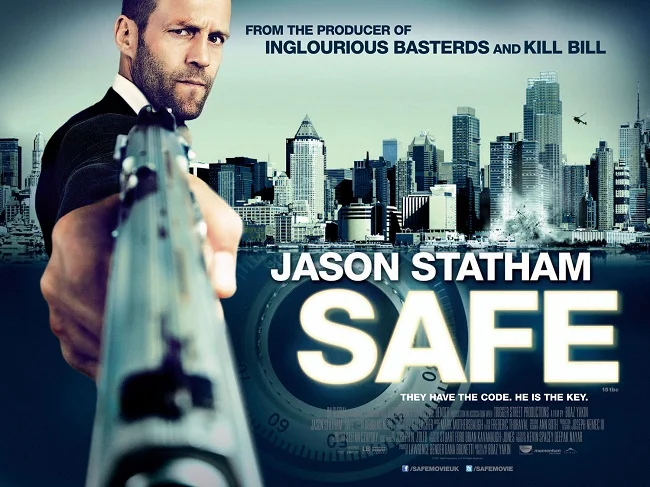
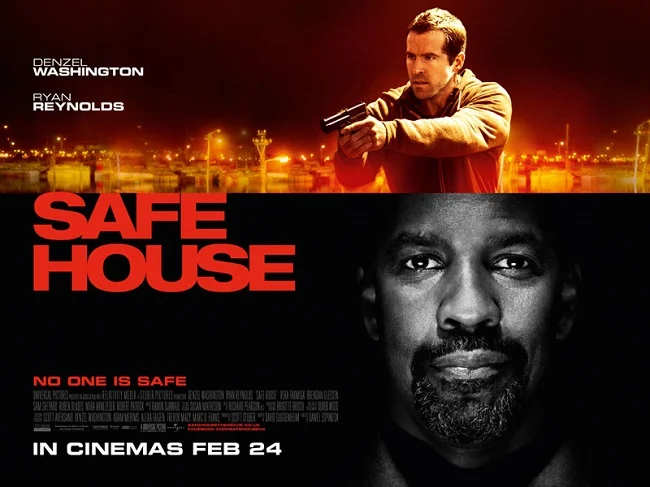
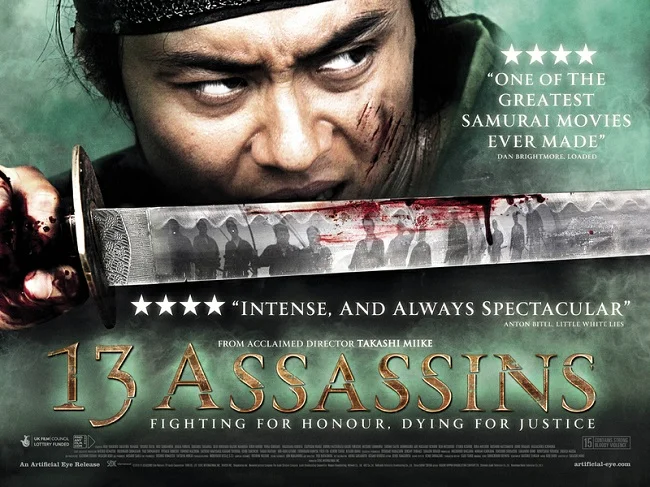
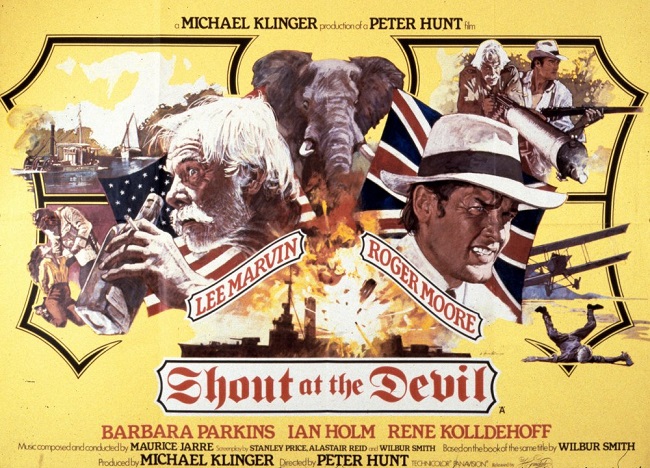
Messing About in Boats
“Believe me, my young friend, there is nothing - absolutely nothing - half so much worth doing as simply messing about in boats.” Kenneth Grahame. The Wind in the Willows.
It's curious the way a simple aspect of a game can resonate with you and become a source of pleasure. Regardless of the availability of new content, I still like to log into LOTRO on occasion and just ride around Middle-earth. Similarly, the vast open world of Skyrim has a comparable appeal. Despite my lack of driving skills, even aimlessly cruising around Los Santos in GTA V can be a source of relaxation. I can lose hours indulging in these simple tasks, quietly reflecting on either the game or the real world. Recently I returned to another activity that can also be added to this list. Sailing in Two Worlds II.
“Believe me, my young friend, there is nothing - absolutely nothing - half so much worth doing as simply messing about in boats.” Kenneth Grahame. The Wind in the Willows.
It's curious the way a simple aspect of a game can resonate with you and become a source of pleasure. Regardless of the availability of new content, I still like to log into LOTRO on occasion and just ride around Middle-earth. Similarly, the vast open world of Skyrim has a comparable appeal. Despite my lack of driving skills, even aimlessly cruising around Los Santos in GTA V can be a source of relaxation. I can lose hours indulging in these simple tasks, quietly reflecting on either the game or the real world. Recently I returned to another activity that can also be added to this list. Sailing in Two Worlds II.
What I find strange is that this is the very sort of game mechanic that I usually balk at. In the past, I would usually view similar systems as an unnecessary embellishment. Plus, I am not inclined towards sailing in real life, having tried it a few times in my youth. I just couldn't get on with the sweaters, endless sea chanties and the smell of fish. So, it comes as a surprise to me how much I enjoy tacking around the archipelagos of Antaloor, listening to the in-game ambient music track, Sails and Journeys by Borislav “Glorian” Slavov and Victor Stoyanov.
Sailing in Two Worlds II is far from arbitrary and requires a modicum of skill. The mini-map shows the wind direction and one must steer accordingly to pick up speed. Naturally sailing in to the wind is impossible, so tacking is required when navigating in such a direction. Therefore, it requires some thinking to sail to a specific waypoint. Naturally, the game developers have not made this mode of transport mandatory. There is the option to swim or use the teleportation system to travel between locations. However, there is a something elegant about sailing to a specific destination. The games weather system as well as day and night cycle also add to the ambience.
It is often these minor facets of games that keep me engaged and playing them. When you consider the horse trading that goes on during the development process of any title, it's nice to see some of these low-key mechanics still make it into the finished products. I often find them a great way to relax and am therefore pleased to add sailing to my list of trivial activities to indulge in while gaming. The wearing of eye patches, is of course, purely optional.
The Unbelievers (2013)
If you are expecting the documentary The Unbelievers to be a strong and powerful argument for atheism, then you will have a disappointed. At most Gus Holwerda's film provides an interesting insight into the rigours of an international promotional tour, as he follows the evolutionary biologist Richard Dawkins and theoretical physicist Lawrence Krauss around the globe. This acutely self-aware documentary fails to adequately explore the concept of atheism or the reason as to why these two scientists have embraced it. For such answers, you'd be better off reading the written works of Messrs. Dawkins and Krauss.
If you are expecting the documentary The Unbelievers to be a strong and powerful argument for atheism, then you will have a disappointed. At most Gus Holwerda's film provides an interesting insight into the rigours of an international promotional tour, as he follows the evolutionary biologist Richard Dawkins and theoretical physicist Lawrence Krauss around the globe. This acutely self-aware documentary fails to adequately explore the concept of atheism or the reason as to why these two scientists have embraced it. For such answers, you'd be better off reading the written works of Messrs. Dawkins and Krauss.
There are times when the documentary does capture the passion and intensity of this pair of academics at the top of their respective scientific fields. They are awed by the beauty and complexity of the universe and their appeal to view the world around us in the clearest and most rational terms is compelling. The Unbelievers also captures some lighter human moments such as Richard Dawkins nodding off to sleep on a train and Lawrence Krauss taking time out after a public debate to interact with both fans and dissenters alike. But these facets are not explored in sufficient depth and many of the debates with clergy and theologians are edited down to the bone. It’s as if we're expected to already be familiar with both men and their province of expertise.
It is the directors style and approach that ultimately undermines The Unbelievers. His aesthetic foibles (think Koyaanisqatsi) and rather predictable use of music (including such bands as Radiohead and R.E.M.) somewhat trivialises the depth of the debate in question and taints it with an unnecessary veneer of hipster chic. There's nothing wrong with trying to present a subject in a modern idiom to engage a broader audience (as Cosmos: A Space Time Odyssey successfully did in 2014) but it is a fine line to tread. Valuable time is lost on Australian architecture and time lapsed cityscapes, instead on focusing on the two iconic subjects of the film.
The documentary opens and closes with a selection of celebrity talking heads, including Ricky Gervais, Sarah Silverman, Woody Allen, Werner Herzog, Ian McEwan, Cormac McCarthy and Cameron Diaz. They offer a range of pro-scientific views which range from well-conceived ideas to broad celebrity endorsements. Sadly, that pretty much sums up The Unbelievers; stuck somewhere between a discussion and a sound bite. It is simply too lightweight to constitute as a meaningful contribution to the ongoing debate, although it may well have something to say about how even academia is not free from the cult of celebrity. However, it doesn't do any harm either. It's lack of rigour may encourage viewers to find and more about both sides of the argument, which is a positive thing.





Star Trek Online: Summer Festival 2017
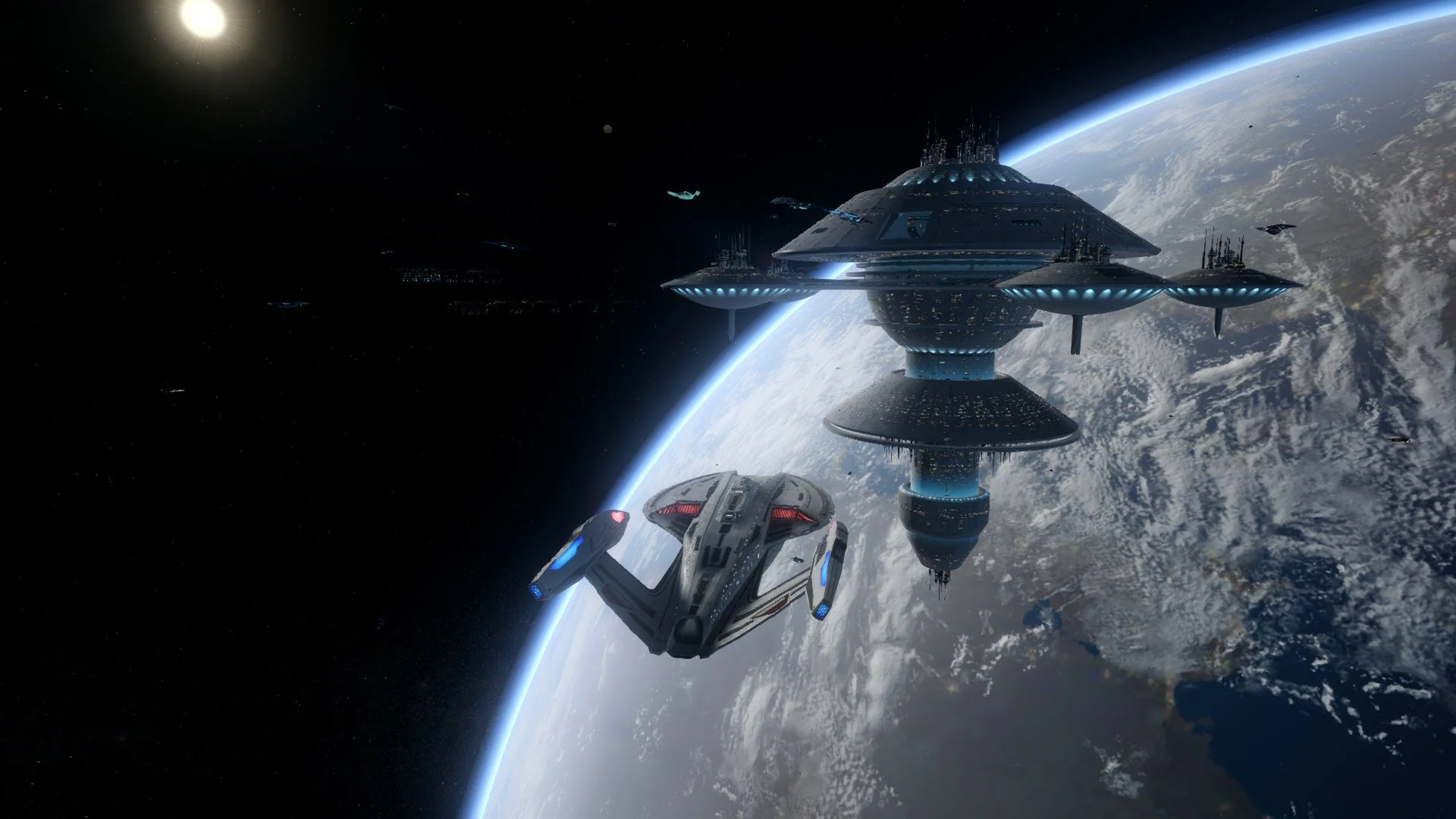
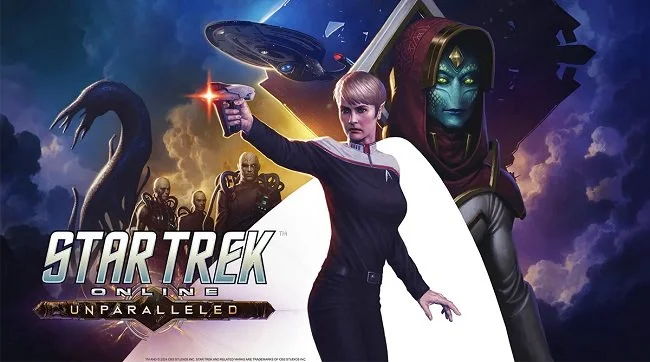
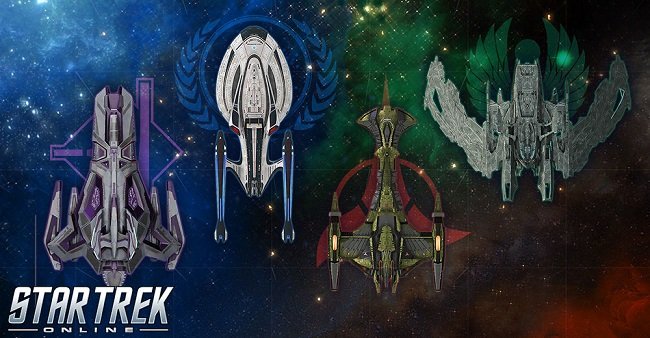
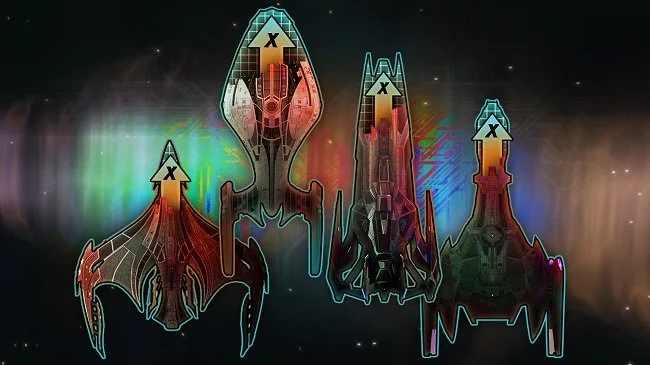
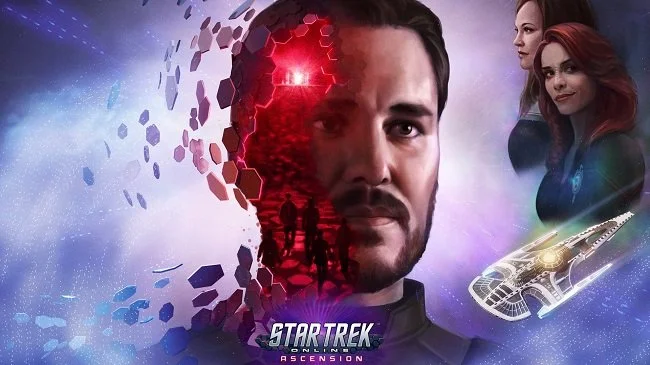
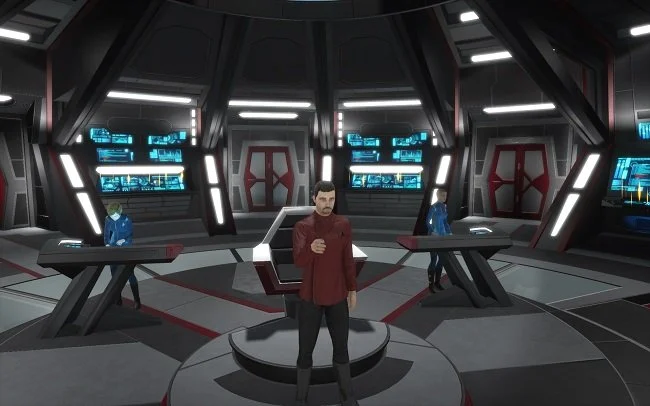
The Star Trek Online Summer Festival 2017 or Risa annual Lohlunat Festival to give it its proper name has been running for over a week now. It started on the June 8th and is available through to 20th July. Although many MMOs have festival and seasonal activities, STO’s Summer and Winter events are outstanding, being accessible, enjoyable and very rewarding. Not only are cosmetic clothing and pets available as barter items, the game also offers kit modules and bridge officer skills as rewards. Then of course each event always allows players to earn a new Tier 6 ship. This Summer it’s a Vorgon Ryn’Kodan Carrier.
The Star Trek Online Summer Festival 2017 or Risa annual Lohlunat Festival to give it its proper name has been running for over a week now. It started on the June 8th and is available through to 20th July. Although many MMOs have festival and seasonal activities, STO’s Summer and Winter events are outstanding, being accessible, enjoyable and very rewarding. Not only are cosmetic clothing and pets available as barter items, the game also offers kit modules and bridge officer skills as rewards. Then of course each event always allows players to earn a new Tier 6 ship. This Summer it’s a Vorgon Ryn’Kodan Carrier.
What I especially like about the Summer event in STO is it’s setting on the vacation resort Risa. Holidays are typically about, sun, sea and surf and Risa has that in spades. You can also dress accordingly with a variety of beachwear and other cosmetic items. The use of Floaters and Powerboards in several events is great fun. The addition of the Biathlon this year combines both in a single race. The transition from one mode of transport to the other can be quite challenging and there are still the odd bug to be worked out. I like the fact that despite being a “race” the winner is determined by the claiming of a flag. It helps level the playing field for those with slower internet connections. Half the fun is listening to players carp in chat about how they came first but overshot the flag and lost their placing.
Then there’s the Dance Party. Although it’s just a question of hitting the right emote when it’s called out by the Dance Instructor, the catchy music and the player interactions on the dance floor, really adds to the atmosphere. As for the contest itself, rather than click on individual emotes or type the necessary command in the chat window, you can simply pin the list of dance emotes to your UI for easy access. STO actually has quite a variety of dance emotes, the majority of which are available by default. Then there are a few extra that can be unlocked by specific quests or purchased using various barter currencies.
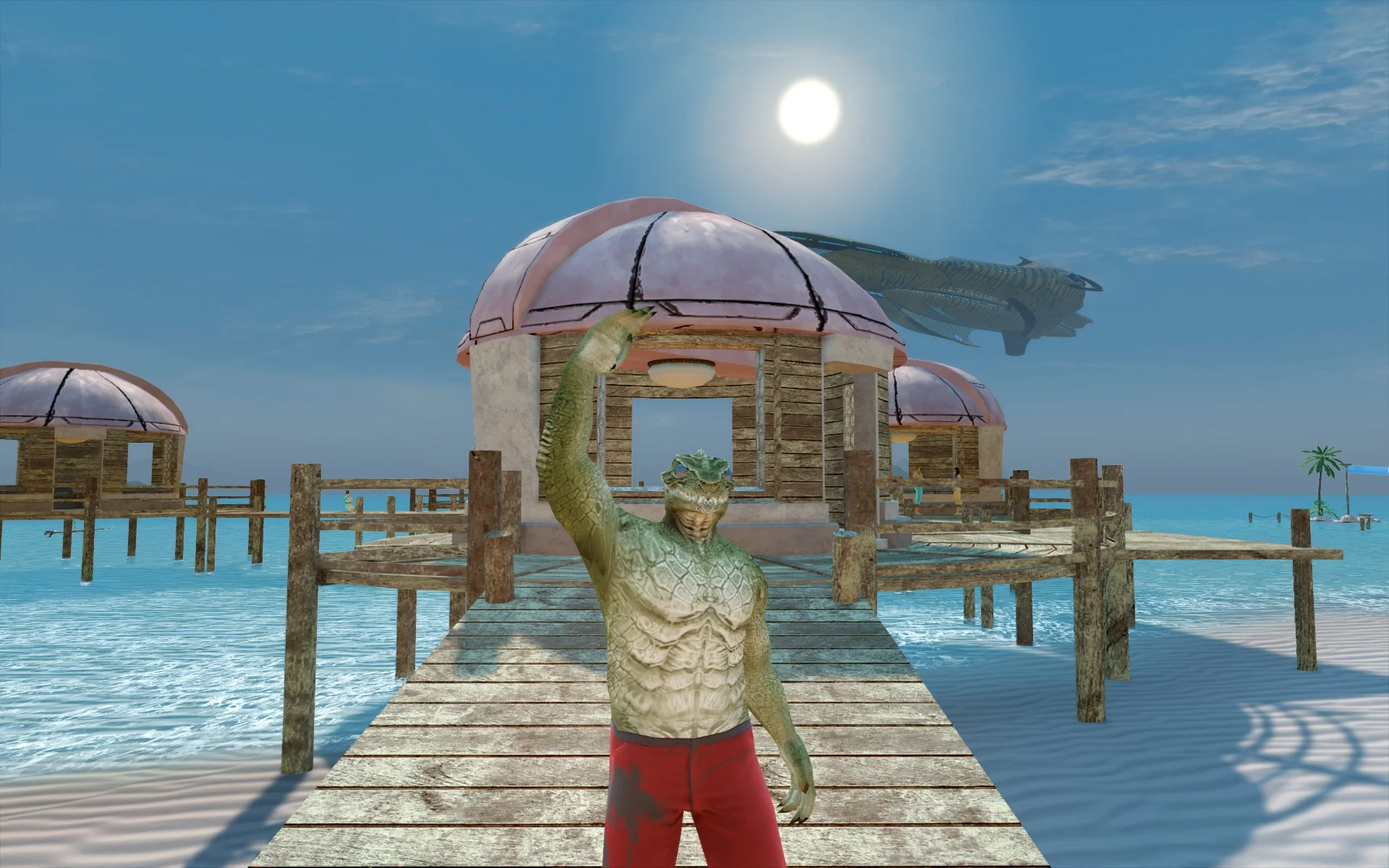
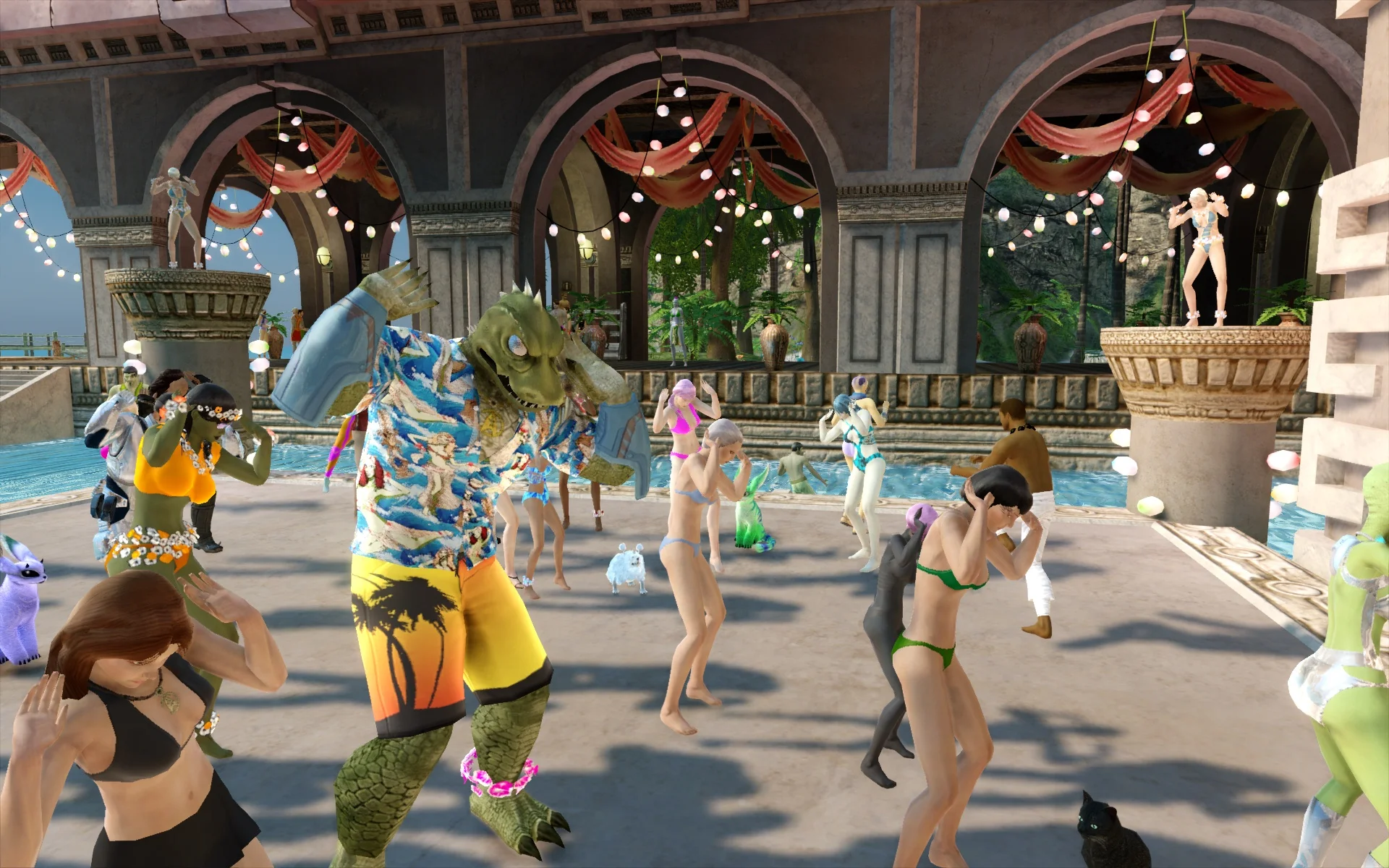
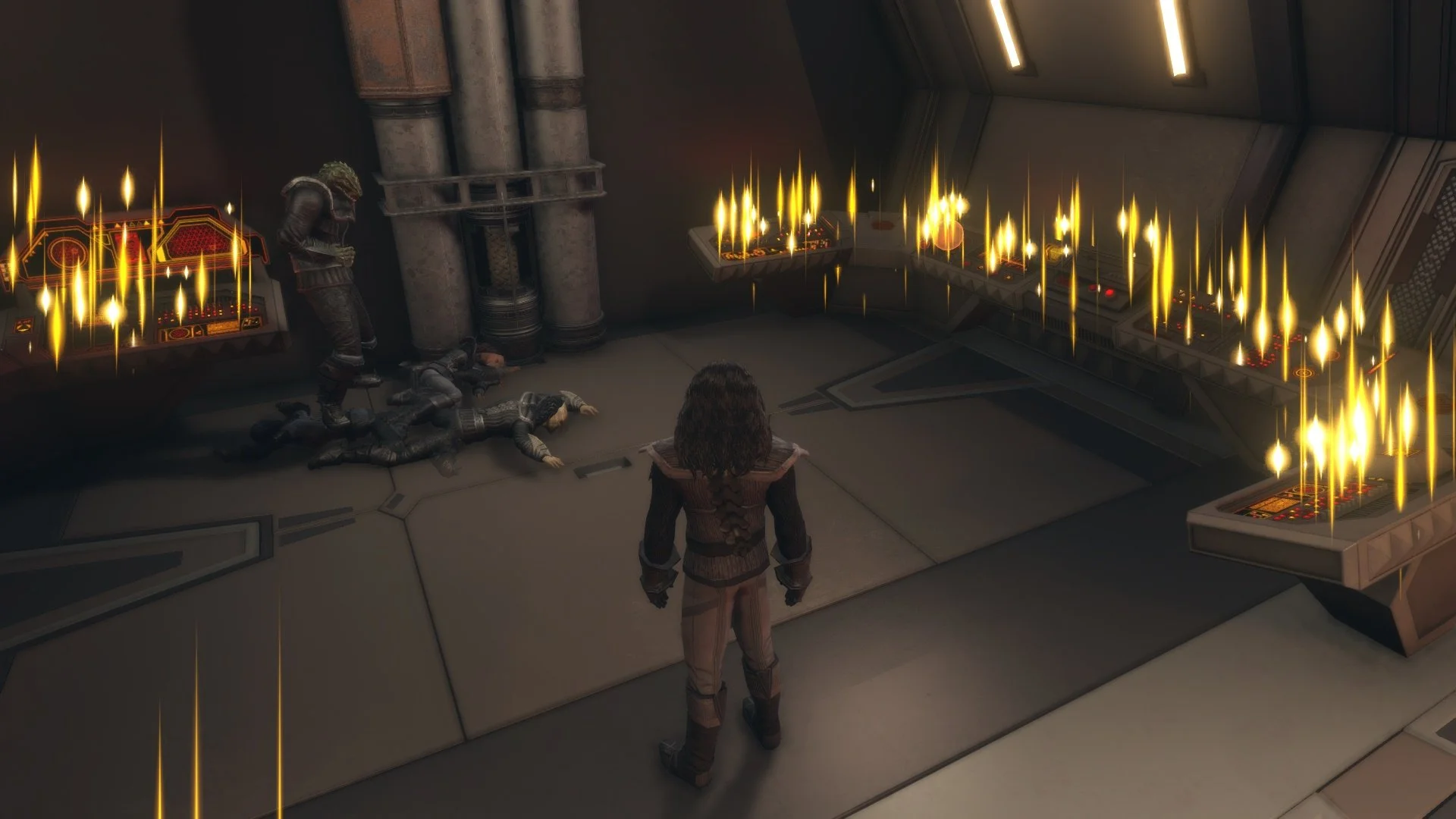
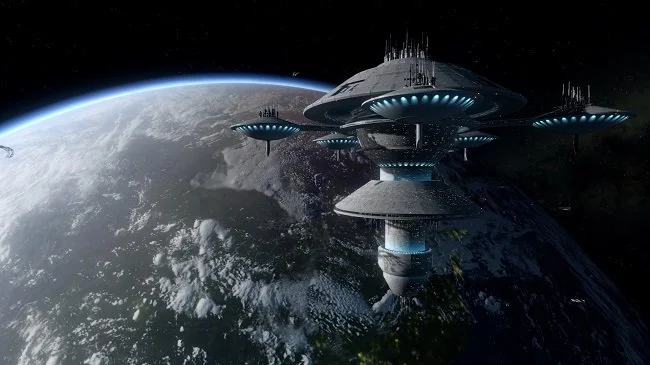
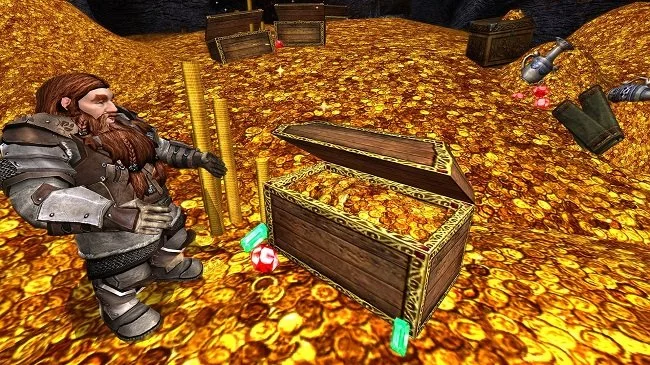
I’m sure that gamers may well claim that similar fun and larks can be had in other MMOs and that these also offer similar bespoke events. But STO has one remaining trump card up its sleeve that no other games can compete with. Gorns. Gorns in Bermuda Shorts. Gorns on Powerboards and Flaoters. Gorns tearing up the dance floor. Yes, Gorns in party mode are a thing of beauty as the gallery below shows. They are the embodiment of grace and style. So, if you have a STO account and haven’t played for a while, log in to the game and get your ass to Risa. Get out on to the dance floor and bust a move. Still not sold? Here’s the Dance Party tune, the Risa Calypso, for your edification.
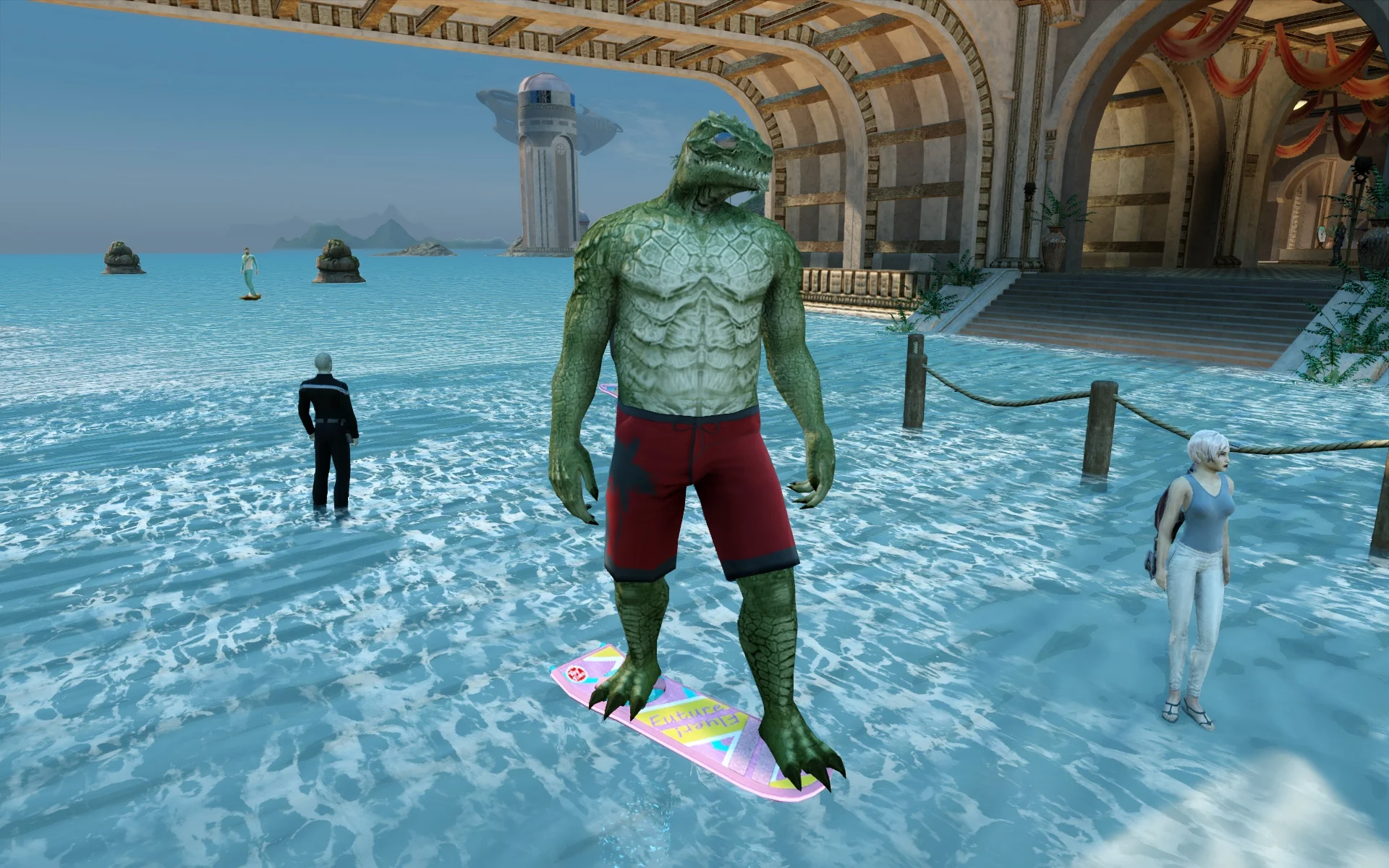
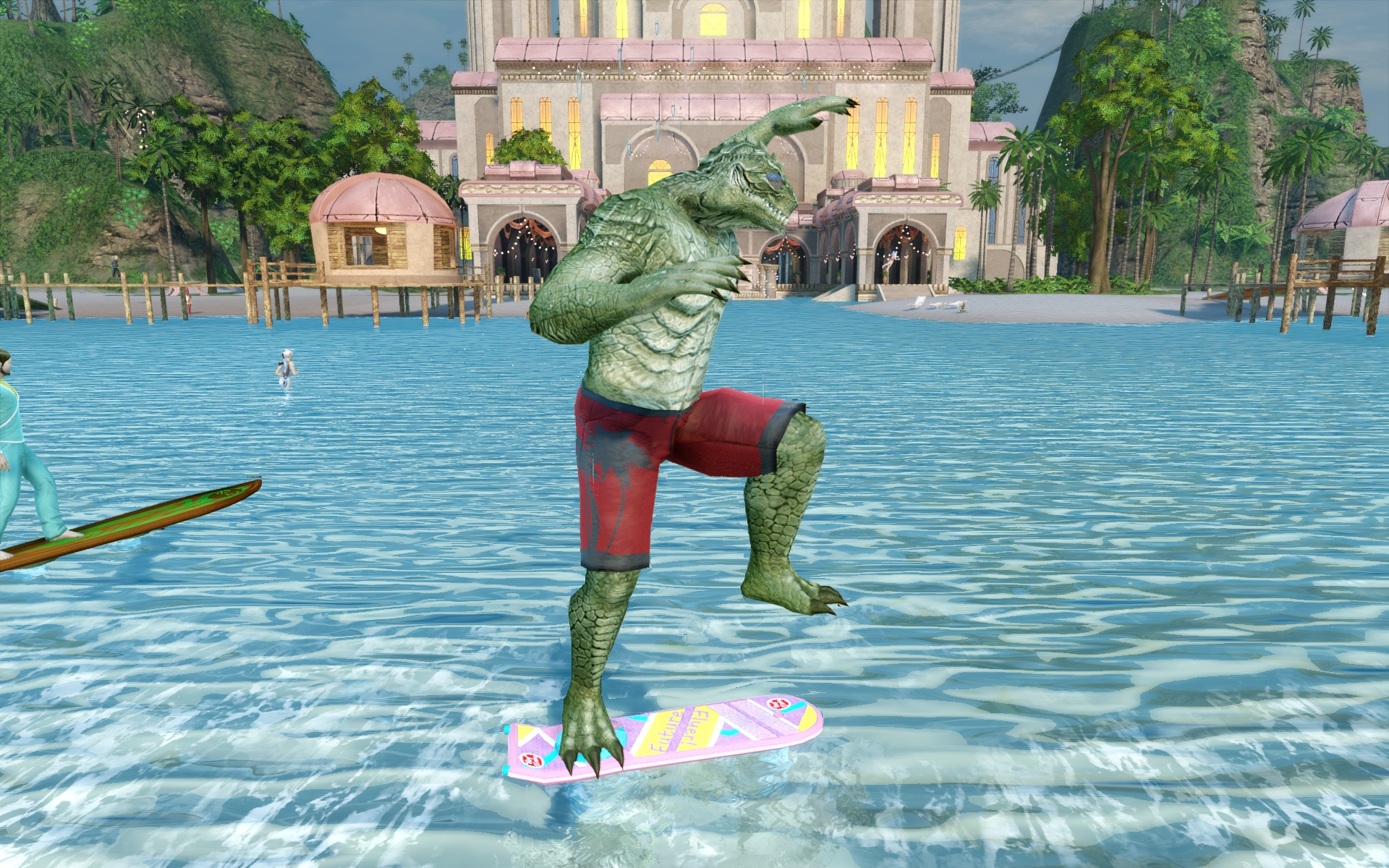
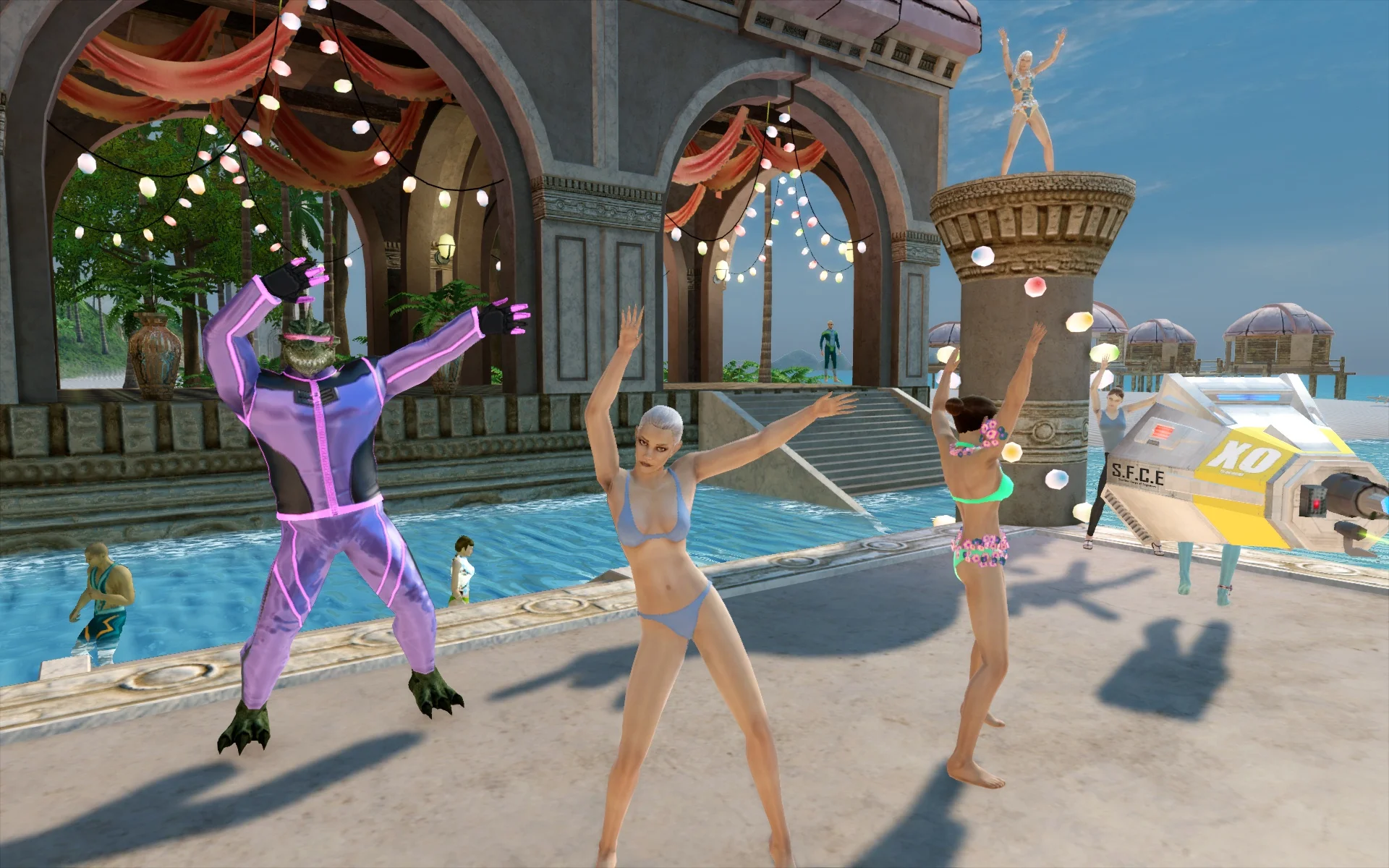
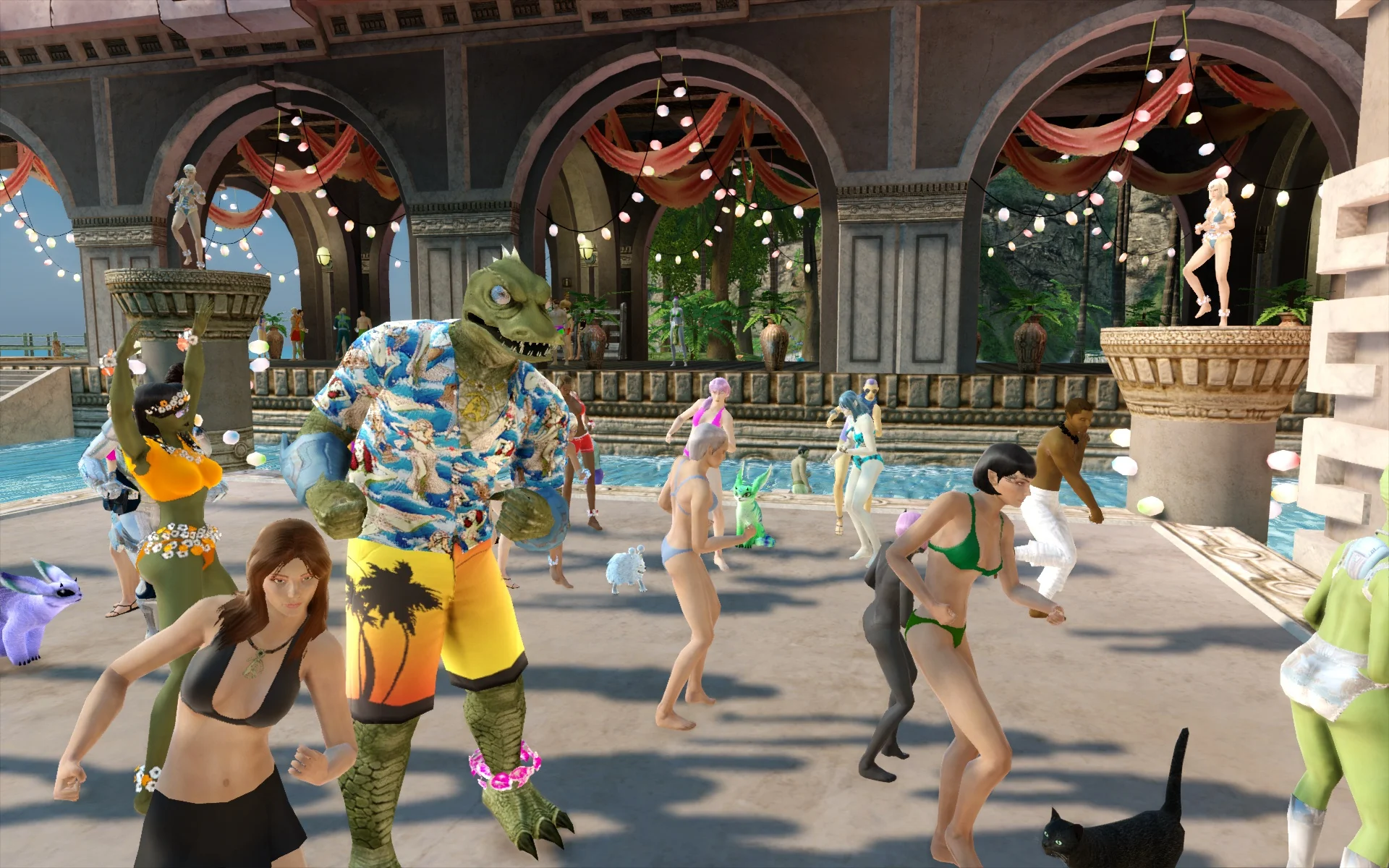


How Not to Do Business Part 2: TopWare
I wrote last week about the surprise DLC for the seven-year-old RPG Two Worlds II and how I decided on a whim to buy it. Well yesterday was the official launch day for Call of the Tenebrae and yet, twenty-four hours later, I’m still not playing the game. So far, I have not received a Steam key for the game, despite the money being deducted from my PayPal account on the 5th of June. So naturally, I have made enquiries as to what is happening and have endeavoured to contact the publishers TopWare. Let it suffice to say that my attempts to resolve the matter have proved fruitless and I have discovered that TopWare are far from the embodiment of German efficiency.
I wrote last week about the surprise DLC for the seven-year-old RPG Two Worlds II and how I decided on a whim to buy it. Well yesterday was the official launch day for Call of the Tenebrae and yet, twenty-four hours later, I’m still not playing the game. So far, I have not received a Steam key for the game, despite the money being deducted from my PayPal account on the 5th of June. So naturally, I have made enquiries as to what is happening and have endeavoured to contact the publishers TopWare. Let it suffice to say that my attempts to resolve the matter have proved fruitless and I have discovered that TopWare are far from the embodiment of German efficiency.
I was initially surprised when I made my purchase last Monday week, that I didn’t receive a Steam key immediately. However not all games allow you to activate and pre-load content and as this is an older title I simply put it down to logistical reasons. However, as yesterday was the official launch for this DLC and I had not been informed of any delay, I went straight to my account at the TopWare store to see if a key had been added. Its absence was conspicuous. So, I decided to use the messaging facility linked to my order and sent a simple enquiry as to where my key was. The website curiously rendered my message into German and then back into English, so what I currently have in my chat timeline is not the exact message that I sent. As of writing this post, that message has not been responded to.
I next decided to see if I could find out anything further about the Call of the Tenebrae launch in case it had been postponed. TopWare delayed the release of Raven’s Cry several times at short notice, so they have form for such changes. After some checking, I soon discovered that TopWare were not exactly regular users of social media. They have three Twitter accounts (One US, One German and another specific to Two Worlds II) that have no launch day information. Previous tweets date back several weeks. There Facebook page is similarly devoid of anything other than press releases and woefully out of date. So, I opted to send an email via the default info email address. Again, thirty-six hours later I’ve had no response.
As I fast approach fifty, I tend not to get as irate as I did in my youth. That’s not to say that I’m not annoyed by this inconvenience but in the great scheme of things and especially within the context of my personal life at present, this isn’t such a big deal. So, I have decided to use this situation as a writing opportunity. I suspect that there will not be a quick resolution and I can see myself having to get PayPal to claw the cost of this game back from TopWare. In the meantime, it would appear the Call of the Tenebrae has launched on consoles and possibly on Steam. I have seen no feedback yet about the quality of the game itself but the inclusion of a cash store and microtransactions does seem to have caused a controversy. All I can add to the proceedings at present is that TopWare seem to be providing the gaming community with a text book example of how not to do business
Update:
I received an email from TopWare customer support on Sunday 18th June. It contained my serial key but there was no explanation or apology regarding the delay. I now have the game installed.


Pick Up Groups
Out of all my recent gaming, Sniper Elite 4 has proved the most entertaining. The engaging mechanics and stealthy gameplay have held my attention and kept me engaged. So far, I spent over seventy-two hours playing through the campaign and DLC. After watching several You Tube videos I was tempted to try the co-operative mode, something that I don’t always do in these sorts of games. Overwatch allows two players to work together as sniper and spotter respectively, to complete objectives within a custom map. It requires communication and co-ordination. It should also be noted that multiplayer in Sniper Elite 4, is dependent on peer-to-peer connection rather than dedicated servers, with the players hosting the games themselves.
Out of all my recent gaming, Sniper Elite 4 has proved the most entertaining. The engaging mechanics and stealthy gameplay have held my attention and kept me engaged. So far, I spent over seventy-two hours playing through the campaign and DLC. After watching several You Tube videos I was tempted to try the co-operative mode, something that I don’t always do in these sorts of games. Overwatch allows two players to work together as sniper and spotter respectively, to complete objectives within a custom map. It requires communication and co-ordination. It should also be noted that multiplayer in Sniper Elite 4, is dependent on peer-to-peer connection rather than dedicated servers, with the players hosting the games themselves.
So far, I’ve found that my enjoyment of co-op mode has been significantly less than that of the campaign due to the human factor. None of my Steam friends own Sniper Elite 4, so I’ve have been dependent on the grouping service built in to the game. You either host a game yourself and wait to be assigned a partner or join an existing game. Therein lies the proverbial rub. Pick up group mechanics have no scope for quality control. So far, I’ve grouped with players who have refused to communicate, have no concept of teamwork and who quit when things don’t go their way. Furthermore, if they’re hosting the game then you find yourself kicked back to the lobby with nothing to show for your work. It’s an old story. One that will be very familiar to anyone who has ever played an MMORPG and used the instance finder tool.
Pick up groups can often bring out the worst in human nature. You are randomly grouped with complete strangers who are anonymous and are driven by their own need for gain. Manners, decorum and social etiquette are purely optional as the system has no means to impose them. Thus, we encounter players that do not know how to play the instance they have joined, or those who are happy to just go AFK and wait for the end reward. Abuse and unpleasantness are common place in chat and if the group undertaking is unsuccessful, then blame is often thrown about. Even if your PUG manages to avoid these problems, they are often extremely soulless experiences. The auto grouping in Guild Wars 2 and the PVE queues in Star Trek Online simply facilitate tasks and require minimal or even zero social interaction.
Now some players will argue that the frictionless grouping that PUGs provide with no need to communicate directly, is a boon rather than a bane. I will concede that this really is a matter of personal preference. However, mechanics that allow you to abandon a game that you are hosting at the expense of others, or quit a group thus leaving the rest of the players in the lurch, are problematic. For Honor had a major problem with the this. If you or your team are losing then there is no imperative to stick around. There is often no penalty or sanction for abandoning an ongoing game that you may be hosting and no recompense for the other players. This is something I also regularly encounter in Overwatch, which seems to have more than its fair share of petulant and bellicose players.
Justin Olivetti referenced the group finding tool in LOTRO recently and discussed how compared to other MMOs, it was an underused facility. Group content seems to more driven by Kinships in that game so players tend to look directly to their colleagues and friends to run group content. Using the instance finder will seldom provide you with a group. STO has a similar problem. Featured group content or that which provides tangible rewards attracts players. However, older and less popular content doesn’t fair so well therefore you can spend hours looking for a group. I also think there is a particular type of troll in that game that delights in joining group queues and then waiting to the last moment to decline the launch invitation, thus consigning the remaining players back to the lobby again.
Sadly, many of the flawed mechanics we encounter in online games exist because they are the most practical way to address a logistical issue. Player hosted games negates the need for dedicated servers and their associated cost. Group finding tools do exactly that, yet offer no further options. The burden to police the group’s activities falls to the players themselves and there’s precious little they can do if things go pear shaped. But what are the alternatives? If grouping with other players is problematic, then bots are really the only immediate alternative. This is an option in games such as Overwatch, For Honor and some of the Call of Duty franchise. However, it is not necessarily an ideal solution as bots do not provide a comparable experience to human interaction. Their use also doesn’t address the root cause of this problem, namely human behaviour.
Like many things in life, the lowest common denominator disproportionately shapes the experience for the majority. Returning to Sniper Elite 4, although I did have some poor co-operative games due to bad grouping, I also had some thoroughly enjoyable interactions. It’s just a shame that PUGs are such a lottery. Ultimately, it is down to the developers of games to maintain community standards. What is the point of having strict terms and conditions if you have no intention of enforcing them? Furthermore, if I cannot enjoy aspects of a game due to others, I am effectively being excluded from experiencing the entire product. Considering the cost of premium titles these days, why should I pay the full price for a game I can only partially play?
Into the Storm (2014)
When I first saw the trailers for Into the Storm back in 2014, I was far from impressed. I thought to myself, I bet that's just a CGI FX show reel with some second-rate plot tacked on as an afterthought. So, I elected not to see the movie upon release and forgot about it. The other night I was in the mood for some easy entertainment. Nothing heavy, just something that would provide an amusing diversion for an hour and a half or so. I wasn't setting the bar particularly high. Then I remembered Into the Storm and as I’ve always had a weakness for the Disaster Movie genre, I thought to myself, that may do the trick. Sadly, it didn't. This is far from a dumb but fun, popcorn movie like San Andreas. Into the Storm is an insultingly stupid piece of cinema that left me feeling angry and slightly unclean due to watching something so crass.
When I first saw the trailers for Into the Storm back in 2014, I was far from impressed. I thought to myself, I bet that's just a CGI FX show reel with some second-rate plot tacked on as an afterthought. So, I elected not to see the movie upon release and forgot about it. The other night I was in the mood for some easy entertainment. Nothing heavy, just something that would provide an amusing diversion for an hour and a half or so. I wasn't setting the bar particularly high. Then I remembered Into the Storm and as I’ve always had a weakness for the Disaster Movie genre, I thought to myself, that may do the trick. Sadly, it didn't. This is far from a dumb but fun, popcorn movie like San Andreas. Into the Storm is an insultingly stupid piece of cinema that left me feeling angry and slightly unclean due to watching something so crass.
Usually I won't take the bait and allow my buttons to be pushed when confronted by such contrived film making. However, Into the Storm actually succeeded in making me angry. It is appallingly written, with a paper-thin plot, filled with the most singularly tedious stereotypes and clichés. There's a Father estranged from his sons, a Mother who may be putting her work before her daughter and a documentary film maker who'll do anything to get the scoop, yet ultimately sacrifices himself to save the day. Then we have a wealth of teenagers designed to represent all the various different subsets of youth culture. The film also includes a quota of "Red Shirts" characters that conveniently die at strategic points in the narrative. However, the jewel in the crown of Into the Storm has to be the pair of comedy Redknecks. They're excruciatingly embarrassing to watch.
What is so offensive about this movie is that fact that it’s obviously the product of a committee meeting, where a bunch of suits had a brainstorming session. Such people are devoid of any artistic creativity or personal integrity and to them film making is just a process. A means to an end, devoid of anything else other than a desire to make money. They have nothing but contempt for their audience, the same way drug dealers has nothing but loathing for their customers. Forget the apocryphal notion of a film being so bad, it’s good. Into the Storm is just an awful, cynical, crass piece of film making. Utterly hollow, soulless and devoid of any joy. Do not dignify this cinematic insult with either your time or money.
Caring for the Elderly: Part 2
In a previous post, written last summer, I mentioned my caring commitments and reflected upon the realities of being a carer. Since then my family’s circumstances have changed considerably and subsequently so have my own. In the UK, social care has become a major political issue and was a key area of debate for all parties in the recent election campaign. Although the UK has an aging population, then NHS broadly manages to deal with its needs. It is the social care that so often follows time spent in hospital, that causes a bottleneck. Too often, the local authorities struggle to find carers and have them in place when requested. This means that many patients are unable to be discharged and have to remain in hospital. Caring is a profession that seems to be greatly lauded and esteemed by politicians in principle but the reality is far different. Overall it is often a poorly paid job, with little or no employments rights or benefits.
In a previous post, written last summer, I mentioned my caring commitments and reflected upon the realities of being a carer. Since then my family’s circumstances have changed considerably and subsequently so have my own. In the UK, social care has become a major political issue and was a key area of debate for all parties in the recent election campaign. Although the UK has an aging population, then NHS broadly manages to deal with its needs. It is the social care that so often follows time spent in hospital, that causes a bottleneck. Too often, the local authorities struggle to find carers and have them in place when requested. This means that many patients are unable to be discharged and have to remain in hospital. Caring is a profession that seems to be greatly lauded and esteemed by politicians in principle but the reality is far different. Overall it is often a poorly paid job, with little or no employments rights or benefits.
My Father had two strokes last summer. To cut a long story short in the space of five months he went from being an active 87-year-old, who would go out shopping twice day, to a housebound invalid. He is now permanently nil by mouth and fed by a PEG tube in his adomen. Although his speech has improved he is no longer the eloquent academic that he used to be. He can’t do basic arithmetic and finds reading extremely taxing. His physical therapy has been as successful as it can be under the circumstances but he moves about the house with difficulty. He's not allowed to travel outside the home without a carer. Nurses call twice a day to give him his medication and he is fed synthetic liquid food, overnight via a pump.
Naturally a change of this nature has a major impact upon a patient and their family. There are many more matters to deal with beyond the immediate physical symptoms. Both my parents are no longer directly in charge of their day-to-day life and have become dependent on others. This upsets them greatly, as they feel “useless”, “a nuisance” and “redundant”. Both my sister and I have changed are daily routines considerably and although are happy to care for our parents, find the situation stressful and very saddening. The complete role reversal between parents and children is difficult to adjust to. I now manage every aspect of my parents lives, from their finances and running the home, to hair dressers appointments and visits from the chiropodist.
However, there are still many people who wish to help both the patient(s) and the carer. Every day, I encounter kind and compassionate people who do more than just their job. Practical help and the odd supportive words can come from the strangest of quarters. The receptionists at my local Doctors surgery are thorough and understanding. The local pharmacy staff have the patience of a saint and are so obliging. Shop staff will carry, fetch and hold open doors. Black cab drivers provide aid getting in and out of vehicles. The mobile library does more than lend audio books. They listen, chat and smile. As for the healthcare professionals, I simply cannot praise them enough. Their dedication is remarkable. For a somewhat jaded and cynical person such as I, these displays of genuine humanity are moving. And the reason why so many people are nice, often boils down to the fact that they’ve all experienced family illness. Everyone, sooner or later, needs the care of another.
In the last few weeks, life has gotten a little bit more challenging for my family and me. My “significant other” found out that she needs a triple by-pass. She is having surgery next week. Today, after a follow up eye examination, the consultant found evidence that my Mother may have had a stroke a month ago. As a result, she was admitted to hospital tonight. Once again, I will be relying on numerous carers to look after my nearest and dearest. Without them, my sister and I would struggle to cope. So as a sign of gratitude, I’ve been considering what I can do to repay all these peoples kindness. The only tangible thing I can do is write about the situation and promote the concept of “paying it forward”. It’s such a simple idea but small acts of kindness can have incrdibly positive effects.
Caring in the UK needs to remain squarely in the political agenda. It also needs to be a non-partisan issue. I shall be looking to add my voice to several charities that lobby with regard to this issue, in the weeks to come. We also need to change the public perception of caring. It may not require certain academic skills but that’s no reason to arbitrarily pigeonhole it and relegate its financial merit to minimum wage status. Caring is more than the physical and logistical sum of its part. It’s not something that everyone can do, despite what the DWP and the Job Centre may think. It requires, empathy, common sense and dare I say it, love. Considering how all our life expectancies are increasing, surely, we should be making sure there are sufficient resources, both human and financial, to deal with our collective futures?
The hectic pace of modern life, along with cultural taboo of dwelling on the future, means we often do not consider or put sufficient plans in place for our old age. We neglect our health, our pensions and very much live in the moment. Yet there is so much we can do now to improve things later, if we simply grasp the nettle and address things. Losing weight, quitting smoking, getting adequate sleep all pay dividends. Addressing coughs, joint pains and eye or ear problems when they happen can forestall other more serious issues later. Then there’s the thorny issue of the way we treat each other. Giving someone a lift to the clinic, checking on an elderly neighbour, or just being civil to a stranger you meet, make a real difference. You never know when someone is at their personal breaking point. The smallest kindness may lift someone from the deepest of despair.
Caring for our sick, elderly and vulnerable is all of societies responsibility. Yet we do not live in a country that fully understands or embraces such a concept at present. As a result many people go on looking after their own quietly, with great resolve and dignity. I spoke to a lady at the hospital tonight, broadly of similar age group to myself. She was also waiting outside the disabled toilets to ensure that a parent was okay. We made some small talk and then she candidly admitted “it’s tough isn’t it”. I agreed with her that caring was. “My husband has recently had a stroke” she said, “and Daddy has dementia”. “You have a lot to contend with” I replied. “Yes. It makes it difficult for me to fit in my Chemotherapy”. She had recently been diagnosed with Leukemia.