
Jurassic World (2015)
Hollywood is a cyclical place and often repeats decisions it's successfully made in the past. During the early seventies, the mainstream film industry head hunted a lot of up and coming talent from the independent film making community, or took a chance on directors who were fresh out of film school. It was a means to an end and a way to tap into the new talent that was proving popular and lucrative. Similarly, Warner Bros. followed suit in 2014 when Gareth Edwards was hired to direct the multi-million-dollar Godzilla reboot. His previous movie was the self-financed indie Sci-Fi picture Monsters. Godzilla went on to be both a box office and critical hit.
Hollywood is a cyclical place and often repeats decisions it's successfully made in the past. During the early seventies, the mainstream film industry head hunted a lot of up and coming talent from the independent film making community, or took a chance on directors who were fresh out of film school. It was a means to an end and a way to tap into the new talent that was proving popular and lucrative. Similarly, Warner Bros. followed suit in 2014 when Gareth Edwards was hired to direct the multi-million-dollar Godzilla reboot. His previous movie was the self-financed indie Sci-Fi picture Monsters. Godzilla went on to be both a box office and critical hit.
So, after years of languishing in development hell, the job of making Jurassic World was finally given to director Colin Trevorrow, who like Edwards only had at that time, a single small feature film credit to his resume. But "talent will out" as the expression goes and Jurassic World has proven to be a very respectable entry to the franchise. It develops the existing themes established in the previous three movies and manages to add several contemporary angles. It is tonally astute and finds the right balance between action, suspense and wry humour. The cast is spot on and the narrative is well paced. It doesn't skimp on the "wow" factor either and the digital and animatronic dinosaurs on display still genuinely impress.
What I liked most about Jurassic World is its keen sense of social observation and the fact that despite the Velociraptors, Pterosaurs and Indominus Rex it still nails what humans are like. So many of the ideas that are developed, ring true. Jurassic World is depicted as a declining financial undertaking for its owners because Joe public has grown accustomed and bored with dinosaurs. For many of the tourists the parks denizens have become as common place as elephants. The movie also does an excellent job of cataloguing the monetisation of the holiday resort. There are known brands everywhere, the same way there are in real world theme parks. Kids seem more interested by their smartphones than by the dinosaurs.
Another interesting theme that runs through the movie is that of animal psychology. Chris Pratt has not “tamed” the group of Velociraptors he works with but through behavioural science has managed to condition them and learn how to interact with them on their own terms. Now as this movie was designed to be a summer blockbuster, naturally such ideas are taken to extremes but it does raise some good questions about exactly how intelligent were dinosaurs, especially those that hunted in packs and therefore required a working form of social interaction.
Once again composer Michael Giacchinno rises to the challenge of writing a soundtrack for a franchise that already has an established set of iconic themes. He uses John William's cues sparingly and effectively. His own original material is as ever, intelligent, appropriate and of the highest quality. Overall the score helps maintain a sense of continuity to the proceedings. The same can be said about the visual effects work by Industrial Light and Magic and Legacy Effects (formerly Stan Winston Studios). Despite the fourteen-year long hiatus Jurassic World still has the same ambience as its predecessors.
The box office success of Jurassic World yet again demonstrates the public's ongoing fascination with dinosaurs. When I first saw this movie upon its release, you could hear a pin drop for most of the two-hour running time, only for it to be replaced by screaming at the appropriate junctures. I wholeheartedly believe that pretty much everyone left the cinema thoroughly entertained. The tension and thrills remained upon a second viewing two years on. Jurassic World works because the production team fundamentally understands the material that they're making. No postmodern irony or cynicism, just dinosaurs with big pointed teeth and a movie that doesn't try to fix something that isn't broken.
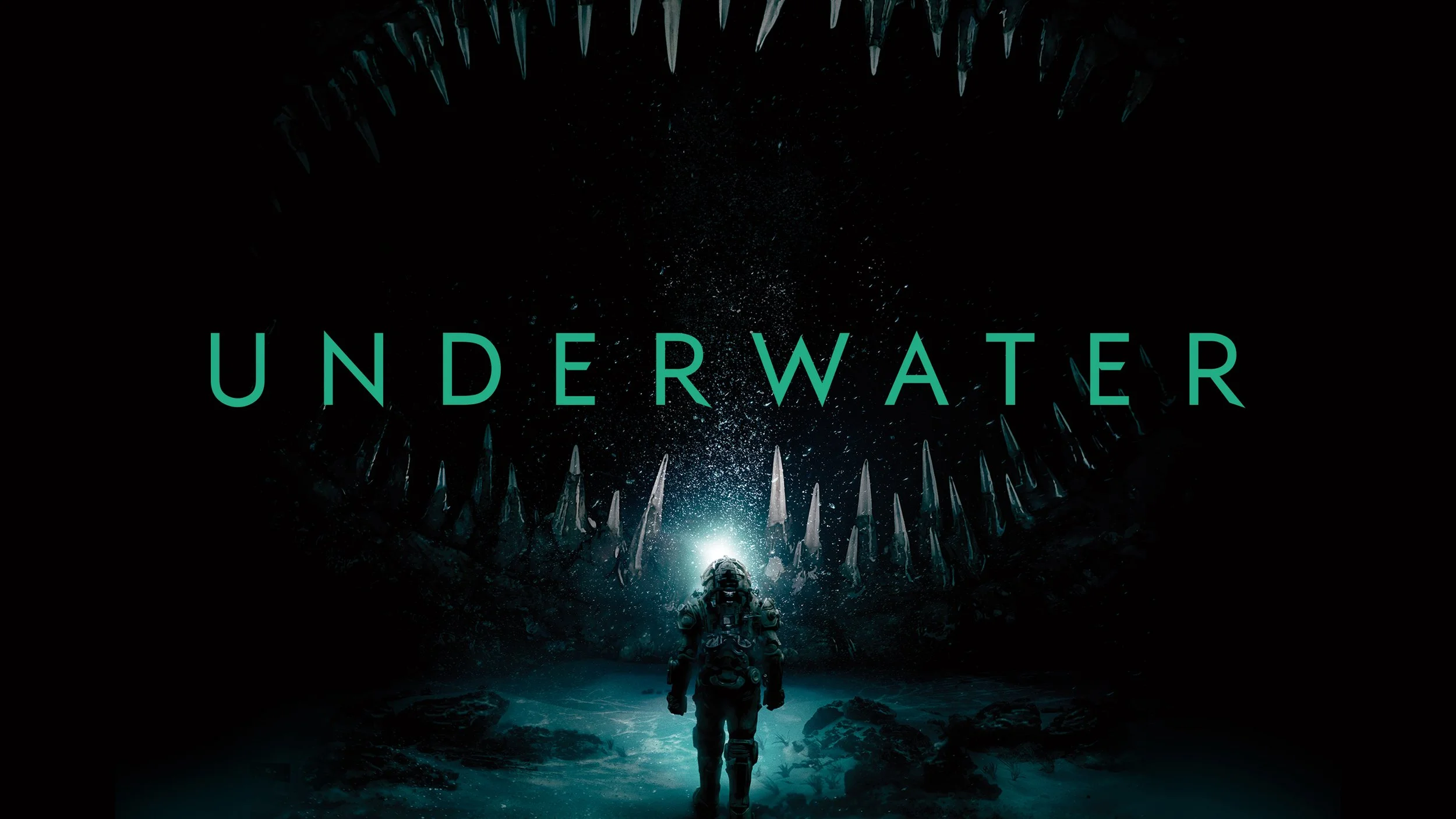
In the near future, Kepler 822, a research and drilling facility located at the bottom of the Mariana Trench, suffers a sudden and catastrophic structural failure. There are only six survivors. Mechanical engineer Norah Price (Kristen Stewart), Captain Lucien (Vincent Cassel), biologist Emily Haversham (Jessica Henwick), engineer Liam Smith (John Gallagher Jr.) and crew members Rodrigo (Mamoudou Athie) and Paul (T.J. Miller). As all the functional escape pods have been used and they are unable to contact the surface, the Captain suggests using pressurized suits to walk one mile across the ocean floor to the Roebuck 641 drill installation. There they will find more escape pods. However, it soon becomes apparent that the disaster was not caused by an undersea earthquake and that they are not alone as they make their journey.
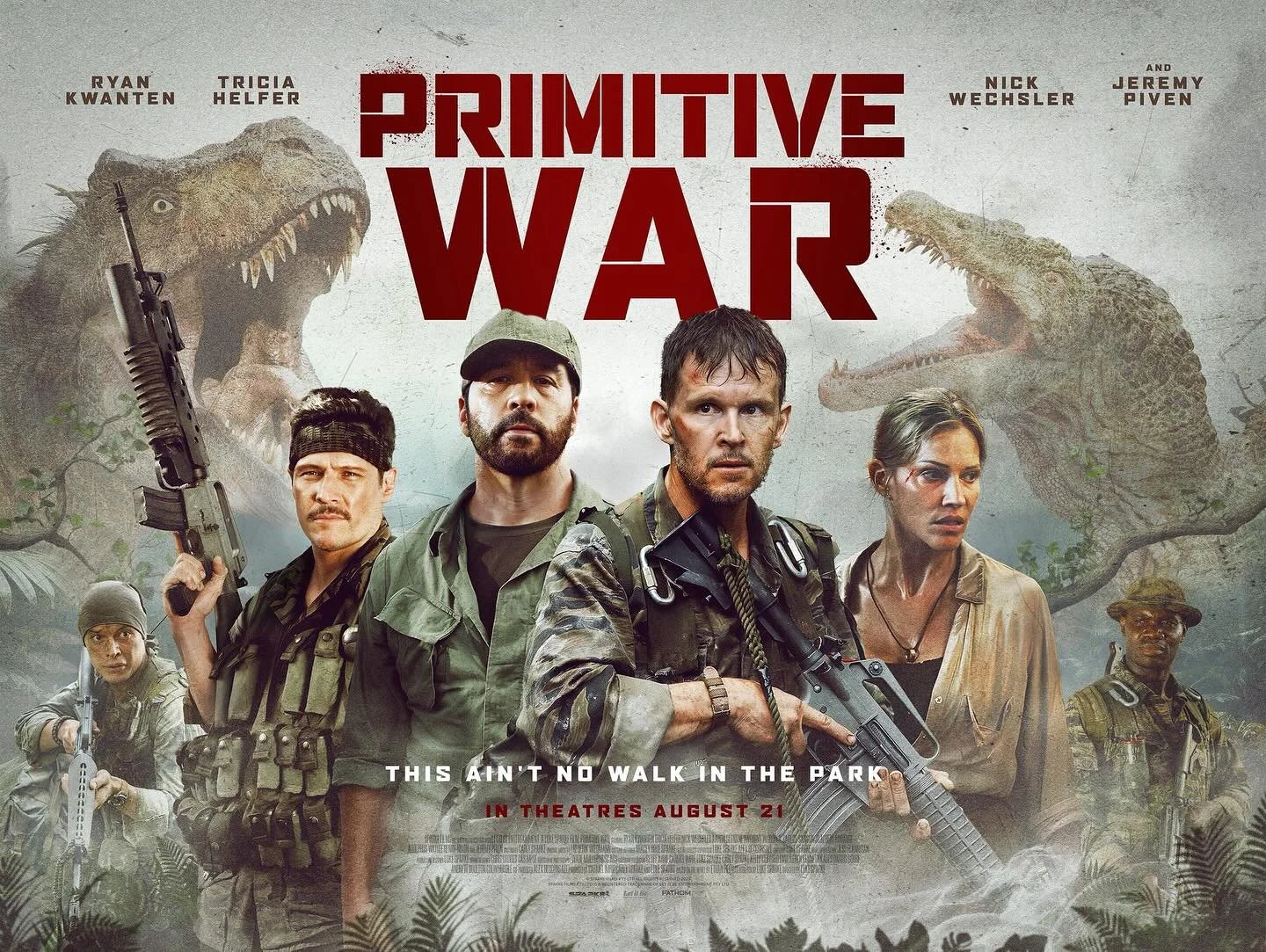
One of the most common objections raised regarding the Jurassic Park/Jurassic World franchise is that the films are specifically made to obtain a PG-13 rating from the Motion Picture Association, for purely commercial reasons. Hence, in all films, there is little on screen violence and the dinosaurs are mainly portrayed as a threat and a means of providing jump scares. When a character is killed by a dinosaur it usually happens off screen, is obscured by something else in frame, or is shown in long shot with very little detail. The realities of being eaten alive by a predator are conspicuously absent. Hence, audiences looking for films featuring more graphic dinosaur attacks, have not been well catered for apart from some minor direct-to-video titles. Primitive War finally fills this gap in the market with a frenetic genre mashup that strives to punch above is budgetary weight.
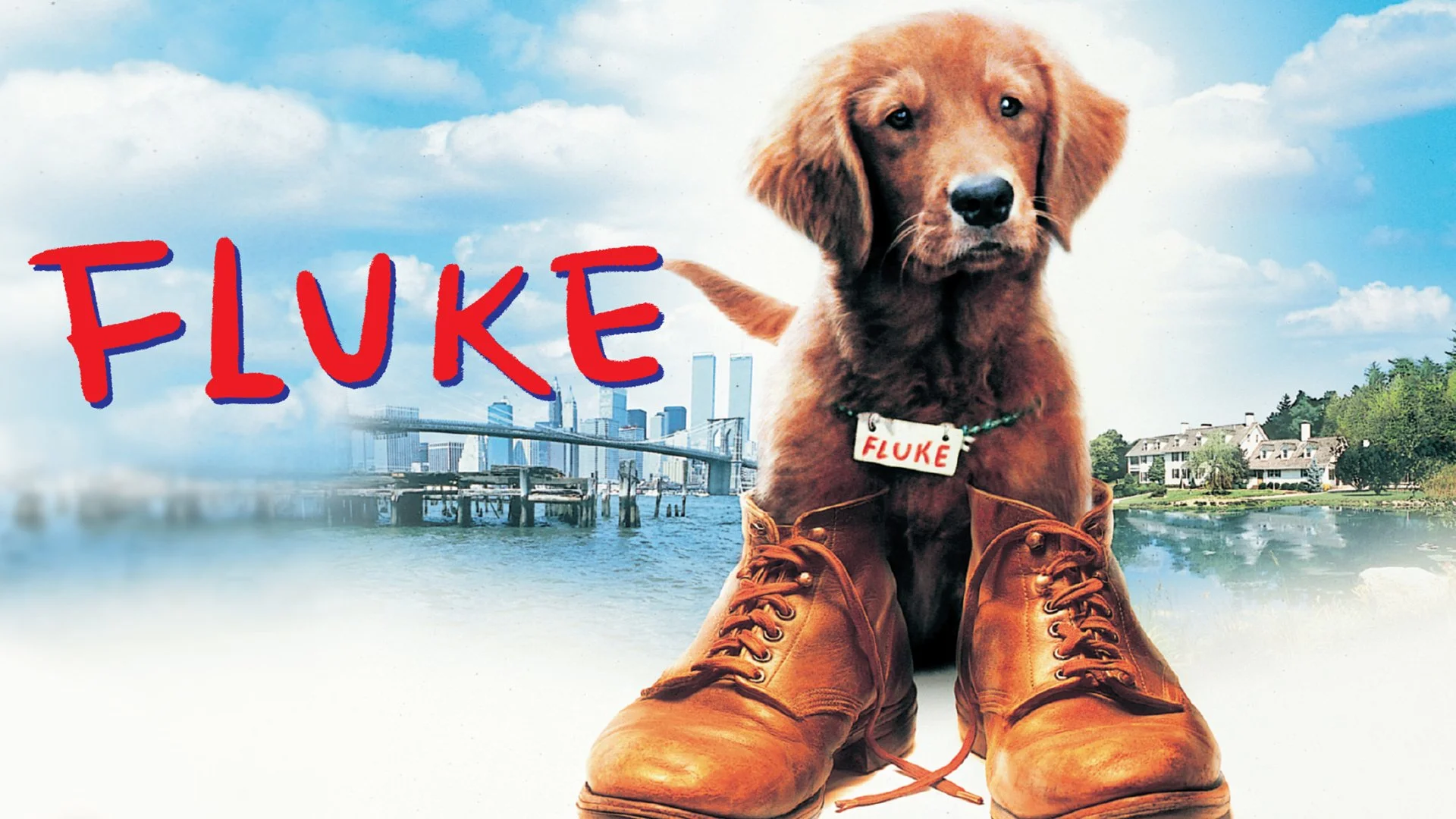
Fluke is a curious film about a man who is reincarnated as a dog and his subsequent realisation that he may have been murdered. It takes an adult novel by British author James Herbert, which is filled with philosophical musing and strives to adapt it in a far more family friendly fashion. The result is a somewhat bipolar production which thematically alternates between existential introspection and Buddhism. It then strives to deliver its message in a Disneyesque idiom. Children will potentially be confused and upset by what they see and adults will be wrongfooted by the continual shift in tone. Fluke was not a critical or commercial success upon release and the flaws that were identified by critics at the time still ring true today. That being said, Fluke is still an interesting and entertaining film, despite its faults.

When reviewing Sting, one critic stated that the small scale setting and thus, low stakes (IE only a few peoples lives are at risk), made the film not especially memorable. I consider this to be a somewhat spurious criticism. It is the very fact that Sting takes place in such a commonplace environment, with the main characters being everyday people that makes it different. There is a clear focus on well defined characters and their backstory. Unlike so many contemporary films, I actually gave a damn about the protagonists in Sting. An integral aspect of the horror genre is the ability to take a well known and familiar trope and provide a different and absorbing spin on it .It would appear that some audiences have been belaboured over the head by so many overblown and bombastic blockbusters, that the very notion of depicting small, localised and intimate events in a film, seems to bamboozle them.
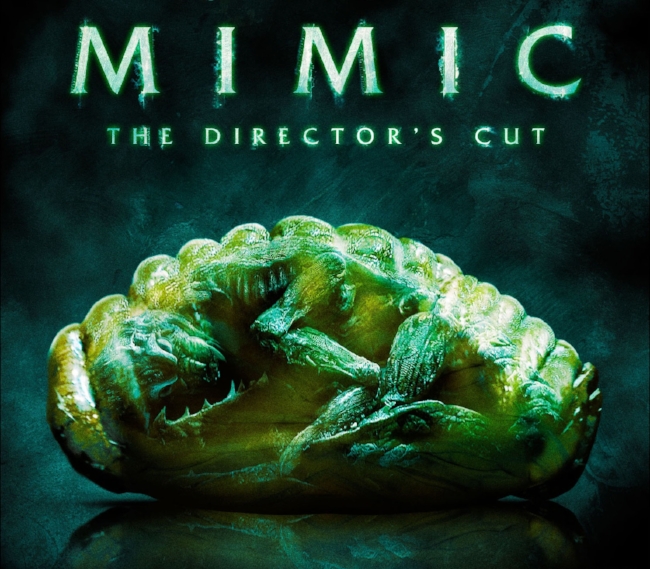
When I first saw Mimic in 1997, I was impressed by the fact that it offered a different perspective on the monster movie genre and that it seemed to have moments of greater depth than you'd expect from such material. Later on when I became more aware of the works of writer, director Guillermo del Toro, I learned that this movie had had a troubled production and that Miramx had imposed specific requirements upon the final cut of the film. This explained some of the movies inconsistencies and hinted at a far more ambitious artistic endeavour by del Toro. Initially Mimic was conceived as a thirty minute short and part of a three part anthology movie. However it along with the sci-fi film Imposter were both deemed to be of sufficient merit to be developed into feature length productions.
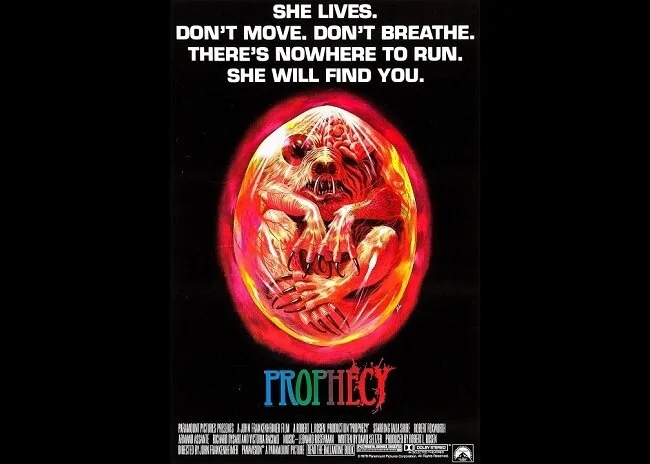
During the seventies, Hollywood started looking to ongoing societal and political concerns as a source of material for movies. Hence, the energy crisis, terrorism and global pollution quickly found themselves being subsumed into hastily written screenplays, in attempt to be topical, commercially successful and relevant. Prophecy based upon a novel by David Seltzer tackled not only the issue of pollution but also the ongoing disenfranchisement of Native Americans. Paramount studios went so far as hiring an established director of note, John Frankenheimer. In many respects this movie should have been a bigger success with a reasonable budget, robust cast and studio support. Sadly it did not fare well, either critically or at the box office due to obvious flaws in the production. Despite his outstanding body work, (Birdman of Alcatraz, The Manchurian Candidate) Frankenheimer was not the best choice of director for a genre movie such as this and he was also going through a period of alcoholism.
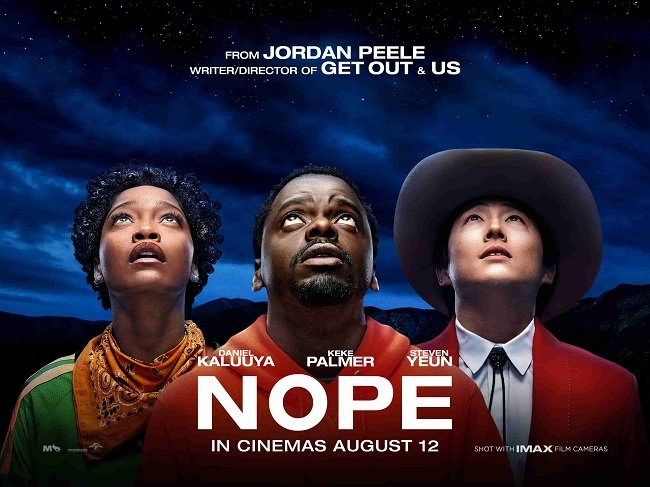
In Agua Dulce, California, the Haywood family trains horses for film and TV productions. One day at the Haywood ranch, small metal objects unaccountably fall from the sky. One of which, a nickel, kills Otis Haywood Sr (Keith David). His children, Emerald “Em” Haywood (Keke Palmer) and Otis “OJ” Haywood Jr. (Daniel Kaluuya), continue to run the business. However, due to the loss of a contract, they have to sell some of the horses to Ricky “Jupe” Park (Steven Yeun), who operates a Western theme park called Jupiter's Claim. One night, the Haywood’s notice the electricity supply fluctuating and their horses violently reacting to an unknown presence. They discover that something has been taking their horses and regurgitating inorganic matter, which OJ believes caused their father's death. The Haywood’s decide to obtain proof and subsequently ask electronics store employee and UFO enthusiast, Angel Torres (Brandon Perea) to set up surveillance cameras.
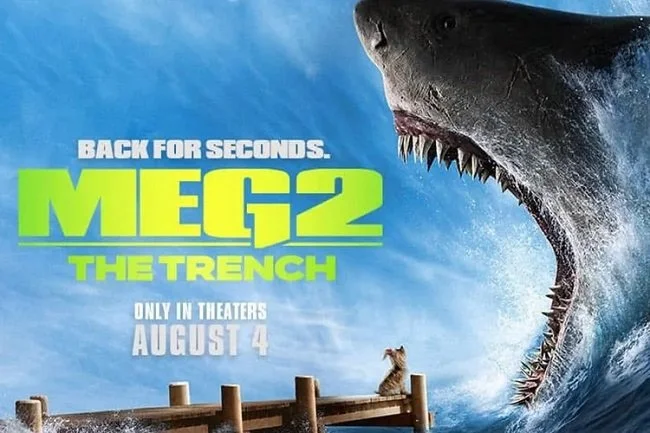
Back in 2018 I wrote the following about The Meg in my review. “My interest doesn’t go so far as a sequel. This sort of movie is the equivalent of a greasy burger you buy at the funfair. It’s fine once in a while as an indulgence, despite the fact that you know it’s bad, but you would soon tire of them being a regular part of my diet”. Five years later, I foolishly thought it may be “fun” to give the sequel, Meg 2: The Trench (2023), a go. Especially in light of the fact that it’s directed by Ben Wheatley. Surely such a filmmaker would bring some creativity and a fresh perspective to this franchise? Nope. Turns out he didn’t. Meg 2: The Trench lacks everything that made its predecessor tolerable. This superfluous sequel is an uninspired, poorly written mess which confuses turning everything up to eleven with entertainment. It gets nowhere near “it’s so bad, it’s good” territory. Instead it makes the biggest mistake a film of this nature can do. It’s dull.
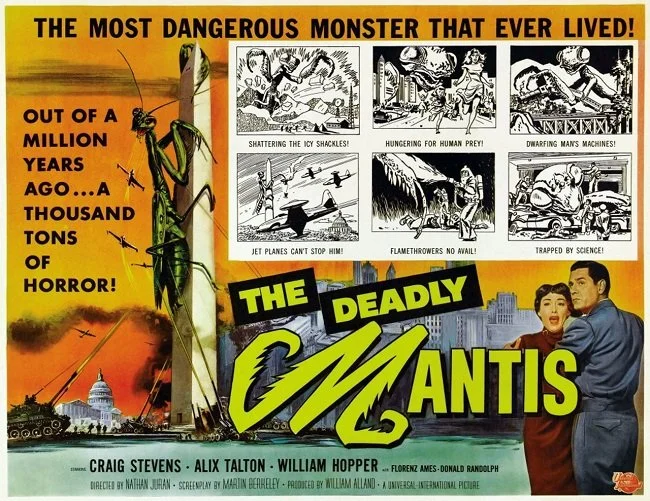
Not to be confused with the Shaw Brothers martial arts film of the same name from 1978, The Deadly Mantis (1957) is a creature feature in the idiom of Them! (1954). Unlike that film’s mutant ants, the monster on this occasion is not the product of the atomic age but a giant prehistoric praying mantis that has been released from the polar ice caps. Exactly how a creature associated with more tropical regions came to be at the North Pole is never explained. In fact precious little is in The Deadly Mantis. The film’s overall scope is somewhat limited with a basic story, limited action scenes and a rather dull cast of generic characters. There is an over reliance upon stock footage from period military documentaries and previous Universal Studio feature films. The film’s biggest failing is the giant praying mantis which does most of its rampaging conveniently off camera. It’s all rather disappointing.
It is no secret that the film industry relies on a handful of common tropes as the mainstay of their cinematic output. It uses timeless themes, storylines and archetypes that have featured in folk tales, plays and literature throughout history. Hence their familiarity with audiences around the world. Where the skill in filmmaking lies is to take a common, well known idea and interpret it in a new and innovative fashion. Akira Kurosawa took Shakespeare’s MacBeth and retold the tale through the prism of Japanese feudalistic culture. The result, Throne of Blood, is considered a masterpiece. Similarly, The Lion King retells the same story through the medium of animation and anthropomorphic wildlife. All of which proves that the key to successfully retelling a familiar tale is to be creative with regard to setting, presentation and perspective.
Jurassic World Dominion is a textbook example of a franchise that has run out of steam. Despite the enormous budget, the top notch production values and the presence of three members of the original cast, this is a long, tedious and curiously uneventful film. It has nothing new to say about environmental matters or unfettered science; themes that were front and centre in previous instalments. Nor does it do anything interesting with the main plot device of dinosaurs trying to integrate into our current ecosystems. But perhaps its biggest failing is the conspicuous lack of tension. The denizens of Jurassic World are simply not a threat and fail to have any emotional impact. The film doesn’t even placate viewers with superfluous cast members being eaten. The onscreen deaths by dinosaurs are rather tame.
Set in Brazil in 1901, plantation owner Christopher Leiningen (Charlton Heston) makes arrangements to get married. He has spent his entire life building his estate and reclaiming land from the jungle. He is fiercely independent but he is also alone and isolated. Joanna Selby (Eleanor Parker) from New Orleans agrees to marry him but their first meeting does not go well. Leiningen is unhappy to discover that Joanna is a widow and hence has a past, so he tells her to return to America on the next available boat. However, local commissioner (William Conrad) informs Leiningen that swarming soldier ants, or Marabunta, are moving towards his plantation destroying everything in their path. Leiningen refuses to abandon his life’s work and is surprised when Joanna decides to stay with him. Can they convince their native workers to stay too and can they defend the estate from the Marabunta, described as “forty square miles of agonising death”.
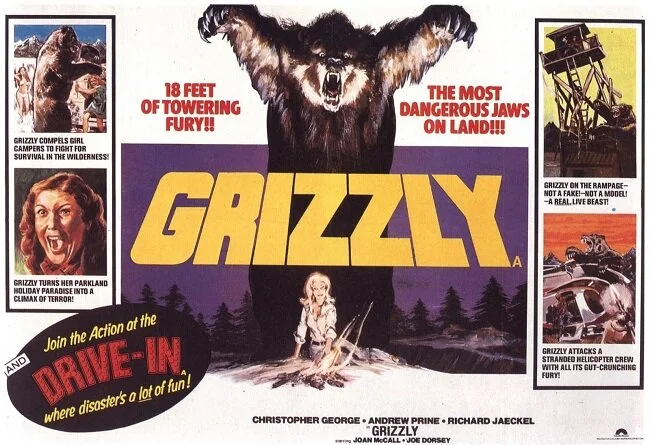
After the critical and commercial success of Jaws in 1975, a veritable tsunami of “creature feature” movies followed in its wake. A few titles, such as Alligator (1980) and Piranha (1978) managed to do something different with the rogue animal trope, both providing a quirky and satirical look at the genre along with plenty of exploitation mayhem. However, most of the rest were low budget productions of negligible quality. However, such qualities are not always an impediment at the box office. Grizzly (1976) was hastily made on a budget of $750,000 yet earned an impressive $39,000,000 at the box office. The critics hated it but the public loved it and it went on to be the second most financially successful independent feature film in the US that year (the first being Monty Python and the Holy Grail). Grizzly is in many ways a microcosm of the exploitation genre from the seventies and needs to be viewed through that prism if it is to be enjoyed.
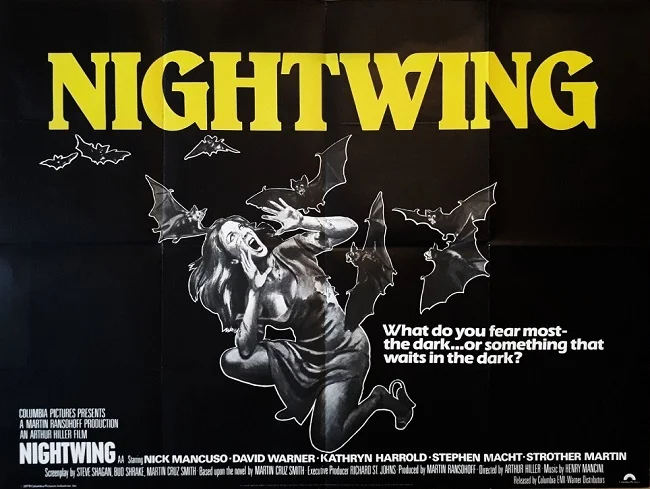
The seventies saw a minor boom in creature feature films after the box office success of Jaws. Hence, we had movies such as Orca (1977), Tentacles (1977), The Pack (1977) and Piranha (1978). If an animal could eat you or potentially pose any threat to people, someone somewhere would make a movie about it. Usually a bad one. A few of these even dared to stray into other hot topics of the time such as pollution and protecting the environment. Some would even invoke mysticism and folk lore to facilitate their protagonists. Nightwing is one such curious genre hybrid which combines vampire bats, shale oil mining and Native American culture in its clumsy and unsubtle plot. It’s a somewhat odd undertaking, directed by Arthur Hiller. His previous work included Love Story (1970) and Silver Streak (1976), so he was not the first person you’d expect to see associated with such material. The film doesn’t work well as either a horror movie or an exploration of social issues, but like so many movies from this era, it is of interest mainly due to its sheer incongruity.
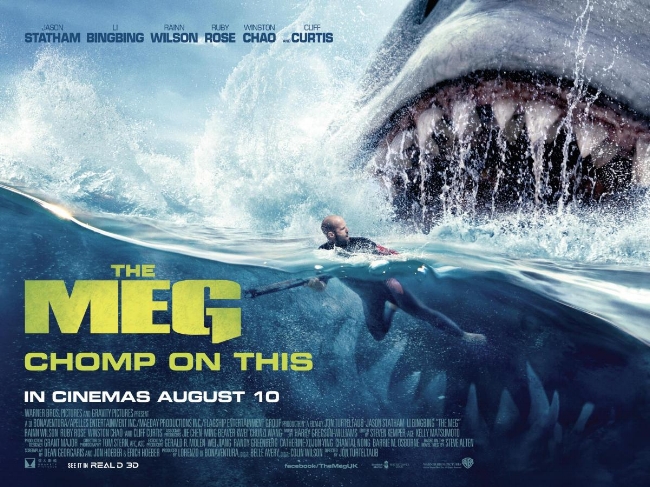
If you have seen any of the marketing material or trailers for The Meg, then you know exactly what you’re getting right from the get-go. All movies inherently require the viewer to suspend their sense of disbelief to various degrees. Naturally, the “creature feature” genre asks audience to go the extra mile with this concept. The Meg takes a major gamble by insisting that everyone goes further still, not by believing in a giant prehistoric shark (Megalodon) but that Jason Statham is a ex-navy, deep sea rescue diver. However, it pays off and the resulting movie is staggeringly stupid, but mercifully entertaining in an undemanding way. Recent movies such as Into the Storm and Geostorm are crass and made worse by their implicit assumption that their viewers are stupid. The Meg is far from cerebral but has an upbeat tone and a sense of playfulness that knowingly invites the audience to come aboard with the silliness. It’s a big distinction and the reason why I smiled a lot and frequently rolled my eyes while watching The Meg, but never with derision.
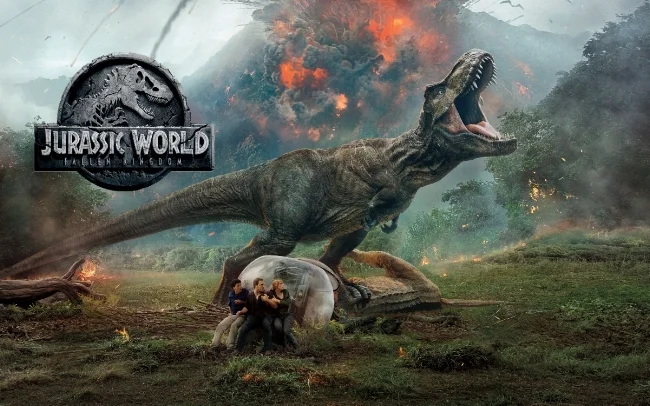
Critical opinion was very much split this summer when Jurassic World: Fallen Kingdom was released. However, the viewers were somewhat indifferent to the opinions of the professional critics and the movie made a healthy $1,303,476,615 globally, proving once again that the public’s’ continuing love affair with “all things dinosaur” shows no sign of abating. When you factor in the home media market into overall profits, the entire Jurassic Park franchise will have made $5 billion worldwide. So, bearing in mind the old adage that “money talks and bullshit walks”, I think it’s safe to say there’ll be more instalments in the years to come. When faced with such overwhelming box office popularity it seems somewhat pointless to dissect the latest movie, because the film seems to be bullet proof regardless of narrative flaws or ill-conceived plot devices. However, film criticism isn’t about box office popularity but about analysing the relative quality of a movie’s construction and its subsequent standing.
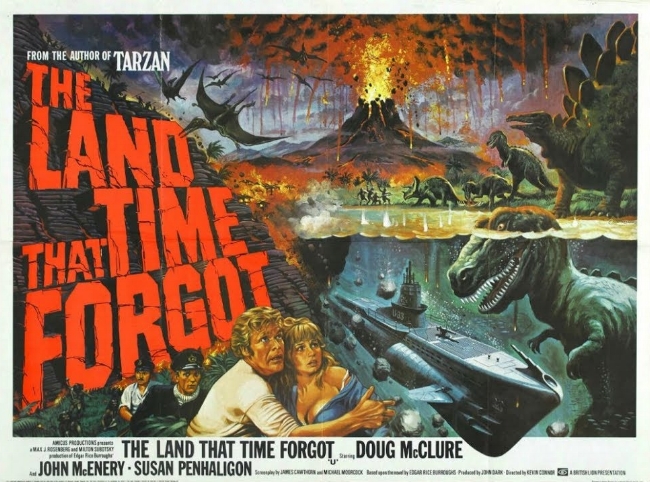
I first saw The Land That Time Forgot way back in 1975 at the Odeon Isle of Wight, when it was first released. We were on holiday at the time, which was cause for celebration in itself, as these were few and far between during my youth, due to the state of the UK economy at the time. But to then go to the cinema and see a fantasy film, filled with action, adventure and monsters, was the icing on the cake for an over excited eight-year-old. Adapted by Michael Moorcock and James Cawthorn from the 1924 the novel by Edgar Rice Burroughs, The Land That Time Forgot is a classic example of high adventure on a low budget. Its technical shortcomings were even apparent to me as a child, yet there was a charm and honesty to this curious British production, that had the audacity to try and compete with the likes of more expensive US productions such as The Golden Voyage of Sinbad and Island at the Top of the World.
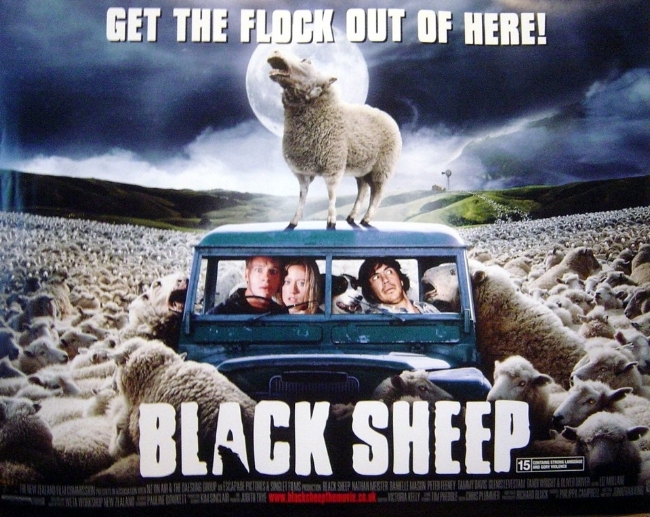
Black Sheep is a high concept horror comedy from New Zealand. Featuring creative physical effects by Weta Workshop, this tale of genetically modified killer sheep, animal husbandry and environmentalism requires a very broad sense of humour and an abiding love for the “creature feature” sub-genre. It should be noted that the copy I watched was the unrated R1 DVD. This version is stronger in content than the R rated US theatrical release and yet was released at the UK cinemas with only a 15 rating from the BBFC. I suspect that the similarities in humour between the UK and New Zealand contributed to this somewhat low rating. That and the fact that horror comedy often gets a free pass because the humour always tends to mitigate the violence.
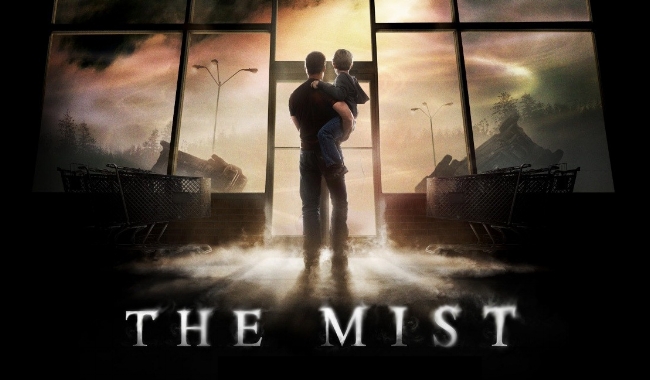
Frank Darabont achieved both critical acclaim and mass appeal with his adaptations of The Shawshank Redemption and The Green Mile. In 2007 he returned once again to the work of Stephen King with his film version of The Mist. It’s a sideways step away from human drama into a more genre piece, yet it still retains a very traditional story at its heart. Once you look beyond the superficial elements of "creature feature" plot, you get yet another well written character study by an ensemble cast, again focusing on how the human condition deals with extreme situations. The particular route it takes and some of the themes it explores may not be to everyone's taste. However, it still focuses on characters and performances. It is also a movie that ends with a somewhat unexpected plot development, that some viewers may find a little extreme. It is one of those film related twists that if known in advance, greatly diminishes once enjoyment of the film.
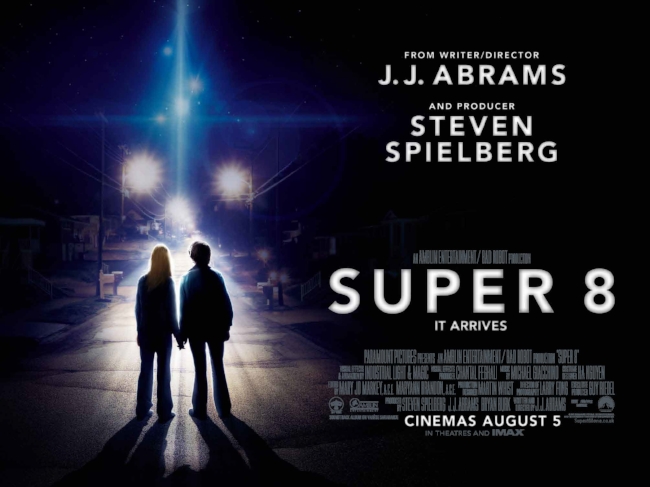
When you see the names of such cinematic luminaries as Steven Spielberg and J.J. Abrams together on the same movie poster, naturally your expectations are going to be high. Yet when watching the various trailers for Super 8, just prior to its release in 2011, I was somewhat cautious. I have discussed in the past at some length the ambiguous nature of trailers and that they can misrepresent a film. Yet even bearing this in mind at the time, I couldn’t help but feel that Super 8 seemed like a somewhat self-indulgent homage to Spielberg's earlier work. I subsequently saw the movie at the cinema in August that year and my suspicions were validated. However, over time I have spoken to several friends who are advocates of the movie, so I thought I’d watch it a second time. Sadly, I still find myself unable to label Super 8 as anything else other than adequate. Now I would hasten to add, that I use adequate within the context of both director’s body of work. An adequate film from either Mr Spielberg or Abrams is still superior to many of their competitors. But that's not the point. I simply expected better from such a project.
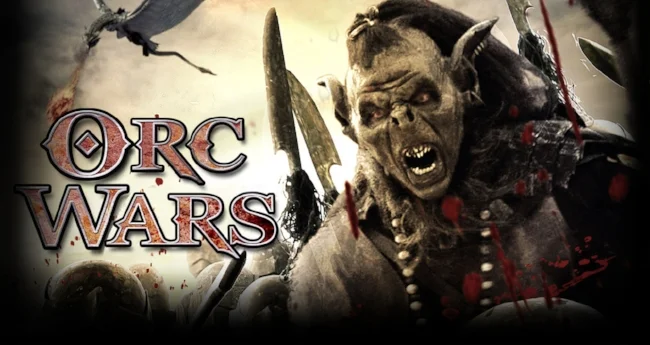
Having recently sat through Orcs! I decided to take a further chance and watch Orc Wars. It too is a very low budget film, although this time the finances were raised through crowdfunding. Sadly, it is not the fun, tongue in cheek, independent adventure movie the trailer and associated marketing implies. There is very little merit in this production. It's cheap, cheerful and although harmless, it clearly demonstrates that not all fan funded projects are good cinema. Some are just indulgences. The problem is in the title itself, which tries to sell an idea that the movie production is incapable of delivering. Instead of the spectacle of an army of a thousand Orcs pitted against the technological might of the US war machine, we get a few extras in ill-fitting costumes, running skirmishes against no-name actors on quad bikes and a few old Army Surplus vehicles. It's all rather lacklustre and underwhelming.
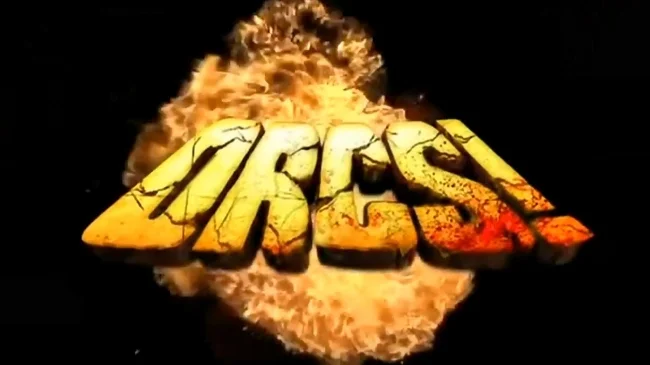
As a fan of the horror genre I’ve sat through numerous low budget films in my time. This has usually been at festivals or conventions. Sometimes watching something as part of a group, with likeminded individuals, makes a difference. You find yourself groaning in unison and the shared experience helps compensate for potential deficiencies. Watching questionable material in the comfort of your own home, purely on your own can be a lot tougher. However, due to my abiding love of the genre, I am prepared to cut a lot of cheap ass indie flicks considerably more slack than I would others. So, I'll endeavour to review Orcs! with as much impartiality as possible. Oh, and before we start, let us clarify the term Orcs. Although Middle-earth is not referenced in any way, this film is definitely about Tolkien's creations. Or at least their depiction in another well-known series of films.
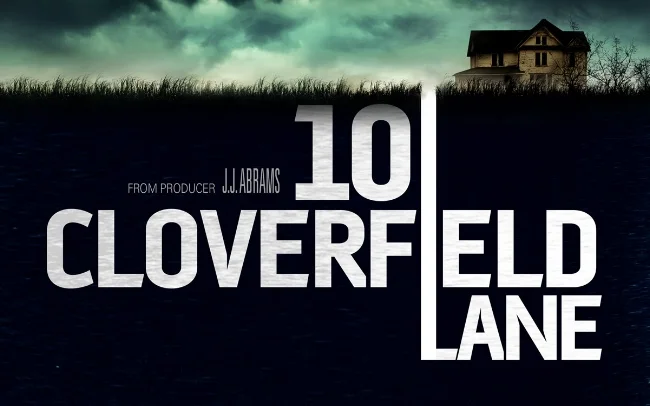
10 Cloverfield Lane blends several cinematic genres producing an interesting premise. Once it has established its narrative arc, it then dives head long into an exciting and tense one hundred and four minutes. The movie is not a direct sequel to Cloverfield (2008) but does touch upon some of the same themes and ideas. Made on a modest budget of $15 million, the claustrophobic setting of a nuclear bunker accommodates strong performances from the lead actors. It is not until the third act when the story movies back to the outside world, do we see any major visual effects. Overall, this is a very compelling film due to the strong screenplay and well defined central characters.
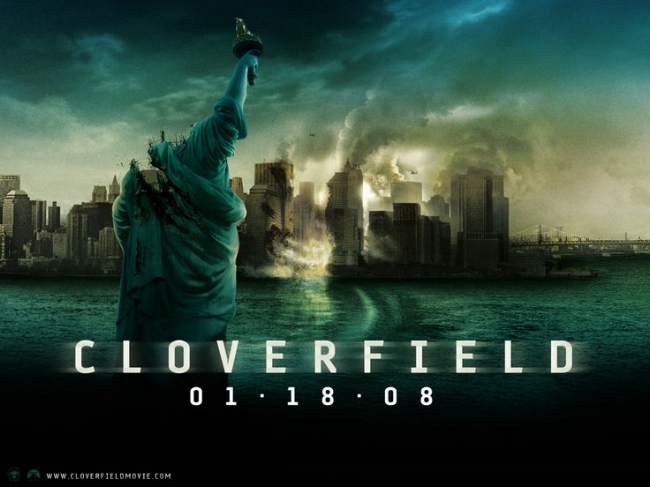
I did my best to avoid the hype surrounding the initial release of Cloverfield. Such media saturation and public interest can often cloud the issue of whether the actual film is any good. Five years later and having watched the movie twice, once in the theatre and once at home, I am still somewhat conflicted about this movie. The use of hand held video cameras is both a boon and a bane. The constant movement of the image has proven to cause motion sickness for some viewers, although this is not so overwhelming when viewed on a smaller screen at home. Yet the medium of news footage mixed with handheld cameras does create a palpable sense of immediacy. This helps immensely when trying to sell a fantastic concept, such as the one that Cloverfield features.
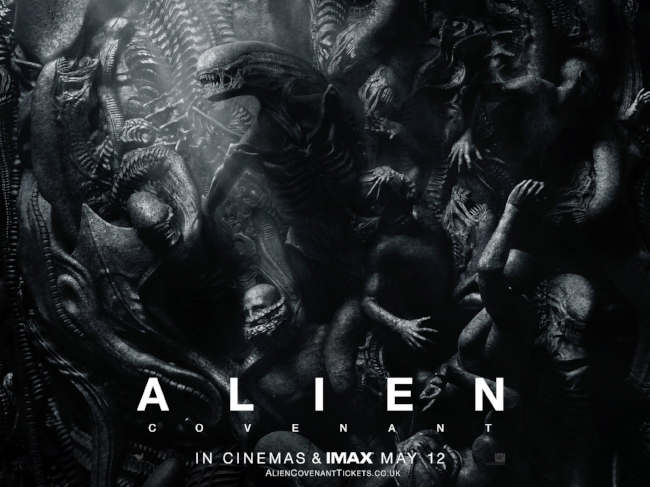
The enigma of the Xenomorph in the Alien franchise is diminished once you start to rationalise its heritage. Sadly, that’s exactly what Alien: Covenant has chosen to do. It jettisons the mystery of the original 1979 movie and pulls back the curtain, so wisely put in place thirty-eight years ago, to reveal a rather lacklustre explanation to the Xenomorph’s origin. Having spent nearly $100 million and employed a production team of some of the finest talent that money can buy, the resulting movie is not bad per se, just crushingly superfluous. After watching Alien: Covenant this week, my overall reaction can be distilled down to a deep sigh of indifference and a shrug of the shoulders.
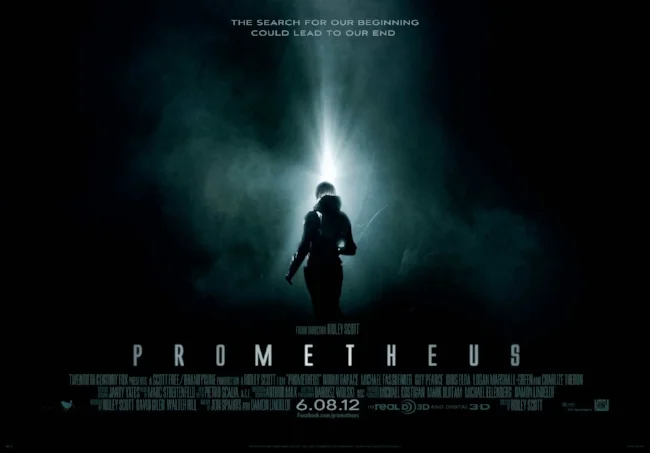
I have written many times in recent years about how big titles get announced by the gaming industry, of the ensuing hype up that leads up to launch day and then the subsequent disappointment on purchase. It is a malady that has afflicted the movie industry for decades and has become increasingly more common in the last decade. Hype has a curious link with reputation. There are a handful of directors in contemporary Hollywood who when they add their name to a production, people take notice. Ridley Scott is one of these. His body of work pretty much guarantees he can make whatever he wants, be it a commercial undertaking or a ludicrous vanity project. However, the downside to being a film maker of this stature is that you are not so easily exposed to proper scrutiny by your peers. No one stops you from making a mistake because you are supposed to know what you are doing. They let you do what you want. Which is bad.

Hollywood is a cyclical place and often repeats decisions it's successfully made in the past. During the early seventies, the mainstream film industry head hunted a lot of up and coming talent from the independent film making community, or took a chance on directors who were fresh out of film school. It was a means to an end and a way to tap into the new talent that was proving popular and lucrative. Similarly, Warner Bros. followed suit in 2014 when Gareth Edwards was hired to direct the multi-million-dollar Godzilla reboot. His previous movie was the self-financed indie Sci-Fi picture Monsters. Godzilla went on to be both a box office and critical hit.
Collecting
Once again Syp over at Bio-Break has written a post that provides a talking point for other bloggers. This time it’s about collecting which is a very broad church indeed. When I was a child it was a common mantra of adults at the time to “get a hobby”. I suppose from their perspective a busy and engaged child is one that is likely to stay out of trouble and frankly it’s still sound advice. Many hobbies involve collecting and this can tangentially teach positive lessons such as fiscal prudence, patience and learning about that which you enjoy. In his post Syp raises the point as to whether he’s missed out by never having been bitten by the collecting bug but he also reflects on some practical problems associated with such pastimes. I was going to leave a comment on the post but it soon became apparent that it would be a little too long, so this blog post is my response.
Once again Syp over at Bio-Break has written a post that provides a talking point for other bloggers. This time it’s about collecting which is a very broad church indeed. When I was a child it was a common mantra of adults at the time to “get a hobby”. I suppose from their perspective a busy and engaged child is one that is likely to stay out of trouble and frankly it’s still sound advice. Many hobbies involve collecting and this can tangentially teach positive lessons such as fiscal prudence, patience and learning about that which you enjoy. In his post Syp raises the point as to whether he’s missed out by never having been bitten by the collecting bug but he also reflects on some practical problems associated with such pastimes. I was going to leave a comment on the post but it soon became apparent that it would be a little too long, so this blog post is my response.
When I was young, I dabbled with collecting. Comics, trading cards, action figures are some of the things I doggedly pursued. But often I found that time, money and the practicalities of being a child, IE being busy playing, meant that such enterprises were doomed. It was not until the early nineties, when I had a job and a sizeable disposable income, that I was able to sustain the practical realities of collecting. I think this is an important factor to mention. Collecting requires passion which is something available to all age groups. Money is something that we don’t have continuous access to all our lives and it subtly alters the dynamic of collecting. It is far easier to start your collection while you still live at home and have “spare cash”. Marriage, family and mortgages can radically alter this equation.
Being a consummate film fan and an ardent completist, I started collecting films on what was the best physical medium of the time; LaserDiscs. In the early nineties, VHS sell-through tapes where king. However, if you were a serious movie aficionado, who wanted superior picture and sound quality as well as alternative cuts of a film, then LaserDiscs was where it was at (Daddy-o). At the time, a VHS tape of a popular film such as Terminator 2 would cost about £10. If you wanted the Director’s Cut of the same movie, in the correct aspect ratio with optional commentary by the cast, then it would cost between £30 to £40 on LaserDisc. It was a superior viewing experience all round. Although there were UK releases on this format, they were somewhat limited. A far greater choice was available if you bought US and European imports. Buying internationally also added to the allure of collecting.
Because of my passion for film, I bought circa 1991 a LaserDisc player that was dual standard (NTSC/PAL) and a new TV that could handles both UK and US picture standards. I think I spent near £750 on both. Over the next few years, I spent a great deal of time and money building up a collection of classic and cult films. Due to prohibitive censorship laws that prevailed in the UK at the time, a lot of the material I bought was technically illegal to import. There was a network of small companies at the time that worked within various legal loopholes to offer a specialist purchasing service. Thus, I owned the Director’s Cut of George A. Romero’s Dawn of the Dead at a time when it was only available in the UK in a pre-cut version. I also had the Criterion version of RoboCop in all its bloody glory. But the jewel in the crown of my collection was the Star Wars Trilogy in their original theatrical versions. LaserDiscs satisfied my needs as a fan as well as a film purist. For about seven or so years, I spent thousands of pounds on my collection. Being twelve-inch discs, they took up comparable space to a vinyl music collection.
However, time and tide waits for no man and it also doesn’t give a shit about collectors. Towards the end of the nineties, DVD became the de facto medium of choice and so I changed the focus of my collecting activities. Due to regional variations, multiple versions and good old-fashioned censorship, DVD proved to be an even more collectable format than LaserDisc. It was round about this time, when my personal collection of movies was over five hundred that I realised there had been a shift in the pleasure I got from collecting. It was no longer just about seeing the best and most complete version of a much-loved movie. I was in the thrall of the “thrill of the hunt”. A fact borne out by the number of discs I had that remained unwatched, still in their shrink wrap. I was also using up considerable storage space to accommodate my collection and it was proving to be somewhat of a drain on my finances. And then Blu-ray appeared on the market and opened up not only a new avenue of potential collecting but a can of worms. Did I really want to replace so much of my precious hoard?
It’s a curious thing how something that has taken years to amass, can be dispensed with and disposed of in a far quicker time. My Father-in-law was a prodigious collector of coins and medals. He was very proud of his collection and guest were frequently regaled with it. Yet collecting is often very personal and means little to those who do not share similar passions. When my Father-in-law died in 2012, his collection was sold quickly and efficiently to several professional collectors. It was just another asset to be disposed of, once his estate had been settled. And so it was with my film collection. Once I had determined that it was no longer the collection that mattered to me but just the act of acquisition, I felt no reason to continue doing either. The very rare and signed LaserDiscs where sold to a specialist film and memorabilia store. The rest of the DVDs where then sold online, or traded in at game stores. What was left was given away to charity shops.
I’m not sure if I have a major philosophical point to make about collecting, beyond the fact that many people that I’ve spoken to on the subject have had a similar journey. What starts off as a fun undertaking eventually becomes a millstone and possibly a minor addiction. It certainly can become a massive financial drain. I also think that collecting is a very solitary pastime and is not accommodating of relationships and other situations that compete for your time, attention and money. I am now at a point in my life where I have embraced downsizing and decluttering. Technology has also made so much previously rare material readily available. As a film fan, I now live in an age where tracking down high-quality copies of most movies is quite easy. I doubt if I’ll ever collect anything in my life again, yet I cannot totally write off the period of my life in which I did. It was fun initially regardless of where it led and I think it ended up teaching me a lot about myself.
Here's an episode of the Burton & Scrooge Podcast from September 2015. Brian and I have a fairly lengthy conversation about collecting, drawing upon our own personal experiences. The discussion begins at 27:12 into the show.

If you visit the websites for such UK tabloid newspapers as the Daily Express or the Daily Mail you will no doubt encounter prominent stories about Megan Markle, Nigel Farage and “immigrants”. If these two august institutions are short of column inches, they’ll run a piece about how some former celebrity has had the unmitigated gall and temerity to get old. I mean WTF? How dare they do what human beings are genetically disposed to do. It’s outrageous. Similarly, head over to the Unherd website and you’ll find foam flecked tirades regarding spurious points of contention over dubious subjects. Often the topic being harangued is incredibly niche and I’ve never heard of it before or even considered it being a thing. These sort of talking points are not about informing, debating and most certainly aren’t about thinking. They exist to provoke reactions.

Before we start, let me explain to those readers outside of the UK, the significance of a Dairy Milk Freddo chocolate bar and its relevance to this post. The “Freddo” is an 18g (0.63 oz) chocolate bar, in the shape of an anthropomorphic frog. When it was re-launched by Cadbury in 1990 (it had previously been manufactured by an Australian confectionery company in the seventies), it was priced at 10p (£0.10). It remained at that price until 2005 when a 1p to 2p increase began to occur each year. By 2016 Freddos were retailing at 25p. However, the following year the price “lept” to 30p with an increase that was double its usual yearly rise. This led to public outrage across social media. Since then the price of a Freddo has waxed and waned. Tesco supermarket reduced the price back to 10p as part of their centenary celebrations. The post COVID price in 2022 hit 49p. At present, the average price of a Freddo in the UK is somewhere around 35p.
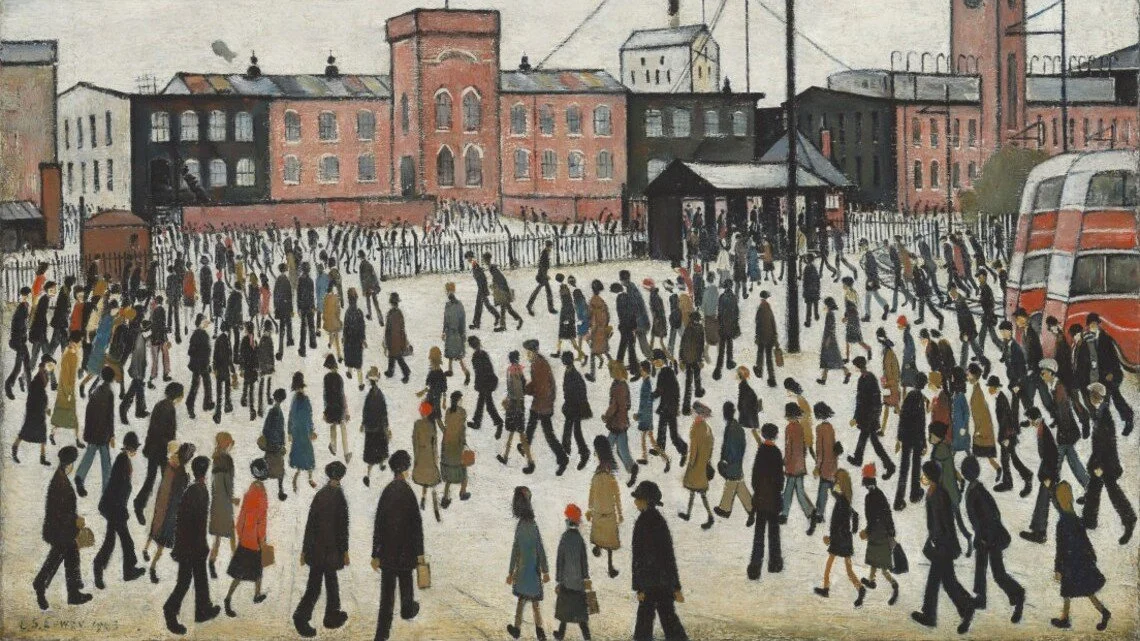
Over the last 10 years, I’ve written several blog posts about my personal working experiences and my career, such as it was. I touched upon working specifically in IT and how that industry changed over time, both technically and in the way that other people perceived it. I have also given my thoughts on the social dynamics of the modern work environment and the way we interact with our colleagues and employers. That is another area that has changed dramatically. Naturally my retirement from full time work has been written about, as it is such a radical change in one’s life. Especially if you’re the sort of person who is clearly defined by their job, which I personally was not. This time, I want to share a few thoughts I have about what I miss about “going to work” and “having a job”. I’m not sure if “miss” is the right word. Perhaps it is more a question of things being absent. Either way, there are some aspects of being employed that I use to enjoy or at least found beneficial that I now no longer experience.
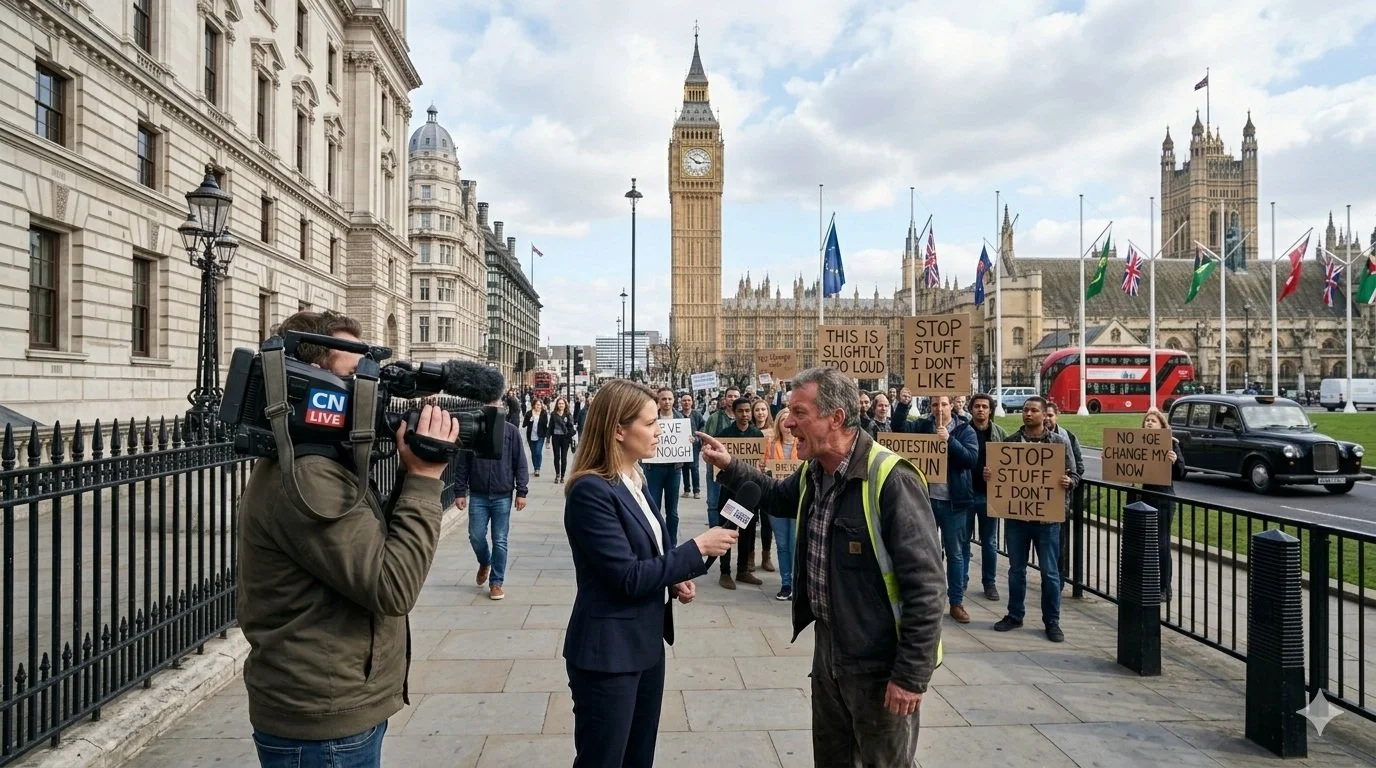
UK Prime Minister, Sir Keir Starmer has resigned and intends to leave office before the parliamentary summer recess. By then Andy Burnham will more than likely be voted leader of the Labour Party and by default will become the new Prime Minister. Due to the current size of the incumbent Government’s majority, there is no pressing reason for a General Election that the UK’s right wing tabloid press is currently calling for. Whether this provides the Government with the reset they’re hoping for when Parliament reconvenes in autumn remains to be seen. With seven Prime Ministers coming and going in a decade, there are some serious questions to be asked about the current state of UK politics. However, the mechanics of contemporary politics, the decline of clearly defined ideologies and the people that seek elected office to be our leaders are only half of the problem. The other major impediment to the UK’s democracy functioning properly is the electorate.

The UK Government has formerly announced its intention to ban under-16s from using social media. This is due to increasing public pressure that “something must be done” about the perceived iniquities of many online platforms. However, as with most complex social problems of this nature, no one has any clear or practical ideas as to what that “something” is. It remains a nebulous, non-specific panacea and clearly someone else’s job to identify and implement. As ever, why choose a nuanced and multifaceted solution to a complex problem, when it is far easier and politically expedient to just “ban” something. The former requires effort and a degree of thinking. If such an approach fails it also means that those who came up with it now carry the can. The latter dumps the problem in the lap of various third parties, who can then be conveniently blamed when the ill conceived policy fails.

Every Thursday, Mrs P volunteers at a food bank that is run from a local church; Avery Hill Christian Fellowship. Today there was a shortage of staff so I agreed to help out. It proved to be an equitable arrangement as she collated the various orders and I packed the bags and took them to the respective clients. The food bank itself is organised and administered by the Trussell Trust, a UK based NGO and charity providing emergency food and support to people locked in poverty. It is open for 2 to 3 hours a week depending upon demand. During today’s session we served just six people. Some weeks its can be triple that amount. Upon closure, a member of staff from the Trussel Trust did a stock take and collated a list of what was needed. This is provided by various local church communities via parishioners donations, as well as local supermarkets who have an arrangement with the trust to provide surplus stock or good approaching the end of their sales window.
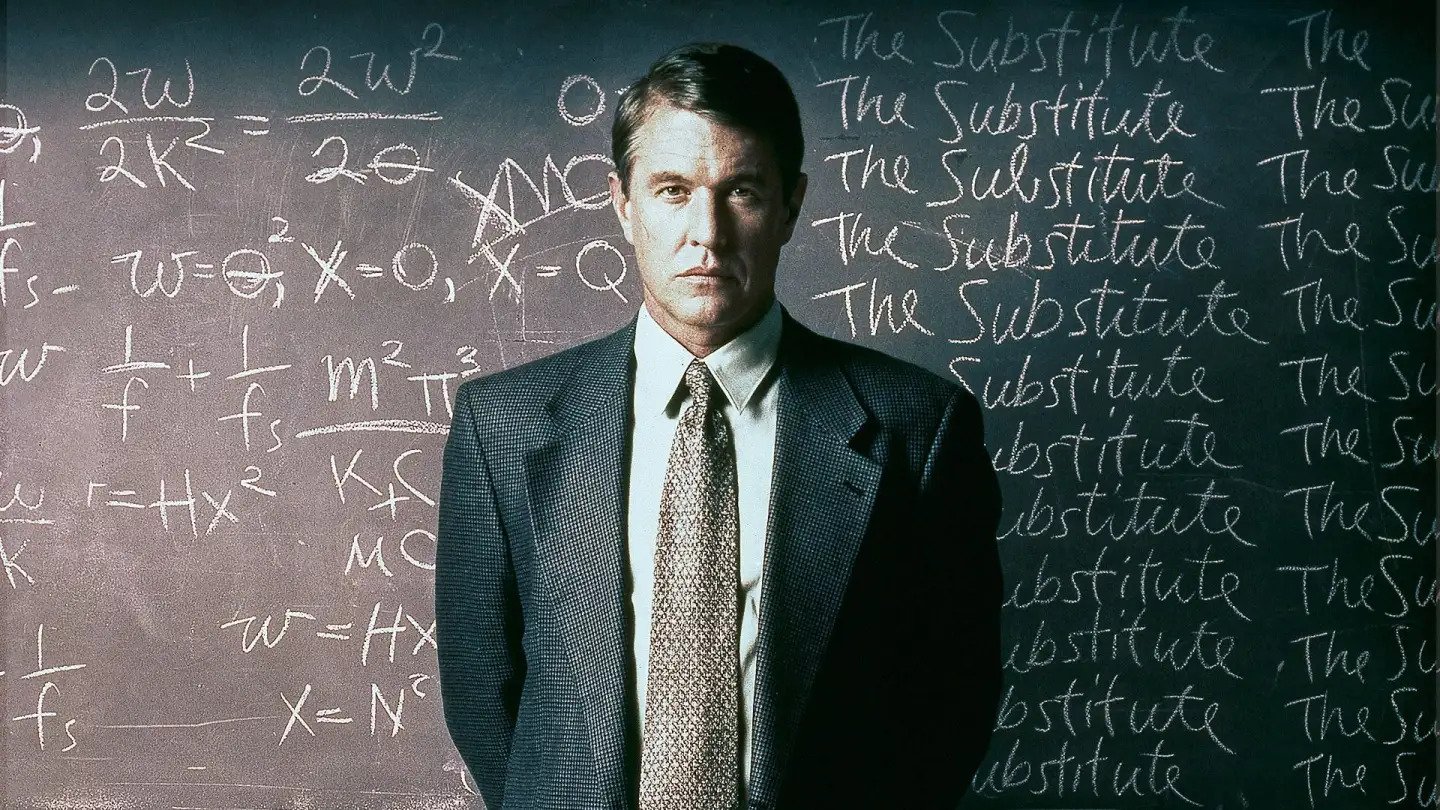
I like learning things. I always have. During my middle school years I thought I was a mediocre student and often I wouldn’t apply myself. According to an old school report this was because I was “too busy indulging in Tomfoolery”. Then I had the positive experience of meeting an exceptional teacher. Their lessons were the highlight of the week as they had an ability to make the subject matter, Classical History, utterly compelling and relevant. The teacher in question also treated us like adults and the class benefitted from only having five pupils. This really brought home to me that a lot of disinterest and underachievement in education is linked to the paucity of some teachers. One bad teacher can undermine the good work that all the others can do. Perhaps it has improved nowadays?

Our household is currently trying to reduce our monthly overheads in response to the ever increasing cost of living. April is not that far away and a great many service providers will increase their rates and tariff as the new financial year begins. Then there is the ongoing effects, both direct and indirect, of inflation to consider. Although the UK inflation rate is dropping, currently sitting at 3.4% in December 2025, food inflation remains higher at 4.5%. Being based in the UK, salaries and billed services tend to be administered monthly. You get paid usually at the end of the months and bills can turn up at any point, depending upon when you started a service. Any payments coming from central government, such as state pension or other benefits, are paid every 4 weeks. This means that there are 13 payments in a year. I thought it pertinent to clarify this point as other countries, such as the USA, favour a fortnightly financial cycle. Hence as a household we work around a monthly budget.

I try not to let the failings of contemporary capitalism get to me but such a mindset is very hard to maintain. From time to time it does just piss you off and you know damn well that there’s nothing you can do about it. So to begin this tale, at the end of November, our Indesit washer/dryer gave up the ghost after a valiant twelve year lifespan. As a result of this household appliance’s stirling work, it was decided to buy another from the same manufacturer. Their website informed me that the model that had just broken was no longer being produced. However, it recommended two newer appliances that had comparable specifications and more importantly the same size. This washer/dryer had to fit into a fitted kitchen unit. To cut a long story short, a model was chosen, purchased, delivered within 48 hours and installed. The broken predecessor was subsequently taken away. The wonders of modern consumer culture!

I was in a pub last night, catching up with friends before Christmas, when I noticed on the wall something I haven’t seen in a pub for a very long time. A jukebox. In my experiences most of the pubs I go to take one of the following two approaches to background music. They either have a sound system and exclusively manage any music via personally curated playlists from behind the bar. Or they have no music at all. The Wetherspoons chain of pubs broadly follow the latter policy and actively use it as a marketing point. Quiet pubs for clientele that just want to talk can be popular. Hence finding an accessible jukebox was a blast from the past. During the late eighties and early nineties, I regularly visited my local pub and often used the jukebox there, which at the time, was operated by an ever changing store of CDs. The jukebox I encountered last night was digital.

Today is my 58th birthday. It would appear that I have existed for nearly six decades. Put another way, I am over half a century old. All of which has given me pause for thought with regard to the passage of time. A phrase that is often bandied about, but what exactly does it mean? As I understand it, the “passage of time” refers to our perception of the flow of time and how we experience its movement. This is something distinct and different from objective time as measured by clocks. Our subjective experience of time can vary due to multiple factors. Two common examples are how time can feel like it's flying by when we're having fun and enjoying something or dragging its feet when you’re enduring something dull. Other factors are whether we are applying ourselves to a task, concentrating and general activity. Such focus can make time pass quickly.
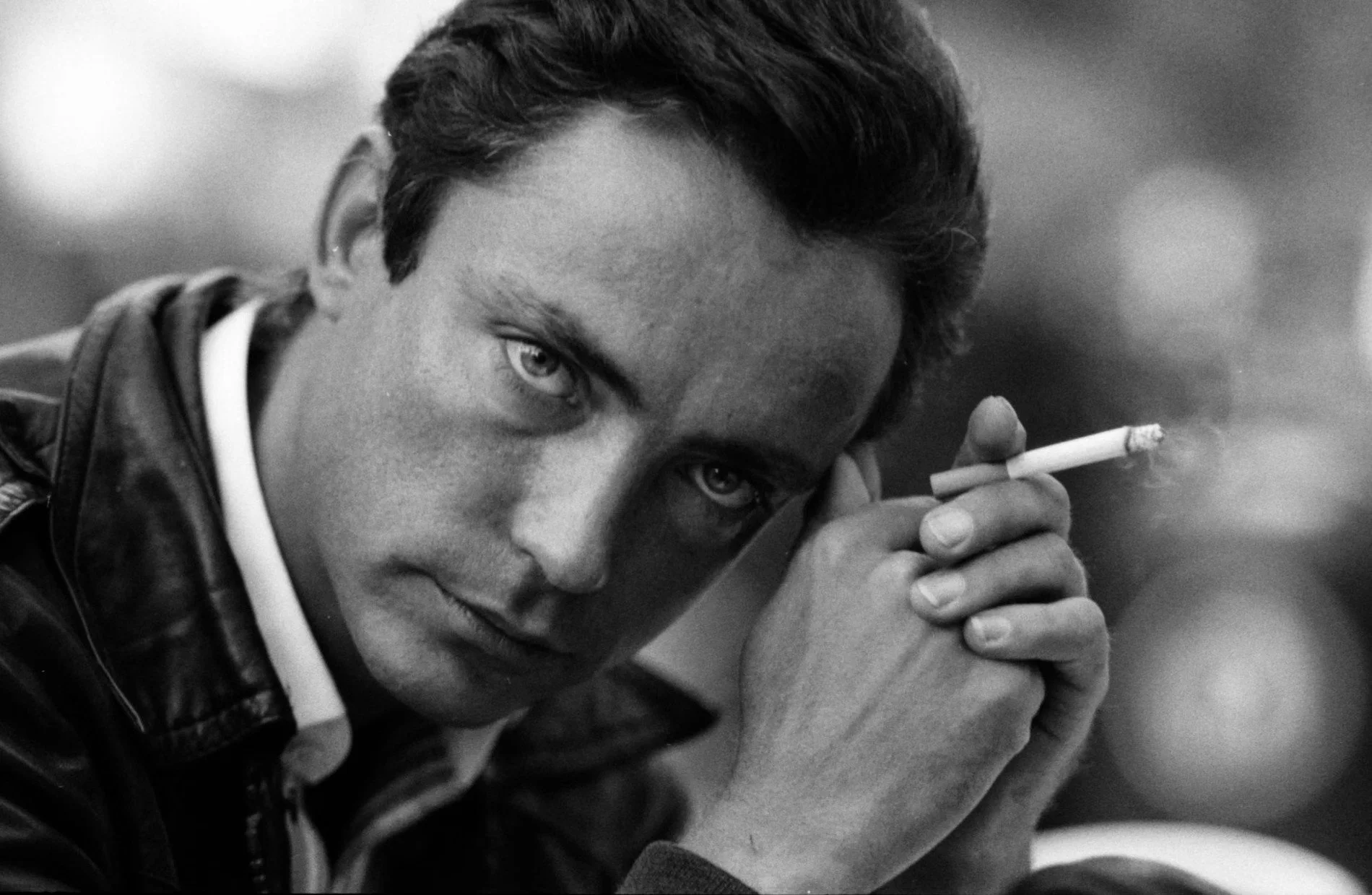
German actor Udo Kier died on the 23rd November at the age of 81. Kier was far from a high profile star but his saturnine good looks and piercing eyes meant that he stood out. As an actor he was enigmatic, brooding and at times sinister which brought him to the attention of several notable European and American directors, such as Werner Herzog, Lars von Trier and Gus Van Sant. His early acting roles in the late sixties gained little attention and it was not until 1973 when he starred in Andy Warhol’s Flesh For Frankenstein, directed by Paul Morrissey that the right people started to take note. What followed was a career that spanned over 220 films, initially in arthouse productions but over time in horror and cult movies, until eventually he started to be cast in mainstream productions. Yet whatever role he appeared in he was always notable.

When Mrs P and I moved into our current home, over twenty years ago, we were both working full time. As the garden was poorly maintained and neither of us had any horticultural skills, we decided to employ a gardener. At the time it was a practical solution to the issue of garden maintenance and remains so today. Hence it is a service we continue to use, although our personal health is now the main reason we pay a gardener.

In July the UK Government introduced the Online Safety Act which requires age checks for accessing sexually explicit content online. As a result of this, Pornhub, the 19th most visited site on the internet, has reported a 77% decline in UK traffic. Furthermore, according to the UK regulatory body, OFCOM (The Office of Communications), overall visits to pornographic websites from the UK have fallen by 33%. Naturally, those who championed this legislation are claiming a moral and political victory. However, once you consider what these facts actually mean, they paint a somewhat different and potentially more worrying picture. It would be staggeringly naïve to think that UK visitors to Pornhub have ceased visiting such sites due to the age verification requirements. The more likely explanation is that UK porn consumers are now using VPNs to circumnavigate these restrictions and that this traffic to Pornhub is now recorded as coming from elsewhere.
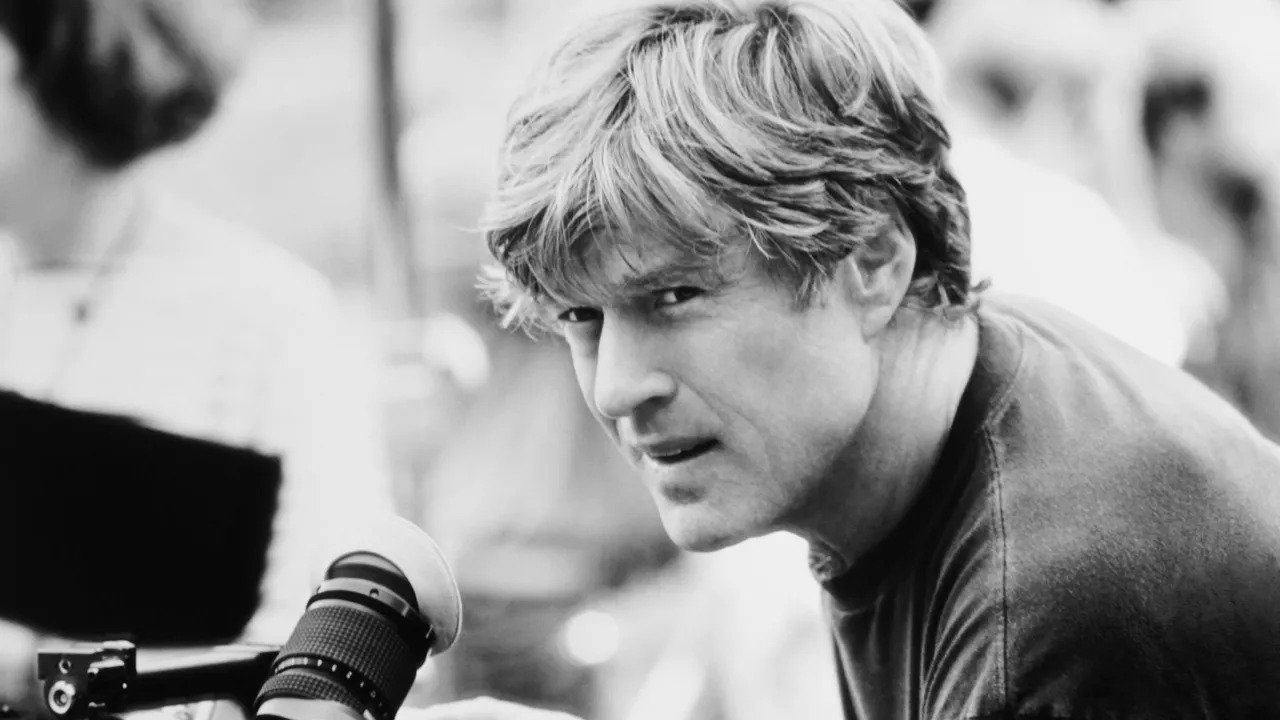
It’s been five years since I last wrote about the passing of someone whose work I admired. Not because there’s been a shortage of such people dying. Sadly, it happens all too often. I stopped because I was experiencing my own grief over the loss of my parents in 2020 and 2022. So I wrote about other things instead and got out of the habit of “RIP” posts. Yet the recent death of Robert Redford has compelled me to write something, because he was so many things. An old school star from an important era of US filmmaking. He was also a much better actor than some think, as well as a talented director who didn’t just use his fame to make vanity projects. His passing was somewhat of a shock because I had seen him recently make a cameo in the TV show Dark Winds, of which he was an executive producer. It was his last onscreen appearance.

Formal education in the UK is a structured process, starting at early years learning and continuing through to higher education at university. Some aspects of the educational system are mandatory, whereas others are optional. At present, children in the UK must start full-time education from the age of 5 and remain until the age of 16. After this age, they are no longer required to attend school per se but must remain in some other form of education or training, such as a vocational college or an apprenticeship. Many students remain at school until 18, as there are specific exams to be obtained that are required for a subsequent university placement. Here is a breakdown of the current process as it exists in the UK.

I don’t know if you have noticed that there are quite a lot of companies that have names taken from Tolkien’s Legendarium. At first glance, this seems innocuous enough. Tolkien’s writings grew in popularity over the seventies and eighties but since the release of the film trilogy at the start of the twenty-first century, his work has become more well known and been assimilated into our wider pop culture. Hence, it seems quite logical that a startup tech company, for example, would choose a name from his writings. No doubt the founders grew up reading The Lord of the Rings and are fans. That all seems plausible. However if you take a further look, it gets somewhat more complex. Here are four companies that have Tolkien based names.

Last Wednesday, I woke up with what I thought to be a crick in my neck on the left hand side. I assumed this was simply due to sleeping awkwardly and so I self medicated with some non-prescription pain relief and judicious use of a heat pad. Unfortunately, the problem has persisted and in the last 24 hours it has become much worse. I awoke this morning at about 5:00 AM and as I sat up in bed, an intense pain ran up the left side of my neck and behind my ear. It took several attempts for me to get out of bed because if I turned my head in either direction or inclined my chin, the pain would again run up the side of my neck. Sitting down, getting up and raising my arms caused similar results. While dressing, I attempted to pull a t-shirt over my head. The pain in my neck on this occasion was so severe that I yelled out loud and nearly blacked out.

I am a non-driver. If you wish to know the specifics of how this situation came about, feel free to read the post I wrote about it back in early 2018. To be succinct, I don’t drive, I’ve never learned how and have never owned a car. I don’t feel that I’ve missed out. In fact I feel quite the opposite. I think I’ve dodged a major hassle and expense in life. Mrs P, my significant other, is the designated driver of our household. She owns a car, insures it and maintains it. She also mainly pays for the petrol, whereas I pick up the tab for other things such as lunch or hotels when we travel. All I have to do is make like Iggy Pop if we go anywhere. The most I am ever called upon to do is navigate using Google maps and Android Auto. Fortunately, Mrs P enjoys driving. Always has done. Hence I look upon this situation as an extremely fortunate and equitable arrangement.
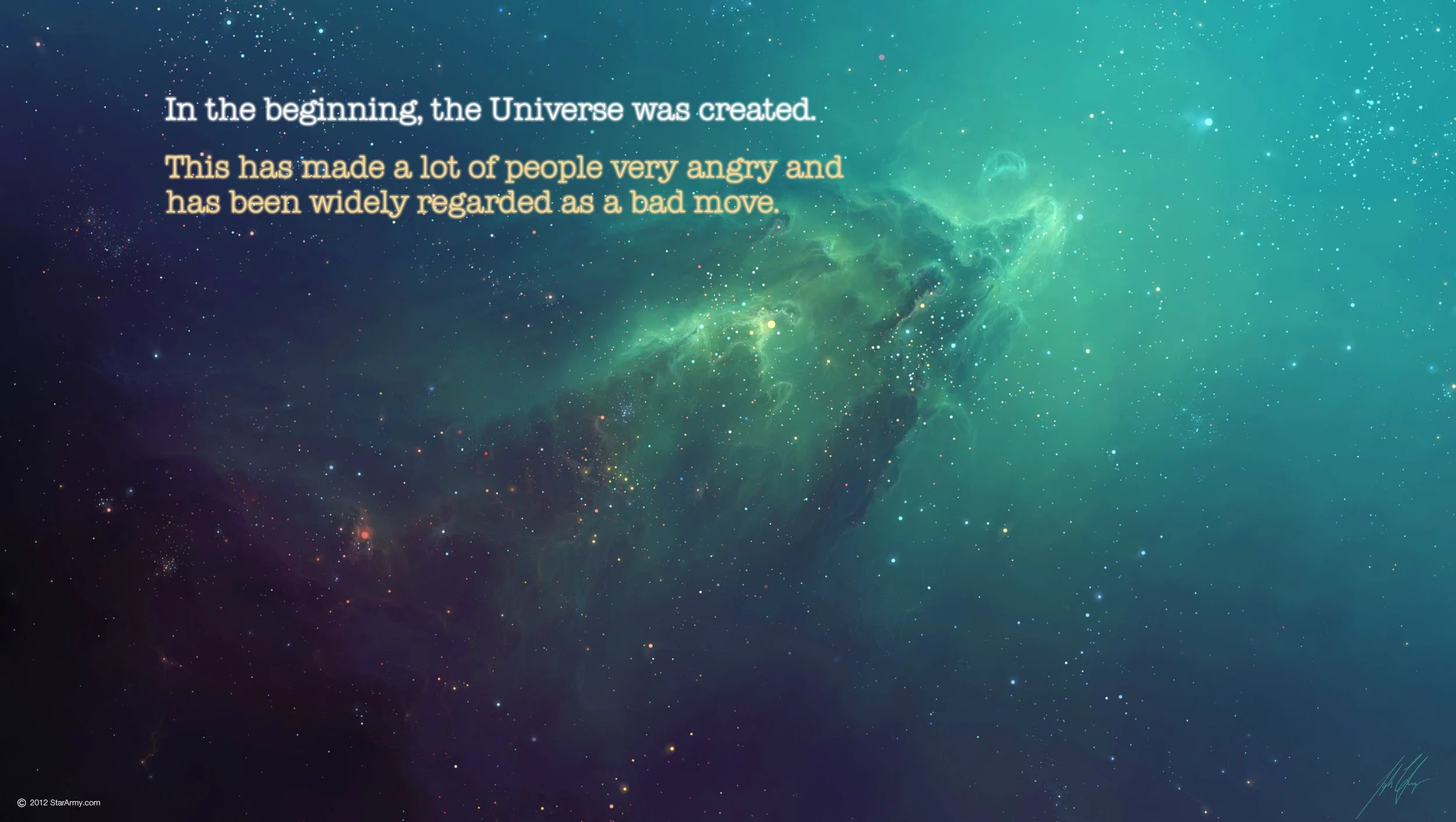
I am getting old. I shall be 58 in December. Now, as soon as you say something like that these days, some folk will get uncomfortable and say things like “age is relative” or “you’re as old as you feel”. Well I don’t measure my age in geological terms, so it’s not relative and I’m not feeling anyone especially young at the moment, so both schools or thoughts can sod off. I am getting old by the yardstick we measure human life by, namely years. I have specific, age related health issues and I just don’t feel as energised as I did a decade ago. There are minor signs, such as deciding to go to bed earlier and taking longer to get dressed after taking a shower. I’m not at death’s door but I am slowing up physically. It would also appear that my reactions are also slowing down as I tend to get massacred in any FPS I play these days. So far, my mental faculties seem to be holding up. However, that is the one thing I worry about the most. The potential loss of cognitive abilities scares the shit out of me.

Foots Cray Reuse and Recycling Centre is the fancy name of our local dump. A few decades ago, this was no more than a scrap yard. The rubbish and bric-a-brac left by the public was sorted and scavenged for resaleable scrap. Everything that was left was subsequently sent to landfill or incineration. Much has changed. Today it is the embodiment of the modern recycling ethos. The recycling centre is a well managed, carefully segregated site providing safe disposal of a wide variety of household and garden waste. Wood, metal and hardcore are recycled and there is similar provision for a multitude of electrical goods. Plastics, oils, paint, batteries can be safely disposed of. I have yet to find a home item that they do not have provision to dispose of. The Foots Cray Reuse and Recycling Centre has won awards for the service it provides and is considered one of the best facilities of its kind in the South East of the country.

One of the things I enjoy most about having my own blog is the fact I can write about the mundane and the trivial. Mainly because so much of life falls into this category. Life defining events are all fine and dandy and certainly lend themselves to philosophical musings that make fine blog posts. However, you can get just as much mileage out of those everyday things in life with less gravitas, that we all do. Such as buying new clothes, taking out the recycling and going to buy groceries. I have written about all of these in the past. However, today I wish to broach a subject that both fascinates me but also raises my blood pressure. I believe it to be a social marker and a clear indication of an individual’s personal psychology. Yes, I’m talking about packing your groceries at the supermarket and the various rituals and social etiquette associated with it.

“Managed decline” is a phrase that refers to the processes associated with the end of a specific lifecycle, with the goal of minimizing costs or other forms of loss. The concept originated in business where it referred to the management of companies and industries. More recently it is used in wider contexts. The concept gained prominence with regard to urban policy, particularly in the UK during the eighties when several major cities suffered economic and political collapse. Of late, the term has been applied to the UK, encompassing a systematic weakening of the economy, social structures, and cultural values, as well as its global political and diplomatic force. In each case, managed decline involves making strategic choices about resource allocation and accepting the consequences of those decisions. It is a complex issue with ethical and practical considerations, often sparking debate about the best way to address decline and reverse the process.

It’s been five years since the COVID-19 global pandemic. At the time it was an utterly alien and tumultuous experience. However, due to the way numerous institutions responded (but not the government), many people thought there would be a great deal of social and political change in the UK afterwards. The pandemic highlighted the impotence of the NHS, as well as those who work in jobs designated as essential. It also shone a spotlight on many of the country’s inequalities. Due to our national character, a real sense of community emerged. Something that had been absent for a very long time. Briefly, we got a glimpse of what the UK could be when we all broadly worked together. There was a sense that now was the time to change the status quo. Sadly, nothing changed. As soon as the vaccination program was launched, the UK quickly slipped back into the mire it’s been wallowing in since the end of WWII.
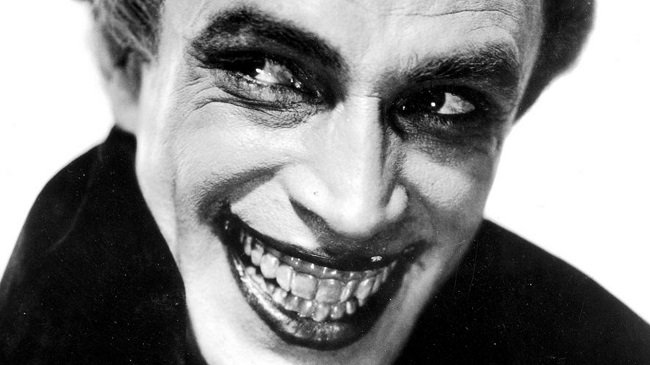
Prior to writing this post, I clocked a picture on a news website of the now disgraced TV presenter (and nonce) Gregg Wallace. I noticed that he doesn’t smile as such but tends to “gurn” instead. So does UK politician (and cunt) Nigel Farage. He always has his mouth open and his face contorted in some curious rictus, in most of the pictures you see of him. Mind you, I also don’t photograph especially well and any pictures of me smiling tend to look sinister or with a heavy hint of irony. The bottom line is not everyone is good at smiling. It doesn’t come naturally to all of us. This can be a problem at times or in social situations, because smiling is an integral part of our culture. On many occasions, I’ve been walking along, my face in a state of natural repose, only to be harangued by some twat shouting “cheer up, it may never happen”. A phrase I haven’t quite fathomed out, even to this day.
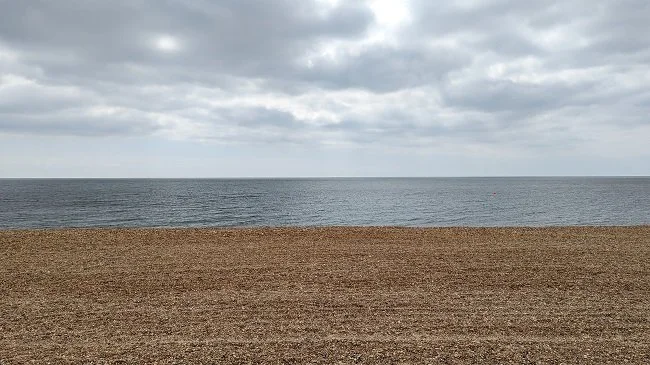
I enjoy visiting the coast. I always have. I find the sight and sounds of the sea very calming and thought provoking. There is something about seeing the ocean stretch out to the horizon and its implied enormity, that gives you a sense of perspective. The UK is a seafaring nation and therefore it is an integral part of our history and national identity. Hence a strong nautical theme and a sense of its importance has bled through into our popular culture. It is therefore quite common for people to have a positive attitude towards the sea and its associated leisure activities. I like to visit the coast at various times of the year and walk along the beach, just listening to the waves, lost in my own thoughts. This is not a hard thing to do in the UK, as no one lives further than 70 miles (113 kilometers) from the coast.

In many suburban streets throughout Greater London, gardens at the front of a house have been replaced over time by off road parking. Often the entire area adjacent to the road, which was previously home to flowers, shrubs and trees are now just drives made of blocks, concrete or gravel. All of which is due to the increase in car ownership per household, over the last five decades. The rectitude of which I shall not discuss here. However, not all drives comprehensively obliterate all traces of previous front gardens. Next door to my own home, the neighbouring house has a third of its front garden remaining. This includes a rose bush, a lot of brambles and a fruit bearing tree, that I recently found out was some species of plum. The neighbours themselves are hampered in conducting garden maintenance by the terms of their lease. As a result the garden is left unmaintained by their landlord.

Temperatures are forecast to increase across the UK over the weekend. They have gradually risen over the last few days and are expected to reach the official “heatwave” threshold in some places for the third time this year. Highs of 34°C (93.2°F) are likely today and possibly on Saturday and Sunday, with above average temperatures continuing into early next week. The UK Met Office has predicted that south-east Wales, central southern and south-east England are likely to see the hottest weather. The UK Health Security Agency (UKHSA) has extended yellow heat health alerts to cover every region in England, which will remain in place until 10:00 BST on Tuesday 15 July. The warnings mean that health and social care services could be significantly affected by the weather, due to increased demand or a rise in deaths.
Shoot 'Em Up (2008)
Michael Davis Shoot ’Em Up is the tale of Mr. Smith (Clive Owen), a drifter with a possible special forces background and a liking for carrots who wants nothing more than to be left alone. However, he finds himself embroiled in a complex political conspiracy once he aids a pregnant woman who is being chased by a hitman. After the woman is killed, he takes the baby and goes on the run with a lactating prostitute (Monica Bellucci). Meanwhile, they are stalked by the intelligent and ruthless Hertz (Paul Giamatti), an ex-FBI forensic psychologist and his never-ending army of foot soldiers. A myriad of elaborate gunfights ensues and Smith slowly pieces together the reasons behind their pursuit. A United States Senator who strongly supports gun control has been breeding babies for their bone marrow to treat his cancer. A prominent gun baron has contracted Hertz to kill the babies, thus ending the senator’s political ambitions. Once the plot is expedited the mayhem continues.
Michael Davis Shoot ’Em Up is the tale of Mr. Smith (Clive Owen), a drifter with a possible special forces background and a liking for carrots who wants nothing more than to be left alone. However, he finds himself embroiled in a complex political conspiracy once he aids a pregnant woman who is being chased by a hitman. After the woman is killed, he takes the baby and goes on the run with a lactating prostitute (Monica Bellucci). Meanwhile, they are stalked by the intelligent and ruthless Hertz (Paul Giamatti), an ex-FBI forensic psychologist and his never-ending army of foot soldiers. A myriad of elaborate gunfights ensues and Smith slowly pieces together the reasons behind their pursuit. A United States Senator who strongly supports gun control has been breeding babies for their bone marrow to treat his cancer. A prominent gun baron has contracted Hertz to kill the babies, thus ending the senator’s political ambitions. Once the plot is expedited the mayhem continues.
It is alleged by director, Michael Davis that Shoot ’Em Up is a satirical look at American gun culture and the way it has become an integral part of the social fabric of the country. It also supposedly lampoons the contemporary action movie focusing on its style, ethics and “raison d’etre”. Whether or not this is the case remains to be seen. Joe Public didn't discern any hidden depths upon the films initial release. As it stands Shoot ’Em Up is simply an action film with a plot more preposterous than Crank, with a bunch of frenetic action scenes cribbed from Hong Kong cinema. The film lurches from a sense of tongue in cheek, to abject incredulity within the first ten minutes of the film, when a bad guy is dispatched by a carrot.
If you want action with a satirical subtext, then it is better represented by the work of Paul Verhoeven. Robocop and Starship Troopers being prime examples. The intellectual pretensions of Shoot 'Em Up definitely got lost during its making. However, there are a few good aspects to the proceedings. It is enjoyable spotting the homages to such classics as Hard Boiled and Django. And some of the dialogue is so excruciating it becomes quite droll. But by and large this film is a mess. Neither Owen or the talented Giamatti can save it. With the message lost, there’s nothing more than a film destined to be wilfully misconstrued by the tabloids. Therefore, avoid Shoot 'Em Up if you are easily offended or intolerant of the cinematic equivalent of the concept album.
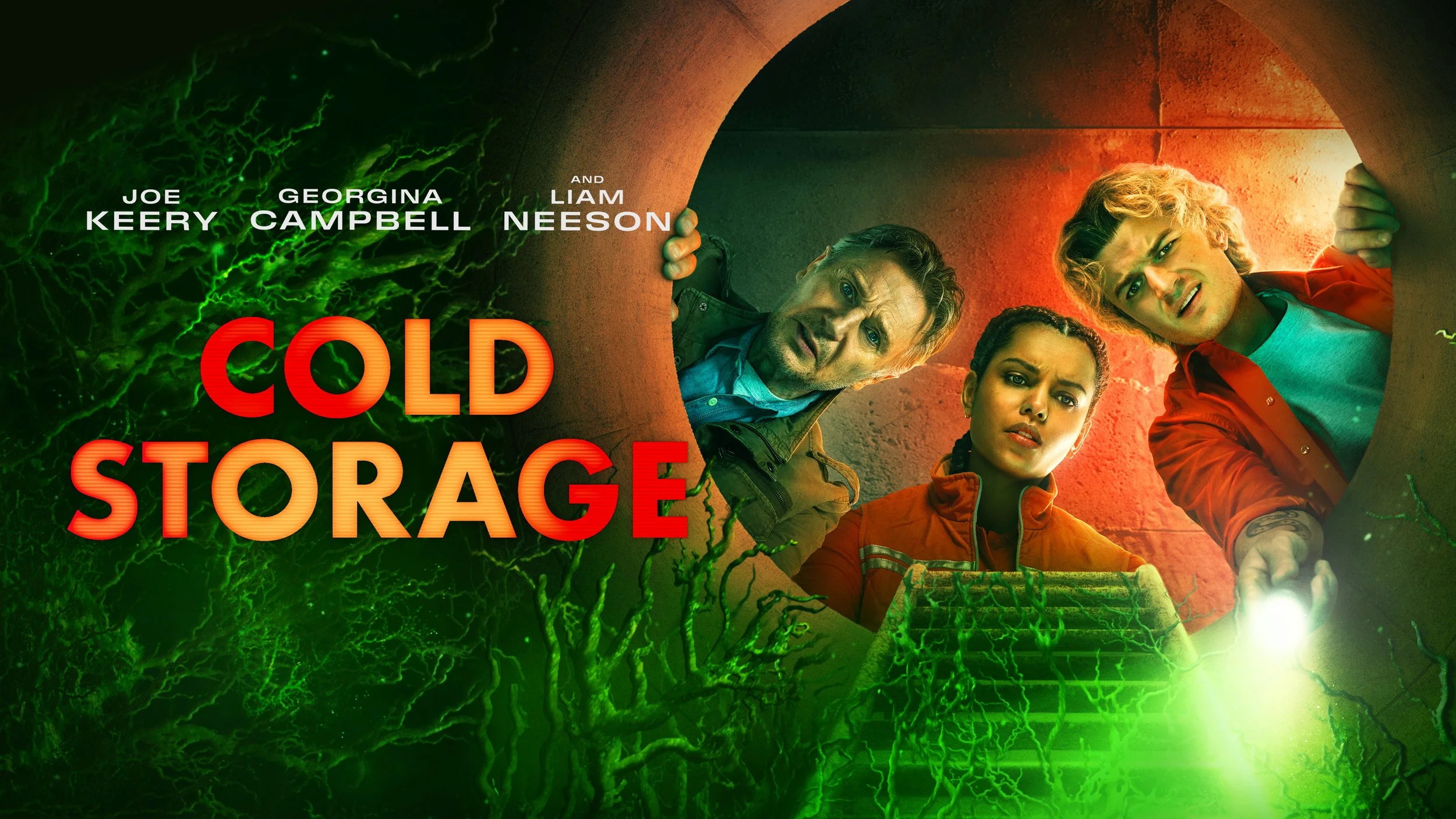
David Koepp is no stranger to genre cinema, having written the screenplay for such films as Jurassic Park, Spider-man and War of the Worlds. Where these titles are big budget, major studio productions, Cold Storage is a far more modest production with a smaller scope. Adapted from his own novel, the screenplay is by David Koepp and the film is directed by British film-maker Jonny Campbell. At first glance, Cold Storage seems a somewhat derivative science fiction horror film with a relatively modest budget, financed through a convoluted US and French co-production. Lurid green and red colours feature heavily in the marketing artwork and it is easy, after a cursory look, to write the film off as cheap, generic, direct-to-streaming filler. However, Cold Storage is prime example of why you should not judge a book by it’s cover, or in this case, a film by its posters and online advertising. It is in fact an amusing and fun endeavour that can fill an evening.
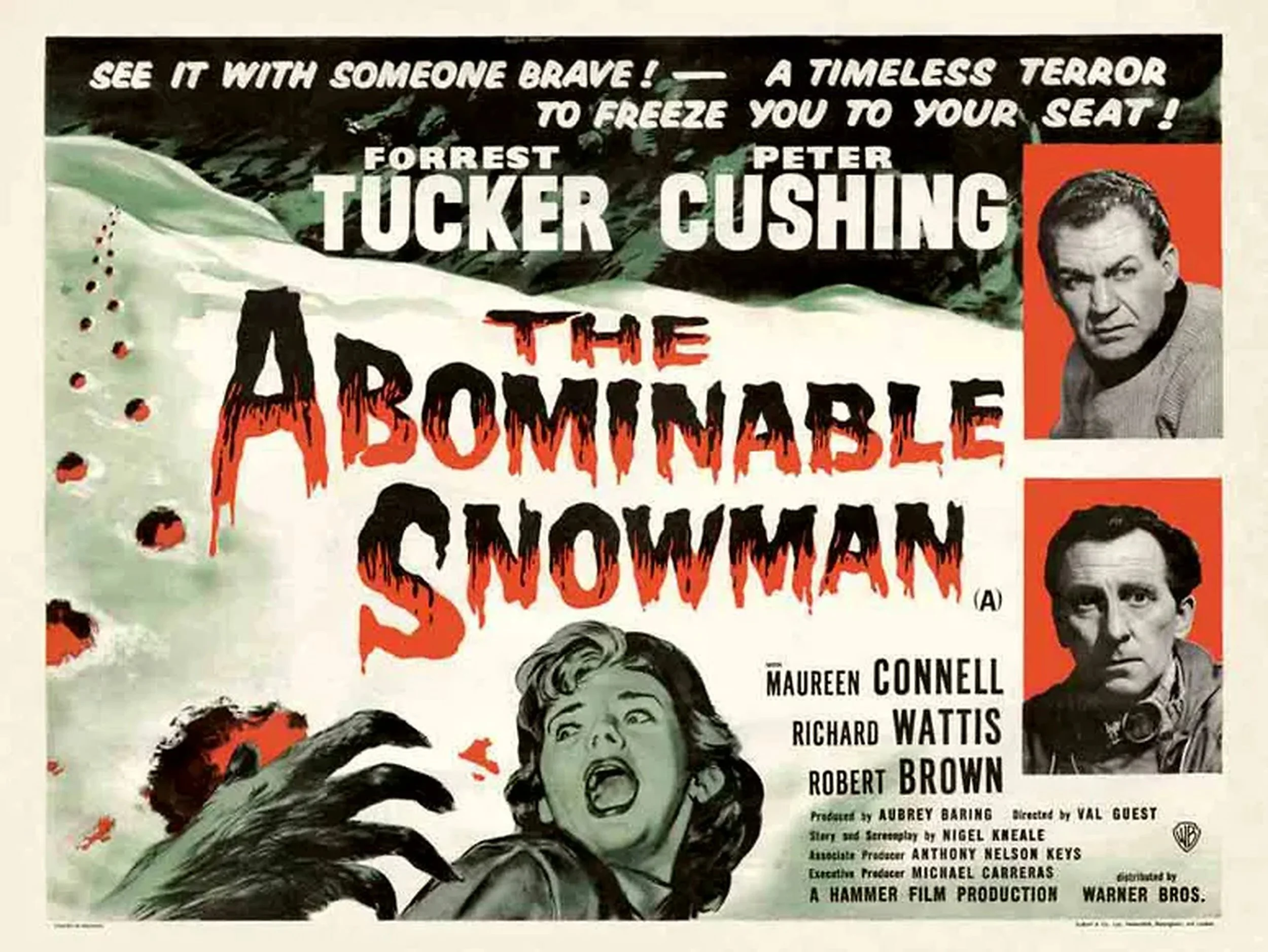
Despite being considered by many as an original story, The Abominable Snowman (1957) is in fact a remake of a made for television play, The Creature, that was originally broadcast in the UK in 1955. Hammer Films would often purchase the rights of popular TV programs and subsequently re-work them for mainstream, international cinema. Larger production budgets and fewer censorship restrictions allowed them to make their cinematic interpretations more lurid, thus commercially viable. Hence The Quatermass Xperiment, Quatermass II and Quatermass and the Pit were all given a big screen makeover and were commercially successful. The Abominable Snowman was written by acclaimed writer Nigel Kneale, who also wrote the original television drama and the aforementioned Quatermass trilogy. Although ostensibly marketed as a horror film this production is actually an interesting blend of psychological thriller and science fiction.
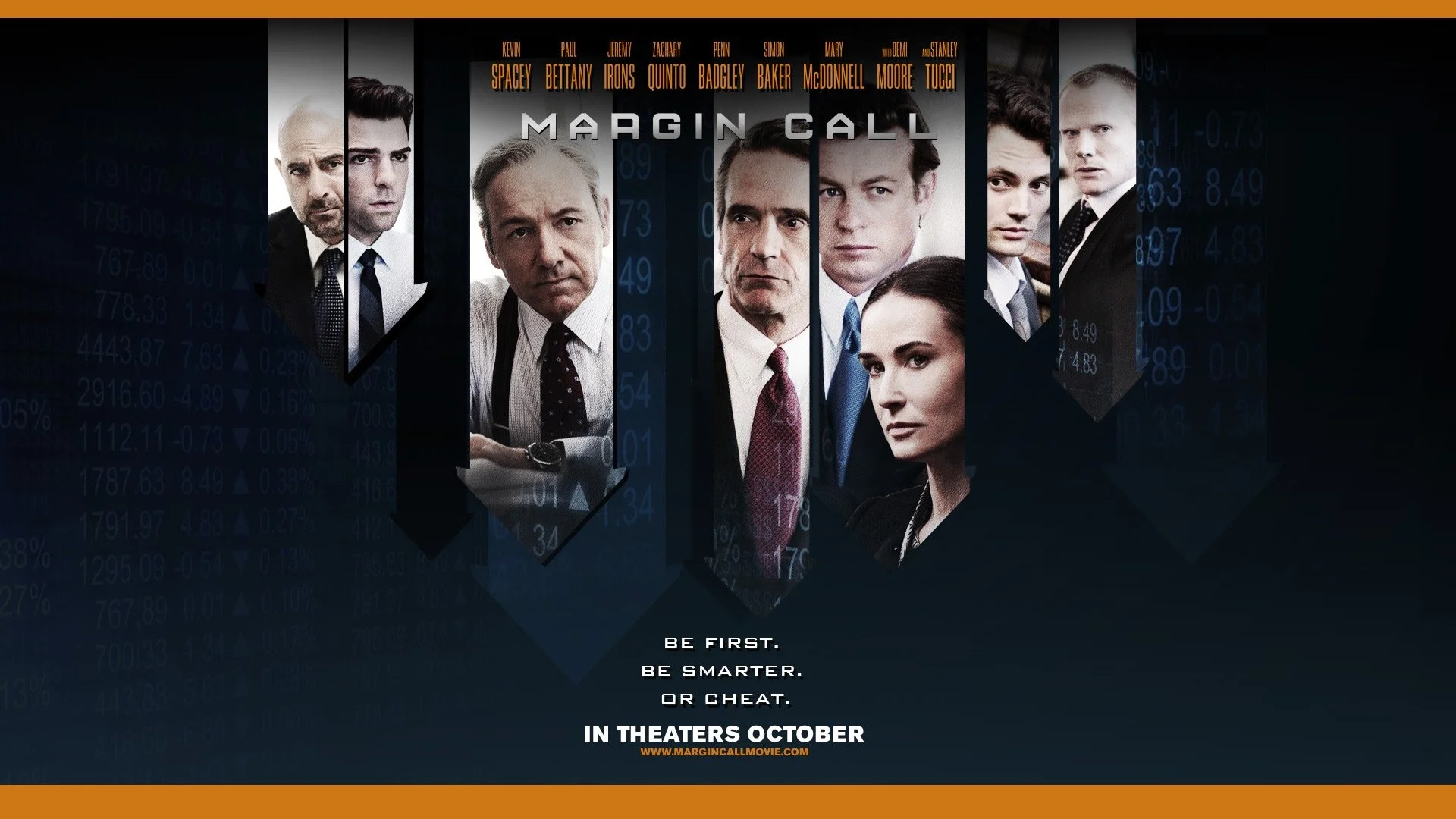
There are certain subjects that are notoriously uncinematic. These tend to be things that exist or are undertaken mainly in the mind, rather than expressed in an overtly physical way. Computing, science and mathematics are good examples. Writing code or working out complex equations does not immediately lend themselves to a visual medium such as cinema. Therefore, any film dealing with the world of corporate finance has its work cut out. Hence writer-director J C Chandor immediately deserves praise for making Margin Call, a film about the financial crash of 2008, as gripping and compelling as any political thriller. He does this by keeping the financial elements of the story to a minimum, choosing instead to focus upon those who have become aware of the imminent crisis and their reaction to it. However, the film remains a tough watch with regard to the some of the characters and their respective personal morality or lack there of.
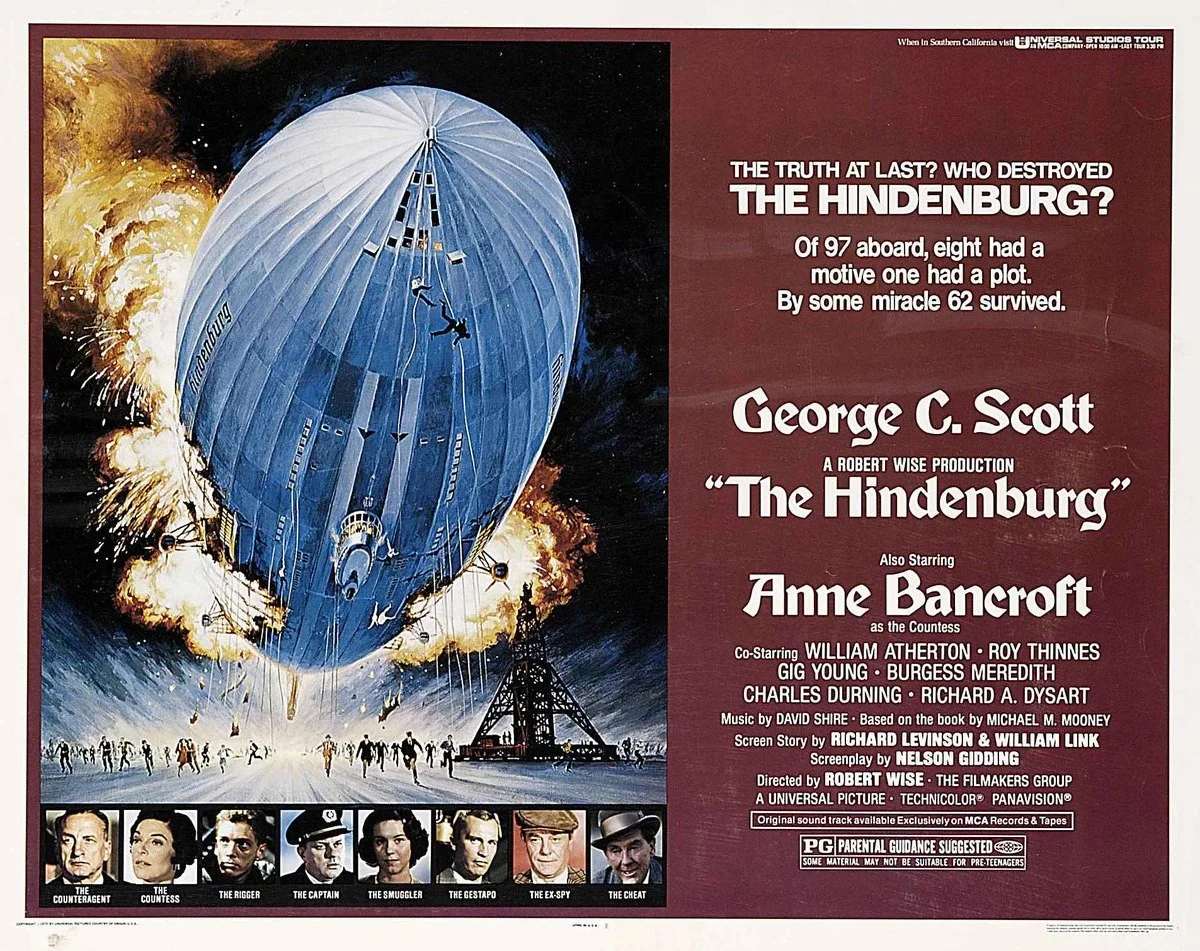
The 1937 Hindenburg disaster has remained an enduring mystery over the years. The physical mechanics of how this airship filled with 7,000,000 cubic feet of hydrogen gas caught fire has been fully explored over the decades and there are now several extremely plausible theories as to how it may have happened. However, there remains the possibility of sabotage. As such an idea has more dramatic potential than mechanical failure, it was used as the central theme of the 1975 disaster movie The Hindenburg. Directed by Robert Wise, the screenplay by Nelson Gidding explores a German resistance against the Nazi regime. The airship is targeted as it is a powerful propaganda symbol for Hitler’s Germany. Sadly despite some interesting ideas, a strong cast and solid, old school optical effects, The Hindenburg is a slow and somewhat ponderous production. Although the final 20 minutes of the film recreate the infamous explosion meticulously, it doesn’t quite compensate for the uneventful, dialogue driven investigation of the previous 100 minutes.

On the Eastern Front in 1943, a German Tiger tank crew led by Lieutenant Philip Gerkens (David Schütter) is sent on a mission to rescue the missing officer Paul von Hardenburg (Tilman Strauss) from a top-secret bunker that is at risk of falling into enemy hands. As they make their way through an eerie no-man’s land, they have to avoid Russian armoured vehicles that seem to be aware of their mission. They also encounter a German unit taking punitive action against a peasant village, in reprisal for partisan activity in the area. The youngest crew member, Michel (Yoran Leicher), talks of the land being home to ghosts and spirits. As the tank penetrates further into contested territory the crew become increasingly disturbed by the uncanny nature of their mission and begin to fall prey to their own inner fears.
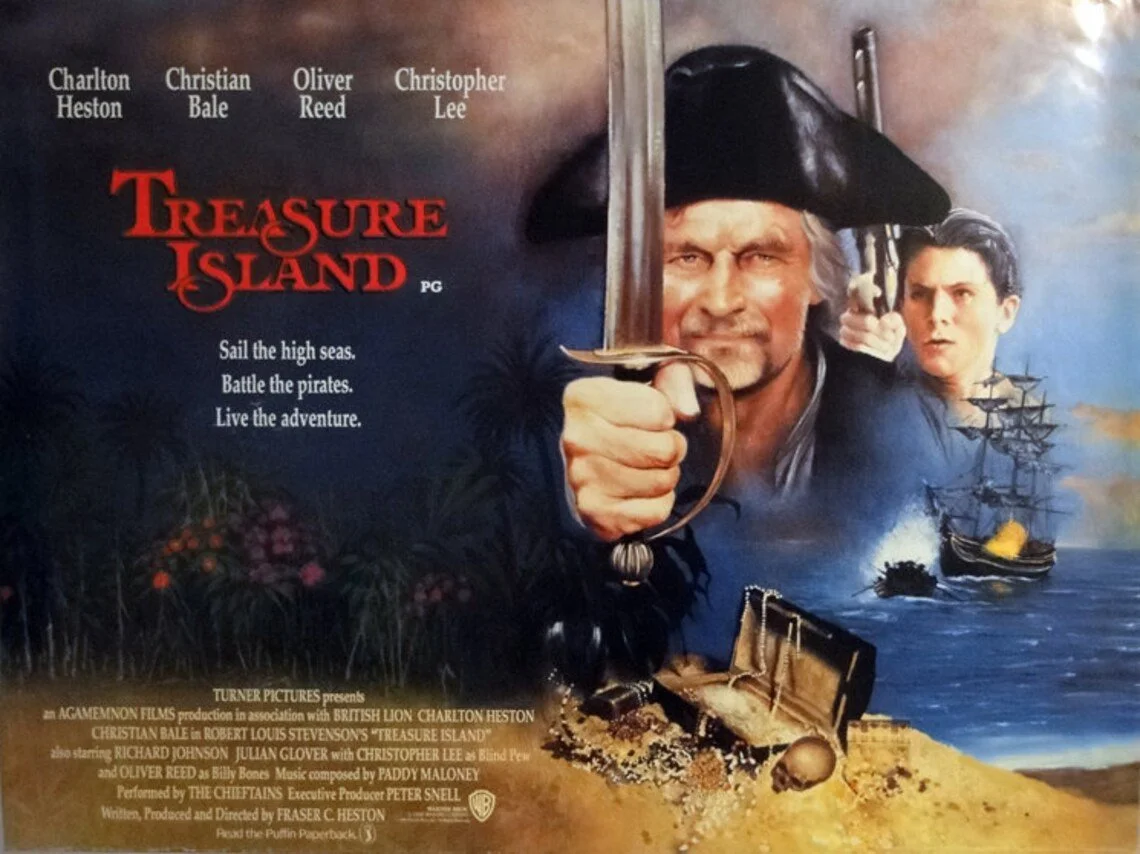
Robert Louis Stevenson’s classic novel has been adapted for cinema and television numerous times. Perhaps the most well known is the 1950 Disney version, starring Robert Newton as Long John Silver. His eye rolling performance and exaggerated West Country accent is credited with popularising the stereotypical form of “pirate speech" that has become the pop culture default. Although an enjoyable film, it does gloss over the more sinister aspects of both the source text and history, perpetuating the myth that pirates are just loveable scoundrels. Many subsequent adaptations have fallen into the same trap to a greater or lesser degree. However, that is not the case with the 1990 version of Treasure island, which was made for the TNT cable network and released theatrically outside of the US. This darker and notably more violent adaptation closely follows the source text and is widely considered the most faithful to the book.
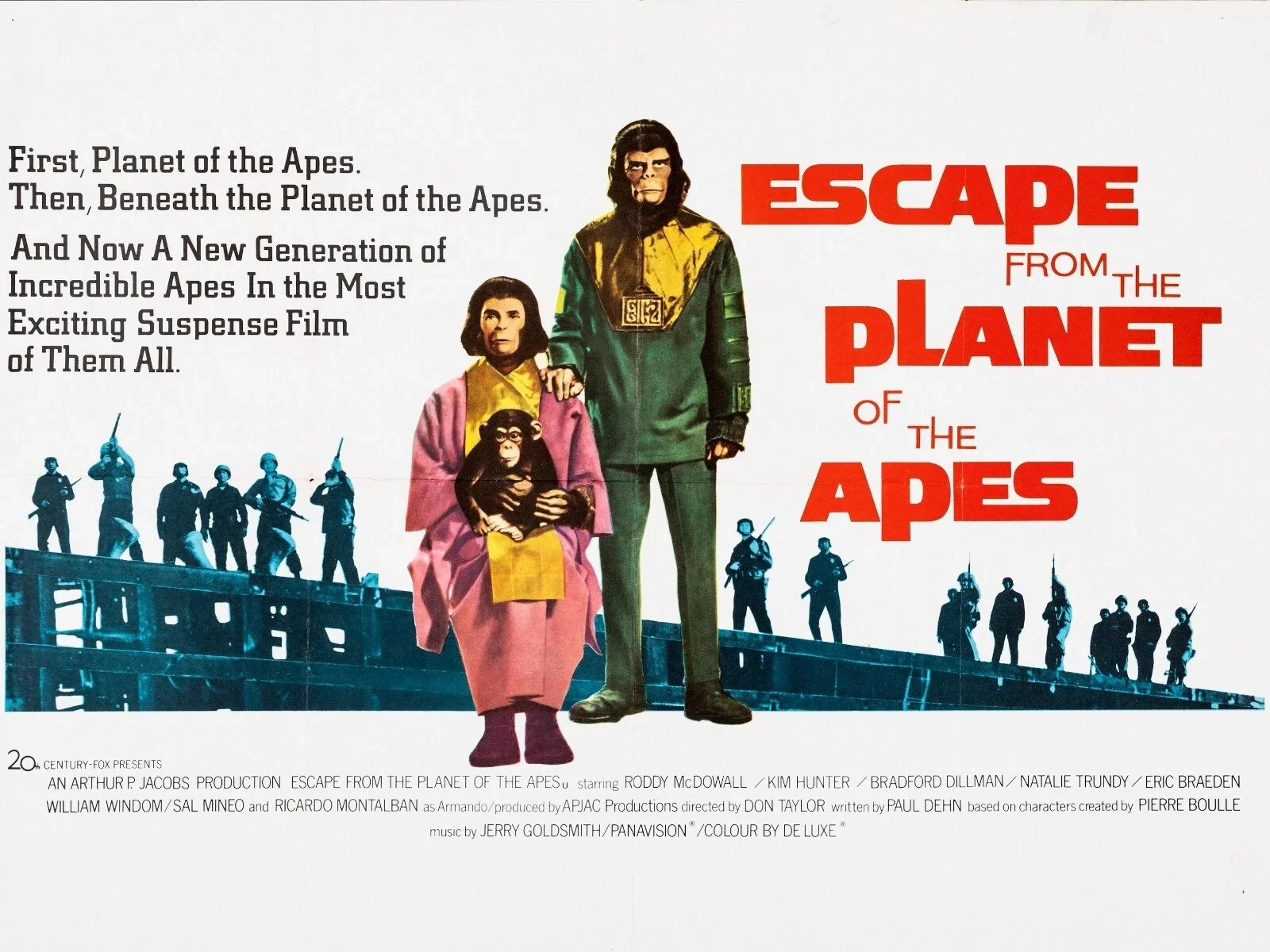
The Planet of the Apes movie franchise took a radical change of course with its third entry in the series. The first two films were set in the future and benefited from high production values to help realise a post apocalyptic earth. However, due to a substantial reduction of budget, Escape from the Planet of the Apes uses a time travel plot device to bring the ape protagonists to present day Los Angeles (1971 in this case). The result is a film with a much smaller narrative scope. However, although it lacks the science fiction spectacle of its predecessors, it features an interesting satirical exploration of celebrity culture and ponders what it is like to be deemed an enemy of the state. As ever, Roddy McDowell and Kim Hunter provide exceptional lead performances as the Chimpanzees Cornelius and Zira. Escape from the Planet of the Apes also captures the pop culture vibe of seventies America.
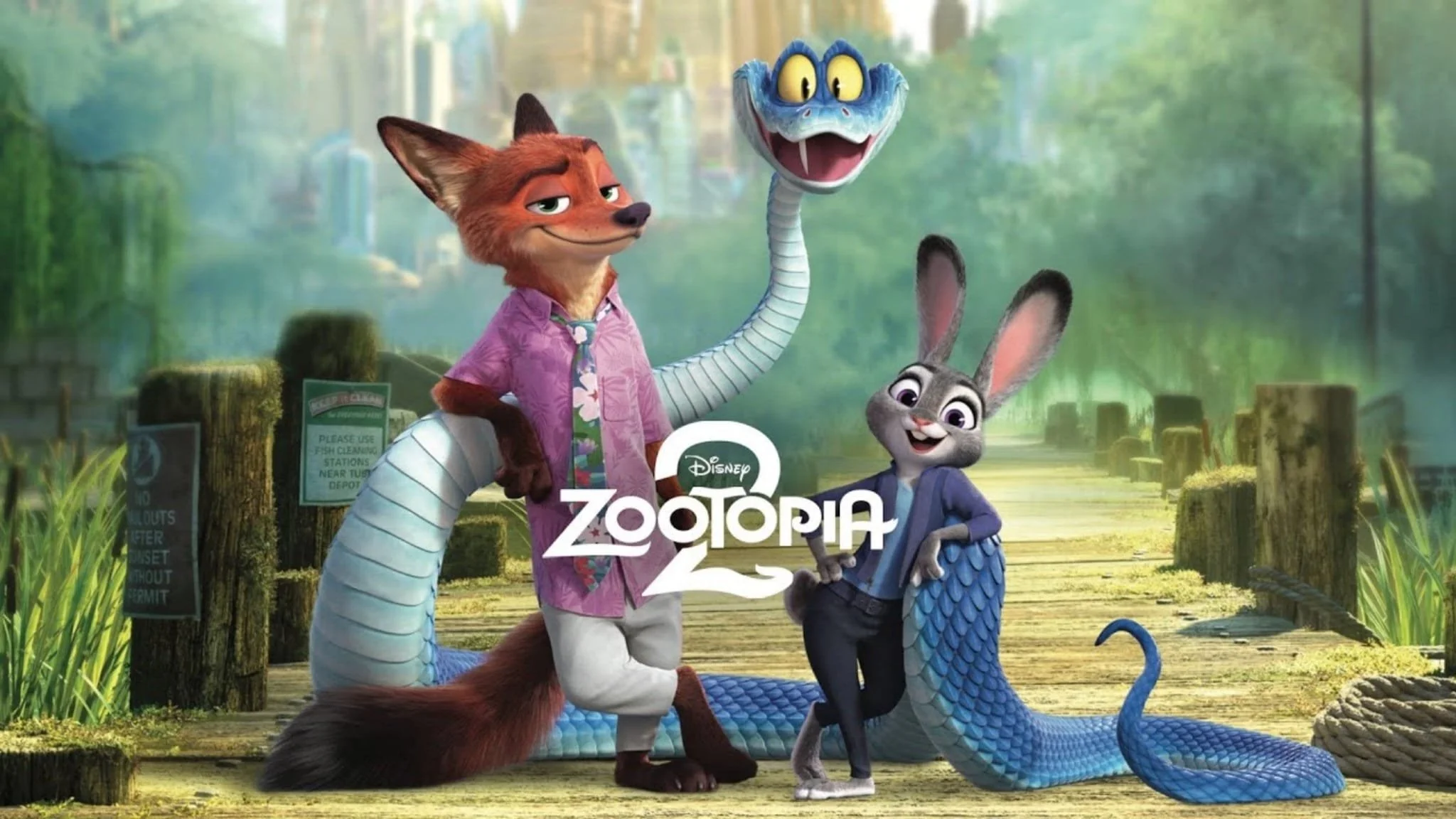
It is not unusual for Disney to change film titles when marketing them outside of the US. In 2016 they renamed the animated feature film Zootopia to Zootropolis in the UK and Europe to avoid trademark conflicts with other existing businesses. For example there is a Danish zoo which already holds the “Zootopia” name. Similarly, in Germany there is a children’s book which caused copyright conflict, which led to the film being released under the title Zoomania. Such changes, although practical for legal reasons, can sometimes cause a degree of confusion. Especially as there are numerous, low budget productions companies that go out of their way to produce similarly titled “mockbusters” whenever there are big, tentpole, releases. So for clarity, Zootopia 2 has been released in the UK as Zootropolis 2.
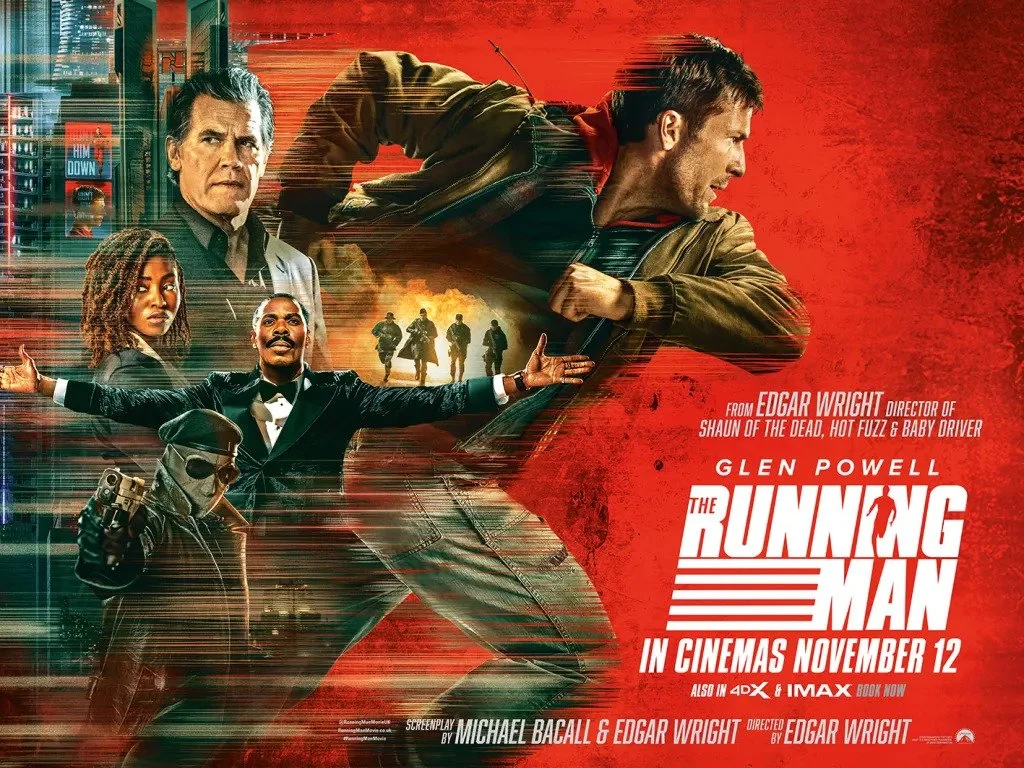
Stephen King’s dystopian story, The Running Man, was previously adapted very loosely in 1987, as a vehicle for Arnold Schwarzenegger. That version focused mainly on the “Battle Royale” element of the story and leaned heavily into Arnie’s personality, rather than the politics of the book. It also wasn’t well received by the author. Edgar Wright’s remake follows the source text a lot more closely and is far more interested in its political themes and wider social commentary. Furthermore, this version re-establishes the everyman quality of the hero of Ben Richards, rather than him being the muscle bound, ex-military hero as per Mr. Schwarzenegger’s prior interpretation. This time round, The Running Man uses a lot of the visual and narrative tropes of contemporary reality TV, making this forty three year old story very relevant to today’s viewers and couching the film in a style that is recognisable and accessible.
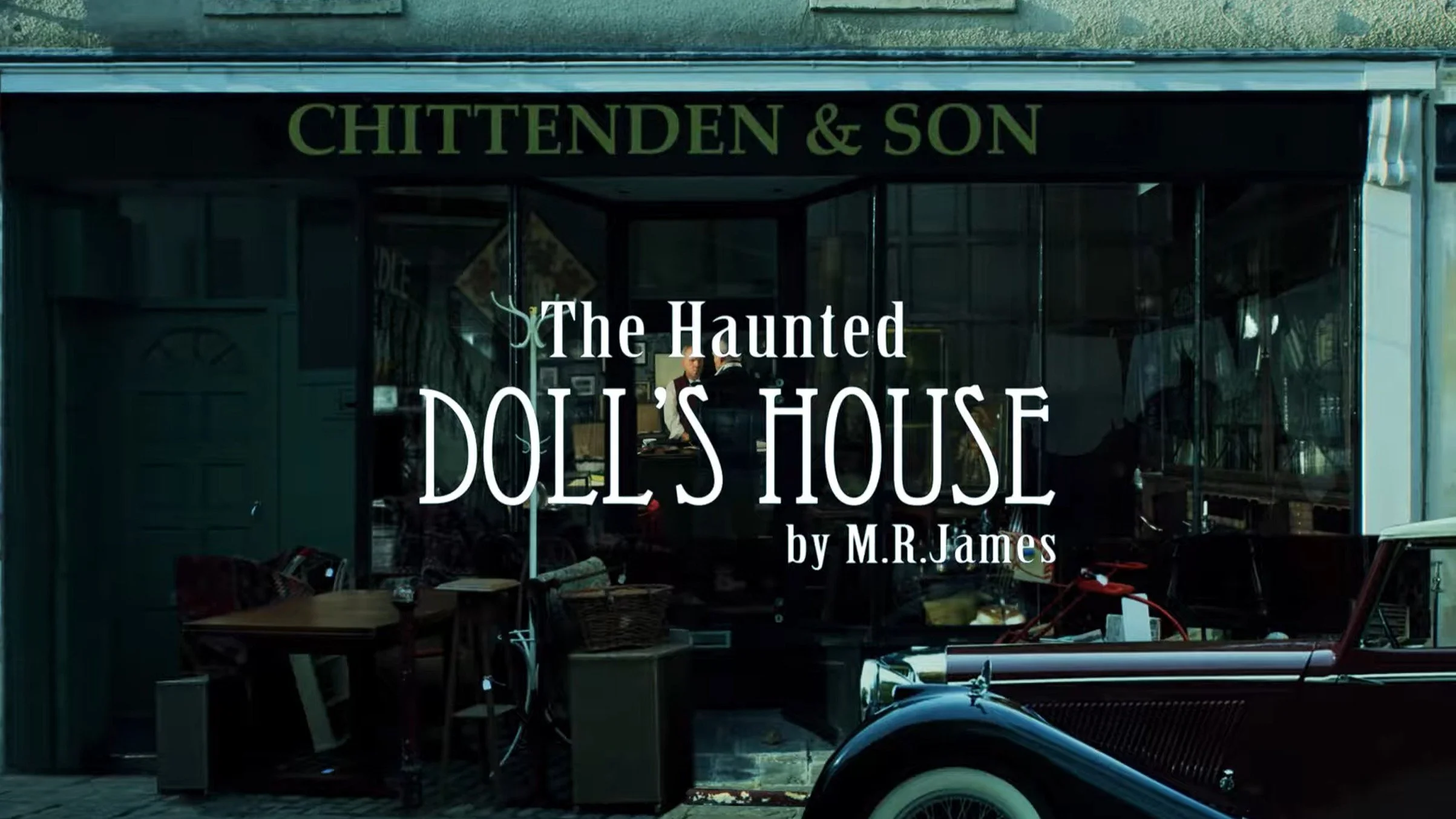
The Haunted Dolls House is a short film based on a story by M.R. James about a unique antique that is subject to supernatural phenomenon. Adapted by Stephen Gray and David Lilley, this is the third of three short films based upon James’ work that the pair have made. It stars Steven Dolton as Mr. Dillet, a collector of antique dolls houses, who acquires a bargain only to discover that it harbours a ghostly secret. Made on an extremely modest budget over the course of 2012 this clever, innovative and rather sinister adaptation is a fine example of short film creativity. It manages to offer a unique visual depiction of M.R. James’ classic story whilst capturing the unsettling quality of the author’s work. Like so many independently made short films it is clearly a labour of love, made with modest resources. It succinctly captures the spirit of the author’s work and is both innovative and rewarding.
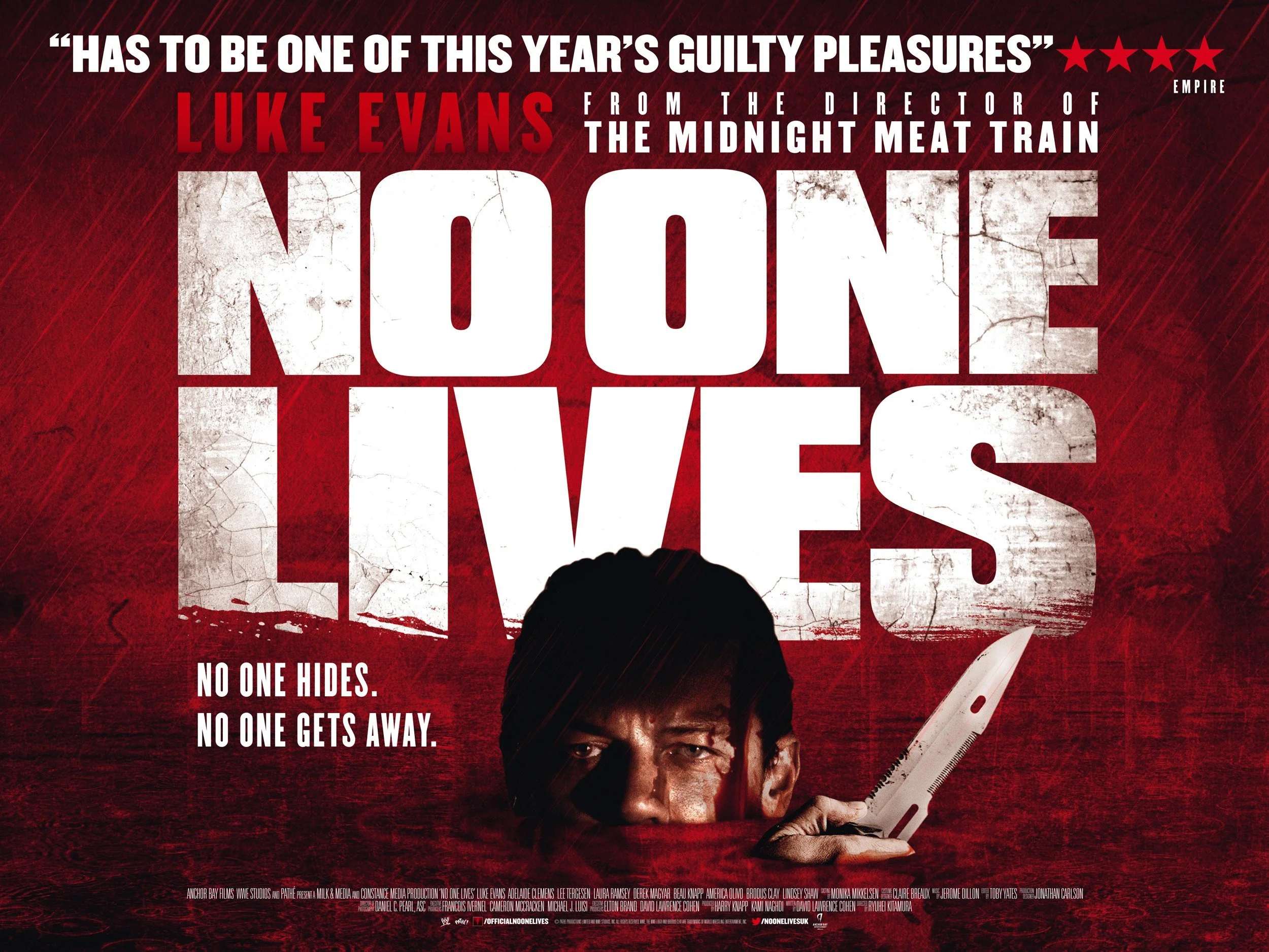
A lot of people may know Luke Evans from the live action version of Beauty and the Beast or Peter Jackson’s The Hobbit trilogy. With his matinee idol good looks, charming Welsh demeanour and his “smoky” tenor singing voice, he projects a sense of old school stardom. Which brings us to No One Lives; a film which is a radical departure from his previous work. His performance is disconcerting to say the least and the film is somewhat unhinged. Directed by Ryuhei Kitamura, who made an interesting adaptation of Clive Barker’s The Midnight Meat Train, this cinematic outing is similarly replete with robust shocks and gore. There are some interesting ideas about the nature of violence, Stockholm Syndrome and whether one should deny or embrace one’s nature. However, these are ultimately minor asides. Philosophical musings in between bouts of surprisingly striking unpleasantness.
In the near future, Kepler 822, a research and drilling facility located at the bottom of the Mariana Trench, suffers a sudden and catastrophic structural failure. There are only six survivors. Mechanical engineer Norah Price (Kristen Stewart), Captain Lucien (Vincent Cassel), biologist Emily Haversham (Jessica Henwick), engineer Liam Smith (John Gallagher Jr.) and crew members Rodrigo (Mamoudou Athie) and Paul (T.J. Miller). As all the functional escape pods have been used and they are unable to contact the surface, the Captain suggests using pressurized suits to walk one mile across the ocean floor to the Roebuck 641 drill installation. There they will find more escape pods. However, it soon becomes apparent that the disaster was not caused by an undersea earthquake and that they are not alone as they make their journey.
One of the most common objections raised regarding the Jurassic Park/Jurassic World franchise is that the films are specifically made to obtain a PG-13 rating from the Motion Picture Association, for purely commercial reasons. Hence, in all films, there is little on screen violence and the dinosaurs are mainly portrayed as a threat and a means of providing jump scares. When a character is killed by a dinosaur it usually happens off screen, is obscured by something else in frame, or is shown in long shot with very little detail. The realities of being eaten alive by a predator are conspicuously absent. Hence, audiences looking for films featuring more graphic dinosaur attacks, have not been well catered for apart from some minor direct-to-video titles. Primitive War finally fills this gap in the market with a frenetic genre mashup that strives to punch above is budgetary weight.
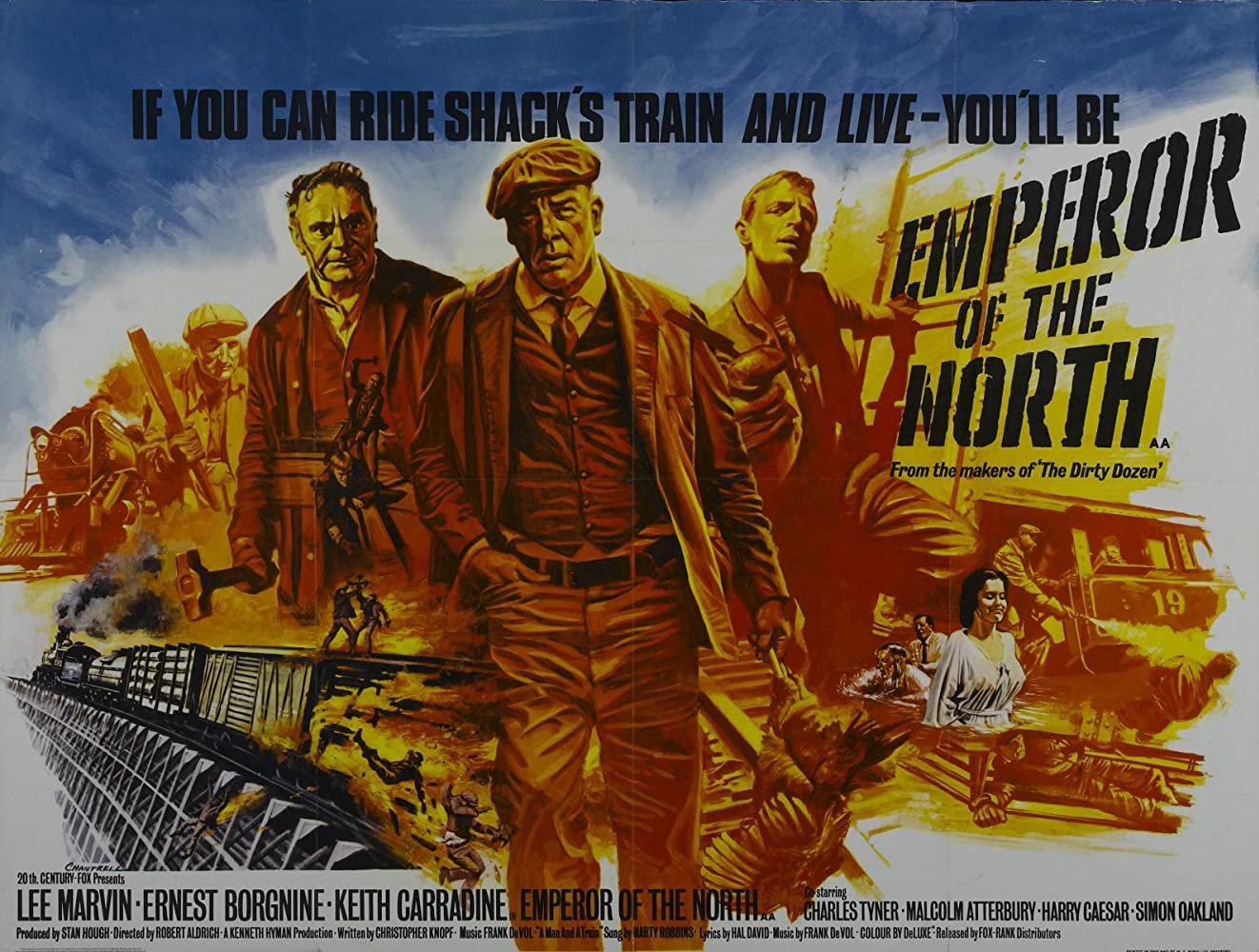
During the seventies, cinema was not only a source of mass, commercial entertainment but was still perceived as a medium for intellectual and philosophical discourse. Television was a poor relation in terms of art and cultural significance. Film was where the so called auteur director could muse and ruminate upon the nature of the human condition and audiences could subsequently gush sycophantically about their work at dinner parties. Or something like that. Let it suffice to say that some film makers were still indulged by studios and financiers, who were still keen to cash in on the cultural sea change that came to Hollywood in the late sixties. It’s difficult to see how a film such as Emperor of the North (AKA Emperor of the North Pole) could have been made otherwise. A film set in the Great Depression about a hobo illegally travelling on freight trains and his feud with a ruthless conductor.
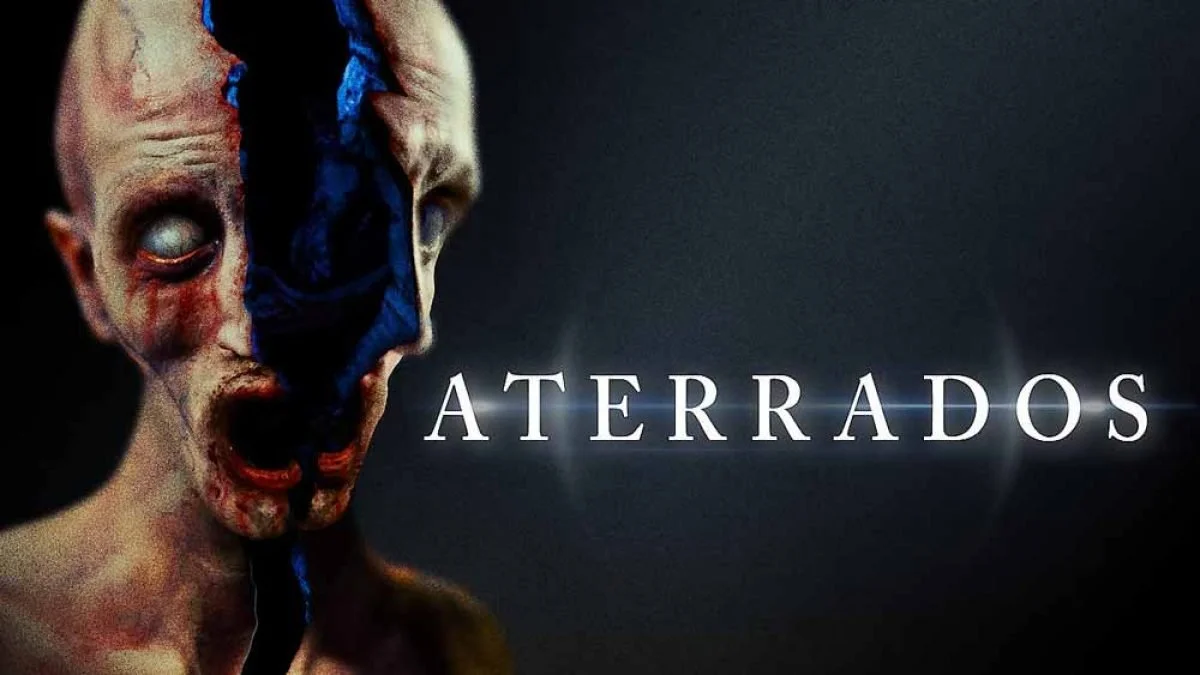
In Buenos Aires, Clara (Natalia Señorales) hears voices emanating from the plughole in her kitchen sink. The voices seem to be plotting against her. Her husband Juan (Agustín Rittano) says the sounds are coming from next door. That night, Juan finds Clara’s dead body levitating in their bathroom, slamming against the wall by an invisible force. Meanwhile their neighbour, Walter (Demián Salomón), is experiencing supernatural occurrences while he tries to sleep. An invisible force repeatedly shakes his bed. After using a video camera to film these events, he sees a tall, cadaverous figure emerging from under the bed, standing over him as he sleeps. Across the road, Alicia (Julieta Vallina) is grieving for her recently deceased son, who was run over outside Walter’s house. Alicia's ex-boyfriend, police commissioner Funes (Maximiliano Ghione) calls Jano (Norberto Gonzalo), a paranormal investigator and the pair soon discover more supernatural occurrences in the area.

Black Sabbath (AKA I tre volti della paura) is a 1963 horror anthology film directed by Mario Bava. Although an Italian production, the film was co-financed by American International Pictures and as such was conceived to appeal to US audiences. Hence, the English dialogue edit of the film which was released in America differs significantly to the original Italian version. Despite the presence of the legendary Boris Karloff and the popularity of both anthology and gothic horror at the time,the film was only a modest success at the US box office and did not do well in Italy. However, in more recent years there has been a critical reappraisal of Black Sabbath, especially the Italian dialogue version. Many aspects of the film which are standard genre tropes today, were in fact novel at the time. Also despite the production mainly being studio bound, the film oozes style and has a striking visual aesthetic.
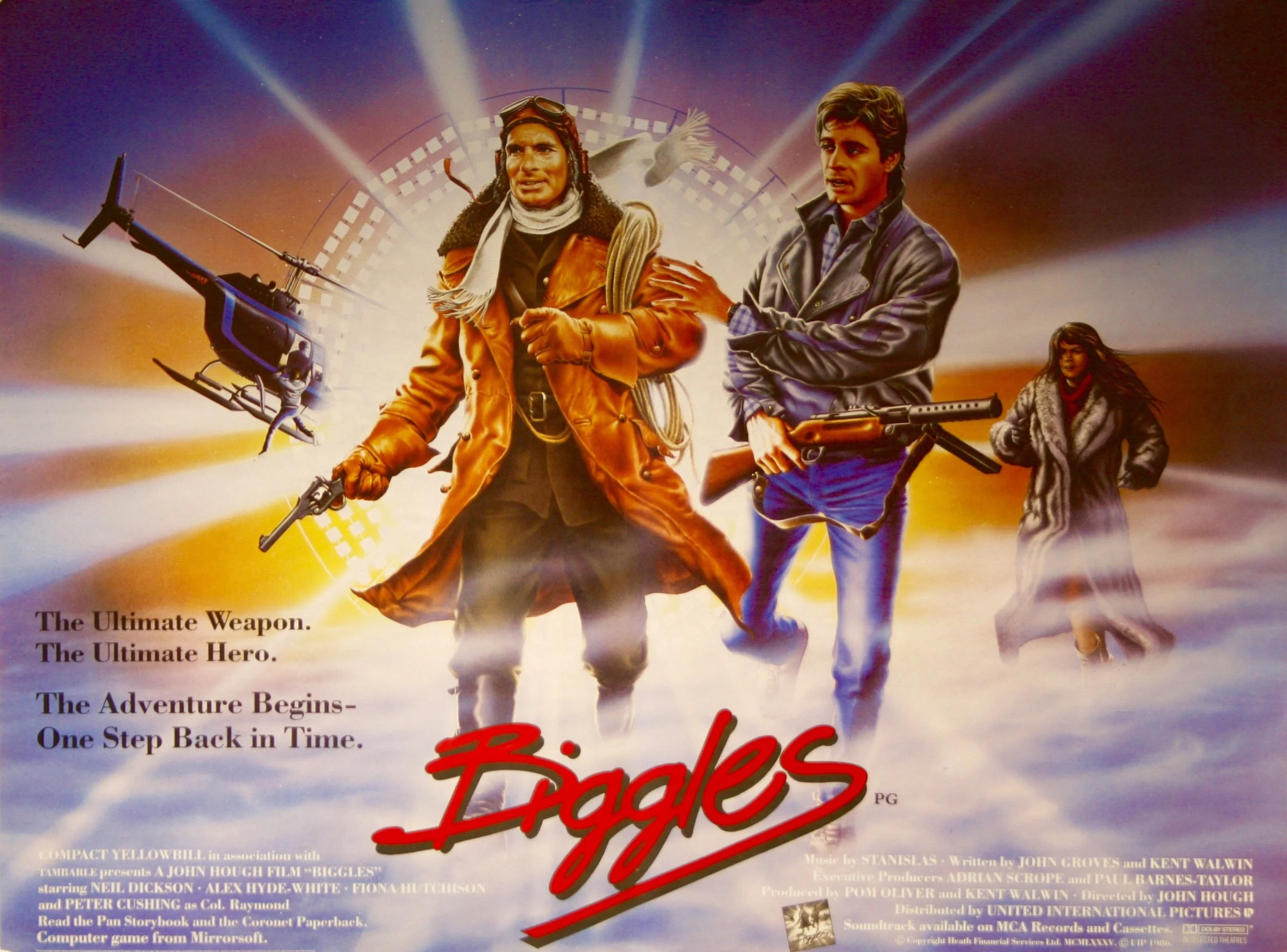
After the success of Raiders of the Lost Ark in 1981, filmmakers scrambled to find existing intellectual properties that they could use for similar films. Hence archaic heroes such as Alan Quatermain were hastily given a modern makeover and thrust into generic movies, in a vague attempt to replicate Steven Spielberg’s successful formula. Which brings us neatly on to James Charles Bigglesworth AKA “Biggles”, a fictional pilot and adventurer from a series of books written by W. E. Johns between 1932 and 1968. Several attempts had been made in the past to bring this character to the silver screen, including one by Disney but they all failed. However, the commercial and critical success of Indiana Jones provided sufficient impetus to greenlight a new film. However, due to some curious production choices, when Biggles was finally released it was far from just a period set, action movie.
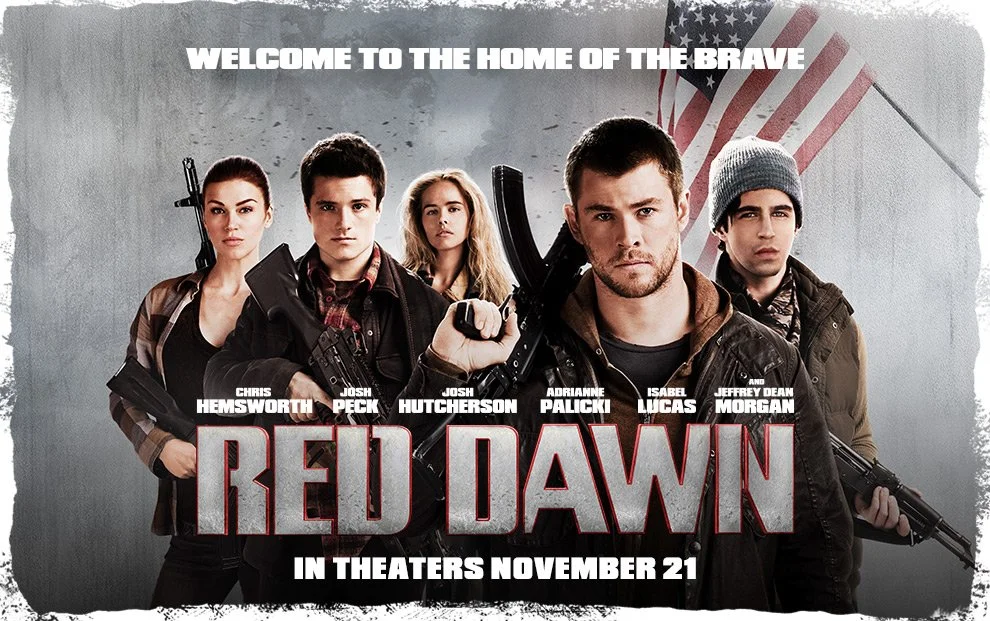
Setting aside the hubris of remaking a film such as Red Dawn, the 2012 reboot had a troubled production. Shot over the course of late 2009, on location in Michigan, MGM intended to release the film in September 2010. However, the studio’s financial problems became unsustainable over the course of that year and the film was shelved, while a financial solution was sought. Furthermore, while Red Dawn was in post production, there was a major economic shift within Hollywood due to the increasing importance of the Chinese market. This was a significant problem for MGM because the new version of Red Dawn had the Chinese invading the USA instead of Russia. Hence there were reshoots and the need for additional visual effects, so that the Chinese could be replaced with North Koreans. MGM eventually went bankrupt and the distribution rights to Red Dawn were sold off. The film was eventually released in 2012.
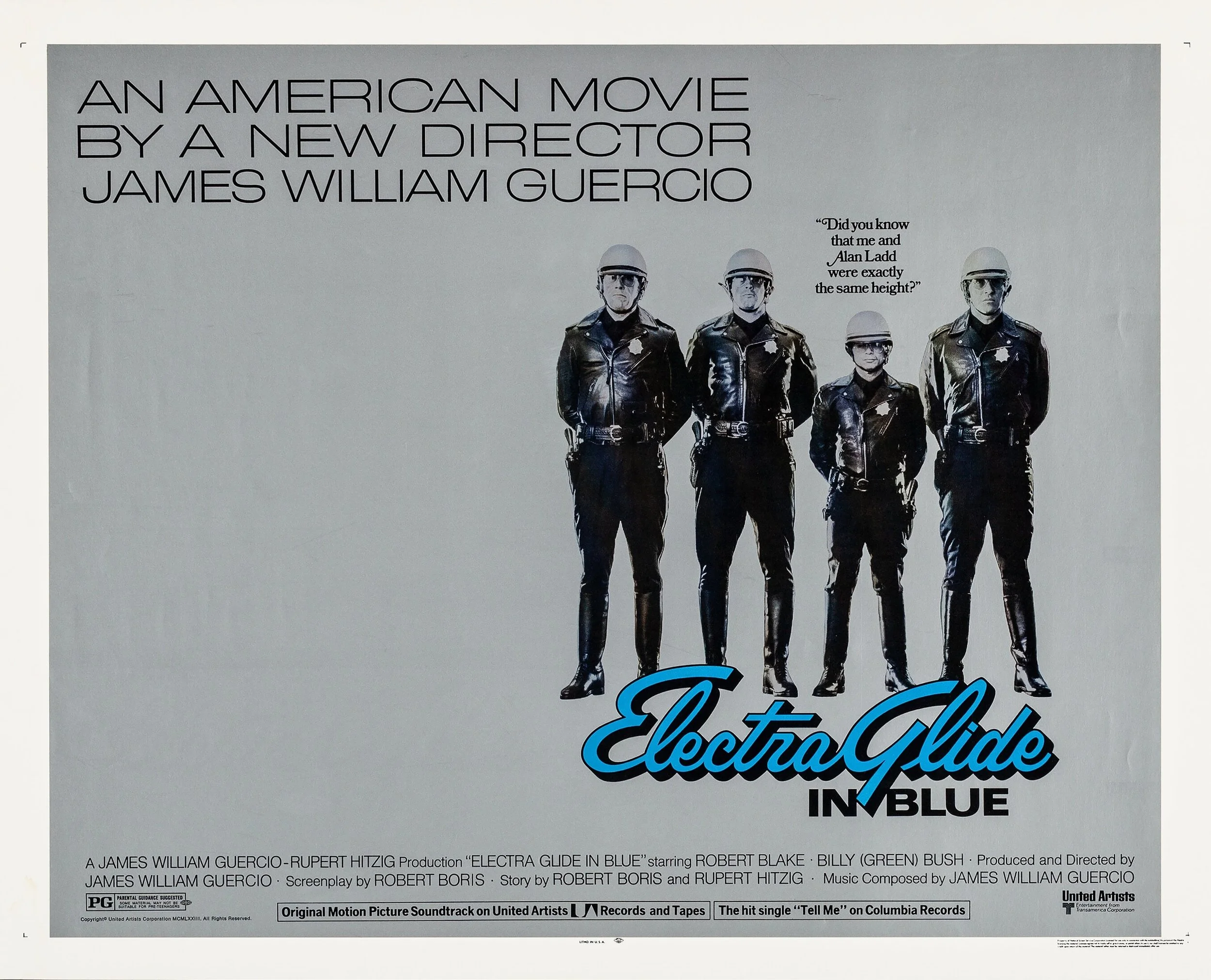
American music producer James William Guercio is primarily known for his work in the music industry. He was the producer of the band Chicago’s first eleven studio albums. In the mid-seventies he also managed the Beach Boys and was a member of their backing band. He was during this time, well known in his field and respected. In 1973, Guercio directed, produced and wrote the score for his first and only feature film, Electra Glide in Blue. He was 28 years old at the time. Upon release the film received mixed reviews from many traditional US newspapers, who were dismissive of its revisionist themes and poetical style. However, in Europe the film was received more favourably and was entered into the 1973 Cannes Film Festival. Fifty two years on and Electra Glide in Blue is now considered an overlooked cult classic and is analysed in a more measured fashion.
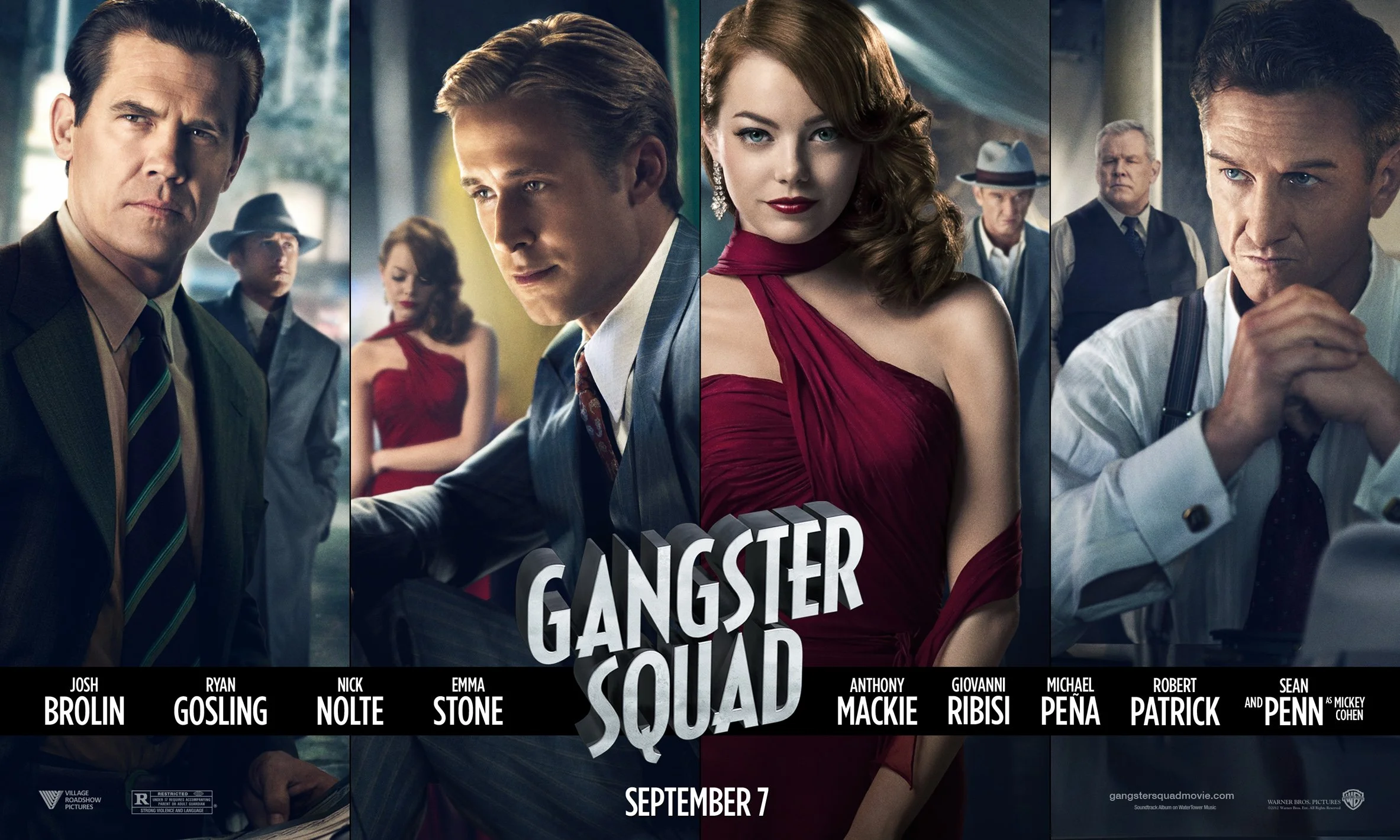
When I first saw the promotional trailer for Gangster Squad back in 2012, prior to its release, I wasn't especially impressed. I simply thought the film was another attempt to re-invent the gangster genre for a generation who were not especially familiar with it. I wasn't exactly overwhelmed with director Ruben Fleischer's resume either. I didn't particularly like Zombieland and haven't seen 30 Minutes Or Less. Then came the tragic mass shootings in Aurora, Colorado which led to the movie being delayed so that the original ending, which featured a shoot-out in a movie theatre, could be replaced. Hence when I finally watched this film recently, I wasn't expecting a movie up to the standards of say Once Upon A Time In America or Miller’s Crossing and it would seem that I was right do so. Gangster Squad is not especially noteworthy in any respect.
Fluke is a curious film about a man who is reincarnated as a dog and his subsequent realisation that he may have been murdered. It takes an adult novel by British author James Herbert, which is filled with philosophical musing and strives to adapt it in a far more family friendly fashion. The result is a somewhat bipolar production which thematically alternates between existential introspection and Buddhism. It then strives to deliver its message in a Disneyesque idiom. Children will potentially be confused and upset by what they see and adults will be wrongfooted by the continual shift in tone. Fluke was not a critical or commercial success upon release and the flaws that were identified by critics at the time still ring true today. That being said, Fluke is still an interesting and entertaining film, despite its faults.
During 1836, in the town of Darkness Falls, Maine, an elderly widow Matilda Dixon is adored by the town’s children as she gives them a gold coin whenever they lose a tooth. One day, after a house fire, Matilda is left burned and sensitive to sunlight, so she starts wearing a china mask. When two children are reported missing, Matilda is blamed by some locals, dragged from her home and hung. She curses the town, stating that whenever a child loses their last tooth, she would come for it. If the child looks at her, she will kill them. The missing children are subsequently found, so the citizens cover up their unjust lynching. In 1990, young Kyle Walsh awakes one night to find Matilda Walsh standing over him. Kyle’s mother is killed and he is blamed for her death and institutionalised. 12 years later, Kyle (Channey Kley) is released and tries to warn the town of the imminent danger when lightning disables the power supply. He is ignored by all until the deaths begin.
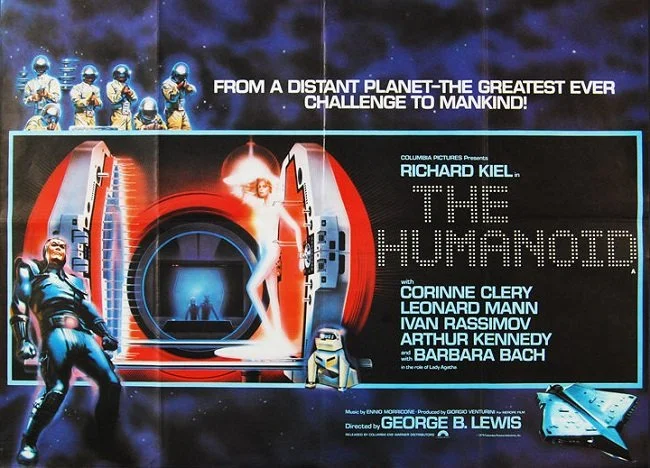
The Humanoid is one of many international Star Wars knock-offs that flooded cinemas in the late seventies and early eighties. Like so many others, it is derivative (even to the extent of replicating specific scenes from George Lucas’ movie), replete with awful dialogue and has somewhat basic production values. However, it does have an interesting cast including Richard Kiel, Barbara Bach, Arthur Kennedy and Corinne Cléry. Kiel gained a lot of media attention after his appearance as the steel-toothed villain Jaws in the 1977 Bond film, The Spy Who Loved Me. His stature made him the perfect fit for the titular character in this Italian science fiction production. Sadly, beyond a curious lineup of actors, The Humanoid has little to distinguish it from so many similar movies. For example, if you’ve seen Starcrash then you’ll be adequately prepared for this film.
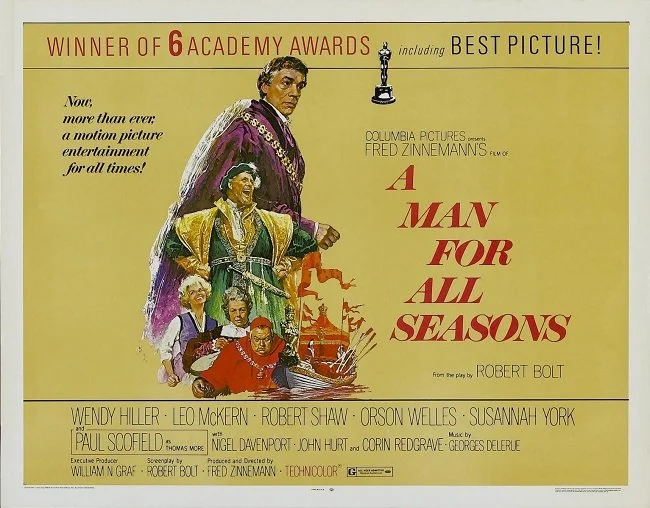
Contemporary viewer’s may be perplexed by a film such as A Man For All Seasons. Why make a two our motion picture about a Tudor lawyer, statesman and scholar and their subsequent moral objection to the reigning monarchs marital status? Yet, during the sixties, it was entirely possible for a mainstream studio to produce a film based upon a stage play that dramatised such specific historical events. Furthermore, a film like this that relied upon strong performances and an intelligent script (and little more) could find a mainstream audience and be both a critical and commercial success. Nowadays, such productions still exist but they are now mainly the province of streaming services. Furthermore, the cinematic format has been replaced by that of a high budget TV show, which explores the topic at hand over an eight to ten hour running time.

With the proliferation of lore driven, franchise movies in recent years, a culture of analysis has developed online. Hence you will find a lot of YouTube videos that claim to “explain” the ending of specific films or provide clarification of their respective themes and subtexts. While critical debate and discussion about cinema is welcome, I think it is a mistake to always look for a specific meaning in cinema. Even clearly narrative films can be ambiguous. Art is ultimately a very subjective field of expression open to personal interpretation. Which brings me neatly to Flow, an animated feature film which tells a compelling story but raises more questions than it answers. It leaves the viewer to fill in a lot of the blanks themselves and the film is all the better for this approach. Flow is an extraordinary example of animation and a fascinating example of innovative, thought provoking filmmaking. Quite the rarity these days.

Levon Cade (Jason Staham) is a former Royal Marine Commando who has retired from military service and now works as the leader of a construction team in Chicago. He has a close relationship with Joe and Carla Garcia (Michael Peña and Noemi Gonzalez ) who run the company and considers them as family. Outside of work, Levon is involved in a bitter custody battle for his daughter, against her maternal grandfather, who blames Levon for his daughter’s suicide. When Garcia's teenage daughter Jenny (Arianna Rivas) goes missing, Levon reluctantly agrees to help her parents and get her back. Beginning his search at the nightclub where Jenny was last seen, he soon discovers that she was abducted by Russian traffickers. Furthermore, the culprit is Dimi Kolisnyk (Maximilian Osinski), the wayward son of a senior ranking gangster.
Osgood Perkins has a distinct visual style and tone to his films. It is why his previous film, Longlegs, was such a welcome change from standard genre outings. It was atmospheric both visually and tonally, demonstrating a keen understanding of horror cinema. Hence he is the perfect director to helm this adaptation of a Stephen King short story. The plot is greatly expanded and the screenplay takes a lot of liberties with the source material but the main themes of your past being inescapable and the power of guilt remain front and centre. Due to the extreme and bizarre nature of much of the onscreen deaths, the film wisely has a strong streak of gallows humour running through it which is extremely well handled. Comedy can often be used to defuse or mitigate violence which can be narratively dishonest (think Fred Krueger). Here it adds to the cruel and capricious nature of the random deaths.
For those unfamiliar with Dav Pilkey’s graphic novel character Dog Man, he’s a half-dog, half-human police officer. This comic chimaera is the result of a surgical procedure carried out after Officer Knight and his trusty dog Greg are blown up while defusing a bomb. Greg’s head is grafted to Officer Knight's body. Post surgery, Dog Man (Peter Hastings) remains an officer of the law and continues to track his nemesis, Petey (Pete Davidson), an orange cat and criminal genius. However, despite positive media coverage and a high arrest rate, Dog Man incurs the ire of his Chief (Lil Rel Howery) who is jealous of his success. Furthermore, Dog Man becomes depressed due to the loss of his owner, girlfriend and former home. Meanwhile, Petey decides to clone himself in an attempt to find a worthy assistant and also plots to resurrect a deceased super villain, Flippy, who is an evil telekinetic fish.
Licence to Kill (1989)
Licence to Kill was the sixteenth instalment in the James Bond series and the last to star Timothy Dalton as MI6 agent James Bond. He sadly only made two and remains an underrated Bond. Licence to Kill was also the first official James Bond film to use a title not derived from either an Ian Fleming novel or a short story. However, it does contain characters and elements from Fleming's novel "Live and Let Die" and the short story "The Hildebrand Rarity". The film follows Bond's dismissal from MI6 and his vendetta against a South American drug baron. The film was originally due to be called "Licence Revoked" but was changed allegedly to avoid confusion with American audience
Licence to Kill is the sixteenth instalment in the James Bond series and the last to star Timothy Dalton as MI6 agent James Bond. He sadly only made two movies and remains an underrated Bond. Licence to Kill was also the first official James Bond film to use a title not derived from either an Ian Fleming novel or a short story. However, it does contain characters and elements from Fleming's novel "Live and Let Die" and the short story "The Hildebrand Rarity". The film follows Bond's dismissal from MI6 and his vendetta against a South American drug baron after an attack on his friend Felix Leiter. The film was originally due to be called "Licence Revoked" but was changed allegedly to avoid confusion with American audiences.
Licence to Kill was one of the least commercially successful Bond films. It had production costs of approximately $36 million and made only $156 million back at the box office. The previous Bond outing, The Living Daylights had made over $196 million. This drop can be attributed to the decision to release the film in the summer, in direct competition with Lethal Weapon 2, Indiana Jones and the Last Crusade (starring former Bond Sean Connery) and Batman. Bond films have traditionally been Autumn releases. Due to the death of screenwriter Richard Maibaum and subsequent legal battles over the ownership of the James Bond series, there was a subsequent six year hiatus until the next Bond movie Goldeneye in 1995. Licence to Kill has many unique factors that make it a milestone within the Bond franchise.
Licence to Kill has many unique factors that make it a milestone within the Bond franchise. It the first Bond film to be rated PG-13 in the US and 15 in the UK; all previous films were PG. Violent scenes still had to be trimmed in both the UK and US to avoid a higher classification. Director John Glen decided to make the film stronger in tone to directly compete with the contemporary competition. Action films had become more prevalent during the eighties and often included expensive and elaborate set pieces. These had been in the past the exclusive province of the Bond films. However, the release of the James Bond "Ultimate Editions" on DVD in 2006, restored all previously cut material. The fully uncut print was also sourced for the more recent Blu-ray disc in 2009.
Licence to Kill featured another major change for the franchise. Veteran Bond composer, John Barry was not available at the time of the post production, as he was undergoing throat surgery. Therefore, the soundtrack was composed and conducted by Michael Kamen, a British composer who had already scored several action films such as Lethal weapon and Die hard. Licence to Kill, despite poor financial returns, did perform well with numerous critics. It is still a source of division among fans. It is hard edged, minimalist and reflects the tone of Fleming's early novels very well. Dalton's performance, the lack of fanciful gadgets and glib one liners, is a radical change in style from the self-parodying excesses of Moonraker. Director John Glen deemed it to be the best of his five Bond films. On reflection, the market at the time was simply not ready for such a radical shift in the franchise. It is ironic that Casino Royale successfully managed to make such a change seventeen years later.
Bond has left active service and is enjoying a tranquil life in Jamaica. His peace is short-lived when his old friend Felix Leiter from the CIA turns up asking for help. The mission to rescue a kidnapped scientist turns out to be far more treacherous than expected, leading Bond onto the trail of a mysterious villain armed with dangerous new technology.
Universal Pictures
The twenty fifth Bond film is a horse of a different colour but then again that adage could be applied to the last five instalments of the franchise. Bond has never had a continuous story arc or any major narrative continuity until Daniel Craig’s tenure as 007. Two Roger Moore films briefly alluded to Bond’s previous marriage as depicted in On Her Majesty's Secret Service (1969). However, we should remember that Casino Royale (2006) was effectively a reboot of the entire franchise depicting Bond’s first mission as a recently commissioned 00 agent. As well as the tonal shift in the franchise regarding humour, violence and the role of agents in a modern world, the last five films have taken a far more personal interest into Bond. It has very much been about him as opposed to just his actions. Therein lies the rub as they say. Some fans have not warmed to this sort of character analysis, although the box office clearly shows that it has gone down well with the wider audience.

Over the Christmas Holidays, I inevitably watched a selection of James Bond movies because it is one of my seasonal rituals. As a child a Bond movie was always one of the TV highlights of Christmas or Boxing Day. Subsequently this habit has stuck with me over the years and so I dutifully watched On Her Majesty’s Secret Service, The Living Daylights and Licence to Kill. Naturally this raised my interest in all things Bond, so I decided to dust of the video game James Bond 007: Blood Stone. I originally bought this game upon release back in November 2010, unaware that the Bond franchise has always been an utter lottery when it comes to tie-in games. I initially played through it for a month or so, then deleted it from my hard drive. It was a classic example of me simply losing interest in a game and then removing it in one of my regular PC housekeeping exercises. To be fair I had a lot of other games on the go at the same time, so there was a good chance that I didn't give it the level of attention it deserved. So yesterday I decided to give it another go and re-installed the game via Steam. Thanks to the miracle of the internet, I downloaded the 9GB game in twenty minutes.
It's a curious thing that some of the most popular movie, TV and book franchises end up being made into the most tedious games. 007 Legends (released 2012) falls squarely into this category. It is woefully uninspired and lacking in any real substance. The previous game in the franchise, James Bond 007: Blood Stone released in 2010, was far from a masterpiece, but shines compared to the ineptitude of 007 Legends. Developers Eurocom seemed to have completely misjudged what it is about this particular intellectual property that the public enjoy. The results are a bastard hybrid FPS with just a thin veneer of 007 added to the proceedings. Curiously enough, this was the last game that Eurocom made before going out of business. Subsequently, 007 Legends has vanished from shelves and has been withdrawn from Steam. However, I still have a “hard” copy for the PC.
There's nothing better than being proved wrong and having your fears allayed. Sam Mendes was absolutely the right choice to direct the twenty third James Bond movie and delivered a film that embraces both the old and the new. Skyfall was an outstanding way to celebrate fiftieth anniversary of the franchise. This is one of the few occasions when the actual movie managed to live up to the respective hype and marketing. Skyfall is 143 minutes of pure Bond and much more. Seldom has series had this depth of story, characterisation and intelligence. It is a lot closer to Goldfinger than it is Moonraker and offers a fresh perspective on the iconic agent. This is not about defeating some villain in his volcano lair. Skyfall is about the very nature of espionage and the effects upon those who work in its twilight world.
Timothy Dalton is possibly the most technically accomplished and prestigious actor to have played the iconic MI5 agent, James Bond. He was in fact asked by Cubby Broccoli to play the role back in 1969 shortly after Connery's departure from the franchise. Broccoli had been impressed by Dalton’s performance in The Lion in Winter. However, Dalton himself felt he was too young for the job at the time. After Roger Moore retired from the role in 1985 it looked like Pierce Brosnan would certainly to get the part. However, due to contractual reasons and prior commitments, he was not unable to fulfil the proposed shooting schedule. So, Dalton landed what was at the time, the most prestigious action role in film making, by default.
Licence to Kill was the sixteenth instalment in the James Bond series and the last to star Timothy Dalton as MI6 agent James Bond. He sadly only made two and remains an underrated Bond. Licence to Kill was also the first official James Bond film to use a title not derived from either an Ian Fleming novel or a short story. However, it does contain characters and elements from Fleming's novel "Live and Let Die" and the short story "The Hildebrand Rarity". The film follows Bond's dismissal from MI6 and his vendetta against a South American drug baron. The film was originally due to be called "Licence Revoked" but was changed allegedly to avoid confusion with American audience
Becoming Bond is a curious documentary in so far as it’s totally dependent on whether the viewer believes the story that George Lazenby tells. Because George is obviously a well-practised raconteur one gets the impression that many of the anecdotes and vignettes he recounts have been embellished for artistic effect. He has that easy going, informal Australian charm and frequently smiles ironically, as director Josh Greenbaum, quizzes him off camera over the voracity of his tale. Mr. Lazenby also treads that fine line between being a likeable rogue and a bit of a dick, especially when he focuses on his youth. Yet he broadly keeps to the right side of this and maintains the audiences’ good will.
There are many subjects that when mentioned will quickly start an argument. Who’s the best Doctor Who? (and it isn’t David Tennant), do Balrogs have wings? (no, read the text again) and of course that old chestnut, “Data or Spock?”. Then there’s the thorny issue of Bond film title songs. We now have twenty-four to choose from. Obviously, your age group and musical preferences will shape your opinion. As well as when you started viewing the franchise. I personally have very particular views on the subject, hence this post. So here for your edification are five of my personal favourites, each with a few thoughts about why they are of merit. Feel free to leave comments with your own opinions. I’m sure we won’t fall out over the matter. Unless you like Sheryl Crow.
Everything or Nothing: The Untold Story of 007 is a lot more than just some bit of fluff, promotional documentary celebrating the 50th anniversary of the Bond movies. It is quite a frank insight into the history of the Bond franchise, although it is very much told from the perspective of EON productions. The movie title comes from the production company acronym “Everything or Nothing” which was formed by Harry Saltzman and Albert “Cubby” Broccoli. Although somewhat partisan in its tone, this is not a rose-tinted exploration of the staggering success of Ian Fleming’s iconic character. The documentary does in fact make you rethink many notions you may have had about certain high profile Hollywood stars and producers.
By the time the Bond franchise had reached its 18th incarnation in 1997 with Tomorrow Never Dies, the coveted opportunity to provide the title track was chosen through a competitive tender process. There were twelve submissions made for the movie, including songs from Swan Lee, Pulp, Saint Etienne, Marc Almond, Sheryl Crow and David Arnold. Arnold had already been personally recommended to compose the film’s soundtrack by Bond veteran John Barry, who had retired from the series in 1987.
Sam Mendes brought a degree of depth to Skyfall which we've not seen in a Bond movie for a long time. SPECTRE continues in the same vein as its predecessor with an involving plot, fully rounded characters and some finely honed set pieces. I like this approach to Bond and feel that a more cerebral interpretation of the character is not only beneficial for the franchise but to the genre itself. If SPECTRE does turn out to be Daniel Craig’s swansong as James Bond then it will be a fitting epitaph.
I recently started reading fiction again after spending half a year focused upon academic subjects and ploughing my way through numerous non-fiction books. I’ve always been a fan of the Bond franchise so decided it was time to familiarise myself with Ian Flemings’ the source material. The results so far have proven to be quite surprising and not at all as I expected. I managed to purchase the first seven novels in the series from a second hand book shop and have so far completed five of them. I also have audio book version available of the all of Fleming’s stories should I need to consume them in such a fashion.

After the ludicrous (but fun) excesses of Moonraker, the twelfth James Bond film For Your Eyes Only took a “back to basics” approach to its plot. Former Bond editor John Glen was promoted to director and remained so for five movies. The movie is unusual compared to other Bond films in several ways. It directly references Tracy Bond, 007’s deceased wife, with an opening sequence showing Bond placing flowers on here grave. Apart from a passing comment in The Spy Who Loved Me, this has never been done since and has now been eliminated from the plot in the 2006 reboot of the franchise. For Your Eyes Only is also the first Bond movie to include the title song artist in the opening credits.
Lockout (2012)
Let's cut to the chase. Lockout is derivative, clichéd, has some dodgy CGI FX work and has nothing new to add to the Sci-Fi sub-genre of future prison action movies. However, that does not mean that the movie is not enjoyable. On the contrary, if approached with the right mind set, then Lockout can be an entertaining experience, which will have you chuckling as it ticks boxes in a knowing fashion and offers some budget action and hard-boiled dialogue. It certainly isn't going to win any awards, but is does everything that a B movie should do. If you treat it as such then you won't be misled.
Let's cut to the chase. Lockout is derivative, clichéd, has some dodgy CGI FX work and has nothing new to add to the Sci-Fi sub-genre of future prison action movies. However, that does not mean that the movie is not enjoyable. On the contrary, if approached with the right mind set, then Lockout can be an entertaining experience, which will have you chuckling as it ticks boxes in a knowing fashion and offers some budget action and hard-boiled dialogue. It certainly isn't going to win any awards, but is does everything that a B movie should do. If you treat it as such then you won't be misled.
For starters, think Escape from New York, then No Escape and then finally Fortress. Follow that order to find the appropriate level. Where John Carpenter made Snake Plissken a Clint Eastwood/John Wayne hybrid, Guy Pearces' Snow is more of a John McClane/Han Solo crossover. Lockout never strays into being a total rip-off of Carpenter's work, but it sails close to bounderies of what can be labelled "a homage". Guy Pearce, armed with pumped biceps and an arsenal of waggish badinage plays Snow, a former government agent who must single-handedly rescue the President’s daughter (Maggie Grace), from a space prison to escape (for some particular reason as Homer Simpson said). The prisoners are the usual collection of cinematic sociopaths, although Hydell (Joseph Gilgun), the psychotic brother of the prisoner’s leader, has all the best lines and is immense fun to watch. Stuff gets blown up, fist fights ensue, the laws of physics are conveniently bent to suit the plot as you expect from such movies.
When Luc Besson initially started putting his name to broader action productions, it was a pleasant alternative to mainstream Hollywood fodder. The European vibe brought something new to familiar action material. However, these movies are now plagiarising the very material they seek to be different to and the distinction is not so great now. Written and directed by relative newcomers James Mather and Stephen St. Leger, Lockout perhaps needed a more experienced pair of hands at the helm. The movie was shot on location in Belgrade but also had extensive green screen footage shot in post-production. The movie struggles to integrate both elements. However, it's quirky continental pedigree, tongue in cheek approach, along with its fast pace does allow the directors to effectively "blag it".
I was in an unusually forgiving mood when I saw Lockout in the movie theatre on its release and chose to ignore its faults and simply dealt with it like a DTV action title from the eighties. I even smirked when Snow balked at being beaten by a guy called Rupert. However, this is the sort of movie that plays a lot better in the home entertainment market. It’s something that goes well with a few beers and a curry. If you are a casual film viewer, you may wish to give this one a miss as it lacks some of the polish of bigger budget releases. For those who have a deeper love for the action genre and have sat through Freejack and Fortress 2: Re-Entry, then you can take this one on the chin easily.
David Koepp is no stranger to genre cinema, having written the screenplay for such films as Jurassic Park, Spider-man and War of the Worlds. Where these titles are big budget, major studio productions, Cold Storage is a far more modest production with a smaller scope. Adapted from his own novel, the screenplay is by David Koepp and the film is directed by British film-maker Jonny Campbell. At first glance, Cold Storage seems a somewhat derivative science fiction horror film with a relatively modest budget, financed through a convoluted US and French co-production. Lurid green and red colours feature heavily in the marketing artwork and it is easy, after a cursory look, to write the film off as cheap, generic, direct-to-streaming filler. However, Cold Storage is prime example of why you should not judge a book by it’s cover, or in this case, a film by its posters and online advertising. It is in fact an amusing and fun endeavour that can fill an evening.
Despite being considered by many as an original story, The Abominable Snowman (1957) is in fact a remake of a made for television play, The Creature, that was originally broadcast in the UK in 1955. Hammer Films would often purchase the rights of popular TV programs and subsequently re-work them for mainstream, international cinema. Larger production budgets and fewer censorship restrictions allowed them to make their cinematic interpretations more lurid, thus commercially viable. Hence The Quatermass Xperiment, Quatermass II and Quatermass and the Pit were all given a big screen makeover and were commercially successful. The Abominable Snowman was written by acclaimed writer Nigel Kneale, who also wrote the original television drama and the aforementioned Quatermass trilogy. Although ostensibly marketed as a horror film this production is actually an interesting blend of psychological thriller and science fiction.
There are certain subjects that are notoriously uncinematic. These tend to be things that exist or are undertaken mainly in the mind, rather than expressed in an overtly physical way. Computing, science and mathematics are good examples. Writing code or working out complex equations does not immediately lend themselves to a visual medium such as cinema. Therefore, any film dealing with the world of corporate finance has its work cut out. Hence writer-director J C Chandor immediately deserves praise for making Margin Call, a film about the financial crash of 2008, as gripping and compelling as any political thriller. He does this by keeping the financial elements of the story to a minimum, choosing instead to focus upon those who have become aware of the imminent crisis and their reaction to it. However, the film remains a tough watch with regard to the some of the characters and their respective personal morality or lack there of.
The 1937 Hindenburg disaster has remained an enduring mystery over the years. The physical mechanics of how this airship filled with 7,000,000 cubic feet of hydrogen gas caught fire has been fully explored over the decades and there are now several extremely plausible theories as to how it may have happened. However, there remains the possibility of sabotage. As such an idea has more dramatic potential than mechanical failure, it was used as the central theme of the 1975 disaster movie The Hindenburg. Directed by Robert Wise, the screenplay by Nelson Gidding explores a German resistance against the Nazi regime. The airship is targeted as it is a powerful propaganda symbol for Hitler’s Germany. Sadly despite some interesting ideas, a strong cast and solid, old school optical effects, The Hindenburg is a slow and somewhat ponderous production. Although the final 20 minutes of the film recreate the infamous explosion meticulously, it doesn’t quite compensate for the uneventful, dialogue driven investigation of the previous 100 minutes.
On the Eastern Front in 1943, a German Tiger tank crew led by Lieutenant Philip Gerkens (David Schütter) is sent on a mission to rescue the missing officer Paul von Hardenburg (Tilman Strauss) from a top-secret bunker that is at risk of falling into enemy hands. As they make their way through an eerie no-man’s land, they have to avoid Russian armoured vehicles that seem to be aware of their mission. They also encounter a German unit taking punitive action against a peasant village, in reprisal for partisan activity in the area. The youngest crew member, Michel (Yoran Leicher), talks of the land being home to ghosts and spirits. As the tank penetrates further into contested territory the crew become increasingly disturbed by the uncanny nature of their mission and begin to fall prey to their own inner fears.
Robert Louis Stevenson’s classic novel has been adapted for cinema and television numerous times. Perhaps the most well known is the 1950 Disney version, starring Robert Newton as Long John Silver. His eye rolling performance and exaggerated West Country accent is credited with popularising the stereotypical form of “pirate speech" that has become the pop culture default. Although an enjoyable film, it does gloss over the more sinister aspects of both the source text and history, perpetuating the myth that pirates are just loveable scoundrels. Many subsequent adaptations have fallen into the same trap to a greater or lesser degree. However, that is not the case with the 1990 version of Treasure island, which was made for the TNT cable network and released theatrically outside of the US. This darker and notably more violent adaptation closely follows the source text and is widely considered the most faithful to the book.
The Planet of the Apes movie franchise took a radical change of course with its third entry in the series. The first two films were set in the future and benefited from high production values to help realise a post apocalyptic earth. However, due to a substantial reduction of budget, Escape from the Planet of the Apes uses a time travel plot device to bring the ape protagonists to present day Los Angeles (1971 in this case). The result is a film with a much smaller narrative scope. However, although it lacks the science fiction spectacle of its predecessors, it features an interesting satirical exploration of celebrity culture and ponders what it is like to be deemed an enemy of the state. As ever, Roddy McDowell and Kim Hunter provide exceptional lead performances as the Chimpanzees Cornelius and Zira. Escape from the Planet of the Apes also captures the pop culture vibe of seventies America.
It is not unusual for Disney to change film titles when marketing them outside of the US. In 2016 they renamed the animated feature film Zootopia to Zootropolis in the UK and Europe to avoid trademark conflicts with other existing businesses. For example there is a Danish zoo which already holds the “Zootopia” name. Similarly, in Germany there is a children’s book which caused copyright conflict, which led to the film being released under the title Zoomania. Such changes, although practical for legal reasons, can sometimes cause a degree of confusion. Especially as there are numerous, low budget productions companies that go out of their way to produce similarly titled “mockbusters” whenever there are big, tentpole, releases. So for clarity, Zootopia 2 has been released in the UK as Zootropolis 2.
Stephen King’s dystopian story, The Running Man, was previously adapted very loosely in 1987, as a vehicle for Arnold Schwarzenegger. That version focused mainly on the “Battle Royale” element of the story and leaned heavily into Arnie’s personality, rather than the politics of the book. It also wasn’t well received by the author. Edgar Wright’s remake follows the source text a lot more closely and is far more interested in its political themes and wider social commentary. Furthermore, this version re-establishes the everyman quality of the hero of Ben Richards, rather than him being the muscle bound, ex-military hero as per Mr. Schwarzenegger’s prior interpretation. This time round, The Running Man uses a lot of the visual and narrative tropes of contemporary reality TV, making this forty three year old story very relevant to today’s viewers and couching the film in a style that is recognisable and accessible.
The Haunted Dolls House is a short film based on a story by M.R. James about a unique antique that is subject to supernatural phenomenon. Adapted by Stephen Gray and David Lilley, this is the third of three short films based upon James’ work that the pair have made. It stars Steven Dolton as Mr. Dillet, a collector of antique dolls houses, who acquires a bargain only to discover that it harbours a ghostly secret. Made on an extremely modest budget over the course of 2012 this clever, innovative and rather sinister adaptation is a fine example of short film creativity. It manages to offer a unique visual depiction of M.R. James’ classic story whilst capturing the unsettling quality of the author’s work. Like so many independently made short films it is clearly a labour of love, made with modest resources. It succinctly captures the spirit of the author’s work and is both innovative and rewarding.
A lot of people may know Luke Evans from the live action version of Beauty and the Beast or Peter Jackson’s The Hobbit trilogy. With his matinee idol good looks, charming Welsh demeanour and his “smoky” tenor singing voice, he projects a sense of old school stardom. Which brings us to No One Lives; a film which is a radical departure from his previous work. His performance is disconcerting to say the least and the film is somewhat unhinged. Directed by Ryuhei Kitamura, who made an interesting adaptation of Clive Barker’s The Midnight Meat Train, this cinematic outing is similarly replete with robust shocks and gore. There are some interesting ideas about the nature of violence, Stockholm Syndrome and whether one should deny or embrace one’s nature. However, these are ultimately minor asides. Philosophical musings in between bouts of surprisingly striking unpleasantness.
In the near future, Kepler 822, a research and drilling facility located at the bottom of the Mariana Trench, suffers a sudden and catastrophic structural failure. There are only six survivors. Mechanical engineer Norah Price (Kristen Stewart), Captain Lucien (Vincent Cassel), biologist Emily Haversham (Jessica Henwick), engineer Liam Smith (John Gallagher Jr.) and crew members Rodrigo (Mamoudou Athie) and Paul (T.J. Miller). As all the functional escape pods have been used and they are unable to contact the surface, the Captain suggests using pressurized suits to walk one mile across the ocean floor to the Roebuck 641 drill installation. There they will find more escape pods. However, it soon becomes apparent that the disaster was not caused by an undersea earthquake and that they are not alone as they make their journey.
One of the most common objections raised regarding the Jurassic Park/Jurassic World franchise is that the films are specifically made to obtain a PG-13 rating from the Motion Picture Association, for purely commercial reasons. Hence, in all films, there is little on screen violence and the dinosaurs are mainly portrayed as a threat and a means of providing jump scares. When a character is killed by a dinosaur it usually happens off screen, is obscured by something else in frame, or is shown in long shot with very little detail. The realities of being eaten alive by a predator are conspicuously absent. Hence, audiences looking for films featuring more graphic dinosaur attacks, have not been well catered for apart from some minor direct-to-video titles. Primitive War finally fills this gap in the market with a frenetic genre mashup that strives to punch above is budgetary weight.
During the seventies, cinema was not only a source of mass, commercial entertainment but was still perceived as a medium for intellectual and philosophical discourse. Television was a poor relation in terms of art and cultural significance. Film was where the so called auteur director could muse and ruminate upon the nature of the human condition and audiences could subsequently gush sycophantically about their work at dinner parties. Or something like that. Let it suffice to say that some film makers were still indulged by studios and financiers, who were still keen to cash in on the cultural sea change that came to Hollywood in the late sixties. It’s difficult to see how a film such as Emperor of the North (AKA Emperor of the North Pole) could have been made otherwise. A film set in the Great Depression about a hobo illegally travelling on freight trains and his feud with a ruthless conductor.
In Buenos Aires, Clara (Natalia Señorales) hears voices emanating from the plughole in her kitchen sink. The voices seem to be plotting against her. Her husband Juan (Agustín Rittano) says the sounds are coming from next door. That night, Juan finds Clara’s dead body levitating in their bathroom, slamming against the wall by an invisible force. Meanwhile their neighbour, Walter (Demián Salomón), is experiencing supernatural occurrences while he tries to sleep. An invisible force repeatedly shakes his bed. After using a video camera to film these events, he sees a tall, cadaverous figure emerging from under the bed, standing over him as he sleeps. Across the road, Alicia (Julieta Vallina) is grieving for her recently deceased son, who was run over outside Walter’s house. Alicia's ex-boyfriend, police commissioner Funes (Maximiliano Ghione) calls Jano (Norberto Gonzalo), a paranormal investigator and the pair soon discover more supernatural occurrences in the area.
Black Sabbath (AKA I tre volti della paura) is a 1963 horror anthology film directed by Mario Bava. Although an Italian production, the film was co-financed by American International Pictures and as such was conceived to appeal to US audiences. Hence, the English dialogue edit of the film which was released in America differs significantly to the original Italian version. Despite the presence of the legendary Boris Karloff and the popularity of both anthology and gothic horror at the time,the film was only a modest success at the US box office and did not do well in Italy. However, in more recent years there has been a critical reappraisal of Black Sabbath, especially the Italian dialogue version. Many aspects of the film which are standard genre tropes today, were in fact novel at the time. Also despite the production mainly being studio bound, the film oozes style and has a striking visual aesthetic.
After the success of Raiders of the Lost Ark in 1981, filmmakers scrambled to find existing intellectual properties that they could use for similar films. Hence archaic heroes such as Alan Quatermain were hastily given a modern makeover and thrust into generic movies, in a vague attempt to replicate Steven Spielberg’s successful formula. Which brings us neatly on to James Charles Bigglesworth AKA “Biggles”, a fictional pilot and adventurer from a series of books written by W. E. Johns between 1932 and 1968. Several attempts had been made in the past to bring this character to the silver screen, including one by Disney but they all failed. However, the commercial and critical success of Indiana Jones provided sufficient impetus to greenlight a new film. However, due to some curious production choices, when Biggles was finally released it was far from just a period set, action movie.
Setting aside the hubris of remaking a film such as Red Dawn, the 2012 reboot had a troubled production. Shot over the course of late 2009, on location in Michigan, MGM intended to release the film in September 2010. However, the studio’s financial problems became unsustainable over the course of that year and the film was shelved, while a financial solution was sought. Furthermore, while Red Dawn was in post production, there was a major economic shift within Hollywood due to the increasing importance of the Chinese market. This was a significant problem for MGM because the new version of Red Dawn had the Chinese invading the USA instead of Russia. Hence there were reshoots and the need for additional visual effects, so that the Chinese could be replaced with North Koreans. MGM eventually went bankrupt and the distribution rights to Red Dawn were sold off. The film was eventually released in 2012.
American music producer James William Guercio is primarily known for his work in the music industry. He was the producer of the band Chicago’s first eleven studio albums. In the mid-seventies he also managed the Beach Boys and was a member of their backing band. He was during this time, well known in his field and respected. In 1973, Guercio directed, produced and wrote the score for his first and only feature film, Electra Glide in Blue. He was 28 years old at the time. Upon release the film received mixed reviews from many traditional US newspapers, who were dismissive of its revisionist themes and poetical style. However, in Europe the film was received more favourably and was entered into the 1973 Cannes Film Festival. Fifty two years on and Electra Glide in Blue is now considered an overlooked cult classic and is analysed in a more measured fashion.
When I first saw the promotional trailer for Gangster Squad back in 2012, prior to its release, I wasn't especially impressed. I simply thought the film was another attempt to re-invent the gangster genre for a generation who were not especially familiar with it. I wasn't exactly overwhelmed with director Ruben Fleischer's resume either. I didn't particularly like Zombieland and haven't seen 30 Minutes Or Less. Then came the tragic mass shootings in Aurora, Colorado which led to the movie being delayed so that the original ending, which featured a shoot-out in a movie theatre, could be replaced. Hence when I finally watched this film recently, I wasn't expecting a movie up to the standards of say Once Upon A Time In America or Miller’s Crossing and it would seem that I was right do so. Gangster Squad is not especially noteworthy in any respect.
Fluke is a curious film about a man who is reincarnated as a dog and his subsequent realisation that he may have been murdered. It takes an adult novel by British author James Herbert, which is filled with philosophical musing and strives to adapt it in a far more family friendly fashion. The result is a somewhat bipolar production which thematically alternates between existential introspection and Buddhism. It then strives to deliver its message in a Disneyesque idiom. Children will potentially be confused and upset by what they see and adults will be wrongfooted by the continual shift in tone. Fluke was not a critical or commercial success upon release and the flaws that were identified by critics at the time still ring true today. That being said, Fluke is still an interesting and entertaining film, despite its faults.
During 1836, in the town of Darkness Falls, Maine, an elderly widow Matilda Dixon is adored by the town’s children as she gives them a gold coin whenever they lose a tooth. One day, after a house fire, Matilda is left burned and sensitive to sunlight, so she starts wearing a china mask. When two children are reported missing, Matilda is blamed by some locals, dragged from her home and hung. She curses the town, stating that whenever a child loses their last tooth, she would come for it. If the child looks at her, she will kill them. The missing children are subsequently found, so the citizens cover up their unjust lynching. In 1990, young Kyle Walsh awakes one night to find Matilda Walsh standing over him. Kyle’s mother is killed and he is blamed for her death and institutionalised. 12 years later, Kyle (Channey Kley) is released and tries to warn the town of the imminent danger when lightning disables the power supply. He is ignored by all until the deaths begin.
The Humanoid is one of many international Star Wars knock-offs that flooded cinemas in the late seventies and early eighties. Like so many others, it is derivative (even to the extent of replicating specific scenes from George Lucas’ movie), replete with awful dialogue and has somewhat basic production values. However, it does have an interesting cast including Richard Kiel, Barbara Bach, Arthur Kennedy and Corinne Cléry. Kiel gained a lot of media attention after his appearance as the steel-toothed villain Jaws in the 1977 Bond film, The Spy Who Loved Me. His stature made him the perfect fit for the titular character in this Italian science fiction production. Sadly, beyond a curious lineup of actors, The Humanoid has little to distinguish it from so many similar movies. For example, if you’ve seen Starcrash then you’ll be adequately prepared for this film.
Contemporary viewer’s may be perplexed by a film such as A Man For All Seasons. Why make a two our motion picture about a Tudor lawyer, statesman and scholar and their subsequent moral objection to the reigning monarchs marital status? Yet, during the sixties, it was entirely possible for a mainstream studio to produce a film based upon a stage play that dramatised such specific historical events. Furthermore, a film like this that relied upon strong performances and an intelligent script (and little more) could find a mainstream audience and be both a critical and commercial success. Nowadays, such productions still exist but they are now mainly the province of streaming services. Furthermore, the cinematic format has been replaced by that of a high budget TV show, which explores the topic at hand over an eight to ten hour running time.
With the proliferation of lore driven, franchise movies in recent years, a culture of analysis has developed online. Hence you will find a lot of YouTube videos that claim to “explain” the ending of specific films or provide clarification of their respective themes and subtexts. While critical debate and discussion about cinema is welcome, I think it is a mistake to always look for a specific meaning in cinema. Even clearly narrative films can be ambiguous. Art is ultimately a very subjective field of expression open to personal interpretation. Which brings me neatly to Flow, an animated feature film which tells a compelling story but raises more questions than it answers. It leaves the viewer to fill in a lot of the blanks themselves and the film is all the better for this approach. Flow is an extraordinary example of animation and a fascinating example of innovative, thought provoking filmmaking. Quite the rarity these days.
Levon Cade (Jason Staham) is a former Royal Marine Commando who has retired from military service and now works as the leader of a construction team in Chicago. He has a close relationship with Joe and Carla Garcia (Michael Peña and Noemi Gonzalez ) who run the company and considers them as family. Outside of work, Levon is involved in a bitter custody battle for his daughter, against her maternal grandfather, who blames Levon for his daughter’s suicide. When Garcia's teenage daughter Jenny (Arianna Rivas) goes missing, Levon reluctantly agrees to help her parents and get her back. Beginning his search at the nightclub where Jenny was last seen, he soon discovers that she was abducted by Russian traffickers. Furthermore, the culprit is Dimi Kolisnyk (Maximilian Osinski), the wayward son of a senior ranking gangster.
Osgood Perkins has a distinct visual style and tone to his films. It is why his previous film, Longlegs, was such a welcome change from standard genre outings. It was atmospheric both visually and tonally, demonstrating a keen understanding of horror cinema. Hence he is the perfect director to helm this adaptation of a Stephen King short story. The plot is greatly expanded and the screenplay takes a lot of liberties with the source material but the main themes of your past being inescapable and the power of guilt remain front and centre. Due to the extreme and bizarre nature of much of the onscreen deaths, the film wisely has a strong streak of gallows humour running through it which is extremely well handled. Comedy can often be used to defuse or mitigate violence which can be narratively dishonest (think Fred Krueger). Here it adds to the cruel and capricious nature of the random deaths.
For those unfamiliar with Dav Pilkey’s graphic novel character Dog Man, he’s a half-dog, half-human police officer. This comic chimaera is the result of a surgical procedure carried out after Officer Knight and his trusty dog Greg are blown up while defusing a bomb. Greg’s head is grafted to Officer Knight's body. Post surgery, Dog Man (Peter Hastings) remains an officer of the law and continues to track his nemesis, Petey (Pete Davidson), an orange cat and criminal genius. However, despite positive media coverage and a high arrest rate, Dog Man incurs the ire of his Chief (Lil Rel Howery) who is jealous of his success. Furthermore, Dog Man becomes depressed due to the loss of his owner, girlfriend and former home. Meanwhile, Petey decides to clone himself in an attempt to find a worthy assistant and also plots to resurrect a deceased super villain, Flippy, who is an evil telekinetic fish.
The Raven (2012)
The Raven is a high concept movie in which author Edgar Allan Poe discovers that a serial killer is copying his literary work. It mixes a traditional Gothic sense of style with postmodern depictions of violence and has a quirky, erudite and fun screenplay. The film has a strong streak of gallows humour running through it and a solid cast. It is however an unbalanced production that never quite hits its stride, despite its fast pace. Like director James McTeigue's earlier film V for Vendetta I suspect that The Raven may be another slow burner, finding its audience over time rather than initially.
The Raven is a high concept movie in which author Edgar Allan Poe discovers that a serial killer is copying his literary work. It mixes a traditional Gothic sense of style with postmodern depictions of violence and has a quirky, erudite and fun screenplay. The film has a strong streak of gallows humour running through it and a solid cast. It is however an unbalanced production that never quite hits its stride, despite its fast pace. Like director James McTeigue's earlier film V for Vendetta I suspect that The Raven may be another slow burner, finding its audience over time rather than initially.
The cast is strong with Luke Evans, Alice Eve and John Cusack as Poe. Brendan Gleeson sports a splendid pair of sideburns (grips) and as usual provides an assured performance as Poe's father-in-law. The cinematography is reminiscent of Hammer's baroque style with a hint of Argento thrown in, courtesy of DP Danny Ruhlmann. The dialogue is equally whippy and writers Ben Livingston and Hannah Shakespeare script is not without merit. Poe fans will enjoy spotting the many homages both great and small. Yet despite its virtues The Raven still doesn't quite reach the heights of the material it references.
A lot of the films shortcomings stem from the character of Poe himself. John Cusack’s performances is strong and he is very watchable but is perhaps a little too good looking compared to the alcoholic, drug addicted, dissipated reality of the author. Furthermore, the film pits Poe as a foil to Detective Emmett Fields, rather than making him the lead in the investigation. The dynamic although well-structured seems wrong. Shouldn't Poe, the creator of the great fictional detective Monsieur Dupin, not be taking the lead in the solving the ongoing crimes? The denouement when the killer is unmasked in true Scooby Doo fashion, also doesn't come as a major surprise.
The Raven, despite its uneven nature is still an enjoyable film and it is nice to see period set costume horror making a welcome return. If you liked V for Vendetta, I suspect that you may also embrace this movie. It has many of the former's strengths and weaknesses. Those who favour the current vogue of horror film making, as seen in the likes of Paranormal Activity or any of the recent reboots, may be disappointed. The Raven may well improve with a second viewing and I intend to do so at a later date. I shall not say anything further less I give in to my urge to say "nevermore" or make a reference to the Teletubbies.
David Koepp is no stranger to genre cinema, having written the screenplay for such films as Jurassic Park, Spider-man and War of the Worlds. Where these titles are big budget, major studio productions, Cold Storage is a far more modest production with a smaller scope. Adapted from his own novel, the screenplay is by David Koepp and the film is directed by British film-maker Jonny Campbell. At first glance, Cold Storage seems a somewhat derivative science fiction horror film with a relatively modest budget, financed through a convoluted US and French co-production. Lurid green and red colours feature heavily in the marketing artwork and it is easy, after a cursory look, to write the film off as cheap, generic, direct-to-streaming filler. However, Cold Storage is prime example of why you should not judge a book by it’s cover, or in this case, a film by its posters and online advertising. It is in fact an amusing and fun endeavour that can fill an evening.
Despite being considered by many as an original story, The Abominable Snowman (1957) is in fact a remake of a made for television play, The Creature, that was originally broadcast in the UK in 1955. Hammer Films would often purchase the rights of popular TV programs and subsequently re-work them for mainstream, international cinema. Larger production budgets and fewer censorship restrictions allowed them to make their cinematic interpretations more lurid, thus commercially viable. Hence The Quatermass Xperiment, Quatermass II and Quatermass and the Pit were all given a big screen makeover and were commercially successful. The Abominable Snowman was written by acclaimed writer Nigel Kneale, who also wrote the original television drama and the aforementioned Quatermass trilogy. Although ostensibly marketed as a horror film this production is actually an interesting blend of psychological thriller and science fiction.
The Haunted Dolls House is a short film based on a story by M.R. James about a unique antique that is subject to supernatural phenomenon. Adapted by Stephen Gray and David Lilley, this is the third of three short films based upon James’ work that the pair have made. It stars Steven Dolton as Mr. Dillet, a collector of antique dolls houses, who acquires a bargain only to discover that it harbours a ghostly secret. Made on an extremely modest budget over the course of 2012 this clever, innovative and rather sinister adaptation is a fine example of short film creativity. It manages to offer a unique visual depiction of M.R. James’ classic story whilst capturing the unsettling quality of the author’s work. Like so many independently made short films it is clearly a labour of love, made with modest resources. It succinctly captures the spirit of the author’s work and is both innovative and rewarding.
A lot of people may know Luke Evans from the live action version of Beauty and the Beast or Peter Jackson’s The Hobbit trilogy. With his matinee idol good looks, charming Welsh demeanour and his “smoky” tenor singing voice, he projects a sense of old school stardom. Which brings us to No One Lives; a film which is a radical departure from his previous work. His performance is disconcerting to say the least and the film is somewhat unhinged. Directed by Ryuhei Kitamura, who made an interesting adaptation of Clive Barker’s The Midnight Meat Train, this cinematic outing is similarly replete with robust shocks and gore. There are some interesting ideas about the nature of violence, Stockholm Syndrome and whether one should deny or embrace one’s nature. However, these are ultimately minor asides. Philosophical musings in between bouts of surprisingly striking unpleasantness.
In the near future, Kepler 822, a research and drilling facility located at the bottom of the Mariana Trench, suffers a sudden and catastrophic structural failure. There are only six survivors. Mechanical engineer Norah Price (Kristen Stewart), Captain Lucien (Vincent Cassel), biologist Emily Haversham (Jessica Henwick), engineer Liam Smith (John Gallagher Jr.) and crew members Rodrigo (Mamoudou Athie) and Paul (T.J. Miller). As all the functional escape pods have been used and they are unable to contact the surface, the Captain suggests using pressurized suits to walk one mile across the ocean floor to the Roebuck 641 drill installation. There they will find more escape pods. However, it soon becomes apparent that the disaster was not caused by an undersea earthquake and that they are not alone as they make their journey.
In Buenos Aires, Clara (Natalia Señorales) hears voices emanating from the plughole in her kitchen sink. The voices seem to be plotting against her. Her husband Juan (Agustín Rittano) says the sounds are coming from next door. That night, Juan finds Clara’s dead body levitating in their bathroom, slamming against the wall by an invisible force. Meanwhile their neighbour, Walter (Demián Salomón), is experiencing supernatural occurrences while he tries to sleep. An invisible force repeatedly shakes his bed. After using a video camera to film these events, he sees a tall, cadaverous figure emerging from under the bed, standing over him as he sleeps. Across the road, Alicia (Julieta Vallina) is grieving for her recently deceased son, who was run over outside Walter’s house. Alicia's ex-boyfriend, police commissioner Funes (Maximiliano Ghione) calls Jano (Norberto Gonzalo), a paranormal investigator and the pair soon discover more supernatural occurrences in the area.
Black Sabbath (AKA I tre volti della paura) is a 1963 horror anthology film directed by Mario Bava. Although an Italian production, the film was co-financed by American International Pictures and as such was conceived to appeal to US audiences. Hence, the English dialogue edit of the film which was released in America differs significantly to the original Italian version. Despite the presence of the legendary Boris Karloff and the popularity of both anthology and gothic horror at the time,the film was only a modest success at the US box office and did not do well in Italy. However, in more recent years there has been a critical reappraisal of Black Sabbath, especially the Italian dialogue version. Many aspects of the film which are standard genre tropes today, were in fact novel at the time. Also despite the production mainly being studio bound, the film oozes style and has a striking visual aesthetic.
During 1836, in the town of Darkness Falls, Maine, an elderly widow Matilda Dixon is adored by the town’s children as she gives them a gold coin whenever they lose a tooth. One day, after a house fire, Matilda is left burned and sensitive to sunlight, so she starts wearing a china mask. When two children are reported missing, Matilda is blamed by some locals, dragged from her home and hung. She curses the town, stating that whenever a child loses their last tooth, she would come for it. If the child looks at her, she will kill them. The missing children are subsequently found, so the citizens cover up their unjust lynching. In 1990, young Kyle Walsh awakes one night to find Matilda Walsh standing over him. Kyle’s mother is killed and he is blamed for her death and institutionalised. 12 years later, Kyle (Channey Kley) is released and tries to warn the town of the imminent danger when lightning disables the power supply. He is ignored by all until the deaths begin.
Osgood Perkins has a distinct visual style and tone to his films. It is why his previous film, Longlegs, was such a welcome change from standard genre outings. It was atmospheric both visually and tonally, demonstrating a keen understanding of horror cinema. Hence he is the perfect director to helm this adaptation of a Stephen King short story. The plot is greatly expanded and the screenplay takes a lot of liberties with the source material but the main themes of your past being inescapable and the power of guilt remain front and centre. Due to the extreme and bizarre nature of much of the onscreen deaths, the film wisely has a strong streak of gallows humour running through it which is extremely well handled. Comedy can often be used to defuse or mitigate violence which can be narratively dishonest (think Fred Krueger). Here it adds to the cruel and capricious nature of the random deaths.
When reviewing Sting, one critic stated that the small scale setting and thus, low stakes (IE only a few peoples lives are at risk), made the film not especially memorable. I consider this to be a somewhat spurious criticism. It is the very fact that Sting takes place in such a commonplace environment, with the main characters being everyday people that makes it different. There is a clear focus on well defined characters and their backstory. Unlike so many contemporary films, I actually gave a damn about the protagonists in Sting. An integral aspect of the horror genre is the ability to take a well known and familiar trope and provide a different and absorbing spin on it .It would appear that some audiences have been belaboured over the head by so many overblown and bombastic blockbusters, that the very notion of depicting small, localised and intimate events in a film, seems to bamboozle them.

Some films are made with the intention of starting a franchise, others evolve into one after a surprise box office success and lucrative sequels. Alien (1979) falls into the latter category. A mid-budget science fiction horror film that was well crafted and then benefited immensely by being released at just the right time. Sadly, many franchises become derailed and enter into a death spiral due to competing artistic visions, cynical studio politics and cinematic ignorance. This has certainly afflicted all subsequent Alien films after James Cameron’s magnificent Aliens (1986). Sometimes, a franchise can correct its course and do something fresh with the source material. Prey (2022) is a fine example of this with director Dan Trachtenberg bringing fresh vigour and intelligence back to the Predator movies. I believe that was the intention with Alien Romulus (2024). Sadly, the road to hell is paved with good intentions.
Friday the 13th: The Final Chapter is a popular entry among fans of the franchise. This is mainly due to the return of makeup artist, Tom Savini, who creates several notable death scenes and a bravura ending for Jason Voorhees. There is also an attempt by writer Barney Cohen to have a more involving story compared to previous entries in the series. Director Joseph Zito, who previously directed the above average slasher movie The Prowler AKA Rosemary’s Killer (1981), brings a harder edge to the proceedings, making Jason more menacing than in the previous instalment. As ever, the film was dismissed by the critics but performed well at the box office. Producer Frank Mancuso Jr fully intended for this film to be a definitive end to the series, as he was becoming increasingly concerned that his association with the franchise was having a negative impact upon his career.

Set directly after the events of the previous film, Friday the 13th Part III is again about a group of friends staying near Crystal Lake who encounter Jason Voorhees as he embarks upon another killing spree. Shot in 3D the film has a less sleazy tone than its predecessors although the formula remains the same. The set pieces and death scenes are more elaborate and less clinical, taking advantage of the 3D picture format. The film marks the first appearance of Jason's signature hockey mask, which subsequently became a trademark of both the character and the franchise. Originally conceived to be an end to the series of films, Friday the 13th Part III performed extremely well at the box office, earning $36.7 million on a budget of $2.2 million. As a result, the franchise was given a stay of execution and a further sequel was commissioned.
Originally, Friday the 13th Part 2 was intended to be an anthology film based on the superstition associated with the date. However, after the popularity of the original film's surprise ending, the producers opted to continue the story and mythology surrounding Camp Crystal Lake. This eventually became the parameters which all future films would broadly work within. Friday the 13th Part 2 is a more polished production than the first movie, benefitting from twice the budget of the original. The quick turnaround meant that Paramount Pictures could continue to capitalise on the popularity of the slasher genre. However, there was growing social pushback against these types of films, from Christian lobby groups and other “concerned parties”. Hence, Friday the 13th Part 2 ran into problems with the MPAA ratings board and cuts were imposed. Something that would continuously plague the franchise over the years.

Writing any kind of review for the original Friday the 13th movie seems somewhat redundant, as it has been analysed and written about numerous times before. If you’re interested in the film’s production as well as its subsequent impact on US cinema at the time, then there is an excellent summary on Wikipedia. Having recently rewatched the entire franchise, courtesy of the Shout Factory’s Friday the 13th Collection Deluxe Edition, I have a few thoughts I’d like to share. The picture quality of all the films is very good, offering a lot more visual information compared to previous releases. The amount of “extras” included in the box set is prodigious. I suspect that these are the best versions that we’re ever likely to see. Fans hoping that one day all the cut footage will be found and re-integrated into each film are likely to remain disappointed. Some material has surfaced but sadly a lot of deleted and extended scenes have been destroyed.

George A. Romero's Day Of The Dead (1985) is a bleak and remorseless masterpiece. The final entry in his “Dead Trilogy”, its central theme is that in a world on the brink of destruction, man is still the biggest threat to his own existence. It is well scripted, clinically accurate in its observations on human nature and thought provoking, despite having its budget cut just weeks before production commenced. 40 years later it is revered as a genre milestone and is considered one of Romero’s finest works. Sadly, the 2008 “remake” directed by Steve Miner, who has a background in slasher and exploitation movies, takes a contrasting approach, to say the least. It certainly has very little to do with Romero’s film and one can’t help but assume that it is nothing more than a cynical cash in. Setting aside comparisons with the original, this is not in any way a standout zombie film in its own right.
Although I was unaware of it, there was a guerrilla marketing campaign for Longlegs which was focused on the internet rather than traditional television adverts. Hence the film gained a lot of interest prior to its release and as well as some some disproportionate expectations. Then immediately after its theatrical debut, the matter was further compounded by a possible excess of gushing praise as the film was “over reviewed”. Therefore I maintained a degree of scepticism about Longlegs and tempered my expectations prior to watching it. Any film that is hailed as the next Silence of the Lambs, featuring a “traumatising” performance by Nicholas Cage needs to be keenly scrutinised so that its cinematic merits can be carefully separated from the surrounding hyperbole. After viewing I found Longlegs to be a finely honed, atmospheric and precisely targeted horror thriller but not the genre milestone that some would claim.

As a rule, it is always a challenge to end a trilogy of films successfully. Writing a satisfying denouement to a standalone movie is hard enough. To be able to conclude all pertinent story arcs and themes that have been sustained over three feature films, to everyone’s liking is far harder to achieve. In the case of The Final Conflict (1981), the last instalment of The Omen trilogy, writer Andrew Birkin does manage to resolve all of the external, internal and philosophical stakes, which are the fundamental components of a cinematic screenplay. Unfortunately, it is done in an incredibly underwhelming manner, which left audiences feeling cheated. The last time good defeated evil evil in such an unspectacular fashion was in Hammer’s To the Devil a Daughter (1976). This is why, in spite of solid production values, The Final Conflict is the least popular of the films about the Antichrist, Damien Thorn.

Halloween III: Season of the Witch is a film that often provokes a strong reaction from genre fans. This is mainly due to it not having any direct connection to the previous two films. The absence of Michael Myers in such a franchise was a serious mistake and the subsequent poor box office returns endorsed this. Yet if this film had been released as a separate product it may not have performed so poorly. After re-examining Halloween III: Season of the Witch there are many aspects of interest. Despite a troubled production, the film is an intriguing anomaly that tried to be different during a decade where the established horror formula was “stalk n' slash”. It does have a very bleak tone and some consider it to be mean spirited as the cast are killed off one by one. Perhaps theme of child sacrifice caused audiences to balk?

Ghostwatch is a controversial British horror “mockumentary” produced by the BBC that was first broadcast on October 31st 1992. Written by Stephen Volk and produced by Ruth Baumgarten it is now considered a milestone in UK broadcasting. This was mainly due to the strong reaction it provoked from the public, many of whom failed to grasp that it was a drama. At the time it raised serious questions about responsible programming and caused a furore in the British press. It has curiously never been shown since by the BBC. Ghostwatch remains a talking point to this day and is a text book example of the power of television as well as the publics enduring belief in the supernatural.

Event Horizon is a curious movie hybrid, mixing plot elements from classic sci-fi and horror genres. It has been labelled “Hellraiser in Space” by some lazy critics, although I think there's far more to it than that. Perhaps a more apt description would be a Gothic horror story set in space. The movie has garnered a cult reputation since its release in 1997, mainly due to its graphic imagery and troubled production history. It does indeed have some quite shocking sequences but the lightning editing does not show as much as some would think. Paramount forced director Paul W S Anderson to reduce the original one hundred and thirty minute running time down to a more manageable ninety, after unfavourable test screenings. Much of the violence was allegedly removed as a result of that process. Sadly nothing survives of the removed material other than a VHS workprint. Hence a restored director’s cut is therefore unlikely.
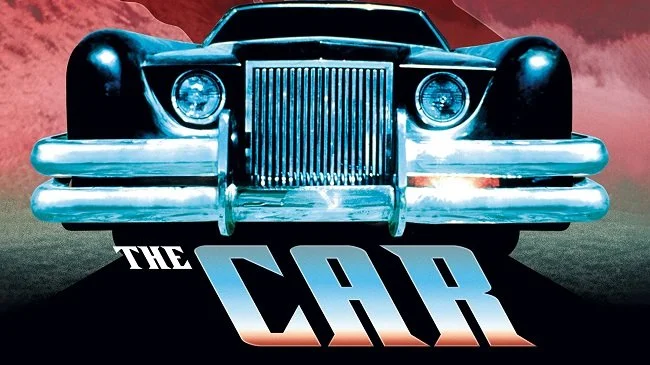
The peace of tranquillity of Santa Ynes, Utah, is shattered when the town becomes the focus of several hit and run deaths, by a mysterious and apparently driverless, black car. After the Sheriff (John Marley) is run down, it is down to Captain Wade Parent (James Brolin) and his deputies to protect the town from this sinister threat. Is the car simply a driven by a mad man or is there a more supernatural explanation? When the car menaces a local school marching band, the teachers and students take refuge in the nearby cemetery. Does the cars inability to enter consecrated ground provide a clue to its otherworldly origins and offer a potential solution? As the death count increases and the population becomes more fearful, the Captain and his team of deputies form a desperate plan to see if they can lure the car into a trap.
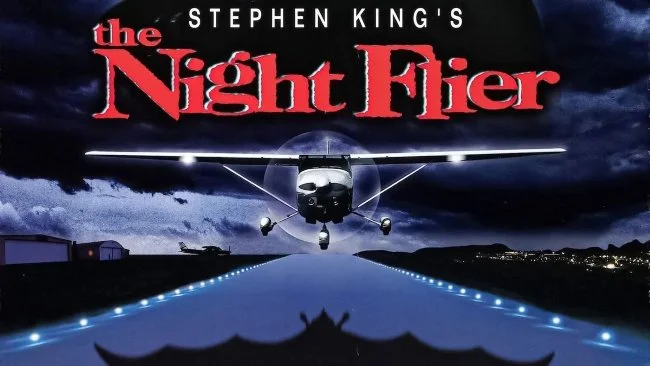
The key to success in the horror genre is to try and find an innovative new angle on tried and tested themes and tropes. The Night Flier is an often-overlooked gem, that takes a unique perspective on vampirism and features strong performances as well as an intelligent and thoughtful screenplay. It builds a sense of foreboding during it’s first two acts and teases audiences with some unpleasant prosthetic effects, courtesy of KNB EFX Group. The climax of the movie is both thought provoking and suitably unpleasant. Furthermore, The Night Flier even manages to make a coherent criticism of tabloid culture and morals of those journalists working in the industry. It’s a damn shame that this modest but well-crafted genre movie didn’t get the attention it deserved when it was initially released in 1997.
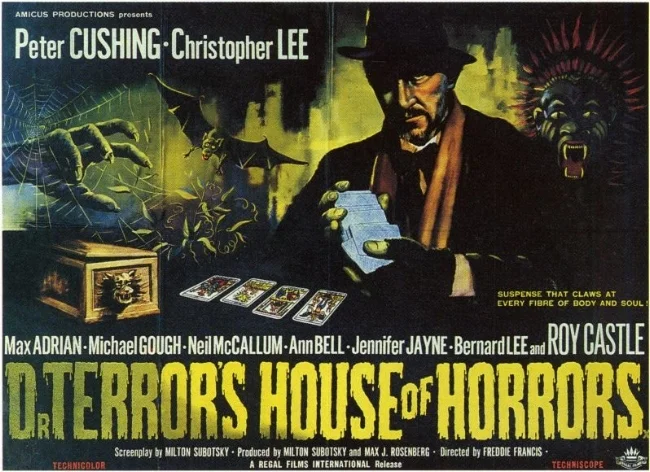
Dr. Terror's House of Horrors was the first portmanteau horror movie by Amicus Productions. The small British studio was founded by producers and screenwriters Milton Subotsky and Max Rosenberg. As the horror genre grew in popularity due to the success of Hammer films, Amicus saw the potential in the portmanteau format. Subotsky in particular held Ealing Studios 1945 classic Dead of Night in very high regard. Although only a modest budget movie, Dr. Terror's House of Horrors proved to be financially successful and led to a series of similarly structured films over the next decade. These included Torture Garden (1967), The House That Dripped Blood (1970), Asylum (1972), Tales from the Crypt (1972), The Vault of Horror (1973), From Beyond the Grave (1974),

Ghost Story is a deliberately superficial adaptation of the novel by Peter Straub. If you’ve read the book and are expecting a verbatim retelling of the plot, then you will be disappointed. It’s complex narrative structure and the abundance of characters do not immediately lend themselves to mainstream film making. However, if you like tales of the supernatural and solid performances from Hollywood legends, then this may well be for you. John Irvin has always been a workman like director and has therefore often been overlooked. Films such as Hamburger Hill and When Trumpets Fade show a great deal of focus and a clear understanding of the mechanics of cinema.
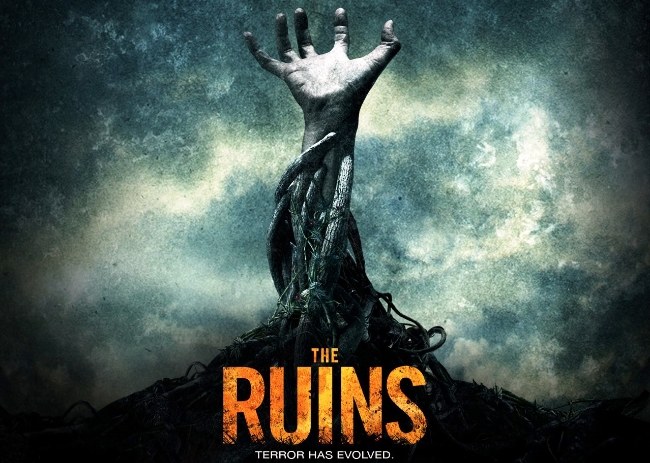
The Ruins is similar to both The Mist and Cloverfield , which were released around the same time, in so far that it is rather bleak and unrelenting movie. And like the aforementioned films, its strength lies in the manner in which it tackles the subject of people facing their own death in a credible fashion. In The Ruins the protagonists when faced with the prospect of their own demise quickly descend in to panic and resolutely refuse to face facts. Although these are negative themes that may not be to everyone’s tastes, they make The Ruins both gripping and genuinely scary.
The arcane and esoteric works of author H P Lovecraft have often inspired horror directors. Sadly many of the films that have been made in homage to the Cthulhu Mythos have failed to capture its nightmarish mix of madness and mythology. John Carpenter's In the Mouth of Madness is not directly based on any of Lovecraft's specific works but screenwriter Michael De Luca draws his inspiration from many of this recurring ideas and concepts. He then adds a further homage to British writer Nigel Kneale, adding themes that are prevalent in his Quatermass series. Where others have failed, Carpenter successfully crafts a film that alludes to the baroque and eldritch qualities of the Cthulhu Mythos.
Since the late eighties Morgan Creek productions have dabbled with multiple genres whilst pursuing box office success. At times, they have been successful with such populist movies as Young Guns and Robin Hood: Prince of Thieves. However, for every film that proved financially viable there were often two more that failed to gain an audience. Yet, despite having the business acumen to commission the best writing and directing talent available, co-founders James G. Robinson and Joe Roth have often been at odds with such creative individuals, resulting in many troubled productions. Horror writer and director Clive Barker endured an arduous experience while making Nightbreed, which was based upon his own novella. It was such a negative experience, resulting in a movie that was far from his initial vision, that Barker effectively quit film making. A similar experience befell William Peter Blatty when he was given an opportunity to film a direct sequel to The Exorcist based upon his novel Legion.
H. P. Lovecraft's The Shadow Out of Time (2012)
The writings of H. P. Lovecraft have been an inspiration for many a film maker. Their brooding atmosphere along with intriguing blend of science and the occult, offers a wealth of themes to be explored. Unfortunately, there have been very few movies that have come anywhere near to capturing the spirit of the author. So, it was with great interest that I watched the fifteen-minute short film The Shadow Out of Time. This low budget production made by independent film makers Richard Svensson, Daniel Lennéer and Christopher Johansson, succinctly distils a classic Lovecraftian tale without losing any of the ambience of the source text. It puts to shame some of the hand-fisted adaptations that have preceded it.
The writings of H. P. Lovecraft have been an inspiration for many a film maker. Their brooding atmosphere along with intriguing blend of science and the occult, offers a wealth of themes to be explored. Unfortunately, there have been very few movies that have come anywhere near to capturing the spirit of the author. So, it was with great interest that I watched the fifteen-minute short film The Shadow Out of Time. This low budget production made by independent film makers Richard Svensson, Daniel Lennéer and Christopher Johansson, succinctly distils a classic Lovecraftian tale without losing any of the ambience of the source text. It puts to shame some of the hand-fisted adaptations that have preceded it.
The plot follows an academic, Nathaniel Wingate Peaslee who collapses during a lecture to find that he has exchanged bodies with an extraterrestrial life form from Earth's past history. His own body is occupied by the alien who spend the next two years studying the present era. Eventually the process is reversed and Peaslee attributes the events to a mental collapse. However, it becomes apparent that he is not the only one to have had this experience. His resulting investigation leads him to Australia and an uncomfortable truth emerges. The story touches upon the experiences of both individuals and hints at a further menace that threatens the future of both species. Told via narration, the film is set in the 1900s and reflects the cinematic style of the time.
The period setting along with its stylised format really enhances the unfolding story. Åke Rosén performance is very much in the appropriate idiom and John Hutch narration embellishes without descending into melodramatics. Overall this is a polished production when you consider the budgetary and the logistical constraints imposed upon the film makers. It never ceases to amaze me the dedication and love that fans can muster to create such outstanding work using just “over the counter” hardware and software. Therefore, I thoroughly recommend The Shadow Out of Time and would urge readers to check out the creators You Tube channel for further H. P. Lovecraft adaptations.
The Haunted Dolls House is a short film based on a story by M.R. James about a unique antique that is subject to supernatural phenomenon. Adapted by Stephen Gray and David Lilley, this is the third of three short films based upon James’ work that the pair have made. It stars Steven Dolton as Mr. Dillet, a collector of antique dolls houses, who acquires a bargain only to discover that it harbours a ghostly secret. Made on an extremely modest budget over the course of 2012 this clever, innovative and rather sinister adaptation is a fine example of short film creativity. It manages to offer a unique visual depiction of M.R. James’ classic story whilst capturing the unsettling quality of the author’s work. Like so many independently made short films it is clearly a labour of love, made with modest resources. It succinctly captures the spirit of the author’s work and is both innovative and rewarding.
The writings of H. P. Lovecraft have been an inspiration for many a film maker. Their brooding atmosphere along with intriguing blend of science and the occult, offers a wealth of themes to be explored. Unfortunately, there have been very few movies that have come anywhere near to capturing the spirit of the author. So, it was with great interest that I watched the fifteen-minute short film The Shadow Out of Time. This low budget production made by independent film makers Richard Svensson, Daniel Lennéer and Christopher Johansson, succinctly distils a classic Lovecraftian tale without losing any of the ambience of the source text. It puts to shame some of the hand-fisted adaptations that have preceded it.
Parents and Movie Ratings
Movie ratings in the UK are overseen by the British Board of Film Classification. A movie legally requires certification to be shown theatrically or released on DVD or Blu-ray. Ratings are governed by guidelines that have been determined through public consultation, expert advice and peer review. In recent years the BBFC has become a measured, informed and progressive body that broadly reaches appropriate decisions that are mainly agreed with by cinema audiences. UK ratings, unlike their US counterparts, are exclusionary. Films rated 15 or 18 prohibit the admission of those below that age. With regard to home media, it is illegal to rent or sell DVD or Blu-ray discs rated similarly.
Movie ratings in the UK are overseen by the British Board of Film Classification. A movie legally requires certification to be shown theatrically or released on DVD or Blu-ray. Ratings are governed by guidelines that have been determined through public consultation, expert advice and peer review. In recent years the BBFC has become a measured, informed and progressive body that broadly reaches appropriate decisions that are mainly agreed with by cinema audiences. UK ratings, unlike their US counterparts, are exclusionary. Films rated 15 or 18 prohibit the admission of those below that age. With regard to home media, it is illegal to rent or sell DVD or Blu-ray discs rated similarly.
In the past the BBFC has made poor decisions and policies have varied under various directors. However a far more level headed attitude has prevailed of late and I believe the organisation now makes sound decisions. More importantly the organisation remains independent and free from political interference and industry lobbying. The BBFC has a wealth of resources available on its website and provides great detail about how it has arrived at a rating. They even go so far as to give readers spoiler warnings, when discussing the content of a movie. Strong language, drug use and violence as well as adult themes are listed if they feature in the film.
As a parent that has raised a child, I applaud such rigour and in-depth information. Being a movie fan, I have always had an immense love of cinema. Naturally my son was exposed to a lot of films while growing up. However personal fandom was never allowed to trump common sense and both my wife and I always took time to consider the suitability of any material we watched with our son. It is something I encourage all parents to do. Ratings are there to inform and an assist. We currently live in an age where there is a wealth of information available. Therefore making an informed decision about family viewing need not be difficult.
Sadly despite the wealth of resources available parents still remain oblivious to ratings and I have often seen children in theatres watching movies that are patently unsuitable for them. Furthermore they are frequently distressed and I do wonder about the long term harm that can be done by such ill-considered parenting. Two such examples from 2015 were Jurassic World and SPECTRE. On both occasions I sat next to families with children under the age of ten who were far from happy about certain scenes. It should be noted that both these movies were rated 12A which is broadly equivalent to the US PG-13 rating. In recent years, it has become the most common rating in the UK film industry and potentially the most misunderstood.
The most common problem associated with the UK 12A rating, is the fact that is an advisory rating. According to the BBFC website “Films classified 12A and video works classified 12 contain material that is not generally suitable for children aged under 12. No one younger than 12 may see a 12A film in a cinema unless accompanied by an adult. Adults planning to take a child under 12 to view a 12A film should consider whether the film is suitable for that child”. Therefore, as a parent, if you’re planning to take children under the age of 12 to see a movie such as Kong: Skull Island, it is incumbent upon you to determine if the film is suitable and whether the child in question is mature enough to enjoy the film without becoming upset or distressed. The 12A rating is not by default a guarantee that a movie is child friendly, nor does it mean that the movie in question is exclusively marketed towards children per se.
At present mainstream film making loves the PG-13/12A rating. It makes a film accessible to the broadest of audiences, thus maximising box office takings, while still accommodating a degree of sex, violence and strong language. The rating can also encompass a variety of adult themes and material that is dour, bleak and even threatening. This is specifically why the advisory nature of the rating needs to be acted upon. Just because younger children can be admitted to see films with this rating, doesn’t by default mean that they should. Cinema, like TV should not be used as a convenient babysitting service. Perhaps some parents would be wise to reflect upon this and take more time to research a movie before allowing their children to watch it. The BBFC website like so many others can be easily accessed by phone. Continued failure by lax parents to adhere to rating correctly, could potentially lead to a more draconian system being implemented.
David Koepp is no stranger to genre cinema, having written the screenplay for such films as Jurassic Park, Spider-man and War of the Worlds. Where these titles are big budget, major studio productions, Cold Storage is a far more modest production with a smaller scope. Adapted from his own novel, the screenplay is by David Koepp and the film is directed by British film-maker Jonny Campbell. At first glance, Cold Storage seems a somewhat derivative science fiction horror film with a relatively modest budget, financed through a convoluted US and French co-production. Lurid green and red colours feature heavily in the marketing artwork and it is easy, after a cursory look, to write the film off as cheap, generic, direct-to-streaming filler. However, Cold Storage is prime example of why you should not judge a book by it’s cover, or in this case, a film by its posters and online advertising. It is in fact an amusing and fun endeavour that can fill an evening.
Despite being considered by many as an original story, The Abominable Snowman (1957) is in fact a remake of a made for television play, The Creature, that was originally broadcast in the UK in 1955. Hammer Films would often purchase the rights of popular TV programs and subsequently re-work them for mainstream, international cinema. Larger production budgets and fewer censorship restrictions allowed them to make their cinematic interpretations more lurid, thus commercially viable. Hence The Quatermass Xperiment, Quatermass II and Quatermass and the Pit were all given a big screen makeover and were commercially successful. The Abominable Snowman was written by acclaimed writer Nigel Kneale, who also wrote the original television drama and the aforementioned Quatermass trilogy. Although ostensibly marketed as a horror film this production is actually an interesting blend of psychological thriller and science fiction.
There are certain subjects that are notoriously uncinematic. These tend to be things that exist or are undertaken mainly in the mind, rather than expressed in an overtly physical way. Computing, science and mathematics are good examples. Writing code or working out complex equations does not immediately lend themselves to a visual medium such as cinema. Therefore, any film dealing with the world of corporate finance has its work cut out. Hence writer-director J C Chandor immediately deserves praise for making Margin Call, a film about the financial crash of 2008, as gripping and compelling as any political thriller. He does this by keeping the financial elements of the story to a minimum, choosing instead to focus upon those who have become aware of the imminent crisis and their reaction to it. However, the film remains a tough watch with regard to the some of the characters and their respective personal morality or lack there of.
The 1937 Hindenburg disaster has remained an enduring mystery over the years. The physical mechanics of how this airship filled with 7,000,000 cubic feet of hydrogen gas caught fire has been fully explored over the decades and there are now several extremely plausible theories as to how it may have happened. However, there remains the possibility of sabotage. As such an idea has more dramatic potential than mechanical failure, it was used as the central theme of the 1975 disaster movie The Hindenburg. Directed by Robert Wise, the screenplay by Nelson Gidding explores a German resistance against the Nazi regime. The airship is targeted as it is a powerful propaganda symbol for Hitler’s Germany. Sadly despite some interesting ideas, a strong cast and solid, old school optical effects, The Hindenburg is a slow and somewhat ponderous production. Although the final 20 minutes of the film recreate the infamous explosion meticulously, it doesn’t quite compensate for the uneventful, dialogue driven investigation of the previous 100 minutes.
On the Eastern Front in 1943, a German Tiger tank crew led by Lieutenant Philip Gerkens (David Schütter) is sent on a mission to rescue the missing officer Paul von Hardenburg (Tilman Strauss) from a top-secret bunker that is at risk of falling into enemy hands. As they make their way through an eerie no-man’s land, they have to avoid Russian armoured vehicles that seem to be aware of their mission. They also encounter a German unit taking punitive action against a peasant village, in reprisal for partisan activity in the area. The youngest crew member, Michel (Yoran Leicher), talks of the land being home to ghosts and spirits. As the tank penetrates further into contested territory the crew become increasingly disturbed by the uncanny nature of their mission and begin to fall prey to their own inner fears.
Robert Louis Stevenson’s classic novel has been adapted for cinema and television numerous times. Perhaps the most well known is the 1950 Disney version, starring Robert Newton as Long John Silver. His eye rolling performance and exaggerated West Country accent is credited with popularising the stereotypical form of “pirate speech" that has become the pop culture default. Although an enjoyable film, it does gloss over the more sinister aspects of both the source text and history, perpetuating the myth that pirates are just loveable scoundrels. Many subsequent adaptations have fallen into the same trap to a greater or lesser degree. However, that is not the case with the 1990 version of Treasure island, which was made for the TNT cable network and released theatrically outside of the US. This darker and notably more violent adaptation closely follows the source text and is widely considered the most faithful to the book.
The Planet of the Apes movie franchise took a radical change of course with its third entry in the series. The first two films were set in the future and benefited from high production values to help realise a post apocalyptic earth. However, due to a substantial reduction of budget, Escape from the Planet of the Apes uses a time travel plot device to bring the ape protagonists to present day Los Angeles (1971 in this case). The result is a film with a much smaller narrative scope. However, although it lacks the science fiction spectacle of its predecessors, it features an interesting satirical exploration of celebrity culture and ponders what it is like to be deemed an enemy of the state. As ever, Roddy McDowell and Kim Hunter provide exceptional lead performances as the Chimpanzees Cornelius and Zira. Escape from the Planet of the Apes also captures the pop culture vibe of seventies America.
It is not unusual for Disney to change film titles when marketing them outside of the US. In 2016 they renamed the animated feature film Zootopia to Zootropolis in the UK and Europe to avoid trademark conflicts with other existing businesses. For example there is a Danish zoo which already holds the “Zootopia” name. Similarly, in Germany there is a children’s book which caused copyright conflict, which led to the film being released under the title Zoomania. Such changes, although practical for legal reasons, can sometimes cause a degree of confusion. Especially as there are numerous, low budget productions companies that go out of their way to produce similarly titled “mockbusters” whenever there are big, tentpole, releases. So for clarity, Zootopia 2 has been released in the UK as Zootropolis 2.
Stephen King’s dystopian story, The Running Man, was previously adapted very loosely in 1987, as a vehicle for Arnold Schwarzenegger. That version focused mainly on the “Battle Royale” element of the story and leaned heavily into Arnie’s personality, rather than the politics of the book. It also wasn’t well received by the author. Edgar Wright’s remake follows the source text a lot more closely and is far more interested in its political themes and wider social commentary. Furthermore, this version re-establishes the everyman quality of the hero of Ben Richards, rather than him being the muscle bound, ex-military hero as per Mr. Schwarzenegger’s prior interpretation. This time round, The Running Man uses a lot of the visual and narrative tropes of contemporary reality TV, making this forty three year old story very relevant to today’s viewers and couching the film in a style that is recognisable and accessible.
The Haunted Dolls House is a short film based on a story by M.R. James about a unique antique that is subject to supernatural phenomenon. Adapted by Stephen Gray and David Lilley, this is the third of three short films based upon James’ work that the pair have made. It stars Steven Dolton as Mr. Dillet, a collector of antique dolls houses, who acquires a bargain only to discover that it harbours a ghostly secret. Made on an extremely modest budget over the course of 2012 this clever, innovative and rather sinister adaptation is a fine example of short film creativity. It manages to offer a unique visual depiction of M.R. James’ classic story whilst capturing the unsettling quality of the author’s work. Like so many independently made short films it is clearly a labour of love, made with modest resources. It succinctly captures the spirit of the author’s work and is both innovative and rewarding.
A lot of people may know Luke Evans from the live action version of Beauty and the Beast or Peter Jackson’s The Hobbit trilogy. With his matinee idol good looks, charming Welsh demeanour and his “smoky” tenor singing voice, he projects a sense of old school stardom. Which brings us to No One Lives; a film which is a radical departure from his previous work. His performance is disconcerting to say the least and the film is somewhat unhinged. Directed by Ryuhei Kitamura, who made an interesting adaptation of Clive Barker’s The Midnight Meat Train, this cinematic outing is similarly replete with robust shocks and gore. There are some interesting ideas about the nature of violence, Stockholm Syndrome and whether one should deny or embrace one’s nature. However, these are ultimately minor asides. Philosophical musings in between bouts of surprisingly striking unpleasantness.
In the near future, Kepler 822, a research and drilling facility located at the bottom of the Mariana Trench, suffers a sudden and catastrophic structural failure. There are only six survivors. Mechanical engineer Norah Price (Kristen Stewart), Captain Lucien (Vincent Cassel), biologist Emily Haversham (Jessica Henwick), engineer Liam Smith (John Gallagher Jr.) and crew members Rodrigo (Mamoudou Athie) and Paul (T.J. Miller). As all the functional escape pods have been used and they are unable to contact the surface, the Captain suggests using pressurized suits to walk one mile across the ocean floor to the Roebuck 641 drill installation. There they will find more escape pods. However, it soon becomes apparent that the disaster was not caused by an undersea earthquake and that they are not alone as they make their journey.
One of the most common objections raised regarding the Jurassic Park/Jurassic World franchise is that the films are specifically made to obtain a PG-13 rating from the Motion Picture Association, for purely commercial reasons. Hence, in all films, there is little on screen violence and the dinosaurs are mainly portrayed as a threat and a means of providing jump scares. When a character is killed by a dinosaur it usually happens off screen, is obscured by something else in frame, or is shown in long shot with very little detail. The realities of being eaten alive by a predator are conspicuously absent. Hence, audiences looking for films featuring more graphic dinosaur attacks, have not been well catered for apart from some minor direct-to-video titles. Primitive War finally fills this gap in the market with a frenetic genre mashup that strives to punch above is budgetary weight.
During the seventies, cinema was not only a source of mass, commercial entertainment but was still perceived as a medium for intellectual and philosophical discourse. Television was a poor relation in terms of art and cultural significance. Film was where the so called auteur director could muse and ruminate upon the nature of the human condition and audiences could subsequently gush sycophantically about their work at dinner parties. Or something like that. Let it suffice to say that some film makers were still indulged by studios and financiers, who were still keen to cash in on the cultural sea change that came to Hollywood in the late sixties. It’s difficult to see how a film such as Emperor of the North (AKA Emperor of the North Pole) could have been made otherwise. A film set in the Great Depression about a hobo illegally travelling on freight trains and his feud with a ruthless conductor.
In Buenos Aires, Clara (Natalia Señorales) hears voices emanating from the plughole in her kitchen sink. The voices seem to be plotting against her. Her husband Juan (Agustín Rittano) says the sounds are coming from next door. That night, Juan finds Clara’s dead body levitating in their bathroom, slamming against the wall by an invisible force. Meanwhile their neighbour, Walter (Demián Salomón), is experiencing supernatural occurrences while he tries to sleep. An invisible force repeatedly shakes his bed. After using a video camera to film these events, he sees a tall, cadaverous figure emerging from under the bed, standing over him as he sleeps. Across the road, Alicia (Julieta Vallina) is grieving for her recently deceased son, who was run over outside Walter’s house. Alicia's ex-boyfriend, police commissioner Funes (Maximiliano Ghione) calls Jano (Norberto Gonzalo), a paranormal investigator and the pair soon discover more supernatural occurrences in the area.
Black Sabbath (AKA I tre volti della paura) is a 1963 horror anthology film directed by Mario Bava. Although an Italian production, the film was co-financed by American International Pictures and as such was conceived to appeal to US audiences. Hence, the English dialogue edit of the film which was released in America differs significantly to the original Italian version. Despite the presence of the legendary Boris Karloff and the popularity of both anthology and gothic horror at the time,the film was only a modest success at the US box office and did not do well in Italy. However, in more recent years there has been a critical reappraisal of Black Sabbath, especially the Italian dialogue version. Many aspects of the film which are standard genre tropes today, were in fact novel at the time. Also despite the production mainly being studio bound, the film oozes style and has a striking visual aesthetic.
After the success of Raiders of the Lost Ark in 1981, filmmakers scrambled to find existing intellectual properties that they could use for similar films. Hence archaic heroes such as Alan Quatermain were hastily given a modern makeover and thrust into generic movies, in a vague attempt to replicate Steven Spielberg’s successful formula. Which brings us neatly on to James Charles Bigglesworth AKA “Biggles”, a fictional pilot and adventurer from a series of books written by W. E. Johns between 1932 and 1968. Several attempts had been made in the past to bring this character to the silver screen, including one by Disney but they all failed. However, the commercial and critical success of Indiana Jones provided sufficient impetus to greenlight a new film. However, due to some curious production choices, when Biggles was finally released it was far from just a period set, action movie.
Setting aside the hubris of remaking a film such as Red Dawn, the 2012 reboot had a troubled production. Shot over the course of late 2009, on location in Michigan, MGM intended to release the film in September 2010. However, the studio’s financial problems became unsustainable over the course of that year and the film was shelved, while a financial solution was sought. Furthermore, while Red Dawn was in post production, there was a major economic shift within Hollywood due to the increasing importance of the Chinese market. This was a significant problem for MGM because the new version of Red Dawn had the Chinese invading the USA instead of Russia. Hence there were reshoots and the need for additional visual effects, so that the Chinese could be replaced with North Koreans. MGM eventually went bankrupt and the distribution rights to Red Dawn were sold off. The film was eventually released in 2012.
American music producer James William Guercio is primarily known for his work in the music industry. He was the producer of the band Chicago’s first eleven studio albums. In the mid-seventies he also managed the Beach Boys and was a member of their backing band. He was during this time, well known in his field and respected. In 1973, Guercio directed, produced and wrote the score for his first and only feature film, Electra Glide in Blue. He was 28 years old at the time. Upon release the film received mixed reviews from many traditional US newspapers, who were dismissive of its revisionist themes and poetical style. However, in Europe the film was received more favourably and was entered into the 1973 Cannes Film Festival. Fifty two years on and Electra Glide in Blue is now considered an overlooked cult classic and is analysed in a more measured fashion.
When I first saw the promotional trailer for Gangster Squad back in 2012, prior to its release, I wasn't especially impressed. I simply thought the film was another attempt to re-invent the gangster genre for a generation who were not especially familiar with it. I wasn't exactly overwhelmed with director Ruben Fleischer's resume either. I didn't particularly like Zombieland and haven't seen 30 Minutes Or Less. Then came the tragic mass shootings in Aurora, Colorado which led to the movie being delayed so that the original ending, which featured a shoot-out in a movie theatre, could be replaced. Hence when I finally watched this film recently, I wasn't expecting a movie up to the standards of say Once Upon A Time In America or Miller’s Crossing and it would seem that I was right do so. Gangster Squad is not especially noteworthy in any respect.
Fluke is a curious film about a man who is reincarnated as a dog and his subsequent realisation that he may have been murdered. It takes an adult novel by British author James Herbert, which is filled with philosophical musing and strives to adapt it in a far more family friendly fashion. The result is a somewhat bipolar production which thematically alternates between existential introspection and Buddhism. It then strives to deliver its message in a Disneyesque idiom. Children will potentially be confused and upset by what they see and adults will be wrongfooted by the continual shift in tone. Fluke was not a critical or commercial success upon release and the flaws that were identified by critics at the time still ring true today. That being said, Fluke is still an interesting and entertaining film, despite its faults.
During 1836, in the town of Darkness Falls, Maine, an elderly widow Matilda Dixon is adored by the town’s children as she gives them a gold coin whenever they lose a tooth. One day, after a house fire, Matilda is left burned and sensitive to sunlight, so she starts wearing a china mask. When two children are reported missing, Matilda is blamed by some locals, dragged from her home and hung. She curses the town, stating that whenever a child loses their last tooth, she would come for it. If the child looks at her, she will kill them. The missing children are subsequently found, so the citizens cover up their unjust lynching. In 1990, young Kyle Walsh awakes one night to find Matilda Walsh standing over him. Kyle’s mother is killed and he is blamed for her death and institutionalised. 12 years later, Kyle (Channey Kley) is released and tries to warn the town of the imminent danger when lightning disables the power supply. He is ignored by all until the deaths begin.
The Humanoid is one of many international Star Wars knock-offs that flooded cinemas in the late seventies and early eighties. Like so many others, it is derivative (even to the extent of replicating specific scenes from George Lucas’ movie), replete with awful dialogue and has somewhat basic production values. However, it does have an interesting cast including Richard Kiel, Barbara Bach, Arthur Kennedy and Corinne Cléry. Kiel gained a lot of media attention after his appearance as the steel-toothed villain Jaws in the 1977 Bond film, The Spy Who Loved Me. His stature made him the perfect fit for the titular character in this Italian science fiction production. Sadly, beyond a curious lineup of actors, The Humanoid has little to distinguish it from so many similar movies. For example, if you’ve seen Starcrash then you’ll be adequately prepared for this film.
Contemporary viewer’s may be perplexed by a film such as A Man For All Seasons. Why make a two our motion picture about a Tudor lawyer, statesman and scholar and their subsequent moral objection to the reigning monarchs marital status? Yet, during the sixties, it was entirely possible for a mainstream studio to produce a film based upon a stage play that dramatised such specific historical events. Furthermore, a film like this that relied upon strong performances and an intelligent script (and little more) could find a mainstream audience and be both a critical and commercial success. Nowadays, such productions still exist but they are now mainly the province of streaming services. Furthermore, the cinematic format has been replaced by that of a high budget TV show, which explores the topic at hand over an eight to ten hour running time.
With the proliferation of lore driven, franchise movies in recent years, a culture of analysis has developed online. Hence you will find a lot of YouTube videos that claim to “explain” the ending of specific films or provide clarification of their respective themes and subtexts. While critical debate and discussion about cinema is welcome, I think it is a mistake to always look for a specific meaning in cinema. Even clearly narrative films can be ambiguous. Art is ultimately a very subjective field of expression open to personal interpretation. Which brings me neatly to Flow, an animated feature film which tells a compelling story but raises more questions than it answers. It leaves the viewer to fill in a lot of the blanks themselves and the film is all the better for this approach. Flow is an extraordinary example of animation and a fascinating example of innovative, thought provoking filmmaking. Quite the rarity these days.
Levon Cade (Jason Staham) is a former Royal Marine Commando who has retired from military service and now works as the leader of a construction team in Chicago. He has a close relationship with Joe and Carla Garcia (Michael Peña and Noemi Gonzalez ) who run the company and considers them as family. Outside of work, Levon is involved in a bitter custody battle for his daughter, against her maternal grandfather, who blames Levon for his daughter’s suicide. When Garcia's teenage daughter Jenny (Arianna Rivas) goes missing, Levon reluctantly agrees to help her parents and get her back. Beginning his search at the nightclub where Jenny was last seen, he soon discovers that she was abducted by Russian traffickers. Furthermore, the culprit is Dimi Kolisnyk (Maximilian Osinski), the wayward son of a senior ranking gangster.
Osgood Perkins has a distinct visual style and tone to his films. It is why his previous film, Longlegs, was such a welcome change from standard genre outings. It was atmospheric both visually and tonally, demonstrating a keen understanding of horror cinema. Hence he is the perfect director to helm this adaptation of a Stephen King short story. The plot is greatly expanded and the screenplay takes a lot of liberties with the source material but the main themes of your past being inescapable and the power of guilt remain front and centre. Due to the extreme and bizarre nature of much of the onscreen deaths, the film wisely has a strong streak of gallows humour running through it which is extremely well handled. Comedy can often be used to defuse or mitigate violence which can be narratively dishonest (think Fred Krueger). Here it adds to the cruel and capricious nature of the random deaths.
For those unfamiliar with Dav Pilkey’s graphic novel character Dog Man, he’s a half-dog, half-human police officer. This comic chimaera is the result of a surgical procedure carried out after Officer Knight and his trusty dog Greg are blown up while defusing a bomb. Greg’s head is grafted to Officer Knight's body. Post surgery, Dog Man (Peter Hastings) remains an officer of the law and continues to track his nemesis, Petey (Pete Davidson), an orange cat and criminal genius. However, despite positive media coverage and a high arrest rate, Dog Man incurs the ire of his Chief (Lil Rel Howery) who is jealous of his success. Furthermore, Dog Man becomes depressed due to the loss of his owner, girlfriend and former home. Meanwhile, Petey decides to clone himself in an attempt to find a worthy assistant and also plots to resurrect a deceased super villain, Flippy, who is an evil telekinetic fish.
Mrs. Brown, You've Got a Lovely Daughter (1968)
I was channel surfing a while back when I stumbled across Mrs. Brown, You've Got a Lovely Daughter, a feature film starring none other than Herman's Hermits! Now I was aware that after the success of the Fab Four's A Hard Day’s Night and Help, several popular bands tried to follow in their wake. The Dave Clark Five made Catch Us If You Can (directed by John Boorman) and there were numerous vehicles for Cliff Richard. But apparently, Herman's Hermits were signed to MGM records in the US and it was standard marketing practice to make at least one feature film vehicle for their bestselling artists. Apparently, this included Hank Williams, Connie Francis and Roy Orbison although I’m not familiar with the movies they made. Hence there’s nothing really that unusual about this film’s existence.
I was channel surfing a while back when I stumbled across Mrs. Brown, You've Got a Lovely Daughter, a feature film starring none other than Herman's Hermits! Now I was aware that after the success of the Fab Four's A Hard Day’s Night and Help, several popular bands tried to follow in their wake. The Dave Clark Five made Catch Us If You Can (directed by John Boorman) and there were numerous vehicles for Cliff Richard. But apparently, Herman's Hermits were signed to MGM records in the US and it was standard marketing practice to make at least one feature film vehicle for their bestselling artists. Apparently, this included Hank Williams, Connie Francis and Roy Orbison although I’m not familiar with the movies they made. Hence there’s nothing really that unusual about this film’s existence.
So on to the plot. When Herman Tulley inherits his Grandfather's most prized possession, a greyhound named Mrs. Brown, he and his friends (Barry, Keith, Karl, and Derek) decide to make their fortune racing the dog. After the animal has won the Manchester heat of the National Greyhound Derby, Herman meets wealthy Londoners Mr. and Mrs. Brown and their daughter Judy, a model. Hoping to see Judy again, Herman and his friends decide to take the dog to London for the derby finals and to see if they can find fame with their band. Hijinks, misadventures and sundry shenanigans promptly ensue, along with a handful of contrived song and dance numbers. You know the form.
Sounds harmless enough, doesn't it? Well so you would think. But the plot doesn't follow the usual path you'd expect from such films. The hero doesn't get the girl of his dreams at the end. The dog doesn't win the race it's been entered for. The guys do not find fame with their band. The songs are very eclectic, with one, "The World Is for the Young" verging on suicidal melancholy. There are also some seriously outdated social attitudes displayed, particularly towards women. A young lady is told that if she doesn't stop following them (the band) she'll get "sloshed". When Herman's girlfriend expresses and interest in accompanying them to London, she is told that it's fine as long as she doesn't mind "Cooking and cleaning for five guys". There is also a lot of violent pub brawls and market fights that seem out of step with the rest of the film.
Frankly, this film really threw me. It's just so bizarre and incongruous. The concept of using a film to promote a band seems to have died out these days. I'm sure this comes down to simple financial costs and the fragmentation of the music industry. The last movie of this ilk that I’m familiar with being Spice World and that was an event for the time. Overall, Mrs. Brown, You've Got a Lovely Daughter is not a complete dog’s dinner. It’s more of a curiosity than an outright failure, right up there with Slade in Flame. It’s lack of the inherent “chumminess” you expect with sixties pop is its main selling point. Best recommended to completist music fans and hardcore cinema aficionados. File under "Right turn, Clyde".
David Koepp is no stranger to genre cinema, having written the screenplay for such films as Jurassic Park, Spider-man and War of the Worlds. Where these titles are big budget, major studio productions, Cold Storage is a far more modest production with a smaller scope. Adapted from his own novel, the screenplay is by David Koepp and the film is directed by British film-maker Jonny Campbell. At first glance, Cold Storage seems a somewhat derivative science fiction horror film with a relatively modest budget, financed through a convoluted US and French co-production. Lurid green and red colours feature heavily in the marketing artwork and it is easy, after a cursory look, to write the film off as cheap, generic, direct-to-streaming filler. However, Cold Storage is prime example of why you should not judge a book by it’s cover, or in this case, a film by its posters and online advertising. It is in fact an amusing and fun endeavour that can fill an evening.
Despite being considered by many as an original story, The Abominable Snowman (1957) is in fact a remake of a made for television play, The Creature, that was originally broadcast in the UK in 1955. Hammer Films would often purchase the rights of popular TV programs and subsequently re-work them for mainstream, international cinema. Larger production budgets and fewer censorship restrictions allowed them to make their cinematic interpretations more lurid, thus commercially viable. Hence The Quatermass Xperiment, Quatermass II and Quatermass and the Pit were all given a big screen makeover and were commercially successful. The Abominable Snowman was written by acclaimed writer Nigel Kneale, who also wrote the original television drama and the aforementioned Quatermass trilogy. Although ostensibly marketed as a horror film this production is actually an interesting blend of psychological thriller and science fiction.
There are certain subjects that are notoriously uncinematic. These tend to be things that exist or are undertaken mainly in the mind, rather than expressed in an overtly physical way. Computing, science and mathematics are good examples. Writing code or working out complex equations does not immediately lend themselves to a visual medium such as cinema. Therefore, any film dealing with the world of corporate finance has its work cut out. Hence writer-director J C Chandor immediately deserves praise for making Margin Call, a film about the financial crash of 2008, as gripping and compelling as any political thriller. He does this by keeping the financial elements of the story to a minimum, choosing instead to focus upon those who have become aware of the imminent crisis and their reaction to it. However, the film remains a tough watch with regard to the some of the characters and their respective personal morality or lack there of.
The 1937 Hindenburg disaster has remained an enduring mystery over the years. The physical mechanics of how this airship filled with 7,000,000 cubic feet of hydrogen gas caught fire has been fully explored over the decades and there are now several extremely plausible theories as to how it may have happened. However, there remains the possibility of sabotage. As such an idea has more dramatic potential than mechanical failure, it was used as the central theme of the 1975 disaster movie The Hindenburg. Directed by Robert Wise, the screenplay by Nelson Gidding explores a German resistance against the Nazi regime. The airship is targeted as it is a powerful propaganda symbol for Hitler’s Germany. Sadly despite some interesting ideas, a strong cast and solid, old school optical effects, The Hindenburg is a slow and somewhat ponderous production. Although the final 20 minutes of the film recreate the infamous explosion meticulously, it doesn’t quite compensate for the uneventful, dialogue driven investigation of the previous 100 minutes.
On the Eastern Front in 1943, a German Tiger tank crew led by Lieutenant Philip Gerkens (David Schütter) is sent on a mission to rescue the missing officer Paul von Hardenburg (Tilman Strauss) from a top-secret bunker that is at risk of falling into enemy hands. As they make their way through an eerie no-man’s land, they have to avoid Russian armoured vehicles that seem to be aware of their mission. They also encounter a German unit taking punitive action against a peasant village, in reprisal for partisan activity in the area. The youngest crew member, Michel (Yoran Leicher), talks of the land being home to ghosts and spirits. As the tank penetrates further into contested territory the crew become increasingly disturbed by the uncanny nature of their mission and begin to fall prey to their own inner fears.
Robert Louis Stevenson’s classic novel has been adapted for cinema and television numerous times. Perhaps the most well known is the 1950 Disney version, starring Robert Newton as Long John Silver. His eye rolling performance and exaggerated West Country accent is credited with popularising the stereotypical form of “pirate speech" that has become the pop culture default. Although an enjoyable film, it does gloss over the more sinister aspects of both the source text and history, perpetuating the myth that pirates are just loveable scoundrels. Many subsequent adaptations have fallen into the same trap to a greater or lesser degree. However, that is not the case with the 1990 version of Treasure island, which was made for the TNT cable network and released theatrically outside of the US. This darker and notably more violent adaptation closely follows the source text and is widely considered the most faithful to the book.
The Planet of the Apes movie franchise took a radical change of course with its third entry in the series. The first two films were set in the future and benefited from high production values to help realise a post apocalyptic earth. However, due to a substantial reduction of budget, Escape from the Planet of the Apes uses a time travel plot device to bring the ape protagonists to present day Los Angeles (1971 in this case). The result is a film with a much smaller narrative scope. However, although it lacks the science fiction spectacle of its predecessors, it features an interesting satirical exploration of celebrity culture and ponders what it is like to be deemed an enemy of the state. As ever, Roddy McDowell and Kim Hunter provide exceptional lead performances as the Chimpanzees Cornelius and Zira. Escape from the Planet of the Apes also captures the pop culture vibe of seventies America.
It is not unusual for Disney to change film titles when marketing them outside of the US. In 2016 they renamed the animated feature film Zootopia to Zootropolis in the UK and Europe to avoid trademark conflicts with other existing businesses. For example there is a Danish zoo which already holds the “Zootopia” name. Similarly, in Germany there is a children’s book which caused copyright conflict, which led to the film being released under the title Zoomania. Such changes, although practical for legal reasons, can sometimes cause a degree of confusion. Especially as there are numerous, low budget productions companies that go out of their way to produce similarly titled “mockbusters” whenever there are big, tentpole, releases. So for clarity, Zootopia 2 has been released in the UK as Zootropolis 2.
Stephen King’s dystopian story, The Running Man, was previously adapted very loosely in 1987, as a vehicle for Arnold Schwarzenegger. That version focused mainly on the “Battle Royale” element of the story and leaned heavily into Arnie’s personality, rather than the politics of the book. It also wasn’t well received by the author. Edgar Wright’s remake follows the source text a lot more closely and is far more interested in its political themes and wider social commentary. Furthermore, this version re-establishes the everyman quality of the hero of Ben Richards, rather than him being the muscle bound, ex-military hero as per Mr. Schwarzenegger’s prior interpretation. This time round, The Running Man uses a lot of the visual and narrative tropes of contemporary reality TV, making this forty three year old story very relevant to today’s viewers and couching the film in a style that is recognisable and accessible.
The Haunted Dolls House is a short film based on a story by M.R. James about a unique antique that is subject to supernatural phenomenon. Adapted by Stephen Gray and David Lilley, this is the third of three short films based upon James’ work that the pair have made. It stars Steven Dolton as Mr. Dillet, a collector of antique dolls houses, who acquires a bargain only to discover that it harbours a ghostly secret. Made on an extremely modest budget over the course of 2012 this clever, innovative and rather sinister adaptation is a fine example of short film creativity. It manages to offer a unique visual depiction of M.R. James’ classic story whilst capturing the unsettling quality of the author’s work. Like so many independently made short films it is clearly a labour of love, made with modest resources. It succinctly captures the spirit of the author’s work and is both innovative and rewarding.
A lot of people may know Luke Evans from the live action version of Beauty and the Beast or Peter Jackson’s The Hobbit trilogy. With his matinee idol good looks, charming Welsh demeanour and his “smoky” tenor singing voice, he projects a sense of old school stardom. Which brings us to No One Lives; a film which is a radical departure from his previous work. His performance is disconcerting to say the least and the film is somewhat unhinged. Directed by Ryuhei Kitamura, who made an interesting adaptation of Clive Barker’s The Midnight Meat Train, this cinematic outing is similarly replete with robust shocks and gore. There are some interesting ideas about the nature of violence, Stockholm Syndrome and whether one should deny or embrace one’s nature. However, these are ultimately minor asides. Philosophical musings in between bouts of surprisingly striking unpleasantness.
In the near future, Kepler 822, a research and drilling facility located at the bottom of the Mariana Trench, suffers a sudden and catastrophic structural failure. There are only six survivors. Mechanical engineer Norah Price (Kristen Stewart), Captain Lucien (Vincent Cassel), biologist Emily Haversham (Jessica Henwick), engineer Liam Smith (John Gallagher Jr.) and crew members Rodrigo (Mamoudou Athie) and Paul (T.J. Miller). As all the functional escape pods have been used and they are unable to contact the surface, the Captain suggests using pressurized suits to walk one mile across the ocean floor to the Roebuck 641 drill installation. There they will find more escape pods. However, it soon becomes apparent that the disaster was not caused by an undersea earthquake and that they are not alone as they make their journey.
One of the most common objections raised regarding the Jurassic Park/Jurassic World franchise is that the films are specifically made to obtain a PG-13 rating from the Motion Picture Association, for purely commercial reasons. Hence, in all films, there is little on screen violence and the dinosaurs are mainly portrayed as a threat and a means of providing jump scares. When a character is killed by a dinosaur it usually happens off screen, is obscured by something else in frame, or is shown in long shot with very little detail. The realities of being eaten alive by a predator are conspicuously absent. Hence, audiences looking for films featuring more graphic dinosaur attacks, have not been well catered for apart from some minor direct-to-video titles. Primitive War finally fills this gap in the market with a frenetic genre mashup that strives to punch above is budgetary weight.
During the seventies, cinema was not only a source of mass, commercial entertainment but was still perceived as a medium for intellectual and philosophical discourse. Television was a poor relation in terms of art and cultural significance. Film was where the so called auteur director could muse and ruminate upon the nature of the human condition and audiences could subsequently gush sycophantically about their work at dinner parties. Or something like that. Let it suffice to say that some film makers were still indulged by studios and financiers, who were still keen to cash in on the cultural sea change that came to Hollywood in the late sixties. It’s difficult to see how a film such as Emperor of the North (AKA Emperor of the North Pole) could have been made otherwise. A film set in the Great Depression about a hobo illegally travelling on freight trains and his feud with a ruthless conductor.
In Buenos Aires, Clara (Natalia Señorales) hears voices emanating from the plughole in her kitchen sink. The voices seem to be plotting against her. Her husband Juan (Agustín Rittano) says the sounds are coming from next door. That night, Juan finds Clara’s dead body levitating in their bathroom, slamming against the wall by an invisible force. Meanwhile their neighbour, Walter (Demián Salomón), is experiencing supernatural occurrences while he tries to sleep. An invisible force repeatedly shakes his bed. After using a video camera to film these events, he sees a tall, cadaverous figure emerging from under the bed, standing over him as he sleeps. Across the road, Alicia (Julieta Vallina) is grieving for her recently deceased son, who was run over outside Walter’s house. Alicia's ex-boyfriend, police commissioner Funes (Maximiliano Ghione) calls Jano (Norberto Gonzalo), a paranormal investigator and the pair soon discover more supernatural occurrences in the area.
Black Sabbath (AKA I tre volti della paura) is a 1963 horror anthology film directed by Mario Bava. Although an Italian production, the film was co-financed by American International Pictures and as such was conceived to appeal to US audiences. Hence, the English dialogue edit of the film which was released in America differs significantly to the original Italian version. Despite the presence of the legendary Boris Karloff and the popularity of both anthology and gothic horror at the time,the film was only a modest success at the US box office and did not do well in Italy. However, in more recent years there has been a critical reappraisal of Black Sabbath, especially the Italian dialogue version. Many aspects of the film which are standard genre tropes today, were in fact novel at the time. Also despite the production mainly being studio bound, the film oozes style and has a striking visual aesthetic.
After the success of Raiders of the Lost Ark in 1981, filmmakers scrambled to find existing intellectual properties that they could use for similar films. Hence archaic heroes such as Alan Quatermain were hastily given a modern makeover and thrust into generic movies, in a vague attempt to replicate Steven Spielberg’s successful formula. Which brings us neatly on to James Charles Bigglesworth AKA “Biggles”, a fictional pilot and adventurer from a series of books written by W. E. Johns between 1932 and 1968. Several attempts had been made in the past to bring this character to the silver screen, including one by Disney but they all failed. However, the commercial and critical success of Indiana Jones provided sufficient impetus to greenlight a new film. However, due to some curious production choices, when Biggles was finally released it was far from just a period set, action movie.
Setting aside the hubris of remaking a film such as Red Dawn, the 2012 reboot had a troubled production. Shot over the course of late 2009, on location in Michigan, MGM intended to release the film in September 2010. However, the studio’s financial problems became unsustainable over the course of that year and the film was shelved, while a financial solution was sought. Furthermore, while Red Dawn was in post production, there was a major economic shift within Hollywood due to the increasing importance of the Chinese market. This was a significant problem for MGM because the new version of Red Dawn had the Chinese invading the USA instead of Russia. Hence there were reshoots and the need for additional visual effects, so that the Chinese could be replaced with North Koreans. MGM eventually went bankrupt and the distribution rights to Red Dawn were sold off. The film was eventually released in 2012.
American music producer James William Guercio is primarily known for his work in the music industry. He was the producer of the band Chicago’s first eleven studio albums. In the mid-seventies he also managed the Beach Boys and was a member of their backing band. He was during this time, well known in his field and respected. In 1973, Guercio directed, produced and wrote the score for his first and only feature film, Electra Glide in Blue. He was 28 years old at the time. Upon release the film received mixed reviews from many traditional US newspapers, who were dismissive of its revisionist themes and poetical style. However, in Europe the film was received more favourably and was entered into the 1973 Cannes Film Festival. Fifty two years on and Electra Glide in Blue is now considered an overlooked cult classic and is analysed in a more measured fashion.
When I first saw the promotional trailer for Gangster Squad back in 2012, prior to its release, I wasn't especially impressed. I simply thought the film was another attempt to re-invent the gangster genre for a generation who were not especially familiar with it. I wasn't exactly overwhelmed with director Ruben Fleischer's resume either. I didn't particularly like Zombieland and haven't seen 30 Minutes Or Less. Then came the tragic mass shootings in Aurora, Colorado which led to the movie being delayed so that the original ending, which featured a shoot-out in a movie theatre, could be replaced. Hence when I finally watched this film recently, I wasn't expecting a movie up to the standards of say Once Upon A Time In America or Miller’s Crossing and it would seem that I was right do so. Gangster Squad is not especially noteworthy in any respect.
Fluke is a curious film about a man who is reincarnated as a dog and his subsequent realisation that he may have been murdered. It takes an adult novel by British author James Herbert, which is filled with philosophical musing and strives to adapt it in a far more family friendly fashion. The result is a somewhat bipolar production which thematically alternates between existential introspection and Buddhism. It then strives to deliver its message in a Disneyesque idiom. Children will potentially be confused and upset by what they see and adults will be wrongfooted by the continual shift in tone. Fluke was not a critical or commercial success upon release and the flaws that were identified by critics at the time still ring true today. That being said, Fluke is still an interesting and entertaining film, despite its faults.
During 1836, in the town of Darkness Falls, Maine, an elderly widow Matilda Dixon is adored by the town’s children as she gives them a gold coin whenever they lose a tooth. One day, after a house fire, Matilda is left burned and sensitive to sunlight, so she starts wearing a china mask. When two children are reported missing, Matilda is blamed by some locals, dragged from her home and hung. She curses the town, stating that whenever a child loses their last tooth, she would come for it. If the child looks at her, she will kill them. The missing children are subsequently found, so the citizens cover up their unjust lynching. In 1990, young Kyle Walsh awakes one night to find Matilda Walsh standing over him. Kyle’s mother is killed and he is blamed for her death and institutionalised. 12 years later, Kyle (Channey Kley) is released and tries to warn the town of the imminent danger when lightning disables the power supply. He is ignored by all until the deaths begin.
The Humanoid is one of many international Star Wars knock-offs that flooded cinemas in the late seventies and early eighties. Like so many others, it is derivative (even to the extent of replicating specific scenes from George Lucas’ movie), replete with awful dialogue and has somewhat basic production values. However, it does have an interesting cast including Richard Kiel, Barbara Bach, Arthur Kennedy and Corinne Cléry. Kiel gained a lot of media attention after his appearance as the steel-toothed villain Jaws in the 1977 Bond film, The Spy Who Loved Me. His stature made him the perfect fit for the titular character in this Italian science fiction production. Sadly, beyond a curious lineup of actors, The Humanoid has little to distinguish it from so many similar movies. For example, if you’ve seen Starcrash then you’ll be adequately prepared for this film.
Contemporary viewer’s may be perplexed by a film such as A Man For All Seasons. Why make a two our motion picture about a Tudor lawyer, statesman and scholar and their subsequent moral objection to the reigning monarchs marital status? Yet, during the sixties, it was entirely possible for a mainstream studio to produce a film based upon a stage play that dramatised such specific historical events. Furthermore, a film like this that relied upon strong performances and an intelligent script (and little more) could find a mainstream audience and be both a critical and commercial success. Nowadays, such productions still exist but they are now mainly the province of streaming services. Furthermore, the cinematic format has been replaced by that of a high budget TV show, which explores the topic at hand over an eight to ten hour running time.
With the proliferation of lore driven, franchise movies in recent years, a culture of analysis has developed online. Hence you will find a lot of YouTube videos that claim to “explain” the ending of specific films or provide clarification of their respective themes and subtexts. While critical debate and discussion about cinema is welcome, I think it is a mistake to always look for a specific meaning in cinema. Even clearly narrative films can be ambiguous. Art is ultimately a very subjective field of expression open to personal interpretation. Which brings me neatly to Flow, an animated feature film which tells a compelling story but raises more questions than it answers. It leaves the viewer to fill in a lot of the blanks themselves and the film is all the better for this approach. Flow is an extraordinary example of animation and a fascinating example of innovative, thought provoking filmmaking. Quite the rarity these days.
Levon Cade (Jason Staham) is a former Royal Marine Commando who has retired from military service and now works as the leader of a construction team in Chicago. He has a close relationship with Joe and Carla Garcia (Michael Peña and Noemi Gonzalez ) who run the company and considers them as family. Outside of work, Levon is involved in a bitter custody battle for his daughter, against her maternal grandfather, who blames Levon for his daughter’s suicide. When Garcia's teenage daughter Jenny (Arianna Rivas) goes missing, Levon reluctantly agrees to help her parents and get her back. Beginning his search at the nightclub where Jenny was last seen, he soon discovers that she was abducted by Russian traffickers. Furthermore, the culprit is Dimi Kolisnyk (Maximilian Osinski), the wayward son of a senior ranking gangster.
Osgood Perkins has a distinct visual style and tone to his films. It is why his previous film, Longlegs, was such a welcome change from standard genre outings. It was atmospheric both visually and tonally, demonstrating a keen understanding of horror cinema. Hence he is the perfect director to helm this adaptation of a Stephen King short story. The plot is greatly expanded and the screenplay takes a lot of liberties with the source material but the main themes of your past being inescapable and the power of guilt remain front and centre. Due to the extreme and bizarre nature of much of the onscreen deaths, the film wisely has a strong streak of gallows humour running through it which is extremely well handled. Comedy can often be used to defuse or mitigate violence which can be narratively dishonest (think Fred Krueger). Here it adds to the cruel and capricious nature of the random deaths.
For those unfamiliar with Dav Pilkey’s graphic novel character Dog Man, he’s a half-dog, half-human police officer. This comic chimaera is the result of a surgical procedure carried out after Officer Knight and his trusty dog Greg are blown up while defusing a bomb. Greg’s head is grafted to Officer Knight's body. Post surgery, Dog Man (Peter Hastings) remains an officer of the law and continues to track his nemesis, Petey (Pete Davidson), an orange cat and criminal genius. However, despite positive media coverage and a high arrest rate, Dog Man incurs the ire of his Chief (Lil Rel Howery) who is jealous of his success. Furthermore, Dog Man becomes depressed due to the loss of his owner, girlfriend and former home. Meanwhile, Petey decides to clone himself in an attempt to find a worthy assistant and also plots to resurrect a deceased super villain, Flippy, who is an evil telekinetic fish.
Skyline (2010)
When I first saw the initial trailers for Skyline, I was not overly impressed. Once again, here was a film that appeared to offer a great deal of spectacle but was there any substance? Would there be a good script, engaging performances, likeable characters? Call me old fashioned but I do consider these to be important attributes to any film. Well I finally caught up with Skyline, in the comfort of my own lounge, an environment that is often more forgiving that the cinema itself. As I suspected, Skyline turned out exactly as I predicted and once again I was left thinking "so what?" It’s an all too common refrain these days.
When I first saw the initial trailers for Skyline, I was not overly impressed. Once again, here was a film that appeared to offer a great deal of spectacle but was there any substance? Would there be a good script, engaging performances, likeable characters? Call me old fashioned but I do consider these to be important attributes to any film. Well I finally caught up with Skyline, in the comfort of my own lounge, an environment that is often more forgiving that the cinema itself. As I suspected, Skyline turned out exactly as I predicted and once again I was left thinking "so what?" It’s an all too common refrain these days.
Skyline is technically well made. The film opens with a startling event, then lapses into flashback to introduce the characters and set the scene. The story exposition is executed efficiently and within fifteen minutes the film moves on to the action. The cast, drawn mainly from a TV background are competent. These include Eric Balfour, Scottie Thompson and Donald Faisson. The story follows a traditional arc climaxing in what the writers obviously consider a twist. The ending leaves the door firmly open for a sequel should the need arise (Alleged a second movie is being considered starring Iko Uwais). The visual effects are very high quality but they did constitute over 90% of the films overall budget.
Despite all the above, Skyline is derivative, clichéd, predictable and utterly disposable. It is not dull but conversely it is not especially engaging. You can happily watch it whilst performing another task such as gaming, reading or plucking a chicken. The characters are not unlikeable as they were in Cloverfield but they are not sufficiently developed to merit any serious emotional investment. For instance, David Zayas plays an intriguing concierge who seems to be the only practical member of the group. Yet his back story is never explored and apart from a pithy "kiss off" line, his role doesn't really go anywhere.
Directors of Skyline, The Brothers Strause, have a technical background in the industry and own the visual FX studio Hydraulx. Their pedigree in this field speaks for itself. Yet ninety minutes of CGI does not a good film make. Frankly, the proliferation of visual effects in films, TV and advertising these days has somewhat jaded the public's attitude to them. Although they are an expected facet of any production, they are paradoxically diminishing as a major point of interest. How many times have we seen a major US city demolished. In the seventies, this was a rare event but now days it’s as common as politicians lies. Apart from Mad Max: Fury Road, I cannot think of any recent film that got by mainly because of its visuals.
In many respects Skyline is like a fifties B film. It tries very hard to follow the path of larger budget predecessors. You only have to look at the imagery that is used, such as the spaceships over Los Angeles or the squid like harvesting drones. The familiarity of these visuals reflects a sort of cinematic fast food culture. Sadly, it has the same overall results. After an innocuous viewing experience akin to a drive-thru meal, the audience soon forgets the inherently bland movie experience they’ve just partaken off. Without the substance of a genuinely good script or an original idea, alleged big spectacles, such as Skyline, become no more than a hollow one.
David Koepp is no stranger to genre cinema, having written the screenplay for such films as Jurassic Park, Spider-man and War of the Worlds. Where these titles are big budget, major studio productions, Cold Storage is a far more modest production with a smaller scope. Adapted from his own novel, the screenplay is by David Koepp and the film is directed by British film-maker Jonny Campbell. At first glance, Cold Storage seems a somewhat derivative science fiction horror film with a relatively modest budget, financed through a convoluted US and French co-production. Lurid green and red colours feature heavily in the marketing artwork and it is easy, after a cursory look, to write the film off as cheap, generic, direct-to-streaming filler. However, Cold Storage is prime example of why you should not judge a book by it’s cover, or in this case, a film by its posters and online advertising. It is in fact an amusing and fun endeavour that can fill an evening.
Despite being considered by many as an original story, The Abominable Snowman (1957) is in fact a remake of a made for television play, The Creature, that was originally broadcast in the UK in 1955. Hammer Films would often purchase the rights of popular TV programs and subsequently re-work them for mainstream, international cinema. Larger production budgets and fewer censorship restrictions allowed them to make their cinematic interpretations more lurid, thus commercially viable. Hence The Quatermass Xperiment, Quatermass II and Quatermass and the Pit were all given a big screen makeover and were commercially successful. The Abominable Snowman was written by acclaimed writer Nigel Kneale, who also wrote the original television drama and the aforementioned Quatermass trilogy. Although ostensibly marketed as a horror film this production is actually an interesting blend of psychological thriller and science fiction.
There are certain subjects that are notoriously uncinematic. These tend to be things that exist or are undertaken mainly in the mind, rather than expressed in an overtly physical way. Computing, science and mathematics are good examples. Writing code or working out complex equations does not immediately lend themselves to a visual medium such as cinema. Therefore, any film dealing with the world of corporate finance has its work cut out. Hence writer-director J C Chandor immediately deserves praise for making Margin Call, a film about the financial crash of 2008, as gripping and compelling as any political thriller. He does this by keeping the financial elements of the story to a minimum, choosing instead to focus upon those who have become aware of the imminent crisis and their reaction to it. However, the film remains a tough watch with regard to the some of the characters and their respective personal morality or lack there of.
The 1937 Hindenburg disaster has remained an enduring mystery over the years. The physical mechanics of how this airship filled with 7,000,000 cubic feet of hydrogen gas caught fire has been fully explored over the decades and there are now several extremely plausible theories as to how it may have happened. However, there remains the possibility of sabotage. As such an idea has more dramatic potential than mechanical failure, it was used as the central theme of the 1975 disaster movie The Hindenburg. Directed by Robert Wise, the screenplay by Nelson Gidding explores a German resistance against the Nazi regime. The airship is targeted as it is a powerful propaganda symbol for Hitler’s Germany. Sadly despite some interesting ideas, a strong cast and solid, old school optical effects, The Hindenburg is a slow and somewhat ponderous production. Although the final 20 minutes of the film recreate the infamous explosion meticulously, it doesn’t quite compensate for the uneventful, dialogue driven investigation of the previous 100 minutes.
On the Eastern Front in 1943, a German Tiger tank crew led by Lieutenant Philip Gerkens (David Schütter) is sent on a mission to rescue the missing officer Paul von Hardenburg (Tilman Strauss) from a top-secret bunker that is at risk of falling into enemy hands. As they make their way through an eerie no-man’s land, they have to avoid Russian armoured vehicles that seem to be aware of their mission. They also encounter a German unit taking punitive action against a peasant village, in reprisal for partisan activity in the area. The youngest crew member, Michel (Yoran Leicher), talks of the land being home to ghosts and spirits. As the tank penetrates further into contested territory the crew become increasingly disturbed by the uncanny nature of their mission and begin to fall prey to their own inner fears.
Robert Louis Stevenson’s classic novel has been adapted for cinema and television numerous times. Perhaps the most well known is the 1950 Disney version, starring Robert Newton as Long John Silver. His eye rolling performance and exaggerated West Country accent is credited with popularising the stereotypical form of “pirate speech" that has become the pop culture default. Although an enjoyable film, it does gloss over the more sinister aspects of both the source text and history, perpetuating the myth that pirates are just loveable scoundrels. Many subsequent adaptations have fallen into the same trap to a greater or lesser degree. However, that is not the case with the 1990 version of Treasure island, which was made for the TNT cable network and released theatrically outside of the US. This darker and notably more violent adaptation closely follows the source text and is widely considered the most faithful to the book.
The Planet of the Apes movie franchise took a radical change of course with its third entry in the series. The first two films were set in the future and benefited from high production values to help realise a post apocalyptic earth. However, due to a substantial reduction of budget, Escape from the Planet of the Apes uses a time travel plot device to bring the ape protagonists to present day Los Angeles (1971 in this case). The result is a film with a much smaller narrative scope. However, although it lacks the science fiction spectacle of its predecessors, it features an interesting satirical exploration of celebrity culture and ponders what it is like to be deemed an enemy of the state. As ever, Roddy McDowell and Kim Hunter provide exceptional lead performances as the Chimpanzees Cornelius and Zira. Escape from the Planet of the Apes also captures the pop culture vibe of seventies America.
It is not unusual for Disney to change film titles when marketing them outside of the US. In 2016 they renamed the animated feature film Zootopia to Zootropolis in the UK and Europe to avoid trademark conflicts with other existing businesses. For example there is a Danish zoo which already holds the “Zootopia” name. Similarly, in Germany there is a children’s book which caused copyright conflict, which led to the film being released under the title Zoomania. Such changes, although practical for legal reasons, can sometimes cause a degree of confusion. Especially as there are numerous, low budget productions companies that go out of their way to produce similarly titled “mockbusters” whenever there are big, tentpole, releases. So for clarity, Zootopia 2 has been released in the UK as Zootropolis 2.
Stephen King’s dystopian story, The Running Man, was previously adapted very loosely in 1987, as a vehicle for Arnold Schwarzenegger. That version focused mainly on the “Battle Royale” element of the story and leaned heavily into Arnie’s personality, rather than the politics of the book. It also wasn’t well received by the author. Edgar Wright’s remake follows the source text a lot more closely and is far more interested in its political themes and wider social commentary. Furthermore, this version re-establishes the everyman quality of the hero of Ben Richards, rather than him being the muscle bound, ex-military hero as per Mr. Schwarzenegger’s prior interpretation. This time round, The Running Man uses a lot of the visual and narrative tropes of contemporary reality TV, making this forty three year old story very relevant to today’s viewers and couching the film in a style that is recognisable and accessible.
The Haunted Dolls House is a short film based on a story by M.R. James about a unique antique that is subject to supernatural phenomenon. Adapted by Stephen Gray and David Lilley, this is the third of three short films based upon James’ work that the pair have made. It stars Steven Dolton as Mr. Dillet, a collector of antique dolls houses, who acquires a bargain only to discover that it harbours a ghostly secret. Made on an extremely modest budget over the course of 2012 this clever, innovative and rather sinister adaptation is a fine example of short film creativity. It manages to offer a unique visual depiction of M.R. James’ classic story whilst capturing the unsettling quality of the author’s work. Like so many independently made short films it is clearly a labour of love, made with modest resources. It succinctly captures the spirit of the author’s work and is both innovative and rewarding.
A lot of people may know Luke Evans from the live action version of Beauty and the Beast or Peter Jackson’s The Hobbit trilogy. With his matinee idol good looks, charming Welsh demeanour and his “smoky” tenor singing voice, he projects a sense of old school stardom. Which brings us to No One Lives; a film which is a radical departure from his previous work. His performance is disconcerting to say the least and the film is somewhat unhinged. Directed by Ryuhei Kitamura, who made an interesting adaptation of Clive Barker’s The Midnight Meat Train, this cinematic outing is similarly replete with robust shocks and gore. There are some interesting ideas about the nature of violence, Stockholm Syndrome and whether one should deny or embrace one’s nature. However, these are ultimately minor asides. Philosophical musings in between bouts of surprisingly striking unpleasantness.
In the near future, Kepler 822, a research and drilling facility located at the bottom of the Mariana Trench, suffers a sudden and catastrophic structural failure. There are only six survivors. Mechanical engineer Norah Price (Kristen Stewart), Captain Lucien (Vincent Cassel), biologist Emily Haversham (Jessica Henwick), engineer Liam Smith (John Gallagher Jr.) and crew members Rodrigo (Mamoudou Athie) and Paul (T.J. Miller). As all the functional escape pods have been used and they are unable to contact the surface, the Captain suggests using pressurized suits to walk one mile across the ocean floor to the Roebuck 641 drill installation. There they will find more escape pods. However, it soon becomes apparent that the disaster was not caused by an undersea earthquake and that they are not alone as they make their journey.
One of the most common objections raised regarding the Jurassic Park/Jurassic World franchise is that the films are specifically made to obtain a PG-13 rating from the Motion Picture Association, for purely commercial reasons. Hence, in all films, there is little on screen violence and the dinosaurs are mainly portrayed as a threat and a means of providing jump scares. When a character is killed by a dinosaur it usually happens off screen, is obscured by something else in frame, or is shown in long shot with very little detail. The realities of being eaten alive by a predator are conspicuously absent. Hence, audiences looking for films featuring more graphic dinosaur attacks, have not been well catered for apart from some minor direct-to-video titles. Primitive War finally fills this gap in the market with a frenetic genre mashup that strives to punch above is budgetary weight.
During the seventies, cinema was not only a source of mass, commercial entertainment but was still perceived as a medium for intellectual and philosophical discourse. Television was a poor relation in terms of art and cultural significance. Film was where the so called auteur director could muse and ruminate upon the nature of the human condition and audiences could subsequently gush sycophantically about their work at dinner parties. Or something like that. Let it suffice to say that some film makers were still indulged by studios and financiers, who were still keen to cash in on the cultural sea change that came to Hollywood in the late sixties. It’s difficult to see how a film such as Emperor of the North (AKA Emperor of the North Pole) could have been made otherwise. A film set in the Great Depression about a hobo illegally travelling on freight trains and his feud with a ruthless conductor.
In Buenos Aires, Clara (Natalia Señorales) hears voices emanating from the plughole in her kitchen sink. The voices seem to be plotting against her. Her husband Juan (Agustín Rittano) says the sounds are coming from next door. That night, Juan finds Clara’s dead body levitating in their bathroom, slamming against the wall by an invisible force. Meanwhile their neighbour, Walter (Demián Salomón), is experiencing supernatural occurrences while he tries to sleep. An invisible force repeatedly shakes his bed. After using a video camera to film these events, he sees a tall, cadaverous figure emerging from under the bed, standing over him as he sleeps. Across the road, Alicia (Julieta Vallina) is grieving for her recently deceased son, who was run over outside Walter’s house. Alicia's ex-boyfriend, police commissioner Funes (Maximiliano Ghione) calls Jano (Norberto Gonzalo), a paranormal investigator and the pair soon discover more supernatural occurrences in the area.
Black Sabbath (AKA I tre volti della paura) is a 1963 horror anthology film directed by Mario Bava. Although an Italian production, the film was co-financed by American International Pictures and as such was conceived to appeal to US audiences. Hence, the English dialogue edit of the film which was released in America differs significantly to the original Italian version. Despite the presence of the legendary Boris Karloff and the popularity of both anthology and gothic horror at the time,the film was only a modest success at the US box office and did not do well in Italy. However, in more recent years there has been a critical reappraisal of Black Sabbath, especially the Italian dialogue version. Many aspects of the film which are standard genre tropes today, were in fact novel at the time. Also despite the production mainly being studio bound, the film oozes style and has a striking visual aesthetic.
After the success of Raiders of the Lost Ark in 1981, filmmakers scrambled to find existing intellectual properties that they could use for similar films. Hence archaic heroes such as Alan Quatermain were hastily given a modern makeover and thrust into generic movies, in a vague attempt to replicate Steven Spielberg’s successful formula. Which brings us neatly on to James Charles Bigglesworth AKA “Biggles”, a fictional pilot and adventurer from a series of books written by W. E. Johns between 1932 and 1968. Several attempts had been made in the past to bring this character to the silver screen, including one by Disney but they all failed. However, the commercial and critical success of Indiana Jones provided sufficient impetus to greenlight a new film. However, due to some curious production choices, when Biggles was finally released it was far from just a period set, action movie.
Setting aside the hubris of remaking a film such as Red Dawn, the 2012 reboot had a troubled production. Shot over the course of late 2009, on location in Michigan, MGM intended to release the film in September 2010. However, the studio’s financial problems became unsustainable over the course of that year and the film was shelved, while a financial solution was sought. Furthermore, while Red Dawn was in post production, there was a major economic shift within Hollywood due to the increasing importance of the Chinese market. This was a significant problem for MGM because the new version of Red Dawn had the Chinese invading the USA instead of Russia. Hence there were reshoots and the need for additional visual effects, so that the Chinese could be replaced with North Koreans. MGM eventually went bankrupt and the distribution rights to Red Dawn were sold off. The film was eventually released in 2012.
American music producer James William Guercio is primarily known for his work in the music industry. He was the producer of the band Chicago’s first eleven studio albums. In the mid-seventies he also managed the Beach Boys and was a member of their backing band. He was during this time, well known in his field and respected. In 1973, Guercio directed, produced and wrote the score for his first and only feature film, Electra Glide in Blue. He was 28 years old at the time. Upon release the film received mixed reviews from many traditional US newspapers, who were dismissive of its revisionist themes and poetical style. However, in Europe the film was received more favourably and was entered into the 1973 Cannes Film Festival. Fifty two years on and Electra Glide in Blue is now considered an overlooked cult classic and is analysed in a more measured fashion.
When I first saw the promotional trailer for Gangster Squad back in 2012, prior to its release, I wasn't especially impressed. I simply thought the film was another attempt to re-invent the gangster genre for a generation who were not especially familiar with it. I wasn't exactly overwhelmed with director Ruben Fleischer's resume either. I didn't particularly like Zombieland and haven't seen 30 Minutes Or Less. Then came the tragic mass shootings in Aurora, Colorado which led to the movie being delayed so that the original ending, which featured a shoot-out in a movie theatre, could be replaced. Hence when I finally watched this film recently, I wasn't expecting a movie up to the standards of say Once Upon A Time In America or Miller’s Crossing and it would seem that I was right do so. Gangster Squad is not especially noteworthy in any respect.
Fluke is a curious film about a man who is reincarnated as a dog and his subsequent realisation that he may have been murdered. It takes an adult novel by British author James Herbert, which is filled with philosophical musing and strives to adapt it in a far more family friendly fashion. The result is a somewhat bipolar production which thematically alternates between existential introspection and Buddhism. It then strives to deliver its message in a Disneyesque idiom. Children will potentially be confused and upset by what they see and adults will be wrongfooted by the continual shift in tone. Fluke was not a critical or commercial success upon release and the flaws that were identified by critics at the time still ring true today. That being said, Fluke is still an interesting and entertaining film, despite its faults.
During 1836, in the town of Darkness Falls, Maine, an elderly widow Matilda Dixon is adored by the town’s children as she gives them a gold coin whenever they lose a tooth. One day, after a house fire, Matilda is left burned and sensitive to sunlight, so she starts wearing a china mask. When two children are reported missing, Matilda is blamed by some locals, dragged from her home and hung. She curses the town, stating that whenever a child loses their last tooth, she would come for it. If the child looks at her, she will kill them. The missing children are subsequently found, so the citizens cover up their unjust lynching. In 1990, young Kyle Walsh awakes one night to find Matilda Walsh standing over him. Kyle’s mother is killed and he is blamed for her death and institutionalised. 12 years later, Kyle (Channey Kley) is released and tries to warn the town of the imminent danger when lightning disables the power supply. He is ignored by all until the deaths begin.
The Humanoid is one of many international Star Wars knock-offs that flooded cinemas in the late seventies and early eighties. Like so many others, it is derivative (even to the extent of replicating specific scenes from George Lucas’ movie), replete with awful dialogue and has somewhat basic production values. However, it does have an interesting cast including Richard Kiel, Barbara Bach, Arthur Kennedy and Corinne Cléry. Kiel gained a lot of media attention after his appearance as the steel-toothed villain Jaws in the 1977 Bond film, The Spy Who Loved Me. His stature made him the perfect fit for the titular character in this Italian science fiction production. Sadly, beyond a curious lineup of actors, The Humanoid has little to distinguish it from so many similar movies. For example, if you’ve seen Starcrash then you’ll be adequately prepared for this film.
Contemporary viewer’s may be perplexed by a film such as A Man For All Seasons. Why make a two our motion picture about a Tudor lawyer, statesman and scholar and their subsequent moral objection to the reigning monarchs marital status? Yet, during the sixties, it was entirely possible for a mainstream studio to produce a film based upon a stage play that dramatised such specific historical events. Furthermore, a film like this that relied upon strong performances and an intelligent script (and little more) could find a mainstream audience and be both a critical and commercial success. Nowadays, such productions still exist but they are now mainly the province of streaming services. Furthermore, the cinematic format has been replaced by that of a high budget TV show, which explores the topic at hand over an eight to ten hour running time.
With the proliferation of lore driven, franchise movies in recent years, a culture of analysis has developed online. Hence you will find a lot of YouTube videos that claim to “explain” the ending of specific films or provide clarification of their respective themes and subtexts. While critical debate and discussion about cinema is welcome, I think it is a mistake to always look for a specific meaning in cinema. Even clearly narrative films can be ambiguous. Art is ultimately a very subjective field of expression open to personal interpretation. Which brings me neatly to Flow, an animated feature film which tells a compelling story but raises more questions than it answers. It leaves the viewer to fill in a lot of the blanks themselves and the film is all the better for this approach. Flow is an extraordinary example of animation and a fascinating example of innovative, thought provoking filmmaking. Quite the rarity these days.
Levon Cade (Jason Staham) is a former Royal Marine Commando who has retired from military service and now works as the leader of a construction team in Chicago. He has a close relationship with Joe and Carla Garcia (Michael Peña and Noemi Gonzalez ) who run the company and considers them as family. Outside of work, Levon is involved in a bitter custody battle for his daughter, against her maternal grandfather, who blames Levon for his daughter’s suicide. When Garcia's teenage daughter Jenny (Arianna Rivas) goes missing, Levon reluctantly agrees to help her parents and get her back. Beginning his search at the nightclub where Jenny was last seen, he soon discovers that she was abducted by Russian traffickers. Furthermore, the culprit is Dimi Kolisnyk (Maximilian Osinski), the wayward son of a senior ranking gangster.
Osgood Perkins has a distinct visual style and tone to his films. It is why his previous film, Longlegs, was such a welcome change from standard genre outings. It was atmospheric both visually and tonally, demonstrating a keen understanding of horror cinema. Hence he is the perfect director to helm this adaptation of a Stephen King short story. The plot is greatly expanded and the screenplay takes a lot of liberties with the source material but the main themes of your past being inescapable and the power of guilt remain front and centre. Due to the extreme and bizarre nature of much of the onscreen deaths, the film wisely has a strong streak of gallows humour running through it which is extremely well handled. Comedy can often be used to defuse or mitigate violence which can be narratively dishonest (think Fred Krueger). Here it adds to the cruel and capricious nature of the random deaths.
For those unfamiliar with Dav Pilkey’s graphic novel character Dog Man, he’s a half-dog, half-human police officer. This comic chimaera is the result of a surgical procedure carried out after Officer Knight and his trusty dog Greg are blown up while defusing a bomb. Greg’s head is grafted to Officer Knight's body. Post surgery, Dog Man (Peter Hastings) remains an officer of the law and continues to track his nemesis, Petey (Pete Davidson), an orange cat and criminal genius. However, despite positive media coverage and a high arrest rate, Dog Man incurs the ire of his Chief (Lil Rel Howery) who is jealous of his success. Furthermore, Dog Man becomes depressed due to the loss of his owner, girlfriend and former home. Meanwhile, Petey decides to clone himself in an attempt to find a worthy assistant and also plots to resurrect a deceased super villain, Flippy, who is an evil telekinetic fish.
Train to Busan (2016)
The horror genre has more than its fair share of bad movies. It’s the nature of the beast (no pun intended). Films of this type can be made quickly and cheaply but have the potential to make a tidy profit. Therefore, they attract not only burgeoning talent but those bereft of any as well. Furthermore, traditional formulas work, so any new innovative production is often followed by a wealth of copycats and knockoff films. To say that the genre is self-plagiarising is an understatement. Yet, from time to time, horror movies can surpass mainstream cinema with regard to social commentary, satire and intelligent adult narratives. Look no further than Dawn of the Dead, The Thing and The Descent if you want three solid examples. Horror is a versatile and malleable genre that can facilitate great stories and reflections upon the human condition.
The horror genre has more than its fair share of bad movies. It’s the nature of the beast (no pun intended). Films of this type can be made quickly and cheaply but have the potential to make a tidy profit. Therefore, they attract not only burgeoning talent but those bereft of any as well. Furthermore, traditional formulas work, so any new innovative production is often followed by a wealth of copycats and knockoff films. To say that the genre is self-plagiarising is an understatement. Yet, from time to time, horror movies can surpass mainstream cinema with regard to social commentary, satire and intelligent adult narratives. Look no further than Dawn of the Dead, The Thing and The Descent if you want three solid examples. Horror is a versatile and malleable genre that can facilitate great stories and reflections upon the human condition.
Although Train to Busan starts with a very tried and tested premise, it quickly establishes itself as more than just a standard horror offering. The emphasis is upon characters with credible foibles and traits. The film presents us with an interesting overview of South Korean socio-economic culture. Class, etiquette and morality are all touched upon in the screenplay but organically, not clumsily. Nor are viewers bludgeoned with any obvious social messages. What the film does well is show us how humans deal with adversity and come to terms with extraordinary circumstances. Unlike so many US horror movies, the protagonists are not obnoxious and as the cast is inevitably culled over the course of the film, we genuinely mourn each loss. Another interesting cultural difference is how the disposal of zombies becomes more complex when firearms are not common place.
Like so many zombie movies, the most engaging scenes are those that happen as the emerging apocalypse unfolds. Despite living in a world surrounded by the media, it’s fascinating how we can remain oblivious while being immersed in it. Something else that Train to Busan does very well is accurately catalogue human reactions to the totally incongruous. Often passengers look on utterly dumfounded, as zombies bite into people’s neck. However, once the magnitude of the situation finally registers, the passengers are innovative as they seek to save themselves. Wet newspaper is stuck on the windows to obscure them. Cell phone ringtones are used to distract the undead.
There are obvious stylistic similarities between Train to Busan and World War Z. The fast moving, aggressive zombies that transform their prey in seconds are again seen in this film. However, director Yeon Sang-ho does more with his smaller budget, making his undead horde far more threatening than the boiling CGI-fest of Word War Z. The zombies in this instance go semi dormant when cut off from the light. They are predominantly attracted to sound and seem to have lost most of their higher reasoning abilities. A closed sliding door is enough to outwit them and they do not use tools or their environment to their advantage. Train to Busan although tense and atmospheric, is not excessively gory. There are blood spurts and the bone crunching zombie transformations are ghoulish but the film does not rely on the extremely grotesque. Tension stems from the viewers concern for the casts wellbeing.
Performances are universally good in Train to Busan, although it would be remiss of me not to single out Kim Su-an as Soo-an. This young actress acquits herself extremely well as the young daughter of work obsessed fund manager. The film takes several bleak turns during the course of its story and I was concerned that it may end in a downbeat manner, similar to Romero’s Night of the Living Dead. However, the final resolution to the tale is poignant and certainly within the idiom of the proceeding one hundred minutes. Overall Train to Busan is an infinitely superior genre outing than most contemporary US mainstream horror films. It is engaging due to its international setting, moral integrity and cultural differences. Sadly, all these positive aspects will more than likely be lost when the US remake is released in 2018.
George A. Romero's Day Of The Dead (1985) is a bleak and remorseless masterpiece. The final entry in his “Dead Trilogy”, its central theme is that in a world on the brink of destruction, man is still the biggest threat to his own existence. It is well scripted, clinically accurate in its observations on human nature and thought provoking, despite having its budget cut just weeks before production commenced. 40 years later it is revered as a genre milestone and is considered one of Romero’s finest works. Sadly, the 2008 “remake” directed by Steve Miner, who has a background in slasher and exploitation movies, takes a contrasting approach, to say the least. It certainly has very little to do with Romero’s film and one can’t help but assume that it is nothing more than a cynical cash in. Setting aside comparisons with the original, this is not in any way a standout zombie film in its own right.

George A. Romero’s Night of the Living Dead is a true genre milestone that is praised not only by horror film fans but mainstream critics alike. If you are interested in watching an intelligent, well researched and entertaining documentary about the film’s provenance and cultural impact then I thoroughly recommend Birth of the Living Dead (2013) by Rob Kuhn. It tells you pretty much all you need to know about why this classic film is so important. As for Night of the Living Dead itself, it still holds up well after 53 years. It is the immediacy and relatability of the premise and overall story that still makes the film relevant. The zombies are purely a “MacGuffin” and the real focus of the plot is how people behave under pressure in life threatening situations. It’s a film about how we can react to the same situation differently and how cultural baggage and the need for people to be “right”, hinders co-operation and thwarts progress.
One of the biggest issues associated with modern film production is creative interference by the studios financing them. Despite employing known writers and directors who have an established track record and creative style, all too often control is taken from these individuals and changes are imposed upon the production, usually to the detriment of the overall film. Hence, you can understand why more and more filmmakers are taking their work to Netflix and similar platforms. Streaming services are apparently far more accommodating and understanding. Martin Scorsese himself made his last film The Irishman, for Netflix. However, such creative freedom can be a double edged sword. Some directors need to be tempered, the same way that some writers need a good editor. There is often a fine line between creative freedom and self indulgence.

Sometimes just the name of a film is sufficient to sell it to you. I originally discovered this zombie crossover movie thanks to film critic Mark Kermode's video blog from the 2008 Cannes Film Festival. He reported on how the film festival was also a major marketplace for independent movie makers trying to find international distribution for their products. Flight of the Living Dead was one of the lurid flyers he was given. Writer and director Scott Thomas claimed at the time that despite the obvious plot similarities with Snakes on a Plane, his film was not intended to be a quick cash-in on Samuel L. Jackson’s sleeper hit from 2006. The basic concept and the pre-production phase of Flight of the Living Dead supposedly pre-dates the aforementioned exploitation movie. Considering how long it can take for a small independently funded movie to find a distributor this may well be true.
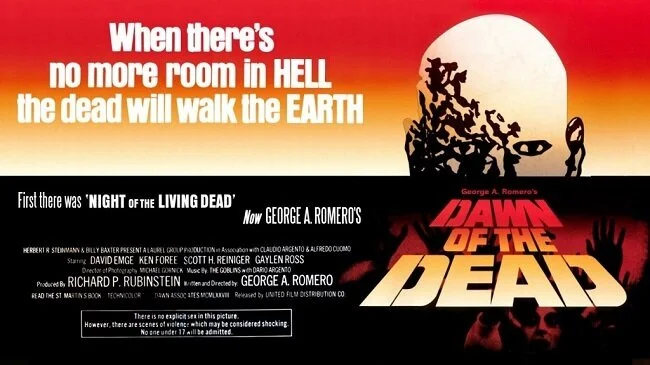
Five years ago, I wrote about a fan edit of George Romero’s horror classic Dawn of the Dead that attempted to recreate the original rough cut of the movie. The so-called “Extended Mall Hours” cut was composed of the 139 minute Cannes edit of the film and the 117 minute Dario Argento version. It was a very interesting project but as it consisted of DVD quality material (including deleted scenes) it was not an optimal presentation. Being a fan edit, there were obvious issues regarding legality, so I never really expected to see anything comparable to this version being officially sanctioned or released. So I was therefore most surprised to learn that a recent Blu-ray boxset release by Austrian distributors XT Video included a “Complete Cut” which similarly combines all available material. This is presented in 1080p, at a ratio of 1:85:1 and runs 155 minutes. It is superior in quality to the “Extended Mall Hours” cut and is most likely the nearest any fan is ever going to get to seeing Romero’s initial edit of the film.
Contrary to a lot of the pre-release doom and gloom regarding re-edits and extensive new footage being shot, World War Z turned out to be far from the disaster that some critics implied. Ultimately there were some good ideas and snatches of interesting dialogue. Some of the characters were unusual and there seems to have been an attempt do something different with the genre. All of these things are laudable. Unfortunately, despite these positive attributes the movie clearly shows the signs of post-production interference and material from the extensive re-shoot is all too apparent. That’s not to say that is bad because that is not the case. It’s because it is noticeably different in style and tone from the rest of the film.

Back in the summer of 2012, the red band trailer for Cockneys vs Zombies set a very high benchmark and certainly raised expectations for the final movie. The title itself was also somewhat of a gamble, either raising a wry smile among horror fans or eliciting a roll of the eyes and a deep sigh for a genre in decline. I was unable to attend the premier at Frighfest 2012, but the general feedback at the time was that that that the movie was extremely well received by horror fans. Finally, six years later, I finally caught up with the film on Amazon Prime and I’m happy to report that Cockneys vs Zombies does live up expectations and is a thoroughly entertaining, quirky and very British horror movie. It manages to balance both visceral horror with a healthy dose of black humour, which is no mean feat.
The horror genre has more than its fair share of bad movies. It’s the nature of the beast (no pun intended). Films of this type can be made quickly and cheaply but have the potential to make a tidy profit. Therefore, they attract not only burgeoning talent but those bereft of any as well. Furthermore, traditional formulas work, so any new innovative production is often followed by a wealth of copycats and knockoff films. To say that the genre is self-plagiarising is an understatement. Yet, from time to time, horror movies can surpass mainstream cinema with regard to social commentary, satire and intelligent adult narratives. Look no further than Dawn of the Dead, The Thing and The Descent if you want three solid examples. Horror is a versatile and malleable genre that can facilitate great stories and reflections upon the human condition.
World War Z Unrated Cut runs seven minutes longer than the theatrical version of the movie and contains "intense footage not shown in theaters". The material consists of more violent alternative takes of existing action scenes and features mainly CGI effects work. There is no additional plot, although there may be some nominal changes to dialogue. Overall the unrated cut is an improvement over the theatrical print in so far it offers a more traditional zombie movie experience. However, compared to other examples of the genre, the unrated version of World War Z still remains relatively sedate in terms of violence. The movie focuses on the scale of the zombie outbreak, rather than the visceral mayhem of a George Romero film.
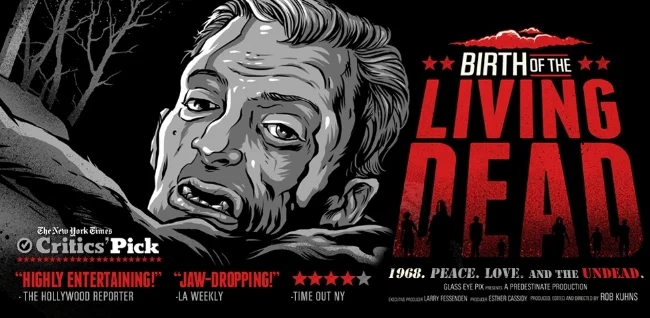
These day’s zombies are a somewhat ubiquitous plot device and enjoy an entire literary, artistic and cinematic sub-genre. The Walking Dead is one of the most popular TV shows internationally and hundreds of thousands of gamers fight the undead, online every day. Yet there was a time when zombies were just a minor subset of the horror genre and far from a popular one. That all changed in 1968, when a low-budget, independent film called Night of the Living Dead was released upon an unsuspecting public. The movie’s impact upon the film industry and popular culture was extraordinary. Rob Kuhns’ appropriately titled documentary Birth of the Living Dead analyses the creation of George A. Romero’s seminal classic and strives to determine how a single movie could have such impact.
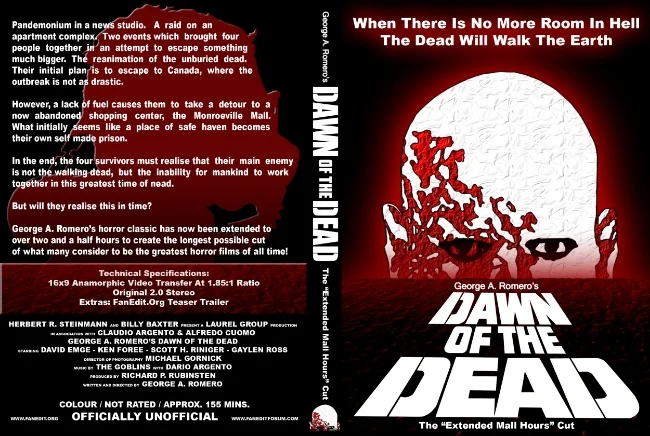
In the last few years I’ve become acquainted with the concept of fan edits. Fan edit are versions of a film that has been modified by a viewer. This involves the removal, reordering, or the addition of new material to create a new interpretation of the film. Fan edits include the removal of scenes or dialogue, replacement of audio and visual elements, as well as adding material from sources such as deleted scenes or even other films. Due to the easy access to pro-quality software and high definition source material, such editions are often very professionally realised. Naturally fan edits often fall foul of copyright law.
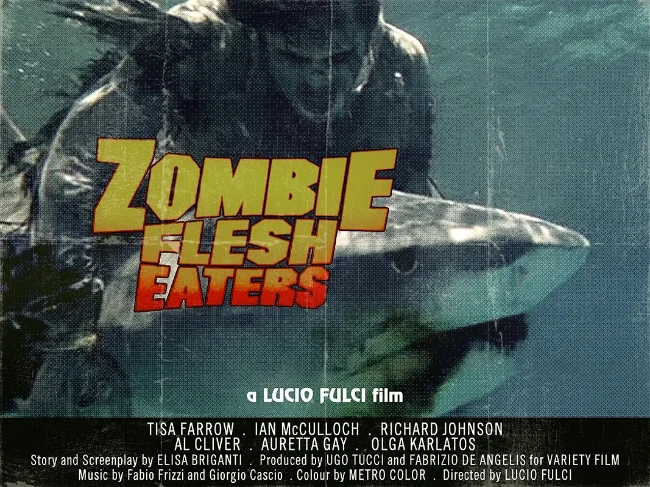
If you are a fan of horror movies then sooner or later Lucio Fulci’s Zombi 2 (also known as Zombie, Island of the Living Dead, Zombie Island, Zombie Flesh-Eaters and Woodoo) will appear on your radar. For good or ill, this movie looms large within the genre and has a mixed reputation. Even by current cinematic standards, this movie is a gore-fest and it still has the ability to make viewers squirm. It is a curious phenomenon that a relatively low budget and obscure Italian cash-in on George Romero’s Dawn of the Dead, has managed to achieve such an infamous, iconic and cult status.
World War Z Unrated Cut (2013)
World War Z Unrated Cut runs seven minutes longer than the theatrical version of the movie and contains "intense footage not shown in theaters". The material consists of more violent alternative takes of existing action scenes and features mainly CGI effects work. There is no additional plot, although there may be some nominal changes to dialogue. Overall the unrated cut is an improvement over the theatrical print in so far it offers a more traditional zombie movie experience. However, compared to other examples of the genre, the unrated version of World War Z still remains relatively sedate in terms of violence. The movie focuses on the scale of the zombie outbreak, rather than the visceral mayhem of a George Romero film.
World War Z Unrated Cut runs seven minutes longer than the theatrical version of the movie and contains "intense footage not shown in theaters". The material consists of more violent alternative takes of existing action scenes and features mainly CGI effects work. There is no additional plot, although there may be some nominal changes to dialogue. Overall the unrated cut is an improvement over the theatrical print in so far it offers a more traditional zombie movie experience. However, compared to other examples of the genre, the unrated version of World War Z still remains relatively sedate in terms of violence. The movie focuses on the scale of the zombie outbreak, rather than the visceral mayhem of a George Romero film.
I thought it may be useful to post a selection of screen captures highlighting the major differences between the two versions of World War Z. Again, it is not in any way a comprehensive list but it broadly shows the major differences. If you require further details Movie-Censorship.com has produced a more thorough breakdown. My original opinion of the film itself still stands. World War Z is flawed but has good performances and explores some interesting concepts. The unrated cut of the movie certainly addresses one of the many criticisms levelled at the PG-13 theatrical release; namely that it was too tame. If you have yet to see World War Z, then this is the cut of the film I would recommend.
During the initial zombie outbreak in Philadelphia, we see more blood when people are bitten. Unfortunately, due to the colour palette that is currently in vogue with many film makers it is still not very clear.
Gerry shoots a zombie in the head while trying to find safety in the tenements of Newark. It is the only major head shot depicted in the movie.
Gerry is covered in more blood from the zombie he bayoneted in the stairwell.
In the unrated cut the camera clearly shows that it is Tommy that shoots the zombie attacking Gerry.
When Fassbach trips and accidentally shoots himself, we see the aftermath more clearly.
The imprisoned CIA operative pulls out one of his front teeth, while explaining how North Korea did this to its entire population in twenty four hours, to prevent the spread of the disease.
He then adds the tooth to a collection of others he has removed.
As the zombies overrun Jerusalem, we see more bullet hits as they are shot by Israeli soldiers.
Most of the gunshot wounds have been added in post production by CGI.
When an Israeli soldier uses his grenade, we see more explicit carnage caused by the explosion.
Further CGI blood and gunshot wounds are seen as the zombies are shot through the closed gate and railings.
A further grenade explosion shows more destruction to the zombies.
Segen's hand amputation is more graphic. Unlike the theatrical print it is obvious what Gerry has done.
Gerry binds Segen's wrist and waits to see if she becomes infected or not.
The zombie attack aboard the plane has a lot more CGI blood when victims are bitten.
Again due to lighting and editing, even the more explicit scenes are difficult to see clearly.
Another victim is bitten, prior to the plane explosively decompressing due to a grenade explosion.
Gerry's impalement injury is shown more clearly.
Gerry dodges the attacking zombie and hits it at the base of the spine with a crowbar.
He subsequently stamps on the zombie's face, crushing it.
George A. Romero's Day Of The Dead (1985) is a bleak and remorseless masterpiece. The final entry in his “Dead Trilogy”, its central theme is that in a world on the brink of destruction, man is still the biggest threat to his own existence. It is well scripted, clinically accurate in its observations on human nature and thought provoking, despite having its budget cut just weeks before production commenced. 40 years later it is revered as a genre milestone and is considered one of Romero’s finest works. Sadly, the 2008 “remake” directed by Steve Miner, who has a background in slasher and exploitation movies, takes a contrasting approach, to say the least. It certainly has very little to do with Romero’s film and one can’t help but assume that it is nothing more than a cynical cash in. Setting aside comparisons with the original, this is not in any way a standout zombie film in its own right.
George A. Romero’s Night of the Living Dead is a true genre milestone that is praised not only by horror film fans but mainstream critics alike. If you are interested in watching an intelligent, well researched and entertaining documentary about the film’s provenance and cultural impact then I thoroughly recommend Birth of the Living Dead (2013) by Rob Kuhn. It tells you pretty much all you need to know about why this classic film is so important. As for Night of the Living Dead itself, it still holds up well after 53 years. It is the immediacy and relatability of the premise and overall story that still makes the film relevant. The zombies are purely a “MacGuffin” and the real focus of the plot is how people behave under pressure in life threatening situations. It’s a film about how we can react to the same situation differently and how cultural baggage and the need for people to be “right”, hinders co-operation and thwarts progress.
One of the biggest issues associated with modern film production is creative interference by the studios financing them. Despite employing known writers and directors who have an established track record and creative style, all too often control is taken from these individuals and changes are imposed upon the production, usually to the detriment of the overall film. Hence, you can understand why more and more filmmakers are taking their work to Netflix and similar platforms. Streaming services are apparently far more accommodating and understanding. Martin Scorsese himself made his last film The Irishman, for Netflix. However, such creative freedom can be a double edged sword. Some directors need to be tempered, the same way that some writers need a good editor. There is often a fine line between creative freedom and self indulgence.
Sometimes just the name of a film is sufficient to sell it to you. I originally discovered this zombie crossover movie thanks to film critic Mark Kermode's video blog from the 2008 Cannes Film Festival. He reported on how the film festival was also a major marketplace for independent movie makers trying to find international distribution for their products. Flight of the Living Dead was one of the lurid flyers he was given. Writer and director Scott Thomas claimed at the time that despite the obvious plot similarities with Snakes on a Plane, his film was not intended to be a quick cash-in on Samuel L. Jackson’s sleeper hit from 2006. The basic concept and the pre-production phase of Flight of the Living Dead supposedly pre-dates the aforementioned exploitation movie. Considering how long it can take for a small independently funded movie to find a distributor this may well be true.
Five years ago, I wrote about a fan edit of George Romero’s horror classic Dawn of the Dead that attempted to recreate the original rough cut of the movie. The so-called “Extended Mall Hours” cut was composed of the 139 minute Cannes edit of the film and the 117 minute Dario Argento version. It was a very interesting project but as it consisted of DVD quality material (including deleted scenes) it was not an optimal presentation. Being a fan edit, there were obvious issues regarding legality, so I never really expected to see anything comparable to this version being officially sanctioned or released. So I was therefore most surprised to learn that a recent Blu-ray boxset release by Austrian distributors XT Video included a “Complete Cut” which similarly combines all available material. This is presented in 1080p, at a ratio of 1:85:1 and runs 155 minutes. It is superior in quality to the “Extended Mall Hours” cut and is most likely the nearest any fan is ever going to get to seeing Romero’s initial edit of the film.
Contrary to a lot of the pre-release doom and gloom regarding re-edits and extensive new footage being shot, World War Z turned out to be far from the disaster that some critics implied. Ultimately there were some good ideas and snatches of interesting dialogue. Some of the characters were unusual and there seems to have been an attempt do something different with the genre. All of these things are laudable. Unfortunately, despite these positive attributes the movie clearly shows the signs of post-production interference and material from the extensive re-shoot is all too apparent. That’s not to say that is bad because that is not the case. It’s because it is noticeably different in style and tone from the rest of the film.
Back in the summer of 2012, the red band trailer for Cockneys vs Zombies set a very high benchmark and certainly raised expectations for the final movie. The title itself was also somewhat of a gamble, either raising a wry smile among horror fans or eliciting a roll of the eyes and a deep sigh for a genre in decline. I was unable to attend the premier at Frighfest 2012, but the general feedback at the time was that that that the movie was extremely well received by horror fans. Finally, six years later, I finally caught up with the film on Amazon Prime and I’m happy to report that Cockneys vs Zombies does live up expectations and is a thoroughly entertaining, quirky and very British horror movie. It manages to balance both visceral horror with a healthy dose of black humour, which is no mean feat.
The horror genre has more than its fair share of bad movies. It’s the nature of the beast (no pun intended). Films of this type can be made quickly and cheaply but have the potential to make a tidy profit. Therefore, they attract not only burgeoning talent but those bereft of any as well. Furthermore, traditional formulas work, so any new innovative production is often followed by a wealth of copycats and knockoff films. To say that the genre is self-plagiarising is an understatement. Yet, from time to time, horror movies can surpass mainstream cinema with regard to social commentary, satire and intelligent adult narratives. Look no further than Dawn of the Dead, The Thing and The Descent if you want three solid examples. Horror is a versatile and malleable genre that can facilitate great stories and reflections upon the human condition.
World War Z Unrated Cut runs seven minutes longer than the theatrical version of the movie and contains "intense footage not shown in theaters". The material consists of more violent alternative takes of existing action scenes and features mainly CGI effects work. There is no additional plot, although there may be some nominal changes to dialogue. Overall the unrated cut is an improvement over the theatrical print in so far it offers a more traditional zombie movie experience. However, compared to other examples of the genre, the unrated version of World War Z still remains relatively sedate in terms of violence. The movie focuses on the scale of the zombie outbreak, rather than the visceral mayhem of a George Romero film.
These day’s zombies are a somewhat ubiquitous plot device and enjoy an entire literary, artistic and cinematic sub-genre. The Walking Dead is one of the most popular TV shows internationally and hundreds of thousands of gamers fight the undead, online every day. Yet there was a time when zombies were just a minor subset of the horror genre and far from a popular one. That all changed in 1968, when a low-budget, independent film called Night of the Living Dead was released upon an unsuspecting public. The movie’s impact upon the film industry and popular culture was extraordinary. Rob Kuhns’ appropriately titled documentary Birth of the Living Dead analyses the creation of George A. Romero’s seminal classic and strives to determine how a single movie could have such impact.
In the last few years I’ve become acquainted with the concept of fan edits. Fan edit are versions of a film that has been modified by a viewer. This involves the removal, reordering, or the addition of new material to create a new interpretation of the film. Fan edits include the removal of scenes or dialogue, replacement of audio and visual elements, as well as adding material from sources such as deleted scenes or even other films. Due to the easy access to pro-quality software and high definition source material, such editions are often very professionally realised. Naturally fan edits often fall foul of copyright law.
If you are a fan of horror movies then sooner or later Lucio Fulci’s Zombi 2 (also known as Zombie, Island of the Living Dead, Zombie Island, Zombie Flesh-Eaters and Woodoo) will appear on your radar. For good or ill, this movie looms large within the genre and has a mixed reputation. Even by current cinematic standards, this movie is a gore-fest and it still has the ability to make viewers squirm. It is a curious phenomenon that a relatively low budget and obscure Italian cash-in on George Romero’s Dawn of the Dead, has managed to achieve such an infamous, iconic and cult status.
Classic Movie Themes: Mackenna's Gold
Mackenna's Gold is a perfect example of the Western at its most decadent. Made at a time when the genre was becoming increasingly tired and facing strong competition from the Italian market, Hollywood decided that the way to renew public interest was to turn everything up to eleven and turn the Western into a multimillion dollar spectacle. The movie cost Columbia Pictures $14 million in 1969 and boasted an all-star cast, as well as action and special effects. However, it was not a smooth production and the studio seemed to get cold feet prior to its release. The Three hour running time was reduced to one hundred and twenty-eight minutes, leaving the final cut feeling somewhat uneven. Overall, the public were indifferent and the box office takings were low.
Mackenna's Gold is a perfect example of the Western at its most decadent. Made at a time when the genre was becoming increasingly tired and facing strong competition from the Italian market, Hollywood decided that the way to renew public interest was to turn everything up to eleven and turn the Western into a multimillion dollar spectacle. The movie cost Columbia Pictures $14 million in 1969 and boasted an all-star cast, as well as action and special effects. However, it was not a smooth production and the studio seemed to get cold feet prior to its release. The Three hour running time was reduced to one hundred and twenty-eight minutes, leaving the final cut feeling somewhat uneven. Overall, the public were indifferent and the box office takings were low.
Despite the movies flaws there is still much to like about Mackenna's Gold, although one’s enjoyment is frequently linked to the preposterous nature of the screenplay and the varying quality of the visual effects. One such aspect is the rather cool and groovy soundtrack by Quincy Jones. It has all his usual hallmarks such as crescendo's and tone colour shifts. Even within the confines of the Western idiom he manages to include a hint of his jazz and blues roots. The movie also features Jose Feliciano singing "Ole Turkey Buzzard", a song that re-occurs throughout the film. The cautionary lyrics regarding men killing each other in their lust for gold, mirror the on-screen story and change as the narrative progresses. It's catchy nature and somewhat incongruous inclusion in the movie’s score has earned it a somewhat cult reputation.
The Planet of the Apes movie franchise took a radical change of course with its third entry in the series. The first two films were set in the future and benefited from high production values to help realise a post apocalyptic earth. However, due to a substantial reduction of budget, Escape from the Planet of the Apes uses a time travel plot device to bring the ape protagonists to present day Los Angeles (1971 in this case). The result is a film with a much smaller narrative scope. However, although it lacks the science fiction spectacle of its predecessors, it features an interesting satirical exploration of celebrity culture and ponders what it is like to be deemed an enemy of the state. As ever, Roddy McDowell and Kim Hunter provide exceptional lead performances as the Chimpanzees Cornelius and Zira. Escape from the Planet of the Apes also captures the pop culture vibe of seventies America.
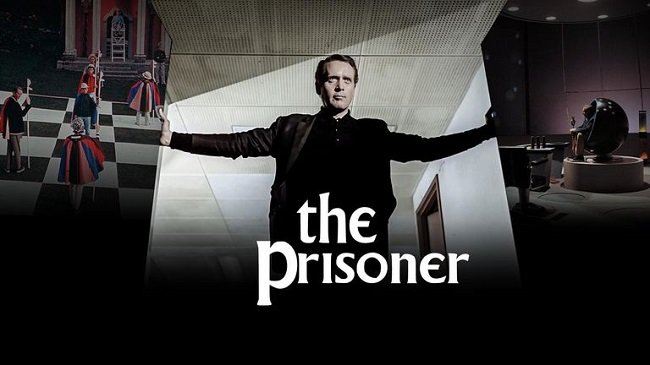
Ronald Erle Grainer (11 August 1922 – 21 February 1981) was a prolific Australian composer who is best remembered for his work in the United Kingdom during the sixties and seventies. He wrote numerous notable scores and theme music for several iconic television shows such as Doctor Who, Steptoe and Son and Tales of the Unexpected. He also composed the soundtrack for several major motion pictures such as Some People (1962), The Assassination Bureau (1969) and The Omega Man (1971). Grainer relocated to London from Australia in 1952 but it was not until 1960 that he gained critical success after writing the music for the popular TV show Maigret. He subsequently received an Ivor Novello award for “Outstanding Composition for Film, TV or Radio”.

The following is about a cultural change. That is not to say that it’s a value judgement or one of those posts you so frequently read by bloggers of a certain age, that essentially boil down to “things were better in my day”. It is merely an observation and like all observations it is not 100% universal. There will always be exceptions to the rule. I am simply painting with broad strokes a general truism for your consideration. My point being that people listen, experience and enjoy music differently these days compared to how they did three to four decades ago. I’m not talking about the science of hearing or anything complex like that. I am merely highlighting the change in the way we choose to experience music and how that has an impact upon its creation and presentation. So like Anne Elk, presenting her theory on the Brontosaurus, here is the axiom at the heart of this post.
Allonsanfàn (1974) is an Italian historical drama film written and directed by Paolo and Vittorio Taviani. The title of the film derives from the first words of the French Revolutionary anthem La Marseillaise (Allons enfants, IE “Arise, children”). It is also the name of a character in the story. Set against the backdrop of the Italian Unification in early 19th-century Italy, Marcello Mastroianni stars as an ageing revolutionary, Fulvio Imbriani, who becomes disillusioned after the Restoration and endeavours to betray his companions, who are organising an insurrection in Southern Italy. Allonsanfàn is a complex film that is not immediately accessible to those unfamiliar with the intricacies of Italian political history nor the arthouse style of the Taviani brothers. However, it is visually arresting and features a rousing score by Ennio Morricone.
Jerry Goldsmith’s contribution to Star Trek is immense. Yet simply listing the films and TV episodes he wrote music for does not adequately encapsulate the significance of his contribution to the franchise. His majestic, thoughtful and uplifting musical scores provide an emotional foundation that reflects the core ethos of Star Trek. They also create an invaluable sense of continuity that spans multiple shows and movies. Perhaps the most obvious example of this is his iconic title music for Star Trek: The Motion Picture (1979) that was subsequently adopted as the theme tune for Star Trek: The Next Generation. His work was held in such high regard, when Star Trek V: The Final Frontier (1989) ran into production issues, it was thought that a Jerry Goldsmith soundtrack may well elevate the film. Sadly it didn’t but his work on that instalment was outstanding and among his best.
Halloween (1978) is both a genre and cinematic milestone. It made stars of Jamie Lee Curtis and director John Carpenter as well as kickstarting the slasher genre that dominated the box office for the next 15 years. Unlike many of the inferior imitations that followed in its wake, Halloween is not a gorefest but a far more suspenseful and unsettling film. It’s shocks and sinister atmosphere are the result of sumptuous panavision cinematography by Dean Cundey and inventive editing by Tommy Wallace and Charles Bornstein. Another invaluable asset to the film’s effectiveness is John Carpenter minimalistic synth and piano score which perfectly embellishes the film with an air of menace. After 33 years and various re-arrangements in subsequent sequels, the original Halloween Theme is still as effective today as it was when the film was first released.
Tenebrae (1982) is probably Dario Argento’s most accessible “giallo” for mainstream audiences. Although violent, it is not as narratively complex as Deep Red (1975) or as bat shit crazy as Phenomena (1985). The story centres on popular American novelist Peter Neal (Anthony Fanciosa) who is in Rome to promote his latest book. Events take a turn for the worst when a series of murders appear to have been inspired by his work. The plot twists and turns, the director explores themes such as dualism along with sexual aberration and blood is copiously spattered across the white walled interiors of modernist buildings. It is slick, disturbing and has a pounding synth and rock score by former Goblin members, Claudio Simonetti, Fabio Pignatelli, and Massimo Morante.
An American Werewolf in London is a genre milestone and one of the few horror films that successfully manages to balance humour and suspense without mitigating the overall tone of the story. 40 years on from its theatrical release it still holds up well with its bitter sweet love story, tragic themes and ground breaking transformation effects by Rick Baker. Director John Landis never really bettered this concise and effective genre outing. It hits the mark in virtually every part of the production. However, there is one aspect of the film that does suffer as a result of the director’s personal choices. Whether it is to the detriment of the overall film is debatable. The point in question is the film’s soundtrack and the director’s focus upon the song Blue Moon by Richard Rodgers and Lorenz Hart.

Before we start, no I am not writing about Alexander Courage’s classic main theme for the original Star Trek show. I can add nothing further to that particular discussion and it remains iconic and inspiring, even when distilled down to just the initial fanfare. In this post I want to draw your attention to another piece of music from Star Trek that has permeated its way into popular culture. A cue that when heard, if the listener is familiar with its provenance, will instantly conjure up images of flying drop kicks, ear claps and judo chops. A piece of music that can be added to pretty much any video footage and instantly make it more heroic. Yes, I am talking about what has become generically known as Star Trek “fight music”. Or more specifically, the "The Ancient Battle/2nd Kroykah" cue from Amok Time (S02E01) composed by Gerald Fried. The scene during the koon-ut-kal-if-fee ritual in which Spock fights Kirk on the planet Vulcan for complicated “reasons”.

Classical music has often been used to great effect in cinema since the advent of sound. It has certain advantages over bespoke compositions, in that it can imbue a scene with a sense of gravitas and emotionally connect with viewers who may already be familiar with the piece being played. Legendary director Stanley Kubrick famously rejected Alex North’s score for 2001: A space Odyssey after finding the classical tracks he used for the temporary soundtrack complement the visuals perfectly. Over the years, some particular pieces of classical music have proven to be very popular and flexible, thus appearing in a wide variety of films across multiple genres. Hence, I have chosen two well known tracks that demonstrate this. I would also like to highlight contemporary classical music and have also selected one example that I feel demonstrates how the genre sublimely compliments cinema.
If you mention The Pink Panther (1963) I’d hazard a guess that most people will instantly think of Inspector Clouseau (and possibly throw in a quote in faux French about “Minkeys”) or hum or whistle the iconic theme tune. It’s blend of cool sixties Jazz and Lounge is both classy and evocative. Henry Mancini’s contribution to the Pink Panther franchise is commensurate to that of Peter Sellers and Blake Edwards. If you removed his musical scores from any of the films they would be greatly diminished. In fact one can argue that the movies made in the eighties after Sellers’ death are greatly bolstered by Mancini’s intelligent and accomplished musical accompaniment. The franchise may have run out of steam but Mancini never did so.
Back in August 2018, I posted seven of my favourite tracks from various video games that I’ve played over the years. I thought recently that it was high time that I did the same again. So here are a further five musical cues that I especially enjoy. All of which contribute greatly to the respective games that they feature in. Unlike film composers, musicians that write for video games do not always enjoy comparable exposure or attention. Yet often they have a more complex remit, having to write material for dozens of hours of content, rather than just two or three. Furthermore, the complete soundtrack to many video games often remain conspicuously absent, with fans having to data mine the game client to find the tracks that they love. Which is why it is important for those that enjoy video game music to show their support. Perhaps then more publishers will release full and comprehensive game soundtracks for digital download.
It was Friday the 13th yesterday, so I thought it was about time that I added Harry Manfredini’s iconic score to the annals of Classic Movie Themes. The 1980 slasher movie Friday the 13th has become as legendary in the pantheon of cinematic horror history as John Carpenter’s Halloween. Although there are marked differences between these two films, both use minimalist musical scores extremely effectively to punctuate the proceedings and embellish the overall atmosphere. However, Manfedini did not want to provide viewers with obvious audio cues during scenes of building tension. He preferred to focus his score upon the activities of the franchise's iconic killer, Jason Voorhees, and hence have strong musical cues when he was on screen. This approach meant that he had to use a unique musical motif to denote potential tension, without diminishing its effect on the audience by excessive use of obvious and melodramatic cues.

Game of Death was Bruce Lee’s fourth Hong Kong martial arts movie. Due to the success of his previous films he found himself in a position where he could finally write and direct a project himself. Filmed in late 1972 and early 1973, the film was put on hold midway through production when Hollywood offered him a starring role in Enter the Dragon. He died shortly after completing the US backed movie that made him an international star, so Game of Death remained unfinished. Several years later the rights to the raw footage were sold and recycled for a new movie, that kept the name but bore little resemblance to Lee’s original vision. For most of Game of Death, Kim Tai-jong and Yuen Biao double for Bruce Lee and it is only in the final act that audiences actually get to see about 12 minutes of material that he shot himself. The 1978 release of Game of Death, directed by Robert Clouse, is a mess but remains a cinematic curiosity. The scenes which genuinely feature Bruce Lee are outstanding, even in an abridged form.
The Long Good Friday not only launched then career of Bob Hoskins but remains a uniquely British take on the gangster genre. Featuring authentic performances and a credible plot, the screenplay touches upon many of the social and political issues of the time; police corruption, the IRA, urban renewal and the decline of industry, along with EEC membership and the free-market economy. It’s a gritty and unrelenting drama that is still relevant today. Furthermore, the film is filled with quotable dialogue and has several stand out scenes that showcase Bob Hoskins’ smouldering performance. It’s also offers of “who’s who” of British character actors and there is one sequence still has the power to shock even today.
A few years ago, I wrote a post about cult movie soundtracks and how many of these movies are often blessed with a high quality score from an established composer. The subject came up again recently when I was visiting the British Film Institute with friends, and several other examples were discussed. Hence, I thought it would be prudent to write a follow up post with another selection of material, as it continues to amaze me how often the most appalling films can still have outstanding soundtracks. With this idea in mind I've collated five films that are for various reasons are labelled “cult” and have suffered the “slings and arrows of outrageous fortune” over the years. All have scores of interests and note, though for different reasons. I have chosen a track from each soundtrack which I think highlights the musical excellence and integrity of the composers involved. The genres are varied as are the musical styles and nuances of each piece. All clearly demonstrate how a well-conceived score can embellish and enhance a movie, effectively becoming a character in its own right.
Lords of the Fallen is an action role-playing game from 2014, played from a third-person perspective. It is broadly in the same idiom to Darksiders and Dark Souls with the emphasis on complex and challenging combat. And it is for that reason that I didn’t get on with this title when I bought it in a Steam sale a few years ago. I felt that the long, protracted fights were an impediment to the narrative, which I quite enjoyed. However, the game was designed this way to appeal to the combat focused gamer and “git gud” culture. But I think that it’s important to try different genres of games from time to time and to step occasionally out of your comfort zone. I would cite the Hand of Fate series as a positive example of this. Both of those titles are from a genre I wouldn’t usually consider and playing them turned out to be a very positive experience
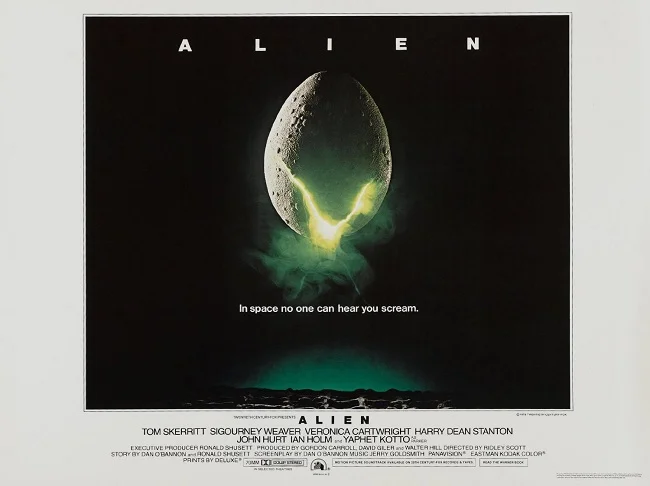
Alien is a unique genre milestone. It challenged the established aesthetic created by 2001: A Space Odyssey of space travel being pristine, clinical and high tech and replaced it with a grimy, industrial quality. The space tug Nostromo is also a conspicuously “blue collar”, civilian venture, underwritten by a large corporation. As for H. R Giger’s xenomorph, it redefined the depiction of extraterrestrial life in movies. Director Ridley Scott brought visual style and atmosphere to particularly unglamorous and dismal setting. He also scared the hell out of audiences at the time with his slow burn story structure and editing style that hints, rather than shows. Overall, Alien is a text book example of how to make a horror movie and put a new spin on a classic and well-trodden concept.

James Horner was a prolific, yet consistently good composer with a broad range of styles. Consider his score for 48 Hrs with its Jazz under currents and then compare it to his grand swashbuckling approach to Krull. They are radically different soundtracks, but both are extremely effective in embellishing their respective motion pictures. That was James Horner great talent. He knew when to be theatrical and bombastic but could also dial it back and be subtle, gentle and delicate. It made his body of work very diverse and memorable.
James Horner, although possessing a very broad and eclectic musical range, was in many respects a very traditional composer. He was certainly au fait with works of such giants as Miklós Rózsa, Korngold and Bernard Herrmann and it often manifested itself in his music through his use of the leitmotif. Perhaps the reason James Horner was so consistently good and crafted so many outstanding pieces of music, is because he never saw his profession as just a means to an end. As he said in an interview once, “I don’t look at this as just a job. I see music as art”.
Star Trek: Enterprise was the first show in the Star Trek pantheon to have a song performed by an established artist play over the opening credits, rather than a traditional theme tune. Up until 2001, the franchise had maintained a more formal approach, established with the iconic introduction to the original series composed by Alexander Courage. Needless to say, such a radical departure from established practise brought about consternation and debate among fans. In some respects, you can argue that point about the entire show itself, but that as they say, is an entirely different blog post. Needless to say, the dislike and hatred that the song Where My Heart Will Take Me engendered in certain quarters, lead to a petition to have it removed. Needless to say, this movement failed, and the show continued using it for four seasons. Seventeen years on this particular debacle has now died down and the song is often just referenced ironically by fans as an amusing anecdote and piece of Trek trivia.
According to Wikipedia “Hawk the Slayer is a 1980 British sword and sorcery adventure film directed by Terry Marcel and starring John Terry and Jack Palance. The film has developed a cult following”. That doesn’t do the movie justice by any reckoning. Hawk the Slayer is a quirky, low budget, high camp fantasy movie that compensates for its budgetary shortcoming by being so preposterously silly. It is loaded with hard boiled, fantasy steeped dialogue that parodies well known genre tropes. It treads a fine line between utter bilge and stupid fun. It is very much a product of its time and is also filled with British character actors. Some viewers will see nothing more than a cheap and cheerful cash-in on the eighties Sword and Sorcery boom. Others will delight at this inventive, stylised and silly fantasy orientated outing. Such is the nature of cult movies.
Film producer Julian Blaustein had a long-standing desire to make a film that addressed the fears and concerns of the post war Atomic Age. With the backing from Fox Studio Executive Darryl F. Zanuck, he hired screenwriter Edmund North to adapt the short story Farewell to the Master by Harry Bates. The screenplay provided a moral commentary about the ongoing arms race and featured an alien visitor with Christ like qualities who delivers an apocalyptic message. Veteran director Robert Wise was brought in head the project and a fine cast of established characters actors such as Michael Rennie, Patricia Neal Hugh Marlowe and Sam Jaffe was assembled. The finished movie has proven to be one of the greatest science fiction movies ever; it is The Day the Earth Stood Still made in 1951.
King Solomon’s Mines is a 1985 Cannon Films production based on the pulp works of H. Rider Haggard. It was quickly made to cash in on the ongoing success of Indiana Jones franchise, although the finished movie bears little resemblance to the classic original novel. Like most Cannon movies from that boom era, it was a cheap and fast enterprise that superficially sported a good cast, but ultimately didn’t do much with them. Veteran director J. Lee Thompson favoured a light and comic approach to the material, as the film’s budget could hardly sustain any major notable set pieces. Yet, it proved popular enough at the box office to warrant a sequel the following year. Allan Quatermain and the Lost City of Gold proved to be as equally silly but by then the public’s interest had waned.
A ten months ago, I wrote about the LOTRO soundtrack and listed some of my favourite tracks. This time round rather than just limit myself to music from one game, I thought it may be more interesting to broaden the remit. So, I have decided to upload seven of my favourite tracks and music cues from various games I have played over the last two decades. As with cinema, the soundtrack of a game plays a very important role. It can make a substantial impact on the players perceptions and enjoyment. The following tracks are examples that I feel have greatly enhanced a game. They’re also ones that I find particularly enjoyable. They are not in any order of preference.

Paul Verhoeven has seldom made a movie without some semblance of controversy associated with it, and his 1992 neo-noir Basic Instinct was no different. Even before its US release, Basic Instinct courted controversy due over its overt sexuality and graphic depiction of violence. It was strongly opposed by gay rights activists, who criticised the film's depiction of homosexual relationships and the portrayal of a bisexual woman as a homocidal narcissistic psychopath. The opening murder with an icepick is still shocking twenty six years later and is an excellent showcase for makeup FX artists Rob Bottin.

You can write pages on Gerry Anderson's 1968 Supermarionation series Joe 90. There's the morally ambiguous premise of giving an emotionally immature nine-year-old the experiences of an adult. Then the psychological effects of allowing him to kill at will. Then there's the perennial issue of scientists prostituting their skills to the intelligence community. One can also reflect upon the absence of any major female characters in the series and how that may impact upon Joe himself. Finally, when one finally arrives she's a gold-digging bitch who tries to exploit Joe’s Dad, Professor McClaine. Joe 90 is certainly a psychiatrist’s dream subject.

Despite the popularity of the TV show in 1965, the two spinoff Thunderbirds feature films were both box offices failures. This has often been attributed to the indifferently written screenplays that seem to have completely missed the sense of suspense that the fifty-minute episodes achieved. Both feature films feel rather slow and like extended episodes rather than big budget extravaganzas. They fail to do anything different with established characters and apart from showcasing more extensive miniature effects in a widescreen format, don’t really have much more to offer. It’s curious that the winning, character driven formula that worked on television was overlooked for these big screen outings.
I grew up during the seventies when network TV shows still put a lot of thought and effort into such things as their theme tune. It was a decade littered with memorable tracks that captured the essence of the shows they came from. Many have now become integral aspects of popular culture, leading to countless internet memes as well as becoming the ringtones of choice for many a fortysomething. However, things are very different now. You can have a staggeringly good theme for your show, but it can't possibly be longer than thirty seconds. And don’t think for a moment that viewers can listen to it again at the end, as it has now become standard practice to compress the credits into a third of the TV screen and preview what's coming next, while some link announcer spouts inanities. Mercifully, cable and streaming companies tend to treat their TV shows with greater respect. The lack of commercial advertising ensures a longer program duration and hence more focus on a theme tune. However, network TV still commands big audiences, yet hasn’t in recent years produced any TV show themes of note.
Dark City: Director's Cut (1998)
There are many directors who have cut their teeth working in the music industry. They have often fashioned their cinematic style and technique from the music videos they’ve made. Unfortunately, I am not a fan of this school of movie making. McG, for example represents to me the epitome of style over substance. I also detest this current trend for fast editing. It may well be pertinent for the music industry but I believe it is to the detriment of the narrative cinema. But there is one director from this background who has risen above his roots and exhibits true creative talent and a fundamental grasp of film. Alex Proyas, director of The Crow and I, Robot.
There are many directors who have cut their teeth working in the music industry. They have often fashioned their cinematic style and technique from the music videos they’ve made. Unfortunately, I am not a fan of this school of movie making. McG, for example represents to me the epitome of style over substance. I also detest this current trend for fast editing. It may well be pertinent for the music industry but I believe it is to the detriment of the narrative cinema. But there is one director from this background who has risen above his roots and exhibits true creative talent and a fundamental grasp of film. Alex Proyas, director of The Crow and I, Robot.
Dark City is an often-overlooked film, lost in the wake of the media hype surrounding The Matrix. Both have plot similarities and common themes. However, Dark City displays a deeper level of thought which is perhaps t why it lost favour with mainstream audiences not adequately equipped for its cerebral rigour. There is also a lack of a mainstream A list actor. Instead the film relies upon an international cast of established character actors. In 2008, director Alex Proyas re-edited the film, removing the original opening narration, adding additional material and some extra FX footage. The results are quite startling and have had quite an impact on the way the story is presented and which themes and motifs are emphasised.
Dark City starts off as a stylised film noir, with Rufus Sewel waking up in a motel with a dead prostitute. He's soon on the run from hard boiled cop, William Hurt. Can he trust his estranged wife Jennifer Connelly? Is he really mentally ill as his Doctor (Kiefer Sutherland) describes or is there something more sinister going on? Who are the trio of tall strangers dressed in black, who are pursuing him over the ersatz 1950s city? A postcard hints at possible clues that can be found at shell beach, an out of town resort. But despite being clearly sign posted, no underground train seems to go there. Matters just seem to get stranger, as peoples identities change along with streets and buildings. Why is it perpetually night time? As the story soon descends into a disturbing dystopian nightmare it becomes clear that there are sinister forces at work.
This director's cut of Dark City, turns a flawed but accomplished film into one that finally reaches its full potential. The detective story soon gives way to darker plot elements and expands into a gothic vision. The final act reveals an intriguing science fiction style dénouement. To say more would spoil the plot for those who have yet to see it. Let it suffice to say that Dark City is one of a handful of movies that successfully straddles multiple genres. The production design is striking mixing expressionism, art nouveau and fifties Americana. The story is reminiscent of Philip K. Dick work and has more than a hint of Kafka about it.
The cast is very eclectic (and international), featuring the talents of Ian Richardson, Richard O' Brien, Colin Friels, Bruce Spence and even John Bluthal (Frank Pickles from The Vicar of Dibley). Trevor Jones provides an evocative soundtrack. Proyas directs stylishly with a good grasp for story and character. This new cut, removes the voice over at the beginning which clumsily telegraphed the plot and places a more nuanced focus on the initial mystery. The theme of awaking from a perceived reality into a bleaker and more sinister alternative one, as mentioned earlier draws comparisons with The Matrix. However, the messianic allegory of that film is exchanged here for a more Nietzschian subtext.
Dark City by its very nature was always destined to become a cult film. Yet it actually is more than that, working on several levels. It can be viewed as a baroque science fantasy film or as a deeper commentary on the shallow and contrived nature of modern society. It is certainly a visually arresting and thoughtful if sombre film. It is not excessively violent, though it is somewhat grotesque and brooding. The ending may spark a further debate when you consider the implications.
David Koepp is no stranger to genre cinema, having written the screenplay for such films as Jurassic Park, Spider-man and War of the Worlds. Where these titles are big budget, major studio productions, Cold Storage is a far more modest production with a smaller scope. Adapted from his own novel, the screenplay is by David Koepp and the film is directed by British film-maker Jonny Campbell. At first glance, Cold Storage seems a somewhat derivative science fiction horror film with a relatively modest budget, financed through a convoluted US and French co-production. Lurid green and red colours feature heavily in the marketing artwork and it is easy, after a cursory look, to write the film off as cheap, generic, direct-to-streaming filler. However, Cold Storage is prime example of why you should not judge a book by it’s cover, or in this case, a film by its posters and online advertising. It is in fact an amusing and fun endeavour that can fill an evening.
Despite being considered by many as an original story, The Abominable Snowman (1957) is in fact a remake of a made for television play, The Creature, that was originally broadcast in the UK in 1955. Hammer Films would often purchase the rights of popular TV programs and subsequently re-work them for mainstream, international cinema. Larger production budgets and fewer censorship restrictions allowed them to make their cinematic interpretations more lurid, thus commercially viable. Hence The Quatermass Xperiment, Quatermass II and Quatermass and the Pit were all given a big screen makeover and were commercially successful. The Abominable Snowman was written by acclaimed writer Nigel Kneale, who also wrote the original television drama and the aforementioned Quatermass trilogy. Although ostensibly marketed as a horror film this production is actually an interesting blend of psychological thriller and science fiction.
There are certain subjects that are notoriously uncinematic. These tend to be things that exist or are undertaken mainly in the mind, rather than expressed in an overtly physical way. Computing, science and mathematics are good examples. Writing code or working out complex equations does not immediately lend themselves to a visual medium such as cinema. Therefore, any film dealing with the world of corporate finance has its work cut out. Hence writer-director J C Chandor immediately deserves praise for making Margin Call, a film about the financial crash of 2008, as gripping and compelling as any political thriller. He does this by keeping the financial elements of the story to a minimum, choosing instead to focus upon those who have become aware of the imminent crisis and their reaction to it. However, the film remains a tough watch with regard to the some of the characters and their respective personal morality or lack there of.
The 1937 Hindenburg disaster has remained an enduring mystery over the years. The physical mechanics of how this airship filled with 7,000,000 cubic feet of hydrogen gas caught fire has been fully explored over the decades and there are now several extremely plausible theories as to how it may have happened. However, there remains the possibility of sabotage. As such an idea has more dramatic potential than mechanical failure, it was used as the central theme of the 1975 disaster movie The Hindenburg. Directed by Robert Wise, the screenplay by Nelson Gidding explores a German resistance against the Nazi regime. The airship is targeted as it is a powerful propaganda symbol for Hitler’s Germany. Sadly despite some interesting ideas, a strong cast and solid, old school optical effects, The Hindenburg is a slow and somewhat ponderous production. Although the final 20 minutes of the film recreate the infamous explosion meticulously, it doesn’t quite compensate for the uneventful, dialogue driven investigation of the previous 100 minutes.
On the Eastern Front in 1943, a German Tiger tank crew led by Lieutenant Philip Gerkens (David Schütter) is sent on a mission to rescue the missing officer Paul von Hardenburg (Tilman Strauss) from a top-secret bunker that is at risk of falling into enemy hands. As they make their way through an eerie no-man’s land, they have to avoid Russian armoured vehicles that seem to be aware of their mission. They also encounter a German unit taking punitive action against a peasant village, in reprisal for partisan activity in the area. The youngest crew member, Michel (Yoran Leicher), talks of the land being home to ghosts and spirits. As the tank penetrates further into contested territory the crew become increasingly disturbed by the uncanny nature of their mission and begin to fall prey to their own inner fears.
Robert Louis Stevenson’s classic novel has been adapted for cinema and television numerous times. Perhaps the most well known is the 1950 Disney version, starring Robert Newton as Long John Silver. His eye rolling performance and exaggerated West Country accent is credited with popularising the stereotypical form of “pirate speech" that has become the pop culture default. Although an enjoyable film, it does gloss over the more sinister aspects of both the source text and history, perpetuating the myth that pirates are just loveable scoundrels. Many subsequent adaptations have fallen into the same trap to a greater or lesser degree. However, that is not the case with the 1990 version of Treasure island, which was made for the TNT cable network and released theatrically outside of the US. This darker and notably more violent adaptation closely follows the source text and is widely considered the most faithful to the book.
The Planet of the Apes movie franchise took a radical change of course with its third entry in the series. The first two films were set in the future and benefited from high production values to help realise a post apocalyptic earth. However, due to a substantial reduction of budget, Escape from the Planet of the Apes uses a time travel plot device to bring the ape protagonists to present day Los Angeles (1971 in this case). The result is a film with a much smaller narrative scope. However, although it lacks the science fiction spectacle of its predecessors, it features an interesting satirical exploration of celebrity culture and ponders what it is like to be deemed an enemy of the state. As ever, Roddy McDowell and Kim Hunter provide exceptional lead performances as the Chimpanzees Cornelius and Zira. Escape from the Planet of the Apes also captures the pop culture vibe of seventies America.
It is not unusual for Disney to change film titles when marketing them outside of the US. In 2016 they renamed the animated feature film Zootopia to Zootropolis in the UK and Europe to avoid trademark conflicts with other existing businesses. For example there is a Danish zoo which already holds the “Zootopia” name. Similarly, in Germany there is a children’s book which caused copyright conflict, which led to the film being released under the title Zoomania. Such changes, although practical for legal reasons, can sometimes cause a degree of confusion. Especially as there are numerous, low budget productions companies that go out of their way to produce similarly titled “mockbusters” whenever there are big, tentpole, releases. So for clarity, Zootopia 2 has been released in the UK as Zootropolis 2.
Stephen King’s dystopian story, The Running Man, was previously adapted very loosely in 1987, as a vehicle for Arnold Schwarzenegger. That version focused mainly on the “Battle Royale” element of the story and leaned heavily into Arnie’s personality, rather than the politics of the book. It also wasn’t well received by the author. Edgar Wright’s remake follows the source text a lot more closely and is far more interested in its political themes and wider social commentary. Furthermore, this version re-establishes the everyman quality of the hero of Ben Richards, rather than him being the muscle bound, ex-military hero as per Mr. Schwarzenegger’s prior interpretation. This time round, The Running Man uses a lot of the visual and narrative tropes of contemporary reality TV, making this forty three year old story very relevant to today’s viewers and couching the film in a style that is recognisable and accessible.
The Haunted Dolls House is a short film based on a story by M.R. James about a unique antique that is subject to supernatural phenomenon. Adapted by Stephen Gray and David Lilley, this is the third of three short films based upon James’ work that the pair have made. It stars Steven Dolton as Mr. Dillet, a collector of antique dolls houses, who acquires a bargain only to discover that it harbours a ghostly secret. Made on an extremely modest budget over the course of 2012 this clever, innovative and rather sinister adaptation is a fine example of short film creativity. It manages to offer a unique visual depiction of M.R. James’ classic story whilst capturing the unsettling quality of the author’s work. Like so many independently made short films it is clearly a labour of love, made with modest resources. It succinctly captures the spirit of the author’s work and is both innovative and rewarding.
A lot of people may know Luke Evans from the live action version of Beauty and the Beast or Peter Jackson’s The Hobbit trilogy. With his matinee idol good looks, charming Welsh demeanour and his “smoky” tenor singing voice, he projects a sense of old school stardom. Which brings us to No One Lives; a film which is a radical departure from his previous work. His performance is disconcerting to say the least and the film is somewhat unhinged. Directed by Ryuhei Kitamura, who made an interesting adaptation of Clive Barker’s The Midnight Meat Train, this cinematic outing is similarly replete with robust shocks and gore. There are some interesting ideas about the nature of violence, Stockholm Syndrome and whether one should deny or embrace one’s nature. However, these are ultimately minor asides. Philosophical musings in between bouts of surprisingly striking unpleasantness.
In the near future, Kepler 822, a research and drilling facility located at the bottom of the Mariana Trench, suffers a sudden and catastrophic structural failure. There are only six survivors. Mechanical engineer Norah Price (Kristen Stewart), Captain Lucien (Vincent Cassel), biologist Emily Haversham (Jessica Henwick), engineer Liam Smith (John Gallagher Jr.) and crew members Rodrigo (Mamoudou Athie) and Paul (T.J. Miller). As all the functional escape pods have been used and they are unable to contact the surface, the Captain suggests using pressurized suits to walk one mile across the ocean floor to the Roebuck 641 drill installation. There they will find more escape pods. However, it soon becomes apparent that the disaster was not caused by an undersea earthquake and that they are not alone as they make their journey.
One of the most common objections raised regarding the Jurassic Park/Jurassic World franchise is that the films are specifically made to obtain a PG-13 rating from the Motion Picture Association, for purely commercial reasons. Hence, in all films, there is little on screen violence and the dinosaurs are mainly portrayed as a threat and a means of providing jump scares. When a character is killed by a dinosaur it usually happens off screen, is obscured by something else in frame, or is shown in long shot with very little detail. The realities of being eaten alive by a predator are conspicuously absent. Hence, audiences looking for films featuring more graphic dinosaur attacks, have not been well catered for apart from some minor direct-to-video titles. Primitive War finally fills this gap in the market with a frenetic genre mashup that strives to punch above is budgetary weight.
During the seventies, cinema was not only a source of mass, commercial entertainment but was still perceived as a medium for intellectual and philosophical discourse. Television was a poor relation in terms of art and cultural significance. Film was where the so called auteur director could muse and ruminate upon the nature of the human condition and audiences could subsequently gush sycophantically about their work at dinner parties. Or something like that. Let it suffice to say that some film makers were still indulged by studios and financiers, who were still keen to cash in on the cultural sea change that came to Hollywood in the late sixties. It’s difficult to see how a film such as Emperor of the North (AKA Emperor of the North Pole) could have been made otherwise. A film set in the Great Depression about a hobo illegally travelling on freight trains and his feud with a ruthless conductor.
In Buenos Aires, Clara (Natalia Señorales) hears voices emanating from the plughole in her kitchen sink. The voices seem to be plotting against her. Her husband Juan (Agustín Rittano) says the sounds are coming from next door. That night, Juan finds Clara’s dead body levitating in their bathroom, slamming against the wall by an invisible force. Meanwhile their neighbour, Walter (Demián Salomón), is experiencing supernatural occurrences while he tries to sleep. An invisible force repeatedly shakes his bed. After using a video camera to film these events, he sees a tall, cadaverous figure emerging from under the bed, standing over him as he sleeps. Across the road, Alicia (Julieta Vallina) is grieving for her recently deceased son, who was run over outside Walter’s house. Alicia's ex-boyfriend, police commissioner Funes (Maximiliano Ghione) calls Jano (Norberto Gonzalo), a paranormal investigator and the pair soon discover more supernatural occurrences in the area.
Black Sabbath (AKA I tre volti della paura) is a 1963 horror anthology film directed by Mario Bava. Although an Italian production, the film was co-financed by American International Pictures and as such was conceived to appeal to US audiences. Hence, the English dialogue edit of the film which was released in America differs significantly to the original Italian version. Despite the presence of the legendary Boris Karloff and the popularity of both anthology and gothic horror at the time,the film was only a modest success at the US box office and did not do well in Italy. However, in more recent years there has been a critical reappraisal of Black Sabbath, especially the Italian dialogue version. Many aspects of the film which are standard genre tropes today, were in fact novel at the time. Also despite the production mainly being studio bound, the film oozes style and has a striking visual aesthetic.
After the success of Raiders of the Lost Ark in 1981, filmmakers scrambled to find existing intellectual properties that they could use for similar films. Hence archaic heroes such as Alan Quatermain were hastily given a modern makeover and thrust into generic movies, in a vague attempt to replicate Steven Spielberg’s successful formula. Which brings us neatly on to James Charles Bigglesworth AKA “Biggles”, a fictional pilot and adventurer from a series of books written by W. E. Johns between 1932 and 1968. Several attempts had been made in the past to bring this character to the silver screen, including one by Disney but they all failed. However, the commercial and critical success of Indiana Jones provided sufficient impetus to greenlight a new film. However, due to some curious production choices, when Biggles was finally released it was far from just a period set, action movie.
Setting aside the hubris of remaking a film such as Red Dawn, the 2012 reboot had a troubled production. Shot over the course of late 2009, on location in Michigan, MGM intended to release the film in September 2010. However, the studio’s financial problems became unsustainable over the course of that year and the film was shelved, while a financial solution was sought. Furthermore, while Red Dawn was in post production, there was a major economic shift within Hollywood due to the increasing importance of the Chinese market. This was a significant problem for MGM because the new version of Red Dawn had the Chinese invading the USA instead of Russia. Hence there were reshoots and the need for additional visual effects, so that the Chinese could be replaced with North Koreans. MGM eventually went bankrupt and the distribution rights to Red Dawn were sold off. The film was eventually released in 2012.
American music producer James William Guercio is primarily known for his work in the music industry. He was the producer of the band Chicago’s first eleven studio albums. In the mid-seventies he also managed the Beach Boys and was a member of their backing band. He was during this time, well known in his field and respected. In 1973, Guercio directed, produced and wrote the score for his first and only feature film, Electra Glide in Blue. He was 28 years old at the time. Upon release the film received mixed reviews from many traditional US newspapers, who were dismissive of its revisionist themes and poetical style. However, in Europe the film was received more favourably and was entered into the 1973 Cannes Film Festival. Fifty two years on and Electra Glide in Blue is now considered an overlooked cult classic and is analysed in a more measured fashion.
When I first saw the promotional trailer for Gangster Squad back in 2012, prior to its release, I wasn't especially impressed. I simply thought the film was another attempt to re-invent the gangster genre for a generation who were not especially familiar with it. I wasn't exactly overwhelmed with director Ruben Fleischer's resume either. I didn't particularly like Zombieland and haven't seen 30 Minutes Or Less. Then came the tragic mass shootings in Aurora, Colorado which led to the movie being delayed so that the original ending, which featured a shoot-out in a movie theatre, could be replaced. Hence when I finally watched this film recently, I wasn't expecting a movie up to the standards of say Once Upon A Time In America or Miller’s Crossing and it would seem that I was right do so. Gangster Squad is not especially noteworthy in any respect.
Fluke is a curious film about a man who is reincarnated as a dog and his subsequent realisation that he may have been murdered. It takes an adult novel by British author James Herbert, which is filled with philosophical musing and strives to adapt it in a far more family friendly fashion. The result is a somewhat bipolar production which thematically alternates between existential introspection and Buddhism. It then strives to deliver its message in a Disneyesque idiom. Children will potentially be confused and upset by what they see and adults will be wrongfooted by the continual shift in tone. Fluke was not a critical or commercial success upon release and the flaws that were identified by critics at the time still ring true today. That being said, Fluke is still an interesting and entertaining film, despite its faults.
During 1836, in the town of Darkness Falls, Maine, an elderly widow Matilda Dixon is adored by the town’s children as she gives them a gold coin whenever they lose a tooth. One day, after a house fire, Matilda is left burned and sensitive to sunlight, so she starts wearing a china mask. When two children are reported missing, Matilda is blamed by some locals, dragged from her home and hung. She curses the town, stating that whenever a child loses their last tooth, she would come for it. If the child looks at her, she will kill them. The missing children are subsequently found, so the citizens cover up their unjust lynching. In 1990, young Kyle Walsh awakes one night to find Matilda Walsh standing over him. Kyle’s mother is killed and he is blamed for her death and institutionalised. 12 years later, Kyle (Channey Kley) is released and tries to warn the town of the imminent danger when lightning disables the power supply. He is ignored by all until the deaths begin.
The Humanoid is one of many international Star Wars knock-offs that flooded cinemas in the late seventies and early eighties. Like so many others, it is derivative (even to the extent of replicating specific scenes from George Lucas’ movie), replete with awful dialogue and has somewhat basic production values. However, it does have an interesting cast including Richard Kiel, Barbara Bach, Arthur Kennedy and Corinne Cléry. Kiel gained a lot of media attention after his appearance as the steel-toothed villain Jaws in the 1977 Bond film, The Spy Who Loved Me. His stature made him the perfect fit for the titular character in this Italian science fiction production. Sadly, beyond a curious lineup of actors, The Humanoid has little to distinguish it from so many similar movies. For example, if you’ve seen Starcrash then you’ll be adequately prepared for this film.
Contemporary viewer’s may be perplexed by a film such as A Man For All Seasons. Why make a two our motion picture about a Tudor lawyer, statesman and scholar and their subsequent moral objection to the reigning monarchs marital status? Yet, during the sixties, it was entirely possible for a mainstream studio to produce a film based upon a stage play that dramatised such specific historical events. Furthermore, a film like this that relied upon strong performances and an intelligent script (and little more) could find a mainstream audience and be both a critical and commercial success. Nowadays, such productions still exist but they are now mainly the province of streaming services. Furthermore, the cinematic format has been replaced by that of a high budget TV show, which explores the topic at hand over an eight to ten hour running time.
With the proliferation of lore driven, franchise movies in recent years, a culture of analysis has developed online. Hence you will find a lot of YouTube videos that claim to “explain” the ending of specific films or provide clarification of their respective themes and subtexts. While critical debate and discussion about cinema is welcome, I think it is a mistake to always look for a specific meaning in cinema. Even clearly narrative films can be ambiguous. Art is ultimately a very subjective field of expression open to personal interpretation. Which brings me neatly to Flow, an animated feature film which tells a compelling story but raises more questions than it answers. It leaves the viewer to fill in a lot of the blanks themselves and the film is all the better for this approach. Flow is an extraordinary example of animation and a fascinating example of innovative, thought provoking filmmaking. Quite the rarity these days.
Levon Cade (Jason Staham) is a former Royal Marine Commando who has retired from military service and now works as the leader of a construction team in Chicago. He has a close relationship with Joe and Carla Garcia (Michael Peña and Noemi Gonzalez ) who run the company and considers them as family. Outside of work, Levon is involved in a bitter custody battle for his daughter, against her maternal grandfather, who blames Levon for his daughter’s suicide. When Garcia's teenage daughter Jenny (Arianna Rivas) goes missing, Levon reluctantly agrees to help her parents and get her back. Beginning his search at the nightclub where Jenny was last seen, he soon discovers that she was abducted by Russian traffickers. Furthermore, the culprit is Dimi Kolisnyk (Maximilian Osinski), the wayward son of a senior ranking gangster.
Osgood Perkins has a distinct visual style and tone to his films. It is why his previous film, Longlegs, was such a welcome change from standard genre outings. It was atmospheric both visually and tonally, demonstrating a keen understanding of horror cinema. Hence he is the perfect director to helm this adaptation of a Stephen King short story. The plot is greatly expanded and the screenplay takes a lot of liberties with the source material but the main themes of your past being inescapable and the power of guilt remain front and centre. Due to the extreme and bizarre nature of much of the onscreen deaths, the film wisely has a strong streak of gallows humour running through it which is extremely well handled. Comedy can often be used to defuse or mitigate violence which can be narratively dishonest (think Fred Krueger). Here it adds to the cruel and capricious nature of the random deaths.
For those unfamiliar with Dav Pilkey’s graphic novel character Dog Man, he’s a half-dog, half-human police officer. This comic chimaera is the result of a surgical procedure carried out after Officer Knight and his trusty dog Greg are blown up while defusing a bomb. Greg’s head is grafted to Officer Knight's body. Post surgery, Dog Man (Peter Hastings) remains an officer of the law and continues to track his nemesis, Petey (Pete Davidson), an orange cat and criminal genius. However, despite positive media coverage and a high arrest rate, Dog Man incurs the ire of his Chief (Lil Rel Howery) who is jealous of his success. Furthermore, Dog Man becomes depressed due to the loss of his owner, girlfriend and former home. Meanwhile, Petey decides to clone himself in an attempt to find a worthy assistant and also plots to resurrect a deceased super villain, Flippy, who is an evil telekinetic fish.
Apollo 18 (2011)
A fundamental requirement of cinema is that the audience suspends their sense of disbelief. Anything that breaks this will immediately has a negative impact upon the viewing experience. There are many things can severe this connection but the two most common seem to be obvious plot holes and Scooby Doo behaviour IE “Let’s split up…”. If these are the result of simply poor film making, then they can perhaps be forgiven. Every director has to learn their craft. However, if these two factors are present by design, then that is an unpardonable sin. Assuming that your audience is stupid, is insulting and the worse sort of hypocrisy.
A fundamental requirement of cinema is that the audience suspends their sense of disbelief. Anything that breaks this will immediately has a negative impact upon the viewing experience. There are many things can severe this connection but the two most common seem to be obvious plot holes and Scooby Doo behaviour IE “Let’s split up…”. If these are the result of simply poor film making, then they can perhaps be forgiven. Every director has to learn their craft. However, if these two factors are present by design, then that is an unpardonable sin. Assuming that your audience is stupid, is insulting and the worse sort of hypocrisy.
Apollo 18 has a strong start for a movie built around the found footage concept. It plays very nicely into the current appetite for conspiracy theories. The first thirty minutes where we meet the cast and learn of their covert mission to place monitoring equipment on the moon, is credible and intriguing. The cold war setting and the post-Watergate back drop do a lot to fuel the narrative. During this initial third of the movie, Apollo 18 plays more like a political thriller rather than a sci-fi shocker. But then director Gonzalo Lopez-Gallego goes and jumps the shark and all the previous good work goes out the window. It’s a common problem with contemporary film making. I remember having exactly the same thoughts when I saw Paranormal Activity.
After a string of anomalous events a key character makes the most illogical leap of thought and as a result the credibility simply melts away. You see, I take the attitude that NASA astronauts are trained professional, hand picked because of their skills and analytical mindset. Maintaining rational under extreme circumstances must surely feature in their training. So, I simply do not buy into the idea that, because they’ve found an abandoned Russian Lunar Module, a dead cosmonaut, picked up radio interference, had the flag that they planted removed and found some unidentified marking in the lunar soil, naturally concluded that it must be extraterrestrials. Scientists simply do not think this way.
The rest of the film is arbitrary and derivative bug hunt, with obviously telegraphed jumps. The conclusion involving complicit government agencies is predictable and uninspired. This is a shame because the film is very well made from a technical perspective. But once again we have a production that demonstrates a clear understanding of visuals but not plot construction. Furthermore, Apollo 18 also seems to forget that it is a found footage movie, with scenes and dialogue that are contrived to be more cinematic and come dangerously close to breaking the fourth wall.
With reference to the plot holes, I unlike other critics was not particularly bothered about the nebulous nature of the alien life forms featured in the film. I am happy to watch movies without every answer being given to me on a plate. Life is seldom clear cut, is it? However, I do balk at the fundamental flaw that permeates Apollo 18. The film comprises of 16 mm & 35 mm cine footage along with video material from external cameras. Now the latter may well have been broadcasted and thus been received and recorded back on earth. But the cine film had to be collected and developed. Does the film not hinge on the premise that no mission has subsequently returned to the moon? Also, the Russian Lunar Module and US Command module where both destroyed, therefore eliminating any footage they may have had. No, this is simply bad screen writing and brings me neatly full circle to my original point that I started with.
David Koepp is no stranger to genre cinema, having written the screenplay for such films as Jurassic Park, Spider-man and War of the Worlds. Where these titles are big budget, major studio productions, Cold Storage is a far more modest production with a smaller scope. Adapted from his own novel, the screenplay is by David Koepp and the film is directed by British film-maker Jonny Campbell. At first glance, Cold Storage seems a somewhat derivative science fiction horror film with a relatively modest budget, financed through a convoluted US and French co-production. Lurid green and red colours feature heavily in the marketing artwork and it is easy, after a cursory look, to write the film off as cheap, generic, direct-to-streaming filler. However, Cold Storage is prime example of why you should not judge a book by it’s cover, or in this case, a film by its posters and online advertising. It is in fact an amusing and fun endeavour that can fill an evening.
Despite being considered by many as an original story, The Abominable Snowman (1957) is in fact a remake of a made for television play, The Creature, that was originally broadcast in the UK in 1955. Hammer Films would often purchase the rights of popular TV programs and subsequently re-work them for mainstream, international cinema. Larger production budgets and fewer censorship restrictions allowed them to make their cinematic interpretations more lurid, thus commercially viable. Hence The Quatermass Xperiment, Quatermass II and Quatermass and the Pit were all given a big screen makeover and were commercially successful. The Abominable Snowman was written by acclaimed writer Nigel Kneale, who also wrote the original television drama and the aforementioned Quatermass trilogy. Although ostensibly marketed as a horror film this production is actually an interesting blend of psychological thriller and science fiction.
There are certain subjects that are notoriously uncinematic. These tend to be things that exist or are undertaken mainly in the mind, rather than expressed in an overtly physical way. Computing, science and mathematics are good examples. Writing code or working out complex equations does not immediately lend themselves to a visual medium such as cinema. Therefore, any film dealing with the world of corporate finance has its work cut out. Hence writer-director J C Chandor immediately deserves praise for making Margin Call, a film about the financial crash of 2008, as gripping and compelling as any political thriller. He does this by keeping the financial elements of the story to a minimum, choosing instead to focus upon those who have become aware of the imminent crisis and their reaction to it. However, the film remains a tough watch with regard to the some of the characters and their respective personal morality or lack there of.
The 1937 Hindenburg disaster has remained an enduring mystery over the years. The physical mechanics of how this airship filled with 7,000,000 cubic feet of hydrogen gas caught fire has been fully explored over the decades and there are now several extremely plausible theories as to how it may have happened. However, there remains the possibility of sabotage. As such an idea has more dramatic potential than mechanical failure, it was used as the central theme of the 1975 disaster movie The Hindenburg. Directed by Robert Wise, the screenplay by Nelson Gidding explores a German resistance against the Nazi regime. The airship is targeted as it is a powerful propaganda symbol for Hitler’s Germany. Sadly despite some interesting ideas, a strong cast and solid, old school optical effects, The Hindenburg is a slow and somewhat ponderous production. Although the final 20 minutes of the film recreate the infamous explosion meticulously, it doesn’t quite compensate for the uneventful, dialogue driven investigation of the previous 100 minutes.
On the Eastern Front in 1943, a German Tiger tank crew led by Lieutenant Philip Gerkens (David Schütter) is sent on a mission to rescue the missing officer Paul von Hardenburg (Tilman Strauss) from a top-secret bunker that is at risk of falling into enemy hands. As they make their way through an eerie no-man’s land, they have to avoid Russian armoured vehicles that seem to be aware of their mission. They also encounter a German unit taking punitive action against a peasant village, in reprisal for partisan activity in the area. The youngest crew member, Michel (Yoran Leicher), talks of the land being home to ghosts and spirits. As the tank penetrates further into contested territory the crew become increasingly disturbed by the uncanny nature of their mission and begin to fall prey to their own inner fears.
Robert Louis Stevenson’s classic novel has been adapted for cinema and television numerous times. Perhaps the most well known is the 1950 Disney version, starring Robert Newton as Long John Silver. His eye rolling performance and exaggerated West Country accent is credited with popularising the stereotypical form of “pirate speech" that has become the pop culture default. Although an enjoyable film, it does gloss over the more sinister aspects of both the source text and history, perpetuating the myth that pirates are just loveable scoundrels. Many subsequent adaptations have fallen into the same trap to a greater or lesser degree. However, that is not the case with the 1990 version of Treasure island, which was made for the TNT cable network and released theatrically outside of the US. This darker and notably more violent adaptation closely follows the source text and is widely considered the most faithful to the book.
The Planet of the Apes movie franchise took a radical change of course with its third entry in the series. The first two films were set in the future and benefited from high production values to help realise a post apocalyptic earth. However, due to a substantial reduction of budget, Escape from the Planet of the Apes uses a time travel plot device to bring the ape protagonists to present day Los Angeles (1971 in this case). The result is a film with a much smaller narrative scope. However, although it lacks the science fiction spectacle of its predecessors, it features an interesting satirical exploration of celebrity culture and ponders what it is like to be deemed an enemy of the state. As ever, Roddy McDowell and Kim Hunter provide exceptional lead performances as the Chimpanzees Cornelius and Zira. Escape from the Planet of the Apes also captures the pop culture vibe of seventies America.
It is not unusual for Disney to change film titles when marketing them outside of the US. In 2016 they renamed the animated feature film Zootopia to Zootropolis in the UK and Europe to avoid trademark conflicts with other existing businesses. For example there is a Danish zoo which already holds the “Zootopia” name. Similarly, in Germany there is a children’s book which caused copyright conflict, which led to the film being released under the title Zoomania. Such changes, although practical for legal reasons, can sometimes cause a degree of confusion. Especially as there are numerous, low budget productions companies that go out of their way to produce similarly titled “mockbusters” whenever there are big, tentpole, releases. So for clarity, Zootopia 2 has been released in the UK as Zootropolis 2.
Stephen King’s dystopian story, The Running Man, was previously adapted very loosely in 1987, as a vehicle for Arnold Schwarzenegger. That version focused mainly on the “Battle Royale” element of the story and leaned heavily into Arnie’s personality, rather than the politics of the book. It also wasn’t well received by the author. Edgar Wright’s remake follows the source text a lot more closely and is far more interested in its political themes and wider social commentary. Furthermore, this version re-establishes the everyman quality of the hero of Ben Richards, rather than him being the muscle bound, ex-military hero as per Mr. Schwarzenegger’s prior interpretation. This time round, The Running Man uses a lot of the visual and narrative tropes of contemporary reality TV, making this forty three year old story very relevant to today’s viewers and couching the film in a style that is recognisable and accessible.
The Haunted Dolls House is a short film based on a story by M.R. James about a unique antique that is subject to supernatural phenomenon. Adapted by Stephen Gray and David Lilley, this is the third of three short films based upon James’ work that the pair have made. It stars Steven Dolton as Mr. Dillet, a collector of antique dolls houses, who acquires a bargain only to discover that it harbours a ghostly secret. Made on an extremely modest budget over the course of 2012 this clever, innovative and rather sinister adaptation is a fine example of short film creativity. It manages to offer a unique visual depiction of M.R. James’ classic story whilst capturing the unsettling quality of the author’s work. Like so many independently made short films it is clearly a labour of love, made with modest resources. It succinctly captures the spirit of the author’s work and is both innovative and rewarding.
A lot of people may know Luke Evans from the live action version of Beauty and the Beast or Peter Jackson’s The Hobbit trilogy. With his matinee idol good looks, charming Welsh demeanour and his “smoky” tenor singing voice, he projects a sense of old school stardom. Which brings us to No One Lives; a film which is a radical departure from his previous work. His performance is disconcerting to say the least and the film is somewhat unhinged. Directed by Ryuhei Kitamura, who made an interesting adaptation of Clive Barker’s The Midnight Meat Train, this cinematic outing is similarly replete with robust shocks and gore. There are some interesting ideas about the nature of violence, Stockholm Syndrome and whether one should deny or embrace one’s nature. However, these are ultimately minor asides. Philosophical musings in between bouts of surprisingly striking unpleasantness.
In the near future, Kepler 822, a research and drilling facility located at the bottom of the Mariana Trench, suffers a sudden and catastrophic structural failure. There are only six survivors. Mechanical engineer Norah Price (Kristen Stewart), Captain Lucien (Vincent Cassel), biologist Emily Haversham (Jessica Henwick), engineer Liam Smith (John Gallagher Jr.) and crew members Rodrigo (Mamoudou Athie) and Paul (T.J. Miller). As all the functional escape pods have been used and they are unable to contact the surface, the Captain suggests using pressurized suits to walk one mile across the ocean floor to the Roebuck 641 drill installation. There they will find more escape pods. However, it soon becomes apparent that the disaster was not caused by an undersea earthquake and that they are not alone as they make their journey.
One of the most common objections raised regarding the Jurassic Park/Jurassic World franchise is that the films are specifically made to obtain a PG-13 rating from the Motion Picture Association, for purely commercial reasons. Hence, in all films, there is little on screen violence and the dinosaurs are mainly portrayed as a threat and a means of providing jump scares. When a character is killed by a dinosaur it usually happens off screen, is obscured by something else in frame, or is shown in long shot with very little detail. The realities of being eaten alive by a predator are conspicuously absent. Hence, audiences looking for films featuring more graphic dinosaur attacks, have not been well catered for apart from some minor direct-to-video titles. Primitive War finally fills this gap in the market with a frenetic genre mashup that strives to punch above is budgetary weight.
During the seventies, cinema was not only a source of mass, commercial entertainment but was still perceived as a medium for intellectual and philosophical discourse. Television was a poor relation in terms of art and cultural significance. Film was where the so called auteur director could muse and ruminate upon the nature of the human condition and audiences could subsequently gush sycophantically about their work at dinner parties. Or something like that. Let it suffice to say that some film makers were still indulged by studios and financiers, who were still keen to cash in on the cultural sea change that came to Hollywood in the late sixties. It’s difficult to see how a film such as Emperor of the North (AKA Emperor of the North Pole) could have been made otherwise. A film set in the Great Depression about a hobo illegally travelling on freight trains and his feud with a ruthless conductor.
In Buenos Aires, Clara (Natalia Señorales) hears voices emanating from the plughole in her kitchen sink. The voices seem to be plotting against her. Her husband Juan (Agustín Rittano) says the sounds are coming from next door. That night, Juan finds Clara’s dead body levitating in their bathroom, slamming against the wall by an invisible force. Meanwhile their neighbour, Walter (Demián Salomón), is experiencing supernatural occurrences while he tries to sleep. An invisible force repeatedly shakes his bed. After using a video camera to film these events, he sees a tall, cadaverous figure emerging from under the bed, standing over him as he sleeps. Across the road, Alicia (Julieta Vallina) is grieving for her recently deceased son, who was run over outside Walter’s house. Alicia's ex-boyfriend, police commissioner Funes (Maximiliano Ghione) calls Jano (Norberto Gonzalo), a paranormal investigator and the pair soon discover more supernatural occurrences in the area.
Black Sabbath (AKA I tre volti della paura) is a 1963 horror anthology film directed by Mario Bava. Although an Italian production, the film was co-financed by American International Pictures and as such was conceived to appeal to US audiences. Hence, the English dialogue edit of the film which was released in America differs significantly to the original Italian version. Despite the presence of the legendary Boris Karloff and the popularity of both anthology and gothic horror at the time,the film was only a modest success at the US box office and did not do well in Italy. However, in more recent years there has been a critical reappraisal of Black Sabbath, especially the Italian dialogue version. Many aspects of the film which are standard genre tropes today, were in fact novel at the time. Also despite the production mainly being studio bound, the film oozes style and has a striking visual aesthetic.
After the success of Raiders of the Lost Ark in 1981, filmmakers scrambled to find existing intellectual properties that they could use for similar films. Hence archaic heroes such as Alan Quatermain were hastily given a modern makeover and thrust into generic movies, in a vague attempt to replicate Steven Spielberg’s successful formula. Which brings us neatly on to James Charles Bigglesworth AKA “Biggles”, a fictional pilot and adventurer from a series of books written by W. E. Johns between 1932 and 1968. Several attempts had been made in the past to bring this character to the silver screen, including one by Disney but they all failed. However, the commercial and critical success of Indiana Jones provided sufficient impetus to greenlight a new film. However, due to some curious production choices, when Biggles was finally released it was far from just a period set, action movie.
Setting aside the hubris of remaking a film such as Red Dawn, the 2012 reboot had a troubled production. Shot over the course of late 2009, on location in Michigan, MGM intended to release the film in September 2010. However, the studio’s financial problems became unsustainable over the course of that year and the film was shelved, while a financial solution was sought. Furthermore, while Red Dawn was in post production, there was a major economic shift within Hollywood due to the increasing importance of the Chinese market. This was a significant problem for MGM because the new version of Red Dawn had the Chinese invading the USA instead of Russia. Hence there were reshoots and the need for additional visual effects, so that the Chinese could be replaced with North Koreans. MGM eventually went bankrupt and the distribution rights to Red Dawn were sold off. The film was eventually released in 2012.
American music producer James William Guercio is primarily known for his work in the music industry. He was the producer of the band Chicago’s first eleven studio albums. In the mid-seventies he also managed the Beach Boys and was a member of their backing band. He was during this time, well known in his field and respected. In 1973, Guercio directed, produced and wrote the score for his first and only feature film, Electra Glide in Blue. He was 28 years old at the time. Upon release the film received mixed reviews from many traditional US newspapers, who were dismissive of its revisionist themes and poetical style. However, in Europe the film was received more favourably and was entered into the 1973 Cannes Film Festival. Fifty two years on and Electra Glide in Blue is now considered an overlooked cult classic and is analysed in a more measured fashion.
When I first saw the promotional trailer for Gangster Squad back in 2012, prior to its release, I wasn't especially impressed. I simply thought the film was another attempt to re-invent the gangster genre for a generation who were not especially familiar with it. I wasn't exactly overwhelmed with director Ruben Fleischer's resume either. I didn't particularly like Zombieland and haven't seen 30 Minutes Or Less. Then came the tragic mass shootings in Aurora, Colorado which led to the movie being delayed so that the original ending, which featured a shoot-out in a movie theatre, could be replaced. Hence when I finally watched this film recently, I wasn't expecting a movie up to the standards of say Once Upon A Time In America or Miller’s Crossing and it would seem that I was right do so. Gangster Squad is not especially noteworthy in any respect.
Fluke is a curious film about a man who is reincarnated as a dog and his subsequent realisation that he may have been murdered. It takes an adult novel by British author James Herbert, which is filled with philosophical musing and strives to adapt it in a far more family friendly fashion. The result is a somewhat bipolar production which thematically alternates between existential introspection and Buddhism. It then strives to deliver its message in a Disneyesque idiom. Children will potentially be confused and upset by what they see and adults will be wrongfooted by the continual shift in tone. Fluke was not a critical or commercial success upon release and the flaws that were identified by critics at the time still ring true today. That being said, Fluke is still an interesting and entertaining film, despite its faults.
During 1836, in the town of Darkness Falls, Maine, an elderly widow Matilda Dixon is adored by the town’s children as she gives them a gold coin whenever they lose a tooth. One day, after a house fire, Matilda is left burned and sensitive to sunlight, so she starts wearing a china mask. When two children are reported missing, Matilda is blamed by some locals, dragged from her home and hung. She curses the town, stating that whenever a child loses their last tooth, she would come for it. If the child looks at her, she will kill them. The missing children are subsequently found, so the citizens cover up their unjust lynching. In 1990, young Kyle Walsh awakes one night to find Matilda Walsh standing over him. Kyle’s mother is killed and he is blamed for her death and institutionalised. 12 years later, Kyle (Channey Kley) is released and tries to warn the town of the imminent danger when lightning disables the power supply. He is ignored by all until the deaths begin.
The Humanoid is one of many international Star Wars knock-offs that flooded cinemas in the late seventies and early eighties. Like so many others, it is derivative (even to the extent of replicating specific scenes from George Lucas’ movie), replete with awful dialogue and has somewhat basic production values. However, it does have an interesting cast including Richard Kiel, Barbara Bach, Arthur Kennedy and Corinne Cléry. Kiel gained a lot of media attention after his appearance as the steel-toothed villain Jaws in the 1977 Bond film, The Spy Who Loved Me. His stature made him the perfect fit for the titular character in this Italian science fiction production. Sadly, beyond a curious lineup of actors, The Humanoid has little to distinguish it from so many similar movies. For example, if you’ve seen Starcrash then you’ll be adequately prepared for this film.
Contemporary viewer’s may be perplexed by a film such as A Man For All Seasons. Why make a two our motion picture about a Tudor lawyer, statesman and scholar and their subsequent moral objection to the reigning monarchs marital status? Yet, during the sixties, it was entirely possible for a mainstream studio to produce a film based upon a stage play that dramatised such specific historical events. Furthermore, a film like this that relied upon strong performances and an intelligent script (and little more) could find a mainstream audience and be both a critical and commercial success. Nowadays, such productions still exist but they are now mainly the province of streaming services. Furthermore, the cinematic format has been replaced by that of a high budget TV show, which explores the topic at hand over an eight to ten hour running time.
With the proliferation of lore driven, franchise movies in recent years, a culture of analysis has developed online. Hence you will find a lot of YouTube videos that claim to “explain” the ending of specific films or provide clarification of their respective themes and subtexts. While critical debate and discussion about cinema is welcome, I think it is a mistake to always look for a specific meaning in cinema. Even clearly narrative films can be ambiguous. Art is ultimately a very subjective field of expression open to personal interpretation. Which brings me neatly to Flow, an animated feature film which tells a compelling story but raises more questions than it answers. It leaves the viewer to fill in a lot of the blanks themselves and the film is all the better for this approach. Flow is an extraordinary example of animation and a fascinating example of innovative, thought provoking filmmaking. Quite the rarity these days.
Levon Cade (Jason Staham) is a former Royal Marine Commando who has retired from military service and now works as the leader of a construction team in Chicago. He has a close relationship with Joe and Carla Garcia (Michael Peña and Noemi Gonzalez ) who run the company and considers them as family. Outside of work, Levon is involved in a bitter custody battle for his daughter, against her maternal grandfather, who blames Levon for his daughter’s suicide. When Garcia's teenage daughter Jenny (Arianna Rivas) goes missing, Levon reluctantly agrees to help her parents and get her back. Beginning his search at the nightclub where Jenny was last seen, he soon discovers that she was abducted by Russian traffickers. Furthermore, the culprit is Dimi Kolisnyk (Maximilian Osinski), the wayward son of a senior ranking gangster.
Osgood Perkins has a distinct visual style and tone to his films. It is why his previous film, Longlegs, was such a welcome change from standard genre outings. It was atmospheric both visually and tonally, demonstrating a keen understanding of horror cinema. Hence he is the perfect director to helm this adaptation of a Stephen King short story. The plot is greatly expanded and the screenplay takes a lot of liberties with the source material but the main themes of your past being inescapable and the power of guilt remain front and centre. Due to the extreme and bizarre nature of much of the onscreen deaths, the film wisely has a strong streak of gallows humour running through it which is extremely well handled. Comedy can often be used to defuse or mitigate violence which can be narratively dishonest (think Fred Krueger). Here it adds to the cruel and capricious nature of the random deaths.
For those unfamiliar with Dav Pilkey’s graphic novel character Dog Man, he’s a half-dog, half-human police officer. This comic chimaera is the result of a surgical procedure carried out after Officer Knight and his trusty dog Greg are blown up while defusing a bomb. Greg’s head is grafted to Officer Knight's body. Post surgery, Dog Man (Peter Hastings) remains an officer of the law and continues to track his nemesis, Petey (Pete Davidson), an orange cat and criminal genius. However, despite positive media coverage and a high arrest rate, Dog Man incurs the ire of his Chief (Lil Rel Howery) who is jealous of his success. Furthermore, Dog Man becomes depressed due to the loss of his owner, girlfriend and former home. Meanwhile, Petey decides to clone himself in an attempt to find a worthy assistant and also plots to resurrect a deceased super villain, Flippy, who is an evil telekinetic fish.
Godzilla (2014)
Gareth Edwards directing debut Monsters, was a clever, subtle and genuinely moving human drama that just happened to be set against the background of alien lifeforms in a quarantine zone. He also managed to imbue the monsters of the title with a sense of depth. They were intriguing with their bio-luminescent communication and curious vocalisations. They were not simply an arbitrary MacGuffin and hinted at something far more complex. I was therefore very surprised and pleased that he has managed to maintain these qualities in his second feature film Godzilla. Despite being a massive studio undertaking his reboot of the classic franchise has a depth of soul that you seldom find in such mainstream material.
Gareth Edwards directing debut Monsters, was a clever, subtle and genuinely moving human drama that just happened to be set against the background of alien lifeforms in a quarantine zone. He also managed to imbue the monsters of the title with a sense of depth. They were intriguing with their bio-luminescent communication and curious vocalisations. They were not simply an arbitrary MacGuffin and hinted at something far more complex. I was therefore very surprised and pleased that he has managed to maintain these qualities in his second feature film Godzilla. Despite being a massive studio undertaking his reboot of the classic franchise has a depth of soul that you seldom find in such mainstream material.
Ishirō Honda's original Godzilla movie in its uncut Japanese format is a tragic and melancholic tale, as well as a clever metaphor for the nuclear age. Garth Edwards maintain this theme but also adds an environmental element, as well as a philosophical concept with Godzilla being a "force of nature". This is more than an exercise in spectacle and the movie has a genuine sense of awe as it shows us an apocalypse brought about by the natural world, that we are powerless to deal with. The monsters in this movie are more than just caricatures. They are living, breathing entities with complex lifecycles. They are also very much part of the world, a theme that the author Clive Barker was always keen to explore.
The human elements of Godzilla are also handled in a different fashion to the standard formula. We are not saddled with heroes that have all the answers and who can miraculously save the world. As with Monsters there is a domestic drama being played out between Joe Brody (Bryan Cranston) a scientist grieving for his dead wife and his son Lieutenant Ford Brody (Aaron Taylor-Johnson) of the USN. Ford has to constantly bail out his Father from his conspiracy theory driven misadventures. This in turn places a strain on his own domestic relations with his Wife Elle Brody (Elizabeth Olsen) and their son. These simple narrative themes, work well against the catastrophic big picture.
Steven Spielberg has always been good at finding the right balance between the everyday and the incredible, both visually and thematically. There are traces of that approach here in Gareth Edwards directorial style. He elects to be extremely measured in what he shows, very much like Jaws, until the third act. This is a decision that I thoroughly approve of, although it will not be to everyone's liking. Some people have already complained that there is not enough Godzilla in the movie. However, I suspect they are more fans of spectacle and not necessarily interested in the director’s wider vision. I would also argue that the English dialogue version of many of the original Godzilla movies often robbed them of the finer plot points and simply focused on man-in-suit action, thus changing expectations of the US market.
Visually Godzilla is an outstanding experience. Seldom has such destruction been depicted with such gravitas. The movie takes a bleak tone so don't go looking for any witty quips or banter. It’s all played very straight faced. The visual effects give Godzilla an immense sense of scale as well as the M.U.T.O.S. This is one occasion when 3D does help the proceedings. There is also a tangible sense of the human cost to all the mayhem, without resorting to cliché. Furthermore, composer Alexandre Desplat has managed to craft the right sort of soundtrack for the proceedings. It has clear thematic influences from the original Japanese movies and is suitable sombre. Pretty much every aspect of this production seems to have been thought about in an intelligent manner.
Godzilla is a rare beast these days, in so far as it’s a blockbuster with a far greater amount of thought behind it. Not everything works. Sometimes the script follows the less interesting characters about and a few of them drop out of the proceedings without logical real reason. But the movie maintains a sense of integrity about its subject matter. Furthermore, considering that director Gareth Edwards has managed to produce a movie of this type, via the studio system and still managed to stamp his personal style upon it, is a major achievement. This is one of those rare times where I eagerly await a sequel, as long as it maintains the high standard that has been established by the first instalment.
David Koepp is no stranger to genre cinema, having written the screenplay for such films as Jurassic Park, Spider-man and War of the Worlds. Where these titles are big budget, major studio productions, Cold Storage is a far more modest production with a smaller scope. Adapted from his own novel, the screenplay is by David Koepp and the film is directed by British film-maker Jonny Campbell. At first glance, Cold Storage seems a somewhat derivative science fiction horror film with a relatively modest budget, financed through a convoluted US and French co-production. Lurid green and red colours feature heavily in the marketing artwork and it is easy, after a cursory look, to write the film off as cheap, generic, direct-to-streaming filler. However, Cold Storage is prime example of why you should not judge a book by it’s cover, or in this case, a film by its posters and online advertising. It is in fact an amusing and fun endeavour that can fill an evening.
Despite being considered by many as an original story, The Abominable Snowman (1957) is in fact a remake of a made for television play, The Creature, that was originally broadcast in the UK in 1955. Hammer Films would often purchase the rights of popular TV programs and subsequently re-work them for mainstream, international cinema. Larger production budgets and fewer censorship restrictions allowed them to make their cinematic interpretations more lurid, thus commercially viable. Hence The Quatermass Xperiment, Quatermass II and Quatermass and the Pit were all given a big screen makeover and were commercially successful. The Abominable Snowman was written by acclaimed writer Nigel Kneale, who also wrote the original television drama and the aforementioned Quatermass trilogy. Although ostensibly marketed as a horror film this production is actually an interesting blend of psychological thriller and science fiction.
There are certain subjects that are notoriously uncinematic. These tend to be things that exist or are undertaken mainly in the mind, rather than expressed in an overtly physical way. Computing, science and mathematics are good examples. Writing code or working out complex equations does not immediately lend themselves to a visual medium such as cinema. Therefore, any film dealing with the world of corporate finance has its work cut out. Hence writer-director J C Chandor immediately deserves praise for making Margin Call, a film about the financial crash of 2008, as gripping and compelling as any political thriller. He does this by keeping the financial elements of the story to a minimum, choosing instead to focus upon those who have become aware of the imminent crisis and their reaction to it. However, the film remains a tough watch with regard to the some of the characters and their respective personal morality or lack there of.
The 1937 Hindenburg disaster has remained an enduring mystery over the years. The physical mechanics of how this airship filled with 7,000,000 cubic feet of hydrogen gas caught fire has been fully explored over the decades and there are now several extremely plausible theories as to how it may have happened. However, there remains the possibility of sabotage. As such an idea has more dramatic potential than mechanical failure, it was used as the central theme of the 1975 disaster movie The Hindenburg. Directed by Robert Wise, the screenplay by Nelson Gidding explores a German resistance against the Nazi regime. The airship is targeted as it is a powerful propaganda symbol for Hitler’s Germany. Sadly despite some interesting ideas, a strong cast and solid, old school optical effects, The Hindenburg is a slow and somewhat ponderous production. Although the final 20 minutes of the film recreate the infamous explosion meticulously, it doesn’t quite compensate for the uneventful, dialogue driven investigation of the previous 100 minutes.
On the Eastern Front in 1943, a German Tiger tank crew led by Lieutenant Philip Gerkens (David Schütter) is sent on a mission to rescue the missing officer Paul von Hardenburg (Tilman Strauss) from a top-secret bunker that is at risk of falling into enemy hands. As they make their way through an eerie no-man’s land, they have to avoid Russian armoured vehicles that seem to be aware of their mission. They also encounter a German unit taking punitive action against a peasant village, in reprisal for partisan activity in the area. The youngest crew member, Michel (Yoran Leicher), talks of the land being home to ghosts and spirits. As the tank penetrates further into contested territory the crew become increasingly disturbed by the uncanny nature of their mission and begin to fall prey to their own inner fears.
Robert Louis Stevenson’s classic novel has been adapted for cinema and television numerous times. Perhaps the most well known is the 1950 Disney version, starring Robert Newton as Long John Silver. His eye rolling performance and exaggerated West Country accent is credited with popularising the stereotypical form of “pirate speech" that has become the pop culture default. Although an enjoyable film, it does gloss over the more sinister aspects of both the source text and history, perpetuating the myth that pirates are just loveable scoundrels. Many subsequent adaptations have fallen into the same trap to a greater or lesser degree. However, that is not the case with the 1990 version of Treasure island, which was made for the TNT cable network and released theatrically outside of the US. This darker and notably more violent adaptation closely follows the source text and is widely considered the most faithful to the book.
The Planet of the Apes movie franchise took a radical change of course with its third entry in the series. The first two films were set in the future and benefited from high production values to help realise a post apocalyptic earth. However, due to a substantial reduction of budget, Escape from the Planet of the Apes uses a time travel plot device to bring the ape protagonists to present day Los Angeles (1971 in this case). The result is a film with a much smaller narrative scope. However, although it lacks the science fiction spectacle of its predecessors, it features an interesting satirical exploration of celebrity culture and ponders what it is like to be deemed an enemy of the state. As ever, Roddy McDowell and Kim Hunter provide exceptional lead performances as the Chimpanzees Cornelius and Zira. Escape from the Planet of the Apes also captures the pop culture vibe of seventies America.
It is not unusual for Disney to change film titles when marketing them outside of the US. In 2016 they renamed the animated feature film Zootopia to Zootropolis in the UK and Europe to avoid trademark conflicts with other existing businesses. For example there is a Danish zoo which already holds the “Zootopia” name. Similarly, in Germany there is a children’s book which caused copyright conflict, which led to the film being released under the title Zoomania. Such changes, although practical for legal reasons, can sometimes cause a degree of confusion. Especially as there are numerous, low budget productions companies that go out of their way to produce similarly titled “mockbusters” whenever there are big, tentpole, releases. So for clarity, Zootopia 2 has been released in the UK as Zootropolis 2.
Stephen King’s dystopian story, The Running Man, was previously adapted very loosely in 1987, as a vehicle for Arnold Schwarzenegger. That version focused mainly on the “Battle Royale” element of the story and leaned heavily into Arnie’s personality, rather than the politics of the book. It also wasn’t well received by the author. Edgar Wright’s remake follows the source text a lot more closely and is far more interested in its political themes and wider social commentary. Furthermore, this version re-establishes the everyman quality of the hero of Ben Richards, rather than him being the muscle bound, ex-military hero as per Mr. Schwarzenegger’s prior interpretation. This time round, The Running Man uses a lot of the visual and narrative tropes of contemporary reality TV, making this forty three year old story very relevant to today’s viewers and couching the film in a style that is recognisable and accessible.
The Haunted Dolls House is a short film based on a story by M.R. James about a unique antique that is subject to supernatural phenomenon. Adapted by Stephen Gray and David Lilley, this is the third of three short films based upon James’ work that the pair have made. It stars Steven Dolton as Mr. Dillet, a collector of antique dolls houses, who acquires a bargain only to discover that it harbours a ghostly secret. Made on an extremely modest budget over the course of 2012 this clever, innovative and rather sinister adaptation is a fine example of short film creativity. It manages to offer a unique visual depiction of M.R. James’ classic story whilst capturing the unsettling quality of the author’s work. Like so many independently made short films it is clearly a labour of love, made with modest resources. It succinctly captures the spirit of the author’s work and is both innovative and rewarding.
A lot of people may know Luke Evans from the live action version of Beauty and the Beast or Peter Jackson’s The Hobbit trilogy. With his matinee idol good looks, charming Welsh demeanour and his “smoky” tenor singing voice, he projects a sense of old school stardom. Which brings us to No One Lives; a film which is a radical departure from his previous work. His performance is disconcerting to say the least and the film is somewhat unhinged. Directed by Ryuhei Kitamura, who made an interesting adaptation of Clive Barker’s The Midnight Meat Train, this cinematic outing is similarly replete with robust shocks and gore. There are some interesting ideas about the nature of violence, Stockholm Syndrome and whether one should deny or embrace one’s nature. However, these are ultimately minor asides. Philosophical musings in between bouts of surprisingly striking unpleasantness.
In the near future, Kepler 822, a research and drilling facility located at the bottom of the Mariana Trench, suffers a sudden and catastrophic structural failure. There are only six survivors. Mechanical engineer Norah Price (Kristen Stewart), Captain Lucien (Vincent Cassel), biologist Emily Haversham (Jessica Henwick), engineer Liam Smith (John Gallagher Jr.) and crew members Rodrigo (Mamoudou Athie) and Paul (T.J. Miller). As all the functional escape pods have been used and they are unable to contact the surface, the Captain suggests using pressurized suits to walk one mile across the ocean floor to the Roebuck 641 drill installation. There they will find more escape pods. However, it soon becomes apparent that the disaster was not caused by an undersea earthquake and that they are not alone as they make their journey.
One of the most common objections raised regarding the Jurassic Park/Jurassic World franchise is that the films are specifically made to obtain a PG-13 rating from the Motion Picture Association, for purely commercial reasons. Hence, in all films, there is little on screen violence and the dinosaurs are mainly portrayed as a threat and a means of providing jump scares. When a character is killed by a dinosaur it usually happens off screen, is obscured by something else in frame, or is shown in long shot with very little detail. The realities of being eaten alive by a predator are conspicuously absent. Hence, audiences looking for films featuring more graphic dinosaur attacks, have not been well catered for apart from some minor direct-to-video titles. Primitive War finally fills this gap in the market with a frenetic genre mashup that strives to punch above is budgetary weight.
During the seventies, cinema was not only a source of mass, commercial entertainment but was still perceived as a medium for intellectual and philosophical discourse. Television was a poor relation in terms of art and cultural significance. Film was where the so called auteur director could muse and ruminate upon the nature of the human condition and audiences could subsequently gush sycophantically about their work at dinner parties. Or something like that. Let it suffice to say that some film makers were still indulged by studios and financiers, who were still keen to cash in on the cultural sea change that came to Hollywood in the late sixties. It’s difficult to see how a film such as Emperor of the North (AKA Emperor of the North Pole) could have been made otherwise. A film set in the Great Depression about a hobo illegally travelling on freight trains and his feud with a ruthless conductor.
In Buenos Aires, Clara (Natalia Señorales) hears voices emanating from the plughole in her kitchen sink. The voices seem to be plotting against her. Her husband Juan (Agustín Rittano) says the sounds are coming from next door. That night, Juan finds Clara’s dead body levitating in their bathroom, slamming against the wall by an invisible force. Meanwhile their neighbour, Walter (Demián Salomón), is experiencing supernatural occurrences while he tries to sleep. An invisible force repeatedly shakes his bed. After using a video camera to film these events, he sees a tall, cadaverous figure emerging from under the bed, standing over him as he sleeps. Across the road, Alicia (Julieta Vallina) is grieving for her recently deceased son, who was run over outside Walter’s house. Alicia's ex-boyfriend, police commissioner Funes (Maximiliano Ghione) calls Jano (Norberto Gonzalo), a paranormal investigator and the pair soon discover more supernatural occurrences in the area.
Black Sabbath (AKA I tre volti della paura) is a 1963 horror anthology film directed by Mario Bava. Although an Italian production, the film was co-financed by American International Pictures and as such was conceived to appeal to US audiences. Hence, the English dialogue edit of the film which was released in America differs significantly to the original Italian version. Despite the presence of the legendary Boris Karloff and the popularity of both anthology and gothic horror at the time,the film was only a modest success at the US box office and did not do well in Italy. However, in more recent years there has been a critical reappraisal of Black Sabbath, especially the Italian dialogue version. Many aspects of the film which are standard genre tropes today, were in fact novel at the time. Also despite the production mainly being studio bound, the film oozes style and has a striking visual aesthetic.
After the success of Raiders of the Lost Ark in 1981, filmmakers scrambled to find existing intellectual properties that they could use for similar films. Hence archaic heroes such as Alan Quatermain were hastily given a modern makeover and thrust into generic movies, in a vague attempt to replicate Steven Spielberg’s successful formula. Which brings us neatly on to James Charles Bigglesworth AKA “Biggles”, a fictional pilot and adventurer from a series of books written by W. E. Johns between 1932 and 1968. Several attempts had been made in the past to bring this character to the silver screen, including one by Disney but they all failed. However, the commercial and critical success of Indiana Jones provided sufficient impetus to greenlight a new film. However, due to some curious production choices, when Biggles was finally released it was far from just a period set, action movie.
Setting aside the hubris of remaking a film such as Red Dawn, the 2012 reboot had a troubled production. Shot over the course of late 2009, on location in Michigan, MGM intended to release the film in September 2010. However, the studio’s financial problems became unsustainable over the course of that year and the film was shelved, while a financial solution was sought. Furthermore, while Red Dawn was in post production, there was a major economic shift within Hollywood due to the increasing importance of the Chinese market. This was a significant problem for MGM because the new version of Red Dawn had the Chinese invading the USA instead of Russia. Hence there were reshoots and the need for additional visual effects, so that the Chinese could be replaced with North Koreans. MGM eventually went bankrupt and the distribution rights to Red Dawn were sold off. The film was eventually released in 2012.
American music producer James William Guercio is primarily known for his work in the music industry. He was the producer of the band Chicago’s first eleven studio albums. In the mid-seventies he also managed the Beach Boys and was a member of their backing band. He was during this time, well known in his field and respected. In 1973, Guercio directed, produced and wrote the score for his first and only feature film, Electra Glide in Blue. He was 28 years old at the time. Upon release the film received mixed reviews from many traditional US newspapers, who were dismissive of its revisionist themes and poetical style. However, in Europe the film was received more favourably and was entered into the 1973 Cannes Film Festival. Fifty two years on and Electra Glide in Blue is now considered an overlooked cult classic and is analysed in a more measured fashion.
When I first saw the promotional trailer for Gangster Squad back in 2012, prior to its release, I wasn't especially impressed. I simply thought the film was another attempt to re-invent the gangster genre for a generation who were not especially familiar with it. I wasn't exactly overwhelmed with director Ruben Fleischer's resume either. I didn't particularly like Zombieland and haven't seen 30 Minutes Or Less. Then came the tragic mass shootings in Aurora, Colorado which led to the movie being delayed so that the original ending, which featured a shoot-out in a movie theatre, could be replaced. Hence when I finally watched this film recently, I wasn't expecting a movie up to the standards of say Once Upon A Time In America or Miller’s Crossing and it would seem that I was right do so. Gangster Squad is not especially noteworthy in any respect.
Fluke is a curious film about a man who is reincarnated as a dog and his subsequent realisation that he may have been murdered. It takes an adult novel by British author James Herbert, which is filled with philosophical musing and strives to adapt it in a far more family friendly fashion. The result is a somewhat bipolar production which thematically alternates between existential introspection and Buddhism. It then strives to deliver its message in a Disneyesque idiom. Children will potentially be confused and upset by what they see and adults will be wrongfooted by the continual shift in tone. Fluke was not a critical or commercial success upon release and the flaws that were identified by critics at the time still ring true today. That being said, Fluke is still an interesting and entertaining film, despite its faults.
During 1836, in the town of Darkness Falls, Maine, an elderly widow Matilda Dixon is adored by the town’s children as she gives them a gold coin whenever they lose a tooth. One day, after a house fire, Matilda is left burned and sensitive to sunlight, so she starts wearing a china mask. When two children are reported missing, Matilda is blamed by some locals, dragged from her home and hung. She curses the town, stating that whenever a child loses their last tooth, she would come for it. If the child looks at her, she will kill them. The missing children are subsequently found, so the citizens cover up their unjust lynching. In 1990, young Kyle Walsh awakes one night to find Matilda Walsh standing over him. Kyle’s mother is killed and he is blamed for her death and institutionalised. 12 years later, Kyle (Channey Kley) is released and tries to warn the town of the imminent danger when lightning disables the power supply. He is ignored by all until the deaths begin.
The Humanoid is one of many international Star Wars knock-offs that flooded cinemas in the late seventies and early eighties. Like so many others, it is derivative (even to the extent of replicating specific scenes from George Lucas’ movie), replete with awful dialogue and has somewhat basic production values. However, it does have an interesting cast including Richard Kiel, Barbara Bach, Arthur Kennedy and Corinne Cléry. Kiel gained a lot of media attention after his appearance as the steel-toothed villain Jaws in the 1977 Bond film, The Spy Who Loved Me. His stature made him the perfect fit for the titular character in this Italian science fiction production. Sadly, beyond a curious lineup of actors, The Humanoid has little to distinguish it from so many similar movies. For example, if you’ve seen Starcrash then you’ll be adequately prepared for this film.
Contemporary viewer’s may be perplexed by a film such as A Man For All Seasons. Why make a two our motion picture about a Tudor lawyer, statesman and scholar and their subsequent moral objection to the reigning monarchs marital status? Yet, during the sixties, it was entirely possible for a mainstream studio to produce a film based upon a stage play that dramatised such specific historical events. Furthermore, a film like this that relied upon strong performances and an intelligent script (and little more) could find a mainstream audience and be both a critical and commercial success. Nowadays, such productions still exist but they are now mainly the province of streaming services. Furthermore, the cinematic format has been replaced by that of a high budget TV show, which explores the topic at hand over an eight to ten hour running time.
With the proliferation of lore driven, franchise movies in recent years, a culture of analysis has developed online. Hence you will find a lot of YouTube videos that claim to “explain” the ending of specific films or provide clarification of their respective themes and subtexts. While critical debate and discussion about cinema is welcome, I think it is a mistake to always look for a specific meaning in cinema. Even clearly narrative films can be ambiguous. Art is ultimately a very subjective field of expression open to personal interpretation. Which brings me neatly to Flow, an animated feature film which tells a compelling story but raises more questions than it answers. It leaves the viewer to fill in a lot of the blanks themselves and the film is all the better for this approach. Flow is an extraordinary example of animation and a fascinating example of innovative, thought provoking filmmaking. Quite the rarity these days.
Levon Cade (Jason Staham) is a former Royal Marine Commando who has retired from military service and now works as the leader of a construction team in Chicago. He has a close relationship with Joe and Carla Garcia (Michael Peña and Noemi Gonzalez ) who run the company and considers them as family. Outside of work, Levon is involved in a bitter custody battle for his daughter, against her maternal grandfather, who blames Levon for his daughter’s suicide. When Garcia's teenage daughter Jenny (Arianna Rivas) goes missing, Levon reluctantly agrees to help her parents and get her back. Beginning his search at the nightclub where Jenny was last seen, he soon discovers that she was abducted by Russian traffickers. Furthermore, the culprit is Dimi Kolisnyk (Maximilian Osinski), the wayward son of a senior ranking gangster.
Osgood Perkins has a distinct visual style and tone to his films. It is why his previous film, Longlegs, was such a welcome change from standard genre outings. It was atmospheric both visually and tonally, demonstrating a keen understanding of horror cinema. Hence he is the perfect director to helm this adaptation of a Stephen King short story. The plot is greatly expanded and the screenplay takes a lot of liberties with the source material but the main themes of your past being inescapable and the power of guilt remain front and centre. Due to the extreme and bizarre nature of much of the onscreen deaths, the film wisely has a strong streak of gallows humour running through it which is extremely well handled. Comedy can often be used to defuse or mitigate violence which can be narratively dishonest (think Fred Krueger). Here it adds to the cruel and capricious nature of the random deaths.
For those unfamiliar with Dav Pilkey’s graphic novel character Dog Man, he’s a half-dog, half-human police officer. This comic chimaera is the result of a surgical procedure carried out after Officer Knight and his trusty dog Greg are blown up while defusing a bomb. Greg’s head is grafted to Officer Knight's body. Post surgery, Dog Man (Peter Hastings) remains an officer of the law and continues to track his nemesis, Petey (Pete Davidson), an orange cat and criminal genius. However, despite positive media coverage and a high arrest rate, Dog Man incurs the ire of his Chief (Lil Rel Howery) who is jealous of his success. Furthermore, Dog Man becomes depressed due to the loss of his owner, girlfriend and former home. Meanwhile, Petey decides to clone himself in an attempt to find a worthy assistant and also plots to resurrect a deceased super villain, Flippy, who is an evil telekinetic fish.
Pacific Rim (2013)
At first glance Pacific Rim may appear to be yet another exercise in Hollywood excess. Another bloated, vacuous spectacle made by cynics who have no other motive than to part the unwary cinemagoer from their hard-earned cash. Fortunately, it is not one of those movies. It is big and certainly visually impressive but it also has a plot, likeable characters, a global overview and a sense of integrity regarding the genre it lovingly references. In every respect, this is a superior example of the summer blockbuster genre and it can all be attributed to the unique talents of Guillermo del Toro.
At first glance Pacific Rim may appear to be yet another exercise in Hollywood excess. Another bloated, vacuous spectacle made by cynics who have no other motive than to part the unwary cinemagoer from their hard-earned cash. Fortunately, it is not one of those movies. It is big and certainly visually impressive but it also has a plot, likeable characters, a global overview and a sense of integrity regarding the genre it lovingly references. In every respect, this is a superior example of the summer blockbuster genre and it can all be attributed to the unique talents of Guillermo del Toro.
Del Toro is a man of passion, intelligence and an inherent understanding of the subtleties of cinema. His diverse portfolio of work shows how he is equally at home with the cerebral and the spectacular. Pacific Rim is very much an example of the latter but it has far more substance than many movies of this kind. The director's clever nuances and flair for creativity are present throughout the movie. Although this a homage to the great Toho productions of the sixties and seventies, Pacific Rim is far from a conceit or an indulgence. It is a very public and accessible ode to a genre that shaped the director's childhood.
So, what makes Pacific Rim head and shoulders above the competition? The fresh perspective that Guillermo del Toro brings to the proceedings. It is not the US that saves the world but people from all nations. The focus of events has a very far eastern flavour and an international cast, all of whom have well developed characters and backstories (by genre standards). There is humour provided by two bickering scientists which not only entertains but is a clear reference to Japanese monster movie tropes. The visuals are both original and creative providing a genuine sense of scale and threat. Yet the Kaiju's still have Godzilla-esque quirks and mannerisms. Ramin Djawadi score also echoes iconic themes from the Toho glory days.
Pacific Rim also eschews the usual broad strokes of Hollywood. The female lead Mako Mori (Rinko Kikuchi) is a far more interesting protagonist than we usually see. The cultural differences between East and West are touched upon but not in any clichéd fashion. As ever the director has a scene in which a small child is terrified and it is a very potent sequence. Yet it has significance to the plot and is far more sophisticated means of explaining motivation. Films so often these days simply think they can define a character’s actions in the most arbitrary manner.
Pacific Rim is not without some shortcomings and the biggest is possibly the length of some of the action scenes. Where younger viewers may delight in an unleavened diet of CGI, the more mature viewer may grow a little tired during the third act. However, there it can be argued that when you get a major studio to bankroll a project such as this for $190 Million, then there is a requirement to indulge them. The 3D process also impacts upon the elegance of Guillermo Navarro cinematography and at times darkens the image too much.
Simply put Pacific Rim puts the Transformers franchise to shame and shows them up for the disposable and hollow products that they are. The movie also showcases the powerful presence of Idris Elba and once again has an American lead character, played by a Brit (Charlie Hunnam). Del Toro regular, Ron Perlman, has an extended cameo and a lot of fun with a rather quirky role. Production designer Andrew Neskoromny gives a very convincing wartime feel to the movie, especially the Jaegers themselves. Under Guillermo del Toro's guidance all these strands come together to make a movie that is far more than the sum of its parts. I'm left pondering how different and potentially better The Hobbit may have been under his creative auspices.
David Koepp is no stranger to genre cinema, having written the screenplay for such films as Jurassic Park, Spider-man and War of the Worlds. Where these titles are big budget, major studio productions, Cold Storage is a far more modest production with a smaller scope. Adapted from his own novel, the screenplay is by David Koepp and the film is directed by British film-maker Jonny Campbell. At first glance, Cold Storage seems a somewhat derivative science fiction horror film with a relatively modest budget, financed through a convoluted US and French co-production. Lurid green and red colours feature heavily in the marketing artwork and it is easy, after a cursory look, to write the film off as cheap, generic, direct-to-streaming filler. However, Cold Storage is prime example of why you should not judge a book by it’s cover, or in this case, a film by its posters and online advertising. It is in fact an amusing and fun endeavour that can fill an evening.
Despite being considered by many as an original story, The Abominable Snowman (1957) is in fact a remake of a made for television play, The Creature, that was originally broadcast in the UK in 1955. Hammer Films would often purchase the rights of popular TV programs and subsequently re-work them for mainstream, international cinema. Larger production budgets and fewer censorship restrictions allowed them to make their cinematic interpretations more lurid, thus commercially viable. Hence The Quatermass Xperiment, Quatermass II and Quatermass and the Pit were all given a big screen makeover and were commercially successful. The Abominable Snowman was written by acclaimed writer Nigel Kneale, who also wrote the original television drama and the aforementioned Quatermass trilogy. Although ostensibly marketed as a horror film this production is actually an interesting blend of psychological thriller and science fiction.
There are certain subjects that are notoriously uncinematic. These tend to be things that exist or are undertaken mainly in the mind, rather than expressed in an overtly physical way. Computing, science and mathematics are good examples. Writing code or working out complex equations does not immediately lend themselves to a visual medium such as cinema. Therefore, any film dealing with the world of corporate finance has its work cut out. Hence writer-director J C Chandor immediately deserves praise for making Margin Call, a film about the financial crash of 2008, as gripping and compelling as any political thriller. He does this by keeping the financial elements of the story to a minimum, choosing instead to focus upon those who have become aware of the imminent crisis and their reaction to it. However, the film remains a tough watch with regard to the some of the characters and their respective personal morality or lack there of.
The 1937 Hindenburg disaster has remained an enduring mystery over the years. The physical mechanics of how this airship filled with 7,000,000 cubic feet of hydrogen gas caught fire has been fully explored over the decades and there are now several extremely plausible theories as to how it may have happened. However, there remains the possibility of sabotage. As such an idea has more dramatic potential than mechanical failure, it was used as the central theme of the 1975 disaster movie The Hindenburg. Directed by Robert Wise, the screenplay by Nelson Gidding explores a German resistance against the Nazi regime. The airship is targeted as it is a powerful propaganda symbol for Hitler’s Germany. Sadly despite some interesting ideas, a strong cast and solid, old school optical effects, The Hindenburg is a slow and somewhat ponderous production. Although the final 20 minutes of the film recreate the infamous explosion meticulously, it doesn’t quite compensate for the uneventful, dialogue driven investigation of the previous 100 minutes.
On the Eastern Front in 1943, a German Tiger tank crew led by Lieutenant Philip Gerkens (David Schütter) is sent on a mission to rescue the missing officer Paul von Hardenburg (Tilman Strauss) from a top-secret bunker that is at risk of falling into enemy hands. As they make their way through an eerie no-man’s land, they have to avoid Russian armoured vehicles that seem to be aware of their mission. They also encounter a German unit taking punitive action against a peasant village, in reprisal for partisan activity in the area. The youngest crew member, Michel (Yoran Leicher), talks of the land being home to ghosts and spirits. As the tank penetrates further into contested territory the crew become increasingly disturbed by the uncanny nature of their mission and begin to fall prey to their own inner fears.
Robert Louis Stevenson’s classic novel has been adapted for cinema and television numerous times. Perhaps the most well known is the 1950 Disney version, starring Robert Newton as Long John Silver. His eye rolling performance and exaggerated West Country accent is credited with popularising the stereotypical form of “pirate speech" that has become the pop culture default. Although an enjoyable film, it does gloss over the more sinister aspects of both the source text and history, perpetuating the myth that pirates are just loveable scoundrels. Many subsequent adaptations have fallen into the same trap to a greater or lesser degree. However, that is not the case with the 1990 version of Treasure island, which was made for the TNT cable network and released theatrically outside of the US. This darker and notably more violent adaptation closely follows the source text and is widely considered the most faithful to the book.
The Planet of the Apes movie franchise took a radical change of course with its third entry in the series. The first two films were set in the future and benefited from high production values to help realise a post apocalyptic earth. However, due to a substantial reduction of budget, Escape from the Planet of the Apes uses a time travel plot device to bring the ape protagonists to present day Los Angeles (1971 in this case). The result is a film with a much smaller narrative scope. However, although it lacks the science fiction spectacle of its predecessors, it features an interesting satirical exploration of celebrity culture and ponders what it is like to be deemed an enemy of the state. As ever, Roddy McDowell and Kim Hunter provide exceptional lead performances as the Chimpanzees Cornelius and Zira. Escape from the Planet of the Apes also captures the pop culture vibe of seventies America.
It is not unusual for Disney to change film titles when marketing them outside of the US. In 2016 they renamed the animated feature film Zootopia to Zootropolis in the UK and Europe to avoid trademark conflicts with other existing businesses. For example there is a Danish zoo which already holds the “Zootopia” name. Similarly, in Germany there is a children’s book which caused copyright conflict, which led to the film being released under the title Zoomania. Such changes, although practical for legal reasons, can sometimes cause a degree of confusion. Especially as there are numerous, low budget productions companies that go out of their way to produce similarly titled “mockbusters” whenever there are big, tentpole, releases. So for clarity, Zootopia 2 has been released in the UK as Zootropolis 2.
Stephen King’s dystopian story, The Running Man, was previously adapted very loosely in 1987, as a vehicle for Arnold Schwarzenegger. That version focused mainly on the “Battle Royale” element of the story and leaned heavily into Arnie’s personality, rather than the politics of the book. It also wasn’t well received by the author. Edgar Wright’s remake follows the source text a lot more closely and is far more interested in its political themes and wider social commentary. Furthermore, this version re-establishes the everyman quality of the hero of Ben Richards, rather than him being the muscle bound, ex-military hero as per Mr. Schwarzenegger’s prior interpretation. This time round, The Running Man uses a lot of the visual and narrative tropes of contemporary reality TV, making this forty three year old story very relevant to today’s viewers and couching the film in a style that is recognisable and accessible.
The Haunted Dolls House is a short film based on a story by M.R. James about a unique antique that is subject to supernatural phenomenon. Adapted by Stephen Gray and David Lilley, this is the third of three short films based upon James’ work that the pair have made. It stars Steven Dolton as Mr. Dillet, a collector of antique dolls houses, who acquires a bargain only to discover that it harbours a ghostly secret. Made on an extremely modest budget over the course of 2012 this clever, innovative and rather sinister adaptation is a fine example of short film creativity. It manages to offer a unique visual depiction of M.R. James’ classic story whilst capturing the unsettling quality of the author’s work. Like so many independently made short films it is clearly a labour of love, made with modest resources. It succinctly captures the spirit of the author’s work and is both innovative and rewarding.
A lot of people may know Luke Evans from the live action version of Beauty and the Beast or Peter Jackson’s The Hobbit trilogy. With his matinee idol good looks, charming Welsh demeanour and his “smoky” tenor singing voice, he projects a sense of old school stardom. Which brings us to No One Lives; a film which is a radical departure from his previous work. His performance is disconcerting to say the least and the film is somewhat unhinged. Directed by Ryuhei Kitamura, who made an interesting adaptation of Clive Barker’s The Midnight Meat Train, this cinematic outing is similarly replete with robust shocks and gore. There are some interesting ideas about the nature of violence, Stockholm Syndrome and whether one should deny or embrace one’s nature. However, these are ultimately minor asides. Philosophical musings in between bouts of surprisingly striking unpleasantness.
In the near future, Kepler 822, a research and drilling facility located at the bottom of the Mariana Trench, suffers a sudden and catastrophic structural failure. There are only six survivors. Mechanical engineer Norah Price (Kristen Stewart), Captain Lucien (Vincent Cassel), biologist Emily Haversham (Jessica Henwick), engineer Liam Smith (John Gallagher Jr.) and crew members Rodrigo (Mamoudou Athie) and Paul (T.J. Miller). As all the functional escape pods have been used and they are unable to contact the surface, the Captain suggests using pressurized suits to walk one mile across the ocean floor to the Roebuck 641 drill installation. There they will find more escape pods. However, it soon becomes apparent that the disaster was not caused by an undersea earthquake and that they are not alone as they make their journey.
One of the most common objections raised regarding the Jurassic Park/Jurassic World franchise is that the films are specifically made to obtain a PG-13 rating from the Motion Picture Association, for purely commercial reasons. Hence, in all films, there is little on screen violence and the dinosaurs are mainly portrayed as a threat and a means of providing jump scares. When a character is killed by a dinosaur it usually happens off screen, is obscured by something else in frame, or is shown in long shot with very little detail. The realities of being eaten alive by a predator are conspicuously absent. Hence, audiences looking for films featuring more graphic dinosaur attacks, have not been well catered for apart from some minor direct-to-video titles. Primitive War finally fills this gap in the market with a frenetic genre mashup that strives to punch above is budgetary weight.
During the seventies, cinema was not only a source of mass, commercial entertainment but was still perceived as a medium for intellectual and philosophical discourse. Television was a poor relation in terms of art and cultural significance. Film was where the so called auteur director could muse and ruminate upon the nature of the human condition and audiences could subsequently gush sycophantically about their work at dinner parties. Or something like that. Let it suffice to say that some film makers were still indulged by studios and financiers, who were still keen to cash in on the cultural sea change that came to Hollywood in the late sixties. It’s difficult to see how a film such as Emperor of the North (AKA Emperor of the North Pole) could have been made otherwise. A film set in the Great Depression about a hobo illegally travelling on freight trains and his feud with a ruthless conductor.
In Buenos Aires, Clara (Natalia Señorales) hears voices emanating from the plughole in her kitchen sink. The voices seem to be plotting against her. Her husband Juan (Agustín Rittano) says the sounds are coming from next door. That night, Juan finds Clara’s dead body levitating in their bathroom, slamming against the wall by an invisible force. Meanwhile their neighbour, Walter (Demián Salomón), is experiencing supernatural occurrences while he tries to sleep. An invisible force repeatedly shakes his bed. After using a video camera to film these events, he sees a tall, cadaverous figure emerging from under the bed, standing over him as he sleeps. Across the road, Alicia (Julieta Vallina) is grieving for her recently deceased son, who was run over outside Walter’s house. Alicia's ex-boyfriend, police commissioner Funes (Maximiliano Ghione) calls Jano (Norberto Gonzalo), a paranormal investigator and the pair soon discover more supernatural occurrences in the area.
Black Sabbath (AKA I tre volti della paura) is a 1963 horror anthology film directed by Mario Bava. Although an Italian production, the film was co-financed by American International Pictures and as such was conceived to appeal to US audiences. Hence, the English dialogue edit of the film which was released in America differs significantly to the original Italian version. Despite the presence of the legendary Boris Karloff and the popularity of both anthology and gothic horror at the time,the film was only a modest success at the US box office and did not do well in Italy. However, in more recent years there has been a critical reappraisal of Black Sabbath, especially the Italian dialogue version. Many aspects of the film which are standard genre tropes today, were in fact novel at the time. Also despite the production mainly being studio bound, the film oozes style and has a striking visual aesthetic.
After the success of Raiders of the Lost Ark in 1981, filmmakers scrambled to find existing intellectual properties that they could use for similar films. Hence archaic heroes such as Alan Quatermain were hastily given a modern makeover and thrust into generic movies, in a vague attempt to replicate Steven Spielberg’s successful formula. Which brings us neatly on to James Charles Bigglesworth AKA “Biggles”, a fictional pilot and adventurer from a series of books written by W. E. Johns between 1932 and 1968. Several attempts had been made in the past to bring this character to the silver screen, including one by Disney but they all failed. However, the commercial and critical success of Indiana Jones provided sufficient impetus to greenlight a new film. However, due to some curious production choices, when Biggles was finally released it was far from just a period set, action movie.
Setting aside the hubris of remaking a film such as Red Dawn, the 2012 reboot had a troubled production. Shot over the course of late 2009, on location in Michigan, MGM intended to release the film in September 2010. However, the studio’s financial problems became unsustainable over the course of that year and the film was shelved, while a financial solution was sought. Furthermore, while Red Dawn was in post production, there was a major economic shift within Hollywood due to the increasing importance of the Chinese market. This was a significant problem for MGM because the new version of Red Dawn had the Chinese invading the USA instead of Russia. Hence there were reshoots and the need for additional visual effects, so that the Chinese could be replaced with North Koreans. MGM eventually went bankrupt and the distribution rights to Red Dawn were sold off. The film was eventually released in 2012.
American music producer James William Guercio is primarily known for his work in the music industry. He was the producer of the band Chicago’s first eleven studio albums. In the mid-seventies he also managed the Beach Boys and was a member of their backing band. He was during this time, well known in his field and respected. In 1973, Guercio directed, produced and wrote the score for his first and only feature film, Electra Glide in Blue. He was 28 years old at the time. Upon release the film received mixed reviews from many traditional US newspapers, who were dismissive of its revisionist themes and poetical style. However, in Europe the film was received more favourably and was entered into the 1973 Cannes Film Festival. Fifty two years on and Electra Glide in Blue is now considered an overlooked cult classic and is analysed in a more measured fashion.
When I first saw the promotional trailer for Gangster Squad back in 2012, prior to its release, I wasn't especially impressed. I simply thought the film was another attempt to re-invent the gangster genre for a generation who were not especially familiar with it. I wasn't exactly overwhelmed with director Ruben Fleischer's resume either. I didn't particularly like Zombieland and haven't seen 30 Minutes Or Less. Then came the tragic mass shootings in Aurora, Colorado which led to the movie being delayed so that the original ending, which featured a shoot-out in a movie theatre, could be replaced. Hence when I finally watched this film recently, I wasn't expecting a movie up to the standards of say Once Upon A Time In America or Miller’s Crossing and it would seem that I was right do so. Gangster Squad is not especially noteworthy in any respect.
Fluke is a curious film about a man who is reincarnated as a dog and his subsequent realisation that he may have been murdered. It takes an adult novel by British author James Herbert, which is filled with philosophical musing and strives to adapt it in a far more family friendly fashion. The result is a somewhat bipolar production which thematically alternates between existential introspection and Buddhism. It then strives to deliver its message in a Disneyesque idiom. Children will potentially be confused and upset by what they see and adults will be wrongfooted by the continual shift in tone. Fluke was not a critical or commercial success upon release and the flaws that were identified by critics at the time still ring true today. That being said, Fluke is still an interesting and entertaining film, despite its faults.
During 1836, in the town of Darkness Falls, Maine, an elderly widow Matilda Dixon is adored by the town’s children as she gives them a gold coin whenever they lose a tooth. One day, after a house fire, Matilda is left burned and sensitive to sunlight, so she starts wearing a china mask. When two children are reported missing, Matilda is blamed by some locals, dragged from her home and hung. She curses the town, stating that whenever a child loses their last tooth, she would come for it. If the child looks at her, she will kill them. The missing children are subsequently found, so the citizens cover up their unjust lynching. In 1990, young Kyle Walsh awakes one night to find Matilda Walsh standing over him. Kyle’s mother is killed and he is blamed for her death and institutionalised. 12 years later, Kyle (Channey Kley) is released and tries to warn the town of the imminent danger when lightning disables the power supply. He is ignored by all until the deaths begin.
The Humanoid is one of many international Star Wars knock-offs that flooded cinemas in the late seventies and early eighties. Like so many others, it is derivative (even to the extent of replicating specific scenes from George Lucas’ movie), replete with awful dialogue and has somewhat basic production values. However, it does have an interesting cast including Richard Kiel, Barbara Bach, Arthur Kennedy and Corinne Cléry. Kiel gained a lot of media attention after his appearance as the steel-toothed villain Jaws in the 1977 Bond film, The Spy Who Loved Me. His stature made him the perfect fit for the titular character in this Italian science fiction production. Sadly, beyond a curious lineup of actors, The Humanoid has little to distinguish it from so many similar movies. For example, if you’ve seen Starcrash then you’ll be adequately prepared for this film.
Contemporary viewer’s may be perplexed by a film such as A Man For All Seasons. Why make a two our motion picture about a Tudor lawyer, statesman and scholar and their subsequent moral objection to the reigning monarchs marital status? Yet, during the sixties, it was entirely possible for a mainstream studio to produce a film based upon a stage play that dramatised such specific historical events. Furthermore, a film like this that relied upon strong performances and an intelligent script (and little more) could find a mainstream audience and be both a critical and commercial success. Nowadays, such productions still exist but they are now mainly the province of streaming services. Furthermore, the cinematic format has been replaced by that of a high budget TV show, which explores the topic at hand over an eight to ten hour running time.
With the proliferation of lore driven, franchise movies in recent years, a culture of analysis has developed online. Hence you will find a lot of YouTube videos that claim to “explain” the ending of specific films or provide clarification of their respective themes and subtexts. While critical debate and discussion about cinema is welcome, I think it is a mistake to always look for a specific meaning in cinema. Even clearly narrative films can be ambiguous. Art is ultimately a very subjective field of expression open to personal interpretation. Which brings me neatly to Flow, an animated feature film which tells a compelling story but raises more questions than it answers. It leaves the viewer to fill in a lot of the blanks themselves and the film is all the better for this approach. Flow is an extraordinary example of animation and a fascinating example of innovative, thought provoking filmmaking. Quite the rarity these days.
Levon Cade (Jason Staham) is a former Royal Marine Commando who has retired from military service and now works as the leader of a construction team in Chicago. He has a close relationship with Joe and Carla Garcia (Michael Peña and Noemi Gonzalez ) who run the company and considers them as family. Outside of work, Levon is involved in a bitter custody battle for his daughter, against her maternal grandfather, who blames Levon for his daughter’s suicide. When Garcia's teenage daughter Jenny (Arianna Rivas) goes missing, Levon reluctantly agrees to help her parents and get her back. Beginning his search at the nightclub where Jenny was last seen, he soon discovers that she was abducted by Russian traffickers. Furthermore, the culprit is Dimi Kolisnyk (Maximilian Osinski), the wayward son of a senior ranking gangster.
Osgood Perkins has a distinct visual style and tone to his films. It is why his previous film, Longlegs, was such a welcome change from standard genre outings. It was atmospheric both visually and tonally, demonstrating a keen understanding of horror cinema. Hence he is the perfect director to helm this adaptation of a Stephen King short story. The plot is greatly expanded and the screenplay takes a lot of liberties with the source material but the main themes of your past being inescapable and the power of guilt remain front and centre. Due to the extreme and bizarre nature of much of the onscreen deaths, the film wisely has a strong streak of gallows humour running through it which is extremely well handled. Comedy can often be used to defuse or mitigate violence which can be narratively dishonest (think Fred Krueger). Here it adds to the cruel and capricious nature of the random deaths.
For those unfamiliar with Dav Pilkey’s graphic novel character Dog Man, he’s a half-dog, half-human police officer. This comic chimaera is the result of a surgical procedure carried out after Officer Knight and his trusty dog Greg are blown up while defusing a bomb. Greg’s head is grafted to Officer Knight's body. Post surgery, Dog Man (Peter Hastings) remains an officer of the law and continues to track his nemesis, Petey (Pete Davidson), an orange cat and criminal genius. However, despite positive media coverage and a high arrest rate, Dog Man incurs the ire of his Chief (Lil Rel Howery) who is jealous of his success. Furthermore, Dog Man becomes depressed due to the loss of his owner, girlfriend and former home. Meanwhile, Petey decides to clone himself in an attempt to find a worthy assistant and also plots to resurrect a deceased super villain, Flippy, who is an evil telekinetic fish.
The Expendables 3 Unrated Edition (2014)
The theatrical release of The Expendables 3 in 2014 was severely hamstrung by the producer’s decision to court a wider audience with a PG-13 rating. The film although profitable, still fell short of its predecessor’s box office taking. Many fans of the franchise subsequently looked to the DVD and Blu-ray release to provide a harder cut of the movie, similar to the previous R rated instalments.
Sadly, this was not the case. The Expendables 3 Unrated Edition does include some additional action content and one new expositionary scene but overall there is nothing that radically improves the film or makes it stronger in content than the theatrical release.
The theatrical release of The Expendables 3 in 2014 was severely hamstrung by the producer’s decision to court a wider audience with a PG-13 rating. The film although profitable, still fell short of its predecessor’s box office taking. Many fans of the franchise subsequently looked to the DVD and Blu-ray release to provide a harder cut of the movie, similar to the previous R rated instalments.
Sadly, this was not the case. The Expendables 3 Unrated Edition does include some additional action content and one new expositionary scene but overall there is nothing that radically improves the film or makes it stronger in content than the theatrical release.
What Unrated Edition of the movie offers is five minutes of extra material, including an additional scene of dialogue between the younger member of the mercenary team. It should be noted that it makes no significant difference to the film’s narrative. The remainder of new content consists of additional action sequences in the movie’s climatic battle. This is predominantly expanded knife work by Doc (Wesley Snipes) and Lee Christmas (Jason Statham). There is also a smattering of additional profanity throughout the proceedings. Although this new material would have pushed the movie into an R rating if it had been included in the theatrical release, it still wouldn't have made it comparable to the first two films.
So, to clarify the situation, the first two major action scenes in the The Expendables 3 Unrated Edition are the same as the theatrical release. The train rescue and the dock shootout remain relatively bloodless, although they are well constructed. I was especially saddened that nothing was added to the scene in which a steel cable was strung across the rail track. I was hoping for some decapitations and bisections but no such luck. It is not until about fifty minutes into the movie we get the first new content. An additional scene aboard the transport plane where the new team of Expendables discuss Stonebanks (Mel Gibson). It neither enhances nor detracts from the theatrical version and just reinforces the established group dynamics.
It is during the final battle in the ruined hotel, that the bulk of the new material is added. However this is mainly longer edits of fights and the use of alternative takes. For example there is a scene where Jason Statham uses a soldier as a meat shield that I don't recollect being in the theatrical release.
The changes to the various knife fights are as follows. There are more stabbings with an emphasis upon sound effects. Wesley Snipes knifes a group of soldiers in more detail and Jason Statham dispatches a particularly large foe by stabbing down into his shoulder with a large blade.
Other differences include more physical blows during the hand to hand combat and possibly more bullet impacts (although these remain conspicuously bloodless). Because the changes are so minor it is hard to tell without doing a direct side by side comparison between theatrical and unrated edition. I suspect there may be some nominal CGI blood spray and bullet holes added to the Mel Gibson's demise. I'm sure a more comprehensive analysis between versions will eventually appear over at Movie-Censorship.com in due course.
Sadly, The Expendables 3 Unrated Edition does not fundamentally change my opinion of the overall movie. It was a mistake by the film makers to make such a tonal shift and although the longer cut can offer some solid action entertainment, it lacks the bombast and excess of its two prequels. If a fourth movie is forthcoming let us hope it returns to a format that appeals to the core demographic.
The action, open world RPG Crimson Desert has been patched five times since it launched on March 19th and there have also been multiple hotfixes. At first glance this isn’t anything unusual. New games have bugs and issues arise once a game is released and played across a much wider variety of hardware than in QA testing. However, if you read the patch notes that accompany these sizeable downloads it quickly becomes apparent that developer’s Pearl Abyss are not just addressing bugs and software glitches. They are actively engaging with their player base and responding to suggestions and requests from that community. Although this is not a unique approach, what is surprising is the speed and quantity in which these player driven changes are happening. There seems to be an active ongoing process to refine the game and eliminate some of its “rough edges” and the players are contributing to this process with their feedback.
I have been aware of the online interest around the open world action game Crimson Desert for a while now. One of the things that has intrigued me about it is the scope of the game. The word “hype” has been bandied about by a few gaming websites. However, from what I have observed, developers Pearl Abyss have not been excessively hyperbolic themselves, with regard to the manner in which the game’s systems and mechanics have been marketed. Now that the press embargo has been lifted, the pre-release reviews seem to confirm that everything we’ve seen in promotional videos in the run up to the launch, is in fact present in the game. So far the initial critical response has been very positive and it has been hinted that the game may well be a genre milestone. Perhaps Crimson Desert is just a rare example of a game that has not had a rushed development and isn’t launching prematurely for business reasons.
Stephen King’s dystopian story, The Running Man, was previously adapted very loosely in 1987, as a vehicle for Arnold Schwarzenegger. That version focused mainly on the “Battle Royale” element of the story and leaned heavily into Arnie’s personality, rather than the politics of the book. It also wasn’t well received by the author. Edgar Wright’s remake follows the source text a lot more closely and is far more interested in its political themes and wider social commentary. Furthermore, this version re-establishes the everyman quality of the hero of Ben Richards, rather than him being the muscle bound, ex-military hero as per Mr. Schwarzenegger’s prior interpretation. This time round, The Running Man uses a lot of the visual and narrative tropes of contemporary reality TV, making this forty three year old story very relevant to today’s viewers and couching the film in a style that is recognisable and accessible.
After the success of Raiders of the Lost Ark in 1981, filmmakers scrambled to find existing intellectual properties that they could use for similar films. Hence archaic heroes such as Alan Quatermain were hastily given a modern makeover and thrust into generic movies, in a vague attempt to replicate Steven Spielberg’s successful formula. Which brings us neatly on to James Charles Bigglesworth AKA “Biggles”, a fictional pilot and adventurer from a series of books written by W. E. Johns between 1932 and 1968. Several attempts had been made in the past to bring this character to the silver screen, including one by Disney but they all failed. However, the commercial and critical success of Indiana Jones provided sufficient impetus to greenlight a new film. However, due to some curious production choices, when Biggles was finally released it was far from just a period set, action movie.
Setting aside the hubris of remaking a film such as Red Dawn, the 2012 reboot had a troubled production. Shot over the course of late 2009, on location in Michigan, MGM intended to release the film in September 2010. However, the studio’s financial problems became unsustainable over the course of that year and the film was shelved, while a financial solution was sought. Furthermore, while Red Dawn was in post production, there was a major economic shift within Hollywood due to the increasing importance of the Chinese market. This was a significant problem for MGM because the new version of Red Dawn had the Chinese invading the USA instead of Russia. Hence there were reshoots and the need for additional visual effects, so that the Chinese could be replaced with North Koreans. MGM eventually went bankrupt and the distribution rights to Red Dawn were sold off. The film was eventually released in 2012.
When I first saw the promotional trailer for Gangster Squad back in 2012, prior to its release, I wasn't especially impressed. I simply thought the film was another attempt to re-invent the gangster genre for a generation who were not especially familiar with it. I wasn't exactly overwhelmed with director Ruben Fleischer's resume either. I didn't particularly like Zombieland and haven't seen 30 Minutes Or Less. Then came the tragic mass shootings in Aurora, Colorado which led to the movie being delayed so that the original ending, which featured a shoot-out in a movie theatre, could be replaced. Hence when I finally watched this film recently, I wasn't expecting a movie up to the standards of say Once Upon A Time In America or Miller’s Crossing and it would seem that I was right do so. Gangster Squad is not especially noteworthy in any respect.
Levon Cade (Jason Staham) is a former Royal Marine Commando who has retired from military service and now works as the leader of a construction team in Chicago. He has a close relationship with Joe and Carla Garcia (Michael Peña and Noemi Gonzalez ) who run the company and considers them as family. Outside of work, Levon is involved in a bitter custody battle for his daughter, against her maternal grandfather, who blames Levon for his daughter’s suicide. When Garcia's teenage daughter Jenny (Arianna Rivas) goes missing, Levon reluctantly agrees to help her parents and get her back. Beginning his search at the nightclub where Jenny was last seen, he soon discovers that she was abducted by Russian traffickers. Furthermore, the culprit is Dimi Kolisnyk (Maximilian Osinski), the wayward son of a senior ranking gangster.
PC Nicholas Angel (Simon Pegg) is an exemplary Police Officer, with a strict adherence to the letter of the law. As a result of making the rest of the London Metropolitan Police look bad, he is transferred to the rural town of Sandford, Gloucestershire. On arrival, Angel finds that the local Inspector, Frank Butterman (Jim Broadbent), takes a far more laissez-faire approach to policing. His colleagues are incompetent and he is further hampered by the Neighbourhood Watch Alliance (NWA), who prioritise low crime statistics over law enforcement due to their desire to win the title of “Village of the Year”. Furthermore, Angel is partnered with the Inspector’s son, Constable Danny Butterman (Nick Frost), who is infatuated with “buddy cop” movies and is in awe of Angel’s London experience. “Have you ever fired two guns while jumping through the air?” However, a sudden spate of grisly accidents lead Angel to believe that there's more to the seemingly tranquil and picture-perfect community than meets the eye.
As a collection of history's worst tyrants and criminal masterminds gather to plot a war to wipe out millions, one man must race against time to stop them. Discover the origins of the very first independent intelligence agency in The King's Man. Based on the Comic Book “The Secret Service” by Mark Millar and Dave Gibbons. 20th Century Studios
Matthew Vaughn’s The King’s Man is an inconsistent film, both narratively and tonally. It veers between serious themes and stylised, hyperbolic action. At times it does quite a good job of exploring such complex subjects as global politics, mechanised warfare and colonialism. Sadly it then wrenches the viewer out of these cerebral reveries as it lapses into the sort of over the top action sequences that were notable in the two earlier films. It’s a shame because The King’s Man gets so many other aspects of the production right. The casting is very interesting, especially Ralph Fiennes as the “pacifist” Duke of Oxford. He is actually a very good fit for the action genre. Djimon Hounsou and Gemma Arterton are given little backstory beyond being respectively the faithful manservant and the family nanny but both are notable due to their own inherent acting chops and personal charisma. Rhys Ifans obviously has a great time as Grigori Rasputin, ensuring all the man’s vices are robustly depicted.
On paper, a video games franchise such as Assassin’s Creed lends itself perfectly to a cinematic adaptation. The parkour action scenes, the historical settings and the contemporary conspiracy theory themes are all elements that should play well with a modern youth audience. Hence with the backing of a major studio such as Twentieth Century Fox and a budget of $125 million, the 2016 movie should have been a guaranteed box office hit. The casting of Michael Fassbender, an actor who is comfortable with serious roles and big Hollywood franchises, should have carried this film comfortably over the finishing line. Director Justin Kurzel, who had found critical success with his adaptation of MacBeth a year previously, must have looked like a safe pair of hands to handle such a project. Sadly, that was not the case. Assassin’s Creed is not the sum of its parts, in fact many elements appear to be pulling in opposite directions. The resulting feature film is staggeringly dull, soulless and a chore to watch. A testament to how modern big budget franchise movies have become a production line, with all the art stripped from them.

300: Rise of an Empire is a curious beast, being neither a sequel nor a prequel. It is infact a tale that takes place simultaneously with those of the original movie. While Gerard Butler is busy making a last stand at the Battle of Thermopylae, fellow warrior and politician Themistokles, played by the singularly uncharismatic Sullivan Stapleton, leads a similar army of buffed Greeks against the Persian fleet. Once again we have a movie that is the epitome of style over substance, complete with a sound design that challenges what can physically be endured by human hearing. They say the first casualty of war is innocence but in this type of movie it's closely followed by historical accuracy and authentic depictions of ethnicity. 300: Rise of an Empire is a cinematic assault upon the senses but not in a good way like Mad Max: Fury Road.
Back in September 2017, Liam Neeson stated in an interview with Sky News that he was retiring from the action genre, due to his age. He felt that audiences would question his credibility in such roles. After the release of The Commuter (2018) and Cold Pursuit (2019) Mr Neeson appeared to return to human dramas and films that focus on performance rather than punching man and beast. Ordinary Love and Made in Italy, both released in 2019, demonstrate the actor’s versatility and skill. People seem to forget that he is a thespian who was initially known for his character driven roles in films such as The Mission (1986), Rob Roy (1995 and Michael Collins (1996). It was only in 2008 that he reinvented himself as an action hero. It’s all a far cry from Schindler’s List and his performance that earned him an academy award nomination. The reason I mention all of this is because The Ice Road is the third action movie I’ve seen in 2021 that stars Liam Neeson.
One of the stand out tropes of the modern action film is that the stakes are always cranked right up to 11. Terrorists, biological weapons and nuclear bombs are common threats in such movies with a hero or heroes trying to save the world from death and destruction or worse. However, back in the sixties and seventies, things were a little more straight forward and in some respects more credible. Take When Eight Bells Toll, released in 1971, for example. British Treasury secret agent Phillip Calvert investigates the theft of £8,000,000 in gold bullion by a gang of international smugglers. In the context of the times this was no small beer however it’s somewhat mundane compared to fighting super villains and their space lasers. Frankly I prefer these low key plot devices as they can make a film a little more plausible within the confines of the genre. A concept that is often forgotten today.
Forensic accountant Owen Casserly (Jake Weber) flees his home with his teenage son Connor (Finn Little) when he discovers he has been targeted by a pair of assassins (Nicholas Hoult and Aidan Gillen) who have been hired to stop him giving evidence in a major corruption case. Connor witnesses the murder of his father after their car is run off the road. Entrusted with important written evidence, he escapes into the dense forests of the Montana wilderness pursued by the killers. Seeking help he runs into smokejumper Hannah Faber (Angelina Jolie) who is stationed at a remote fire lookout tower. Hannah suffers from PTSD from a previous forest fire in which she was unable to save three young boys. Hannah attempts to lead Connor through the forest to safety. Meanwhile the assassins set fire to the forest to divert the attention of the authorities and cover their tracks.

I must admit that I did not have particularly high hopes for Paul W S Anderson's remake of the 1975 Roger Corman produced cult classic. Anderson’s work varies greatly. Event Horizon and Soldier are solid genre films but I still have not fully come to terms with Alien vs. Predator. Jason Statham is also a name that divides the public, with solid material such as The Transporter and unfathomable tosh like Revolver. But despite these considerations, Death Race is in fact quite a surprise and does not follow the path that so many remakes do. It takes the basic themes and concept associated with the original and tries to do something different with them. It doesn’t reinvent the wheel nor is it a genre milestone. But it does offer a different spin on things, have some engaging action scenes and provide some dumb but enjoyable entertainment. When combined with snacks and some beer this is a passable way to kill 111 minutes.
I did not watch Zero Dark Thirty upon its initial release, due to the politics surrounding it. I wanted to be able to view it free from bipartisan debate. Eight years on I believe this now achievable and although debate still exists it is now more measured and less strident. Zero Dark Thirty is certainly a compelling movie. It plays as a docudrama, providing an in-depth study of the US intelligence services hunt for Osama Bin Laden. It cannot be faulted on a technical level and the performances are very strong. It does not adopt a celebratory or triumphalist tone in its approach to the story. Director Kathryn Bigelow endeavours to keep the proceedings focused upon the intricacies of an intelligence driven manhunt. There is little or no tubthumping, jingoism. The decision to find Bin Laden is shown as a political and military exercise of foreign policy. The film solely focuses on the story from a US perspective but that is perfectly acceptable as it is not intended to be an exploration of geo-politics.
Firestorm was originally written as a vehicle for Sylvester Stallone, however when the production company Savoy Pictures went bankrupt the screenplay was bought by Twentieth Fox and the scope of the movie reduced to suit a lower budget. It’s broadly similar to Cliffhanger in so far as the lead character is a specialist in a certain field who runs afoul of criminals in a perilous environment. Whereas Cliffhanger is set in the Rocky Mountains, Firestorm takes place in the forests of Northern Wyoming. After the script was revised four times, the finished screenplay was given a final “polish” by Graham Yost who has considerable experience with the action movie genre. As stallone was no longer associated with the project and the production had been repurposed to be less extravagant, the movie was assigned to former NFL star Howie Long. Long had already appeared in the John Woo movie Broken Arrow (1996) and the Firestorm was seen as a means to give him a star vehicle.

The original French movies District 13 and its sequel District 13: Ultimatum, conceived and produced by Luc Besson, were enjoyable variations of the Escape from New York theme. Their charm lay in their European pedigree and the skilful use of parkour. The two leads, David Belle and Cyril Raffaelli, were eminently suited to the minimalist roles and the screenplays were fun. Half of these movies appeal was the fact that they were not mainstream US products. Brick Mansions is the Hollywood remake of District 13, as well as being Paul Walkers’ final movie. Sadly, this film is far from a fitting epitaph, being devoid of any charisma or innovations. It is blandly shot , poorly edited and has been stripped of everything that made the original entertaining.
Arnold Schwarzenegger's return to the big screen after his political career has been uneven to say the least. His cameos in The Expendables and The Expendables 2 were well received, with their self referential charm and age related irony. Yet his first major movie The Last Stand, although competent, failed to find an audience. Escape Plan fared better at the box office but did not put Arnie back on the A list. Effectively there's a large percentage of the contemporary cinematic audience who were born after his heyday and are simply not overt fans of his work. His core audience is more than likely of the age group that consume most of their film entertainment at home. Which may explain why Sabotage tanked in the US upon release on March 28th 2014. It was the worst opening box office of Arnie's career. He used to break first day opening records.
Sequels and reboots are hardly a new concept and have been a part of Hollywood culture since the 1930s. The success of the Universal Horror movies from that era being a prime example of direct follow ups and retconned movies. However, there is one fundamental rule that distinguishes a good sequel from a bad one. You should never mitigate, undermine or make irrelevant the events of the previous movie, just to provide your new film with a raison d'être. For example, the events of Aliens do not contradict or trivialise those that happened in Alien. In fact with that franchise there is a very clear logical progression between the two movies. The same is true for Mad Max and Mad Max 2 or Star Wars and The Empire Strikes Back. The key is to progress a story, enhance it or explore things from an alternative angle and bring something new to the cinematic table. Sadly this philosophy is all too often lost on corporate film making. Which means that many sequels are just tedious replays of prior films. Terminator: Dark Fate falls squarely into this category.

The enduring appeal of the character John Rambo in First Blood comes from the fact that he is a traumatised ex- service man who keeps himself to himself as he drifts from job to job, trying to come to terms with his wartime experiences. His poor treatment at the hands of a small-town Sheriff is a succinct metaphor for the social and political indifference that Vietnam veterans were shown upon their return to the US. He’s a man with a code in a world that no longer has any use for him. His simple and honest patriotism is not returned and he is in fact viewed with shame by many from the nation he loves. Furthermore, the first movie does not paint him as a cold-blooded killer. Despite provocation he is not the first person to shoot to kill. Rambo is in many ways a victim. A broken man, who society has asked to do unspeakable things. Now society wants nothing to do with him and fears the “monster” they created. Although clearly an action movie, First Blood had narrative depth and a flawed but sympathetic protagonist. 37 years and four movies later, such dramatic themes have long left the franchise. The central character is indeed a caricature of its former self.

It was hardly surprising that the movie adaptation of Chris Kyle's autobiography American Sniper, would cause controversy. The Iraq war, US Foreign Policy and national pride are seldom subjects that are discussed in a calm and measured fashion. And then there are the personal politics of director Clint Eastwood to consider. Hence there were claims from some quarters upon the movie’s release, that it was Islamophobic and counter claims that criticisms of the late Chris Kyle were unpatriotic. There still remain issues regarding the authenticity of events depicted in the source text and subsequently the movies screenplay by Jason Hall. Yet none of these factors have in anyway impacted upon the film's box office returns which currently stands at $247,900,417 worldwide.
Do I really need to present you with some sort of plot synopsis for Transporter 3? No, I didn’t think so. More of the same as Frank Martin (Jason Statham) and his police chum, Inspector Tarconi (Francois Berleand) become embroiled in yet another high-octane escapade. There's fights, car stunts, exotic international locations and a strong sense of humour. This time, the disposable love interest is a Ukrainian girl named Valentina (Natalya Rudakova) who fulfils her role succinctly. The film benefits by being set back in Europe, after the mistake of basing Transporter 2 in the US. This time, the story takes us to such locations as Budapest and Odessa. The international film crew once again bring a veneer of panache to the production that is conspicuously absent in US action movies. For a modest budget fil, Transporter 3 it looks very good. Again the proceedings are given a boost by a pertinent soundtrack by Alexandre Azaria and a selection of European “tunes”.

Jason Bourne originally graced our screens for the first time seventeen years ago. The Bourne Identity was a gritty, minimalist take on the espionage genre and a welcome change from the excesses of the Pierce Brosnan Bond era. The story arc was sustained over three movies and ended efficiently and succinctly. After which Matt Damon moved on, as did the director of two of the movies, Paul Greengrass. Which leaves us with The Bourne Legacy; the tangential sequel that arrived in 2012. A film that exists because the money men and bean counters hate to pass up on a franchise until it has been squeezed utterly dry. Hence, they commissioned the writer of the series, Tony Gilroy, to come up with a screenplay and direct a spinoff movie. Jeremy Renner was cast in the lead role. Yet despite narrative and production continuity, The Bourne Legacy was not a Jason Bourne movie with the star appeal of Matt Damon. Although the film turned a profit, it had the lowest box office returns out of the entire franchise.
During the eighties there was a clear league table of action movie stars. By the mid-nineties this system fell into decline and the Hollywood lacked any clearly defined exponents of the genre. A decade later, due to the success of Luc Besson’s Transporter films, Jason Statham became a bankable box office star in this field. When you look at Statham's early work in Lock, Stock and Two Smoking Barrels it is hard to envisage the "mockney geezer" as an international action star. Yet he has successfully stepped into the role and enjoys a large following. I enjoy his work as he has a likeable on-screen persona. My 88-year-old Mum likes him to because "he wears nice suits". The action genre seldom reaches such a diverse demographic.
Before we start, I recollect that one well known UK critic described Safe House as sub-Tony Scott, upon its release. Now I’ve always been conflicted over Scott’s back catalogue, as I’ve always found his movies to be hampered by their own unique style. The subtleties of his characters and depth of his themes are all too often drowned out by his frenetic style and fast paced editing. Therefore a comment such as this really sets off alarm bells for me. Having recently watched The Equalizer 2, I wanted a further fix of Denzel Washington in a similar action vehicle. As Safe House was available on Netflix UK, I decided to kill a couple of hours and see what actually constitutes as “sub-Tony Scott”.
13 Assassins is one of Takashi Miike's most restrained and mature movies. Set in Feudal Japan and based on true events, a venerable clan suffers under the reign of the cruel young Lord Naritsugu (Goro Inagaki), who commits atrocities at will. Unable to break their oaths, the samurai are torn between duty and shame. Some of the masters in the clan even go so far as to commit Seppuku in protest. Unable to endure the status quo, a plan is formed to gather a small team of the deadliest samurai and assassinate Lord Naritsugu while he is travelling between clan territories. The responsibility falls upon Shinzaemon Shimada (Koji Yakusho) to take on this potentially fatal task. The matter is further complicated by Lord Naritsugu’s personal bodyguard (and Shimada’s former rival) master samurai Hanbei (Masachika Ichimura), who is a force to be reckoned with.
Adapted from the novel by Wilbur Smith, Shout at the Devil is the sort of big budget, sprawling, period set high adventure movie that has fallen out of vogue in recent decades. Its main attraction are its stars, location and robust action scenes. Crafted by former Bond director and long-time editor Peter Hunt, this is a full on, no nonsense character driven drama of the kind that were common place during the seventies. Sometimes the enormity of these sorts of productions meant that something suffered by omission. Be it a weak script, excessive set pieces or too many cameos by an all-star cast. Shout at the Devil broadly manages to avoid such pitfalls. There is however a notable tonal shift in the story about halfway through the film, which does take events in a different direction.
Into the Storm (2014)
When I first saw the trailers for Into the Storm back in 2014, I was far from impressed. I thought to myself, I bet that's just a CGI FX show reel with some second-rate plot tacked on as an afterthought. So, I elected not to see the movie upon release and forgot about it. The other night I was in the mood for some easy entertainment. Nothing heavy, just something that would provide an amusing diversion for an hour and a half or so. I wasn't setting the bar particularly high. Then I remembered Into the Storm and as I’ve always had a weakness for the Disaster Movie genre, I thought to myself, that may do the trick. Sadly, it didn't. This is far from a dumb but fun, popcorn movie like San Andreas. Into the Storm is an insultingly stupid piece of cinema that left me feeling angry and slightly unclean due to watching something so crass.
When I first saw the trailers for Into the Storm back in 2014, I was far from impressed. I thought to myself, I bet that's just a CGI FX show reel with some second-rate plot tacked on as an afterthought. So, I elected not to see the movie upon release and forgot about it. The other night I was in the mood for some easy entertainment. Nothing heavy, just something that would provide an amusing diversion for an hour and a half or so. I wasn't setting the bar particularly high. Then I remembered Into the Storm and as I’ve always had a weakness for the Disaster Movie genre, I thought to myself, that may do the trick. Sadly, it didn't. This is far from a dumb but fun, popcorn movie like San Andreas. Into the Storm is an insultingly stupid piece of cinema that left me feeling angry and slightly unclean due to watching something so crass.
Usually I won't take the bait and allow my buttons to be pushed when confronted by such contrived film making. However, Into the Storm actually succeeded in making me angry. It is appallingly written, with a paper-thin plot, filled with the most singularly tedious stereotypes and clichés. There's a Father estranged from his sons, a Mother who may be putting her work before her daughter and a documentary film maker who'll do anything to get the scoop, yet ultimately sacrifices himself to save the day. Then we have a wealth of teenagers designed to represent all the various different subsets of youth culture. The film also includes a quota of "Red Shirts" characters that conveniently die at strategic points in the narrative. However, the jewel in the crown of Into the Storm has to be the pair of comedy Redknecks. They're excruciatingly embarrassing to watch.
What is so offensive about this movie is that fact that it’s obviously the product of a committee meeting, where a bunch of suits had a brainstorming session. Such people are devoid of any artistic creativity or personal integrity and to them film making is just a process. A means to an end, devoid of anything else other than a desire to make money. They have nothing but contempt for their audience, the same way drug dealers has nothing but loathing for their customers. Forget the apocryphal notion of a film being so bad, it’s good. Into the Storm is just an awful, cynical, crass piece of film making. Utterly hollow, soulless and devoid of any joy. Do not dignify this cinematic insult with either your time or money.
David Koepp is no stranger to genre cinema, having written the screenplay for such films as Jurassic Park, Spider-man and War of the Worlds. Where these titles are big budget, major studio productions, Cold Storage is a far more modest production with a smaller scope. Adapted from his own novel, the screenplay is by David Koepp and the film is directed by British film-maker Jonny Campbell. At first glance, Cold Storage seems a somewhat derivative science fiction horror film with a relatively modest budget, financed through a convoluted US and French co-production. Lurid green and red colours feature heavily in the marketing artwork and it is easy, after a cursory look, to write the film off as cheap, generic, direct-to-streaming filler. However, Cold Storage is prime example of why you should not judge a book by it’s cover, or in this case, a film by its posters and online advertising. It is in fact an amusing and fun endeavour that can fill an evening.
Despite being considered by many as an original story, The Abominable Snowman (1957) is in fact a remake of a made for television play, The Creature, that was originally broadcast in the UK in 1955. Hammer Films would often purchase the rights of popular TV programs and subsequently re-work them for mainstream, international cinema. Larger production budgets and fewer censorship restrictions allowed them to make their cinematic interpretations more lurid, thus commercially viable. Hence The Quatermass Xperiment, Quatermass II and Quatermass and the Pit were all given a big screen makeover and were commercially successful. The Abominable Snowman was written by acclaimed writer Nigel Kneale, who also wrote the original television drama and the aforementioned Quatermass trilogy. Although ostensibly marketed as a horror film this production is actually an interesting blend of psychological thriller and science fiction.
There are certain subjects that are notoriously uncinematic. These tend to be things that exist or are undertaken mainly in the mind, rather than expressed in an overtly physical way. Computing, science and mathematics are good examples. Writing code or working out complex equations does not immediately lend themselves to a visual medium such as cinema. Therefore, any film dealing with the world of corporate finance has its work cut out. Hence writer-director J C Chandor immediately deserves praise for making Margin Call, a film about the financial crash of 2008, as gripping and compelling as any political thriller. He does this by keeping the financial elements of the story to a minimum, choosing instead to focus upon those who have become aware of the imminent crisis and their reaction to it. However, the film remains a tough watch with regard to the some of the characters and their respective personal morality or lack there of.
The 1937 Hindenburg disaster has remained an enduring mystery over the years. The physical mechanics of how this airship filled with 7,000,000 cubic feet of hydrogen gas caught fire has been fully explored over the decades and there are now several extremely plausible theories as to how it may have happened. However, there remains the possibility of sabotage. As such an idea has more dramatic potential than mechanical failure, it was used as the central theme of the 1975 disaster movie The Hindenburg. Directed by Robert Wise, the screenplay by Nelson Gidding explores a German resistance against the Nazi regime. The airship is targeted as it is a powerful propaganda symbol for Hitler’s Germany. Sadly despite some interesting ideas, a strong cast and solid, old school optical effects, The Hindenburg is a slow and somewhat ponderous production. Although the final 20 minutes of the film recreate the infamous explosion meticulously, it doesn’t quite compensate for the uneventful, dialogue driven investigation of the previous 100 minutes.
On the Eastern Front in 1943, a German Tiger tank crew led by Lieutenant Philip Gerkens (David Schütter) is sent on a mission to rescue the missing officer Paul von Hardenburg (Tilman Strauss) from a top-secret bunker that is at risk of falling into enemy hands. As they make their way through an eerie no-man’s land, they have to avoid Russian armoured vehicles that seem to be aware of their mission. They also encounter a German unit taking punitive action against a peasant village, in reprisal for partisan activity in the area. The youngest crew member, Michel (Yoran Leicher), talks of the land being home to ghosts and spirits. As the tank penetrates further into contested territory the crew become increasingly disturbed by the uncanny nature of their mission and begin to fall prey to their own inner fears.
Robert Louis Stevenson’s classic novel has been adapted for cinema and television numerous times. Perhaps the most well known is the 1950 Disney version, starring Robert Newton as Long John Silver. His eye rolling performance and exaggerated West Country accent is credited with popularising the stereotypical form of “pirate speech" that has become the pop culture default. Although an enjoyable film, it does gloss over the more sinister aspects of both the source text and history, perpetuating the myth that pirates are just loveable scoundrels. Many subsequent adaptations have fallen into the same trap to a greater or lesser degree. However, that is not the case with the 1990 version of Treasure island, which was made for the TNT cable network and released theatrically outside of the US. This darker and notably more violent adaptation closely follows the source text and is widely considered the most faithful to the book.
The Planet of the Apes movie franchise took a radical change of course with its third entry in the series. The first two films were set in the future and benefited from high production values to help realise a post apocalyptic earth. However, due to a substantial reduction of budget, Escape from the Planet of the Apes uses a time travel plot device to bring the ape protagonists to present day Los Angeles (1971 in this case). The result is a film with a much smaller narrative scope. However, although it lacks the science fiction spectacle of its predecessors, it features an interesting satirical exploration of celebrity culture and ponders what it is like to be deemed an enemy of the state. As ever, Roddy McDowell and Kim Hunter provide exceptional lead performances as the Chimpanzees Cornelius and Zira. Escape from the Planet of the Apes also captures the pop culture vibe of seventies America.
It is not unusual for Disney to change film titles when marketing them outside of the US. In 2016 they renamed the animated feature film Zootopia to Zootropolis in the UK and Europe to avoid trademark conflicts with other existing businesses. For example there is a Danish zoo which already holds the “Zootopia” name. Similarly, in Germany there is a children’s book which caused copyright conflict, which led to the film being released under the title Zoomania. Such changes, although practical for legal reasons, can sometimes cause a degree of confusion. Especially as there are numerous, low budget productions companies that go out of their way to produce similarly titled “mockbusters” whenever there are big, tentpole, releases. So for clarity, Zootopia 2 has been released in the UK as Zootropolis 2.
Stephen King’s dystopian story, The Running Man, was previously adapted very loosely in 1987, as a vehicle for Arnold Schwarzenegger. That version focused mainly on the “Battle Royale” element of the story and leaned heavily into Arnie’s personality, rather than the politics of the book. It also wasn’t well received by the author. Edgar Wright’s remake follows the source text a lot more closely and is far more interested in its political themes and wider social commentary. Furthermore, this version re-establishes the everyman quality of the hero of Ben Richards, rather than him being the muscle bound, ex-military hero as per Mr. Schwarzenegger’s prior interpretation. This time round, The Running Man uses a lot of the visual and narrative tropes of contemporary reality TV, making this forty three year old story very relevant to today’s viewers and couching the film in a style that is recognisable and accessible.
The Haunted Dolls House is a short film based on a story by M.R. James about a unique antique that is subject to supernatural phenomenon. Adapted by Stephen Gray and David Lilley, this is the third of three short films based upon James’ work that the pair have made. It stars Steven Dolton as Mr. Dillet, a collector of antique dolls houses, who acquires a bargain only to discover that it harbours a ghostly secret. Made on an extremely modest budget over the course of 2012 this clever, innovative and rather sinister adaptation is a fine example of short film creativity. It manages to offer a unique visual depiction of M.R. James’ classic story whilst capturing the unsettling quality of the author’s work. Like so many independently made short films it is clearly a labour of love, made with modest resources. It succinctly captures the spirit of the author’s work and is both innovative and rewarding.
A lot of people may know Luke Evans from the live action version of Beauty and the Beast or Peter Jackson’s The Hobbit trilogy. With his matinee idol good looks, charming Welsh demeanour and his “smoky” tenor singing voice, he projects a sense of old school stardom. Which brings us to No One Lives; a film which is a radical departure from his previous work. His performance is disconcerting to say the least and the film is somewhat unhinged. Directed by Ryuhei Kitamura, who made an interesting adaptation of Clive Barker’s The Midnight Meat Train, this cinematic outing is similarly replete with robust shocks and gore. There are some interesting ideas about the nature of violence, Stockholm Syndrome and whether one should deny or embrace one’s nature. However, these are ultimately minor asides. Philosophical musings in between bouts of surprisingly striking unpleasantness.
In the near future, Kepler 822, a research and drilling facility located at the bottom of the Mariana Trench, suffers a sudden and catastrophic structural failure. There are only six survivors. Mechanical engineer Norah Price (Kristen Stewart), Captain Lucien (Vincent Cassel), biologist Emily Haversham (Jessica Henwick), engineer Liam Smith (John Gallagher Jr.) and crew members Rodrigo (Mamoudou Athie) and Paul (T.J. Miller). As all the functional escape pods have been used and they are unable to contact the surface, the Captain suggests using pressurized suits to walk one mile across the ocean floor to the Roebuck 641 drill installation. There they will find more escape pods. However, it soon becomes apparent that the disaster was not caused by an undersea earthquake and that they are not alone as they make their journey.
One of the most common objections raised regarding the Jurassic Park/Jurassic World franchise is that the films are specifically made to obtain a PG-13 rating from the Motion Picture Association, for purely commercial reasons. Hence, in all films, there is little on screen violence and the dinosaurs are mainly portrayed as a threat and a means of providing jump scares. When a character is killed by a dinosaur it usually happens off screen, is obscured by something else in frame, or is shown in long shot with very little detail. The realities of being eaten alive by a predator are conspicuously absent. Hence, audiences looking for films featuring more graphic dinosaur attacks, have not been well catered for apart from some minor direct-to-video titles. Primitive War finally fills this gap in the market with a frenetic genre mashup that strives to punch above is budgetary weight.
During the seventies, cinema was not only a source of mass, commercial entertainment but was still perceived as a medium for intellectual and philosophical discourse. Television was a poor relation in terms of art and cultural significance. Film was where the so called auteur director could muse and ruminate upon the nature of the human condition and audiences could subsequently gush sycophantically about their work at dinner parties. Or something like that. Let it suffice to say that some film makers were still indulged by studios and financiers, who were still keen to cash in on the cultural sea change that came to Hollywood in the late sixties. It’s difficult to see how a film such as Emperor of the North (AKA Emperor of the North Pole) could have been made otherwise. A film set in the Great Depression about a hobo illegally travelling on freight trains and his feud with a ruthless conductor.
In Buenos Aires, Clara (Natalia Señorales) hears voices emanating from the plughole in her kitchen sink. The voices seem to be plotting against her. Her husband Juan (Agustín Rittano) says the sounds are coming from next door. That night, Juan finds Clara’s dead body levitating in their bathroom, slamming against the wall by an invisible force. Meanwhile their neighbour, Walter (Demián Salomón), is experiencing supernatural occurrences while he tries to sleep. An invisible force repeatedly shakes his bed. After using a video camera to film these events, he sees a tall, cadaverous figure emerging from under the bed, standing over him as he sleeps. Across the road, Alicia (Julieta Vallina) is grieving for her recently deceased son, who was run over outside Walter’s house. Alicia's ex-boyfriend, police commissioner Funes (Maximiliano Ghione) calls Jano (Norberto Gonzalo), a paranormal investigator and the pair soon discover more supernatural occurrences in the area.
Black Sabbath (AKA I tre volti della paura) is a 1963 horror anthology film directed by Mario Bava. Although an Italian production, the film was co-financed by American International Pictures and as such was conceived to appeal to US audiences. Hence, the English dialogue edit of the film which was released in America differs significantly to the original Italian version. Despite the presence of the legendary Boris Karloff and the popularity of both anthology and gothic horror at the time,the film was only a modest success at the US box office and did not do well in Italy. However, in more recent years there has been a critical reappraisal of Black Sabbath, especially the Italian dialogue version. Many aspects of the film which are standard genre tropes today, were in fact novel at the time. Also despite the production mainly being studio bound, the film oozes style and has a striking visual aesthetic.
After the success of Raiders of the Lost Ark in 1981, filmmakers scrambled to find existing intellectual properties that they could use for similar films. Hence archaic heroes such as Alan Quatermain were hastily given a modern makeover and thrust into generic movies, in a vague attempt to replicate Steven Spielberg’s successful formula. Which brings us neatly on to James Charles Bigglesworth AKA “Biggles”, a fictional pilot and adventurer from a series of books written by W. E. Johns between 1932 and 1968. Several attempts had been made in the past to bring this character to the silver screen, including one by Disney but they all failed. However, the commercial and critical success of Indiana Jones provided sufficient impetus to greenlight a new film. However, due to some curious production choices, when Biggles was finally released it was far from just a period set, action movie.
Setting aside the hubris of remaking a film such as Red Dawn, the 2012 reboot had a troubled production. Shot over the course of late 2009, on location in Michigan, MGM intended to release the film in September 2010. However, the studio’s financial problems became unsustainable over the course of that year and the film was shelved, while a financial solution was sought. Furthermore, while Red Dawn was in post production, there was a major economic shift within Hollywood due to the increasing importance of the Chinese market. This was a significant problem for MGM because the new version of Red Dawn had the Chinese invading the USA instead of Russia. Hence there were reshoots and the need for additional visual effects, so that the Chinese could be replaced with North Koreans. MGM eventually went bankrupt and the distribution rights to Red Dawn were sold off. The film was eventually released in 2012.
American music producer James William Guercio is primarily known for his work in the music industry. He was the producer of the band Chicago’s first eleven studio albums. In the mid-seventies he also managed the Beach Boys and was a member of their backing band. He was during this time, well known in his field and respected. In 1973, Guercio directed, produced and wrote the score for his first and only feature film, Electra Glide in Blue. He was 28 years old at the time. Upon release the film received mixed reviews from many traditional US newspapers, who were dismissive of its revisionist themes and poetical style. However, in Europe the film was received more favourably and was entered into the 1973 Cannes Film Festival. Fifty two years on and Electra Glide in Blue is now considered an overlooked cult classic and is analysed in a more measured fashion.
When I first saw the promotional trailer for Gangster Squad back in 2012, prior to its release, I wasn't especially impressed. I simply thought the film was another attempt to re-invent the gangster genre for a generation who were not especially familiar with it. I wasn't exactly overwhelmed with director Ruben Fleischer's resume either. I didn't particularly like Zombieland and haven't seen 30 Minutes Or Less. Then came the tragic mass shootings in Aurora, Colorado which led to the movie being delayed so that the original ending, which featured a shoot-out in a movie theatre, could be replaced. Hence when I finally watched this film recently, I wasn't expecting a movie up to the standards of say Once Upon A Time In America or Miller’s Crossing and it would seem that I was right do so. Gangster Squad is not especially noteworthy in any respect.
Fluke is a curious film about a man who is reincarnated as a dog and his subsequent realisation that he may have been murdered. It takes an adult novel by British author James Herbert, which is filled with philosophical musing and strives to adapt it in a far more family friendly fashion. The result is a somewhat bipolar production which thematically alternates between existential introspection and Buddhism. It then strives to deliver its message in a Disneyesque idiom. Children will potentially be confused and upset by what they see and adults will be wrongfooted by the continual shift in tone. Fluke was not a critical or commercial success upon release and the flaws that were identified by critics at the time still ring true today. That being said, Fluke is still an interesting and entertaining film, despite its faults.
During 1836, in the town of Darkness Falls, Maine, an elderly widow Matilda Dixon is adored by the town’s children as she gives them a gold coin whenever they lose a tooth. One day, after a house fire, Matilda is left burned and sensitive to sunlight, so she starts wearing a china mask. When two children are reported missing, Matilda is blamed by some locals, dragged from her home and hung. She curses the town, stating that whenever a child loses their last tooth, she would come for it. If the child looks at her, she will kill them. The missing children are subsequently found, so the citizens cover up their unjust lynching. In 1990, young Kyle Walsh awakes one night to find Matilda Walsh standing over him. Kyle’s mother is killed and he is blamed for her death and institutionalised. 12 years later, Kyle (Channey Kley) is released and tries to warn the town of the imminent danger when lightning disables the power supply. He is ignored by all until the deaths begin.
The Humanoid is one of many international Star Wars knock-offs that flooded cinemas in the late seventies and early eighties. Like so many others, it is derivative (even to the extent of replicating specific scenes from George Lucas’ movie), replete with awful dialogue and has somewhat basic production values. However, it does have an interesting cast including Richard Kiel, Barbara Bach, Arthur Kennedy and Corinne Cléry. Kiel gained a lot of media attention after his appearance as the steel-toothed villain Jaws in the 1977 Bond film, The Spy Who Loved Me. His stature made him the perfect fit for the titular character in this Italian science fiction production. Sadly, beyond a curious lineup of actors, The Humanoid has little to distinguish it from so many similar movies. For example, if you’ve seen Starcrash then you’ll be adequately prepared for this film.
Contemporary viewer’s may be perplexed by a film such as A Man For All Seasons. Why make a two our motion picture about a Tudor lawyer, statesman and scholar and their subsequent moral objection to the reigning monarchs marital status? Yet, during the sixties, it was entirely possible for a mainstream studio to produce a film based upon a stage play that dramatised such specific historical events. Furthermore, a film like this that relied upon strong performances and an intelligent script (and little more) could find a mainstream audience and be both a critical and commercial success. Nowadays, such productions still exist but they are now mainly the province of streaming services. Furthermore, the cinematic format has been replaced by that of a high budget TV show, which explores the topic at hand over an eight to ten hour running time.
With the proliferation of lore driven, franchise movies in recent years, a culture of analysis has developed online. Hence you will find a lot of YouTube videos that claim to “explain” the ending of specific films or provide clarification of their respective themes and subtexts. While critical debate and discussion about cinema is welcome, I think it is a mistake to always look for a specific meaning in cinema. Even clearly narrative films can be ambiguous. Art is ultimately a very subjective field of expression open to personal interpretation. Which brings me neatly to Flow, an animated feature film which tells a compelling story but raises more questions than it answers. It leaves the viewer to fill in a lot of the blanks themselves and the film is all the better for this approach. Flow is an extraordinary example of animation and a fascinating example of innovative, thought provoking filmmaking. Quite the rarity these days.
Levon Cade (Jason Staham) is a former Royal Marine Commando who has retired from military service and now works as the leader of a construction team in Chicago. He has a close relationship with Joe and Carla Garcia (Michael Peña and Noemi Gonzalez ) who run the company and considers them as family. Outside of work, Levon is involved in a bitter custody battle for his daughter, against her maternal grandfather, who blames Levon for his daughter’s suicide. When Garcia's teenage daughter Jenny (Arianna Rivas) goes missing, Levon reluctantly agrees to help her parents and get her back. Beginning his search at the nightclub where Jenny was last seen, he soon discovers that she was abducted by Russian traffickers. Furthermore, the culprit is Dimi Kolisnyk (Maximilian Osinski), the wayward son of a senior ranking gangster.
Osgood Perkins has a distinct visual style and tone to his films. It is why his previous film, Longlegs, was such a welcome change from standard genre outings. It was atmospheric both visually and tonally, demonstrating a keen understanding of horror cinema. Hence he is the perfect director to helm this adaptation of a Stephen King short story. The plot is greatly expanded and the screenplay takes a lot of liberties with the source material but the main themes of your past being inescapable and the power of guilt remain front and centre. Due to the extreme and bizarre nature of much of the onscreen deaths, the film wisely has a strong streak of gallows humour running through it which is extremely well handled. Comedy can often be used to defuse or mitigate violence which can be narratively dishonest (think Fred Krueger). Here it adds to the cruel and capricious nature of the random deaths.
For those unfamiliar with Dav Pilkey’s graphic novel character Dog Man, he’s a half-dog, half-human police officer. This comic chimaera is the result of a surgical procedure carried out after Officer Knight and his trusty dog Greg are blown up while defusing a bomb. Greg’s head is grafted to Officer Knight's body. Post surgery, Dog Man (Peter Hastings) remains an officer of the law and continues to track his nemesis, Petey (Pete Davidson), an orange cat and criminal genius. However, despite positive media coverage and a high arrest rate, Dog Man incurs the ire of his Chief (Lil Rel Howery) who is jealous of his success. Furthermore, Dog Man becomes depressed due to the loss of his owner, girlfriend and former home. Meanwhile, Petey decides to clone himself in an attempt to find a worthy assistant and also plots to resurrect a deceased super villain, Flippy, who is an evil telekinetic fish.
30 Days of Night (2007)
Every once in while an established genre will get a new interpretation that gives it fresh impetus. 30 Days of Night did exactly that to the Vampire mythos ten years ago and is a very good horror film as well. Based on a well-known series of graphic novels by Steve Niles and Ben Templesmith, it tells how a remote Alaskan town falls under siege by a group of the undead, during the extended period of darkness that comes in winter; the thirty days of night of the title. Local Sheriff Josh Hartnett suspects something is wrong when the remote towns transport and telecommunications are sabotaged. Is the vagrant arrested for these crimes a lunatic or a “familiar” for more sinister forces?
Every once in while an established genre will get a new interpretation that gives it fresh impetus. 30 Days of Night did exactly that to the Vampire mythos ten years ago and is a very good horror film as well. Based on a well-known series of graphic novels by Steve Niles and Ben Templesmith, it tells how a remote Alaskan town falls under siege by a group of the undead, during the extended period of darkness that comes in winter; the thirty days of night of the title. Local Sheriff Josh Hartnett suspects something is wrong when the remote towns transport and telecommunications are sabotaged. Is the vagrant arrested for these crimes a lunatic or a “familiar” for more sinister forces?
What is refreshing in this instance is the fact that the Vampires back story is left suitably vague. There is also a complete omission of any religious inference. There are no crucifixes wielded here. The human characters are also likeable. The themes of death and how we face it are explored with people you have sympathy for. The production also has some solid special effects. Be warned, there is a lot of brutal violence. Heads are hacked off rather than swept of the neck with a single blow. 30 Days of Night also attempts to join that exclusive cinematic club of showing a child killing on screen. However, as the child is a Vampire, it does not quite have the same impact.
I haven't enjoyed a film of this kind as much since Blade 1 and 2 and the seminal Near Dark, which is the revisionist vampire film by which all others must be judged. It is good to see the undead treated in a way other than the traditional Eastern European idiom with all the psycho-sexual connotations. No capes, no bats or camp accents. In this instance, they are simply a force of nature that needs to be endured like the winter nights themselves. Be warned, if you are a fan of traditional romantic conclusions, then you may balk at 30 Days of Night ending. The film is hard edged and doesn't pull its punches. Don't say I didn't tell you.
David Koepp is no stranger to genre cinema, having written the screenplay for such films as Jurassic Park, Spider-man and War of the Worlds. Where these titles are big budget, major studio productions, Cold Storage is a far more modest production with a smaller scope. Adapted from his own novel, the screenplay is by David Koepp and the film is directed by British film-maker Jonny Campbell. At first glance, Cold Storage seems a somewhat derivative science fiction horror film with a relatively modest budget, financed through a convoluted US and French co-production. Lurid green and red colours feature heavily in the marketing artwork and it is easy, after a cursory look, to write the film off as cheap, generic, direct-to-streaming filler. However, Cold Storage is prime example of why you should not judge a book by it’s cover, or in this case, a film by its posters and online advertising. It is in fact an amusing and fun endeavour that can fill an evening.
Despite being considered by many as an original story, The Abominable Snowman (1957) is in fact a remake of a made for television play, The Creature, that was originally broadcast in the UK in 1955. Hammer Films would often purchase the rights of popular TV programs and subsequently re-work them for mainstream, international cinema. Larger production budgets and fewer censorship restrictions allowed them to make their cinematic interpretations more lurid, thus commercially viable. Hence The Quatermass Xperiment, Quatermass II and Quatermass and the Pit were all given a big screen makeover and were commercially successful. The Abominable Snowman was written by acclaimed writer Nigel Kneale, who also wrote the original television drama and the aforementioned Quatermass trilogy. Although ostensibly marketed as a horror film this production is actually an interesting blend of psychological thriller and science fiction.
The Haunted Dolls House is a short film based on a story by M.R. James about a unique antique that is subject to supernatural phenomenon. Adapted by Stephen Gray and David Lilley, this is the third of three short films based upon James’ work that the pair have made. It stars Steven Dolton as Mr. Dillet, a collector of antique dolls houses, who acquires a bargain only to discover that it harbours a ghostly secret. Made on an extremely modest budget over the course of 2012 this clever, innovative and rather sinister adaptation is a fine example of short film creativity. It manages to offer a unique visual depiction of M.R. James’ classic story whilst capturing the unsettling quality of the author’s work. Like so many independently made short films it is clearly a labour of love, made with modest resources. It succinctly captures the spirit of the author’s work and is both innovative and rewarding.
A lot of people may know Luke Evans from the live action version of Beauty and the Beast or Peter Jackson’s The Hobbit trilogy. With his matinee idol good looks, charming Welsh demeanour and his “smoky” tenor singing voice, he projects a sense of old school stardom. Which brings us to No One Lives; a film which is a radical departure from his previous work. His performance is disconcerting to say the least and the film is somewhat unhinged. Directed by Ryuhei Kitamura, who made an interesting adaptation of Clive Barker’s The Midnight Meat Train, this cinematic outing is similarly replete with robust shocks and gore. There are some interesting ideas about the nature of violence, Stockholm Syndrome and whether one should deny or embrace one’s nature. However, these are ultimately minor asides. Philosophical musings in between bouts of surprisingly striking unpleasantness.
In the near future, Kepler 822, a research and drilling facility located at the bottom of the Mariana Trench, suffers a sudden and catastrophic structural failure. There are only six survivors. Mechanical engineer Norah Price (Kristen Stewart), Captain Lucien (Vincent Cassel), biologist Emily Haversham (Jessica Henwick), engineer Liam Smith (John Gallagher Jr.) and crew members Rodrigo (Mamoudou Athie) and Paul (T.J. Miller). As all the functional escape pods have been used and they are unable to contact the surface, the Captain suggests using pressurized suits to walk one mile across the ocean floor to the Roebuck 641 drill installation. There they will find more escape pods. However, it soon becomes apparent that the disaster was not caused by an undersea earthquake and that they are not alone as they make their journey.
In Buenos Aires, Clara (Natalia Señorales) hears voices emanating from the plughole in her kitchen sink. The voices seem to be plotting against her. Her husband Juan (Agustín Rittano) says the sounds are coming from next door. That night, Juan finds Clara’s dead body levitating in their bathroom, slamming against the wall by an invisible force. Meanwhile their neighbour, Walter (Demián Salomón), is experiencing supernatural occurrences while he tries to sleep. An invisible force repeatedly shakes his bed. After using a video camera to film these events, he sees a tall, cadaverous figure emerging from under the bed, standing over him as he sleeps. Across the road, Alicia (Julieta Vallina) is grieving for her recently deceased son, who was run over outside Walter’s house. Alicia's ex-boyfriend, police commissioner Funes (Maximiliano Ghione) calls Jano (Norberto Gonzalo), a paranormal investigator and the pair soon discover more supernatural occurrences in the area.
Black Sabbath (AKA I tre volti della paura) is a 1963 horror anthology film directed by Mario Bava. Although an Italian production, the film was co-financed by American International Pictures and as such was conceived to appeal to US audiences. Hence, the English dialogue edit of the film which was released in America differs significantly to the original Italian version. Despite the presence of the legendary Boris Karloff and the popularity of both anthology and gothic horror at the time,the film was only a modest success at the US box office and did not do well in Italy. However, in more recent years there has been a critical reappraisal of Black Sabbath, especially the Italian dialogue version. Many aspects of the film which are standard genre tropes today, were in fact novel at the time. Also despite the production mainly being studio bound, the film oozes style and has a striking visual aesthetic.
During 1836, in the town of Darkness Falls, Maine, an elderly widow Matilda Dixon is adored by the town’s children as she gives them a gold coin whenever they lose a tooth. One day, after a house fire, Matilda is left burned and sensitive to sunlight, so she starts wearing a china mask. When two children are reported missing, Matilda is blamed by some locals, dragged from her home and hung. She curses the town, stating that whenever a child loses their last tooth, she would come for it. If the child looks at her, she will kill them. The missing children are subsequently found, so the citizens cover up their unjust lynching. In 1990, young Kyle Walsh awakes one night to find Matilda Walsh standing over him. Kyle’s mother is killed and he is blamed for her death and institutionalised. 12 years later, Kyle (Channey Kley) is released and tries to warn the town of the imminent danger when lightning disables the power supply. He is ignored by all until the deaths begin.
Osgood Perkins has a distinct visual style and tone to his films. It is why his previous film, Longlegs, was such a welcome change from standard genre outings. It was atmospheric both visually and tonally, demonstrating a keen understanding of horror cinema. Hence he is the perfect director to helm this adaptation of a Stephen King short story. The plot is greatly expanded and the screenplay takes a lot of liberties with the source material but the main themes of your past being inescapable and the power of guilt remain front and centre. Due to the extreme and bizarre nature of much of the onscreen deaths, the film wisely has a strong streak of gallows humour running through it which is extremely well handled. Comedy can often be used to defuse or mitigate violence which can be narratively dishonest (think Fred Krueger). Here it adds to the cruel and capricious nature of the random deaths.
When reviewing Sting, one critic stated that the small scale setting and thus, low stakes (IE only a few peoples lives are at risk), made the film not especially memorable. I consider this to be a somewhat spurious criticism. It is the very fact that Sting takes place in such a commonplace environment, with the main characters being everyday people that makes it different. There is a clear focus on well defined characters and their backstory. Unlike so many contemporary films, I actually gave a damn about the protagonists in Sting. An integral aspect of the horror genre is the ability to take a well known and familiar trope and provide a different and absorbing spin on it .It would appear that some audiences have been belaboured over the head by so many overblown and bombastic blockbusters, that the very notion of depicting small, localised and intimate events in a film, seems to bamboozle them.
Some films are made with the intention of starting a franchise, others evolve into one after a surprise box office success and lucrative sequels. Alien (1979) falls into the latter category. A mid-budget science fiction horror film that was well crafted and then benefited immensely by being released at just the right time. Sadly, many franchises become derailed and enter into a death spiral due to competing artistic visions, cynical studio politics and cinematic ignorance. This has certainly afflicted all subsequent Alien films after James Cameron’s magnificent Aliens (1986). Sometimes, a franchise can correct its course and do something fresh with the source material. Prey (2022) is a fine example of this with director Dan Trachtenberg bringing fresh vigour and intelligence back to the Predator movies. I believe that was the intention with Alien Romulus (2024). Sadly, the road to hell is paved with good intentions.
Friday the 13th: The Final Chapter is a popular entry among fans of the franchise. This is mainly due to the return of makeup artist, Tom Savini, who creates several notable death scenes and a bravura ending for Jason Voorhees. There is also an attempt by writer Barney Cohen to have a more involving story compared to previous entries in the series. Director Joseph Zito, who previously directed the above average slasher movie The Prowler AKA Rosemary’s Killer (1981), brings a harder edge to the proceedings, making Jason more menacing than in the previous instalment. As ever, the film was dismissed by the critics but performed well at the box office. Producer Frank Mancuso Jr fully intended for this film to be a definitive end to the series, as he was becoming increasingly concerned that his association with the franchise was having a negative impact upon his career.
Set directly after the events of the previous film, Friday the 13th Part III is again about a group of friends staying near Crystal Lake who encounter Jason Voorhees as he embarks upon another killing spree. Shot in 3D the film has a less sleazy tone than its predecessors although the formula remains the same. The set pieces and death scenes are more elaborate and less clinical, taking advantage of the 3D picture format. The film marks the first appearance of Jason's signature hockey mask, which subsequently became a trademark of both the character and the franchise. Originally conceived to be an end to the series of films, Friday the 13th Part III performed extremely well at the box office, earning $36.7 million on a budget of $2.2 million. As a result, the franchise was given a stay of execution and a further sequel was commissioned.
Originally, Friday the 13th Part 2 was intended to be an anthology film based on the superstition associated with the date. However, after the popularity of the original film's surprise ending, the producers opted to continue the story and mythology surrounding Camp Crystal Lake. This eventually became the parameters which all future films would broadly work within. Friday the 13th Part 2 is a more polished production than the first movie, benefitting from twice the budget of the original. The quick turnaround meant that Paramount Pictures could continue to capitalise on the popularity of the slasher genre. However, there was growing social pushback against these types of films, from Christian lobby groups and other “concerned parties”. Hence, Friday the 13th Part 2 ran into problems with the MPAA ratings board and cuts were imposed. Something that would continuously plague the franchise over the years.
Writing any kind of review for the original Friday the 13th movie seems somewhat redundant, as it has been analysed and written about numerous times before. If you’re interested in the film’s production as well as its subsequent impact on US cinema at the time, then there is an excellent summary on Wikipedia. Having recently rewatched the entire franchise, courtesy of the Shout Factory’s Friday the 13th Collection Deluxe Edition, I have a few thoughts I’d like to share. The picture quality of all the films is very good, offering a lot more visual information compared to previous releases. The amount of “extras” included in the box set is prodigious. I suspect that these are the best versions that we’re ever likely to see. Fans hoping that one day all the cut footage will be found and re-integrated into each film are likely to remain disappointed. Some material has surfaced but sadly a lot of deleted and extended scenes have been destroyed.
George A. Romero's Day Of The Dead (1985) is a bleak and remorseless masterpiece. The final entry in his “Dead Trilogy”, its central theme is that in a world on the brink of destruction, man is still the biggest threat to his own existence. It is well scripted, clinically accurate in its observations on human nature and thought provoking, despite having its budget cut just weeks before production commenced. 40 years later it is revered as a genre milestone and is considered one of Romero’s finest works. Sadly, the 2008 “remake” directed by Steve Miner, who has a background in slasher and exploitation movies, takes a contrasting approach, to say the least. It certainly has very little to do with Romero’s film and one can’t help but assume that it is nothing more than a cynical cash in. Setting aside comparisons with the original, this is not in any way a standout zombie film in its own right.
Although I was unaware of it, there was a guerrilla marketing campaign for Longlegs which was focused on the internet rather than traditional television adverts. Hence the film gained a lot of interest prior to its release and as well as some some disproportionate expectations. Then immediately after its theatrical debut, the matter was further compounded by a possible excess of gushing praise as the film was “over reviewed”. Therefore I maintained a degree of scepticism about Longlegs and tempered my expectations prior to watching it. Any film that is hailed as the next Silence of the Lambs, featuring a “traumatising” performance by Nicholas Cage needs to be keenly scrutinised so that its cinematic merits can be carefully separated from the surrounding hyperbole. After viewing I found Longlegs to be a finely honed, atmospheric and precisely targeted horror thriller but not the genre milestone that some would claim.
As a rule, it is always a challenge to end a trilogy of films successfully. Writing a satisfying denouement to a standalone movie is hard enough. To be able to conclude all pertinent story arcs and themes that have been sustained over three feature films, to everyone’s liking is far harder to achieve. In the case of The Final Conflict (1981), the last instalment of The Omen trilogy, writer Andrew Birkin does manage to resolve all of the external, internal and philosophical stakes, which are the fundamental components of a cinematic screenplay. Unfortunately, it is done in an incredibly underwhelming manner, which left audiences feeling cheated. The last time good defeated evil evil in such an unspectacular fashion was in Hammer’s To the Devil a Daughter (1976). This is why, in spite of solid production values, The Final Conflict is the least popular of the films about the Antichrist, Damien Thorn.
Halloween III: Season of the Witch is a film that often provokes a strong reaction from genre fans. This is mainly due to it not having any direct connection to the previous two films. The absence of Michael Myers in such a franchise was a serious mistake and the subsequent poor box office returns endorsed this. Yet if this film had been released as a separate product it may not have performed so poorly. After re-examining Halloween III: Season of the Witch there are many aspects of interest. Despite a troubled production, the film is an intriguing anomaly that tried to be different during a decade where the established horror formula was “stalk n' slash”. It does have a very bleak tone and some consider it to be mean spirited as the cast are killed off one by one. Perhaps theme of child sacrifice caused audiences to balk?
Ghostwatch is a controversial British horror “mockumentary” produced by the BBC that was first broadcast on October 31st 1992. Written by Stephen Volk and produced by Ruth Baumgarten it is now considered a milestone in UK broadcasting. This was mainly due to the strong reaction it provoked from the public, many of whom failed to grasp that it was a drama. At the time it raised serious questions about responsible programming and caused a furore in the British press. It has curiously never been shown since by the BBC. Ghostwatch remains a talking point to this day and is a text book example of the power of television as well as the publics enduring belief in the supernatural.
Event Horizon is a curious movie hybrid, mixing plot elements from classic sci-fi and horror genres. It has been labelled “Hellraiser in Space” by some lazy critics, although I think there's far more to it than that. Perhaps a more apt description would be a Gothic horror story set in space. The movie has garnered a cult reputation since its release in 1997, mainly due to its graphic imagery and troubled production history. It does indeed have some quite shocking sequences but the lightning editing does not show as much as some would think. Paramount forced director Paul W S Anderson to reduce the original one hundred and thirty minute running time down to a more manageable ninety, after unfavourable test screenings. Much of the violence was allegedly removed as a result of that process. Sadly nothing survives of the removed material other than a VHS workprint. Hence a restored director’s cut is therefore unlikely.
The peace of tranquillity of Santa Ynes, Utah, is shattered when the town becomes the focus of several hit and run deaths, by a mysterious and apparently driverless, black car. After the Sheriff (John Marley) is run down, it is down to Captain Wade Parent (James Brolin) and his deputies to protect the town from this sinister threat. Is the car simply a driven by a mad man or is there a more supernatural explanation? When the car menaces a local school marching band, the teachers and students take refuge in the nearby cemetery. Does the cars inability to enter consecrated ground provide a clue to its otherworldly origins and offer a potential solution? As the death count increases and the population becomes more fearful, the Captain and his team of deputies form a desperate plan to see if they can lure the car into a trap.
The key to success in the horror genre is to try and find an innovative new angle on tried and tested themes and tropes. The Night Flier is an often-overlooked gem, that takes a unique perspective on vampirism and features strong performances as well as an intelligent and thoughtful screenplay. It builds a sense of foreboding during it’s first two acts and teases audiences with some unpleasant prosthetic effects, courtesy of KNB EFX Group. The climax of the movie is both thought provoking and suitably unpleasant. Furthermore, The Night Flier even manages to make a coherent criticism of tabloid culture and morals of those journalists working in the industry. It’s a damn shame that this modest but well-crafted genre movie didn’t get the attention it deserved when it was initially released in 1997.
Dr. Terror's House of Horrors was the first portmanteau horror movie by Amicus Productions. The small British studio was founded by producers and screenwriters Milton Subotsky and Max Rosenberg. As the horror genre grew in popularity due to the success of Hammer films, Amicus saw the potential in the portmanteau format. Subotsky in particular held Ealing Studios 1945 classic Dead of Night in very high regard. Although only a modest budget movie, Dr. Terror's House of Horrors proved to be financially successful and led to a series of similarly structured films over the next decade. These included Torture Garden (1967), The House That Dripped Blood (1970), Asylum (1972), Tales from the Crypt (1972), The Vault of Horror (1973), From Beyond the Grave (1974),
Ghost Story is a deliberately superficial adaptation of the novel by Peter Straub. If you’ve read the book and are expecting a verbatim retelling of the plot, then you will be disappointed. It’s complex narrative structure and the abundance of characters do not immediately lend themselves to mainstream film making. However, if you like tales of the supernatural and solid performances from Hollywood legends, then this may well be for you. John Irvin has always been a workman like director and has therefore often been overlooked. Films such as Hamburger Hill and When Trumpets Fade show a great deal of focus and a clear understanding of the mechanics of cinema.
The Ruins is similar to both The Mist and Cloverfield , which were released around the same time, in so far that it is rather bleak and unrelenting movie. And like the aforementioned films, its strength lies in the manner in which it tackles the subject of people facing their own death in a credible fashion. In The Ruins the protagonists when faced with the prospect of their own demise quickly descend in to panic and resolutely refuse to face facts. Although these are negative themes that may not be to everyone’s tastes, they make The Ruins both gripping and genuinely scary.
The arcane and esoteric works of author H P Lovecraft have often inspired horror directors. Sadly many of the films that have been made in homage to the Cthulhu Mythos have failed to capture its nightmarish mix of madness and mythology. John Carpenter's In the Mouth of Madness is not directly based on any of Lovecraft's specific works but screenwriter Michael De Luca draws his inspiration from many of this recurring ideas and concepts. He then adds a further homage to British writer Nigel Kneale, adding themes that are prevalent in his Quatermass series. Where others have failed, Carpenter successfully crafts a film that alludes to the baroque and eldritch qualities of the Cthulhu Mythos.
Since the late eighties Morgan Creek productions have dabbled with multiple genres whilst pursuing box office success. At times, they have been successful with such populist movies as Young Guns and Robin Hood: Prince of Thieves. However, for every film that proved financially viable there were often two more that failed to gain an audience. Yet, despite having the business acumen to commission the best writing and directing talent available, co-founders James G. Robinson and Joe Roth have often been at odds with such creative individuals, resulting in many troubled productions. Horror writer and director Clive Barker endured an arduous experience while making Nightbreed, which was based upon his own novella. It was such a negative experience, resulting in a movie that was far from his initial vision, that Barker effectively quit film making. A similar experience befell William Peter Blatty when he was given an opportunity to film a direct sequel to The Exorcist based upon his novel Legion.
Despite being considered by many as an original story, The Abominable Snowman (1957) is in fact a remake of a made for television play, The Creature, that was originally broadcast in the UK in 1955. Hammer Films would often purchase the rights of popular TV programs and subsequently re-work them for mainstream, international cinema. Larger production budgets and fewer censorship restrictions allowed them to make their cinematic interpretations more lurid, thus commercially viable. Hence The Quatermass Xperiment, Quatermass II and Quatermass and the Pit were all given a big screen makeover and were commercially successful. The Abominable Snowman was written by acclaimed writer Nigel Kneale, who also wrote the original television drama and the aforementioned Quatermass trilogy. Although ostensibly marketed as a horror film this production is actually an interesting blend of psychological thriller and science fiction.