
April Fool's Day
According to Wikipedia "April Fools' Day or April Fool's Day (sometimes called All Fools' Day) is an annual celebration commemorated on April 1 by playing practical jokes and spreading hoaxes. The jokes and their victims are called April Fools". It appears to be a pan-european custom, with many countries having a broadly similar tradition of playing pranks of creating bogus events. However, little is known about the origins of April Fools and what was its initial historical or social meaning. April Fool’s Day is another tradition that has been subsumed into the mainstream over time. Today various websites, TV stations and newspapers will be churning out faux stories and photoshopped pictures in an attempt to be amusing and join in the "fun". All to varying degrees of success. It can be seen as either mildly amusing or yet another example of the Pavlovian, emotional push button culture that we live in these days. Organised "fun" run by big business, which is soulless, aimed at the lowest common denominator and often achieving the opposite of what is seeks to do.
According to Wikipedia "April Fools' Day or April Fool's Day (sometimes called All Fools' Day) is an annual celebration commemorated on April 1 by playing practical jokes and spreading hoaxes. The jokes and their victims are called April Fools". It appears to be a pan-european custom, with many countries having a broadly similar tradition of playing pranks of creating bogus events. However, little is known about the origins of April Fools and what was its initial historical or social meaning. April Fool’s Day is another tradition that has been subsumed into the mainstream over time. Today various websites, TV stations and newspapers will be churning out faux stories and photoshopped pictures in an attempt to be amusing and join in the "fun". All to varying degrees of success. It can be seen as either mildly amusing or yet another example of the Pavlovian, emotional push button culture that we live in these days. Organised "fun" run by big business, which is soulless, aimed at the lowest common denominator and often achieving the opposite of what is seeks to do.
Many of the traditions that we maintain as a society, began with honest intentions. Such things as public holidays, religious observance or the simple celebration of a group or ideal are prime examples of this. Inevitably the meaning of many of these traditions can become diluted over time. They can become exercises in marketing or tedious institutions perpetuated by those with an agenda. For me April Fool's Day is the embodiment of this concept. An exquisitely unfunny ritual that is inflicted upon us by those who don't realise (or care) that the activity is totally arbitrary. Furthermore, if you criticise it or point out its short comings you are frequently derided. “Don’t you have a sense of humour?” or “why are you being such a kill joy?” But these are pointless deflectionary statements that fail to address legitimate complaint. Sadly such rhetorical tactics are common place these days.
From my perspective, fun, humour and laughter are organic things. I hate the concept of organised corporate fun. That it is something to be martialled and stage managed by self-appointed arbiters. However, one can argue that if you don’t like the hoaxes and false headlines that will no doubts be widespread today, simply limit your online activity. Ultimately, this sort of low-level April Fool’s “japery” is not the main problem. You can argue that it contributes to the infantilization of society and lowers the cultural bar, but it is not alone in doing that. No, what really concerns and infuriates me is that in various offices, schools and other institutions today, people will be using the bogus cover of April Fool’s to “prank” colleagues. And by “prank”, I mean bully, humiliate and just generally harm someone else for their own amusement. In my thirty-year working career, I’ve seen this happen numerous times. Usually in all male environments. It may start with hiding possessions or sabotaging equipment; things designed to inconvenience or confuse. But I’ve also seen people tied to a window pole with roller towel and left.
I despise, loath and abhor "prank culture". It is founded upon psychological torture and bullying, but disingenuously tries to justify itself by usurping the cultural acceptance of humour. The go to mantra of prank perpetrators that "it's just a joke" is an utter lie. Something arbitrarily trotted out to justify being cruel to someone. Any alleged "humorous" endeavour that seeks to take away someone's dignity, holds them up to ridicule or make them feel small is patently not a joke. It is simply recreational spite. Humour, wit and satire are powerful tools and in an unequal society should be used to punch up and not down. Pranking of the type I’ve described can also have a more sinister dimension. It can be motivated by prejudice and bigotry and therefore weaponised. In the case of the individual who was mummified with roller towel, they were ultimately targeted because they were a Jehovah’s Witness.
We live in an age where if someone’s experience does not correlate with our own, there is a tendency to be dismissive of it. I’m sure there are those who will say “I like don’t mind the website hoaxes and the funny news headlines. I’ve never seen or been on the receiving end of an unpleasant prank”. The erroneous conclusion is that I’m over reacting or simply trying to be some sort of “fun police”. But the reality is there are people who have dreaded the approach of April 1st for several weeks now, because they know that someone is planning to mess with them. Conversely there are also appalling people who have been counting down the days to this point in time, because it provides them with a semi-legitimate excuse to persecute someone for their own personal pleasure. April Fool’s Day is frankly one tradition I’d quite happily like to see wither on the vine. It has out lived any usefulness it ever had and is now just a liability.






















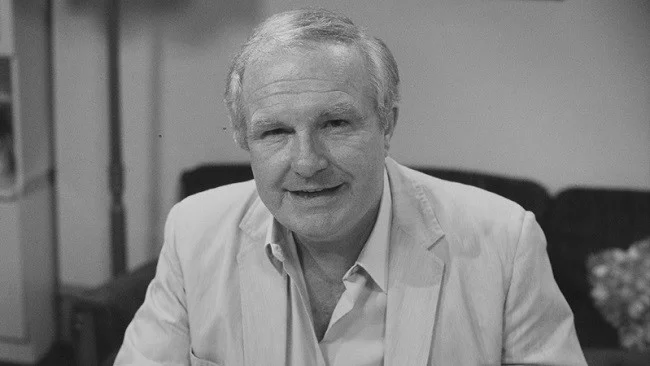
Shane Rimmer (1929 - 2019)
The actor Shane Rimmer died yesterday at the age of 89. Born in Toronto, Canada, on 28th May 1929, Rimmer moved to London in the late 1950s to pursue his acting career. Over the next five decades, he appeared in numerous TV shows such as Doctor Who and The Saint, and in films including Dr Strangelove, Gandhi, Rollerball and Out of Africa. He starred in James Bond film The Spy Who Loved Me and had smaller roles in Star Wars, Superman and Batman movies. If during the seventies and eighties, a British production needed someone to play an American character, he was a one of a handful of "go to" actors who would take the part. Rimmer and fellow US actor Ed Bishop (whose paths regularly crossed) jokingly referred to themselves a "Rent-a-Yanks” as a result of this.
The actor Shane Rimmer died yesterday at the age of 89. Born in Toronto, Canada, on 28th May 1929, Rimmer moved to London in the late 1950s to pursue his acting career. Over the next five decades, he appeared in numerous TV shows such as Doctor Who and The Saint, and in films including Dr Strangelove, Gandhi, Rollerball and Out of Africa. He starred in James Bond film The Spy Who Loved Me and had smaller roles in Star Wars, Superman and Batman movies. If during the seventies and eighties, a British production needed someone to play an American character, he was a one of a handful of "go to" actors who would take the part. Rimmer and fellow US actor Ed Bishop (whose paths regularly crossed) jokingly referred to themselves a "Rent-a-Yanks” as a result of this.
Yet despite having a rich and varied filmography, for many Shane Rimmer will be best remembered as the voice of Scott Tracy in Thunderbirds. The 50-minute screenplays afforded much more time for character development than in previous Gerry Anderson Supermarionation productions. Scott Tracy the second oldest of the five brothers and was one of the most accessible and likeable characters in the show. Rimmer’s voice work did much to imbue Scott Tracey with a sense of fairness, determination and common sense. After Thunderbirds Rimmer continued working with the Anderson on shows such as Joe 90 and Captain Scarlet and the Mysterons and the live action TV series UFO. He also got to satirise the hard-boiled private detective genre when he provided the voice for Dick Spanner. A role he undertook with relish.
As well as acting, Rimmer diversified and wrote several screenplays and stories for TV shows. Furthermore, in his later years he wrote both his autobiography From Thunderbirds to Pterodactyls and dabbled in fiction. Due to his appearances in numerous cult movies and blockbuster genre films, he was a familiar face on the convention circuit. He was a firm favourite among fans and remained active in the fan community right up until recently. He always maintained a pragmatic outlook on all his work and had a wealth of anecdotes to share. He was especially proud of his work on several Bond movies. "The Spy Who Loved Me was a good one all around. It was Roger Moore’s favourite of all the ones he did. You just get a kind of intuitive thing about a movie. It worked very well”.


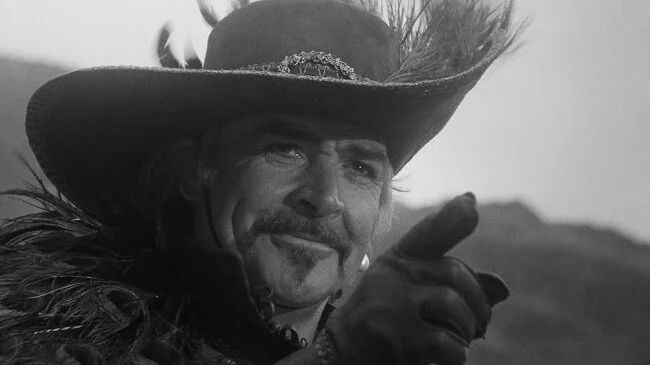




Larry Cohen (1936 - 2019)
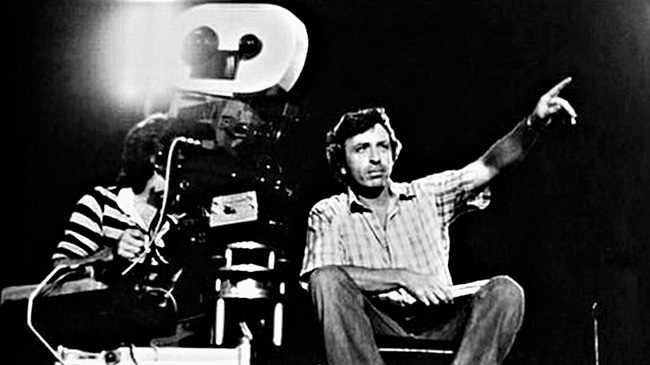
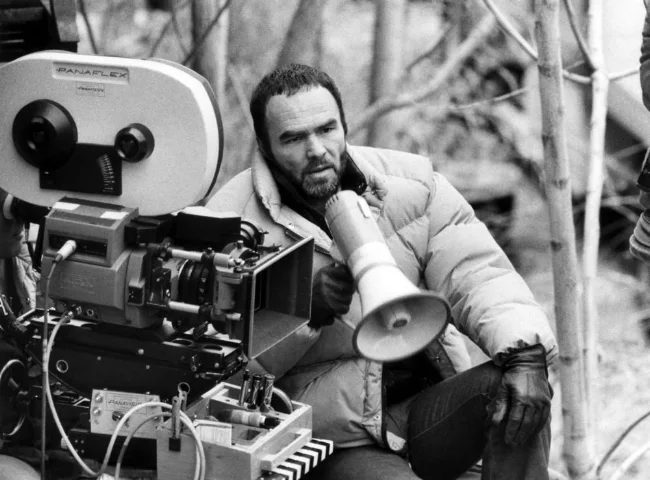
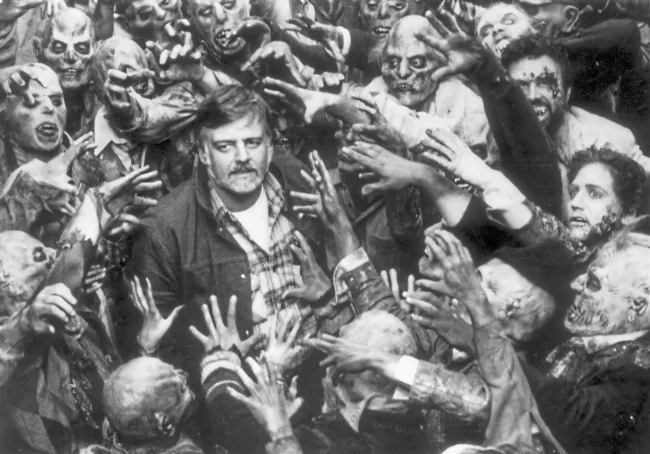
Larry Cohen, the writer and director of such cult films as Black Caesar, It’s Alive and Q: The Winged Serpent, has died aged 77. Cohen was a key figure in the genre movie community during the seventies and eighties, as well as writing scripts and storylines for mainstream TV shows such as The Fugitive and Columbo. He was a rare beast, in so far as he became one of a few writers who became known to wider audiences and fans, and gathered a cult following over time. Guillermo del Toro hailed him as “a true iconoclast and independent” and Edgar Wright wrote thanked him “For so many fun high-concept genre romps with ideas bigger than the budgets, for so many truly inspiring cult movies”.
Larry Cohen, the writer and director of such cult films as Black Caesar, It’s Alive and Q: The Winged Serpent, has died aged 77. Cohen was a key figure in the genre movie community during the seventies and eighties, as well as writing scripts and storylines for mainstream TV shows such as The Fugitive and Columbo. He was a rare beast, in so far as he became one of a few writers who became known to wider audiences and fans, and gathered a cult following over time. Guillermo del Toro hailed him as “a true iconoclast and independent” and Edgar Wright wrote thanked him “For so many fun high-concept genre romps with ideas bigger than the budgets, for so many truly inspiring cult movies”.
Cohen was a pragmatist and a consummate “working” writer. He initially wrote for television and created several popular shows such science fiction series The Invaders. When he moved to independent film making, he saw no shame in embracing exploitation cinema or drive-in movies. Just because a film was pitched at a niche market didn’t mean it had to be poorly written or constructed. His contributions to the blaxploitation genre produced some interesting results such as home-invasion comedy Bone (1972) starring Yaphet Kotto, and the Fred Williamson mobster epic Black Caesar (1973), a remake of the Edward G Robinson classic Little Caesar. He would move to other genres over the course of his career, with such films as the odd supernatural police thriller God Told Me To (1976) and the historical drama The Private Files of J. Edgar Hoover (1977).
Cohen had a definite knack for enticing known box office names into his low-budget projects. His 1974 mutant baby horror movie It’s Alive, featured a score by the great Bernard Herrmann and early special make up effects by Rick Baker. Over the years his work would see him working with such names as José Ferrer, James Earl Jones and David Carradine. He formed a special bond with the character actor Micahel Moriarty who featured in four of his features films. He also directed the legendary Bette Davis’ in Wicked Stepmother (1989) which was to be her final screen role. Often working within the confines of tight budgets, he was a film maker that knew how to get the most bang for his bucks. And if the production values limited his work, he would always bolster them by multi-layered narratives along with a healthy does of satire and social commentary.
The reason why the work of Larry Cohen stands out and certainly resonates with fans is the fact that he didn’t consider certain types of movies or genres beneath him. His body of work proves that you can make a monster movie that is more than just a monster movie. Social commentary, political criticism and generally just making a point is something he believed could be done with any screenplay if the writer is sufficiently adept. Although well known, Cohen did not enjoy the fame of other writers such as Dalton Trumbo or William Goldman. However he saw this as a benefit. He told The New Yorker in 2004 “I just keep turning scripts out”. “Some people, they stop. Even people who’ve had huge successes for years find themselves unemployed, going to film festivals and being told how great they are — but nobody’s giving them a job. It’s better to be me, who never got all that. I’m still working.”




Get Your House in Order
Theoretically, the fallout from the Christchurch mass shooting should be far reaching. There is at present an opportunity to address numerous problems and issues while the tragedy still has both political and social momentum. Because “it is the doom of man that he forgets”. 24-hour news culture has severely strained the public’s attention span. Plus it is in the interests of numerous institutions for the news cycle to move on, because current scrutiny is highlighting how culpable they are. The tabloid press, media commentators, tech companies and internet communities have been found wanting for a while and last weeks carnage is now raising questions over their involvement in the growing culture of hate and therefore their potential regulation. This may be the last chance for many to put their own house in order before the establishment does. And considering the knee-jerk, ham-fisted nature of contemporary western politics, the latter is not likely to be either subtle, efficient or even beneficial.
Theoretically, the fallout from the Christchurch mass shooting should be far reaching. There is at present an opportunity to address numerous problems and issues while the tragedy still has both political and social momentum. Because “it is the doom of man that he forgets”. 24-hour news culture has severely strained the public’s attention span. Plus it is in the interests of numerous institutions for the news cycle to move on, because current scrutiny is highlighting how culpable they are. The tabloid press, media commentators, tech companies and internet communities have been found wanting for a while and last weeks carnage is now raising questions over their involvement in the growing culture of hate and therefore their potential regulation. This may be the last chance for many to put their own house in order before the establishment does. And considering the knee-jerk, ham-fisted nature of contemporary western politics, the latter is not likely to be either subtle, efficient or even beneficial.
It sadly did not come as a surprise that Brenton Tarrant is steeped in numerous aspects of the unsavoury side of internet culture. Namely, 8chan, shitposting and the alt-right. A “manifesto” allegedly attributed to him is filled with the usual weaponised use of memes to try and obfuscate and confuse. And then there’s the fact that he was allegedly a gamer and conversant with You Tube sub-culture to consider. While old school politicians, mainstream journalists and senior members of the public struggle to catch up, those of us who are more familiar with fluid and rapidly evolving nature of internet culture are facing the stark reality that it played a part in shaping this killer’s beliefs. Furthermore gaming, online communities and You Tube personalities are some of the many intersecting circles of a wider and ultimately harmful Venn diagram. Memes aren’t necessarily “just harmless, movements such as #gamergate aren’t purely about “ethics in gaming journalism” and when You Tube personalities say racist, sexist or homophobic things, it not just “banter” or “a joke”.
Tarrant stated, “Remember lads, subscribe to PewDiePie!” just before he started shooting. Felix Kjellberg has made a statement disavowing any association with him, his ideology and being “sickened” by his comments. However, Kjellberg has used racist language in the past, as well as given shout-outs to questionable individuals. With 89 million plus YouTube subscribers who are predominantly young, male and white, he has a lot of reach. Then there are other personalities and channels that cater and court this specific demographic. One filled with poorly skilled, disaffected young males, struggling with emotional literacy and social awkwardness. Add to this a growing adversarial culture that eschews nuance and increasing zealotry in previously benign social interactions and pastimes such as fandom and there’s trouble. PC culture has failed and the pendulum has now swung the other way with populist bandwagons such as Brexit and MAGA. A perfect storm has been forming for a while and it appears to have now arrived.
It is both sad and ironic that the old cautionary mantra of “the only thing necessary for the triumph of evil is for good men to do nothing” which has almost become hokey in recent years, has suddenly become alarming relevant again. Online communities, You Tube, Twitch, even game developers have not done enough (if indeed anything) to adequately police and moderate the communities they financially benefit from. They’ve hidden behind “freedom of speech”, claims they are not publishers and generally complained that the technology or man power required to do the job would be too difficult to manage and inefficient. And so we saw both Facebook and You Tube desperately trying to get in control of the continuous reposting of video content of the Christchurch shootings. “Why not just suspend all uploads during such circumstances?” some politicians have asked. The ensuing silence from the tech companies was deafening. And the real answer is money as anyone with a functioning intellect knows.
There are no simple reasons for the rise in hate crimes or easy explanations for such tragic events such as that in Christchurch. Nor are there any quick fixes. Multiple factors have contributed to an ongoing drip, drip, drip of populist rhetoric that have normalised racism, xenophobia and hatred of “the other”. Online culture has evolved quickly from a quirky, backwater niche to an unchecked, unpoliced “frontier town”. We now find that such an environment is dangerous and action needs to be taken. Codes of conduct need to be enforced, moderation is required and we must stop mollifying sanctions with bogus attempts at reform, because we still want everyones money. We all need to play our part and call out those who peddle hatred. We also need to be smart and ensure we don’t throw the baby out with the bath water. With regard to the bigger players such as You Tube and Facebook, if they don’t take real steps now to prevent abuse of their services, they will find control rested away from them and given to the politicians. Not the most desirable solution. The time for “whataboutery” and generally prevaricating is over. There is guilt by association and in some cases blood on the hands of those who profit from the status quo. So to all involved, get you house in order. While you still can. The consequences for not doing so don’t bear thinking about.
Yet More Politics and Video Games
Setting aside Jim Sterling’s showmanship, which may not be to everyone’s taste, he is consistently astute in his ongoing analysis of the Triple A Video Games Industry. Today’s episode of the Jimquisition addresses how major publishers are using political and social issues as the basis for the plots of many of their most popular franchises, while simultaneously denying any political stance or affiliation. He highlights how Terry Spier (the creative director for Red Storm Entertainment who developed The Division 2), and David Cage (the writer and director of Detroit: Become Human), have tied themselves in knots claiming their games are apolitical. It makes for interesting viewing and as ever Sterling’s arguments are compelling and sound. Furthermore, it shows that all the vices and ethical failures of traditional leisure industries such as TV and movies, inevitably bleed into the video games. Namely, wanting to reference “grown up” subjects without being hampered by their accompanying baggage.
Setting aside Jim Sterling’s showmanship, which may not be to everyone’s taste, he is consistently astute in his ongoing analysis of the Triple A Video Games Industry. Today’s episode of the Jimquisition addresses how major publishers are using political and social issues as the basis for the plots of many of their most popular franchises, while simultaneously denying any political stance or affiliation. He highlights how Terry Spier (the creative director for Red Storm Entertainment who developed The Division 2), and David Cage (the writer and director of Detroit: Become Human), have tied themselves in knots claiming their games are apolitical. It makes for interesting viewing and as ever Sterling’s arguments are compelling and sound. Furthermore, it shows that all the vices and ethical failures of traditional leisure industries such as TV and movies, inevitably bleed into the video games. Namely, wanting to reference “grown up” subjects without being hampered by their accompanying baggage.
What many find distasteful is not so much the “having your cake and eating it” attitude, but the underlying cynicism. Game publishers are not just sitting on the fence in this fashion to avoid having to take a stance on complex socio-political issues but doing so because they broadly have no opinion. Ubisoft is not interested in the implosion of western politics or the issue of gun control. Sony Interactive doesn’t have an agenda with regard to racial or gender oppression. But both are happy to exploit them for financial gain. Problems that real people face every day are simply a means to an end and if it became fiscally prudent to abandon such subjects, then I’m sure these companies would do so without hesitation. I am reminded of the concept of exploitation movies and how they differ from films that genuinely explore a subject. Think Penitentiary (1979) versus I Am a Fugitive from a Chain Gang (1932).
It has been argued that game publishers are pursuing a “politically neutral” policy to avoid controversy with specific online groups and avoid a #gamergate style debacle. Certainly the hostility of certain sectors of the video games community is problematic. But I suspect this claim is spurious, as it is founded upon an assumption of ethics. Something that it conspicuous by its absence in the Triple A video games industry. So once again we return to the myth of keeping politics out of gaming and how those who advocate such a position either don’t understand its inherent contradiction, or in the case of the game publishers, simply don’t care. Why let facts and honesty stand in the way of a dollar? And the last point actually highlights how unnecessary this stance is. Even if the publishers admitted to a political perspective, I doubt it would greatly harm sales. Not all genres are dependent upon their narrative to sell. Plus gamers per se suffer acutely from cognitive dissonance.
12 Years of Blogging
In March 2007 I had just started a new contract with Hewlett Packard working on a major office relocation for HM Land Registry. To cut a long story short there were quiet periods in-between the bouts of organised chaos and as I was desk bound, I decided to write a blog to maintain the illusion of being busy. I’ve always enjoyed writing so when the internet came along it seemed logical to use it as a platform. I created several HTML fan pages in the late nineties but when blogs started to become “a thing” I immediately jumped on that band wagon. Prior to 2007 I had created and abandoned several blogs, mainly because I couldn’t find the right subject to maintain my interest. However on this occasion, I decided to go with the old adage “write what you know” and chose to share my life long passion for movies. So I created an account with the now defunct platform of blog.co.uk, called my blog Did I Pay to See That? and have not stopped writing since.
In March 2007 I had just started a new contract with Hewlett Packard working on a major office relocation for HM Land Registry. To cut a long story short there were quiet periods in-between the bouts of organised chaos and as I was desk bound, I decided to write a blog to maintain the illusion of being busy. I’ve always enjoyed writing so when the internet came along it seemed logical to use it as a platform. I created several HTML fan pages in the late nineties but when blogs started to become “a thing” I immediately jumped on that band wagon. Prior to 2007 I had created and abandoned several blogs, mainly because I couldn’t find the right subject to maintain my interest. However on this occasion, I decided to go with the old adage “write what you know” and chose to share my life long passion for movies. So I created an account with the now defunct platform of blog.co.uk, called my blog Did I Pay to See That? and have not stopped writing since.
There are posts elsewhere on this site recounting the circumstances of how the various blogs I’ve run over the years have morphed into Contains Moderate Peril. Certainly the decision to consolidate all my writing projects in one location was the right choice and I marvel at the fact that I’m still regularly writing. But although it can be difficult at times to sit and create content, I find it far more unsettling not to do so. Writing is not only a passion for me but an indispensable form of therapy. The wider world is in a state of flux and the UK seems to be facing an existential crisis at present. Then there’s my own personal situation as I address my ageing parents caring issues. Being able to process all these complexities through the medium of writing is invaluable. I also enjoy the musings and thoughts of others, especially those bloggers that still maintain an in-depth writing style and tackle the bigger issues. I also like the sense of community. It’s still there although it has shrunk in size over time.
While reflecting upon over a decade of blogging, I have concluded that Contains Moderate Peril has certainly peaked and has already had its fifteen minutes of fame. In 2014 the blog and podcast were established in the LOTRO community and among the circle of MMO bloggers. The numbers were good, in fact the volume of website traffic was such that a more expensive hosting package was required. Something I couldn’t afford. However, I was offered sponsorship from HostOnePlus which was both welcome and a compliment. Certainly after migrating the site the statistics reflected the biggest audience I’ve ever had. But as ever, life has a habit of changing things. I was beginning to suffer from burnout and felt it was time for a break. A year later I temporarily stopped blogging and parted ways with HostOnePlus. I resumed again after a short break and relocated Contains Moderate Peril to Squarespace but the forward momentum was lost. Perhaps that was a good thing in a way, as I returned to writing for pleasure, rather than worrying about growth.
When I talk to friends and colleagues and tell them about my writing, I’m often asked if I regret sinking so much of my time into my “hobby”. The answer is always a resounding “no”. I’ve met many people through blogging and podcasting and I put great stock in such friendships. Writing has not only led to me reading more but it has also exposed me to far more diverse content. Maintaining a blog has also meant that I have learned new technical skills and improved how I communicate. And its also been a lot of fun. Riffing off other blogger’s content, exchanging ideas, even agreeing to disagree (something that so many people have forgotten how to do these days), has all been a positive experience. As to the future, I see no reason to stop writing, although there will be interruptions from time to time, brought about by the reality of my life. In the meantime its business as usual. I have three posts outstanding and I’ll get on with them, once I’m done looking at that bird on Mrs Coltart’s roof.






















Thoughts on Work Part 1
During the course of my career (1986 – 2016) I have worked in numerous complex social environments. I worked for the UK civil Service and saw the final days of very traditional, formal employment hierarchy. There were people with academic titles such as Doctor or Professor and there were also those with honorary monikers such as Sir. I even met an ex-army officer who clung to the old school etiquette of still being referred to by his former military rank (which was Captain). I was later employed at the London corporate headquarters of a global Indian company. It was fascinating to see the cultural differences along with the class structure and prevailing social dynamics. Over 30 years, I’ve worked for numerous high-profile organisations such as HP, Fujitsu Siemens and Symbian as well as other smaller businesses. All provided gainful employment, acceptable financial remuneration and an opportunity to learn more. However, all of them suffered from two of the most common faults found in contemporary employment; namely office politics and problematic members of staff.
During the course of my career (1986 – 2016) I have worked in numerous complex social environments. I worked for the UK civil Service and saw the final days of very traditional, formal employment hierarchy. There were people with academic titles such as Doctor or Professor and there were also those with honorary monikers such as Sir. I even met an ex-army officer who clung to the old school etiquette of still being referred to by his former military rank (which was Captain). I was later employed at the London corporate headquarters of a global Indian company. It was fascinating to see the cultural differences along with the class structure and prevailing social dynamics. Over 30 years, I’ve worked for numerous high-profile organisations such as HP, Fujitsu Siemens and Symbian as well as other smaller businesses. All provided gainful employment, acceptable financial remuneration and an opportunity to learn more. However, all of them suffered from two of the most common faults found in contemporary employment; namely office politics and problematic members of staff.
When I first started working, I embraced the reality of being the most junior member of staff. That’s not to say I liked it, because I didn’t. But you don’t just turn up to a job at the age of 18 and expect to know everything and go straight to the top of the pay scale. So, I listened, learnt and did what I was contracted to do. But it quickly became apparent that like everything else in life, the work environment was not a level playing field and did not function on logic or even merit. Being competent and reliable was not enough. If you wanted to get ahead it often came down to who you knew, favours owed or cashed in and whether your face fitted. I won’t go on but I’m sure that anyone who has the merest inkling as to what I’m like as a person will know that none of this sat well with me. The old boy network, office politics, dealing with the management bully is all bullshit as far as I’m concerned. I went to work to do my job and do it to the best of my ability. I’d also be civil and diplomatic, not always through choice, but because it made the process more efficient. But this not the way work is by default. All jobs end up employing a percentage of those who cannot or will not do what their contracted to do. And certain types of jobs and position attract the emotionally and socially dysfunctional.
Over the course of my working life, for every three pleasant and agreeable work colleagues, I’d always find another who was either a bully, institutionally racist (or some other kind of irrational prejudice), incompetent or basically just a shit who wanted to make those that they could, utterly miserable. As I’m not a big fan of monolithic hierarchies and chains of command, I looked to see if I could find a means by which I could insulate myself from the iniquities of the modern work place. I ultimately resolved these issues by changing disciplines, electing to move from admin and management, to working in IT. Furthermore, I did this at a time when there was a rapid growth in technology in the workplace. Because I enjoyed this line of work and thrived in it, I progressed from old school, hands on, first line support to IT management and all that came with it. Procurement, change management, network planning, security and recruiting staff for the IT department. The latter was a key element to job satisfaction. I’ve always been happy to be a team player. But it’s much better when you get to pick the team yourself and ensure that those you work with are reliable and sound.
For a while I held several fulltime positions, ran modest sized departments and had the pleasure of focusing on my work, enjoying the intellectual challenge that it offered and kept myself out of the fray that is office politics. In the late nineties there was still an element of uncertainty regarding technology and where it fitted in the hierarchy of the office structure. Were those in IT just jumped up “oily rags” or were we skilled professionals? Most of the companies I worked for erred on the side of caution and favoured the latter. Essentially, as long as the network was running and the technology worked, I found that I was left to my own devices and senior management contented itself with sniping at sales, who would then blame marketing or some such similar permutation. But after the Y2K debacle, the pendulum shifted, and people started wondering if we were not only “oily rags” but con artists as well.
In 2006 I decided to move into contract work as I’d had enough of corporate culture. Pursuing short term, targeted work was not only financially more lucrative it negated a lot of the social and competency issues among work colleagues, or so I thought. Turns out that even on short term contracts you’d find an engineer who seemed to have slipped through the screening process and was useless or problematic in some way. However, what I did find in this work environment was that if a problem was identified, it was dealt with quickly. If someone wasn’t pulling their weight and it got noticed, then a phone call to the agency that supplied them usually remedied the situation. Overall, I enjoyed working in this fashion. If a contract wasn’t especially engaging, I had the piece of mind to know that it wasn’t forever. Broadly most of the work I undertook was enjoyable. I worked on several major system upgrades and new software rollouts for various government departments. However I found working in hospitals the most satisfactory. Helping out the staff in A&E was especially rewarding.
In early 2011, I decided to draw upon my network of colleagues that I’d built up over the years and set up my own consultancy business. The idea was to provide a one stop solutions service to the myriad of small and start-up businesses in The City. I would handle the work that fell within my purview and I had associates who would cover more bespoke requirements. Broadly, it worked. It didn’t make me rich but it was a living and from a work perspective, it was on terms that I felt were equitable. And I believe that’s the most that many of us can expect from our “careers”. Some folk do get to do their dream job and thrive in it. But for many of us, work is a necessary evil and one we try to accommodate as well as we can. It often feels like battle of wills between our own needs and that of the employers. Occasionally you may find yourself in a situation were both parties are in accord but that seldom is the default state. Having now left formal employment to be a carer, I’m often asked if I miss traditional work. I sometime hanker after the intellectual challenge and the satisfaction of problem solving. Also the human element from time to time. But I don’t miss the politics or the “drama” that goes hand in hand with the contemporary work place. That is something I’m pleased to be rid off.



Personal Health
Personal health as a concept, refers to your overall well-being both physically and mentally. It is about taking charge of your health by making a conscious decision to improve and maintain it. It not only refers to your physical state but the respective wellness of the emotional, intellectual and even spiritual aspects of your life. Sadly it is something that many of us are not very good at dealing with or choose to ignore. All too often good intentions get sidelined by the realities of life. Sadly, physical and mental issues are usually only addressed after something bad has occurred. Furthermore, much of the most basic and practical information needed to improve our personal health is drowned out by the white noise of fads, quackery and those seeking to sell you a “solution”.
Personal health as a concept, refers to your overall well-being both physically and mentally. It is about taking charge of your health by making a conscious decision to improve and maintain it. It not only refers to your physical state but the respective wellness of the emotional, intellectual and even spiritual aspects of your life. Sadly it is something that many of us are not very good at dealing with or choose to ignore. All too often good intentions get sidelined by the realities of life. Sadly, physical and mental issues are usually only addressed after something bad has occurred. Furthermore, much of the most basic and practical information needed to improve our personal health is drowned out by the white noise of fads, quackery and those seeking to sell you a “solution”.
In recent years I have experienced a great deal of illness through my family and have subsequently pondered upon issues that I may not have considered otherwise. As a fifty-one-year-old man I am acutely aware of where I am in terms of the human life cycle and how I am now at a point where I need to get my house in order with regard to my personal health. A problem diagnosed now is a potentially a lot easier to remedy than in a decade’s time. Simply put, I’ve seen what can happen potentially to me and have decided I want to avoid such an outcome. So I saw my GP last week and explained my concerns. Fortunately, the NHS in the UK is becoming more proactive in its healthcare, as it is often more cost effective to do so. Hence my Doctor was happy to help.
As a society we seem to suffer greatly from cognitive dissonance when it comes to our physical health. We live in an age where information about living a healthy lifestyle is readily available. Yet we wilfully choose to ignore it because snacks are tasty, exercise is dull and doing what is right often means denying ourselves, which makes us sad. So we do our own thing and suffer the consequences. And I’m just as guilty as everyone else. However, I have decided to change my lifestyle and intend to do so by sensible and practical increments. I had the sense to quit smoking in 2001 and have never gone back. I couldn’t afford to smoke nowadays. My former thirty a day habit would cost me over £3,500 a year now. The next and most obvious step for me now is to address the issues of weight and exercise.
I presently weigh 180 lbs, which according to the BMI makes we overweight. Now the BMI is a flawed measurement, however a cursory look in a mirror is sufficient verification that I’m carrying some surplus pounds. I need to shift about 6 to 12 lbs to be at a sensible weight for my height (5’ 11”) and build. To do this I’m adopting a two meal a day policy. Breakfast of either cereal, toast or eggs. And a late afternoon meal of fish and vegetables. Snacks and any additional eating outside of those two meals is prohibited. I shall also limit my alcohol consumption to just Wednesday evenings when I talk to friends on Discord. As for exercise, I mainly do this through walking and shall be actively pursuing a target of ten thousand steps a day. I do lots of chores such as shopping and household maintenance for my parents, which also counts towards periods of exercise. I shall be tracking both my weight and step count via my phone and am considering writing regularly about my progress.
I shall be seeing the Practise Nurse at my local surgery this coming week to have my heart and lung function checked. This is all part of the “NHS Health Check” which is intended to “to spot early signs of stroke, kidney disease, heart disease, type 2 diabetes or dementia”. This service is specifically aimed at those over the age of 40. I am cautiously optimistic that there won’t be any surprises in store for me. My GP took my blood pressure which was fine, along with my “sats”. However, if something is discovered it is best to grasps the nettle now. We may not get a choice in the exact time of our death, but we can certainly have a say in the manner of it. I know for some people that may sound somewhat heavy or dour, but life has taught me that we should not avoid certain subjects because they make us feel uncomfortable. Therefore I would urge everyone to reflect upon their health and if you have any concerns, go and see a medical professional about them. Avoid quackery, keep a positive attitude and don’t take the status quo for granted.









Politics and Video Games
I frequently read blog posts, forum comments and reddit rants that can be broadly filed under the heading “keep politics out of video games”. Actually, there’s a tendency to put a far more possessive inflection on the statement by saying “keep politics out of my video games”. It’s a rather unsophisticated response to a broader and more nuanced question about the whether it is both desirable or indeed possible to keep a socio-political subtext out of any gaming narrative. But as a lot of gamers don’t do “nuance” and there’s a growing aversion to thinking per se these days, debating such a position is often an uphill struggle. However, I saw a gaming news story today that addressed this issue head on, and it wasn’t the usual pussyfooting around the issue.
I frequently read blog posts, forum comments and reddit rants that can be broadly filed under the heading “keep politics out of video games”. Actually, there’s a tendency to put a far more possessive inflection on the statement by saying “keep politics out of my video games”. It’s a rather unsophisticated response to a broader and more nuanced question about the whether it is both desirable or indeed possible to keep a socio-political subtext out of any gaming narrative. But as a lot of gamers don’t do “nuance” and there’s a growing aversion to thinking per se these days, debating such a position is often an uphill struggle. However, I saw a gaming news story today that addressed this issue head on, and it wasn’t the usual pussyfooting around the issue.
Ndemic Creations, the developers behind the virus-spreading strategy simulator Plague Inc, are to add a new scenario to the game which sees anti-vaxxers as the threat. This is due to a request from core fans who felt that this subject was both topical and relevant to the game. They even went so far as to set up an online petition. Ndemic responded via Twitter and stated, “If this petition gets to 10k, will add a specific new anti-vaxxer scenario to Plague Inc.”. The requirement was subsequently met and so Ndemic are now working on creating a suitable scenario and integrating it into the game.
At a time where there is a significant increase in measles cases across the United States, it is reassuring to see a video games company buck the trend and make an overt political statement on an issue that affects everyone. Hopefully by adding to the public debate on the issue and robustly standing against the ludicrous position of anti-vaxxers, it will contribute to a positive outcome. Already State legislatures in both Washington and Oregon are considering laws that would remove non-medical exemptions for the routinely administered measles vaccine. Both states currently allow parents to opt out of the measles immunisations if they have a religious or philosophical objection.
As for those players of Plague Inc and the wider gaming community, who may object to such an overtly political subject being added to “their game”, I would encourage them to step back for a moment and reflect upon the nature of the what is it that they’re exactly playing. Plague Inc is a Pathogen simulator designed to infect the world. The game touches upon such issues as vaccination, global pharmaceutical companies and the political aspects of combating a global pandemic. The CDC have even talked to the games developer regarding how the game can be used to educate the public. All of which are directly or indirectly political issues in themselves. Surely this renders any complaints redundant?
Not all, but many video games have some sort of underlying narrative to facilitate the game’s systems and mechanics. Irrespective of the genre, there is usually some sort of plot that justifies the players actions in the game. It may be something simple and childish such as theft of bananas in Donkey Kong Country, but it’s there all the same. And unless the developers go out of their way to make this narrative as basic and neutral as possible, there is scope for it to be interpreted in wider socio-political terms. Furthermore, many mainstream, popular games are predicated on violence, conquest, the acquisition of territory and the vanquishing of an opponent. None of these are apolitical ideas and themes. Which is why I despair of the “keep politics out of my video games” mantra. It shows an immense lack of self-awareness. Plus consciously trying to purge video games of any semblance of political opinion is by its very nature, a political act.
They Don't Work for Us
If you want a good quote to use as a starting point for a blog post then Bree Royce, the Editor-in-Chief and writer for the video game website Massively Overpowered, seems to have a good line in them. In the latest Massively OP Podcast, Bree and Justin Olivetti where discussing the recent round of layoffs that have seen over 800 Activision Blizzard staff lose their jobs. Like many others, Bree and Justin were far from impressed with these events, especially in light of the companies increased profits. When referencing the faux angst of CEO Bobby Kotick who claimed it was a “tough call”, Bree stated “they’ve definitely proven who they work for. It ain’t us”. A simple and inescapable conclusion about the triple A video game industry. Yet it is something that many gamers still struggle to come to terms with. Because so many do not see video games purely as a product, there seems to be an emotional blind spot associated with the game themselves, the developers who make them and the companies that publish them.
If you want a good quote to use as a starting point for a blog post then Bree Royce, the Editor-in-Chief and writer for the video game website Massively Overpowered, seems to have a good line in them. In the latest Massively OP Podcast, Bree and Justin Olivetti where discussing the recent round of layoffs that have seen over 800 Activision Blizzard staff lose their jobs. Like many others, Bree and Justin were far from impressed with these events, especially in light of the companies increased profits. When referencing the faux angst of CEO Bobby Kotick who claimed it was a “tough call”, Bree stated “they’ve definitely proven who they work for. It ain’t us”. A simple and inescapable conclusion about the triple A video game industry. Yet it is something that many gamers still struggle to come to terms with. Because so many do not see video games purely as a product, there seems to be an emotional blind spot associated with the game themselves, the developers who make them and the companies that publish them.
Perhaps this is why so many ill-conceived, crowd funded gaming projects get championed my enthused gamers, who choose to ignore the realities of modern business practises. The romantic notion that independent games development is some sort of artisan “cottage industry” still persists. That devs exist in anarco-sydicalist communes, producing quality games and thriving on the bountiful revenue supplied by the likes of Kickstarter, is still believed by some. But such success stories are few and far between. Crowd funded games have a high mortality rate, often due to poor management and unrealistic promises. Which leaves the mainstream industry which exists primarily to make money and to keep shareholders happy. That’s not to say that they don’t make good games, because they do. We’ve played them. But too often the artistic and creative vision of the developers is either sidelined or hobbled to accommodate multiple means of monetising the overall product.
The triple A video game industry seems to be pursuing unsustainable growth and if left unchecked, will eventually end in a crash. Gamers will eventually balk at their business practices, although they still seem to be enabling them at present, and the fall in revenue will lead to an exodus of investors as they seek a new market to exploit. Venture capital companies seldom have any deep and abiding commitment to that which they seek to monetise. Their loyalty is to profit and if it becomes financial expedient to play the opposite side of the fence to that which they’re playing today, then they’ll do so. It’s not personal, it’s just business. And that is why the likes of Activision Blizzard don’t work for you. Gamers are not strictly the customer. The gamer or should I say the gamer’s money is the crop to be harvested. The shareholders are the real customers and they bankroll the tools needed to harvest that “available cash”. Therefore gamers need to get over the way their passion for their hobby blinds them to the nature of business.








The Ongoing Gaming Divide
Love him or loathe him, Gevlon has been a fixed constant in the video games blogging community for over a decade. But he has recently seen fit to hang up his spurs and is no longer going to be maintaining his blog. Fair enough, if you see no value in what you do or feel that your pastime is no longer what it used to be, then I understand moving on. Gevlon likes games that offer challenge and then enjoys trying to find the formula for success. Many gamers do this enjoying coming to grips with a competitive game, mastering the underlying systems and then excelling in their gameplay. However, that is not the only approach to video games. Sadly Gevlon has always maintained a somewhat binary view on the subject and he cannot see beyond his own interpretations of what gaming is. The world has moved on and he has not. It is ultimately immaterial whether he or other gamers care for this or not. Life is predicated upon change and it happens in every aspect of our lives. Leisure activities included.
Love him or loathe him, Gevlon has been a fixed constant in the video games blogging community for over a decade. But he has recently seen fit to hang up his spurs and is no longer going to be maintaining his blog. Fair enough, if you see no value in what you do or feel that your pastime is no longer what it used to be, then I understand moving on. Gevlon likes games that offer challenge and then enjoys trying to find the formula for success. Many gamers do this enjoying coming to grips with a competitive game, mastering the underlying systems and then excelling in their gameplay. However, that is not the only approach to video games. Sadly Gevlon has always maintained a somewhat binary view on the subject and he cannot see beyond his own interpretations of what gaming is. The world has moved on and he has not. It is ultimately immaterial whether he or other gamers care for this or not. Life is predicated upon change and it happens in every aspect of our lives. Leisure activities included.
The evolution of video games from the seventies to the present day is a tale of a niche, hardcore pastime slowly becoming more widely popular. The arrival of online gameplay offered social interaction and a new approach to competitive gameplay. Yet increasing popularity has attracted money and this has often made gaming about adapting to what is popular and sells, thus moving away from previously established conventions. Plus there are multiple generations of gamers who have had differing experiences determined by what time they adopted this leisure activity. The first generation of MMO players have had their perspective shaped by the likes of Ultima Online. Those playing The Elder Scrolls Online today are being shaped by a very different game environment and set of rules. Plus so many gaming terms, labels and definitions have changed. The net result is that the term gamer is a very broad church and doesn’t really indicate anything more than a penchant for playing games. The same way that being a reader doesn’t say anything about what you read or enjoying music indicates the subtleties of your personal taste.
It is very hard to try and quantify gaming and break it down into clearly delineated groups and parts. One of the major handicaps of writing about this pastime is that you often have to speak in broad generalisations and prefix your points with caveats and contextualisation. For example, the overall point of this post is to highlight that there is a gaming divide. There are those who play as a test of skill, for competitive reasons and personal achievement. You can argue that these are similar motives to those who play sports. Then there are those who game more as a social and recreational activity, who feel that it is “the journey and not the destination”, so to speak. Yet both these two points are far too definitive and don’t hold up to close scrutiny. Gaming is not a Venn Diagram made up of just two intersecting circles but potentially hundreds. However, from a business point of view, such a diversity and complexity of player needs and preferences, makes it hard to create a product that satisfies the majority.
Overall, I believe there is an established gaming divide, although it is currently framed in very broad and not entirely accurate terms. This matter is further compounded by the current culture of “pigeonholing” and the general partisan nature of culture and politics that exist at the moment. I don’t have a lot of sympathy for video games publishers as they are pretty much in the same category of bankers and estate agents. All are group that compound and exploit the problems associated with their field of work, rather than address them. But I do understand the frustration that game developers must constantly encounter. There is never an overall consensus and every point regarding a game system or mechanic is frequently hotly contested. Plus because developers don’t hold the purse strings, they are often compelled to pursue what is popular, or proven to sell, over innovation and following their own creative leads. It seems that the commercial success of gaming is actively contributing to the gaming divide.
Returning to the matter of the disgruntled games blogger who is unable or unwilling to change and adapt to the new reality of the video games market, I think it highlights the folly of untempered fandom and any other social, political or cultural dogma. Change is a reality in our daily lives, and we seems as a society to cope with it fairly well (although that is now becoming debatable). Yet I suppose everyone has, or potentially has, a blind spot for something or other, and when they encounter it, make it the hill they’re prepared to die on. I guess it all comes down to a choice. There are several big budget games scheduled for release this year, that fall outside of my personal tastes. However, I do not see this as a problem, the same way I don’t resent all the products in my local supermarket that I don’t care for. There are still games that I like in existence and being developed. But I have never understood the mindset that dislikes what others enjoy, as if that is the sole reason why their needs are seemingly neglected. But again this is something that is becoming more prevalent both in gaming and wider culture. The net result of this outlook further exasperates the divisions in gaming, making the matter a cyclical problem.
Taking It Too Seriously?
In the past I’ve often been left somewhat flummoxed when I’ve read stories about fans knitting baby clothes for pregnant characters in soap operas. I’ve also been bemused when reading about actors being berated in the streets by members of the public, who seem incapable of separating the person from the fictional character they play. Such anecdotes have always been met with tutting and shaking of the head from myself. However, I have recently had to temper this rationalist outlook, due to a sudden fit of emotional investment in certain TV dramas. This curious epiphany has led me to conclude that it’s not just a case of good writing and acting (although these are key reasons), but ultimately a question of identifying with a character and empathising with them. Furthermore, who we identify with possibly says something about us to.
In the past I’ve often been left somewhat flummoxed when I’ve read stories about fans knitting baby clothes for pregnant characters in soap operas. I’ve also been bemused when reading about actors being berated in the streets by members of the public, who seem incapable of separating the person from the fictional character they play. Such anecdotes have always been met with tutting and shaking of the head from myself. However, I have recently had to temper this rationalist outlook, due to a sudden fit of emotional investment in certain TV dramas. This curious epiphany has led me to conclude that it’s not just a case of good writing and acting (although these are key reasons), but ultimately a question of identifying with a character and empathising with them. Furthermore, who we identify with possibly says something about us to.
To give the previous statement some context, I was watching Endeavour last night which is now in its sixth season. One longstanding character, Chief Superintendent Reginald Bright, a senior officer who is coming to the end of his career has had more than his share of woes of late. His command was merged with a larger regional neighbour and he has been side lined to head of traffic. His core team have all be reassigned and the murder of one of his officers remains unsolved. Played with great dignity by Anton Lesser, Bright is an anachronism, representing the old guard in a Police force that is modernising to address the social and political change of the late sixties. He is a refined man, steeped in old world manners and social etiquette. But he’s also a loyal and open-minded policeman who commands the respect of those who truly know him.
Perhaps my description already shows that I have become invested in this character, although the show has many more similarly compelling protagonists. So when the Sunday evening’s episode revealed that PCS Bright’s wife (Carol Royale) had lung cancer and that she had only a short amount of time left, it was a crushing development. This plot development was underpinned by the calibre of the understated acting and minimalist script. The emotion of this turn of events was carried by the actor’s non-verbal performance and our emotional connection to him. I was genuinely moved and even tweeted such. A little later I reflected upon how a drama could have such a strong emotional impact upon me, and judging from my Twitter timeline, numerous other viewers.
I think the reason we connect, identify or feel some sense of rapport with a fictional character ultimately is down to being able to relate to their experiences or agreeing with what they represent and extoll. The moment you make a personal connection, see parallels to your own life or just find yourself in some state of accord, then a character becomes more than the sum of their parts. Perhaps the concept of the Imago is relevant here? I’m not trained in such scholarly study, so I best not focus on too much armchair psychology. But as I’ve got older, I have found that well written dramas can strike this strong emotional chord and now I can see why people take fictional characters to their heart so. Perhaps I’ve felt this way before and just haven’t recognised it. Spock being a prime example. As for PCS Reginald Bright, I shall see where the story takes us both and no doubt I’ll be further saddened. Yet it will at least be a journey I care about. As for the criticism of “taking it too seriously”, I shall think long and hard before I say such a thing again.













An Angry Discourse
“Video game discourse has gotten me down lately. Why are some people so shitty about their favorite hobby?” This comment from Jake Baldino, a presenter over at Gameranx, appeared in my Twitter timeline today and garnered some interesting responses. A lot of people stated it was all down to a “loud minority” of gamers, which is a very common refrain. But I’m not so sure. Whereas I may well have trotted out such a response a decade ago, recent events seem to indicate otherwise. I have a sneaking suspicion that “people” aren’t as nice as we may have previously thought and that includes gamers. Yes, the anonymity of the internet does encourage some hostility among “keyboard warriors”, but you only have to turn on your TV to see people happily being bellicose and objectionable in public. So perhaps it’s not just a case of the “the squeaky wheel” getting noticed. May be there has been and continues to be, a major cultural shift in the way we interact with each other.
“Video game discourse has gotten me down lately. Why are some people so shitty about their favorite hobby?” This comment from Jake Baldino, a presenter over at Gameranx, appeared in my Twitter timeline today and garnered some interesting responses. A lot of people stated it was all down to a “loud minority” of gamers, which is a very common refrain. But I’m not so sure. Whereas I may well have trotted out such a response a decade ago, recent events seem to indicate otherwise. I have a sneaking suspicion that “people” aren’t as nice as we may have previously thought and that includes gamers. Yes, the anonymity of the internet does encourage some hostility among “keyboard warriors”, but you only have to turn on your TV to see people happily being bellicose and objectionable in public. So perhaps it’s not just a case of the “the squeaky wheel” getting noticed. May be there has been and continues to be, a major cultural shift in the way we interact with each other.
Contemporary politics has shown us that despite what a lot of us thought, we don’t all share the same values. Politics and the wider discussion to be had around it, has become far more partisan. There’s no longer seems to be any attempt to “agree to disagree”. A lot of the media are no longer concerned with balance. It’s all about clicks, viewing figures and “likes”. So pretty much everything in the news, be it politics, economics or social issues is just presented as a binary choice. You’re then invited to pick a side and scream, because we live in an age where we are encouraged to get angry and its fast becoming a national pastime. And this mindset then bleeds out into everything else. The work environment gets angrier as a result. People will fly off the handle while queuing at the supermarket. So it’s therefore hardly surprising to see such behaviour appear in out leisure activities.
Gaming is a broad church but two of its biggest defining features are competitiveness and social interaction. These are things that people become very passionate about. Furthermore, we live in an age of growing identity politics and defining who we are on our own terms. Gaming has therefore become a facet of personal identity for some, as opposed to just a leisure activity. When you mix such a mindset into a wider culture that is becoming increasingly adversarial, then you’ll eventually encounter problems. Despite what some people think, you cannot keep politics and social commentary out of gaming because it has become more than the sum of its parts. Whenever people interact and engage on masse, you’ll find pockets of an emergent communal identity. Groups then become mediums for wider ideas. But groups can also lead to hierarchies, power struggles and conflict.
It is also naïve to ignore the financial dynamic to gaming culture and the impact that it has. Becoming a cash cow in a relatively short period of time is not always as beneficial as you may think. Money has a habit of causing conflict. What gamers and game developers want are not necessarily the same thing. So when you add this to the seismic change in public interactions and the angry world that we now find ourselves in, it is hardly surprising that video games discourse has taken a reciprocal nose dive. Perhaps the eternal optimists among use need to recalibrate and come to terms with the fact that a lot of people aren’t inherently good. I’m not saying that the battle is lost and that we have to roll over and play dead. Human failings should be challenged and not ignored. But I think we need to come to terms with societal change and temper our expectations with regard to video games discourse, until the pendulum swings the other way again.
Further Iniquities of the Video Games Industry
If you are naïve enough to think that the video games industry is an equal partnership between those a pursuing an artistic vision and their benevolent financial benefactors, then todays news that Activision Blizzard is laying off approximately 800 staff despite a enjoying a “record year”, must have comes as a surprise. For the rest of us who are fully conversant with the iniquities of the business, this sad news has an air of tedious inevitability to it. If you want a coherent distillation of the unsustainability of the triple A games industry, then Jim Sterling’s latest episode of The Jimquisition pretty much nails it. Simply put the current levels of revenue growth seen of late by a lot of the major publishers cannot be maintained and will eventually end in a hard crash, further job losses and a migration of venture capitalists looking to make a killing somewhere else. For those who work in games development it means job insecurity, stress and financial worries. For gamers it could lead to popular titles being shutdown because they don’t make “sufficient” revenue.
If you are naïve enough to think that the video games industry is an equal partnership between those a pursuing an artistic vision and their benevolent financial benefactors, then todays news that Activision Blizzard is laying off approximately 800 staff despite a enjoying a “record year”, must have comes as a surprise. For the rest of us who are fully conversant with the iniquities of the business, this sad news has an air of tedious inevitability to it. If you want a coherent distillation of the unsustainability of the triple A games industry, then Jim Sterling’s latest episode of The Jimquisition pretty much nails it. Simply put the current levels of revenue growth seen of late by a lot of the major publishers cannot be maintained and will eventually end in a hard crash, further job losses and a migration of venture capitalists looking to make a killing somewhere else. For those who work in games development it means job insecurity, stress and financial worries. For gamers it could lead to popular titles being shutdown because they don’t make “sufficient” revenue.
This problem is hardly unique to the video games industry, and you’ll find many other big corporations acting in a similar fashion. But the due to the social nature of gaming, many of the associated businesses find themselves confronting their demons in a far more public arena. As a result, today’s news seems to be appearing on even the most casual gamers radar. My Twitter timeline has been full of it this evening and there’s a lot of sympathy and “finger wagging” going on. This is essentially a good thing, as it means people care and recognise that behind the headlines there’s a very real human element to it all. 800 individuals are now directly affected by this and are having to actively seek new employment. Hopefully all concerned will secure new positions and do so with minimum inconvenience, but even such a positive outcome only addresses the symptoms and not the root cause of the problem.
Few businesses are ethical by default. Hoping that the “bad ones” will change their ways is a fool’s hope. Hectoring them from the wings is also a failing strategy as it simply becomes a PR battle. We sadly live in an age of spin doctors and “alternative facts” so being right is no guarantee of winning. The only real solution to this problem is a political one. Workers in the industry need to unionise, lobby for regulatory legislation and employer rights. All of which are an anathema to many workers (screams of “oh no, that’s socialism”), because such concepts have been maligned by decades of increasingly strident partisan politics. Sadly, modern governments are far too deferential towards corporate lobbying, so you cannot rely on them to universally embrace employee protection. So if people really want change then they must robustly campaign for it through collective bargaining, engaging with their political representatives and building up a head of steam. They must also promote such activities positively in the media to gain public support and win the moral high ground. The alternative is to simply complain about corporate greed, while piously hoping that you don’t get trampled underfoot by the likes of Activision Blizzard.
"TV Poverty"
Here’s a quick history lesson for those too young to remember or who reside elsewhere. During the seventies, there were only three analogue, terrestrial television stations available in the UK. BBC One, BBC Two and ITV. Actually, ITV at the time was a network of separate regional commercial television channels. Television stations usually only broadcast for 16 or so hours a day and home video recorders only started to become common place towards the end of the decade. Therefore, as a ten-year-old in 1977, if I wanted to watch something, I had to be physically present to do so. Furthermore, as there was at that time only one television set in the home and I was a child, my viewing was pretty much at my parent’s pleasure and discretion. “Viewing rights” were often used as a bargaining chip. But there were some positive sides to viewing TV in this fashion. Popular programs enjoyed viewing figures unheard of today. And television was a far more shared experience than it is now. Saturday evening’s episode of Doctor Who was naturally a major topic of discussion at school the following Monday. If you missed it or any other “essential viewing, you were effectively a social outcast.
Here’s a quick history lesson for those too young to remember or who reside elsewhere. During the seventies, there were only three analogue, terrestrial television stations available in the UK. BBC One, BBC Two and ITV. Actually, ITV at the time was a network of separate regional commercial television channels. Television stations usually only broadcast for 16 or so hours a day and home video recorders only started to become common place towards the end of the decade. Therefore, as a ten-year-old in 1977, if I wanted to watch something, I had to be physically present to do so. Furthermore, as there was at that time only one television set in the home and I was a child, my viewing was pretty much at my parent’s pleasure and discretion. “Viewing rights” were often used as a bargaining chip. But there were some positive sides to viewing TV in this fashion. Popular programs enjoyed viewing figures unheard of today. And television was a far more shared experience than it is now. Saturday evening’s episode of Doctor Who was naturally a major topic of discussion at school the following Monday. If you missed it or any other “essential viewing, you were effectively a social outcast.
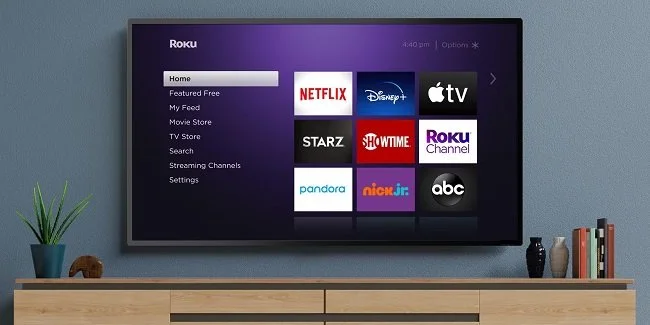
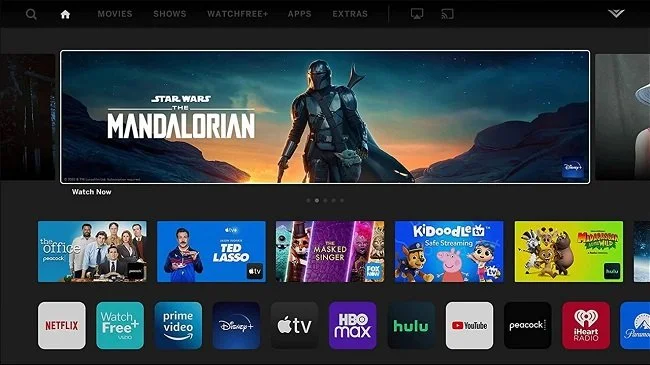
Contemporary viewing habits have changed radically in the last forty years. We may all still watch popular shows, but we often do it in different ways because there is no longer just one single path of access. There are still viewers that like to watch a show as it is broadcast. Other will record and watch later using some form of PVR. Then of course there is VOD and other streaming services. And to complicate things further the market is fragmented, and a lot of content is specific to a platform or outlet. If you do not have access to particular channel that is showing the latest episodes of your favourite show, then you may have to wait a year or more for older seasons to be syndicated to a station you do have. But this doesn’t always happen nowadays especially with shows that have been created specifically for streaming services such as Amazon Prime and Netflix. In such circumstances if you wish to see Stranger Things and are not a Netflix subscriber, then your only recourse is to purchase a boxset on DVD or Blu-ray. However, due to licensing issues, some of these shows do not get released on home media.
Despite living in a time where there is a wealth of quality television to watch, the way much of it is tied to specific platforms and outlets, means that if you wish to legally view a dozen or so of the most popular show, you have to subscribe to multiple services. For example, currently in the UK if you want to watch Game of Thrones, The Haunting of Hill House, Jack Ryan and Star Trek: Discovery then you’ll need to subscribe to either a satellite, cable or IPTV service such a Sky, Virgin of BT TV as well as Amazon Prime and Netflix. That’s a monthly spend of about £65 or so. Considering the current economic climate in the UK, that is not a sum of money that every household can or wishes to pay. Hence people will either simply opt for what they can afford or result to piracy. The latter is a big subject and not one I intend to address in this post. And so there exists a situation where if you only have access to free-to-air, terrestrial television via either a rooftop aerial or Freesat, you are going to have limited or no access to what may be deemed as premium content. In fact, I have seen the phrase “TV Poverty” used in this context, on a television marketing website.
Returning briefly to my reminiscences from the seventies, rightly or wrongly, socio-economic distinctions were often made here in the UK, according to which TV channels you watched and what were your favourite shows. Nowadays, I’d say that perhaps what platforms you have access to would be a more contemporary indicator. I’m certainly not going to suggest that having limited access to specific TV content is an impediment or social handicap in some way, but it does reflect a growing societal divide. However, in the UK if you only have access to terrestrial TV, then at least that includes BBC content, which is still of a very high standard, despite what some quarters may say. Yet, while recently visiting a family member in hospital, I spent some time waiting in “The Family Room” which had a bog-standard LCD TV with a simple aerial connection. It was a reminder that much of the free content is old and presented in the poorest of fashions. IE numerous onscreen graphics, material shown in the wrong aspect ratio and of course twelve to eighteen minutes of advertisements in each hour of content. It is does not make for an enjoyable viewing experience. Although the phrase “TV Poverty” does seem somewhat hyperbolic, it does indicate that there are clear and legitimate economic distinctions in the industry. Furthermore, I suspect they’ll become more prevalent in the years ahead.
Regulate Online Influencers, Community Specialists and Game Ambassadors
Thomas Cheung (AKA Elvine), an employee of Hi-Rez game studio and a partnered Twitch streamer, was arrested last weekend in Brookhaven, Georgia in connection an ongoing child sex investigation. Police charged him with using a computer service “to seduce, solicit, lure or entice” a minor, which is a felony in the state. Cheung is a prominent member of the World of Warcraft community and is generally a known "influencer" in specific gaming quarters. As a result of the ongoing investigation and charges, his corporate sponsors, SteelSeries, have withdrawn their support and Hi-Rez studios are distancing themselves from Cheung who was a community specialist for both Smite and Paladins Strike. Obviously, it is not appropriate to speculate and comment unduly on an ongoing criminal investigation, but I would like to articulate some wider points. With an issue as harrowing and sensitive as child sex abuse, it is understandable to tread cautiously and choose one’s words wisely. We certainly wish to avoid arbitrary “knee jerk” reactions as these tend to do more harm than good. But we must not shy away from big issues such as this although it is something that the gaming industry has been doing for too long.
Thomas Cheung (AKA Elvine), an employee of Hi-Rez game studio and a partnered Twitch streamer, was arrested last weekend in Brookhaven, Georgia in connection an ongoing child sex investigation. Police charged him with using a computer service “to seduce, solicit, lure or entice” a minor, which is a felony in the state. Cheung is a prominent member of the World of Warcraft community and is generally a known "influencer" in specific gaming quarters. As a result of the ongoing investigation and charges, his corporate sponsors, SteelSeries, have withdrawn their support and Hi-Rez studios are distancing themselves from Cheung who was a community specialist for both Smite and Paladins Strike. Obviously, it is not appropriate to speculate and comment unduly on an ongoing criminal investigation, but I would like to articulate some wider points. With an issue as harrowing and sensitive as child sex abuse, it is understandable to tread cautiously and choose one’s words wisely. We certainly wish to avoid arbitrary “knee jerk” reactions as these tend to do more harm than good. But we must not shy away from big issues such as this although it is something that the gaming industry has been doing for too long.
In real life, any significant gathering of people sadly attracts criminality and predators. In the UK the Police regularly remind people attending events such as carnivals, concerts, or even demonstrations to be mindful. Furthermore, it has also become apparent that organisations that deal with people, especially those who are marginalised or vulnerable, similarly attract of percentage of individuals whose motivations are far from good. Hence, we saw last year a scandal involving the Red Cross and a small percentage of their aid workers who were also exploiting sexually the very people they were supposed to be helping. And of course, any social or sporting activity that involves children has to be especially careful as to who they employ. I myself have volunteered to do charitable work in the past and had to give plenty of advance notice to afford the organisers time to do suitable background checks.
Due to some very hard and tragic lessons in recent years, dealing with others or representing an organisation in a public environment has to be regulated, policed and reviewed to ensure the safety and welfare of all parties. We as a society have reticently grown to accept this. Many of us don’t want to think the worst of our teachers, social workers, sports coaches or scout leaders by default, but it is irresponsible not to make provision to ensure that predators don’t slip through the net. But although this sort of social auditing has become common place in the real world, it still seems to be neglected, overlooked or in some instance deliberately sidelined online. Gaming and other internet-based leisure industries still maintain a close and profitable relationship with third party “influencers”. Tapping into popular social media personalities and having them become ambassadors for your game or service is immensely beneficial. Yet it is becoming increasingly clear that many of these affiliate staff are not in anyway scrutinised, checked or held to any sort of standard or accountability. Such a rash policy is inevitably going to end in tears. Perhaps it already has and we’re simply going to find out when the fallout becomes public knowledge.
Big business seldom does the right thing as a default choice. Yes, there are a few examples of ethical companies out there, but I am not disposed towards thinking this is the norm. Far from it. Which is why in the real world we have regulatory bodies, legislation and processes that ensure that business does the right thing, whether they like it or not. It is time that similar institutions and procedures are introduced to ensure that online businesses and communities are held to a similar degree of accountability. It is bad enough that a games developer can “unwittingly” associates itself with Twitch Streamer who turns out to be a racist, because they could be bothered to invest in a more formal employment relationship which would guarantee security checks. But potentially enabling a sexual predator for similar reasons of “fiscal prudence” and general indifference, a disgraceful nadir in free market irresponsibility. And for those “libertarians” that eschew any governance on principle, consider this. If the games industry doesn’t get its house in order voluntarily or embrace measured changes, they may face the worse kind of panic legislation and witch hunt culture next time something really bad happens. If you make money off the backs of a community that you cultivate and nurture, you have a duty of care, especially so if that community includes minors. It infuriates me that online business, especially gaming is always playing catch up due to having dodged real-world rules. Redress the balance and proactively put this situation right.
Too Many Online Game Stores?
I first created a Steam account and started purchasing games via digital download in January 2010. Back then, Steam pretty much had a monopoly on the market, and it was both novel and convenient to be able to purchase what seemed like “anything” just from one outlet and then download it and play, at any time of day. And then the rest of the video games industry woke up and decided they wanted a slice of the pie that was at the time exclusive to Valve. Hence, over the last eight years all the major “Triple A” publishers have developed their own game launcher software and online stores. This has led to titles being withdrawn from sale via Steam and a gradual fracturing of the market. That’s not to say that Steam is no longer a viable service. On the contrary. It still has a diverse range of products and there are always deals to be had. But it is no longer the first port of call when buying games online.
I first created a Steam account and started purchasing games via digital download in January 2010. Back then, Steam pretty much had a monopoly on the market, and it was both novel and convenient to be able to purchase what seemed like “anything” just from one outlet and then download it and play, at any time of day. And then the rest of the video games industry woke up and decided they wanted a slice of the pie that was at the time exclusive to Valve. Hence, over the last eight years all the major “Triple A” publishers have developed their own game launcher software and online stores. This has led to titles being withdrawn from sale via Steam and a gradual fracturing of the market. That’s not to say that Steam is no longer a viable service. On the contrary. It still has a diverse range of products and there are always deals to be had. But it is no longer the first port of call when buying games online.
The recent news that Epic Games is “aggressively” competing with Steam, with exclusive titles like Metro Exodus and major discounts on popular games, has put this issue of Online Game Stores back on my radar. I bought Assassin’s Creed: Odyssey last December so had to install Uplay to play it and keep it updated. There’s been a recent patch for Star Wars: Battlefront II, so I’ve also had to download Origins to check out the game. I need Battle.net to play Overwatch and Destiny 2 as well as Galaxy to efficiently manage the titles I’ve purchased from Good Old Games. And due to my curiosity over Epic Games market expansion, I ended up creating an account and using their software to peruse their wares. In total I have 6 bespoke client launchers and their associated online stores currently installed on my PC. All of which have logon and payment credentials that need to be securely managed. The dream of a one stop option via Steam has long gone.
If I step back and look at this situation from a business perspective, then I can see why the major publishers want their own specific presence in the online sales market. Furthermore a “theory” from fellow games blogger Wilhelm Arcturus may shed some light specifically on the Epic Games expansion. “The fun rumor I saw was that Tencent (which owns Epic and Riot) pushed Epic into creating this store, with all sorts of developer incentives, to hit back at Valve for bringing Steam to China with PWE rather than them. Big if true”. However, although I may be aware of businesses needs, they are not a major concern of mine. I identify more as a consumer than a “gamer” and I’m ultimately just looking to indulge my pastime as cheaply and efficiently as possible. Having multiple game launchers and stores to choose from has both benefits and inconveniences for me. I can potentially get good deals but also have to compartmentalise my gameplay to specific platforms. This means multiple friends lists, multiple social tools and multiple marketing emails. None of which are deal breakers, but low-level nuisances are still nuisances none the less.
My biggest concern about the current proliferation of online game stores is one of licensing and reciprocal arrangements with third parties. Video on demand services have gone the same way in recent years and I now find myself using several services with various add-ons. I often find that movies and TV shows that I’ve added to my “watchlist” vanish after a time as the licensing contract comes to an end. So far this has tended to be relatively low level content and I have not been inconvenienced over it. However, if Netflix stopped carrying Star Trek then the service would instantly become redundant as far as I’m concerned. Nothing like this has happened to me game wise yet. Although Steam stopped selling certain EA titles once they launched their own platform, I have not lost access to Mass Effect 1 and 2 that I bought from them. However, I am not fool enough to think that such a situation is beyond the realm of possibility. Business arrangements change, as does regional law. So I am cautious when it comes to what games I buy because I no longer believe I’ll have indefinite access to them As for online game stores, yes there are too many of them but I suspect they will ultimately just contribute to the further marginalisation of the market and may not yield the result their corporate owners hope for.
The Varying Quality of You Tube Content
"The ability to speak does not make you intelligent". Qui-Gon Jinn
I’m sure this has happened to many of you before. You’re playing a video game and you have a particular question regarding it. How do I reach a specific location on the map? Is there an optimal build for a certain class? Where can I get a certain item? A quick Google search returns multiple results but most of them are videos rather than text-based answers, so you opt to watch one to get the answer that you seek. However, you then notice that your simple enquiry somehow merits a video that lasts twelve minutes. You then spend your precious time enduring a rambling diatribe from someone who clearly hasn’t scripted a succinct explanation. If you’re lucky you may get the answer that you seek, or you may end up wasting your time entirely. Should you perhaps watch another video? Needless to say, you eventually go back and read one of the written answers.
"The ability to speak does not make you intelligent". Qui-Gon Jinn
I’m sure this has happened to many of you before. You’re playing a video game and you have a particular question regarding it. How do I reach a specific location on the map? Is there an optimal build for a certain class? Where can I get a certain item? A quick Google search returns multiple results but most of them are videos rather than text-based answers, so you opt to watch one to get the answer that you seek. However, you then notice that your simple enquiry somehow merits a video that lasts twelve minutes. You then spend your precious time enduring a rambling diatribe from someone who clearly hasn’t scripted a succinct explanation. If you’re lucky you may get the answer that you seek, or you may end up wasting your time entirely. Should you perhaps watch another video? Needless to say, you eventually go back and read one of the written answers.
The written word is a great medium for imparting information and answering questions. But video is often considered an easier and more convenient option. It’s quicker and potentially easier to create and you can embrace the old Hollywood adage, “Show, don’t tell”. When I was an active Guild Wars 2 player, You Tube videos were the most immediate way to find out how you reach a specific Vista, especially if it involved a complex jumping puzzle. However, there was an important caveat involved. Whether you got a quick and accurate answer came down to the quality of the video, how well it was edited, and whether the author was adept at expressing themselves clearly. And this pretty much rings true for any kind of instructional video, be it for wiring a plug or co-ordinating a twelve-man raid in an MMORPG. Sadly, one of the few things that You Tube, and the democratisation of video production hasn’t achieved is any form of automated quality control. Simply put not everyone is cut out to be a teacher and the ability to record a video doesn’t mean that it will be good by default.
Instructional videos are a “lottery”, to say the least.
For the sake of this discussion, let us focus exclusively on game related You Tube content and that which is specifically meant to explain a mechanic, system or such like. IE any material that is intended to be instructional. The key to producing a good video of this kind is twofold. The video content has to clearly show the thing that is being discussed and explained. Presentation is key. It needs to be unambiguous and focused. Next the accompanying narration has to be factually accurate, easy to understand and engaging. The former of these two skills can be easily learned. There is a wealth of advice and guidance available on the technicalities of producing professional videos. The latter requirement, which is a form of public speaking, is not so easy to pick up. In fact, for some it is nigh on impossible. Hence, there is a broad spectrum of quality when it comes to You Tube content of this kind. Speaking casually, as you would with friends, using banter, patois and colloquialism are fine on “let’s plays” or for live streaming. This very personal style of discourse can be a source of appeal. But I believe it has no place when it comes to providing instruction.
And therein lies the rub as the expression goes. Simply put there are far too many You Tube videos where the subject matter is poorly framed, and the creator has no discernible oratorial skills. Inarticulate ramblings and poorly expressed points are sadly common place. Plus, there is absolutely no excuse for being dull. Yet You Tube is awash with poorly made content that often proves to be an absolute chore to sit through. I appreciate that many content creators are driven by enthusiasm, but I also suspect that a percentage are motivated by dreams of internet fame or a chance to make a fast buck. Greed often seems to trump quality control and enthusiasm is no substitute for talent. Furthermore, irrespective of the sophisticated algorithms that You Tube has at its disposal, it doesn’t have yet have the tools to automatically determine the quality of content. Which means that unless you have a prior familiarity with a content creators work and trust it, watching any video for instructional reasons is a crapshoot.
Bluster, hyperbole and calumny do not equate to quality public speaking.
Now I want to make it quite clear that I'm not in any way advocating that people should be denied the chance to create You Tube content. I firmly believe in the individual’s right to express themselves within the confines of the law, regardless of whether their videos are shit or borderline David Attenborough. However, the moment you place something in the public domain then you are inviting criticism. We live in a media saturated age and the wider public are extremely tech savvy and expect content to be to a certain standard by default. Therefore, a lot of existing content creators really do need to raise their game and produce work to a higher standard. Basic literacy helps. So does not speaking like you’re recovering from a major head trauma. You Tube also needs to introduce a more sophisticated means of providing feedback, other than the arbitrary thumbs up or down, so that content creators have a fighting chance of knowing what needs to be improved. However, You Tube doesn’t like to spend money on human moderation, so this situation is sadly not likely to change any time soon.
The Lucas Legacy
I was perusing the net recently and came across a story about how a Star Wars fan film that had built up a head of steam online, has been slapped with a copyright strike from Disney. Nothing unusual there as the company is virtually legendary with respect to its litigious proclivities. However, someone over a Lucasfilm interceded and got the strike lifted, because the fan film creator had allegedly sought prior permission and supposedly received it. George Lucas has always maintained an equitable attitude towards fan usage of the Star Wars IP, something he tried to impress upon Disney when he sold the rights to them back in 2012. But it is very difficult to have a balanced discussion about George Lucas as the man is such a paradox. On one hand he is possibly one of the greatest contributors to twentieth century pop culture and has influenced a generation of film makers, writers and fans. On the other he is the man who single headedly has managed to queer his own pitch, with the way he has continuously tinkered with his body of work and appended it with supplemental material that many deemed substandard or to the detriment of the original. He is also still vilified in some quarters for his business arrangement with Disney.
I was perusing the net recently and came across a story about how a Star Wars fan film that had built up a head of steam online, has been slapped with a copyright strike from Disney. Nothing unusual there as the company is virtually legendary with respect to its litigious proclivities. However, someone over a Lucasfilm interceded and got the strike lifted, because the fan film creator had allegedly sought prior permission and supposedly received it. George Lucas has always maintained an equitable attitude towards fan usage of the Star Wars IP, something he tried to impress upon Disney when he sold the rights to them back in 2012. But it is very difficult to have a balanced discussion about George Lucas as the man is such a paradox. On one hand he is possibly one of the greatest contributors to twentieth century pop culture and has influenced a generation of film makers, writers and fans. On the other he is the man who single headedly has managed to queer his own pitch, with the way he has continuously tinkered with his body of work and appended it with supplemental material that many deemed substandard or to the detriment of the original. He is also still vilified in some quarters for his business arrangement with Disney.
Lucas announced back in October 2012 an interview with the New York Times, that he was "retiring" from the sort of film making he had become closely associated with over the last three decades. He was however still going to pursue creating more "personal" films. He also made some fairly broad statements about getting mainstream Hollywood to buy into his last project Red Tails and the movie industries overall inadequacies in dealing with issues of race and African-American history in films per se. He took time to pointedly described how he had to finance Red Tails himself. Sadly, the movie was met with relative indifference at the box office and garnered the usual criticism associated with his work. IE too much emphasis on spectacle and not enough attention of characters and script. Since then Lucas has not produced any major cinematic works and has continued to pursue his philanthropic and charitable endeavours.
There are some who feel that Mr. Lucas is a misunderstood film maker who has suffered at the hands of a rabid and unreasonable fan base and a system that hates him for bypassing their rules. Then there are those who simply see him as a gifted technician, well versed in the mechanics of film making but lacking in the narrative skills shown by the true “greats”. As per usual, the truth more than likely lies somewhere in between these two positions and is far more nuanced. As for his last movie Red Tails (which he produced and then took over the reshoots from incumbent director Anthony Hemmingway), it’s a distinctly average film. It is visually impressive as you would expect, but the story is incredibly formulaic, and the characters are weak. The issue of racism is not given the depth or intelligence required to explore it effectively and the dialogue is unconvincing. Whether the films reception was a key factor in Lucas choosing to semi-retire from the wider industry, is up for debate. For decades he has been a prisoner of his own success and at times it does seems like he still struggles to come to terms with it all. “On the Internet, all those same guys that are complaining I made a change are completely changing the movie … I’m saying: ‘Fine. But my movie, with my name on it, that says I did it, needs to be the way I want it. Why would I make any more when everybody yells at you all the time and says what a terrible person you are?”
Although I fully understand and even agree in principle with his sentiments, such a position is purely an ideological one and is not very practical in reality. Star Wars has become an integral part of popular culture and although there is no legal precedence, the public feel that they have some collective emotional ownership of it and are therefore not going to take an even-handed view to alterations and new material (as the Disney movies have shown). Lucas should have learnt from others who have participated in films and TV that has grown bigger than themselves. You come to terms with it and try to work within the confines that it sets, or you simply withdraw. Lucas may think that the restraints of the Star Wars phenomenon has limited his options and thus he has not had the critical success he looked for. I think more blame can be attributed to his skills set. The original trilogy although overall his own work, had the creative input of additional screenwriters and directors to smooth the rough edges and curb his excesses. The prequels did not and therefore their ideas and visual style were marred by poor dialogue and turgid stories. In fact, I would draw a parallel between George Lucas's career and that of M. Night Shyamalan. Both are talents that possibly require the counterbalance of a third party to reach their full potential.
Of course, George Lucas has not fully retired and has provided himself with a get out of jail card, with the ongoing development of a fifth Indiana Jones film. However, it should be noted that he is only involved as an executive producer and is not contributing to the story. Yet regardless of any future film output, his long-term legacy is clearly established and of considerable magnitude. He created a mythology for a generation that had none and has been instrumental in pushing back the technical boundaries of the film industry. He has demonstrated that the mainstream studios do not need to have it their own way all the time and he has influenced an inordinate amount of people globally to pursue their creative dreams. However, it can be argued that he has also set a precedent of style over substance and spectacle over narrative. Yet, whatever your opinion on the man and his work, we have not heard the last of him. Lucas is by nature a “fixer” and I suspect he has something he still wants to put right or follow up upon before he’s “done”.










This Year’s Plan
I don’t care for new year resolutions. I just like to make credible plans that are achievable. So, after some consideration, I now have a short and manageable list of tasks that I’ll endeavour to complete this year. If I keep things simple and stick to an orderly routine, I see no reason why I can’t get all of these done. First off and perhaps the most important is to maintain a daily writing schedule. Too often the excuses we make to avoid writing are bogus. Sure, there will be occasions such as illness and family or work-related problems, but nine times out of ten, we don’t write because we cannot be bothered to do so. Why should writing get a free pass in this fashion? So, I intend to persevere during periods of lethargy and write come hell or high water. It doesn’t have to be earth shattering content. Three or four paragraphs will suffice. I can’t afford to let the writing slide as I suspect it may prove to be the thin end of the wedge for me and other activities would subsequently follow.
I don’t care for new year resolutions. I just like to make credible plans that are achievable. So, after some consideration, I now have a short and manageable list of tasks that I’ll endeavour to complete this year. If I keep things simple and stick to an orderly routine, I see no reason why I can’t get all of these done. First off and perhaps the most important is to maintain a daily writing schedule. Too often the excuses we make to avoid writing are bogus. Sure, there will be occasions such as illness and family or work-related problems, but nine times out of ten, we don’t write because we cannot be bothered to do so. Why should writing get a free pass in this fashion? So, I intend to persevere during periods of lethargy and write come hell or high water. It doesn’t have to be earth shattering content. Three or four paragraphs will suffice. I can’t afford to let the writing slide as I suspect it may prove to be the thin end of the wedge for me and other activities would subsequently follow.
Podcasting is back on the table and I’m pleased to say that the first show of 2019 has been published today. The editing wasn’t too problematic and I’m more than satisfied about the quality of the discussion that I and my guest had. I think getting this one out of the proverbial gates early has been a real shot in the arm to my motivation. I’m also going to see if I can gatecrash other people’s podcasts this year. Perhaps some of my colleagues would be interested in a reciprocal arrangement of this nature? As for listening to other people’s podcasts, I’ve whittled down my list of current subscriptions and am focusing on those that regularly produce content and maintain high quality output. I’m also going to try and give more feedback to others in the month’s ahead. I think it’s important to let content creators know that you appreciate their work and value their efforts.
I also have some clear plans with regard to my other interests. As mainstream cinema is not exactly enthralling at present and there’s not a ton of movies that I’m anticipating seeing this year at my local multiplex, I intend to start working my way through my “watch list”. Although I have a broad range of knowledge about film, there are still plenty of gaps that need filling. So, I intend to track down some old classic and niche market obscurities over the next fifty-two weeks. Gaming wise, I intend for the present to just stick to both LOTRO and STO as they are proven favourites and they don’t cost me anything. I will finish Assassin’s Creed: Odyssey and then take stock of the situation. There will be no rash impulse purchases this year and if I’m not sure about a title, I’ll research it thoroughly before committing to buying. Books and comics are also going to get more of my time, where as TV may well take a back seat. There are lots of good shows but it’s not as if they’re going anywhere. Only the most essential will get slavishly followed or binge watched.
If I manage my time effectively, I see no reason why I can’t care for my parents, spend time with Mrs Peril, the grandchildren and still be able to accommodate my hobbies. I can podcast once a month and produce a ninety-minute show. If I plan my writing, I can even pre-write movie reviews and schedule them for those occasions when I know I’ll be away or have a busier than usual day. I’m also looking to establish a regular walking regime for exercise and weight loss. It could also provide material for a regular blog post. There’s a fine line between being sensibly busy and over extending yourself. Hopefully, I am leaning towards the former and not the latter. I do find that when I’m busy, I tend not to eat out of habit and maintain a more positive mindset. But perhaps the most important concept to embrace is if my circumstance change, then it’s okay to change my plan. Hopefully that won’t happen, but it does no harm to consider it. Right, that’s enough talking about what I want to do. Let’s now get on with it.