
Andor (2022)
Andor is not like other entries in the Star Wars canon. It explores the human, social and political consequences of rebelling against an oppressive, totalitarian regime. The writing is intelligent and well observed, choosing to focus on the average citizens of the Empire and the nature of their daily lives. Andor also explores the ineffectual politicians and the way the senate are self serving and ultimately impotent. The Emperor is remote and instead we see how Imperial colonialism works at a grassroots level. It is an all too familiar depiction, born out of historical fact, such as Vichy France during World War II. Petty thugs and aspiring psychopaths happily align themselves with their Imperial overlords and actively oppress their own people. As for the Empire, and in particular the ISB (Imperial Security Bureau) it is rife with infighting, personal fiefdoms and all the flaws of similar institutions from the real world.
Andor is not like other entries in the Star Wars canon. It explores the human, social and political consequences of rebelling against an oppressive, totalitarian regime. The writing is intelligent and well observed, choosing to focus on the average citizens of the Empire and the nature of their daily lives. Andor also explores the ineffectual politicians and the way the senate are self serving and ultimately impotent. The Emperor is remote and instead we see how Imperial colonialism works at a grassroots level. It is an all too familiar depiction, born out of historical fact, such as Vichy France during World War II. Petty thugs and aspiring psychopaths happily align themselves with their Imperial overlords and actively oppress their own people. As for the Empire, and in particular the ISB (Imperial Security Bureau) it is rife with infighting, personal fiefdoms and all the flaws of similar institutions from the real world.
Andor is by far the most nuanced and thoughtful entry so far in Disney’s Star Wars universe. However, although I and others are happy to heap praise upon the production it does have one particular Achilles Heel. Andor conspicuously highlights how puerile and unsophisticated all previous entries in the established canon are. When George Lucas wrote Star Wars it was designed to be a traditional high adventure. A mythology that dealt in archetypes, intended to convey a simple moral message. The baddies were bad and the goodies were good. Evil was defeated and the galaxy restored to order under the benevolent guidance of the New Republic. Lucas painted with broad brushstrokes and hence the realities of a revolution were not explored beyond a superficial manner. This approach worked fine for a self-contained trilogy of films pitched at a broad and youthful audience 45 years ago.
That audience has now grown up and some have become writers, producers and directors in the film and TV industry. Finally with Andor, the Star Wars franchise is being treated as more than just a big budget, science fantasy genre vehicle. Andor is essentially a political drama. If you took away the veneer of technology and the wider science fiction trappings this could easily be a drama about the Roman or British Empire and a critically acclaimed costume drama. I am reminded of how in 2006, the James Bond franchise was reinvented in a similar more adult fashion, with the release of Casino Royale. The caricature excesses of the Roger Moore era and the glossy, generic formula of the Brosnan period were laid to rest with a far more gritty, personal and character driven depiction of Bond. Very few franchises attempt such a revision and even fewer succeed if they try. Yet Andor has.
I am curious to see where Star Wars goes after this. Can this franchise sustain weighty dramas such as Andor as well as episodic, action fodder in the cliffhanger serial idiom, such as The Book of Boba Fett? Or are they destined to become ill suited bedfellows? Furthermore, does this more cerebral revisionist approach to the rebellion render the original trilogy obsolete due to their lightweight portrayal of political turmoil? Depending on how any future spinoff shows are presented and received, I suppose the fans will determine the answer. Personally, I would like more of this adult idiom, rather than a return to the established space opera genre. Star Wars has now undeniably changed, due to Andor. Although it has effectively solved the problem of the franchises’ simplicity, it may also have paved the way for further issues that will have to be addressed at a later date.








The Lord of the Rings: The Rings of Power
Having watched the first two episodes of The Lord of the Rings: The Rings of Power, I wish to express my thoughts on what I’ve seen and my overall impressions so far. I do not think it would be fair to frame this post as a review as the two episodes only constitute 25% of the show’s total content. A formal review of the first season seems more appropriate when I have seen it in its entirety. Before I begin commenting on specific points about the two premier episodes, I wish to point out that I have no problem with “representation” and have expressed my thoughts on this matter in a previous post. It also covers the matter of “adaptation” and how complex texts can at times require augmenting to be made accessible to wider audiences. Hence those viewers who want 100% canonical purity are unrealistic in their expectations. Objections based in racism and sexism can simply be ignored. NB I shall endeavour to keep my thoughts spoiler free.
Having watched the first two episodes of The Lord of the Rings: The Rings of Power, I wish to express my thoughts on what I’ve seen and my overall impressions so far. I do not think it would be fair to frame this post as a review as the two episodes only constitute 25% of the show’s total content. A formal review of the first season seems more appropriate when I have seen it in its entirety. Before I begin commenting on specific points about the two premier episodes, I wish to point out that I have no problem with “representation” and have expressed my thoughts on this matter in a previous post. It also covers the matter of “adaptation” and how complex texts can at times require augmenting to be made accessible to wider audiences. Hence those viewers who want 100% canonical purity are unrealistic in their expectations. Objections based in racism and sexism can simply be ignored. NB I shall endeavour to keep my thoughts spoiler free.
It seems an obvious thing to say but the production design, visual effects and overall aesthetic for The Lord of the Rings: The Rings of Power is beautiful. The visual style created in Peter Jackson’s trilogy is broadly adhered to here and these two separate productions do not clash in this sense. The cinematography by Oscar Faura is sumptuous in its style and epic in its scope. The landscapes exude character and feel alive. So far the visual style is very cinematic and doesn’t look purely functional as some TV productions do. The visual effects both CGI and practical, are of a very high standard, as you would expect from such studios as Weta Digital and ILM.
One of the first things that strikes you about The Lord of the Rings: The Rings of Power is the music by Bear McCreary. It is in the idiom of material written by Howard Shore for the film trilogy (Shore has written the theme for the show). But McCreary’s material is very much his own. There is a striking Dwarven theme that plays when Elrond enters Khazad-dûm and I hope that the show continues to have memorable cues which add to the overall ambience and personality of the story arc.
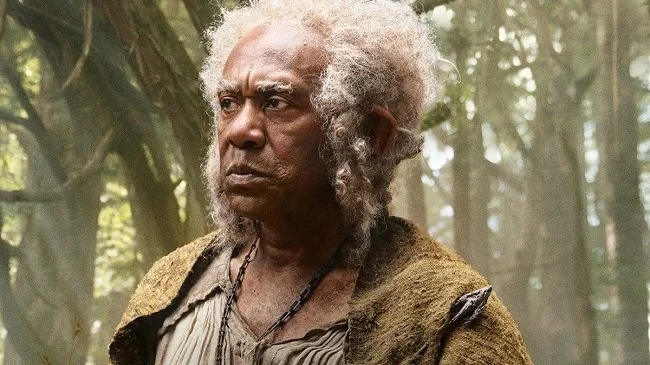
At present there are four storylines running broadly in parallel. Galadriel’s ongoing hunt for Sauron, Elrond’s diplomatic mission to Khazad-dûm, Bronwyn and Arondir’s adventure in The Southlands beyond the Sea of Rhûn and the arrival of “meteor man” among the Harfoots. So far, all are engaging with many direct and indirect lore references. Classic character’s such as Gil-Galad, Celebrimbor and Durin III have already made an appearance thus inferring that certain major historical events will be depicted in future episodes and seasons. Original characters are used to expand historical events and bridge any narrative gaps. Also, there is a certain amount of compressing the time frame to accommodate the story pacing. This is not new and PeterJackson did this in his cinematic trilogy. Performances are fine and the absence of A list celebrity actors is a wise decision as that would no doubt detract from the proceedings. Director J.A Bayona creates a sense of tension in these first two episodes, especially around the first appearance of an Orc. He is, after all, an exponent of the horror genre.
I viewed the first two episodes of the show in HDR 4K on a 43 inch TV. Mrs P also watched and felt that there was no requirement to be a major fan to enjoy what was happening. She does not consider herself a Tolkien aficionado but has seen Peter Jackson's films several times and has read the source text once. The plot and characters are accessible and the story so far, is not excessively convoluted or arcane. So far there has not been anything included in this “adaptation of Professor Tolkien’s work that I consider to be beyond the pale or a deal breaker. Overall this is a robust and sumptuous imagining of Middle-earth, so we will certainly continue to watch The Lord of the Rings: The Rings of Power, mainly because we want to know more.






My Home Entertainment System
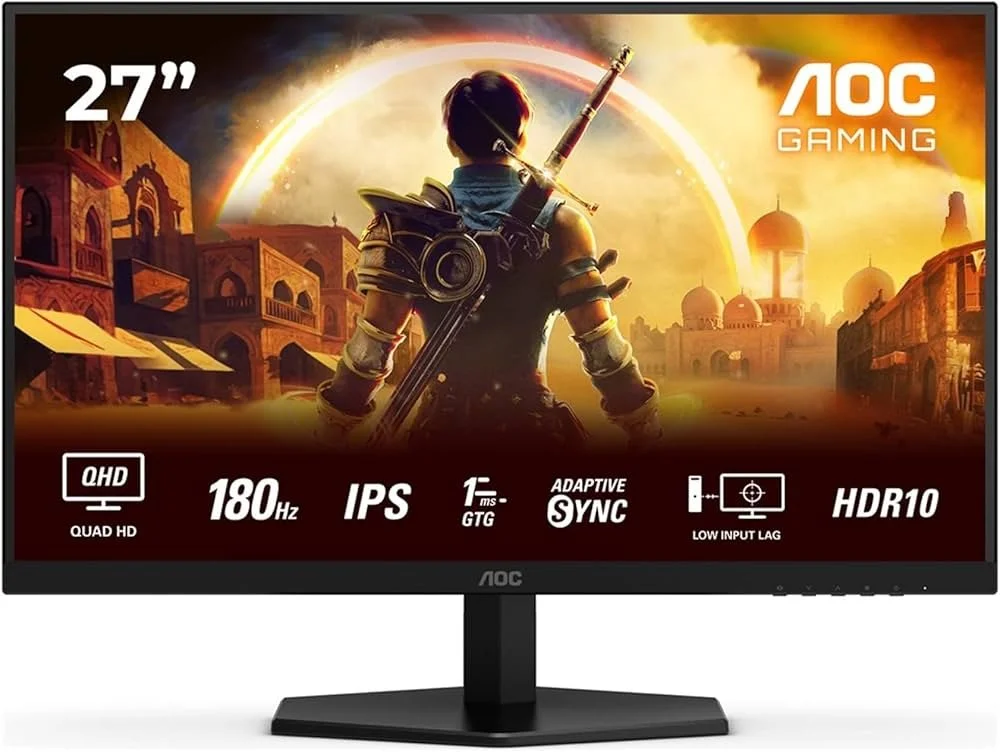
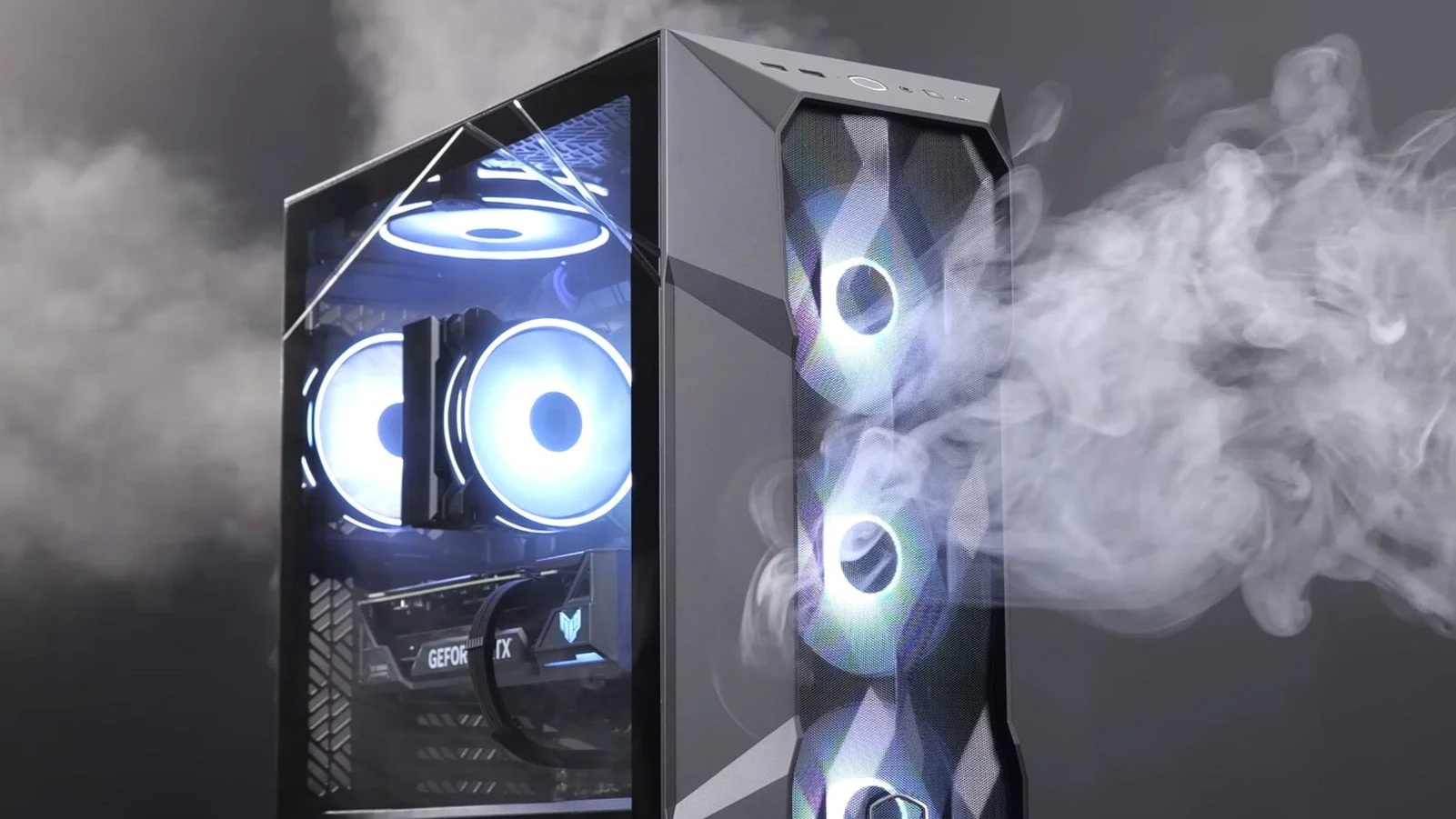
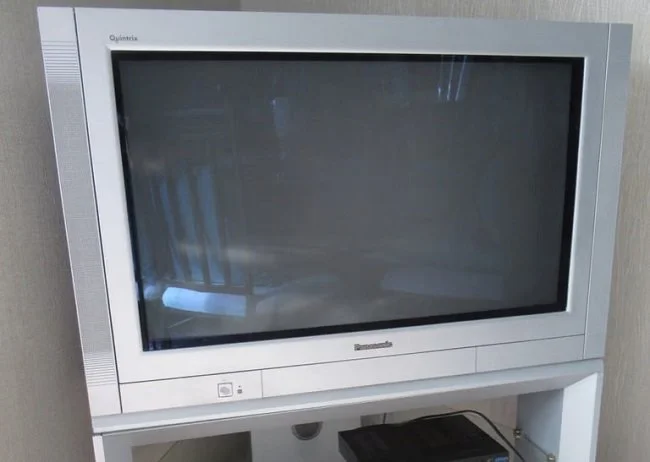
The last time I wrote about our home entertainment system was six years ago. Back then I was hoping to upgrade our TV from HD to UHD. However, unless you are fortunate to have a surfeit of cash, most of us tend to soldier on with the hardware we already have until it breaks. Then at least we can justify replacing it. And that is exactly what happened to us last week. It would appear that both the TV and the powerline internet adapters which are in our lounge, suffered electrical induction damage during a recent thunderstorm. One of the powerline adapters was completely dead and the HDMI sockets on the television ceased to function. This meant we had no access to streaming services, the Blu-ray player or our BT TV DVR. We could access a selection of free, terrestrial digital channels via the aerial, but could not pause or record anything. Furthermore all of these were in standard definition.
The last time I wrote about our home entertainment system was six years ago. Back then I was hoping to upgrade our TV from HD to UHD. However, unless you are fortunate to have a surfeit of cash, most of us tend to soldier on with the hardware we already have until it breaks. Then at least we can justify replacing it. And that is exactly what happened to us last week. It would appear that both the TV and the powerline internet adapters which are in our lounge, suffered electrical induction damage during a recent thunderstorm. One of the powerline adapters was completely dead and the HDMI sockets on the television ceased to function. This meant we had no access to streaming services, the Blu-ray player or our BT TV DVR. We could access a selection of free, terrestrial digital channels via the aerial, but could not pause or record anything. Furthermore all of these were in standard definition.
Hence Mrs P and I looked at various TV models online and read a few reviews. As we’ve been happy with our previous Samsung TV we decided to buy another. We ordered a Samsung UE43AU8000 from John Lewis department store for £340 which seems to be the standard price for this model. We chose this one because we didn’t want a TV over 43 inches, due to the size of our lounge (we live in a bungalow). We also had no requirements for excessive functionality. Everything we watch comes from external sources. Our BT TV DVR provides a selection of free and premium TV channels in SD, HD and UHD. We also have a Blu-ray/DVD player for the handful of disks that we still own. And I recently acquired a Zidoo Z10 Pro media player for third party video files. The new TV meets our requirements, having three HDMI inputs and no superfluous extras. We also opted to pay £125 for the installation of the new TV, as I didn’t relish the idea of having to mount it on the wall myself.
This morning, two gentlemen arrived to install the new TV and broadly things went well. There was a problem using the existing wall mount but fortunately the engineers had a spare in their van. This did incur a further £109 cost but needs must when the Devil drives and all that. Another issue arose regarding the HDMI inputs. Two were inset along the right edge of the TV but the third was directly on the back. When a cable was inserted it wouldn’t allow the TV set to hang flush to the wall. I managed to purchase a 90 degree adapter later and so the problem has now been resolved. Replacement powerline adapters were supposed to be delivered in time for today but didn’t arrive until after the two engineers had gone. However, I installed a Netgear wifi extender that I had spare. This has a single ethernet port that I split between the three previously mentioned devices, using a mini switch.
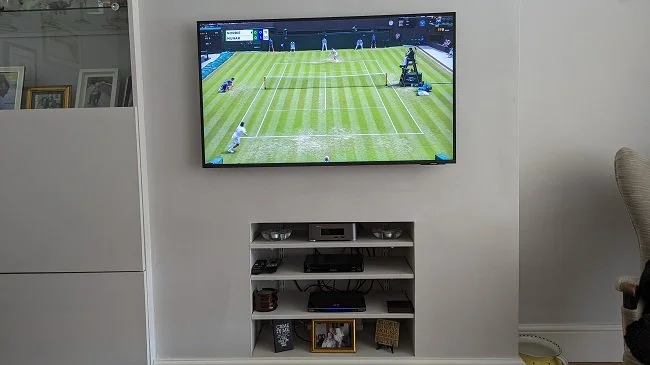
Our TV is mounted on the chimney breast in our lounge and we have a sofa in front of it about 8 feet away. The DVR, Blu-ray and media player are on shelves in the fireplace below. Although practical this is not necessarily convenient from a technological perspective. The roof aerial is in the loft above the lounge so the cabling comes down the chimney. However, providing sufficient power outlets and internet access is a challenge. For safety and cosmetic reasons Mrs P is not keen on long ethernet cables, even if they’re neatly pinned to the skirting board. The wireless bridge solution works and the data transfer rate is sufficient but wifi is not always a reliable means of providing internet access. As and when we next move, a lot more thought will go into ensuring that there are enough electrical sockets and data ports exactly where they’re needed.
I am extremely pleased with the new Zidoo Z10 Pro media player. It runs on Android 9.0 and plays a wide variety of file formats. Files can be stored either in an internal or external drive or streamed from a source on your home network. Most of my film collection is encoded in x264, however I can now play back 2160p content encoded in x265. It has been most interesting to watch The Lord of the Rings and The Hobbit trilogies in 4K. I am still undecided on the aesthetics of the format as it does lose an element of cinematic quality, while gaining visual clarity. Another benefit of the Z10 Pro is how easy it is to install apps for any streaming services that you may use. There are also some interesting customised variants such as Smart Tube; a client for Android TV with additional playback features and a conspicuous lack of adverts. The GUI can be customised, providing thumbnail images of your content, although I find it does misidentify films, especially more obscure titles.
I wrote in my last post, six year ago, that sound was the weak link in my home entertainment system and that remains the case. I still need a sound bar or something similar as the television’s integral speakers are somewhat lacklustre. However, such a purchase will have to wait another month or two for financial reasons. Overall, both Mrs P and I are happy with the new set up. It took a while to disable a few features on the new TV that were being “over helpful” such as HDMI-CEC. We also have a policy of “if it’s not being used, remove it from the home screen” as this tends to reduce confusion and scope for “pressing the wrong button”. Hopefully our current home entertainment system is future proof for the time being. I do tire of the upgrade treadmill sometimes, having seen the rise and fall of so many formats over the years. In the meantime we intend to enjoy what we have.






















Eurovision 2022
The Eurovision Song Contest is a lot of things but it is never dull. Even if the songs that make it through to the final are a little lacklustre, there’s always drama to be found in the scoring. The first round of votes come from national juries made up of professionals from the music industry. Hence there is a propensity to judge songs on their technical and marketing merits. This often means that the juries favour songs that don’t necessarily appeal to the public. However, this is addressed in the second round in which the viewers can vote. The only caveat is that you cannot vote for your own country. Hence things can really change after the professional jury votes are counted and the public votes are added to the overall score. And that is what happened last night. There was a massive public vote for Ukrainian entry Stefania by the Kalush Orchestra and they subsequently won the contest.
The Eurovision Song Contest is a lot of things but it is never dull. Even if the songs that make it through to the final are a little lacklustre, there’s always drama to be found in the scoring. The first round of votes come from national juries made up of professionals from the music industry. Hence there is a propensity to judge songs on their technical and marketing merits. This often means that the juries favour songs that don’t necessarily appeal to the public. However, this is addressed in the second round in which the viewers can vote. The only caveat is that you cannot vote for your own country. Hence things can really change after the professional jury votes are counted and the public votes are added to the overall score. And that is what happened last night. There was a massive public vote for Ukrainian entry Stefania by the Kalush Orchestra and they subsequently won the contest.
This outcome was predicted in advance by the media due to the wave of international support that has been maintained for Ukraine, since the Russian invasion began on 24th February this year. However, setting aside for a moment the sense of solidarity that is abroad, the song itself is an interesting, quirky and catchy mixture of folk and rap. Furthermore, if you watch the official video for Stefania, which has subtitles, it is a powerful statement on the current situation in Ukraine. I think British composer David Arnold summarised best the significance of this win and the relevance of Eurovision itself. Something that has often baffled the UK. “This is why Eurovision is an important cultural event that doesn’t deserve to be sneered at. I’ve been banging on about it for years but it really does have huge meaning for so many people and countries”.
Personally, I found this Eurovision Song Contest a little light on the theatrical performances that are so often associated with the competition. There were too many ballads and manufactured pop songs that have been contrived to follow the style and idiom of the mainstream. However, Norway and Moldova came up trumps and gave us the kitsch pantomime that so many of us love. And it would be remiss of me to not mention the menacing psycho-drama that was Serbia’s entry. But for me the biggest surprise of the night was how well Sam Ryder did for the UK. Considering last year the UK scored absolutely nothing, this was a most welcome change. The song Space Man is a solid earworm that channels Queen, Elton John and The Beatles. Overall this year’s Eurovision Song Contest was a solid evening’s entertainment. As ever, I enjoyed completing my score sheet at home and hanging out on Twitter, soaking up the communal aspect of this annual event.





Benjamin Franklin (2022)
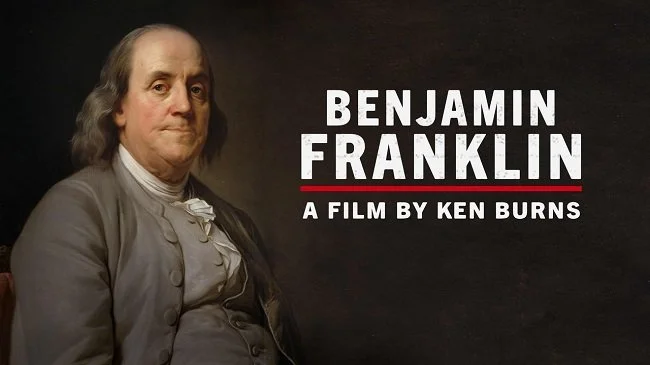
Benjamin Franklin is in many ways the most interesting of the American Founding Fathers. A self taught man who went on to become a polymath. An inventor, accomplished writer and publisher. A diplomat who successfully held multiple public offices. A loyalist who went on to become a “reluctant revolutionary”. A slave owner who eventually became an abolitionist. A questionable parent who favoured specific children over others, as well as a negligent husband. Franklin was all these things, as Ken Burns’ documentary takes great pains to highlight. A broad cross section of historians tackle these foibles and contradictions from multiple perspectives. As Joseph J. Ellis states, Benjamin Franklin was “a Nobel-calibre scientist, the greatest prose stylist of his generation, and probably the greatest diplomat in American history”. His legacy is chronologically analysed over four hours in two distinct episodes.
Benjamin Franklin is in many ways the most interesting of the American Founding Fathers. A self taught man who went on to become a polymath. An inventor, accomplished writer and publisher. A diplomat who successfully held multiple public offices. A loyalist who went on to become a “reluctant revolutionary”. A slave owner who eventually became an abolitionist. A questionable parent who favoured specific children over others, as well as a negligent husband. Franklin was all these things, as Ken Burns’ documentary takes great pains to highlight. A broad cross section of historians tackle these foibles and contradictions from multiple perspectives. As Joseph J. Ellis states, Benjamin Franklin was “a Nobel-calibre scientist, the greatest prose stylist of his generation, and probably the greatest diplomat in American history”. His legacy is chronologically analysed over four hours in two distinct episodes.
The first episode explores Benjamin Franklin's early life, covering his education or lack thereof, his talent for printing, his thirst for knowledge and personal improvement as well as his personal life. As he rises socially and becomes a man of the people in local politics, he is defined by drive for continuous civic improvement. The second episode explores his time in London and Europe and how events revealed the British Monarchy’s true perception of America’s place within its Empire. Burns and writer Dayton Duncan explore Franklin’s deeds in detail trying to separate measured and reliable facts, from reputation, myth and propaganda from his political enemies. Although a towering intellect, Franklin remains accessible and quite human. The breakdown in his relationship with his son William, the last governor of New Jersey, is quite sad due to him being on the opposite side of the political divide. Franklin also seems remorseful in later life for his failures as a husband.
Ken Burns continues to produce multiple documentaries, tackling key aspects of American history and culture, such as the Vietnam War, as well as iconic individuals like Ernest Hemmingway. Yet Benjamin Franklin is stylistically closer to his earlier work such as The Civil War, focusing on source text material and contemporary historical analysis due to the subject matter being outside of our 20th and 21st century experience. The production values are straightforward with historians, biographers and academics providing talking heads. Graphics, period artwork and music replace video footage and film archive material. As ever, a great deal of thought has gone into the voiceovers. Peter Coyote again provides dignified narration, while Franklin’s own words are brought to life by the charismatic Mandy Patinkin. By avoiding historical reenactments and favouring a lower key approach, Burns allows the audience to know and understand Franklin through his words and deeds.
What Ken Burns excels at is presenting history in such a way as to make it relevant to the present. Parallels are offered to the current status quo and it is up to the audience to determine if they hold water. Burns does not avoid unpleasant truths and is not averse to tackling problematic aspects of a person who is considered by some a sacred cow. The issues of slavery is addressed as well as Franklins views on race. Both are presented in an appropriate context. Benjamin Franklin is a worthy exploration of the man and the four hour running time, conveniently divided into two parts works extremely well. As a British citizen I was especially struck by the duality of the man who at first saw himself a staunch loyalist only to become an ardent seperatist. I also admire the fact that much of Franklin’s most famous achievements were undertaken in the last fifteen years of his life. He was building a nation with men half his age.

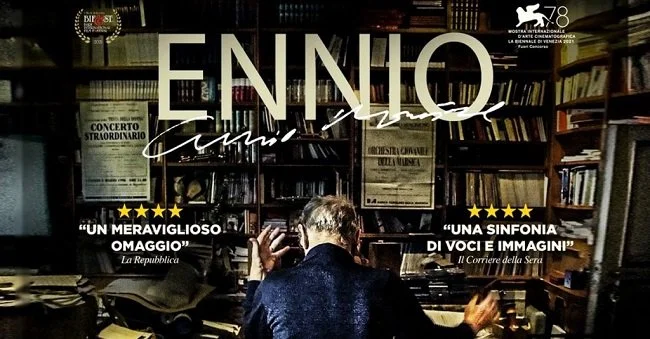


Gerry Anderson: A Life Uncharted (2022)
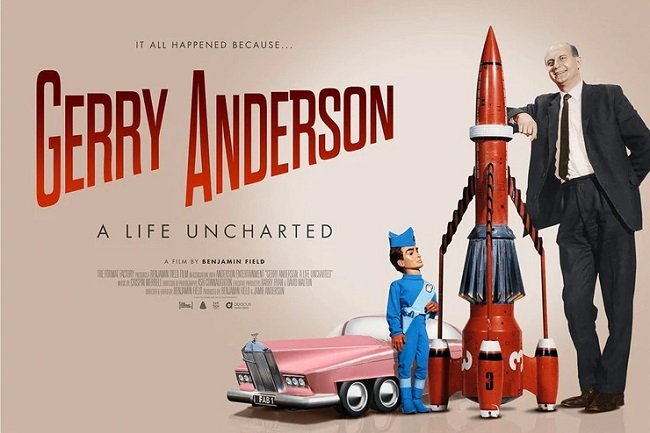
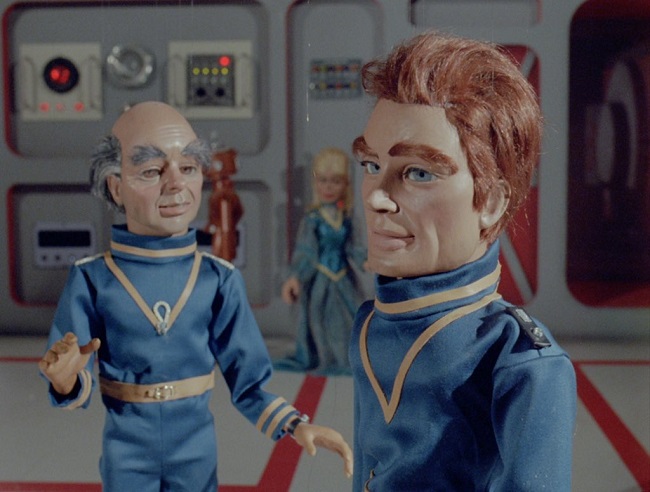
Gerry Anderson: A Life Uncharted is a documentary that focuses specifically on the man, rather than the shows that he created. If you are more interested in the latter then you would be better off watching Filmed in Supermarionation (2014), which provides a comprehensive overview of all productions, wrapped in a cosy blanket of nostalgia and fandom. Gerry Anderson: A Life Uncharted offers a more challenging viewing experience due to its honesty and candour. Gerry Anderson had a difficult childhood and suffered a bereavement early in life. During the course of this 88 minute exploration of his life it becomes clear that these traumas both drove his creativity as well as marred his own personal life. Furthermore, this documentary is also about a son looking for answers, as Jamie Anderson attempts to learn more about his father’s past.
Gerry Anderson: A Life Uncharted is a documentary that focuses specifically on the man, rather than the shows that he created. If you are more interested in the latter then you would be better off watching Filmed in Supermarionation (2014), which provides a comprehensive overview of all productions, wrapped in a cosy blanket of nostalgia and fandom. Gerry Anderson: A Life Uncharted offers a more challenging viewing experience due to its honesty and candour. Gerry Anderson had a difficult childhood and suffered a bereavement early in life. During the course of this 88 minute exploration of his life it becomes clear that these traumas both drove his creativity as well as marred his own personal life. Furthermore, this documentary is also about a son looking for answers, as Jamie Anderson attempts to learn more about his father’s past.
Gerry Anderson was born Gerald Alexander Abrahams in 1929. His secular Mother Deborah was frequently at odds with her Jewish husband Joseph and hence Gerry’s most formative years were blighted by the acrimonious and dysfunctional marriage of his parents. He was also subject to antisemitic abuse during his early school days which eventually led to his mother changing his surname by deed poll. Gerry idolised his older brother Lionel and always felt in his shadow. When Lionel died in a plane crash during World war II, Gerry was devastated. Needless to say these emotional issues both motivated and plagued him throughout his life. Gerry strove to escape the poverty of his youth and be successful. His scripts often featured strong father figures and absent mothers. His workaholic nature meant he often became estranged from his own family. He also struggled to maintain friendships beyond business.
Gerry Anderson: A Life Uncharted offers a broad spectrum of views and opinions. There is both old and new archive footage of Gerry talking quite candidly about his relationship with his parents, his failings as a parent and the deterioration of his marriage to Sylvia. It doesn’t always make for comfortable viewing but it is very credible and human. Contrary views are also aired from those who worked with him such as Roberta Leigh and three of his four children contribute in an equally candid fashion. From Gerry’s perspective, despite all his hard work he never seemed to reconcile himself to his success. He also felt that Sylvia over-stated her contribution to the success of AP Films and Century 21 and it is clear that he felt taken advantage of. Despite becoming successful and then subsequently losing it all, he eventually found happiness and stability with his third marriage to Mary Robbins.
A key part of Gerry Anderson: A Life Uncharted is its focus on Gerry’s struggle with dementia during the last few years of his life. It is a very personal account recounted from the perspective of son Jamie and mother and wife Mary. It will resonate with anyone who has first hand experience of a loved one succumbing to this condition and many of the anecdotes recounted will have a familiar ring to them. Yet despite the difficulty of dealing with such a debilitating illness, it is fascinating how Gerry managed to use his fame to raise public awareness, as well as £1 million for the Alzheimer's Society in a year. Tragically, when he finally passed away on Boxing Day 2012, Gerry had no memory of his life work or its popularity.
Gerry Anderson: A Life Uncharted takes a gamble by using deep fake technology in order to bring Gerry Anderson back to the screen, thus making the audio interviews more accessible. What viewers are presented with are a series of black and white scenes of Gerry sitting on a sofa talking to an interviewer off camera. The documentary clearly states its use before it begins and its inclusion does not in any way invalidate the authenticity or relevance of the actual audio interviews. Overall, if you wish to understand what drove Gerry Anderson to be so creative and successful, then Gerry Anderson: A Life Uncharted offers some insight. It also clearly shows the human cost as well. Fans who idolise their heroes may be uncomfortable with Gerry’s open admission of his own personal failings. Those with a capacity to separate their feelings of fandom from their curiosity will be rewarded with an engaging and somewhat melancholic documentary. Just bear in mind that some facts presented remain disputed and that this is documentary is weighted towards Gerry Anderson’s perspective.


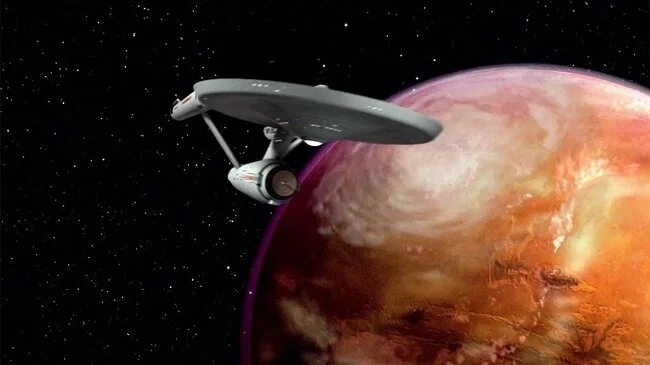
The Center Seat: 55 years of Star Trek
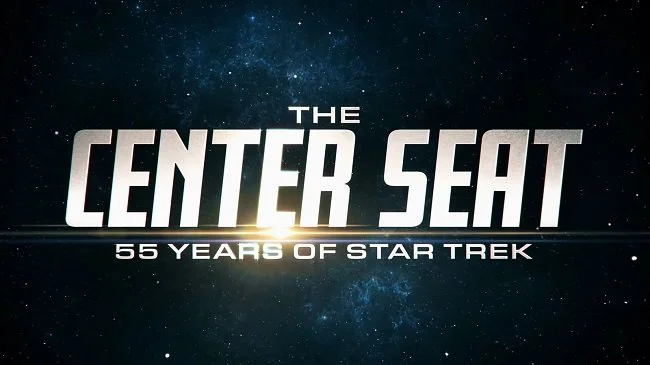
Star Trek documentaries are very much like Bruce Lee documentaries, in so far as they’re both a saturated market and more often than not, new content frequently ends up covering the same ground. However, fans tend to watch anything new in the hope that they will find a few new nuggets of information. Brian Volk-Weiss’ new 11 part series, The Center Seat: 55 years of Star Trek, not only covers established facts about the iconic show but also expands upon them as well as providing a wealth of new information. Volk-Weiss has previously explored popular culture with documentaries such as The Toys That Made Us and The Movies That Made Us. The Center Seat: 55 years of Star Trek is an in-depth chronological study of the Star Trek franchise, from its creation at Desilu Productions in 1965 all the way through to the latest iterations, Star Trek: Picard and Star Trek: Discovery.
Star Trek documentaries are very much like Bruce Lee documentaries, in so far as they’re both a saturated market and more often than not, new content frequently ends up covering the same ground. However, fans tend to watch anything new in the hope that they will find a few new nuggets of information. Brian Volk-Weiss’ new 11 part series, The Center Seat: 55 years of Star Trek, not only covers established facts about the iconic show but also expands upon them as well as providing a wealth of new information. Volk-Weiss has previously explored popular culture with documentaries such as The Toys That Made Us and The Movies That Made Us. The Center Seat: 55 years of Star Trek is an in-depth chronological study of the Star Trek franchise, from its creation at Desilu Productions in 1965 all the way through to the latest iterations, Star Trek: Picard and Star Trek: Discovery.
Part of what makes The Center Seat so enjoyable is that the 11 episodes, each running just under an hour, provides adequate time to explore the production history of each show and the various movies. The often overlooked Star Trek: The Animated Series gets an entire episode to itself as do each of the shows from the Rick Berman-era. The analysis of Star Trek: The Motion Picture is especially rigorous and does not shy away from the clash of egos between cast members, as well as the problematic writing process as Gene Roddenberry and Harold Livingston fought over the script. The show also takes the time to discuss the decision to have a title song, rather than a theme for Enterprise and the fact that to date, it still polarises opinion. Perhaps the most significant episode of The Center Seat is the first, which focuses on the importance of Lucille Ball. She used her industry leverage and wealth to get Star Trek made, backing not one but two pilot shows.
However, despite having 11 episodes at their disposal, there is still a lot of content missing from The Center Seat. There is a conspicuous lack of contemporary interviews with William Shatner, Avery Brooks and Scott Bakula. Although there is a lot of footage from all things Star Trek, the licensing arrangements seems to exclude music by any of the composers associated with the shows. It strikes me as remiss to have a documentary about such an iconic show and not mention Alexander Courage’s theme or the subsequent work by Jerry Goldsmith and James Horner. There is also some controversy over the inclusion of at least one Star Trek writer/historian whose accounts of events have been called into question for factual inaccuracies. The show also seems to be selective about which controversies it explores as well as which actors personal problems it focuses upon.
The Center Seat is an entertaining and fairly comprehensive exploration of the Star Trek franchise. This documentary series will probably best suit new fans or those who are not overly familiar with the associated history of the various shows. That being the case then it offers a broad overview and clearly shows that success and popularity is far from a smooth ride. Those who are well versed in the franchise's legendarium will probably be familiar with half or more of the show content. I found a lot of crossover between material in this show and the extras I’ve watched over the years on various DVDs I’ve owned. It is also worth noting that there are two versions of The Center Seat. One is obviously re-edited for syndication, consisting of 10 x 42 minute episodes. This version was shown on The History Channel. Then there is a longer 11 x 58 minute version. I watched the latter and this is the one that I recommend.




![Star Trek Discovery S01E01 The Vulcan Hello.mkv_snapshot_07.19_[2017.09.25_17.54.13].jpg](https://images.squarespace-cdn.com/content/v1/54e310f0e4b0f4a6ba3ac899/1506359625650-D976K1OBW47HSSSFN2S2/Star+Trek+Discovery+S01E01+The+Vulcan+Hello.mkv_snapshot_07.19_%5B2017.09.25_17.54.13%5D.jpg)

Complex Lore and Enigmatic Themes
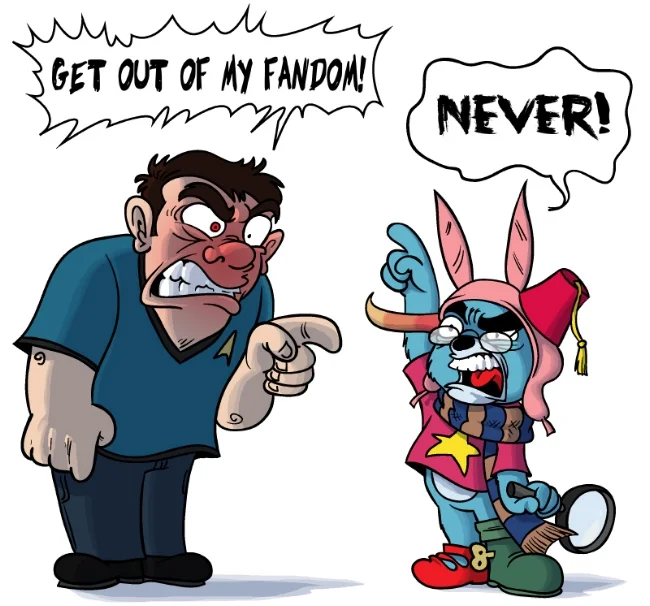
I recently watched the first trailer for the new Obi-Wan Kenobi television show that is premiering on Disney + in May. I am interested in this latest instalment in the Star Wars franchise and curious as to whether Liam Neeson will make an appearance. I also watched a 20 minute fan video in which they “analysed” the entire trailer. They discussed the content of this 2 minute preview and then did a great deal of speculating about potential themes and characters that may feature in the show. They were clearly enthusiastic about what they had seen and were very knowledgeable about the subject. This resonated with me, as I like to be well versed about the things I enjoy. However, it is worth remembering that fandom can tip into obsession and gatekeeping. Hence I feel there is a subject to explore here.
I recently watched the first trailer for the new Obi-Wan Kenobi television show that is premiering on Disney + in May. I am interested in this latest instalment in the Star Wars franchise and curious as to whether Liam Neeson will make an appearance. I also watched a 20 minute fan video in which they “analysed” the entire trailer. They discussed the content of this 2 minute preview and then did a great deal of speculating about potential themes and characters that may feature in the show. They were clearly enthusiastic about what they had seen and were very knowledgeable about the subject. This resonated with me, as I like to be well versed about the things I enjoy. However, it is worth remembering that fandom can tip into obsession and gatekeeping. Hence I feel there is a subject to explore here.
Fantasy, science fiction and similar hybrid genres thrive on world building and lore. These facets give them credibility and breathe life into fictional worlds and people. They also provide parallels with our own lives which provides a means for us to connect to them. Star Wars, despite all the technology, offers a universe that looks used and lived in. Middle-earth is steeped in history and complex societies. Again despite obvious differences there are commonalities in the hierarchies, rituals and personal aspirations of the protagonists. And as well as lore, there are also enigmas. Fantasy and science fiction are often rife with things that are strange and ill defined. Often these are mystical and symbolic. The Force, Tom Bombadil and Jason Voorhees are prime examples of this. Successful fantasy and science fiction find the right balance between detailed lore and enigmatic themes.
Achieving this balance is very difficult. The original Star Wars trilogy handled the arcane and esoteric nature of the Force well. It was broadly defined as an energy field created by all life that connected everything in the universe. However, the specifics of this were vague and nebulous which played well with the concept that the Jedi were more of a religious and philosophical order than a paramilitary organisation. However, when the prequels introduced the concept of Midi-chlorians it somewhat diminished the enigma surrounding the Force and it suddenly just became yet more technobabble. It is interesting to note that this addition to the franchise’s lore was not well received by fans. It was subsequently not alluded to in later films and television shows, indicating that the producers and writers felt it was a mistake.
Another genre example of lore versus enigma is the difference in Klingon anatomy between the original series and the revival shows. The main reason is simple. There wasn’t a budget for complex prosthetics in the sixties show. However, from Star Trek: The Motion Picture onwards, Klingons acquired their forehead ridges as a way to make them more alien. This however left a lore contradiction, which was beautifully alluded to in the episode “Trials and Tribble-ations” of Star Trek: Deep Space Nine. Several crew members from the 24th century including Worf, find themselves on Deep Space Station K7 in the 23rd century, during the events of “Trouble with Tribbles”. Upon seeing the Klingons from the previous era, one of the crew asks Worf why there’s a physical difference. He enigmatically replies “We do not discuss it with outsiders”. This beautifully vague but droll answer works perfectly. Sadly it was ruined a few years later when an episode of Star Trek: Enterprise explained away the difference as a genetic experiment that went wrong.
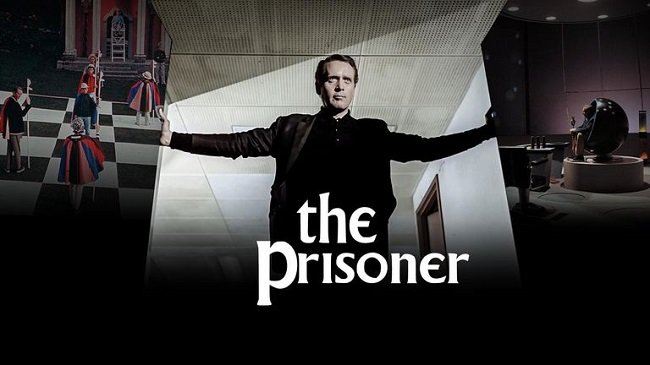
However, it is not always an excess of lore that can quash the soul from a popular show or film. Sometimes being deliberately too vague, refusing to expedite the plot and simply replacing one mystery with two others can be very frustrating. It may also be due to the writers being out of their depth or making things up as they go along. Lost encapsulated this for me and the show’s manipulative narrative quickly killed my interest. Don’t get me wrong, I don’t like to be spoon fed stories and explanations and I don’t mind thinking when watching. The ending of John Carpenter’s The Thing is enigmatic and quite bleak but I consider it a perfect conclusion to the film. However, perhaps the television show that really stepped over the line for not making any real effort to explain itself and turning the enigma “up to 11” is The Prisoner. It’s still a great show to watch and is very thought provoking but the final episode doesn’t deliver a stone cold conclusion. Something that people who watched it originally still seethe over.
We live in a culture of binge watching TV shows which some viewers dissect and analyse. The interconnected nature of the Marvel Cinematic Universe is a prime example of this and it does it extremely well. But not all television shows and films are like this and do not require such scrutiny. I worry that some viewers are so invested in searching for what they think may be hidden or trying to pre-empt an unfolding narrative, that they miss being in the moment and simply enjoying the show as it happens. Excessive analysis often leads to disappointment. It is important to remember that what you’re watching is a writer(s) thoughts on how a narrative should move forward. They are not obliged to try to make what’s in your or my head. Therefore I see both lore and enigmatic themes as an embellishment to a good fantasy or science fiction show or film. Things to be enjoyed but not the “be-all and end-all” of the production. If either becomes the major focus of either the writers or fans then it will end up undermining the central narrative and themes.
The Idiot Box
Thoughts on TV shows and my current viewing habits
Last November, CBS chose not to make season 4 of Star Trek Discovery available on Netflix. Netflix has been the home of this show outside of the US, for the past four years. This is due to Paramount + being launched in Europe sometime in 2022 and CBS wants to keep such a popular franchise on their own streaming platform. Naturally fans were unhappy. Then to add insult to injury CBS pulled all prior seasons of Star Trek Discovery from Netflix. However, due to the negative feedback, a last minute deal was made with Pluto TV; a streaming service which offers 110+ live TV channels on its UK platform and hundreds of on-demand films and TV episodes. It’s a free service supported by adverts and it lacks the polish and presentation of Netflix. I don’t consider it an optimal way to watch a show such as Star Trek Discovery. This is a timely reminder how licensed content can “vanish” from your platform of choice.
Thoughts on TV shows and my current viewing habits
Last November, CBS chose not to make season 4 of Star Trek Discovery available on Netflix. Netflix has been the home of this show outside of the US, for the past four years. This is due to Paramount + being launched in Europe sometime in 2022 and CBS wants to keep such a popular franchise on their own streaming platform. Naturally fans were unhappy. Then to add insult to injury CBS pulled all prior seasons of Star Trek Discovery from Netflix. However, due to the negative feedback, a last minute deal was made with Pluto TV; a streaming service which offers 110+ live TV channels on its UK platform and hundreds of on-demand films and TV episodes. It’s a free service supported by adverts and it lacks the polish and presentation of Netflix. I don’t consider it an optimal way to watch a show such as Star Trek Discovery. This is a timely reminder how licensed content can “vanish” from your platform of choice.
So much for what I haven’t been watching. Here’s a summary of the shows that I have managed to watch in the last three months.
Stay Close is a British mystery drama miniseries based on the 2012 novel by Harlan Coben. The story has been relocated from the US to the UK and I was quite surprised how well this change works. Megan Pierce (Cush Jumbo) is a suburban mum living in the suburb, harbouring a secret. Michael Broome (James Nesbitt) is a detective still haunted by a cold case from seventeen years ago. Their paths cross when a new missing person's case impacts upon both their pasts. Stay Close is involving, convoluted and entertaining although I doubt real life crime is ever this complex.
Four Lives. This three part drama follows the true story of the families of four young gay men. Anthony Walgate, Gabriel Kovari, Daniel Whitworth and Jack Taylor were murdered by Stephen Port between in 2014 and 2015. There deaths were not initially treated as murders or connected and the police investigation was a litany of incompetence and institutional prejudice. Sheridan Smith stars as Sarah Sak, the mother of Anthony Walgate who campaigned tirelessly to get justice for her son. There’s also a compelling performance by comedian and writer Stephen Merchant as the killer Stephen Port.
Universe. Professor Brian Cox tries to make the complexities of the universe accessible to the general public in this four part series. It treads a difficult path, trying to make the impenetrable and at times abstract science understandable to the layman. It takes time to dwell on the majesty of the universe but in doing so comes across as ponderous at times. Perhaps a shorter running time for each episode would have helped. It’s always a pleasure to see the BBC producing science content but this worthy show does fall between two stools.
After Life. Season 3 of Ricky Gervais’s black comedy drama was a necessary codicil to the story arc. There was a need for closure regarding the fate of specific characters such as Postman Pat (Joe Wilkinson) and Kath (Diane Morgan). I personally still found it funny and applaud the realities of life that Gervais does not shy away from. I believe it played better with viewers than it did with the critics who seem at times too focused on analysis, context and intent rather than just experiencing the show.
Reacher. I’ve not read any of the Jack Reacher books but was aware that a lot of fans were not happy with the casting of Tom Cruise in the two feature films. This eight part television adaptation of the first Jack Reacher novel, Killing Floor, does exactly what it’s supposed to. Ex-Military Policemen, Jack Racher, visits the town of Margrave, Georgia, and becomes embroiled in a murderous conspiracy by a gang of counterfeiters. Reacher is deadpan, the dialogue is hard boiled and the action scenes are gritty. Alan Ritchson looks the part and is very likeable. The show doesn’t reinvent the wheel but delivers on its promise. It’s all very binge watchable, which is what everyone I know who’s watched it has done. I’d happily watch another season.

The Book of Boba Fett (2022)
As of today, the final episode of The Book of Boba Fett has aired on Disney + and this spinoff show from The Mandalorian has finished its first season. It has been a curious seven part story and not at all what I was expecting. Initially focusing upon the trials and tribulations of the iconic Bounty Hunter Boba Fett as he fights for Jabba the Hutt’s former territory, the story creatively explained what happened to him after he was swallowed by the Sarlacc. However, the plot took an unexpected turn focusing upon the fate of Din Djarin and Grogu from The Mandalorian, before the climatic final instalment. It’s certainly been an entertaining ride but the show’s somewhat eclectic nature has been a little confusing. Having a dedicated story about Boba Fett and then undermining it by focusing upon other iconic characters seems somewhat contradictory. Thankfully, the final episode put both shows back on track.
As of today, the final episode of The Book of Boba Fett has aired on Disney + and this spinoff show from The Mandalorian has finished its first season. It has been a curious seven part story and not at all what I was expecting. Initially focusing upon the trials and tribulations of the iconic Bounty Hunter Boba Fett as he fights for Jabba the Hutt’s former territory, the story creatively explained what happened to him after he was swallowed by the Sarlacc. However, the plot took an unexpected turn focusing upon the fate of Din Djarin and Grogu from The Mandalorian, before the climatic final instalment. It’s certainly been an entertaining ride but the show’s somewhat eclectic nature has been a little confusing. Having a dedicated story about Boba Fett and then undermining it by focusing upon other iconic characters seems somewhat contradictory. Thankfully, the final episode put both shows back on track.
I am still of the opinion that as a franchise, Star Wars works best on TV in an episodic format. George Lucas often cited cliffhanger serials such as Flash Gordon and Buck Rogers as a source of inspiration. The reason that The Mandalorian works so much better than the last three Star Wars feature films is because the writing is consistent. The former was obviously conceived and planned in advance by a single writer/showrunner and their support team. Whereas the movies seemed to be “made up as they went along”. The changes in writers and directors clearly had a negative impact on the way the franchise was received by viewers. It ultimately seemed to self plagiarise and contradict its own lore. This has not been the case with The Mandalorian and now The Book of Boba Fett which seem to be very aware of established lore and adept at drawing upon it.
I am not a scholar of Star Wars lore and have watched only the feature films and very little of the animated shows. Nor have I read many of the books, graphic novels and comics which have flooded the market over the last 25 years. Much of these are no longer canonical. Hence, my viewing of The Mandalorian and The Book of Boba Fett has not been hampered by an excess of fan based baggage. I have watched these shows for entertainment first and fandom second. Broadly speaking I have enjoyed them and they deliver what I want and expect from the franchise. They certainly feel more like direct “relatives” of the original trilogy than the three Disney feature films. Creator and writer Jon Favreau seems to grasp how Star Wars works better than J.J. Abrams. I haven’t liked all aspects of these shows. The Mod gang of Mos Espa was a homage too far in my opinion but it’s not a deal breaker.
Some folk seem to have a problem with the idea of Boba Fett’s character arc and the franchise reinventing him as a “good guy”. I do not. There are lots of both fictional and historical characters that have changed due to personal circumstances as well as the political and social realities of the world. As so much of The Book of Boba Fett seems to be couched in Western mythology, I’ll cite Wyatt Earp or Pat Garrett as examples. Plus there is human nature to consider. Many real soldiers tire of their profession and look to escape it all in later life. Plus if you consider the character of Boba Fett just on the strength of his appearances in The Empire Strikes Back and Return of the Jedi, then there isn’t really a lot of backstory or narrative depth. He is a bounty hunter and beyond that pretty much nothing is established. That’s a blank canvas as far as I can see.
One of the most enjoyable aspects of The Book of Boba Fett has been the way the show draws heavily and not too subtly upon a lot of classic cinema. Some of these homages are quite obvious where others are more low key. Certainly the entirety of Boba Fett’s time among the Tusken tribe, is straight out of A Man Called Horse. The idea of the outlander who is adopted by a tribe and then eventually becomes its ruler is an established literary trope. The Pyke Syndicate spice train attack was also a major nod to David Lean’s Lawrence of Arabia. There are also numerous references both big and small to the works of Akira Kurosawa and Sergio Leone, especially with the introduction of Cad Bane. Then we had a bomb in a club which was straight out of Brian De Palma’s The Untouchables and you’d have to have a bag over your head not to spot the King Kong reference in the season finale.
I consider all of these cinematic references to be a good thing. If it encourages younger Star Wars fans to watch these films and widen their knowledge of cinema, then I deem that to be a good thing. Overall I found The Book of Bobba Fett entertaining. It does Star Wars “well”. I’ve read some reviews that imply that the show is poking fun at fans and that it isn’t as deep as the original movies. I consider this perspective to be risible. Star Wars is a lot of things but it has never been “deep”. It is effectively a Western style soap opera set in space. It has always been entertaining, popular entertainment. It deals in archetypes and established tropes but it has never been a cerebral competitor to other popular franchises like Tolkien’s legendarium or Frank Herbert’s work. The existing TV format seems to be a perfect fit for the franchise and I hope it continues in this idiom. No more bloated films driven by focus groups and corporate memos, thank you.
The Lord of the Rings: The Rings of Power Trailer
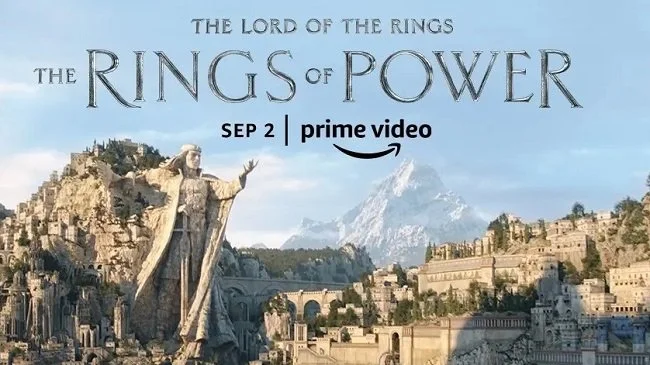
Finally the first teaser trailer for Amazon Prime’s forthcoming TV show set in the Second Age of Middle-earth has been released. The Lord Of The Rings: The Rings of Power will be released weekly on Amazon’s streaming service commencing September 2nd 2022. The first season consists of eight episodes. The series is a prequel to the events of The Lord of the Rings, depicting "previously unexplored stories" based on Tolkien's works. The show will include such iconic locations as the Misty Mountains, the elf-capital Lindon, and the island kingdom of Númenor. The Lord Of The Rings: The Rings of Power maintains the visual and design aesthetic of the existing Peter Jackson movies. Furthermore, composer Howard Shaw maintains his involvement as does artists and designer John Howe. Apparently, due to the Tolkien Estate being happy with the development of the show, Amazon had gained access to certain elements and passages from The Silmarillion and Unfinished Tales to include in the narrative arc.
Finally the first teaser trailer for Amazon Prime’s forthcoming TV show set in the Second Age of Middle-earth has been released. The Lord Of The Rings: The Rings of Power will be released weekly on Amazon’s streaming service commencing September 2nd 2022. The first season consists of eight episodes. The series is a prequel to the events of The Lord of the Rings, depicting "previously unexplored stories" based on Tolkien's works. The show will include such iconic locations as the Misty Mountains, the elf-capital Lindon, and the island kingdom of Númenor. The Lord Of The Rings: The Rings of Power maintains the visual and design aesthetic of the existing Peter Jackson movies. Furthermore, composer Howard Shaw maintains his involvement as does artists and designer John Howe. Apparently, due to the Tolkien Estate being happy with the development of the show, Amazon had gained access to certain elements and passages from The Silmarillion and Unfinished Tales to include in the narrative arc.
The trailer itself reveals no footage from The Lord Of The Rings: The Rings of Power. Its primary purpose is to formally announce the new TV show’s name and to set out its stall. However, it is worth noting that like the TV show itself, Amazon went all in with the actual trailer. The first season is alleged to have had a production cost of $465 million. Although no data appears to be available on the budget for the trailer, it features the talents of director Klaus Obermeyer, legendary special effects supervisor Douglas Trumbull renowned foundryman Landon Ryan. I’m sure such an ensemble production team does not come cheap. As for the teaser trailer itself, it is suitably evocative of ring forging and the threat of dark powers. The lush soundtrack is certainly in the established idiom of “the sound of Middle-earth”. It has piqued both mine and a good many other people's curiosity.
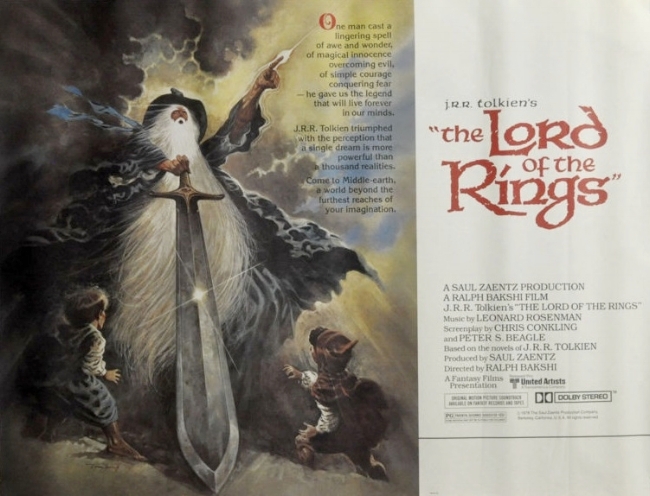
I recently discovered both of the original theatrical trailers for the 1978 animated version of The Lord of the Rings created by Ralph Bakshi. One is simply a portentous narration but the second is far more interesting. It features a montage of still images. Some of them are background paintings used in the movie, while others seem to be production art. The voice-over descends into hyperbole and is somewhat misleading, but you have to remember that the fantasy genre was not a common staple of the box office of the times. Like many films the pre-production process can often produce an inordinate amount of material that never makes it into the final edit. Some of this can be seen in the trailer. It’s interesting to see how Tolkien’s work has grown in popularity within popular culture over the last forty years and how that is reflected in the difference between the two trailers.
The Mezzotint (2021)
In 1922, middle-aged University Don Edward Williams (Rory Kinnear), is sent a somewhat “indifferent” mezzotint (a monochrome print made from an engraved copper or steel plate) on approval from one of his regular art dealers. On arrival the mezzotint features an unidentified English country house and has no distinguishing features to merit its price. Later that day, Williams shows the print to Binks (John Hopkins), a colleague he plays golf with. He comments that the moonlight is quite well done and there appears to be a figure just on the right of the image. Williams is puzzled that he hadn’t noticed it before. That evening Garwood (Robert Bathurst), a fellow academic, studies the picture and comments on a “grotesque” figure. When Williams checks again before going to bed there is now clearly a shroud covered shape crawling across the lawn in the mezzotint. Williams confers with his friends as to what they have seen, as it becomes clear that the picture is trying to show them something.
In 1922, middle-aged University Don Edward Williams (Rory Kinnear), is sent a somewhat “indifferent” mezzotint (a monochrome print made from an engraved copper or steel plate) on approval from one of his regular art dealers. On arrival the mezzotint features an unidentified English country house and has no distinguishing features to merit its price. Later that day, Williams shows the print to Binks (John Hopkins), a colleague he plays golf with. He comments that the moonlight is quite well done and there appears to be a figure just on the right of the image. Williams is puzzled that he hadn’t noticed it before. That evening Garwood (Robert Bathurst), a fellow academic, studies the picture and comments on a “grotesque” figure. When Williams checks again before going to bed there is now clearly a shroud covered shape crawling across the lawn in the mezzotint. Williams confers with his friends as to what they have seen, as it becomes clear that the picture is trying to show them something.
The Mezzotint is part of the A Ghost Story for Christmas series of short television films, produced by the BBC somewhat intermittently since 1971. More recently, writer, director and actor Mark Gatiss has resurrected this franchise and produced several adaptations of short stories by the great M. R. James. The Mezzotint is his latest production and was broadcast on Christmas Eve 2021. Running for just 30 minutes Gatiss builds an unsettling atmosphere as the story progresses.The changes that take place in the print are not dwelt upon onscreen but instead he focuses upon the impression they make on those who are looking. Rory Kinnear excels as the befuddled bachelor who begins to feel a sense of impending doom. There is also a strong cameo appearance by Frances Barber as Mrs. Ambrigail, an amateur historian. Scottish composer Blair Mowat provides a succinct and creepy score which adds to the overall ambience.
The original short story is set in 1904 and takes place mainly in the rooms of the various protagonists at the University. Although it is a sinister tale, it lacks a suitably strong ending, hence Mark Gatiss has chosen to expand the storyline. The drama is now set in 1922 and the staff of the University are debating whether to allow women students to study for degrees. To make the story a little less male-centric some characters have been changed to women; a University Porter becomes a Housekeeper. The most significant addition to the story is a subplot regarding William’s ongoing investigations into his family tree. Hence Mrs. Ambrigail, the Vicar’s wife, searches through the various parish records. This thread has a major impact upon the climax of The Mezzotint which in this adaptation ends with a substantial “Jamesian wallop” (the unofficial term for a shock or surprise twist in the stories of M. R. James).
Some purists have balked at the embellishments and changes that have been made to this adaptation. If you’re of a similar mind, then you may be better off listening to an audiobook version of the original short story. There is a very good collection read by David Collings available. However, I am of the view that the story requires expanding to lend itself to the requirements of television and I feel that the widening of the plot and additional ending are to the drama’s overall benefit. Mark Gatiss is clearly a consummate fan of M. R. James and I feel his screenplay is very sympathetic to the source text. As for the “Jamesian wallop” at the story’s denouement, I believe this is consistent with the author’s style which often featured a grotesque and eldritch flourish at the end of a story. I hope that the BBC has the good sense to commission further adaptations from Mark Gatiss so that the A Ghost Story for Christmas series can continue.











Shatner in Space (2021)
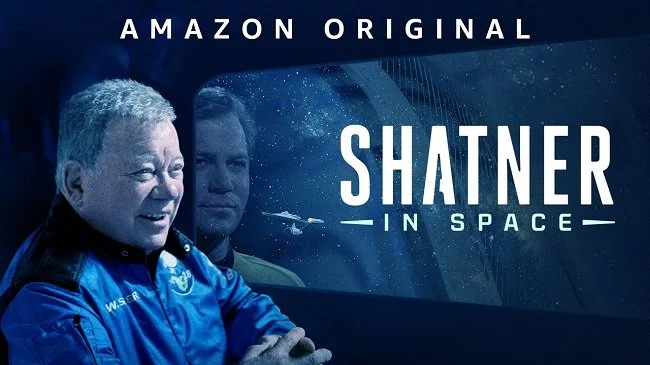
Shatner in Space is a 45 minute documentary about the 90 year old actor, William Shatner and his recent foray into space via Jeff Bezos’ Blue Origin sub-orbital spaceflight service. Considering the provenance of this entire undertaking, attitudes in general towards billionaires and the obvious publicity seeking hubris of sending a cultural icon into space, it’s easy to dismiss Shatner in Space as nothing more than a very, very expensive infomercial. However, the quiet dignity of Mr Shatner whose age and experience means that he draws a very different conclusion from his space flight than his fellow passengers, is utterly compelling and possibly a little profound. If you can endure the soulless polish of the scenes with an immaculately staged managed Jeff Bezos, then you’ll be rewarded with the philosophical musings of a man approaching the end of his life who is naturally curious about his own mortality.
Shatner in Space is a 45 minute documentary about the 90 year old actor, William Shatner and his recent foray into space via Jeff Bezos’ Blue Origin sub-orbital spaceflight service. Considering the provenance of this entire undertaking, attitudes in general towards billionaires and the obvious publicity seeking hubris of sending a cultural icon into space, it’s easy to dismiss Shatner in Space as nothing more than a very, very expensive infomercial. However, the quiet dignity of Mr Shatner whose age and experience means that he draws a very different conclusion from his space flight than his fellow passengers, is utterly compelling and possibly a little profound. If you can endure the soulless polish of the scenes with an immaculately staged managed Jeff Bezos, then you’ll be rewarded with the philosophical musings of a man approaching the end of his life who is naturally curious about his own mortality.
When you consider William Shatner’s personal arc as a pop culture icon, he has matured from a young successful actor and has journeyed through the pressures of fame and success. He has gone from being reviled by his colleagues to setting aside the past and being reunited with them. He is now a venerable figure who is wiser for their life experience who wishes to do some good with the time he has left. It is therefore fascinating to see his reaction when he walks into the Blue Origin headquarters and realises that pretty much all of the staff that work there share a common dream of space travel due to the influence that he and Star Trek had upon their lives. It is clear that he recognises this and it’s moving to see his reaction. There’s no hint of ego. Just a quiet awe and a hint of pride. It is also a clear demonstration of the immense power of fame and celebrity.
Shatner in Space finds it stride towards the end of it’s relatively short running time, when we see selected footage of the 4 passengers in the capsule during launch and New Shepard’s journey to the Kármán line. During the brief period of weightlessness, the other passengers are immediately enamoured with the strangeness of the sensation. They naturally laugh and caper. 90 year old Shatner pulls himself to the window and stares into the black void of space and then down at the intense blue of the earth. He quietly states “That’s it. I’ve got it”. His personal epiphany is moving and dare I say, beautiful. He is visibly moved upon his return and where the others are vocally elated, his quiet introspection as he processes what has happened is again captivating. When he finally masters his feeling his first thoughts are that everyone should have such an experience as it affords an important perspective. Despite the corporate nature of this documentary, it has a wonderful streak of humanity, thanks to William Shatner.
A Christmas Carol (1954)
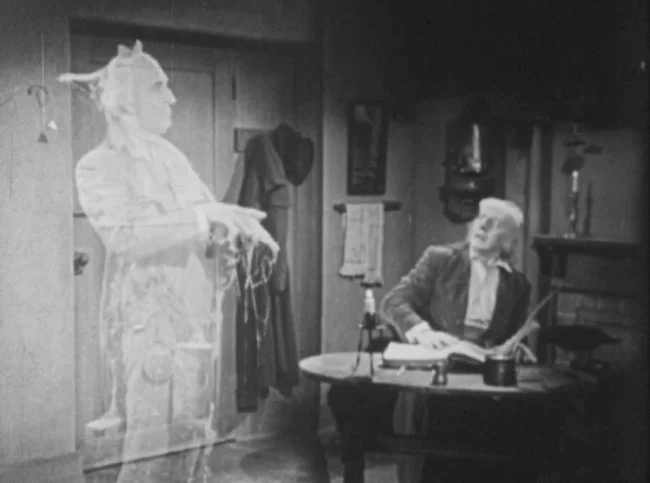
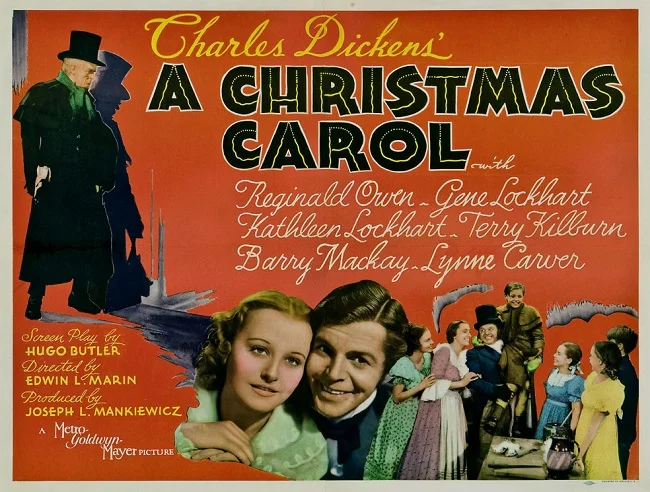
This 1954 adaptation of Charles Dickens’ A Christmas Carol is a distinctly studio bound US television production. It was in fact the fourth episode of an anthology variety show called A Shower of Stars. Originally filmed and broadcast in colour, only black and white prints now survive. The production boasts a script by noted American playwright Maxwell Anderson. Due to the 48 minute running time (without commercial breaks) the narrative is heavily abridged and often it is only the story’s most basic themes which are dramatically interpreted. It stars Fredric March who plays Scrooge as a cool and indifferent man, rather than the usual shrill old miser. However, despite his presence his performance cannot save the production. Most of the other cast members are far from accomplished and at times their acting borders on the amateur.
This 1954 adaptation of Charles Dickens’ A Christmas Carol is a distinctly studio bound US television production. It was in fact the fourth episode of an anthology variety show called A Shower of Stars. Originally filmed and broadcast in colour, only black and white prints now survive. The production boasts a script by noted American playwright Maxwell Anderson. Due to the 48 minute running time (without commercial breaks) the narrative is heavily abridged and often it is only the story’s most basic themes which are dramatically interpreted. It stars Fredric March who plays Scrooge as a cool and indifferent man, rather than the usual shrill old miser. However, despite his presence his performance cannot save the production. Most of the other cast members are far from accomplished and at times their acting borders on the amateur.
Music and song plays an integral part of this version. Although not a full blown musical, there is an itinerant group of carol singers that seem to grow in size, who regularly regale the viewers with expository songs. Plus many characters sing at some point. Others do not. It’s all rather inconsistent and confusing. The songs are mainly designed to underpin the story's themes. At times they are used as a means to bridge scenes or expedite the story without an excess of dialogue. Unfortunately the songs, also written by Maxwell Anderson, are weak and superfluous. Some are actually annoying. However, the orchestral score and incidental music by the great Bernard Herrmann is striking. At times it has a very eerie and foreboding quality, with its use of strings and choir vocalisation. But alas, there’s far too little of it.
There are very few original ideas featured in this adaptation. The Spirit of Christmas Past and The Spirit of Christmas Present look like Scrooge’s lost love Belle and nephew respectively. This is because they are played by the same actors. I initially thought this was a visual conceit used for narrative reasons but it is more than likely due to the budgetary restrictions. The screenplay attempts to focus on Scrooge’s failed relationship as the main cause of his abhorrent nature. Unfortunately, it dwells a little too long upon the matter. There’s an excruciating song that Belle and Scrooge sing at Fezziwig’s Christmas party. The Spirit of Christmas Yet to Come is not even shown. Scrooge merely “looks within himself” and has a revelatory vision of a graveyard with both his and Tiny Tim’s names upon the tombstones. This proves sufficient shock therapy to reform Scrooge’s nature.
Despite the presence of quality actors such as Fredric March and Basil Rathbone who plays Marley’s Ghost, this is a rather poor adaptation which is actually quite hard to sit through. Rathbone, covered in cobwebs, rambles through the poorly condensed dialogue. “I come out of torment. I come to help your soul avoid eternal misery”. Well, not watching this particular adaptation is possibly a good place to start. The contract TV actors chew the low budget scenery and incessantly assail you with tedious and never ending songs. And then to utterly mitigate the underlying theme of poverty, Scrooge invites himself to Bob Cratchit’s meagre Christmas Dinner. It is as illogical as it is risible. Hence, there is precious little to recommend about this version of A Christmas Carol. I would only suggest watching it if you are a completionist or a consummate fan of the two main leads. Casual viewers should seek out a more competent adaptation.





A Christmas Carol (1977)
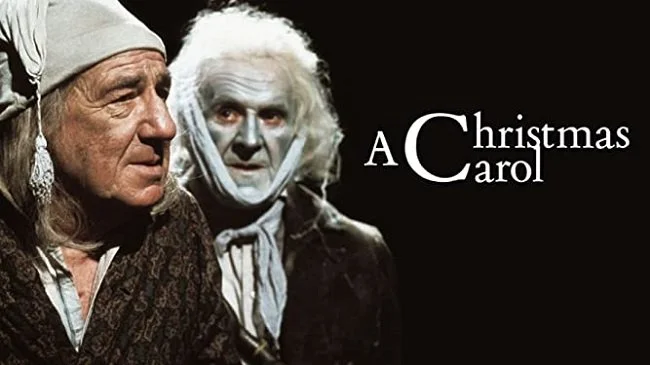
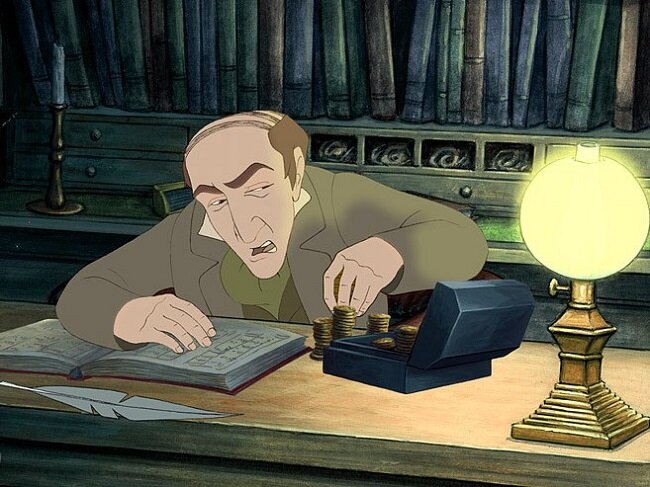
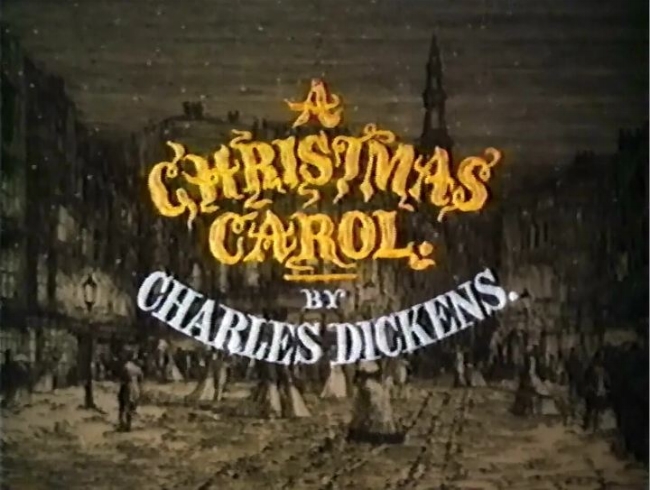
This BBC production from 1977 packs a lot into its 60 minute running time. Succinctly dramatised by Elaine Morgan, this adaptation focuses on the essential themes and key scenes of Dickens’ book. Shot on video, as many BBC dramas were at the time and confined entirely to studio sets, this low budget production makes use of chroma key visual effects. The snow bound countryside, the dark staircase in Scrooge’s apartment and the London skyline are all line drawings, with the cast composited in the foreground. Hence this version of A Christmas Carol feels like an episode of Doctor Who from the same decade. However, the production has one trump card to play with its robust cast of British character actors from the era. Fine performances from the likes of John Le Mesurier, Bernard Lee and Zoe Wanamaker more than compensate for the budgetary restrictions and short duration.
This BBC production from 1977 packs a lot into its 60 minute running time. Succinctly dramatised by Elaine Morgan, this adaptation focuses on the essential themes and key scenes of Dickens’ book. Shot on video, as many BBC dramas were at the time and confined entirely to studio sets, this low budget production makes use of chroma key visual effects. The snow bound countryside, the dark staircase in Scrooge’s apartment and the London skyline are all line drawings, with the cast composited in the foreground. Hence this version of A Christmas Carol feels like an episode of Doctor Who from the same decade. However, the production has one trump card to play with its robust cast of British character actors from the era. Fine performances from the likes of John Le Mesurier, Bernard Lee and Zoe Wanamaker more than compensate for the budgetary restrictions and short duration.
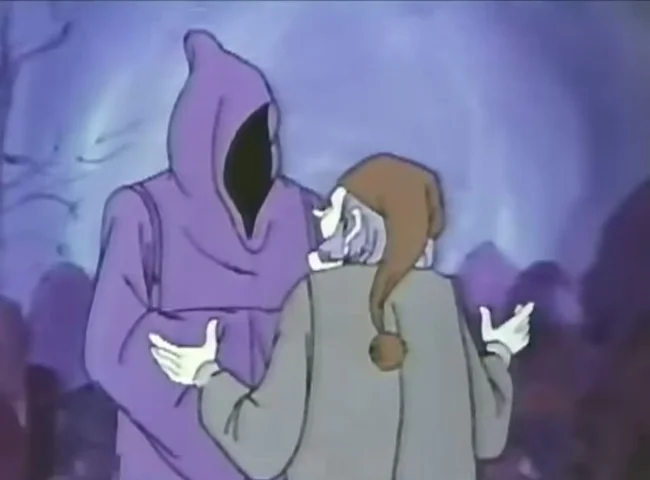
Michael Horden brings an element of befuddlement to his portrayal of Ebeneezer Scrooge. He is also petty, acerbic and somewhat cowardly. All of which feels very authentic and in the spirit of the source text. His interaction with Jacob Marley (John Le Mesurier) is very faithful to the book and Le Mesurier brings a genuinely weary element to his performance. The Ghost of Christmas Past (Patricia Quinn) is depicted very much as described in the text, with bright light emanating from them and carrying a hat similar to a candle extinguisher. She focuses on Scrooge’s abandonment at school and his failed engagement. Fezziwig is more of a footnote to this part of the story. Similarly the Ghost of Christmas Present (Bernard Lee) wastes no time and quickly highlights Bob Cratchit’s poverty and Tiny Tim’s ill health. Nephew Fred’s party is distilled down to its bare essentials. The Ghost of Christmas Yet to come is depicted as a traditional hooded figure. The cleaning woman and undertaker discuss Scrooge’s failing while his dead body is laid out on the bed, rather than at the pawnbrokers.
The time limitations of an hour mean that some elements of the story are lost. Yet despite the efficiency of this summarisation, some minor embellishments still make it to the screen. Marley’s face appears in the tiles surrounding the fireplace. We see Belle happily married years later on the night of Marley’s death. Mankind’s children, ignorance and want, are briefly depicted. And there’s a scene in which a family in debt to Scrooge learns of his death. All of which add to the character of this production and make it feel more than just another arbitrary adaptation. It is a shame that the commissioning editor did not see fit to make this a 90 minute production, so it could have taken a little more time to savour its emotional highs and lows. As it stands this is a quaint but engaging TV version, which may appeal more to the Dickens aficionado or those wanting a quick fix of the classic story.
The Idiot Box
Thoughts on TV shows and my current viewing habits.
The last instalment of The Idiot Box was back in March. Since then Mrs P and I have watched several new shows and tried to diversify our viewing. She has had better luck than I. The issue for me is one of narrative complexity and genre saturation. Some popular shows are very straightforward in both their structure and their intellectual scope. A great deal of “police procedurals” fall into this category. The weekly stories essentially come down to “who is the murderer” with a side helping of the protagonist's ongoing “personal life”. I am currently watching the latest season of NCIS and it struck me how little credible investigative work the team now does. In the last episode that I watched, one of the central character’s mother-in-law was witness to a murder on a cruise ship. The plot was contrived, convoluted and more like that of a soap opera. Such content can be fun but it’s somewhat unsatisfying if viewed to excess.
Thoughts on TV shows and my current viewing habits.
The last instalment of The Idiot Box was back in March. Since then Mrs P and I have watched several new shows and tried to diversify our viewing. She has had better luck than I. The issue for me is one of narrative complexity and genre saturation. Some popular shows are very straightforward in both their structure and their intellectual scope. A great deal of “police procedurals” fall into this category. The weekly stories essentially come down to “who is the murderer” with a side helping of the protagonist's ongoing “personal life”. I am currently watching the latest season of NCIS and it struck me how little credible investigative work the team now does. In the last episode that I watched, one of the central character’s mother-in-law was witness to a murder on a cruise ship. The plot was contrived, convoluted and more like that of a soap opera. Such content can be fun but it’s somewhat unsatisfying if viewed to excess.
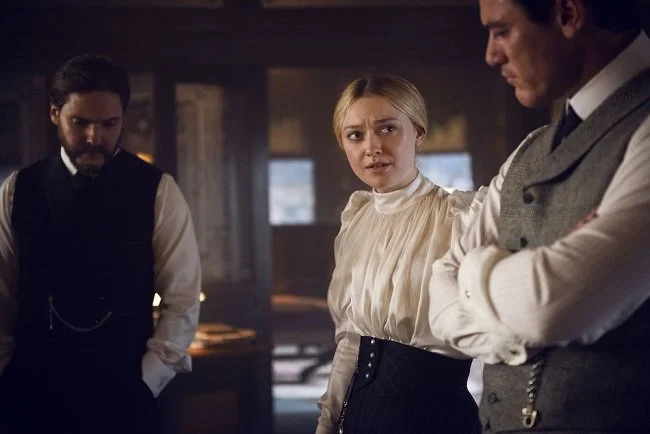
And at the other end of the spectrum we have shows that revel in their adult themes and mature content. The Alienist falls into this category. For those unfamiliar with this drama it is set in the late 19th century in New York. Newly appointed police commissioner Teddy Roosevelt calls upon Dr. Laszlo Kreizler (Daniel Bruhl), a criminal psychiatrist, and John Moore (Luke Evans), a newspaper illustrator, to conduct a secret investigation into a child prostitute serial killer. Joining them in the probe is Sara Howard, Roosevelt's headstrong secretary (Dakota Fanning). It is superbly written, with a solid cast and great production values. The stories are very interesting due to the historical setting and the emerging science, technology and social changes. But due to the nature of the investigation, the story explores poverty, sexual abuse and other human failings. Hence it is very bleak and a little bit squalid. Although thought provoking and dramatic, it is a challenging watch.
All of which raises the question, where are the shows that fall between these two extremes? Well they are out there. You just have to do quite a bit of searching and be prepared to try a variety of content on the understanding that you may not like it and end up abandoning it. I also think that a lot of UK and European TV shows occupy this middle ground due to budget and audience demographics. UK “police procedurals” tend to be a lot less hyperbolic and frenetic, compared to their US counterparts. The focus is far more on narrative depth to compensate for other potential constraints upon the production.
All things considered, I did manage to find some interesting new shows to watch. Some are quite cerebral and a couple I would categorise as the viewing equivalent of comfort eating. Here is a brief summary of what I’ve been watching since Easter to the present.
The Equalizer: This reboot of the eighties TV show is more akin to the two recent movies, than the original source material. It is in many ways utterly preposterous, with its flamboyant hero Robyn McCall (Queen Latifah) using her ex-CIA experience to right wrongs, along with her convenient team of skilled helpers. The show is certainly not afraid of addressing social issues and the realities of being an African-American. Yet it is quite sincere, easy entertainment, carried by the personality of its lead actor.
Clarice: This was a very interesting tangential sequel to The Silence of the Lambs, in which the subsequent career of Clarice Starling was explored. Starling, who is struggling to come to terms with her encounter with Buffalo Bill, finds herself part of a new Federal Taskforce that specialises in dealing with violent criminals. A subsequent investigation uncovers a high level conspiracy in which a major pharmaceutical corporation is committing murders under the pretence that they’re the work of a serial killer. This was a clever show with some interesting socio-political points to make. Sadly it was not renewed for a second season.
Unforgotten Season 4: There is obviously a great deal of mental and emotional strain involved in investigating murders, especially “cold cases”. Unforgotten depicts this intelligently and honestly. Season 4 had another harrowing story arc, outstanding performances and a hard hitting ending. Police work is not databases, car chases and eleventh hour psychological interrogations and last minute confessions. It’s foot work, lateral thinking and compassion. Unforgotten has all these in spades.
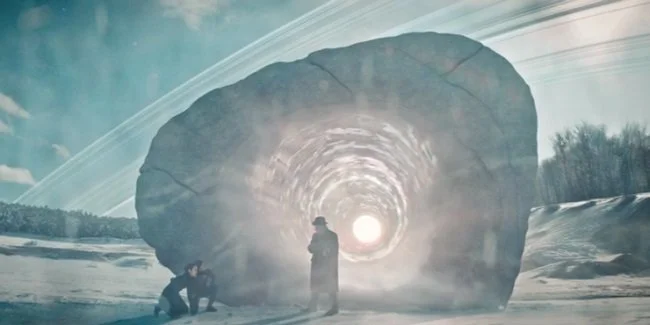
Debris: This was one of the smartest science fiction TV shows to come along for a while. It worked best when it’s internal lore was vague; the moment you clarify things it can undermine some of the inherent mystery. Sadly, this intriguing concept by J. H. Wyman (Fringe) about debris from an alien vessel and its strange powers, was cancelled, once again due to the TV network not understanding and having any faith in the show. The same thing happened with Wyman’s previous TV series, Almost Human.
The War: The military and tactical aspects of World War II has been thoroughly explored over the years, with The World at War possibly being the definitive TV documentary. Ken Burns’ takes a different approach examining events from the perspective of four US towns and how WWII impacted upon their economy, lives and world view. It is the personal stories of soldiers and their families that make this show so interesting. The recollections of Daniel Inouye (who won the Medal of Honor and went on to be a US Senator) are particularly poignant and stand out.
Endeavour: Season 8 appears to be the last in this prequel series to Inspector Morse. Morse is dangerously close to becoming an alcoholic and destroying his career. Fred Thursday’s son goes AWOL in Northern Ireland causing domestic strife. Oxford continues to have complicated murders and showrunner Russel Lewis still litters his scripts with niche market pop culture references, which are a delight. After three episodes the season reaches a definitive crossroads clearly linking one show with the other. It’s been a tremendous journey but all things must end.
Dan Brown’s The Lost Symbol: This TV show plays out just like the three big screen adaptations of Dan Brown’s other books. There’s lots of frenetic running between historic locations and pseudo-academia flying about to solve arcane clues. Ashley Zukerman plays a young Robert Langdon (played by Tom Hanks in the movies). It’s all a bit silly but if you want entertainment that isn’t too taxing, it’s a pleasant enough way to spend 42 minutes.
Retroactive Continuity
If you are old enough to remember the popular eighties “soap opera” Dallas, then you will no doubt be au fait with the infamous ninth season of the show. Having painted themselves into a corner with the death of a popular character, the writing team effectively revealed in the season finale that everything that had transpired in the previous thirty episodes had been “all a dream”. Let us take a moment to reflect upon the hubris of this “creative” decision. Did fans complain and roll their eyes at this utterly trite plot device? Yes, they most certainly did. But they also kept watching and the ratings increased. It got the writers out of a fix of their own making and allowed them to move on as if nothing had happened. It was a very high profile example of so-called retroactive continuity being used in a mainstream TV franchise and my first experience of such a narrative device.
If you are old enough to remember the popular eighties “soap opera” Dallas, then you will no doubt be au fait with the infamous ninth season of the show. Having painted themselves into a corner with the death of a popular character, the writing team effectively revealed in the season finale that everything that had transpired in the previous thirty episodes had been “all a dream”. Let us take a moment to reflect upon the hubris of this “creative” decision. Did fans complain and roll their eyes at this utterly trite plot device? Yes, they most certainly did. But they also kept watching and the ratings increased. It got the writers out of a fix of their own making and allowed them to move on as if nothing had happened. It was a very high profile example of so-called retroactive continuity being used in a mainstream TV franchise and my first experience of such a narrative device.
Nowadays, retroactive continuity or retcon is used far more often. It can be something as straightforward as replacing an actor for an established role with a new actor, as in Iron Man where James Rhodey Rhodes was first played by Terence Howard and then Don Cheadle. Or something more impactful such as rebooting a franchise as with Casino Royale in 2006 or Star Trek in 2009. Daniel Craig’s tenure as James Bond effectively began an entirely new five-film, self-contained story arc for 007 that ignored everything that had happened in the previous films. J.J. Abrams’ Star Trek used the narrative conceit of an alternative timeline as a means to tell new stories with existing characters. All of these examples successfully managed to retcon their respective franchises without any major critical or financial consequences. Most fans managed to successfully suspend their sense of disbelief and overcome any continuity or logical flaws. But the process isn’t always as seamless as this.
Take the Halloween horror film franchise. The original 1978 movie spawned a direct sequel Halloween II in 1981. This ended with the central antagonist dying in a fiery conflagration. Hence Halloween III: Season of the Witch (1982) is a standalone story. Creator John Carpenter then sold his interests in the franchise and so three inferior sequels were churned out based on the premise that Michael Myers had survived. Halloween IV: The Return of Michael Myers (1988), Halloween V: The Revenge of Michael Myers (1989) and Halloween VI: The Curse of Michael Myers (1995). Then in 1998 the first retcon took place with Halloween H20. This was a direct sequel to the first two films and ignored the story arc of parts 4 to 6. This was then followed by a further sequel Halloween: Resurrection in 2002. The franchise was then rebooted in 2007 with director Rob Zombie remaking the original film and then a sequel the following year. In 2018 a further retcon saw a new direct sequel to Carpenter’s original, confusingly called Halloween. A follow up, Halloween Kills, was released recently.
Retroactive continuity can be a useful tool in so far that changing established narrative events can provide a means to perpetuate a commercially viable and popular cinematic franchise. However there are consequences. Alien 3 featured a retcon that completely negated everything that happened in the previous movie, Aliens. A facehugger miraculously survived and managed to impregnate Ripley while she was in cryonic stasis. A convenient spaceship crash subsequently eliminated the characters of corporal Hicks and the child Newt. Something fans felt was especially mean spirited. The first season of the TV show Star Trek: Discovery saw a major visual and design retcon. Set just before the TOS era the production aesthetic was radically different from the established canon. Fans were not pleased and adjustments were made in the second season. And not only did Highlander II retcon the entire premise of the previous film, it subsequently retconned itself when three separate edits produced radically different stories.
The retcon has been an established part of film making for decades. Universal Studios used it extensively in the thirties and forties over the course of their commercially successful series of horror movies. Onscreen events were reframed to accommodate sequels, actors were replaced and lore bent to facilitate new plots. However, it can be cogently argued that the increase in retroactive continuity in recent years both in TV and cinema, ultimately stems from a creative system that is extremely risk averse. Experimentation with new and original concepts is an expensive gamble, compared to the proven track record of established franchises. Furthermore, if a franchise should suffer a less well received instalment, judicious retconning can be used to correct any mistakes. However retconning cannot cure an audience of boredom brought about by a continuous diet of the same content, just packaged differently. Ultimately, established trends run their course as the western and musical genres have proven.



Arthur C. Clarke's Mysterious World (1980)
Television programmes that deal with the so-called supernatural, mysterious and the unexplained are commonplace these days. They fill the schedules of channels that used to broadcast quality wildlife, historical and scientific documentaries. All too often these shows focus on the sensational nature of their subject matter and lack any real objectivity, analysis and scientific rigour. The idea is not to impartially explore a subject to determine its veracity but to simply provide a degree of spectacle for as broad a viewing demographic as possible. However, that was not always the case. Back in 1980, Yorkshire Television produced Arthur C. Clarke's Mysterious World. A high profile exploration thirteen-part British television series looking at unexplained phenomena from around the world. The presence of Clarke, who introduced and book-ended the various subjects the show explored, brought a degree of impartiality and credibility to the proceedings.
Television programmes that deal with the so-called supernatural, mysterious and the unexplained are commonplace these days. They fill the schedules of channels that used to broadcast quality wildlife, historical and scientific documentaries. All too often these shows focus on the sensational nature of their subject matter and lack any real objectivity, analysis and scientific rigour. The idea is not to impartially explore a subject to determine its veracity but to simply provide a degree of spectacle for as broad a viewing demographic as possible. However, that was not always the case. Back in 1980, Yorkshire Television produced Arthur C. Clarke's Mysterious World. A high profile exploration thirteen-part British television series looking at unexplained phenomena from around the world. The presence of Clarke, who introduced and book-ended the various subjects the show explored, brought a degree of impartiality and credibility to the proceedings.
Arthur C. Clarke's Mysterious World was not intended to be a highbrow exploration of the subject nor was it designed just to infer the truth of the various mysteries that it focused upon. It was meant to provide an overview on well known subjects such as UFOs and the Loch Ness monster, providing first hand anecdotes, potential scientific explanations and logical conjectures. If there wasn’t a definitive explanation to a mystery Clarke would state this as being the case. However his standing in the scientific community meant that he wasn’t providing a tacit endorsement of supernatural theory and fringe beliefs. As each episode was only twenty five minutes long, they were not attempting to be the last word on the matter. However this approach found a comfortable mainstream, centre ground that the viewers found acceptable.
In the first episode, Clarke himself set out his approach to analysing each mystery. Each was categorised as either a mystery of the first, second or third kind. The first being phenomena which were mysterious to our ancestors but are now understood, such as a solar eclipse. The second being phenomena which are as yet unexplained but where we have several clues that suggest a potential answer or credible theory. Ball lightning was cited as an example of this. Finally the third was applicable to those phenomena for which we have no rational explanation. The various cases were then explored in short segments of eight minutes duration, narrated by Gordon Honeycombe. Eyewitnesses often recounted their experiences and then experts and academics would attempt to rationalise what had happened. The eye witnesses did have an opportunity for rebuttal and then Clarke himself would pronounce upon the matter in an independent manner.
Over the course of the thirteen episode season, Arthur C. Clarke's Mysterious World looked at the following mysteries. Sea monsters, Bigfoot and the Yeti, stone circles, the Tunguska event, UFOs as well as subjects such as Nazca lines, megalithic structures and phenomena such as raining fish and the “canals of Mars”. All of which had not been solely catalogued by one show before and brought into the UK viewers collective consciousness. The enigmatic opening credits featuring the Mitchell-Hedges Crystal “skull of doom” certainly left an impression, especially with younger viewers such as myself. Usually such material was looked down upon by UK critics yet the presence of a respected writer and academic such as Clarke who appeared to have a genuine interest in these phenomena, did seem to temper peoples scepticism. Viewing figures were sufficient to lead to two follow up series. Arthur C. Clarke's World of Strange Powers in 1985 and Arthur C. Clarke's Mysterious Universe in 1994.
I recently revisited Arthur C. Clarke's Mysterious World and found it to be just as engaging as I remember. It is presented in the formal style of the time with interviews and simple graphics. Clarke, often filmed in Sri Lanka, is even handed and measured in his thoughts and conclusions. Unlike the sensational hyperbole that is deliberately employed in contemporary shows. Due to the age of the series, some of the mysteries discussed have now been determined as hoaxes or have been relegated from their status as mysteries of the third kind, to the second. This includes the previously mentioned “skull of doom” which has been found to date from the 19th century and is not a three thousand year old artefact. Overall, Arthur C. Clarke's Mysterious World still maintains its original remit. Exploring mysteries with a degree of scepticism while still enjoying their inherent appeal and excitement. It’s a shame that so many modern shows can’t find this balance.
The First World War (2003)
Over the years I have seen many documentaries about World War II. Although I do not claim in any way to be an expert, I believe I have a good grasp on the causes and the course of that six year conflict. However, it recently struck me that I could not say the same about World War I. In my youth I watched a repeat showing of the BBC documentary series The Great War (1964) but I remember very little of its prodigious 26 episodes. The one thing that stood out were the interviews with veterans. So I was very pleased when perusing BritBox over the weekend to find the 2003 documentary The First World War, based upon the book of the same name by Professor Hew Strachan. This ten part analysis takes a global view of the conflict, rather than excessively focusing upon the Western Front and also debunks a lot of the apocryphal ideas and notions that have persisted over the years. I found it so compelling that I binged watched the entire thing over two evenings.
Over the years I have seen many documentaries about World War II. Although I do not claim in any way to be an expert, I believe I have a good grasp on the causes and the course of that six year conflict. However, it recently struck me that I could not say the same about World War I. In my youth I watched a repeat showing of the BBC documentary series The Great War (1964) but I remember very little of its prodigious 26 episodes. The one thing that stood out were the interviews with veterans. So I was very pleased when perusing BritBox over the weekend to find the 2003 documentary The First World War, based upon the book of the same name by Professor Hew Strachan. This ten part analysis takes a global view of the conflict, rather than excessively focusing upon the Western Front and also debunks a lot of the apocryphal ideas and notions that have persisted over the years. I found it so compelling that I binged watched the entire thing over two evenings.
Rather than just overwhelm the viewer with an endless chronology of events, The First World War tackles a specific facet of the conflict in each episode. For example Jihad deals with events from the perspective of The Turkish Ottoman Empire and Blockade focuses upon U-Boat activities, the Battle of Jutland and other naval aspects of the war. It is a very manageable approach allowing for subjects to be explored without swamping the viewer. There is plenty of archive footage highlighting the points being made and the narrative is further supplemented by extracts from letters, journals and government records. The narration by Jonathan Lewis is measured, especially when discussing the staggering death and casualty figures. The documentary does not pull any punches when dealing with atrocities or the inherent carnage involved with war on such a scale. The stark black and white photographs and newsreel footage are often very shocking.
What I found most illuminating is the way The First World War eschews the binary approach that many previous documentaries have taken. It frequently shows the complexity and nuance surrounding so many aspects of the war. The intricate alliances between the various superpowers of the time are far from simple and the ethnic tensions within the Austro-Hungarian Empire are very involved. Key players such as Archduke Franz Ferdinand of Austria are revealed to be quite different from previous perceptions. The relationship between the United States and the British Empire is also shown to be far from cordial with the US benefitting immensely from loans and commerce with both England and Germany. Perhaps the most revealing arguments are those regarding military strategy. The cliché of Lions led by Donkeys is not shattered but is certainly tempered by the end of the series. Failures were at times due to incompetence but often many other factors conspired to derail events.
Yet despite the global perspective and geopolitical analysis, The First World War maintains a very personal and human perspective throughout its 8 hour plus running time. A letter to a family member or an anecdote about playing cards continuously reminds us that the mind boggling numbers of dead and wounded were all real people with family and lives waiting for them back home. The show also stresses how this war set in motion events that would return to haunt the world in less than twenty years hence. Yet it also genuinely tries to highlight some of the benefits that did occur after the armistice of 1918. The European Empires began to give way to nation states and democratic self governance. With a subject as big as World War I there are still some gaps in the history. I would have liked to have learned more about the role of Greece and the perspective of such countries as Canada, Australia and India. But overall The First World War is a very comprehensive and thoughtful exploration of events and is certainly a superb starting point for those seeking an intelligent overview on the subject.
Keeping a Popular Franchise Relevant
I’ve written in the past about “how long should a TV show run for” and it remains a very interesting talking point. An ageing cast and a played out formula are not uncommon problems that can lead to a popular show being cancelled. But some long standing TV dramas have different issues that can blight them. Such as overly complicated lore, a vocal fanbase and a need to stay relevant in a way that some other shows don’t have to worry about. Martin Belam has recently written a very good article about this subject. He cites Doctor Who as a show that is extremely fatigued at present and suggests that maybe taking it off air and having some time out may well be the solution to its “problems”. I agree with him. Not only with regard to Doctor Who but basically any TV or movie franchise that has become ubiquitous and therefore tired as a result.
I’ve written in the past about “how long should a TV show run for” and it remains a very interesting talking point. An ageing cast and a played out formula are not uncommon problems that can lead to a popular show being cancelled. But some long standing TV dramas have different issues that can blight them. Such as overly complicated lore, a vocal fanbase and a need to stay relevant in a way that some other shows don’t have to worry about. Martin Belam has recently written a very good article about this subject. He cites Doctor Who as a show that is extremely fatigued at present and suggests that maybe taking it off air and having some time out may well be the solution to its “problems”. I agree with him. Not only with regard to Doctor Who but basically any TV or movie franchise that has become ubiquitous and therefore tired as a result.
Here are a few select quotes that I think are pertinent. Again these are specifically about Doctor Who but are equally applicable to comparable shows.
“Sometimes it feels like the show is being buried under the weight of its own continuity”.
“The decision to cast a woman as the Doctor has also meant the franchise became a pawn in the culture wars, further souring relationships in the fandom, and making the social media posts of the show’s creators and stars toxic to wade through”.
“It feels as if it is telling an increasingly self-absorbed meta-story about its own run, accompanied by a very vocal online fandom that isn’t quite sure what it wants, but knows it doesn’t want this”.
Doctor Who has been absent from our televisions in the past. It lost its way back in the middle to late eighties and was taken off air when audiences started declining. The sixteen year hiatus certainly made a difference and when it returned in 2005 it had totally reinvented itself and found exactly the right tone for a modern audience. James Bond is another prime example. The franchise has taken time out twice to rethink its direction. GoldenEye (1995) put the franchise back on track after the excesses of the Roger Moore era (The two Dalton movies were a change of tone too quickly). And Casino Royale (2006), possibly the best realisation of the character from the original text, made Bond relevant again after the franchise started losing ground to its competitors. However, taking a break doesn’t always guarantee an improved return. Dare I mention a certain franchise set in a galaxy, far, far away.
It is easy to see why owning a popular franchise is appealing to a TV network or film studio. Once established they become known quantities that need to be managed and curated. Spinoffs offer potential new content and do not pose the same risk as completely new products. You only have to look at Disney + to see a textbook example of such portfolio management. The BBC is not in such a position with Doctor Who. It doesn’t have the finances unless it goes into business partnership with a third party. Such a collaboration could potentially reinvigorate the franchise. But there is also equal scope for it to go the other way. A major US backer would naturally want a product tailored to its domestic market. All things considered, if Doctor Who doesn’t rethink its current direction it is destined to repeat the same mistakes of the late eighties, become a caricature of itself and get cancelled. Perhaps it is better to jump, than be pushed. A short hiatus may well be the solution.