
The Unbelievers (2013)
If you are expecting the documentary The Unbelievers to be a strong and powerful argument for atheism, then you will have a disappointed. At most Gus Holwerda's film provides an interesting insight into the rigours of an international promotional tour, as he follows the evolutionary biologist Richard Dawkins and theoretical physicist Lawrence Krauss around the globe. This acutely self-aware documentary fails to adequately explore the concept of atheism or the reason as to why these two scientists have embraced it. For such answers, you'd be better off reading the written works of Messrs. Dawkins and Krauss.
If you are expecting the documentary The Unbelievers to be a strong and powerful argument for atheism, then you will have a disappointed. At most Gus Holwerda's film provides an interesting insight into the rigours of an international promotional tour, as he follows the evolutionary biologist Richard Dawkins and theoretical physicist Lawrence Krauss around the globe. This acutely self-aware documentary fails to adequately explore the concept of atheism or the reason as to why these two scientists have embraced it. For such answers, you'd be better off reading the written works of Messrs. Dawkins and Krauss.
There are times when the documentary does capture the passion and intensity of this pair of academics at the top of their respective scientific fields. They are awed by the beauty and complexity of the universe and their appeal to view the world around us in the clearest and most rational terms is compelling. The Unbelievers also captures some lighter human moments such as Richard Dawkins nodding off to sleep on a train and Lawrence Krauss taking time out after a public debate to interact with both fans and dissenters alike. But these facets are not explored in sufficient depth and many of the debates with clergy and theologians are edited down to the bone. It’s as if we're expected to already be familiar with both men and their province of expertise.
It is the directors style and approach that ultimately undermines The Unbelievers. His aesthetic foibles (think Koyaanisqatsi) and rather predictable use of music (including such bands as Radiohead and R.E.M.) somewhat trivialises the depth of the debate in question and taints it with an unnecessary veneer of hipster chic. There's nothing wrong with trying to present a subject in a modern idiom to engage a broader audience (as Cosmos: A Space Time Odyssey successfully did in 2014) but it is a fine line to tread. Valuable time is lost on Australian architecture and time lapsed cityscapes, instead on focusing on the two iconic subjects of the film.
The documentary opens and closes with a selection of celebrity talking heads, including Ricky Gervais, Sarah Silverman, Woody Allen, Werner Herzog, Ian McEwan, Cormac McCarthy and Cameron Diaz. They offer a range of pro-scientific views which range from well-conceived ideas to broad celebrity endorsements. Sadly, that pretty much sums up The Unbelievers; stuck somewhere between a discussion and a sound bite. It is simply too lightweight to constitute as a meaningful contribution to the ongoing debate, although it may well have something to say about how even academia is not free from the cult of celebrity. However, it doesn't do any harm either. It's lack of rigour may encourage viewers to find and more about both sides of the argument, which is a positive thing.






Star Trek Online: Summer Festival 2017
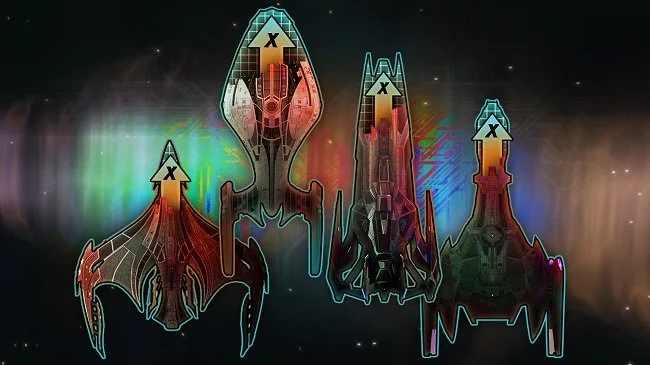
The Star Trek Online Summer Festival 2017 or Risa annual Lohlunat Festival to give it its proper name has been running for over a week now. It started on the June 8th and is available through to 20th July. Although many MMOs have festival and seasonal activities, STO’s Summer and Winter events are outstanding, being accessible, enjoyable and very rewarding. Not only are cosmetic clothing and pets available as barter items, the game also offers kit modules and bridge officer skills as rewards. Then of course each event always allows players to earn a new Tier 6 ship. This Summer it’s a Vorgon Ryn’Kodan Carrier.
The Star Trek Online Summer Festival 2017 or Risa annual Lohlunat Festival to give it its proper name has been running for over a week now. It started on the June 8th and is available through to 20th July. Although many MMOs have festival and seasonal activities, STO’s Summer and Winter events are outstanding, being accessible, enjoyable and very rewarding. Not only are cosmetic clothing and pets available as barter items, the game also offers kit modules and bridge officer skills as rewards. Then of course each event always allows players to earn a new Tier 6 ship. This Summer it’s a Vorgon Ryn’Kodan Carrier.
What I especially like about the Summer event in STO is it’s setting on the vacation resort Risa. Holidays are typically about, sun, sea and surf and Risa has that in spades. You can also dress accordingly with a variety of beachwear and other cosmetic items. The use of Floaters and Powerboards in several events is great fun. The addition of the Biathlon this year combines both in a single race. The transition from one mode of transport to the other can be quite challenging and there are still the odd bug to be worked out. I like the fact that despite being a “race” the winner is determined by the claiming of a flag. It helps level the playing field for those with slower internet connections. Half the fun is listening to players carp in chat about how they came first but overshot the flag and lost their placing.
Then there’s the Dance Party. Although it’s just a question of hitting the right emote when it’s called out by the Dance Instructor, the catchy music and the player interactions on the dance floor, really adds to the atmosphere. As for the contest itself, rather than click on individual emotes or type the necessary command in the chat window, you can simply pin the list of dance emotes to your UI for easy access. STO actually has quite a variety of dance emotes, the majority of which are available by default. Then there are a few extra that can be unlocked by specific quests or purchased using various barter currencies.
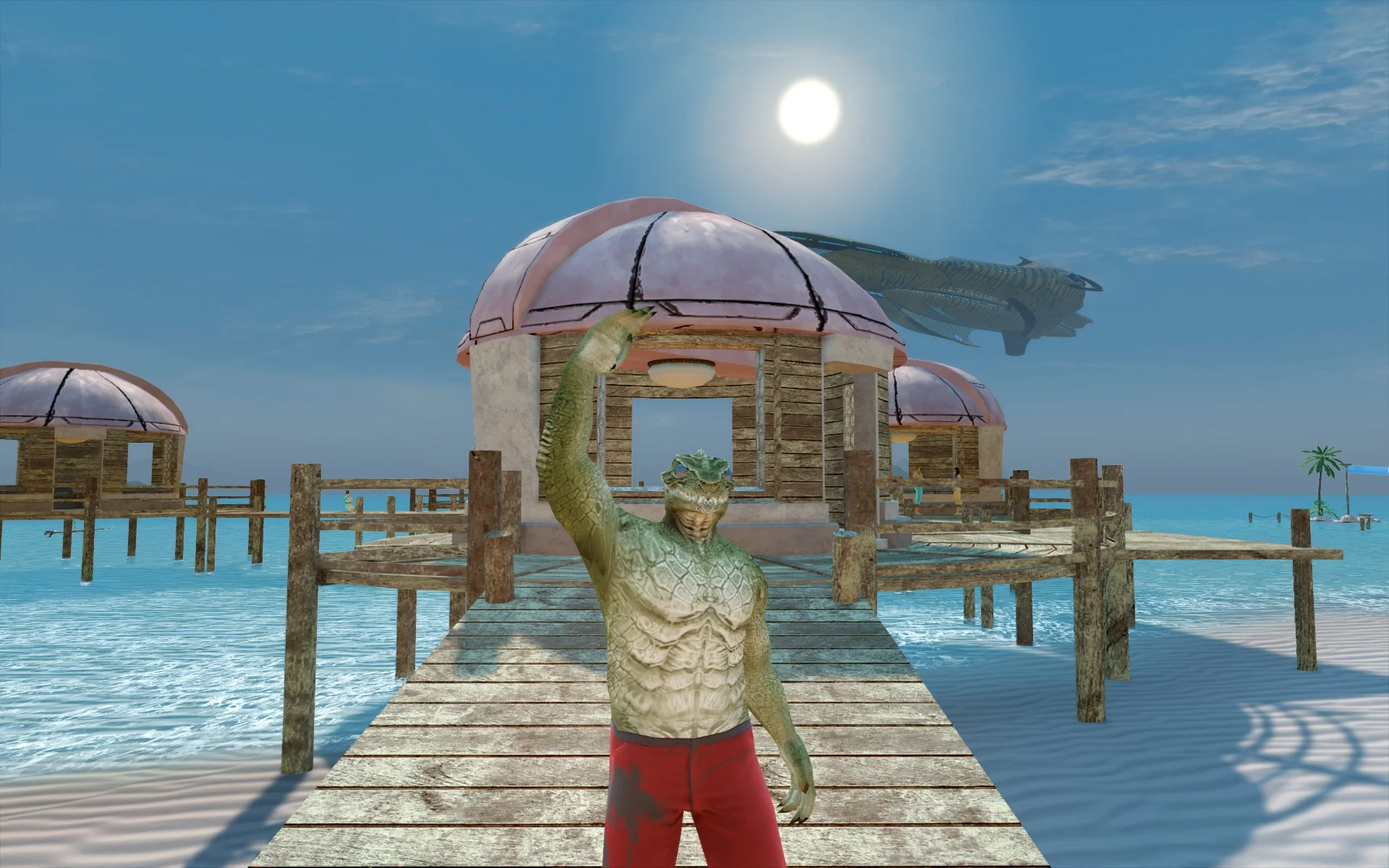
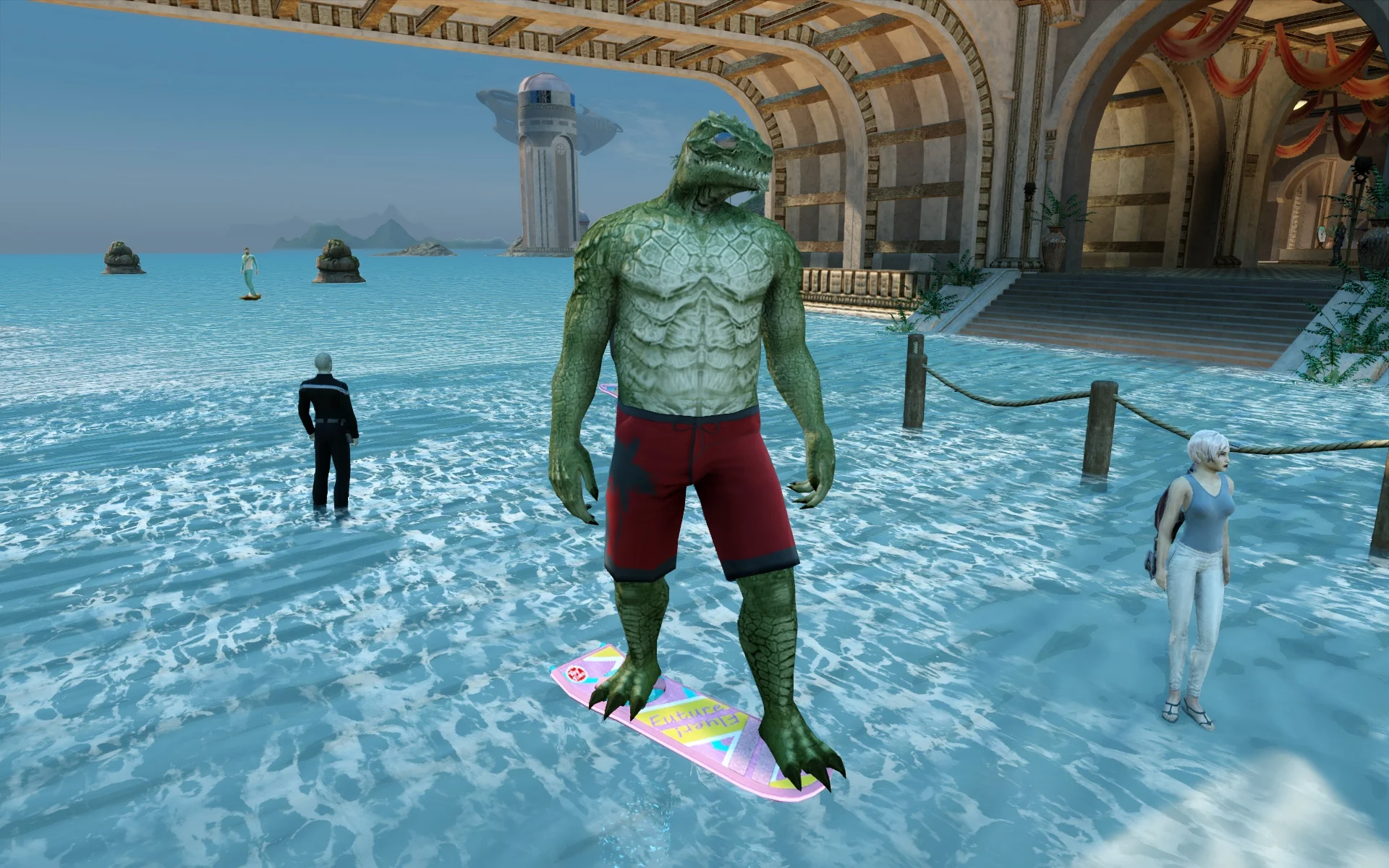
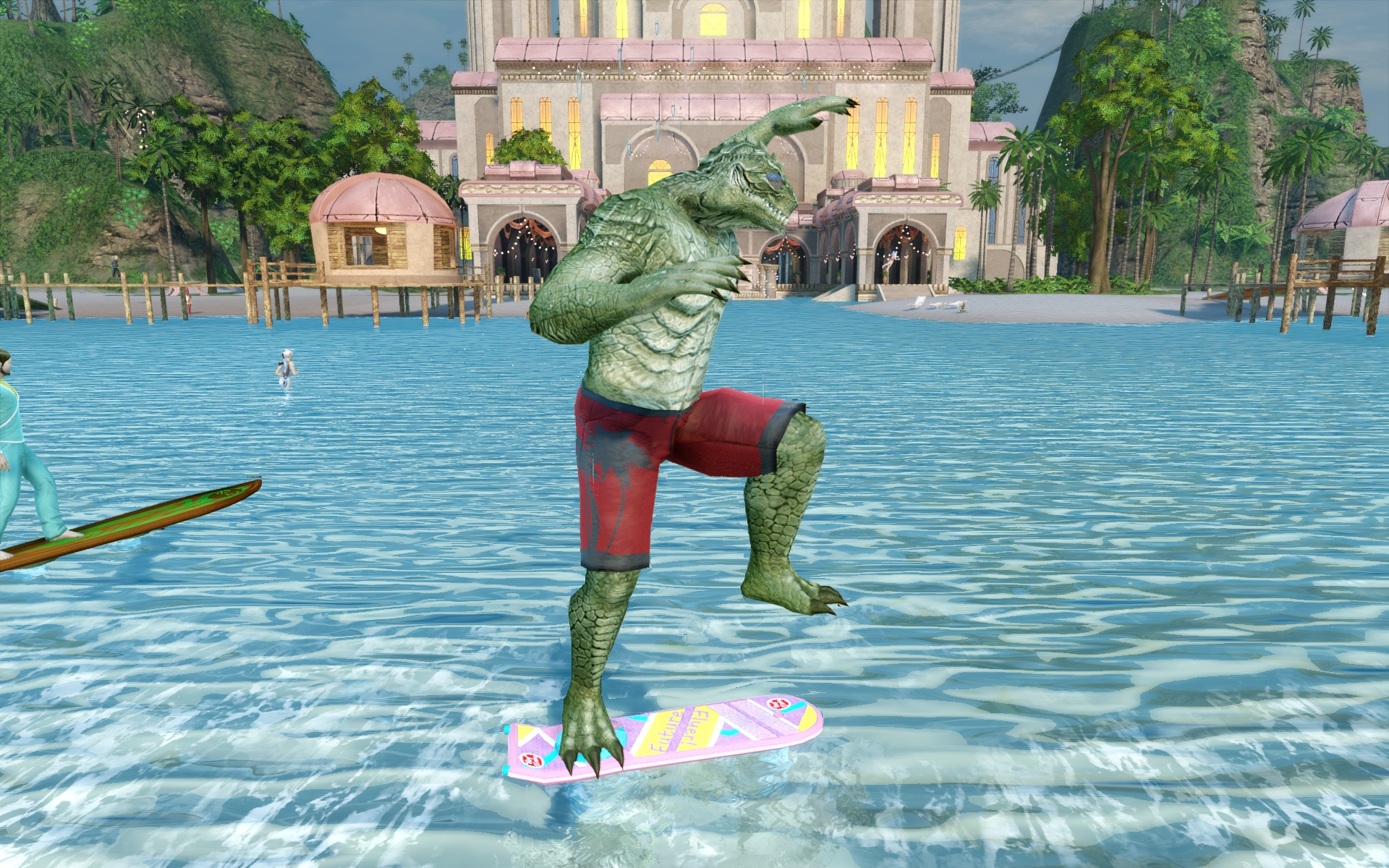
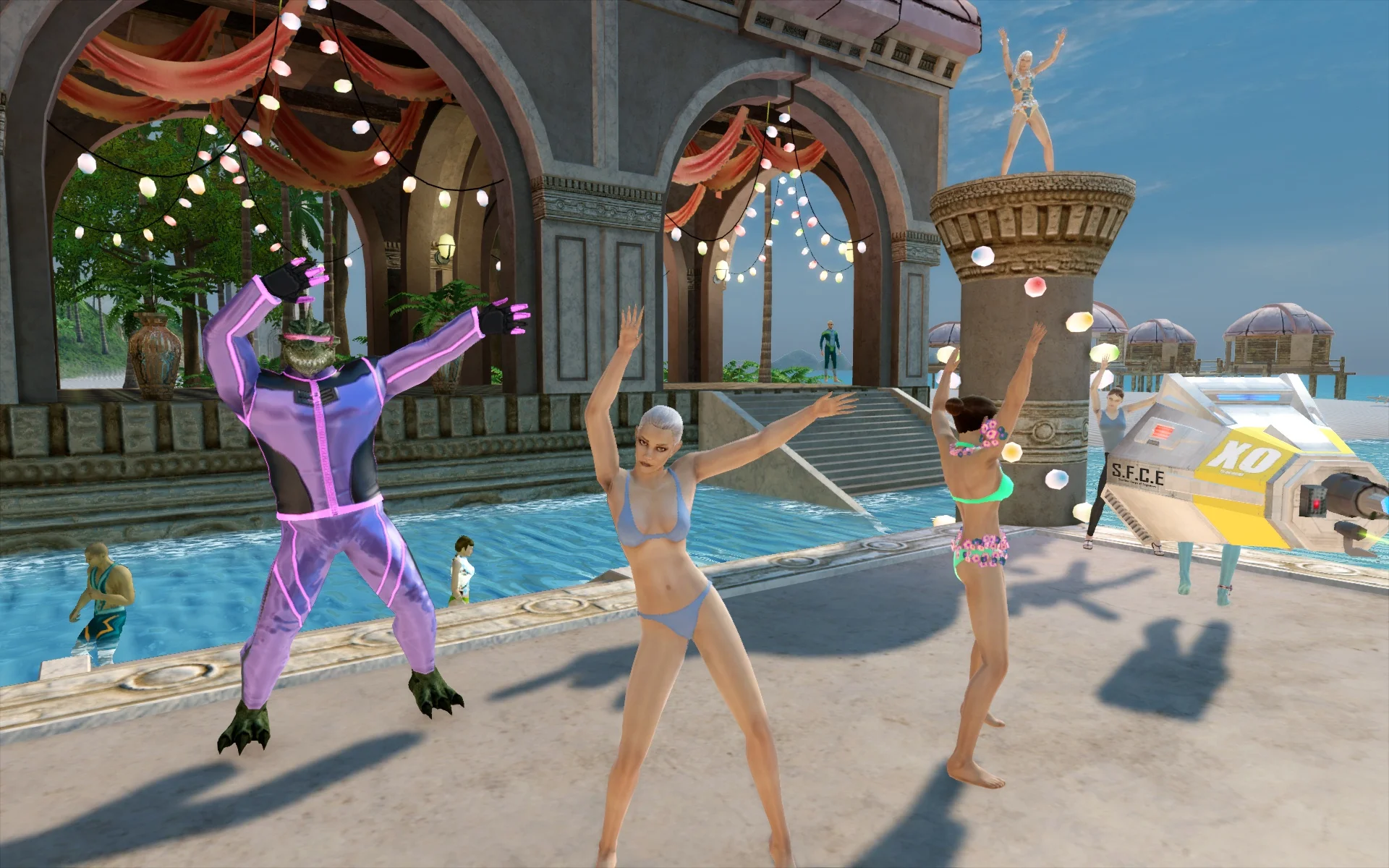
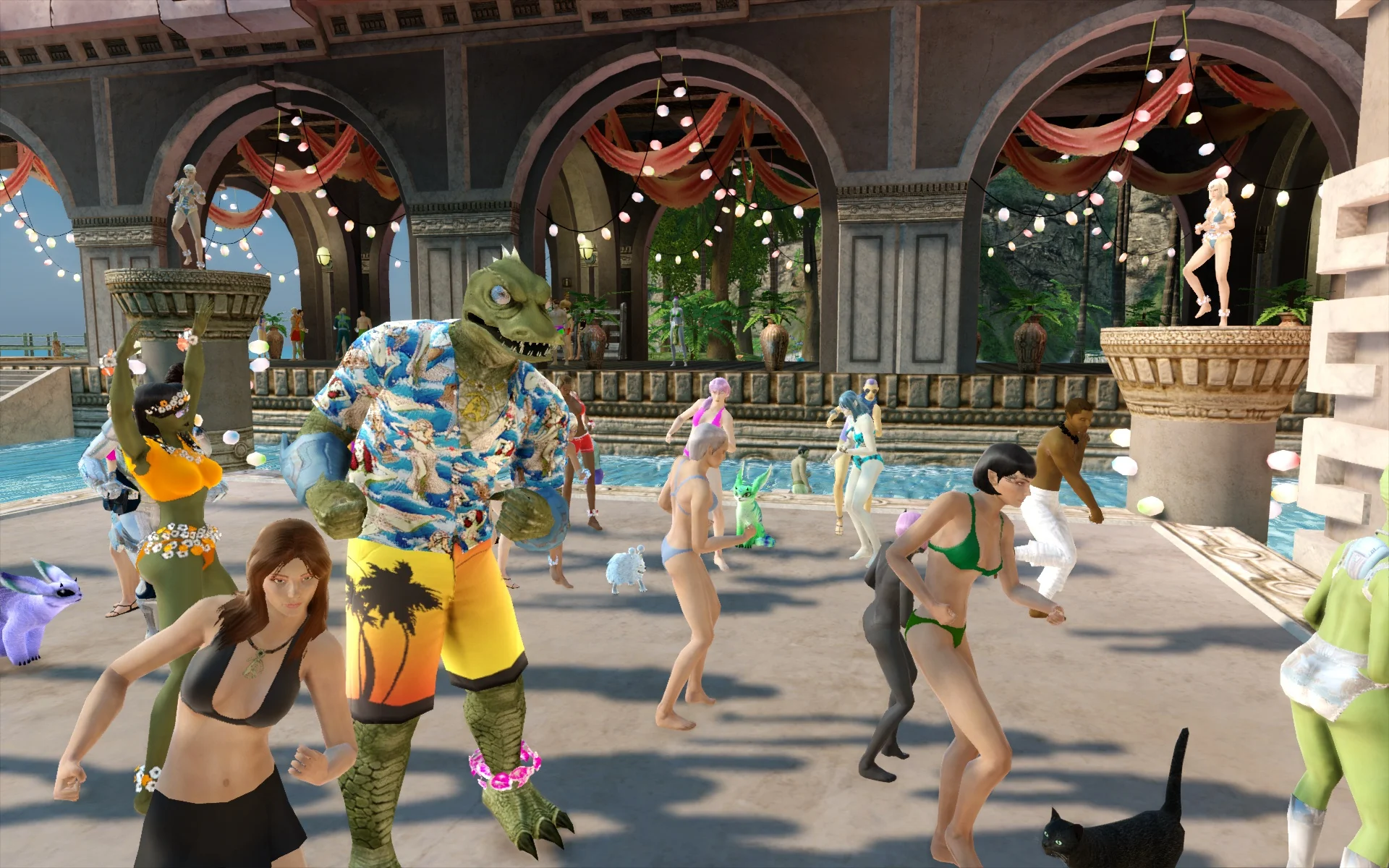
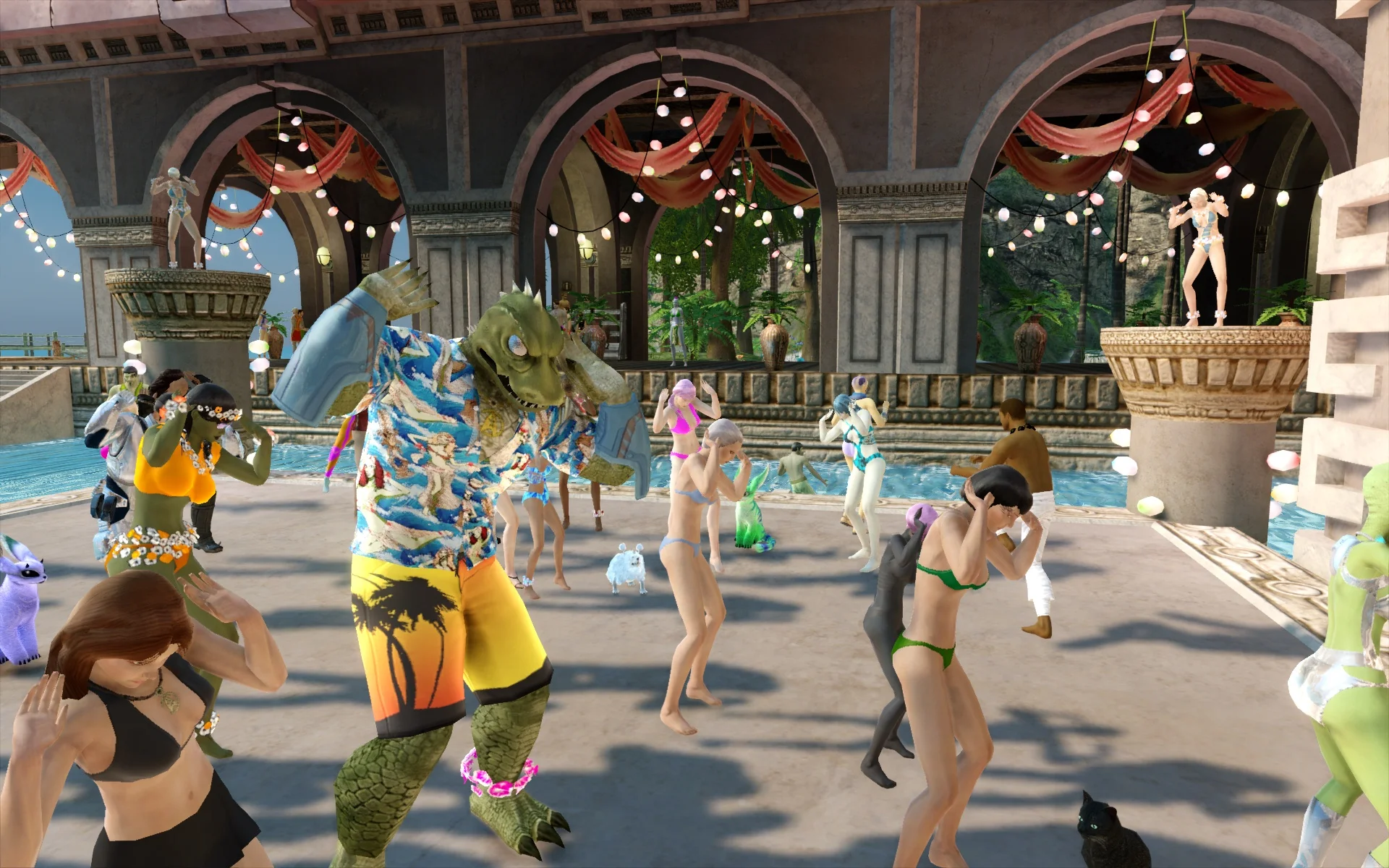
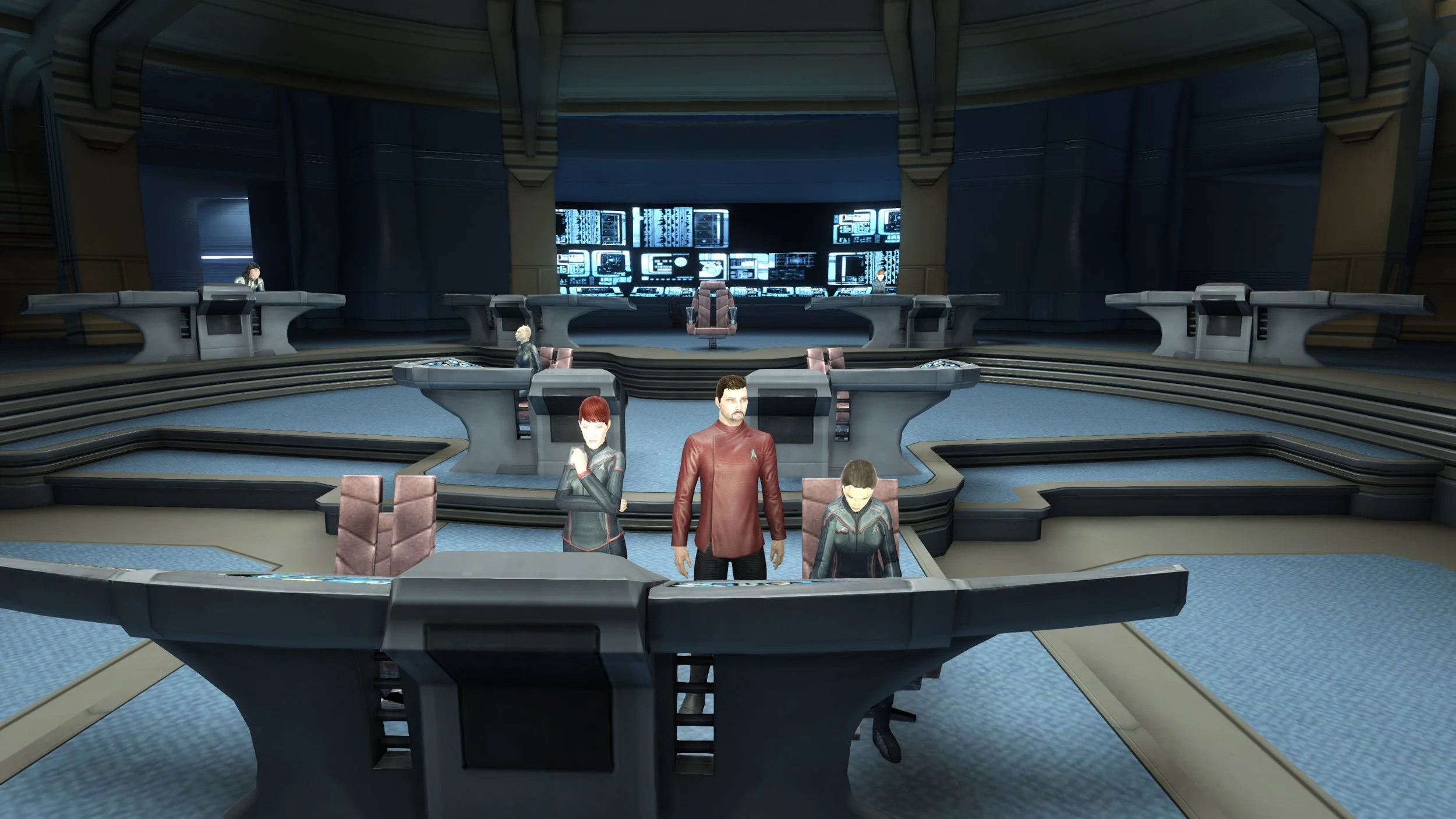
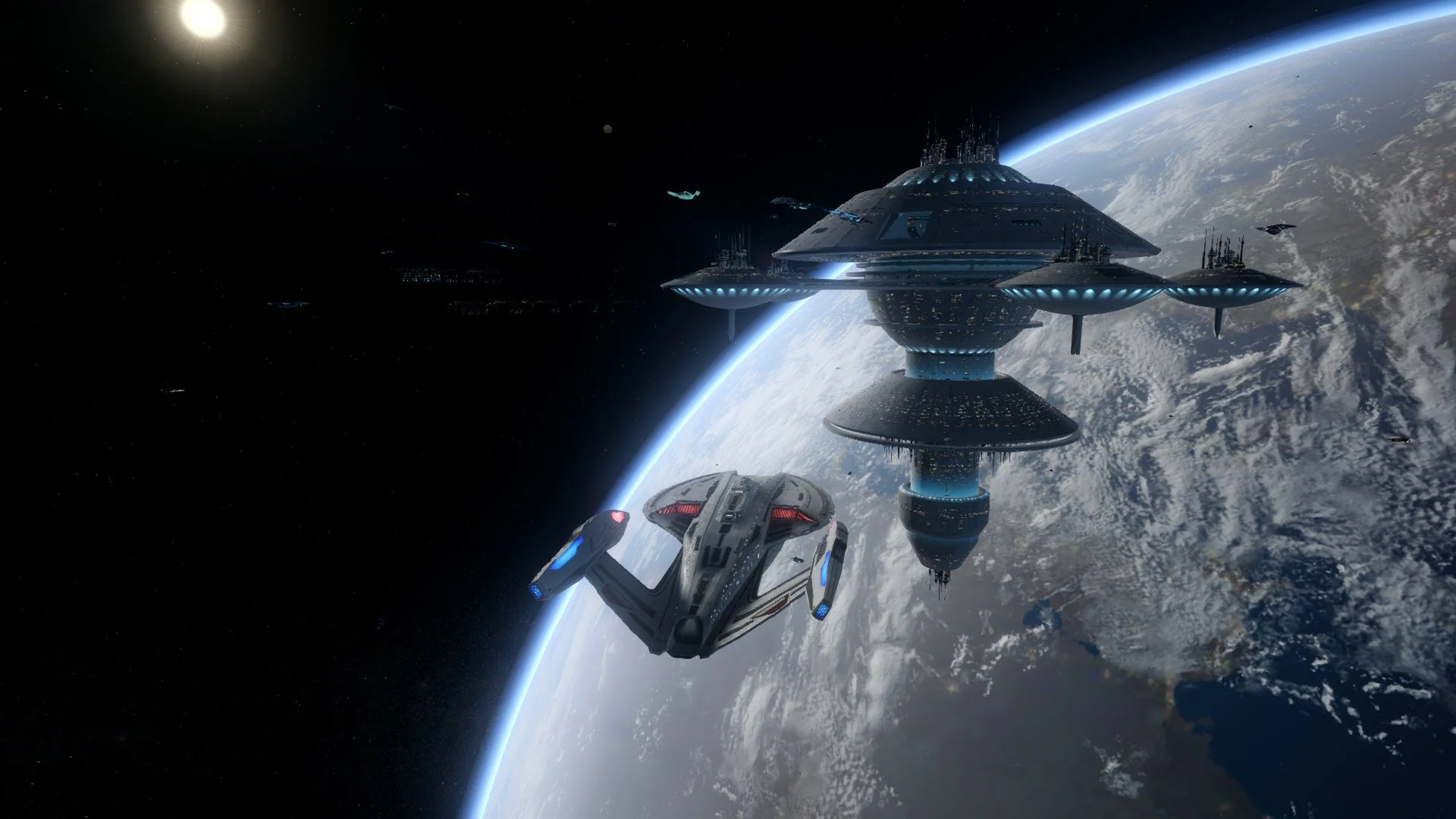
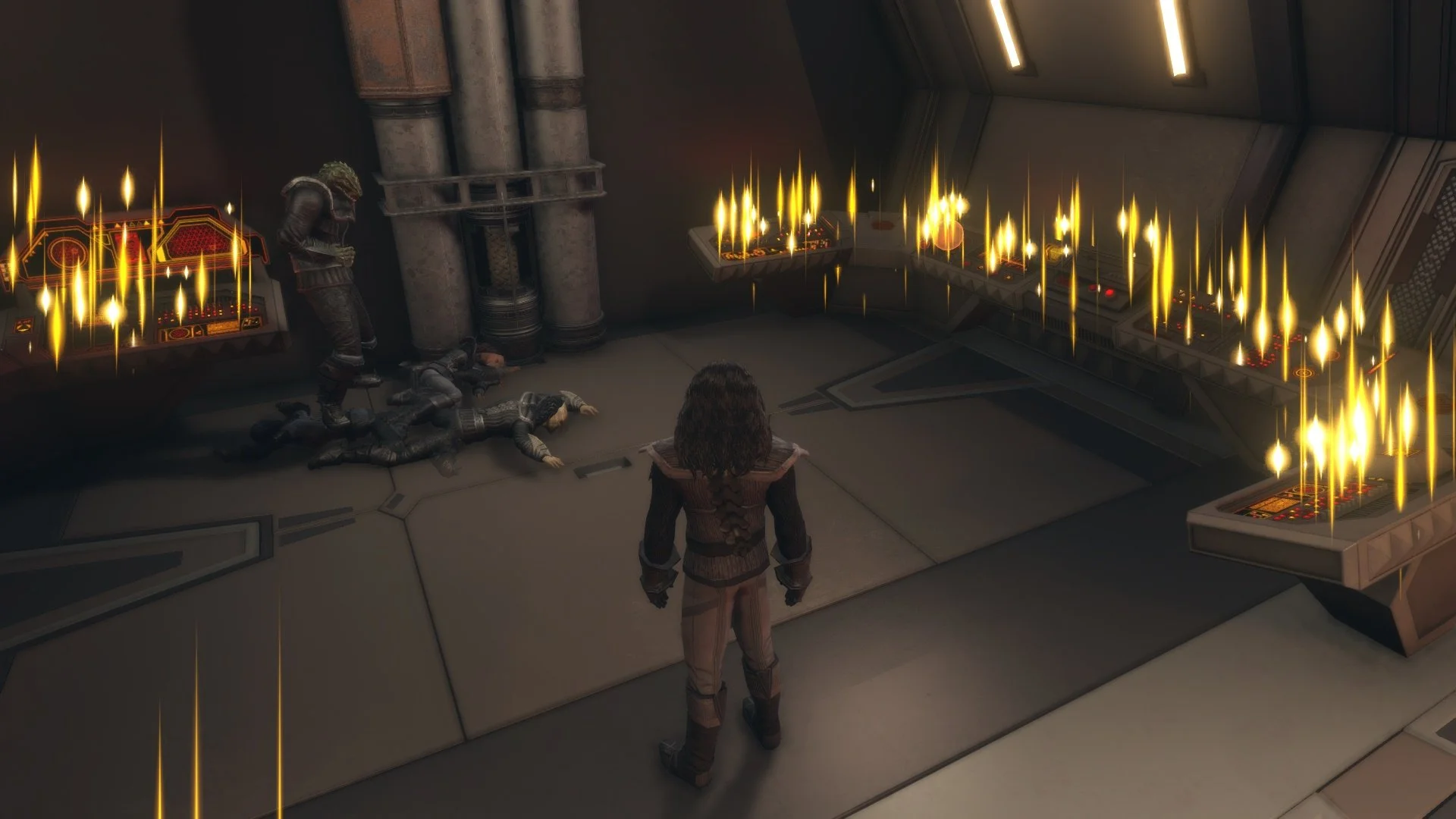
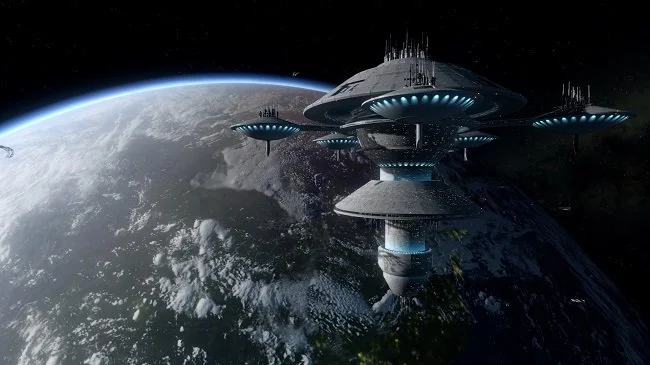
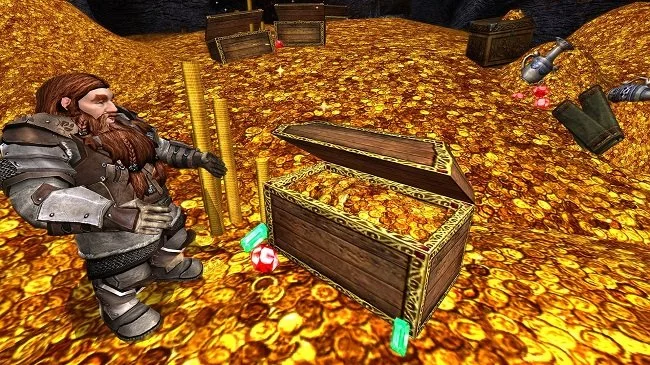
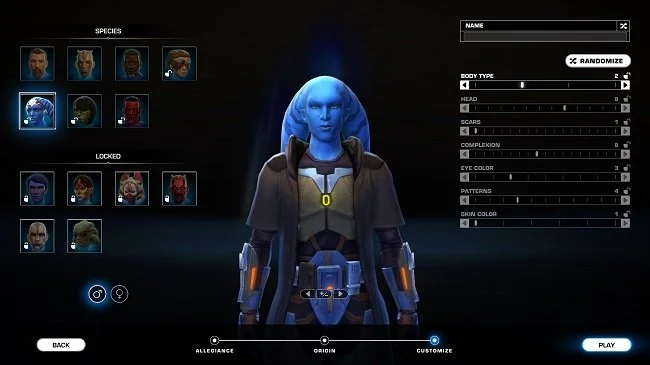
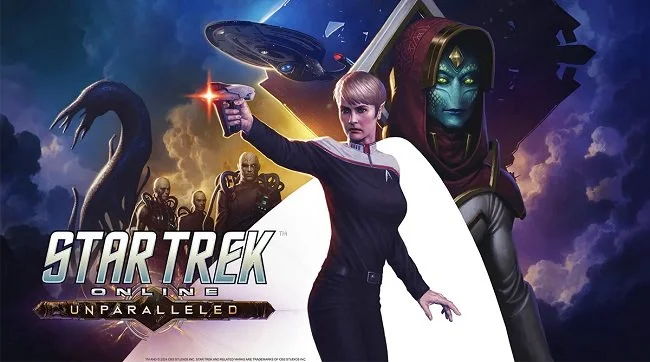
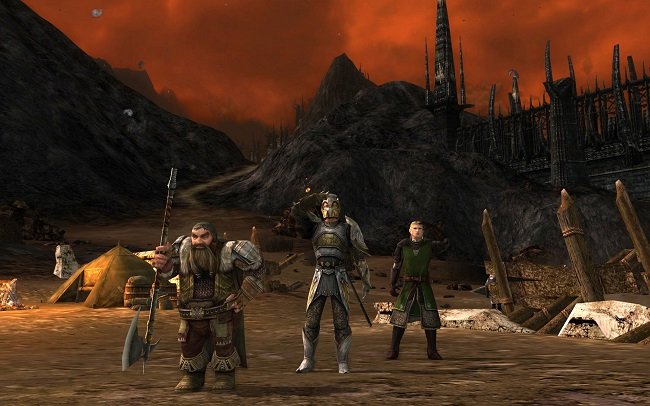
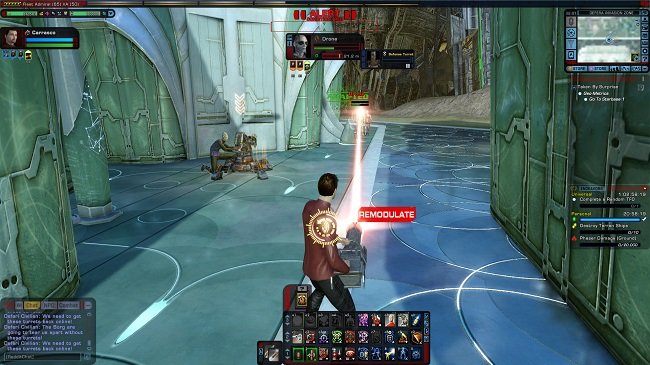
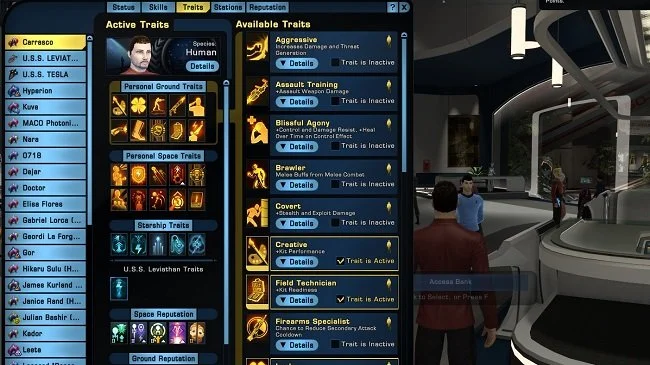
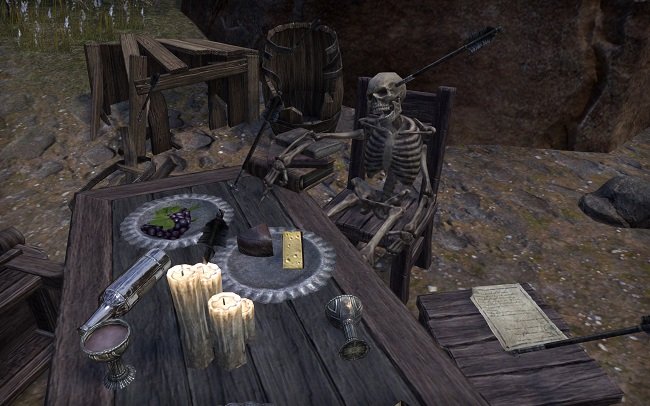
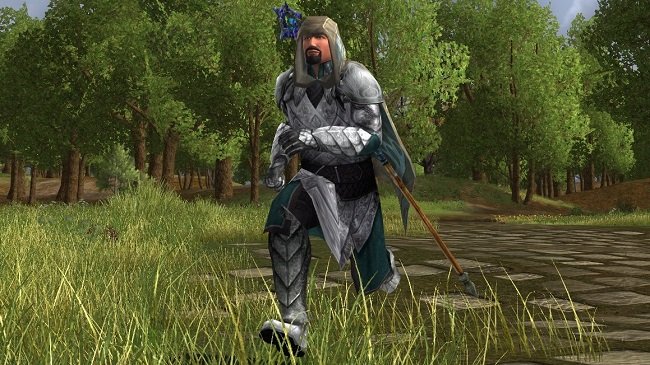
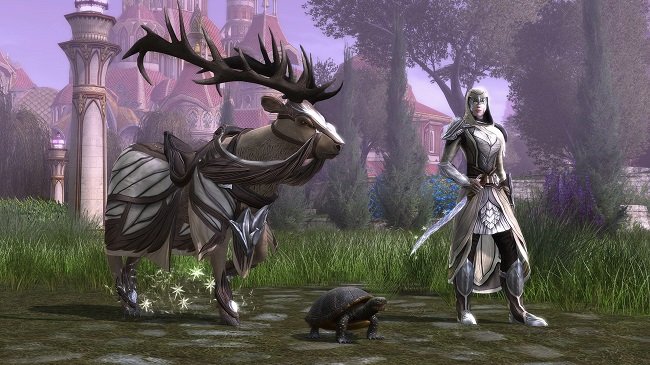
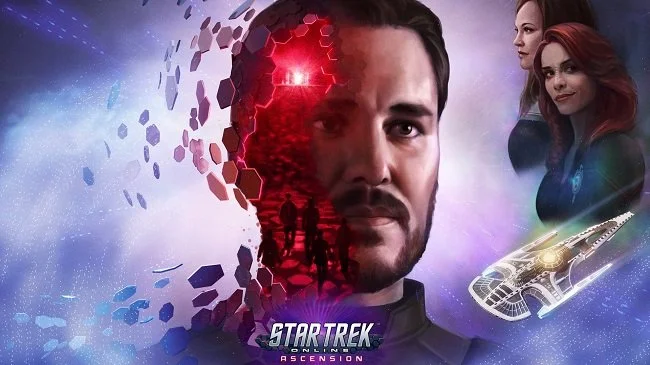
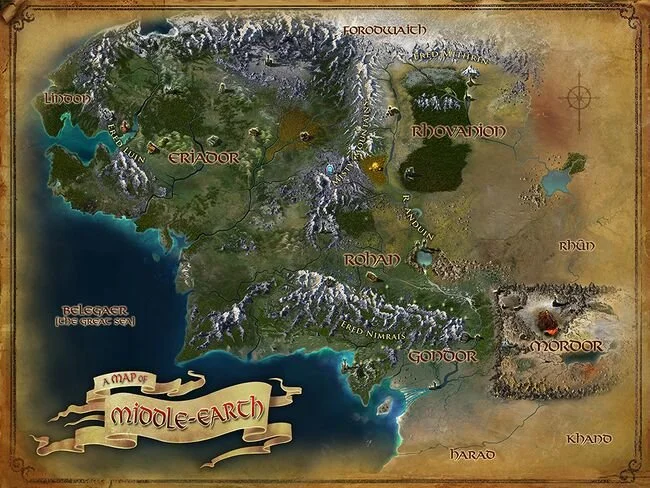
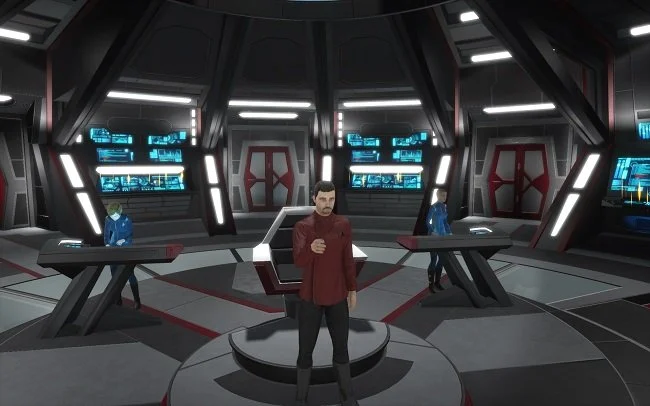
I’m sure that gamers may well claim that similar fun and larks can be had in other MMOs and that these also offer similar bespoke events. But STO has one remaining trump card up its sleeve that no other games can compete with. Gorns. Gorns in Bermuda Shorts. Gorns on Powerboards and Flaoters. Gorns tearing up the dance floor. Yes, Gorns in party mode are a thing of beauty as the gallery below shows. They are the embodiment of grace and style. So, if you have a STO account and haven’t played for a while, log in to the game and get your ass to Risa. Get out on to the dance floor and bust a move. Still not sold? Here’s the Dance Party tune, the Risa Calypso, for your edification.



How Not to Do Business Part 2: TopWare
I wrote last week about the surprise DLC for the seven-year-old RPG Two Worlds II and how I decided on a whim to buy it. Well yesterday was the official launch day for Call of the Tenebrae and yet, twenty-four hours later, I’m still not playing the game. So far, I have not received a Steam key for the game, despite the money being deducted from my PayPal account on the 5th of June. So naturally, I have made enquiries as to what is happening and have endeavoured to contact the publishers TopWare. Let it suffice to say that my attempts to resolve the matter have proved fruitless and I have discovered that TopWare are far from the embodiment of German efficiency.
I wrote last week about the surprise DLC for the seven-year-old RPG Two Worlds II and how I decided on a whim to buy it. Well yesterday was the official launch day for Call of the Tenebrae and yet, twenty-four hours later, I’m still not playing the game. So far, I have not received a Steam key for the game, despite the money being deducted from my PayPal account on the 5th of June. So naturally, I have made enquiries as to what is happening and have endeavoured to contact the publishers TopWare. Let it suffice to say that my attempts to resolve the matter have proved fruitless and I have discovered that TopWare are far from the embodiment of German efficiency.
I was initially surprised when I made my purchase last Monday week, that I didn’t receive a Steam key immediately. However not all games allow you to activate and pre-load content and as this is an older title I simply put it down to logistical reasons. However, as yesterday was the official launch for this DLC and I had not been informed of any delay, I went straight to my account at the TopWare store to see if a key had been added. Its absence was conspicuous. So, I decided to use the messaging facility linked to my order and sent a simple enquiry as to where my key was. The website curiously rendered my message into German and then back into English, so what I currently have in my chat timeline is not the exact message that I sent. As of writing this post, that message has not been responded to.
I next decided to see if I could find out anything further about the Call of the Tenebrae launch in case it had been postponed. TopWare delayed the release of Raven’s Cry several times at short notice, so they have form for such changes. After some checking, I soon discovered that TopWare were not exactly regular users of social media. They have three Twitter accounts (One US, One German and another specific to Two Worlds II) that have no launch day information. Previous tweets date back several weeks. There Facebook page is similarly devoid of anything other than press releases and woefully out of date. So, I opted to send an email via the default info email address. Again, thirty-six hours later I’ve had no response.
As I fast approach fifty, I tend not to get as irate as I did in my youth. That’s not to say that I’m not annoyed by this inconvenience but in the great scheme of things and especially within the context of my personal life at present, this isn’t such a big deal. So, I have decided to use this situation as a writing opportunity. I suspect that there will not be a quick resolution and I can see myself having to get PayPal to claw the cost of this game back from TopWare. In the meantime, it would appear the Call of the Tenebrae has launched on consoles and possibly on Steam. I have seen no feedback yet about the quality of the game itself but the inclusion of a cash store and microtransactions does seem to have caused a controversy. All I can add to the proceedings at present is that TopWare seem to be providing the gaming community with a text book example of how not to do business
Update:
I received an email from TopWare customer support on Sunday 18th June. It contained my serial key but there was no explanation or apology regarding the delay. I now have the game installed.


Pick Up Groups
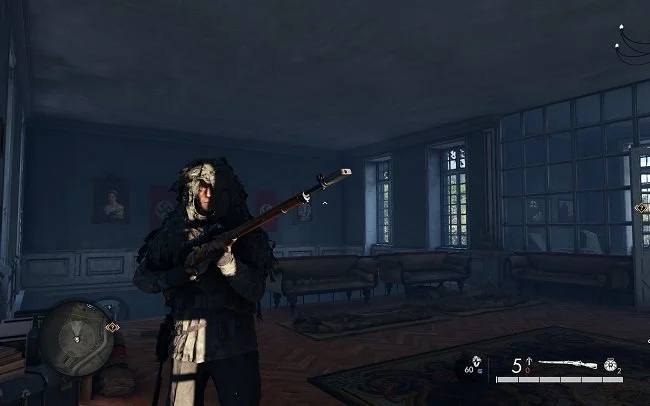
Out of all my recent gaming, Sniper Elite 4 has proved the most entertaining. The engaging mechanics and stealthy gameplay have held my attention and kept me engaged. So far, I spent over seventy-two hours playing through the campaign and DLC. After watching several You Tube videos I was tempted to try the co-operative mode, something that I don’t always do in these sorts of games. Overwatch allows two players to work together as sniper and spotter respectively, to complete objectives within a custom map. It requires communication and co-ordination. It should also be noted that multiplayer in Sniper Elite 4, is dependent on peer-to-peer connection rather than dedicated servers, with the players hosting the games themselves.
Out of all my recent gaming, Sniper Elite 4 has proved the most entertaining. The engaging mechanics and stealthy gameplay have held my attention and kept me engaged. So far, I spent over seventy-two hours playing through the campaign and DLC. After watching several You Tube videos I was tempted to try the co-operative mode, something that I don’t always do in these sorts of games. Overwatch allows two players to work together as sniper and spotter respectively, to complete objectives within a custom map. It requires communication and co-ordination. It should also be noted that multiplayer in Sniper Elite 4, is dependent on peer-to-peer connection rather than dedicated servers, with the players hosting the games themselves.
So far, I’ve found that my enjoyment of co-op mode has been significantly less than that of the campaign due to the human factor. None of my Steam friends own Sniper Elite 4, so I’ve have been dependent on the grouping service built in to the game. You either host a game yourself and wait to be assigned a partner or join an existing game. Therein lies the proverbial rub. Pick up group mechanics have no scope for quality control. So far, I’ve grouped with players who have refused to communicate, have no concept of teamwork and who quit when things don’t go their way. Furthermore, if they’re hosting the game then you find yourself kicked back to the lobby with nothing to show for your work. It’s an old story. One that will be very familiar to anyone who has ever played an MMORPG and used the instance finder tool.
Pick up groups can often bring out the worst in human nature. You are randomly grouped with complete strangers who are anonymous and are driven by their own need for gain. Manners, decorum and social etiquette are purely optional as the system has no means to impose them. Thus, we encounter players that do not know how to play the instance they have joined, or those who are happy to just go AFK and wait for the end reward. Abuse and unpleasantness are common place in chat and if the group undertaking is unsuccessful, then blame is often thrown about. Even if your PUG manages to avoid these problems, they are often extremely soulless experiences. The auto grouping in Guild Wars 2 and the PVE queues in Star Trek Online simply facilitate tasks and require minimal or even zero social interaction.
Now some players will argue that the frictionless grouping that PUGs provide with no need to communicate directly, is a boon rather than a bane. I will concede that this really is a matter of personal preference. However, mechanics that allow you to abandon a game that you are hosting at the expense of others, or quit a group thus leaving the rest of the players in the lurch, are problematic. For Honor had a major problem with the this. If you or your team are losing then there is no imperative to stick around. There is often no penalty or sanction for abandoning an ongoing game that you may be hosting and no recompense for the other players. This is something I also regularly encounter in Overwatch, which seems to have more than its fair share of petulant and bellicose players.
Justin Olivetti referenced the group finding tool in LOTRO recently and discussed how compared to other MMOs, it was an underused facility. Group content seems to more driven by Kinships in that game so players tend to look directly to their colleagues and friends to run group content. Using the instance finder will seldom provide you with a group. STO has a similar problem. Featured group content or that which provides tangible rewards attracts players. However, older and less popular content doesn’t fair so well therefore you can spend hours looking for a group. I also think there is a particular type of troll in that game that delights in joining group queues and then waiting to the last moment to decline the launch invitation, thus consigning the remaining players back to the lobby again.
Sadly, many of the flawed mechanics we encounter in online games exist because they are the most practical way to address a logistical issue. Player hosted games negates the need for dedicated servers and their associated cost. Group finding tools do exactly that, yet offer no further options. The burden to police the group’s activities falls to the players themselves and there’s precious little they can do if things go pear shaped. But what are the alternatives? If grouping with other players is problematic, then bots are really the only immediate alternative. This is an option in games such as Overwatch, For Honor and some of the Call of Duty franchise. However, it is not necessarily an ideal solution as bots do not provide a comparable experience to human interaction. Their use also doesn’t address the root cause of this problem, namely human behaviour.
Like many things in life, the lowest common denominator disproportionately shapes the experience for the majority. Returning to Sniper Elite 4, although I did have some poor co-operative games due to bad grouping, I also had some thoroughly enjoyable interactions. It’s just a shame that PUGs are such a lottery. Ultimately, it is down to the developers of games to maintain community standards. What is the point of having strict terms and conditions if you have no intention of enforcing them? Furthermore, if I cannot enjoy aspects of a game due to others, I am effectively being excluded from experiencing the entire product. Considering the cost of premium titles these days, why should I pay the full price for a game I can only partially play?
Into the Storm (2014)
When I first saw the trailers for Into the Storm back in 2014, I was far from impressed. I thought to myself, I bet that's just a CGI FX show reel with some second-rate plot tacked on as an afterthought. So, I elected not to see the movie upon release and forgot about it. The other night I was in the mood for some easy entertainment. Nothing heavy, just something that would provide an amusing diversion for an hour and a half or so. I wasn't setting the bar particularly high. Then I remembered Into the Storm and as I’ve always had a weakness for the Disaster Movie genre, I thought to myself, that may do the trick. Sadly, it didn't. This is far from a dumb but fun, popcorn movie like San Andreas. Into the Storm is an insultingly stupid piece of cinema that left me feeling angry and slightly unclean due to watching something so crass.
When I first saw the trailers for Into the Storm back in 2014, I was far from impressed. I thought to myself, I bet that's just a CGI FX show reel with some second-rate plot tacked on as an afterthought. So, I elected not to see the movie upon release and forgot about it. The other night I was in the mood for some easy entertainment. Nothing heavy, just something that would provide an amusing diversion for an hour and a half or so. I wasn't setting the bar particularly high. Then I remembered Into the Storm and as I’ve always had a weakness for the Disaster Movie genre, I thought to myself, that may do the trick. Sadly, it didn't. This is far from a dumb but fun, popcorn movie like San Andreas. Into the Storm is an insultingly stupid piece of cinema that left me feeling angry and slightly unclean due to watching something so crass.
Usually I won't take the bait and allow my buttons to be pushed when confronted by such contrived film making. However, Into the Storm actually succeeded in making me angry. It is appallingly written, with a paper-thin plot, filled with the most singularly tedious stereotypes and clichés. There's a Father estranged from his sons, a Mother who may be putting her work before her daughter and a documentary film maker who'll do anything to get the scoop, yet ultimately sacrifices himself to save the day. Then we have a wealth of teenagers designed to represent all the various different subsets of youth culture. The film also includes a quota of "Red Shirts" characters that conveniently die at strategic points in the narrative. However, the jewel in the crown of Into the Storm has to be the pair of comedy Redknecks. They're excruciatingly embarrassing to watch.
What is so offensive about this movie is that fact that it’s obviously the product of a committee meeting, where a bunch of suits had a brainstorming session. Such people are devoid of any artistic creativity or personal integrity and to them film making is just a process. A means to an end, devoid of anything else other than a desire to make money. They have nothing but contempt for their audience, the same way drug dealers has nothing but loathing for their customers. Forget the apocryphal notion of a film being so bad, it’s good. Into the Storm is just an awful, cynical, crass piece of film making. Utterly hollow, soulless and devoid of any joy. Do not dignify this cinematic insult with either your time or money.




Caring for the Elderly: Part 2
In a previous post, written last summer, I mentioned my caring commitments and reflected upon the realities of being a carer. Since then my family’s circumstances have changed considerably and subsequently so have my own. In the UK, social care has become a major political issue and was a key area of debate for all parties in the recent election campaign. Although the UK has an aging population, then NHS broadly manages to deal with its needs. It is the social care that so often follows time spent in hospital, that causes a bottleneck. Too often, the local authorities struggle to find carers and have them in place when requested. This means that many patients are unable to be discharged and have to remain in hospital. Caring is a profession that seems to be greatly lauded and esteemed by politicians in principle but the reality is far different. Overall it is often a poorly paid job, with little or no employments rights or benefits.
In a previous post, written last summer, I mentioned my caring commitments and reflected upon the realities of being a carer. Since then my family’s circumstances have changed considerably and subsequently so have my own. In the UK, social care has become a major political issue and was a key area of debate for all parties in the recent election campaign. Although the UK has an aging population, then NHS broadly manages to deal with its needs. It is the social care that so often follows time spent in hospital, that causes a bottleneck. Too often, the local authorities struggle to find carers and have them in place when requested. This means that many patients are unable to be discharged and have to remain in hospital. Caring is a profession that seems to be greatly lauded and esteemed by politicians in principle but the reality is far different. Overall it is often a poorly paid job, with little or no employments rights or benefits.
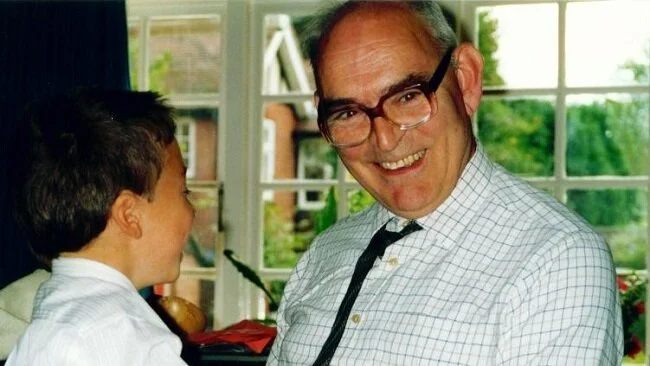
My Father had two strokes last summer. To cut a long story short in the space of five months he went from being an active 87-year-old, who would go out shopping twice day, to a housebound invalid. He is now permanently nil by mouth and fed by a PEG tube in his adomen. Although his speech has improved he is no longer the eloquent academic that he used to be. He can’t do basic arithmetic and finds reading extremely taxing. His physical therapy has been as successful as it can be under the circumstances but he moves about the house with difficulty. He's not allowed to travel outside the home without a carer. Nurses call twice a day to give him his medication and he is fed synthetic liquid food, overnight via a pump.
Naturally a change of this nature has a major impact upon a patient and their family. There are many more matters to deal with beyond the immediate physical symptoms. Both my parents are no longer directly in charge of their day-to-day life and have become dependent on others. This upsets them greatly, as they feel “useless”, “a nuisance” and “redundant”. Both my sister and I have changed are daily routines considerably and although are happy to care for our parents, find the situation stressful and very saddening. The complete role reversal between parents and children is difficult to adjust to. I now manage every aspect of my parents lives, from their finances and running the home, to hair dressers appointments and visits from the chiropodist.
However, there are still many people who wish to help both the patient(s) and the carer. Every day, I encounter kind and compassionate people who do more than just their job. Practical help and the odd supportive words can come from the strangest of quarters. The receptionists at my local Doctors surgery are thorough and understanding. The local pharmacy staff have the patience of a saint and are so obliging. Shop staff will carry, fetch and hold open doors. Black cab drivers provide aid getting in and out of vehicles. The mobile library does more than lend audio books. They listen, chat and smile. As for the healthcare professionals, I simply cannot praise them enough. Their dedication is remarkable. For a somewhat jaded and cynical person such as I, these displays of genuine humanity are moving. And the reason why so many people are nice, often boils down to the fact that they’ve all experienced family illness. Everyone, sooner or later, needs the care of another.
In the last few weeks, life has gotten a little bit more challenging for my family and me. My “significant other” found out that she needs a triple by-pass. She is having surgery next week. Today, after a follow up eye examination, the consultant found evidence that my Mother may have had a stroke a month ago. As a result, she was admitted to hospital tonight. Once again, I will be relying on numerous carers to look after my nearest and dearest. Without them, my sister and I would struggle to cope. So as a sign of gratitude, I’ve been considering what I can do to repay all these peoples kindness. The only tangible thing I can do is write about the situation and promote the concept of “paying it forward”. It’s such a simple idea but small acts of kindness can have incrdibly positive effects.
Caring in the UK needs to remain squarely in the political agenda. It also needs to be a non-partisan issue. I shall be looking to add my voice to several charities that lobby with regard to this issue, in the weeks to come. We also need to change the public perception of caring. It may not require certain academic skills but that’s no reason to arbitrarily pigeonhole it and relegate its financial merit to minimum wage status. Caring is more than the physical and logistical sum of its part. It’s not something that everyone can do, despite what the DWP and the Job Centre may think. It requires, empathy, common sense and dare I say it, love. Considering how all our life expectancies are increasing, surely, we should be making sure there are sufficient resources, both human and financial, to deal with our collective futures?
The hectic pace of modern life, along with cultural taboo of dwelling on the future, means we often do not consider or put sufficient plans in place for our old age. We neglect our health, our pensions and very much live in the moment. Yet there is so much we can do now to improve things later, if we simply grasp the nettle and address things. Losing weight, quitting smoking, getting adequate sleep all pay dividends. Addressing coughs, joint pains and eye or ear problems when they happen can forestall other more serious issues later. Then there’s the thorny issue of the way we treat each other. Giving someone a lift to the clinic, checking on an elderly neighbour, or just being civil to a stranger you meet, make a real difference. You never know when someone is at their personal breaking point. The smallest kindness may lift someone from the deepest of despair.
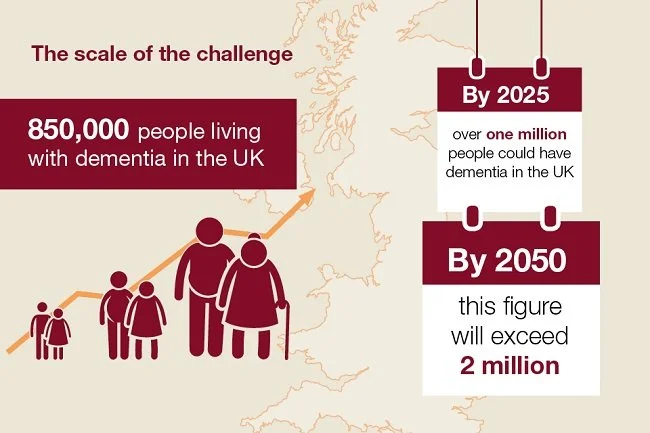
Caring for our sick, elderly and vulnerable is all of societies responsibility. Yet we do not live in a country that fully understands or embraces such a concept at present. As a result many people go on looking after their own quietly, with great resolve and dignity. I spoke to a lady at the hospital tonight, broadly of similar age group to myself. She was also waiting outside the disabled toilets to ensure that a parent was okay. We made some small talk and then she candidly admitted “it’s tough isn’t it”. I agreed with her that caring was. “My husband has recently had a stroke” she said, “and Daddy has dementia”. “You have a lot to contend with” I replied. “Yes. It makes it difficult for me to fit in my Chemotherapy”. She had recently been diagnosed with Leukemia.














30 Days of Night (2007)
Every once in while an established genre will get a new interpretation that gives it fresh impetus. 30 Days of Night did exactly that to the Vampire mythos ten years ago and is a very good horror film as well. Based on a well-known series of graphic novels by Steve Niles and Ben Templesmith, it tells how a remote Alaskan town falls under siege by a group of the undead, during the extended period of darkness that comes in winter; the thirty days of night of the title. Local Sheriff Josh Hartnett suspects something is wrong when the remote towns transport and telecommunications are sabotaged. Is the vagrant arrested for these crimes a lunatic or a “familiar” for more sinister forces?
Every once in while an established genre will get a new interpretation that gives it fresh impetus. 30 Days of Night did exactly that to the Vampire mythos ten years ago and is a very good horror film as well. Based on a well-known series of graphic novels by Steve Niles and Ben Templesmith, it tells how a remote Alaskan town falls under siege by a group of the undead, during the extended period of darkness that comes in winter; the thirty days of night of the title. Local Sheriff Josh Hartnett suspects something is wrong when the remote towns transport and telecommunications are sabotaged. Is the vagrant arrested for these crimes a lunatic or a “familiar” for more sinister forces?
What is refreshing in this instance is the fact that the Vampires back story is left suitably vague. There is also a complete omission of any religious inference. There are no crucifixes wielded here. The human characters are also likeable. The themes of death and how we face it are explored with people you have sympathy for. The production also has some solid special effects. Be warned, there is a lot of brutal violence. Heads are hacked off rather than swept of the neck with a single blow. 30 Days of Night also attempts to join that exclusive cinematic club of showing a child killing on screen. However, as the child is a Vampire, it does not quite have the same impact.
I haven't enjoyed a film of this kind as much since Blade 1 and 2 and the seminal Near Dark, which is the revisionist vampire film by which all others must be judged. It is good to see the undead treated in a way other than the traditional Eastern European idiom with all the psycho-sexual connotations. No capes, no bats or camp accents. In this instance, they are simply a force of nature that needs to be endured like the winter nights themselves. Be warned, if you are a fan of traditional romantic conclusions, then you may balk at 30 Days of Night ending. The film is hard edged and doesn't pull its punches. Don't say I didn't tell you.







Classic Movie Themes: Coogan’s Bluff
Coogan's Bluff was the first of many movie collaborations between Clint Eastwood and legendary director Don Siegel. The film is a traditional “fish out of water” tale that still rings true today. Arizona cop, Coogan, is sent to New York to collect a prisoner. Unfortunately, he escapes, forcing Coogan to search through the weirdest and most dangerous place he's ever experienced; New York in 1968.
Lalo Schifrin's score for Coogan's Bluff, is a hip contemporary score (for its time) that has all the composer's trademark funk material. The music encompasses a variety of idioms from western to eastern, with elements of jazz, rock and funk. It really captures the mood of the times tapping into the sixties motif, with use of such instruments as tabla and sitar.
Coogan's Bluff was the first of many movie collaborations between Clint Eastwood and legendary director Don Siegel. The film is a traditional “fish out of water” tale that still rings true today. Arizona cop, Coogan, is sent to New York to collect a prisoner. Unfortunately, he escapes, forcing Coogan to search through the weirdest and most dangerous place he's ever experienced; New York in 1968.
Lalo Schifrin's score for Coogan's Bluff, is a hip contemporary score (for its time) that has all the composer's trademark funk material. The music encompasses a variety of idioms from western to eastern, with elements of jazz, rock and funk. It really captures the mood of the times tapping into the sixties motif, with use of such instruments as tabla and sitar.
One of the most memorable scenes in the movie is Coogan's visit to a night club. Nothing dates a film more than the inclusion of popular music or concert footage. Coogan's Bluff exemplifies this with its depiction of late sixties counter-culture. Viewers are treated to liquid light shows, psychedelic music, sexual liberation and drugs. The icing on the cake is the song played by the band, Pigeon-Toed Orange Peel. It’s a formulaic number that somehow manages to tread a fine line between cliché and satire, whilst still being devilishly catchy.







Thoughts on the 2017 UK General Election
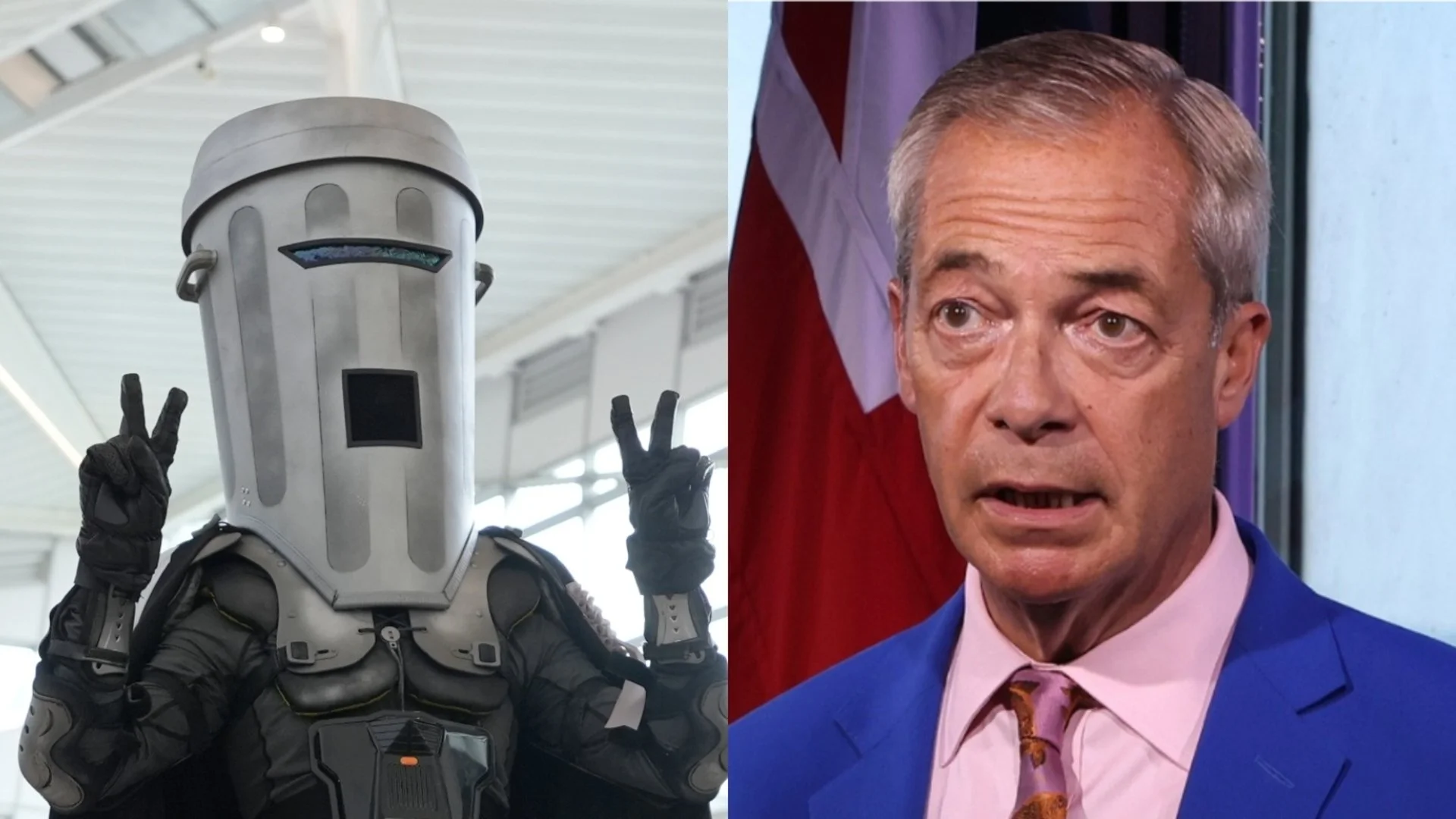
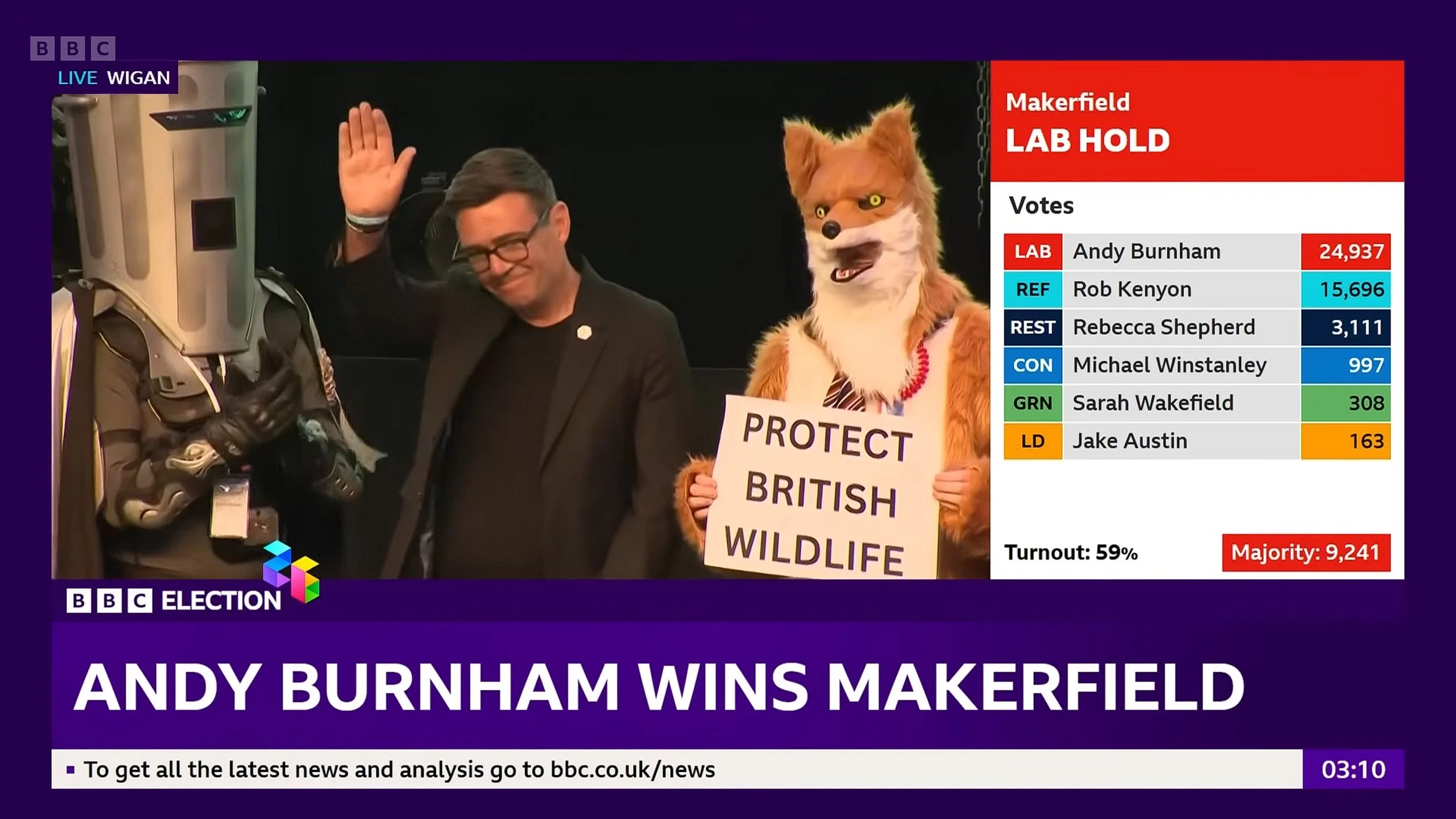
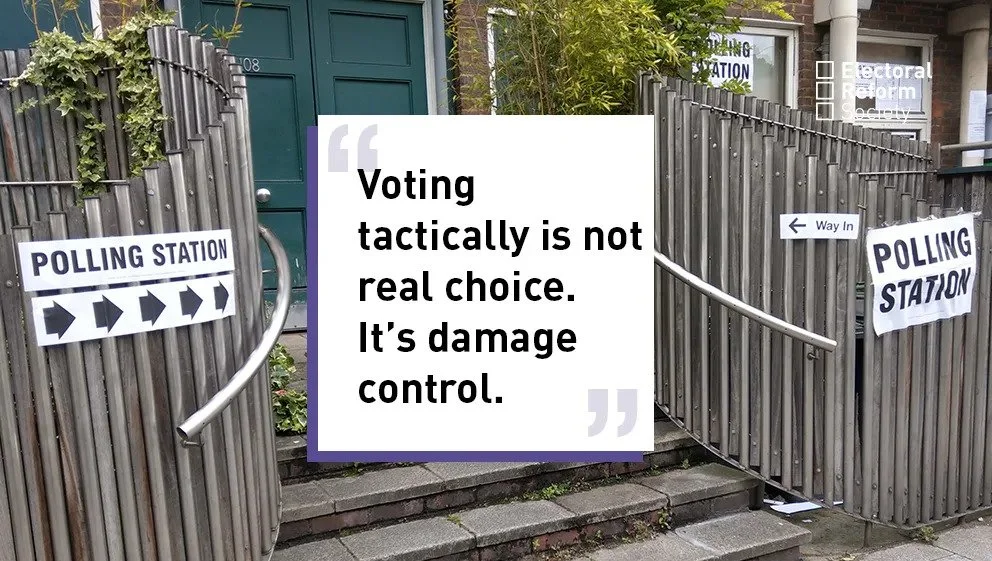
Politics is a controversial and emotive subject. It’s also something that a lot of bloggers are very wary of writing about sadly, because it’s seldom debated with any wisdom or civility. You’ll find my thoughts on the poor state of UK politics in this previous post, so I don’t need to reiterate them here. On this occasion, I would like to venture a few opinions on the General Election that was held in the UK this week, the interesting results and the potential fallout. I’m not here to champion any party, ideology or dogma, as I’m a floating voter without any major affiliations. I just merely want to express what I have observed and some of my hopes for the future.
Politics is a controversial and emotive subject. It’s also something that a lot of bloggers are very wary of writing about sadly, because it’s seldom debated with any wisdom or civility. You’ll find my thoughts on the poor state of UK politics in this previous post, so I don’t need to reiterate them here. On this occasion, I would like to venture a few opinions on the General Election that was held in the UK this week, the interesting results and the potential fallout. I’m not here to champion any party, ideology or dogma, as I’m a floating voter without any major affiliations. I just merely want to express what I have observed and some of my hopes for the future.
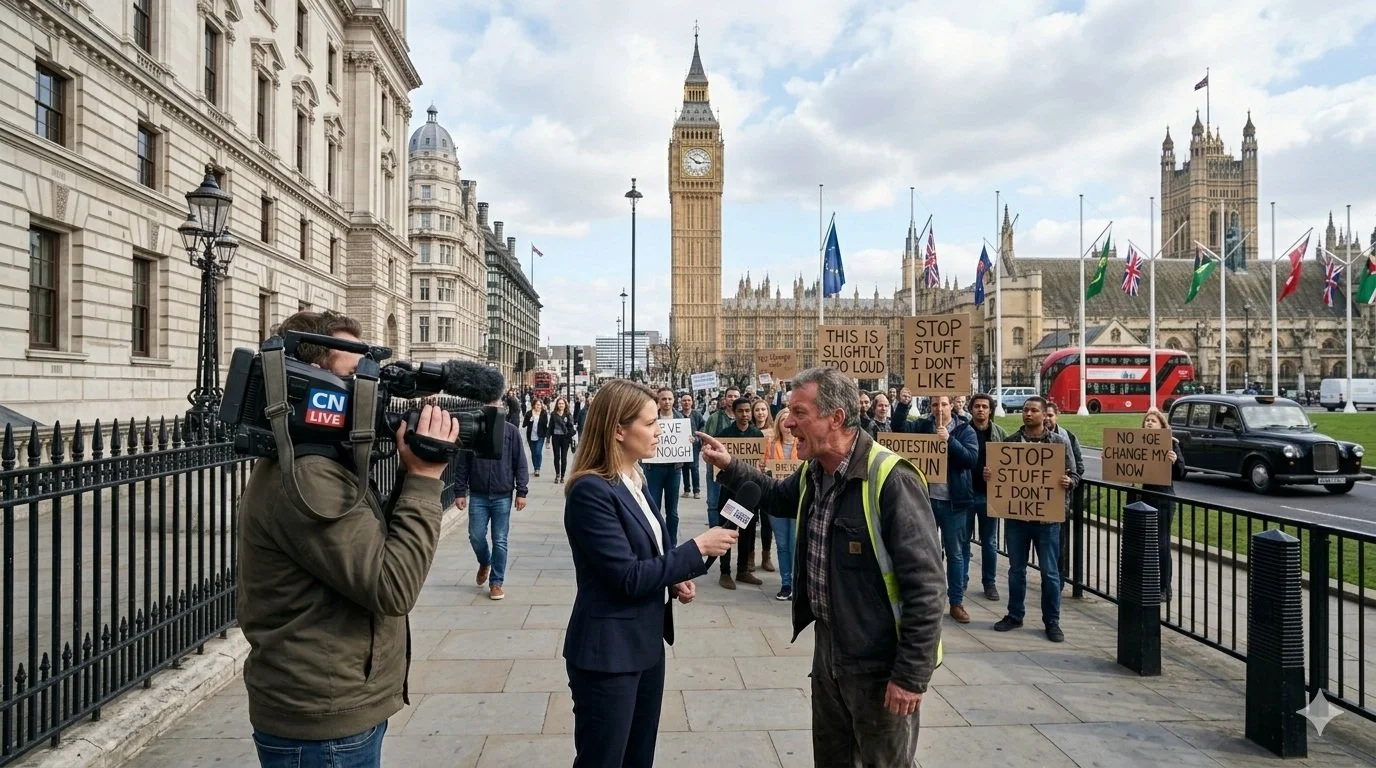
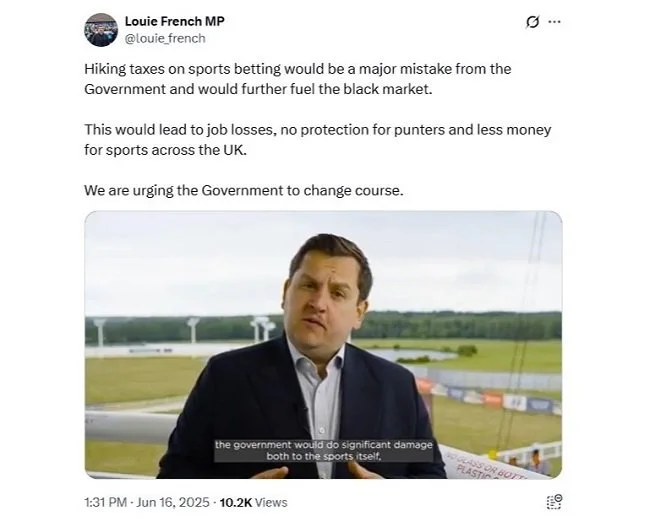
First off, the election has cost the UK tax payer approximately £142million. Despite what the Prime Minister said regarding establishing a mandate from the electorate regarding Brexit, there was no pressing need to call this election due to the fix-term parliament act that was introduced in 2010 by the coalition government. Theresa May prior to June 8th had a working majority of 330 Conservative MPs, which although not substantial, broadly allowed her to push her party’s agenda through the House of Commons. The UK electorate were far from spoiling for another vote, as election fatigue and political exhaustion are very prevalent of late. Brenda from Bristol pretty much summed up a common sentiment when her vox pop with the BBC went viral in April. Theresa May was more interested in quashing dissent in here own party as she had been challenged by back benchers in recent months. The election was simply called out of hubris and party-political gain and had nothing to do with gaining mandates. The country is divided over Brexit so there is zero chance of getting any sort of majority consensus on the matter.
The Conservative election campaign was ill conceived and poorly run, opting for populist, lightweight TV appearances, rather than public debates and discourse. The Prime Ministers absence from any meaningful discussion with her political opponents just came across as arrogant and just plain rude. The latter is something the UK public still broadly abhors. The repetition of vacuous soundbites and meaningless buzz phrases has finally worn thin and is now being perceived as an insult to the electorate. Also, some of the Tory manifesto, seemed to strike at the very party faithful that usually unquestionably supports their party. The so-called “Dementia Tax” was a staggeringly short-sighted idea that bit the very hand that feeds the Conservative party. The shameless pursuit of UKIP voters over the traditional political middle ground was also a costly error.
Now I’m not saying that the other political parties ran perfect campaigns. Far from it. There were mistakes and faux pas from all quarters. However, the Labour party focused very much on mobilising grass roots campaigners and getting out on the streets and knocking on doors. Jeremy Corbyn was also very much front and centre in the run up to the election. His non-confrontational style and unsophisticated passion for his beliefs, actually seem to chime with those he meets. Furthermore, the continual barrage of petty and spiteful calumny from the UK tabloid press seems to have been rejected by a large share of UK voters. People are fed up being told what to think by a handful of newspaper editors with their own agenda. These papers have effectively made Jeremy Corbyn in to an underdog. We don’t like bullies in this country and it’s funny how the public will turn and champion a person or cause if they feel that spite and malice are involved against them.
The overall turnout for Thursday vote was 68.7%, the highest since 1997. Much has been made about the youth vote and I am very glad to see the young engaged and getting involved with politics. Democracy is something we live and breathe every day, not something that we briefly enthuse over for a few weeks. There is a very clear difference in mindset and political outlook between the old and the young in this country and although I have a lot of love and respect for the baby boomer generation, too many of its political and cultural imperatives are obsolete, born of a by gone era that will never return. Brexit has clearly highlighted this. In numerous comments sections of various news websites, I’ve seen regular statements about the young’s alleged lack of “wordly experience”. It’s a trite, ad hominem argument that doesn’t wash. Wisdom does not come with age by default. Plus, there is no universal life experience to be had. History shows us that the young have built nations. Their views deserve no less consideration than those of their elders.
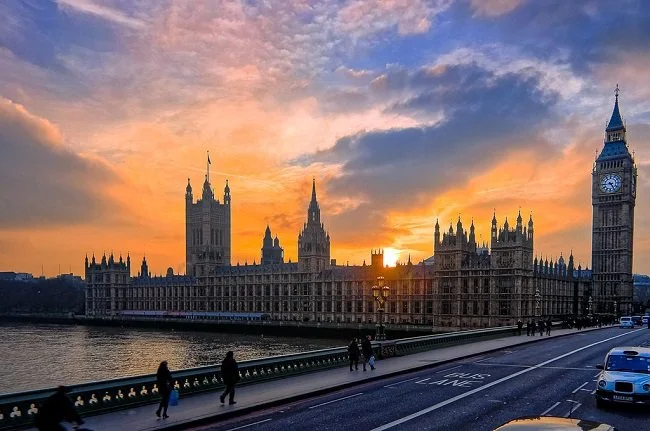
Whatever your personal loyalties and views, I think it is fair to say that UK politics just got a lot more interesting in the last forty-eight hours. The electorate have been taken for granted for too long and many are fed up with the status quo. Perhaps we’ve moved on from simple protest voting and are now considering tangible and practical change. Look what happens when we do. Whether you wanted Brexit or not, it’s a reality that needs to be addressed. If it is the most challenging issue this country has faced since World War II then perhaps it should be tackled jointly by all parties. Perhaps it is also time to firmly reject the tabloid press and their shameless interference in UK politics. May be politicians need to cultivate some courage and actually engage with the average voter. If they’re not prepared to do so then show them the door. I sincerely hope that voters of all persuasion are finally going to demand more from the political classes. The tail does not wag the dog and on Thursday the electorate reminded the Westminster of exactly that.



Strange Brigade Reveal
Rebellion, the creators of the Sniper Elite series and the Zombie Army Trilogy, announced on Wednesday a new game called Strange Brigade. The trailer shows the game to be a four-player co-op third-person shooter. The rather droll video, shot as a faux newsreel, appears to show a story set in the pre-war era with a group of quirky characters indulging in Indiana Jones style shenanigans on behalf of the British Empire.
Rebellion, the creators of the Sniper Elite series and the Zombie Army Trilogy, announced on Wednesday a new title called Strange Brigade. The trailer shows the game to be a four-player, co-op, third-person shooter. The rather droll video, shot as a faux newsreel, appears to show a story set in the pre-war era with a group of quirky characters indulging in Indiana Jones style shenanigans on behalf of the British Empire.
Rebellion has been cagey about this title until now. In fact, no rumours or hints about this game existed before today. Frequently, the games press get wind of upcoming titles early in their development, often because of leaks from the developers themselves. Not so with this game so its announcement was pleasant surprise. Strange Brigade appears to be beyond initial production, with developers Rebellion aiming to show some gameplay footage at E3
I have to admit that I am a big fan of the Sniper Elite series, so the announcement of Strange Brigade intrigues me. The lead characters are at first look, unusual and diverse. The supernatural element and period setting also delight me. I hope they are as equally creative with the game mechanics, with each character having a bespoke role. I, unlike many others, actually enjoy the campaign mode in titles such as these, as online multiplay never quite lives up to expectations due to the "human" element.
Strange Brigade will be available on PC, Xbox One, and PlayStation 4, although Rebellion have not at present specified a release date yet. Since they are promising to showcase further footage at E3, hopefully more information will become available soon.
The Asphyx (1973)
The Asphyx (AKA The Horror of Death) was released in 1973, just as the as the horror genre was about to be totally redefined by The Exorcist forever. William Friedkin’s magnum opus moved the genre away from its traditional Gothic based, literate and low budget roots and took the horror movie into the realm of the blockbuster. Special effects and shock proved to be more bankable than the old school approach of studios such as Hammer. That's one of the reasons why The Asphyx was a box-office flop. Fondly remembered by a few as a "thinking man's horror film" this cinematic curiosity’s greatest asset is also its Achilles Heel. The movie is perhaps too plot heavy and cerebral, failing to give even the most patient of audiences the shocks that they craved. Since its release this film has been seldom seen on television and has often been poorly treated on home media.
The Asphyx (AKA The Horror of Death) was released in 1973, just as the as the horror genre was about to be totally redefined by The Exorcist forever. William Friedkin’s magnum opus moved the genre away from its traditional Gothic based, literate and low budget roots and took the horror movie into the realm of the blockbuster. Special effects and shock proved to be more bankable than the old school approach of studios such as Hammer. That's one of the reasons why The Asphyx was a box-office flop. Fondly remembered by a few as a "thinking man's horror film" this cinematic curiosity’s greatest asset is also its Achilles Heel. The movie is perhaps too plot heavy and cerebral, failing to give even the most patient of audiences the shocks that they craved. Since its release this film has been seldom seen on television and has often been poorly treated on home media.
The film’s premise is simple but intriguing. A nineteenth century British philanthropist and amateur psychic researcher embarks on a fateful quest for immortality. Sir Hugo Cunningham (nicely played by Robert Stephens) after experimenting with taking photographs of dying people, discovers the presence of a nebulous spirit of the dead, known in mythology as the Asphyx. It appears at the moment of an individual’s death and is only visible via photographic plate. Sir Hugo becomes obsessed with capturing his own Asphyx and thus ensuring his immortality, so he can pursue a life of science. However, this enterprise does not progress as Sir Hugo expects and there are consequences both for himself and his family.
With its verbose, literate script, well defined characters and fascinating themes, The Asphyx is the epitome of the low budget style and creativity that became passé in the early to mid- seventies. The chills are subtle but effective under the direction of Peter Newbrook and the widescreen cinematography by Freddie Young adds polish as well as elegance to the proceedings. Filled with fa oreboding atmosphere and an accurate period production design, this is an intelligently conceived horror film that relies more on story than shocks. There is little violence and the only visual effects are those of the screaming Asphyx as Sir Hugo attempts to capture it. These are simplistic and brief.
The plot and themes of this film reflect the thinking of many psychic researchers of this period. Vaguely similar ideas were explored in the film Flatliners, however, one cannot compare the two in any other fashion. The Asphyx has a creative plot that avoids some of the usual cinematic and genre clichés. The drama between the central characters is well conceived and holds the audience's attention. The final codicil is haunting, memorable and somewhat sad. Overall The Asphyx is a minor horror classic that deserves far wider recognition. I therefore wholeheartedly recommended it to more discerning viewers that prefer plot driven narratives over cheap scares.
Kingsman: The Secret Service (2015)
As a sequel is due out in September, I thought I’d revisit Kingsman: The Secret Service. Contrary to the movies titles and the implied homage seen in the various trailers, the film is not as clichéd as the genre it's set in. Nor does it draw too heavily from its graphic novel source material. As with Kick Ass director Matthew Vaughn has managed to smooth over the rough edges of this films antecedents and create a rather unique, stylised and extremely entertaining hybrid. It is a somewhat niche market undertaking and won't appeal to all audiences but if you like all out action, knowing satire and a liberal dose of gallows humour then this movie is most likely for you.
As a sequel is due out in September, I thought I’d revisit Kingsman: The Secret Service. Contrary to the movies titles and the implied homage seen in the various trailers, the film is not as clichéd as the genre it's set in. Nor does it draw too heavily from its graphic novel source material. As with Kick Ass director Matthew Vaughn has managed to smooth over the rough edges of this films antecedents and create a rather unique, stylised and extremely entertaining hybrid. It is a somewhat niche market undertaking and won't appeal to all audiences but if you like all out action, knowing satire and a liberal dose of gallows humour then this movie is most likely for you.
Kingsman is an independent international agency specialising in the elimination of global terrorist threats; something they like to do with as much panache and class as possible. After the death of one of their operatives, Kingsman agent Harry Heart (Colin Firth) decides to replace him with a rather disreputable, unemployed youth called Eggsy (Egerton), whose father was in fact a fellow Kingsman. Thus, follows a fish out of water tale, as Eggsy has to pass the rigours of the Kingsman training program, while the agency has to counter the machinations of multi-billionaire entrepreneur Richmond Valentine (Jackson) and his obligatory plan for world domination.
Now this is all very contrived and certainly there's a lot of plot themes that we've seen before but the movie has an incredible sense of style and some of the most dynamic and fluid action scenes of recent years. Let me stress that this is really over the top gratuitous stuff, yet it works perfectly within its own internal logic. Colin Firth is a pleasure to watch playing against type and adapting to the material effortlessly. The set piece in which single handedly slays an entire church congregation that has become psychotic, is very impressive. Michael Caine, Mark Strong and Samuel L. Jackson also greatly elevate the proceedings. I thought that Taron Egerton as Eggsy would be the movie weakest link but he surprisingly makes the role his own.
Sadly, the movie does have a flaw running through it and it's based around the institutionalised sexism that has always been prevalent in this genre. Consider any Connery Bond movie and you'll get the idea. Matthew Vaughn and Jane Goldman strive to satirise this theme but it ends out having the reverse effect and somewhat derails the final act. The gag at the end of the film in which Princess Tilde gives Eggsy his “reward” is somewhat tasteless. It's a shame because I'm pretty sure that was not the intention but tonally this doesn't work. Yet this isn't an enough of a defect to spoil the entire movie, which in other respects has quite a moral undertone.
Kingsman: The Secret Service was a surprise hit for Twentieth Century Fox back in 2015. The film had a production cost of $81 million but saw a total box office gross of $414,351,546, which is a handsome return by Hollywood standards. Therefore a sequel was inevitable and so we have Kingsman: The Golden Circle hitting the UK cinemas on 29th September. The budget has now increased to $140 million but the writing and directing talent remains the same. Hopefully, audiences will be given a similarly stylised and satirical take on the international spy genre, that will prove as entertaining as the first. I’m happy to give the movie the benefit of the doubt, because after all “manners maketh man”.
The Objective (2008)
Daniel Myrick has experience when it comes to low-budget productions, having co-written The Blair Witch Project. The Objective offers a promising science fiction story set in contemporary Afghanistan, hinting at both supernatural and extraterrestrial plot themes. The spartan, low budget production along with minimal use of special effects allows the story to be the focus of the movie. As with Pontypool, many questions are raised throughout the course of the plot and the attentive viewer is required to listen and consider what is presented, rather than just blindly accept everything on face value.
Daniel Myrick has experience when it comes to low-budget productions, having co-written The Blair Witch Project. The Objective offers a promising science fiction story set in contemporary Afghanistan, hinting at both supernatural and extraterrestrial plot themes. The spartan, low budget production along with minimal use of special effects allows the story to be the focus of the movie. As with Pontypool, many questions are raised throughout the course of the plot and the attentive viewer is required to listen and consider what is presented, rather than just blindly accept everything on face value.
It is the ambiguity of the story (which mixes Djinn mythology, British colonial history with elements of Erich von Däniken) and the way the protagonists struggle to come to grips with the ongoing events that proves so intriguing. A re-occurring theme throughout The Objective is how one’s personal frame of reference can sometimes limit how you interpret and quantify any new experience. Director Daniel Myrick utilises a classic plot device, in which the establishment tries to suppress events, fearing they will cause social unrest, if made known to the general public.
Although far from perfect, with average performances, clunky dialogue and a rather artificial narration, The Objective still manages to absorb and entertain. The low budget works to the films advantage, with action scenes feeling more like news footage. Instead of shocks there is an increasing atmosphere of disquiet which builds well over the ninety-minute running time. The mixture of genres works rather well and the films conclusion is suitably open ended and will definitely provoke debate. Overall, it’s best to file The Objective under “interesting curiosity”.
Two Worlds II: New DLC After Seven Years
I bought a bundle of games in August 2014, which included the RPG Two Worlds II and its expansion, Pirates of the Flying Fortress. With such purchases, there is a tendency to adjust your expectations in accordance to your financial investment. However, I pleasantly surprised to find Two Worlds II a quirky and enjoyable role-playing game. The animations and combat are somewhat clunky but the loot system that allows you to break down every item into upgrade components, is useful. The game also boasts a customisable spell system, that utilises collectable cards as modifiers. It is quite an innovative mechanic and certainly allows players to create builds that suit their tastes. Two Worlds II benefits from a pleasing soundtrack and a standalone expansion that offers a superior story to the base game. Not every RPG can be a Skyrim or Witcher 3. Two Worlds II is an acceptable genre title to play between such releases.
I bought a bundle of games in August 2014, which included the RPG Two Worlds II and its expansion, Pirates of the Flying Fortress. With such purchases, there is a tendency to adjust your expectations in accordance to your financial investment. However, I pleasantly surprised to find Two Worlds II a quirky and enjoyable role-playing game. The animations and combat are somewhat clunky but the loot system that allows you to break down every item into upgrade components, is useful. The game also boasts a customisable spell system, that utilises collectable cards as modifiers. It is quite an innovative mechanic and certainly allows players to create builds that suit their tastes. Two Worlds II benefits from a pleasing soundtrack and a standalone expansion that offers a superior story to the base game. Not every RPG can be a Skyrim or Witcher 3. Two Worlds II is an acceptable genre title to play between such releases.
After playing through Two Worlds II and the subsequent expansion I deleted the game from my hard drive. After all, this was a title that was originally released in late 2010 and as far as I was concerned the game’s life cycle had come to an end. Turns out I was wrong. Not only about the games life cycle but in my assumptions about the franchises popularity. Because over the weekend I received a marketing email from publishers TopWare regarding new DLC for Two Worlds II. Here is some of the promotional blurb. “After the blockbuster success of Two Worlds II: Pirates of the Flying Fortress, TopWare Interactive and Reality Pump Studios have created a brand new chapter in the phenomenal RPG series! With an all new HD graphics engine, new enemies, weapons and a completely revamped alchemy system, Two Worlds II: Call of the Tenebrae will take you on yet another immersive adventure through the world of Antaloor! But the adventure doesn’t stop there for season pass holders! The Season Pass also includes the follow-up DLC, Two Worlds II, Shattered Embrace, which will launch during Q4 of 2017. Don’t miss out on the chance to continue the fight in Antaloor!”
The first thing that ran through my mind was “who resurrects a game after six years” but the more I thought about it, the more I realised that there are examples of this happening before. Star Wars: Knights of the Old Republic 2 and Anarchy Online are two that immediately spring to mind. Then of course there is the vogue for "remasters" with older titles being given graphical overhauls. Modern warfare, Bio-Shock and Skyrim have all had such revisions made to them. Then there is the issue of sales and the dreaded “number of units sold”. It turns out that Two Worlds II has quite a following in Europe and has shifted over two million copies. North American and international sales add a further million to the total. As developers and publishers are not known for their charitable tendencies, one must assume that the new DLC has viable sales potential.
As I’m between RPGs at present and still mourning the end (for the immediate future) of The Witcher franchise, I decided that developers Reality Pump have sufficient goodwill in my eyes, for me to take a punt on the new content for Two Worlds II. So, I bought a season pass at the discounted price of €29.99 as I’m apparently such a “loyal customer”. Although I’ve read some marketing material, I’m going to try and dive in to this game relatively blind upon its release on June 15th. Hopefully the DLC will be as unusual and fun as the previous content. Furthermore, in light of this development, perhaps my hopes for a third instalment of the World War II co-op shooter, Hidden & Dangerous, are not as misplaced as I initially thought.
Wilderness (2006)
Independent British Horror films often showcase some of the best up and coming talent about. Neil Marshall was a prime example of this back in 2002 with his debut film Dog Soldiers. He has subsequently produced an interesting body of work in both cinema and television. Independent horror films offer a great deal of flexibility to writes and directors, affording them an opportunity to explore themes that larger studios simply will not touch. Happy endings, moral subtexts, glamorous leads are not de rigueur. In fact, they are potentially a hindrance. The genre is a platform for gritty and often unpleasant tales that explore the darker side of human nature. Michael J. Bassett's Wilderness falls squarely into this category, offering a grim but gripping story.
Independent British Horror films often showcase some of the best up and coming talent about. Neil Marshall was a prime example of this back in 2002 with his debut film Dog Soldiers. He has subsequently produced an interesting body of work in both cinema and television. Independent horror films offer a great deal of flexibility to writes and directors, affording them an opportunity to explore themes that larger studios simply will not touch. Happy endings, moral subtexts, glamorous leads are not de rigueur. In fact, they are potentially a hindrance. The genre is a platform for gritty and often unpleasant tales that explore the darker side of human nature. Michael J. Bassett's Wilderness falls squarely into this category, offering a grim but gripping story.
The somewhat lurid UK DVD packaging calls this film “Predator, meets Scum, meets Lord of the Flies” which rather succinctly breakdowns the story. There is also a major spoiler photo on the back sleeve which ruins the plot. However, considering the film features Sean Pertwee, an actor who always seems to meet a painful and unpleasant end in whatever he appears, may be this is not such a giveaway after all. The story follows a group of young offenders, with a list of unpleasant criminal traits, as they travel to a remote island for an outward-bound course and “team building” exercise. One by one they fall victim to a hidden homicidal manic. Is this merely a cruel chance of fate, or is there a more sinister motive behind these events.
On first look, Wilderness is hardly brimming with original ideas and director Michael J. Bassett treats us to numerous homages to famous genre films. However, what viewers do get as a bonus are some well-defined characters that you can actually identify with. So often these days we have to endure films exclusively populated by people we could not careless about. Not so here. The sociopath and the sex offender are particularly interesting roles with a surprising amount of depth. Performances are good all round and it’s that inherent British quality I mentioned earlier that gives this film a little more credibility and vitality. This is not a slick glossy production. Being so would be counterproductive. The stark quality to the production design means we focus on the narrative.
Be warned, this film has a “15” rating in the UK and it's a particularly strong one at that. The killer uses a crossbow, knife and hunting dogs to kill his prey. There is one death scene that stands out and may well make the casual viewer flinch. There is also some staged animal violence which may not be well received by dog lovers. The dialogue includes liberal doses of British colloquialism throughout the film but this is not out of step with the story or the characters. Wilderness is also well paced, balancing both plot exposition and shocks. Overall the one hundred minutes plus running time is used very well. It would also be remiss of me if I didn’t mention the excellent use of location photography in Scotland, Northern Ireland and the Republic of Ireland.
At a time when the US market seems incapable of making anything other than substandard remakes of classic films, foreign movies or just uninspired jump scare horror films; it is refreshing to find a British production that shows some creativity and difference. Yes, Wilderness is derivative in its basic premise but the formula provides an opportunity to present some valid characters and credible dialogue. It chooses to avoid arbitrary distinctions between good and bad, instead offering more nuanced ideas as to why people do terrible things. There is also a sincere approach to the entire film, showing the love of a genuine genre fan and not the cynical, contrived workmanship of a studio hack. Therefore, I would recommended Wilderness to anyone who enjoyed Dog Soldiers.
Fans and Communities
Over the years I have been a participant in several fan based communities. These have ranged from running film clubs, to creating and publishing fanzines in the pre-internet days. More recently this has included running websites, blogging and creating podcasts. It’s a curious thing the way fandom is cyclical and one’s involvement with such communities seems to ebb and flow. It’s something I’ve been thinking about a lot of late. Several of the You Tube channels I enjoy have reduced their output or stopped due, to changes in advertising policy and monetisation. The Newbie Blogger Initiative failed to manifest itself this year and many of my immediate colleagues in blogging and podcasting have also begun to fade away or moved on to pastures new. The sad thing is, the true value of many community contributors is never really realised until after they’ve gone.
Over the years I have been a participant in several fan based communities. These have ranged from running film clubs, to creating and publishing fanzines in the pre-internet days. More recently this has included running websites, blogging and creating podcasts. It’s a curious thing the way fandom is cyclical and one’s involvement with such communities seems to ebb and flow. It’s something I’ve been thinking about a lot of late. Several of the You Tube channels I enjoy have reduced their output or stopped due, to changes in advertising policy and monetisation. The Newbie Blogger Initiative failed to manifest itself this year and many of my immediate colleagues in blogging and podcasting have also begun to fade away or moved on to pastures new. The sad thing is, the true value of many community contributors is never really realised until after they’ve gone.
So where to start regarding fans and communities? Well fans are far more than just mere customers. Sadly, not all of the gaming industry understands this or more importantly, appreciates it. The distinction is quite clear, though. I am a customer of Vodafone. I use their services for a monthly fee and that is the extent of my relationship with them. I do not write about my experiences using their products, nor do I create guides regarding their use. Neither do I arrange social events around their services. Fans conversely do a lot of these sort of thing and more for the games that they love. Furthermore, they are not the sole beneficiaries of such undertakings. A vibrant community is a great marketing and promotional asset for any games developer. Being free, it also has the best price.
Often the debates about community are applicable beyond gaming and relevant to wider social activities. Communities often arise organically, with fans creating a site and tweeting about what they enjoy. Soon bridges are built with other likeminded individuals and an informal network manifests itself. Often specific groups or individuals gain prominence within these social groups, through their own hard work and dedication to the things that they love. More often than not these figureheads have not actively sought such a position. It simply occurs through the dynamics of human interaction.
Now this raises some interesting questions. I read a reddit post recently in which someone thought that there was a burden of responsibility upon high profile community participants (IE popular You Tubers) or websites. To a degree, I believe that they are right, although I think it is very dependent upon what the said individual or site does within the community. Providing guides, sharing experiences or collating data is usually benign and neutral. Providing news or opinion is more complex and possibly does require a degree of responsibility and self-moderation. However, readers of specific sites or followers of certain individuals also have a duty to exercise their own common sense. It is a mistake to put people on pedestals.
Something I have mentioned before with regard to MMO communities is that in the past they have usually formed and grown outside of the influence of the commercial entities that run the games. For more recent titles such as SWTOR and especially Guild Wars 2, this process has been more centralised under the auspices of the developers. Both of those games have a wealth of information created by players but it is more often than not it is found within the official forums for that title. I may be wrong but I have never been aware of either SWTOR or Guild Wars 2 having the same sort of independent community as such titles as LOTRO or WoW. Communities can be a great asset but when it is not directly under any form of centralised control by the developers or publishers, then it can be a "problem". It will be interesting to observe what sort of online societies develops around future MMOs.
Moving away from gaming and looking at other areas of fandom, a common problem that occurs is the impact that increased public interest can have upon a community. This usually happens when an activity or pastime gains mainstream attention and becomes more widely accessible. Cosplay is something that in recent years has become increasingly popular. It is no longer perceived as the prerogative of a small niche group and is beginning to become quite a major marketing and promotional tool. Some perceive this process as democratisation, where others see something they love being usurped by those that simply wish to exploit it for financial gain. Is the community simply growing or is it being reinvented at the expense of some and the advantage of others?
Ultimately, fans, communities and their resulting social interaction are a complex and fluid situation. With regard to gaming there most certainly is an expiry date for most communities. The natural attrition we see as a game wanes in popularity is a perfectly normal thing, linked to factors such as lifespan and individuals ongoing engagement. Most fans directly or indirectly benefit from the services that arise from healthy communities. Although those that form the foundations of these communities seldom seek any praise it is often due. However, it is wise to note that the opposite can occur sometimes, when certain quarters turn bad and seek to disrupt, divide and destroy.
So where does Contains Moderate Peril fit into all this? Well I'm not entirely sure. I've always liked to maintain a tangential relationship to most traditional hierarchies, neither leading or following but simply contributing. Yet to my own surprise I've found myself involved pro-actively in several group projects in recent years, mainly because I wanted to see them succeed, not only for my benefit but for others. Some have proven to be an invaluable undertaking and have introduced myself and others to a wealth of new and talented writers. Furthermore, I put a lot more stock in the ideas, opinions and views of those who walk the walk, rather than the information that comes solely from a corporate PR department.
Involvement in any community has its ups and downs and can be very hard work. But the rewards and the pleasure that it brings by far outweigh any negatives in my view. So, I advocate involvement and participation. This can take all manner of forms and every little helps. You don't have to selflessly give up your time with big undertakings. Give what you can afford to give. Just reading, supporting and expressing an opinion is a positive contribution. Also, don't become too emotionally attached to things. Communities never stand still. Situations move on and change. As for those who become high profile, or go the extra mile; be reasonable when they decide to hang up their spurs. They’ve probably earned it.
Mifune: The Last Samurai (2016)
The documentary Mifune: The Last Samurai is both an exploration and celebration of the Japanese actor Toshiro Mifune (1920-1997), narrated by Keanu Reeves. Over the course of seventy minutes his life and body of work is critiqued by his industry peers as well as several cinematic luminaries such as Martin Scorsese and Steven Speilberg. The focus is very much upon the man himself, as his personality was integral to his acting technique. For those unfamiliar with classic Japanese cinema during its golden age, the documentary provides a broad and practical overview. It also includes a brief history of the chanbara (sword fighting) genre, as well as a concise and honest analysis of Mifune’s career.
The documentary Mifune: The Last Samurai is both an exploration and celebration of the Japanese actor Toshiro Mifune (1920-1997), narrated by Keanu Reeves. Over the course of seventy minutes his life and body of work is critiqued by his industry peers as well as several cinematic luminaries such as Martin Scorsese and Steven Speilberg. The focus is very much upon the man himself, as his personality was integral to his acting technique. For those unfamiliar with classic Japanese cinema during its golden age, the documentary provides a broad and practical overview. It also includes a brief history of the chanbara (sword fighting) genre, as well as a concise and honest analysis of Mifune’s career.
Writer and director, Steven Okazaki, talks to long time Mifune collaborators such as the actress Kyoko Kagawa and Kanzo Uni, a sword-fight choreographer and stunt co-ordinator. Uni claims that Mifune “killed” him on screen more than one hundred times. The actress Terumi Niki discusses how Toshiro Mifune coaxed and teased performances out of his co-stars during the filming of Red Beard and how he was a very generous actor. There are also some insightful anecdotes about Mifune’s youth and war experiences from his son, Shirô, that help explain the man’s temperament, strengths and vices. One actor describes Mifune star presence as the embodiment of perseverance but it is fair to say that melancholia is more appropriate for his personal life.
Mifune: The Last Samurai works best when it is focusing on the lifelong collaboration between Toshiro Mifune and writer/director Akira Kurosawa. It becomes very apparent from the interviews that the mutual respect between the two was immense, with the precise and exacting auteur director, trusting his lead implicitly and affording them a great deal of creative freedom. Mifune also had a strong sense of obligation to Kurosawa as he found fame and international stardom through his movies. Teruyo Nogami, Kurosawa’s regular script supervisor, recollects how the arrow ridden finale of Throne of Blood, was filmed under what would now be deemed hazardous conditions with the archers being mere college students and not particularly accurate shots. Yet Toshiro Mifune embraced the risk and used it to fuel his performance.
Mifune: The Last Samurai concentrates mainly on the chanbara movies that were an integral part of the actor’s enduring legacy. Sadly, the contemporary set, post war dramas such as The Bad Sleep Well and High and Low are somewhat ignored. Mifune’s later international success is also only briefly touched upon. It is clear that director Steven Okazaki, thinks that the main story of the actor’s life is his symbiotic relationship with Kurosawa. Although it does attempt to explain why the two artists drifted apart in their twilight years, one is left with the impression that perhaps the documentary is deliberately trying to perpetuate an enigma. In the end, it is Martin Scorsese’s conjecture, that sometimes artists that are bound this closely together “use each other up” is perhaps the most plausible explanation.
Junior Officer Appreciation Weekend: A Tale of Competitive Nodes
This is a tale about Star Trek Online but as competitive nodes are a common game mechanic in numerous MMORPGs, it is pertinent to many gamers. From today till Monday 5th June, it’s Junior Officer Appreciation Weekend, an in-game event that allows players to earn a rare duty officer. Strange particles can be found around the grounds of Starfleet Academy. If these are scanned with a tricorder, they either disappear, become stable or summon a combat hologram that attacks you. The particles then drop fragments that can be exchanged for event rewards. Collecting the particles is fun but hardly anything groundbreaking. I’m sure that most MMOs have a comparable activity.
This is a tale about Star Trek Online but as competitive nodes are a common game mechanic in numerous MMORPGs, it is pertinent to many gamers. From today till Monday 5th June, it’s Junior Officer Appreciation Weekend, an in-game event that allows players to earn a rare duty officer. Strange particles can be found around the grounds of Starfleet Academy. If these are scanned with a tricorder, they either disappear, become stable or summon a combat hologram that attacks you. The particles then drop fragments that can be exchanged for event rewards. Collecting the particles is fun but hardly anything groundbreaking. I’m sure that most MMOs have a comparable activity.
However, the particles that appear during this event are competitive nodes. Despite fairly generous respawn rates, due to the volume of players in the vicinity, getting to the particles in time to scan and claim them becomes a race. And like any game mechanic that forces players to directly compete with each other, there is scope for rancor and unpleasantness. It took me all of twenty minutes tonight, before I ran into my first ill-tempered player who seemed to think that whatever they saw was immediately theirs. This particular individual after losing out on a particle to me, decided to follow me around for the next ten minutes to try and “avenge” himself upon me, for the heinous outrage I had perpetrated against them. Zone chat also revealed several players arguing over similar incidents.
Now I tend not to rush through events such as these, preferring to go about them at a steady pace. If I spot a particle that is available, I try to ensure that there isn’t a crowd of other players heading towards it. If it does end up in a race, I tend to let the matter go and allow the other party to claim the item. The advancing years have taught me a degree of patience that others seem to lack. However, I don’t concede every race and will compete for a particle, if the fancy takes me. Yet, this entire situation could be avoided if Cryptic simply did away with the competitive node mechanic. In fact, it’s something I’d like to see go from the entire MMORPG genre. ArenaNet have eliminated it from Guild Wars 2 and it is a massive “quality of life” improvement for the game.
Over the last decade, I have gone from being an ardent opponent of egregious behaviour in online games, to just accepting the fact that any gathering of humans will include a tangible percentage of idiots, malcontents and trolls. Developers habitually demonstrate that they have no real interest in dealing with this problems through community policing but some do sometimes use game mechanics as a means to limit shenanigans, tomfoolery and general douchbaggery. Changing competitive nodes to shared one, is a prime example of this. It eliminates a potential avenue for griefing and general bad behaviour. Sure, you can argue that making such a change is allowing a small percentage of players to dictate policy but frankly it’s a small price to pay for a change that inherently improves players in-game experience and overall perception of the community.
The Hunting Party (1971)
The Hunting Party is a curious Western, made at a time when the genre was struggling to maintain its popularity with the viewing public. Melissa Ruger (Candice Bergen) is a school teacher married to wealthy Cattle Baron, Brandt Ruger (Gene Hackman). When she is abducted by outlaw Frank Calder (Oliver Reed) and his gang, he husband is naturally incensed. He quickly arranges a posse of business associates and uses his personal fortune to equips them all with the latest long-range hunting rifles with telescopic sights. He then sets off in pursuit of Calder's trail before they can cross the border. However, it soon becomes apparent to Ruger’s associates that he may have other motives than just rescuing his wife.
The Hunting Party is a curious Western, made at a time when the genre was struggling to maintain its popularity with the viewing public. Melissa Ruger (Candice Bergen) is a school teacher married to wealthy Cattle Baron, Brandt Ruger (Gene Hackman). When she is abducted by outlaw Frank Calder (Oliver Reed) and his gang, he husband is naturally incensed. He quickly arranges a posse of business associates and uses his personal fortune to equips them all with the latest long-range hunting rifles with telescopic sights. He then sets off in pursuit of Calder's trail before they can cross the border. However, it soon becomes apparent to Ruger’s associates that he may have other motives than just rescuing his wife.
Shot on location in Almería Spain, this gritty western has a strong cast and an intriguing premise. Calder kidnaps Melissa so she can teach him to read. Ruger, a brutal, sadistic and sexually impotent man, is more concerned about maintaining his reputation and demonstrating that no one touches his property. Melissa is drawn to Calder despite his outlaw persona and hopes to save him from himself. However, director Don Medford fails to develop any of these story lines and instead opts to shock with sexual violence and brutal slow-motion shootouts. Ruger’s long-range rifles allow him and his posse to conveniently pick off Calder's men from a great distance.
Despite the films shortcoming it is very interesting to see Oliver Reed in a western and as ever, he acquits himself as well despite the flaws in the screenplay. There is an solid soundtrack by Riz Ortolani and good make up effects by José Antonio Sánchez. The seventies produced many hybrid westerns as the genre strived to maintain its relevance. Sadly, The Hunting Party ultimately fails to make its mark. The themes of Stockholm Syndrome and self-fulfilment are left undeveloped. The film tries to emulate Peckinpah but falls short of his narrative standards. Perhaps director Don Medford, thought the bleak ending was making a broader point. As it stands it simply ends a story that has nowhere else to go.
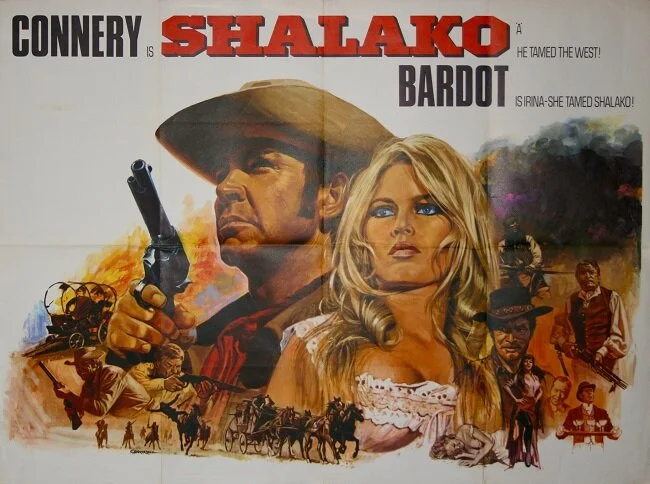

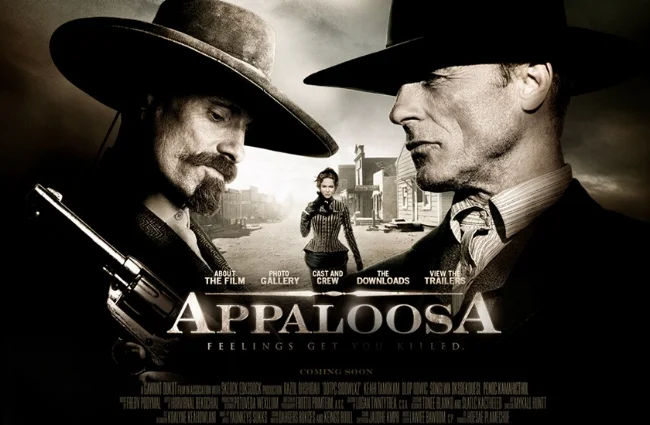
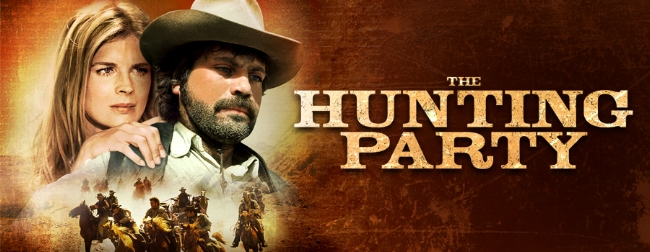
Dracula Untold (2014)
I passed on opportunity of seeing Dracula Untold at the cinema in late 2014, as I was not overly impressed by what I had seen from the trailers. I finally caught up with Universal's reboot of the franchise, hoping that a home viewing and tempered expectations would make me more cordially disposed towards the film. Sadly, the movie turned out exactly as I had surmised, proving to be a superficial under taking with no narrative depth. Furthermore, is was a bloodless action film, rather than a true horror movie, resulting in a very unsatisfying compromise. The fact that this movie made over $200 million globally at the box office saddens me.
I passed on opportunity of seeing Dracula Untold at the cinema in late 2014, as I was not overly impressed by what I had seen from the trailers. I finally caught up with Universal's reboot of the franchise, hoping that a home viewing and tempered expectations would make me more cordially disposed towards the film. Sadly, the movie turned out exactly as I had surmised, proving to be a superficial under taking with no narrative depth. Furthermore, is was a bloodless action film, rather than a true horror movie, resulting in a very unsatisfying compromise. The fact that this movie made over $200 million globally at the box office saddens me.
Dracula Untold benefits from the presence of Luke Evans as Vlad the Impaler. He is a likeable actor with old fashioned good looks. Sadly, there's is precious little for him to do during the films somewhat brief ninety-two-minute running time. The plot, dialogue and character development are perfunctory to say the least. Writers Matt Sazama and Burk Sharpless script offers no depth or sophistication, rendering everything binary and simplistic. Dominic Cooper has zero credibility as the villainous Turkish Sultan, Mehmed the Conqueror. He is simply "bad" because that's what we are told in the most pedestrian fashion. Similarly, the passionate relationship between Vlad and his wife, Mirena (Sarah Gadon) lacks any dramatic conviction.
As usual these days with movies that hope to start a teen friendly franchise, the entire production seems far more concerned with visual style and overall ambience. The effects are impressive but cannot ultimately sustain a movie of this nature. The lack of emotional content meant that I was fundamentally indifferent to the central character’s plight. Furthermore, I couldn't even take comfort in the action sequences as they're meticulously edited to the requirements of the rating. This is a bloodless vampire movie and with little or no suspense and unpleasantness. Not even the scenes with Charles Dance as the master vampire can save things. This is a woefully anaemic tale about the undead, which is contradictory in itself.
Perhaps the most saddening thing about Dracula Untold is the fact that I can't even summon the energy to get angry about what a poor movie it is. This is simply par for the course. The movie was conceived and pitched with a very specific market in mind. One that is young and unfamiliar with the superior cinematic heritage that exists. The tone, pacing and superficial nature of the film is tailor made for an audience that loves to consume such material. While this demographic continues to robustly support such material then the studios will naturally continue to churn it out. It will be interesting to see if Universal Studios reboot of The Mummy this summer is any improvement cinematically.