
The Selfie
In recent weeks, I’ve had several conversations with friends and colleagues about photos, privacy and social media. All of which have undergone significant changes during my lifetime. I was asked why there are no photos of me on my Instagram account, or on my blog or Twitter profile? Well the answer is it has never occurred to me that there needs to be any, which probably seems like a dreadfully “old fashioned” attitude to those who our half my age. Privacy is another factor. I come from a generation where people by default, would address anyone they didn’t know formally as Mr or Mrs [insert surname here]. You didn’t call someone by their first name until you were invited to do (Despite being given permission to do so, I still call my relatives “Aunty” or “Uncle” instead of by their names). I’m also inherently distrusting of giving too much information away and still bear in mind the old adage that “familiarity breeds contempt”.
In recent weeks, I’ve had several conversations with friends and colleagues about photos, privacy and social media. All of which have undergone significant changes during my lifetime. I was asked why there are no photos of me on my Instagram account, or on my blog or Twitter profile? Well the answer is it has never occurred to me that there needs to be any, which probably seems like a dreadfully “old fashioned” attitude to those who our half my age. Privacy is another factor. I come from a generation where people by default, would address anyone they didn’t know formally as Mr or Mrs [insert surname here]. You didn’t call someone by their first name until you were invited to do (Despite being given permission to do so, I still call my relatives “Aunty” or “Uncle” instead of by their names). I’m also inherently distrusting of giving too much information away and still bear in mind the old adage that “familiarity breeds contempt”.
As for my attitude towards photos and especially “the selfie”, that’s been shaped by the decades I grew up in. As a child in seventies Britain, photographs were mainly the province of family gatherings, day trips and holidays. Although cameras weren’t that expensive and were fast becoming common place, the development process carried out by your local pharmacist didn’t foster that sense of immediacy and intimacy that smartphones now provide. Photos were orchestrated; an awkward and embarrassing social convention that we felt obliged to observe. They were then placed in albums and viewed during moments of introspection. Occasionally, those that were deemed of enough merit were framed. As for those awful people who had their holiday snaps of Sorrento converted into slides, which they then subsequently inflicted upon unlucky guests along with cheese and wine, well they were social pariahs.
Similarly, I took lots of photos of my own family when my son was growing up. Again, these were often stilted and of poor quality. However, by now we had entered the digital age. The main virtue of this technology is the ability to take “lots” of pictures. By the law of averages, some have to be adequate. But once your children reach a certain age and suddenly become physically allergic to their parents, then the family photos tend to stop. And so, it did with our son. Ironically, this is also about the same time he got his own phone and started copiously documenting his own life because by then it had become a social norm among his peers. Roll on another decade and he’s now a parent and has his own family. To this day, I am still amazed at the volume of data, photos and videos that he, his partner and their social group share. Furthermore, they’re also really laid back about notions of privacy and such like and so I find myself following a bunch of people half my age on Instagram and Facebook, being regaled on a daily basis about their holidays, tumultuous love lives and cosmetic surgery.
I recently visited Lyndhurst in the New Forest to see family. Mrs Peril and I (this is the designated name I’m authorised to use with reference to her. See again it’s all about maintaining privacy) stayed in a nice country hotel and I took a few pictures which I then tweeted. The point of the pictures where to highlight the hotel. From my own perspective adding myself into the frame, striking an exotic pose wouldn’t really add any value. If I were on holiday in Tuscany, viewing the historical remains of Etruscan culture, again I wouldn’t consider adding myself into the picture because I am not the subject matter. I certainly don’t need for myself to be in any holiday photo to verify that I was actually there and to make it more “real”. At the age of fifty, I’ve not yet visited anywhere via astral projection and tend to do my travelling in the traditional manner. As I tend to vacation with others, I usually have a reliable witness who can vouch for the fact that I did visit Clappersgate, should I suffer a head trauma or memory loss.
Now one of the commonest points that always comes out of conversations about “selfies”, is “don’t you like how you look”, or “are you worried people will think you a bit of a munter” or something to that effect. Well sorry to disappoint you Doctor Decker but I’m quite comfortable about my personal appearance. Am I an oil painting? No. Have I got a face like a smacked arse? No. Am I unhappy about myself in some psychological way? No. Could I do something to improve my appearance? Very possibly, but as I no longer have deal with clients, or play the dating and mating game, having a makeover isn’t my highest priority at present. As I haven’t recently been asked to appear in a Dickensian Freak Show, I suspect I am broadly acceptable to the wider public. Plus, what bearing do my looks have on my writing? Also, the moment you publish a “selfie” online, regardless of looks, you are handing ammunition to the online hate police and union of internet crazy people. Don’t fashion a stick and then hand it to others to beat you with.
So despite not indulging in the practise myself, I am still very intrigued by the rise of the "Selfie". Is it indicative in a major shift in our culture and collective psyche? Why exactly do people these days feel the need to maintain some sort of visual record that catalogues of all their deeds, that puts them at the heart of all external events going on around them? Is this just another sad reflection of the reality TV fuelled, wannabe, "me, me, me" culture, as some have posited. An opportunity to compete for some virtual title, by appearing to have a perfect life? A means to get validation from one’s peers and stifle feelings of inadequacy, fear and self-loathing. Or is it a far deeper emotional response to the end of numerous established socio-political shared values and a sense of societal stability? Are people posting their own brief moments of joy online as a way to assuage their own existential dread? Are “selfies” a plea for the universe to remember us as we all journey toward utter annihilation? Or is it simply a case that some people are just twats?
The “selfie” is something that we can joke about (as I have) or take seriously (I also like to do that to). Cultural changes happen for specific reasons after all. Perhaps this particular shift stems from a fundamental rethinking of who exactly a photo is intended for? In the past it was designed to preserve a memory, note an occasion or capture the image of something inherently beautiful. A visual equivalent of a journal entry of sorts. Hence when a photo was shared with others twenty-five years ago or more, it was often done in a face to face environment. Therefore, the photo was not made public and posted in an open, universally accessible environment. Now the opposite happens. Which makes me wonder (and Robert Plant as well) whether our photos our now primarily intended for others? In a world where our online presence is becoming as equally important as that based in real life, are photos documenting who and what we are, slowly becoming part of an ongoing virtual resume? It’s certainly food for thought. But I’m still not doing “selfies”.


















San Diego Comic-Con 2018: Geek Mecca or Marketing Sodom and Gomorrah?
In the past decade geek culture has been become increasingly lucrative, as major corporations find new ways to further monetise what was formerly a niche market. Multi-million-dollar movies are tailor made to the caprices of their audiences. Limited edition action figures and other memorabilia are now designed, created and sold not as toys for enthusiastic children but as collectible investments to the middle-aged. Cosplay is no longer the exclusive preserve of fans sporting homemade outfits, but photo opportunities for professional artists with portfolios, looking for sponsorship. Conventions have moved from the church halls and community centres into cutting edge conference facilities and awkwardly rub shoulders with corporate trade shows. Money changes everything and not always for the better.
In the past decade geek culture has been become increasingly lucrative, as major corporations find new ways to further monetise what was formerly a niche market. Multi-million-dollar movies are tailor made to the caprices of their audiences. Limited edition action figures and other memorabilia are now designed, created and sold not as toys for enthusiastic children but as collectible investments to the middle-aged. Cosplay is no longer the exclusive preserve of fans sporting homemade outfits, but photo opportunities for professional artists with portfolios, looking for sponsorship. Conventions have moved from the church halls and community centres into cutting edge conference facilities and awkwardly rub shoulders with corporate trade shows. Money changes everything and not always for the better.
San Diego Comic-Con is in some ways the jewel in the crown of geek culture. Certainly, from a sales perspective. If you have a new product to sell, be it a book, movie TV show, graphic novel or such like, you’ll be there hawking your wares and working the crowd. Each year there is a never-ending litany of panels and previews, designed to test the water regarding a new product. And the interesting thing is that for every geek that laps up this kind of promotion, you can find another who is unhappy about the way “the man” has taken over proceedings. It’s an analogy that I’ve referred to in previous posts but there is a definite sense from some quarters that people have been thrown out of their own party. The massive promotional campaigns seen as Comic-Con are a far cry from seventies where people sold silk screen printed T-shirts and traded VHS copies of cult TV shows.
One of the curious by products of the commodification of fandom, is that where some members of the target audience feel uncomfortable with the rampant commercialisation of their culture, there are others that feel emboldened by the proceedings. It’s not a stretch to consider the increase in toxic fandom as being a by-product of some fans learning that their spending power equates to a very strong lobby. A big marketing push for a new film or TV show at San Diego Comic-Con, gives the impression that these products have been exclusively tailor made for the audience. However, it should also be noted that a favourable response at Comic-Con has subsequently proven not to be a box office guarantee. Sin City II and Blade Runner 2049 stand as testaments to this. But the attention that big studios, publishing house and games developers have shown to fans (or at least their wallets) in recent year, certainly accounts for the shift in perception that sees some fans considering themselves as equal partners and stakeholders, rather than just consumers.
Reading between the lines, although San Diego Comic-Con is still big by industry standards, there has been an element of business dialling back their expenditure. It will be interesting to see if the “disappointing” box office returns of Solo: A Star Wars Story, is indicative of an eventual geek market crash. We’ve seen it before during the eighties in the video game industry. The horror movie genre is also no stranger to regular boom and bust economics. Commodifying fandom and commercially usurping the community will inevitably have consequences. If one looks at the contemporary “pop” music industry, it has fragmented the market, CD sales have imploded, and it has effectively stifled any major innovation or creativity. Everything is based upon formulas, algorithms and focus groups. I believe such a fate awaits Super Hero movies, science fiction and fantasy TV shows and every other flavour of the month. The downside of commodification is disposability. And while the marketing Sodom and Gomorrah consumes itself (or is destroyed by external forces), I wouldn’t be surprised if small communities and events spring up, back at those community centres and town halls where they originally started.
Fundamentalist Fandom
Naïve (adjective): (of a person or action) showing a lack of experience, wisdom, or judgement. I have chosen this word over delusional, foolish or puerile in an attempt to keep this post measured and level headed. Because this is a discussion about fandom and it’s a subject that is seldom driven by cool, even handed, mature reflection. Fandom is about passion, strong emotional connections and a sense of community. These can be and often are positive things. Yet fandom can also be about myopia, zealotry and gate-keeping. Something that that is supposed to bring people together can degenerate into a “them and us” scenario. Just another binary, tribal, world view that screams at anyone or anything that is not “the same”. And in recent years, due to the internet and social media, fandom has now developed an erroneous sense of ownership. By loving something and venerating it, you (allegedly) have an inherent stake in it and a right to say how it evolves. Which leads me neatly on to “Remake the Last Jedi” movement and the staggering naivety that underpins it.
Naïve (adjective): (of a person or action) showing a lack of experience, wisdom, or judgement. I have chosen this word over delusional, foolish or puerile in an attempt to keep this post measured and level headed. Because this is a discussion about fandom and it’s a subject that is seldom driven by cool, even handed, mature reflection. Fandom is about passion, strong emotional connections and a sense of community. These can be and often are positive things. Yet fandom can also be about myopia, zealotry and gate-keeping. Something that that is supposed to bring people together can degenerate into a “them and us” scenario. Just another binary, tribal, world view that screams at anyone or anything that is not “the same”. And in recent years, due to the internet and social media, fandom has now developed an erroneous sense of ownership. By loving something and venerating it, you (allegedly) have an inherent stake in it and a right to say how it evolves. Which leads me neatly on to “Remake the Last Jedi” movement and the staggering naivety that underpins it.
For those who may not be aware (and in some ways I envy you) a group of “devoted” Star Wars fans are currently lobbying, campaigning and generally advocating that the recent instalment in the franchise, Star Wars: The Last Jedi, is remade because it wasn’t to fans liking. Take a moment to read the official statement from their website. “Welcome to the Rebellion. This is a campaign to provide Disney an opportunity to course correct with the Star Wars franchise. The fans are completely divided, and the core goal of Star Wars has been abandoned. The goal is to not make one half of the fandom happy over the other, it is to make a film that the fandom in general as a whole enjoys. The hero archetypes of the original films are what made these so great, it made characters that everyone could relate to regardless of their background and beliefs. No longer having this core element along with poor storytelling, has made the franchise divisive and in disarray”.
"I felt a grave disturbance in the force. As though thousands of voices cried out because they were incapable of acting like fucking adults..."
It’s difficult to know exactly where so start with such spurious reasoning as this. The above statement seems to be predicated on numerous false axioms and driven by a quite frankly staggering degree of hubris. Yet these seem to be common facets of fandom these days. However, let’s try and remain rational and the unpick Gordian knot that is zealous, fundamentalist fandom. First off, Star Wars: The Last Jedi grossed $1,332,539,889 internationally, which is broadly five times it’s budget. Star Wars: The Force Awakens made $2,068,223,624 at the global box office, which is about eight times its production costs. So, although there was a drop-in revenue with regard to Star Wars: The Last Jedi, the movie can hardly be described as a financial flop. It can be cogently argued that the high gross of the first Star Wars sequel was primarily driven by curiosity in the franchises re-launch. The bottom line is that Star Wars: The Last Jedi was broadly a financial and critical success. The fact that it was not well received by some fans is simply a foot note to this. A tangential incident and an event of no more significance than a reflection of the capricious nature of fandom.
So, I think we can safely say that from Disney’s perspective there is no pressing need to “course correct” the Star Wars franchise. Certainly not from a financial perspective. But that’s not what is meant is it. The course correction referred to by “Remake the Last Jedi” is the narrative and specifically, its racial and gender diversity. Because apparently anything that isn’t a white hero, a white secondary hero, and venerable old sage like white hero and a solitary sassy girl who needs to be rescued, isn’t living up to “hero archetypes of the original films”. Archetypes that were steeped in the prevailing socio-political-economic attitude of the times (IE the seventies), which as we know from history where a veritable golden age of equality and moral rectitude. Make no mistake, these trite excuses trotted out with tedious predictability are just the usual smokescreen for a section of society who don’t like the slow and gradual diminishment of their demographic privilege. Once again, we see a percentage of fans that are angry because they didn’t get a movie made exclusively on their terms, servicing their questionable needs.
"Well if I can't have it my way, I'd sooner see the whole thing burn..."
Another myth that is being perpetuated here is that Star Wars movies and indeed any franchise movies per se, are made exclusively to cater to the needs of core fans. They are not. I’ll say that again in case the sound of certain parties’ jaws dropping and hitting the ground drowned me out. Just because you like something and you’re vocal about your appreciation of it, it doesn’t make you the exclusive customer. It’s a simple question of numbers and economics. The box office returns from fans alone are not going to make a healthy profit for the studio. This matter came up recently with the Warcraft movie, which I happened to think was a above average genre outing. Many of those who have avid played the game over the years felt that the movie was too broad and covered to much familiar territory. Why didn’t the film concentrate on more specific aspects of the lore? Well the answer boils down to accessibility. To ensure adequate box office returns, the movie had to provide an overview of the established lore and a means for the casual viewer to get up to speed. This is something that Peter Jackson wrestled with when he adapted (and that is the key word) The Lord of the Rings. If a studio focuses solely upon fans, then they are effectively setting boundaries on a movies appeal. Steven Spielberg struggled with this issue more recently with Ready Player One. As a result, the films narrative suffered. Movies are made for profit first, art second. More bums on seats means more money.
Furthermore, irrespective of the credibility of the arguments put forward by “Remake the Last Jedi”, there is another major pachyderm on the mezzanine to consider. Namely the legal possibility of remaking such a film is negligible. Putting aside the immense loss of face a studio would suffer in conceding that one of its products is so bad, that they felt compelled to let “joe public” remake it, the legal logistics of such an undertaking would be prodigious, requiring support and sign off from multiple parties. Although it’s far from a like-for-like comparison, look at the fate of Star Trek Axanar when it attempted to “rub” another studio’s “rhubarb”. That project has ended exactly everyone thought it would. So, because there is no conceivable situation where such a project could be facilitated, this entire “Remake the Last Jedi” endeavour is nothing more than a public act of showing one’s displeasure. Now in principle, I have no problem with that as I support the right for peaceful protest. However, those protesting do not have the right to avoid scrutiny of their cause and subsequent judgements of its righteousness. For me and many others, it is absent in this case.
"Excuse me, I'd like to borrow your franchise please..."
Steeping asides from the specifics of this incident, there is much to reflect upon in a wider context. The growth of this more zealous form of fandom is extremely counterproductive. It perpetuates a stereotype or fans being dysfunctional social misfits, drives away moderate and even-handed supporters and validates the notion held by some, that pop culture having an infantilising effect upon society. Certainly, there are elements here of “me, me” culture present in the “Remake the Last Jedi” movement. This ties in with the wider growth of “faith and feeling over facts” and the compulsion to make every nuanced discussion into a trite binary argument that demands you to pick a side. In many ways this is just another aspect of growing cultural decline that accounts for so many of the political “upsets” we’ve seen of late. Now, I’m sure some readers may be inclined towards dismissing “Remake the Last Jedi” out of hand as just being the an excessively vocal minority taking advantage of social media and it’s reach. But I think it is symptomatic of a more comprehensive shift in the western zeitgeist and that it’s not a change for the better. I fully expect something similar and more incredible to occur soon. Also, it’s only a matter of time before something tragic happens.
World Cup 2018
A few years ago, I wrote a blog post about how I’m not a major sports fan and how sporting events and their associated culture are not a major part of my life. Let it suffice to say that nothing has occurred to change my perspective since then. Effectively myself and sports exist in two separate spheres and “never the twain shall meet”. I don’t have a deep, abiding hatred of sporting activities; I simply have no interest in them. They’ve never been an integral part of my life, although in my youth I was always happy to try them. If I do have a beef, then it is with some of the wider aspects of sporting culture which can stray into racism, sexism and blind zealotry. The tribal nature of sports is also not to my liking either. However, I strive to maintain a live and let live attitude, so as long as I can keep sport at a comfortable distance, we can mutually ignore each other.
A few years ago, I wrote a blog post about how I’m not a major sports fan and how sporting events and their associated culture are not a major part of my life. Let it suffice to say that nothing has occurred to change my perspective since then. Effectively myself and sports exist in two separate spheres and “never the twain shall meet”. I don’t have a deep, abiding hatred of sporting activities; I simply have no interest in them. They’ve never been an integral part of my life, although in my youth I was always happy to try them. If I do have a beef, then it is with some of the wider aspects of sporting culture which can stray into racism, sexism and blind zealotry. The tribal nature of sports is also not to my liking either. However, I strive to maintain a live and let live attitude, so as long as I can keep sport at a comfortable distance, we can mutually ignore each other.
However, that can be a difficult proposition at times. Sport is a big deal in the UK, especially football (not the US hand egg variety). The 2018 World Cup tournament starts today and because of the time difference between the UK and Russia, most of the major games will be broadcast on network television during the mid-evening. Coverage will subsequently bleed into all media and prove very difficult to ignore or avoid. There will also be major changes to the TV schedules over the next four weeks that will enrage the letter writing brigade, who will subsequently bombard the various consumer programs with a tsunami of epistles denouncing the postponing of Bargain Hunt or Escape to the Country as high treason. Then of course there’s the pundits and armchair experts. The World Cup brings them out of the woodwork in their droves, simultaneously mangling the English language and rational thinking. And for those who miss the halcyon days of Paul the Octopus, this time round we have Achilles the Psychic Cat.
On a more serious note, the World Cup has a tangible knock on effect on productivity and has both positive and negative effects on the UK and global economies. According to Bloomberg, the 2018 World Cup might cost a total of $14.5 bn in lost productivity worldwide. As a result, Brazil's government recently announced that it will allow state workers to adjust their hours when the national team competes. In the UK, it is not unusual for farsighted small employers to show a similar degree of flexibility. I worked for one company that allowed staff to watch various games in the conference room, during the 2002 World Cup, in attempt to reduce “sick leave”. Although there was little productivity during this time, it certainly had a positive effect upon team building and company loyalty. Something that every business could do with more of these days. It will be interesting to see in the weeks ahead whether this trend continues.
Making important preparations for the World Cup... #Russia2018 #WorldCup #Football pic.twitter.com/TKuqBicak5
— Nathan Caton (@NathanCaton) June 12, 2018
For those readers outside of the UK, I cannot impress upon you how much football is part of the UK’s cultural identity. For a substantial part of the population it is an integral part of their lives and the next four weeks will mean the side-lining of a great many other social obligations. The World Cup will therefore bring a great deal of joy as well as acrimony to many a household. And for those who just want to avoid it and get on with their lives, that going to prove a bit of a challenge as it is everywhere. Virtually every conceivable consumer product has done some sort of advertising deal with FIFA. I’m surprised I haven’t seen the World Cup logo adorn my father heart medication. However, let us no be cynical and focus purely on the negative. I suspect over the next four weeks, a lot of MMOs will find that their player base has grown and that a lot of absent veteran are making a return.
The Need To Challenge Yourself
In March 2016 I effectively took early retirement from my IT consultancy business and became a fulltime carer. Since then I have focused my time on addressing both my disabled parents’ health needs and the logistical and administrative task of running their home. It keeps me busy to say the least, but I find that being organised, proactive and maintaining a tight routine is the key to staying on top off it all. However, what this role doesn’t provide in any shape or form is any serious intellectual challenge. Scheduling appointments, re-ordering medication and liaising with the District Nurse Team and Doctors Surgery mainly require the use of soft skills. It is gratifying to be on top of these tasks, but it doesn’t have the same satisfaction of a rigorous technical conundrum.
In March 2016 I effectively took early retirement from my IT consultancy business and became a fulltime carer. Since then I have focused my time on addressing both my disabled parents’ health needs and the logistical and administrative task of running their home. It keeps me busy to say the least, but I find that being organised, proactive and maintaining a tight routine is the key to staying on top off it all. However, what this role doesn’t provide in any shape or form is any serious intellectual challenge. Scheduling appointments, re-ordering medication and liaising with the District Nurse Team and Doctors Surgery mainly require the use of soft skills. It is gratifying to be on top of these tasks, but it doesn’t have the same satisfaction of a rigorous technical conundrum.
I have always maintained that the educational process doesn’t end the moment you leave school or university. Everyday presents opportunities both big and small to learn something new. Our lives are a continuous ongoing project of self-improvement, or at least potentially so. Sadly, not everyone embraces such an ethos and certainly in recent years, academia and knowledge per se are openly eschewed in some quarters. People want a seat at the top table without actually earning such a place, but that is a separate discussion. I personally enjoy learning and acquiring new skills. I have been raised to embrace curiosity and whenever I encounter something that I’m not au fait with, my first act is to google it and from there explore the matter further.
I have been somewhat discombobulated of late. I can’t think of another way to describe my feelings. I have focused on my parents’ requirements and have ensured that their needs have been met, but despite trying to organise my writing schedule, I have not posted as much new content as I would like. After some personal reflection I have concluded that I’m not being sufficiently intellectually engaged at present. I enjoy a technical challenge, which is one of the reasons I gravitated towards IT as a career. This is absent from my life at present and it is proving to be detrimental to my state of mind. So I’ve decided that it is time to try and take onboard a new project of some kind or learn a specific new skill. Obviously, I have to pick something that can dovetail into my existing daily routine, but I think if I am sensible in what I choose, I can accommodate it.
I recently received the latest brochure for my local Learning & Enterprise College, which provides a spectrum of adult education courses in my Borough. However, the majority of courses are for essential academic skills that I already have. The few leisure focused courses are mainly arts based or socially orientated which are fine but not exactly what I’m looking for at present. Then of course there is the cost to consider. I have clear budget and must adhere to it. Hence if I pursue a new technical project it cannot require an excess of hardware or software. Ideally, I would like to undertake any studying at home, although the social aspect of going to a class and meeting other like-minded individuals has a lot of benefits. However, at present my biggest obstacle is that I haven’t yet decided specifically what I want to do. All I do know at present is that I need to apply my mind to something challenging, as I don’t care for the drifty, listless alternative that is currently on offer. I’m sure a suitable solution will present itself soon.
It is a curious paradox, that although having stepped away from the trials and tribulations of a traditional job, there are aspects of it that I miss. Obviously not the office politics or human drama but the chance to test myself mentally. I think that irrespective of whether I need to work or not, I shall always require some sort of project at some level, to keep my nature placated. Although I enjoy leisure time and understand it’s importance as I get older, I simply don’t wish to stop using my mind. Pursuing a challenge of some kind keeps me sharp and focused and I’m not sure if it would be good for me to have that totally absent from my life. Hopefully next time I write on this subject matter, it will be about what new skill I’m learning or project I have embarked upon. And I firmly believe that it will provide me with the clarity that I feel is currently absent.


Non-Driver
As a carer I have to take both of my disabled parents to various clinics, appointments and sundry trips out. Today, it was a visit to the hairdresser with my Mother and then a journey to the audiologist, to collect and be fitted with her new hearing aid. There was then a journey for shopping and a final visit to the pharmacist, before returning home. Luckily, both my parents qualify for the London Taxicard Scheme. The Black Cab are a disabled friendly vehicle and the yearly quota of subsidised journeys are an absolute godsend. However, there is another reason why I find this service invaluable. I do not, nor have I ever held a driving license. To date I have never driven a car and considering my age, the cost of ownership and insurance, along with my personal mindset on the subject, it’s highly unlikely that I ever will.
As a carer I have to take both of my disabled parents to various clinics, appointments and sundry trips out. Today, it was a visit to the hairdresser with my Mother and then a journey to the audiologist, to collect and be fitted with her new hearing aid. There was then a journey for shopping and a final visit to the pharmacist, before returning home. Luckily, both my parents qualify for the London Taxicard Scheme. The Black Cab are a disabled friendly vehicle and the yearly quota of subsidised journeys are an absolute godsend. However, there is another reason why I find this service invaluable. I do not, nor have I ever held a driving license. To date I have never driven a car and considering my age, the cost of ownership and insurance, along with my personal mindset on the subject, it’s highly unlikely that I ever will.
I’ve written in the past about social conventions and how it can be a curious situation if you ever find yourself on the other side of the perceived social norm. Driving is such a common place activity, that it often really flummoxes people when I tell them that I don’t, nor do I own a car. Often the first thing they assume is that I’ve lost my license for legal reasons, as being a non-driver really isn’t common among people of my age (for those who do not know, it’s 50). But I have arrived at this situation, first by circumstance and then in later years through choice. When I was 16, my friend Chris was the first person out of our social group to learn how to drive. As he was a trainee estate agent, his employers paid for his driving lessons and supplied him with a car. He was always happy to drive as it is something that to this day he very much enjoys, being a bit of a petrolhead. So, during my early years, there was no necessity for me to know how to drive and the situation perpetuated from there.
For those readers unfamiliar with the UK and Greater London in particular, there is an abundance of of public transport available in the capital. Cities and wider urban sprawl have grown and evolved differently from more modern cities elsewhere in the world. Hence Buses, the Tube (underground trains) and suburban trains are plentiful in the capital and it is easy (on paper at least) to travel about. Obviously, there are rush hours and demands on all services at key times but getting from home to work or attending social activities has never been a major problem. There’s also less snobbery regarding public transport in the UK compared to say the US. So, during my twenties and thirties, getting to work was a matter of commuting and driving wasn’t required. When I got married my then wife, owned a car and again was someone who enjoys driving for its own sake. Hence, I again managed to avoid having to learn this skill. It is also important to point out the culture of walking that exists in the UK. For me short journeys are carried out on foot, and it is not unusual for me to record a step count of 10 to 15K per day.
Being a non-driver also means that an entire aspect of popular culture has passed me by. I have no interest, let alone love affair, with the cult of cars and shows such a Top Gear have never really appealed to me beyond mild amusement. Where some people idolise performance vehicles and even see their identities and societal status defined by the, I merely see them as modes of conveyance and nothing more. This has resulted in several crest fallen individuals who have bent my ear at social events, telling me about their new shiny [insert name of fancy car here], only to have their anecdote met with a blank look, rather than admiration and valedictory remarks. Also, I have certainly benefitted financially from not owning a car and to date, have not ever found myself inconvenienced in an emergency by my inability to drive, as so many people told me I would.
However, one problem clearly caused by being a non-driver, is that I do not own one of the most common documents used to verify one’s identity. The driving license along with the passport are the pretty much the last word in proving who you are and where you live. Or at least they are here in the UK. If you want to open a bank account, obtain a state pension forecast, or do your taxes online, you’ll have to jump through various hoops to establish who you claim to be. Not owning a driving license makes that demonstrably harder. Therefore, I have gone so far as to consider actually applying for a provisional license simply to address this problem, especially as more and more services are moving online and require you to validate your identity.
I think that in the past, especially during the seventies and eighties, that not owning a vehicle and being able to drive was indeed a disadvantage for a single person. But nowadays, because of where I live and the technology and services that are available, it is by far a lot easier. However, as a caveat I would like to state that raising a family still requires access to a vehicle for convenience and reasons of personal sanity. Yet, once the pressures of raising children have gone, being without a car comes around again in one’s autumn years, although that is usually determined by health and medical factors. Overall, I do not feel that I’ve missed out by not driving and I agree with all those who know me well, and their assertion that I do not have the temperament for it anyway. Yet, I also realise that if I had lived anywhere else other than London during my youth, I may not have remained a non-driver.
“Geek Culture” and the Media
During my lifetime, I have seen many niche market hobbies and pastimes become mainstream activities. Much of what is now generically known as “geek culture” use to be the exclusive and esoteric province of hardcore fans back in the seventies. Comic collecting, conventions commemorating obscure TV shows and even gaming were activities that were mainly conducted under the mainstream radar, in minor conventions centres, church halls and out-of-the-way bespoke stores. Forty plus years later and all of the above are now big business, generating staggering sums of money. For example, let’s take a moment to reflect upon Avengers: Infinity War which has so far earned $1,164,106,540 at the box office since its release on April 27th. The notion of a film company investing so heavily in such a genre franchise was virtually unheard during my youth. Sure, that changed with Star Wars but if you’ve read anything about the making of that movie, you’ll know it was both a battle and gamble to get it to the big screen.
During my lifetime, I have seen many niche market hobbies and pastimes become mainstream activities. Much of what is now generically known as “geek culture” use to be the exclusive and esoteric province of hardcore fans back in the seventies. Comic collecting, conventions commemorating obscure TV shows and even gaming were activities that were mainly conducted under the mainstream radar, in minor conventions centres, church halls and out-of-the-way bespoke stores. Forty plus years later and all of the above are now big business, generating staggering sums of money. For example, let’s take a moment to reflect upon Avengers: Infinity War which has so far earned $1,164,106,540 at the box office since its release on April 27th. The notion of a film company investing so heavily in such a genre franchise was virtually unheard during my youth. Sure, that changed with Star Wars but if you’ve read anything about the making of that movie, you’ll know it was both a battle and gamble to get it to the big screen.
Yet despite the commercial viability of “geek culture” and the way it has become subsumed into wider popular culture, it is still something that is often misrepresented in the media, who struggle to understand it. Some argue that it is being wilfully misconstrued to pander to specific demographics and sell newspapers. Perhaps the TV show The Big Bang Theory is the best example of this consumerism versus perception paradox. Despite it’s broad popularity with audiences, some self-identified “geeks” strongly object to it, feeling that the show makes nerds and their associated culture the butt of the jokes, rather than the subject of them. Another objection is that it offers a caricatured vision of “geek culture”. As one Reddit contributor put it “it is a close approximation of nerd culture, but it’s not quite an accurate representation. BBT catches flack because it’s not far enough off the mark to write off, but it’s not close enough to identify with". Subsequently, representation leads to stereotypes, which is seldom a good thing.
We should also consider the cyclical tabloid hysteria about gaming that regularly appears. At present the UK popular press are running ill-informed and deliberately distorted stories about the popularity of Fortnite, which all sounds tediously familiar. Roll back the clock ten years and you’ll find identical stories about Grand Theft Auto IV. These and other examples seem to indicate that big business and the general public are happy to reap the benefits of “geek culture”, while at the same time looking down upon it and ridiculing it. Some have gone so far as to argue that its just another example of cultural appropriation but as it’s not race based it isn’t deemed to be a “problem” by big business. Yet to some who see themselves as geeks and nerds, the ongoing misrepresentation its considered deeply hurtful. The all too often cliched representation in movies, TV and the press is seen as an attack upon an important cultural part of their life. Some who feel particularly aggrieved have said it comes across as “blackface” for nerds.
Now some will instantly think that those complaining are merely “snowflakes” and that their reactions are overblown. However, I don’t like to dismiss a criticism out of hand and feel that if someone has arrived at a particular conclusion, irrespective of whether it’s erroneous or not, we should determine why they feel that way. Hence the following quote seems relevant. "Butthurt is an inherent, and important part of nerd culture. Some of us got off easy just being “weird kids,” and some of us got beaten up daily, but very few people who were deeply entrenched in typically “nerdy” things had smooth sailing in our younger years, and that, unfortunately, breeds a lot of bitterness. I think a lot of people having grown up under that kind of a weight resent seeing the culture they were mocked for adopting being played for a joke. It wasn’t funny when they got their nose bloodied because they read books during lunch. No one played it as an affable, comedic, good-hearted moment when someone slung their Magic cards off the table and laughed while they picked them up. So, I think a lot of people see this being played out as a comedy being marketed to the demographics that once mocked nerds as being somewhat of an affront, an opening of old wounds". Reddit user j0be
Misrepresentation is not the only complaint about the commercialisation of “geek culture”. An increasing number of people feel that they’ve been “thrown out of your own party”. The documentary Comic-Con Episode IV: A Fan's Hope briefly touches upon this with a few of the long term comic traders commenting on the expanding commercial scope of the event and how traditional aspects such as the buying and selling of comics are being side-lined. I can attest to something similar from my own experience. In the past Contains Moderate Peril covered a lot of UK cosplay events and between 2011 and 2015. During that time a lot of the regular attendees noted that the wider press was becoming far more interested in such events and that as a result a lot of “professional” cosplayers where joining the scene. These were frequently established models catering (or pandering depending upon your perspective) to a “broader demographic”, that tended to monopolise press attention. From subsequent discussions I’ve had with cosplayers since then, it has become far more widespread. Although I resist the concept of “gatekeepers” of “geek culture”, one cannot help but think that press attention will be somewhat skewed for example, by the attendance of “Adult Film” actress Siri at and event, cosplaying as Power Girl.
Contemporary media still embraces and propagates very traditional archetypes. Gamers, cosplayers, comic nerds, Star Wars and Star Trek fans along with many other groups of geeks are still considered to be fair game for the most arbitrary of stereotypes and are happily mocked by the film industry, television and the press. These stereotypes go hand-in-hand with a list of other enduring clichés. Obesity, myopia, sexual inadequacy, social isolation and dysfunction, under achievement and poor personal hygiene are the most common. When Hollywood (or any other platform) wishes to bolster the credentials of a traditional archetype with all their assumed “positive attributes”, within the framework of a story, all they have to do is introduce a stock nerd into the narrative to get the Job done. Everyone laughs at the “loser” (as perceived by the mainstream zeitgeist) and feels better about themselves. Ribbing and satire are one thing, but this sort of lazy writing is neither. As a plot device, geeks are the less politically damaging equivalent of the “dumb Irish” or “jive black” characters (although the latter still prevails). It is always healthy to laugh at yourself. However, too often such introspection is replaced by spite and marginalisation. I’m sure many self-professed geeks are not afraid of humour through shared experience. But instead they find themselves being ridiculed.
In a perfect world, film makers, television shows and the mainstream press should realise that gaming, fandom and general geeky pursuits are now very much part of mainstream culture and reflected that in their coverage fairly. Thirty-something year old, white collar professionals make up a substantial part of “geek culture” now and they do not so obviously conform to entrenched stereotypes. But the problem with stereotypes is that you can always find one or two individual that meet the criteria and then that becomes a disproportionate means of validation. Plus, the media loves being able to pigeon hole and compartmentalise people and groups. So, the reality of the situation is that “Geek culture” is going to continue to be depicted on their terms. Its a case of those who do not self-identify as a geek, looking in upon their world as observers, as opposed to those who are nerds presenting their environment from within. This is the bane of so much reporting on identity politics, in that it often comes from the mainstream, outside of the specific groups being scrutinised, with an inherent baffled air.
The only real way to bring about change by those who feel demeaned or marginalised by the status quo, is to lobby against it. That means challenging every negative depiction and having to endure the slings and arrows of your critics, while you’re doing so. It takes time to bring about change but that is pretty much the only proven way to alter perceptions. However, “geek culture” is not seen as the same as identity or sexual politics, so it may be harder to achieve. Those causing offense will not necessarily take any complaints seriously. Not until it starts impacting upon their bottom line. However, a generation of grown up geeks, nerds and gamers are now making an impact within the world of TV, film making and internet personalities. This does present an opportunity to leverage perceptions and to change the way things are portrayed. Ultimately it is through the normalisation of activities and pastimes that negates any prejudice against them. Over a period of about twenty years the internet has gone from being a curious niche market platform to an everyday, common place aspect of most people’s life. Bearing that in mind perhaps there is a scope for the mainstream media to recalibrate its perception and relationship with “geek culture”.
Do Other People Spoil Multiplayer Games?
Despite its numerous flaws, I really like Friday the 13th: The Game. I enjoy the basic premise and have a great deal of love for the intellectual property. Sadly, like so many multiplayer games of this nature, its Achilles Heel is its player base. Every 20-minute round in Friday the 13th: The Game is a total lottery. Trouble often starts while waiting in the lobby for 8 people to join the game. By default, those with gaming headsets and mics are automatically “live”. Hence the garrulous inanities, trolling and abuse starts almost immediately. Thus, the first thing you have to do to make matters tolerable is to mute all those present. Once the game begins, again it’s a gamble as to whether anyone is interested in working collaboratively and actually achieving any of the in-game goals. If more than one player spawns near a building, it becomes a race to see who can plunder potential resources first. Use of the four-man vehicle can also be a bone of contention. It is not unusual to see one player abandon those that have contributed to repairing the car and just make off with it. Some players will subsequently runover their comrades just to steal their loot.
Despite its numerous flaws, I really like Friday the 13th: The Game. I enjoy the basic premise and have a great deal of love for the intellectual property. Sadly, like so many multiplayer games of this nature, its Achilles Heel is its player base. Every 20-minute round in Friday the 13th: The Game is a total lottery. Trouble often starts while waiting in the lobby for 8 people to join the game. By default, those with gaming headsets and mics are automatically “live”. Hence the garrulous inanities, trolling and abuse starts almost immediately. Thus, the first thing you have to do to make matters tolerable is to mute all those present. Once the game begins, again it’s a gamble as to whether anyone is interested in working collaboratively and actually achieving any of the in-game goals. If more than one player spawns near a building, it becomes a race to see who can plunder potential resources first. Use of the four-man vehicle can also be a bone of contention. It is not unusual to see one player abandon those that have contributed to repairing the car and just make off with it. Some players will subsequently runover their comrades just to steal their loot.
None of this is unique to just Friday the 13th: The Game. This sort of behaviour has existed for years in the FPS genre and is also common place in games such as PUBG and Overwatch. However, what concerns me is that this appears to be a growing problem. It’s a blight that spreads from game to game, forum to forum. It’s no longer something that can just be written off as a vocal minority who revel in the anonymity of the internet. Large swathes of gamers are happy to behave poorly when online so perhaps it is time to consider that “being nice” is not a universally held default position. If the politics of western society has taught us anything in recent years, it’s that the prevailing social conventions that exist are not unanimously upheld or believed in. The present backlash against the mainstream has shown that many do not want to be constrained by the status quo in other areas of their life. Emboldened and free from the “shackles” of last centuries manners, anger and distain have bled through into the mainstream. If politics, public debate and social etiquette are giving way to the lowest common denominator, why should gaming be any different?
The problem with gaming toxicity is that its seldom addressed, due to its associated cost. To effectively identify and investigate problem players in any genre of game, requires a human agency. It is time consuming and expensive. If it was something that could be administered efficiently via algorithms or cheap outsourced labour, then it would more than likely be done. It would possibly even be used as a selling point. However, at present we are just left with a problem that no one wishes to address. As a result, we have a choice to either cultivate a thick skin and endure trolls and abhorrent behaviour or rely upon what tools we have to circumnavigate such issues. Hence muting all other players by default and such like. However, rather than resolve the issue, it just normalises such behaviour. It’s a classic example of treat the symptoms, not the cause. It also fosters an attitude of distrust of others, which is paradoxical when many co-op games are dependent on other players to fulfil their remit. Furthermore, continuously encountering and enduring unpleasant players slowly leeches the enjoyment out of any game.
Unfortunately, I cannot end this post on a positive note or with a proposed solution. This problem is part of a wider change that has taken part within society. Some believe removing internet anonymity is the solution, but I think that may be a classic example of a knee-jerk solution and throwing the baby out with the bath water. Reducing rights and freedoms should always be a last resort, done under the auspices of the wise with numerous checks and balances. Sadly, the wise are ever growing minority in most western governments. Another “workaround” is to migrate to different genres of games. MMOs still have pockets of civilised players and have a reputation for cordial community relationships. But why should I have to limit myself to specific types of games, just to avoid malcontents and troublemakers? Or is there a kernel of truth in such advice.
My next point is purely a case of thinking out loud, but is there a relationship between toxicity and the kind of games that you gravitate to? I’ve heard cogent arguments that certain personality types thrive in certain professions. The morally unscrupulous and those lacking in empathy apparently do well in highly competitive business environments and the financial sector. Can the same be said about gaming? Are certain genres which revolve around competition, league tables and bragging rights effectively magnets for the emotionally maladjusted? It’s food for thought. Whatever the reasons, I do wonder if in the future, whether some games will eventually collapse under the weight of their own problem player base? Multiplayer games are dependent on social variation. A game filled exclusively with trolls does not strike me as a recipe for growth or financial success.













This is Why We Can't Have Nice Things
"This is why we can't have nice things" is a well-established internet meme. Over time it has been over used and has become a bit of a cliché. Yet under certain conditions it can still be utilised in a pertinent fashion to make a salient point. Recently, something somewhat innocuous and trivial occurred that caused me to recollect this saying. The incident itself is not of any major importance but it resulted in me realising that this sort of thing happens more and more often these days. Allow me to explain myself. I like many of you frequent a few forums and subreddits. On one particular site, a thread was derailed by someone who decided to just simply name call. Nothing unusual there I hear you say. But for me personally, it was one time too many. Name calling serves no purpose in an adult debate, so I decided to point this out. Eventually, the problem post was removed as there were others that thought that such behaviour was crass. However, the person in question who posted the remark, would not concede the point in any way shape or form. They either did not want to or what was more likely, were totally incapable of comprehending their own transgression.
"This is why we can't have nice things" is a well-established internet meme. Over time it has been over used and has become a bit of a cliché. Yet under certain conditions it can still be utilised in a pertinent fashion to make a salient point. Recently, something somewhat innocuous and trivial occurred that caused me to recollect this saying. The incident itself is not of any major importance but it resulted in me realising that this sort of thing happens more and more often these days. Allow me to explain myself. I like many of you frequent a few forums and subreddits. On one particular site, a thread was derailed by someone who decided to just simply name call. Nothing unusual there I hear you say. But for me personally, it was one time too many. Name calling serves no purpose in an adult debate, so I decided to point this out. Eventually, the problem post was removed as there were others that thought that such behaviour was crass. However, the person in question who posted the remark, would not concede the point in any way shape or form. They either did not want to or what was more likely, were totally incapable of comprehending their own transgression.
Whether they were trolling, or utterly convinced of the certainty of their position remains unknown. As they were only sanctioned and not banned, they will no doubt continue to pursue their "unique style" of social interaction. I am left considering whether I wish to continue to participate in such an environment. Hence my recourse to the titular meme, because this always seems to be the pattern. It appears that any medium that is designed for social interaction is eventually usurped by the lowest common denominator. Furthermore, the problem elements who often cause these problems are sufficiently savvy to keep within the rules (although they are often a moderator’s nightmare), thus remaining relatively unassailable.
Now I'm sure we've all experienced this sort of behaviour in some shape or form, during our excursions online. It’s quite common place. Here are a few examples of the usual sort of tactics that are used to derail or hijack any conversation:
- Straw man and Ad hominen arguments. Pretty much the oldest two tricks in the book. Argue against something that wasn't said or attack the person to discredit their opinions or position.
- Gaslighting.
- Whataboutery.
- Grammar Nazis. If you can't win an argument then why not criticise someone's spelling. A classic act of misdirection.
- The Wall of Text. This is often done by minutely dissecting a previous post and is a tool designed to wear an opponent down. If the wall of text is not replied to in kind, a victory is claim by default.
- "Freedom of speech". This nebulous ideological concept (which so often erroneously interpreted) is the "get out of jail card" of choice for many online malcontents. Allegedly it affords people the right to be racist, sexist, and pretty much any other sort of "ist" that you can name. Sometimes it is seen as a justification to simply be bellicose and ill mannered, affording the individual the option to abdicate from normal social conventions.
For those who would like to explore further examples of these esoteric arts, try the following links. How to Win Online Arguments and The Subtle Art of Trolling. Also checkout Graham's Hierarchy of Disagreement. It seems that there is little scope for a civilised debate and social interaction anywhere on the internet these days. In researching this post, I picked three random articles that were linked on Twitter and read their respective comments section. All descended into chaos within a short period of time. Furthermore, this seems to be the standard mode of debate in all walks of life these days. TV shows and news channels seem to favour it, as does the press. Politics has fully embraced the Punch and Judy approach to public discourse. It no longer seems to be about having an intelligent debate. Now it's simply about shouting someone down, not blinking while lying through your teeth and revelling in the perceived glory of your victory. All of which is far easier than having a proper discussion based around critical thinking and decorum, because that obviously takes too much effort and more importantly skill.
So, what do people such as you and I do about this problem? Well it would appear the common solution is to simply withdraw. Thus, we see forums and websites become havens for trolls and gain the label "toxic". Just go and look at the small cadre of malcontents on the LBC website. It’s a sad reality of modern life that regular people frequently have to manage their affairs around avoiding problems and conflict, rather than the problems and troublemakers being dealt with. Yet withdrawing is ultimately counterproductive. So what can we do. Well rather than wade in and make a potential slanging match worse, why not simply use the facilities that are in place? Use the moderation procedures that are available to you. If you are unhappy with the way a debate is being conducted, then flag it for moderation and give cogent and succinct reasons as to why you have done so. Encourage other users to do so. However, this doesn’t guarantee results. Moderation comes with a cost attached and thus often gets neglected. If that’s the case, then escalate matter further up the chain of command. Email the owners, or domain holders. Complain publicly via Twitter. Negative publicity can often attract attention.
If you find yourself in a situation where you write or provide a forum or subreddit, then it is essential to have a clear policy with regard to comments and interaction. I take a fairly liberal approach to policing comments on Contains Moderate Peril and often allow the crass and trolling posts to remain, as their stupidity is often self-evident. Occasionally I will delete a comment if it is simply of no value. As it is my site I reserve the right to determine exactly what the definition of "value" is. I would again encourage others to do the same regardless of what platform they are maintaining. Decide your rules, be clear about them and enforce them rigorously. You are not obliged to have an "off topic" channel on your Discord server if you don’t want one. If you do, then enforce an adherence to standards of behaviour that are commonly held.
It is very difficult to counter the negative effects that alleged internet anonymity generates. Broadly speaking freedom means we have to endure a degree of unpalatable behaviour and that it is the price that we pay for liberty. However, I see no reason not to attempt to re-educate those who troll and rile. We should more often use the existing procedures to sanction problem individuals and re-iterate the fact that there are consequences to certain actions. In some respects, it is similar to the recent debate had in the UK regarding regulation of the press. It was argued that there are sufficient rules in place at present that can deal with transgressions without the need for further legislation. The current rules just need to be enforced. The same is applicable to Twitter. Prosecute those that breech the current laws with regard to threat and libel. As for general bad behaviour, the responsibility lies with you and I to state are displeasure.
I am very interested at present with the way that some games developers are dealing with this problem. Community decisions on a troll’s punishment, temporary exile of problems players to specific servers and other sanctions do seem to have an impact. It would seem attempted rehabilitation is a more beneficial approach to simply banning. Perhaps this is the future and a way to stop the spread of the rot. Hopefully these methods can be brought to bear on other mediums and platforms. The first step on this road is for regular folk to remain robust, express their displeasure and not to withdraw. I know that’s hard and a big ask. But the only truly effective way to counter bad ideas and ideologies is to tackle them head on. No-platforming simply doesn’t work. Stupidity should be exposed and ridiculed. You don’t have to be like Peter Tatchell and fight every battle. But calling someone out who says something racist or such like, helps reinforce the notion that some behaviour in not acceptable. It’s the weight of all the smaller battles that often eventually tip the scales.
But it takes time for things to change. It’s not going to happen overnight. Technology, human behaviour, and ethics have not kept in step with each other. The law is also lagging behid in some areas. However, if we're persistant, then we will be able to bring about change. During the seventies, there started i the UK, a long campaign against drinking and driving. By the mid-nineties the message finally got traction and the culture begin to shift accordingly. I believe if we take a similar long-term approach with social media can "have nice things" eventually. It may not ever be perfect but hopefully it can be better than it is now. Because the alternative simply doesn’t bear thinking about. Therein lies madness.
UK Tourism
The United Kingdom is the world's 8th biggest tourist destination. According to the national tourism agency, 2017 was a record year for the UK, with 39.9 million visits by tourists. This number is set to pass over 40 million this year according to VisitBritain, which is predicting tourists will spend a record £27 billion over the coming 12 months. U.S. remains the most-valuable inbound market, although the number of travellers originating from Europe is larger than those travelling from North America. Furthermore, in recent years there has also been a substantial increase in Chinese tourists visiting the UK. Popular destinations include London, Bath, Edinburgh and Cambridge. The country's principal tourist destination is still the capital, with the Tower of London being one of the most visited attraction in the country. The post Brexit fall in the pound against the euro and the dollar is helping drive visits.
The United Kingdom is the world's 8th biggest tourist destination. According to the national tourism agency, 2017 was a record year for the UK, with 39.9 million visits by tourists. This number is set to pass over 40 million this year according to VisitBritain, which is predicting tourists will spend a record £27 billion over the coming 12 months. U.S. remains the most-valuable inbound market, although the number of travellers originating from Europe is larger than those travelling from North America. Furthermore, in recent years there has also been a substantial increase in Chinese tourists visiting the UK. Popular destinations include London, Bath, Edinburgh and Cambridge. The country's principal tourist destination is still the capital, with the Tower of London being one of the most visited attraction in the country. The post Brexit fall in the pound against the euro and the dollar is helping drive visits.
It’s ironic that despite only living forty-minutes away from central London and having worked there for over a decade, I have seen very little of the capitals major tourist attractions. In the past I’ve had little time for sightseeing but now I find myself in a situation where such day trips are more convenient and desirable. So today, I and my significant other decided to visit the biggest tourist hotspot in the UK; the Tower of London. As we’re both ex-civil servants we still have Health and Social Security Recreational Association (HASSRA) membership. Like many organisations of this kind, they offer a wealth of discounts, concessions and vouchers. Hence, we obtained two free tickets. Irrespective of the weather, time of year and the hefty £21.50 entrance fee, the Tower of London remains a big attraction and I was surprised by the number of tourist present. However, it does offer a lot of value as there are numerous exhibits, along with themed activities.
About two thirds of the Tower’s grounds are available to the public. The remainder of the Castle is still occupied and used for various civic functions. Various military regiments alternate between guarding the tower grounds and there are several on duty throughout the day. Yesterday there were soldiers from the Irish Guards on site and although they are great tourist attraction, they’re not present just for show. They are armed and should be treated with suitable deference. The White Tower is also home to the Royal Armouries, which is a fine collection of weapons and body harness. Then there’s the Fusilier Museum and The Bloody Tower with is its exhibition of prisoners and torture. But the main attraction is the Crown Jewels. This extensive collection drawn from various Monarchs is compelling and certainly attracts the biggest crowds. The Tower also regularly hosts themed events and activities such as Falconry, historical re-enactments and military displays.
Due to the sheer number of international tourists that visit the Tower daily, all displays, and signage are multilingual. I initially thought that the curators were being a little over generous with their use of space and could possibly have fitted in more exhibits. I now see that the generous walkways and roomy galleries are designed that way to accommodate the flow of visitors. There are also a lot of audio visual displays that rely upon animation and infomercials to convey various historical facts. Again, this is done to address the needs of tourists that are not be fluent in English. Overall, the Tower of London successfully manages to curate and display artefacts of historical importance in a broad and accessible fashion. It is a very family friendly day out, although some of the exhibits are somewhat ghoulish. However, that goes with the historical pedigree of the castle.
We very much enjoyed are day out today and have decided to plan a lot more day trips in 2018. The fact that we can get discounted or free entry to so many places is a major benefit. Our excursion was also very illuminating by showing first hand, the significance of tourism to the UK economy. The sheer number of people visiting the capital today gained context in light of our personal experience. The current political and economic uncertainties certainly do not seem to be discouraging visitors at present. In the meantime, we are already considering going to Hampton Court, Chartwell and the Joust Tournament at Eltham Palace later on in the year. If there is to be a tourist boom this year then I see no reason why we shouldn’t contribute towards it.























Why Does the Games Industry Seem So Dysfunctional?
Write here...If you take a look at video game industry at present, it isn’t exactly enjoying universally good PR. 2017 saw numerous damaging revelations such as the “loot box” debacle, several high-profile studios going to the wall (and not just because of financial mismanagement), and more recently there have been serious allegations of bullying and sexual harassment within several high-profile studios. Despite being a “modern” industry it seems to have all the flaws of those that have existed for centuries with respect to abuses of power and financial skulduggery. This raises the question "why does this industry seem so dysfunctional?" Just because gaming is a multi-billion-dollar business we naturally assume that successful companies are efficiently run, by competent captains of industry as well as skilled and professional staff. It is therefore confusing when this illusion is shattered due to evidence to the contrary. This begs the question, why do these institutions so often have metaphorical feet of clay?
If you take a look at video game industry at present, it isn’t exactly enjoying universally good PR. 2017 saw numerous damaging revelations such as the “loot box” debacle, several high-profile studios going to the wall (and not just because of financial mismanagement), and more recently there have been serious allegations of bullying and sexual harassment within several high-profile studios. Despite being a “modern” industry it seems to have all the flaws of those that have existed for centuries with respect to abuses of power and financial skulduggery. This raises the question "why does this industry seem so dysfunctional?" Just because gaming is a multi-billion-dollar business we naturally assume that successful companies are efficiently run, by competent captains of industry as well as skilled and professional staff. It is therefore confusing when this illusion is shattered due to evidence to the contrary. This begs the question, why do these institutions so often have metaphorical feet of clay?
To start let me declare my own background as my own experiences are relevant to this discussion. I have worked in IT for over twenty-five years in both the private and public sector. I started in first line support and worked my way up to running my own consultancy, from which I retired in 2016. I have worked for companies such as HP, Symbian and government departments such as the NHS as well as the DWP. I have been directly involved in several national projects, some of which have been successful while others have failed miserably. None of these situations are identical to the gaming industry, but I believe there are a lot of similarities between the way big businesses work and make decisions. I also read a lot about the gaming industry and at times find it a lot more interesting than the actual products that they develop. This has often been the focus of our discussions here at Contains Moderate Peril both in posts and on the podcast. Therefore, when I read stories about the iniquities of the gaming industry, I often view them through the prism of business, rather than fandom.
So, returning to the initial question of dysfunction, I would argue that the gaming industry is no different from any other major business or governmental entity. Politics, big business and the entertainment industry are as equally rife with the same problems you will find with smaller employers. In fact, I think a lot of people would be surprised at the similarities. Both ends of the spectrum have issues with under qualified staff, office politics, feedback loops, laziness and that social phenomenon that is “square pegs in round holes”. The latter group seems to be subject to a quota system that no company is excused from. Despite rigorous recruitment processes, there always seem to be a small percentage of wildcards that somehow seem to slip through the intense screening. Or alternatively, we later discover that the screening isn’t that thorough to begin with. Then of course there is the Dunning-Kruger effect which impacts on all social groups both in and outside of business. It is possibly one of the commonest problems of our time.
The problem is that the general public erroneously assumes that successful big companies have gained their status through efficiency and vision; that their internal business structure is a model of the best methodologies and practises. Sadly, this is often not the case. Corporations suffer from the same flaws as smaller enterprises but have the advantage of monopolies, more effective marketing and sheer momentum due to their monolithic size. Then there is of course the concept of being "too big to fail". Often a major business will be granted a lot more leeway by during difficult times because of their overall potential. Creative accounting is also a factor, as having a legion of financial experts and financiers at your beck and call, means that you can present a positive financial image, whether there is one or not. Smaller companies cannot hide behind such smokes screens as easily.
As consumers, need to take a lot of people and companies off the pedestals on which we've been placed them. This is especially relevant to gamers where the cult of personality and brand loyalty still hold sway. We also have to make a clear distinction between the creative staff within a business and those in senior management. One group may well care more for the end product, while the other has a totally different agenda and more financially orientated goals. It is also prudent to consider the issue of size. I have found that the successful management of people decreases exponentially as the size of that group grows. There is also a wealth of data available on all the inherent flaws of managing staff via a traditional business hierarchy. Ironically, a lot of the attributes that are encouraged to be successful in modern business, actually seem contrary to the moral and ethical behaviour we expect in a civilised society. It is this paradox that seems to be the Achilles heel of all business, regardless of their nature or size.
So next time we find ourselves surprised by some example of big business making bad decisions, take a moment to reflect upon the following. The launch of “New Coke” in 1985, Kodak’s failure to market digital cameras despite being a leader in its development, and Blockbusters rejection of a buyout by Netflix in 2000. In light of these, it is hardly surprising when you discover that the developer of your favourite MMO has clumsily handled a PR situation, or not listened to player feedback. It’s not gaming as an industry that is dysfunctional per se, but the fact that so many gamers have a skewed perspective of it. We make judgements with our hearts and fail to use whatever sense of business acumen we may have. We also tend to romanticise certain jobs because the end product is “cool”. Yet, if you visited a game developer’s offices, you’d probably find a work environment not that different from your own. Staff are more than likely grumbling about pay, the failings of the boss and Tim in HR. Ultimately it is that random human factor that breeds dysfunction, so it is inevitable that it spreads everywhere. So why should the games industry be any different?
Fix or Replace?
I was sitting at my desk on Sunday afternoon, diligently typing away at a blog post, when I heard an audible hiss and then felt my seat slowly descending. The gas lift piston in my office chair had broken after just 18 months of use. Now I don’t consider myself to be overweight (I’m 5′ 11″ and weigh 178 lbs) so, I put this event down to mechanical failure rather than an excessive load. Either way I was left with a chair that was too low down and not fit for purpose. I’m a big advocate of ensuring that your workspace is user friendly and conforms to health and safety standards. If you don’t have an appropriate chair you can seriously damage your health. So, I decided to look for a replacement chair online and soon discovered that there’s a wealth of choice. Prices range between £25 and £300. But the thing is, I like my current chair. It’s nothing fancy but it’s comfortable. Furthermore, it’s a good size for my office which isn’t especially large. So, I decided to see if fixing the chair was a viable option instead.
I was sitting at my desk on Sunday afternoon, diligently typing away at a blog post, when I heard an audible hiss and then felt my seat slowly descending. The gas lift piston in my office chair had broken after just 18 months of use. Now I don’t consider myself to be overweight (I’m 5′ 11″ and weigh 178 lbs) so, I put this event down to mechanical failure rather than an excessive load. Either way I was left with a chair that was too low down and not fit for purpose. I’m a big advocate of ensuring that your workspace is user friendly and conforms to health and safety standards. If you don’t have an appropriate chair you can seriously damage your health. So, I decided to look for a replacement chair online and soon discovered that there’s a wealth of choice. Prices range between £25 and £300. But the thing is, I like my current chair. It’s nothing fancy but it’s comfortable. Furthermore, it’s a good size for my office which isn’t especially large. So, I decided to see if fixing the chair was a viable option instead.
A little research showed that gas lift pistons are fairly generic, and I soon found a replacement that had the right dimensions. So, I bought it via Amazon Prime and it arrived this morning. Now I’m not big on DIY and I usually get professionals in to do any jobs around the house. However, I put this chair together when I bought it is 2016, and therefore new that the gas lift piston could be swapped out. So, to cut a long story short I made the change this afternoon when the replacement part arrived. I had to use a bench vice and a Birmingham Screwdriver to get the broken gas lift piston out of the seat fitting, but beyond this there were no major problems. Needless to say, the chair has now been fixed for the princely sum of £10.95 which is very reasonable. I can also add that I’m currently typing this post with a smug, self-satisfied look on my face, as I usually just replace most items whenever they break, fail or wear out. Which then provides a convenient stepping stone into a broader point about “replacement culture”.
Pretty much all consumer products are designed to be replaced these days, rather than repaired. A new printer costs less than a pack of ink cartridges. Socks from Primark are so cheap they can be effectively thrown away after use, if you are feeling profligate. If your washing machine or fridge fails these days, not many people have warranty cover. More often than not, rather than have an engineer diagnose the fault and order parts, it’s quicker and more convenient to simply buy a new one and have it delivered. The last three decades has seen a fall in prices of “white goods” which has lead to a change in consumer attitudes. A new fridge, vacuum or iron where expensive purchases in the seventies and built to last. Furthermore, labour saving gadgets were maintained to extend their lifespan. I can remember my Father machining spare parts for household items such as the washing machine, during my youth. Colour televisions were so costly, there was a booming rental industry. However, manufacturing has slowly become automated and as a result costs have fallen. A TV is now a disposable item, rather than your prize home possession.
The fast pace of technological change has lead to not only a fall in prices but the growth of upgrade culture. We are encouraged to replace perfectly viable and functional items with newer ones, simply because they offer alleged improved functionality. In many respects a lot of consumer items are now subject to the same whims and foibles of the fashion industry. Certain products are equated with wealth, opulence and success so consumers are “compelled” to ensure that they have the latest and “best”, to assuage their existential angst. Frankly are relationship with purchasing goods is now as broken as our relationship with food. However, as small and insignificant as it may be, I am pleased with my decision to fix my chair today. It proves a point that we don’t always have to simply buy more stuff. On a serious note our current consumer habits are unsustainable, and something will have to give sooner or later. I suspect in the years to come we might well see a return to getting things fixed. So perhaps it’s wise to get into the habit now.
Ambiguous Language
I have both a love and fascination for the English language. I enjoy both its formality and informality, its diversity, as well as its inherent evolutionary nature. To my mind having a wide vocabulary is an invaluable social and intellectual skill as well as being essential to self-expression. How can you mean what you say if you cannot say what you mean? So, when confronted by contemporary phrases such as “milkshake duck”, rather than balk at them, I strive to understand them. Language is not immutably, set by the parameters and standards of when you learnt it. If you endeavour to grasp the subtleties of popular culture along with slang from different socio-economic groups, communication becomes so much easier. The English Language is beautifully malleable and offers different modes for different situations. I therefore choose a specific manner of speech depending on who I’m talking to.
I have both a love and fascination for the English language. I enjoy both its formality and informality, its diversity, as well as its inherent evolutionary nature. To my mind having a wide vocabulary is an invaluable social and intellectual skill as well as being essential to self-expression. How can you mean what you say if you cannot say what you mean? So, when confronted by contemporary phrases such as “milkshake duck”, rather than balk at them, I strive to understand them. Language is not immutably, set by the parameters and standards of when you learnt it. If you endeavour to grasp the subtleties of popular culture along with slang from different socio-economic groups, communication becomes so much easier. The English Language is beautifully malleable and offers different modes for different situations. I therefore choose a specific manner of speech depending on who I’m talking to.
Political language is a very specific subset of English and has been designed to serve a very exacting purpose. In recent years honesty and intellectual rigour has slowly evaporated from the terms used by politicians and political discourse reflects the current prevailing mindset. Hence politicians will often use terms that are deliberately ambiguous. It happens so often now that we tend to ignore it, but sadly these terms frequently have a major impact upon the course of the national conversation, so perhaps we should be less forgiving. I would like to highlight a few of these terms that are frequently bandied about, that I find especially egregious. They’re often predicated on something that is unquantifiable or an idea or concept for which there is no real standard or universally accepted definition. Hence they’re used by the political classes as a means to maintain plausible deniability if things do not go the way they’d like.
So first off, we have the increasingly politicised term “hardworking”. This a real crowd pleaser as most people will claim to be such, whether they are or not. Politicians like it because it can be used as a non-specific compliment and its very flexible. It can be employed when visiting a factory as a means of ingratiating one’s self with the working classes. It can also be bandied about at the Mansion House Speech as a means to defend substantive pay awards to captains of industry. Yet it is ultimately a subjective term, which is impossible to quantify and measure. Who exactly works harder; someone on the checkout at Sainsbury’s or an Investment Manager at Morgan Stanley? A network administrator or a midwife. A You Tube personality or a carer for the elderly? Furthermore, if you try to debate the definition of the term, it can all get reminiscent of the Four Yorkshireman sketch. “Hardworking” therefore exemplifies the pointless terms bandied about by the worst sort of politicians, bandwagon jumpers and tub thumpers.
Another phrase which is very popular at the moment is the nebulous “British values”. At first glance it is supposed to bring to mind a set of noble principles and notions that are inherent to the UK. According to Ofsted these are as follow. Democracy. The rule of law. Individual liberty. Mutual respect for and tolerance of those with different faiths and beliefs and for those without faith. Yet surely these are not unique to the UK alone and are the foundation of all western democracies? It seems somewhat arrogant to claim these are uniquely British traits. However, when taken in a wider context, “British values” too often refers to nationalism, a sense of cultural superiority and sadly worse. Conversely, other definitions may well be free from xenophobia but can still be couched in nostalgic terms. British history and culture is somewhat unique and in many ways, we as a nation seem to lack the means to view it objectively. As a nation we are living in it, looking out, rather than vice versa. “British values” however honestly intended seems to be the phrase of choice by those who aren’t.
Other phrases of this idiom that occur frequently, are “silent majority”, “common sense” and “elite”. Although all have a specific meaning, these terms are often used in situations where that definition is distorted or not wholly applicable. Often these words are substitutes for others that would paint a different picture and are employed to obfuscate. “Silent majority” is an impossible thing to qualify and prove. It is often invoked to try and imply a wider degree of backing or support. “Common sense” is a wonderful way of bypassing the logistical and legal complexities of a matter. It’s a phrase designed to mitigate detail. And “elite” is a word that is fast being devalued, frequently being employed as a pejorative term for any group or body that holds a contrary opinion to the one being espoused. Furthermore, it is often used by those who are part of an elite group of their own, who think that by using the term they somehow remove themselves from the paradox they have created.
There are many more examples of this sort of linguistic duplicity that is used every day in the UK by the tabloid press, politicians and parts of the professional commentariat. The sad reality is that its daily use adds to the ongoing trivialisation and partisan debasement of politics as well as other forms of public discourse. This is why it is so important to ensure that schools teach a robust and broad understanding of the English language. Not just the traditional grammatical rules and structure but an understanding of evolution of language and how words can be used as a more than a functional tool. Public speaking and debate requires not only critical thinking and reasoning skills but a diverse vocabulary. Hence, I encourage everyone to never pass up the opportunity to learn new words. If someone uses one that you’re not familiar with there is no shame in asking its definition. As Benjamin Franklin said, “without continual growth and progress, such words as improvement, achievement, and success have no meaning”.
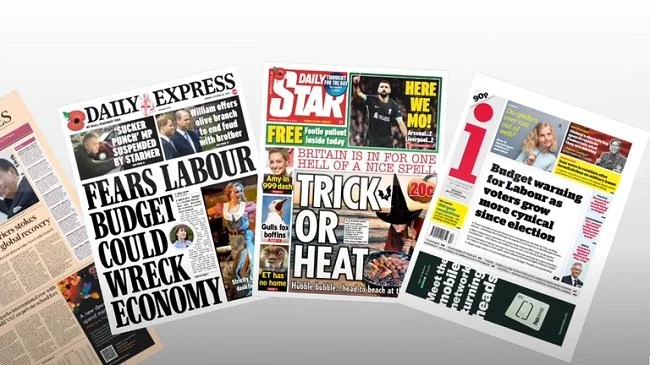
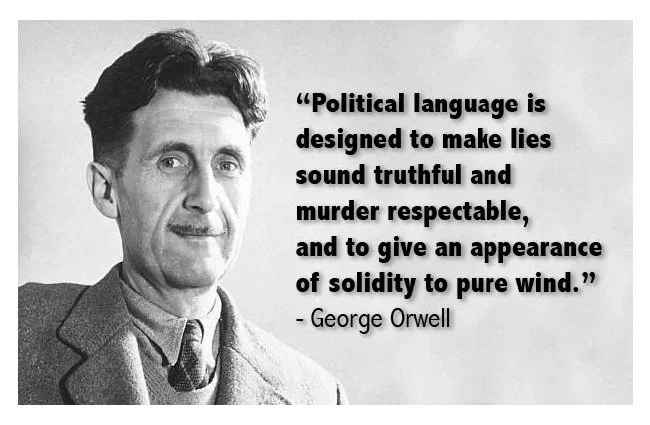



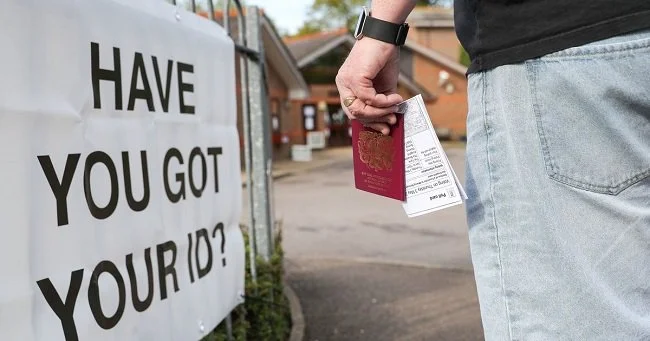





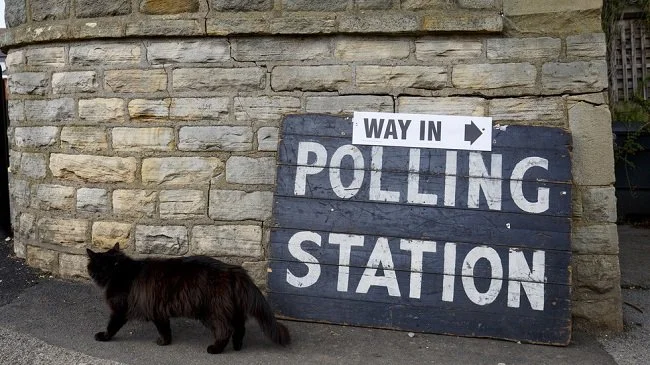
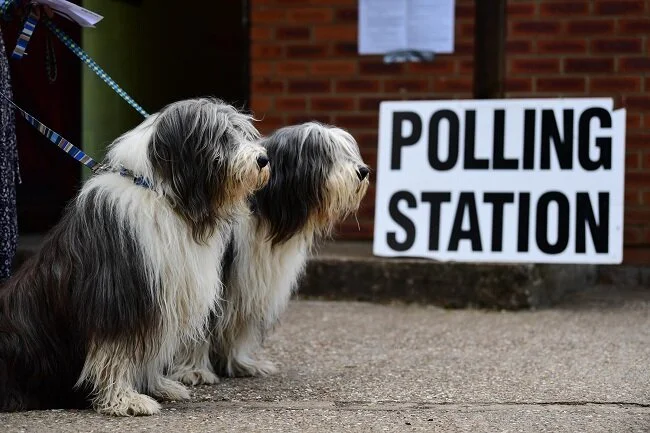
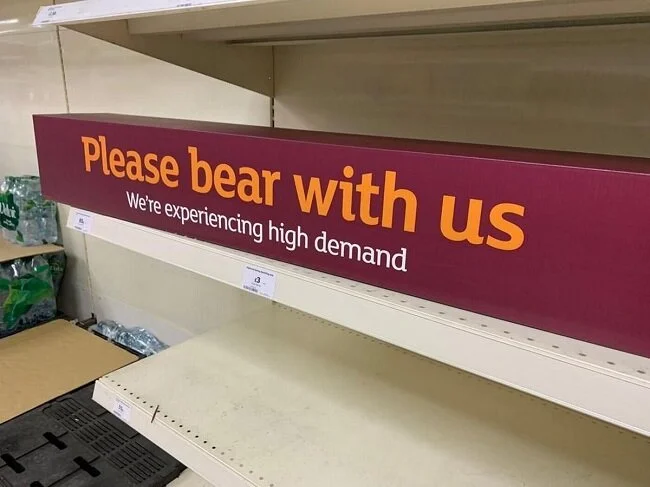


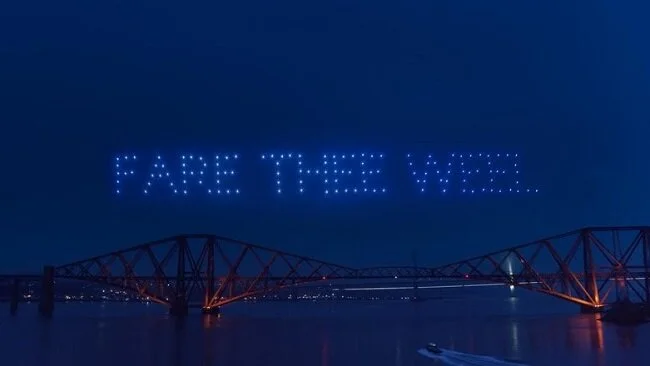

Delivery Culture
Yesterday being a bank holiday, we decided to slum it and go to McDonalds. We toyed with the idea of ordering via my phone and having a home delivery, but this would incur an additional £5 charge. So, we decided to drive to our local High Street and get a takeaway. Now for those who haven’t been to McDonalds for a while, there are now separate order and collection points in the “restaurant”. If you especially despise human interaction you can use one of the touch screens to order and pay. I guess the older system where food was pre-prepared in anticipation of purchase proved too wasteful. Who can say? Whatever the reason, serving the needs of the customer was probably the last consideration. But I digress. I duly made my order then tried to stand in a place where I didn’t obstruct other customers and waited for my order to be prepared. There’s a large information screen above the collection counter so you can track your order number which is printed on your till receipt.
Yesterday being a bank holiday, we decided to slum it and go to McDonalds. We toyed with the idea of ordering via my phone and having a home delivery, but this would incur an additional £5 charge. So, we decided to drive to our local High Street and get a takeaway. Now for those who haven’t been to McDonalds for a while, there are now separate order and collection points in the “restaurant”. If you especially despise human interaction you can use one of the touch screens to order and pay. I guess the older system where food was pre-prepared in anticipation of purchase proved too wasteful. Who can say? Whatever the reason, serving the needs of the customer was probably the last consideration. But I digress. I duly made my order then tried to stand in a place where I didn’t obstruct other customers and waited for my order to be prepared. There’s a large information screen above the collection counter so you can track your order number which is printed on your till receipt.
It took 12 minutes to prepare my food from scratch, which I considered reasonable as it was very busy. Not all felt so accommodating. However, it should be noted that two thirds of those waiting for their orders where not customers but delivery drivers. All of whom were dressed accordingly for driving mopeds and other sundry velocipedes. Although all seemed to be amicable individuals, their bulky attire and restricted vision due to their helmets, meant they often got under each other’s and everyone else’s feet. I also noticed on the information screen that online orders had a different identifying code. Furthermore, it appeared to me that these orders were being given priority, as they tended to be far larger in quantity. I’m sure I wasn’t the only customer to deduce all this, given the grumbling by some of the waiting. Again, although this system may work well for the staff both cooking and serving, I remain sceptical of it’s merits from a bog-standard customer perspective.
Spot the online orders
Now this anecdote is a segue into a wider point about delivery culture as this post is not exclusively about the iniquities of McDonalds in the UK. On demand culture is everywhere these days. If it can be sold and physically transported, then retailers will offer to bring it to your door. Due to recent family illness, I too have availed myself of these services. In 2017, I don’t think a week went by without an Amazon, Argos or grocery delivery of some kind arriving. If you want it now, then you can effectively have it now. But like any cultural change there are consequences and knock on effects. Traffic and therefore pollution levels in Greater London are on the rise, despite regulation of vehicle emissions and legislation such as the congestion charge. The sheer number of vehicles on the road is growing, rapidly. Department for Transport figures show the number of delivery vehicles registered in the capital rose by 12 per cent in the last decade, partly driven by internet shopping. Last year, around 7,300 entered the capital every hour during the morning rush-hour.
The Bringer of Gin...
At the moment, a perfect storm of economic factors has made delivery culture both viable and marketable. Fuel prices have dropped and until recently, low interest rates and inflation have buoyed consumer spending. Need I drone on about the shift in our culture towards the commodification of everything and happiness through consumerism? But there is scope for the financial stability of the UK to change in 2018 and it is not impossible to conceived of operating costs increasing to a point where delivery culture no longer remains cheap and accessible to all. Potentially, something that is currently a universal convenience, could end up becoming yet another indicator of the divide between the haves and have nots. Then there are other aspects of this phenomenon to consider. Home deliveries are a contributory factor to the ongoing slow death of the local high street. Online retail is killing local businesses. Furthermore, not going to the shops is yet another nail in the coffin of the populations general health and wellbeing.
This post initially stemmed from a simple observation made from day-to-day life. Perhaps it is my age and my increasing awareness that I’ve seen so much change during my lifetime, that makes me ponder on such matters. Like many issues, the more you dwell upon it, the more convoluted the matter becomes. As I write I’ve just been struck by the irony of a McDonald’s home delivery. Fast food, which for years has been labelled the ruination of a country’s health, is now being brought to your very front door, thus negating the small health benefits brought about by going to the “restaurant” in person. As for delivery culture, I suspect it is ultimately both economically and environmentally unsustainable. I wonder what will happen when it becomes unavailable to certain parts of society? How well will such a change be received? If there are indeed, major economic problems ahead, will there be a time when home delivery couriers become the target of increased crime? Only time will tell. I hate to end the post here, with so many unanswered questions but I have to go. You see I’m expecting a delivery later.
The Peril of Leaving Comments
I recently decided to try and comment more on websites and blogs, mainly in a shameless attempt to raise my own writing profile. I live in hope that people will be enamoured with my “puckish epigrams” and follow the breadcrumb trail back here. However, leaving comments takes time because I cannot just post a few succinct words. I always end up typing several paragraphs because brevity often leads to a point being misconstrued. We do after all live in an age where people actively look for offense regardless of whether it’s there or not. However, I digress. What I enjoy about leaving comments on blog posts and website articles, is the chance to exchange ideas and to riff off other people. I also find that by marshalling my thoughts and leaving a comment elsewhere, it can lead to me subsequently expanding on those ideas and developing them into a blog post for Contains Moderate Peril. So overall, I advocate leaving comments and feedback.
I recently decided to try and comment more on websites and blogs, mainly in a shameless attempt to raise my own writing profile. I live in hope that people will be enamoured with my “puckish epigrams” and follow the breadcrumb trail back here. However, leaving comments takes time because I cannot just post a few succinct words. I always end up typing several paragraphs because brevity often leads to a point being misconstrued. We do after all live in an age where people actively look for offense regardless of whether it’s there or not. However, I digress. What I enjoy about leaving comments on blog posts and website articles, is the chance to exchange ideas and to riff off other people. I also find that by marshalling my thoughts and leaving a comment elsewhere, it can lead to me subsequently expanding on those ideas and developing them into a blog post for Contains Moderate Peril. So overall, I advocate leaving comments and feedback.
And of course, as you’ve probably guessed, the previous statement comes with a caveat. Actually, it’s probably not so much of a caveat but more of an element of risk. That being that you have absolutely no control over what happens next. Allow me to give you an example. Earlier in the week, there was a post over at Massively Overpowered regarding how Disney forced EA to temporarily disable the lootboxes in Star Wars Battlefront II. I left a comment to the effect that it was a positive result and that at least we as gamers knew what to do in the future. IE Complain to the licence holder and not just the developer. Use a company’s PR vanity against them. I then ended the comment with a throw away remark about how we needed to figure out exactly what we all wanted. Because there isn’t a “universal dream”. Gamers are a bit like the Judean People’s Front versus the People’s Front of Judea.
What followed next in a way proved my point. Another gamer directly replied with a few ideas regarding the “universal dream”. “Not to be exploited by corrupt and greedy corporations; Not to be physiologically programmed into degenerate gamblers; not to have communist/SJW re-education and propaganda corrupting our games and media. I am sure you can add a few things to this dream list but it’s a start”. Well yes, I do indeed have a few things to add and more importantly, a lot to remove. Like 90% of what they said. The only thing I broadly agree with is there first point, although I wouldn’t couch it in such hyperbolic language. I think EA’s lootbox system is crass and the fact they had the gall to try it, is mildly insulting. However, the rest of the views stated are simply ill conceived and reek of tabloid journalism and the associated mindset. I could have replied but suspected it would lead to on of those circular conversations that achieves nothing other than the raising of blood pressure and an unnecessary expenditure of energy.
This minor event reminded me of a similar situation I had a few years ago while I was waiting for a bus. A random stranger joined me at the bus stop and a brief exchange of words was had regarding the approximate time of the next bus. Then suddenly, out of know where, the guy blurted out a few derogatory comments about a specific ethnic group. It wasn’t a crazy tirade. Just a few sentences, said in a calm and measured way but still overtly racist. I remember at the time thinking, where the hell did that come from and then getting really angry because there was this inherent assumption in his confidence to make such comments, that I too was a bigot. Furthermore, when considering both these anecdotes about random left field statements, I worry that there’s a risk that you can get inadvertently tarred with the “crazy” brush in such situations. Stupidity splash damage is one way to describe it.
Once again, an old adage has proven true. No good deed goes unpunished. Except I’m not sure if I can really define me leaving a comment on a website as a good deed but hey, most analogies don’t stand up to close scrutiny. Guess this is similar to the recent discussion a few of us bloggers had on twitter about how the articles you feel are your best don’t garner the traffic you’d like and that disposable posts can sometimes break big. Similarly, a comment you feel strongly about may only get a reply from some random crazy person and a glib remark can be perceived as being more than the sum of its parts and deeply insightful. I guess both of these first world, social media “dilemmas” are a direct result of daring to interact with other sentient, carbon based life forms. It’s an activity that always comes with an element of risk.




















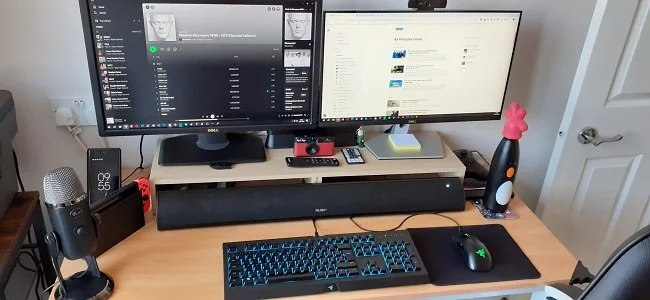



Black Friday
I have been subject to a continual barrage of emails over the course of the week, promoting Black Friday sales. These have covered everything from power tools to medical supplies, children’s toys and even granite work surfaces. Obviously. there’s also been a lot of promotions for discount games. This eclectic mix reflects the fact that I use my online accounts to purchase items for my entire family. I hate to think what the various analysts and number crunchers make of this. My Amazon recommendations includes both urine bottles and Thomas the Tank Engine paraphernalia. But I digress, I’m sure pretty much all of us have been battered around the head and shoulders this week by various kinds of unsubtle marketing. However, I am happy to report that I have not succumbed to this “encouragement”. The simple fact is that I don’t need anything at present so have bought nothing. Furthermore, I had an epiphany nearly two decades ago, when I discovered that buying stuff really doesn’t make you feel any better, solve any of your problems or fulfil any of the inferred promises of the advertisements.
I have been subject to a continual barrage of emails over the course of the week, promoting Black Friday sales. These have covered everything from power tools to medical supplies, children’s toys and even granite work surfaces. Obviously. there’s also been a lot of promotions for discount games. This eclectic mix reflects the fact that I use my online accounts to purchase items for my entire family. I hate to think what the various analysts and number crunchers make of this. My Amazon recommendations includes both urine bottles and Thomas the Tank Engine paraphernalia. But I digress, I’m sure pretty much all of us have been battered around the head and shoulders this week by various kinds of unsubtle marketing. However, I am happy to report that I have not succumbed to this “encouragement”. The simple fact is that I don’t need anything at present so have bought nothing. Furthermore, I had an epiphany nearly two decades ago, when I discovered that buying stuff really doesn’t make you feel any better, solve any of your problems or fulfil any of the inferred promises of the advertisements.
Economically speaking, the Black Friday pre-Christmas sales have become increasingly important to retailers and in the UK are a big indicator of consumer confidence and a litmus test of how well the public feel the country is fairing. So far from the numbers that have filtered through today, it would appear that spending is up 6% over last year. But before we put out the bunting and shout “Yay for the UK economy”, let’s temper our enthusiasm with the fact that consumer debt (mainly unsecured loans via credit cards) is currently £200 billion. That’s for a country with a population of 65 million. And at a time when interest rates are finally rising after a decade. Oh, and let’s not forget that minor political and economic event known colloquially as BREXIT. That may also have a bearing on the situation with regard to the value of the pound, the cost of living and future consumer borrowing.
If you take time to reflect upon the big picture, it’s a very sorry state of affairs. We live in a society where many are trapped in low paid jobs with little chance of opportunity or improvement. Many are deeply unhappy with what they do for a living and see little chance of life getting any better due to a decline in social mobility. Social media has lifted the scales from the public eyes and the divisions between the haves and the have nots are laid bare. The country currently bitterly divided and rational thought is in retreat. The decline in institutions such as the church, along with a waning of a sense of community has resulted in a nation of “individuals” desperately trying to assuage their personal sadness through retail therapy. It’s a recipe for disaster and 2018 is potentially the year when the proverbial chickens come home to roost. I am not optimistic that things are going to get better soon, nor do I have faith in any politicians to fix these problems. But hey, that was a sweat deal you got on an electric haemorrhoid massager.
The Complexity of Socialising
A couple of things have prompted the train of thought that is the basis of this post. The first was the recent BBC television documentary by Chris Packham about autism and how it has shaped his life. The second was a post over at Massively Overpowered regarding “playing alone together”. The reader comments ended up becoming a discussion of the old “introverts versus extroverts” debate. Both of these have got me thinking about the complexity of social interaction and the stress it may or may not cause to various individuals. Social skills and group dynamics are things we learn through osmosis. The prevailing culture allegedly shapes us, yet precious little is taught formally. Our parents have an impact at the beginning of our lives but then we find ourselves at school for the lion share of the day, trying to get along with a wide variety of differing personalities. Simply put, socialising is complex and to be successful at it by societies standards, requires a very specific set of skills.
Courtesy of Socially Awkward Misfit
A couple of things have prompted the train of thought that is the basis of this post. The first was the recent BBC television documentary by Chris Packham about autism and how it has shaped his life. The second was a post over at Massively Overpowered regarding “playing alone together”. The reader comments ended up becoming a discussion of the old “introverts versus extroverts” debate. Both of these have got me thinking about the complexity of social interaction and the stress it may or may not cause to various individuals. Social skills and group dynamics are things we learn through osmosis. The prevailing culture allegedly shapes us, yet precious little is taught formally. Our parents have an impact at the beginning of our lives but then we find ourselves at school for the lion share of the day, trying to get along with a wide variety of differing personalities. Simply put, socialising is complex and to be successful at it by societies standards, requires a very specific set of skills.
When addressing a topic such as this, the first question I had to seriously ask myself was the most obvious. Do I consider myself an introvert or an extrovert? As most regular readers know, I’m not a fan of binary choices when it comes to complex questions. There have been times in my life when I have veered from one extreme to the other. As a teenager, I was the clown of my peer group. I thought it would resolve a lot of issues although all it really did was paint me into a corner. It was not until my thirties that I truly found my social confidence. This mainly came about through working in a field that I enjoyed and felt comfortable in. I also learned how to become a more effective public speaker. Having children also forces you to deal with things and step outside of your comfort zone. However, despite improving my social skills there are still many scenarios and situations I’m not good at. Talking about sport and dancing in public are two that spring to mind. I’m also not a big on “hugging”. But the fact remains, I can be social and deal with such situations. For me, the key to success lies in picking and choosing how and where I do it.
Writing is a form of communication and social interaction that I especially enjoy. Mainly because it’s a medium that a lot easier to manage, rather than a face to face Conversation. I am also confident when it comes to podcasting, for similar reasons. I tend to record with people whose company I enjoy and know quite well. However, despite our best efforts none of us gets to deal with life exclusively on our own terms. Especially if you’re in a relationship, as you have to make concessions to social situations. For example, I have a wedding coming up in December. I’d be lying if I said I was looking forward to it. It’s not a case of I’m bad in these sorts of social situations. It’s a case of I don’t care for them. It’s not as if my presence is essential to the success of proceedings, plus I really don’t dig small talk and the low-key conversation it is best to pursue at these events. It probably sounds a terrible thing to say but these situations bore me. I appreciate that very few people are raconteurs of the calibre of Stephen Fry, Peter Ustinov and Michael Winner. I don’t expect that. I just feel that it would be a far better use of my time if I applied it to something productive, rather than some pointless social banter with strangers.
After watching the aforementioned documentary about autism, I raised the question as to whether I was possibly on the spectrum with my significant other, due to some of my personality foibles. I meant the question genuinely and was certainly not making light of such medical conditions. She said that it was unlikely that I was, because I could cope with all the social things that Chris Packham can’t. The difference was where he is incapable, I am simply unwilling due to my “personality”. So, it would appear that I have no diagnosable conditions that affects my behaviour. I am merely a curmudgeonly git. She further added that despite my reticence to be social and participate in events of that nature, I was very much a product of my generation and broadly culturally conditioned not to be rude. Hence, I do grudgingly participate. On mature reflection I conceded that this is indeed true. However, that doesn’t alter the fact that if I could avoid the entire wedding scenario I would.
Overall, I believe the reality is that I’m neither introvert nor extrovert but somewhere in the middle. I enjoy the company of handpicked friends and when the mood suits, can be quite gregarious. I am also comfortable when left alone. I don’t mind my own company. I guess what I balk at, when considering the wider discussion around this topic, is the usual binary viewpoints. Introversion should not be seen as something that needs to be fixed, especially by extroverts. I believe everyone is somewhere on a scale between those two positions and chooses to deal with the world on their own terms. As for extroverts, they can be a very positive force for good in life. They can often provide a rallying point through the strength of their personalities, be supportive individuals and be good representatives for causes and charities. But they can also be extremely wearing and tedious people, taking up all the oxygen in any given social space. We need as a society to shift the focus away from these two extremes and encourage an understanding of all personality types as well as a recognition that socialising isn’t governed by two approaches.