
“Have Your Say”, Comments and Online Discourse
This is a big subject and there’s absolutely no way that I can do justice to it in this meagre blog post. I’m going to reference several aspects of online discourse in an attempt to highlight what I see as a major cultural shift that has happened in the last two decades. I’ll be reflecting upon my own experiences which may differ from yours. Geography, communities and culture plays a part in all this and what I observe from my “window upon the world”, may not be identical to yours. But I believe that human interaction is changing; shifting on its axis and will continue to do so. Furthermore, that the liberating benefits of social media have come with several consequences and not all of them good. Am I advocating that things return exactly as they were? No. But I feel that the pendulum has swung from one extreme to another, where the most equitable position is somewhere between these two.
“Unfortunately I don’t respect your opinion Colin, as you’re a barely literate imbecile who has a poor grasp on both contemporary social issues and reality”
This is a big subject and there’s absolutely no way that I can do justice to it in this meagre blog post. I’m going to reference several aspects of online discourse in an attempt to highlight what I see as a major cultural shift that has happened in the last two decades. I’ll be reflecting upon my own experiences which may differ from yours. Geography, communities and culture plays a part in all this and what I observe from my “window upon the world”, may not be identical to yours. But I believe that human interaction is changing; shifting on its axis and will continue to do so. Furthermore, that the liberating benefits of social media have come with several consequences and not all of them good. Am I advocating that things return exactly as they were? No. But I feel that the pendulum has swung from one extreme to another, where the most equitable position is somewhere between these two.
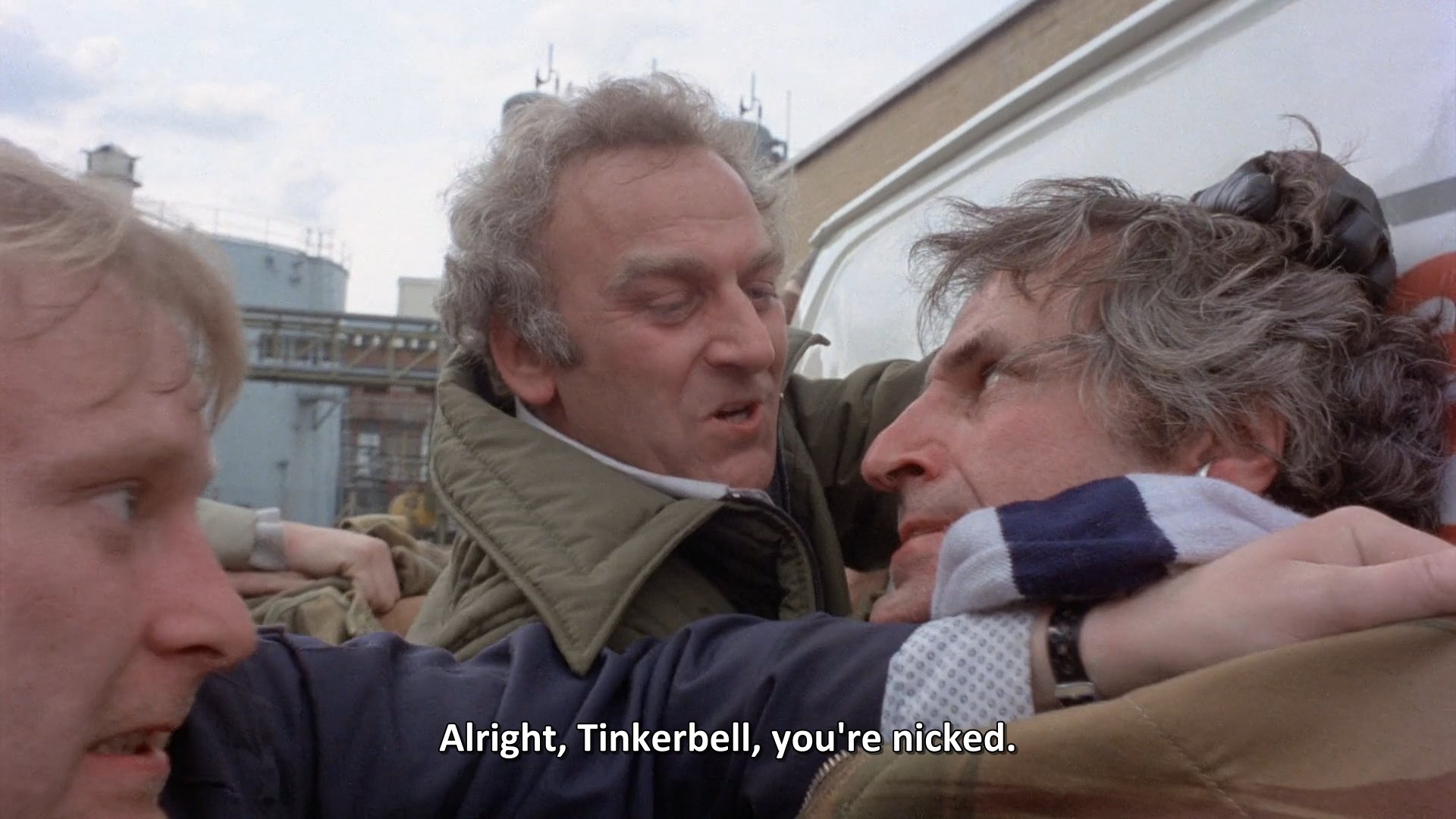
During my youth newspapers were king. Television news was not a 24-hour interactive process, but a passive medium designed to impart data primarily. Leonard Parkin didn’t give a shit whether the story he’d just read had you foaming at the mouth or whooping with delight like a troupe of Mandrills at a watering hole. Nope, he and other news readers were just there to tell you the news. Therefore, if you had something to say, you’d write a letter to your newspaper of choice. It would then be subject to the scruples of an editor with regard to content, tone and length. Thus, those letters published were civil at least in tone. Social etiquette and old-world notions about manners tended to keep any exchange of views relatively polite. Passion could still run high but ultimately no one called each other a cunt. At least not via the letters page. If your age has meant that you missed the era of writing a “strongly worded letter to The Times”, then its importance as a form of debate may be lost on you. But it was such a mainstay of public discourse, that it even became a trope of TV comedy and satire. Monty Python frequently had sketches based upon such angry epistles.
“Dear Sir, I would like to complain in the strongest terms at your inference that writing letters is in some way anachronistic”…
Nowadays, the forum for such debates is either the comments section of a news website or Twitter itself. It’s easy to see how this situation came about. Continuous news coverage has created an appetite for constant content. Input from your audience is a handy form of “filler”. Also, a popular comments section is an added attraction for a website and can in itself be a source of traffic. Initially when this kind of functionality was first rolled out, it usually produced benign content. However, the key to any sort of efficient community management is moderation. When applied in a sober and mature fashion, civilised discourse prevails. If neglected, then you’ll soon find an environment dominated by bellicose, pernicious rhetoric, with no other purpose other than to kill debate. And the thing about moderation is that it needs to be done by people rather than AI. It requires a particular set of social skills and a measured and reasoned mindset. Furthermore, like anything in life, if you want the best you have to pay for it. Sadly, spending money on community moderation is not seen as a priority by those who control budgets.
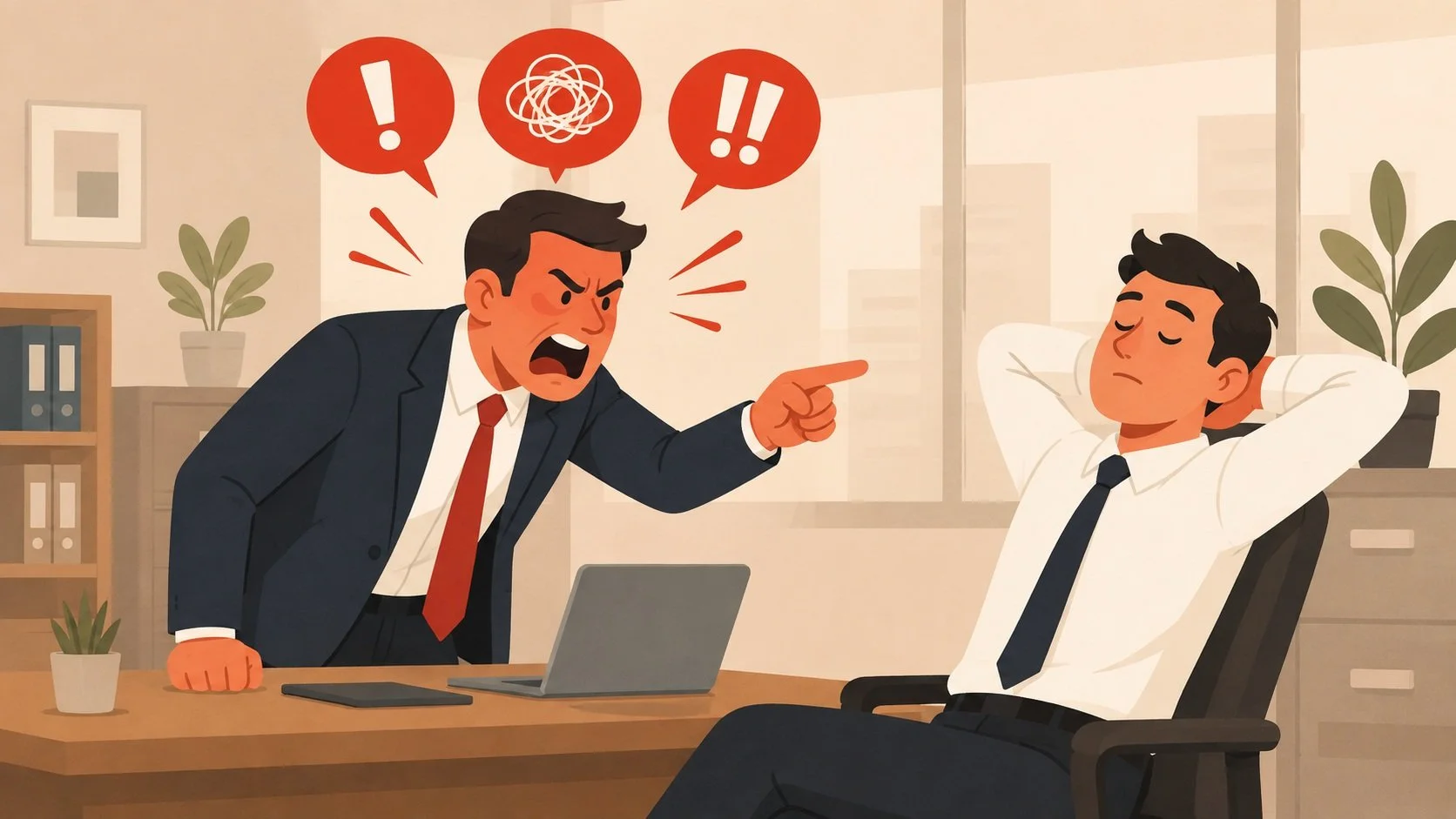
As well as the above, here are some additional factors that have contributed to where we find ourselves today. Educational standards have changed. There are still schools and exam systems that provide intellectual rigour but there has also been a cultural shift towards learning to pass a specific exam. This is not the same as fostering a questioning mindset and providing the tools to facilitate such a philosophy. This manifests itself mainly as a decline in critical thinking and debating skills which is then further compounded by a growth in emotional dysfunction. Discussing popular topical points has become emotive, tribal and dogmatic. An opposing view is not just a contrary opinion but a personal attack upon you and your values. Social media has extended an unchecked platform to all comers, eliminating the traditional requirement of “knowing what you are talking about” that excluded certain people from older mediums such as TV and print media. Facts and data have been replaced with feelings because they are subjective, personal and far harder to disprove.
The “edifying” comments section of the LBC news radio station website
So where does all this leave us as a society? Well for many it means that they’re less likely to express an opinion, for fear of finding themselves accused of something or in the centre of a major, aggressive and contentious argument. For some that is the desired result, as it effectively puts them in charge of the narrative. It’s a lot easier to drive people away than to have to cogently debate with them. In the long term replacing intelligent, measured discussion with an arbitrary culture war, means that people will simply stay within the confines of likeminded communities. This ultimately leads to social division and compounds matters. And another problem from both a business and socio-political perspective is that the loudest opinion gets heard and acted upon, irrespective of its veracity, rectitude or overall support. Twitter outrage is a far cry from national outrage but the two are often conflated.
But it should be noted that “have your say culture” is very good for business. Content creators of all kinds often feel the need to solicit public opinion under this banner because it generates interest. Are they genuinely interested in the thoughts of opinions of the likes of you and I? I suspect not. But inviting people to “join the debate” is an incentive to visit a site. It generates traffic and is a form of marketing. Would talent-based reality shows be as popular if the public couldn’t vote on the outcome? More than likely not. Social media has had a profound impact upon society in the past decade. It has broken down barriers, removed gate keepers and given everyone a voice. It can be argued that in principle that is a good thing. Yet although everyone is entitled to an opinion, they are not all of equal merit. And some ideas and concepts are best left outside of the spotlight. Yet by inviting all to have their say, many institutions have fallen prey to the fallacy of balance and all views should always be offered with an alternative by default. Therein lies madness
“Please send in your comments, so we can judge you”
This malady blights all communities. I have referenced news websites and political forums but you’ll find the same problem in the gaming community. Write a post about the most inane and innocuous aspects of an MMORPG and there’s a good chance someone will purposely misconstrue your words or simply start an argument because they just don’t like the cut of your jib. As to the solution now that this particular genie is out of the bottle, I suspect it will take a long time to put it back or domesticate it. There is no quick fix, so the best approach is a robust and concerted policy of moderation. “Have your say” culture has in many ways circumnavigated the traditional existing social etiquette so we have to make it the cultural norm again. I am reminded of the campaign against drinking and driving that ran in the UK for nearly two decades. The message through advertising was relentlessly hammered home and over time by a form of cultural osmosis it became broadly the social norm again. Perhaps that’s how we curb the negative aspects of folk having their say. Let us not forget that there are positives to be had from shared experiences.





















The Peril of Leaving Comments
I recently decided to try and comment more on websites and blogs, mainly in a shameless attempt to raise my own writing profile. I live in hope that people will be enamoured with my “puckish epigrams” and follow the breadcrumb trail back here. However, leaving comments takes time because I cannot just post a few succinct words. I always end up typing several paragraphs because brevity often leads to a point being misconstrued. We do after all live in an age where people actively look for offense regardless of whether it’s there or not. However, I digress. What I enjoy about leaving comments on blog posts and website articles, is the chance to exchange ideas and to riff off other people. I also find that by marshalling my thoughts and leaving a comment elsewhere, it can lead to me subsequently expanding on those ideas and developing them into a blog post for Contains Moderate Peril. So overall, I advocate leaving comments and feedback.
I recently decided to try and comment more on websites and blogs, mainly in a shameless attempt to raise my own writing profile. I live in hope that people will be enamoured with my “puckish epigrams” and follow the breadcrumb trail back here. However, leaving comments takes time because I cannot just post a few succinct words. I always end up typing several paragraphs because brevity often leads to a point being misconstrued. We do after all live in an age where people actively look for offense regardless of whether it’s there or not. However, I digress. What I enjoy about leaving comments on blog posts and website articles, is the chance to exchange ideas and to riff off other people. I also find that by marshalling my thoughts and leaving a comment elsewhere, it can lead to me subsequently expanding on those ideas and developing them into a blog post for Contains Moderate Peril. So overall, I advocate leaving comments and feedback.
And of course, as you’ve probably guessed, the previous statement comes with a caveat. Actually, it’s probably not so much of a caveat but more of an element of risk. That being that you have absolutely no control over what happens next. Allow me to give you an example. Earlier in the week, there was a post over at Massively Overpowered regarding how Disney forced EA to temporarily disable the lootboxes in Star Wars Battlefront II. I left a comment to the effect that it was a positive result and that at least we as gamers knew what to do in the future. IE Complain to the licence holder and not just the developer. Use a company’s PR vanity against them. I then ended the comment with a throw away remark about how we needed to figure out exactly what we all wanted. Because there isn’t a “universal dream”. Gamers are a bit like the Judean People’s Front versus the People’s Front of Judea.
What followed next in a way proved my point. Another gamer directly replied with a few ideas regarding the “universal dream”. “Not to be exploited by corrupt and greedy corporations; Not to be physiologically programmed into degenerate gamblers; not to have communist/SJW re-education and propaganda corrupting our games and media. I am sure you can add a few things to this dream list but it’s a start”. Well yes, I do indeed have a few things to add and more importantly, a lot to remove. Like 90% of what they said. The only thing I broadly agree with is there first point, although I wouldn’t couch it in such hyperbolic language. I think EA’s lootbox system is crass and the fact they had the gall to try it, is mildly insulting. However, the rest of the views stated are simply ill conceived and reek of tabloid journalism and the associated mindset. I could have replied but suspected it would lead to on of those circular conversations that achieves nothing other than the raising of blood pressure and an unnecessary expenditure of energy.
This minor event reminded me of a similar situation I had a few years ago while I was waiting for a bus. A random stranger joined me at the bus stop and a brief exchange of words was had regarding the approximate time of the next bus. Then suddenly, out of know where, the guy blurted out a few derogatory comments about a specific ethnic group. It wasn’t a crazy tirade. Just a few sentences, said in a calm and measured way but still overtly racist. I remember at the time thinking, where the hell did that come from and then getting really angry because there was this inherent assumption in his confidence to make such comments, that I too was a bigot. Furthermore, when considering both these anecdotes about random left field statements, I worry that there’s a risk that you can get inadvertently tarred with the “crazy” brush in such situations. Stupidity splash damage is one way to describe it.
Once again, an old adage has proven true. No good deed goes unpunished. Except I’m not sure if I can really define me leaving a comment on a website as a good deed but hey, most analogies don’t stand up to close scrutiny. Guess this is similar to the recent discussion a few of us bloggers had on twitter about how the articles you feel are your best don’t garner the traffic you’d like and that disposable posts can sometimes break big. Similarly, a comment you feel strongly about may only get a reply from some random crazy person and a glib remark can be perceived as being more than the sum of its parts and deeply insightful. I guess both of these first world, social media “dilemmas” are a direct result of daring to interact with other sentient, carbon based life forms. It’s an activity that always comes with an element of risk.






















Engaging With Others
If you create any sort of content, then at some point you must address the practical issue of engaging with your audience. Some folk get by without doing so, subsequently disabling comments on their You Tube channel or blog. My fellow podcaster Brian has happily managed without a Twitter account for years and has only just returned to that online community. However, I feel that two-way communication is broadly a good thing and I’ve advocated this in past and more recent posts. I’m currently trying to leave more comments on the various blogs that I read and retweet and reply more frequently on Twitter. So far this has been a positive experience. And then I went a stage further and entered in to an “exchange of views” on a well-known gaming news and discussion site. Let it suffice to say that it clearly brought in to focus the unpredictable nature of human interaction and the often-baffling behaviour of others online. Due to the obvious lack of visual, verbal and social cues, discerning others words can be difficult. Something that some no doubt deliberately play on.
If you create any sort of content, then at some point you must address the practical issue of engaging with your audience. Some folk get by without doing so, subsequently disabling comments on their You Tube channel or blog. My fellow podcaster Brian has happily managed without a Twitter account for years and has only just returned to that online community. However, I feel that two-way communication is broadly a good thing and I’ve advocated this in past and more recent posts. I’m currently trying to leave more comments on the various blogs that I read and retweet and reply more frequently on Twitter. So far this has been a positive experience. And then I went a stage further and entered in to an “exchange of views” on a well-known gaming news and discussion site. Let it suffice to say that it clearly brought in to focus the unpredictable nature of human interaction and the often-baffling behaviour of others online. Due to the obvious lack of visual, verbal and social cues, discerning others words can be difficult. Something that some no doubt deliberately play on.
I shall obliquely refer to the facts of the matter, as I don’t see the point in personalising this post. In a nutshell, I replied to a comment on a post, explaining my view and why I thought that way. It certainly wasn’t a binary opinion and I countenanced other potential outcomes. I tried to be a clear as possible and even handed. All opinions are biased, as that is their nature but I certainly tried to apply a degree of logic to my stance and the way I expressed it. Needless to say, someone else begged to differ and responded in kind. That is how comments work on such websites. So, after some consideration I decided to respond again, further clarifying my position. After all, the person(s) you are engaging with may have not have read your reply fully, could have misunderstood something or English may not be their first language.
Unfortunately, despite a second response, the discussion did not move on. It simply spawned a counter reply that made erroneous assertions and failed to recognise the point I was making. The author was either unable to understand my point or was wilfully ignoring it to perpetuate the discussion. There may well have been a deliberate attempt at sealioning or it could have all been a basic misunderstanding. Either way, it was clear that the most rudimentary rules of debate where not being adhered so I saw no further point in pursuing that discussion.
I’m sure the proceeding anecdote is far from unique and many of us have encountered such a scenario before. I won’t put this experience down to “trolling”, as that is far too much of a cop out and is a term that is used to often these days to overlook the social complexity of online discussions. There may be a myriad of reasons as to why things went the way they did. Some folk love to engage in lengthy forum and comment exchanges. Others like to play devil’s advocate as an intellectual exercise. Then of course you can consider such options as bias, “tribal associations” and the personal disposition of the individual you’re dealing with. We also live in a world that currently puts how we feel on an equal footing with facts and data. A contradiction of a personal view can sometimes be interpreted as a personal attack.
As you can see, engaging with others comes with a lot more to consider these days. Furthermore, you don’t get to pick and choose who you get to interact with in advance. You only really get a handle on the person(s) thoughts and may be personality, once the ball has started rolling, so to speak. Therein lies the rub and is the reason why a lot of people don’t bother to reach out and engage. Engagement can take time, effort and doesn’t necessarily take you down the path you expect. That can be a good thing or a potential chore. In the case in question the impasse I found myself confronted with came from a failure to grasp the point I was making, be it deliberately or not. I was expecting a logical pattern of events and they didn’t happen.
I have neither the time nor the inclination to be drawn in to pointless or self-indulgent or circular debates online. There is no obligation to do so and if someone wants to turn a discussion in to something more, then I’ll just shrug my shoulders and move on. It does however leave me pondering whether this sort of malady is on the increase or not. Are a percentage of all forms of human interactions doomed to failure due to some sort of unpredictable human factor? It also raises that old thorny issue of the echo chamber, although I feel that this is another term that is sued to often and applied incorrectly. Filtering is a necessary process. There is a difference between balance and suffering pointless contradiction. Also, why debate with those who have no interest in reconsidering their position. Again, there are many things to consider.
I am not especially concerned with that curious internet phenomenon of trying to present your “best self” online. I’m 49 and fully aware that I’m far from perfect. Although I don’t set out to deliberately upset someone, I won’t compromise my views or position to spare someone else’s feelings or try and paint a likeable picture of myself. If you want to judge my morals, ethics or lack of, then fine. Your potential disdain doesn’t really make much difference, does it? Overall, when participating in a forum or sharing a comment, I’m merely interested in an exchange of ideas, uncluttered by anything else than the basic facts. However, unless one has the benefit of interacting with others with a similar agenda and process there is always the risk that all engagement will be subject the caprices of human emotions and frankly it doesn’t help.
When I was a child, I quickly learned never to say within earshot of my parents that I was bored. It was quickly met with a response along the lines of “an intelligent mind is never bored” or more worryingly “if you’ve got nothing to do, I’ll find you something” which meant a chore or Herculean task. Being a child of the seventies and due to my parents fundamentalist approach to declarations of boredom, I quickly discovered numerous ways to occupy myself. The default solution was a book or comic. I always liked reading as a child and had plenty of books to choose from. I also had numerous of comics as an alternative to a hefty tome. I would also draw and paint. My father use to work during the summer holidays as a design draftsman and as a result, we always had plenty of paper in our house. Then of course there were toys and such like. Hence I learned the art of keeping myself busy.