
Star Trek: The Motion Picture - Director's Edition HD Recreation v3 (1979)
Star Trek: The Motion Picture is a wonderful paradox in the Star Trek cinematic pantheon. It is possibly the most hardcore science fiction story that the franchise has explored and is both simultaneously Trek-like and un-Trek-like. Director Robert Wise and the production team worked hard to deliver a completed film for the scheduled December 1979 release date. However, he felt that the theatrical version was only a “rough cut”. Hence in late 2001 he supervised a Director’s Edition of the film which runs 136 minutes (4 minutes longer than the theatrical release)and reinstates some additional scenes and replaces some of the optical effects with new CGI creations. Critics were divided as to whether the Director’s Edition improved the film overall but Wise felt that this version was much closer to his original vision. The Director’s Edition was released exclusively on DVD in standard definition.
Star Trek: The Motion Picture is a wonderful paradox in the Star Trek cinematic pantheon. It is possibly the most hardcore science fiction story that the franchise has explored and is both simultaneously Trek-like and un-Trek-like. Director Robert Wise and the production team worked hard to deliver a completed film for the scheduled December 1979 release date. However, he felt that the theatrical version was only a “rough cut”. Hence in late 2001 he supervised a Director’s Edition of the film which runs 136 minutes (4 minutes longer than the theatrical release)and reinstates some additional scenes and replaces some of the optical effects with new CGI creations. Critics were divided as to whether the Director’s Edition improved the film overall but Wise felt that this version was much closer to his original vision. The Director’s Edition was released exclusively on DVD in standard definition.
To date, only the theatrical version of Star Trek: The Motion Picture has been released on Blu-ray. The main stumbling block regarding the Director’s Edition appears to be the CGI FXs that were created by Foundation Imaging. There is an ongoing debate over whether the source material still exists (allegedly it does) and whether it is at a sufficient resolution for use in a high definition format. Until these matters are resolved, the Director’s Edition remains conspicuously absent on regular Blu-ray and UHD. However, never underestimate the resourcefulness of fans. I recently discovered a fan edit called Star Trek: The Motion Picture - Director's Edition HD Recreation v3. Created by the delightfully named ElectricTriangle. This is a robust recreation of the Director’s Edition but in 1080p. Like most fan edits it is not intended for commercial sale and is therefore not widely available.
I was fortunate enough to see a Star Trek: The Motion Picture - Director's Edition HD Recreation v3 recently and it achieves exactly what it sets out to do. ElectricTriangle has primarily sourced their fan edit from HDTV, which uses the same transfer as the Director’s Edition. The HDTV version suffers from a degree of low detail and compression but it has superior grain and contrast than the current Blu-ray release. The unique footage from the Director’s Edition DVD has been upscaled and some material color-corrected. To recreate some of the specific changes in the Director’s Edition, ElectricTriangle had to combine HD and upscaled SD footage and create some additional animation to seamlessly join them. There are in fact two finished versions of Star Trek: The Motion Picture - Director's Edition HD Recreation v3. A primary version uses the DE DVD effects when appropriate but also uses the original theatrical unaltered effects to preserve HD quality. And then there’s a purist edition that includes most all of the shots altered for the DE DVD. These have been upscaled. Both versions contain the additional dialogue scenes featured in the DE DVD.
Until Paramount decides to pay for a restoration of the Director’s Edition in high definition, ElectricTriangles version remains the last word with regard to Star Trek: The Motion Picture, unofficially speaking. It is as near as damn it, identical to Robert Wise’s extended cut and looks very handsome in 1080p. However, it should be noted that irrespective of the changes that both Robert Wise and in this case ElectricTriangle have made, the film remains slow and dialogue driven. That’s just the way the film was made and you cannot edit this quality away. However, the sedate pace affords the viewer plenty of time to appreciate Jerry Goldsmith’s sumptuous score, which remains one of the film’s greatest assets. To paraphrase the tagline that accompanied the film upon its original release, “the human adventure is just beginning”. It’s just that it’s not in a hurry.

Star Trek: Beyond the Barrier (1989)
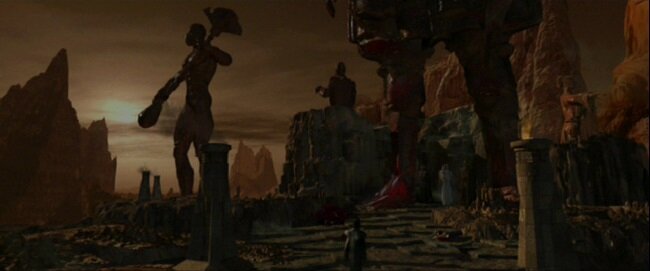
Fan Edits are a curious film sub genre. Some simply reinstate deleted scenes to maximise the running time of a movie. Others will remove footage and seek to reorder events in the name of coherency. But a few are far more ambitious. Rather than just reshape what is there, they will shoot new footage to replace material deemed substandard and seek to totally reimagine a movie. On even rarer occasions a few manage to actually improve upon the original, rather than just offering an augmented version. Which leads me onto Star Trek: beyond the Barrier, an interesting and very enjoyable fan edit of Star Trek V: The Final Frontier by Anti-Matter from deLimited Productions. It attempts to repair many of the problems found in the theatrical release of the movie. Some would argue that such a task is a Kobayashi Maru test in itself. However, the results are surprisingly good and some tongue in cheek humour shows that the creator understands the nature of their task.
Fan Edits are a curious film sub genre. Some simply reinstate deleted scenes to maximise the running time of a movie. Others will remove footage and seek to reorder events in the name of coherency. But a few are far more ambitious. Rather than just reshape what is there, they will shoot new footage to replace material deemed substandard and seek to totally reimagine a movie. On even rarer occasions a few manage to actually improve upon the original, rather than just offering an augmented version. Which leads me onto Star Trek: beyond the Barrier, an interesting and very enjoyable fan edit of Star Trek V: The Final Frontier by Anti-Matter from deLimited Productions. It attempts to repair many of the problems found in the theatrical release of the movie. Some would argue that such a task is a Kobayashi Maru test in itself. However, the results are surprisingly good and some tongue in cheek humour shows that the creator understands the nature of their task.
Star Trek V: The Final Frontier had a troubled production that is very well documented. The film’s Wikipedia page provides a lot of detail but to summarise, the budget was cut during production due to other studio projects under performing at the box office and the contracted effects company failed to deliver acceptable material. The screenplay lapses into self satire, possibly to compensate for the production deficiencies and it diminishes the story’s impact. However, despite these substantial issues, there are some good ideas and several key scenes involving the Trek Trinity (Kirk, Spock and McCoy) which are very good. As ever, Jerry Goldsmith’s score is sublime and does a lot of the “heavy lifting”, dramatically speaking. William Shatner’s direction is far from bad and he certainly got a raw deal on this production. This is what Anti-Matter deals with in Star Trek: Beyond the Barrier.
The theatrical release of Star Trek V: The Final Frontier is 106 minutes. Star Trek: Beyond the Barrier has a leaner running time of 93 minutes. The most noticeable content excised are the humorous scenes. Gone is Kirk falling from the El Capitan, Checkov and Sulu getting lost in Yosemite, Uhura’s “fan dance”, Scotty knocking himself out on a bulkhead and Uhura subsequently flirting with him. All these scenes undermine the characters and the plot. There are some subtle dialogue alterations making Spock’s references to Sybok being his brother more figurative. When the main protagonists finally meet the entity on Sha Ka Ree, some of the scenes are ordered differently. Along with these changes, much of the visual effects footage has been replaced with new CGI material. There are also some wholly original visual effects sequences briefly showing the true nature of the entity, along with its single minion.
Anti-Matter took a crash course in 3D animation to create his new content and although it is clearly generated on consumer software, it is superior to the sub par optical effects that were used in the theatrical release. Despite removing much of the humorous content from the film, he adds a new and rather unique sight gag. Let it suffice to say that Captain Klaa is now shooting at some rather different space junk. Although I like most of the changes they’ve made, I still think the ending is a little muddled. The twist that the entity is evil is now somewhat diluted. However, I like the new additional material inferring its escape along with its minion. Perhaps this edit's greatest success is the way it focuses upon the key scenes with Kirk, Spock and McCoy that work, emphasizing their dramatic power. Overall Star Trek: Beyond the Barrier does not fix all the problems of the theatrical release but it does present its best content more effectively. I therefore recommend it to Star Trek fans and those with an interest in fan edits per se.
Keeping Up
I was a teenager during the eighties and the music that I listened to at the time was a major part of my overall experience. My musical taste influenced how I dressed and sometimes even determined friendships. Going to a gig and seeing music performed live was a major rite of passage. Furthermore, due to there only being a handful of TV channels in the UK at the time, meant that certain key programs were responsible for the dissemination of a broad spectrum of musical genres. Hence, while you waited for a band that you liked to come on, you’d sit and be exposed to a wealth of different artists. Something that tends not to happen nowadays as there is far more choice available. My passion for music persisted throughout the nineties and then began to wane round about the turn of the century. Work and the practicalities of daily life made it increasingly difficult to “keep up”. I used to read the music press and know about contemporary artists. I no longer do this. I often don’t even know what the current Number 1 record is.
I was a teenager during the eighties and the music that I listened to at the time was a major part of my overall experience. My musical taste influenced how I dressed and sometimes even determined friendships. Going to a gig and seeing music performed live was a major rite of passage. Furthermore, due to there only being a handful of TV channels in the UK at the time, meant that certain key programs were responsible for the dissemination of a broad spectrum of musical genres. Hence, while you waited for a band that you liked to come on, you’d sit and be exposed to a wealth of different artists. Something that tends not to happen nowadays as there is far more choice available. My passion for music persisted throughout the nineties and then began to wane round about the turn of the century. Work and the practicalities of daily life made it increasingly difficult to “keep up”. I used to read the music press and know about contemporary artists. I no longer do this. I often don’t even know what the current Number 1 record is.
The last twenty years has seen a major shift in focus of youth culture. The sales of physical media such as CDs have declined and music is now consumed via streaming services or even YouTube. The concept of the album is waning. Consumers favour selected tracks and personally curated playlists, rather than sitting down and studiously listening to all the tracks from a classic album in order. Traditional terrestrial TV no longer commands the audiences that it used to. Streaming TV means we can watch what we want, when we want. Subsequently, younger people no longer make TV such a focal point of their leisure activities. Twitch, YouTube are often their first ports of call for information, news and finding out about the things they enjoy. And then there are video games. A medium that for many is now the major social hub of their online activities. For many, games are where you find out about music and pop culture by the references that exist within them. Traditional mediums are no longer a core facet of their culture. Therefore the following article on the Guardian website came as no surprise. If you’re sceptical, ask any parent who has a child old enough to be enamoured with Fortnite.
I see no point in lamenting these social changes, nor passing judgement upon them. As Spock said “change is the essential process of all existence” and who am I to contradict such wisdom? Being au fait with a particular subject can at times feel like a job in itself. Certainly, keeping abreast of the music I liked felt that way during my teen years. It took time and effort to read the music press and then listen to everything. Plus this interest would then compete with my love of cinema, as both would monopolise large swathes of time. Frankly, reaching an age when I could let some of these things slide was a major relief. Between 2006 and 2011 I worked as an IT contractor and would often find myself in an environment in which a radio would be on all day, often tuned to a generic commercial channel. It is interesting how exposure to such a thing, even if you are not consciously paying attention to it, suddenly increases your familiarity. For a short period I became aware of the UK charts once again.
For over a decade, I have been writing to varying degrees about the video games industry and that has become a focal point of interest and fandom for me. Like music in my youth, this has dictated what I read, what media I consume online and has even had an impact upon the social circles in which I move. Sadly, I find that my excitement for this genre is waning, as it has exactly the same failings as other entertainment industries. And so I find myself once again at a point where I feel it is time to simply stop immersing myself in this particular interest. That not to say that I shall ignore it outright. I shall simply start to slow down my consumption of industry news and stop trying to be aware of all major new releases and industry trends. I shall swap being proactive with reactive. If an interesting nugget of gaming news crosses my path or I encounter a new game that has become a talking point, I shall no doubt write about such things. But I no longer feel the need to spend the first 90 minutes of my day, trying to read dozens of gaming news articles via Feedly.
One of the best lessons anyone can learn in life is that you cannot do everything. Once I made peace with this concept I felt a lot better in myself. Therefore it is not so difficult nowadays to let a hobby or pastime go. I miss podcasting but I cannot see myself fitting all the work it entails into my schedule. At present I have sufficient time to play games, watch movies and read. Those activities provide me with sufficient material to write about. But I no longer feel a compulsion to totally immerse myself into my leisure activities, nor do I seek to be an “armchair expert”. It no longer bothers me if someone mentions an artist that I’m not immediately familiar with. If I’m sufficiently interested then Google will yield an answer. Therefore, I am content to embrace the cyclical nature of fandom, hobbies and interests. I prefer now to savour a bottle of fine wine rather than strive to consume the entire vintage.



















The Thing (2011)
I wrote an article back in 2009 as to why I felt a remake of The Thing was a bad idea. At that time, the project was in development hell and didn’t look like getting off the ground. Subsequently, the production evolved into a prequel and managed to find financial support, culminating in a theatrical release in late 2011. Like many interested parties, I watched the initial teaser trailer with a mixture of curiosity and trepidation. Then when the red band trailer arrived I felt that the shark was well and truly jumped. Too much was shown (a common problem with modern trailers) and there the internet was awash with discontented mutterings from John Carpenter purists. Hence I refrained from watching this movie for several years. When I finally got round to doing so, I was not well disposed towards it. However, over the Christmas holidays, I decide to give this prequel a second viewing and see if I could approach it with a less partisan mindset.
I wrote an article back in 2009 as to why I felt a remake of The Thing was a bad idea. At that time, the project was in development hell and didn’t look like getting off the ground. Subsequently, the production evolved into a prequel and managed to find financial support, culminating in a theatrical release in late 2011. Like many interested parties, I watched the initial teaser trailer with a mixture of curiosity and trepidation. Then when the red band trailer arrived I felt that the shark was well and truly jumped. Too much was shown (a common problem with modern trailers) and there the internet was awash with discontented mutterings from John Carpenter purists. Hence I refrained from watching this movie for several years. When I finally got round to doing so, I was not well disposed towards it. However, over the Christmas holidays, I decide to give this prequel a second viewing and see if I could approach it with a less partisan mindset.
Watching The Thing prequel and trying to maintain an open mind is an extremely difficult task. I have made no bones about the fact that I’m a greater admirer of the 1982 movie and that I consider it one of the best genre pieces of the decade. It is what I call a “blue print” movie as every aspect of its production is a textbook example of how to do things right in cinematic terms This is not simply fanboy adulation. Do some research and you’ll see that Carpenters film is very well respected by his peers and those that study the craft of filmmaking. So from my perspective, for this prequel to work, it needs to add something new to the themes and ideas established in the previous film. The story and ideas need to be advanced rather than just repeated. There are several good sequels and prequels that have done this successfully. Psycho II, Mad Max 2 (AKA The Road Warrior), Aliens and X-Men: First Class. Sadly, The Thing prequel struggles to do this.
The prequel explores the story of the ill-fated Thule Station in Antarctica. Mary Elizabeth Winstead plays an American Palaeontologist, Kate Lloyd, who is flown in to assist a Norwegians scientific team with a curious discovery. Specifically, a crashed alien spacecraft and a body frozen in the ice. As you would imagine, the narrative is rather constrained by the fact that we know the inevitable outcome, as seen in the opening scenes of John Carpenter’s original movie. Yet there are attempts to vary the direction of the story, within the limited confines. There is some exploration of gender politics of the period. Also the titular creature spends more time in transitional states rather than in human form. Another positive factor is the degree of continuity between both films. There is also a great deal of visual similarity in the creature design and the overall production design.
Director Matthijs van Heijningen Jr. is unfortunately handicapped by a somewhat pedestrian script by Eric Heisserer, a writer with an uneven track record. He was responsible for the awful A Nightmare on Elm Street remake and the amusing Final Destination 5. The film is therefore somewhat perfunctory, rather than tense. Marco Beltrami’s score telegraphs forthcoming shocks, undermining any suspense. Yet the Norwegian actors and dialogue do lend a welcome difference to the proceedings and there is just enough levity for a picture of this kind. The film uses the language barrier effectively. The lack of any major “star” also keeps the attention focused on the proceedings. Sadly, although a great deal of the visual effects were created by Amalgamated Dynamics using traditional physical techniques, these were replaced with CGI in post production.
There are indeed things to like about The Thing Prequel and it is not a total disaster. It is well paced, shot on 35 millimeter film and edited in a comparable idiom to the original. There is a sense of continuity present. But it ultimately fails because it is essentially a redundant enterprise. It would also appear that studio interference was an issue, with the ending being reshot and the decision to replace the practical FX with computer animation. There simply isn’t enough variations on established themes or scope of vision to make this production stand out sufficiently as being different from the original. I am still at a loss as to why someone thought making a prequel to The Thing was a good idea to start with, let alone keeping the title identical. Overall, this film is similar to Gus Van Sant’s frame for frame remake of Psycho in so far as there simply isn’t any need for either of them.







A Year in Movies
In 2019, I went to the cinema just once to see Star Wars: The Rise of Skywalker. I didn’t write a summary of the films I’d seen throughout that year, as I felt that mainstream releases had become far too formulaic and dull. 2020 has done little to change my perspective. The global pandemic has meant that Cinemas have spent most of the time closed and therefore many of this year’s major film releases have ended up on video on demand services. A few titles remain indefinitely postponed, such as the latest Bond movie No Time to Die, while Sony Pictures wait to see if “normality” resumes. But a film that is sitting on the shelf is not a film making money. Hence, Warner Bros. have announced that all their major releases for 2021 will be across multiple platforms simultaneously, thus ensuring a broader flow of revenue. This has not pleased director’s such as Christopher Nolan who argue passionately regarding the merits of cinema. But I doubt Mr. Nolan has ever had to endure an out of focus screening in the wrong aspect ratio at Cineworld, Rochester, where audiences talk and mess with their phones continuously.
In 2019, I went to the cinema just once to see Star Wars: The Rise of Skywalker. I didn’t write a summary of the films I’d seen throughout that year, as I felt that mainstream releases had become far too formulaic and dull. 2020 has done little to change my perspective. The global pandemic has meant that Cinemas have spent most of the time closed and therefore many of this year’s major film releases have ended up on video on demand services. A few titles remain indefinitely postponed, such as the latest Bond movie No Time to Die, while Sony Pictures wait to see if “normality” resumes. But a film that is sitting on the shelf is not a film making money. Hence, Warner Bros. have announced that all their major releases for 2021 will be across multiple platforms simultaneously, thus ensuring a broader flow of revenue. This has not pleased director’s such as Christopher Nolan who argue passionately regarding the merits of cinema. But I doubt Mr. Nolan has ever had to endure an out of focus screening in the wrong aspect ratio at Cineworld, Rochester, where audiences talk and mess with their phones continuously.
I am passionate about film and cinema. I recognise that seeing a film with the right audience can certainly add to the overall experience. But I only encounter that sort of environment when I go to The National Film Theatre in London or attend a film festival at some niche, arthouse cinema. Viewing at home has the advantage of being in control of both the environment and audience. It is also a lot more cost effective. Audiences are often more forgiving of an average film, when viewed from the comfort of their own home. Their overall opinion may well be different if they’d have to travel to the cinema and pay a higher price in a potentially less pleasant setting. When it was announced that Mulan was to be shown on Disney + for $30, there were initially complaints from some quarters. But once the public considered the cost of taking an average sized family to the cinema to see this movie, then the value of this price became clear. I believe the quick acceptance and uptake of this alternate means of releasing films is highly significant. Perhaps the film industry is finally experiencing a sea-change in its business model. In the same way the music industry did two decades ago.
Shatter AKA Call Him Mr. Shatter (1975)
The closure of the cinemas has not been an impediment to watching quality films. I am constantly amazed by how even the most niche market and obscure titles now get remastered and a Blu-ray or even UHD release. Hence in 2020, I found myself watching films such as Hannibal Brooks, Shatter and The Light at the Edge of the World; all in high definition and a far cry from the pan and scan VHS copies that I originally saw. What times we live in. A quick perusal of forthcoming releases for 2021 show that this trend is increasing. However, rather than focus on the old, I suppose this post should cover some new content. So begin with I like to mention two films that fell wide of the mark but are interesting as they were early examples of big cinema releases going straight to a major streaming service.
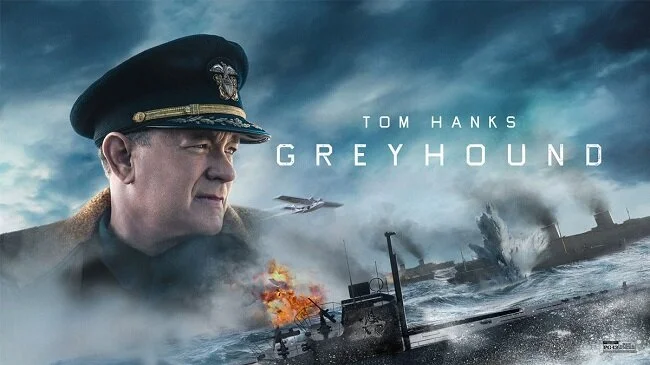
Scoob is an origin story for the perennial Scooby-Doo franchise and was obviously intended to launch a new series of movies. The film is inconsistent and alternates between capturing the spirit of the original sixties TV series and veering into modern CGI self indulgence. It’s undemanding fare for children although hard work for adults. However, it proved a success on VOD and certainly pleased Warner Bros with its performance. The World War II naval drama Greyhound was another early release to streaming TV, this time being bought by Apple TV. I think that if this film had been released theatrically in any other year, it would have been a box office failure. Although a tight and technically accurate recreation of naval tactics against submarines, the story has very little character development and Tom Hanks is left with little to do. However, home viewing as opposed to a trip to the cinema, somewhat cushioned the blow of this disappointment.
Host (2020)
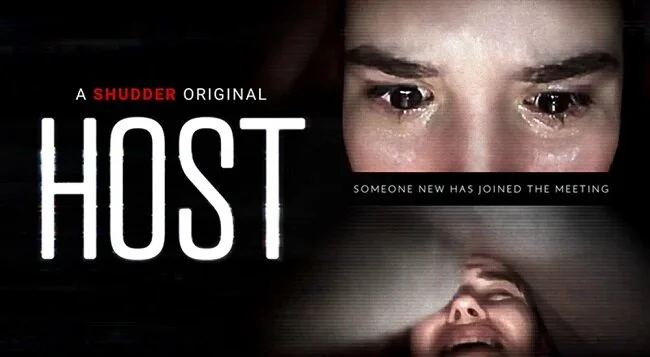
However, some films positively benefited by not having to compete with major studio releases at the cinema. His House found a home on Netflix after debuting at several film festivals at the start of the year. This standout horror film covers a lot of ground, offering not only an atmospheric supernatural tale but also an intelligent analysis of UK immigration policy and those fleeing war torn countries. The horror genre has always been a valuable source of social commentary and His House offers both shocks and a chance for reflection upon one of the most divisive subjects of current time. The global pandemic, despite closing cinemas, has also fuelled the creation of home grown horror. Host, a supernatural drama filmed via Zoom, is a prime example of necessity being the mother of invention. Clever, timely and genuinely scary, this is a standout low budget production and a breath of fresh air for the genre.
Despite there now being several vaccines available, I don’t see daily life returning to normal anytime soon. Here in the UK it looks like the New Year will see another period of strict lockdown as we ride out the second wave of COVID-19. As and when cinemas reopen, it will take a long time before I feel sufficiently confident to return to them. Let us not forget that classic scene in Outbreak where the virus is spread via a cinemas air conditioning. And regardless of whether film director’s like it or not, I think we are even closer to same day release across multiple platforms becoming the standard business practise for new films. Finally viewers will be able to see new movies in a fashion that suits their personal preferences. In the meantime, my viewing “to do” list continues to grow bigger and bigger, although it is now predominantly filled with older material rather than just the new. Let us see what 2021 brings.













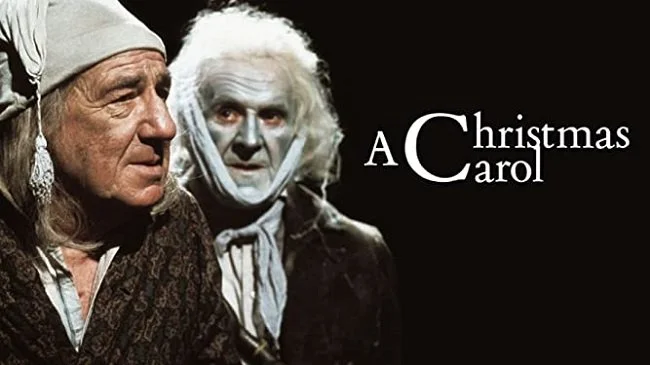
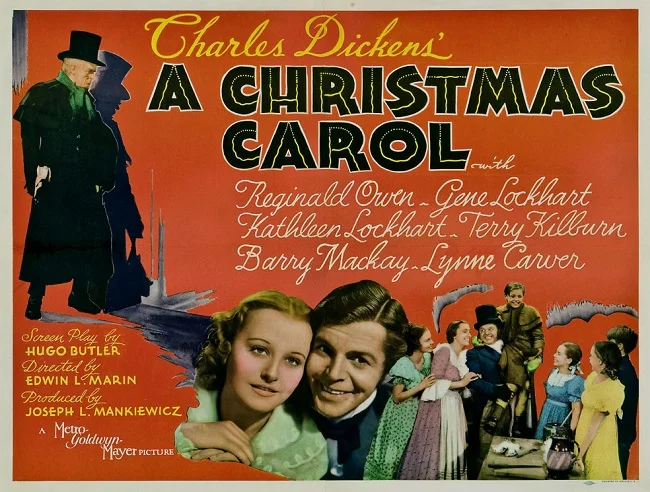
A Christmas Carol (2009)
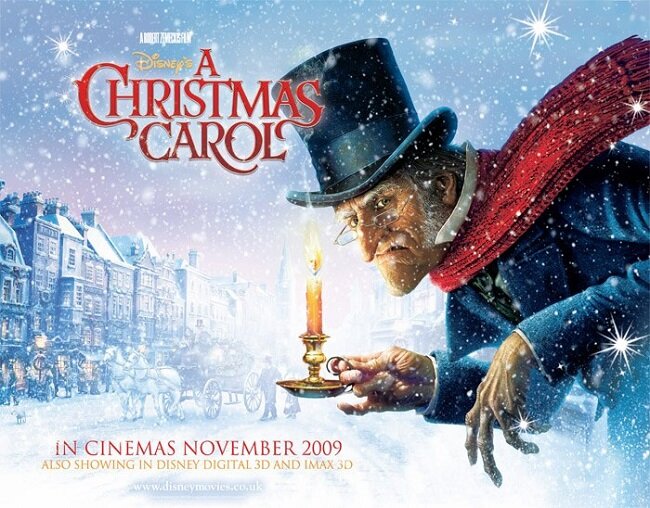
There are three key elements to Disney’s 2009 3D computer-animated adaptation of A Christmas Carol. Firstly, director Robert Zemeckis clearly seeks authenticity and hence includes a lot of original dialogue from the novel, as well as a bleaker depiction of the period. Secondly, he uses the digital production tools at his disposal to create sweeping vistas of 19th century London as well as highly stylised caricatures of the central characters. Thirdly, as this is a Disney production, there is an occasional lapse visual humour and levity that is required by their business model. Sadly all of these aspects of the production make for strange bedfellows that are at odds with each other. The result is a visually sumptuous film that loses its way as it lurches between bleak drama, odd humour and CGI driven spectacle.
There are three key elements to Disney’s 2009 3D computer-animated adaptation of A Christmas Carol. Firstly, director Robert Zemeckis clearly seeks authenticity and hence includes a lot of original dialogue from the novel, as well as a bleaker depiction of the period. Secondly, he uses the digital production tools at his disposal to create sweeping vistas of 19th century London as well as highly stylised caricatures of the central characters. Thirdly, as this is a Disney production, there is an occasional lapse visual humour and levity that is required by their business model. Sadly all of these aspects of the production make for strange bedfellows that are at odds with each other. The result is a visually sumptuous film that loses its way as it lurches between bleak drama, odd humour and CGI driven spectacle.
Produced via motion capture, a technique used in his previous films The Polar Express (2004) and Beowulf (2007), Zemeckis presents the viewer with a very traditional looking Scrooge, whose dour demeanour and gruff voice is effectively provided by Jim Carrey. Carrey also provides the voice acting for the Ghost of Christmas Past and the Ghost of Christmas Present. The story starts with Jacob Marley lying in his coffin and Scrooge quickly establishes his miserly credentials by taking the pennies off his late partner’s eyes. Due to the stylised nature of the character design, Bob Cratchit is diminutive and nephew Fred is rotund and ruddy cheeked. The story does much to highlight the social disparity between rich and poor. Oddly, despite attempting to explore and depict the events of the book in an authentic fashion, the emotional focus upon Tiny Tim is somewhat lacking in this adaptation and his character is used sparingly.
Yet despite a robust cast of fine voice actors, including Gary Oldman, Colin Firth and Bob Hoskins, they have very little to do. Hoskins as Fezziwig has no more than four lines. The early focus upon drama and providing a true reflection of the social injustices of the period, soon gives way to the most indulgent visual spectacle once the first spirit arrives. The viewer is presented with expansive recreations of the London skyline and the British countryside and the camera swoops and soars interminably through these virtual environments. Towards the end of the film there is also an tedious and utterly unnecessary chase scene involving Scrooge and a phantom hearse. One gets the impression that the director was a little too enamoured by the potential to craft such CGI creations and lost track of the central story. Or perhaps there was pressure from the studio to add some “action” to the film to pander to a wider demographics.
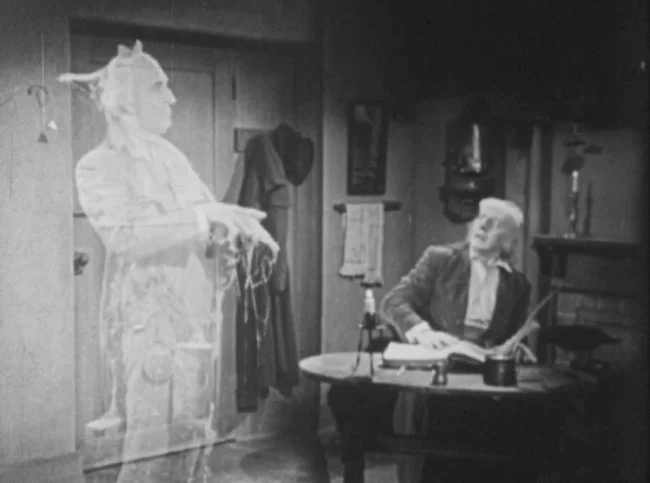
However, the use of motion capture and immersive 3D environments are not all overblown. There is a especially creative montage involving the Ghost of Christmas Present and mankind’s children, Ignorance and Want. The emaciated waifs morph into their potential future selves; one a violent robber and the other a drunken prostitute. It is quite a shocking scene and bold in its artists scope. But it also highlights the bleakness of this adaptation, which sits awkwardly with the Disney brand. Marley’s ghost is especially terrifying with his bottom jaw becoming unhinged at one point. And so to counter such ghoulish imagery, there are bouts of humour and thus Marley secures his jaw with a handkerchief but ties the knot too tight, thus preventing him from talking. Such japery tends to confuse rather than amuse.
This particular adaptation of A Christmas Carol was not a financial success at the box office and it is clear to see why. It tries to be too many things and by partnering with Disney Studios, Zemeckis is forced to make some concessions to the film that are a poor fit. Hence the story shifts tonally and does not have a coherent vision as to what it exactly wishes to be. The viewer is left with some dark scenes, frenetic chase sequences, an incessantly laughing Ghost of Christmas Present and a display of sentiment at the film’s conclusion that seems incongruous given Scrooge’s scant interaction with the Cratchit household and Tiny Tim. Furthermore, the final scene between Scrooge and the Ghost of Christmas Yet to Come is virtually identical to that in Mickey’s Christmas Carol. Overall, it may have been wiser to take the cast and the budget available and made a more traditional live action version of this classic tale, focusing on the story and atmosphere, rather than production design and visual effects.




The Godfather Coda: The Death of Michael Corleone (1990)
The Godfather Part II (1974) effectively ended the story of Michael Corleone. The man who so resolutely argued he would not become like his father ended up doing exactly that. In doing so it cost him his wife, his relationship with his children and arguably his soul. The film ends with Michael reflecting upon his past and family, all powerful but utterly alone. So in many ways, there was no major artistic or narrative requirement for a third instalment. Francis Coppola himself had no desire to return to the story. However a decade later, after a string of box office failures, he found himself in debt and in need of a financial solution. It was at this point that Paramount Pictures long standing offer to make a third Godfather movie, suddenly became a practical necessity. Coppola never intended it to be a comparable instalment to the original duology but more of a cinematic codicil. Sadly, the studio, the critics and ultimately, the viewing public never saw it that way. The rest is cinematic history and The Godfather Part III (1990) remains to this day a strongly debated film.
The Godfather Part II (1974) effectively ended the story of Michael Corleone. The man who so resolutely argued he would not become like his father ended up doing exactly that. In doing so it cost him his wife, his relationship with his children and arguably his soul. The film ends with Michael reflecting upon his past and family, all powerful but utterly alone. So in many ways, there was no major artistic or narrative requirement for a third instalment. Francis Coppola himself had no desire to return to the story. However a decade later, after a string of box office failures, he found himself in debt and in need of a financial solution. It was at this point that Paramount Pictures long standing offer to make a third Godfather movie, suddenly became a practical necessity. Coppola never intended it to be a comparable instalment to the original duology but more of a cinematic codicil. Sadly, the studio, the critics and ultimately, the viewing public never saw it that way. The rest is cinematic history and The Godfather Part III (1990) remains to this day a strongly debated film.
Numerous story ideas were conceived and abandoned while writing The Godfather Part III. Francis Coppola and co-writer Mario Puzo considered several grandiose plots before deciding that less is more and focusing on a narrative driven by Michael Corleone’s need for redemption and even forgiveness. Some critics felt that this approach contradicted the first two movies which culminated in Michael dispassionately embracing his fate. However, a man in his autumn years has much to reflect upon and therefore the film themes of redemption and trying to reinvent oneself were plausible and relevant. In fact one could argue that Coppola was trying to do as much himself. But therein was the problem. Coppola wanted a low key appendix to his previous work where the studio and public wanted another sprawling saga of criminal endeavour and a further examination of the dark heart of American culture. And so both groups fought every step of the way. They fought over the title, action set pieces, casting (as they did with the original film) and overall the scope of the story.
Upon release, many were wrong footed by the tone and direction of The Godfather Part III. It wasn’t so much that a sacred cow had been violated but that viewer expectations and the vision of the director were poles apart. The disappointment that some felt was palpable and so criticism was vocal and mainly directed at Coppola’s casting of his own daughter, who had stepped into the role out of necessity. Her performance is tonally different from the rest of the cast but is not as questionable as some would have. Certainly Al Pacino and Diane Keaton are on superb form, effortlessly picking up their respective roles and reasserting them with confidence. The standout of the film is certainly Andy Garcia who plays Vincent Mancini, the illegitimate son of Sonny Corleone. His character is straight out of King Lear and he gives a dynamic performance. The lack of Robert Duvall as Tom Hagen is a sore blow. George Hamilton plays a more contemporary corporate shark, B. J. Harrison but he lacks the emotional impact of his predecessor.
Because of the nature of the story, The Godfather Part III swaps the historical settings that were so lovingly recreated in the first two movies for the rather less enthralling world of big business circa 1979-80. There are location shots in Rome and Sicily but the change in scope does pale in comparison with the grandeur of the parts I and II, with its recreation of 1917 New York, Havana and pre-war Sicily. However, the cinematic style of Gordon Willis’ cinematography provides a sense of ongoing continuity. Willis shot both previous films although here, much of the story is swathed in shadow and darkness, reflecting the theme of spiritual doubt and conflict. These subtle changes in direction all contributed to the sense of confusion and conflict so many felt about The Godfather Part III. The best analogy I’ve seen that summarises this is that of a major recording artist, who having to two hit and and genre defining albums, then follow them up with a far more modest and specific musical foray that is far more low key in its intent.
Such has been the legacy of The Godfather Part III up until now. Coppola has recently released a revised edition of the film in which he strives to bring things back to his original vision. Retitled The Godfather Coda: The Death of Michael Corleone (his preferred title) there are a range of revisions intended to make the story’s intent clear and to present it for criticism on its own merits, rather than on its pop culture baggage. Firstly, the original opening scene depicting the now vacant Corleone home on Lake Tahoe, with all it’s associated memories, has gone. The new edit starts with Michael negotiating the bailout of the Vatican bank and it emphatically states the film’s core theme; the need for redemption. Gone is the ceremony in which he receives a medal from the church for his charitable work. The film now continues with the story of how Michael is dragged kicking and screaming back into a world of crime, despite wanting to reconnect with his son and daughter. Five minutes has been removed overall and some changes are simply alternate takes or a reordering of scenes. The biggest and most subtle change is the ending. Originally, this showed Michael a broken old man, reflecting on the past and then dying in his garden chair. This time round the montage of memories are exclusively about his dead daughter and the scene then fades to black. His titular death is now figurative and not literal.
The original theatrical version of the death of Don Licio Lucchesi
I would like to reference one change that noticeably stands out in The Godfather Coda: The Death of Michael Corleone. The first two movies were considered violent by the standards of the time and that violence was depicted credibly, rather than sensationally. Coppola worked with makeup effects legend Dick Smith resulting in several iconic and powerful scenes. Moe Green getting shot in the eye while having a massage, Don Fanucci getting shot in the face, Don Ciccio’s stabbing. Although the original theatrical release of The Godfather Part III in 1990 had some shootouts and bloodshed, it lacked any of the director’s signature bravura set pieces. The nearest that came to this was the death of Don Licio Lucchesi, who was stabbed in the carotid artery with his own broken pair of glasses. This was edited down to the briefest of shots in the initial release, which then focused on the bloody aftermath. In this revised edition an alternative take is used featuring major prosthetic work from Tom Burman. The scene now sports a bloody wound and a jolting arterial spurt. Compared to the violence that proceeds it this is shocking but justifiable within the film's own internal logic.
The revised version of the death of Don Licio Lucchesi
Overall this re-edit is a subtle reframing of the theatrical edition, rather than a wholesale revision. Some of the issues inherent in the first cut are still present. Too many of the new characters are not as well written compared to those that are already established. The Vatican storyline although interesting, may not be as appealing to some viewers expecting more traditional gangster tropes. Coppola recently revisited his 1984 production of The Cotton Club, which is another example of his work suffering due to studio interference. The revisions to that film, now retitled The Cotton Club Encore, have significantly altered and improved the narrative, by focusing more upon the African American cast members, who were so egregiously marginalised in the theatrical version. The Godfather Coda: The Death of Michael Corleone does not achieve this degree of transformation. Instead it is content with just polishing the previous presentation by thoughtfully restructuring what was already there. Hopefully in doing so, it will lead to a more level headed reassessment of the film where it is finally judged for what it is, rather than what people wanted it to be.






A Christmas Carol (1982)
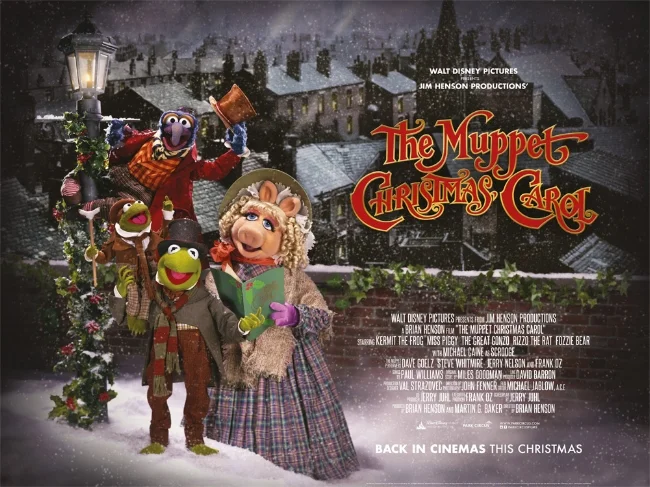
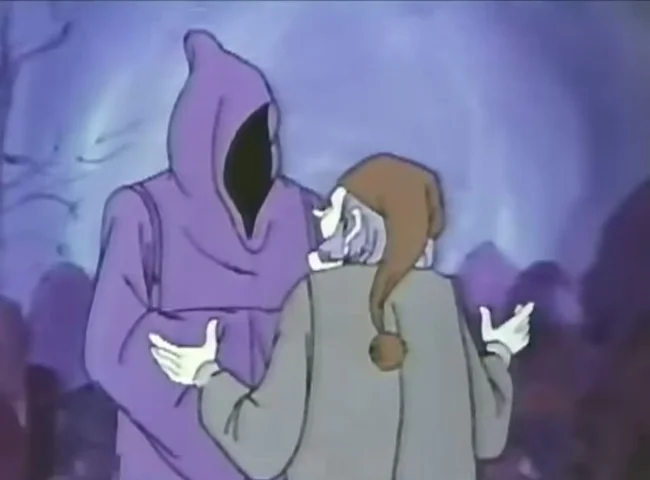
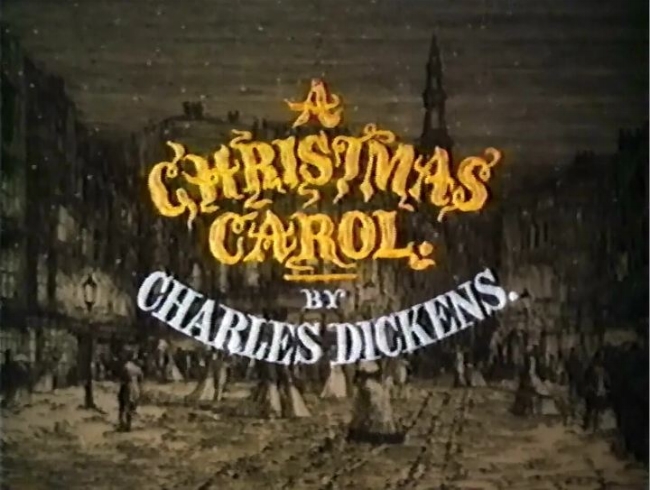
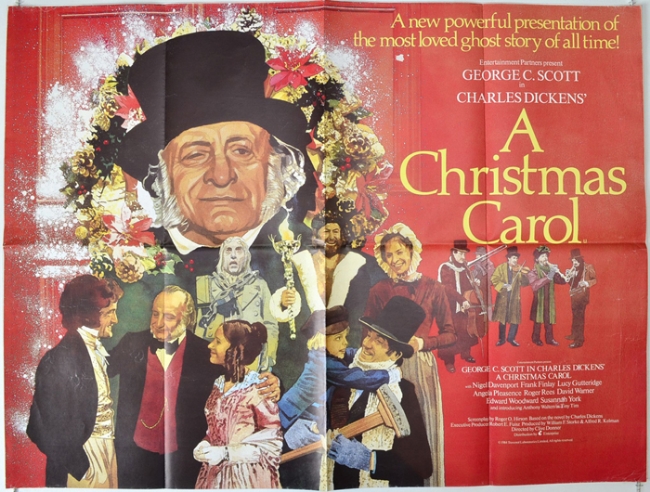
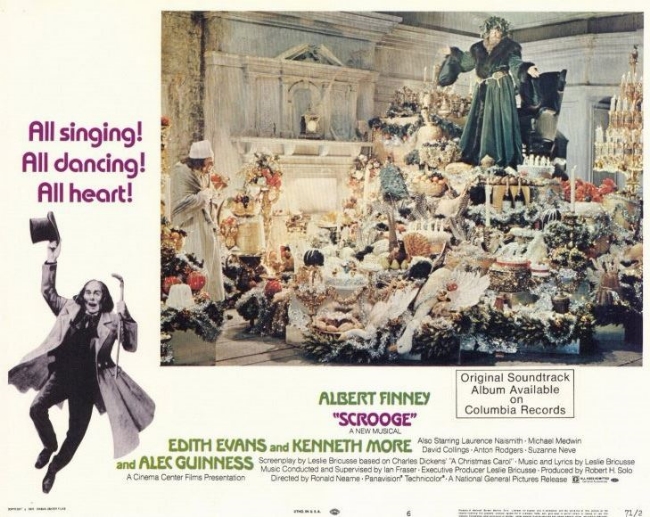
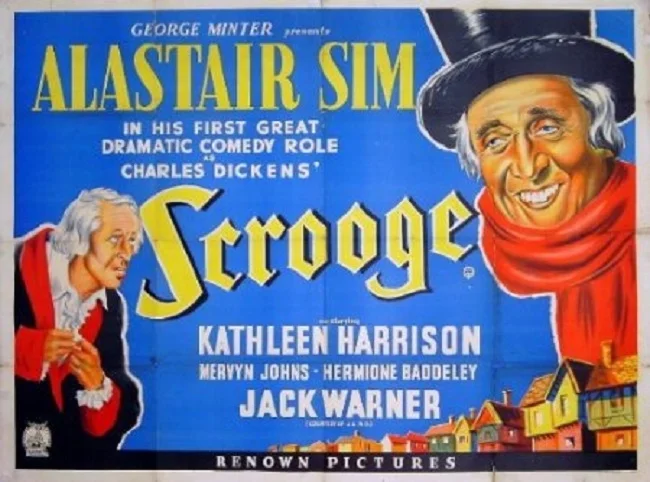
At first glance, there is not much to distinguish this low budget production by Burbank Films Australia, from any of the other adaptations that were ubiquitous during the seventies and eighties. However, attentive viewers will discover a few details that lift this particular version above the mundane. Firstly, this is the second animated adaptation to feature the voice acting of Ron Haddrick as Ebenezer Scrooge. He had previously voiced the character in Air Programs International's shorter version of A Christmas Carol in 1969, thirteen years earlier. Secondly, despite the modest production values, there are a few additional scenes taken from the source text by Dickens, that don’t usually make it most film and TV adaptations. It is these minor embellishments that compensate for the simplicity of the animation (during the opening scene, some background characters do not move).
At first glance, there is not much to distinguish this low budget production by Burbank Films Australia, from any of the other adaptations that were ubiquitous during the seventies and eighties. However, attentive viewers will discover a few details that lift this particular version above the mundane. Firstly, this is the second animated adaptation to feature the voice acting of Ron Haddrick as Ebenezer Scrooge. He had previously voiced the character in Air Programs International's shorter version of A Christmas Carol in 1969, thirteen years earlier. Secondly, despite the modest production values, there are a few additional scenes taken from the source text by Dickens, that don’t usually make it most film and TV adaptations. It is these minor embellishments that compensate for the simplicity of the animation (during the opening scene, some background characters do not move).
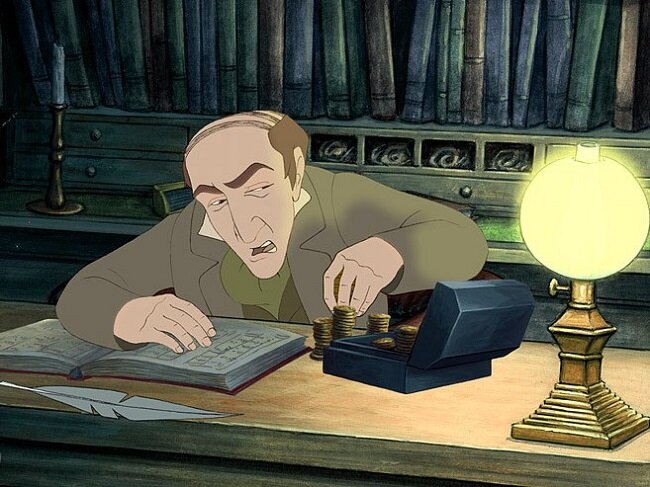
Artistically, this production follows a very formulaic depiction of London in the 19th century as well as the key characters of the story. Scrooge is a balding, hook nosed, old man with a rasping voice. Dogs flee from him and he works in a shabby and drab counting house. There’s a quite startling realisation of Marley’s ghost complete with black shadows around his eyes, making him look like a member of Kiss. His message of neglected social responsibility to Scrooge is presented as a montage, which is quite innovative and effective. The Spirit of Christmas Past is on this occasion is a teenager in a chiton. It’s a novel look. Overall the voice acting is efficient and steeped in stylised British tropes with Cockney street urchins and upper class business men. The score by Neil Thurgate composer is also quite different from the usual fare.
Despite the simplicity of the animation, no doubt due to restrictions of the budget, this adaptation uses large sections of the source text as dialogue. It also visually realises some minor scenes that often get overlooked in most versions of A Christmas Carol. There is a scene where the poor are queuing outside the Baker’s on Christmas morning to have to have their dinner’s cooked. Also there is a greater focus on his failed relationship with Belle including a scene where Scrooge sees a vision of his ex-fiancée with her family and husband. A family that could have been his under different circumstances. This adaptation also strives to add a further human dimension to Scrooge as he reminisces over his past mistakes and gives in to his feelings. Overall, all though not in any way a definitive version of Dickens’ classic tale, there is sufficient here to make it different from others.

Conspiracy (2001)
Conspiracy is a 2001 co-production between the BBC and HBO, that dramatises the events of the Wannsee Conference of 1942. Based upon secret minutes of the meeting, the drama explores the businesslike manner in which the German State decided and implemented the "Final Solution of the Jewish Question" during World War II. Set in a confiscated lakeside villa in the Berlin borough of Wannsee, the plot unfolds around a conference table. The screenplay by Loring Mandel is free from theatrics and hyperbole. Instead it focuses upon a chilling meeting in which genocide is calmly debated in the same way as armament quotas or economic growth. Frank Pierson’s direction is straightforward and uncomplicated allowing the viewer to dwell on the manner and tone of the proceedings. Conspiracy features an ensemble cast, including Kenneth Branagh as Reinhard Heydrich, Stanley Tucci as Adolf Eichmann, Colin Firth as Dr Wilhelm Stuckart and an early appearance by Tom Hiddleston.
Conspiracy is a 2001 co-production between the BBC and HBO, that dramatises the events of the Wannsee Conference of 1942. Based upon secret minutes of the meeting, the drama explores the businesslike manner in which the German State decided and implemented the "Final Solution of the Jewish Question" during World War II. Set in a confiscated lakeside villa in the Berlin borough of Wannsee, the plot unfolds around a conference table. The screenplay by Loring Mandel is free from theatrics and hyperbole. Instead it focuses upon a chilling meeting in which genocide is calmly debated in the same way as armament quotas or economic growth. Frank Pierson’s direction is straightforward and uncomplicated allowing the viewer to dwell on the manner and tone of the proceedings. Conspiracy features an ensemble cast, including Kenneth Branagh as Reinhard Heydrich, Stanley Tucci as Adolf Eichmann, Colin Firth as Dr Wilhelm Stuckart and an early appearance by Tom Hiddleston.
Conspiracy achieves much, considering the scope and implications of the subject matter. It manages to juggle a dozen characters, all of whom are from distinct and diverse backgrounds with clear agendas of their own. Soldiers, government officials and civil servants all seem to view the “final solution” as an administrative, logistical and legal problem. Dr Rudolph Lange (Barnaby Kay) states how execution by shooting is bad for troops' morale. It is an incongruous comment that focuses on psychological welfare of those conducting mass murder. Yet the screenplay successfully provides insight into this broad group’s motivations. Heydrich is shown to be a consummate manipulator as he cajoles and coerces all present into towing the official party line. It soon becomes clear that the decision to commit genocide had already been taken and that this meeting was not designed to agree it but to officially implement it and bind all present to the undertaking by collective involvement.
Conspiracy is a difficult film to watch, in that the magnitude of what is being discussed verges upon the incomprehensible. Performances are universally strong and compelling. There are several key incidents that occur that indicate the inevitability of the proposed “final solution”. Those looking to legitimise the proceedings legally are forced to abandon such a position. One bureaucrat even considers the implementation of this policy as being beneficial to his career. But perhaps the most chilling of all of these is the way in which Heydrich makes all present complicit with the decision, binding them by guilt. And then once the task is complete, all attendees calmly depart back to their regular jobs and posts. Heydrich comments about moving into the villa in which the conference has been held, once the war is over. Conspiracy ends with a summary of what happened to those attending the Wannsee Conference. Many were acquitted by Allied military tribunals after the war and lived the remainder of their lives in West Germany.


His House (2020)
If you are labouring under the erroneous assumption that the horror films are apolitical and devoid of wider social commentary, then I suggest you go and watch Dawn of the Dead, Get Out or Pan’s Labyrinth. The horror genre has for many years been addressing social issues and cultural foibles. So the timely arrival of His House comes as no major surprise. Immigration has become more than a point of debate in recent years, having been usurped and subverted by tabloid hyperbole and populist rhetoric. However, this horror thriller film written and directed by Remi Weekes indulges in none of the negative traits associated with the subject. It intelligently weaves social themes into an atmospheric and disquieting genre tale. Although in many ways the ground that His House treads is classic ghost story territory, it is both the perspective of Sudanese culture and the trauma of their migrant journey that make this such a fresh and engaging film.
If you are labouring under the erroneous assumption that the horror films are apolitical and devoid of wider social commentary, then I suggest you go and watch Dawn of the Dead, Get Out or Pan’s Labyrinth. The horror genre has for many years been addressing social issues and cultural foibles. So the timely arrival of His House comes as no major surprise. Immigration has become more than a point of debate in recent years, having been usurped and subverted by tabloid hyperbole and populist rhetoric. However, this horror thriller film written and directed by Remi Weekes indulges in none of the negative traits associated with the subject. It intelligently weaves social themes into an atmospheric and disquieting genre tale. Although in many ways the ground that His House treads is classic ghost story territory, it is both the perspective of Sudanese culture and the trauma of their migrant journey that make this such a fresh and engaging film.
Bol (Sope Dirisu) and Rial (Wunmi Mosaku) are refugees fleeing from the civil war in South Sudan. While crossing the Mediterranean, a sudden storm causes their overcrowded boat to sink. Many drown including Bol and Rial’s daughter Nyagak. After spending 3 months in a UK refugee centre the couple are granted probational asylum. They are assigned a dilapidated inner city house and given strict instructions not to move or seek employment or they face potential deportation. Their case worker Mark (Matt Smith), tells them the house is “better than what he got” and how he hopes the couple are one of "the good ones". However, soon after moving in nocturnal disturbances, noises and bad dreams afflict Bol and Rial. Bol desperately wants to fit in and stubbornly refuses to acknowledge the presence of the supernatural. But Rial wants to return home and feels there is no place for them in the UK. Has something followed them from South Sudan and are the couple harbouring a secret?
His House covers a lot of ground and works on multiple levels. If you’re just looking for a tense horror then it provides exactly that and has the added bonus of referencing non-european superstitions and supernatural folklore. The digital effects are surprisingly creative and most effective during several dream sequences depicting Bol and Rial’s dangerous sea crossing. There is a strong sense of unease to be found both inside and outside of the house as the story progresses. When the scare’s come they hit home effectively and the film has a very strong sound design. Also throughout the story there is a robust streak of real social horror but it is intelligently explored. Bol is automatically followed by security when he visits a discount department store. The UK immigration service is depicted as indifferent to the couple’s emotional trauma. And in a very bold move, Rial is racial abused by a black British youth and told to “go back to Africa”. His House also works as a tale exploring the loss of a child and the conflict it causes between the grieving couple.
But at the heart of the story, driving it forward are the compelling performances by Sope Dirisu and Wunmi Mosaku. They are a plausible, vulnerable and very likeable couple. British writer-director Remi Weekes handles the proceeding assuredly and delivers a well timed curveball two thirds into the film, which puts the events in a different perspective. The story’s conclusion manages to avoid being overtly bleak but instead reflects upon reconciliation and coming to terms with the past. It has been a while since I have seen such a universally strong directing debut and I am eager to learn what Remi Weekes’ next project is going to be. His House is a fine example of how the horror genre can deftly explore more than just the supernatural. It also provides some robust and innovative scares, as well as a very timely contemporary storyline that leaves you thinking long after you’ve finished viewing.





Zero Dark Thirty (2012)
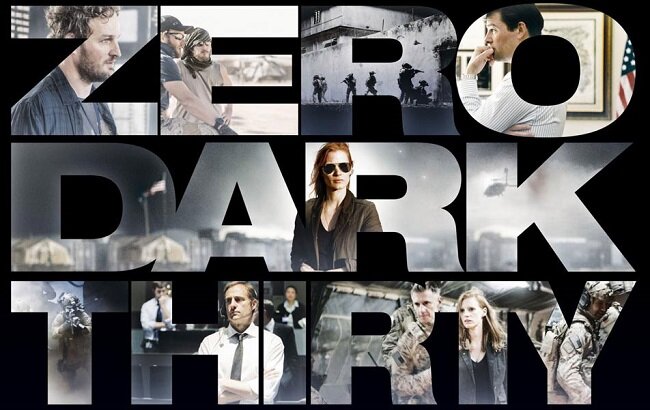
I did not watch Zero Dark Thirty upon its initial release, due to the politics surrounding it. I wanted to be able to view it free from bipartisan debate. Eight years on I believe this now achievable and although debate still exists it is now more measured and less strident. Zero Dark Thirty is certainly a compelling movie. It plays as a docudrama, providing an in-depth study of the US intelligence services hunt for Osama Bin Laden. It cannot be faulted on a technical level and the performances are very strong. It does not adopt a celebratory or triumphalist tone in its approach to the story. Director Kathryn Bigelow endeavours to keep the proceedings focused upon the intricacies of an intelligence driven manhunt. There is little or no tubthumping, jingoism. The decision to find Bin Laden is shown as a political and military exercise of foreign policy. The film solely focuses on the story from a US perspective but that is perfectly acceptable as it is not intended to be an exploration of geo-politics.
I did not watch Zero Dark Thirty upon its initial release, due to the politics surrounding it. I wanted to be able to view it free from bipartisan debate. Eight years on I believe this now achievable and although debate still exists it is now more measured and less strident. Zero Dark Thirty is certainly a compelling movie. It plays as a docudrama, providing an in-depth study of the US intelligence services hunt for Osama Bin Laden. It cannot be faulted on a technical level and the performances are very strong. It does not adopt a celebratory or triumphalist tone in its approach to the story. Director Kathryn Bigelow endeavours to keep the proceedings focused upon the intricacies of an intelligence driven manhunt. There is little or no tubthumping, jingoism. The decision to find Bin Laden is shown as a political and military exercise of foreign policy. The film solely focuses on the story from a US perspective but that is perfectly acceptable as it is not intended to be an exploration of geo-politics.
Do not expect to see all the traditional elements of narrative cinema in Zero Dark Thirty. CIA operative Maya (Jessica Chastain) is a driven woman but this is not really explored to any degree, because it is not the focus of the plot. Because she is a senior employee of the CIA, we simply have to assume that she is a patriot and hence culturally traumatised by the events of September 11th. All characters are presented in a similar fashion. We follow their actions and processes, as opposed to scrutinising their personalities and motivations. This is very much a movie about "how" and not "why". A lot is left to the viewer to consider and decide for themselves, should they see fit to do so. Such as is the use of torture effective? Was the US government right to invest so much resources into hunting one man? Was the death of Osama Bin Laden of any real military relevance or simply an act of national closure and political opportunism?
The final act of the movie reconstructs the Navy SEAL raid on the compound at Abbottabad. Those expecting a traditional action sequence will be disappointed. Technically accurate, it is bereft of all the faux melodrama usually associated with Hollywood's depiction of such events. It is depressingly plausible and in some ways anti-climatic. That is not to say that the part of the film is without suspense. It just has an overwhelming air of inevitability. A sentiment that seems to be felt by all involved as the decade long operation reaches its conclusion. The cast as well as the audience are left to ponder, was this a real victory or had its meaning ultimately been lost? Zero Dark Thirty ends it's two and a half hour journey on a note of emotional ambiguity. It makes for strangely fascinating viewing but does no more than present the viewer with the "facts", although there are hints at where the filmmaker's feelings lie.






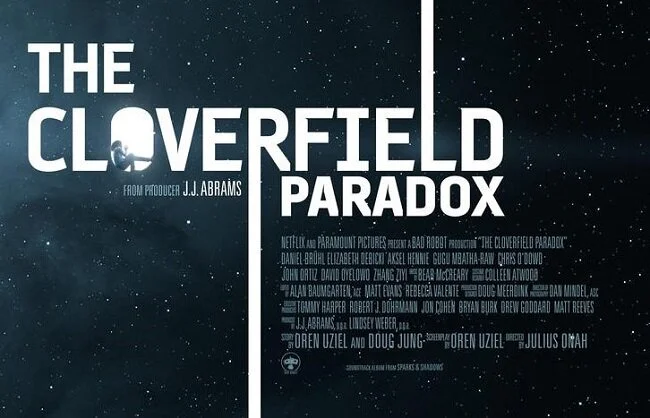
The Cloverfield Paradox (2018)
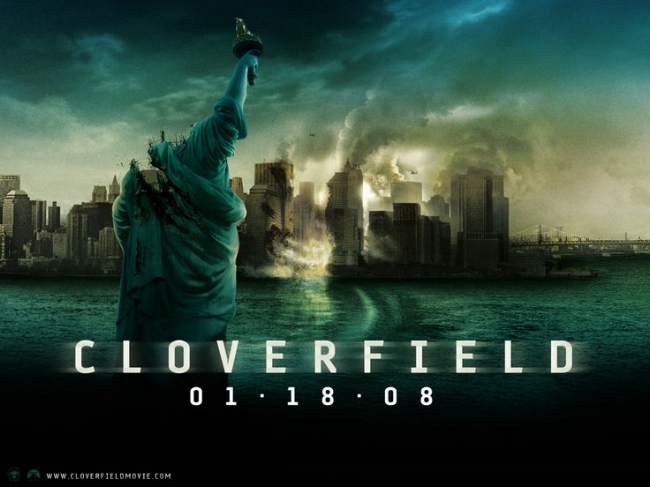
Cloverfield (2008) was a surprise hit, earning $172 million worldwide at the box office against a $25 million budget. Paramount Pictures naturally wanted a sequel but director Matt Reeves and writer Drew Goddard struggled to find a suitable narrative means to progress the original story. Both eventually left the project and the production descended into development hell. The subsequent success of Godzilla and Pacific Rim saw the Kaiju genre becoming oversaturated and so the decision to make a direct sequel was re-evaluated. Eventually a “speculative screenplay” called The Cellar was purchased and repurposed to include some additional science fiction elements and became 10 Cloverfield Lane. Despite being a curious genre hybrid which only tenuously links to the original movie, this too fared well at the box office. Therefore it was inevitable that a third movie in the so-called “Cloververse” would follow.
Cloverfield (2008) was a surprise hit, earning $172 million worldwide at the box office against a $25 million budget. Paramount Pictures naturally wanted a sequel but director Matt Reeves and writer Drew Goddard struggled to find a suitable narrative means to progress the original story. Both eventually left the project and the production descended into development hell. The subsequent success of Godzilla and Pacific Rim saw the Kaiju genre becoming oversaturated and so the decision to make a direct sequel was re-evaluated. Eventually a “speculative screenplay” called The Cellar was purchased and repurposed to include some additional science fiction elements and became 10 Cloverfield Lane. Despite being a curious genre hybrid which only tenuously links to the original movie, this too fared well at the box office. Therefore it was inevitable that a third movie in the so-called “Cloververse” would follow.
Due to an emerging energy crisis on Earth, a multinational crew on the Cloverfield Station test the Shepard particle accelerator in an attempt to produce clean and accessible power. The crew consists of English engineer Ava Hamilton (Gugu Mbatha-Raw), American Commander Kiel (David Oyelowo), German physicist Ernst Schmidt (Daniel Brühl), Brazilian medical doctor Monk Acosta (John Ortiz), Irish engineer Mundy (Chris O'Dowd), Russian engineer Volkov (Aksel Hennie), and Chinese engineer Tam (Zhang Ziyi). Ava worries about leaving her husband Michael, especially in light of the recent loss of their children in a house fire. After several years of failed attempts, the accelerator finally works but a subsequent power surge causes a series of strange events. Volkow becomes paranoid and potentially homicidal. A woman is found fused with wires behind a bulkhead. The crew learn that she comes from an identical Cloverfield Station in another dimension. Meanwhile on earth the interdimensional crossovers result in mass destruction. Can the crew of Cloverfield Station rectify the situation?
As Paramount Pictures were so successful in adapting an original script and transforming it into a tangential sequel with 10 Cloverfield Lane, it is understandable why they elected to try this a second time. Hence another spec script, this titled God Particle, was procured and retrofitted into a third edition to the “Cloververse”. The only difference this time is that that transition is far from seamless and results in a film that looks like it has been clearly assembled from separate elements. Many of the plot devices in The Cloverfield Paradox just don’t hang well together. The screenplay focuses on the particle accelerator experiments tearing the fabric of space time and opening portals to multiple parallel universes. Because these incursions can occur at any point in Earth’s timeline, this provides a convenient means to explain both previous sequels. Hence we have a Kaiju attack in 2008 and an alien invasion in 2016. But other elements of the story remain woefully underdeveloped. Michael Hamilton’s rescue of a young girl offers an opportunity to explore his own loss of his children. It is however neglected. The backstory and dynamics of the crew on the Cloverfield Space Station is also very thin.
Director Julius Onah does not manage to pull the elements together cohesively and so The Cloverfield Paradox often feels like a series of clever but ever so contrived CGI set pieces, linked by some clumsy and at times dull plot exposition. What makes it all the more frustrating is that there are some good ideas here and with more care and attention to the screenplay, this could have been a far better film. The final scene pretty much highlights everything that is wrong in the film, as it crassly crowbars in a reference to Cloverfield that couldn’t have been any less subtle if it tried. However, budget overruns and a lack of confidence in the finished product saw Paramount Pictures sell The Cloverfield Paradox to Netflix, rather than risk a theatrical release. Which means that this odd and vicarious trilogy of films, which grew into a franchise out of purely financial reasons, has more than likely run its course.
As Above, So Below (2014)
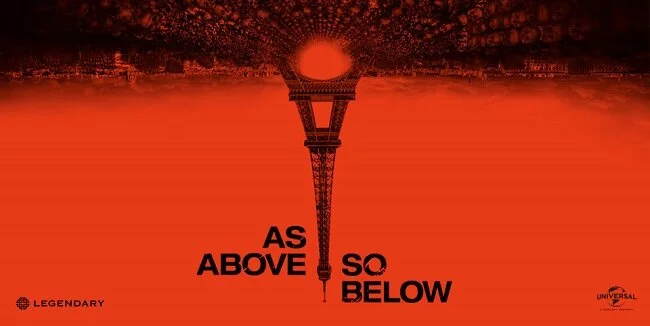
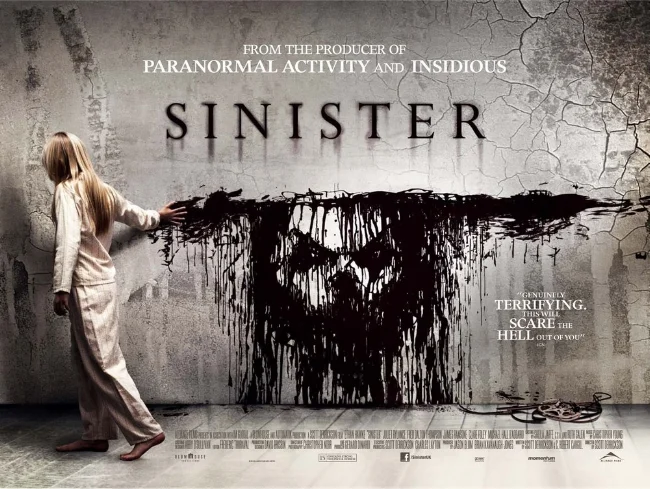
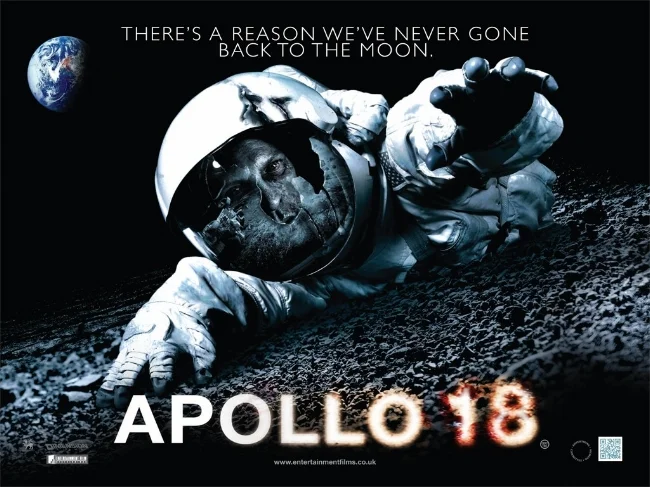
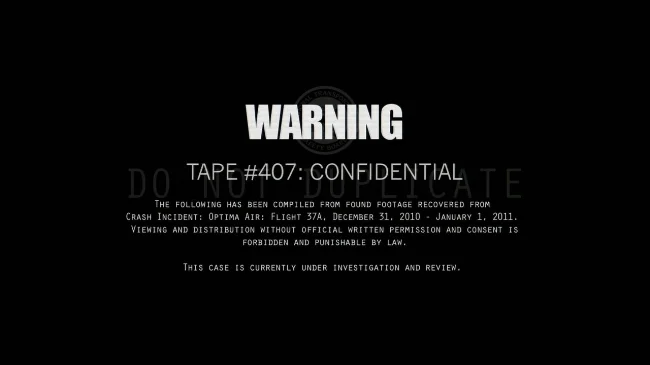
The found footage genre is predicated on the concept that the material the audience watches is supposed to be filmed from real life. This therefore presents a challenge for actors as their performances have to appear like everyday social interactions. Most people are not great orators with extensive vocabularies, in real life. Watch any wedding video or vox pop on a news broadcast and you’ll quickly become aware of the gulf between how people express themselves in reality and the stylised, contrived manner in which actors deliver dialogue. Hence, during the first act of As Above, So Below I became aware that the cast were “acting”. They were using dramatic techniques commonly used in conventional film but which stands out far more in this genre. This changed as the film progressed and the story became more deliberately chaotic. But it was noticeable during the initial set up to the story. It’s not something I’ve noticed before with other found footage movies. But in many ways, As Above, So Below is quite different compared to other genre examples
The found footage genre is predicated on the concept that the material the audience watches is supposed to be filmed from real life. This therefore presents a challenge for actors as their performances have to appear like everyday social interactions. Most people are not great orators with extensive vocabularies, in real life. Watch any wedding video or vox pop on a news broadcast and you’ll quickly become aware of the gulf between how people express themselves in reality and the stylised, contrived manner in which actors deliver dialogue. Hence, during the first act of As Above, So Below I became aware that the cast were “acting”. They were using dramatic techniques commonly used in conventional film but which stands out far more in this genre. This changed as the film progressed and the story became more deliberately chaotic. But it was noticeable during the initial set up to the story. It’s not something I’ve noticed before with other found footage movies. But in many ways, As Above, So Below is quite different compared to other genre examples
Archaeologist Scarlett Marlowe (Perdita Weeks) is obsessed with finding Nicholas Flamel's alchemical Philosopher's Stone. After finding an inscription in a cave in Iran, written in Aramaic, she travels to Paris along with her documentary cameraman Benji (Edwin Hodge). She meets with her former boyfriend George (Ben Feldman) who is an expert in ancient languages. After deciphering the inscription and using it to find hidden information on the back of Nicholas Flamel's gravestone, they discover that the Philosopher's Stone is located in the Parisian Catacombs. The team then finds a group of unofficial guides, Papillon, Siouxie and Zed, who are experienced exploring the parts of the Catacombs not open to the public. They enter the subterranean necropolis and when a tunnel collapses, are forced to take a route that has previously not been explored. Papillon is nervous as a close friend of his La Taupe vanished here, despite his knowledge. As the group travel further they become aware that all is not as it seems and that they’re all being haunted by their own past.
Once the cast are trapped in the Parisian Catacombs the plot draws heavily from Dante's Inferno. Given the scope of the story and the nature of themes therein, I would argue that maybe it would have been preferable to have made As Above, So Below a standard horror film, rather than in the found footage format. However, writers Paco Plaza, Luis A. Berdejo and Jaume Balagueró certainly are innovative with regards to pushing the boundaries of this genre. There are several noticeable scenes which have a palpable sense of claustrophobia that I’ve only seen previously in The Borderlands (2013) and The Descent (2005). The characters are at times somewhat annoying with their bickering and squabbling but that is a reflection of their personalities. There is a tipping point in the story where events veer from the strange into the pure eldritch. Stone faces appear in the walls and attack people, hooded figures charge at the unwary and the narrow corridors of the necropolis fill with blood. By this point the viewer either goes with the proceedings or emotionally checks out.
Most found footage films do not hold up to close scrutiny. The most common criticism is that there often comes a point in the story where most people would stop filming and run. And this argument can certainly be levelled at As Above, So Below. However, because the story is so ambitious with its use of nonlinear time, visions of hell and exploration of alchemy, it seems pedantic to focus on minor contradictions of the format and the film’s own internal logic. There’s also an off kilter ambience to the proceedings. Simple things like finding a piano amid the dust and confines of the tunnel are disquieting. Papillon coming across one of his own graffiti tags which he claims he hasn’t done is similarly bothersome. Plus the Parisian Catacombs themselves are just plain sinister. I suspect there may be no middle ground with As Above, So Below. You’ll either embrace its ambition and enjoy it or dismiss it out right. I chose the former.

Telefon (1977)
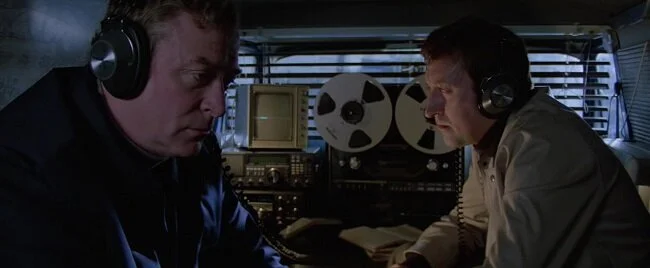
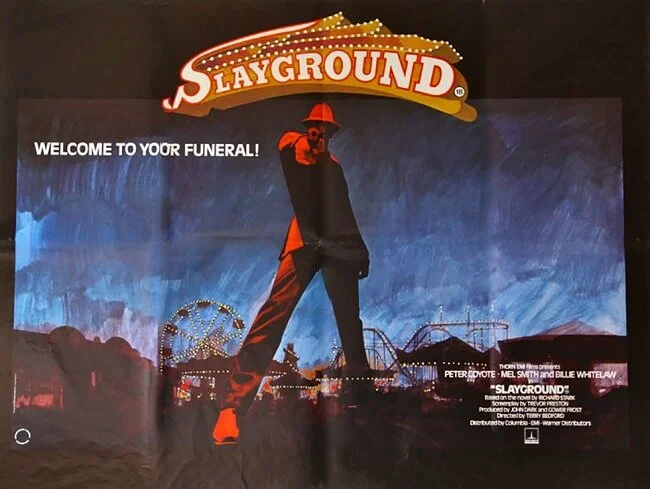
When one considers all the various elements involved in the production of Telefon, it makes it all the more disappointing that the movie fails to reach its potential. The basic idea about sleeper agents in the US is sound but the story doesn’t really go anywhere and not a great deal happens. The strong cast featuring Charles Bronson, Lee Remick and Donald Pleasance have to do their best with an undeveloped screenplay. Considering that it was written by Peter Hyams and Stirling Silliphant (from a novel by Walter Wager) it is quite surprising how lacklustre it all is. But perhaps the most saddening aspect of the film is the somewhat indifferent direction from Don Siegel, who by his own admission was not especially engaged with the story. Considering that he had scored a major hit the previous year with John Wayne’s swansong The Shootist, makes it more curious that he wasn’t more enthused. Even Lalo Schifrin’s score fails to bolster Telefon.
When one considers all the various elements involved in the production of Telefon, it makes it all the more disappointing that the movie fails to reach its potential. The basic idea about sleeper agents in the US is sound but the story doesn’t really go anywhere and not a great deal happens. The strong cast featuring Charles Bronson, Lee Remick and Donald Pleasance have to do their best with an undeveloped screenplay. Considering that it was written by Peter Hyams and Stirling Silliphant (from a novel by Walter Wager) it is quite surprising how lacklustre it all is. But perhaps the most saddening aspect of the film is the somewhat indifferent direction from Don Siegel, who by his own admission was not especially engaged with the story. Considering that he had scored a major hit the previous year with John Wayne’s swansong The Shootist, makes it more curious that he wasn’t more enthused. Even Lalo Schifrin’s score fails to bolster Telefon.
As the Cold War gives way to détente, the Soviet government purges old Stalin loyalists that do not favour peace. Nikolai Dalchimsky (Donald Pleasence), a rogue KGB member, flees to America, taking with him a document which contains details of obsolete sleeper agents. As he begins activating them, American counterintelligence is baffled by random acts of terrorism, committed by ordinary citizens against what were formerly top secret facilities. To prevent a war that neither side wants, KGB Major Grigori Borzov (Charles Bronson) is sent to neutralise Dalchimsky. Borzov has a photographic memory and hence retains all the information from the copy of the “telefon book” that Dalchimsky has taken. On arrival in the US, Borzov is assisted by longterm agent Barbara (Lee Remick). Together they seek a pattern to which agents that Dalchimsky is activating. Will they be able to stop him in time, while avoiding the US authorities.
The rights for the novel Telefon were acquired by MGM in late 1974 and the studio were confident that it would make a marketable thriller. Peter Hyams wrote the first draft of the screenplay and was hoping to direct the film himself. However, as his previous project for MGM, Peepers, had failed at the box office, he quickly realised that an alternative director would be assigned the job. So he wrote a second draft of the script for Richard Lester. However, Lester left the project and Don Siegel replaced him. The veteran director was mainly interested in working with Charles Bronson again and was not enamoured with Hyams work. So Stirling Silliphant wrote a third revision of the screenplay. The production then began filming in Finland which doubled for Russia, before returning to the US. The explosive set pieces and stunts were handled by Paul Baxley. Sadly, beyond the initial excitement of working with Bronson, Siegel found that the story didn’t “make much sense” and did not apply himself as diligently to his work as he had in previous years.
Telefon is clearly lacking in substance and does have a somewhat perfunctory quality to it. Yet there are some good ideas present and it offers at first glance a variation on themes seen previously in The Manchurian Candidate. Lee Remick is quirky, with a dry sense of humour. Bronson easily fills the role as a KGB Major. But there’s a lack of urgency to the screenplay and it feels too much like a TV movie from this era, albeit one with a bigger budget. Perhaps the film’s biggest mistake is it’s need to have a “happy ending”, as opposed to a more credible one. And as you’d expect from a production with such a history of change and artistic indifference, the press were equally ambivalent. Some critics accused the film of being anti peace. Others felt that Telefon was too pro Russian. Similarly, the film failed to find a consensus among cinema goers. Perhaps if Peter Hyams had directed his own first draft of the script, we may well have had a superior film. However, after departing Telefon, Hyams went onto write and direct Capricorn One, so one can argue that every cloud has a silver lining.




Tales That Witness Madness (1973)
I have a soft spot for portmanteau horror films, especially those made in the UK during the seventies. They often have an impressive cast of character actors and offer a snapshot of fashion, culture and sensibilities from the times. However, their weakness often lies with the inconsistency of the various stories. These can range from the outstanding, to what can best be described as filler. Furthermore, although the latter category have just as short a running time as the other vignettes, it is always the poor ones that seem to drag and disrupt the flow of the film. Tales That Witness Madness does not suffer too badly from this problem. Out of the four stories that are featured two stand out and two others are just average and not overtly bad. However, irrespective of potential narrative inconsistencies, there are some good ideas and a ghoulish streak running throughout the fill’s ninety minute running time.
I have a soft spot for portmanteau horror films, especially those made in the UK during the seventies. They often have an impressive cast of character actors and offer a snapshot of fashion, culture and sensibilities from the times. However, their weakness often lies with the inconsistency of the various stories. These can range from the outstanding, to what can best be described as filler. Furthermore, although the latter category have just as short a running time as the other vignettes, it is always the poor ones that seem to drag and disrupt the flow of the film. Tales That Witness Madness does not suffer too badly from this problem. Out of the four stories that are featured two stand out and two others are just average and not overtly bad. However, irrespective of potential narrative inconsistencies, there are some good ideas and a ghoulish streak running throughout the fill’s ninety minute running time.
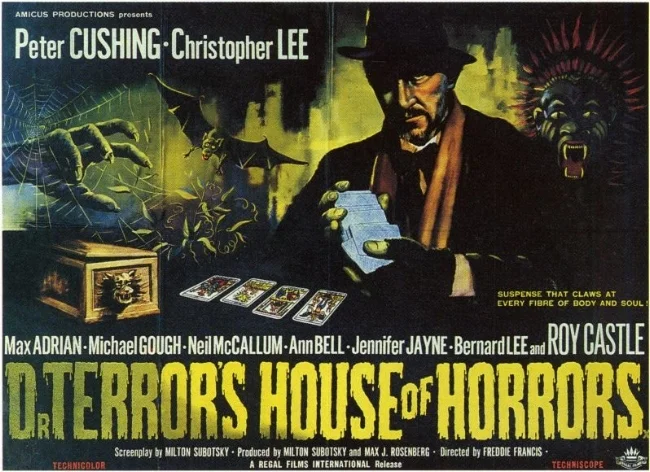
Tales That Witness Madness is not an Amicus production but instead made by World Film Services. Efficiently directed by Freddie Francis, the framing story set in a high security psychiatric hospital sets an interesting tone. It is a brightly lit, modern environment and a far cry from the typical gothic asylums that are de rigueur in the horror genre. Jack Hawkins (dubbed by Charles Gray) and Donald Pleasance effortlessly navigate through their respective roles as two Doctors discussing cases. The first story, “Mr.Tiger”, is by far the weakest and is no more than the sum of its parts. A young boy has an imaginary friend who happens to be a tiger. It subsequently kills his parents who are constantly bickering. No explanation or deeper motive is provided. The second tale, “Penny Farthing”, packs a lot more into its duration including time travel, murder and a fiery denouement. It doesn’t make a lot of sense when thought about but it is a creepy vignette.
“Mel” is by far the oddest and most interesting story on offer. While out running Brian (Michael Jayston) finds a curious tree that has been cut down. He brings it home and places it in his lounge, much to his wife Bella’s annoyance (Joan Collins). Fascinated by the tree, which has the name Mel carved into it, he lavishes it with attention. Bella becomes jealous and decides to get rid of her rival. Naturally the story has a twist. There’s also a lurid dream sequence featuring Mel attacking Bella that predates The Evil Dead. The final story “Luau” about Auriol Pageant (Kim Novak) whose new client Kimo (Michael Petrovich) has designs on her daughter Ginny (Mary Tamm) is formulaic. The finale featuring a feast to appease a Hawaiian god is somewhat obvious. The climax of the framing story is also somewhat perfunctory but it does neatly conclude the proceedings.
The portmanteau horror sub genre has on occasions surpassed itself with such films as Dead of Night and Creepshow. But the inherent risk of providing a “visual buffet”, is that like the culinary equivalent, they’ll always be something you don’t like or that has been added because it’s cheap and easy. There is an element of this in Tales That Witness Madness. However, when reflecting upon not only British horror films from the seventies but other genres as well, one must remember that cinema was still a major source of entertainment and that a lot of the material was quickly produced to fill gaps in the market that TV could not provide at the time. With this in mind, Tales That Witness Madness may not be especially entertaining to the casual viewer. The more dedicated horror fan may find it more entertaining and of interest as an example of a specific sub genre that has fallen into decline in recent years.
Wake Wood (2009)
Sometimes when making a film, less can indeed be more. Practical things like keeping the scope of your story simple, working within your budget and not feeling obliged to justify or explain every aspect of the plot can prove invaluable. If you can do all of these things with a robust cast, intelligent direction, while maintaining your viewers attention, then you have achieved something that many studios and independent filmmakers usually cannot do. Director David Keating has managed to do this with the 2009 horror film Wake Wood. Along with Brendan McCarthy who he co-wrote the screenplay with him, Wake Wood efficiently and charismatically tells its tale. It is well paced, with relatable characters and good performances. The atmosphere builds and there are some jolting moments of horror. Furthermore, it is both unusual and rewarding to see pagan rituals portrayed as an extension of rural life, in the same way as farming and animal husbandry. It is neither malevolent or benign but just an ever present force.
Sometimes when making a film, less can indeed be more. Practical things like keeping the scope of your story simple, working within your budget and not feeling obliged to justify or explain every aspect of the plot can prove invaluable. If you can do all of these things with a robust cast, intelligent direction, while maintaining your viewers attention, then you have achieved something that many studios and independent filmmakers usually cannot do. Director David Keating has managed to do this with the 2009 horror film Wake Wood. Along with Brendan McCarthy who he co-wrote the screenplay with him, Wake Wood efficiently and charismatically tells its tale. It is well paced, with relatable characters and good performances. The atmosphere builds and there are some jolting moments of horror. Furthermore, it is both unusual and rewarding to see pagan rituals portrayed as an extension of rural life, in the same way as farming and animal husbandry. It is neither malevolent or benign but just an ever present force.
Vet Patrick Daley (Aiden Gillen) and his wife Louise (Eva Birthistle), a pharmacist, move to the rural village called Wake Wood, after their daughter Alice (Ella Connolly) is mauled to death by a dog. Louise struggles to come to terms with her loss and the fact she can have no further children. One evening after their car breaks down, Patrick and Louise go to the nearby house of Patrick's veterinary colleague, Arthur (Timothy Spall), for assistance. Louise witnesses Arthur conducting a pagan ritual but says nothing to Patrick. Lousie becomes increasingly aware that something is not quite right with the village and that Arthur saw her observing the ritual. Soon afterwards a farmer is killed by his own bull while Patrick is tending to it. Horrified by another accidental death the couple plan to leave, but Arthur convinces them to stay. He claims he can bring their daughter back but only for three days and only if she has been dead for less than a year. The conflicted couple agree to his offer on the understanding that they must remain in Wake Wood forever.
If you are familiar with The Wicker Man, Don’t Look Now or any of the adaptations of Stephen King’s Pet Sematary then you’ll find several similar themes present in Wake Wood. This is a film about loss, how people cope with bereavement and what personal sacrifices you would make just to see your loved one again. Fortunately for such a character driven story, performances are universally good. Aiden Gillen is very plausible as a man throwing himself into his work to avoid his feelings. Eva Birthistle excels as a Mother who cannot move on after the death of her only child. Timothy Spall compliments the cast as retired veterinarian Arthur. He brings an air of normalcy to the pagan elements of the plot and his performance is quietly understated rather than overtly theatrical.The Irish setting and cultural heritage gives a uniquely Celtic feel to the proceedings and provides sufficient difference from other genre movies that have trodden a similar path. Overall, Wake Watch does not overreach itself and contains some rather flamboyant Fulci-eque violence to boot. Hence it is a superior genre movie. Competitors should take note.
The Man Who Could Cheat Death (1959)
The stories of Hammer films “horsetrading” with the British Board of Film Censorship (as the BBFC were called at the time) make for some interesting reading. If you're interested in the history of the studio I thoroughly recommend the book A New Heritage of Horror: The English Gothic Cinema by David Pirie. However, the BBFC felt that they’d been hoodwinked after the release of The Curse of Frankenstein in 1957, which had managed to smuggle additional unpleasantries into the final theatrical edit. Henceforth the board took a more formidable stance when dealing with Hammer and all subsequent releases. Hence The Man Who Could Cheat Death feels somewhat tame compared to earlier Hammer films. Although cuts were made to the final edit of the movie, one gets the impression that maybe the more salacious and graphic content was possibly reduced when writing the screenplay. However, with that all said, The Man Who Could Cheat Death is still a handsome, performance driven Hammer horror.
The stories of Hammer films “horsetrading” with the British Board of Film Censorship (as the BBFC were called at the time) make for some interesting reading. If you're interested in the history of the studio I thoroughly recommend the book A New Heritage of Horror: The English Gothic Cinema by David Pirie. However, the BBFC felt that they’d been hoodwinked after the release of The Curse of Frankenstein in 1957, which had managed to smuggle additional unpleasantries into the final theatrical edit. Henceforth the board took a more formidable stance when dealing with Hammer and all subsequent releases. Hence The Man Who Could Cheat Death feels somewhat tame compared to earlier Hammer films. Although cuts were made to the final edit of the movie, one gets the impression that maybe the more salacious and graphic content was possibly reduced when writing the screenplay. However, with that all said, The Man Who Could Cheat Death is still a handsome, performance driven Hammer horror.
In 1890, Dr. Georges Bonnet (Anton Diffring) is the talk of the Parisian art scene due to his lifelike sculptures and his ongoing affair with his model Margo Philippe (Delphi Lawrence). At a party to unveil his latest work, Bonnet meets Dr. Pierre Gerrard (Christopher Lee) and his companion Janine Du Bois (Hazel Court). Janine had a torrid romance with Dr. Bonnet ten years ago in Italy. Against his better judgement Bonnet resumes his affair with Janine, although he refuses to explain why he vanished a decade prior. In the meantime, Bonnet awaits the arrival of his lifelong friend, Dr. Ludwig Weiss (Arnold Marlé) from Switzerland. Weiss is a pioneer in his medical field and Bonner is dependent upon him to perform a unique operation that he needs to stay alive. However, when Weiss finally arrives he has suffered a stroke and can no longer use his right hand. Perhaps Dr. Gerrard can be persuaded to perform the procedure. However, matters are further complicated not only by the love triangle between Bonner, Janine and Gerrard but by a visit from Inspector Legriss (Franics De Wolff), who is investigating the sudden disappearance of Margo Phillippe.
The Man Who Could Cheat Death is a typical Hammer production in so far as it is studio based with little or no exterior shots. The sets are suitably atmospheric and gothic, though some were redressed from the previous production, The Hound of the Baskervilles. Cinematographer Jack Asher used pastel coloured filters when lighting the more sinister scenes, especially when Dr. Bonnet is in his laboratory, drinking his elixir or suffering the ill effects of his medical condition. As ever with Hammer films, the lead cast do much to carry the plot and distract the viewer from the shortcomings of the screenplay. Sadly, as mentioned previously, the horror content is rather light in this film. Several murders happen either offscreen or with the killer blocking the audience's view. There was some additional nudity shot for the European and Asian markets but no such material made it into the UK and US release. The most ghoulish scene occurs at the film’s denouement and also features some interesting stunt work.
The Man Who Could Cheat Death is neither the best example of Hammer Film Productions output from the fifties nor the worst. Anton Diffring does well in the lead role which was originally intended for Peter Cushing. The film does not out stay its welcome with a running time of 83 minutes, although it is rather verbose with the emphasis upon narrative drama, rather than action. Naturally judged by today’s standards it is all rather tame but films such as this were causing quite a stir at the time and there was a lot of critical disdain for these lurid, technicolor horror stories. However Hammer chose to focus on the box office returns and so continued producing to a tried and tested formula. They had a knack for making their films look more sumptuous than they really were due to clever production design and inventive photography. They also new that sex sells and were not averse to focusing on the moral corruption that usually goes hand in hand with violence and horror.
The Reptile (1966)
After his brother Charles dies in mysterious circumstances, Harry Spaulding (Ray Barrett) inherits his cottage in the Clagmoor Heath, Cornwall. He quickly moves in with his new bride, Valerie (Jenifer Daniel), with a view to finding out what happened. However, he is shunned by the locals apart from the village publican, Tom Bailey (Michael Ripper), who befriends him. The only other resident in the vicinity of the cottage is Dr. Franklyn (Noel Willman), the owner of the nearby Well House. He lives with his daughter Anna (Jacqueline Pearce), who is attended by a silent Malay servant (Marne Maitland). Anna is a strange girl who seems to be harbouring a secret. Her father treats her contemptuously and does his utmost to keep her confined to Well House. When the local village eccentric, Mad Peter (John Laurie), dies in a similar fashion to Charles Spaulding, both Harry and Tom decide to take matters into their own hands and to investigate further.
After his brother Charles dies in mysterious circumstances, Harry Spaulding (Ray Barrett) inherits his cottage in the Clagmoor Heath, Cornwall. He quickly moves in with his new bride, Valerie (Jenifer Daniel), with a view to finding out what happened. However, he is shunned by the locals apart from the village publican, Tom Bailey (Michael Ripper), who befriends him. The only other resident in the vicinity of the cottage is Dr. Franklyn (Noel Willman), the owner of the nearby Well House. He lives with his daughter Anna (Jacqueline Pearce), who is attended by a silent Malay servant (Marne Maitland). Anna is a strange girl who seems to be harbouring a secret. Her father treats her contemptuously and does his utmost to keep her confined to Well House. When the local village eccentric, Mad Peter (John Laurie), dies in a similar fashion to Charles Spaulding, both Harry and Tom decide to take matters into their own hands and to investigate further.
Filmed simultaneously with The Plague of Zombies with which it shared several sets, The reptile is a slower paced, more thoughtful film that prefers to focus on the psychological collapse of its central characters, rather than set pieces. It is one of the best Hammer movies from the sixties which blends traditional horror elements with more mainstream period costume dramas. The production design is stylish and captures the atmosphere of a claustrophobic Cornish village. The interiors of Well House are an interesting juxtaposition to this, with Dr. Franklyn’s exotic flowers and penchant for Indian culture. As for the Reptile makeup by Roy Ashton, it works well by the standards of the time. Director John Gilling wisely keeps scenes featuring the transformed Anna, to a minimum and lights them favourably. Another ghoulish embellishment is the way the victims turn black and purple after being bitten.
However, it is the central performance by Jaqueline Pearce which is the standout feature of The Reptile. She gives a haunting performance often relying purely on her demeanour, rather than dialogue to express her torment. Noel Willman, who was a substitute for Peter Cushing, is also notable as Anna’s guilt wracked father. He is the architect of both his own and his daughter’s ruin while also being a victim of her curse. Another enjoyable aspect of The Reptile is seeing Hammer stalwart Michael Ripper in an expanded role and not meeting a grisly demise. Sadly, some cuts originally made to the film by the BBFC for its theatrical release, still persist and the material has not been found or restored to the current Blu-ray release. Yet The Reptile remains a superior example of Hammer’s work from this era, before they felt compelled to make their content more salacious to stay competitive.
Slayground (1983)
There have been several movie adaptations of the books of Jonathan Stark (AKA Donald E. Westlake) featuring his career criminal lead character, Parker. Sadly not all of them have fared well, either critically or at the box office. Many have deviated from the source material, often just using mere aspects of the original plot as the basis of their screenplay. Perhaps the most successful of these has been Point Blank (1967), directed by John Boorman and starring Lee Marvin. Slayground sadly follows the pattern set by previous adaptations. It changes several character names and takes two main elements from the source text and uses them as a premise. Specifically, a robbery that goes wrong which results in an accidental death and a climactic shootout in an out of season fairground. Due to the financing of the film, half of the story takes place in the US and the other in the UK. Much of the cast are British, resulting in a curious and at first glance somewhat incongruous film.
There have been several movie adaptations of the books of Jonathan Stark (AKA Donald E. Westlake) featuring his career criminal lead character, Parker. Sadly not all of them have fared well, either critically or at the box office. Many have deviated from the source material, often just using mere aspects of the original plot as the basis of their screenplay. Perhaps the most successful of these has been Point Blank (1967), directed by John Boorman and starring Lee Marvin. Slayground sadly follows the pattern set by previous adaptations. It changes several character names and takes two main elements from the source text and uses them as a premise. Specifically, a robbery that goes wrong which results in an accidental death and a climactic shootout in an out of season fairground. Due to the financing of the film, half of the story takes place in the US and the other in the UK. Much of the cast are British, resulting in a curious and at first glance somewhat incongruous film.
Long term thief Stone (Peter Coyote) and his accomplice Joe Sheer (Bill Luhrs) arrive in a rundown part of New York State to rob an armoured car. When their usual driver Laufman fails to join them, Sheer employs local driver Lonzini (Ned Eisenberg). Despite successfully undertaking their robbery, Lonzini collides with another car while making their getaway. When Stone investigates the wreckage he discovers all passengers are dead including a young girl. Shocked and outraged by this needless tragedy, Stone threatens to kill Lonzini, however, Sheer intervenes and the gang go their separate ways. But the Father of the dead girl (Michael M. Ryan), a wealthy sports businessman, hires charismatic assassin Costello (Phillip Sayer) and instructs him to find all involved in her death and to kill them. Stone soon learns that he is a marked man, when Lonzini is found brutally murdered. He flees to the UK and seeks out former associate Terry Abbatt (Mel Smith), in the hope of lying low and avoiding the price on his head. But Costello is tenacious and pursues him, relentlessly killing all in his path.
Slayground was written and adapted by British screenwriter Trevor Preston, a veteran of such British cop shows as The Sweeney. Hence several scenes reflect his customary gritty and hard boiled dialogue. The movie starts in a run down part of the US and then relocates to a comparably run down part of the UK. This narrative continuity may well have had a greater significance initially. But Slayground feels like a film that may have substantially re-edited prior to release. It runs for a tight 89 minutes and doesn’t waste it’s time on niceties or unnecessary embellishments. The direction by former cameraman Terry Bedford is uncomplicated and reflects the down-at-heel lifestyle and world of the main characters.
Yet there are major narrative gaps in the proceedings. Where Walter Hill wrote deliberately minimalist characters for The Driver, the flow of events in Slayground gives one the distinct impression that there is 10 to 15 minutes of expositional material is missing. Furthermore, the hitman Costello has a penchant for arranging the bodies of his victims. Yet these scenes are brief and their actual death sequences are conspicuously absent.
Hence the cast are left with precious little to do. Stone is no more of an archetype, rather than a fully rounded character. Billie Whitlaw has only a few scenes as Madge, the owner of a financially failing amusement park, although she gets by on the strength of her personality. And Mel Smith doesn’t arrive until the film’s final act. He delivers a particularly powerful soliloquy about a criminal’s lot in life and we get a brief glimpse of his straight acting talent. But again the proceedings surge ahead towards the climactic showdown between Stone and Costello and the production seems to dismiss the gaps in the plot . What we should have experienced throughout Slayground is a man’s journey through his past as he reflects upon the lifestyle he has chosen and its consequences. Sadly we are instead taken on a journey from A to B to C, where everyone we meet becomes another corpse within minutes of being introduced.
Yet despite its multiple shortcomings, there are a few aspects of Slayground that standout. The film starts with a small vignette that shows the fate of the original getaway driver, Laufman. It is a creative opening gambit. The hitman Costello is also an enigmatic character with his fedora hat and the way we never fully get to see his face. His playful tanting of his victims is an interesting foible. The denouement in the amusement park is suitably creepy, as the fairground automatons are caught in the crossfire. But ultimately this movie fails to reach its full potential, either because of ill conceived editing designed to “streamline” the story, or because the director simply didn’t have the experience to craft a more rounded and detailed narrative. As it stands, Slayground remains a curious anomaly. One of four films produced by Thorn EMI in the early eighties under the auspices of Verity Lambert. The others being Comfort and Joy, Morons from Outer Space and Dreamchild.
White Noise (2005)
Successful writer Anna Rivers (Chandra West) goes missing prior to the launch of her new book. Shortly after, her car is found abandoned by the roadside and her body is discovered in the harbour. The Police conclude that there's been a tragic accident. Her husband, architect Jonathan Rivers (Michael Keaton), is devastated by her loss. When he is approached by Raymond Price (Ian McNeice), who claims he has recorded messages from Anna through electronic voice phenomena (EVP), Jonathan is both sceptical and angry. However, his curiosity eventually gets the better of him and he meets with Raymond and quickly becomes immersed in EVP phenomenon. As Jonathan experiments with EVP recording he begins to discern messages from the dead. However, it soon becomes apparent that these communications are of a precognitive nature and that there are more sinister forces at work.
Successful writer Anna Rivers (Chandra West) goes missing prior to the launch of her new book. Shortly after, her car is found abandoned by the roadside and her body is discovered in the harbour. The Police conclude that there's been a tragic accident. Her husband, architect Jonathan Rivers (Michael Keaton), is devastated by her loss. When he is approached by Raymond Price (Ian McNeice), who claims he has recorded messages from Anna through electronic voice phenomena (EVP), Jonathan is both sceptical and angry. However, his curiosity eventually gets the better of him and he meets with Raymond and quickly becomes immersed in EVP phenomenon. As Jonathan experiments with EVP recording he begins to discern messages from the dead. However, it soon becomes apparent that these communications are of a precognitive nature and that there are more sinister forces at work.
White Noise is a slick and glossy production, sporting a modern clean aesthetic that reflects the world of its central character. Much of the story takes place in Jonathan’s home which is a brightly lit, glass palace. The visual style along with the use of what was contemporary technology effectively juxtapose the arcane nature of the supernatural. In this film the shadowy forms of the dead appear on TV screens and monitors, instead of dimly lit corridors. It’s an interesting divergence from typical ghost story tropes but it alone cannot sustain the story. Pretty much everything else about White Noise is formulaic and predictable. That’s not to say that the production is poorly constructed. Director Geoffrey Sax keeps proceedings on track and the story doesn’t out stay its welcome. It’s just that there’s very little that’s different on offer. Keaton and the rest of the cast rely on their acting personas to keep the audience engaged, as all characters are not especially well defined.
It is not easy to quickly and efficiently establish a loving relationship in the first act of a film, and make it seem natural. It requires subtle writing and a talent for focusing on the little things that we share daily with our loved one, to imbue such scenes with a sense of credibility. You’ll find it in Poltergeist (1982) and its depiction of the Freeling family. In White Noise, the opening scenes that try and convey the love between Anne and Jonathan just seem contrived and perfunctory. Hollywood’s predilection for alway making successful, white, middle class men the protagonist in most films, is also an impediment when it comes to generating emotional investment. Beyond the superficial, IE a man who is grieving, it is not difficult to warm to Jonathan Rivers. He’s not a bad man, just a bland one. The way he sidelines his young son due to his growing obsession is hardly endearing either.
Fifteen years on, despite its visual style, White Noise already seems somewhat dated. The continual advance of technology being every film’s Achilles’ heel. It’s quite nostalgic to return to a world filled with CRT TVs and monitors, MiniDiscs, Nokia phones, audio cassettes and VHS tapes. But beyond this minor appeal, the film is underdeveloped and lacking in distinguishing attributes. The story as it is, would be better suited as an episode of The Twilight Zone. The scares are mainly of the “quiet, quiet, loud” variety and any unpleasantness falls squarely into the shallow end of the PG-13 rating. If you want a straight forward, uncomplicated, horror-lite supernatural tale, then White Noise may well scratch that itch. But for genre enthusiasts, this is a somewhat indifferent film, which is possibly a bigger failing than being a bad one.