Guild Wars 2: Once Bitten, Twice Shy
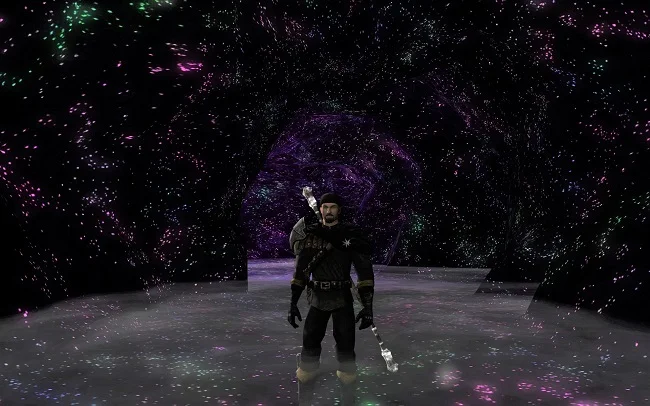
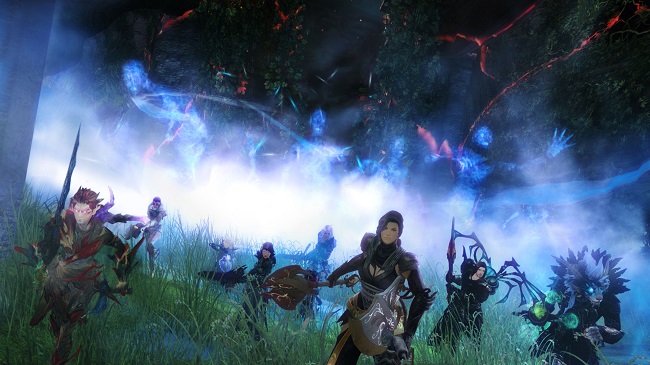
When Guild Wars 2 launched in the summer of 2012, I was very enthusiastic about the game on the Contains Moderate Peril podcast. I had participated in the beta and was impressed by many of the game's mechanics and its overall accessibility. Although I did not expect the game to be the focal point of my gaming activities, I (and many others I suspect) felt that this casual MMO had a lot to offer and would become a firm favourite. And that was pretty much the case up until 2015 when the first expansion, Heat of Thorns, was released. I have written in the past about how this new content changed the nature of Guild Wars 2 and contradicted its existing laissez-faire approach to solo game play. I didn’t want content gated behind skills I didn’t enjoy earning, Nor did I want my access to zones subject to player unlocks and thus making my gaming activities dependent on others. Hence I parted company with the MMO and have not returned.
When Guild Wars 2 launched in the summer of 2012, I was very enthusiastic about the game on the Contains Moderate Peril podcast. I had participated in the beta and was impressed by many of the game's mechanics and its overall accessibility. Although I did not expect the game to be the focal point of my gaming activities, I (and many others I suspect) felt that this casual MMO had a lot to offer and would become a firm favourite. And that was pretty much the case up until 2015 when the first expansion, Heat of Thorns, was released. I have written in the past about how this new content changed the nature of Guild Wars 2 and contradicted its existing laissez-faire approach to solo game play. I didn’t want content gated behind skills I didn’t enjoy earning, Nor did I want my access to zones subject to player unlocks and thus making my gaming activities dependent on others. Hence I parted company with the MMO and have not returned.
Since then, there has been a second expansion, Path of Fire, which added mounts to the game as well as new content. I believe that this expansion was more equitable than the previous and friends and colleagues have assured me that I can return to the game and bypass the material I didn’t previously like. However, this still did not prove sufficient to tempt me back to the game in 2017 as I felt that Guild Wars 2 was simply one of those games that just wasn’t applicable to me any longer. All too often when I return to an MMO that I have previously left, I enjoy a few hours of excitement mainly due to all the things that have been added to the game in my absence. Then after a while, I find that all the things I didn’t like are still there, or that there is a massive progression gap to be overcome before I can join my friends at the endgame. I believe we as gamers, have an inherent blind spot where we substitute the reality of a situation with what we would “like” a game to be.
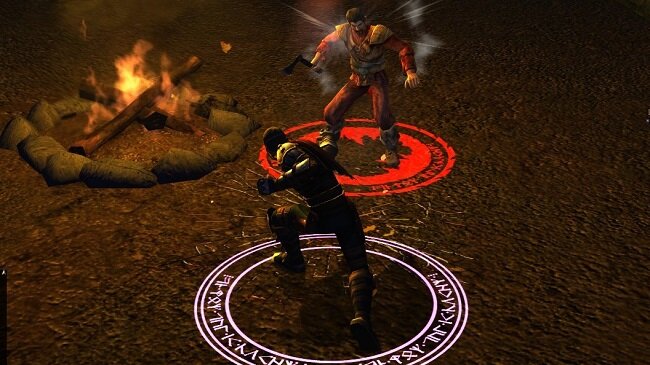
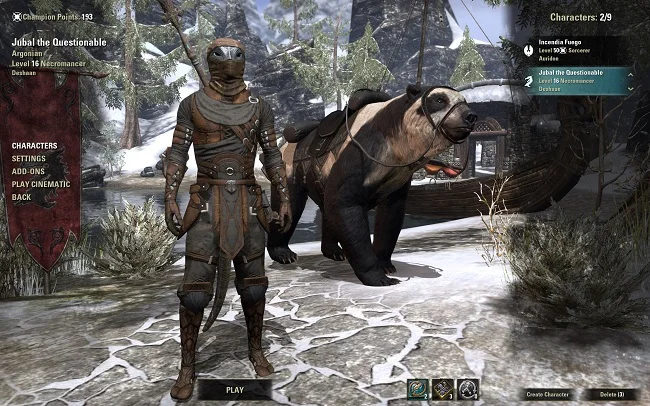
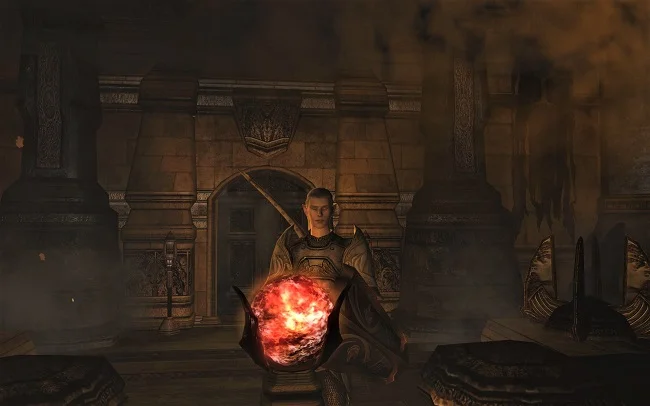
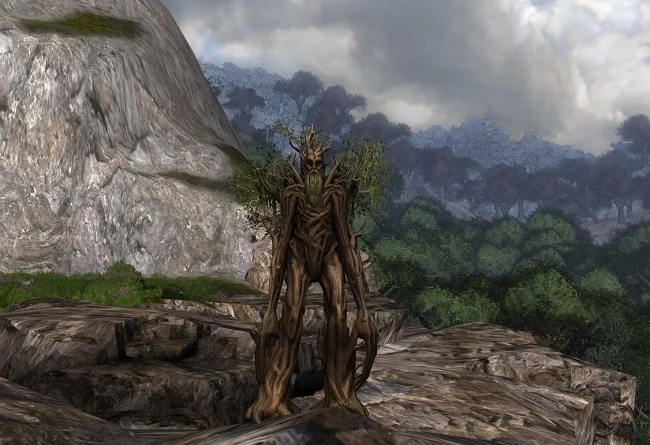
There is now a third expansion for Guild Wars 2 on the horizon. Provocatively called End of Dragons. Despite my past experience and the fact that the MMO genre has evolved greatly since the launch of this game, I have a worrying urge to re-install the game and see what is “going on”. The rational part of my mind predicts that I’ll spend an evening downloading the game client, log in to my primary character in Divinity’s Reach and then spend some time riding around on my flying carpet. I’ll quickly establish that the game is not really that different than before and then promptly log out. I did exactly the same with The Secret World: Legends, Star Wars: The Old Republic and Neverwinter. But the irrational part of my mind is adamant that I’m missing out on “the best MMO around” and that “it’s way better than last time” and I really do need to check things out. I’m curious to see which point of view wins, although common sense urges that it should be the former.


LOTRO: Wildwood, Deeds and Virtues
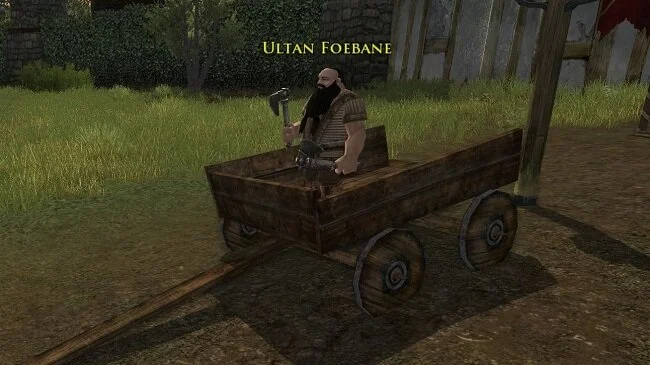
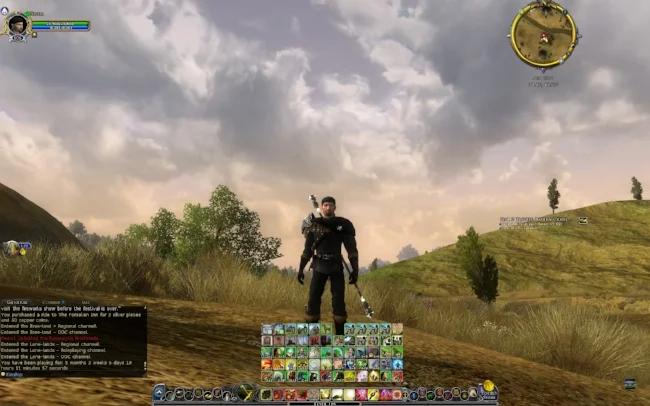
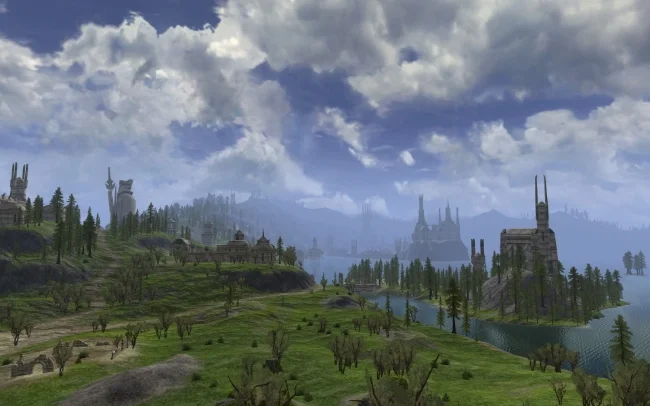
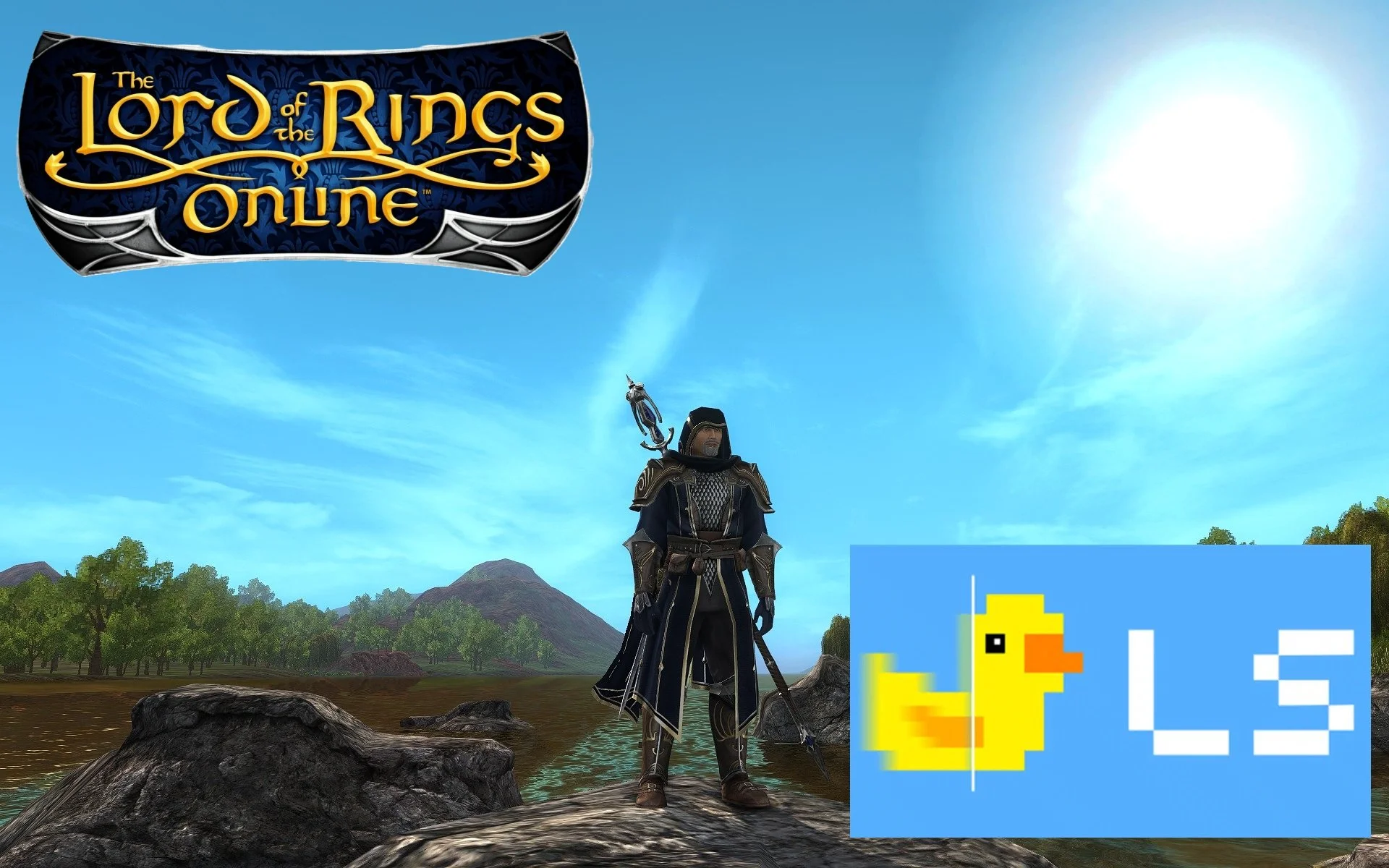
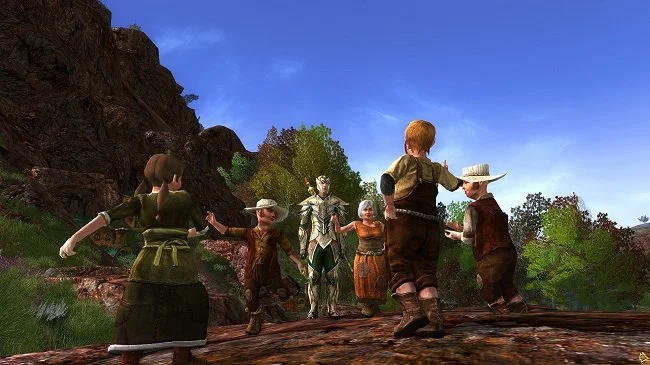
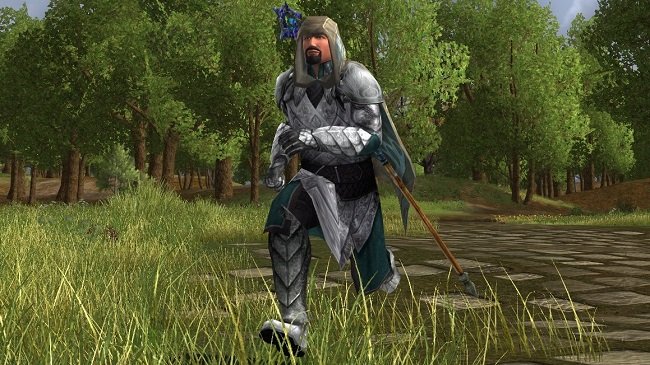
I recently logged into the MMORPG The Lord of the Rings Online with the intention of completing Update 30: Blood of Azog. I got as far as some of the wrapper quests which set up the main story and then I lost interest when I reflected upon the content ahead. I tire of some of the excessively dour regions one has to play through in LOTRO, although I realise they are fully lore appropriate. LOTRO is also one of those games where I frequently struggle to see what is going on if there is low lighting. In such instances I have to tinker with the video settings to try and improve things. So with all this in mind, I decided instead of participating in the Battle of Azanulbizar, I would go and visit the Wildwood region in Bree-land which was added to the game in April. Now you may ask why take a level cap Lore-master to a zone that has content at level 45? Well the answer is simple. There are deeds to be completed.
I recently logged into the MMORPG The Lord of the Rings Online with the intention of completing Update 30: Blood of Azog. I got as far as some of the wrapper quests which set up the main story and then I lost interest when I reflected upon the content ahead. I tire of some of the excessively dour regions one has to play through in LOTRO, although I realise they are fully lore appropriate. LOTRO is also one of those games where I frequently struggle to see what is going on if there is low lighting. In such instances I have to tinker with the video settings to try and improve things. So with all this in mind, I decided instead of participating in the Battle of Azanulbizar, I would go and visit the Wildwood region in Bree-land which was added to the game in April. Now you may ask why take a level cap Lore-master to a zone that has content at level 45? Well the answer is simple. There are deeds to be completed.
For those who are unfamiliar with the deed system in LOTRO, each region of the game, such as The Shire, Bree-land or Wildwood has a set of deeds available for completion. These range from visiting key locations, slaying specific amounts of foes and completing a fixed number of quests. Upon completing any deed you are awarded “virtue experience” which is tied to the virtue trait system. Virtues traits grant bonuses to your character's base stats. The player can slot five at a time, usually picking those they deem appropriate for their class. Therefore, the discerning player can choose one of their five virtues and then undertake specific deeds to level it to 75 which is the current cap. You then repeat the process until you’ve levelled all of your equipped traits. It’s not as if you’ll run out of deeds. The game is rife with them.
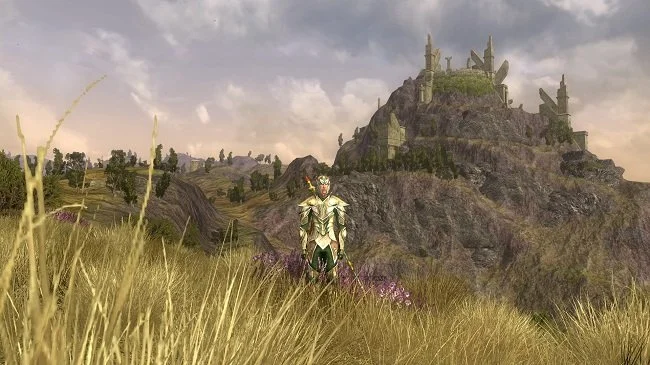
It took 48 hours to play through the main content in Wildwood. As ever with LOTRO, it is the story driving the questlines that made the experience enjoyable. I like the fact that you can start the zone by either helping the Woodcutter's Brotherhood in Trestlebridge Gate or League of the Axe at Trader's Wharf in Evendim. The Wildwood itself is not difficult to traverse and is green and leafy, making it a pleasant environment to quest in. Too often the developers at Standing Stone Games go out of their way to make navigating a zone very esoteric. While undertaking the various quests in the area, I maintained a policy of “kill everything” and it didn’t take too long for the deeds to rack up. I didn’t even bother using a deed accelerator. Hence by the time I finished the region I was at maximum reputation with both factions and had increased two of my five virtue traits to level 75 (they were previously 72).
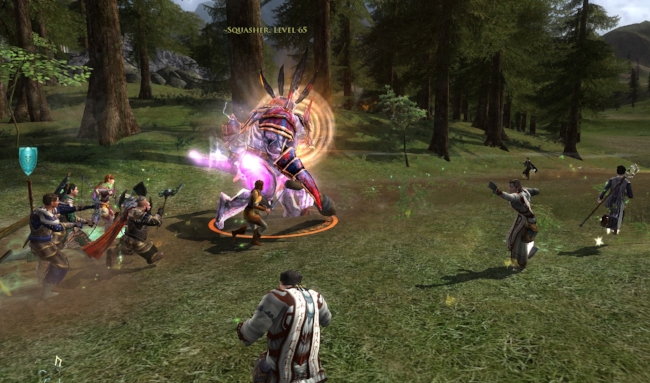
Playing content above level does have some advantages. Not having to worry about combat allows you time to focus on the story and enjoy the environment that you’re travelling in. LOTRO is a game where zones are often densely populated with mobs. To the point that you feel that it’s been done just to try and slow you down. However, LOTRO does something that other MMOS don’t. It has a peculiar mechanic in which if you’re several levels above the mobs, they ignore you. You can stand right next to them and they behave as if you’re not there. It makes taking screenshots a lot easier. It certainly made completing Wildwoods quicker. Overall, it has been a productive and entertaining endeavour. My virtue traits have increased plus I have bought two additional “return to” skills (Trestlebridge and Traders Wharf) from the faction quartermasters. I suppose it’s now time to move on to Update 30.





Star Trek Online: Then and Now
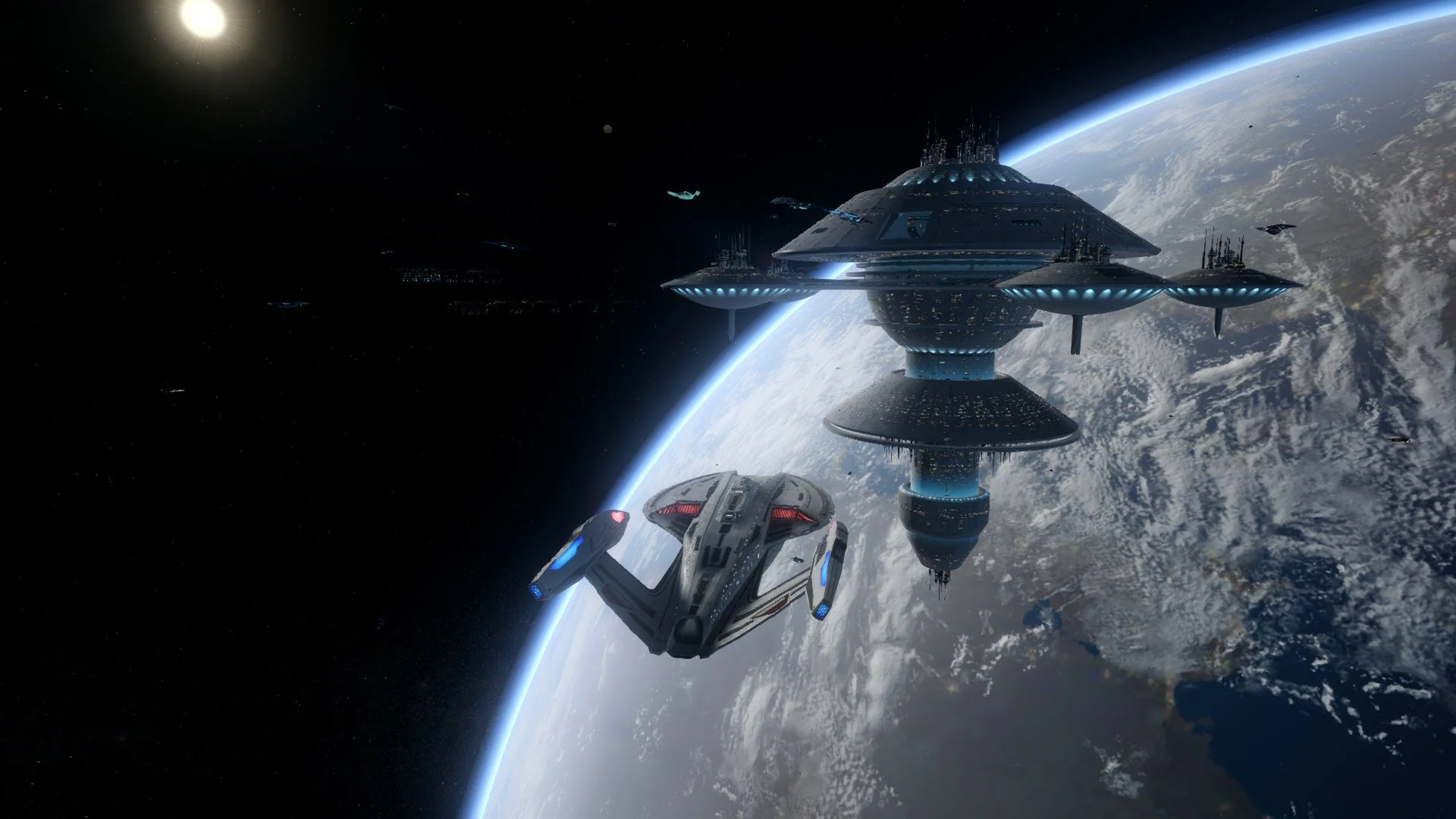
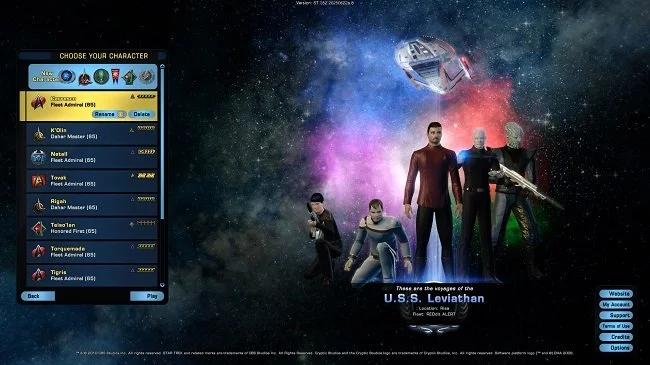
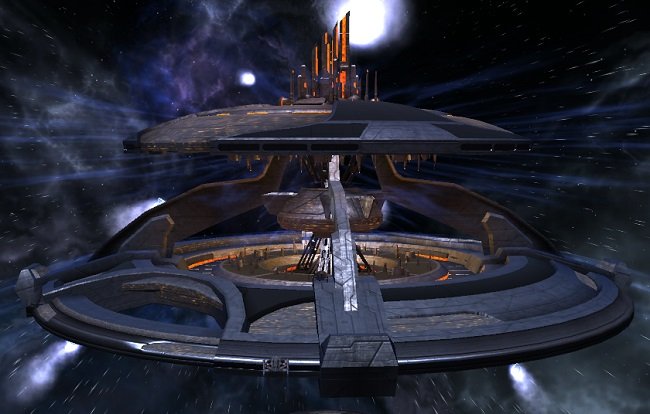
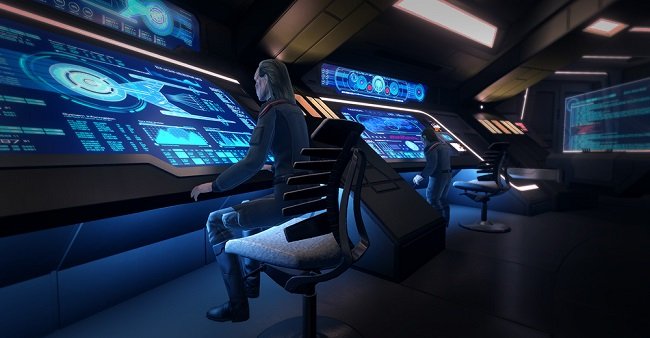
I recently found my original post about the MMORPG Star Trek Online from February 2010. I pre-ordered the Steam Digital Deluxe Edition version of the game for £40 a month prior. I remember that I was very excited about the launch of this MMO and I wasn’t at the time au fait with its tumultuous development history. Myself and two friends started playing virtually immediately and I can remember struggling to find the game’s virtues. It was confusing, unfinished and unbalanced. My friends quickly got tired of the situation and returned to The Lord of the Rings Online. I stuck with STO for about a year before moving on. I briefly returned to the game in early 2013 but it was still unpolished. It wasn’t until the Delta Recruitment Event of 2015 that I found that the game had finally hit its stride. I’ve been playing regularly since then. Reading back over my original thoughts is quite a trip down memory lane.
I recently found my original post about the MMORPG Star Trek Online from February 2010. I pre-ordered the Steam Digital Deluxe Edition version of the game for £40 a month prior. I remember that I was very excited about the launch of this MMO and I wasn’t at the time au fait with its tumultuous development history. Myself and two friends started playing virtually immediately and I can remember struggling to find the game’s virtues. It was confusing, unfinished and unbalanced. My friends quickly got tired of the situation and returned to The Lord of the Rings Online. I stuck with STO for about a year before moving on. I briefly returned to the game in early 2013 but it was still unpolished. It wasn’t until the Delta Recruitment Event of 2015 that I found that the game had finally hit its stride. I’ve been playing regularly since then. Reading back over my original thoughts is quite a trip down memory lane.
Star Trek Online is a classic example of a product that was released before it was ready. The open beta which ran for several months, revealed multiple bugs and glitches. However, since the February 2nd launch date, the game still feels like it is unfinished and is being patched on a daily basis. This has made progression through the game very hard and where I have persevered, two of my online colleagues have already abandoned it. Discussion boards and forums are filled with comments that support this argument.
Here are just a few of the issues I feel are causing problems. The game does not have any semblance of a manual. There is an online guide but it simply does not tackle the game mechanics in any depth. So, after the standard tutorial you are pretty much on your own. If you’ve played other MMOs then you can draw on that experience to look for similarities, in which there are many. However, if you are a casual player then this game has a steep learning curve.
Now Cryptic Studios have decided not to run region specific servers, so effectively all user traffic is centralised. There have been periods where users have to queue to log on. The game relies heavily on instances to handle the flow of traffic and travelling therefore becomes a sequence of loading screens. The single environment approach means the chat channel is extremely fast moving. It is currently spammed continuously by gold farmers. As a means of in game communication it is redundant.
Certain “episodes” require teamwork and the game uses an automatic system which theoretically groups players of a comparable level. This can be beneficial as you gain from the completion of tasks by other members of your team. However, on several occasions, I have found myself in a team on an away mission, pitched against opponents of a much higher level. There was no realistic chance of completing the task in hand except by quitting the team and hoping that the next random group would be more balanced.
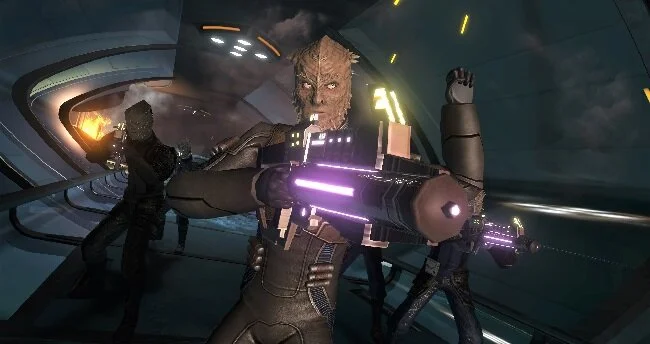
I could list a lot more, but do not wish to sound excessively negative, as STO, despite all its faults, has the potential to be a very good MMO. It looks very impressive and certainly catches the atmosphere of the franchise. Like so many games these days, the soundtrack is extremely good and embellishes the game, especially the space battles. The depth to which you can customise your character is also laudable. The storylines themselves are engaging and have the feel of a classic episode of the series.
Cryptic Studios have taken a gamble with this MMO. It has had a troubled development and if it were any other product, may have fallen at the first hurdle. But due to the good will of the fan base regarding this franchise, they have to be able to make mistakes without too many repercussions. To be fair, they are working hard to address issues and are listening to their user base as this recent statement from Cryptic shows. I shall be continuing with STO and it will be interesting to assess the status quo in the sixth month’s time.
28th February 2010.
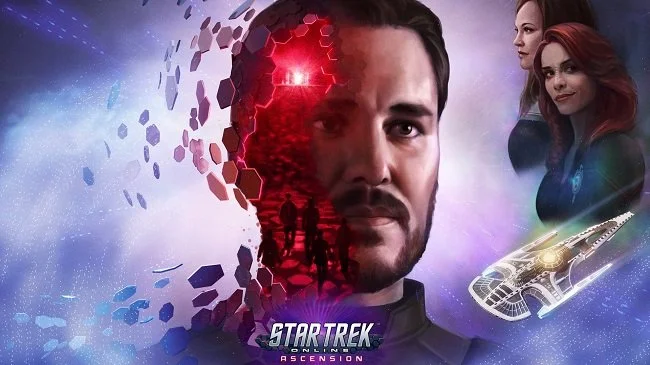
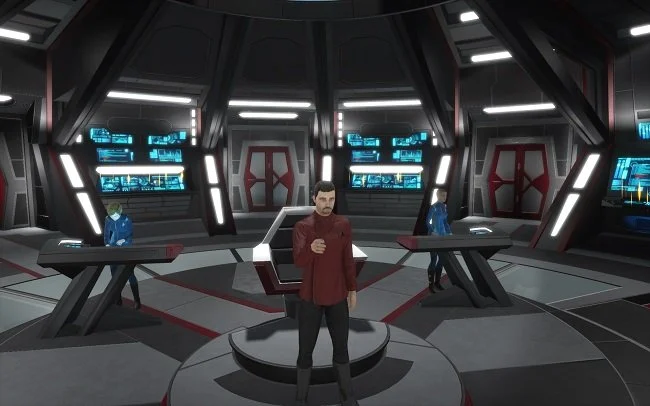
All things considered I believe this remains a fair assessment of STO at launch. It certainly was not the most auspicious of beginnings and as Cryptic were contractually bound to deliver a functional game by a specific date and had to rewrite most of the previous developers work. However, a great deal has changed over the last decade and the game has greatly improved. Today STO is a healthy MMO with a wealth of good content behind it. Many of the cast who appeared in the various TV shows over the years, have voiced their characters again in the game. The change is so profound it is hard to reconcile the two versions of the game. Sadly I do not have that many screenshots from this period. If you wish to see how the game was at launch then I would recommend the YouTube channel Hailing Frequency which did much to promote the game in the run up to February 2nd 2010. It shows clearly how rough around the edges STO was at the time and how far the game has come.

Fall Guys: Is it Just Me?
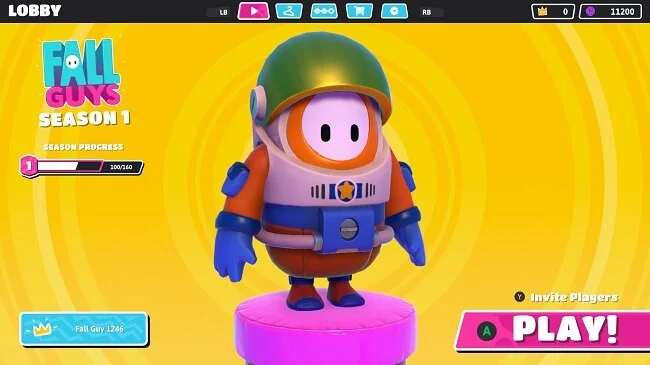
Before I began writing this post, I tried to do some research regarding odds, percentages and statistics associated with the game Fall Guys: Ultimate Knockout. However, I soon discovered that this appears to be a contested field with conflicting data. Furthermore you have to navigate a lot of forum posts and subreddits which are filled with players bragging and talking shit. So I haven’t got any tangible data to present as such, yet I believe that my suppositions are as logical as they can be. Moving on, Fall Guys: Ultimate Knockout, is a platform battle royale game developed by Mediatonic and published by Devolver Digital. It was released for Microsoft Windows and PlayStation 4 on 4 August 2020. I began playing it a few days after launch and have continued to do so regularly over the last twelve months.
Before I began writing this post, I tried to do some research regarding odds, percentages and statistics associated with the game Fall Guys: Ultimate Knockout. However, I soon discovered that this appears to be a contested field with conflicting data. Furthermore you have to navigate a lot of forum posts and subreddits which are filled with players bragging and talking shit. So I haven’t got any tangible data to present as such, yet I believe that my suppositions are as logical as they can be. Moving on, Fall Guys: Ultimate Knockout, is a platform battle royale game developed by Mediatonic and published by Devolver Digital. It was released for Microsoft Windows and PlayStation 4 on 4 August 2020. I began playing it a few days after launch and have continued to do so regularly over the last twelve months.
The game consists of 60 players competing over 5 rounds. Each round 11 or so players are eliminated although this can vary depending on the type of game. Some rounds are races through obstacle courses, others are puzzle solving or memory tests. There are also team based events which are especially annoying because your success depends on other carbon based life forms. Another major factor that impacts upon your success is other players' behaviour. Bottlenecks frequently occur. If one player falls over then it can start a cascade. And then there is the grab facility. Yes, other players can grab you and actively attempt to impede you if they see fit. Hence the game often evokes a broad spectrum of emotions among players. One minute you can genuinely be in fits of laughter as a whole bunch of players tumble off a pivoting platform, the next you fail to qualify due to some asshole grabbing you just before the finish line.
But these are the terms by which you play Fall Guys: Ultimate Knockout. It is a fun game but it can also be brutal with its unwavering mechanics. You can be diving for the finish just as the timer runs down and if you’re not over the line, then you’re out of the game, no ifs, no buts. Hence I tend to play in short bursts and if I feel myself getting vexed then I log out and do something else. Or alternatively, I just mess around with the cosmetic options which are an utter delight by the way. Judging by the comments I’ve read on Steam, many a game controller has been hurled across a room due to this game. I find that there are simply some rounds in the game that I just cannot do. Lily Leapers is a new round and requires the player to bounce on the lily pads to cross the course. I can get about a third of the way, then find I just cannot gain sufficient clearance to reach the next pad. I often just wait this particular round out and collect my points for participating at the end.
Much has been written online about this game, analysing the various rounds and activities. To be fair it would appear that developers Mediatonic do listen to player feedback and adjust the game with each season. Yet I do feel that the game is in danger of at times being its own worst enemy. It is supposed to be light hearted fun and not a purely competitive game and “tryhard” magnet. Yet that seems to be the way it is going. Mario Kart does little things to “encourage” the player who’s always at the back. Perhaps Fall Guys: Ultimate Knockout should do the same. I’ve been playing for a year and still haven’t won five rounds in a row. The nearest I’ve got so far is four. Which is why I’ve been trying to find some meaningful analysis of the game, so I can see if this is just me. Am I just a bad player? Is it a question of “git gud”? Or am I in a far larger group than I think and the odds are actually more likely that I lose rather than win? I’m curious as to the answer.


Looks Matter
You’re strutting around in your favourite MMORPG, dressed to the nines in your finest outfit. You recently acquired The Tabard of Marginal Statistical Improvement after finally beating that particularly difficult raid boss. As you stroll into the auction house with the confident air of someone who knows they’re looking damn good, you keep an eye on the chat window anticipating comments and praise from other players. You stop in front of an NPC and stand their basking in presumed public adulation and revelling in your own self satisfaction. Suddenly another player appears on the periphery of your monitor and catches your attention. Oh calamity, their avatar looks virtually identical to your. Same fez, monocle and handlebar moustache. They’re also wearing The Tabard of Marginal Statistical Improvement, except theirs is in electric pink. Oh the humiliation. Oh the humanity. Oh Vienna. You log off in tears, your ego crushed, a victim of a game with insufficient character customisation and diversity.
You’re strutting around in your favourite MMORPG, dressed to the nines in your finest outfit. You recently acquired The Tabard of Marginal Statistical Improvement after finally beating that particularly difficult raid boss. As you stroll into the auction house with the confident air of someone who knows they’re looking damn good, you keep an eye on the chat window anticipating comments and praise from other players. You stop in front of an NPC and stand their basking in presumed public adulation and revelling in your own self satisfaction. Suddenly another player appears on the periphery of your monitor and catches your attention. Oh calamity, their avatar looks virtually identical to your. Same fez, monocle and handlebar moustache. They’re also wearing The Tabard of Marginal Statistical Improvement, except theirs is in electric pink. Oh the humiliation. Oh the humanity. Oh Vienna. You log off in tears, your ego crushed, a victim of a game with insufficient character customisation and diversity.
Wolfy over at Through Wolfy’s Eyes wrote a very astute post yesterday about the significance of character customisation in the MMO genre. He makes some very good points and also offers some suggestions regarding improvements that could be made. This is exactly the sort of post that other bloggers can use to riff off, as the subject of character customisation is pretty important to the MMO genre. Hence I thought I would add my own thoughts on subjects having been an active MMO player since late 2007. Simply put, you cannot have enough character customisation options in this genre of game. Creating your own unique avatar is as essential to the players enjoyment of the game as the story and the gameplay. I will often spend an hour or more fine tuning my character, pondering a suitable name and even reflecting upon a backstory for them if the game supports such an option. Your character is the conduit through which you experience the game so from my perspective I want that avatar to be as much to my liking as possible.
Gamers approach character creation in different ways. Some players strive to make a virtual game persona that is based upon themselves to provide a more personal gaming experience. Many strive just to make something unique, different or quirky that amuses them. A fun character who it will be enjoyable to customise further with cosmetics, as they progress through the game. Other gamers may well try and create some sort of aspirational "imago". An avatar that they desire to be on some level. In some MMOs that are based on particular intellectual properties, gamers sometimes try to recreate their favourite character from the franchise. And sometimes, players just like to see how extreme and incongruous they can make their avatar. However, the success of all of these endeavours depends on how expansive the character customisation options are. Yet even in those titles where the scope is limited, never underestimate player ingenuity.
I believe that for some players, creating their avatar in a popular game is more significant than merely making a “fun character”. For some individuals, video games and especially the MMORPG genre provides a virtual environment in which they can be themselves. Something they feel they cannot do in their day to day life. Creating and customising their in-game character is a cathartic process allowing them to express their true nature and feel comfortable and free. This is why I feel that it is essential to have as many options as possible with character customisation and that these variables should not to be arbitrarily gated and segregated by traditional cultural notions. Gender, race, body size and such like should be equally accessible across all classes and factions. Possibly the only mollifying factor should be a game’s own internal lore but even that should not be a sacred cow.
Perhaps at its most fundamental level, character creation in video games is just another example of human beings trying to make some sort of personal mark upon the world, as they journey through life. It’s a basic human instinct. Wherever you live, you try to arrange things in a way that suits you. Regardless of your budget you try to personalise your living space, be it through expensive décor or just putting up a poster and putting your plushies on the shelf. We do something comparable in the games we play. We create a character according to our personal whims and needs, then enter a virtual world and say “here I am”. It is a very personal statement while being at the same time somewhat ephemeral. Which is why many of us take so many screen captures of our in-game characters. The video game industry would do well to reflect upon the significance of this facet of gaming and do their utmost to develop it.
Gamergate: Seven Years On
Not so long ago, Gamergate was referenced in a chat channel on one of the Discord servers that I frequent. Contrary to what I was expecting, this passing remark sparked very little response. Due to the age of some of the people present, they had to Google Gamergate to determine what it was all about. Those who were more au fait with the entire debacle broadly expressed the following sentiments. Firstly, was it seven years ago already? Secondly, in light of the ongoing Blizzard Entertainment controversy, it doesn’t seem that much has changed either within the gaming industry or the wider gaming community. The angry backlash against progressivism in video games now just seems to be focused elsewhere in society. Overall Gamergate was just one facet of the ongoing culture wars. At present that battle is being fought over some other issues and in a different field. But it’s still out there.
Not so long ago, Gamergate was referenced in a chat channel on one of the Discord servers that I frequent. Contrary to what I was expecting, this passing remark sparked very little response. Due to the age of some of the people present, they had to Google Gamergate to determine what it was all about. Those who were more au fait with the entire debacle broadly expressed the following sentiments. Firstly, was it seven years ago already? Secondly, in light of the ongoing Blizzard Entertainment controversy, it doesn’t seem that much has changed either within the gaming industry or the wider gaming community. The angry backlash against progressivism in video games now just seems to be focused elsewhere in society. Overall Gamergate was just one facet of the ongoing culture wars. At present that battle is being fought over some other issues and in a different field. But it’s still out there.
As someone who is interested in gaming as an artform as well as a leisure activity, I was fascinated but not surprised that video games became a focal point for such an angry controversy. Art is by its very nature political and many leisure activities have become more mainstream and accessible in recent years. Commercial success means change and inclusion. Such things are not universally well received. And five years hence exactly the same pushback exists. You’ll find it on subreddits and on twitter whenever some change is proposed to a game to make it accessible to a wider audience. People like to see themselves in the games they play. Sadly, some others don’t want to see them for “reasons”. Mercifully the angry mob is a bit light the Eye of Sauron. It attends to some places more than others, according to its need. At present there’s more traction to be had through anti-vax propaganda and fighting the oppression of COVD-19 and the pandemic.
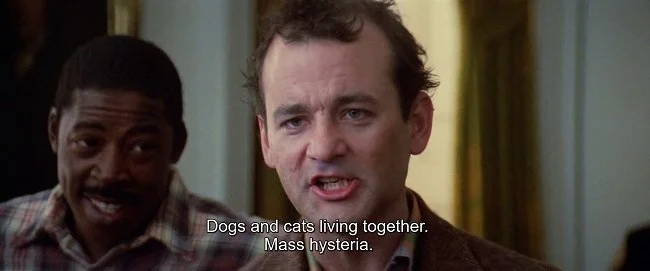
The question that is most commonly raised in connection to Gamergate is whether it spoiled video games and the associated culture. I’d argue that the video games industry was spoiled a long time ago. The rot set in with changes to monetisation and the overall business model, which has fundamentally broken the way games are made. But Gamergate certainly had an impact on the wider gaming community. Specifically, I’ve seen a lot of good people withdraw from gaming culture because they don’t feel welcome and have been exhausted by the daily diet of bullshit and vitriol aimed at them or their communities. That grieves me because I see diversity as a great strength as well as a source of joy. Furthermore, I worry that Gamergate is akin to a dose of Malaria and at some point in the future it will return to trouble the community once again. It’s been seven years and counting.

























Another Boat Missed
It would appear that due to the ongoing woes of Blizzard Entertainment, that the world and his wife are migrating from MMORPG World of Warcraft and relocating to the alternative game, Final Fantasy XIV. Other games are feeling the benefits of this ongoing exodus but it seems that FFXIV is by far picking up the most new players. I certainly think that the fact that several high profile streamers moved from WoW to FFXIV has contributed to this trend and the resulting surge in social media postings about the game has had a further impact. Furthermore, judging from what I have read about FFXIV and been told by my peers, the game has a lot going for it. There’s a wealth of content, solid mechanics and a favourable environment for group gameplay. And yet despite all these positive attributes I have looked at FFXIV and decided that this game is not for me.
It would appear that due to the ongoing woes of Blizzard Entertainment, that the world and his wife are migrating from MMORPG World of Warcraft and relocating to the alternative game, Final Fantasy XIV. Other games are feeling the benefits of this ongoing exodus but it seems that FFXIV is by far picking up the most new players. I certainly think that the fact that several high profile streamers moved from WoW to FFXIV has contributed to this trend and the resulting surge in social media postings about the game has had a further impact. Furthermore, judging from what I have read about FFXIV and been told by my peers, the game has a lot going for it. There’s a wealth of content, solid mechanics and a favourable environment for group gameplay. And yet despite all these positive attributes I have looked at FFXIV and decided that this game is not for me.
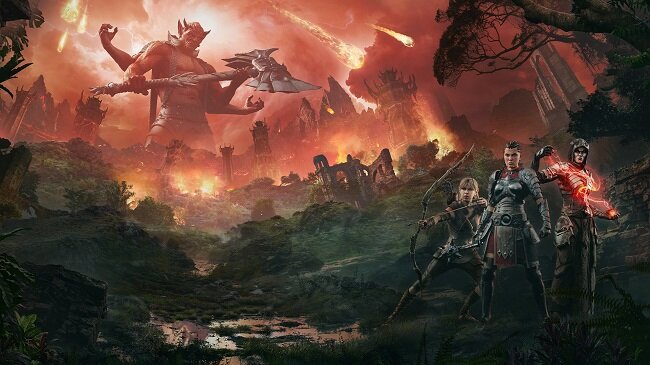
There are three major aspects of a video game that have an impact upon my decision whether or not I buy and play them. Gameplay, intellectual property/story and aesthetics. Where FFXIV scores well with the first, yet I find the narrative impenetrable and the game’s visual style unappealing. I have spent some time looking through various sub reddits aimed at new players and the advice on offer doesn’t exactly mollify my concerns. Opinions over how complex the learning curve is vary greatly. Some players advocate a lot of “studying” before you start playing the game. Others talk about customisation of the UI being essential. All of which are red flags as far as I’m concerned. I genuinely like The Elder Scrolls Online but the fact that you need addons to be able to play the game without impediment is a borderline deal breaker. It sounds to me that FFXIV requires as much preparation and homework, which is hardly a positive advertisement.
I don’t like the so-called Asian video game aesthetic, just as I don’t really care for the visual style of anime. It is purely a question of personal taste, the same way as someone may not like cubism in art or country music. The problem with my position is that not liking the look of a video game is a big deal, considering it is an essentially visual medium. Human beings are hardwired to interpret the world via their eyes (or else we would have evolved sonar), so I will not dismiss my dislike as trivial. Hence I shall not be joining my peers in playing FFXIV. Just like WoW, it would seem that FFXIV is another popular boat that I am going to miss. However, it can sometimes be quite an interesting position to stand outside of a popular phenomenon and simply spectate it, rather than be an active participant. Conversely, it can also be a little sad just to be a spectator. Such is the nature of gaming. You can’t like or play everything.
Yet More PC Peripherals or How I killed a Game Controller in Under a Year
I bought a new game controller for my PC last September. Specifically a PowerA Spectra Enhanced Xbox One Wired Controller for £35. I chose this model as it has good reviews and is deemed a good alternative to the exorbitantly priced official Microsoft equivalent. I chose a wired controller to further keep the cost down. I mainly use a keyboard and mouse for PC gaming but specifically use a game controller for driving vehicles or for titles with simpler game mechanics like Fall Guys: Ultimate Knockout. Much to my surprise after less than a year this game controller has developed a problematic left thumbstick. It doesn’t register direct forward movement which is a major impediment. I have recalibrated the entire controller via Devices and Printers in Windows 10 but the problem persists indicating a physical fault with the controller.
PowerA Spectra Enhanced Xbox One Wired Controller
I bought a new game controller for my PC last September. Specifically a PowerA Spectra Enhanced Xbox One Wired Controller for £35. I chose this model as it has good reviews and is deemed a good alternative to the exorbitantly priced official Microsoft equivalent. I chose a wired controller to further keep the cost down. I mainly use a keyboard and mouse for PC gaming but specifically use a game controller for driving vehicles or for titles with simpler game mechanics like Fall Guys: Ultimate Knockout. Much to my surprise after less than a year this game controller has developed a problematic left thumbstick. It doesn’t register direct forward movement which is a major impediment. I have recalibrated the entire controller via Devices and Printers in Windows 10 but the problem persists indicating a physical fault with the controller.
It is disappointing that this PC peripheral has failed so soon. What makes it more frustrating is that this particular model feels very robust to the touch. It has a weight to it that implies a solid build and quality. However, after perusing Google, it would appear that thumbstick drift and failure are common problems and can affect most brands of game controllers, including the more expensive models. So rather than attempt a repair (as I did last summer which ultimately proved unsatisfactory), I have elected to buy a replacement. I recently installed Days Gone and so require a game controller for the parts of the game that take place while driving a motorbike. I briefly considered purchasing a USB Bluetooth adaptor and using my Nintendo Switch Pro controller. However, this requires additional software to make it PC compatible and then you have to customise the control settings for each game.
JAMSWALL Xbox 360 Controller
Last night, I spent over an hour trawling through listings for both high end and budget game controllers on various websites. User reviews strike me as capricious to say the least and models at both ends of the spectrum receive both high praise and scathing comments. I often find after reading such customer feedback, that I am none the wiser as to making a decision. However, considering the very specific use I have for a game controller, I eventually decided to purchase a low cost model. If it fails then the initial investment won’t add insult to injury. I ended up buying a generic Xbox 360 style wired controller for £14 from some “no name” brand. It arrives today and it will be interesting to see how it feels and performs. As for the old controller, that has been added to an ever growing pile of PC peripherals and electrical items that are destined to go to my local recycling centre.


















Minigames
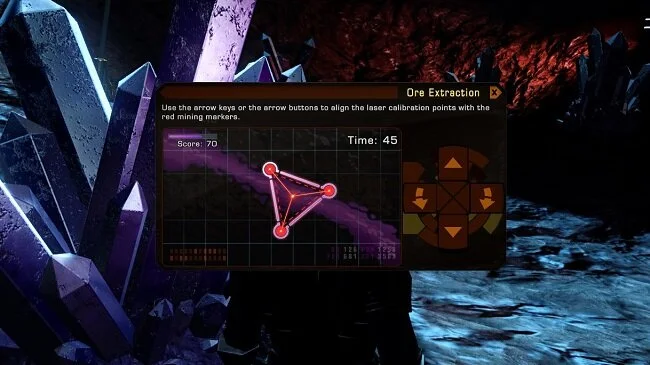
“Minigames” are small, short and self-contained games, within a larger RPG or MMO (as well as other game genres). Sometimes they are incidental and have no major bearing on the wider narrative or progression. For example, in The Lord of the Rings Online, you can take up fishing as a hobby. It is an additional activity and nothing more. Many players enjoy it as it can be very relaxing. Minigames of this nature are optional and can be ignored if the player sees fit. When mining Dilithium in Star Trek Online, there is a simple minigame where you have to match your onscreen triangular reticle over a secondary triangular marker that moves over the Dilithium seam. When they are aligned you start mining. It adds a nominal amount of effort to what is otherwise an arbitrary task. However this minigame is mandatory if you wish to do this task. If you elect not to do it then you cannot mine but there are plenty of other ways to acquire Dilithium.
“Minigames” are small, short and self-contained games, within a larger RPG or MMO (as well as other game genres). Sometimes they are incidental and have no major bearing on the wider narrative or progression. For example, in The Lord of the Rings Online, you can take up fishing as a hobby. It is an additional activity and nothing more. Many players enjoy it as it can be very relaxing. Minigames of this nature are optional and can be ignored if the player sees fit. When mining Dilithium in Star Trek Online, there is a simple minigame where you have to match your onscreen triangular reticle over a secondary triangular marker that moves over the Dilithium seam. When they are aligned you start mining. It adds a nominal amount of effort to what is otherwise an arbitrary task. However this minigame is mandatory if you wish to do this task. If you elect not to do it then you cannot mine but there are plenty of other ways to acquire Dilithium.
Then there’s a third type of minigame. One that is mandatory and integral to moving forward within the confines of the game. It acts as a gatekeeper and blocks further progression until it is completed. Minigames of this nature are universally reviled and are often an anathema to gamers. Furthermore they’re often considered “lazy game making”. If the player cannot complete the minigame in question then they may as well uninstall the game that they’re playing as they cannot progress any further. It begs the question why would anyone consider including such a system within a video game? Such situations remind me of that classic comedy routine by Irish comedian Dara O’Briain. For those unfamiliar with said pop culture reference here is the most salient quote. I do recommend that you watch the entire vignette as it is worryingly relevant.
You cannot be bad at watching a movie. You cannot be bad at listening to an album. But you can be bad at playing a video game and the video game will punish you and deny you access to the rest of the video game.
No other art form does this. You’ve never read a book and three chapters in, the book has gone, “What are the major themes of the book so far?”
You go “I, I, I don’t know, I wasn’t paying close enough attention”
And the book goes THOOMP.
“Aw, Jesus, come on”
You’ve never been listening to an album after three songs, the album has gone “Dance for me. Show me how good your dancing is.”
You’re dancing and going, “Is this good enough?”
And the album has gone “No,” and stopped. Games do this all the time.
So you may be wondering, “Roger, what prompted this somewhat querulous post”? I shall clarify the situation for you. For the last couple of weeks I’ve been playing through Assassin’s Creed IV: Black Flag. It’s a fun game with lots of pirate based mayhem and shenanigans. However, every so often the story moves from the 18th century to the present which is quite jarring. Anyway, there is a section of the game where you have to hack a computer terminal and move “a data packet” through a security field. Essentially you have to use the up, down, left and right arrows to navigate an obstacle course. Timing is everything. If you touch a “red” obstacle you have to repeat the activity from the beginning. Needless to say I was shit at it and spent an hour (yes that right an entire sixty minutes) trying to complete this utterly tedious, unenjoyable and insulting task. I came very close to just quitting the game and purging it from my hard drive.
Minigames can be fun. Minigames can enhance video games. Minigames can keep a player engaged when the more substantive content has lost its allure. You can use minigames as a means of levelling in something like STO if you don’t want to play through the story missions on alts. Minigames based around collecting and collections are also very popular and addictive. So I fully recognise that they can contribute something tangible and of merit to game design. But the utterly pointless and deliberately malicious kind that you find, such as the one I described earlier, are an utter blight upon the video games industry. Why would anyone countenance putting an impediment to progress into a game that cannot be bypassed. The sheer illogic of it is baffling. Gating content in such a fashion is counter productive and frankly trolling your customers, especially when one considers the cost of games these days. Video games are supposed to be entertainment and not feats of endurance.
Is the Gaming Community to Blame?
The ongoing debacle about Blizzard Entertainment naturally raises the question as to what part the gaming community has contributed to this sorry state of affairs. There is a school of thought that gamers who blithely accept the status quo and never speak out about sexism, racism and casual misogyny within the games they play, the companies that create them and the wider community are part of the problem. They are effectively "facilitators" and are "complicit" with the perpetuation of these problems. Logically speaking, such observations are correct in a notional capacity. However, the reality of the situation is far more complex and nuanced. For example there are vast swathes of gamers who do not follow any associated news and therefore will be oblivious to the iniquities of Blizzard Entertainment. The same way as they are ignorant of the business practises of their car manufacturer or telecoms provider.
The ongoing debacle about Blizzard Entertainment naturally raises the question as to what part the gaming community has contributed to this sorry state of affairs. There is a school of thought that gamers who blithely accept the status quo and never speak out about sexism, racism and casual misogyny within the games they play, the companies that create them and the wider community are part of the problem. They are effectively "facilitators" and are "complicit" with the perpetuation of these problems. Logically speaking, such observations are correct in a notional capacity. However, the reality of the situation is far more complex and nuanced. For example there are vast swathes of gamers who do not follow any associated news and therefore will be oblivious to the iniquities of Blizzard Entertainment. The same way as they are ignorant of the business practises of their car manufacturer or telecoms provider.
Many gamers play the games they enjoy as a means to decompress from the pressure of modern life and to recharge their emotional batteries. A few hours spent playing an MMO or MOBA is a way to forget, for a while at least, about global warming, political shenanigans and the like. Therefore some players are not really disposed toward having to parse their gaming activities for its social and moral rectitude. It’s something we all do to a greater or lesser degree. Cognitive dissonance is virtually the average person's default position. We like cheap clothes but we don’t like to think we are actively participating in the exploitation of labour in developing countries. We voraciously consume factory farmed meat, yet we purposely distance ourselves from the realities of its production. Save the planet? Absolutely, I’m onboard for that. As long as I can still have my cheap flights. This is how people work and why some gamers want to stay below the parapet and off the radar.
There is an inherent duality in being part of the gaming community. There are times when we as gamers may feel proud to identify as such. And then there are other occasions when we look upon the actions and decorum of certain quarters with a sense of shame. In the past the common refrain you’d hear regarding racism, sexism and other forms of marginalisation would be “this is not representative of our community”. Sadly, post “Gamergate”, it is now very much representative of a sizable part of the community and cannot be easily dismissed as fringe malcontents and freelance trolls. I believe that the game community, just like social and political discourse, is pretty much split down the middle upon clear partisan lines. Exactly the same fault lines appear in most social groups and they are usually based around equality and access to power. The divide is between those who have the advantage and wish to maintain it for their benefit and those who wish to level the playing field.
Video games may well be far more inclusion nowadays but that is only a fairly recent development. Furthermore, such change has not been driven by a strong sense of morality but more by a financial imperative. But if you look at the way video games were created and marketed thirty plus years ago, it was very different. Hence a generation of boys grew up believing that games were very much their exclusive province. That combined with other cultural assumptions about gender roles, employment and social hierarchies certainly helps explain where we find ourselves today. Furthermore, because we live in a more socially conscious world it is now harder to try and remain neutral regarding who to address issues such as that currently blighting Blizzard Entertainment. Yet because of the clear divide in all opinions now there isn’t necessarily a consensus, although I do think there is often a clear “right” answer. And so the gaming community becomes a battlefield. Just another in the ongoing culture war.
So when the question is mooted as to whether the players are culpable to any degree for the ongoing Blizzard Entertainment debacle or indeed the wider failings of the gaming community, I no longer think we say it’s a gray area. As players, or more accurately consumers, we support in large numbers all of the practises and policies that we also continuously complain about. Microtransactions, live services, hype culture, pre-orders etc. We also enable those who we revere by treating them like rock gods. If you tell someone that they’re special and can do no wrong, don’t be surprised when they go along with it, at the expense of others. And then there’s the little, yet important things that we can sometimes let slide. Such as when someone spouts vile crap in world chat. Don’t just block them or quit that specific channel. Call them out or file a report on them. Remember “the only thing necessary for the triumph of evil is for good men to do nothing” as Edmund Burke succinctly stated.
Now you may argue that you personally don’t buy pre-orders, spend money on in-game purchases and that you eschew “bro” gaming culture. Good for you. But I think that we’ve reached the point where just not adding another stool to the ever growing lake of faecal matter isn’t the get out of jail card that it used to be. The status quo is demonstrably bad for many people and we cannot just leave it as it is. My biggest concern about the current situation with Blizzard is that the company will offer up some sacrificial lambs, mouth some vague commitments to change and simply try to ride out the storm, only to return to “business as usual” within the shortest time possible. So I believe it is time for everyone who finds the situation unacceptable to make their voice heard. You don’t have to man the barricades. Simply writing a blog post, saying something in your live stream or uninstalling battle.net sends a message. If we want our community back then we have to roll up our sleeves and pitch in.
The Blight of “Bro Culture” and “Boys Club” Mentality
During the summer of 2007 I was working as part of a team of IT contractors undertaking a major hardware rollout for a large smartphone software developer in London. I could spend a substantial amount of time setting up the backstory to this anecdote but upon mature reflection, I don’t think it is actually necessary. Let it suffice to say that the company was mainly staffed by men between the age of 25 and 50. The team of contractors that I was working with had a similar demographic. This is hardly surprising, as IT is still a male dominated field. Both the company that I was directly working for and the one we were providing support services to were very similar in their corporate culture. It was informal with a “work hard, play hard” ethic. Disputes and major decisions were often resolved by public arguments and there was a very clear hierarchy that sadly wasn’t based on intellect or decorum.
During the summer of 2007 I was working as part of a team of IT contractors undertaking a major hardware rollout for a large smartphone software developer in London. I could spend a substantial amount of time setting up the backstory to this anecdote but upon mature reflection, I don’t think it is actually necessary. Let it suffice to say that the company was mainly staffed by men between the age of 25 and 50. The team of contractors that I was working with had a similar demographic. This is hardly surprising, as IT is still a male dominated field. Both the company that I was directly working for and the one we were providing support services to were very similar in their corporate culture. It was informal with a “work hard, play hard” ethic. Disputes and major decisions were often resolved by public arguments and there was a very clear hierarchy that sadly wasn’t based on intellect or decorum.
Drinking culture is far more robust and commonplace in the UK compared to other countries. A swift pint at lunch time is not unusual and drinks after work throughout the week is part of the working landscape. However, on this occasion, it was far more in your face. Hence the standard of behaviour among employees often took a nose dive in the afternoon. The job often felt like a night out, rather than a short term contract. It also reminded me of the last few years I spent at school. Cliques and an “in crowd” were quickly established. Anyone who didn’t quite fit in became the butt of jokes which soon descended into bullying. The few women that worked in the building, mainly in admin, HR and support roles were badgered constantly. The cleaning staff were also subject to racist abuse and regularly taunted. Yet despite all this, because the work was getting done, no one felt the need to do or say anything. Plus in the view of the senior staff, it was all just “high” spirits and anyone complaining should “get over themselves”.
The sad thing about this story is that it is not in any way unusual. “It happens everyday” as Tom Jones wisely stated. Furthermore, if I or anyone else had attempted to do something about the situation it would have ended with our contracts being terminated. There may well have been lasting consequences with regard to being blacklisted by certain recruitment agencies for not being a team player. Because this “boys club” mentality is everywhere. It’s everywhere because it stems from the way society in Western Democracies are constructed and run. Power, opportunity and expectations are all centred around white men. Many people don’t like the phrase “white privilege” and it is misunderstood and frequently misused. So rather than invoke it, I’ll ask a very simple question for people to reflect upon and answer honestly. If you are a white man living in the US, UK or any of the major European countries would you ever want to be any other gender or ethnicity? (For further exploration of this, see Chris Rock).
All of which brings me on to the current debacle regarding Blizzard Entertainment. A sickening shit show which although appalling comes as absolutely no surprise. I have never been a fan of Blizzard. When I started playing MMOs roundabout 2008 I was aware of the behemoth that was (and to a degree still is) World of Warcraft but found the culture surrounding the game’s developers unpalatable. After watching footage from BlizzCon I wasn’t impressed by the strutting, preening narcissism I saw on display. The public Q&A sessions further solidified my opinion, as women were condescended to and those who didn’t fit into the “bro” hierarchy were mocked. Furthermore, the hardcore fans are equally part of the problem as they are the ones treating developers and popular industry figures as if they’re seventies rock stars. It’s hardly surprising when the usual suspects started acting as such.
In the months to come, Blizzard Entertainment will twist itself in knots trying to deny, deflect, and mitigate the charges that have been levelled at them by California Department of Fair Employment and Housing. They have lots of money and an army of lawyers so this isn’t going to be a simple lawsuit. I don’t see them “beating this rap” but I do question whether anything will truly change. Some minor sacrificial lambs will be offered up as a sign of supposed contrition and possibly a senior member of staff such as J. Allen Brack may have to fall on their sword. But they’ll leave with a full pay-out as part of a backroom deal and as history has shown us, it never harms their career in the long run (think Louis C. K.). We’ll also get the obligatory espousing of the “lessons must be learned” mantra but it will be as honest and credible as a politician’s promise. And as for those who work at the coalface in companies such as Blizzard Entertainment, there may well be a cessation of overt harassment but they’ll potentially suffer in other ways and find that there’s no future for them there.
Until we as a society decided to unequivocally address the blight of the “boys club” then it isn’t going to change. What is required are some fundamental sea change in the way we raise our children so that we instil a sense of equality right from the start. We need to also eliminate the gender specific roles and concepts we force both consciously and subconsciously upon the young as they grow up. And in the meantime while we have to endure a generation who have entrenched views that cannot be altered, we need to police and enforce the existing legislation that is in place that protects those who are harassed and marginalised. As for Blizzard Entertainment, they already have form for being the worst sort of corporate entity. They have no principles or sense of obligation to anyone or anything other than themselves. As a result they fully deserve the ire that is coming their way and I would actively encourage you to lend your voice and actions to it, if you can.
I have twin granddaughters. They’re six years old (how the hell did that happen?) and I already see the effects that consumerism and societal expectations have upon them. They are already concerned over how they look, what boys think about them and have clear ideas about gender specific roles. Hopefully as they grow older they will gain the insight and wisdom to shed this cultural baggage, rather than let it define them. As and when they reach an age where they start thinking about their careers and the job market, unless society radically changes in the next 12 years, I will offer them the following advice. Where possible work for yourself and not others. Eschew male dominated, corporate environments. Maintain a network of other skilled female freelancers. Police your workspace and document everything. All of which is advice that is indicative of a broken system but it is the only way to ensure that the wolves are held at bay. Until the “boys clubs” and “bro culture” are finally consigned to the annals of history.
Incidental Emergent Gameplay
According to Wikipedia, emergent gameplay refers to “complex situations in video games, board games, or table top role-playing games that emerge from the interaction of relatively simple game mechanics”. Emergent gameplay often can stem from the relatively simple decisions a player makes, the sum of which lead to more complex outcomes. It also can be created by adding multiple players to the same game environment or situation and having their individual actions impact upon the overall evolving situation. Or to put it another way, it is the human factor that comes with undertaking a task. For example, a story driven video game may offer the player a quest to travel to the valley of Constant Drizzle, vanquish the foul Myrmidons and reclaim the Heretical Grimoire of Colin. It is a very specific task with a binary outcome. But in an open world game without a pre-written story, the player has to find the aforementioned valley and their actions while exploring determine the fate of both the grimoire and the Myrmidons.
According to Wikipedia, emergent gameplay refers to “complex situations in video games, board games, or table top role-playing games that emerge from the interaction of relatively simple game mechanics”. Emergent gameplay often can stem from the relatively simple decisions a player makes, the sum of which lead to more complex outcomes. It also can be created by adding multiple players to the same game environment or situation and having their individual actions impact upon the overall evolving situation. Or to put it another way, it is the human factor that comes with undertaking a task. For example, a story driven video game may offer the player a quest to travel to the valley of Constant Drizzle, vanquish the foul Myrmidons and reclaim the Heretical Grimoire of Colin. It is a very specific task with a binary outcome. But in an open world game without a pre-written story, the player has to find the aforementioned valley and their actions while exploring determine the fate of both the grimoire and the Myrmidons.
Emergent gameplay is a weighty subject and a source of heated debate about gamers. Some prefer to be able to traverse a virtual world and “make their own fun” as they go along. Certainly a game such as EVE Online is an exemplar for this. Other gamers prefer to have a clear story, quests hubs and an underlying game system that “guides” them from A to B. Personally I like aspects of both. However, I agree that emergent gameplay that organically arises from undertaking a simple task in video games, is a powerful experience. For some it is comparable or indeed preferable to traditional pre-written stories. If you’re an advocate for emergent gameplay, then even a journey to the shops in real life has the potential for adventure. If you have children then this is definitely a “thing”. Doing chores with my 6 year old granddaughters can easily turn into a “quest”. Dragons may well lurk behind a garden hedge and there may be orcs hiding in the wheelie bins.
Now the reason I’ve mentioned both emergent gameplay and the more scripted variety, is that I’ve found of late that neither kind is proving especially satisfactory. Sometimes the densely plotted quests of The Lord of the Rings Online are enthralling but on other occasions they’re dull and arbitrary. Especially the fetch quests and kill ten Gibbons variety. I have also found that going exploring in a game such a GreedFall has not been as satisfactory as it usually has. I suspect this may be down to some of the game content being a little mundane and also my general outlook on gaming at present. It is a major leisure activity for me and so one can suffer from gaming fatigue from time to time. However, sometimes it is the little things and the positively mundane that can delight you when gaming as I’ve recently discovered while playing Assassin’s Creed IV: Black Flag. And when they do they certainly reinvigorate your passion for gaming.
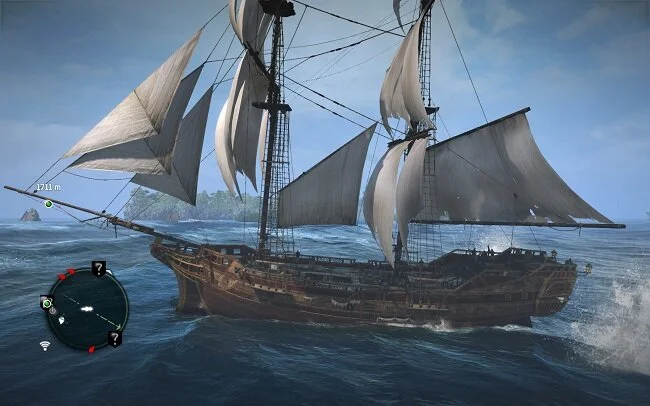
Big franchise RPGs such as Assassin’s Creed straddle both types of gameplay. The story is heavily scripted and very much on rails. But then there is a lot of open world busy work to be done, which you can do at your own leisure. It is the latter that has kept me engaged this week, due to what I describe as incidental emergent gameplay. IE my response to minor things going on around me in the game. The game is set in 1715 in the West Indies and has a nautical and pirate themed plot. There are side missions where you can hunt whales and sharks and I have found these particularly engaging. They have fairly simple mechanics and some ambient dialogue but the rest is pretty much up to the player. I’ve found that it is very easy to get lost in this activity. After successfully hunting a white whale, I found myself quoting both Herman Melville and Khan Noonien Singh.
It is this incidental emergent gameplay on top of the main story and overall game design that keeps gamers hooked. I think if done well it can tip the scales so that an average game becomes a superior one. I love walking around Havana in Black Flag and listening to the ambient dialogue and activities of the NPC. Sailing the seas is also a compelling act in itself. Occasionally I encounter a pod of dolphins or see a whale breach the waves and it is really quite compelling. I’ve not encountered an RPG with such an engaging virtual world since The Witcher III. I think I understand now why some gamers feel the need to write about their ingame characters and create a backstory for them or pen their own stories. Emergent gameplay both directly and indirectly fuels the imagination and one’s sense of narrative. I don’t think I’ll be so dismissive of the concept from now on.
Playing Older Games on Modern Monitors
When I initially think of the late 90s or early 2000s, I don’t immediately realise they’re that long ago. That’s probably due to my age and being born in 1967. However, when I do the mental arithmetic, the march of time becomes quite apparent. Technology can change quickly and often does. Prior to the mid-2000s, most video games utilised relatively low-resolutions and the default aspect ratio was usually 4:3 due to the CRT monitors that were in common use at the time. If you try to play such vintage games on a modern HD, UHD or Ultra Wide monitor you’re going to end up with an image that is either stretched or with black bars on the sides of the screen. There are also going to be issues resulting from low-resolution graphics and textures as well. However both of these problems can be addressed by freely available internet resources.
When I initially think of the late 90s or early 2000s, I don’t immediately realise they’re that long ago. That’s probably due to my age and being born in 1967. However, when I do the mental arithmetic, the march of time becomes quite apparent. Technology can change quickly and often does. Prior to the mid-2000s, most video games utilised relatively low-resolutions and the default aspect ratio was usually 4:3 due to the CRT monitors that were in common use at the time. If you try to play such vintage games on a modern HD, UHD or Ultra Wide monitor you’re going to end up with an image that is either stretched or with black bars on the sides of the screen. There are also going to be issues resulting from low-resolution graphics and textures as well. However both of these problems can be addressed by freely available internet resources.
Not every game gets a remaster or a full blown remake. Fortunately the PC gaming community, being a resourceful one, fills the gaps with numerous “unofficial” patches created by gifted amateurs. These allow for widescreen aspect ratios and higher resolutions that are not native to the original games to run successfully. After searching for a while online, a single site emerged that appears to have by far the most resources available in one place. The Widescreen Gaming Forum, as the name suggests, is an online community that compiles patches for various games into a browsable database. All patches have comprehensive download and installation instructions along with notes verifying what resolutions they support. The patches are often updated to reflect changes in game build or newer screen resolutions.
16:9
I was looking specifically for a solution for Assassin’s Creed IV: Black Flag which was released in late 2013. Although the game does support my primary monitor’s resolution of 1900 x 1200, which is an aspect ratio of 16:10, it still displays at 16:9 creating black bars on the top and bottom of the screen. Apparently Ubisoft is renowned for forcing this aspect ratio in earlier versions of its big releases. Thankfully a solution for this particular problem was quickly found on the forum and a suitable patch applied. The change was successful and now I can play the game at 1900 x 1200 without any masking. It is not what I would call a major change to the game but I found the black bars distracting. I much prefer the entire monitor screen to be filled. I have some older games that have a 4:3 ratio and I‘m very curious to see how well they fare when patched to support a wider format.
16:10
With regard to the other issues surrounding older video games, such as low resolutions graphics, the lack of antialiasing and blurry textures I would recommend using the Nexus Mods website. There are thousands of mods and addons for both contemporary and older video games. This includes a lot of resources that are specifically designed to help older titles run on modern hardware. The Game Pressure website also has some useful files for older titles. And the forums for the online retailer Good Old Games can often point you in the right direction for finding mods and patches to drag old classic titles, kicking and screaming into the twenty-first century. Not every game can be patched to run on Windows 10 but it is certainly worth investigating, if it affords you the opportunity to return to a my beloved classic. In the meantime at least I don’t have to endure the wrong aspect ratio on Assassin’s Creed IV: Black Flag.
NB. I previously touched on this subject in a post two years ago, when I installed the original version of Mafia. I wrote a post on the ensuing fine tuning required to run the game “correctly”.
Aargh, Game Controllers
According to a famous old adage, “you can’t teach an old dog new tricks”. I wholeheartedly refute this as that has not been my personal experience in life. Over the last decade or so I have learned several new technical skills. As a carer to disabled parents, I’ve also learned to be more patient in recent years. And having grandchildren teaches you a thing or two. So I don’t buy into the concept that once people have reached a certain age, they become fixed and immutable by nature. Life presents a continuous opportunity for self improvement. Or to render all this philosophical musing down to a point relevant to this blog post, despite being a PC gamer since the late nineties and habitually using a keyboard and mouse, I have in recent years managed to adapt to using a game controller. To a degree. And that caveat is the point of contention.
According to a famous old adage, “you can’t teach an old dog new tricks”. I wholeheartedly refute this as that has not been my personal experience in life. Over the last decade or so I have learned several new technical skills. As a carer to disabled parents, I’ve also learned to be more patient in recent years. And having grandchildren teaches you a thing or two. So I don’t buy into the concept that once people have reached a certain age, they become fixed and immutable by nature. Life presents a continuous opportunity for self improvement. Or to render all this philosophical musing down to a point relevant to this blog post, despite being a PC gamer since the late nineties and habitually using a keyboard and mouse, I have in recent years managed to adapt to using a game controller. To a degree. And that caveat is the point of contention.
Some games, especially those that are direct console ports, are by default designed to be played with a game controller. I can usually navigate the controls via a keyboard but find that driving vehicles or riding a mount is best done with a game controller. Steering, accelerating and braking using WASD and other keys tends to be awkward. Using the left thumbstick or the D-pad to turn and the right trigger to increase speed is both comfortable and intuitive. Therefore, until recently, this compromise of using a combination of both keyboard and mouse along with a game controller has proven successful. On a few occasions there have been games such as Fall Guys: Ultimate Knockout which I have played exclusively using a game controller. However, and there is always a however, I have recently run into problems with one game. Namely Assassin’s Creed IV: Black Flag, which I have been playing on the Nintendo Switch.
In essence the biggest problem I have with this game is using the left thumbstick in conjunction with the right trigger (RZ) to do freerunning and parkour. I find the thumbstick to be very sensitive and struggle with oversteering. If you collide with walls or any other object you then proceed to scale them. Plus if I press too hard on the thumbstick (L3) and push it directly down, it toggles Eagle Vision which changes the entire UI and further impedes navigation. Naturally, I thought that these problems could be overcome if I practised. Sadly after a week stuck on the same simple mission in which I have to chase a pickpocket at the start of the game, I have made no progress. Perhaps I just have a blind spot regarding this problem but I just cannot adequately control my avatar’s movements. As a compromise I looked at the viability of remapping keys or using an alternative controller configuration. The Switch doesn’t appear to support either of these.
Hence, after hitting such an impasse I’ve decided to stop playing this particular game on the Nintendo Switch. As parkour is such an integral part of the game, if I cannot effectively do it, then it seems somewhat ridiculous to continue. However, that is not to say that I am abandoning Assassin’s Creed IV: Black Flag. I managed to pick up a CD key for the PC version for under £8 and am going to give it another go using keyboard and mouse. Because I don’t want to be excluded from a game due to this obstacle. Perhaps I could improve at playing with a game controller if I sank even more time into practising. But I bought a game to be entertained, not to embark upon the lengthy retraining of both my spatial and coordination skills. Sometimes cutting your losses is far wiser than beating your head upon a wall. Henceforward, I shall resume my former relationship with game controllers.
Explaining Your Passion
I had “the conversation'' the other day. Not the one about where babies come from, the other one. You know, the one where another adult realises that you play video games and is utterly flummoxed by such a thing. Yes, this tedious shit still happens. However, as someone who tries to be civil to others, I feel it incumbent upon me to try and give a concise response when faced with such questions. In some respects being confronted with a situation like this actually offers an opportunity to educate someone who is culturally ignorant about the popularity and significance of video games. Hence, there is a sense of obligation, as an unofficial ambassador for video games, to try and be coherent, plausible and not come off as a nut job. So, with all this in mind, how exactly do you explain your passion for something to someone who finds it utterly alien and probably has some inherent prejudice against it?
I had “the conversation'' the other day. Not the one about where babies come from, the other one. You know, the one where another adult realises that you play video games and is utterly flummoxed by such a thing. Yes, this tedious shit still happens. However, as someone who tries to be civil to others, I feel it incumbent upon me to try and give a concise response when faced with such questions. In some respects being confronted with a situation like this actually offers an opportunity to educate someone who is culturally ignorant about the popularity and significance of video games. Hence, there is a sense of obligation, as an unofficial ambassador for video games, to try and be coherent, plausible and not come off as a nut job. So, with all this in mind, how exactly do you explain your passion for something to someone who finds it utterly alien and probably has some inherent prejudice against it?
I would hazard a guess that most people would start by giving a verbal overview on the merits of gaming. However, fans often cannot see the woods for the trees, so there’s a good chance that this approach could result in a lengthy diatribe, which fails in its good intentions and leaves one of the two individuals involved with their eyes glazed over. Can you guess which one? Another approach may be to try and introduce this fictitious friend who is curious about gaming to some of the professional coverage that is provided by the press. I’m not talking about those tabloid, knee jerk articles with their sensational headlines. I mean reference the fact that most major news sites review video games as they do movies and provide industry analysis. Mind you, this also comes with its own set of problems, as some of it can be an esoteric and niche market. It may only further bewilder and confuse, rather than illuminate. Plus the games media itself can at times be extremely blinkered and unwelcoming.
Some peoples reaction when they discover you play video games
I think the best way to explain to a gaming muggle is to directly show them what it is you love about gaming. By that I don’t mean just demonstrate one of your favourite titles but make clear to them how you personally experience it. Highlight the positive aspects that are common to other hobbies and pastimes, such as the social interactions and the friendships. Gaming is truly international, affording opportunities to meet online and build relations with people all over the world. Reference the associated blogging community and those that produce content about gaming as this can also help promote gaming in a positive way. The parallels that video games share with sports fandom may also work in your favour. The key is to break the stereotype of the gamer being an antisocial person indulging in something that has negative connotations. It also doesn’t do any harm to show how gaming can be a force for good by the way both developers and gamers undertake charitable work.
The tabloid press love video games
My suggestions are by no means comprehensive and I’m sure you can think of plenty of additional ideas yourself. As ever with any sort of human interaction, you need to adjust your pitch according to the situation and who you are talking to. Yet if each of us can manage to change at least one person's mind about gaming, assuming you ever find themselves questioned as I were, perhaps we can say goodbye to the trite depiction of gamers that still prevails in certain parts of the media. Please note that I am not advocating proactive evangelising of video games to non gamers whether they want to know or not. Sometimes it is far more sensible and safer to compartmentalise your life and not share too much about yourself with work colleagues etc. However, there are some people who are genuinely curious about things outside of their own experience, who are open to re-evaluating their opinions. So if they ask, then do your best to explain.
LOTRO: What Happens Next?
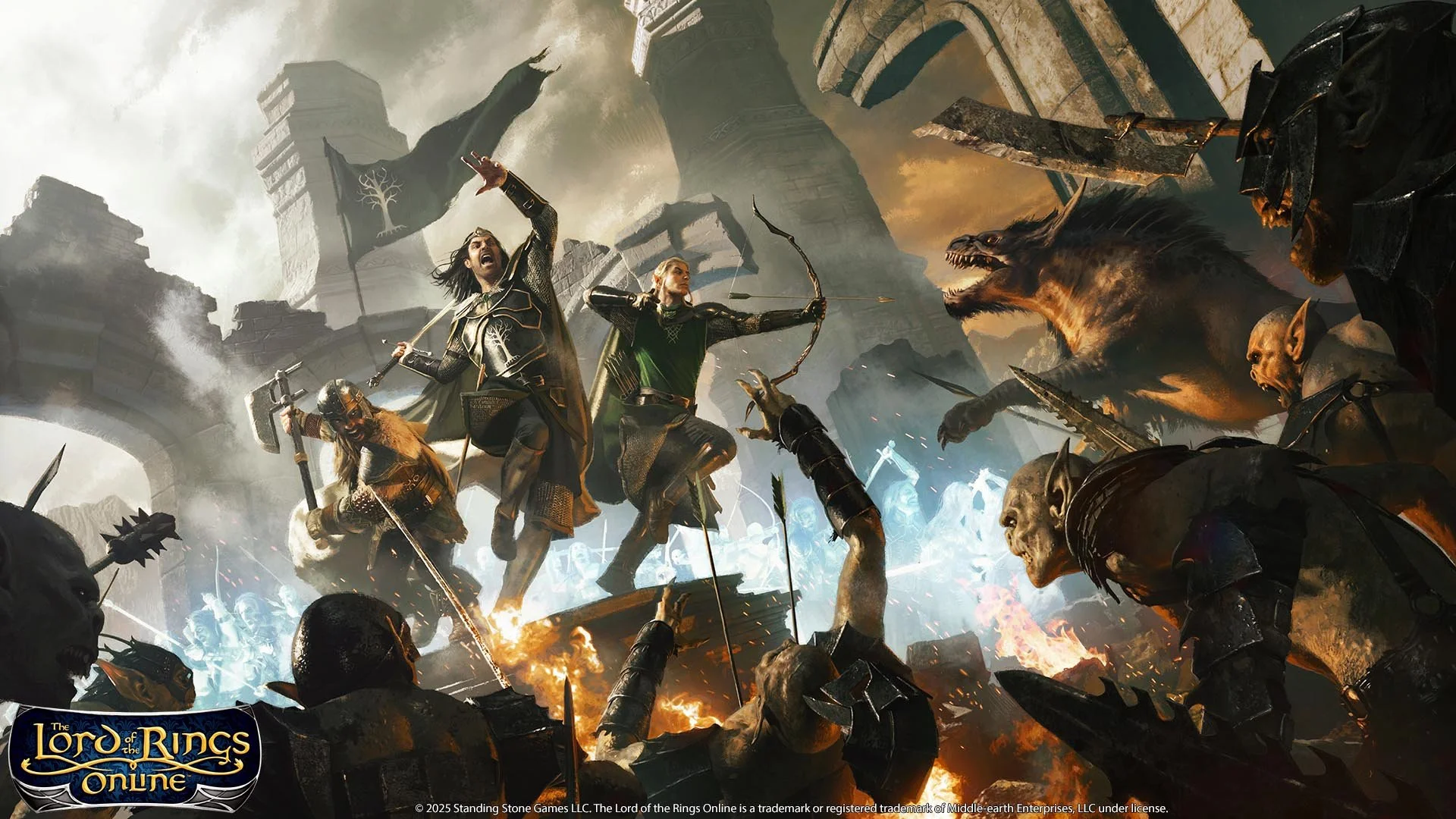
Around the middle of May, it was announced on the official forums that the MMORPG The Lord of the Rings Online had a new Producer, Oleg Brodskiy (AKA Raninia). This news was hardly “shouted from the rooftops” and I only found out about it when Raninia was recently “interviewed” by LOTRO streamer Louey7. So what do we know about Mr Brodiskiy? Well he comes from a mobile game background, having worked on such titles as Archer: Danger Phone and Marvel Puzzle Quest. He has experience as a game producer and in QA. According to the introductory post he made on the forums “Sev remains the Executive Producer, I'm coming in as support under him. I'll be spending my time exclusively on LOTRO, and am hoping to be reasonably communicative”. As mentioned, he recently appeared on a live stream and answered some questions regarding what’s happening with LOTRO in the next 6 months or So. He also alluded to 2022.
Around the middle of May, it was announced on the official forums that the MMORPG The Lord of the Rings Online had a new Producer, Oleg Brodskiy (AKA Raninia). This news was hardly “shouted from the rooftops” and I only found out about it when Raninia was recently “interviewed” by LOTRO streamer Louey7. So what do we know about Mr Brodiskiy? Well he comes from a mobile game background, having worked on such titles as Archer: Danger Phone and Marvel Puzzle Quest. He has experience as a game producer and in QA. According to the introductory post he made on the forums “Sev remains the Executive Producer, I'm coming in as support under him. I'll be spending my time exclusively on LOTRO, and am hoping to be reasonably communicative”. As mentioned, he recently appeared on a live stream and answered some questions regarding what’s happening with LOTRO in the next 6 months or So. He also alluded to 2022.
Briefly, here is a recap of the points that were discussed in the stream. The original summary appeared on Massively Overpowered, care of Justin Olivetti and I have further condensed it for brevity.
2021:
The Gundabad expansion is due in autumn and will be tied to the new Brawler class.
The Brawler class has a tank and DPS role. Specific race options are not yet decided.
Gundabad will feature missions and an older system that SSG is returning in a revised state.
Gundabad will include Legendary Item changes. The older LI system will be “phased out”.
The new LI system will be easier to use and for players to catch up.
2022:
The development team have proposed years’ worth of potential content, although nothing beyond Gundabad has been completed.
Trait lines, crafting and kinships may have future systems revisions.
Visual and technical upgrades are being planned, although specifics have not been decided. A possible console edition cannot be discussed at present.
Multithreading is “possible” but very difficult to achieve with LOTRO’s game engine.
There are no plans at present for level compression (like WoW).
Changing the acquisition of class trait points has been discussed.
SSG would like to have an EU-based server, but there are definitive plans at present.
Character transfers from closed worlds to live ones are being tested.
There are no planned server merges.
This is more information than we’ve seen for a while and certainly Oleg seems to be far more comfortable talking about the game than other members of Standing Stone Games. The interview was casual, upbeat and suitably vague. As previous new classes or races have been tied to expansions, it’s no surprise that the Brawler will follow suit with the arrival of Gundabad. The community knew the LI revision was coming so it will be interesting to see how simplified it will be. I wonder if the “older system” that is making a comeback in a revised state is skirmishes? Missions after all are just a variation of these and skirmishes were always a welcome alternative to traditional quests. As for next year, there seems to be a lot that is being discussed but it would appear that there may be technological restrictions. I don’t expect to see visual changes, multithread support and a console port any time soon. I suspect that SSG will focus on what can be achieved easily first. So expect skills bloat, skill points and crafting to be tackled sooner.
As ever with LOTRO much remains unanswered. Not only game specific details but wider aspects of company policy. Is Oleg Broadskiy’s employment a direct result of EG7 new ownership? Because from what I've seen of them so far (their YouTube channel has proven very informative) they are facilitators and enablers, rather than old school autocratic owners. They don't appear to have a vision for LOTRO that they wish to impose upon SSG. They seem more disposed towards supporting SSG financially and administratively, so they can take the game forward. If that is the case then LOTRO’s future development and direction is still being driven by SSG and that is what concerns me. They haven’t always struck me as that imaginative of companies and they often seem to be tone deaf to community concerns. However, more money and potentially more staff may well change this, bringing fresh ideas. Having played LOTRO for 13 years and followed the games development closely, the most I can do at present is remain cautiously optimistic.
Looking at the long term future of the game, it does seem like LOTRO is at a crossroads in its lifecycle. Fortunately there are several positive factors in the games favour at present. In recent years there have been major changes to the Tolkien Estate and Middle-earth Enterprises affording greater leeway with licencing and use of Professor Tolkien’s intellectual property. EG7 acquiring Daybreak Gaming Company and their portfolio, has revealed a lot of data regarding LOTRO and it has shown that the playerbase is quite robust, generating stable revenue. Plus there’s a very good chance of renewed interest in all things Middle-earth when Amazon Prime’s new TV show which is set in the Second Age launches at the end of 2021. Hence if the game is adequately funded, developed and promoted it could see an increase in players. A console port would be invaluable, as could revising the games engine and mechanics for the PC market.
For LOTRO to survive and thrive, it requires a development team and chain of command with sufficient love and vision. If such skills are lacking in SSG at present, then perhaps EG7 can recruit them. Potentially, if managed well LOTRO could endure for another decade. A revamped game with modern attributes, yet still founded on strong narrative gameplay should do well. Being made available on EG7’s growing platform 4Game would be a major shot in the arm. When you consider the huge international appeal of Tolkien’s work (since publication The Lord of the Rings has sold 150 million copies) it seems ludicrous that a massively multiplayer game based upon that work hasn’t secured a bigger place in the market. In many ways LOTRO is now in the best position it has ever been in to reach its full potential. However, if this process of self improvement doesn’t start soon, then the opportunity may be missed and like Galadriel the game will diminish and go into the West. As always, time will tell.
Screenshots and Photo Mode
Despite its many flaws, Cyberpunk 2077 launched with a very comprehensive “photo mode”. Developer’s CD Projekt Red put a lot of resources into creating the game's aesthetic and recognised that players would want to explore it and record how their avatars interact with it. The ability to take screen captures is a selling point for many games, especially in the RPG and MMORPG genres. It allows players to keep a permanent record of their activities over time and also adds another social aspect to proceedings. Players love to share screenshots that showcase their avatars and record events they’ve participated in. Some fan sites are predicated purely upon in-game photos. Either highlighting the various cosmetic items that are available or capturing the beauty of the virtual world. I still have screenshots from The Lord of the Rings Online going back to the day I started playing in December 2008.
Despite its many flaws, Cyberpunk 2077 launched with a very comprehensive “photo mode”. Developer’s CD Projekt Red put a lot of resources into creating the game's aesthetic and recognised that players would want to explore it and record how their avatars interact with it. The ability to take screen captures is a selling point for many games, especially in the RPG and MMORPG genres. It allows players to keep a permanent record of their activities over time and also adds another social aspect to proceedings. Players love to share screenshots that showcase their avatars and record events they’ve participated in. Some fan sites are predicated purely upon in-game photos. Either highlighting the various cosmetic items that are available or capturing the beauty of the virtual world. I still have screenshots from The Lord of the Rings Online going back to the day I started playing in December 2008.
There is a surprising amount of skill involved in composing a good screenshot and it is not just a case of point and click. Framing and the “rule of thirds” are important factors. A Google search will provide you with plenty of common sense advice. However it helps immensely if a player can readily swap from third person to first person perspective. There will be times when you do not want or need your own avatar in the picture that you are taking. Thankfully most major MMOs have the facility to easily change between camera views and to turn off the user interface. However, photo mode, found in single player games, provides a far greater degree of creative freedom. It allows the game to be paused and the in-game camera to be detached from its preset configurations and to navigate in three dimensions around the desired image.
Considering that so many games these days have a business model based around the sale of cosmetic items, it comes as no surprise that gamers want to take in-game selfies. It has to be said that the MMORPG genre, especially the role playing community, has a somewhat vain streak running through it. After all it is your avatar that is at the centre of the game. Hence, it seems logical and good business sense to ensure that all games come with facilities to accommodate and support screen captures. Where possible I’d personally like to see the more comprehensive photo mode supported. This really appeals to me in the same way as drawing and painting does. There is immense satisfaction to be had in trying to compose and frame a shot. It is something I can happily spend hours on. And then there is the option of post processing although that can be a somewhat contentious issue. Does it enhance the image at the expense of the game?
Sadly, some games still lack integral screenshot support or do not have a specific photo mode. Furthermore, some even go so far as to actively block third party screen capture apps from working. For years I used the screen capture program FRAPS but some Ubisoft games see it as a security threat and consider its activity suspicious. So I found myself having to use for a while the screen capturing tool that comes with Nvidia’s GeForce experience software, to take pictures in certain games. Fortunately, I subsequently discovered Bandicam which offers a one stop screen and video capture solution, bypassing the issues caused by certain developer’s security protocols. There’s a free version that allows for unlimited screen captures without watermarks but it does restrict video capture to 10 minutes. The full version of the software cost $40.
Defining Immersion in Video Games
Like any leisure activity, video games have their own unique lexicon. Some of these terms have become so ubiquitous that they have bled through from pop culture into everyday parlance. Hence we have the UK Prime Minister talking about “levelling up”; a suitably nebulous and vacuous soundbite. Gaming terms are elastic and often their meaning shifts, just like many other words in daily use. Hence the acronym MMO doesn’t really mean what it did two decades ago. Fellow blogger Wilhelm Arcturus wrote about a very specific gaming phrase yesterday. One that he feels very passionately about. Namely the term “immersion”. Gamers often refer to it in heated debates but due to its ill defined nature, it is inherently ambiguous. Wilhelm explored this in both his post and its subsequent comments. I’d like to continue with that train of thought here.
Like any leisure activity, video games have their own unique lexicon. Some of these terms have become so ubiquitous that they have bled through from pop culture into everyday parlance. Hence we have the UK Prime Minister talking about “levelling up”; a suitably nebulous and vacuous soundbite. Gaming terms are elastic and often their meaning shifts, just like many other words in daily use. Hence the acronym MMO doesn’t really mean what it did two decades ago. Fellow blogger Wilhelm Arcturus wrote about a very specific gaming phrase yesterday. One that he feels very passionately about. Namely the term “immersion”. Gamers often refer to it in heated debates but due to its ill defined nature, it is inherently ambiguous. Wilhelm explored this in both his post and its subsequent comments. I’d like to continue with that train of thought here.
The obvious question to start with is “what is immersion?”, so I did a quick Google search to see if I could determine the most commonly used definition. This proved to be “deep mental involvement in something” according to Oxford Languages. The next step is to dip our toe tentatively into the sea of semantics, because there are many words that technically have a comparable or similar definition as immersion but their associated usage and linguistic baggage make them subtly different. For example, is immersion the same as concentration? I think not. I would associate competitive gaming more with that term. Esports is more about focus, IE concentrating on your technical skills, rather than getting lost in the moment which to me has more philosophical connotations. However, the phrase “in the zone” at first comes across as more of a sports orientated term. Yet it is equally applicable to creative and artistic endeavours. A role player could find themselves “in the zone” as they spontaneously weave an engaging narrative.
Such is the nature of semantics. As you can see, we’re no nearer to a more precise definition of immersion. So perhaps it would be better to approach it from a more philosophical angle. Do all gamers place significance upon immersion? I’d argue not. Competitive gaming is more akin to sports hence I wouldn’t expect immersion to be high on such gamers agenda. So called “core gamers” are more disposed toward technical mastery and exercising their skills precisely, rather than musing on the motivations of their avatars or the beauty of the virtual world in which they are playing. In fact when one considers the cultural divide between different gaming groups, I would hazard a guess that “core” gamers eschew immersion, as it represents a major aspect of social gaming, which they despise. Hence it is fair to say that immersion is more the province of the casual gamer, the role player and virtual explorer. Furthermore its importance is possibly genre dependent.
So what have we discovered so far? That immersion is a broad church that loosely means getting lost in the game that you’re playing. I would also suggest that immersion has a scale associated with it and what sort of player you are and the kind of game that you are playing dictates where you are on that scale. Using the MMORPG genre as an example, I would suggest that role players would be at one end and casual players like myself somewhere in the middle and PVP players at the other. One’s relative immersion is dependent upon variations of the following. Concentrating upon exactly what you’re doing within the game, to the exclusion of all other thoughts. Being engaged with the written narrative (or your own headcanon), your avatar’s actions and caring about what is happening and the potential outcome. For me, it is similar to being lost in watching a film, with the added bonus of having direct involvement upon events.
Naturally, there are many different things that can impact upon our personal sense of immersion. For example, first person versus third person perspective may make a difference. When playing from a first person view, you are the character. However, with a third person view you are observing the character. It is a small and subtle distinction but people may well react differently because of it. Animations, on screen prompts player chat can also be a source of distraction and objection that spoils one’s sense of immersion. And then there is the thorny issue of in-game stores and business imperative that comes with video games. This is often an anathema to those who see video games as a refuge from the iniquities of modern corporate life, despite the fact that video games are in many ways a microcosm of the fruits of capitalism.
For me, immersion in video games is something I find when I am on my own and free from interruptions. I can spend as much time as I like following the narrative, or reading the various lore books I find. It’s about stopping to take in a view and reflecting upon its beauty. It’s about watching the hustle and bustle of both NPCs and players in major cities. Immersion is the sense of satisfaction, achievement and joy I feel after beating a boss, completing a major quest arc or simply travelling round a virtual world. Anything that comes between these things breaks that immersion. I dislike skipping through quest bestowal text or dialogue as it somewhat mitigates my “motivation”. At times I do feel like a method actor seeking for “reasons” for my in-game actions beyond the obvious.
Immersion is a subjective and enigmatic thing. As there is no comprehensive and universally accepted definition that we all buy into, debates upon the subject will always be contested as not everyone’s experience is identical. Overall I believe that in light of this conclusion, the best we can hopefully agree upon is that immersion exists as a spectrum or scale. Exactly where we fit on it is unique to each of us. As to arguments that there is no such thing as immersion that are proposed from certain gaming quarters, I believe them to be flawed. Immersion is about feelings and one’s personal perceptions. It is not solely defined within logical parameters and in legally binding terms. Immersion in games is akin to what we feel when we are enthralled by a good book or that emotive response you have to a great song or piece of music. We do these uniquely, however it is entirely possible to find ourselves in part of the Venn diagram shared with others.
Some Video Games Fail
I was somewhat surprised to learn this week that the action role-playing video game Magic: Legends was to be closed. Not so much by the actual decision itself but at the speed at which it has been made. Technically the game has not left beta testing and will now never be formally launched. The servers will remain accessible until October 31st 2021 and players who have spent money on microtransactions via the Epic Store or Arc will be refunded. Developer’s Cryptic and publishers Perfect World Entertainment have naturally not given any specific details regarding the reasons behind the games closure. The accompanying press release is suitably vague. “We learned several valuable lessons along the way, and we will use them to improve Cryptic’s future development efforts”.
I was somewhat surprised to learn this week that the action role-playing video game Magic: Legends was to be closed. Not so much by the actual decision itself but at the speed at which it has been made. Technically the game has not left beta testing and will now never be formally launched. The servers will remain accessible until October 31st 2021 and players who have spent money on microtransactions via the Epic Store or Arc will be refunded. Developer’s Cryptic and publishers Perfect World Entertainment have naturally not given any specific details regarding the reasons behind the games closure. The accompanying press release is suitably vague. “We learned several valuable lessons along the way, and we will use them to improve Cryptic’s future development efforts”.
Magic: Legends went through several design changes during its development. It was originally conceived as a free-to-play, next generation, action MMORPG. However this was later downgraded to multiplayer action RPG. The version released for beta testing in March was unpolished and uninspired (according to player feedback) and then courted further controversy by having a somewhat egregious business model with an excess of store benefits. Despite being part of a much beloved franchise, the game just seemed to miss the mark and was seen as just another indifferent ARPG in an already saturated market. The entire situation put me in mind of Turbine’s Infinite Crisis. This was a game based upon an established intellectual property (DC universe) that was similarly closed after a lacklustre reception back in 2015, despite the resources that had been spent upon it.
Naturally, it is the human cost of this situation that is the saddest part of the story. The demise of Magic: Legends has consequently resulted in staff layoffs. In wider terms, this is a timely reminder that video games are consumer products, designed to make money. Obviously the powers that be (in this case PWE) looked at the development costs of Magic: Legends (including what it would take to improve the game) and then offset that against any projected revenue they thought they could make. They subsequently decided to cut their losses and move on to the next project. It’s not as if every aspect of the game’s development is a write off. Assets and code can be reused elsewhere. This was a business decision, pure and simple. Magic: Legends will now join Crucible and Anthem on the list of major video games that have failed. Because failure is an intrinsic part of business.
A Month in Gaming
The last installment of A Month in Gaming was at the end of April. I have decided to update this recurring post less often to ensure that I have more to write about than just cataloguing my generic activities in The Lord of the Rings Online and Star Trek Online. The only downside of such an approach is that it invalidates the title but that can’t be helped. Fortunately, I have done more than usual over the last two months. My daily schedule has changed temporarily and I now have a little more leisure time available. Hence I’ve dabbled with several new games as well as using my Nintendo Switch more often. I also took part in a “tag team” playthrough of XCOM 2, which was a very interesting experience. And I finally took the time to go through all my games libraries on the various different platforms to catalogue exactly what I have. I found a few hidden gems but the majority is just “filler” that you find in most video game bundles.
The last installment of A Month in Gaming was at the end of April. I have decided to update this recurring post less often to ensure that I have more to write about than just cataloguing my generic activities in The Lord of the Rings Online and Star Trek Online. The only downside of such an approach is that it invalidates the title but that can’t be helped. Fortunately, I have done more than usual over the last two months. My daily schedule has changed temporarily and I now have a little more leisure time available. Hence I’ve dabbled with several new games as well as using my Nintendo Switch more often. I also took part in a “tag team” playthrough of XCOM 2, which was a very interesting experience. And I finally took the time to go through all my games libraries on the various different platforms to catalogue exactly what I have. I found a few hidden gems but the majority is just “filler” that you find in most video game bundles.
Let’s start with MMOs. The new Blackwood expansion for The Elder Scrolls Online has provided me with a reason to return to the game. I have written at length about the companion system in another post but I would like to reiterate how it does provide a major shot in the arm for the solo player. I have ventured into several dungeons with Mirri providing ranged DPS in support of my melee combat and it has proven a most effective combination. Especially if you configure your companion with at least one healing skill. Alternatively you could equip either of them with a Restoration Staff and make them a dedicated healer. The companion system seems very flexible and I do hope that developer’s ZeniMax continues to improve it further.
In STO, I have levelled one of my new Delta Recruits and have now optimised their build and gear. The toughest aspect of fine tuning an alt in STO is reaching Tier 6 with all reputation factions. If you have completed this on one character, there is a 50% reduction in the time it takes on all subsequent alts. However, even with this benefit, it still takes 50 days and requires you to grind out a prodigious amount of reputation marks. The Summer Festival started today on the resort planet of Risa, so I currently have an alt permanently stationed there to undertake the repeatable daily quest and hence earn the new free Tier 6 ship. I have deferred returning to LOTRO for the present, preferring to keep Update 30 for the Autumn. At present I’m more interested to see what developer’s Standing Stone Games are up to and whether EG7 has any announcements pending for both DDO and LOTRO.
I have continued with the RPG GreedFall and try to have one major play session a week. The game supports mods, so I have one currently installed that removes the brown filter that blights the visuals. I appreciate that game designers like to use the colour palette to create an aesthetic that reflects the narrative themes. But this grimy veneer that has been applied does become tiresome after a while. Once removed the colours of the environment become far more vibrant. I prefer it when games make such visual affectations optional and allow players to toggle such features off if they so please. Adding faux film grain to cinematic cutscenes is another common technique and one that can be quite distracting. GreedFall is a very satisfying RPG, combining many of the elements found in BioWare games. It is the sort of game that provides “comfort entertainment”, as it feels very familiar and traditional.
Perhaps the most challenging game I’ve played of late is Assassin’s Creed IV: Black Flag. This is mainly down to the fact that I’m playing the Switch version and using a pro controller. I’ve tackled other instalments in the franchise on the PC. The combination of the unfamiliarity with using a controller plus the absolute plethora of buttons, menus and actions has meant that my progress has been very slow. Plus when playing on a PC, I am sitting directly in front of the monitor. Using a large screen TV and sitting further away also takes some getting used to. Although I can see quite well, the incongruity of this manner of gaming seems to add to my sense of discombobulation. However, I shall persevere as I like this game and the naval combat is proving especially enjoyable.
In early May, I took part in an XCOM 2 succession game, in which each player undertook a mission and then saved the game and shared the file with the next participant. It was a very interesting experience as playing a turn based strategy game is somewhat out of my comfort zone. Broadly I enjoyed this experience but as ever there were a few caveats. Some of the missions in XCOM 2 have time sensitive objectives. Mercifully, I did not have to endure one of these. I don’t care for time based game mechanics and find them annoying rather than tense or motivating. And then there was the issue of incurring a fatality among your squad when undertaking a mission. Usually, I wouldn’t worry so much about such a thing but as this was a team undertaking, I felt a greater sense of responsibility to prevent this. Ironically, I failed but it is interesting how participating in a team activity changes your outlook and how you play a game due to a perceived sense of obligation to others. Perhaps I’m just not a good team player.
As I mentioned initially, I finally catalogued all games that I currently own and have been trying to draft a short list of the titles I would like to try this year. Horizon Zero Dawn, Days Gone and Elite Dangerous are the current favourites. Possibly 70% of what I own will more than likely never be played. In many ways this highlights the ephemeral nature of video games. Like popular music from time to time someone will create a timeless classic but there is also a lot of disposable content produced on a seemingly endless conveyor belt. And much of that seems to end up in my video game collection. I must admit, when I finally move over to Windows 11 as an operating system, I’m curious to see how well support for Android apps goes. I tend not to play mobile games on my phone or tablet and the biggest stumbling block of running them on my PC is the use of an emulator. Finally being able to try some titles from the comfort of my PC could prove convenient. Or it may validate my existing prejudice towards mobile games.