
Why Does the Games Industry Seem So Dysfunctional?
Write here...If you take a look at video game industry at present, it isn’t exactly enjoying universally good PR. 2017 saw numerous damaging revelations such as the “loot box” debacle, several high-profile studios going to the wall (and not just because of financial mismanagement), and more recently there have been serious allegations of bullying and sexual harassment within several high-profile studios. Despite being a “modern” industry it seems to have all the flaws of those that have existed for centuries with respect to abuses of power and financial skulduggery. This raises the question "why does this industry seem so dysfunctional?" Just because gaming is a multi-billion-dollar business we naturally assume that successful companies are efficiently run, by competent captains of industry as well as skilled and professional staff. It is therefore confusing when this illusion is shattered due to evidence to the contrary. This begs the question, why do these institutions so often have metaphorical feet of clay?
If you take a look at video game industry at present, it isn’t exactly enjoying universally good PR. 2017 saw numerous damaging revelations such as the “loot box” debacle, several high-profile studios going to the wall (and not just because of financial mismanagement), and more recently there have been serious allegations of bullying and sexual harassment within several high-profile studios. Despite being a “modern” industry it seems to have all the flaws of those that have existed for centuries with respect to abuses of power and financial skulduggery. This raises the question "why does this industry seem so dysfunctional?" Just because gaming is a multi-billion-dollar business we naturally assume that successful companies are efficiently run, by competent captains of industry as well as skilled and professional staff. It is therefore confusing when this illusion is shattered due to evidence to the contrary. This begs the question, why do these institutions so often have metaphorical feet of clay?
To start let me declare my own background as my own experiences are relevant to this discussion. I have worked in IT for over twenty-five years in both the private and public sector. I started in first line support and worked my way up to running my own consultancy, from which I retired in 2016. I have worked for companies such as HP, Symbian and government departments such as the NHS as well as the DWP. I have been directly involved in several national projects, some of which have been successful while others have failed miserably. None of these situations are identical to the gaming industry, but I believe there are a lot of similarities between the way big businesses work and make decisions. I also read a lot about the gaming industry and at times find it a lot more interesting than the actual products that they develop. This has often been the focus of our discussions here at Contains Moderate Peril both in posts and on the podcast. Therefore, when I read stories about the iniquities of the gaming industry, I often view them through the prism of business, rather than fandom.
So, returning to the initial question of dysfunction, I would argue that the gaming industry is no different from any other major business or governmental entity. Politics, big business and the entertainment industry are as equally rife with the same problems you will find with smaller employers. In fact, I think a lot of people would be surprised at the similarities. Both ends of the spectrum have issues with under qualified staff, office politics, feedback loops, laziness and that social phenomenon that is “square pegs in round holes”. The latter group seems to be subject to a quota system that no company is excused from. Despite rigorous recruitment processes, there always seem to be a small percentage of wildcards that somehow seem to slip through the intense screening. Or alternatively, we later discover that the screening isn’t that thorough to begin with. Then of course there is the Dunning-Kruger effect which impacts on all social groups both in and outside of business. It is possibly one of the commonest problems of our time.
The problem is that the general public erroneously assumes that successful big companies have gained their status through efficiency and vision; that their internal business structure is a model of the best methodologies and practises. Sadly, this is often not the case. Corporations suffer from the same flaws as smaller enterprises but have the advantage of monopolies, more effective marketing and sheer momentum due to their monolithic size. Then there is of course the concept of being "too big to fail". Often a major business will be granted a lot more leeway by during difficult times because of their overall potential. Creative accounting is also a factor, as having a legion of financial experts and financiers at your beck and call, means that you can present a positive financial image, whether there is one or not. Smaller companies cannot hide behind such smokes screens as easily.
As consumers, need to take a lot of people and companies off the pedestals on which we've been placed them. This is especially relevant to gamers where the cult of personality and brand loyalty still hold sway. We also have to make a clear distinction between the creative staff within a business and those in senior management. One group may well care more for the end product, while the other has a totally different agenda and more financially orientated goals. It is also prudent to consider the issue of size. I have found that the successful management of people decreases exponentially as the size of that group grows. There is also a wealth of data available on all the inherent flaws of managing staff via a traditional business hierarchy. Ironically, a lot of the attributes that are encouraged to be successful in modern business, actually seem contrary to the moral and ethical behaviour we expect in a civilised society. It is this paradox that seems to be the Achilles heel of all business, regardless of their nature or size.
So next time we find ourselves surprised by some example of big business making bad decisions, take a moment to reflect upon the following. The launch of “New Coke” in 1985, Kodak’s failure to market digital cameras despite being a leader in its development, and Blockbusters rejection of a buyout by Netflix in 2000. In light of these, it is hardly surprising when you discover that the developer of your favourite MMO has clumsily handled a PR situation, or not listened to player feedback. It’s not gaming as an industry that is dysfunctional per se, but the fact that so many gamers have a skewed perspective of it. We make judgements with our hearts and fail to use whatever sense of business acumen we may have. We also tend to romanticise certain jobs because the end product is “cool”. Yet, if you visited a game developer’s offices, you’d probably find a work environment not that different from your own. Staff are more than likely grumbling about pay, the failings of the boss and Tim in HR. Ultimately it is that random human factor that breeds dysfunction, so it is inevitable that it spreads everywhere. So why should the games industry be any different?
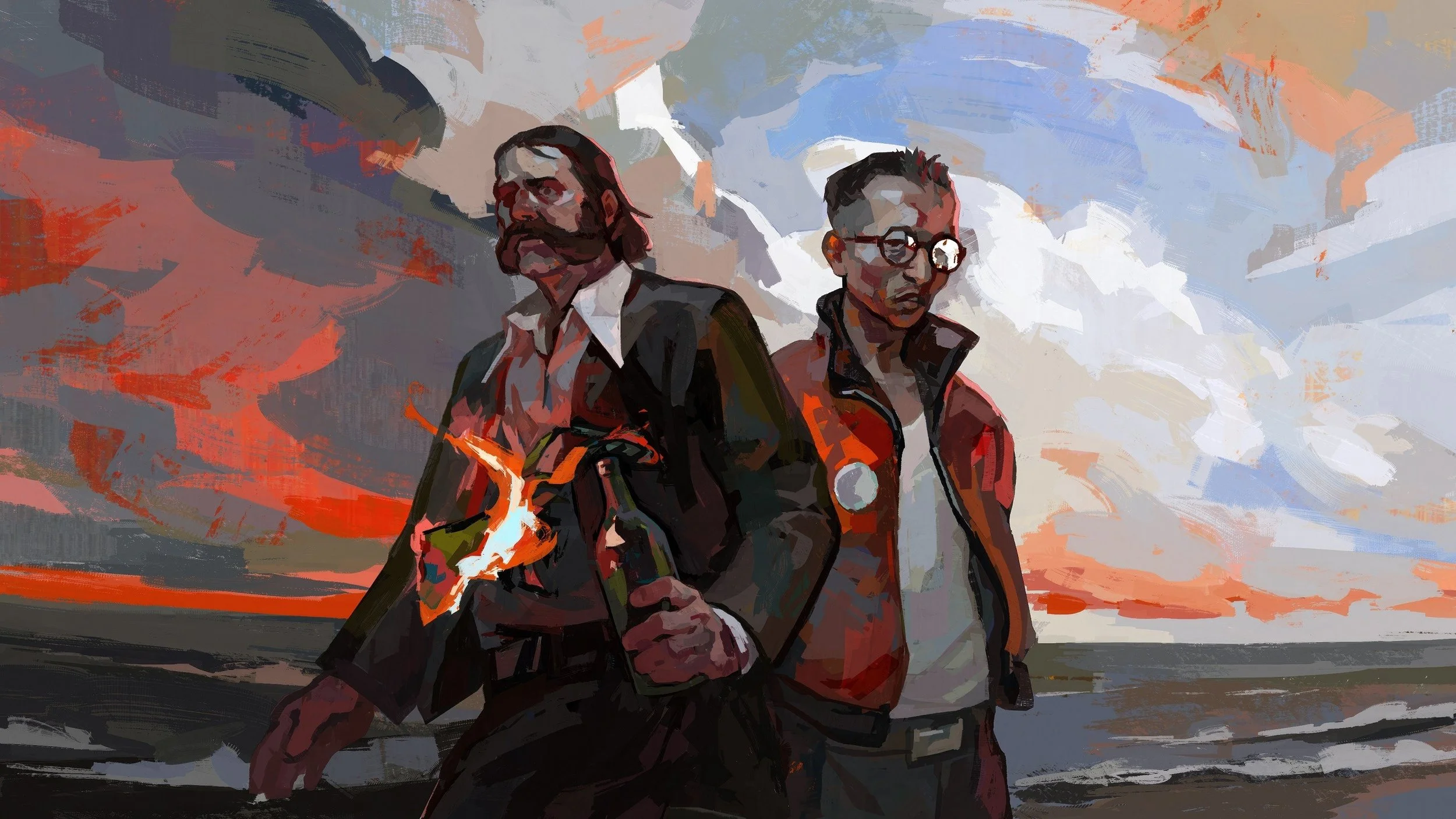

Indie Game: The Movie (2012)
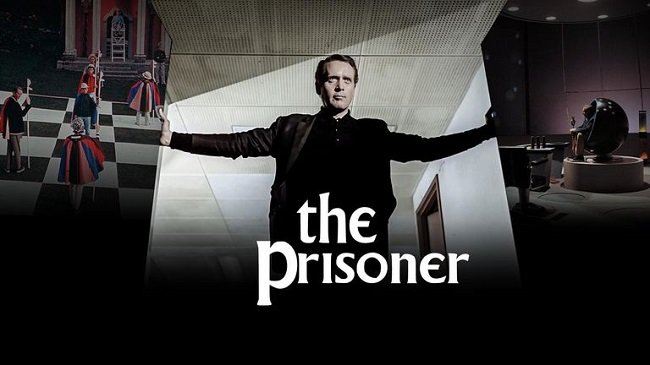
Indie Game: The Movie is a genuinely fascinating documentary not only about the machinations video games industry but also the blood, sweat and tears that go into any creative process. It is a film that really does give you pause for thought and encourages you to reflect upon what you may want in life. It clearly shows the true cost and the star reality of any labour of love. It should be required viewing in schools and colleges for any wannabe who dreams of being on a reality shows and achieving a fast path to their perceived heart’s desire. Such is the impact of the documentary’s message.
Indie Game: The Movie is a genuinely fascinating documentary not only about the machinations video games industry but also the blood, sweat and tears that go into any creative process. It is a film that really does give you pause for thought and encourages you to reflect upon what you may want in life. It clearly shows the true cost and the star reality of any labour of love. It should be required viewing in schools and colleges for any wannabe who dreams of being on a reality shows and achieving a fast path to their perceived heart’s desire. Such is the impact of the documentary’s message.
Indie Game: The Movie focuses on four independent game developers. One, Jonathan Blow has already achieved success via his game Braid. This thoughtful, introspective man who has fulfilled his dream, still feels that his work has not been fully understood by the wider public. It becomes very clear that the creation of his game was not a purely financial undertaking and that he sees it as a wider artistic endeavour. His experiences are subsequently cross referenced against three other developers, labouring to bring their magnum opus to the commercial markets.
Edward McMillen and Tommy Refenes, the creators of Super Meat Boy (which has subsequently proven very successful) are shown burning the midnight oil and moving heaven and earth to meet the rigorous timetable set for them by Microsoft. It becomes very clear that although they want their game to do well commercially, the main thing is to create something akin to the games they grew up with. That is by far the most important thing to them. It is a very personal statement and it should resonate with any writer, musician or film maker.
Phil Fish is shown taking his game Fez to the PAX trade show. Four years in the making and still incomplete, he has to deal with the legal fallout of failed business partnership, along with impatient fans who have gone from eager consumers to rabid, disaffected trolls. The stress is very evident with both sets of developers, although they face different issues. One has the immediate problem of his family getting into debt to keep his dream afloat, another face potential legal action. All stare failure directly in the eyes. These aren't corporate executives with alleged nerves of steel. These are real people like you and I and it is quite traumatic watch.
Indie Game: The Movie depicts the independent gaming world as being equally blighted by corporate bullshit as any other industry. There are deadlines, small print and ever-changing goal posts. The work required is prodigious and there is little or no advance funding. Tommy Refenes, a diabetic to begin with, does not look well for a great deal of this documentary. The reality of the situation is back breaking work, a crappy diet, no social life, and the only light at the end of the tunnel being the possibility of scoring a hit. It is not glamorous, hip or a bohemian lifestyle choice. It certainly makes the mundane nature a lot of nine to five jobs look a lot more appealing.
On a side note this is a beautifully crafted piece of film making. It is handsomely shot and well edited, presenting the material in a palatable story arc. It is not overtly biased and although it references the developer’s views on the mainstream commercial gaming industry, it does not offer any overt soap boxes. Overall Indie Game: The Movie is about people making a personal creative and artistic statement and the consequences of doing so. In that respects the documentary has appeal beyond the confines of gaming. It is one of the most emotionally engaging documentarys that I have seen, and I heartedly recommend it.









World of Warcraft: Looking for Group (2014)
Despite having played a broad spectrum of games in my time, I've never really had much dealings with the Blizzard. Beyond owning Overwatch, a game I’ve long stopped playing and trying a free trial of both World of Warcraft and Hearthstone, I have little personal experience of their games. However, I am fully aware of their product range and their reputation within the gaming industry. Overwatch has taught me how well-conceived and polished their games can be. Blizzard may not be incredibly innovative, but they learn from others and produce titles with all the elements that work well. Sadly, I have no real affinity to their flagship MMORPG, as my point of entry with that genre was LOTRO. My interest in World of Warcraft mainly stems from a business perspective and the place it holds in gaming history. Overall my curiosity about the game, its community and culture is mainly academic. So, I finally got around to watching the documentary World of Warcraft: Looking for Group that showcased at Blizzcon in 2014 and was subsequently released on You Tube thereafter.
Despite having played a broad spectrum of games in my time, I've never really had much dealings with the Blizzard. Beyond owning Overwatch, a game I’ve long stopped playing and trying a free trial of both World of Warcraft and Hearthstone, I have little personal experience of their games. However, I am fully aware of their product range and their reputation within the gaming industry. Overwatch has taught me how well-conceived and polished their games can be. Blizzard may not be incredibly innovative, but they learn from others and produce titles with all the elements that work well. Sadly, I have no real affinity to their flagship MMORPG, as my point of entry with that genre was LOTRO. My interest in World of Warcraft mainly stems from a business perspective and the place it holds in gaming history. Overall my curiosity about the game, its community and culture is mainly academic. So, I finally got around to watching the documentary World of Warcraft: Looking for Group that showcased at Blizzcon in 2014 and was subsequently released on You Tube thereafter.
Despite being three years old and there being major changes to the game in that period, I was hoping that the hour-long film would be relatively informative about the MMO. Sadly, World of Warcraft: Looking for Group is a curious mix of marketing, nostalgia, talking heads and self-congratulation rather than an in-depth analysis of a financially successful game and cultural phenomenon. If you are looking for a rigorous dissection of how Blizzard created one of the most financially lucrative games ever and the way it changed the gaming landscape, then look elsewhere. This is not an independent analysis but more of an ode to the community and the fans. That in itself is not without merit and certainly it’s nice to see the community recognised. But it means that the discussion is somewhat partisan and contains all the tropes and memes one associates with modern day public relations. Viewers may well learn something of the game’s history, but it's not as thorough as some may hope and a lot of the sound bites from the players are somewhat generic. They are often applicable to any MMO.
Overall, I think that World of Warcraft: Looking for Group is ultimately meant as a tribute to the games player base, as a friendly “attaboy” or virtual high five for their loyalty and support over the years. Sometimes a bit of mutual back slapping goes a long way in buying good will. One thing is for certain; there aren't any other Western MMORPGs that warrant or could justify having such a documentary of this nature made about them. Blizzard's ongoing success with World of Warcaft is a prodigious feat and is attributal an esoteric mixture of skill, business acumen and being in the right place at the right time. The latter quality is possibly a reason why they haven’t seen fit to create a second game of this nature. Although metaphors about lightning striking twice are technically inaccurate, they certainly applicable in this case. So, if you have a history with World of Warcraft then you may wish to watch World of Warcraft: Looking for Group for a fix of nostalgia. For those seeking a more nuanced analysis, you may wish to try another gaming documentary, which appears to be a growing genre.
Keeping Busy in Star Trek Online
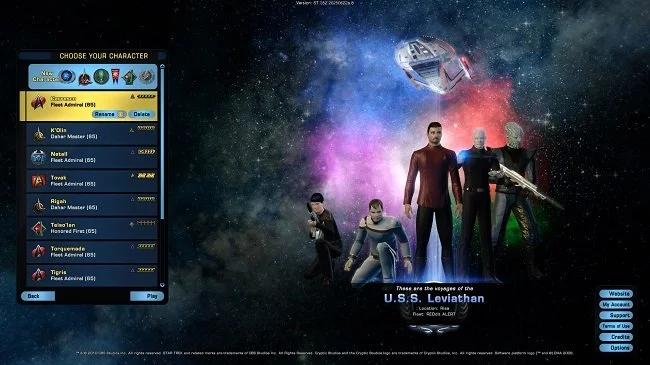
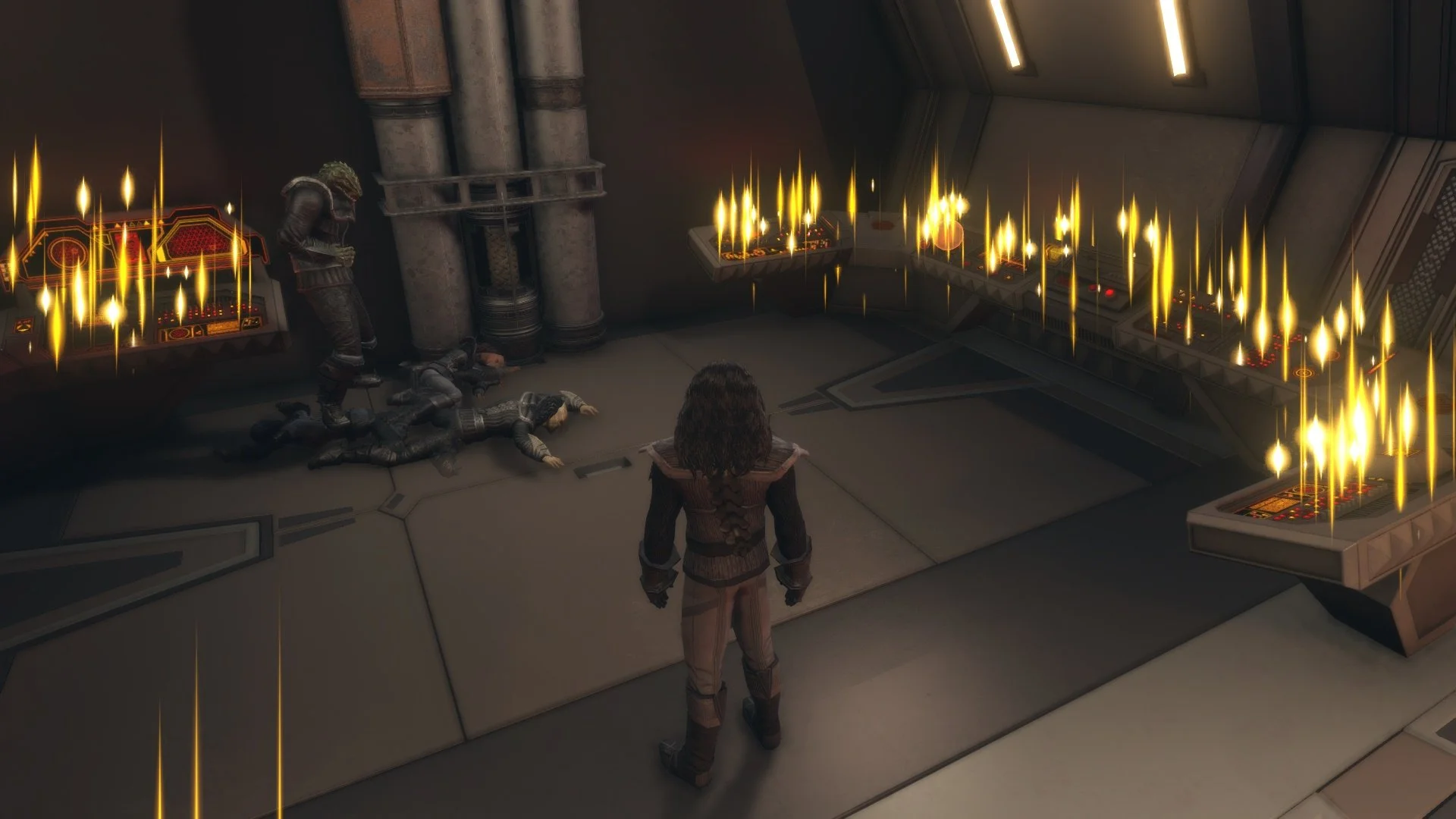
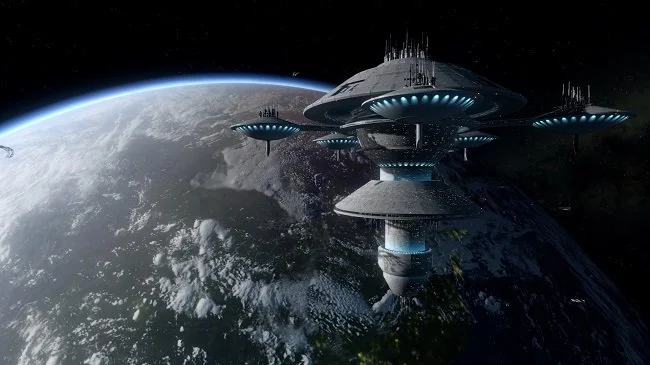
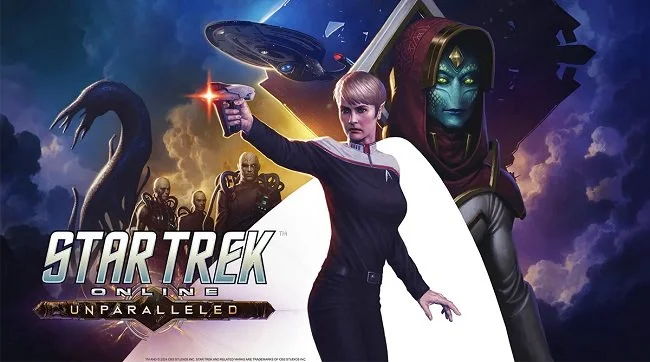
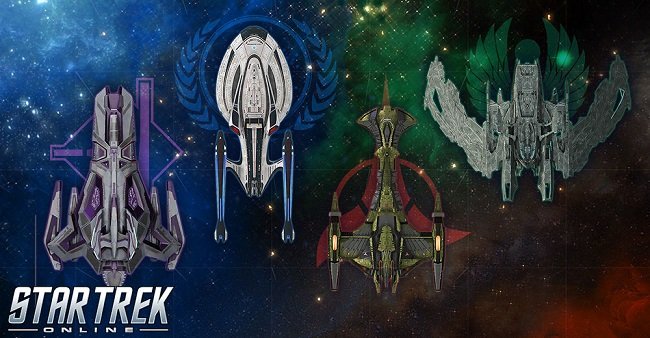
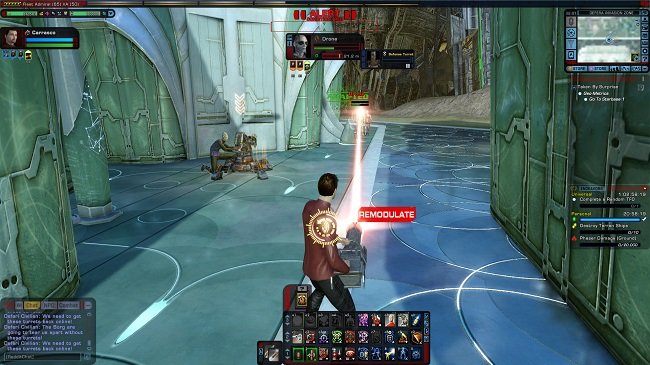
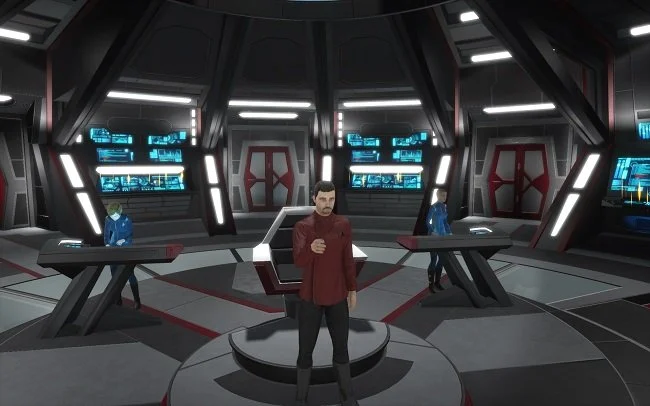
Unlike other MMOs, there are always plenty of events scheduled in the Star Trek Online. The game includes a handy calendar which provides information on what is planned for the months ahead. It’s a clever way to keep the players engaged and occupied and as a result, STO is the game that I tire with the least and dabble with most. Where other games will often end the year with a nebulous Producer’s letter which offers a road map hinting at what lies ahead over the next twelve months, STO just gets on with things. Q’s Winter Wonderland event is drawing to a close next Thursday, but already we have two new events that have launched today. The Arena of Sompek makes a welcome return with its five-man survival battle against endless waves of mobs. Then we have a Featured Episode Replay, offering an opportunity to repeat specific missions and receive rewards that have been previously retired, such Breen and Romulan Bridge Officers and Epic Ground devices such as The Shard of Possibilities and the Ophidian Cane.
Unlike other MMOs, there are always plenty of events scheduled in the Star Trek Online. The game includes a handy calendar which provides information on what is planned for the months ahead. It’s a clever way to keep the players engaged and occupied and as a result, STO is the game that I tire with the least and dabble with most. Where other games will often end the year with a nebulous Producer’s letter which offers a road map hinting at what lies ahead over the next twelve months, STO just gets on with things. Q’s Winter Wonderland event is drawing to a close next Thursday, but already we have two new events that have launched today. The Arena of Sompek makes a welcome return with its five-man survival battle against endless waves of mobs. Then we have a Featured Episode Replay, offering an opportunity to repeat specific missions and receive rewards that have been previously retired, such Breen and Romulan Bridge Officers and Epic Ground devices such as The Shard of Possibilities and the Ophidian Cane.
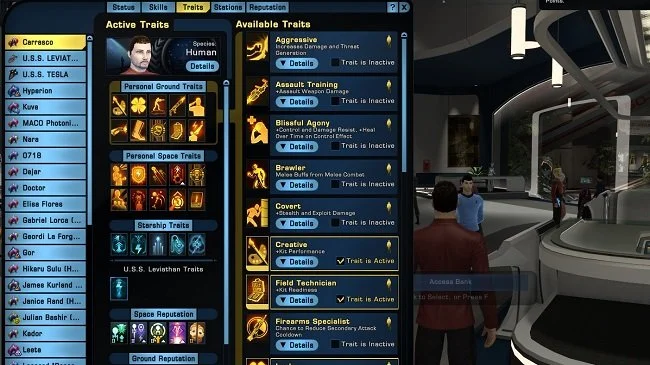
There’s another change on the horizon for STO. At present upgrading gear is very much a lottery as you have no control over the modifiers that you receive. However, this will soon change with the games new re-engineering system. Players will be able to alter the mods that don’t suit their build or are deemed as sub-optimal to their game play. Re-engineering will utilise a new currency, salvage, a resource granted through the recycling of unwanted gear. Cryptic are currently working on the specifics of the system and it will soon be tested on Tribble server. Re-engineering will also showcase some new epic mods as an incentive. In a recent blog post Cryptic said “We hope re-engineering will be a way for neophyte and veteran Captains alike to better create equipment that matches their particular playstyles and builds.” The new mechanic will hopefully have a knock-on effect on the games economy, reducing Energy Credit creation and the existing surplus of unwanted gear on the exchange.
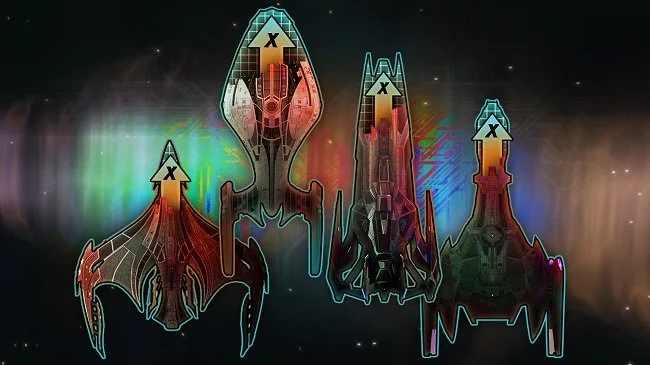
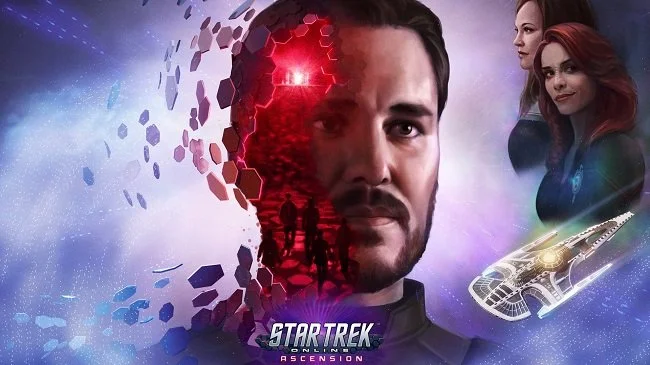
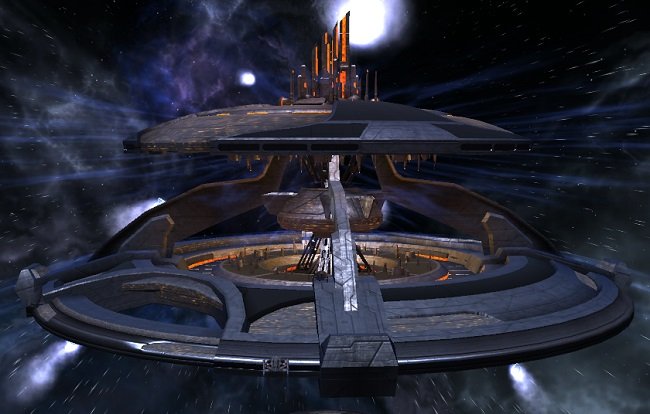
Star Trek Online is also due an expansion in 2018. So far, all we know about it is that it will be focused on Deep Space Nine, the Dominion, and possibly the Gamma Quadrant. As the TV show Star Trek: Deep Space Nine is twenty-five years old this year, it makes sense to return to this region and explore the story further. Cryptic have previously made all new content for the game free of charge, so unless they have a radical change of policy, the next expansion should follow suite. Then in February we have the eighth anniversary of STO. This will mean a special project that will offer a new ship as a reward. Perhaps Cryptic may take the opportunity to tie the game into Star Trek: Discovery? And as well as all this, we can expect regular events such as First Contact Day and the Summer and Winter Festivals. If there’s a Friday the 13th in the year, we’ll also see the episode Hearts and Minds make an appearance. As you can see STO has a busy schedule for 2018, with plenty to do. Unlike other examples of the genre, STO appears to be in a good place at present with a lot of content lined up. Hence it remains my go to MMO for the fourth year.


LOTRO: Alternative Ways to Reach Level Cap
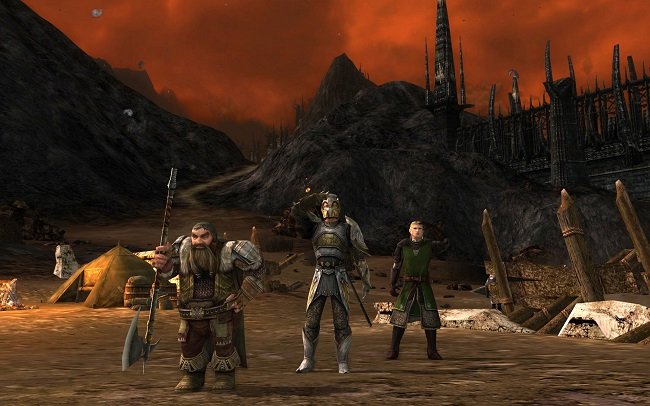
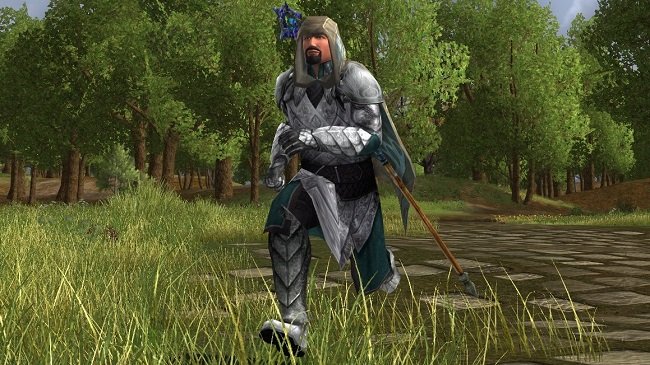
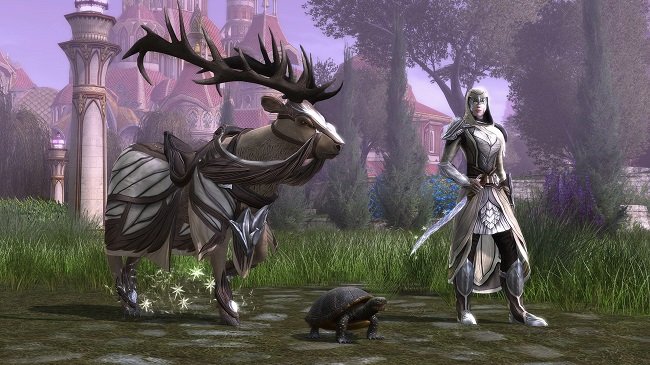
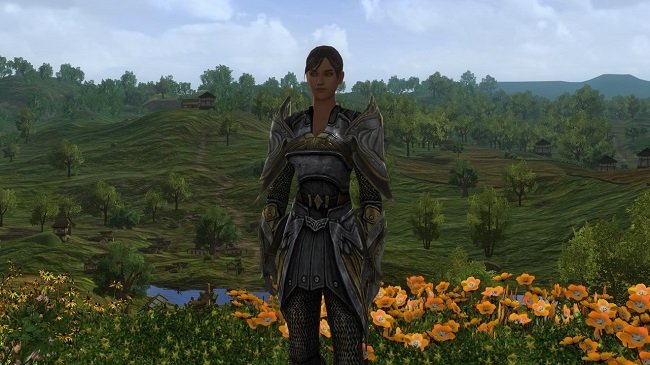
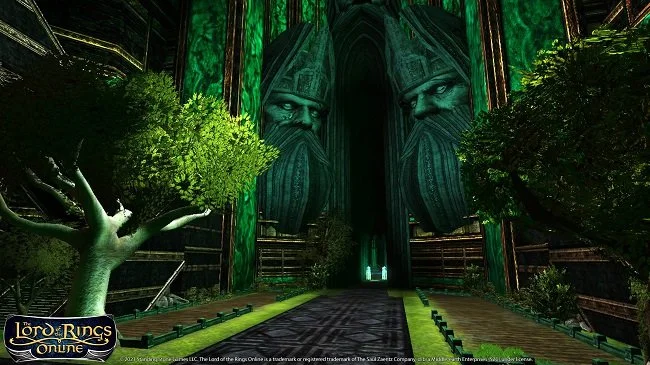
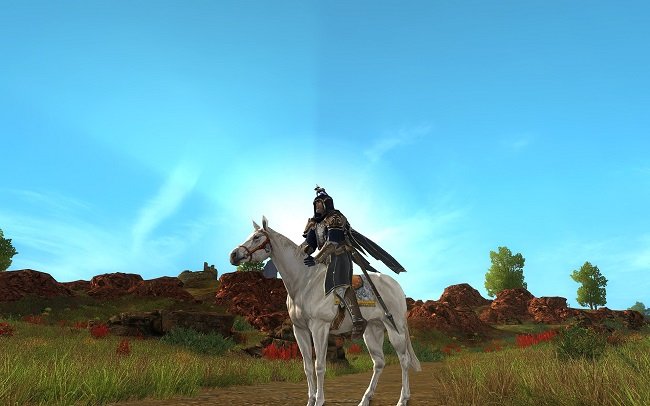
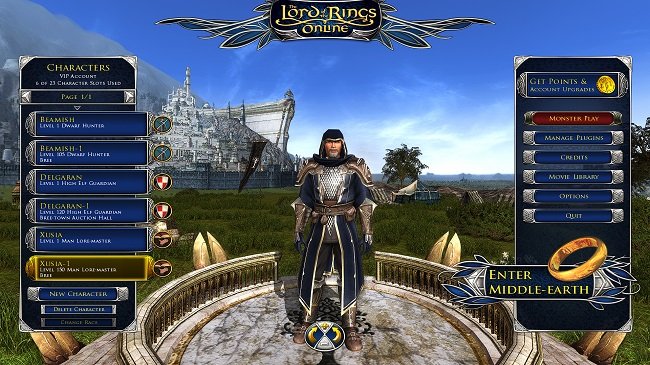
I managed to gain a level and a half in LOTRO today, bringing my primary alt to 108. It was a somewhat protracted task as many of the quests that I was undertaking were between level 102 and 105. Despite several attempts and a concerted effort to persevere, I have concluded that I don’t care for the Mordor expansion for LOTRO. Levelling up in that region is a chore, due to the difficulty and density of the mobs. So, I have decided to work my way towards the current level cap elsewhere in the game and then return to the region to clear the Epic Story. I may, or may not work through the regional quest hubs, depending on my attitude towards the game at that point. I will make do with any gear that drops via the Epic Story and will not concern myself with the current endgame content and rewards. By the time I’ve worked through my plan, they’ll be a new update on the horizon with new gear anyway.
I managed to gain a level and a half in LOTRO today, bringing my primary alt to 108. It was a somewhat protracted task as many of the quests that I was undertaking were between level 102 and 105. Despite several attempts and a concerted effort to persevere, I have concluded that I don’t care for the Mordor expansion for LOTRO. Levelling up in that region is a chore, due to the difficulty and density of the mobs. So, I have decided to work my way towards the current level cap elsewhere in the game and then return to the region to clear the Epic Story. I may, or may not work through the regional quest hubs, depending on my attitude towards the game at that point. I will make do with any gear that drops via the Epic Story and will not concern myself with the current endgame content and rewards. By the time I’ve worked through my plan, they’ll be a new update on the horizon with new gear anyway.
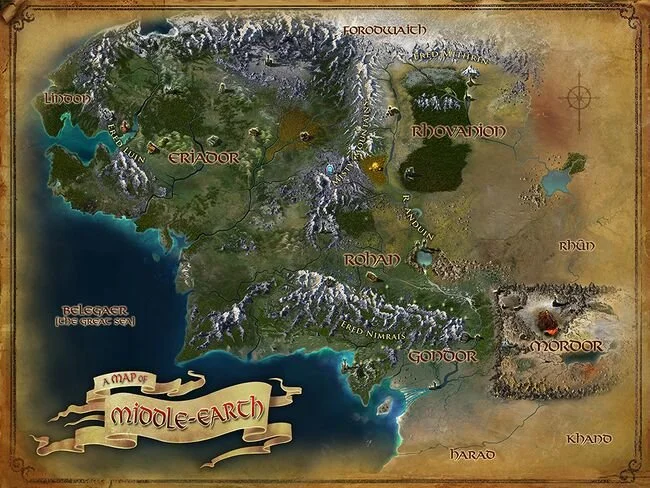
Because LOTRO has been streamlined and updated over the years to accommodate the various increases to the level cap, it is quite easy in the early stages of the game to pursue multiple levelling paths. New players will often find that they out level a zone long before they finish all the content it offers. Hence there are options when it comes to progressing. You can pursue the Epic Story or remain in a region and follow a completest approach to the game. As soon as skirmishes become available they can significantly contribute to your level progression. Crafting also offers XP and can be used as a supplement. We should not forget the Destiny Points perk system that can be used to boost XP as well. However, some of these benefits reduce as you progress through the game. At present, there are no alternative locations available in the game that offers quests at a comparable level of XP to those found in Mordor. So, for the present, I am working through lower level, residual regional quests in Taur Drúadan, The Beacon Hills, Minis Tirith, North Ithilien and Dagorlad.
The upside of this approach is that I’ve focused on several quest lines that have proven most enjoyable. Although there are always a percentage of arbitrary quests in any new content that comes to LOTRO, there are often some interesting, well-conceived quests with lore based stories. One such quest chain had my Lore-master running errands for Ioreth in the Houses of Healing. This culminated in Aragorn healing Éowyn, Faramir and Peregrin Took. I frequently find that when Standing Stone Games offers a perspective upon iconic scenes from the source text, they do so in a very creative fashion. Another quest chain that I completed was to retake Cair Andros. It is something only referenced in the book and it was agreeable to see the idea fleshed out into a slightly more substantive narrative. Another positive aspect of pursuing regional quests is that they sometimes offer interesting rewards, such as unique housing items or alternative gear to that provided by the primary Epic Story.
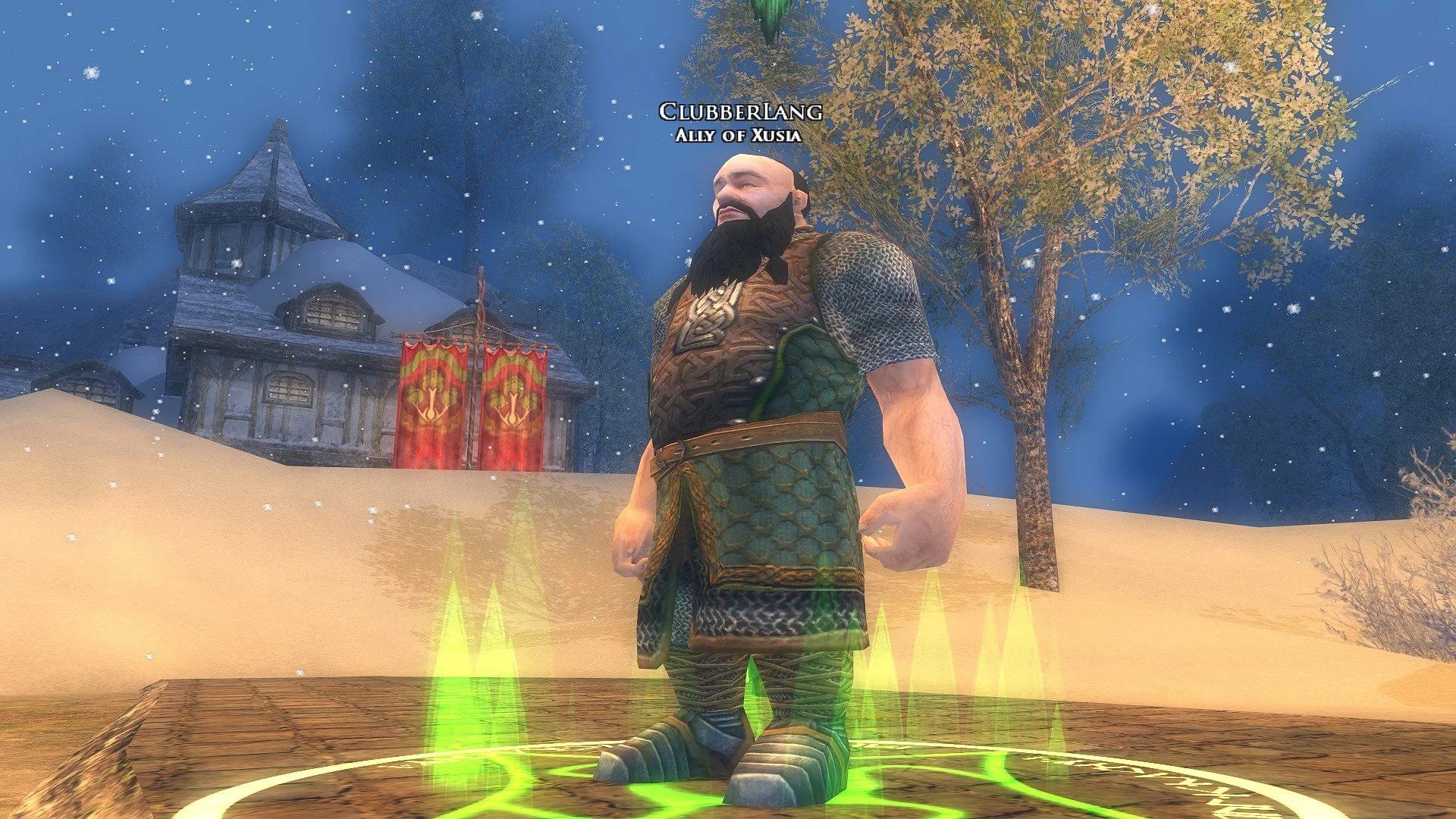
My Lore-master is an Explorer by profession, although I have never really pursued any of the associated skills to any degree. Within the disciplines of Forester and Prospector, I simply gather resources then refine them to a sufficient level to unlock the next tier. Farming and refining is mainly done to generate gold via the auction house. I have neglected this process for several updates, so can certainly gain some XP by crafting resources from older regions. As for the Tailor skill, I have never really used this. Perhaps, now is the time to do so as an additional means to levelling, although the actual process of crafting in LOTRO is somewhat dull. I shall at least look into the process in the next few days and see what it has to offer. Perhaps I should consider my dislike for Mordor to be a positive thing, as it is at least encouraging me to revisit aspects of LOTRO that I have previously ignored. Certainly, todays time spent in-game was both fun and rewarding. Overall it has left me in a good humour and currently well disposed towards the MMO for the present.



Regulating the Gaming Industry
2017 was the year that microtransactions, loot boxes and other egregious business models common to gaming finally came to the attention of the mainstream. The debacle that surrounded the launch of Star Wars: Battlefront II finally dragged this matter into the limelight and subsequently put in on the radar of various global, legislative and regulatory bodies. The genie is now well and truly out of the bottle and it’s now a question of waiting to see what happens next. I suspect that the EU may likely be one of the first regions to tackle the issue and that it may well be the mobile game industry that is first to fall upon its sword. If there’s a change in government in the UK, then there is scope for matter to be tackled here. There is already a strong lobby against current gambling legislation and it doesn’t take much of an imagination to envisage a tabloid led campaign against the iniquities of smartphone game addiction and it’s pay-to-win culture. Then there’s the issue of virtual items resold for real money via auction websites and the question of whether loot boxes are or are not gambling. Apples recent statement about games publicly declaring the odds of winning in advance, shows that the world is indeed slowly turning against this business model.
2017 was the year that microtransactions, loot boxes and other egregious business models common to gaming finally came to the attention of the mainstream. The debacle that surrounded the launch of Star Wars: Battlefront II finally dragged this matter into the limelight and subsequently put in on the radar of various global, legislative and regulatory bodies. The genie is now well and truly out of the bottle and it’s now a question of waiting to see what happens next. I suspect that the EU may likely be one of the first regions to tackle the issue and that it may well be the mobile game industry that is first to fall upon its sword. If there’s a change in government in the UK, then there is scope for matter to be tackled here. There is already a strong lobby against current gambling legislation and it doesn’t take much of an imagination to envisage a tabloid led campaign against the iniquities of smartphone game addiction and it’s pay-to-win culture. Then there’s the issue of virtual items resold for real money via auction websites and the question of whether loot boxes are or are not gambling. Apples recent statement about games publicly declaring the odds of winning in advance, shows that the world is indeed slowly turning against this business model.
Therefore, I welcome in principle the idea of sensible, measured regulation of this aspect of the game industry, seeing it as a logical extension of existing consumer legislation that protects the public. I suspect that the major game publishers will not see it this way and would not be surprised to see an army of lawyers mobilised to slow and impede the process. There is also the risk that this matter will get tackled by the worse sort of politicians in the most knee-jerk fashion, like the UK Video Recording Act of 1984. If that is the case, then the fallout could be quite substantial and could lead to some studios closing down or games being unavailable in some regions. Certainly, we may well see the implosion of triple A gaming as we currently know it, as developers struggle to generate what they see as a satisfactory return on investment. However, for every bloated tired and lazy big budget game, there are dozens of smaller, innovative and original titles. It can be cogently argued that a major industry shakeup would in the long term instigate a return to focusing on creativity, rather than following “established” trends. It is also not unrealistic to imagine that such a transitionary period would be met with a great deal of hyperbole, hysterics and bile from certain quarters of the fan community.
When political and economic change threatens the status quo, those with a vested interested will always reach for the worst possible scenario as a means to try and derail the process. For example, whenever tax avoidance comes under public scrutiny, companies such as Starbucks always imply that if the financial climate turns against them they’ll withdraw from the UK. I’ve always considered this argument rather puerile and similar to the child who threatens to take their ball home, if they can’t win. If the triple A game industry vanished overnight, we would not find ourselves in a world devoid of quality titles. Smaller, smarter and more importantly more ambitious companies would simply step in and fill the gap. Some franchises may well go to the wall only to be replaced by other comparable but more economically viable products. Hellblade: Senua's Sacrifice by Ninja Theory rather succinctly proved that you can produce a triple A equivalent game without the associated season pass, DLC and bloated cost. Therefore, I am cautiously optimistic regarding what lies ahead. Change can be painful and there may be some to be endured while the industry adapts. But as a blogger with a more than passing interest in games, I suspect that happens next will certainly provide numerous talking points and material to write about along the way.
Gaming Amnesia
Due to the time of year, I’ve been looking through the various games that I own and considering whether I should revisit any. To cut a long story short, I’ve decided to give The Elder Scrolls Online another go. So, I duly downloaded and installed the client only to find myself utterly confounded by it. In a nutshell, I have completely forgotten how to play the game. This problem is further compounded by two other factors. Firstly, the controls and layout are more akin to that of Skyrim than of a typical MMO. Secondly, this is a game that relies on mods to significantly enhance its user interface. The plain vanilla client is somewhat lacking. Therefore, a new or returning player has to do a considerable amount of “homework” to before they can effectively enjoy the game. However, this is not a problem unique to this MMO. Putting aside the issue of mods, I have a case of what I shall term “gaming amnesia”, a malady that becomes increasingly common the more games you play.
Due to the time of year, I’ve been looking through the various games that I own and considering whether I should revisit any. To cut a long story short, I’ve decided to give The Elder Scrolls Online another go. So, I duly downloaded and installed the client only to find myself utterly confounded by it. In a nutshell, I have completely forgotten how to play the game. This problem is further compounded by two other factors. Firstly, the controls and layout are more akin to that of Skyrim than of a typical MMO. Secondly, this is a game that relies on mods to significantly enhance its user interface. The plain vanilla client is somewhat lacking. Therefore, a new or returning player has to do a considerable amount of “homework” to before they can effectively enjoy the game. However, this is not a problem unique to this MMO. Putting aside the issue of mods, I have a case of what I shall term “gaming amnesia”, a malady that becomes increasingly common the more games you play.
Much of this problem stems from my absence from the game. I haven't touched ESO for over a year. In the intervening time I have played several other MMOs and numerous single player games. My brain is filled with multiple keyboard controls and UIs, all conflicting with each other. Apart from some basic commonality such as WSAD keys for movement and the number keys bound to various attacks and heals, the subtleties of ESO have been completely lost to me. As any teacher will tell you, you need to immediately put into practise what you've been taught, if you wish to retain it. Obviously, MMOs can't all share an identical control interface, so I usually learn how to navigate through a new game’s systems by repetition. So, it is hardly surprising that I have forgotten so much under the circumstances.
This problem manifests itself all the time with my gaming activities. If I have spent a few months playing an FPS, then I'll often find myself holding down the Left Shift key in another game and expecting my character to sprint. Or mashing the wrong keys to bring up a HUD or induct a skill that is not even present. Whatever is the most recent seems to be the information that persists. This in fact raises the question as to whether games have too many skills options; a point that has been addressed with more recent, action combat driven MMOs. Both Guild Wars 2 as well as the ESO, restrict the number of skills on the hotbar. It’s a far cry from the chronic skills bloat seen in such games as SWTOR and LOTRO. Both those titles have some skills that are so negligible to game play they can be ignored. However, there is a risk with a more limited number of skills to use that combat can become somewhat mundane and arbitrary. This is a flaw that remains unchanged in Secret World Legends despite its recent revision.
The best solution for my “gaming amnesia” problem in ESO is to roll a new character and start the game from scratch, rather than try to continue from where I left. This is often the case with most games, unless you have invested a substantial amount of time and effort in your previous alt. Then the solution is to do your “homework” by readings guides and watching “let’s play” videos. Furthermore, a variant of this problems can occur with game sequels. I played Middle Earth: Shadow of Mordor right up to the release of the Shadow of War. Although about two thirds of the game controls and skills remained in the latest instalment, the introduction of new and advanced variants of existing abilities caused confusion. I would frequently press a key when playing the sequel and find that it didn’t do the same as in the previous game. Overall, it would seem that the more games you play the more there is too learn and subsequently forget. Again, perhaps the solution to this issue is to focus on one game at a time.
Knowing When to Stop
I bought several games in the run up to Christmas. The November release window, coupled with Black Friday and other seasonal sales meant that half of the games I purchased in 2017 were done so in the last quarter of the year. I also pre-ordered two premium titles over the last twelve months, which is something that I don’t often do. I pushed the boat out on both occasions and paid for the top tier version of each game. Ironically, although some of these titles were good and entertaining, many have failed to hold my interest and I found myself returning to the tried and tested MMO Star Trek Online for entertainment. As New Year is usually a time for sober reflection, I have concluded that I have fallen victim to that common gamer malady; namely “the grass is always greener” syndrome. Furthermore, I think I may have succumb to seeking a retail high.
I bought several games in the run up to Christmas. The November release window, coupled with Black Friday and other seasonal sales meant that half of the games I purchased in 2017 were done so in the last quarter of the year. I also pre-ordered two premium titles over the last twelve months, which is something that I don’t often do. I pushed the boat out on both occasions and paid for the top tier version of each game. Ironically, although some of these titles were good and entertaining, many have failed to hold my interest and I found myself returning to the tried and tested MMO Star Trek Online for entertainment. As New Year is usually a time for sober reflection, I have concluded that I have fallen victim to that common gamer malady; namely “the grass is always greener” syndrome. Furthermore, I think I may have succumb to seeking a retail high.
For some, pursuing pleasure through shopping is just a bit of harmless fun and even a social activity. Hence the phrase “retail therapy” has entered common parlance. But for others, it's a real problem and can be very harmful. It certainly isn’t the path to happiness. Irrespective of what end of the spectrum you are, buying a game that you never really play or get full value from is somewhat unnecessary. It's good news for the publishers but for your bank balance. These spur of the moment purchases all add up over the course of the year, be they £60 for a new premium product or £5 for a budget title on Steam. I’m sure I am not alone in losing hard drive space to games that never get played. I have several hundred titles in my Steam library. I have played about a third.
This is also a situation that happens in other hobbies and pastimes. I have entire seasons of TV shows queued up on my DVR or PC, waiting to be watched. I spend hours perusing Netflix and Amazon Prime, adding titles to my watch list and then subsequently ignoring them. Also, I have numerous movies screeners, Blu-ray boxsets and DVDs, all neatly stacked in date order, waiting to be watched and reviewed. And don't get me started on my reading to do list. I have been quite good of sticking to my policy of reading a new book every month, but my pile of essential reading is getting out of control. It teeters precariously on the shelves, a constant reminder of my unrealistic ambitions and chronic leisure time deficit.
So, I have decided, in accord with the season, that I'm drawing a line under both these habits. I intend to be far more discerning with my future purchases and less impulsive. It is time to reacquaint myself with the concept that you cannot do everything. Furthermore, I shall be applying this philosophy to my creative projects this year. From now on I am only going to do as much as I can do. At least that way I can maintain some sort of level of quality. Better to do a few things well than a lot of things poorly. From now on I will pick the shows and movies that I watch carefully. As for gaming I think I will have to choose a title or two and stick with them. A return to MMO monogamy as it were. This way I have a realistic chance of achieving all my leisure and creative goals I’ve set myself in 2018.
A Year in Gaming
As 2017 draws to a close, it is time once again time to reflect upon the subject of gaming as it has remained a primary form of entertainment for me over the last twelve months. I have enjoyed most of the new titles that I’ve bought this year but not all of them. There’s been some that have failed to please and others that have proven to be flawed. Then there has been my ongoing relationship with the MMO genre as I still have a handful of these games installed on my PC. Let it suffice to say that only one of these titles has managed to maintain my interest. I suspect that the MMO genre per se is in for a year of change in 2018. As for the wider aspects of gaming, I wouldn’t say it has been an especially edifying year for the game industry or the associated fan culture. The “goodwill” based band-aid that has remained in place for the last few years was finally torn off in 2017, exposing a festering self-inflicted wound.
As 2017 draws to a close, it is time once again time to reflect upon the subject of gaming as it has remained a primary form of entertainment for me over the last twelve months. I have enjoyed most of the new titles that I’ve bought this year but not all of them. There’s been some that have failed to please and others that have proven to be flawed. Then there has been my ongoing relationship with the MMO genre as I still have a handful of these games installed on my PC. Let it suffice to say that only one of these titles has managed to maintain my interest. I suspect that the MMO genre per se is in for a year of change in 2018. As for the wider aspects of gaming, I wouldn’t say it has been an especially edifying year for the game industry or the associated fan culture. The “goodwill” based band-aid that has remained in place for the last few years was finally torn off in 2017, exposing a festering self-inflicted wound.
I started off the year by purchasing The Elder Scrolls Online Imperial Edition, as I fancied spending time in an MMO. Sadly, the game failed to grab my attention. This was mainly due to having spent so much time playing Skyrim and being somewhat burned out on the entire Elder Scrolls vibe. I also found the requirement for mods somewhat troubling, feeling that a game should have adequate UI facilities present. It’s also a very solo friendly MMO, which in some way negates its multiplayer status. Why not just play a fully customised version of one of the earlier games in the franchise? I also tried in 2017 to make a sustained return to LOTRO. Northern Ithilien held my interest but once the game moved onto the Black Gates it soon waned. Mordor is a great zone on paper but its grindy requirements and relentlessly dour environment killed my passion. STO remains a casual friendly experience and due to there being regular events throughout the year, it facilitates setting goals and achievements. I also jumped on the Destiny 2 bandwagon and was surprised how agreeable it is. Its genre spanning nature scratched several of my gaming itches.
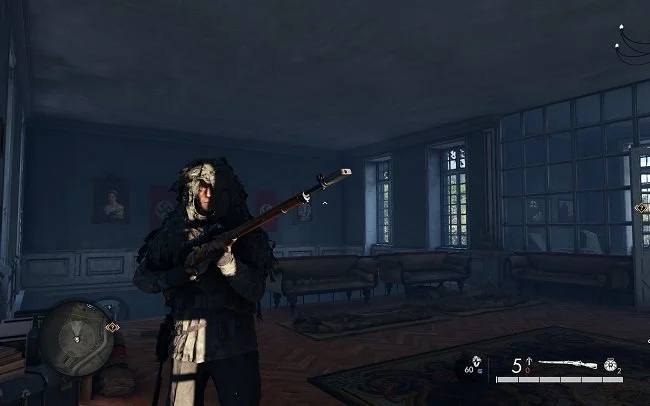
My single player experience was also varied in 2017. For Honor proved to be exactly as I expected; gripping in principle but beyond my personal skillset to play to any degree of success. However, Sniper Elite 4 proved to be a sound buy. The main game and DLC were well conceived and their extensive game maps allow for multiple and varied play throughs. I also dabbled with co-operative play which proved a very interesting experience. Overall this was rewarding purchase as I clocked up over 91 hours in-game. Thanks to discount key sites, I managed to purchase several titles at low prices. I bought Mafia III after it was reduced by 75% and enjoyed the games central story. I also pre-ordered the Gold Edition of Middle-earth: Shadow of War and secured a discount. Although the structure of that game has been compromised to accommodate microtransactions, I still liked the gameplay and the preposterous lore-breaking narrative. 2017 also included some minor surprises. I was not expecting further DLC for Two Worlds II but Topware released both new single player and co-op content. I was also intrigued by the recent update to Star Trek: Bridge Crew, allowing the game to be played in conventional desktop mode, rather than VR.
Of course, it wouldn’t be a year in gaming without some sort of controversy and man did 2017 have one. The blight that is microtransactions which has been slowly spreading from mobile gaming to the so-called Triple A scene, reached a head November. Star Wars: Battlefront II received such a backlash from its customer base that the story even appeared in mainstream news. Disney eventually intervened and ensured that EA suspended the real money loot boxes in the game. It would appear that the genie is finally out of the bottle and loot box culture is now coming under the scrutiny of legislative bodies all over the world. Apple has recently waded into the debate as it wants loot box odds to be fully disclosed. What happens next is anyone guess but I think that game developers may have to rethink the monetisation of their games. I also think that the tide is slowly turning with regard to early access and games that launch in a patently broken state. I avoided buying Friday the 13th: The Game until six months after it’s problematic release and I still feel that it is very much a work in progress. Several high-profile gaming commentators are loudly advocating a boycott of this trend and I think it may be getting some traction. Time will tell.
2017 once again validated my position of distancing myself from parts of the gaming community. The past twelve months have shown that a substantial number of gamers remain unreconstructed, self-centred, emotionally illiterate man-children. Developers, journalists and You Tube personalities are still regularly threatened and abused if something that is vaguely controversial is said. Outdated and blinkered views about gaming and its culture still abound. You only have to see how Jim Sterling’s Commentocracy has raised the hackles of the usual suspects, to recognise that gaming culture is still far from united. However, I believe this stems from a broader malady that seems to be permeating all aspects of modern life. But the hate, bile and stupidity are not the total picture and there are still many bloggers, streamers and content creators that celebrate and promote the positive side of gaming. I intend to make such individuals my focus in 2018. I’m not one for making predictions but I have a feeling that 2018 may be a milestone year for gaming. Potentially it presents an opportunity for the industry to either get on track or alternatively implode and suffer a slow long death. Perhaps next year’s review will have the answer.
















Why I'm Still Sceptical About Virtual Reality
Earlier today I Star Trek: Bridge Crew as it’s currently on sale reduced by 50%. Now you may politely think to yourself “what has that got to do with the price of Brussel Sprouts”? Well, it is a game that has been primarily designed for use with a VR headset. However, the latest patch released yesterday, allows for the game to be played conventionally without a VR headset, using either a controller or keyboard and mouse. If we take a moment to pause and reflect on this change it is quite significant. A VR game just opted to broaden its appeal and accessibility. Does this not tell us something about the current uptake of VR gaming? Is it a case that it is not the industry “game changer” that some predicted? Surely not, I here you say.
Earlier today I Star Trek: Bridge Crew as it’s currently on sale reduced by 50%. Now you may politely think to yourself “what has that got to do with the price of Brussel Sprouts”? Well, it is a game that has been primarily designed for use with a VR headset. However, the latest patch released yesterday, allows for the game to be played conventionally without a VR headset, using either a controller or keyboard and mouse. If we take a moment to pause and reflect on this change it is quite significant. A VR game just opted to broaden its appeal and accessibility. Does this not tell us something about the current uptake of VR gaming? Is it a case that it is not the industry “game changer” that some predicted? Surely not, I here you say.
I consider the subject of virtual reality in gaming to be very akin to that of 3D and 48FPS in cinema. All have a place in specific markets and can potentially enhance certain products. But none of these enhancements are universally required for all future content. For example, I have always thought that 3D works best in key genres and that it's essentially gimmicky nature enhances horror movies and other material of a sensational and exploitative nature. Friday the 13th 3D was the epitome of this. However, a movie such as Glengarry Glen Ross does not require such a cinematic conceit. It really comes down to common sense. And therefore, exactly the same argument is applicable to virtual reality.
Specific genres of games would be enhanced immensely from a fully immersive 3D environment presented via virtual reality. Consider the sort of gaming experience VR could bring to Skyrim, Shadows of War or any of the major MMO? Yet I'm sure we can also think of a wealth of games that do not require such an all-encompassing embellishment such as this? Simplicity and a stripped back GUI are part of the appeal of a game such as Stardew Valley. I don’t think a title such as this would see any sort of improvement through being accessible in VR. Not every product needs to be adapted for this medium. However, can we rely on the gaming industry to be so discerning? Trends are seldom bucked and more often than not are slavishly adhered to.
For me one of the most off-putting aspects about VR is the requirement for a bulky headset to be placed on the head effectively isolating you from your real-world environment. It is one of the reasons why I don't like watching 3D movies for too long. I saw The Last Jedi recently in 3D (out of necessity), and due to its length watching in that format was particularly challenging. Likewise, I suspect a long gaming session with a VR headset would be curtailed once I hit a state of sensory overload. Nausea and motion sickness are already known issues. I hope that adequate research is undertaken regarding any potential long-term health issues. It only a matter of time before there is scaremongering in the tabloids about the perils of VR.
In some respects, VR is yet another example of the gaming industry becoming too enamoured with the technical trappings of its business. The best games ultimately have something far simpler at their core. An engaging concept or mechanic. A strong narrative or easy accessibility. If a game has these qualities, then the front end does not always have to be adorned with bells and whistles. Yet I suspect that only a few companies will have the foresight to realise this or the courage to be sparing with the use of virtual reality. I have a suspicion when an economically viable form of VR is achieved that there may be as much disappointment with them medium as there is joy. As for 2017, so far it has not proven to be the break-out year for VR.
Classic Game Themes: The Lord of the Rings Online
One of the most compelling aspects of The Lord of the Rings Online is its soundtrack. The score, mainly written by Chance Thomas and featuring additional material by Stephen DiGregorio, is comparable to that of any major feature film in its scope, sophistication and musical accomplishment. Chance Thomas favours a leitmotif for each race and culture which then vary as the game’s narrative progress. Stephen DiGregorio focuses more upon thematic or ambient pieces that capture the spirit of an area or region. Despite different styles and approaches, both composers contribute to a vivid score that has become an additional character in the overall game over the last decade. Middle-earth is an immense world with an ever-present sense of history and deep lore. The soundtrack for the game taps into this narrative vein and uses it to create a rich and nuanced audio soundscape.
One of the most compelling aspects of The Lord of the Rings Online is its soundtrack. The score, mainly written by Chance Thomas and featuring additional material by Stephen DiGregorio, is comparable to that of any major feature film in its scope, sophistication and musical accomplishment. Chance Thomas favours a leitmotif for each race and culture which then vary as the game’s narrative progress. Stephen DiGregorio focuses more upon thematic or ambient pieces that capture the spirit of an area or region. Despite different styles and approaches, both composers contribute to a vivid score that has become an additional character in the overall game over the last decade. Middle-earth is an immense world with an ever-present sense of history and deep lore. The soundtrack for the game taps into this narrative vein and uses it to create a rich and nuanced audio soundscape.
Over the past ten years, selected material from the games soundtrack have been available on limited edition CDs and digital download. Sadly, a comprehensive release has never been forthcoming. This year’s tenth anniversary saw a new compilation become available, but it contained only a few unreleased tracks. It is a great shame that a more substantial collection has not been produced as I believe there are plenty of dedicated LOTRO fans who would jump at the opportunity to own a comprehensive CD collection of the games entire soundtrack. At present the only way to access all the music contained within the game is data mine it from the installation files. This is a relatively complex task and produces a substantial directory of files in .ogg format, none of which are named.
Because the majority of music that features in LOTRO is written by Chance Thomas, he often becomes the focus of attention when discussing the games soundtrack. His work is of the highest calibre and he certainly seems to have a strong understanding of the musical needs of the game. As a result, his works sometimes eclipses that of Stephen DiGregorio. Personally, I do not consider Stephen’s work to be inferior. There are several of his tracks that I have great affection for. If I have one complaint it is mainly to do with the arrangement, which at times sounds like it is using the most basic of synthesisers and musical sequencers. However, I have often thought that this has been due to budget. Hiring quality composers is more than likely expensive enough. Performing and recording with a full orchestra in a studio is probably prohibitive financially, hence there is a reliance on more economical solutions.
Because of my personal history with LOTRO (it was the first MMORPG that I played) and my enjoyment of the soundtrack, I thought I would post several tracks that are among my favourites. It’s a difficult choice as there is a decade’s worth of material to choose from spanning numerous updates and expansions. There is also a minor issue regarding track names as they can vary depending on what material you have. For example, on the original Shadow of Angmar soundtrack digital download there is a track called “Let us sing together”. This features again on the 10th anniversary CD under the name of “The House of Tom Bombadil”. It’s a minor complaint but it can cause a degree of confusion. Some of the tracks on the anniversary album are also alternative recordings or edited versions of the cues that feature in the game.
Silent Hope plays as you stand on the threshold of Bag End and look out across Hobbiton. Taken from the Shadows of Angmar soundtrack and composed by Chance Thomas, the track is the very essence of LOTRO. Whenever listening to this particular piece of music I always reflect upon Frodo and Sam embarking upon their momentous journey, yet holding on to their inherent Hobbit common sense and decency. It a sublime music cue.
The Hollin Gate is the first track on the Mines of Moria soundtrack by Chance Thomas. It a beautifully realised track that encapsulates the fading Elven beauty of the region. It also has a vaguely portentous quality to it, hinting at the mystery and adventure that lies ahead.
Triumphant Will is from the Helm’s Deep soundtrack by Stephen DiGregorio and plays during several of the Epic Battles. With its harmonious vocalisation and sequential nature is has a hint of Morricone about. This is a track I would very much like to hear performed by a full orchestra and choir as it would improve it immensely.
Corruption and High Treason features on the Riders of Rohan soundtrack and is by Chance Thomas. It’s a subtle variation of the main Rohan theme for the region. When it plays out at night in Snowbourn, it is wonderfully atmospheric, reflecting the earthy beauty of Rohan and the ongoing intrigue of Saruman in the region.
Finally, the last track I’ve chosen has been extracted direct from the game and therefore I do not know its correct name. It is an ambient piece that plays in and around Minas Tirith prior to the Battle of Pelennor Fields. Composed by Stephen DiGregorio it is a wistful and introspective piece reflecting an ailing Gondor. Again, when I listen to it I here shades of the great Morricone in the lead trumpet. A beautiful piece.







Friday the 13th: The Game
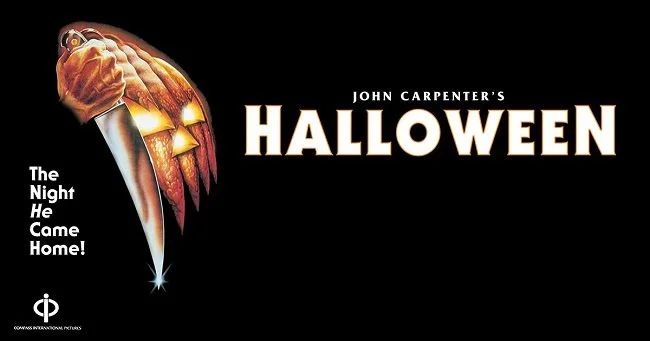
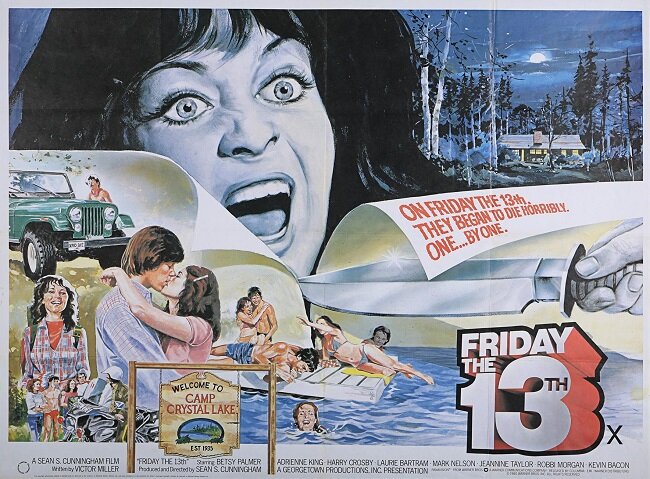
Released in May this year, Friday the 13th: The Game was initially met with both cries of delight and howls of derision. The game’s a great idea in principle and is certainly an incredibly faithful homage to the franchise. It looks the part, has a great atmosphere and a superb soundtrack. However, it was buggy and flawed upon release and now six months later, still has a lot of problems. Some of these are performance issues and bog-standard QA matters. Things that the developers can hopefully address. It is fair to say that patches have been forthcoming, and the game has improved but still remains a work in progress. Sadly, there are other problems that may prove harder to fix. These are inherent flaws in the gameplay which can potentially discourage players from actively participating in the game in full. And as ever with any title that is founded upon co-op online gameplay, you have the inevitable problems of trolling, douchebaggery and general assholery. As I found out within minutes of logging into the game for the first time tonight.
Released in May this year, Friday the 13th: The Game was initially met with both cries of delight and howls of derision. The game’s a great idea in principle and is certainly an incredibly faithful homage to the franchise. It looks the part, has a great atmosphere and a superb soundtrack. However, it was buggy and flawed upon release and now six months later, still has a lot of problems. Some of these are performance issues and bog-standard QA matters. Things that the developers can hopefully address. It is fair to say that patches have been forthcoming, and the game has improved but still remains a work in progress. Sadly, there are other problems that may prove harder to fix. These are inherent flaws in the gameplay which can potentially discourage players from actively participating in the game in full. And as ever with any title that is founded upon co-op online gameplay, you have the inevitable problems of trolling, douchebaggery and general assholery. As I found out within minutes of logging into the game for the first time tonight.
I bought Friday the 13th: The Game today because the latest patch finally adds an offline play mode against bots. This presents an invaluable opportunity to try the game out and learn it’s subtleties and foibles at your own pace. Something you can’t always do online. Sadly, the patch was delayed so I found myself having to use the “quick play” facility and rely on a random pick up group. Like many contemporary co-op titles, Friday the 13th: The Game has voice chat enabled by default. Let it suffice to say that on my very first game, I was greeted by a player trolling the rest of the group in the lobby. This pretty much set the tone for the remainder of the game. I spent about two and a half hours playing both on European and North American servers and found that about half of the players I encountered had absolutely no inclination to participate properly. Often, I’d find that the majority of the PUG would focus on unlocking achievements or simply messing about. It is also a common occurrence for players to abandon the game once they become bored or have achieved what they want.
For those who are unfamiliar with this game, it’s an asymmetrical multiplayer, semi-open world, third-person survival horror game. The game maps vary in size but are all variations of the rural summer camps featured in the film franchise. Eight players can group together, with one being randomly assigned as Jason Vorhees. The rest are councillors that have to either escape from the area or hide and wait out the timer. Games tend to be about twenty minutes or so in length. To escape you can either repair a car or a boat and use that as a means to leave, or you can fix the camp phones and call the local police. If you do this, they arrive on the perimeter of the game map and you escape once you reach their patrol vehicles. Different councillors have different abilities. Some are stealthy, others are strong. You can also arm yourself with various items. Jason has several unique abilities, such as heightened senses that allow him to home in on councillors. He can also warp around the map. Naturally, he has multiple kill animations that can be unlocked. On paper, all the elements are present to make this an engaging homage to the eighties movies.
However, potential and reality often differ greatly. The key to success in Friday the 13th: The Game is to play collaboratively, to communicate and to be situationally aware. Sadly, you are highly unlikely to find any of these elements in a PUG. What you get, is either a group of people doing their own thing, or a group of people bellowing at each other all desperately trying to take charge. And of course, you run the risk of the usual trolling and antisocial behaviour that comes with random internet encounters. During my limited gameplay so far, I’ve found that most people have their own standard way of playing. The police where often called quite early on in each game and experienced players then made a swift exit. On one occasion I spent twenty minutes hiding in a tent which allowed me to survive the game but did not make for interesting gameplay. Then there are issues like aggro tagging and players that abandon the game because they’ve become bored. This is not a real issue if they are councillor but if Jason leaves the game it can be a nuisance. Hence, the reality of this game when playing online, is vastly different from one’s expectations. Conversely, if you have friends that own this game, you can organise a private group and have great fun, or so I would imagine.
There is a learning curve to Friday the 13th: The Game, especially when it comes to mastering playing as Jason Vorhees. New players with dreams of racking up a major body count within minutes of logging into the game, are in for a big surprise and not necessarily a good one. I’m hoping that the offline bot option will improve the situation once the patch is released but as it stands at present, this game is flawed, and that flaw is being relaint on other people. At present, I summarise Friday the 13th: The Game as an expensive online version of “hide and seek”. It has a slick and creative veneer that oozes nostalgia, especially with its soundtrack by Henry Manfedini, who scored so many of the feature films. But beyond those trappings it’s a somewhat hollow experience. Your fun and enjoyment are dependent on who you play with and how well you function as a team. Pick up groups are not known for guaranteeing any of these things. Therefore, it may be prudent for those who have a great affection for the franchise, to wait a little longer before buying, to see if future patches and hotfixes improve the game.
Gaming Is More Than Competition
According to one gaming blogger “the whole gaming scene is competition”. Yeah. That’s what I thought to. I’m not going to link back to the article this quote came from because I don’t wish to give this individual the oxygen of publicity. I believe that the prism through which they view the world is cracked, giving them a skewed, spurious and erroneous outlook on pretty much everything they write about. They also appear to lack any ability for self-contemplation and the possibility that they may be wrong. So rather than getting side tracked by them personally, I thought I’d simply focus on their fallacious statement. Competition is simply one of many facets of the gaming scene. For some it is the only thing that counts but there are many other gamers for whom competition never even crosses their mind. Gaming as a pastime offers a wealth of other benefits and opportunities, other than competing against players.
According to one gaming blogger “the whole gaming scene is competition”. Yeah. That’s what I thought to. I’m not going to link back to the article this quote came from because I don’t wish to give this individual the oxygen of publicity. I believe that the prism through which they view the world is cracked, giving them a skewed, spurious and erroneous outlook on pretty much everything they write about. They also appear to lack any ability for self-contemplation and the possibility that they may be wrong. So rather than getting side tracked by them personally, I thought I’d simply focus on their fallacious statement. Competition is simply one of many facets of the gaming scene. For some it is the only thing that counts but there are many other gamers for whom competition never even crosses their mind. Gaming as a pastime offers a wealth of other benefits and opportunities, other than competing against players.
For me, I find setting goals and working towards achievements, are integral to my gaming experience. It is often applicable to multiple genres of games. I can work towards obtaining specific set of gear in Shadow of War or I focus on meeting all the requirements for a specific build in Star Trek Online. Furthermore, I will often pursue such achievements at a pace that suits me. Then there is the prospect of collaboration in multiplayer games which can be very rewarding, be it with friends or strangers. The raids I’ve played through in LOTRO have always been cordial affairs, as the groups have often been mature players who are focused on the experience, not the reward. It is through mutual help and not competition that a lot of knowledge and experience is shared. Often goals and collaboration go hand in hand, as there can be guild related achievements that benefit all. I frequently find that in-game progression based upon mutual trust, rather than competition, fosters a better atmosphere and a superior experience overall.
Then there’s perhaps the most fundamental aspect of gaming culture that our mystery blogger hubristically dismisses out of hand. People play for fun. Yes, you can have fun playing competitively but isn’t that dependent on winning? From what I’ve seen online, I think the concept of “the fun is in taking part” is dead in competitive circles. Putting competition aside, there many players who take their pleasures in the most innocuous aspects of gaming. Exploring an open world, creating a new outfit, collecting and meta deeds. The list goes on and on. Life is difficult and problematic enough as it is. Not everyone wants to jump on yet another acrimonious, pressure driven, competitive treadmill when it comes to their precious leisure time. I find it curious that some people view “fun” as a problem. As if it’s childish and somehow ear marks you as lazy or ineffective. Ask any psychologist and they’ll point out that an absence of it in your life is bad for you. I wonder if there’s any link between the anti-fun brigade and those people who lack a sense of humour?
Things change over time and we live in an era of accelerated change. Back in the eighties, coin-op gaming was based upon competitive behaviour. It’s how the industry financed itself. But to dogmatically cling to this definition nearly forty years on is a mistake, as competition is not the foundation of gaming anymore. And before the usual suspects trot out that tired argument that life is all about competition, there’s a lot of data out there to prove that it is not the only effective model to live by. Many modern businesses have horizontal management structures. Collaboration, mutual delegation and non-hierarchical systems are common place. As for competition in education that too is a highly debated field and a separate post. Competition does have a part to play but it is not the be all and end of things and certainly is not the only way to perceive gaming. Frankly I wonder if this competitive zealotry is simply a way to bolster a fragile ego? Who can say. But like most binary arguments, it lacks nuance and falls wide of the mark.
Behaving Badly
Over recent years, there seems to have been a lot of moral navel gazing regarding the survivalist sub-genre of games. Apparently, The Forest, 7 Days to Die and Rust (to name but a few) are just murder simulators. Some cursory research shows a myriad of similar titles available, that offer comparable game dynamics, driven by equally questionable moral imperatives. Although such titles are a niche market, they seem to be a popular and lucrative offshoot from traditional gaming. The perennial question seems to be do these games facilitate abhorrent behaviour? Are they a haven for sociopaths? Or is it all just a means for lazy games journalist to indulge in cheap hyperbole and gain easy web traffic? My instincts and sceptical nature tend to suspect the latter. However, my curiosity has been piqued and I want to find out first-hand what these games have to offer and what sort of communities exist around them.
Over recent years, there seems to have been a lot of moral navel gazing regarding the survivalist sub-genre of games. Apparently, The Forest, 7 Days to Die and Rust (to name but a few) are just murder simulators. Some cursory research shows a myriad of similar titles available, that offer comparable game dynamics, driven by equally questionable moral imperatives. Although such titles are a niche market, they seem to be a popular and lucrative offshoot from traditional gaming. The perennial question seems to be do these games facilitate abhorrent behaviour? Are they a haven for sociopaths? Or is it all just a means for lazy games journalist to indulge in cheap hyperbole and gain easy web traffic? My instincts and sceptical nature tend to suspect the latter. However, my curiosity has been piqued and I want to find out first-hand what these games have to offer and what sort of communities exist around them.
MMOs are a genre of game that are based on group interaction. By their very nature these games often attract people who like to share, mentor, help and establish communities. The rather trite phrase "care bear" has grown out of this phenomenon. MMOs are often placed on the opposite end of the spectrum to PVP orientated gameplay. However, I do not think that all positive social behaviour in MMOs is due to an inherently righteous mindset. In the past, my collaborative endeavours in many games has often been driven by necessity and not some moral compulsion to be nice to my fellow man. Positive interaction with others is simply a means to an end. A way to achieve the goals. These games do not offer any alternative mechanics that deliver similar results. Therefore, I have to follow a specific course of action although it is not born of altruism.
However, post-apocalyptic survival games offer different means for players to achieve their own personal goals. The “problem” is that these alternative routes are frequently perceived as morally ambiguous. Furthermore, there is often the assertion that behaving abhorrently in a game is somehow a litmus test of a player’s true nature in the real world. Patently, this is flawed thinking and a classic example of complex ideas requiring in-depth research and consideration, being presented as a binary choice. Something that is the norm these days. Now I would be a fool to suggest that the survival genre does not have its share of socially and emotionally maladjusted individuals. It patently does, as has the rest of gaming. But it would be crass to tar all players with the same brush. Survival games offer a challenge both tactically and logistically, once you look beyond their ethics.
Sadly, we live in an age obsessed with value judgements and perceived personal morality. Pigeon holes and labels abound. Thus, this genre has been subject to a great deal of negative publicity and is often an easy target for those seeking the moral high ground. Perhaps that’s why I’m attracted to such games. Just so I can take a contrary view to the self-righteous. Sadly, I have not played any of these aforementioned games so far. Solo play is not the best way to experience them. A nomadic existence in a predatory game is far harder than being part of an organised group. However, this may shortly change as I’ve recent acquired a bundle of games that includes Rust. So, I am contemplating a social experiment. It would be interesting to find a group of players and spend some time exploring the game. Will principles and morals prevail over the law of the Jungle?
I make no bones about the fact that I relish a degree of virtual abhorrent behaviour. I've never really considered myself to be an especially "good" or "bad" person. I exist between the two extremes of moral behaviour like every other human being I know. I also think there is some merit in the concept of catharsis and I wish to see if that is a factor with such games. So, I shall install Rust tomorrow and spend some time researching the basics and familiarising myself with the game. I shall then see if there is a community to join and see if I can become part of an organised group of some kind. At the very least all this will provide a degree of self-contemplation and a blog post (or two). I also think there is the scope to have some fun. Although, exactly what the nature of that "fun" is remains to be seen.
STO and the Humble Bundle Jingle Jam 2017
This month’s Humble Bundle is a collaboration with the Yogscast, featuring a collection of indie games, DLC, game soundtracks and sundry other odds and sods. There are 25 items in the bundle and so far, six have been revealed. As December progresses you’ll find out what other goodies are included. If you can’t wait, there’s a leaked list here. By paying the base price of $35 (about £26.16) you’ll unlock the entire package. Furthermore, lurking within this bundle is the rare TOS Bridge Officer pack for Star Trek Online. This includes holographic versions of iconic Star Trek TOS characters such as Spock, McCoy, Scott, Chekov, Uhura, Sulu, and Rand which you can add to your bridge officer roster and make part of your away team. For fans of both the game and the TV show this is quite a big deal. So far, codes for the rare TOS Bridge Officer pack, are usually only available at convention giveaways or on occasional livestreams. So naturally this is an enticing offer.
This month’s Humble Bundle is a collaboration with the Yogscast, featuring a collection of indie games, DLC, game soundtracks and sundry other odds and sods. There are 25 items in the bundle and so far, six have been revealed. As December progresses you’ll find out what other goodies are included. If you can’t wait, there’s a leaked list here. By paying the base price of $35 (about £26.16) you’ll unlock the entire package. Furthermore, lurking within this bundle is the rare TOS Bridge Officer pack for Star Trek Online. This includes holographic versions of iconic Star Trek TOS characters such as Spock, McCoy, Scott, Chekov, Uhura, Sulu, and Rand which you can add to your bridge officer roster and make part of your away team. For fans of both the game and the TV show this is quite a big deal. So far, codes for the rare TOS Bridge Officer pack, are usually only available at convention giveaways or on occasional livestreams. So naturally this is an enticing offer.
However, £26 plus is still quite a lot of money for an additional game resource, which although fun is not really essential to the MMO. I could for example spend that money on the game Hand of Fate 2 and cogently argue that it is better value for money. But the heart wants what the heart wants and other dubious excuses, leaving me with a minor moral dilemma. I could justify the purchase of the bundle on the grounds that the money is all going to both British and international charities. But then again, I wouldn’t mind playing Hand of Fate 2 at some point over Christmas, once all the guests have pissed off and I’m left mercifully alone and I’ve already donated to some worthy causes. So rather than agonise about this matter on my own, I thought I’d share it with you dear reader(s) and at the same time dress this first world problem up as an informative, news based, blog post. I may have to read through the list of other titles included in the Jingle Jam bundle and see if any of them are worth investing in.
The MMO Blogosphere Is Alive and Well
Popular gaming blogger Tobold asked whether the MMO Blogosphere was still alive in a recent post on his site. He stated, “as far as I can see that decline has continued over the last decade, powered both by the general decline of blogging as a form of expression on the internet in favour of tweeting, and by the decline of MMORPGs as a form of gaming in favor of other multiplayer games”. Needless to say, there were numerous comments to the contrary left on the article in question. Furthermore, several gaming bloggers debated the point further on their own platforms. As I have a dog in this fight, to coin a somewhat inappropriate and unsavoury phrase, I thought I’d add my thoughts to the debate. And as ever, the answer is somewhat complex because Tobold’s question is erroneously reductive.
Popular gaming blogger Tobold asked whether the MMO Blogosphere was still alive in a recent post on his site. He stated, “as far as I can see that decline has continued over the last decade, powered both by the general decline of blogging as a form of expression on the internet in favour of tweeting, and by the decline of MMORPGs as a form of gaming in favor of other multiplayer games”. Needless to say, there were numerous comments to the contrary left on the article in question. Furthermore, several gaming bloggers debated the point further on their own platforms. As I have a dog in this fight, to coin a somewhat inappropriate and unsavoury phrase, I thought I’d add my thoughts to the debate. And as ever, the answer is somewhat complex because Tobold’s question is erroneously reductive.
The golden age of the MMORPG is certainly behind us and we shall not see the like of it again. However, there were specific factors linked to the popularity of this particular genre that were contextual and linked to the time. Yet despite these factors the genre remains popular and still commands large player numbers. Furthermore, games of this idiom have been subject to major changes in style and mechanics in recent years. Whether you, me or Tobold like it or not, the very definition of the MMORPG has evolved. Which is why major commercial sites such as Massively Overpowered now cover titles such as Grand Theft Auto Online and Destiny 2. What constitutes an MMO now is arguably different from what it was in the early 2000s. Therefore, Tobold is mistaken to render things down to a “like for like” comparison.
Blogging has also changed and adapted over time. Twitter, You Tube and Streaming have emerged to provide alternative platforms for discussion, fandom and social interaction. All of these mediums have their place and some have become popular because of brevity and convenience that they provide. They also have the advantage of lower barriers to entry. Writing effectively and maintaining an audience requires a degree of skill, a lot of time and stoic dedication. Yet, fans of the MMO genre still actively do these things and I have RSS subscriptions to dozens of active blogs writing such material. There are still guides and resources for classic MMOs such as LOTRO, Guild wars 2 and STO available. The existence of the aforementioned Massively Overpowered website is also evidence of the healthy state of the genre and its associated fandom. Many of those who regularly comment on that site run their own blogs.
Longform writing and analysis of the MMO genre is therefore still a “thing”. In fact, there’s a lot of longform writing about most things available online. It never really went away despite new mediums emerging. With respect to blogging about MMOs, it may well have lost its thunder to You Tube and Twitch TV, but to be honest, it’s a genre that lends itself more to the written word anyway. I also think favouring longform writing is the prerogative of age. The generation of gamers that I am part of, has grown up together and still uses the older mediums such as a blogs, as the means to pursue their passions. So, I am happy to lend my voice to the growing chorus that has politely refuted Tobold’s assertion. The MMO Blogosphere is doing okay because I get up each morning and read multiple new posts about the genre via Feedly.
























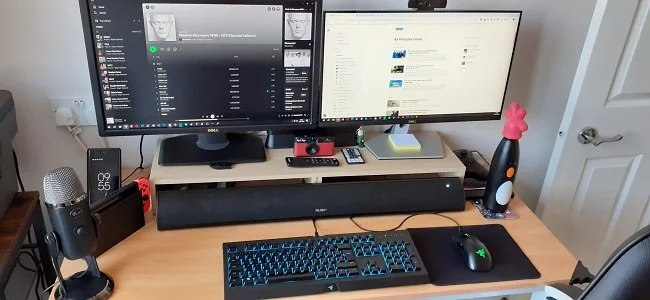
Destiny 2: Level 20
I bought Destiny 2 on a whim and have so far enjoyed playing through the campaign. My approach to the game has been somewhat casual, so I’ve equipped gear based upon common sense, rather than an in-depth knowledge of the games mechanics. This approach has proven adequate until today, when I finally hit level 20. Now I find moving forward through the game that I feel somewhat under powered and that combat is more taxing. I don’t feel that I’m doing sufficient damage to enemies. That subsequently has an impact upon my enjoyment of the game because I always find that there’s very fine line to tread when it comes to combat. If you can one shot everything then it quickly becomes quite dull. However, if it takes too long to grind down a target the game tips over into becoming a chore. It’s difficult to ascertain exactly where the sweat spot is, and it may vary from gamer to gamer. However, I distinctly feel that I’ve been struggling so today I decided to remedy the problem.
I bought Destiny 2 on a whim and have so far enjoyed playing through the campaign. My approach to the game has been somewhat casual, so I’ve equipped gear based upon common sense, rather than an in-depth knowledge of the games mechanics. This approach has proven adequate until today, when I finally hit level 20. Now I find moving forward through the game that I feel somewhat under powered and that combat is more taxing. I don’t feel that I’m doing sufficient damage to enemies. That subsequently has an impact upon my enjoyment of the game because I always find that there’s very fine line to tread when it comes to combat. If you can one shot everything then it quickly becomes quite dull. However, if it takes too long to grind down a target the game tips over into becoming a chore. It’s difficult to ascertain exactly where the sweat spot is, and it may vary from gamer to gamer. However, I distinctly feel that I’ve been struggling so today I decided to remedy the problem.
It is at this point in the proceedings that the “git gud” brigade will smugly point to the wealth of information there is available for Destiny 2 and “cordially extend an invitation” to read it. So that’s what I’ve been doing this afternoon and this is what I’ve learnt. Destiny 2 is based upon the acquisition of loot. It’s a classic gear grind which is not such a bad thing. There are worse game mechanics. However, getting new gear is based heavily on chance. You may get lucky and pick up a rare blue engram only to find it’s below your current level. Or you may finally get a new legendary purple weapon to find there’s no significant increase in stats. It’s all somewhat of a lottery, yet you have to live with it as it’s the only means to increase your power once you hit level cap. For me this is a minor nuisance. I get that Bungie has to have a carrot on the end of the stick to keep players engaged but I don’t like “luck” based systems. I prefer to know what criteria needs to be met for a specific goal and then work towards it. The chance of getting zero return on my “time investment” does not excite me.
Then there are the benefits associated with being in a clan. Destiny 2 is a social game and there are perks to be gained through these organisations. However, although I have friends playing Destiny 2, many are based in the US or tied to different platforms. So, finding a suitable group is not as easy as it first appears. I tend not to join guilds in any game unless I know at least one member within their ranks. I am too old and impatient to risk finding myself in a toxic community. Also, my casual approach and laissez-faire attitude tends not to endear me to the more dedicated gamer. So, bearing all this in mind, I suspect my progress within the game may now slow. However, if I get lucky with loot drops, perhaps my current under powered status may improve. Depending on how I progress, I may or may not buy the season pass. Fortunately, if things do not work out, I have plenty of alternative games to focus upon. I guess if I write another post about Destiny 2, it will mean things have worked out favourably, which would be nice as I do enjoy what the game fundamentally offers.
Story Driven Gaming
This is a collaborative post debating merits of emergent storytelling vs. static storytelling between myself and TheBro from MMOBro. After reading this, make sure to check out his side of the debate!
As I peruse my Steam library, it becomes very apparent that the titles I’ve spent the most time playing are those with complex and involving traditional, linear narratives. This is hardly surprising as I’ve always liked stories and have a strong affection for books with in-depth lore and complex faux histories. It is one of the reasons I enjoy Professor Tolkien’s work and therefore gravitate towards games that expand upon these intellectual properties. Games such as LOTRO and even Middle-earth: Shadow of War. Both endeavour to explore the mythology of Third Age from an alternative perspective. Through the Elder Scrolls V: Skyrim, I discovered a wealth of lore and entered a living, breathing world. Then of course there is the MMORPG Star Trek Online, that until recently has been the only source of new Star Trek content. All these diverse titles from multiple genres have one thing in common. A strong narrative that underpins each game.
This is a collaborative post debating merits of emergent storytelling vs. static storytelling between myself and TheBro from MMOBro. After reading this, make sure to check out his side of the debate!
As I peruse my Steam library, it becomes very apparent that the titles I’ve spent the most time playing are those with complex and involving traditional, linear narratives. This is hardly surprising as I’ve always liked stories and have a strong affection for books with in-depth lore and complex faux histories. It is one of the reasons I enjoy Professor Tolkien’s work and therefore gravitate towards games that expand upon these intellectual properties. Games such as LOTRO and even Middle-earth: Shadow of War. Both endeavour to explore the mythology of Third Age from an alternative perspective. Through the Elder Scrolls V: Skyrim, I discovered a wealth of lore and entered a living, breathing world. Then of course there is the MMORPG Star Trek Online, that until recently has been the only source of new Star Trek content. All these diverse titles from multiple genres have one thing in common. A strong narrative that underpins each game.
Often when gaming, once the player looks beyond the scope and setting of the title, they will find a set of repeatable tasks, endeavours and targets to achieve. RPGs and especially the MMORPG genre are built upon such systems. If I am to shoot, explore or resource farm within a game, all of which can be quite arbitrary at times, then I do like to have some motivation or narrative explanation as to why I am doing these things. These game mechanics actually become less arduous if I am provided with an interesting enough narrative and a world with its own internal logic. Star Trek Online for example can justify the most innocuous of tasks with a healthy dose of its unique technobabble. The grinding nature of the rebuilding of Hytbold, a major quest line in LOTRO back in 2012, was eased considerably by the well-crafted storyline that accompanied the undertaking.
However, a strong story can achieve more than simply justifying repeatable daily quests or progression grinds. Take an RPG such as The Witcher 3: Wild Hunt. I cannot remember a game that tackled adult themes and socially complex issues, so well. The central characters were very well defined with flaws and common foibles, making them extremely credible and identifiable. As a result, the player becomes thoroughly invested in the characters and has a clear emotional stake in their fate. For me The Witcher 3: Wild Hunt often felt like taking part in an interactive novel. Now such a concept may not be to all gamers liking, however when you consider the cultural significance of the story it is hardly surprising that they are an intrinsic part of gaming. We as a society reflect upon our history, politics and ethics through fictional narrative. I see games with epic linear narratives to be an extension of this concept. Furthermore, as games are not locked into a single outcome, as with a book, there is scope for interaction and to have multiple outcomes.
However, although I am a big advocate for strong stories and complex plots in gaming, I am not dismissing the alternative out of hand. Emergent storylines and player created content is ideal for certain genres and can add a very human element to gameplay, especially in the MMO genre. But emergent content is a very broad term and therefore one has to be careful to make appropriate comparisons. Early MMOs often took a less structured approach in terms of narrative. Ultima Online being a clear example of this. The narrative experience where shaped by the activities of player guilds and their interactions. High profile betrayals and assassinations would alter power struggles. Economic manipulation would also have an impact upon persistent worlds. We still see all these aspects today in EVE Online with its territorial wars, bank heists and political subterfuge.
However, these events and emergent stories have several disadvantages. They are unique and time specific. For those who were present and participated, they may well be exceptionally gripping and entertaining but if you weren’t their then you missed it all. An embedded narrative has no expiry date. Another consideration is that emergent stories and interaction often stem from the players being active in the community beyond the game itself. Guilds socialise, plot and scheme outside of the game via forums and subreddits. Social groups have hierarchies with people playing specific roles. Yet MMOs are filled with “average players” who are not always involved with the wider aspects of a game. For them, emergent stories and events are something that happen to other people, assuming they get to hear about them at all. These more passive players only experience the outcome, rather than shape it. Perhaps it can therefore be argued that player generated content is really only of benefit to the more involved player. The player with the time and inclination to devote a great many hours to a single game.
Another concern I have regarding players shaping the narrative and direction of events in a game such as EVE Online, is that the driving force may not always be a positive or pleasant one. The socio-political dynamic of games of this ilk too often manifests as betrayal, hostile acquisition or economic chaos. Although these are good themes narratively, I tire of the continual race to the bottom that such behaviour encourages. We have enough of this in real life and I do not always wish to find such thing reflected in games, especially MMOs. It is also worth considering that the open world environment that encourages emergent gameplay is an incentive to some and a source of confusion to others. I have spoken to players in both Guild Wars 2 and The Elder Scrolls Online, who are lost without the structure of clear cut quest hubs and mission objective. Choice is not always a good thing and suits all taste. And let us not forget that player generated content in such games as LOTRO. This is often roleplay driven and centred around telling tales, reading poetry and playing in a band. For those of a creative persuasion this is hog heaven. For others it again proves to be a somewhat passive or even exclusionary experience.
Then there are those players who are never going to be interested in a story based narrative of any kind. They are not motivated by plot or characters and will skip all quest explanations and in-game cutscenes. This is the kind of gamer whose pleasure hinges upon achievement, leader boards and the actual process of playing. Competitive games do not need a narrative, although there is a backstory to titles such as Overwatch. Games of this idiom are driven by league tables and success. The reward is pride and bragging rights. In fact, you could strip back the details regarding some games setting and who the various factions are, choosing to present them as simply the red and blue team in arena number three. Because if the gameplay is fun and challenging, then that will suffice for some gamers.
Like novels and movies, a narrative driven game can provide more than just an enjoyable ride. It can focus and raise awareness of complex moral, social and political issues. MMOs and RPGs can inform and make us think about difficult matters. Of course, that is not to everyone liking and some wish games to be entirely free of such elements. But for me, I find narrative games to be the next step in our ongoing evolving relationship with storytelling. Although I am not averse to MMOs and other genres that focus on player generated narratives, I favour the traditional story based approach. Hardly surprising from someone who enjoys writing. However, there are many views on this matter other than my own perspective and ass ever there is no definitive right or wrong answer. For an alternative take on this subject, The Bro over at MMOBro has written an interesting piece favouring emergent storytelling.
Mirror Invasion
The Mirror Invasion, also known as the Terran Empire Incursion, is no stranger to Star Trek Online. This five-man event has appeared six times since its launch in 2104. Despite some minor revisions and different event rewards, the basic premise remains the same. The players must defend Vauthil Station from a Terran Empire assault from the Mirror Universe. Rifts appear and have to be closed before they unleash enemy vessels. There are also four power substations that charge the stations defences, that have to brought online. In the final stage of the event, an enemy Dreadnought and support squadron make a final attack on the station. It’s a fun ten-minute team event and if tackled correctly, is not too challenging. Science vessels can close rifts quicker than other classes and Command ships can initiate the power substations more efficiently. Players are awarded a Multidimensional Transporter for playing this event. By turning in 14 Transporters through the Reputation System, players will receive Dilithium Ore, Reputation Marks and the new Interphasic Instability console.
The Mirror Invasion, also known as the Terran Empire Incursion, is no stranger to Star Trek Online. This five-man event has appeared six times since its launch in 2104. Despite some minor revisions and different event rewards, the basic premise remains the same. The players must defend Vauthil Station from a Terran Empire assault from the Mirror Universe. Rifts appear and have to be closed before they unleash enemy vessels. There are also four power substations that charge the stations defences, that have to brought online. In the final stage of the event, an enemy Dreadnought and support squadron make a final attack on the station. It’s a fun ten-minute team event and if tackled correctly, is not too challenging. Science vessels can close rifts quicker than other classes and Command ships can initiate the power substations more efficiently. Players are awarded a Multidimensional Transporter for playing this event. By turning in 14 Transporters through the Reputation System, players will receive Dilithium Ore, Reputation Marks and the new Interphasic Instability console.
Sadly, there is a problem with the Mirror Invasion. A problem that has been present for a while and one that remains uncorrected by Cryptic. Upon joining this event, either via the PVE queue system which auto groups you with other players or through creating a private encounter, you can simply spawn and go AFK, allowing the event to run without any discernible player interaction. You may get reduced rewards for not passing the all the event challenges but you will receive the Multidimensional Transporter. This is because the Mirror Invasion is driven by it ten-minute duration and it is the passage of time that triggers different stages of the event. You can safely neglect to close the rifts and allow the vessels to swarm the area without any major consequence. If Vauthil Station gets too damaged it simply initiates repair protocols. Eventually the Station fires an anti-tachyon pulse and forces the Mirror Universe forces back to their dimension, clearing the area. The final Dreadnought attack can be similarly ignored until the timer expires.
Some STO players consider this situation an exploit, where others do not. Naturally this is hotly debated but I think that particular discussion is essentially missing the point. This is a significant flaw in the event design and anything that actively encourages players to not engage with the activity erodes the relationship between the player and game. This is not the first time this has happened in STO either. There is a similar defect in the First Contact Day event where you can bypass the scavenger hunt to upgrade your replica Phoenix. It further disheartening to know that both of these problems are known to Cryptic but do not seem to be high on their priority list. Then there is the “social” issue of going AFK in pickup groups. Unless this is something that is mutually agreed by all parties, it does seem somewhat ill-mannered to take a seat while others do all the work. Again, encouraging such behaviour through a correctable flaw is bad for STO and its community. Sadly, Cryptic are not known for being quick off the mark, so I suspect this problem will persist.
The Peril of Leaving Comments
I recently decided to try and comment more on websites and blogs, mainly in a shameless attempt to raise my own writing profile. I live in hope that people will be enamoured with my “puckish epigrams” and follow the breadcrumb trail back here. However, leaving comments takes time because I cannot just post a few succinct words. I always end up typing several paragraphs because brevity often leads to a point being misconstrued. We do after all live in an age where people actively look for offense regardless of whether it’s there or not. However, I digress. What I enjoy about leaving comments on blog posts and website articles, is the chance to exchange ideas and to riff off other people. I also find that by marshalling my thoughts and leaving a comment elsewhere, it can lead to me subsequently expanding on those ideas and developing them into a blog post for Contains Moderate Peril. So overall, I advocate leaving comments and feedback.
I recently decided to try and comment more on websites and blogs, mainly in a shameless attempt to raise my own writing profile. I live in hope that people will be enamoured with my “puckish epigrams” and follow the breadcrumb trail back here. However, leaving comments takes time because I cannot just post a few succinct words. I always end up typing several paragraphs because brevity often leads to a point being misconstrued. We do after all live in an age where people actively look for offense regardless of whether it’s there or not. However, I digress. What I enjoy about leaving comments on blog posts and website articles, is the chance to exchange ideas and to riff off other people. I also find that by marshalling my thoughts and leaving a comment elsewhere, it can lead to me subsequently expanding on those ideas and developing them into a blog post for Contains Moderate Peril. So overall, I advocate leaving comments and feedback.
And of course, as you’ve probably guessed, the previous statement comes with a caveat. Actually, it’s probably not so much of a caveat but more of an element of risk. That being that you have absolutely no control over what happens next. Allow me to give you an example. Earlier in the week, there was a post over at Massively Overpowered regarding how Disney forced EA to temporarily disable the lootboxes in Star Wars Battlefront II. I left a comment to the effect that it was a positive result and that at least we as gamers knew what to do in the future. IE Complain to the licence holder and not just the developer. Use a company’s PR vanity against them. I then ended the comment with a throw away remark about how we needed to figure out exactly what we all wanted. Because there isn’t a “universal dream”. Gamers are a bit like the Judean People’s Front versus the People’s Front of Judea.
What followed next in a way proved my point. Another gamer directly replied with a few ideas regarding the “universal dream”. “Not to be exploited by corrupt and greedy corporations; Not to be physiologically programmed into degenerate gamblers; not to have communist/SJW re-education and propaganda corrupting our games and media. I am sure you can add a few things to this dream list but it’s a start”. Well yes, I do indeed have a few things to add and more importantly, a lot to remove. Like 90% of what they said. The only thing I broadly agree with is there first point, although I wouldn’t couch it in such hyperbolic language. I think EA’s lootbox system is crass and the fact they had the gall to try it, is mildly insulting. However, the rest of the views stated are simply ill conceived and reek of tabloid journalism and the associated mindset. I could have replied but suspected it would lead to on of those circular conversations that achieves nothing other than the raising of blood pressure and an unnecessary expenditure of energy.
This minor event reminded me of a similar situation I had a few years ago while I was waiting for a bus. A random stranger joined me at the bus stop and a brief exchange of words was had regarding the approximate time of the next bus. Then suddenly, out of know where, the guy blurted out a few derogatory comments about a specific ethnic group. It wasn’t a crazy tirade. Just a few sentences, said in a calm and measured way but still overtly racist. I remember at the time thinking, where the hell did that come from and then getting really angry because there was this inherent assumption in his confidence to make such comments, that I too was a bigot. Furthermore, when considering both these anecdotes about random left field statements, I worry that there’s a risk that you can get inadvertently tarred with the “crazy” brush in such situations. Stupidity splash damage is one way to describe it.
Once again, an old adage has proven true. No good deed goes unpunished. Except I’m not sure if I can really define me leaving a comment on a website as a good deed but hey, most analogies don’t stand up to close scrutiny. Guess this is similar to the recent discussion a few of us bloggers had on twitter about how the articles you feel are your best don’t garner the traffic you’d like and that disposable posts can sometimes break big. Similarly, a comment you feel strongly about may only get a reply from some random crazy person and a glib remark can be perceived as being more than the sum of its parts and deeply insightful. I guess both of these first world, social media “dilemmas” are a direct result of daring to interact with other sentient, carbon based life forms. It’s an activity that always comes with an element of risk.