
Children of Men (2006)
I missed Children of Men on its original release in 2006 and only caught up with recently. If memory serves, the reason the film wasn’t on my radar when it came out was due to the misleading advertising campaign which attempted to pigeon hole and market the film as a sort of post-apocalyptic thriller. Although Alfonso Cuarón's Children of Men explores a violent and dystopian future, it’s cerebral film, grounded in a tangible depiction of a future England and certainly bears little relation to the Mad Max subgenre that the publicity campaign alluded to. A similar mistake was made with the marketing of The Road in 2009 which was sold by Miramax as a post-apocalyptic action film, when it patently isn’t.
I missed Children of Men on its original release in 2006 and only caught up with recently. If memory serves, the reason the film wasn’t on my radar when it came out was due to the misleading advertising campaign which attempted to pigeon hole and market the film as a sort of post-apocalyptic thriller. Although Alfonso Cuarón's Children of Men explores a violent and dystopian future, it’s cerebral film, grounded in a tangible depiction of a future England and certainly bears little relation to the Mad Max subgenre that the publicity campaign alluded to. A similar mistake was made with the marketing of The Road in 2009 which was sold by Miramax as a post-apocalyptic action film, when it patently isn’t.
In 2027, in a socially decaying world in which women have become somehow infertile, a former activist Theo Faron (Clive Owen) agrees to help transport pregnant woman Kee (Clare-Hope Ashitey) to a sanctuary. They are pursued by both the UK government and revolutionaries who seek the baby for political gain. Intelligently written and credibly depicted Children of Men is a worryingly plausible tale. As the wider world crumbles, immigrants flock to the few remaining functional countries resulting in an increasingly authorisation government. Children of Men feels very contemporary indeed. The cast are capable and have ample material to work with. Michael Caine's performance was very engaging and it’s a shame that his character does not a have more screen time. It’s always good to see established actors playing against type. Caine allegedly drew on his experiences and friendship with John Lennon.
Cinema often uses the depiction of technology to establish its futuristic credentials. In the case of Children of Men implies that the technological advance of recent years has ground to a halt, due to the ongoing economic and political decline. What is shown in the way of futuristic technology is subtle and effective. The heads up display on car windscreens is both plausible and non-invasive. The use of small form factor PCs and screens is also credible. Much of this aspect of the production design is a clever extrapolation of hardware that we currently have at our disposal. The overall effect helps create a more convincing and grounded depiction of the near future.
Similarly, the depiction of urban decay in Children of Men is particularly well done. The images of a graffiti ridden, boarded up and burnt out Greater London has an uncomfortable similarity to Gaza or the shanty towns of Zimbabwe. The resulting lawlessness of the disenfranchised was also very well done, especially in light of the London riots of 2011. The trains and buses with wire mesh over the windows, along with the banditry of the Kent countryside have their roots in current global civil unrest. There was similar imagery of social decline in the 1979 TV series Quatermass.
The much praised "single take shots" are suitably engaging, although to facilitate such scenes, a high degree of digital post production work was required. However, in other respects the visual effects work is very low key and does not overwhelm the story, as so often is the case these days. The military assault on the refugee camp at Bexhill looks like a news report, shot on the move complete with shaky cam. It is a fascinatingly chaotic set piece and a welcome change to the usual overblown kind of Hollywood action sequence. The subsequent bombing of the camp by the RAF is seen through fog at a distant and is far more dramatic for it. Presenting the drama in such stark terms and avoiding spectacle, further elevates the movie from simple entertainment to serious drama.
As you would expect from serious movies of this nature that chooses to pursue a more grounded approach to the subject matter, there are few concessions made to populist conventions such as the “happy ending” or good prevailing over evil. Therefore, the ending does not come as a major surprise and is not out of place. Considering the large amount of religious symbolism and imagery in the film, it would have been erroneous to expect anything else under the circumstances. There's sufficient information supplied in the final five minutes of the film for the viewer to draw their own conclusion as to the chain of events that would potentially follow after the films ending. Cuarón is not a fan of excessive plot exposition and comprehensive back story. A philosophy that I often agree within the context of cinema.








Lucy (2014)
Lucy (Scarlett Johansson), a student studying in Taiwan, find herself an unwilling drug mule for crime boss Mr. Jang (Choi Min-sik). When she accidentally ingests the synthetic CPH4 which has been surgically implanted in her abdomen, she rapidly develops advance physical and mental abilities as the drug unlocks the unused parts of her brain. However, this process also puts her life in peril and she soon realises that she requires further doses of the CPH4 to stay alive. Striving to reconcile herself to her situation Lucy reaches out to Professor Samuel Norman (Morgan Freeman), a neuroscientist and expert in the hidden capabilities of the mind. Meanwhile, Mr.Jang does not take kindly to interference in his drug trafficking and sets out to hunt down Lucy.
Lucy (Scarlett Johansson), a student studying in Taiwan, find herself an unwilling drug mule for crime boss Mr. Jang (Choi Min-sik). When she accidentally ingests the synthetic CPH4 which has been surgically implanted in her abdomen, she rapidly develops advance physical and mental abilities as the drug unlocks the unused parts of her brain. However, this process also puts her life in peril and she soon realises that she requires further doses of the CPH4 to stay alive. Striving to reconcile herself to her situation Lucy reaches out to Professor Samuel Norman (Morgan Freeman), a neuroscientist and expert in the hidden capabilities of the mind. Meanwhile, Mr.Jang does not take kindly to interference in his drug trafficking and sets out to hunt down Lucy.
At first glance, the story for Lucy seems somewhat formulaic, based upon the popular misconception about the untapped potential of the human mind and how we as a species only use a small percentage of our brain capacity. However, Lucy is a movie, written and directed by Luc Besson, who brings a distinctly European aesthetic along with his own unique style to the proceedings. The exotic locations, the vivid colour palette and an eclectic international cast results in a curious ninety-minute genre hybrid that may polarise audiences. You will either buy into the far-fetched concept and enjoy the resulting cinematic journey or simply scoff in derision at the preposterous narrative. I happily chose the former option.
It takes a confident director to draw from such movies as Kubrick's 2001: A Space Odyssey and Terrence Malick’s The Tree of Life. Combining philosophical musings about the nature of consciousness with martial arts and gun play is another bold step. Yet it's all done with such aplomb that it broadly works. In an interesting plot twist, Lucy does not descend into megalomania when confronted with her god like powers. Instead the film explores her melancholic attitude towards the impending loss of her "humanity". There are parallels with character of Doctor Manhattan in Watchmen, who faces a similar crisis. Lucy also addresses modern day society's dependence upon the internet and social media, which is another timely theme. Especially in light of Stephen Hawking recent comments about AI and the potential impact it may have upon the world.
Lucy hinges upon the lead performance by Scarlett Johansson and she is extremely watchable as she slows down time, shoots sundry henchmen with pinpoint accuracy and merges with the digital world. The visual effects are striking and the entire film benefits from its rapid pace and overall French sense of panache. It is also pleasant to see such a storyline of this nature based around a female lead and I enjoyed the reference to Lucy sharing her name with the first human being. I feel it is a superior film to Bradley Cooper's 2011 movie, Limitless that shared a similar theme. Lucy also addresses the perennial (and tedious) question about whether a female lead can carry a modern action movie. The answer is a resounding yes.
Batman v Superman: Dawn of Justice Ultimate Edition (2016)
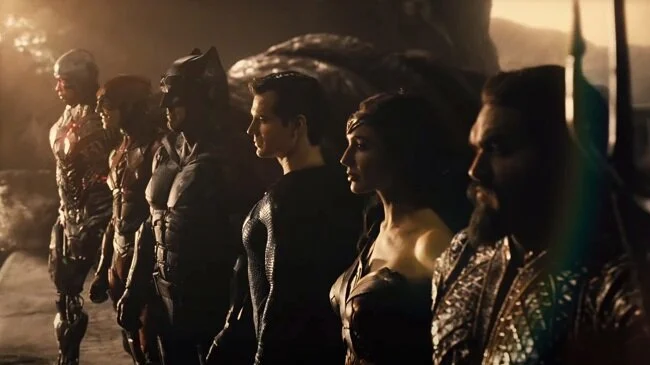
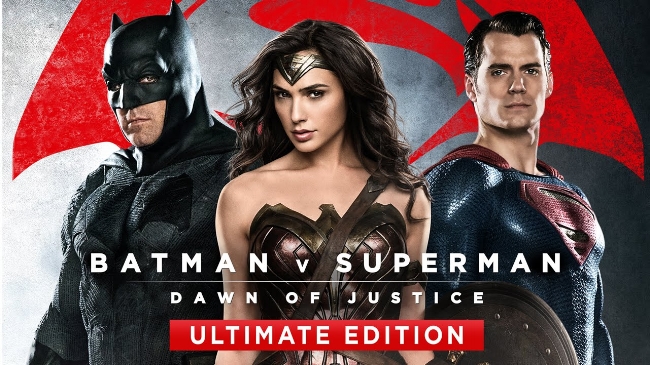
I have not seen the theatrical version of Batman v Superman: Dawn of Justice, although I’ve been informed that it was a somewhat confused and flawed edit of the film. The Ultimate Edition clocks in at three hours and three minutes; thirty-two minutes longer than the version shown in cinemas. That is over half an hour of more exposition and character development. More than enough to have a significant impact upon the movie, its themes and narrative. Judging purely by the version that I saw, along with the fact that I have no major familiarity or investment with either of these characters, beyond their cinematic depictions, I was entertained by Batman v Superman: Dawn of Justice. I thought it maintained the cerebral approach to DC Expanded Universe that we previously saw with Man of Steel. Furthermore, despite its sprawling nature and an overabundance of CGI driven action scenes, the film explores some very contemporary issues about societal paranoia and upsetting the political status quo.
I have not seen the theatrical version of Batman v Superman: Dawn of Justice, although I’ve been informed that it was a somewhat confused and flawed edit of the film. The Ultimate Edition clocks in at three hours and three minutes; thirty-two minutes longer than the version shown in cinemas. That is over half an hour of more exposition and character development. More than enough to have a significant impact upon the movie, its themes and narrative. Judging purely by the version that I saw, along with the fact that I have no major familiarity or investment with either of these characters, beyond their cinematic depictions, I was entertained by Batman v Superman: Dawn of Justice. I thought it maintained the cerebral approach to DC Expanded Universe that we previously saw with Man of Steel. Furthermore, despite its sprawling nature and an overabundance of CGI driven action scenes, the film explores some very contemporary issues about societal paranoia and upsetting the political status quo.
Having recently re-watched Man of Steel, the segue into Batman v Superman: Dawn of Justice was seamless and the movie picked up the previous story and instantly got cracking on expanding it. Several events from the climax of Man of Steel where subsequently shown from the perspective of Bruce Wayne. This then sets the plot of Batman siding with an ever increasingly paranoid establishment that see’s Superman as an uncontrollable threat. As ever, with any threat to the established order, it is the rich and powerful that fear the new, as it may rob them of their privilege. Yet the poor and the disenfranchised, see Superman as their advocate. In this respect, Director Zack Snyder has made a very political movie. He also ponders the vigilante aspects of Batman’s character, who at this time works outside the law and has established himself as judge, jury and indirect executioner. He brands his victims, which makes them clear targets when placed in a prison environment.
So far, the first two instalments of the DC Expanded Universe have been dark, dour and have not shied away from social commentary. Certainly, the themes explored are especially pertinent in the light of contemporary US politics. Presenting super hero stories in such a fashion certainly puts to bed the notion that comic book movies are kiddie fodder. The levels of violence in the Ultimate Edition are also unusual for this genre but completely justified considering the nature of the story and the noticeably more cerebral pitch the producers are trying to make. However, because this is a genre movie it still feels obliged to regularly punctuate the proceeding with major action based set piece. I find that is not the scope of these sequences, that are the problem. They often display arresting imagery and novel ideas. It is their duration that is the issue. There is a finite amount of destruction and mayhem one can endure, before it becomes tedious and bombastic. These sequences also slow up the narrative, which surprisingly enough, does become the selling point of the film.
Like Man of Steel before it, Batman v Superman: Dawn of Justice also has a controversial scene. In the previous movie, it was having Superman act out of character and take a life. As a plot device, it actually worked, taken in context of the films own internal logic. This time round, an armoured Batman defeats Superman, through the use of weaponised Kryptonite. Yet a single incidental remark, spoken in desperation by Superman, stays Batman’s hand and sets him upon a path of introspection. His subsequent epiphany shows Bruce Wayne exactly how far he has fallen, morally. This scene divided fans. Some felt that it was contrived and hokey. Again, I was content to go along with it and felt in principle it was an acceptable concept. Perhaps it could have been implemented a little better but I did not see it as a deal breaker in any way. Again, I think that my willingness to go along with the director vision, stems from my lack of personal baggage with the source material. Fans often forget that a movie is an invitation to share the film makers vision. You can blame a movie for perceived faults in its production but is patently unrealistic to complain that the studio has not made the film that you had in your head. That was never on offer to begin with.
There were several other facets of Batman v Superman: Dawn of Justice that I enjoyed. I was happy with all main performances. Jesse Eisenberg as Lex Luthor was a bold piece of casting. However, it was prudent to fly in the face of established depictions of the supervillain. This was a far more contemporary Lex Luthor, pertinent to the technology and the fears of our age. I also enjoyed the subplot regarding metahumans and the extended cameo by Gal Godot as Diana Prince. We were also given a far more “hands on” Alfred Pennyworth, who is technically adept and happy to put his employer, Bruce Wayne, in his place. Jeremy Irons is the sort of actor who can project this sort of moral authority. Another aspect of the film that improves its dramatic scope, is its global perspective. The events of the story do not just happen within an inward-looking US. Superman interacts with all people and nations. Catastrophic events also have international implications.
Even in this extended form, Batman v Superman: Dawn of Justice is not a perfect movie. It is somewhat bloated and has an uneven pace. Yet is it now narratively coherent and doesn’t suffer from the plot holes apparent in the theatrical release. It approaches its subject matter in a manner that is appropriate to our current world. We no longer live in the Fifties so it would be crass to depict the concept of metahumans in such a way. Superman is no longer a seen as a benevolent, extraterrestrial immigrant who has embraced the American dream. He is now viewed suspiciously by those who harbour an inherent fear of the unknown and that which they can’t control. Kal -El is no longer the bland, one dimensional embodiment of patriotism. He is now a potentially rogue messiah who is acutely aware of the divisions that he causes. Such ideas certainly make for interesting viewing and intellectual reflection. So far, because of the manner in which all these ideas have been handled, I am still sufficiently invested to pursue them further. Thus, I am looking forward to watching both Suicide Squad and Wonder Woman. Hopefully, these adult fantasies will continue to offer spectacle and food for thought in equal measure.
Man of Steel (2013)
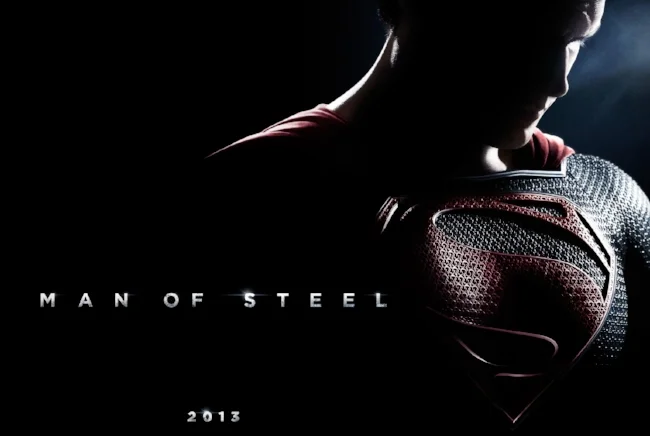
Although I was one of the few that actually enjoyed Superman Returns back in 2006, I can appreciate why it failed at the box office. It made the mistake of trying to bridge the gap between the iconic Christopher Reeve era and the post 9/11 world and ended up falling between two stools. Zack Snyder's Man of Steel does not make this mistake and reboots the franchise in completely the right manner for a modern audience. The movie takes quite a cerebral approach to its exploration of the character and wrestles with several weighty themes that previous adaptations elected not to tackle. However, as this is a very specific genre movie, the production has to make concession towards its core audience. Therefore, there’s a requirement for mayhem and destruction. As result the film does at times feel like it's pulling in different directions and the third act is more predictable and ponderous than the first two.
Although I was one of the few that actually enjoyed Superman Returns back in 2006, I can appreciate why it failed at the box office. It made the mistake of trying to bridge the gap between the iconic Christopher Reeve era and the post 9/11 world and ended up falling between two stools. Zack Snyder's Man of Steel does not make this mistake and reboots the franchise in completely the right manner for a modern audience. The movie takes quite a cerebral approach to its exploration of the character and wrestles with several weighty themes that previous adaptations elected not to tackle. However, as this is a very specific genre movie, the production has to make concession towards its core audience. Therefore, there’s a requirement for mayhem and destruction. As result the film does at times feel like it's pulling in different directions and the third act is more predictable and ponderous than the first two.
Man of Steel starts with a visually impressive opening set on the planet Krypton. The pace of the narrative is very intense and there is a lot to assimilate. Russell Crowe is well cast as Jor-El and successfully moves the plot forward with regard to the destruction of Krypton and his infant son's exodus to Earth. It is the story of Clark Kent's youth, told in flashback which provides the movies strongest dramatic punch. The scenes with his foster parent Jonathan and Martha Kent (played by Kevin Costner and Diane Lane) is where the script excels. Both actors offer sublime performances, embodying the quintessential wholesomeness and decency of cinemas idealised notion of Midwestern America.
It is in the second act that Man of Steel finds its narrative depth. This goes beyond Spider-Man's "With great power comes great responsibility". Kal-El is a virtual deity but his fear stems from concerns that society will reject him, because humans inherently fear what they don't understand or more importantly can control. It is at this point Henry Cavill's performance moves up a gear and he becomes more than just the stereotypical national icon, with finely chiselled features. He is also provided with a better than average nemesis in the guise of General Zod, played by Michael Shannon. This character has a far greater depth than usually seen in this genre, driven by his genetic imperative. "No matter how violent, every action I take is for the greater good of my people" he menacingly states. When robbed of this purpose he becomes even more dangerous.
During the movies finale that Man of Steel settles into more familiar action adventure territory and suffers from one too many climaxes. It is at this point the story decides to focus on Perry White (Laurence Fishburne) and his team but because we have had little exposure to them it's hard to connect emotionally. I get the impression that during editing, Director Zack Snyder may well have been under studio pressure to make trade-offs between dialogue and spectacle. A lengthier version of the film with greater narrative continuity may flow more evenly and be more cohesive. Sadly, four years on a longer edit of the movie has yet to materialise. Either way the theatrical version of the film is still very good with far more positive aspects than negative. Writers David S.Goyer and Christopher Nolan have successfully taken a character that is in some ways two-dimensional and given him a soul and the depth required for today's world.
Finally, it is rather telling that the name "Superman" only used three time during Man of Steel and on one occasion it's done with a degree of irony. The movie's ending clearly sets up a franchise, with all the key players, redefined and in place. Zack Snyder, a film maker of extremes, has certainly surprised a good many people by finding the exactly the right tone for Man of Steel and stepping away from the traditional perception of Superman that is indelibly linked to the late, great Christopher Reeve. It would also be remiss of me not to mention the contribution made by composer Hans Zimmer. Once again, he demonstrates his affinity to the genre, with a dignified, portentous score. It's central bi-tonal motif is very effective and in total accord with the story and its overall themes. As the first entry into the DC Extended Universe Man of Steel takes a strong lead.
The Purge (2013)
Despite having a very interesting premise, The Purge squanders its potential early on in the proceedings, leaving viewers with a rather turgid and formulaic home invasion movie. Written and directed by James DeMonaco, the film touches upon many themes and ideas that could have been developed into a more cerebral and thrilling experience. Sadly, The Purge quickly loses the audience as the main characters makes illogical decisions and test viewers “suspension of disbelief”. Rather than exploring the social and moral implications of its core idea, the production opts for clichéd jumps scares and a smattering of violence. The Purge is ultimately more of a frustrating movie than a bad one, which is all the more annoying.
Despite having a very interesting premise, The Purge squanders its potential early on in the proceedings, leaving viewers with a rather turgid and formulaic home invasion movie. Written and directed by James DeMonaco, the film touches upon many themes and ideas that could have been developed into a more cerebral and thrilling experience. Sadly, The Purge quickly loses the audience as the main characters makes illogical decisions and test viewers “suspension of disbelief”. Rather than exploring the social and moral implications of its core idea, the production opts for clichéd jumps scares and a smattering of violence. The Purge is ultimately more of a frustrating movie than a bad one, which is all the more annoying.
In the near future, the United States government sanctions a yearly, twelve hours “Purge” in which all crimes are legal. Effectively this is an officially endorsed crime spree in which anything goes and the emergency services take a back seat. Home security consultant (Ethan Hawke) hopes to wait out the purge with his wife Mary (Lena Headey), teen daughter Zoey (Adelaide Kane), and young son Charlie (Max Burkholder) from the comfort of their secure home. However, after their son allows a stranger (Edwin Hodge) into their house, the family find themselves under siege from a masked man (Rhys Wakefield) and his armed gang, who demand that the stranger is handed over to them. Tension mounts as does the body count when the family opts to protect their “guest” and defend their home.
There are so many themes and ideas that are ripe for exploration and exposition in The Purge. How exactly has the US reached this point? What is the political landscape of the time like? Is there some sort of ethical, philosophical or even religious element to this state sanctioned purge? What is the social fallout of such an event? Alas none of ideas feature in the screenplay which is rife with plot holes and inconsistencies. For example, why doesn’t the home security system have a standby generator? Would it not be easier to take your family on a vacation outside of the US for the period of the purge? Also, if this twelve-hour window of lawlessness still has rules, who enforces them and how?
It is quite shocking how so many movies seem to lose their way narratively speaking these days. Is this due to screenwriters having to continuously revise their material to satisfy the whims of producers and focus groups? Or is it simply a question that there are too many bad writers who have a poor grasp of the mechanics of cinema? Either way it all too often results in a movie with major flaws. In the case of The Purge, it main problem is that the central characters are just not particularly likeable. Without any emotional connection why should audiences care? Indifference hardly makes for an entertaining cinematic experience?




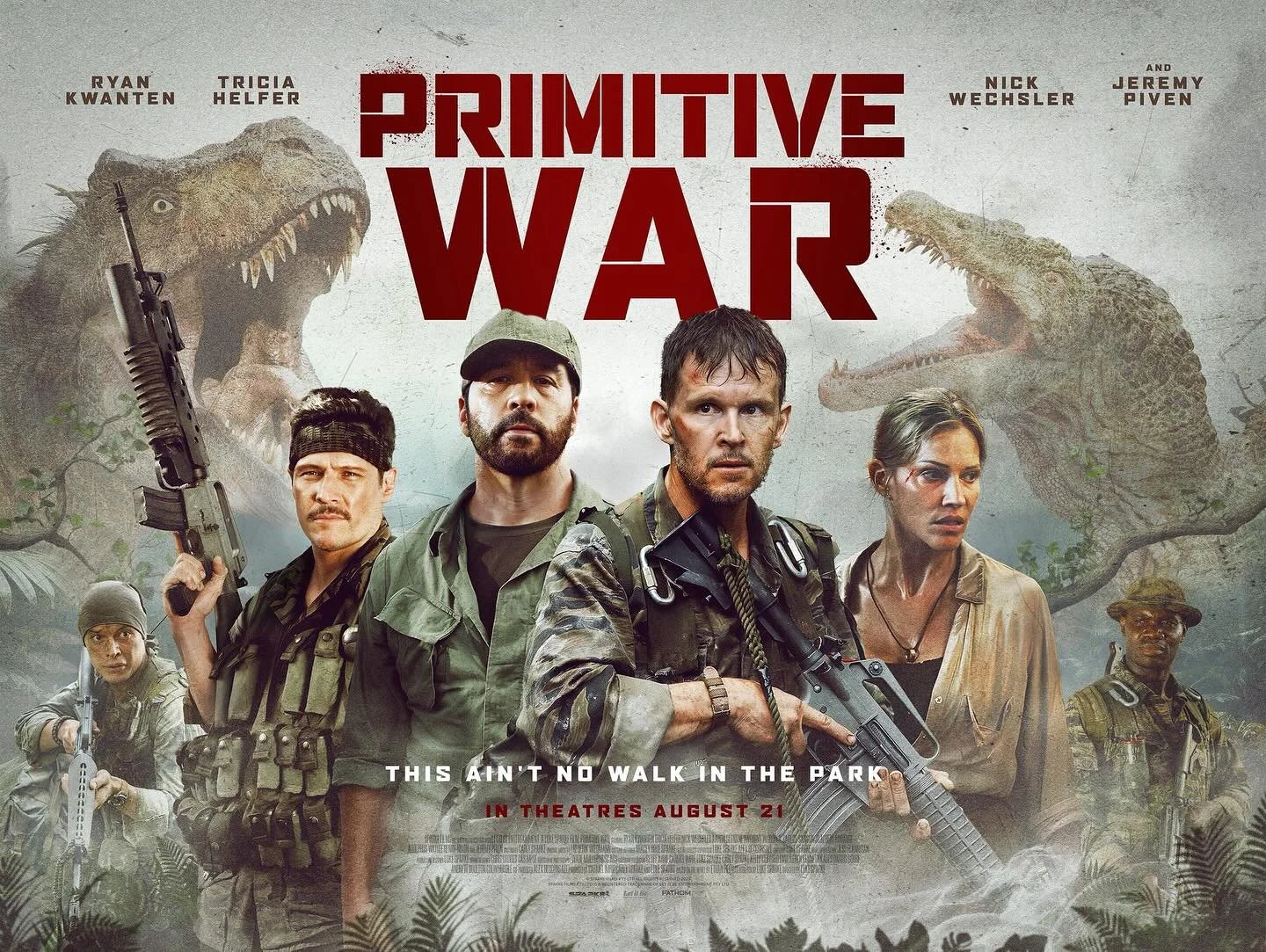
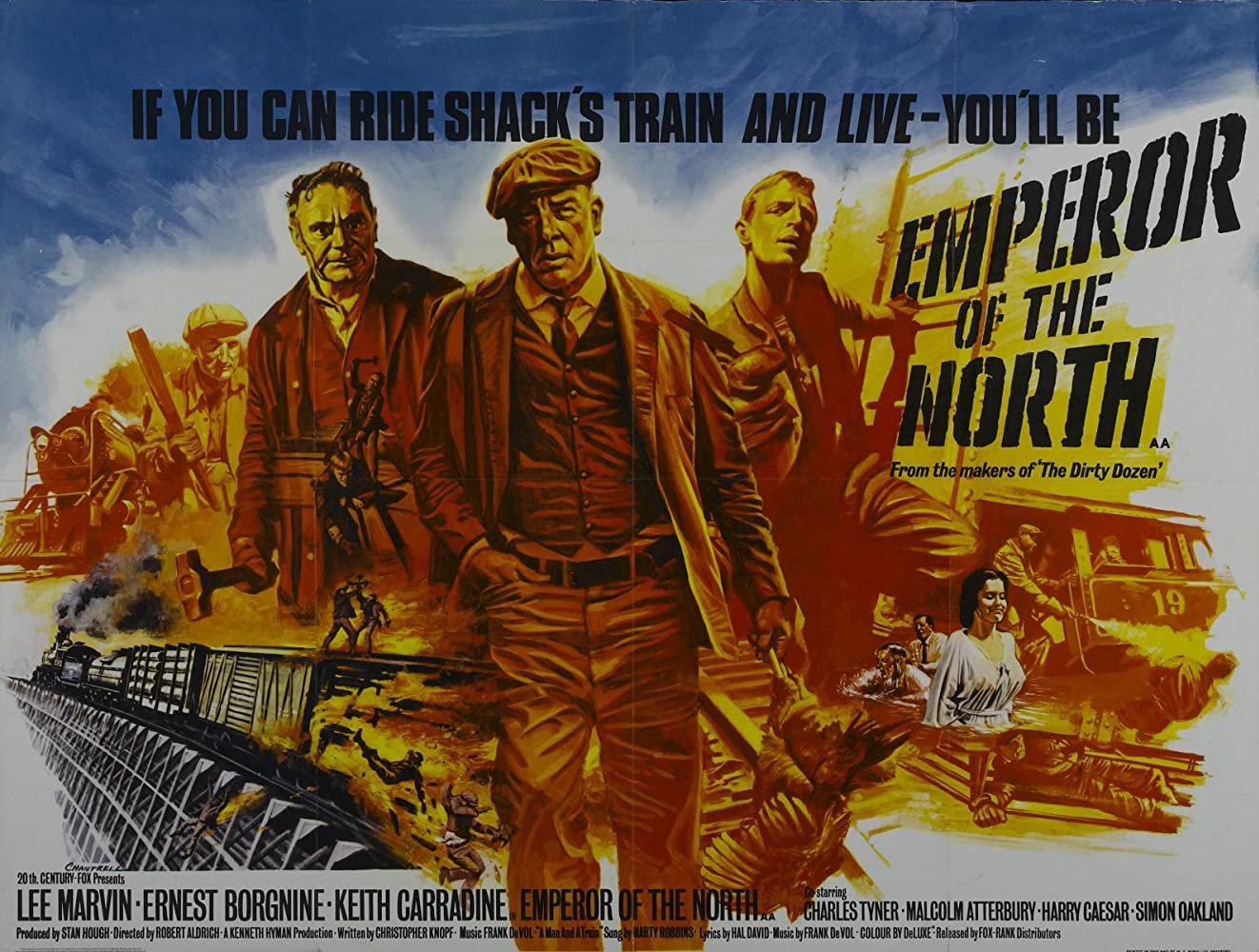



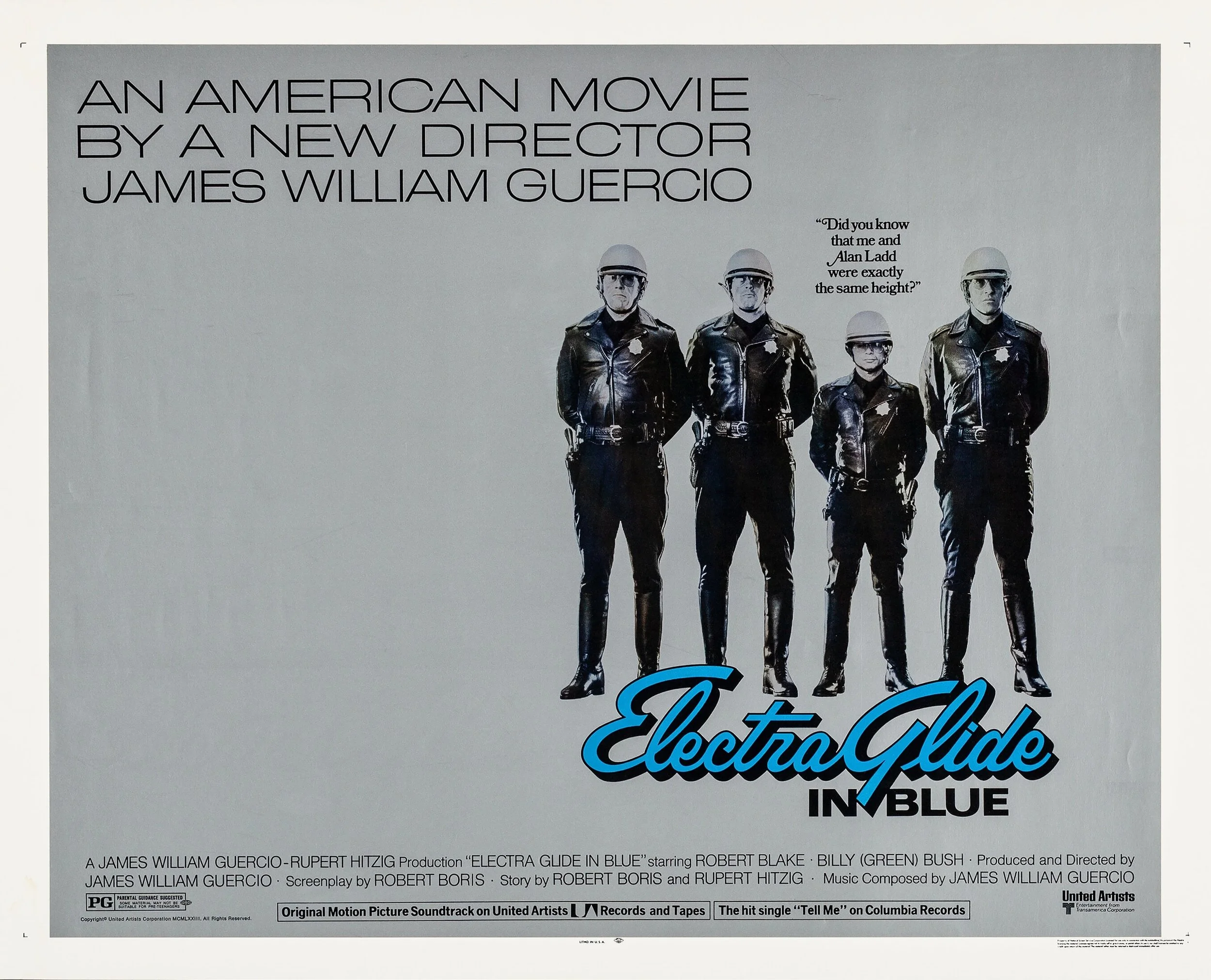
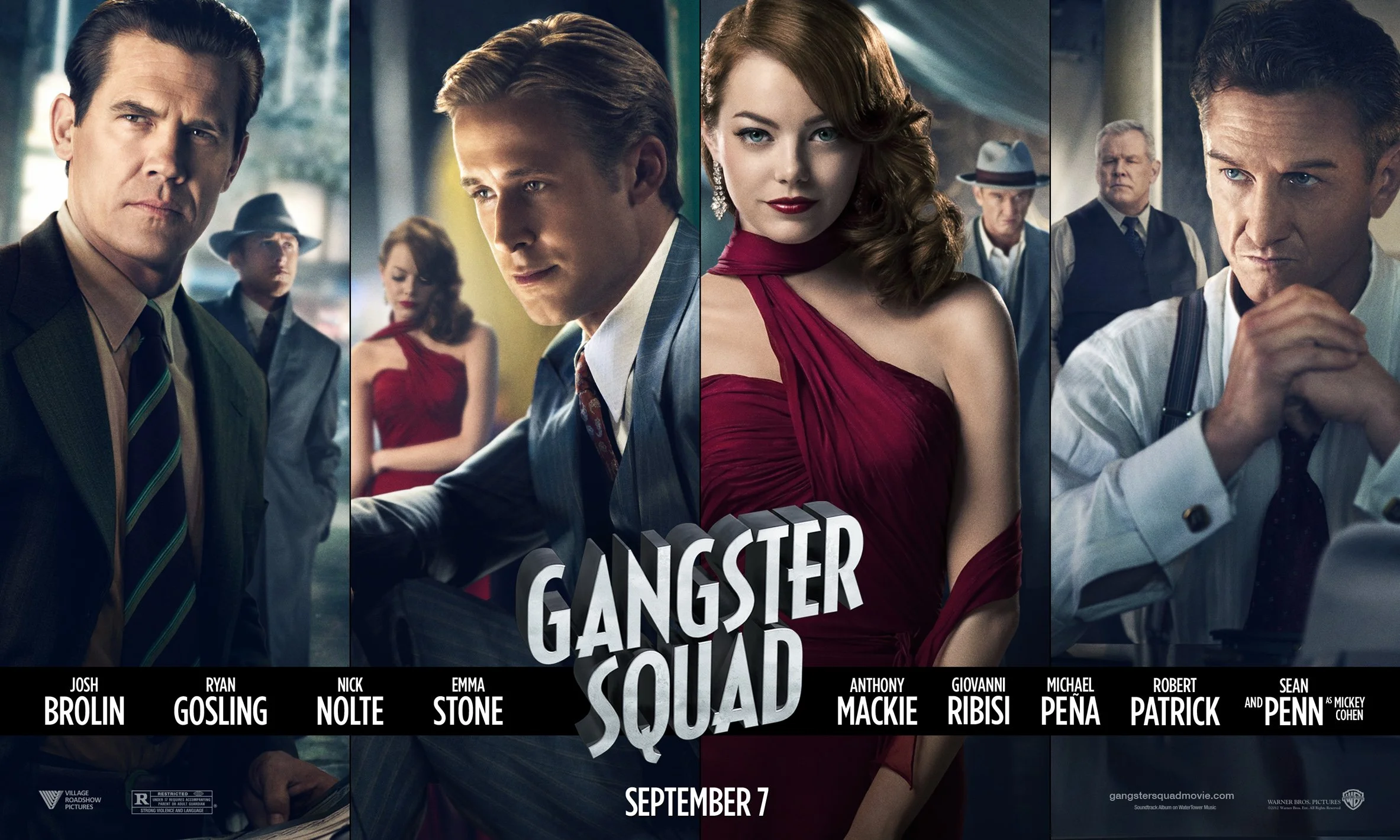






10 Cloverfield Lane (2016)
10 Cloverfield Lane blends several cinematic genres producing an interesting premise. Once it has established its narrative arc, it then dives head long into an exciting and tense one hundred and four minutes. The movie is not a direct sequel to Cloverfield (2008) but does touch upon some of the same themes and ideas. Made on a modest budget of $15 million, the claustrophobic setting of a nuclear bunker accommodates strong performances from the lead actors. It is not until the third act when the story movies back to the outside world, do we see any major visual effects. Overall, this is a very compelling film due to the strong screenplay and well defined central characters.
10 Cloverfield Lane blends several cinematic genres producing an interesting premise. Once it has established its narrative arc, it then dives head long into an exciting and tense one hundred and four minutes. The movie is not a direct sequel to Cloverfield (2008) but does touch upon some of the same themes and ideas. Made on a modest budget of $15 million, the claustrophobic setting of a nuclear bunker accommodates strong performances from the lead actors. It is not until the third act when the story movies back to the outside world, do we see any major visual effects. Overall, this is a very compelling film due to the strong screenplay and well defined central characters.
After a car accident, Michelle (Mary Elizabeth Winstead) awakens to find herself in a mysterious bunker owned by Howard (John Goodman). Initially fearful that she’s been abducted, Howard tells her he rescued her and brought her to his bunker just prior to a pre-emptive attack on the US. Michelle discovers that a young man called Emmett (John Gallagher Jr.) has also made it to the bunker. The two are sceptical of Howard’s explanation until they witness a poisoned and burnt woman outside the bunker entrance. Yet, inconsistencies in Howard’s story lead them to question what they’ve been told and fear for their own safety, so the pair decided to escape.
10 Cloverfield Lane hinges upon the three central performances and the quality of the screenplay. If the dialogue, character development and performances had been anything less than what they are, then the movie would fail dramatically. However, the screenplay by Josh Campbell, Matt Stuecken and Damien Chazelle is lean, nuanced and to the point. Michelle is a strong and believable lead character, marred by an abusive upbringing. Mary Elizabeth Winstead interprets this back story well. Emmett is also very plausible with his penchant for verbal diarrhoea and slacker attitude. But it is John Goodman’s who steals the show. He is worryingly unhinged as the survivalist and conspiracy theorist Howard, effortlessly switching from menace to pathos; being both pitiful and threatening.
10 Cloverfield Lane works very well within the confines of its PG-13 Rating. The emphasis is upon tension rather than horror. What acts of violence there are a relatively discrete without compromising the atmosphere by being too coy. The real test for the movie comes in the final act, when Michelle escapes the confines of the bunker. What happens next may test the audience and whether they can maintain their suspension of disbelief. Yet due to the focused direction by Dan Trachtenberg and the goodwill earned in the previous hour, the step from one genre to another works well. The effects driven finale is not excessive and provides and interesting codicil to the narrative.
10 Cloverfield Lane did well at the box office considering its low budget. Bad Robot Productions have already announced that another sequel, God Particle is in production that will tie this film directly into its tangential predecessor Cloverfield. The term “Cloververse” has already been bandied about, indicating yet another example of how studio wish to have long term franchises these days. Certainly, there are a lot of questions raised by the two existing movies that remain unanswered. Whether these can be successfully explored via a third movie remains to be seen. In the meantime, 10 Cloverfield Lane remains an entertaining movie whether you are familiar with the prior film or not. It offers a strong story driven by compelling performances. Unlike Cloverfield, this time we are offered likeable characters we can invest in and identify with. It’s one of the movies strongest assets.


Cloverfield (2008)
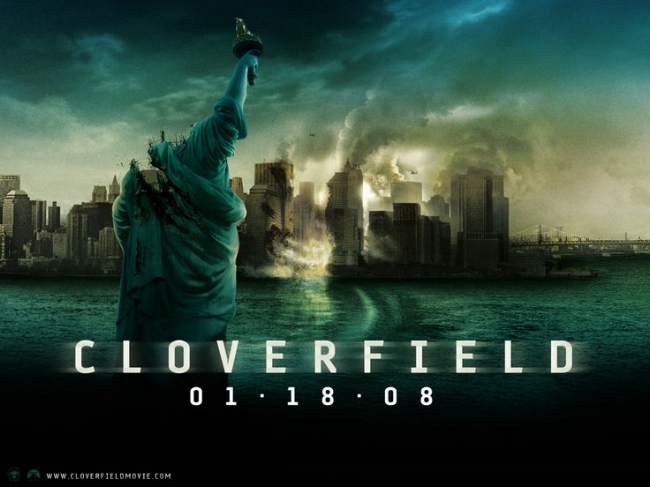
I did my best to avoid the hype surrounding the initial release of Cloverfield. Such media saturation and public interest can often cloud the issue of whether the actual film is any good. Five years later and having watched the movie twice, once in the theatre and once at home, I am still somewhat conflicted about this movie. The use of hand held video cameras is both a boon and a bane. The constant movement of the image has proven to cause motion sickness for some viewers, although this is not so overwhelming when viewed on a smaller screen at home. Yet the medium of news footage mixed with handheld cameras does create a palpable sense of immediacy. This helps immensely when trying to sell a fantastic concept, such as the one that Cloverfield features.
I did my best to avoid the hype surrounding the initial release of Cloverfield. Such media saturation and public interest can often cloud the issue of whether the actual film is any good. Five years later and having watched the movie twice, once in the theatre and once at home, I am still somewhat conflicted about this movie. The use of hand held video cameras is both a boon and a bane. The constant movement of the image has proven to cause motion sickness for some viewers, although this is not so overwhelming when viewed on a smaller screen at home. Yet the medium of news footage mixed with handheld cameras does create a palpable sense of immediacy. This helps immensely when trying to sell a fantastic concept, such as the one that Cloverfield features.
Well let's get the obvious out of the way first. Yes, this film is potentially an act of national catharses over the events of 9/11. In the same way that the 1954 Godzilla (Gojira) was the Japanese way of dealing with the Atomic Bombing at the end of the war. The hand-held mockumentary style does lend and element of contemporary credibility to the proceeding. However more discerning film fans will be familiar with this technique in several other productions, such as The Blair Witch Project, The Last Broadcast, Ghostwatch, Cannibal Holocaust, REC and Diary Of The Dead. The film also utilises the classic plot device of only hinting at the monster. The fleeting glimpses caught between the skyscrapers of the Manhattan skyline are extremely well done and certainly contribute to the sense of horror and unease.
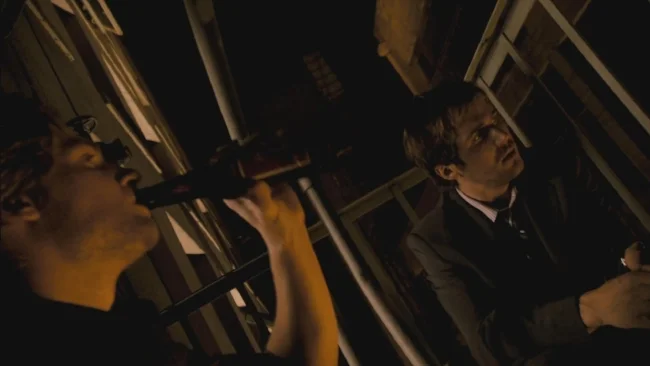
The story moves at a fast pace and the movie has a near perfect plot to running time ratio. It does not out stay its welcome and concludes in a fashion one would expect from such a genre production. There is little or no information given out in relation to the nature of the creature that has appeared or where it has hailed from. This works well, as the central theme is not the monster per se, but how people and governments deal with cataclysmic events. It is both scary and shocking but the violence is never overstated. But where Cloverfield fails is with its central characters. They are not as under developed as you would expect. They are simply unlikeable. In an effort to appeal to the target audience demographics, the producers focus on quartet of young "yuppies". Sadly, they are shallow and crass people. The women scream and the men just bellow, unable to deal with the unfolding events. This is not implausible, just depressingly credible. It's a shame that the makers of this film did not show as much flare and imagination for their central protagonists as they did with the visual effects and production design.
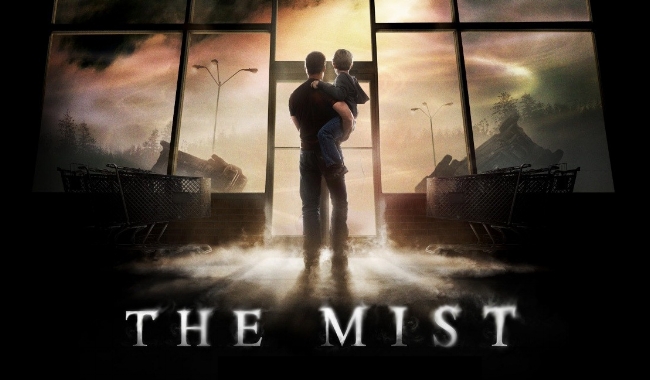
Now the actual creature itself, as mentioned above, remains cunningly hidden for the bulk of the film. It is quite ironic that a creature of such size can remain so well hidden in the densely built urban environment of New York. There is a particularly good aerial shot that shows the creature striding between buildings and subject to an air strike from a Stealth bomber. It is hinted that it is eating people that cross its path, a fact that is later more overtly established when the beats is revealed to our gaze in Central park. I personally think that this was a mistake and that the once clearly observed, the well-designed creature loses some of its mystique. I'm sure that the production team were also influenced to the work of H.P. Lovecraft and the Cthulhu Mythos. Similar giant alien beasts are briefly seen in Frank Darabont's The Mist. There is also a secondary threat brought about by the creature in the shape of parasites that are shaken loose from its body. These arthropods are the size of a dog and their bite presents another set of problems.
Overall, Cloverfield is a very enjoyable film. It is scary enough to appeal to a range of audiences and maintains a steady pace that carries the narrative beyond the obvious flaws and plot holes. Slightly older viewers and Europeans may find the American youth a little grating but after the opening plot exposition, we are fully immersed in the ongoing disaster. We then have an exhilarating ride for the remaining hour. Hence the movie is recommended as an example of well-produced populist entertainment and as a better example of the found footage genre. It should be noted that the 2016 film 10 Cloverfield Lane is not a direct sequel per se but more of a tangential follow up. Allegedly a third film is being made that will bring the various plot threads of all movies together.
The Woman in Black (2012)
James Watkins’ 2012 adaptation of The Woman in Black is quite a radical adaptation of Susan Hill’s story, yet it still manages to remain true to its central themes. Jane Goldman of Kick-Ass, X-Men: First Class fame, has crafted a screenplay which is both innovative yet strangely traditional. She boldly revises the central character from contented husband to desolate widower; a move that adds a very bleak under current to the story. The more ghoulish elements of the narrative have been greatly enhanced and the film works the best when the eponymous character makes an appearance via jump scares. Despite a modest budget of $15 million, The Woman in Black went to make over $127,730,736 worldwide making it the most financially successful British horror film in 20 years.
James Watkins’ 2012 adaptation of The Woman in Black is quite a radical adaptation of Susan Hill’s story, yet it still manages to remain true to its central themes. Jane Goldman of Kick-Ass, X-Men: First Class fame, has crafted a screenplay which is both innovative yet strangely traditional. She boldly revises the central character from contented husband to desolate widower; a move that adds a very bleak under current to the story. The more ghoulish elements of the narrative have been greatly enhanced and the film works the best when the eponymous character makes an appearance via jump scares. Despite a modest budget of $15 million, The Woman in Black went to make over $127,730,736 worldwide making it the most financially successful British horror film in 20 years.
The biggest asset and potentially the biggest stumbling block for The Woman in Black upon its release was the casting of Daniel Radcliffe. Could the actor make a credible transition into adult roles and leave the emotional baggage of his cinematic past behind him? For me, the answer is a definite yes. He is pleasantly plausible as the young lawyer, Arthur Kipps, mourning the recent loss of his wife and struggling with his relationship with his only child. Commissioned to administer the estate of Eel Marsh, he soon experiences supernatural goings on at house and finds a local village consumed with fear over an unusually high child death rate. Considering his performance is geared to be predominantly reactive to his surroundings, he acquits himself well.
There is a strong supporting cast, with Ciarán Hinds as Sam Daily, a local landowner who strives to rationalise the ongoing events until it becomes impossible to reject their true cause. His wife played by Janet McTeer, convincingly depicts a fey and traumatised mother. The production design follows in the Hammer tradition of appearing sumptuous irrespective of the budget and the cinematography of Tim Maurice-Jones is exceptionally atmospheric. One of the strongest assets of The Woman in Black is that it is maintains a pervasive atmosphere of disquiet. Director Watkins creates an unsettling atmosphere that is cleverly punctuated with the jolts the genre requires. In his previous film Eden Lake he showed a great understanding of the threat of violence, a skill he refines here using terror and discord instead.
The only minor misstep The Woman in Black makes is its ending, which revises the books original nihilistic outcome and offers a more redemptive conclusion. It’s still a stark ending to the story but it offers a degree of hope and emotional closure. Perhaps the producers felt this alteration would make the film more marketable for the international market. Certainly, the casting of Daniel Radcliffe did attract a younger demographic and the consensus was that an excessively downbeat ending my not be viable for such an audience. However, this tonal change, it is certainly not enough to spoil the proceeding hour and a half, which provides exactly the sort of thrill and shocks that movies of this idiom should do. Furthermore, the critical and popular success of The Woman in Black has most certainly helped make the Hammer brand accessible to a new audience. Let us hope the production company continue to produce films of this calibre.






The World's End (2013)
I was quite surprised by Edgar Wright's The World's End. Not by the fact that it is very funny, impeccably made, cinematically literate, with a cast of Britain's finest character actors. But by its very melancholic tone and sense of introspection. Behind the clever comedy and science fiction trappings, there is a rather pertinent examination of nostalgia and that fortysomething obsession with recapturing one’s youth. In some respects, the concept can be broadened into a wider notion of a nation that is still obsessed with its glory days. It should also be noted that this is not a romantic or rose-tinted exploration of the aforementioned themes.
I was quite surprised by Edgar Wright's The World's End. Not by the fact that it is very funny, impeccably made, cinematically literate, with a cast of Britain's finest character actors. But by its very melancholic tone and sense of introspection. Behind the clever comedy and science fiction trappings, there is a rather pertinent examination of nostalgia and that fortysomething obsession with recapturing one’s youth. In some respects, the concept can be broadened into a wider notion of a nation that is still obsessed with its glory days. It should also be noted that this is not a romantic or rose-tinted exploration of the aforementioned themes.
The story centres around a group of school friends who reunite to reattempt a failed pub crawl they undertook twenty years earlier. Right from the outset, director Edgar Wright does something different to his last two instalments of the "Cornetto Trilogy". This time the central characters of Gary (Simon Pegg) and Andy (Nick Frost) are not best buddies and in fact have quite a prickly relationship. Gary is also not an especially likeable individual (but he is funny), having never moved on from his adolescence. The rest of the group consists of a superb ensemble cast of estate agent Oliver (Martin Freeman), car salesman Peter (Eddie Marsan) and Steven (Paddy Considine) who has a "26-year-old girl friend".
The ill-conceived reunion takes a very different turn when it becomes apparent that the village of Newton Haven, has been taken over by android replicants. This provides the production a wealth of opportunities to reference classic science fiction movies and novels (often with a very British slant). This includes John Wyndham's The Midwich Cuckoos, Don Siegel's Invasion of the Bodysnatchers and Doctor Who. The more you look the more you'll find. However, it is at this point in the plot when the movie changes direction, that The World's End becomes a little less polished and a bit more hit and miss. The action scenes work fine, especially the bar stool fight sequence, yet there is a sense that may be the movie is trying a little too hard.
Although the popularity of Pegg and Frost will make this movie accessible to an international market, this is still a very British movie. Where Rosamund Pike has made Hollywood productions such as Jack Reacher, the same cannot be said of the wonderful Mark Heap. Brits will recognise many a face. I'm not so sure the rest of the world will. Yet to have tried to avoid the foibles of British culture, such as roundabouts, social drinking, and English slang would have made for a weaker film. Although this is a movie with substantial amounts of CGI and set pieces, it is also a work of thoughtful self-examination through the prism of British self-deprecation. The codacil at the end of The World's End may not to all liking but is worth pondering upon.
The final part in any series, be it one as tenuous as the “Cornetto Trilogy", is always hamstrung to a degree of repetition, potential over familiarity and the practical restrictions a conclusion brings. The World's End is still a quality piece of film making from a genuinely talented team. It manages to avoid most of those pitfalls. Be warned there is some very choice language banded about including that particular word that some folk deem to be the worse. The frenetic nature of the final act does not diminish the movie which is still exceedingly and consistently funny. Finally, full marks to the writers for referencing the "Starbucking" of the UK pub industry. At least it is a malady that hasn't affected Edgar Wright's film making.
Dark Skies (2013)
Consider the Bourbon biscuit. It comprises of two dark chocolate biscuits sandwiching a chocolate fondant. It is a straight forward recipe made from standard elements. Yet multiple companies manufacture the Bourbon biscuit and they're all slightly different in texture and taste due to minor variations in the base ingredients. You can make the same point about baked beans. Dark Skies is the cinematic equivalent of these products. It is competently made, offers what you know and expect in a slightly different fashion. That doesn't sound such a bad thing, does it? Well let me put it another way. It's generic and predictable.
Consider the Bourbon biscuit. It comprises of two dark chocolate biscuits sandwiching a chocolate fondant. It is a straight forward recipe made from standard elements. Yet multiple companies manufacture the Bourbon biscuit and they're all slightly different in texture and taste due to minor variations in the base ingredients. You can make the same point about baked beans. Dark Skies is the cinematic equivalent of these products. It is competently made, offers what you know and expect in a slightly different fashion. That doesn't sound such a bad thing, does it? Well let me put it another way. It's generic and predictable.
Please ignore the movie poster. Dark Skies is certainly not a new horror phenomenon. It simply dovetails a home-invasion plot-line into a wider alien menace story and punctuates the proceedings with some neat but rather obviously telegraphed jolts. Furthermore, a lot of the best scenes are very derivative of existing genre classics. I suspect that once again it will come down to the viewers age or genre familiarity as to whether they spot them. The "vegetable" incident in the kitchen for example is not a million miles away from the fridge scene in Close Encounters and the geometric crockery stacking, is very reminiscent of the chairs in Poltergeist. Need I go on? Okay I will. They did the thing with the birds flying into the windows in Red Lights.
There are flashes of inspiration from Director Scott Stewart. The central family within the plot seem to be a microcosm of American Middle-Class angst, particularly in the current economic climate. Josh Hamilton’s performance as the marginalised head of the household is very plausible. Keri Russell has a more conventional role as his estate agent wife and traditional protective mother figure. But as always with such movies these days, the production seems to be far more concerned about making clever set pieces and smart twists, which despite the effort are not entirely successful. It beggars belief that when dealing with the subject of aliens and the infinite possibilities that such a theme offers, Hollywood is still locked in this arbitrary depiction of all extraterrestrial life as "greys".
So, we return to the Bourbon biscuit analogy once again. Despite their inherent culinary shortcomings, they do serve a purpose and are adequate in default of anything else. That pretty much sums up Dark Skies. If you watch this movie at home, when you are in an undemanding mood, accompanied by a cup of [insert beverage of choice here] then it may satisfy. However, the more familiar you become with a specific genre and with all its associated tropes and memes, the more it becomes apparent that Dark Skies is distinctly average and no more.
Happy Birthday Hitch
Today is the 118th anniversary of the birth of Sir Alfred Hitchcock. The internet is subsequently awash with editorials and retrospective analysis of his work. The great man himself is always worth scrutinizing, so you'll also find a great many articles that explore his "inner demons" and such like. Such is the extent of Sir Alfred Hitchcock’s reputation and associated apocrypha, that we were given the cinematic biopic Hitchcock, starring Sir Anthony Hopkins in 2012. Not bad for someone who has been dead for thirty-seven years and who's last movie was made in 1976. I doubt if many of today's film directors will leave such a legacy and have their careers pawed over in the decades to come.
Today is the 118th anniversary of the birth of Sir Alfred Hitchcock. The internet is subsequently awash with editorials and retrospective analysis of his work. The great man himself is always worth scrutinizing, so you'll also find a great many articles that explore his "inner demons" and such like. Such is the extent of Sir Alfred Hitchcock’s reputation and associated apocrypha, that we were given the cinematic biopic Hitchcock, starring Sir Anthony Hopkins in 2012. Not bad for someone who has been dead for thirty-seven years and who's last movie was made in 1976. I doubt if many of today's film directors will leave such a legacy and have their careers pawed over in the decades to come.
I won't waste my or your time providing a potted biography of Hitchcok nor critiquing his work, because there are plenty of existing online resources that can provide those services. What I will say is if you are a fan of quality cinema and are not familiar with the work of Alfred Hitchcock then you are doing yourself a disservice. Hitchcock was an innovator of using visual effects and cinematography to their maximum effect, yet it was never at the expense of the story. He was a clever observer of people and the human condition and could quickly weave a narrative that had the audience emotionally invested and in a state of suspense. In a nutshell, he fully understood every facet of cinema and how to use them to create accessible and compelling stories.
A matte painting by artist Matthew Yuricich from North by Northwest 1959
Hitchcock was also a great showman who understood about the power of the press and marketing. Furthermore, Hitch happily bought into the cult of his own personality. Watch the trailer below in which he walks around the set of Psycho making oblique references to the more salacious elements of the plot. Hitchcock manages to suggest enough to pique even the most casual viewers interest and play upon their desire for titillation. If only we had trailers presented in such a comparable style today by similar genuine auteur film makers. Sadly, the current state of mainstream Hollywood doesn’t provide an environment for such personalities to flourish.
Alfred Hitchcock's influence has been extensive among subsequent directors. David Lynch, Brian DePalma, Dario Argento, David Croneberg are but a few of those who have openly praised his work and exhibited homages to Hitchcock in their own material. And let us not forget the great partnership between Hitch and the composer Bernard Herrmann. Hermann crafted eight outstanding scores for the master including the iconic Psycho. The jarring strings of the shower scene have now transcended cinema and become a pop culture reference for anything vaguely horrific. Few creative endeavours have such an impact upon public perceptions.
So, in this age of video on demand and such like, there really is no excuse for remaining oblivious to one of the world’s finest film makers. Why not settle yourself down in a comfy chair, dim the light and partake of one of Alfred Hitchcock's classics. There's plenty to choose from, depending upon your tastes. Be warned, even by today's standard these films are not always family friendly, often containing a strong sexual under current. In his later work, some of the violence is still quite disturbing. But as Hitch said himself "In films murders are always very clean. I show how difficult it is and what a messy thing it is to kill a man"
Sinister (2012)
Scott Derrickson’s Sinister is a curious blending of genres and classic plot devices. It certainly has some interesting ideas at the centre of its plot. Ethan Hawke plays a true-crime writer Ellison Oswalt, looking for his next big story and desperate to find fame again. After discovering a box full of Super 8 home movies in the attic of his new house, matters start to take a turn for the worst. The films appear to depict the real murders of several families and investigations lead to a series of strange unsolved crime and the possible involvement of supernatural forces. Could a pagan deity known as Bughuul, who allegedly preys upon the souls of children, be responsible? Is Oswalt’s own family in danger? Do bears conduct their personal business in deciduous forests?
Scott Derrickson’s Sinister is a curious blending of genres and classic plot devices. It certainly has some interesting ideas at the center of its plot. Ethan Hawke plays a true-crime writer Ellison Oswalt, looking for his next big story and desperate to find fame again. After discovering a box full of Super 8 home movies in the attic of his new house, matters start to take a turn for the worst. The films appear to depict the real murders of several families and investigations lead to a series of strange unsolved crime and the possible involvement of supernatural forces. Could a pagan deity known as Bughuul, who allegedly preys upon the souls of children, be responsible? Is Oswalt’s own family in danger? Do bears conduct their personal business in deciduous forests?
Sinister is a film of two very distinct halves. The opening set-up and subsequent plot exposition is technically well done, atmospheric and unnerving. The use of Super-8 film to show the murdered families, works very well and is constructed in a genuinely creepy manner. The found-footage sequences are a plot device within the main story, rather than the basis of the entire movie. This is by far the films best asset. Yet the tipping point comes when Bughuul physically manifests itself and the inferred threat becomes more immediate and less mysterious. At this point, Sinister becomes a far more perfunctory horror movie and heads towards a rather obvious bleak ending.
It saddens me to be so critical of Sinister, as watching a R rated horror movie is quite a rare experience these days. It’s a shame that the entire film could not be as convincingly scripted and compellingly filmed as the first half. Similar tonal inconsistencies featured in Director Scott Derrickson’s earlier movie, The Exorcism of Emily Rose. That too suffered dramatically once it made the conscious decision to show the supernatural rather than imply it. However, Sinister does benefit from Ethan Hawke who brings a little more to the role than expected and there are some adequate scares along the way. Yet these can't quite compensate for formulaic denouement, leaving viewers with a distinct feeling that Sinister has not reached its full potential.
Furthermore, whoever was responsible for the video marketing campaign for this movie certainly hasn’t done it any favours. The entire plot and virtually every scare were included in the various trailers and TV promos, totally mitigating any potential suspense the movie may have had upon release. It must be very frustrating for jobbing directors such as Scott Derrickson. Not only are they hamstrung by the commercial demands of the producers but any tricks that they may have up their sleeves are shamelessly given away by the marketing campaign. Yet despite these shortcomings the public found sufficient merit in Sinister to generate a healthy box office return. Thus, we were subsequently regaled with Sinister 2 in 2015. Sadly, it was not an improvement.
The Imitation Game (2014)
Where Mike Leigh's Mr. Turner is a series of vignettes from the painter’s life, The Imitation Game is a far more traditional biopic. Norwegian film director Morten Tyldum follows a tried and tested formula with his story arc, moving from points A to B to C, intercutting with flashbacks to reveal a specific plot theme. Yet such an approach is the perfect means to tell the story of British cryptanalyst Alan Turing, who helped break the Enigma code during the Second World War. It provides a stable foundation for the strong lead performances that drives the movie and compensate for the narratives conceits.
Where Mike Leigh's Mr. Turner is a series of vignettes from the painter’s life, The Imitation Game is a far more traditional biopic. Norwegian film director Morten Tyldum follows a tried and tested formula with his story arc, moving from points A to B to C, intercutting with flashbacks to reveal a specific plot theme. Yet such an approach is the perfect means to tell the story of British cryptanalyst Alan Turing, who helped break the Enigma code during the Second World War. It provides a stable foundation for the strong lead performances that drives the movie and compensate for the narratives conceits.
There have been complaints about the veracity of Graham Moore's adaptation of Andrew Hodges biography of Turing. However, The Imitation Game is a drama and not a documentary and the medium of cinema requires dramatic punctuation, so I am happy to forgive some of the stories contrivances. Was Turing truly broken hearted by a failed relationship at school? Did one of the codebreaking team have to put their own brother in harm’s way in order to maintain secrecy? More than likely not but such plot devices certainly do not detract from the central story of one man's obsession and struggle with his own personal demons.
Benedict Cumberbatch is compelling as Alan Turing, playing him as someone who is most definitely on the spectrum. A modern audience will seize upon this justification for Turing's obtuse behaviour. Keira Knightley provides a sympathetic performance as Joan Clarke: a woman with a prodigious intellect who is frustrated by the patriarchal culture of the times. The platonic relationship between the two leads is credibly realised. The movie also has an authentic feel to it due to Óscar Faura's Cinematography and the measured production design of Maria Djurkovic. There is sufficient detail to establish that this is war time Britain but we are not belaboured by an excess of CGI.
With regard to Turing's sexuality, the matter is explored sufficiently to advance the narrative but beyond that, no more is done. Critics have picked up on the fact that there's a lack of any conviction upon this matter throughout the movie. Perhaps this was a practical concession made to make the film more "accessible" for the US market. As a result, The Imitation Game is a very professionally made, absorbing but somewhat calculated biopic. Despite this it does provide an interesting overview into a significant period of war time history and one of the UK's unsung heroes. If that inspires people to explore the subjects further, then that is a good thing.
Alien: Covenant (2017)
The enigma of the Xenomorph in the Alien franchise is diminished once you start to rationalise its heritage. Sadly, that’s exactly what Alien: Covenant has chosen to do. It jettisons the mystery of the original 1979 movie and pulls back the curtain, so wisely put in place thirty-eight years ago, to reveal a rather lacklustre explanation to the Xenomorph’s origin. Having spent nearly $100 million and employed a production team of some of the finest talent that money can buy, the resulting movie is not bad per se, just crushingly superfluous. After watching Alien: Covenant this week, my overall reaction can be distilled down to a deep sigh of indifference and a shrug of the shoulders.
The enigma of the Xenomorph in the Alien franchise is diminished once you start to rationalise its heritage. Sadly, that’s exactly what Alien: Covenant has chosen to do. It jettisons the mystery of the original 1979 movie and pulls back the curtain, so wisely put in place thirty-eight years ago, to reveal a rather lacklustre explanation to the Xenomorph’s origin. Having spent nearly $100 million and employed a production team of some of the finest talent that money can buy, the resulting movie is not bad per se, just crushingly superfluous. After watching Alien: Covenant this week, my overall reaction can be distilled down to a deep sigh of indifference and a shrug of the shoulders.
Ridley Scott, now in his autumn years, strikes me as a film maker who is more enamoured with the technical, logistical and business aspects of film making. He appears to have a good handle on navigating the choppy waters of studio politics and certainly thrives within the complex process of crafting a big budget, effects driven movies. Yet his body of work has become very hit and miss in recent years and for me it is only The Martian that stands outs as being of note. Frankly, the will to make further Alien movies seems to be driven primarily by the potential box office and Scott’s presence has done precious little to move the franchise forward. He has now delivered two movies that frankly undermine the existing canon, rather than expand upon it.
Much of Alien: Covenant is a pastiche of what has gone before. At times Ridley Scott is plagiarising himself and not in an especially knowing way. He squanders a good cast by giving them precious little to do. Again, most characters serve little purpose other than to die. Katherine Waterston as Janet "Danny" Daniels has scope to be a credible protagonist but is sadly relegated to running, pointing and explaining the plot. Comparing her to Ellen Ripley is unfair because the actor is never given the opportunity to explore the role. Michael Fassbender appears twice this time round playing both a new android named Walter as well as David, who we last saw decapitated by an Engineer in Prometheus. Sadly, despite Fassbenders acting talent, the character remains a contrived and uninspiring foil. Remove the mirth and satire from Marvin, the Paranoid Android from The Hitchhiker's Guide to the Galaxy and you are left with the scope of Fassbender’s role.
Alien was a stripped down, minimalist, science fiction horror movie. It had a tangible air of claustrophobia and bucked some of the usual trends of the genre. The crew of the Nostromo were mainly blue-collar workers, not academics or soldiers. Their concerns were primarily those of their social economic group. Pay, job security and just getting the task done. Their practical story contrasted the esoteric nature of what they encountered. The crashed ship, the space jockey and the alien eggs were all deliberately unexplained and all the more enthralling because of that. Was the Xenomorph a simple predator or a highly evolved creature that natural selection had chosen to rationalise? Where was it from? Was it intelligent? These unanswered questions gave the beast gravitas. The answers that Alien: Covenant has chosen to provide undo this.
There are joyless action scenes, routine jump scares and some arbitrary sex and violence to be had in Alien: Covenant. The production design, cinematography and overall aesthetic screams A list production but the story that plays out is so utterly uncompelling and lacklustre. Ultimately the movie fails because it over thinks the source material. Rob Zombie made a similar mistake when he remade John Carpenter’s Halloween. He tried to explain a force of nature and by giving Michael Myers a detailed backstory of abuse and sadness, he turned the embodiment of the supernatural in to just another sociopath created by society. Alien: Covenant has effectively done the same. The Xenomorph has gone from being an abstract vessel for our subconscious fears to just a laboratory experiment by a disgruntled individual. From high concept to arbitrary in less than four decades. Sad.
Prometheus (2012)
I have written many times in recent years about how big titles get announced by the gaming industry, of the ensuing hype up that leads up to launch day and then the subsequent disappointment on purchase. It is a malady that has afflicted the movie industry for decades and has become increasingly more common in the last decade. Hype has a curious link with reputation. There are a handful of directors in contemporary Hollywood who when they add their name to a production, people take notice. Ridley Scott is one of these. His body of work pretty much guarantees he can make whatever he wants, be it a commercial undertaking or a ludicrous vanity project. However, the downside to being a film maker of this stature is that you are not so easily exposed to proper scrutiny by your peers. No one stops you from making a mistake because you are supposed to know what you are doing. They let you do what you want. Which is bad.
I have written many times in recent years about how big titles get announced by the gaming industry, of the ensuing hype up that leads up to launch day and then the subsequent disappointment on purchase. It is a malady that has afflicted the movie industry for decades and has become increasingly more common in the last decade. Hype has a curious link with reputation. There are a handful of directors in contemporary Hollywood who when they add their name to a production, people take notice. Ridley Scott is one of these. His body of work pretty much guarantees he can make whatever he wants, be it a commercial undertaking or a ludicrous vanity project. However, the downside to being a film maker of this stature is that you are not so easily exposed to proper scrutiny by your peers. No one stops you from making a mistake because you are supposed to know what you are doing. They let you do what you want. Which is bad.
So, am I saying that Prometheus is a mistake per se? No. However, I am saying that mistakes have been made with regard to narrative and the plot direction of the movie. Scott himself has been open about how during the initial pre-production he and screenwriters Jon Spaihts and Damon Lindelof wished to take the story off on a tangent, rather than make a specific prequel to Alien. This in itself is not necessarily a bad thing to do as long as it is done robustly and intelligently. Prometheus is very much a film of two halves as it strives to embrace a weighty theme, namely the origins of life on earth. It sets the scene for a philosophical and theological exploration of the subject in the first act. However, it fails to sustain this momentum and in the second hour lapses into a far less ambitious, somewhat formulaic, creature feature. The narrative become confused, vague and is eventually sidelined.
There is still much to commend in Prometheus. There are good performances from the cast, despite the fact that they are not given half as much to go on as they should have. Michael Fassbender's portrayal of the Android David is outstanding and is by far the best character in the movie. The production design is handsome and Scott has not in any way lost his visual flair. There are some quite clever parallels to his original movie and he re-imagines certain iconic scenes in an inventive fashion, rather than becoming self plagiarising. There are also some solid action sequences and a liberal dose of gore. One scene involving a quasi-caesarian is not for the squeamish. Yet despite positive aspects one is left feeling that Prometheus is not as good as a film as it could be.
What is on offer is adequate and entertaining but no more than that. Although it is unreasonable to expect this movie to be equal of the 1979 original, it is not unreasonable to expect better material from Ridley Scott. Prometheus should have had a weightier story and stuck to either to its philosophical theme or remained a pure horror in space. As it is it fails to tread the path between the two. Since the release of the film on home media, the deleted scenes available on DVD and Blu-ray clearly show where the problem lies. Too much expositionary material was cut from the film. The producers wanted an action driven movie. They got one but sadly at the expense of narrative and character development. If all the deleted material was re-instated back in to Prometheus it would be a far more thoughtful, coherent movie. Sadly, Scott has now stated that the theatrical cut of the film is his definitive edition.
On a final note, Prometheus suffers from a common problem found in contemporary fill making; that of an excessively loud soundtrack. Dialogue is difficult to hear one moment and the score and ambient sound effects are deafening the next. I had to watch the film with subtitles enabled to fully pick up on all the nuances of the dialogue. This issue contributed to making a frustrating movie, somewhat more annoying. However, if you are simply looking for a high budget, science fiction thriller, then Prometheus, despite its flaws, may well satisfy. Those who are more invested in the Alien franchise may not be so forgiving and best prepare themselves for disappointment. Because Prometheus feels like a failed opportunity, it beggars the question, do we really need any further movies in this series? If they cannot offer anything new that takes the overall concept forward, perhaps the answer is no?
Mad Max: Fury Road (2015)
There was a degree of collective hysteria among critics upon the release of George Miller's Mad Max: Fury Road. Phrases such as "genius" and "masterpiece" were being banded around willy nilly, mainly due to the overwhelming nature of the movie. Make no mistake, Mad Max: Fury Road is very much a case of film making turned up to eleven. The sheer sensory overload that one experiences over the two-hour running time makes for a jaw dropping experience. However, the movie does have a few minor flaws, which are more apparent upon second viewing, so perhaps some of the praise and superlatives that have been heaped upon the film need to be taken with a pinch of salt.
There was a degree of collective hysteria among critics upon the release of George Miller's Mad Max: Fury Road. Phrases such as "genius" and "masterpiece" were being banded around willy nilly, mainly due to the overwhelming nature of the movie. Make no mistake, Mad Max: Fury Road is very much a case of film making turned up to eleven. The sheer sensory overload that one experiences over the two-hour running time makes for a jaw dropping experience. However, the movie does have a few minor flaws, which are more apparent upon second viewing, so perhaps some of the praise and superlatives that have been heaped upon the film need to be taken with a pinch of salt.
That being said, if you can endure Mad Max: Fury Road and its exquisite assault upon your senses, it offers an extremely entertaining action movie with an interesting philosophical subtext. It also has something to say about gender politics, although this is not in any way a lecture. The films visual aesthetics and female casting does somewhat fly in the face of the alleged message. Therefore, one can consider the film’s deeper meaning as an optional extra. If you’re not in the market for sociopolitical subtexts, then ignore it and simply focus on the ongoing visual and the cinematic pandemonium. Please note that's two hours of continuous pandemonium. A potential chore for some.
The plot is simple and for those unfamiliar with the main character and the movies setting, there is a brief exposition at the start of the film that puts everything in perspective. The plot essentially is a continuous chase as Max escapes "The Citadel" with the five wives of local despot Immortan Joe (played by Hugh Keays-Byrne, Toecutter from the original movie). Tom Hardy handles the role of Max Rockatansky exceedingly well through his verbal and physical performance. However, this is a movie with minimal dialogue and often it is more about what is not said than what is. An exchanged glance or a particular stance speak volumes here. In many ways it is Furiosa, played by Charlize Theron, who drives the story with the force of her tangible screen presence.
Perhaps where director Geroge Miller excels the most is in the way he turns the complex action sequences from a mechanical process and elevates them into an elaborate form of visual opera. The production design, costumes and overall visual aesthetic of Mad Max: Fury Road goes beyond the term sumptuous. It is a physical experience. The nearest I can get to summarising it is that it's like being beaten around the head and shoulders with the collected works of Hieronymus Bosch, while being screamed at and set alight. When I saw this movie at the cinema, I needed a stiff drink when it ended because I genuinely felt that I had experienced everything that happened on screen. Even when viewed at home it is an immersive experience.
Be warned Mad Max: Fury Road is not your standard action movie, meticulously designed by a soulless committee and scrupulously edited to meet the requirements of the sanitised PG-13 rating. This is a raw and grotesque movie set in a neo-feudal world and it's a far from pleasant one. Yet despite the jarring nature of Goerge Miller's post-apocalyptic vision, it still has characters that you care for and there's a positive moral under current. Irrespective of its beautiful visual cacophony, Mad Max: Fury Road is ultimately a film about people and a very telling one at that. Something that is a rare commodity in contemporary Hollywood and something that many would not expect to find in this genre of movie.
Big Hero 6 (2014)
Big Hero 6 is a movie about loss and coming to terms with a bereavement. You'd think that Disney would run a mile from such a difficult subject, especially when you consider their core demographic, yet the subject is handled intelligently and sensitivity. There is a genuine sense of moral rectitude and conviction running throughout the story. It is a refreshing change to see a superhero driven plot that actually has a positive message as well as the requisite action scenes. Through years of accumulated experience Disney also ensure that the underlying themes are presented in a engaging and enjoyable manner. Big Hero 6 has a lot of laughs during its hundred minute plus running time.
Big Hero 6 is a movie about loss and coming to terms with a bereavement. You'd think that Disney would run a mile from such a difficult subject, especially when you consider their core demographic, yet the subject is handled intelligently and sensitivity. There is a genuine sense of moral rectitude and conviction running throughout the story. It is a refreshing change to see a superhero driven plot that actually has a positive message as well as the requisite action scenes. Through years of accumulated experience Disney also ensure that the underlying themes are presented in a engaging and enjoyable manner. Big Hero 6 has a lot of laughs during its hundred minute plus running time.
The story centres around electronic genius Hiro, who is suffering from depression after his brother is killed in a fire. When he inherits his brother's robotic project, Baymax, a "non-threatening" healthcare robot, he embarks on a journey to discover the truth about his death. After assembling his friends and "upgrading them" along with Baymax into a formidable fighting force, Hiro soon discovers that all is not a straightforward as it may seem and that in pursuing his own personal vengeance he is in fact, doing the opposite of what his brother would have wanted.
At the centre of Big Hero 6, is the character Baymax; the inflatable personal healthcare robot. With a minimum amount of dialogue voice actor Scott Adsitt brings him too life and embellishes him with some wonderful verbal idiosyncrasies. The simple design of Baymax is also an asset and the character is at his best when outside of his armour. Once again, we see the perennial theme of humans learning the nature of their own condition from a non-human source. Due to the emotional depth of the screenplay and the honesty of the performances, the message works and is genuinely moving. It also dovetails nicely into the story arc and set pieces.
There is a beautiful aesthetic to the city of San Fransokyo and I cannot remember the last time a saw a animated movie with such a fascinating production design. Several times whilst watching I found myself pausing the playback so I could examine the subtleties of the environment. The use of lighting is outstanding and it is clear where the $165 million production cost went. The blending of US and Japanese culture makes for a very striking visual landscape as many familiar landmarks and iconic buildings are given an inventive cross cultural makeover.
The more critical viewer may pick up on a few of the inherent weaknesses of Big Hero 6. Some of the supporting characters are not a well-developed as the lead. The central villain, although motivated by a specific plot device, still seems a little too arbitrary. But I can forgive these minor points as the story really is about Baymax, Hiro and their interdependency. Therein lies the movies strongest asset. Curiously I saw Big Hero 6 in the same week that I say Ex Machina, upon their release in 2014. The latter aslo deals with the issue of humans and AI coming to terms with each other. Although the two movies are radically different in tone and are pursuing different audiences, there are some very similar themes.
Moral Relativism in Popular Culture
Contemporary Western culture is far from perfect. Although major positive changes have been made with regard to social attitudes, equality and tolerance, there is still much work to be done. Privilege is still rife, be it financial, political or societal. Just to put one’s cards on the table right from the outset, I am a white, middle class, British male in his late forties. I do not feel in any way, shape or form marginalised. At present I am in one of the most advantageous social economic groups in the UK. That statement is devoid of any emotional connotation. It is simply a statement of fact and a means of providing some context for this post. Although I am acutely aware of discrimination, I have seldom personally experienced it. I mention this because this post is about moral relativism in popular culture and thus it is only fair that I define the prism through which I experience the world.
Contemporary Western culture is far from perfect. Although major positive changes have been made with regard to social attitudes, equality and tolerance, there is still much work to be done. Privilege is still rife, be it financial, political or societal. Just to put one’s cards on the table right from the outset, I am a white, middle class, British male in his late forties. I do not feel in any way, shape or form marginalised. At present I am in one of the most advantageous social economic groups in the UK. That statement is devoid of any emotional connotation. It is simply a statement of fact and a means of providing some context for this post. Although I am acutely aware of discrimination, I have seldom personally experienced it. I mention this because this post is about moral relativism in popular culture and thus it is only fair that I define the prism through which I experience the world.
For most of history, there have been hierarchies that have perpetuated discrimination for personal advantage. The church, nations states and all manner of other social institutions have done this in the past and continue to do so to varying degrees today. Therefore, it is foolish and factually inaccurate to try and avoid depicting this in any narrative medium. The quasi medieval world of Game of Thrones is therefore potentially justified in depicting the unpleasantness of its faux era. However, accuracy is one thing, exploitation is another. The latter often sites the former as a reason to justify "showing all". Sadly, authenticity is not really the real motivation here. It's purely a case of sex and violence sells. So, it is important to consider context. The harsh realities of slavery are shown without titillation in a movie such a 12 Years A Slave. Can the same be said about Mandingo?
There is a difficult line to tread here. Sometimes showing the stark reality of something abhorrent is the best way to make a point and to inform your audience or start a debate on a specific matter. On other occasions, depicting the specific details may not necessarily achieve this. I am of an age where I still remember the debate as to whether the rape scene in the 1988 movie The Accused actually needed to be shown, to make the film’s point about the treatment of women by the US judicial system of the time. On mature reflection, I believe that it did. Showing the assault puts a human face upon the crime and brings home its magnitude. However, can the same be said for “sensational” airport massacre scene in Call of Duty: Modern Warfare 2? Its primary inclusion seems to be to titillate, rather than to make any wider dramatic point.
Some people have very strong moral and ethical world views. These may be driven by faith or politics and they are also shaped by the prevailing social ideas and customs of the times. For example I have very different views on some subjects compared to my eighty year old parents. They are very much products of their era, as I am of mine. As a result, I believe that it is simply illogical to deny the concept of moral relativism. There are some broad common concepts that most cultures can agree upon, such as murder and theft being wrong. However, there is not a globally accepted moral equivalent of the Beaufort Scale or Periodic Table. Hence, we see disparities between men and women’s status and rites in certain cultures and religions.
As a result of this diversity of opinion, it's pretty difficult to deal in absolutes (unless you are the tabloid press). Yet that doesn't stop people from trying. Some folk feel that there are limits on the exploration of specific subjects or that certain things are just taboo. You mustn’t joke about this, never be disrespectful about that, the list can get pretty long. I cautiously take the opposite view. I don't believe anything is truly out of bounds to explore in a democracy as long as it’s done within the confines of the law. However, one must question what ones motivations are for doing so and straying in to such minefields. For me, I use the litmus test that comedian Reginald D. Hunter suggested. "Was there hate in your heart" when the controversial statement in question was said. It may not be the most sophisticated of tools but I believe it is a strong starting point.
Because so much of our perception of the world around us is visual, humans have a strong tendency towards voyeurism; thus, many people find depictions of sex and violence alluring. This is not necessarily in a sinister or unwholesome sense but possibly more due to the cultural attraction of anything designated taboo. In the UK during the early eighties, the home video market was unregulated. Hysteria and panic lead to ill-conceived legislation, namely the 1984 Video Recordings Act, resulting in lot of movies gaining notoriety as they were removed from shelves. Let it suffice to say that this state of affairs made a lot of these titles essential viewing for many teenagers. It became a rite of passage to try to seek them out and endure them. In many respects this is no different from placing an age based embargo upon smoking, drinking and other sundry vices. There is some truth in the clichés regarding forbidden fruit. It's a curious thing that the appeal of such extreme material often wanes with age. Teenagers are still drawn to such movies such as The Human Centipede and A Serbian Film. I however recognise that there is no real benefit in seeing such unpleasant and extreme material. Subsequently I now have self-imposed limitations.
Gender is also an important factor within this debate. Reactions between the sexes can differ drastically on matters such as the depiction of sexual violence and the use of pejorative language. Sadly, most media based industries are far from a level playing field and there is often gender bias when dealing with certain material. Often it is this sort of content that proves most financially viable, regardless of its moral rectitude. It’s a matter that seems to be the bane of video games industry at present. Consider the debacles over Tracer’s sexuality in Overwatch and the aesthetics of female characters in Mass Effect: Andromeda. With regard to TV and specifically Game of Thrones which has often been criticised over its lurid content, I would love to have an accurate age and gender based break down of the viewing figures to determine what aspects of the show appealed to whom. Do you think there would be any major surprises? No, neither do I.
Following on from this, I think that we need to focus on the inherent duality of contemporary society with regard to current social issues. There is still a huge gulf between what people say in public when they’re conscious of maintaining an equitable moral and ethical position, as opposed to what they may think personally. We’re all guilty of this to a greater or lesser degree. Perhaps modern life exacerbates this phenomenon. For instance, most places of employment have clear policies regarding equality and discrimination these days and usually staff publicly endorse them. However, do all employees genuinely support such ideals or is it just expedient to do so? Until recently, the prevailing politically correct mindset has silenced certain quarters. In this post Trump, post Brexit world, a lot of people who previous kept their less inclusive views to themselves now are more comfortable sharing them publicly.
Then of course there is the fact that as a species we just seem to have a knack for failing to live up to our finer principles. Consider a commonly held notion such as not judging a person by their looks. Most people will strongly advocate such an ideal, again to possible project an acceptable public image. Yet despite this, so many of us still do the complete opposite, possibly because the ideal is contrary to our genetic imperatives. I'll freely admit that I regularly fail to live up to the standards that society and more importantly myself set. We live in a world where many of us embrace concepts and ideas in principle only; because we've realised that actually acting upon them requires effort, self-denial or having to step outside of our own personal comfort zone. Morality and ethics often go hand in hand with cognitive dissonance.
There is still much more to say and explore about moral relativism and its impact upon numerous social and ethical issues. It's interesting that many of these subjects manifest themselves in genres that are appealing to gamers, geeks and nerds. Games and comics still court controversy at times with the way they depict women or ethnic groups. The debate over the casting of the first female Doctor Who still rages on. The level of sexual content in shows as American Gods still causes tongues wagging. The BBC is about to embark upon its Gay Britannia season, celebrating 50th anniversary of The Sexual Offences Act 1967, which partially decriminalised gay sex. Expect outrage from specific newspapers. There are still mutterings from some fans over both the critical and financial success of Wonder woman at the box office. This is why we see push back as some see progressive ideals as threatening and don’t want them in their social spheres.
Context and the prevailing Zeitgeist have a bearing on representation of all subjects. Why should popular culture be any different? Therefore, we should not carte blanche deny the reality of moral relativism. However, we should not just use it as a “get out of jail” card to justify an “anything goes” mentality. Moral relativism is an academic debating tool and not a life defining philosophy. Just because something taboo can be shown on TV or a controversial subject used as a plot device, doesn’t mean that it automatically should. I would hope that such a decision was tempered by the application of a good many other criteria first. Because despite what some academics, critics and pundits may think, popular culture is not necessarily trivial by default. It is accessible to swathes of the population and can shape a great many opinions. As such it can be a very powerful medium. Whether it is a force for good or not, is down to us.





















Classic Movie Themes: Excalibur (1981)
Excalibur (1981) is a visually arresting retelling of the Arthurian legend. Filmed at a time when studios where happy to finance large budget fantasy films, John Boormans movie is not your typical sword and sorcery fodder. It’s an adult adaptation of Mallory's Morte' D'arthur, filled with scenes of sex and violence, driven by some eclectic and eccentric performances from the ensemble British cast. The film boasts a handsome production design with a very stylised aesthetic. The Irish locations are lush and verdant. This is not intended to be a historically accurate portrayal of the source text but more of a visual homage. Excalibur evokes both the mythic power of Tolkien and the operatic splendour of Wagner. Boorman had tried to adapt The Lord of the Rings a decade earlier.
Excalibur (1981) is a visually arresting retelling of the Arthurian legend. Filmed at a time when studios where happy to finance large budget fantasy films, John Boormans movie is not your typical sword and sorcery fodder. It’s an adult adaptation of Mallory's Morte' D'arthur, filled with scenes of sex and violence, driven by some eclectic and eccentric performances from the ensemble British cast. The film boasts a handsome production design with a very stylised aesthetic. The Irish locations are lush and verdant. This is not intended to be a historically accurate portrayal of the source text but more of a visual homage. Excalibur evokes both the mythic power of Tolkien and the operatic splendour of Wagner. Boorman had tried to adapt The Lord of the Rings a decade earlier.
The soundtrack for the film blends original material by composer Trevor Jones along with classical pieces. The opening scenes in which Uther Pendragon is victorious in battle plays out against Siegfried's Funeral March from The Ring by Richard Wagner. This arrangement was specially recorded by London Philharmonic Orchestra and conducted by Norman Del Mar. It is a very imposing sequence, especially the entrance of Merlin (Nicol Williamson). The use of classical music in movies is not as easy as some may think and it requires a lot of skill to choose an appropriate piece that compliments the movie’s visual. Boorman's choice of Wagner is both wise and appropriate and thus greatly enhances the movie.
Below is the edited version of the track specifically designed for the movie, followed by a full recording.



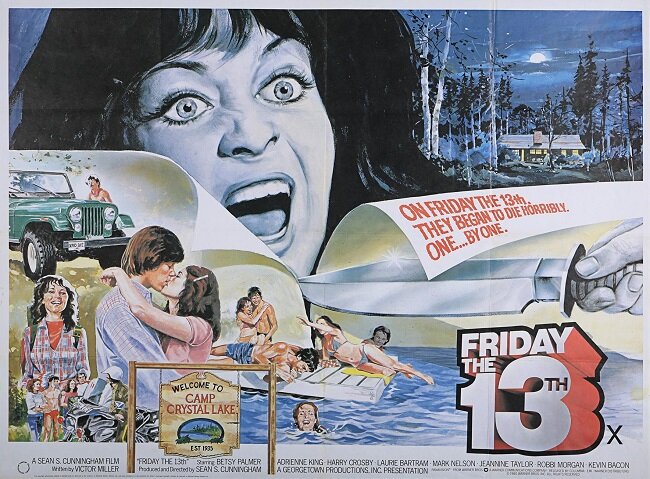

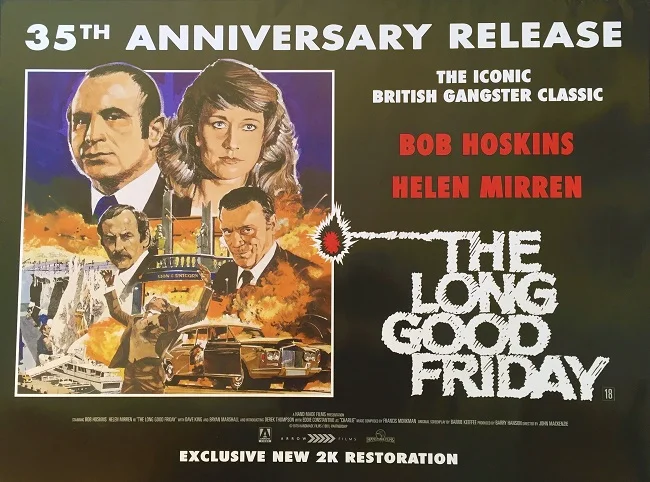
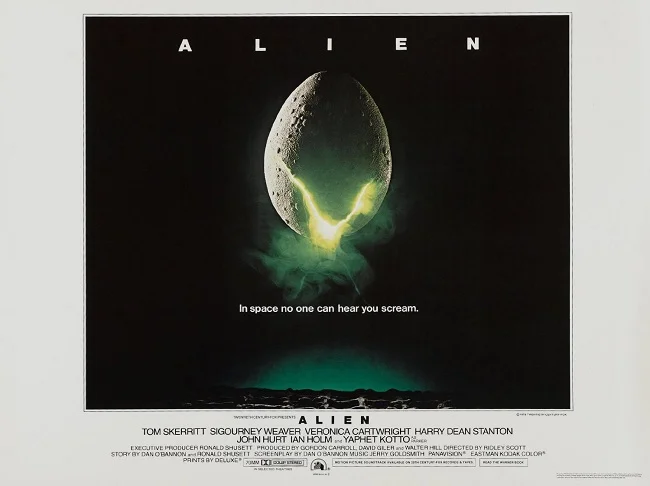

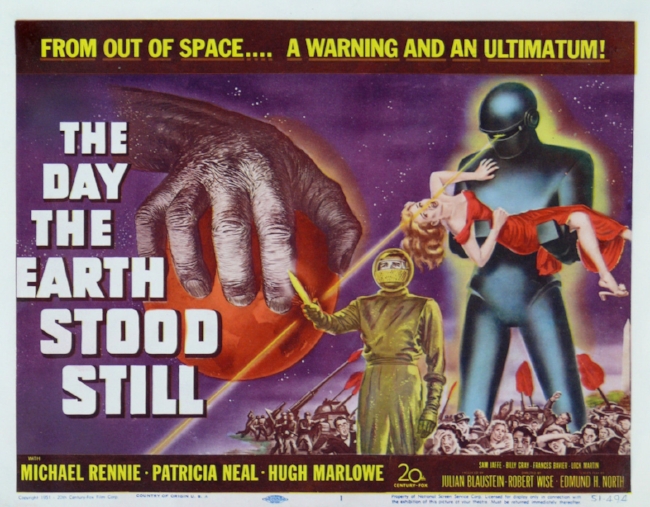
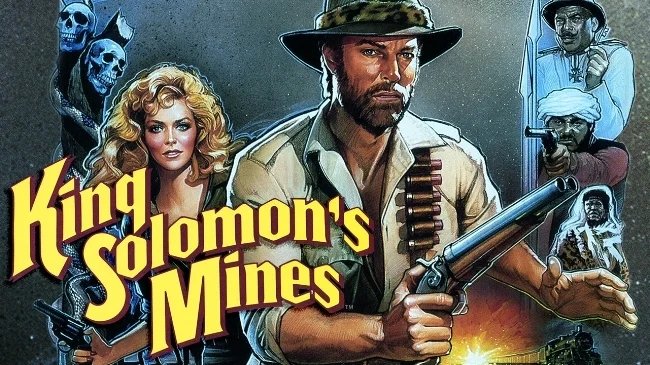


Dunkirk (2017)
Dunkirk is an extraordinary war movie, that eschews the traditional sprawling format of its predecessors, filled with celebrity cameos and contrived expositionary dialogue. Instead Christopher Nolan manages to embrace the concept of “show, don’t tell”, yet uses what little dialogue he has to succinctly punctuate the unfolding story with emotion and gravitas. There is a sense of spectacle, yet it is far from the stark and dispassionate CGI we usually see. Through creative and focused editing Nolan generates a palpable sense of tension, be it in the air with extraordinary aerial dogfights or on the ground as men flee sinking ships and dodge artillery fire. Dunkirk facilitates an intense and emotional journey during its lean 106 minute running time. It is altogether a remarkable piece of cinema.
Dunkirk is an extraordinary war movie, that eschews the traditional sprawling format of its predecessors, filled with celebrity cameos and contrived expositionary dialogue. Instead Christopher Nolan manages to embrace the concept of “show, don’t tell”, yet uses what little dialogue he has to succinctly punctuate the unfolding story with emotion and gravitas. There is a sense of spectacle, yet it is far from the stark and dispassionate CGI we usually see. Through creative and focused editing Nolan generates a palpable sense of tension, be it in the air with extraordinary aerial dogfights or on the ground as men flee sinking ships and dodge artillery fire. Dunkirk facilitates an intense and emotional journey during its lean 106 minute running time. It is altogether a remarkable piece of cinema.
Dunkirk features a non-linear narrative with three separate stories that overlap, often providing a different perspective upon the other. The Mole follows three infantrymen as they try to jump the queue and find an alternative means off the beach. The Sea is the story of a Father and son who take their family boat to Dunkirk to rescue survivors and how they pick up a “shell shocked” soldier along the way. The Air focuses on three Spitfire pilots as they try to provide cover for the retreating ships. What Dunkirk doesn’t do is wallow in an excess of historical background detail, contrived patriotism or emotional manipulation. There is no Winston Churchill and more importantly no evil Nazis. The enemy remains conspicuously distant either sniping, shelling or dive bombing. Nolan places the audience in the centre of a military disaster, stripped of most of its subjective context. The tension and sense of threat is constant and authentic.
Hans Zimmer scores Dunkirk with discordant ambient tones. It is far from a traditional soundtrack but as stated, Dunkirk is not a traditional war movie. This is not just a movie about a major military defeat but a tale of those souls caught in the middle of it all. They do not have the benefit of historical hindsight and the film is effectively an exploration of men enduring catastrophic events happening around them. However, Dunkirk is not bereft of character development and there are strong performances by Mark Rylance, Cillian Murphy and Tom Hardy. Rather than building complex backstories and playing with our feelings towards the cast, Christopher Nolan creates genuine jeopardy and is not averse to delivering tragedy without the ubiquitous clichéd Hollywood trappings.
A few critics have already accused Dunkirk as being a soulless representation of combat, citing similarities with the set pieces in the Call of Duty video game franchise. Yet this is not the case. Yes, the physical effects are staggering and the films technical excellence is beyond reproach. But there are touches of humanity conveyed through the subtlest use of dialogue or nuanced acting throughout the film. It is there when Mark Rylance tells Cillian Murphy “there’s no hiding from this son, there’s a job do”, and when Tom Hardy perceptibly winces as he realises that despite being low on fuel he cannot leave an allied ship exposed to a German bomber. It is in these honest scenes that Dunkirk finds its greatness. And when the armada of “little ships” finally arrives to strains of Hans Zimmer’s evocative variation of Nimrod, it is profoundly moving.
I suspect that in the same way Saving Private Ryan significantly altered the depiction of war in film back in 1998, Dunkirk may well have a similar effect henceforward. I’m sure some audiences may view the film through the prism of Brexit and vicariously try and champion it as a metaphor for their cause. However, I think that Christopher Nolan’s delineation of this military disaster that was spun in to a political triumph, elevates it above such partisan perspectives. Dunkirk is an intense, gripping and credible view of the nature of war and its impact upon those caught in it. It strength lies in vignettes of human drama set amid an epic and destructive canvas. It is also a compelling drama imbued with a tangible sense of suspense. Cinema seldom gets this good. Go see it on the biggest screen you can find.