
Bullroarer Update 26 Preview #1
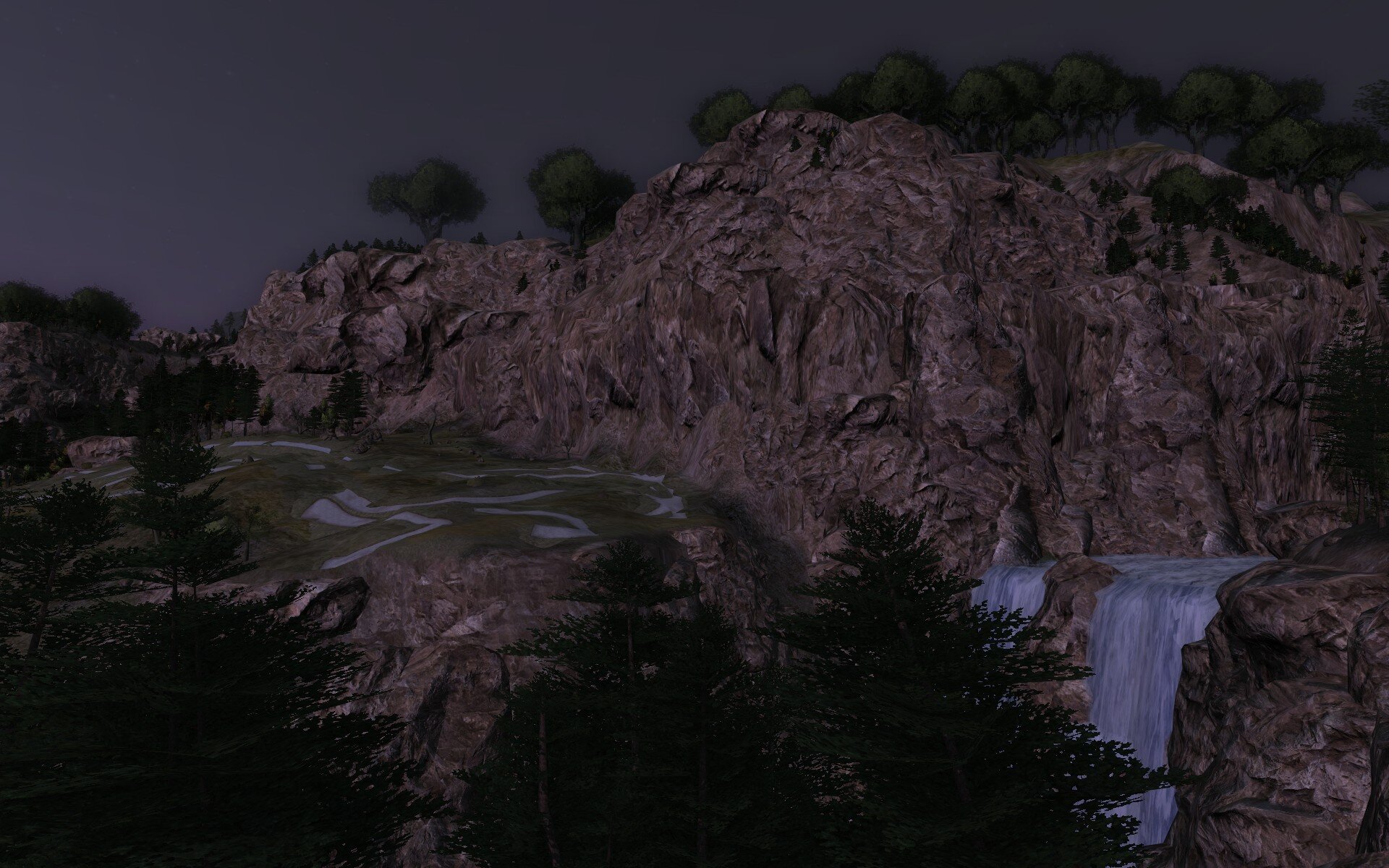
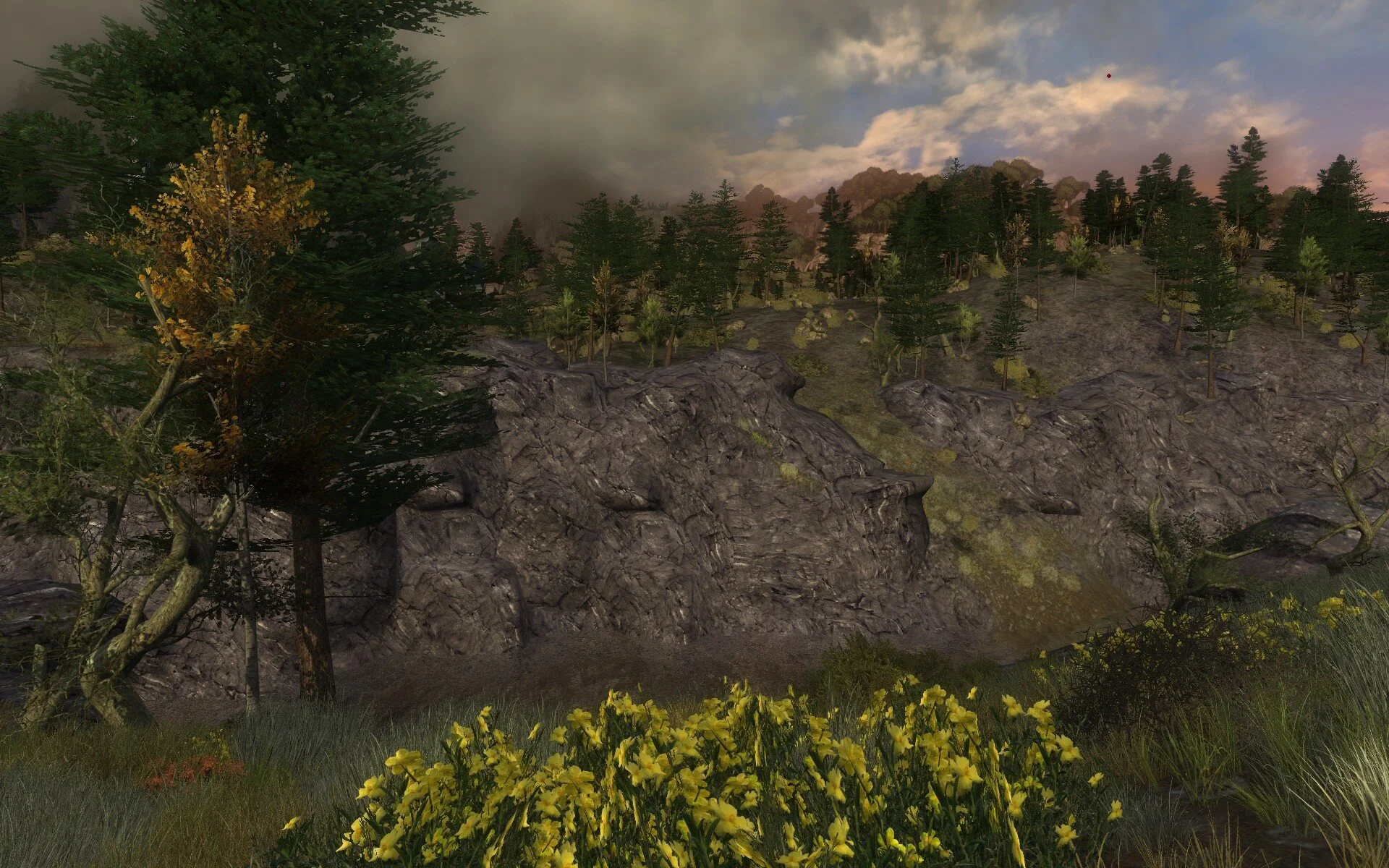
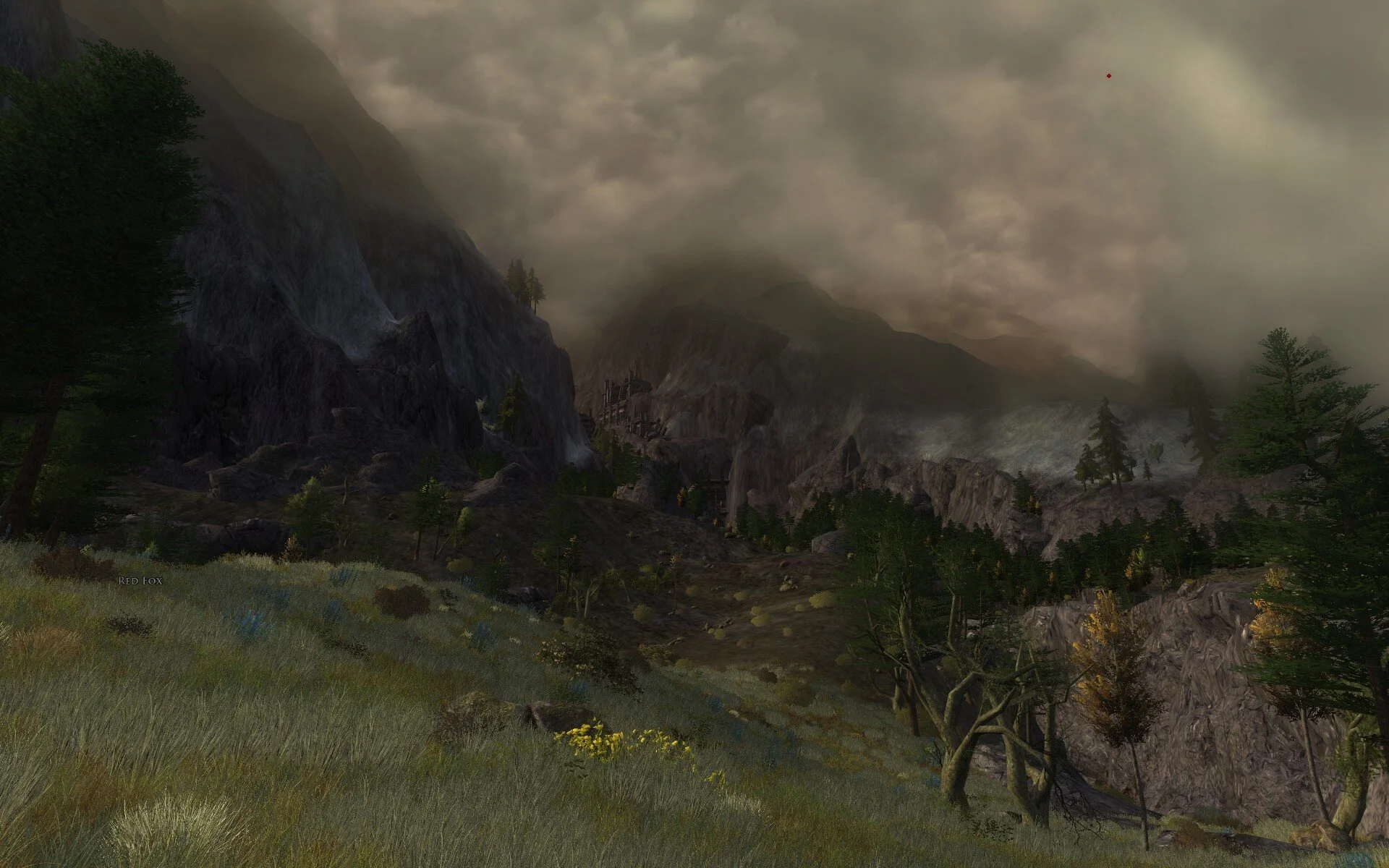
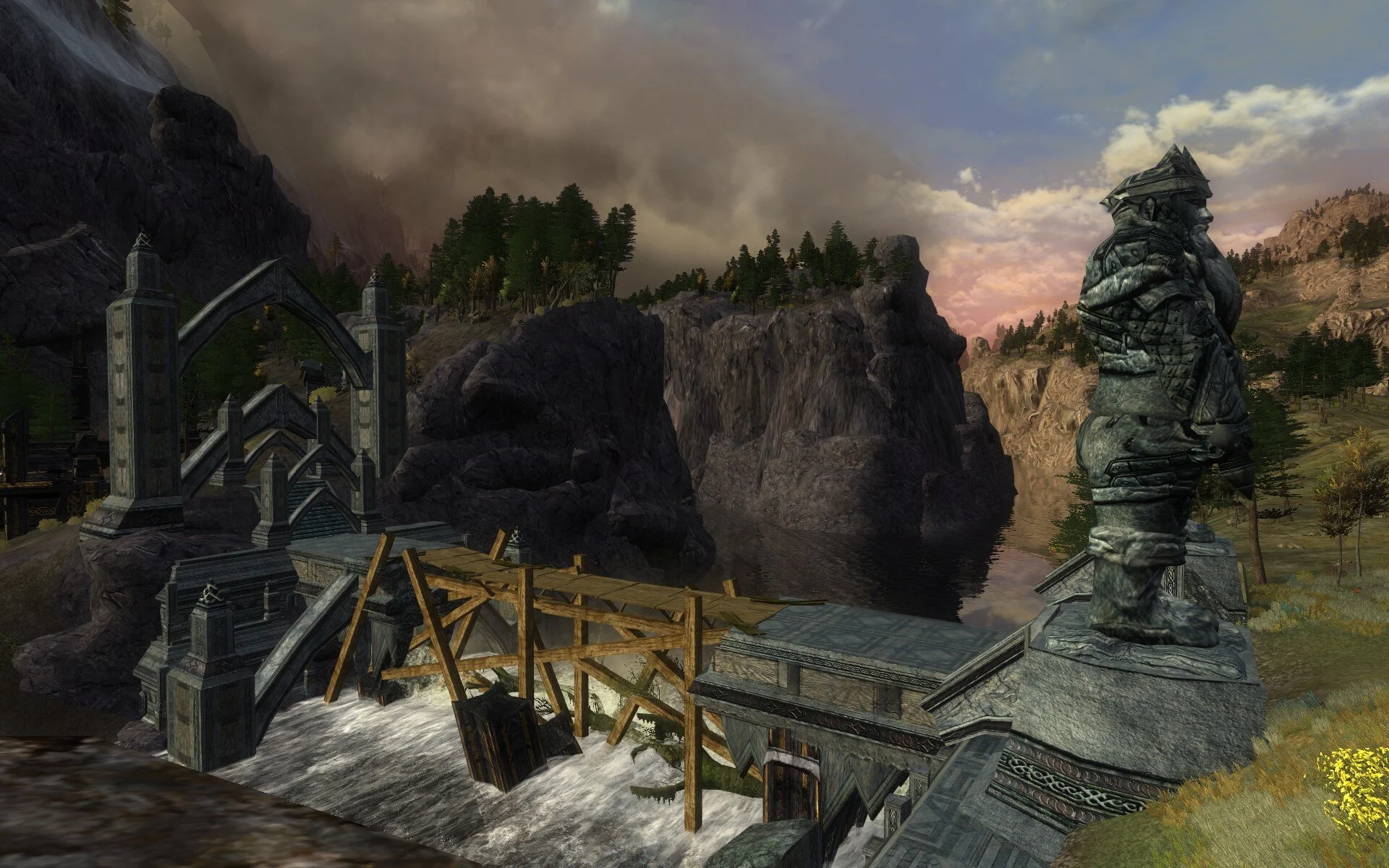
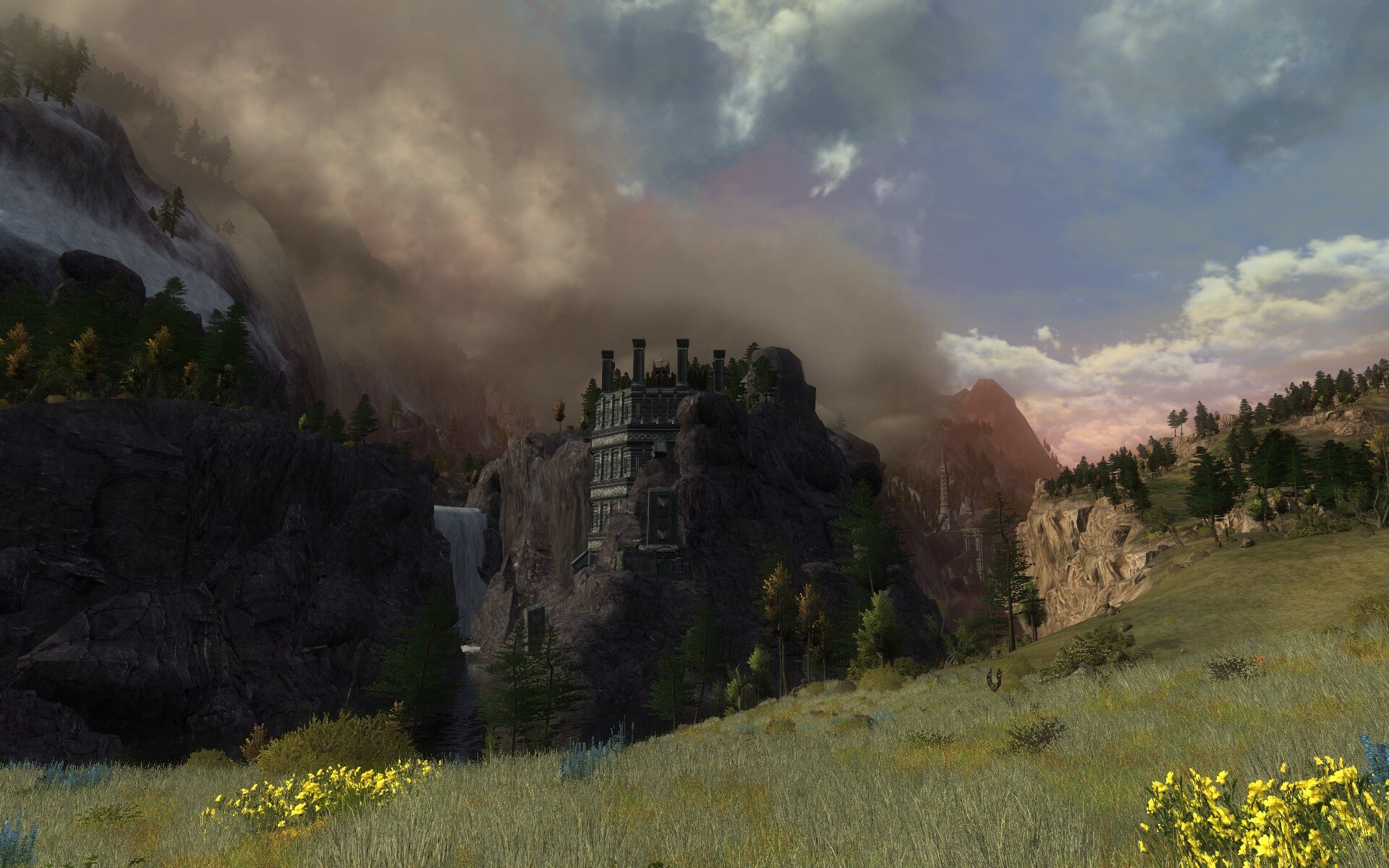
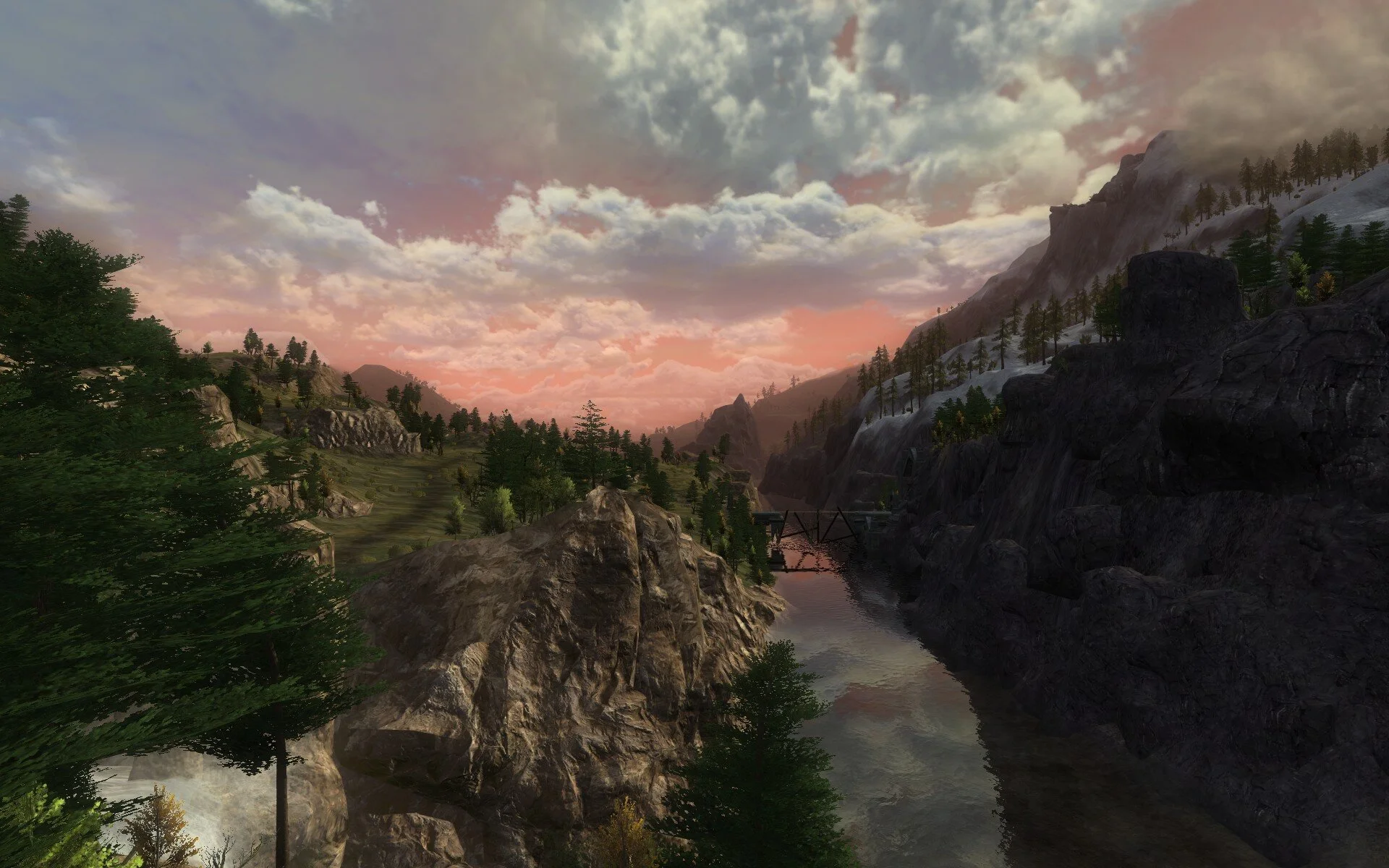
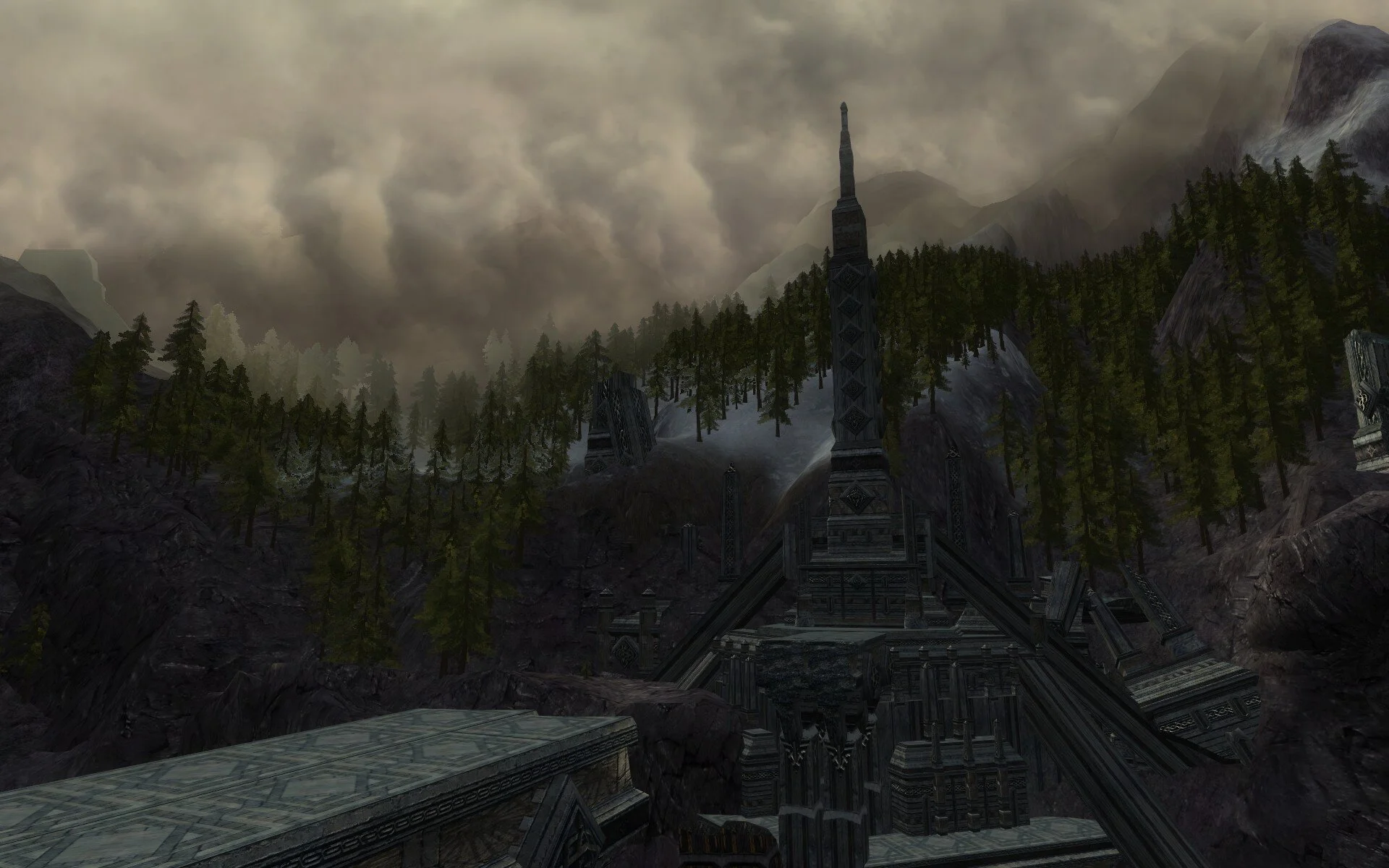
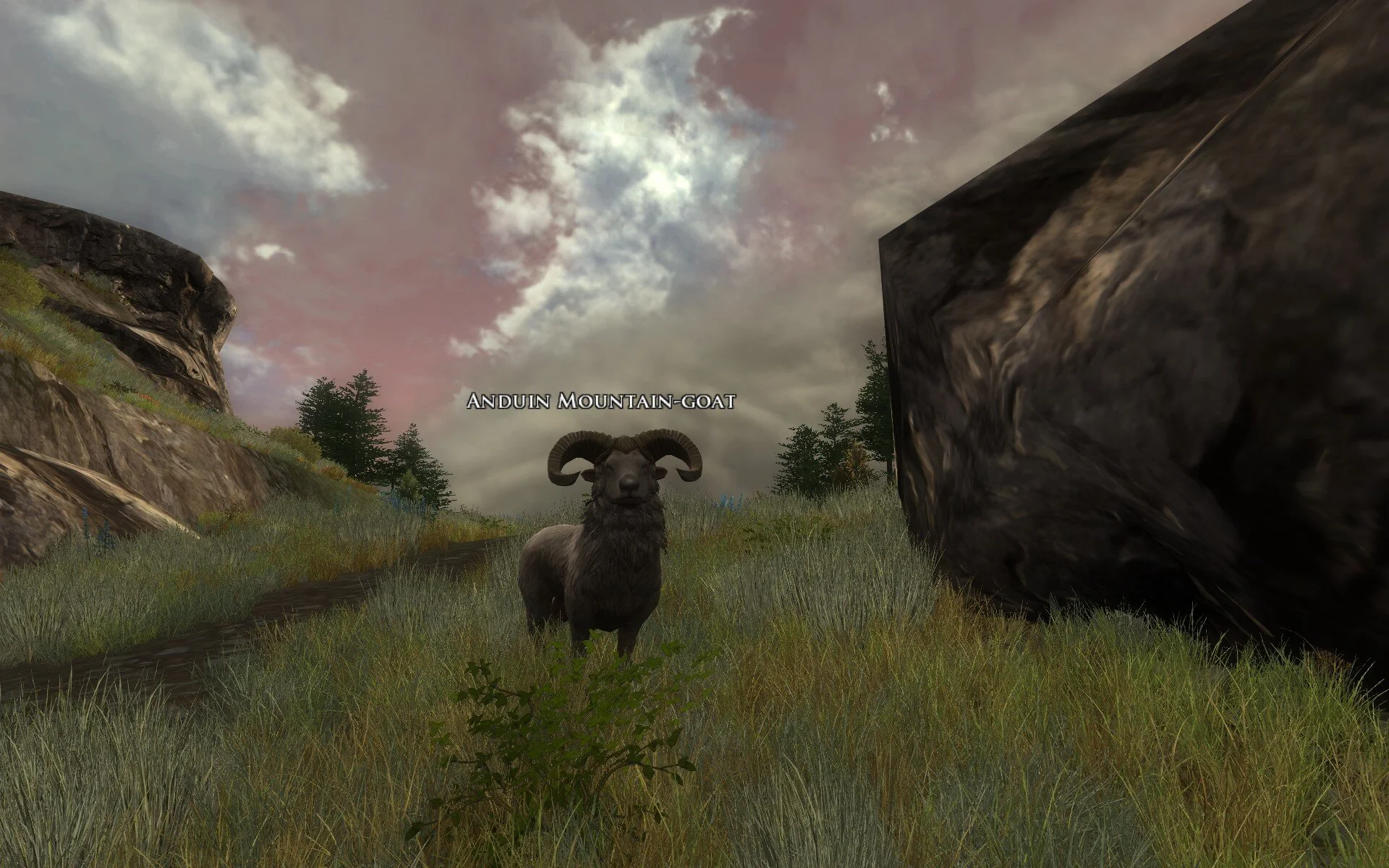
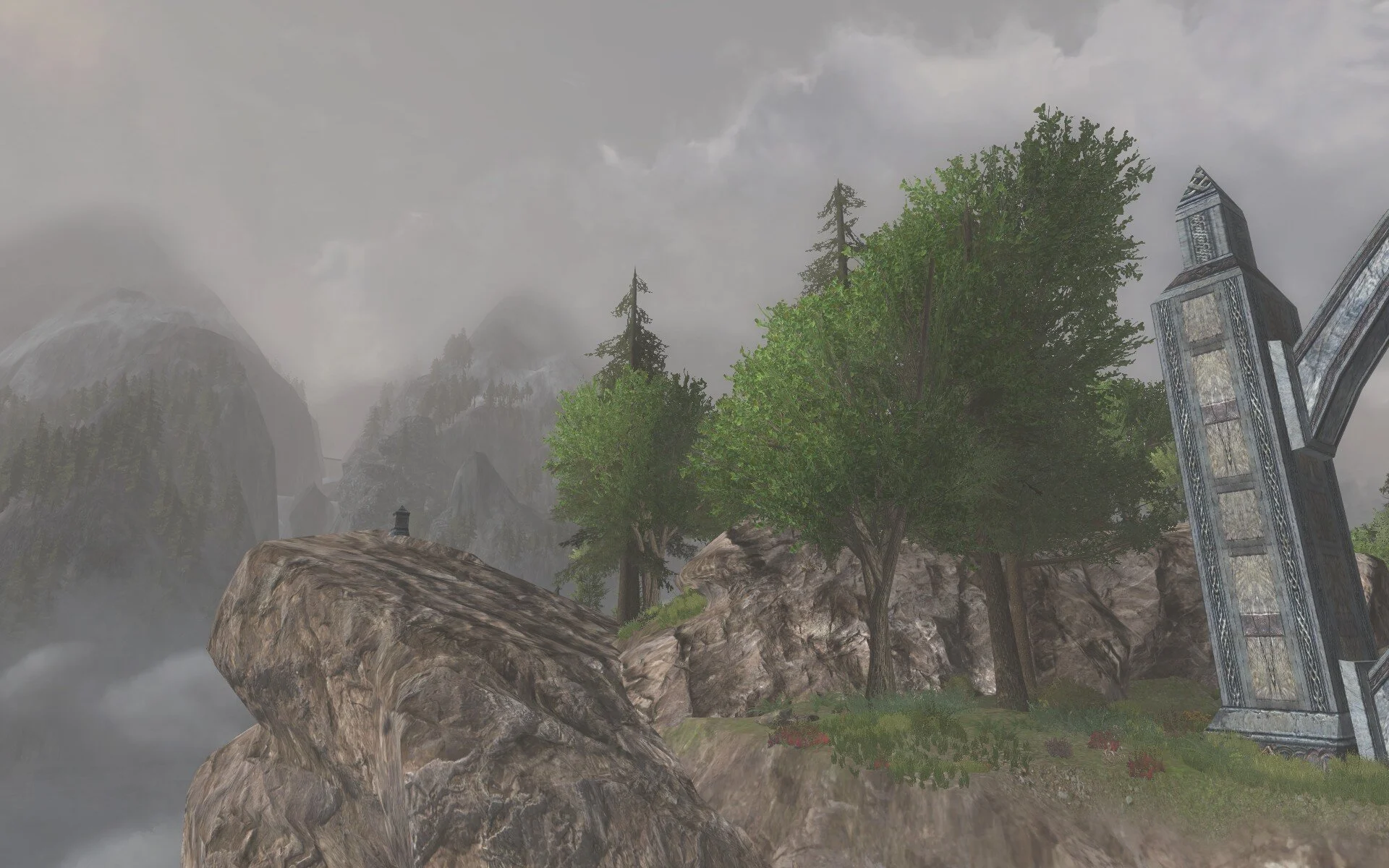
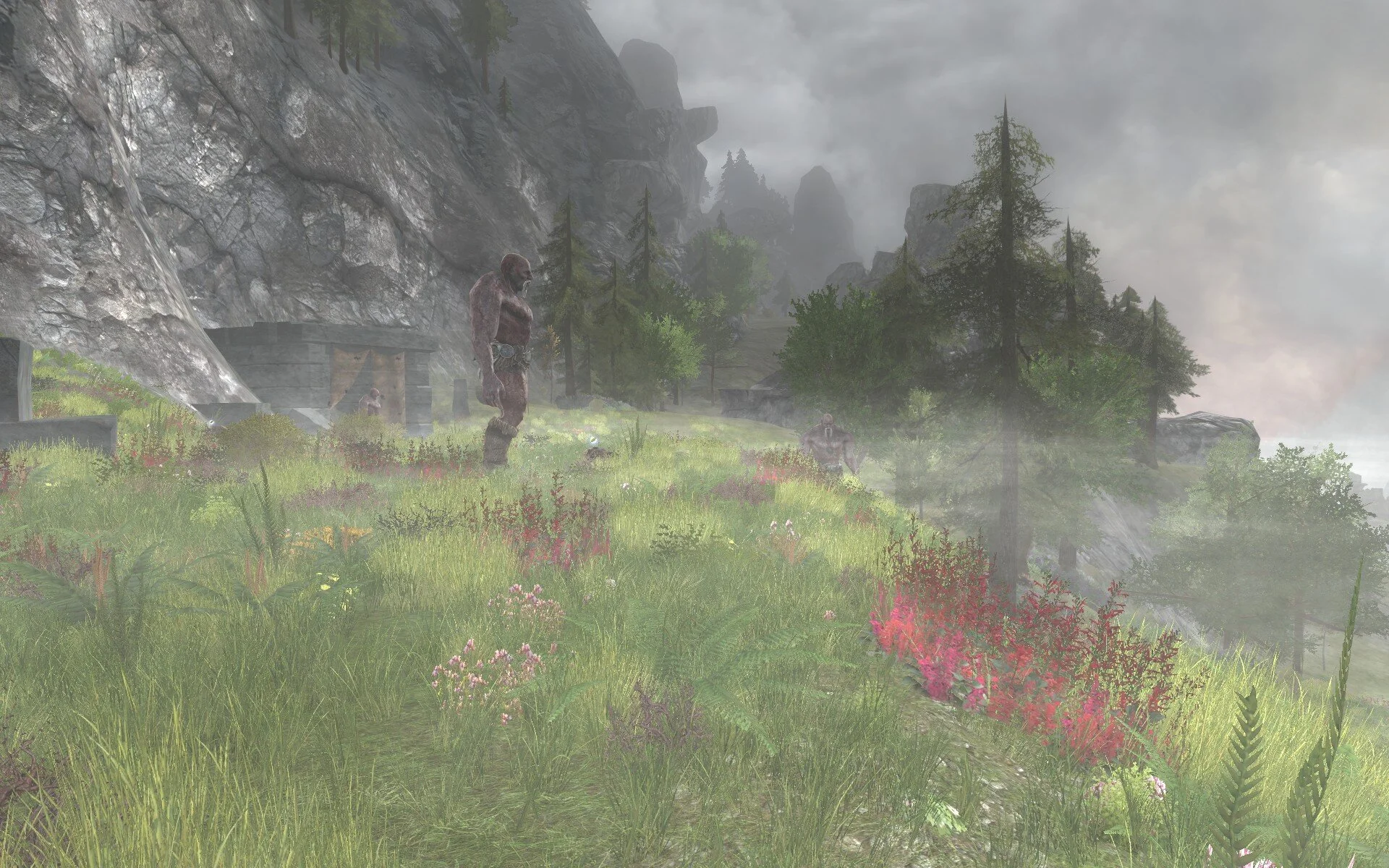
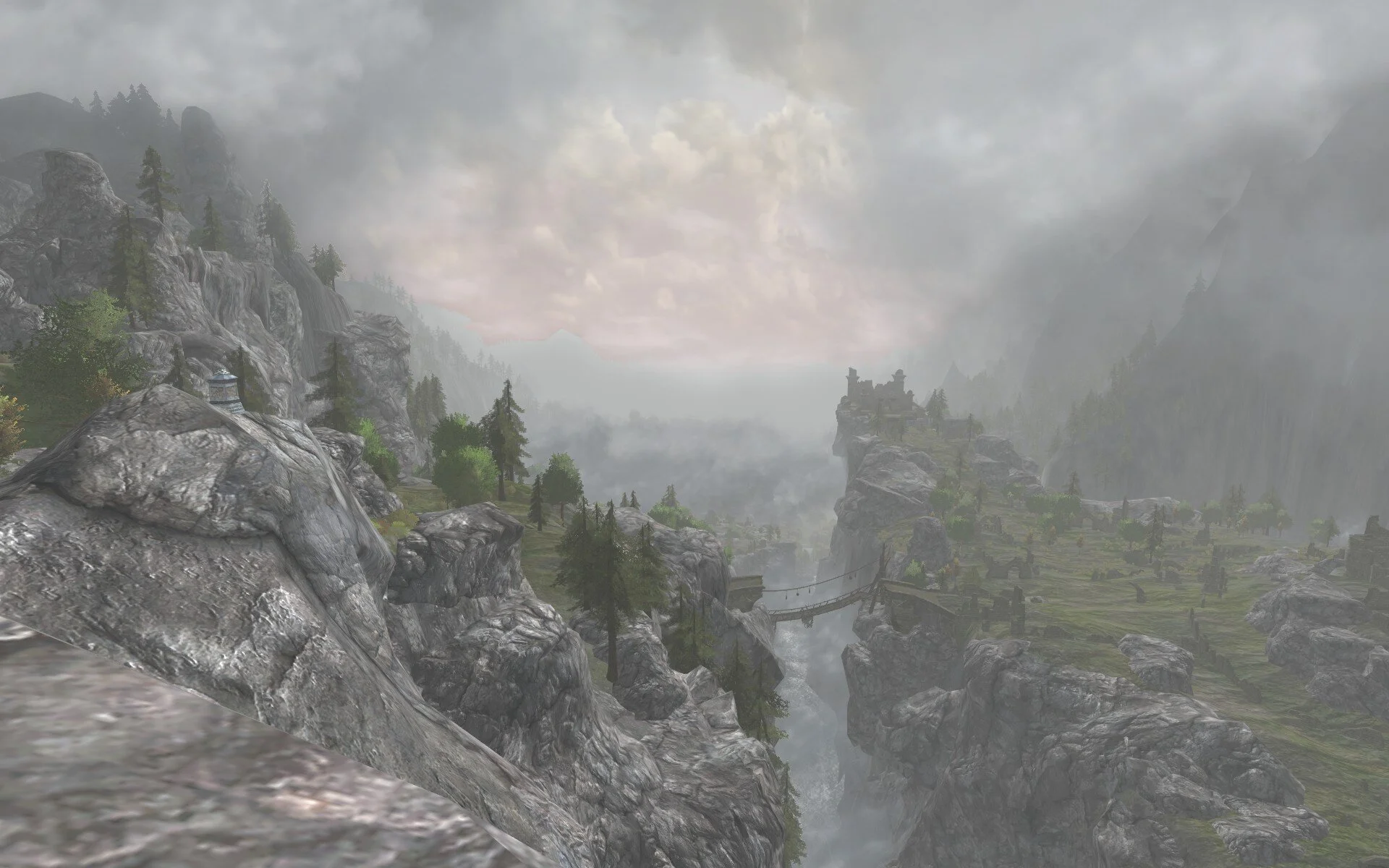
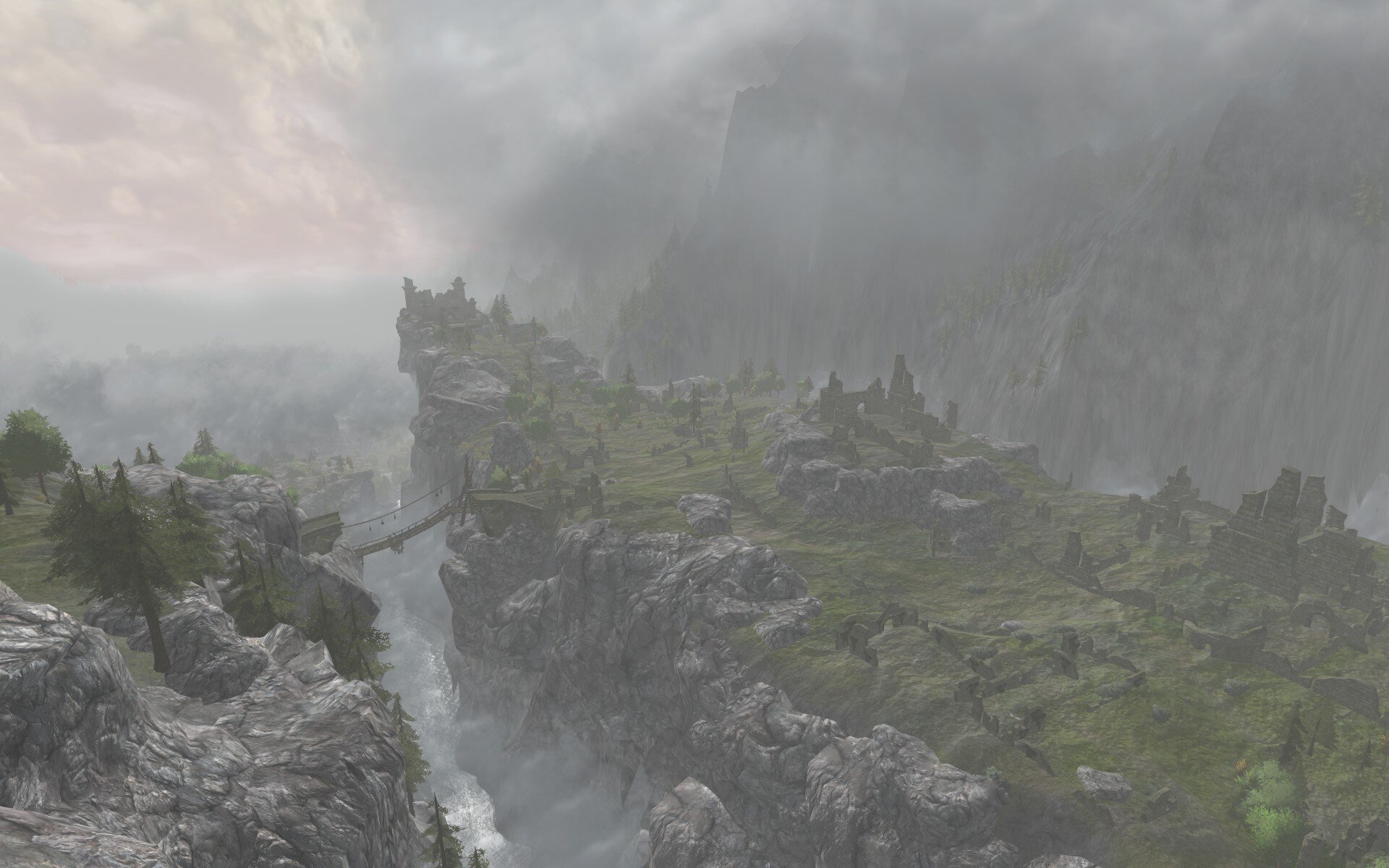
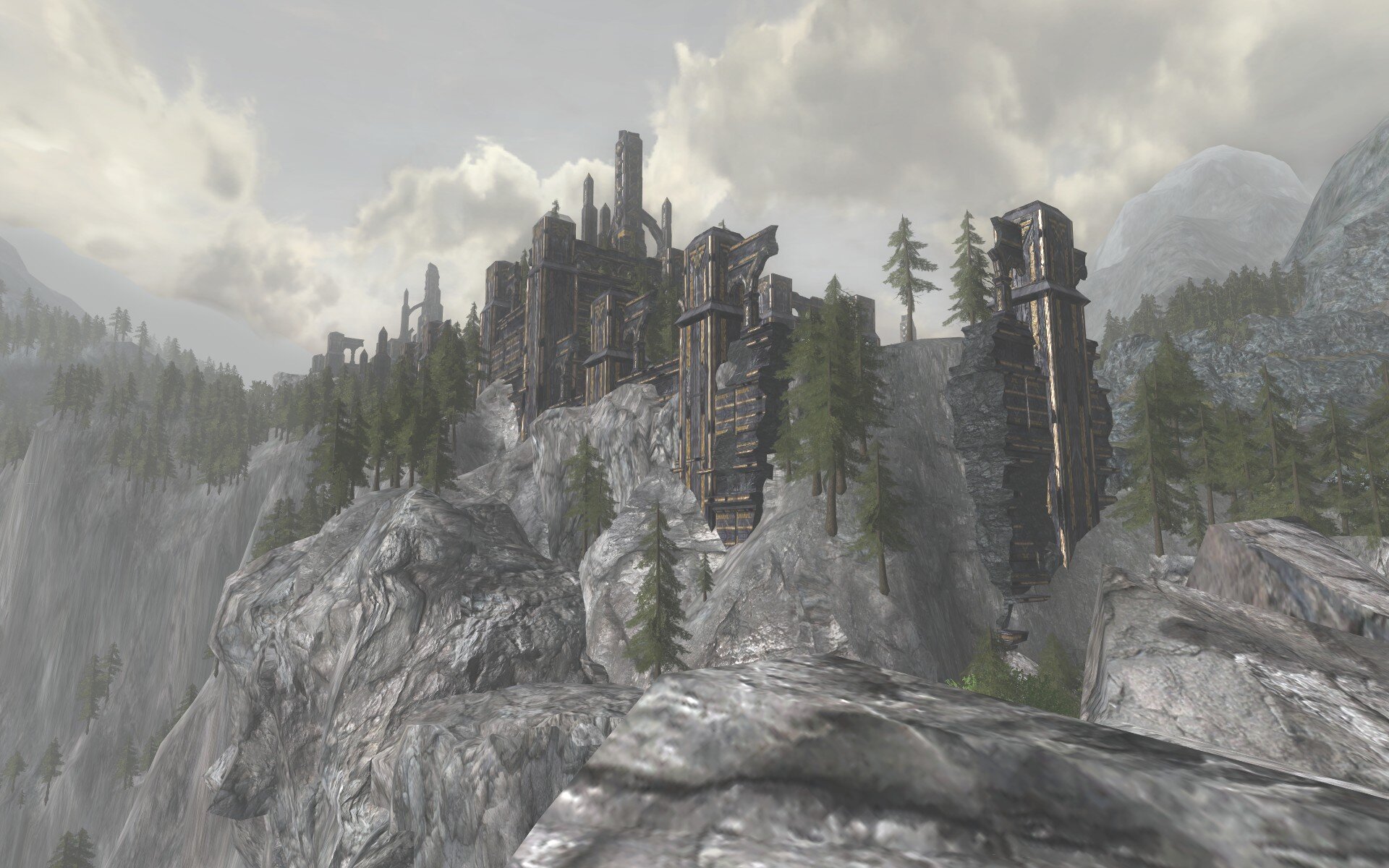
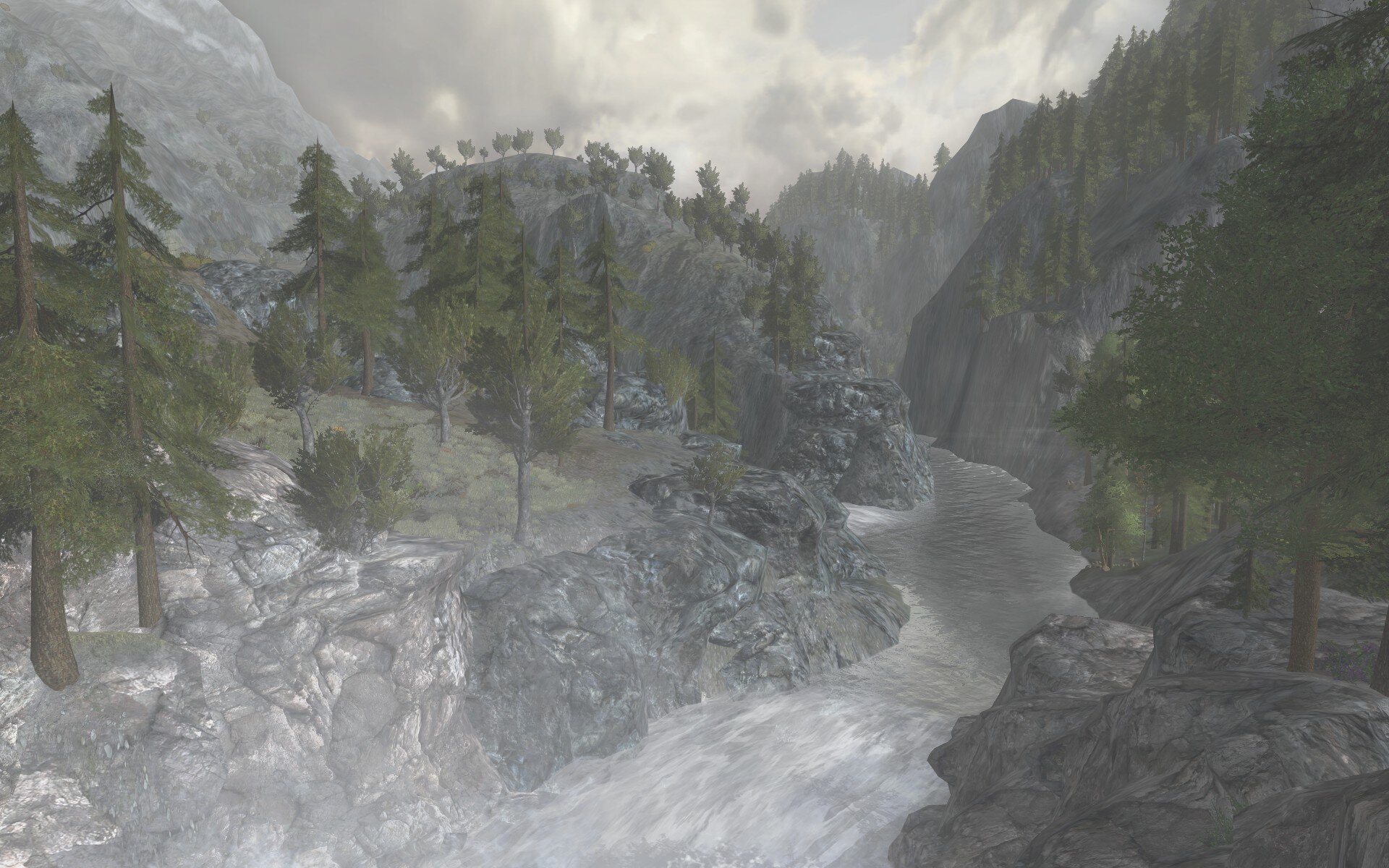
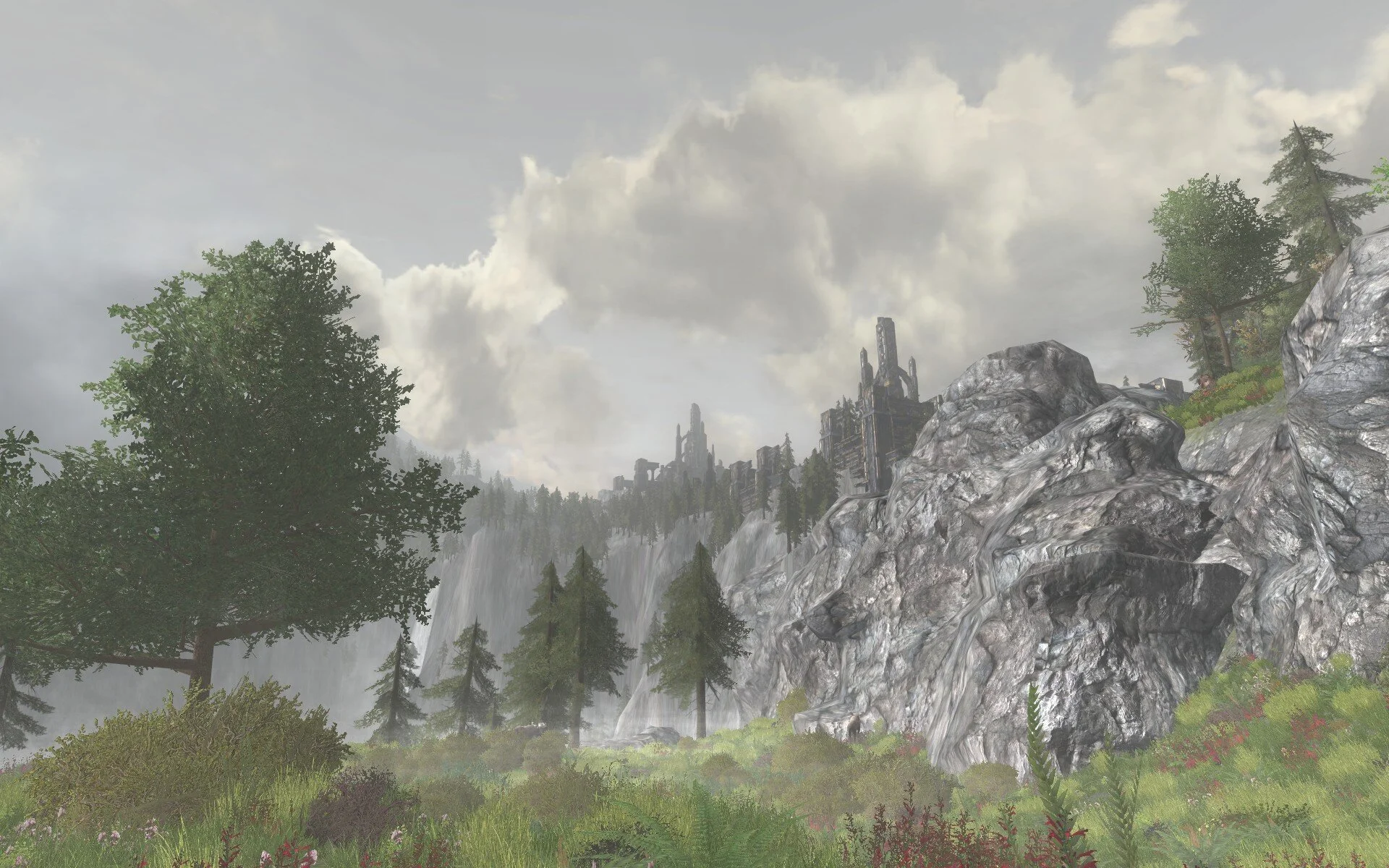
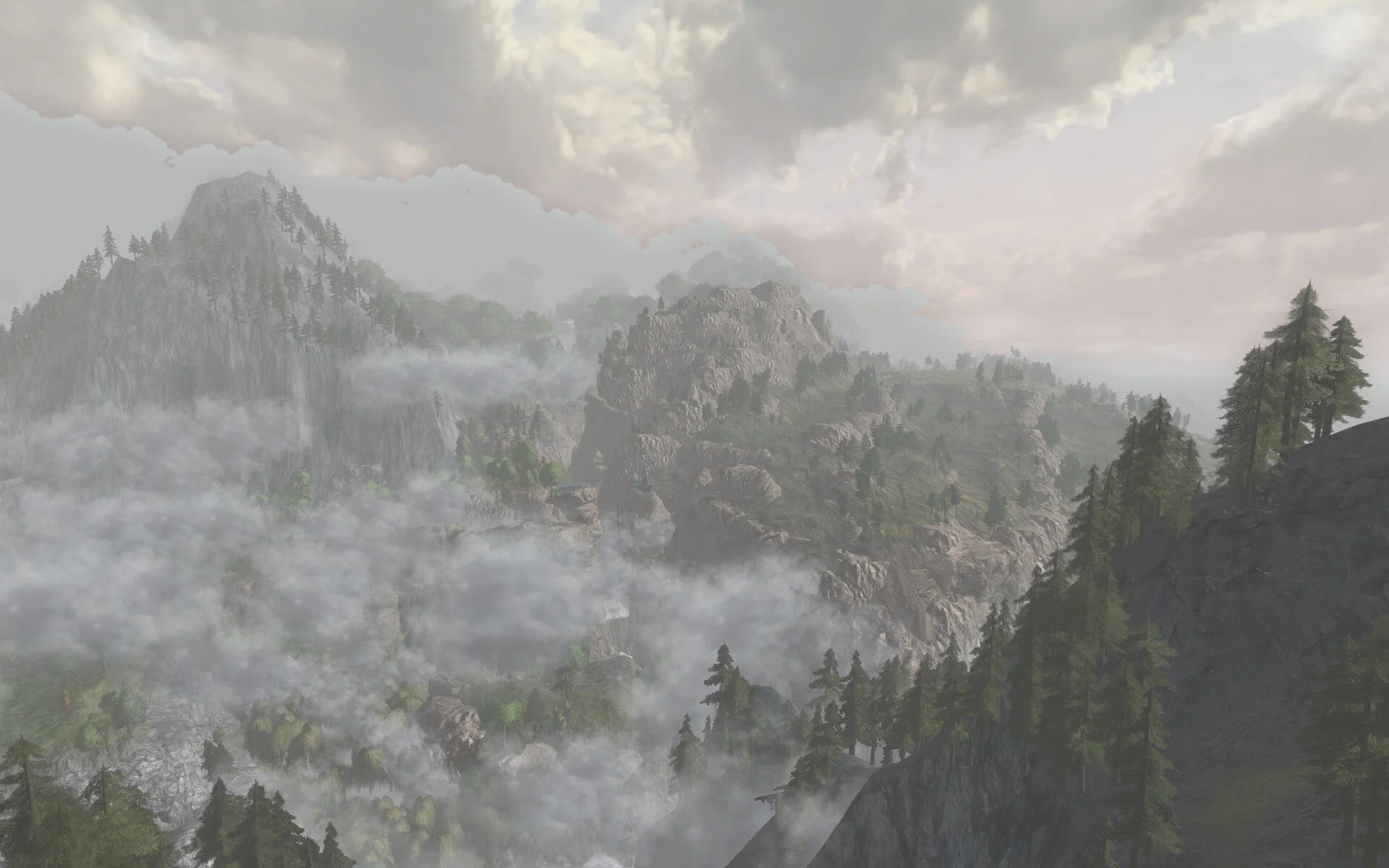
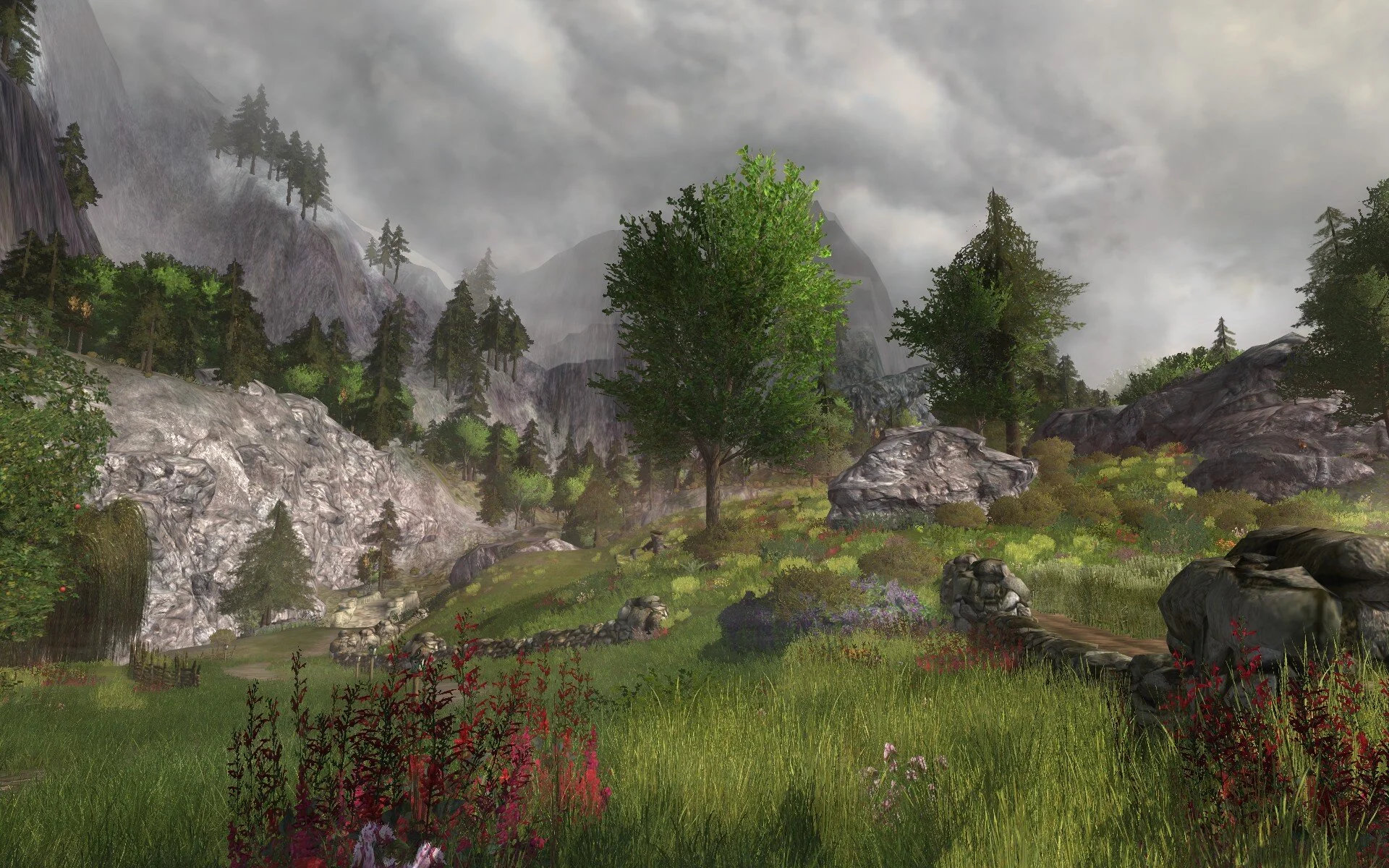
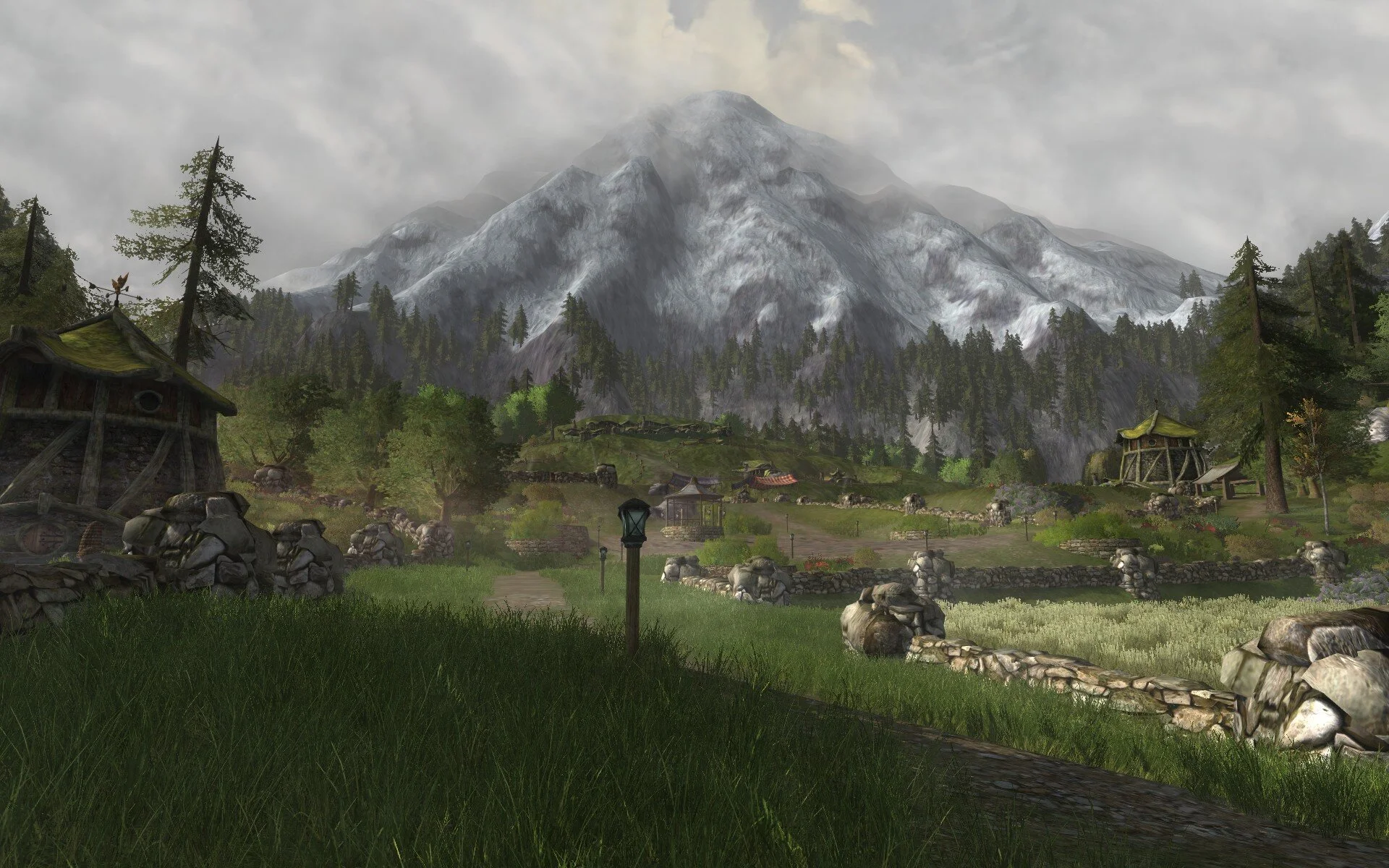
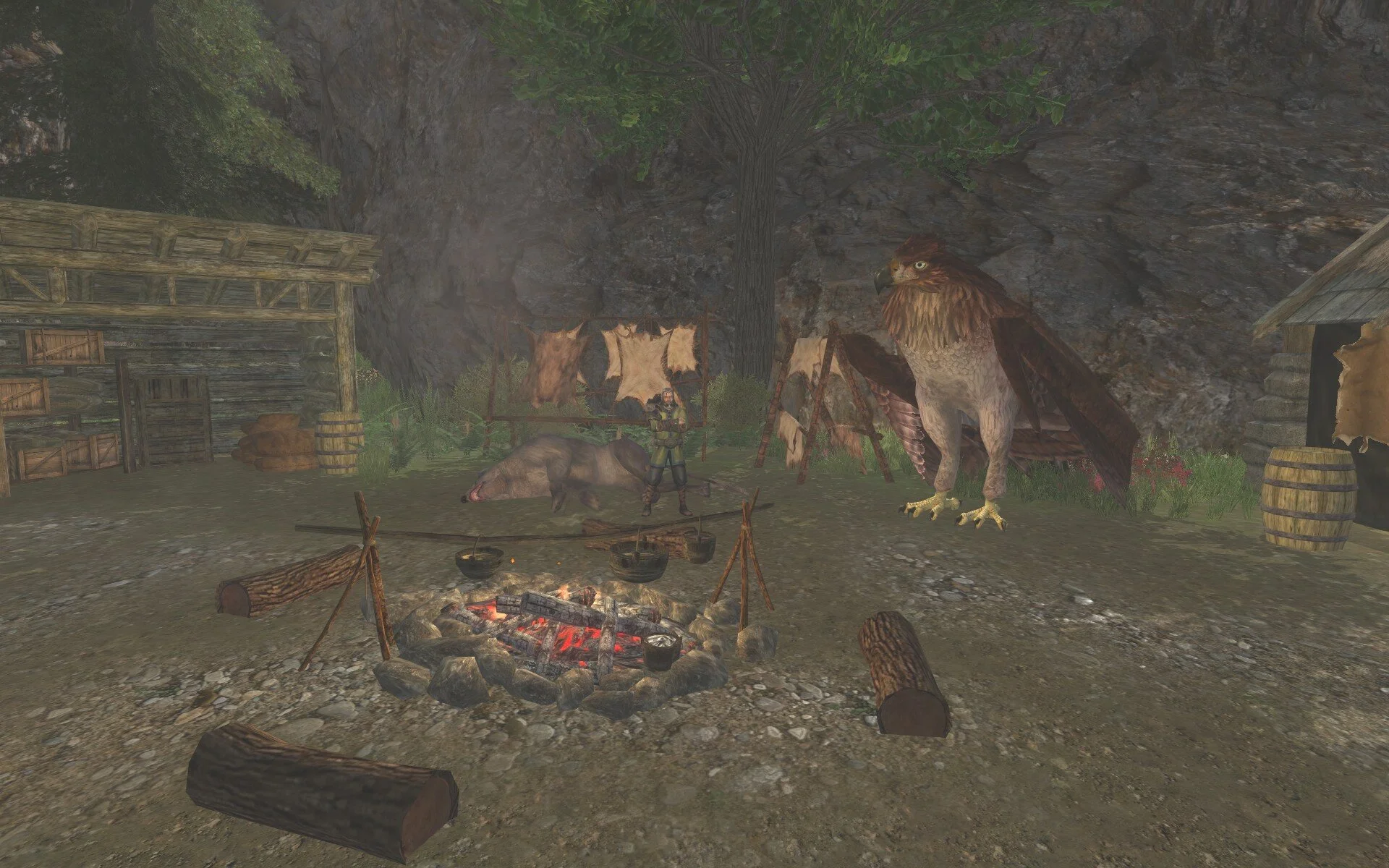
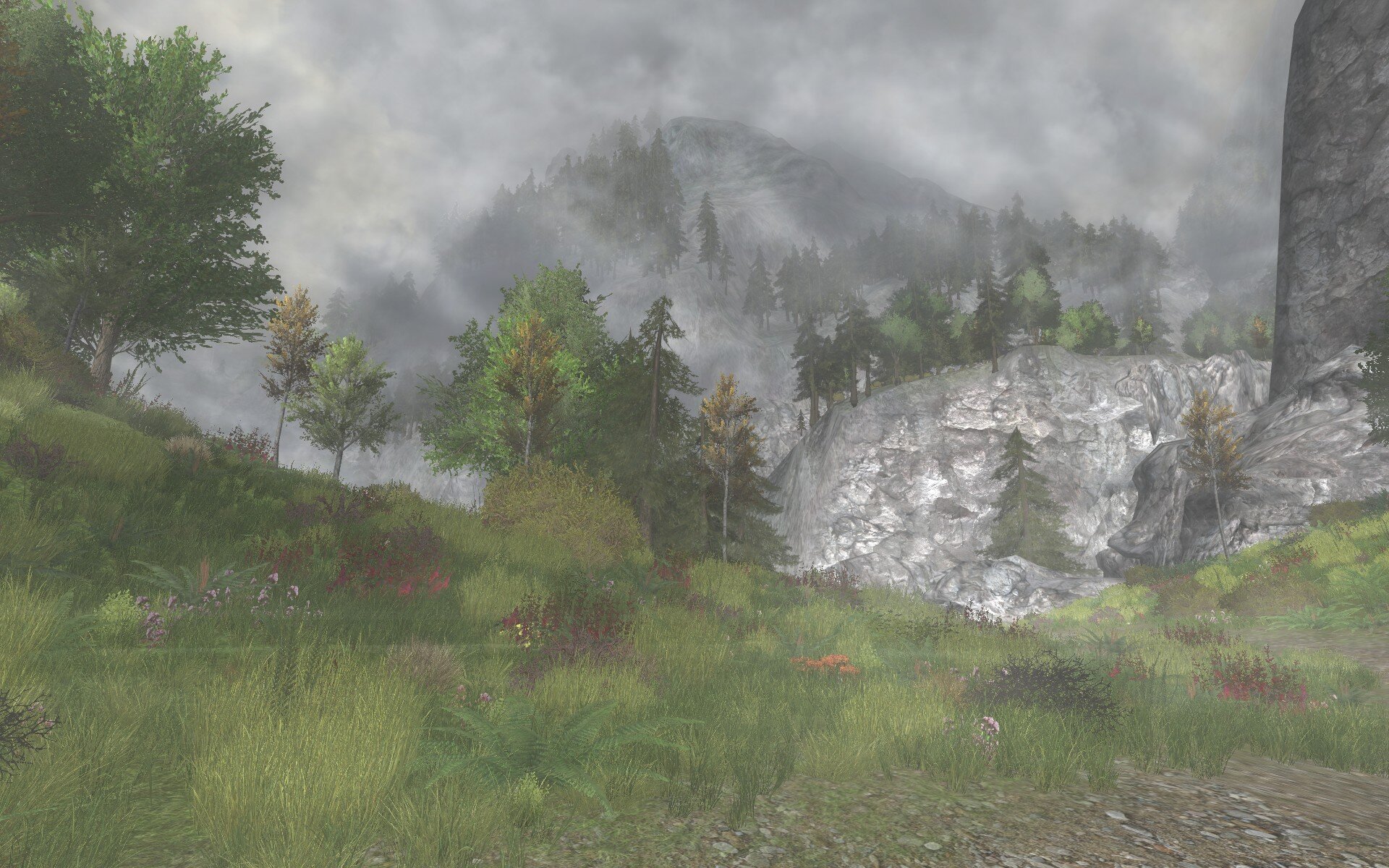
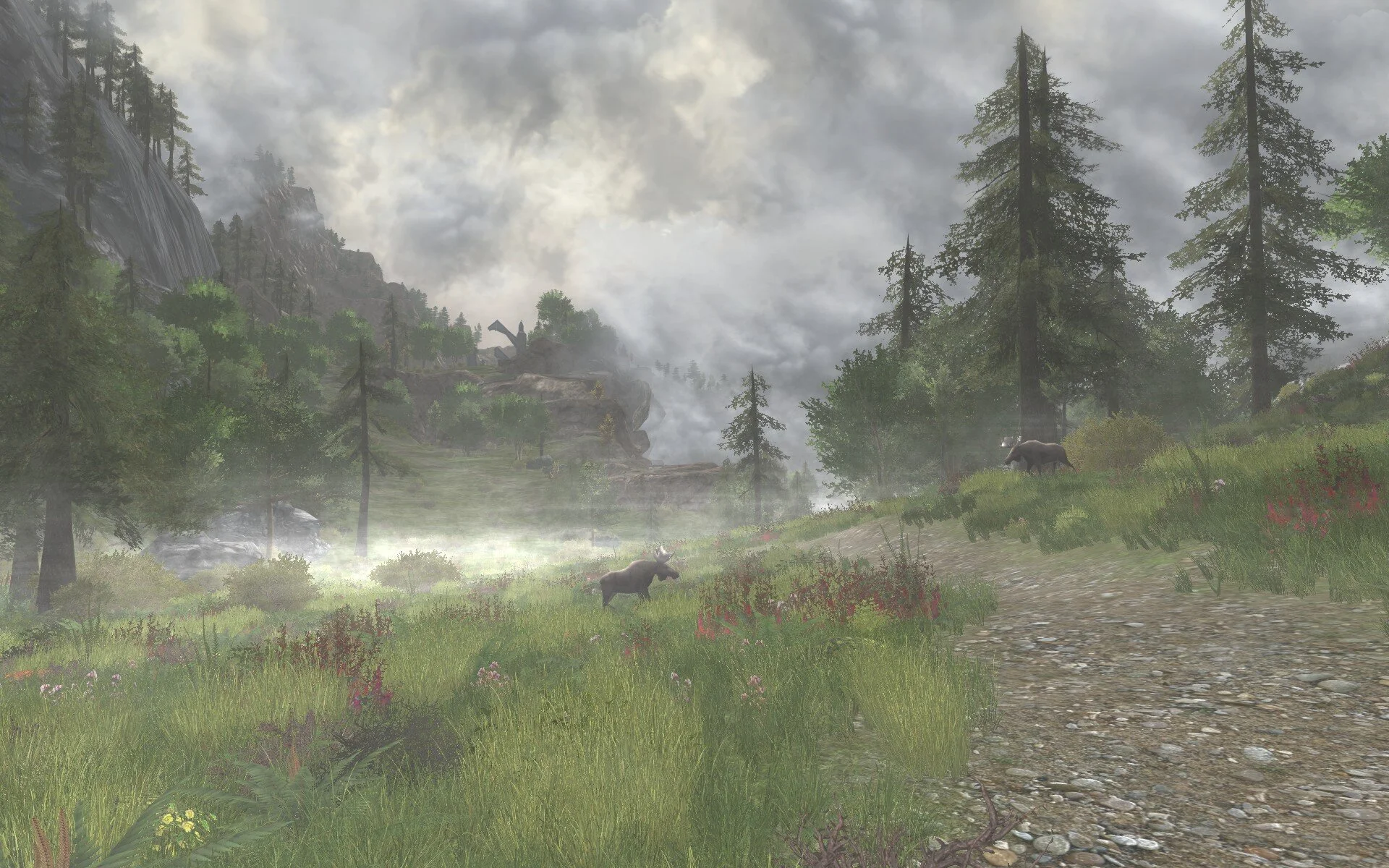
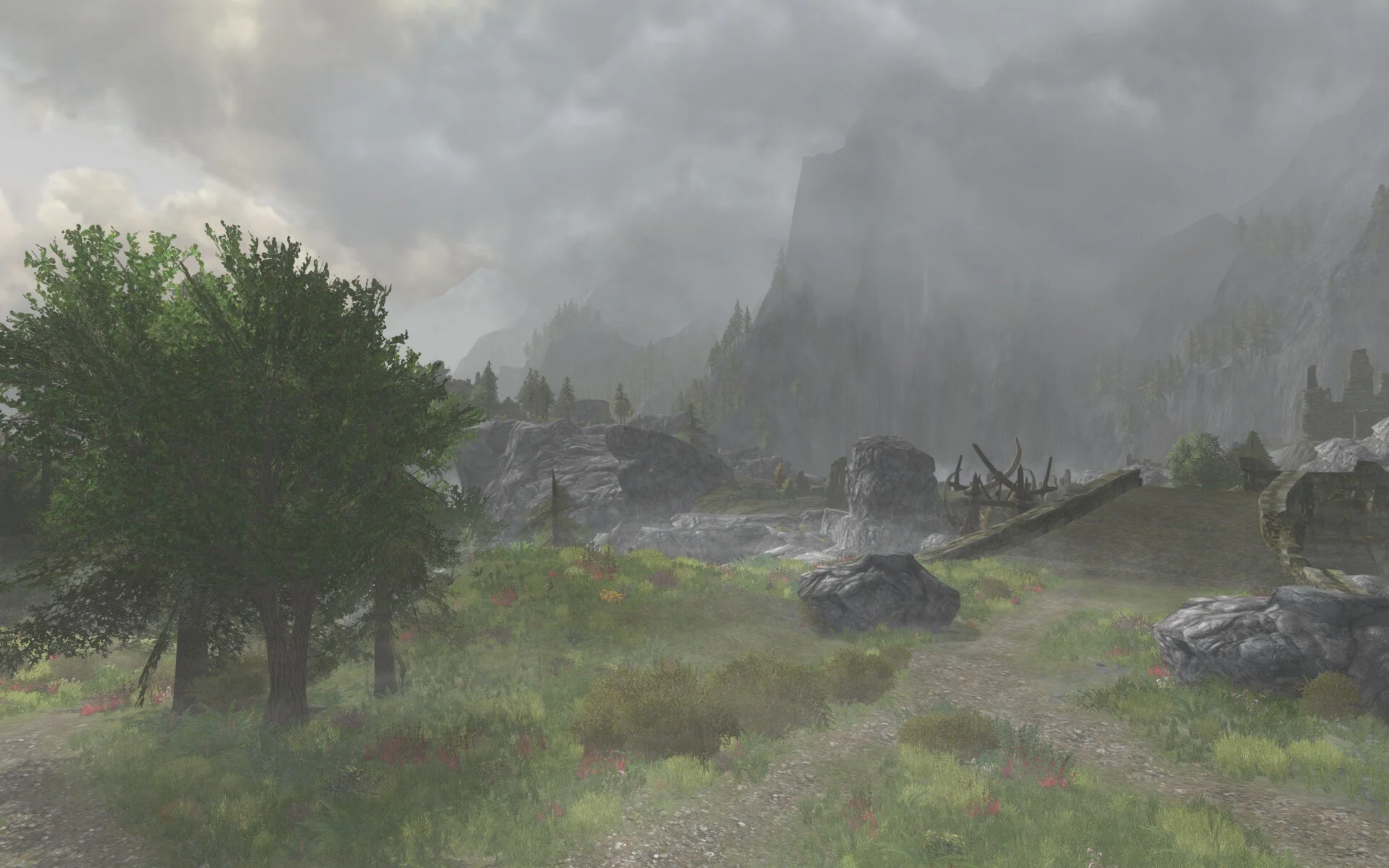
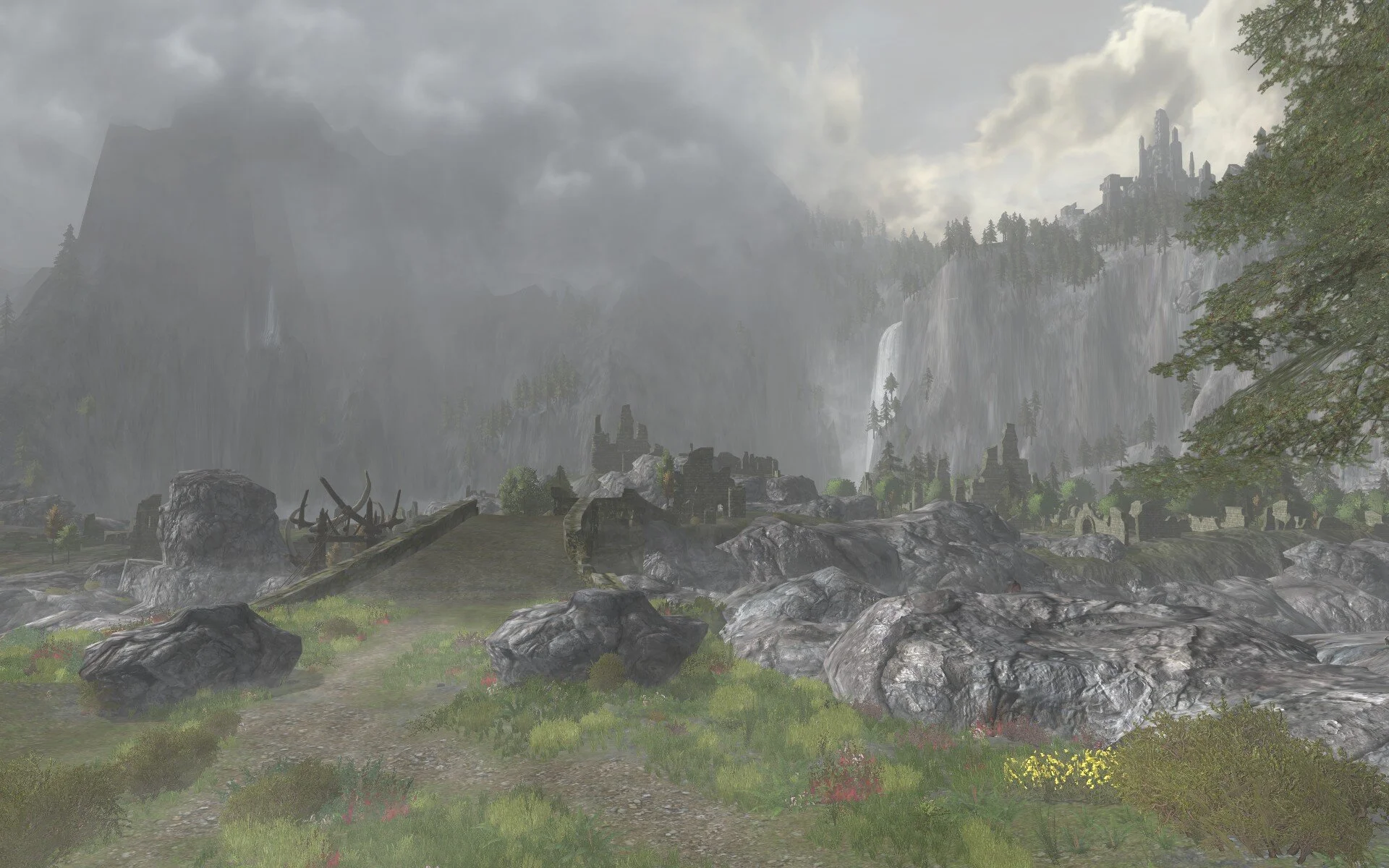
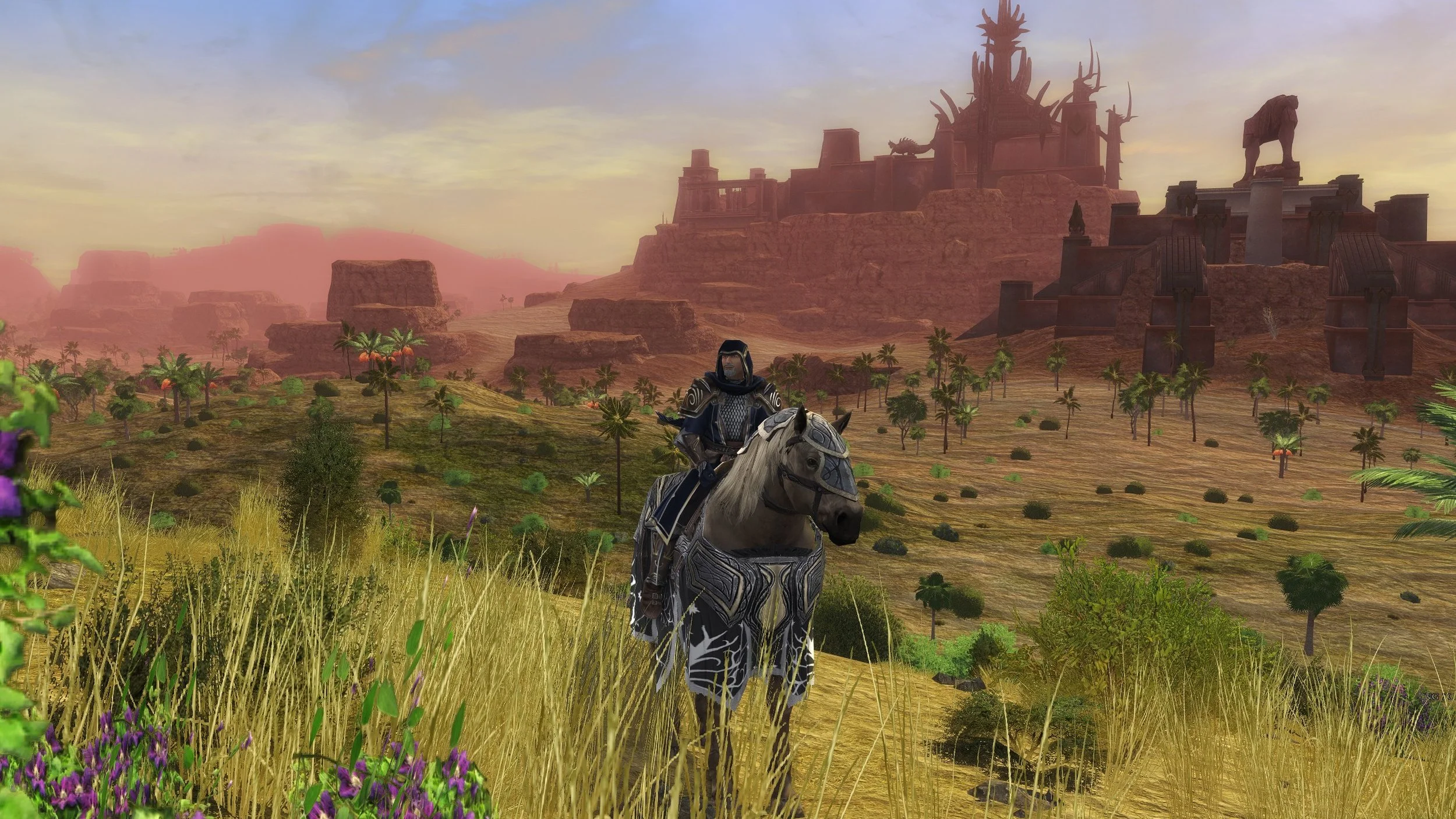
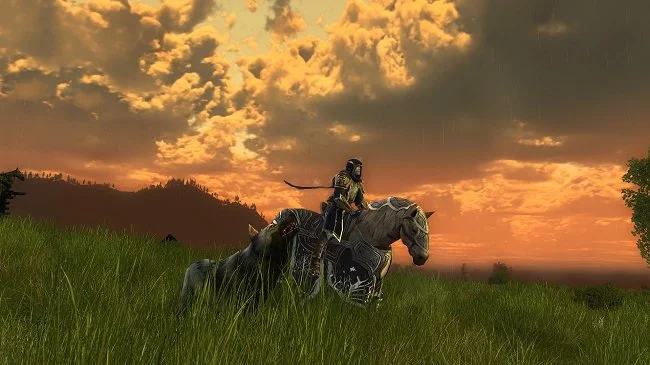
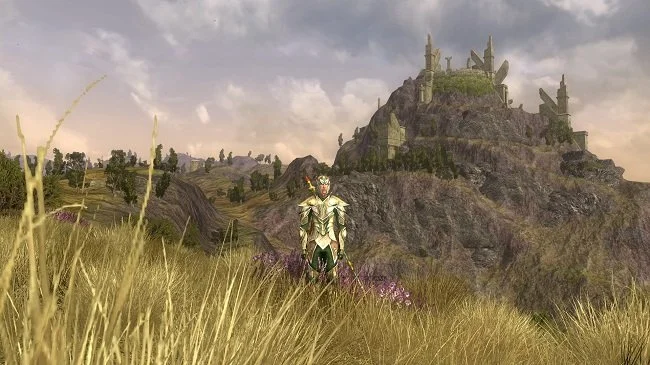
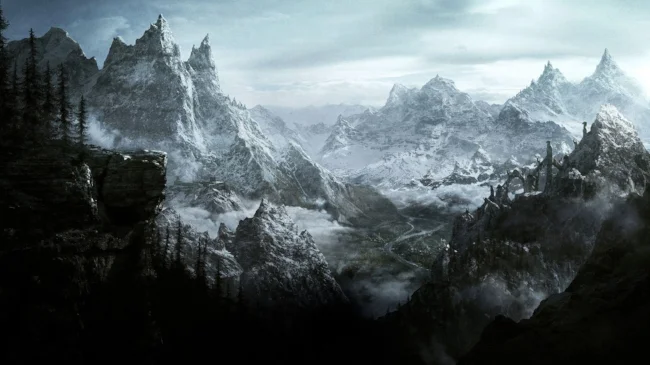
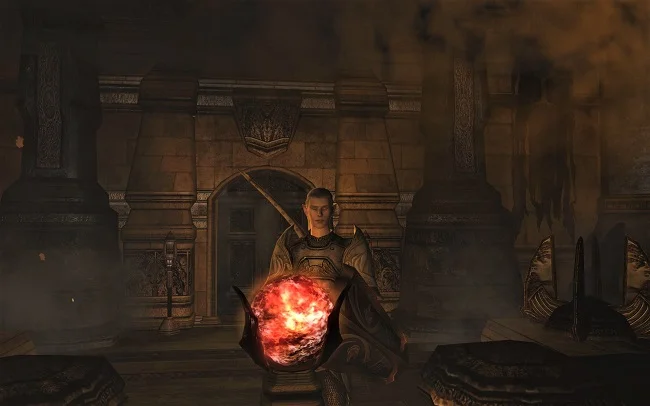
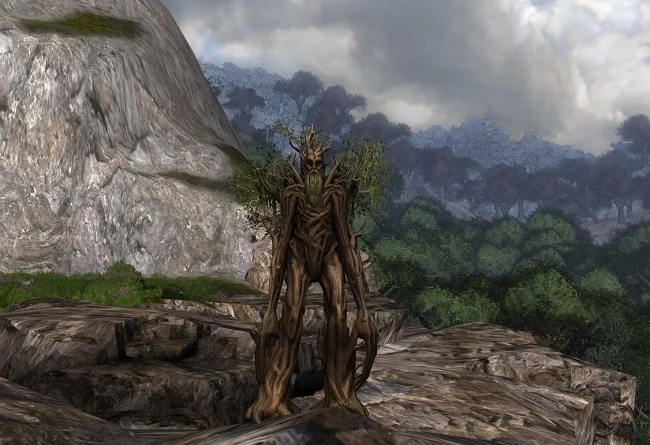
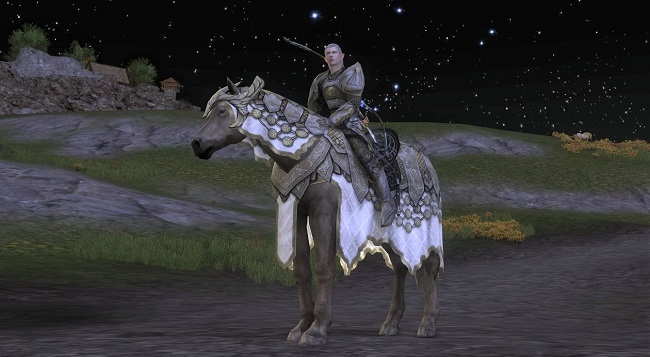
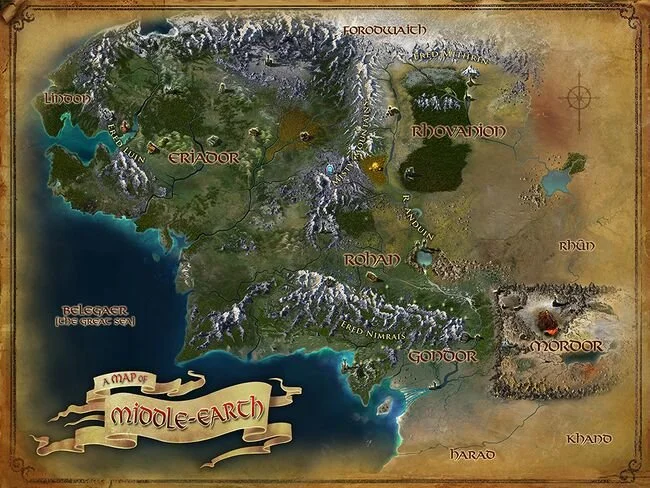
Standing Stone Games are currently previewing Update 26 for The Lord of the Rings Online on the Bullroarer Test Server. The new zone, the Wells of Langflood, follows in the idiom of Vale of Anduin with a comparable aesthetic. However, as this region is further north and at a higher altitude, there is a prevailing mist in most areas. The landscape also slowly climbs North as you approach where the arms of the Misty Mountains and Ered Mithrin meet. Overall it is a bright and colourful zone filled with wildlife. However, there are also various mobs from Mount Gundabad and several advance camps of Trolls and Orcs. There are also numerous Dwarven ruins indicating their historical presence in the region. The Eagles also feature in the area and obviously appear in several of the zones quest storylines.
Standing Stone Games are currently previewing Update 26 for The Lord of the Rings Online on the Bullroarer Test Server. The new zone, the Wells of Langflood, follows in the idiom of Vale of Anduin with a comparable aesthetic. However, as this region is further north and at a higher altitude, there is a prevailing mist in most areas. The landscape also slowly climbs North as you approach where the arms of the Misty Mountains and Ered Mithrin meet. Overall it is a bright and colourful zone filled with wildlife. However, there are also various mobs from Mount Gundabad and several advance camps of Trolls and Orcs. There are also numerous Dwarven ruins indicating their historical presence in the region. The Eagles also feature in the area and obviously appear in several of the zones quest storylines.
There are four stables in Wells of Langflood. Limlók is the main Beorning settlement in an area called Floodfells. Further North there’s a second smaller settlement, Thokvist, just off the central road that traverses the zone from North to South. This area called Misthallow is quite small and penned in by mountains to the East and the river Anduin to the West. Further North there is the area known as Framsburg, which was the ancient home of the Éothéod, the ancestors of the Rohirrim. Many of the ruins are now home to Trolls and Orcs. And at the very Northern Apex of the map there is a third stable of Hlithseld. This area is more mountainous with narrow, twisting paths, overlooking ancient Dwarven remains. The new zone ends here at Elderslade and obviously will lead at a future date into Gundalok. There is a road that leads to the North East to the West of Rushgate.
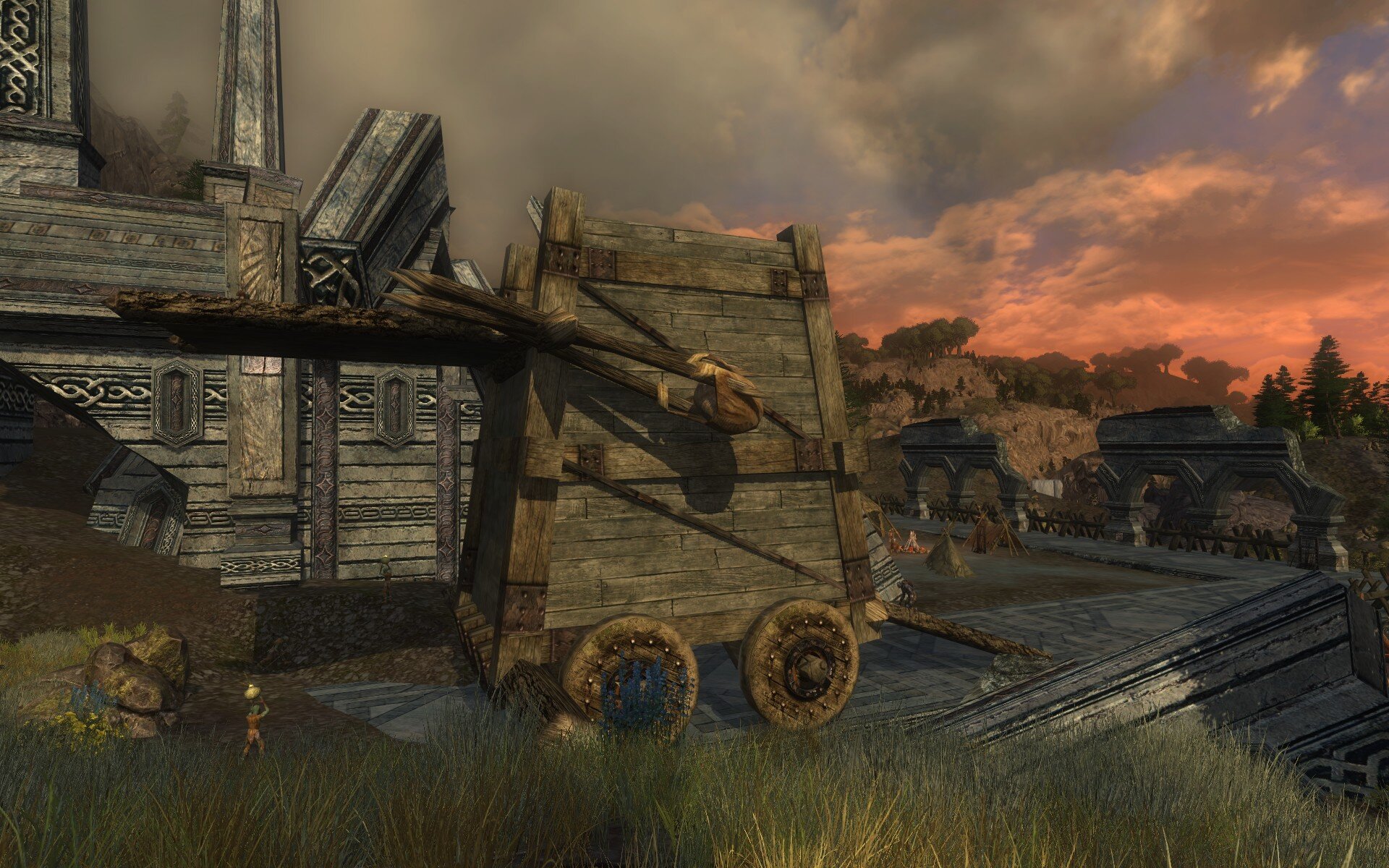
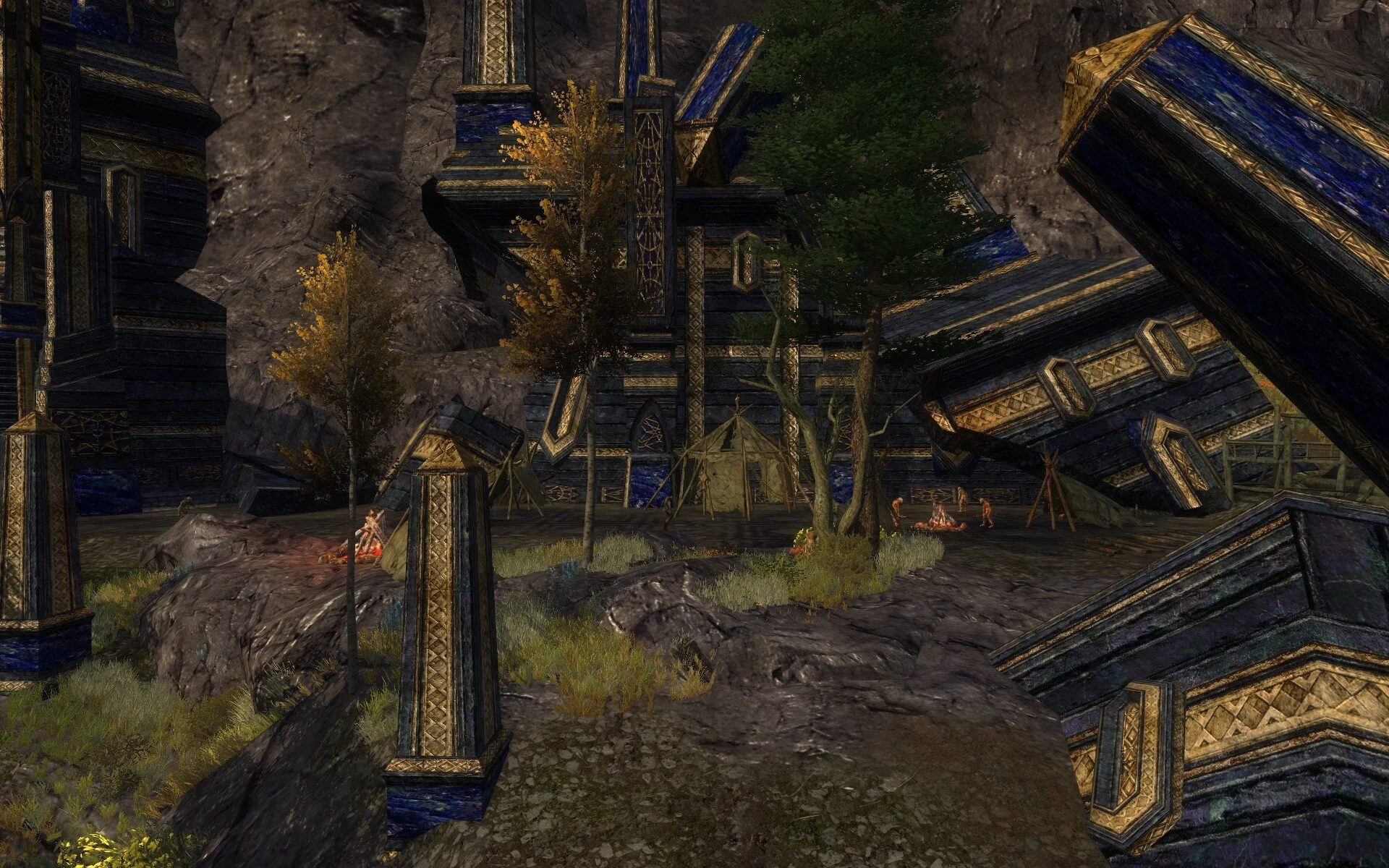
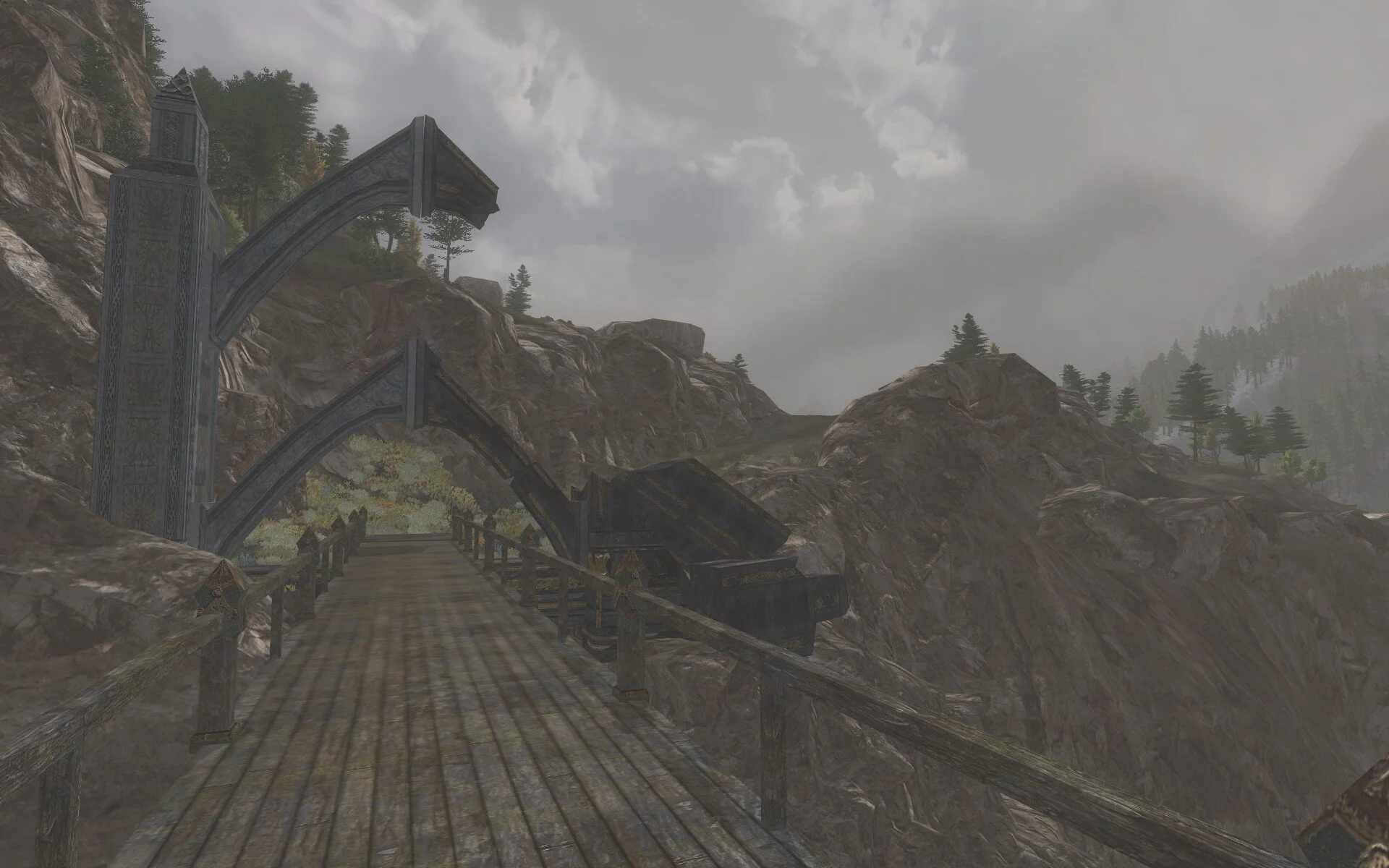
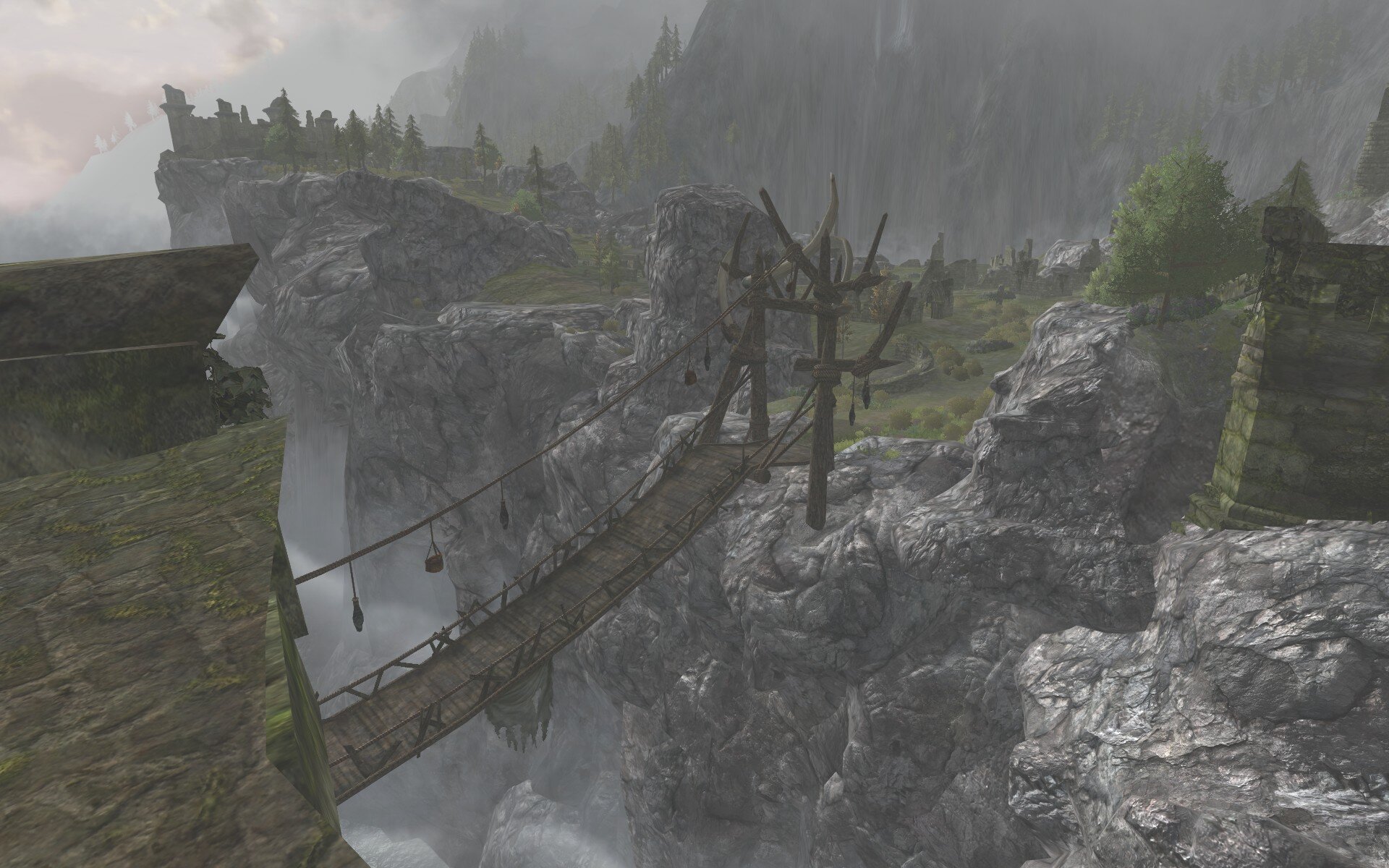
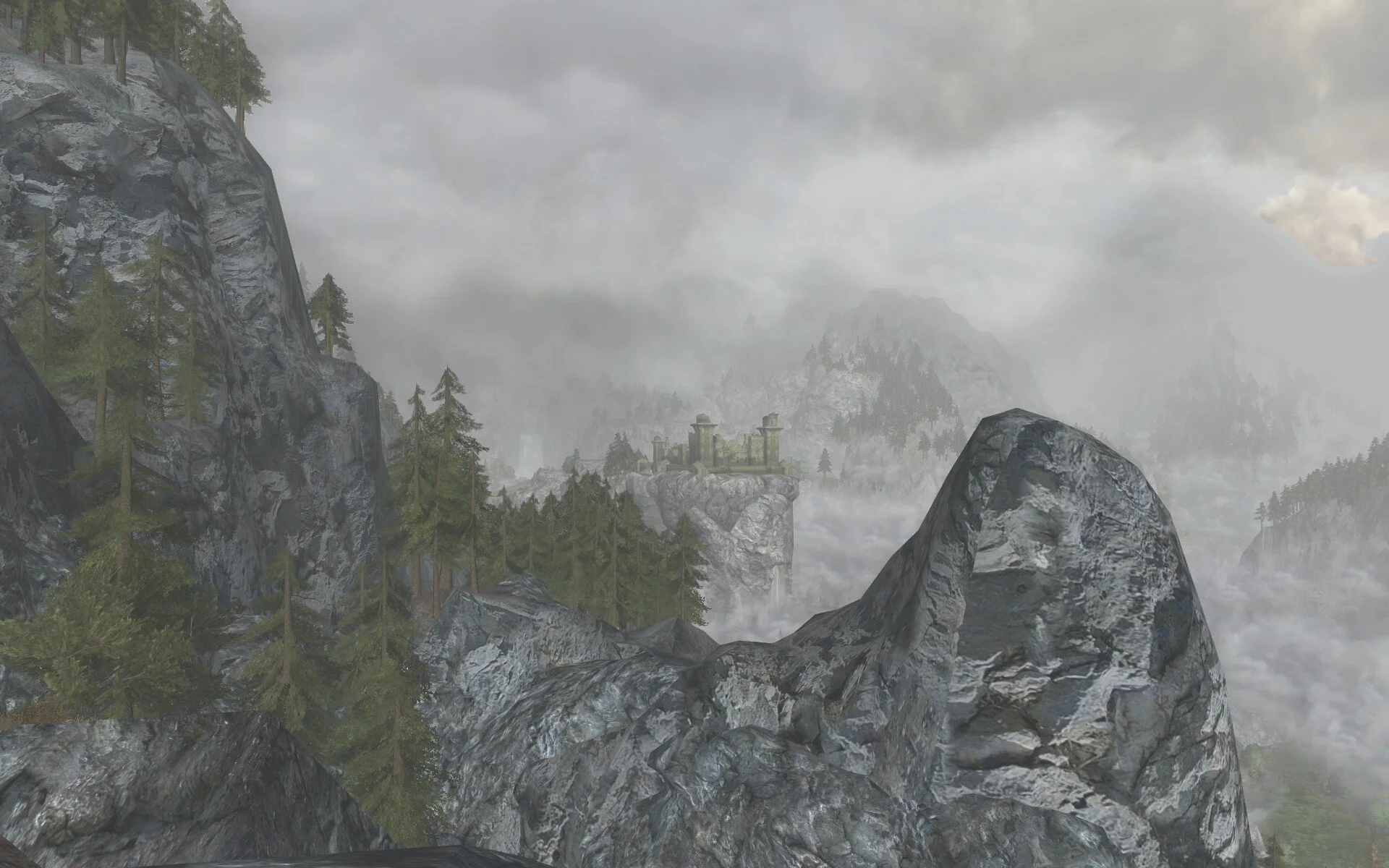
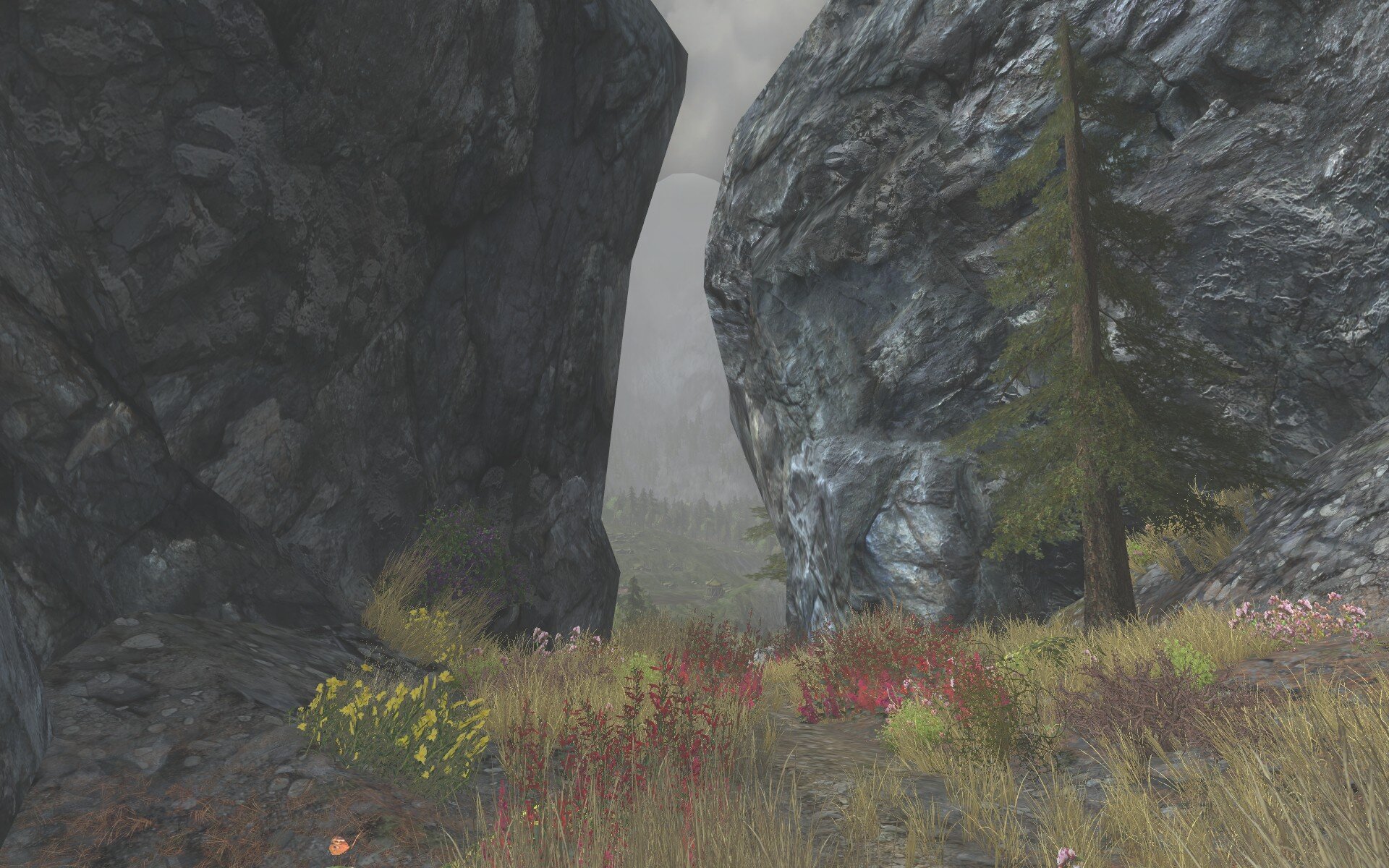
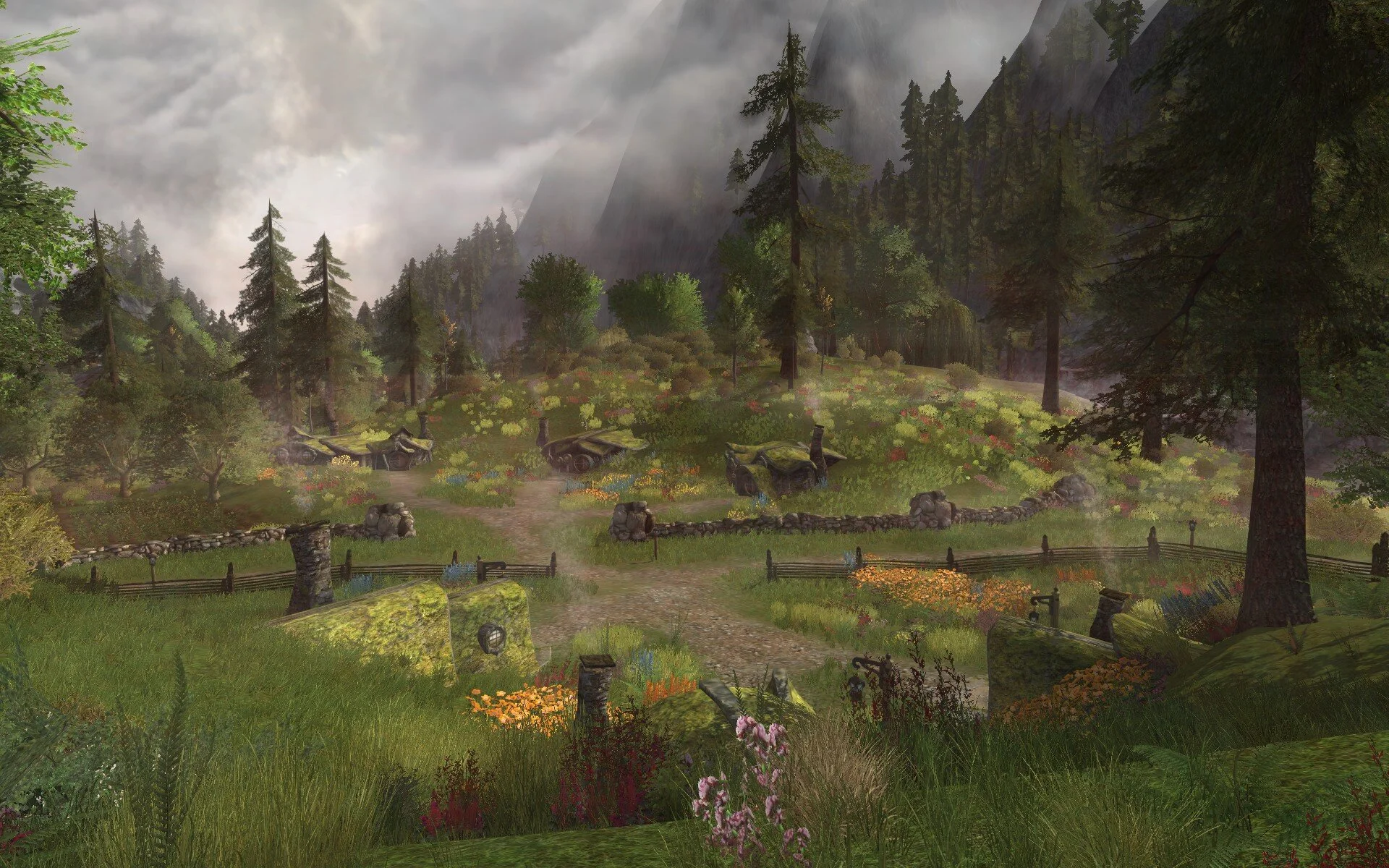
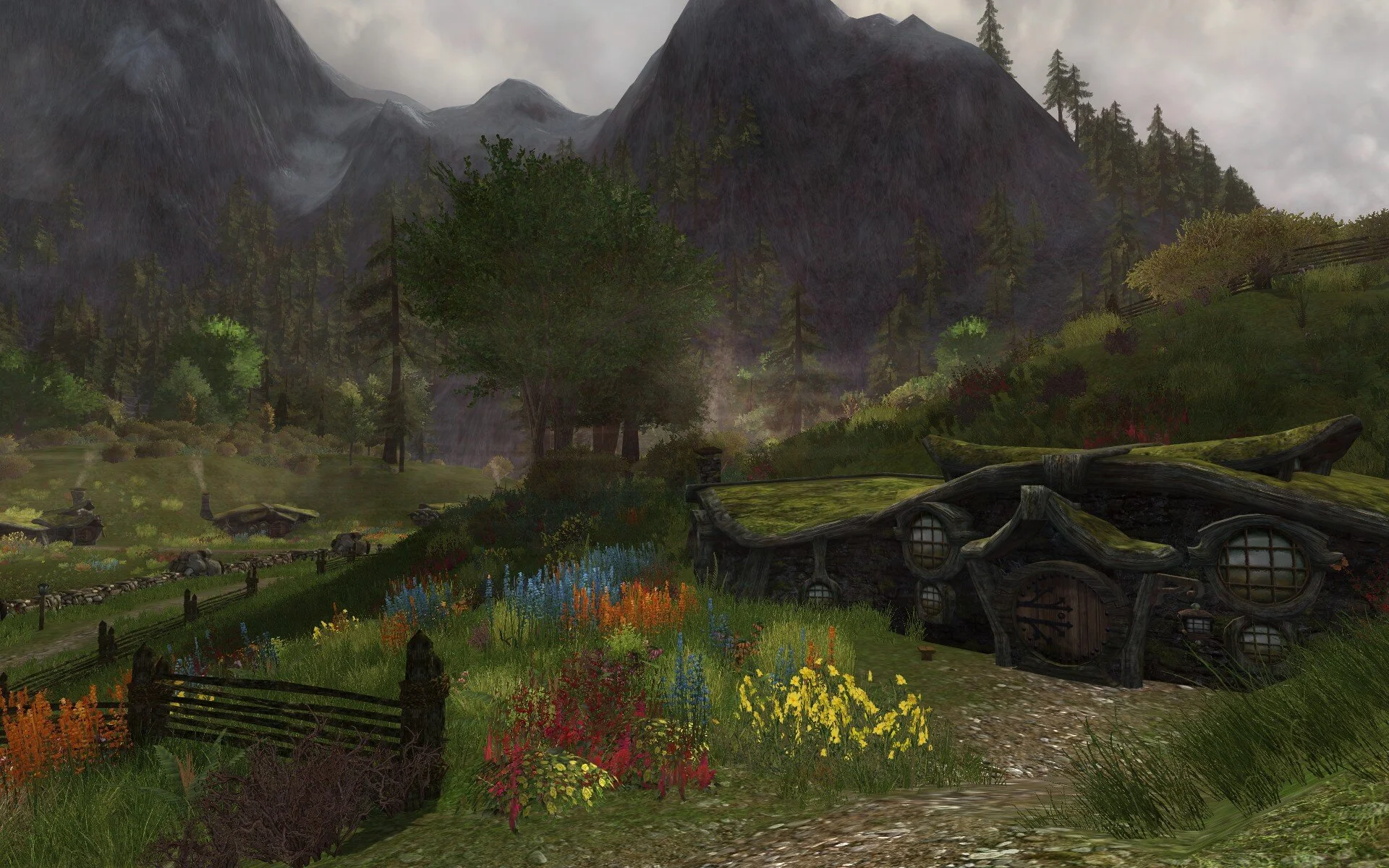
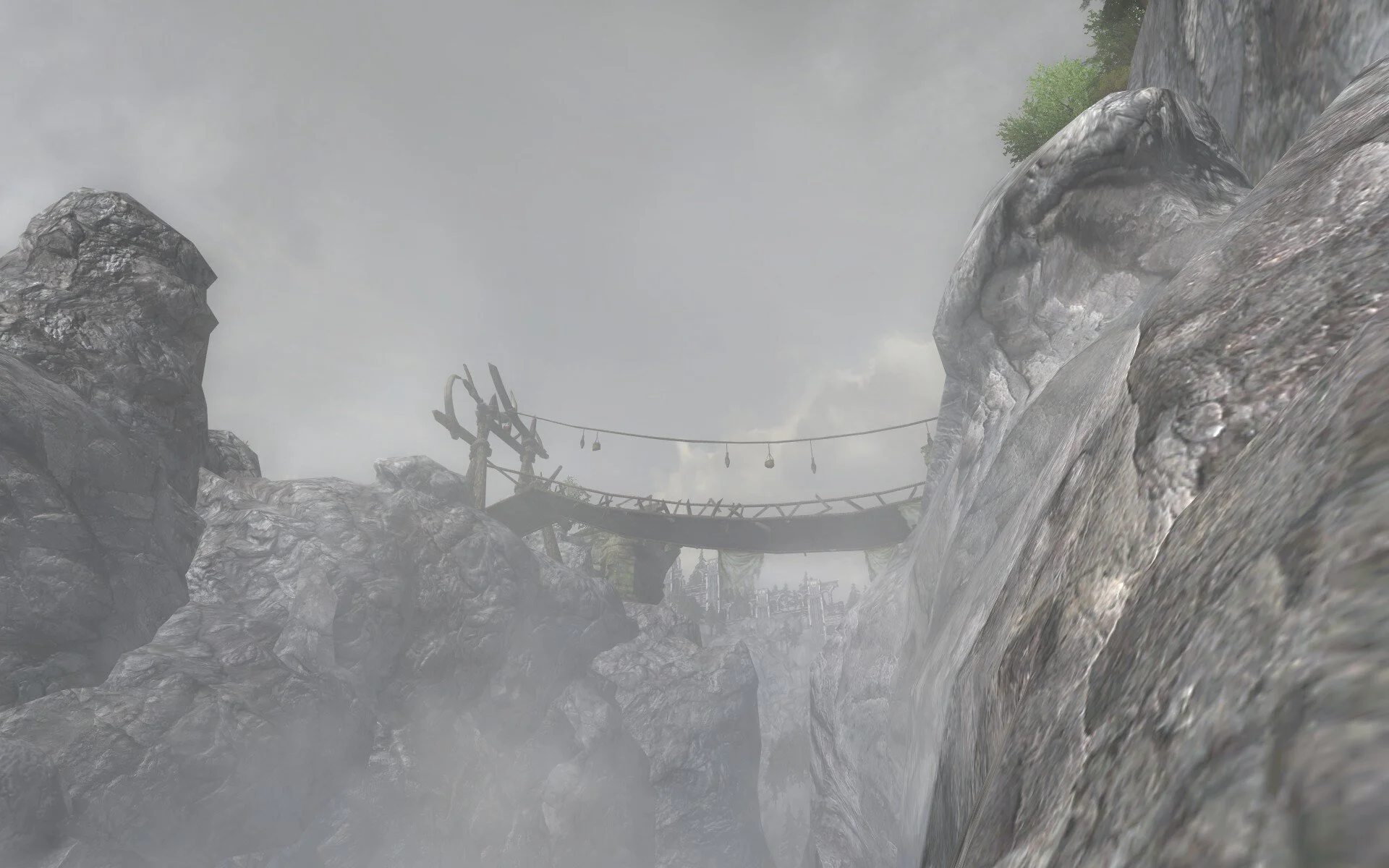
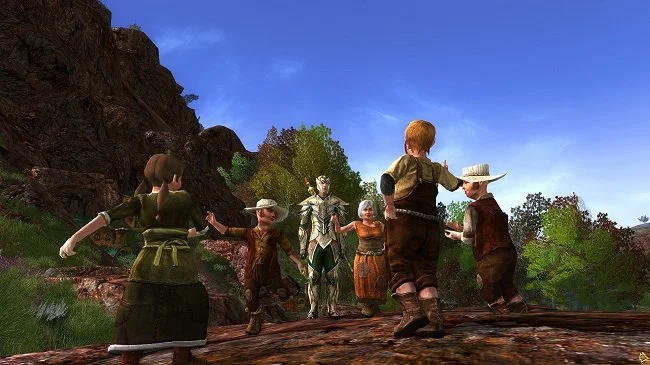
The fourth stable is by far the most intriguing. It is located in the hidden village of Lyndelby which lies to the West of Framsburg on the opposite side of the river. It is accessed via a narrow winding path through a mountainous ravine and lies nestled in the arms of the Misty Mountains and North of the river Langwell. This secret valley is lush and fertile and home to Holbytlan, possibly the River Hobbits that SSG alluded to recently. It makes sense canonically that such a settlement could exist and their proximity to the Éothéod explains why Holbytlan appear in the legends of the Rohirrim. The mountain also shields this Hobbit community from an enemy enclave at Sundergrót. Among the Dwarven ruins, the enemy has siege engines and other weapons of war. Access to this area is via a makeshift bridge that traverses the Anduin and along a path West.
The Wells of Langflood is an agreeable new zone. If you enjoyed the ambience of the Vale of Anduin, then this is more of the same. There are numerous mountainous vistas with impressive views and the ambient music is once again integral to the atmosphere of the zone. As ever, about a third of the area shown on the map is inaccessible and SSG have done their usual trick of using the environment to funnel the player from quest hub to quest hub. I am definitely looking forward to returning to such a bright and verdant zone region having spent several months in Imlad Morgul, which I found to be a depressing and gloomy environment . As ever please note that Bullroarer is a test server and there is always scope for content to change prior to its release to the live game.
In addition to the pictures in this post, here is a link to a gallery of screenshots via Google Photos. All are available at the original screen resolution of 1920 x 1200.



Classic Game Themes: More of my Personal Favourites
Back in August 2018, I posted seven of my favourite tracks from various video games that I’ve played over the years. I thought recently that it was high time that I did the same again. So here are a further five musical cues that I especially enjoy. All of which contribute greatly to the respective games that they feature in. Unlike film composers, musicians that write for video games do not always enjoy comparable exposure or attention. Yet often they have a more complex remit, having to write material for dozens of hours of content, rather than just two or three. Furthermore, the complete soundtrack to many video games often remain conspicuously absent, with fans having to data mine the game client to find the tracks that they love. Which is why it is important for those that enjoy video game music to show their support. Perhaps then more publishers will release full and comprehensive game soundtracks for digital download.
Back in August 2018, I posted seven of my favourite tracks from various video games that I’ve played over the years. I thought recently that it was high time that I did the same again. So here are a further five musical cues that I especially enjoy. All of which contribute greatly to the respective games that they feature in. Unlike film composers, musicians that write for video games do not always enjoy comparable exposure or attention. Yet often they have a more complex remit, having to write material for dozens of hours of content, rather than just two or three. Furthermore, the complete soundtrack to many video games often remain conspicuously absent, with fans having to data mine the game client to find the tracks that they love. Which is why it is important for those that enjoy video game music to show their support. Perhaps then more publishers will release full and comprehensive game soundtracks for digital download.
The Witcher 3 Wild Hunt Blood & Wine: The Slopes Of The Blessure. By Piotr Musial
I enjoyed the Blood & Wine expansion the most out of all the content for The Witcher 3. The region of Toussaint is beautifully realised and oozes charm and sophistication. Based heavily upon the South of France, Piotr Musial’s ambient music reflects this and features a superbly non-ironic use of an accordian.
Guild Wars 2: Heart of Thorns Theme. By Maclaine Diemer
It didn’t take me long to fall out of love with Guild Wars 2 after the arrival of its first expansion. Yet despite the flaws inherent in the new zone, the main theme was not one of them. This pounding motif is both portentous and grandiose. Just listening to it makes me want to return to this MMORPG.
Two Worlds II: The Road is Still Long. By Borislav Slavov
The quality of the soundtrack for Two Worlds II is quite surprising. This is not an RPG produced by a Triple A developer. Yet despite the budget, there is a great deal of depth and musical sophistication to the game’s score. This track which features at the end of the game really nails it with it’s triumphal tone.
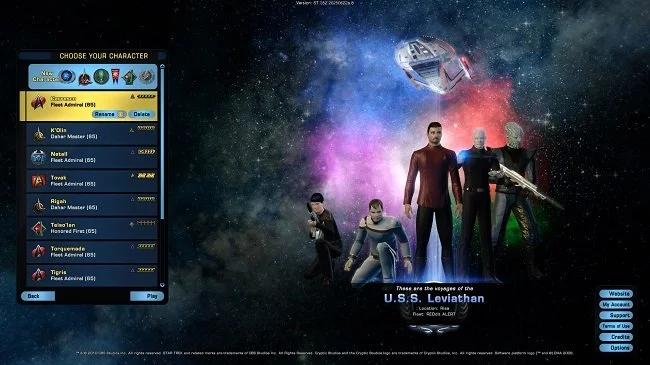
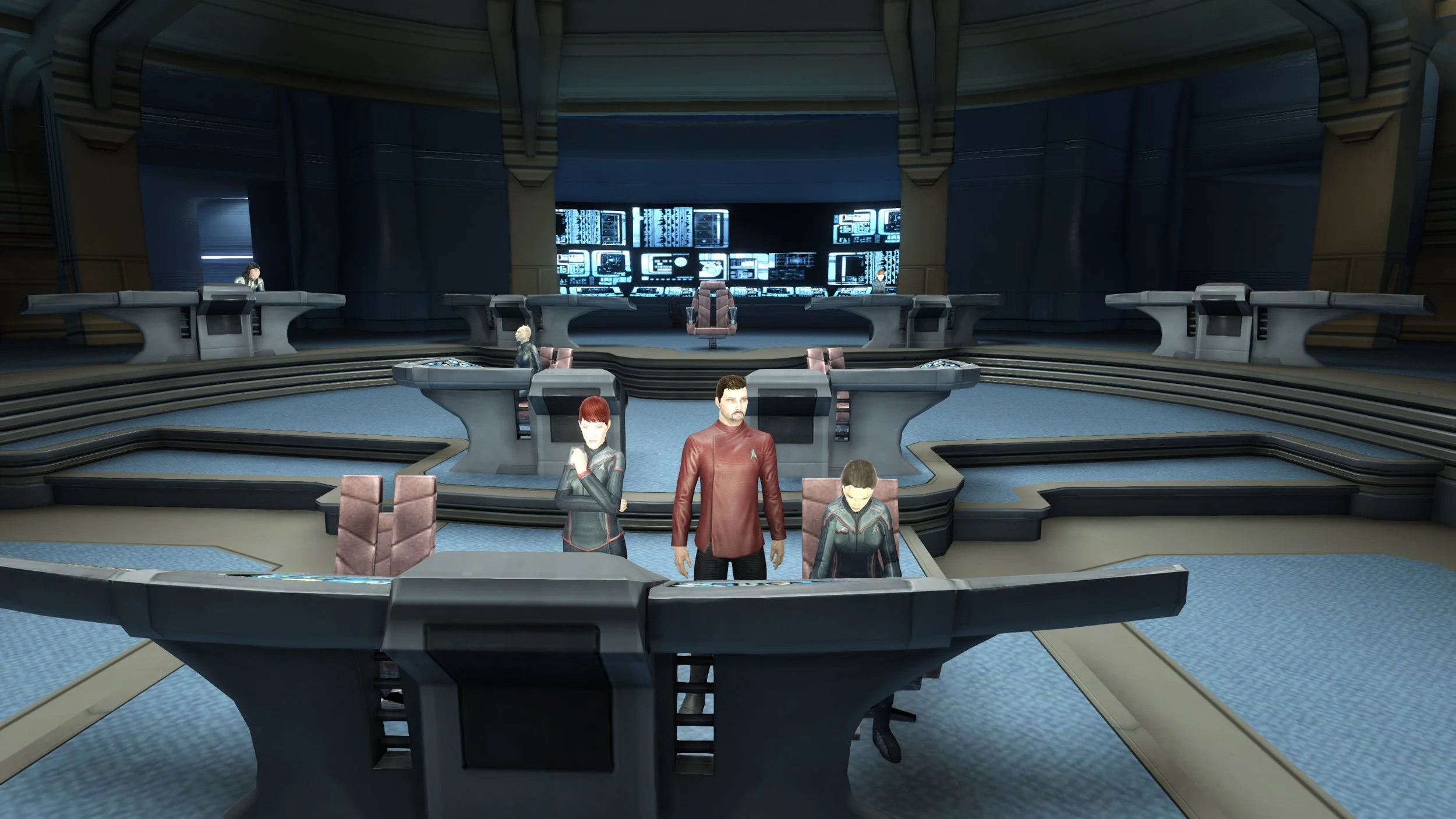
Star Trek Online: Age of Discovery Theme. By Kevin Manthei
Kevin Manthei has been the driving force behind the music of Star Trek Online for over a decade. He is dependable, adaptable and totally gets what “Trek” is about. I actually prefer his title music for Age of Discovery more than the official theme for the show itself.
Guild Wars 2: Sanctum Sprint. By Leif Chappelle
The Sanctum Sprint is a high speed race, complete with twitch gaming tactics. It’s frenetic and entertaining (or at least it was when I last played it in late 2015). I’m not quite sure how composer Leif Chapelle concluded that a Mariachi style motif was relevant but it works well and oozes character.











LOTRO: Producer’s Letter 2020
After several month’s delay and various rumours about internal corporate dissent, Standing Stone Games have finally released this year’s Producer’s Letter. Its arrival has produced a collective sigh of relief from the playerbase, as neither Executive Producer Severlin (Rob Ciccolini) or Community Manager Cordovan (Jerry Snook) seem to shine at corporate communications. In fact there has been an information vacuum for over six months. As for the letter, it certainly promises a lot of new content for The Lord of the Rings Online coming over the next year to eighteen months. And at first glance it sounds as if there’s something for everyone. A catalogue of PVE content, adjustments to the Legendary Items systems, a designated PVP server, more Premium Housing (this time in Rohan) and a further Legendary Server offering greater content difficulty. However, as ever the devil is in the detail and until we know more the vagaries are somewhat frustrating.
After several month’s delay and various rumours about internal corporate dissent, Standing Stone Games have finally released this year’s Producer’s Letter. Its arrival has produced a collective sigh of relief from the playerbase, as neither Executive Producer Severlin (Rob Ciccolini) or Community Manager Cordovan (Jerry Snook) seem to shine at corporate communications. In fact there has been an information vacuum for over six months. As for the letter, it certainly promises a lot of new content for The Lord of the Rings Online coming over the next year to eighteen months. And at first glance it sounds as if there’s something for everyone. A catalogue of PVE content, adjustments to the Legendary Items systems, a designated PVP server, more Premium Housing (this time in Rohan) and a further Legendary Server offering greater content difficulty. However, as ever the devil is in the detail and until we know more the vagaries are somewhat frustrating.
A new PVE Epic Storyline “The Legacy of Durin and the Trials of the Dwarves” is scheduled to run over 2020-21. The first instalment called Mists of Wilderland, that will take players to the Wells of Langflood, is to be released in late spring. Later in the year after the release of Aragorn and Arwen’s wedding, SSG are adding the War of the Three Peaks. This is scaling content open to all players allowing them to come to Durin's aid, as the Dwarves advance to Mount Gundabad to deal with the Orc threat. All of this content is the “meat and potatoes” of LOTRO. Raids, instances and PVE quests are the things that keep players engaged and playing. If the overhaul to the LI system is fair, sensible and not yet another grindfest, then I shall be pleased. Legendary Weapons are a great concept that have never met their full potential since their introduction in 2008.
I am however, somewhat reticent about some of the other ideas mooted in the Producer’s Letter. I’m not sure what the population is of the two current Legendary Servers but is there any real value in offering a third? Offering more difficult combat in the manner described by SSG, with the Eye of Sauron boosting mob performance sounds intriguing but if this is then met with a reciprocal boost in player performance, exactly what has been gained? It sounds somewhat similar to the existing “Inspired Greatness” mechanic that allows single players to solo content that was originally intended for groups. And where I welcome a new PVP combat server for fans of such content, for any competitive and ranked gameplay to have any longevity, it will require regular updates. Other competitive games have seasons, themed material and a great deal of developer/community interaction. If the LOTRO PVP players are simply encouraged to relocate to an environment that is static as the Ettenmoors in the existing game, then it’s not much of an improvement.
Spreading the LOTRO playerbase across multiple servers is both a risk to business and community cohesion. If players old and new, commit to one of the new servers and it doesn’t work out the way they hoped, will they return to their old servers? Certainly for new players it means starting afresh. And for established players returning to alts that have fallen below level cap, catching up can be an uphill struggle at times. It’s a shame that SSG cannot offer a variety of play styles and activities on the current live servers thus ensuring that LOTRO players although pursuing different goals are at least in the same virtual Middle-earth. I also don’t like to see such words as “temporary” in any road map style communication. These are after all public business plans. Short term objectives don’t always inspire confidence. However, once again I will reiterate that LOTRO is a 13 year old MMO and frankly having any timetable for new content is a good thing compared to the alternatives. Let us see what comes of it all.
MMO Etiquette
A lot of MMORPGs are experiencing high levels of new or returning players at present (for some particular reason). Despite this particular genre of games having radically evolved over the last two decades, there is still one fundamental component that has remained a constant. Namely the human factor. Hence there is plenty of scope for both old and new players to clash, disagree and fall out. Why, you may ask. Well mainly because behavioural and social norms that prevail in the real world, do not necessarily translate so well to a virtual environment. Visual cues such as body language are not available and it’s harder to pick up on tone and nuance from plain text, typed in global chat. However, we can all take steps to prevent any misunderstanding that can lead to a “wee stoushie”, by refreshing our respective memories about some basic MMO etiquette.
Whose round is it?
A lot of MMORPGs are experiencing high levels of new or returning players at present (for some particular reason). Despite this particular genre of games having radically evolved over the last two decades, there is still one fundamental component that has remained a constant. Namely the human factor. Hence there is plenty of scope for both old and new players to clash, disagree and fall out. Why, you may ask. Well mainly because behavioural and social norms that prevail in the real world, do not necessarily translate so well to a virtual environment. Visual cues such as body language are not available and it’s harder to pick up on tone and nuance from plain text, typed in global chat. However, we can all take steps to prevent any misunderstanding that can lead to a “wee stoushie”, by refreshing our respective memories about some basic MMO etiquette.
So here are some simple tips in no specific order. Some are more important than others but all can contribute to a better player experience and a less fractious atmosphere.
No Ninja invites to groups or guilds. Do not random spam complete strangers with unsolicited invitations to groups or guilds. Always ask first. Failure will just get you instantly placed on an ignore list.
When in a PUG (Pick Up Group), always address the various members by their screen names and not by class. Courtesy is king in a social game.
Do not aggro dump. IE if you’re being chased by every mob in Christendom, don’t run through groups of other players in an attempt to lose the mess of trouble that’s following you.
Call people out on racism, sexism and homophobia. Don’t let it slide. Alternatively, take a screen capture of any text based abuse or bigotry and report the offender to the GMs. MMO players get the community they deserve. If you facilitate assholes by giving them a free pass, then you’re shitting in your own virtual watering hole.
Do not tolerate ill manners or bullying in raids and other group activities. Give offenders one warning to cool their heels and if they continue, then kick them from the group. If you don’t have control of the group, then leave, citing the offender as the reason for your withdrawal.
A pre-agreed time for a raid is not optional or flexible. It is absolute. Be punctual. Kick or exclude those who are late, so that they learn to tell the time. Most children can master this.
Only roll on loot that is relevant to your class. Always agree upon rules regarding the division of loot prior to starting and group content.
Never beg for gold in chat in any zone. Just don’t. It’s just unseemly. We all earned our gold. Why the fuck can’t you?
Don’t crowd the mailbox or any other public interactive resource. Get the fuck off your mount and stow your pet. Be as cognitive about virtual personal space, as you would real life personal space.
Don't just walk out on your group without saying a word. If something comes up and you have to leave your PC, then let all others concerned parties know. If a raid is not going well or you’re running out of time, then politely point out that you’d like to leave at the first convenient juncture.
If you’re in a specific zone farming resources or pursuing a slayer deed and you encounter another play, consider playing collaboratively, rather than playing against each other. A simple exchange of “tells” can remedy this matter. Sometimes people prefer to play alone. If that’s the case maybe start your activities as far away from the other player as possible.
You may not know the intricacies of a specific raid, especially if it is new content. Sometimes all involved are learning on the fly. However, if you have been asked along specifically because of your character’s class, then make sure you’re up to speed with the basics.
If a group activities requires consumable, then bring consumables. Not a bunch of damn fool excuses for forgetting them.
Keep text based chat clear and concise. Do not lapse into slang and esoteric terminology unless all our au fait with such things.
Use public chat channels for the purposes they were created for. IE restrict trade enquiries to trade channels, for example. And remember players have usually logged into an MMO to play the game and not listen to your “armchair views” of identity politics, the Eucharist and its theological implications and Etruscan pottery. Confine your bloviations on the contentious to private channels.
Some games have recurring events that happen at regular intervals. Sometimes there may be an in-game timer that can inform you when they’re next available. Alternatively, there may be third party websites with scheduling information. Use these facilities. Do not just ask the obvious, like that guy you had in your class when you were 12, who was a total twat and had no sense of the dynamics of human interaction.
Do not steal other player’s kills. Do not interfere with other players' activities without their consent. They may be setting themselves a personal challenge and may not actually want your help.
Not everyone likes, or feels comfortable using voice chat. When grouping, always have options when it comes to communicating. If someone doesn’t want to use chat, respect their stance and leave it at that. Don’t cross examine them.
Don’t assume the gender of a player is the same as their avatar. Don’t assume all players are the same age as you. Don’t assume that your primary language is the same for everyone.
Remember that you can charge whatever you want for an item on Auction House. If anyone complains about undercutting prices, ignore them. They can always purchase your items and take them off the market. Unless the developers have set specific rules regarding pricing, do what you want. Funny how people only like capitalism while it serves their purpose.
If group content goes badly, be very careful with regard to assigning blame because the player whose competence you’re questioning, may well think the same about you. If in doubt, bid everyone goodnight and leave without comment.
You’re not totally anonymous, despite your fancy onscreen name. Players can gain a reputation within a gaming community. It’s up to you whether that’s good or bad.
People play MMOs for all sorts of reasons. You are not the arbiter of fun, nor deputised to enforce your own interpretation of how the game “should be played”.
Finally, never let anyone called Colin join your guild. Just don’t. You’ll regret it.
I’m sure I’ve barely scratched the surface when it comes to MMO etiquette. Please feel free to leave further helpful tips in the comments below.


More Gaming Amnesia
I wrote back in January 2018 about “gaming amnesia” and how if you step away from a game for a while, then often you can forget not only the basic control layout but the essential mechanics as well. Well I’ve had a couple of further instances of this recently and it got me thinking as to whether there’s a finite amount of game related data you can retain at one time. I suspect the answer is yes and that it all comes down to the old “use it or lose it” maxim. If you’re not playing a complex game regularly, then the knowledge gets superseded by information you have a more pressing need to access. Hence I do not think I’m experiencing the early signs of dementia of anything like that. Nonetheless, it can be quite frustrating and age is also a factor. Our reactions do slow as we get older and quickly recollecting information becomes more of a chore.
I wrote back in January 2018 about “gaming amnesia” and how if you step away from a game for a while, then often you can forget not only the basic control layout but the essential mechanics as well. Well I’ve had a couple of further instances of this recently and it got me thinking as to whether there’s a finite amount of game related data you can retain at one time. I suspect the answer is yes and that it all comes down to the old “use it or lose it” maxim. If you’re not playing a complex game regularly, then the knowledge gets superseded by information you have a more pressing need to access. Hence I do not think I’m experiencing the early signs of dementia of anything like that. Nonetheless, it can be quite frustrating and age is also a factor. Our reactions do slow as we get older and quickly recollecting information becomes more of a chore.
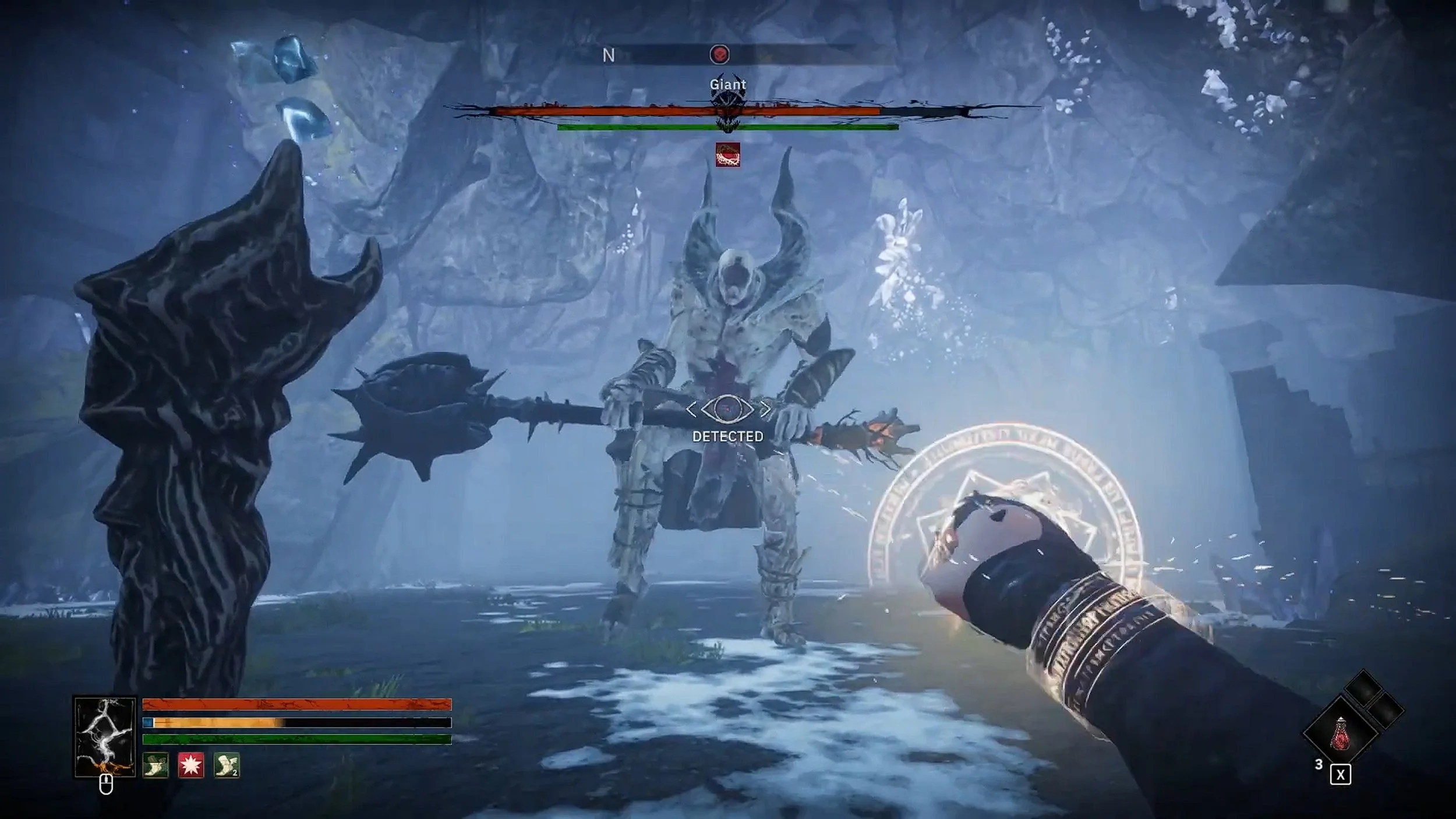
I decided to log into Read Dead Redemption 2 a few days ago. I bought the game last November and played it regularly until early January when I decided to focus on another title. I found my character at the edge of a lake with my trusty steed nearby. There is a very close bond between the main character and his horse in this game and it’s a central theme of the story. So I walked up to my horse Roach (yes I did name him thus) and pressed what I thought was the key to mount up. Instead I delivered a robust right hook to his body. Naturally, my equine chum took a dim view of this and promptly lashed out, kicking with his back legs. I lay twitching in a pool of blood, contemplating that this never happened to Randolph Scott or Audie Murphy. To cut a long story short (as Spandau Ballet would say) I couldn’t recollect any of the key mappings.
Another example I would like to cite is navigating the depth of the Mines of Moria in LOTRO. Now I spent a lot of time back in 2009 learning the quaint and esoteric routes around this sprawling subterranean metropolis. There was a time when I could ride an in-game goat from Durin’s Threshold in Eriador, right the way through to the First Hall and out into Rhovanion. Furthermore, I could do all this from memory, while eating a sandwich and recording a podcast. I recently found myself utterly lost around Zelem-melek, endlessly going round in circles in Khufdul-tharâkh, shouting at no one in particular about how it would be bloody useful to have a GPS system in this bastard game. I eventually started writing down my route and making notes of landmarks, so I wouldn’t keep looping back to the same locations.
Joking aside, there are several good reasons that mitigate my bout of “gaming amnesia”. Read Dead Redemption 2 is a console port and the thing I often find about such games is that they map the keys in a most unusual way. You often find that WASD doesn’t control movement but some other utterly bizarre alternative permutation. And with regard to Moria, I was reminded by a fellow player that the area has been extensively redeveloped since its initial release in 2008. So perhaps I’m not as incompetant as I initially thought. However, I do think that it would be useful if more developers included a tutorial that could be accessed at any point during the proceedings. All too often, your hand is held purely at the beginning of a game and it is assumed that once you’ve learned the basics, you’ll forever have them at your fingertips. Patently that is not the case. I’m also sure that I’ll experience “gaming amnesia” again quite soon.Especially in light of me returning to both Neverwinter and Call of Duty.
Learning How to Live Stream Part 2
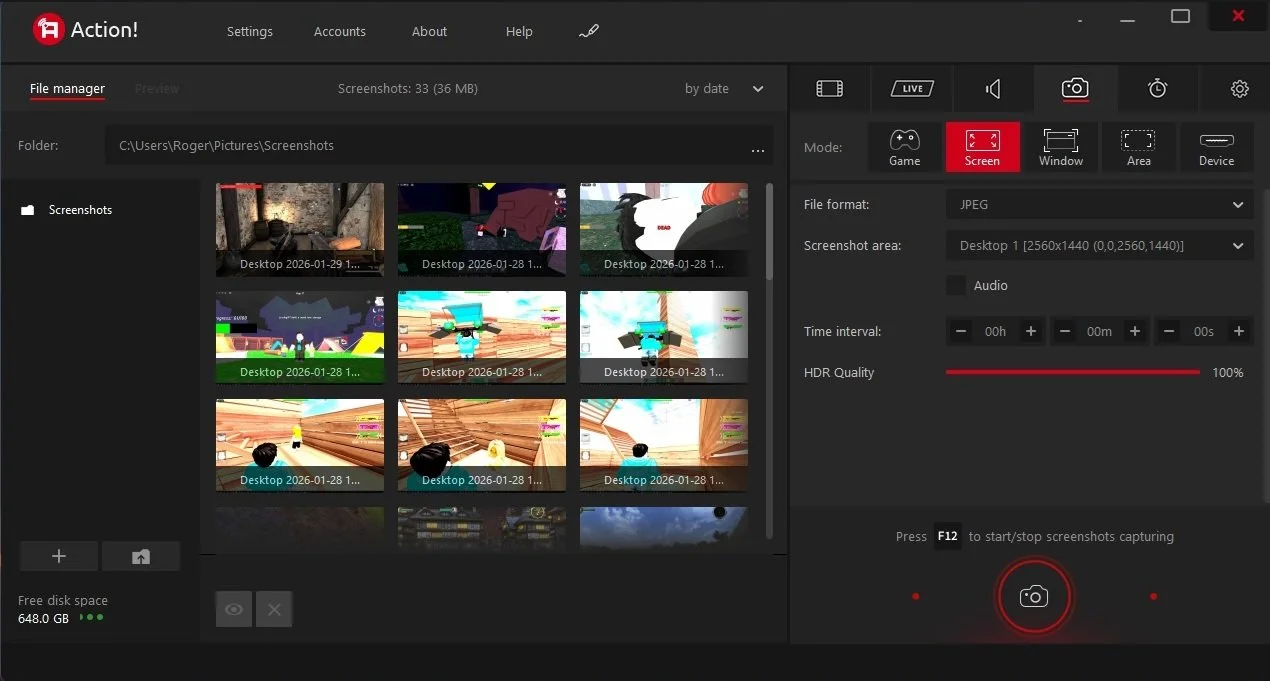
It’s been a year since I wrote my last post about “learning to live stream”. I think that should give you a very clear indication of how well I’ve progressed. I mainly stopped streaming after a few experiments last March because of the time requirement involved. The only window of opportunity I had “go live” was from between 9:00PM and Midnight. That would have meant cutting into time I spend with Mrs P. Plus, due to health reasons, she often goes to bed before me. And as I use the spare bedroom as an office, my constant babble would have kept her awake. So this is yet another project that got shelved. However, a year later I find myself with a lot more time on my hands due to the current “global situation”. So today I fired up SLOBS once again and tried to get back on the horse. As with my previous experience, there’s a lot of fine tuning to be done if you want to live stream to any standard. So this latest outing was mainly a technical test to determine what needs to be changed in my current set up.
It’s been a year since I wrote my last post about “learning to live stream”. I think that should give you a very clear indication of how well I’ve progressed. I mainly stopped streaming after a few experiments last March because of the time requirement involved. The only window of opportunity I had “go live” was from between 9:00PM and Midnight. That would have meant cutting into time I spend with Mrs P. Plus, due to health reasons, she often goes to bed before me. And as I use the spare bedroom as an office, my constant babble would have kept her awake. So this is yet another project that got shelved. However, a year later I find myself with a lot more time on my hands due to the current “global situation”. So today I fired up SLOBS once again and tried to get back on the horse. As with my previous experience, there’s a lot of fine tuning to be done if you want to live stream to any standard. So this latest outing was mainly a technical test to determine what needs to be changed in my current set up.
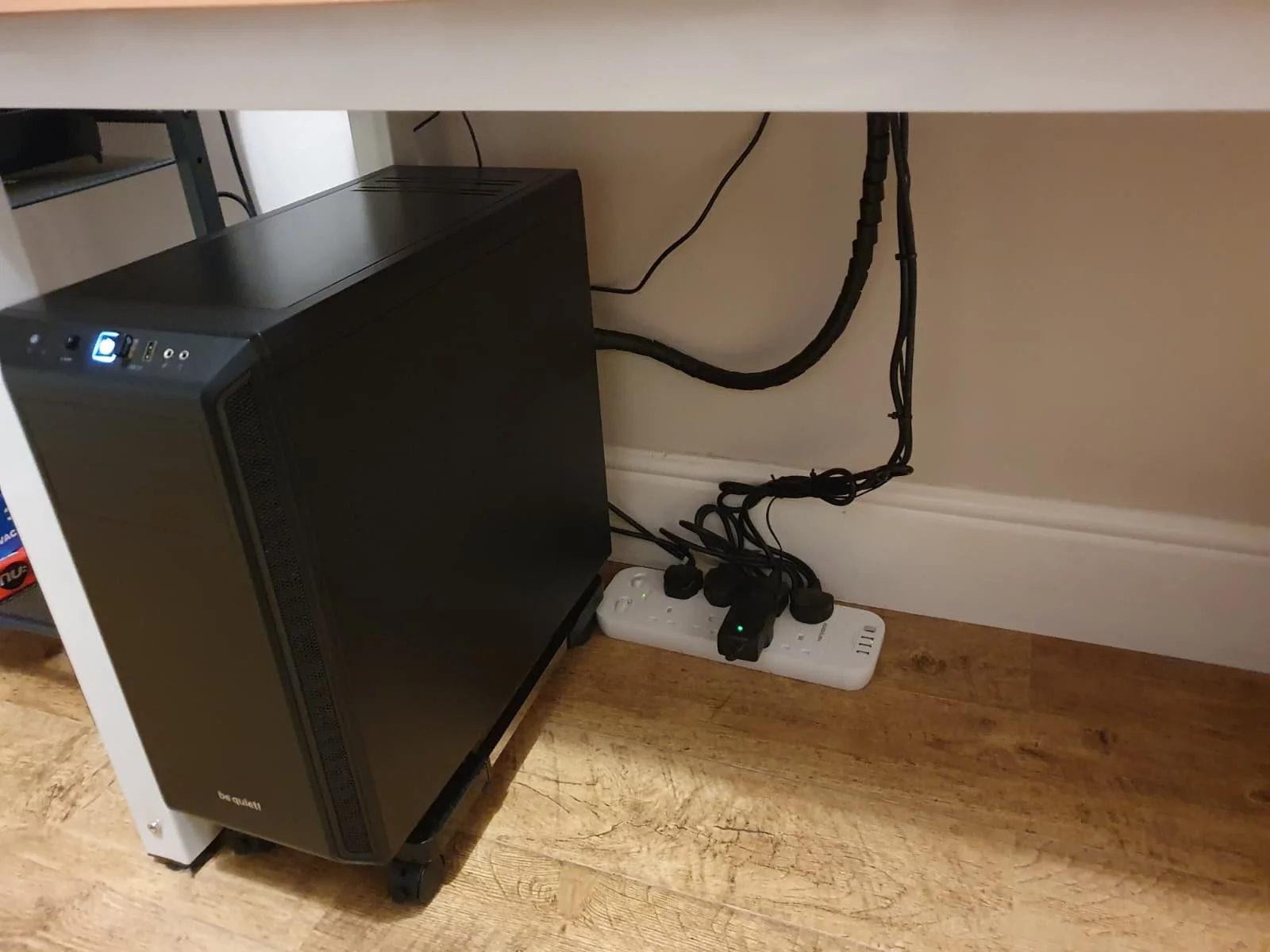
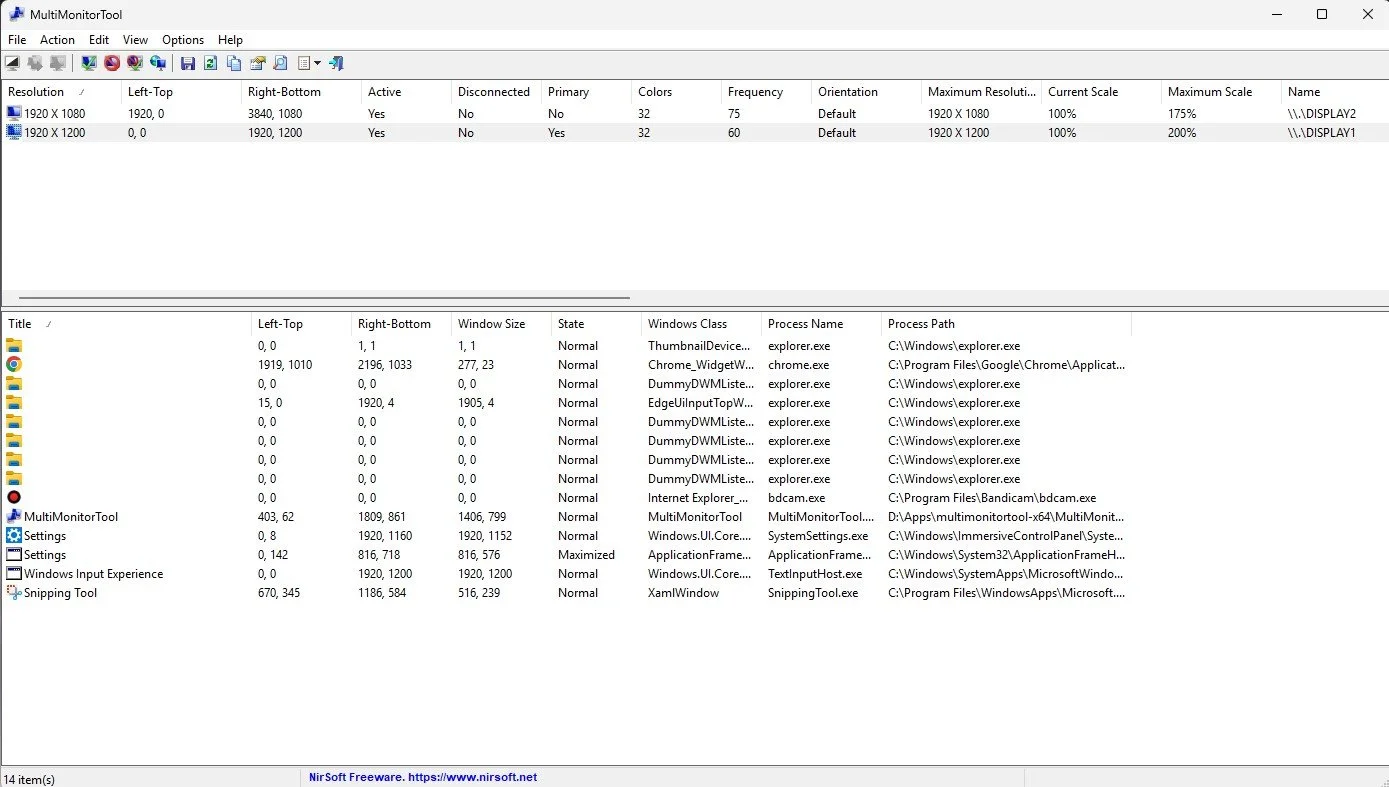
First off, I’m running a different PC this time round. To cut a very long story short, there is a Intel Graphics chipset on the Gigabyte Motherboard but the AMD Ryzen 5 3600 doesn’t support it and requires a discrete graphics card. So I couldn’t run a second monitor this way, as I did last year. However, my current NVIDIA GTX 1050Ti has 3 outputs; DVI, HDMI and DisplayPort. So after buying a DVI to VGA adapter, I managed to attach a second Acer X223W LCD monitor (1680 x 1050) and reconnected my existing primary Dell U2412M monitor (1920 x1200) with a DisplayPort cable. The cost was minimal (about £13 in total) and all items were delivered from Amazon in a matter of days.
The next issue has been tweaking various settings in SLOBS. Something that remains very much a work in progress. It took a while to resolve the “there was an error fetching your channel information" error message. Google presented a simple solution; enabling 2FA (Two Factor Authentication). However, it took several attempts before my Twitch Account recognised that this facility had been turned on. And then there’s the fiddling with settings. I play games at a default resolution of 1920 x 1200 (16:10) but the stream outputs at generic 1920 x 1080 (16:9) and so the image is distorted. I managed to resolve this issue after I stopped broadcasting. I also need to display my Twitch account Chat Channel on my second monitor so I can keep up with any comments. I suspect this wasn’t working earlier due to the 2FA issues, so I had to use my Fire HD 10 as an alternative means. It’s far from ideal. Another lesson learned is to stop using my headset and to switch to desktop mic. I was surprised how hot my ears and head got.
At present another matter that’s complicating this process is my own personality. I like things to be just so and it bugs the hell out of me when they’re not. I’ve yet to master the subtleties of SLOBS interface and many of its settings are not immediately clear to me. Hence every few minutes I’m Googling questions and then having to watch various YouTube videos for answers. I may have to speak to other streamers and see if I can essentially “crib” their settings as I’m sure that for many, this is a fairly generic process. In the meantime, I’ll try and persevere. If I stream every couple of days, I’m sure I can iron out some of the obvious imperfections and improve the overall presentation. As for sprucing up my “banter”, that’s a whole different blog post.




















Completing the Minas Morgul Expansion
Despite taking a short break out of pure frustration, I decided to grit my teeth and try to finish the Minas Morgul expansion for The Lord of the Rings Online over the last few days. As I suspected, once you start questing in Minas Morgul itself, it all becomes very homogenous. The circles of the city are deliberately ponderous to navigate and the quests are padded out with generic filler content that requires you to kill multiple types of mobs. Furthermore, Minas Morgul itself is a “lagfest” and you can often find yourself instantly in combat with a mob lurking immediately outside the door of the Rangers camps. The density of the enemies means that you’re continuously pulling aggro when travelling form A to B. And you often find yourself rubberbanding and stuttering due to the poor build of the city. Completing all of the various tiers of the city is a grueling task and upon completion you’re immediately sent to Thuringwath which has many of the same problems. Although some of the quest stories are well conceived, the realities of completing much of the content in Minas Morgul make it very much an uphill struggle.
Despite taking a short break out of pure frustration, I decided to grit my teeth and try to finish the Minas Morgul expansion for The Lord of the Rings Online over the last few days. As I suspected, once you start questing in Minas Morgul itself, it all becomes very homogenous. The circles of the city are deliberately ponderous to navigate and the quests are padded out with generic filler content that requires you to kill multiple types of mobs. Furthermore, Minas Morgul itself is a “lagfest” and you can often find yourself instantly in combat with a mob lurking immediately outside the door of the Rangers camps. The density of the enemies means that you’re continuously pulling aggro when travelling form A to B. And you often find yourself rubberbanding and stuttering due to the poor build of the city. Completing all of the various tiers of the city is a grueling task and upon completion you’re immediately sent to Thuringwath which has many of the same problems. Although some of the quest stories are well conceived, the realities of completing much of the content in Minas Morgul make it very much an uphill struggle.
So far I have completed the Circles of Wrath, Sorrow, Madness and am currently working on the aptly named Circle of Despair. To break up the monotony, I decided to tackle the Epic Story as I wanted to see the conclusion of the Black Book of Mordor. I was suitably impressed by the way the writers tied up all the loose ends, especially the manner in which Gothmog met his fate. The link to Golodir and the lineage of his sword Dúnachar was intriguing. I also liked the way that the author of the Black Book, the Zhelruka Dwarf Voin, turned out to be a benign character and was rather moved in the final scene in which he said goodbye to his wife and son and went off to die. I enjoyed the subtle inference that he may have found Thafar-gathol. Once again the musical score by Bill Champagne was outstanding and greatly enhanced the drama. The final epilogue where you have to decide who gets the Black Book proved interesting and presented three interesting choices. I decided it should be returned to Khîl Tale-spinner as he is a descendant of Voin. But I did flirt with the notion of giving it to Karazgar.
As ever with LOTRO, it is the strength of the stories and characters, along with the realisation of the world itself which are the game’s greatest strengths. Hence these have been the aspects of the Minas Morgul expansion that I’ve enjoyed the most. As I approach the completion of this expansion I am pleased that I have reached level cap with a relatively robust build. The gear I obtained from opening 22 Adventurer's Steel-bound Lootboxes has made a significant difference to my performance. In recent weeks I have added additional tiers to my LI Legacies and have also upgraded most of the settings. I am also levelling my slotted virtue traits, now that the level cap has been increased to 68. Yet despite these positive points, I cannot help but feel that this expansion is very much a product of two very distinct parts. I very much enjoyed the first section set during the Second Age. However, the second part feels notably weaker, with a lot of arbitrary content thrown together in a slapdash fashion. As for the new raids, I have not experienced these as of yet and am not likely to due to my kinship being quiet of late.
Waiting for the New Middle-earth MMO
In late 2018 it was announced that Amazon Game Studios and Leyou were collaborating on massively multiplayer online game for PC and consoles set in Middle-earth. Ongoing development is being handled by Athlon Games, a global developer and publisher of free-to-play console and PC games. The studio is a subsidiary of Leyou Technologies Holdings Limited. But beyond the fairly vague press releases that can be found on the Athlon Games website (the last was posted in July 2019), little detail has emerged about the project. There has been unsubstantiated rumours that the project may well tie-in with the forthcoming Amazon Prime TV show that is set in the Second Age of Middle Earth. However, there is little information at present in the public domain to fully substantiate this or any of the other ongoing speculation. Hence, the entire situation raises some interesting questions and I’m sure like me, you have probably pondered some of them. Here are just a few that have crossed my mind.
In late 2018 it was announced that Amazon Game Studios and Leyou were collaborating on massively multiplayer online game for PC and consoles set in Middle-earth. Ongoing development is being handled by Athlon Games, a global developer and publisher of free-to-play console and PC games. The studio is a subsidiary of Leyou Technologies Holdings Limited. But beyond the fairly vague press releases that can be found on the Athlon Games website (the last was posted in July 2019), little detail has emerged about the project. There has been unsubstantiated rumours that the project may well tie-in with the forthcoming Amazon Prime TV show that is set in the Second Age of Middle Earth. However, there is little information at present in the public domain to fully substantiate this or any of the other ongoing speculation. Hence, the entire situation raises some interesting questions and I’m sure like me, you have probably pondered some of them. Here are just a few that have crossed my mind.
Will this title be directly competing with Standing Stone Games MMORPG The Lord of the Rings Online?
Exactly what sort of MMO will this new LOTR based game be, as the very term MMO is extremely elastic these days.
Will the appropriate licensing body allow two games from the same genre to exist simultaneously?
Exactly what business model will this new MMO have?
What iteration of the franchise will this game be based upon? Will it draw directly from the Peter Jackson movies (like games such as Middle-earth: Shadow of Mordor and Middle-earth: Shadow of War) or will it create a unique vision of Middle Earth as with SSG’s LOTRO?
Due to the lack of any definitive information, all we can presently do is speculate about the answers to these questions. Firstly, as to “do we need another The Lord of the Rings themed MMO”, I certainly think the market can sustain one. Competition can be a healthy thing and it is nice as a consumer to have choice. Products can co-exist harmoniously if they provide different experiences. I am always interested in seeing different people’s visions of Professor Tolkien's work, such as artists like Alan Lee, John Howe and Ted Nasmith, so for me a new game would be welcome purely from an creative and aesthetic perspective. There is also a wealth of lore that is available to be developed into new storylines. This is something that Turbine and Standing Stone Games have managed to do successfully over the past thirteen years. Any new game can easily explore an aspect of Tolkien’s work that hasn’t been touched by any previous product. There is no need to simply tread old ground.
Now if this new The Lord of the Rings themed MMO is marketed in direct competition to LOTRO, then I would expect it to be a very different beast, based around the mechanics and systems that are currently popular within the genre. I do not see any benefit in simply creating an MMO that replicates what exactly LOTRO does. I would not be surprised if this new MMO was closer to The Elder Scrolls Online in its systems design. It is also worth considering licensing arrangements. When Star Wars: The Old Republic was released in late 2011, a decision was made to close the older MMO Star Wars Galaxies. Exactly why this happened has never been officially discussed, so we do not know if this was solely about concerns over competition. However, the legal rights for Tolkien’s work are administered by a completely different body, so it doesn’t mean that a similar fate necessarily awaits LOTRO. But it is prudent to at least reflect upon what happened to SWG.
Personally, I would like to see a less linear game with a far more open world environment, dynamic content that is proximity based and the chance to develop charterers that aren't solely based around combat. To be able to lose oneself in a virtual Middle Earth, where you are free to explore, craft, farm, trade or simply aimlessly meander, would be a massive step forward for fans of the IP. But I am fully aware that what delights me may well deter other gamers and that ultimately any game is going to have to find a balance between the new and established systems that are economically viable. The development costs required to create a truly open world version of Middle-earth would be substantial and more importantly, the risk of such an experimental project would potentially be the biggest obstacle. Conversely, just using Tolkien’s world for yet another PVP or Battle Royale game would in my view be a waste of the franchise.
I'm sure that many interested parties will be keeping an eye on Athlon Games over the next year to see how this new MMO pans out. Let us hope that further information is forthcoming regarding its development and its specific nature. However, a quality MMO is not made overnight and so I’m not optimistic that I’ll be playing this new game any time soon. If it is tied to the Amazon Prime TV show, then the games launch may also depend on whether that show gains any traction. Furthermore, the TV show may well be intended to run over numerous seasons and try and emulate the sustained success of Game of Thrones. If that's the case then this new MMO may not appear until the TV show has hit its peak popularity. And if the show is not well received the game could well be cancelled before release. Therefore, it may well be best for Tolkien fans to simply just keep an eye on this project and continue to focus on those games such as LOTRO that do currently exist and provide a specific service.
Old is New
If you keep up with news in the MMORPG community, you’ll be aware that there has been a recent resurgence in “rogue server” offering emulation services for titles that have officially closed. City of Heroes and Star Wars Galaxies continue to sustain a player base and the level of interest clearly indicates that this is not just due to mere nostalgia. Simply put these games maintain an audience because they are good. They’re well designed, engaging and rewarding to play. Similarly, remastered games are proving to be both popular and commercially successful. Resident Evil 2 which was released last year has sold over 5 million copies and received critical acclaim. It currently has a rating of 91% on Metacritic (for those who put stock in such things). Pundits are already predicting that the remake of Final Fantasy VII will enjoy similar success. Again when you analyse the reviews and critiques available online, you find that these remastered titles fare well due to their inherent quality. Is this something newer games are lacking?
If you keep up with news in the MMORPG community, you’ll be aware that there has been a recent resurgence in “rogue server” offering emulation services for titles that have officially closed. City of Heroes and Star Wars Galaxies continue to sustain a player base and the level of interest clearly indicates that this is not just due to mere nostalgia. Simply put these games maintain an audience because they are good. They’re well designed, engaging and rewarding to play. Similarly, remastered games are proving to be both popular and commercially successful. Resident Evil 2 which was released last year has sold over 5 million copies and received critical acclaim. It currently has a rating of 91% on Metacritic (for those who put stock in such things). Pundits are already predicting that the remake of Final Fantasy VII will enjoy similar success. Again when you analyse the reviews and critiques available online, you find that these remastered titles fare well due to their inherent quality. Is this something newer games are lacking?
Games commentator Jim Sterling touches upon this subject in the latest edition of The Jimquisition (09.03.20). He strongly believes that too many contemporary so called “triple A” games are hobbled by microtransactions and content gated behind paywalls. Season passes promise future content thus justifying incomplete titles to be released and that creativity and innovation are sidelined when creating a game as a “live service”. Hence he states it is customer dissatisfaction with current games that makes remastered titles more appealing. They present an opportunity to play through a game with any impediment, interruption or requirement to pay more money to access further content. Furthermore, these are titles that hail from an era where the creative focus was on the gameplay and new ideas were not subordinate to business imperatives. All are cogent points that I broadly agree with, as I’ve experienced all of these over several decades of gaming.
The mainstream video game industry is not known for responding quickly or adapting promptly to new situations. Once a successful trend is established it is frequently slavishly followed. Hence multiple genres have each experienced a brief time in the sun. All too often a couple of games will arrive late to the proverbial party and fail to find an audience and quickly close. Some titles will even get canned while in development, if the marketing tide has turned. However, sooner or later the boardrooms of these multi billion dollar companies have got to notice what is selling and what is not. EA stated a few years ago that single player games were done as a genre and yet Star Wars Jedi: Fallen Order, a conspicuously single player game without live service trappings, has proven very successful. No matter how glacial the rate of change may be, sooner or later major publishers are going to connect the dots and see what is selling and more importantly why it is doing so. At this point will the old become new? Only time will tell.
Making Your Own Fun
I’ve yet to read a cogent definition of the term “emergent gameplay”, so it won’t feature in this post because I’m not sure if I fully grasp the concept. It seems to be a very elastic term. However, what I will say is that sometimes you run out of officially sanctioned tasks to do, when playing an MMO. You find yourself having completed all quests and missions, languishing at level cap with acceptable gear and kicking your virtual heels. It is at this point one of two things happens. You either find a means of keeping yourself engaged with the game, or you logout and find something else to play. Too often have I done the latter. At present, I’m currently at the “what should I do now” stage both in The Lord of the Rings Online and Star Trek Online. This time rather than just temporarily abandoning these games, I intend to set myself some new goals and effectively make my own fun. It may or may not work. But at the least it will make for a couple of blog posts.
I’ve yet to read a cogent definition of the term “emergent gameplay”, so it won’t feature in this post because I’m not sure if I fully grasp the concept. It seems to be a very elastic term. However, what I will say is that sometimes you run out of officially sanctioned tasks to do, when playing an MMO. You find yourself having completed all quests and missions, languishing at level cap with acceptable gear and kicking your virtual heels. It is at this point one of two things happens. You either find a means of keeping yourself engaged with the game, or you logout and find something else to play. Too often have I done the latter. At present, I’m currently at the “what should I do now” stage both in The Lord of the Rings Online and Star Trek Online. This time rather than just temporarily abandoning these games, I intend to set myself some new goals and effectively make my own fun. It may or may not work. But at the least it will make for a couple of blog posts.
I still have a hankering for a Tier 6 Constitution Class ship in STO. Specifically one from the TOS era, rather than the Kelvin Timeline or DISCO period. However, to get one I’ve either got to buy the 10th Anniversary Legendary Ship Bundle (which requires selling a kidney) or open a ton of Infinity Promotion Research & Development Packs. You can either buy these for Zen (real money) or Energy Credits (ingame currency) via the Exchange. Occasionally a reward pack containing one of these ships does come up for sale on the Exchange but this is usually between 1.5 and 2 billion Energy Credits. Which leads me neatly on to the subject of earning this in-game currency. Some MMOs are laid back when it comes to generating revenue. STO is not one of them. Something that Cryptic has tried to address over the years. So I thought it would be interesting to see how many Energy Credits I could earn in a fixed period of time. This would then be an interesting litmus test to see if a player could realistically raise the necessary funds to buy one of these ridiculously expensive vessels. So having blown all my in-game cash, I’m going to see how much I can raise over the next 28 days. Watch this space for further details.
Meanwhile in LOTRO, I’m going to grasp the nettle and see what I can do to improve my Legendary Items. There has got to be another way to earn Anfalas Scrolls of Empowerment, other than just running the same old Minas Tirith dailies. I shall search through all my festival and rep related barter currencies and see if there’s anything that can be cashed in. This reminds me of yet another promise that Turbine/Standing Stone Games have yet to make good on; a decent currency exchange program or a universal barter currency. And if grinding chores for LI improvement fails to excite me (and I suspect it that it will) there is always completing deeds to raise the level of slotted virtue traits. The level cap has now been raised to 68, so there’s scope for statistical improvement if these are maxed out. And if both these options are a washout, I may just do some buying and selling on the auction house. Playing the markets in an MMO has always been a fun way to enjoy commodities trading without any of the risk of its real world counterpart.
Many of my gamer friends and colleagues make their own fun when playing MMOs. Some will set themselves “iron man” criteria for their ongoing gameplay, playing within fixed builds or specific gear sets. Others confine themselves to specific expansions or just continuously roll new alts. I often find players in my kinship/fleet/guild busy achieving accolades, completing obscure deeds and generally pursuing that game in an unconventional manner. Thankfully the MMO genre lends itself to these kinds of extracurricular activities. There can be pleasure and enjoyment found in many obscure aspects of the virtual worlds we visit. For example, I will sometimes log into LOTRO and just ride around where my fancy takes me, enjoy the aesthetics of the world. If the MMO genre didn’t offer these kind of adaptable freedoms I think a lot of these games would soon lose their audience once they had exhausted traditional content. So here’s to making your own fun and doing things your way. The fact that this annoys certain types of gamers makes it all the more enjoyable.
A Month in Gaming
The problem I find with monthly gaming articles is that they tend to cover ground that I’ve already written about over the last 4 weeks in other blog posts, only in less detail. So here is the brief version of my gaming activities throughout February. I played through the entirety of the Star Trek Online 10th Anniversary event and received the new hybrid Tier 6 ship. I enjoyed the new 2 part feature episode and have managed to maintain a schedule of doing “odds and sods” to keep myself busy. STO is currently my primary game. I’ve ground to a halt in The Lord of the Rings Online, as soon as I start questing in Minas Morgul itself. It is simply too uninspiring and grindy an area. So I’ve focused on completing deeds for virtue experience and daily repeatable quests for Anfalas Scrolls of Empowerment. Due to constraints upon my schedule, I decided to temporarily stop my subscription to ESO Plus, as I simply do not have the time to invest in The Elder Scrolls Online at present. ESO is a good game and deserves attention when played. Committing to multiple MMOs at once is always a mistake.
The problem I find with monthly gaming articles is that they tend to cover ground that I’ve already written about over the last 4 weeks in other blog posts, only in less detail. So here is the brief version of my gaming activities throughout February. I played through the entirety of the Star Trek Online 10th Anniversary event and received the new hybrid Tier 6 ship. I enjoyed the new 2 part feature episode and have managed to maintain a schedule of doing “odds and sods” to keep myself busy. STO is currently my primary game. I’ve ground to a halt in The Lord of the Rings Online, as soon as I start questing in Minas Morgul itself. It is simply too uninspiring and grindy an area. So I’ve focused on completing deeds for virtue experience and daily repeatable quests for Anfalas Scrolls of Empowerment. Due to constraints upon my schedule, I decided to temporarily stop my subscription to ESO Plus, as I simply do not have the time to invest in The Elder Scrolls Online at present. ESO is a good game and deserves attention when played. Committing to multiple MMOs at once is always a mistake.
I tried to return to Red Dead Redemption 2, which I believe I’m currently halfway through. Sadly, again this is a game that you have to apply yourself to if you wish to get the most from it. The quests need to be read and savoured, rather than rushed through. So I’ve put this game on hold as well, although I do intend to finish it as I have a lot to say about its complex and challenging narrative structure. I bought two other games in February. Deathtrap Dungeon and Gang Beasts. The former is a wonderful old school adventure game, told as a narrative story. I’ve written a more comprehensive post already about this title, so if you’re interested at all, I would urge you to read my thoughts there. And I purchased Gang Beasts in a Steam sale. Sadly, I neglected to read a comprehensive breakdown of the game specifications and discovered that there is no single player mode at present. This silly physics driven comedy fighting game is great fun when played competitively with others but I was expecting a single player versus bots mode. This was entirely my own fault and stands as a reminder that you should always to do your research thoroughly first before buying a new game.
I’ve been using GoG Galaxy as a one stop game launcher for a while now and I must admit it saves a lot of hassle and seems to be working well. I have it launch by default upon Windows startup and it allows me to fire up any title I have installed from one location and avoid trawling through multiple launchers to find what I want to play. It’s also very convenient to import all your game libraries into one place, so you actually have a fighting chance of seeing what you’ve purchased over the years. I have dozens of obscure titles from bundles and giveaways that are just gathering virtual dust. If it wasn’t for GoG Galaxy, I wouldn’t even know about half of these. I am hoping to install and play some of them over Easter as part of a new ongoing recurring blog post series. GoG Galaxy also does a pretty good job of collating all my social and friends list so I can see who is online. With further functionality under development, I see no reason at present to stop using this product.
I suspect that March will be more of the same for me, with regard to my gaming activities. I shall continue with one predominant MMO and possible experiment with another single player game. Beyond that I have no immediate gaming goals at present, apart from the fact that it’s better to be playing something rather than nothing. I’ll report back in April.



Star Trek Online: The Admiralty System and Farming Dilithium
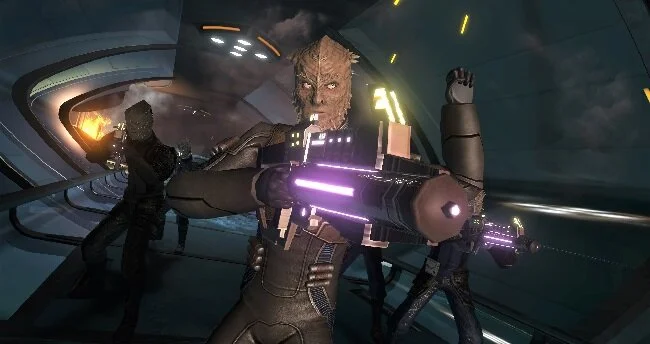
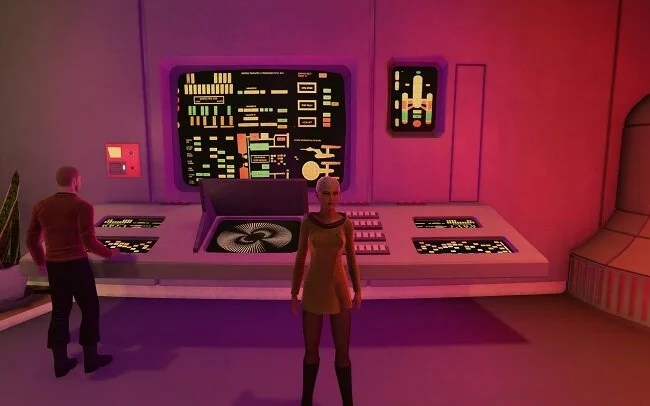
Dilithium is one of the major currencies that can be earned in the MMORPG Star Trek Online. It is given as a reward for playing through Story Missions, Task Force Operations (group PVE content), Duty Officer Assignments and other aspects of the game. Dilithium is initially awarded as ore. The player then has to refine it to be able to spend it. Furthermore, there is a cap of 8,000 Dilithium ore refined per day. Once refined, players can use Dilithium to purchase various items and services ranging from new ships, as well as space and ground equipment. Dilithium is also used in upgrading or re-engineering equipment. Another benefit of Dilithium is that it can be exchanged for Zen, STO’s premium currency. Although Zen is primarily bought with real money, Cryptic provides an in-game exchange service in which players can trade surplus Dilithium for Zen. The exchange rate can fluctuate and has steadily risen over the last ten years. Yet despite this, Dilithium continues to be a tangible and much desired resource.
Dilithium is one of the major currencies that can be earned in the MMORPG Star Trek Online. It is given as a reward for playing through Story Missions, Task Force Operations (group PVE content), Duty Officer Assignments and other aspects of the game. Dilithium is initially awarded as ore. The player then has to refine it to be able to spend it. Furthermore, there is a cap of 8,000 Dilithium ore refined per day. Once refined, players can use Dilithium to purchase various items and services ranging from new ships, as well as space and ground equipment. Dilithium is also used in upgrading or re-engineering equipment. Another benefit of Dilithium is that it can be exchanged for Zen, STO’s premium currency. Although Zen is primarily bought with real money, Cryptic provides an in-game exchange service in which players can trade surplus Dilithium for Zen. The exchange rate can fluctuate and has steadily risen over the last ten years. Yet despite this, Dilithium continues to be a tangible and much desired resource.
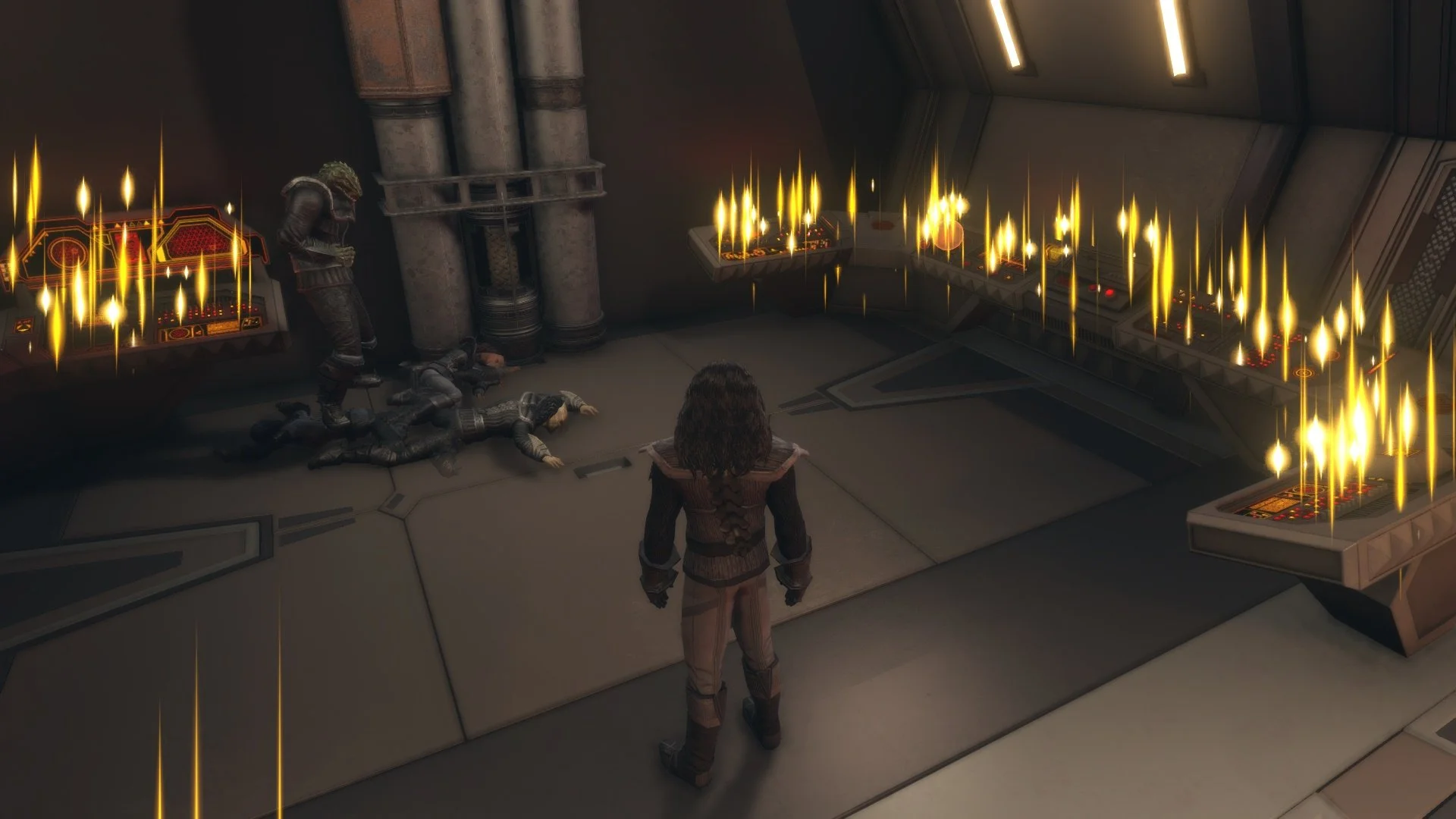
Due to the value players place upon Dilithium, many create multiple alts so that they can farm it on a daily basis. The easiest means to do this are Duty Officer Assignments and the Admiralty System. Both are card based mini games, involving assigning Duty Officers or Ships with appropriate statistics to a specific mission. These virtual tasks are time based and if completed with a positive outcome, yield a modest supply of Dilithium as a reward. Now with any such undertaking, the merits of the time to cost ratio are subjective. If you have two or three alts, it will take about 5 to 10 minutes to log in and set up the various tasks that will net you the Dilithium you require. However, there are players that farm across dozens of alts, spending up to an hour or more setting up the appropriate missions. A long time favourite has been the Klingon Admiralty campaign as it yields the most Dilithium. Dedicated players can easily gain a 70K plus of Dilithium across a dozen alts. And STO has lots of very dedicated players. Hence, many have built up substantial stock piles of Dilithium over time.
It is this glut of Dilithium that has prompted STO’s developers, Cryptic, to once again take action. In the past cosmetic items have been made available for purchase with Dilithium to try and absorb some of the surplus stock. Then the much coveted Phoenix Prize Pack would from time to time appear, again purchasable for Dilithium only. But the problem persists and for Cryptic it is indeed a problem. As a developer and a business, they would prefer players to buy Zen with real money, rather than stockpiled Dilithium. However, simply removing the Dilithium exchange service would be a PR nightmare, so they have just announced plans to alter the Klingon Admiralty Campaign, so that instead of rewarding players with actual Dilithium ore, it will instead give them a voucher for Dilithium that can be used on Fleet Projects. Essentially, this is a form of Dilithium that cannot be exchanged and can only be used for one specific purpose. Naturally, this “revision” has been met with a somewhat mixed response among the STO community. Casual players such as myself, tend not to farm Dilithium beyond what can be acquired on just one character. I gain enough each time I play to upgrade gear but have never raised sufficient to buy tangible amounts of Zen. But there are a substantial amount of players that run Dilithium farming as a cottage industry and this change will set them back.
Cryptic’s “reset” is not quite as catastrophic as some players would have you believe. It is a nuisance to those who farm and will impact upon how much Dilithium they can obtain a day. But it didn’t take long for some rather comprehensive actions plans to emerge on the official STO subreddit. Knowledgeable players have already suggested alternative means of farming Dilithium. Specific Duty Officer Assignment chains have been recommended, along with trading Duty Officers themselves. Then there is creating new alts, leveling and claiming account wide rewards from previous Delta, Gamma and Temporal events. The bottom line is resourceful players will find a way to continue farming Dilithium. It may even have the positive side effect of seeing players return to previously ignored parts of the game, such as the Ground Battlezone in the Solanae Dyson Sphere. Currency adjustments are always tricky to implement both logistically and “politically”. On this occasion I think Cryptic have managed to find the right path between both.

“It’s Only a Game” and Other Perennial Arguments
Irrespective of one’s opinion (or lack thereof) of the “popular” streamer and gamer Ninja, one cannot deny that he has both influence and reach in certain quarters of the gaming community. Hence when he makes a statement such as the one he did recently on Twitter, it will inevitably become a talking point and cause ripples within the current gaming zeitgeist. “The phrase "it’s just a game" is such a weak mindset. You are okay with what happened, losing, imperfection of a craft. When you stop getting angry after losing, you’ve lost twice. There’s always something to learn, and always room for improvement, never settle”. For the sake of context, something that is sometimes lost due to the brevity of Twitter, Ninja is a Professional Gamer (among other things) so naturally this has a bearing upon his gaming worldview. However, even bearing this in mind, he hasn’t really said anything new. A robust rejection of the old “it’s only a game” statement is a hardy perennial argument in the gaming community. One that makes me roll my eyes and sigh heavily every time I see it, as it’s been addressed so many times.
Irrespective of one’s opinion (or lack thereof) of the “popular” streamer and gamer Ninja, one cannot deny that he has both influence and reach in certain quarters of the gaming community. Hence when he makes a statement such as the one he did recently on Twitter, it will inevitably become a talking point and cause ripples within the current gaming zeitgeist. “The phrase "it’s just a game" is such a weak mindset. You are okay with what happened, losing, imperfection of a craft. When you stop getting angry after losing, you’ve lost twice. There’s always something to learn, and always room for improvement, never settle”. For the sake of context, something that is sometimes lost due to the brevity of Twitter, Ninja is a Professional Gamer (among other things) so naturally this has a bearing upon his gaming worldview. However, even bearing this in mind, he hasn’t really said anything new. A robust rejection of the old “it’s only a game” statement is a hardy perennial argument in the gaming community. One that makes me roll my eyes and sigh heavily every time I see it, as it’s been addressed so many times.
There are so many ways to counter this argument. Not all games are competitive challenges nor need to be experienced as one. Then there’s the fact that people play games for different reasons. Not everyone sees every activity as an opportunity for continuous self improvement. In fact rendering the entire human condition into terms of winning or losing is not really the most flexible philosophy for navigating life. And then there’s the concept that failure is an invaluable learning tool and that it should be embraced instead of eschewed. All of these and many more counter points have often been employed to address the assertion that if you’re not learning and improving, then you’re playing the game wrong. But the one aspect of Ninja’s comments that I’d like to focus upon is the notion that you need to get “angry” and that not having an emotional response to losing is a failing. I find it a troubling comment because of his fanbase and audience. They tend to be mainly teenagers and young people. Gamers who play such titles as Fortnite and Apex Legends. Many of whom are just starting out in life and having to find their way around the complexities of the modern world. I don’t believe that encouraging anger as a means of motivation is the best advice one can give or that it will yield positive results.
Anger is an emotional response. There is such a thing as “righteous anger” but I don’t think it is relevant to losing a video game. It’s something I more associate with lobbying and campaigning. The survivors of the Grenfell Tower fire have a justifiable reason to be legitimately angry. Losing your shit because you lost a game of Fortnite seems somewhat shallow and self indulgent. Exactly what or whom are you angry with anyway? Yourself for your own poor performance? Well that may well be a legitimate concern but wouldn’t it be more useful to turn that rage into a dogged determination to improve? And as for anger at your opponent, well that’s something you need to come to terms with if you wish to grow emotionally. If competitive gaming of any kind evolves into a mass sulk-fest, then all you end up doing is driving people away. I don’t like to be around people continuously losing their temper and getting angry. Ill worlds and behaviour promote ill feelings. Plus I don’t consider emotional outbursts to be some form of uncompromised self expression. What ever happened to such concepts as being gracious in defeat, learning from your mistakes and the spirit of the game. Is there no longer joy in competing or is it now just a case of winning and everything else is “crap”?
Another aspect of Ninja’s comments that has given me pause for thought, is that they seem to reveal a need for validation. Competitive gaming is like many other sports, driven by aspirations to be the best. There’s nothing wrong with such motivations but they can also be fueled by a desire for ego stroking and public adulation. Furthermore, when I see terms like “craft” it clearly indicates to me that here is someone who considers what they’re doing to be a serious and skilled undertaking. In this instance it is Ninja’s perspective on competitive gaming. But such sentiments necessarily apply to the gamer who’s playing at home for their own amusement, or with friends for the fun of social interaction. The validation that Ninja has sought and found in his relationship with gaming, may not exist for others who pursue their hobby in a different manner and for different reasons. Youth has enough social pressures placed upon them in the 21st century. Seeking some sort of fulfilment through professional gaming is not going to be readily available or even possible for all. I wouldn’t like it to see it advocated as yet another path to happiness.
The “it’s only a game” argument comes back regularly like a bad penny. Looking back at my own writing, I seem to get a blog post out of the subject at least once a year. That and the other old favourite, “you’re playing wrong”. However, despite my advocacy that a healthy sense of detachment is good with regard to all passionate pursuits, I do understand why someone like Ninja finds his hackles rising when the old “it’s only a game” adage is trotted out. I believe it comes down to the fact that the statement carries a whiff of dismissal. That in some circumstances, the person using this old chestnut is putting down, pooh-poohing or looking down on something that others have invested a great deal into. I do believe that some games can be art and that gaming per se is as valid a leisure pursuit as fishing or Kabbadi. However, there are those (and it’s usually a generational divide) who think the opposite. Where I and possibly Ninja differ, is that I don’t worry about others opinions, nor feel the need to convince them otherwise. I do not wish or need their approval. Wouldn’t it be easier to simply evangelise about what you love to those who already do the same, rather than demanding “respect” from those who don’t wish to give it?
Considering the platform that Ninja commands, it would be nice to see him disseminating more nuanced and thoughtful ideas. But I guess when you have reached his position in the gaming food chain, his perspective is naturally going to be somewhat skewed. When I first saw his comments, I was initially reminded of how certain sports personalities, particularly boxers and cage fighters, sometimes regale us with their thoughts on contemporary masculinity, racial diversity and sexual politics. Often these are considered to be out of step with modern sensibilities and “progressive” thinking. But again when one considers such individuals, their personal background and world experiences, it’s hardly surprising that they hold such worldviews. So taking stock of the situation, I guess Ninja’s comments should not come as a surprise. Nor the ensuing debate. Life is cyclical, so I see no reason why gaming culture should be any different. The only thing that changes as a result of the passage of time is my response. 15 years ago I’d stridently refute Ninja’s perspective and add my voice to the growing cacophony. Now I just muse upon the flaws inherent in such tweets, if indeed they are indeed flaws. Or is this just another manufactured debacle because Fortnite has another season starting soon?
Deathtrap Dungeon: The Interactive Adventure
I watched Welsh Troll stream Deathtrap Dungeon: The Interactive Adventure this morning and was instantly hooked by this bold new adaptation of a much beloved adventure gamebook. So I subsequently purchased the game via Steam for £7.99 which is a very reasonable price. Despite being in early access, this game’s old school appeal is instantly apparent. Based upon the 1984 book by Ian Livingstone, it perfectly captures the tone and spirit of source text. Rather than providing a visual depiction of navigating a dungeon as previous video game adaptations have done, the developers, Branching Narrative, have opted for a minimalist narrative interpretation. Hence we have actor Eddie Marsan sitting in a battered leather chair, telling the story of Baron Sukumvit's "Trial of Champions” and how those who undertake the challenge must traverse a dangerous subterranean labyrinth, from which none have ever returned. There are occasional illustrations to orientate the player but overall this is an intimate experience between the player and narrator, without an excess of visual distractions. It focuses on the power of imagination and storytelling.
I watched Welsh Troll stream Deathtrap Dungeon: The Interactive Adventure this morning and was instantly hooked by this bold new adaptation of a much beloved adventure gamebook. So I subsequently purchased the game via Steam for £7.99 which is a very reasonable price. Despite being in early access, this game’s old school appeal is instantly apparent. Based upon the 1984 book by Ian Livingstone, it perfectly captures the tone and spirit of source text. Rather than providing a visual depiction of navigating a dungeon as previous video game adaptations have done, the developers, Branching Narrative, have opted for a minimalist narrative interpretation. Hence we have actor Eddie Marsan sitting in a battered leather chair, telling the story of Baron Sukumvit's "Trial of Champions” and how those who undertake the challenge must traverse a dangerous subterranean labyrinth, from which none have ever returned. There are occasional illustrations to orientate the player but overall this is an intimate experience between the player and narrator, without an excess of visual distractions. It focuses on the power of imagination and storytelling.
When first published, books with branching narratives were quite a novelty. However, despite the innovation of the format they are essentially a linear experience. Therefore, simply duplicating that structure visually, may not necessarily make for a “good” gaming experience. Hence developers Branching Narrative have decided to add additional mechanics, so that the player has more involvement in the unfolding story and a degree of control over their character’s performance. As a result, there are battles where the players statistics are combined with the score from the roll of a pair of dice. There are also the option to use consumables to heal or to boost stamina. The player can also tactically withdraw if they see fit to do so, although that too comes with a penalty. Then there’s an inventory system for storing items that you find along the way. These further add an element of interaction, affording the player more than just a series of binary choices. Furthermore, fights can potentially be avoided if a door can be opened and an obstacle bypassed. But such a choice may again have consequences. All these decisions impact on the story’s outcome, making it more like a video game without compromising the original narrative format
I grew up in the seventies and eighties when adventure gamebooks and Dungeons and Dragons were commonplace aspects of a child’s entertainment (or at least within the social circles that I moved in). Deathtrap Dungeon: The Interactive Adventure immediately taps into this sense of nostalgia and also references wider aspects of pop culture from those decades. Seeing Eddie Marsan so eloquently narrate this dungeon adventure, made me reflect upon such TV shows as Jim Henson’s The Storyteller and the BBC’s Jackanory. The additional game mechanics that Branching Narrative have added ensure that this is more than just a story with multiple endings. The player has more agency over their character's fate and the save feature even allows you to “correct” a mistake or poor decision if you wish to. Overall, Deathtrap Dungeon: The Interactive Adventure is a very intelligent and immensely enjoyable adaptation of an old classic. It is a great contrast to the overblown visuals of many contemporary, so-called Triple A video games. For the best results, play at a time when you won’t be disturbed and at a measured pace, in an environment without any additional distractions. That way you can savour the game’s atmosphere and Eddie Marsan’s dramatic narration.
We Need a New Video Games Lexicon
Some video game related subjects are “hardy perennials”, to coin a gardening term. As are the blog posts, forum thread and subreddits that explore them. I read an article over at Massively Overpowered that posed the question “How essential are hardcore gamers to an MMO’s health?”. It wasn’t the actual main premise that got me thinking, but a minor side dispute that arose about the definition of a specific term. And that term was “hardcore”. It’s a phrase that’s been associated with video game culture for over two decades. Yet there is no single, immutable dictionary definition as to what this term specifically means. Which is odd for a word that is extremely commonplace in video games parlance. Because of its elastic nature it leads a lot of scope for misinterpretation when used, be it deliberately or accidentally. So I made a self indulgent comment on the original post in which I paraphrased some dialogue from the 1986 movie, Star Trek IV: The Voyage Home.
McCoy : How essential are “hardcore” gamers to an MMO’s health?
Spock : It is impossible to discuss the subject without a common frame-of-reference.
Some video game related subjects are “hardy perennials”, to coin a gardening term. As are the blog posts, forum thread and subreddits that explore them. I read an article over at Massively Overpowered that posed the question “How essential are hardcore gamers to an MMO’s health?”. It wasn’t the actual main premise that got me thinking, but a minor side dispute that arose about the definition of a specific term. And that term was “hardcore”. It’s a phrase that’s been associated with video game culture for over two decades. Yet there is no single, immutable dictionary definition as to what this term specifically means. Which is odd for a word that is extremely commonplace in video games parlance. Because of its elastic nature it leads a lot of scope for misinterpretation when used, be it deliberately or accidentally. So I made a self indulgent comment on the original post in which I paraphrased some dialogue from the 1986 movie, Star Trek IV: The Voyage Home.
McCoy : How essential are “hardcore” gamers to an MMO’s health?
Spock : It is impossible to discuss the subject without a common frame-of-reference.
Words, semantics and languages are complex things. None of these things remain static and they all evolve over time. Words and phrases are often co-opted and adapted, leading to a situation where their very meaning varies depending upon who you’re addressing. The mosy obvious example is the word “gay” which has changed a lot in my lifetime. As have such words as “sick” or “pimp”. Slang is a particularly fluid aspect of language. Naturally gaming culture is no different. Which brings me onto the term “hardcore”. Does it mean a passionate player who dedicates a lot of time to a specific game? Or is this about the raiding community and those pursuing achievements and seek to test their skills? Alternatively, does the phrase refer to a player who sees the game and the way in which it is played within a very rigid framework? Or is it simply a player who may not technically achieve much but is a consummate fan and evangelist of the game they love? Frankly the word “hardcore” in the gaming context, could embrace all these meanings.
Which leads me neatly to my final point. The video games industry has changed greatly in the last three decades. Terms that once succinctly defined genres are now vague. Should we still even use such phrases as MMORPG anymore, or would it be better to come up with new terms to describe games that share aspects of the old definition but also have newer attributes. It is important to have a common lexicon so that the gaming community can communicate effectively and clearly. If we all use terms which have a universally accepted definition, then conversations will not get bogged down in ambiguity and unnecessary misunderstandings. Such clarity would also be beneficial for the video games industry when communicating with its customers. Sadly, the cynic in me also thinks that having such obsolete terms still in common use serves a wider business purpose. Vagueness can be used to sell a product based upon an erroneous interpretation. It can also deflect blame and legal culpability.
Gaming Ambassadors
Over four years ago, I wrote a blog post discussing the concept of “Digital Ambassadors” and how they can be an invaluable source of goodwill and promotion that compliments the traditional marketing departments and PR associated with leisure industries. A smart business sees the value of fans and the contribution they make in getting "the message" across. I recently sent in a question to the Massively OP Podcast which specifically raised this issue with regard to the the MMORPG community. There was a time when key bloggers and podcasters became integral to the promotion of specific games and that they became an unofficial form of community management. In my question I also suggested that this has waned due to the rise of Twitch TV and YouTube and that the personalities that arise from these platforms are free agents who tend to follow the latest trends. They are not so tied to one specific community. Justin and Bree kindly addressed my question on the show and it made for a very interesting discussion. Many of the points they raised had crossed my mind as well.
Over four years ago, I wrote a blog post discussing the concept of “Digital Ambassadors” and how they can be an invaluable source of goodwill and promotion that compliments the traditional marketing departments and PR associated with leisure industries. A smart business sees the value of fans and the contribution they make in getting "the message" across. I recently sent in a question to the Massively OP Podcast which specifically raised this issue with regard to the the MMORPG community. There was a time when key bloggers and podcasters became integral to the promotion of specific games and that they became an unofficial form of community management. In my question I also suggested that this has waned due to the rise of Twitch TV and YouTube and that the personalities that arise from these platforms are free agents who tend to follow the latest trends. They are not so tied to one specific community. Justin and Bree kindly addressed my question on the show and it made for a very interesting discussion. Many of the points they raised had crossed my mind as well.
I believe there is still a role for “Gaming Ambassadors” although the way that role presents itself has changed. In some ways, the Massively OP Podcast provides the service that some prominent game blogs or shows used to. The only difference is Justin and Bree advocate on behalf of multiple games instead of just one. But the enthusiasm and willingness to help is there and the show is happy to provide a platform for players, devs and pundits alike. There are other shows that are associated with particular games but a lot seem to have become quasi-official. Take the Priority One Podcast for STO for example. Often when gaining access to those that actually create and run a game, there is a degree of editorial compromise required. Hence some content creators find themselves as “poacher turned gamekeeper” to coin an old phrase. Editorial independence is not something to give up lightly but it is often the price of admission such inner circles. This is something that Massively OP Podcast has not done.
Fandom per se, has certainly become more mainstream over the last two decades. Conventions are now seen as lucrative, wide reaching marketing opportunities. They are no longer seen as niche nerd social activities. But I feel that the “commercialisation and commodification” of fandom has also made it more ephemeral. Yes, there still are fan sites dedicated to just one game who invest heavily in their community but the main focus is now on other platforms and “influencers”. The major difference is that contemporary internet personalities that gain traction are usually not exclusively wedded to just one community. A game will be played and its virtuals extolled until it ceases to be popular. When that occurs, it’s onto the next big thing and there’s nothing wrong with this approach. Ultimately, the games that popular YouTubers and Streamers play are secondary to their “personality”, which is often the key to their following.
In my lifetime fandom has evolved. In the seventies, we hand crafted fanzines. We typed the content, cut it out and inserted pictures, then took them to the printers and had as many copies produced for as cheap a price as possible. Then along came the home PC and self publishing became easier and more professional. The internet then put content online and its reach became far bigger. And then along came social media and the focus changed very quickly from blogs and podcasts, to videos, streams and subreddits. And like any other leisure market, its widening reach and increasing diversity has also led to smaller, more insular communities.
I do not doubt that there’s a specific place that’s the community focus of Black Desert Online and that in the months to come, they’ll be a similar space for the MMO New World. But I think that these communal focal points will be far more targeted than those we’ve previously seen and will be more specific to their player base, using more immediate social media platforms. They may also come and go more quickly as gamers consume and then move on. Hence I am beginning to think my nostalgic affection for the LOTRO podcast, A Casual Stroll to Mordor, is just that. The show existed and thrived within the internet and fan context of the time. And times change and that specific era I remember has gone and been replaced with something similar and different. “It is change, continuing change, inevitable change, that is the dominant factor in society today. No sensible decision can be made any longer without taking into account not only the world as it is, but the world as it will be”. Isaac Asimov.
ESO: The Problem with Update 25
ZeniMax are allegedly addressing some major performance issues with the forthcoming Update 25 for The Elder Scrolls Online. If this latest patch improves loading times, the game’s overall performance and makes updating the client faster, then it will be well received by players. However, Update 25 requires players to reinstall the entire game client due to technical reasons. Furthermore, the patch is not going to be available prior to release on Monday February 24th, so player’s cannot download the necessary files in advance. Unfortunately, as soon as the patch server comes online, all players will have to reinstall the full ESO client and wait accordingly. Considering the disparity between internet connections in the US and Europe, player experience will vary greatly. Some will download the client in hours where others will have to simply leave their PC running and wait all day. Considering the popularity of ESO and the estimated size of its player base, I wouldn’t be surprised if there are queues or connectivity issues.
ZeniMax are allegedly addressing some major performance issues with the forthcoming Update 25 for The Elder Scrolls Online. If this latest patch improves loading times, the game’s overall performance and makes updating the client faster, then it will be well received by players. However, Update 25 requires players to reinstall the entire game client due to technical reasons. Furthermore, the patch is not going to be available prior to release on Monday February 24th, so player’s cannot download the necessary files in advance. Unfortunately, as soon as the patch server comes online, all players will have to reinstall the full ESO client and wait accordingly. Considering the disparity between internet connections in the US and Europe, player experience will vary greatly. Some will download the client in hours where others will have to simply leave their PC running and wait all day. Considering the popularity of ESO and the estimated size of its player base, I wouldn’t be surprised if there are queues or connectivity issues.
At present, the game client for ESO is about 90GB. Hardly surprising, considering how much the game has grown since its launch in 2014. This is a substantial download by anyone's standards and it is worth remembering that there are still many players that have ADSL internet connections which are throttled to a maximum speed and that come with a data cap. Simply put, reinstalling the entire game is a major headache for them. It has to be done and I’m sure most players will doggedly go about installing Update 25, while “grinning and bearing it”, as the expression goes. But for many it may mean several days on not playing while the download is undertaken in stages. There are also bound to be some players who have a particular permutation of hardware, that results in a fully reinstalled client that won’t launch for some obscure reason. And then, for those who manage to install the download without any hitch, there is the entire issue of addons and how they will inevitably be broken.
I therefore think that ZeniMax has potentially failed to grasp what a big deal totally reinstalling the game client is. Players do appreciate that the patch is ultimately beneficial to them but the logistics of installing it come with an element of risk as well as inconvenience. It may take a long time to download and install, there’s the risk of errors and there could even be financial implications if they find themselves exceeding their data cap. Hence offering a free cosmetic pet (in this case it’s a Crimson Torchbug) doesn’t really strike me as the best way to placate paying customers. Perhaps an allocation of crowns would be more tangible. At the very least I would have liked a more empathetic post on the Official ESO website. The existing one acknowledges that reinstalling the game is a pain but still happily goes along with the notion that it isn’t a big deal. Well, sorry to contradict you ZeniMax but it is.
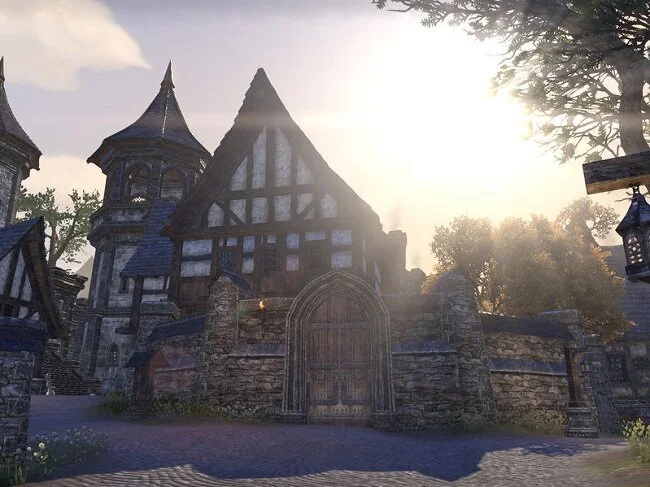
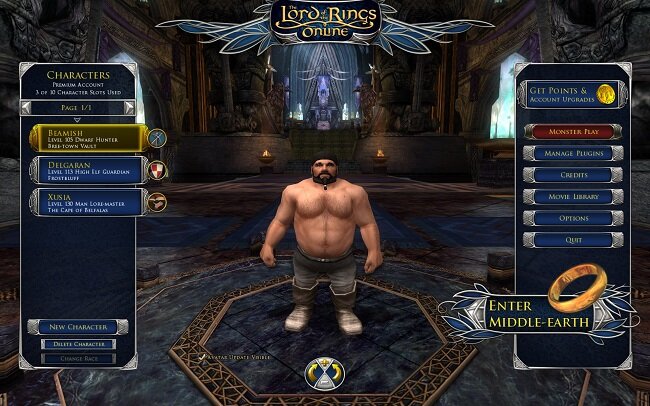
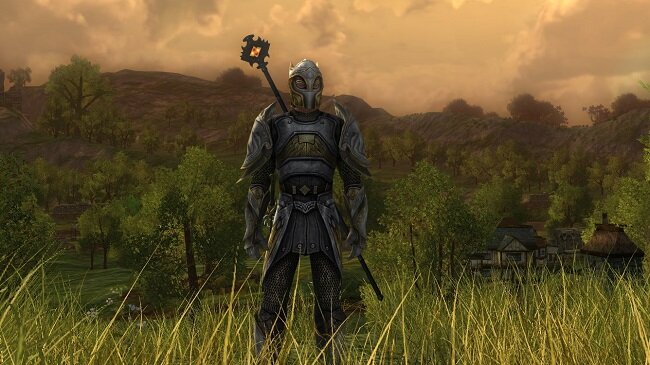
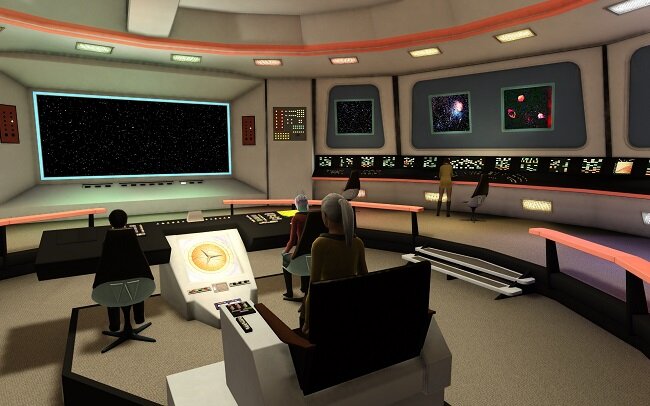
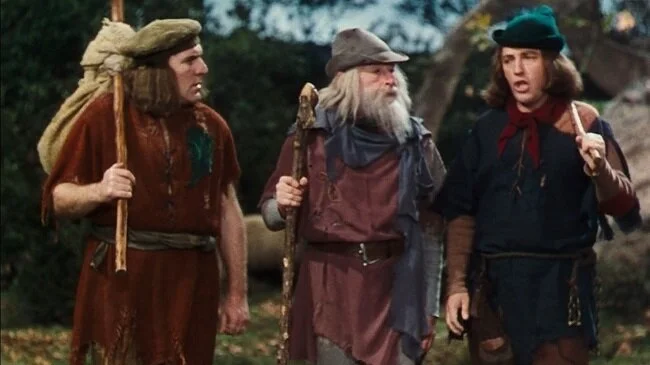


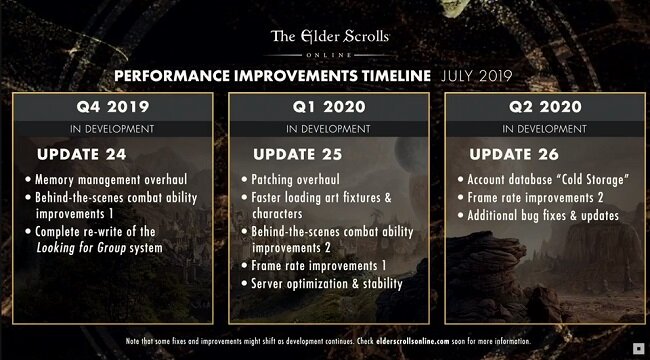
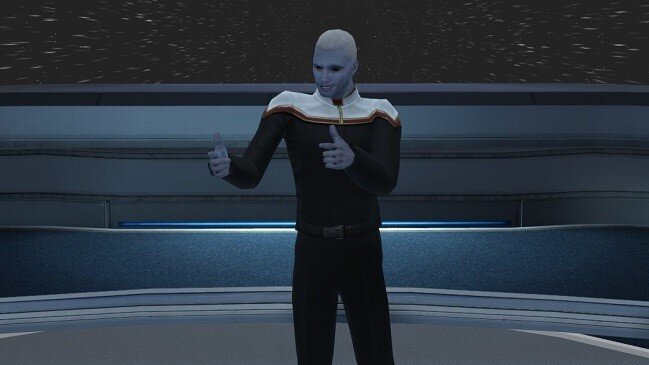
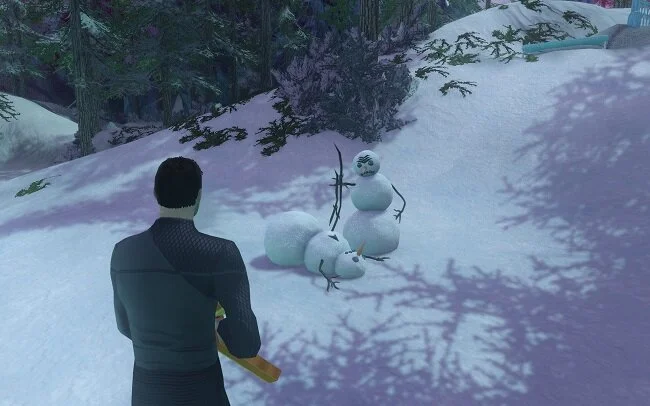
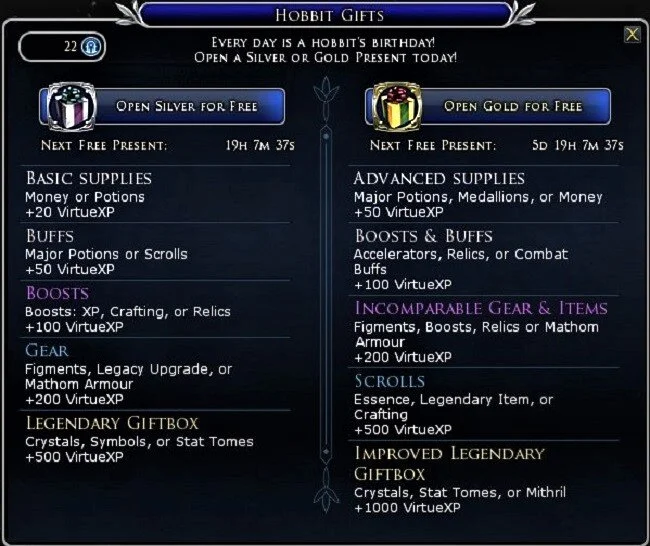
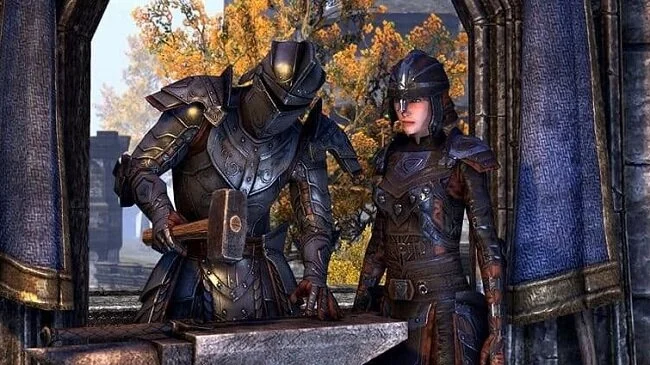
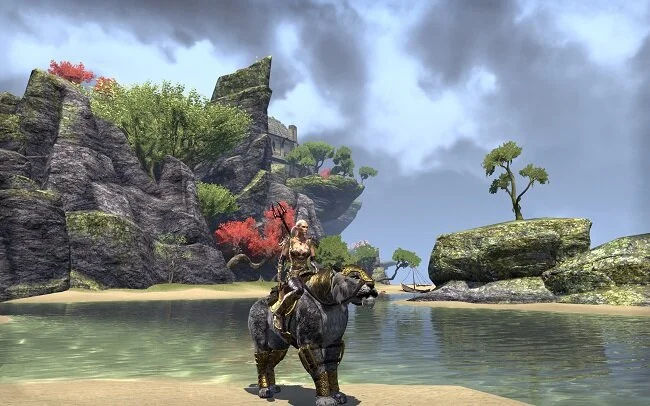

Star Trek Online: Keeping Busy
Although the 10th anniversary event is still ongoing in Star Trek Online, the overall excitement seems to be ebbing. I have played the new two part Feature Episode and it is indeed a thoroughly enjoyable fan service. Cryptic hit exactly the right tone with this story and it has re-invigorated my enthusiasm for the Star Trek franchise as a whole. I have managed to organise things so that I can complete the Omega Molecule Stabilisation anniversary event early each morning. This way I can complete this quick 15 minute task before I leave the house. I’m hoping to be able to claim the new ship early next week. However, overall I have little to do in the game at present. I did some housekeeping and deleted some unused alts, after asset stripping them of anything of note. I also cleaned up my personal bank and either “salvaged” or sold numerous items that weren’t currently being used. I have placed all my Tier 5U ships into Dry Dock and rationalised my active Tier 6 vessels. I am now setting myself some minor goals, as a means of keeping busy, until further new content is released.
Although the 10th anniversary event is still ongoing in Star Trek Online, the overall excitement seems to be ebbing. I have played the new two part Feature Episode and it is indeed a thoroughly enjoyable fan service. Cryptic hit exactly the right tone with this story and it has re-invigorated my enthusiasm for the Star Trek franchise as a whole. I have managed to organise things so that I can complete the Omega Molecule Stabilisation anniversary event early each morning. This way I can complete this quick 15 minute task before I leave the house. I’m hoping to be able to claim the new ship early next week. However, overall I have little to do in the game at present. I did some housekeeping and deleted some unused alts, after asset stripping them of anything of note. I also cleaned up my personal bank and either “salvaged” or sold numerous items that weren’t currently being used. I have placed all my Tier 5U ships into Dry Dock and rationalised my active Tier 6 vessels. I am now setting myself some minor goals, as a means of keeping busy, until further new content is released.
Whilst organising my ships, I noticed that several had not reached full Starship Mastery. This is a simple five tier experience system for each individual T5U/T6 ship. Each level unlocks a trait relevant to that ship and full mastery offers a unique starship trait which can then be slotted regardless of what ship you are using. Some ships have especially desirable top tier traits. So I’ve been rotating through a variety of vessels and taking part in various Task Force Operations and Battlezones to gain the necessary mastery XP. It is worth doing some research beforehand as some of these activities offer more XP than others and there are a few that offer no XP at all. One of the benefits of alternating between a wide variety of vessels in a short period of time, is that you quickly get a feel for their respective strengths and weaknesses. It is also a great way of determining what suits your play style and then deciding what would be your best choice in the long run.
Something else that I’m doing to keep busy, is completing various Duty Officer Assignment Chains, although it is not exactly “enthralling”. I’ve never really been that invested in the entire Duty Officer sub-game in STO and have only done what is immediately available to me. As I’m by default usually hanging out at Earth Spacedock, I have run mainly the assignments that are presented there or at Starfleet Academy. Over time I have achieved Rank 4 in all commendation categories but have ignored the assignment chains associated with Sector Space. Hence, I am currently rotating between the Delta Volanis Cluster, the Eridan Belt and the Khazan Cluster. Once these are complete I’ll just progress through the others assignment nodes in each Sector. It does provide a useful alternative means to earn further Dilithium and bespoke Duty Officers.
After having watched a few YouTube videos, I’ve been replaying selected missions to earn various items that are still deemed to be of benefit. Over the last decade a lot of gear sets have fallen out of favour as the prevailing optimal combat meta has moved on. Several years ago, Antiproton weapons were “king”, but once the Embassy Consoles that enhanced them were nerfed, they were quickly superseded as the go to weapon of choice. I personally always like to use Phaser weapons with my Federation ships, so I tend to just find a practical build that enhances their use. I do not have the best traits and gear as much of these are tied to specific ships that can only be obtained from lootboxes. So I use my common sense and work with what I can obtain from the Reputation System and Fleet Resources. It can be fun to try different permutations of equipment and as I’m between major projects at present, this is a good time for a little experimentation. Hopefully, these relatively low key activities can keep me busy and engaged with STO for the immediate future.
The Problem with Raiding
The subject of raiding in MMOs raised its head once again over at Massively Overpowered. It would appear that ArenaNet have been looking into the current raiding content in Guild Wars 2 and found that it is only undertaken by a relatively small percentage of the playerbase. Hence they are currently looking at producing some sort of intermediary content to encourage “endgamers” who have completed all the PVE material, to work towards raiding. Whether they are successful remains to be seen but it does show once again that raiding is not a universal pastime in the MMO genre. I remember Turbine making a similar statement to this effect, back when they were developing The Lord of the Rings Online. But this post is not intended as a discussion about the validity of raiding or any of the traditional debates associated with it. I think raiding has a place in the genre. What I want to do is state the reasons why it is not something I actively do anymore. I suspect my experience is not unique.
The subject of raiding in MMOs raised its head once again over at Massively Overpowered. It would appear that ArenaNet have been looking into the current raiding content in Guild Wars 2 and found that it is only undertaken by a relatively small percentage of the playerbase. Hence they are currently looking at producing some sort of intermediary content to encourage “endgamers” who have completed all the PVE material, to work towards raiding. Whether they are successful remains to be seen but it does show once again that raiding is not a universal pastime in the MMO genre. I remember Turbine making a similar statement to this effect, back when they were developing The Lord of the Rings Online. But this post is not intended as a discussion about the validity of raiding or any of the traditional debates associated with it. I think raiding has a place in the genre. What I want to do is state the reasons why it is not something I actively do anymore. I suspect my experience is not unique.
Time: I have in the past done a degree of raiding in LOTRO. This was during a period of my life when I was living alone, worked from home and had the time necessary to undertake this aspect of MMO gaming. Time is a key aspect of raiding and the MMO genre per se. Raiding requires assembling people online at a specific time. Something that is akin to herding cats, because often your raid team will live across multiple time zones. Some will have been raised in heathen cultures that have no concept of punctuality. Also let us not forget that “real life” can get in the way. Once you have everyone online you next have to ensure that they are good to go. Does everyone have the right consumables? Have they switched to the right builds and brought the right gear? All these things take time because they involve “people”. Then you need to allot the appropriate time to actually play through the content. You may wipe and have to do it again. I can recollect times where we started a raid at 8:45 PM and finished roundabout 1:00 AM. So to summarise, raiding is a major time sink that I can no longer afford.
The Human Factor: If you are a member of a well run Guild, then raiding will often be organised by even tempered, supportive individuals with good communication skills. It is also incumbent upon those participating to do their best, follow any instructions and keep their wits about them. If there are any issues, then calmly raise them as combat in raids can be a fluid situation. But it doesn’t always go this way. Simply put, the human factor can complicate things. People are not all the same. There are a multitude of factors to consider such as egos and different personalities. Hence there is much scope for a group to pull in different directions as there is for them to work together. Plus some people do not perform well in a team dynamic. Extroverts and introverts are not always compatible. Then there are those players who tolerate the group requirement of raiding because they want the achievement or the rewards on offer. I fall into the latter category and have no time for “drama” or players who are high maintenance. I’ve also had my fair share of bad experiences with pick-up groups. Therefore, if a raid is populated by people I do not know and trust, then I’m not likely to participate.
Quid Pro Quo: I do not see raiding as a test of character nor do I see it as a prestige event that if undertaken successfully, confirms status. It is simply a process with complex systems and fail states. These mechanics can be learned, just like any other form of choreography. Undertaking raid content requires preparation, organisation and a degree of skill. Players have to make a considerable investment of time and effort when raiding. Therefore, I see the entire process as a “quid pro quo”. If you successfully complete content you should be given a reward. Rewards should scale according to how many of the raid’s criteria you have met. Drops should not be random, nor should players run the risk of receiving rewards that are of no benefit to them. Raiding should be a clearly defined enterprise. If you do what is required then you get the reward that was advertised. If you partially complete the terms of the raid then you get a lower tier reward, again something that you knew about in advance. You should never leave empty handed if you have succeeded, nor should you be palmed off with junk. Any raid that cannot honour this social contract is poorly conceived.
A Month in Gaming
So much for the New Year. January has now been and gone and 2020 just seems to be barrelling along. As ever, due to my real world commitments, I’ve been pushed for time over the last thirty one days. Therefore, most of my gaming has been targeted “binge” sessions conducted late at night. However, I do find playing through episodic content over several hours to be a very productive means of making progress in MMOs. So overall January has been an enjoyable experience, game wise. Due to my circumstances, I have deferred starting any new single player games and have focused primarily on two titles; The Lord of the Rings Online and Star Trek Online. Sadly, The Elder Scrolls Online has been relegated to being played just once a week, usually on a Wednesday night when I meet up online with friends. My exploration of Vvardenfell will have to wait until later in the year, as I cannot sustain three MMOs to any great degree.
So much for the New Year. January has now been and gone and 2020 just seems to be barrelling along. As ever, due to my real world commitments, I’ve been pushed for time over the last thirty one days. Therefore, most of my gaming has been targeted “binge” sessions conducted late at night. However, I do find playing through episodic content over several hours to be a very productive means of making progress in MMOs. So overall January has been an enjoyable experience, game wise. Due to my circumstances, I have deferred starting any new single player games and have focused primarily on two titles; The Lord of the Rings Online and Star Trek Online. Sadly, The Elder Scrolls Online has been relegated to being played just once a week, usually on a Wednesday night when I meet up online with friends. My exploration of Vvardenfell will have to wait until later in the year, as I cannot sustain three MMOs to any great degree.
Currently STO is celebrating its 10th Anniversary. To mark this auspicious occasion, Cryptic have released a two-part feature episode starring Seven of Nine (Jeri Ryan) and Michael Burnham (Sonequa Martin-Green). The pair find themselves transported to the planet Excalbia, last seen in the TOS episode “The Savage Curtain” and facing further “tests” as the Excalbians explore the human concepts of good and evil. It is a dynamic and action packed story which revisits many classic scenarios from the game. Seven has some killer quips and Burnham is a welcome addition to the ever growing STO family. The anniversary also offers an opportunity to earn a new hybrid Tier 6 ship, which draws upon Federation, Klingon and Romulan design. Naturally the ongoing event has meant that a lot of lapsed players are returning to the game and as a result, the Reddit Alert Fleet (of which I am a member) is exceedingly busy. However, there has been a degree of controversy over the 10 ship Legendary Bundles that is being released on February 13th. As ever the pricing is quite high (about £200) and Cryptic have decided not to sell these desirable vessels individually. However, this issue notwithstanding, it is nice to see the game thriving at present. Ten years is a laudable milestone for any MMO to reach.
I have completed the Vales of Anduin in LOTRO and have diligently applied myself to the new Minas Morgul expansion. I have already shared my thoughts on the first half of the expansion, set in the Second Age of Middle-earth, which I found to be narratively enjoyable but a little too padded with fetch and slayer quests. The same rings true of the other half of the game set in Imlad Morgul. The central story is sound and each of the secondary quest hubs has an additional tale that feeds into the main Epic Quest. But again when visiting each area the player is given a multitude of arbitrary tasks to do. I cannot help but return to my initial conclusion that Minas Morgul is not a genuine expansion in comparison to its predecessors. It feels like something cobbled together from outstanding material and lacks anything additional or bespoke. However, criticisms aside, my recent re-gearing from loot boxes, along with focus upon virtues and increasing my LI legacies, has certainly made my level cap Lore-master a far more robust and even formidable character. I consider this to have been the best gaming achievement of January.
Putting aside what I’ve actually done in-game over the last month, I would like to briefly mention “gaming news”. As someone who considers video games as a major aspect of my leisure time, I have always liked to know what’s going on in the wider gaming community, along with the industry itself. Hence I’ve always read a broad selection of websites and subreddits etc. Sadly, I am finding these outlets are becoming increasingly partisan. The gaming industry seldom covers itself in glory and often the behaviour and attitude of a large percentage of the gamers is far from edifying. Simply put gaming is increasingly becoming yet another aspect of the ongoing Culture War which blights contemporary politics and national dialogue. Rather than feeling I’m part of an international community based on mutual understanding and a shared, common experience, it seems that I’m habitually told to pick a side in some tedious, bi-partisan argument and then just shout at those in so-called opposition. I find this an intellectually bankrupt proposition and am ill disposed towards doing such things. I do not see any evidence at present that 2020 is going to halt and reverse this process.