
Should You Monetise Your Blog?
If you search online for advice on “how to monetise your blog” you’ll find a wealth of articles claiming to have all the answers. There’s a veritable cottage industry out there offering guidance and help on how to make money from your writing. Such posts range from proven business advice to utter bilge peddled by the worst sort of snake oil salesmen. Yet good or bad, there is a strong demand for this sort of information because blogging is still perceived by a lot of people as a means to make money. It would appear that the idea of setting up a blog, making a living off it and quitting your day job is still a common goal and the various “lockdowns” we’ve all experienced in the last 18 months have only boosted such perceptions. Some people have been successful with their home businesses in 2020, although I would argue that the market has been anomalous, to say the least.
If you search online for advice on “how to monetise your blog” you’ll find a wealth of articles claiming to have all the answers. There’s a veritable cottage industry out there offering guidance and help on how to make money from your writing. Such posts range from proven business advice to utter bilge peddled by the worst sort of snake oil salesmen. Yet good or bad, there is a strong demand for this sort of information because blogging is still perceived by a lot of people as a means to make money. It would appear that the idea of setting up a blog, making a living off it and quitting your day job is still a common goal and the various “lockdowns” we’ve all experienced in the last 18 months have only boosted such perceptions. Some people have been successful with their home businesses in 2020, although I would argue that the market has been anomalous, to say the least.
I have maintained a writing presence online since 2007 and despite growing a modest audience have never made a red cent from my blog (although I have been paid for my writing elsewhere). In fact Contains Moderate Peril, The Gaming Blog Nexus and sundry podcasts such as Burton and Scrooge always have been and remain to date a financial black hole. I’ve written in the past about the financial realities of running a blog or similar online platform as the costs do add up over time. In purely notional terms, I would welcome a means to recoup my operating costs. Unfortunately, I have not found a method to do this that I find acceptable. However, as the purpose of the blog post is to address this very question, let’s indulge in some critical thinking and see if we can come up with some valid ideas regarding how to monetise your blog.

Is there value in your content? This is a complex question. It requires a degree of introspection and self scrutiny which might make you uncomfortable. However, value is a very open ended term and people find merit in all sorts of things. If you’re writing gaming guides or collating data from public test servers for a popular game, then you may well have a very clear market. Providing commentary on a popular topic or making yourself the “go to” news source for something specific also can make your writing of value. Sometimes it may come down to whether your readers like the “cut of your jib”. Also it’s not just about what others think about your writing. Your own opinion is important. If you are confident that your body of work is marketable then why not try and monetise it. Other aspects that may well have a bearing on this matter are your writing schedule, how unique your work is and how much content you are offering.
Optimising your writing for monetisation. If you’re looking to make your writing commercially viable, then you need to decide who you’re writing for. If you are looking to cover popular trends and the latest talking points then that is a distinctly reactive process. You may also have to consider “optimising” your writing to fit the broadest of demographics. Things such as your personal opinion and taste may well have to be sidelined as you go where the audience currently is. All of which are perfectly acceptable things to do. You are still providing a service, just one that is driven by the needs of your readers as opposed to your own likes and dislikes. There may well be occasions when those two positions overlap. The reverse of this is writing purely for yourself, which can be immensely preferable from a personal perspective but comes with the caveat that your readers may not always share your passion. However, writing for yourself may benefit if you have a strong writing persona.
How to monetise your writing.
The most obvious is advertising although the rise of ad blockers has had a real impact upon this option.
Affiliate marketing is another longstanding solution, although you need to make a lot of referrals to third party websites and hope those referrals make a purchase.
Influencer marketing can be lucrative but you need to reach a critical mass of followers before that becomes viable, so it’s certainly not an option with a quick ROI.
Creating an eBook is another option. This may suit writers who write reviews or write longform essays.
Offering premium content behind a paywall can work well for those who write prodigiously and have an established audience.
Sponsored content doesn’t necessarily mean selling your soul to the Devil, as long as you hold such material to the same editorial standards of your other content.
Patreon and other subscription services can generate revenue but again requires you to write specific additional content for paying customers.
Blog to promote another primary business. This is a very particular business approach but it can prove beneficial. This approach works best if you offer some sort of online service.
Offer bespoke writing services. Again this is more of an option for an established writer.
Have an online “tip jar”. Possibly the most benign and optimistic way to try and monetise your writing.
Out of the ten options listed I only feel that three are applicable to myself, if I decided to try and monetise my writing. I have considered in the past expanding some of my film reviews and creating an eBook. It certainly seems like a logical progression. I have also previously considered using Patreon, specifically when I was producing a regular podcast. The editing process makes producing two versions of a weekly show quite straightforward and in principle it seems like an easy idea to market. I also like the concept of a “tip jar” as I’ve been surprised by readers' generosity in the past. In 2014 when Contains Moderate Peril exceeded the bandwidth restrictions of its then hosting package, I was taken aback by how many people offered to help with the cost of migrating to a more expensive, yet viable solution. The other options mentioned above just don’t seem to fit my needs. Ultimately asking your readers for money is a big ask and you’ve got to feel right about it. That’s one of the reasons why I haven’t done it so far. However times can change.
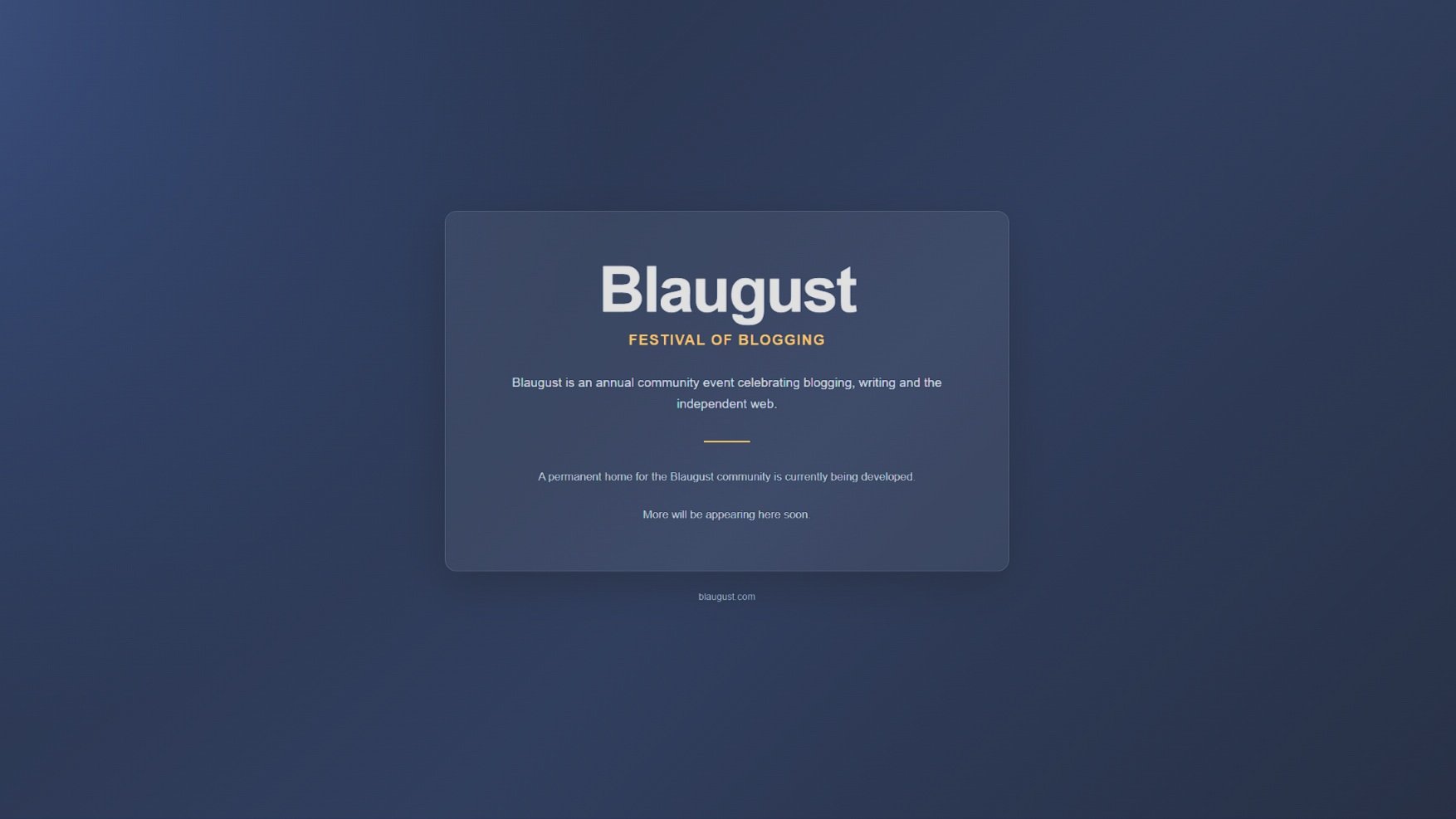
There is a subtle difference between being rash and being proactive. Being rash means acting too fast without thinking about the results, while being proactive is a question of acting early with careful planning. Why have I mentioned this? Well prima facie information indicates that recent Blaugust participants are interested in an “official” online presence for the annual festival of blogging, other than that existing Discord server. That seems perfectly reasonable to me. Not everyone likes using Discord and I do worry that they may reduce its free functionality at some point in the future. With regard to there being a Blaugust platform of some kind, there is a consensus that it doesn’t need to be some sort of sprawling commercially hosted website running on Wix or such like. Those sorts of site require funding, a degree of admin and possibly private data management. It also a bit too “corporate” if you like. Hence the logical compromise is to have a static site. Let it suffice to say, that has been done.

Judging by the posts I’ve read, it would appear that Blaugust 2026: Festival of Blogging has been well received by those who participated in it. That is most satisfying to know, especially in light of the fact that this is the first year the event has been run without our founder who sadly past away in July. It has also become clear that Blaugust is reaching a far wider and diverse audience and most definitely is no longer the exclusive province of bloggers from one particular community. There has been healthy discussions on our Discord server about whether this year event needs to adapt to accommodate the modern blogosphere. Questions such as whether or not there needs to be a dedicated Blaugust website have been raised and explored. Should every site participating have an RSS feed? How, if required, should comments be handled. Inevitably, the subject of the use of AI in blogging still remains a controversial issue.
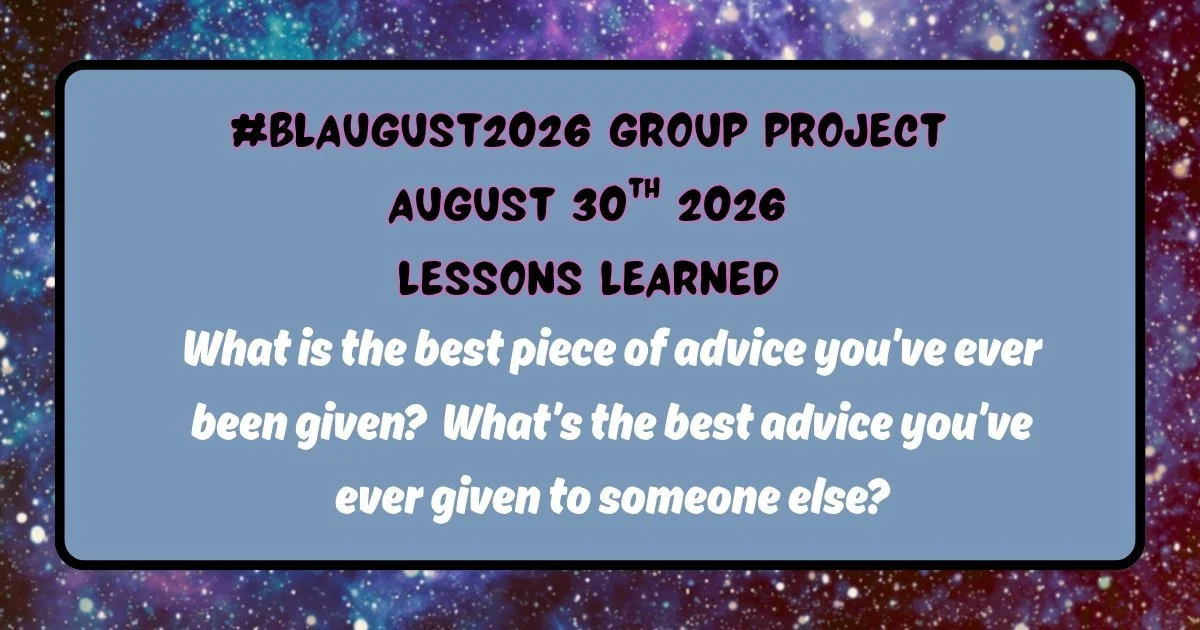
After a very productive month of writing, we come to the final Blaugust 2026 Group Project writing prompt. It is titled lessons learned and is usually a chance to reflect on the festival and whether or not it has been to one’s satisfaction. Have you achieved your goals? What have you gained from the experience? Those sorts of things. It also poses two further questions; “What is the best piece of advice you’ve ever been given?” and “what’s the best advice you’ve ever given to someone else?” for your consideration. I’ll address the questions shortly. Firstly let’s mull over this years event and assess how it’s gone.
It was my blogging anniversary on the 16th August. I’ve been writing and sharing my post online for 19 years, via various different websites and blogs. This current iteration of Contains Moderate Peril has been around since August 2015. To date it has 2,171 posts including this one. Quantity does not necessarily equate to quality but there are some articles I am proud of and feel that they make their point effectively.
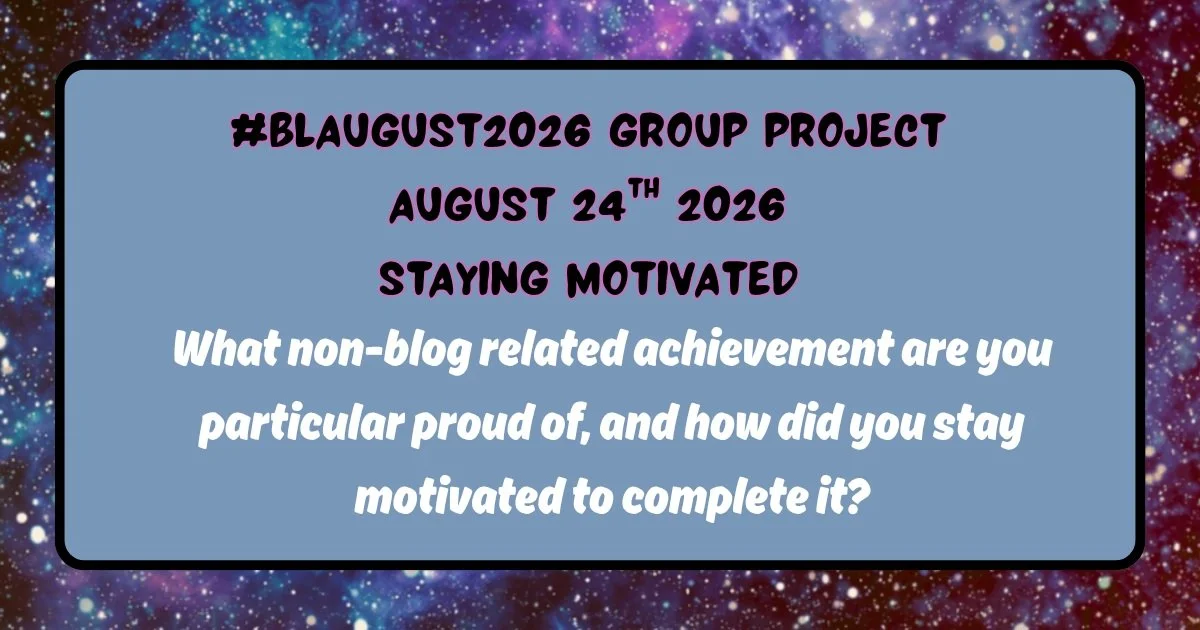
This week’s Blaugust 2026 Group Project writing prompt is an important topic. Namely, staying motivated. I prepared a fairly lengthy post with some advice and ideas to keep people focused and writing. Then I checked it against the post I wrote last year and the year before that, going back to blogging events from 2012. All of these posts broadly said the same thing, so I decided to scrap what I had composed for today and to go with a simpler approach. I shall answer the questions Krikket posed for this writing prompt. Fellow blogger Bhagpuss has also done so and as ever, his thoughts are interesting and well expressed. Here are my answers.

Once again, I have stumbled across an interesting debate that has provided me with an opportunity to write a blog post. Over on the Blaugust Discord Server, I read a comment from AgingGamer regarding RSS feeds and their significance with regard to blogging. This in turn referred me to a post by fyr (don’t you love all these nom de plumes) who wrote at depth about the ongoing community debate about the use of RSS/Atom feeds. The article explored the importance of such feeds with regard to reaching readers and providing accessibility to the disabled. All of which provided me with a great deal of food for thought. Mainly because I use a mainstream website service provider for my online endeavours, so RSS is by default built. I’ve never really considered not having such a facility at my disposal. But the rise in the IndieWeb scene challenges this assumption.

I have written two blog posts today that I have subsequently abandoned. The first was gaming related but when I was about halfway through writing it, I felt like I was covering old ground and just repeating myself. It was also regarding an issue that can’t really be fixed. Namely, how do you ensure that matchmaking in PVP games is done equitably. As there is no solution to this issue at present, or at least not one that all parties can agree on, I decided to ditch it. Similarly a post I was working on about what becomes of my blog if anything happens to me was curtailed. In light of recent events in our community it seemed inappropriate. However, as a result of binning two blog posts, I new idea occurred to me. Do my fellow bloggers self-edit and curtail what they write about? Is your blog totally unfiltered or do you apply a set of rules that determine what content is deemed acceptable?

It is time for the next Blaugust 2026 Group Project writing prompt. This one comes with two lines of enquiry. The first is an opportunity to “introduce yourself”. Over the years, I have written several introductory posts for previous Blaugust events. Rather than repeat myself I’ll just link to the last one, which was posted in August 2023. I haven’t radically charged since then apart from my hair going whiter. The next part of the prompt poses a far more intriguing question. “If you could have one magical power or super power, what would you choose and what would you use it for?”, which offers much for consideration. Having given this proposition much thought here is my response.

A decade ago I wrote a post about blogrolls and the practical and social issues surrounding them. At the time, the version of Squarespace I was using didn’t easily support such things or at least wasn’t able to do so in a manner I liked, so I didn’t have one. Ten years later Squarespace as a hosting platform has far greater functionality, hence I recently decided to add a blogroll. That was in March this year. However it just wasn’t really fit for purpose. So I decided to revise it a few days ago and rather than just have a traditional list of blogs in a side column, I ended up producing a more comprehensive blog directory, which list two hundred plus sites alpha-numerically. I’ve been tinkering with it on and off and I am now finally happy with it. The latest update reflects the international nature of the Blaugust: Festival of Blogging and the fact that we have many blogs written in their native language. Translating text is now an integral function of web browsers, so I see no reason why these blogs should be excluded.

Today’s post is part of the Blaugust 2026 Group project, which features a series of writing prompts set for specific dates throughout the month. The idea being that everyone who wishes to participate can write about the same subject, riff off each other’s posts and enjoy a shared experience. In many respect having a common writing prompt levels the playing field and provides a sense of common purpose among those who take part. Today’s group project prompt asks the question “tell us all about your very first blog”. An unambiguous and interesting question that will hopefully prove enjoyable to write about and informative to others.

I have been writing online for nearly two decades. I don’t claim to be good or accomplished but what I can say with certainty is that the more often you write, the easier it becomes. For those who are new to writing a blog and the Blaugust Festival of Blogging, possibly the biggest hurdle that you now have to get over, is writing your first post of the month. You spent the lead up to this event sorting out your blog templates, fine tuning the backend and possibly banking some ideas. Or you may have decided to just wing it and make it all up as you go along. Both are perfectly valid approaches. However, there is one thing left to do that cannot be put off, avoided or danced around. Writing. At some point you’ve got to do it. Or bail on the event. The proverbial “shit or get off the pot”.

If you take a cursory look at a calendar you will see that the month of July is fast coming to an end. That means that Blaugust 2026 Festival of Blogging starts in a few days time! If you’re participating, or thinking of doing so, the next few days present a golden opportunity to do some practical organising and basic preparation. You don’t have to if you don’t want to. Feel free to just do things as they come, so to speak, if that’s your approach. However, for most of us, it helps if we have some kind of plan in place and make some arrangements in advance. I personally prefer this approach and like to have some ideas for blog posts in the bank. It is also useful to have “options” if something doesn’t go to plan. For those who are new to Blaugust, here are a few ideas regarding preparation that may be of use to you. As ever, your personal mileage may vary and ultimately you are best off adopting a strategy that suits your writing style and personal schedule.

Prior to last year’s Blaugust: Festival of Blogging, I upgraded Contains Moderate Peril to the latest version of Squarespace. There are still some aspects of the site that need fine tuning but overall, I am happy with the appearance of my blog and its respective functionality. With this year’s writing event fast approach, I decided to tackle over the last few days, some of those finer points that need tweaking. I have wanted a post counter on the site for a long time but unfortunately there is no native Squarespace widget for this basic function. I also felt the need to upgrade the blogroll, as the current one didn’t support RSS feeds from certain sites (e.g. Google Blogger) and was dependent upon a third party service, Elfsight, which wasn’t ideal. Both of these issues have now been addressed and I am pleased with the results. There is now a post counter on the Blog Archive page, which seems a logical place to have it and the Blogroll is now far more comprehensive.

Next month the annual Blaugust: Festival of Blogging begins. Roundabout this time each year, I try to write a promotional post to raise awareness of the event and encourage potential participants. However, as I’ve done this quite a few times before, each year it is becomes increasingly difficult to present the essential facts about Blaugust: Festival of Blogging in an interesting fashion. There’s nothing worse than writing a post and feeling that you’re just covering old ground. So, this year, I thought I’d try something different and present the most important information about this annual event, as if it were a conversation between myself and an interested passer by. Feel free to attribute novelty voices for each party in your own head, while you read this. If it helps, try imagining that this discussion is happening between two celebrities or such like. Both may be wearing exotic hats but I digress. On with the scenario.

I read a blog post by Void recently, about finding a new internet home. He wrote about how he and many others have had to pick up their “digital roots” and migrate multiple times over the years, from one platform to another. It is a position I can sympathise with as I have done likewise. Hence I like the idea of having a place online where I hangout by default. My own blog is an anchor for me but it is not quite the same thing as a platform or online portal where I can find all my friends and colleagues, share content and shoot the breeze. It’s a curious thing, because as I typed that last sentence it struck how such a sentiment may seem alien to others. There may well be people who like to have a finger in multiple pies and who are happy to frequent and flit between various social media apps, Discord servers and subreddits. I prefer to focus my efforts on a single instance. A place that suits my requirements, allows me to put down roots and become part of the furniture. Like a virtual Diogenes Club.

Everyday, once I’m up, I sit at my desk in my office, fire up my PC and log into Feedly. I have various RSS feeds grouped by category, which I slowly trawl through and read anything that catches my eye. I have one curated feed named “Blaugust” named after the yearly festival of blogging event. It has over 250 blogs listed, many of which are former participants. Most of these regularly post. Hence there’s a lot to get through and so I don’t read all of them. However there are a few that I always checkout. Mainly because they’re the personal musings of some of our writing community’s oldest and most prodigious members. The sorts of guys and gals who are part of the furniture. They’ve always been there and it feels like they always will. Posting their thoughts, sharing their enthusiasm and spreading the love, so to speak. One of these blogs, is Tales of the Aggronaut. written by Belghast.

On Friday 26th June, I had another random spike in internet traffic to Contains Moderate Peril. The statistical package that comes with my Squarespace account recorded over 13k visits in less than 24 hours, which is not typical (although I wish it was). However, all of these visits to my blog arrived via the default homepage and spent between 1 and 2 minutes there. Hence, it was obvious that this was not human traffic, as there was no evidence of any searches being made of content that is available on my site, nor of the “visitors” clicking on any of the links on the top menu and viewing other posts. This was undoubtedly AI traffic arriving at the designated homepage and simply parsing the site. I had a similar spate of this sort of web traffic last November. The only difference on that occasion is that the traffic all came from China. This time round it hailed from the US. I suspect that this is something that will happen more often as companies set their AI loose on the net for what is effectively training.

I recently watched a video on Patreon by someone who I actively support as a “content creator” and whose work I enjoy. I shall provide no more detail regarding their identity because they may not want their work referenced with regard to what I am going to say. During the course of their video they briefly referenced the work put into promoting a podcast they are currently producing and the relatively low audience that it has garnered so far. The comments were an aside and most certainly not said with any sense of self-pity. They were simply a statement of fact. Furthermore, I suspect they are far from unique and similar sentiments have been expressed in one way or another by anyone who has created something the published it online, only for it to be lost among the greater white noise” of the wider internet.
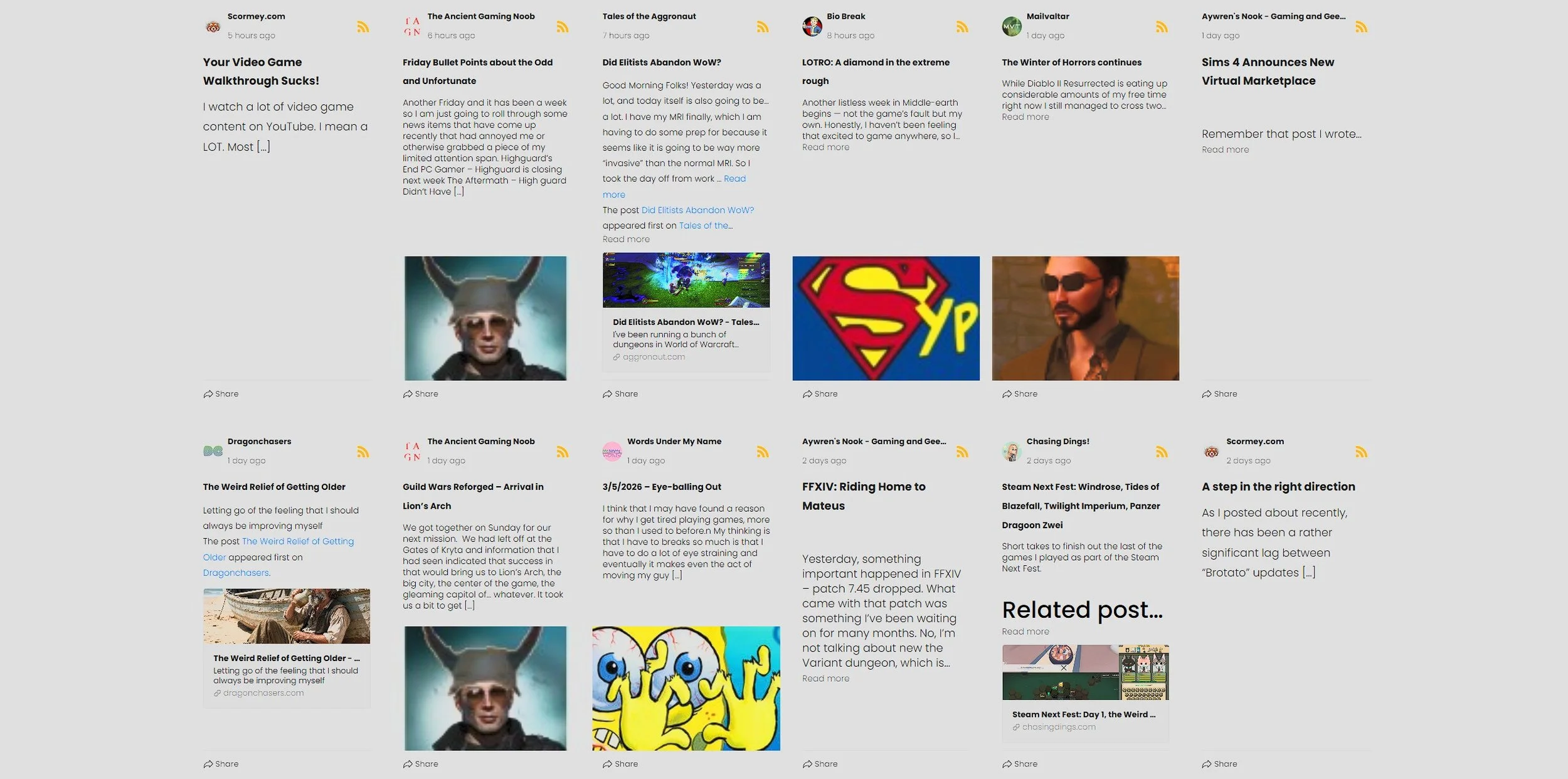
When I first started blogging way back in 2007, I maintained a blogroll of all my colleagues and peers’ websites. At the time this was a common practice and a way to support an expanding community. I considered this such an important aspect of the blogging scene at the time, I created a website to aggregate posts from video game blogs, called The Gaming Blog Nexus. It ran for two years and proved quite useful. However, it was tricky to administer and would frequently break as a lot of the back end widgets and plugins were created and maintained by “gifted amateurs”. I eventually shut it down due to the operating costs. When I moved my own website, Contains Moderate Peril, to Squarespace in 2015 I intended to start maintaining a blogroll once again. However, at that time there was no native support for such a thing on the platform. Hence for the last ten years, I have not had a blogroll on my website, which hasn’t sat well with me.

I was speaking to someone recently about hobbies (fortunately it wasn’t Simon Quinlank) and I mentioned that I have maintained a blog for over a 19 years. When I talked about the ongoing cost they were most surprised, as they had assumed that blogging was something that could be done for free. I guess we’ve become so accustomed to the provision of free online services such as email, that this a reasonable assumption. I pointed out that although it is indeed possible to blog for free using Blogger, it was not the optimal approach, especially if you want to maintain some degree of control over your writing. Naturally, the next question they asked was how much do I spend and I gave them a ballpark figure. All of which reminded me that I wrote a post on this very subject a few years ago. So I’ve decided to revisit the subject and see how much it currently costs to maintain Contains Moderate Peril.

Today I started the slow process of auditing every post that has been published on Contains Moderate Peril since 1st August 2016. The goal is to correct any obvious typos and replace all existing images with larger ones. The Squarespace software upgrade I applied to the website at the end of last year has finally allowed me to establish a standard format that I am happy with. Hence the ongoing audit is the perfect opportunity to apply these style rules to all posts. There are also some technical issues and matters regarding functionality that need to be addressed. I need to determine how to embed YouTube videos in such a way that they automatically scale to fit whatever device is viewing them. Another area which needs improving is the website search facility. This needs refinement so that enquiries can be more specific. Older posts also need to be more accessible, although I am still researching how best to achieve this.

It’s nearly two and half months since the Blaugust: Festival of Blogging event ended. During that time I’ve maintained a fairly regular writing schedule and I post every two days or so. Furthermore, I finally dragged my blog template, kicking and screaming, into the modern era. I tweaked a few pages and updated the content of the “about” page. The next task is to start going through all previous posts and replacing older, low resolution images with larger, more appropriate ones. This process also presents an opportunity to ensure that all posts follow a uniform style. IE Are appropriately categorised, have links to related posts at the bottom and are SEO optimised. This will be a lengthy task so I think the best approach will be to tackle two or three posts a day. Hopefully this will raise the profile of older content, which generates the lion’s hare of traffic to this site.
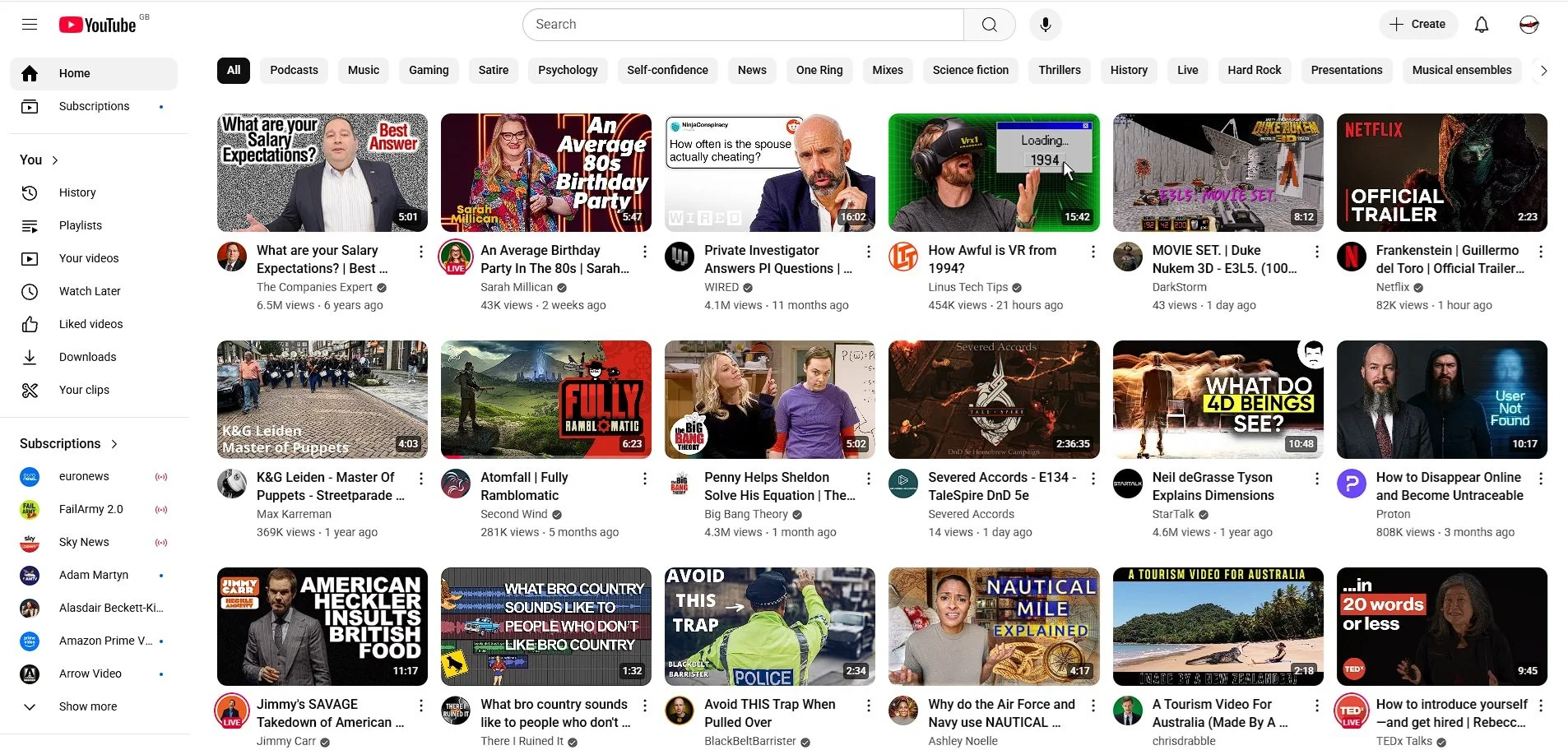
I use a browser extension called Control Panel for YouTube, which allows me to determine who many videos are displayed on my YouTube homepage and to filter the content that is shown. At present it is configured to display rows of six. Something that I have noticed of late, is the amount of videos with hyperbolic titles and thumbnail images created by AI. Both of which are design choices made to increase engagement. Clickbait titles are contrived to meet current SEO optimisation criteria and as such feature more and more in search results. The fact that they frequently have no relation to the subject I am researching, seems to be neither here nor there. The same issues arise with regard to AI generated images, which again frequently have no bearing on the matter. The fact that more and more content creators do this, infers that it works and is now an essential part of the process you must follow to be seen and featured in search results.

In the last post in this series, I specified the need for a plan with regard to upgrading my blog. Well a plan has emerged, been refined and has now been formally adopted. Rather than migrate Contains Moderate Peril to a new platform and effectively have to rebuild all the content, I am going to upgrade my existing presence on Squarespace. This decision was made for two reasons. Time and money. Migrating to a new platform will take a lot of time and incur additional costs. Upgrading the existing website will take less time and has no cost implications. That is not to say that it will be easy. It has become abundantly clear that the upgrade process will break stuff and that all published posts will have to be manually repaired. Hence my choice boils down to the lesser of two evils.
This year’s Blaugust: Festival of Blogging has reached an end and it would appear that this event has been well received by those who have participated in it. I believe that there were 168 bloggers taking part this year, many of whom have not participated before. Some were new to blogging, where others simply wished to see if they could increase their writing output. As ever there was a wide variety of blog styles and subject matters and it has been most interesting to read new posts every day. I have attempted to leave comments and positive feedback where I can and I hope that some of these new blogs that I’ve discovered continue to write. Well done to everyone who took part. I hope it has been an enjoyable and informative process and that you have learned from it. I know that at least one blogger has determined that writing online is not for them, which is a valuable lesson.
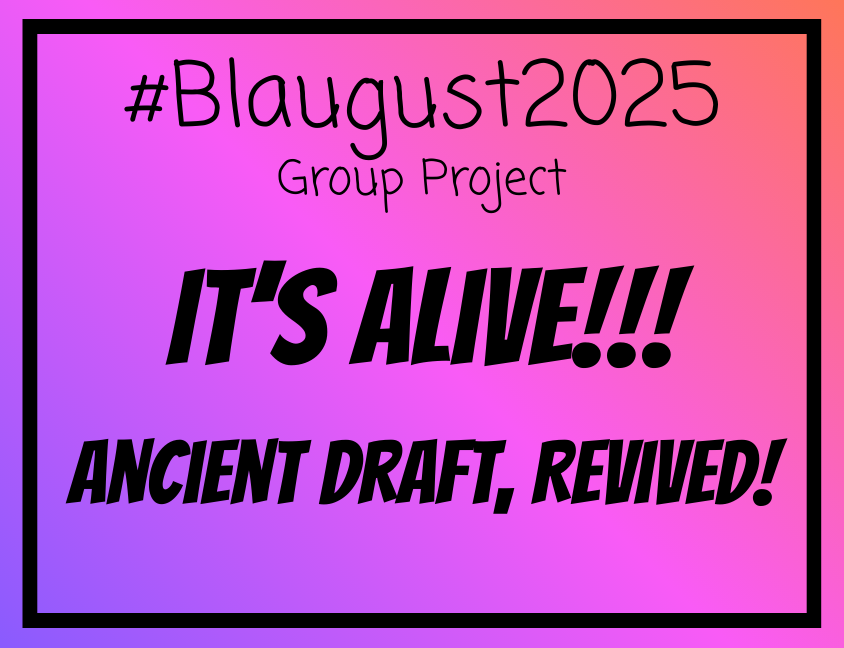
There is currently a group writing prompt available as part of this year’s Blaugust: Festival of Blogging which has piqued my interest. It asks the question “what is the oldest draft post you have” and suggests that it is revived in some manner. I have dozens of draft posts in a folder in my Google Drive. Many are film reviews or film related. The oldest of which dates back to summer 2010. Rather than write a straight forward review of Blake Edwards 1968 comedy The Party, I rather foolishly thought at the time that I’d tackle the issue of whether the film is sufficiently racist to make it beyond the pale. Let it suffice to say that I quickly found myself bogged down in the complexities of the subject and thus never completed the blog post.

I’ve participated in every previous Blaugust: Festival of Blogging event. Prior to that I was involved in the Newbie Blogger Initiative or NBI as it was affectionately known. I have therefore written quite a lot of blogging advice and suggestions over the years. If anyone feels disposed to do so, you can access them all by clicking on the “blogging” option on the top menu of this blog. However, it is important to remember that a lot of the ideas I have advocated and written about over the years are purely subjective. Not all advice or guidance works for everyone. People have different ideas about blogging, different approaches to it and different aspirations. This year has highlighted some quite distinct differences among bloggers which has been most illuminating.

Today is my blogging anniversary. I have been writing online consistently for 18 years. My earliest blogs no longer exist, although they can be found via the Internet Archive Wayback Machine. My first blog was a Lord of the Rings Online fansite called Misadventures in LOTRO. After a while this morphed into a wider gaming website; Misadventures in Gaming. However, I soon discovered that I wanted to write about more than just video games, so I decided to start from scratch and created Contains Moderate Peril in February 2010. This blog endured and has been my main online presence ever since. It has moved several times for various reasons. For a while I had a sponsor, as well as a reasonably sized audience and had dreams of making money from my writing and podcast. But it wasn’t to be and now I just write primarily for my own peace of mind and amusement.
The Chairman (1969)
The Cold War was a mainstay of many a thriller and action movie throughout the sixties, seventies and eighties. However, all too often it was depicted in terms of the US versus the Soviet Union. China didn’t seem to feature so much, although it was just as equally an “enemy” of the West. Hence when I recently read about The Chairman (which has just had a Blu-ray release), it was of interest to me. An espionage story, starring Gregory Peck with a hidden bug implanted in his skull, infiltrating China to steal a secret enzyme formula is quite an intriguing premise. Furthermore, director J. Lee Thompson had previously worked with Peck on The Guns of Navarone, which is a solid action movie. Therefore I was initially optimistic that this film which I was previously unaware of, would be an interesting diversion. Unfortunately, having now seen The Chairman, all I can really describe it as is a cinematic curiosity. One of numerous films produced by a big studio in the late sixties that failed to satisfy anyone's expectations.
The Cold War was a mainstay of many a thriller and action movie throughout the sixties, seventies and eighties. However, all too often it was depicted in terms of the US versus the Soviet Union. China didn’t seem to feature so much, although it was just as equally an “enemy” of the West. Hence when I recently read about The Chairman (which has just had a Blu-ray release), it was of interest to me. An espionage story, starring Gregory Peck with a hidden bug implanted in his skull, infiltrating China to steal a secret enzyme formula is quite an intriguing premise. Furthermore, director J. Lee Thompson had previously worked with Peck on The Guns of Navarone, which is a solid action movie. Therefore I was initially optimistic that this film which I was previously unaware of, would be an interesting diversion. Unfortunately, having now seen The Chairman, all I can really describe it as is a cinematic curiosity. One of numerous films produced by a big studio in the late sixties that failed to satisfy anyone's expectations.
Nobel Prize-winning scientist Dr John Hathaway (Gregory Peck) receives a letter from a former Professor Soong Li (Keye Luke), who now resides in The People's Republic of China, requesting his assistance. Raising concerns with the US authorities, Hathaway is "invited" by Lt. General Shelby (Arthur Hill) to visit the Professor, who has allegedly developed an enzyme that allows crops to grow in any kind of climate. Hathaway subsequently agrees and finds himself embroiled in a joint operation between the U.S. and the Soviet Union. A transmitter is implanted in Hathaway's skull which can be monitored by a satellite. He is not informed that the device also includes explosives that can be triggered by the Americans if necessary. Neither the U.S. nor the Soviet Union wants the enzyme to remain exclusively in Chinese hands. Hathaway flies to Hong Kong to request “authorisation” to visit China and meets Security Chief Yin (Eric Young) who is deeply suspicious of his motives.
The Chairman has high tech trappings, similar to those seen in The Forbin Project or even Fantastic Voyage. Staff sit at computers monitoring Hathaways pulse and respiration, big screens track his locations and military staff pace up and down drinking coffee from plastic cups. The basic premise is sound and Peck makes for an unlikely hero. But once the plot has been established, very little happens. Hathaway goes to Hong Kong, meets the shadowy figure of Yin and then is granted permission to travel to China. There is a brief diversion when a Chinese agent attempts to seduce him while another searches his apartment but nothing is made of the plot device. On arrival in China Peck is given an official tour of the country, with a few nods to the continuous military presence everywhere. He next meets Mao Tse Tung (the chairman of the communist party and leader of China) who needs his help in finding a way to mass produce the enzyme. They trade political views and philosophy over a game of table tennis.
Peck is always compelling to watch and it’s interesting to see a story which attempts to explore the fear of China at the time. But there simply isn’t sufficient to sustain the narrative. There is an action sequence at the end of the film when Hathaway flees the remote experimental compound with the help of a deep cover Soviet operative played by Burt Kwouk. There’s then a chase to the border and an attempt to penetrate the minefield and electrified fences. But it’s too little, too late. The film ends with all three superpowers sitting on the information they all share and Peck attempting to place the information in the public domain for the benefit of mankind. It is a suitable ending and the film is quite concise at 98 minutes but it all feels very undeveloped and unremarkable. The main point of note is a solid score by the ever dependable Jerry Goldsmith.

Exit 8 is a sophisticated and claustrophobic psychological thriller directed by Genki Kawamura, which skilfully transforms a minimalist indie walking-simulator game into a cinematic existential enigma. This overtly metaphorical film renders the repetitive nature and drudgery of modern working life into a physical environment in which the lead character is trapped and must find a way out. A random, brutal maze filled with an atmosphere of indifference to the lab rats that find themselves trapped within. Or is it their personal guilt that has put them there? Genki Kawamura’s psychological mystery draws inspiration from the Japanese video game of the same name, as well as from the cyclical nature of Groundhog Day and endless corridors of the Overlook Hotel in Kubrick’s The Shining. Although there are jump scares and some ghoulish imagery, this is not a horror vehicle. Instead this is a disquieting psychological drama with a strong sense of morality.
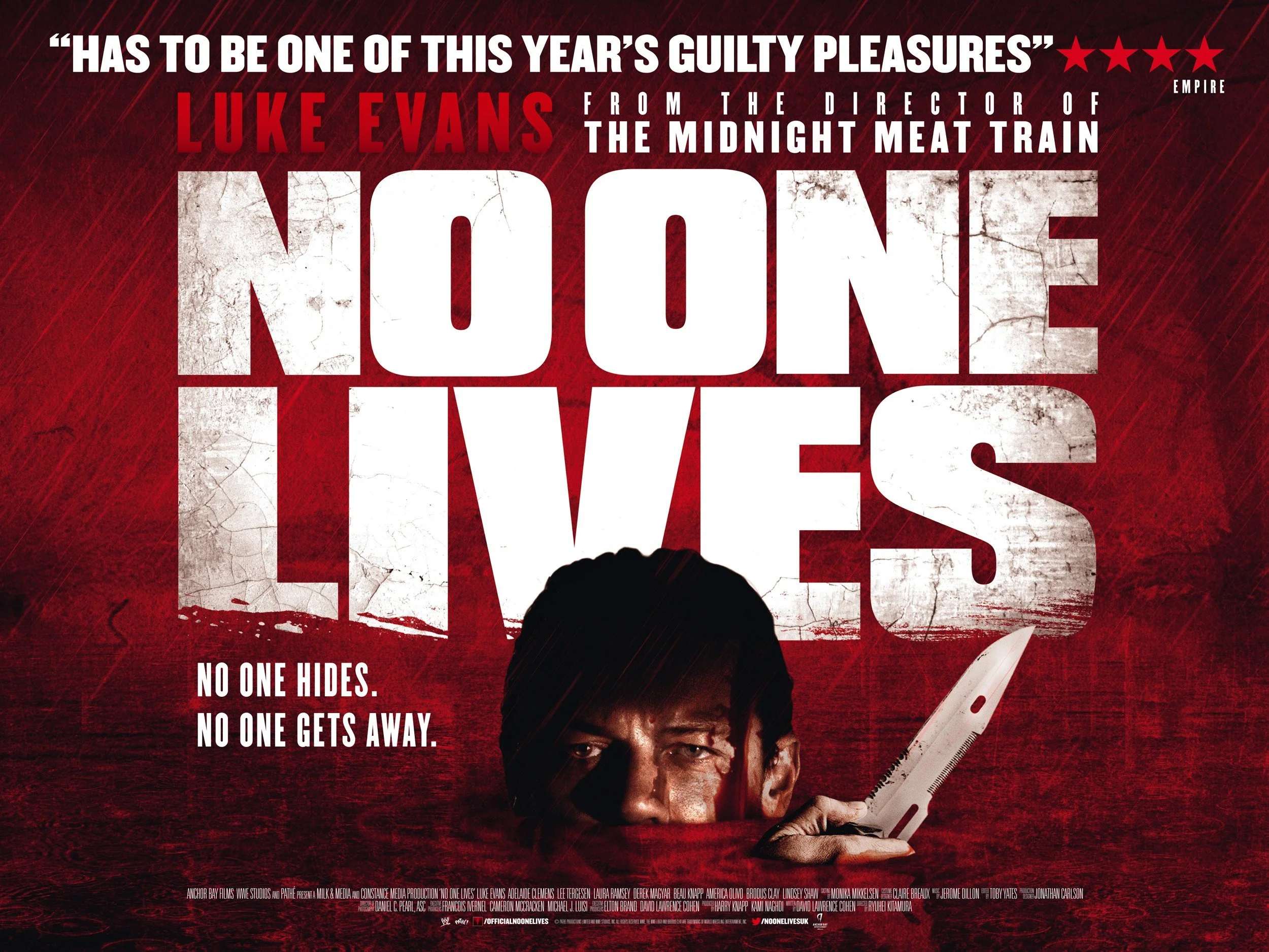
A lot of people may know Luke Evans from the live action version of Beauty and the Beast or Peter Jackson’s The Hobbit trilogy. With his matinee idol good looks, charming Welsh demeanour and his “smoky” tenor singing voice, he projects a sense of old school stardom. Which brings us to No One Lives; a film which is a radical departure from his previous work. His performance is disconcerting to say the least and the film is somewhat unhinged. Directed by Ryuhei Kitamura, who made an interesting adaptation of Clive Barker’s The Midnight Meat Train, this cinematic outing is similarly replete with robust shocks and gore. There are some interesting ideas about the nature of violence, Stockholm Syndrome and whether one should deny or embrace one’s nature. However, these are ultimately minor asides. Philosophical musings in between bouts of surprisingly striking unpleasantness.

When I first saw the promotional trailer for Gangster Squad back in 2012, prior to its release, I wasn't especially impressed. I simply thought the film was another attempt to re-invent the gangster genre for a generation who were not especially familiar with it. I wasn't exactly overwhelmed with director Ruben Fleischer's resume either. I didn't particularly like Zombieland and haven't seen 30 Minutes Or Less. Then came the tragic mass shootings in Aurora, Colorado which led to the movie being delayed so that the original ending, which featured a shoot-out in a movie theatre, could be replaced. Hence when I finally watched this film recently, I wasn't expecting a movie up to the standards of say Once Upon A Time In America or Miller’s Crossing and it would seem that I was right do so. Gangster Squad is not especially noteworthy in any respect.

The Cold War was a mainstay of many a thriller and action movie throughout the sixties, seventies and eighties. However, all too often it was depicted in terms of the US versus the Soviet Union. China didn’t seem to feature so much, although it was just as equally an “enemy” of the West. Hence when I recently read about The Chairman (which has just had a Blu-ray release), it was of interest to me. An espionage story, starring Gregory Peck with a hidden bug implanted in his skull, infiltrating China to steal a secret enzyme formula is quite an intriguing premise. Furthermore, director J. Lee Thompson had previously worked with Peck on The Guns of Navarone, which is a solid action movie. Therefore I was initially optimistic that this film which I was previously unaware of, would be an interesting diversion. Unfortunately, having now seen The Chairman, all I can really describe it as is a cinematic curiosity. One of numerous films produced by a big studio in the late sixties that failed to satisfy anyone's expectations.

Former United States Marine Corps Scout Sniper and Vietnam War veteran Jim Hanson (Liam Neeson) lives on a ranch on the Arizona-Mexico border. The mortgage on the property is in arrears after the death of his wife has left him medically bankrupt. One day while patrolling his property he encounters Mother Rosa (Teresa Ruiz) with her son Miguel (Jacob Perez) illegally crossing the border fence. He calls his step daughter Sarah (Katheryn Winnick) in the border patrol and reports them as they’re miles from any habitation. However, Rosa and Miguel are fleeing a drug cartel and Mauricio (Juan Pablo Raba), one of their enforcers. When Mauricio and his men try to forcibly take Rosa, Jim intervenes and a car chase and firefight ensue. Mauricio’s brother is killed and Rosa is fatally wounded. She gives Jim a note with her family's address in Chicago and he reluctantly agrees to take Miguel there.
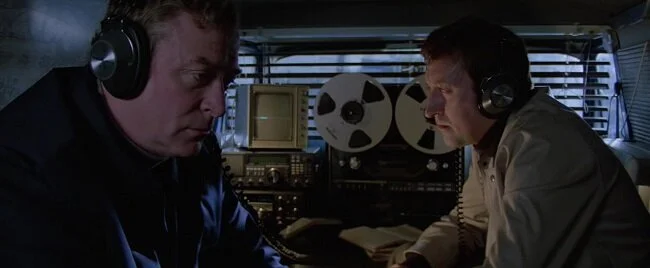
Sometimes a perfectly competent film simply misses the boat. The Fourth Protocol is a prime example of this. Based upon the novel by Frederick Forsythe this well made, somewhat clinical thriller arrived in cinemas at a time when the cold war was coming to an end due to “glasnost” and the “red menace” was becoming a somewhat tired plot device. It didn’t help that a similar story about a rogue Russian mission to detonate a nuclear device on a US base had already featured four years earlier in the Bond film, Octopussy. Michael Caine spent several years trying to get the project off the ground, after initially reading the author’s draft manuscript of the novel. Veteran screenwriter George Axelrod was hired and John Frankenheimer was sought to direct the film. However, difficulties in financing the project led to changes in the production and Forsythe ended writing the screenplay himself, while John Mackenzie (The Long Good Friday) took on the direction.

Film Noir often reflects the numerous things that influenced it. German expressionism, French poetic realism and American hardboiled fiction. Hence many films from this genre have a tendency to be stylised both visually and narratively speaking, with a fatalistic tone. Kiss Me Deadly, directed by Robert Aldrich in 1955, takes all these attributes as well as others and amplifies them in one of the bleakest and most uncompromising movies of the fifties. It features a brutal protagonist who isn’t even a decent detective and a plot that seems at first glance to come straight out of Greek mythology. Yet Kiss Me Deadly is compelling and lean without any superfluous scenes or narrative baggage. There’s also what appears to be the mother of all cinematic "MacGuffins" but once the film is over and the viewer reflects upon what they have seen, it can be argued that maybe the characters and the inevitability of their actions are actually the driving plot device instead.
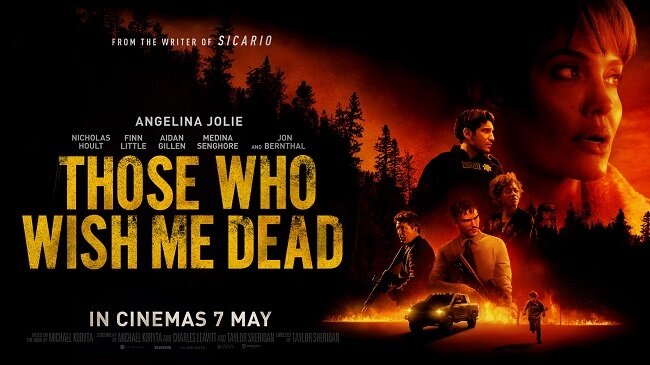
Forensic accountant Owen Casserly (Jake Weber) flees his home with his teenage son Connor (Finn Little) when he discovers he has been targeted by a pair of assassins (Nicholas Hoult and Aidan Gillen) who have been hired to stop him giving evidence in a major corruption case. Connor witnesses the murder of his father after their car is run off the road. Entrusted with important written evidence, he escapes into the dense forests of the Montana wilderness pursued by the killers. Seeking help he runs into smokejumper Hannah Faber (Angelina Jolie) who is stationed at a remote fire lookout tower. Hannah suffers from PTSD from a previous forest fire in which she was unable to save three young boys. Hannah attempts to lead Connor through the forest to safety. Meanwhile the assassins set fire to the forest to divert the attention of the authorities and cover their tracks.

When one considers all the various elements involved in the production of Telefon, it makes it all the more disappointing that the movie fails to reach its potential. The basic idea about sleeper agents in the US is sound but the story doesn’t really go anywhere and not a great deal happens. The strong cast featuring Charles Bronson, Lee Remick and Donald Pleasance have to do their best with an undeveloped screenplay. Considering that it was written by Peter Hyams and Stirling Silliphant (from a novel by Walter Wager) it is quite surprising how lacklustre it all is. But perhaps the most saddening aspect of the film is the somewhat indifferent direction from Don Siegel, who by his own admission was not especially engaged with the story. Considering that he had scored a major hit the previous year with John Wayne’s swansong The Shootist, makes it more curious that he wasn’t more enthused. Even Lalo Schifrin’s score fails to bolster Telefon.

There have been several movie adaptations of the books of Jonathan Stark (AKA Donald E. Westlake) featuring his career criminal lead character, Parker. Sadly not all of them have fared well, either critically or at the box office. Many have deviated from the source material, often just using mere aspects of the original plot as the basis of their screenplay. Perhaps the most successful of these has been Point Blank (1967), directed by John Boorman and starring Lee Marvin. Slayground sadly follows the pattern set by previous adaptations. It changes several character names and takes two main elements from the source text and uses them as a premise. Specifically, a robbery that goes wrong which results in an accidental death and a climactic shootout in an out of season fairground. Due to the financing of the film, half of the story takes place in the US and the other in the UK. Much of the cast are British, resulting in a curious and at first glance somewhat incongruous film.

The Long Good Friday not only launched then career of Bob Hoskins but remains a uniquely British take on the gangster genre. Featuring authentic performances and a credible plot, the screenplay touches upon many of the social and political issues of the time; police corruption, the IRA, urban renewal and the decline of industry, along with EEC membership and the free-market economy. It’s a gritty and unrelenting drama that is still relevant today. Furthermore, the film is filled with quotable dialogue and has several stand out scenes that showcase Bob Hoskins’ smouldering performance. It’s also offers of “who’s who” of British character actors and there is one sequence still has the power to shock even today.

John le Carré's Cold War thriller Tinker Tailor Soldier Spy, is not only a good example of the spy novel genre, but a fine piece of seventies British literature per se. Therefore I was most surprised when I learned back in 2011 that it was to be made as a film. Could the complexities and subtleties of this cerebral and deliberately slowly paced book be adequately brought to the big screen, by today’s studio system? Could it compete with the previous BBC television adaptation starring Alec Guiness that was made in 1979? Thankfully, director Thomas Alfredson and Working Title films have successfully managed to distil the complex plot into the film’s 127-minute running time. Furthermore, the ensemble cast have a quality script to work with and the entire production benefits from the flair of a quality European director who brings an interesting outsiders dynamic to this very British tale.
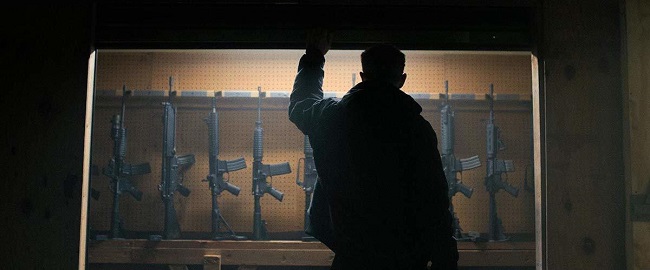
Inside a dark, remote warehouse, seven members of an unnamed midwestern militia meet. They’ve all heard via radio or police scanners that an unnamed, armed shooter armed with a modified AR-15 has opened fire on a police funeral. The assailant also plant IEDs and the casualty rate is therefore very high. This means the authorities will be scouring the countryside, raiding all known militia groups and their affiliates in the region. The men’s concern quickly turns to panic when they discover that one of their AR-15 is missing from their weapons cache, along with body armour and explosives. Is one of their own the shooter? Ford (Chris Mulkey), the group’s no-nonsense leader, asks fellow member Gannon (James Badge Dale), a former police interrogator, to question all the men and determine who is responsible. However, matters prove more complicated as Gannon knows that one other member, Noah (Brian Geraghty), is an undercover cop. Can a solution be found before the police inevitably come calling?

Clint Eastwood is 88 years old and has a successful career spanning over six decades. During that time he has proved to be one of America’s most bankable box office stars and established himself as an actor and director of note among his peers. If The Mule turns out to be his swansong, then it is certainly a fitting end to a prestigious career. Because in many respects The Mule is a distillation of many of the themes and concepts, we’ve seen in previous Eastwood movies such as Gran Torino and The Unforgiven. Perhaps the core story of an ageing man trying to reconcile himself to a modern world and make peace with it, is in some way Eastwood commenting on the movie industry himself. It is very much his film and his performance underpins the proceedings.

What is it with director Ridley Scott and his predilection for multiple edits of his films? Is he indecisive and a consummate tinkerer (like George Lucas) or a victim of studio politics? I suspect none of these are true. So how come there are always multiple cuts of his movies? Do his terms of employment always deny him final edit on a movie? I would think not. A film maker of his stature must surely get far more favourable terms when contract to make a film? Whatever the reason it leaves audience with a problem. How is one exactly to determine which is the best version of any of his films to see? For example, Kingdom of Heaven was greatly improved in its extended format. Yet his revised version of Alien is actually inferior to the original theatrical cut. And don’t even get me started on the plethora of versions of Blade Runner. His penchant for multiple edits therefore makes it difficult to debate his work.
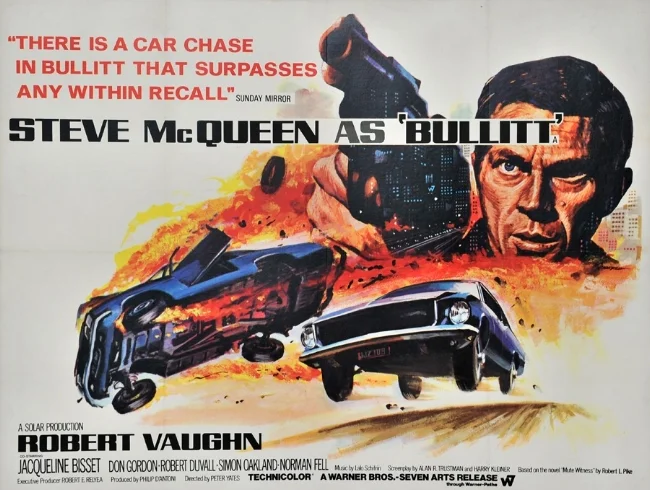
In a recent blog post I wrote about the difficulty that you can encounter sometimes when trying to watch movies that have been deemed “classic” by popular consensus. I listed 10 films of note that I intend to watch this year and to see if my views aligned with the various institutions and critics that praise them. The first on that list was the iconic sixties thriller Bullitt starring Steve McQueen. Having now watched the movie, I thought it would be prudent to collate my thoughts on it. Considering the immense amount of material that has already been written about it, I see no reason to present a review per se. Rather, here are my initial impressions for consideration. I’ve tried to highlight some specific aspects of the film that I think are of note or merit debate.

Legend is an extremely lavish biopic. Despite being about a pair of notorious British villains it has both the look and feel of an American gangster epic. There is no real attempt to depict either the period or the locations accurately nor is the story of the Kray twins themselves factually correct. As ever with American productions of this nature both the era and the subject matter are viewed through a miasma of sentimentality and faux nostalgia. The Krays are portrayed as folk heroes rather than the petty thugs that they were. However if you are prepared to overlook these deliberate biases then Legend is can still be an entertaining movie.
Red Tails (2015)
In 1944, the USAAF faces increased losses of Allied bombers conducting operations over Europe. The 332d Fighter Group (The Tuskegee Airmen), consisting of young African-American fighter pilots, are confined to ground attack missions in Italy and hampered with ageing, poorly maintained Curtiss P-40 Warhawk aircraft. After the Tuskegee Airmen distinguish themselves in support of the Allied landings at Anzio, Col. A.J. Bullard (Terence Howard) is surprised when the USAAF Bomber Command asks him if his men will escort the Boeing B-17 Flying Fortress bombers on their day time raids. Casualties have become unacceptably high. Bullard accepts on the condition his unit be supplied with the new North American P-51 Mustang. The tails of the new aircraft are painted bright red and become the unofficial name of the outfit. Bullard orders his pilots to remain with the bombers that they’re escorting and their first escort mission proves a success without the loss of a single bomber. Slowly, entrenched racist attitudes within the USAAF begin to change.
In 1944, the USAAF faces increased losses of Allied bombers conducting operations over Europe. The 332d Fighter Group (The Tuskegee Airmen), consisting of young African-American fighter pilots, are confined to ground attack missions in Italy and hampered with ageing, poorly maintained Curtiss P-40 Warhawk aircraft. After the Tuskegee Airmen distinguish themselves in support of the Allied landings at Anzio, Col. A.J. Bullard (Terence Howard) is surprised when the USAAF Bomber Command asks him if his men will escort the Boeing B-17 Flying Fortress bombers on their day time raids. Casualties have become unacceptably high. Bullard accepts on the condition his unit be supplied with the new North American P-51 Mustang. The tails of the new aircraft are painted bright red and become the unofficial name of the outfit. Bullard orders his pilots to remain with the bombers that they’re escorting and their first escort mission proves a success without the loss of a single bomber. Slowly, entrenched racist attitudes within the USAAF begin to change.
George Lucas is not known for his subtlety as a director, focusing more on visual flair than finely honed character development. Mercifully Red Tails does not do any sort of disservice to the memory of The Tuskegee Airmen. However, it doesn’t do them a great justice either. There are many aspects of the production that are outstanding, such as the ensemble cast featuring Nate Parker, David Oyelowo and Tristan Wilds and striking visual effects. But the weak link in the chain yet again is the screenplay by John Ridley and Aaron McGruder. It is laboured and pitched at a rather simplistic level. Subjects such as institutionalised bigotry, fascism and personal sacrifice need to be dignified with a bit more intelligence when depicted on screen. They are too important and complex issues to be portrayed in such an arbitrary fashion and sadly that is exactly how Red Tails plays out.
As a piece of populist entertainment, Red Tails works sufficiently. With the full weight of Industrial Light and Magic behind the visual effects, there is plenty of spectacle and the traditional story arc follows a distinctly tried and tested formula. The characters are engaging but this is predominantly due to the personalities of the respective actors. There is very little depth to the screenplay and the cast are mainly tasked with providing archetypes. The film will certainly play well to audiences who may not be so familiar with this aspect of World War II. The mixture of action and fast paced story should suit a youth demographic. But for the more sophisticated viewer, Red Tails will seem a bit light in content and lacking anything to make it distinctive. Portraying the Germans as “bad” because they are “Germans”, does not wash and seems a hangover from war films of the fifties. Furthermore the film seems to imply that after the success of The Tuskegee Airmen that the systemic problems of a segregated Air Force are effectively remedied. This sadly was not the case.
All films regardless of genre, require the suspension of disbelief by the audience to varying degrees and Red Tails is no different. Unfortunately George Lucas requires the audience not only to do this but to actively leave their common sense as home. You don’t have to be a military plane enthusiast to quibble over obvious technical inaccuracies or liberal bending of the laws of physics. One expects this to a degree in mainstream filmmaking but there are limitations. In this respect Red Tails does cross over the line. Ultimately, this could have been a superior film as opposed to just adequate, if a more seasoned director had been at the helm, armed with a more robust screenplay. One has to wonder exactly how much influence executive producer George Lucas had over various aspects of this production as Red Tails does exhibit the usual in-balance of content associated with his work.

The Imperial War Museum serves as a national museum for Britain. Its main location is in London, complemented by five additional branches across England. Established in 1917 as the Imperial War Museum, its original purpose was to document the civil and military efforts and sacrifices made by the United Kingdom and its Empire during the First World War. Over time, the museum’s scope has broadened to encompass all conflicts involving British or Commonwealth forces since 1914. As of 2012, the museum’s mission is to provide and encourage the study and understanding of the history of modern warfare as well as the “wartime experience”. The IWM as it is now known has its headquarters and primary site is located at Southwark in Central London. The museum is funded by government grants, charitable donations and revenue generated through commercial activity such as retailing, licensing and publishing. General admission is free to IWM London.

Over the years I have seen many documentaries about World War II. Although I do not claim in any way to be an expert, I believe I have a good grasp on the causes and the course of that six year conflict. However, it recently struck me that I could not say the same about World War I. In my youth I watched a repeat showing of the BBC documentary series The Great War (1964) but I remember very little of its prodigious 26 episodes. The one thing that stood out were the interviews with veterans. So I was very pleased when perusing BritBox over the weekend to find the 2003 documentary The First World War, based upon the book of the same name by Professor Hew Strachan. This ten part analysis takes a global view of the conflict, rather than excessively focusing upon the Western Front and also debunks a lot of the apocryphal ideas and notions that have persisted over the years. I found it so compelling that I binged watched the entire thing over two evenings.

In 1944, the USAAF faces increased losses of Allied bombers conducting operations over Europe. The 332d Fighter Group (The Tuskegee Airmen), consisting of young African-American fighter pilots, are confined to ground attack missions in Italy and hampered with ageing, poorly maintained Curtiss P-40 Warhawk aircraft. After the Tuskegee Airmen distinguish themselves in support of the Allied landings at Anzio, Col. A.J. Bullard (Terence Howard) is surprised when the USAAF Bomber Command asks him if his men will escort the Boeing B-17 Flying Fortress bombers on their day time raids. Casualties have become unacceptably high. Bullard accepts on the condition his unit be supplied with the new North American P-51 Mustang. The tails of the new aircraft are painted bright red and become the unofficial name of the outfit. Bullard orders his pilots to remain with the bombers that they’re escorting and their first escort mission proves a success without the loss of a single bomber. Slowly, entrenched racist attitudes within the USAAF begin to change.

I have always had a soft spot for the action movies that Euan Lloyd produced in the late seventies and early eighties. The Wild Geese (1978), The Sea Wolves (1980), Who Dares Wins (1982) and Wild Geese II (1985). They were quite gritty and all had a strong cast of British character actors. Sadly some of them strayed into political issues with their stories and often got out of their depths. The Wild Geese ham-fistedly explores the political landscape of post colonial Africa and Who Dares Wins clumsily deals with terrorism and the concept of unilateral nuclear disarmament. Yet despite the somewhat school boy approach to geopolitics, the action scenes are well crafted (often by legendary Bond stunt arranger Bob Simmons) and the cast more than make up for any narrative failings. All four films also have charismatic soundtracks by Roy Budd. However The Sea Wolves differs from the other three movies in so far that it is set during World War II and is loosely based on real events.

One of the things that immediately strikes you when watching Fury is its credibility and realism. The film reeks of authenticity. Every aspect of the production has been meticulously researched, from uniform and equipment, to ordnance and tactics. The M4A3E8 Sherman tank was not only the workhorse of the US Army but also a home for its five man crew. Director David Ayer makes this idea the foundation of his movie and then proceeds to explore those two perennial themes, the horrors of war and the loss of innocence. The film focuses on the experiences of the crew consisting of Don "Wardaddy" Collier (Brad Pitt), gunner Boyd "Bible" Swan (Shia LeBeouf), loader Grady "Coon-Ass" Travis (Jon Bernthal), and driver Trini "Gordo" Garcia (Michael Peña). They’re a tight knit family, relying on each other to stay alive and keep their mental stability.

Conspiracy is a 2001 co-production between the BBC and HBO, that dramatises the events of the Wannsee Conference of 1942. Based upon secret minutes of the meeting, the drama explores the businesslike manner in which the German State decided and implemented the "Final Solution of the Jewish Question" during World War II. Set in a confiscated lakeside villa in the Berlin borough of Wannsee, the plot unfolds around a conference table. The screenplay by Loring Mandel is free from theatrics and hyperbole. Instead it focuses upon a chilling meeting in which genocide is calmly debated in the same way as armament quotas or economic growth. Frank Pierson’s direction is straightforward and uncomplicated allowing the viewer to dwell on the manner and tone of the proceedings. Conspiracy features an ensemble cast, including Kenneth Branagh as Reinhard Heydrich, Stanley Tucci as Adolf Eichmann, Colin Firth as Dr Wilhelm Stuckart and an early appearance by Tom Hiddleston.

Greyhound is a curious film in that it flies in the face of one’s expectations. When I (and possibly others) see an advertisement or trailer for a World War II movie starring Tom Hanks, I naturally assume that the lead actor has been hired for his prodigious acting talent and that he’ll be providing an in depth character study. I was expecting Greyhound to be the story of an untested US Naval Commander enduring an ordeal by fire on his first escort mission. And that is to a degree what director Aaron Schneider provides but instead of the narrative arc focusing on Ernest Krause’s emotional struggles with his duties, we instead get a docudrama focusing on the technicalities of naval warfare. The latter approach is certainly engaging and at times tense and exciting but this decision narrows the appeal of the film. I personally would have preferred the former.
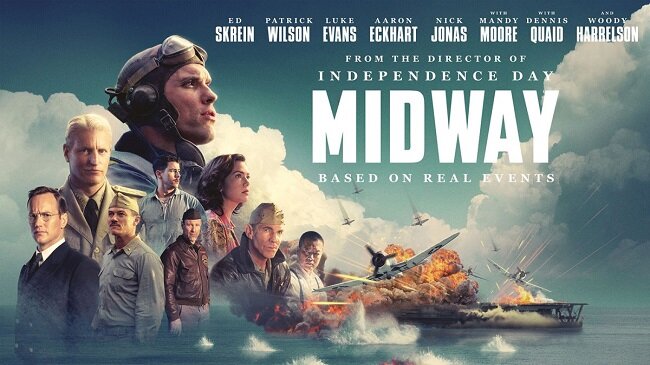
Big budget, historically driven movies that set out to recount key events of World War II are a rarity these days. If you ignore the bombastic inanities of Michael Bay’s Pearl Harbor (2001), then you have to go back to the late seventies to films such as A Bridge Too Far to find a suitable example. This is why Roland Emmerich’s Midway came as a genuine surprise. When I saw a trailer for the film last October, I was flummoxed that such a production had been made. My initial concerns were that it would focus on spectacle rather than historical fact and trivialise events of great military and historical importance. After having watched Midway, I am pleased to report that this is a surprising throwback in many ways. The film covers the events of the Japanese attack on Pearl Harbor, the subsequent Doolittle Raids on Tokyo by the US and the Battle of Midway, both succinctly and accurately. Furthermore, much of the cast play real veterans who participated in these events. Overall this is an entertaining and informative movie that feels like a relic from fifty years ago. However, its docudrama aspirations also make for somewhat generic character development.

For the first ten minutes or so, World War II action horror movie Overlord ticks a lot of boxes. The film has a surprisingly high budget ($38,000,000) for a niche genre product and as a result has a handsome production design. The cinematography by Laurie Rose and Fabian Wagner is striking, capturing the beauty of the French countryside as well as framing the various unpleasantness in a suitably Teutonic fashion. The visual effects both digital and practical are also of a high calibre, further adding to the authentic atmosphere. Yet despite all these positive points, Overlord is a somewhat slow and underwhelming affair, running fifteen to twenty minutes too long. Like so many modern movies, the focus of the production is on spectacle, rather than on character and script. Hence Overlords fails to meet its potential and makes for a somewhat frustrating viewing experience due to it squandering such a good opportunity.

I have enjoyed Sniper Elite 4 and all of the sundry DLC immensely since its release in Spring. The game presents an interesting alternative to the traditional shooter with its stealth based level design. The latest instalment, Obliteration (the third part of an ongoing story), is set in an empty Bavarian town and has an intricate map with an authentic period feel. It offers opportunities for both long range sniping and close quarters stealth kills. Overall, I have found that the franchise provides engaging and complex gameplay, as well as satisfying the players baser need for blood and violence. However, playing this and other similar titles got me thinking. It would appear that World War II, one of the defining periods of the last century that still has ramifications today, is in certain quarters now simply a setting, a plot device or a Hitchcockian MacGuffin. Is the broader subtext of this major event now irrelevant to a generation of players because they have no immediate connection to this period in history? If that is the case, exactly when does it become acceptable for something of this magnitude, to be trivialised in this manner (if that is indeed the case).

Five Came Back is a fascinating documentary about five remarkable Hollywood film directors who put themselves in harm’s way to film World War II for the US War Department. William Wyler, Frank Capra, George Stevens, John Ford and John Huston were in many ways a diverse bunch, yet the all represented a different facet of “America”. Certainly, all were idealists who felt it was their duty to use their talents to create accessible propaganda for the US public and more importantly, the 12 million men who were drafted. Despite the factual accuracy of this three-part documentary, there is an inherent romance to the tale and the way these Hollywood mavericks took on first American Isolationism, then the Third Reich and US military politics.

Gritty, grim and fatalistic are just a few of the ways I would describe Play Dirty. Made at a time when cinema was becoming more realistic and cynical, it eschews the traditional depiction of World War II heroism and paints a singularly unglamorous picture. Due to some minor plot similarities, it is frequently compared to The Dirty Dozen but they are far from identical movies. Robert Aldrich’s film despite having an offbeat plot and a cast of quality characters actors still followed a traditional action based formula and had a relatively upbeat ending. Play Dirty is content to pursue its dour storyline to its inevitable conclusion.

The seventies were a Golden Age for cerebral documentaries with such outstanding examples as The Ascent of Man, Cosmos and Life on Earth. Such shows were content driven, relying heavily upon the quality of the script along with the charisma and gravitas of the presenter. Jacob Bronowski, Carl Sagan and David Attenborough were exemplars of this. Jeremy Isaac’s The World at War is another archetype of quality documentary film making from this decade.
The Marksman (2021)
Former United States Marine Corps Scout Sniper and Vietnam War veteran Jim Hanson (Liam Neeson) lives on a ranch on the Arizona-Mexico border. The mortgage on the property is in arrears after the death of his wife has left him medically bankrupt. One day while patrolling his property he encounters Mother Rosa (Teresa Ruiz) with her son Miguel (Jacob Perez) illegally crossing the border fence. He calls his step daughter Sarah (Katheryn Winnick) in the border patrol and reports them as they’re miles from any habitation. However, Rosa and Miguel are fleeing a drug cartel and Mauricio (Juan Pablo Raba), one of their enforcers. When Mauricio and his men try to forcibly take Rosa, Jim intervenes and a car chase and firefight ensue. Mauricio’s brother is killed and Rosa is fatally wounded. She gives Jim a note with her family's address in Chicago and he reluctantly agrees to take Miguel there.
Former United States Marine Corps Scout Sniper and Vietnam War veteran Jim Hanson (Liam Neeson) lives on a ranch on the Arizona-Mexico border. The mortgage on the property is in arrears after the death of his wife has left him medically bankrupt. One day while patrolling his property he encounters Mother Rosa (Teresa Ruiz) with her son Miguel (Jacob Perez) illegally crossing the border fence. He calls his step daughter Sarah (Katheryn Winnick) in the border patrol and reports them as they’re miles from any habitation. However, Rosa and Miguel are fleeing a drug cartel and Mauricio (Juan Pablo Raba), one of their enforcers. When Mauricio and his men try to forcibly take Rosa, Jim intervenes and a car chase and firefight ensue. Mauricio’s brother is killed and Rosa is fatally wounded. She gives Jim a note with her family's address in Chicago and he reluctantly agrees to take Miguel there.
The various trailers and advertisements for The Marksman give the impression that this is an action film but that is not the case. This thoughtful, low key drama is far more of a character study of the relationship between Jim and Miguel. The film explores bereavement and loss, the plight of migrants across the US border and what happens when the “American Dream” turns bad. It bears a lot of similarities to Clint Eastwood’s A Perfect World (1993). Critics claims that the story is formulaic are indeed true and there are not many plot surprises along the way. However, the film’s strength lies in the two central performances which are both very good. There is genuine pathos as opposed to contrived sentimentality and again we are reminded that Neeson is a serious actor who reinvented himself as an action star. Plus it helps that Neeson can do “gruff” and “sad” with his eyes shut. He does much with the simple dialogue to establish his Rooster Cogburn credentials. “Nobody needs to call me, and I like it that way” he exclaims when asked why he doesn’t own a cell phone.
The Marksman is obviously made on a modest budget yet its cinematography by Mark Patten is handsome and makes the most of the vistas and scenery of Arizona and Wyoming. The film does a good job of conveying the immense size and often remote nature of the US border states. The action scenes are functional and do not strain the viewer's sense of credulity. Neeson is supposed to be an ageing Marine and not a special forces operative. He handles himself well in a fight but he also takes a beating. Everything of this nature remains within the confines of the film’s PG-13 rating which is fine as this is a story about characters bonding rather than breaking bones. Director Robert Lorenz has one final trick up his sleeve after teasing us with an action movie and giving us a character drama for 100 minutes. The ending, as Liam Neeson takes a bus to return home, is very reminiscent of Midnight Cowboy. It’s a little unexpected but in step with the film’s overall tone. The Marksman is by no means a masterpiece but is certainly better than its marketing campaign implied.
Exit 8 is a sophisticated and claustrophobic psychological thriller directed by Genki Kawamura, which skilfully transforms a minimalist indie walking-simulator game into a cinematic existential enigma. This overtly metaphorical film renders the repetitive nature and drudgery of modern working life into a physical environment in which the lead character is trapped and must find a way out. A random, brutal maze filled with an atmosphere of indifference to the lab rats that find themselves trapped within. Or is it their personal guilt that has put them there? Genki Kawamura’s psychological mystery draws inspiration from the Japanese video game of the same name, as well as from the cyclical nature of Groundhog Day and endless corridors of the Overlook Hotel in Kubrick’s The Shining. Although there are jump scares and some ghoulish imagery, this is not a horror vehicle. Instead this is a disquieting psychological drama with a strong sense of morality.
A lot of people may know Luke Evans from the live action version of Beauty and the Beast or Peter Jackson’s The Hobbit trilogy. With his matinee idol good looks, charming Welsh demeanour and his “smoky” tenor singing voice, he projects a sense of old school stardom. Which brings us to No One Lives; a film which is a radical departure from his previous work. His performance is disconcerting to say the least and the film is somewhat unhinged. Directed by Ryuhei Kitamura, who made an interesting adaptation of Clive Barker’s The Midnight Meat Train, this cinematic outing is similarly replete with robust shocks and gore. There are some interesting ideas about the nature of violence, Stockholm Syndrome and whether one should deny or embrace one’s nature. However, these are ultimately minor asides. Philosophical musings in between bouts of surprisingly striking unpleasantness.
When I first saw the promotional trailer for Gangster Squad back in 2012, prior to its release, I wasn't especially impressed. I simply thought the film was another attempt to re-invent the gangster genre for a generation who were not especially familiar with it. I wasn't exactly overwhelmed with director Ruben Fleischer's resume either. I didn't particularly like Zombieland and haven't seen 30 Minutes Or Less. Then came the tragic mass shootings in Aurora, Colorado which led to the movie being delayed so that the original ending, which featured a shoot-out in a movie theatre, could be replaced. Hence when I finally watched this film recently, I wasn't expecting a movie up to the standards of say Once Upon A Time In America or Miller’s Crossing and it would seem that I was right do so. Gangster Squad is not especially noteworthy in any respect.
The Cold War was a mainstay of many a thriller and action movie throughout the sixties, seventies and eighties. However, all too often it was depicted in terms of the US versus the Soviet Union. China didn’t seem to feature so much, although it was just as equally an “enemy” of the West. Hence when I recently read about The Chairman (which has just had a Blu-ray release), it was of interest to me. An espionage story, starring Gregory Peck with a hidden bug implanted in his skull, infiltrating China to steal a secret enzyme formula is quite an intriguing premise. Furthermore, director J. Lee Thompson had previously worked with Peck on The Guns of Navarone, which is a solid action movie. Therefore I was initially optimistic that this film which I was previously unaware of, would be an interesting diversion. Unfortunately, having now seen The Chairman, all I can really describe it as is a cinematic curiosity. One of numerous films produced by a big studio in the late sixties that failed to satisfy anyone's expectations.
Former United States Marine Corps Scout Sniper and Vietnam War veteran Jim Hanson (Liam Neeson) lives on a ranch on the Arizona-Mexico border. The mortgage on the property is in arrears after the death of his wife has left him medically bankrupt. One day while patrolling his property he encounters Mother Rosa (Teresa Ruiz) with her son Miguel (Jacob Perez) illegally crossing the border fence. He calls his step daughter Sarah (Katheryn Winnick) in the border patrol and reports them as they’re miles from any habitation. However, Rosa and Miguel are fleeing a drug cartel and Mauricio (Juan Pablo Raba), one of their enforcers. When Mauricio and his men try to forcibly take Rosa, Jim intervenes and a car chase and firefight ensue. Mauricio’s brother is killed and Rosa is fatally wounded. She gives Jim a note with her family's address in Chicago and he reluctantly agrees to take Miguel there.
Sometimes a perfectly competent film simply misses the boat. The Fourth Protocol is a prime example of this. Based upon the novel by Frederick Forsythe this well made, somewhat clinical thriller arrived in cinemas at a time when the cold war was coming to an end due to “glasnost” and the “red menace” was becoming a somewhat tired plot device. It didn’t help that a similar story about a rogue Russian mission to detonate a nuclear device on a US base had already featured four years earlier in the Bond film, Octopussy. Michael Caine spent several years trying to get the project off the ground, after initially reading the author’s draft manuscript of the novel. Veteran screenwriter George Axelrod was hired and John Frankenheimer was sought to direct the film. However, difficulties in financing the project led to changes in the production and Forsythe ended writing the screenplay himself, while John Mackenzie (The Long Good Friday) took on the direction.
Film Noir often reflects the numerous things that influenced it. German expressionism, French poetic realism and American hardboiled fiction. Hence many films from this genre have a tendency to be stylised both visually and narratively speaking, with a fatalistic tone. Kiss Me Deadly, directed by Robert Aldrich in 1955, takes all these attributes as well as others and amplifies them in one of the bleakest and most uncompromising movies of the fifties. It features a brutal protagonist who isn’t even a decent detective and a plot that seems at first glance to come straight out of Greek mythology. Yet Kiss Me Deadly is compelling and lean without any superfluous scenes or narrative baggage. There’s also what appears to be the mother of all cinematic "MacGuffins" but once the film is over and the viewer reflects upon what they have seen, it can be argued that maybe the characters and the inevitability of their actions are actually the driving plot device instead.
Forensic accountant Owen Casserly (Jake Weber) flees his home with his teenage son Connor (Finn Little) when he discovers he has been targeted by a pair of assassins (Nicholas Hoult and Aidan Gillen) who have been hired to stop him giving evidence in a major corruption case. Connor witnesses the murder of his father after their car is run off the road. Entrusted with important written evidence, he escapes into the dense forests of the Montana wilderness pursued by the killers. Seeking help he runs into smokejumper Hannah Faber (Angelina Jolie) who is stationed at a remote fire lookout tower. Hannah suffers from PTSD from a previous forest fire in which she was unable to save three young boys. Hannah attempts to lead Connor through the forest to safety. Meanwhile the assassins set fire to the forest to divert the attention of the authorities and cover their tracks.
When one considers all the various elements involved in the production of Telefon, it makes it all the more disappointing that the movie fails to reach its potential. The basic idea about sleeper agents in the US is sound but the story doesn’t really go anywhere and not a great deal happens. The strong cast featuring Charles Bronson, Lee Remick and Donald Pleasance have to do their best with an undeveloped screenplay. Considering that it was written by Peter Hyams and Stirling Silliphant (from a novel by Walter Wager) it is quite surprising how lacklustre it all is. But perhaps the most saddening aspect of the film is the somewhat indifferent direction from Don Siegel, who by his own admission was not especially engaged with the story. Considering that he had scored a major hit the previous year with John Wayne’s swansong The Shootist, makes it more curious that he wasn’t more enthused. Even Lalo Schifrin’s score fails to bolster Telefon.
There have been several movie adaptations of the books of Jonathan Stark (AKA Donald E. Westlake) featuring his career criminal lead character, Parker. Sadly not all of them have fared well, either critically or at the box office. Many have deviated from the source material, often just using mere aspects of the original plot as the basis of their screenplay. Perhaps the most successful of these has been Point Blank (1967), directed by John Boorman and starring Lee Marvin. Slayground sadly follows the pattern set by previous adaptations. It changes several character names and takes two main elements from the source text and uses them as a premise. Specifically, a robbery that goes wrong which results in an accidental death and a climactic shootout in an out of season fairground. Due to the financing of the film, half of the story takes place in the US and the other in the UK. Much of the cast are British, resulting in a curious and at first glance somewhat incongruous film.
The Long Good Friday not only launched then career of Bob Hoskins but remains a uniquely British take on the gangster genre. Featuring authentic performances and a credible plot, the screenplay touches upon many of the social and political issues of the time; police corruption, the IRA, urban renewal and the decline of industry, along with EEC membership and the free-market economy. It’s a gritty and unrelenting drama that is still relevant today. Furthermore, the film is filled with quotable dialogue and has several stand out scenes that showcase Bob Hoskins’ smouldering performance. It’s also offers of “who’s who” of British character actors and there is one sequence still has the power to shock even today.
John le Carré's Cold War thriller Tinker Tailor Soldier Spy, is not only a good example of the spy novel genre, but a fine piece of seventies British literature per se. Therefore I was most surprised when I learned back in 2011 that it was to be made as a film. Could the complexities and subtleties of this cerebral and deliberately slowly paced book be adequately brought to the big screen, by today’s studio system? Could it compete with the previous BBC television adaptation starring Alec Guiness that was made in 1979? Thankfully, director Thomas Alfredson and Working Title films have successfully managed to distil the complex plot into the film’s 127-minute running time. Furthermore, the ensemble cast have a quality script to work with and the entire production benefits from the flair of a quality European director who brings an interesting outsiders dynamic to this very British tale.
Inside a dark, remote warehouse, seven members of an unnamed midwestern militia meet. They’ve all heard via radio or police scanners that an unnamed, armed shooter armed with a modified AR-15 has opened fire on a police funeral. The assailant also plant IEDs and the casualty rate is therefore very high. This means the authorities will be scouring the countryside, raiding all known militia groups and their affiliates in the region. The men’s concern quickly turns to panic when they discover that one of their AR-15 is missing from their weapons cache, along with body armour and explosives. Is one of their own the shooter? Ford (Chris Mulkey), the group’s no-nonsense leader, asks fellow member Gannon (James Badge Dale), a former police interrogator, to question all the men and determine who is responsible. However, matters prove more complicated as Gannon knows that one other member, Noah (Brian Geraghty), is an undercover cop. Can a solution be found before the police inevitably come calling?
Clint Eastwood is 88 years old and has a successful career spanning over six decades. During that time he has proved to be one of America’s most bankable box office stars and established himself as an actor and director of note among his peers. If The Mule turns out to be his swansong, then it is certainly a fitting end to a prestigious career. Because in many respects The Mule is a distillation of many of the themes and concepts, we’ve seen in previous Eastwood movies such as Gran Torino and The Unforgiven. Perhaps the core story of an ageing man trying to reconcile himself to a modern world and make peace with it, is in some way Eastwood commenting on the movie industry himself. It is very much his film and his performance underpins the proceedings.
What is it with director Ridley Scott and his predilection for multiple edits of his films? Is he indecisive and a consummate tinkerer (like George Lucas) or a victim of studio politics? I suspect none of these are true. So how come there are always multiple cuts of his movies? Do his terms of employment always deny him final edit on a movie? I would think not. A film maker of his stature must surely get far more favourable terms when contract to make a film? Whatever the reason it leaves audience with a problem. How is one exactly to determine which is the best version of any of his films to see? For example, Kingdom of Heaven was greatly improved in its extended format. Yet his revised version of Alien is actually inferior to the original theatrical cut. And don’t even get me started on the plethora of versions of Blade Runner. His penchant for multiple edits therefore makes it difficult to debate his work.
In a recent blog post I wrote about the difficulty that you can encounter sometimes when trying to watch movies that have been deemed “classic” by popular consensus. I listed 10 films of note that I intend to watch this year and to see if my views aligned with the various institutions and critics that praise them. The first on that list was the iconic sixties thriller Bullitt starring Steve McQueen. Having now watched the movie, I thought it would be prudent to collate my thoughts on it. Considering the immense amount of material that has already been written about it, I see no reason to present a review per se. Rather, here are my initial impressions for consideration. I’ve tried to highlight some specific aspects of the film that I think are of note or merit debate.
Legend is an extremely lavish biopic. Despite being about a pair of notorious British villains it has both the look and feel of an American gangster epic. There is no real attempt to depict either the period or the locations accurately nor is the story of the Kray twins themselves factually correct. As ever with American productions of this nature both the era and the subject matter are viewed through a miasma of sentimentality and faux nostalgia. The Krays are portrayed as folk heroes rather than the petty thugs that they were. However if you are prepared to overlook these deliberate biases then Legend is can still be an entertaining movie.
Your Writing Persona
People bookmark sites and regularly visit blogs for a multitude of reasons. If you’re writing guides for a specific game then you may well gain traction within the appropriate community. Writing reviews or providing commentary on pop culture issues can also attract a growing audience. Some bloggers find themselves simply at the right place at the right time with regard to their writing activities and then later find they’re the “go to” site on a given subject. Never underestimate the importance of diligence and hard work. Writing regularly, interacting with others and building up a back catalogue of material does yield results. There is an element of truth in the old adage that if you throw enough mud at a wall, some of it will eventually stick. But content is not necessarily the only defining factor of a blog’s popularity or success. There is the matter of the writer’s persona.
People bookmark sites and regularly visit blogs for a multitude of reasons. If you’re writing guides for a specific game then you may well gain traction within the appropriate community. Writing reviews or providing commentary on pop culture issues can also attract a growing audience. Some bloggers find themselves simply at the right place at the right time with regard to their writing activities and then later find they’re the “go to” site on a given subject. Never underestimate the importance of diligence and hard work. Writing regularly, interacting with others and building up a back catalogue of material does yield results. There is an element of truth in the old adage that if you throw enough mud at a wall, some of it will eventually stick. But content is not necessarily the only defining factor of a blog’s popularity or success. There is the matter of the writer’s persona.
Unless you deliberately seek to make your writing as anodyne as possible, aspects of your personality will bleed through into your blog posts. It may be your sense of humour, your boundless passion or a fleeting admission of something personal that resonates with others. Some bloggers go a stage further and actively seek to create a deliberate persona through their content. Either way, it can be an important facet of blogging and integral to building a rapport with your readership. There are several bloggers who I admire and respect who frequently cover subjects or write about matters that I am not immediately interested in. However, it is their written style, personality or blogging philosophy that keeps me engaged and reading their content, even if it is about crop rotation in the 14th century. I just enjoy their turn of phrase, acerbic wit or just down to earth outlook upon life.
A writer’s persona may be obvious or it can be enigmatic. Some specific or non-specific aspect of their prose that resonates with the readers. It also doesn’t have to be something positive. I’ve followed some particular bloggers in the past just to see what outrageous nonsense they’d be pontificating today. Being controversial does sell although I’d argue it paints you into a corner and does make you a bit of a one trick pony. So perhaps this option is one to avoid. But whether you seek to cultivate a persona or not, readers do latch on to the tiniest of things and they will endeavour to humanise you. It is in our nature as a species to try and find similarities and common ground with those we encounter in real life, so it really is no surprise that we do the same online. Hence a passing reference to your cat, dog or children suddenly provides a psychosocial bridge and a window into your own humanity. Next thing you know you’ve gained regular readers.
People are nosey. I am. One of the many reasons I enjoy my online social relationships and reading blogs from all over the world is that they provide such a wonderful window into other people’s lives and personal experiences. These things are often paradoxically the same but at the same time different. I thought I had a good handle on what life in America was like but when I started doing a weekly podcast with my good friend Brian, it proved to be a fascinating insight into the cultural differences between the UK and US. This is why I like blogs that have a broad remit and will at times cover wider subjects. I love reading about how someone went on a hike, spent the day at a Renaissance Fayre or is undertaking some major home improvements. I find all these things relatable and the moment that happens I find reading their blogs far more intimate and friendly. It ceases to be just a post but becomes more of a conversation or catching up with a friend and having a coffee.
As to my own blogging persona, it isn’t really that different from the one I present to the world in day to day life. I speak pretty much the same as I write. I like words and am happy to use them. I use humour as a tool to navigate the choppy waters of social interaction and the discussion of those controversial cultural talking points. I will be profane if I think it’s relevant or necessary. Someone once described the Contains Moderate Peril podcast as two grumpy old men, sitting in far side chairs, wearing smoking jackets while they give vent to their loquacity through extraneous bombastic circumlocution. Whether that was the case or not (okay it was) they kept listening. I think a better example of a natural writing persona is that of Justin Olivetti AKA Syp who writes for Massively Overpowered and has his own blog BioBreak. He has an easy going, measured style but that does not mean it’s lacking in substance. He is generous, thoughtful and seldom gets annoyed. He’s kind of like the James Stewart of video game blogging.
Your writing is an extension of you. You have a personality. Therefore your blogging will have one to a degree. However, that is not to say that it is something to fret or fuss over. You may want to write solely about Etruscan pottery and keep purely to the topic in hand, ensuring that any details of your personal life are kept out of your content. That is fine. Be an enigma, although that in itself is a distinct persona. But whatever way in which you express yourself will still have an impact upon your readers. Hence you will develop a perceived writing persona regardless of what you do. However, unless you are deliberately spreading unrest, or actively trolling a community then I don’t think this is anything to be feared. Be genuine in your writing and that is what your readers will see. And think yourself lucky that you’re not a live streamer as your online persona has a far greater bearing in that particular medium.

It is obligatory to start these sorts of posts by reiterating the standard mantra that you should not be driven by your websites stats and that the data they contain can be unreliable. Although a sound philosophy in principle, it is actually more nuanced than that. Such data can be useful for growth if used wisely. I have never been coy about trying to increase my readership. For me it seems an integral aspect of blogging. Over the course of 2026, the traffic to Contains Moderate Peril has doubled. A lot of that is down to curious spikes in visits which seems to be AI scraping the entire site. Setting aside these anomalies, more people are reading posts and a lot are doing so via the site’s RSS feed. All of which is fine by me as growing the audience for this blog was a goal for this year, I am quite pleased by this development and the ongoing progress. I hope it continues.
There is a subtle difference between being rash and being proactive. Being rash means acting too fast without thinking about the results, while being proactive is a question of acting early with careful planning. Why have I mentioned this? Well prima facie information indicates that recent Blaugust participants are interested in an “official” online presence for the annual festival of blogging, other than that existing Discord server. That seems perfectly reasonable to me. Not everyone likes using Discord and I do worry that they may reduce its free functionality at some point in the future. With regard to there being a Blaugust platform of some kind, there is a consensus that it doesn’t need to be some sort of sprawling commercially hosted website running on Wix or such like. Those sorts of site require funding, a degree of admin and possibly private data management. It also a bit too “corporate” if you like. Hence the logical compromise is to have a static site. Let it suffice to say, that has been done.
Judging by the posts I’ve read, it would appear that Blaugust 2026: Festival of Blogging has been well received by those who participated in it. That is most satisfying to know, especially in light of the fact that this is the first year the event has been run without our founder who sadly past away in July. It has also become clear that Blaugust is reaching a far wider and diverse audience and most definitely is no longer the exclusive province of bloggers from one particular community. There has been healthy discussions on our Discord server about whether this year event needs to adapt to accommodate the modern blogosphere. Questions such as whether or not there needs to be a dedicated Blaugust website have been raised and explored. Should every site participating have an RSS feed? How, if required, should comments be handled. Inevitably, the subject of the use of AI in blogging still remains a controversial issue.
After a very productive month of writing, we come to the final Blaugust 2026 Group Project writing prompt. It is titled lessons learned and is usually a chance to reflect on the festival and whether or not it has been to one’s satisfaction. Have you achieved your goals? What have you gained from the experience? Those sorts of things. It also poses two further questions; “What is the best piece of advice you’ve ever been given?” and “what’s the best advice you’ve ever given to someone else?” for your consideration. I’ll address the questions shortly. Firstly let’s mull over this years event and assess how it’s gone.
It was my blogging anniversary on the 16th August. I’ve been writing and sharing my post online for 19 years, via various different websites and blogs. This current iteration of Contains Moderate Peril has been around since August 2015. To date it has 2,171 posts including this one. Quantity does not necessarily equate to quality but there are some articles I am proud of and feel that they make their point effectively.
This week’s Blaugust 2026 Group Project writing prompt is an important topic. Namely, staying motivated. I prepared a fairly lengthy post with some advice and ideas to keep people focused and writing. Then I checked it against the post I wrote last year and the year before that, going back to blogging events from 2012. All of these posts broadly said the same thing, so I decided to scrap what I had composed for today and to go with a simpler approach. I shall answer the questions Krikket posed for this writing prompt. Fellow blogger Bhagpuss has also done so and as ever, his thoughts are interesting and well expressed. Here are my answers.
Once again, I have stumbled across an interesting debate that has provided me with an opportunity to write a blog post. Over on the Blaugust Discord Server, I read a comment from AgingGamer regarding RSS feeds and their significance with regard to blogging. This in turn referred me to a post by fyr (don’t you love all these nom de plumes) who wrote at depth about the ongoing community debate about the use of RSS/Atom feeds. The article explored the importance of such feeds with regard to reaching readers and providing accessibility to the disabled. All of which provided me with a great deal of food for thought. Mainly because I use a mainstream website service provider for my online endeavours, so RSS is by default built. I’ve never really considered not having such a facility at my disposal. But the rise in the IndieWeb scene challenges this assumption.
I have written two blog posts today that I have subsequently abandoned. The first was gaming related but when I was about halfway through writing it, I felt like I was covering old ground and just repeating myself. It was also regarding an issue that can’t really be fixed. Namely, how do you ensure that matchmaking in PVP games is done equitably. As there is no solution to this issue at present, or at least not one that all parties can agree on, I decided to ditch it. Similarly a post I was working on about what becomes of my blog if anything happens to me was curtailed. In light of recent events in our community it seemed inappropriate. However, as a result of binning two blog posts, I new idea occurred to me. Do my fellow bloggers self-edit and curtail what they write about? Is your blog totally unfiltered or do you apply a set of rules that determine what content is deemed acceptable?
It is time for the next Blaugust 2026 Group Project writing prompt. This one comes with two lines of enquiry. The first is an opportunity to “introduce yourself”. Over the years, I have written several introductory posts for previous Blaugust events. Rather than repeat myself I’ll just link to the last one, which was posted in August 2023. I haven’t radically charged since then apart from my hair going whiter. The next part of the prompt poses a far more intriguing question. “If you could have one magical power or super power, what would you choose and what would you use it for?”, which offers much for consideration. Having given this proposition much thought here is my response.
A decade ago I wrote a post about blogrolls and the practical and social issues surrounding them. At the time, the version of Squarespace I was using didn’t easily support such things or at least wasn’t able to do so in a manner I liked, so I didn’t have one. Ten years later Squarespace as a hosting platform has far greater functionality, hence I recently decided to add a blogroll. That was in March this year. However it just wasn’t really fit for purpose. So I decided to revise it a few days ago and rather than just have a traditional list of blogs in a side column, I ended up producing a more comprehensive blog directory, which list two hundred plus sites alpha-numerically. I’ve been tinkering with it on and off and I am now finally happy with it. The latest update reflects the international nature of the Blaugust: Festival of Blogging and the fact that we have many blogs written in their native language. Translating text is now an integral function of web browsers, so I see no reason why these blogs should be excluded.
Today’s post is part of the Blaugust 2026 Group project, which features a series of writing prompts set for specific dates throughout the month. The idea being that everyone who wishes to participate can write about the same subject, riff off each other’s posts and enjoy a shared experience. In many respect having a common writing prompt levels the playing field and provides a sense of common purpose among those who take part. Today’s group project prompt asks the question “tell us all about your very first blog”. An unambiguous and interesting question that will hopefully prove enjoyable to write about and informative to others.
I have been writing online for nearly two decades. I don’t claim to be good or accomplished but what I can say with certainty is that the more often you write, the easier it becomes. For those who are new to writing a blog and the Blaugust Festival of Blogging, possibly the biggest hurdle that you now have to get over, is writing your first post of the month. You spent the lead up to this event sorting out your blog templates, fine tuning the backend and possibly banking some ideas. Or you may have decided to just wing it and make it all up as you go along. Both are perfectly valid approaches. However, there is one thing left to do that cannot be put off, avoided or danced around. Writing. At some point you’ve got to do it. Or bail on the event. The proverbial “shit or get off the pot”.
If you take a cursory look at a calendar you will see that the month of July is fast coming to an end. That means that Blaugust 2026 Festival of Blogging starts in a few days time! If you’re participating, or thinking of doing so, the next few days present a golden opportunity to do some practical organising and basic preparation. You don’t have to if you don’t want to. Feel free to just do things as they come, so to speak, if that’s your approach. However, for most of us, it helps if we have some kind of plan in place and make some arrangements in advance. I personally prefer this approach and like to have some ideas for blog posts in the bank. It is also useful to have “options” if something doesn’t go to plan. For those who are new to Blaugust, here are a few ideas regarding preparation that may be of use to you. As ever, your personal mileage may vary and ultimately you are best off adopting a strategy that suits your writing style and personal schedule.
Prior to last year’s Blaugust: Festival of Blogging, I upgraded Contains Moderate Peril to the latest version of Squarespace. There are still some aspects of the site that need fine tuning but overall, I am happy with the appearance of my blog and its respective functionality. With this year’s writing event fast approach, I decided to tackle over the last few days, some of those finer points that need tweaking. I have wanted a post counter on the site for a long time but unfortunately there is no native Squarespace widget for this basic function. I also felt the need to upgrade the blogroll, as the current one didn’t support RSS feeds from certain sites (e.g. Google Blogger) and was dependent upon a third party service, Elfsight, which wasn’t ideal. Both of these issues have now been addressed and I am pleased with the results. There is now a post counter on the Blog Archive page, which seems a logical place to have it and the Blogroll is now far more comprehensive.
Next month the annual Blaugust: Festival of Blogging begins. Roundabout this time each year, I try to write a promotional post to raise awareness of the event and encourage potential participants. However, as I’ve done this quite a few times before, each year it is becomes increasingly difficult to present the essential facts about Blaugust: Festival of Blogging in an interesting fashion. There’s nothing worse than writing a post and feeling that you’re just covering old ground. So, this year, I thought I’d try something different and present the most important information about this annual event, as if it were a conversation between myself and an interested passer by. Feel free to attribute novelty voices for each party in your own head, while you read this. If it helps, try imagining that this discussion is happening between two celebrities or such like. Both may be wearing exotic hats but I digress. On with the scenario.
I read a blog post by Void recently, about finding a new internet home. He wrote about how he and many others have had to pick up their “digital roots” and migrate multiple times over the years, from one platform to another. It is a position I can sympathise with as I have done likewise. Hence I like the idea of having a place online where I hangout by default. My own blog is an anchor for me but it is not quite the same thing as a platform or online portal where I can find all my friends and colleagues, share content and shoot the breeze. It’s a curious thing, because as I typed that last sentence it struck how such a sentiment may seem alien to others. There may well be people who like to have a finger in multiple pies and who are happy to frequent and flit between various social media apps, Discord servers and subreddits. I prefer to focus my efforts on a single instance. A place that suits my requirements, allows me to put down roots and become part of the furniture. Like a virtual Diogenes Club.
Everyday, once I’m up, I sit at my desk in my office, fire up my PC and log into Feedly. I have various RSS feeds grouped by category, which I slowly trawl through and read anything that catches my eye. I have one curated feed named “Blaugust” named after the yearly festival of blogging event. It has over 250 blogs listed, many of which are former participants. Most of these regularly post. Hence there’s a lot to get through and so I don’t read all of them. However there are a few that I always checkout. Mainly because they’re the personal musings of some of our writing community’s oldest and most prodigious members. The sorts of guys and gals who are part of the furniture. They’ve always been there and it feels like they always will. Posting their thoughts, sharing their enthusiasm and spreading the love, so to speak. One of these blogs, is Tales of the Aggronaut. written by Belghast.
On Friday 26th June, I had another random spike in internet traffic to Contains Moderate Peril. The statistical package that comes with my Squarespace account recorded over 13k visits in less than 24 hours, which is not typical (although I wish it was). However, all of these visits to my blog arrived via the default homepage and spent between 1 and 2 minutes there. Hence, it was obvious that this was not human traffic, as there was no evidence of any searches being made of content that is available on my site, nor of the “visitors” clicking on any of the links on the top menu and viewing other posts. This was undoubtedly AI traffic arriving at the designated homepage and simply parsing the site. I had a similar spate of this sort of web traffic last November. The only difference on that occasion is that the traffic all came from China. This time round it hailed from the US. I suspect that this is something that will happen more often as companies set their AI loose on the net for what is effectively training.
I recently watched a video on Patreon by someone who I actively support as a “content creator” and whose work I enjoy. I shall provide no more detail regarding their identity because they may not want their work referenced with regard to what I am going to say. During the course of their video they briefly referenced the work put into promoting a podcast they are currently producing and the relatively low audience that it has garnered so far. The comments were an aside and most certainly not said with any sense of self-pity. They were simply a statement of fact. Furthermore, I suspect they are far from unique and similar sentiments have been expressed in one way or another by anyone who has created something the published it online, only for it to be lost among the greater white noise” of the wider internet.
When I first started blogging way back in 2007, I maintained a blogroll of all my colleagues and peers’ websites. At the time this was a common practice and a way to support an expanding community. I considered this such an important aspect of the blogging scene at the time, I created a website to aggregate posts from video game blogs, called The Gaming Blog Nexus. It ran for two years and proved quite useful. However, it was tricky to administer and would frequently break as a lot of the back end widgets and plugins were created and maintained by “gifted amateurs”. I eventually shut it down due to the operating costs. When I moved my own website, Contains Moderate Peril, to Squarespace in 2015 I intended to start maintaining a blogroll once again. However, at that time there was no native support for such a thing on the platform. Hence for the last ten years, I have not had a blogroll on my website, which hasn’t sat well with me.
I was speaking to someone recently about hobbies (fortunately it wasn’t Simon Quinlank) and I mentioned that I have maintained a blog for over a 19 years. When I talked about the ongoing cost they were most surprised, as they had assumed that blogging was something that could be done for free. I guess we’ve become so accustomed to the provision of free online services such as email, that this a reasonable assumption. I pointed out that although it is indeed possible to blog for free using Blogger, it was not the optimal approach, especially if you want to maintain some degree of control over your writing. Naturally, the next question they asked was how much do I spend and I gave them a ballpark figure. All of which reminded me that I wrote a post on this very subject a few years ago. So I’ve decided to revisit the subject and see how much it currently costs to maintain Contains Moderate Peril.
Today I started the slow process of auditing every post that has been published on Contains Moderate Peril since 1st August 2016. The goal is to correct any obvious typos and replace all existing images with larger ones. The Squarespace software upgrade I applied to the website at the end of last year has finally allowed me to establish a standard format that I am happy with. Hence the ongoing audit is the perfect opportunity to apply these style rules to all posts. There are also some technical issues and matters regarding functionality that need to be addressed. I need to determine how to embed YouTube videos in such a way that they automatically scale to fit whatever device is viewing them. Another area which needs improving is the website search facility. This needs refinement so that enquiries can be more specific. Older posts also need to be more accessible, although I am still researching how best to achieve this.
It’s nearly two and half months since the Blaugust: Festival of Blogging event ended. During that time I’ve maintained a fairly regular writing schedule and I post every two days or so. Furthermore, I finally dragged my blog template, kicking and screaming, into the modern era. I tweaked a few pages and updated the content of the “about” page. The next task is to start going through all previous posts and replacing older, low resolution images with larger, more appropriate ones. This process also presents an opportunity to ensure that all posts follow a uniform style. IE Are appropriately categorised, have links to related posts at the bottom and are SEO optimised. This will be a lengthy task so I think the best approach will be to tackle two or three posts a day. Hopefully this will raise the profile of older content, which generates the lion’s hare of traffic to this site.
I use a browser extension called Control Panel for YouTube, which allows me to determine who many videos are displayed on my YouTube homepage and to filter the content that is shown. At present it is configured to display rows of six. Something that I have noticed of late, is the amount of videos with hyperbolic titles and thumbnail images created by AI. Both of which are design choices made to increase engagement. Clickbait titles are contrived to meet current SEO optimisation criteria and as such feature more and more in search results. The fact that they frequently have no relation to the subject I am researching, seems to be neither here nor there. The same issues arise with regard to AI generated images, which again frequently have no bearing on the matter. The fact that more and more content creators do this, infers that it works and is now an essential part of the process you must follow to be seen and featured in search results.
In the last post in this series, I specified the need for a plan with regard to upgrading my blog. Well a plan has emerged, been refined and has now been formally adopted. Rather than migrate Contains Moderate Peril to a new platform and effectively have to rebuild all the content, I am going to upgrade my existing presence on Squarespace. This decision was made for two reasons. Time and money. Migrating to a new platform will take a lot of time and incur additional costs. Upgrading the existing website will take less time and has no cost implications. That is not to say that it will be easy. It has become abundantly clear that the upgrade process will break stuff and that all published posts will have to be manually repaired. Hence my choice boils down to the lesser of two evils.
This year’s Blaugust: Festival of Blogging has reached an end and it would appear that this event has been well received by those who have participated in it. I believe that there were 168 bloggers taking part this year, many of whom have not participated before. Some were new to blogging, where others simply wished to see if they could increase their writing output. As ever there was a wide variety of blog styles and subject matters and it has been most interesting to read new posts every day. I have attempted to leave comments and positive feedback where I can and I hope that some of these new blogs that I’ve discovered continue to write. Well done to everyone who took part. I hope it has been an enjoyable and informative process and that you have learned from it. I know that at least one blogger has determined that writing online is not for them, which is a valuable lesson.
There is currently a group writing prompt available as part of this year’s Blaugust: Festival of Blogging which has piqued my interest. It asks the question “what is the oldest draft post you have” and suggests that it is revived in some manner. I have dozens of draft posts in a folder in my Google Drive. Many are film reviews or film related. The oldest of which dates back to summer 2010. Rather than write a straight forward review of Blake Edwards 1968 comedy The Party, I rather foolishly thought at the time that I’d tackle the issue of whether the film is sufficiently racist to make it beyond the pale. Let it suffice to say that I quickly found myself bogged down in the complexities of the subject and thus never completed the blog post.
I’ve participated in every previous Blaugust: Festival of Blogging event. Prior to that I was involved in the Newbie Blogger Initiative or NBI as it was affectionately known. I have therefore written quite a lot of blogging advice and suggestions over the years. If anyone feels disposed to do so, you can access them all by clicking on the “blogging” option on the top menu of this blog. However, it is important to remember that a lot of the ideas I have advocated and written about over the years are purely subjective. Not all advice or guidance works for everyone. People have different ideas about blogging, different approaches to it and different aspirations. This year has highlighted some quite distinct differences among bloggers which has been most illuminating.
Today is my blogging anniversary. I have been writing online consistently for 18 years. My earliest blogs no longer exist, although they can be found via the Internet Archive Wayback Machine. My first blog was a Lord of the Rings Online fansite called Misadventures in LOTRO. After a while this morphed into a wider gaming website; Misadventures in Gaming. However, I soon discovered that I wanted to write about more than just video games, so I decided to start from scratch and created Contains Moderate Peril in February 2010. This blog endured and has been my main online presence ever since. It has moved several times for various reasons. For a while I had a sponsor, as well as a reasonably sized audience and had dreams of making money from my writing and podcast. But it wasn’t to be and now I just write primarily for my own peace of mind and amusement.
Yet More PC Peripherals or How I killed a Game Controller in Under a Year
I bought a new game controller for my PC last September. Specifically a PowerA Spectra Enhanced Xbox One Wired Controller for £35. I chose this model as it has good reviews and is deemed a good alternative to the exorbitantly priced official Microsoft equivalent. I chose a wired controller to further keep the cost down. I mainly use a keyboard and mouse for PC gaming but specifically use a game controller for driving vehicles or for titles with simpler game mechanics like Fall Guys: Ultimate Knockout. Much to my surprise after less than a year this game controller has developed a problematic left thumbstick. It doesn’t register direct forward movement which is a major impediment. I have recalibrated the entire controller via Devices and Printers in Windows 10 but the problem persists indicating a physical fault with the controller.
PowerA Spectra Enhanced Xbox One Wired Controller
I bought a new game controller for my PC last September. Specifically a PowerA Spectra Enhanced Xbox One Wired Controller for £35. I chose this model as it has good reviews and is deemed a good alternative to the exorbitantly priced official Microsoft equivalent. I chose a wired controller to further keep the cost down. I mainly use a keyboard and mouse for PC gaming but specifically use a game controller for driving vehicles or for titles with simpler game mechanics like Fall Guys: Ultimate Knockout. Much to my surprise after less than a year this game controller has developed a problematic left thumbstick. It doesn’t register direct forward movement which is a major impediment. I have recalibrated the entire controller via Devices and Printers in Windows 10 but the problem persists indicating a physical fault with the controller.
It is disappointing that this PC peripheral has failed so soon. What makes it more frustrating is that this particular model feels very robust to the touch. It has a weight to it that implies a solid build and quality. However, after perusing Google, it would appear that thumbstick drift and failure are common problems and can affect most brands of game controllers, including the more expensive models. So rather than attempt a repair (as I did last summer which ultimately proved unsatisfactory), I have elected to buy a replacement. I recently installed Days Gone and so require a game controller for the parts of the game that take place while driving a motorbike. I briefly considered purchasing a USB Bluetooth adaptor and using my Nintendo Switch Pro controller. However, this requires additional software to make it PC compatible and then you have to customise the control settings for each game.
JAMSWALL Xbox 360 Controller
Last night, I spent over an hour trawling through listings for both high end and budget game controllers on various websites. User reviews strike me as capricious to say the least and models at both ends of the spectrum receive both high praise and scathing comments. I often find after reading such customer feedback, that I am none the wiser as to making a decision. However, considering the very specific use I have for a game controller, I eventually decided to purchase a low cost model. If it fails then the initial investment won’t add insult to injury. I ended up buying a generic Xbox 360 style wired controller for £14 from some “no name” brand. It arrives today and it will be interesting to see how it feels and performs. As for the old controller, that has been added to an ever growing pile of PC peripherals and electrical items that are destined to go to my local recycling centre.
I turned on my laptop this morning for the first time in 4 months. I knew it was that long because I hadn’t connected the laptop to the new Netgear router that I bought at the end of April. Unsurprisingly, as I haven’t used this device for a while there were multiple Windows updates to be installed. This process took over an hour, so while the various updates were being downloaded and installed, I turned my attention to my Amazon Echo Dot which loiters in the corner of our lounge, doing very little to justify its existence. At present this device is mainly used as a glorified timer for cooking, which seems a bit of a waste given it’s alleged capabilities. Hence, I decided to see if I could increase its functionality while waiting for Windows to do its update thing. More on this later. Let us for the meantime return to the small matter of the operating system updates. Once they were completed, I immediately installed Chris Titus Tech’s Windows Utility and started removing unnecessary features and bloat, as well as disabling invasive services.

Before we begin, let me clearly state that this is not a comprehensive installation guide for installing Steam OS on your PC. Mainly because the variety of hardware that can be present in any PC makes each installation a somewhat bespoke affair. Hence I have decided to provide a list of bullet points of the various steps and issues I encountered during my installation, last week. Consider it advance warning of things you may encounter if you install this operating system. As ever, if this is something that you are intending to do, I would advise allowing yourself a suitable amount of time so you can accommodate any issues should they arise. It is entirely possible that this may be a two hour job for the technically literate running the most generic or commonplace hardware. However, I suspect that a lot of people undertaking this project will run into variations of the same problems that I encountered.

I am intrigued by the growth of the IndieWeb, owning your domain and static websites. I certainly agree with the notion of not relying on big corporations and I have an ongoing project to divest my dependency on software produced by major market players. However, although I own my own domain, my website is hosted by Squarespace. I’ve not really had any problems with them over the last 11 years and I would describe our business relationship as equitable. However, the monthly subscription price has increased over time and is likely to keep on doing so. It has crossed my mind as to whether there is a suitable alternative. However, if I were to migrate Contains Moderate Peril elsewhere I suspect it would be logistically complex and problematic.

I like learning new skills and starting projects. I regularly undertake such things with varying results. However, if they don’t work out that’s not a problem. You have to try something to see if you like it. I’ll add “within sensible parameters” as a caveat to the last statement. And it’s perfectly fine to discover that something isn’t for you. I like certain genres of video games, music, films and books. I am comfortable wearing certain types of clothes and not others. I’m picky about colours. I’ll even go so far as to say that I won’t drink out of any mug that’s just lying around. If I don’t like the joke, logo or overall aesthetic of it, I ain’t using it. However, I digress. Let’s get things back on track and talk about projects. This year I have wound down several websites and have decided not to move forward with making YouTube videos. I have focused my energy on improving my website and adding functionality. I am also trying to broaden the scope of my writing.

It’s funny how it is often the little things that become the proverbial straw that breaks the Camel’s back. I have been struggling for a while with the overall performance and functionality of my Windows 11 PC. The operating system is bloated, slow and buggy. It all too often commits that unpardonable sin of trying to do my thinking for me and enables some stupid feature by default. Despite having good specifications, my PC takes too long to boot up for my liking and is becoming too much of a wild card with regard to whether it will co-operate or not when I try and undertake a simple task. As someone who is very particular in their PC habits, IE I see my PC as a tool that I use on the terms that suit me. Hence, I find the faux enthusiasm that accompanies each uncalled for “improvement” that results in me losing agency, singularly antagonising. Then a minor issue arose recently that escalated into a thorn in my flesh and I decided that it was time that something must be done.

This is a post about the power of nostalgia and how sometimes, interacting with something from your past, be it physically or mentally, can produce a very strong and tangible emotional reaction. In some instances, this can be the result of something that you have specifically set out to do. On other occasions you can wander into a sense of nostalgia purely by chance. Today I experienced a very strong sense of nostalgia while watching a YouTube video and then again when I sought to replicate what I had seen. The video showed someone installing Windows 95 on to an old 486 PC from that era. The Window’s start up sound really touched a nerve (but in a good way) and then when the guy in the video launched Space Cadet 3D Pinball, a game that shipped with the operating system, I felt a strong compulsion to track down a copy and install the game myself, thus revisiting something that was an integral part of my life in 1995.

For the last few months I have being using Google Gemini. I subscribed so I could access a wider spectrum of services and evaluate it effectively. I also wanted to dispel some of the hysteria that accompanies any conversation about Large Language Models and Artificial Intelligence. The results were initially interesting and Google Gemini proved useful when researching material for blog posts. It is good at providing summaries about well documented subjects. I wrote a post about food banks recently and it distilled a lot of data into a manageable amount, which was ideal for my article. Google Gemini has also produced some visual basic scripting and simple batch files that have allowed me to automate processes on my PC. Such as changing the default monitor, or screen resolution at the click of an icon. However, I found this AI struggled with in-depth software troubleshooting and that its ability to create images varies greatly depending on the subject.

The UK Government has formerly announced its intention to ban under-16s from using social media. This is due to increasing public pressure that “something must be done” about the perceived iniquities of many online platforms. However, as with most complex social problems of this nature, no one has any clear or practical ideas as to what that “something” is. It remains a nebulous, non-specific panacea and clearly someone else’s job to identify and implement. As ever, why choose a nuanced and multifaceted solution to a complex problem, when it is far easier and politically expedient to just “ban” something. The former requires effort and a degree of thinking. If such an approach fails it also means that those who came up with it now carry the can. The latter dumps the problem in the lap of various third parties, who can then be conveniently blamed when the ill conceived policy fails.

Yesterday we changed internet service providers. We moved from EE (formerly BT) to Plusnet. The transition went surprisingly well, mainly due to the existing infrastructure remaining the same. We’ve had fibre to the premises (FTTP) since 2022 so this was essentially an administrative change. The previous ISP terminated their service at 1:30 AM in the morning, while I was playing Star Trek Online. By 6:30 AM I received a message from Plusnet that the new service was live. It took about an hour to configure the new Netgear Nighthawk RS100 router (I bought my own) and get all our household devices attached to the new network. The connection is running at exactly the same speed and stability as it had under the previous supplier. At present a 1Gbps connection is sufficient for our needs. The main factor that has driven this change is cost. We are currently paying £28 per month for internet access which is a competitive price in the UK.

In 1990 I was working at the DWP (Department for Work and Pensions). I had just taken the role of Computer Support Officer where I administered user access to the mainframe and provided first line support to staff using the terminals. That summer the office moved to a PC based network and the project was undertaken by the newly formed Siemens Nixdorf company. To cut a long story short I befriended one of the contract engineers and over the next 9 months he became an unofficial mentor to me. Technically he was only supposed to train me in the most basic of fashions but he liked the fact that I was always asking questions and effectively ended up schooling me in PC and server architecture, network administration and the associated protocols. For me this was the best way to learn. It was not a case of coming to grips with theory in a classroom environment. It was learning by doing and having direct and exclusive access to a source of knowledge and experience.

My Windows 11 PC is a cobbled together mess of upgrades, customisations and workarounds. It seems okay at first glance, mainly because my desktop is well organised and I don’t allow too many apps to start on boot up. But beneath this superficial veneer of efficiency and optimisation is a bloated mess. Every Windows update adds yet more spurious features which slows performance and tries to harvest your data. Windows is no longer a user friendly operating system that you buy and use without impediment. It is now a sprawling live service that actively gets in the way of your productivity so that it can make a buck off your inconvenience. There was a time when you could quickly learn its processes and foibles, so you could customise it into the tool you needed. Nowadays I have to continuously use third party tools to get Windows to do many of the things I want, or to access functionality that Microsoft has obtusely decided to restrict.

As the New Year is still young, I have embarked upon several new projects that I’ve been planning since Autumn last year. These undertakings have gone beyond the planning stage and are currently being implemented. The fun thing about the phrase “implemented” in this context is that it implies that it is by far the easiest and most straightforward part of the process. The initial brainstorming of ideas has been completed. A cogent and detailed plan has been written. The costing of materials and time required have been determined. These are the hard parts. All that remains is to “just do it”. It should be a piece of piss (a British phrase indicating that something is easy). It virtually “implements” itself. However, that is a load of bollocks. Because there is always scope for something to go wrong. It may well start as something minor and innocuous but it all too often ends in a “problem cascade”.

This time last year I made a decision to replace Microsoft Office or Office 365 as it is currently known. Mainly because I only use Outlook out of the entire suite of software. This project stalled because I couldn't easily import my existing email archive into Mozilla Thunderbird. Hence the status quo has been perpetuated. However, there is an ongoing cost associated with this software as well as some wider considerations about ethics and privacy which is why I have returned to this matter. Although this time I wish to replace not only Office 365 but all the other "production tools" I use to write and browse the internet. I have managed to make some progress towards this goal but it has been hard to adapt. Mainly because I had everything set up to my liking. Although alternatives are available, they're never exactly alike and require a lot of fine tuning to be deemed satisfactory.
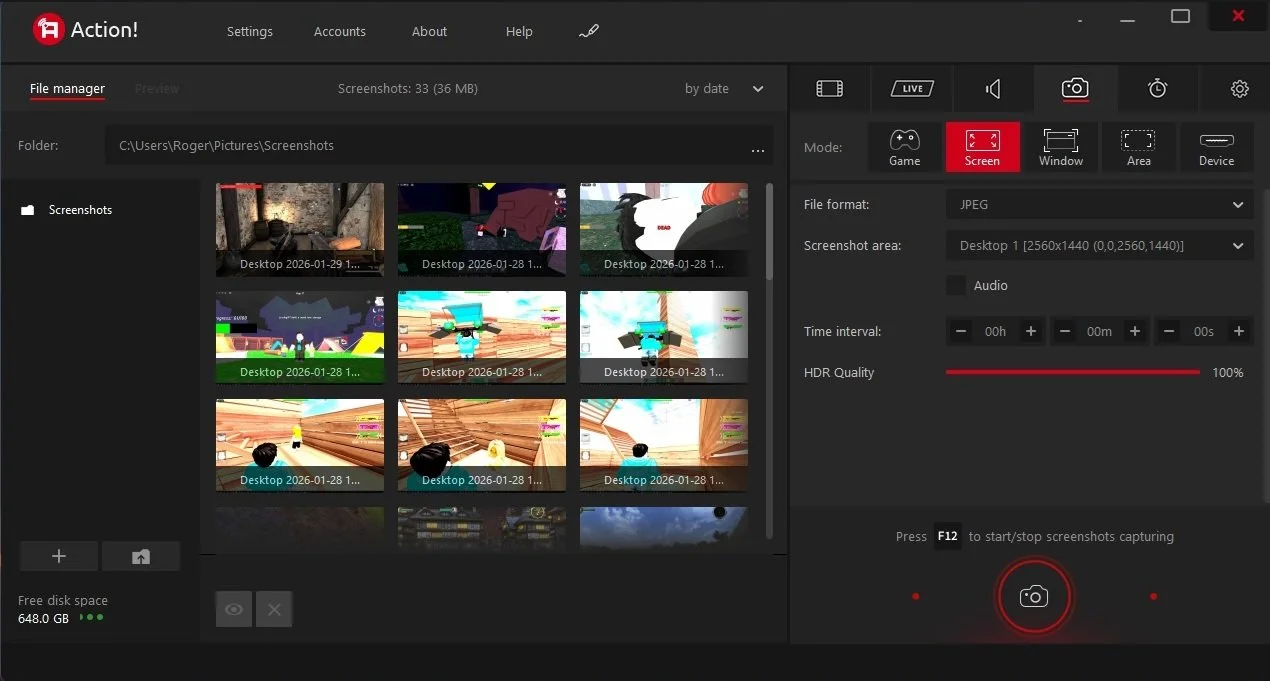
Last summer I wrote a post about my experiences using various screen capture software. At the time I was using Bandicam which suited all my needs. I had configured the software to launch at Windows start-up and had a hotkey assigned to capture images from my primary monitor. Hence I could quickly grab a screenshot from my desktop or when playing a game. However, this changed in November 2025, when I bought two new monitors. Both of which supported HDR (High Dynamic Range). Although they provide superior picture quality, HDR has a knock-on effect on Bandicam. Screen capture images and video look over exposed. Hence I had to stop using the software and find an alternative. Fortunately the same company has been developing an alternative product with HDR support; Bandi Camera. So I swapped to this software. The screenshots were far better but the functionality of the app was lacking.

Our home has a 1 Gbps “fibre to the premises” internet connection. It has proven reliable since it was installed in June 2022. Our internet service provider EE (part of the BT group) are neither the best of worst suppliers. The monthly cost is not especially competitive and so we may be looking to move providers next Easter. However, that is a matter for the future. For the present there is a more immediate issue. Starting on Friday 21st November, our internet connection has started randomly dropping. Furthermore, both the Wi-Fi extender in the lounge and the wireless printer in my office have become disconnected from the network. It was as if their details had been erased from the router. I suspected that a recent firmware upgrade may be the culprit although EE denies it. However there are posts online from other customers with similar technical issues.

A couple of times a year, Mrs P asks me to copy onto her laptop, all the pictures that I’ve taken over recent months, as well as those that have been shared with us via WhatsApp. She then diligently whittles them down into a manageable amount which we then print off and put in our photo album. Yes we’re of the generation that still likes to print off hard copies of photos and from time to time look at them nostalgically. We have several albums with photographs in chronological order and numerous frames placed around the house, filled with pictures of family. The bulk of the photos are 4x6 inches (10x15 cm). We use an online photo printing service for the majority of our pictures and visit a local store with a self-service photographic department to print off specific pictures for bespoke frames. The original photos, now neatly organised, are backed up and archived.
I take a lot of screen captures of video games and Windows apps, usually for blog posts. I use both Bandicam and Windows Snipping Tool to do this and have set up various hotkeys to make the process easy. Of late, the screen captures that I’ve taken have all suffered from washed out colours, regardless what tool I used to take them. I checked to see if both these apps needed to be updated but they are running the latest versions. Hence I was initially stumped as to why this problem had started happening. After some thought, I deduced that the only new elements in my PC hardware were my two new monitors. Both of which support HDR. Google Gemini quickly informed me that this was a known issue and taking screen captures from an HDR enabled device resulted in an excessively bright image that looked over exposed.
I recently bought two new monitors and a stand for my PC tower case. Today I thought I’d take the opportunity to disconnect every peripheral, clear my desk and then after a thorough clean, reassemble everything ensuring good cable management. I even went so far as to buy a new power extension lead so I could reorganise where everything was plugged in and therefore be able to isolate specific hardware. It seemed such a simple, straightforward task on paper. The reality was much different. It took me over three hours to sort out, mainly due to the fact that I don’t “bend” so well these days. During this Herculean task, my watch kept on notifying me that my heart rate was “high”. However, I regularly took breaks and fortified myself with gin for medicinal reasons. I am pleased with the results of this task.

I use two monitors with my PC, as I find having the additional screen “real estate” invaluable when writing or playing games. Both monitors that I’ve been using up to now are somewhat old and they are not exactly the same size or resolution, although both are FHD. I have previously written about the problems I’ve had trying to get certain games and programs to display on specific monitors and the lengths I’ve had to go to to resolve this issue. To cut a long story short, I recently decided to replace both monitors with larger models with a higher resolution. Mainly because my eyesight is not what it used to be. I see best when working with a bright screen that can produce clear text. New monitors would also address my ongoing screen output problem. Hence, I set myself a reasonable budget and began researching appropriate replacements.

In July the UK Government introduced the Online Safety Act which requires age checks for accessing sexually explicit content online. As a result of this, Pornhub, the 19th most visited site on the internet, has reported a 77% decline in UK traffic. Furthermore, according to the UK regulatory body, OFCOM (The Office of Communications), overall visits to pornographic websites from the UK have fallen by 33%. Naturally, those who championed this legislation are claiming a moral and political victory. However, once you consider what these facts actually mean, they paint a somewhat different and potentially more worrying picture. It would be staggeringly naïve to think that UK visitors to Pornhub have ceased visiting such sites due to the age verification requirements. The more likely explanation is that UK porn consumers are now using VPNs to circumnavigate these restrictions and that this traffic to Pornhub is now recorded as coming from elsewhere.

It may be a case of preaching to the Choir but dust contamination in your PC causes overheating, decreased performance, and potential hardware failure. This mainly occurs due to dust restricting airflow, impeding components such as heat sinks and creating short circuits from conductive particles. Fluff builds up and restricts cooling fans, forcing them to work harder. Heat build can lead to issues like system crashes, lagging, and even permanent damage to the motherboard and CPU. Over time, it can shorten the lifespan of the computer and in severe cases, poses a fire hazard. When I used to work in IT contracting, I used to see the effects of dust contamination all the time. PC placed on carpet tiles or on top of desks and surrounded by other objects. I remember one PC replacement project I was working on where we found an old PC with a dead mouse in it. It was desiccated by the heat.

Usually I don’t have a problem with internet access when Mrs P and I are travelling. My phone data plan is sufficient for Google Maps and social media usage. Once we reach our hotel, it’s just a question of connecting to the free Wi-Fi or if need be, buying upgraded access. It’s seldom that expensive. When I went on holiday to Croatia this summer, I bought a bespoke data plan before arriving that granted me extra internet access. Our hotel in Makarska also had very robust internet access. Hence, regardless of being out and about or by the pool, I never had any issues getting online. The ubiquity of internet access means we often take it for granted. I seldom go to places in the UK or abroad that don’t have advanced IT infrastructure. Until this week.
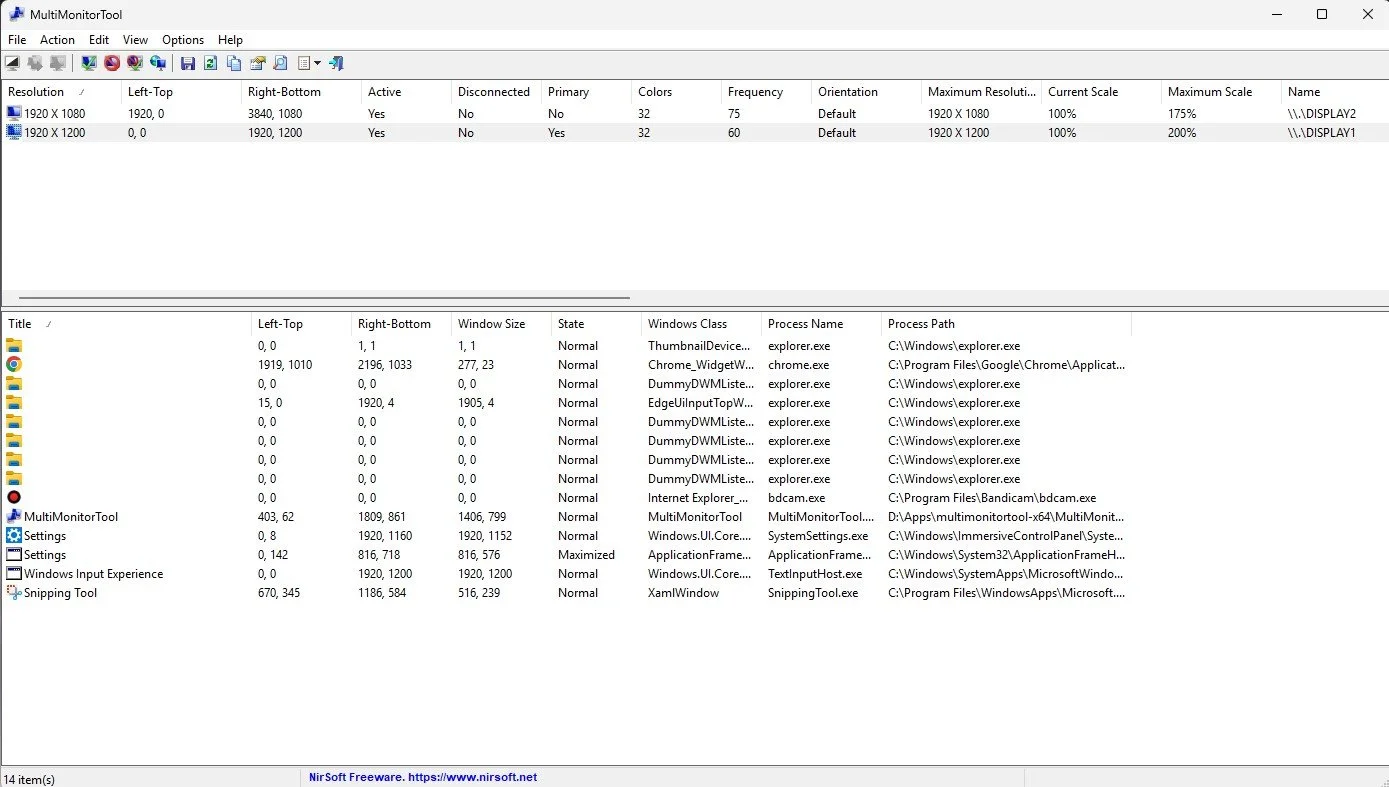
Back in January, I was very pleased because I had finally found some open source software, DisplayMagician, which allowed me to quickly and easily alter my display profile and run specific games and applications on my second monitor. Prior to this I would find that some programs just wouldn’t stay put, once they were dragged or otherwise cajoled to display on the monitor of my choice. They would continuously snap back to the primary display, regardless of my actions. DisplayMagician solved this issue and did so with aplomb. Or it did, until last weekend when I upgraded my PC from Windows 10 to 11. Then it stopped working. I therefore did some digging online and it became apparent that this is a known issue that is currently being addressed by its creator, Terry McDonald.

As part of our increasing dependency upon software, we have also grown accustomed to its associated foibles, especially the negative ones. Today, I upgraded my blog from Squarespace 7.0 to 7.1 and my PC operating system from Windows 10 to 11. I started early in the morning and ensured that all my personal data was backed up. My default expectation was that both processes would go wrong in some way, shape or form. Let’s take a moment to consider this mindset, which is born out of experience. It is now taken as read that whatever you upgrade, be it an app on your phone or a program on your PC, that it’s going to be problematic. It won’t be a seamless transition and you’ll end up having to do some sort of troubleshooting. Despite our lives becoming more dependent on such software, the quality of these products seems to be deteriorating. What a sorry state of affairs.
The ability to take a screen capture of a video game that you’re playing, or an open application or browser tab, is just something we take for granted. Windows 10/11 have a built-in tool called Snip & Sketch that is simple to use. Most of the games that I play have a specific hotkey for taking screenshots and a default directory to store them. Similarly, the latest builds of Windows also include the Xbox Game Bar software, which allows you to capture video from any application that you’re running on your PC. You can then edit via Clipchamp which is the successor to the old Windows Movie Maker. I believe the macOS comes with comparable default software. The absence of such apps today would be noticeable. However, there was a time when such things were not considered standard features.

30 years ago, in early 1995, I bought my first PC, a second hand Compaq Prolinea 4/33. It had an Intel 486 DX processor, 340MB HDD, 4MB RAM, 3½-inch floppy disk drive and a 14-inch monitor with a screen resolution of 1024 x 768. It ran Windows 3.11 installed via MS-DOS 6.22. It didn’t come with a soundcard or a CD-ROM drive. I believe I paid around £750 or so at the time, which was approximately half its original retail price. This model was 2 or 3 years old when I bought it. However, at this time, PC specifications did not change as quickly as they do these days. Hence, this was a good starting point for someone new to computing. I subsequently upgraded the processor to a 486 DX2, increased the RAM to 16MB and installed a Creative Labs Sound Blaster AWE32 soundcard and CD-ROM drive.

Three months ago, I wrote a blog post regarding how I wasn’t going to replace my phone because I was pretty much done with the endless treadmill that is “upgrade culture”. At the time my Google Pixel 6 was three years old but continued to serve all my smartphone needs. So I signed up for a new “SIM only” contract with Vodafone and went about my business, feeling somewhat pleased with myself. However, “needs must when the devil vomits into your kettle”, to quote Blackadder. I recently noticed that the screen on my phone was coming away from the main enclosure. There was a distinct curve along the right hand edge, as if there was something inside the phone applying pressure outwards. Sadly, that is precisely what was happening. I searched online to see if this was a known issue and was subsequently introduced to the problem known as battery bulge.

I had a novel experience (at least for me) this morning. I went to the cashpoint (that’s an ATM for those outside the UK) at my local supermarket, only to find it out of service. I had an imminent haircut appointment and no cash to pay my barber, who doesn’t take card payments. Fortunately, the supermarket did “cashback” so I bought a loaf of bread and some milk, paid £23 for them and was given £20 in cash. It’s a useful facility that I have never used until today. Usually I just make sure that I have a float of cash available but today the cashpoint being unavailable threw a spanner in the works. If the store did not do “cashback” then I would have had to reschedule my haircut. This minor hiccup got me thinking about our dependence on technology in our daily lives. A point that was further brought home, as my barber told me he had recently visited Spain and was affected by the national power outage.
Minigames
“Minigames” are small, short and self-contained games, within a larger RPG or MMO (as well as other game genres). Sometimes they are incidental and have no major bearing on the wider narrative or progression. For example, in The Lord of the Rings Online, you can take up fishing as a hobby. It is an additional activity and nothing more. Many players enjoy it as it can be very relaxing. Minigames of this nature are optional and can be ignored if the player sees fit. When mining Dilithium in Star Trek Online, there is a simple minigame where you have to match your onscreen triangular reticle over a secondary triangular marker that moves over the Dilithium seam. When they are aligned you start mining. It adds a nominal amount of effort to what is otherwise an arbitrary task. However this minigame is mandatory if you wish to do this task. If you elect not to do it then you cannot mine but there are plenty of other ways to acquire Dilithium.
“Minigames” are small, short and self-contained games, within a larger RPG or MMO (as well as other game genres). Sometimes they are incidental and have no major bearing on the wider narrative or progression. For example, in The Lord of the Rings Online, you can take up fishing as a hobby. It is an additional activity and nothing more. Many players enjoy it as it can be very relaxing. Minigames of this nature are optional and can be ignored if the player sees fit. When mining Dilithium in Star Trek Online, there is a simple minigame where you have to match your onscreen triangular reticle over a secondary triangular marker that moves over the Dilithium seam. When they are aligned you start mining. It adds a nominal amount of effort to what is otherwise an arbitrary task. However this minigame is mandatory if you wish to do this task. If you elect not to do it then you cannot mine but there are plenty of other ways to acquire Dilithium.
Then there’s a third type of minigame. One that is mandatory and integral to moving forward within the confines of the game. It acts as a gatekeeper and blocks further progression until it is completed. Minigames of this nature are universally reviled and are often an anathema to gamers. Furthermore they’re often considered “lazy game making”. If the player cannot complete the minigame in question then they may as well uninstall the game that they’re playing as they cannot progress any further. It begs the question why would anyone consider including such a system within a video game? Such situations remind me of that classic comedy routine by Irish comedian Dara O’Briain. For those unfamiliar with said pop culture reference here is the most salient quote. I do recommend that you watch the entire vignette as it is worryingly relevant.
You cannot be bad at watching a movie. You cannot be bad at listening to an album. But you can be bad at playing a video game and the video game will punish you and deny you access to the rest of the video game.
No other art form does this. You’ve never read a book and three chapters in, the book has gone, “What are the major themes of the book so far?”
You go “I, I, I don’t know, I wasn’t paying close enough attention”
And the book goes THOOMP.
“Aw, Jesus, come on”
You’ve never been listening to an album after three songs, the album has gone “Dance for me. Show me how good your dancing is.”
You’re dancing and going, “Is this good enough?”
And the album has gone “No,” and stopped. Games do this all the time.
So you may be wondering, “Roger, what prompted this somewhat querulous post”? I shall clarify the situation for you. For the last couple of weeks I’ve been playing through Assassin’s Creed IV: Black Flag. It’s a fun game with lots of pirate based mayhem and shenanigans. However, every so often the story moves from the 18th century to the present which is quite jarring. Anyway, there is a section of the game where you have to hack a computer terminal and move “a data packet” through a security field. Essentially you have to use the up, down, left and right arrows to navigate an obstacle course. Timing is everything. If you touch a “red” obstacle you have to repeat the activity from the beginning. Needless to say I was shit at it and spent an hour (yes that right an entire sixty minutes) trying to complete this utterly tedious, unenjoyable and insulting task. I came very close to just quitting the game and purging it from my hard drive.
Minigames can be fun. Minigames can enhance video games. Minigames can keep a player engaged when the more substantive content has lost its allure. You can use minigames as a means of levelling in something like STO if you don’t want to play through the story missions on alts. Minigames based around collecting and collections are also very popular and addictive. So I fully recognise that they can contribute something tangible and of merit to game design. But the utterly pointless and deliberately malicious kind that you find, such as the one I described earlier, are an utter blight upon the video games industry. Why would anyone countenance putting an impediment to progress into a game that cannot be bypassed. The sheer illogic of it is baffling. Gating content in such a fashion is counter productive and frankly trolling your customers, especially when one considers the cost of games these days. Video games are supposed to be entertainment and not feats of endurance.
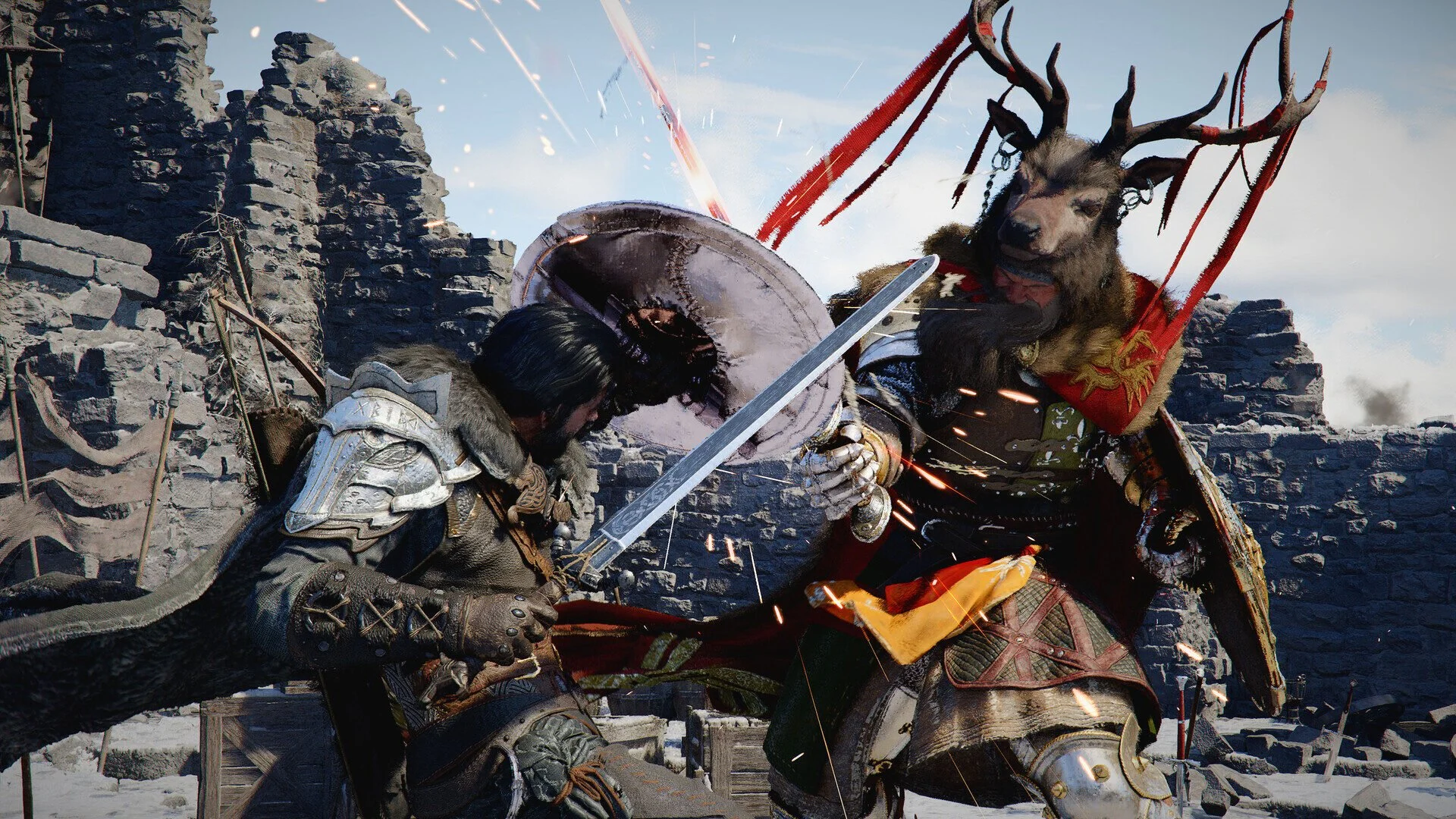
Some video games lend themselves to being set aside and resumed at a later date with zero consequences. These are often casual games with no major goals other than having fun while playing them. Fall Guys is a great example of this. You have a cartoony avatar that participates in zany group races, filled with obstacles. You run, jump, climb but the controls are far from difficult. You may well become skilled but such things are mitigated by the other players as they stumble around. You’re not at the mercy of apex players or “try hards”. It is not a game about winning and mastering techniques. The fun comes from playing it and the unique experience you have each time. I’ve been playing this game, on and off, since it’s launch in 2020 and in that time I have only ever won once (winning requires you to win a series of 4 to six individual races). However, whenever I pick up my controller and play Fall Guys, I have fun and the game lifts my spirits.

I recently completed the main story in Tainted Grail: The Fall of Avalon. In total I spent about sixty hours playing the game. I began at the start of the year, then took a break for a while but returned to it recently because I wanted to see if I could unlock a specific ending. I did manage to do this. Like so many other RPGs, Tainted Grail: the Fall of Avalon has a central storyline, along with a wealth of side quests, based around factions in specific zones. I think I possibly completed about a two thirds of these. However, once I finished the main story, my interest in the game began to wane. I finally left my character in the last major quest hub in case I wish to return at a future date. I then logged out of the game and uninstalled it from my PC to free up space for whatever I was to play next. In this case its The Sinking City 2. None of this is a negative reflection on Tainted Grail: the Fall of Avalon. I enjoyed the time I spent playing this quirky RPG. I simply had my fill and left to play something else.

On Tuesday 11th April, Aspyr Media rather surprisingly re-released The Lord of the Rings: War in the North, a co-op action-RPG from 2011. This game was delisted in late 2019, possibly due to changing rights ownership or a license expiring. Hence, I was somewhat discombobulated by the return of this title to all major gaming platforms. Mind you, the Embracer Group (through its subsidiary Middle-earth Enterprises) still controls the worldwide commercial and video game licensing rights for The Lord of the Rings and The Hobbit. Furthermore they have explicitly stated that they have plans for more games. It would appear this also means re-releasing and updating old favourites. It is also worth noting that they own Aspyr Media, which is also a bit of a giveaway. Let it suffice to say that this re-release and sparked enthusiastic online debate as to whether any other he Lord of the Rings themed games from the same era will receive a similar makeover. Judging by the internet chatter, there’s potentially a market for them.
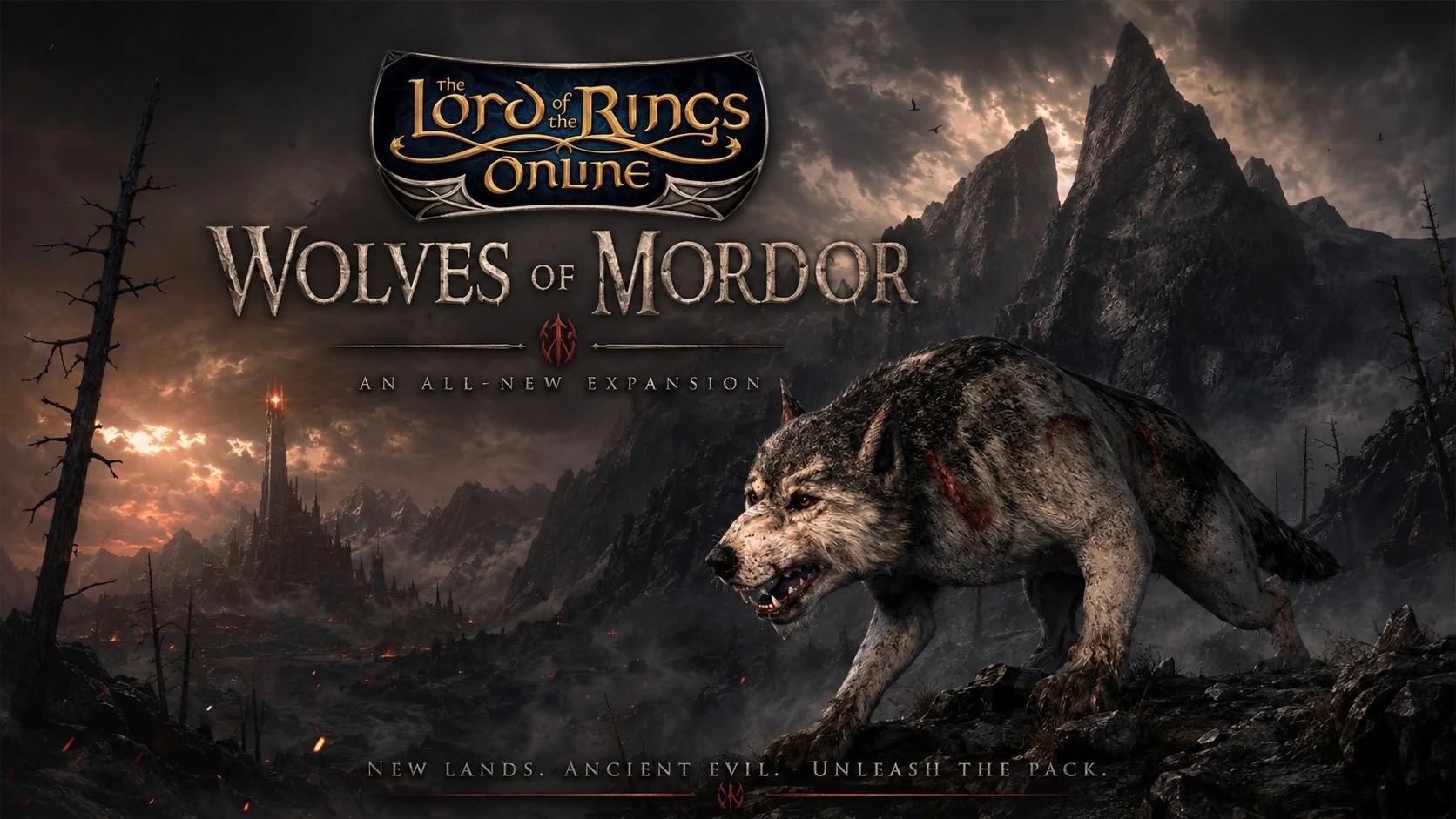
The next expansion for the MMORG, The Lord of the Rings Online, was announced on the 1st August, via the gaming website MMORPG.The Wolves of Mordor, which will launch later in the year, appears ambitious in scope as it will include two new game systems as well as the obligatory story update. This expansion takes place in Draugardh located in the North East of Mordor, beyond the Plateau of Gorgoroth. It includes the new zones of Heledhris, Parth Rhavas and Nan Ogol. These vary environmentally ranging from the arid, volcanic and semi-tropical. Players will encounter the Daugrim in these regions, Werewolves but not in the modern sense. This is not the lycanthropy of Eastern European legends but in the established Tolkien idiom of fell spirits inhabiting the bodies of Wolves. The region also sees the return of the Woses and players can expect to encounter Elves and scouts from Gondor. As ever with LOTRO expansions, there will be new instances as well as a raid.
This is a post about the power of nostalgia and how sometimes, interacting with something from your past, be it physically or mentally, can produce a very strong and tangible emotional reaction. In some instances, this can be the result of something that you have specifically set out to do. On other occasions you can wander into a sense of nostalgia purely by chance. Today I experienced a very strong sense of nostalgia while watching a YouTube video and then again when I sought to replicate what I had seen. The video showed someone installing Windows 95 on to an old 486 PC from that era. The Window’s start up sound really touched a nerve (but in a good way) and then when the guy in the video launched Space Cadet 3D Pinball, a game that shipped with the operating system, I felt a strong compulsion to track down a copy and install the game myself, thus revisiting something that was an integral part of my life in 1995.

RV There Yet? is possibly the most entertaining game I’ve never played. My vicarious pleasure regarding this title has come exclusively from watching two popular YouTubers, JackFrags and WillFromWork, play through the game over a series of videos. It has been immensely amusing to watch and I have empathised a great deal as the group of four players has struggled with the game’s unpredictable mechanics and their own team’s dynamic. I could go and buy RV There Yet? myself but I doubt if I would ever have a gaming experience anywhere close to what I’ve watched online recently. So in some respects watching these videos has been an interesting alternative as I’ve been entertained, which ultimately is the point of video games. Perhaps there is a deeper philosophical point here that the game developers should reflect upon, as they’ve lost a potential sale. However, that is separate discussion for another day.

I don’t keep up with gaming news as much as I use to but several noteworthy announcement have come to my attention of late. Firstly, there’s an expansion, Songs of the Past, coming for the Witcher III: Wild Hunt in 2027. No doubt this is to pave the way for the Witcher IV. Next, I also found out about Hand of Fate: Horde. I liked this franchise and was saddened to learn that the original studio, Defiant Development, closed. Hence is was a pleasant surprise to see this new game being developed by members of the original studio. The third announcement was regarding Guild Wars 3. A new MMORPG in active development by a major studio is no small feat and is certainly good news for fans of this franchise and the genre per se. However, once you look beyond this news this announcement raises several questions and has certainly given me pause for thought. Let us take a few moments to consider them.

Star Trek Online has many in-game systems that are common to the MMORPG genre. The reputation system is one such example. In STO there are 13 reputation factions. Once a player has reached level 50 they may start progressing through the 6 reputation tiers of each one. Players gain progression through daily projects (20 hours in duration). Hourly projects are also available though they yield less reputation advancement and are limited to three times a day. Hence 20 hour projects are consider by default the most efficient way to gain rep. Projects require 30 Faction Specific Marks (earned via various activities in-game), 15,000 Energy Credits (standard in-game currency) and 2000 Expertise points. The most efficient way to tackle the reputation grind is to build up the necessary resources in advance and then at a designated time each day, start all 13 respective projects. Upon completion projects yield a player bound lockbox containing a random space or ground weapon, a console or Elite Marks which can be used to acquire faction gear.

I was recently perusing my archive of old blog posts, when it struck me how much I’ve written about the MMORPG genre over the years. Naturally, there was far more material from between 2008 and 2012 as that was period when I immersed myself in the genre and was very enthusiastic about it. I was at a point in my life when I had the time to dedicate to such games and I was happy to participate in the social aspect of they offered. I would regularly play through group content and spend time socialising online with fellow guild members. My experience remains a textbook example of how online games can be more than the sum of their parts and that where you are at in your life has a major impact upon your overall enjoyment. As I read though various old posts it became clear that my experiences where specific to this particular part of my life and that they cannot be repeated. My relationship with the genre is very different now and that’s fine.
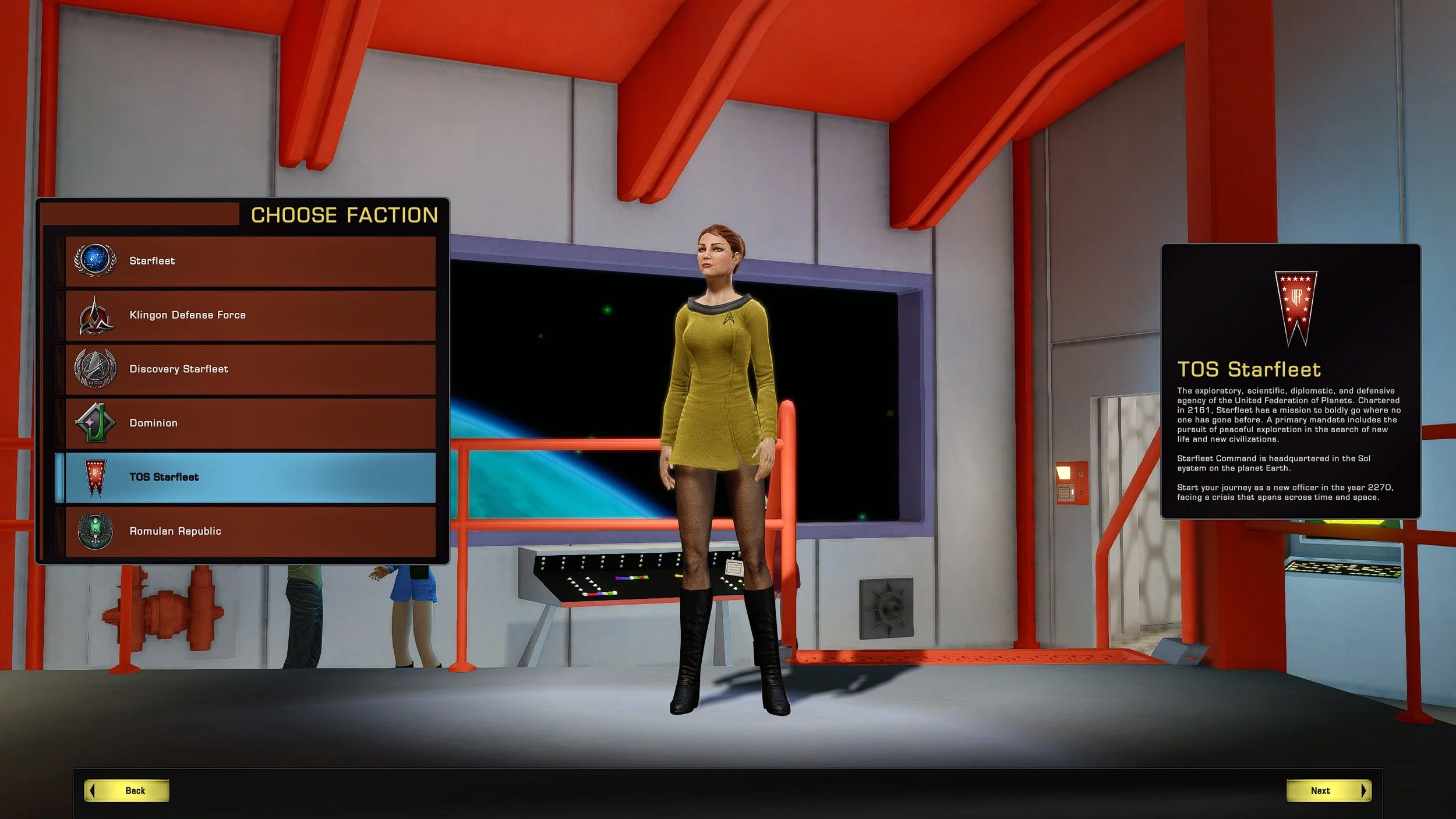
Creating alts is an integral aspect of the MMORPG genre. Many players will create a character of a specific class or faction, play it for a while, lose interest in it or they may decide that it is just not for them. Fortunately it is no effort at all to simply re-roll a new alt and set off once again. Furthermore, lots of players never reach level cap of the MMORPG that there playing. When the going get’s tough, so to speak, you can either soldier on for another 50 levels or simply create a new alt and return to the comfort of tried and tested content. Alts also give you the chance to secure an accolade or achievement that you previously missed. They are also of great benefit to the genres social aspects. Creating a new alt so you can play along with a friend who is just starting is great fun. Developer’s love them too as it means you’re still playing the game.
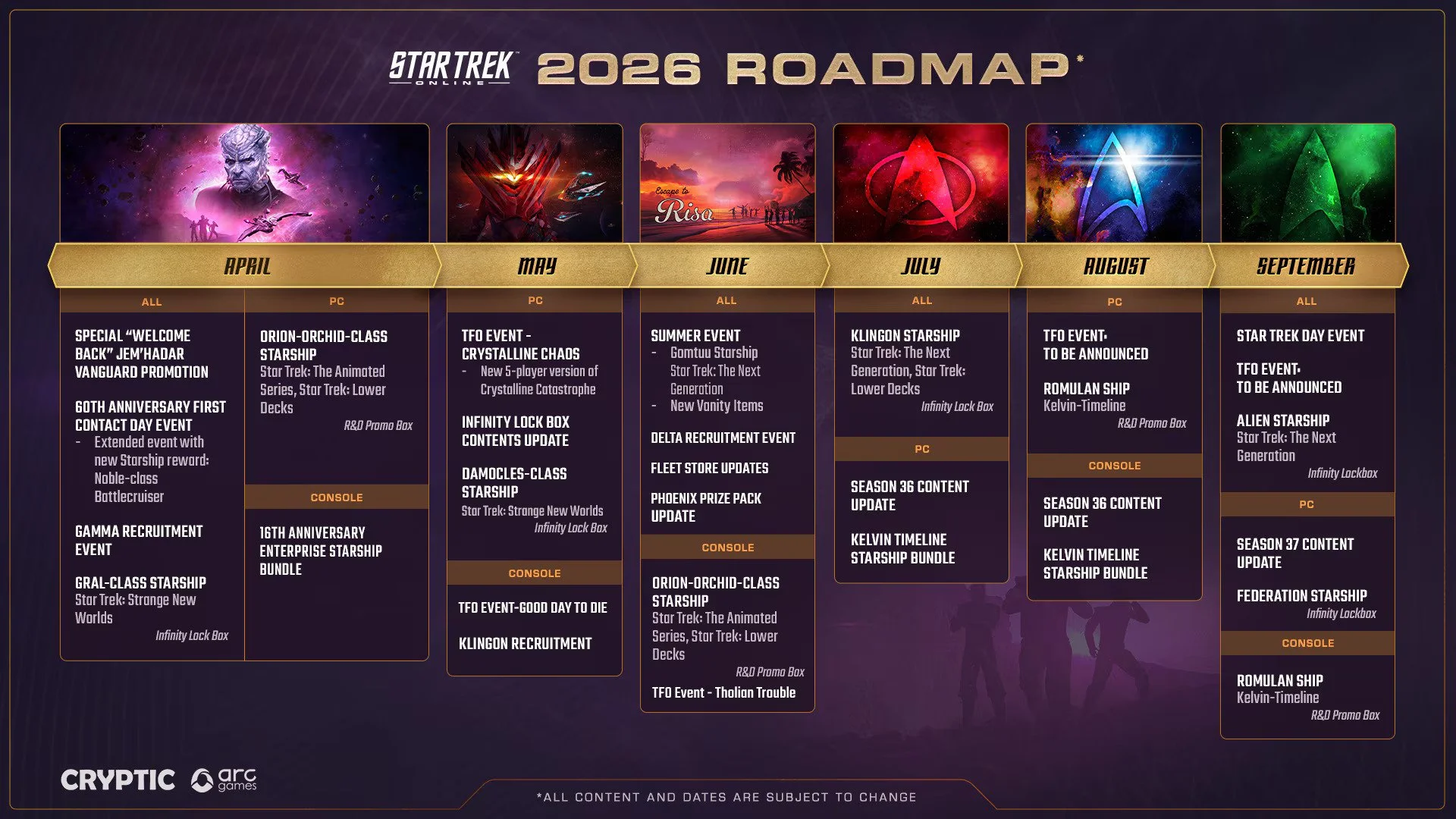
I recently took a break from Crimson Desert choosing instead to to play something familiar and easy going. As I’ve been logging into Star Trek Online daily to participate in the anniversary event, I decided to look through my various alts and see how far they had progressed through the game and what resources they had. At present I have twelve alts. My primary Captain was created in 2015 during the original Delta Recruit Event. I had previously played STO intermittently since its release in January 2010 but I never kept any of those characters. Hence this decade old Tactical Federation Captain has been my main focus when playing. The other eleven alts are the result of other recruitment events or whenever I wanted to try something different, such as playing a specific class or faction. I obviously played a lot of STO during the lockdown as several alts date from that period. Several had maximum reputation across all factions.
The action, open world RPG Crimson Desert has been patched five times since it launched on March 19th and there have also been multiple hotfixes. At first glance this isn’t anything unusual. New games have bugs and issues arise once a game is released and played across a much wider variety of hardware than in QA testing. However, if you read the patch notes that accompany these sizeable downloads it quickly becomes apparent that developer’s Pearl Abyss are not just addressing bugs and software glitches. They are actively engaging with their player base and responding to suggestions and requests from that community. Although this is not a unique approach, what is surprising is the speed and quantity in which these player driven changes are happening. There seems to be an active ongoing process to refine the game and eliminate some of its “rough edges” and the players are contributing to this process with their feedback.
According to my Steam statistics, I last played Starfield on 19th December 2023. I bought the game upon its release in September of that year and played in total for 136 hours. Starfield held my interest for three and a half month and I wrote seven blog posts about various aspects of the game. Although there were some engaging aspects to Starfield, I did feel that that the game was somewhat lacking in systems and content, at that point in its lifecycle. I also think that the marketing and player expectations associated with Starfield were overblown and unrealistic. The shadow of Skyrim looms large over all new Bethesda releases and they don’t seem able to quite recapture that magic. Hence, I inevitably drifted away from Starfield and to another game and was effectively “done” with it. I have not played the game since which seems to validate the theory that game are becoming increasingly more ephemeral.
13 days after its release, market analysts estimate that Crimson Desert has already earned $200 million across the four main platforms (PC, PlayStation 5, and Xbox Series X and S). The game is certainly proving popular among gamers with the internet awash with live streams and “let’s play” videos. However, reviews are mixed both among gaming journalists and YouTube influencers. Common complaints about the game include that it is slow to start, the controls are poorly laid out on all platforms and that developer’s Pearl Abyss have done a poor job of explaining most aspects of the game to new players. Although such criticisms are true to a degree, I think these complaints highlight how many gamers are conditioned to expect new titles to follow a specific pattern with regard to pacing, narrative exposition and learning in-game systems. A pattern that Pearl Abyss has chosen to ignore, instead favouring an old school approach.
Early on Crimson Desert, the main quest requires the player to enter a tavern and arm wrestle a particularly strong guard. The arm wrestling match consists of a quick time event. If playing on PC you have to rapidly press the “E” key which turns a power meter from white to red. Then a white dial appears above the meter with a rotating hand. When the hand passes over a segment of the dial that is marked by hatching, the player must press the “R” key. The idea being the meter filling with red is you strength building (or waning) and the “R” key prompt indicates when to try and force your opponent’s arm. You will need to to continuously press the “E” key throughout the arm wrestling match and the “R” key about 4 times to win.

Earlier this week, Nvidia posted a video featuring their latest iteration of DLSS technology (Deep learning super sampling). DLSS 5 is an AI-powered “real-time neural rendering” process and unlike previous versions that focused on improving frame rates through upscaling or frame generation, DLSS 5 uses generative AI to “infuse” frames with photorealistic lighting and material details that the game engine never actually calculated. Let us pause for a moment and consider these words. Material detail that the game engine never actually calculated. Therein lies the rub. If you watch the aforementioned video or peruse the images posted here, it is abundantly clear what the technology does.
Last night, I spent the first 45 minutes after the launch of Crimson Desert, watching the 92GB pre-downloaded game files slowly decompressing and installing. I finally launched the game at about 10:50 PM GMT. I then waited a further 5 minutes while shaders were downloaded. It took me about 15 minutes or so to read through the various game settings and choose those that are optimal for my PC. I suspect even if you have a beast of a computer, you’re still going to have to spend some time tweaking settings. As for those players like myself with a gaming rig that is somewhere in the middle of the game’s specifications, be prepared to do a lot of fine tuning both within Crimson Desert itself and your Windows settings.
I have been aware of the online interest around the open world action game Crimson Desert for a while now. One of the things that has intrigued me about it is the scope of the game. The word “hype” has been bandied about by a few gaming websites. However, from what I have observed, developers Pearl Abyss have not been excessively hyperbolic themselves, with regard to the manner in which the game’s systems and mechanics have been marketed. Now that the press embargo has been lifted, the pre-release reviews seem to confirm that everything we’ve seen in promotional videos in the run up to the launch, is in fact present in the game. So far the initial critical response has been very positive and it has been hinted that the game may well be a genre milestone. Perhaps Crimson Desert is just a rare example of a game that has not had a rushed development and isn’t launching prematurely for business reasons.

Video games as a genre are extremely poor at explaining themselves. When you buy a new game you’ll often find little or no information regarding the basic systems and mechanics. The industry assumes that their customers are by default familiar with the fundamentals of playing a modern video game. Hence if a game has a tutorial, it is often based around videos rather than detailed verbal instructions. You are are briefly shown a clip of a specific move being successfully undertaken but it is seldom shown in a wider context. The industry also expects the fan community to take on the role of curating and disseminating information about its games. The move away from forums and bespoke websites to Discord highlights this. Discord is a primarily a real time communication tool and not good at maintaining a historical data archive. If you want an answer to a specific gaming question, you’ll more than likely find it on YouTube in a video made by a fellow gamer.
I have written in the past about the video games we cannot play. The ones that require a keen understanding of a game’s mechanics, along with a strong degree of manual dexterity and situational awareness. Being 58 years old, I tend to have neither the co-ordination necessary to succeed or the patience to master such complex skill requirements. With this in mind, I recently watched a YouTube video for Chivalry 2 and thought, that looks like fun. The fact that it showed someone picking up a chicken and throwing it at an opponent is neither here nor there. However, after watching a few more videos I realised that combat in the game was complex and that, as usual, the reality of playing such a game would be different from my expectations. Hence, I came very close to not buying Chivalry 2. However, I eventually decided that I would, so I bought it for just under £10 from an online vendor.
I decided to pursue a magic and spellcasting build in the RPG Tainted Grail: The Fall of Avalon after the story prologue. During the opening section of the game, the player is presented with a sufficient range of weapons to determine which type suits them best, although you can change at any time during the game. For me, casting spells feels right and is fun. Plus I have fond memories of the magic system in Two Worlds II and Skyrim. So once I started playing through the first zone, I started putting attribute and skill points into the appropriate trees to bolster my spells strengths and frequency. I also chose gear that would bolster those statistics further. The results have been surprising, as magic and spellcasting is not presented in the usual “glass cannon” style you find in some other RPGs. Here it offers robust DPS output and with the right gear and spell combination, a strong degree of survivability.
I originally bought Warhammer: Dark Omen in the summer of 1998. I played a demo copy via a magazine cover disc, which was a common means of promotion and marketing back then. Although I was at that point, unfamiliar with the Warhammer Universe, I found this game to be an excellent point of entry. The story did an excellent job of introducing players to “The Old World”, the political and power structure and major characters. I instantly liked both the aesthetic and the lore. Warhammer: Dark Omen was also the first real-time tactical wargame that I played and I spent numerous hours playing through the campaign. Overall, the game was a critical success, particularly on PC, but it struggled commercially upon its initial release and didn’t quite find the audience that it deserved. However, it has achieved status as a “cult classic” among gamers, leading to a recent re-release on GOG in late 2025.
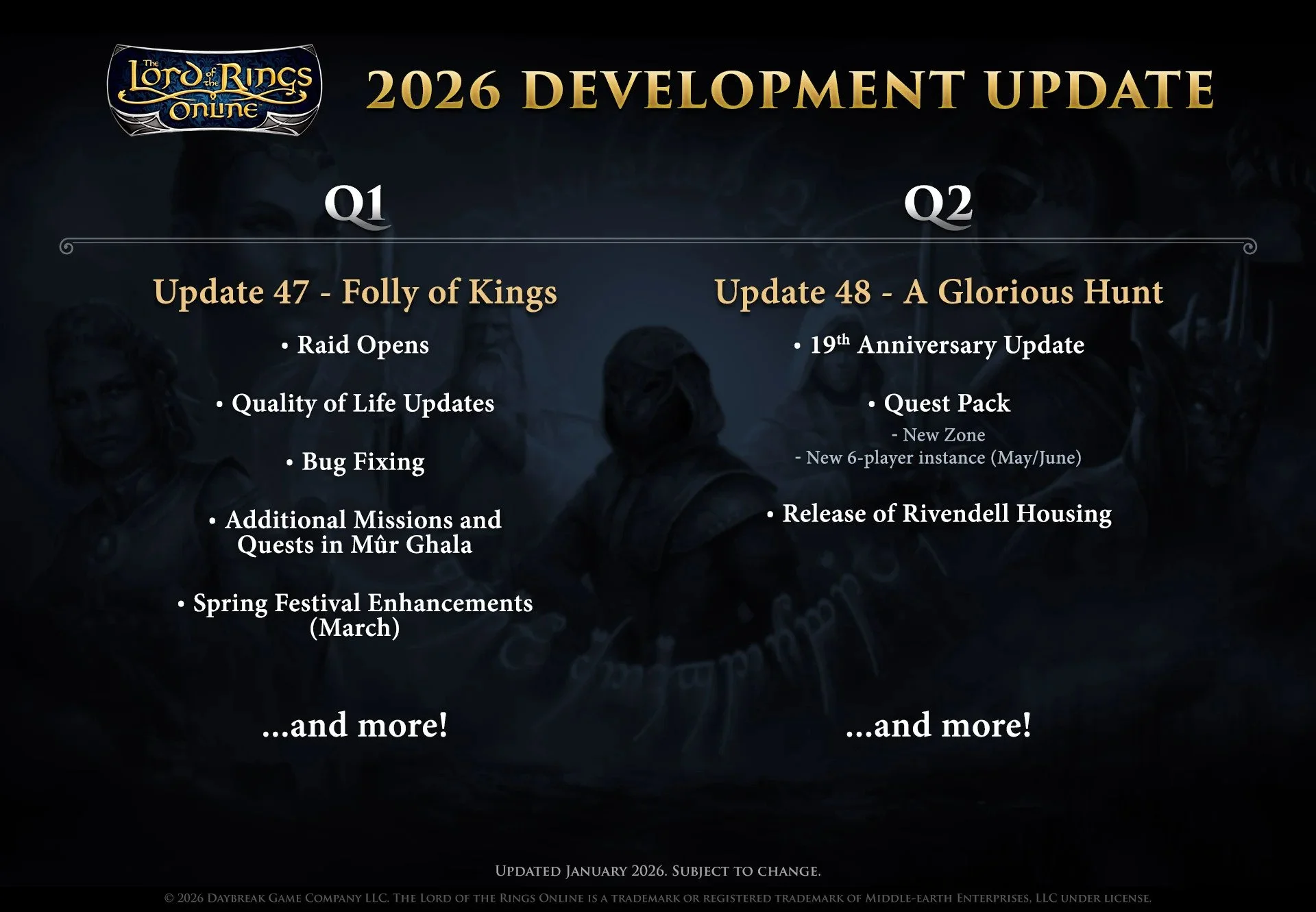
According to the recent “letter to the players”, Standing Stone Games will be adding a new zone to the MMORPG The Lord of the Rings Online in the second quarter of this year. Possibly around May or June. Having spent the last three expansions in the South of Middle-earth exploring the tropical Umbar and the deserts of Harad, I would certainly welcome a change of location. I have gradually warmed to these zones over the last eighteen months but I do find them so incongruous. They are so radically different to the European style content that has been the mainstay of the game for so long. Tolkien’s source text has plenty of detail regarding Eriador and Rhovanion. Information regarding Harad is scarce, hence it has afforded the developers a great deal of artistic freedom. Although exceedingly well realised these tropical zones have taken a while for me to get used to.

I’m not sure exactly when it started but I’ve recently noticed a graphical bug within the MMORPG The Lord of the Rings Online. This problem often occurs within caves or in areas where there are a lot of rocky surfaces. Hence it has become very apparent in the latest two expansions, set in Umbar and Harad. This graphical glitch causes some surface textures to appear to flash from light to dark intermittently. The resulting strobe effect is hard to ignore and very distracting. Fortunately, a quick online search showed that this is not a problem unique to my installation of LOTRO and is a known problem. Furthermore, there is a very simple workaround, which is to go into the Advanced Graphics setting and uncheck “Per Pixel Lighting”, which immediately remedies the problem. I have no idea why this has recently started to happen but at least it can be resolved.
This year is the 60th anniversary of Star Trek. The original TV show was first broadcast in the US on September 8th 1966. If you search online you’ll find details of lots of related events. There are documentaries, conventions, new TV shows and even some video games in development. However, what you won’t find are any details regarding what will be happening with the MMORPG Star Trek Online. So far no road map for 2026 has been posted online by the developers but it is still quite early in the New Year. That being the case, I am not especially optimistic about there being any major plans waiting to be revealed. It is not as if DECA Games have demonstrated or stated any major ambitions for STO beyond keeping the endless events treadmill going and regularly adding content to the in-game store, during their development tenure. The ongoing story arc drags on inexorably and is as dull as ditchwater.
I first played The Elder Scrolls V: Skyrim in June 2013. This was over 18 months after the game’s initial release and the base game and DLC were bundled together in a “Legendary” edition. Although a seasoned gamer at the time, familiar with the RPG genre with such titles as Mass Effect and Grand Theft Auto IV, I had not played a game from this franchise before. It only took a few hours of gameplay to realise that this was a special title. The scope of the story, the art design and the size of the world were immediately notable. Tamriel was immersive in a way I had not experienced with other titles. Often simply traversing the terrain and watching the dawn break while the game soundtrack swelled, was sufficient to hold my attention. I instantly picked up on the voice acting of Christopher Plummer and Max Von Sydow. All of which indicated that this was a gaming landmark.
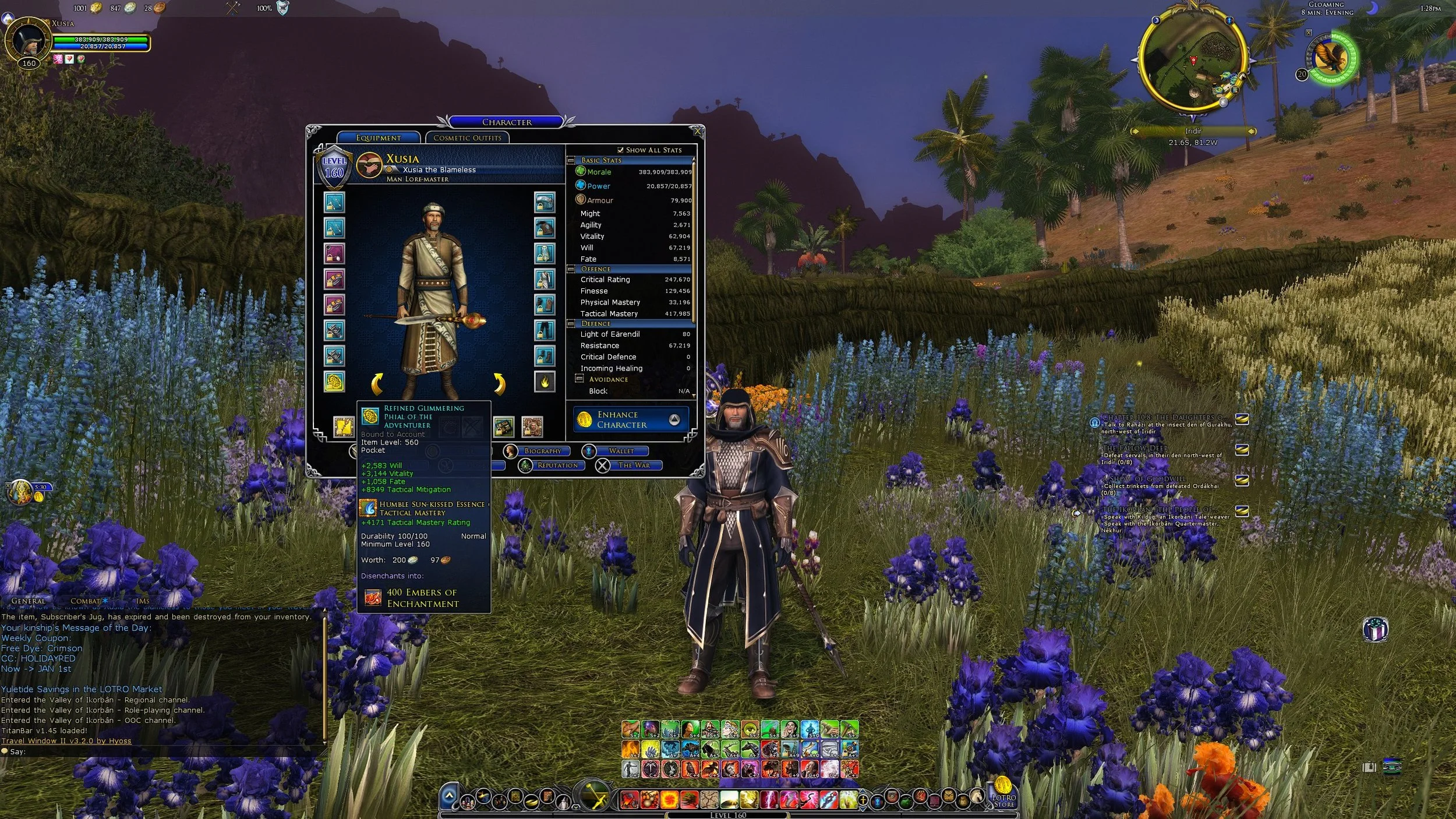
The latest expansion for the MMORPG The Lord of the Rings Online, Kingdoms of Harad, launched on December 3rd. With this release the level cap was raised from 150 to 160. It should also be noted that the cap for virtue traits was also raised from 96 to 100. Naturally these changes meant that there is a requirement to replace all armour and jewellery once the new cap is reached. Similarly Legendary Items have to be reforged and any traceries upgraded or replaced. If you follow the Epic Story it will lead you from quest hub to quest hub. The main quest rewards, along with those from side quests will provide adequate gear as you slowly progress towards the new level cap. The new raids, instances and missions/delvings then provide a means to acquire higher quality level 160 gear. LOTRO and indeed, many other MMOs are consistent in this methodology.

It is customary in a post such as this to list the various games that I’ve played over the last twelve months and share my thoughts on them. Wider analysis of the video game industry is also de rigeur. Unfortunately, I don’t really feel disposed to do either of those two things. My thoughts on the games I’ve played have already been published and can easily be accessed via the links at the bottom of this post. As for the video game industry, it suffers the same flaws as music, TV and cinema. There is creativity and innovation out there but it is often drowned out by mainstream products which are demonstrably inferior due to their inherent mediocrity. As for the business side of things, we once again clearly see the failings of the corporate management class. Sadly, they do not face the consequences of the mistakes that they make.
Blogrolls
As today is the first day of Blaugust, I thought I’d write something pertinent to blogging. If you’re not sure what Blaugust is then follow the link and you’ll find a wealth of posts that explain this yearly event along with useful advice and guidance. So returning to the matter in hand, bloggers tend to form informal communities which support and promote each other's work. This can be either due to altruistic reasons or down to pure pragmatism. Either way networks of bloggers emerge, often around specific subjects or facets of popular culture. Our own community that holds the Blaugust event is one that is broadly centred around video games, although that is not in any way a defining criteria. All are welcome. However, the point I’m striving to make is that if you run a blog then you need people to read it. And if you want people to read it it helps if you cross promote others and they in turn promote yours. And the easiest way to do this is with the humble blogroll.
As today is the first day of Blaugust, I thought I’d write something pertinent to blogging. If you’re not sure what Blaugust is then follow the link and you’ll find a wealth of posts that explain this yearly event along with useful advice and guidance. So returning to the matter in hand, bloggers tend to form informal communities which support and promote each other's work. This can be either due to altruistic reasons or down to pure pragmatism. Either way networks of bloggers emerge, often around specific subjects or facets of popular culture. Our own community that holds the Blaugust event is one that is broadly centred around video games, although that is not in any way a defining criteria. All are welcome. However, the point I’m striving to make is that if you run a blog then you need people to read it. And if you want people to read it it helps if you cross promote others and they in turn promote yours. And the easiest way to do this is with the humble blogroll.
After writing online for over a decade, I consider blogrolls to be both an asset and a social minefield. In principle they provide a list of online resources that others can use for reference. In fact if you find a site with a comprehensive blogroll it can become a major asset with regard to keeping abreast of others writing. However they can also have some less desirable consequences. Some people see them as a popularity contest or a self indulgent backslapping exercise. There is also a strange sort of internet etiquette associated with them. Sometimes bloggers feel snubbed if they find that their site is absent from their peers' blogroll. If someone adds your site to their blogroll are you obliged to reciprocate? It may sound all very inconsequential but you’d be surprised at the little things that some people choose to get annoyed over.
When I moved Contains Moderate Peril from a hosted WordPress site over to Squarespace, I decided to review whether I should maintain a blogroll. Due to the template I chose and its lack of a sidebar, the matter pretty much resolved itself. I could set up a separate page with a list of blogs but it lacks the convenience of having it on the site homepage. Back in early 2012 I set up The Gaming Blog Nexus, as a more practical means to aggregate blog content and keep track of the latest post published. It proved to be a popular website and successful resource but like so many online projects, it was subject to increasing operational costs. After two and a half years I decided to close the site, which at the time listed over one hundred and twenty gaming related blogs. Although I do not regret my decision, as I do not have unlimited funding for my online projects, I do miss its practical benefits.
If you’ve decided that you wish to maintain a blogroll on your website, here are a few tips for your consideration. If possible present your blogroll in order of new posts or alphabetical site names. If your blogroll is simply a list of hyperlinks then the latter is possibly the best option. Fancier addons or plugins may offer more complex ways to tabulate and collate the blogs listed on your roll. Decide in advance what your policy is to be with regard to which blogs you add to your roll. If you choose a quid pro quo approach then stick to it. If you decide to be more particular, bear in mind that some people may question your policy. Also remove sites from your roll that have become inactive or you know are “dead”. A year is a fair benchmark. If you do these things and manage your blogroll well, you may see a spike in your website traffic. Just bear in mind it may be due to the well maintained resource that you’ve curated, rather than the quality of your prose.
It is obligatory to start these sorts of posts by reiterating the standard mantra that you should not be driven by your websites stats and that the data they contain can be unreliable. Although a sound philosophy in principle, it is actually more nuanced than that. Such data can be useful for growth if used wisely. I have never been coy about trying to increase my readership. For me it seems an integral aspect of blogging. Over the course of 2026, the traffic to Contains Moderate Peril has doubled. A lot of that is down to curious spikes in visits which seems to be AI scraping the entire site. Setting aside these anomalies, more people are reading posts and a lot are doing so via the site’s RSS feed. All of which is fine by me as growing the audience for this blog was a goal for this year, I am quite pleased by this development and the ongoing progress. I hope it continues.
There is a subtle difference between being rash and being proactive. Being rash means acting too fast without thinking about the results, while being proactive is a question of acting early with careful planning. Why have I mentioned this? Well prima facie information indicates that recent Blaugust participants are interested in an “official” online presence for the annual festival of blogging, other than that existing Discord server. That seems perfectly reasonable to me. Not everyone likes using Discord and I do worry that they may reduce its free functionality at some point in the future. With regard to there being a Blaugust platform of some kind, there is a consensus that it doesn’t need to be some sort of sprawling commercially hosted website running on Wix or such like. Those sorts of site require funding, a degree of admin and possibly private data management. It also a bit too “corporate” if you like. Hence the logical compromise is to have a static site. Let it suffice to say, that has been done.
Judging by the posts I’ve read, it would appear that Blaugust 2026: Festival of Blogging has been well received by those who participated in it. That is most satisfying to know, especially in light of the fact that this is the first year the event has been run without our founder who sadly past away in July. It has also become clear that Blaugust is reaching a far wider and diverse audience and most definitely is no longer the exclusive province of bloggers from one particular community. There has been healthy discussions on our Discord server about whether this year event needs to adapt to accommodate the modern blogosphere. Questions such as whether or not there needs to be a dedicated Blaugust website have been raised and explored. Should every site participating have an RSS feed? How, if required, should comments be handled. Inevitably, the subject of the use of AI in blogging still remains a controversial issue.
After a very productive month of writing, we come to the final Blaugust 2026 Group Project writing prompt. It is titled lessons learned and is usually a chance to reflect on the festival and whether or not it has been to one’s satisfaction. Have you achieved your goals? What have you gained from the experience? Those sorts of things. It also poses two further questions; “What is the best piece of advice you’ve ever been given?” and “what’s the best advice you’ve ever given to someone else?” for your consideration. I’ll address the questions shortly. Firstly let’s mull over this years event and assess how it’s gone.
It was my blogging anniversary on the 16th August. I’ve been writing and sharing my post online for 19 years, via various different websites and blogs. This current iteration of Contains Moderate Peril has been around since August 2015. To date it has 2,171 posts including this one. Quantity does not necessarily equate to quality but there are some articles I am proud of and feel that they make their point effectively.
This week’s Blaugust 2026 Group Project writing prompt is an important topic. Namely, staying motivated. I prepared a fairly lengthy post with some advice and ideas to keep people focused and writing. Then I checked it against the post I wrote last year and the year before that, going back to blogging events from 2012. All of these posts broadly said the same thing, so I decided to scrap what I had composed for today and to go with a simpler approach. I shall answer the questions Krikket posed for this writing prompt. Fellow blogger Bhagpuss has also done so and as ever, his thoughts are interesting and well expressed. Here are my answers.
Once again, I have stumbled across an interesting debate that has provided me with an opportunity to write a blog post. Over on the Blaugust Discord Server, I read a comment from AgingGamer regarding RSS feeds and their significance with regard to blogging. This in turn referred me to a post by fyr (don’t you love all these nom de plumes) who wrote at depth about the ongoing community debate about the use of RSS/Atom feeds. The article explored the importance of such feeds with regard to reaching readers and providing accessibility to the disabled. All of which provided me with a great deal of food for thought. Mainly because I use a mainstream website service provider for my online endeavours, so RSS is by default built. I’ve never really considered not having such a facility at my disposal. But the rise in the IndieWeb scene challenges this assumption.
I have written two blog posts today that I have subsequently abandoned. The first was gaming related but when I was about halfway through writing it, I felt like I was covering old ground and just repeating myself. It was also regarding an issue that can’t really be fixed. Namely, how do you ensure that matchmaking in PVP games is done equitably. As there is no solution to this issue at present, or at least not one that all parties can agree on, I decided to ditch it. Similarly a post I was working on about what becomes of my blog if anything happens to me was curtailed. In light of recent events in our community it seemed inappropriate. However, as a result of binning two blog posts, I new idea occurred to me. Do my fellow bloggers self-edit and curtail what they write about? Is your blog totally unfiltered or do you apply a set of rules that determine what content is deemed acceptable?
It is time for the next Blaugust 2026 Group Project writing prompt. This one comes with two lines of enquiry. The first is an opportunity to “introduce yourself”. Over the years, I have written several introductory posts for previous Blaugust events. Rather than repeat myself I’ll just link to the last one, which was posted in August 2023. I haven’t radically charged since then apart from my hair going whiter. The next part of the prompt poses a far more intriguing question. “If you could have one magical power or super power, what would you choose and what would you use it for?”, which offers much for consideration. Having given this proposition much thought here is my response.
A decade ago I wrote a post about blogrolls and the practical and social issues surrounding them. At the time, the version of Squarespace I was using didn’t easily support such things or at least wasn’t able to do so in a manner I liked, so I didn’t have one. Ten years later Squarespace as a hosting platform has far greater functionality, hence I recently decided to add a blogroll. That was in March this year. However it just wasn’t really fit for purpose. So I decided to revise it a few days ago and rather than just have a traditional list of blogs in a side column, I ended up producing a more comprehensive blog directory, which list two hundred plus sites alpha-numerically. I’ve been tinkering with it on and off and I am now finally happy with it. The latest update reflects the international nature of the Blaugust: Festival of Blogging and the fact that we have many blogs written in their native language. Translating text is now an integral function of web browsers, so I see no reason why these blogs should be excluded.
Today’s post is part of the Blaugust 2026 Group project, which features a series of writing prompts set for specific dates throughout the month. The idea being that everyone who wishes to participate can write about the same subject, riff off each other’s posts and enjoy a shared experience. In many respect having a common writing prompt levels the playing field and provides a sense of common purpose among those who take part. Today’s group project prompt asks the question “tell us all about your very first blog”. An unambiguous and interesting question that will hopefully prove enjoyable to write about and informative to others.
I have been writing online for nearly two decades. I don’t claim to be good or accomplished but what I can say with certainty is that the more often you write, the easier it becomes. For those who are new to writing a blog and the Blaugust Festival of Blogging, possibly the biggest hurdle that you now have to get over, is writing your first post of the month. You spent the lead up to this event sorting out your blog templates, fine tuning the backend and possibly banking some ideas. Or you may have decided to just wing it and make it all up as you go along. Both are perfectly valid approaches. However, there is one thing left to do that cannot be put off, avoided or danced around. Writing. At some point you’ve got to do it. Or bail on the event. The proverbial “shit or get off the pot”.
If you take a cursory look at a calendar you will see that the month of July is fast coming to an end. That means that Blaugust 2026 Festival of Blogging starts in a few days time! If you’re participating, or thinking of doing so, the next few days present a golden opportunity to do some practical organising and basic preparation. You don’t have to if you don’t want to. Feel free to just do things as they come, so to speak, if that’s your approach. However, for most of us, it helps if we have some kind of plan in place and make some arrangements in advance. I personally prefer this approach and like to have some ideas for blog posts in the bank. It is also useful to have “options” if something doesn’t go to plan. For those who are new to Blaugust, here are a few ideas regarding preparation that may be of use to you. As ever, your personal mileage may vary and ultimately you are best off adopting a strategy that suits your writing style and personal schedule.
Prior to last year’s Blaugust: Festival of Blogging, I upgraded Contains Moderate Peril to the latest version of Squarespace. There are still some aspects of the site that need fine tuning but overall, I am happy with the appearance of my blog and its respective functionality. With this year’s writing event fast approach, I decided to tackle over the last few days, some of those finer points that need tweaking. I have wanted a post counter on the site for a long time but unfortunately there is no native Squarespace widget for this basic function. I also felt the need to upgrade the blogroll, as the current one didn’t support RSS feeds from certain sites (e.g. Google Blogger) and was dependent upon a third party service, Elfsight, which wasn’t ideal. Both of these issues have now been addressed and I am pleased with the results. There is now a post counter on the Blog Archive page, which seems a logical place to have it and the Blogroll is now far more comprehensive.
Next month the annual Blaugust: Festival of Blogging begins. Roundabout this time each year, I try to write a promotional post to raise awareness of the event and encourage potential participants. However, as I’ve done this quite a few times before, each year it is becomes increasingly difficult to present the essential facts about Blaugust: Festival of Blogging in an interesting fashion. There’s nothing worse than writing a post and feeling that you’re just covering old ground. So, this year, I thought I’d try something different and present the most important information about this annual event, as if it were a conversation between myself and an interested passer by. Feel free to attribute novelty voices for each party in your own head, while you read this. If it helps, try imagining that this discussion is happening between two celebrities or such like. Both may be wearing exotic hats but I digress. On with the scenario.
I read a blog post by Void recently, about finding a new internet home. He wrote about how he and many others have had to pick up their “digital roots” and migrate multiple times over the years, from one platform to another. It is a position I can sympathise with as I have done likewise. Hence I like the idea of having a place online where I hangout by default. My own blog is an anchor for me but it is not quite the same thing as a platform or online portal where I can find all my friends and colleagues, share content and shoot the breeze. It’s a curious thing, because as I typed that last sentence it struck how such a sentiment may seem alien to others. There may well be people who like to have a finger in multiple pies and who are happy to frequent and flit between various social media apps, Discord servers and subreddits. I prefer to focus my efforts on a single instance. A place that suits my requirements, allows me to put down roots and become part of the furniture. Like a virtual Diogenes Club.
Everyday, once I’m up, I sit at my desk in my office, fire up my PC and log into Feedly. I have various RSS feeds grouped by category, which I slowly trawl through and read anything that catches my eye. I have one curated feed named “Blaugust” named after the yearly festival of blogging event. It has over 250 blogs listed, many of which are former participants. Most of these regularly post. Hence there’s a lot to get through and so I don’t read all of them. However there are a few that I always checkout. Mainly because they’re the personal musings of some of our writing community’s oldest and most prodigious members. The sorts of guys and gals who are part of the furniture. They’ve always been there and it feels like they always will. Posting their thoughts, sharing their enthusiasm and spreading the love, so to speak. One of these blogs, is Tales of the Aggronaut. written by Belghast.
On Friday 26th June, I had another random spike in internet traffic to Contains Moderate Peril. The statistical package that comes with my Squarespace account recorded over 13k visits in less than 24 hours, which is not typical (although I wish it was). However, all of these visits to my blog arrived via the default homepage and spent between 1 and 2 minutes there. Hence, it was obvious that this was not human traffic, as there was no evidence of any searches being made of content that is available on my site, nor of the “visitors” clicking on any of the links on the top menu and viewing other posts. This was undoubtedly AI traffic arriving at the designated homepage and simply parsing the site. I had a similar spate of this sort of web traffic last November. The only difference on that occasion is that the traffic all came from China. This time round it hailed from the US. I suspect that this is something that will happen more often as companies set their AI loose on the net for what is effectively training.
I recently watched a video on Patreon by someone who I actively support as a “content creator” and whose work I enjoy. I shall provide no more detail regarding their identity because they may not want their work referenced with regard to what I am going to say. During the course of their video they briefly referenced the work put into promoting a podcast they are currently producing and the relatively low audience that it has garnered so far. The comments were an aside and most certainly not said with any sense of self-pity. They were simply a statement of fact. Furthermore, I suspect they are far from unique and similar sentiments have been expressed in one way or another by anyone who has created something the published it online, only for it to be lost among the greater white noise” of the wider internet.
When I first started blogging way back in 2007, I maintained a blogroll of all my colleagues and peers’ websites. At the time this was a common practice and a way to support an expanding community. I considered this such an important aspect of the blogging scene at the time, I created a website to aggregate posts from video game blogs, called The Gaming Blog Nexus. It ran for two years and proved quite useful. However, it was tricky to administer and would frequently break as a lot of the back end widgets and plugins were created and maintained by “gifted amateurs”. I eventually shut it down due to the operating costs. When I moved my own website, Contains Moderate Peril, to Squarespace in 2015 I intended to start maintaining a blogroll once again. However, at that time there was no native support for such a thing on the platform. Hence for the last ten years, I have not had a blogroll on my website, which hasn’t sat well with me.
I was speaking to someone recently about hobbies (fortunately it wasn’t Simon Quinlank) and I mentioned that I have maintained a blog for over a 19 years. When I talked about the ongoing cost they were most surprised, as they had assumed that blogging was something that could be done for free. I guess we’ve become so accustomed to the provision of free online services such as email, that this a reasonable assumption. I pointed out that although it is indeed possible to blog for free using Blogger, it was not the optimal approach, especially if you want to maintain some degree of control over your writing. Naturally, the next question they asked was how much do I spend and I gave them a ballpark figure. All of which reminded me that I wrote a post on this very subject a few years ago. So I’ve decided to revisit the subject and see how much it currently costs to maintain Contains Moderate Peril.
Today I started the slow process of auditing every post that has been published on Contains Moderate Peril since 1st August 2016. The goal is to correct any obvious typos and replace all existing images with larger ones. The Squarespace software upgrade I applied to the website at the end of last year has finally allowed me to establish a standard format that I am happy with. Hence the ongoing audit is the perfect opportunity to apply these style rules to all posts. There are also some technical issues and matters regarding functionality that need to be addressed. I need to determine how to embed YouTube videos in such a way that they automatically scale to fit whatever device is viewing them. Another area which needs improving is the website search facility. This needs refinement so that enquiries can be more specific. Older posts also need to be more accessible, although I am still researching how best to achieve this.
It’s nearly two and half months since the Blaugust: Festival of Blogging event ended. During that time I’ve maintained a fairly regular writing schedule and I post every two days or so. Furthermore, I finally dragged my blog template, kicking and screaming, into the modern era. I tweaked a few pages and updated the content of the “about” page. The next task is to start going through all previous posts and replacing older, low resolution images with larger, more appropriate ones. This process also presents an opportunity to ensure that all posts follow a uniform style. IE Are appropriately categorised, have links to related posts at the bottom and are SEO optimised. This will be a lengthy task so I think the best approach will be to tackle two or three posts a day. Hopefully this will raise the profile of older content, which generates the lion’s hare of traffic to this site.
I use a browser extension called Control Panel for YouTube, which allows me to determine who many videos are displayed on my YouTube homepage and to filter the content that is shown. At present it is configured to display rows of six. Something that I have noticed of late, is the amount of videos with hyperbolic titles and thumbnail images created by AI. Both of which are design choices made to increase engagement. Clickbait titles are contrived to meet current SEO optimisation criteria and as such feature more and more in search results. The fact that they frequently have no relation to the subject I am researching, seems to be neither here nor there. The same issues arise with regard to AI generated images, which again frequently have no bearing on the matter. The fact that more and more content creators do this, infers that it works and is now an essential part of the process you must follow to be seen and featured in search results.
In the last post in this series, I specified the need for a plan with regard to upgrading my blog. Well a plan has emerged, been refined and has now been formally adopted. Rather than migrate Contains Moderate Peril to a new platform and effectively have to rebuild all the content, I am going to upgrade my existing presence on Squarespace. This decision was made for two reasons. Time and money. Migrating to a new platform will take a lot of time and incur additional costs. Upgrading the existing website will take less time and has no cost implications. That is not to say that it will be easy. It has become abundantly clear that the upgrade process will break stuff and that all published posts will have to be manually repaired. Hence my choice boils down to the lesser of two evils.
This year’s Blaugust: Festival of Blogging has reached an end and it would appear that this event has been well received by those who have participated in it. I believe that there were 168 bloggers taking part this year, many of whom have not participated before. Some were new to blogging, where others simply wished to see if they could increase their writing output. As ever there was a wide variety of blog styles and subject matters and it has been most interesting to read new posts every day. I have attempted to leave comments and positive feedback where I can and I hope that some of these new blogs that I’ve discovered continue to write. Well done to everyone who took part. I hope it has been an enjoyable and informative process and that you have learned from it. I know that at least one blogger has determined that writing online is not for them, which is a valuable lesson.
There is currently a group writing prompt available as part of this year’s Blaugust: Festival of Blogging which has piqued my interest. It asks the question “what is the oldest draft post you have” and suggests that it is revived in some manner. I have dozens of draft posts in a folder in my Google Drive. Many are film reviews or film related. The oldest of which dates back to summer 2010. Rather than write a straight forward review of Blake Edwards 1968 comedy The Party, I rather foolishly thought at the time that I’d tackle the issue of whether the film is sufficiently racist to make it beyond the pale. Let it suffice to say that I quickly found myself bogged down in the complexities of the subject and thus never completed the blog post.
I’ve participated in every previous Blaugust: Festival of Blogging event. Prior to that I was involved in the Newbie Blogger Initiative or NBI as it was affectionately known. I have therefore written quite a lot of blogging advice and suggestions over the years. If anyone feels disposed to do so, you can access them all by clicking on the “blogging” option on the top menu of this blog. However, it is important to remember that a lot of the ideas I have advocated and written about over the years are purely subjective. Not all advice or guidance works for everyone. People have different ideas about blogging, different approaches to it and different aspirations. This year has highlighted some quite distinct differences among bloggers which has been most illuminating.
Today is my blogging anniversary. I have been writing online consistently for 18 years. My earliest blogs no longer exist, although they can be found via the Internet Archive Wayback Machine. My first blog was a Lord of the Rings Online fansite called Misadventures in LOTRO. After a while this morphed into a wider gaming website; Misadventures in Gaming. However, I soon discovered that I wanted to write about more than just video games, so I decided to start from scratch and created Contains Moderate Peril in February 2010. This blog endured and has been my main online presence ever since. It has moved several times for various reasons. For a while I had a sponsor, as well as a reasonably sized audience and had dreams of making money from my writing and podcast. But it wasn’t to be and now I just write primarily for my own peace of mind and amusement.
Thoughts on Blogging Part 14
By the time that August rolls around this year, I will have been actively blogging and generally sharing my writing online for 14 years. Prior to that, back in the eighties, I was involved in the production of several fanzines. That was indeed a labour of love and although I was happy to write the content, the work involved in physically creating the actual pages was tough. The printing costs were also an early lesson in how writing is not an immediate path to fame and fortune. All things considered, writing has been a major aspect of my life for as long as I can remember. I used to enjoy writing stories as a child and then as I got older I discovered the pleasure of a well constructed essay. I was fortunate to have three very good English teachers during my time at school, who were passionate about their job and very encouraging.
By the time that August rolls around this year, I will have been actively blogging and generally sharing my writing online for 14 years. Prior to that, back in the eighties, I was involved in the production of several fanzines. That was indeed a labour of love and although I was happy to write the content, the work involved in physically creating the actual pages was tough. The printing costs were also an early lesson in how writing is not an immediate path to fame and fortune. All things considered, writing has been a major aspect of my life for as long as I can remember. I used to enjoy writing stories as a child and then as I got older I discovered the pleasure of a well constructed essay. I was fortunate to have three very good English teachers during my time at school, who were passionate about their job and very encouraging.
Since the New Year I have struggled not so much with writing but more with my motivation to write. I don’t have a shortage of ideas. As ever there’s plenty to talk about. However, there seems to be an ongoing decline in longform posts, providing criticism and analysis. You’ll still find them on commercial websites such as Kotaku but they’re not so prevalent among the blogging community. Some bloggers do still tackle the big subjects and the controversies that so often accompany them but in my experience, lengthy thoughtful posts seem to be falling out of favour. Furthermore, due to the cyclical nature of popular culture and the various leisure industries, all too often you find yourself repeating yourself as a writer or covering familiar ground. The things that I enjoy and love to write about have become as partisan as other parts of public discourse, which does rob them of their charm.
Hence, the current malaise I’ve experienced has had an impact upon my productivity. However my output has remained the same for the last six months. I usually write about 16 or so posts a month although I have recently started trying to maintain a daily schedule. However, since May I have noticed a noticeable drop in traffic to Contains Moderate Peril. Statistics are not my primary motivator when it comes to my writing but they do play a part. It is reassuring to know that posts are being read and that an audience does exist. However, after giving this matter some thought, I think the drop in traffic is due to people returning to their formal places of work and rather than losing pageviews, the numbers are simply returning to pre COVID-19 levels. So in the last week or so I’ve felt more positive about writing. I have especially enjoyed a couple of posts that I’ve written that just seem to pour out of me without any problems.
Today the Blaugust 2021 Festival of Blogging was formally announced. I shall compose a more comprehensive blog post “bigging up” this enjoyable community activity in the next few days. However, it has already had a positive effect as new members have signed up to the event and also joined the Discord server. Meeting new writers and sharing ideas is a major shot in the arm and provides a lot of encouragement and motivation for all concerned. It is important to encourage more people to write and express themselves as it is an invaluable life skill. Plus there is a natural attrition that happens within the blogging community. Writing is a commitment that takes time and effort and real life often competes with both of those things. Hopefully this year’s Festival of Blogging will be well attended and received, drawing attention to the merits of writing, ensuring that our community continues to survive.
It is obligatory to start these sorts of posts by reiterating the standard mantra that you should not be driven by your websites stats and that the data they contain can be unreliable. Although a sound philosophy in principle, it is actually more nuanced than that. Such data can be useful for growth if used wisely. I have never been coy about trying to increase my readership. For me it seems an integral aspect of blogging. Over the course of 2026, the traffic to Contains Moderate Peril has doubled. A lot of that is down to curious spikes in visits which seems to be AI scraping the entire site. Setting aside these anomalies, more people are reading posts and a lot are doing so via the site’s RSS feed. All of which is fine by me as growing the audience for this blog was a goal for this year, I am quite pleased by this development and the ongoing progress. I hope it continues.
There is a subtle difference between being rash and being proactive. Being rash means acting too fast without thinking about the results, while being proactive is a question of acting early with careful planning. Why have I mentioned this? Well prima facie information indicates that recent Blaugust participants are interested in an “official” online presence for the annual festival of blogging, other than that existing Discord server. That seems perfectly reasonable to me. Not everyone likes using Discord and I do worry that they may reduce its free functionality at some point in the future. With regard to there being a Blaugust platform of some kind, there is a consensus that it doesn’t need to be some sort of sprawling commercially hosted website running on Wix or such like. Those sorts of site require funding, a degree of admin and possibly private data management. It also a bit too “corporate” if you like. Hence the logical compromise is to have a static site. Let it suffice to say, that has been done.
Judging by the posts I’ve read, it would appear that Blaugust 2026: Festival of Blogging has been well received by those who participated in it. That is most satisfying to know, especially in light of the fact that this is the first year the event has been run without our founder who sadly past away in July. It has also become clear that Blaugust is reaching a far wider and diverse audience and most definitely is no longer the exclusive province of bloggers from one particular community. There has been healthy discussions on our Discord server about whether this year event needs to adapt to accommodate the modern blogosphere. Questions such as whether or not there needs to be a dedicated Blaugust website have been raised and explored. Should every site participating have an RSS feed? How, if required, should comments be handled. Inevitably, the subject of the use of AI in blogging still remains a controversial issue.
After a very productive month of writing, we come to the final Blaugust 2026 Group Project writing prompt. It is titled lessons learned and is usually a chance to reflect on the festival and whether or not it has been to one’s satisfaction. Have you achieved your goals? What have you gained from the experience? Those sorts of things. It also poses two further questions; “What is the best piece of advice you’ve ever been given?” and “what’s the best advice you’ve ever given to someone else?” for your consideration. I’ll address the questions shortly. Firstly let’s mull over this years event and assess how it’s gone.
It was my blogging anniversary on the 16th August. I’ve been writing and sharing my post online for 19 years, via various different websites and blogs. This current iteration of Contains Moderate Peril has been around since August 2015. To date it has 2,171 posts including this one. Quantity does not necessarily equate to quality but there are some articles I am proud of and feel that they make their point effectively.
This week’s Blaugust 2026 Group Project writing prompt is an important topic. Namely, staying motivated. I prepared a fairly lengthy post with some advice and ideas to keep people focused and writing. Then I checked it against the post I wrote last year and the year before that, going back to blogging events from 2012. All of these posts broadly said the same thing, so I decided to scrap what I had composed for today and to go with a simpler approach. I shall answer the questions Krikket posed for this writing prompt. Fellow blogger Bhagpuss has also done so and as ever, his thoughts are interesting and well expressed. Here are my answers.
Once again, I have stumbled across an interesting debate that has provided me with an opportunity to write a blog post. Over on the Blaugust Discord Server, I read a comment from AgingGamer regarding RSS feeds and their significance with regard to blogging. This in turn referred me to a post by fyr (don’t you love all these nom de plumes) who wrote at depth about the ongoing community debate about the use of RSS/Atom feeds. The article explored the importance of such feeds with regard to reaching readers and providing accessibility to the disabled. All of which provided me with a great deal of food for thought. Mainly because I use a mainstream website service provider for my online endeavours, so RSS is by default built. I’ve never really considered not having such a facility at my disposal. But the rise in the IndieWeb scene challenges this assumption.
I have written two blog posts today that I have subsequently abandoned. The first was gaming related but when I was about halfway through writing it, I felt like I was covering old ground and just repeating myself. It was also regarding an issue that can’t really be fixed. Namely, how do you ensure that matchmaking in PVP games is done equitably. As there is no solution to this issue at present, or at least not one that all parties can agree on, I decided to ditch it. Similarly a post I was working on about what becomes of my blog if anything happens to me was curtailed. In light of recent events in our community it seemed inappropriate. However, as a result of binning two blog posts, I new idea occurred to me. Do my fellow bloggers self-edit and curtail what they write about? Is your blog totally unfiltered or do you apply a set of rules that determine what content is deemed acceptable?
It is time for the next Blaugust 2026 Group Project writing prompt. This one comes with two lines of enquiry. The first is an opportunity to “introduce yourself”. Over the years, I have written several introductory posts for previous Blaugust events. Rather than repeat myself I’ll just link to the last one, which was posted in August 2023. I haven’t radically charged since then apart from my hair going whiter. The next part of the prompt poses a far more intriguing question. “If you could have one magical power or super power, what would you choose and what would you use it for?”, which offers much for consideration. Having given this proposition much thought here is my response.
A decade ago I wrote a post about blogrolls and the practical and social issues surrounding them. At the time, the version of Squarespace I was using didn’t easily support such things or at least wasn’t able to do so in a manner I liked, so I didn’t have one. Ten years later Squarespace as a hosting platform has far greater functionality, hence I recently decided to add a blogroll. That was in March this year. However it just wasn’t really fit for purpose. So I decided to revise it a few days ago and rather than just have a traditional list of blogs in a side column, I ended up producing a more comprehensive blog directory, which list two hundred plus sites alpha-numerically. I’ve been tinkering with it on and off and I am now finally happy with it. The latest update reflects the international nature of the Blaugust: Festival of Blogging and the fact that we have many blogs written in their native language. Translating text is now an integral function of web browsers, so I see no reason why these blogs should be excluded.
Today’s post is part of the Blaugust 2026 Group project, which features a series of writing prompts set for specific dates throughout the month. The idea being that everyone who wishes to participate can write about the same subject, riff off each other’s posts and enjoy a shared experience. In many respect having a common writing prompt levels the playing field and provides a sense of common purpose among those who take part. Today’s group project prompt asks the question “tell us all about your very first blog”. An unambiguous and interesting question that will hopefully prove enjoyable to write about and informative to others.
I have been writing online for nearly two decades. I don’t claim to be good or accomplished but what I can say with certainty is that the more often you write, the easier it becomes. For those who are new to writing a blog and the Blaugust Festival of Blogging, possibly the biggest hurdle that you now have to get over, is writing your first post of the month. You spent the lead up to this event sorting out your blog templates, fine tuning the backend and possibly banking some ideas. Or you may have decided to just wing it and make it all up as you go along. Both are perfectly valid approaches. However, there is one thing left to do that cannot be put off, avoided or danced around. Writing. At some point you’ve got to do it. Or bail on the event. The proverbial “shit or get off the pot”.
If you take a cursory look at a calendar you will see that the month of July is fast coming to an end. That means that Blaugust 2026 Festival of Blogging starts in a few days time! If you’re participating, or thinking of doing so, the next few days present a golden opportunity to do some practical organising and basic preparation. You don’t have to if you don’t want to. Feel free to just do things as they come, so to speak, if that’s your approach. However, for most of us, it helps if we have some kind of plan in place and make some arrangements in advance. I personally prefer this approach and like to have some ideas for blog posts in the bank. It is also useful to have “options” if something doesn’t go to plan. For those who are new to Blaugust, here are a few ideas regarding preparation that may be of use to you. As ever, your personal mileage may vary and ultimately you are best off adopting a strategy that suits your writing style and personal schedule.
Prior to last year’s Blaugust: Festival of Blogging, I upgraded Contains Moderate Peril to the latest version of Squarespace. There are still some aspects of the site that need fine tuning but overall, I am happy with the appearance of my blog and its respective functionality. With this year’s writing event fast approach, I decided to tackle over the last few days, some of those finer points that need tweaking. I have wanted a post counter on the site for a long time but unfortunately there is no native Squarespace widget for this basic function. I also felt the need to upgrade the blogroll, as the current one didn’t support RSS feeds from certain sites (e.g. Google Blogger) and was dependent upon a third party service, Elfsight, which wasn’t ideal. Both of these issues have now been addressed and I am pleased with the results. There is now a post counter on the Blog Archive page, which seems a logical place to have it and the Blogroll is now far more comprehensive.
Next month the annual Blaugust: Festival of Blogging begins. Roundabout this time each year, I try to write a promotional post to raise awareness of the event and encourage potential participants. However, as I’ve done this quite a few times before, each year it is becomes increasingly difficult to present the essential facts about Blaugust: Festival of Blogging in an interesting fashion. There’s nothing worse than writing a post and feeling that you’re just covering old ground. So, this year, I thought I’d try something different and present the most important information about this annual event, as if it were a conversation between myself and an interested passer by. Feel free to attribute novelty voices for each party in your own head, while you read this. If it helps, try imagining that this discussion is happening between two celebrities or such like. Both may be wearing exotic hats but I digress. On with the scenario.
I read a blog post by Void recently, about finding a new internet home. He wrote about how he and many others have had to pick up their “digital roots” and migrate multiple times over the years, from one platform to another. It is a position I can sympathise with as I have done likewise. Hence I like the idea of having a place online where I hangout by default. My own blog is an anchor for me but it is not quite the same thing as a platform or online portal where I can find all my friends and colleagues, share content and shoot the breeze. It’s a curious thing, because as I typed that last sentence it struck how such a sentiment may seem alien to others. There may well be people who like to have a finger in multiple pies and who are happy to frequent and flit between various social media apps, Discord servers and subreddits. I prefer to focus my efforts on a single instance. A place that suits my requirements, allows me to put down roots and become part of the furniture. Like a virtual Diogenes Club.
Everyday, once I’m up, I sit at my desk in my office, fire up my PC and log into Feedly. I have various RSS feeds grouped by category, which I slowly trawl through and read anything that catches my eye. I have one curated feed named “Blaugust” named after the yearly festival of blogging event. It has over 250 blogs listed, many of which are former participants. Most of these regularly post. Hence there’s a lot to get through and so I don’t read all of them. However there are a few that I always checkout. Mainly because they’re the personal musings of some of our writing community’s oldest and most prodigious members. The sorts of guys and gals who are part of the furniture. They’ve always been there and it feels like they always will. Posting their thoughts, sharing their enthusiasm and spreading the love, so to speak. One of these blogs, is Tales of the Aggronaut. written by Belghast.
On Friday 26th June, I had another random spike in internet traffic to Contains Moderate Peril. The statistical package that comes with my Squarespace account recorded over 13k visits in less than 24 hours, which is not typical (although I wish it was). However, all of these visits to my blog arrived via the default homepage and spent between 1 and 2 minutes there. Hence, it was obvious that this was not human traffic, as there was no evidence of any searches being made of content that is available on my site, nor of the “visitors” clicking on any of the links on the top menu and viewing other posts. This was undoubtedly AI traffic arriving at the designated homepage and simply parsing the site. I had a similar spate of this sort of web traffic last November. The only difference on that occasion is that the traffic all came from China. This time round it hailed from the US. I suspect that this is something that will happen more often as companies set their AI loose on the net for what is effectively training.
I recently watched a video on Patreon by someone who I actively support as a “content creator” and whose work I enjoy. I shall provide no more detail regarding their identity because they may not want their work referenced with regard to what I am going to say. During the course of their video they briefly referenced the work put into promoting a podcast they are currently producing and the relatively low audience that it has garnered so far. The comments were an aside and most certainly not said with any sense of self-pity. They were simply a statement of fact. Furthermore, I suspect they are far from unique and similar sentiments have been expressed in one way or another by anyone who has created something the published it online, only for it to be lost among the greater white noise” of the wider internet.
When I first started blogging way back in 2007, I maintained a blogroll of all my colleagues and peers’ websites. At the time this was a common practice and a way to support an expanding community. I considered this such an important aspect of the blogging scene at the time, I created a website to aggregate posts from video game blogs, called The Gaming Blog Nexus. It ran for two years and proved quite useful. However, it was tricky to administer and would frequently break as a lot of the back end widgets and plugins were created and maintained by “gifted amateurs”. I eventually shut it down due to the operating costs. When I moved my own website, Contains Moderate Peril, to Squarespace in 2015 I intended to start maintaining a blogroll once again. However, at that time there was no native support for such a thing on the platform. Hence for the last ten years, I have not had a blogroll on my website, which hasn’t sat well with me.
I was speaking to someone recently about hobbies (fortunately it wasn’t Simon Quinlank) and I mentioned that I have maintained a blog for over a 19 years. When I talked about the ongoing cost they were most surprised, as they had assumed that blogging was something that could be done for free. I guess we’ve become so accustomed to the provision of free online services such as email, that this a reasonable assumption. I pointed out that although it is indeed possible to blog for free using Blogger, it was not the optimal approach, especially if you want to maintain some degree of control over your writing. Naturally, the next question they asked was how much do I spend and I gave them a ballpark figure. All of which reminded me that I wrote a post on this very subject a few years ago. So I’ve decided to revisit the subject and see how much it currently costs to maintain Contains Moderate Peril.
Today I started the slow process of auditing every post that has been published on Contains Moderate Peril since 1st August 2016. The goal is to correct any obvious typos and replace all existing images with larger ones. The Squarespace software upgrade I applied to the website at the end of last year has finally allowed me to establish a standard format that I am happy with. Hence the ongoing audit is the perfect opportunity to apply these style rules to all posts. There are also some technical issues and matters regarding functionality that need to be addressed. I need to determine how to embed YouTube videos in such a way that they automatically scale to fit whatever device is viewing them. Another area which needs improving is the website search facility. This needs refinement so that enquiries can be more specific. Older posts also need to be more accessible, although I am still researching how best to achieve this.
It’s nearly two and half months since the Blaugust: Festival of Blogging event ended. During that time I’ve maintained a fairly regular writing schedule and I post every two days or so. Furthermore, I finally dragged my blog template, kicking and screaming, into the modern era. I tweaked a few pages and updated the content of the “about” page. The next task is to start going through all previous posts and replacing older, low resolution images with larger, more appropriate ones. This process also presents an opportunity to ensure that all posts follow a uniform style. IE Are appropriately categorised, have links to related posts at the bottom and are SEO optimised. This will be a lengthy task so I think the best approach will be to tackle two or three posts a day. Hopefully this will raise the profile of older content, which generates the lion’s hare of traffic to this site.
I use a browser extension called Control Panel for YouTube, which allows me to determine who many videos are displayed on my YouTube homepage and to filter the content that is shown. At present it is configured to display rows of six. Something that I have noticed of late, is the amount of videos with hyperbolic titles and thumbnail images created by AI. Both of which are design choices made to increase engagement. Clickbait titles are contrived to meet current SEO optimisation criteria and as such feature more and more in search results. The fact that they frequently have no relation to the subject I am researching, seems to be neither here nor there. The same issues arise with regard to AI generated images, which again frequently have no bearing on the matter. The fact that more and more content creators do this, infers that it works and is now an essential part of the process you must follow to be seen and featured in search results.
In the last post in this series, I specified the need for a plan with regard to upgrading my blog. Well a plan has emerged, been refined and has now been formally adopted. Rather than migrate Contains Moderate Peril to a new platform and effectively have to rebuild all the content, I am going to upgrade my existing presence on Squarespace. This decision was made for two reasons. Time and money. Migrating to a new platform will take a lot of time and incur additional costs. Upgrading the existing website will take less time and has no cost implications. That is not to say that it will be easy. It has become abundantly clear that the upgrade process will break stuff and that all published posts will have to be manually repaired. Hence my choice boils down to the lesser of two evils.
This year’s Blaugust: Festival of Blogging has reached an end and it would appear that this event has been well received by those who have participated in it. I believe that there were 168 bloggers taking part this year, many of whom have not participated before. Some were new to blogging, where others simply wished to see if they could increase their writing output. As ever there was a wide variety of blog styles and subject matters and it has been most interesting to read new posts every day. I have attempted to leave comments and positive feedback where I can and I hope that some of these new blogs that I’ve discovered continue to write. Well done to everyone who took part. I hope it has been an enjoyable and informative process and that you have learned from it. I know that at least one blogger has determined that writing online is not for them, which is a valuable lesson.
There is currently a group writing prompt available as part of this year’s Blaugust: Festival of Blogging which has piqued my interest. It asks the question “what is the oldest draft post you have” and suggests that it is revived in some manner. I have dozens of draft posts in a folder in my Google Drive. Many are film reviews or film related. The oldest of which dates back to summer 2010. Rather than write a straight forward review of Blake Edwards 1968 comedy The Party, I rather foolishly thought at the time that I’d tackle the issue of whether the film is sufficiently racist to make it beyond the pale. Let it suffice to say that I quickly found myself bogged down in the complexities of the subject and thus never completed the blog post.
I’ve participated in every previous Blaugust: Festival of Blogging event. Prior to that I was involved in the Newbie Blogger Initiative or NBI as it was affectionately known. I have therefore written quite a lot of blogging advice and suggestions over the years. If anyone feels disposed to do so, you can access them all by clicking on the “blogging” option on the top menu of this blog. However, it is important to remember that a lot of the ideas I have advocated and written about over the years are purely subjective. Not all advice or guidance works for everyone. People have different ideas about blogging, different approaches to it and different aspirations. This year has highlighted some quite distinct differences among bloggers which has been most illuminating.
Today is my blogging anniversary. I have been writing online consistently for 18 years. My earliest blogs no longer exist, although they can be found via the Internet Archive Wayback Machine. My first blog was a Lord of the Rings Online fansite called Misadventures in LOTRO. After a while this morphed into a wider gaming website; Misadventures in Gaming. However, I soon discovered that I wanted to write about more than just video games, so I decided to start from scratch and created Contains Moderate Peril in February 2010. This blog endured and has been my main online presence ever since. It has moved several times for various reasons. For a while I had a sponsor, as well as a reasonably sized audience and had dreams of making money from my writing and podcast. But it wasn’t to be and now I just write primarily for my own peace of mind and amusement.
It is obligatory to start these sorts of posts by reiterating the standard mantra that you should not be driven by your websites stats and that the data they contain can be unreliable. Although a sound philosophy in principle, it is actually more nuanced than that. Such data can be useful for growth if used wisely. I have never been coy about trying to increase my readership. For me it seems an integral aspect of blogging. Over the course of 2026, the traffic to Contains Moderate Peril has doubled. A lot of that is down to curious spikes in visits which seems to be AI scraping the entire site. Setting aside these anomalies, more people are reading posts and a lot are doing so via the site’s RSS feed. All of which is fine by me as growing the audience for this blog was a goal for this year, I am quite pleased by this development and the ongoing progress. I hope it continues.