Gossip and Schadenfreude: A National Pastime
If you are in a British pub and someone drops a pint or better still an entire tray of drinks, then most people within the immediate vicinity will cheer. A few years ago I was in a pub near London ComicCon and some wag shouted “Fus Ro Dah”. But I digress. The thing is, in these situations no one will go to help. Nope, we’re too busy laughing. Laughing at someone else's misery, embarrassment and inconvenience. Does this say something about British culture and our national psychology? We seem to like other people’s failures. There has always been a fascination with celebrity culture, especially with the rise and fall of such individuals but it seems to have become more unpleasant of late. Do we revel too much in other people’s misery due to some major shift in our national psyche? Is the combative and aggressive nature of contemporary political discourse to blame?
If you are in a British pub and someone drops a pint or better still an entire tray of drinks, then most people within the immediate vicinity will cheer. A few years ago I was in a pub near London ComicCon and some wag shouted “Fus Ro Dah”. But I digress. The thing is, in these situations no one will go to help. Nope, we’re too busy laughing. Laughing at someone else's misery, embarrassment and inconvenience. Does this say something about British culture and our national psychology? We seem to like other people’s failures. There has always been a fascination with celebrity culture, especially with the rise and fall of such individuals but it seems to have become more unpleasant of late. Do we revel too much in other people’s misery due to some major shift in our national psyche? Is the combative and aggressive nature of contemporary political discourse to blame?
The recent debacle regarding BBC News presenter Huw Edwards is in many ways a microcosm of this malady. The Sun, a questionable tabloid with a history of rabble rousing and lying, claimed it had evidence of a “household name” indulging in criminal behaviour with a minor by soliciting explicit pictures. The BBC, the UK public funded broadcaster which is currently suffering from an identity crisis after making several high profile mistakes, then made matters worse by failing to address the claims promptly. Huw Edwards is very much the public face of the BBC, having been the main news anchor for so many era-defining news stories. The public relish for this story when it broke, was palpable. I realise that people like gossip but there was more to this than mere tittle-tattle. Even I wanted to know who the “household name” was before it was finally announced. It would appear that someone's ruin is morbidly enthralling.
Exactly why do we like gossip so much? Especially the salacious or malicious kind. In this case was it a particular dislike of Mr Edwards or the fact that he is in many ways an avatar for the BBC? Was it an example of watching someone who has reached the proverbial top, then fall from grace. A form of bespoke schadenfreude? Or was it a more politically motivated experience? A manifestation of the tribalistic nature of modern social discourse and a facet of the culture war? There was a similar amount of hysteria and delight recently over ITV presenter Phillip Schofield and his downfall, although that was more about moral judgement and possibly homophobia. Looking at such things in a wider context, there certainly seems to be a lot more spite driving peoples love for malicious gossip. You only have to read people's comments on tabloid news websites. They are mean spirited, unempathetic and riddled with assumptions, bias and prejudice.
There has been a growing culture of judgement running through tabloid newsprint and websites in recent years. Articles about sporting events which focus more on the audience, their manners and behaviour. Or reports about hot weather and the crowds on the beach. Aren’t they overweight and shocking? And then there’s the young people going out clubbing. Look, they’ve had too much to drink and should they really be wearing that? All too often such articles hide behind a superficial level of reporting, when in fact they are simply encouraging readers to pass judgement upon another socioeconomic group. Now it is a fact of human nature to dislike other people and for groups to segregate themselves. But we also have to also function as a cohesive society, so encouraging us to hate one another only increases tribalism. You only have to look to the US and wonder where it may all end.
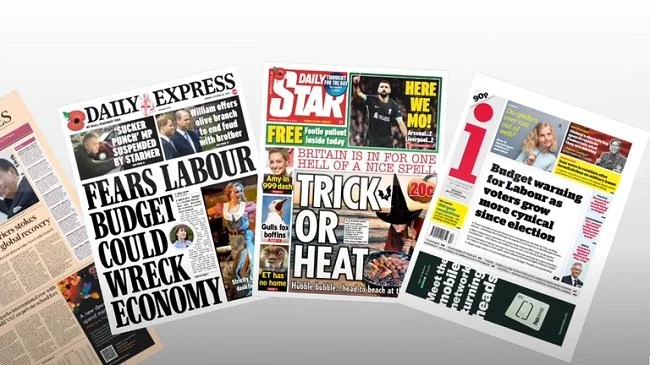
The Huw Edwards story also raises such subjects as press regulation, UK libel laws and media ownership. The traditional UK press is predominantly right wing and does not reflect the political and social views held by the majority of the UK population. Yet it spreads discontent daily, slowly increases division and pushes its owners political agenda. We are now reaping the consequences of this growing disharmony. The UK is becoming cruel, lacking in empathy and very divided. It will end up becoming socially and politically ungovernable like the US. The population is also partly to blame with its insatiable appetite for gossip, scandal and schadenfreude. Does this ultimately boil down to the fact that many people feel their own lives are so utterly bleak and awful that they want others to suffer the same fate? What a chilling thought. A nation suffering an existential crisis that would prefer to burn everything down, rather than fix the situation.







Selling My Parents House
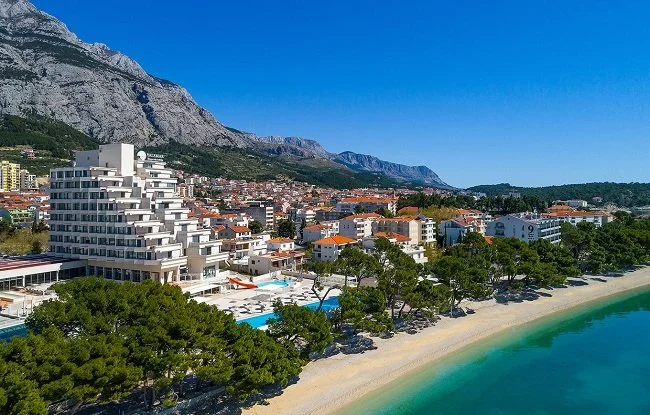
Last August my mother died at the age of 91. Since last September, her will has slowly been processed by our family solicitors. To cut a long story short we received the Grant of Probate in March this year. Three months on and my sister and I have finally put the family home up for sale. My sister still resides at the property and has done so all her life. Hence not only are we looking to sell our parents house but also find my sister a flat or maisonette. Both of us agreed when we embarked upon this process not to rush and to let things run at their own pace. The last few years of caring for our parents was a very difficult and exhausting experience. Hence, both of us have taken some time out to rest, recuperate and take stock of our lives. My sister has recently retired and it was important to get that matter resolved first, before addressing the sale of the family home.
Last August my mother died at the age of 91. Since last September, her will has slowly been processed by our family solicitors. To cut a long story short we received the Grant of Probate in March this year. Three months on and my sister and I have finally put the family home up for sale. My sister still resides at the property and has done so all her life. Hence not only are we looking to sell our parents house but also find my sister a flat or maisonette. Both of us agreed when we embarked upon this process not to rush and to let things run at their own pace. The last few years of caring for our parents was a very difficult and exhausting experience. Hence, both of us have taken some time out to rest, recuperate and take stock of our lives. My sister has recently retired and it was important to get that matter resolved first, before addressing the sale of the family home.
One of the most challenging aspects of this process has been the house clearance. This has involved going through all our parents’ possessions and deciding what to do with them. It is a very sobering experience to be confronted with all the personal items and clothing that a person has amassed during the course of their life. At times it feels like you are complicit in erasing that person’s identity. But you can’t hang on to everything although it would appear that my parents came from a generation that did exactly that. Some of the things that my mother and father hoarded beggar belief but they grew up during World War II and were accustomed to hardship. Rampant consumerism and disposability were not the foundations of society back then, so I will forgive their compulsion to hang onto everything.
Once the clearance was completed, we commissioned a local Estate Agents and formally put the house up for sale. A photographer came and took multiple pictures of the house and gardens. It was scrupulously measured and categorised. The final sales description is honest and accurate. It is a three bedroom, end of terrace house in a desirable residential area and has a 110 foot south facing garden. There are two reception rooms, two bathrooms and a kitchen extension. The house has “potential to extend and modernise” which is the polite way of saying it needs a complete refurbishment. This is fair as it was last redecorated in the eighties and done so according to the prevailing tastes and styles of the time. The asking price reflects the current housing market in Greater London. However, sales take longer at present, so we’ve been told to be patient.
There are many milestones during the course of one’s life. The purchase and then years later, the sale of a family home are certainly among them. In the UK, home ownership is still considered a major aspirational goal, although it is currently becoming increasingly difficult. The concept of a “house of your own” is a significant political issue and a major part of the UK’s cultural identity. Whereas in Europe, renting is far more commonplace. My parent’s generation saw buying a home as a major achievement. The provision of a safe and welcoming home environment to raise a family was the foundation of a marriage. Your home,once paid for, became an asset and a source of financial security. In their later years it brought a sense of comfort to both my parents, that they had something of value that their children could inherit. Hence a house is often more than just “bricks and mortar”.
For me the house still holds a lot of memories, although I moved out over three decades ago. My sister’s perspective is a little different as she has lived there all her life. Although she shares a broadly similar sentimental outlook regarding the house, it is now unsuitable for a single person. She is looking forward to downsizing and moving somewhere new. Plus, during our parents illnesses I always had the luxury of going to my own home at the end of the day, where she did not. I understand how the home may not offer as much nostalgia for her. Overall, we are both in accord with the sale and although it is the end of an era, we are happy for the house to find new owners. It was designed in the 1930s to be a family home and it would be nice to see it serve that purpose once again.
Housework and Chores
I was going to start this blog post by saying that, just like death and taxes, housework and chores are something we all have in common. But I have decided to withdraw that statement having been reminded of some houses I’ve visited during the course of my career. Also Twitch can sometimes reveal all and frequently provides a fascinating, if unknowing window into other people’s homes. Hence it is patently obvious that some folk are indifferent to the concept of housekeeping, basic hygiene and human decency. So instead I shall say that for many of us, housework and chores are yet another set of obstacles that stand between us and our leisure time. Something that has to be addressed, more often than not, out of necessity rather than a willing desire.
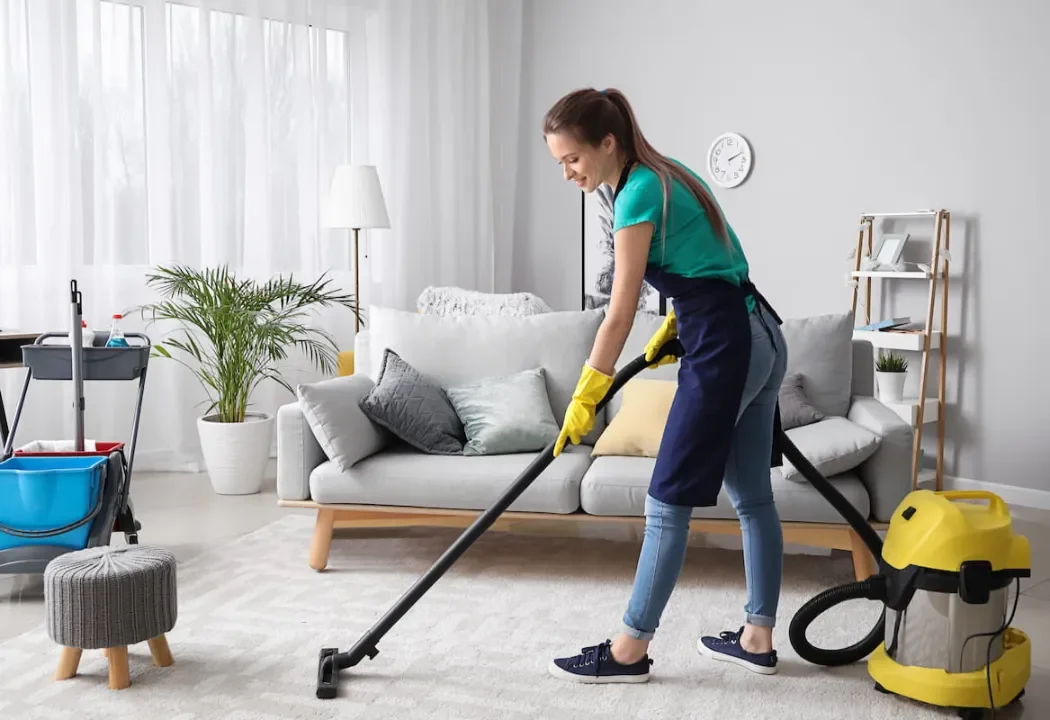
Doing housework is just like this
I was going to start this blog post by saying that, just like death and taxes, housework and chores are something we all have in common. But I have decided to withdraw that statement having been reminded of some houses I’ve visited during the course of my career. Also Twitch can sometimes reveal all and frequently provides a fascinating, if unknowing window into other people’s homes. Hence it is patently obvious that some folk are indifferent to the concept of housekeeping, basic hygiene and human decency. So instead I shall say that for many of us, housework and chores are yet another set of obstacles that stand between us and our leisure time. Something that has to be addressed, more often than not, out of necessity rather than a willing desire.
Homes get dirty and messy by dint of people living in them. To what degree depends on the numbers of individuals, where they live and how messy or tidy they respectively are. Children and pets compound the matter. The former being akin to a biblical plague of locusts. Therefore, the housework that I and Mrs P face, living in our bungalow is not the same as a family with two or three children and a pet. However, some things are universal. We all have to wash and dry clothes, use the vacuum cleaner, clean work surfaces, mop the bathroom floor, bleach the toilet, empty bins and take out the rubbish. We tend to do general cleaning once a week and then every month do a far more comprehensive clean. Both Mrs P and I have a similar outlook regarding these things so tend to work well as a team, when tackling such tasks. We are not messy people and if something isn’t being used it gets put away.
I am a big fan of labour saving devices that genuinely make life easier. I feel the same way about my dishwasher that Americans do about their “right to bear arms”. For me the notion of hand washing a greasy metal tray that has had a leg of lamb roasting in it for several hours is hell on earth. Dishwashers do such tasks far more efficiently than I ever could and effortlessly make everything appear shiny and new. Loading and unloading a dishwasher is a far more straightforward task than individually washing items, rinsing them and then drying them. It also doesn’t give you dishpan hands. Mind you there are also a lot of alleged labour saving devices that do nothing of the sort. Perhaps the universal white elephant of kitchen appliances is the sandwich toaster. A great concept for making hot snacks that in reality is a weapons grade delivery platform for third degree burns. The subsequent cleaning of the hot plates after use is a bane.
In recent years there has been a cultural shift that has seen housework and chores become a means of therapy in certain quarters. Cleaning, organising and decluttering are hailed as acts of catharsism and take on a more metaphorical meaning. If that works for you, so be it. Reality television has certainly discovered that there is a rich vein of material to be mined with regard to people who have unkempt homes or a penchant for hoarding things. As for me and Mrs P, we consider housework to be nothing more than a functional act and we don’t think that we live in a dung heap that merits scrutiny by TV celebrities. So in the meantime, we soldier on doing the various chores in our own way. However, age and health are an increasing factor and so ironing, for example, is now being relegated to only essential items. I wouldn’t be surprised if we end up hiring cleaners at some point. We already pay for a gardener.
Loneliness
I was consulting my list of blog topics, when I spotted the subject of loneliness among the various talking points I’ve collated. “Hah”, I thought. “That will do”, hoping to quickly write four or more paragraphs off the top of my head. However, during the course of some lightning research I discovered the following website, Campaign to End Loneliness and realised that this may not be a subject one can easily extemporise about without being too general or indeed, insensitive. Loneliness exists on a spectrum and is highly subjective. Some of the examples cited by Campaign to End Loneliness, may well sound quite trivial while others are truly heart breaking. All of which highlights, like so many things in life, that the subject is nuanced, subjective and one needs to avoid generalisation. Which raises the point, what can I contribute to such a discussion? My own experiences.
Loneliness
I was consulting my list of blog topics, when I spotted the subject of loneliness among the various talking points I’ve collated. “Hah”, I thought. “That will do”, hoping to quickly write four or more paragraphs off the top of my head. However, during the course of some lightning research I discovered the following website, Campaign to End Loneliness and realised that this may not be a subject one can easily extemporise about without being too general or indeed, insensitive. Loneliness exists on a spectrum and is highly subjective. Some of the examples cited by Campaign to End Loneliness, may well sound quite trivial while others are truly heart breaking. All of which highlights, like so many things in life, that the subject is nuanced, subjective and one needs to avoid generalisation. Which raises the point, what can I contribute to such a discussion? My own experiences.
When I was a teenager, I had a wide circle of friends. I found that being humorous was an easy means to ensure that I was socially engaged. However, as I grew older and wiser, I discovered and began to enjoy the merit of more serious friendships. All too often in life, we find that our social activities are driven by the practical realities of our lives. Hence you become friends with people that you work with, or with other parents or with the family of your partner. Such friendships are subject to change and it is not unusual to find yourself at a point in life where your social circle has shrunk. The matter is compounded by the fact that men are especially poor at maintaining friendships in later life, especially once they’re in a relationship. Hence I now find myself with a reduced social circle. This is not necessarily a complaint but undoubtedly it is a fact.
Shared interests
Now I live with Mrs P who I have known since 1990. We get on well and have shared interests. But we do not live in each other's pockets to coin a phrase and pursue other hobbies and pastimes outside of those that we both enjoy. No matter how much we love and respect our respective partners, most people cannot get by exclusively with one person’s company. This is where friends meet our other needs and if they are absent, they are sorely missed. I have several long term friends but not all of them live immediately to hand. We meet up every quarter and when we do, simply pick up where we left off. But in day-to-day life, I have found that I speak to less and less people. I am not much on small talk and lots of people don’t care for weighty philosophical talking points as an opening gambit when striking up a casual conversation.
I used to find that the internet was a great way of filling this social and conversational gap. Blogging and becoming part of a community certainly has many social aspects to it. When I started podcasting, that meant maintaining a weekly recording schedule and having regular conversations about the subjects I was passionate about with my co-host Brian and guests. I felt engaged and very content. But nothing lasts forever and despite numerous attempts to kickstart the habit, the podcasting community that we belonged to has come to an end. I still enjoy social media and use Twitter but that too has become fragmented. Many of the people I followed have moved to Mastodon, which doesn’t have the same reach. Another factor is that many friends I have met online have chosen to step away from online engagement, as it comes with as many negative connotations as it does positive.
My local pub
So I find myself at the age of 55 feeling at times somewhat lonely. It isn’t a constant feeling and it is certainly not debilitating. However, I do feel there are gaps in my social interactions and it feels at times quite tangible. I profoundly miss my father who was excellent company and a knowledgeable man. He had a knack of hoarding data and could often surprise you with the things that he knew about. He also wasn’t afraid of modernity and would like to know about new technology and social trends. I also occasionally miss the cut and thrust of the work environment. But overall it is just the lack of intelligent company. All too often I’ll read something that I find intriguing and worthy of comment, only to realise that there’s no one around to share the anecdote with. Similarly, if I wanted to nip down the pub and just talk bollocks over a beer, that is something that has to be prearranged.
Naturally, I don’t compare my nominal experiences of loneliness with those who live alone and have no friends or human contact. The relative nature of loneliness per se, means you shouldn’t really try and set one person’s experience against another. What may seem minor to you may be crippling to another. Plus, being a retired man, I certainly have the means to improve my situation. If I want company, to stop feeling removed or isolated, then I need to seek out appropriate social groups. It’s not as if there’s a shortage of such things these days. Problems don’t put themselves right and you sometimes have to step outside of your comfort or indolence zone. Who knows, trying to resolve this matter itself may well be worthy of a blog post. Perhaps such a foray into socialising will remedy the issue or prove that friendships are harder to find and keep these days. Time will tell.
Falling Out Over Politics
For those who live outside of the UK, let me categorically state that Brexit has broken British politics. Prior to 2016, national politics still broadly functioned along traditional party political lines, with income and class substantially determining voter allegiance. The big three cities (London, Birmingham and Liverpool) maintained their liberal dispositions and Scotland, Northern Ireland and Wales were dominated by their regional politics. Brexit changed all this creating fault lines that fell outside of the existing political status quo. Opinions differed based upon where you lived, how politically literate you were and even education. Your party political allegiance no longer indicated what stance you took on this matter. Furthermore, the discourse around this complex subject was quickly debased into a bipartisan culture war that was toxic and dangerous.
“You cannot reason a person out of a position he did not reason himself into in the first place.” Jonathan Swift
For those who live outside of the UK, let me categorically state that Brexit has broken British politics. Prior to 2016, national politics still broadly functioned along traditional party political lines, with income and class substantially determining voter allegiance. The big three cities (London, Birmingham and Liverpool) maintained their liberal dispositions and Scotland, Northern Ireland and Wales were dominated by their regional politics. Brexit changed all this creating fault lines that fell outside of the existing political status quo. Opinions differed based upon where you lived, how politically literate you were and even education. Your party political allegiance no longer indicated what stance you took on this matter. Furthermore, the discourse around this complex subject was quickly debased into a bipartisan culture war that was toxic and dangerous.
Seven years on, party politics are now fractured by factionalism and public discourse per se has taken on a more emotive and contentious tone. Brexit has divided not only politics but family and friends. The nature of the debate both in parliament and the national media has been far from convivial and has shown that many ideas and concepts that many thought were universally embraced, are in fact not. The COVID-19 pandemic and subsequent lockdown, the economic impact of the war in Ukraine and the rise of social media culture has further exacerbated political and societal divides. So I find it somewhat risible when I read such naive comments as “it’s amazing that people fall out over political opinions”, as I did on a national news website recently. The days of politely agreeing to disagree are long gone as UK politics becomes more like that of the US.
The generic nature of the two main UK political parties
To many observers outside of the UK, for decades our national politics has been a bland and somewhat predictable fight that took place in the centre ground. Extremes on both sides of the political divide have been confined to the wings. For anyone over a certain income, politics could be ignored because it did not appear to directly impact upon your life. It may well be a different matter for those on low incomes or marginalised minorities but as such groups did not have a substantive voice in political terms, the perception of a broad status quo that simply changed its custodian every 4 years, has endured. I have spoken many times to European friends who have struggled to discern any major political difference between the modern Conservative and Labour parties.
Hence during these times, if you differed with your friends, family or colleagues over fiscal policy, education or national infrastructure you could easily shrug it off. Even those invested in the distinct political ideology of a particular party tended to treat it more as an academic debate, rather than a religious credo. Obviously there would be some individuals who were diametrically opposed to others due to hardline political views but this was the exception and not the rule. Ultimately, any problems arising from political policy were the governments fault and not ours. All we have to do is turn up and vote every so many years and then complain during the intervening period. The Brexit referendum changed that due to its inherent nature and consequences. A referendum is a very direct form of politics which bypasses governmental policy and responsibility. The consequences therefore lie directly with the electorate, whether or not they understand and recognise this.
The realities of Brexit
As a result of the 2016 referendum the UK has left the European Union and there have been direct economic, sociopolitical and practical consequences, irrespective of one’s opinion of the rectitude of that decision. Businesses have subsequently closed, jobs have been lost and migrant employees have left the UK resulting in a labour shortage. The economy is stagnating and the cost of living is going up. Travelling to Europe has become more complex and costly. The consequences of Brexit are tangible and we all feel them. Hence it does not come as any surprise that friends, family and colleagues will come into conflict over this. Unlike a general election where the actions of the government can be blamed on its party membership that set policy, the ramifications of Brexit can be attributed to those who directly voted for it.
The UK is currently suffering from a stagnating economy, high inflation and labour shortages. Problems that have been exacerbated by nearly thirteen years of government by the same political party. Although the next election is not due until 2024, the Conservative Party are suffering greatly in the polls. The majority of the electorate attribute a lot of the aforementioned woes to their policies. However, due to the nature of the First Past the Post electoral system there is a chance that a targeted campaign of fear mongering and misinformation in the right marginal constituencies may well see them return to office. Despite having an electorate of 46.5 million, ultimately it is approximately 350,000 voters in swing seats that determine the outcome of UK General Elections. Such a clear disparity in the importance of an individual vote, makes the outcome of an election profoundly personal.
UK Doctors Demonstrating for increased pay
Some political journalists have suggested that politics may well “settle down” and return to being “remote” when the UK becomes economically stable once again. However, I think those days are gone, now that politics has embraced the culture wars and detached itself from facts, data, expertise and reasoned argument. The notion of doing what is collectively the best for all has been replaced with attacking and punishing groups that have been successfully “othered”. However, a growing part of the electorate have realised this, finding themselves on the wrong side of the dividing line. This shift in perception renders the voting habits of others highly personal. If your neighbour openly admits to voting for a party that subsequently limits your rights, taxes you further, or seeks to criminalise your actions then they are complicit in such outcomes.
I therefore suspect that falling out over politics is going to increase in the next decade. Politics in the UK is becoming more populist and less based in reality. Extreme policies are harmful to people and have real world consequences. Hence voting for such things is not something one can just shrug off. You will be judged by your actions. Such a sociopolitical climate will just further entrench tribalism. Your political views and affiliations will increasingly impact upon the decisions you make in life and shape your social circle, where you work and how you’re perceived by others. The notion of “I don’t date (insert political party here)” being part of your biography on a dating app, will no longer be some niche concept. It may even become a standard. If living in such a world worries you, then we need to make politics less partisan and return to agreeing to disagree. Sadly, I suspect that it is too late to put that particular genie back into the bottle.






The Problem With Ever Changing Band Lineups
I was reminiscing about the music of my youth the other day which led me to listen to a track by Pro-Pain. The band formed in NYC in 1991 and their debut album Foul Taste of Freedom got some traction in the UK. I lost track of them after the next album and moved on musically. However, because of my recent fit of nostalgia, I looked the band up on Wikipedia and discovered that they were still going. Now thirty years is quite a long period of time and nothing stays the same forever but even I was surprised to see that the lineup of Pro-Pain had changed over a dozen times. The only original artist in the band today is bass player, lead vocalists and founder member, Gary Meskil. As ever this started a train of thought about the subject. How so many bands have made substantial changes in their lineup over the course of their careers and the respective pros and cons of such decisions.
Pro-Pain Gary Meskil
I was reminiscing about the music of my youth the other day which led me to listen to a track by Pro-Pain. The band formed in NYC in 1991 and their debut album Foul Taste of Freedom got some traction in the UK. I lost track of them after the next album and moved on musically. However, because of my recent fit of nostalgia, I looked the band up on Wikipedia and discovered that they were still going. Now thirty years is quite a long period of time and nothing stays the same forever but even I was surprised to see that the lineup of Pro-Pain had changed over a dozen times. The only original artist in the band today is bass player, lead vocalists and founder member, Gary Meskil. As ever this started a train of thought about the subject. How so many bands have made substantial changes in their lineup over the course of their careers and the respective pros and cons of such decisions.
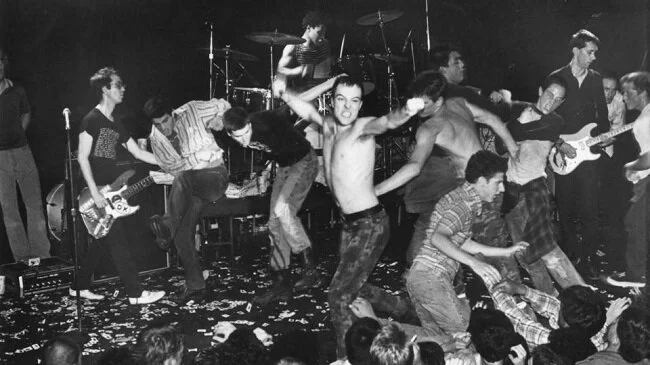
Being in a band is a stressful work environment. Creative differences, the amount of time you spend in each other's company and the constant travelling take their toll. Change is an inevitability. But when you change the line up of a band, how much of an impact does it have? Well that depends upon who is leaving and what contribution they made overall. If the outgoing member defined the band’s sound, wrote most of their material or had the biggest personality, then their absence is significant. Think Michael Jackson and The Jackson 5. If their contribution was more arbitrary, then replacing them may not be such an issue. Pete Best “leaving” The Beatles springs to mind. Sometimes the departure of a band member creates an opportunity for a band to reinvent themselves. In the case of Adam and the Ants, the entire band bar Adam left to form Bow Wow Wow. Adam then found new Ants and moved from Punk to New Wave.
Adam and the Ants “Ridicule is nothing to be scared of”
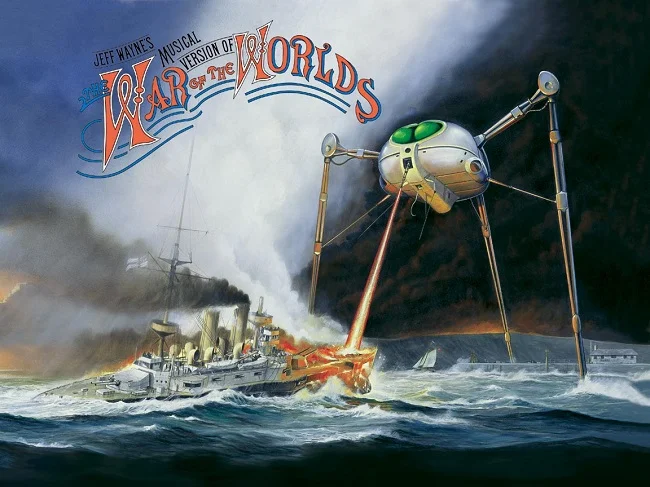
Another problem that arises from bands that have enjoyed great longevity and numerous changes in their line up, is that they will end up with a canon of work that is rich and varied. Fans therefore may not necessarily share the same point of entry into this oeuvre, or enjoy the same material. In such a case, do fans even like the same band? Is there an unbridgeable gulf between Dexy’s Midnight Runner fans who favour the 1980 album Searching for the Young Soul Rebels and those who preferred Too-Rye-Ay, two years later? And to complicate matters further, sometimes a successful band will not just see multiple lineup changes but will split into multiple iterations of the same band, due to legal and financial wranglings. At one point there were two versions of the popular English Reggae band UB40. One using the original name and the other being known as UB40 featuring Ali Campbell and Astro. That’s just weird.
The music industry has always been a battleground between art and business. Bands can be a collective of evolving musical artists, trying to produce art, as well as an established commercial product providing an ongoing service. Sometimes one trumps the other but it more often than not seems to be the latter. But music provides many things beyond artistic appreciation. Music nostalgia is a major psychological comfort blanket. If you see an iconic band like The Rolling Stones, do you really want to listen to their latest musings or just their greatest hits? It does seem like the provision of a service. However, due to the line up changes over the years, how authentic is that experience? Following a similar train of thought, can you really ever truly experience Queen any more, since the death of Freddie Mercury? However, Judging by ticket sales, this may not be an issue.
The Stranglers
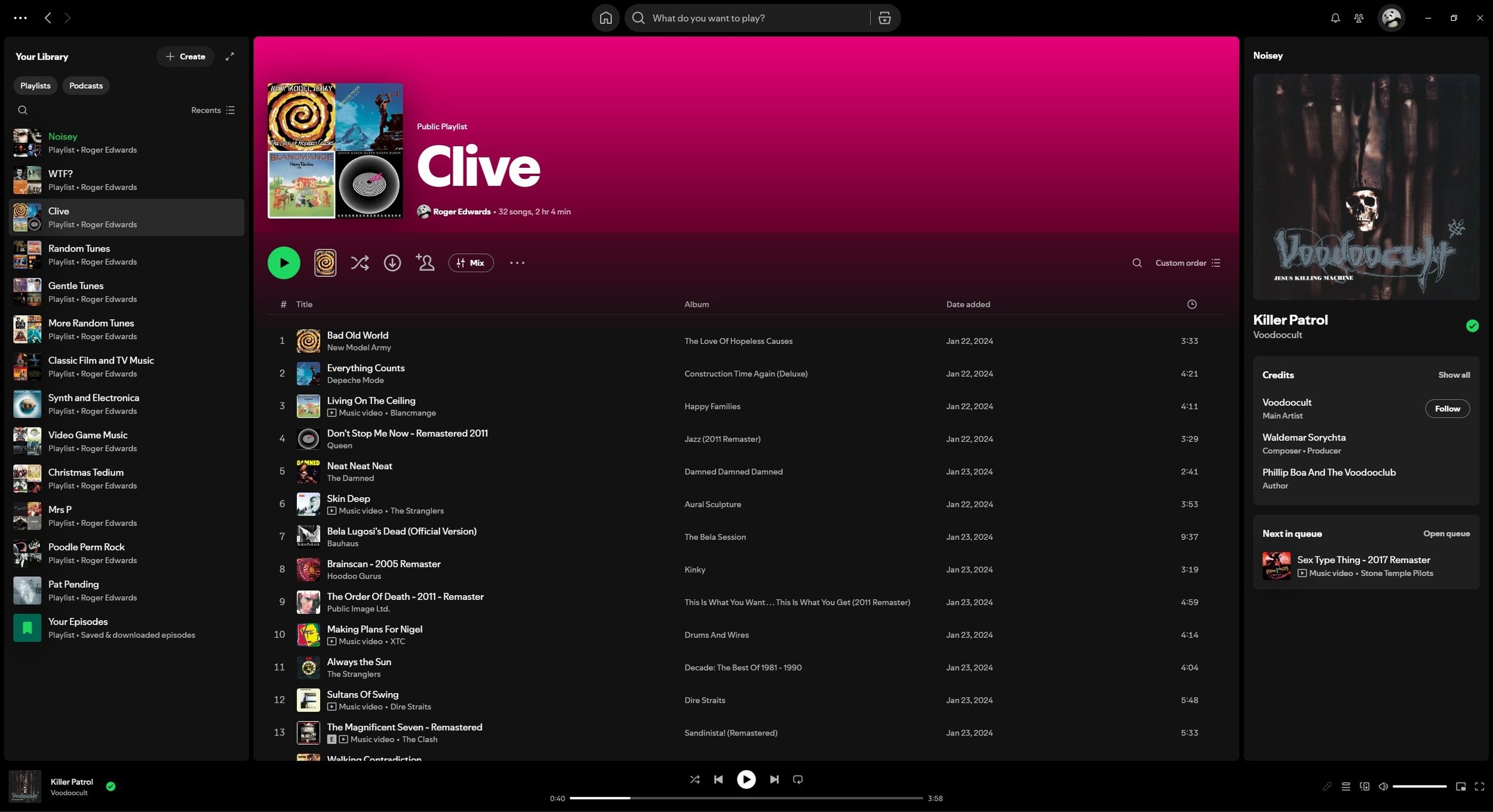
The Stranglers are down to their last original member, Jean-Jacques Burnel. Whether the band will produce any more albums or tour remains to be seen but it does seriously raise the question: are The Stranglers really The Stranglers any more? You can argue from a logical, semantical or emotional perspective and I’m not entirely sure if there is a right or wrong answer. You can have a band where all the original members are dead or retired, so what do people do? They form a bloody tribute act. Again, we return to the power of nostalgia and the money that it can generate. Regarding the original point of the post about the ever changing lineups that some bands have, I suppose you decide for yourself what, if any, lines in the sand you personally draw. I guess music has become like the film and TV industry. When talking to someone, if you state that you like such and such a band, you then have to clarify which version, or which period of their work you enjoy. That’s “fun”.




Adulthood
When I was a child I often dreamt about the “wonders” of the “grown up” world. I would muse upon this while in bed, peeved by the fact that the adults were now indulging in some magnificent activity that was beyond my comprehension and that I was excluded from. What exactly did adults do during the time I was at school or asleep? It was obvious there were gaps in my knowledge and in my naivety, I had the most fanciful speculations. Life for a child in the UK during the seventies was a very regimented process. School dominated the day. This was followed by a short period of “freedom” upon returning home, a meal, homework, some TV and then bed. Furthermore you were constantly reminded by adults to be content being a child. “You don’t want to grow up too quickly” I was told on many occasions. Apparently this part of my life was the best bit. So I rolled with the situation and got on with my childhood. Yet the adult world was still there, like something on the horizon that was always out of reach. Hence my nocturnal flights of fancy.
A simple visual metaphor
When I was a child I often dreamt about the “wonders” of the “grown up” world. I would muse upon this while in bed, peeved by the fact that the adults were now indulging in some magnificent activity that was beyond my comprehension and that I was excluded from. What exactly did adults do during the time I was at school or asleep? It was obvious there were gaps in my knowledge and in my naivety, I had the most fanciful speculations. Life for a child in the UK during the seventies was a very regimented process. School dominated the day. This was followed by a short period of “freedom” upon returning home, a meal, homework, some TV and then bed. Furthermore you were constantly reminded by adults to be content being a child. “You don’t want to grow up too quickly” I was told on many occasions. Apparently this part of my life was the best bit. So I rolled with the situation and got on with my childhood. Yet the adult world was still there, like something on the horizon that was always out of reach. Hence my nocturnal flights of fancy.
Five decades later the reality of adult life is abundantly clear to me as I have followed my parents down a similar path of employment, marriage and raising a family. I realise now that while I was a child in bed, my parents were not having a “fantastic adventure”. They were simply sitting exhausted, watching something on TV, trying to catch a few minutes respite from the rigours of their busy lives. I understand this now because I have done the very same myself. At some point in my midteens I suddenly realised that I wasn’t going to be ushered into a secret “adults club” upon becoming 18, where I would be given the “adults guidebook to life”. I realised that my parents were just “winging it”. Buying a home, getting a mortgage and enrolling your children in school were all things that they had to address as they came up. Cooking, cleaning and running a home were also skills learnt on the fly.
A Dickensian Treadmill
Being a grown up is essentially a combination of routine, obligation and managed stress, punctuated with brief moments of joy. I cannot emphasise the latter enough. I fear that modern society far too often pedals the myth to teenagers that adulthood is all about fun, enjoyment and doing the stuff that you want. Social media compounds this misconception further, fooling people into thinking that the staged managed and curated images they see are what adulthood is really like. The reality is that for most people, life as an adult is not a continuous cavalcade of fun but a functional and repetitive process, dominated by work. Perhaps the most beneficial thing that an adult can have in their life is stability. A stable job that you know inside out makes the working day more manageable. Less stress at work often leads to less stress at home. Stress is the societal blight of this century.
Another defining aspect of adulthood is embracing, or at least accepting, the concept of personal responsibility. When you move out of the family home for the first time, you suddenly realise that it’s down to you to ensure there’s food on the table and that you pay your rent or mortgage each month. Clothes don’t magically wash and iron themselves. The recycling doesn’t teleport itself to the curb awaiting collection. If you don’t do these arbitrary tasks, then there are consequences. Some may be minor inconveniences. Others such as failure to pay your utility bills or taxes will leave you seriously at risk of sanction. But all of these things are framed as “boring” or a “drag” if you’ll pardon my sixties hip-speak. People all too often want the pleasures and freedoms of adult life but without the baggage that goes with it such as responsibility and accountability.
A Victorian family photo
However, I don’t believe it is all doom and gloom. Modern adulthood is not the same as it used to be. My parents lived in a society that was very formal and rigidly structured. There were three stages to life. Childhood, middle-age and old age. The notion of a teenager was yet to be constructed by the advertising industry. Each age group had its own modes of behaviour and even dress. I look at pictures of UK society during the seventies and people often appear to look older than they actually were. Plus doing something “inappropriate for your age” was a common criticism. Once you became an adult you were expected to put away “childish things”. Comics were replaced by reading “the classics”. Romance and relationships were indulged for a short window of time then you were expected to settle down and put such things behind you. Old age was for gardening, voluntary work and awaiting death.
Nowadays such rigid social conventions have faded. The way one dresses, behaves and what social activities you pursue are no longer defined within strict age based parameters. There’s still ageism but it’s nowhere near as bad as it used to be. No people embrace new hobbies and pastimes in old age, seek new relationships and even have families. You can still indulge the same interests from your childhood into adult life. Maybe this is why I am comfortable being an adult. Unlike my parents, I am doing it slightly on my own terms. I certainly don’t envy the young, especially teenagers. They are growing up in a rapidly changing and less stable world. Oh and before I go, let’s lay to rest that awful phrase “adulting”. Being an adult isn’t a mode that you turn on and off. It is a personal epiphany, an acceptance of a social contract and the adopting of a philosophical lifestyle. Either you are or you aren’t an adult. Biological maturity and society’s chosen age of majority are not the same thing.
Refugees, Gary Lineker and the UK Culture Wars
Okay, keep up as there’s a lot of ground to cover. The UK government is currently suffering in the opinion polls and after 13 years in office, is facing potential oblivion at the next general election. In an attempt to shore up support among the party faithful, the Prime Minister, Rishi Sunak, is currently pursuing a hardline with regard to immigration. According to Ipsos, as a political issue about 29% of the electorate consider immigration to be a major problem. The remainder either think current levels are manageable or have no substantive view on the matter. However, as a “culture war” issue that can be weaponized by the tabloid press, which often has direct links to the Conservative Party in the UK, immigration is a hill to die upon. Hence you will find a lot of rhetoric that is anti-immigration and any contrary view is tarred with trite pejorative terms such as “lefty”, “liberal” and “woke”.
Okay, keep up as there’s a lot of ground to cover. The UK government is currently suffering in the opinion polls and after 13 years in office, is facing potential oblivion at the next general election. In an attempt to shore up support among the party faithful, the Prime Minister, Rishi Sunak, is currently pursuing a hardline with regard to immigration. According to Ipsos, as a political issue about 29% of the electorate consider immigration to be a major problem. The remainder either think current levels are manageable or have no substantive view on the matter. However, as a “culture war” issue that can be weaponized by the tabloid press, which often has direct links to the Conservative Party in the UK, immigration is a hill to die upon. Hence you will find a lot of rhetoric that is anti-immigration and any contrary view is tarred with trite pejorative terms such as “lefty”, “liberal” and “woke”.
Which brings us to the new Illegal Migration Bill, which is intended to “take back control of our borders, once and for all”, according to PM Rishi Sunak. The proposed legislation is specifically designed to target the small boats that cross the English Channel from France to the UK. Under the new law, asylum claims by those who travel to the UK via illegal means will be rendered inadmissible. The migrants will be detained, deported and banned from returning, Furthermore, the Illegal Migration Bill will be applied retrospectively, impacting on those already awaiting an asylum claim while being “housed” at immigration processing centres. However, the proposed bill risks breaching the Human Rights Act. Furthermore, UNHCR (UN Refugee Agency) is “profoundly concerned” by the proposed plan which it sees as a “clear breach” of the 1951 Refugee Convention. Conversely, the UK Home Secretary, Suella Braverman, believes the bill is “compatible with international law.”
UK Home Secretary Suella Braverman
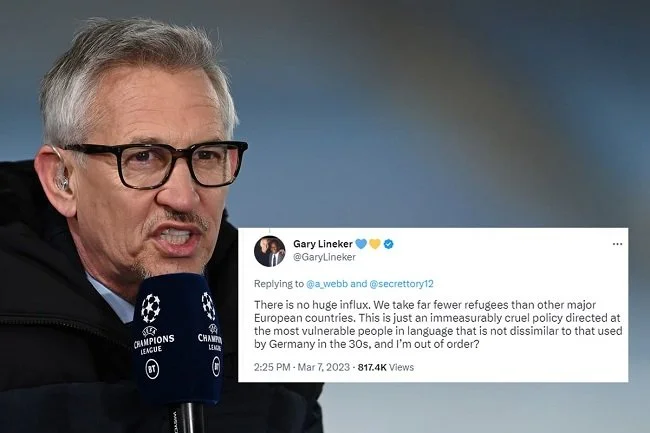
As the UK government indulges in what is essentially performative politics which do not address the real issues around immigration, there has been a degree of pushback and condemnation of the proposed legislation across the political spectrum of the commentariat. Enter Gary Lineker, retired professional football player, sports pundits and presenter of Match of the Day, the BBC’s flagship football program with an audience in excess of 20 million viewers. Gary is an active participant on Twitter and other social media and has expressed opinions in the past on politics and social issues. He is broadly left leaning and is well liked among both sports fans and the general public. The tabloid press and those on the political right loath him. On Tuesday March 7th Mr Lineker made the following tweet while discussing the Illegal Migration Bill with others online.
“This is just an immeasurably cruel policy directed at the most vulnerable people in language that is not dissimilar to that used by Germany in the '30s, and I'm out of order?”
Needless to say as UK political discourse is becoming very much like that of the US, a storm of “outrage” and “indignation” has ensued over the last 4 days. The tabloid press and some Conservative MPs are “offended” at being labelled “Nazis”, although this was not actually done. Demands have been made upon the BBC to take action against Mr Lineker. Hours of spittle flecked invective has spewed from the right of the commentariat and the story has dominated the mainstream news cycle. Sadly, an intelligent and rigorous debate over the rectitude of the Illegal Migration Bill has not taken place and instead we have endured a cavalcade of “pearl clutching” over a member of the electorate having the gall and the temerity to express an opinion. An opinion that is critical of the government and that some have chosen to take offence at.
UK Tabloid The Daily Mail reacts accordingly to Gary Lineker’s Tweet
I suspect that after Gary Lineker made his comments, those who see him as a political and cultural foe probably thought that this was a golden opportunity to attack and neutralise him. Especially if an apology or a suspension could be forced. However, events have not panned out as some have expected. Yesterday, the BBC after growing political pressure took action against Gary Lineker. Initially they had asked him to temporarily step back from presenting Match of the Day while they clarified their policy regarding employees and social media. However, when he refused to apologise for his comments on Twitter they suspended him. This course of action has raised serious questions about the impartiality and independence of the BBC. Have they caved in to political pressure from the government? Then there is the fundamental issue of freedom of speech and Mr Lineker’s right to express an opinion.
The matter has become further complicated by a show of solidarity for Mr Lineker by professional colleagues. Fellow Match of the Day presenters Ian Wright, Alan Shearer and Alex Scott have all declined to be on Saturday night’s show. Match of the Day commentator Steve Wilson has also decided not to take part on the show. Furthermore, a spokesman for the Professional Footballers Association said “We have been informed that players involved in today's games will not be asked to participate in interviews with Match of the Day”. And it would appear that Football Focus, another BBC sports show scheduled for Saturday, has been cancelled as staff have chosen to withdraw in support of Mr Lineker’s suspension. It appears that this turn of events has left the BBC without an exit strategy with regard to the overall situation.
BBC Sport Match of the Day
If one looks beyond the obvious culture war hyperbole of this debacle there are several serious points to consider. Firstly there’s the matter of whether Gary Lineker can express a personal opinion while employed by the BBC. If he were a journalist then he would not be able to do so but as a pundit and presenter, employed in a freelance capacity he is not bound by such rules. The rules are somewhat ambiguous, although he is expected broadly not to court controversy. But there have been many other individuals employed by the BBC that have not done so, such as the journalist Andrew Neil. As to the matter of the BBC’s impartiality to the government, this seems to have wavered recently with several political appointments. The current chairman of the BBC, Richard Sharp, donated £400,000 to the Conservative Party and helped to arrange an £800,000 loan for the former Prime Minister Boris Johnson. Another member of the BBC board, Sir Robbie Gibb, was the former communications director for ex-PM Theresa May.
Beyond the contortions of the BBC as it ties itself in knots, there is the wider issue of those in the government who are “offended” by Gary Lineker’s comments. Many of those currently “outraged” are railing against things that have not been said. Mr Lineker did not use the phrase Nazi or directly invoke the Holocaust in a casual fashion. He succinctly pointed out that the rhetoric surrounding the proposed new legislation and the wider debate regarding immigration was couched in the sort of language used in Germany during the 1930s and that this was divisive and problematic. A point that was recently made by 83 year old Holocaust survivor Joan Salter to Home Secretary, Suella Braverman. Such wilful ignorance and deliberate misinterpretation by some MPs is another example of the performative nature of modern politics. It also highlights the lack of self awareness of certain politicians who remain oblivious or indifferent to the offence their actions have caused to many voters.
Conservative MP Lee Anderson, known for his performative outrage, has a TV show on “news” channel GB News
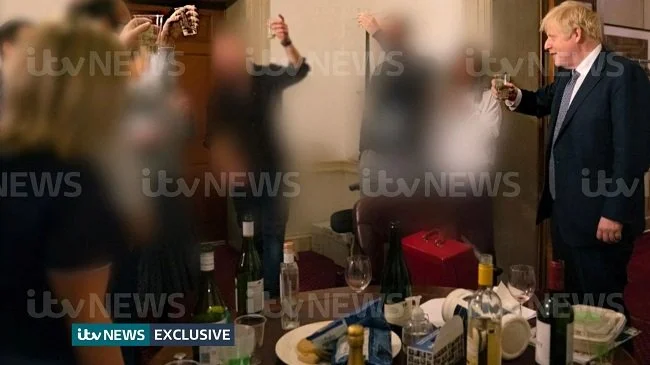
The question on many people’s lips is how this matter will resolve itself. If Gary Lineker stays true to his principles he may end up terminating his association with the BBC and Match of the Day. The show may even fold entirely which would be a crushing blow to the BBC, whereas I’m sure Mr Lineker would quickly find alternative employment. As to the political pressure and the ire of the tabloid press, this may soon be directed elsewhere as the government lurches from one scandal to another. On March 20th former prime Minister Boris Johnson will be giving evidence to the Committee of Privileges as to whether he misled parliament. Plus there are the ongoing revelations being serialised in The Times newspaper regarding the leaked cabinet WhatsApp messages. Hence I suspect that this particular battle in the UK culture wars is not going to yield the results that some hope it will. I’m not even sure if the majority of the UK electorate have an appetite for such things.
UK Voter ID
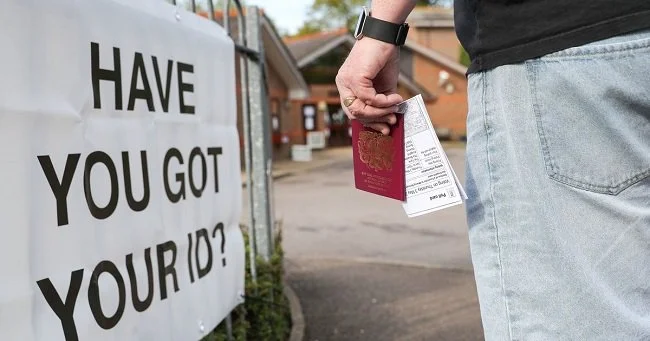
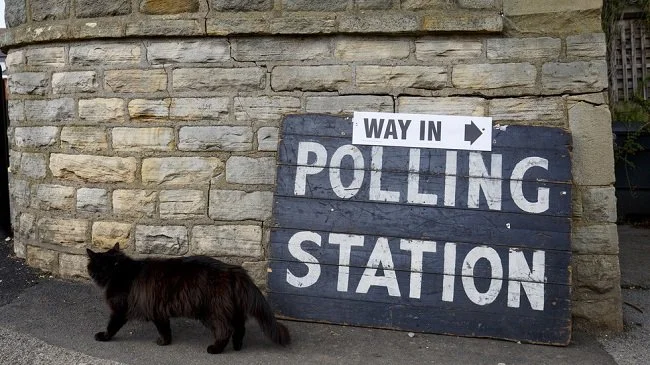
Last April, the Election Act 2022 became law within the UK. The Act introduced a requirement for all those voting in-person to produce photo identification when attending a polling station. This is the first time that such an ID has been required. Prior to this, voters could either bring their polling card to verify their identity at the polling station, or confirm their registered address from the electoral roll with staff. Now a UK driving licence or passport are considered the primary means of identity. A list of additional photo identification that has been deemed acceptable, is available on the UK government website. For those members of the electorate who do not have any of the qualifying ID, there is a Voter Authority Certificate available, which can be applied for online. This photo ID is linked to the applicants National Insurance Number. For further impartial information on photo ID and registering to vote, visit the The Electoral Commission website.
Last April, the Election Act 2022 became law within the UK. The Act introduced a requirement for all those voting in-person to produce photo identification when attending a polling station. This is the first time that such an ID has been required. Prior to this, voters could either bring their polling card to verify their identity at the polling station, or confirm their registered address from the electoral roll with staff. Now a UK driving licence or passport are considered the primary means of identity. A list of additional photo identification that has been deemed acceptable, is available on the UK government website. For those members of the electorate who do not have any of the qualifying ID, there is a Voter Authority Certificate available, which can be applied for online. This photo ID is linked to the applicants National Insurance Number. For further impartial information on photo ID and registering to vote, visit the The Electoral Commission website.
At first glance, the Election Act 2022 will come as no surprise to those living in Europe. Many countries have a requirement for formal ID to be able to vote. However, many European countries have national identity cards schemes making voter ID easy and non-discriminatory. The UK does not currently have a national identity card scheme and has instead chosen to base its voter ID requirement upon documents that are purely optional and not universal among the electorate. Although the Voter Authority Certificate provides a photo ID that is acceptable it is not issued to voters by default and instead has to be personally applied for. In light of this, exactly why has the UK government made changes to a process that has existed and functioned in an acceptable manner for decades? Furthermore are these changes to the UK voting system for the better?
Previously your polling card or just confirming your name and address was sufficient evidence to allow you to vote in the UK
The central argument for the Elections Act 2022, as made by the UK government , is to address alleged voter fraud, especially with postal votes. Due to an ageing population and a workforce that increasingly works outside of traditional “office hours”, there has been an increase in postal voting in recent years. In the 2019 General election 18% of the UK electorate voted by post. However, in-depth analysis by The Electoral Commision and other independent bodies have found little evidence of any kind of voter fraud. Between 2015 and 2019, during which three general elections were held and 153 million in-person votes were cast, only 88 allegations were made of voter fraud. Between 2010 and 2018, there were just two convictions for voter fraud. Due to the size of the UK electorate and the manner in which ballot papers are manually counted, the process does not easily lend itself to fraud. Hence the government's arguments underpinning the Elections Act 2022 are spurious.
It seems to be an inevitable and logical conclusion that the primary reason for the Elections Act 2022 is to marginalise the 1.1 million voters that currently do not hold a UK passport or driving licence. This group is mainly made up of the long term sick, the disabled, those in low income jobs or unemployed. All of which are socioeconomic groups that statistically tend not to vote for the Conservative Party, which has been in office for the last 13 years. Another group who will be impacted by the new legislation are those between the ages of 18 and 25. In the 2019 United Kingdom general election 56% of voters aged 18–24 voted Labour, whereas 67% of 70+ voters voted Conservative, according to polling by YouGov. Upon considering these facts, the Elections Act 2022 is nothing more than a deliberate move to try and disenfranchise a specific part of the UK electorate for political reasons. It is no different from traditional gerrymandering in its insidious nature.
The Oyster card, which allows travel on the tube (metro) in London, is sufficient photo ID for the over 60s to vote, but insufficient ID for anyone under that age
Sadly, although the Elections Act 2022 is a poor and dishonest piece of legislation, it is a reality that has to be endured at the present. Perhaps if there is a change of government in the next election, this legislation will be amended or repealed. Perhaps it is time for the UK to finally have a mature and measured debate about national identity cards. However, those are matters for another day. In the meantime I urge everyone who is eligible to vote in the UK and who does not possess any of the requisite photo ID, to apply and obtain the Voter Authority Certificate. Due to the volatile nature of UK politics at present, there may well be an election sooner rather than later. Because of the nature of the First Past the Post voting system, it is important to ensure as large a voter turnout as possible, especially in marginal constituencies. Voting is a fundamental right of UK citizens and should not be interfered with by any party or institution.
What Do You Know About Your Political Representative?
I am writing this post from the perspective of a UK citizen, but the sentiments expressed are applicable to anyone who lives in a country where you have democratically elected local political representation. IE someone who is supposed to advocate on behalf of your community or for you personally as the duly elected political representative. Here in the UK, the country is divided into 650 constituencies, each returning one Member of Parliament. Irrespective of whether you voted for your MP or whether you support the political party that they belong to, they are obliged to represent you and advocate on your behalf, if you request it. Such is the relationship in principle between constituents and MPs in the UK. It is important to be aware that your local MP is not a delegate whose sole purpose is to represent majority constituency views. Under the UK political system, an MP makes decisions on behalf of constituents and can take a position counter to local opinion, if they feel that is in the best interest of the constituency.
I am writing this post from the perspective of a UK citizen, but the sentiments expressed are applicable to anyone who lives in a country where you have democratically elected local political representation. IE someone who is supposed to advocate on behalf of your community or for you personally as the duly elected political representative. Here in the UK, the country is divided into 650 constituencies, each returning one Member of Parliament. Irrespective of whether you voted for your MP or whether you support the political party that they belong to, they are obliged to represent you and advocate on your behalf, if you request it. Such is the relationship in principle between constituents and MPs in the UK. It is important to be aware that your local MP is not a delegate whose sole purpose is to represent majority constituency views. Under the UK political system, an MP makes decisions on behalf of constituents and can take a position counter to local opinion, if they feel that is in the best interest of the constituency.
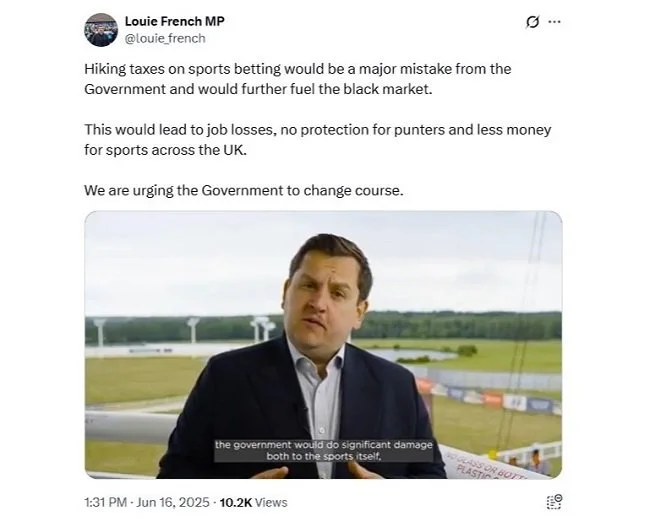
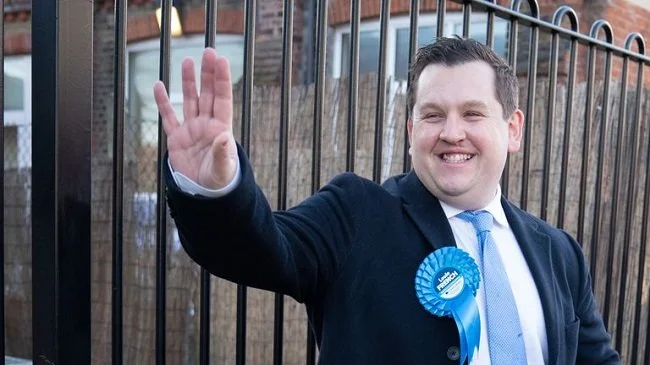
Towards the end of 2021 our local MP and former cabinet minister James Brokenshire sadly died. Subsequently there was a by-election and Louie French was duly elected. Old Bexley and Sidcup constituency is considered a “safe seat” for the Conservative Party, although it should be noted that their majority dropped by 20%. This however is more to do with the electorate's dissatisfaction with the government and the state of UK politics, rather than a reflection upon Mr French. As an ex-councillor Mr French has already experience of local borough politics and it would appear, judging from his website, that he is primarily focused on addressing the needs of his constituents. He is currently campaigning for increased local funding and is against cuts to local services such as transport, healthcare and local policing. This is further reflected in his contributions to parliamentary debates which also shows an interest in animal welfare.
At present Mr French is a backbench MP and does not hold a ministerial position. Hence it is perfectly reasonable to see him advocate in such a practical fashion for the constituency that he represents. However, Mr French is a Conservative MP and as such is expected by default to vote with the government on any legislation they plan to pass. As a constituent of Old Bexley and Sidcup, I am curious to know what views Mr French holds on the major issues facing the UK at present. Although there is “government policy” and the official “party line”, there is not a consensus on taxation, public spending, Brexit and the cost of living crisis among MPs. The Conservative Party is currently rife with factions across a spectrum of right wing views. It should also be noted that in the General Election of 2019 the party effectively expelled all moderates and centrists. Hence I am keen to know where Mr French fits into this political landscape at present.
For the sake of transparency, I am not a supporter or member of any UK political party and vote tactically. I don’t subscribe to trite, blanket narratives such as “all politicians are liars” or “they’re just as bad as each other”. Such comments are designed to avoid any difficult thinking, to opt out of any responsibility as a voter and simply maintain the status quo. I am sceptical but not cynical and like logical, reasoned debate, driven by critical thinking. I despise the “footballification” of politics and blinkered tribalism. There are politicians that I admire and respect on both sides of the house, which reflects my own broad and diverse political outlook. Thus I want to know where Mr French stands on the UK Online Safety Bill, the Policing Bill, Brexit, trade deals, taxation, the current wave of strikes, the future of the NHS and much more. Because I’ve looked online and I can find little or no information regarding these points.
Louie French had only been a MP for 6 months last year, when Boris Johnson was ousted from office as Prime Minister. During the tumultuous events of last summer, I did not hear Mr French express any opinion on the matter. Was he unhappy with the PM’s conduct or did he see no problem at all? It is important to know because for myself and many other constituents, the PM’s behaviour was beyond the pale. Hence we expected some sort of indication of Mr French’s opinion. He has already said he has no intention of being a “career politician”, thus I see no reason why he needs to be deliberately ambiguous in what he says. One of the things that I dislike most about contemporary politics is the manner in which many MPs refuse to commit to any position or opinion, for fear that it may “come back to haunt them”. “Cakeism” is self-serving and a sad indictment of character.
And so we arrive at the point of this post. What do you know about your political representative? Because I believe if you are the right person to represent the needs of your local community at any level, then I think you need to be transparent in your views. I accept that someone can change their views and am politically and emotionally mature enough to see that as a positive thing. When facts change it is logical to change your mind. I will also concede that on some of the more “complex” political and social issues, it is a valid stance to still be “collating” your opinion. But I won’t accept that it is reasonable to willfully avoid expressing a view or an opinion, purely as a political tool and a matter of convenience. If an MP is effectively “too afraid” to say what they think, then perhaps they should reconsider their career. I for one would not want to be represented by such an individual.
Therefore I think it is fair to ask your political representative what they personally believe in, so you can assess them politically and get a measure of their character. I would also argue that you also need to know about their business interests and affiliations. Naturally, my outlook will put me at odds with current political practices. UK politics at times strives to exist separate from reality and observable facts. It tries to be everything to everyone, while simultaneously committing to nothing, yet claiming the exact opposite. Hence maintaining a coherent position is an anathema and political kryptonite. Yet that is what I and much of the electorate want. Because if you don’t say what you mean, how can you mean what you say? I shall monitor Mr French over the course of 2023 to see if he does express a view on anything other than his established brief. I may even ask him, as one of his constituents. Sadly, I don’t feel optimistic about the outcome.
The End of Twitter?
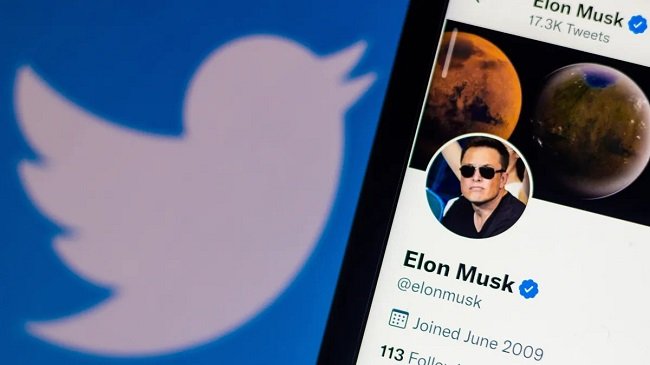
I have been using Twitter since 2010 and to cut a long story short, although it can be a virtual septic tank of human bile, ignorance and stupidity it can also be very informative and uplifting. I rely on Twitter for the latest news and find it far more immediate and succinct than traditional TV bulletins. When the shit hits the fan, as far as I’m concerned Twitter is the way to stay abreast of a developing story. Furthermore, I very much enjoy the social element of Twitter and the online banter with those I follow and who follow me. Twitter doesn’t do anything particularly unique but it did it first and hence everyone is in one place. That makes it invaluable. Sadly, if Elon Musk continues to mess with things to the point of breaking the Twitter community, then I will be forced to go elsewhere. Some folk are jumping ship already. Because of Musk’s erratic nature there’s a prevailing atmosphere that something is going to happen and it’s not going to be good.
I have been using Twitter since 2010 and to cut a long story short, although it can be a virtual septic tank of human bile, ignorance and stupidity it can also be very informative and uplifting. I rely on Twitter for the latest news and find it far more immediate and succinct than traditional TV bulletins. When the shit hits the fan, as far as I’m concerned Twitter is the way to stay abreast of a developing story. Furthermore, I very much enjoy the social element of Twitter and the online banter with those I follow and who follow me. Twitter doesn’t do anything particularly unique but it did it first and hence everyone is in one place. That makes it invaluable. Sadly, if Elon Musk continues to mess with things to the point of breaking the Twitter community, then I will be forced to go elsewhere. Some folk are jumping ship already. Because of Musk’s erratic nature there’s a prevailing atmosphere that something is going to happen and it’s not going to be good.
My biggest concern is that the existing Twitter community is going to fragment, with online friends migrating to multiple alternative platforms. It may also cause some existing Twitter users who are already disillusioned with the existing status quo, to simply quit social media. With respect to those Twitter accounts that I follow for news and information, rather than social engagement, I wonder what will be the new platform of choice to reach an audience. I don’t want to have to maintain multiple social media accounts across multiple services. And I am not going to pay for the service that I already have enjoyed free of charge for the last 12 years. The only people who potentially benefit from a fragmented community are the traditional media outlets. Print media in the UK hates the fact that Twitter provides a platform that can challenge their news agenda and give the public the right of recourse.
I’ve always take a “belt and braces” approach to life and so, although it hasn’t happened as of yet, I am already working on my Twitter exit strategy. Anecdotally, it would seem that Mastodon is the next best place to go, so I have set up an account there. Unfortunately, this endeavour seems to have fallen at the first hurdle as I’ve still not received my verification email to make my new account active. This doesn’t bode well for a platform that some claim is the anointed successor to Twitter. Assuming that I can set up and start using Mastodon, there then remains the issue of which client to use. I currently use Tweeten for Twitter and am looking for identical functionality in a third party Mastodon client. However, nothing I’ve seen so far seems to offer that. It is so important to get the data that you want, presented in an accessible manner or else you run the risk of drowning in white noise and bullshit when it comes to social media.
I’ve written posts in the past about becoming reliant on free services, only to then have them withdrawn or monetised. We’ve all been down this road before so if the worst case scenario happens and Twitter goes to the wall, at least we won’t be caught off guard. However, the thing about Twitter is that there are so many potential ways you could monetise it without having to restrict usage or radically alter the way it functions. Sadly, that doesn’t seem to be Elon Musk’s intent. I am naturally sceptical of billionaires per se and especially so in his case because he is “anomalous” (the politest thing I could say about him). However, Twitter is now his “bat and ball” and so if he wants to neuter it for political or business reasons, then that is his prerogative and there’s nothing much the average user can do about it. If it all ends up going south, it was fun while it lasted.
Update: I managed to get myself on Mastodon and it is not an exact Twitter clone. It appears to require a lot more curation and interaction for it to yield the results that I want. Those seeking for a “like for like” replacement may wish to look elsewhere.





Another New Prime Minister
It is difficult to write about the state of UK politics with any degree of intellectual rigour when the entire situation has become so utterly farcical. My initial reaction to the recent departure of Liz Truss after just 45 days in office, was to laugh with abject scorn and derision. She was destined to fail due to utter lack of ability. However, there is still the outstanding matter of the country lacking a credible and functional government to address inflation, the cost of living crisis and resolve all the issues stemming from Brexit. There are problematic national and international events taking place that need addressing. A united, pragmatic and empathetic government is required to solve both these short term and long term needs. Sadly, the governing party is riven with opposing factions and there is no commonly held policy or underlying ideology. The PM may well have changed but the underlying flaws remain.
It is difficult to write about the state of UK politics with any degree of intellectual rigour when the entire situation has become so utterly farcical. My initial reaction to the recent departure of Liz Truss after just 45 days in office, was to laugh with abject scorn and derision. She was destined to fail due to utter lack of ability. However, there is still the outstanding matter of the country lacking a credible and functional government to address inflation, the cost of living crisis and resolve all the issues stemming from Brexit. There are problematic national and international events taking place that need addressing. A united, pragmatic and empathetic government is required to solve both these short term and long term needs. Sadly, the governing party is riven with opposing factions and there is no commonly held policy or underlying ideology. The PM may well have changed but the underlying flaws remain.
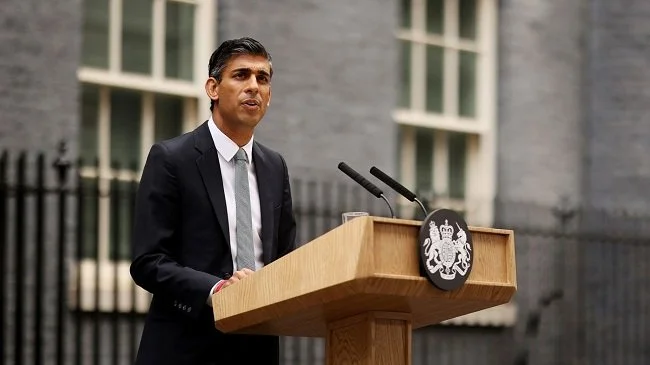
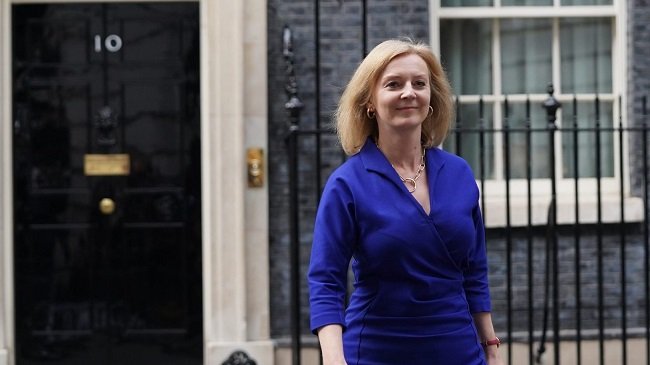
The new incumbent of No 10 Downing Street, Rishi Sunak, has achieved one major milestone. He is the first British Asian Prime Minister and that is certainly noteworthy. However, beyond this I see no other reason to celebrate his appointment. He may have calmed the markets by representing the traditional face of Conservative fiscal prudence but he has no new policy announcements. Effectively, he intends to carry on with the conspicuously nebulous manifesto promises of 2019 and will no doubt usher in “Austerity 2.0” after his predecessor left a gaping hole in the nation’s finances and undermined our capacity to borrow cheaply. He has said nothing to allay the immediate fears of those on middle or low incomes. Furthermore, after promising to bring “integrity and accountability” back to UK politics he re-appointed Suella Braverman as Home Secretary, after she resigned for breaching the ministerial code 6 days earlier.
We are still two years away from a General Election and even if there was one announced tomorrow, I would still struggle to find a political party that came anywhere near representing what I consider to be the nation’s political and economic needs. I would vote Labour only to remove the current administration and not because I am overly enthused by the party. Ultimately I and many other voters are politically homeless and the current “First Past the Post” voting system does not favour new parties. Furthermore, over the course of my lifetime the UK electorate has become increasingly politically illiterate and increasingly impatient, resulting in certain socio-economic groups voting against their own interests. It raises the question as to how much responsibility do the electorate bear for the iniquities they inflict on themselves and others by their political choices? Overall I am not optimistic about the immediate future and I am reminded of that line from Gremlins 2 about “put everything you've got into canned food and shotguns”.
A Sense of Community
I couldn’t settle last night, as I have the flu (care of my grandson), so I sat in the lounge and watched the live stream of Her Majesty The Queen: Lying-in-State. I was aware of the news reports of thousands of people queuing to pay their respects, but often with major events such as this there can be a mental disconnect between being told something and actually seeing it. Upon watching the live stream I was surprised and profoundly moved. It was 11:45 PM and there were still hundreds of people slowly filing through Westminster Hall, despite the lateness of the hour. Although an inherently sombre spectacle, there was also something very uplifting about the proceedings. It took me a while to process my emotions. Then I realised that what I was feeling was a sense of community. Something that is very rare these days.
I couldn’t settle last night, as I have the flu (care of my grandson), so I sat in the lounge and watched the live stream of Her Majesty The Queen: Lying-in-State. I was aware of the news reports of thousands of people queuing to pay their respects, but often with major events such as this there can be a mental disconnect between being told something and actually seeing it. Upon watching the live stream I was surprised and profoundly moved. It was 11:45 PM and there were still hundreds of people slowly filing through Westminster Hall, despite the lateness of the hour. Although an inherently sombre spectacle, there was also something very uplifting about the proceedings. It took me a while to process my emotions. Then I realised that what I was feeling was a sense of community. Something that is very rare these days.
The UK has become a very divided country in recent years, especially since 2016. Politically, economically and socially the nation is pulling in different directions and the fault lines are no longer along obvious party political lines. Public discourse has become very partisan and scorched earth. We tend not to agree to disagree, amicably. Rather we are encouraged to consider anyone with an opposing view to be our enemy. The North dislikes the South and vice versa. The class divide is still with us and the UK’s recent flirtation with populism has seen a resurgence in racism and other forms of discrimination and “othering”. At the heart of this negative storm are the tabloid press and their insidious poison that they drip daily into the public psyche. Hence the country has been ill at ease with itself for a while and there seems no immediate change on the horizon.
Yet “The Queue” flies in the face of all this. This steady flow of British citizens from all walks of life, united in grief and respect for the late monarch, speaks of a sense of belonging. Having watched several hours of the live stream from Westminster Hall there is something very positive about seeing a populace at ease with itself. People helping the elderly and the infim as they descend the steps to the North of the hall. Or offering a tissue and a kind word to those who are visibly upset. Showing patience and good humour when faced with the logistical problems of managing such an event. All of which speaks of a cohesive and strong sense of community. For once, one’s neighbours seem accessible and not remote. Is this feeling of national identity that my parent’s generation felt during their youth?
Another fascinating aspect about this event is “The Queue” itself. At the time of writing it is currently 2.5 miles long. The route begins on Albert Embankment, next to Lambeth Bridge, before winding its way along the Thames to Southwark Park. The route passes the London Eye, National Theatre, Tate Modern and HMS Belfast. There are extra toilets and water facilities on the way. The Southbank Centre, National Theatre and BFI Southbank are extending opening hours to provide refreshments and other amenities. More than 1,000 volunteers, stewards and police officers are on hand. Visitors go through security and those waiting will be issued with numbered wristbands, allowing them to leave temporarily to use nearby facilities. Government social media accounts provide regular updates on queue length and estimated waiting time. Overall “The Queue” is a logistical marvel and a microcosm of “Britishness”.
There has been a degree of controversy in so far as serving MPs and other “dignitaries' ' being able to bypass “The Queue”. Security issues are cited as the reason for this privilege. Make of that what you will. For me this event is a distillation of all the things I consider good about being British. I don’t say that with a sense of superiority. That’s not what it is about. What I see are people expressing respect for a remarkable women. Royalist and Republicans alike. I see a mature, diverse country. And for a brief moment, the partisan agenda that we have thrust upon us on a daily basis, has been sidelined. People are being supportive of each other, even talking to each other. It highlights how so much of the divisiveness we endure comes from the outside and has a clear purpose. I hope the sentiments and spirit of “The Queue” endures beyond September 19th. But I’m not optimistic.
The Death of a Monarch and Change
The death of Queen Elizabeth II on Thursday was both an inevitability and a shock. Something I similarly felt regarding the death of my own Mother recently. We all know that people can not go on forever and that age, infirmity and ill health catch up with us all. But no matter how well prepared you think you are for a bereavement, when it happens it is still a shock. The Queen was a constant in our lives. Separate from politics, she was a dignified, benign and very accessible head of state. She dedicated her life to public service and was a force for good in the world. Although a deeply private person her public persona became clearly defined over time and the public loved her. Even those who do not consider themselves “royalists” recognised her unique role in society and position on the world stage. She was, as so many have pointed out, a constant in an ever changing world.
The death of Queen Elizabeth II on Thursday was both an inevitability and a shock. Something I similarly felt regarding the death of my own Mother recently. We all know that people can not go on forever and that age, infirmity and ill health catch up with us all. But no matter how well prepared you think you are for a bereavement, when it happens it is still a shock. The Queen was a constant in our lives. Separate from politics, she was a dignified, benign and very accessible head of state. She dedicated her life to public service and was a force for good in the world. Although a deeply private person her public persona became clearly defined over time and the public loved her. Even those who do not consider themselves “royalists” recognised her unique role in society and position on the world stage. She was, as so many have pointed out, a constant in an ever changing world.
The arcane processes that govern the institution of the monarchy have now come into play and a new King has ascended to the throne. There will now be a formal period of mourning throughout the UK and a full state funeral on Monday 19th September. This entire matter currently dominates the national news cycle and has an impact upon public events and sporting fixtures throughout the country, as a “mark of respect”. As well affording the people an opportunity to come to terms with the death of the Queen and say goodbye, the situation will inevitably raise wider questions about the future of the monarchy. King Charles allegedly has plans for a far more streamlined institution with many minor royals stepping down from public life and public funding. The debate about having an elected head of state has also begun again, although I think that the general public is not ready or disposed for such a change.
Although I broadly feel that the current situation is unfolding in an acceptable fashion, I do have wider concerns. The transition to a new monarch has happened quickly and a sense of continuity is being maintained. The Queen has earned a state funeral and it is important both nationally and internationally that her passing is marked in such a way. But I worry that this hiatus in public affairs, such as politics and legislation, is detrimental to the nation. The UK’s new Prime Minister is not at present engaged with the pressing issues of the day. The news cycle is focused elsewhere so there is the potential for important stories, events and happenings to be “overlooked”. I am also concerned that the nation may make the mistake of retreating further into our country's past and notions of British exceptionalism, rather than tackling the issue that has remained outstanding since the end of World War II; what is the UK’s role in the world?
On Tuesday 20th September, the UK will return to a state of relative normality. The formal period of national mourning for Queen Elizabeth II will end and the news cycle, public affairs and national politics will return to “business as usual”. The national sense of grief may well be assuaged but the recent fix of patriotism will not magic away the problems the nation faces economically. If spring 2023 turns out as bleak as is predicted, what will the British public think about the potential cost of a coronation? I suspect that King Charles is already aware of this and making plans accordingly. However, that is all months away. In the meantime, I have taken time out to personally reflect on the death of Queen Elizabeth II. I shall not be making a pilgrimage to London but shall watch the formal funeral on the allotted day. I hope the event serves its purpose. As for the lady herself, I simply say “Westu hál. Ferðu”.
Time to Move
For many of us, we live where we can afford, rather than where we would like. I have been fortunate in so far as I have lived in South East London most of my life. By London I mean Greater London, a collective administrative district, which comprises 32 boroughs and The City of London. Bexley borough is a typical “leafy suburb” in the commuter belt. If that conjures up all sorts of stereotypes then you’re broadly correct. This is a borough where the middle classes move to raise a family and seek their “forever home”. It is an affluent area with good schools, quality shops, parks, amenities and a sense of community. The average price for a 3 bedroom house in Bexley is £500,000 compared to a national average of £307,000 (according to MoveHub). However, despite the fact I like it here I feel the need for a change of scenery and think it may be time to move.
A new build bungalow of the sort we’re considering
For many of us, we live where we can afford, rather than where we would like. I have been fortunate in so far as I have lived in South East London most of my life. By London I mean Greater London, a collective administrative district, which comprises 32 boroughs and The City of London. Bexley borough is a typical “leafy suburb” in the commuter belt. If that conjures up all sorts of stereotypes then you’re broadly correct. This is a borough where the middle classes move to raise a family and seek their “forever home”. It is an affluent area with good schools, quality shops, parks, amenities and a sense of community. The average price for a 3 bedroom house in Bexley is £500,000 compared to a national average of £307,000 (according to MoveHub). However, despite the fact I like it here I feel the need for a change of scenery and think it may be time to move.
According to Reuters “London is the quintessential megacity: densely populated; intensely connected at regional, national and international levels; and exceptionally productive compared with other cities and regions in the United Kingdom. London has more in common economically with other megacities - such as New York, San Francisco and the Bay Area, Tokyo, Sydney, Auckland, Paris, Beijing and Shanghai - than with most other parts of Britain. Like other megacities, London’s population has boomed over the last three decades, hitting a record of 9 million in 2019, up from just 6.4 million in 1991, according to the UK Office for National Statistics. However, before that, the city’s population had slumped for five decades from a previous peak of 8.6 million in 1941, as inhabitants fled the city for more space and other improvements outside the metropolitan area”. I think this succinctly sums up why I wish to move.
London’s financial district
It is getting noticeably busier in Bexley. Half of the local park which is located behind the street where I live, was sold and has become a housing development. As a result the roads in the immediate area are congested at peak hours and there is much more noise throughout the day. There used to be a time when you went to bed and it was quiet. Now traffic and police sirens persist throughout the night. Changes in social attitudes mean that building work, gardening and other sources of disturbance start far earlier in the day. Due to the high turnover of houses in the street that I live in, there’s always one or two houses in a state of redevelopment. This means the road is always blocked by vans and equipment. The air quality is also deteriorating despite the Ultra Low Emission Zone being expanded. But for me the main issue is noise. It’s something I’ve become keenly aware of as I’ve gotten older and I dislike it intently.
So put it simply “I want to get the hell out of Dodge”. Hence, the plan is to now start provisionally looking to see what sort of home we can buy on our budget and where. The dream is to find a detached bungalow with two or three bedrooms and a little garden on the periphery of a village. Preferably with a view. However, we are not looking for complete seclusion and so for practical reasons we want to have access to essential amenities. Such as a pharmacist, doctor’s surgery, local shops and a few restaurants etc. I think the notion of moving to the other end of the country has finally been dismissed (sorry Blairgowrie) and I think we’ll more than likely stay within the Southern Counties. Internet access is also a factor. I have been fortunate to live in a part of the UK with good technological infrastructure. I currently enjoy FTTP and would like to maintain that.
Which county should we move to?
Sadly this process is not all “fun and larks”. Any sort of move means dealing with estate agents as we call them in the UK and they are not my favourite societal group. Already after doing some cursory searches online, I have found the process frustrating. Information is often withheld, such as floor plan measurements or specific details regarding heating etc. All of this is to ensure you register with the respective website and provide an email address. Plus an estate agent’s lexicon is often questionable, stretching the meaning of accepted terminology and phrases. However, setting aside these minor niggles, Mrs P and I now have to give this entire matter some serious consideration, this side of Christmas. If we do decide to move in 2023, I want it to be an organised affair and not some spur of the moment, descent into chaos.
The Importance of Humour
This post is about humour. A subject that is very dependent on one’s personal tastes. I consider humour to be an extremely important facet of the human condition. I personally use humour as both a sword and a shield in my day to day life. I find such an approach invaluable to maintaining my sanity and a positive disposition. It is also a means of circumnavigating obvious disparities in power, be it social, economic or political. I also consider humour to be an important measure of a person. All the people that I’ve encountered in my life who have been bullies, intransigent, obtuse, cruel, bigoted and superior have lacked a sense of humour. If they ever claimed to have one, it has always been very much a one way street. Hence, humour is an important social tool. Something that I keep an eye out for during the course of my social interactions.
Blackadder (1983 - 1989)
This post is about humour. A subject that is very dependent on one’s personal tastes. I consider humour to be an extremely important facet of the human condition. I personally use humour as both a sword and a shield in my day to day life. I find such an approach invaluable to maintaining my sanity and a positive disposition. It is also a means of circumnavigating obvious disparities in power, be it social, economic or political. I also consider humour to be an important measure of a person. All the people that I’ve encountered in my life who have been bullies, intransigent, obtuse, cruel, bigoted and superior have lacked a sense of humour. If they ever claimed to have one, it has always been very much a one way street. Hence, humour is an important social tool. Something that I keep an eye out for during the course of my social interactions.
Life is filled with social situations of varying degrees of significance. I have a hospital appointment coming up soon in which I’ll have to meet different people in an environment I’m unfamiliar with. I will also undergo some tests which may be a little uncomfortable. Humour is a means to navigate such a socially complex situation. Self deprecating humour or a simple joke about the circumstances can put all parties at ease and make the matter more palatable. Humour is great for breaking the ice at parties, extending an olive branch and making up after arguments. As I said earlier, it is a social tool. One that you can learn quite early in life. Every class at school often has a clown. Sometimes these can be people who quickly become adept at using humour to socialise and establish their identity.
Something, something, pubs, beer and mates
Later in life, you soon realise that if you’re not what society deems to be “good looking”, then be funny instead. Teenage years are often quite traumatic and being the funny one in your peer group has advantages. Ricky Gervais states that there’s nothing funnier than your own group of friends and the humour that arises when you get together is contextually funnier than any material that he can write. However, being funny is not always easy. Sometimes you can try too hard or fail to read the room, so to speak. Where we all know someone who is genuinely witty, we similarly often know someone who never shuts up, can’t take anything seriously and ultimately is very wearing. Social media often flirts with a philosophy that evangelises presenting your “best self”. You can see this on YouTube videos and Twitch Streams. People striving to be a raconteur, or a quick fire comedian. Sadly too many fail, because humour is more than just telling a joke. It requires mastering techniques, reading situations and people.
Perhaps the most powerful aspect of humour, comedy and jokes is as a means of speaking truth to power. As a weapon against pomposity, mendacity and hatred. The venal are often thin skinned and hate being ridiculed or mocked. Humour in that sense is the great leveller. Even the Kings or the middle ages had a fool who was given free reign to mock all regardless of status. But humour comes with responsibility. Words have power and can hurt despite what the old adage says. Hence there is the ongoing debate about whether comedians should “ punch up or down”. Is humour disposed towards specific world views, political positions and ethics by default? Does humour always need a victim or something or someone to be the butt of the joke? Is there always some form of collateral damage in the wake of a joke. Humour is not a black and white issue these days and is subject to a lot of scrutiny from various quarters. The veracity of their scrutiny is questionable at times but it exists no less.
Taskmaster like many other UK comedy shows, has been “re-imagined” for US TV
Humour varies around the world with different cultures focusing on different aspects of the human condition. I see clear differences in humour between the UK and US. These differences often stem from how a nation perceives itself. American humour can be loud, brash and at times very pleased with itself. British humour is often self deprecating, passive aggressive and sarcastic. There are also boundaries that some styles of comedy will not go beyond. This raises questions such as “is there humour in anything”? I believe there is and that it comes down to context . You can use an appalling situation to be a vehicle for humour, without mocking the said situation. And then there is the perceived get out of jail card that if an alleged humorous remark is not well received, you simply say “it’s just a joke” and you are absolved of any fallout. This is a myth and a spurious licence for bullies.
Humour brings happiness. It is an incredibly restorative social construct. Laughter may not be the best medicine as the old saying states, but it does bring other rewards. Mark Twain said that “humour is the great thing, the saving thing after all. The minute it crops up, all our hardnesses yield, all our irritations, and resentments flit away, and a sunny spirit takes their place”. I certainly wouldn’t contradict him. Humour may very well be the great thing. It can be found in nearly every facet of life. 90% of men and 81% of women claim that a sense of humour is the most important quality to have in a partner. It is a skill used by all of society. From great leaders to those just trying to get by. Mel Brooks claimed that “humour is just another defence against the universe”. But for me personally, Simon Wiesenthal summed up humour’s finest quality. “It is the weapon of unarmed people: it helps people who are oppressed to smile at the situation that pains them”.
The New Prime Minister of the United Kingdom (Again)
Conservative Party has been in government in the UK since 2010. During that time there have been three Prime Ministers. Today we moved onto the fourth. After Boris Johnson resigned on 7th July, the nation has had to endure a tedious two month process in which the Conservative Party elects a new leader. That person then becomes the PM by default. Many readers unfamiliar with the UK political system may be surprised that a change of leader has not led to a General Election. That is because the Conservative Party still holds a parliamentary majority of 71 elected Members of Parliament. Hence it is still constitutionally quite able to govern, despite Boris Johnson being forced from office. Therefore party members vote for a new party leader who gets the top job by default. Remember that in the UK, the Prime Minister is not the head of state and does not have the executive powers of a President.
Conservative Party has been in government in the UK since 2010. During that time there have been three Prime Ministers. Today we moved onto the fourth. After Boris Johnson resigned on 7th July, the nation has had to endure a tedious two month process in which the Conservative Party elects a new leader. That person then becomes the PM by default. Many readers unfamiliar with the UK political system may be surprised that a change of leader has not led to a General Election. That is because the Conservative Party still holds a parliamentary majority of 71 elected Members of Parliament. Hence it is still constitutionally quite able to govern, despite Boris Johnson being forced from office. Therefore party members vote for a new party leader who gets the top job by default. Remember that in the UK, the Prime Minister is not the head of state and does not have the executive powers of a President.
This afternoon the results were formally announced, although polling and market research has strongly indicated that the former Foreign Secretary Liz Truss was more than likely to win. That has now been confirmed. Liz Truss received 81,326 votes (57%) and Rishi Sunak received 60,399 (43%) on a turnout of 141,725 (82.6%). 172,437 Conservative Party members were eligible to vote. If you want to drill down deeper into the numbers Truss received 47% of eligible Tory members. Although she has won the election, it is not a decisive victory. Previous Tory leaders won by greater margins (Boris Johnson 66% and Theresa May 60%). Nor does she enjoy unanimous support from her own MPs, as only 113 saw fit to vote for her as leader (Rishi Sunak earned 137 votes), prior to the ballot being put to the party membership. According to YouGov, only 12% of Britons expect Truss to be a good or great leader, while 52% expect her to be poor or terrible.
To say that Liz Truss has some major political and social problems to tackle in the first month of her leadership is an understatement. Those of a political bent will be aware of her rise through the political ranks of the Conservative Party. The wider public are not so familiar with her apart from what they’ve seen in recent weeks. What they have seen is someone campaigning, not to the nation, but to the party faithful. Hence a lot of what Liz Truss has said has been showboating to the home crowd and politically tone deaf to the wider public. If you use Google to research the new Prime Minister the first thing you’ll find are all the gaffs she’s made in previous years that have now all become memes. If you set aside politics and judge her on her oratorical skills, charisma and overall appeal, she comes up wanting. Those who cry “give her a chance” are spuriously appealing to the alleged sense of fair play of the UK electorate. A quality the government of the last 12 years sorely lacks. It is current Tory policy to change any rule that stands in its way.
Tomorrow the new Prime Minister will announce her new cabinet and it will no doubt be a dismal collection of the intellectually bankrupt and the hopelessly out of their depth. I very much doubt if any of the major political challenges will be addressed in the coming parliamentary session. Real help will not come regarding spiralling energy prices, the Northern Ireland protocol will continue to be insoluble for a pro Brexit government and the ongoing skills and labour shortage, combined with ongoing lack of funding will lead to more public institutions collapsing. Inflation, low wages and rising crime could all contribute to a volatile political climate in 2023. So far, rather than seeking new ideas, Liz Truss has indicated an ideological retreat into Thatcherism, advocating policies and dogma that are no longer relevant in the current political climate.
If you take the time to find and read the serious political pundits, not the client journalists found in the popular UK press, you’ll find a lot of speculation about how the Conservative and Unionist Party is heading for an electoral disaster in 2024 and potentially its own extinction. I sadly feel obliged to remind people that it is “the doom of men that they forget”. Logic and clear evidence no longer shift the political scales like they used to. At best I think a voting pact between all parties that aren’t the Conservatives, may prevail. Perhaps the next government will then be a coalition against them. However, the election is a long way off. Myself and many other politically homeless voters’ biggest concern is the human collateral damage that will be incurred while we wait. Sadly, there is no immediate light at the end of the tunnel and that it also appears to be inordinately long.
Photos
Every few months Mrs P announces to the world in general in a rhetorical flourish “we need to go through all the photos and get some printed”. What photos are these you may well ask. The endless litany of pictures featuring our grandchildren, taken by our son and daughter-in-law. These arrive via WhatsApp on a daily basis. Being of the Instagram generation our son’s family copiously document their lives and share it on social media. Conversely, Mrs P is from the analogue generation where photos must be printed and placed in albums. All pictures remain conspicuously unannotated so in years to come you can argue over who is in them, what year it was and where they were taken. And returning to Mrs P’s statement about getting them printed, that falls to me because “it’s all done online nowadays” and that is apparently my department.
Every few months Mrs P announces to the world in general in a rhetorical flourish “we need to go through all the photos and get some printed”. What photos are these you may well ask. The endless litany of pictures featuring our grandchildren, taken by our son and daughter-in-law. These arrive via WhatsApp on a daily basis. Being of the Instagram generation our son’s family copiously document their lives and share it on social media. Conversely, Mrs P is from the analogue generation where photos must be printed and placed in albums. All pictures remain conspicuously unannotated so in years to come you can argue over who is in them, what year it was and where they were taken. And returning to Mrs P’s statement about getting them printed, that falls to me because “it’s all done online nowadays” and that is apparently my department.
Humans are unique in being the only species that seeks to document their lives. Photos provide a chronological history of our interactions with family and friends as well as our passage through life. Sharing memories is an important social ritual bringing both joy when times are good and comfort when life is bad. Plus photos make great evidence in trials and legal disputes but I digress. During the course of my life I have taken my share of photos, so I am not going to play some sort of “holier than thou” card and claim I am above this social convention. In the early nineties I bought a video camera and went through a phase of recording anything and everything that I did. Like most parents, we have albums full of pictures of our son and now his family as well. I still like to take pictures when I go out on day trips and because of my penchant for social media, especially Twitter, I will take a photo of anything that amuses me that I can share online.

However, there is one noticeable thing that has changed overtime regarding my relationship with photos. I no longer appear to be in many. In fact if you wander around our bungalow and look at all the pictures on bedside cabinets, walls or shelves you’ll probably only find me in one. Potentially this is because I was more than likely the person taking the photo in the first place but I suspect it’s more of a case that no one is really interested in me. If you show photos to friends and family it usually tends to be grandchildren and the things they get up to, or pictures of where you went for holiday. No one pro-actively requests to see photos of an overweight, middle aged white guy. Plus I’m not really keen on having my picture taken anyway. I don’t really buy into selfie culture. Why ruin a nice view by putting me in front of it? I’m far more interested in looking at interesting things and places.
I was recently going through my late Father’s possessions and found several scrapbooks filled with pictures of his Father’s family taken when they lived in India and Burma at the turn of the 20th century. There was an accompanying piece of paper that numbered and identified all the photos. Sadly, the glue my Father had used to stick the photos into the scrapbook had dried out over time and the pictures all had fallen out, rendering the key useless. The descriptions written have allowed me to identify some (such as Great Aunt Persephone and the Archbishop of Rangoon, I kid you not) but others will now forever remain unidentified. Something that may eventually be the fate of my photos unless Mrs P and I annotate them in some fashion. Which reminds me I better log onto Snapfish and order the latest batch of family photos. We don’t want anything to go unwitnessed do we?
Retirement
My carer’s duties ended on April 7th 2022 when my Mother moved into a care home. I stopped claiming Carer’s Allowance (£69.70) from the Department of Work and Pensions and decided to take a few weeks to rest and consider what I was going to do next. Naturally, being 54 years of age, the most immediate consideration has been one of employment. We all need an income to survive. At present the State Pension Age in the UK for men is 67. This is when you will receive your State Pension, which is based upon your National Insurance Contributions that you have paid throughout your working life. That is 13 years away, hence why I’ve been considering returning to work. However, Mrs P took early retirement from the Civil Service seven years ago and raised the point that if I returned to full time work, we would no longer have so much time together. Although caring for my parents has been tough, it revolved around a schedule thus affording Mrs P and I windows of opportunity to do things.
My carer’s duties ended on April 7th 2022 when my Mother moved into a care home. I stopped claiming Carer’s Allowance (£69.70) from the Department of Work and Pensions and decided to take a few weeks to rest and consider what I was going to do next. Naturally, being 54 years of age, the most immediate consideration has been one of employment. We all need an income to survive. At present the State Pension Age in the UK for men is 67. This is when you will receive your State Pension, which is based upon your National Insurance Contributions that you have paid throughout your working life. That is 13 years away, hence why I’ve been considering returning to work. However, Mrs P took early retirement from the Civil Service seven years ago and raised the point that if I returned to full time work, we would no longer have so much time together. Although caring for my parents has been tough, it revolved around a schedule thus affording Mrs P and I windows of opportunity to do things.
With this in mind, I decided to investigate whether part time work is more viable? IT support and management, project management and short term IT contracts tend not to have part time options, so I decided to check out local work of a more general nature. I investigated vacancies in local government and small business. I then spoke to the staff at my local supermarket and newsagents to see what employment was available. The results were very interesting. If I want to return to most fields of IT it is not too difficult. Short term contracts such as a hardware rollout in a hospital or across a series of offices are paying good money for experienced staff, now that so much migrant labour is not available. But taking such work would mean spending extended periods of time away from home, which is not something I desire. The alternative would be to take a position such as an IT Manager for a small business, possibly in Central London. But that raises the spectre of commuting and again is more than likely to be a full time position.
Therefore, I decided to look more into local, part time work as this would theoretically suit my needs. I want to have at least two days a week available for me and Mrs P to spend time together. Financially speaking, the part time job would only have to pay a specific figure that I’ve worked out that I need to get by. However, the more people I spoke to, the more I discovered that is not how things work. Many do not get to work the hours that they want and tend to have little say when they do work. The pay is low, the workload excessive and the general environment pressurised and uncaring. One young man I regularly spoke to at my local supermarket said it was like being on a treadmill and akin to being a prisoner. There was little or no respite from the daily slog and he felt like an asset that was just there to be used when his employers found it convenient. This gave me pause for thought. Why would I want to do such work? Why would anyone want to do it other than out of necessity?
I have had good jobs in the past that I have earned through my skills and experience. I have undertaken them well because that’s what I feel is the foundation of the contract between myself and my employer. It is a civil and polite quid pro quo. But I have never seen my work as defining me in any way. I have worked in the past because I have to, not because I believe in “work setting you free”. There is pride in a job well done but I’m not doing it for a pat on the back. I expect market rates as well as competitive terms and conditions. Everyone should. Sadly, this doesn’t seem to be the default position of many employers these days. They want as much as they can get out of you and for as little as they can get away with paying. Plus work culture is rife with so much bullshit these days. Awareness courses, personal development, the pursuit of the company vision. And let us not forget the psychopaths, sociopath, bullies and the sexual predators that still seem to get through the interview process and climb the greasy pole. Fuck all that.
“ I’ve looked at the numbers and to use a technical term, you have fuck all money”
So having researched the state of the UK job market, I concluded that it either didn’t align with the lifestyle I was aspiring to or it was effectively a form of self torture that didn’t warrant the rewards it yielded. I then decided to consider alternative options so I spoke with a financial advisor. I subsequently discovered that due to change in the UK financial regulations, I could access my own private pension in December this year when I become 55. From 1997 to 2016 I paid money into my own independent pension fund. The amounts were not always consistent and in the last few years of that 19 year period the payments were somewhat erratic due to me mainly doing short term contract work. However, I could access this money and contrary to my belief, it wasn’t as small an amount as I thought. This combined with other assets such as savings, meant I was in a stronger position. The financial advisor said “you can not work if you don’t want to. You’ll be able to get by”.
Retirement is just like this…
As you can tell by the title of this post, it’s not too hard to figure out what option I’ve taken. My Father worked hard throughout his life but he also extolled the value of leisure time. Like many people, the last few years have really made me and Mrs P rethink what we want out of the remainder of our lives. We’d prefer to get by and have time to enjoy ourselves rather than run ourselves into the ground chasing a few extra pounds. I guess this makes me an anathema to the likes of Dominic Raab, Liz Truss and the other authors of Britannia Unchained. But why should I kill myself making someone else rich, especially a socioeconomic group I despise. I am 54 and possibly have 20 good years left if my family’s medical history is anything to go by. I am going to live life on my terms. Therefore I am now retired and will remain so unless my finances or personal situation forces me to do otherwise. I hope that you can do something similar. Remember, you’re a long time dead.
Adaptation, Representation and Those Who Don’t Like Either
I was perusing my Twitter timeline last night and a tweet appeared from someone who doesn’t seem to care for the casting of Lenny Henry as a hobbit in the upcoming Amazon Prime TV show The Lord of the Rings: The Rings of Power. If you’re not familiar with Lenny Henry he’s a British comedian and actor of Jamaican heritage, who was one of first people of colour to establish himself as part of the cultural mainstream in the UK. He’s funny, smart and well respected. However, this particular individual on social media (we will not dignify them with a name check) was not happy about canonical authenticity being subject to the whims of representation. They tried to portray their objections as legitimate criticism based on a good faith argument, but some of the terminology they used clearly showed their true intent was passive aggressive dog whistle racism.
Lenny Henry as Sadoc Burrows
I was perusing my Twitter timeline last night and a tweet appeared from someone who doesn’t seem to care for the casting of Lenny Henry as a hobbit in the upcoming Amazon Prime TV show The Lord of the Rings: The Rings of Power. If you’re not familiar with Lenny Henry he’s a British comedian and actor of Jamaican heritage, who was one of first people of colour to establish himself as part of the cultural mainstream in the UK. He’s funny, smart and well respected. However, this particular individual on social media (we will not dignify them with a name check) was not happy about canonical authenticity being subject to the whims of representation. They tried to portray their objections as legitimate criticism based on a good faith argument, but some of the terminology they used clearly showed their true intent was passive aggressive dog whistle racism.
Setting aside twitter trolls, I’d like to briefly discuss the matter of representation, especially with regard to film and television. Simply put, representation is important. First off there are the moral and ethical reasons. Contemporary films and TV should accurately portray the world in which we live. Hence the diverse nature of society should be reflected both on the small and big screen. Furthermore, such depictions should be credible and fair. Secondly, representation is commercially viable. Paying audiences like to see people like themselves in the films and TV shows that they watch. Hence the success of the Blaxploitation genre during the seventies. Bruce Lee’s rise to fame also did much to make Asian actors and culture more accessible during the same decade. And if representation doesn’t matter, why does Hollywood continuously remake international films for its home market? Shall I also mention the commercial and critical success of Black Panther?
Films are commercial ventures. Directors and writers may well wish to talk about “art” but most major studios are in the movie business to make money. Films and TV shows are products. Representation increases financial viability. It’s as simple as that. So with this in mind, let us consider what happens when the rights to a major intellectual property, such as a beloved series of books, are sold to be adapted into a series of films or a lengthy TV show. The said IP will be repurposed to ensure that it meets certain criteria. These may include a specific rating, the inclusion of specific actors who have box office appeal, irrespective as to whether they are a good match for the part. And obviously representation is a factor. How exactly can a major production justify such potential changes from the source text? The key is the word “adaptation”. The bottom line is once the rights to an IP have been sold, all bets are off unless the original writer has some sort of creative control.
Hollywood has been altering plays, novels and other popular franchises since the film business started. Therefore, it is unrealistic to expect any adaptation of an IP that you enjoy to remain 100% authentic to the source text by default. You can make all sorts of arguments about why this shouldn’t be the case. For example, an author’s work should be respected and their artistic vision maintained and such like. However, such arguments seldom survive long outside of the rarified atmosphere of the classroom and tend to disappear upon contact with capitalism. The movie business is about making a return upon an investment and is not interested in philosophical arguments and ethical abstractions. If there reaches a point when the idea of a black actor portraying James Bond is deemed to be commercially viable, it will happen. Regardless of what the purists and the racists think or want.
Richard Roundtree as John Shaft
Returning to the matter of last night’s Twitter troll, what was noticeable was not so much their racist position which is tediously commonplace in fandom these days, but the way they lacked the courage of their convictions. They tried to represent their position as something it wasn’t. It wasn’t a good faith appeal regarding the sanctity of an author’s work, but just a cheap exercise in unsubtle bigotry. If you’re going to be racist, be upfront about it. As for all the other objections you hear when so-called fans aren’t happy about something, they’re equally as bogus. Despite claims to the contrary, no one can get into your head and retrospectively ruin your childhood. If you don’t like something, ignore it. Be an adult and rise above it. As for The Lord of the Rings: The Rings of Power, I hope it proves a success both critically and commercially. Especially if that pisses off all the bigots.