
LOTRO: The Hytbold Experiment
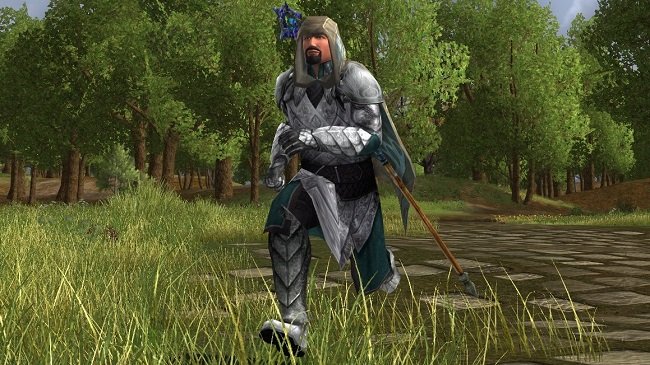
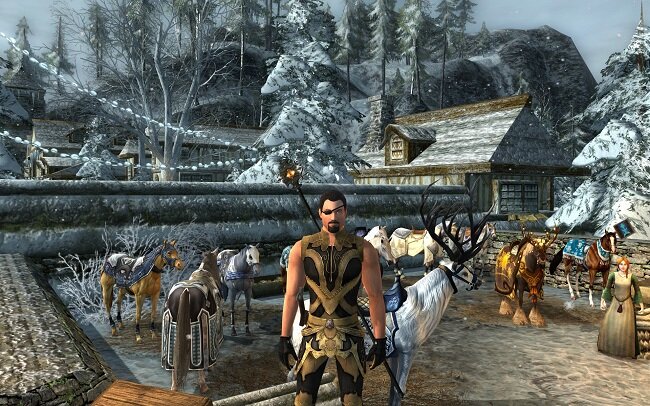
In 2012, developers Turbine embarked upon an interesting experiment as part of the Riders of Rohan expansion for the MMORPG The Lord of the Rings Online. I do not refer to mounted combat. Let us leave that debacle for another discussion. I was referencing the rebuilding of the burnt out village of Hytbold, which was promoted at the time as an alternative to raiding for solo players. Hytbold is a settlement located within the Sutcrofts in East Rohan, which was burned down in an attack by Orcs from the East Wall. Once a player reaches level 84 they can undertake repeatable daily quests, participate in mounted combat and other unique events. Over time a player can rebuild the two dozen buildings that make up Hytbold and access services such as Stable Master, Provisioner and Barber. The rewards for this task are class and trait-specific armour sets that are comparable to level 85 raid gear and the title of Thane of Rohan.
In 2012, developers Turbine embarked upon an interesting experiment as part of the Riders of Rohan expansion for the MMORPG The Lord of the Rings Online. I do not refer to mounted combat. Let us leave that debacle for another discussion. I was referencing the rebuilding of the burnt out village of Hytbold, which was promoted at the time as an alternative to raiding for solo players. Hytbold is a settlement located within the Sutcrofts in East Rohan, which was burned down in an attack by Orcs from the East Wall. Once a player reaches level 84 they can undertake repeatable daily quests, participate in mounted combat and other unique events. Over time a player can rebuild the two dozen buildings that make up Hytbold and access services such as Stable Master, Provisioner and Barber. The rewards for this task are class and trait-specific armour sets that are comparable to level 85 raid gear and the title of Thane of Rohan.
At the time, there was a great deal of debate on the Official LOTRO Forums regarding access to top tier gear and that the developers were pandering too much to raiders. Casual players and non raiders requested alternative ways to receive raid quality gear and rebuilding Hytbold allegedly provided a solution. However, just like raiding, rebuilding Hytbold requires a substantial investment of time. Former Senior Game Designer Joe Barry argued the point thus. “The overall time commitment is on par though with the amount of play hours and overall time it would take to get a raid armour set from a cluster. However, instead of spending 5+ hours once a week for 6-8 weeks raiding, you're instead spending 30-45 minutes a day doing soloable dailies for a similar amount of weeks”.
The main method of time-gating the rebuilding of Hytbold is via reputation factions. There are four in Riders of Rohan. The Wold, Norcofts, Sutcrofts and Entwash Vale. Reputation XP is gained through doing regional quests. Although Hytbold can be accessed with lower rep, some of the quests are gated behind Ally status. Regional quests will only provide rep XP upto a certain level, so if you want to reach kindred, then playing through Hytbold is mandatory. The fact that faction rep cannot be supplemented by tasks is a major hindrance. Managing the rebuilding of Hytbold is also quite complex in itself and shortly after release, several equally complex guides appeared on the forums (like this legendary one from Fredelas) as players tried to find an optimal selection of quests which could be completed quickly and efficiently on a daily basis.
As a dedicated LOTRO player at the time, I undertook the task of rebuilding Hytbold and if memory serves, I believe it took me about one and a half months. It was an enjoyable experience initially doing dailies and speculating about how Hytbold would look when rebuilt. The burned out buildings were replaced with new ones through phasing. However, after about twenty days or so, it became a chore, especially as some of the dailies were less enjoyable than others. Admittedly once complete it was rewarding to see the town rebuilt and to be able to purchase one of three class specific armour sets. But once this lengthy task was finished there was little or no reason to return to the town of Hytbold. Furthermore, twelve month later the next expansion Helm’s Deep saw an increase in level cap and so new sets of armour.
One of the worst failings of LOTRO is the way in which the game continuously invalidates gear and more importantly, the player’s hard work to obtain it as they progress through the game. I remember grinding through numerous Moria instances and raids to get a First Age Legendary Weapon back in Autumn 2009. I finally got my weapon a month before the release of Siege of Mirkwood. Once that expansion arrived it immediately became obsolete. My Hytbold gear suffered a similar fate although I did benefit from it a little longer. At present there are 221 stable-master in LOTRO. One of these is Hytbold and you only get it if you completely rebuild the village. I can’t remember the last time I went there but it’s a badge of honour that I have it. As LOTRO content doesn’t scale there often is no reason to go back to an older zone. Also because levelling is streamlined now, new players progressing through the game have no requirement to complete Hytbold if they don’t wish to.
Hytbold was an interesting experiment which genuinely attempted to address an issue that the player community had raised. Some people like progression, a clear path to a goal and repetition. Others don’t. Raiding doesn’t always guarantee obtaining the gear you seek but it probably offers a more exciting experience than the more structured path of Hytbold. Whatever your opinion, it should be noted that Turbine did not offer an alternative to raiding in later expansions. Perhaps they felt it was too much work or wasn’t particularly well received, just like mounted combat. Perhaps back in 2013, they were already considering an alternative system that could be monetised, as it is today with lootboxes and Embers of Enchantment. As for Hytbold, it remains one of many experimental systems that litter the game that have subsequently been abandoned. A curiosity from a decade ago.







Auto-manage
I’m sure I’ve mentioned this issue before in previous video game related posts. But I don’t think I’ve devoted an entire article to the matter, which is what I’m going to do today. So to provide some context, I logged into The Elder Scrolls Online today as I’m fast approaching that point in the year where I spend a few months subscribing to the game. Due to some recent patch, once again all my Champion Points have been refunded. Judging by the change in graphics, it may be that the entire Champion Point system has been updated. Whatever the reason, I have to re-allocate 501points into three skill trees. I wasn’t au fait with the last system, so I followed a build I found online. Now that it has changed, I’ll have to find a new one and copy it. Until I do, my character will be gimped. Shame the game doesn’t offer a selection of generic builds that can be easily implemented at the press of a button.
I’m sure I’ve mentioned this issue before in previous video game related posts. But I don’t think I’ve devoted an entire article to the matter, which is what I’m going to do today. So to provide some context, I logged into The Elder Scrolls Online today as I’m fast approaching that point in the year where I spend a few months subscribing to the game. Due to some recent patch, once again all my Champion Points have been refunded. Judging by the change in graphics, it may be that the entire Champion Point system has been updated. Whatever the reason, I have to re-allocate 501points into three skill trees. I wasn’t au fait with the last system, so I followed a build I found online. Now that it has changed, I’ll have to find a new one and copy it. Until I do, my character will be gimped. Shame the game doesn’t offer a selection of generic builds that can be easily implemented at the press of a button.
Back in 2003, I used to play a superb, squad based, tactical shooter called Hidden and Dangerous 2. A major part of the game was picking your team and equipment for the upcoming mission. The player was given a great deal of choice with regard to weapons, explosives, ammunition and such like. If you were planning a stealthy approach you would choose gear pertinent to such an approach. If you favoured a more direct approach you would select heavier weapons. However, the developers were savvy enough to understand that where this facility delighted some players, it also bored the shit out of others. Hence in their infinite wisdom and bountiful generosity they gave us a button that would automatically equip the “recommended selection”. And there was much rejoicing. Furthermore, they weren’t the only ones that did this.
Over the years many video games have included an “auto-manage” feature. I’ve never been a big fan of real time strategy games but I did play a lot of Star Wars: Rebellion in the late nineties. If the player found managing resources across multiple planets too tiresome or wished to focus on other elements of the game, you could assign your advisor droid to take care of these tasks. Naturally it didn’t yield the best results but it was adequate enough for new players or those who preferred other aspects of gameplay such as the epic real-time space battles. Again this comes down to a matter of personal choice, whether you wish to use such a facility. Naturally it will be an anathema to the purists and I totally understand such players being against such a game mechanic. From my perspective, I just like to have a choice and a means to bypass what I see as “chores” and unenjoyable “busy work”.
People who play video games do so for lots of different reasons. Some love to micromanage excessively complex systems, meticulously reading the text and crunching the numbers in the hope of finding an optimal build. Others like extensive choices so they can try a variety of permutations. As for me, I prefer to get straight into the action and start shooting things in the face. Anything that impedes that is a pain in the ass as far as I’m concerned. Which is why I’d like to see a lot more games implement some kind of auto-manage facility. It is these kinds of quality of life services that can make the difference between quitting out of petty annoyance and soldiering on, possibly to find one’s second wind. I can’t see how including auto-manage does any harm to a game, although I’m sure there are some gaming zealots who do. In the meantime, I shall continue to live in hope and lobby for this game mechanic.


Star Trek Online: The Missing Missions
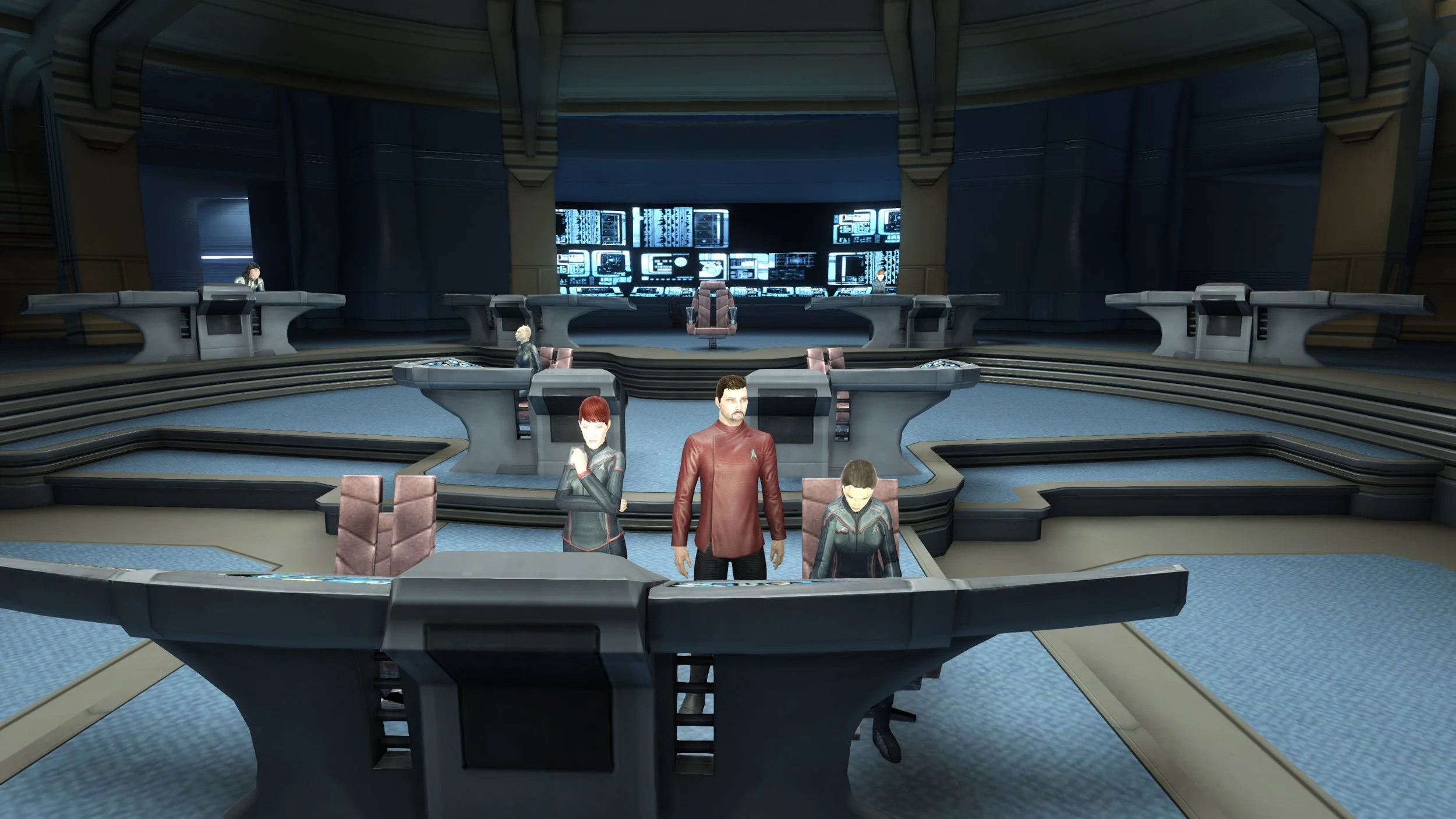
On October 15th 2018, Cryptic released Season 15: Age of Discovery for the MMORPG Star Trek Online. As well as adding new Star Trek: Discovery themeed content to the game, the developers also overhauled the new player experience and as a result made some major changes to existing missions in the game. Several story arcs were taken from the “Episodes” tab of the game’s Journal and relegated them to the status of side-content. As a result, several well written and enjoyable storylines are now buried in the game’s UI and are therefore easily overlooked. Some of them have been further gated behind a level 60 requirement to be eligible to play them. For more details of both these “side-content” story arcs and playing the entire game in narrative order, please see my previous post, Playing the Story Arcs in Order.
On October 15th 2018, Cryptic released Season 15: Age of Discovery for the MMORPG Star Trek Online. As well as adding new Star Trek: Discovery themeed content to the game, the developers also overhauled the new player experience and as a result made some major changes to existing missions in the game. Several story arcs were taken from the “Episodes” tab of the game’s Journal and relegated them to the status of side-content. As a result, several well written and enjoyable storylines are now buried in the game’s UI and are therefore easily overlooked. Some of them have been further gated behind a level 60 requirement to be eligible to play them. For more details of both these “side-content” story arcs and playing the entire game in narrative order, please see my previous post, Playing the Story Arcs in Order.
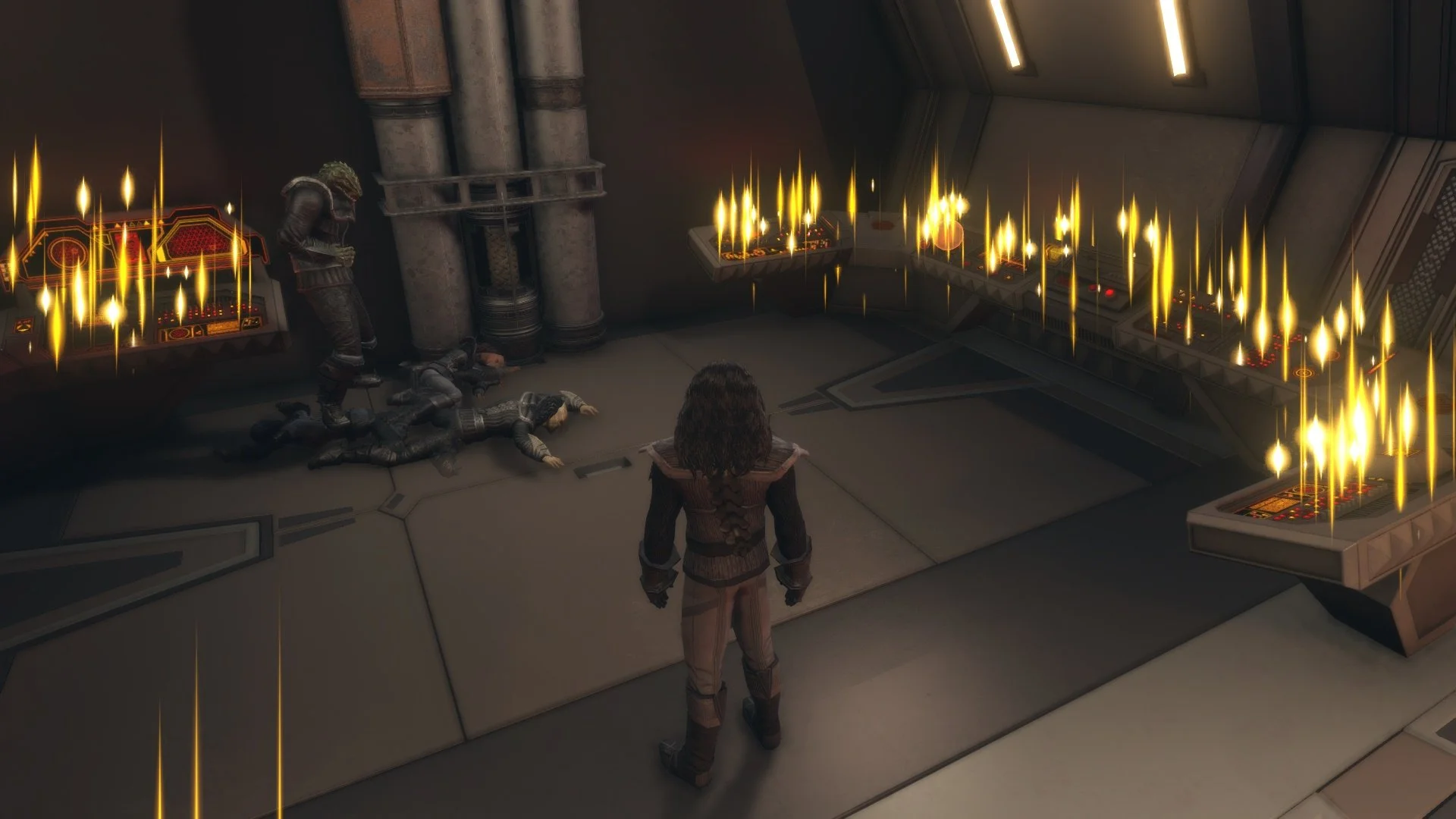
The other major change that Cryptic made with the launch of Season 15 was the removal of eight missions. At the time, Cryptic stated that this was to accommodate ongoing revisions and improvements to various content. This was confirmed as five missions were changed to feature revised graphics and the addition of canonical characters to the game, such as Commander La Forge (LeVar Burton). Cryptic initially stated that the eight missions would return at some point in the future. However, after three years this has still not yet happened. Furthermore, having recently played through the games complete content, it is apparent that many of the stories have been tweaked in such a way that they do not require the return of these eight missions. If it is the case that these stories have been permanently removed from STO, it will be a loss to the overall game. The missing missions are as follows.
Hide and Seek. Coded messages by an Undine infiltrator sent you to a distant nebula where enemies lie and wait.
Stop the Signal. The player is ordered to the Bomari System to find and destroy a Klingon listening post in the area.
The Kuvah'Magh. Ambassador Kas invited Miral Paris, who is said to be the Kuvah'Magh, as a mediator to a peace conference on Regulus IV. However, spurred by B'vat's propaganda, the talks are sabotaged by Klingons and their Orion mercenaries who believe Miral to be a false saviour. Although the talks have failed, Kas eventually assists the player in chasing B'vat away before he can abduct Miral Paris.
Treasure Trading Station. Starfleet has received a communication from a servant of one of the Klingon great noble houses. She claims to have vital information about the Klingon's war plans and she is willing to exchange that information for relocation to a planet out of the Empire's grasp.
Task Force Hippocrates. There are more reports than usual about Klingon and Gorn attacks along the border of Federation space. Starfleet has created a task force to patrol the area.
The Ultimate Klingon. After rescuing Julian Bashir from a Gorn ambush on his research lab in the Korvat System, the player has to investigate a genetic research facility on H'atoria and discovers Amar Singh creating genetically modified super warriors for the Klingon Empire.
City on the Edge of Never. After helping Captain Thelin of the U.S.S. Kirk against a Klingon ambush, he reports that Miral Paris, the supposed Kuvah'magh, was kidnapped by B'vat. The player follows him to the Gateway System, where B'vat takes Miral through the Guardian of Forever.
Past Imperfect. In Past Imperfect the player is transported to the past by the Guardian of Forever to defeat B'vat's schemes and preserve the present.

LOTRO: Changes to Embers, Motes and Figments Currencies
I dislike an excess of currencies in the MMORPG genre. I believe that such systems are implemented with a deliberate intention to obfusticate and dissemble. Especially if such currencies are bought with real money. Consider the following scenario. A player buys a specific currency and then uses that to purchase a second, different currency. They then use that to obtain an ingame item, The sole intention of such systems in video games are to disassociate the player from the fact that they have made a purchase which has a real cost. These are manipulative and predatory business practises but such is the nature of the video games industry and they are commonplace. You have to keep your wits about you when spending money ingame. Sadly those who don’t, end up falling foul of such practises.
I dislike an excess of currencies in the MMORPG genre. I believe that such systems are implemented with a deliberate intention to obfusticate and dissemble. Especially if such currencies are bought with real money. Consider the following scenario. A player buys a specific currency and then uses that to purchase a second, different currency. They then use that to obtain an ingame item, The sole intention of such systems in video games are to disassociate the player from the fact that they have made a purchase which has a real cost. These are manipulative and predatory business practises but such is the nature of the video games industry and they are commonplace. You have to keep your wits about you when spending money ingame. Sadly those who don’t, end up falling foul of such practises.
Which brings me on to The Lord of the Rings Online. A game with a plethora of barter currencies and unique monetary systems. Since 2017 and the release of the Mordor expansion, the game has had a bespoke currency that has been exclusively used for the provision of endgame gear. Five years on and this system has been overhauled several times and replaced with a new tier due to increases in the games level cap. At present Embers are the premium currency. This can be used to obtain level 140 gear, jewellery and essences. Motes are an older currency which can be used to obtain gear, jewellery and essences between levels 20 and 130. Figments of Splendour are the lowest tier of these currencies and iare mainly used to obtain cosmetic items, housing items and pets.
For many LOTRO players, Embers are the most important of these three currencies as they can be used to obtain very good gear. Effectively gear bought with Embers is the next best thing to that gained from raiding. When my primary character reached the new level cap recently, I replaced all their armour, jewellery and essences with gear bought with Embers. It is important to point out that Embers are obtained either by playing endgame content or by opening Adventurer's Steel-bound Lootbox. You have to buy Black Steel Keys to do so. Keys are paid for with LOTRO points. LOTRO points cost real money. It is also worth noting that items that are purchased with Embers can be deconstructed. If a lootbox gives an item you do not require or like, it can be “disenchanted” back into Embers. Hence Embers are an important part of Standing Stones Games ongoing monetisation of LOTRO.
Today, SSG announced that there will be changes coming to Embers, Motes and Figments currencies in Update 32, which is scheduled for February. Changes that SSG claim are designed “to clarify the value of each currency, better control their distribution, and improve the overall player experience when it comes to acquiring and spending these currencies”. Here is the short version of the proposed changes, specifically those associated with Embers of Enchantment, to give them their full title. If you want to read the more detailed account please click on the following link.
Embers continue to be our cap level currency used to barter for cap level gear.
The only gear in-game that will disenchant into Embers will come from Adventurer's (level cap) Lootboxes.
Embers will no longer barter into either Figments of Splendour or Motes of Enchantment.
In Update 32 and other large item level jumps we will version all existing Embers of Enchantment in your wallet into Motes of Enchantment. Any gear that could previously be acquired with Embers will also change to require Motes at the same time.
The Embers of Enchantment cap is being increased to 100,000 with Update 32.
According to LOTRO Producer Oleg Brodskiy (AKA Raninia), these changes are because of the imbalance between players undertaking level cap content that drops high end gear and those playing older, easier content, to obtain items that are disenchanted into Embers, that they then use to purchase level cap gear. However, as many LOTRO players have pointed out, the biggest obstacle for running top tier, endgame content, is the prohibitive time specific weekly lock. Ultimately both of these problems are of SSG own making and they are now trying to correct them by implementing a further flawed solution. Downgrading a player’s store of Embers, whenever there’s a level cap or gear change is a mistake. Taking away anything that a player has paid for is bad for business. Sadly, many of the problems and PR disasters that SSG have faced over the last five years have been of their own making. There is of course the chance that this isn’t a mistake but an intentional decision driven by a desire to increase monetisation. Whatever the reason, this decision is not going to be well received.
LOTRO: The Producer’s Letter is Now Quarterly
On the 31st December 2021 (nine days ago), Oleg Brodskiy (AKA Raninia) posted his latest Producer’s Letter for the MMORPG The Lord of the Rings Online. As ever, it wasn’t exactly promoted with any enthusiasm, being mentioned just once by the official LOTRO Twitter account. So I only discovered it yesterday when it was referenced by Justin Olivetti in a post over at Massively Overpowered. The letter mentions broadly what is coming to the game in the not too distant future. No one was surprised by what’s on offer as much has already been alluded to or openly discussed over the course of last year. A new raid, housing in Erebor, the new Legendary Item reward track and a new zone in Southern Trollshaw; the Angle of Mitheithel which has level 40 to 45 content. However, one important change is that the Producer’s Letter is now to be a quarterly publication.
On the 31st December 2021 (nine days ago), Oleg Brodskiy (AKA Raninia) posted his latest Producer’s Letter for the MMORPG The Lord of the Rings Online. As ever, it wasn’t exactly promoted with any enthusiasm, being mentioned just once by the official LOTRO Twitter account. So I only discovered it yesterday when it was referenced by Justin Olivetti in a post over at Massively Overpowered. The letter mentions broadly what is coming to the game in the not too distant future. No one was surprised by what’s on offer as much has already been alluded to or openly discussed over the course of last year. A new raid, housing in Erebor, the new Legendary Item reward track and a new zone in Southern Trollshaw; the Angle of Mitheithel which has level 40 to 45 content. However, one important change is that the Producer’s Letter is now to be a quarterly publication.
At first glance, publishing a quarterly Producer’s Letter is a great way to address the long term criticism that Standing Stone Games doesn’t handle its communication and community relationships very well. Posting a news missive every three months provides a vehicle for appraising players of forthcoming changes and an opportunity to address their concerns. It is more immediate than the previous yearly approach and highlights the ongoing work that the development team at SSG are doing. No doubt players will welcome this change. However, it can be argued that by following a quarterly press release schedule, longer term “goals” will not be discussed as they have been in previous yearly roadmaps. A more concise form of PR focused on three months periods is a more controlled form of PR. Many of the points that were raised by Raninia last July in the “delayed” yearly Producer’s Letter remain outstanding. Does the new schedule mean that they’ll be conveniently forgotten?
It should be noted that among the various content announcements mentioned in the latest producer’s Letter, there are still a few references to ongoing long term goals. Class rebalancing is one, although I can understand why SSG would wish to defer this for as long as possible because it really is a poison chalice. Class rebalances divide players and are seldom well received. More importantly, the letter specifically mentions lag which continues to plague the game. Currently new zones such as Gundabad suffer a lot of lag due to the numbers of players in the zone. However, lag still exists in both old and new content. Rohan and Minas Tirith are still areas with major stuttering and hitching. Plus missions are subject to lag both while playing and when trying to communicate with the associated NPC, afterwards. If this could be fixed, I’d happily take that as a 15th anniversary gift.
Another year on and I’m still very curious about the future of LOTRO. Comments left on a previous post that I wrote, by an informed source, has made me very sceptical about the likelihood of a console port anytime soon. It sounds to me as if the entire game would need to be re-written. In theory that would mean creating both a new PC and console version running on some contemporary game engine. Such an undertaking would be costly and time consuming. EG7 have indicated that they hope that the media attention generated by Amazon’s forthcoming Middle-earth TV show will translate into interest for LOTRO. As the show is due for release in Q4 2022, they will need to be prompt in delivering a product suitable for the tastes and needs of a modern gaming audience. I suspect that none of this will happen and that LOTRO as we know it, warts and all, will be all that greets potential new players. Looks like 2022 is going to be another year of watching and waiting. Hope can be a finite commodity.
Wordle
Over the Christmas holidays, I started noticing lots of people posting images of some sort of grid composed of coloured squares in my Twitter timeline. Then the hashtag #wordle provided a name and it became apparent that all this activity was to do with some sort of game. Eventually my curiosity got the better of me and I did a Google search and discovered the exact nature of Wordle. The game was originally created by software engineer Josh Wardle for his partner, Palak Shah. Family and friends played the game and it proved popular. So Wardle then decided to make it available online, last October. By November 90 people were playing Wordle. However, after a share online button was added to the game the audience rapidly grew. As of 2nd January it had over 300,000 players with several high profile celebrities among that number.
Over the Christmas holidays, I started noticing lots of people posting images of some sort of grid composed of coloured squares in my Twitter timeline. Then the hashtag #wordle provided a name and it became apparent that all this activity was to do with some sort of game. Eventually my curiosity got the better of me and I did a Google search and discovered the exact nature of Wordle. The game was originally created by software engineer Josh Wardle for his partner, Palak Shah. Family and friends played the game and it proved popular. So Wardle then decided to make it available online, last October. By November 90 people were playing Wordle. However, after a share online button was added to the game the audience rapidly grew. As of 2nd January it had over 300,000 players with several high profile celebrities among that number.
The game involves trying to guess a five-letter word each day. The player has six attempts available. Each time you make a guess, it will show if the letter you used was correct and in the right space, correct but in the wrong space, or not in the word at all. Wordle uses a colour code system to show players their respective success or failure, with letters turning green if they’re in the right space or yellow if they’re in the wrong space. There is only one word available each day and the word is the same for everyone playing. Players can share their results with each other. There is also a hard mode for players who want an extra challenge, forcing them to use the letter hints given by the game in subsequent guesses and restricting what they can guess next.
I am not an active player of Wordle. I gave it a go while researching this post and decided it’s not for me, which is odd for someone who likes words and language. However, that’s not to say it’s appeal and charm is lost upon me. I can understand why a game such as this gains traction with people. There is no bar to entry, no cost and the game’s rules are straightforward and unambiguous. The game is also educational and an opportunity to expand one’s vocabulary. Plus every player is guessing the same word each day, which adds a sense of a shared experience. Posting on social media means that people can swap scores and engage with each other about the game. It is this social element that has undoubtedly contributed to the games success. It’s traction on social media has attracted a lot of press attention. Josh Wardle was recently interviewed on BBC Radio 4's Today programme, which is a prestigious UK news vehicle.
My interest in Wordle stems from what Josh Wardle said during the course of his BBC interview on Wednesday 5th January. Especially in light of the triple A video game industries current infatuation with NFTs and blockchain technology; their latest monetisation fetish. “I don't understand why something can't just be fun. I don't have to charge people money for this and ideally would like to keep it that way. Wordle is very simple and you can play it in three minutes, and that is all you get. There are also no ads and I am not doing anything with your data, and that is also quite deliberate”. Wordle currently exists as a web based game. When asked regarding a mobile app version, he stated “I am a bit suspicious of mobile apps that demand your attention and send you push notifications to get more of your attention. I like the idea of doing the opposite of that; what about a game that deliberately doesn't want much of your attention”.
I wonder what Yosuke Matsuda, the President of Square Enix, would make of Josh Wardle’s philosophy? Matsuda stated recently in a corporate press release that "goodwill” and "volunteer spirit” were "inconsistent personal feelings” and essentially looked down upon them as they were difficult to monetise. I think what Josh Wardle’s comments highlight is the intrinsic difference in mindset between those who personally create art and those third parties who see it purely as a means to profit. Reflecting upon both positions, I know which one I feel most well disposed towards and which one I will afford a degree of goodwill. I believe that there is a valuable insight to be gained here as well as an important life lesson. However, I suspect that one party is too busy counting their money to learn either of them.
Why Play For Fun When You Can Play to Contribute?
In an open letter released on January 1st 2022, Square Enix president Yosuke Matsuda, presented a roadmap of the company’s intentions for 2022 and beyond. What made this communication so unusual was not so much the commitment to both NFTs (Non-Fungible Tokens) and blockchain which are the current industry wide flavour of the month, but the language employed to describe the established gaming status quo, its business model as well as player motivation. It also was a timely reminder that multi billion dollar corporations ultimately have no interest in anything that they cannot generate revenue from. And again we return to a recurring problem associated with video games culture. Many gamers still do not see themselves as consumers and still erroneously think that developers and publishers are their friends and they have a different kind of relationship with them. Hopefully this letter will help lift the scales from such peoples eyes.
In an open letter released on January 1st 2022, Square Enix president Yosuke Matsuda, presented a roadmap of the company’s intentions for 2022 and beyond. What made this communication so unusual was not so much the commitment to both NFTs (Non-Fungible Tokens) and blockchain which are the current industry wide flavour of the month, but the language employed to describe the established gaming status quo, its business model as well as player motivation. It also was a timely reminder that multi billion dollar corporations ultimately have no interest in anything that they cannot generate revenue from. And again we return to a recurring problem associated with video games culture. Many gamers still do not see themselves as consumers and still erroneously think that developers and publishers are their friends and they have a different kind of relationship with them. Hopefully this letter will help lift the scales from such peoples eyes.
Now it is pertinent to consider that this is a corporate press release and that it was more than likely originally drafted and completed in Japanese. Reading through the English version it is at times a little difficult to parse and fully construe the exact sentiment being expressed. Corporate speak is very similar to political oratory and both are at times intentionally ambiguous and lend themselves to being recanted or “reinterpreted”. That being said, there is sufficient information to be able to determine the overall sentiment of the message. The quote below is especially relevant as it shows quite clearly how Square Enix perceives their customer base and what their mindset is towards them. There is a separate debate to be had about the failings of NFTs and blockchain (and I would recommend that you read Wilhelm Arcturus’ post on this for further insight) but I wish to focus more on the semantics of this statement and what that shows us about the video game industry’s philosophy.
“I realize that some people who “play to have fun” and who currently form the majority of players have voiced their reservations toward these new trends, and understandably so. However, I believe that there will be a certain number of people whose motivation is to “play to contribute,” by which I mean to help make the game more exciting. Traditional gaming has offered no explicit incentive to this latter group of people, who were motivated strictly by such inconsistent personal feelings as goodwill and volunteer spirit. This fact is not unrelated to the limitations of existing UGC (user-generated content). UGC has been brought into being solely because of individuals’ desire for self-expression and not because any explicit incentive existed to reward them for their creative efforts. I see this as one reason that there haven’t been as many major game-changing content that were user-generated as one would expect.”
When Matsuda talks about how some people play games to have “fun” there is a palpable sense of bemusement and possibly even contempt. It’s a very odd position to adopt as it is the foundation upon which the video games industry was built. Like any other business, there is an exchange of goods or services for money. In this case it is a piece of recreational software, designed to elicit amusement, mirth and enjoyment. At present Japanese gamers spend $20 billion a year in the pursuit of fun so it seems a little odd to be averse to it. But video game monetisation trends in recent years clearly show that big business per se is done with one off payments. Free to play, microtransactions, loot boxes, season passes and other live services have spearheaded a drive towards recurring monetisation. Hence, Matsuda now wants more players who “play to contribute”.
Video games have a long history of players contributing both to the games themselves and the communities that grow around them. Player created mods add value, fix long term problems and prolong a games lifespan. Guilds and social groups organise events, as well as play through content that some players would not attempt otherwise. Blogs, live streams and podcasts curate important data associated with games, build and sustain communities and often provide free public relations for the video game industry. Yet according to Matsuda “goodwill” and “volunteer spirit” are inconsistent personal feelings and are therefore unreliable. Clearly the human desire to share, help and support others out of a sense of common good is utterly alien to him. He clearly thinks that socially inclined players need a formal framework to work within. If their “goodwill” and “volunteer spirit” is monetised then it will be more dependable. Let us take a moment to reflect on the utterly bleak mindset that harbours such thoughts.
At first glance it seems illogical to eschew an existing business model that has proven lucrative, to focus on something new and untested. Such a sea change is not necessarily going to happen overnight. Gamers have already rebuffed Ubisoft’s ongoing Ubisoft Quartz project to introduce NFTs to Tom Clancy’s Ghost Recon: Breakpoint. However, I would advise extreme caution in so readily dismissing such rapid change. Again I say take a look at the video games monetisation over the last decade. What is beyond the pale to a 50 something gamer is now just the way it is for a 20 year old. Also, consider the iniquities of the triple A video games industry that were frontpage news in 2021. Despite a very vocal public outcry, has it really harmed the bottom line? For every gamer who is aghast, there are two others that either don’t know or don’t give a shit. The industry knows this. Remember what former President Trump said. “I could stand in the middle of Fifth Avenue and shoot somebody and I wouldn’t lose voters”. The same thing applies here.
So here we are again at a crossroads. Or if not at a crossroads, at least a very clear indication of the direction that the video games industry wants to take. Turning a popular triple A game into a virtual online sweatshop is not going to be an easy task and I’m sure at some point governments and law makers will get involved. But considering how big business usually gets its way, I don’t see “play to contribute” being wished away anytime soon. If the dystopian dream of working in your leisure time and chasing some get rich scheme does arrive, I shall not participate. But others will and it could become the new normal. Our children and grandchildren may well come of age in a world where they chase a buck in absolutely every aspect of your life, be it work or play. A world with superficial modern trapping but essentially based upon Mediaeval Feudalism.
NB. When I initially read Yosuke Matsuda’s press release, I found his baffled tone in respect to human compassion, empathy and decency very reminiscent of the following Monty Python sketch. Here it is for your amusement and edification. Who said that the decline of human civilization had to be dour. We can at least laugh while it happens.
A Year in Gaming
Usually in a post such as this, my primary focus would be writing about the games that I’ve played over the last twelve month and what it was about them that I specifically enjoyed. However, this year I feel that I must address the wider issues that have dominated the news regarding the video games industry. Simply put, several very high profile and successful triple A video game companies have been beset by scandals over the last twelve months. And these have been of such a nature that they have finally laid to rest the myth that some still cling to, that working “in video games” is somehow different from working in more traditional industries because it’s “cool”. It turns out that it has all the same failings as TV, music and film. The people at the top are abusive and broken and maltreat those at the coalface who do all the real work for precious little reward.
Usually in a post such as this, my primary focus would be writing about the games that I’ve played over the last twelve month and what it was about them that I specifically enjoyed. However, this year I feel that I must address the wider issues that have dominated the news regarding the video games industry. Simply put, several very high profile and successful triple A video game companies have been beset by scandals over the last twelve months. And these have been of such a nature that they have finally laid to rest the myth that some still cling to, that working “in video games” is somehow different from working in more traditional industries because it’s “cool”. It turns out that it has all the same failings as TV, music and film. The people at the top are abusive and broken and maltreat those at the coalface who do all the real work for precious little reward.
Hence, I feel that there is now a moral dilemma in buying games from certain companies and that their products are in a way “tainted”. The same way as there is shopping at certain stores that are known for their unethical practises. However, a consumer boycott is not always the most effective form of protest and on occasions can do more harm to those parties one wishes to demonstrate a degree of solidarity with. However, one can still voice one’s unhappiness with the situation and that is what seems to be happening at present. Negative PR seldom goes unnoticed and as and when it impacts upon share prices, the message eventually reaches the top of the food chain. Action gets taken sooner or later but what the Activision Blizzard, Ubisoft and Bungie scandals highlight are a wider societal malaise. The abhorrent behaviour that we’ve read about seems to be ingrained in specific socioeconomic stratas. Fixing that is a much harder issue than just replacing a few managers and CEOs.
Moving on from how shitty the video game industry seems to be, personally speaking this has not been the most exciting year for my relationship with video games. As 2021 draws to an end my PC’s hard drive is filled with games that I’ve abandoned and become bored with. Cyberpunk 2077, GreedFall and Days Gone are a few examples of games that showed promise but became somewhat routine and pedestrian. I did enjoy my first major foray into the Assassin’s Creed franchise. Black Flag proved to have an engaging story and an unusual setting, hence I completed the game. My gaming mainstays, the MMORPGs The Lord of the Rings Online and Star Trek Online, also kept me busy this year. This was mainly due to the way this genre lends itself to “quick fix” gaming. STO in particular continuously runs events that afford the player a reason to log in and undertake a quick task. Yet despite this engagement, I don’t feel I’ve done anything significant in either game.
The jury is still out as to whether my Nintendo Switch has been a good or bad investment. It gets used mainly when my granddaughters come to visit and then Mario Kart is a firm favourite. But personally I have yet to find a game that enthrals me. I think I’m just culturally conditioned to do my gaming on a PC. And in other news, my love hate relationship with Fall Guys: Ultimate Knockout continues. There is fun to be had playing this game but the moment specific races and events appear, they instantly kill my passion. I have still yet to win a crown. This failure to achieve this particular goal bothers the heck out of me. I suspect that overall, my relationship with gaming is shifting. As a pastime it is becoming very much like mainstream cinema. There’s no shortage of content but it’s all rather generic, formulaic and mediocre.
As for 2022, well for the present I shall just continue to push on with LOTRO and STO. I have nearly finished the new expansion in LOTRO, Fate of Gundabad and have reached the current level cap of 140. I finally got on top of the new Legendary Item system and have managed to create a rather robust new weapon. I think I may soon make a return to The Elder Scrolls Online and see what content I have waiting for me. I usually enjoy playing for a few months continuously and feel that subscribing improves the overall experience. I shall also keep a weather eye on the video game industry to see if and how it bounces back from the recent scandals assailing it. It already looks like the player uptake of NFTs is not going to be as easy as some publishers have anticipated. Maybe I’ll chance upon some hidden video game gems in the next 12 months and my enthusiasm will be restored. Time will tell.
















Ubisoft and NFTs
Yesterday, Ubisoft announced Ubisoft Quartz, an NFT initiative which allows players to buy artificially rare digital items in-game, using a bespoke cryptocurrency. According to the press release, by using Ubisoft Quartz players can purchase “Digits”. “Digits” are items such as in-game weapons, vehicles and cosmetic items. Players can acquire these via limited drops and can either collect or sell them, via crypto wallets. The items have serial numbers to validate their unique or limited status. Ubisoft Quartz utilises Tezos, a proof-of-stake currency. Ubisoft plans to launch Quartz in Tom Clancy’s Ghost Recon: Breakpoint on December 9th, 2021. The first three of the “Digit” drops will be free to players who then sign up to the service via the company’s app. These items will be limited-time in their availability.
Yesterday, Ubisoft announced Ubisoft Quartz, an NFT initiative which allows players to buy artificially rare digital items in-game, using a bespoke cryptocurrency. According to the press release, by using Ubisoft Quartz players can purchase “Digits”. “Digits” are items such as in-game weapons, vehicles and cosmetic items. Players can acquire these via limited drops and can either collect or sell them, via crypto wallets. The items have serial numbers to validate their unique or limited status. Ubisoft Quartz utilises Tezos, a proof-of-stake currency. Ubisoft plans to launch Quartz in Tom Clancy’s Ghost Recon: Breakpoint on December 9th, 2021. The first three of the “Digit” drops will be free to players who then sign up to the service via the company’s app. These items will be limited-time in their availability.
Ubisoft have stated that their NFTs will be sold outside of their own ecosystem so that players are more in control “than ever.” Unlike the Steam marketplace, where items such as trading cards, CS:GO skins and Team Fortress 2 cosmetics only exist and can be sold within Steam’s own bespoke ecosystem, Ubisoft Quartz “Digits” can be traded on a distributed blockchain outside of the publisher’s own environment. Tezos, the decentralised, open-source proof of stake blockchain network which Ubisoft has chosen to go into business partnership with, have made the following statement about “Digits”. Because ownership is tracked on the blockchain, a piece of art might become valuable based entirely on who’s owned it in the past”. Thus highlighting not only the collectible aspect of these NFTs but positioning them also as memorabilia with authenticated provenance.
In many ways this is a watershed moment for the gaming industry. A milestone where a so-called premium triple A publisher finally declares without any misdirection or obfuscation, that their primary focus is making money and quality video games are much, much further down the list. Now it’s hardly a revelation to learn that any company wants to make money but to do so you usually need a good product to begin with. However, monolithic corporations like Ubisoft seem to have strayed beyond this point. Rather than generating revenue from a high quality product, games are now a host for a more inherently parasitic source of revenue. Introducing NFTs into mainstream video games will ultimately change their overall dynamic and certainly impact upon their playerbase. Virtual worlds could become sweatshops and gaming communities could see entrepreneurs and commodity speculators joining their ranks, What times we live in.
LOTRO on Consoles
When EG7 bought the Daybreak Game Company over a year ago, they mentioned in a subsequent investor report that a console port was being considered for the MMORPG The Lord of the Rings Online. This was met with a degree of scepticism by the player community who saw it mainly as speculative marketing. However, one year on and EG7 has referenced a potential console version yet again. Their Q3 2021 investor report lists a “release on consoles” as a medium term goal. The fact that this idea has been mentioned twice within a 12 month period is interesting. Investor reports are public information so EG7 no doubt knew that this “talking point” would find its way into the wider gaming press. It certainly means that the concept now warrants some serious consideration from LOTRO players.
When EG7 bought the Daybreak Game Company over a year ago, they mentioned in a subsequent investor report that a console port was being considered for the MMORPG The Lord of the Rings Online. This was met with a degree of scepticism by the player community who saw it mainly as speculative marketing. However, one year on and EG7 has referenced a potential console version yet again. Their Q3 2021 investor report lists a “release on consoles” as a medium term goal. The fact that this idea has been mentioned twice within a 12 month period is interesting. Investor reports are public information so EG7 no doubt knew that this “talking point” would find its way into the wider gaming press. It certainly means that the concept now warrants some serious consideration from LOTRO players.
From a technical perspective porting an ageing Windows based MMORPG from 2007 over to the latest generation of consoles is a major project. The UI as it exists in the game at present is cluttered and doesn’t scale well for higher resolutions. Plus the layout of skills is designed for point and click mouse access. The game textures also do not fare well at 4K plus the character models and animations are somewhat dated. Then there are issues regarding lag, hitching that are zone specific. Also tearing, the draw distance, the environmental “pop in”, clipping, loading times and possibly a hundred other issues. And if you are fixing all of these fundamental issues, wouldn’t it be wise to also address LOTRO’s long standing lack of comprehensive voice acting? Will a modern console audience want to play a game that still heavily relies on text driven dialogue?
Then there are further issues stemming from a successful conversion to both the latest Playstation and Xbox consoles. It is doubtful that crossplay is going to be implemented as it hasn’t been done so for other MMOs that have been converted. Both Star Trek Online and The Elder Scrolls Online have separate servers to accommodate console players. Thus a port for LOTRO would also require a new server system to support the game which no doubt comes at a significant cost. It can be argued that LOTRO’s PC server environment is lacking at present which raises the question as to whether there would be any changes to this infrastructure. In fact the more one thinks about this “project” the more it seems like a very capital intensive undertaking. Such an investment would have to be driven by some pretty compelling financial predictions. EG7 has referenced several times the potential interest the IP may receive due to the Amazon Prime Middle-earth television production that launches next year. Is that itself a big enough incentive?
However, there is an alternative train of thought to consider inlight of the choice of words EG7 have used in their latest investor report. Specifically “a major revamp to upgrade the visuals, modernize the experience”. Modernizing the experience may simply mean making the games overall graphics and systems work on the consoles. Cryptic have successfully done this for Star Trek Online by condensing menus, automating some skills and decluttering the UI. Their port to consoles has not essentially changed the gameplay or radically altered experiences between those playing STO on a PC and those on an Xbox or Playstation. Yet, there is scope to interpret “modernize the experience” as something akin to Star Wars: Galaxies New Game Enhancements (NGE). A revamp of that classic MMO that profoundly changed the game by taking a reductionist approach. Are EG7 implying that to port a game such as LOTRO it needs to be overhauled at source IE PC level first and then converted? Such a prospect is potentially troubling.
In the meantime, a console conversion remains a “mid-term” goal for EG7. One that I’m sure will be dependent upon ongoing revenue growth and senior staff being invested in the project. Something else to consider is that EG7 owns several game development studios such as Big Blue Bubble, Piranha Games and Toadman. A project of this kind would involve more than just Standing Stone Games. Although SSG have managed to keep the LOTRO alive and ticking over in the last few years, they have not exactly taken the game forward or in any way improved its standing. Bringing the game to a new player base such as console players presents a perfect opportunity to reset community relationships. However, all of this is a long way off, assuming that it ever comes to fruition. For the present the prudent LOTRO player would be best served focusing on playing the existing game and keeping an eye on the more immediate situation.
Forza Horizon 5: The Joy of Segregating Players
Sometimes ignorance can be bliss. Certain games are a lot more enjoyable when you play them with the minimum amount of prior knowledge and little or no expectations beyond looking for fun. Having recently watched Chris “Wolfy” Neal stream the open world driving game Forza Horizon 5, I created an Xbox account and installed it. Furthermore, thanks to fellow blogger Wilhelm Arcturus, I secured a deal on the Xbox Game Pass. The first month of the subscription was just £1. So for the last week I’ve been driving around a virtual representation of Mexico, indulging in all sorts of vehicular shenanigans. My driving skills are negligible beyond a basic understanding of how to accelerate, brake and steer using a Xbox controller. I am oblivious of the back story of this franchise and unfamiliar with the game’s seasons. But I’ve managed to figure things out as I go along (a major coup). And most importantly I’m having fun.
Sometimes ignorance can be bliss. Certain games are a lot more enjoyable when you play them with the minimum amount of prior knowledge and little or no expectations beyond looking for fun. Having recently watched Chris “Wolfy” Neal stream the open world driving game Forza Horizon 5, I created an Xbox account and installed it. Furthermore, thanks to fellow blogger Wilhelm Arcturus, I secured a deal on the Xbox Game Pass. The first month of the subscription was just £1. So for the last week I’ve been driving around a virtual representation of Mexico, indulging in all sorts of vehicular shenanigans. My driving skills are negligible beyond a basic understanding of how to accelerate, brake and steer using a Xbox controller. I am oblivious of the back story of this franchise and unfamiliar with the game’s seasons. But I’ve managed to figure things out as I go along (a major coup). And most importantly I’m having fun.
There are various types of races to undertake as you journey through the open world environment in Forza Horizon 5. Urban street races, formal events at race tracks and cross country competitions through multiple environments. Then there’s the story campaign. There are also accolades to acquire, vehicles to collect and customise. The cars themselves feel authentic and handle realistically. Their respective stats are easy to understand, so it doesn’t take long to find a vehicle that suits your driving style and needs. You even get XP points just through randomly driving around, going off road and causing mayhem. If you are a high end player then you can immerse yourself in the game data and crank the difficulty up to maximum. But if you favour a more casual approach, then you can dial it down and dive right into the game without having to digest tons of instructions. By and large Forza Horizon 5 doesn’t punish you for being a bad driver. If you mess up a checkpoint while racing and don’t want to endure the time penalty, you can simply “rewind” the race and correct your mistake.
Forza Horizon 5 has a great deal going for it. The graphics are superb, especially the draw distance. You really do get a sense of the size of the open world. The story is quite satirical if you feel disposed to apply yourself to it. It seems to gently mock large scale, prestigious sporting events. The radio stations are also rather droll and have a fairly broad spectrum of musical styles. But for me, the best aspect of the game is its live and let live attitude. The gameplay caters to everyone's needs. Über competitive players can do all the things that they get off on and can confine their online, multiplayer experience to those of a similar mindset and skill. I can happily splash about in the proverbial shallow end, free from hassle. The races I participate in are sufficiently taxing for me. Sometimes I win and others I fail. I don’t even know for sure if I’m racing other players or bots at times. There’s no chat, so there’s no bragging or trolling. Or perhaps there is and I just haven’t discovered it yet. The thing is I’m doing things my way and no one is interfering. It’s such a pleasant change.
When driving around, I see other players but again I’m not sure whether they’re real or not. I don’t have to compete for XP nodes (which are signs that you have to destroy to obtain the benefit from). Nor do I have to worry about someone else discovering a “barn find” before me. I did several tag team races recently which were part of an event, so I was definitely with other players but it was not a problem. I suspect there is some sort of skills based matchmaking going on behind the scenes, so I wasn’t participating with other players that were markedly superior. Simply put this game works so well because it gives each player what they want and that is effectively segregation from those better or worse than you. If you want to improve, you crank up the difficulty and you’ll find yourself mixing with those who are seeking to do the same.
I’m not sure if Forza Horizon 5 is going to be my new long term game of choice. I suspect that it will keep me amused for a few weeks and then I’ll move on. That’s fine with me and one of the benefits of the Xbox Game Pass. It means I can try something else. So far this has been an interesting deviation out of my standard gaming comfort zone. I certainly think a lot of other game developers could learn from the way Forza Horizon 5 handles difficulty, player interactions and how to keep someone busy in an open world without pissing them off. I can dabble with the main campaign, tinker with my favourite car, race in a way that I don’t have my fun spoiled by others or my own lack of skill. If I do multiplayer activities then it seems to be in an equitable fashion. And I stumbled into this fortunate situation through a mixture of chance and whim. It’s all been a welcome reminder as to why I love gaming when it’s done right, while at the same time highlighting that the genre’s Achilles Heel is all too often its own community.
You Can’t Sit on the Fence Forever
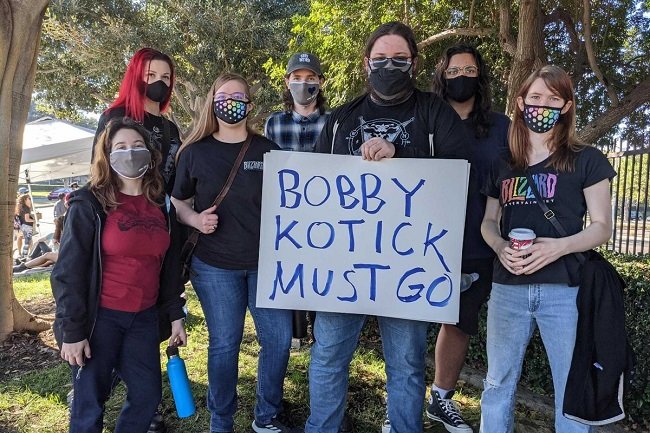
I was recently reading a post published on Massively Overpowered about Activision Blizzard CEO, Bobby Kotick. The majority of comments were not well disposed towards the man, especially in light of the fact that previous allegations made against him regarding harassment and intimidation have been settled out of court. However, there were one or two comments that flew in the face of the overall opprobrium. That’s not to say that they were supportive of Mr Kotick. They were from people who wanted to “just play games” and effectively not have to be exposed to any discussion or judgement upon the iniquities of the video games industry. It’s a common refrain from some gamers. They wish to keep the realities of the world out of the games that they play. To treat an MMO, FPS shooter or strategy games as a form of leisure devoid of any socio-political implications. Something they can immerse themselves in for a while to “escape the stress of real life”. It’s a concept that seems fair enough in principle but when considered in practical terms is abstract and unworkable.
I was recently reading a post published on Massively Overpowered about Activision Blizzard CEO, Bobby Kotick. The majority of comments were not well disposed towards the man, especially in light of the fact that previous allegations made against him regarding harassment and intimidation have been settled out of court. However, there were one or two comments that flew in the face of the overall opprobrium. That’s not to say that they were supportive of Mr Kotick. They were from people who wanted to “just play games” and effectively not have to be exposed to any discussion or judgement upon the iniquities of the video games industry. It’s a common refrain from some gamers. They wish to keep the realities of the world out of the games that they play. To treat an MMO, FPS shooter or strategy games as a form of leisure devoid of any socio-political implications. Something they can immerse themselves in for a while to “escape the stress of real life”. It’s a concept that seems fair enough in principle but when considered in practical terms is abstract and unworkable.
Take a good hard look at the world around you. It is built upon free market capitalism and consumerism. Video games are a microcosm of such ideologies. An amusing diversion that you pay to access. That is why millions of dollars are spent developing them. Because a game that blends the right amount of psychological manipulation with user engagement, can hit the jackpot and yield a handsome return on investment. Some gamers are so invested in their game of choice, especially the MMO community, they lose sight of the fact that they’re consumers paying for a product. They see it as some sort of commensurate relationship between artist and patron and the video game industry is happy to perpetuate this fallacy. Sadly, video games are not inviolate, existing in their own ethically and politically neutral separate reality. They are made by people, working within a corporate hierarchy and as such are entwined with the inherent problems of such a system.
Video games are not any different from electronics, clothes and many other consumer items we buy on a regular basis. Those manufacturing them are poorly paid and have little or no benefits, while the prodigious profits that are generated are funnelled to the top of the corporate structure. Sadly, video games are far from free from the taint of modern business practises. And as consumers, we are contributing to these problems, irrespective of whether we are ideologically supportive of the system that causes them or not. You can as a gamer “just play games” if that is what you want to do but willful ignorance does not negate the iniquities of the triple A video games industry. Nor does it absolve you, or indeed any of us, of the fact that we’re supporting a business model that is discriminatory to people not too dissimilar to ourselves.
Now there is a rather tedious and ill conceived argument that usually gets trotted out in such situations. The one that states that you can’t voice any sort of criticism regarding exploitative business practises, while still using the services they provide. IE “best give up your mobile phone, cheap clothes and consumer goods and go live in a cave”. The notion being that there is an element of hypocrisy or at least cognitive dissonance to such a stance. All that is notionally correct, that does not invalidate the rectitude of the argument against bad corporate practises. Furthermore, one doesn’t have to wait for a consensus of universal moral perfection before seeking societal change. Change is made from within the imperfect system. Take a look at Western history over the last and current century. Civil rights and equality were fought for despite a substantial percentage of the population thinking that it wasn’t their problem. Perhaps they just “wanted to play games” or whatever the equivalent soundbite was at the time?
Maintaining a civilised, fair and equitable society is hard work. It requires rules and regulations to ensure that an acceptable standard of life exists for all. It also needs citizens to “give a shit”. Now I don’t expect everyone to be an activist 24/7. But there is a price for living in an orderly society. Jury service, voting and on occasion realising that helping and supporting others with their struggles is beneficial for our collective good. If you are content to live in a world where the prevailing mantra is “fuck it, it’s not my problem”, don’t be surprised if sooner or later someone will try and take something away from you. You can’t sit on the fence forever. Let us not forget the wise words of Martin Niemöller. So returning to the original point of discussion, I hope that ongoing pressure from both the public and staff results in meaningful change at Activision Blizzard. It’s in everyone’s best interests that it does.






LOTRO: Thoughts on Fate of Gundabad
I’ve spent the last week catching up with recent content in The Lord of the Rings Online. I started the Update 30: Blood of Azog and struggled with the PVE quests, due to the stats nerf and LI change. I got to level 132 and then decided to replace my two Legendary Weapons on my Lore-master. I would like to thank Linawillow for their advice via social media. So much for the new system being easier to understand and implement. I now have new LIs that have boosted my stats sufficiently enough for me to deal with the mobs above 130. Hence I completed the story set in the Battle of Azanulbizar, which was very well conceived and implemented. It has a great deal of canonical detail and is engagingly presented. By the time I finished the Epic Story and side quests in the area, my character had reached level 136, so I decided to go straight to Gundabad.
I’ve spent the last week catching up with recent content in The Lord of the Rings Online. I started the Update 30: Blood of Azog and struggled with the PVE quests, due to the stats nerf and LI change. I got to level 132 and then decided to replace my two Legendary Weapons on my Lore-master. I would like to thank Linawillow for their advice via social media. So much for the new system being easier to understand and implement. I now have new LIs that have boosted my stats sufficiently enough for me to deal with the mobs above 130. Hence I completed the story set in the Battle of Azanulbizar, which was very well conceived and implemented. It has a great deal of canonical detail and is engagingly presented. By the time I finished the Epic Story and side quests in the area, my character had reached level 136, so I decided to go straight to Gundabad.
As I usually participate in the Bullroarer test preview of new content for LOTRO, I was already aware of the vertical dimension that is an integral part of the Delvings of Gundabad. Mattugard and Deepscrave are very reminiscent of Moria and one needs to reconcile oneself to the reality of navigating around such an environment. Thankfully, being several levels higher than the content of the area helps. So I have taken my time to explore these areas and have just taken quests as and when they’ve been offered. At present, there are lots of other players in the area, so if you do run into any difficulty or get lost, you are not without support. Whether you actually like the labyrinthine design is a matter of personal taste. If you stick to the main routes through the area, you will miss a great deal of discovery deeds. I find the best approach is to explore specific areas between stables and to be systematic in your approach.
To make my exploration of the entire zone a little easier, I used my supply of Mithril Coins to unlock access to all the new stables. I visited them using slow travel, as this also unlocks discovery deeds as you pass through an area. It also allows you to reconnoitre and determine the level and variety of mobs, without taking any unnecessary risks. When I do get into combat, although my new LI can deal significant damage, my moral takes quite a hit. I checked into this and it would appear that my armour and jewellery is now lacking. I last re-geared my primary alt back in January 2020, using lockboxes. I think it may be time to do this again but it makes sense to do so when I hit the new 140 level cap. By then I should have sufficient barter currency to buy reputation gear or alternatively, spend some money on lockboxes.
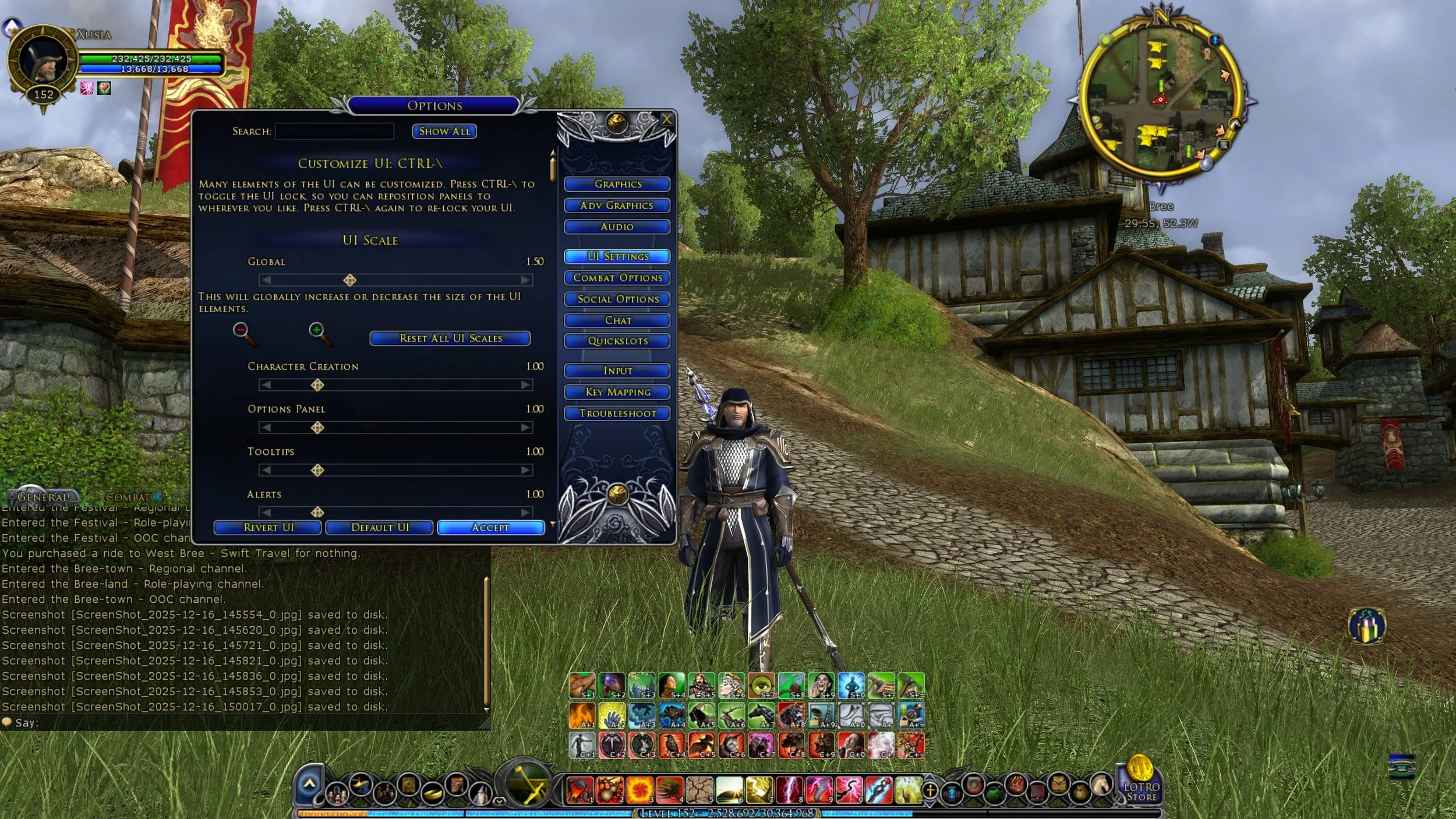
I have never been especially knowledgeable about the statistical side of LOTRO. I know what type of stats are beneficial to my class but I am not au fait with the minutiae of the system. Hence I tend to rely on how combat “feels”. It’s difficult to quantify but I tend to know when a fight is hard or more importantly, getting away from me. The new LI system has certainly boosted my stats and I now feel in control again but when I look at my alt’s stats in the character panel, the power creep is getting silly. I have over a million Tactical Mastery at present. This will no doubt increase further when I get to level cap. I can’t help but feel that when numbers become this big, they begin to fail to convey anything tangible to the average player. I wonder if LOTRO would benefit from a level “squish” as we saw recently in World of Warcraft or some other recalibration of stats.
One of the things I often find frustrating with the MMORPG genre is the gear cycle. Superior gear is usually gated behind reputation status, barter tokens or is just awarded when the player reaches the current level cap. This comes from a historical design choice where you earned intermediate gear at level cap and then went on to do group content such as raids to get the better gear. But very few players follow that route now. Hence it seems redundant to be awarded with the best gear once you hit level cap and have nothing else to do. Sadly LOTRO is still locked in this model. You need robust gear as you’re levelling and not having access to any is an impediment. This is why I didn’t start playing through Gundabad content until I was level 136. It means I will reach the new cap of 140 and re-equip my main character and then play through the remaining half of the expansion with an optimal build. I regularly inspect other players in my journeys and sometimes marvel at how they’ve come so far while indifferently equipped.
I was surprised to see that the Allegiance system has had a further faction added with this expansion. You can now affiliate with the Zhélruka, whose main hub is in the Hall of Vérnozal in Gundabad, which is convenient. There is a fast travel skill with a 5 minute cooldown which is invaluable if you’re currently questing in this region. Unlike the Mordor-expansion allegiances, the Zhélruka allegiance is scalable, allowing players with a minimum level of 20 and above to participate. It uses the Missions system, rather than zone specific PVE content that the previous allegiances did. It came as a pleasant surprise that developers SSG had added another. However, I’m not so well disposed toward the increase in virtue traits. These now cap at 80 which is a significant increase. I finally got the five that I currently have slotted on my primary character to level 75 a few months ago. I am somewhat peeved that I have to get on that particular treadmill again.
Returning to the subject of the new LI system, one of the consequences of this major revamp is that there is now a great deal of redundant NPCs throughout Middle-earth and a lot of superfluous rewards. The User Interface also retains some outdated features which will be confusing for players just beginning to use the Legendary Item system. It will be interesting to see if SSG makes an effort to remove these obsolete aspects of the game at some future point. There are also a lot of old items that still need to be replaced. I have half a dozen relic removal scrolls which I assume I will be able to exchange at some point for traceries removal scrolls. I suspect that there will be some players who will require a great deal of compensation, especially for store bought items
As I mentioned in a previous post, Fate of Gundabad is very much a question of more of the same. This seems to be the business model that Standing Stone Games have chosen and I suspect they are not going to change. If you are a returning player, then Fate of Gundabad will offer you a familiar experience. One that is reassuring and enjoyable as you know what the game has to offer but you’ll have a new story to immerse yourself in. If you are a regular player then that familiarity, untempered with time away from the game, may feel a lot more like repetition. As ever the story is well written and thought provoking. Bill Champagne’s soundtrack is sublime and he uses many of his established leitmotifs very effectively. There is a palpable atmosphere in Glooming Tarn, especially when the sombre and portentous music cues start to play. But overall, when looked at objectively, Fate of Gundabad is essentially just treading familiar ground.
Regardless of my views on Fate of Gundabad, the expansion is certainly proving successful. The volume of players online on Laurelin server has meant that the dynamic layering system is active in most zones. In one respect this is indicative of an expansion that is engaging with players and finding an audience. Sadly the downside to this are server performance issues. Lag is a common place, especially when interacting with Mission NPCs. There are also delays with skill inductions and connecting to the chat server. It can be quite an impediment at times. No doubt SSG will address these issues in the weeks to come. Overall despite following a tried and tested formula, Fate of Gundabad is the strongest expansion LOTRO has seen for a while. It has a wide variety of maps, several ways to level and a robust narrative. The polish will come over the next few patches. But as the main story about the line of Durin comes to an end, it does raise the question where does the game go from here?
LOTRO: The Beginning of the End
The recent Fate of Gundabad expansion for the MMORPG The Lord of the Rings Online, has increased the game's level cap from 130 to 140. Mobs of 130 or above have seen a significant statistical increase. Hence if you play through PVE content or undertake an on level skirmish, you may well struggle to defeat your enemies. To compensate for this, if you create a new Legendary Item and replace your old weapons, you will see a boost in DPS that allegedly allows you to deal with the stronger mobs. In principle, this seems like an equitable quid pro quo. However, this is a very significant change to the game. What I and many other players find “surprising” is that the developers, Standing Stone Games, have done precious little to publicise this change in game dynamics. At present there is a major lack of information both in-game and on the official forums.
The recent Fate of Gundabad expansion for the MMORPG The Lord of the Rings Online, has increased the game's level cap from 130 to 140. Mobs of 130 or above have seen a significant statistical increase. Hence if you play through PVE content or undertake an on level skirmish, you may well struggle to defeat your enemies. To compensate for this, if you create a new Legendary Item and replace your old weapons, you will see a boost in DPS that allegedly allows you to deal with the stronger mobs. In principle, this seems like an equitable quid pro quo. However, this is a very significant change to the game. What I and many other players find “surprising” is that the developers, Standing Stone Games, have done precious little to publicise this change in game dynamics. At present there is a major lack of information both in-game and on the official forums.
Today I finally decided to try and replace my existing Legendary Items on my primary character. Replacing my maxed out, First Age Lore-master staff and book is not some trivial change. These two items have been with me for three to four years and have had a substantial amount of time and resources lavished upon them. The moment I unequip them I see a significant drop in my character’s stats. Hence it is very important to me that any new weapon is at the very least comparable to that which it is replacing. However, I found trying to understand the new LI system extremely difficult. I managed to purchase a new Lore-master staff and book and reforge them to my current level of 132. However, no information was offered regarding the realities of purchasing, equipping and managing traceries. Furthermore, no guidance is offered as to their respective interchangeability, set bonuses and restrictions.
Hence, there is scope for errors. Such errors cost in-game resources such as Ancient Scripts. These resources are scarce and can only be obtained by investing time and effort into the game. So players will have to either take a calculated risk and live with their choices, or simply leave their current LI alone until they can find the answers and reassurance they need. So far, the only people providing answers are the LOTRO community themselves. LOTRO Players have a guide on their website and it is useful insofar as how the new LI system works. However, if you want class specific advice then that is harder to come by. It may appear in the weeks to come when some of the more analytical LOTRO players write guides and post FAQ videos. However, for a player such as myself, until I feel confident enough to create new LIs, I won’t be touching this aspect of the game. As my character is effectively gimped if I keep using my old weapons, there is no point in playing as I cannot progress in a manner I find enjoyable.
So to summarise, one of the most important aspects of this MMO has been changed with virtually no support from the developers. The information vacuum potentially leaves players confused, unsure and frustrated as to what to do next. The resulting statistical imbalance makes progress to the new level cap extremely difficult. Now is it just me or is this a massive mistake on behalf of Standing Stone Games? To say that this course of action is an act of poor community relations is an understatement. Being impeded from playing a game by the game itself is ludicrous. It also tends not to make customers happy. If I can’t make any progress with my new LI build in the next few days, I’ll just go and play something else. That means the money I was going to spend on lockboxes when I hit the new level cap will be spent elsewhere. Standing Stone Games loss could well be Cryptics gain.
I have played LOTRO regularly since 2008. It is not a perfect MMO but it has its some unique points. The intellectual property is one and the community is the other. The game itself is big and sprawling, with numerous very well conceived storylines. Every now and then a reference, character or geographical feature will just strike a chord with the player and in those moments the game is at its best. However, LOTRO is also repetitive. Nothing really new has been added to the game in years. LOTRO survives by offering variations on a theme, more of the same and ultimately being the only multiplayer virtual Middle-earth game available at present. Depending upon your perspective, players are either part of an unique, exclusive, niche market experience or simply over a barrel.
The relationship between any game developer and its players should be an equitable one. Sadly, this has not been the case with LOTRO for a long time. Put simply the community does far too much heavy lifting with regard to the games promotion and the sharing of knowledge. It is also far too forgiving of SSG failings which in recent years have been many. Community relations are poor as are communications. The games monetisation is becoming increasingly questionable and this latest debacle over LIs has been tediously predictable. I and many other players saw it coming a mile off. The question now that I and other LOTRO players have to consider is how much more are we prepared to tolerate? Because SSG seems hellbent on making the same mistakes again and again. And their intransigence further diminishes the ever decreasing fun that the game offers.
Even if I can find a prompt solution to my LI problem and resume playing, I am faced with an expansion that really doesn’t offer anything intrinsically new. I essentially get the conclusion to a story and the opportunity to replace all my gear once again. Or I can create a new alt and play through content that I’m very familiar with. There is no alternative levelling path, no new systems to explore and master, nor any fun mini-games. LOTRO is like a restaurant that has an interesting theme but sadly hasn’t radically altered its menu for 14 years. For some that may well be a selling point. For others, such as I, it’s beginning to become less and less appealing. In many respects the most saddening aspect of this change in relationship is the air of indifference from SSG. I shall give it a week or two but it may be time for me to part company with LOTRO. If that is the case, I shall be genuinely sad as the fault will not lie with me.
“Play-to-Earn” is Not a New Concept
Do you remember the days when you bought a game and then played it and that was the full extent of your financial dealings with the company that had produced it? I do. Sadly those days have pretty much gone. As video games have become a more mainstream leisure activity, the business model associated with them has similarly evolved. Microtransactions introduced charges for additional content, which then paved the way for the “live service”. Video games have ceased to be standalone products and become yet another online leisure amenity that requires continuous payment to access. I’m sure developers working at the coalface of video games still harbour sincere desires to make a “good game” but it is clear that is not the goal of the big triple A publishers that finance them.
Do you remember the days when you bought a game and then played it and that was the full extent of your financial dealings with the company that had produced it? I do. Sadly those days have pretty much gone. As video games have become a more mainstream leisure activity, the business model associated with them has similarly evolved. Microtransactions introduced charges for additional content, which then paved the way for the “live service”. Video games have ceased to be standalone products and become yet another online leisure amenity that requires continuous payment to access. I’m sure developers working at the coalface of video games still harbour sincere desires to make a “good game” but it is clear that is not the goal of the big triple A publishers that finance them.
A cursory internet search quickly yields data regarding how the major video game publishers such as EA, Activision and Ubisoft are heavily invested in technology and patents that can be used to squeeze more money from their customer base. They have no earnest interest in producing good games but are more focused on how the product can make the player behave. They desire titles that yield a constant flow of revenue and their actions thus far show that they are not constrained by ethics and morality. They are happy to exploit those with addictive personalities, the neural divergent and the young. Hence it will come as no surprise that the industry titans are now turning their attention to blockchain technology and NFTs as a means to make their next generation of products even more financially lucrative.
Essentially the presence of these two latest buzzwords is a sign that the likes of EA, Activision and Ubisoft are preparing for “play-to-earn” gaming. Consider, if you will, the latest generation of “live service” games in which in-game currencies, items, services and even characters are subject to a predetermined scarcity. And that these virtual goods will have a real monetary value and are thus tradeable. The money earned by players will then unlock further content and thus the cycle perpetuates. Naturally the publishers will take a percentage of all transactions and therein lies the foundation of their new business model. What I find surprising about such proposals is not their very existence but the fact that the video games industry have only just got around to considering them?
For those gamers who may balk at the ethics of such a business model, it has existed to a varying degree for decades already. Since the turn of the century, the MMORPG genre has unofficially traded in-game resources for real money. Gold selling being the obvious example but there are other variations. Entire player accounts are traded online, as well as other non-account bound in-game items. However, all the money generated from such transactions at present goes to third parties. “Play-to-earn” ensures that the revenue stays with the publishers. And if you’re a “doubting Thomas” who feels that ethics and morality will trump capitalism, this idea has already been tried previously. Diablo III had a real money auction house in 2012 which ran for nearly two years. Consider that to be a beta test for Blizzard.
Therefore, I don’t think there is any doubt that “Play-to-earn” is coming. It already exists within Facebook gaming and some mobile games. However, I don’t think we’re going to wake up tomorrow and find that the triple A gaming landscape has changed overnight. Where loot boxes have trodden the fine line between gambling legislation and “surprise mechanics”, “play-to-earn”, with its trading in virtual commodities, will more than likely attract the attention of most countries' tax systems. Sorting out the legal aspects of such a game mechanic will be no small beer. But given the potential revenue that could be generated, I’m sure those video games publishers involved will lobby governments robustly to ensure that such games can exist legitimately. As for those gamers who are furiously clutching their pearls (or Mario plushies) in horror of the very notion of “play-to-earn”, there is an equal number who will see a means to make money, outside of traditional employment. Just like Twitch and YouTube afford similar opportunities.
It is this latter point that I would like to explore further. Let us embark on a thought experiment. First off, we must not just assume in our arrogance that European countries and North America are the sole target for “play-to-earn” games. In fact it is likely that they’ll initially launch in countries with less rigorous or “evolving” legislative procedures in place. Emerging economies with existing levels of poverty and cheap labour spring to mind. Naturally such an environment offers a potential means of income for those seeking employment. Thus when such games finally launch in Western countries they may well already have an established in-game economy up and running. Once again, rich consumers will initially seek to profit from the fruits of others labour. However, in a decade or so, the employment landscape in Europe and North America may not be the same as it is now. We may have a substantial level of unemployment due to technological advances and automation. “Play-to-earn” games may well be looked upon more favourably.
To summarise, “play-to-earn” as a concept is not new and may not be as unpalatable as some gamers would have you believe. All industries are subject to customer churn and therefore those gamers thinking that their departure from gaming sends some kind of message, may find themselves ignored by the major publishers, as and when they roll out games with real economies. However, the legality of managing such games is at present the biggest obstacle. Some political parties and institutions won’t like the concept of virtual work houses emerging as a means of providing employment. However, capitalism always seems to get its way eventually. Furthermore, by the time “play-to-earn” becomes any kind of reality, the current generation of gamers will probably be so conditioned to the iniquities of the industry, that they won’t offer any major ideological opposition.
LOTRO: The Benefits of Being a VIP For a Month
I recently created a new Brawler class character in the MMORPG, The Lord of the Rings Online. This is the first time I’ve rolled a new alt while not subscribing. Hence I suddenly became aware that a great deal of features and functionality that I usually take for granted were not available. I started unlocking these services in a piecemeal fashion but soon realized that this wasn’t very cost effective. So I started digging around online to see what the exact benefits are of subscribing to LOTRO and becoming a VIP player. There is a comparison chart available if you do a Google search but it is far from comprehensive. For example a free player has to pay to unlock skill point set bonuses, which surprised me. Overall, the entire monetisation of LOTRO is somewhat arcane. However, if you subscribe for one month to become a VIP, when you stop paying you drop down to Premium player status, rather than return to that of a Free player. This has benefits.
I recently created a new Brawler class character in the MMORPG, The Lord of the Rings Online. This is the first time I’ve rolled a new alt while not subscribing. Hence I suddenly became aware that a great deal of features and functionality that I usually take for granted were not available. I started unlocking these services in a piecemeal fashion but soon realized that this wasn’t very cost effective. So I started digging around online to see what the exact benefits are of subscribing to LOTRO and becoming a VIP player. There is a comparison chart available if you do a Google search but it is far from comprehensive. For example a free player has to pay to unlock skill point set bonuses, which surprised me. Overall, the entire monetisation of LOTRO is somewhat arcane. However, if you subscribe for one month to become a VIP, when you stop paying you drop down to Premium player status, rather than return to that of a Free player. This has benefits.
So after some research, here is what I discovered regarding the benefits that are maintained on a per-character basis, when downgrading from VIP to Premium. It should be noted that the following benefits are only maintained for characters that have been logged into the game while the VIP status is active. To clarify, if you create a new alt while a Free player, upgrade your account to VIP and then log into the game with the aforementioned new alt, the following benefits persist when you stop subscribing and drop down to Premium. If you have an alt that you created as a Free player and do not log them in while a VIP, you will not see any benefits afterwards. Also note, these per-character unlocks also work for content that the character hasn't reached, due to level restrictions and other qualify criteria.
After downgrading from VIP to Premium you keep the following:
All trait slots unlocked for all your characters on all servers.
Swift travel from all stable NPCs.
Riding skill quest for all your characters at level 20.
All 5 inventory bags remain unlocked.
The currency cap of 2 gold for Free players and 5 gold for Premium players is lifted.
You keep access to the last level you reached within the Crafting Guild.
You can still access items placed in the shared wardrobe and dye them but you can no longer replace them.
You lose the following features after downgrading from VIP to Premium:
Two character slots (VIP has 7 by default, Premium has 5 premium. You may have to disable two characters).
Access to all quest packs and skirmishes.
Access to the Legendary Servers.
Shared wardrobe if not used by other alts (20 slots).
Rested 100% XP.
Monster play.
Ability to spend destiny points.
30 auction house listings.
Access to your Mailbox everywhere.
Access to crafting guild advancement.
As you can see there are tangible rewards to be had from subscribing, if for only one month and then dropping to Premium status. It is definitely superior to being a Free player. Ultimately your decision to do so is dependent upon your personal gaming budget and your own views on video game monetisation. However, it is useful to be aware of the differences in customer status in LOTRO. In the meantime do not forget the current offer available from Standing Stone Games in which they are giving away all quest packs within the game, permanently. The code LOTROQUESTS2021 can be redeemed up until the 31st of November. This combined with subscribing for one month and thus becoming a Premium player unlocks a significant amount of content and will save players a lot of money.
LOTRO: Tying Up Loose Ends
I discovered an excellent thread on the official Lord of the Rings Online forums today, created by Tesalion Lortus, which tackles the complicated subject of outstanding and unresolved storylines within the game. It is a very well researched and comprehensive post. I try my best to keep abreast of the various ongoing stories within the MMORPG but this list of plotlines that have yet to be completed, is a timely reminder of the sprawling narrative that Turbine/Standing Stone Games have woven over the last 14 years. The story is a major reason for this game’s longevity and many players enjoy the way it references and compliments so much of Tolkien’s overall lore. But it would appear that there are numerous story arcs that have not reached fruition, going back as far as the Helm’s Deep expansion that was released in 2013. Naturally, now that this matter has been highlighted so well, I am curious to see what SSG intends to do to resolve the situation.
I discovered an excellent thread on the official Lord of the Rings Online forums today, created by Tesalion Lortus, which tackles the complicated subject of outstanding and unresolved storylines within the game. It is a very well researched and comprehensive post. I try my best to keep abreast of the various ongoing stories within the MMORPG but this list of plotlines that have yet to be completed, is a timely reminder of the sprawling narrative that Turbine/Standing Stone Games have woven over the last 14 years. The story is a major reason for this game’s longevity and many players enjoy the way it references and compliments so much of Tolkien’s overall lore. But it would appear that there are numerous story arcs that have not reached fruition, going back as far as the Helm’s Deep expansion that was released in 2013. Naturally, now that this matter has been highlighted so well, I am curious to see what SSG intends to do to resolve the situation.
I won’t repeat all of the plot points provided in the original forum post. Here is sufficient to give you an indication of the scope of research that Tesalion Lortus has carried out.
The Bugdatish storyline.
Borangos the Horror and his plan.
The fate of Karazgar.
Thostír the Rank, a great fire-drake of the East.
Brathar Crack-helm and his Dourhands.
Jajax and his brother.
Where is Corudan?
Thankfully, one of the things that SSG does well is write complex and long term story arcs well in advance of their release. It is not unusual to find characters from the dim and distant past resurface years later in the LOTROverse. For example Atli Spider-bane, who we initially encounter at Archet in Bree-land at the start of the game, later returns at Lhingris in Mordor, on the far side of Cirith Ungol in the Morgul Vale. Then there is the enigmatic Trév Duvárdain warrior Aviar, who was exiled from her tribe and had her clan name removed. We first encountered her in Forochel. Living as a brigand, she was shown mercy by the Ranger Lothrandir. However, his compassion irked her and so she followed him and so she was ensnared by Saruman. This ultimately led to Lothrandir capture and imprisonment in Orthanc. Saruman called her Gun Ain (without name). During the ruin of Isengard she was again subject to the Rangers justice. On this occasion Halbarad renamed her “mercy” and set her loose. Perplexed, she wandered into Rohan and was shown kindness by Bingo Boffin when he met her at Grimslade. It is a rather unusual and redemptive story arc.
Tesalion Lortus thread on the forum regarding these multiple loose ends garnered a response from LOTRO developer, Made of Lions. They said “To be honest, we have so many of the items on this list earmarked for future quest stories already!” which is reassuring. Because if the history of gaming has proven anything it is that players remember everything and the internet is a pedants paradise. Plus I find continuity in storytelling integral to my enjoyment of LOTRO. Hence it is important that such standards are maintained for the sake of both the game. However, let us not forget that for every LOTRO player that revels in the dense narrative, there is always another who dismisses all quest texts and chooses to remain oblivious to the subtleties of the plot. It takes allsorts I guess. Although the latter group are free to play as they see fit, I feel that they are missing out on a key component of the game. Yet for some, the MMO genre is about “doing” and any framing story is purely an optional extra.
LOTRO: Fate of Gundabad Bullroarer Preview
Yesterday afternoon (UK time) Standing Stone Games made the forthcoming expansion for the MMORPG, The Lord of the Rings Online, available on the Bullroarer test server. This new release, Fate of Gundabad, is due to launch on the 10th of November which is under two weeks away. However, I suspect that this expansion has been under development for a while as it appears fairly complete without very little or no placeholder material. Players have already been providing feedback on the official forums and it would seem that the nuts and bolts of the area are in place and functional. There appears to be a substantial amount of new zones in this expansion with areas both above and below ground. It is worth mentioning straight away that if you are a LOTRO player who didn’t especially enjoy navigating your way through Moria, you will probably find the new areas underneath Mount Gundabad as equally frustrating. There are dense groups of Orcs and other enemy mobs to get past and I suspect these areas will be quite taxing.
Yesterday afternoon (UK time) Standing Stone Games made the forthcoming expansion for the MMORPG, The Lord of the Rings Online, available on the Bullroarer test server. This new release, Fate of Gundabad, is due to launch on the 10th of November which is under two weeks away. However, I suspect that this expansion has been under development for a while as it appears fairly complete without very little or no placeholder material. Players have already been providing feedback on the official forums and it would seem that the nuts and bolts of the area are in place and functional. There appears to be a substantial amount of new zones in this expansion with areas both above and below ground. It is worth mentioning straight away that if you are a LOTRO player who didn’t especially enjoy navigating your way through Moria, you will probably find the new areas underneath Mount Gundabad as equally frustrating. There are dense groups of Orcs and other enemy mobs to get past and I suspect these areas will be quite taxing.
The Fate of Gundabad expansion adds a new area that directly abuts next to the existing Elderslade map. The northern road that bypasses the Angmarim tower of Caivád Sâr leads to Câr Bronach, which was previously blocked by a locked gate. The player can now enter this area and the region very much in the idiom of Angmar to which it connects. There is a road that traverses Câr Bronach from east to west and leads to Nan Gurth. Midway along this road there is a very impressive Dwarven structure, Mur Shatraug, the Witch-gate. This is the northerly entrance to Gundabad. Enemies hold this entrance so entry is not easy. A second road strikes south west and circles round the western side of Mount Gundabad to an area called Welkin Loft. Due to the altitude this is a snowy zone and filled with ravines as the road travels up the mountainside. There are several Angmarim camps and the contested area of Uzdarulzahar, where Dwarves fight both Orcs and Frost Dragons.
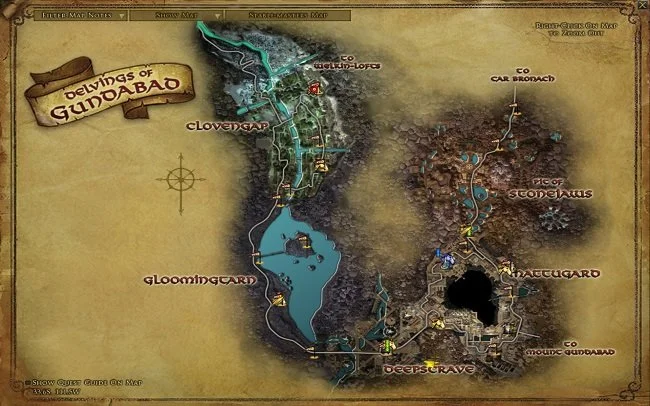
Upon entering Mur Shatraug entrance, there is an underground zone called The Delvings of Gundabad. It is split into five subzones, all of which form a broadly circular route running clockwise. The first Pits of Stonejaws is akin to The Glittering Caves in Helm’s Deep and the Foundations of Stone in Moria. It is a maze and rife with mobs. This area leads to Mattugard which is very much like Zelem Melek in Moria. There is an immense abyss in the centre of the map and a triangular road around it. Vast windows in the mountainside roof let in a pale light. On the eastern side of Mattugard is an exit which leads to the main entrance to Mount Gundabad in the Elderslade map, which is a contested zone. Mattugard is populated by Orcs, Grodbog Spitters and Goblins on Bats (yes you read that right). The next connecting area is Deepscrave which is similar to Mattugard but with more bridges and walkways. There are also infestations of bioluminescence growths encrusting the walls. This in turn leads to Glooming Tarn, which features an underground lake. It is filled with crystal spiders and looks similar to the Giants Causeways with its interlocking basalt columns. Finally, the road leads to Clovengap, the former garden city of the Gundabad Dwarves. There are lights, windows and lush green terraces as well as Wargs. Clovengap exists out onto the surface and Welkin Loft.
The new zones in Fate of Gundabad are large and totally in accord with the ongoing Epic story. If you enjoy Dwarven culture and its respective aesthetic in LOTRO then this expansion should prove enjoyable. However, there are very few entirely new assets on display apart from several reskinned mobs and a handful of relatively unique Dwarven structures. Pretty much everything else is a variation on established themes using assets that players are already familiar with. I suspect that a lot of players will find travelling throughout the Delvings of Gundabad to be an uphill struggle due to the mob density and the complex routes that SSG seem to delight in creating. As always, I’m sure the developers will attempt to compensate by providing a very engaging story as they so often do but I can’t help but feel that Fate of Gundabad is lacking the aesthetic inspiration found in prior updates such as Wells of Langflood and Vales of Anduin.
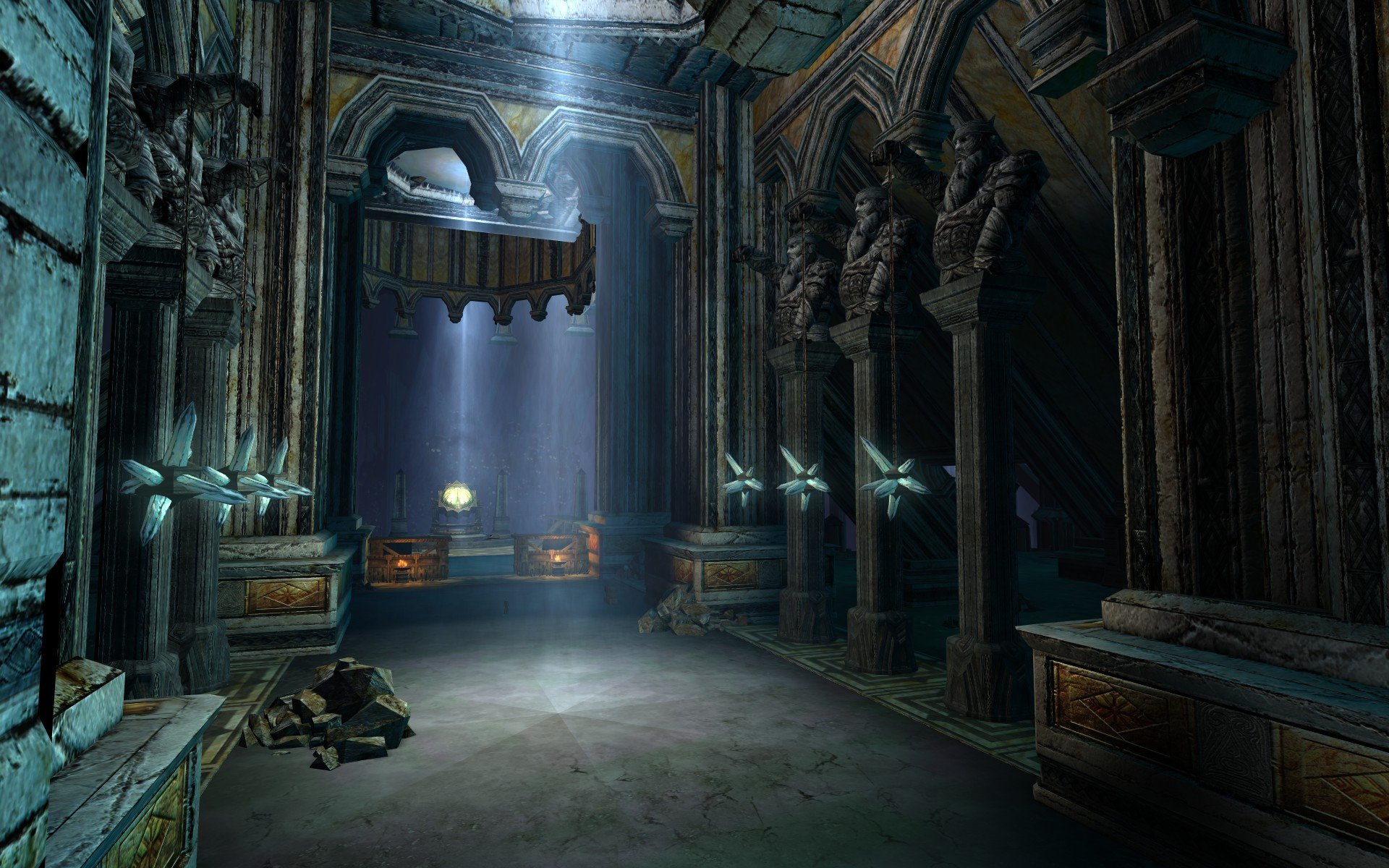
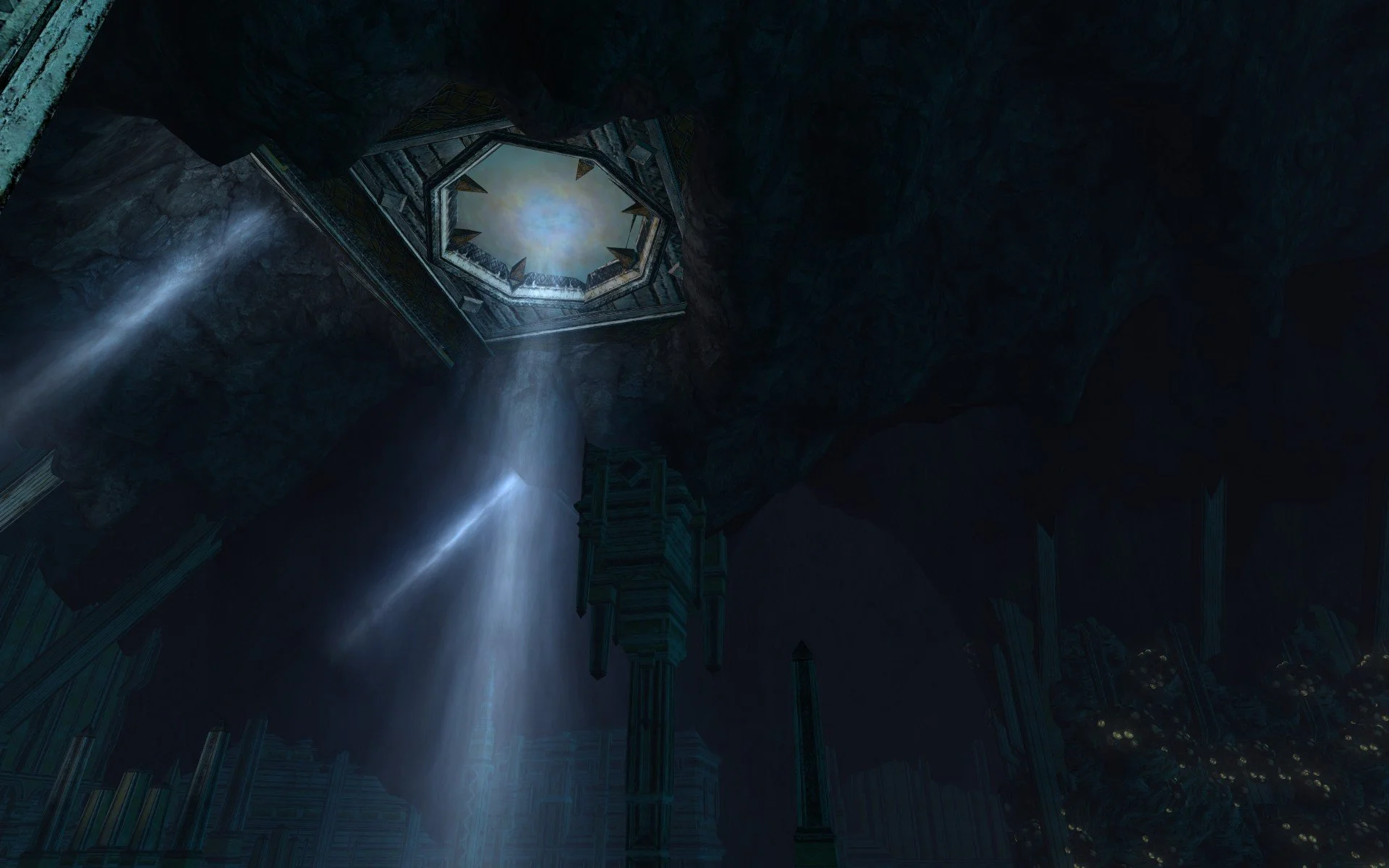
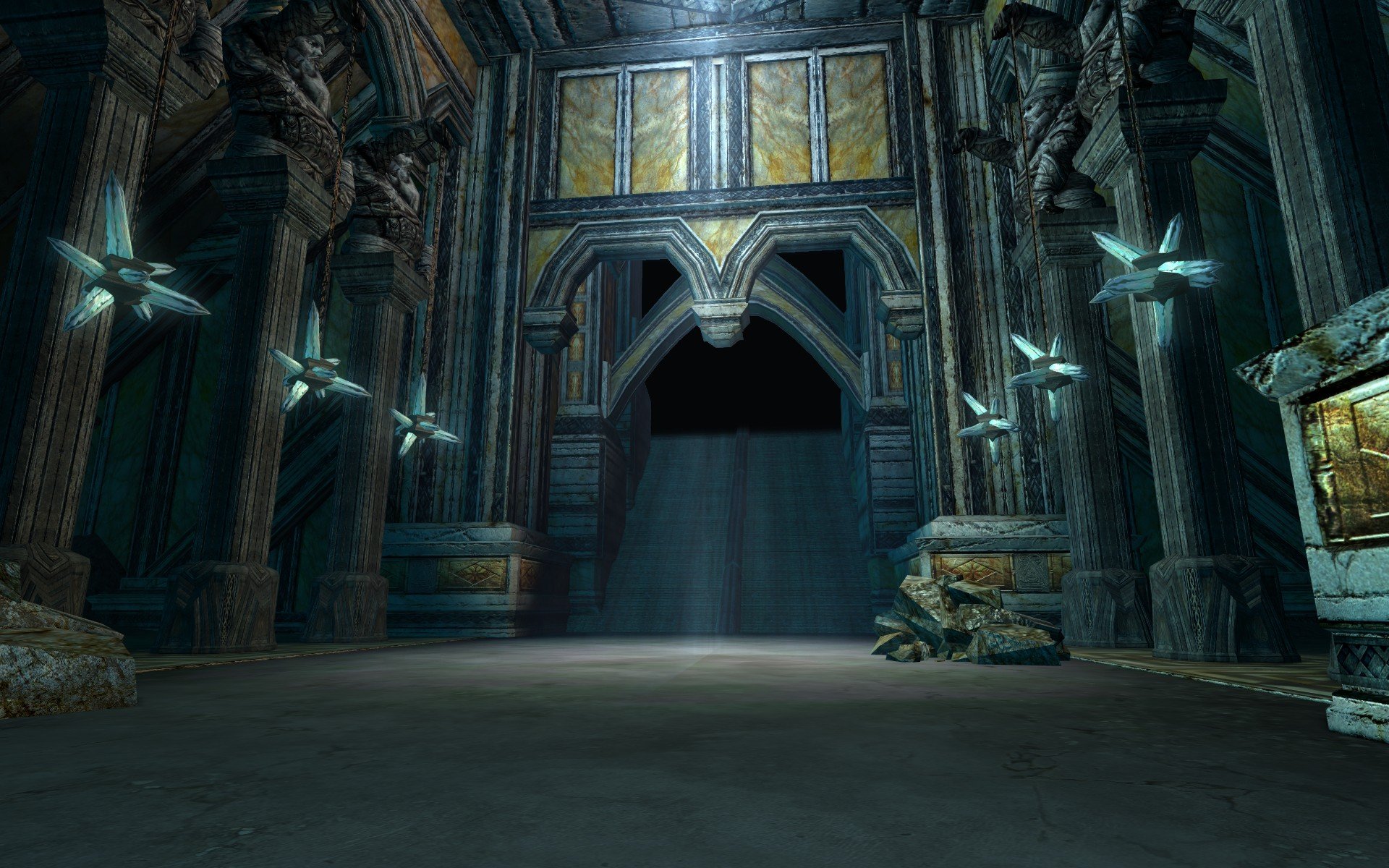
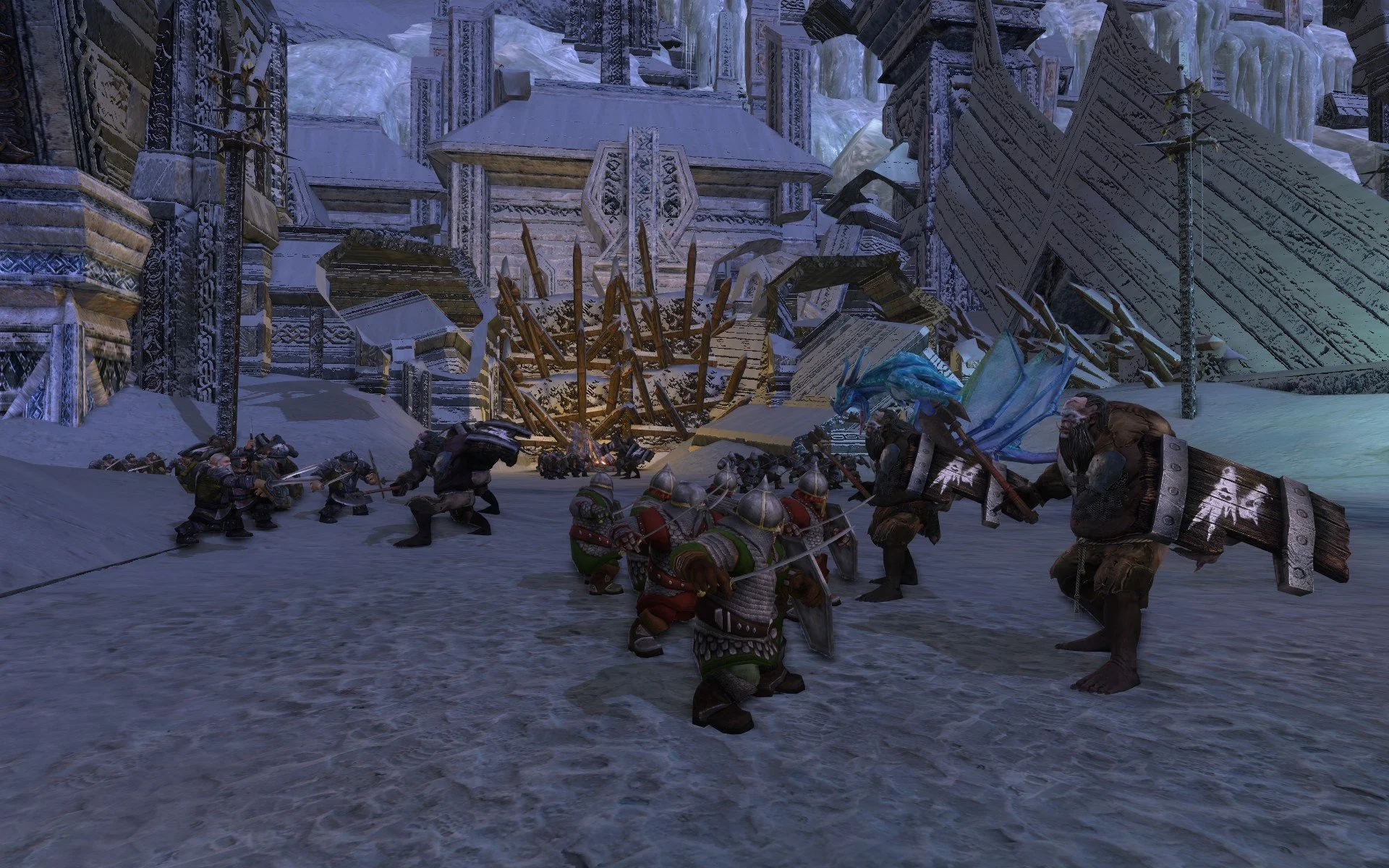
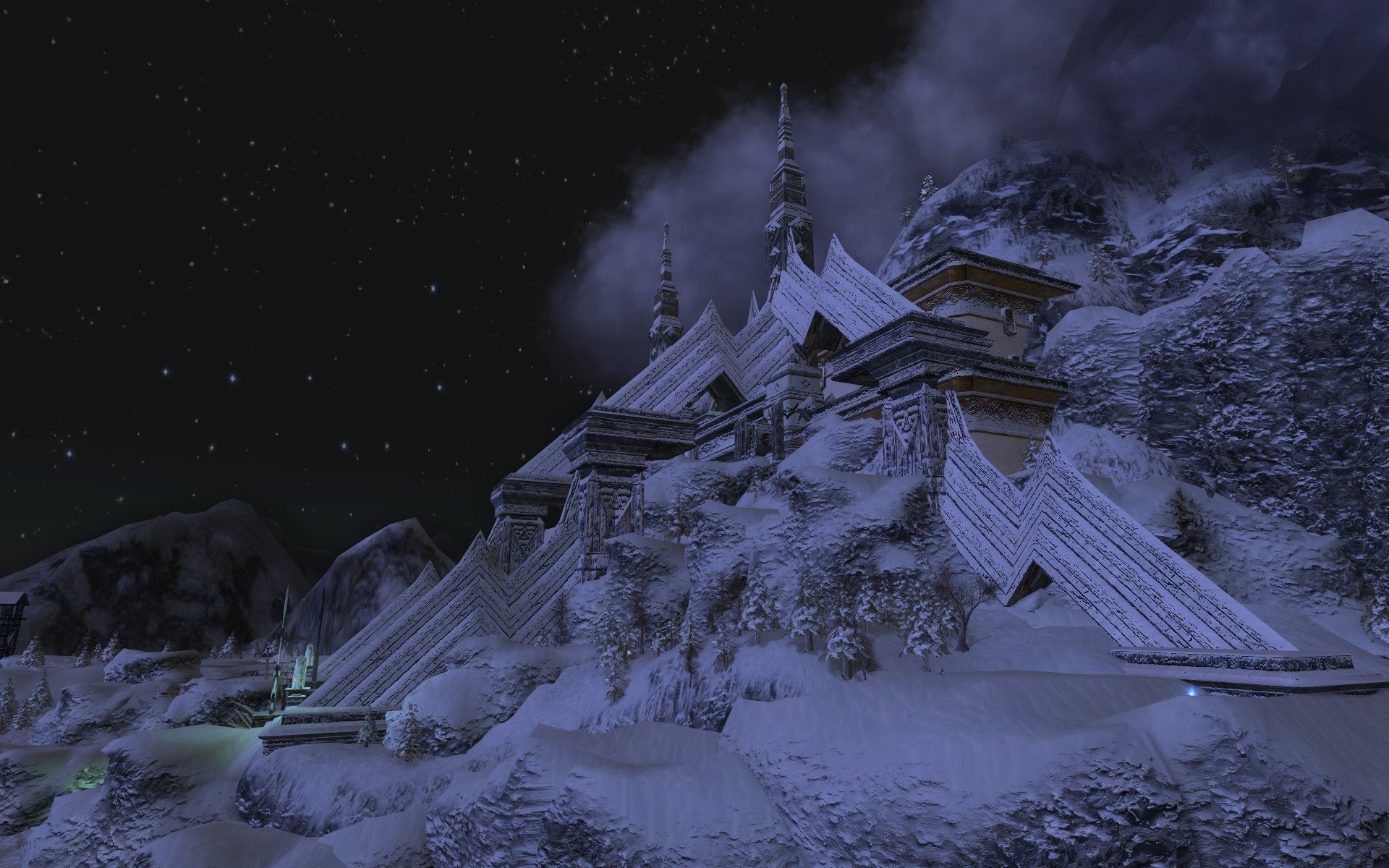
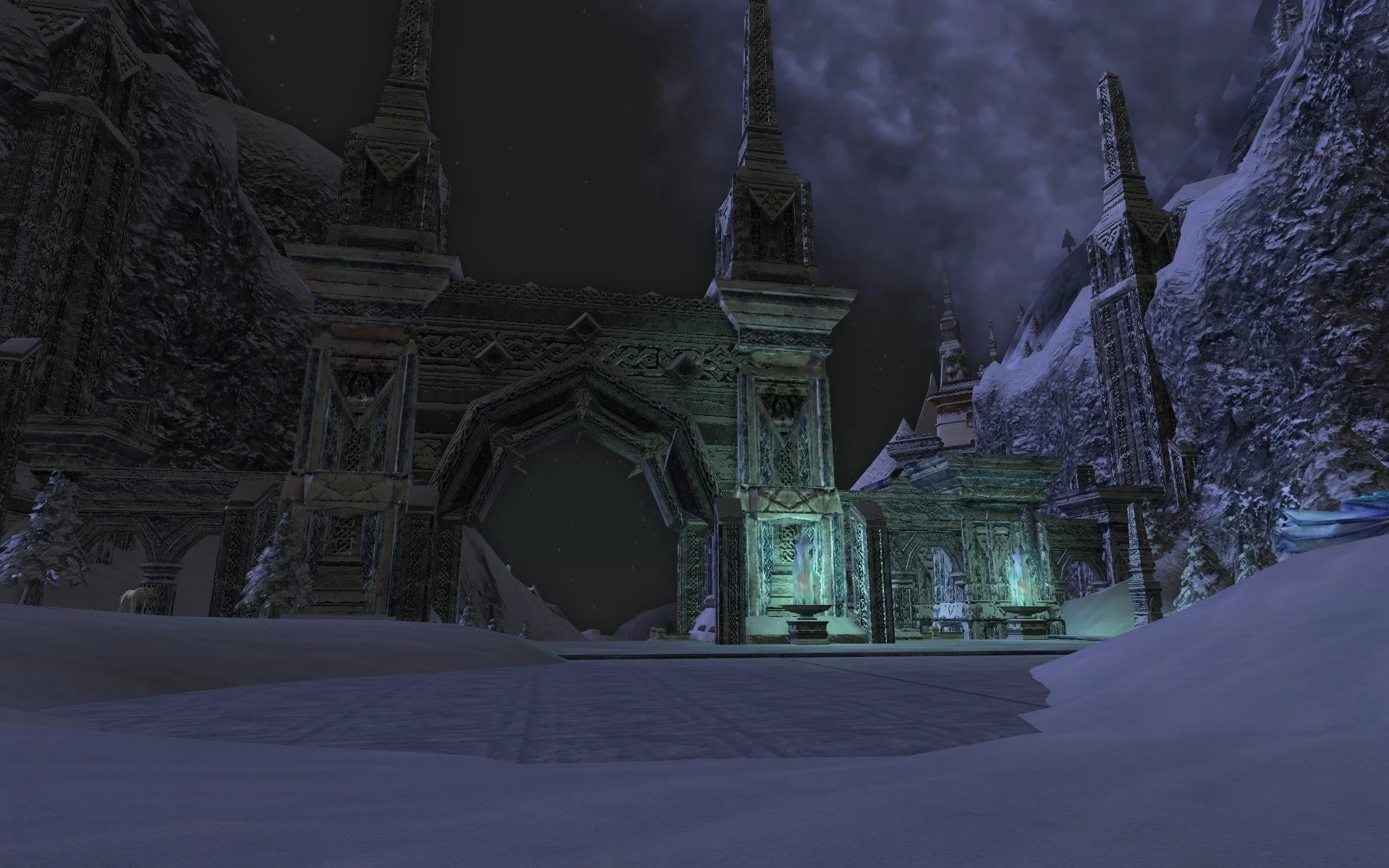
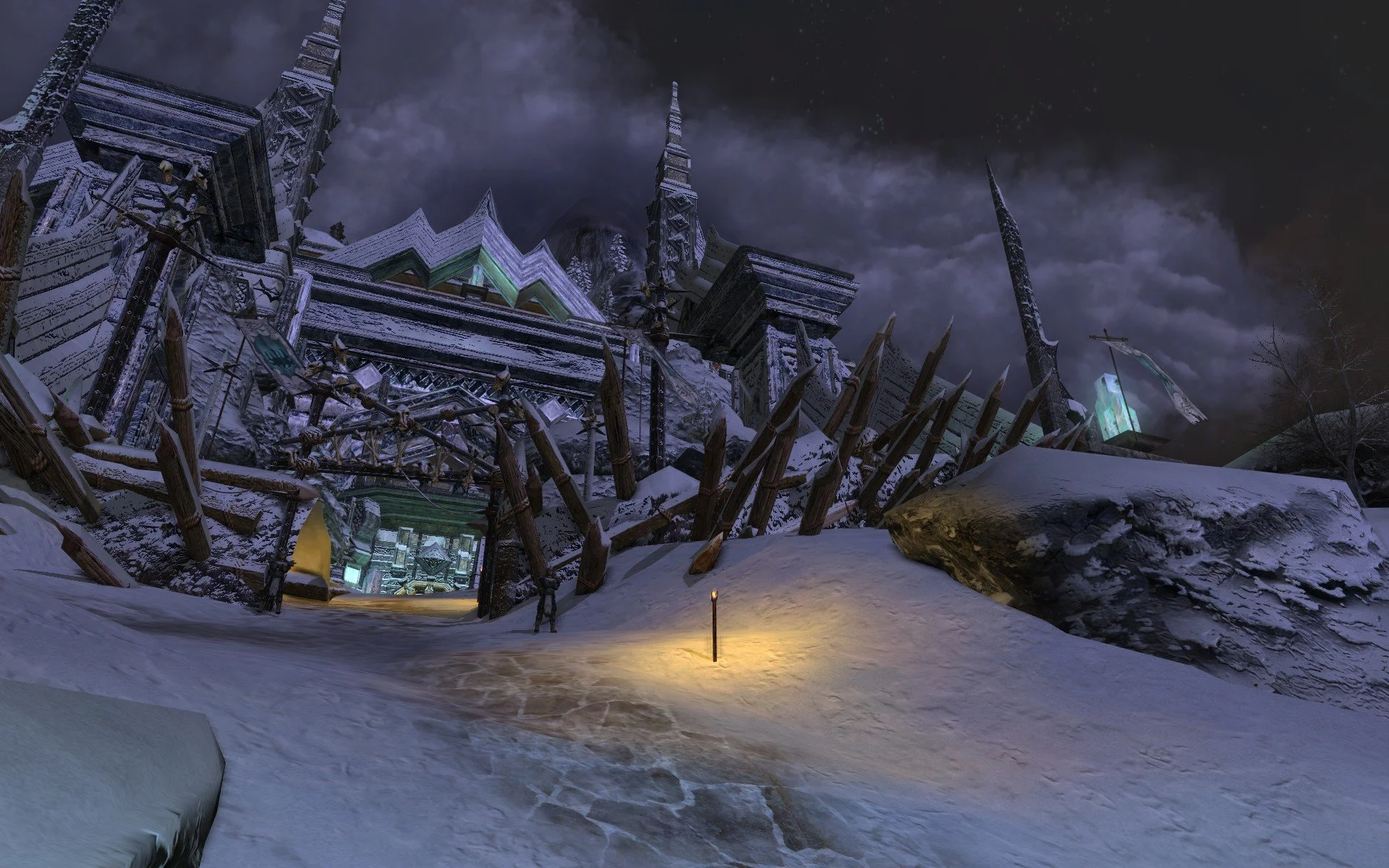
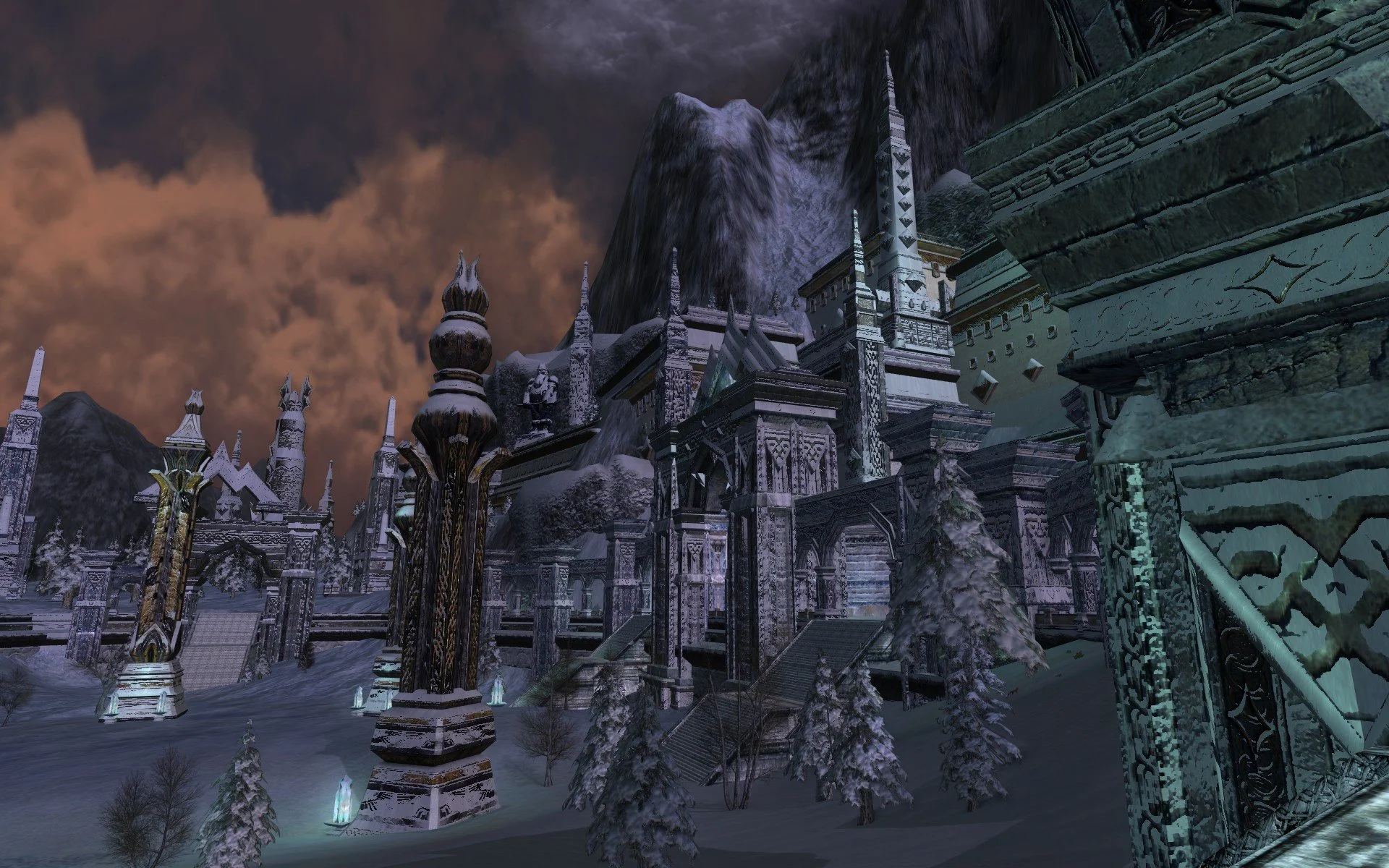
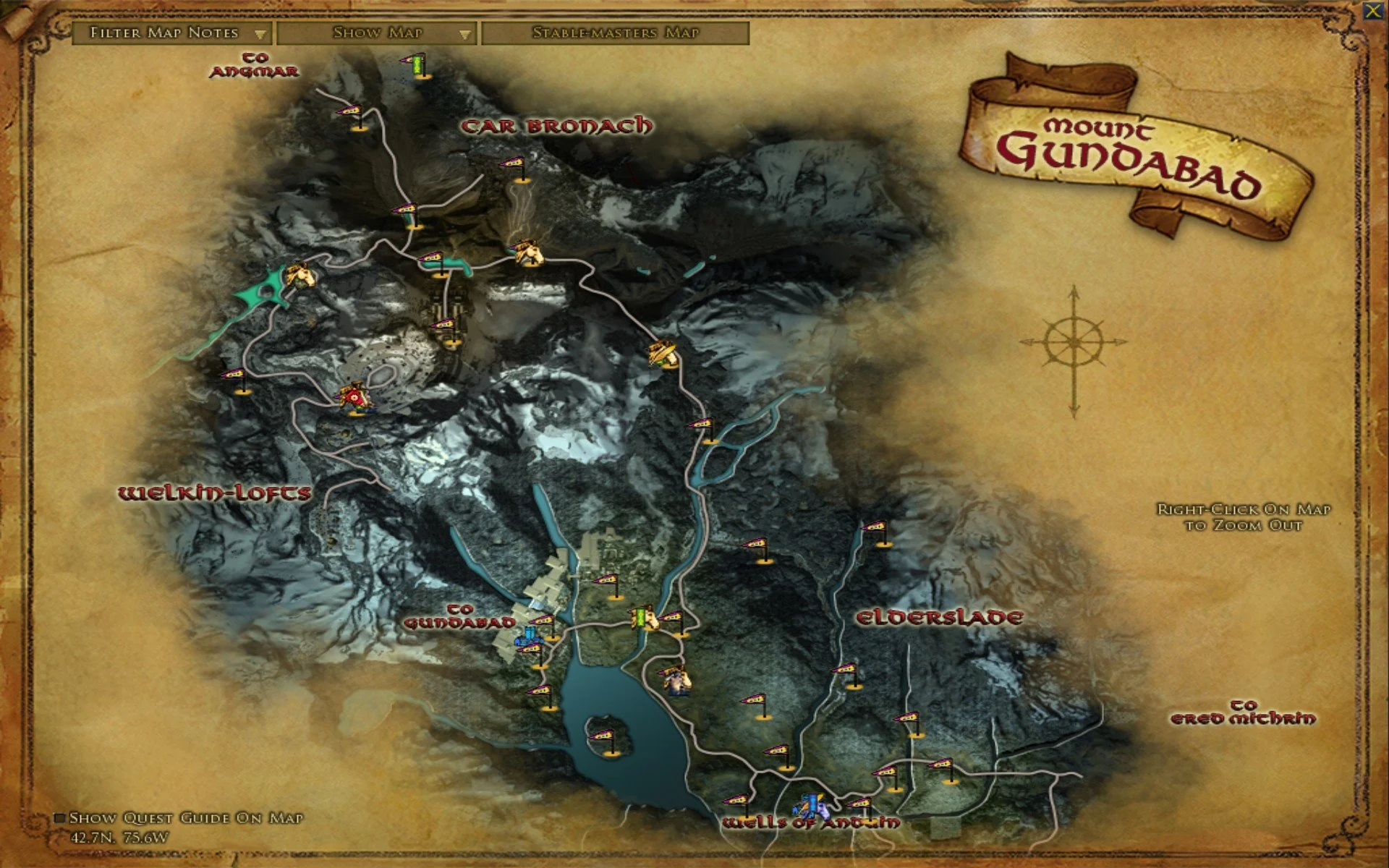
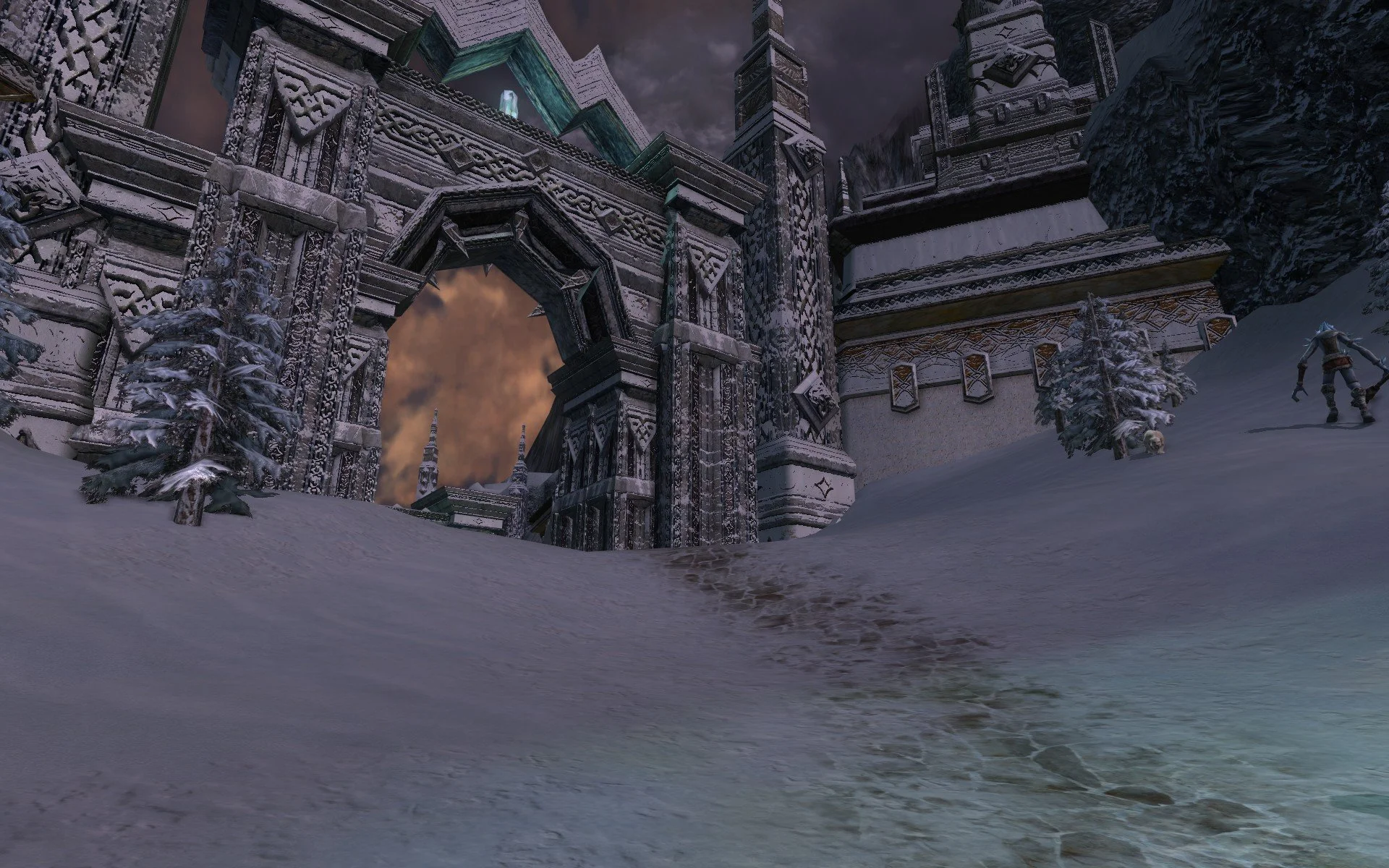
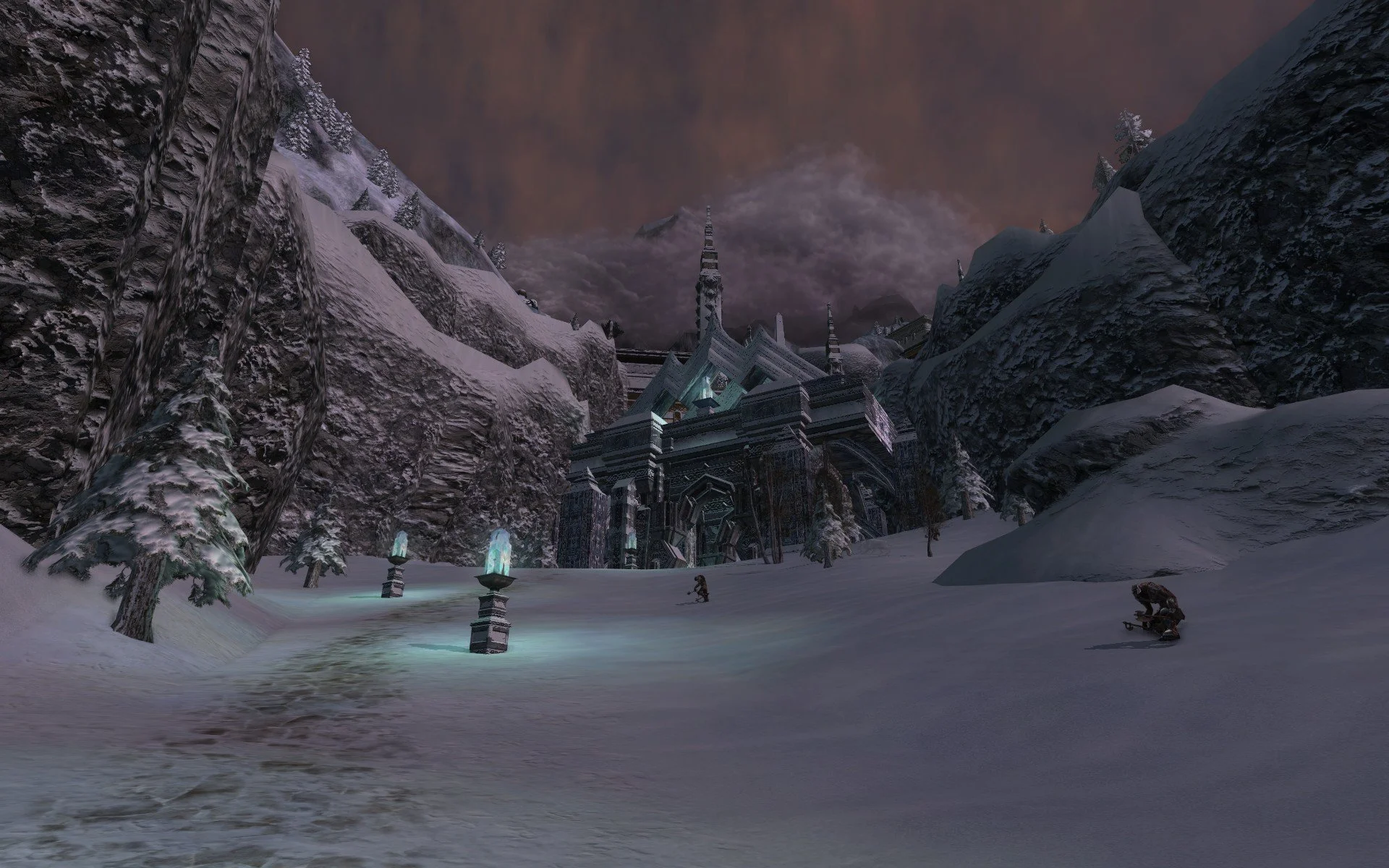
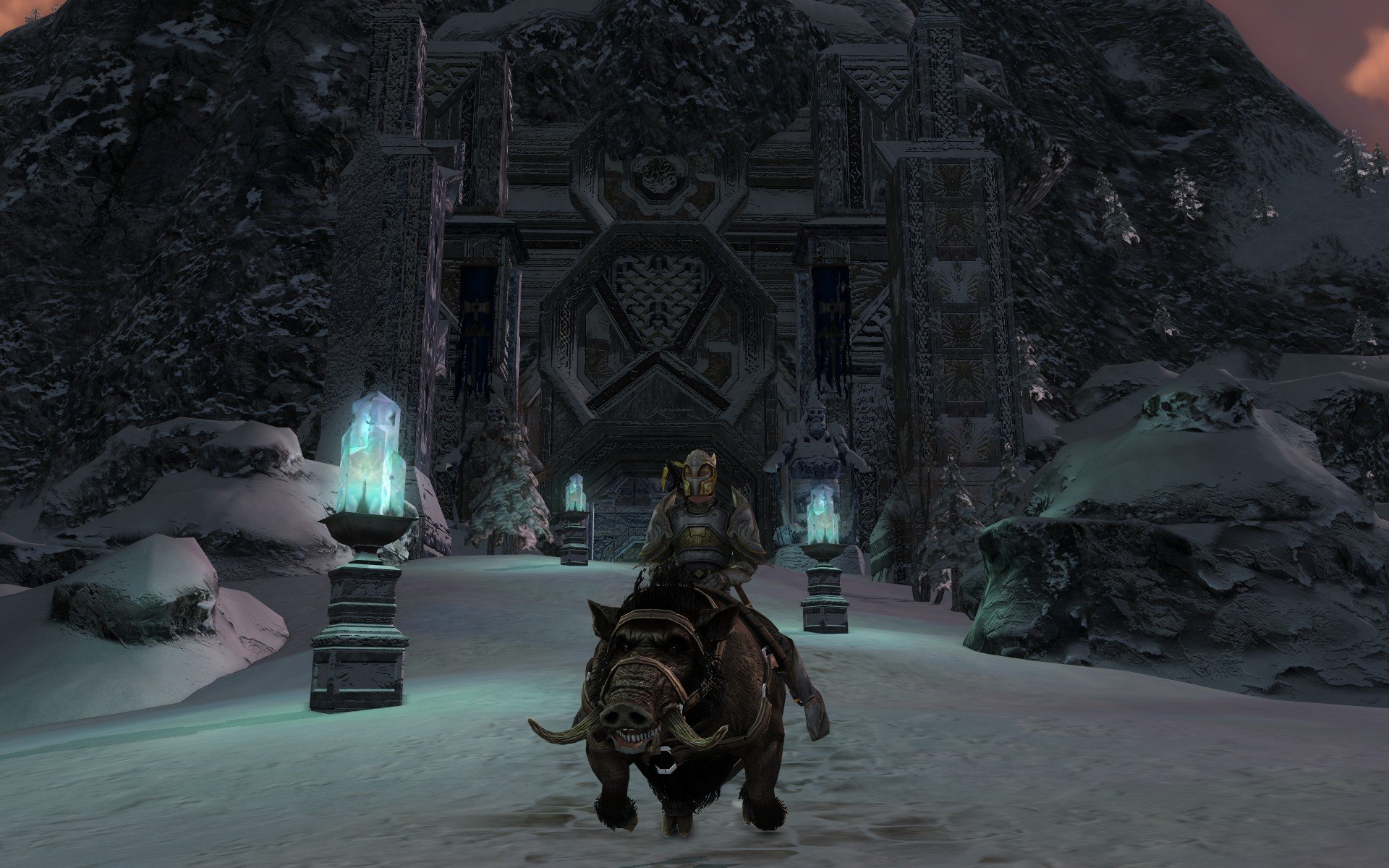
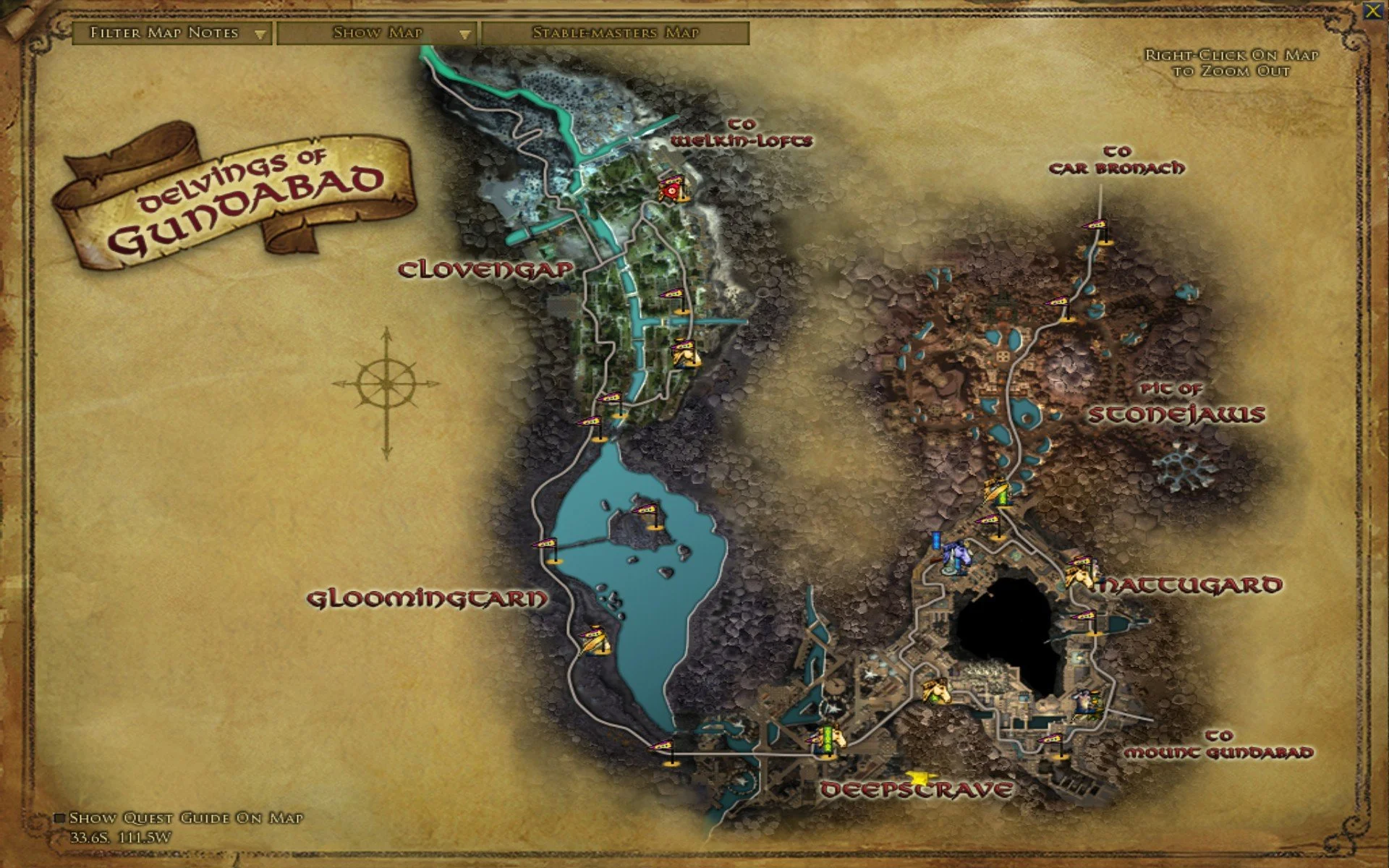
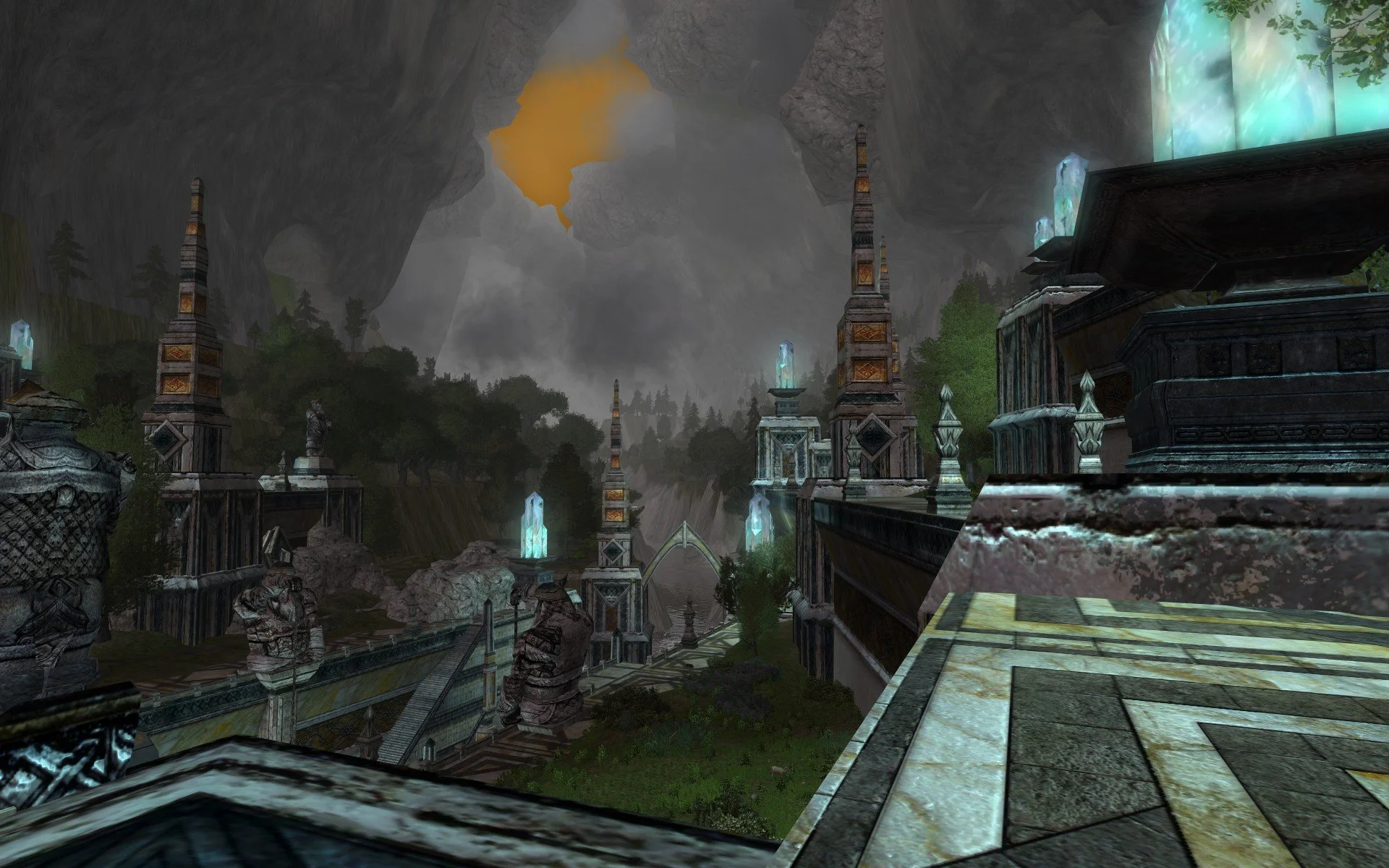
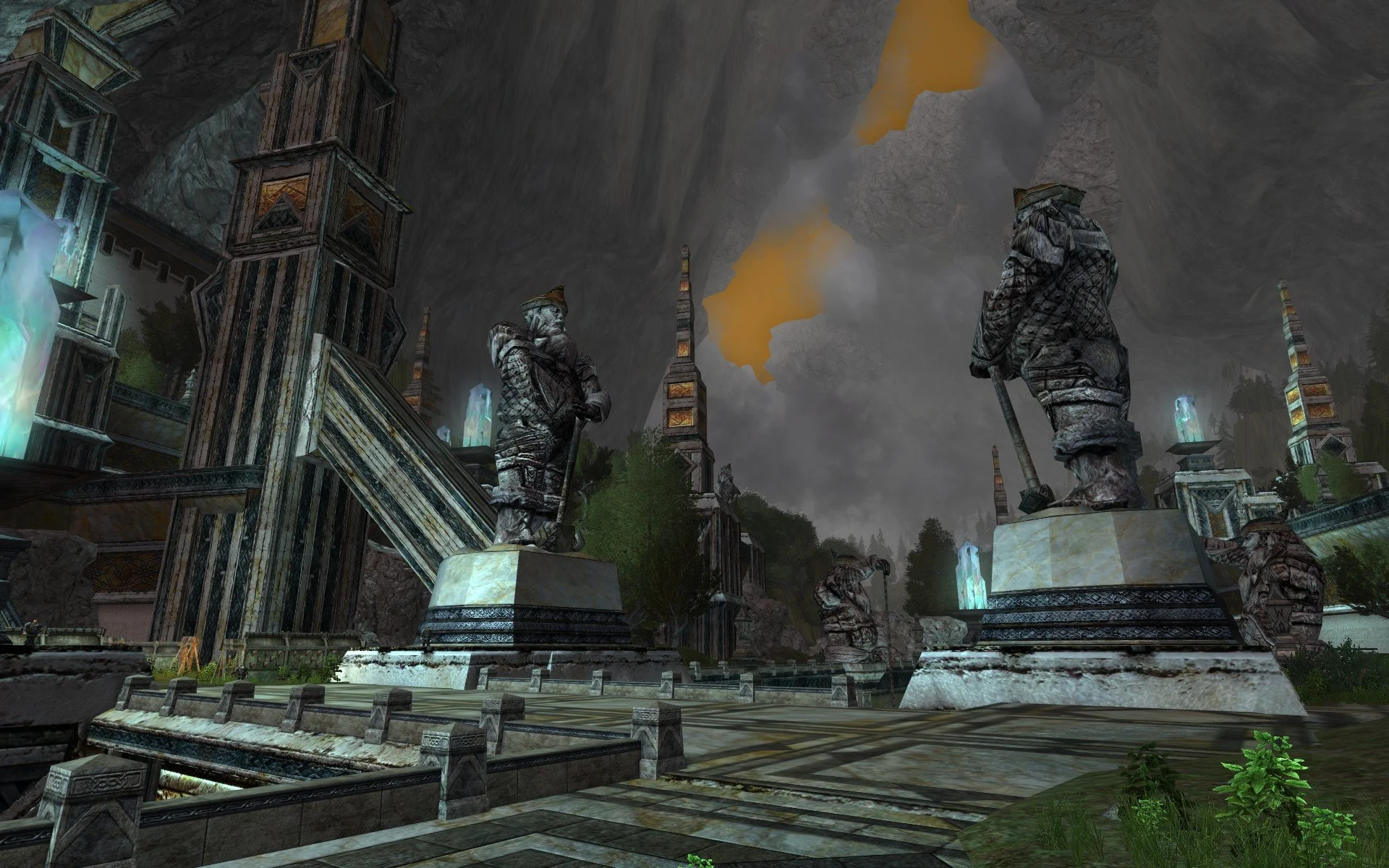
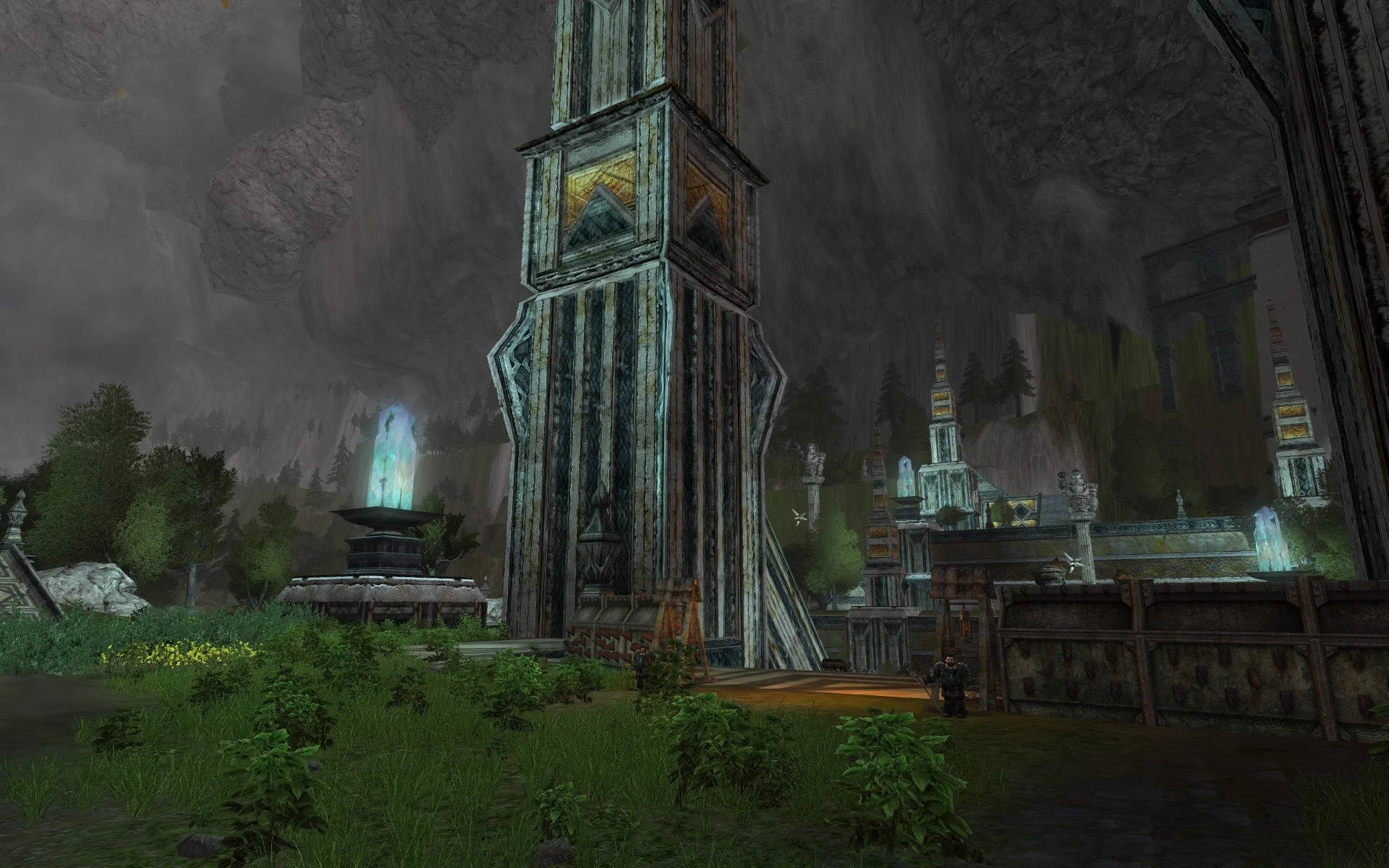
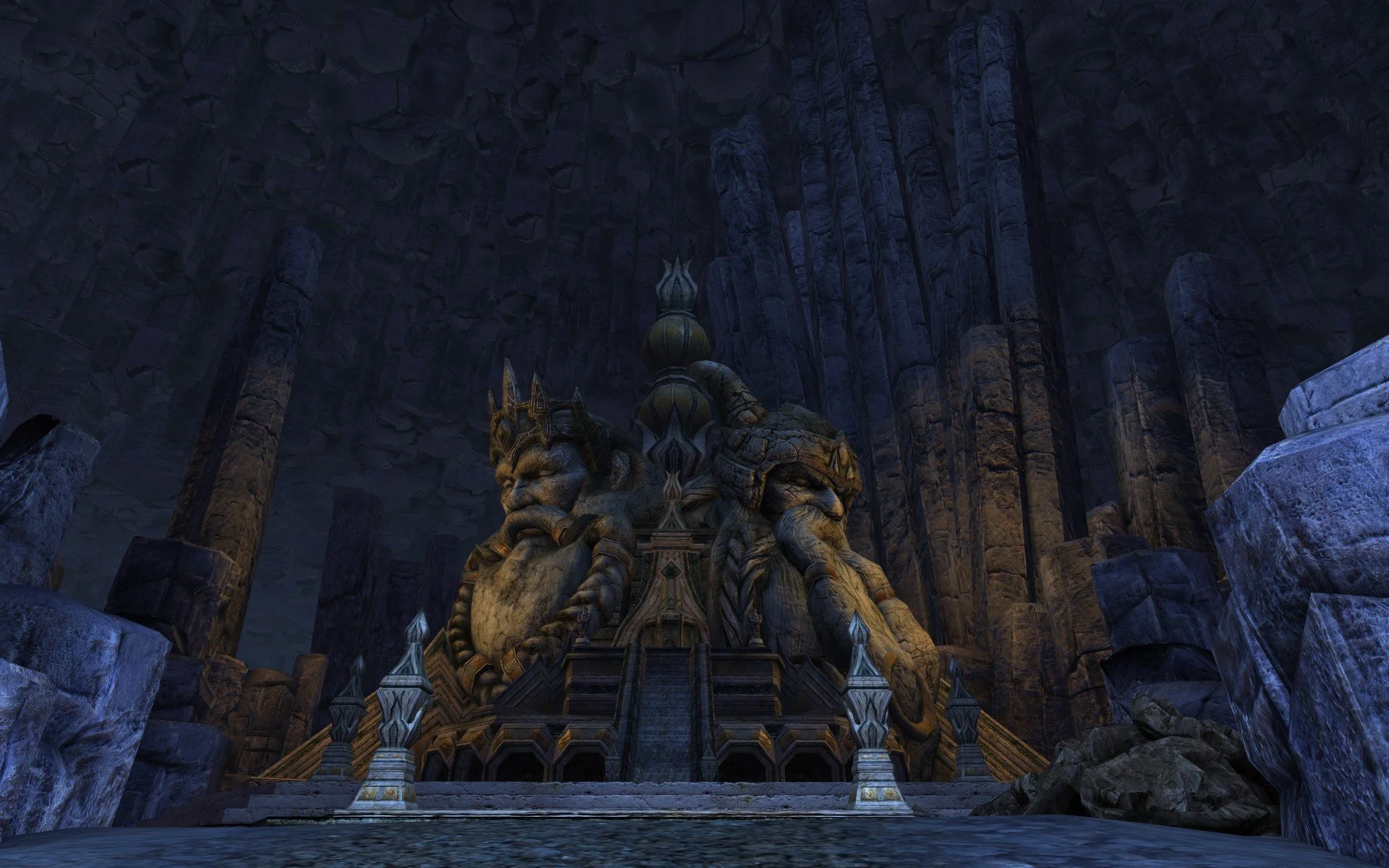
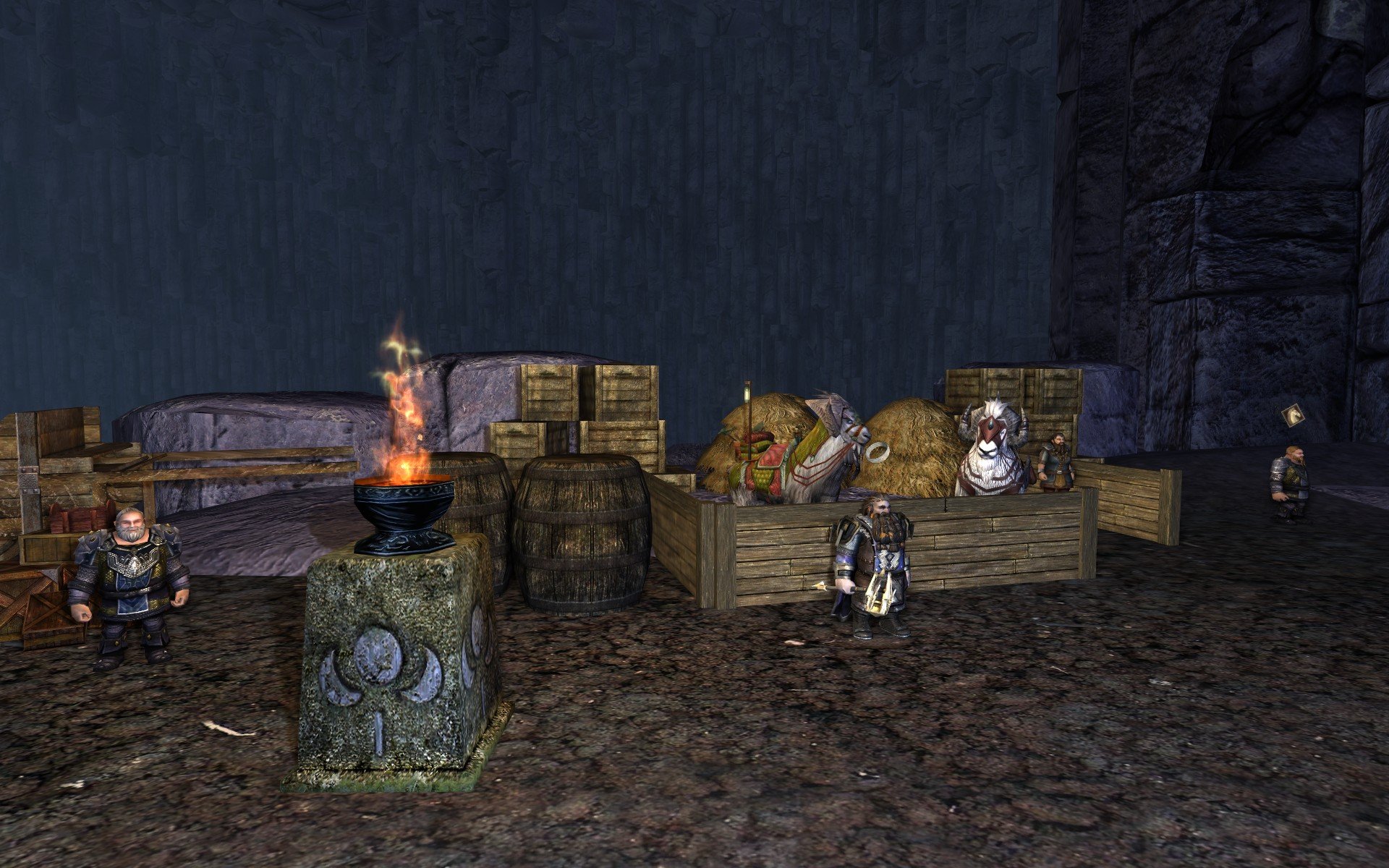
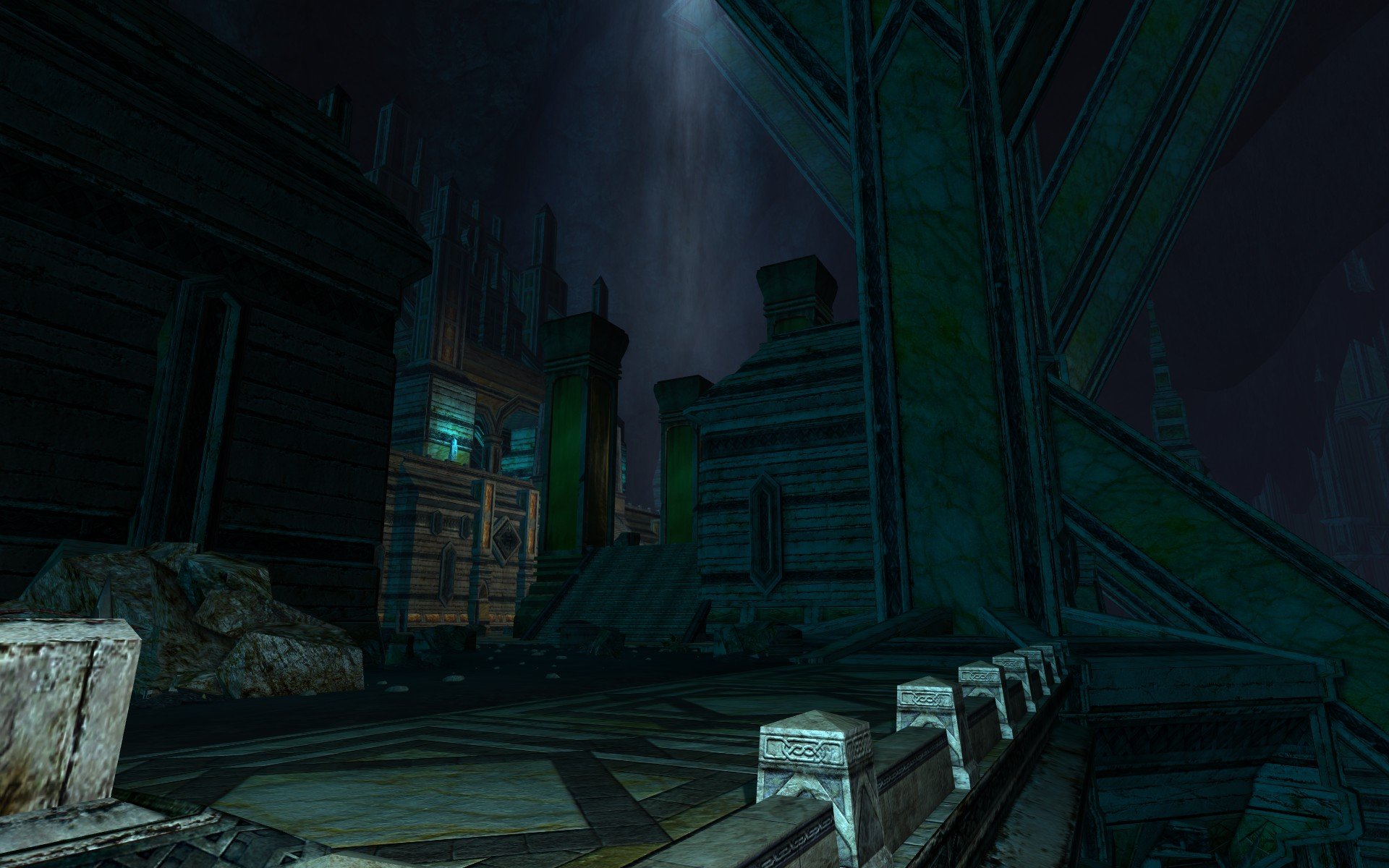
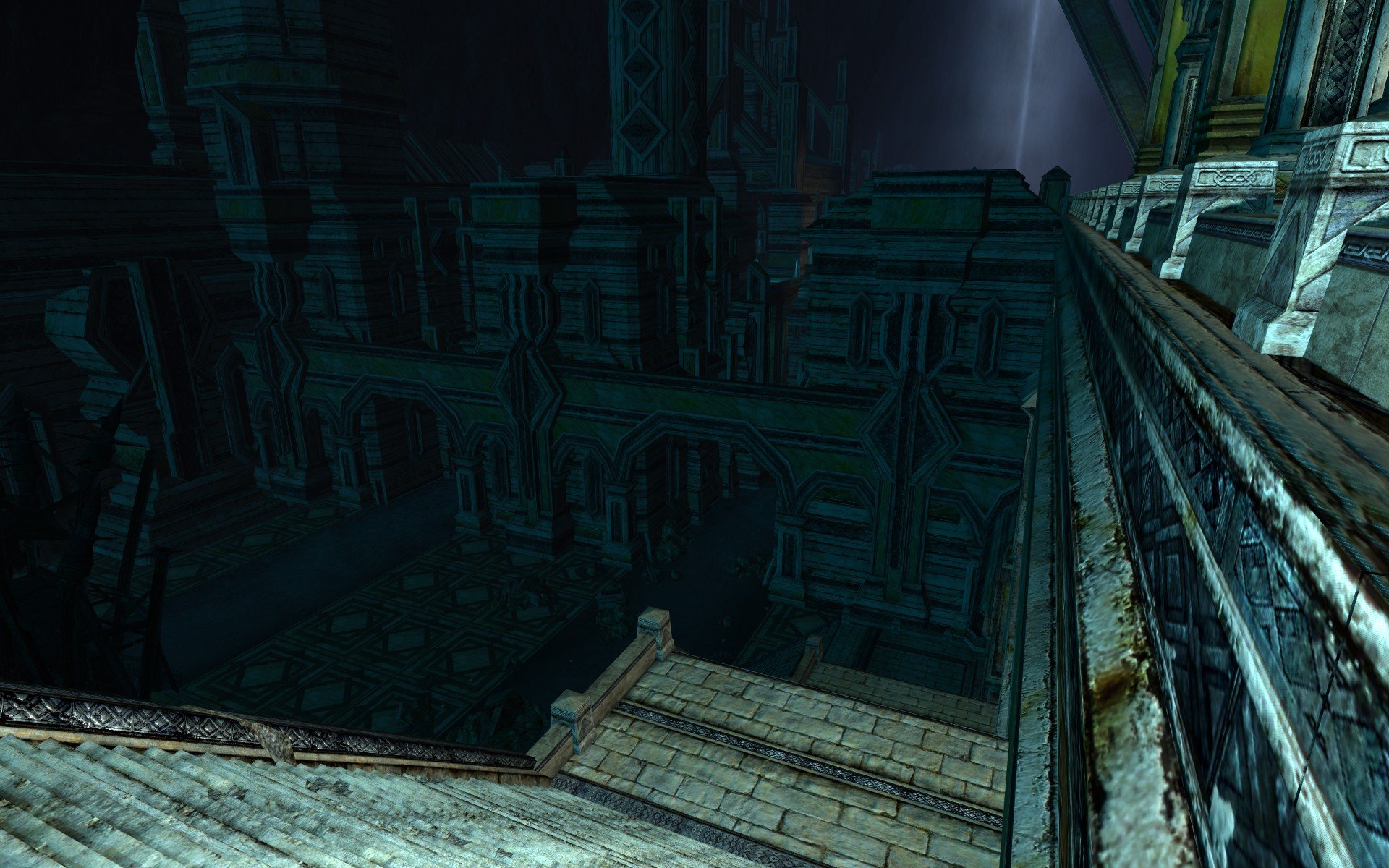
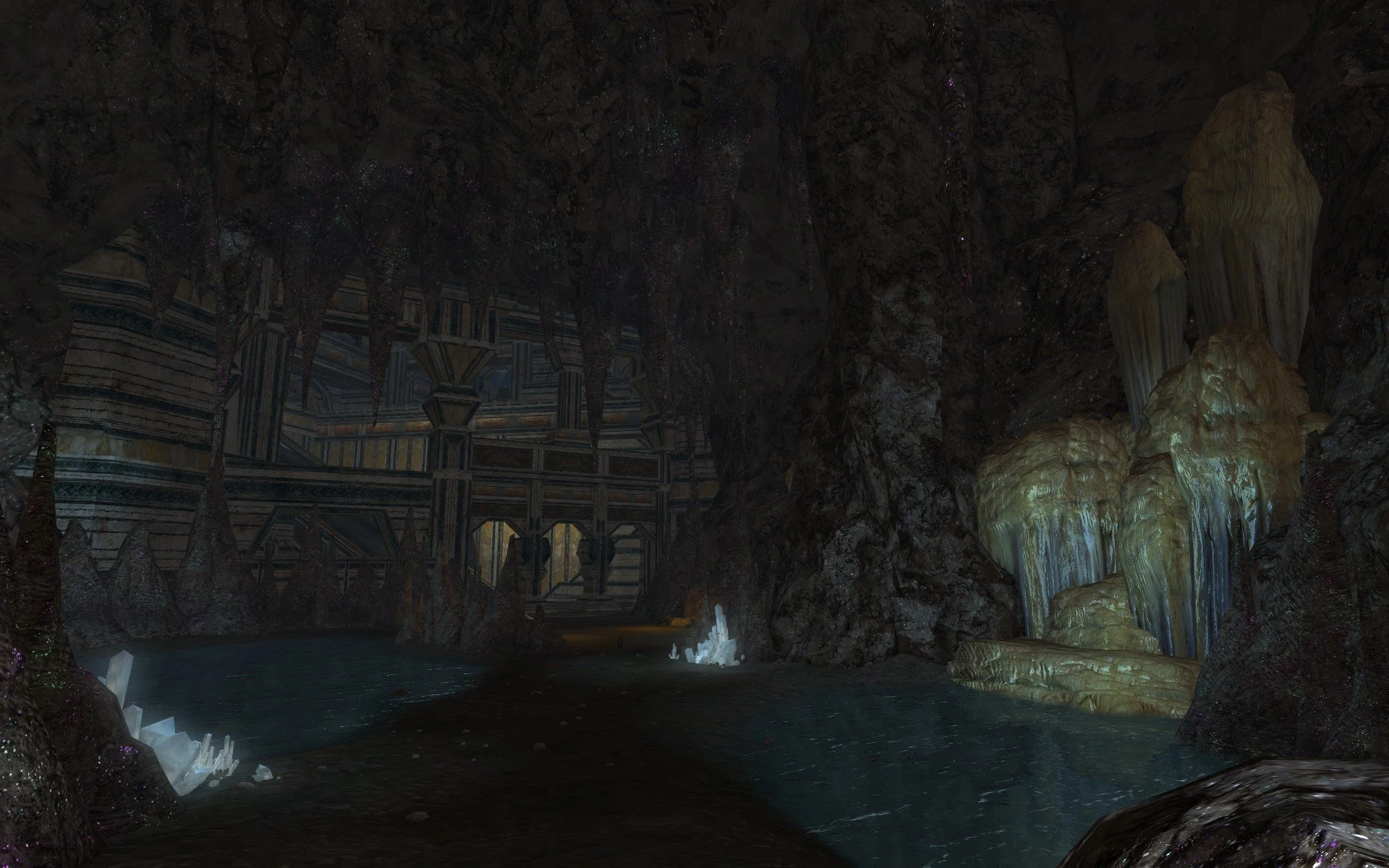
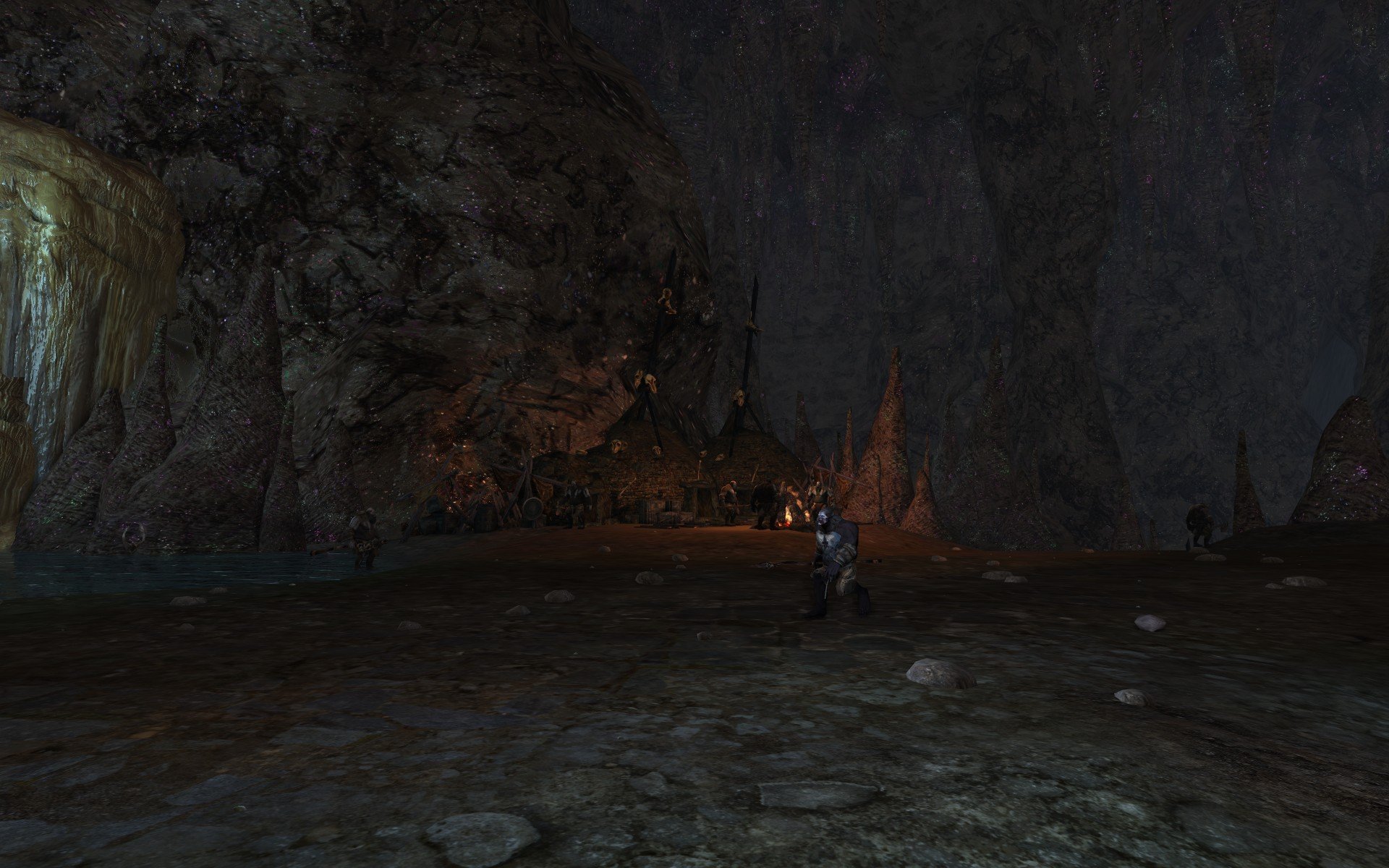
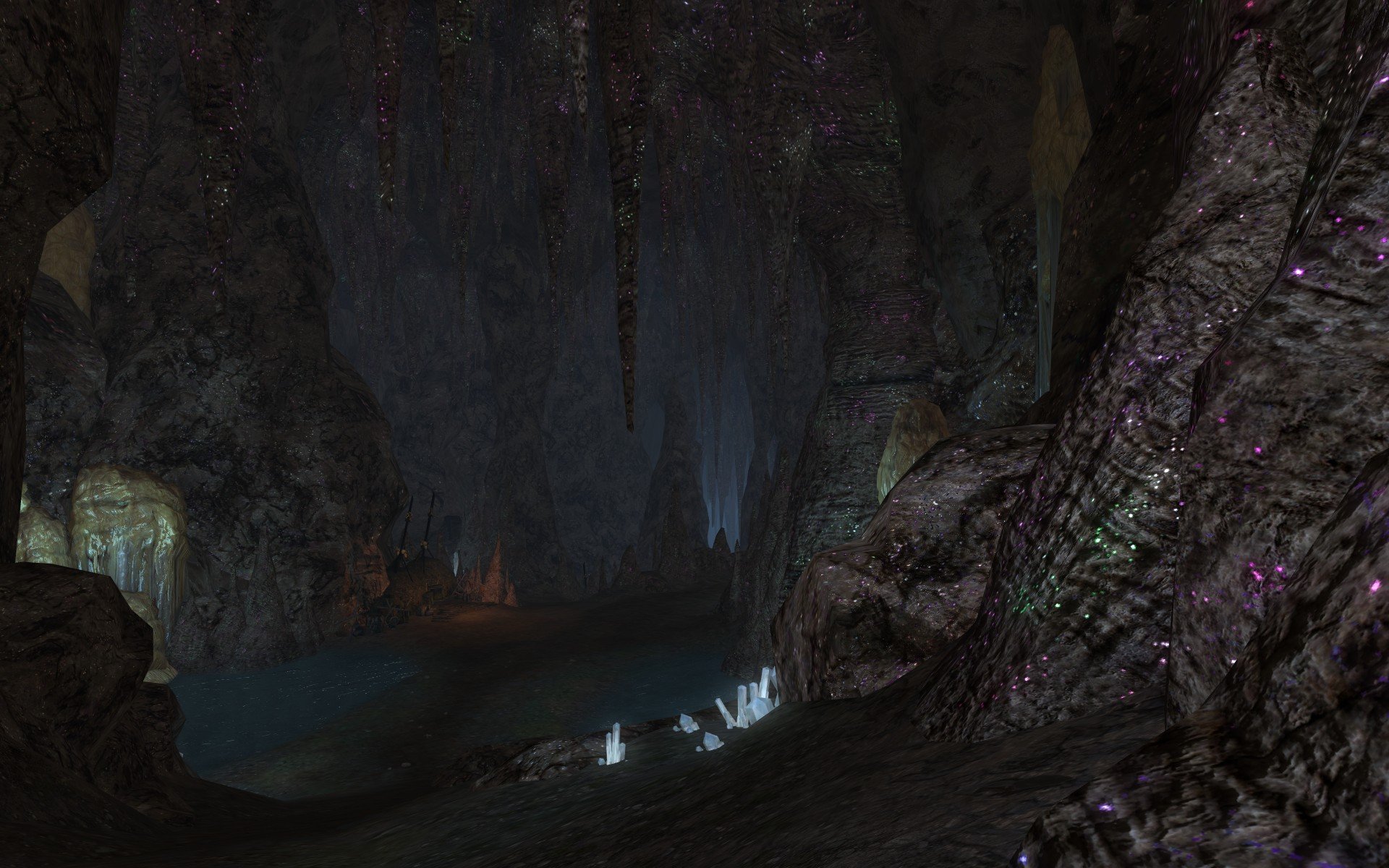
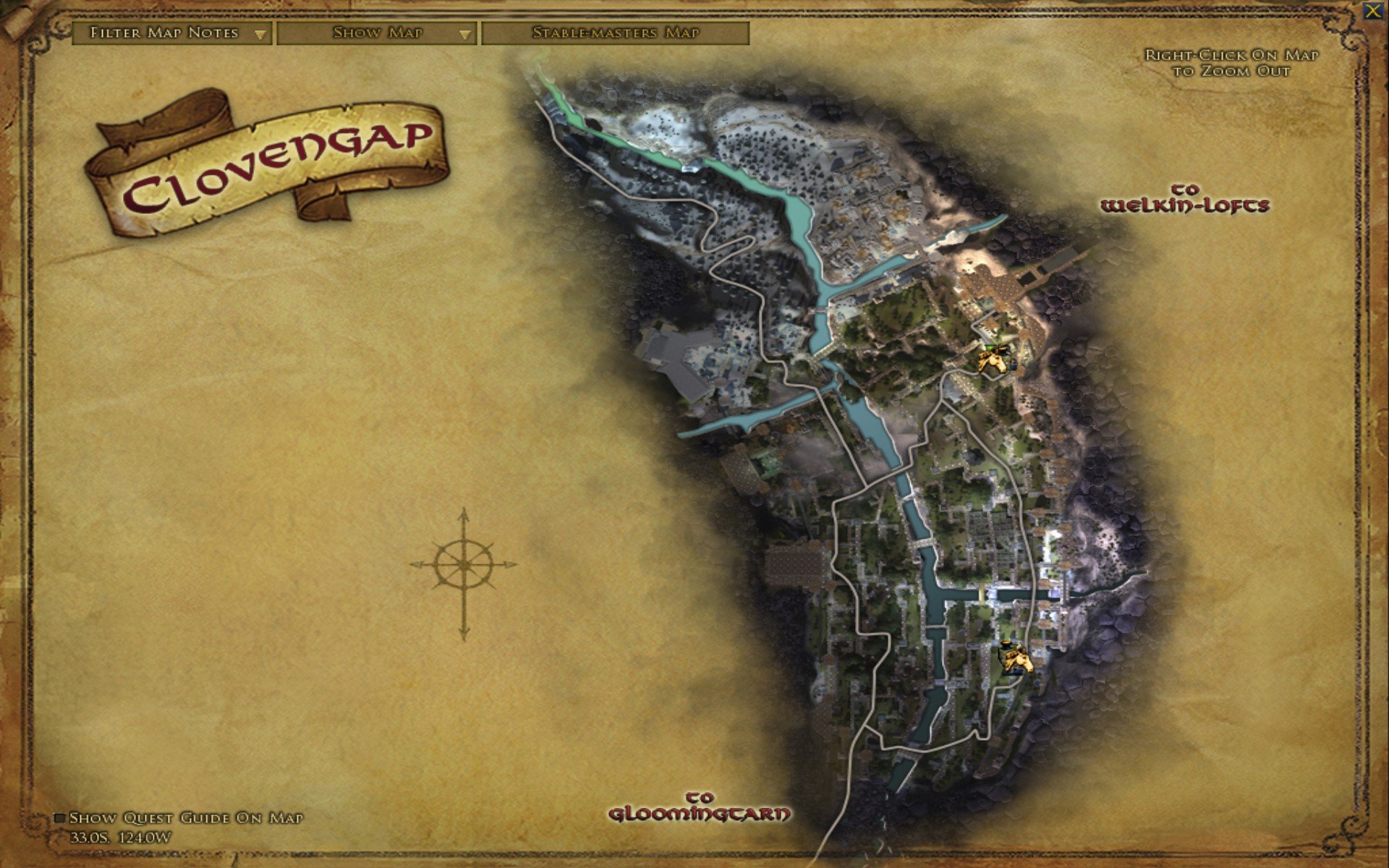
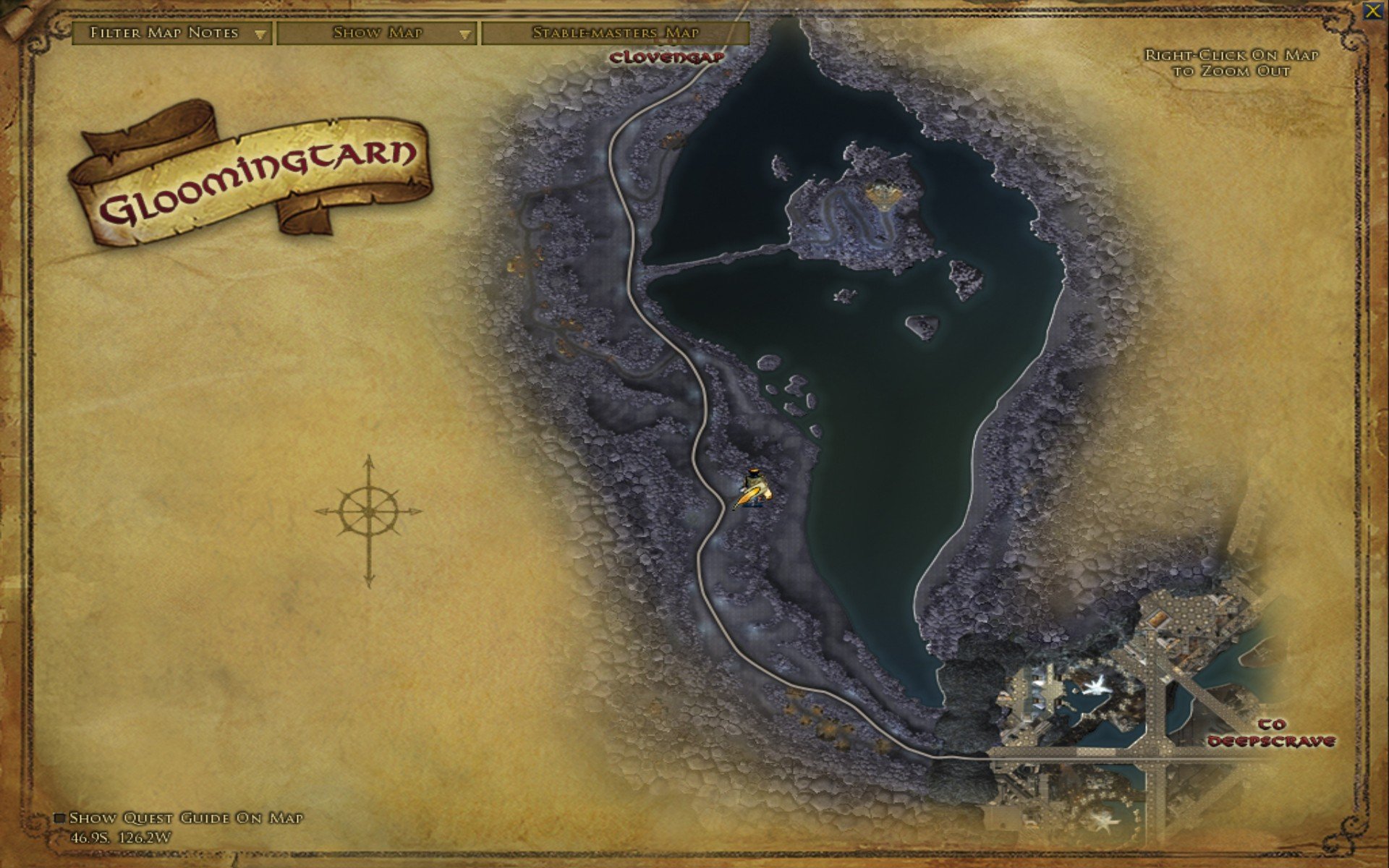
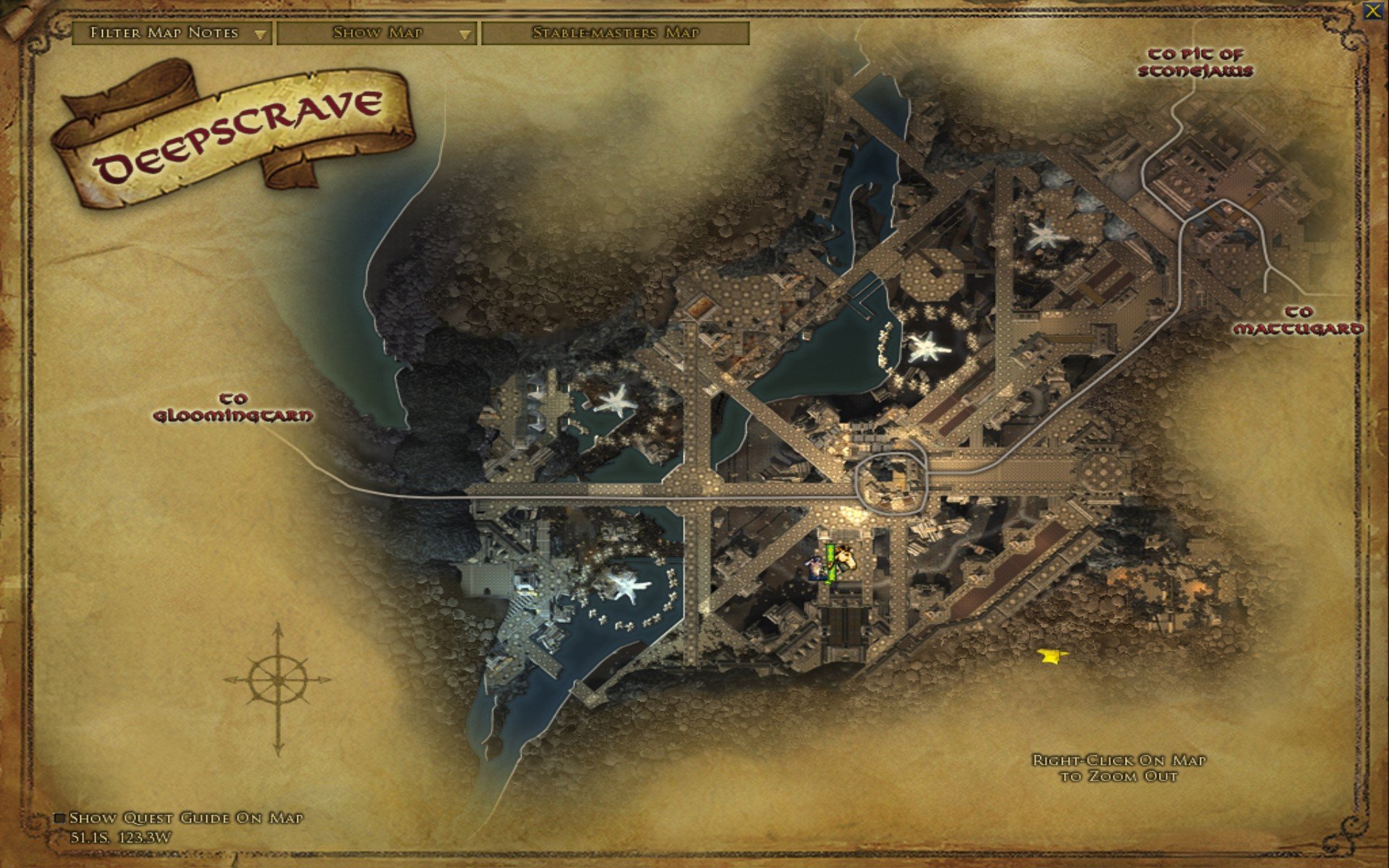
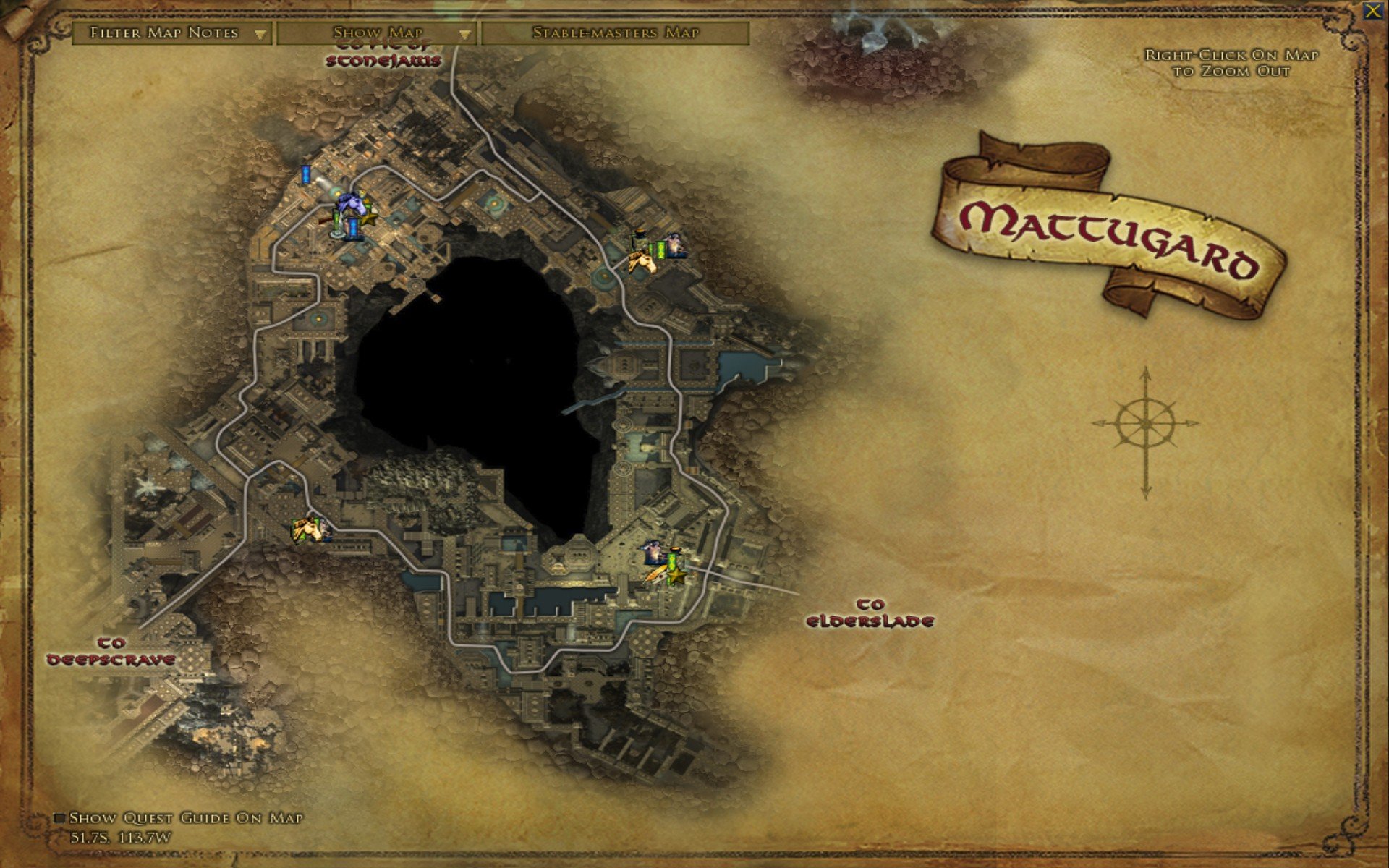
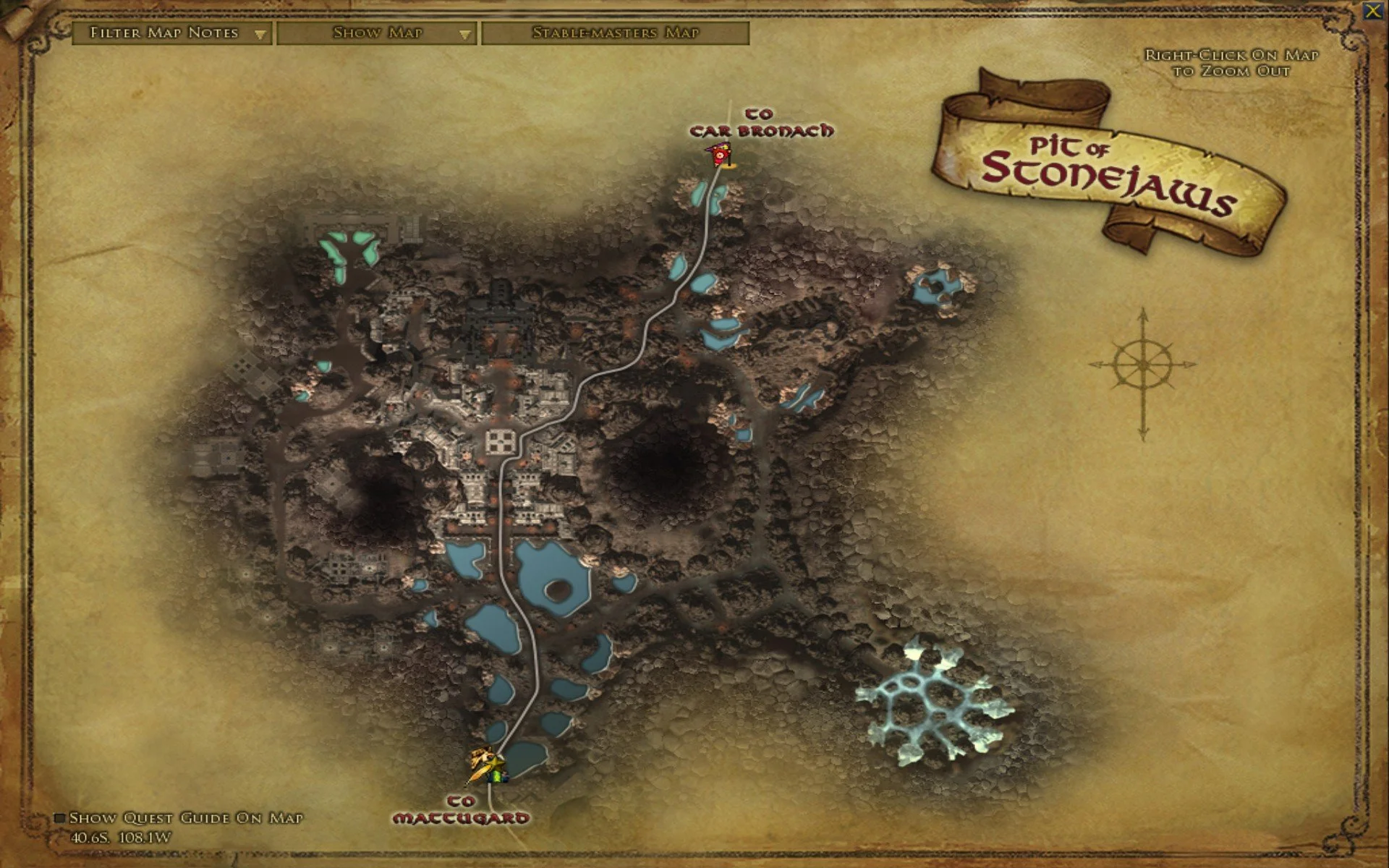
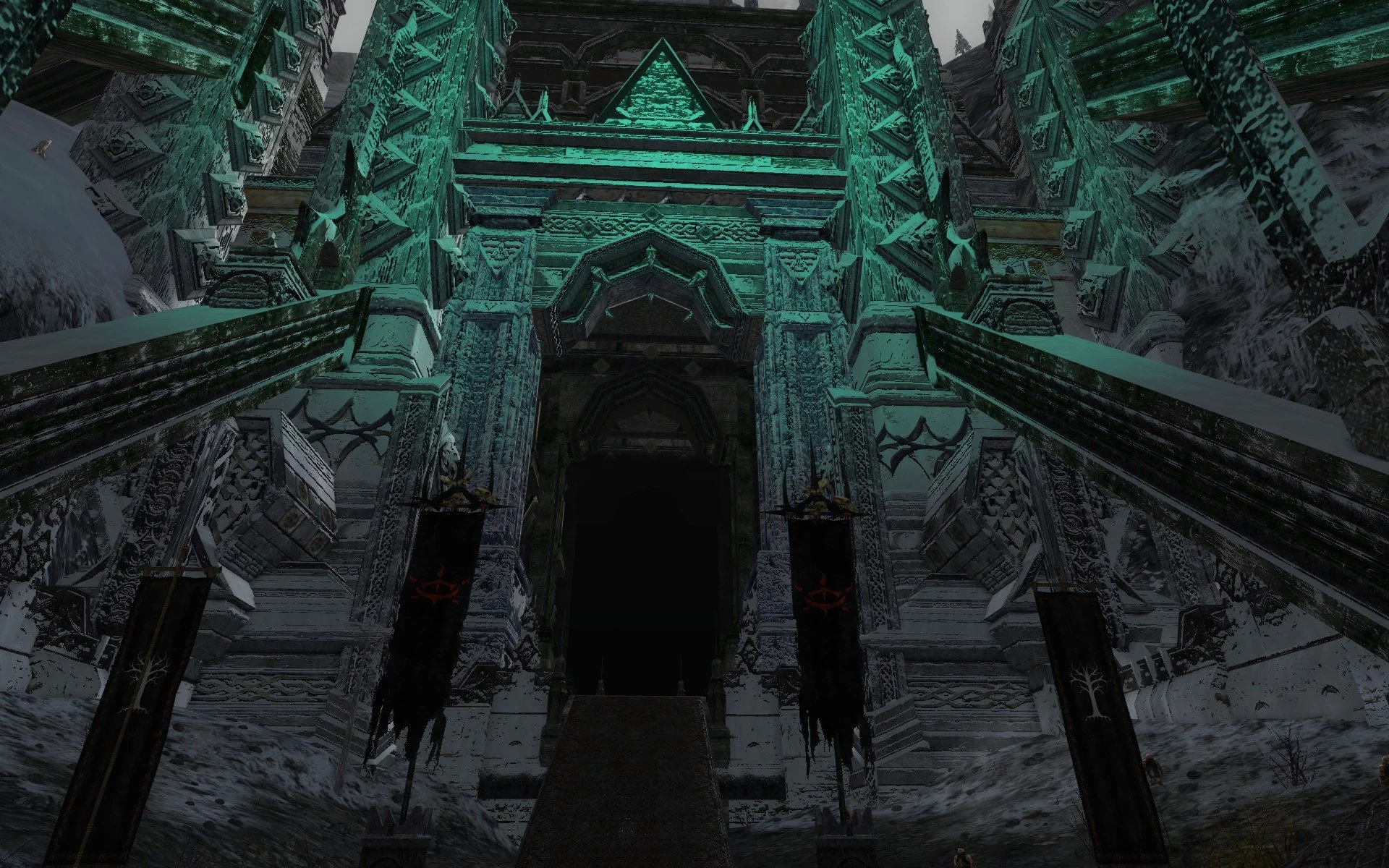
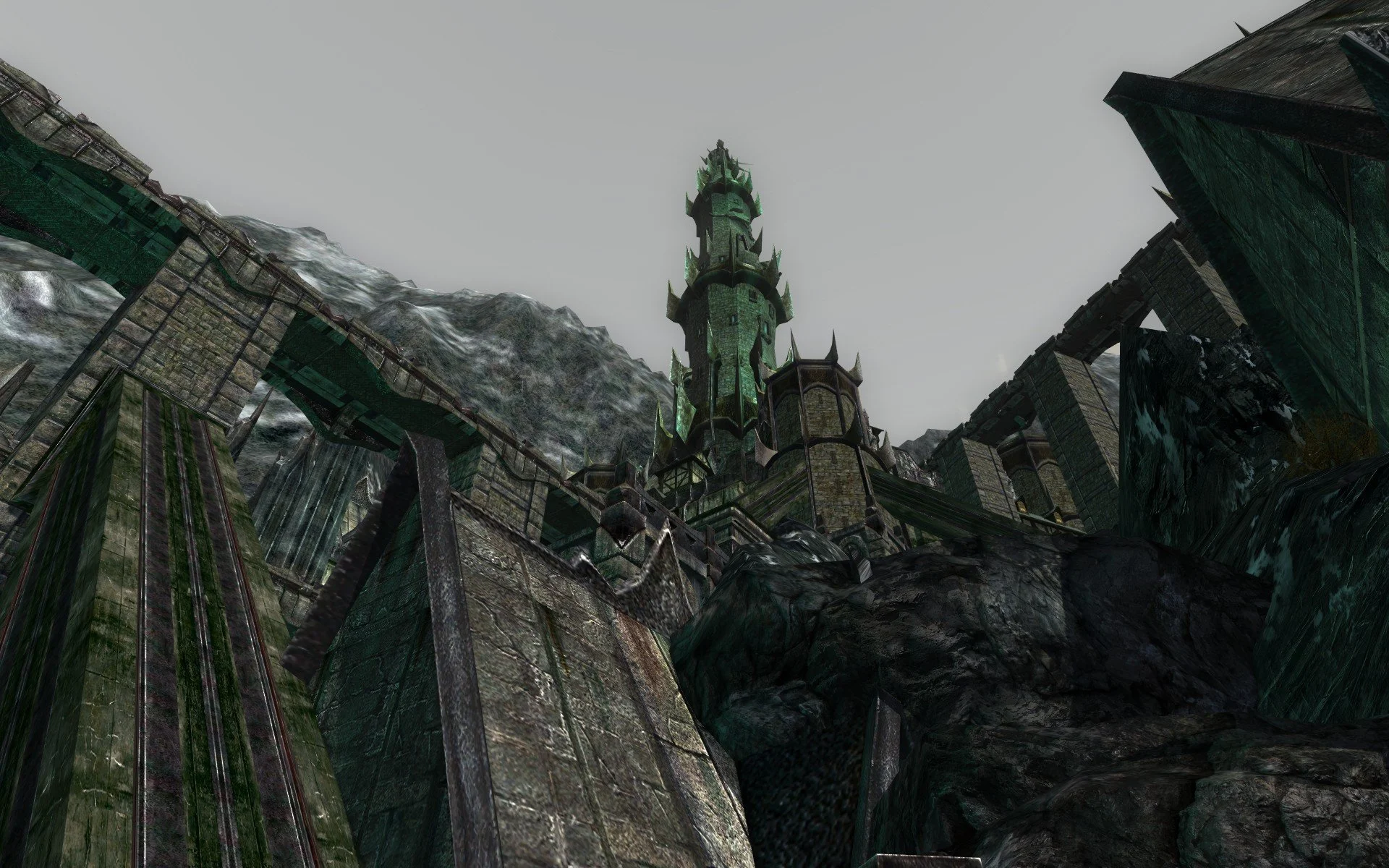
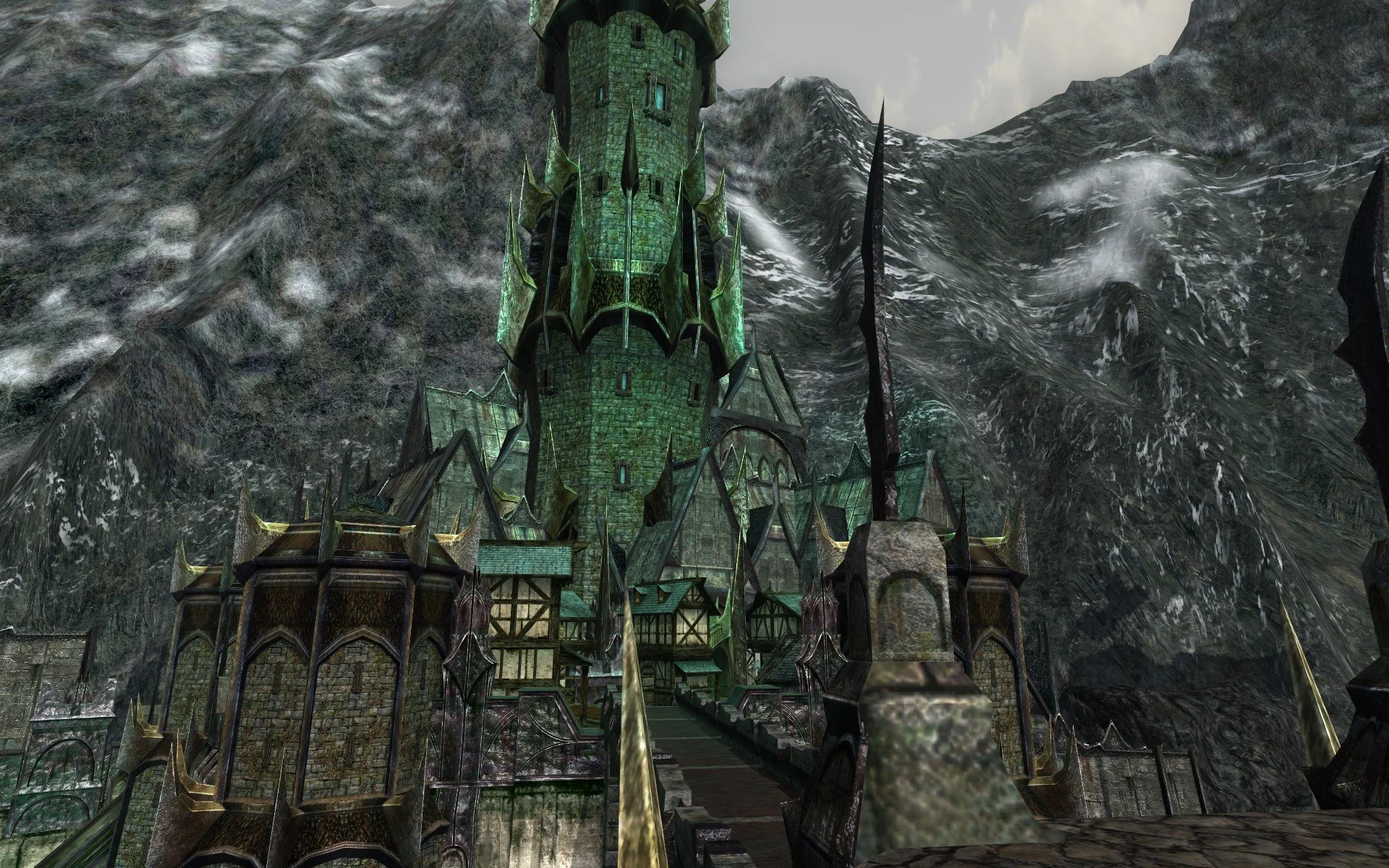
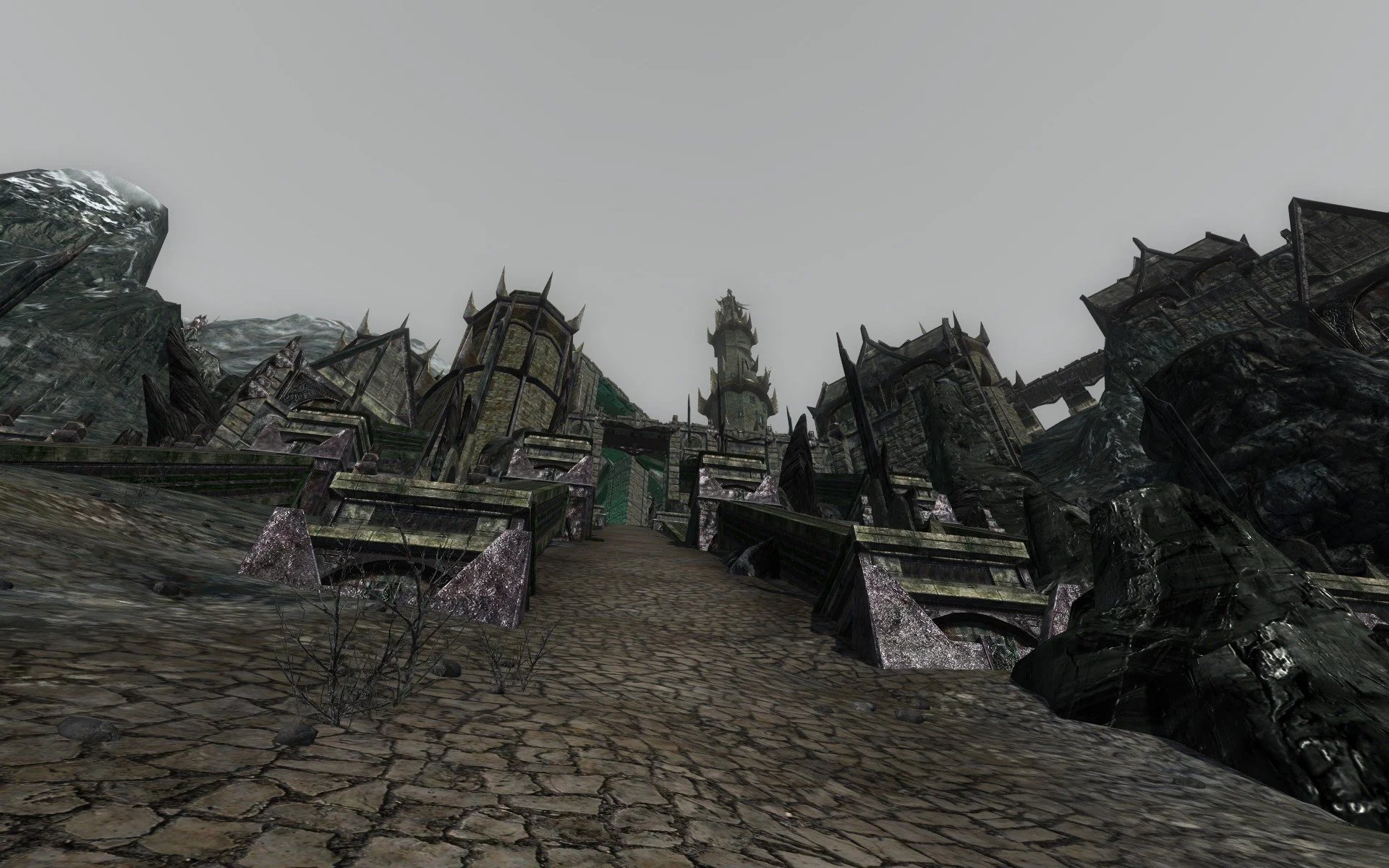
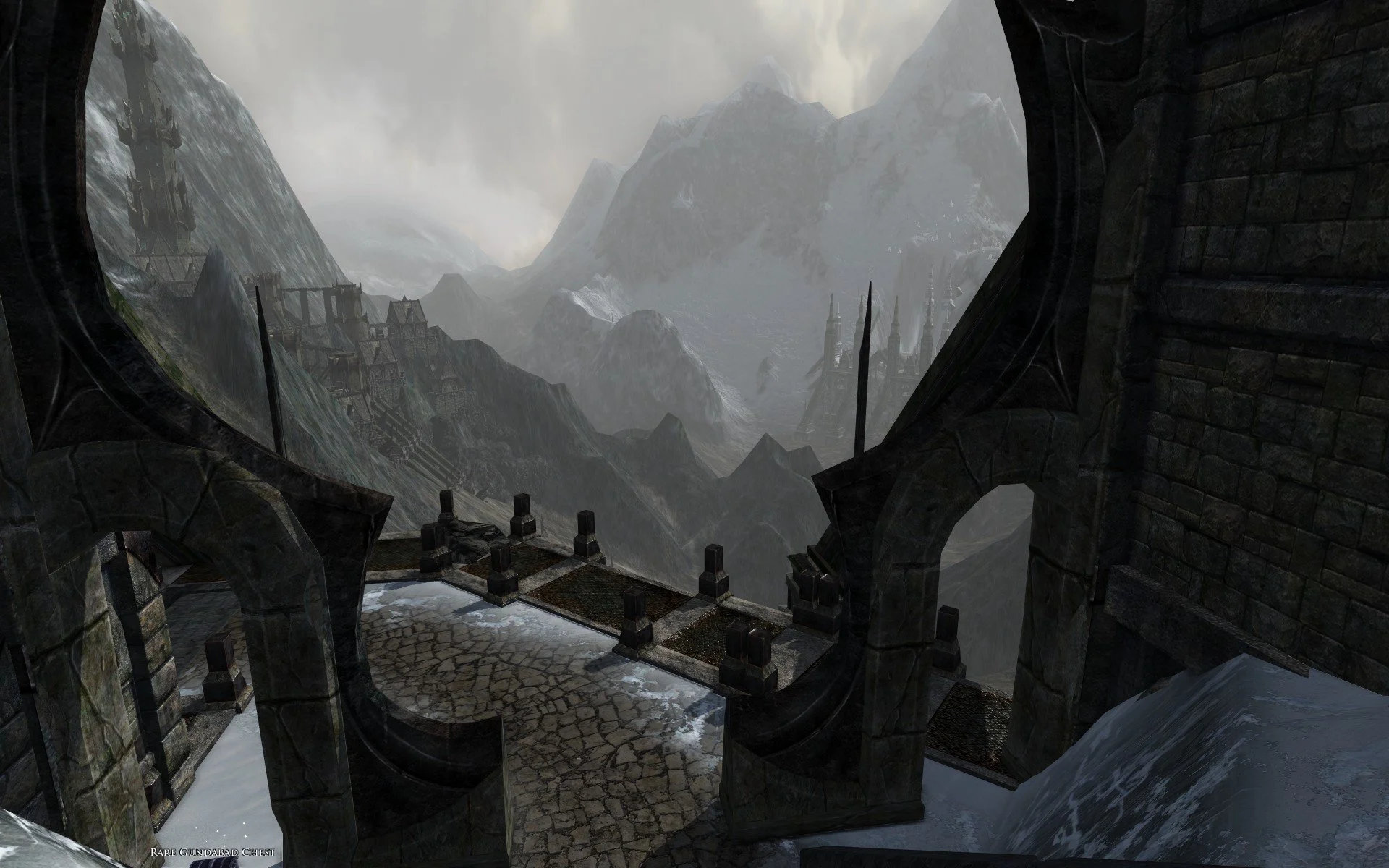
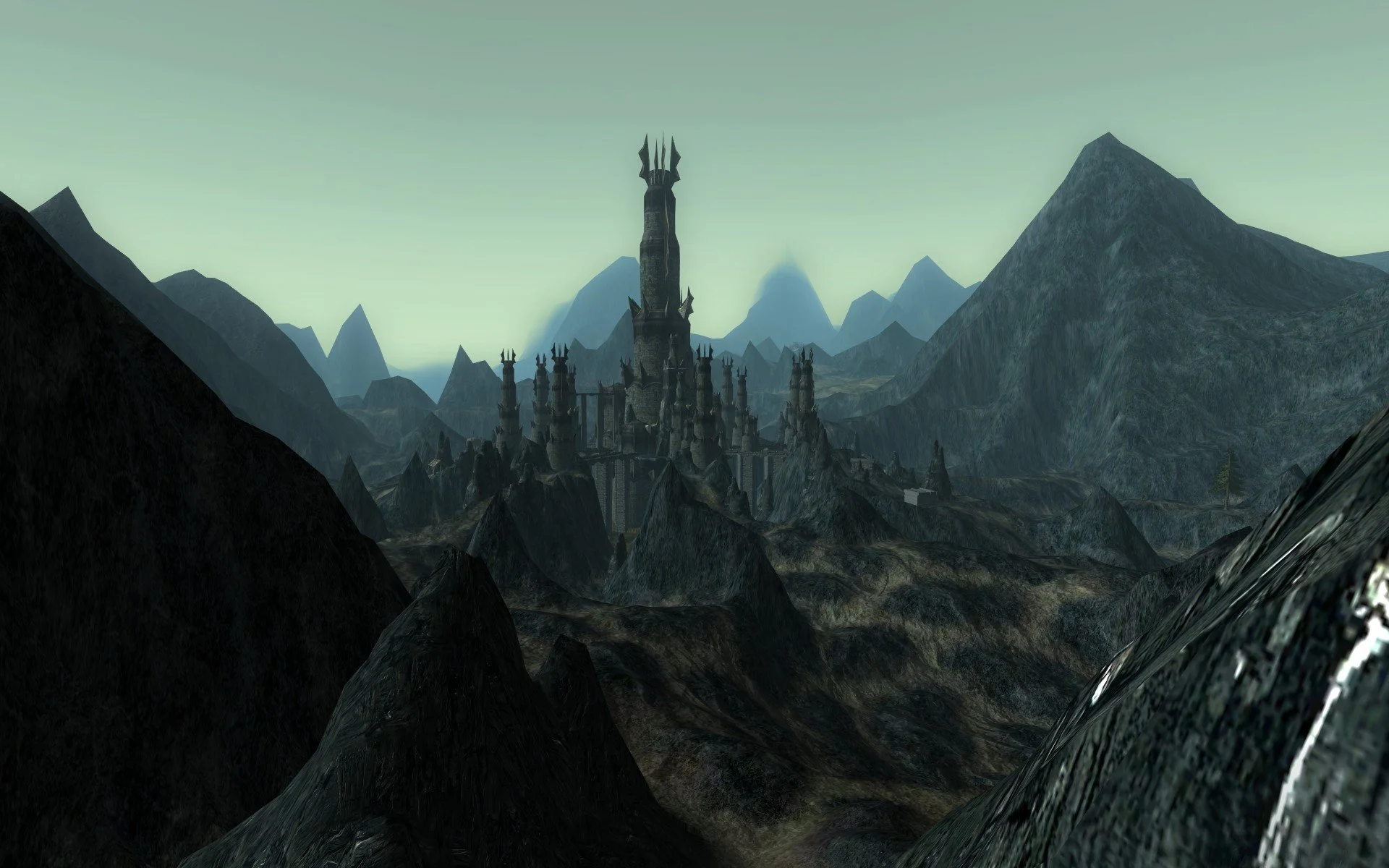
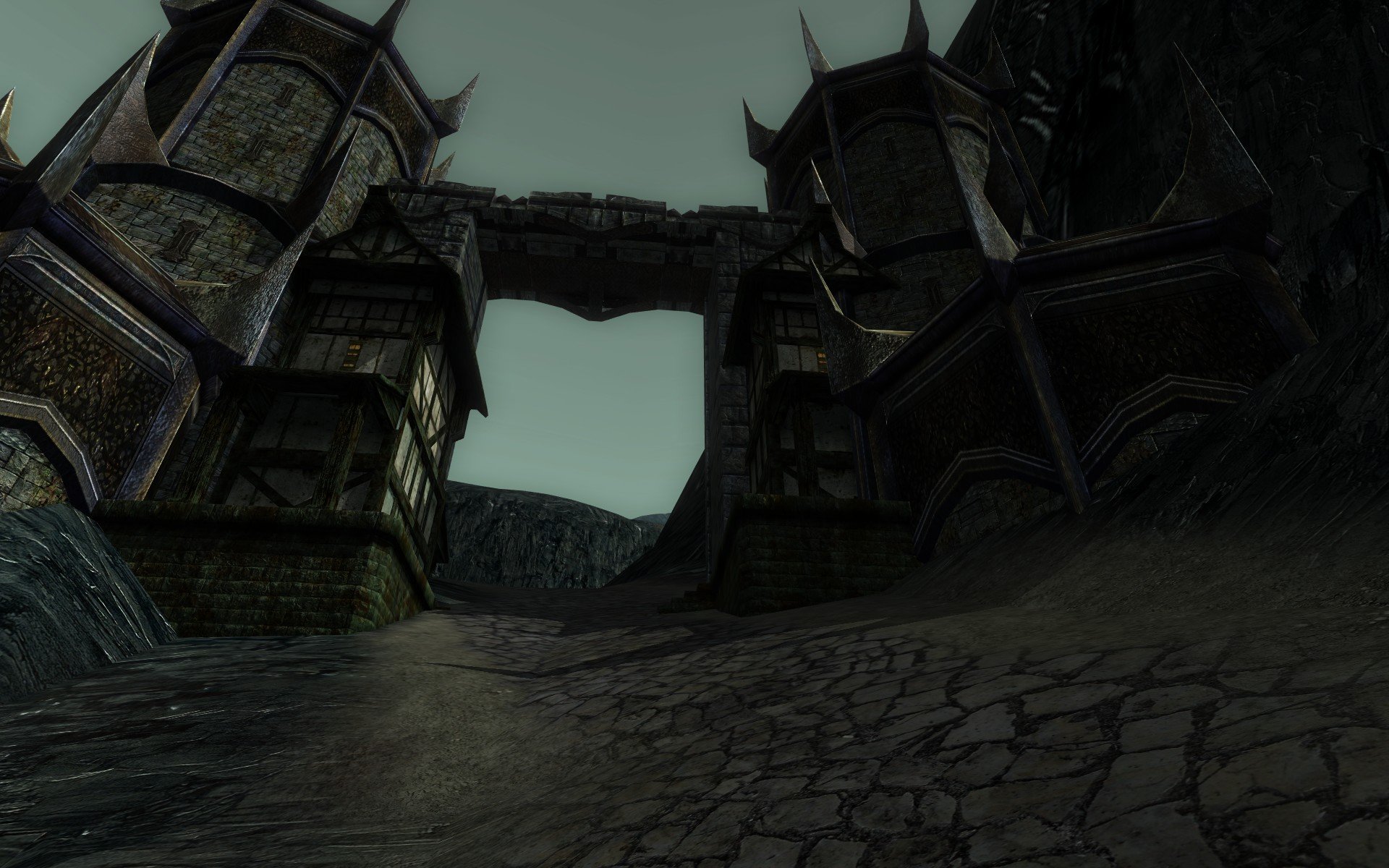
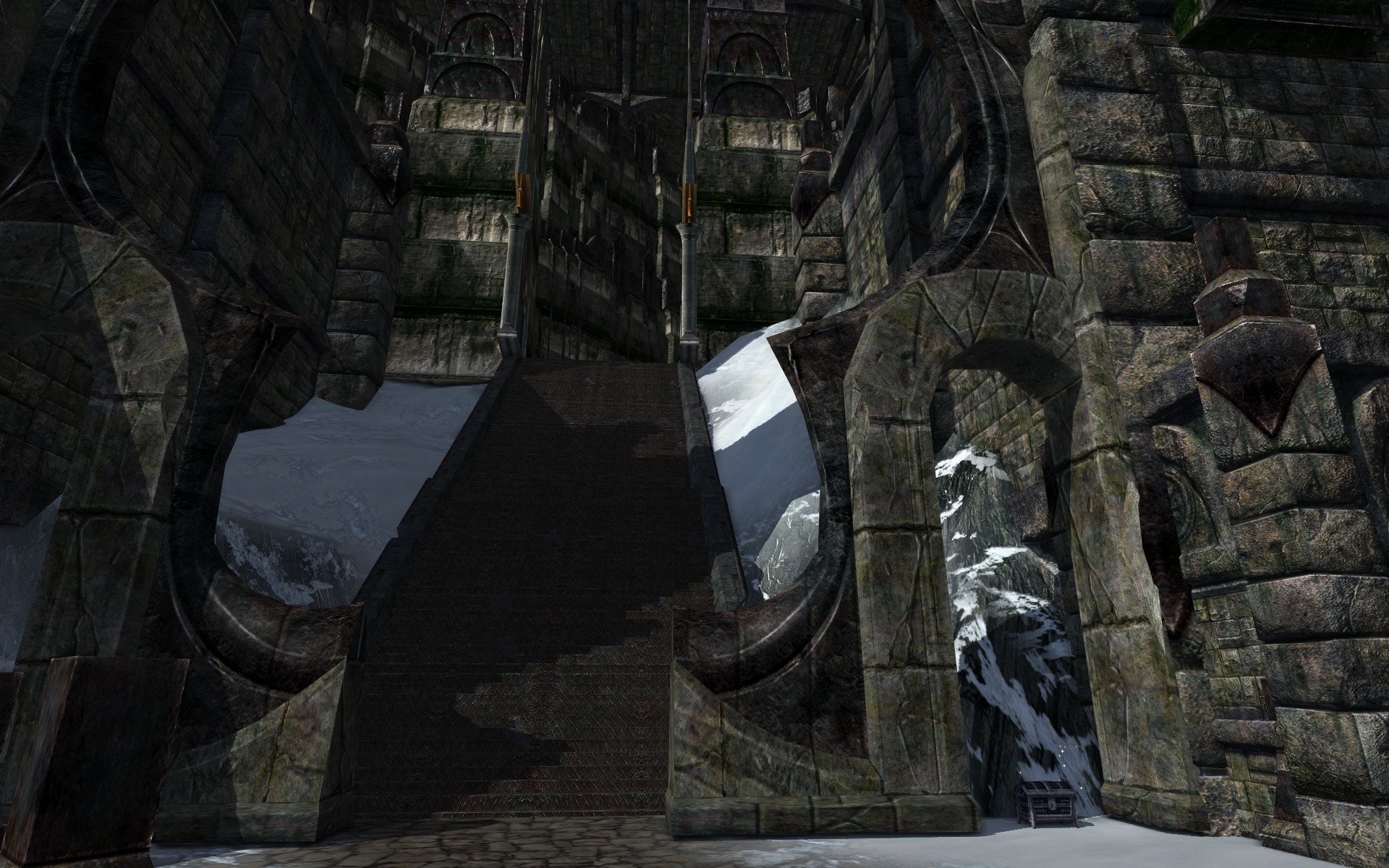
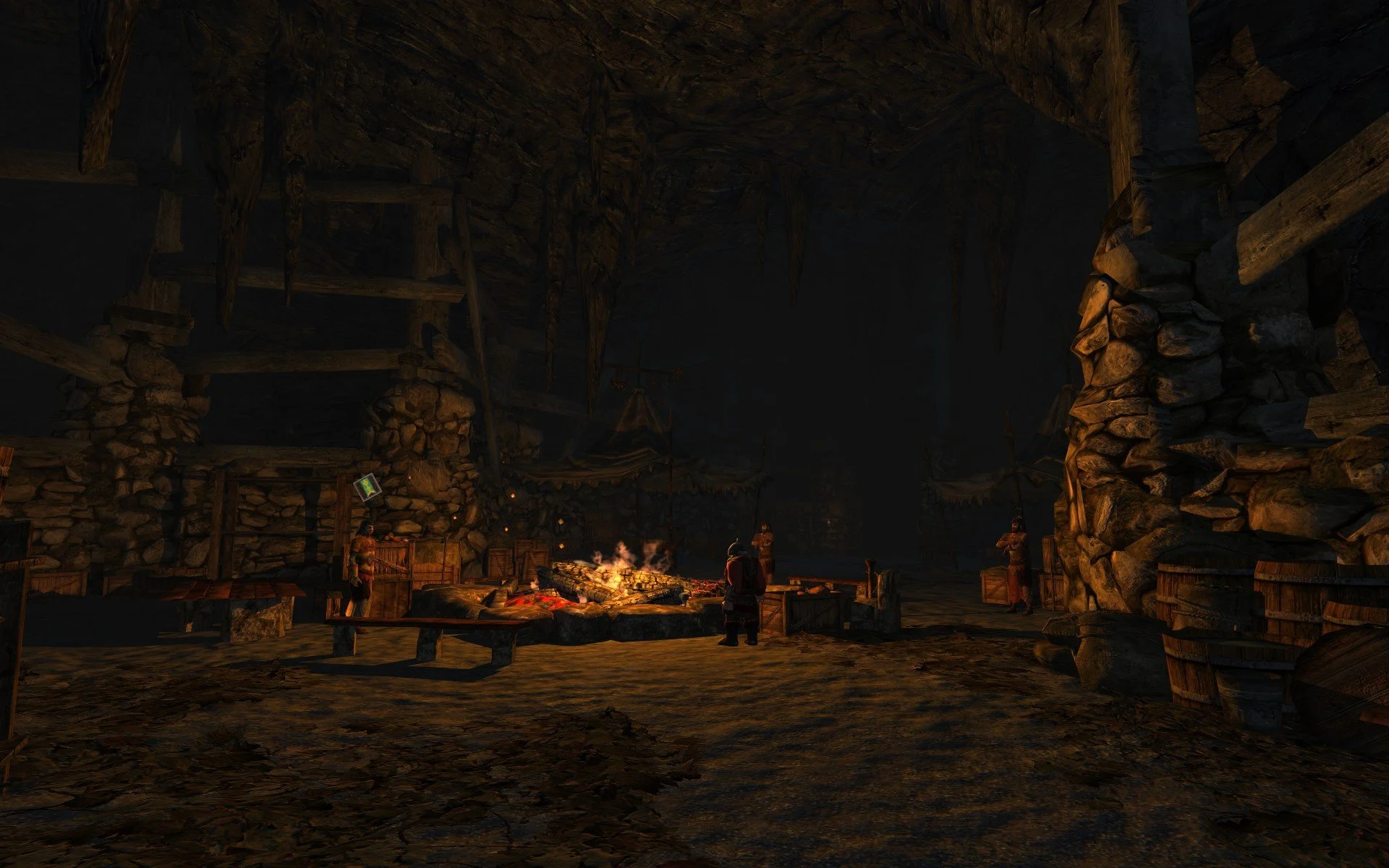
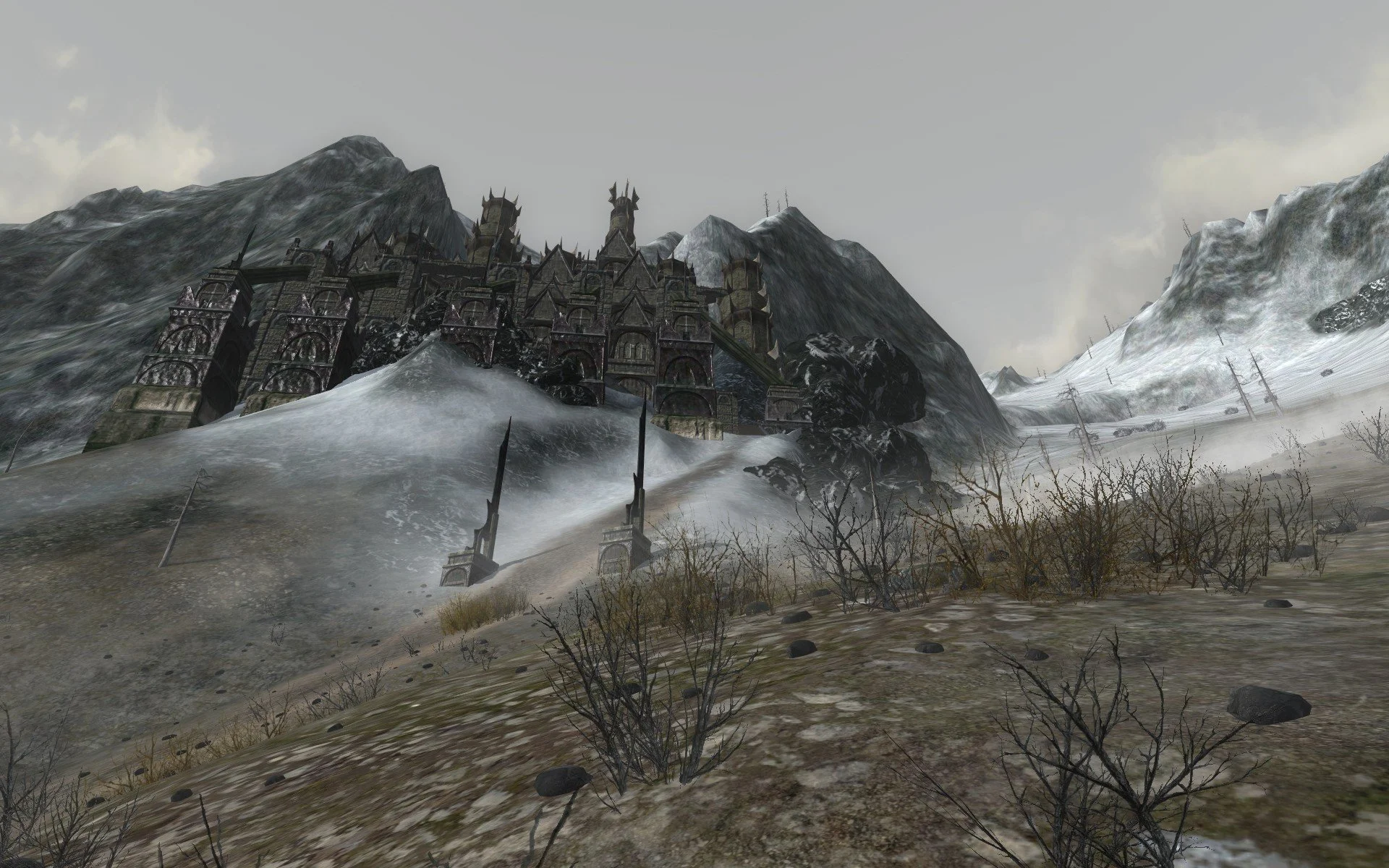
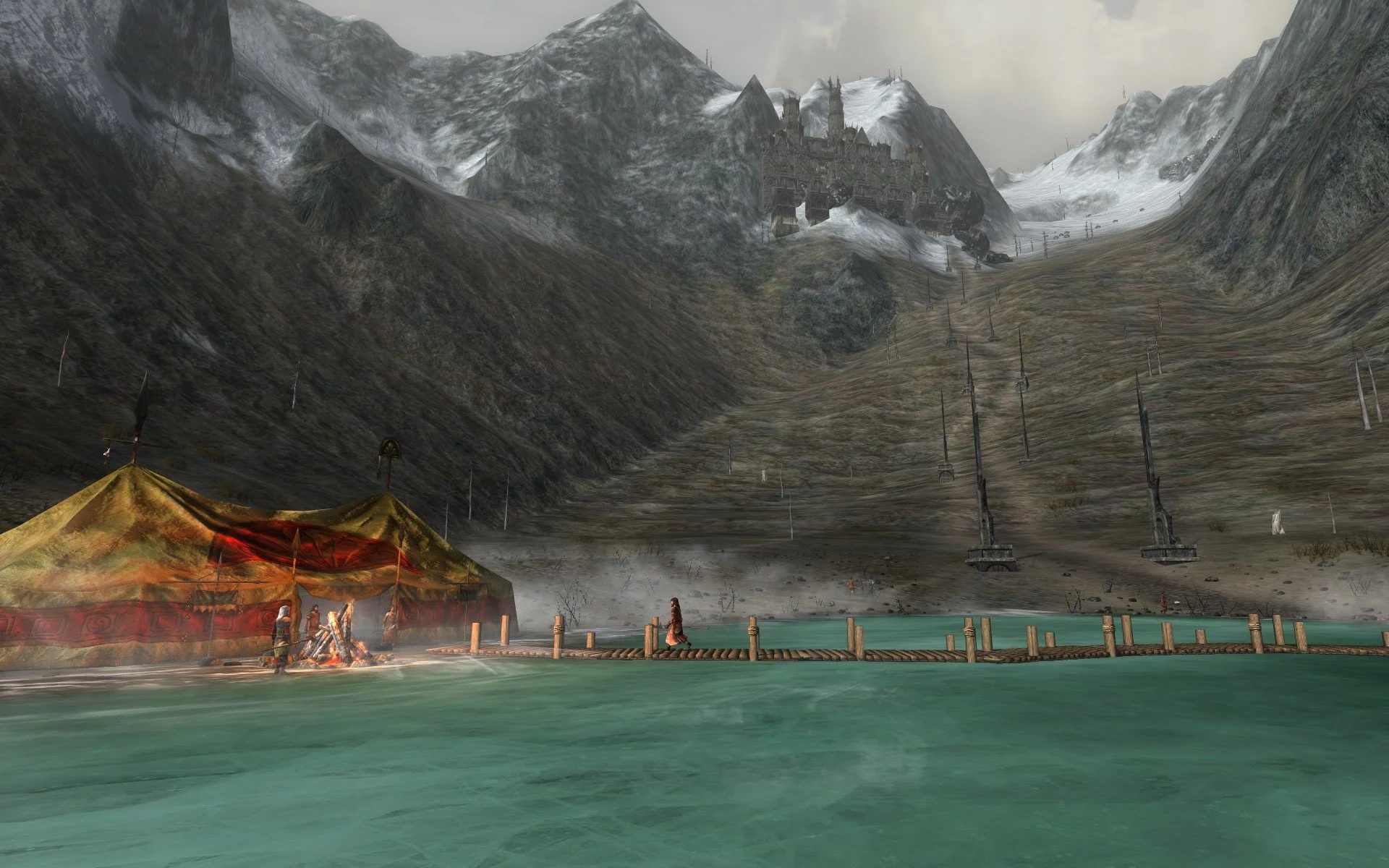
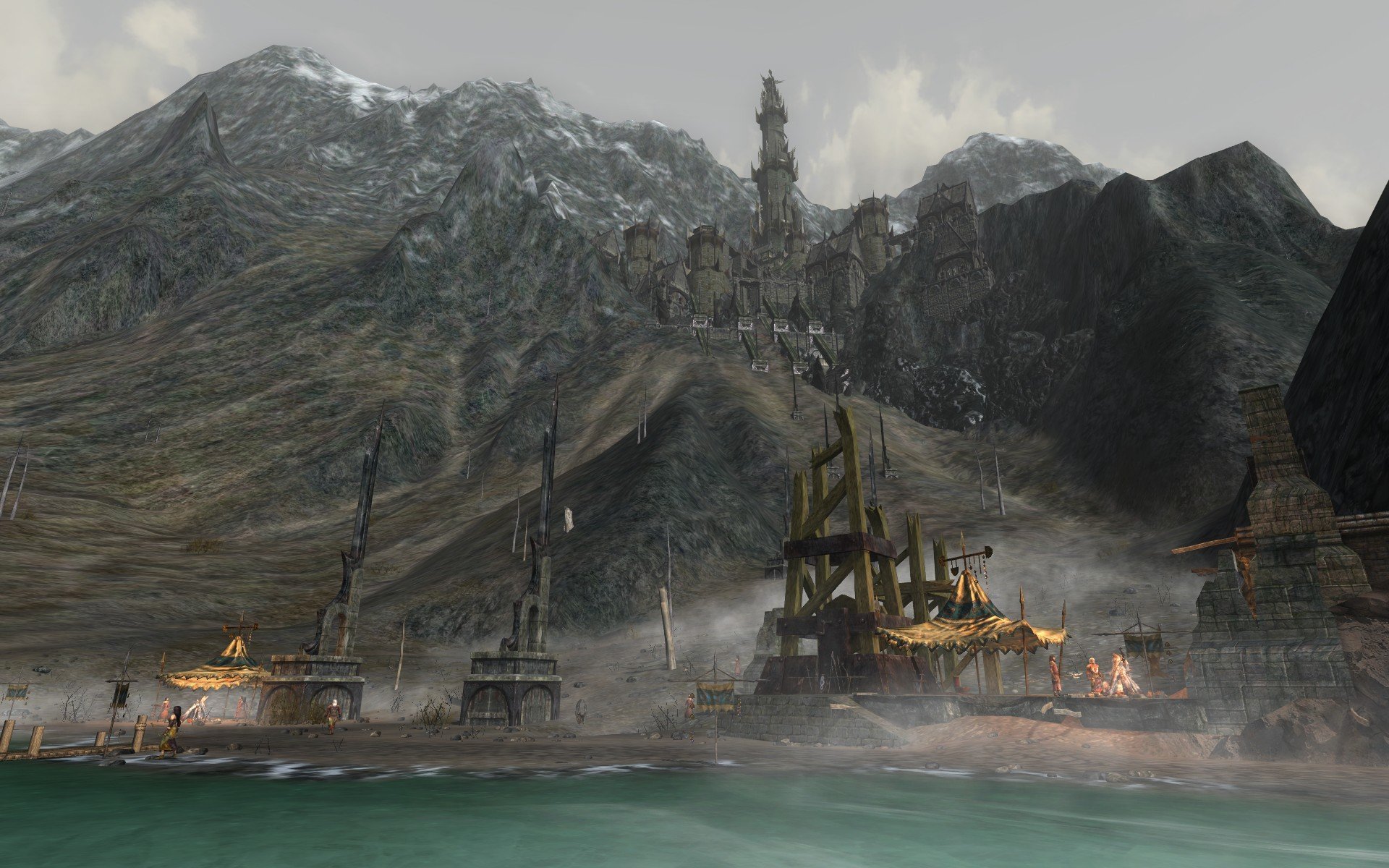
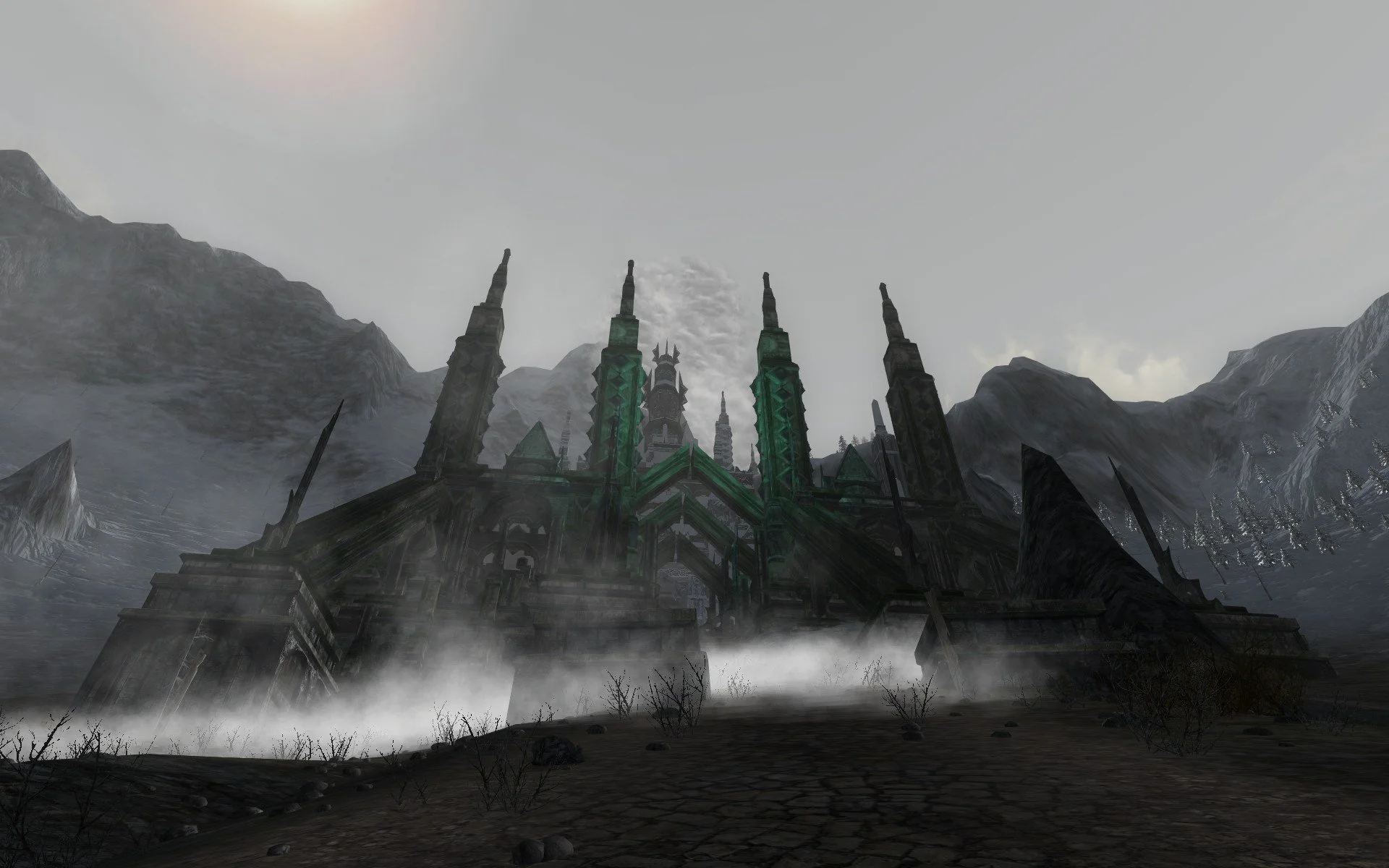
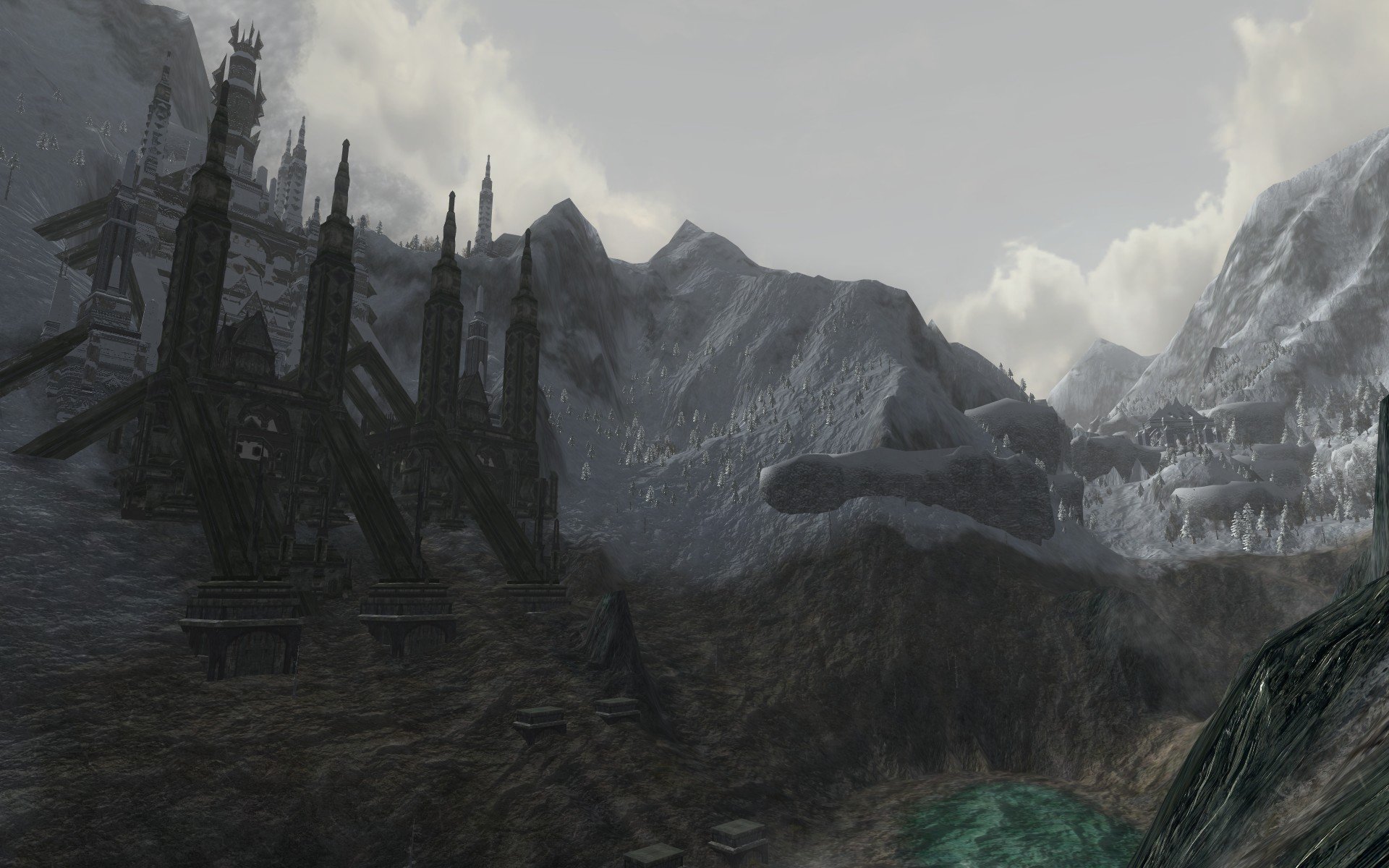
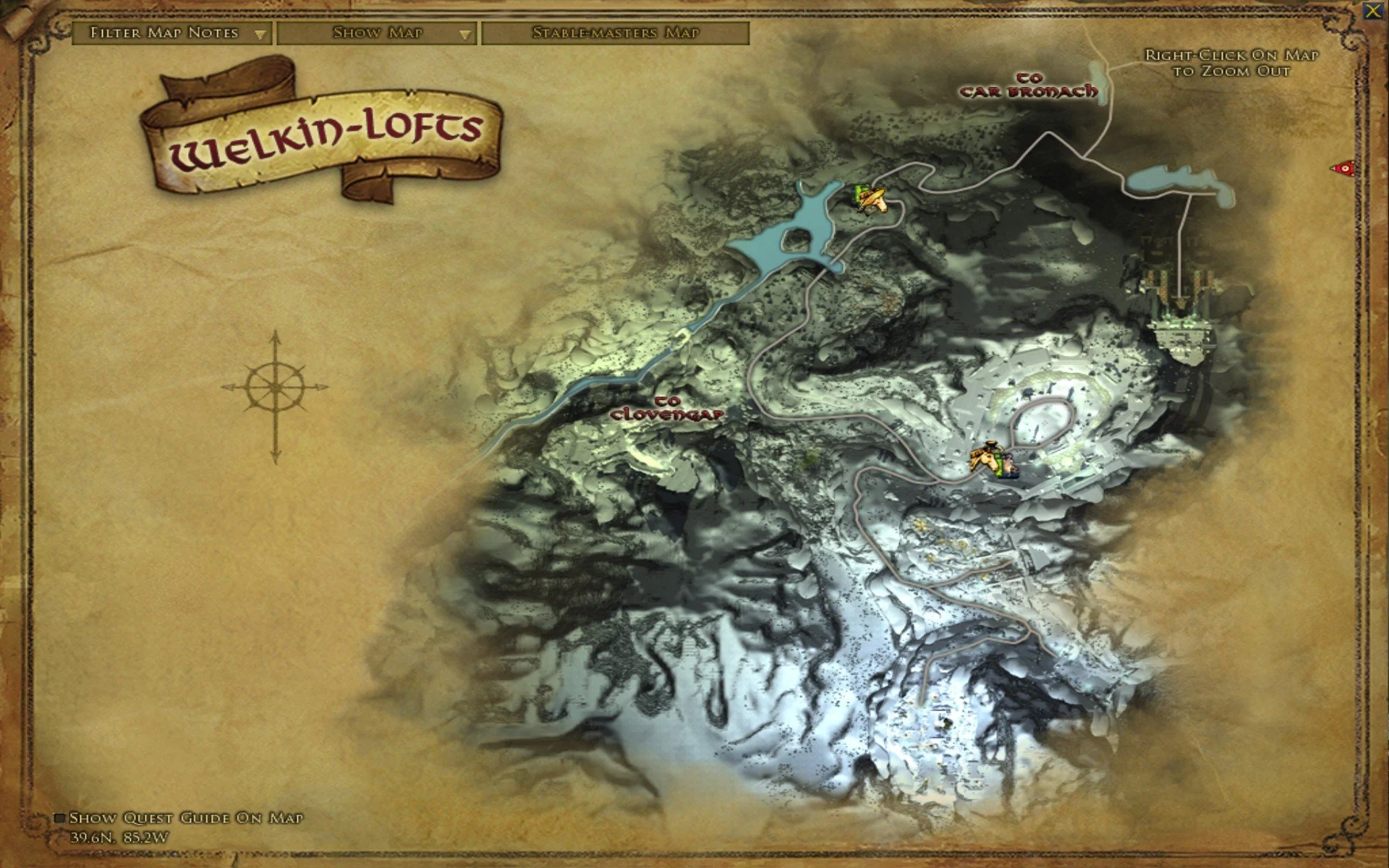
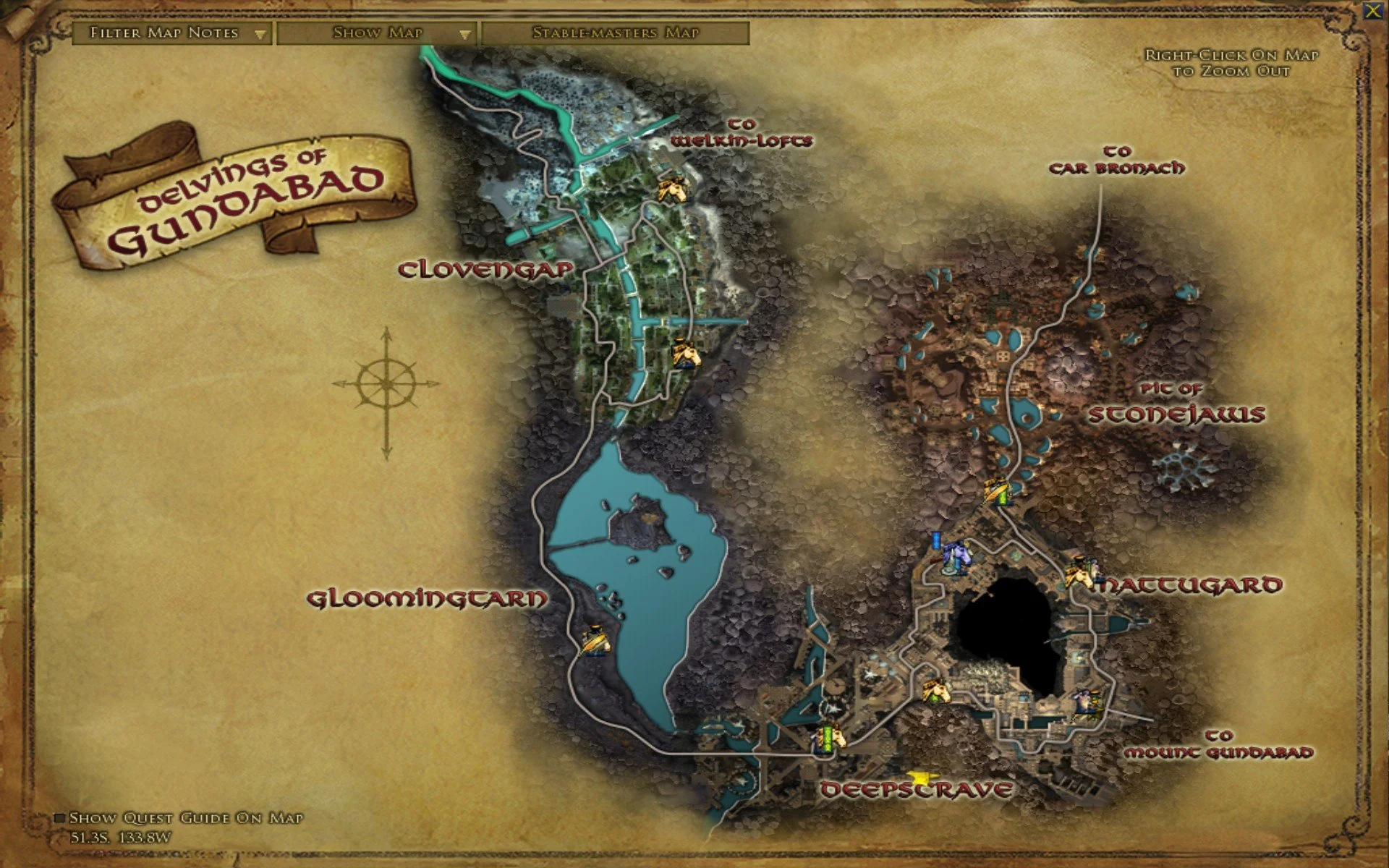
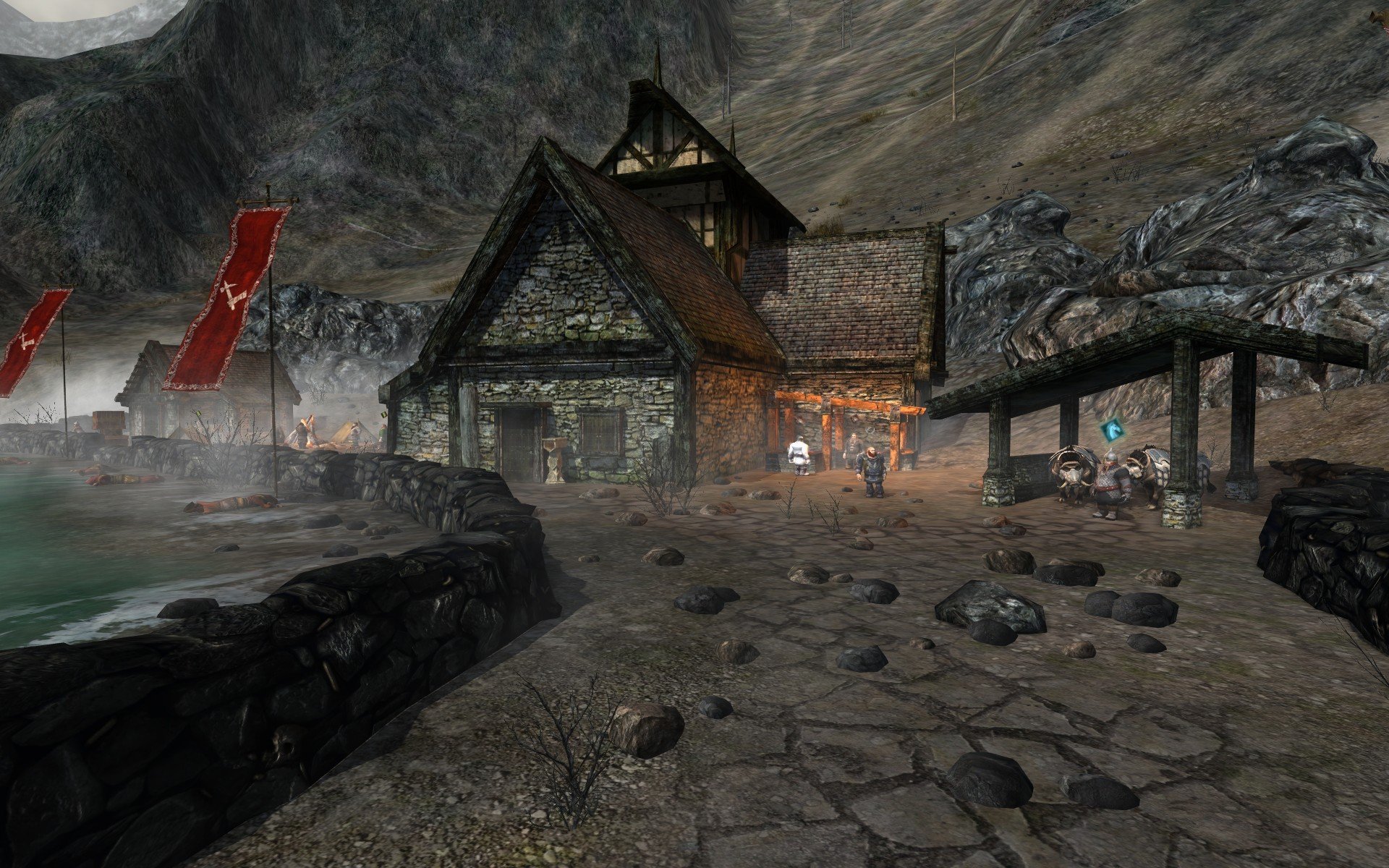
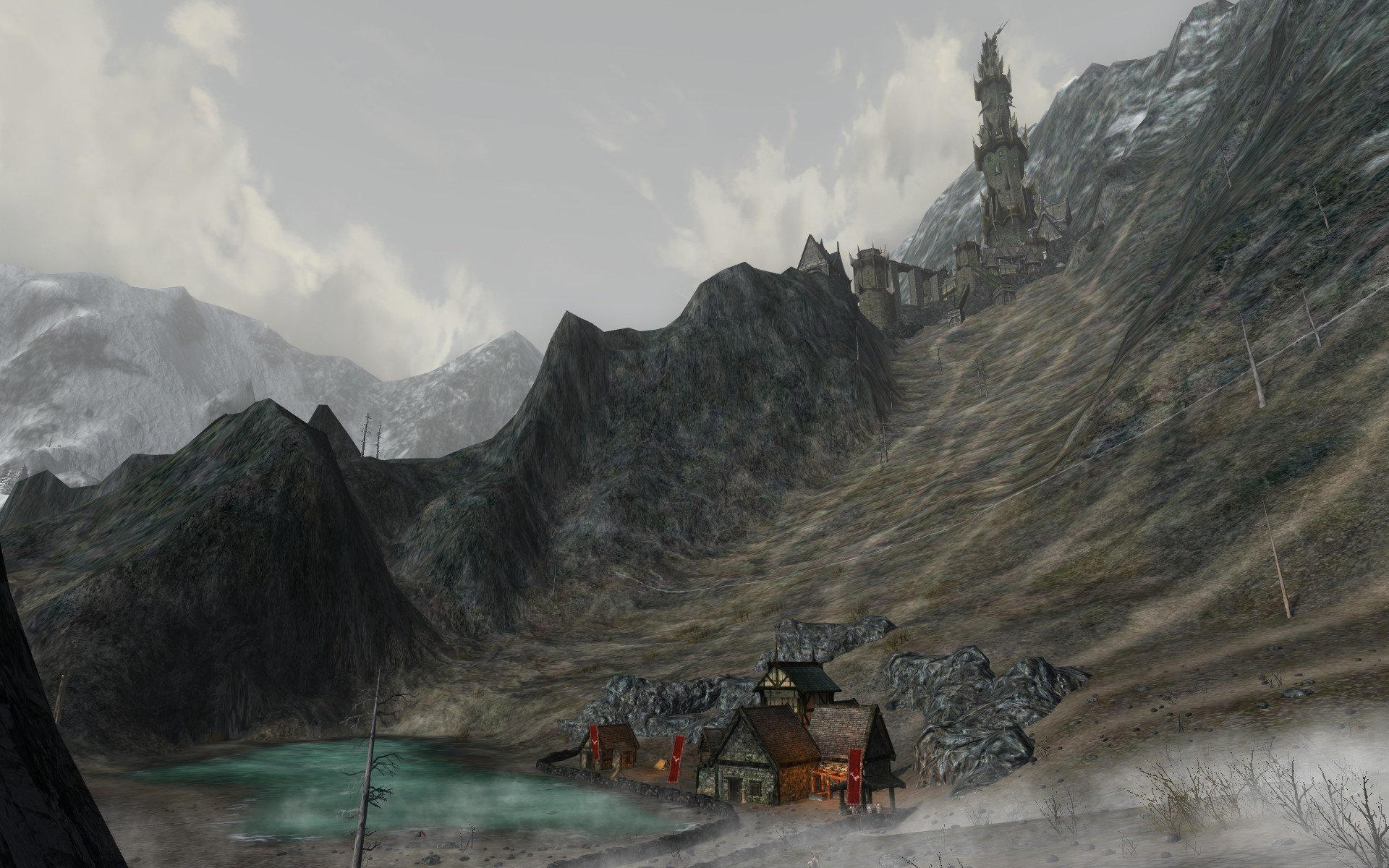
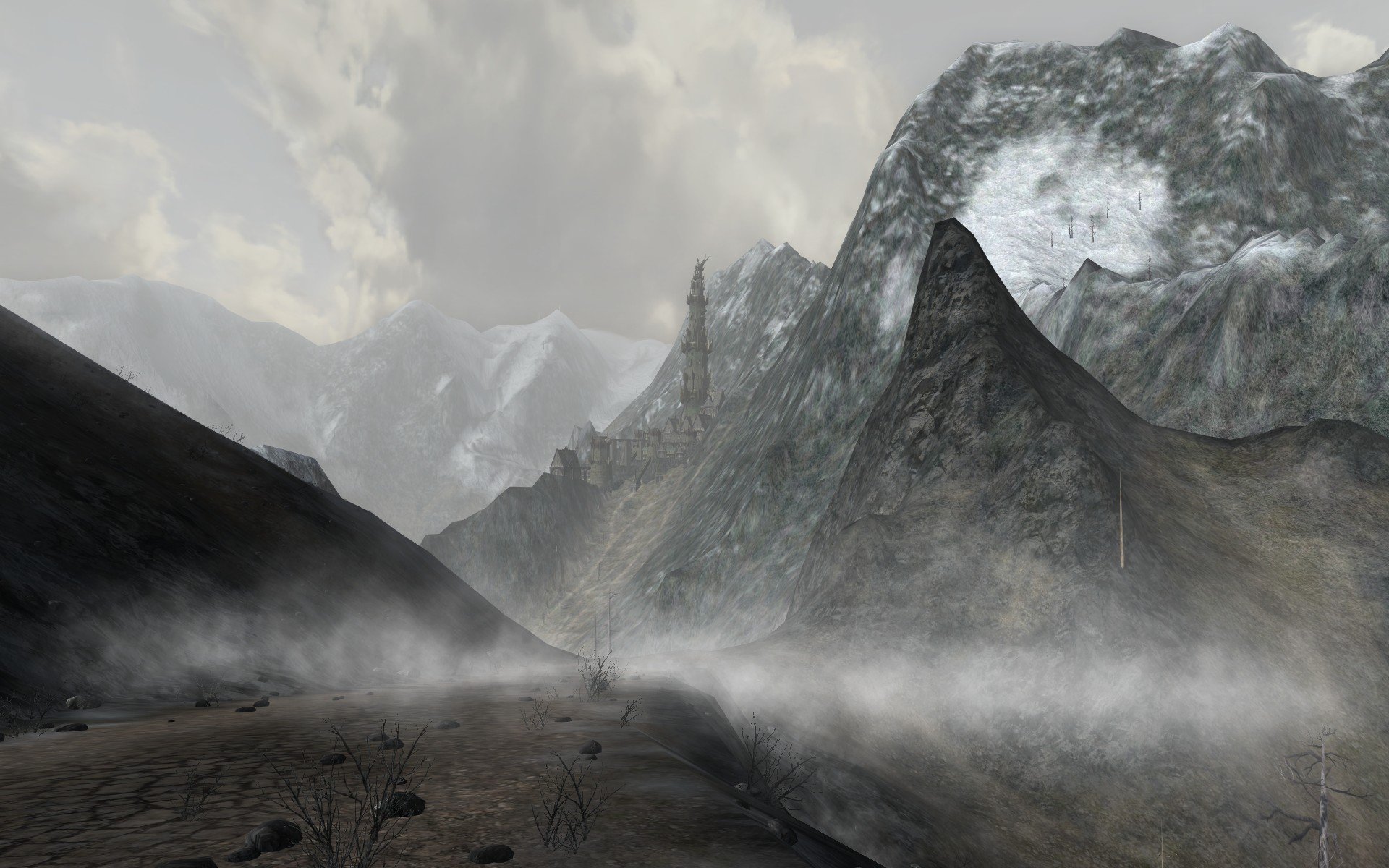
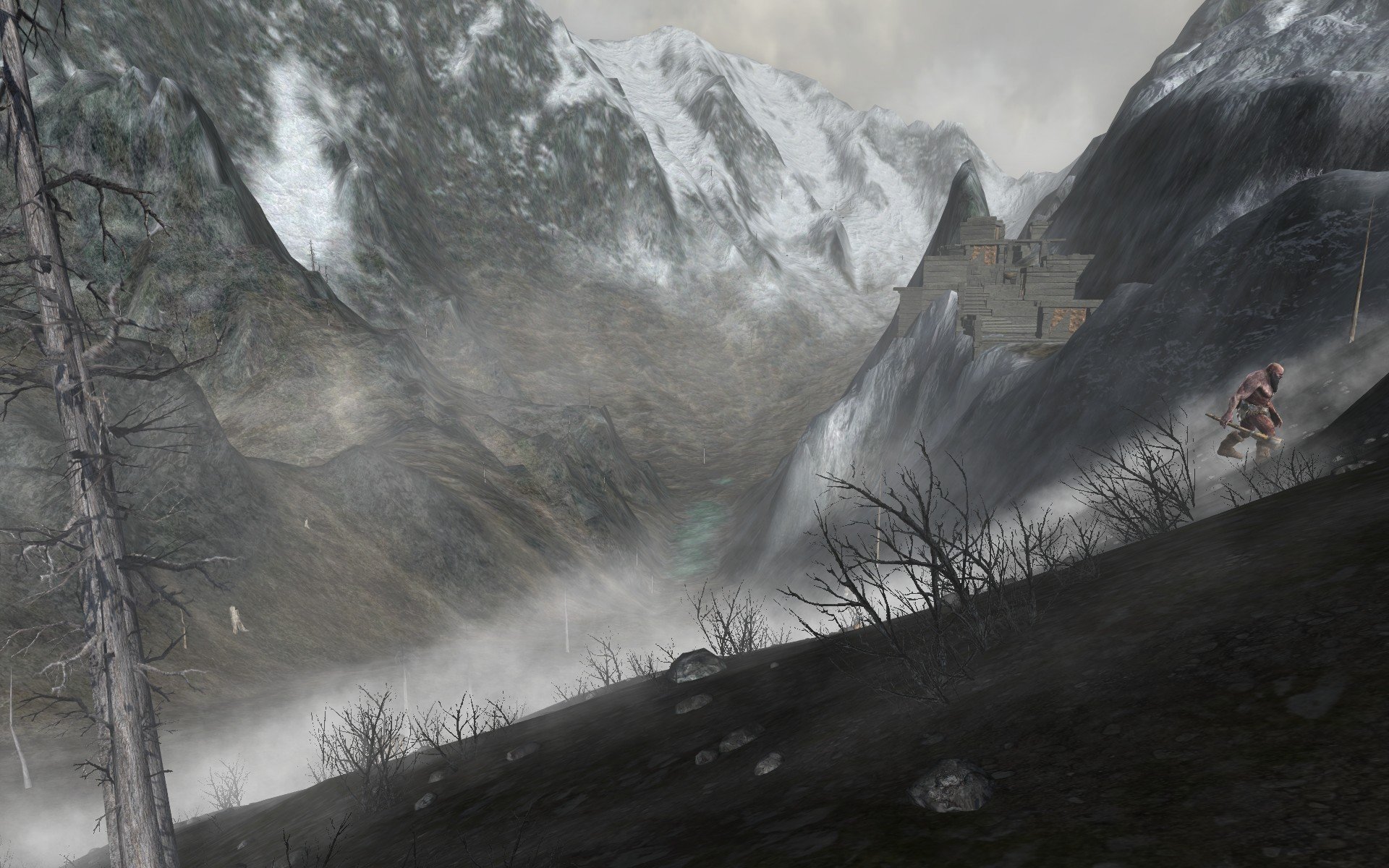
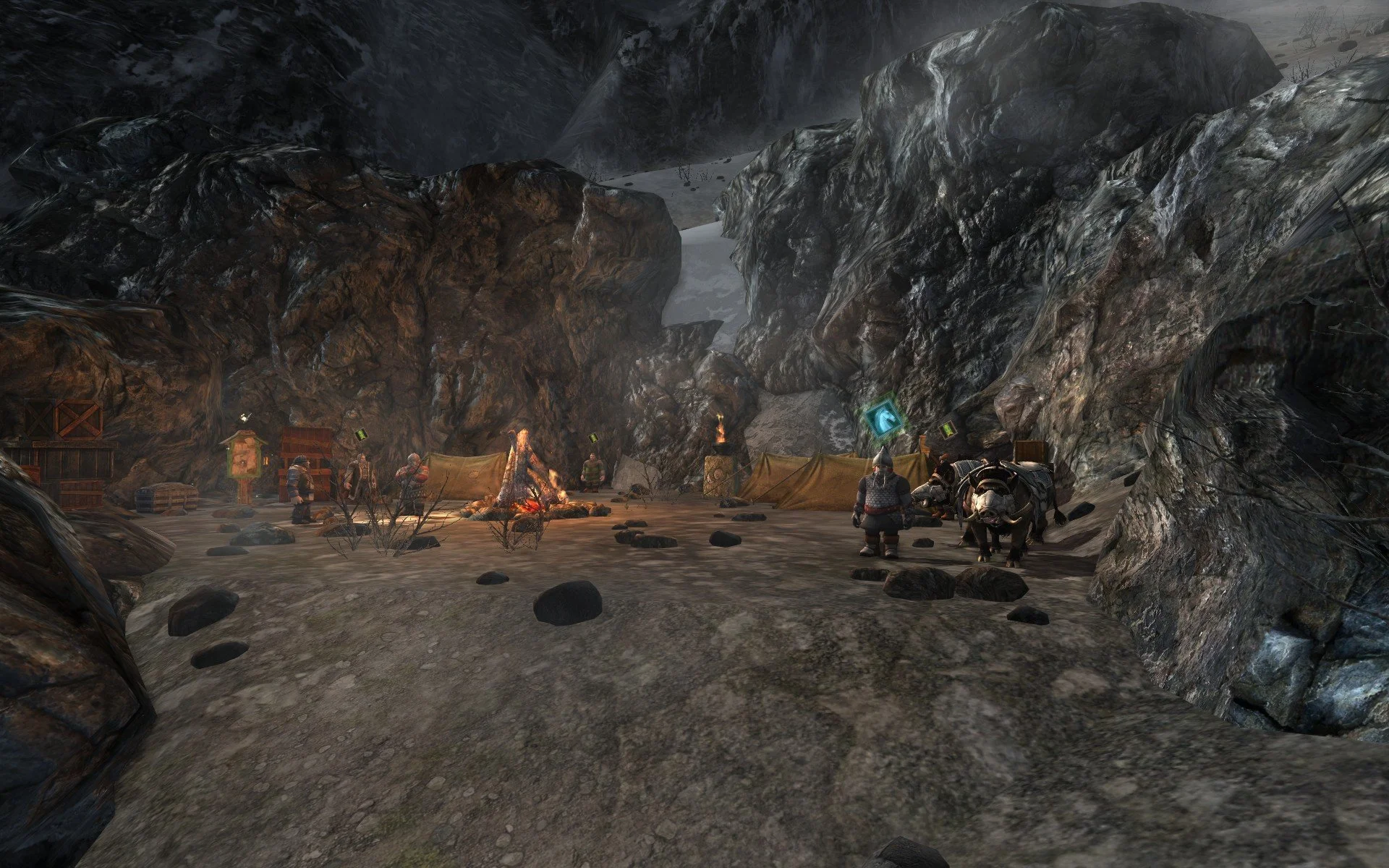
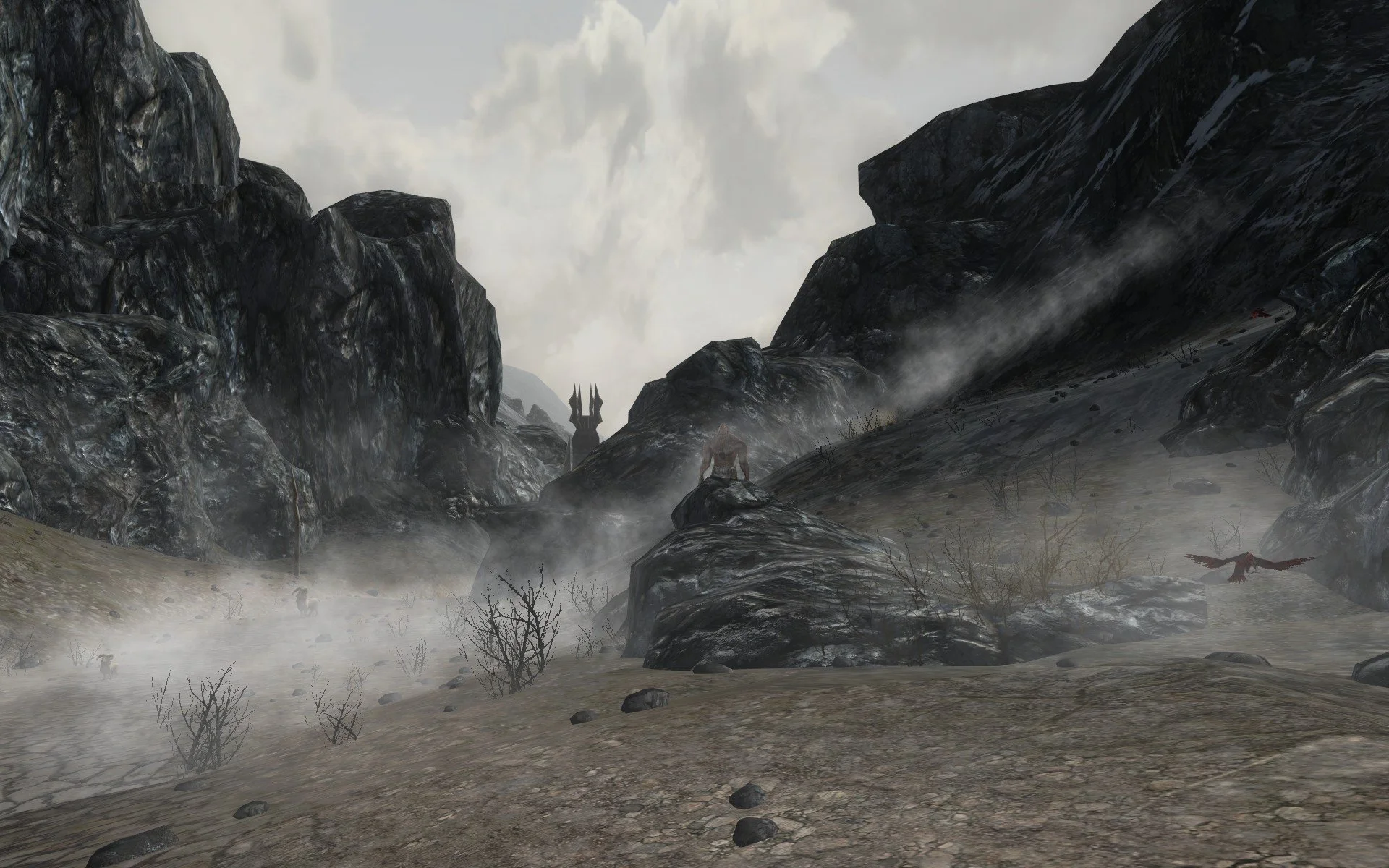
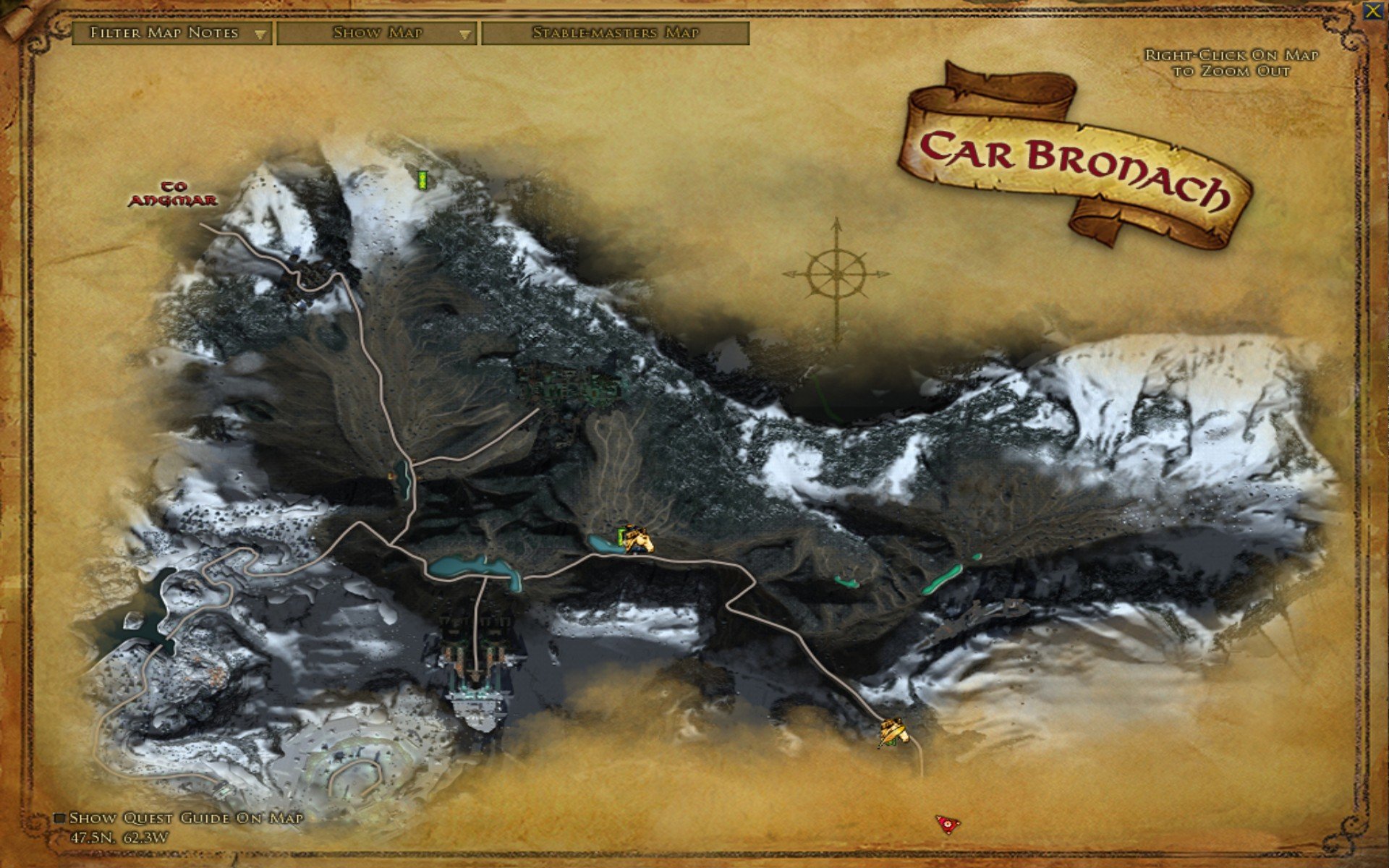
LOTRO: Problems With the Revised Legendary Item Systems
NB. If you have a strong feeling of deja vu while reading this post, it’s not just you. Most of the points raised here were mentioned previously a few weeks ago when I wrote about my experiences during the beta testing of Update 30.3 on Bullroarer server. I’m sure long time LOTRO players will not be at all surprised by what is discussed in this post.
Developer’s Standing Stone released Update 30.3 for the MMORPG The Lord of the Rings Online today. This includes the new Brawler class and the revised Legendary Item system. The latter has proven to be problematic. Firstly, there has been no support information from SSG as to how the new system works. There is no in-game tutorial or quest that orientates the player. In fact unless a player opens up the LI window and discovers that there is a new “appraise” button added to the UI, they could easily continue playing totally oblivious to the revised system. Secondly, all the bugs and glitches that were highlighted by players on the test server have not been addressed and have been ported over to the live servers. Unless you are the type of player who is heavily invested in the game and has kept abreast of the various threads about the revised LI system on the official forums, you will have to muddle through the best you can. Furthermore, you will be at risk of making mistakes, wasting valuable in-game resources and potentially gimping your new LI.
NB. If you have a strong feeling of deja vu while reading this post, it’s not just you. Most of the points raised here were mentioned previously a few weeks ago when I wrote about my experiences during the beta testing of Update 30.3 on Bullroarer server. I’m sure long time LOTRO players will not be at all surprised by what is discussed in this post.
Developer’s Standing Stone released Update 30.3 for the MMORPG The Lord of the Rings Online today. This includes the new Brawler class and the revised Legendary Item system. The latter has proven to be problematic. Firstly, there has been no support information from SSG as to how the new system works. There is no in-game tutorial or quest that orientates the player. In fact unless a player opens up the LI window and discovers that there is a new “appraise item” button added to the UI, they could easily continue playing totally oblivious to the revised system. Secondly, all the bugs and glitches that were highlighted by players on the test server have not been addressed and have been ported over to the live servers. Unless you are the type of player who is heavily invested in the game and has kept abreast of the various threads about the revised LI system on the official forums, you will have to muddle through the best you can. Furthermore, you will be at risk of making mistakes, wasting valuable in-game resources and potentially gimping your new LI.
What makes this situation even more frustrating is that it was utterly predictable. SSG has a track record of ignoring player feedback, committing to deadlines and launching broken updates. This course of action always ends in a community management disaster which is further exacerbated by the developer's tone deaf, highhanded approach to dealing with PR problems and their total inability to learn from past mistakes. I and many other long time LOTRO enthusiasts find the latter to be the most egregious offense. The way the company seems to deliberately set itself at odds with its players (who are also customers) and then blithely walks inexorably into a problem of their own making is staggering. Ultimately, such behaviour sends a very clear message. There is clearly a conflict of interests somewhere in the chain of command and it is proving detrimental to the games evolution and customer relations.
I spent most of the evening talking to kinfolk as well as fellow LOTRO players on Discord and Twitter trying to ascertain whether I had missed some key information regarding Update 30.3 and important LI revision. Sadly, I concluded after several hours that this wasn’t the case. There is no easily accessible in-game resource that either provides directly, or points towards a guide for the new LI system. Eventually I found a useful document, created by Helcawen as a means to help orientate their kinship members. It is an informative guide but is still subject to change as it reflects the “broken” system as it currently is. Apparently SSG have made one post on the new LI system but unless you are especially adept at using the official forums it’s hardly easy to find. However, there is no shortage of player feedback cataloguing the issues that they are discovering about the new LI system.
Many of the resources that are used in the new LI system, such as XP runes, have to be used in a specific order or else the player doesn’t get the maximum benefit from them. Then there is the cap on resources such as Ancient Scripts which means you are forced to spend them before you can acquire any more. And then there is the increase in options to spend Mithril Coins to unlock and upgrade resources. Not only has this become more prevalent but the system is currently broken with Tracery levels exceeding the level of the LI that they’re used in. It would also appear that the most powerful Traceries are exclusive to lootboxes. But for me, the biggest problem is with replacing a Legendary Item that has been maxed out. Simply put, you do not get sufficient resources to create a commensurate replacement. Considering the time, effort and money that I’ve put into my existing LI this is an unacceptable situation and a deal breaker.
Assuming that SSG are going to “fix” the new LI system, I don’t think I shall touch my level cap Lore-master staff and book l currently have on my primary character. I shall wait until the Fate of Gundabad expansion launches in November and ensure I’ve reached the new level cap of 140 before I make any important changes. I shall also be watching very carefully how SSG handles this situation because my patience is finally exhausted with them and their cavalier attitude. If I cannot replace my LI with something comparable then I see no reason to keep playing. As a paying customer, I don’t like downgrades of service or having something taken from me. For years players have debated the future of LOTRO and pondered its fate. I believe that SSG have reached a point where their actions are directly harming the game and alienating players. They’ve been warned time and time again about the consequences of their actions. If things go ill for them, then they are the architect of their own demise and deserve no sympathy.
MMO Tropes: “Kill Ten Rats” and Fetch Quests
“The MMO genre is rife with its own set of tropes; recurring themes and motifs that have become established and ubiquitous. All of which are ideal material for a hastily produced, lazily conceived, recurring blog post”.
The MMORPG genre is a curious subset of video games. Not only is it predicated on violence against the individual, institutions and “others”, as so many video games are but also species-specific genocide and general mass extinction of fauna and flora. It is easy to understand how this gaming specific trope came about. Early MMOs often had very little or no narrative driven quests and players simply levelled their characters by gaining XP from any sort of combat. Be that against other players, mobs or general in-game wildlife. What is far more perplexing is why such an arbitrary mechanic still persists in the modern MMO. Is it simply due to “laziness” and the fact that it’s easy to implement and rely upon? Or is there more to it than that?
“The MMO genre is rife with its own set of tropes; recurring themes and motifs that have become established and ubiquitous. All of which are ideal material for a hastily produced, lazily conceived, recurring blog post”.
The MMORPG genre is a curious subset of video games. Not only is it predicated on violence against the individual, institutions and “others”, as so many video games are but also species-specific genocide and general mass extinction of fauna and flora. It is easy to understand how this gaming specific trope came about. Early MMOs often had very little or no narrative driven quests and players simply levelled their characters by gaining XP from any sort of combat. Be that against other players, mobs or general in-game wildlife. What is far more perplexing is why such an arbitrary mechanic still persists in the modern MMO. Is it simply due to “laziness” and the fact that it’s easy to implement and rely upon? Or is there more to it than that?
Two decades or so ago, early MMOs and indeed the RPG genre needed to establish certain concepts to new players. Mechanics that now are so well known that they are even understood outside of gaming in wider popular culture. Specifically the idea of progression and levelling your character (not to be confused with “levelling up” and other nebulous political soundbites). Giving a new player a simple task to demonstrate levelling and XP gain, while they are still within the game tutorial is a logical learning tool. It clearly equates completing a task with the gaining of XP and thus increasing in level. Tutorials in MMOs tend to be within very controlled environments, so the player can tentatively undertake the task free from risk. Often these safe areas at the start of games take place in dungeons or a castle, thus the liquidation of rodents as an object lesson does not seem out of place.
And because the MMO genre is utterly self plagiarizing, this simple instructional mechanism quickly became commonplace, then ubiquitous, then a standing joke and eventually a tedious played out meme. Many MMOs have transplanted the “kill quests” from its functional place in the tutorial and made it a mainstay of PVE questing. Sometimes a great deal of effort will be put into contriving a narrative to justify such tasks but all too often it is just bandied about as filler content. Some games have even tried to make “kill ten rats” into something ironic and self-deprecating but these attempts to satirise the genre seldom work. A dull and uninteresting task can remain a dull and uninteresting task, especially if no effort has been put into the “packaging”.
“Kill ten rats” has morphed over time and has become subsumed into another MMO hardy perennial; the fetch quest. This is a mission that sends a player to a remote area(s) of the game world to collect a selection of items that are required for “reasons”. Often the desired object(s) are in a contested area that is densely populated by mobs, thus making acquiring them difficult, tedious or both. Frequently upon returning to the quest bestower, a follow up mission is provided in which you have to return once again to the contested area to collect further materials. Again, this was cutting edge MMO content two decades ago but nowadays, it is simply seen as an unnecessary and uninspired grind. Players are very familiar with the various tricks of the trade that game developers use and so such content doesn’t in any way enthuse those having to carry it out.
What both of these game mechanics highlight are the inherent limitations of what you can do within the confines of an MMO. Although the term MMO is appended with RPG, often these games do not have the technical sophistication of their single player cousins. Hence MMOs weighted towards progression systems, resource management, varying your build and so forth. As far as interaction goes within the game world, it is often based on “click” on a NPC for narrative, or a resource for collection, or on a mob to initiate combat. Stories, voice acting, narrative choices and cutscenes are the veneer applied to these things to make them engaging. A good game essentially asks you to “kill ten rats” but in such a way that it doesn’t feel like “killing ten rats”. Sometimes the developers get away with it. Other times they don’t. The latter is never a good thing.