Taking What You Don’t Need
Every couple of weeks, I log into the Epic Store to see what free games they are giving away. As they’re really trying to secure their share of the market and establish themselves as a clear alternative to Steam, there are plenty of exclusives games and freebies to be found. The ethics of this business approach is a separate issue and not one that I shall address in this post. Let it suffice to say that the concept of the “Loss Leader” is a long standing business tactic. When I logged in today, I saw that both Alan Wake’s American Nightmare and Observer were available for free. The latter interested me because it features voice acting by the late Rutger Hauer. So I duly added them to my game library. The same game library that currently consists of 30 games but only one of which I have paid for. A library that despite its size and wide variety of genres, I’ve only played two of the titles therein. Furthermore, there’s a similar story to tell with regard to Twitch Prime. I log in and check to see what freebies are of on offer, so I can also add them to another redundant library.
Another free game courtesy of the Epic Store
Every couple of weeks, I log into the Epic Store to see what free games they are giving away. As they’re really trying to secure their share of the market and establish themselves as a clear alternative to Steam, there are plenty of exclusives games and freebies to be found. The ethics of this business approach is a separate issue and not one that I shall address in this post. Let it suffice to say that the concept of the “Loss Leader” is a long standing business tactic. When I logged in today, I saw that both Alan Wake’s American Nightmare and Observer were available for free. The latter interested me because it features voice acting by the late Rutger Hauer. So I duly added them to my game library. The same game library that currently consists of 30 games but only one of which I have paid for. A library that despite its size and wide variety of genres, I’ve only played two of the titles therein. Furthermore, there’s a similar story to tell with regard to Twitch Prime. I log in and check to see what freebies are of on offer, so I can also add them to another redundant library.
I’ve been playing video games since the eighties when I used to spend too much time playing the arcade version of Asteroids at the local swimming baths. I made the transition to PC gaming in the early nineties. Back then this meant buying a boxed copy of a game from a retail outlet, such as WH Smiths. The pricing at the time and in relation to how much I was earning, meant that I didn’t buy multiple games at once. I’d read reviews meticulously, weigh up the pros and cons for each game and then make a decision based upon what would be the most entertaining experience and offer some degree of longevity. Making purchases within such a framework made the acquisition of a new video game a very exciting process. Video games were from my perspective a luxury. Hence it took a while to build a library of games and due to the size of hard drives at this time, it’s not as if you had every game you owned installed at once. PC gaming was a hobby that required management both financially and logistically. Perhaps that was one of the aspects that made it special.
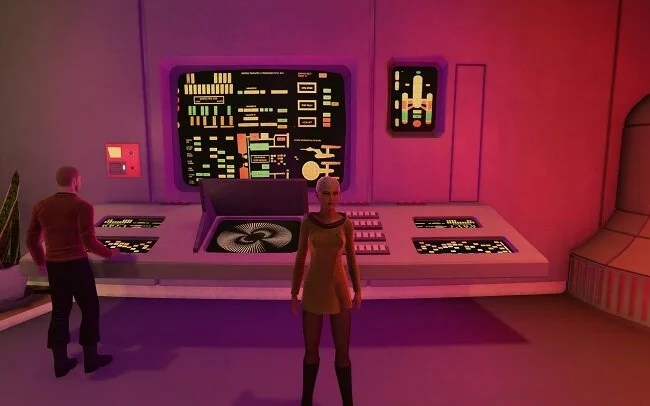
I was bought Starfleet Academy in 1997 as apart of a leaving present from a job
Twenty years on and the video game market has gone digital. Furthermore that market is now saturated and the premium price model, along with the short lifecycle of games, means that there’s only a limited window of time before prices are slashed. The ubiquity of video games, along with the fact that you can buy them on a whim, has substantially changed our relationship with them. You can purchase a game that you want, download it and play it at any time of day. You don’t have to wait for the store to open to get your hands on it. A new game is no longer a luxury; something to be saved for, then sought out and installed via multiple CD-ROMS. I may even go so far as to say I no longer imbue a new game with any great sense of value. They are transient pleasures, some of which can be bought for pocket change and then dispensed without regret, if they fail to entertain. Effectively some PC games remind me of those items you find on display at your local supermarket, as you queue for the checkout. Indulgence items such as snacks, designed to get you to spend a few extras pounds on something superfluous.
We currently live in the century of “me”, in the midst of a most decadent consumer society. Everyday we’re actively told that buying something will fill the gaping, empty void in our lives and assuage those feelings of loneliness, fear and utter despair. We are culturally conditioned to “like a bargain” regardless of its practicality. “Look what I got. A great deal on this alabaster dog kennel inlaid with depleted uranium”. The fact that you don’t have a dog is irrelevant it would seem, because you got a “deal”. Furthermore, I’m not saying all this from some position of moral superiority. Because I’m also logging on to the Epic Store and claiming all this needless free stuff, just like everyone else. But to be utterly candid, I really don’t need any of this stuff and I really should stop doing this. It reminds me of the “buy one, get one free” culture that leads to terrible food wastage. Something I didn’t realise was so damaging and problematic until recently. I suspect that the ubiquity of games and giving them away for free in this fashion, does more harm than good in the long run.
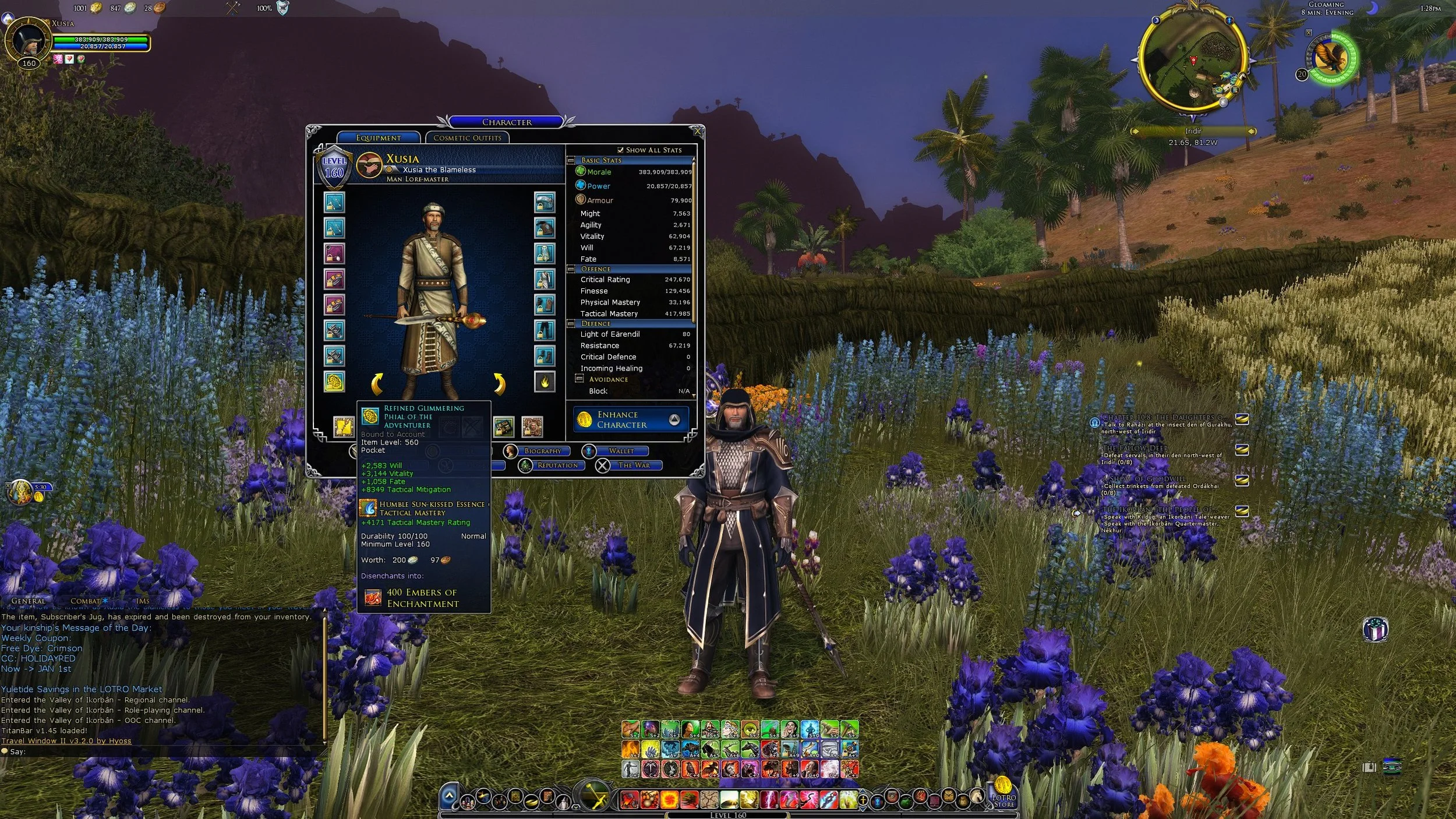
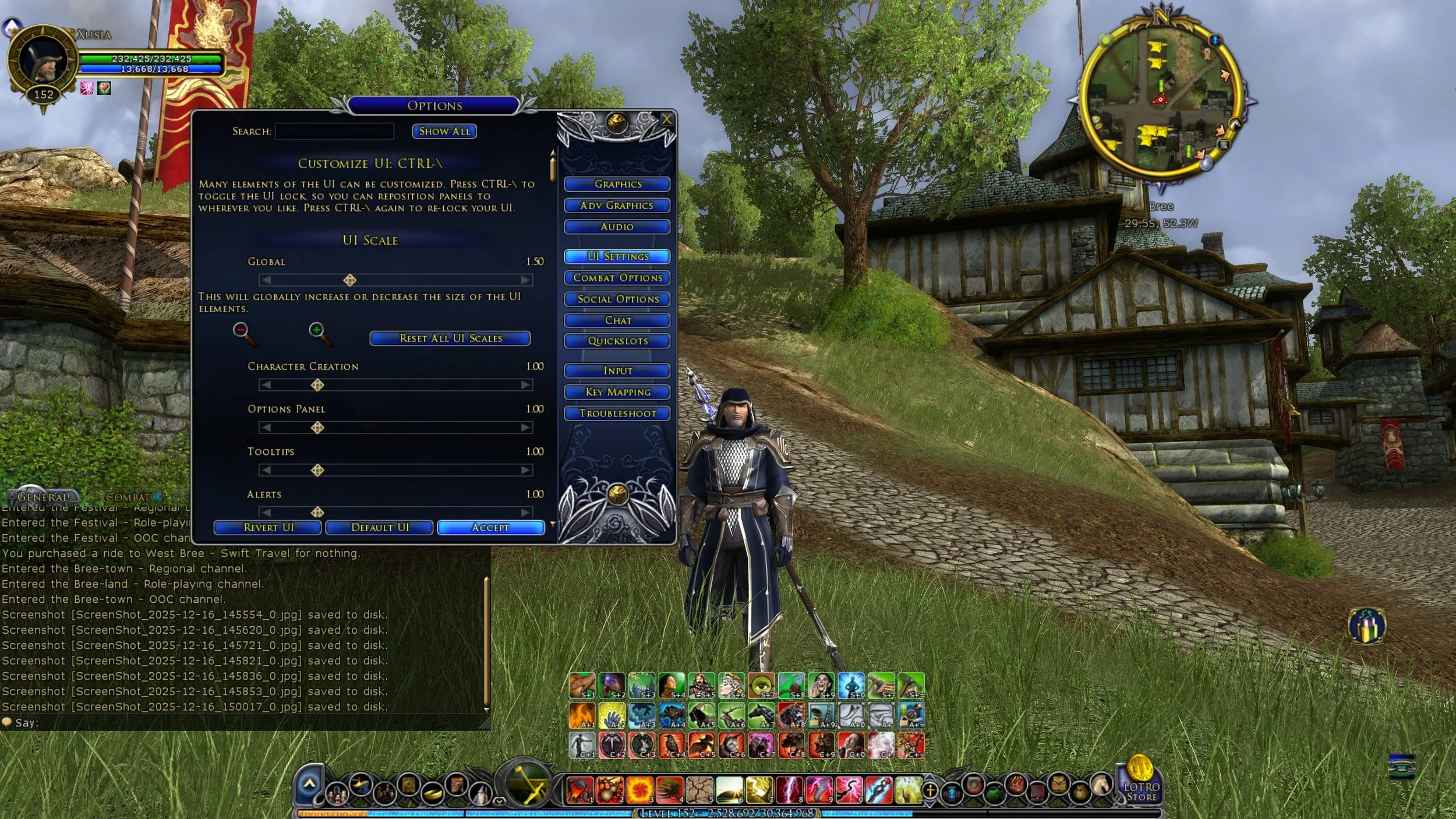





Progressing in an Orderly Fashion in ESO
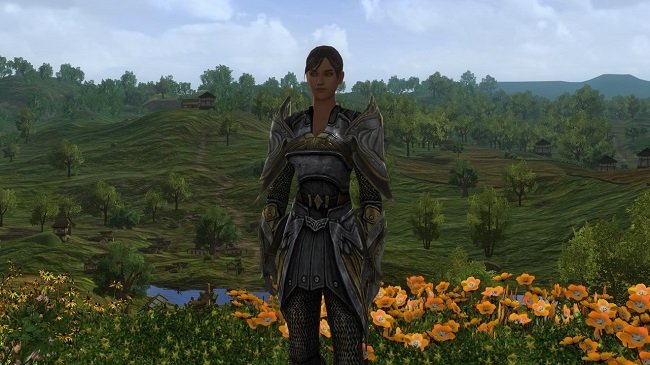
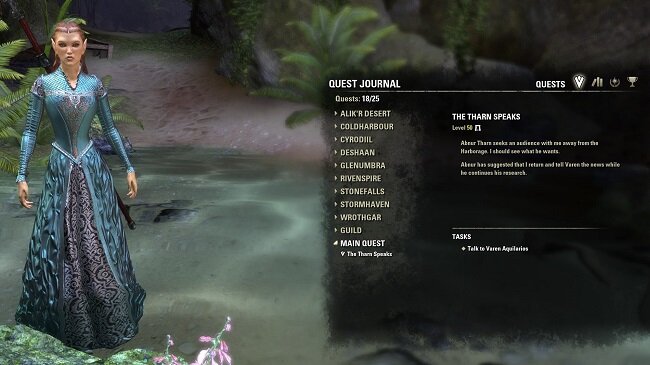
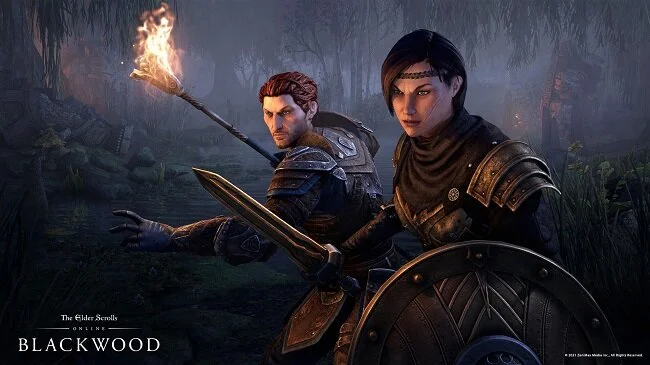
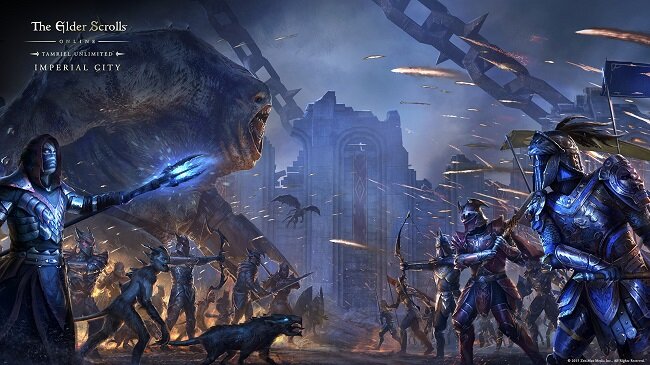
Whenever I start a new MMO I tend to research the various classes and make an informed decision about which one to choose as my primary character. This policy has worked out well over the years and therefore compared to other players, I don’t have multiple alts across numerous games. That’s not to say that I’m averse to creating a new character, I simply need a good reason to do so. When I do, its usually because there’s an option to experience a different story. Hence, I currently have three alts in The Elder Scrolls Online. Last night I reached the current level cap of 50 with my Imperial Dragonknight, having recently completed the Daggerfall Covenant storyline. I have now experienced all three faction stories (which I have enjoyed) and more importantly, have learned what is the best way for me to progress through the game. ESO offers players the chance to play the MMO in a manner that suits them. If you want to simply travel Tamriel and do things as you go along, then you may. It’s a very flexible in this respect. But if you want to play in a more structured way, it can be a little confusing navigating a linear path. So here are a few tips I’ve learned the hard way.
Whenever I start a new MMO I tend to research the various classes and make an informed decision about which one to choose as my primary character. This policy has worked out well over the years and therefore compared to other players, I don’t have multiple alts across numerous games. That’s not to say that I’m averse to creating a new character, I simply need a good reason to do so. When I do, its usually because there’s an option to experience a different story. Hence, I currently have three alts in The Elder Scrolls Online. Last night I reached the current level cap of 50 with my Imperial Dragonknight, having recently completed the Daggerfall Covenant storyline. I have now experienced all three faction stories (which I have enjoyed) and more importantly, have learned what is the best way for me to progress through the game. ESO offers players the chance to play the MMO in a manner that suits them. If you want to simply travel Tamriel and do things as you go along, then you may. It’s a very flexible in this respect. But if you want to play in a more structured way, it can be a little confusing navigating a linear path. So here are a few tips I’ve learned the hard way.
When you create a new character, if it is your first, then you will be obliged to play through your respective class tutorial. It’s not particularly complex and doesn’t last too long. It’s designed to provide an overview of basic combat and your skills. All subsequent alts can skip the tutorial. Which zone you start in comes down to which version of ESO you have purchased. If you’ve bought the base edition of the game, which now includes the Morrowind chapter (formerly called an expansion), you’ll find yourself here. If you’ve bought all subsequent chapters, you’ll start the game in Elsweyr. Now I understand from a business perspective why developer’s ZeniMax want new players to start in the latest zone but if you enjoy the MMO genre for narrative reasons, it can be confusing to begin the story here. So I would suggest starting the main story which sets up the lore and gives you an overview into the social and political situation in Tamriel.
To do this your new alt to the nearest major city in the zone you are currently in and you’ll be approached by a hooded figure who bestows Soul Shriven in Coldharbour quest. This will set you on the main story path. Not only does it establish the lore but it also rewards the player with some decent gear as well as skill and attribute points. There are 13 parts to the main story, however I would not recommend burning right through them all at once. Although content scales in ESO, some of these quests can be quite taxing, so you may want to attempt them when you have more skills and attribute points as well as robust gear. Therefore spread the main story quests out as you progress. There is also a questline that is specific to your faction. After you’ve completed the Soul Shriven in Coldharbour quest you will be ported to the first zone of either Aldmeri Dominion, Daggerfall Covenant or the Ebonheart Pact. This will start you on your faction storyline. Playing through this will further inform you about events in Tamriel and provide narrative continuity. You can also do simple regional quests in parallel to these as they are often linked.
If you are not interested in the story in ESO then you can simply do what you like with no consequences. However, a structured approach to content based upon the unfolding plot does have advantages. Clearing a zone using the in-game guide which lists all content, means that you’ll earn Skyshards (which provide additional skills points) and unlock achievements which give further rewards. However, it is beneficial to note the following while levelling. The main story, along with the stories for the Fighters and Mages Guilds reward players with some robust weapons upon completion. Therefore, you may want to hold off finishing the final quests associated with all of these stories until you are level 50. You will then be rewarded with purple quality level cap items that are appropriate for end game. If you receive these weapons while below 50, you will quickly out level them, rendering them useless.
ESO does at times feel like a game to two halves. Although levelling is fun and the quests are very engaging, all your armour and assorted gear feels very ephemeral. It’s not until you reach cap that you start to focus more upon the minutiae of your build. Unlike other MMOs, ESO doesn’t offer you a selection of quest rewards where you pick what’s appropriate for you class. So you can at times find yourself in a situation where you’re gear score is low because you haven’t received items that are suitable for your class. Now it can be argued that if you venture into a few public dungeons or do Undaunted daily quests you may obtain better armour and jewellery. Another solution is to craft what you want or to simply buy base level items from vendors and add Glyphs to append their stats. But not everyone wants to craft of do group content. My solution to this problem is to farm Dolmen in the Alik’r Desert. It won’t suit everyone but it’s a practical means to gain XP (especially if you use an Experience Scroll), earn gold and obtain relatively good gear. It is also a good way of levelling various skill lines and experimenting with different weapons.
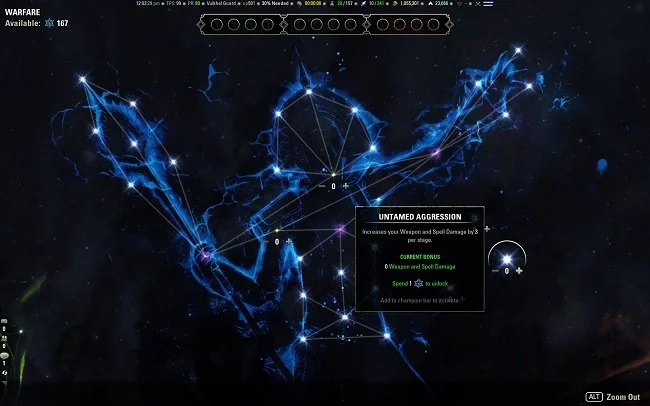
How you play ESO is very much up to you. My approach works for me and the foibles of my personality but I’m sure it won’t suit everyone. Because I’m not in a major raiding guild and my gameplay is mainly PVE content and a few public dungeons, I’m not heavily invested in creating a really specific and bespoke build. I just want to be able to survive and do reasonable damage. Hence, I have followed generic builds that I’ve found online, equipped skills that are relevant to how I play and put my Champion points into practical resources. Also, there is no need for the average player to buy and equip themselves entirely with gold quality gear. Purple is fine for armour and jewellery, just ensure your weapon is gold and you’ll be adequately prepared. Just make sure that you put some thought into the stats and buffs that certain sets offer. So if you like to progress in an orderly fashion when playing MMOs, then it will be down to you to impose some structure upon ESO. You don’t need to keep notes and maintain a spreadsheet but it does help to have some idea of what you want to do, rather than just flying by the seat of your pants.



We Are Our Own Worst Enemy
Over the last five years, there has been an ever-increasing degree of monetisation in mainstream video games. The situation has sparked debate not only among gamers but also in the mainstream press. Loot boxes and the entire business model of “pay to start” has finally reached the scrutiny of several national governments. Furthermore, the triple A video games industry has been held to account and pressed to justify such practises. Yet despite the public attention and a degree of pushback from some gamers, the situation doesn’t in anyway look like it’s going to be resolved. In fact sales data seems to show that despite some negative coverage both in the video games media and the traditional press, games with egregious business models are far from being rejected by customers. Quite the opposite. Ironically two of the worst offenders that have recently been held up as games that exploit gamers financially, have just achieved record sales. Both Mario Kart Tour and NBA 2K20 have proven to be massive hits.
Over the last five years, there has been an ever-increasing degree of monetisation in mainstream video games. The situation has sparked debate not only among gamers but also in the mainstream press. Loot boxes and the entire business model of “pay to start” has finally reached the scrutiny of several national governments. Furthermore, the triple A video games industry has been held to account and pressed to justify such practises. Yet despite the public attention and a degree of pushback from some gamers, the situation doesn’t in anyway look like it’s going to be resolved. In fact sales data seems to show that despite some negative coverage both in the video games media and the traditional press, games with egregious business models are far from being rejected by customers. Quite the opposite. Ironically two of the worst offenders that have recently been held up as games that exploit gamers financially, have just achieved record sales. Both Mario Kart Tour and NBA 2K20 have proven to be massive hits.
For those gamers who are looking for change, this is a sad situation. Most reasonable and measured individuals recognise that the video games industry is a commercial endeavour and that developers and publishers needs to make money. The bone of contention is that excessive monetisation is actually spoiling games by impeding gameplay and progression. A game built around monetisation has different priorities to a game primarily designed just to be played. Ultimately there is a contradiction between a game in the traditional sense and a “live service”. Is it therefore unreasonable to try and seek the middle ground where a company can make a healthy profit, without compromising the game or the experience of playing it? We’ll it would appear that the answer is “yes, it is unreasonable” and sadly, the point of failure and source of blame is ultimately not actually the video games industry but gamers themselves. We are our own worst enemy.
It is naïve to expect big corporations to act ethically and sensibly when it comes to accruing wealth. If you want a companies such as Activision Blizzard, 2K Games or Ubisoft to moderate their financial strategy when it comes to video games, you must compel them to do so by law. As for any concerted effort by gamers to “school” these publishers through the old cliché of “voting with your wallet”, it is doomed to failure. Because gamers are not a homogeneous group. For every gamer that thinks that monetisation of gaming has gone too far, there is one who thinks the opposite and yet another who simply doesn’t care. Also, cognitive dissonance seems to be the default setting for most people when it comes to social issues these days. We all too often notionally agree with an ethical principle up to the point where acting upon it requires us to make a sacrifice or go without. Another factor that also impacts upon one’s attitude towards microtransactions, season passes and lootboxes is the generational difference in our attitudes towards money.
Naturally there are gamers with large disposable incomes who don’t concern themselves with the reality of game related monetisation. Any obstacle to enjoyment can be overcome by the application of money. However, in my lifetime there has been major changes in the regulation of consumer borrowing. Simply put, credit is easily accessible (despite the financial crash of 2008) and consumers are encouraged to spend. To put this in perspective, UK credit card debt was at £72.5 billion at the end of July 2019. So when video gamer publishers talk about “whales”, who exactly are they talking about? Those who can genuinely afford too throw money around or those who feel obliged to do so, with money they don’t really have? Over the course of my life, I’ve learned the esoteric and unfashionable act of living within my financial means. I would say that this is a social norm more pertinent to the over fifties. But for many people half my age, they have grown up in a world where ownership has been supplanted by paying for a service and the entire point of credit is to use it to try and live the lifestyle, you think you deserve.
So regardless of the “selective gamer pushback” and a degree of negative PR that is mainly driven by a moral imperative, the video game industry has had its monetisation policies 100% validated by recent sales figures. Hence it is highly unlikely that we shall see any major change in business practises in the immediate future. As a result, I shall continue to avoid many major triple A titles such as Tom Clancy's Ghost Recon Breakpoint (a franchise I had previously enjoyed) and will continue my blanket boycott of mobile games. But the rather unpalatable reality is that future games development is going to be determined by those who are currently enabling the monetisation practises of the video games industry. However there’s a chance that even the most ambivalent gamer may eventually be inconvenienced by some future iniquity of the video games industry. Yet I suspect that even if this tipping point is achieved, many gamers would refuse to acknowledge their involvement in creating the problem in the first place and their respective blame.
Minas Morgul Preview
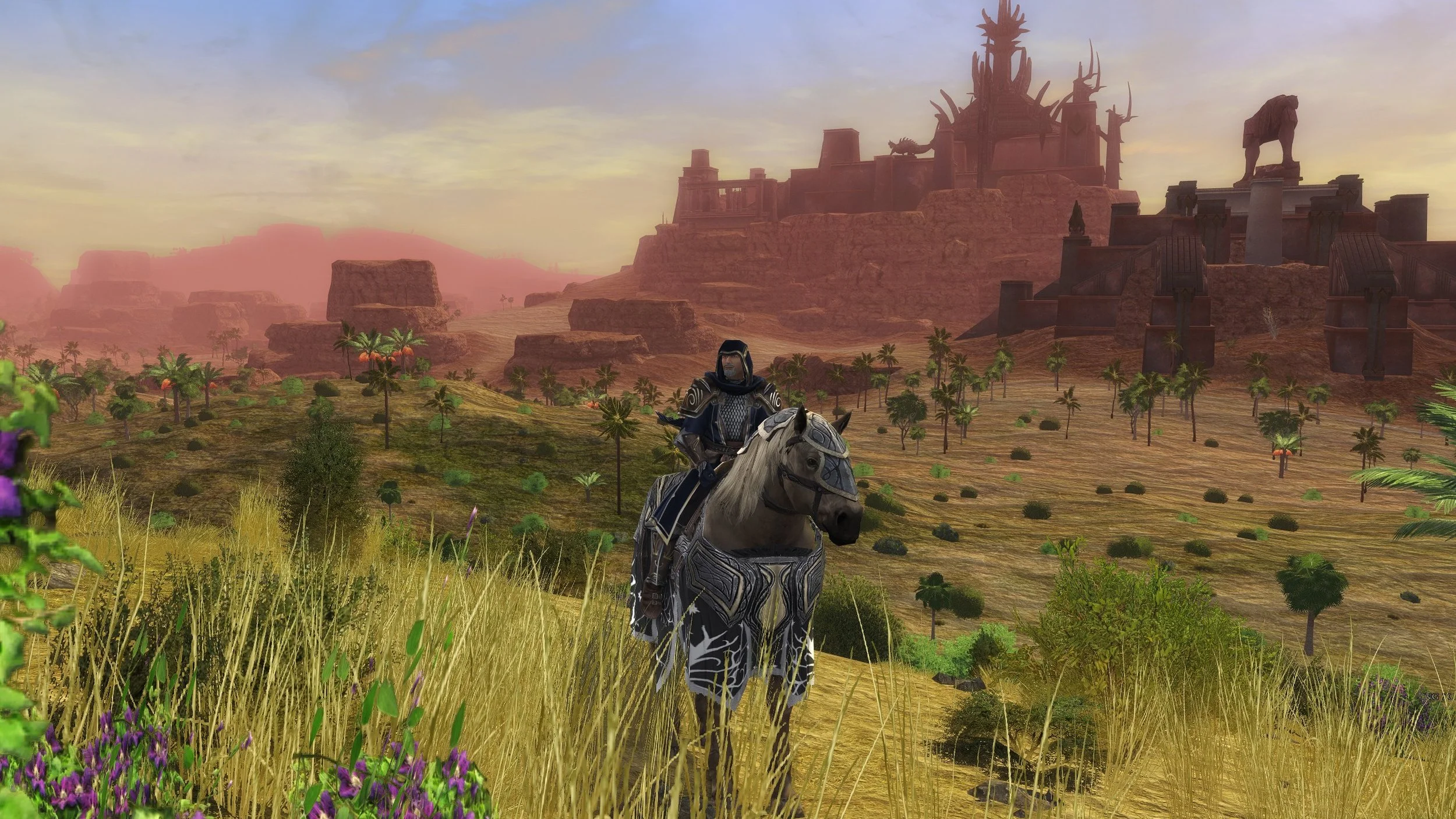
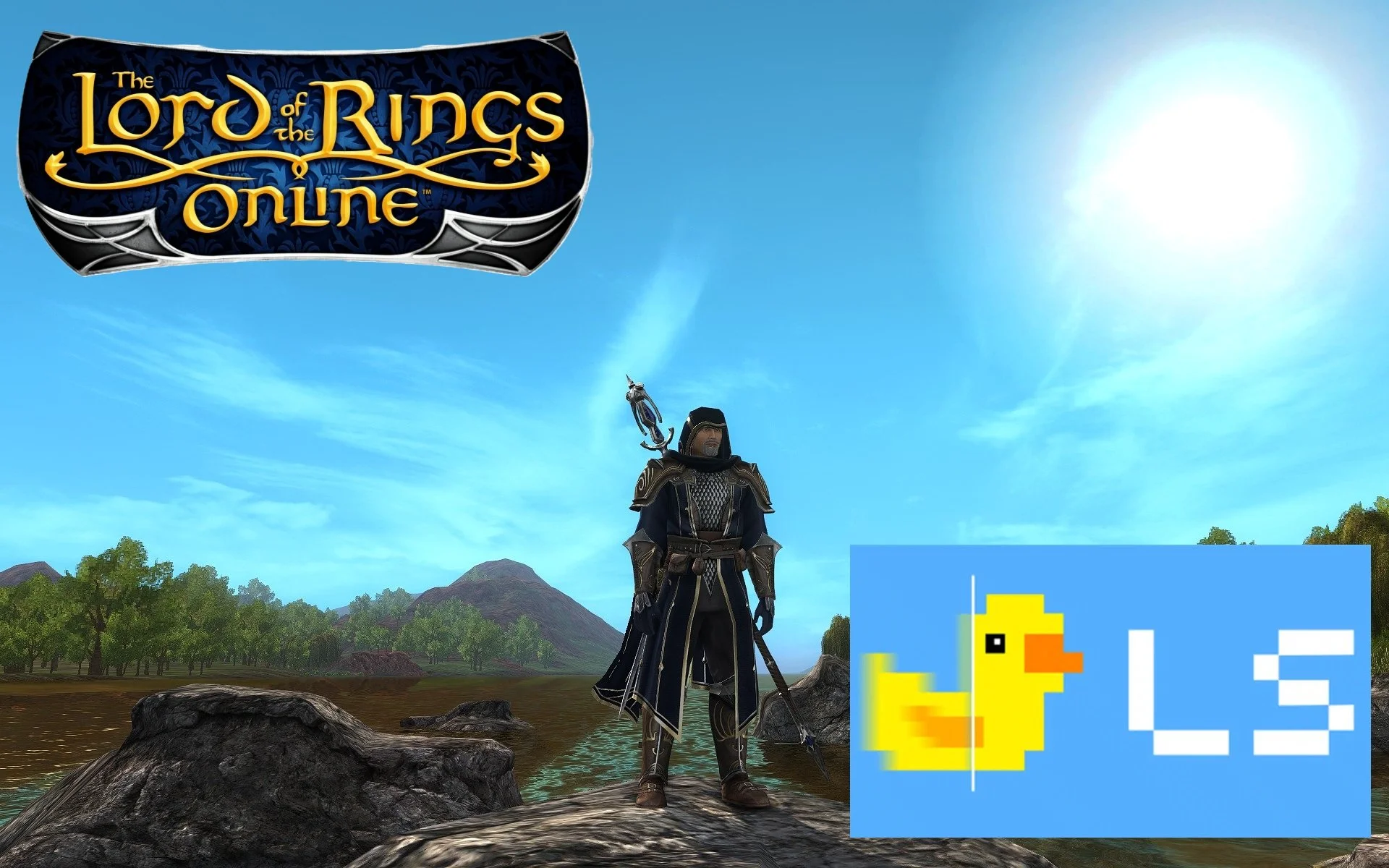
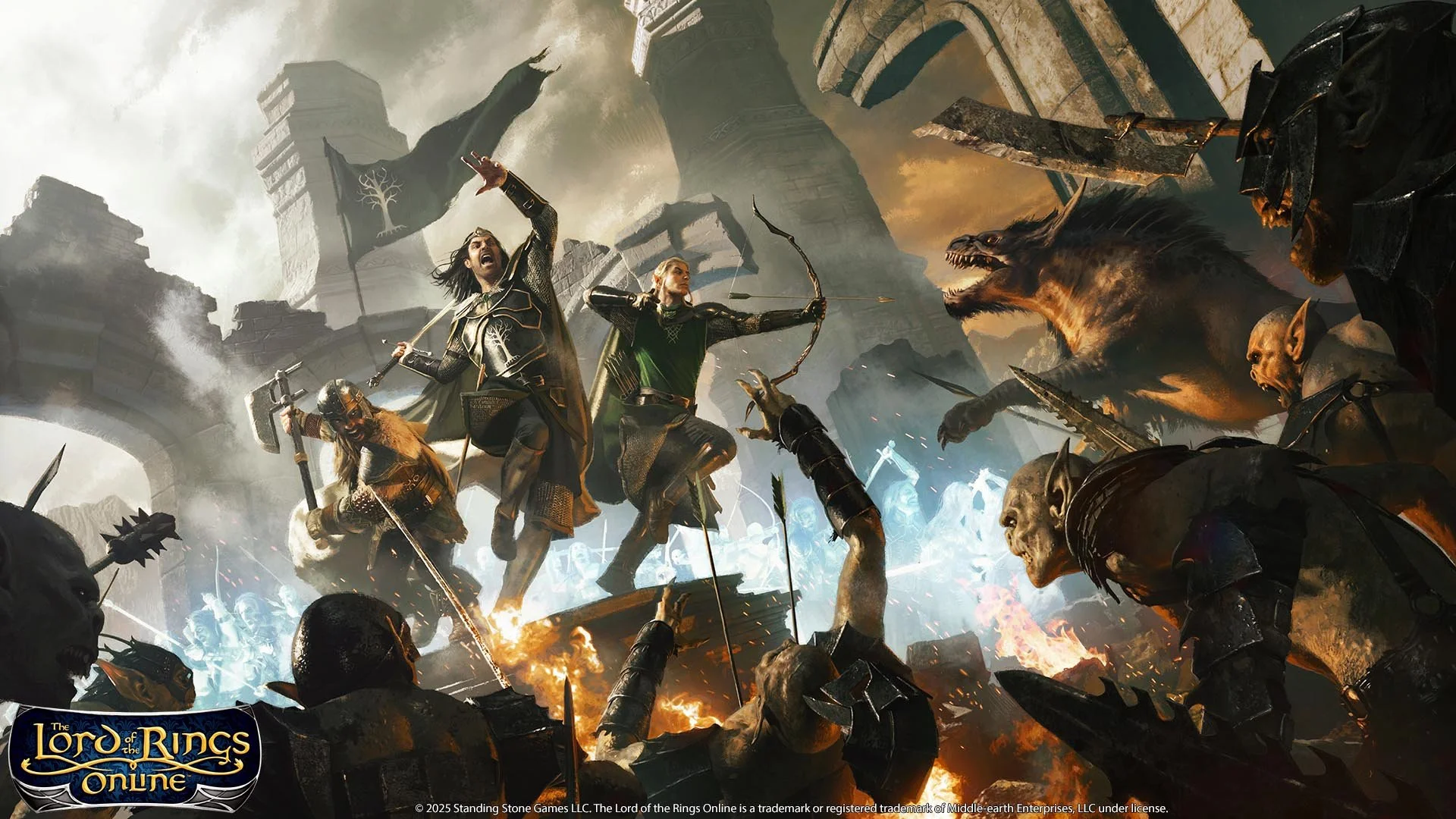
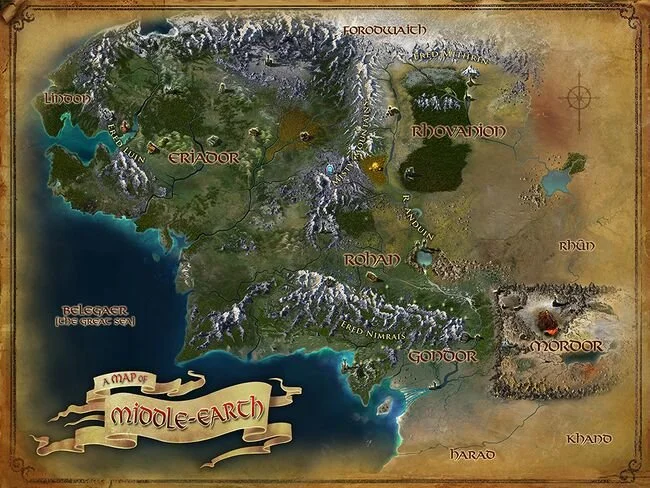
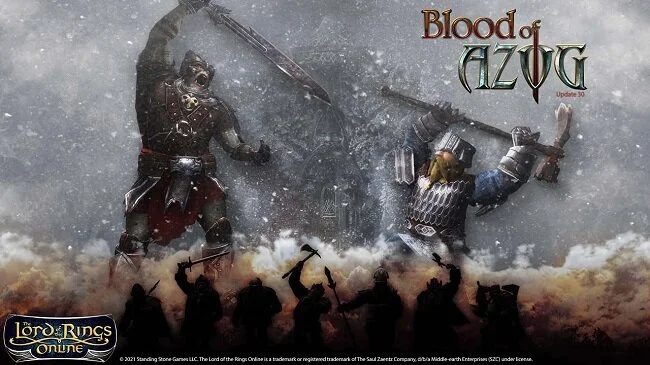
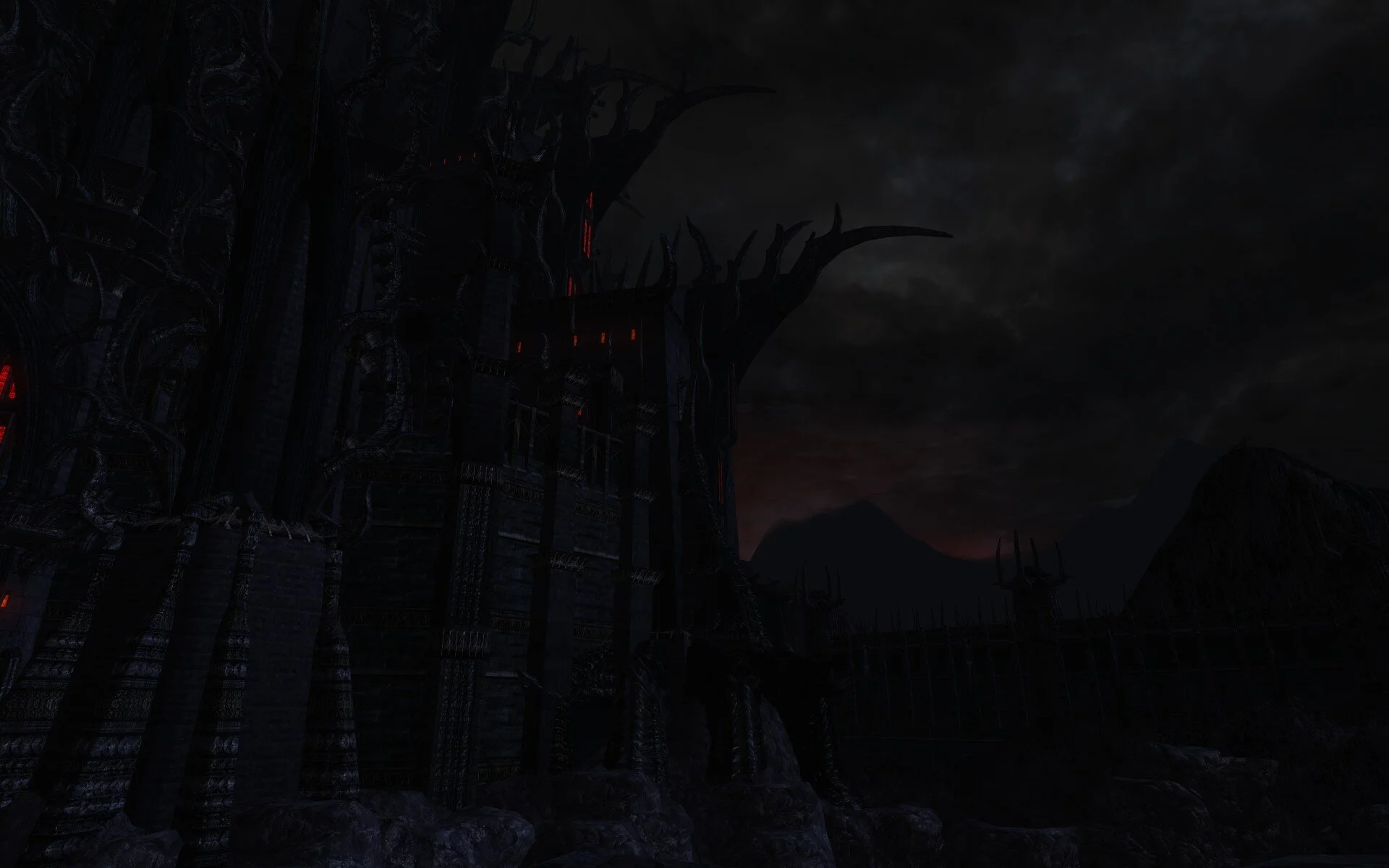
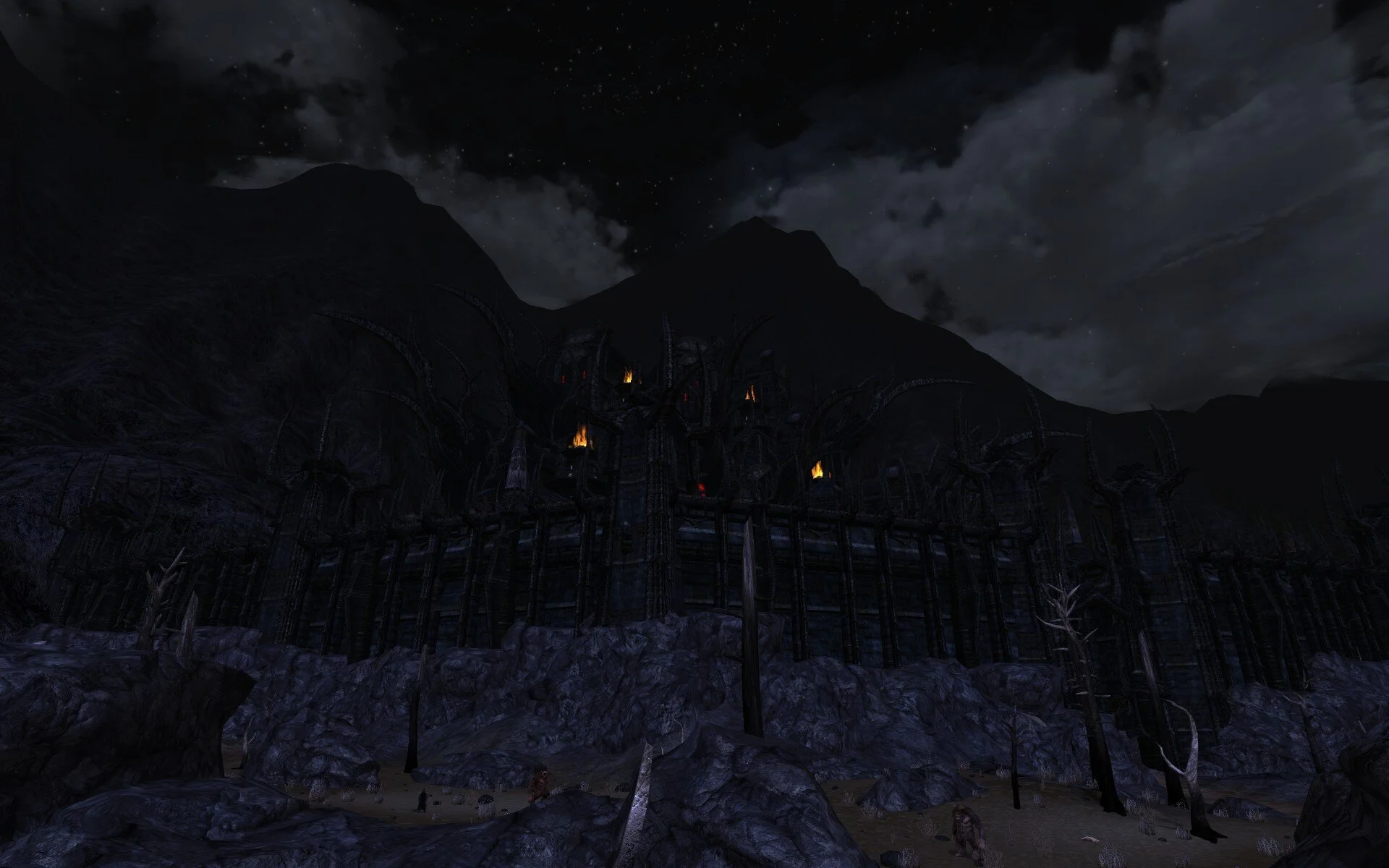
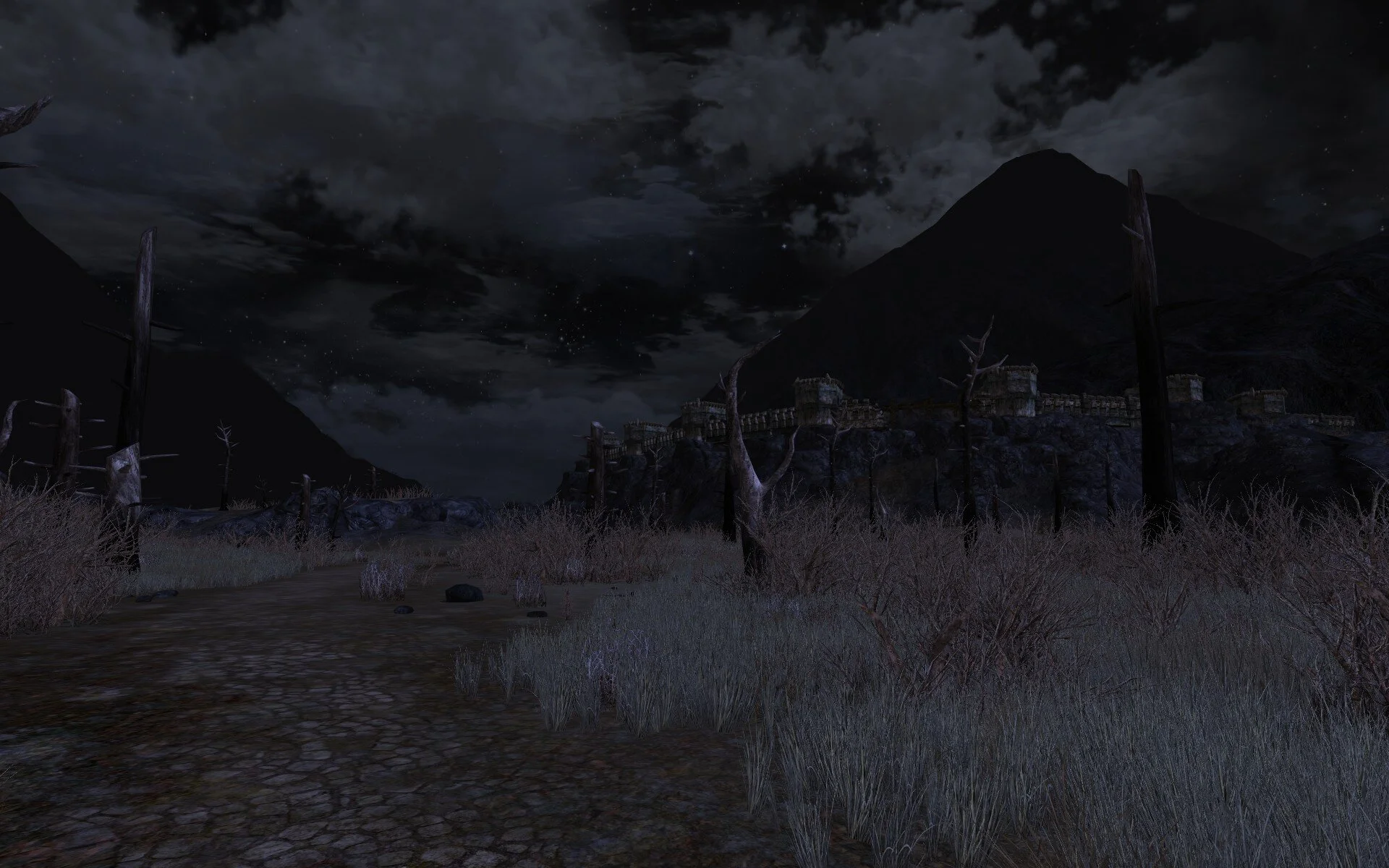
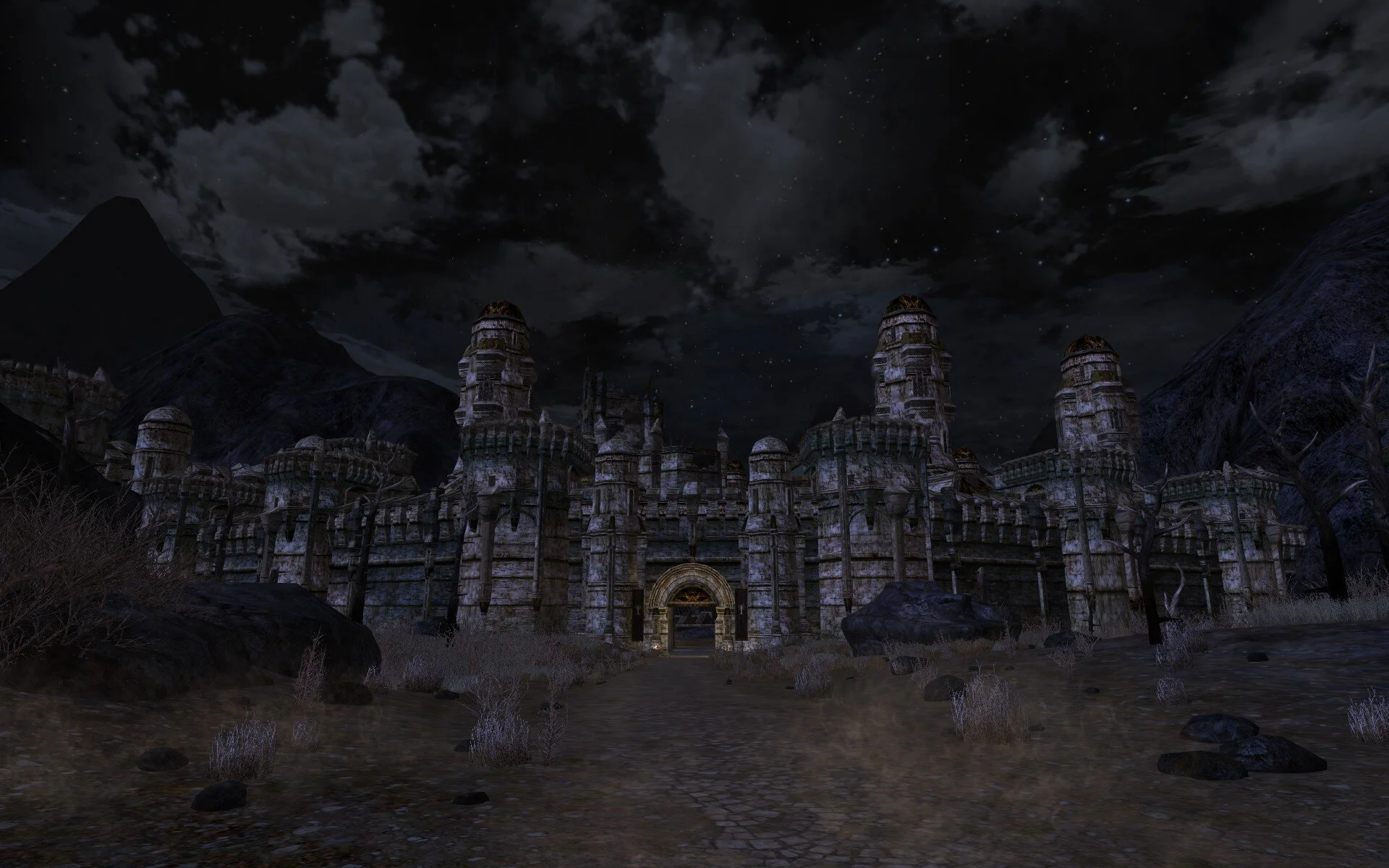
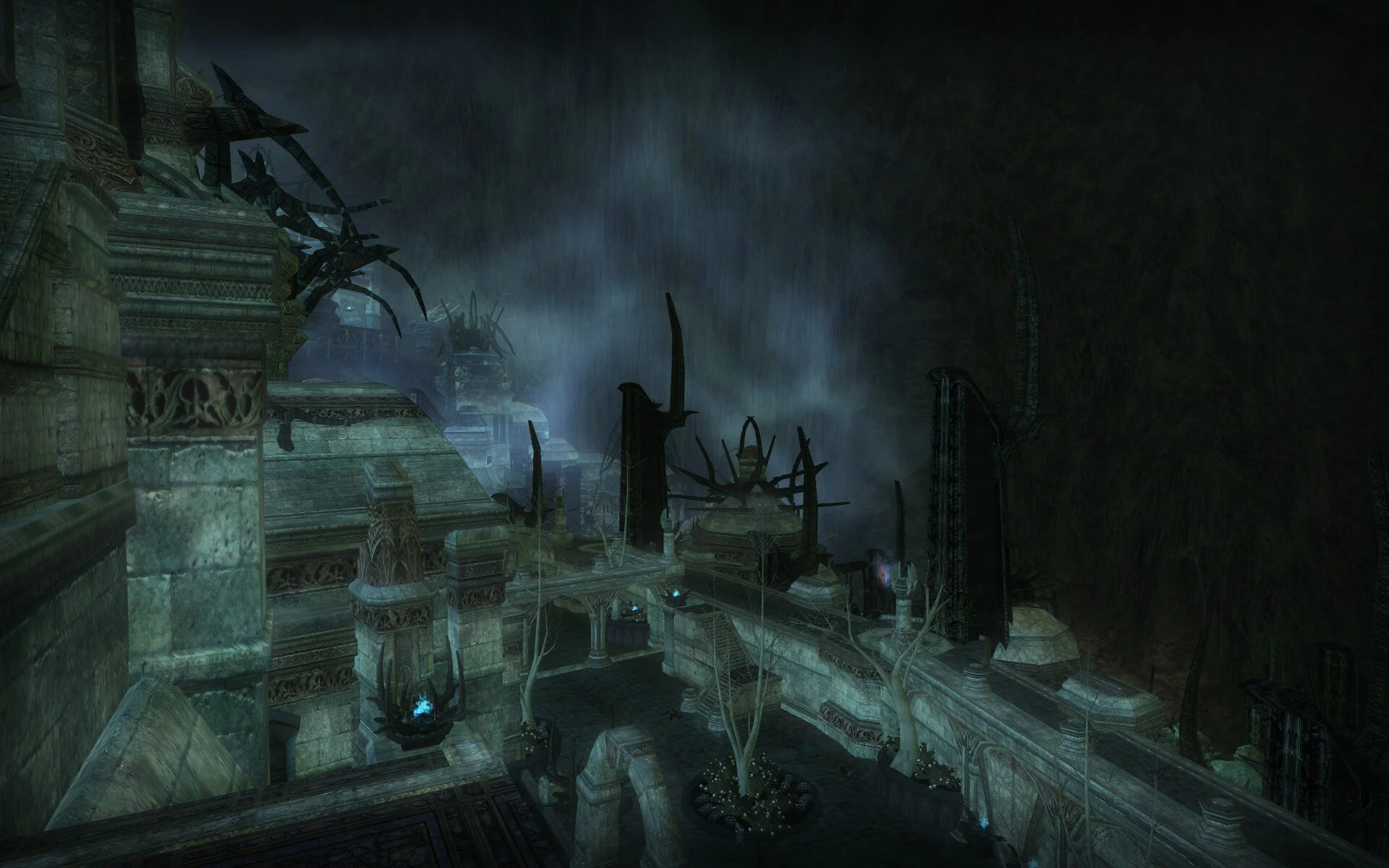
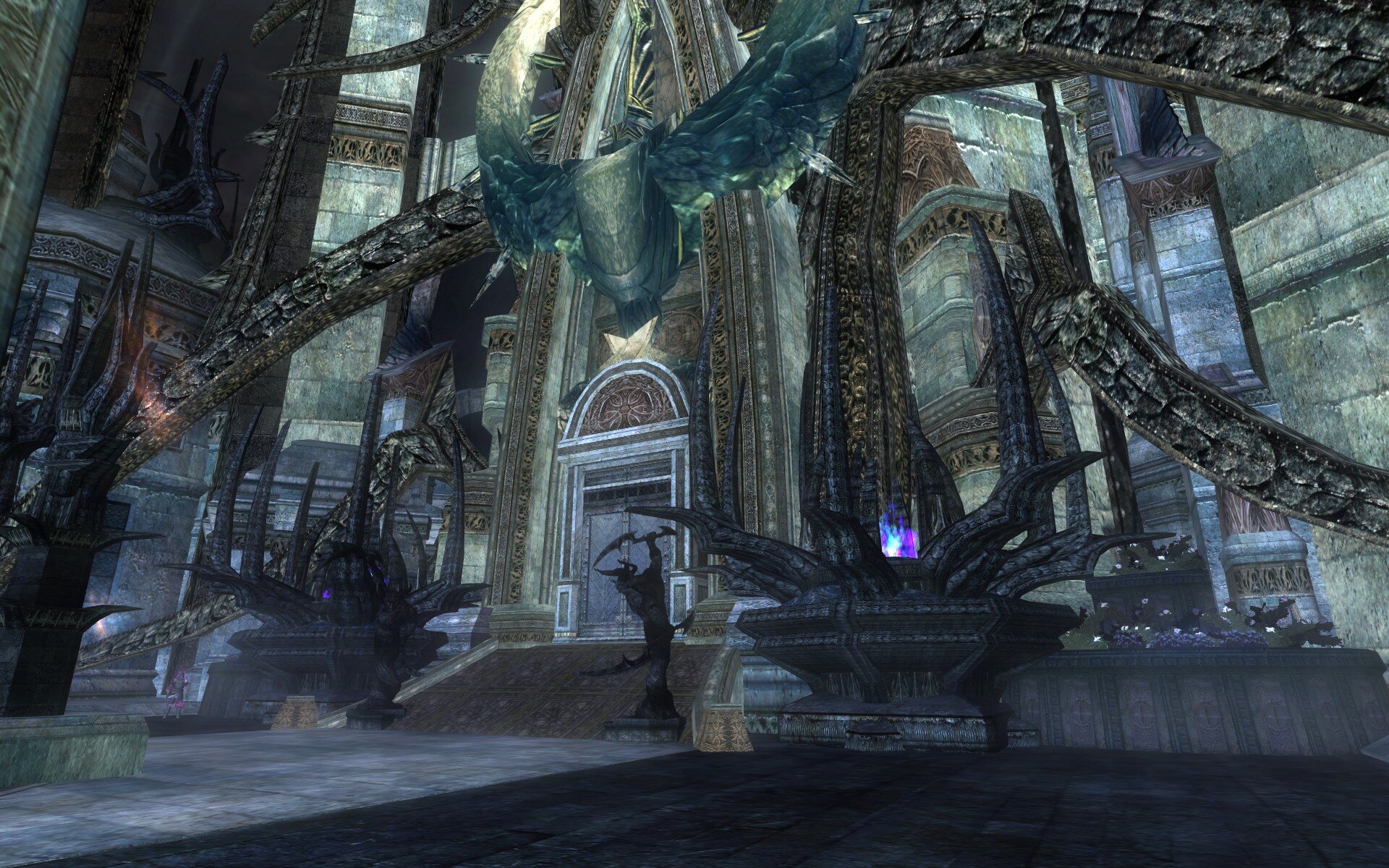
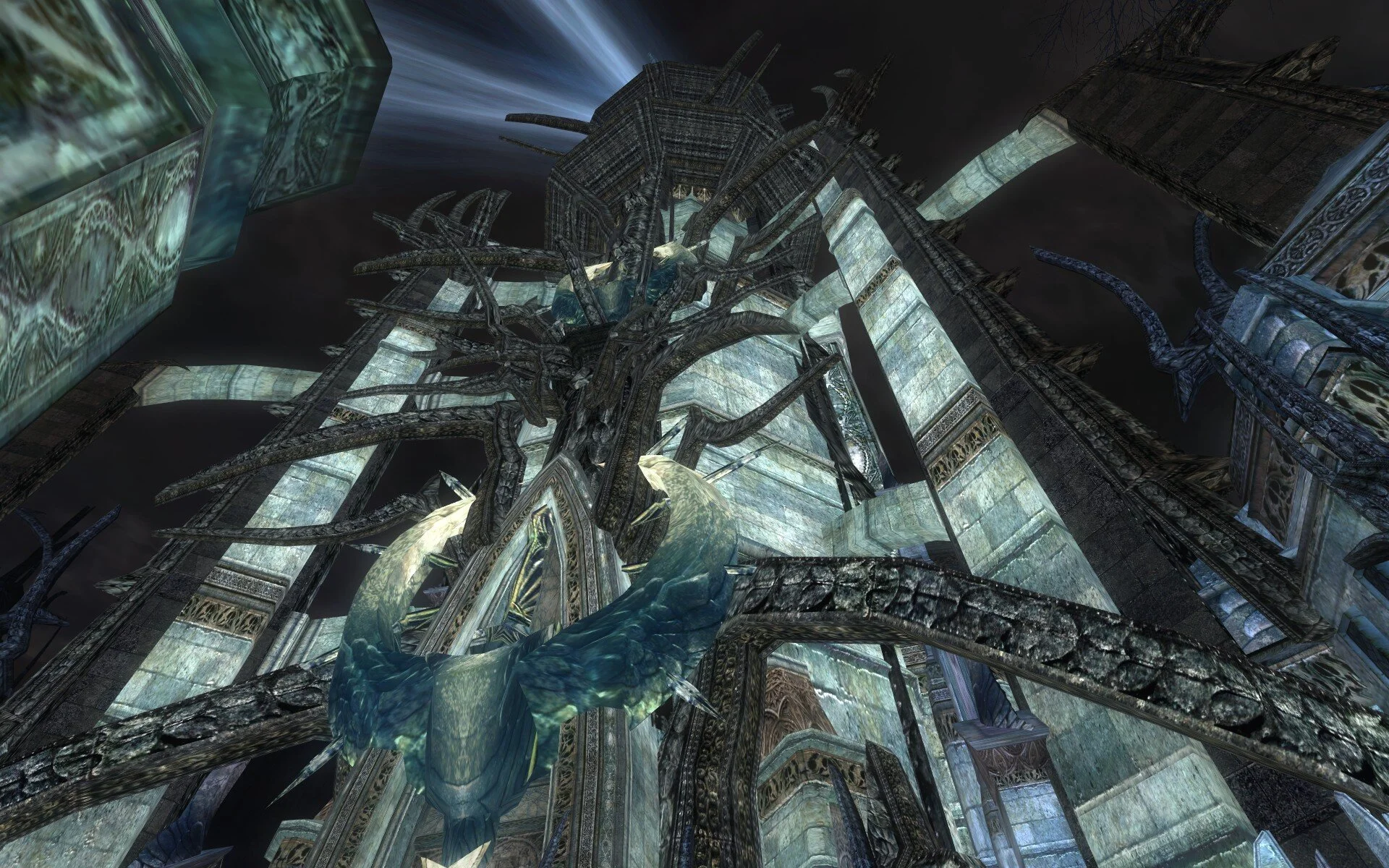
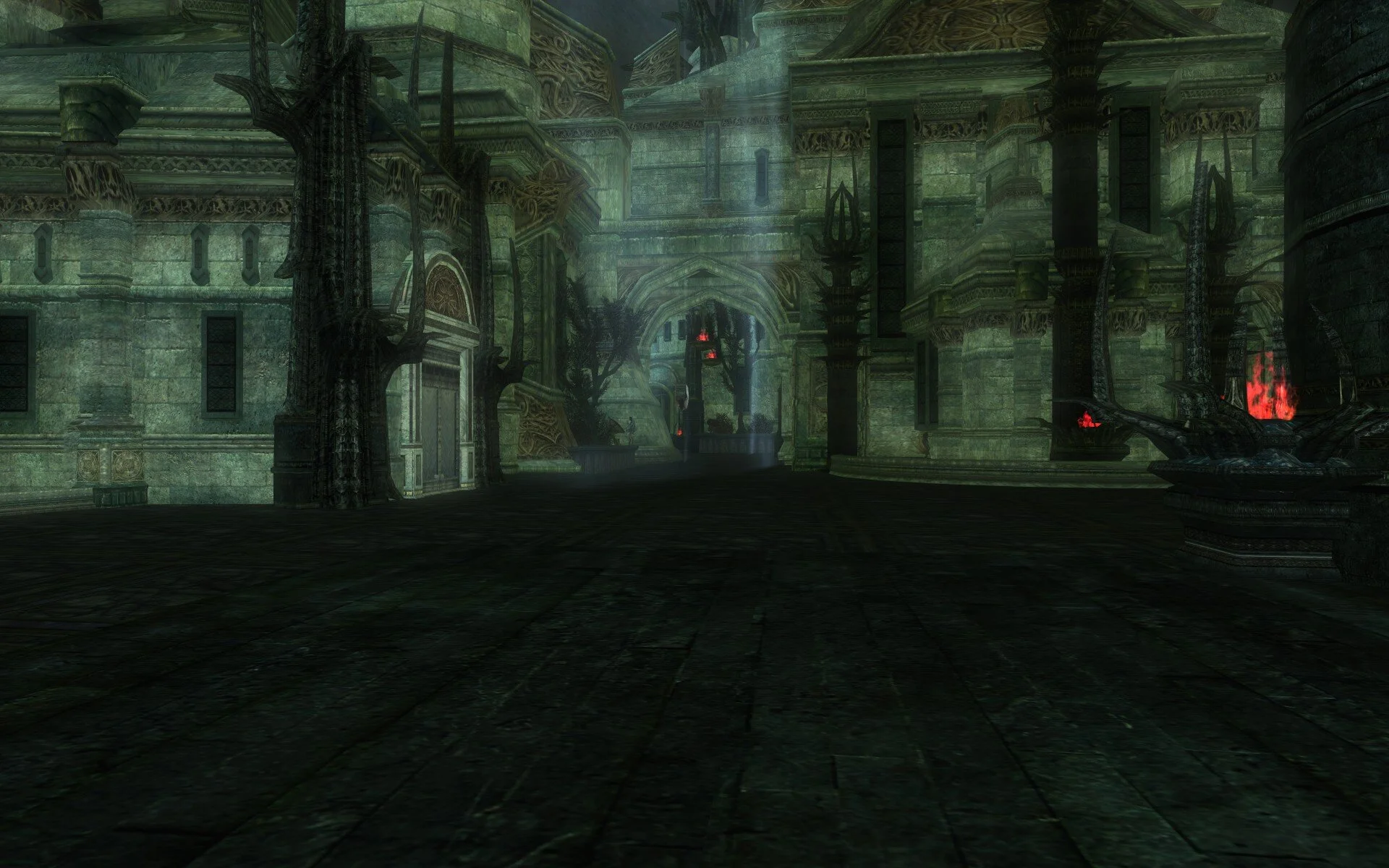
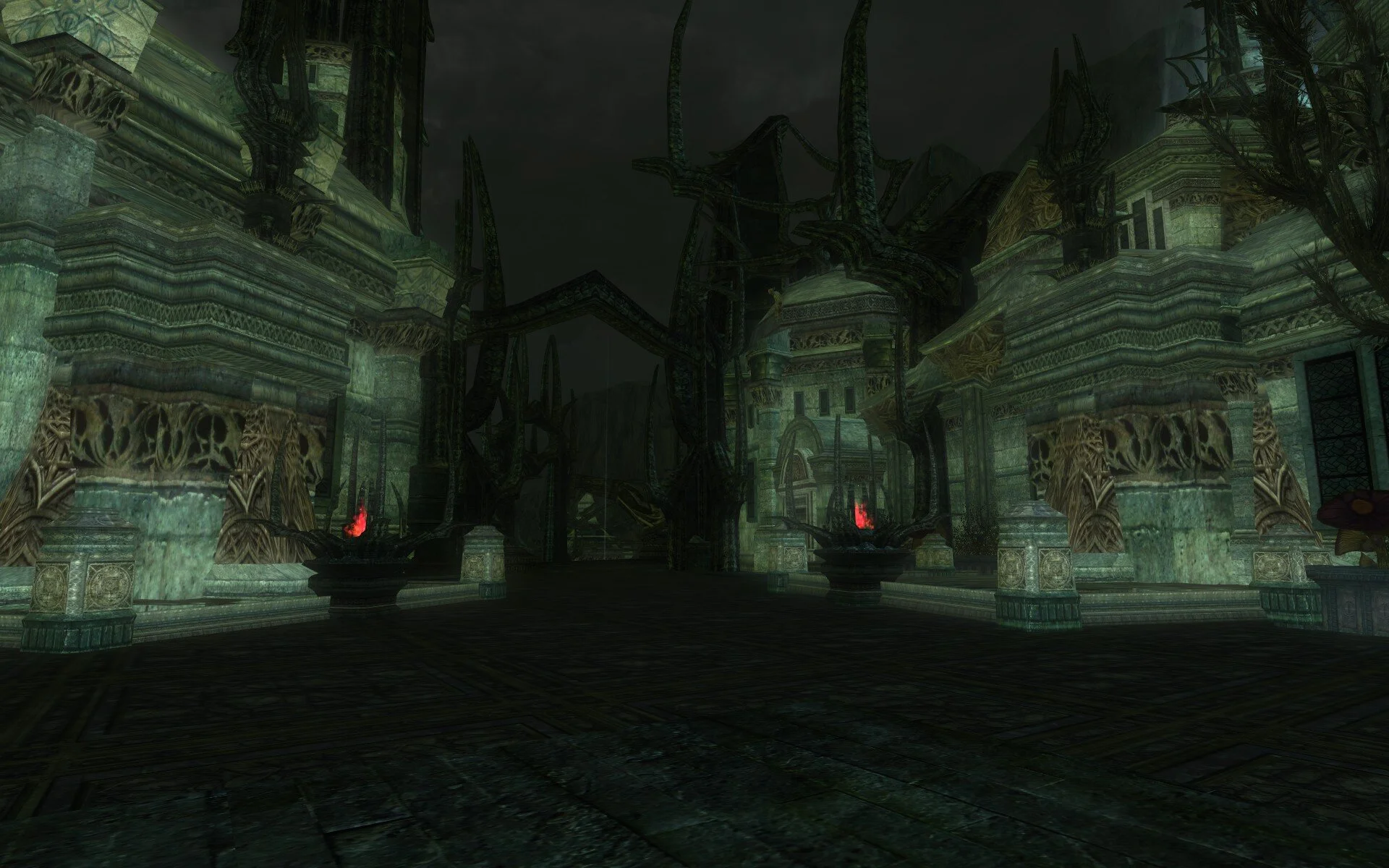
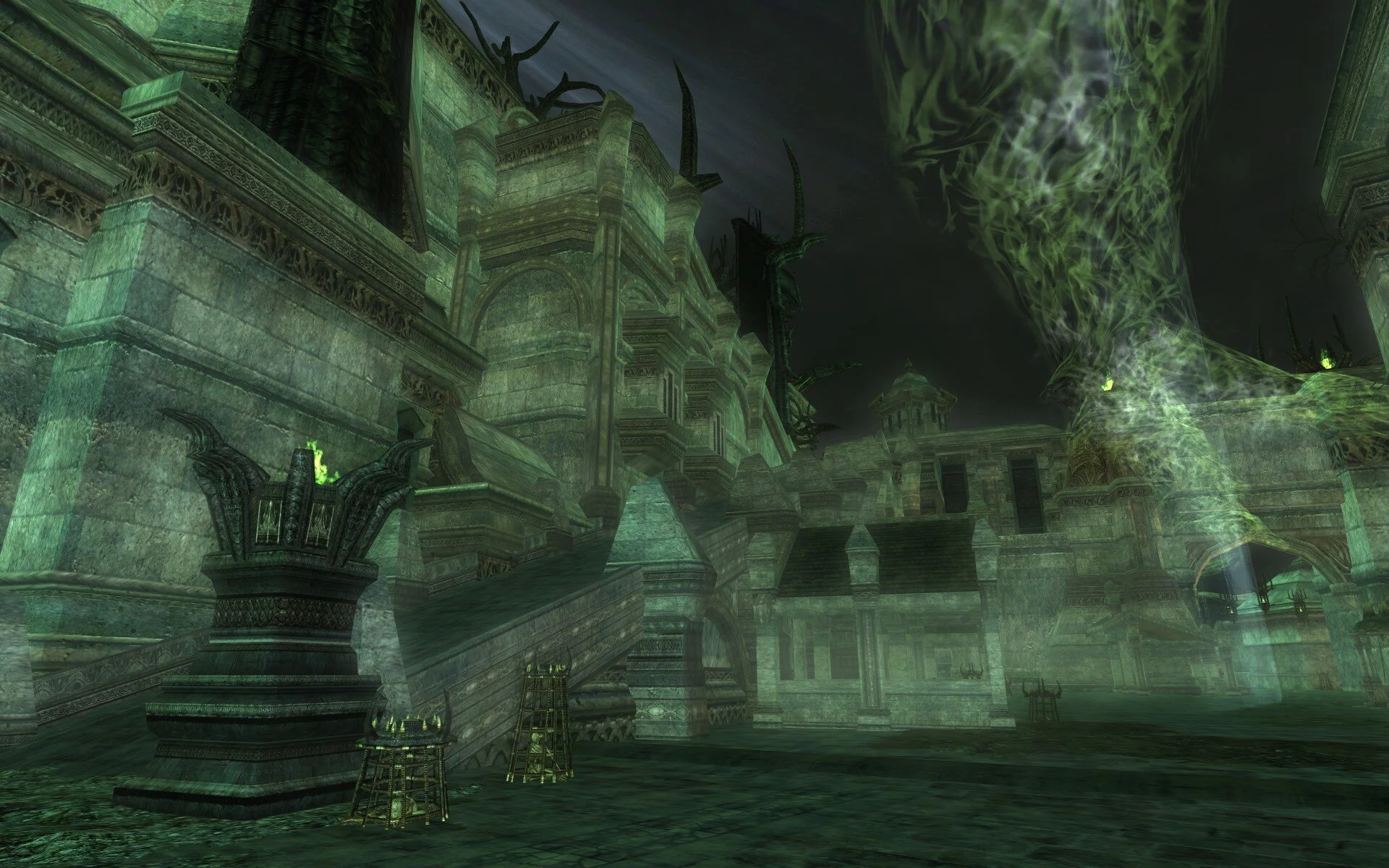
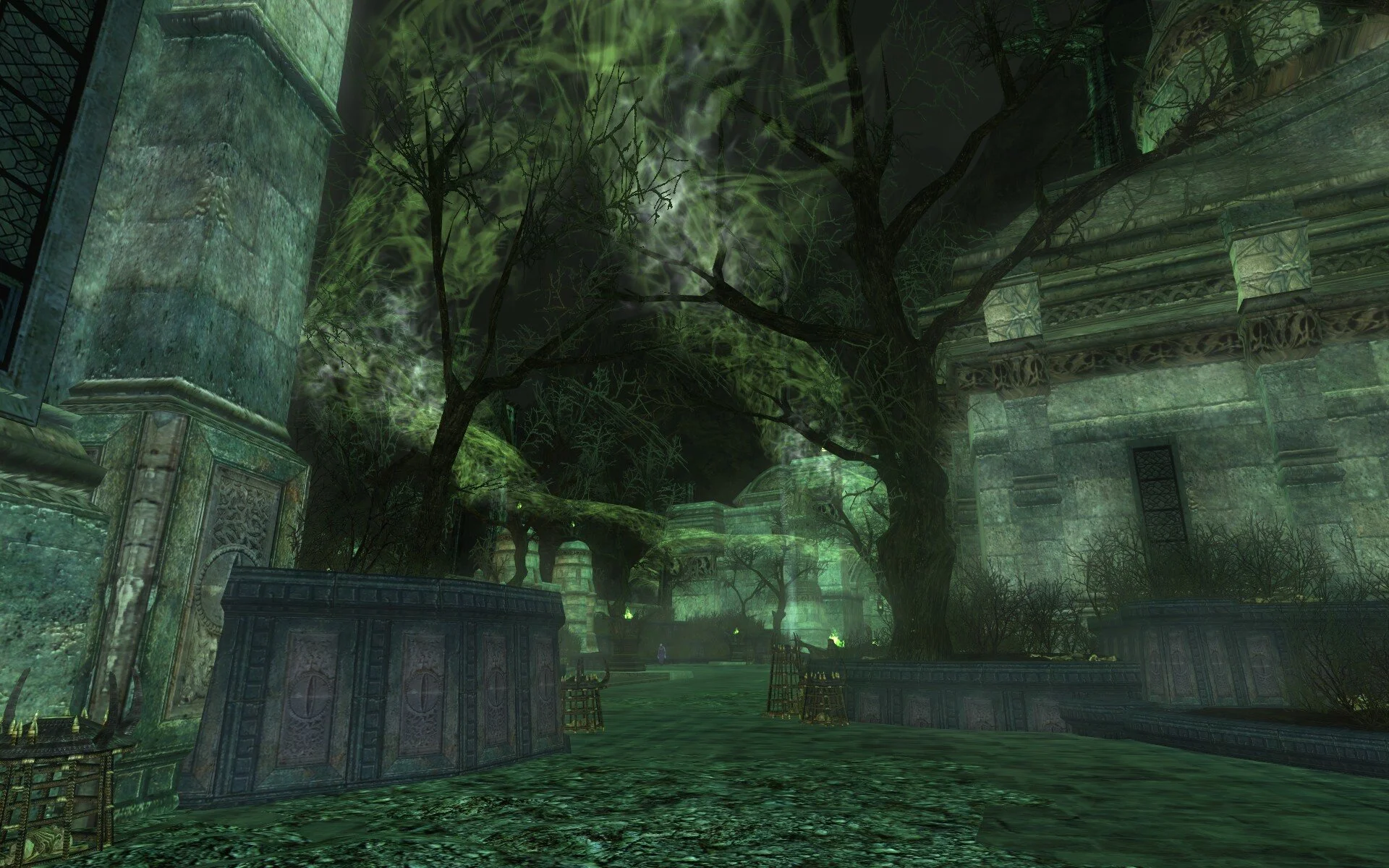
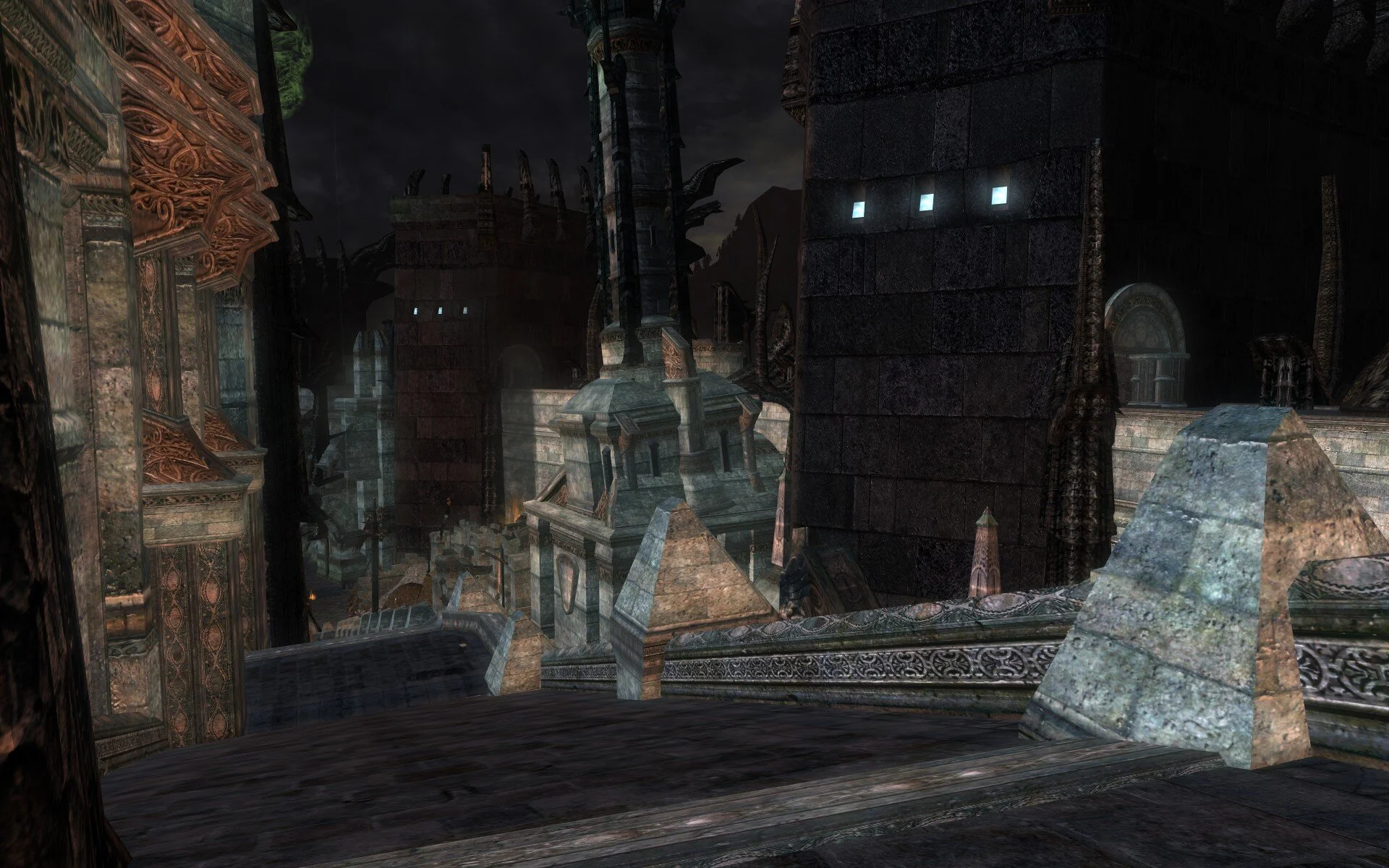
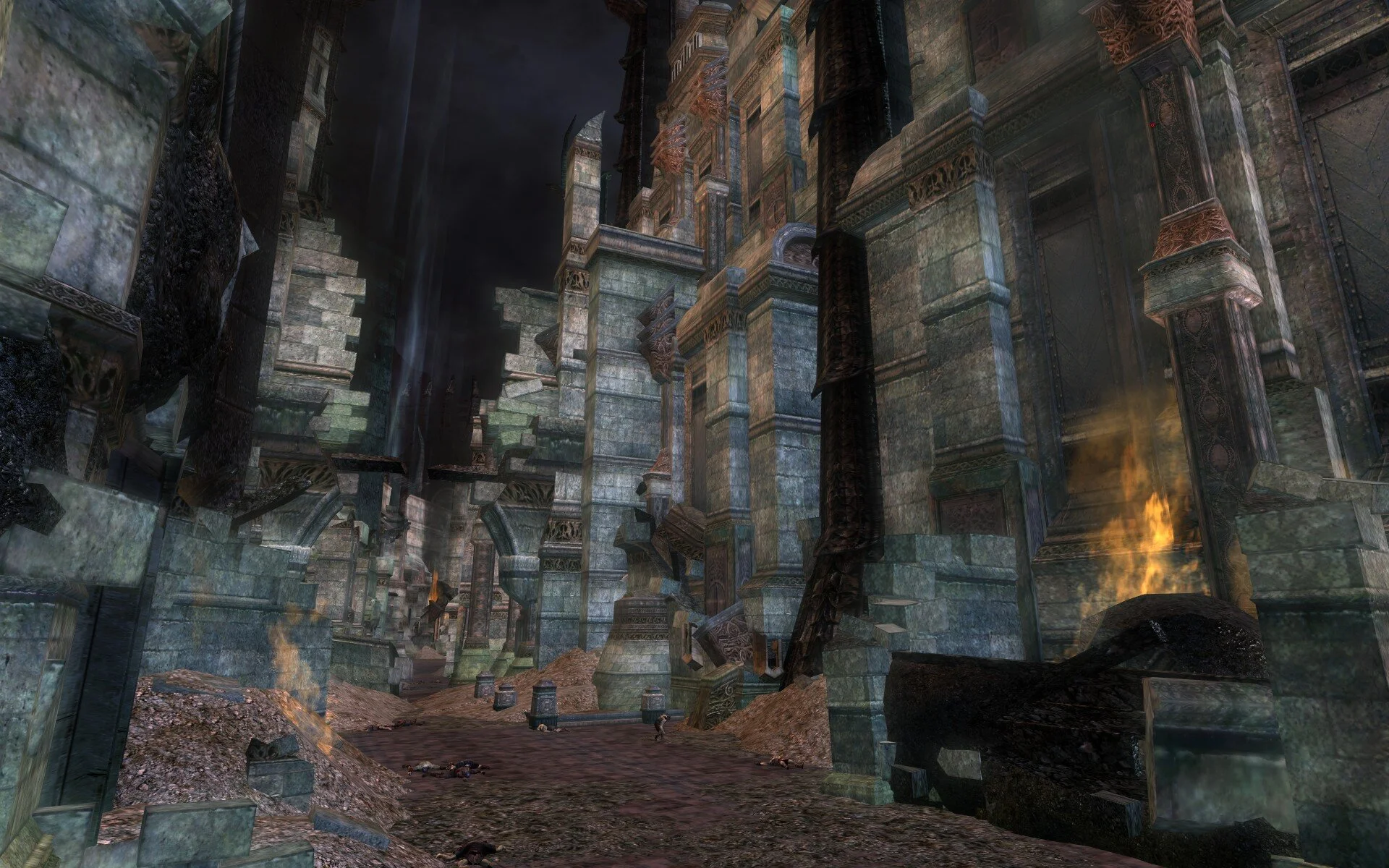
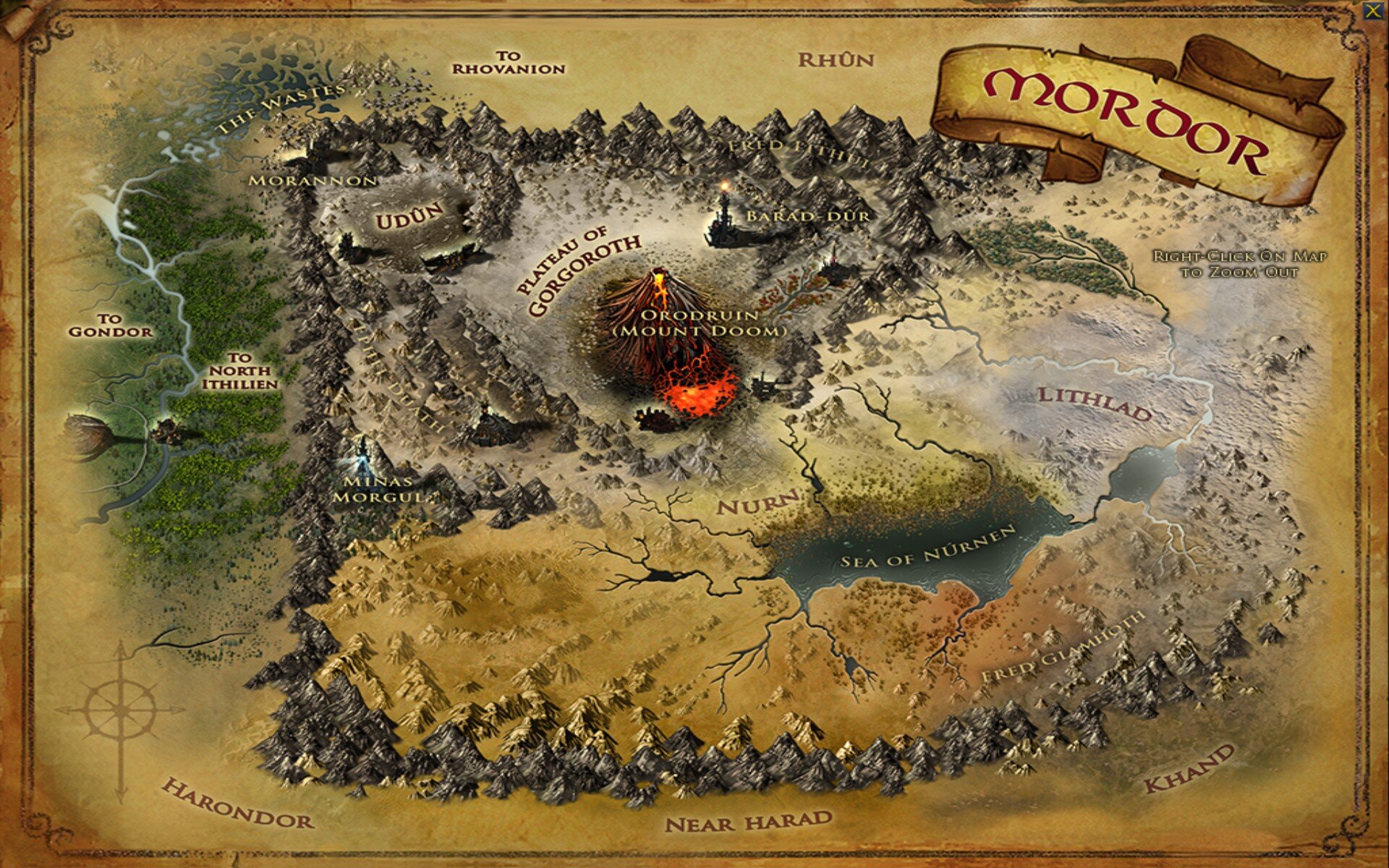
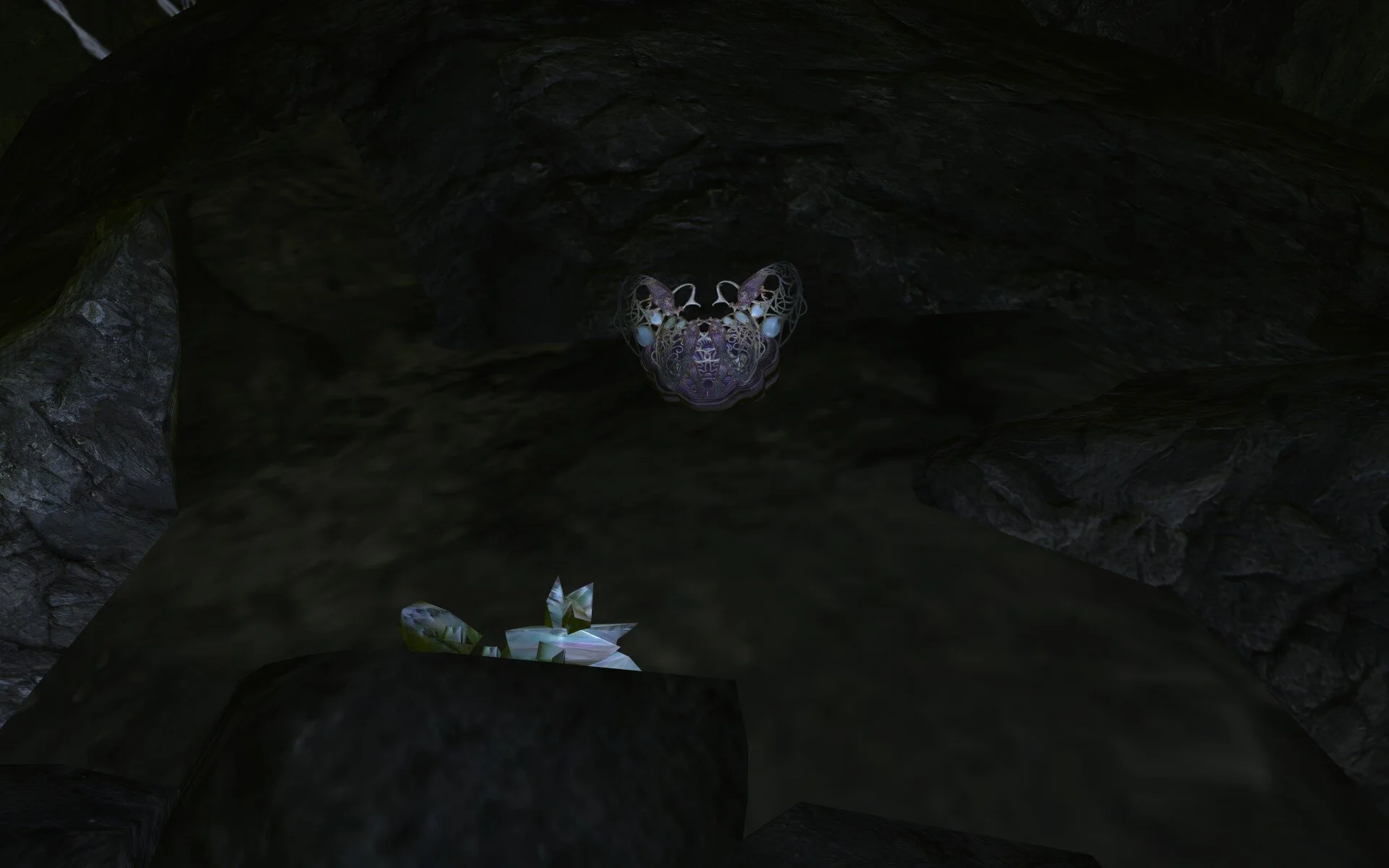
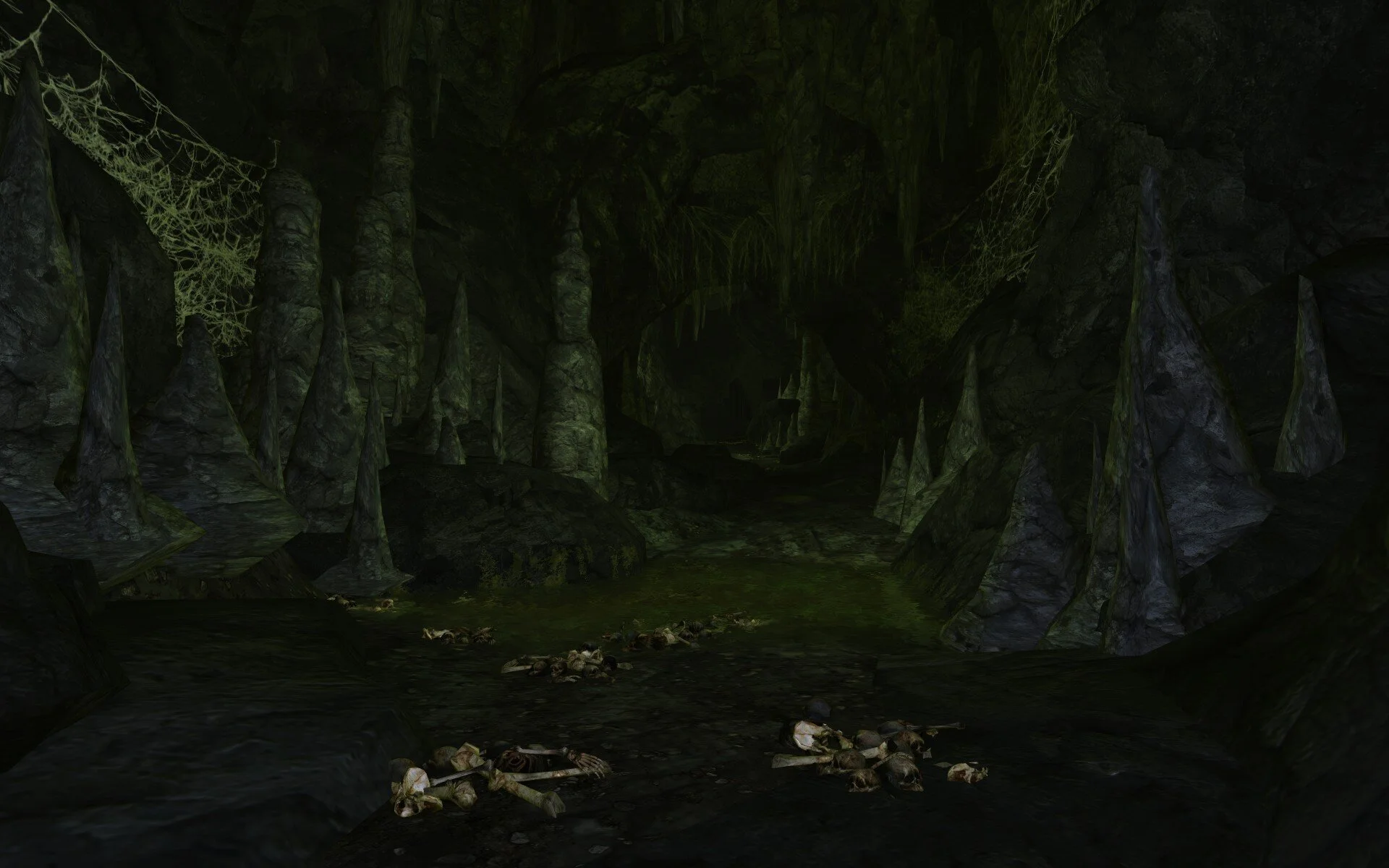
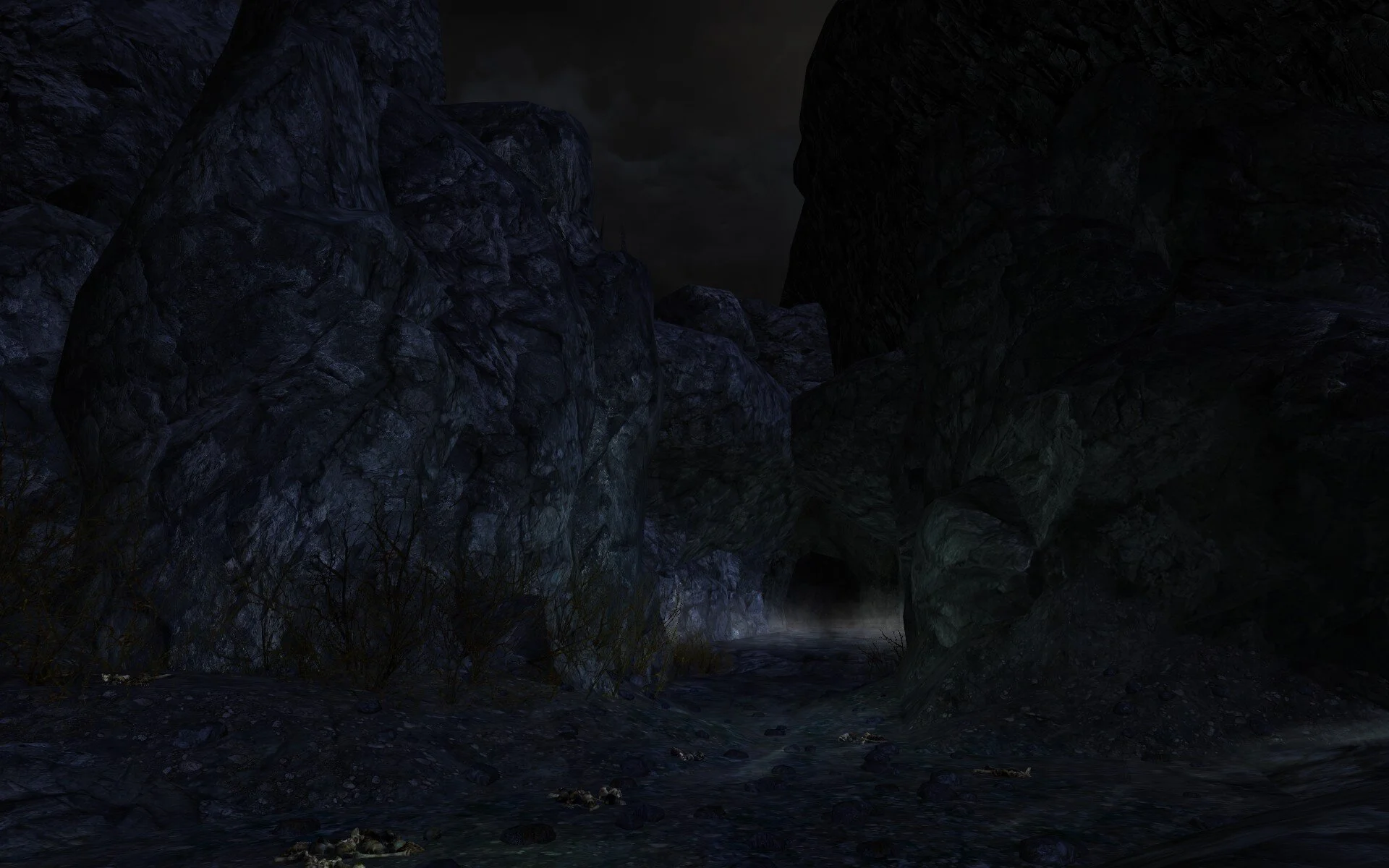
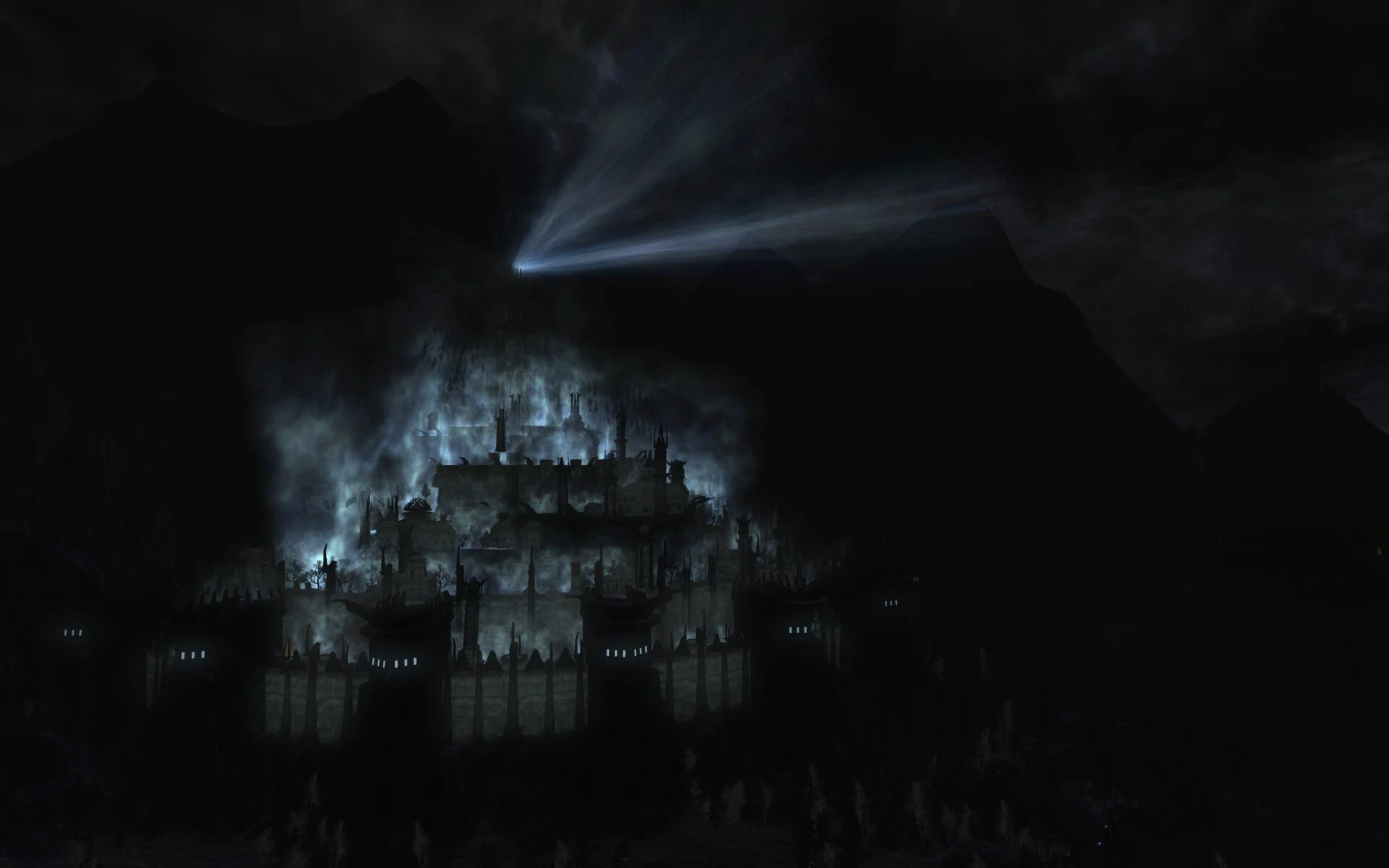
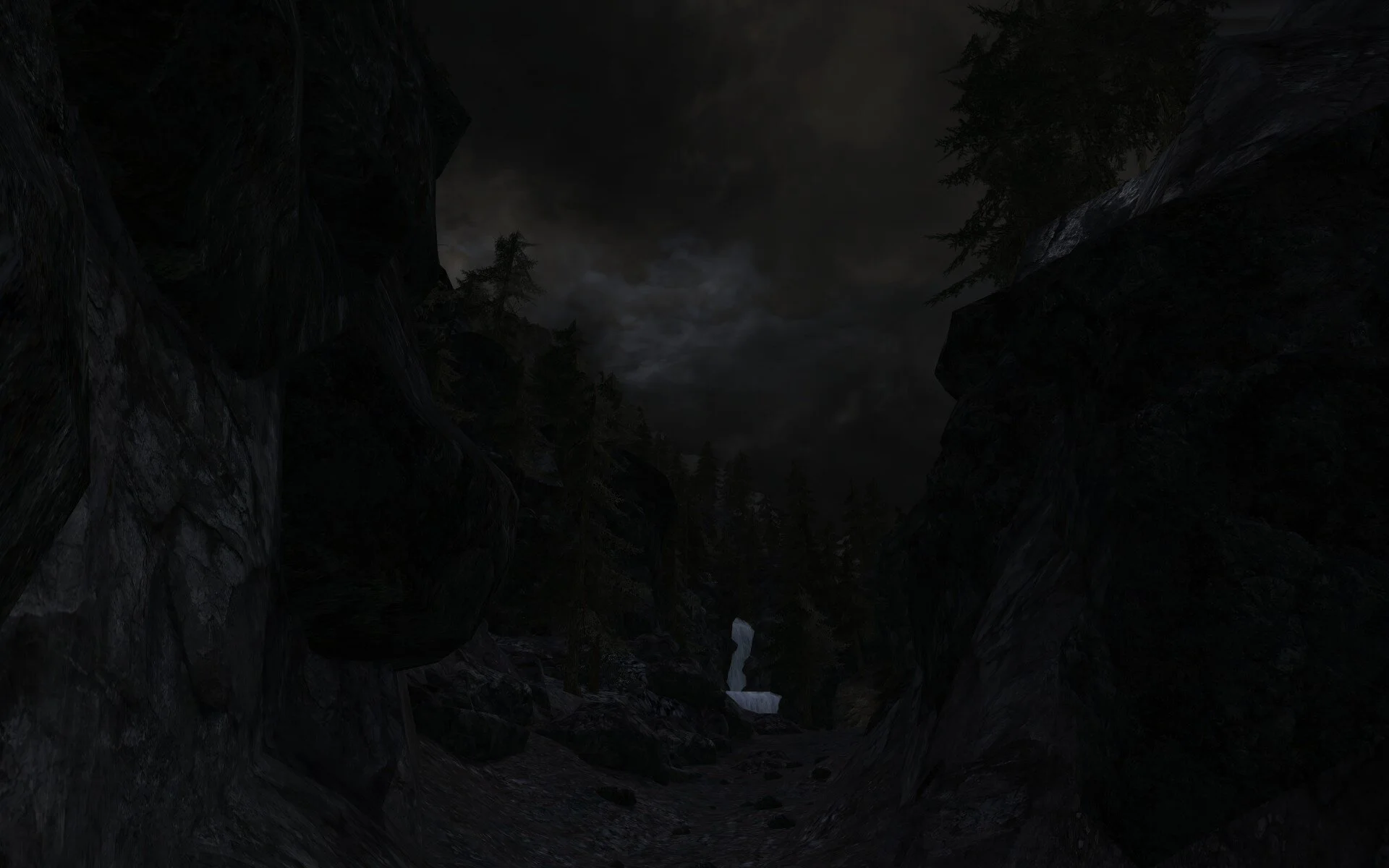
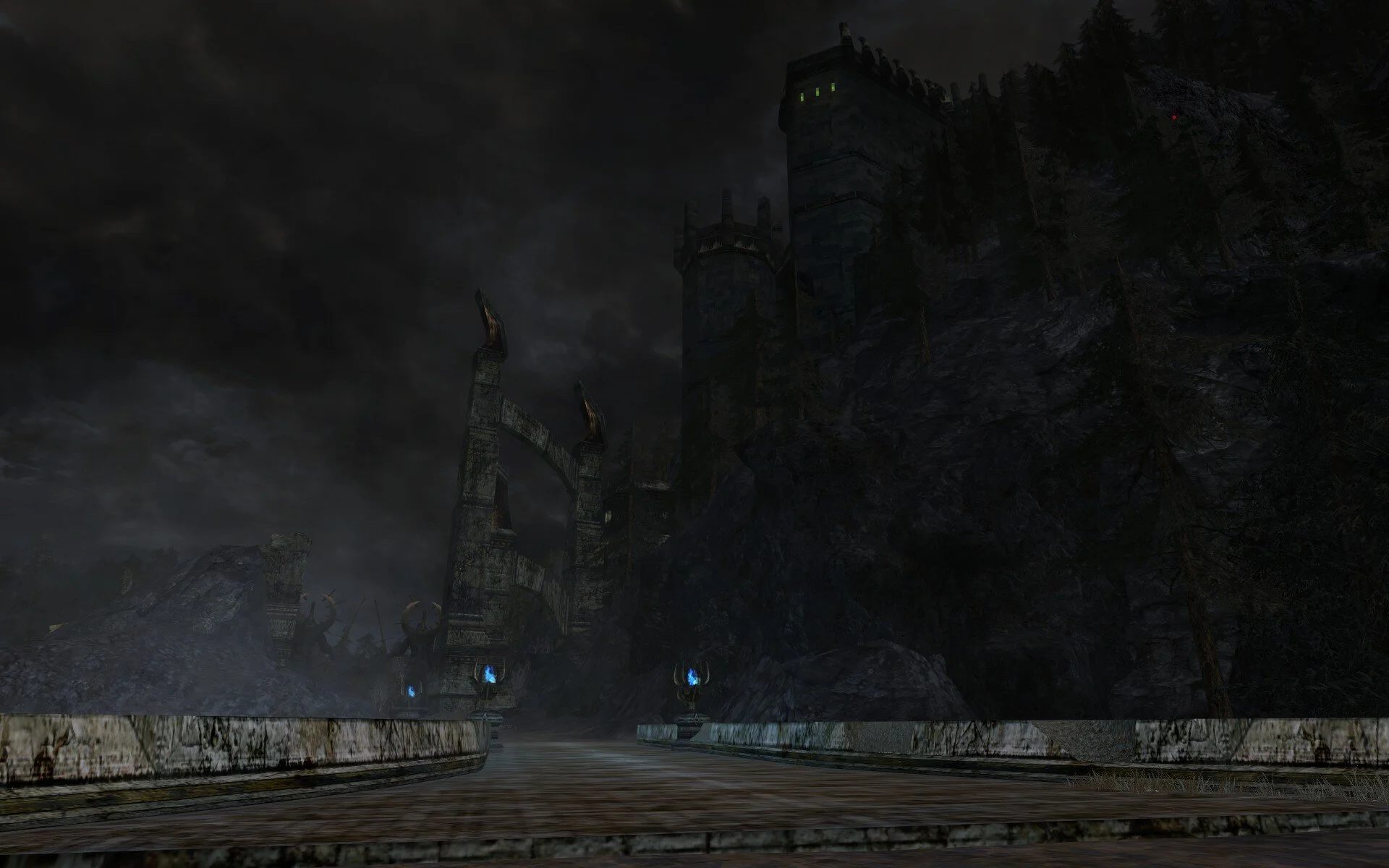
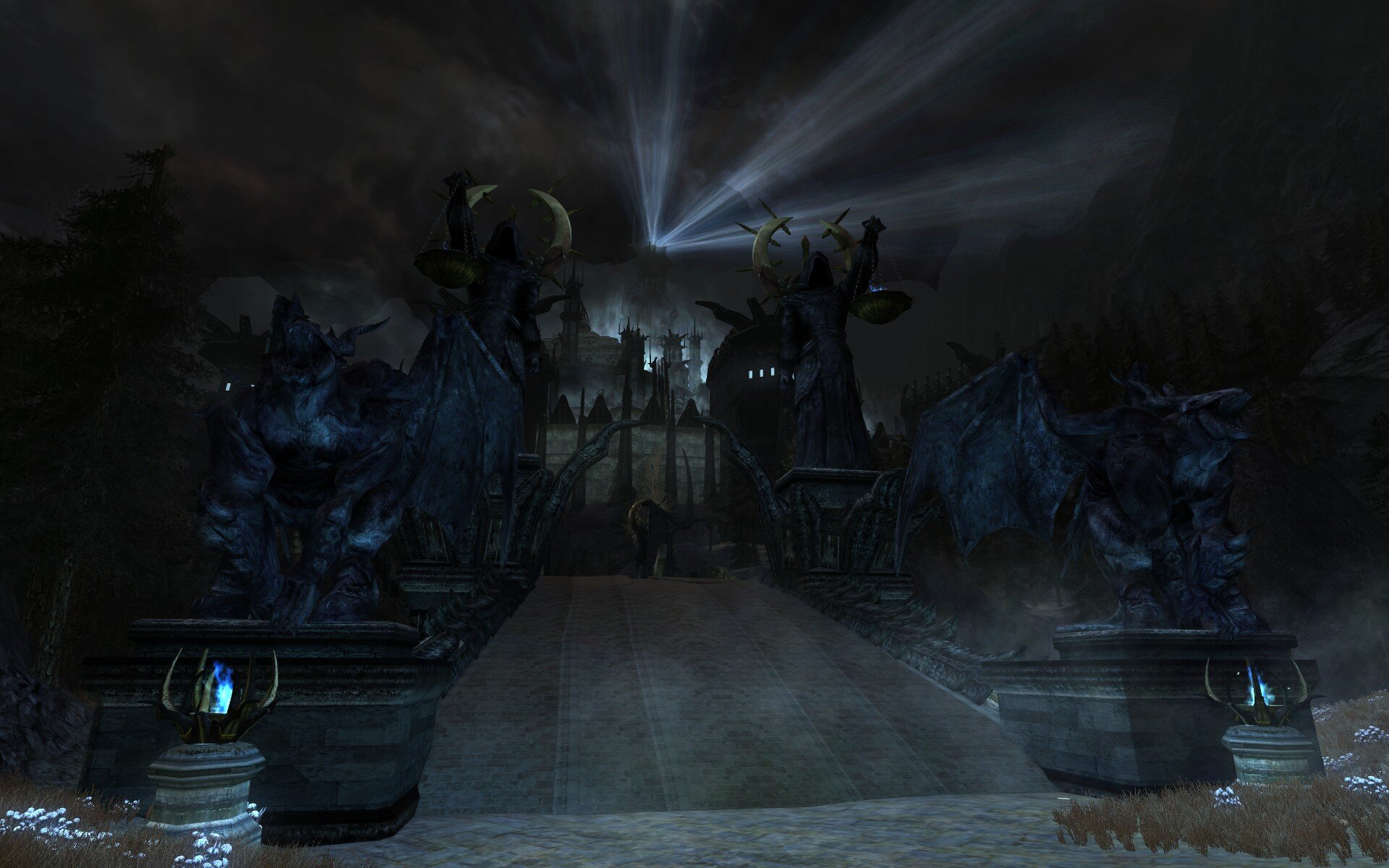
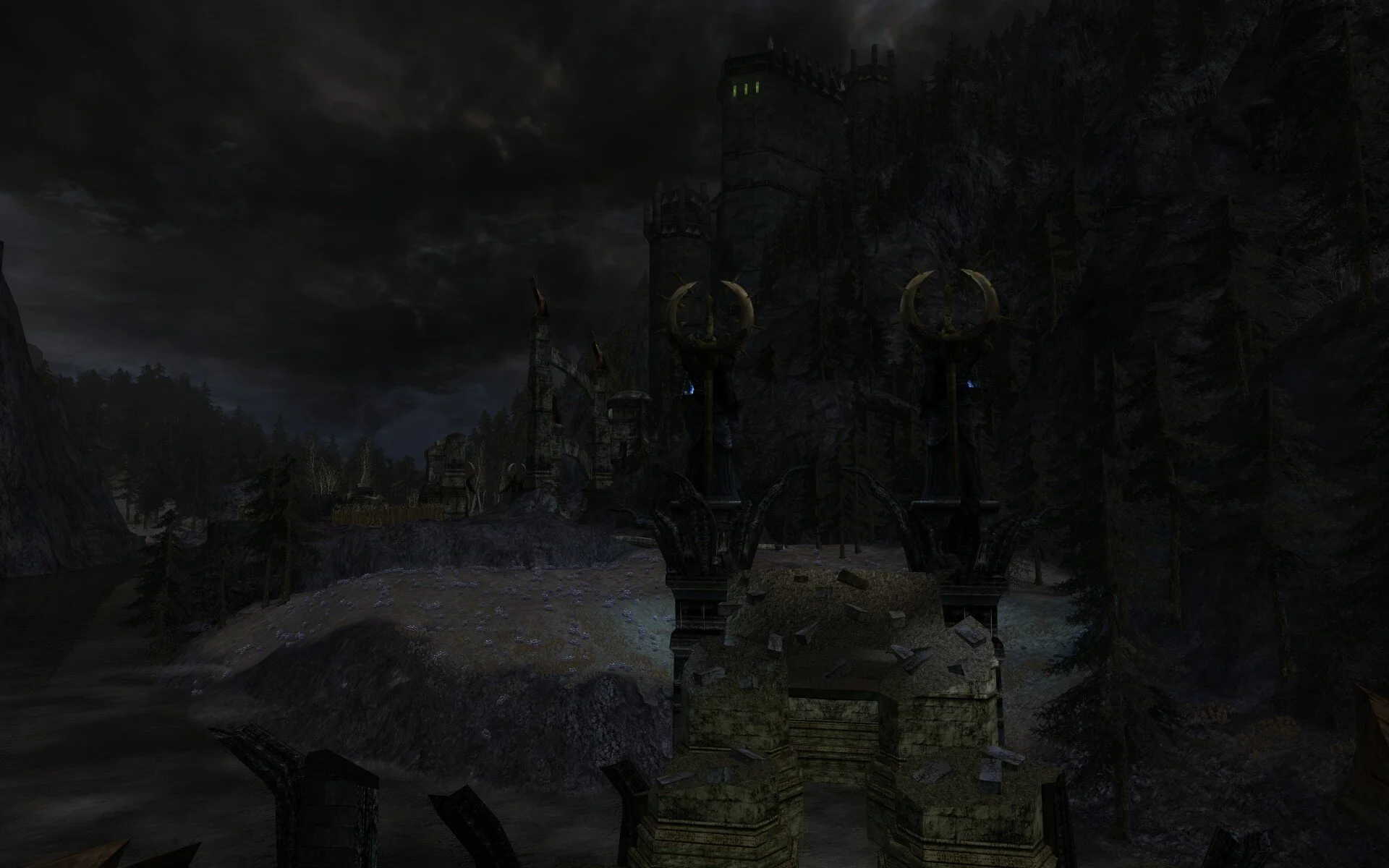
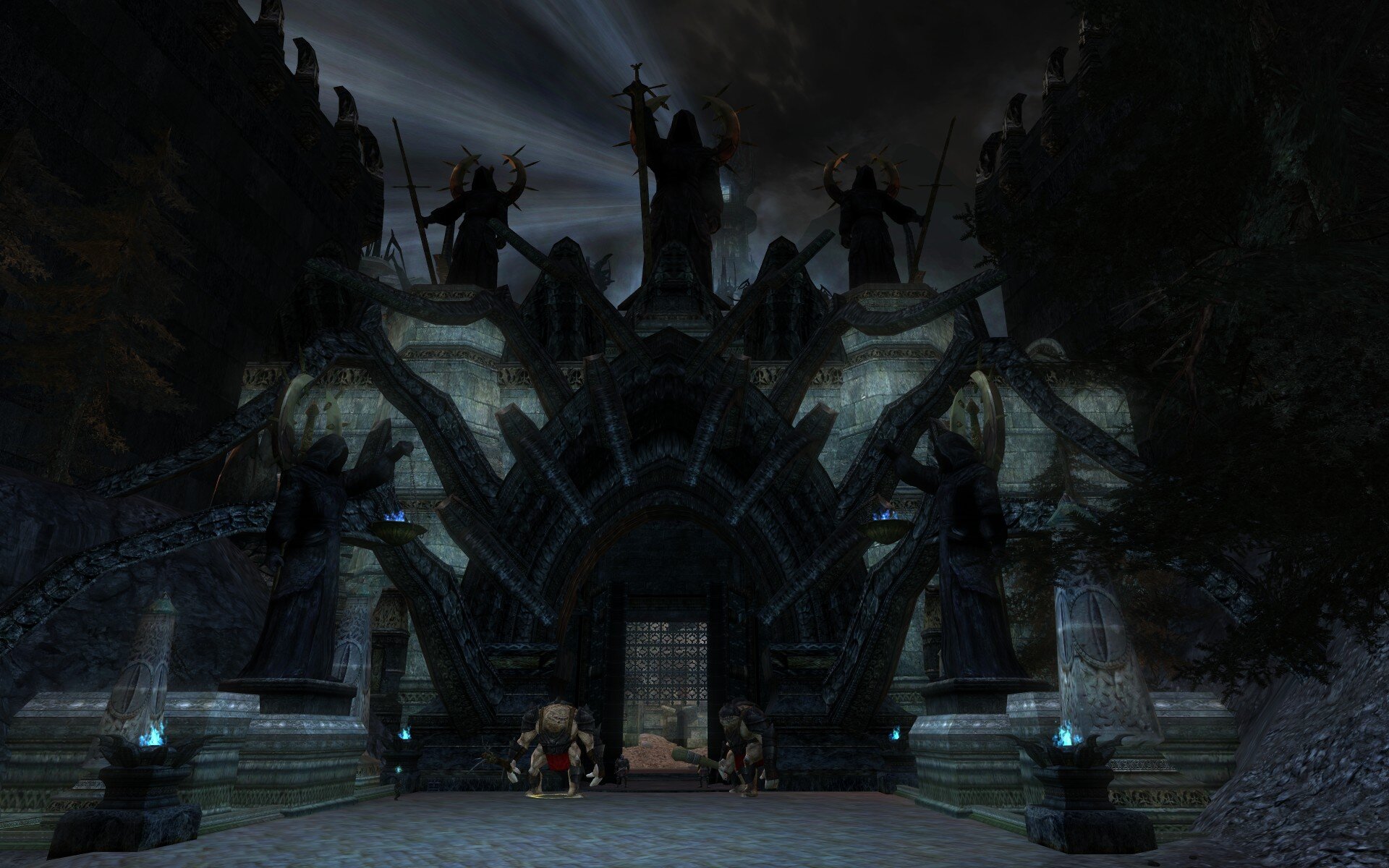
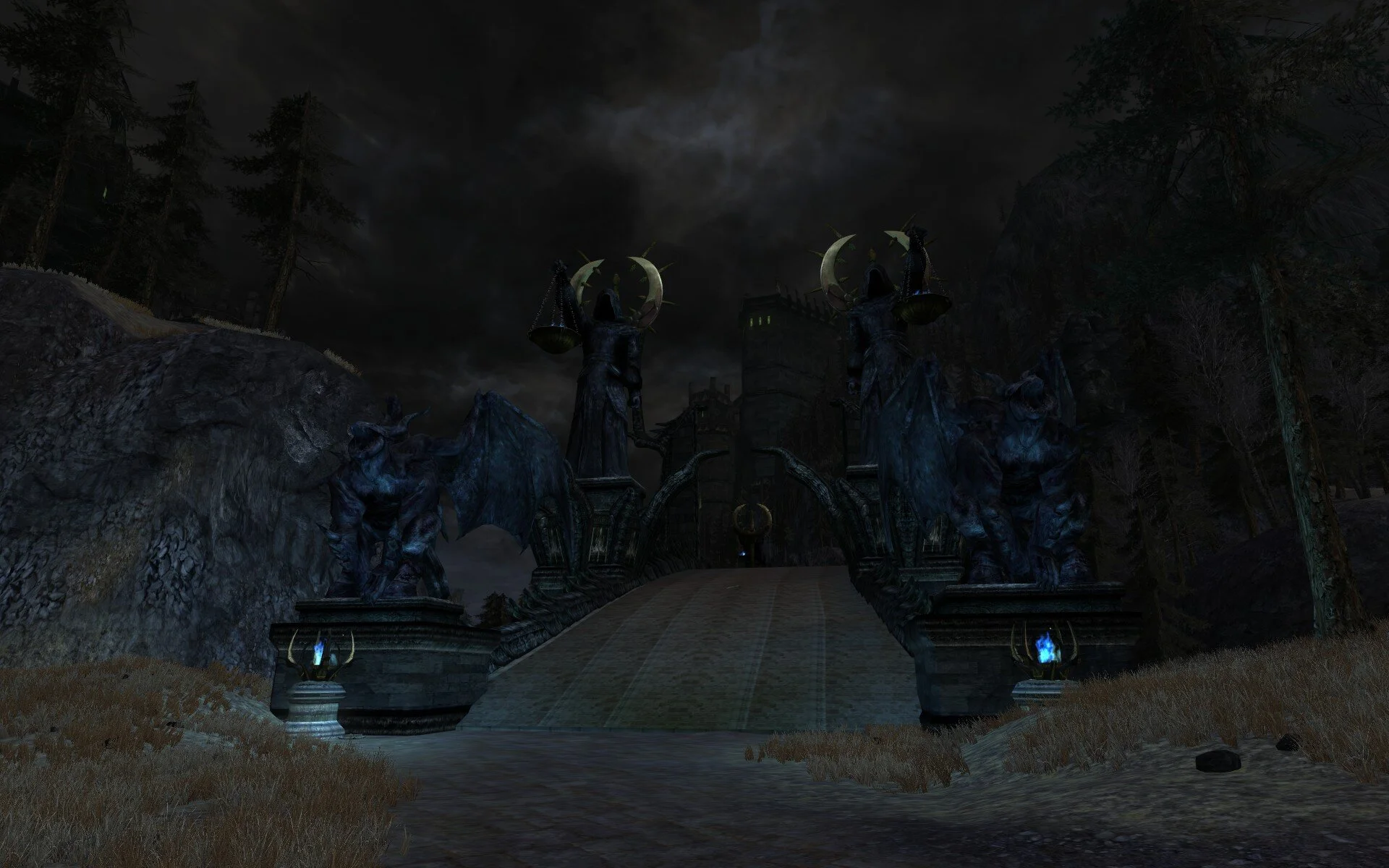
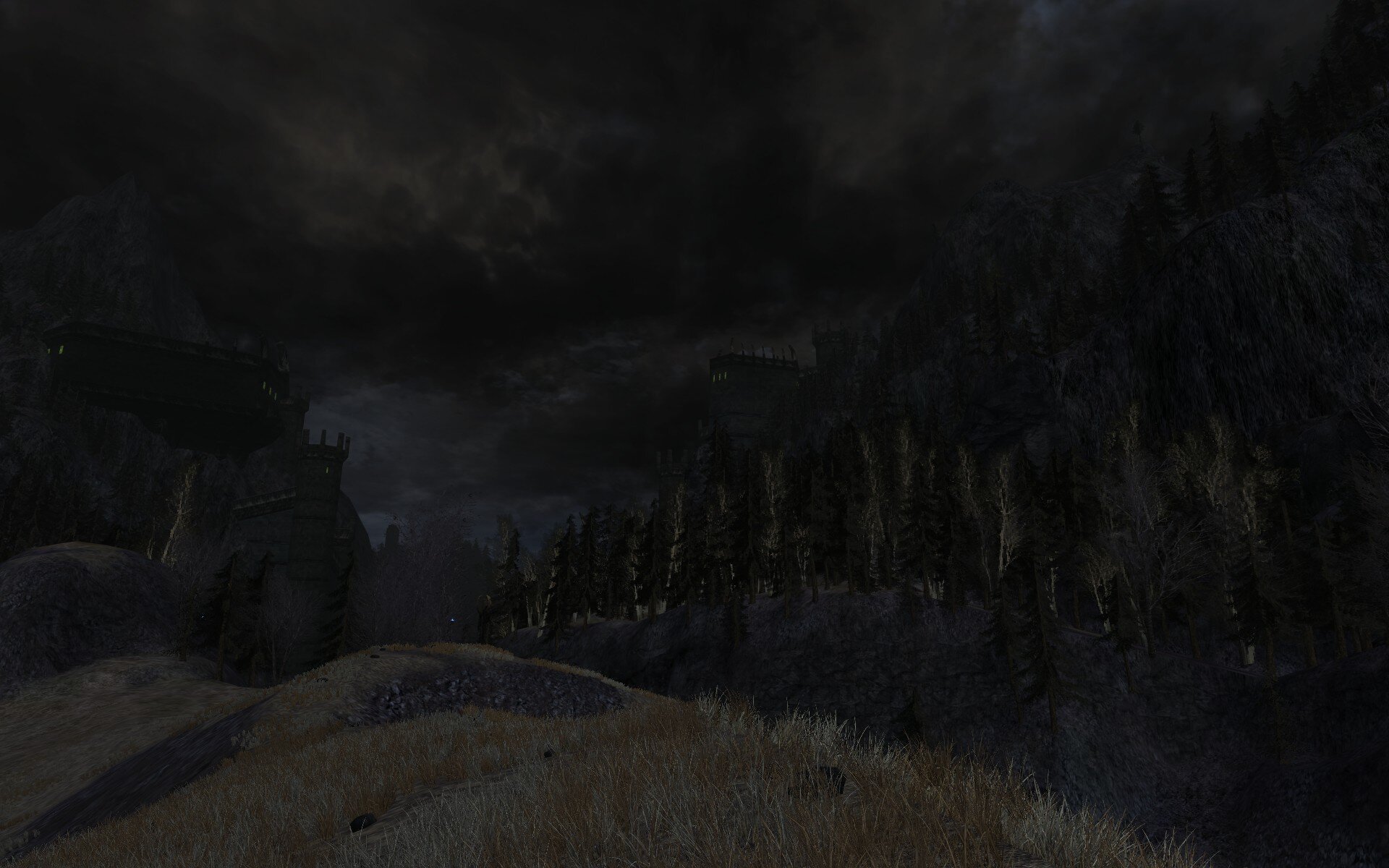
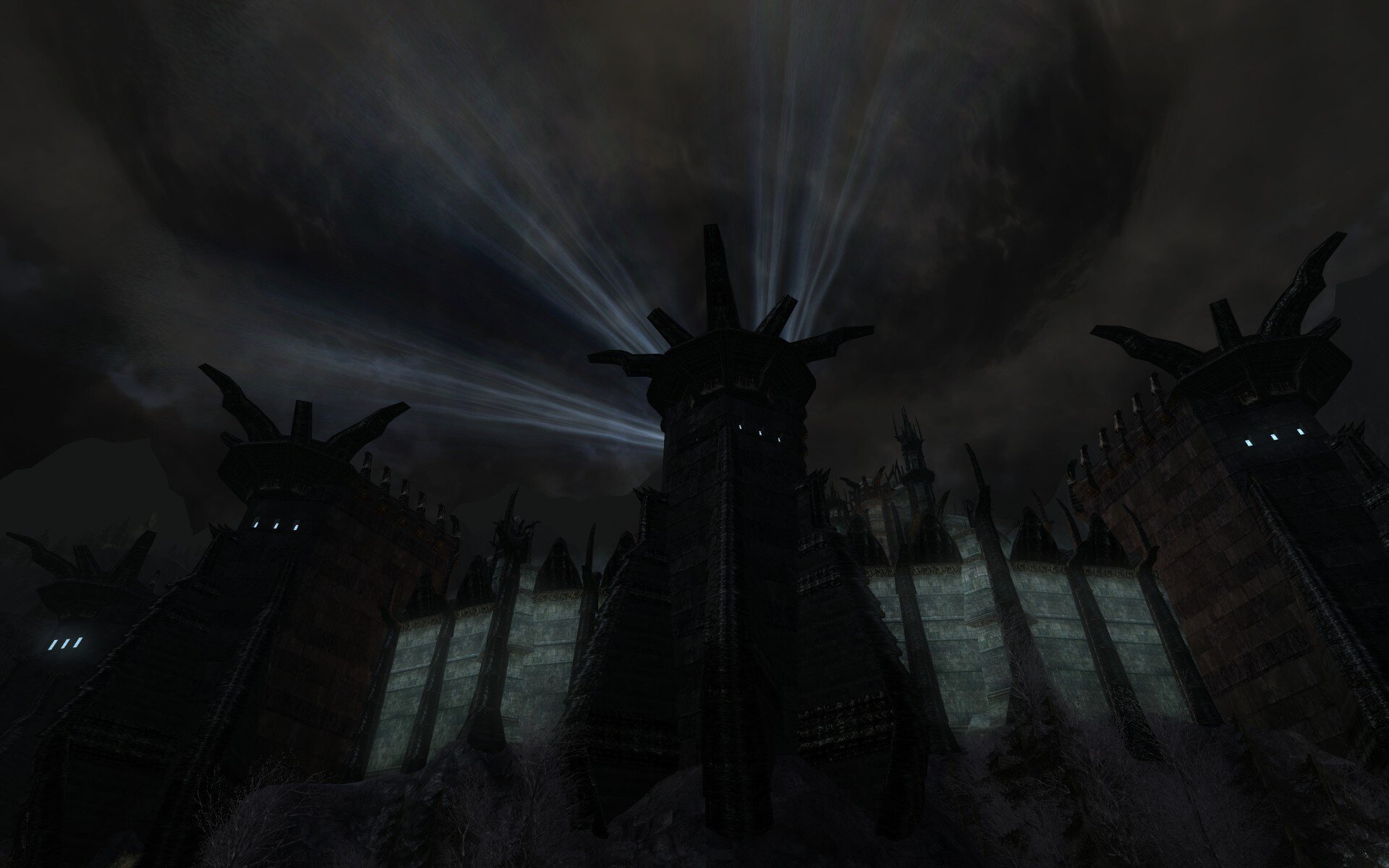
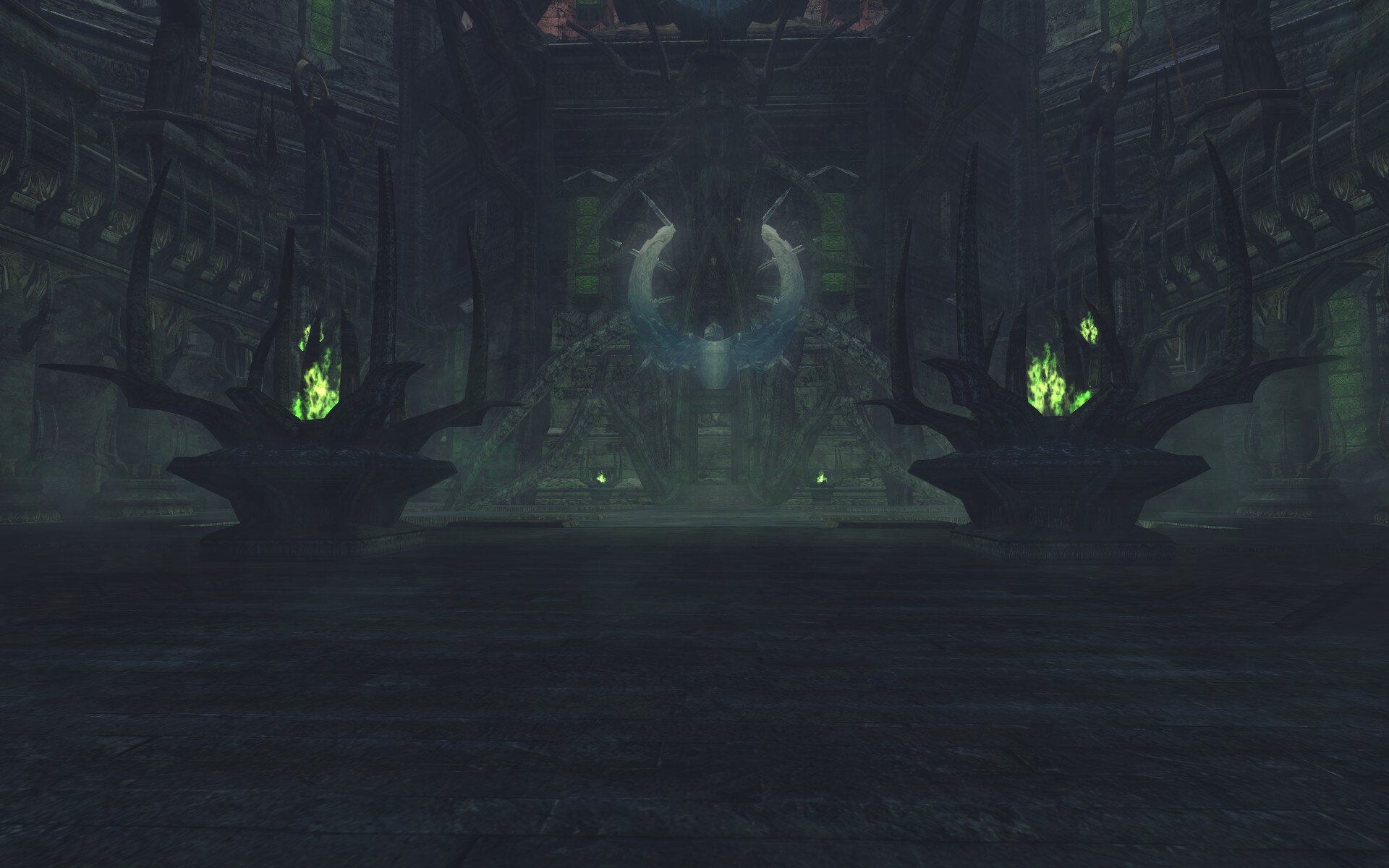
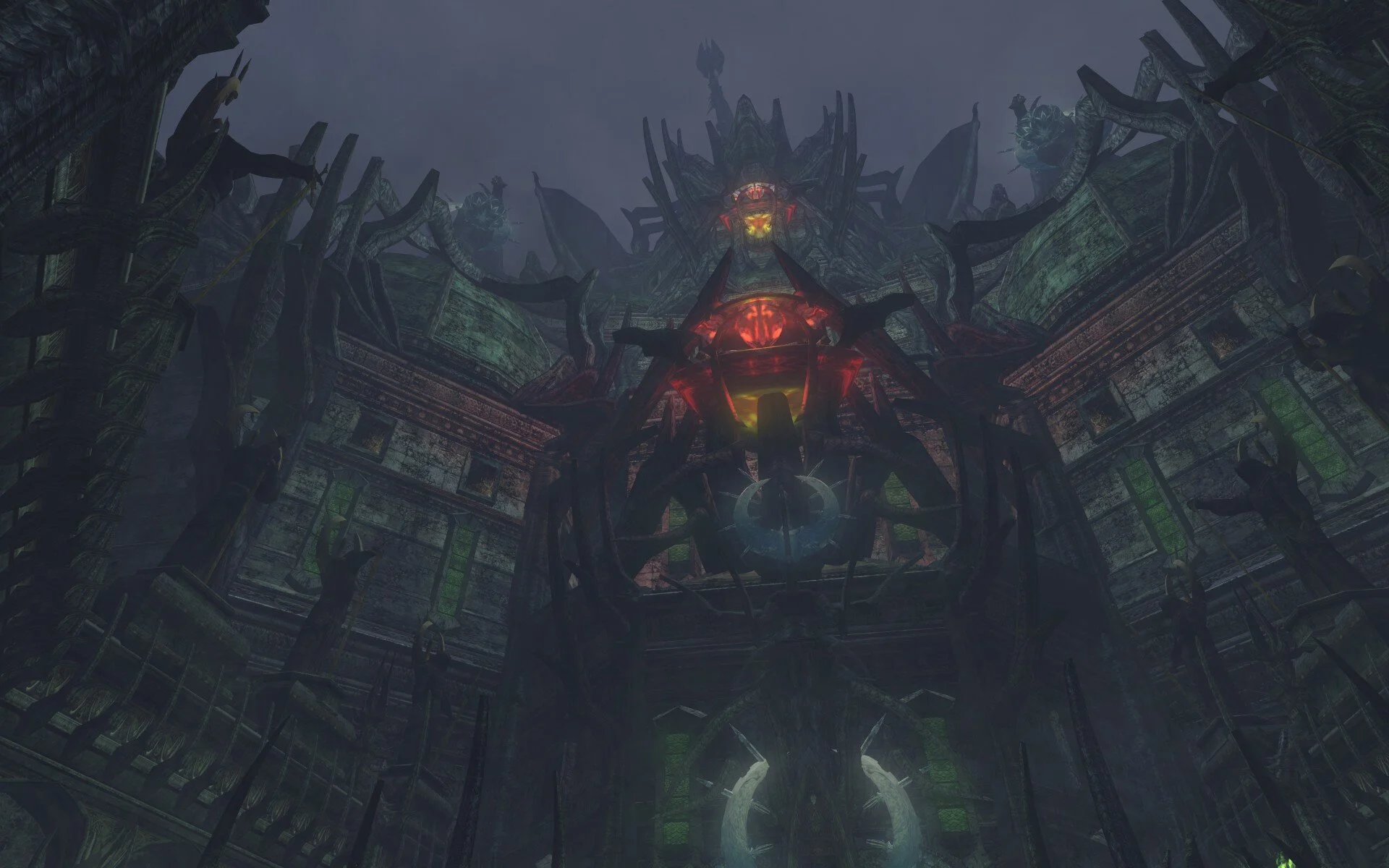
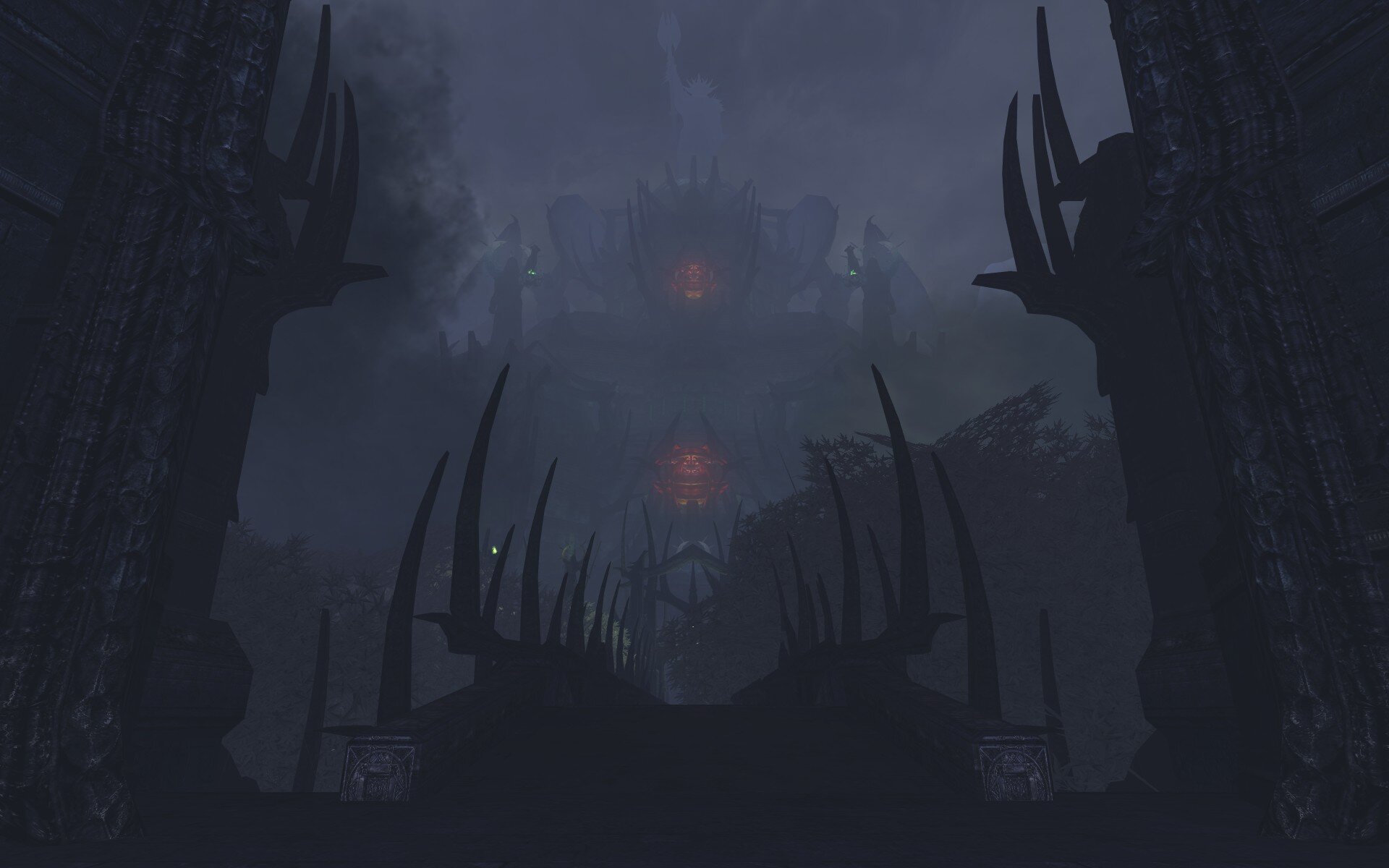
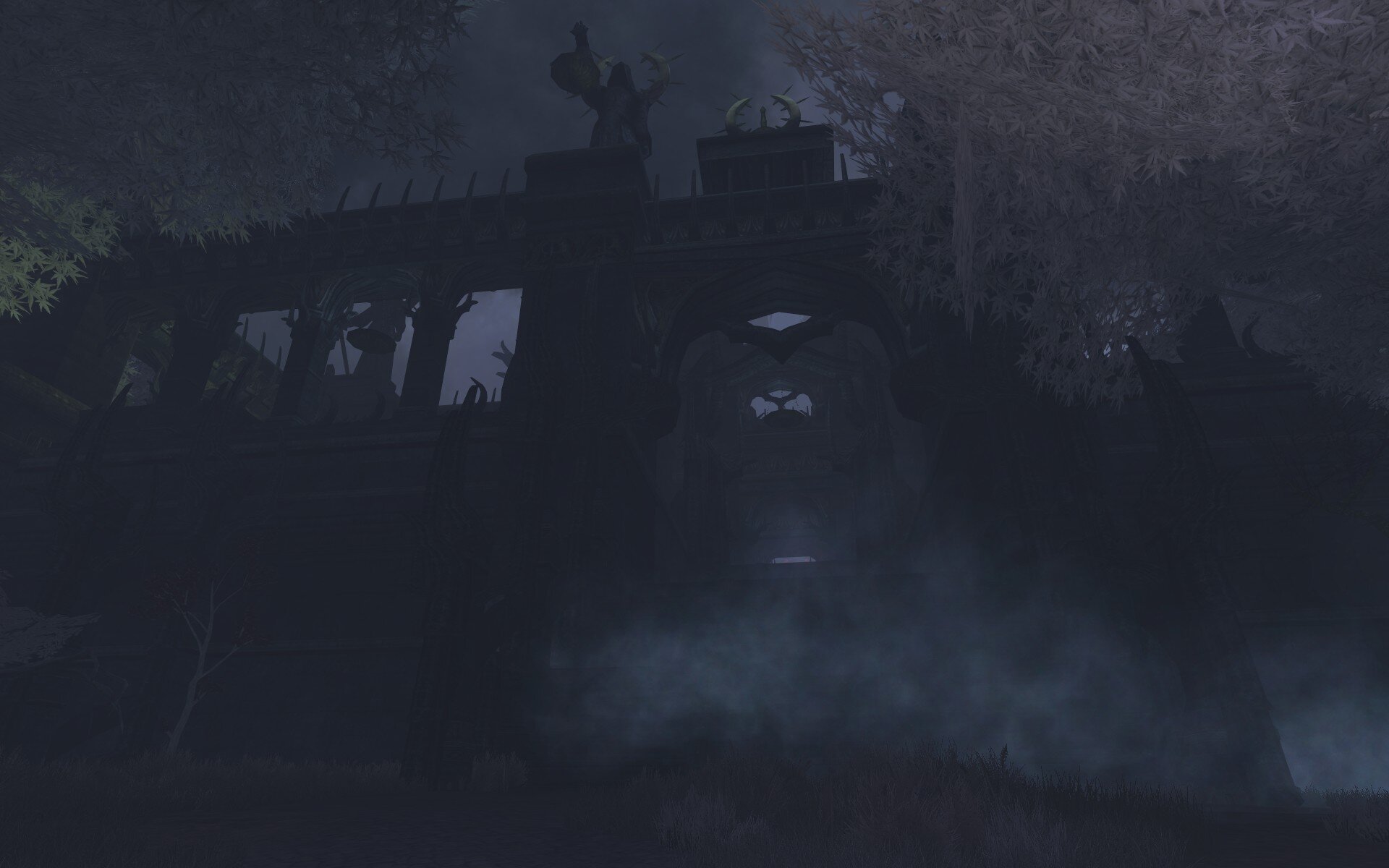
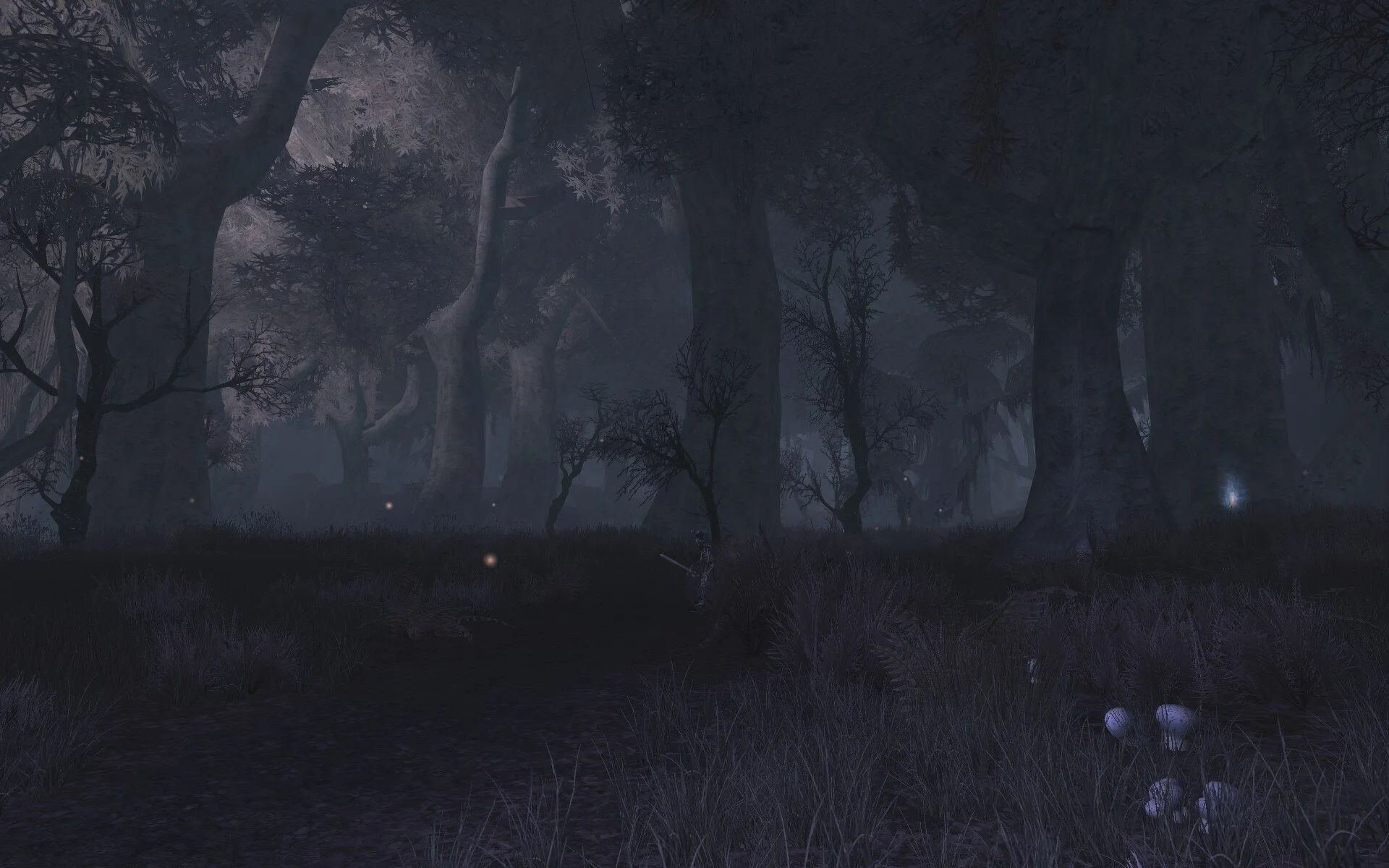
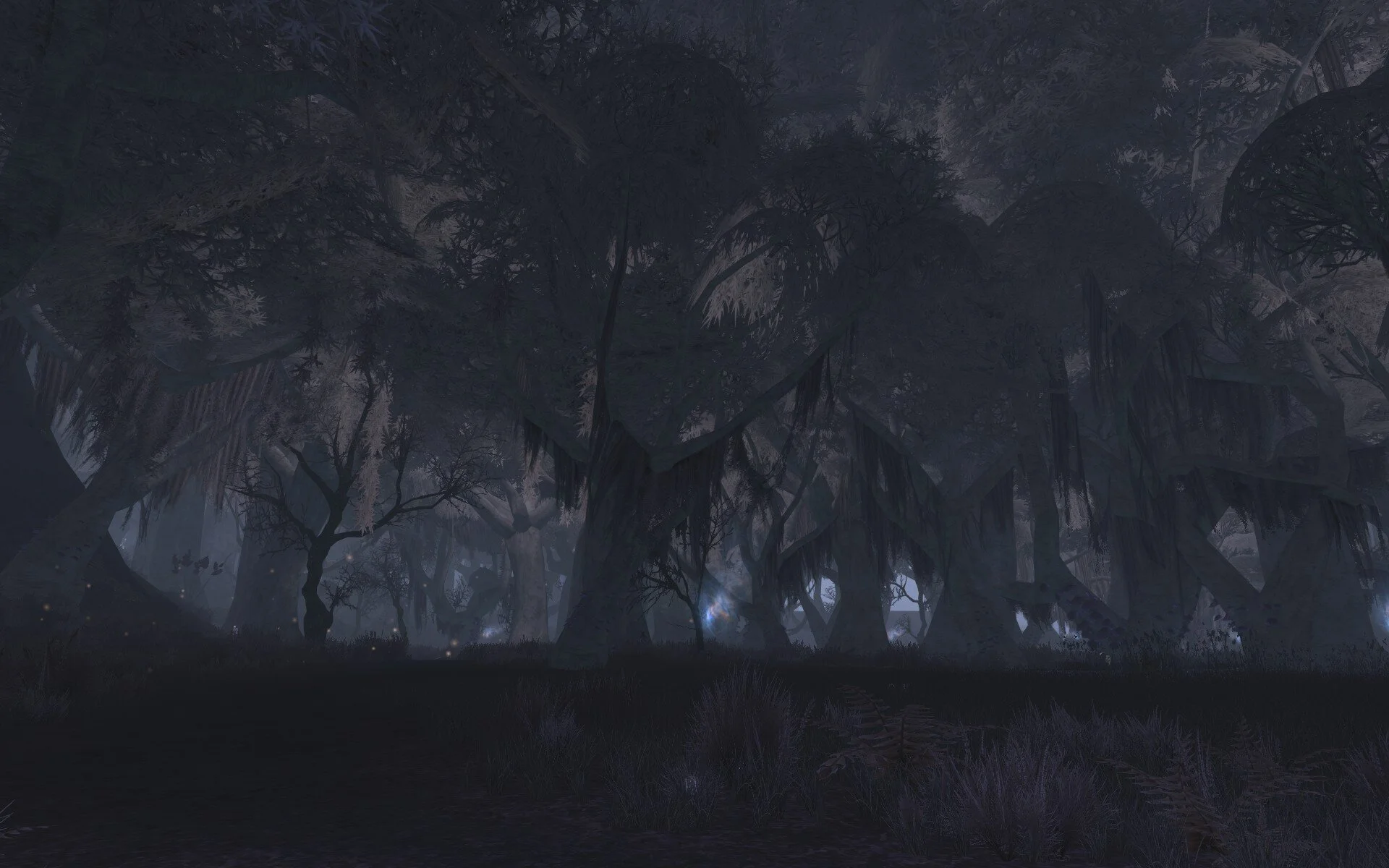
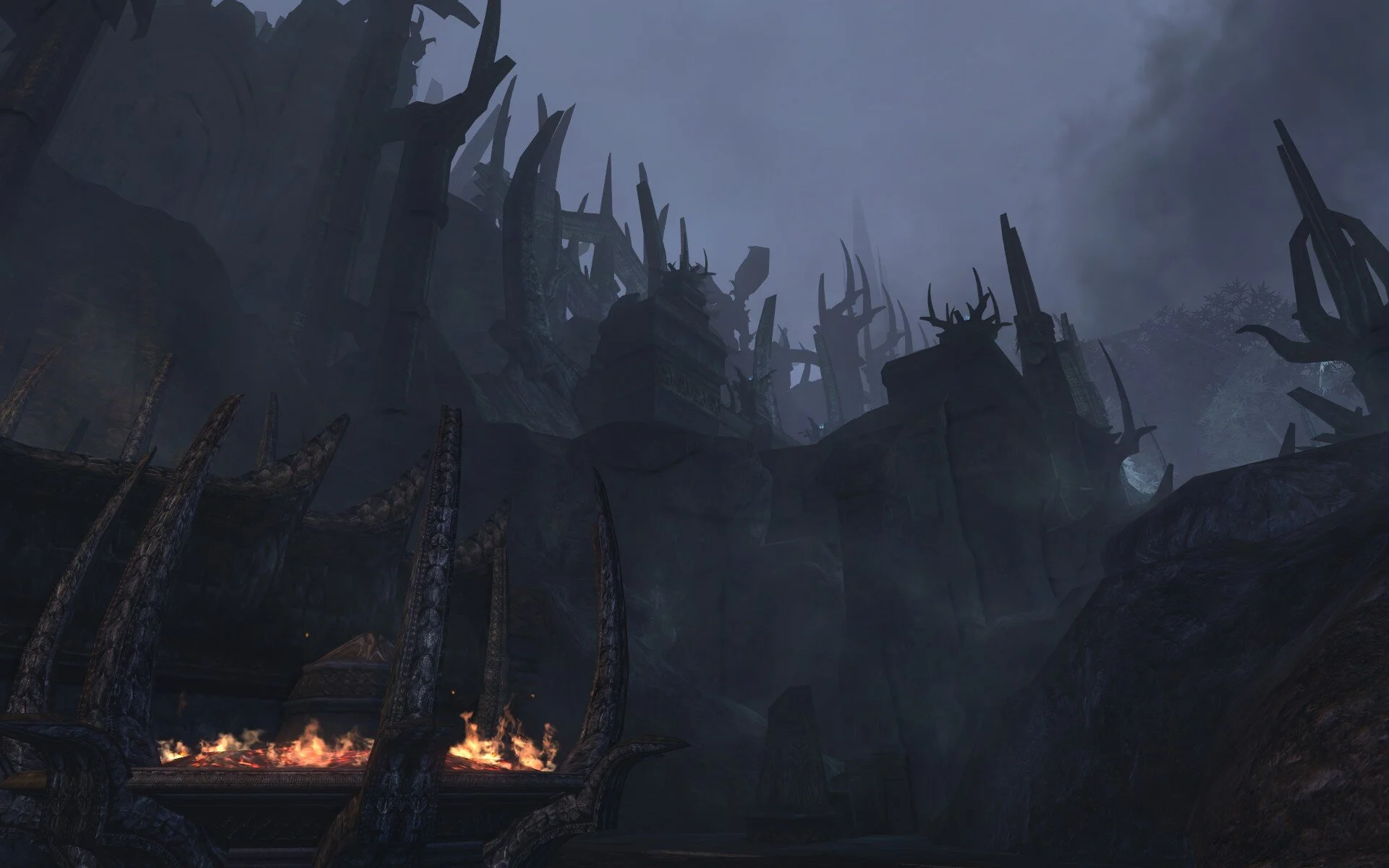
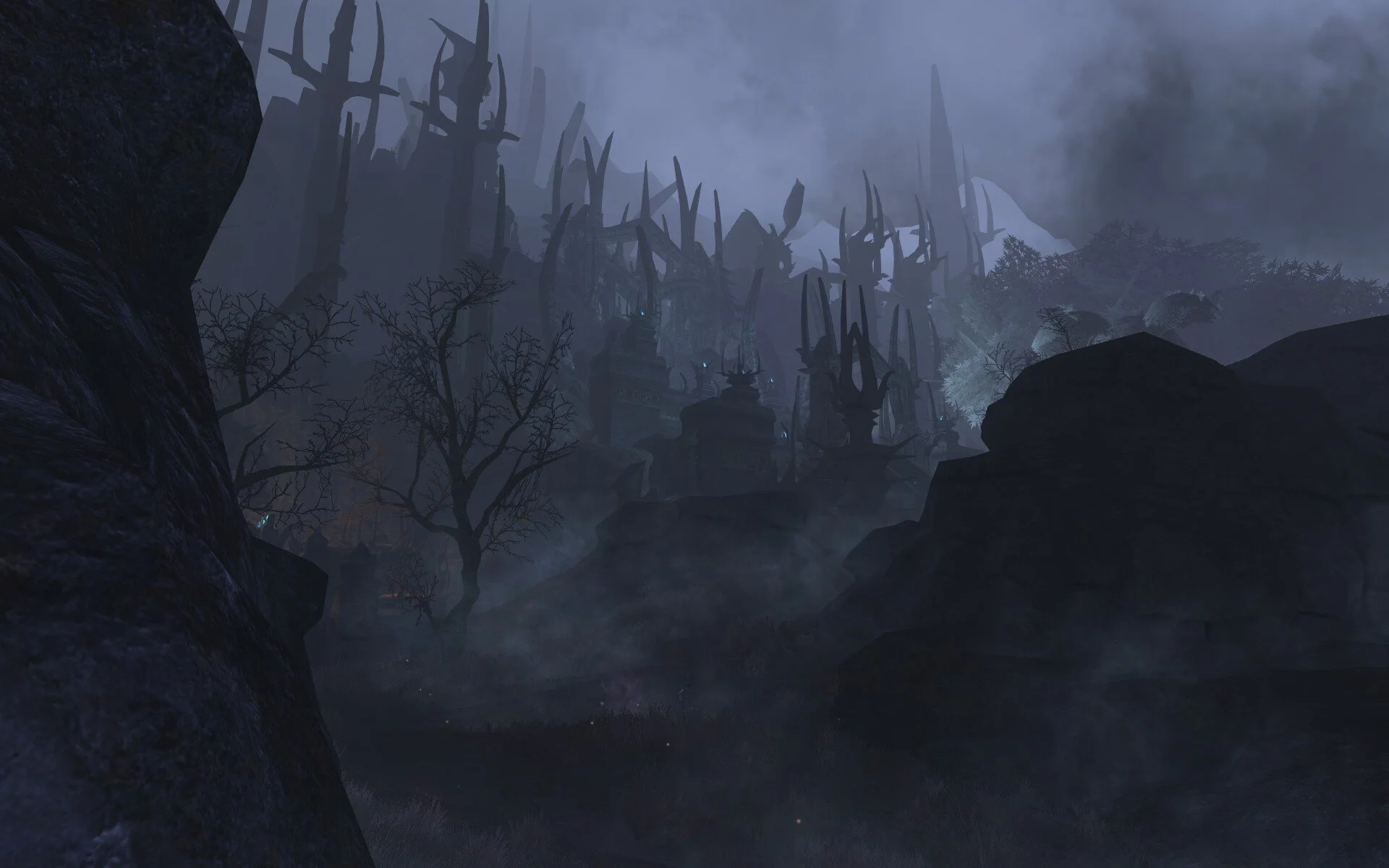
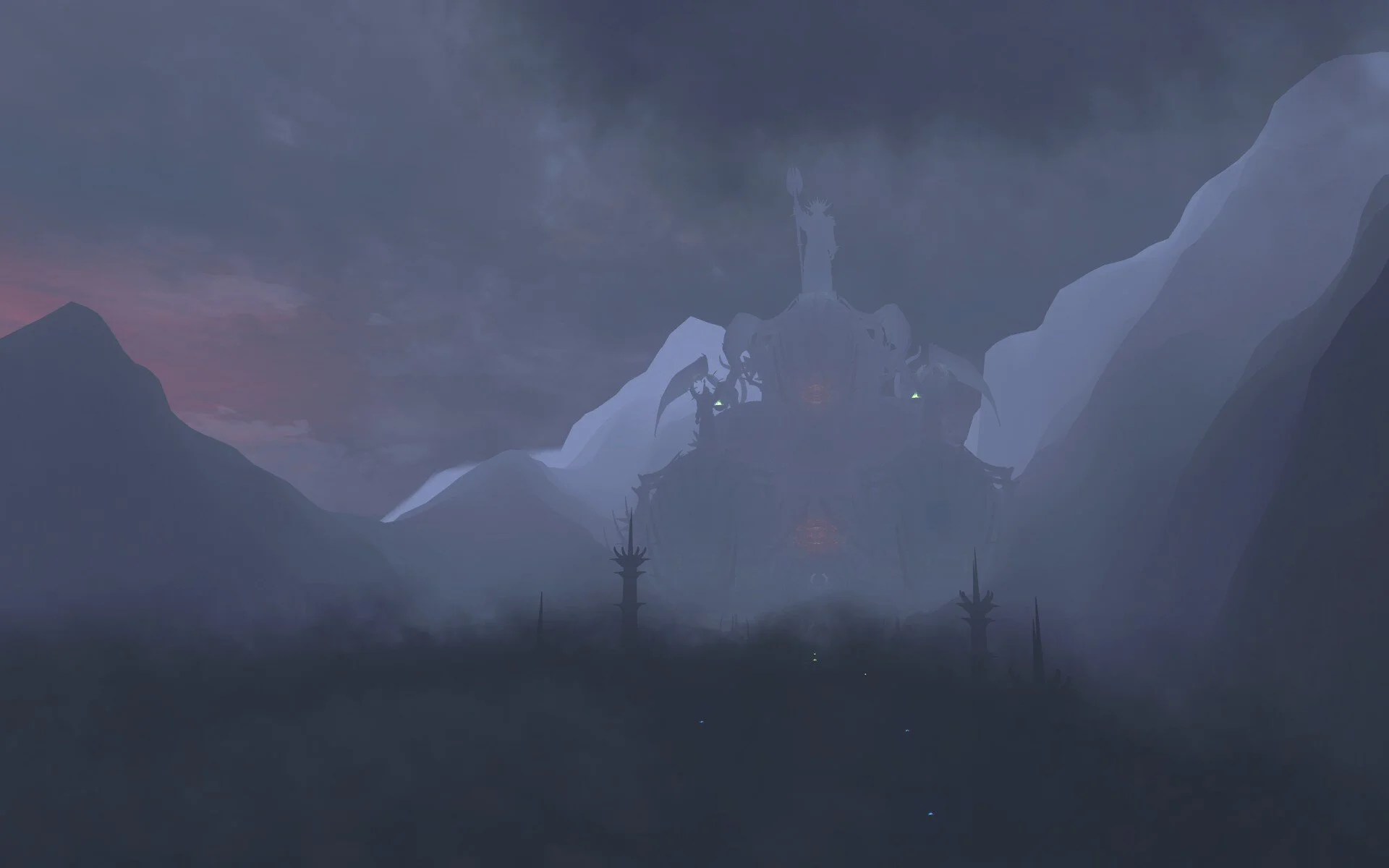
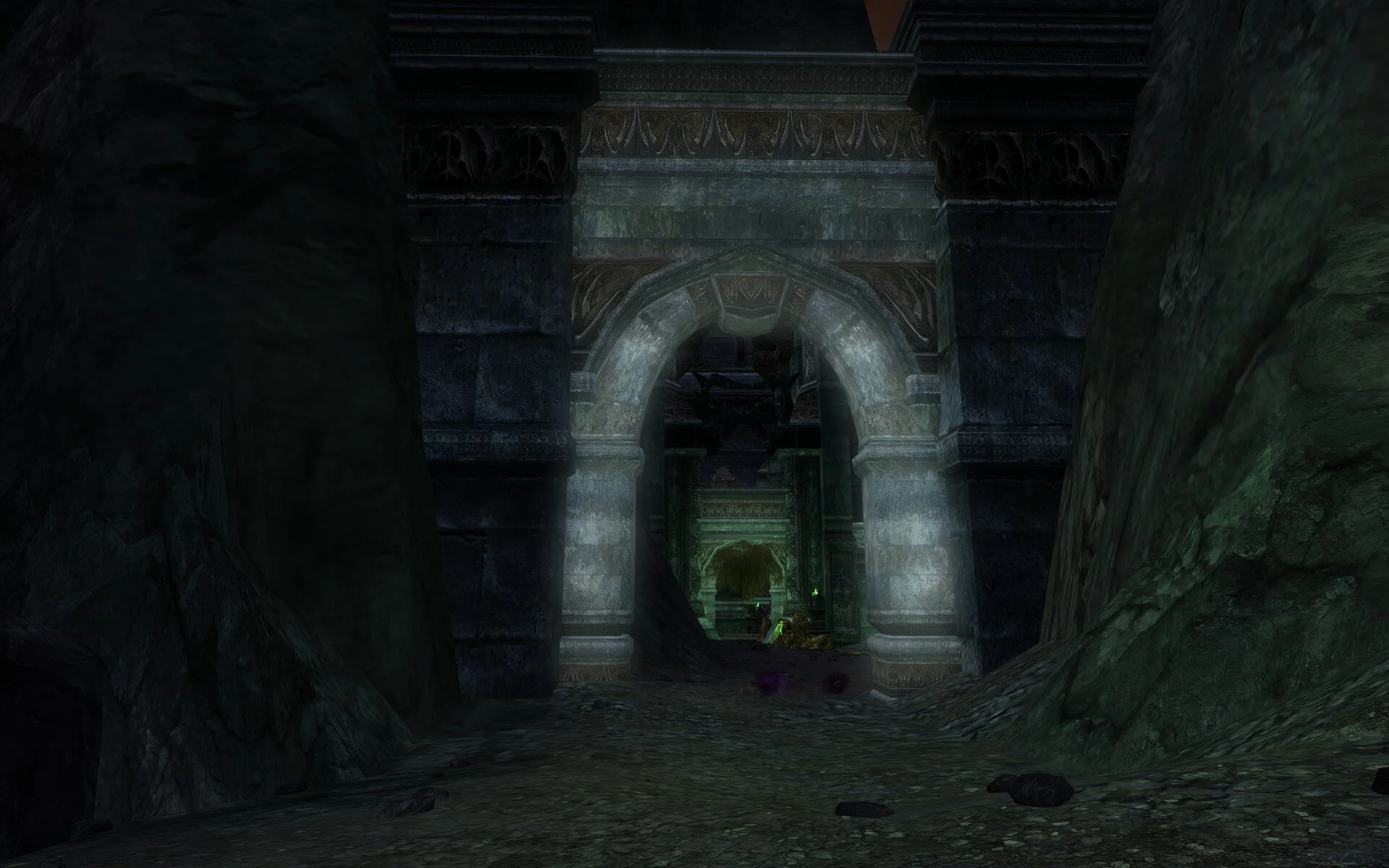
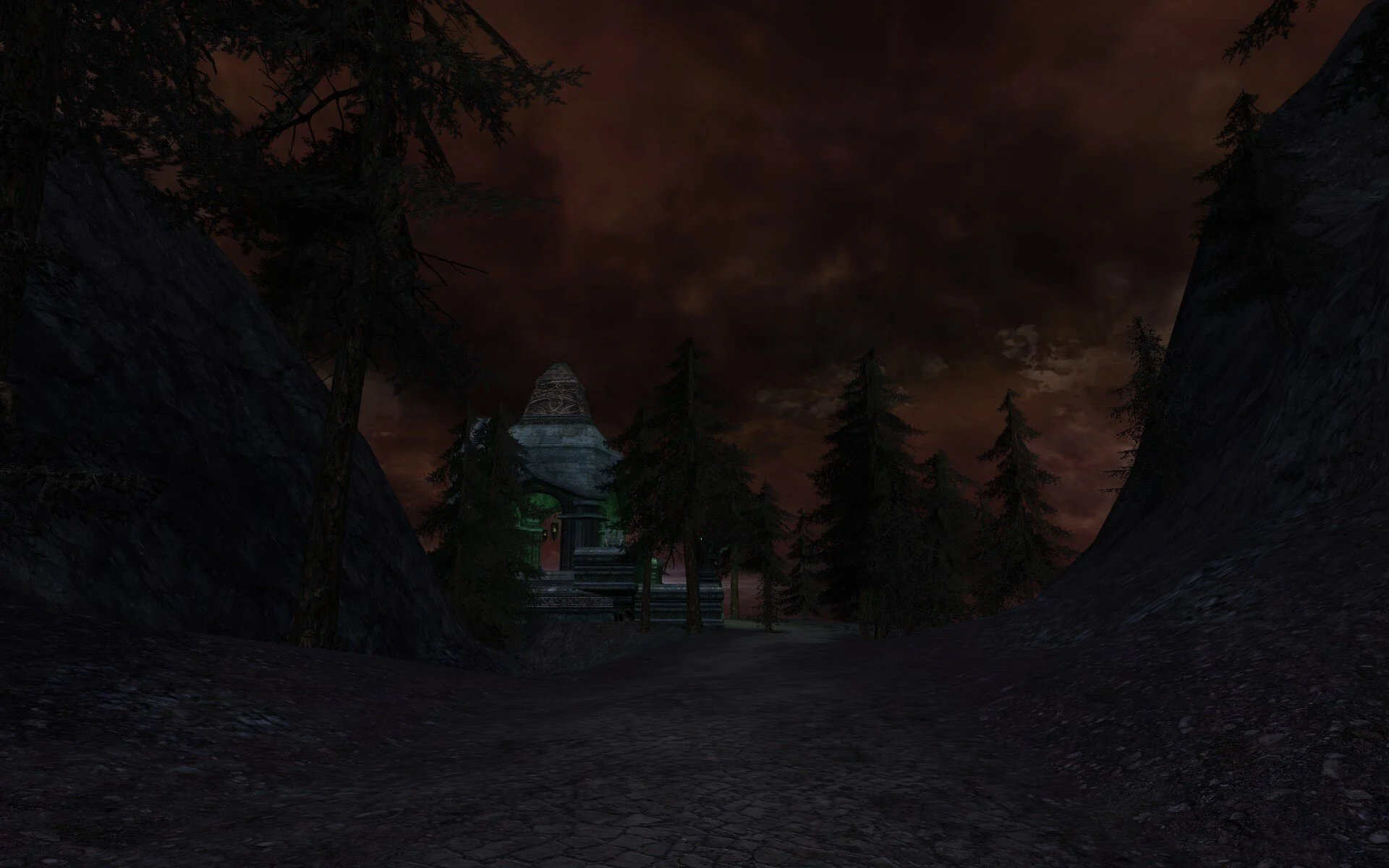
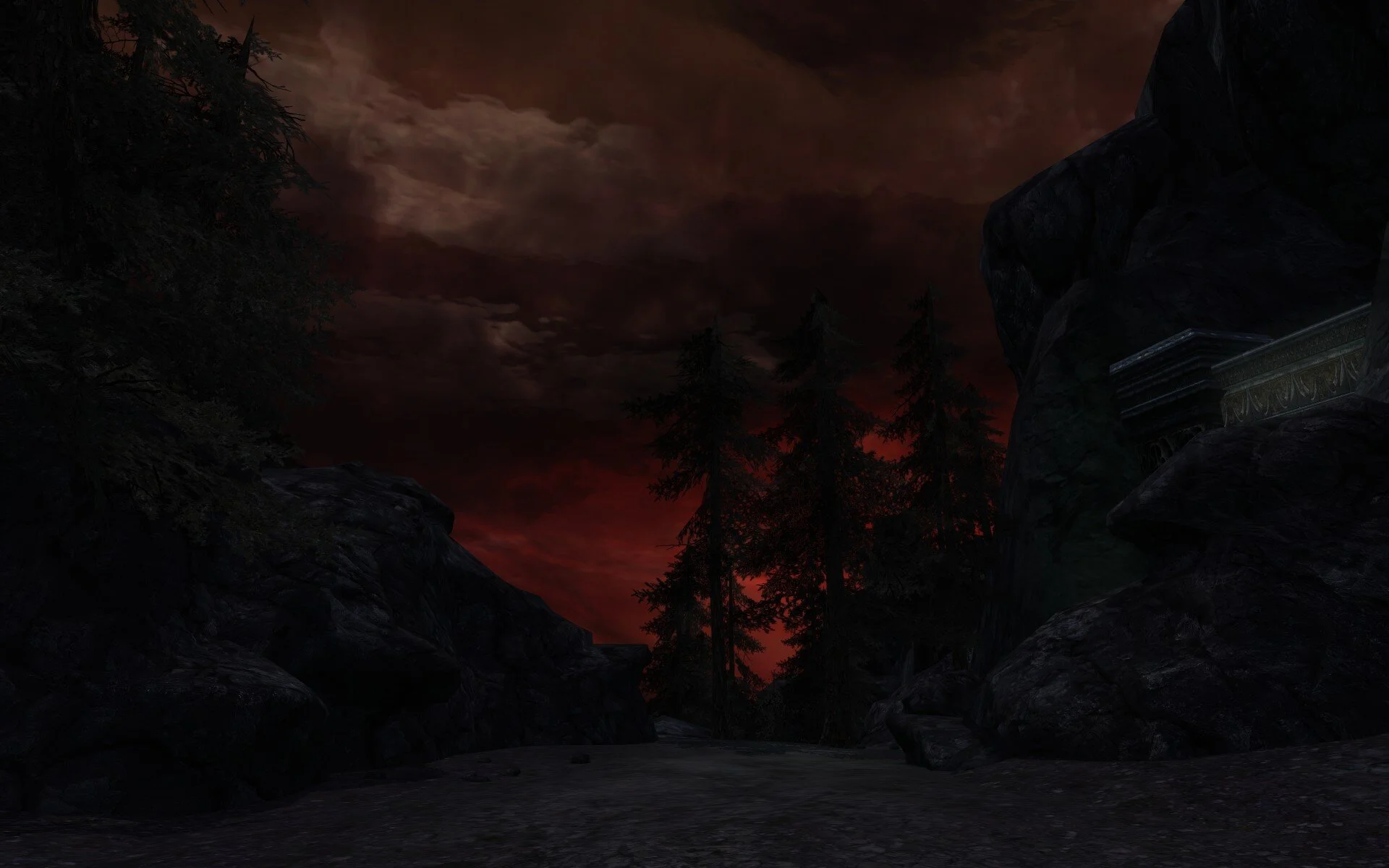
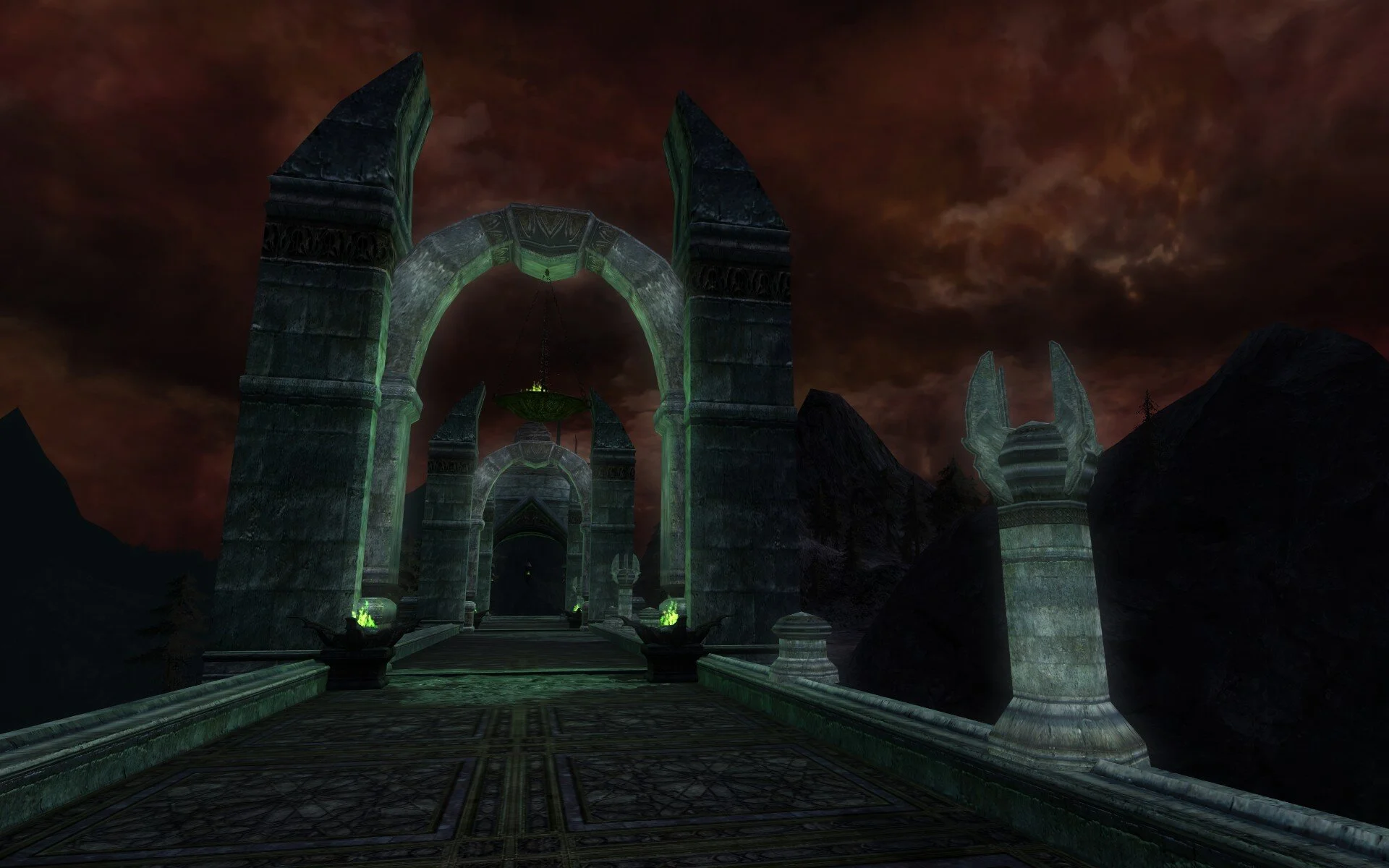
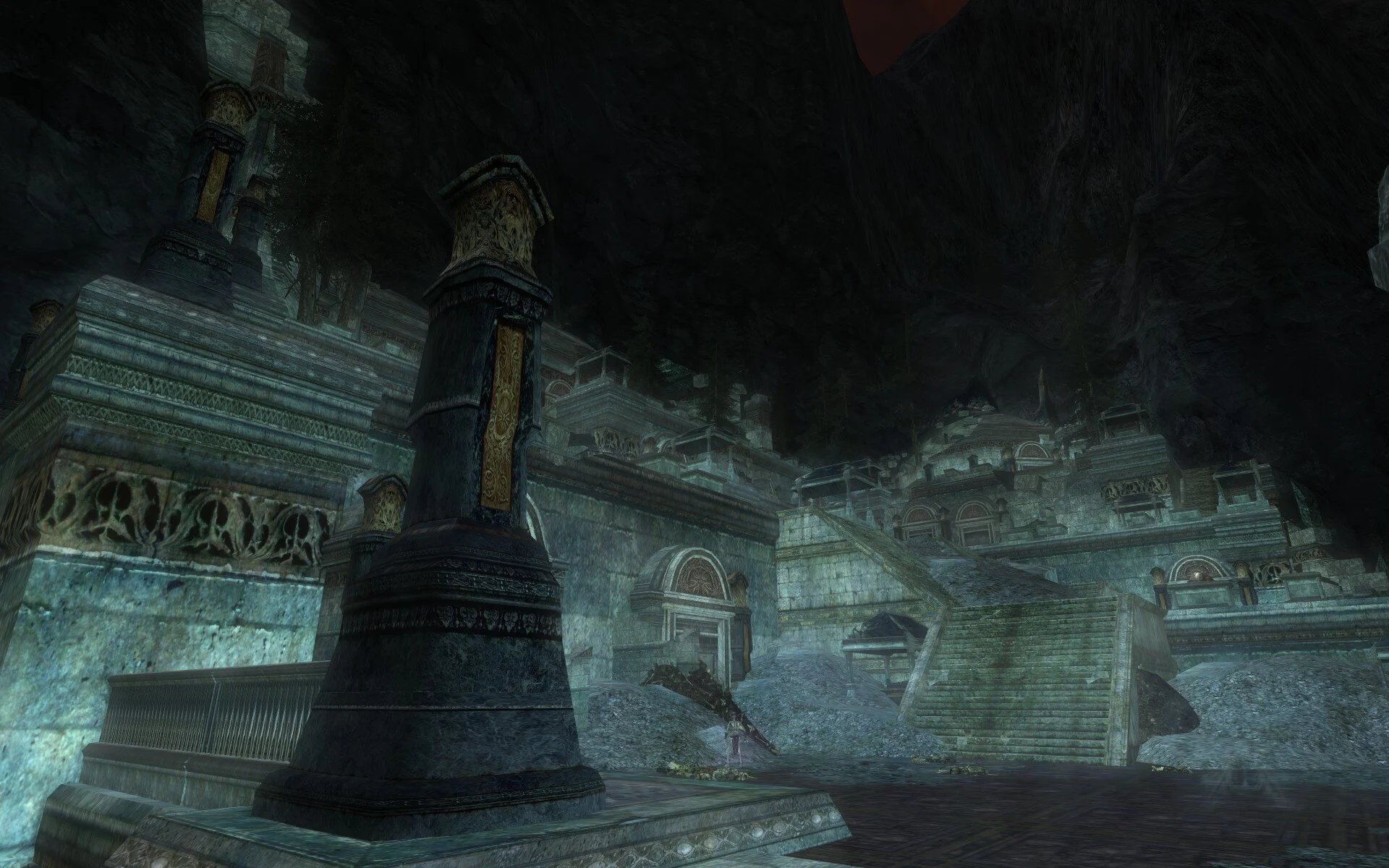
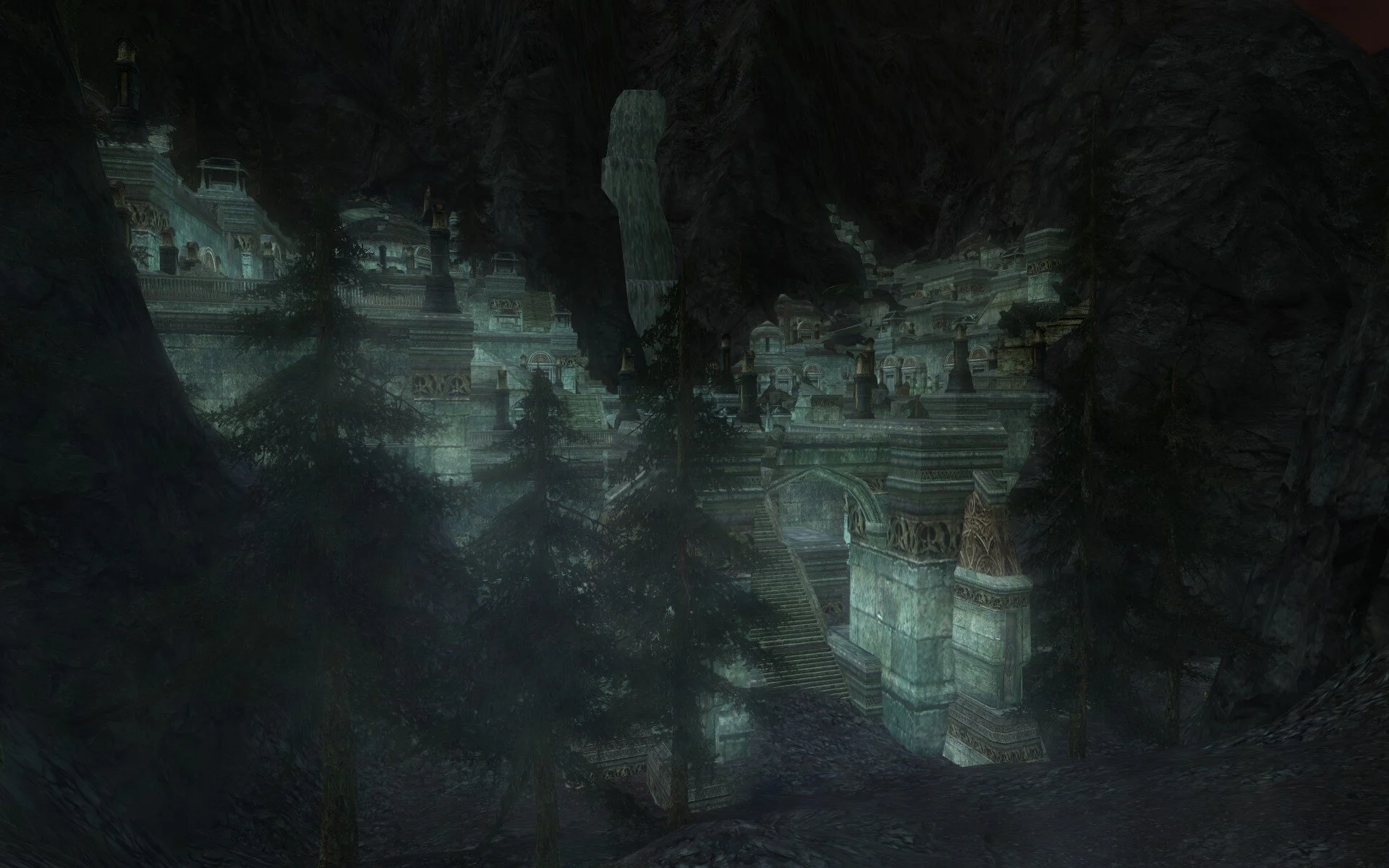
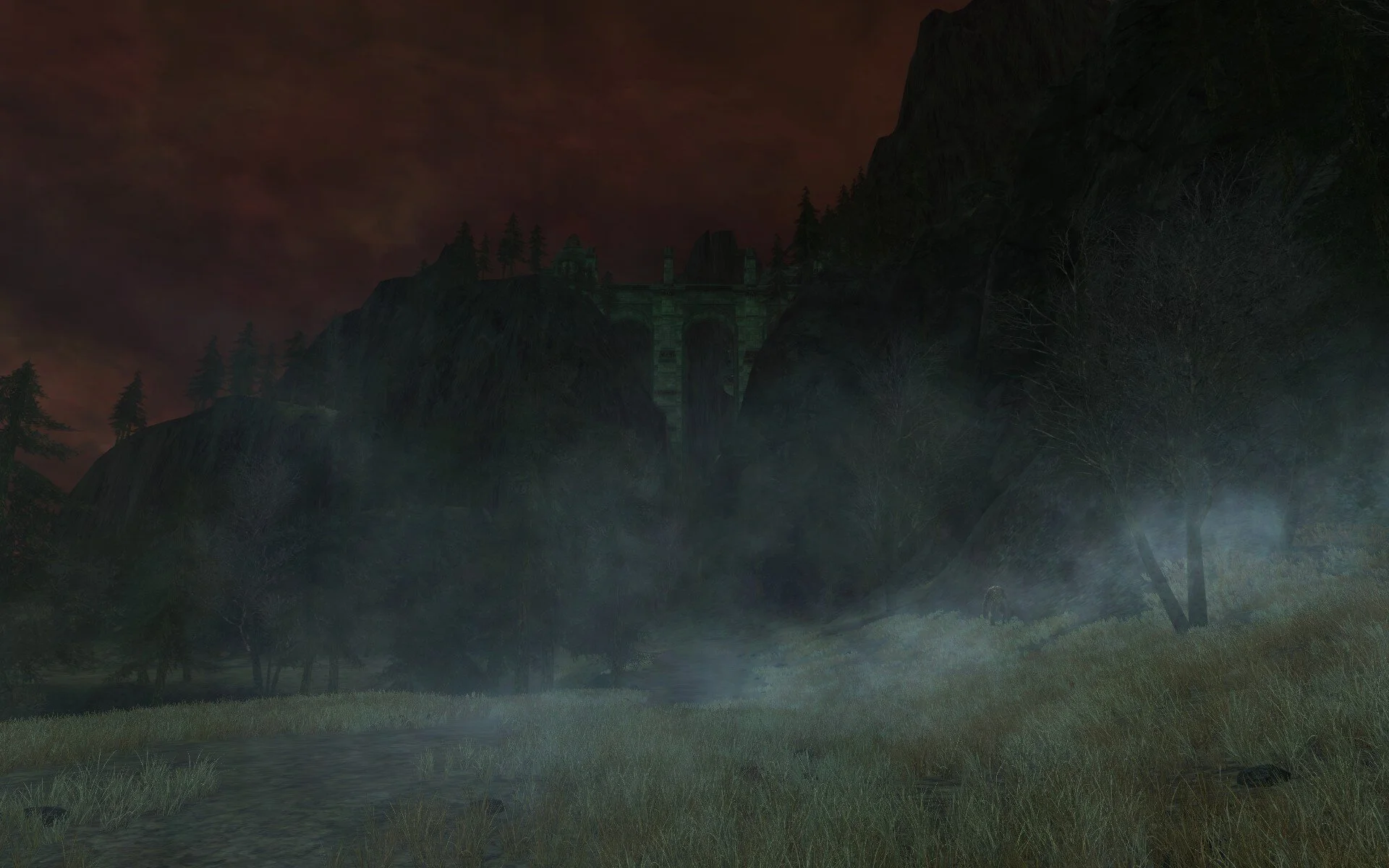
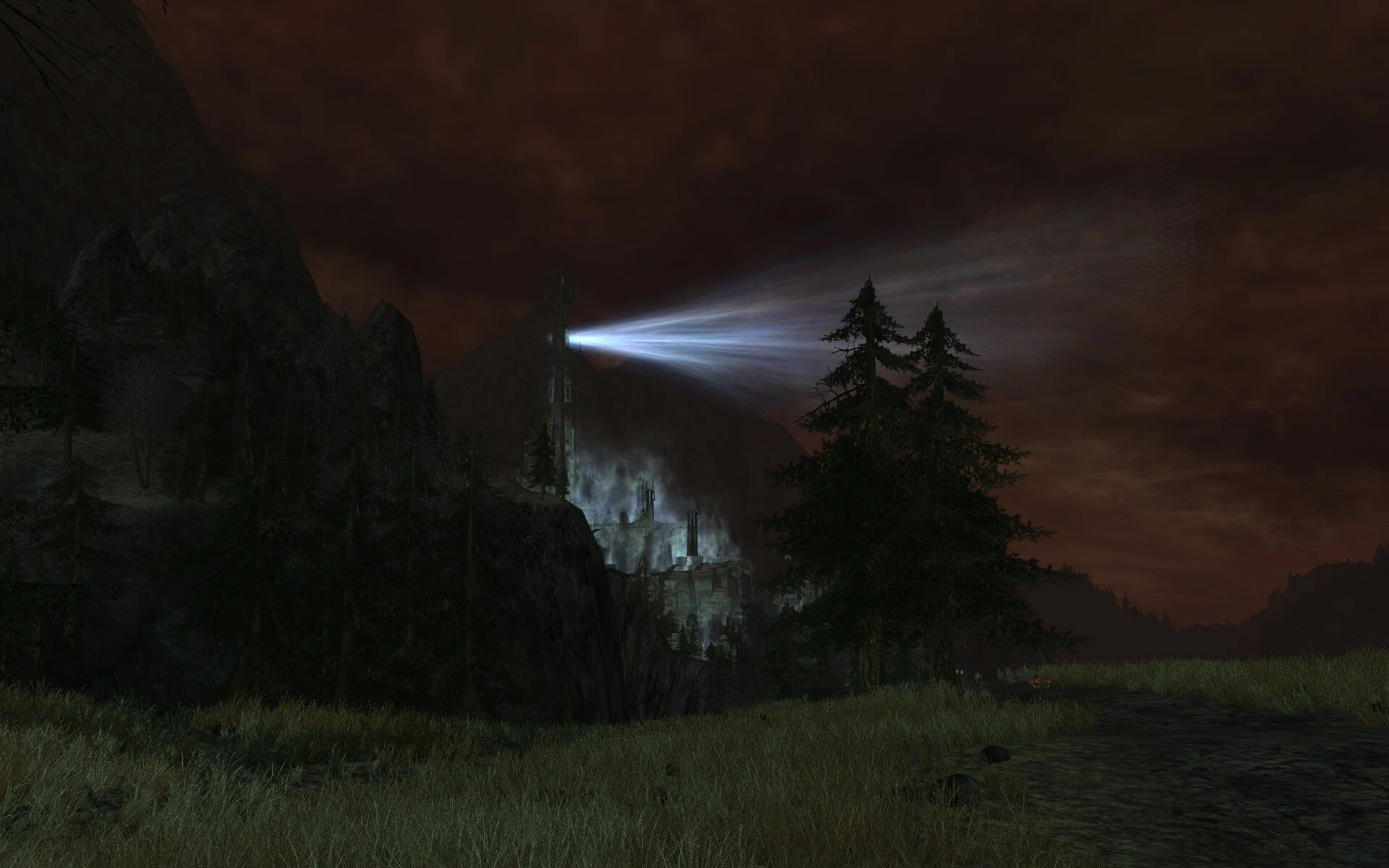
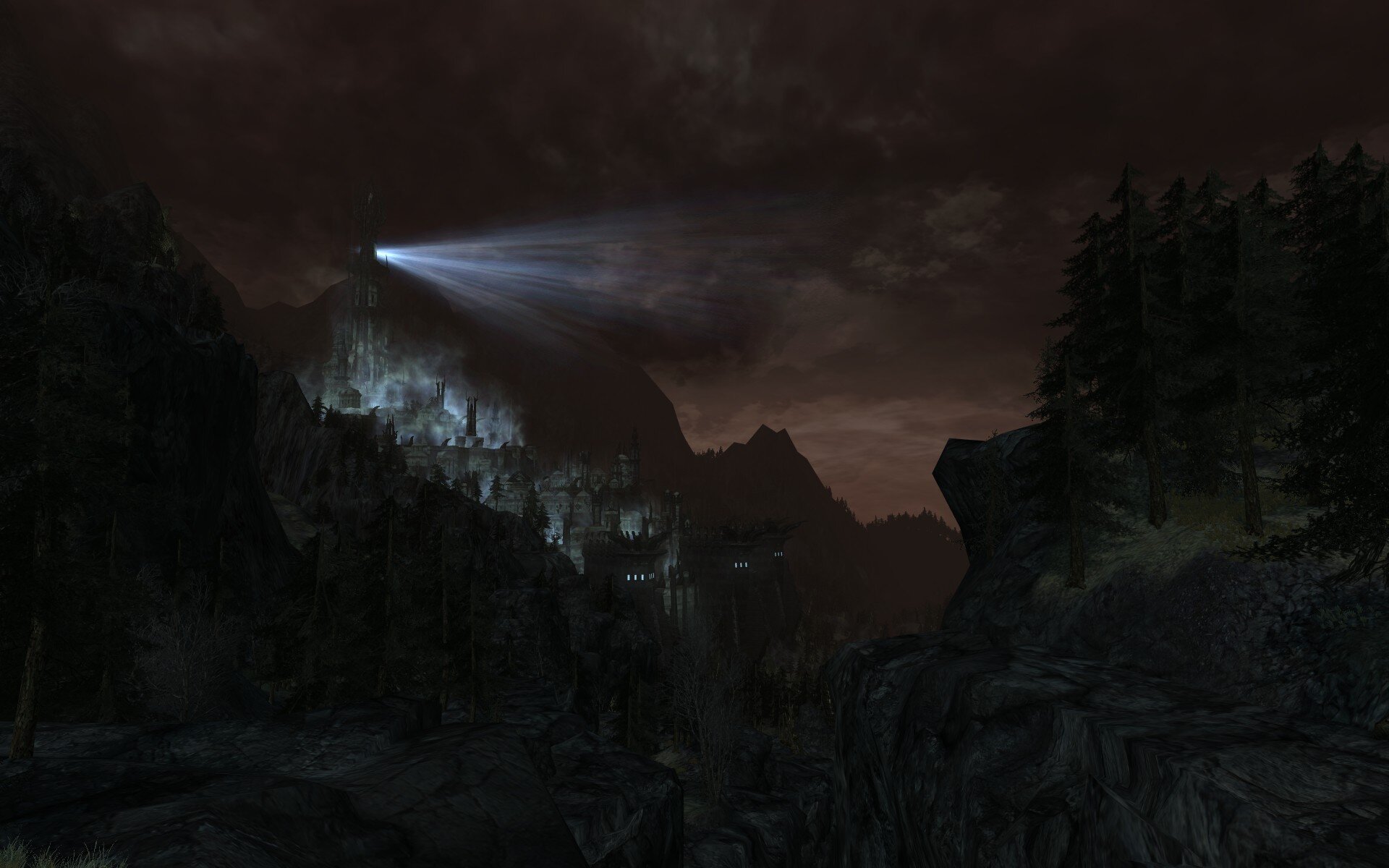
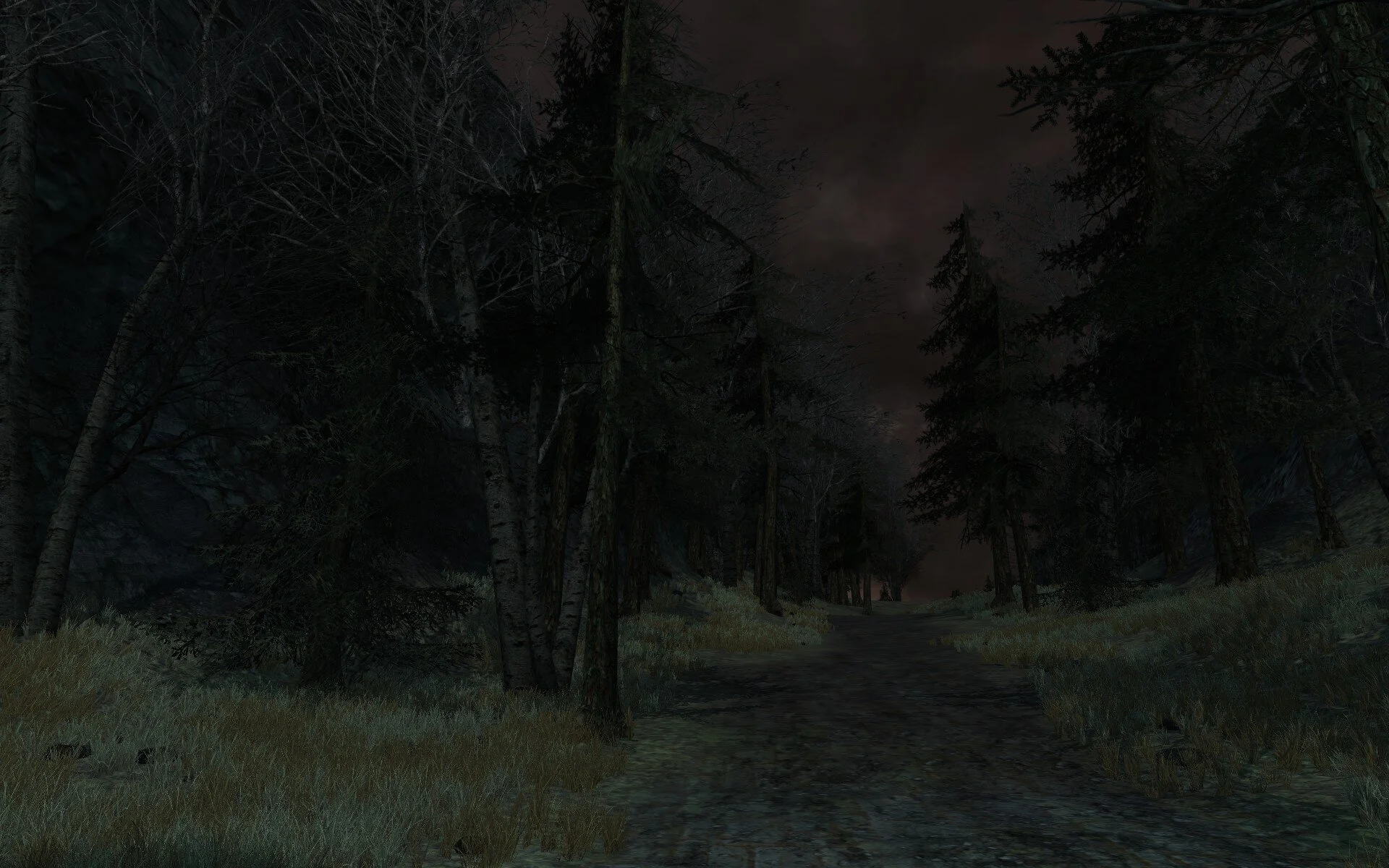
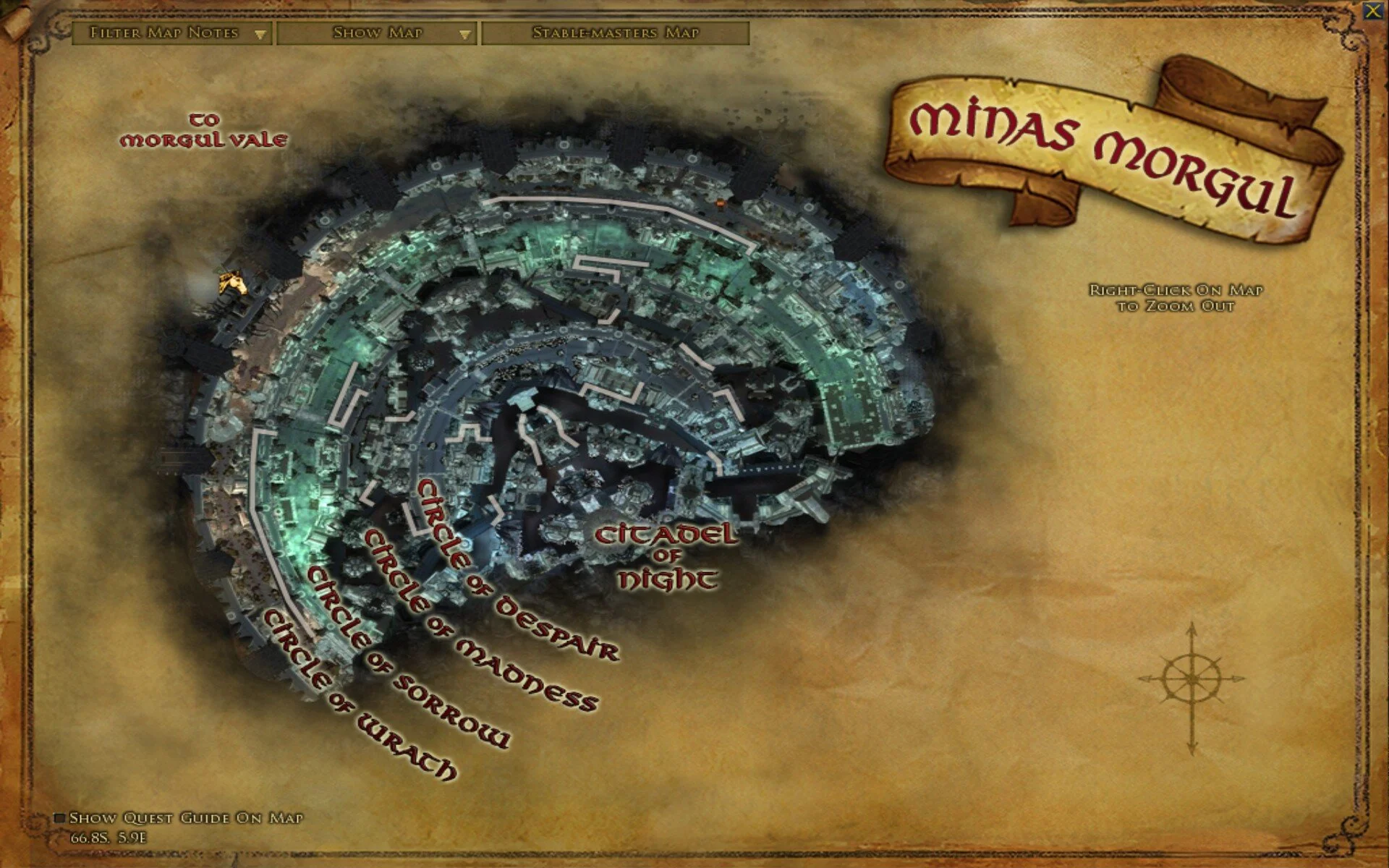
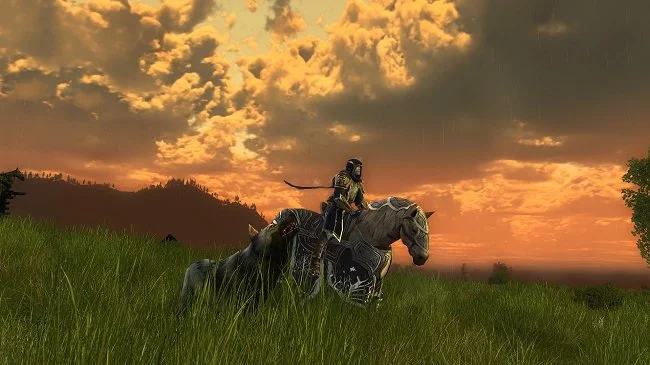
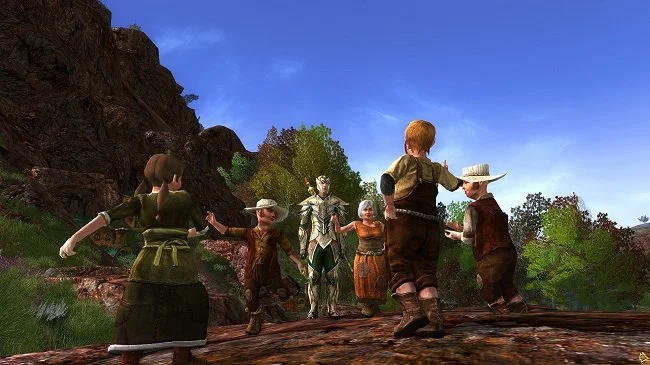
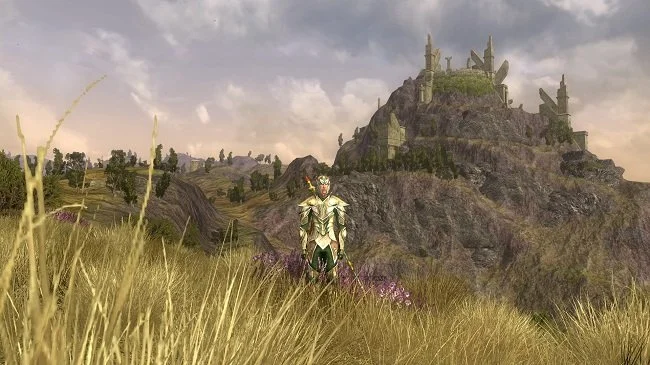
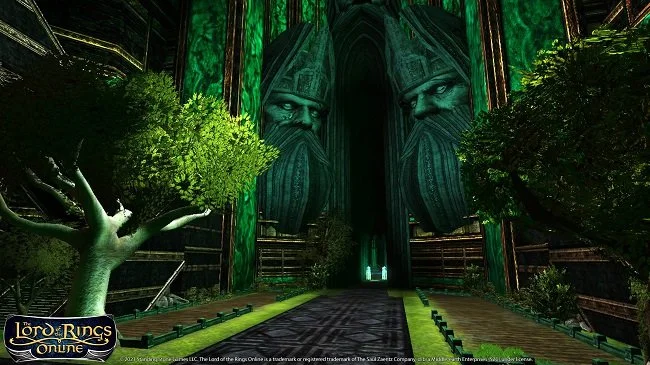
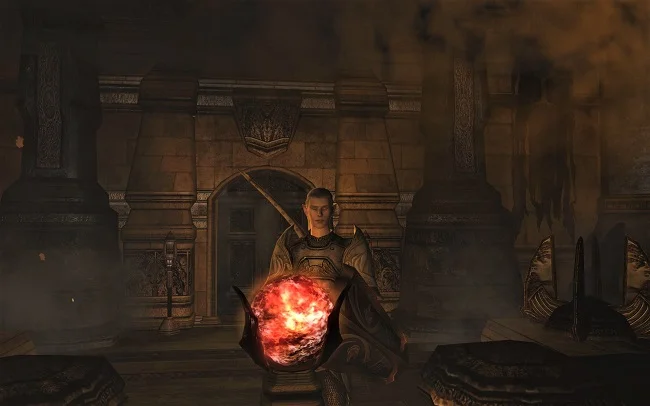
I spent several hours today on the Bullroarer test server, checking out the preview of the forthcoming Minas Morgul expansion for The Lord of the Rings Online. From a lore perspective this is a great zone and it neatly fills the geographical gap between Morgul Vale in North Ithilien and Gorgoroth in Mordor. As ever the visual style and sense of continuity is very good and Standing Stone Games have gone all in on atmosphere and ambience. The new area is often dimly lit, filled with fog and Minas Morgul itself has an eerie supernatural phosphorescence. Once again, I simply contented myself with just exploring the area and did not attempt any quests (apart from one to access a new instanced area). Let us not forget that this is a preview and therefore there is always potential for change. The new areas at present appear to be relatively clear of mobs and other sundry threats, so initially navigation between stables was relatively straight forward. However, the main fortresses of Minas Morgul and Bar Nirnaeth are densely populated with robust mobs.
I spent several hours today on the Bullroarer test server, checking out the preview of the forthcoming Minas Morgul expansion for The Lord of the Rings Online. From a lore perspective this is a great zone and it neatly fills the geographical gap between Morgul Vale in North Ithilien and Gorgoroth in Mordor. As ever the visual style and sense of continuity is very good and Standing Stone Games have gone all in on atmosphere and ambience. The new area is often dimly lit, filled with fog and Minas Morgul itself has an eerie supernatural phosphorescence. Once again, I simply contented myself with just exploring the area and did not attempt any quests (apart from one to access a new instanced area). Let us not forget that this is a preview and therefore there is always potential for change. The new areas at present appear to be relatively clear of mobs and other sundry threats, so initially navigation between stables was relatively straight forward. However, the main fortresses of Minas Morgul and Bar Nirnaeth are densely populated with robust mobs.
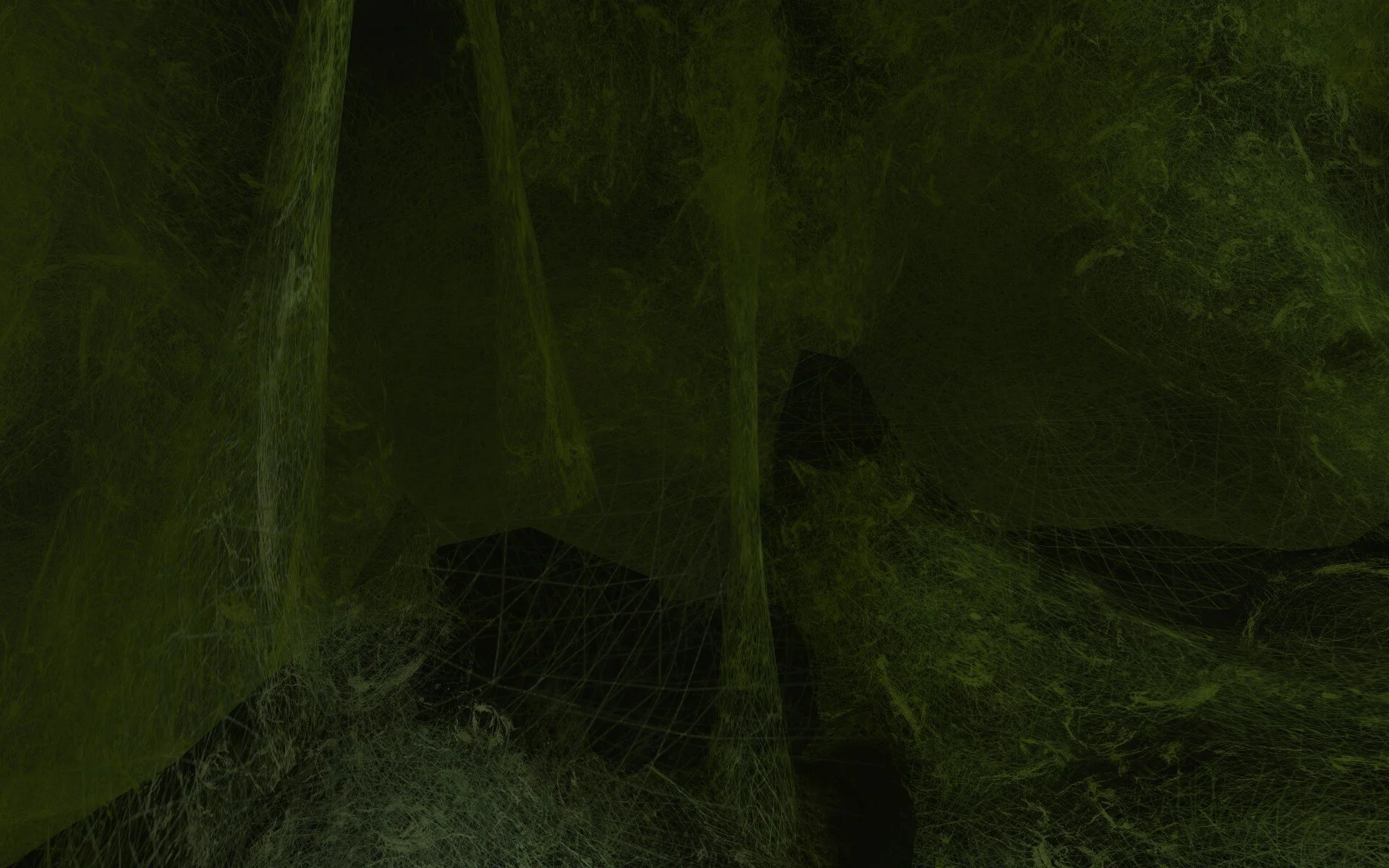
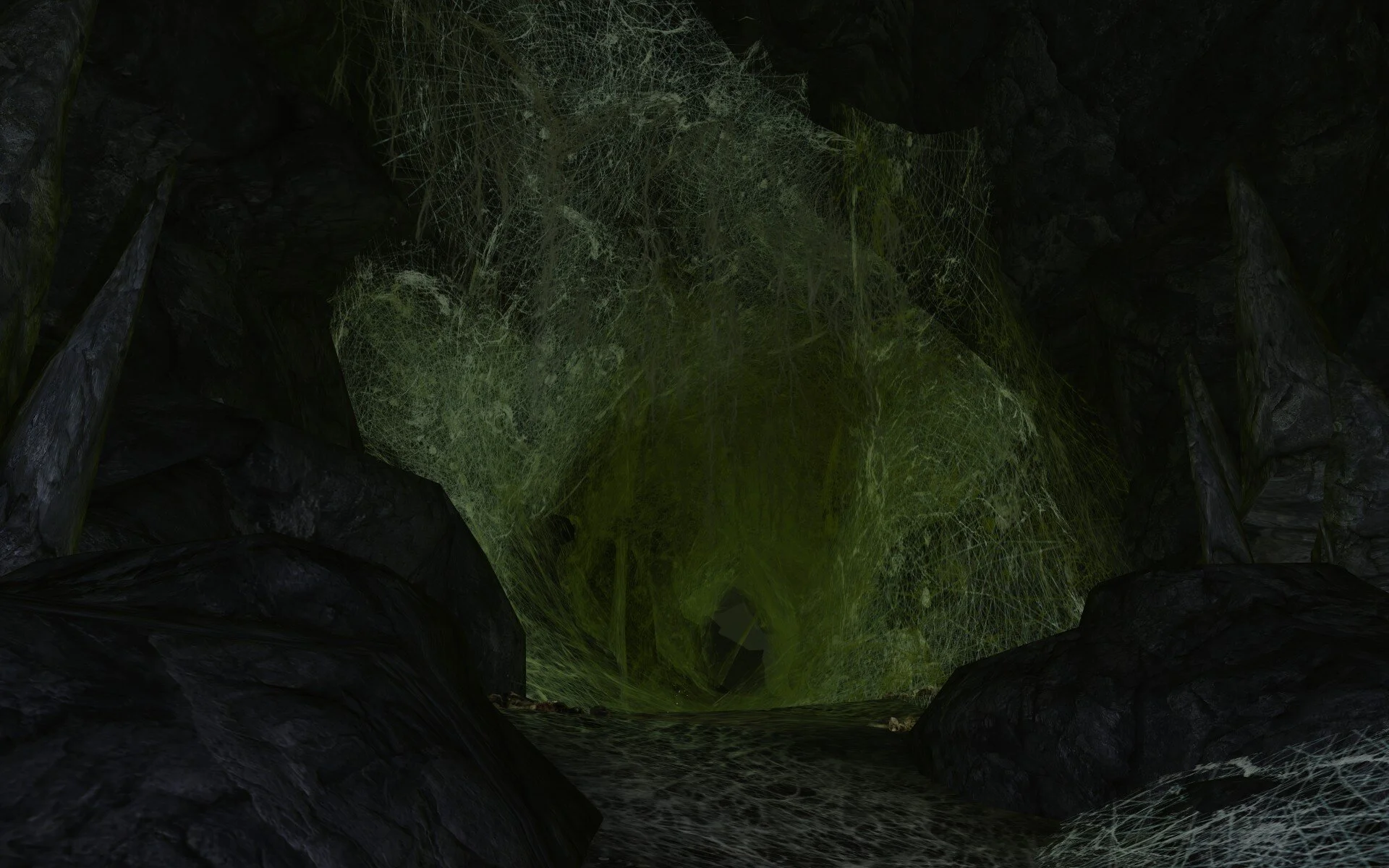
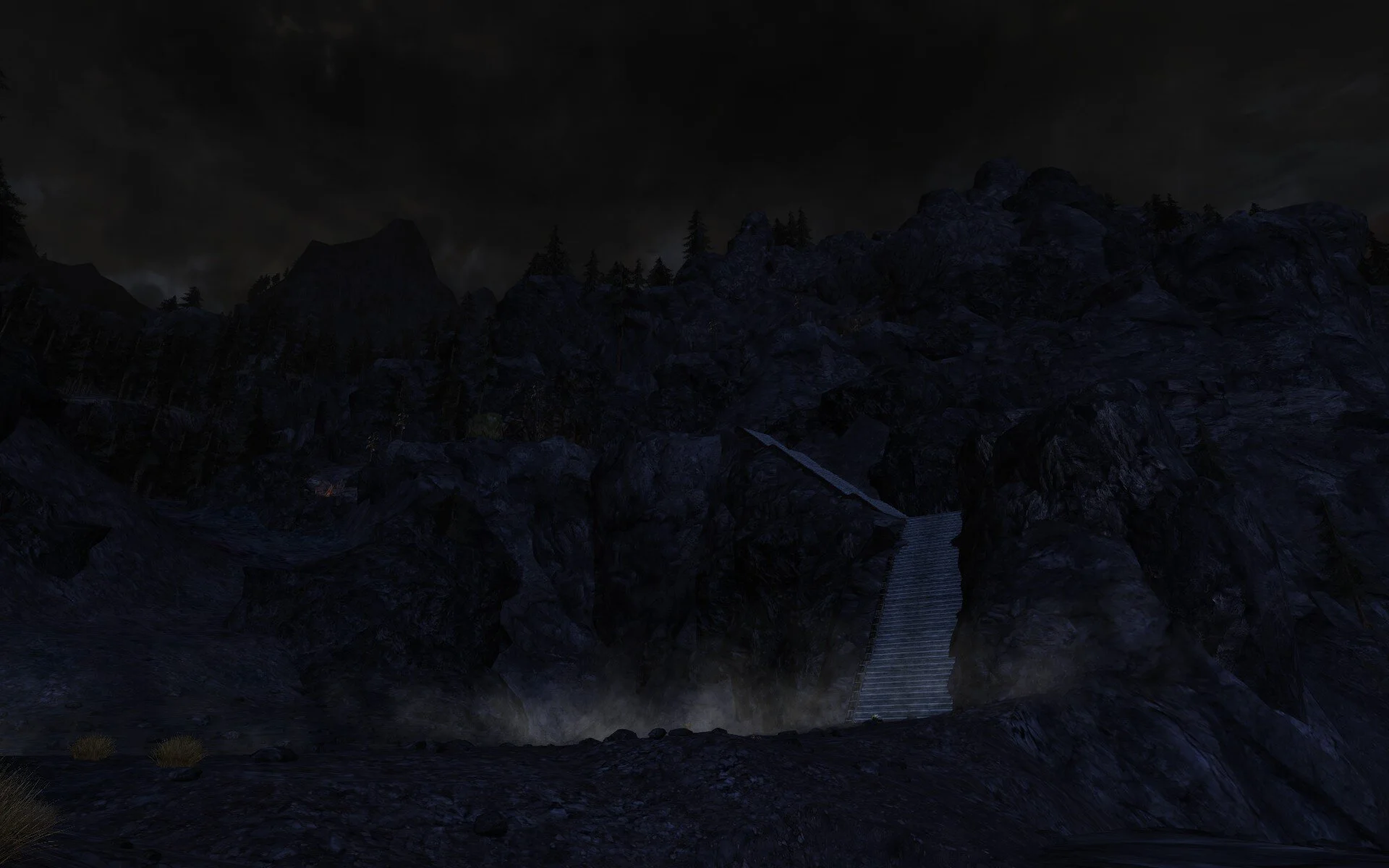
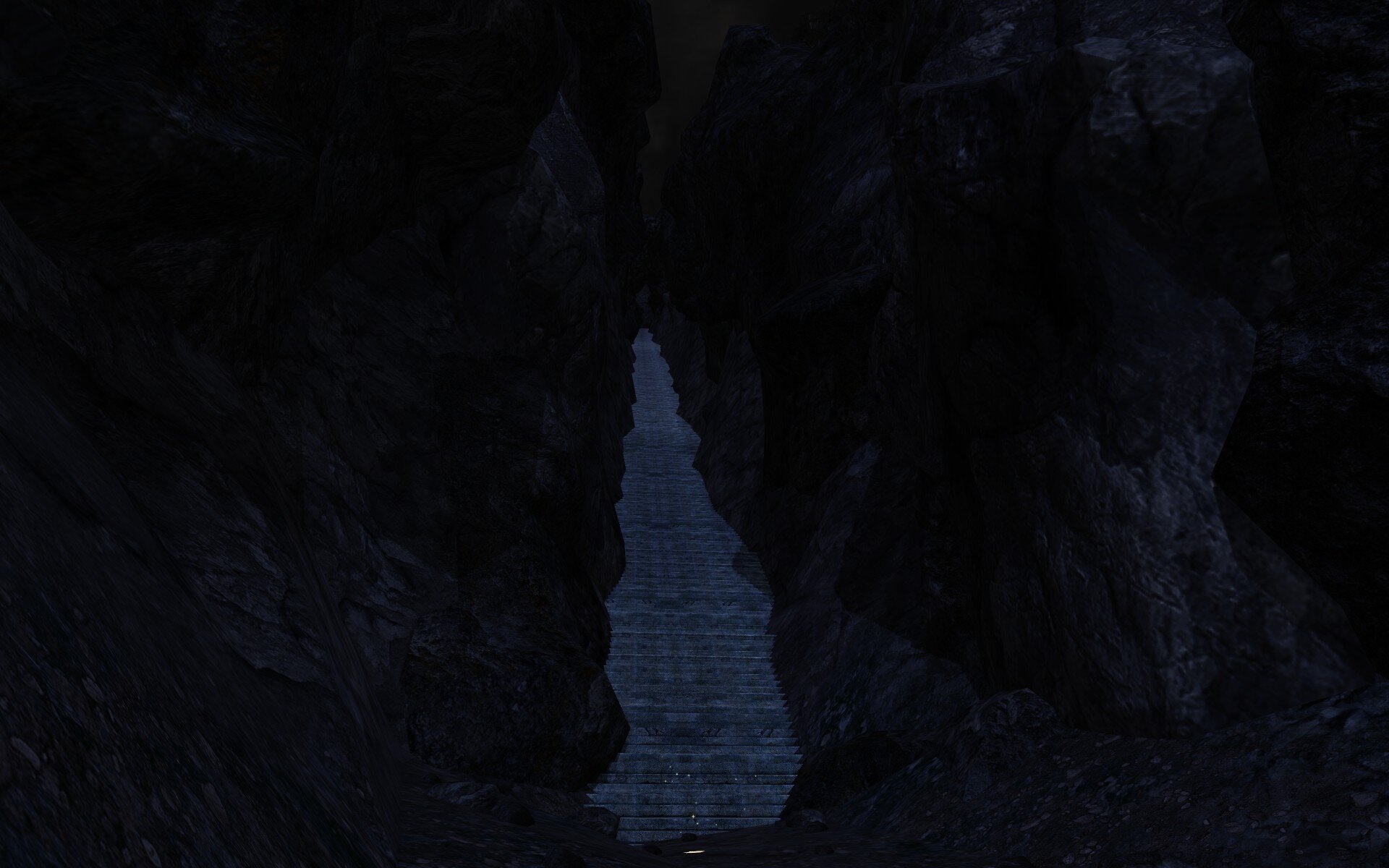
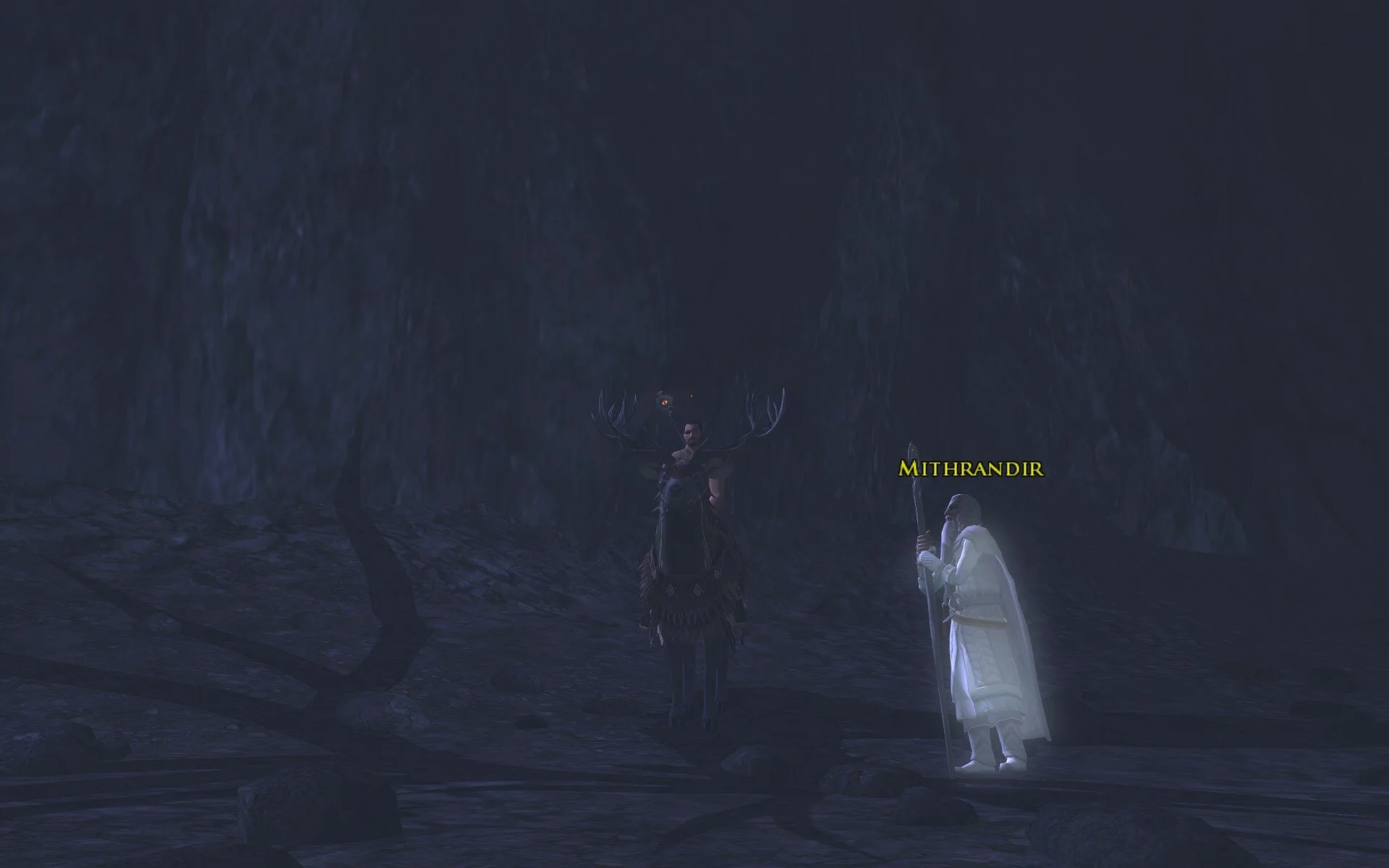
Yet despite the commendably brooding feel to the region, it is quite small and compact. Due to the fact that this zone is set in the Ephel Duath (Mountains of Shadow) many of the roads and trails twist and turn around the cliff face. Subsequently the Straight Stair and the Winding Stair, North of Minas Morgul, live up to their name. Torech Ungol (Shelob’s Lair) has several branching passages but the main path leads to an instance entrance. I wasn’t able to go right through the tunnel and didn’t have time to try and approach it from the Gorgoroth etrance. Minas Mogul itself, is a multi-tiered city, similar to Minas Tirith. Mercifully there are only four “circles”, each with a different supernatural theme. At the top is the Tower of the Crescent Moon, which will more than likely be home to a major instance or raid. It should also be noted that part of the new expansion, is set in the Second Age. “Mordor Besieged” takes place during the original siege of Barad-dûr by the Last Alliance. This is contained within a variation of the existing Dor Amarth map in Mordor. Accessing this area requires a quest from Gandalf and speaking with the shade of Isildur in the Gladden Fields.
I suspect that for many LOTRO players, their respective enjoyment of the pending Minas Morgul expansion will depend very much upon how they felt about Mordor. Minas Morgul looks like being an atmospheric but tough zone. Because of its canonical nature it will probably be demonstrably harder than the recent Vales of Anduin. The dour ambience may also determine people’s opinion, after the lush and verdant nature of the previous update. There’s also the issue of the cost of the new expansion. As stated earlier, the new zone seems small and “Mordor Besieged” is just a variation of a region we’ve already experienced. Although the Stout-Axe race is bundled with all of the three versions of the expansion, I think that the most expensive version doesn’t seem particularly good value for money. Let’s hope that the story line is sufficiently engaging. Mordor had numerous questionable points but its robust narrative did much to redress the balance.
In fairness, considering the lore-based confines of setting an expansion in and around Minas Morgul, one cannot expect a massive amount of ecological diversity in the new zone. We effectively have fortresses, mountain paths, web covered tunnels and foggy woodland. I also think a lot of the relative value of this expansion will lie in the instances and raids. But if you are a casual, solo PVE player then you may not experience any of this. So as I write this post, the Siege of Mirkwood expansion comes to mind, which upon its release, also felt somewhat low key in scope when compared to its predecessor, the Mines of Moria. Naturally, LOTRO players are very loyal to their MMO of choice, so I suspect this expansion will sell well. But how well it’s received is another issue altogether. I shall definitely only buy the base version of the game and I don’t think this expansion will be my first priority over November and December. I do hope that my suspicions are unfounded and Minas Morgul doesn’t turn out to be a chore similar to Mordor.



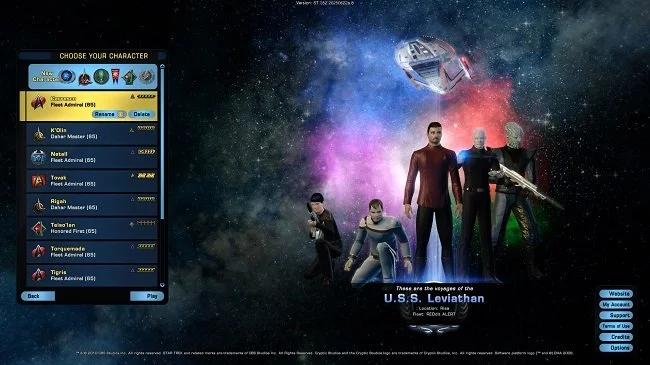
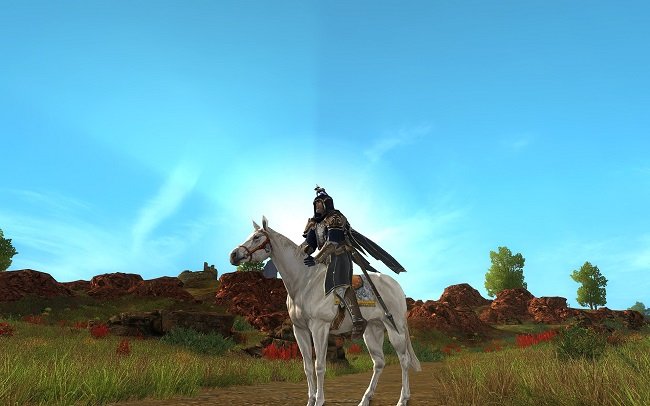

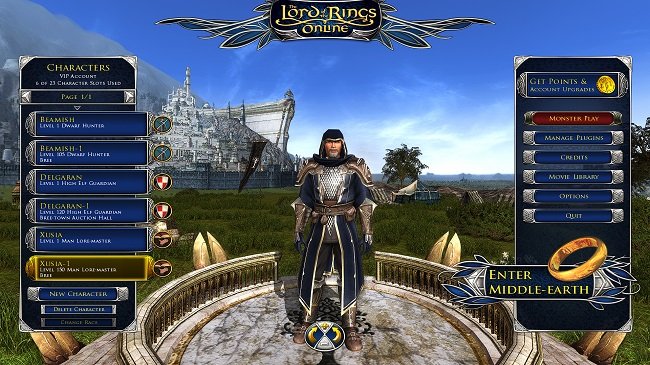
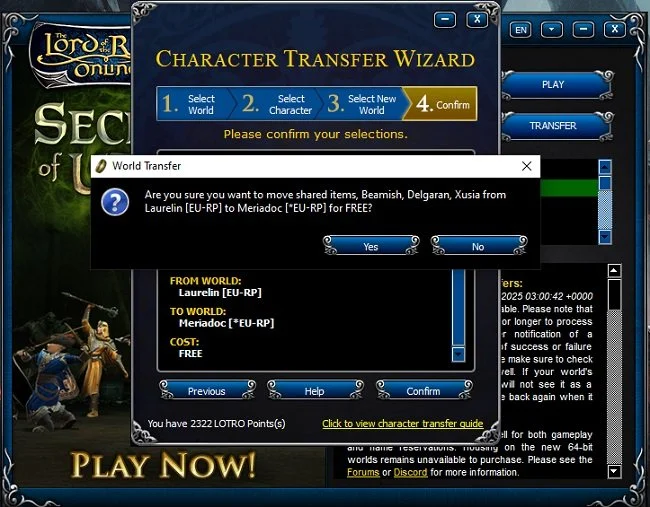


Skills Rotation
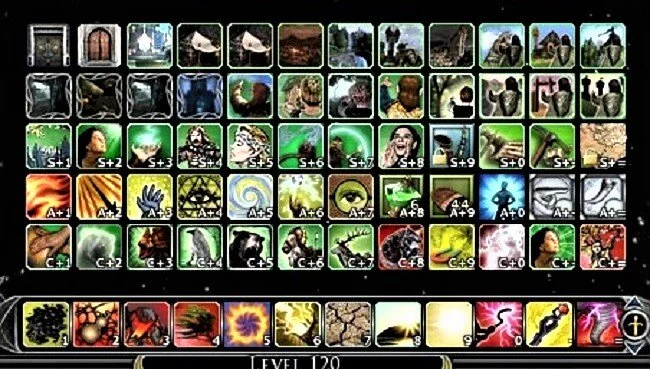
While conducting some general housekeeping in The Lord of the Rings Online, I decided upon streamlining my “quickslots” as developers Standing Stone Games refers to them. Being an MMORPG from well over a decade ago, the game has a multitude of skills. By the time your character reaches level cap of 120, it is entirely possible to have filled all 72 of the available slots. If you have a combat pet, then you’ll receive another 11 buttons to “mash”. Now this situation got me thinking. I recollect a conversation I had about a year ago, when I was doing some group content in LOTRO. It wasn’t going especially well so there was a discussion about tactics and what specific skills to use. To cut a long story short, it became apparent that many players (including myself) did not know the exact name of all the skills that adorned their quickslots. Furthermore not everyone was au fait with the nature and purpose of each skill and how one could trigger another. Similarly not all were aware that some skills could be augmented by the use of another.
While conducting some general housekeeping in The Lord of the Rings Online, I decided upon streamlining my “quickslots” as developers Standing Stone Games refers to them. Being an MMORPG from well over a decade ago, the game has a multitude of skills. By the time your character reaches level cap of 120, it is entirely possible to have filled all 72 of the available slots. If you have a combat pet, then you’ll receive another 11 buttons to “mash”. Now this situation got me thinking. I recollect a conversation I had about a year ago, when I was doing some group content in LOTRO. It wasn’t going especially well so there was a discussion about tactics and what specific skills to use. To cut a long story short, it became apparent that many players (including myself) did not know the exact name of all the skills that adorned their quickslots. Furthermore not everyone was au fait with the nature and purpose of each skill and how one could trigger another. Similarly not all were aware that some skills could be augmented by the use of another.
Naturally there will be high end players who will read this and scoff “well I know what every skill is and what it does”, to which I say, “good for you”. But putting aside the moral judgement that always seems to go hand in hand with these sorts of discussions, I suspect that there are many players, not only in LOTRO but many other MMORPGs, who do not use their skills in an optimal fashion. They simply select what works for them. I also think its safe to assume that some player have the skills on their quickslots in the order that they were acquired. When they play, the simply work through them from left to right. In more contemporary MMOs such as The Elder Scrolls Online, you get to pick what skills are on you hotbar and the number is restricted to six (5 regular and 1 ultimate) which makes things easier to manage compared to the skills bloat that you find in LOTRO. But I suspect that many ESO players still do not pay as much to attention to the specific details of their skills as the developer’s would like.
When the average player (and that in itself is a hotly debated term) starts a new MMO, they are faced with finding a suitable path between learning the game’s mechanics and progressing as well as having fun. At lower levels, skills in many MMOs are simple and straightforward to understand. But as you progress skills can become more complex and interconnected. In ESO there is the extra dimension of morphing skills and choosing between two subtle variations. It is often round about here that players may start skipping over such information. For everyone that loves number crunching, understanding the maths behind each skill and min-maxing, there are two other players that don’t want their leisure activity to become a job or a school lecture. I have at times been guilty of this, although now I am very aware that the wrong choice can mean that I gimp myself. But this mindset exists and manifests itself in many curious ways. I know players who will never use food or potions because it just “over complicates things”. Such systems means you have to carry more stuff in you bags and worry about when not use them.
I recently did some research regarding ESO because I was finding melee combat difficult with a my Dragonknight. Turns out my choice of skill wasn’t the issue and that I just needed to be more mobile in combat. Having cut my teeth playing older MMOs such as LOTRO, I still find myself at times remaining static when in combat, instead of moving around the target. I have also discovered the importance of a lot of the passive skills and how they can boost stats and augment combat. Again, I’m sure I’m not alone in being nominally oblivious to the depths of the games systems. Yet despite these gaps I both my and other players knowledge, it doesn’t seem to be as much an impediment to our enjoyment of the game as some would think. Although we may not be killing mobs as efficiently as we can, we’re having fun doing things our way and on our terms. If it ain’t broke, then don’t fix it. Until we reach a point in the game when we can’t beat a boss due to our poor grasp of the game mechanics and our own skills. Then it will be everyone else’s fault.
Dragon Farming, Black Dots and Continuity
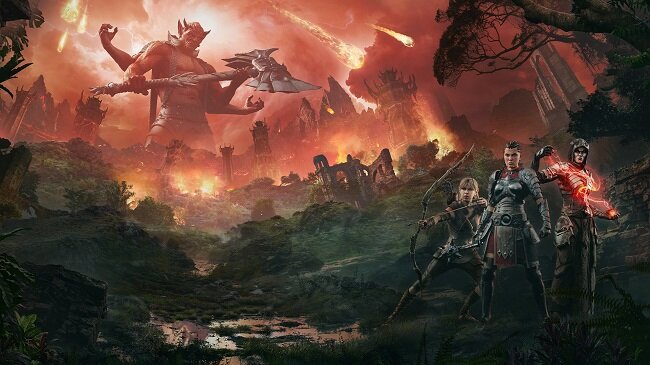
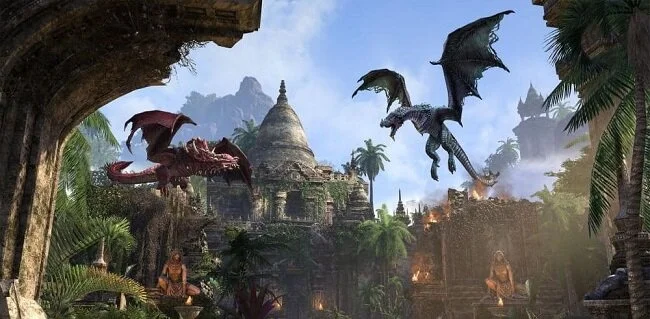
I logged into The Elder Scrolls Online today to do some Dragon farming. The Dragon Rise event includes both an XP and gold acquisition boost throughout Northern Elsweyr. Broadly, speaking this is a similar activity to Dolmen farming in the Alik’r Desert, although it is time sensitive as the event ends on Monday October 14th. There are three locations around the zone where Dragons regularly spawn and attack. Although it is possible to travel between these locations using the Star Haven, The Stitches and Scar’s End Wayshrines, it is not easy to do so. You need a fast mount and to be well acquainted with the topographical foibles of the region. I prefer to stay at one location and remain part of the loitering zerg. The Dragons arrive at approximately ten-minute intervals and if there are more than twenty or so players, dies very quickly. If there is less of you, then it can be quite tricky. Situational awareness is the key to success. Keep an eye on the Dragon and where you’re standing. It’s certainly safer if you used ranged attacks.
I logged into The Elder Scrolls Online today to do some Dragon farming. The Dragon Rise event includes both an XP and gold acquisition boost throughout Northern Elsweyr. Broadly, speaking this is a similar activity to Dolmen farming in the Alik’r Desert, although it is time sensitive as the event ends on Monday October 14th. There are three locations around the zone where Dragons regularly spawn and attack. Although it is possible to travel between these locations using the Star Haven, The Stitches and Scar’s End Wayshrines, it is not easy to do so. You need a fast mount and to be well acquainted with the topographical foibles of the region. I prefer to stay at one location and remain part of the loitering zerg. The Dragons arrive at approximately ten-minute intervals and if there are more than twenty or so players, dies very quickly. If there is less of you, then it can be quite tricky. Situational awareness is the key to success. Keep an eye on the Dragon and where you’re standing. It’s certainly safer if you used ranged attacks.
It was while I was waiting and chatting to a friend on Discord, that I noticed what initially looked like a dead pixel in the top left-hand corner of my screen. However, a cursory check showed that the problem did not persist, when I tabbed outside of the game. The offending pixel vanished when I checked my desktop or launched any other application. Furthermore, if I placed my mouse cursor over the black dot, it couldn’t be seen. Now anyone who knows me, will tell you that I hate conundrums like this. So I quit the game (because I couldn’t concentrate on anything else) and set about troubleshooting the problem. Through the application of “Occam's razor” it became apparent that this had to be an addon related issue. A Google search subsequently indicated that I was not the first ESO player to have this problem. It turned out to be a bug associated with the Wykkyd Achievement Tracker. When inactive and minimised it leaves a single black dot on the screen. The solution was simply to disable the addon which I did.
The offending “black dot”
In other ESO news, I decided to play through the new Dragonhold prologue quests. I got wind of the fact that it ended in a solo Dragon fight, so I thought it best to use my primary character, a Magicka DPS Sorcerer with 200 plus champion points. It proved to be a wise decision because the final battle is quite tough. I ended up having to fight the offending beastie at close quarters to avoid the constant barrage of “Dragon shouts”. However, it was great fun and I liked the grappling bow as a means of traversing the multi-level tombs. As ever there were several puzzles but to successfully solve them all you got to do is read the quest text, although this seems like an anathema to some. The thing I was most curious about in this quest was the return Sai Sahan. In the main story of ESO, there reaches a point where you have to sacrifice one of the remaining Five Companions for complicated narrative reasons. I chose to sacrifice Sai Sahan when playing through with my Sorcerer, so I was interested to see what complicated reason the writers had used to justify his return. I laughed out loud at the vagueness of the explanation, although I’m sure it will be elaborated upon later on.
The Cost of Doing Business with China
In the last few days, a great deal has been written about Activision Blizzard and their subsequent banning of a Hearthstone player who expressed support for the Hong Kong protestors during a competition live stream. The US-based game developer and publisher has also chosen to withhold the prize money he would have earned from competing in the tournament. As a result of this media coverage, I do not feel obliged to address the rectitude of Blizzard’s decision. It was never going to be anything different than what it was. They made their choice regarding ethics and morality the moment they decided to expand their business operations in mainland China. Because once you decided to enter into a business partnership with a totalitarian regime that actively runs “re-education camps”, you’ve pretty much nailed your colours to the mast and chosen a side. It’s not just business, despite what apologists may tell you. Judge a man or a business by the company they keep.
The moment Chung “blitzchung” Ng Wai made his protest
In the last few days, a great deal has been written about Activision Blizzard and their subsequent banning of a Hearthstone player who expressed support for the Hong Kong protestors during a competition live stream. The US-based game developer and publisher has also chosen to withhold the prize money he would have earned from competing in the tournament. As a result of this media coverage, I do not feel obliged to address the rectitude of Blizzard’s decision. It was never going to be anything different than what it was. They made their choice regarding ethics and morality the moment they decided to expand their business operations in mainland China. Because once you decided to enter into a business partnership with a totalitarian regime that actively runs “re-education camps”, you’ve pretty much nailed your colours to the mast and chosen a side. It’s not just business, despite what apologists may tell you. Judge a man or a business by the company they keep.
However, there are two wider issues that have arisen from this situation that perhaps can be seen as broadly positive. Firstly, parts of the gaming community have finally had the scales lifted from their eyes regarding the true nature of the video games industry. Secondly, people are now becoming more aware of the extent of Chinese business influence both in the US and other countries and to what extent Western business is happy to appease them. Let us take a moment to consider the first of these. I have been banging on for years about how so many gamers erroneously think that the companies that make their favourite games are somehow their friend. In many ways Blizzard has been the embodiment of this fallacious and specious notion. Although there are some developers or community managers who are genuinely reasonable and measured individuals, these are not the people driving the company. Corporate policy is decided at a much higher level by people such as Bobby Kotick. And like a lot of other modern CEOs, ethics, morality and generally being a decent human being are not top priorities. In fact they’re a major hindrance. Do some research of your own on Mr Kotick (or ask Jim Sterling) and decide for yourself what sort of man he is.
Bobby Kotick. Personally worth about $1 Billion plus
So a lot of gamers have suddenly got wise to the fact that the company they used to think was cool because staff don’t wear suits to work and can unicycle around the office, is in fact just another corporate behemoth striving to make as much money as possible, irrespective of the consequences. Blizzard is tainted and now some gamers are worried about guilt by association. It’s an odd situation to be honest. Some gamers are obviously staggeringly naïve but there again, that’s hardly surprising as people are surprisingly politically illiterate these days. I don’t mean this is a pejorative sense, it’s just a simple truth. A lot of people are not in any way credibly informed about domestic politics, let alone the complexities of international relationships. And then there’s another element to this. The gamer who suspects that there’s an unethical wider picture to the video games industry but chooses to not “know about it”. I heard similar arguments regarding eating meat, which go something like this. “I choose to remain wilfully ignorant of the iniquities of the meat industry. I suspect that livestock are treated appallingly but if I choose not to know, I can enjoy eating meat without any moral burden and maintain my claim that I’m a good person”. Yep, gamers have their own version of this, too.
Moving on to the second potentially positive point that’s come out of this whole sorry affair; people have now realised that it is not just Activision Blizzard who are happy to self-censor and generally side with China whenever there’s a conflict of interest between West and East. Over the last few days, several websites and subreddits have compiled substantial lists of companies towing the political line to appease China and keep the revenue flowing. Furthermore, because China is such a big market for mainstream Hollywood movies these days, it’s come to light that a lot of screenplays are being tailormade for its specific “political and social” requirements. And irrespective of the need to “accommodate” China for “business reasons”, people are now beginning to become aware of the scope and reach of Chinese business in the West per se. This isn’t really the place for an in-depth dissection of what they do and do not own but if you do some research, you’ll find China is involved with key US and UK industries such as farming, logistics and utilities. And then there’s the issue of land banking. All of which can be used for political leverage if required.
You get the idea?
Now as a result of this debacle, there has been a plethora of tediously predictable kneejerk reactions. As usual some gamers have been calling for a boycott of Blizzard products. There’s also been the “restless lynch mob” mentality on social media and moral outrage has been turned up to 11. Such hastily contrived bandwagons often fizzle out and can do more harm than good. However, a measured campaign of publicly questioning the cognitive dissonance inherent in being an American business that consorts with a dictatorship, may yield results in the long term. Raising questions via your political representative can take time but the wheels do turn. Now it has been pointed out by the “usual suspects”, that it’s a bit rich getting all “high and mighty” about the ethics of this one issue, when our consumer lives are rife with Chinese products. But I refute the intellectual bankruptcy of this faux argument that seems to think that one can only have an ethical position of worth, if you are 100% morally pure. Bullshit. Yes, we are all to a degree complicit in bolstering China by our consumer choices but that doesn’t mitigate the worth or rectitude of beginning to make a stand. It takes time to inform people and then get them to change their views and habits.
And as for those people who think that this whole situation is just business doing what business does, please stop assuming that your lack of morals and empathy is also the default position of society. It isn’t. People do actually expect a degree of ethical behaviour from corporations. Now that may be foolish but it remains a valid view. And as big business has shown time and time again that it doesn’t have a shred of human decency, the only way we are going to get companies to act in a vaguely appropriate fashion is to legally compel them to do so and sanction them when they do not. Doing business with China is not the same as doing business with any other democratic country. It is a Faustian arrangement which comes with caveats. Caveats that may put a company at odds with the inherent principles of their own country. There is a price to pay for such an arrangement and that is your “corporate reputation”. I still find it odd that people and business that act appallingly try to cultivate an image of “be nice”. I have far more respect for the “bastard” that’s content to be one.
The fate of Tank Man remains unknown to this day
For those who still remain unconvinced that the censoring and sanctioning of Chung “blitzchung” Ng Wai by Blizzard is anything to worry about, let me remind you of what China’s top broadcaster, government-run CCTV, stated recently about the concept of freedom of speech. That it should not be extended to points of view counter to the ruling Communist Party’s. “No comments challenging national sovereignty and social stability fall within the scope of freedom of expression”. Reflect upon that. Blizzard and many other companies are in a business relationship with a regime that is at odds with Western values. Furthermore, these international companies choose to actively collude with a government in its acts of oppression, because of the financial opportunities available. At the very least that is immoral. At the worst they are benefitting from blood money. If you thinks that’s hyperbolic please remember the 1989 Tiananmen Square protests when China mobilised 300,000 troops on the streets of Beijing and fired upon student protesters. A historical event that is still supressed in China itself. And considering the current events in Hong Kong, one that may be soon repeated? Blizzard and many other companies need to reflect upon this, although I suspect they won’t. I’m not sure if they are capable.
















Two Worlds II: The Game That Keeps on Giving?
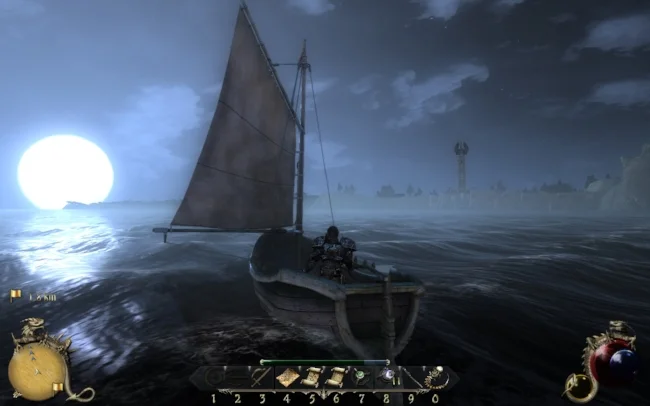
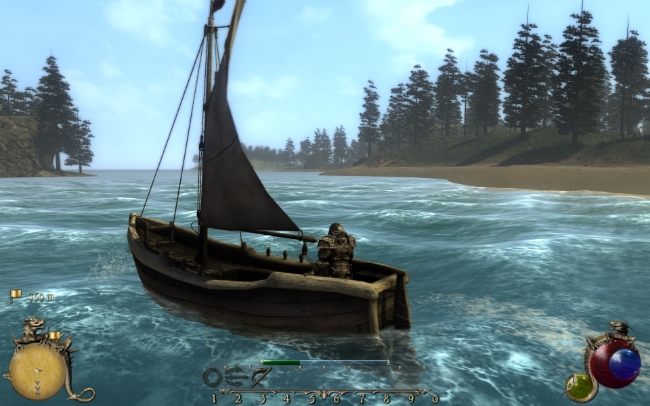
I’m suffering from a distinct sense of déjà vu as I write this post, as feel I’ve written something very similar before. Actually, I know perfectly well that I have and here’s the previous blog post. So, once again let’s recapitulate what was previously discussed. Back in 2014, I was searching for another RPG to fill that post Skyrim vacuum. I ended up buying Two Worlds II and its expansion, Pirates of the Flying Fortress. There was an exceptionally well-priced bundle available at the time. Furthermore, a little research showed that this game by German developers Reality Pump Studios, had quite a following. So I invested about 90 hours of my time into this franchise and enjoyed it far more than I expected. The game visually has a lot of rough edges. There are weird character models and a rather ponderous propensity of using faux "Olde English" in all dialogue. But the games core systems are great. Crafting and spells have a great deal of depth. There’s a wide variety of weapons and armour. Plus there’s sailing. I really dig this aspect of the game.
I’m suffering from a distinct sense of déjà vu as I write this post, as feel I’ve written something very similar before. Actually, I know perfectly well that I have and here’s the previous blog post. So, once again let’s recapitulate what was previously discussed. Back in 2014, I was searching for another RPG to fill that post Skyrim vacuum. I ended up buying Two Worlds II and its expansion, Pirates of the Flying Fortress. There was an exceptionally well-priced bundle available at the time. Furthermore, a little research showed that this game by German developers Reality Pump Studios, had quite a following. So I invested about 90 hours of my time into this franchise and enjoyed it far more than I expected. The game visually has a lot of rough edges. There are weird character models and a rather ponderous propensity of using faux "Olde English" in all dialogue. But the games core systems are great. Crafting and spells have a great deal of depth. There’s a wide variety of weapons and armour. Plus there’s sailing. I really dig this aspect of the game.
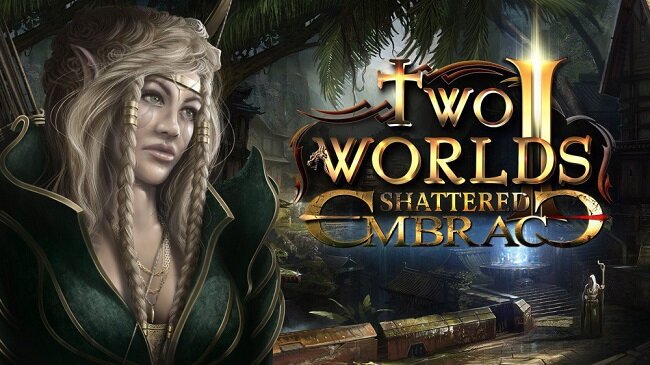
Circa June 2017, I and many other gamers were surprised to learn that there was further DLC coming to Two Worlds II. As well as some additional multiplayer maps, a standalone story Call of the Tenebrae was to be released in Q2 and another, Shattered Embrace, was to become available in Q3. Because I had fond memories of the game, I bought a season pass and dutifully installed the first of the new DLC. However, due to the fluid nature of “life”, I never made much progress with Call of the Tenebrae. Eventually, when I had more leisure time available, other games took priority and so I forgot about Two Worlds II. Until today. To cut along story short I was looking for a discount key for a specific game and I found myself perusing the TopWare Interactive online store. And there, as bold as brass, was a banner for Shattered Embrace. Turns out it wasn’t released back in 2017 due to “reasons” and is scheduled to come out this November. As I have a season pass, I should get this free of charge, so I duly re-installed all of Two Worlds II. It didn’t take long for the games niche market charms to come flooding back.
If you like open world RPGs and are prepared to try a flawed but interesting game, then why not give Two Worlds II a try. If you shop around you can get the base edition for an absolute song on numerous key seller sites. The GUI and combat mechanics are intuitive and fairly simple to master. The tutorial is integrated into the prologue quests which helps a lot. The dialogue is frequently droll and self-referential and it curiously mitigates some of the game’s rough edges. Some of the human character models are a bit weak and look quite awkward, where others such as the various beats and monsters are quite pleasing. The lighting is especially good and helps make the open world more atmospheric. The game is very good at servicing the players immediate needs, presenting them with many key RPG tropes and systems. The story itself is not anything special and is merely a narrative MacGuffin, rather than a major selling point. But not every game can be as well written as the Dragon Age franchise.
One of the most appealing aspects of Two Worlds 2 is the fact that you're not tied to a specific class. You can switch between melee, ranged and sorcery on the fly and the spell customisation process is based upon cards. It's very flexible and allows for a very diverse set of skills. The multiplayer element of the game supports co-operative play through specifically designed content; a sort of MMO-lite mode. I have never got around to exploring this aspect of the game but it would seem that the developers, Reality Pump Studios, are at least trying. There are numerous collaborative modes and it’s not just generic death matches. If you want a more in-depth analysis, then here’s a link to an episode of the Angry Joe Show in which he casts a critical eye over the game. In the meantime, I intend to slowly replay the game or at the least catch up with Call of the Tenebrae before the release of the final DLC Shattered Embrace next month. In an age when the lifecycle of a game can be comparatively short, it’s nice to see a developer still producing content nine years after the original release.
A Month in Gaming
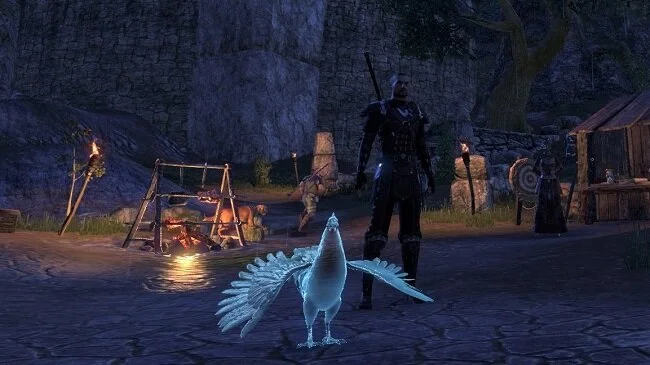
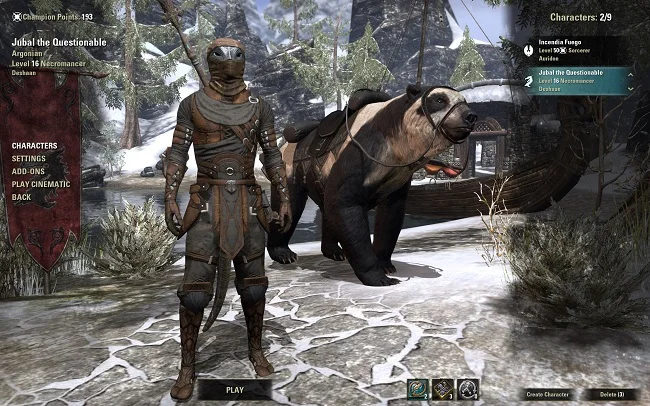
September saw The Elder Scrolls Online becoming my primary gaming focus. No real surprises there as I’ve been having so much fun of late with this MMORPG. I managed to get my Argonian Necromancer to level cap and then had the fun task of trying to equip them suitably. I don’t quite know why this aspect of gaming appeals to me so much but I just get a real kick out of trawling around looking for appropriate gear. I tend to enjoy it in all the MMOs I play. There’s just something inherently satisfying about equipping a new piece of armour or jewellery and seeing your stats noticeably increase. This process is even more enjoyable in ESO as there isn’t any server wide auction house, so you have to travel around from region to region, individually checking each guild trader you find. It really is virtual shopping. Once I managed to find the right gear for this character, I promptly created a new Imperial Dragon Knight and started playing through the Daggerfall Covenant storyline as it the one faction I haven’t yet completed. Oh and in ESO cosmetic pet news, the ghost chicken (official name Spectral Chicken) is outstanding.
September saw The Elder Scrolls Online becoming my primary gaming focus. No real surprises there as I’ve been having so much fun of late with this MMORPG. I managed to get my Argonian Necromancer to level cap and then had the fun task of trying to equip them suitably. I don’t quite know why this aspect of gaming appeals to me so much but I just get a real kick out of trawling around looking for appropriate gear. I tend to enjoy it in all the MMOs I play. There’s just something inherently satisfying about equipping a new piece of armour or jewellery and seeing your stats noticeably increase. This process is even more enjoyable in ESO as there isn’t any server wide auction house, so you have to travel around from region to region, individually checking each guild trader you find. It really is virtual shopping. Once I managed to find the right gear for this character, I promptly created a new Imperial Dragon Knight and started playing through the Daggerfall Covenant storyline as it the one faction I haven’t yet completed. Oh and in ESO cosmetic pet news, the ghost chicken (official name Spectral Chicken) is outstanding.
I decided to buy a single player game on a whim and ended up purchasing the Untitled Goose Game. As I’ve already written a more specific post about that title, I won’t bang on about it too much here but it is a delightful diversion. It provides not only plenty of mirth and merriment but it also reminded me that not all game developers and publishers are complete bastards who will happily steal your eye and comeback for the socket. Furthermore, the games success may now lead to some DLC being developed which is fine by me. The game has topped the download charts on the Nintendo Switch console in the UK and Australia. It has even beaten one of Nintendo's own highly anticipated games, the Legend of Zelda: Link's Awakening.
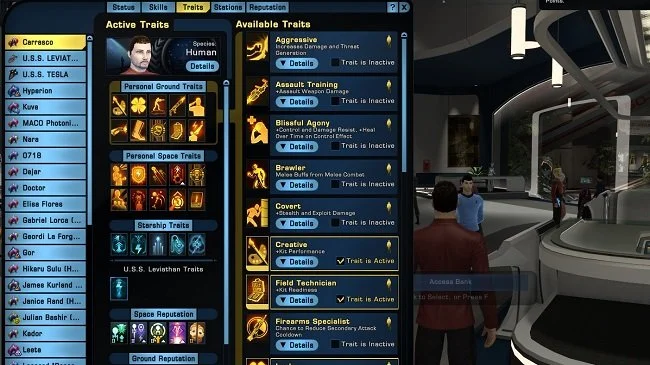
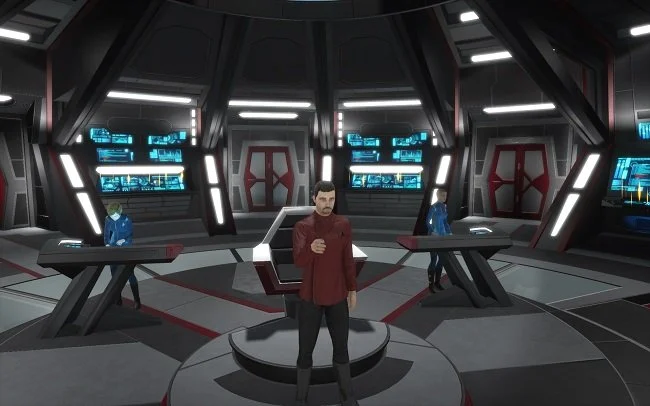
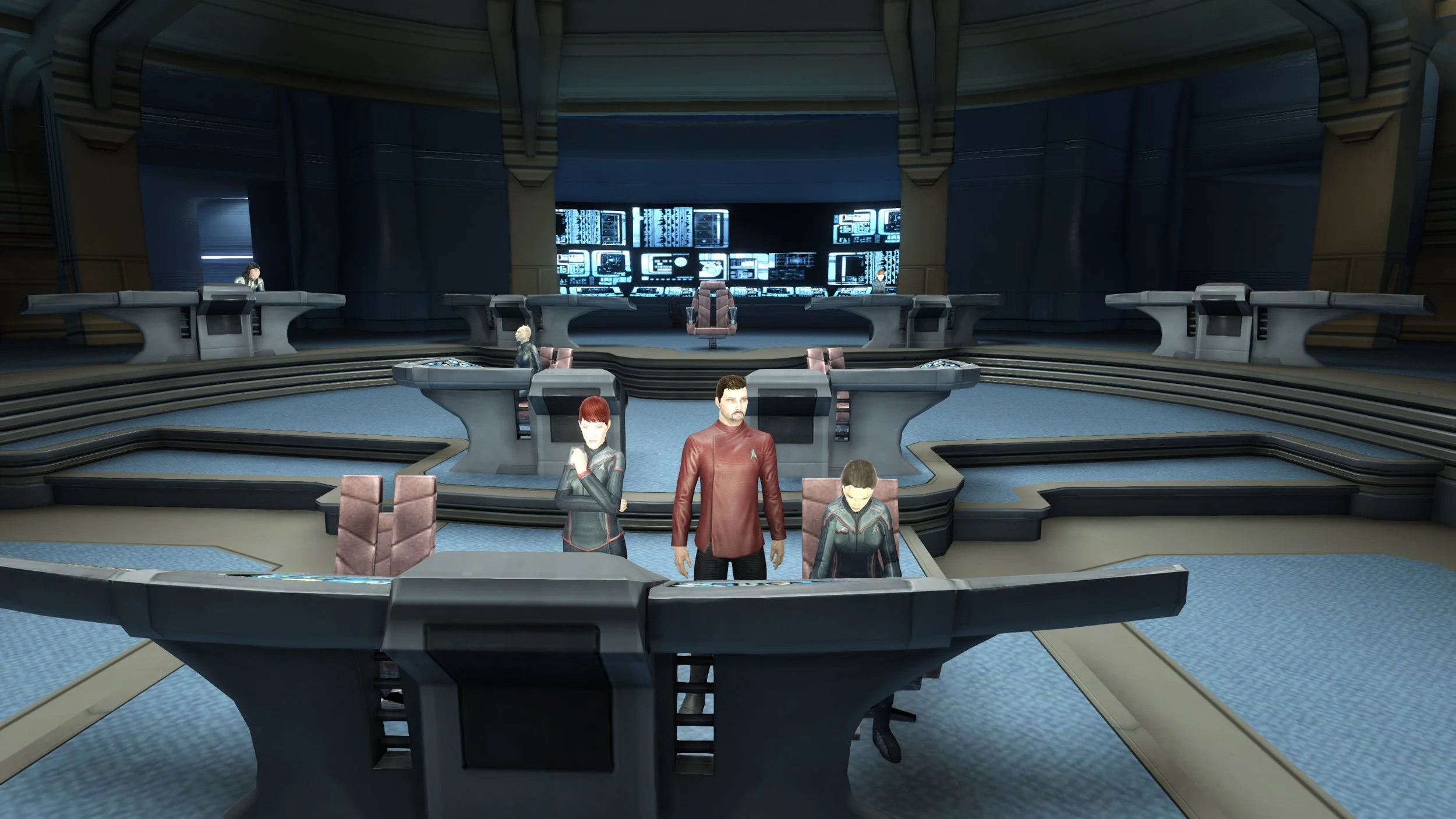
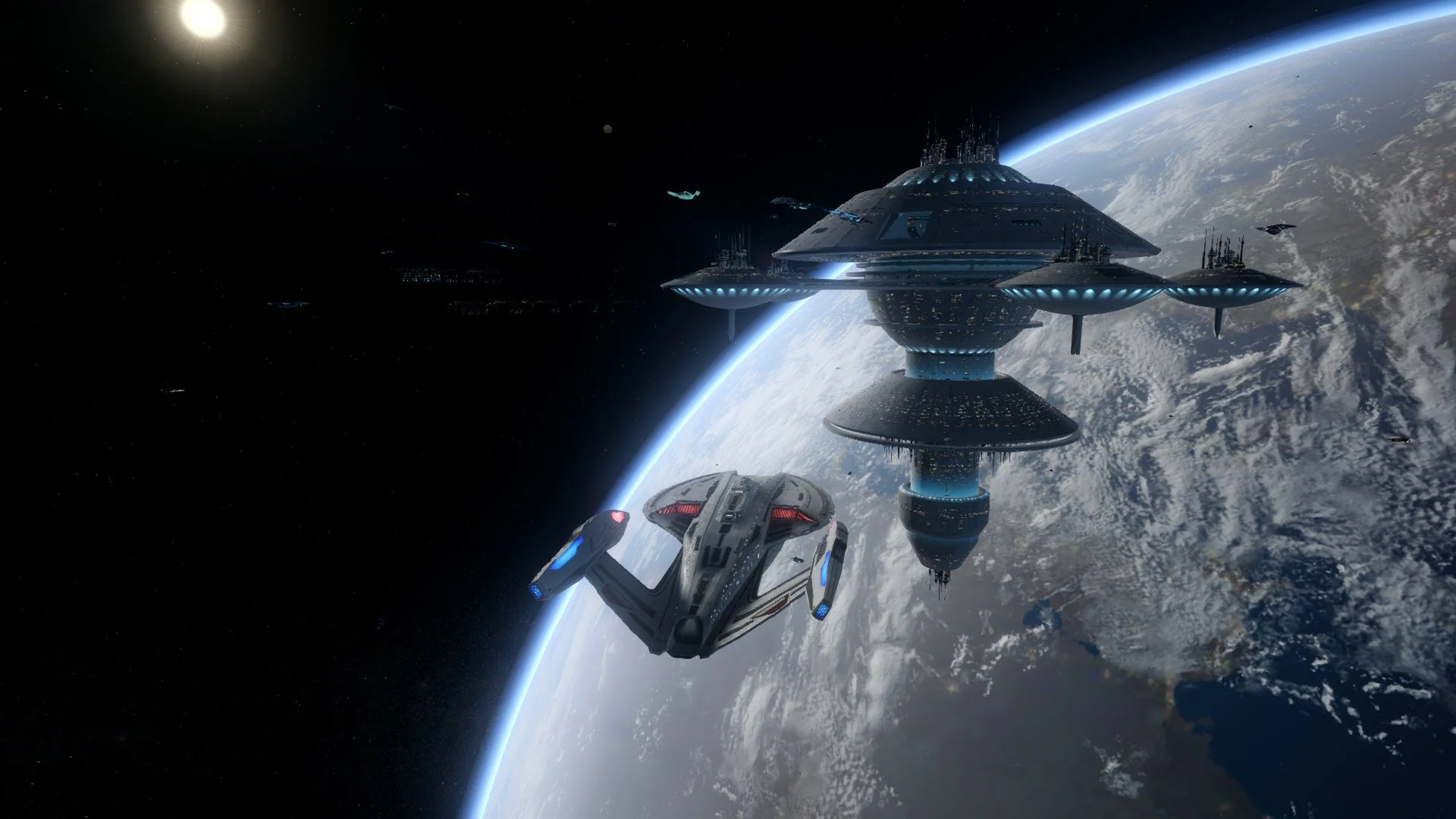
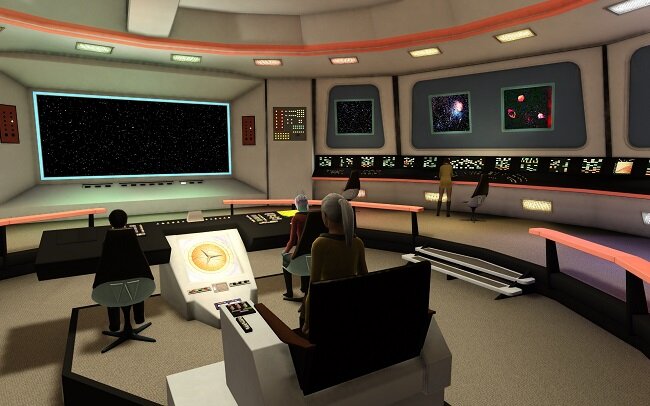
There’s an ongoing event in Star Trek Online which pays out a Tier 6 Elachi ship with a complete set of crescent beam weapons. So I’ve been dutifully logging in an running a dedicated TFO and 2 easy patrols to earn the necessary XP. And while I’ve been doing this, I’ve decided that I might as well complete the daily “endeavours”. Gaining resources and building up account wide perks always pays off in the long run. And as I’m on the subject of Cryptic games, I reinstalled Neverwinter as I predicted last month. Bearing in mind I last tried this game during the beta test in 2013, I was very surprised to still find my original character. Naturally, I have no recollection as to how to play this game but I shall find the time to give it a second go. It certainly has plenty of content available.
I also gave Guild Wars 2 another try but it didn’t take long to remind me that all the issues with the Heart of Thorns expansion are still present in the game. Plus I’ve never found any particular aspect of this MMO to get especially invested in. I find the lore unfathomable and I’m never quite sure about the intricacies of the major stories. It is very playable and easy to jump in and out of but for me at least, the game lacks a lasting hook of some kind to keep me engaged. I tried the retail version of Mario Kart Tour and the Ghost Recon Breakpoint beta. Both failed to impress and I’ve written a separate post about how unbelievably shitty their respective business models are. Unfortunately I didn’t get around to trying the Modern Warfare reboot beta. There’s not enough hours in the day to keep up with half the things we’d like to, especially when it comes to gaming.
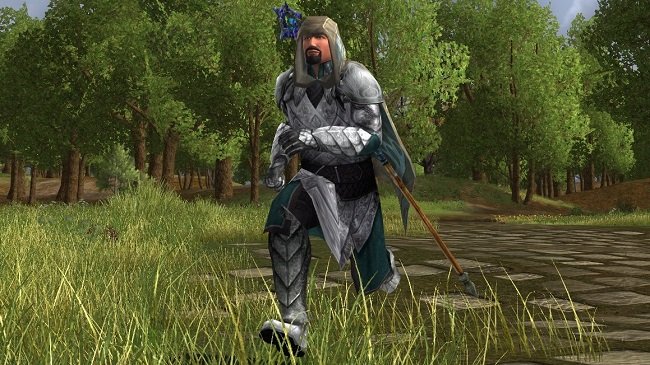
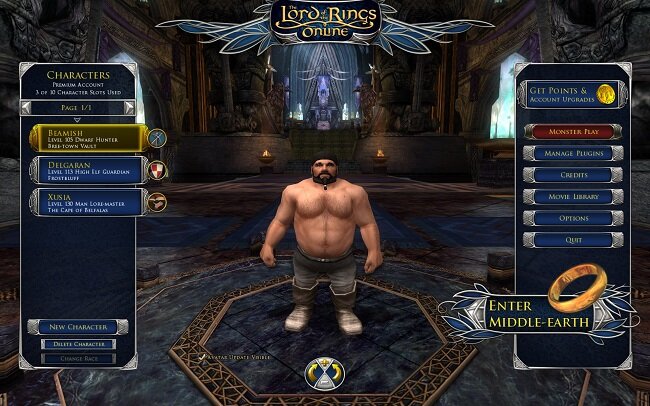
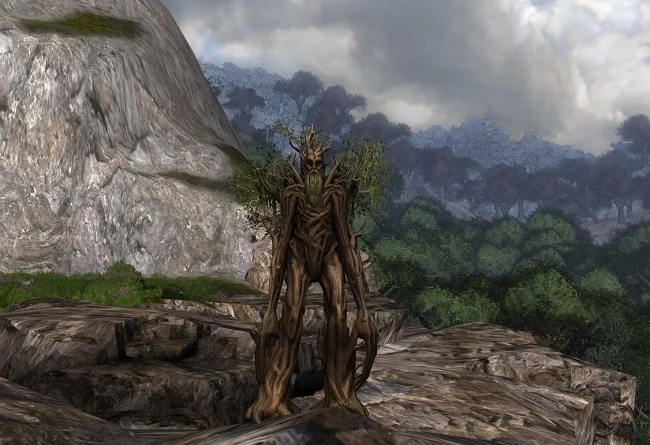
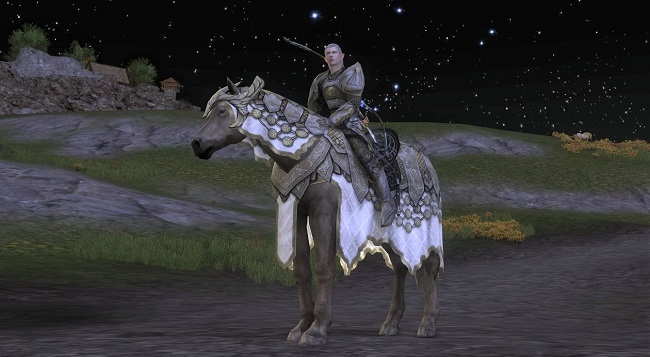
I genuinely tried to make some progress in LOTRO but I’m still floundering just outside Mordor with my High Elf Guardian. Once I commit to the battle on the slag hills outside the Black Gate, then it’s straight onto Mordor and I’m just not ready to grind through there again, even if I’m over levelled. I also failed to take my Lore-master any further through Vales of Anduin. The region is appealing but I always seems to have something inherently more interesting to do in another game. I did try the new Stout-Axe Dwarf race on the Bullroarer test server and enjoyed the creative way that SSG have crowbarred them into the existing Epic Story. I think I’ll buy the new Minas Morgul expansion a little closer to launch. After reviewing the various options, I’ll probably just purchase the base edition as I don’t require any of the additional consumables.
So that’s the summary of what I’ve been up to over the last 30 odd days. I’ll be back in early November with a further breakdown of this month. I haven’t made any firm plans as of yet and will likely just see where my fancy takes me. I have quite a lot on in real life at present and it needs to take priority. So any gaming time is a bonus at the moment, so it’s best not to try and aspire to potentially unrealistic goals and targets. Due to this time of year being a popular release period, I may well make another game purchase on a whim.


Excessive Monetisation
I have numerous happy memories from playing Super Mario Kart on the SNES back in the early nineties. It was at the time and remains so today, a truly great game because it’s fun, very accessible and inherently social. Hence over the years there have been multiple iterations of Mario Kart across all of Nintendo’s platforms. All of which have been well received and provided gamers with what they want. In many ways it is one of key titles that have made Nintendo a global success as a gaming company and a brand. If you see any advertising featuring Mario and friends in go-karts, then it can be taken as read that the game will be a yet another great instalment of the franchise. Or can it? Which brings me neatly (and sadly not happily) to Mario Kart Tour; Nintendo’s latest foray on mobile platforms.
I have numerous happy memories from playing Super Mario Kart on the SNES back in the early nineties. It was at the time and remains so today, a truly great game because it’s fun, very accessible and inherently social. Hence over the years there have been multiple iterations of Mario Kart across all of Nintendo’s platforms. All of which have been well received and provided gamers with what they want. In many ways it is one of key titles that have made Nintendo a global success as a gaming company and a brand. If you see any advertising featuring Mario and friends in go-karts, then it can be taken as read that the game will be a yet another great instalment of the franchise. Or can it? Which brings me neatly (and sadly not happily) to Mario Kart Tour; Nintendo’s latest foray on mobile platforms.
Mario Kart Tour is a litany of gacha mechanics, multiple currencies and gated content. It’s a game that’s designed upon grinding through levels and earning currencies. Racing go-karts appears to be very much a secondary consideration. Naturally the game has the traditional Nintendo aesthetic, with the colourful environment and characters looking great on a modern smartphone screen. But it’s all superficial, as the game itself is hideously compromised by its monetisation. Characters, tracks and vehicles are locked behind pay walls that you can grind for, or if you prefer, spend some money to access. In its base form Mario Kart Tour is little more than a gaming tease. If you want to actually play the game in any meaningful sense, then you have to pay. And then there’s the insanity of the Gold Pass, a £4.99 monthly subscription allowing access to the 200cc racing class, which gives the highest point rewards and the best races. A price point that also buys you access to Apple Arcade and a hundred of the best mobile games around.
However, Nintendo are not the only company that’s happy to push ahead into the realms of excessive monetisation. Ubisoft have seen triple A gaming as a “service” for several years. However, the recent release of Tom Clancy's Ghost Recon Breakpoint takes monetisation to new levels. There’s such a degree of microtransactional content it’s almost as if Ubisoft are trolling their player base. Skill points, crafting materials, weapons and their associated upgrades, are available to be purchased, right from the get-go. All of which have a direct impact on gameplay. And folk use to balk at the idea of a paid season pass. Plus some of the items in the in-game store are exclusives and not available by any other means other than paying. Considering that the base game (or should I say empty shell of a game) costs £60, it raises the question exactly how much must a player spend to have access to everything? Assuming that you are then presented with a fully functional game. I’m sure the answer to that question will emerge in the days to come.
Yet despite the egregious nature of such excessive monetisation being as plain as the nose on your face, a large percentage of gamers don’t appear to care. Mario Kart Tour was downloaded by 90 million unique users in its first week, which is six times more than Nintendo's second most popular game. It is too soon to ascertain sales data for Tom Clancy's Ghost Recon Breakpoint as the game is currently in early access for those who pre-ordered and formally launches on Friday October 4th. But this is one of Ubisoft flagship franchises and I’m sure anticipated sales will feature heavily in their Q4 revenue targets. The bottom line is there is a lot of cognitive dissonance in the gaming community. People are happy to pay lip service to complaints of excessive monetisation yet end up doing the complete opposite and supporting the very thing that is the “problem”. Some gamers are enabling and validating the questionable practises of certain publishers and in doing so contribute to video games being held hostage by untrammelled greed.
Video games are a commercial undertaking and no one thinks that game developers and publishers shouldn’t be able to make a profit. But like any other consumer industry, video games needs to be a balanced and realistic quid pro quo. Payment should provide you with a fully functional game. Paid additional content should be an adjunct and not integral to the proceedings. If there must be microtransaction then make them cosmetic, although this also comes with its own set of problems, depending on the games core demographics. But the whole concept of “pay to start” is questionable in so far as you have not really been sold an entire product that is fit for purpose. Logicly, there will come a point when companies such as Ubisoft will go too far and finally the majority of gamers will simply say “no”. The film industry has had several tent pole movies woefully underperform leading to a re-calibration of business practises. Will we eventually see a record number of triple A games fall flat on their face? It’s not impossible. But the biggest question is when?
Destiny 2 Goes F2P
I bought Destiny 2 shortly after it originally launched in October 2017, mainly due to the positive word of mouth comments of friends and colleagues. I got a good deal at the time from an online CD key vendor. As I have enjoyed FPS titles in the past and Destiny 2 also has elements of the MMORPG genre, I spent some time in-game levelling my character. Certainly I had no complaints about the nuts and bolts of the game. The graphics are good and the games systems appropriate and responsive. Combat is fast and dynamic and there is always something to do if you just wanted to jump into some action. But after some time my interest in the game waned. The central story wasn’t exactly compelling and as I was playing solo, there wasn’t any strong social aspect keeping me logging in. So after a few months I stopped playing and moved on to something else.
I bought Destiny 2 shortly after it originally launched in October 2017, mainly due to the positive word of mouth comments of friends and colleagues. I got a good deal at the time from an online CD key vendor. As I have enjoyed FPS titles in the past and Destiny 2 also has elements of the MMORPG genre, I spent some time in-game levelling my character. Certainly I had no complaints about the nuts and bolts of the game. The graphics are good and the games systems appropriate and responsive. Combat is fast and dynamic and there is always something to do if you just wanted to jump into some action. But after some time my interest in the game waned. The central story wasn’t exactly compelling and as I was playing solo, there wasn’t any strong social aspect keeping me logging in. So after a few months I stopped playing and moved on to something else.
Because I try to keep up with the ongoing tsunami that is daily gaming news, it recently came to my attention that developer’s Bungie has ended its relationship with Activision and the game was no longer going to be available on the Battle.Net game launcher. I was therefore curious to see which platform the game migrated to. I even briefly harboured thoughts of trying the game again. However, my initial good humour upon learning that the game was to be available via Steam was quickly dispelled when I learned that Destiny 2 was also going “Free to Play”. I know it’s illogical and I am fully conversant with the “sunk cost fallacy” but I always get the feeling that I’m getting rooked when a game that I own goes F2P. Perhaps on some psychological leveI, I resent the fact that some bastard is getting something free that I had to pay for. On a more serious note, F2P transitions always come with issues.
If like me, you have previously bought Destiny 2 and wish to transfer your existing characters and paraphernalia, this can be done via your existing Bungie account. You simply have to link to your Steam account and then the game will appear in your library. However, at the time of doing this (mid-afternoon UK time on Tuesday October 1st), the system was under a great deal of strain due to the volume of players availing themselves of the service. It took me about three or four attempts before I got anything vaguely resembling a confirmation message. The game finally appeared in my Steam library about an hour later. At some point I’ll look into what sort of status my account has in the revised, post F2P hierarchy of Destiny 2. Will I be deemed a premium player or a VIP? Or does my previous custom count for nowt and for me to be a “good citizen” Bungie now expect me to buy the new Shadowkeep expansion?
Because of my age, I experienced the early days of PC gaming and the business model of those times. You bought a product and owned it. Sometimes you’d get some additional free DLC. But any significant additional content was chargeable, however not at the same price of the base game. I fully realise that times change and we now live in the era of games “as a service”. You don’t just buy something anymore. Content is gated behind pay walls and games are built from the ground up with monetisation determining their structure and form. Yet despite comprehending these things and realising that I can vote with both my wallet and my feet if I don’t like something, deep down on an emotional level, such changes really don’t sit well with me. I have an irrational resentment that someone is getting something free of charge, that I had to pay for. It’s an odd state of affairs. I don’t even play Destiny 2 anymore and have no strong attachment to the game. Yet I moved my account today and the only reason for doing this boils down to “I paid for this”. It can be odd at times being human.
A Welcome Return or Just Repeating a Mistake?
When I first started playing MMOs, it was very easy to maintain a degree of “gaming monogamy”. The Lord of the Rings held my attention for two years, without any distractions because everything was new to me at the time. But eventually, the allure of other genre titles became too great that I moved on to pastures new. And so I spent between 2009 and 2014 trying numerous other games. Star Trek Online, Age of Conan, Aion, Guild Wars 2, Star Wars: The Old Republic, The Secret World, Neverwinter, WildStar and The Elder Scrolls Online to name but a few. If a game took my fancy, I would invest a great deal of time and make substantial progress. Conversely, if the “shoe didn’t fit”, it was quickly dispensed with. For example World of Warcraft never “clicked with me. It’s no reflection on the game itself. I just didn’t warm to any aspect of it. Similarly, the reality of EVE Online was vastly different to what I had imagined and expected.
Aion. July 2011
When I first started playing MMOs, it was very easy to maintain a degree of “gaming monogamy”. The Lord of the Rings held my attention for two years, without any distractions because everything was new to me at the time. But eventually, the allure of other genre titles became too great that I moved on to pastures new. And so I spent between 2009 and 2014 trying numerous other games. Star Trek Online, Age of Conan, Aion, Guild Wars 2, Star Wars: The Old Republic, The Secret World, Neverwinter, WildStar and The Elder Scrolls Online to name but a few. If a game took my fancy, I would invest a great deal of time and make substantial progress. Conversely, if the “shoe didn’t fit”, it was quickly dispensed with. For example World of Warcraft never “clicked with me. It’s no reflection on the game itself. I just didn’t warm to any aspect of it. Similarly, the reality of EVE Online was vastly different to what I had imagined and expected.
Hence, I’ve left numerous MMOs behind me in my gaming wake over the years. Games that I learned were not for me. Or were they? The thing is, I’m not immune to cognitive dissonance. I’m quite capable of holding two contradictory ideas simultaneously. Namely, that hardy perennial among gamers, “I know I didn’t like [insert game title here] last time I played but maybe it’s changed”. And so due to a combination of factors, I have recently found myself revisiting several MMOs I have previously parted company with. Because of the recent coverage of Guild Wars 2 on the Massively OP Podcast, I decided to reinstall the game and return to Tyria. Much to my surprise, I rediscovered that I had three characters at level cap. A Human Ranger, a Norn Warrior and a Charr Engineer. My primary alt was still based in Queensdale which brought back pleasant memories of the “Choo Choo” or Queensdale Express. In fact within a few minutes of pottering around the zone, I began to recall how the various game systems and mechanics work. It began to feel like putting on a comfortable pair of slippers. And then I ported to the Maguuma Jungle and things rapidly went South.
Guild Wars 2 Beta. April 2012
The Heart of Thorns expansion killed my enjoyment of Guild Wars 2. If memory serves, I lasted until summer 2016 and then I quit the game. The “verticality” of the new zone and the grinding for Mastery Points to get the gliding skill and such like, were and remain the primary problem. That and the fact that this expansion made playing solo demonstrably harder and more reliant on others. Path of Fire may well do much to redress these issues but I’ll have to trudge through the first expansion before I can reap any benefits of the second. And as I play MMOs for primarily for pleasure and do not welcome any enterprise that “gets on my tits”, to coin a phrase, I shall be progressing no further in Guild Wars 2. I mistook the MMO for an absent friend because I was focused on my enjoyment of the base game. But the first expansion remains just as frustrating as it originally was and so all I’ve done is repeat a mistake by reinstalling things. I won’t get fooled again. No honestly, I won’t.
Neverwinter Beta. March 2013
So, fresh from this lesson, I decided that it would be a really good idea to ignore what I had just learned and retry Neverwinter. This a game I haven’t played since the beta test in 2013. Unlike Guild Wars 2, I really couldn’t remember much about the game. The only things that stuck in my mind was the combat which was a curious action hybrid. But beyond that, the game didn’t leave that much of an impression upon me. I was most surprised when I found my original avatar still available. However, for practical reasons I think it best to roll a new alt as I have no idea how the game plays. But over the next day or so, I will give this MMO another go. It’s odd that despite being an inferior game to Guild Wars 2, this is the one that seems to be more welcoming. Perhaps I didn’t play sufficiently to become prejudice against Neverwinter. Or may be after a while, suppressed memories will come flooding back. Perhaps my experiment to revisit older MMOs is already a forgone conclusion and these games have been abandoned for obvious and legitimate reason. Either way, it all makes for ideal material for a blog post. If there are any interesting developments I’ll keep you posted.
LOTRO: Minas Morgul Pre-Order
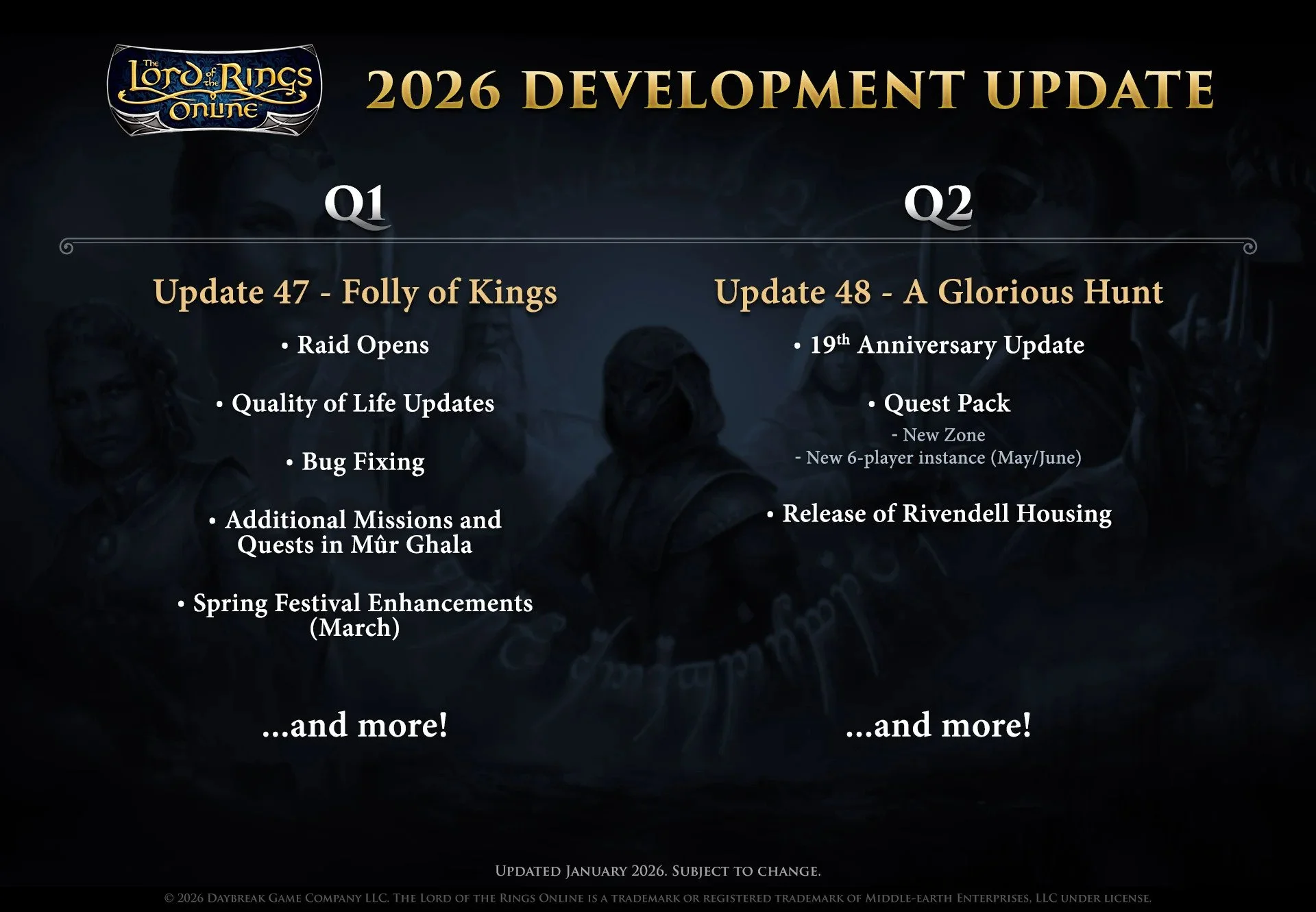
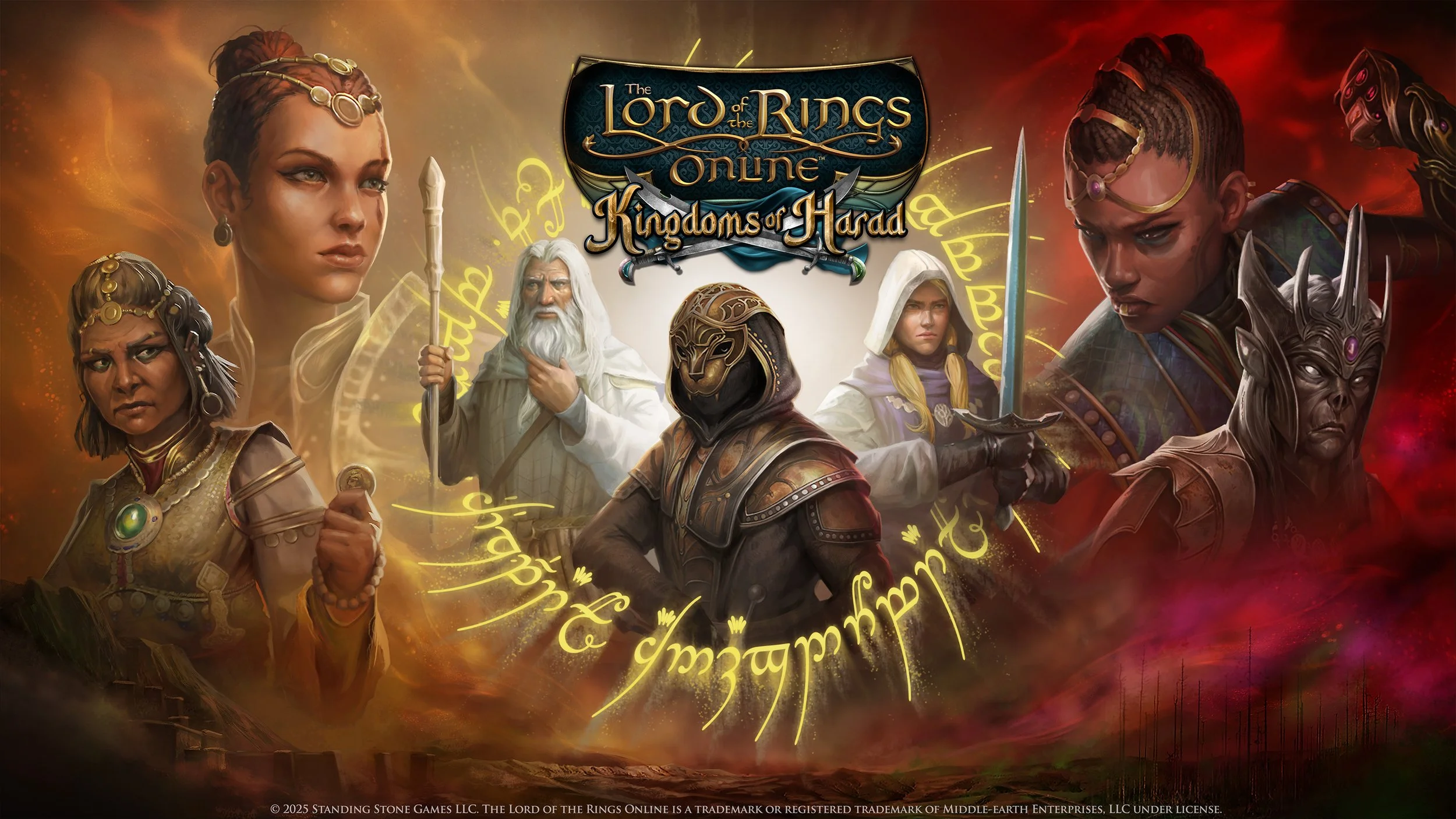
The forthcoming Minas Morgul expansion for The Lord of the Rings Online, became available for pre-order today. Furthermore, Update 24.3 was also released, making the new race of Stout-Axe Dwarves immediately available for those who have purchased the aforementioned expansion. Minas Morgul will provisionally be launched on Tuesday 29th of October, although Standing Stones Games have stated that this may be delayed for a few days should there be any technical issues. As with the previous expansion, Mordor, there are three versions of the game with a variety of additional baubles and trinkets available. These are mainly cosmetic items and sundry buffs and boosts. The pricing ranges from $40 for the Basic Edition, $80 for the Collector’s Edition and $130 for the Ultimate Fan Bundle. Again, as with the last expansion, the respective value of the most expensive tier is currently being “disputed” by players, although having logged into the game, it is already clear that many people have already bought it.
The forthcoming Minas Morgul expansion for The Lord of the Rings Online, became available for pre-order today. Furthermore, Update 24.3 was also released, making the new race of Stout-Axe Dwarves immediately available for those who have purchased the aforementioned expansion. Minas Morgul will provisionally be launched on Tuesday 29th of October, although Standing Stones Games have stated that this may be delayed for a few days should there be any technical issues. As with the previous expansion, Mordor, there are three versions of the game with a variety of additional baubles and trinkets available. These are mainly cosmetic items and sundry buffs and boosts. The pricing ranges from $40 for the Basic Edition, $80 for the Collector’s Edition and $130 for the Ultimate Fan Bundle. Again, as with the last expansion, the respective value of the most expensive tier is currently being “disputed” by players, although having logged into the game, it is already clear that many people have already bought it.
All editions of Minas Morgul come with the following content. Over 250 New Quests. 7 New Instances. Updated Crafting Guilds. Further instalments in the Black Book of Mordor Storyline. A new Shelob Raid and “more”. It should be noted that the instances and raid will follow in patches after launch of the expansion. Furthermore, according to developer’s Stand Stone Games “Minas Morgul will take you on an expedition deep into the Morgul Vale in search of answers to a mystery that spans three thousand years. The words of the shade of Isildur will unearth secrets and visions of the Second Age that have remained untold until now, revealing playable landscape and new adventures from a crucial time in Middle-earth’s history”. There is also yet another increase in the game’s level cap from 120 to 130. Thus creating a new gear check for those who wish to have appropriately levelled armour and jewellery.
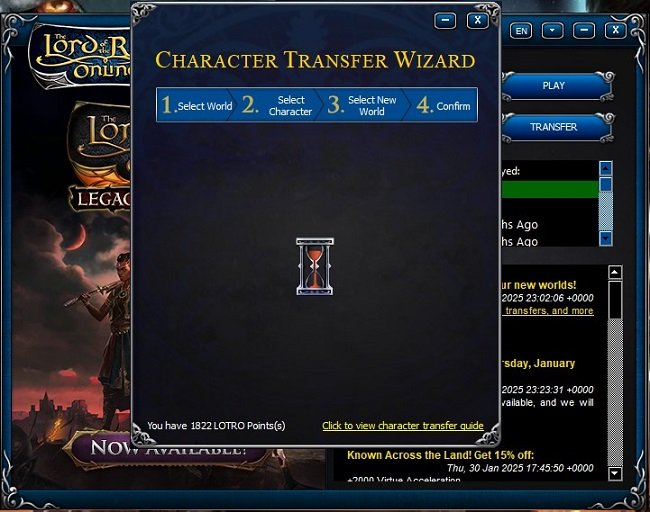
For long term LOTRO players, SSG’s announcement and overall marketing strategy for this new expansion holds no surprises. This is pretty much exactly what they did when they launched Mordor in late 2017. The appeal of Minas Morgul is aimed predominantly at core players, although the Character Level Boost to 120 may be of interest to new players who wish to join and play with friends at cap. SSG seem to have found a content release schedule that works well for them, offering an ongoing diet of “same meat, different gravy” which satisfies core players. For those who do not feel the need to pre-order the expansion, it will be available for purchase via the in-game store with LOTRO points in March 2020. Base Edition (includes the Minas Morgul Region & Instances only) is priced at 2495 Points. For those who just want to unlock the Stout-Axe Dwarf race, it will cost 1000 Points.
Fear of Missing Out
According to Wikipedia Fear of Missing Out (or FOMO) is “a pervasive apprehension that others might be having rewarding experiences from which one is absent". Now that may sound to some as a somewhat trivial concern. One that encapsulates the concept of “first world problems” and “Generation Me”. Yet for many, it is a genuine concern. “Fear of missing out” is a not too distant cousin of “fear of being excluded”. Something that is a common part of bullying culture. FOMO plays to human insecurities and we live in times where people feel increasingly vulnerable. If you want further evidence of the veracity of FOMO, consider how it is something that marketing departments now actively seek to play upon and uses for leverage. A recent leaked document for the Entertainment Software Association (ESA) outlined how they wish to streamline and revitalise the ailing E3 trade show. One suggestion is to make "exclusive/appointment only activations for select attendees who will create buzz and FOMO”.
According to Wikipedia Fear of Missing Out (or FOMO) is “a pervasive apprehension that others might be having rewarding experiences from which one is absent". Now that may sound to some as a somewhat trivial concern. One that encapsulates the concept of “first world problems” and “Generation Me”. Yet for many, it is a genuine concern. “Fear of missing out” is a not too distant cousin of “fear of being excluded”. Something that is a common part of bullying culture. FOMO plays to human insecurities and we live in times where people feel increasingly vulnerable. If you want further evidence of the veracity of FOMO, consider how it is something that marketing departments now actively seek to play upon and uses for leverage. A recent leaked document for the Entertainment Software Association (ESA) outlined how they wish to streamline and revitalise the ailing E3 trade show. One suggestion is to make "exclusive/appointment only activations for select attendees who will create buzz and FOMO”.
For good or ill, it would seem that FOMO is now facet of twentieth century culture. Much like reaction videos, shit posting and the most intellectually bereft member of society being allowed on national television. Furthermore, I cannot claim to be impervious to this malady. I have discussed in the past how I was an avid “early adopter” of technology two decades ago. Something I cannot simply chalk up to just enthusiasm and zeal. FOMO did play a part in this. And then there has been times when fandom has become a job, rather than a leisure activity. I have a friend who still likes to remind me of the numerous times I got up at some ridiculous hour to watch videos that I had to return to Blockbusters, later that day. As a movie fan, it has always been difficult to try and keep up with all the new releases as well as older classics. It’s something I take a far more measured approach to these days but again in the past, FOMO was a factor driving the mentality that I had to “do it all”.
Recently, I took stock of my interests and pastimes. I decided to recalibrate my expectations and aspirations and that meant making some changes. Subsequently, I took to Twitter and spent some time reflecting upon who I was following. I believe the maximum number of people you can follow realistically is about 150. I’m currently over that number by a sizeable amount but I did prune about thirty of so accounts I was following. I based my decision upon how often an account tweeted and whether they were big on interacting with others. I did feel the occasional pang of guilt but ultimately you have to be realistic about what you can and cannot do. Following an excess of people on Twitter just leads to having your timeline swamped and increases the chance of missing something important amid all the white noise. There were also a few people who I couldn’t remember as to why I was following them.
I carried out the same exercise on Feedly and removed several blogs that didn’t seem to be producing any content on a regular basis. As predicted, the drop off rate after Blaugust was noticeable. I also had several blogs on my list that have been dead for a long time and it was merely nostalgia on my part keeping them there. I am also getting somewhat tired of commercial video gaming websites. They have a tendency to regurgitate the same company press releases where it is only the think pieces and long form articles that really interest me. So I have purged many of these. I’ve also shed some of the movie news websites I was following, as these aren’t really broad enough and tend to be too focused on “superhero” movies. And while I’ve been “downsizing” the extent of my online content consumption, I also unsubscribed from numerous YouTube channels. The commercial ones were exceedingly predictable and many of the “non-professional” content creators seemed to have ground to a halt. May be this medium is no longer the cash cow that many assumed it was. And then there’s my gaming “wish lists”. They got kicked into touch as well after a healthy dose of realism.
Here are some fun facts about the “average persons” lifespan. We spend about a third of our lives asleep. That’s 30 years plus. Joe public also spends about five years on the phone during the course of their life. A human brain can store up to a quadrillion separate bit of information in its longterm memory during our “three score years and ten”. Then add to that mix, time spent working, raising children and perhaps most importantly, procrastinating. The bottom line is you’re never going to fit in everything that you want to do. Nope. Not going to happen. The reality of the situation is that FOMO should be logically replaced by AOMO; acceptance of missing out. It’s a mindset I’ve eased myself into over the last decade. Pick what you want to do wisely. Be realistic and honest with yourself about what you can and cannot fit into your schedule. As for FOMO, isn’t it better to do several things well and enjoy them thoroughly, rather than attempting to do too many things at once and doing them badly? You’d think so. But then again people are seldom logical.
Gaming and the Language of "Them Versus Us"
Language is an evolutionary thing. It changes over time, reflecting the needs of the culture that use it. Furthermore, each unique sub-set of society seems to create and utilise its own bespoke lexicon. From business, science, politics, religion, to sports and other leisure activities, all use terminology that is unique to their own group. Overtime some of these terms’ crossover from one niche to another to eventually find broad mainstream acceptance. It is a fascinating process and one I think has accelerated in recent years due to the growth of social media.
I have written before about the subject of gaming semantics and the fact that some terms are so ambiguous and not clearly defined. This subsequently leads to skewed debates and discussion, as there is not a mutually agreed frame of reference of definition. This time I want to focus on another linguistic issue that it currently blighting the discourse surrounding games. That being the proliferation of pejorative terms and ill-conceived labels, which are used not to describe but to discredit. It sadly adds to the increasingly bi-partisan nature of all public debates these days and reinforces my current stance of not defining myself by a pastime that I pursue. The gaming community is becoming increasingly intolerant and I don't wish to be associated with such things.
Language is an evolutionary thing. It changes over time, reflecting the needs of the culture that use it. Furthermore, each unique sub-set of society seems to create and utilise its own bespoke lexicon. From business, science, politics, religion, to sports and other leisure activities, all use terminology that is unique to their own group. Overtime some of these terms’ crossover from one niche to another to eventually find broad mainstream acceptance. It is a fascinating process and one I think has accelerated in recent years due to the growth of social media.
I have written before about the subject of gaming semantics and the fact that some terms are so ambiguous and not clearly defined. This subsequently leads to skewed debates and discussion, as there is not a mutually agreed frame of reference of definition. This time I want to focus on another linguistic issue that it currently blighting the discourse surrounding games. That being the proliferation of pejorative terms and ill-conceived labels, which are used not to describe but to discredit. It sadly adds to the increasingly bi-partisan nature of all public debates these days and reinforces my current stance of not defining myself by a pastime that I pursue. The gaming community is becoming increasingly intolerant and I don't wish to be associated with such things.
Something that often comes up in discussions about PVP, is the term "carebear". Initially this was a term that was jokingly employed to describe players that preferred the social interaction of PVE content and avoided player versus player gameplay. Now it seems to be a routine epithet to negatively label anyone who doesn't advocate any of the competitive aspects of gaming. If you do not like PVP, or end-game raiding, warzones, skirmishes or the like you are a "carebear". The implication being that caring and compassion are negative things and potentially a sign of weakness. It is a blanket term design to be besmirch and standard ammunition in ad hominem attacks.
During the seventies, UK national politics was extremely binary. The right was focused on privatisation, small government and the free market with the left advocating the welfare state, social responsibility and equality. It was during this period that I first became aware of the term "do gooder"; a term broadly meaning a well-meaning but unrealistic or interfering philanthropist or reformer. Yet overtime it simple degenerated into a pejorative label for anyone who's politics were not sufficiently right wing enough. Any sort of policy that advocated fairness or parity was lambasted with this term, to the point where it became nothing but a vacuous buzz word. The reason I mention this is because the exactly the same thing is happening today with the trite label "social justice warrior".
In recent years games discourse has sunk under the weight of these sorts of terms. Any sort of meaningful and mature discussion is obscured under a swath of pointless and ultimately meaningless terms. "Feminazi", "delicate snowflake", "filthy casual gamer" and other such names are bandied about, dragging the debate away from a level playing field and into the playground. Combine this sort of rhetoric with the prevailing mindset that eschews reason, critical thinking and scope to disagree in a civil fashion and all rational discussion ends. The winner is simply those who shout loudest. History has shown us that such groups are seldom the best informed.
When this sort of philosophy prevails it ultimately does more harm than good. Sadly at present, too many gamers are busy indulging in territorial pissing that they are oblivious to the fact that they are befouling their own waterhole. It's only a matter of time before the well is truly poisoned. If gaming culture genuinely wants to improve for everyone's benefits then it needs to start thinking. That begins with the language that we use towards each other. The alternative is to continue down the current road and let those who want to watch Rome burn, do so to the detriment of all. In the meantime there will be those that disassociate themselves from the mainstream and set up isolated safe havens for likeminded gamers. However that doesn't really fix the long-term problems. Are smaller more fragmented markets and communities ultimately good for gaming?
Untitled Goose Game
I totally missed any marketing or hype surrounding the Untitled Goose Game. I simply stumbled across it today while logged into the Epic Store to claim 6 free Batman games. There was a video at the top of the landing page with that catchy title and it instantly chimed with me. I’ve had several run-ins with the Canada Geese at my local park over the years and so I’m somewhat familiar with their penchant for assholery and general douchebaggery. So a game about a troublesome Goose is not a big ask. The quirky animation style and colour palette really caught my eye, so I read the marketing blurb and then bought the game blind on a whim. So much for “advertising doesn’t work on me”, although I believe there’s more to my impulse purchase than meet’s the eye. But my respective psychiatric state is not what is being scrutinised here. The key question is whether the game is any good? Well, in short, the answer is a resounding “yes”. Allow me to elucidate.
I totally missed any marketing or hype surrounding the Untitled Goose Game. I simply stumbled across it today while logged into the Epic Store to claim 6 free Batman games. There was a video at the top of the landing page with that catchy title and it instantly chimed with me. I’ve had several run-ins with the Canada Geese at my local park over the years and so I’m somewhat familiar with their penchant for assholery and general douchebaggery. So a game about a troublesome Goose is not a big ask. The quirky animation style and colour palette really caught my eye, so I read the marketing blurb and then bought the game blind on a whim. So much for “advertising doesn’t work on me”, although I believe there’s more to my impulse purchase than meet’s the eye. But my respective psychiatric state is not what is being scrutinised here. The key question is whether the game is any good? Well, in short, the answer is a resounding “yes”. Allow me to elucidate.
Narratively speaking, Untitled Goose Game is both minimalist and succinct. You get to play as a Goose who leaves the local pond and sets out to bother a small village. There is a check list of achievements such as entering a garden, stealing various items such as keys or a rake and generally being an utter nuisance to the various humans you encounter. The controls are straight forward and logical. Once you’ve cleared the various achievements in one area you move on to the next and strive to get on even more people’s nerves. In gaming terms this is a very straight forward proposition. The systems are not complex although things are more challenging than you may think. But like any good game and by that, I mean a game that grabs you and hits the spot right from the get-go, the devil is in the detail. Untitled Goose Game boast numerous small, yet perfectly conceived, embellishments that elevate it.
The opening tutorial is not only functional but also clearly establishes the games pitch. You’re a Goose. An annoying, asshole of a Goose whose about to embark on some anatine shenanigans. The flat-shaded texture art style, point and click movement and comforting piano score (an adaptation of Debussy’s Préludes) intuitively come together the moment you waddle out of the bushes with an exuberant honk. The waddling is further bolstered by soft slapping of webbed feet. It’s a powerful start. Within moments you have totally bought into the MacGuffin that you’re a Goose, raring to cause mayhem and get on some people’s tits. And as you do so, it’s fabulous. Genuinely funny. Even cathartic.
There’s something incredibly benign about the whimsical world you get to explore. It’s filled with an abundance of objects to interact with and appears to be in some sort of temporal bubble. It has some superficial modern trappings yet is not overly complex. Is that a sixties vibe to the aesthetic and hints of The Prisoner? Or is it more Camberwick Green? Either way the style is captivating. Certainly there are elements from classic LucasArts adventure games with the puzzle solving elements. Yet this is superbly juxtaposed with the stealth elements which feel very modern. Some situations just lend themselves to going in all guns blazing. Other scenarios require timing and a measure of planning. If things go wrong it inevitably ends in a chase with more than just a hint of Benny Hill to it all. And all the time there’s the constant pleasure of hitting X and the spacebar to flap your wings vigorously and honk at all and sundry.
I suspect that developers House House are conversant with many other entertainment genres other than the video games industry. As mentioned previously it’s the attention to detail that is telling. There is keen awareness of the mechanics of silent comedy, of framing action cinematically and complementing the visuals with music. And if you really want to ponder Untitled Goose Game at a deeper level, I’d say it’s an incredibly soothing and therapeutic game. We live in very troubling times. All too often life is something that happens to us rather than something we participate in. Untitled Goose Game offers the release of being an utter git but does so in a very measured fashion. We are not inflicting physical violence upon in-game NPCs but instead participating in low level mischief, reciprocal to that which life often has in store for us. This tempered, non-violent bad behaviour is extremely relaxing and inherently wholesome, compared to shooting someone in the face in an FPS.
The PC version of Untitled Goose Game appears to be exclusive to the Epic Store. At the price of £11.99 it is an utter bargain. As a game it’s one of those rare examples where the stars aligned and pretty much all elements have fallen into place. Unlike so many contemporary games which are burdened with complexity, decisions and tendency to punish the player if they choose unwisely, Untitled Goose Game simply offers an opportunity to “be”. It sets out its stall and allows the players to immediately come to terms with the task in hand. You’re a Goose. Go make yourself a nuisance. Don’t worry about it. Because you’re a Goose and this is what they do. I’m not sure if it’s some sort of bizarre form of method acting or the video game equivalent of the Rorschach test. But it’s great fun and an absolute hoot. Or should that be a honk?
Stout-Axe Dwarf Preview
As Standing Stone Games successfully “got away” with adding High Elves to The Lord of the Rings Online as a playable race in late 2017, then it is only logical that they expect to do exactly the same with Stout-Axe Dwarves this year. Furthermore, as High Elves were introduced with the Mordor expansion, it’s not unreasonable to assume that Stout-Axe Dwarves will similarly be tied to the forthcoming Minas Morgul expansion. Just remember that Mordor came in three varieties and the base edition did not include the High Elf class. So keep an eye out for the various versions of Minas Morgul, when it is announced. But let’s not kid ourselves, core LOTRO players are usually lore enthusiasts and eager to support the game that they love, so I see no reason for this new race to be rejected by the playerbase. Dwarves have their fans, so I’m sure that Stout-Axe Dwarves will be welcomed into the game and find their niche.
As Standing Stone Games successfully “got away” with adding High Elves to The Lord of the Rings Online as a playable race in late 2017, then it is only logical that they expect to do exactly the same with Stout-Axe Dwarves this year. Furthermore, as High Elves were introduced with the Mordor expansion, it’s not unreasonable to assume that Stout-Axe Dwarves will similarly be tied to the forthcoming Minas Morgul expansion. Just remember that Mordor came in three varieties and the base edition did not include the High Elf class. So keep an eye out for the various versions of Minas Morgul, when it is announced. But let’s not kid ourselves, core LOTRO players are usually lore enthusiasts and eager to support the game that they love, so I see no reason for this new race to be rejected by the playerbase. Dwarves have their fans, so I’m sure that Stout-Axe Dwarves will be welcomed into the game and find their niche.
Bullroarer test server currently has an early preview of the Stout-Axe Dwarf class. As ever, it’s a beta test so there is scope for change. There are some subtle aesthetic differences between the Stout-Axe and the Longbeards. Their beards are shorter and often braided, along with their hair. The passive skills for the new race also vary from traditional Dwarves. Unyielding Will gives a will, vitality and mitigations boost. Wrought by the Black Lands gives a shadow mitigation buff. This makes sense as the race hails from Mordor. Shadow of the Eye reduces vitality. Doom of Dràsa’s Folk reduces fate. Again the lore justifys this as the Stout-Axes are a subjugated people. And like regular Dwarves there is a One-Handed Axes passive trait. It should also be noted that it looks like SSG have overhauled the character creation screen, as the default models appear to have been updated.
SPOILER ALERT:
The introductory story for the Stout-Axe Dwarves is set in Mordor circa T.A. 3017. The plot conceit being that Dràsa’s Folk where one of the seven Dwarven Houses. When Sauron sought to take their ring of power, they resisted and were subsequently enslaved and taken to Mordor. After creating your Stout-Axe character you find yourself, labouring in the depth of Barad-dûr. There are rumours that Sauron is to release one of his captives and one of your eager companions wants to use this opportunity to mutiny and escape. After some arbitrary task involving cleaning and working, you find yourself amid an uprising. During the ensuing pandemonium you break out of the Black Fortress. The scene then changes to Ered Luin. Obviously, your character has traversed much of Middle-earth only to encounter the Dourhands. When you recognise that Skorgrím Dourhand and Ivar the Blood-hand are allied to the same evil that you have fled, you seek out the Longbeards at Thorin’s Hall to warn them. It is at this point the story joins the existing storyline for that region.
Once again, SSG have managed to craft an intriguing tale that embellishes the lore without breaking it. Or does it? I seem to recall during the Mordor quest line that Gimli had no specific knowledge of Dwarves hailing from Mordor. Dialogue from the quest “A Land of Ash and Shadow” appear to support this. Legolas: “Gimli has found old tools of dwarf-make in this ruin, and though he will not speak of it, unease has crept into his mind. If ever dwarves dwelt within Mordor, it seems their fate was not a pleasant one and that their line is long ended”. Furthermore, when you complete that quest and find a Stout-Axe body Gimli exclaims "So dwarves still dwell in Mordor, but where have they made their home”. But as the Stout-Axe story has your character introduce themselves to Dwalin, there is a contradiction here. Also the Epic Story has you interact with Gimli on numerous occasions as you level up thus causing further narrative issues.
Now there is a good chance I may have overlooked a story element or am misremembering things. Or perhaps SSG intend to revise the various story elements. They have done so in the past. Remember how “The Assault on Archet” originally featured the Angmarim Commander Éogan arriving in the burning town to claim Amdir. And how this was later changed to feature a more sinister Cargûl and the Blackwold villain Calder Cob. Perhaps they have something similar in mind to address this. But regardless of the potential lore disparities, the new Stout-Axe story is a surprising good addition to the game. I suspect it will appeal more to long term players with a penchant for alts, rather than new players who may want a less lore heavy start to their adventures in LOTRO. It will be interesting to see how SSG polish this new starter experience in the weeks ahead.
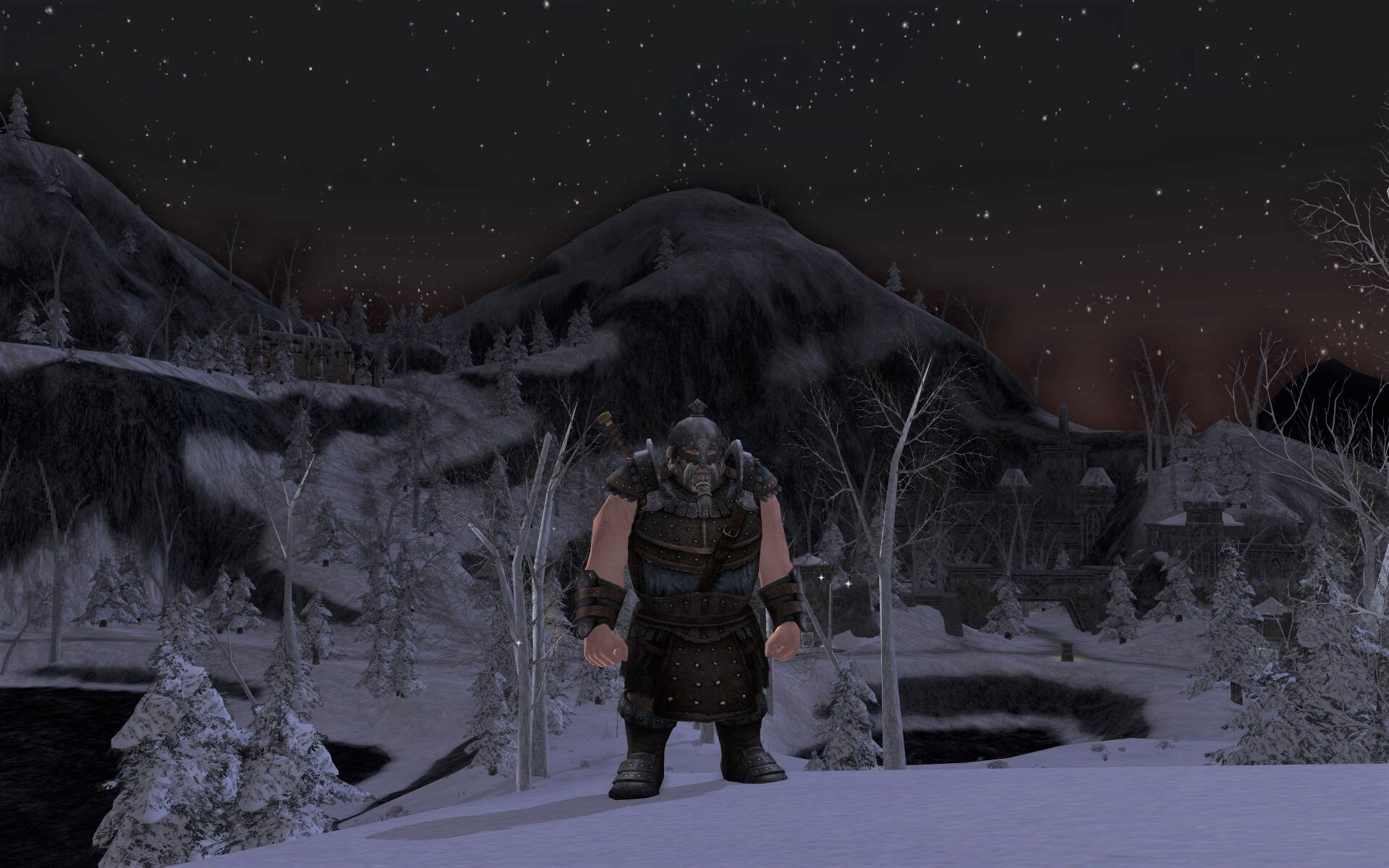
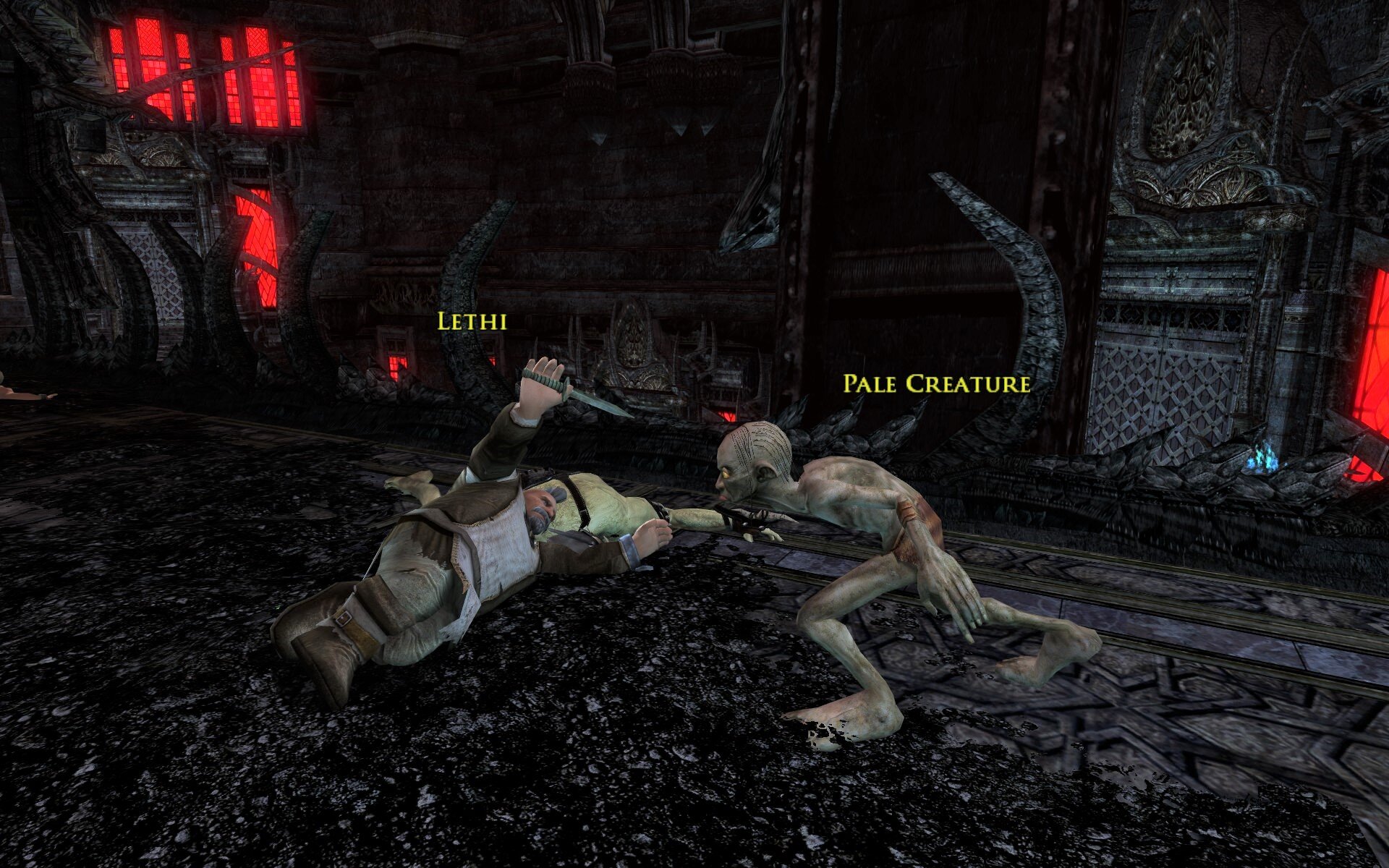
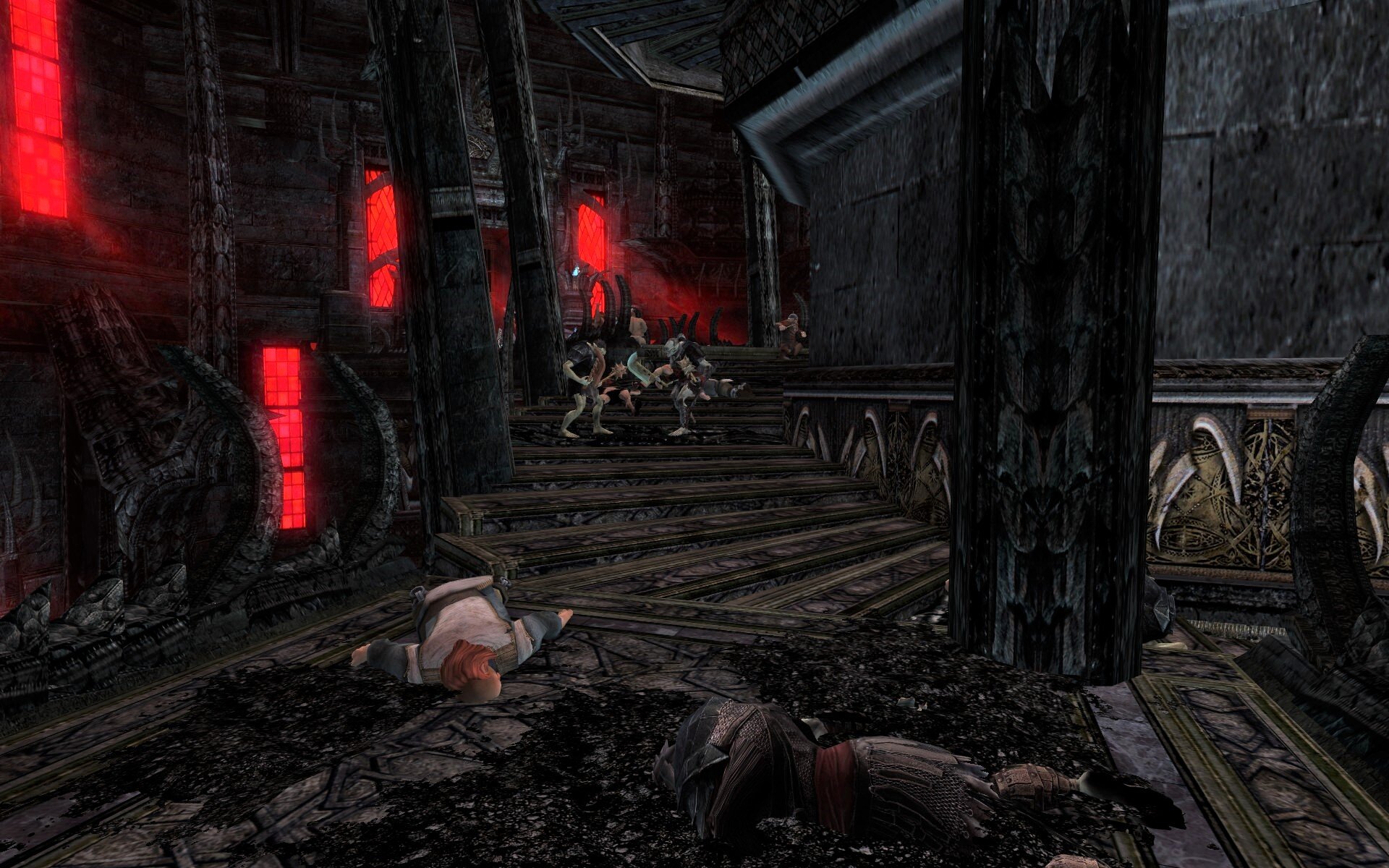
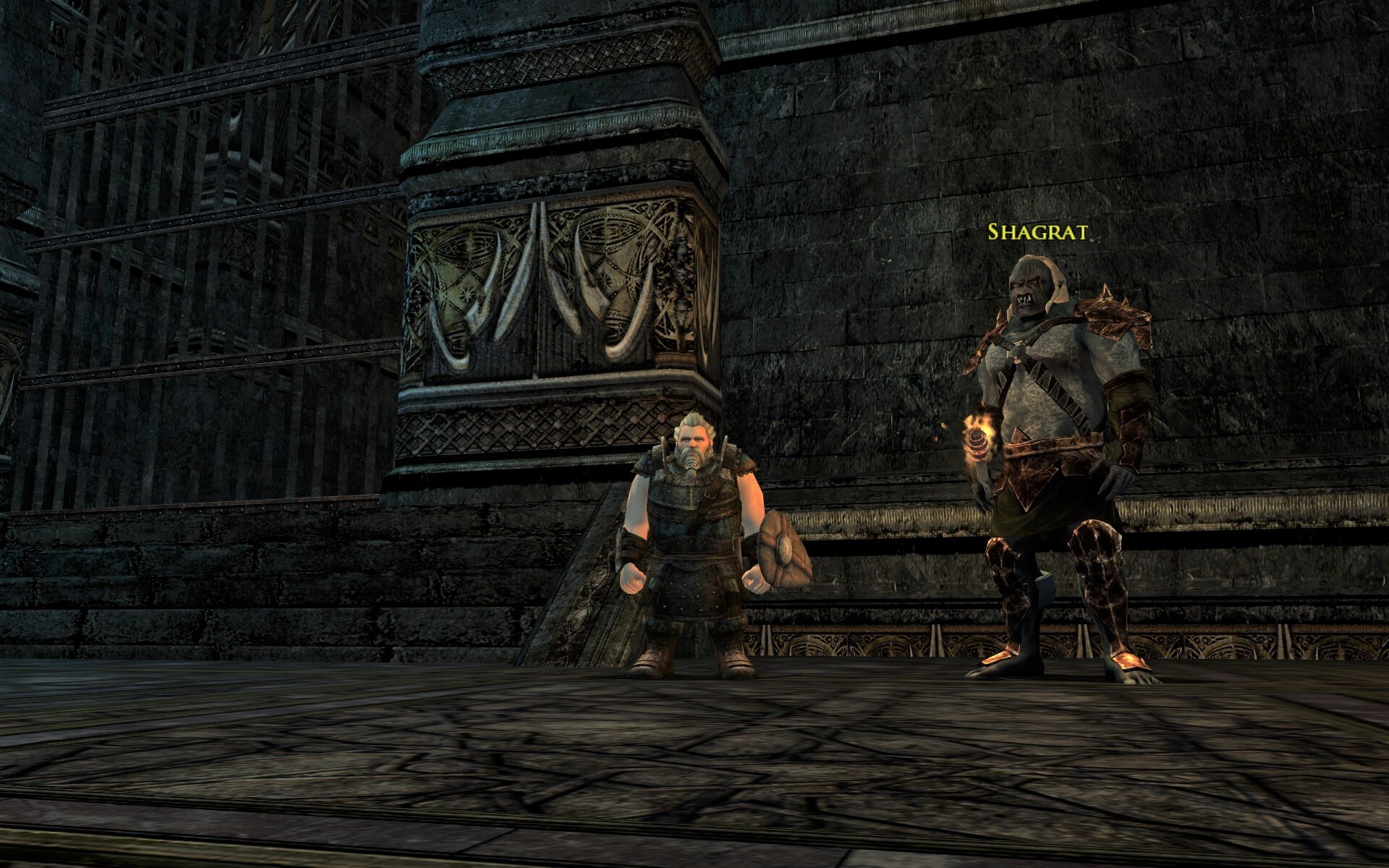
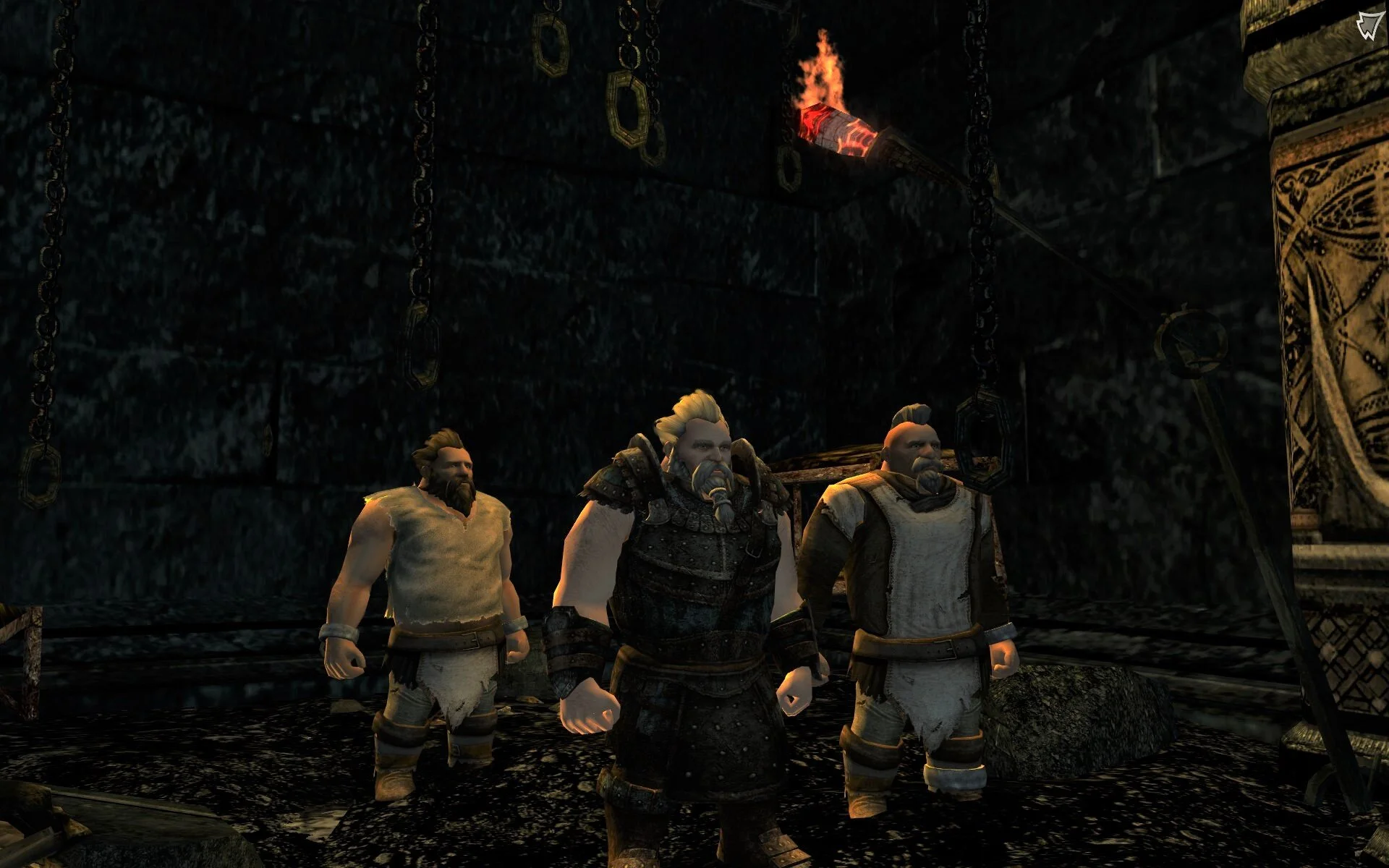
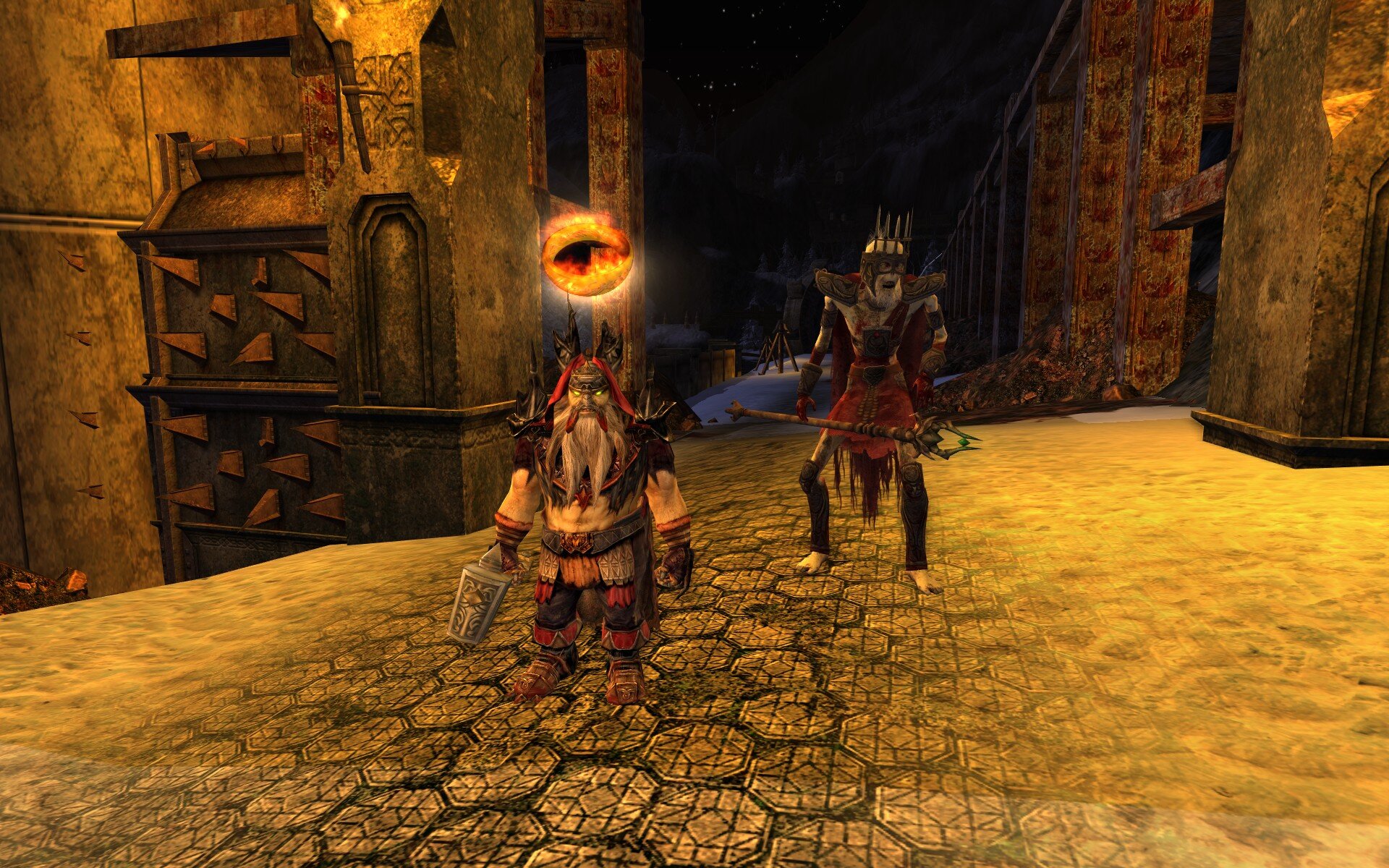
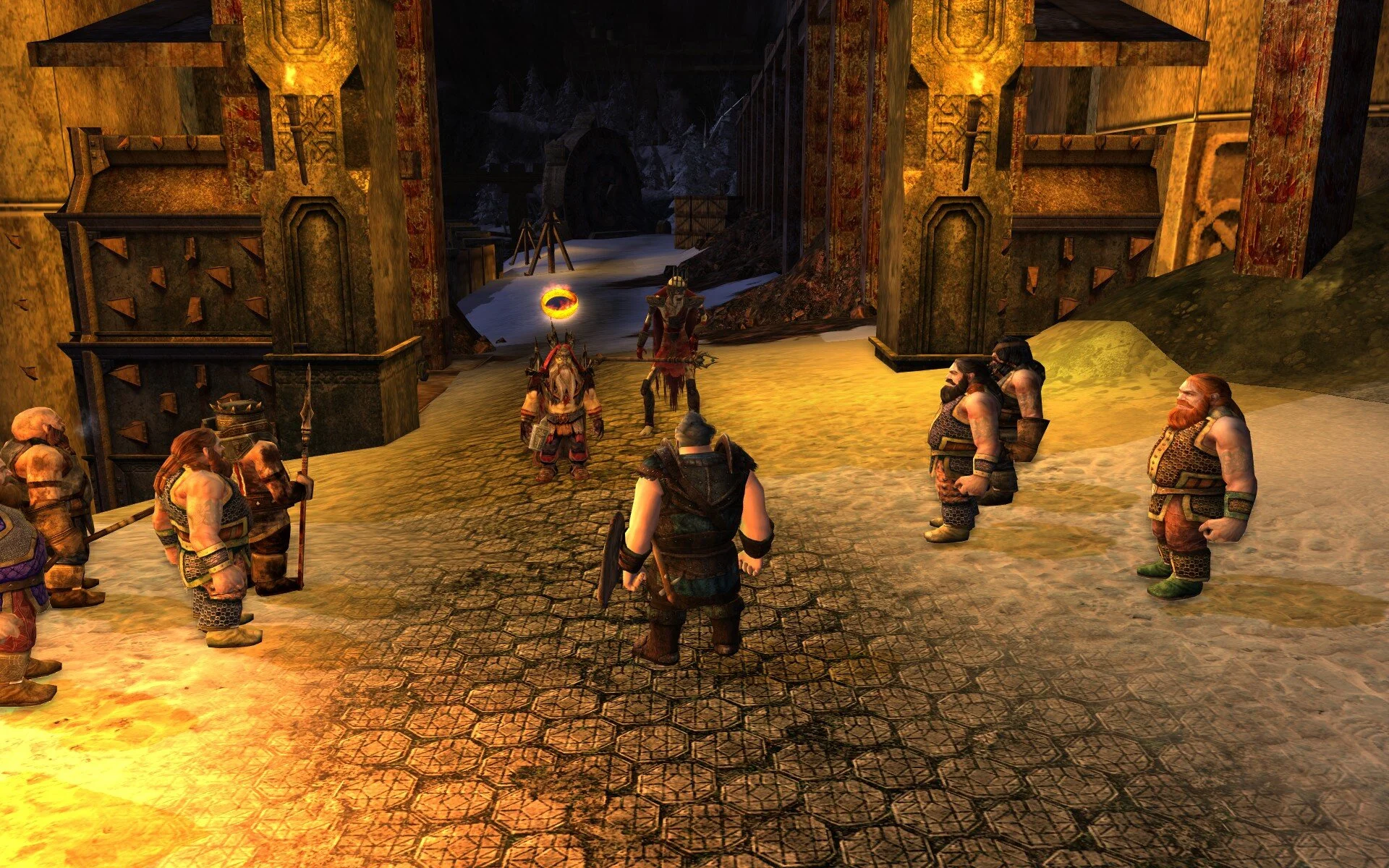
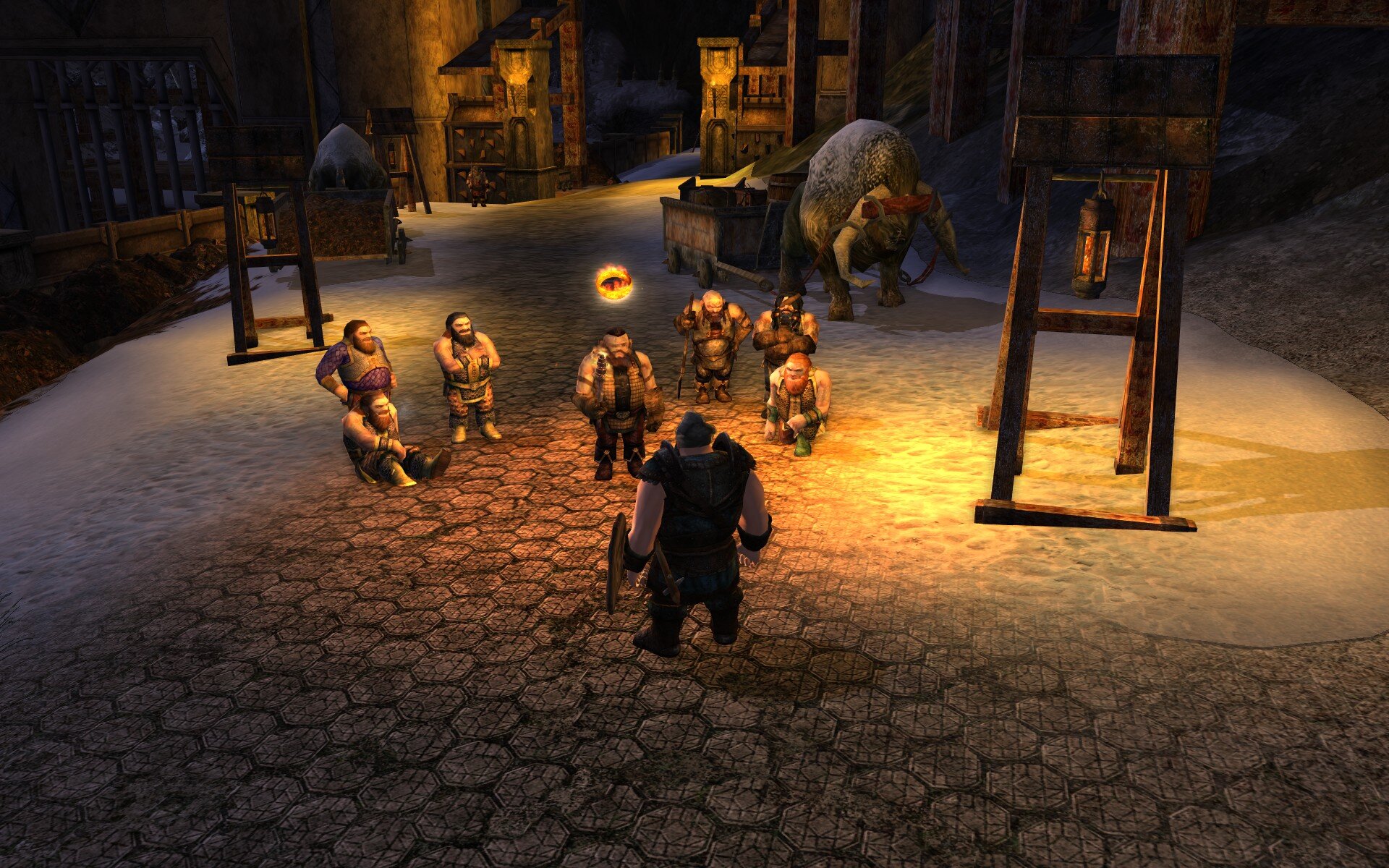
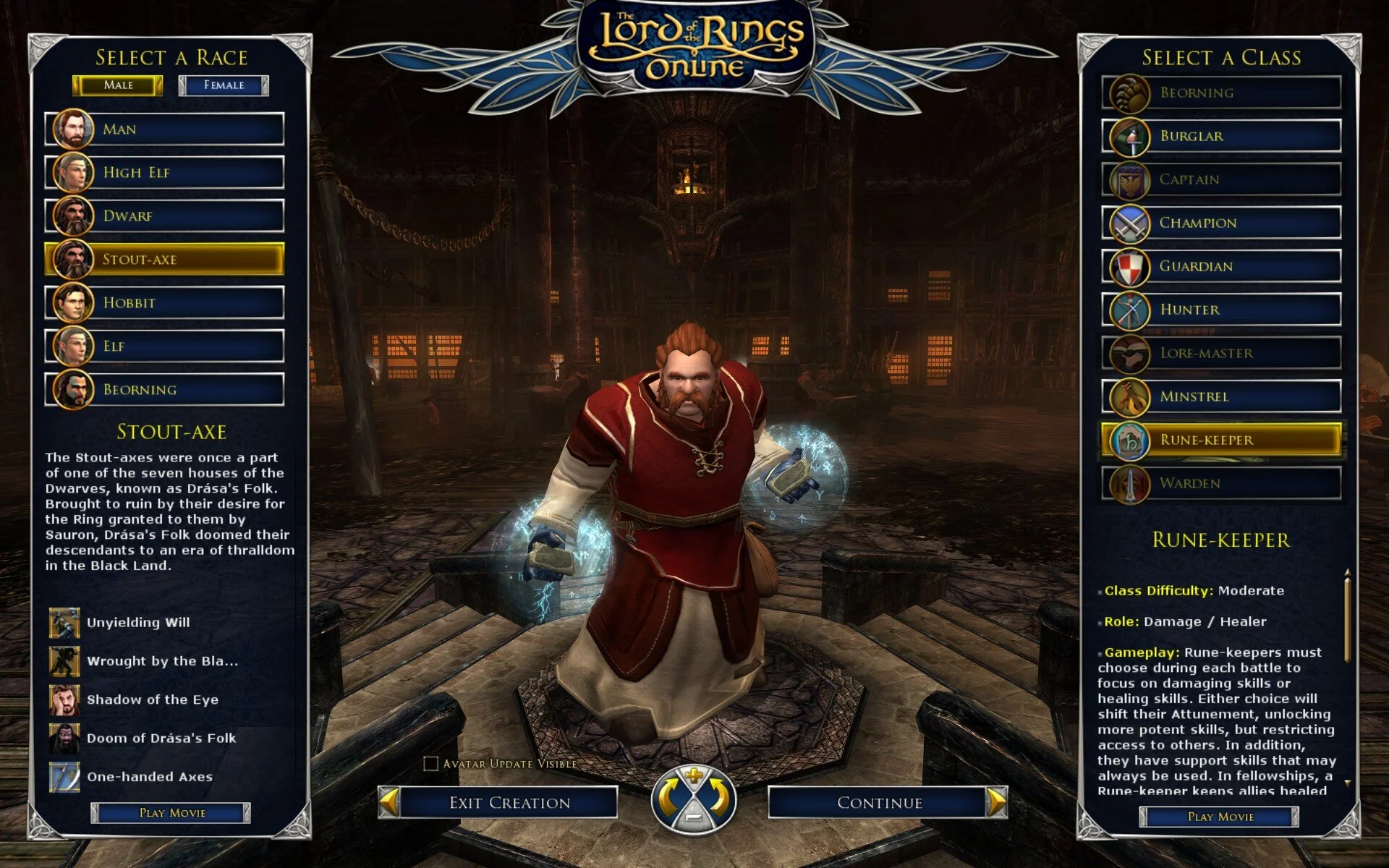
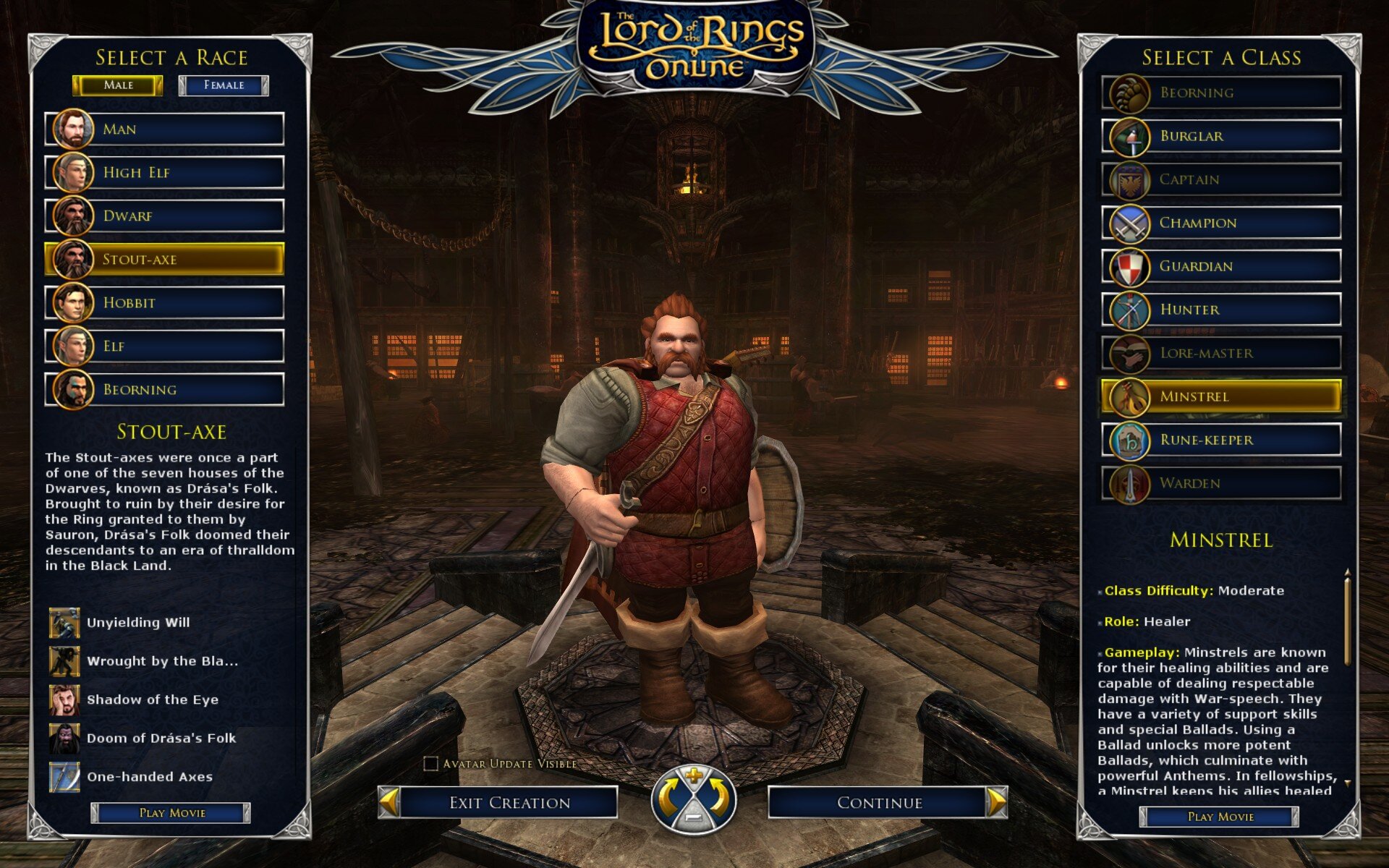
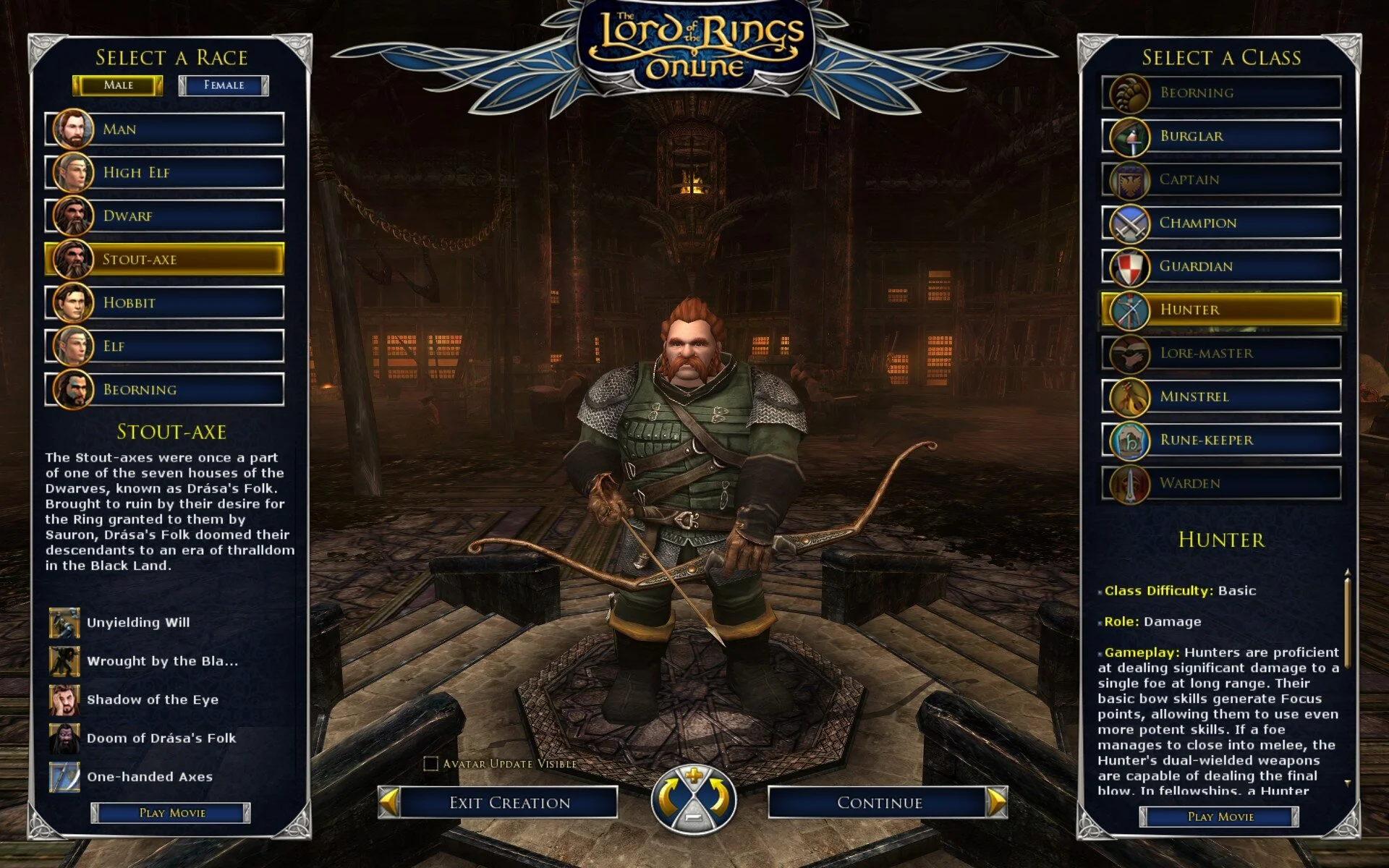
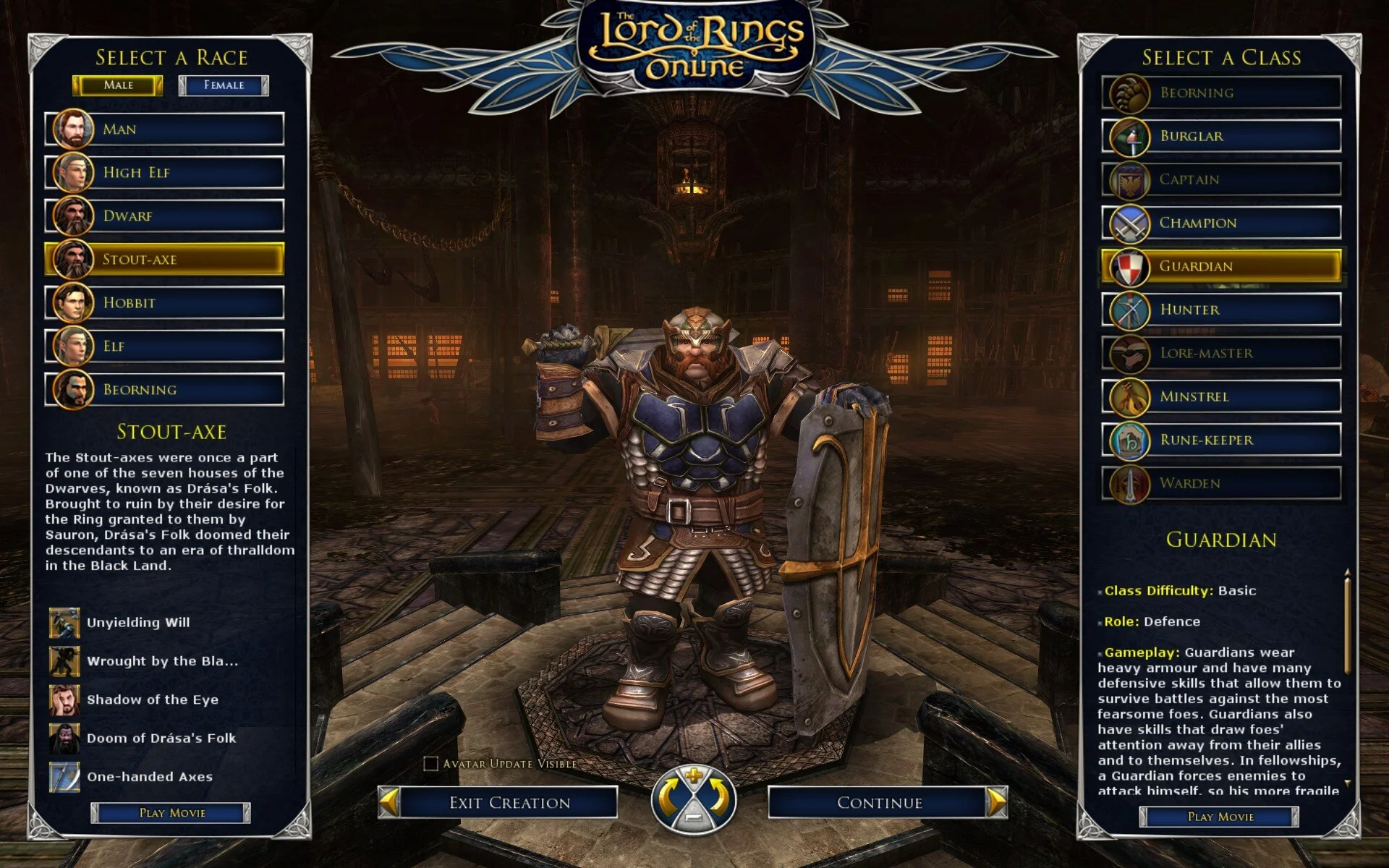
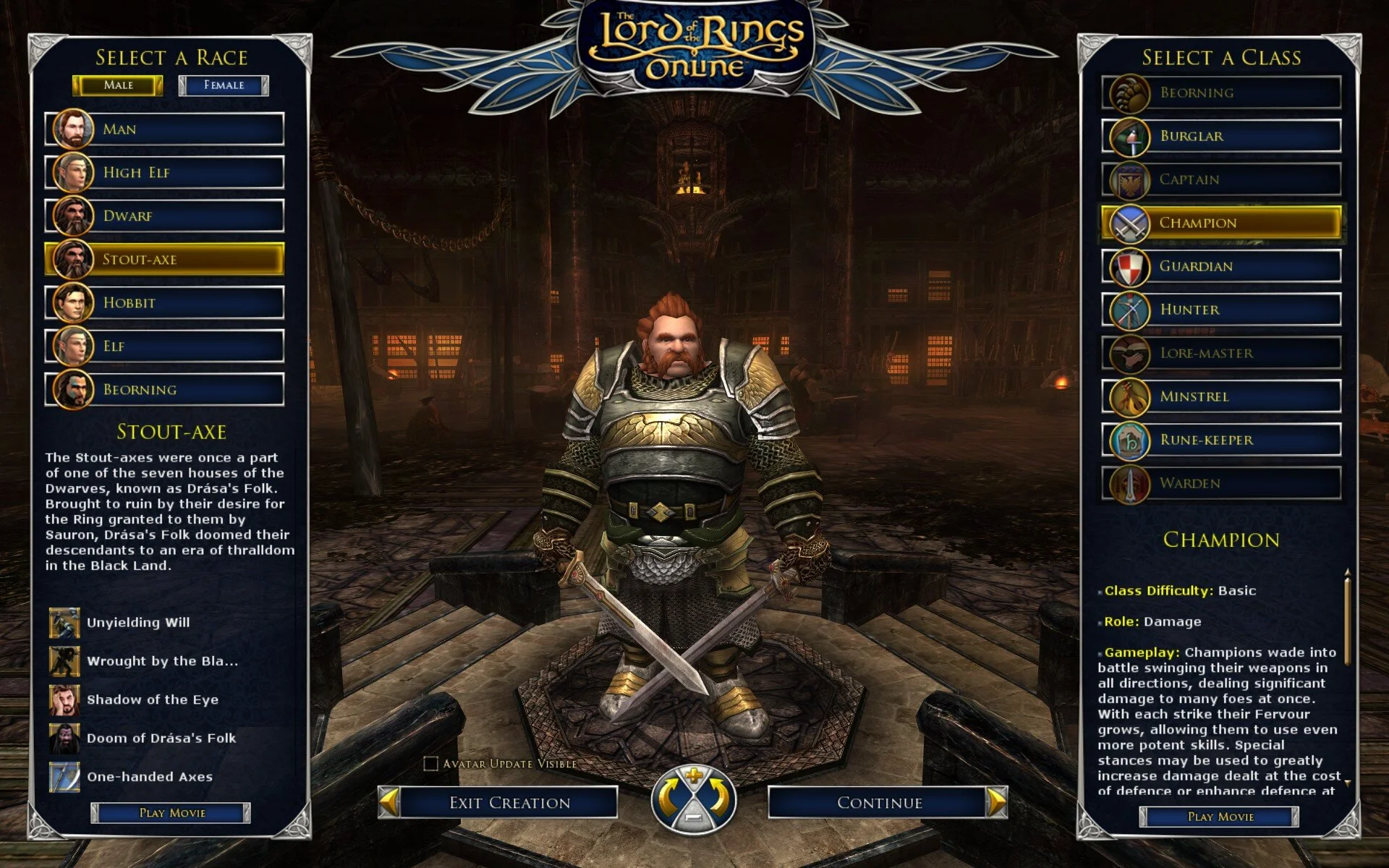
The Problem with MMO Economies Part 2
A few years ago, STO developers Cryptic, added a new system to the game that allowed players to re-engineer gear and alter the various modifiers associated with each item. One of the reasons behind this move was to reduce the hyperinflation associated with high end gear that has the most desirable statistics. If players could re-engineer the items that they desired it would undermine the trade in such items on the exchange. Needless to say this plan didn’t succeed and the market did not radically alter. The overall cost of the resources required to successfully re-engineer a piece of equipment ended up being comparable or even more than the price of a similar item being sold on the exchange. Similarly, the legendary progression servers in LOTRO had a brief period of economic stability and fiscal prudence when they were launched. Initially, no one section of the playerbase had more resources than others. A year on and now the same issues of inflation and excessive prices have happened with a tedious sense of inevitability. Can anything be done to stabilise MMO economies?
A few years ago, STO developers Cryptic, added a new system to the game that allowed players to re-engineer gear and alter the various modifiers associated with each item. One of the reasons behind this move was to reduce the hyperinflation associated with high end gear that has the most desirable statistics. If players could re-engineer the items that they desired it would undermine the trade in such items on the exchange. Needless to say this plan didn’t succeed and the market did not radically alter. The overall cost of the resources required to successfully re-engineer a piece of equipment ended up being comparable or even more than the price of a similar item being sold on the exchange. Similarly, the legendary progression servers in LOTRO had a brief period of economic stability and fiscal prudence when they were launched. Initially, no one section of the playerbase had more resources than others. A year on and now the same issues of inflation and excessive prices have happened with a tedious sense of inevitability. Can anything be done to stabilise MMO economies?
If MMO developers wanted to seriously address this matter, it would require designing a game with a far more controlled and regulated in-game economy. It would also require a far more interventionist approach in managing the ebb and flow of in-game resources. IE controlling the availability of specific resources and items, as well as imposing taxes and fees upon auction house transactions. Such an approach would certainly be perceived as “political” from certain quarters of the gaming community and would not be well received. Given the levels of political and socioeconomic illiteracy among some players, it would more than likely play into the ongoing culture wars we see across all levels of society in western democracies. And it can also be argued that “trading” is one of the few social elements left in the MMO genre. Plus it’s also a “game within a game” for many players. If this is fundamentally altered or regulated to the point of “no fun”, then its effectively just another nail in the coffin of the old school concept of the MMORPG. I’m not too sure how many nails the playerbase can endure.
Grinding out rewards and obtaining rare and unique items is a fundamental motivator for many MMO players. For those without the time to pursue such goals, buying these things from the in-game auction house is a credible alternative. There are still a few ships in STO that are demonstrably superior to others. If you are unable or unwilling to spend real world money on multiple loot boxes to get one of these ships, then there is always the exchange and the option to buy what you desire for energy credits. It may well be an immense uphill struggle but it can be done. If you remove such an avenue from the game you are effectively barring certain players from achieving their goal. That sends very clear message to the playerbase and not a positive one. There are already enough obstacles for new players of long established MMOs. If a player feels that they cannot reach their full potential then why should they continue to play. Life isn’t a meritocracy but we broadly seem to like the illusion of one.
Conversely, if resources and rewards are too readily available and easily acquired, it does much to mitigate a great deal of the challenge and motivation to play. It is always fun to log into a MMO test server and instantly receive all the gear you desire from the live server. But the novelty soon wears off. Players like to have goals to work towards and if you negate that you really are pulling the carpet out from under them. I don’t agree with the philosophy that things given freely have no inherent value but I do agree that familiarity breeds contempt. The optimal path is somewhere in between, so let players earn their rewards but make the journey credible. Overall, I don’t know what the long-term solution to this chicken and egg conundrum is, as it requires that developers and players alike must “unlearn what they have learned”. Perhaps it will fall to a small developer to make a bold experiment one day and create a game with an economy that breaks the existing mould. In the meantime I’m sure this problem will persist and we’ll still see regular articles decrying the status quo and asking for something to be done. Gaming like any other aspect of human culture is cyclical.
The Problem with MMO Economies Part 1
I have a very mixed relationship with MMO economies. In The Lord of the Rings Online I have adequate supplies of in-game gold but most of the items I seek to buy on Auction House are insanely overpriced. In Star Trek Online, earning energy credits is so problematic, the developers have had to add them as part of the daily personal endeavour rewards. Again, there is runaway inflation and the most desirable items such as Tier 6 ships are ridiculously priced. And in The Elder Scrolls Online, the gold slowly builds up over time but the lack of a server wide auction system means that finding and purchasing quality gear at credible prices is an arcane undertaking. There was a point a few years ago when I use to play the LOTRO economy and as a result, I had sufficient means to buy what I wanted. But maintaining that level of wealth and financial leverage is time consuming and requires adhering to a strategy. As I do not play the game, or indeed any other MMO, to that level anymore, my personal wealth in all of them has declined accordingly.
I have a very mixed relationship with MMO economies. In The Lord of the Rings Online I have adequate supplies of in-game gold but most of the items I seek to buy on Auction House are insanely overpriced. In Star Trek Online, earning energy credits is so problematic, the developers have had to add them as part of the daily personal endeavour rewards. Again, there is runaway inflation and the most desirable items such as Tier 6 ships are ridiculously priced. And in The Elder Scrolls Online, the gold slowly builds up over time but the lack of a server wide auction system means that finding and purchasing quality gear at credible prices is an arcane undertaking. There was a point a few years ago when I use to play the LOTRO economy and as a result, I had sufficient means to buy what I wanted. But maintaining that level of wealth and financial leverage is time consuming and requires adhering to a strategy. As I do not play the game, or indeed any other MMO, to that level anymore, my personal wealth in all of them has declined accordingly.
Over the years there have been many articles written about the iniquities of MMO economies and whether anything can be done to run them in a more equitable fashion. For example, last Wednesday, there was an interesting post by Ben Griggs over at Massively Overpowered about the short comings of the Guild Trade system in ESO. Then today, there was a further article about how to acquire in-game wealth in Guild Wars 2, by Bree Royce. Both highlight the recurring problems and complaints that MMO economies regularly generate. A cursory look at the comments on both posts show that there isn’t a prevailing consensus among gamers, as to which is the best way to run an MMO economy. Furthermore, game developers seem to all too often throw in the towel when a games economy starts to get out of control and hyperinflation sets in. It’s as if it is just assumed that this is an inevitable course of events and simply something endemic to the MMORPG genre. And I’m beginning to think that perhaps they are right.
Video games are commercial products. Yes, they can be art as well but MMORPGs are not developed by altruistic, Franciscan monks out of a sense of social obligation. All the resources required to create a game come with a cost. In many ways video games are the ultimate expression of consumerism in western, capitalist countries. The controversies surrounding the monetisation of a leisure activity such as video games, is the epitome of a “first world problem”. However, when you consider the economic factors that determine the creation and sales of video games, it is hardly surprising to find the same dogma perpetuated within the virtual worlds they offer. Therefore, there is little or no will to create a game with a radically different economy to that of the real world to begin with. The mantra that “time is money” has always been the under-pinning ideology of game economies. Those with any advantage in this respect will always find themselves succeeding more than those who have a time deficit. And any MMO that has existed for several years or more, will have a core player base that owns superior resources to that of any newcomers.
Over time MMO developers have often tried a variety of methods to try and mollify these problems. Tinkering with drop rates of valuable items or reducing how often resource nodes spawn. Then there’s binding items to account or to characters. Some games have even put a specific cap on how much in-game gold a player can own. But players always seem to be one step ahead and all too often such restrictions are circumnavigated. Hence, we see bots and scripts implemented by players to farm resources. I’ve even subcontracted out my own resource gathering in LOTRO in the past. You can also find third party websites where rare items are traded for real money. Player in ESO will use the gifting mechanic to achieve sales that can’t be facilitated by traditional means. And if the developers are too vociferous with the bind to character mechanic, then people will just sell accounts. It’s a blunt tool but it works. All of these issues persist because neoliberalism that exists in real life economies, bleeds into the MMO games design.
Star Trek Online: Awakening
The new story arc Awakening, launched this week in Star Trek Online. The first instalment, Beneath the Skin, saw Star Trek: Discovery actor Anthony Rapp, returning as Commander Paul Stamets in an adventure that takes the player back into the Mycelial Realm. Cryptic have also added a new Task Force Operation, several patrols and numerous of “quality of life” fixes. The event system has now been removed from the reputation panel and added to the mission journal and now tracks progress in a single experience bar. Furthermore there is a new ongoing event which when completed rewards players with an Elachi Qulash Frigate [T6]. The developers have also revised yet another Tier 6 ship skin. This time round they have improved the aesthetics of the Kelvin-Timeline Intel Dreadnought Cruiser (AKA U.S.S. Vengeance from Star Trek Into Darkness).
The new story arc Awakening, launched this week in Star Trek Online. The first instalment, Beneath the Skin, saw Star Trek: Discovery actor Anthony Rapp, returning as Commander Paul Stamets in an adventure that takes the player back into the Mycelial Realm. Cryptic have also added a new Task Force Operation, several patrols and numerous of “quality of life” fixes. The event system has now been removed from the reputation panel and added to the mission journal and now tracks progress in a single experience bar. Furthermore there is a new ongoing event which when completed rewards players with an Elachi Qulash Frigate [T6]. The developers have also revised yet another Tier 6 ship skin. This time round they have improved the aesthetics of the Kelvin-Timeline Intel Dreadnought Cruiser (AKA U.S.S. Vengeance from Star Trek Into Darkness).
It’s been a while since we had a story update in STO. Although I have enjoyed the various narrative threads of each previous mission set in the Discovery era, they have been somewhat disjointed. Finally in Awakening, the various dots are connected and I suspect that the arc will be concluded. Beneath the Skin sees an assault in Andorian space by rogue 23rd Klingon Matriarch, J’Ula. This results in the creation of a rift between space time and the Mycelial Network. As all data regarding this realm is classified, the player has to call upon the expertise of a holographic Commander Paul Stamets and enter the rift. Probes sent by J’Ula have leaked Hargh'peng radiation and are causing sickness and corruption throughout the Mycelial Realm. Furthermore, in a surprise twist, we discover that the Elachi where native to the fungal zone prior to being subsumed into Iconian servitude.
As ever with STO, the new story is inventive and draws heavily upon multiple threads of established in-game and canonical lore. There are numerous elements to the plot but complexity is not always a stumbling block, if handled well. Cryptic are aware that not all players may be familiar with all the elements from Star Trek: Discovery so there are several instances of characters pausing to deliver substantial quantities of expositionary dialogue. It does at time slow things down but it’s a necessary evil. The presence of Anthony Rapp is a big bonus to the proceedings. He maintains his acerbic, passive aggressive demeanour and at appropriate points delivers some great quips. As ever with Cryptic, they excel with the little things that add to the ambience. The baby Tardigrades are great as they scamper around the Mycelial Network. And the Elachi who was previously a Romulan was a great call back to an earlier story line.
There is sufficient new content to be getting on with for the present. My concerns about a decline in narrative material has been somewhat tempered. The new patrols are more complex than expected and it’s nice to see the return of characters such as the rogue Ferengi entrepreneur Madran and Lukari Captain Kuumaarke. Plus a major bonus to all this is the fact that the latest mission Beneath the Skin rewards the player with an Elachi Bridge Officer, which is the best news I’ve had since I acquired my Holographic James Kurland. And as developers Cryptic are still working on bug fixes and “quality of life” improvements, I shall patiently wait for classic content such as the classic mission “City on the Edge of Never” to be returned to the game. In the meantime, gaming peripherals vendor Steelseries currently have a Star Trek Online giveaway to celebrate the launch of Awakening. Just create a user account and you can claim a free Ferengi Bridge Officer for the Klingon faction, along with a B’Rotlh Bird of Prey Ship [1]. Free stuff is always welcome and its nice to see the KDF getting some love.