
Investing Time in TV Shows
Whenever someone mentions the TV show Lost, I often feel a pang of mild irritation. As I’ve mentioned before, I watched four seasons of that show before I realised it was effectively trolling its viewers and that the writers were making it up as they went along, flying by the seat of their pants. I appreciate that the entire “what the hell is happening now” approach was very appealing to some viewers but I felt I was being manipulated. I believe that there is a loose and informal social contract between the viewer and the powers that create and run popular television shows. I recognise that it is their intellectual property so they can do what they please but one cannot totally ignore viewer expectations. It is not unreasonable to expect story arcs to be concluded or at least progress in a manner that gives them meaning. When watching Lost, I got that same feeling I get when watching a street magician. Yes, they are doing something clever but ultimately they are misdirecting you.
Lost
Whenever someone mentions the TV show Lost, I often feel a pang of mild irritation. As I’ve mentioned before, I watched four seasons of that show before I realised it was effectively trolling its viewers and that the writers were making it up as they went along, flying by the seat of their pants. I appreciate that the entire “what the hell is happening now” approach was very appealing to some viewers but I felt I was being manipulated. I believe that there is a loose and informal social contract between the viewer and the powers that create and run popular television shows. I recognise that it is their intellectual property so they can do what they please but one cannot totally ignore viewer expectations. It is not unreasonable to expect story arcs to be concluded or at least progress in a manner that gives them meaning. When watching Lost, I got that same feeling I get when watching a street magician. Yes, they are doing something clever but ultimately they are misdirecting you.
However, I learned a very important lesson from this experience and as a result, I am a lot more discerning in what I choose to watch these days. Not only do I filter shows now that I think may have plans for a long, sprawling and ponderous story arc, I also keep an eye out for those that could get cancelled. That is another factor that I find very frustrating. In the seventies, US shows would appear on UK TV between 6 months to a year after their US broadcast. As there was no internet at the time, a new television series would air in the UK and I and many others would become avid fans, not knowing that the commissioning network in the US had already cancelled it due to low audience ratings. This still happens today. The only difference this time round is that many shows are now broadcast simultaneously or within a few days of each other. So instead of retrospectively finding out if a show’s been canned, we now all play a form of viewing Russian Roulette.
Awake
Firefly, Almost Human and Awake are just a few examples of good shows that were poorly marketed and never found the audience they deserved. I won’t include Manimal in that list but I was gutted as a teenager. However, with the advent of streaming services, shows can sometimes get a second chance. I was pleased that Designated Survivor got a final season, courtesy of Netflix. But a lot of good television just doesn’t make it. I liked Timeless and felt that it needed a third season. I currently have grave concerns for Clarice as that show has virtually been hidden from the public with the intermittent scheduling it’s received. Which brings me back to the investment of time by the viewers. It feels like a slap in the face when a show is ignominiously cancelled. It can also be frustrating when the opposite happens and a show is drawn out too long and deliberately treads water, rather than seizing the nettle and writing a reasonable and satisfactory ending.
Manimal
I read an interview recently with Line of Duty writer, Jed Mercurio, in which he stated how writing for TV had become more complex in recent years, as we now watch and re-watch programs on demand. Social media allows for fans to quickly assess and dissect an episode, then share ideas. It’s a far cry from watching a TV show, once a week as it was broadcast, as we did back in the seventies. Naturally, contemporary showrunners wish to cater to this more sophisticated audience and intricate viewing pattern. Hence we find more complex shows, with evolving narratives that seek to continue across multiple seasons. However, this is a hard task to achieve which returns me to my concerns over shows like Lost. And because there is so much good quality TV these days, hard decisions have to be made regarding what gets watched. As well as all the usual factors that we consider before watching a new show, for me at least, I will reflect on whether I am willing to invest my precious leisure time into a particular show or all the reasons stated above.
Debris
Over the last three months, I’ve been watching Debris, the new science fiction show from J. H. Wyman, the creator of Fringe. It is cerebral, complex and requires the viewer to think to keep up. Over thirteen episodes, the scope of the plot has broadened from an investigation of alien technology, into a far reaching global power struggle. I like it but it has the hallmarks of a show that could, like Fringe, sprawl across several years requiring the viewer to invest a lot of their time. Conversely, its dense plot may discourage sufficient viewers leading to NBC to pull the plug. It will be interesting to see what happens next and which option comes to pass. In the meantime, there are plenty of shows that sustain self-contained story arcs within each season. These can be more satisfying, as they provide a narrative journey but do not leave viewers hanging if the production ceases. However, looking at the bigger picture, we do live in curious times when the decision to watch a TV show becomes such a complex process, fraught with such trepidation. Watching Manimal was a lot easier.





Classic TV Themes: Star Trek
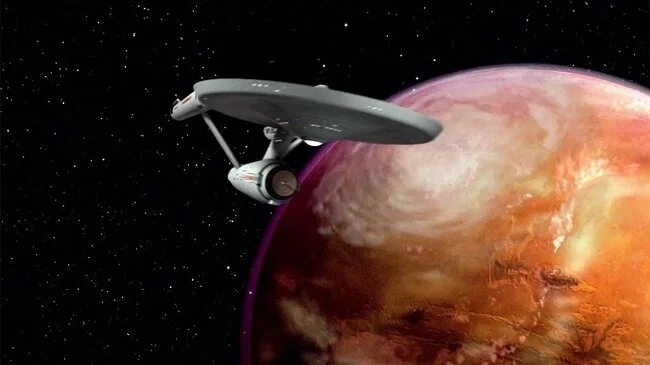
Before we start, no I am not writing about Alexander Courage’s classic main theme for the original Star Trek show. I can add nothing further to that particular discussion and it remains iconic and inspiring, even when distilled down to just the initial fanfare. In this post I want to draw your attention to another piece of music from Star Trek that has permeated its way into popular culture. A cue that when heard, if the listener is familiar with its provenance, will instantly conjure up images of flying drop kicks, ear claps and judo chops. A piece of music that can be added to pretty much any video footage and instantly make it more heroic. Yes, I am talking about what has become generically known as Star Trek “fight music”. Or more specifically, the "The Ancient Battle/2nd Kroykah" cue from Amok Time (S02E01) composed by Gerald Fried. The scene during the koon-ut-kal-if-fee ritual in which Spock fights Kirk on the planet Vulcan for complicated “reasons”.
Before we start, no I am not writing about Alexander Courage’s classic main theme for the original Star Trek show. I can add nothing further to that particular discussion and it remains iconic and inspiring, even when distilled down to just the initial fanfare. In this post I want to draw your attention to another piece of music from Star Trek that has permeated its way into popular culture. A cue that when heard, if the listener is familiar with its provenance, will instantly conjure up images of flying drop kicks, ear claps and judo chops. A piece of music that can be added to pretty much any video footage and instantly make it more heroic. Yes, I am talking about what has become generically known as Star Trek “fight music”. Or more specifically, the "The Ancient Battle/2nd Kroykah" cue from Amok Time (S02E01) composed by Gerald Fried. The scene during the koon-ut-kal-if-fee ritual in which Spock fights Kirk on the planet Vulcan for complicated “reasons”.
Veteran composer Gerald Fried had written scores for Stanley Kubrick (The Killing and Paths of Glory) and had an established reputation for providing quality material for TV, having notably provided incidental music for numerous episodes of The Man from U.N.C.L.E. Fried wrote the music scores for five episodes of the first season of Star Trek. Over the years the "The Ancient Battle/2nd Kroykah" cue has gained a curious cult following. This may be because the music was re-used in many more episodes throughout the second season and became among the most memorable pieces of the entire show. It featured in the Jim Carrey film The Cable Guy and was further referenced again by Michael Giacchino in Star Trek Into Darkness in a fight between Spock and Khan Noonien Singh. It is also used in the Coliseum mission in Star Trek Online.
So here for your edification and enjoyment is the complete "The Ancient Battle/2nd Kroykah" cue by Gerald Fried. It is a very flamboyant piece of music with a very sixties idiom and arrangement (dig the Bass line). For those with a liking for memes, even when played over the most mundane and arbitrary video footage, it immediately elevates the status of that material. Hence you will find YouTube videos of cats fighting and people struggling to put out their bins, with this track playing in accompaniment. I personally like the cue for what it is. It always elicits fond memories of Star Trek TOS which was a staple of my youth. It also reminds me that music was a far more prominent aspect of TV shows back in the sixties and seventies and that a lot more time and effort was spent on writing a score. So grab a Lirpa, rip your T-Shirt at the shoulder and do some forward rolls. It’s time to fight!







The Idiot Box
Thoughts on TV shows and my current viewing habits.
Things have not returned to normal here in the UK. The first lockdown ended last July but restrictions remained in place. Then we had lockdown 2.0 in November and are currently enduring a third which started in December. Hence I have watched a great deal more TV than usual and not at the expense of any other leisure activity. Mrs P even went so far as to catch up with 11 seasons of NCIS: Los Angeles. A prodigious feat. As ever there is a great deal of quality TV available to choose from. Thankfully, I am now perfectly comfortable in abandoning any show that doesn't keep me engaged. Hence what I’ve listed are shows that I’ve enjoyed and found entertaining. Furthermore, the extra viewing time I’ve had available has also allowed me to give a few shows a second chance.
Thoughts on TV shows and my current viewing habits.
Things have not returned to normal here in the UK. The first lockdown ended last July but restrictions remained in place. Then we had lockdown 2.0 in November and are currently enduring a third which started in December. Hence I have watched a great deal more TV than usual and not at the expense of any other leisure activity. Mrs P even went so far as to catch up with 11 seasons of NCIS: Los Angeles. A prodigious feat. As ever there is a great deal of quality TV available to choose from. Thankfully, I am now perfectly comfortable in abandoning any show that doesn't keep me engaged. Hence what I’ve listed are shows that I’ve enjoyed and found entertaining. Furthermore, the extra viewing time I’ve had available has also allowed me to give a few shows a second chance.
Evil: I briefly touched on this show in September 2019. I watched the first episode which I found intriguing but then waited too long to continue and so it got kicked into the proverbial long grass. However, we resumed watching the show and found it to be quirky, different, genuinely unsettling and absorbing. It touches on many contemporary social concerns such as social media, “incels” and spree killings. All viewed through the prism of an investigative team that works for the Catholic Church. It’s also great to see Michael Emerson playing a bad guy once again.
Des: This drama about the UK serial killer Dennis Nilsen, based on Killing for Company by Brian Masters, eschews the graphic and the grisly, choosing to focus on character and dialogue. The lead performances by David Tennant as Dennis Nilsen, Daniel Mays as Detective Chief Inspector Peter Jay and Jason Watkins as biographer Brian Masters are exemplary. This is another TV show that highlights the administrative nature of old school detective work and the time involved in conducting interviews. There are some interesting facts regarding a political dimension that was brought to bear upon the case, when a foreign national was killed. Des is compelling viewing especially when Tennant quietly recounts his abhorrent crimes and motives.
The Haunting of Bly Manor: I think a lot of people were expecting a comparable experience to The Haunting of Hill House and were therefore somewhat nonplussed by the pace and scope of The Haunting of Bly Manor. Essentially a modern retelling of The Turn of the Screw by Henry James, this character driven drama focuses more upon the uncanny, rather than jumps cares. Set in England during the 1980s the story follows a young American governess who moves into a stately home to care for two orphaned children. The ensemble cast deliver a slow burn, dialogue driven drama which makes a few concessions to modern sensibilities and social politics. I enjoyed its leisurely pace and delighted in the characters but not everyone felt the same way.
Ghosts: I am not a major fan of sitcoms anymore as I believe they have had their heyday (which is a blog post in itself). However, I’ve made an exception with Ghosts as it manages to achieve many things. Not only is it gently funny, it is also genuinely touching at times and handles pathos with maturity. The story centres around a young couple, Alison and Mike Cooper, who inherit a dilapidated property from a distant relative. Alison soon discovers that only she can see the ghostly former residents and hence finds herself as a go-between. It is greater than the sum of its parts, which on paper seem very formulaic, and it’s all very British (in the nicest possible way). Simon Farnaby is especially good as deceased Conservative MP Julian Fawcett. Destined to forever walk the earth without trousers as he died during a sex scandal.
The Crown Season 4: The longer The Crown runs, the more it drops the pretense that it’s docudrama and in fact just a big budget soap opera. Season 4 was especially relevant to me and Mrs P as it covered a period of history that we lived through as adults and have vivid memories of. Covering the election of Margaret Thatcher in 1979 to the end of her Prime Ministership in 1990, The Crown focuses upon her relationship with the Queen and also revels in the tumultuous marriage between Prince Charles and Diana Spencer. It’s all very glossy, stylised and at times melodramatic. If you want historical authority and accuracy, look elsewhere. If your after entertainment and eighties nostalgia, then The Crown Season 4 has it in spades.
TV To Do List:
Star Trek: Discovery Season 3: Frankly, the departure of Captain Pike and Spock from this iteration of Star Trek, greatly diminished my interest in the show. There are some great characters that help sustain my interest, such as Saru and Georgiou, but frankly Michael Burnham is exceedingly wearing. There’s a fine line between passionate and self indulgent and sadly the Discovery’s First Officer is on the wrong side of it. I’ve always liked the strong sense of equality and the tackling of social issues that is inherent in the Trek franchise but it’s becoming so contrived in ST:D that it’s almost becoming a caricature of itself. Star Trek? More like Hug Trek. However, there are still some good ideas to keep me engaged with the remaining 8 episodes I need to watch, plus David Cronenberg turning up in a rare acting role was a welcome surprise.
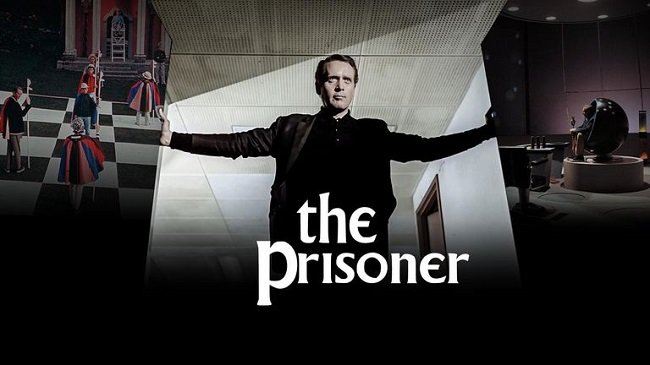
The Prisoner: There is a growing consensus that this classic TV show from the sixties has become relevant again. Something about how both sides of the tedious but ongoing culture war are fostering a “group think” mentality at the expense of the individual. Irrespective of whether that is the case or not, this is still a great show that makes you think. McGoohan pounds tables and declares he’s a “free man” etc. Superb score as well. The newly remastered prints also look damn good.
A Year in TV
Let it suffice to say that due to current “circumstances”, Mrs P and I have watched a lot more TV this year. However, rather than just reiterate what we’ve viewed, which is already covered in my recurring blog post The Idiot Box, I thought I’d take the time to reflect upon some wider issues. TV has become a major source not only of entertainment but psychological support during this year’s social restrictions. The closure of cinemas for the majority of the past twelve months has meant that TV has had little or no competition. Furthermore, many of the films that may well have drawn audiences away, have come to the smaller screens a lot quicker. Never has so much TV been voraciously consumed. There’s also been a degree of nostalgia as viewers have watched popular shows at broadly similar times, reviving that sense of a shared experience that was so common in the seventies and eighties. However, the pandemic has also caused a slow down in TV production. Will the shortage of new content that many have predicted finally manifest itself next year?
Let it suffice to say that due to current “circumstances”, Mrs P and I have watched a lot more TV this year. However, rather than just reiterate what we’ve viewed, which is already covered in my recurring blog post The Idiot Box, I thought I’d take the time to reflect upon some wider issues. TV has become a major source not only of entertainment but psychological support during this year’s social restrictions. The closure of cinemas for the majority of the past twelve months has meant that TV has had little or no competition. Furthermore, many of the films that may well have drawn audiences away, have come to the smaller screens a lot quicker. Never has so much TV been voraciously consumed. There’s also been a degree of nostalgia as viewers have watched popular shows at broadly similar times, reviving that sense of a shared experience that was so common in the seventies and eighties. However, the pandemic has also caused a slow down in TV production. Will the shortage of new content that many have predicted finally manifest itself next year?
Naturally, I am not the only blogger to have regularly written about their revised viewing habits this year. Wilhelm Arcturus has also been doing so and recently he posted a very interesting summary of his experiences and posed some very interesting talking points. His thoughts have inspired reciprocal blog posts by Bhagpuss and MagiWasTaken, both of whom have given their own perspective on the issues that he has raised. So I’ve decided to follow suit, as I think that we are seeing a gradual sea change in the way we consume TV content. I’ve written in the past about so-called TV Poverty and the notion that unless you pay for content, your choice will ultimately be limited. Can traditional broadcast television maintain its audience and more importantly, advertising revenue, indefinitely? I think not. The cosy and somewhat quaint notion of the nuclear family, gathered around the TV, enjoying a shared experience is fast becoming obsolete.
Here are the bullet points that Wilhelm collated in his original post. I shall address them accordingly:
“No commercials is pretty nice”. Yes, I agree. I hate commercials, on screen graphics, promotional banners about what is on next, continuity announcers talking over program credits and basically anything that intrudes on a TV show. All of which are absent from premium streaming TV services. However, commercial channels often have on demand players and these sadly still have advert breaks etc.
“I still won’t buy pay-per-view”. I will only pay to see something if there is a pressing need to do so for review purposes and if it cannot be sourced elsewhere. For example, I took out a free trial to Shudder so I could see the Zoom based horror film Host. I subscribed to BritBox so I could evaluate the new series of the puppet based satirical comedy show, Spitting Image. But I seldom pay to watch a new release film. I have more to say on this subject in my thoughts on the next point.
“There are too damn many streaming services”. Yes there are. New ones seem to be appearing every day. Furthermore, you cannot subscribe to all of them. I have a budget for such leisure activities and it can only sustain so many streaming services. At present I subscribe to Netflix, Amazon Prime and BritBox. However, I indulge in that phenomenon that is “subscription sharing”. Most services allow you to access content from several devices, so myself and other family members “share” login credentials. Hence I can access Disney + and Now TV. In the past when Contains Moderate Peril was a bigger concern I got myself on the press list for a few marketing and distribution companies. This allowed me to see films and other content for review purposes. Let it suffice to say I still have access to some of these industry channels.
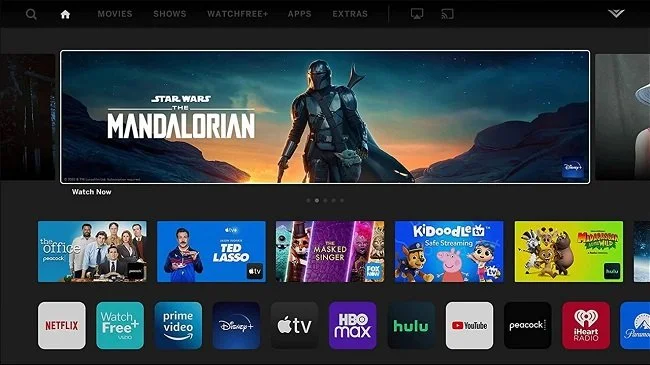
“Finding things is hard”: Never a truer word spoken. You can waste hours of your life, slowly trawling through various categories or pitifully typing via the TV remote control, the name of a show or film that the streaming service in question doesn’t have. I find the easiest thing to do before watching is to search what content is available and where, via a web browser on a phone or PC. I then add the program I desire to my “wish list”, so it’s waiting for me when I watch the TV in the lounge. I see that Amazon’s Alexa has an add-on device you can attach to the TV, that can search through all your subscribed services but from what I’ve seen, it’s not especially reliable
“I am torn on weekly versus all at once content”. I’m not. I’ve never liked waiting so having an entire season available as soon as it’s launched is fine with me. I also find that binge watching greatly helps me keep up with a show’s plot, especially if it’s complex. Again, being able to watch a season in its entirety makes reviewing it a lot easier. Waiting for weekly content is consequently a nuisance. I’m currently waiting for all episodes of Season 3 of Star Trek: Discovery to become available so I can binge watch it. The weekly wait for The Mandalorian was frustrating, although I can understand why Disney made such a decision.
“We have been biased towards shows versus movies”. Mainstream cinema has become somewhat bland and safe. Especially the major studio output. TV on the other hand is becoming experimental and diverse, although that’s not always the case. For example, if a fantasy based TV show is successful, then the following year you’ll find a wealth of others. However, the scope and quality of TV shows on streaming platforms has become broader. From an actors point of view, a feature film may offer you a two hour window to develop a character. A TV show can offer ten or more. Plus cinemas are often havens for assholes who are hell bent on doing absolutely anything other than sit quietly and apply themselves to a film. At least at home you can control this problem. And if you can’t, then those assholes spoiling your viewing are your own family.
“I could cut the cord were it not for sports”. Although we have cable services in the UK, satellite was the first to corner the subscription market. And hence this is where a lot of the sport “is at”. The BBC struggles to secure broadcast rights for major sporting fixtures due to the bidding wars that have come along with the advent of third party broadcasters with much bigger content budgets. Either way, it’s irrelevant to me as “I don’t do sport”. Our household said goodbye to satellite TV circa 2006.
“It really sucks when the internet goes down”. British Telecommunications is my ISP and I live 15 minutes walk from the local exchange/data centre. I pay for a “fibre to the cabinet” internet connection, with the bridging connection being over copper phone lines. The cabinet is at the end of my road. Thus I have a robust connection. I’ve endured one internet outage that lasted under 3 hours, over the last 5 years. I can’t vouch for other countries but in the UK, if you live in one of the major cities, then the internet connections tend to be pretty stable as they have to serve the needs of numerous domestic and business customers. Out in the rural areas it is another story altogether.
“It does not replace the theater experience”. Viewing at home does not replace cinema viewing. I enjoy going to film festivals and the National Film Theatre where audiences are civilised. I don’t miss my local multiplex where often the films are shown out of focus, in the wrong aspect ratio or with the lights still left on. And some audiences just cannot behave. Why go to see a visual, narrative driven medium if you’re going to talk through it or fuck about on your phone (or in my Dad’s case during WW II, someone was sitting in the audience plucking a chicken). In the New Year, we’re buying a 43 inch 4K HDR TV and a new media player that can handle the same format. This may not be comparable to the cinema experience but it’s not far off.
“I still cannot watch exactly what I want on demand”. Despite the wealth of material that is available on streaming services, there’s always something that falls between the cracks and is conspicuously absent. BBC iPlayer has some great, classic documentary series such as Civilisation and Life on Earth. However, Jacob Bronowski’s The Ascent of Man is not available. And it is exactly this which is the Achilles Heel of all streaming services. Content is licensed and therefore comes and goes, which is infuriating. However, there are ways to “address this”. An essential pro-tip is to sign up to a quality VPN service. For example, Netflix has a lot of regional variations. Changing regions enables you to potentially access material you otherwise wouldn’t be able to. And for everything else that you may require that the streaming services cannot provide, all I can say is “seek and the internet will provide”.
So what of 2021? Well, if there is a shortage of new content to watch, I’ll catch up with older material I may have missed such as shows like Justified or I’ll re-watch some classics like The Prisoner. Digital terrestrial network TV produces little to enthral me these days. The BBC tries its best to maintain standards but quality has given way to populist entertainment. And for every robust and well written drama such as Endeavour, the commercial stations in the UK produce twice as many reality shows. But the arguments for public broadcasting are not popular at present and if we give way to untrammelled “market forces”, certain content will decline rapidly. However, I’ll cross that bridge as and when we as a nation come to it. In the meantime, I will use the various means I’ve described above to ensure I have access to suitable material in the year ahead.














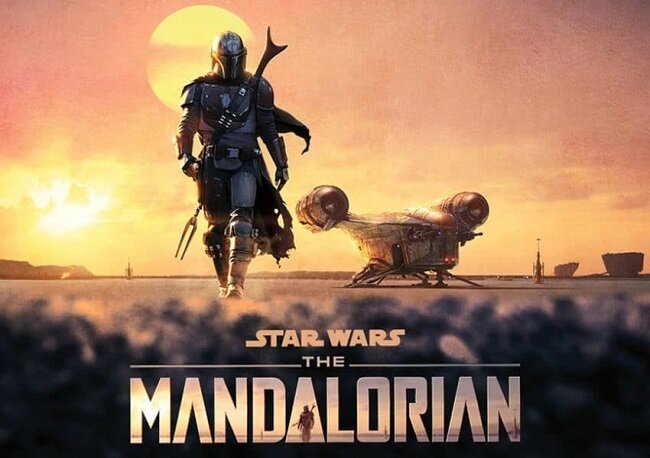
The Mandalorian (2019 - Present)
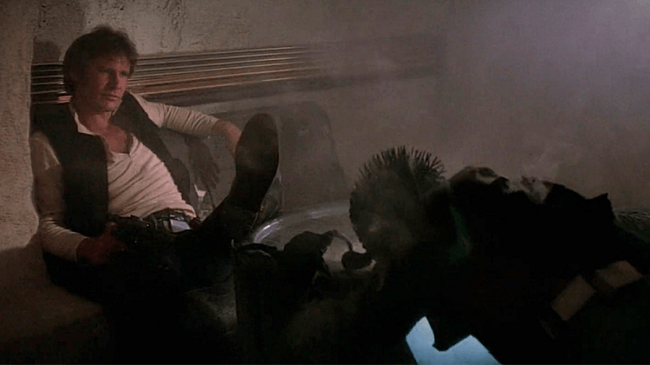
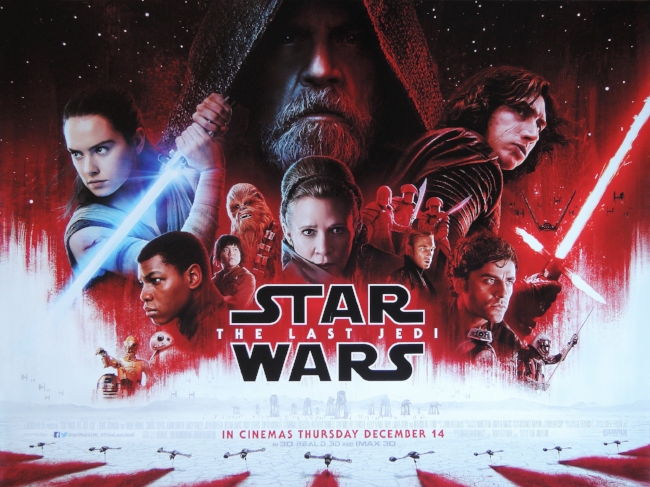
Over the years, I have had what I would describe as an ever diminishing relationship with Star Wars as a franchise. I grew up with the original trilogy, seeing them all when they were originally released. Those three films were a wonderful, self-contained story. I also broadly enjoyed aspects of the Expanded Universe, as it was confined to other mediums such as books or comics. Hence it was an optional extra, as it were. Sadly, over the years, the additional film trilogies proved to be inferior products that suffered under the weight of their own ever expanding lore. The fetishisation of the hardware, actions scenes and overall aesthetic by both the filmmakers and the fans, came at the expense of good narrative content and character development. The one film that tried to take the franchise in a more mature and thoughtful direction, The Last Jedi, proved controversial and divisive. Overall it was the animated TV show Rebels that best showed an understanding of the franchise.
Over the years, I have had what I would describe as an ever diminishing relationship with Star Wars as a franchise. I grew up with the original trilogy, seeing them all when they were originally released. Those three films were a wonderful, self-contained story. I also broadly enjoyed aspects of the Expanded Universe, as it was confined to other mediums such as books or comics. Hence it was an optional extra, as it were. Sadly, over the years, the additional film trilogies proved to be inferior products that suffered under the weight of their own ever expanding lore. The fetishisation of the hardware, actions scenes and overall aesthetic by both the filmmakers and the fans, came at the expense of good narrative content and character development. The one film that tried to take the franchise in a more mature and thoughtful direction, The Last Jedi, proved controversial and divisive. Overall it was the animated TV show Rebels that best showed an understanding of the franchise.
Last year, after the release of The Rise of Skywalker, I was pretty much done with Star Wars. Disney made a major mistake in not having a clearly defined story arc before they made their new trilogy, instead preferring to make it up as each new director was brought onboard. The franchise effectively descended into self parody as it desperately tried to plunder it’s own back catalogue in an attempt to please both fans and stick to a financially successful formula. The other major nail in the coffin was the zealotry of the fanbase. The hubris, bigotry and utter myopia of large swathes of this group, poisoned the well and turned Star Wars into a byword for everything that is wrong and toxic about fandom. And then, just as I was about to walk away and focus on that other major science fiction franchise that is currently experiencing a “renaissance”, along came The Mandalorian which quickly and calmly changed the entire direction and timbre of the Star Wars universe.
John Woo reference
The Mandalorian is an episodic show, much in the idiom of old cliffhanger cinematic serials like Flash Gordon (1936). The very things that inspired George Lucas originally. Some episodes have a plot that moves the story arc forward. Others have minimal dialogue and instead rely on the maxim of “show, don’t tell” to present their narrative . This approach works well for those familiar with the franchise and those without any prior knowledge. Another standout aspect of this show and something the original trilogy did well, is presenting the audience with a functional universe that feels lived in. The technology is not laboriously explained as with Star Trek. And although there is a wealth of lore in the Star Wars universe, this show exploits that with just enough information. Canonical characters are introduced in ways you can quickly come to grips without tons of exposition. The plot obliquely touches upon wider issues, like the way the New Republic struggles with filling the power vacuum left by the Empire. There is also a strong moral undercurrent to the proceedings.
Akira Kurosawa reference
The Mandalorian is clearly made by people who have a strong understanding of what works best with Star Wars. The production team are also extremely cinematically and pop culture literate. The references come thick and fast. Broadly, The Mandalorian has the structure and style of a Western. And a Sergio Leone Western at that. There are obvious elements of the Manga, Lone Wolf and Cub. Plus endless stylistic and visual homages to John Woo, Akira Kurosawa and many more iconic filmmakers. The visual effects work is great but this isn’t a showreel. The stories and characters are still front and centre. The appeal of “The Child” is also a major asset. Now that he has a name and a backstory, he’s transcended just being cute. And it would be remiss of me not to mention the soundtrack by Ludwig Göransson who has chosen to avoid writing in the idiom of John Williams and has instead delivered a more “organic” score. Overall The Mandalorian is an intelligent and well judged reset of a franchise that was until now, poorly managed. Let us hope it continues to maintain such a high standard.








Harry Price: Ghost Hunter (2015)
I was somewhat perplexed by this curious, one off, TV drama from 2015. Firstly, this is not a biography of the well known and controversial British psychic researcher. Secondly, despite being based upon a novel by Neil Spring, Harry Price: Ghost Hunter doesn’t follow the source text. Instead we are offered an original story in which Harry Price is requested to investigate a series of alleged supernatural events, surrounding a politician’s wife. If judged purely upon its own merits this is quite an enjoyable ninety minutes drama. The production benefits from strong performances, subtle period detail and a story that doesn’t overreach itself. I suspect that Harry Price: Ghost Hunter was intended to be a pilot for a TV series that was never commissioned, which is a shame. There’s a lot of potential in the material and the period setting is ideal for exploring the supernatural, as there was a surge of public interest in spiritualism in the wake of World War I.
I was somewhat perplexed by this curious, one off, TV drama from 2015. Firstly, this is not a biography of the well known and controversial British psychic researcher. Secondly, despite being based upon a novel by Neil Spring, Harry Price: Ghost Hunter doesn’t follow the source text. Instead we are offered an original story in which Harry Price is requested to investigate a series of alleged supernatural events, surrounding a politician’s wife. If judged purely upon its own merits this is quite an enjoyable ninety minutes drama. The production benefits from strong performances, subtle period detail and a story that doesn’t overreach itself. I suspect that Harry Price: Ghost Hunter was intended to be a pilot for a TV series that was never commissioned, which is a shame. There’s a lot of potential in the material and the period setting is ideal for exploring the supernatural, as there was a surge of public interest in spiritualism in the wake of World War I.
Paranormal investigator Harry Price (Rafe Spall) is not averse to faking supernatural activity to solve a case. However he ceases his work after a tragedy occurs on his own doorstep. However, he is visited by senior politician Sir Charles Harwood (Michael Byrne) who wishes him to discreetly investigate a case involving an MP, Edward Goodwin (Tom Ward). Goodwin’s wife, Grace (Zoe Boyle) was recently found walking the streets naked and in a trance. She has also experienced disturbances in her new home. Fearing a scandal Harwood wants the matter resolved. Price is at first reluctant to take the case but when he realises the alternative is for Grace to be committed, he relents. Initially, Edward Goodwin is ambivalent about the investigation and refers Price to the house maid Sarah Grey (Cara Theobald) for any assistance. Sarah doubts Price’s intentions and their working relationship is at first fractious. However, as the investigation proceeds the pair experience further disturbances and discover that the modern residence used to be a Victorian workhouse with a sinister history.
The relationship between Harry Price and Sarah Grey is core to this drama and it works very well. Sarah has a dim view of mediums as her Mother spends money she can ill afford, consorting with them and seeking comfort over the death of her husband. Hence she is initially unhappy with having to accommodate Price. However, matters become more cordial when she discovers that Harry’s wife was committed and that he will not allow a similar fate to befall Grace Goodwin. The screenplay by Jack Lothian touches upon the psychological damage done to an entire nation as a result of World War I and how many sought reassurance in spiritualism. His depiction of emerging gender politics is robust as Sarah chafes at the restrictions placed upon women in the post Edwardian era. She is an intelligent woman who is forced into domestic service out of necessity and a lack of a husband.
There are several plot elements in Harry Price: Ghost Hunter that are somewhat under used. Perhaps these were to be addressed further if a full series had been commissioned. Price is aided by Albert Ogoro (Richie Campbell) in his investigations. When we first meet him he is playing upon his African heritage and performing a fertility ritual for a childless couple. Again we touch upon the theme that purveyors of the supernatural are providing a service for the British public at a time of need. Ogoro is an interesting character but we are left wanting more. Plus those hoping for a more overtly supernatural conclusion may be disappointed. After several red herrings, the story’s conclusion is as one would expect, grounded in human failings, although there is some leeway in attributing Grace Goodwin’s visions to a more ghostly source. Overall, Harry Price: Ghost Hunter provides an entertaining and setup for a show that has sadly not yet emerged. Considering what does get given a greenlight these days this is a sad omission.
Cosmos: A Personal Voyage (1980)
Carl Sagan's seminal science documentary Cosmos: A Personal Voyage was initially broadcast in the US between 28th September and 21st December 1980. Six months later it was shown in the UK on BBC One throughout the summer of 1981. I was thirteen years old at the time and this science documentary series had a tremendous impact upon not only me but an entire generation. The complexity of some of the subjects explored and discussed by Carl Sagan often left me perplexed. However, I knew that there was something special about this show and the way it presented science in such a personal manner. Therefore, I found myself going to both my local and school library to further read about the topics raised in each episode. But perhaps the most standout aspect of the show was Sagan himself. His commentary delivered directly to the camera was both enthralling and lyrical. His love and enthusiasm was palpable and clearly bled through into every aspect of the show. His ability to communicate clearly, complex and at times esoteric ideas, was a revelation and in many ways a gift. Similar to that of Jacob Bronowski and David Attenborough.
Carl Sagan's seminal science documentary Cosmos: A Personal Voyage was initially broadcast in the US between 28th September and 21st December 1980. Six months later it was shown in the UK on BBC One throughout the summer of 1981. I was thirteen years old at the time and this science documentary series had a tremendous impact upon not only me but an entire generation. The complexity of some of the subjects explored and discussed by Carl Sagan often left me perplexed. However, I knew that there was something special about this show and the way it presented science in such a personal manner. Therefore, I found myself going to both my local and school library to further read about the topics raised in each episode. But perhaps the most standout aspect of the show was Sagan himself. His commentary delivered directly to the camera was both enthralling and lyrical. His love and enthusiasm was palpable and clearly bled through into every aspect of the show. His ability to communicate clearly, complex and at times esoteric ideas, was a revelation and in many ways a gift. Similar to that of Jacob Bronowski and David Attenborough.
40 years on, I recently re-watched all 13 one-hour episodes of Cosmos: A Personal Voyage. The documentary has been digitally remastered and each instalment has been appended with an update that was recorded a decade later by Carl Sagan. These revise scientific elements that have changed or supply new information and theories. However, these changes are unobtrusive and do not in any way harm the show. As soon as the theme music by Vangelis began (Heaven and Hell, 3rd Movement) I immediately re-experienced how I felt when I originally watched this series as a teenager. The scope of this documentary remains breathtaking. Cosmos: A Personal Voyage explores multiple scientific disciplines, encompassing not just cosmology but also chemistry, physics, biology and the history of human discovery itself. Furthermore, whatever the subset of science is being discussed, Sagan makes it eminently fascinating and accessible.
Perhaps the most radical aspect of Cosmos: A Personal Voyage is the way it tackles ideas and historical events and presents them in a fashion that the audience can grasp and follow. All too often in the past, scientific discourse was didactic and utilised minimal props. This series decided to show as well as tell and hence we have Sagan’s ship of imagination that allows us to look upon stars and far flung planets. Also through that mainstay of seventies and eighties television, chroma key compositing, we visit the Library of Alexandria in the 3rd century BC. And then there’s the now famous "cosmic calendar", in which the big bang is on 1st January, first life on Earth appears on 25th September and all human endeavours take place in the final 10 seconds of December 31st. It’s a simple visual device which has a massive impact. Some of the props are simple such as a stick in a piece of cardboard. The computer animations are noticeably retro, yet they all do their job efficiently. Often Sagan will stand in front of an object and jsut extemporise. "This oak tree and me, we're made of the same stuff”. Furthermore, key historical events are reenacted simply and unpretentiously. We meet Ptolemy, Copernicus and Kepler.
Sagan and the show’s co-writers Ann Druyan and Steven Soter greatest achievement is in equating the exploration of the Earth to the exploration of space. He asserts that the scientific journeys of the past were the direct forerunners of the Voyager space missions. But Cosmos: A Personal Voyage is not content to confine itself to just science. Sagan was a humanist and an environmentalist long before they became mainstream talking points. He was keen to warn us about climate change in 1980, arguing that the hothouse gases on Venus showed a shocking possible future for our own planet. The spectre of the Cold War also looms large in the show with the possibility of nuclear war. However, despite these ominous warnings, Sagan chose to always offer hope and looked towards a brighter future. One in which humankind transcends its petty differences and looked to the universe to fulfill its destiny. "We have lingered long enough on the shores of the cosmic ocean. We are ready at last to set sail for the stars".
All things considered, Cosmos: A Personal Voyage is thoroughly entertaining and much of that comes down to Sagan himself. Sagan was a storyteller, even a poet when it comes to science and the story he tells is the greatest story of them all. One of alien worlds both within and without us, of scientific breakthroughs and the search for the meaning of life itself. Such a remit is staggering, yet Sagan honestly and enthusiastically takes us by the hand and leads us on this journey. What this landmark show ultimately demonstrates is that science and the mysteries of the cosmos are inherently enthralling in their own right and do not have to be “stage managed” to make them so. Sagan also tries to promote science not just as a body of knowledge but as a way of thinking and perceiving the world. He advocated critical thinking, skepticism and rigorous questioning. Sadly such things are currently in decline in wider society. Despite this, Cosmos: A Personal Voyage, has not diminished with age. It still remains relevant, thought provoking and a joy to watch.
The Crown Season 4
I was originally just going to reference the latest season of The Crown in a paragraph of The Idiot Box, which is my intermittent summary of what I’ve been watching of late. But there seems to be a bit of a brouhaha in the UK tabloid press regarding season 4 which was released on Netflix on 15th November. Hence I want to write more than just a few lines about this show. Mrs P and I watched it in two sessions and feel it was the most enjoyable season yet. This is mainly due to the fact that the events covered this time round are ones we clearly remember. I became a teenager during the Thatcher administrations and also keenly remember the Princess of Wales being ubiquitous in the UK press throughout the eighties. It would appear that this season of The Crown strays beyond what is usually considered artistic license and digresses clearly from historical fact. Some believe the show has a clear agenda. All of which makes it even more fascinating viewing in my view.
I was originally just going to reference the latest season of The Crown in a paragraph of The Idiot Box, which is my intermittent summary of what I’ve been watching of late. But there seems to be a bit of a brouhaha in the UK tabloid press regarding season 4 which was released on Netflix on 15th November. Hence I want to write more than just a few lines about this show. Mrs P and I watched it in two sessions and feel it was the most enjoyable season yet. This is mainly due to the fact that the events covered this time round are ones we clearly remember. I became a teenager during the Thatcher administrations and also keenly remember the Princess of Wales being ubiquitous in the UK press throughout the eighties. It would appear that this season of The Crown strays beyond what is usually considered artistic license and digresses clearly from historical fact. Some believe the show has a clear agenda. All of which makes it even more fascinating viewing in my view.
It’s an obvious point but it is worse reiterating that The Crown is a drama intended for entertainment and not a documentary designed to relate and analyse history. In fact I would go further and say that this show is a multimillion dollar soap opera as it has all the hallmark features of that genre. However, its extremely high production values and the good standard of writing do much to elevate the show above such a label. Performances are universally excellent. You seldom get a show that provides a platform for so many strong female roles these days. But are historians right to expect a more rigid adherence to the facts. Many argue that this is necessary due to The Crown depicting current history. However, considering the amount of misinformation in the press, politics and public discourse that goes uncorrected, it seems a little pedantic to single out this niche market drama as the worst offender. Furthermore, I suspect that many people who watch The Crown have made their minds up and formed opinions regarding the UK monarchy long beforehand.
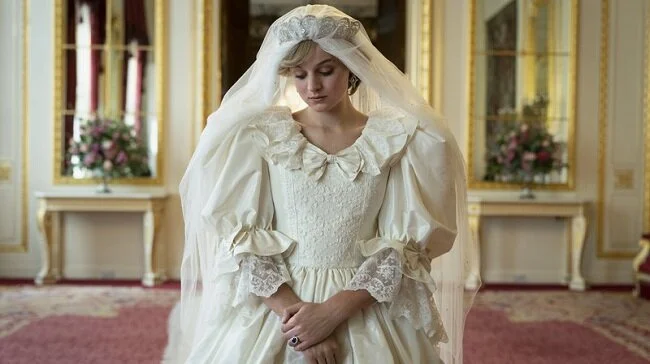
I am tempted to conclude that many of those critical of the excess of artistic license seen in this show are ardent Royalists and feel that drama reflects badly upon the Queen and her family. Certainly after four seasons, it is fair to say that the depiction of the royal family has not shown them to be paragons of virtue. The constraints of the monarchy certainly have a human cost and we see that in what I can only describe as a dysfunctional family. But I would argue that this humanises “the Windsors” and makes them relatable and accessible to the audience. Ultimately the show brings scrutiny to the real crown in a positive way. It may only be anecdotal evidence but after 4 years of watching The Crown and discussing the show with a broad spectrum of friends (some royalists, some republicans and those who are broadly indifferent), all have expressed a view that the royal family pay a heavy price for their privileged lives.
Unless I’m watching a documentary from a reputable source or reading a non-fiction book from a known author, then I expect any dramatisation of real events to be spurious to a degree. The primary remit of such material is to entertain and anything else is a secondary consideration. Facts don’t always fit the established three arc, dramatic story structure. Hence I do not expect The Crown to be the same as a documentary presented by Simon Schama. And let us not forget that season 4 deals with one of the most divisive figures in contemporary UK history; Margaret Thatcher. I do wonder if some of those complaining the most at present simply do not like the way the former Prime Minister is depicted. Yet regardless of what stance you may take regarding the factual accuracy of The Crown and its political and moral rectitude, the ongoing debate is not in any way harming the show’s popularity. I suspect that the next season may prove even more controversial and popular.
The Woman in Black (1989)
They say that “absence makes the heart grow fonder”. Well until recently the 1989 UK television adaptation of Susan Hill’s ghost story, The Woman in Black has been conspicuously unavailable. There was a limited VHS release exclusive to the store WHSmith in 1990. This was followed by a Region 1 DVD release in 2000 which was a relatively small pressing of the media. Since then rights issues have dogged this TV movie, turning it into a genre classic among horror fans, which has often been discussed in hushed tones by those who saw the original TV broadcast and were left traumatised by “that scene”. However, Network Distribution have finally released a remastered Blu-ray (and DVD), complete with commentary from such luminaries as Mark Gatiss, Kim Newman and Andy Nyman (who appears in this adaptation). It can be viewed in a reframed 16:9 widescreen format or in its original 4:3 aspect ratio.
They say that “absence makes the heart grow fonder”. Well until recently the 1989 UK television adaptation of Susan Hill’s ghost story, The Woman in Black has been conspicuously unavailable. There was a limited VHS release exclusive to the store WHSmith in 1990. This was followed by a Region 1 DVD release in 2000 which was a relatively small pressing of the media. Since then rights issues have dogged this TV movie, turning it into a genre classic among horror fans, which has often been discussed in hushed tones by those who saw the original TV broadcast and were left traumatised by “that scene”. However, Network Distribution have finally released a remastered Blu-ray (and DVD), complete with commentary from such luminaries as Mark Gatiss, Kim Newman and Andy Nyman (who appears in this adaptation). It can be viewed in a reframed 16:9 widescreen format or in its original 4:3 aspect ratio.
In 1925, London solicitor Arthur Kidd (Adrian Rawlins) travels to the coastal market town of Crythin Gifford in North East England to attend the funeral and settle the estate of a reclusive widow, Alice Drablow. Upon exiting the train, Kidd meets Sam Toovey (Bernard Hepton), a local landowner who is unsettled by his prospective dealings in the affairs of the late Mrs Drablow. Kidd finds the townspeople reluctant to talk about either the Drablow's home, Eel Marsh House and the family in general. When Kidd attends the funeral with local solicitor Pepperell, he notices a woman in black in the church and then again standing among the gravestones. He mentions the woman to Pepperell who seems most perturbed by the sighting. While travelling through the village, Kidd witnesses a lumber truck shed its load, hitting and crippling a Romani child. He rescues her, while the villagers watch on, preventing her from being crushed to death by further falling logs. Later as he goes through Mrs Drablows papers at Eel Marsh House, Kidd experiences disturbances of a supernatural nature. Are several voice recordings made on wax cylinders by Mrs Drablow the key to the mystery?
Based upon the 1983 novel, this made for television adaptation was written by genre stalwart Nigel Kneale. It is broadly faithful to the source text (unlike the 2012 remake) but makes some subtle changes. The ending in this instance is bleaker than that of the book but all the better for it. Kneale, a writer with a knack for atmosphere and dialogue, creates a delicious, slow burn ghost story with several disquieting scenes and an iconic jump scare that has now entered the annals of horror fame. Although he touches upon many familiar tropes of the genre he brings a fresh eye to them. The way the locals close ranks and balk at the mention of the Drablow family is quite palpable and the appearances of the woman in black herself are deftly handled. Initially the viewer doesn’t even realise she is a spectre. The production also uses sound effectively to build tension such as the clatter of hoofbeats on the misty causeway outside Eel Marsh House.
The Woman in Black is perfectly paced, building a sense of portentous ambience. Performances are spot on and the production is polished with a lot of period detail. The subject matter of infanticide is bleak but well handled. There is little violence or overt unpleasantness. Just a sense of growing menace in which a child ball can suddenly become an object of terror. Director Herbert Wise understood that less is more in certain instances and he cleverly executes simple and immediate set pieces. Like all good ghost stories, just enough information is provided to hold the supernatural elements together. The notion that a spirit over time loses all facets of their personality leaving behind only an all consuming rage, is thought provoking. And rather than offering a story of spiritual redemption or of laying a ghost to rest, The Woman in Black is more of a cautionary tale. The moral being that no good deed goes unpunished.









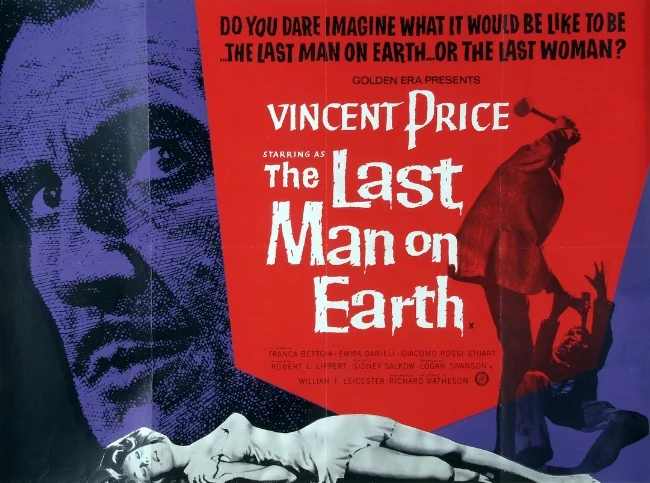

What Are We Going to Watch?
It’s a simple question but I suspect that the answer may not be so straightforward. The autumn TV schedule is fast approaching and as of yet, many popular shows have not yet resumed production. There is talk on many of the “entertainment” websites that CBS will start location filming for its NCIS franchises in early September and if the studio side of the production follows suit, then there’s the possibility of completed episodes being available by November. But naturally all of this is dependent on a lot of variables that could change. Will COVID-19 cases diminish in the months to come or will there be a second “spike” and thus another lockdown. Will the ongoing loss of revenue caused by the pandemic further harm the production of new content. Will studios, networks and production companies have to make some hard choices and as a result, will we see some popular shows cancelled?
It’s a simple question but I suspect that the answer may not be so straightforward. The autumn TV schedule is fast approaching and as of yet, many popular shows have not yet resumed production. There is talk on many of the “entertainment” websites that CBS will start location filming for its NCIS franchises in early September and if the studio side of the production follows suit, then there’s the possibility of completed episodes being available by November. But naturally all of this is dependent on a lot of variables that could change. Will COVID-19 cases diminish in the months to come or will there be a second “spike” and thus another lockdown. Will the ongoing loss of revenue caused by the pandemic further harm the production of new content. Will studios, networks and production companies have to make some hard choices and as a result, will we see some popular shows cancelled?
Another mainstay of TV, are all the major sporting fixtures. This year has already seen the cancellation of Wimbledon and the Tokyo Olympics. In recents weeks, some sports have resumed, although obviously sans spectators. This has been welcomed by households and has filled a gap in the market. However, the loss of ticket sales has already hit this global industry hard. The UK Premier League could potentially lose £1billion in revenue by the end of the year, especially if a second wave forces even the spectator less games to be cancelled. However, the simple fact is that those sporting bodies that are the wealthiest are better placed to weather the storm. Smaller league and county level sports such as cricket, basketball and rugby league face a bleaker future. Some are seeking government assistance or a rebate from the TV companies they have sold the viewing rights to. The support industries associated with major sporting events have also suffered.
However, where older viewers who still focus on traditional media, may well be facing a dearth of new content, the youth market has been turning in increasing numbers to YouTube and live streaming services such as Twitch. YouTube has seen a 29% increase in channel subscriptions, especially in the gaming, food and educational categories. Between March and April Twitch saw a 50% increase in the hours watched compared to the previous month. Average viewing figures over a 30 day period now stand at 1.645 billion hours. Many people have also tried their hand at live streaming during the lockdown resulting in a surge in new channels. However, many of these have already fallen into abeyance. Furthermore the increase in YouTube and Twitch usage has not necessarily seen a commensurate increase in advertising revenue. This is blamed on changes to advertising policies by both platforms and drop in money spent by advertisers per se, due to the pandemic.
Returning to the original question, I suspect that despite a lot of effort to try and return to normal program schedules, there are inevitably going to be delays and some major disappointments along the way. TV in all its manifestations is going to have a shortage of new content. Although I do maintain a healthy amount of active subscriptions on platforms such as YouTube and Twitch, I do not feel that these mediums will be able to fill the emerging “entertainment gap”. The biggest issue is quality control. For every Jim Sterling, Lindybeige or Noah Caldwell-Gervais there are fifty other “regular people” making bland and unremarkable content. I find everyday social interaction dull enough already and look to TV and newer mediums to offer something more than just entry levels “vox pops”.
Hence I think the real winners in the month to come will be those streaming services that offer an extensive back catalogue. There has been an abundance of good TV in recent years and I have certainly not seen all of it. There are several shows that have been recommended to me, that I have not pursued due to time limitations. These can now be addressed over both autumn and winter. I have just returned to watching Evil which is a prime example of catching up in this way. I will also renew my subscription to BritBox and tackle a few outstanding UK dramas and police procedurals. I still have several seasons of Star Trek: Voyager to finish. But due to the phenomenon of “TV poverty”, not everyone will be in such a position. There are still substantial numbers of homes in the UK that still just rely on digital terrestrial TV. As a result I suspect a lot of friends and families will be sharing account access to streaming services to bypass this consumer inequality.
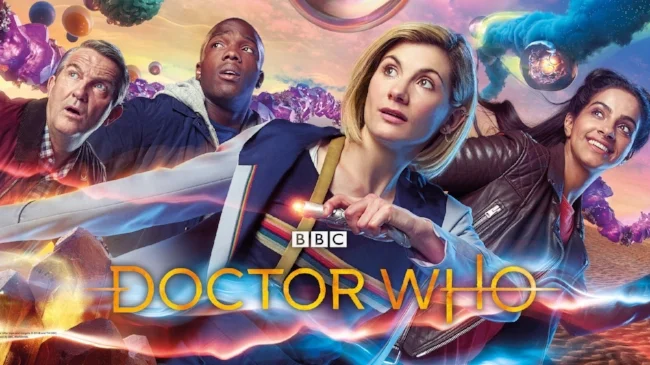
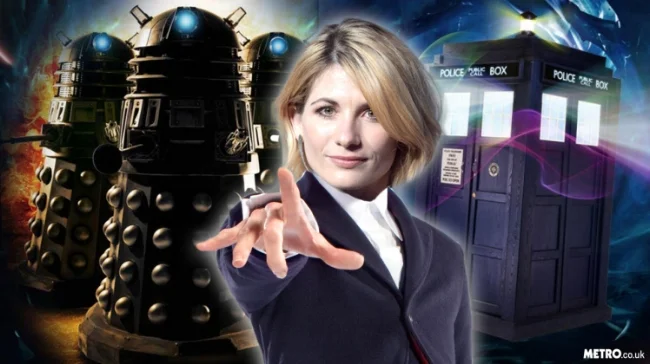
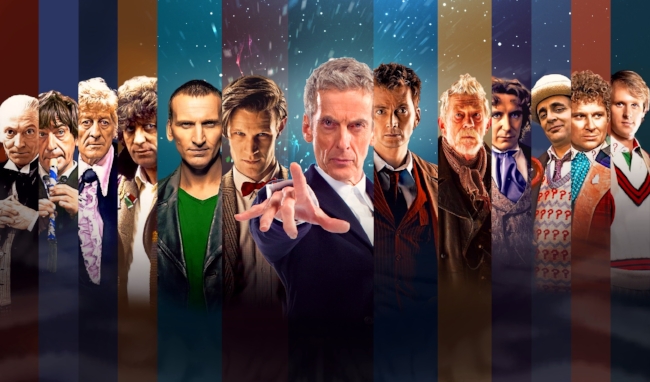
Revisiting Doctor Who: Part 1
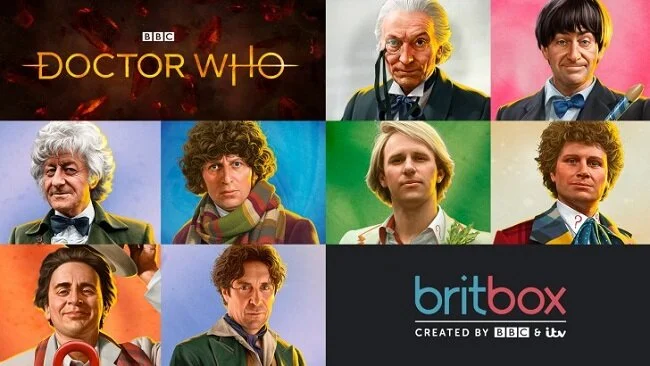
Last month, I tried a 30 day free trial of the streaming service BritBox. One of the main selling points was that the platform has an extensive back catalogue of Classic Doctor Who. Although I initially tried to keep up with the reboot of the franchise in 2005 my interest waned after several seasons. I am not opposed to any of the changes made and I am very pleased that the show has found a new audience. However, it doesn’t resonate with me so much anymore and I find that there is too much human drama for my liking. So I decided to revisit my youth and watch some classic Doctor Who; episodes that I haven’t seen in over forty years (yes, I’m that old). Now I’m fully aware of the potential issues that can come from returning to things that you enjoyed in one’s youth, so I believe I did my best in managing my expectations. However, the results of my nostalgia trip were interesting. The things I thought would be a problem nowadays weren’t so and the things I expected to hold up well despite the passage of time, didn’t always succeed. It’s been a curious experience.
Last month, I tried a 30 day free trial of the streaming service BritBox. One of the main selling points was that the platform has an extensive back catalogue of Classic Doctor Who. Although I initially tried to keep up with the reboot of the franchise in 2005 my interest waned after several seasons. I am not opposed to any of the changes made and I am very pleased that the show has found a new audience. However, it doesn’t resonate with me so much anymore and I find that there is too much human drama for my liking. So I decided to revisit my youth and watch some classic Doctor Who; episodes that I haven’t seen in over forty years (yes, I’m that old). Now I’m fully aware of the potential issues that can come from returning to things that you enjoyed in one’s youth, so I believe I did my best in managing my expectations. However, the results of my nostalgia trip were interesting. The things I thought would be a problem nowadays weren’t so and the things I expected to hold up well despite the passage of time, didn’t always succeed. It’s been a curious experience.
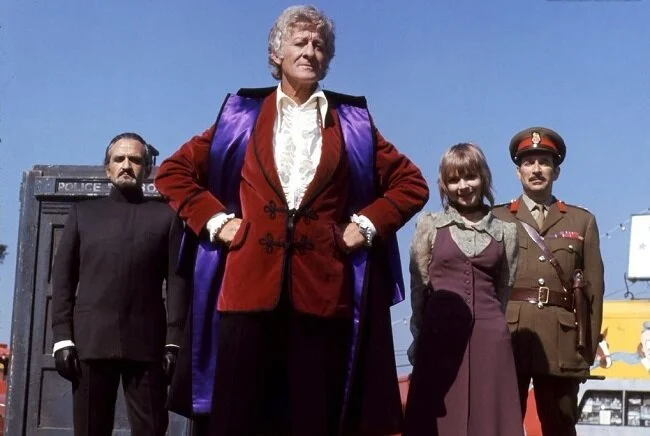
I chose to resume watching Doctor Who at the beginning of the John Pertwee era. I have vague memories of some of the later episodes so I thought it an appropriate place to begin. I decided to temporarily bypass the first and second incarnations of the Doctor, due to the number of missing episodes and my unfamiliarity with these actor’s portrayal of the iconic Timelord. Hence I began watching Spearhead from Space which provided some continuity for me as I was familiar with the UNIT storyline. Due to industrial action within the BBC at the time, this story was entirely shot on film which gives the four episodes a very unique aesthetic. It was customary at the time to film exterior scenes on 16mm stock and record on videotape all studio scenes. However, this exclusive use of film was deemed too costly and so was not maintained. It’s a shame as the look and feel of these episodes really adds something to the show and lends it a little more gravitas.
As for Pertwee himself, although a skilled actor with definite onscreen presence, I’m not sure if the new attributes he brought to the show improve the character overall. He is more suave and dynamic than his predecessors. But often the action sequences and hand to hand fight scenes feel a little incongruous. It seems like the production team were trying to straddle too many genres and this move into Bond territory feels a little forced. Another contrivance that ends up becoming counter productive is the plot line that sees the Doctor being stranded on earth as a form of punishment by the Timelords. Hence for the first few seasons the stories centre around his role at UNIT and it all gets a little too familiar. However, the appearance of Roger Delgado as the Master is a real asset. Delgado brings a great deal of charisma to the role and effortlessly switches from charming to sinister. He was an excellent foil for Pertwee and sadly his premature death robbed the show of a suitable climax to their ongoing story arc.
Despite attempts by the production team to broaden the scope and appeal of Doctor Who during Pertwee’s tenure, there are some fundamental issues to consider. Oddly enough I found the low budget production values quite endearing and the use of chroma key video compositing quite innovative. Pertwee often had fun during such cheap and cheerful VFX sequences and his gurning is now quite noticeable. For me the more important issue is the writing and the thematic shift which happened between 1970 and 1974. Clever and nuanced stories have always been the mainstay of Doctor Who. They’re still present in this era and they don’t shy away from difficult themes. The genocidal ending to The Silurians is a good example. However, there is a strong “Nigel Kneale-esque” tone to many of the stories and at times I felt that Bernard Quatermass would have been equally at home investigating them. Again I return to my point about the more action packed Doctor and trying to embrace too many genre tropes. The BBC just didn’t have the resources to do such things justice.
Sadly as an adult, I now see that even a BBC production such as Doctor Who did not escape the prevailing societal biases of its time. I appreciate that fans are immensely fond of many of the companions that have accompanied the Doctor in his travels over the years but Jo Grant (Katy Manning) is a terribly written character, enduring all the sexist stereotypes of the time. Her final appearance in The Green Death where she falls in love with a scientist and environmental activist (who is an equally contrived creation) is somewhat embarrassing as no cliche is left unturned. Another problem that I felt quite jarring is that a lot of the stories from this era are stretched out too long. What could be effectively handled in four installments is often expanded to six or seven episodes. Sometimes events and plot twists are not evenly spaced out throughout the story, resulting in occasional dull episodes and then a narrative rush at the denouement.
I did not watch all four seasons featuring John Pertwee’s Doctor. I chose to view selected stories recommended by several fansites. However, I feel I watched sufficient to make an informed decision about his tenure. I think that this was a period of experimentation where the show tried to encompass other elements from popular entertainment of the time. Not all of it worked but I admire those involved for thinking outside the box. Certainly, when the writing hit the mark it was very good indeed. My personal favourite stories being The Daemons and The Terror of the Autons. The latter is especially creepy. However, my revisiting of Doctor Who did not end with John Pertwee. I decided to push on and jump straight into the adventures of the Fourth Doctor. I make no bones about the fact that the Tom Baker era is the one I am most familiar with. I was seven by the time he took on this iconic role and at an age where his unique persona and style left a marked impression upon me. I shall cover my thoughts on the Baker episodes that I’ve recently watched on BritBox in future blog post.
The Idiot Box
Thoughts on TV shows and my current viewing habits.
The last instalment of The Idiot Box was back in February, just before the lockdown started here in the UK. Since then, like so many people, my leisure time has increased dramatically due to being confined at home and the constraints placed upon my real world activities. Hence our household has watched a lot more TV than usual as a means of occupying ourselves. In some respects this has been a boon, being presented with an opportunity to catch up with our viewing. All those miscellaneous programmes that you record on your DVR “for some particular reason” and swear blind that “you’ll get round to watching”, have finally been cleared. I’ve also started working my way through my “to do” list of movies and TV shows that I’m supposed to be reviewing. But there have also been some curious downsides as a result of the quarantine restrictions.
Thoughts on TV shows and my current viewing habits.
The last instalment of The Idiot Box was back in February, just before the lockdown started here in the UK. Since then, like so many people, my leisure time has increased dramatically due to being confined at home and the constraints placed upon my real world activities. Hence our household has watched a lot more TV than usual as a means of occupying ourselves. In some respects this has been a boon, being presented with an opportunity to catch up with our viewing. All those miscellaneous programmes that you record on your DVR “for some particular reason” and swear blind that “you’ll get round to watching”, have finally been cleared. I’ve also started working my way through my “to do” list of movies and TV shows that I’m supposed to be reviewing. But there have also been some curious downsides as a result of the quarantine restrictions.
Many of the ongoing TV shows that were approaching the end of their seasons in March and April, ended somewhat prematurely. NCIS usually finishes on a cliffhanger or features a story arc that will be continued in Autumn. That did not happen this time round. In fact many shows were two or three episodes short of a full season. Apparently the lockdown impacted upon post production and some episodes could not be completed. As mass gatherings have been prohibited, many TV (and radio) shows have not been recorded in front of “live audiences”. This does have an impact. Take for example the popular UK satirical news panel show, Have I Got News For You. This usually is recorded in a studio in front of several hundred people. This season the panel members interacted via videoconferencing (and the show was edited using Final Cut Pro X). The quality of material was just as good as usual but the lack of audience laughter altered the dynamic of the show. It oddly seemed less funny, which upon reflection wasn’t the case.
As I’m not a sports enthusiast, its conspicuous absence from TV has not been an issue. But I do appreciate that this is a major source of entertainment for many people and hence a major inconvenience. I cannot say for certain whether repeating classic content has been an adequate substitute or not but from those I have spoken with it has been a lacklustre replacement. Another issue stemming from the lockdown is the closure of ongoing TV and film productions. There’s a good chance that many eagerly awaited TV shows will not be ready on time and we have already seen the release date of numerous high profile movies postponed. Subsequently, there’s a real chance that there may be a shortage of new content on many of the major streaming services in Autumn. As for cinemas reopening, irrespective of whether this happens sooner or later, it will take a lot to convince me that it is safe to return to these air conditioned germ incubators.
In times of crisis, there are always winners and losers. Streaming TV subscription services have certainly been in the former group over the last four months. I already subscribe to Netflix and Amazon Prime which offers a broad range of material but with the increase in leisure time I decided to try a few others. My son has access to Disney+ so I got to check out what it has on offer recently. I can see why he has it, having twin five year old daughters who have totally bought into the “Disney Princess” concept. However, as I’m done with the MCU and my love affair with Star Wars is rapidly waning (apart for The Mandalorian), there’s not much for me or Mrs P. I also don’t care for the way that some films have been “tinkered” with to make them more family friendly, such as the adding of digital hair to hide Daryl Hannah’s minor nudity in Splash. And the withdrawal of the 30 day free trial just prior to the release of Hamilton on the platform was hardly good PR.
However BritBox has proven to be far more beneficial. If you like in depth and character driven dramas such as Broadchurch, Unforgotten and Call the Midwife then there’s plenty of such content. There’s also a wealth of classic British sitcoms and a good selection of classic movies. The main selling point for me is the extensive collection of Doctor Who episodes spanning all incarnations of the timelord. This has given me a great opportunity to re-evaluate material I previously watched when I was 5 years old and has proven quite a revelation. The other major selling point of BritBox is that they’ve recently added most of Gerry Anderson’s Supermarionation shows, so I’ve been revisiting Thunderbirds and Captain Scarlet yet again. I suspect that once the free 30 day trial has expired I shall continue subscribing for the immediate future.
So has there been any standout viewing in the Peril household over the last 4 months? Yes there has. Mrs P is a very social creature (yes that’s very ironic considering my temperament) and has found the lockdown very frustrating as it has curtailed her regular meetings with friends. However, one particular show which she binged watched (twice) on Netflix and found great enjoyment in is Schitt's Creek. She feels it takes a couple of episodes for the show to hit its stride but when it does the characters come to life and it is both equally touching and extremely funny. I’ll vouch for the fact then while she’s been watching it, you can hear constant uproarious laughter. For myself, my highlight of lockdown viewing has been Nebula-75 which is produced by a 3 man crew in self isolation. It’s available on YouTube. However, I shall dedicate a future blog post to this creative endeavour.
Lost: Ten Years On
For those who may be unfamiliar with this particular example of cult television, Lost is an US drama television series that was originally broadcast on ABC from September 22, 2004, to May 23, 2010. The show ran for six seasons, comprising a total of 121 episodes. It was created by Jeffrey Lieber, J. J. Abrams and Damon Lindelof, containing elements of supernatural and science fiction. The story follows the survivors of a commercial flight flying between Sydney and Los Angeles, that crashes on a mysterious island somewhere in the South Pacific Ocean. The story is told in a heavily episodic manner. Each instalment would typically feature a primary storyline set on the island, augmented by flashbacks or flash forwards that provided additional insight into the various characters' backstories. Due to the convoluted plot and big production values, the show became a major talking point and fans became heavily invested in theories regarding the “plot”.
For those who may be unfamiliar with this particular example of cult television, Lost is an US drama television series that was originally broadcast on ABC from September 22, 2004, to May 23, 2010. The show ran for six seasons, comprising a total of 121 episodes. It was created by Jeffrey Lieber, J. J. Abrams and Damon Lindelof, containing elements of supernatural and science fiction. The story follows the survivors of a commercial flight flying between Sydney and Los Angeles, that crashes on a mysterious island somewhere in the South Pacific Ocean. The story is told in a heavily episodic manner. Each instalment would typically feature a primary storyline set on the island, augmented by flashbacks or flash forwards that provided additional insight into the various characters' backstories. Due to the convoluted plot and big production values, the show became a major talking point and fans became heavily invested in theories regarding the “plot”.
I watched 4 seasons of Lost before I gave up on the show. The intriguing premise and creative format was initially very entertaining. Just when you started to get a handle on the plot a new story element would wrong foot you and open up an entirely new narrative avenue to consider. It was also fun to discuss the show with others as it really was one of those rare cultural touchstones at the time. The cast was also very robust featuring solid character actors such as Terry O’Quinn and Micahel Emerson. I warmed to one particular character, Charlie Pace (Dominic Monaghan), who played a rock star whose fame had been usurped by his own brother and band member. And then there were the hints at the underlying nature of the island that the cast were stranded on. Was it some sort of temporal anomaly? Or was this a sinister corporate experiment? It all seemed to work so well at first.
But then there reached a point (at least from my perspective) when the stories were deliberately taking a “one step forward, two steps back” approach. Plot elements were being continuously added, along with contrived new genre themes and yet the story didn’t seem to be advancing. What started as a pleasing conundrum tipped into becoming an exercise in frustration. And it was roundabout the end of the fourth season with its multiple story threads set in the future, that I realised that this wasn’t a TV show with a well planned, longterm story arc but something the production team were tackling as they went forward. By that time there was quite a lot of information about the show productions in the public domain and it was clear that the core writing team were effectively “making it up as they went along”. Not only did this disappoint me but on some level I felt I was being conned.
Sometimes it can be very satisfying and even cathartic to give up on a TV show. Especially one which has a “buzz” surrounding it. On occasions it can even feel like you’re obliged to watch something or else you’ll be left standing on the periphery of some ongoing social event. I felt that way about Game of Thrones, which I ditched after two seasons. I just didn’t like the way the show attempted to manipulate its viewers. As for Lost, walking away from it felt like the right thing to do. I suspected that the show would never be able to produce a satisfactory conclusion and it would appear that the final episode polarised audiences at the time and is still hotly debated today. Don’t get me wrong, I’m not a fan of being spoon fed stories and I’m happy to countenance experimental and thought provoking content. But there’s a difference between such things and being deliberately misled by the smug and self indulgent. I still view Lost as a stunt a decade on. Curiously enough I still enjoy the bogus rock song by the fictional band Driveshaft, “You All Everybody”. It’s the one thing from the show that does’nt have any negative connotations for me.
The Idiot Box
Thoughts on TV shows and my current viewing habits.
The last instalment of Idiot Box was back in September 2019. Despite the Christmas holidays and being very busy in general, I have managed to watch some good TV shows over the last five month. As ever, there has been plenty of quality material to choose from and I still have an ever growing “watchlist” for all the content I cannot currently accommodate. It is interesting to note that most of the shows I watch are via streaming services. Out of the various titles I discuss in this post, only one was viewed via digital terrestrial network television. Furthermore, we started watching an hour after the broadcast commenced, so that we could bypass the commercial breaks. Watching anything in this fashion is my least favourite means of viewing television and because it happens so infrequently, it is quite jarring when it occurs.
Thoughts on TV shows and my current viewing habits.
The last instalment of Idiot Box was back in September 2019. Despite the Christmas holidays and being very busy in general, I have managed to watch some good TV shows over the last five month. As ever, there has been plenty of quality material to choose from and I still have an ever growing “watchlist” for all the content I cannot currently accommodate. It is interesting to note that most of the shows I watch are via streaming services. Out of the various titles I discuss in this post, only one was viewed via digital terrestrial network television. Furthermore, we started watching an hour after the broadcast commenced, so that we could bypass the commercial breaks. Watching anything in this fashion is my least favourite means of viewing television and because it happens so infrequently, it is quite jarring when it occurs.
The Crown: The third season of this prestigious Netflix show covers historical events from 1964 to 1977 and the role the UK Monarchy had to play in them. These begin with Harold Wilson's election as prime minister and ending with the Queens Silver Jubilee. The Aberfan disaster was a standout episode and explored how the precedence of Royal visits in such situations, was established. There was a greater focus on Prince Charles and family interferences in both his investiture as Prince of Wales and his personal relationship with Camila Shand. The change of cast to more mature actors was seamless and the standard of writing remained high and insightful. I find myself oddly invested in this show mainly because it covers a period of time during which I was growing up. Many of the historical events that are depicted, I was aware of as a child but had little interest or understanding of their significance. To see them in a wider context now is most illuminating.
The Witcher: My initial point of contact with this franchise was via their video game adaptations. However as television is an entirely different medium, I adjusted my expectations accordingly. Broadly I enjoyed the first season of The Witcher, although I was initially confused by its non-linear timeline. The character development was more in depth than I was expecting and rather than being given swathes of exposition about the “Continent” and its history and customs, the viewer was simply exposed to elements of these as the story unfolded. There was a lot of sexual content in the show but it is entirely relevant to the proceedings. Witchcraft is often entwined with human sexuality and free from the restrictive dogma of traditional religions. By the last episode I was left with my interests piqued and clearly wanting more. And as for casting Henry Cavill, it worked out fine as far as I’m concerned.
COBRA: This UK set drama proved to be far better than the sum of its parts. The initial premise set out in the first episode appeared to frame the narrative as a disaster story with borderline science fiction elements (the calamity afflicting the UK in the story being a solar storm). However, it quickly changed into a political thriller about civil unrest brought about by power outages. It touched upon many “hot topics” such as migrant detentions, anti-establishment sentiments and the economic and social divide between London and other parts of the UK. It was odd and vaguely compelling to see Robert Carlyle as a Conservative Prime Minister and David Haig was excellent as duplicitous and scheming Home Secretary. There were also some rather good low key CGI visual effects that worked very well. As I said, it was all unexpectedly entertaining.
Star Trek Picard: Star Trek has always reflected the world in which we live. During the sixties TOS channeled many optimistic, inclusive and progressive narratives which were still prevalent in the post Kennedy years. TNG was broadcast while such events as the fall of The Berlin Wall took place. Thus the show often explored concepts of reunification and forging uneasy truces. For me, what I like about STP is not only the central character, who is still multifaceted and engaging but the bold storyline in which the Federation has lost it ways due to an excess of “politics”. It is a world weary show, where social contracts have failed and the future has lost its utopian status. It isn’t to everyone's taste and it is clear that a lot of people just wanted more TNG in an identical idiom. However, that is not what Patrick Stewart wanted to do, so that is not what they got. I like it and am interested to see where it goes and whether any optimism will manifest itself.
Endeavour: The latest season of Endeavour sees the arrival of the seventies and a serial murderer prowling the towpath of the local canal. Is this one brutal muder to many for DI Fred Thursday? The cumulative effect of investigating violent crime seems to be taking its toll and also causing division between Thursday and Morse. Season seven covers a lot of ground in just three episodes and strays into rather bleak and unhappy territory, especially for Chief Inspector Bright. As ever, it is smart with lots of pop culture references and superb performances. I suspect that next year’s season will be the last of this period police drama.
Unforgotten: Because Endeavour came and went so quickly, Mrs P and I decided to revisit the first series of Unforgotten. We subsequently watched all available seasons and eagerly await the series four which is currently being filmed. What make’s this show so different from others is that the actual solving of the crime is only half of the narrative. The other 50% of the story is the “emotional splash damage” and “fallout” caused by investigating these cold cases. The level of technical accuracy in depicting real policing is outstanding and the acting is always top drawer. The central characters of Detectives Cassie Stuart and Sunil "Sunny" Khan (played by Nichola Walker and Sanjeev Bhaskar) are both credible and likeable. Over 18 episodes we get an insight into their very normal personal lives and an understanding of the emotional stress that solving historical cases causes to all involved. Often the subjects explored are incredibly sad and disturbing but the writing is so measured and intelligent that events never spills into melodrama, nor denigrate the difficult subjects.
As an addendum to this post, we abandoned a couple of shows that we were watching previously. We stopped watching Instinct as it really didn’t have anything new to say. I suspect that is why it was cancelled by the network. We also stopped viewing Evil, mainly because of time constraints. We may return to it later on in the year. I decided not to proceed with season 2 of Project Blue Book. Despite a good cast and fine production values, the show just seemed to be retreading familiar ground and not offering anything different within the confines of the “alien conspiracy” sub genre. Time is always precious therefore I strongly advocate dispensing with shows you’re not enjoying.
Strictly Come Dancing 2019 Part 7
Strictly Come Dancing is now over halfway through the season and there’s no room for mistakes or relying on past successes. The judges will now penalise technical errors and the public votes have now become less predictable. With Blackpool on the horizon, there was a lot at stake last night. Karim Zeroual and Amy Dowden danced the Viennese Waltz to Give Me Love by Ed Sheeran. However, he did make several errors during the routine and was noticeably rattled by the end. Subsequently, he scored lower than last week. On a positive note, Saffron made a major comeback. Her Waltz with AJ was outstanding, lacking the excesses of her previous dance. This was a focused and traditional routine and it was very well received. Kelvin an Oti’s Samba was a success with the audiences but the judges still found some minor mistakes, so they dropped a few marks. Michelle Visage excelled with a slick American Smooth. Her professional partner Giovanni Pernice always fines the right balance between the theatrics and traditional dance content. At present, these four couples are the frontrunners in the show.
Strictly Come Dancing is now over halfway through the season and there’s no room for mistakes or relying on past successes. The judges will now penalise technical errors and the public votes have now become less predictable. With Blackpool on the horizon, there was a lot at stake last night. Karim Zeroual and Amy Dowden danced the Viennese Waltz to Give Me Love by Ed Sheeran. However, he did make several errors during the routine and was noticeably rattled by the end. Subsequently, he scored lower than last week. On a positive note, Saffron made a major comeback. Her Waltz with AJ was outstanding, lacking the excesses of her previous dance. This was a focused and traditional routine and it was very well received. Kelvin an Oti’s Samba was a success with the audiences but the judges still found some minor mistakes, so they dropped a few marks. Michelle Visage excelled with a slick American Smooth. Her professional partner Giovanni Pernice always fines the right balance between the theatrics and traditional dance content. At present, these four couples are the frontrunners in the show.
It was an interesting evening for Emma Barton and Anton Du Beke. They danced Couples' Choice to Right Now by The Pussycat Dolls. This Bob Fosse influenced, Jazz flavoured routine really suited Emma and she seemed to thrive on it. It's also nice to see Anton get this far into the season and tackle various dances that he’s previously missed out on. Alex Scott was once again dancing with Neil Jones. Despite the disruption over the last few weeks due to Neil injuries, she is still maintaining a standard and making progress. Their Jive was a crowd pleaser, although she does now need to focus more on technique, as the judges highlighted. But I think that Alex still has scope to get better. I’m not sure if there’s room for improvement with comedian Chris Ramsey. He does seem to put in the hours rehearsing with professional partner Karen Hauer but his Tango was just too rough around the edges. Certainly Craig thought he needs to move up a gear if he wishes to remain on the show. I suspect that Blackpool may be his Waterloo.
Which brings me on to Mike Bushell. Despite his dedication and commitment to the show, Mike has struggled to move forward. The judges seem to respect his work ethic and his routines with Katya are always well received by the audience. But I think his fanbase has been waning for weeks and as a result he’s been in multiple dance offs. On Saturday night his luck finally ran out and he found himself facing elimination for the fourth time, after a rather mechanical Paso Doble. However, the real shock was that he was competing against Michelle. Despite a total score of 36, the public obviously didn’t want to vote for her or assumed that she was “safe” and that someone else would. The judges were naturally flummoxed by the public vote as they felt she did not deserve to be in the dance off. And as she was competing against Mike, the outcome was pretty much a forgone conclusion. So Mike has gone and doesn’t make it to Blackpool. But I think this situation succinctly highlights that no one is now safe. Although your performance and marks are important, so is mobilising your support and getting people to vote for you. This is a tough challenge and one that can lead to surprises such as tonight. But that’s Strictly for you.






Strictly Come Dancing 2019 Part 6
Saturday was week 7 of Strictly Come Dancing and it definitely showed. This is the stage in the series where the judges take the gloves off and start getting picky, even with those who are clearly at the top of the leaderboard. Hence, Kelvin Fletcher and Oti Mabuse's Viennese Waltz along with Michelle Visage and Giovanni Pernice who danced the Paso Doble, didn’t score as highly as you’d expect. The judges pointed out technical aspects that were wanting in both routines. But that’s what they’re supposed to do so I have no issues with these criticisms. We are also at the point where certain dances can throw a lifeline to some celebrity dancers. Hence Chris Ramsey and Karen Hauer’s Street/Commercial dance really played to their core fanbase and more importantly, Chris’s dancing strengths. I doubt he’ll better this routine and it should keep him in the show a little longer.
Saturday was week 7 of Strictly Come Dancing and it definitely showed. This is the stage in the series where the judges take the gloves off and start getting picky, even with those who are clearly at the top of the leaderboard. Hence, Kelvin Fletcher and Oti Mabuse's Viennese Waltz along with Michelle Visage and Giovanni Pernice who danced the Paso Doble, didn’t score as highly as you’d expect. The judges pointed out technical aspects that were wanting in both routines. But that’s what they’re supposed to do so I have no issues with these criticisms. We are also at the point where certain dances can throw a lifeline to some celebrity dancers. Hence Chris Ramsey and Karen Hauer’s Street/Commercial dance really played to their core fanbase and more importantly, Chris’s dancing strengths. I doubt he’ll better this routine and it should keep him in the show a little longer.
I would once again like to raise an issue that often comes up on Strictly and is associated with specific professional dancers. Sometimes, there is an “everything but the kitchen sink” approach to the choreography in attempt to “wow” the audience and impress the judges. However, what it can occasionally lead to is a routine that is overly complicated and leaves the celebrity floundering. Moves are not fully completed; lifts are hurriedly executed and detail is lost to quantity. And this is exactly what happened to Saffron and AJ during their Salsa. Mr Pritchard has made this mistake before and it is frustrating to see him ignore previous lessons. Saffron is a more than capable dancer with youth and enthusiasm on her side. There is no need for these self-indulgent exercises at this stage in the competition and the focus now needs to be on technique and performance.
As suspected last week, Will Bayley’s injury to his knee is worse than thought and as a result, he is unable to continue on the show. Although this is a shame, I think him leaving in this way is for the best. Did any couple want to be in a dance off with Will and be the ones who ousted him from the show? Did any of the judges really want to have to send Will home, which would have happened at some point. Will made excellent progress on the show but he had reached his peak but I certainly could not see him lifting the trophy. This way he gets to leave on a high and with a prodigious, positive achievement behind him. And in other “injury” related news, Neil Jones was unable to dance with Alex Scott again this weekend, so once again Kevin Clifton filled the gap. Alex did herself proud with a heartfelt American Smooth and judge Craig Revel Horwood made a curious remark about their “accidental partnership is working wonders”. Does he feel she does better without Neil?
This week’s dance off saw Mike Bushell and Katya Jones repeating their Charleston, against Viscountess Emma Weymouth and Aljaž Škorjanec dancing the Samba. Mike’s continued relegation to the dance off shows that his fanbase is waning. Mike is another celebrity dancer who I believe has plateaued and is now “treading water”. I greatly appreciate his positive attitude but I think the public are tiring off him. However, on a technical basis his dancing improved second time around (as it has before) where Emma’ Samba still had the same flaws and a lack of “bounce”. She’s an elegant lady but she couldn’t sell the dance and direct the judges away from her mistakes. Hence, she now departs the show, which I believe is an appropriate time. With only two weeks to Blackpool I suspect that Mike, Chris and the other Emma are now feeling the heat as there is now a demonstrable talent gap between contestants. But that’s the nature of the Strictly beast. People go as far as they can and sometimes the public keep someone on just to troll the judges.
Strictly Come Dancing 2019 Part 5
Although Saturday night provided yet another excellent show, Strictly Come Dancing was notable for the absence of audience favourite Will Bayley. The Paralympian injured himself during training after he jumped from a table whilst practising his jive routine. According to Will “I jumped off a table. And as I landed, I landed with straightened legs,” he explained. “I thought I broke my leg because I never felt anything like it before. To hear the words I absolutely can’t dance was just really gutting for me. But I need to recover now and come back even stronger next week”. Thankfully, the comprehensive rules that govern Strictly allows for a week’s absence due to injury. However, if Will cannot resume dancing for next Saturday’s show, then he may have to retire from the entire series. If this does unfortunately happen, then it will also require the show’s producers to revise the schedule with regard to future eliminations, so that Strictly continues to follow the pre-set timetable.
Although Saturday night provided yet another excellent show, Strictly Come Dancing was notable for the absence of audience favourite Will Bayley. The Paralympian injured himself during training after he jumped from a table whilst practising his jive routine. According to Will “I jumped off a table. And as I landed, I landed with straightened legs,” he explained. “I thought I broke my leg because I never felt anything like it before. To hear the words I absolutely can’t dance was just really gutting for me. But I need to recover now and come back even stronger next week”. Thankfully, the comprehensive rules that govern Strictly allows for a week’s absence due to injury. However, if Will cannot resume dancing for next Saturday’s show, then he may have to retire from the entire series. If this does unfortunately happen, then it will also require the show’s producers to revise the schedule with regard to future eliminations, so that Strictly continues to follow the pre-set timetable.
Professional dancer Neil Jones was also missing from Saturday night’s proceeding after suffering injuries in rehearsals. Fortunately, Kevin Clifton stepped in to dance with Alex Scott at the last moment, having to effectively learn the routine from Alex herself. A change of partner is challenging enough but having to reverse the training process and have the celebrity teach the professional must have been very daunting for Alex. Yet their Street/Commercial dance routine was very well received by studio audiences and the judges were also suitably impressed. In fact the most demonstrable errors were from Kevin Clifton who was noticeably ahead of the music at several points. All things considered this routine did much to further demonstrate Alex’s improvement and Strictly journey. Again it’s this sort of “drama” that viewers love.
One of the dancing highlights from the week six show was Michelle Visage’s standout performance. She found herself at the top of the leaderboard, scoring 39 after impressing the judges with a Foxtrot to the Addams Family theme, alongside her partner Gionvanni Pernice. It was a simple, elegant and nuanced dance that allowed both audience and judges to appreciate Michelle's dedication and commitment to the show. However, there have been concerns raised over the merits of themed shows. Some viewers are of the opinion that the themes and the imaginative concepts that they inspire can potentially be at odds with the dances. Former Strictly professional dancer James Jordan tweeted “"I feel this week on Strictly the whole Halloween themed thing has overtaken the dancing". A sentiment I personally agree with. Although there were some very creatively choreographed routines, I struggled at times to remember exactly what type of dance was being performed. I think Karim and Amy’s Paso Doble was lost among the bravado and costumes.
Tonight’s results were the second big upset of this season of Strictly. Chris Ramsey and Karen Hauer along with Catherine Tyldesley and Johannes Radebe were bottom of the leaderboard yet the public vote saw Mike Bushell and Katya Jones in the dance off with Catherine. From a judge’s perspective, Mike had made yet another significant improvement. Ballroom dances have left little scope for comedy forcing Katya to create routines that focus on clear, traditional steps. Yet Mike found himself having to dance again to stay on the show. Catherine’s Cha Cha had fared poorly with the judges earlier who felt it was somewhat sloppy. The dance off vote was split, so head Judge Shirley has the final say and Catherine was voted off the show. This was a surprise as Catherine’s performances often compensate for technical deficiencies. I was actually surprised that Chris Ramsey managed to dodge a bullet this week. His Samba was weak and again hindered by the excesses of the costumes for Halloween. However, opinions may differ. This is what Strictly is all about. Roll on next week.
Strictly Come Dancing 2019 Part 4
Week 5 of Strictly Come Dancing once again saw some significant improvement among the celebrity dancers. Most notable were Alex Scott and Neil Jones who delivered a very enthusiastic Charleston. For the first time it appeared that both the technical and performance aspects of dancing “clicked” for Alex. After being saved by the judges in last week’s dance-off, Emma Weymouth and Aljaž Škorjanec's put on a beautiful display with their Viennese Waltz. The judge’s marks reflected their progress respectively by all awarding 9 marks out of 10. Then there was Will Bayley and Janet Janette Manrara whose emotional contemporary dance left judges Motsi Mabuse and Alfonso Ribeiro in tears. Will said before this year’s series that he was taking part in Strictly to “inspire people with a disability”. He certainly seems to be doing so and his commitment to the show and his constant training have earned him a strong fan base among viewers.
Week 5 of Strictly Come Dancing once again saw some significant improvement among the celebrity dancers. Most notable were Alex Scott and Neil Jones who delivered a very enthusiastic Charleston. For the first time it appeared that both the technical and performance aspects of dancing “clicked” for Alex. After being saved by the judges in last week’s dance-off, Emma Weymouth and Aljaž Škorjanec's put on a beautiful display with their Viennese Waltz. The judge’s marks reflected their progress respectively by all awarding 9 marks out of 10. Then there was Will Bayley and Janet Janette Manrara whose emotional contemporary dance left judges Motsi Mabuse and Alfonso Ribeiro in tears. Will said before this year’s series that he was taking part in Strictly to “inspire people with a disability”. He certainly seems to be doing so and his commitment to the show and his constant training have earned him a strong fan base among viewers.
With popular judge Bruno Tonioli away on a brief sabbatical, former Dancing with the Stars winner Alfonso Ribeiro, once again temporarily took his place. Alfonso is a big personality and always brings a great deal of optimism to the show. As I’ve written previously, the US version of the show has some subtle differences and the judging is one of them. The US judges although critical will always make positive comments, first and foremost. Although Strictly is an entertainment show, the judges in the UK still draw heavily upon their technical expertise and will be accordingly “picky”. The US approach seems to lean towards an overall summary and “big picture” analysis. They also tend to be more generous with their scores. Alfonso was no exception to this rule and his “generosity” often counterbalanced Craig Revel Horwood’s under marking. I’m also not so sure if the faux psychology that Alfonso espoused to David James was of any use but encouraging him to scream and let out his emotional energy was rather amusing.
Sadly, this was the third dance off for former England goalkeeper David. After a hesitant start on the show with his football-themed Foxtrot, lacklustre Paso Doble and American Smooth, David has highlighted the difficulties of dancing when you’re 6 foot 5 inches. His steps have often been hesitant and more importantly he has struggled to give a convincing performance. Yet last week he genuinely appeared to be enjoying himself with this Quickstep, with the judges’ hailing it a “miraculous” improvement. But Saturday’s Jive proved his undoing and his performance was laboured and awkward. And so he found himself in the dance off with Mike Bushell and the judges elected not to save him. David took his exit from the show well and was suitably complimentary to his partner Nadiya Bychkova. But this is the nature of Strictly, although not a pure dance competition it is a show where contestants are eliminated each week. Although it’s a shame to see a David go, he has upheld the Strictly tradition of being the underdog and has acquitted himself well.
Strictly Come Dancing 2019 Part 3
Well Saturday night’s show was an utter revelation. Many of the celebrity dancers who have been previously at the lower end of the leaderboard and therefore at risk of being in the dance off, decided to significantly up their game. Not only did this make for great entertainment, it also succinctly reiterated one of the fundamental aspects of what makes Strictly Come Dancing so popular; the “journey”. Yes, it is an incredibly cliched phrase but its something that seems to resonate with viewers. If the UK does have any national characteristics, then one of them is an appreciation of dogged determination. We tend to warm towards plucky underdogs who improve through hard work and dedication. And that is what we were treated to on last night’s show.
Well Saturday night’s show was an utter revelation. Many of the celebrity dancers who have been previously at the lower end of the leaderboard and therefore at risk of being in the dance off, decided to significantly up their game. Not only did this make for great entertainment, it also succinctly reiterated one of the fundamental aspects of what makes Strictly Come Dancing so popular; the “journey”. Yes, it is an incredibly cliched phrase but its something that seems to resonate with viewers. If the UK does have any national characteristics, then one of them is an appreciation of dogged determination. We tend to warm towards plucky underdogs who improve through hard work and dedication. And that is what we were treated to on last night’s show.
Chris Ramsey and Karen Hauer’s Elton John themed Jive to Saturday Night's Alright (for Fighting) showed a marked improvement both technically and performance wise. Chris is a very likeable guy and he seems to be committed to getting better each week. My concerns over Mike Bushell being given yet another “comedy” dance proved ill founded. He and Katya Jones danced a very formal Quickstep to Come on Eileen and it highlighted the level of training he’s undertaken this week. The dance wasn’t just a crowd pleaser with the audience but also found favour with the judges, with Oti Mabuse awarding the couple 9 marks out of 10. But the biggest surprise of the evening was surely David James. His Quickstep with professional dancer Nadiya Bychkova was not only well executed but he seemed to be thoroughly enjoying himself. It’s like he finally found his dancing mojo and just decided to enjoy what he was doing. This major turnaround was duly noted by the judges and reflected in his total score of 28. For me this is what Strictly is all about.
However, on tonight’s results show, we were given a timely reminder that Strictly is not just about dancing and that each celebrity’s survival is dependent upon the capricious nature of the British public. I fully expected to see Will Bayley and Alex Scott in the dance off as they were at the bottom of the leader board. But the public seemed to think otherwise and so instead we saw Dev Griffin and Emma Weymouth having to dance to remain on the show. The judges have been hard on Dev in recent week’s but this is down to the fact that he has great potential and they want him to improve. Emma has been making steady progress and like many others, seemed to “connect” with her dance this week. Hence judges felt that she was making more of a concerted effort. So Emma was saved and Dev was very surprisingly voted off the show. It was a shock to find both of these celebrities in the dance off but once you’re there, the judges have to make a decision based upon what they immediately see and not consider past performances.
I have a suspicion that the current season of Strictly Come Dancing is going to be full of surprises and upsets. Although I enjoy the format, I must admit that the last few years have been somewhat predictable. Usually, within one or two episodes you can effectively draft a list of contestants and determine who’ll be in the top three and the running order in which the rest will leave the show. I think that plan has been effectively thrown under the bus as of tonight and suspect that the remainder of the shows will be all the better for it. Is Kelvin a shoo-in to be this year’s winner or will Karim, Emma Barton or even Saffron climb the leaderboard and steal the prize? All will be revealed over the next ten weeks. Let’s hope that it’s anything other than a comfy ride. Let’s have more upsets and underdogs rising to the challenge, please!
Strictly Come Dancing Versus Dancing with the Stars
As I’ve mentioned before, the one piece of reality TV that I avidly watch is Strictly Come Dancing. I’ve been a regular viewer since 2005. Once you’ve got your head around the format and have fully understood what the show is and is not, it makes for entertaining viewing. Strictly is not a pure dance competition by any shakes. If it were, then the public wouldn’t have any say in who remained on the show and it would all be left to the professional judges. But such a show would have very limited appeal. Hence, we have audience participation and all the theatrics of reality television. Talent and ability can be trumped by popularity and frequently is. Over the last fifteen years, the shows formula has been finely tuned and we now find ourselves with a very controlled format. The broad spectrum of celebrities fulfil the role of various archetypes and the judges all have distinct roles to play. But at its heart the show is still about people learning to dance (or not) and that is a difficult skill to master. For me therein lies the entertainment.
As I’ve mentioned before, the one piece of reality TV that I avidly watch is Strictly Come Dancing. I’ve been a regular viewer since 2005. Once you’ve got your head around the format and have fully understood what the show is and is not, it makes for entertaining viewing. Strictly is not a pure dance competition by any shakes. If it were, then the public wouldn’t have any say in who remained on the show and it would all be left to the professional judges. But such a show would have very limited appeal. Hence, we have audience participation and all the theatrics of reality television. Talent and ability can be trumped by popularity and frequently is. Over the last fifteen years, the shows formula has been finely tuned and we now find ourselves with a very controlled format. The broad spectrum of celebrities fulfil the role of various archetypes and the judges all have distinct roles to play. But at its heart the show is still about people learning to dance (or not) and that is a difficult skill to master. For me therein lies the entertainment.
Now Strictly Come Dancing is a franchise and after finding success in the UK, the format has been exported all over the globe. You’ll find versions of the show being broadcast in over 40 countries. In the US (and in other territories) the somewhat esoteric British title of the show has been replaced with the more self-explanatory Dancing with the Stars. As this is the most accessible both linguistically and logistically, of all the international versions, I decided to watch an episode or two to see how it stacks up with the BBC’s show. So I sat down this morning with Mrs P and caught up with last night’s instalment of Dancing with the Stars, which I just happened to find lying around the internet. I took a few notes while viewing because there were some important subtle differences between this incarnation and the UK equivalent.
In the UK, Strictly has become a major part of British popular culture. This is not just a successful show but a major institution. You know that Autumn has arrived when Strictly mania returns to our screens and the season last right the way up to Christmas. It is the BBCs flagship entertainment show on Saturday night, where it is broadcast live. The results are then recorded the same evening and broadcast on Sunday. A cursory Google search clearly shows that Dancing with the Stars is a very popular show in the US but it doesn’t seem to have quite the same cultish following. Furthermore the US seasons are shorter lasting about 12 weeks. It should also be noted that TV network ABC has two seasons a year. The format is broadly the same with regard to celebrities. Both countries draw upon personalities from the sporting, music and entertainment industries. The US professional dancers naturally have a similar high pedigree as those in the UK, although they don’t seem to be such a focus of the show.
Dancing with the Stars is broadcast on a Monday night in the US. Because it airs on a commercial network, there are liberal quantities of commercial breaks. In fact the entire show appears very time conscious to my British eyes. The videos showing the celebrities training are far more condensed and focused. It would appear that the dances are about 10 or so seconds shorter as well, lasting about 75 to 80 seconds in total. Which then brings me to the judge’s comments. Although Dancing with the Stars features UK judges Len Goodman and Bruno Tonioli on their panel of four, they take a slightly different approach to their comments, compared to the UK. Comments tend to be broadly more positive. Yes there are technical criticisms but even celebrities who have just performed atrociously are still given at least one upbeat comment. The scores are more generous as well. Former NBA star Lamar Odom, struggled with his Viennese waltz last night. He managed the to follow the steps but lacked any “performance”. However, the scores ranged as follows. 5, 7, 4, 4. It would seem that fellow permanent judge Carrie Ann Inaba and guest judge Leah Remini boosted the overall score.
The other most significant difference between Strictly Come Dancing and Dancing with the Stars is the voting system. In the US show, the judge’s votes are combined with those of the public to determine the ranking on the leader board. The judges then decide which one of the two lowest scoring contestants gets to remain on the show. Again it’s all done very promptly and efficiently. Whereas in the UK, the voting is a similar combination of the judges’ marks and votes from the public via a phone in and the internet. However, the bottom two contestants then have a “dance off” and then the judges decide accordingly. It’s a more dramatic process and sometimes the “dance off” provides a celebrity with a second chance to dramatically improve. Due to the show being a popularity competition as well, sometimes a very competent dancer with a poor fan base can find themselves dancing to stay on the show.
Having made this comparison between the two different versions of the show, I don’t actually think one is specifically superior to the other. Both formats are designed to serve the needs of each respective audience. In the US, Dancing with the Stars is a popular show but it isn’t the cult hit that it is in the UK. Therefore, the spritely running time and the focus on the dancing, with less attention on the trappings and “the journey”, allows for an efficient Monday evening program. Where Strictly Come Dancing in the UK is a three-ring circus and all the better for it. Not only do you have the sprawling Saturday night show with extra dances by the professional dancers and the tense Sunday evening results, but a daily spinoff show and continuous social media content, providing fans with their fix during the week. It all reflects that this is the BBC’s autumn flagship entertainment show. Ultimately, these different variations show the flexibility of the format and that whatever version you choose to watch, it all works very well.