
A Month in Gaming
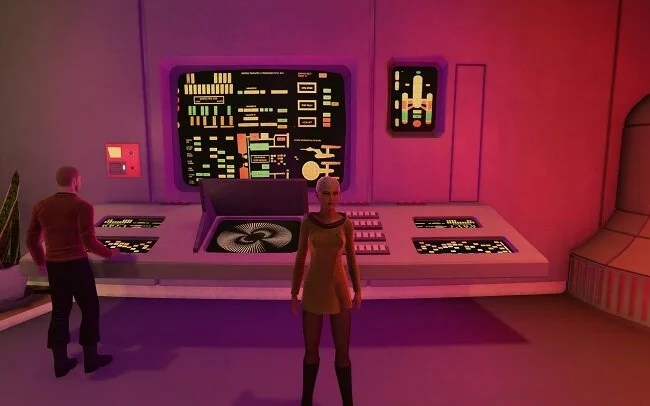
Again this is more a case of two months in gaming. Furthermore although I was quite active in July, I was less so in August as the Blaugust 2021 Festival of Blogging event consumed the lion share of my leisure time. The majority of my gaming time is usually mid to late evening. Although Mrs P and I do many activities together, there are times when she will want to watch something I don’t, be engrossed in a book or out with friends. These occasions present sizable windows of time to focus upon a video game, which is especially useful for the MMORPG and RPG genres. However, I often have to choose whether to use this time exclusively for gaming or some other recreational activities such as writing. Another foible of my video game time management is trying to arrange things so I can undertake recurring, daily quests in a game early in the morning. I will often tackle such content in Star Trek Online, as soon as I get up.
Again this is more a case of two months in gaming. Furthermore although I was quite active in July, I was less so in August as the Blaugust 2021 Festival of Blogging event consumed the lion share of my leisure time. The majority of my gaming time is usually mid to late evening. Although Mrs P and I do many activities together, there are times when she will want to watch something I don’t, be engrossed in a book or out with friends. These occasions present sizable windows of time to focus upon a video game, which is especially useful for the MMORPG and RPG genres. However, I often have to choose whether to use this time exclusively for gaming or some other recreational activities such as writing. Another foible of my video game time management is trying to arrange things so I can undertake recurring, daily quests in a game early in the morning. I will often tackle such content in Star Trek Online, as soon as I get up.
Role-playing Games. I regret to say that my flirtation with GreedFall ran out of steam in July. This is no reflection upon the game itself which is interesting and enjoyable. It simply got usurped by Assassin’s Creed IV: Black Flag. I was so frustrated trying to play this game on the Nintendo Switch that I purchased it again on the PC and was able to play through the content far more easily with a keyboard and mouse. I completed the main story in the game and passed on the subsequent busy work side content. Enthused by the joys of playing a quality RPG, I moved straight on to the PC version of Days Gone. I really like this game as its setting in post-apocalyptic Oregon is quite unusual and it has a very similar zombie vibe to that of Left For Dead 2. This is another example of a game that I play with keyboard and mouse for PVE content and then a game controller when using a vehicle. Unfortunately, I haven’t had time of late to focus on this game due to the blogging event.
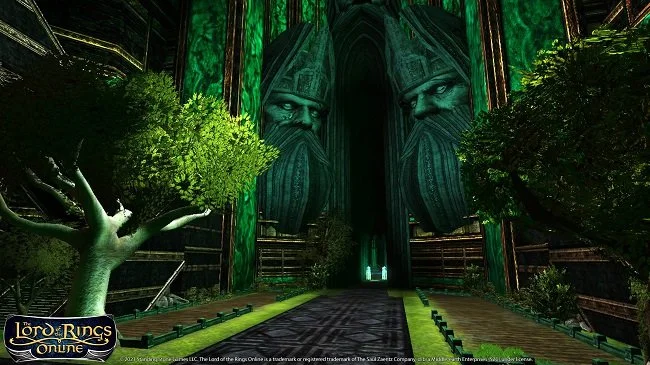
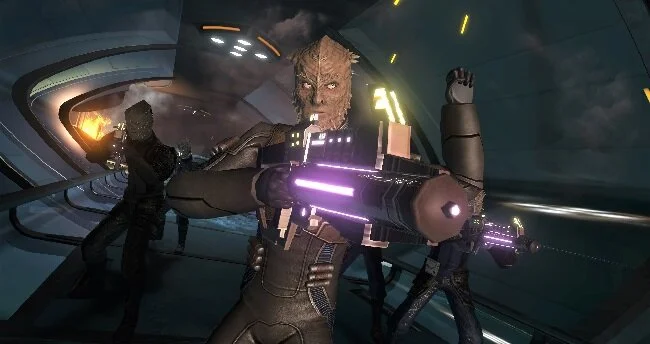
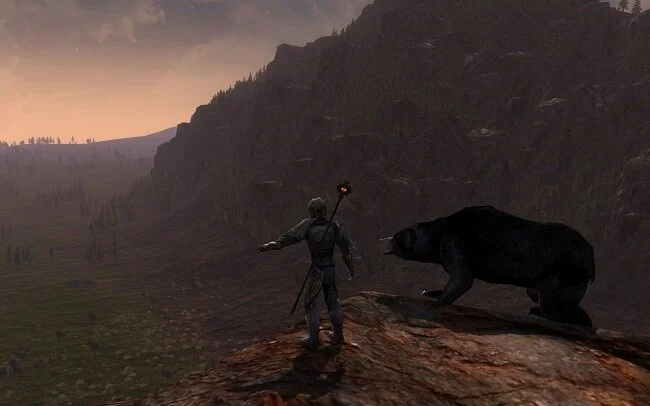
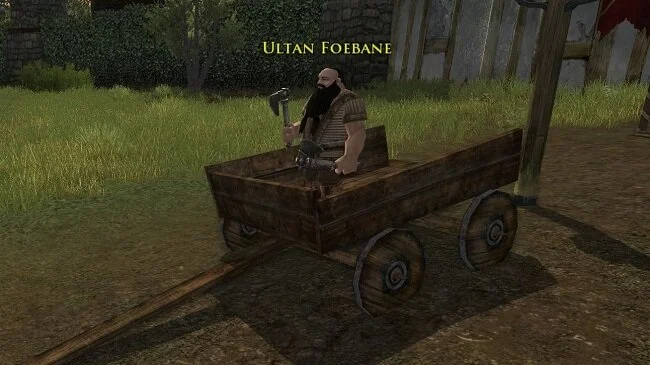
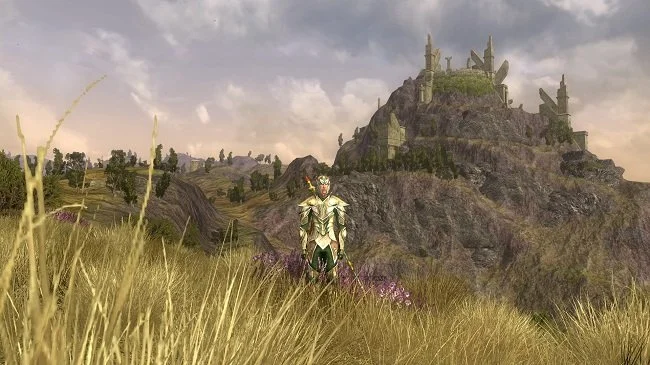
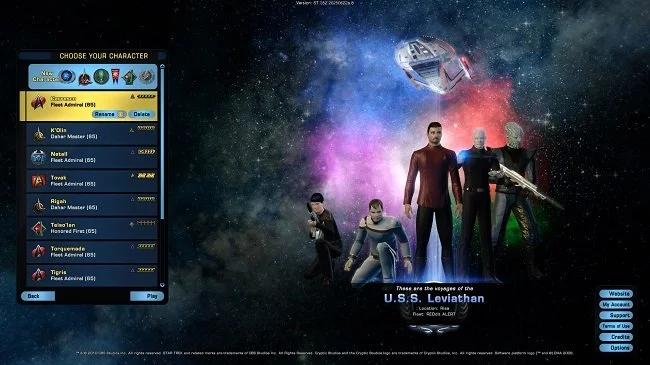
Massively Multiplayer Online Role-playing Games. I returned to The Lord of the Rings Online and started working through the last two content updates, Wildwood and Blood of Azog. As the former was level 45 content it was an absolute breeze to clear and it did wonders for my Virtue Traits. The story was inventive and this new area certainly compliments Bree-land as a region. Although I have a liking for any Dwarven driven stories in LOTRO, questing in Azanulbizar is a slog and too much of the content is of a grinding nature. Hence Star Trek Online has received more of my attention these last two months. Developer’s Cryptic continue to ensure that there are regular new events to undertake and goals to work towards. I’ve also raised another two alts to level cap, although I did use a boost for one with interesting results. I even felt bold enough to experiment with a “cannon build” on one of my KDF vessels, although it requires competent flying to use effectively.
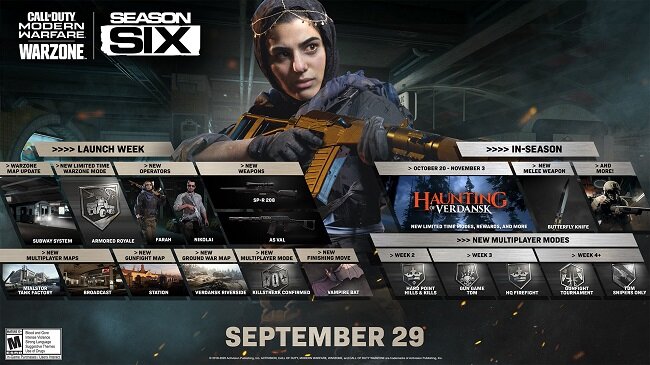
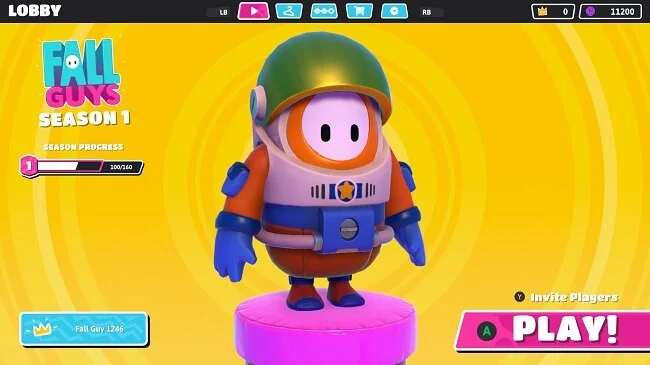
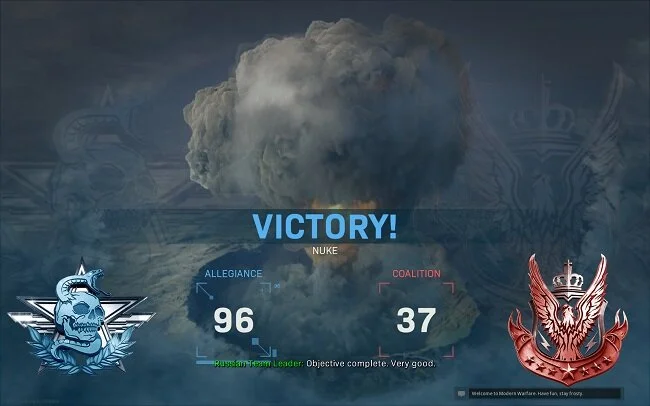
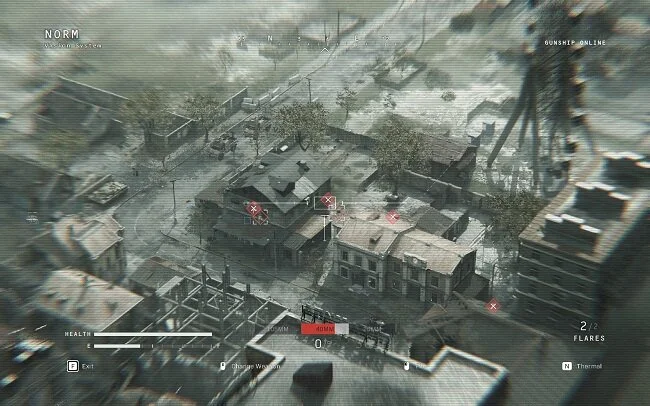
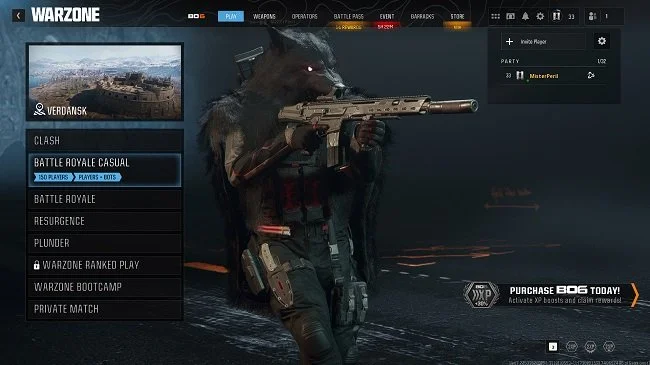
Odds and Sods. Having bought a new game controller I have started playing Fall Guys: Ultimate Knockout once again. It is fun in short doses but I still worry about the fact I’ve not yet in over a year, won a Crown. I also find it curious that I find it more entertaining collecting the various outfits and emotes than playing the game itself. I also returned briefly to Call of Duty: Warzone to see what the state of the game is. The patch for the latest season was once again ridiculously large and took hours to download. Upon playing a solo Battle Royale game, I found things were pretty much exactly as I left them. I still don’t like the changes made to the map and some weapons continue to be overpowered and therefore ubiquitous. However, having been away from the game for so long, I found myself playing against new players and it proved to be a far more equitable experience. As for the next few months I have nothing major planned. The next announcement I’m awaiting is the release date and cost of the next LOTRO expansion. Hopefully I can return to Days Gone in September.


Looks Matter
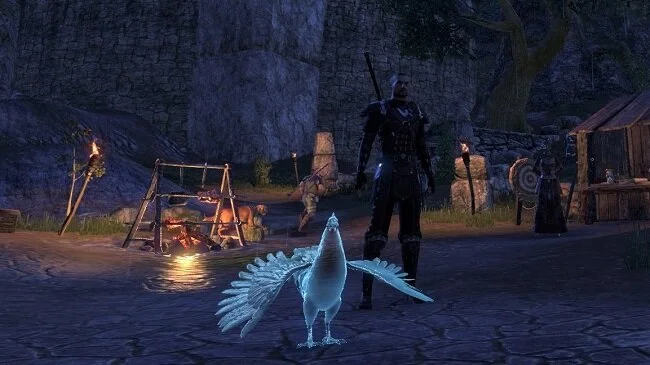
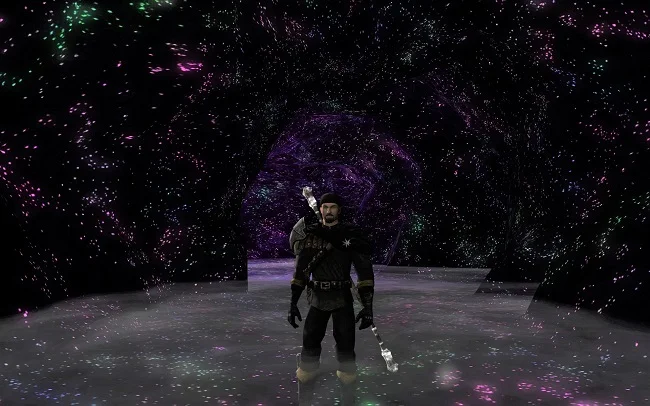
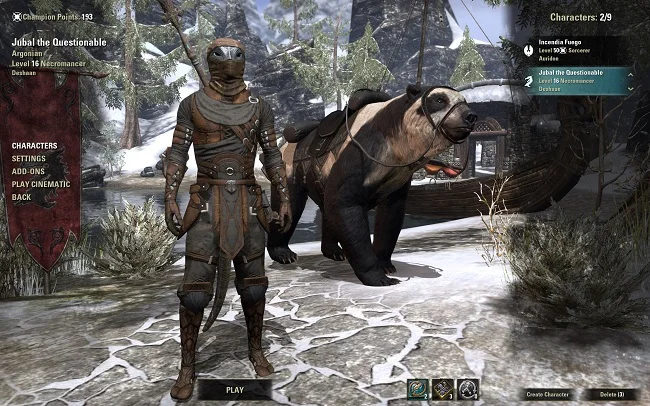
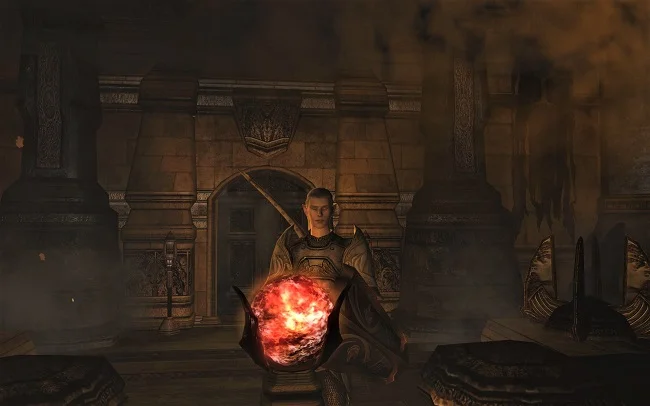
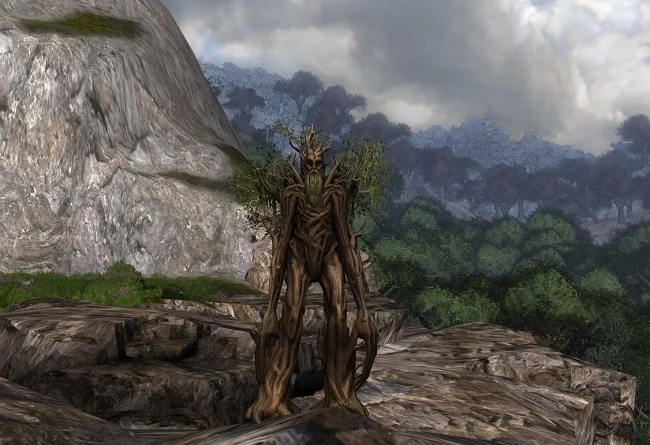
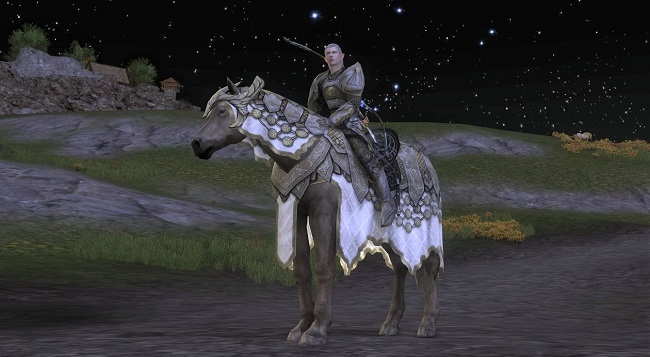
You’re strutting around in your favourite MMORPG, dressed to the nines in your finest outfit. You recently acquired The Tabard of Marginal Statistical Improvement after finally beating that particularly difficult raid boss. As you stroll into the auction house with the confident air of someone who knows they’re looking damn good, you keep an eye on the chat window anticipating comments and praise from other players. You stop in front of an NPC and stand their basking in presumed public adulation and revelling in your own self satisfaction. Suddenly another player appears on the periphery of your monitor and catches your attention. Oh calamity, their avatar looks virtually identical to your. Same fez, monocle and handlebar moustache. They’re also wearing The Tabard of Marginal Statistical Improvement, except theirs is in electric pink. Oh the humiliation. Oh the humanity. Oh Vienna. You log off in tears, your ego crushed, a victim of a game with insufficient character customisation and diversity.
You’re strutting around in your favourite MMORPG, dressed to the nines in your finest outfit. You recently acquired The Tabard of Marginal Statistical Improvement after finally beating that particularly difficult raid boss. As you stroll into the auction house with the confident air of someone who knows they’re looking damn good, you keep an eye on the chat window anticipating comments and praise from other players. You stop in front of an NPC and stand their basking in presumed public adulation and revelling in your own self satisfaction. Suddenly another player appears on the periphery of your monitor and catches your attention. Oh calamity, their avatar looks virtually identical to your. Same fez, monocle and handlebar moustache. They’re also wearing The Tabard of Marginal Statistical Improvement, except theirs is in electric pink. Oh the humiliation. Oh the humanity. Oh Vienna. You log off in tears, your ego crushed, a victim of a game with insufficient character customisation and diversity.
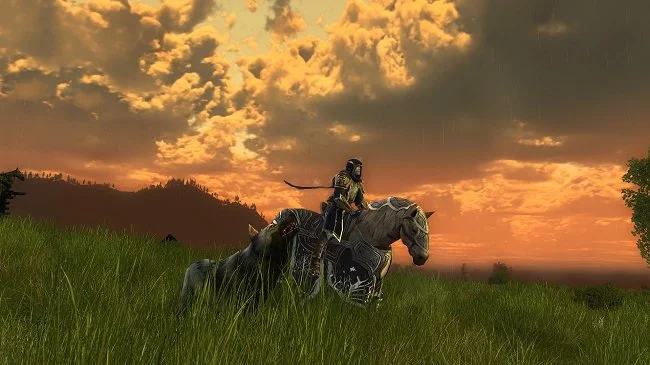
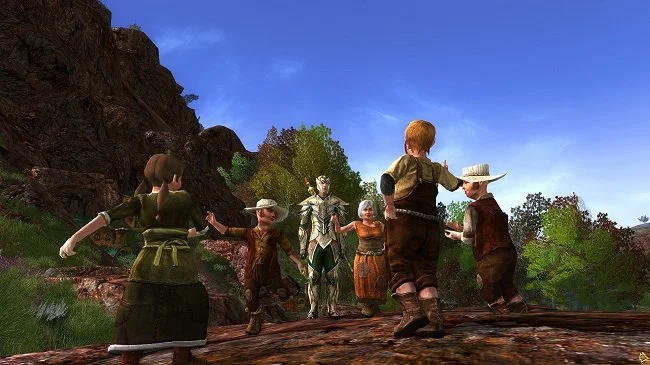
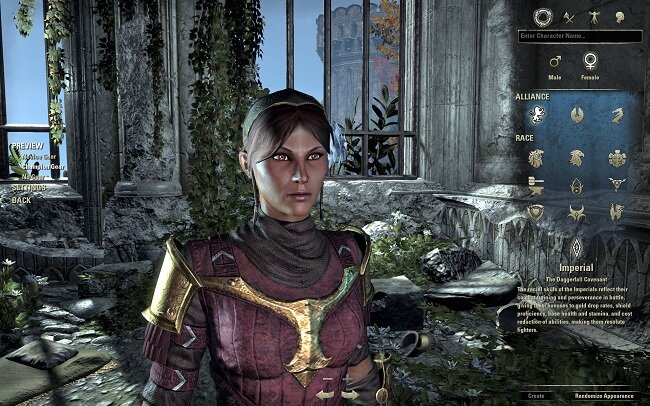
Wolfy over at Through Wolfy’s Eyes wrote a very astute post yesterday about the significance of character customisation in the MMO genre. He makes some very good points and also offers some suggestions regarding improvements that could be made. This is exactly the sort of post that other bloggers can use to riff off, as the subject of character customisation is pretty important to the MMO genre. Hence I thought I would add my own thoughts on subjects having been an active MMO player since late 2007. Simply put, you cannot have enough character customisation options in this genre of game. Creating your own unique avatar is as essential to the players enjoyment of the game as the story and the gameplay. I will often spend an hour or more fine tuning my character, pondering a suitable name and even reflecting upon a backstory for them if the game supports such an option. Your character is the conduit through which you experience the game so from my perspective I want that avatar to be as much to my liking as possible.
Gamers approach character creation in different ways. Some players strive to make a virtual game persona that is based upon themselves to provide a more personal gaming experience. Many strive just to make something unique, different or quirky that amuses them. A fun character who it will be enjoyable to customise further with cosmetics, as they progress through the game. Other gamers may well try and create some sort of aspirational "imago". An avatar that they desire to be on some level. In some MMOs that are based on particular intellectual properties, gamers sometimes try to recreate their favourite character from the franchise. And sometimes, players just like to see how extreme and incongruous they can make their avatar. However, the success of all of these endeavours depends on how expansive the character customisation options are. Yet even in those titles where the scope is limited, never underestimate player ingenuity.
I believe that for some players, creating their avatar in a popular game is more significant than merely making a “fun character”. For some individuals, video games and especially the MMORPG genre provides a virtual environment in which they can be themselves. Something they feel they cannot do in their day to day life. Creating and customising their in-game character is a cathartic process allowing them to express their true nature and feel comfortable and free. This is why I feel that it is essential to have as many options as possible with character customisation and that these variables should not to be arbitrarily gated and segregated by traditional cultural notions. Gender, race, body size and such like should be equally accessible across all classes and factions. Possibly the only mollifying factor should be a game’s own internal lore but even that should not be a sacred cow.
Perhaps at its most fundamental level, character creation in video games is just another example of human beings trying to make some sort of personal mark upon the world, as they journey through life. It’s a basic human instinct. Wherever you live, you try to arrange things in a way that suits you. Regardless of your budget you try to personalise your living space, be it through expensive décor or just putting up a poster and putting your plushies on the shelf. We do something comparable in the games we play. We create a character according to our personal whims and needs, then enter a virtual world and say “here I am”. It is a very personal statement while being at the same time somewhat ephemeral. Which is why many of us take so many screen captures of our in-game characters. The video game industry would do well to reflect upon the significance of this facet of gaming and do their utmost to develop it.







Incidental Emergent Gameplay
According to Wikipedia, emergent gameplay refers to “complex situations in video games, board games, or table top role-playing games that emerge from the interaction of relatively simple game mechanics”. Emergent gameplay often can stem from the relatively simple decisions a player makes, the sum of which lead to more complex outcomes. It also can be created by adding multiple players to the same game environment or situation and having their individual actions impact upon the overall evolving situation. Or to put it another way, it is the human factor that comes with undertaking a task. For example, a story driven video game may offer the player a quest to travel to the valley of Constant Drizzle, vanquish the foul Myrmidons and reclaim the Heretical Grimoire of Colin. It is a very specific task with a binary outcome. But in an open world game without a pre-written story, the player has to find the aforementioned valley and their actions while exploring determine the fate of both the grimoire and the Myrmidons.
According to Wikipedia, emergent gameplay refers to “complex situations in video games, board games, or table top role-playing games that emerge from the interaction of relatively simple game mechanics”. Emergent gameplay often can stem from the relatively simple decisions a player makes, the sum of which lead to more complex outcomes. It also can be created by adding multiple players to the same game environment or situation and having their individual actions impact upon the overall evolving situation. Or to put it another way, it is the human factor that comes with undertaking a task. For example, a story driven video game may offer the player a quest to travel to the valley of Constant Drizzle, vanquish the foul Myrmidons and reclaim the Heretical Grimoire of Colin. It is a very specific task with a binary outcome. But in an open world game without a pre-written story, the player has to find the aforementioned valley and their actions while exploring determine the fate of both the grimoire and the Myrmidons.
Emergent gameplay is a weighty subject and a source of heated debate about gamers. Some prefer to be able to traverse a virtual world and “make their own fun” as they go along. Certainly a game such as EVE Online is an exemplar for this. Other gamers prefer to have a clear story, quests hubs and an underlying game system that “guides” them from A to B. Personally I like aspects of both. However, I agree that emergent gameplay that organically arises from undertaking a simple task in video games, is a powerful experience. For some it is comparable or indeed preferable to traditional pre-written stories. If you’re an advocate for emergent gameplay, then even a journey to the shops in real life has the potential for adventure. If you have children then this is definitely a “thing”. Doing chores with my 6 year old granddaughters can easily turn into a “quest”. Dragons may well lurk behind a garden hedge and there may be orcs hiding in the wheelie bins.
Now the reason I’ve mentioned both emergent gameplay and the more scripted variety, is that I’ve found of late that neither kind is proving especially satisfactory. Sometimes the densely plotted quests of The Lord of the Rings Online are enthralling but on other occasions they’re dull and arbitrary. Especially the fetch quests and kill ten Gibbons variety. I have also found that going exploring in a game such a GreedFall has not been as satisfactory as it usually has. I suspect this may be down to some of the game content being a little mundane and also my general outlook on gaming at present. It is a major leisure activity for me and so one can suffer from gaming fatigue from time to time. However, sometimes it is the little things and the positively mundane that can delight you when gaming as I’ve recently discovered while playing Assassin’s Creed IV: Black Flag. And when they do they certainly reinvigorate your passion for gaming.
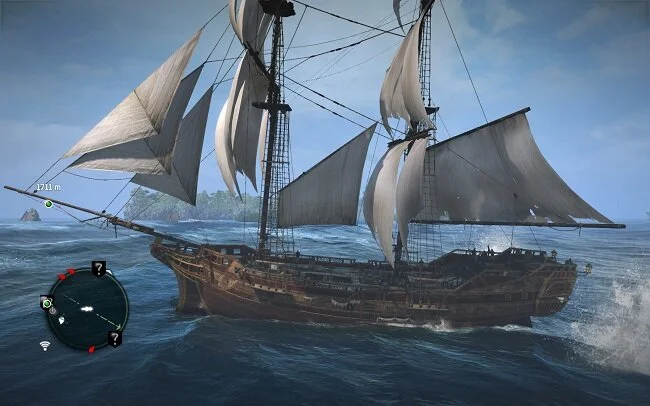
Big franchise RPGs such as Assassin’s Creed straddle both types of gameplay. The story is heavily scripted and very much on rails. But then there is a lot of open world busy work to be done, which you can do at your own leisure. It is the latter that has kept me engaged this week, due to what I describe as incidental emergent gameplay. IE my response to minor things going on around me in the game. The game is set in 1715 in the West Indies and has a nautical and pirate themed plot. There are side missions where you can hunt whales and sharks and I have found these particularly engaging. They have fairly simple mechanics and some ambient dialogue but the rest is pretty much up to the player. I’ve found that it is very easy to get lost in this activity. After successfully hunting a white whale, I found myself quoting both Herman Melville and Khan Noonien Singh.
It is this incidental emergent gameplay on top of the main story and overall game design that keeps gamers hooked. I think if done well it can tip the scales so that an average game becomes a superior one. I love walking around Havana in Black Flag and listening to the ambient dialogue and activities of the NPC. Sailing the seas is also a compelling act in itself. Occasionally I encounter a pod of dolphins or see a whale breach the waves and it is really quite compelling. I’ve not encountered an RPG with such an engaging virtual world since The Witcher III. I think I understand now why some gamers feel the need to write about their ingame characters and create a backstory for them or pen their own stories. Emergent gameplay both directly and indirectly fuels the imagination and one’s sense of narrative. I don’t think I’ll be so dismissive of the concept from now on.
Screenshots and Photo Mode
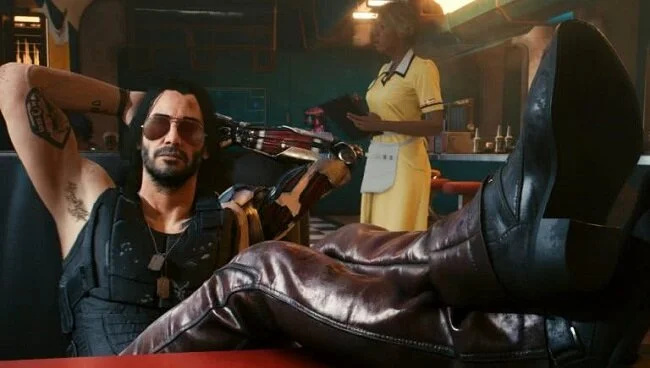
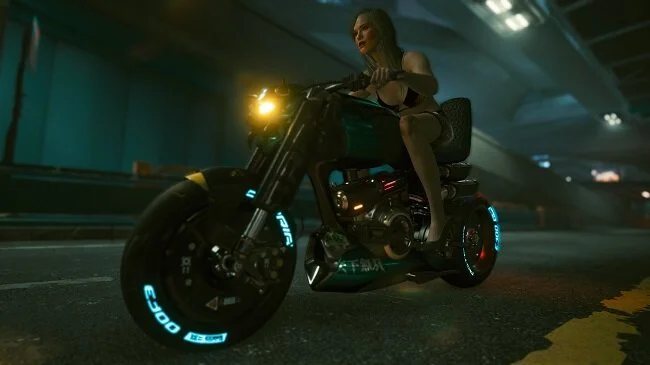
Despite its many flaws, Cyberpunk 2077 launched with a very comprehensive “photo mode”. Developer’s CD Projekt Red put a lot of resources into creating the game's aesthetic and recognised that players would want to explore it and record how their avatars interact with it. The ability to take screen captures is a selling point for many games, especially in the RPG and MMORPG genres. It allows players to keep a permanent record of their activities over time and also adds another social aspect to proceedings. Players love to share screenshots that showcase their avatars and record events they’ve participated in. Some fan sites are predicated purely upon in-game photos. Either highlighting the various cosmetic items that are available or capturing the beauty of the virtual world. I still have screenshots from The Lord of the Rings Online going back to the day I started playing in December 2008.
Despite its many flaws, Cyberpunk 2077 launched with a very comprehensive “photo mode”. Developer’s CD Projekt Red put a lot of resources into creating the game's aesthetic and recognised that players would want to explore it and record how their avatars interact with it. The ability to take screen captures is a selling point for many games, especially in the RPG and MMORPG genres. It allows players to keep a permanent record of their activities over time and also adds another social aspect to proceedings. Players love to share screenshots that showcase their avatars and record events they’ve participated in. Some fan sites are predicated purely upon in-game photos. Either highlighting the various cosmetic items that are available or capturing the beauty of the virtual world. I still have screenshots from The Lord of the Rings Online going back to the day I started playing in December 2008.
There is a surprising amount of skill involved in composing a good screenshot and it is not just a case of point and click. Framing and the “rule of thirds” are important factors. A Google search will provide you with plenty of common sense advice. However it helps immensely if a player can readily swap from third person to first person perspective. There will be times when you do not want or need your own avatar in the picture that you are taking. Thankfully most major MMOs have the facility to easily change between camera views and to turn off the user interface. However, photo mode, found in single player games, provides a far greater degree of creative freedom. It allows the game to be paused and the in-game camera to be detached from its preset configurations and to navigate in three dimensions around the desired image.
Considering that so many games these days have a business model based around the sale of cosmetic items, it comes as no surprise that gamers want to take in-game selfies. It has to be said that the MMORPG genre, especially the role playing community, has a somewhat vain streak running through it. After all it is your avatar that is at the centre of the game. Hence, it seems logical and good business sense to ensure that all games come with facilities to accommodate and support screen captures. Where possible I’d personally like to see the more comprehensive photo mode supported. This really appeals to me in the same way as drawing and painting does. There is immense satisfaction to be had in trying to compose and frame a shot. It is something I can happily spend hours on. And then there is the option of post processing although that can be a somewhat contentious issue. Does it enhance the image at the expense of the game?
Sadly, some games still lack integral screenshot support or do not have a specific photo mode. Furthermore, some even go so far as to actively block third party screen capture apps from working. For years I used the screen capture program FRAPS but some Ubisoft games see it as a security threat and consider its activity suspicious. So I found myself having to use for a while the screen capturing tool that comes with Nvidia’s GeForce experience software, to take pictures in certain games. Fortunately, I subsequently discovered Bandicam which offers a one stop screen and video capture solution, bypassing the issues caused by certain developer’s security protocols. There’s a free version that allows for unlimited screen captures without watermarks but it does restrict video capture to 10 minutes. The full version of the software cost $40.
A Month in Gaming
The last installment of A Month in Gaming was at the end of April. I have decided to update this recurring post less often to ensure that I have more to write about than just cataloguing my generic activities in The Lord of the Rings Online and Star Trek Online. The only downside of such an approach is that it invalidates the title but that can’t be helped. Fortunately, I have done more than usual over the last two months. My daily schedule has changed temporarily and I now have a little more leisure time available. Hence I’ve dabbled with several new games as well as using my Nintendo Switch more often. I also took part in a “tag team” playthrough of XCOM 2, which was a very interesting experience. And I finally took the time to go through all my games libraries on the various different platforms to catalogue exactly what I have. I found a few hidden gems but the majority is just “filler” that you find in most video game bundles.
The last installment of A Month in Gaming was at the end of April. I have decided to update this recurring post less often to ensure that I have more to write about than just cataloguing my generic activities in The Lord of the Rings Online and Star Trek Online. The only downside of such an approach is that it invalidates the title but that can’t be helped. Fortunately, I have done more than usual over the last two months. My daily schedule has changed temporarily and I now have a little more leisure time available. Hence I’ve dabbled with several new games as well as using my Nintendo Switch more often. I also took part in a “tag team” playthrough of XCOM 2, which was a very interesting experience. And I finally took the time to go through all my games libraries on the various different platforms to catalogue exactly what I have. I found a few hidden gems but the majority is just “filler” that you find in most video game bundles.
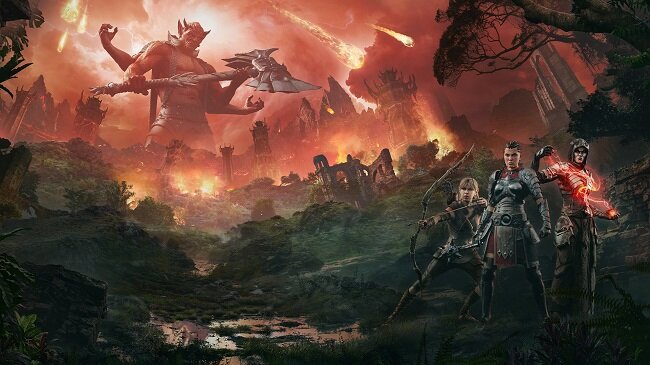
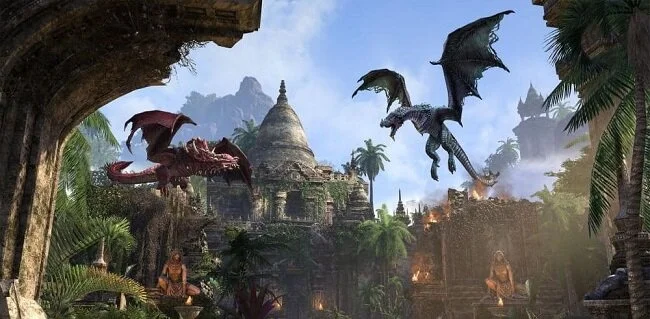
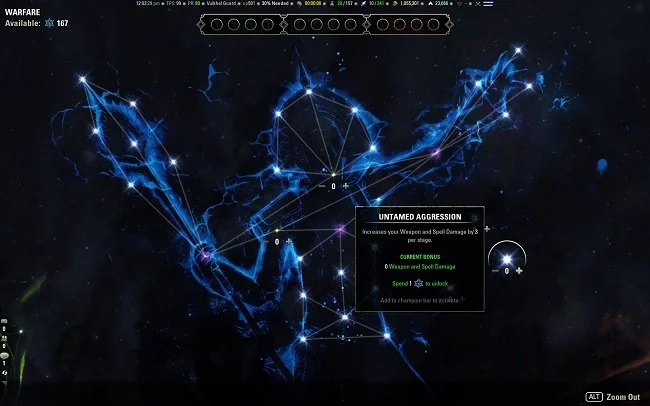
Let’s start with MMOs. The new Blackwood expansion for The Elder Scrolls Online has provided me with a reason to return to the game. I have written at length about the companion system in another post but I would like to reiterate how it does provide a major shot in the arm for the solo player. I have ventured into several dungeons with Mirri providing ranged DPS in support of my melee combat and it has proven a most effective combination. Especially if you configure your companion with at least one healing skill. Alternatively you could equip either of them with a Restoration Staff and make them a dedicated healer. The companion system seems very flexible and I do hope that developer’s ZeniMax continues to improve it further.
In STO, I have levelled one of my new Delta Recruits and have now optimised their build and gear. The toughest aspect of fine tuning an alt in STO is reaching Tier 6 with all reputation factions. If you have completed this on one character, there is a 50% reduction in the time it takes on all subsequent alts. However, even with this benefit, it still takes 50 days and requires you to grind out a prodigious amount of reputation marks. The Summer Festival started today on the resort planet of Risa, so I currently have an alt permanently stationed there to undertake the repeatable daily quest and hence earn the new free Tier 6 ship. I have deferred returning to LOTRO for the present, preferring to keep Update 30 for the Autumn. At present I’m more interested to see what developer’s Standing Stone Games are up to and whether EG7 has any announcements pending for both DDO and LOTRO.
I have continued with the RPG GreedFall and try to have one major play session a week. The game supports mods, so I have one currently installed that removes the brown filter that blights the visuals. I appreciate that game designers like to use the colour palette to create an aesthetic that reflects the narrative themes. But this grimy veneer that has been applied does become tiresome after a while. Once removed the colours of the environment become far more vibrant. I prefer it when games make such visual affectations optional and allow players to toggle such features off if they so please. Adding faux film grain to cinematic cutscenes is another common technique and one that can be quite distracting. GreedFall is a very satisfying RPG, combining many of the elements found in BioWare games. It is the sort of game that provides “comfort entertainment”, as it feels very familiar and traditional.
Perhaps the most challenging game I’ve played of late is Assassin’s Creed IV: Black Flag. This is mainly down to the fact that I’m playing the Switch version and using a pro controller. I’ve tackled other instalments in the franchise on the PC. The combination of the unfamiliarity with using a controller plus the absolute plethora of buttons, menus and actions has meant that my progress has been very slow. Plus when playing on a PC, I am sitting directly in front of the monitor. Using a large screen TV and sitting further away also takes some getting used to. Although I can see quite well, the incongruity of this manner of gaming seems to add to my sense of discombobulation. However, I shall persevere as I like this game and the naval combat is proving especially enjoyable.
In early May, I took part in an XCOM 2 succession game, in which each player undertook a mission and then saved the game and shared the file with the next participant. It was a very interesting experience as playing a turn based strategy game is somewhat out of my comfort zone. Broadly I enjoyed this experience but as ever there were a few caveats. Some of the missions in XCOM 2 have time sensitive objectives. Mercifully, I did not have to endure one of these. I don’t care for time based game mechanics and find them annoying rather than tense or motivating. And then there was the issue of incurring a fatality among your squad when undertaking a mission. Usually, I wouldn’t worry so much about such a thing but as this was a team undertaking, I felt a greater sense of responsibility to prevent this. Ironically, I failed but it is interesting how participating in a team activity changes your outlook and how you play a game due to a perceived sense of obligation to others. Perhaps I’m just not a good team player.
As I mentioned initially, I finally catalogued all games that I currently own and have been trying to draft a short list of the titles I would like to try this year. Horizon Zero Dawn, Days Gone and Elite Dangerous are the current favourites. Possibly 70% of what I own will more than likely never be played. In many ways this highlights the ephemeral nature of video games. Like popular music from time to time someone will create a timeless classic but there is also a lot of disposable content produced on a seemingly endless conveyor belt. And much of that seems to end up in my video game collection. I must admit, when I finally move over to Windows 11 as an operating system, I’m curious to see how well support for Android apps goes. I tend not to play mobile games on my phone or tablet and the biggest stumbling block of running them on my PC is the use of an emulator. Finally being able to try some titles from the comfort of my PC could prove convenient. Or it may validate my existing prejudice towards mobile games.
It's Nice to be Playing an RPG Again
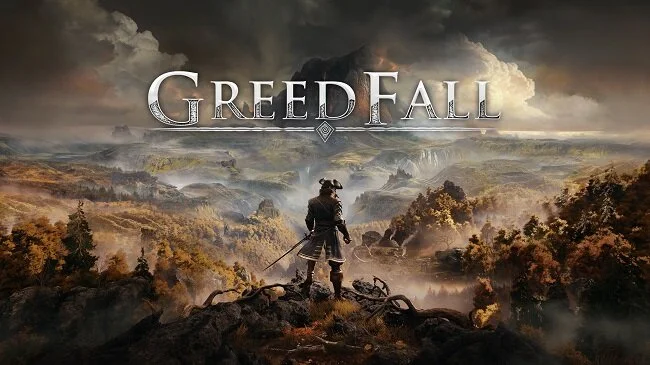
I managed to purchase the Role Playing Game Greedfall recently at the bargain price of £15. I’ve had my eye on this particular title for a while. It is not a so-called triple A game but has garnered a lot of critical praise since its release in September 2019. Developed by Spiders, a French game company and published by Focus Home Interactive, Greedfall is set in an ersatz 17th century-style setting and has liberal doses of fantasy. It has a complex narrative which takes a lot of tropes from European history from that era and blends them with classic fantasy elements such as magic and mythical beasts. It seems to have filled the space previously occupied by BioWare games of this genre, having a similar focus on characters and story. To date it has sold over a million copies. I’ve only played 5 hours or so at present but I like what I see so far.
I managed to purchase the Role Playing Game Greedfall recently at the bargain price of £15. I’ve had my eye on this particular title for a while. It is not a so-called triple A game but has garnered a lot of critical praise since its release in September 2019. Developed by Spiders, a French game company and published by Focus Home Interactive, Greedfall is set in an ersatz 17th century-style setting and has liberal doses of fantasy. It has a complex narrative which takes a lot of tropes from European history from that era and blends them with classic fantasy elements such as magic and mythical beasts. It seems to have filled the space previously occupied by BioWare games of this genre, having a similar focus on characters and story. To date it has sold over a million copies. I’ve only played 5 hours or so at present but I like what I see so far.
I can wax lyrical at great length about all the things common to the RPG genre that I like. Such as intricate character creation, involving storylines and complex narrative choices. An open world to explore, builds to experiment with gear to collect and augment. I am also aware that these things are also present in the MMORPG. However, one of the things I enjoy about RPGs is the lack of other players. I was playing The Elder Scrolls Online recently and naturally the new expansion has attracted a lot of new and returning players. Therefore the quest hubs were heaving and it was often tricky to find the required NPC or access your bank. For most of the time, it’s nice to see other players bustling about in the MMO genre but sometimes when you want to concentrate on the game, the constant activity can be very distracting. RPGs offer a haven away from this hubbub and there’s also no world chat which is another blessing.
Greedfall has an interesting story with its feuding factions, governorship of a mysterious island and political intrigue. It immediately made me think of Frank Herbert’s Dune. The 17th century aesthetic is also a good selling point as it ties in nicely with the themes of colonialism. Beyond that I can’t say much as I’m still in the starter zone of the game but I am enjoying many aspects so far. Greedfall has also confirmed another theory that I’ve often thought. That the voice acting is often superior for the female version of the central character. I found this to be the case for all three Mass Effect games, Assassin’s Creed Odyssey and numerous other games. And one of the benefits of picking up a game such as this a year after its original release, is that there are plenty of wikis, YouTube videos and walkthroughs available, should you need any help with quests, builds or general tips.
So overall, I am very pleased that I’ve found an RPG to lose myself in for a while. However, so far I have run afoul of a minor issue found in the RPG genre. I like to explore any new virtual environment I find myself in. This is exactly what I did when I found myself in the starting area of the port of Sérène in Greedfall. So I walked around, opened up the entire map and looted anything I could along the way. Later on, after a few quests I sold all the loot I deemed irrelevant, only to discover later that one was a quest item. I could not return to the location and loot it again but mercifully could buy the item back from the vendor I sold it to. I always think that such items should be protected or flagged as important to prevent such issues. But that’s just me playing in a manner the developers either didn’t think of or assumed wouldn’t happen. But it hasn’t done any long term harm. So it’s a case of onwards and upwards with Greedfall. I hope it can continue to deliver the right sort of entertainment.







Skyrim: 30 Million Copies Sold and a Decade Later
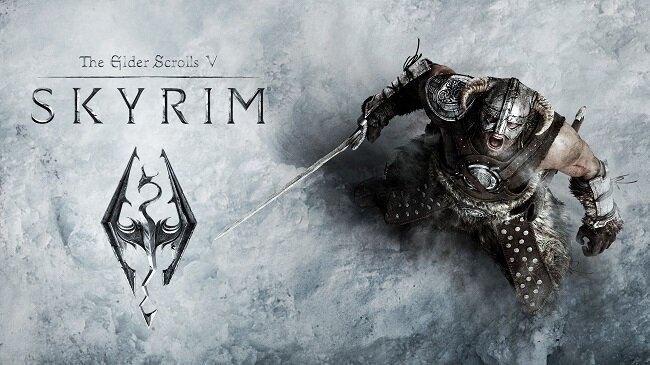
I read the following post over at Kotaku recently, “Skyrim Player Tries To Kill Every Single Living Thing In The Game” and it struck me how Skyrim is still popular with gamers after ten years. Since its initial launch back on 111th November 2011, The Elder Scrolls V: Skyrim has sold over thirty million copies worldwide, across multiple platforms making it one of the best selling games of all times. Originally released on the PC, PS3, and Xbox 360 Skyrim has been ported to all subsequent generations of consoles including the Nintendo Switch. A remastered Special Edition of the game that was released in 2016 and a VR version followed in 2017. It has proven extremely popular with the video game modding community and currently supports thousands of nds and addons. You can log on to Twitch at any time of the day and find someone playing Skyrim. That is quite a legacy for a game that’s a decade old.
I read the following post over at Kotaku recently, “Skyrim Player Tries To Kill Every Single Living Thing In The Game” and it struck me how Skyrim is still popular with gamers after ten years. Since its initial launch back on 111th November 2011, The Elder Scrolls V: Skyrim has sold over thirty million copies worldwide, across multiple platforms making it one of the best selling games of all times. Originally released on the PC, PS3, and Xbox 360 Skyrim has been ported to all subsequent generations of consoles including the Nintendo Switch. A remastered Special Edition of the game that was released in 2016 and a VR version followed in 2017. It has proven extremely popular with the video game modding community and currently supports thousands of nds and addons. You can log on to Twitch at any time of the day and find someone playing Skyrim. That is quite a legacy for a game that’s a decade old.
There are lots of reasons why this game seems to have such enduring appeal. In many ways it is a blueprint for the role playing genre. For the sake of brevity, I would suggest the following. Skyrim provides a blank canvas for the character that the player creates. There is scope for a prodigious amount of customisation. The region in which the story is set, as well of the wider world of Tamriel, is filled with dense and complicated lore. Which contributes to the illusion that this is a living environment filled with peoples and history. The game’s combat system supports a wide degree of variety and caters to players with differing taste and skill levels. The central story is engaging and nuanced, rather than feeling like a hand holding exercise. The side quests and associated DLC are also narratively well conceived, rich and varied. And the open world environment packs a surprisingly large amount of content into its virtual 15 square miles. The wealth of mods and addons available also adds to the game’s existing replay value.
There was a time when the sprawling role playing games were a niche market, still driven by stats and random chance like their distant pen and paper game ancestors. Skyrim changed that by making systems more accessible and making story and content king. The open world format is now commonplace and key to the success of tiles such as Assassins Creed: Valhalla the Far Cry franchise. The wider gaming community have adjusted to the complex game mechanics previously only found in the RPG genre because of Skyrim. Players now expect to be able to create a unique avatar and construct hybrid builds. The focus upon complex lore and branching narratives is now a major staple in modern video games. The mechanics, systems and tropes that developers Bethesda created with Skyrim have directly led to more recent games such as The Witcher III. It is a legacy that looms large within the industry.
Fans are an observant bunch. It has been noted that the amount of time that has passed since the release of Skyrim is double that between the earlier instalments, Morrowind and Oblivion. Developers Bethesda are busy with several titles at present but will they mark the 10th anniversary of Skyrim? There has been some speculation from gamers as to whether there will be a full new remaster or some bespoke anniversary DLC. Sadly, it doesn’t appear that Bethesda has any specific plans of this nature. Last May, Bethesda senior VP of marketing and communications Pete Hines said that The Elder Scrolls VI will only be released “years from now” and that another title, Starfield, will be launched first. So it would seem that this auspicious decade will go unmarked officially. However, that is not to say that gamers cannot celebrate themselves and I suspect that there will be a lot of events on Twitch and other streaming platforms. Skyrim has earned its place as a genre milestone and its ubiquity and reputation are thoroughly deserved.
Update. Bethesda Softworks is releasing the Skyrim Anniversary Edition on November 11th to mark the RPG’s 10th anniversary. The Skyrim Anniversary Edition will include the Special Edition version of the game. A remastered release with high-resolution textures, upgraded visual effects, and the Dawnguard, Hearthfire, and Dragonborn DLC. It will also include more than 500 pieces of Creation Club content as well as new quests, dungeons, bosses, weapons, spells, and more. Further details can be found at the Bethesda website. (22.08.21)
Choosing a New Game
I want to talk about how we choose a new game from the countless titles that are currently available. I am going to be candid about how I do this as well as my own personal biases and prejudices. Because I am not open to playing any type of game. Like so many other aspects of life, I have very clear likes and dislikes that can only be tempered so far with logic and rational thinking. Video games as far as I’m concerned are supposed to be engaging, entertaining and inherently enjoyable. I don’t mind a degree of challenge and I’ll grind to achieve a specific goal, if I feel the reward to effort ratio is acceptable. I will on occasions attempt to step tentatively out of my comfort zone. However, there are some things that I simply don’t like, so they will not be considered. I think the best analogy for this is food. There are certain meals that I have tried (sometimes several times) and disliked, so they won’t ever be eaten again. Then there are other meals that contain ingredients I dislike or that are cooked in a style that I don’t enjoy. These are also off the proverbial table (no pun intended).
I want to talk about how we choose a new game from the countless titles that are currently available. I am going to be candid about how I do this as well as my own personal biases and prejudices. Because I am not open to playing any type of game. Like so many other aspects of life, I have very clear likes and dislikes that can only be tempered so far with logic and rational thinking. Video games as far as I’m concerned are supposed to be engaging, entertaining and inherently enjoyable. I don’t mind a degree of challenge and I’ll grind to achieve a specific goal, if I feel the reward to effort ratio is acceptable. I will on occasions attempt to step tentatively out of my comfort zone. However, there are some things that I simply don’t like, so they will not be considered. I think the best analogy for this is food. There are certain meals that I have tried (sometimes several times) and disliked, so they won’t ever be eaten again. Then there are other meals that contain ingredients I dislike or that are cooked in a style that I don’t enjoy. These are also off the proverbial table (no pun intended).
So what games do I like? Well both the NES and SNES have had an impact upon my tastes. I consider the Mario Kart franchise to be nearly perfect. It is accessible and yet challenging. It also makes competitive gaming far more palatable as it is not bombastic or bellicose in either defeat or victory. I also enjoy a well balanced FPS and will certainly recommend CoD Warzone as the epitome of encapsulating that genre well. But my heart belongs to narrative driven RPGs and MMORPGs. I like involving and challenging stories, set in detailed worlds. I also like to have access to games based around major franchises that I revere, which is why I enjoy Star Trek Online and the Lord of the Rings Online so much. I’ve also dabbled with the strategy genre on occasions, along with deck-building games and point and click adventures. I even have a few simulator games in my extensive game selection. However, it should be noted that possibly 80% of said collection remains unplayed.
I can be just as specific about the game genres that I don’t like as I am about the ones I do. I am not a fan of PVP. Although I enjoy the FPS genre as this can be a far more balanced PVP environment. However, too often PVP is predatory and an uphill struggle for new players. I pay money to game developers to be entertained and not to be served up as canon fodder for established players. I don’t care for the mindset and elitist culture that also goes hand in hand with PVP and many other competitive games. Games that are couched in self aggrandisement and vanity are often breeding grounds for the most toxic aspects of gaming culture. I also eschew certain games on aesthetic grounds. The human experience is driven greatly by visual data and the way we interpret the world by how we see it. So to deny that we make decisions about games based upon how they look and the way they’re visually presented is crass. Hence I don’t like the isometric style. Nor do I like the anime visual aesthetic found in many games. I broadly prefer realistic graphics over cartoons, although stylisations can be very appropriate at times.
Therefore, when trawling through YouTube videos advertising forthcoming game releases, it is quite easy for me to quickly and efficiently assess what is and isn’t of interest to me. Plus its important to add that all the above rules are open to occasional contradictions. Hand of Fate and its sequel drew me into a genre that normally I wouldn’t have considered. More interestingly, sometimes there will be a new game that is broadly outside of what I like but it is getting a lot of traction among my peer group. So despite being a mature and grounded 53 year old, I am not immune to FOMO and a lot of other curious psychological phenomena. Naturally, there is an allure to joining your friends and being part of the current “in thing”. I recently succumbed to this and bought Cyberpunk 2077 and the reality of the game quickly shattered the hype and mystique that had prevailed up until launch. I have also written before about how odd it is to have missed the entire World of Warcraft “boat” over the years.
Earlier on I used a food based analogy to describe my likes and dislikes and equate this to video games. Once I have established that I don’t like something it is added to a prescribed list. However, most analogies don’t hold up to close scrutiny and although the part about my process for establishing a preference is accurate, I am far more willing to try new foods than I am video games. Upon mature reflection we all have our own bespoke assessment of what we want and don’t want from a video game because we all have a subjective definition of what actually equates to a game per se. I broadly agree with the notion that it is good to challenge yourself and step outside of one’s personal comfort zone. But you don’t have to do this habitually or else you’ll end up playing more games you dislike than like. I think it’s important to be self aware of one’s tastes and to be realistic about them. Yet the vast amount of free of heavily discounted games available do allow for greater experimentation. As ever there is a middle ground for each of us to find that offers us the best path forward.
Cyberpunk 2077 and Third-Person Perspective
There’s no point in dancing around the issue, Cyberpunk 2077 has failed to maintain a hold on me and I have not touched the game for over a week. I have niggles about the combat system and navigating the wonderfully realised world of Night City. The biggest selling points for the game are the central story and the wealth of well conceived side quests. Sadly all of these positive attributes are hamstrung by one fact that ultimately spoils my enjoyment. I don’t care for the first person perspective that developers CD Projekt RED have chosen for the game. I understand that they feel that combat is better served by this mechanic and that the entire FPS genre provides credence to their argument. However, I find that this decision comes at the expense of your character. This is a Role Playing Game with a complex character customisation system. It strikes me as incongruous that after lovingly creating your own concept of V, the main protagonist, that you spend your entire game unable to see them.
There’s no point in dancing around the issue, Cyberpunk 2077 has failed to maintain a hold on me and I have not touched the game for over a week. I have niggles about the combat system and navigating the wonderfully realised world of Night City. The biggest selling points for the game are the central story and the wealth of well conceived side quests. Sadly all of these positive attributes are hamstrung by one fact that ultimately spoils my enjoyment. I don’t care for the first person perspective that developers CD Projekt RED have chosen for the game. I understand that they feel that combat is better served by this mechanic and that the entire FPS genre provides credence to their argument. However, I find that this decision comes at the expense of your character. This is a Role Playing Game with a complex character customisation system. It strikes me as incongruous that after lovingly creating your own concept of V, the main protagonist, that you spend your entire game unable to see them.
An example of the default first-person perspective in Cyberpunk 2077
CD Projekt RED made it clear quite early in the game’s development that Cyberpunk 2077 would be first-person. I hoped that over the years this decision would be tempered and that the final release would include the ability to change between first-person and third-person views, as with Skyrim and The Elder Scrolls Online. Sadly this didn’t exactly happen. The game does provide an optional third-person view when driving and players can view their custom avatar when using the mirror in V’s apartment. But beyond these instances, the game plays out in first-person view. Again there is an argument to be had that this is beneficial for the cutscenes and dialogue options, allowing you to see the facial animations of the characters that you’re interacting with. Due to the lack of peripheral vision which is a foible of the first-person view in video games, the arrival of new people can catch you unaware. This does add to the drama sometimes. However, the opposite is also true. The locked in, first-person perspective restricts you and impacts upon your effectiveness in combat.
A glitch shows the native third-person model is “malformed”
Because the game is not designed to support a continuous external view of your character, it has been discovered that your avatar is quite bizarre when viewed in third-person. Several gamers have posted videos on YouTube showing a glitch allowing them a third-person perspective and their avatar is missing a head and has a strange elongated body. However, that has not discouraged the modding community. Jelle Bakker has created a means to play the game in third person although it is by his own admission not perfect and remains a work in progress. So far, the results are interesting although rapidly turning causes your character’s hips to become out of sync with the upper body. At present combat in this perspective breaks the character animations with limbs missing or moving unrealistically. Swimming is also somewhat stilted, lacking in sufficient leg movement.
The current third-person mod breaks character animations
I did some research on various permutations of this mod, as obviously others gamers are attempting to do the same. So far I’ve not seen any footage of dialogue scenes from the main story shown in third-person. Perhaps it cannot be implemented during these parts of the game for technical reasons. Or it may be a case that I just haven’t found the right video so far. What I may do is postpone any further playing of Cyberpunk 2077 and wait for the game to be patched further by developer CD Projekt RED and see how development of this mod progresses. If it can be perfected and easily integrated into the game then I may attempt a new play through and see if the third-person perspective makes the experience more enjoyable. Perhaps this mod may even lead to a formally produced third-person patch by CD Projekt RED at some point. We can but dream.
Cyberpunk 2077: Too Much Information
In 1979 I started learning French, as it was a standard part of the UK school curriculum then. For the first year or two, I remember learning the rules of French grammar and keeping pace with what was being taught. And then in the third year, something odd happened. I was asked a question one day and my mind was blank. This wasn’t a case of forgetting something that one can recall when prompted. No. This was due to an informational void. I found myself at a point where I was suddenly and totally out of my depth. Somehow in the months prior, I had reached a point where I had stopped comprehending and absorbing what was being taught. And I had now strayed beyond and was no longer equipped to deal with the situation. For those wondering where I am going with this analogy, allow me to clarify. I found myself in a similar situation with the role playing game, Cyberpunk 2077, within hours (not years) of starting it.
In 1979 I started learning French, as it was a standard part of the UK school curriculum then. For the first year or two, I remember learning the rules of French grammar and keeping pace with what was being taught. And then in the third year, something odd happened. I was asked a question one day and my mind was blank. This wasn’t a case of forgetting something that one can recall when prompted. No. This was due to an informational void. I found myself at a point where I was suddenly and totally out of my depth. Somehow in the months prior, I had reached a point where I had stopped comprehending and absorbing what was being taught. And I had now strayed beyond and was no longer equipped to deal with the situation. For those wondering where I am going with this analogy, allow me to clarify. I found myself in a similar situation with the role playing game, Cyberpunk 2077, within hours (not years) of starting it.
When the first teaser trailer for Cyberpunk 2077 was released back in 2013 I was nominally interested. However, after playing The Witcher 3: Wild Hunt, I became more enthusiastic about the game and the developer’s CD Projekt Red. If it had a similar narrative depth as their successful fantasy based RPG, then it could well be a further genre defining title. Sadly, as soon as it became apparent that the game was going to be in first person perspective, my initial excitement waned. I can tolerate this mechanic in the FPS genre, often where the story is not that important. But in a genre such as the RPG, I think it is essential that you see your avatar from a third person perspective. Especially so when there are dense stories and it is important for the player to have an emotional connection with their avatar. To cut a long story short, over the length of Cyberpunk 2077 long development cycle, I slowly lost interest in the game and was not planning to buy it at launch. And then someone surprised me by “gifting” me a copy as an early birthday present. So I decided to dive right in and play with minimal knowledge regarding the state of the final release.
Now one of the reasons I like the RPG genre is because they usually offer complex stories. A good one is like an interactive novel. Therefore, when I fire up a game such as Cyberpunk 2077 and start playing, I have the subtitles on for all dialogue and I take my time when choosing branching narrative responses. I like to weigh up each reply and consider its ramifications. Just as I do in real life. So I was surprised and far from impressed by some of the timed response sequences that force the player to make a hasty decision on some dialogue choices within a few seconds. This annoys me because my analytical mind will continuously reflect upon whether I have hamstrung myself at some future point in the game. Something that detracts from my ongoing enjoyment of the game in what we call the “moment”.
Another aspect of the game that I struggled with is the collecting and reading of story related data. There are portable drives which are broadly the equivalent of books and scrolls in other fantasy based RPGs. They contain information on characters, institutions and the world the game is set in. I initially started reading each one when collected but I soon put pay to that. As this is a new IP there is a lot to learn and I simply couldn’t assimilate all of this lore in such a manner. Plus on top of all this, there are numerous text messages continuously coming to your in-game phone, plus further messages and data on the computer in your apartment. Naturally not all of it is mission critical but some of it is illuminating in providing backstory to the game world. As such I feel obliged to read it all, otherwise why am I playing an RPG in the first place? If I just want to shoot stuff I can play any FPS.
Naturally, a major part of Cyberpunk 2077 is hacking. One specific type, breach protocol, involves “jacking in” to a terminal and then trying to select a specific sequence of numbers in a short period of time. You are not expected to complete all sequences (there are usually 3) to win, and successfully breach the system you’re hacking. However, the game does an utterly appalling job at explaining a system that is far from clear cut. When I was first confronted with this mechanic it was 2:30 AM and I simply could not comprehend what I was being told to do. It was immensely frustrating. And the game has several other foibles that are equally as frustrating. For example I wanted to get to a particular part of Night City to see if the shops offered more stylish clothing. I set a waypoint on the map and attempted to drive there. But when I crossed into certain areas my screen played a glitch animation and I found myself facing the opposite direction. It seems you cannot just traverse the world as you see fit and some areas don’t open until you reach a certain point in the main story.
Essentially, I have blundered my way through 10 hours of Cyberpunk 2077 and completed 2% of content according to the GOG Galaxy launcher. I have enjoyed aspects of the game but I feel I may have missed some optimal outcomes with my decisions and actions. I don’t feel empowered, enthused or challenged by this. I simply want to trash my existing character and start again. Until I started writing this post, I was slowly sinking because there was “too much information”, as Gordon Sumner sang. However, I have now decided to simply approach the game in a far less methodical fashion. I may even limit the length of my play sessions so I do not find myself going down too many rabbit holes. Often I find myself sounding like a stuck record, repeating the same old observations ad infinitum. Again we have a game that has a poor tutorial and doesn’t adequately inform the player about essential mechanics. Cyberpunk 2077 has also been a timely reminder about the perils of being an early adopter. I suspect the game of the year edition will be far more polished and streamlined. In the meantime I shall continue to play like a child on a bike with training wheels.
Update: I decided to delete my current alt and progress so I could start all over again. I’m also using a Xbox controller for the driving sequences and a keyboard and mouse for the remainder of the game.
A Month in Gaming
I’m still somewhat shocked that August has been and gone. Even by 2020 standards it’s been an odd month. Due to illness in the family, my schedule has been turned on its head and subsequently there has not been as much time for gaming as I’ve previously enjoyed. However, I tried to put what time I had to good use. I attempted to return to the MMORPG The Lord of the Rings Online once again, to see if I could continue through the epic story. Sadly, the game has run into further server related issues, just as it did last month. Standing Stone Games community manager Jerry Snook was a little “snippy” in responding to players' concerns and at present there are no details regarding what the problem is and when it will be resolved. If this issue persists I suspect that it is going to do some genuine harm to both the player base and community relations. I hope matters improve for SSG and LOTRO over September.
I’m still somewhat shocked that August has been and gone. Even by 2020 standards it’s been an odd month. Due to illness in the family, my schedule has been turned on its head and subsequently there has not been as much time for gaming as I’ve previously enjoyed. However, I tried to put what time I had to good use. I attempted to return to the MMORPG The Lord of the Rings Online once again, to see if I could continue through the epic story. Sadly, the game has run into further server related issues, just as it did last month. Standing Stone Games community manager Jerry Snook was a little “snippy” in responding to players' concerns and at present there are no details regarding what the problem is and when it will be resolved. If this issue persists I suspect that it is going to do some genuine harm to both the player base and community relations. I hope matters improve for SSG and LOTRO over September.
However, it hasn’t been all doom and gloom. I decided to buy Fall Guys: Ultimate Knockout, partially due to the wealth of positive reviews and feedback surrounding the game. It is great fun and often very amusing but I do seem to have developed a love hate relationship with the gameplay. I’ve failed to qualify for more than four games in a row and hence have not experienced much variety in races and challenges so far. I’m also not a fan of the team games, as I hate losing due to others, rather than my own actions. Hence progressing through the season pass is a grind. However, I occasionally have some good fortune and no matter how poorly you play, there’s always someone worse than yourself. The large number of “Tryhards” in the game are also a drag at times, as are players using the “grab” function in a negative fashion. But then it’s hard to stay pissed off with a game that lets you dress as a Triceratops.
I have made good progress through the Season Five Battle Pass in Call of Duty Modern Warfare/Warzone. As I suspected, players were initially quite happy to swamp the train that’s been added to the game. But a month on, no one seems interested anymore and it is substantially less dangerous to investigate now. The new FiNN Light Machine Gun has proven useful to players like me. I use the XRK LongShot Adverse barrel which provides not only an increase in range but an insane rate of fire. If you’re not especially accurate with your aiming, then these factors are a real boon. There is a degree of recoil to deal with but this can be compensated by firing in rapid bursts, rather than just holding down the trigger and hosing the gun around. Plunder continues to provide the best of both worlds with regard to play styles, so once again CoDMW/WZ has managed to hold my interest for yet another calendar month.
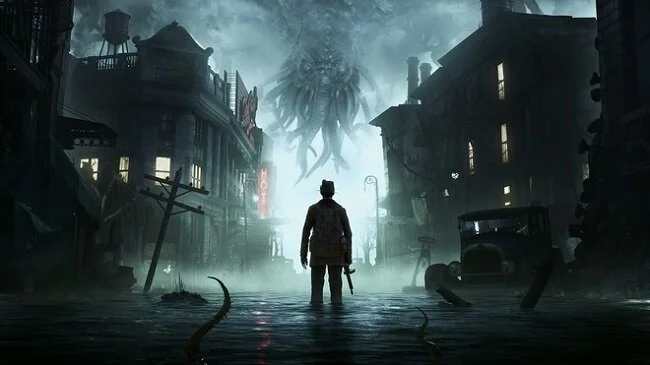
Over the next month, I shall be making a concerted effort to complete The Sinking City. I find that if I get sidetracked with too many other games, it is always the RPG that I’m playing that suffers. This is probably due to the fact that they need a more substantial time investment, so you can absorb the narrative. I have enjoyed this Lovecraft inspired game, despite its foibles and flaws. It certainly nailed the main themes of the Cthulhu Mythos. I think that I shall replace it with yet another RPG, as I like games with open worlds and dense lore that I can lose myself in. So I may purchase GreedFall next. It bears quite a few similarities to Amazon Game Studios forthcoming MMORPG, New World. However, after several beta tests, I have decided that the latter is not to my liking and think that the former will be a more suitable alternative. I hope that September doesn’t prove to be as tumultuous as August and that I can find the time to accommodate a new game.
Old is New
If you keep up with news in the MMORPG community, you’ll be aware that there has been a recent resurgence in “rogue server” offering emulation services for titles that have officially closed. City of Heroes and Star Wars Galaxies continue to sustain a player base and the level of interest clearly indicates that this is not just due to mere nostalgia. Simply put these games maintain an audience because they are good. They’re well designed, engaging and rewarding to play. Similarly, remastered games are proving to be both popular and commercially successful. Resident Evil 2 which was released last year has sold over 5 million copies and received critical acclaim. It currently has a rating of 91% on Metacritic (for those who put stock in such things). Pundits are already predicting that the remake of Final Fantasy VII will enjoy similar success. Again when you analyse the reviews and critiques available online, you find that these remastered titles fare well due to their inherent quality. Is this something newer games are lacking?
If you keep up with news in the MMORPG community, you’ll be aware that there has been a recent resurgence in “rogue server” offering emulation services for titles that have officially closed. City of Heroes and Star Wars Galaxies continue to sustain a player base and the level of interest clearly indicates that this is not just due to mere nostalgia. Simply put these games maintain an audience because they are good. They’re well designed, engaging and rewarding to play. Similarly, remastered games are proving to be both popular and commercially successful. Resident Evil 2 which was released last year has sold over 5 million copies and received critical acclaim. It currently has a rating of 91% on Metacritic (for those who put stock in such things). Pundits are already predicting that the remake of Final Fantasy VII will enjoy similar success. Again when you analyse the reviews and critiques available online, you find that these remastered titles fare well due to their inherent quality. Is this something newer games are lacking?
Games commentator Jim Sterling touches upon this subject in the latest edition of The Jimquisition (09.03.20). He strongly believes that too many contemporary so called “triple A” games are hobbled by microtransactions and content gated behind paywalls. Season passes promise future content thus justifying incomplete titles to be released and that creativity and innovation are sidelined when creating a game as a “live service”. Hence he states it is customer dissatisfaction with current games that makes remastered titles more appealing. They present an opportunity to play through a game with any impediment, interruption or requirement to pay more money to access further content. Furthermore, these are titles that hail from an era where the creative focus was on the gameplay and new ideas were not subordinate to business imperatives. All are cogent points that I broadly agree with, as I’ve experienced all of these over several decades of gaming.
The mainstream video game industry is not known for responding quickly or adapting promptly to new situations. Once a successful trend is established it is frequently slavishly followed. Hence multiple genres have each experienced a brief time in the sun. All too often a couple of games will arrive late to the proverbial party and fail to find an audience and quickly close. Some titles will even get canned while in development, if the marketing tide has turned. However, sooner or later the boardrooms of these multi billion dollar companies have got to notice what is selling and what is not. EA stated a few years ago that single player games were done as a genre and yet Star Wars Jedi: Fallen Order, a conspicuously single player game without live service trappings, has proven very successful. No matter how glacial the rate of change may be, sooner or later major publishers are going to connect the dots and see what is selling and more importantly why it is doing so. At this point will the old become new? Only time will tell.
Deathtrap Dungeon: The Interactive Adventure
I watched Welsh Troll stream Deathtrap Dungeon: The Interactive Adventure this morning and was instantly hooked by this bold new adaptation of a much beloved adventure gamebook. So I subsequently purchased the game via Steam for £7.99 which is a very reasonable price. Despite being in early access, this game’s old school appeal is instantly apparent. Based upon the 1984 book by Ian Livingstone, it perfectly captures the tone and spirit of source text. Rather than providing a visual depiction of navigating a dungeon as previous video game adaptations have done, the developers, Branching Narrative, have opted for a minimalist narrative interpretation. Hence we have actor Eddie Marsan sitting in a battered leather chair, telling the story of Baron Sukumvit's "Trial of Champions” and how those who undertake the challenge must traverse a dangerous subterranean labyrinth, from which none have ever returned. There are occasional illustrations to orientate the player but overall this is an intimate experience between the player and narrator, without an excess of visual distractions. It focuses on the power of imagination and storytelling.
I watched Welsh Troll stream Deathtrap Dungeon: The Interactive Adventure this morning and was instantly hooked by this bold new adaptation of a much beloved adventure gamebook. So I subsequently purchased the game via Steam for £7.99 which is a very reasonable price. Despite being in early access, this game’s old school appeal is instantly apparent. Based upon the 1984 book by Ian Livingstone, it perfectly captures the tone and spirit of source text. Rather than providing a visual depiction of navigating a dungeon as previous video game adaptations have done, the developers, Branching Narrative, have opted for a minimalist narrative interpretation. Hence we have actor Eddie Marsan sitting in a battered leather chair, telling the story of Baron Sukumvit's "Trial of Champions” and how those who undertake the challenge must traverse a dangerous subterranean labyrinth, from which none have ever returned. There are occasional illustrations to orientate the player but overall this is an intimate experience between the player and narrator, without an excess of visual distractions. It focuses on the power of imagination and storytelling.
When first published, books with branching narratives were quite a novelty. However, despite the innovation of the format they are essentially a linear experience. Therefore, simply duplicating that structure visually, may not necessarily make for a “good” gaming experience. Hence developers Branching Narrative have decided to add additional mechanics, so that the player has more involvement in the unfolding story and a degree of control over their character’s performance. As a result, there are battles where the players statistics are combined with the score from the roll of a pair of dice. There are also the option to use consumables to heal or to boost stamina. The player can also tactically withdraw if they see fit to do so, although that too comes with a penalty. Then there’s an inventory system for storing items that you find along the way. These further add an element of interaction, affording the player more than just a series of binary choices. Furthermore, fights can potentially be avoided if a door can be opened and an obstacle bypassed. But such a choice may again have consequences. All these decisions impact on the story’s outcome, making it more like a video game without compromising the original narrative format
I grew up in the seventies and eighties when adventure gamebooks and Dungeons and Dragons were commonplace aspects of a child’s entertainment (or at least within the social circles that I moved in). Deathtrap Dungeon: The Interactive Adventure immediately taps into this sense of nostalgia and also references wider aspects of pop culture from those decades. Seeing Eddie Marsan so eloquently narrate this dungeon adventure, made me reflect upon such TV shows as Jim Henson’s The Storyteller and the BBC’s Jackanory. The additional game mechanics that Branching Narrative have added ensure that this is more than just a story with multiple endings. The player has more agency over their character's fate and the save feature even allows you to “correct” a mistake or poor decision if you wish to. Overall, Deathtrap Dungeon: The Interactive Adventure is a very intelligent and immensely enjoyable adaptation of an old classic. It is a great contrast to the overblown visuals of many contemporary, so-called Triple A video games. For the best results, play at a time when you won’t be disturbed and at a measured pace, in an environment without any additional distractions. That way you can savour the game’s atmosphere and Eddie Marsan’s dramatic narration.
Two Worlds II: The Game That Keeps on Giving?
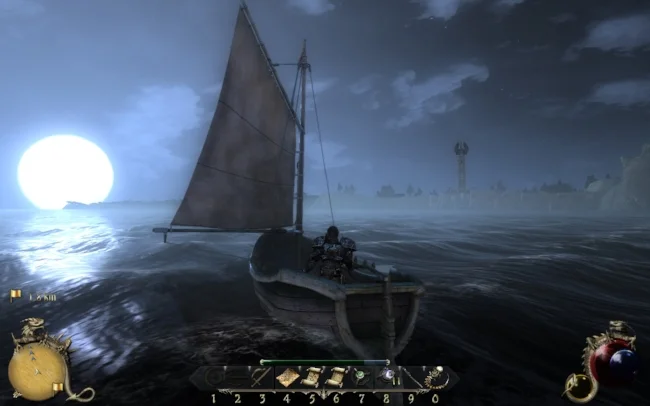
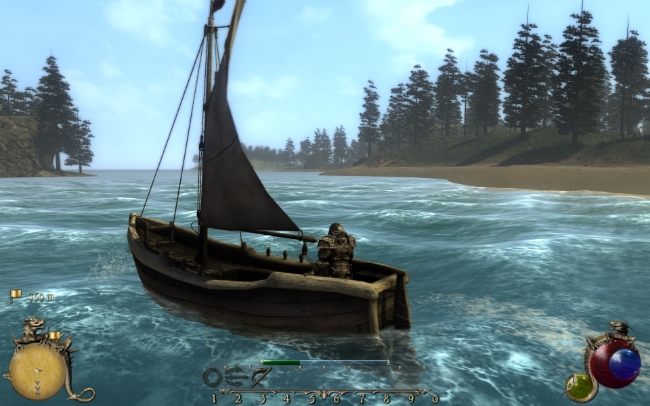
I’m suffering from a distinct sense of déjà vu as I write this post, as feel I’ve written something very similar before. Actually, I know perfectly well that I have and here’s the previous blog post. So, once again let’s recapitulate what was previously discussed. Back in 2014, I was searching for another RPG to fill that post Skyrim vacuum. I ended up buying Two Worlds II and its expansion, Pirates of the Flying Fortress. There was an exceptionally well-priced bundle available at the time. Furthermore, a little research showed that this game by German developers Reality Pump Studios, had quite a following. So I invested about 90 hours of my time into this franchise and enjoyed it far more than I expected. The game visually has a lot of rough edges. There are weird character models and a rather ponderous propensity of using faux "Olde English" in all dialogue. But the games core systems are great. Crafting and spells have a great deal of depth. There’s a wide variety of weapons and armour. Plus there’s sailing. I really dig this aspect of the game.
I’m suffering from a distinct sense of déjà vu as I write this post, as feel I’ve written something very similar before. Actually, I know perfectly well that I have and here’s the previous blog post. So, once again let’s recapitulate what was previously discussed. Back in 2014, I was searching for another RPG to fill that post Skyrim vacuum. I ended up buying Two Worlds II and its expansion, Pirates of the Flying Fortress. There was an exceptionally well-priced bundle available at the time. Furthermore, a little research showed that this game by German developers Reality Pump Studios, had quite a following. So I invested about 90 hours of my time into this franchise and enjoyed it far more than I expected. The game visually has a lot of rough edges. There are weird character models and a rather ponderous propensity of using faux "Olde English" in all dialogue. But the games core systems are great. Crafting and spells have a great deal of depth. There’s a wide variety of weapons and armour. Plus there’s sailing. I really dig this aspect of the game.
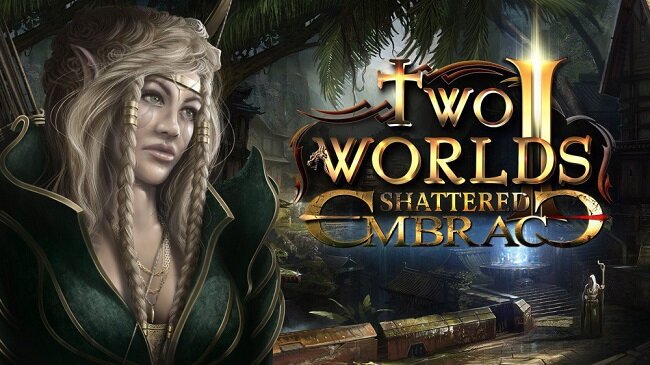
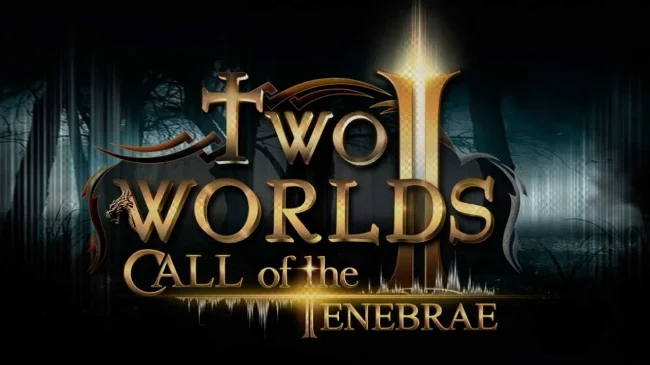
Circa June 2017, I and many other gamers were surprised to learn that there was further DLC coming to Two Worlds II. As well as some additional multiplayer maps, a standalone story Call of the Tenebrae was to be released in Q2 and another, Shattered Embrace, was to become available in Q3. Because I had fond memories of the game, I bought a season pass and dutifully installed the first of the new DLC. However, due to the fluid nature of “life”, I never made much progress with Call of the Tenebrae. Eventually, when I had more leisure time available, other games took priority and so I forgot about Two Worlds II. Until today. To cut along story short I was looking for a discount key for a specific game and I found myself perusing the TopWare Interactive online store. And there, as bold as brass, was a banner for Shattered Embrace. Turns out it wasn’t released back in 2017 due to “reasons” and is scheduled to come out this November. As I have a season pass, I should get this free of charge, so I duly re-installed all of Two Worlds II. It didn’t take long for the games niche market charms to come flooding back.
If you like open world RPGs and are prepared to try a flawed but interesting game, then why not give Two Worlds II a try. If you shop around you can get the base edition for an absolute song on numerous key seller sites. The GUI and combat mechanics are intuitive and fairly simple to master. The tutorial is integrated into the prologue quests which helps a lot. The dialogue is frequently droll and self-referential and it curiously mitigates some of the game’s rough edges. Some of the human character models are a bit weak and look quite awkward, where others such as the various beats and monsters are quite pleasing. The lighting is especially good and helps make the open world more atmospheric. The game is very good at servicing the players immediate needs, presenting them with many key RPG tropes and systems. The story itself is not anything special and is merely a narrative MacGuffin, rather than a major selling point. But not every game can be as well written as the Dragon Age franchise.
One of the most appealing aspects of Two Worlds 2 is the fact that you're not tied to a specific class. You can switch between melee, ranged and sorcery on the fly and the spell customisation process is based upon cards. It's very flexible and allows for a very diverse set of skills. The multiplayer element of the game supports co-operative play through specifically designed content; a sort of MMO-lite mode. I have never got around to exploring this aspect of the game but it would seem that the developers, Reality Pump Studios, are at least trying. There are numerous collaborative modes and it’s not just generic death matches. If you want a more in-depth analysis, then here’s a link to an episode of the Angry Joe Show in which he casts a critical eye over the game. In the meantime, I intend to slowly replay the game or at the least catch up with Call of the Tenebrae before the release of the final DLC Shattered Embrace next month. In an age when the lifecycle of a game can be comparatively short, it’s nice to see a developer still producing content nine years after the original release.
The Lord of the Rings: Gollum in Development
In recent years there has been a shift in position of both Middle-earth Enterprises and the Tolkien Estate. Saul Zaentz died in 2014 leading to a relaxing in licensing requirements and Christopher Tolkien stepped down as the director of his father’s estate in late 2017, further contributing to increased commercial use of Tolkien’s intellectual property. Since then we have learned that Athlon Games are developing a new MMORPG set in Middle-earth and that Amazon Prime is producing a major TV show set in the Second Age. It would appear that the firm grip that has prevailed over the last forty years is now waning and that Middle-earth Enterprises and the Tolkien Estate are more disposed towards expanding the reach and financial potential of the Tolkien franchise.
In recent years there has been a shift in position of both Middle-earth Enterprises and the Tolkien Estate. Saul Zaentz died in 2014 leading to a relaxing in licensing requirements and Christopher Tolkien stepped down as the director of his father’s estate in late 2017, further contributing to increased commercial use of Tolkien’s intellectual property. Since then we have learned that Athlon Games are developing a new MMORPG set in Middle-earth and that Amazon Prime is producing a major TV show set in the Second Age. It would appear that the firm grip that has prevailed over the last forty years is now waning and that Middle-earth Enterprises and the Tolkien Estate are more disposed towards expanding the reach and financial potential of the Tolkien franchise.
Despite the major canonical deviations made by Monolith Productions with both Middle-earth: Shadow of Mordor and its sequel Shadow of War, both games were substantial commercial and critical successes. Perhaps other studios have seen the creative possibilities that the Middle-earth IP can finally offer, now that both controlling parties are being more flexible in their approach to licensing. That is my pet theory, and perhaps it might explain the recently announced Gollum themed role-playing game that is currently in development by German video game studio Daedalic Entertainment. Of all the characters and scenarios they could have picked, the studio have elected to create a narrative driven game based upon the life of Frodo Baggins’s nemesis and former ring bearer, Sméagol. I’m not sure if this is a bold or insane move.
According to Carsten Fichtelmann, CEO and Co-Founder of Daedalic, “The Lord of the Rings is one of the most epic and renowned stories of all time - it's an honour for us to have the opportunity to work on our own contribution to this universe. In Gollum, players will assume the role of one of the most iconic characters in Middle-earth. We tell Gollum's story from a perspective never seen before, in any storytelling medium, all the while staying true to the legendary books of J.R.R. Tolkien. At a time when the games industry is undergoing structural changes and seeing new business models evolve, we are excited to realize a huge new production based on a story that has stayed fresh and relevant for more than 60 years”. As with most soundbites, it tells us very little about the game itself. Den of Geek managed to speak to Carsten Fichtelmann and Jonas Hüsges (Project Manager and Head of Business Development), although there still isn’t much to tell.
Ken Follett's The Pillars of the Earth
Due to the terms of the licensing agreement, Daedalic Entertainment will be creating their own unique Middle-earth aesthetic and are not pursuing photorealism or the visual style established by the film trilogies. Perhaps they will take the same stylised approach they did with their adaptation of Ken Follet’s Pillars of the Earth. I personally would have no issue with such a choice. The game play will potentially involve stealth, as this is an integral part of Gollum’s character (both with and without The One Ring). So maybe we will see a game mechanic similar to that of Sniper Elite or Ghost of a Tale? It has also been indicated by Daedalic Entertainment that there may be further games to follow as their license covers more that just The Lord of the Rings: Gollum. Tentatively, the game is scheduled for a release in 2021. If this title does bear any similarity of Pillars of the Earth, then it could be released on Linux, macOS, Microsoft Windows, PlayStation 4, Xbox One and iOS.
Age has greatly tempered my position on fandom and I look back at my former zealous, lore-based fundamentalism of multiple popular IPs with a degree of embarrassment and mirth. For example, did Middle-earth: Shadow of Mordor and Shadow of War take massive liberties with the source material? Yes. Did they ruin my enjoyment of Tolkien’s work? No. Did I have fun and enjoy both games? Again, yes. Therefore, however incongruous a Gollum themed role-playing game may sound, I believe there is scope for it to be of interest. Narratively speaking there’s a lot that can be done with the character with and some noticeable gaps in his back story to explore. As for a video game based around stealth and silent kills, we know that if done right, such a concept can definitely work. So I am happy to extend the benefit of the doubt to Daedalic Entertainment and remain cautiously optimistic for The Lord of the Rings: Gollum.



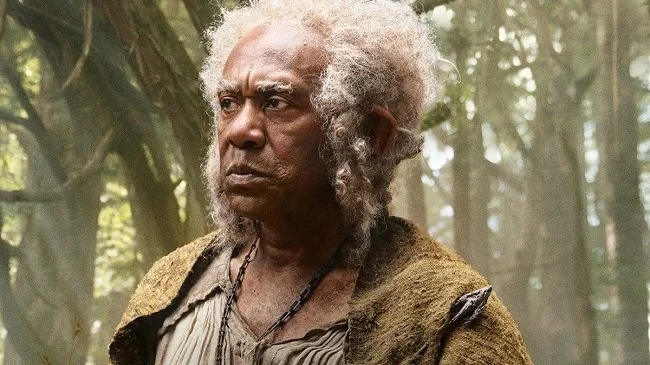

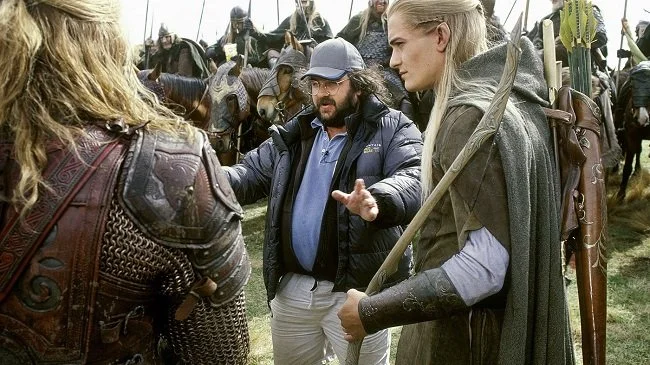

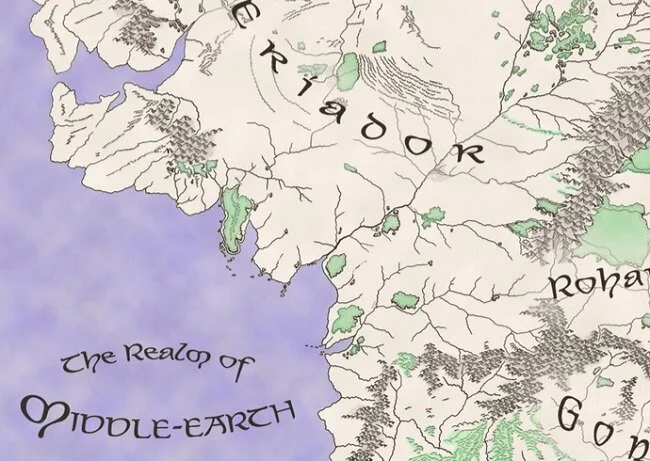
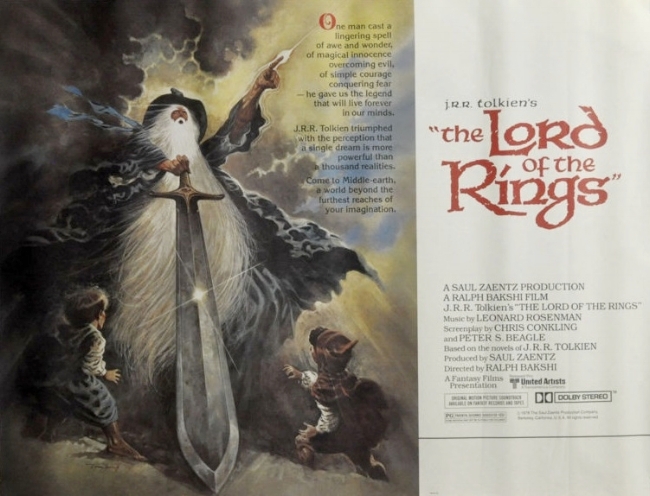

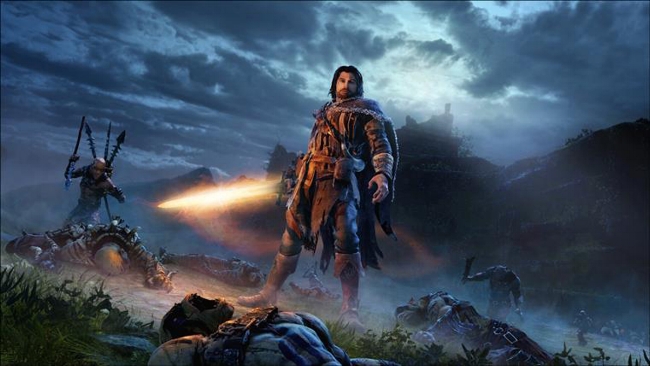
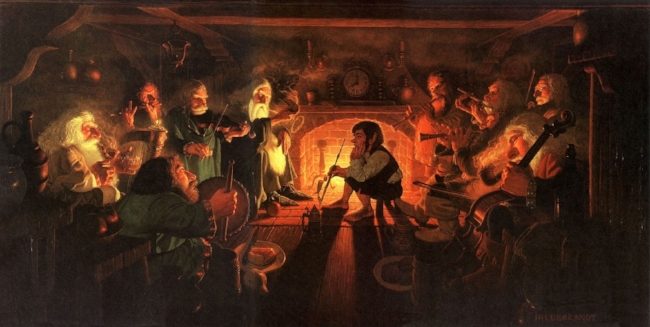

Cyberpunk 2077 Gameplay Reveal: 48-Minute Walkthrough
Two months ago, those attending E3 tradeshow were afforded a behind-the-scenes demo of Cyberpunk 2077 by developer CD Projekt Red. Finally, that same footage has been made available to the general public today. Here is the link. I do recommend that you watch the entire video and assimilate the details. Because, I’m sure there’s going to be a great deal of hyperbole, bluster and hype going around in the next 48 hours regarding the Cyberpunk 2077 Gameplay Reveal on You Tube. I’m sure there’ll also be a handful of professional malcontents who’ll immediately look to find fault or take a critical posture because, hey, that’s what some folks do. Speaking as a mature player of games, who takes a calm and measured approach to marketing and tries not to get sucked into the hysteria that can sometimes arise from the wider community, I must say I am intrigued by what I’ve seen so far.
Two months ago, those attending E3 tradeshow were afforded a behind-the-scenes demo of Cyberpunk 2077 by developer CD Projekt Red. Finally, that same footage has been made available to the general public today. Here is the link. I do recommend that you watch the entire video and assimilate the details. Because, I’m sure there’s going to be a great deal of hyperbole, bluster and hype going around in the next 48 hours regarding the Cyberpunk 2077 Gameplay Reveal on You Tube. I’m sure there’ll also be a handful of professional malcontents who’ll immediately look to find fault or take a critical posture because, hey, that’s what some folks do. Speaking as a mature player of games, who takes a calm and measured approach to marketing and tries not to get sucked into the hysteria that can sometimes arise from the wider community, I must say I am intrigued by what I’ve seen so far.
I was very impressed by CD Projekt Red’s last game, The Witcher III: Wild Hunt. I liked the open world, the aesthetic of the game and its level of complexity. It managed to balance the technical requirements of an RPG, with gear, skills points and system progression and ensure that it didn’t tip over into an excess of resource management. But above all I loved the story. It eschewed the binary morals of other games and offered us a world of hard decisions, complexity and consequences. And this is what appears to be at the heart of Cyberpunk 2077. Furthermore, the Gameplay Reveal seems to indicate that there are multiple paths to take with each mission that shape the outcome of content later in the game. Again, the balance between systems, the complexity of combat and narrative progression seems to be appropriate. As for the issue of first person perspective that has already been hotly debated, it seems to be justified from what I’ve seen. The way it reverts to third person for cutscenes and exposition looks like a good compromise.
I suspect that as well as a lot of hype, Cyberpunk 2077 is also going to encounter a lot of controversy as it’s release date gets close. The game is overtly political (by the developers own admission) and will explore a great deal of adult and challenging themes. Violence, transhumanism and evolving human identity will not be welcome in some quarters. And anything of a sexual nature always ruffles the feathers of the usual suspects. Oh, I’m certain that Cyberpunk 2077 will be pilloried in corners of the gaming community. Another potential issue is going to be the games minimum specifications. I think this may be the title that will force me finally replace my current four-year-old PC. However, I shall temper my modest enthusiasm, with a pinch of cynicism that I’ve learned the hard way after thirty plus years of gaming. “There’s many a slip between cup and lip” as the old saying goes. So, for the immediate future, I’ll remain just “interested” and content to just, watch, wait and reflect upon Cyberpunk 2077.
Story Driven Gaming
This is a collaborative post debating merits of emergent storytelling vs. static storytelling between myself and TheBro from MMOBro. After reading this, make sure to check out his side of the debate!
As I peruse my Steam library, it becomes very apparent that the titles I’ve spent the most time playing are those with complex and involving traditional, linear narratives. This is hardly surprising as I’ve always liked stories and have a strong affection for books with in-depth lore and complex faux histories. It is one of the reasons I enjoy Professor Tolkien’s work and therefore gravitate towards games that expand upon these intellectual properties. Games such as LOTRO and even Middle-earth: Shadow of War. Both endeavour to explore the mythology of Third Age from an alternative perspective. Through the Elder Scrolls V: Skyrim, I discovered a wealth of lore and entered a living, breathing world. Then of course there is the MMORPG Star Trek Online, that until recently has been the only source of new Star Trek content. All these diverse titles from multiple genres have one thing in common. A strong narrative that underpins each game.
This is a collaborative post debating merits of emergent storytelling vs. static storytelling between myself and TheBro from MMOBro. After reading this, make sure to check out his side of the debate!
As I peruse my Steam library, it becomes very apparent that the titles I’ve spent the most time playing are those with complex and involving traditional, linear narratives. This is hardly surprising as I’ve always liked stories and have a strong affection for books with in-depth lore and complex faux histories. It is one of the reasons I enjoy Professor Tolkien’s work and therefore gravitate towards games that expand upon these intellectual properties. Games such as LOTRO and even Middle-earth: Shadow of War. Both endeavour to explore the mythology of Third Age from an alternative perspective. Through the Elder Scrolls V: Skyrim, I discovered a wealth of lore and entered a living, breathing world. Then of course there is the MMORPG Star Trek Online, that until recently has been the only source of new Star Trek content. All these diverse titles from multiple genres have one thing in common. A strong narrative that underpins each game.
Often when gaming, once the player looks beyond the scope and setting of the title, they will find a set of repeatable tasks, endeavours and targets to achieve. RPGs and especially the MMORPG genre are built upon such systems. If I am to shoot, explore or resource farm within a game, all of which can be quite arbitrary at times, then I do like to have some motivation or narrative explanation as to why I am doing these things. These game mechanics actually become less arduous if I am provided with an interesting enough narrative and a world with its own internal logic. Star Trek Online for example can justify the most innocuous of tasks with a healthy dose of its unique technobabble. The grinding nature of the rebuilding of Hytbold, a major quest line in LOTRO back in 2012, was eased considerably by the well-crafted storyline that accompanied the undertaking.
However, a strong story can achieve more than simply justifying repeatable daily quests or progression grinds. Take an RPG such as The Witcher 3: Wild Hunt. I cannot remember a game that tackled adult themes and socially complex issues, so well. The central characters were very well defined with flaws and common foibles, making them extremely credible and identifiable. As a result, the player becomes thoroughly invested in the characters and has a clear emotional stake in their fate. For me The Witcher 3: Wild Hunt often felt like taking part in an interactive novel. Now such a concept may not be to all gamers liking, however when you consider the cultural significance of the story it is hardly surprising that they are an intrinsic part of gaming. We as a society reflect upon our history, politics and ethics through fictional narrative. I see games with epic linear narratives to be an extension of this concept. Furthermore, as games are not locked into a single outcome, as with a book, there is scope for interaction and to have multiple outcomes.
However, although I am a big advocate for strong stories and complex plots in gaming, I am not dismissing the alternative out of hand. Emergent storylines and player created content is ideal for certain genres and can add a very human element to gameplay, especially in the MMO genre. But emergent content is a very broad term and therefore one has to be careful to make appropriate comparisons. Early MMOs often took a less structured approach in terms of narrative. Ultima Online being a clear example of this. The narrative experience where shaped by the activities of player guilds and their interactions. High profile betrayals and assassinations would alter power struggles. Economic manipulation would also have an impact upon persistent worlds. We still see all these aspects today in EVE Online with its territorial wars, bank heists and political subterfuge.
However, these events and emergent stories have several disadvantages. They are unique and time specific. For those who were present and participated, they may well be exceptionally gripping and entertaining but if you weren’t their then you missed it all. An embedded narrative has no expiry date. Another consideration is that emergent stories and interaction often stem from the players being active in the community beyond the game itself. Guilds socialise, plot and scheme outside of the game via forums and subreddits. Social groups have hierarchies with people playing specific roles. Yet MMOs are filled with “average players” who are not always involved with the wider aspects of a game. For them, emergent stories and events are something that happen to other people, assuming they get to hear about them at all. These more passive players only experience the outcome, rather than shape it. Perhaps it can therefore be argued that player generated content is really only of benefit to the more involved player. The player with the time and inclination to devote a great many hours to a single game.
Another concern I have regarding players shaping the narrative and direction of events in a game such as EVE Online, is that the driving force may not always be a positive or pleasant one. The socio-political dynamic of games of this ilk too often manifests as betrayal, hostile acquisition or economic chaos. Although these are good themes narratively, I tire of the continual race to the bottom that such behaviour encourages. We have enough of this in real life and I do not always wish to find such thing reflected in games, especially MMOs. It is also worth considering that the open world environment that encourages emergent gameplay is an incentive to some and a source of confusion to others. I have spoken to players in both Guild Wars 2 and The Elder Scrolls Online, who are lost without the structure of clear cut quest hubs and mission objective. Choice is not always a good thing and suits all taste. And let us not forget that player generated content in such games as LOTRO. This is often roleplay driven and centred around telling tales, reading poetry and playing in a band. For those of a creative persuasion this is hog heaven. For others it again proves to be a somewhat passive or even exclusionary experience.
Then there are those players who are never going to be interested in a story based narrative of any kind. They are not motivated by plot or characters and will skip all quest explanations and in-game cutscenes. This is the kind of gamer whose pleasure hinges upon achievement, leader boards and the actual process of playing. Competitive games do not need a narrative, although there is a backstory to titles such as Overwatch. Games of this idiom are driven by league tables and success. The reward is pride and bragging rights. In fact, you could strip back the details regarding some games setting and who the various factions are, choosing to present them as simply the red and blue team in arena number three. Because if the gameplay is fun and challenging, then that will suffice for some gamers.
Like novels and movies, a narrative driven game can provide more than just an enjoyable ride. It can focus and raise awareness of complex moral, social and political issues. MMOs and RPGs can inform and make us think about difficult matters. Of course, that is not to everyone liking and some wish games to be entirely free of such elements. But for me, I find narrative games to be the next step in our ongoing evolving relationship with storytelling. Although I am not averse to MMOs and other genres that focus on player generated narratives, I favour the traditional story based approach. Hardly surprising from someone who enjoys writing. However, there are many views on this matter other than my own perspective and ass ever there is no definitive right or wrong answer. For an alternative take on this subject, The Bro over at MMOBro has written an interesting piece favouring emergent storytelling.
Mafia 3
As I’m between MMOs at present, I decided to purchase a single player game to keep me occupied, until Middle-earth: Shadow of War is released. I settled on Mafia 3 as I had played the previous instalment of the franchise and enjoyed it. As this title came out last October it can now be picked up at a substantial discount if you’re prepared to shop around. There is no game of the year edition at present but I did manage to buy the digital deluxe version for £22, which is a good price. This includes a season pass so I have all the currently released DLC. There is sufficient content available to keep me busy for a month or so. So far, I’ve clocked up 40 hours in-game according to Steam.
As I’m between MMOs at present, I decided to purchase a single player game to keep me occupied, until Middle-earth: Shadow of War is released. I settled on Mafia 3 as I had played the previous instalment of the franchise and enjoyed it. As this title came out last October it can now be picked up at a substantial discount if you’re prepared to shop around. There is no game of the year edition at present but I did manage to buy the digital deluxe version for £22, which is a good price. This includes a season pass so I have all the currently released DLC. There is sufficient content available to keep me busy for a month or so. So far, I’ve clocked up 40 hours in-game according to Steam.
The most striking aspect of Mafia 3 is the story. The game has a very strong narrative that is well written and researched. Set in New Bordeaux, a fictitious version of New Orleans, in 1968 the plot plays out against a background of unrest, civil rights activism and entrenched racism. The writers haven’t shied away from exploring the big socio-political issues of the time. Lincoln Clay is a great protagonist and the supporting characters such as Father James and John Donovan are far from two dimensional. It’s also nice to see the return of Vito Scaletta from Mafia 2. Overall the performances from all the voice actors are good. Although the revenge story is formulaic, the gold is in the depth of characters and the credible reflection of the era, politics and mood of the time.
Mafia 3 offers a very diverse open world environment. There are modern business and civil districts, along with rich and poor residential areas. The game sports a sense of contemporary sixties architecture, as well as colonial elegance. However, if you journey into the bayou you’ll find an abandoned amusement park and decaying shanty towns. As with most games of this genre, there’s a well-defined network of roads and players are encouraged to travel by a wide range of vehicles. The game radio stations are an interesting mixture of music, talk shows, news and faux adverts. The developers have paid top dollar to get the licenses for numerous high profile sixties hits. The game features songs by Jimi Hendrix, The Rolling Stones, Sam and Dave, James Brown and Jefferson Airplane.
However, where the game setting, environment and narrative are all top drawer, the nuts and bolts of Mafia 3 are somewhat formulaic. The third person, cover based combat system is nothing unusual. It’s functional but not sufficiently different or innovative. Once you’ve completed the first act of the story, the game settles down into a series of repetitive quests. To secure each district you have to do the same things, namely destroy or disrupt existing operations, take out key intermediate figures then dispose of the zone boss. Takedown animations also lack variations. The AI is somewhat wonky. Mobs will openly hunt you down which can be a little taxing at the beginning but once you have the right weapons and perks, it becomes a turkey shoot. There are other minor niggles such as no fast travel and a limitation on the number of weapons you carry.
However, the failings of some of the game mechanics are offset by the collectables system and mini games such as racing. These offer a sense of variety. Collectables include albums, Playboy magazines, various types of posters and even religious literature. The Playboy magazines are actually reproductions of genuine issues from the time. I was surprised to find that the old cliché about them featuring “good articles” was actually true. There was an extensive four-page discussion with Stanley Kubrick which was very informative. However, collecting offers no tangible benefit other than the fun of acquiring items. It doesn’t impact upon the game in any way.
From what I’ve seen so far after a week of playing the Mafia 3, the game has pretty much all the same pros and cons as it predecessor Mafia 2. The story and characters are by far the best aspect of the game and if that was lacking, you’d be left with a somewhat average and undistinguished game. But because I favour games with strong story based narratives, I am happy to play through some of the more grindy content to access the major set pieces that punctuate the proceedings. As gamers, I think there is often an unrealistic expectation for ever new game to be a unique experience. For me Mafia 3 is flawed with good and bad points but overall the good outweighs the bad. I enjoy the RPG elements of the game the best. Trying to secure the outcome I want is certainly an amusing challenge. And because of the price I paid, the fun to cost ratio is satisfactory.
Game Maps
I've been pondering of late the subject of game maps and how they can vary quite radically from title to title. Size, content and instancing can all have an impact on a maps accessibility and the way they are perceived. Then there is the issue of individual player tastes and preferences. Those who like to explore will happily spend time attempting to access remote nooks and crannies. Others will quickly become frustrated if there is no direct route to their goal, as with Guild Wars 2: Heart of Thorns. A games genre also has a significant impact upon map design. A FPS or MOBA has different requirements from it virtual environment that an MMO. I'm sure there are far more variables involved in a maps creation. However, I think most gamers seem to inherently know when the developers have got it right.
I've been pondering of late the subject of game maps and how they can vary quite radically from title to title. Size, content and instancing can all have an impact on a maps accessibility and the way they are perceived. Then there is the issue of individual player tastes and preferences. Those who like to explore will happily spend time attempting to access remote nooks and crannies. Others will quickly become frustrated if there is no direct route to their goal, as with Guild Wars 2: Heart of Thorns. A games genre also has a significant impact upon map design. A FPS or MOBA has different requirements from it virtual environment that an MMO. I'm sure there are far more variables involved in a maps creation. However, I think most gamers seem to inherently know when the developers have got it right.
For me one such example of a map being "just so" is Skyrim. The landmass is about sixteen square miles, which is big but pales into significance when compared to Just Cause 2 which clocks in at four hundred square miles. However, the thing that Bethesda has got right with Skyrim is the balance between the size of the area, the amount of content and aesthetics. The day and night cycle, coupled with procedurally driven events makes it feel like a living environment. You can watch as villagers go about their tasks and farm animals graze for food. The fact that there's no instancing when travelling above ground until you entered a building, also provides an air of authenticity.
In the halcyon days of LOTRO, Bree-Land was prime example of a rich and varied MMO game map. Although it doesn't have the faux living dynamic of other games, it remains a large and varied landmass with plenty of content to seek out. It also makes a half decent attempt at realising the geography as written in Tolkien's source text. LOTRO still remains a game with a handsome world design but the regions that have subsequently been added of late are far more functional in their construction. Players often cannot access certain areas due to rivers and mountains and find themselves funnelled through pleasant zones on the way to the next quest hub. However more recent MMO's such as ArcheAge and Guild Wars 2 still encourage the exploration of their game worlds and have devised content around players desire to do so.
The open world cities of Mafia 3 or GTA V can also be compelling environments to immerse oneself in. Like their real-world counterparts, both New Bordeaux and Los Santos have distinct zones such as commercial and residential areas. Again random events occur to the citizens as you travel through the map. Weather systems and a customisable day and night cycle again lend credibility to the setting. Unlike fantasy games, these titles have the advantage of contemporary embellishments such as radio stations, roadside advertising and inner-city congestion; all adding to the overall ambience. You can visit bars and diners and watch “life rich pageant” unfold, or at least the developers nearest approximation of it.
However, game maps are still very much determined by the prevailing technology and although things are progressively getting better, there are still limitations. The MMO genre not only has to consider such factors as draw distances and texture loading but there is the question of the players themselves. The game engine has to accommodate both the environment and the population. Unless you have a very high-end gaming PC, then you will often notice system foibles such as "pop-in" as objects appear as you get closer to them. SWTOR and LOTRO are two older MMOs that suffer from this technical idiosyncrasy. Often developers will try to fudge this by blocking line of sight or introducing haze, fog or some other environmental workaround. Single player games have different demands upon them, allowing titles such as Crysis to have draw distance of over nine miles.
Irrespective of a maps design, its success ultimately depends upon how well it is integrated into the game. The two zones of Mordor and Nurn in Middle-earth: Shadow of Mordor are relatively small but diverse and well implemented. There is a wealth of topographical features that break up the landscape in a very organic way. Unlike some MMOs, this is not done is such an arbitrary and linear fashion. North Africa is well realised in Sniper Elite III, affording the player multiple routes to various targets, across varied terrain. This greatly enhances the re-playability of the game. In Sniper Elite IV, the Sicilian villages and seaports are extremely credible and authentic. The rolling fields and forests of The Witcher 3: Wild Hunt are expansive and atmospheric with a distinctly Eastern European feel to them. Furthermore, the landscape is populated in a credible fashion. Bandits will make use of remote and covered areas. Regions of Wilderness are appropriately empty with minimal amounts of NPCs.
Conversely the London maps in a game such as Sherlock Holmes: Crimes and Punishments are far less dynamic and more functional. They are mainly there for ambience and provide little more than a conduit between each crime scene. The maps in both FPS and MOBA genres, have additional criteria to consider. The fluid nature of their game play requires a different approach to their construction. Multiple routes and chokepoints are common place in such designs. Snipers require vantage points but these need to be relatively exposed to ensure that a single location doesn’t dominate the game. The Battlefield franchise takes map design a stage further, with a mechanic that allows players to destroy the environment and thus change the dynamics of the game. This was to be an integral feature of the now defunct EverQuest Next, although I suspect would have been subject to a wealth of caveats.
As players, we also bring a human element when we interact with game maps and there are many factors that shape our perceptions. Ambient music or when or who we’re playing with, influence how we feel about specific in-game zones. As a result, we often have personal favourites. Evendim in LOTRO is an example of a map that I have fond affection for. More recently the region of Toussaint in the Blood and Wine expansion for The Witcher 3, attracted my interest. It’s a sunny and luxuriant zone and a radical change from the usual ice or desert archetypes you find in so many games. Hopefully, as game technology and the hardware it runs on evolves, we will see map design advance accordingly. I look forward to experiencing larger, more detailed open world environments populated with flora and fauna that have their own lifecycles.
Two Worlds II: New DLC After Seven Years
I bought a bundle of games in August 2014, which included the RPG Two Worlds II and its expansion, Pirates of the Flying Fortress. With such purchases, there is a tendency to adjust your expectations in accordance to your financial investment. However, I pleasantly surprised to find Two Worlds II a quirky and enjoyable role-playing game. The animations and combat are somewhat clunky but the loot system that allows you to break down every item into upgrade components, is useful. The game also boasts a customisable spell system, that utilises collectable cards as modifiers. It is quite an innovative mechanic and certainly allows players to create builds that suit their tastes. Two Worlds II benefits from a pleasing soundtrack and a standalone expansion that offers a superior story to the base game. Not every RPG can be a Skyrim or Witcher 3. Two Worlds II is an acceptable genre title to play between such releases.
I bought a bundle of games in August 2014, which included the RPG Two Worlds II and its expansion, Pirates of the Flying Fortress. With such purchases, there is a tendency to adjust your expectations in accordance to your financial investment. However, I pleasantly surprised to find Two Worlds II a quirky and enjoyable role-playing game. The animations and combat are somewhat clunky but the loot system that allows you to break down every item into upgrade components, is useful. The game also boasts a customisable spell system, that utilises collectable cards as modifiers. It is quite an innovative mechanic and certainly allows players to create builds that suit their tastes. Two Worlds II benefits from a pleasing soundtrack and a standalone expansion that offers a superior story to the base game. Not every RPG can be a Skyrim or Witcher 3. Two Worlds II is an acceptable genre title to play between such releases.
After playing through Two Worlds II and the subsequent expansion I deleted the game from my hard drive. After all, this was a title that was originally released in late 2010 and as far as I was concerned the game’s life cycle had come to an end. Turns out I was wrong. Not only about the games life cycle but in my assumptions about the franchises popularity. Because over the weekend I received a marketing email from publishers TopWare regarding new DLC for Two Worlds II. Here is some of the promotional blurb. “After the blockbuster success of Two Worlds II: Pirates of the Flying Fortress, TopWare Interactive and Reality Pump Studios have created a brand new chapter in the phenomenal RPG series! With an all new HD graphics engine, new enemies, weapons and a completely revamped alchemy system, Two Worlds II: Call of the Tenebrae will take you on yet another immersive adventure through the world of Antaloor! But the adventure doesn’t stop there for season pass holders! The Season Pass also includes the follow-up DLC, Two Worlds II, Shattered Embrace, which will launch during Q4 of 2017. Don’t miss out on the chance to continue the fight in Antaloor!”
The first thing that ran through my mind was “who resurrects a game after six years” but the more I thought about it, the more I realised that there are examples of this happening before. Star Wars: Knights of the Old Republic 2 and Anarchy Online are two that immediately spring to mind. Then of course there is the vogue for "remasters" with older titles being given graphical overhauls. Modern warfare, Bio-Shock and Skyrim have all had such revisions made to them. Then there is the issue of sales and the dreaded “number of units sold”. It turns out that Two Worlds II has quite a following in Europe and has shifted over two million copies. North American and international sales add a further million to the total. As developers and publishers are not known for their charitable tendencies, one must assume that the new DLC has viable sales potential.
As I’m between RPGs at present and still mourning the end (for the immediate future) of The Witcher franchise, I decided that developers Reality Pump have sufficient goodwill in my eyes, for me to take a punt on the new content for Two Worlds II. So, I bought a season pass at the discounted price of €29.99 as I’m apparently such a “loyal customer”. Although I’ve read some marketing material, I’m going to try and dive in to this game relatively blind upon its release on June 15th. Hopefully the DLC will be as unusual and fun as the previous content. Furthermore, in light of this development, perhaps my hopes for a third instalment of the World War II co-op shooter, Hidden & Dangerous, are not as misplaced as I initially thought.