Scoob! (2020)
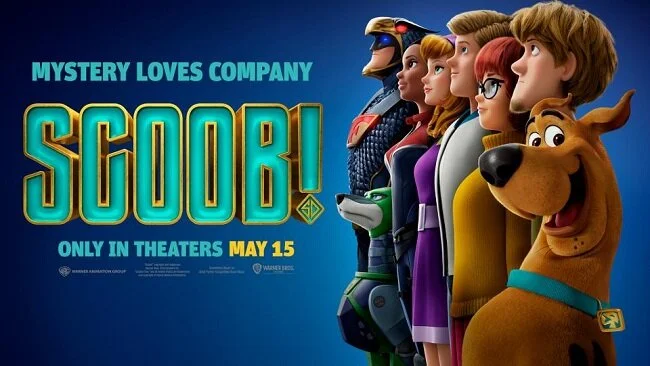
Scoob! is one of several movies that was slated for a theatrical release this summer but ended up being premiering on VOD instead due to the global pandemic. As a result, it is difficult to ascertain exactly how successful this animated film has been. A lot of trade newspapers have indicated that rentals have been high and that the film has proven more popular than Tom Hardy’s new movie Capone. Some industry sources have estimated a gross of $100,000,000 in a two week period. I suspect that the current lockdown has provided a market of children craving new entertainment and parents happy to pay for 90 minutes of peace and quiet. Hence Scoob! appears to have been in the right place at the right time. Whether that popular success would have happened if the movie had been released theatrically is another matter.
Scoob! is one of several movies that was slated for a theatrical release this summer but ended up being premiering on VOD instead due to the global pandemic. As a result, it is difficult to ascertain exactly how successful this animated film has been. A lot of trade newspapers have indicated that rentals have been high and that the film has proven more popular than Tom Hardy’s new movie Capone. Some industry sources have estimated a gross of $100,000,000 in a two week period. I suspect that the current lockdown has provided a market of children craving new entertainment and parents happy to pay for 90 minutes of peace and quiet. Hence Scoob! appears to have been in the right place at the right time. Whether that popular success would have happened if the movie had been released theatrically is another matter.
Scoob! is a computer-animated comedy mystery film produced by Warner Animation Group. Canonically, it’s both an origins movie and a soft reboot of the beloved Scooby Doo franchise. The film starts with a friendless young Norville "Shaggy" Rogers, adopting Scooby Doo as a pup. The two subsequently meet Fred Jones, Daphne Blake, and Velma Dinkley while out trick or treating on Halloween. Their subsequent exploration of a local haunted house leads to the unmasking of a local criminal. Hence the friends decide to form Mystery Inc. “I mean, like, how many scary monsters could there be?” Shaggy asks which ushers in possibly the highlight of the entire movie; a loving recreation of the original title sequence from Scooby Doo Where Are You! (Season 2). Sadly, it all goes rapidly down hill after this. Ten years later the gang splits after a business deal with Simon Cowell (yes you read that correctly) displeases Shaggy and Scooby. The pair are subsequently attacked by an army of small robots called “rottens” while bowling but are rescued by Dee Dee Skyes, Dynomutt, and the Blue Falcon. Scooby learns that he is being hunted by none other than Dick Dastardly who needs him to unleash Cerberus (from Greek mythology) from the underworld.
And therein lies the fundamental problem with Scoob! There seems to have been a lack of faith in the basics of the franchise. IE Scooby and the gang solving haunted house mysteries. Hence the production tries to crowbar in other Hanna-Barbera characters in an attempt to pander to the current cinematic vogue for superheroes. Then there’s Dick Dastardly (voiced by Jason Isaacs who is clearly having a lot of fun) and his comedy robot sidekicks which smacks of Gru from Despicable Me and his minions. Captain Caveman also makes an appearance for no real reason. So if you were expecting to see a back to basics reimagining of the adventures of Mystery Inc in Scoob! then you’re in for a “surprise”. Although in fairness, it should be noted that Scooby Doo did team up with the Blue Falcon and Dynomutt in the past but this was during the middle seventies and not during the classic original two seasons of Scooby Doo Where Are You!
The other major issue with Scoob! is the way the screenplay by Matt Lieberman, Adam Sztykiel, Jack Donaldson, Derek Elliott (yes it took four of them to write this) tries to throw a few jokes, references and homages to the adult viewers. It’s a common enough practise in animated films but the gags are somewhat varied and a few are even questionable. There’s a joke where Dick Dastardly’s crimes are discussed and not paying for Netflix is among them. If you read the list on the police database quickly you'll also find tripping old ladies in Lagos. These quips work well but others fall flat, often referencing the obscure. Plus hasn’t Simon Cowell’s notoriety now faded from popular culture? Wasn’t that all two decades ago? And of course Scoob! suffers from the inclusion of my personal cinematic bête noire; the overlong, excessively loud action sequence. Scooby Doo Where Are You! was all about comedic chases and not explosions.
So upon mature reflection and sobre analysis, I think it’s fair to say that Scoob! is a visually chaotic and tonally mixed viewing experience. It certainly won’t delight lifelong fans raised on reruns of the original incarnation of the show. The film smacks of a production driven by focus group and committee. The kind so brilliantly satirised in RoboCop 2. However, despite the qualms of adult fans and professional critics, it should be noted that I watched this movie (twice) with my 5 year old Granddaughters. They loved it. And that is possibly all that Warner Bros. Animation Group care about. I suspect that there’ll no doubt be a Scoob! 2, in the not too distant future. In the meantime, if you have small children that need to be entertained, then Scoob! will do just that. If you are a fan of the franchise then I’m sure I’m not the first to say Scooby Don’t.








Top Cat: The Movie (2011)
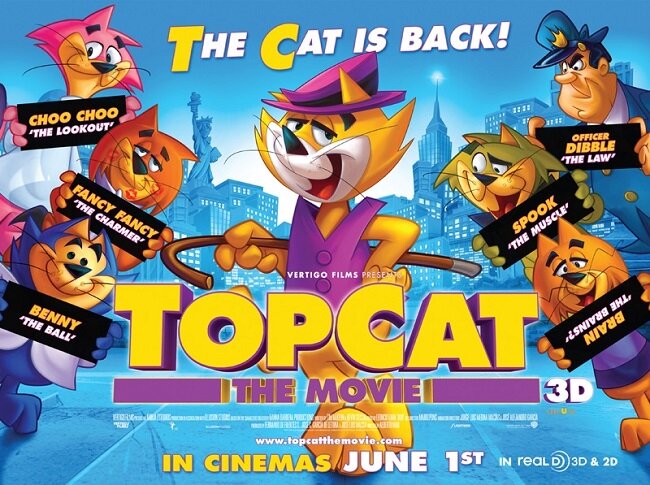
The first I found out about Top Cat: The Movie was when I received an email from an events company that was handling promotional screenings, prior to the film’s UK release in the summer of 2012. For some reason I missed the usual pre-production publicity that comes with the rebooting of a popular franchise. One of the benefits of this was that I didn't have time to fret or fuss about this reimagining of an integral part of my childhood. I must admit I was flummoxed that this 50-year-old franchise was subject to a makeover and was even more discombobulated to find out that the original show was a massive hit in Mexico and had garnered a huge cult following. This was why Warner Bros. subcontracted this production to Mexico's Anima and Argentina's Illusion studios. Subsequently Don Gato y Su Pandilla (Top Cat and His Gang) opened on 16th September 2011 in Mexico to weekend box office returns of 41m pesos ($2.9m). It subsequently became the highest-grossing independent animated films released in the United States that year.
The first I found out about Top Cat: The Movie was when I received an email from an events company that was handling promotional screenings, prior to the film’s UK release in the summer of 2012. For some reason I missed the usual pre-production publicity that comes with the rebooting of a popular franchise. One of the benefits of this was that I didn't have time to fret or fuss about this reimagining of an integral part of my childhood. I must admit I was flummoxed that this 50-year-old franchise was subject to a makeover and was even more discombobulated to find out that the original show was a massive hit in Mexico and had garnered a huge cult following. This was why Warner Bros. subcontracted this production to Mexico's Anima and Argentina's Illusion studios. Subsequently Don Gato y Su Pandilla (Top Cat and His Gang) opened on 16th September 2011 in Mexico to weekend box office returns of 41m pesos ($2.9m). It subsequently became the highest-grossing independent animated films released in the United States that year.
Now apparently, when Top Cat was originally shown in Mexico, the show was re-scripted and re-dubbed extensively to suit the local market. Something about TC's irrepressible personality and his anti-authoritarian high jinks resonated with the audience and they took him to their hearts. The original show became a major hit and remained in syndication for years. This needs to be considered when watching Top Cat: The Movie, as it is a production that has been created specifically for the Latin American market and then rendered back into a English friendly product. It is therefore a little left field and not entirely identical to the source material. The story has a contemporary setting and animation is a mixture of 2D characters within a CGI environment. The style is very much in the idiom of contemporary shows that you see on the cartoon network. However, that is not a bad thing. There are three versions of the movie available. A Spanish dialogue version. A US version featuring additional voice acting from Rob Schneider and Danny Trejo and a UK version where these actors are not present.
As to the film’s plot, Top Cat and his gang are all present as is his foil, Officer Dibble. The voices are not radically different, although Choo Choo has become even camper and now appears to be pink. However, I chose to overlook these changes as he is one of the most enjoyable members of the cast. The story is odd to say the least, revolving around a rogue robot police force and the villainous commissioner. At one point Top Cat goes to Dog Prison which raises a wealth of questions. The humour veers from gags cribbed from the original show to more modern double entendres and nudge, nudge humour. There is also some love interest introduced to the plot, but it is poorly handled and is hardly going to do any favours for the representation of women in movies. Overall, the narrative is somewhat haphazard and all over the shop. Yet it avoids complete failure due to the inherent fact that Top Cat and his gang are likeable. Top Cat: The Movie also wins by default because in direct comparison to recent reboots of old cartoon franchises such as The Smurfs and Yogi Bear, it’s simply not as bad.
Undemanding children unfamiliar with the heritage of the show will more than likely find Top Cat: The Movie acceptable. There’s enough slapstick humour and frenetic chases to keep the uncritical eyes of the young occupied. Bizarrely enough I did not object to this reboot anywhere near as much as I thought I would. It is different and certainly not as I expected but when you consider the films pedigree and the fact that the concept has been translated from one culture to another and then back again, it still retains facets of the original show. Perhaps the essential dynamics of Top Cat, his gang and their timeless shenanigans are simply too strong to be eradicated even by current studio perceptions of audience tastes and postmodern sensibilities. If you are a dyed in the wool Top Cat purist, then avoid this movie. If you are curious and have an interest in animation then give it a go. Overall I still think the Top Cat: The Movie should be filed under odd.
Ray Harryhausen
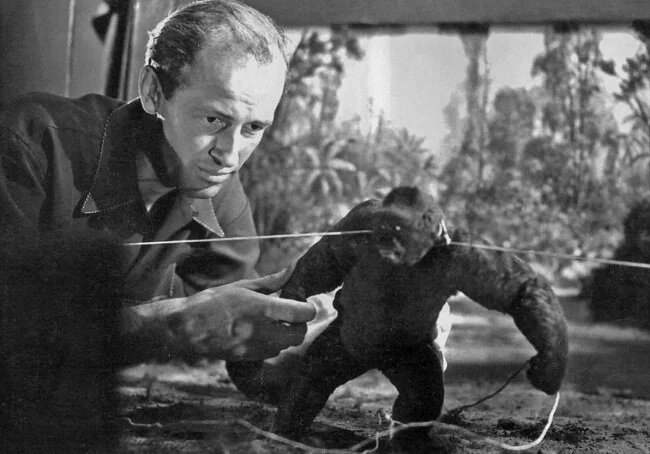
Today Ray Harryhausen would have been 100. Sadly he died on 7th of May 2013. He is one of a handful of creative artists who due to his skill, passion and good nature, influenced generations of fans and had a significant impact on filmmaking worldwide. In 2010 I had the pleasure of attending Ray’s 90th Birthday celebrations held at the British Film Institute. Hosted by charismatic director John Landis, all manner of celebrities, actors and filmmakers queued to heap praise on this quiet and retiring gentleman. It was a wonderful evening and a fitting way to honour a man who was not only a pioneer in the visual effects industry but a great source of inspiration for so many. His work was so influential that it has shaped many aspects of contemporary fantasy cinema. For six decades Ray Harryhausen made unique movies where he breathed life into monsters and mythical creatures. Through the medium of stop motion animation he endowed all of his creations with a unique character. He quite simply made dreams real. And that unique gift had a colossal impact
Today Ray Harryhausen would have been 100. Sadly he died on 7th of May 2013. He is one of a handful of creative artists who due to his skill, passion and good nature, influenced generations of fans and had a significant impact on filmmaking worldwide. In 2010 I had the pleasure of attending Ray’s 90th Birthday celebrations held at the British Film Institute. Hosted by charismatic director John Landis, all manner of celebrities, actors and filmmakers queued to heap praise on this quiet and retiring gentleman. It was a wonderful evening and a fitting way to honour a man who was not only a pioneer in the visual effects industry but a great source of inspiration for so many. His work was so influential that it has shaped many aspects of contemporary fantasy cinema. For six decades Ray Harryhausen made unique movies where he breathed life into monsters and mythical creatures. Through the medium of stop motion animation he endowed all of his creations with a unique character. He quite simply made dreams real. And that unique gift had a colossal impact
As a child growing up in the seventies, audiences had a subtly different relationship with blockbuster movies and special effects than they do today. They were not as ubiquitous or cynical as contemporary films and hence had an immense impact upon young and impressive minds. Jason and the Argonauts, The First men in the Moon and One Million Years B.C. had a profound influence upon me and subsequently shaped my future tastes, not only in terms of film but also in TV and literature. I studied Classical Civilisation at school in part due to my curiosity in ancient Greece that Ray had inspired. His work also sparked for me an interest in the technicalities of filmmaking. Something I still revel in today. I don’t just like to watch a film, I enjoy learning about the entire production and the creative choices made by all involved. Cinema is after all a collaborative process. My love of his work is also one of the reasons I blog about films today and through writing I often encounter others who were equally inspired by his unassuming genius.
One of the things that came across a decade ago when I saw this softly spoken man, was how passionate and genuine he was, even at the age of 90. He was more disposed to talk about others than his own work. Something his good friend Ray Bradbury pointed out in a video message. Ten years on, although Ray’s talent is no longer with us, his work and the art of stop motion animation still lives on through his foundation, I'd like to say thank you Ray for the hours of wonder and joy you gave to us all. Not only for the visual delights you entranced us with but for the honest storytelling with its gentle morality that under pinned it all. By giving us Medusa, Talos, Ymir (and even Bubo) you also gave us Rick Baker, Peter Jackson, Tim Burton, Peter Lord, Phil Tippett and so many others. You were an innovator and a true artist. Those who collaborated with you, such as Bernad Herrmann and Miklós Rózsa, knew this. Your profound influence will continue to inspire future generations and your work will always find news fans because it is timeless. True art always is.



Dawn of the Dead: Complete Cut (1978)
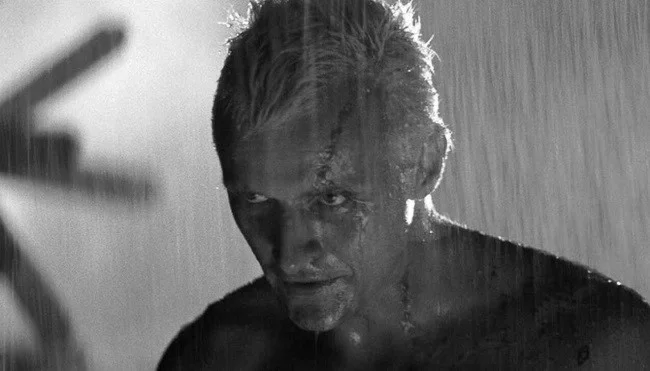
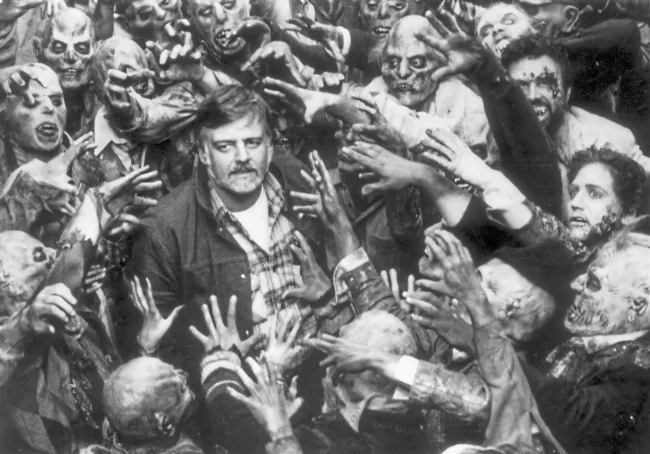
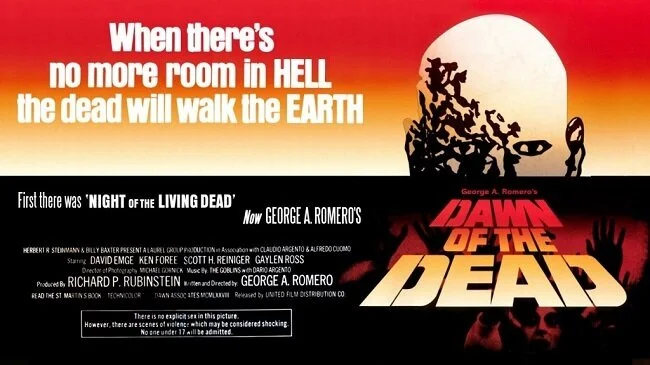
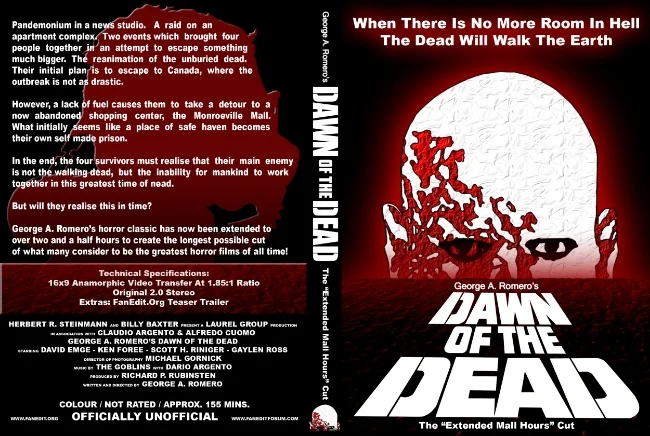
Five years ago, I wrote about a fan edit of George Romero’s horror classic Dawn of the Dead that attempted to recreate the original rough cut of the movie. The so-called “Extended Mall Hours” cut was composed of the 139 minute Cannes edit of the film and the 117 minute Dario Argento version. It was a very interesting project but as it consisted of DVD quality material (including deleted scenes) it was not an optimal presentation. Being a fan edit, there were obvious issues regarding legality, so I never really expected to see anything comparable to this version being officially sanctioned or released. So I was therefore most surprised to learn that a recent Blu-ray boxset release by Austrian distributors XT Video included a “Complete Cut” which similarly combines all available material. This is presented in 1080p, at a ratio of 1:85:1 and runs 155 minutes. It is superior in quality to the “Extended Mall Hours” cut and is most likely the nearest any fan is ever going to get to seeing Romero’s initial edit of the film.
Five years ago, I wrote about a fan edit of George Romero’s horror classic Dawn of the Dead that attempted to recreate the original rough cut of the movie. The so-called “Extended Mall Hours” cut was composed of the 139 minute Cannes edit of the film and the 117 minute Dario Argento version. It was a very interesting project but as it consisted of DVD quality material (including deleted scenes) it was not an optimal presentation. Being a fan edit, there were obvious issues regarding legality, so I never really expected to see anything comparable to this version being officially sanctioned or released. So I was therefore most surprised to learn that a recent Blu-ray boxset release by Austrian distributors XT Video included a “Complete Cut” which similarly combines all available material. This is presented in 1080p, at a ratio of 1:85:1 and runs 155 minutes. It is superior in quality to the “Extended Mall Hours” cut and is most likely the nearest any fan is ever going to get to seeing Romero’s initial edit of the film.
Having recently watched the “Complete Cut”, I again reiterate the same comments I made when watching the “Extended Mall Hours” fan edit. The film takes on a somewhat bleaker tone with some additional dialogue scenes between Peter and Stephen. The expanded “Biker Raid” adds to the action and certainly increases the threat that they pose to our protagonists. And there is a lot more additional zombie related violence. However, this version does a far better job of adjusting the soundtrack to accommodate the additional material. Some tracks by Goblin that were not used in previous edits of the film have been integrated back into the movie. Hence we do not get too much repetition of cues. The visual elements are of a superior quality this time round so there is no significant disparity between old and new material. The editing is also seamless and the addition of new content does not disrupt the narrative flow or the overall pacing of the film.
The addition of this version of Dawn of the Dead to the existing three cuts of the film raises the inevitable question of which is best? Although I often prefer the most comprehensive version of movies, I’d advise those who have not seen the film before to start with the standard theatrical version first. It has a sense of immediacy that makes it possibly the most accessible edit. Other versions are best watched once an opinion of the base movie has been established. Some of the material in the “Complete Cut” may mainly be of interest to completists who want to see additional zombie footage. However, some of the extra make up effects and action scenes are not quite as polished as those that have always been present, which may well be the reason that director George Romero removed them. However, if you are an aficionado then this version of the film is worth seeing for scholarly reasons. However, please note that the boxset that contains this cut was a limited edition and is now very expensive to obtain.



Classical Music in Movies
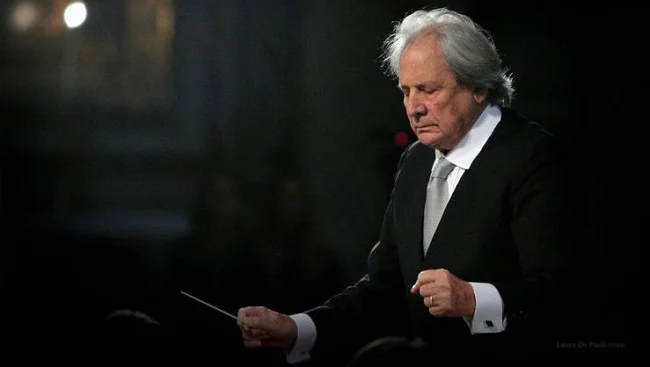
Classical music has often been used to great effect in cinema since the advent of sound. It has certain advantages over bespoke compositions, in that it can imbue a scene with a sense of gravitas and emotionally connect with viewers who may already be familiar with the piece being played. Legendary director Stanley Kubrick famously rejected Alex North’s score for 2001: A space Odyssey after finding the classical tracks he used for the temporary soundtrack complement the visuals perfectly. Over the years, some particular pieces of classical music have proven to be very popular and flexible, thus appearing in a wide variety of films across multiple genres. Hence, I have chosen two well known tracks that demonstrate this. I would also like to highlight contemporary classical music and have also selected one example that I feel demonstrates how the genre sublimely compliments cinema.
Classical music has often been used to great effect in cinema since the advent of sound. It has certain advantages over bespoke compositions, in that it can imbue a scene with a sense of gravitas and emotionally connect with viewers who may already be familiar with the piece being played. Legendary director Stanley Kubrick famously rejected Alex North’s score for 2001: A space Odyssey after finding the classical tracks he used for the temporary soundtrack complement the visuals perfectly. Over the years, some particular pieces of classical music have proven to be very popular and flexible, thus appearing in a wide variety of films across multiple genres. Hence, I have chosen two well known tracks that demonstrate this. I would also like to highlight contemporary classical music and have also selected one example that I feel demonstrates how the genre sublimely compliments cinema.
Symphony No7. II. Allegreto (A Minor) by Beethoven.
This rather portentous piece builds over its 9 minute duration. The movement is structured in a double variation form. It starts with the main melody played by the violas and cellos, an ostinato. This melody is then played by the second violins while the violas and cellos play a second melody. Because of the music’s ominous quality it has featured in numerous films. It plays over the montage showing Charlotte Rampling’s and Sean Connery’s ageing and death at the end of John Boorman’s Zardoz (1974). It is also used in Alex Proyas’ science fiction thriller Knowing (2009) when Nicholas Cage returns home to his estranged Father as the world is consumed by solar flares.
Adagio in G minor ("Albinoni's Adagio").
This sombre track is commonly attributed to the 18th-century Venetian master Tomaso Albinoni but was actually composed by 20th-century musicologist and Albinoni biographer Remo Giazotto, purportedly based on the discovery of a manuscript fragment by Albinoni. The piece evokes a sense of loss and melancholia. Hence it was used to great effect in Peter Weir’s influential World War I movie Gallipoli (1981). It features in Kenneth Lonergans’ human drama Manchester by the Sea (2016), although some critics felt that the piece’s ubiquity was actually distracting. Irrespective of this criticism it remains a very moving piece of music.
Lacrimosa by Zbigniew Preisner.
Taken from Polish composer Zbigniew Preisner Requiem for a Friend, this track appears in Terrence Malick’s experimental philosophical drama The Tree of Life (2011). It features during the “creation of the universe” sequence, which is itself a fascinating work of art. This scene, which features practical visual effects by famed special effects supervisor Douglas Trumbull, is further imbued with religious ambience and a sense of the divine by the power of this piece and the beauty of the soprano vocals by Sumi Jo. As the cosmos coalesces, there is a profound sense of both human insignificance and wonder.







The Last Broadcast (1998)
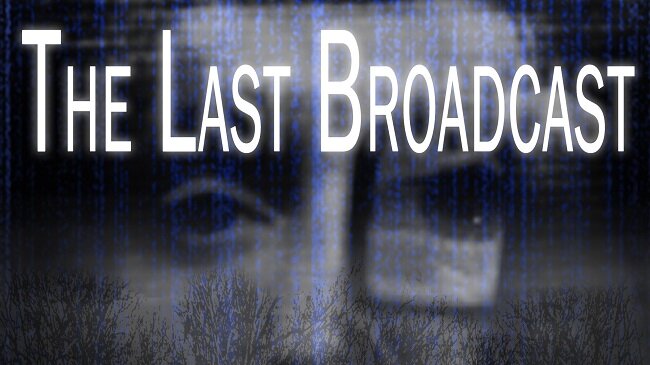
The Last Broadcast is a curious beast that straddles both the “mockumentary” and “found footage” genres. Shot entirely on consumer level video equipment, it effectively captures the look and feel of public access cable TV from the times. Released before the massive commercial success of The Blair Witch Project, The Last Broadcast did not find a comparable mainstream audience at the time, although it remains a favourite with genre fans. However, the movie has been recently re-released on Amazon Prime and subsequently become a talking point once again. Elements of the plot have proven very prophetic, such as the popularity of “ghost hunting” reality shows and the integration of online interactivity into live television. But the one standout aspect of The Last Broadcast which polarises viewer opinion is its ending. This is often seen as either a clever “sting in the tail” or an ill considered “jumping the shark” cop out.
The Last Broadcast is a curious beast that straddles both the “mockumentary” and “found footage” genres. Shot entirely on consumer level video equipment, it effectively captures the look and feel of public access cable TV from the times. Released before the massive commercial success of The Blair Witch Project, The Last Broadcast did not find a comparable mainstream audience at the time, although it remains a favourite with genre fans. However, the movie has been recently re-released on Amazon Prime and subsequently become a talking point once again. Elements of the plot have proven very prophetic, such as the popularity of “ghost hunting” reality shows and the integration of online interactivity into live television. But the one standout aspect of The Last Broadcast which polarises viewer opinion is its ending. This is often seen as either a clever “sting in the tail” or an ill considered “jumping the shark” cop out.
Filmmaker David Leigh (David Beard) is making a documentary about the murders of the hosts and crew of a cable TV show called Fact or Fiction. Presenters Steven "Johnny" Avkast (Stefan Avalos) and Locus Wheeler (Lance Weiler), along with sound recordist Rein Clackin (Rein Clabbers) and psychic Jim Suerd (James Seward) travel to the Pine Barrens in search of the Jersey Devil. Only Jim Suerd returns in a state of disorientation. The police mount a search and subsequently find the mutilated bodies of Wheeler and Clackins. Avakast remains missing although his hat is found by a pool of blood. Subsequent viewing of the video footage shows tensions between Suerd and the others and physical evidence soon leads to a quick conviction. However, Suerd dies in custody under mysterious circumstances while his appeal is pending. David Leigh subsequently obtains tape footage that was missing from the police investigation. Although damaged he hires data retrieval expert Michelle Monarch (Michelle Pulaski) to search for any viable material. Will this content reveal the truth?
The Last Broadcast does a good job of establishing its central characters and building up a credible biography on each through faux interviews with friends and officials. It also accurately reflects the “home brew” nature of cable TV and public access TV from the era. The use of IRC as a means for viewers to interact with the show’s hosts is an interesting snapshot of the times. Another clever aspect of the plot is the way in which the supernatural is teased and then sidelined. The Fact or Fiction hosts go in search of the Jersey Devil but viewers are not given a summary of the associated legend nor does the story go out of its way to imply that the murders are of a supernatural nature. Far more time is spent exploring whether Jum Suerd is a gifted psychic or a deluded, dangerous loner. Documentary filmmaker David Leigh also remains an enigma, although on face value he is simply investigating a story and hence shouldn’t be the focus of his own film.
The Last Broadcast proceeds at a measured pace and is a slow burn. There are some minor jump scares when interviews with people suddenly cut to pictures of the crime scene but overall the focus is on maintaining a mysterious atmosphere. The elephant in the room is the film’s climax, in which a computer enhanced image reveals the solution to the mystery. There is then a major shift in the technical style of the remainder of the movie which will either delight viewers or prove to be a deal breaking WTF moment. To say any more would be an overt spoiler. It is also worth noting that it is this aspect of the film that has kept the movie on fans radar and often becomes the focal point of discussion. Irrespective of this, there are many other aspects of The Last Broadcast that were ahead of its time. If you are a fan of this genre or a movie aficionado, then I’d recommend a viewing so you can decide upon the merits of the controversial ending.

Classic Movie Themes: The Pink Panther
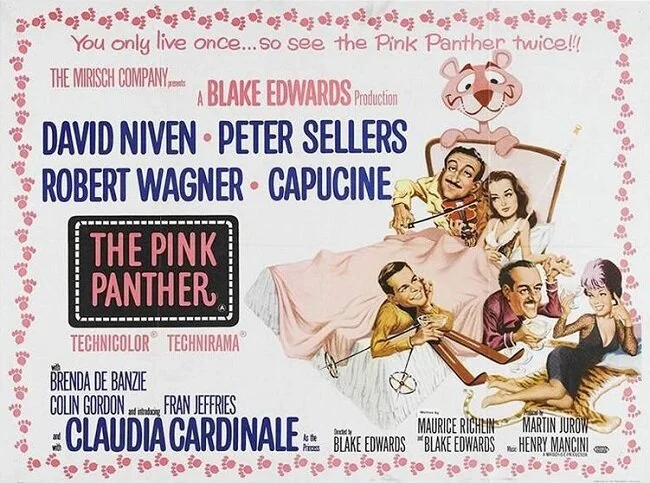
If you mention The Pink Panther (1963) I’d hazard a guess that most people will instantly think of Inspector Clouseau (and possibly throw in a quote in faux French about “Minkeys”) or hum or whistle the iconic theme tune. It’s blend of cool sixties Jazz and Lounge is both classy and evocative. Henry Mancini’s contribution to the Pink Panther franchise is commensurate to that of Peter Sellers and Blake Edwards. If you removed his musical scores from any of the films they would be greatly diminished. In fact one can argue that the movies made in the eighties after Sellers’ death are greatly bolstered by Mancini’s intelligent and accomplished musical accompaniment. The franchise may have run out of steam but Mancini never did so.
If you mention The Pink Panther (1963) I’d hazard a guess that most people will instantly think of Inspector Clouseau (and possibly throw in a quote in faux French about “Minkeys”) or hum or whistle the iconic theme tune. It’s blend of cool sixties Jazz and Lounge is both classy and evocative. Henry Mancini’s contribution to the Pink Panther franchise is commensurate to that of Peter Sellers and Blake Edwards. If you removed his musical scores from any of the films they would be greatly diminished. In fact one can argue that the movies made in the eighties after Sellers’ death are greatly bolstered by Mancini’s intelligent and accomplished musical accompaniment. The franchise may have run out of steam but Mancini never did so.
The Pink Panther theme, composed in the key of E minor, is unusual in Mancini's body of work due to its extensive use of chromaticism. In his autobiography Did They Mention the Music? Mancini talked about how he composed the theme music. “I told [the animators] that I would give them a tempo they could animate to, so that any time there were striking motions, someone getting hit, I could score to it.They finished the sequence and I looked at it. All the accents in the music were timed to actions on the screen. I had a specific saxophone player in mind; Plas Johnson. I nearly always precast my players and write for them and around them and Plas had the sound and the style I wanted”.
A Shot in the Dark (1964), like most other movies in the series, featured animated opening titles produced by DePatie-Freleng Enterprises. However, it did not use the iconic Pink Panther theme as an accompaniment on this occasion. Instead Henry Mancini wrote a new musical cue to reflect the fact that Inspector Clouseau was now the main focus of the film. It is a smooth big band piece with a period beatnik vibe. The film blends wordplay with physical comedy and in many ways is the most sophisticated and accomplished of the series. Mancini’s faux ambient Parisian music adds greatly to the atmosphere.
By the time The Pink Panther Strikes Again arrived in cinemas in 1976, director Blake Edwards had moved the focus of the films from straight forward slapstick and Clouseau’s verbal idiosyncrasies to elaborate comedy set pieces featuring destruction and mayhem. The Inspector’s fight with Cato satirises the martial arts trend in movies of the time and the editing style of Sam Peckinpah. The film also features a beautifully simple and low key theme specifically for Clouseau. It plays over a three minute sequence in which the Inspector tries to cross a moat and enter a castle. It underpins Seller’s pratfalls superbly, highlighting the difficulty of scoring comedy successfully. Something Mancini achieve’s here, effortlessly.
Brick Mansions (2014)
The original French movies District 13 and its sequel District 13: Ultimatum, conceived and produced by Luc Besson, were enjoyable variations of the Escape from New York theme. Their charm lay in their European pedigree and the skilful use of parkour. The two leads, David Belle and Cyril Raffaelli, were eminently suited to the minimalist roles and the screenplays were fun. Half of these movies appeal was the fact that they were not mainstream US products. Brick Mansions is the Hollywood remake of District 13, as well as being Paul Walkers’ final movie. Sadly, this film is far from a fitting epitaph, being devoid of any charisma or innovations. It is blandly shot , poorly edited and has been stripped of everything that made the original entertaining.
The original French movies District 13 and its sequel District 13: Ultimatum, conceived and produced by Luc Besson, were enjoyable variations of the Escape from New York theme. Their charm lay in their European pedigree and the skilful use of parkour. The two leads, David Belle and Cyril Raffaelli, were eminently suited to the minimalist roles and the screenplays were fun. Half of these movies appeal was the fact that they were not mainstream US products. Brick Mansions is the Hollywood remake of District 13, as well as being Paul Walkers’ final movie. Sadly, this film is far from a fitting epitaph, being devoid of any charisma or innovations. It is blandly shot , poorly edited and has been stripped of everything that made the original entertaining.
In the year 2018, the crime rate in Detroit has become so high, a wall has been built around the worst area, Brick Mansions. The decaying neighbourhood is run by drug lord Tremaine (RZA), who has plans to expand his criminal endeavours. Shady city officials supply him with a bomb, hoping that the subsequent political fallout from such a situation will lead to urban renewal. However, the police decide to send in Detective Damien (Paul Walker) along with Brick Mansion resident Lino (David Belle reprising his original role) to retrieve the explosive device. The situation is complicated by the fact that Lino's wife has been kidnapped by Tremaine. Cue running, jumping and assorted action scenes.
The failings of Brick Mansions are numerous. There's no sense of community within the decaying tenements. The original movies established the nature of the walled off enclave and gave us some insight into its citizens daily life and their struggles. It is completely absent here. The script and character development are negligible. The casting of RZA is frankly embarrassing as he delivers a mainly unintelligible performance. Exactly why the production saw fit to ask David Belle to return and reprise his role is a mystery. His voice has been dubbed and he has precious little to do in the lacklustre action sequences. The movie lacks any innovation or conviction and is the embodiment of the word perfunctory.
Director Camille Delamarre has a background in editing, having worked on other Luc Besson productions such as The Transporter 2 and The Transporter 3. However the current penchant for rapid cuts and shaky-cam techniques utterly kills the parkour element of the movie. The skill of those involved and the scope of the stunts that they are undertaking are diminished by appallingly ill conceived cinematography and post production editing. The visual style of the film is confusing and continuously misdirects you with regard to what you should be looking at. All involved would benefit from a return visit to film school to reacquaint themselves with the concept of visual narrative flow.
Time and time again we have seen that remaking international films in a contemporary, mainstream US idiom does not work. The process strips away the unique aspects of the original and replaces it with generic material inherent in sterile corporate American film making. Brick Mansions doesn't even try to be its own movie. It simply provides what it think's is required for the North American market. It is louder, less refined and incredibly stupid and not even in a fun way. This is the sort of stupidity that is born of cynicism and having no respect for your material or audience. It also does nothing for Parkour either which has now become just another tiresome marketing commodity, like other so called “action sports”. Do yourself a favour and skip this tedious movie and watch the originals instead.







Noah (2014)
Darren Aronofsky's Noah is about as far removed from the traditional Cecil B. DeMille Biblical epic as you can imagine. In some respects it follows more closely the Jewish interpretation of the source material, rather than the Christian text. It is visually arresting and for the first two thirds of it's running time is a very engaging movie. It covers a multitude of theological and philosophical themes and depicts them in a creative fashion. Although the film may not find favour with fundamentalist faith denominations, it certainly has a great deal of appeal for the more liberal and progressive believer. It also has facets that are potentially of interest to the more secular viewer.
Darren Aronofsky's Noah is about as far removed from the traditional Cecil B. DeMille Biblical epic as you can imagine. In some respects it follows more closely the Jewish interpretation of the source material, rather than the Christian text. It is visually arresting and for the first two thirds of it's running time is a very engaging movie. It covers a multitude of theological and philosophical themes and depicts them in a creative fashion. Although the film may not find favour with fundamentalist faith denominations, it certainly has a great deal of appeal for the more liberal and progressive believer. It also has facets that are potentially of interest to the more secular viewer.
The central characters of Noah (Russell Crow), his wife Naameh (Jennifer Connelly) and Methuselah (Anthony Hopkins) are well defined and carry the narrative forward. However, Noah's extended family are not so well fleshed out with his wayward son Ham (Logan Lerman) being particularly vague. The bitter division between him and his Father lacks the drama it needs and Lerman simply broods like a petulant teenager. Emma Watson fairs marginally better as the adopted daughter Ila, but again more could have been done to underpin the importance of her role. Although I frequently enjoy the work of Ray Winstone, he is hardly taxed by his performance as Tubal-cain. The initial set up for the character is compelling but the role diminishes to the level of a Bond villain by the third act.
Despite its PG-13 rating, Noah is very strong in tone and in what it depicts. The rapid editing masks some of the violence but this is quite a graphic depiction of the antediluvian world. When humanity finally declines into cannibalism it is quite a shocking revelation. Yet these bleak themes are offset by some extraordinary visual imagery. The Watchers, a group of fallen angels who have elected to help man, are very striking. These rock giants are far more easier to understand if you consider them as Golems. The movie also has an interesting retelling of the creation myth which segues cleverly between evolution and the concept of Adam and Eve and the garden of Eden. Other creative nods towards reconciling science and religion are aerial shots of the earth showing a single continent, as well as the ark containing many mammal species that are now extinct.
Noah is by far the most commercial movie that director Aronosfsky has made, yet it thematically follows his exploration of people separated from society because of their compulsions and convictions. It treads a cautious path through the storyline, trying to be as appealing as it can be to each and every interest group. It descends into a little too much melodrama by the end but the overall message does not get lost. It is certainly a welcome change to see traditional material such as Noah, which most film studios won't touch for fear of offence or more importantly box office failure, being approached in such an ambitious manner.



Sabotage (2014)
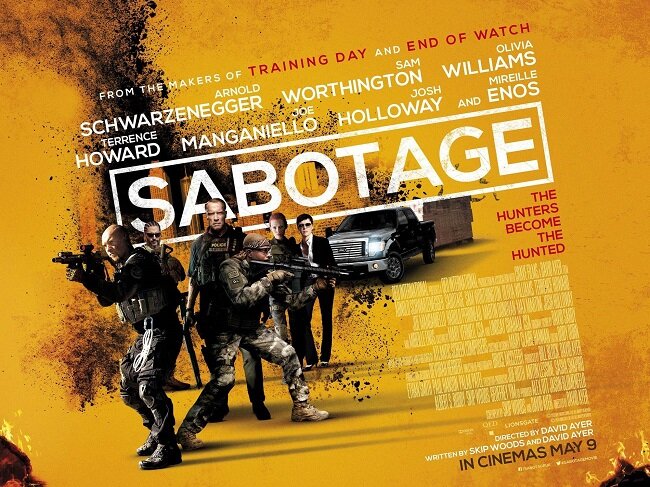
Arnold Schwarzenegger's return to the big screen after his political career has been uneven to say the least. His cameos in The Expendables and The Expendables 2 were well received, with their self referential charm and age related irony. Yet his first major movie The Last Stand, although competent, failed to find an audience. Escape Plan fared better at the box office but did not put Arnie back on the A list. Effectively there's a large percentage of the contemporary cinematic audience who were born after his heyday and are simply not overt fans of his work. His core audience is more than likely of the age group that consume most of their film entertainment at home. Which may explain why Sabotage tanked in the US upon release on March 28th 2014. It was the worst opening box office of Arnie's career. He used to break first day opening records.
Arnold Schwarzenegger's return to the big screen after his political career has been uneven to say the least. His cameos in The Expendables and The Expendables 2 were well received, with their self referential charm and age related irony. Yet his first major movie The Last Stand, although competent, failed to find an audience. Escape Plan fared better at the box office but did not put Arnie back on the A list. Effectively there's a large percentage of the contemporary cinematic audience who were born after his heyday and are simply not overt fans of his work. His core audience is more than likely of the age group that consume most of their film entertainment at home. Which may explain why Sabotage tanked in the US upon release on March 28th 2014. It was the worst opening box office of Arnie's career. He used to break first day opening records.
On paper Sabotage should work. Director David Ayer (Training Day) is capable of making a movie that are more than the sum of its parts and presenting us with a tale of loyalty among elite squads. Sadly he fails. Schwarzenegger strives to give a more in-depth performance as John “Breacher” Wharton, leader of a crack squad of DEA agents. Yet his endeavours are lost within the movie's numerous shortcomings. The cast are mainly wasted, being saddled with an immensely stupid, contradictory and mean spirited screenplay. Sporting such two dimensional names as “Neck,” “Monster” and “Tripod” there is precious little to like about the main characters. There's a lot of on screen violence but it is not in the usual idiom you'd expect from such a movie. It's just there because some producer thought that it was required. The dialogue is poor and littered with profanity that seems to be present to simply bolster the screenplay.
If you are looking for any kind of redeeming quality in Sabotage, then there is the spark of a decent subplot involving Olivia Williams and Harold Perrineau, playing the two officers investigating the alleged theft of ten million dollars by Wharton's team. There is a tangible sense of chemistry between them and they have some amusing banter. Sadly it does not have sufficient impact upon the rest of the movie with it's casual brutality, crass sexism and misogyny. If the film had been written from their point of view then it may well have been a superior product. As it stands Sabotage is perfunctory. I have no problem with a movie being earnestly dumb. It's when it's cynically dumb I feel that all involved should pause and take stock.
I am very curious as to what Schwarzenegger will do next because I think his immediate film has ground to a halt. It's curious that some box office stars and larger than life Hollywood legends have managed to maintain a successful career well into their autumn years. John Wayne and Clint Eastwood both maintained box office and critical acclaim well beyond their sixties. Sadly the contrived shenanigans of Sabotage are a far cry from True Grit and Gran Torino. Perhaps a change in direction away from action movies would be beneficial. Maybe a move to a major TV show would offer a chance for Arnold to find an appropriate audience.
A Million Ways to Die in the West (2014)
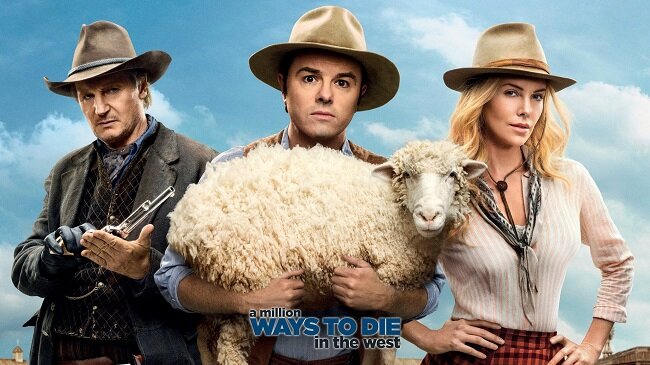
You could quite easily lose thirty minutes from A Million Ways to Die in the West. Tighter pacing would certainly shorten the gaps between the genuinely funny material. As it is, the movie is somewhat baggy and surprisingly middle of the road. Yes it has all of Seth McFarlane's usual hallmarks as far as extreme humour but it lacks the occasional moments of satire and social commentary that you see in Family Guy and in Ted (his best movie to date). The movie is very much aware of what it is and focuses a little excessively on observational humour based on traditional tropes and memes of the Western genre. You frequently get the feeling at times that it’s trying very hard to be “funny” in a “Seth McFarlane” idiom but it smacks a little of “art imitating art”.
You could quite easily lose thirty minutes from A Million Ways to Die in the West. Tighter pacing would certainly shorten the gaps between the genuinely funny material. As it is, the movie is somewhat baggy and surprisingly middle of the road. Yes it has all of Seth McFarlane's usual hallmarks as far as extreme humour but it lacks the occasional moments of satire and social commentary that you see in Family Guy and in Ted (his best movie to date). The movie is very much aware of what it is and focuses a little excessively on observational humour based on traditional tropes and memes of the Western genre. You frequently get the feeling at times that it’s trying very hard to be “funny” in a “Seth McFarlane” idiom but it smacks a little of “art imitating art”.
Perhaps it was a mistake for McFarlane to cast himself in the lead as the Sheep Farmer hero who's been recently dumped by his girlfriend (Amanda Seyfried). Charlize Theron carries a lot of the movie as the sharp-shooting wife of an infamous outlaw played by Liam Neeson. Quite why she takes a liking to McFarlane is mystery. It is fun to see Mr. Neeson send himself up, yet I was left with the feeling that there could have been much more done with his role. Neil Patrick Harris camps it up nicely as Seyfried’s new lover and the ongoing relationship between town prostitute (Sarah Silverman) and smitten virgin (Giovanni Ribisi) is a great idea but sadly loses momentum. Family Guy often wrestles with multiple story lines and random asides but still manages to carry them off well. It is exactly this ability which is missing from A Million Ways to Die in the West.
As ever with McFarlane's work, it is the incidental jokes and tangential humour that works the best. There's a droll cameo by Gilbert Gottfried as Abraham Lincoln and Christopher Lloyd makes an appearance as Doc Brown from Back to the Future. Keep an eye out for lots of other uncredited cameos. Another one of the directors strength's is with his musical acumen. The soundtrack by Joel McNeely is eminently suitable and compliments the movie nicely. The cinematography by Michael Barrett effectively captures the harsh environment of a frontier town. He also shows a keen awareness of how classic Westerns were shot.
Perhaps one of the reasons A Million Ways to Die in the West fails to live up to expectations is because it tries too hard to not be Blazing Saddles. However, if it had focused more on the way that seminal movies are constructed it may well have benefited. As it is A Million Ways to Die in the West is a mixed bag. It fared adequately at the box office but failed to find any popular consensus with both critics and fans alike. It may come as no surprise that Ted 2 was expedited to try and re-establish the commercial viability of the Seth McFarlane brand. Finally, I stumbled upon a curious piece of trivia connected to this film. There is an audio book of A Million Ways to Die in the West available, based on the movie's screenplay, read by Jonathan Frakes. WTF?




Battle Beyond the Stars (1980)
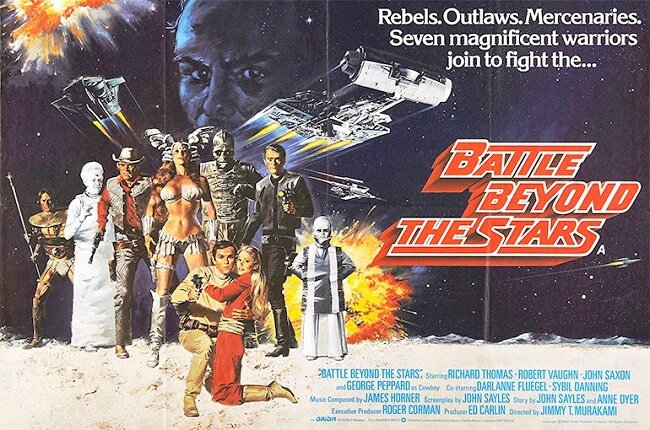
I was 12 years old when I first saw Battle Beyond the Stars during its UK theatrical release. I remember that I enjoyed it and thought it was an action packed movie. Being young, lacking the critical faculties that come with age and exposure to a wider variety of cinematic material, a lot of the films plus points were lost on me. I recollect that I did pick up on the fact that this film was more ghoulish than the other “Space Operas” that flooded theatres at the time. But beyond that, all I saw was a fun and enjoyable science fiction movie. I cheered when the Malmori were defeated and was saddened when Space Cowboy died. It is only after subsequent viewing over the years, that I’ve realised that this film is a microcosm of all the things that made Roger Corman productions so successful and unique. Despite its low budget, the visual effects were good and innovative for the times. There was more sex and violence present, than in comparable productions. And the crew is a veritable who’s who of talent that went on to wider success.
I was 12 years old when I first saw Battle Beyond the Stars during its UK theatrical release. I remember that I enjoyed it and thought it was an action packed movie. Being young, lacking the critical faculties that come with age and exposure to a wider variety of cinematic material, a lot of the films plus points were lost on me. I recollect that I did pick up on the fact that this film was more ghoulish than the other “Space Operas” that flooded theatres at the time. But beyond that, all I saw was a fun and enjoyable science fiction movie. I cheered when the Malmori were defeated and was saddened when Space Cowboy died. It is only after subsequent viewing over the years, that I’ve realised that this film is a microcosm of all the things that made Roger Corman productions so successful and unique. Despite its low budget, the visual effects were good and innovative for the times. There was more sex and violence present, than in comparable productions. And the crew is a veritable who’s who of talent that went on to wider success.
For those who may have missed this movie, it’s premise is straightforward. Battle Beyond the Stars is The Magnificent Seven (and thus Seven Samurai) in space. Sador of the Malmori (John Saxon) and his army of mutants deliver an ultimatum to the peaceful planet of Akir. Surrender and become a vassal state, or he will use his Stellar Converter and destroy all life. He gives the planet seven days to prepare. Young farmer Shad (Richard Thomas) takes the last remaining Corsair Class ship and sets about trying to hire mercenaries to defend his home. He manages to find Space Cowboy (George Peppard), a space trader from Earth. Gelt (Robert Vaughn), a veteran assassin looking for a place to hide. Saint-Exmin (Cybil Danning), a Valkyrie warrior looking to prove herself in battle and Nanelia (Darlanne Fluegal), a young scientist. Shad is also joined by Nestor, five telepathic clones and Cayman (Morgan Woodward), the last surviving member of the Lazuli who has a score to settle with Sador. The seven ships return to Akir and prepare for a ground assault.
There are a combination of factors that make Battle Beyond the Stars superior to many of the low budget Star Wars knock offs that flooded the market in the late seventies and early eighties. First off, the screenplay by John Sayles is noticeably above average and it is clear that he has a solid grasp of such material. Sayles has a great deal of experience writing genre scripts for such movies as Piranha, Alligator, The Howling, and The Challenge. There is action, the right kind of humour and a sense of the theatrical and flamboyant. However, all these elements are tempered and do not undermine the audience’s investment in the central characters. And then there’s the casting, which apparently took the lion share of the budget. Robert Vaughn essentially reprises the same role he had in the original Magnificent Seven back in 1960. George Peppard effortlessly fills the shoes of Space Cowboy, exuding the cocky charm while smoking cigars and drinking Scotch.
Battle Beyond the Stars also boasts a surprisingly good production design and visual effects. Corman initially hired James Cameron as a model maker after being impressed with his short film Xenogenesis. When the original art director for the film was fired, Cameron became responsible for the majority of the film's special effects. There is also a great score by James Horner (which has subsequently been reused in numerous other Corman productions). It made an impression with the executives at Paramount Studios who hired him to write the score for Star Trek II: The Wrath of Khan. But ultimately all these unique and positive aspects coalesce because of the guiding hands of Roger Corman, who knows exactly how to sell this sort of material. Battle Beyond the Stars is the epitome of low budget, exploitation fodder, done right. There’s action, romance, heaving cleavage, violence, explosions, pathos filled death scenes and a surprising amount of philosophy. What’s not to like?







The Devil Inside (2012)
Following in the wake of The Last Exorcism (2010) which enjoyed box office success, The Devil Inside also includes two staples of horror cinema: supernatural possession and the found footage/faux documentary genre. On paper these themes have the potential to yield an interesting drama. Sadly that is not the case with The Devil Inside which excels at neither and is distinctly average at best. It lacks the gravitas and visceral power of The Exorcist and even the sensational shock value of Paranormal Activity. The plot focuses upon Isabella (Fernanda Andrade), an American woman who sets out to make a documentary about her mother who murdered three members of the clergy. She was judged insane and subsequently sent to a mental hospital in Italy. Isabella meets two priests, Father Ben Rawlings (Simon Quarterman) and Father David Keane (Evan Helmuth) who explain that her mother's condition may be due to demonic possession.
Following in the wake of The Last Exorcism (2010) which enjoyed box office success, The Devil Inside also includes two staples of horror cinema: supernatural possession and the found footage/faux documentary genre. On paper these themes have the potential to yield an interesting drama. Sadly that is not the case with The Devil Inside which excels at neither and is distinctly average at best. It lacks the gravitas and visceral power of The Exorcist and even the sensational shock value of Paranormal Activity. The plot focuses upon Isabella (Fernanda Andrade), an American woman who sets out to make a documentary about her mother who murdered three members of the clergy. She was judged insane and subsequently sent to a mental hospital in Italy. Isabella meets two priests, Father Ben Rawlings (Simon Quarterman) and Father David Keane (Evan Helmuth) who explain that her mother's condition may be due to demonic possession.
The Devil Inside explores an alleged Catholic conspiracy as well as the perceived conflicts between science and religion, through a very familiar classic plot device. The film subsequently proceeds to tick off many standard genre conventions such as physical contortions, torrents of verbal abuse, knowledge of secrets and of course sporadic bouts of violence. The story unfolds from the perspective of two priests who are the subject of a documentary film. The performances are adequate from a relatively unknown cast, although British actor Simon Quaerterman has subsequently gained wider exposure through his recurring role in HBO’s Westworld. The narrative has occasional elements of interest in-between the standard genre tropes. For example, it is nice to see a depiction of a priest who is not questioning his vocation for a change.
The Devil Inside is simply too insubstantial to carry any cinematic weight. There are a few jolts and jumps along the way, but they are often contrived and telegraphed. Plus most people will not accept the basic conceit of this film that the Catholic Church conducts exorcisms willy-nilly. However, I did find the denouement of this movie to be interesting. It is incredibly abrupt and for many viewers potentially unsatisfactory, leaving a multitude of unanswered questions. This sort of nihilistic ending is very reminiscent of seventies cinema. It is obvious that the contrived ending is driven more by marketing, as the movie closes with a statement that the case is still under investigation and provides a URL for further details. The website is now defunct but you can view an archived copy via the Wayback Machine.
The Devil Inside provides at most a minor diversion for casual viewers. It certainly is not going to win any fans among longterm horror fans. Yet the depressing fact remains that this sort of low budget, derivative exploitation fodder fares well at the box office. The viral marketing appeals to the youth market, who like these films due to their similarity to the “creepypasta” you find on YouTube. Hence The Devil Inside made $101,758,490 worldwide. Not bad for a movie that cost $1,000,000 to make. Therefore, if you are new to the horror genre, do yourself a favour and watch The Exorcist or even The Blair Witch Project rather than The Devil Inside. The commercial success of such movies may mislead new horror fans into thinking that this is as good as it gets.





Riddick (2013)
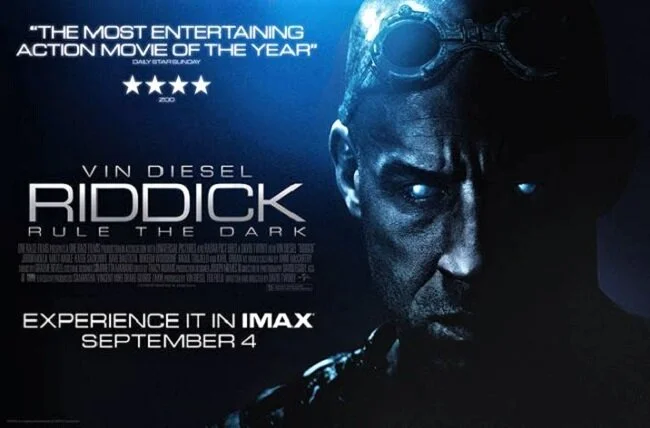
Contrary to the endorsement on the above poster, Riddick was not "the most entertaining action movie of the year" in 2013. It was just an adequate third instalment in a rather ambitious franchise, that has failed to grab the wider public's attention. That’s not to say that they didn’t make money. This is after all the third movie. Writer and Director David Twohy has done his best to try and make the character of Riddick (Vin Diesel) more than the sum of his parts and I admire both of them for their persistence. Unfortunately, Riddick just isn't engaging or complicated enough a protagonist to sustain a franchise of this nature. The anti-hero was sufficient to drive the original Pitch Black back in 2000 which had some good ideas but just couldn't sustain the overarching and overblown Chronicles of Riddick in 2004. This instalment is competently made but ultimately superfluous.
Contrary to the endorsement on the above poster, Riddick was not "the most entertaining action movie of the year" in 2013. It was just an adequate third instalment in a rather ambitious franchise, that has failed to grab the wider public's attention. That’s not to say that they didn’t make money. This is after all the third movie. Writer and Director David Twohy has done his best to try and make the character of Riddick (Vin Diesel) more than the sum of his parts and I admire both of them for their persistence. Unfortunately, Riddick just isn't engaging or complicated enough a protagonist to sustain a franchise of this nature. The anti-hero was sufficient to drive the original Pitch Black back in 2000 which had some good ideas but just couldn't sustain the overarching and overblown Chronicles of Riddick in 2004. This instalment is competently made but ultimately superfluous.
After the epic scope of part two, Riddick is a far more minimalist movie and in some ways is a partial reboot of the original, following a broadly similar plot. Leaving the Necromongers and Vaako (an incredibly brief cameo from Karl Urban), Riddick is betrayed and marooned on a barren planet. Wounded, he finds himself having to fend of a group of bounty hunters, some of whom have specific personal grudges against him. Writer and director Twohy once again toys with the idea of trying to redeem a morally reprehensible murderer and we have such arbitrary tropes as generic bad guys who sneer and look mean, as well as the old cliché of grudging respect between men of war. The dialogue is hard boiled and most of the plot elements have an all too familiar ring to them.
The acting and script are nothing special and although neither are they shockingly bad. It is all just predictably obvious. There a rather crass sub-plot involving lesbian mercenary Dahl (Katee Sackhoff) who begins to warm to the heterosexual charms of Riddick, which is dumb even by genre standards and considering contemporary sexual politics, somewhat insulting. As ever, the production values are slick despite the lower budget with plenty of creature mayhem, violence and macho posturing. Twohy has an eye for planetary vista's and can certainly craft a good action scene. Free from the pretensions of Chronicles of Riddick and trying to create a more complicated franchise, this third instalment returns to a more standard and user friendly formula. The character of Riddick is better suited to a more focused narrative such as this.
After twenty years and three movies, I think it would be wise for both Messrs Twohy and Diesel to call it a day with regard to the ongoing adventures of Riddick. I don't really see where you can take this particular anti-hero next and more importantly, I am not sure if many viewers would be especially disposed to do so. Again I feel that praise is due for director Twohy, for at least trying to do something different and for the determination in trying to sell the character of Riddick to the public. However, I think it's clear that there is not enough narrative meat on the bones to make people care about him. It will be interesting to see if a fourth sequel emerges or whether Twohy moves on from this franchise. Perhaps the latter would be wiser as his previous movies such as Below and A Perfect Getaway were very promising.
NB. There are two versions of Riddick available. The standard theatrical cut and an extended Director’s cut, which includes 5 minutes of slightly expanded dialogue scenes and some additional nudity. This review is based upon the latter.
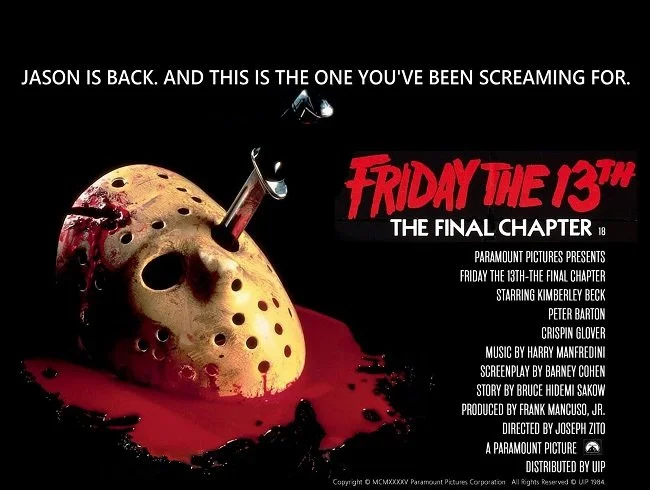
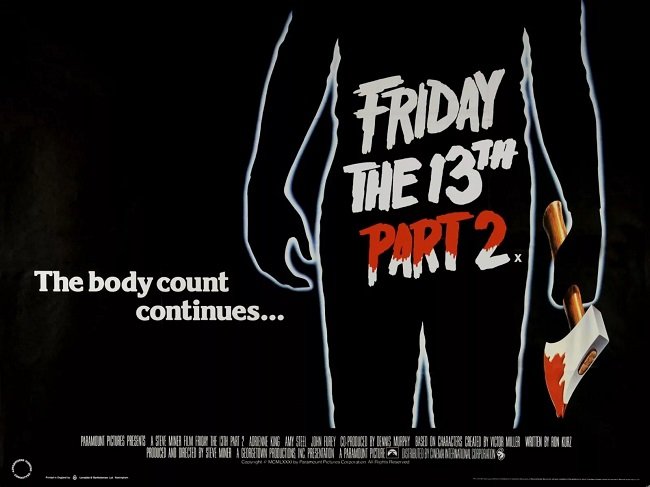
Classic Movie Themes: Friday the 13th
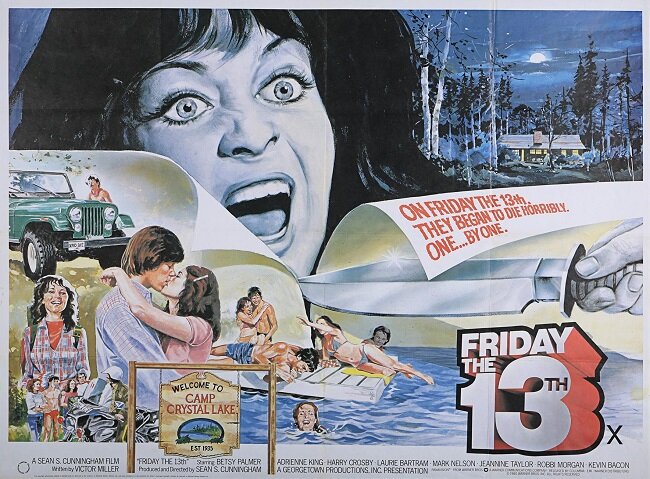
It was Friday the 13th yesterday, so I thought it was about time that I added Harry Manfredini’s iconic score to the annals of Classic Movie Themes. The 1980 slasher movie Friday the 13th has become as legendary in the pantheon of cinematic horror history as John Carpenter’s Halloween. Although there are marked differences between these two films, both use minimalist musical scores extremely effectively to punctuate the proceedings and embellish the overall atmosphere. However, Manfedini did not want to provide viewers with obvious audio cues during scenes of building tension. He preferred to focus his score upon the activities of the franchise's iconic killer, Jason Voorhees, and hence have strong musical cues when he was on screen. This approach meant that he had to use a unique musical motif to denote potential tension, without diminishing its effect on the audience by excessive use of obvious and melodramatic cues.
It was Friday the 13th yesterday, so I thought it was about time that I added Harry Manfredini’s iconic score to the annals of Classic Movie Themes. The 1980 slasher movie Friday the 13th has become as legendary in the pantheon of cinematic horror history as John Carpenter’s Halloween. Although there are marked differences between these two films, both use minimalist musical scores extremely effectively to punctuate the proceedings and embellish the overall atmosphere. However, Manfedini did not want to provide viewers with obvious audio cues during scenes of building tension. He preferred to focus his score upon the activities of the franchise's iconic killer, Jason Voorhees, and hence have strong musical cues when he was on screen. This approach meant that he had to use a unique musical motif to denote potential tension, without diminishing its effect on the audience by excessive use of obvious and melodramatic cues.
Harry Manfredini’s solution was to craft a combination of simple echoing chords combined with a vocal track which repeated the phrase "ki ki ki, ma ma ma". The concept was that these words were some kind of subliminal message; a corrupt version of "kill her, mommy" which would plague Pamela Voorhees, the protagonist from the first movie. Over the course of the franchise, Manfedini became far more adept of using this motif, which he subsequently expanded with the addition of some frenetic strings. This motif would play when something was about to happen on screen, ramping up the tension rather than mitigating it by more overt musical telegraphing. John Williams used a similar technique with his original score for Jaws. Furthermore, Manfredini would often use variations of this cue as musical red herrings, often culminating in a non-fatal jump scare.
Due to the longevity of the Friday the 13th franchise, Harry Manfredini has revised and expanded his work many times. The theme used for the opening credits of the original movie is in many ways the best example. It encapsulates the immediacy of his work and incorporates the "ki ki ki, ma ma ma" motif at its most unique point in history. Another standout version of the main title theme is for Friday the 13th Part III (1982) which was released in 3D. He again reworked the essential principles of basic cue into a pulsing new version with a distinct synth and disco vibe. Finally as an added bonus, I wanted to quickly reference Friday the 13th: A New Beginning (1985) and the song that features while Violet (Tiffany Helm) indulged in that very eighties activity, robot dancing. His Eyes by Australian New Wave Band (and shameless Ultravox plagiarists) Pseudo Echo has gained a curious cult following over the years among Friday the 13th fans.
Scary Stories to Tell in the Dark (2019)
I’m not familiar with the original series of children’s books that Scary Stories to Tell in the Dark is based upon. From what I’ve read, it would appear that the film manages to channel the spirit (if you’ll pardon the pun) of the short stories by Alvin Schwartz, via the four supernatural vignettes that feature in the movies plot. Furthermore, the illustrations featured in the original publications, by Stephen Gammell, have obviously influenced the visual effects and production design of the movie. However, despite being marketed as a portmanteau movie, Scary Stories to Tell in the Dark is much more than that. The framing story is more than just an arbitrary pair of cinematic bookends, designed to wrap around the proceedings. It is entwined into the central narrative and the four supernatural meta stories. Rather than being a pure anthology movie, Scary Stories to Tell in the Dark is at its heart, a film about the nature and inherent power of stories themselves.
I’m not familiar with the original series of children’s books that Scary Stories to Tell in the Dark is based upon. From what I’ve read, it would appear that the film manages to channel the spirit (if you’ll pardon the pun) of the short stories by Alvin Schwartz, via the four supernatural vignettes that feature in the movies plot. Furthermore, the illustrations featured in the original publications, by Stephen Gammell, have obviously influenced the visual effects and production design of the movie. However, despite being marketed as a portmanteau movie, Scary Stories to Tell in the Dark is much more than that. The framing story is more than just an arbitrary pair of cinematic bookends, designed to wrap around the proceedings. It is entwined into the central narrative and the four supernatural meta stories. Rather than being a pure anthology movie, Scary Stories to Tell in the Dark is at its heart, a film about the nature and inherent power of stories themselves.
Set in the small town of Mill Valley, Pennsylvania, in 1968, the plot focuses on three high school students. Stella (Zoe Colletti), Chuck (Austin Zajur) and Auggie (Gabriel Rush) go out to celebrate Halloween. When a prank goes wrong, they're chased by the school bully Tommy (Austin Abrams) and forced to hide at the local drive-in. A mysterious drifter Ramón (Michael Garza) let's them hide in his car and in return for his help, they decide to take him to the neighbourhood haunted house; the infamous Bellows Mansion. The town was founded by the Bellows family who grew rich from the paper mill they built. However, local legends state that the Bellows family incarcerated their daughter Sarah and kept her locked in a darkened room. She would whisper ghost stories through the wall to scare the local children. While investigating the derelict mansion, Stalla finds an old book which appears to be Sarah's. She takes it home and while reading it, a new story appears before her very eyes. It appears to be about the local bully Tommy. The following day he is reported as missing. Another story subsequently appears in the book. This time it’s about Auggie. Is the book hunting the three friends?
Scary Stories to Tell in the Dark makes the most of its $28 million budget. It has a stylised late sixties production design, along with vivid and colourful lighting. The visual aesthetic of Roman Osin’s cinematography greatly adds to the atmosphere. The youthful cast are engaging and deliver good performances. The screenplay by Dan and Kevin Hageman focuses upon their perspective of events and confines adults characters such as the local Sheriff (Gill Bellows) and Stella’s Father (Dean Norris) to the sidelines. The spectre of the Vietnam War, the national draft and the oppressive nature of small town life also hangs over the proceedings. Our protagonists are on the periphery of the adult world and their respective futures do not look especially good. Posters for Richard Nixon seeking election encapsulate this dismal period in US history. It is against this backdrop that the story explores the power of words and narratives. How they can have both a positive and negative effect. And that adult life is filled with ambiguity and this often manifests itself in the use of nuanced language.
The actual “scary stories” that befall the cast are grim and inherently creepy rather than overtly violent. Yet that is not to say that they are not disturbing. And therein lies the rub or at least has been a talking point associated with this movie. Scary Stories to Tell in the Dark despite being drawn from children’s literature, is too ghoulish and frightening for such a young demographic. Despite being rated PG-13 in the US, the BBFC saw fit to award it a 15 rating in the UK and a lot of that simply comes down to tone. Something that you cannot address by re-editing. Hence we have a story about teenagers having to deal with the supernatural, which is potentially of more interest to adult viewers, rather than its target audience. Gore hounds of all ages will be disappointed. However, despite this possible contradiction, the film still performed acceptably at the box office and may well garner a sequel. The story certainly has scope for one.
Because of the pedigree of all associated with this production, Scary Stories to Tell in the Dark makes for absorbing viewing and superior genre entertainment. The assured direction by André Øvredal (Trollhunter, The Autopsy of Jane Doe) offers not only a series of grim supernatural tales but also a degree of emotional intelligence and metaphorical depth. The adult world is not as black and white as our heroes think and coming of age is often bittersweet. Where The Monster Squad explored such themes through horror and humour, this movie achieves it with ghosts and melancholy. The ending resolves the immediate plot but does not deliver a textbook happy ending. The surviving characters are changed and realise that their future lies outside of Mill Valley. I would definitely like to know what happens next and see the central characters progress on their emotional journey. The answers to which lies in Sarah Bellow’s book of stories. I hope it is opened again.
Countdown (2019)
I believe that Countdown received an unnecessarily hard time from the US critics. Don’t get me wrong, I’m not saying that Countdown is a masterpiece. It is not. But it is adequate. A phrase that a lot of people could do with reacquainting themselves with. I won’t retread old ground, as I’ve written about this subject before. I simply think that many people (and critics are people) just have unrealistic expectations when it comes to movies. Not every film created should be, or can be a boundary pushing, cinematic masterpiece. Once again I will invoke my cuisine analogy. There are Michelin five star rated restaurants and then there are fast food franchises. Both serve a purpose, cater for a specific market and can provide relative pleasure. Therefore comparing “like for like” is a critical mistake and based upon a misplaced assumption of false equivalence. Which brings me onto Countdown. It is not The Shining. Nor is it Plan 9 from Outer Space. But it is as I said, “adequate”.
I believe that Countdown received an unnecessarily hard time from the US critics. Don’t get me wrong, I’m not saying that Countdown is a masterpiece. It is not. But it is adequate. A phrase that a lot of people could do with reacquainting themselves with. I won’t retread old ground, as I’ve written about this subject before. I simply think that many people (and critics are people) just have unrealistic expectations when it comes to movies. Not every film created should be, or can be a boundary pushing, cinematic masterpiece. Once again I will invoke my cuisine analogy. There are Michelin five star rated restaurants and then there are fast food franchises. Both serve a purpose, cater for a specific market and can provide relative pleasure. Therefore comparing “like for like” is a critical mistake and based upon a misplaced assumption of false equivalence. Which brings me onto Countdown. It is not The Shining. Nor is it Plan 9 from Outer Space. But it is as I said, “adequate”.
A group of friends download an app called "Countdown" that predicts when the user will die. When Courtney sees that she has just a couple of hours to live, she refuses a ride home from her drunken boyfriend Evan. She is later killed by a supernatural creature when the “countdown” app on her phone reaches zero. Evan crashes his car at the same time of her death. A branch pierces the passenger seat, where she would have sat. At the hospital, Evan tells nurse Quinn Harris (Elizabeth Lail) that he is afraid to have surgery as the app predicts that he will die at the same time. Sceptical of the teenagers concerns, the hospital staff decide to download the app and Quinn learns that she has only three days of life. When Evan mysteriously dies in an accident, Quinn buys a new phone only to find that the app is already installed. She subsequently meets Matt Monroe (Jordon Calloway) when leaving the phone store and learns that his imminent death has also been predicted by the app. So the pair team up and their subsequent investigations uncover a spate of deaths associated with it.
Countdown is a low budget, modern take on the classic ghost story Casting the Runes by M. R. James, with more than a nod towards the Final Destination franchise. Gone are scraps of parchment with runic symbols which are neatly replaced by phone app. This in a nutshell, is what Countdown has to offer; a modern spin on a classic and established plot concept. The film makes a decent attempt at creating a sense of atmosphere and the jump scares are efficiently delivered. There is a recurring visual device in which victims keep seeing an indistinct figure in reflections, which is never there when they turn and look directly. It is a simple device but effective. The mixing of modern technology and biblical demonology also works quite well as the screenplay by Justin Dec doesn’t overthink it, or try to explain every aspect of it. The lead protagonists are not obnoxious, as they so often are in this genre and some of the supporting characters are quite quirky and droll. Derek the cell phone store manager and Father John, the expert on the occult, being clear examples of this.
Countdown also widens its narrative scope by including a subplot about a senior doctor who’s a sexual predator. This brings some interesting and very contemporary moral and ethical questions into the story. Something that gets amplified in the final act, when it is mooted that maybe this abusive man could be used as a surrogate sacrifice, to save another “more deserving” persons life. Another bold piece of moral manoeuvring comes when the lead characters need to examine the terms and conditions of the “killer app”; something they naturally neglected to do themselves initially. So they persuade a drunken conspiracy theorist (who is also a Holocaust denier) to install the app, thus potentially putting him in harms way. I didn’t expect such a plot device and I quite enjoyed it. It’s an indication that Countdown is at least trying to do more than just retread familiar territory. The film’s resolution does “takes liberties” with its own rules and there is a set up for a possible sequel. However, if viewed as convenient and undemanding entertainment, then Countdown serves its purpose. You’ll find far worse horror movies available.
Doctor Sleep Director’s Cut (2019)
Bringing Doctor Sleep to the big screen is a tall order for any filmmaker. Yet director Mike Flanagan (who also wrote the screenplay) manages to tread boldly along this difficult cinematic path. He delivers not only a credible sequel to Kubrick’s unique movie but also manages to adapt Stephen King’s follow up book fairly coherently. Yes, compromises have been made as Kubrick’s version of The Shining strayed far from the source text and therefore trying to dovetail legacy lore into King’s multi-layered follow up novel is a difficult task. However, Flanagan manages to craft a thoughtful and character driven tale which advances the themes present in both the previous film and the source text of the original book and its follow up. Doctor Sleep is not a rollercoaster ride filled with jump scares and convenient gore. It is a slow burn that builds atmosphere and tension. It also offers a strong sense of continuity and fans of the previous instalment will enjoy the sense of nostalgia this new film provides with it’s litany of subtle homages and asides. It is not without flaws but it is an interesting example of a more cerebral horror movie.
Bringing Doctor Sleep to the big screen is a tall order for any filmmaker. Yet director Mike Flanagan (who also wrote the screenplay) manages to tread boldly along this difficult cinematic path. He delivers not only a credible sequel to Kubrick’s unique movie but also manages to adapt Stephen King’s follow up book fairly coherently. Yes, compromises have been made as Kubrick’s version of The Shining strayed far from the source text and therefore trying to dovetail legacy lore into King’s multi-layered follow up novel is a difficult task. However, Flanagan manages to craft a thoughtful and character driven tale which advances the themes present in both the previous film and the source text of the original book and its follow up. Doctor Sleep is not a rollercoaster ride filled with jump scares and convenient gore. It is a slow burn that builds atmosphere and tension. It also offers a strong sense of continuity and fans of the previous instalment will enjoy the sense of nostalgia this new film provides with it’s litany of subtle homages and asides. It is not without flaws but it is an interesting example of a more cerebral horror movie.
It becomes apparent quite quickly while watching Doctor Sleep, that this isn't your run of the mill horror film. The standard of writing, performances and general tone of the film is far more nuanced than most genre outings. The screenplay doesn’t shy away from showing Dan Torrence (Ewan McGregor) hitting rock bottom, as he becomes an alcoholic to drown out the “shining”. A one night stand, in which he robs the woman he’s slept with, has far reaching consequences. Yet far from alienating audiences, the clever writing fosters a sense of sympathy as Dan subsequently moves to a new town and meets Billy Freeman (Cliff Curtis), an ex-alcoholic who helps him turn his life around. As he embarks on a new voyage of self-discovery, Dan finds a positive use for his “gift” when he starts work in a Hospice. He comforts patients as they approach death, calming them with personal visions from their past.
Running in parallel with Dan Torrence’s story, is that of Abra Stone (Kyliegh Curran). Abra has a similar “shining” ability to Dan but of a far greater magnitude. It frightens her parents and alienates her from her school friends. As she reaches out with her psychic abilities, she attracts the attention of Rose the Hat, who is the leader of the cult the True Knot. Rose (Rebecca Furguson) and her group are psychic vampires that feed upon “steam” or psychic essence. The group kidnap, torture and kill children to feast upon their steam, as it keeps them young and fuels their supernatural powers. Once aware of Abra’s presence, Rose sets her sights on her as a potential limitless food supply. Inevitably, Dan crosses path with both Rose the Hat and Abra, leading to a confrontation that can only be resolved by revisiting the now deserted Overlook Hotel. Perhaps the demons that await Dan there, can serve another purpose.
Doctor Sleep has certainly more highs than lows and focuses on being a disturbing character study with a building atmosphere, rather than a gorefest. Apart from one murder which is very disturbing by its very nature, rather than what is actually shown, the film is not overly reliant on violence. Performances are good and there is some very clever casting of actors who have a comparable style and appearance to Shelley Duvall, Jack Nicholson and Scatman Crothers. Some plot elements such as Dan’s struggle to not become his Father are explored well. Abra brings something more to the proceedings, rather than just the standard trope of a teenager with a supernatural power. Sadly, Rose the Hat is somewhat lacking as a villain. This has nothing to do with Rebecca Furguson per se but mainly the way the character is realised. Simply put Rose is not threatening enough and doesn’t exude sufficient malevolence, despite her penchance for child murder. Yet despite these minor shortcomings, there is sufficient depth to Doctor Sleep to keep discerning horror fans engaged.
I did not see the theatrical cut of Doctor Sleep upon its release in UK cinemas. I watched the Director’s Cut which adds an additional 30 minutes of character development to the film. This version is well paced, brooding and encompasses a broad spectrum of plot elements. However, even this extended version still leaves some themes and characters underdeveloped. Dan’s recovery from alcoholism is somewhat swift and his job as an orderly is shown but not fully explored. Bruce Greenwood has an interesting cameo as Dr. John Dalton and it would be nice to find out more about the man. But Stephen King is notorious for multiple characters in his books and that cannot always be easily accommodated in the confines of a mainstream film. All things considered, Mike Flanagan could have ended up falling between two stools while trying to to justice to King’s intricate work and riffing off Kubrick’s seminal movie. The results are not 100% perfect but Doctor Sleep strives to do justice to both groups of fans. The film offers a reassuring sense of familiarity to those wedded to Kubrick’s vision and manages to take the characters forward and allow them to grow and tell a new story, rather than just retread old ground. Popular consensus is that the extended version is the more successful of the two edits.
Terminator: Dark Fate (2019)
Sequels and reboots are hardly a new concept and have been a part of Hollywood culture since the 1930s. The success of the Universal Horror movies from that era being a prime example of direct follow ups and retconned movies. However, there is one fundamental rule that distinguishes a good sequel from a bad one. You should never mitigate, undermine or make irrelevant the events of the previous movie, just to provide your new film with a raison d'être. For example, the events of Aliens do not contradict or trivialise those that happened in Alien. In fact with that franchise there is a very clear logical progression between the two movies. The same is true for Mad Max and Mad Max 2 or Star Wars and The Empire Strikes Back. The key is to progress a story, enhance it or explore things from an alternative angle and bring something new to the cinematic table. Sadly this philosophy is all too often lost on corporate film making. Which means that many sequels are just tedious replays of prior films. Terminator: Dark Fate falls squarely into this category.
Sequels and reboots are hardly a new concept and have been a part of Hollywood culture since the 1930s. The success of the Universal Horror movies from that era being a prime example of direct follow ups and retconned movies. However, there is one fundamental rule that distinguishes a good sequel from a bad one. You should never mitigate, undermine or make irrelevant the events of the previous movie, just to provide your new film with a raison d'être. For example, the events of Aliens do not contradict or trivialise those that happened in Alien. In fact with that franchise there is a very clear logical progression between the two movies. The same is true for Mad Max and Mad Max 2 or Star Wars and The Empire Strikes Back. The key is to progress a story, enhance it or explore things from an alternative angle and bring something new to the cinematic table. Sadly this philosophy is all too often lost on corporate film making. Which means that many sequels are just tedious replays of prior films. Terminator: Dark Fate falls squarely into this category.
Objectively, Terminator: Dark Fate plays out as a greatest hits of the Terminator franchise. Due to the way that Terminator 2: Judgement Day concluded, the future existence of Skynet has been definitively stopped. Therefore for this new film to justify its existence it has to contrive another comparable future threat and does so with a new rogue AI called Legion. So despite Judgement Day being averted, we are simply presented with a new dystopian future (because obviously Legion perceives mankind as a threat) and a new Terminator (Rev-9 model played by Gabriel Luna) sent back in time. Naturally, if there’s a Terminator on the loose, then they have to have a target. This time round it is Daniella Ramos (Natalia Reyes), a young woman who works in an automobile assembly factory. She is rescued and protected (as was Sarah Connorin the original movie) by a soldier from the future. The major difference being this time, is that Grace (Mackenzie Davis) has been cybernetically enhanced thus making her more capable in tackling Terminators.
Perhaps the most egregious offense that Terminator: Dark Fate commits is dealing with the conundrum of John Connor. With Judgement Day averted both John and his Mother Sarah were theoretically free to live out the remainder of their lives in peace. But the production’s need to include actress Linda Hamilton into the story (and thus increase the film marketability) requires a rather mean spirit plot twist that effectively negates the entire point of the first two films. To say more would spoil the film’s plot for those who have yet to see it but it really is a poor idea and has upset many ardent fans of this franchise. This narrative device also paves the way to crowbar Arnold Schwarzenegger into the proceedings as yet another T-800 model Terminator from the original Skynet timeline. There are some attempts in the screenplay by David Goyer, Justin Rhodes and Billy Ray to try and play against type, with this particular Terminator living out the rest of his existence as an average member of society. But the scenario envisaged is purely designed for easy laughs and offers nothing of substance beyond its inherent novelty.
Effectively all that Terminator: Dark Fate offers during its 128 minute duration is a retread of previous plot elements from the other movies and a series of noisy and frenetic action scenes, all of which are derivative and soulless, with no genuine sense of threat. Is the film poorly made? No not at all. Is it entertaining on any level? Yes. In a superficial way. But it has nothing to offer beyond that and it is utterly redundant. Beyond the need to make a film studio some money, Terminator: Dark Fate cannot really justify its existence. It adds nothing to the existing canon and lore and makes for rather ponderous viewing. The return to an R Rating provides no tangible benefits either, other than the scope for violence for violence sake. Sadly, the mainstream film making industry has no concept of integrity or art and is utterly lacking in self awareness. So I’m sure given some time, a focus group will attempt to resurrect this franchise yet again at a future date, only to make exactly the same mistakes.
Midway (2019)
Big budget, historically driven movies that set out to recount key events of World War II are a rarity these days. If you ignore the bombastic inanities of Michael Bay’s Pearl Harbor (2001), then you have to go back to the late seventies to films such as A Bridge Too Far to find a suitable example. This is why Roland Emmerich’s Midway came as a genuine surprise. When I saw a trailer for the film last October, I was flummoxed that such a production had been made. My initial concerns were that it would focus on spectacle rather than historical fact and trivialise events of great military and historical importance. After having watched Midway, I am pleased to report that this is a surprising throwback in many ways. The film covers the events of the Japanese attack on Pearl Harbor, the subsequent Doolittle Raids on Tokyo by the US and the Battle of Midway, both succinctly and accurately. Furthermore, much of the cast play real veterans who participated in these events. Overall this is an entertaining and informative movie that feels like a relic from fifty years ago. However, its docudrama aspirations also make for somewhat generic character development.
Big budget, historically driven movies that set out to recount key events of World War II are a rarity these days. If you ignore the bombastic inanities of Michael Bay’s Pearl Harbor (2001), then you have to go back to the late seventies to films such as A Bridge Too Far to find a suitable example. This is why Roland Emmerich’s Midway came as a genuine surprise. When I saw a trailer for the film last October, I was flummoxed that such a production had been made. My initial concerns were that it would focus on spectacle rather than historical fact and trivialise events of great military and historical importance. After having watched Midway, I am pleased to report that this is a surprising throwback in many ways. The film covers the events of the Japanese attack on Pearl Harbor, the subsequent Doolittle Raids on Tokyo by the US and the Battle of Midway, both succinctly and accurately. Furthermore, much of the cast play real veterans who participated in these events. Overall this is an entertaining and informative movie that feels like a relic from fifty years ago. However, its docudrama aspirations also make for somewhat generic character development.
Midway faces the dilemma that historical movies of this kind often encounter. How to balance the exposition of factual events along with a plethora of real life characters and weave both elements into a narrative arc. All too often characters have little scope for development and end up being simple archetypes. Ed Skrein as Lieutenant Richard Dick Best, typifies this. He tries to bring a sense of urgency to the proceedings as he journeys from strong headed risk taker to a seasoned officer, responsible for the men in his command. Sadly the screenplay presents this in a very formulaic way. Patrick Wilson has perhaps the greatest dramatic scope as Lieutenant Commander Edwin T. Layton, who is driven to ensure that Naval Intelligence gets things right at Midway after the disaster at Pearl Harbor. Overall, the strong cast of character actors does not get in the way of the proceedings but you do feel that you’d like to know more about them all, other than just a basic text book summary.
It is obvious that a great deal of research has gone into the visual effects in Midway. Broadly, the depiction of both Naval and air battles ring true. But at times there is an element of digital “showboating” when the onscreen action slips into spectacle, possibly at the expense of technical accuracy. Dive bombing is by its very nature a high risk undertaking but is there really a need to embellish the drama with last minute escapes from explosive fireballs and planes skimming the wave as they desperately attempt to climb? CGI also lacks the sense of mass and physical presence that filming with real ships and aircraft offers. But as such relic of World War II are in short supply, one cannot be too critical of the films production design. Midway tries to present the scale of the loss of life on both sides without getting bogged down in too much graphic violence. Broadly in works well within the confines of the PG-13 rating.
Unlike older war movies, Midway is not driven by a gung-ho imperative and does not arbitrarily paint the Japanese as two dimensional caricatures. There are brief nods to Japanese geo-political expansion at the beginning of the film and Japanese Naval tactics and motivations are shown to balance those of the US. Midway does go on to show the consequences of the Doolittle Raid and how the Chinese Nationalists faced reprisals for helping American pilots. There is no mention of Japanese-American internment. Overall, if you are interested in military dramas or are looking for an action driven war movie, then Midway can provide both. The character development and screenplay are somewhat basic but they successfully underpin the action sequences and move the story from A to B. Despite the very modern approach to direction, editing and aesthetics, there is a retro quality to the film. It is interesting to see a modern production whose primary remit is to educate, rather than just to provide disposable entertainment.