
LOTRO: Bullroarer Update 22 Build #1
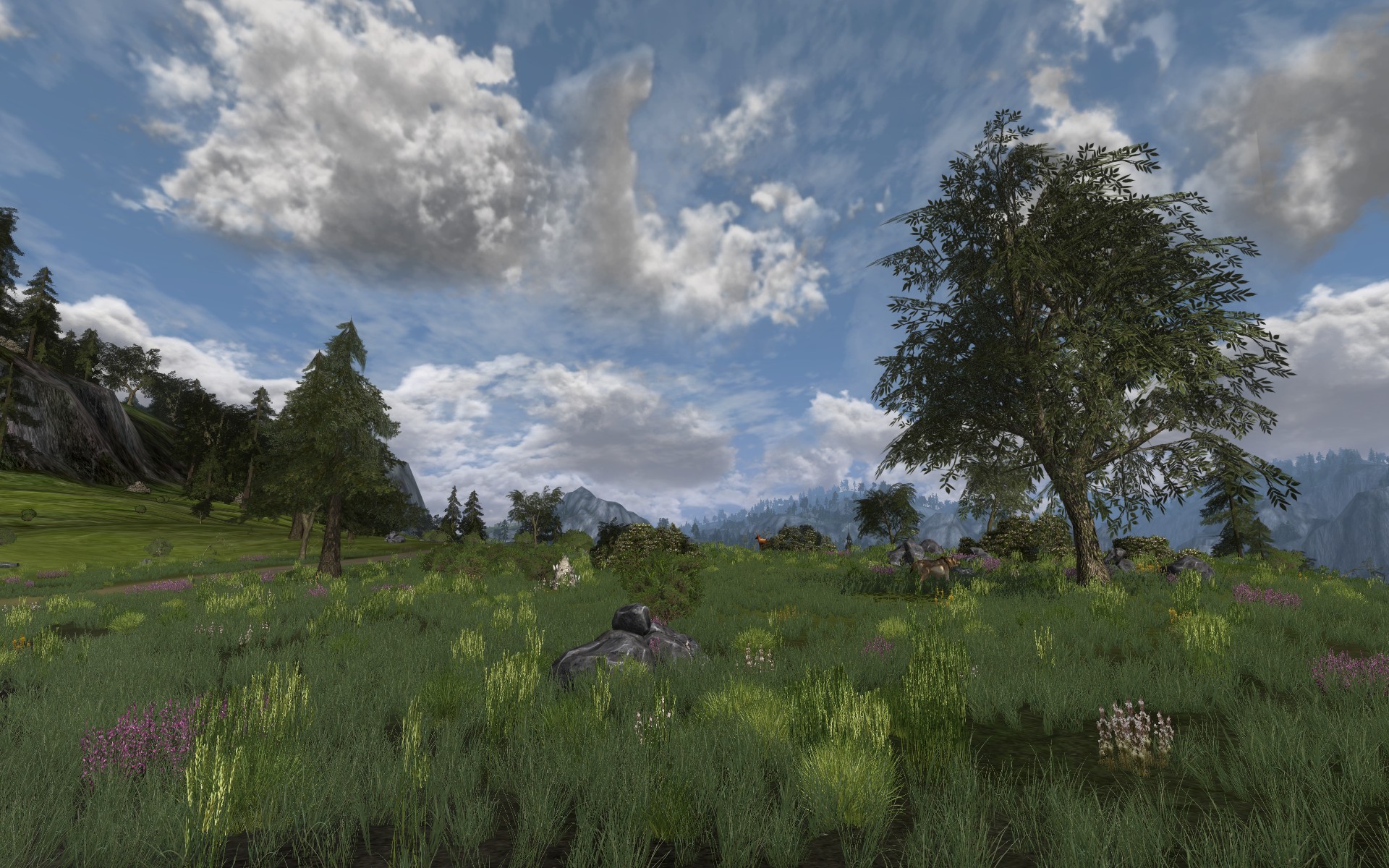
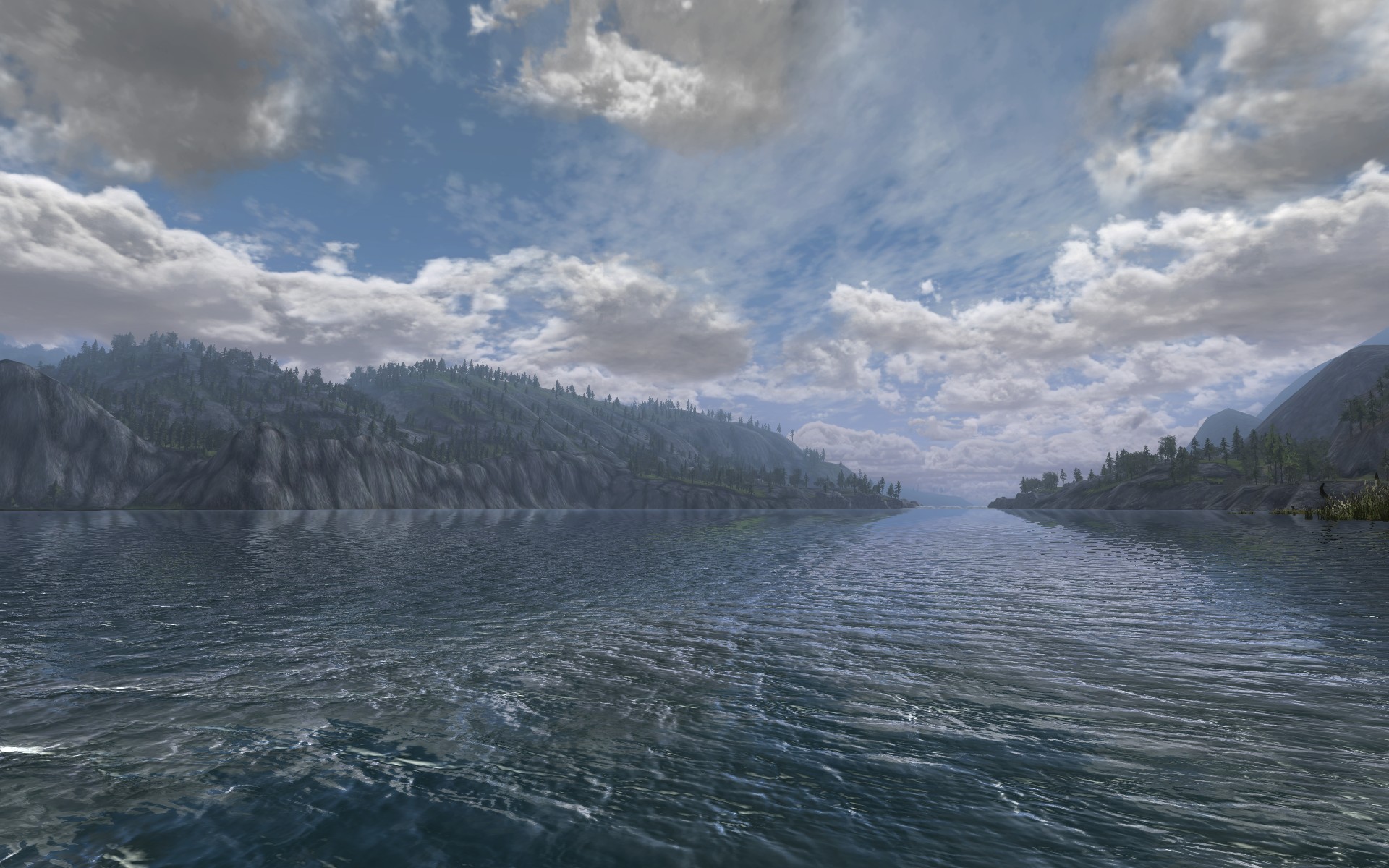
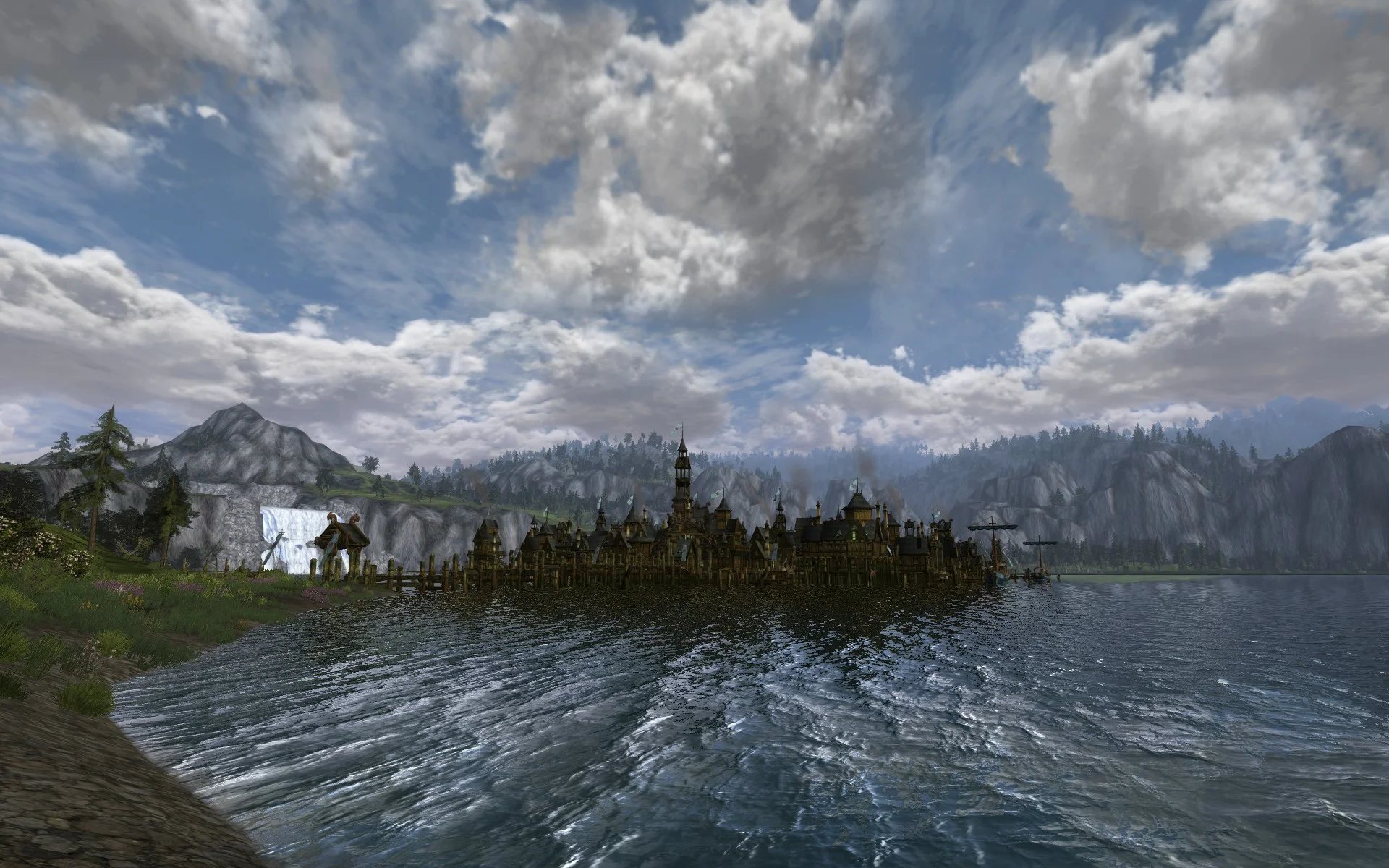
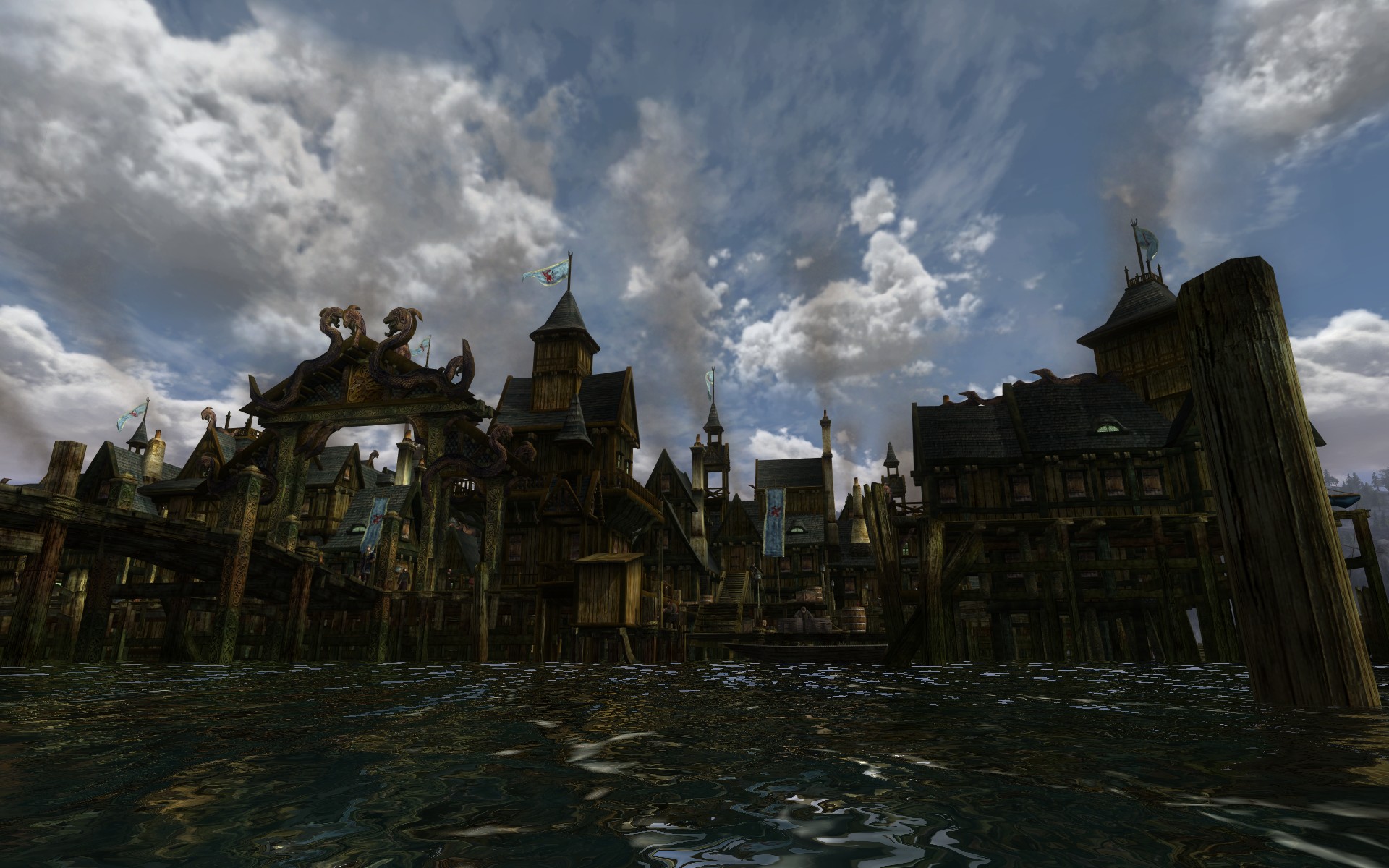
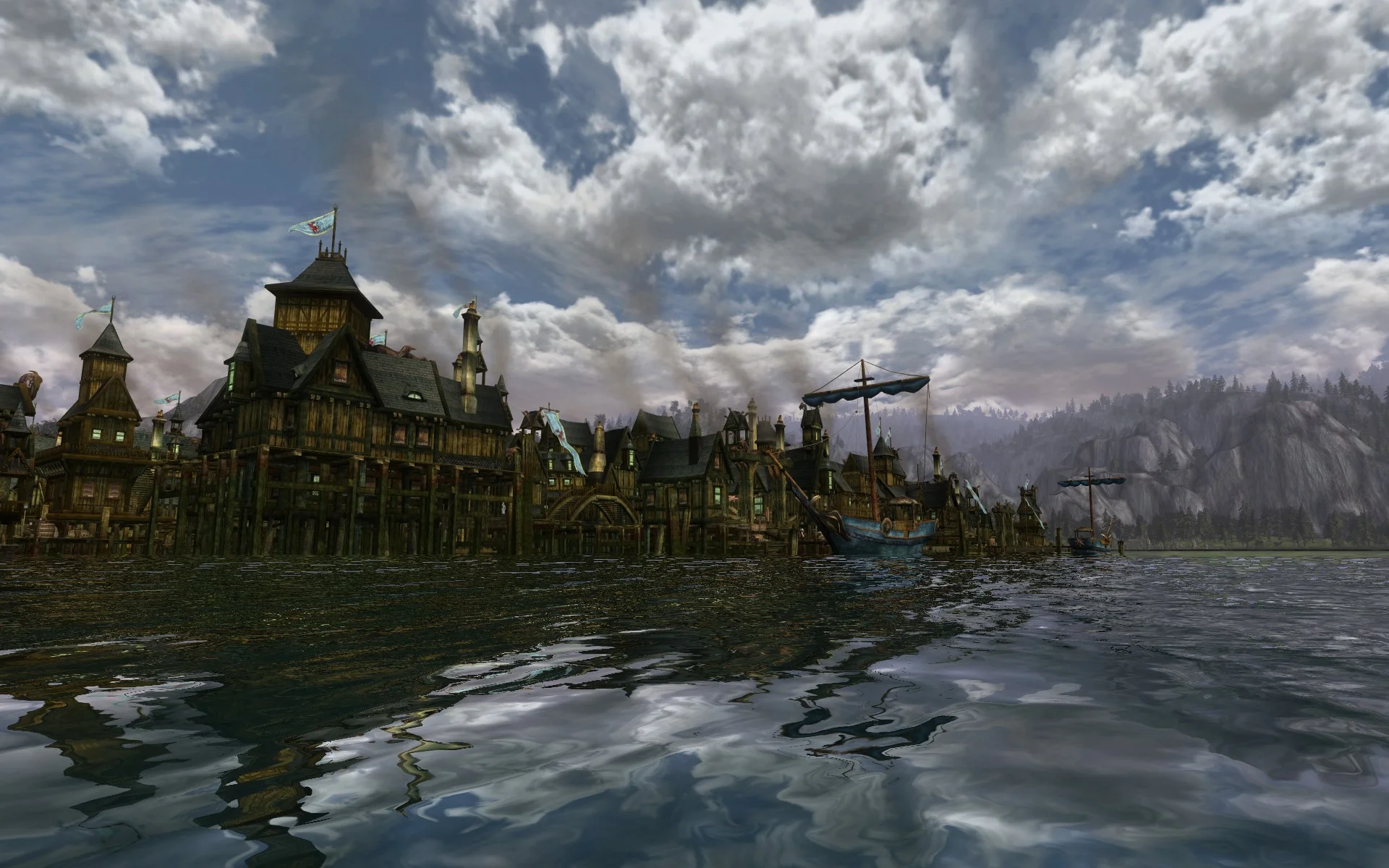
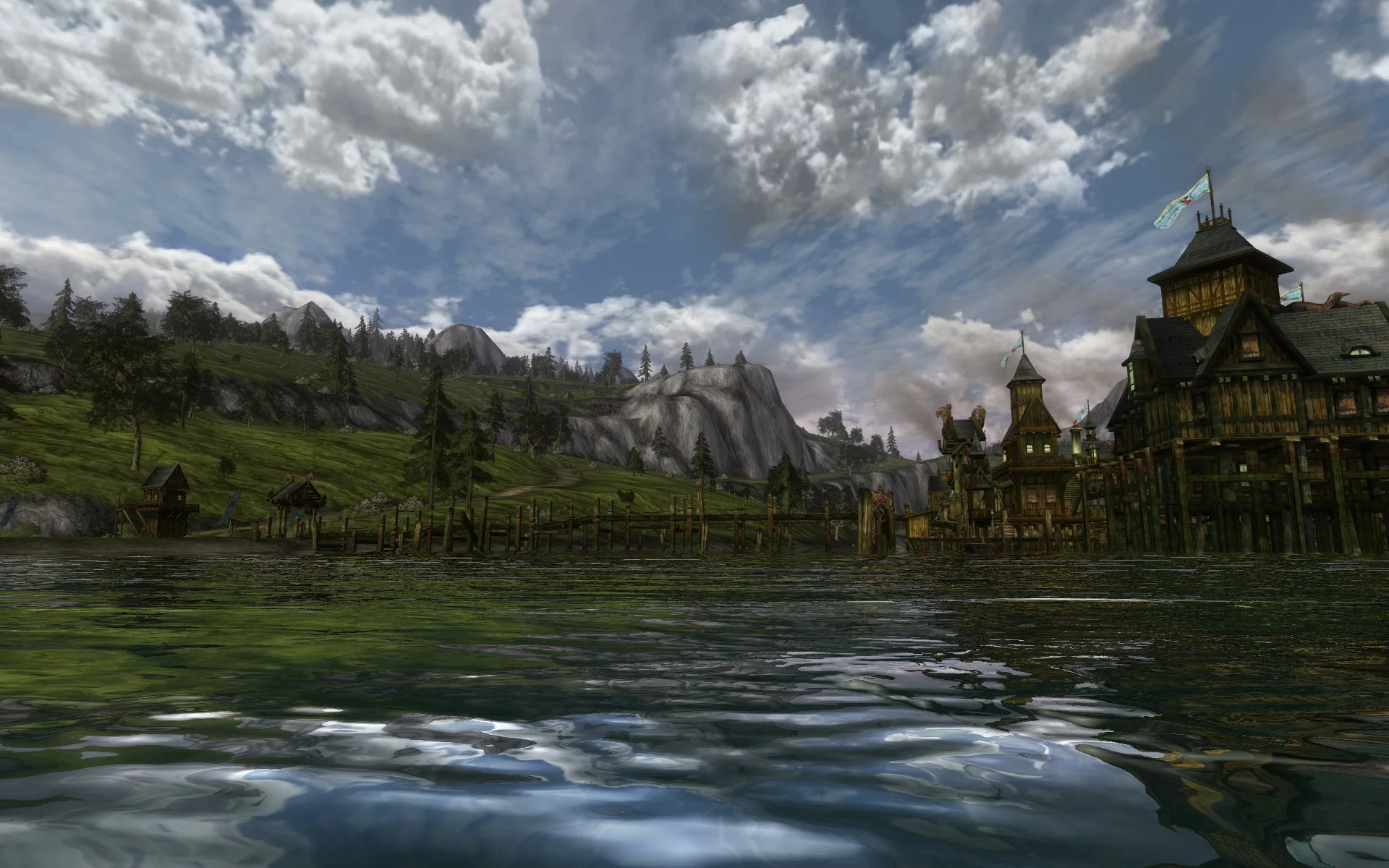
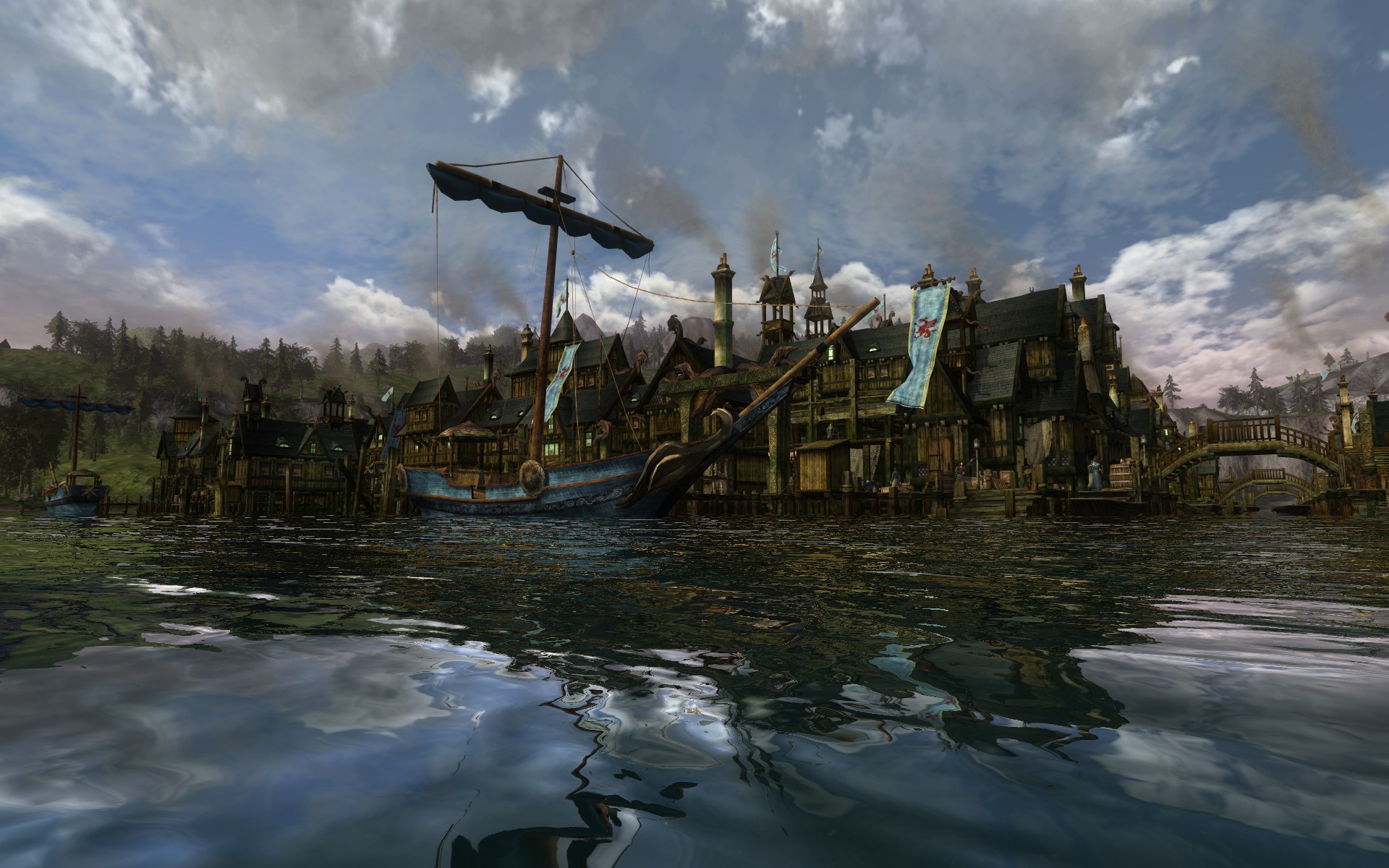
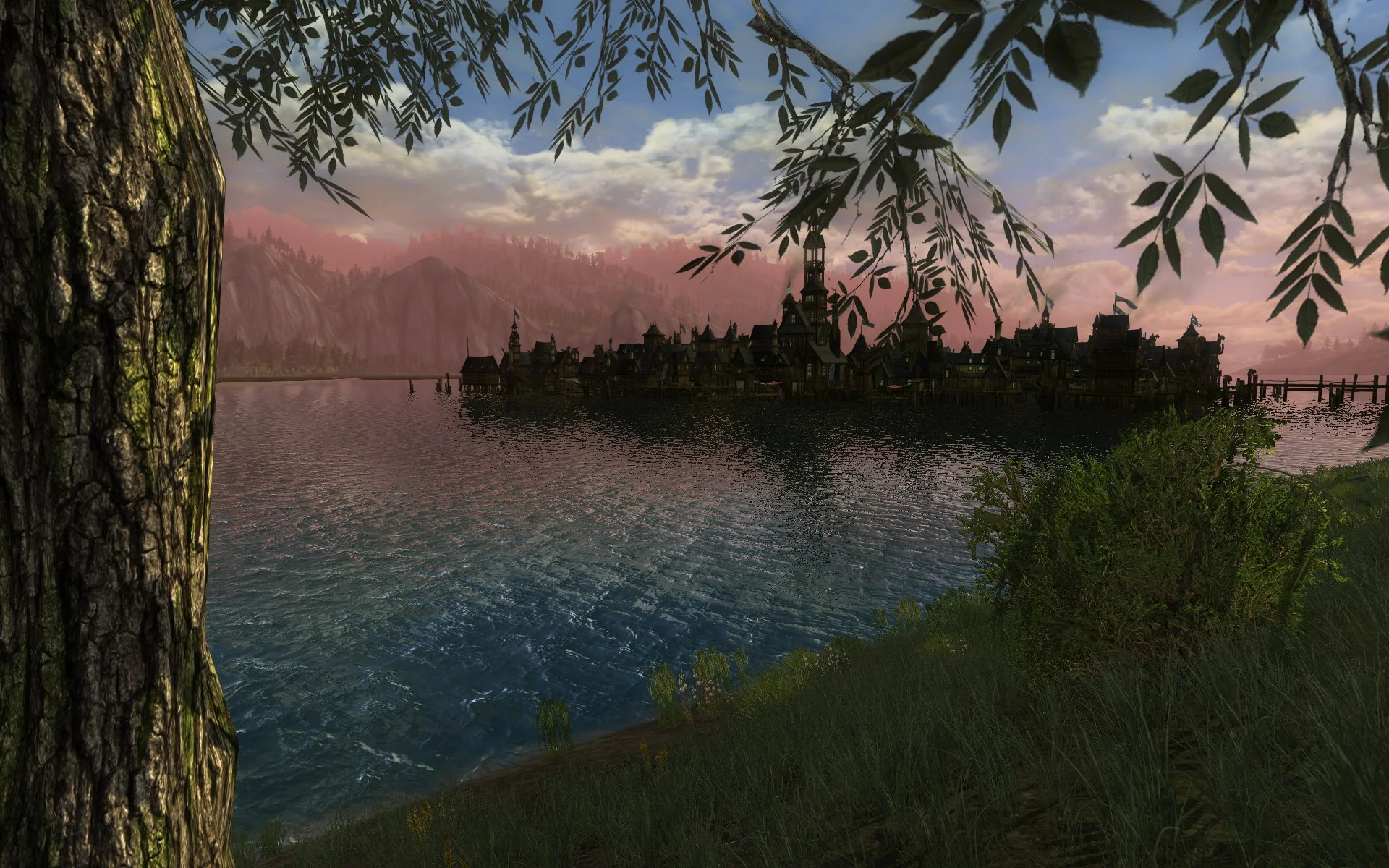
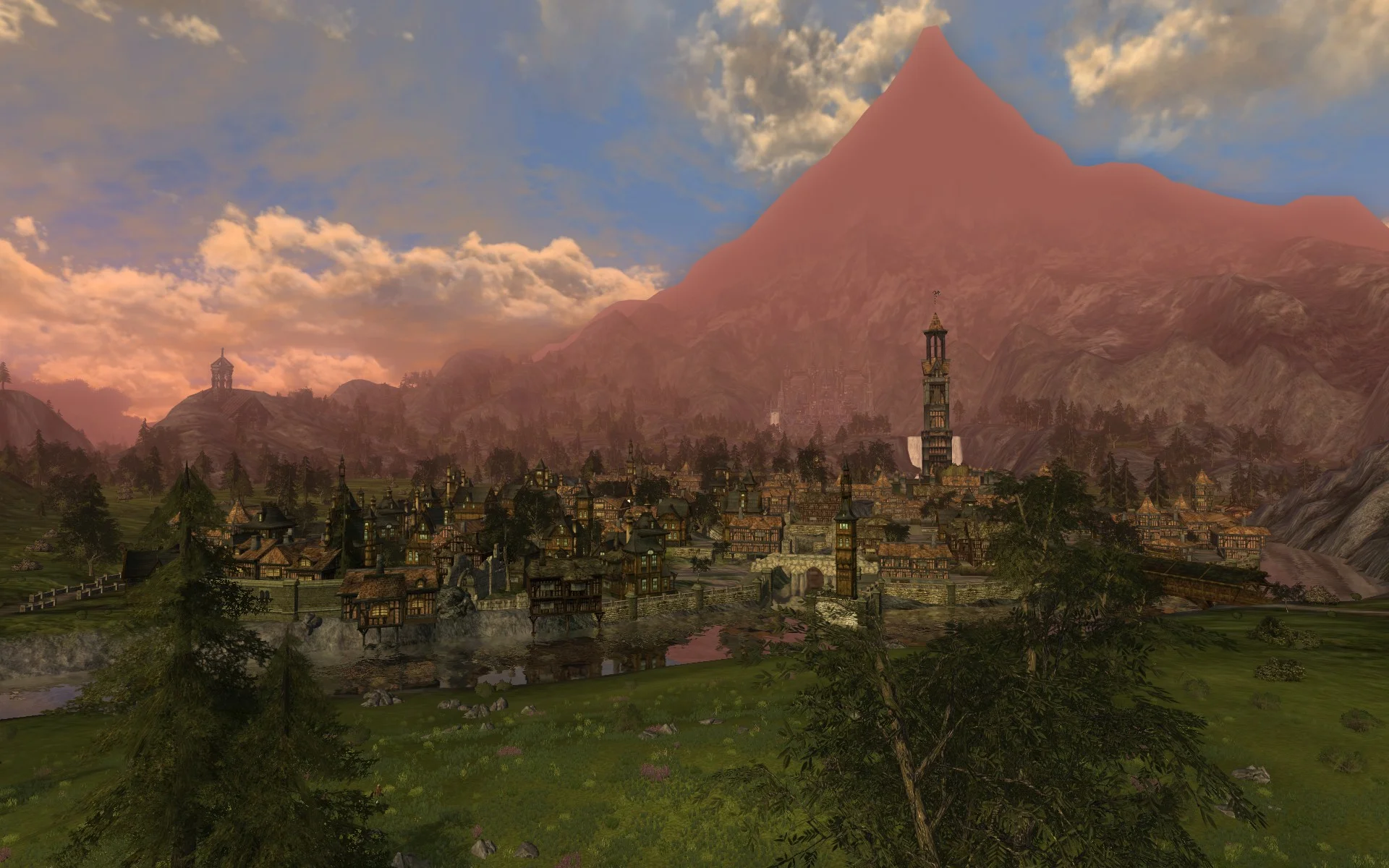
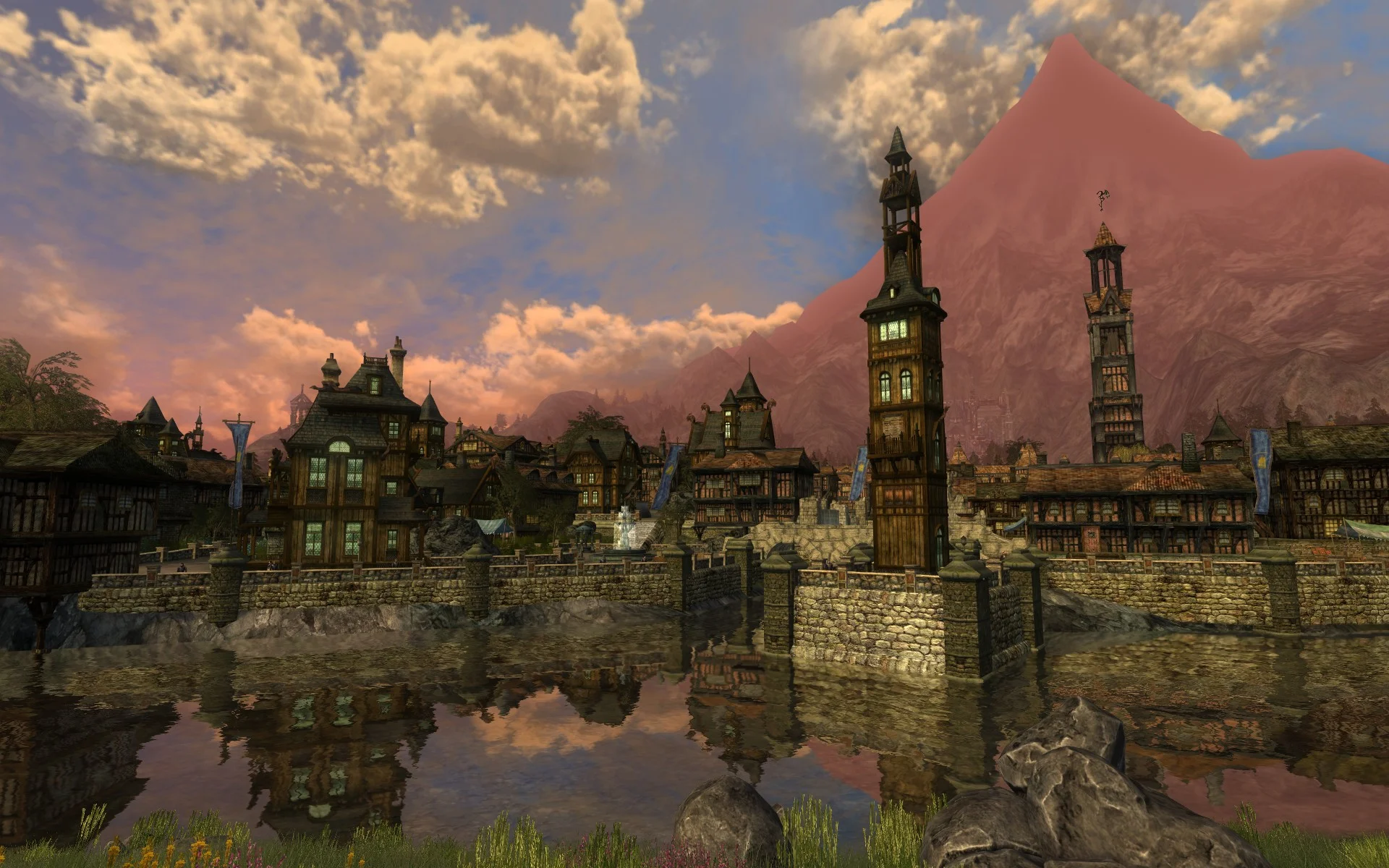
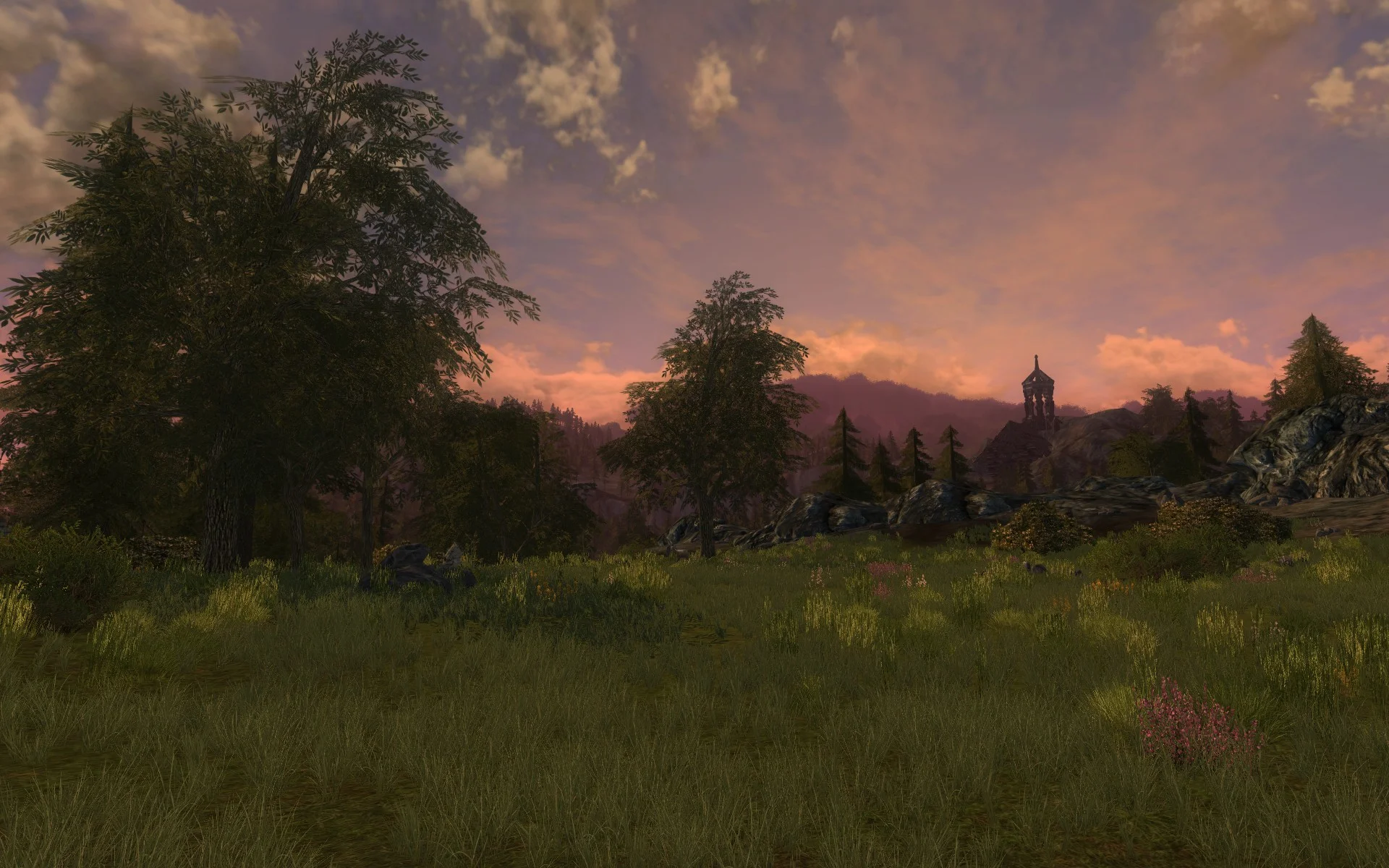
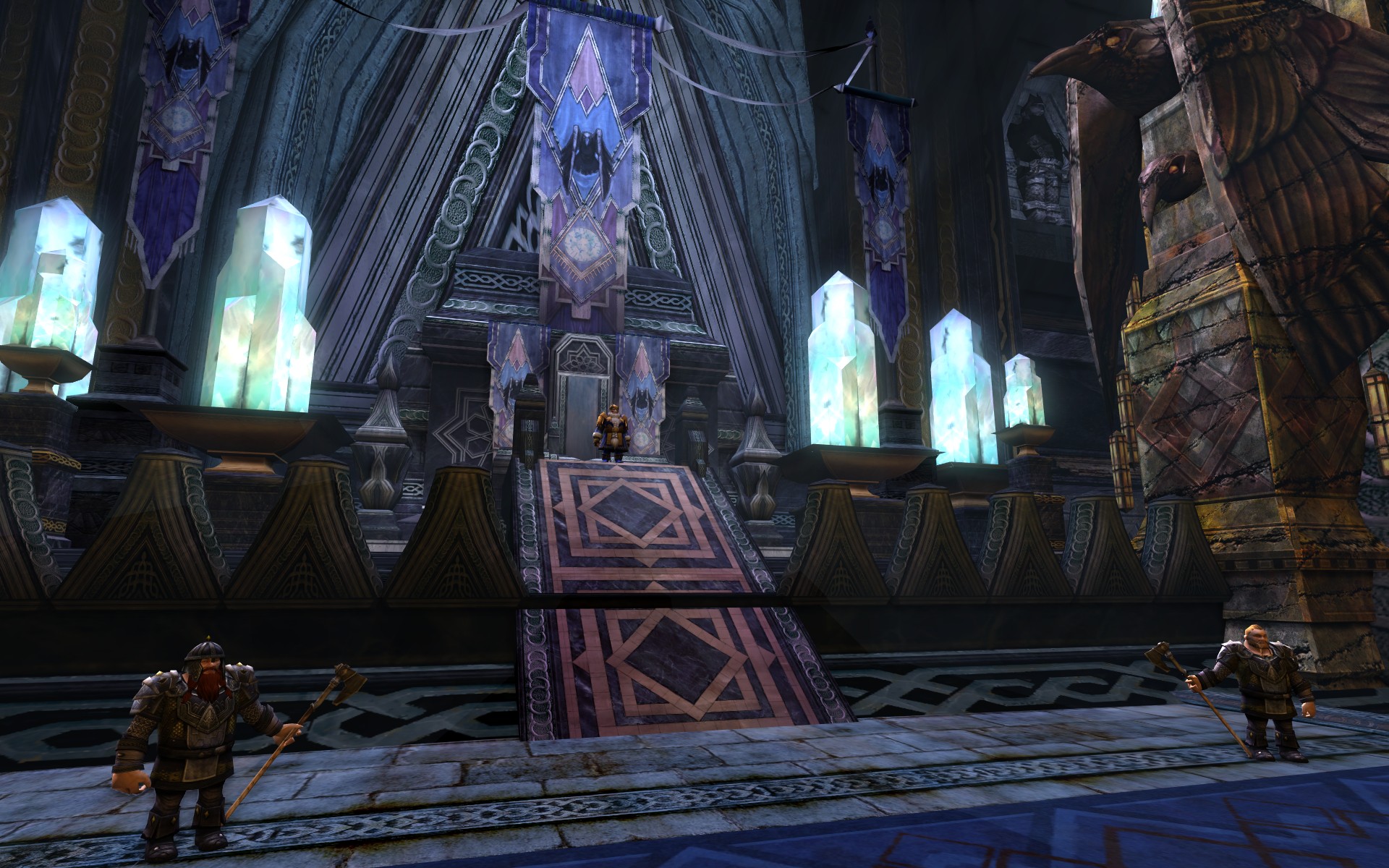
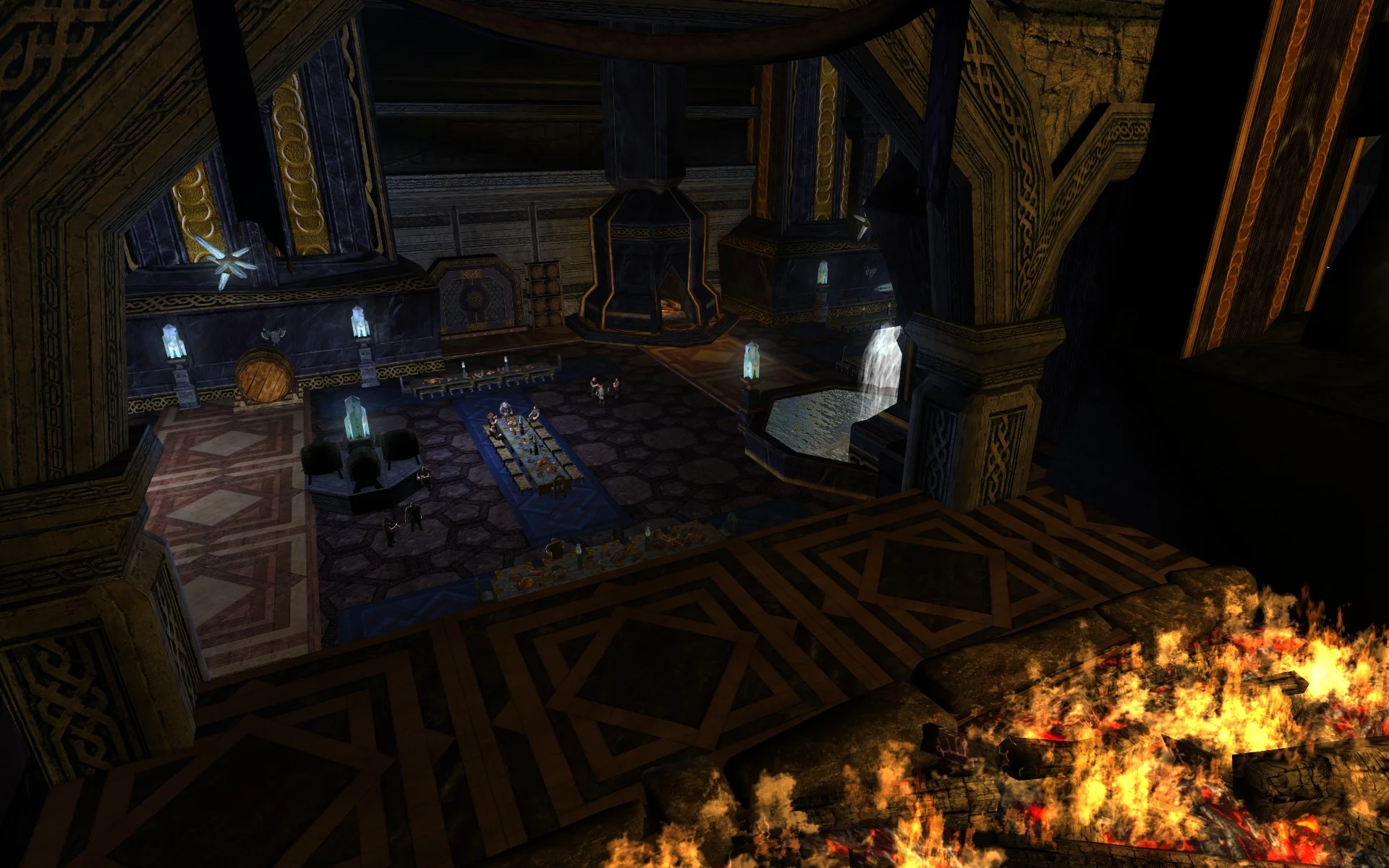
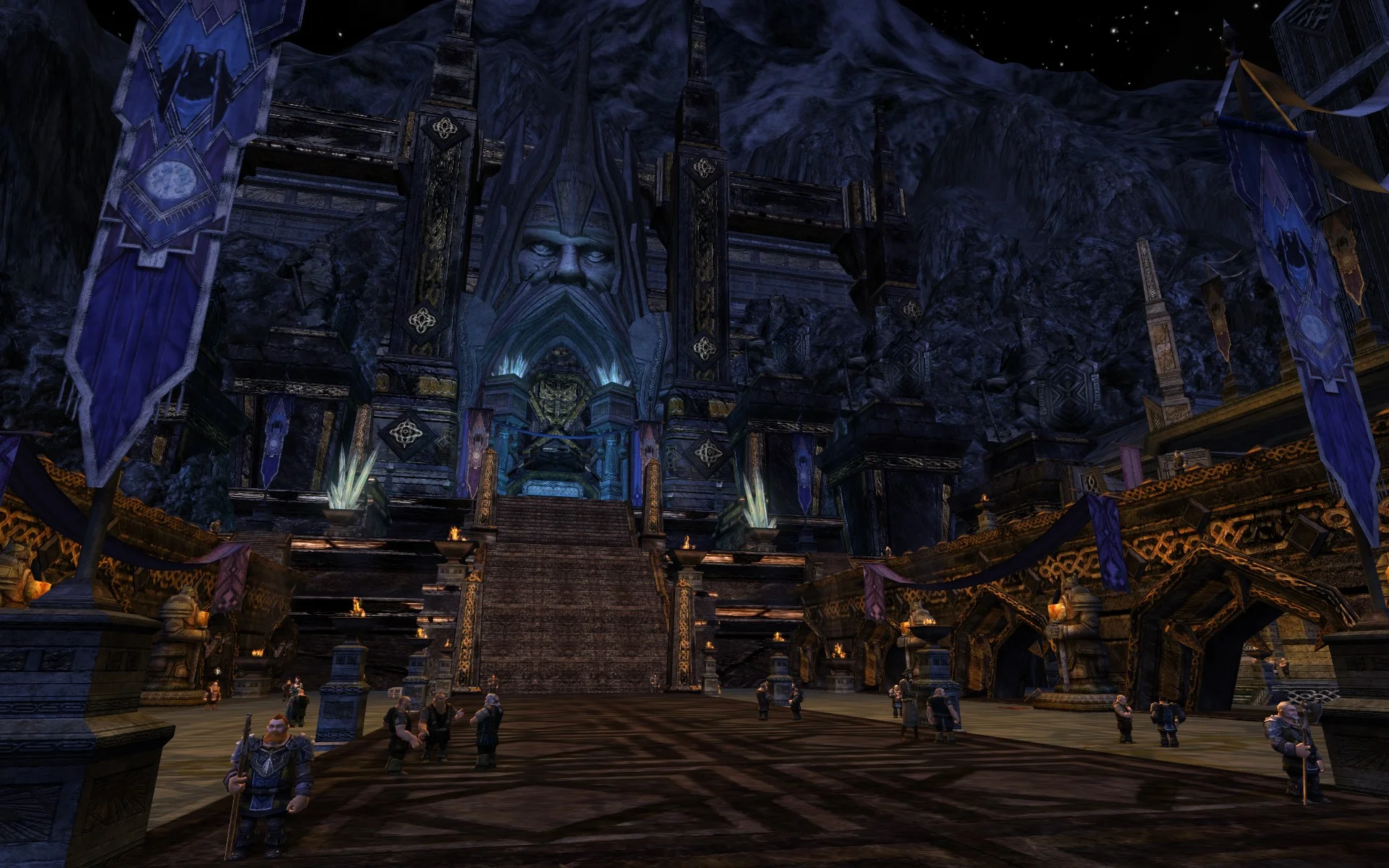
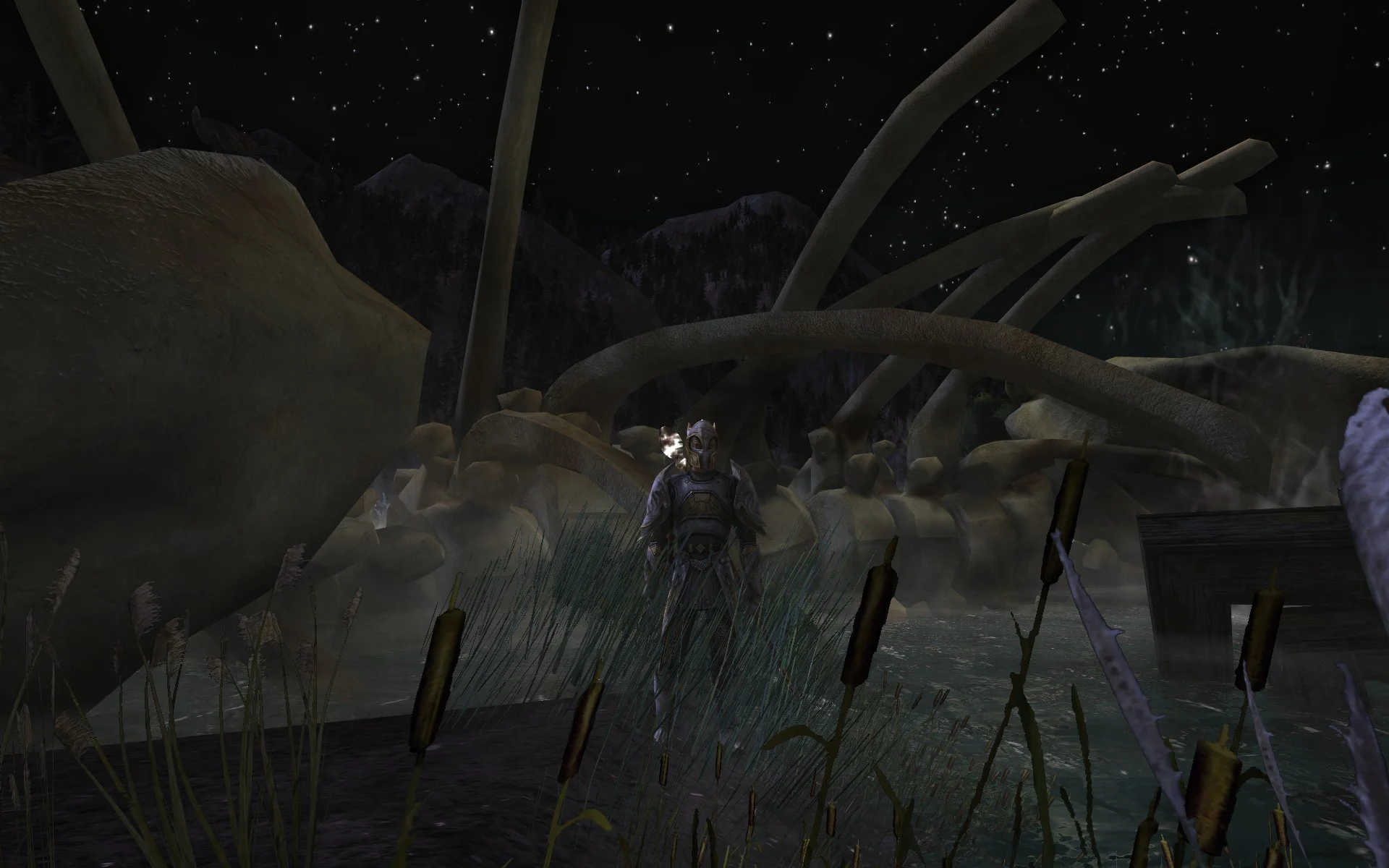
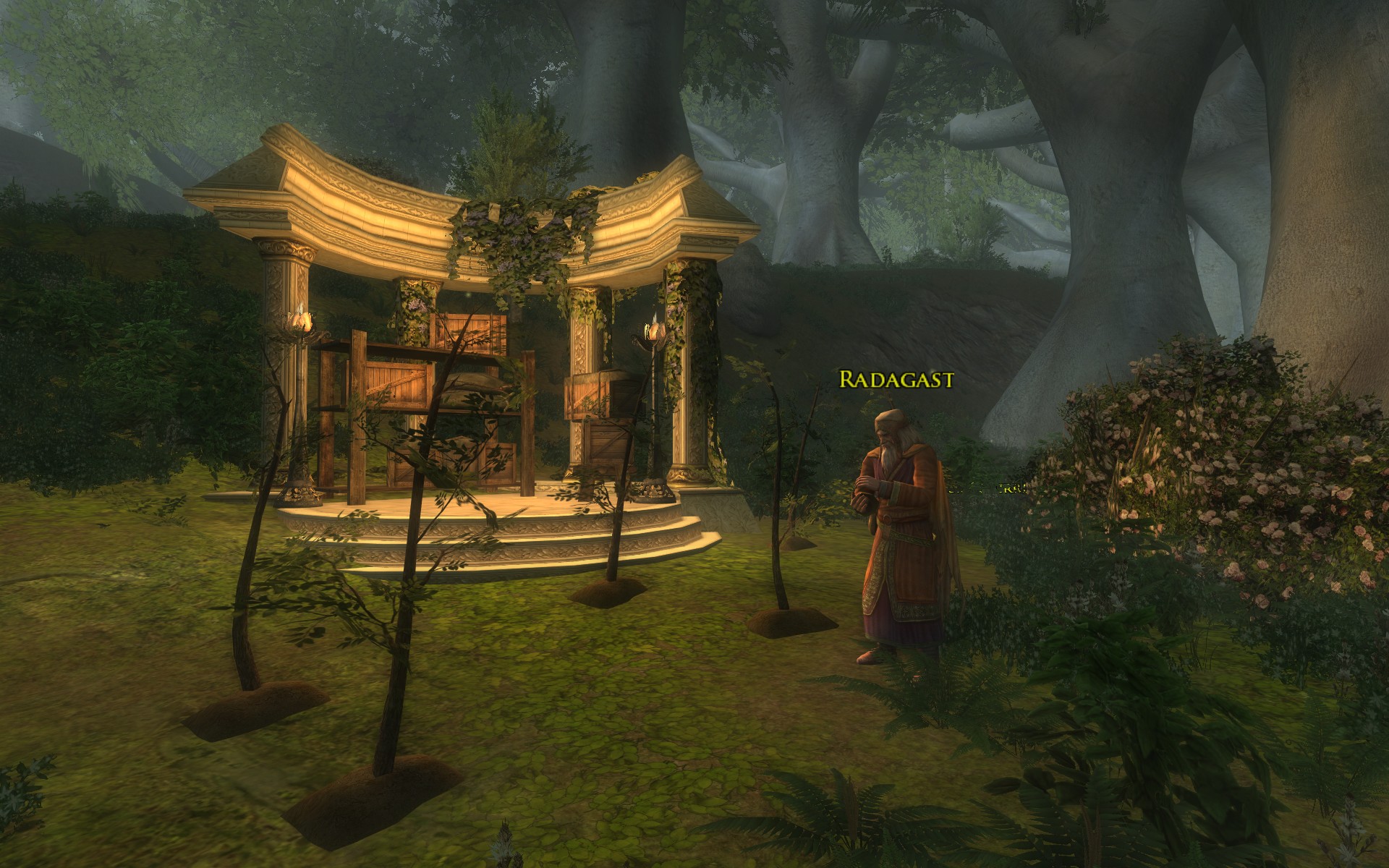
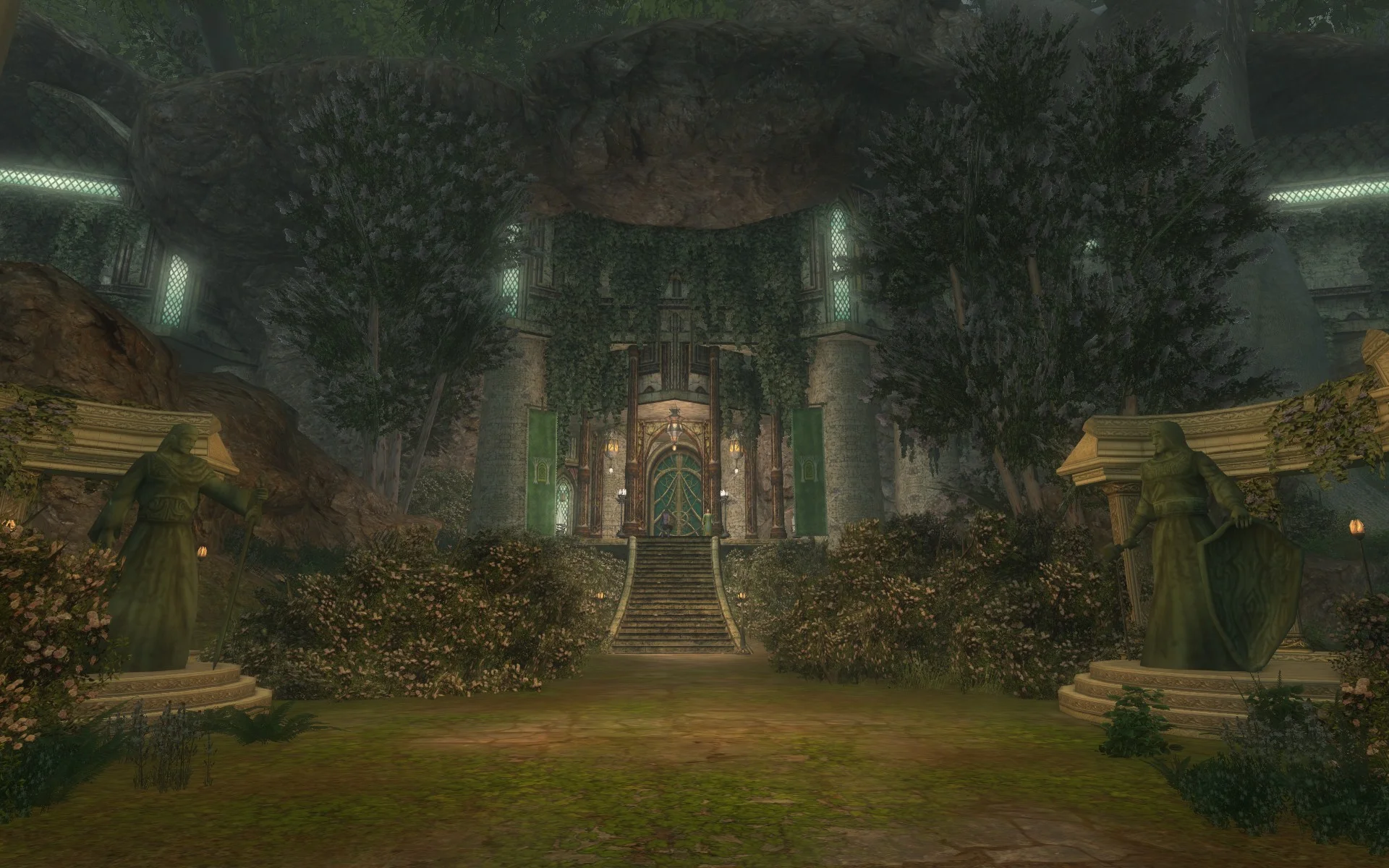
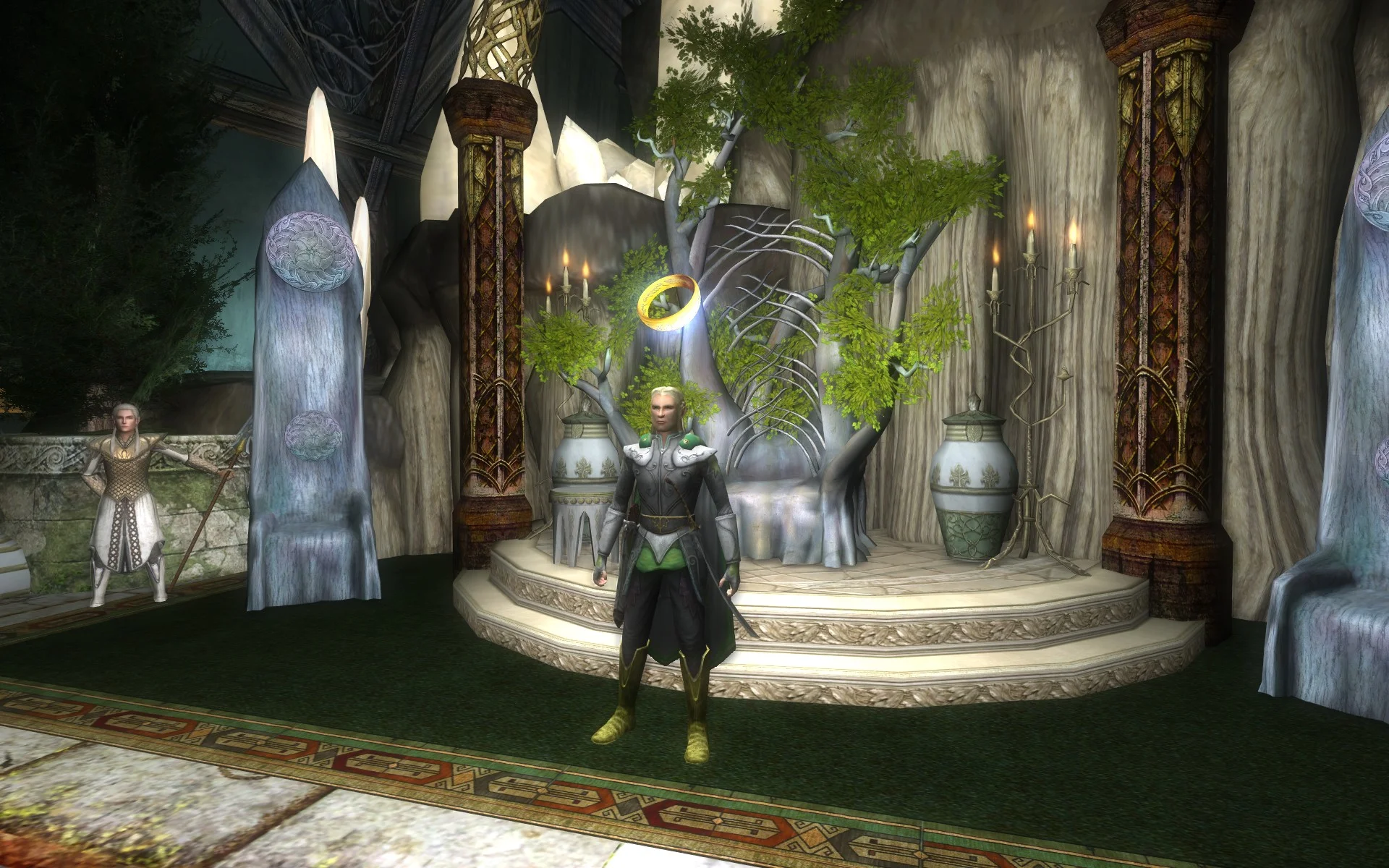
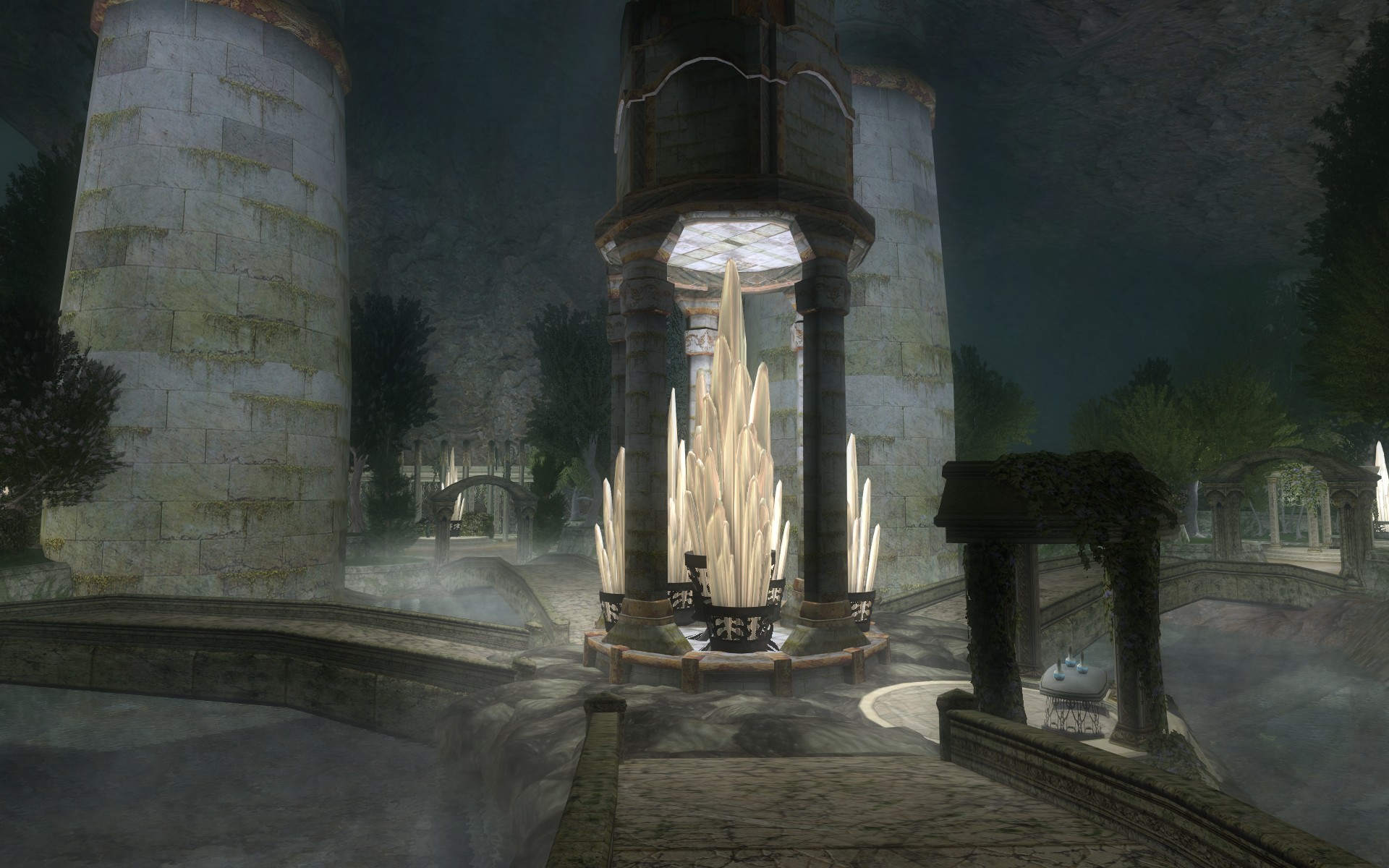
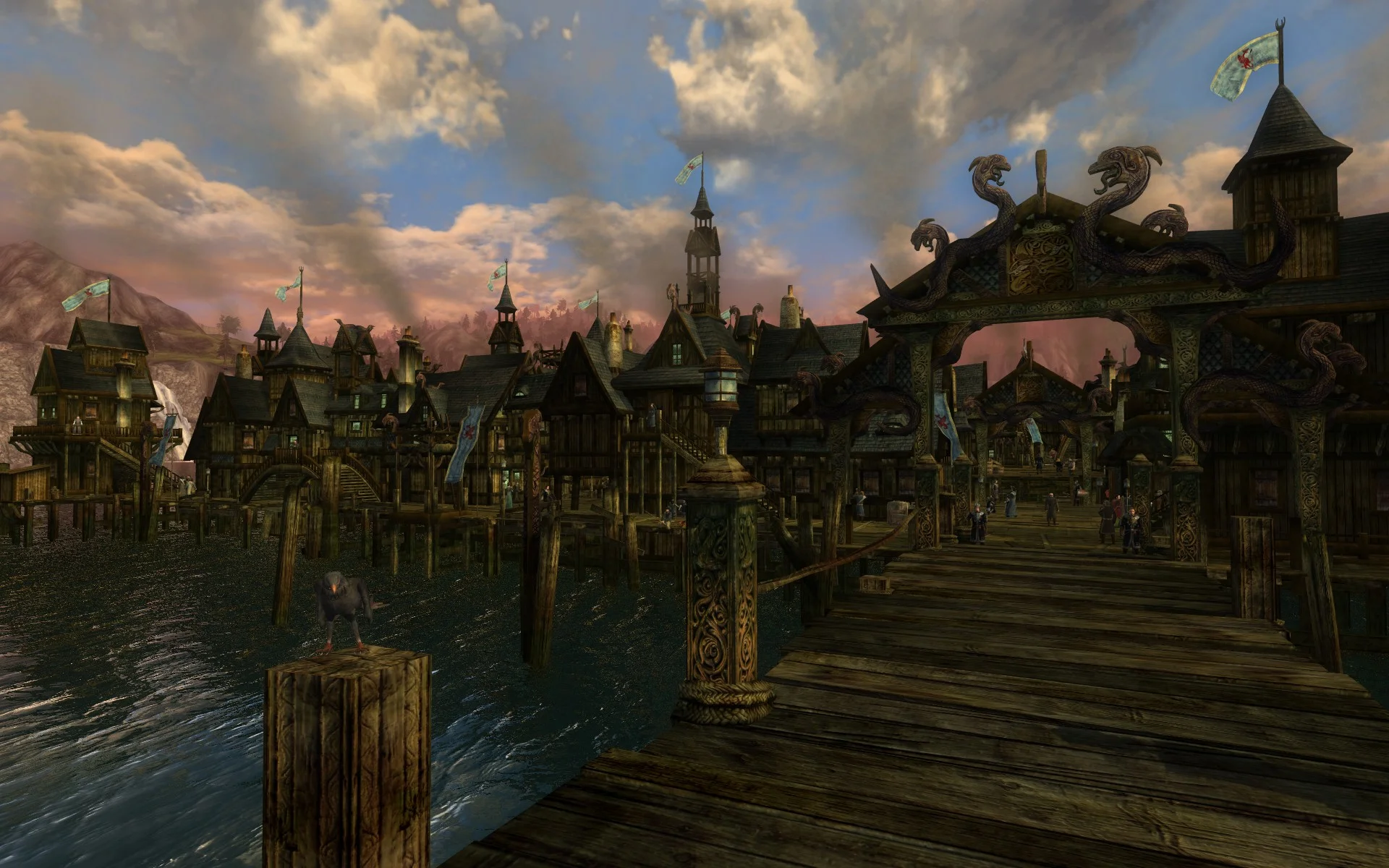
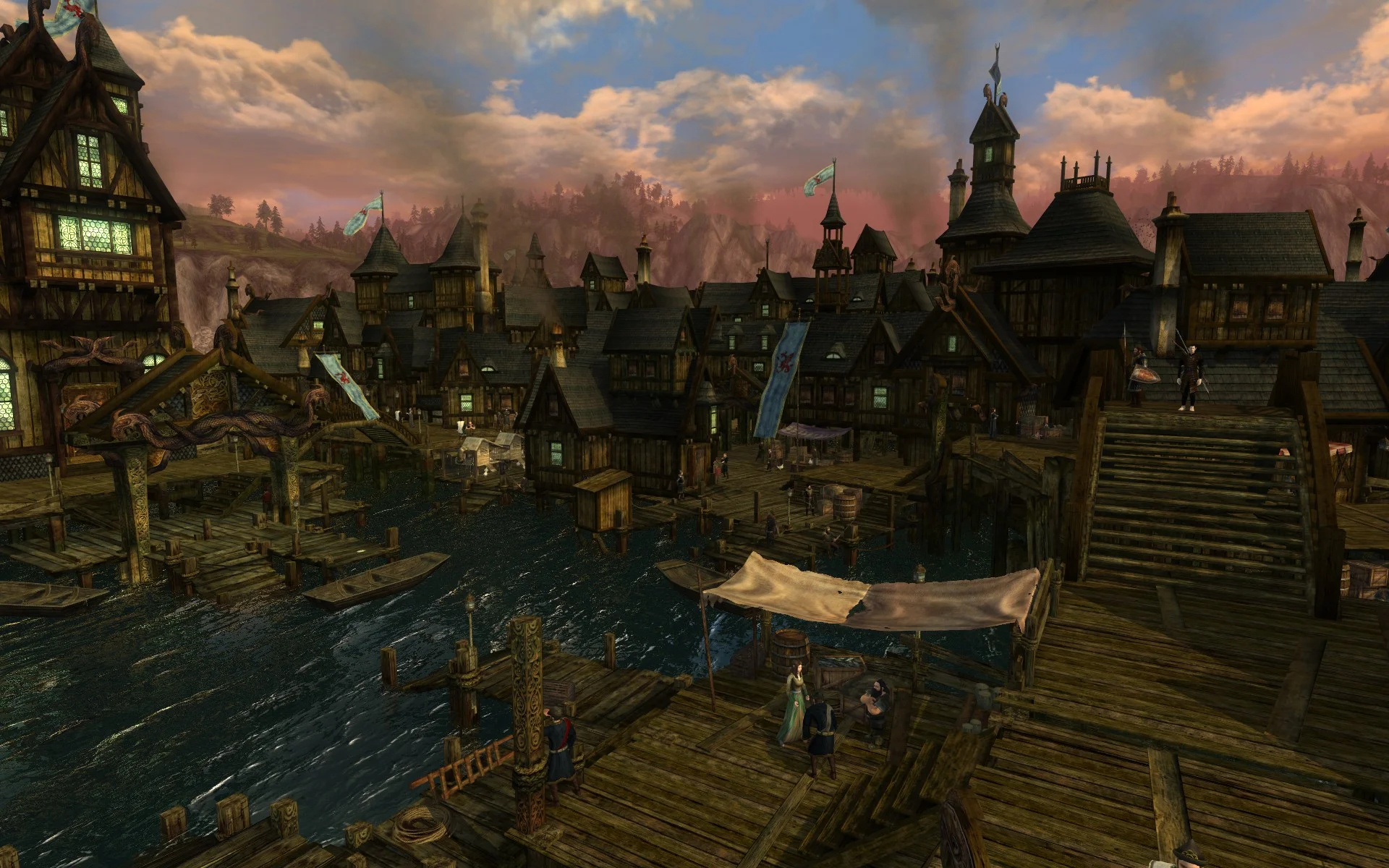
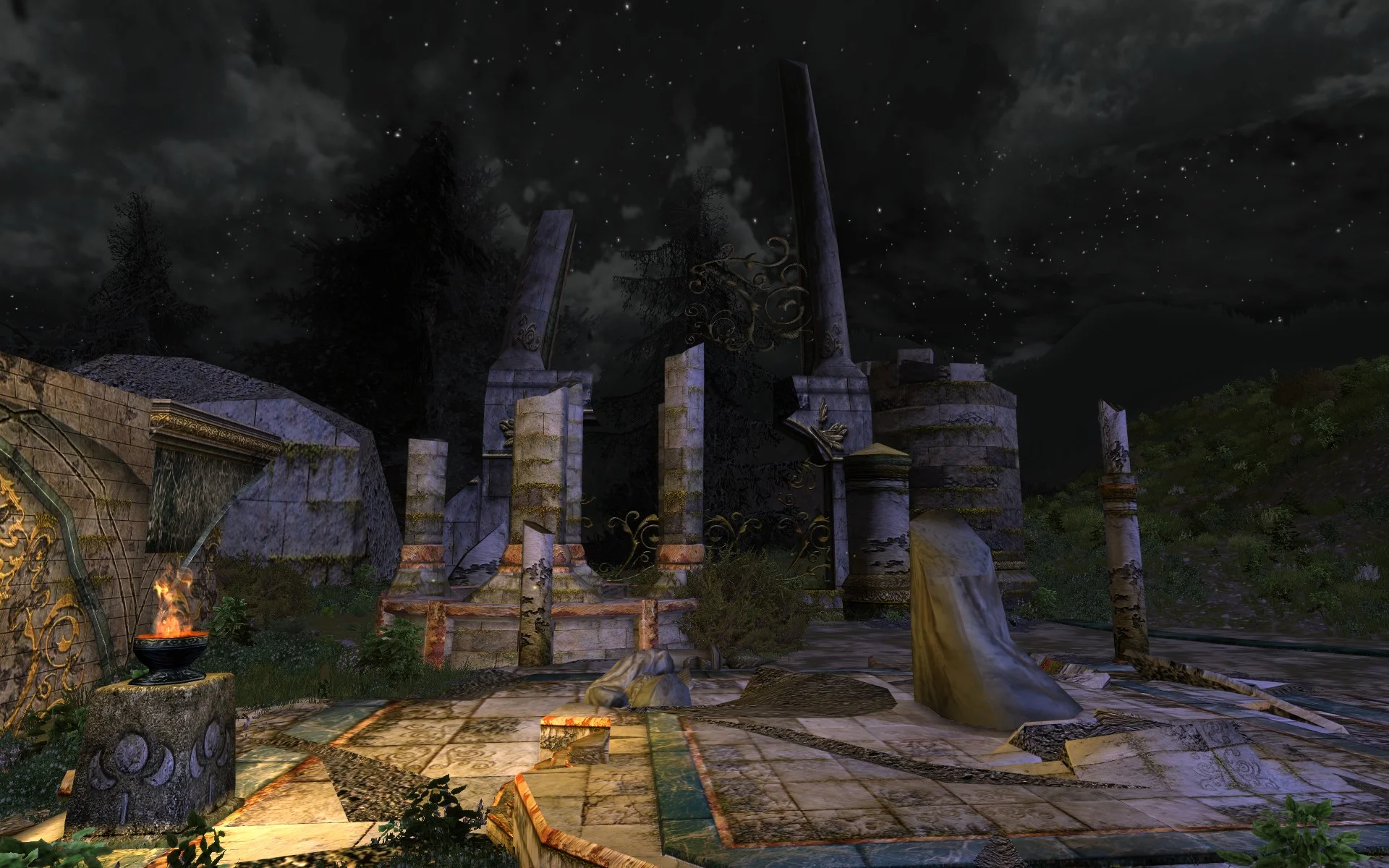
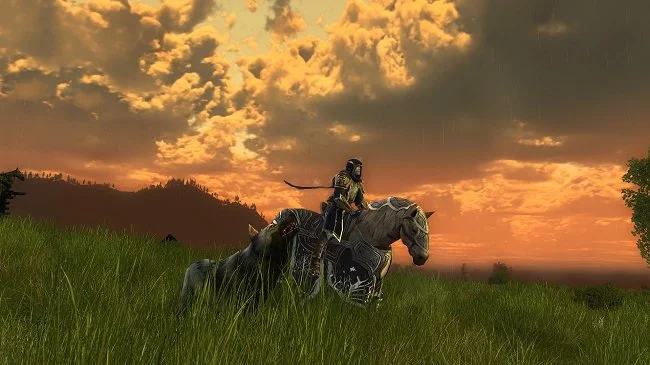
A beta version of the latest update for LOTRO is currently available on the Bullroarer test server this weekend. Update 22 (Build #1) or Strongholds of the North, features Northern Mirkwood or Eryn Lasgalen as it known since the fall of Sauron and the destruction of Dol Guldur, as well as the Dale-lands. The area includes such iconic locations as The Halls of the Elven King, Lake Town, Dale and Erebor. As this is an early build, players cannot continue the epic story The Black Book of Mordor. At present, the map for the zone is simply a placeholder and serves little navigational purpose. At times the player marker vanishes from the map entirely. However, as Bullroarer is a test server, players can collect a free stipend of Mithril Coins from the Eyes and Guard Tavern and thus use swift travel to all five new stable locations.
A beta version of the latest update for LOTRO is currently available on the Bullroarer test server this weekend. Update 22 (Build #1) or Strongholds of the North, features Northern Mirkwood or Eryn Lasgalen as it known since the fall of Sauron and the destruction of Dol Guldur, as well as the Dale-lands. The area includes such iconic locations as The Halls of the Elven King, Lake Town, Dale and Erebor. As this is an early build, players cannot continue the epic story The Black Book of Mordor. At present, the map for the zone is simply a placeholder and serves little navigational purpose. At times the player marker vanishes from the map entirely. However, as Bullroarer is a test server, players can collect a free stipend of Mithril Coins from the Eyes and Guard Tavern and thus use swift travel to all five new stable locations.
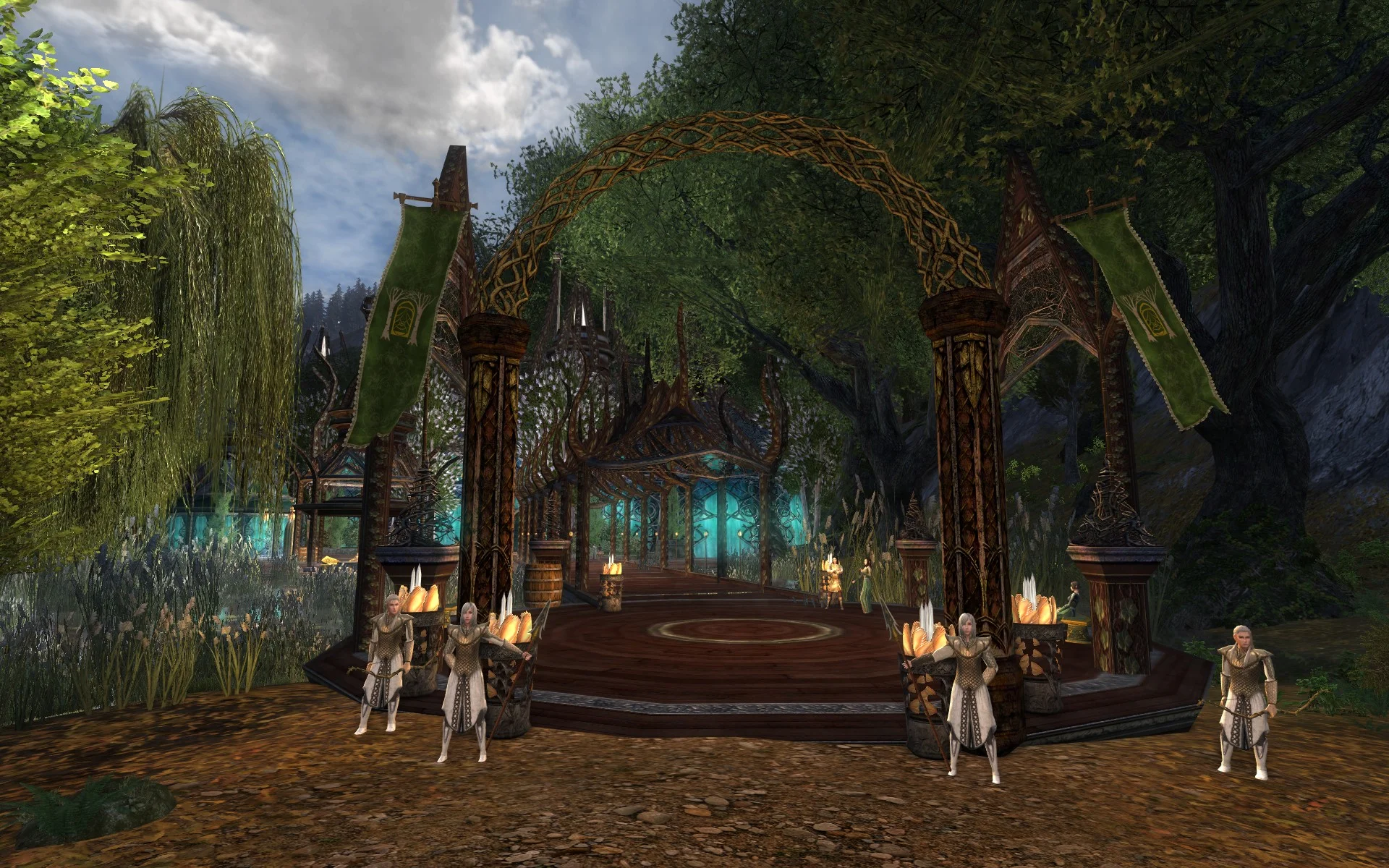
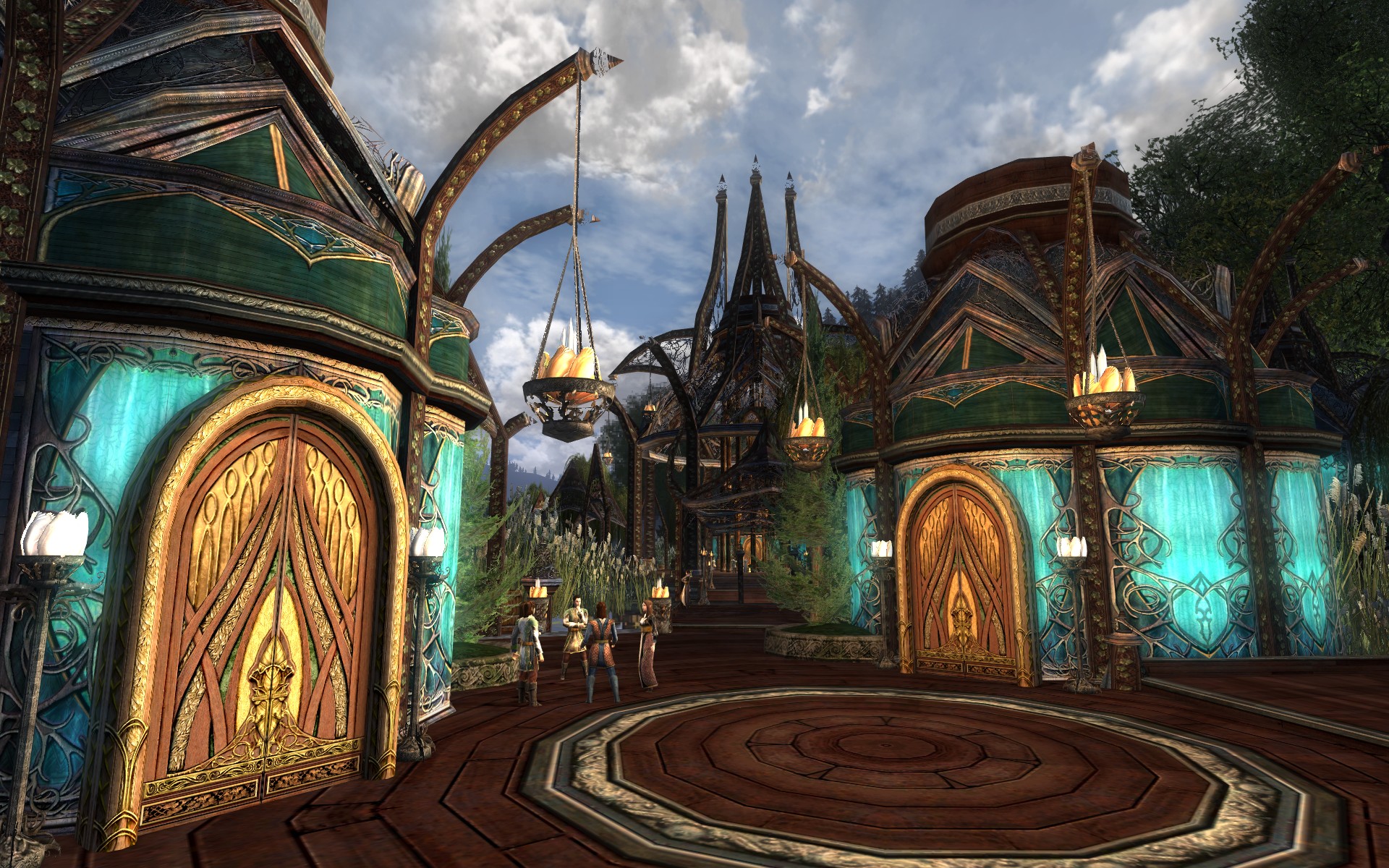
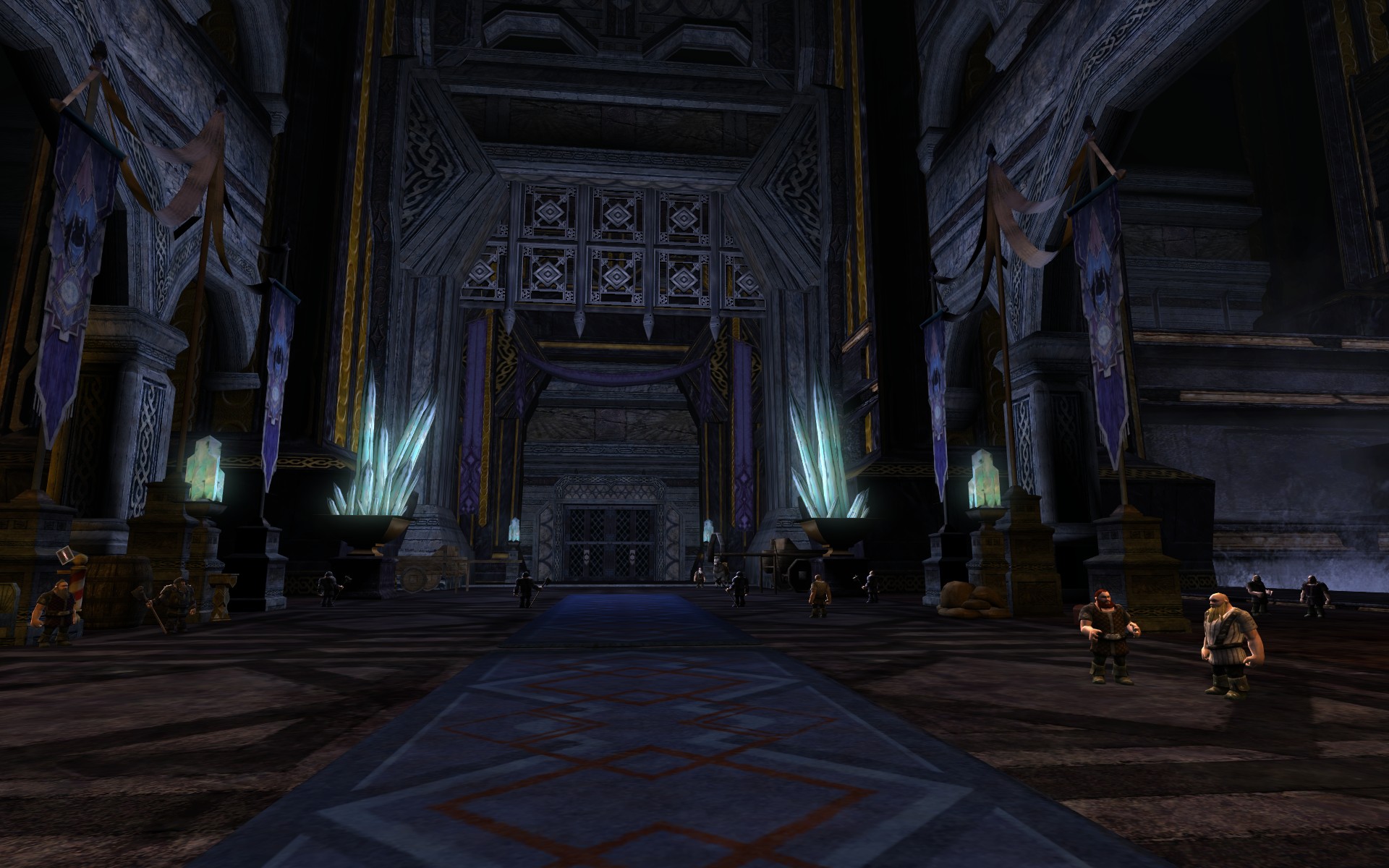
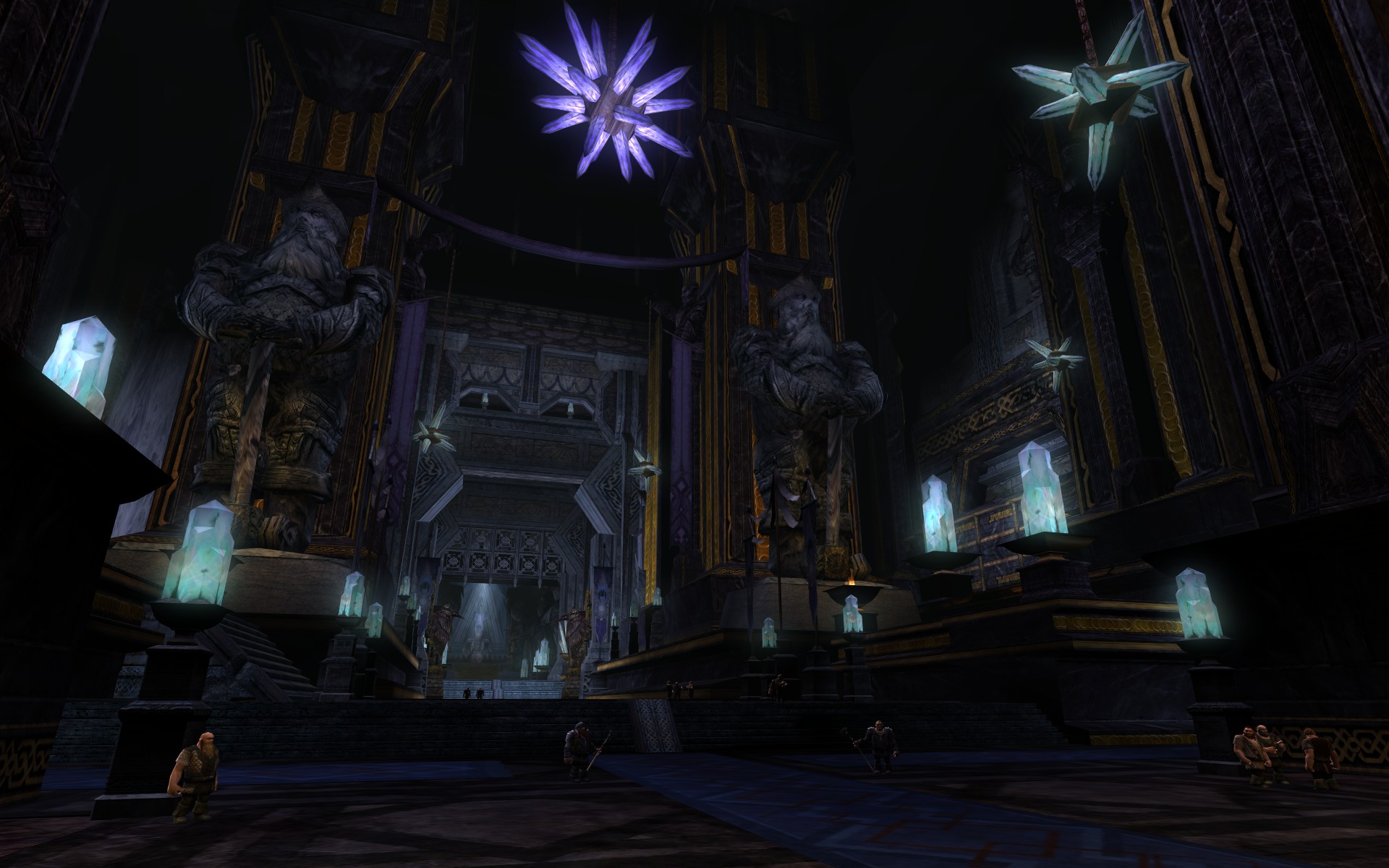
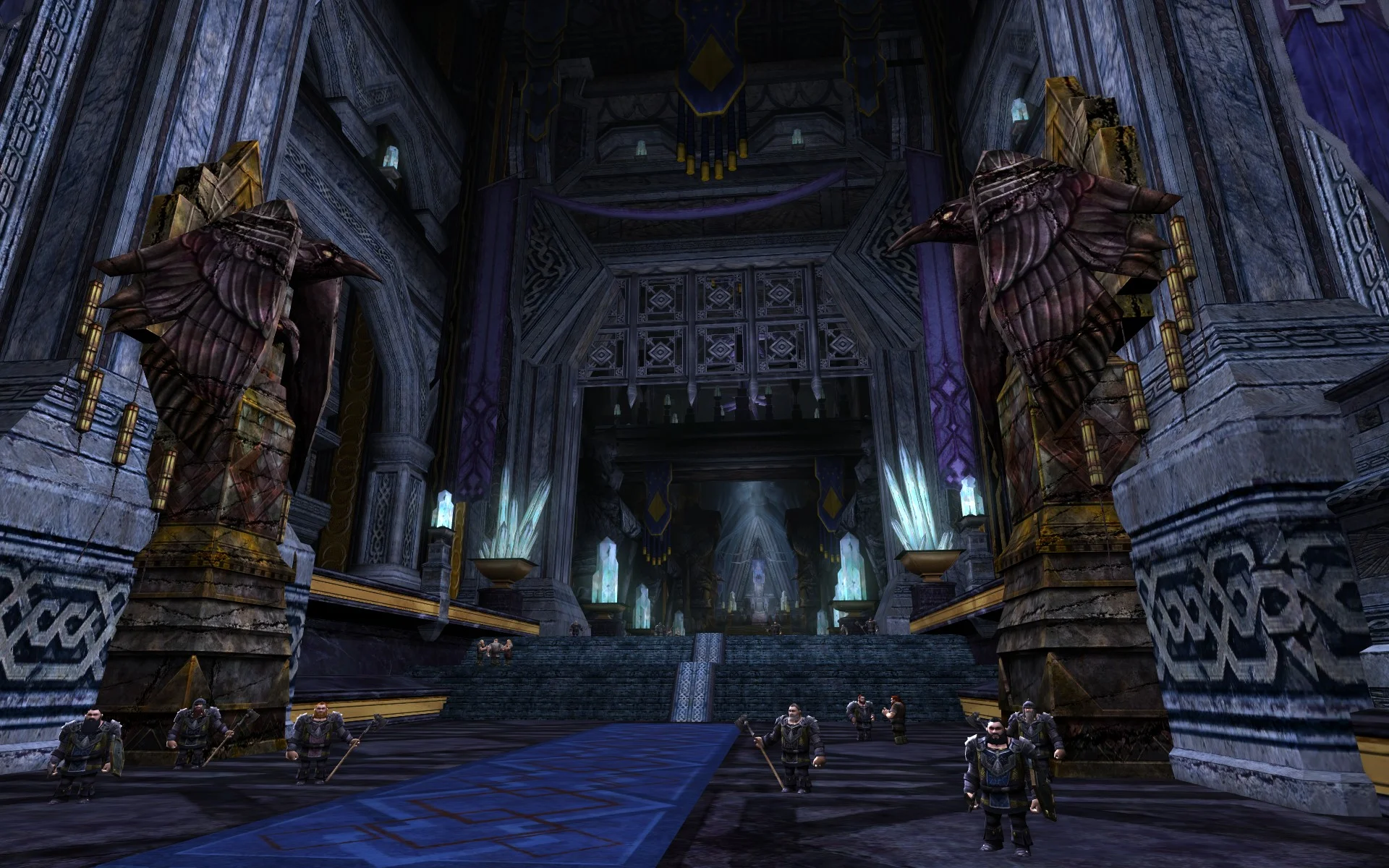
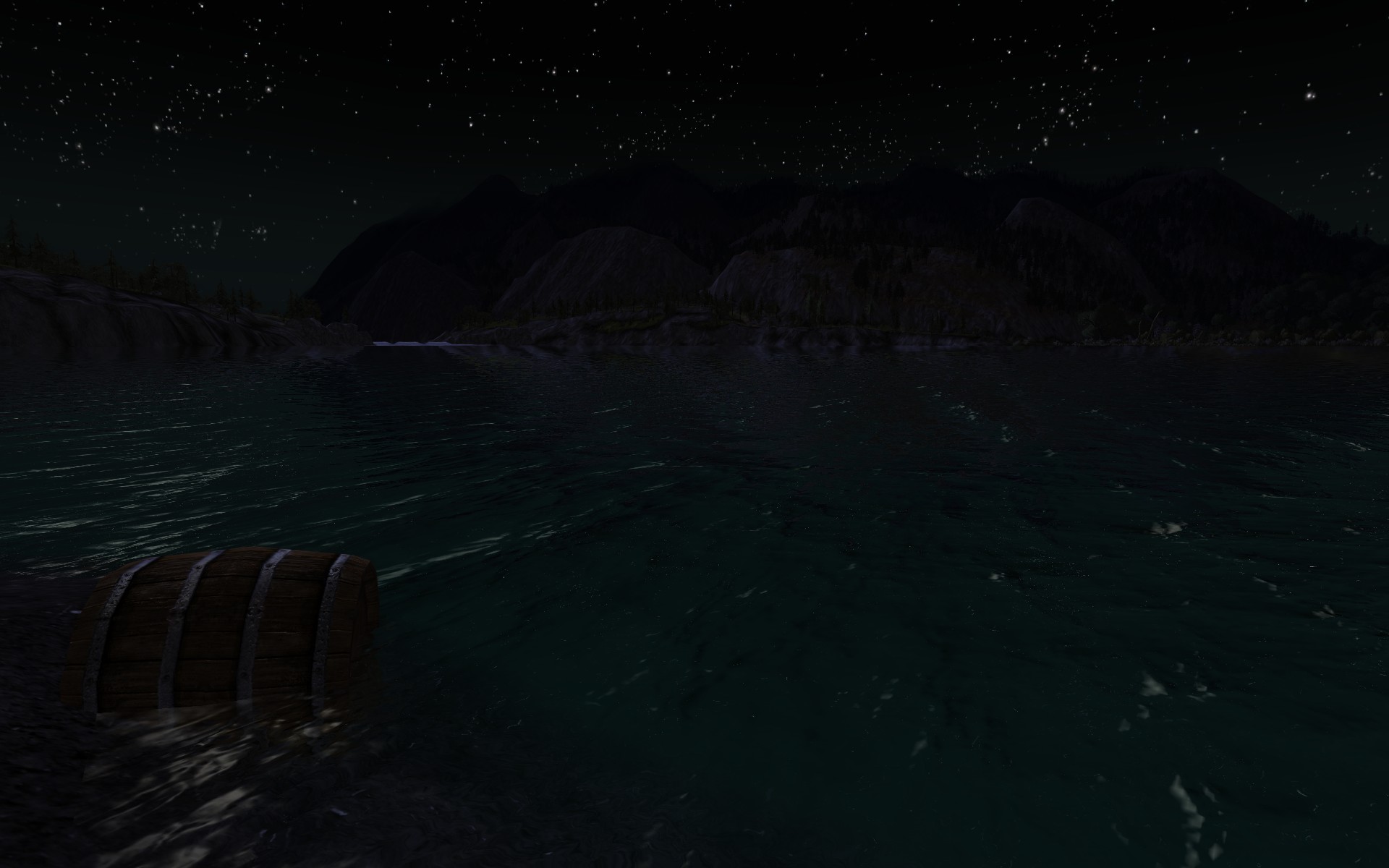
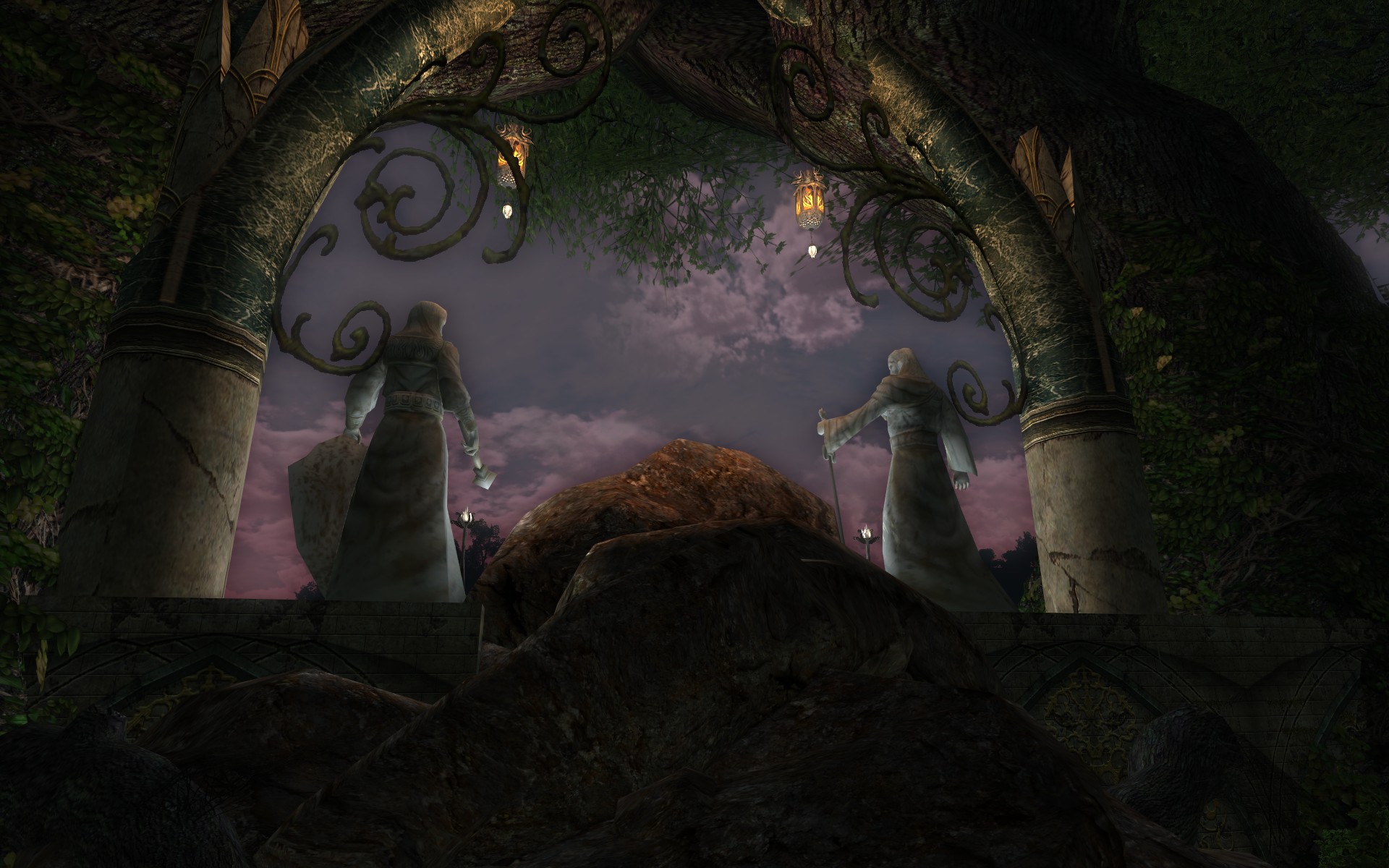
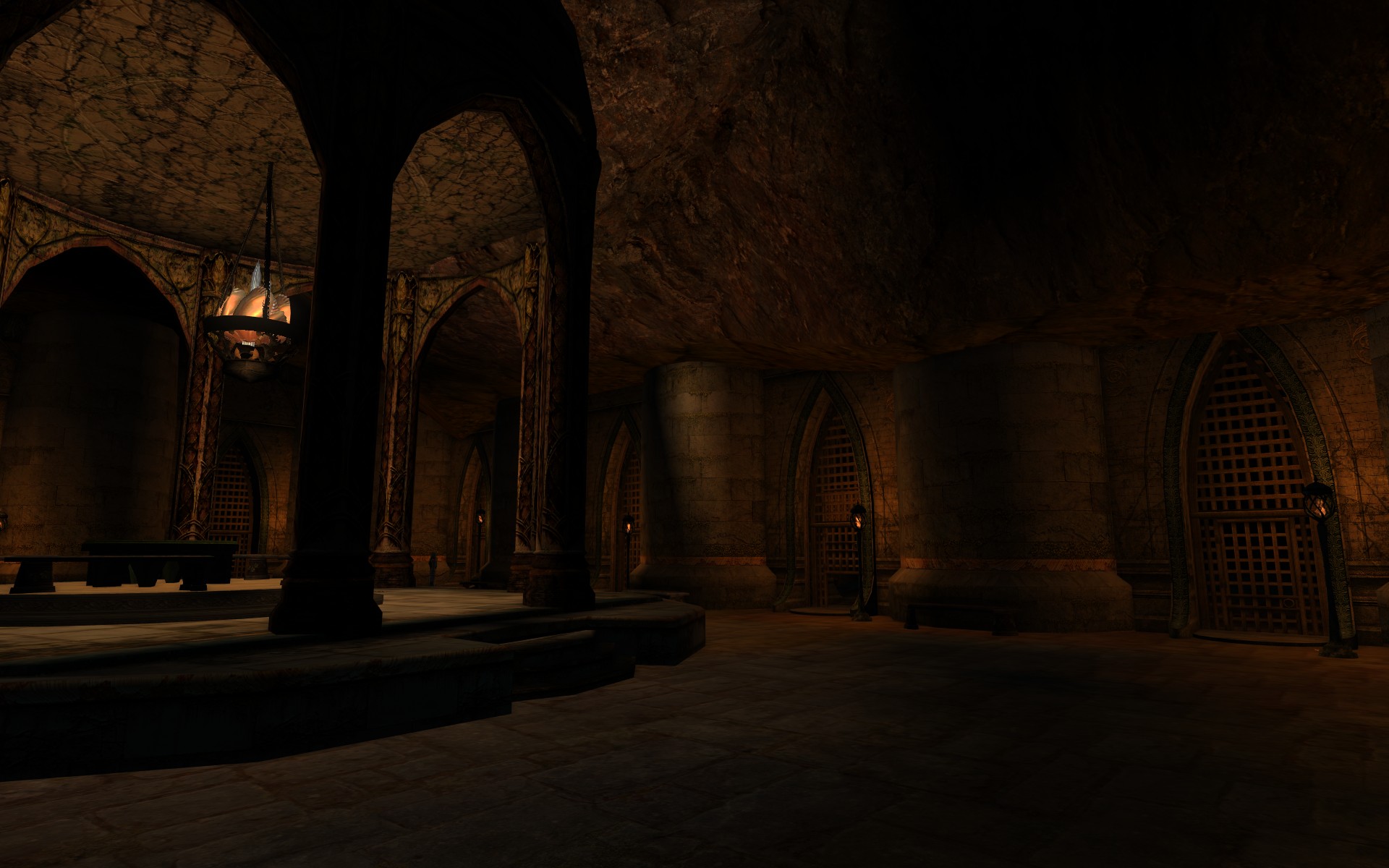
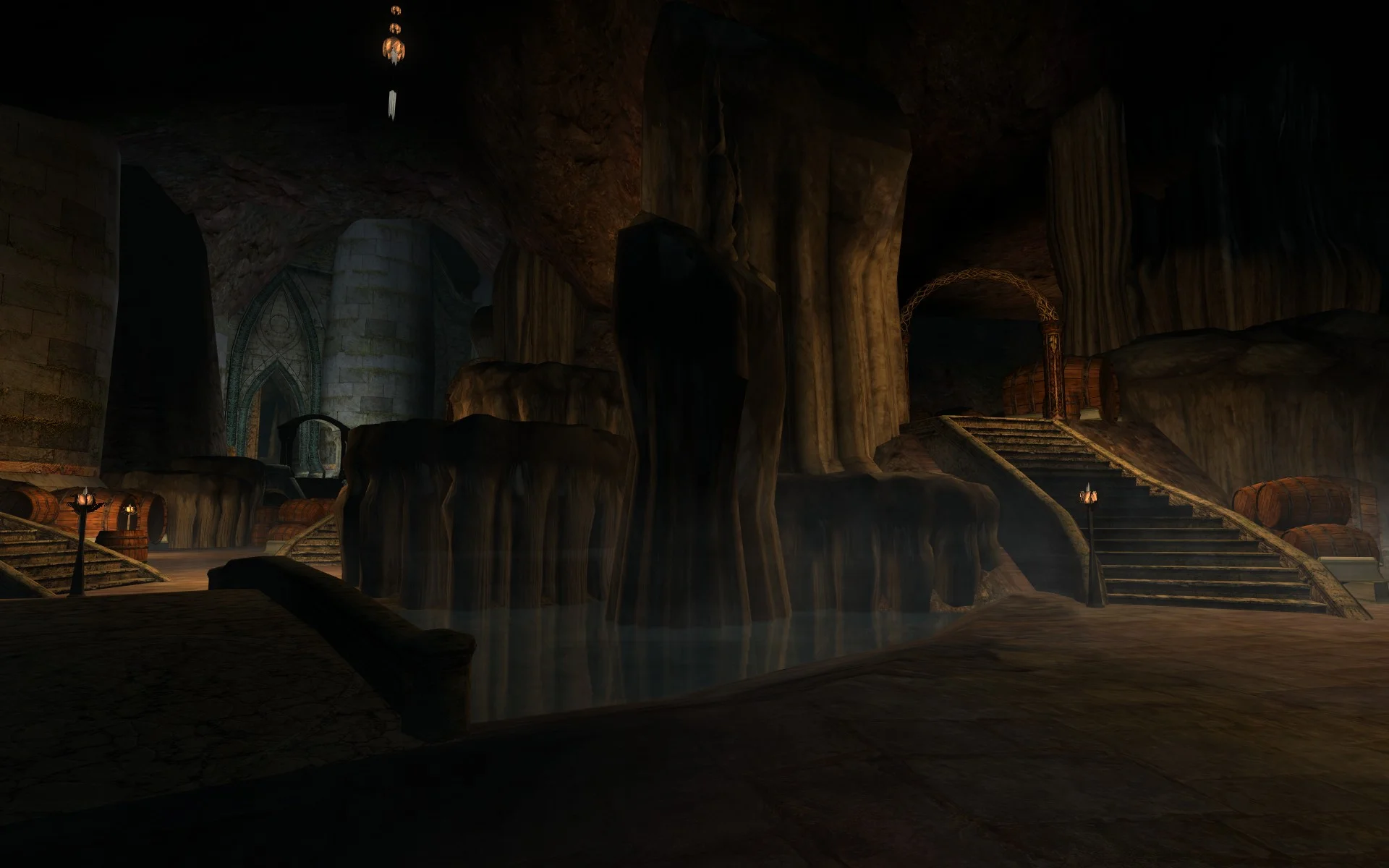
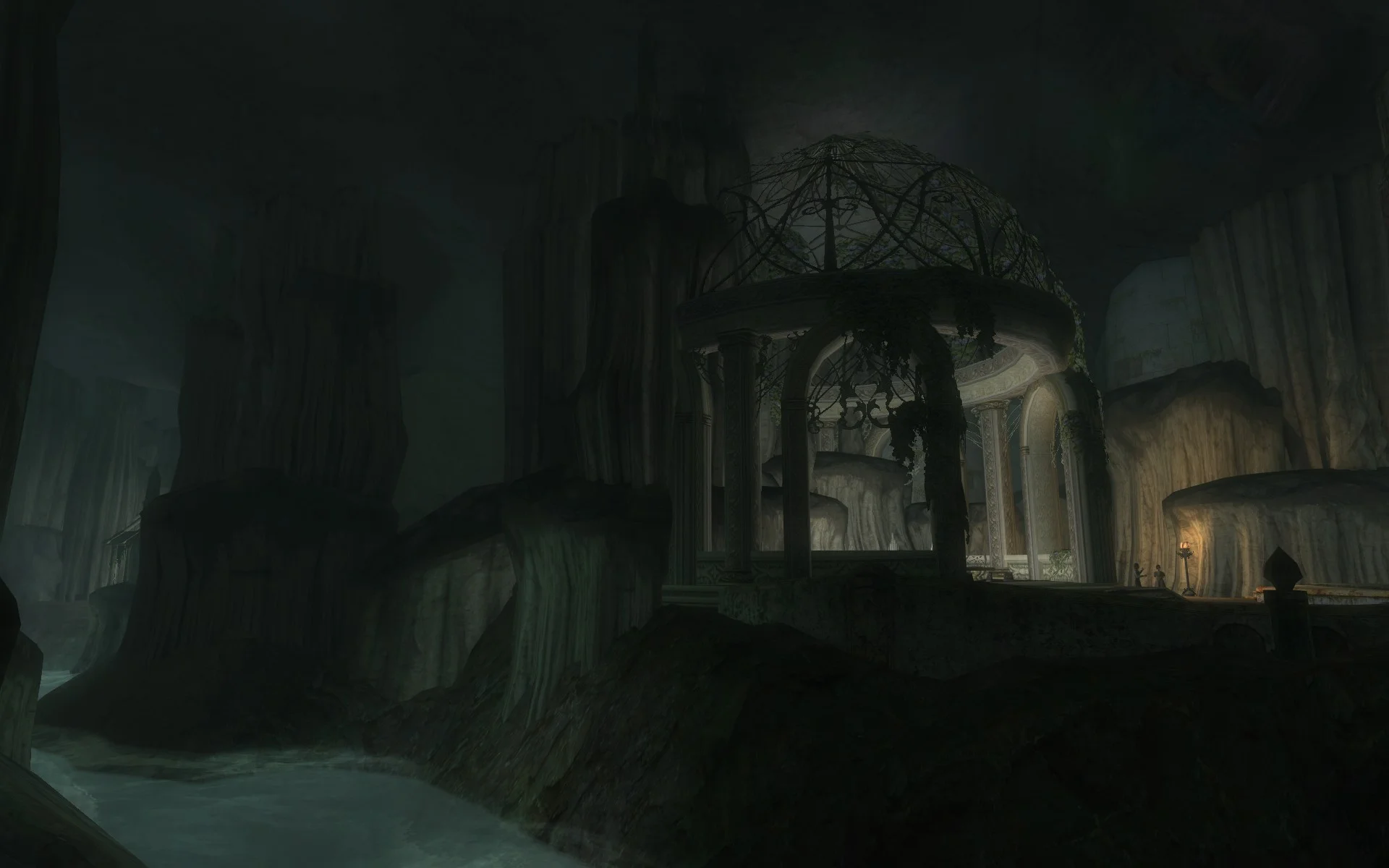
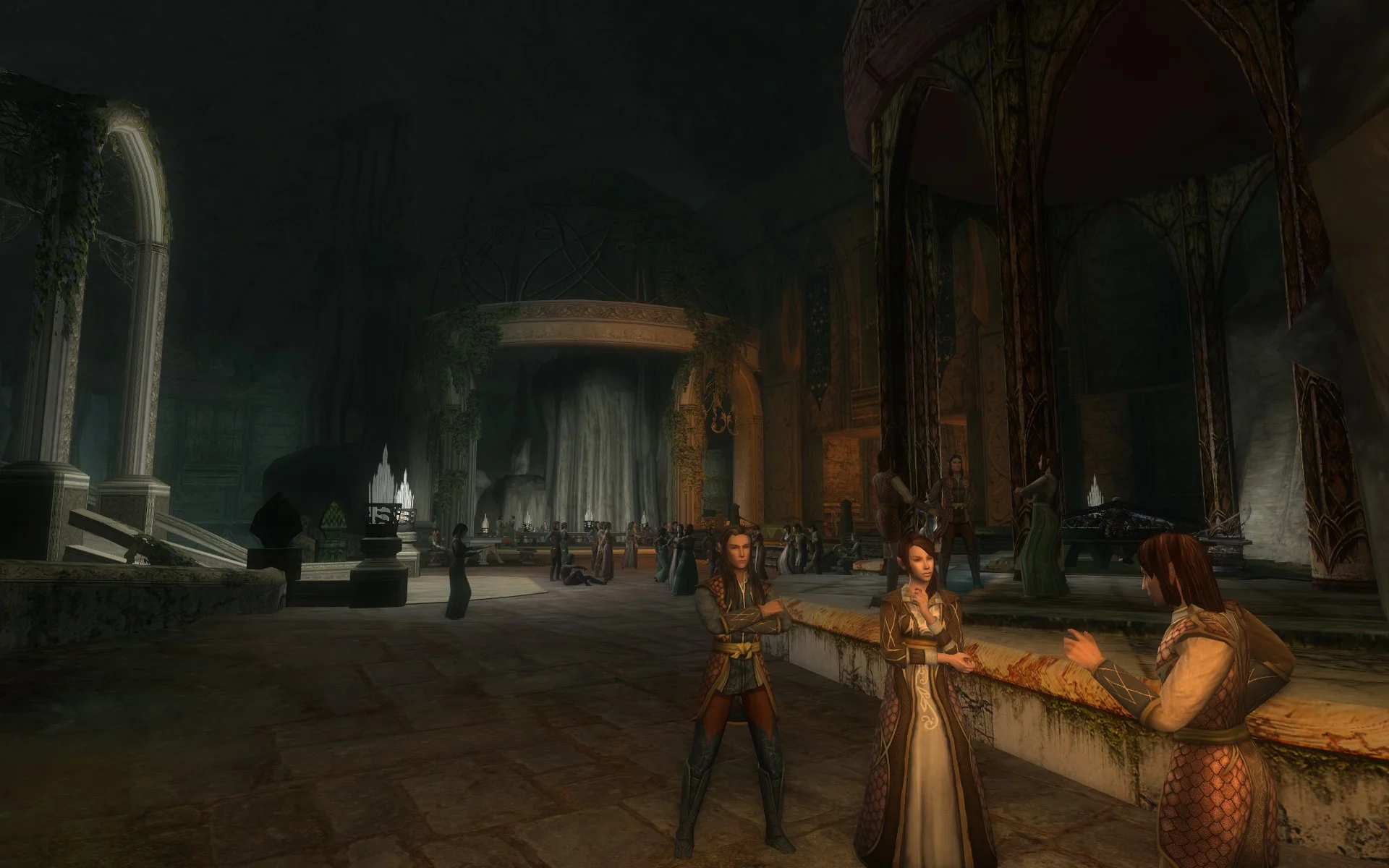
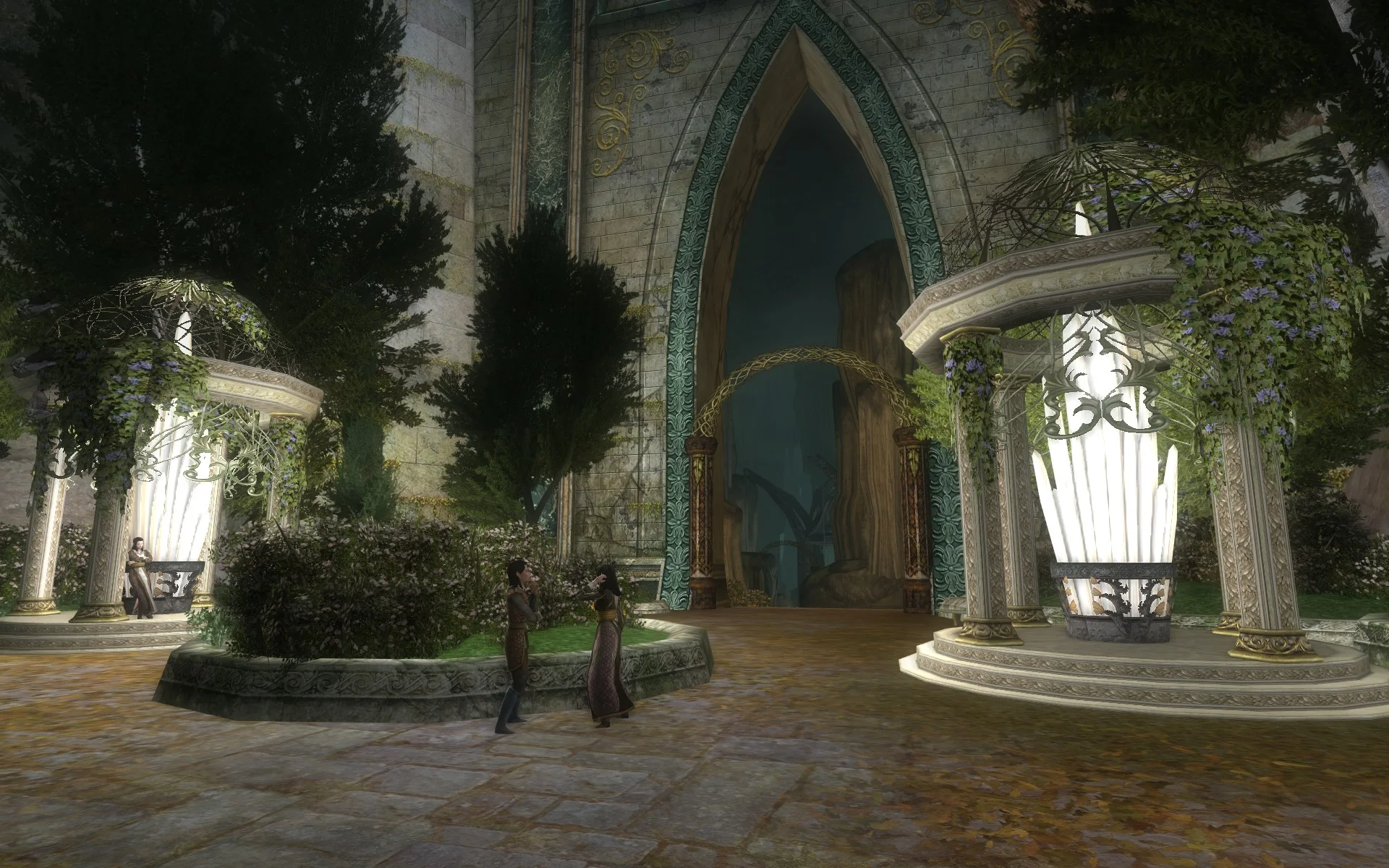
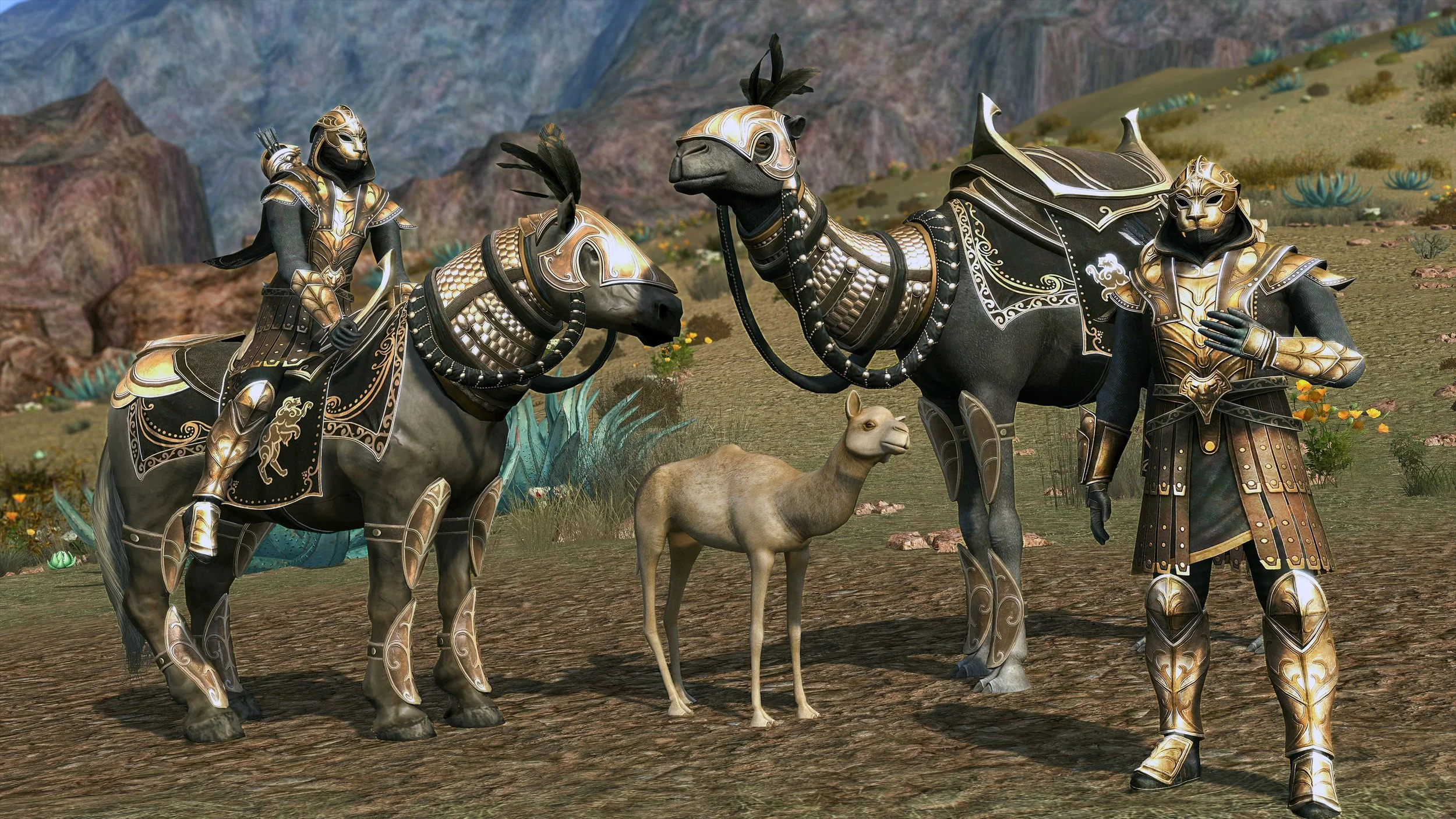
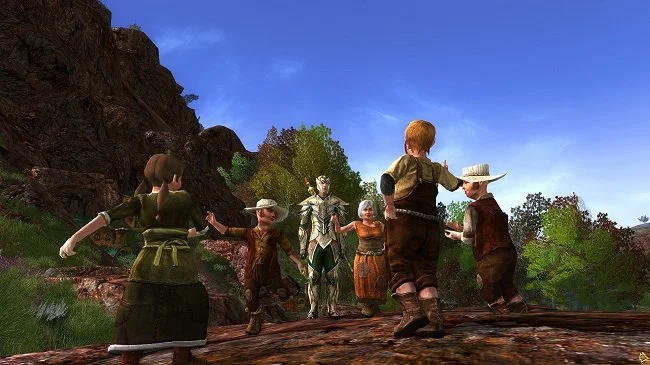
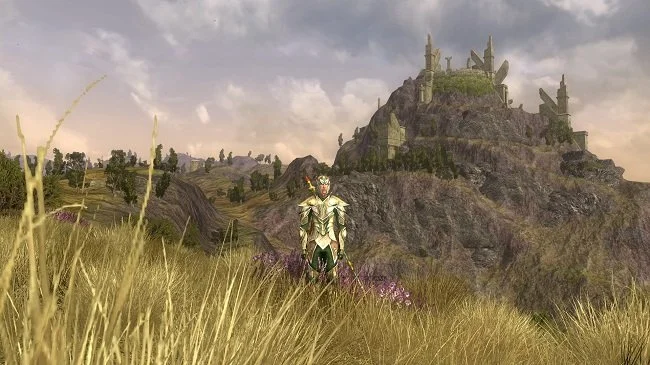
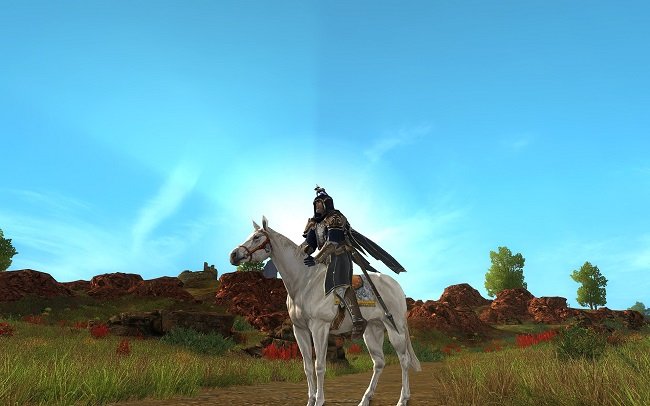
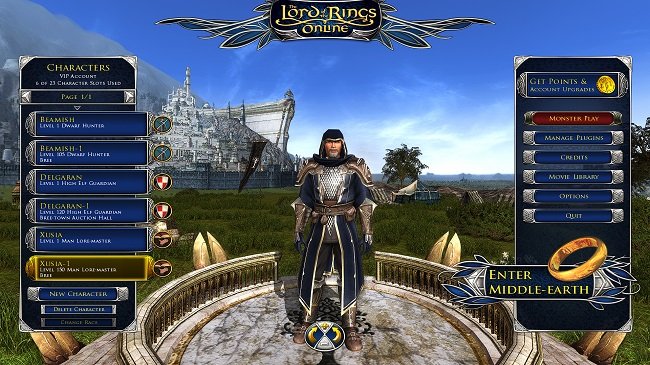
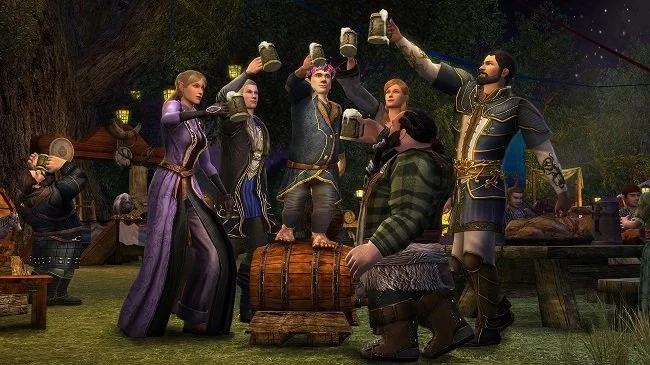
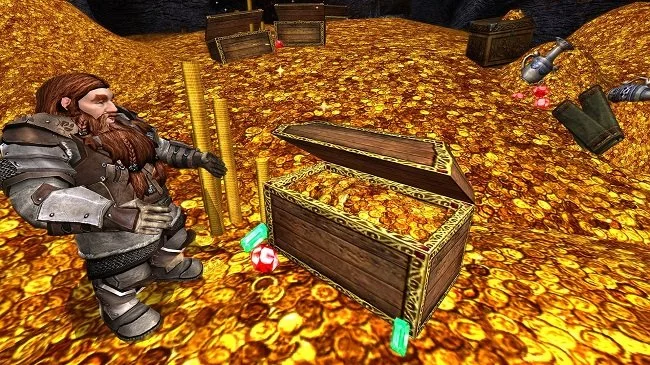
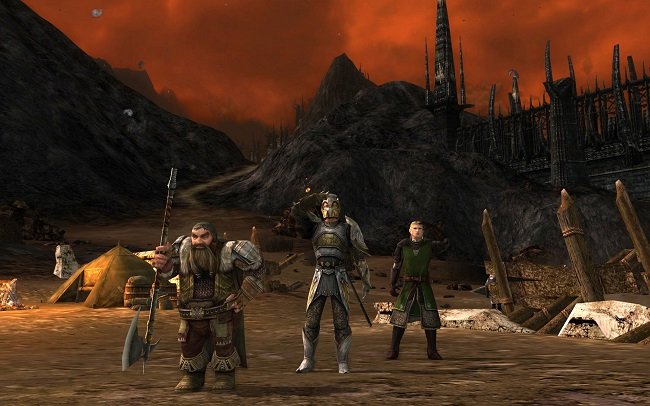
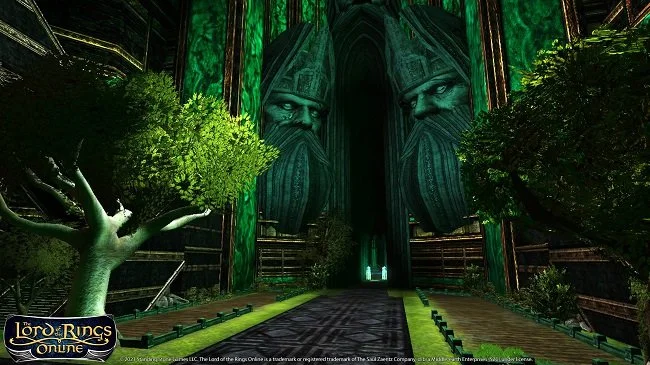
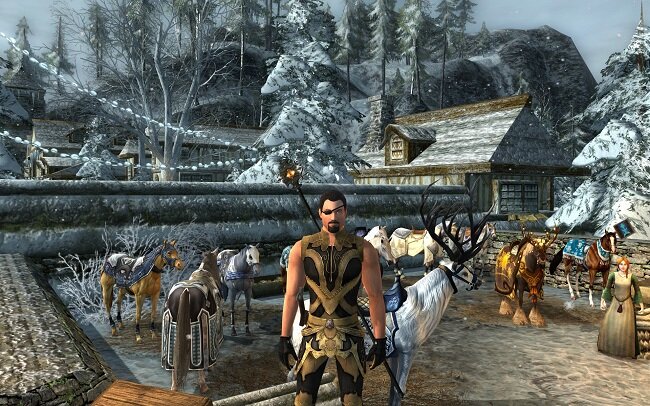
Bearing this all-in mind, I spent a few hours this afternoon exploring the new area. I have not finished the Mordor expansion yet (mainly because I didn’t enjoy the area) so was careful when travelling around as my primary alt is still only level 109. Porting directly from the Eyes and Guard Tavern takes you to Felegoth, the Halls of the Wood Elves. As you would expect, the traditional Elven motif has been maintained in the art design, although there are subtle differences to other Elven enclaves. Because the Halls are mainly underground, the cavernous expanses are filled with stalagmites and stalactites. Yet unlike Dwarven delves, this area is brightly illuminated and has gardens and areas of natural beauty. The keen explorer will also find the dungeon cells where Thorin and his companions were held. There’s also a cellar with a substantial trap door and numerous barrels. One in particular is worth investigating.
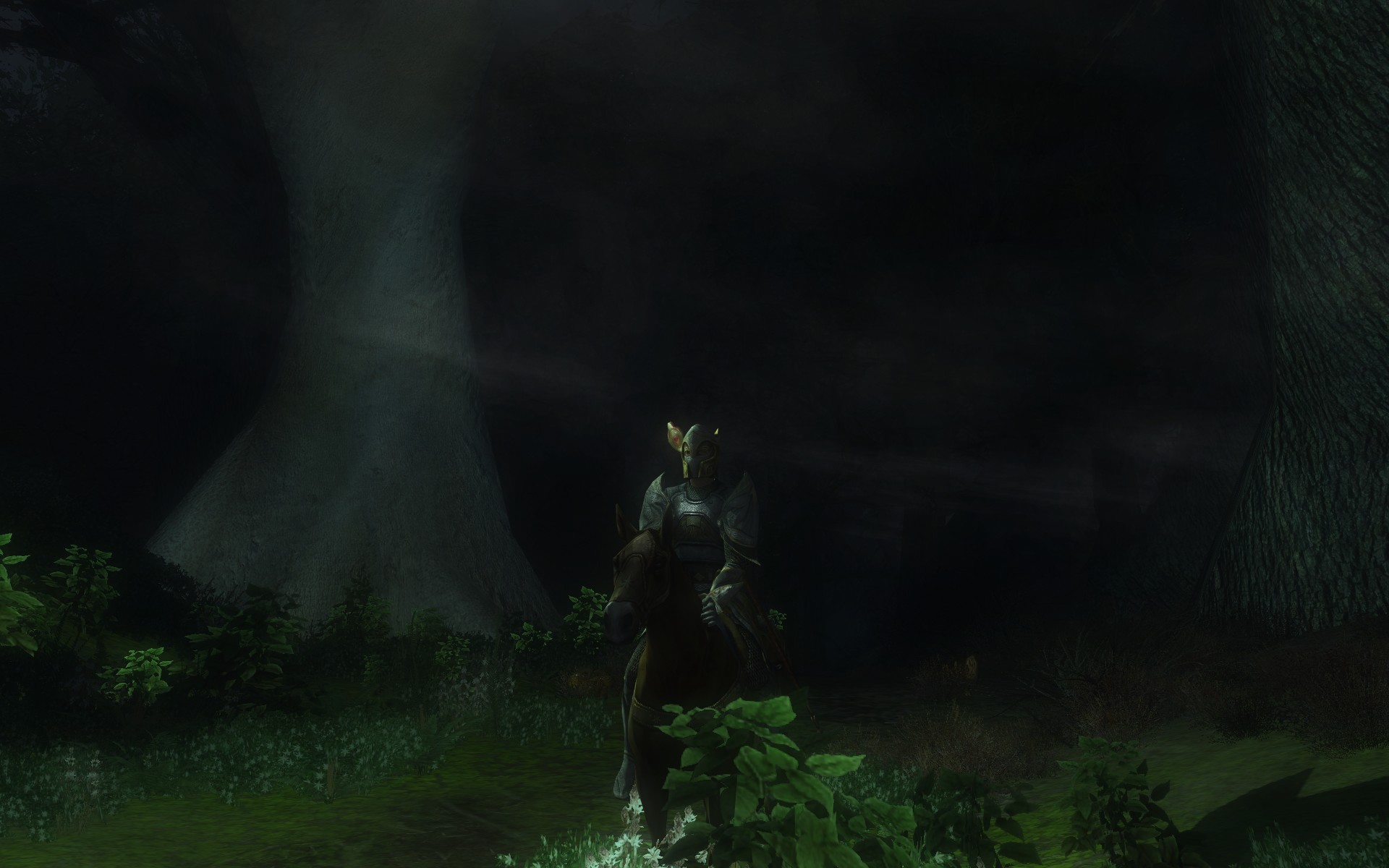
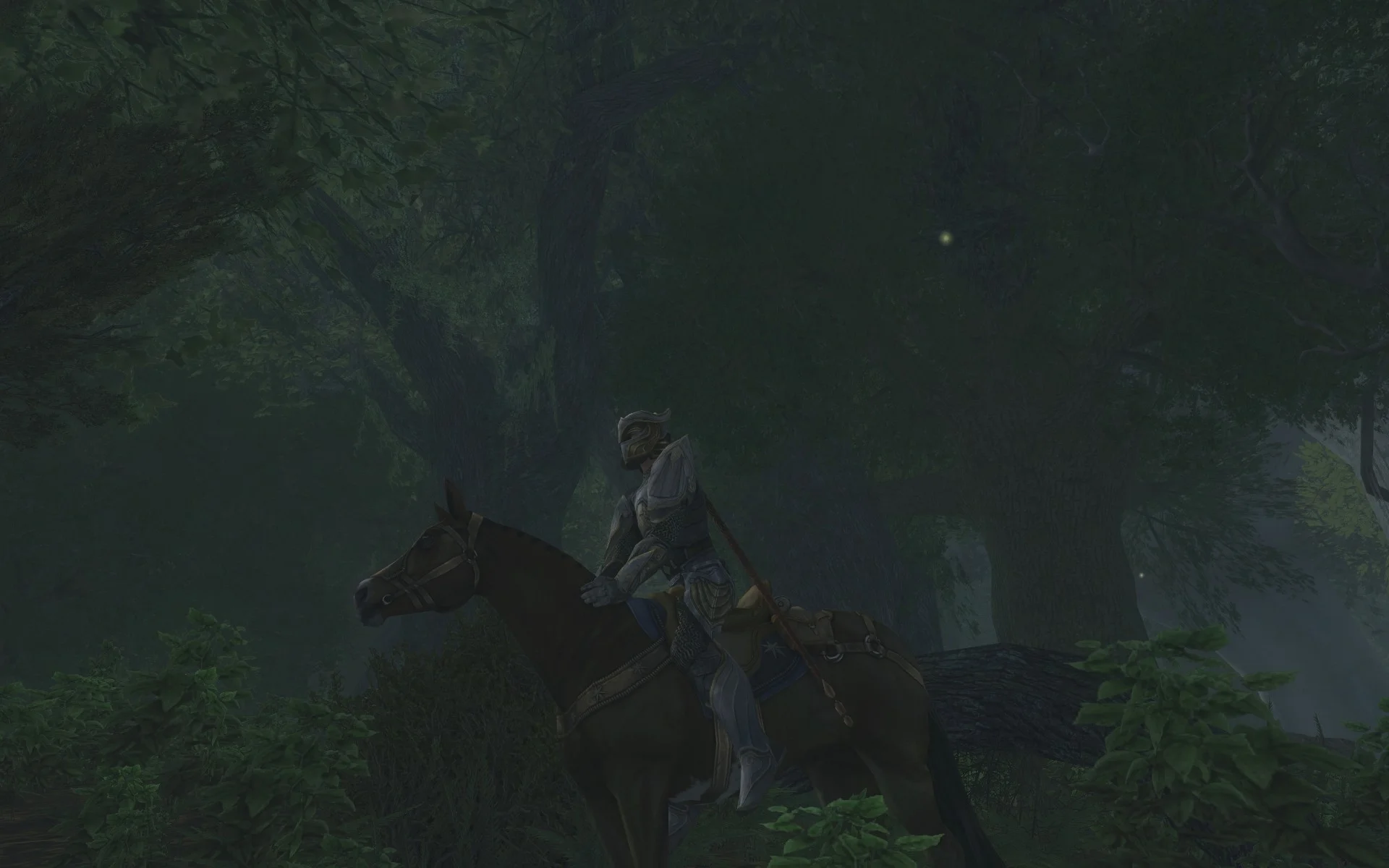
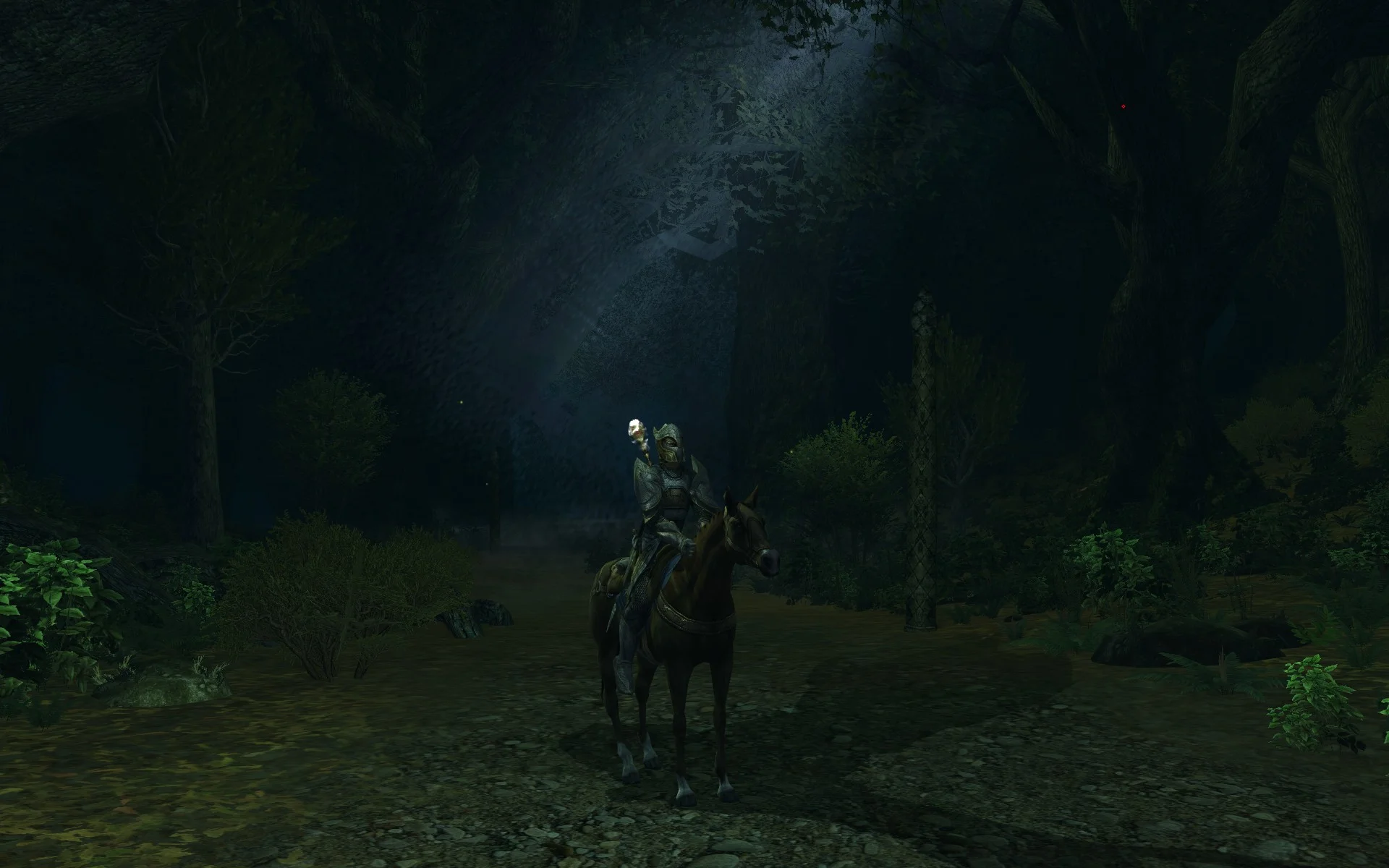
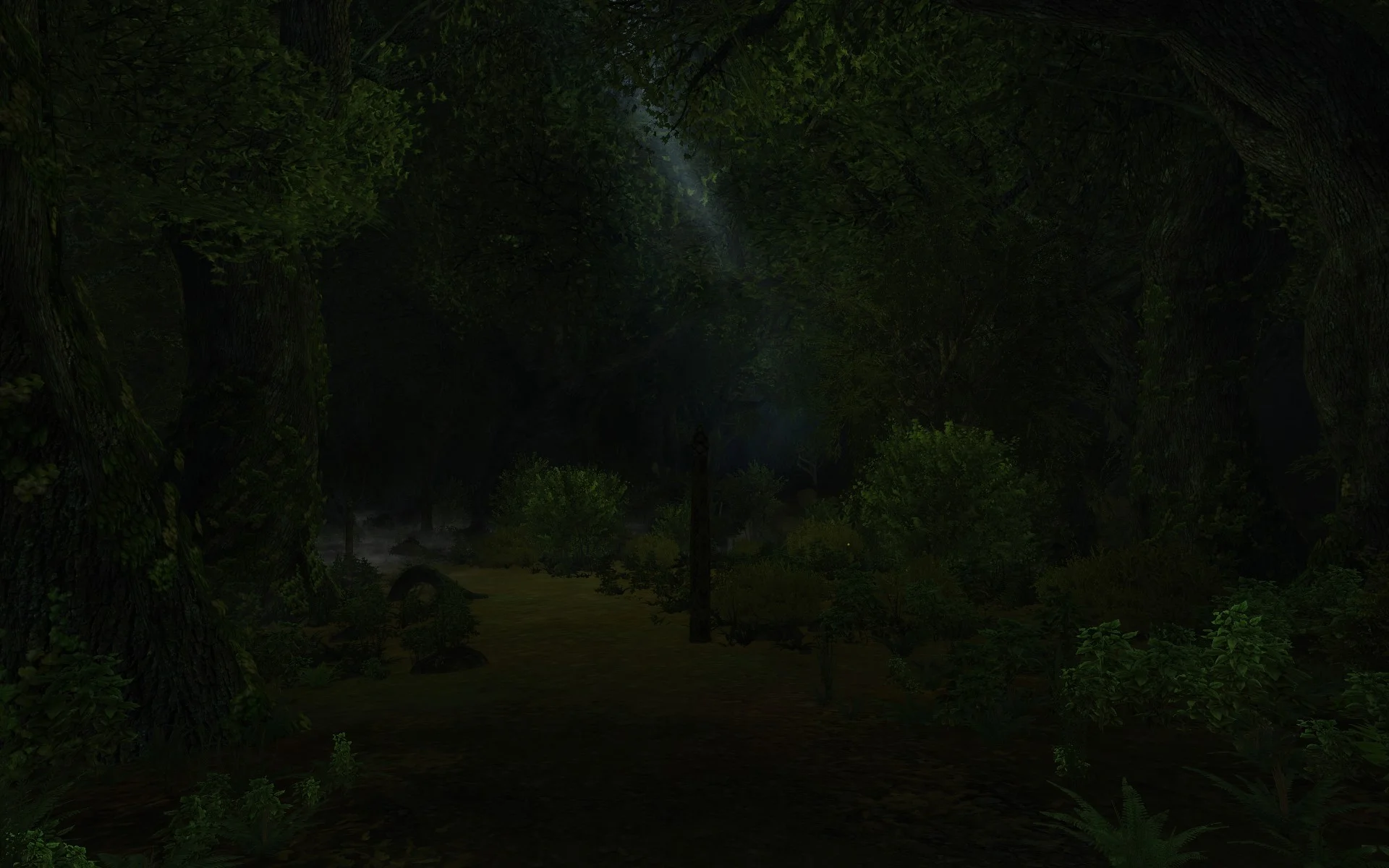
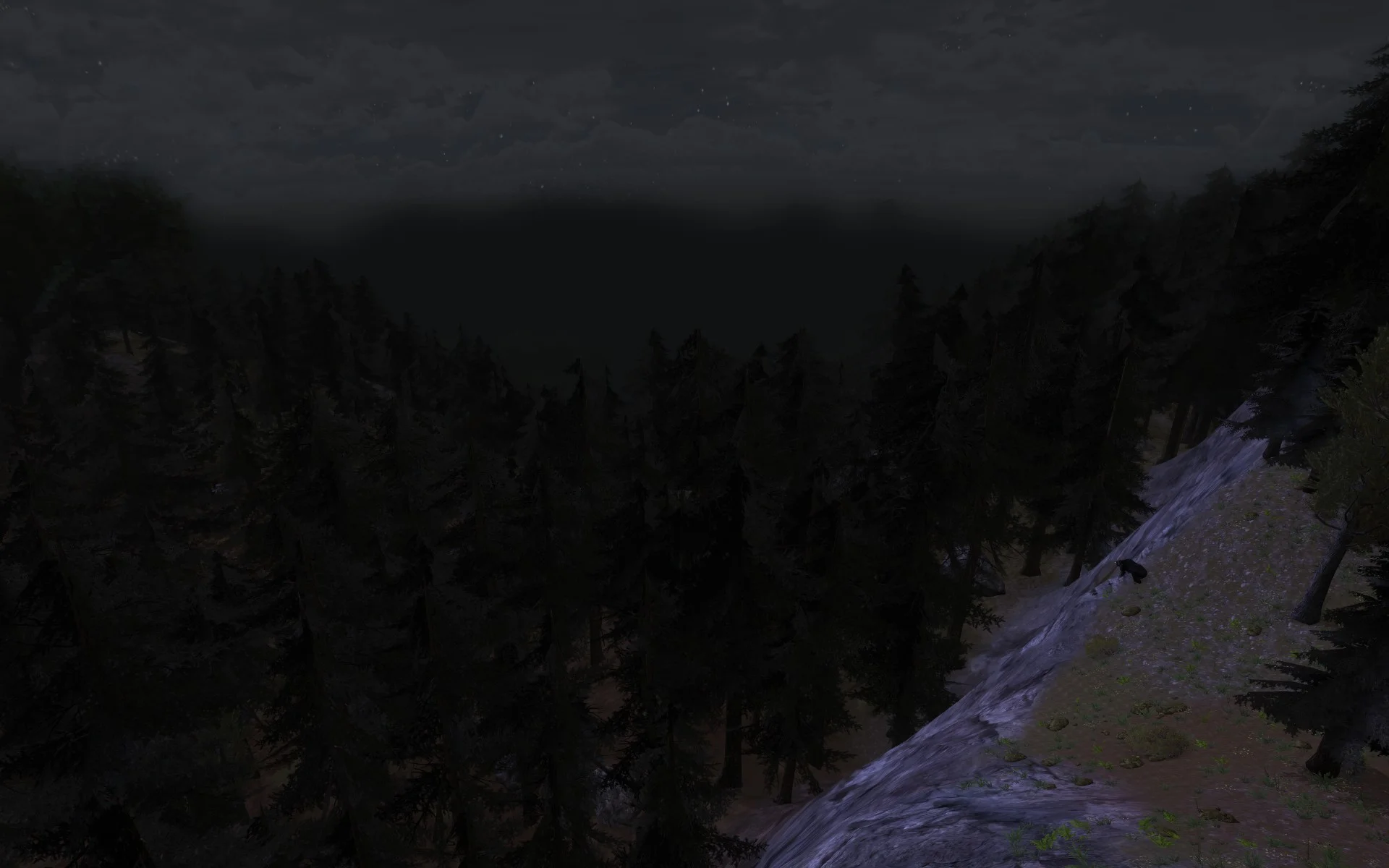
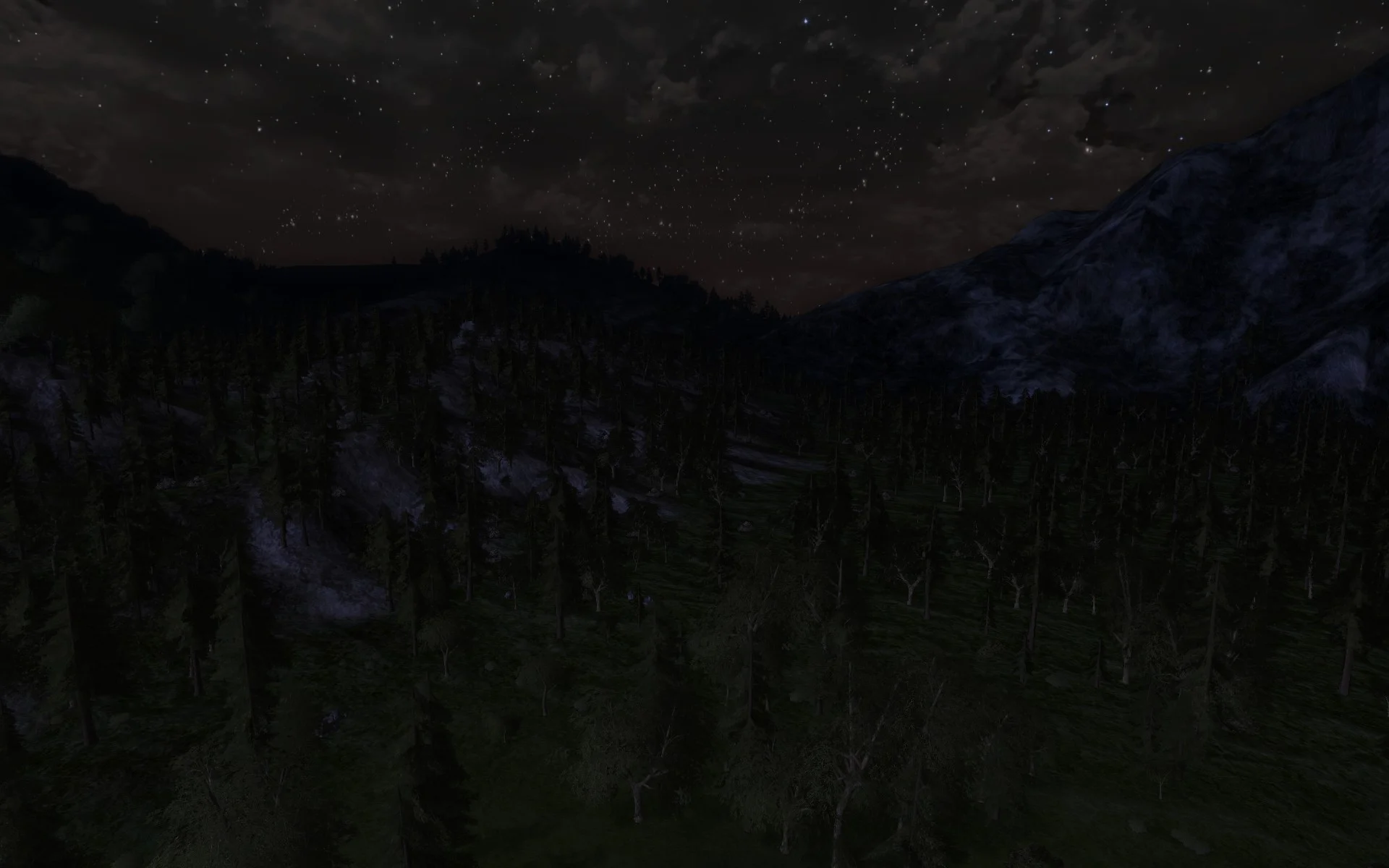
Northern Mirkwood itself is a dark and dismal place, similar to its existing Southern counterpart. The light soon vanishes once you travel beyond the Elven King’s territory and the path twists and turns. Luckily, they’re wooden posts marking the trail, but it is important to stay vigilant or you can get lost. Places of interest in the immediate area include an encounter with Radagast and the Elven trading post of Loeglond on the edge of Long Lake. Upon exiting Eyn Ladgalen you enter Dale-land and discover a newly rebuilt and thriving Lake-town. This is very well realised and certainly captures the spirit of Tolkien’s original description from The Hobbit. If you travel downstream you come to the ruins of the old Lake-town and the remains of Smaug. It is a nice embellishment, similar to the remains of the Bridge of Khazad-dûm in the Foundations of Stone.
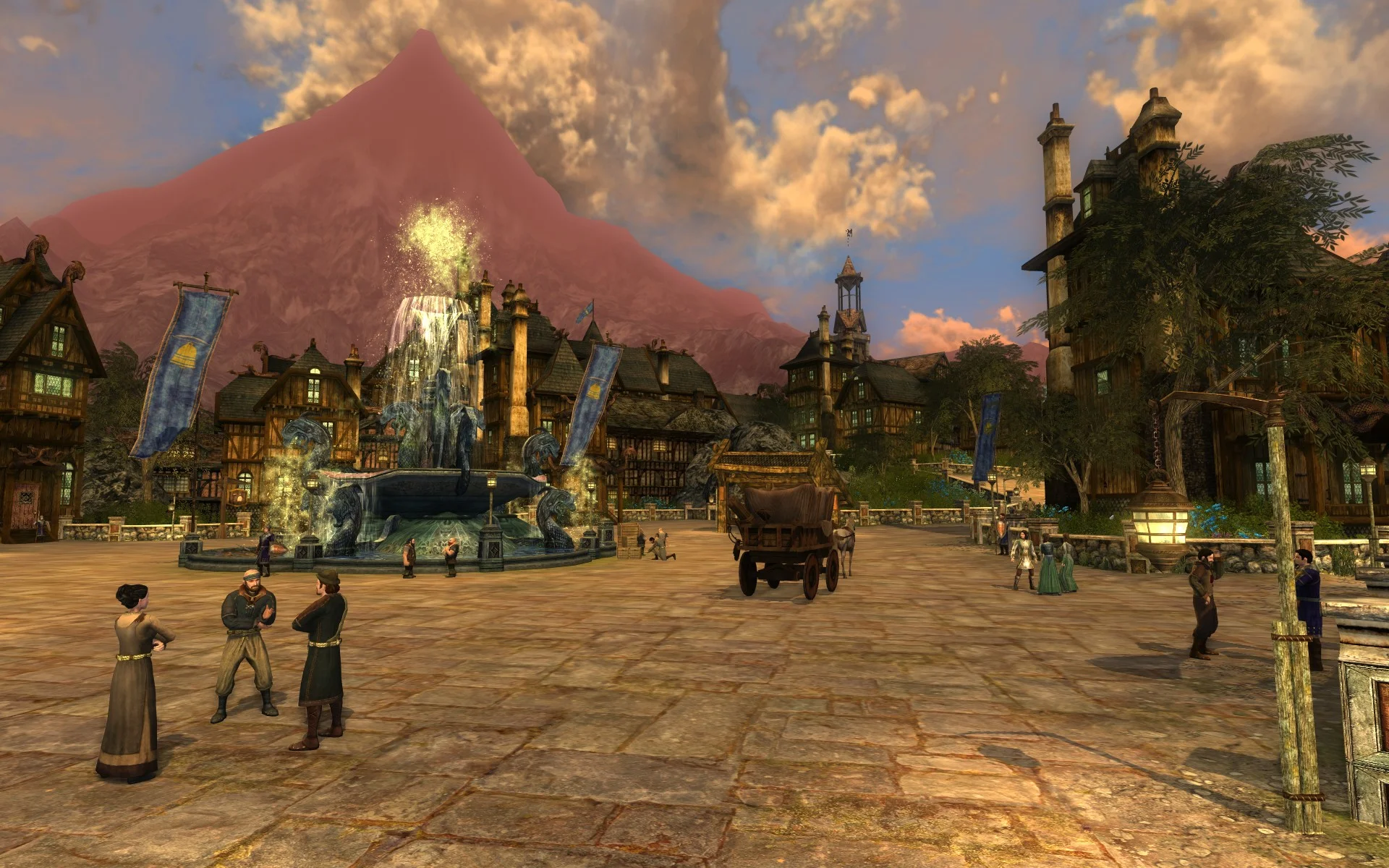
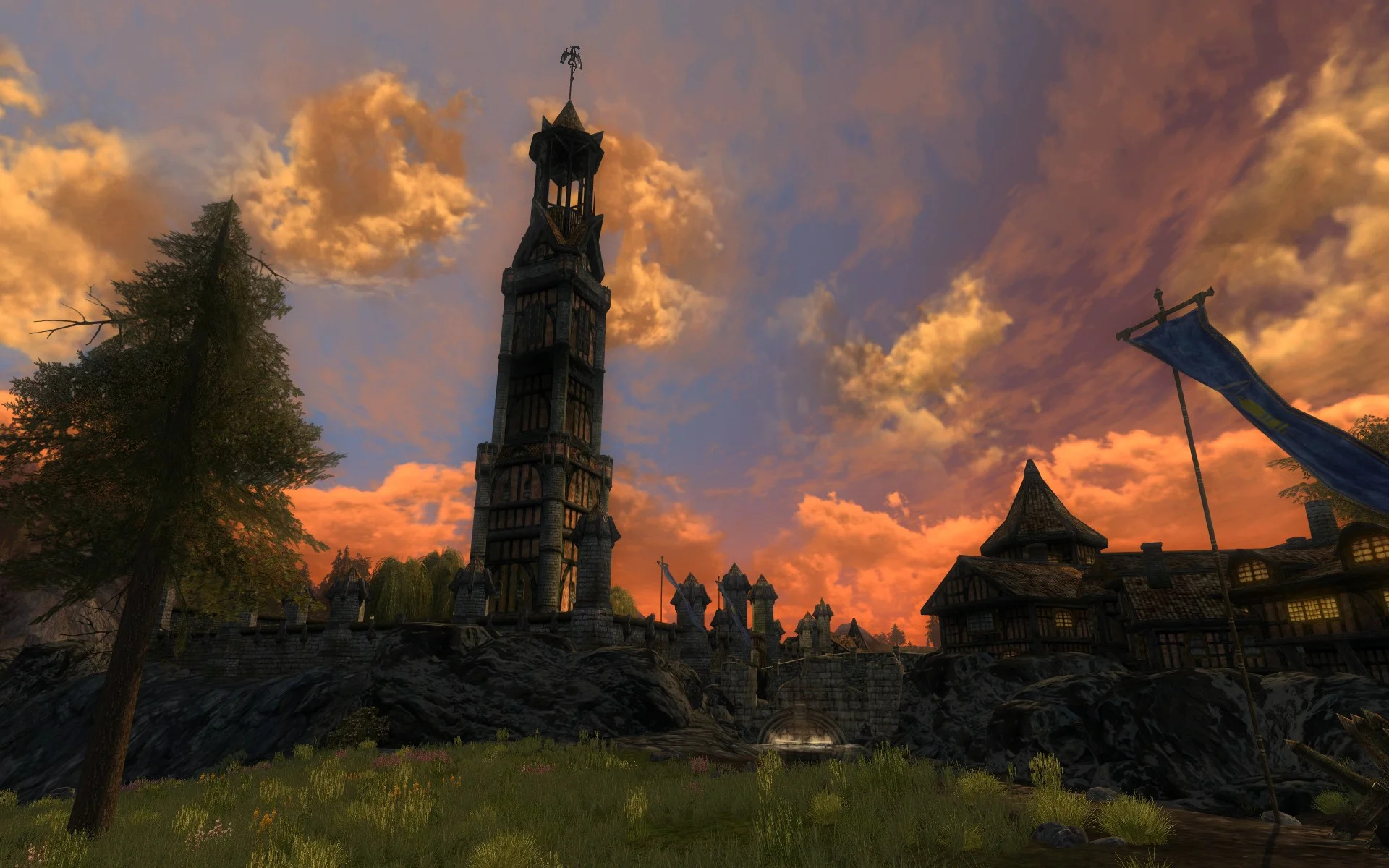
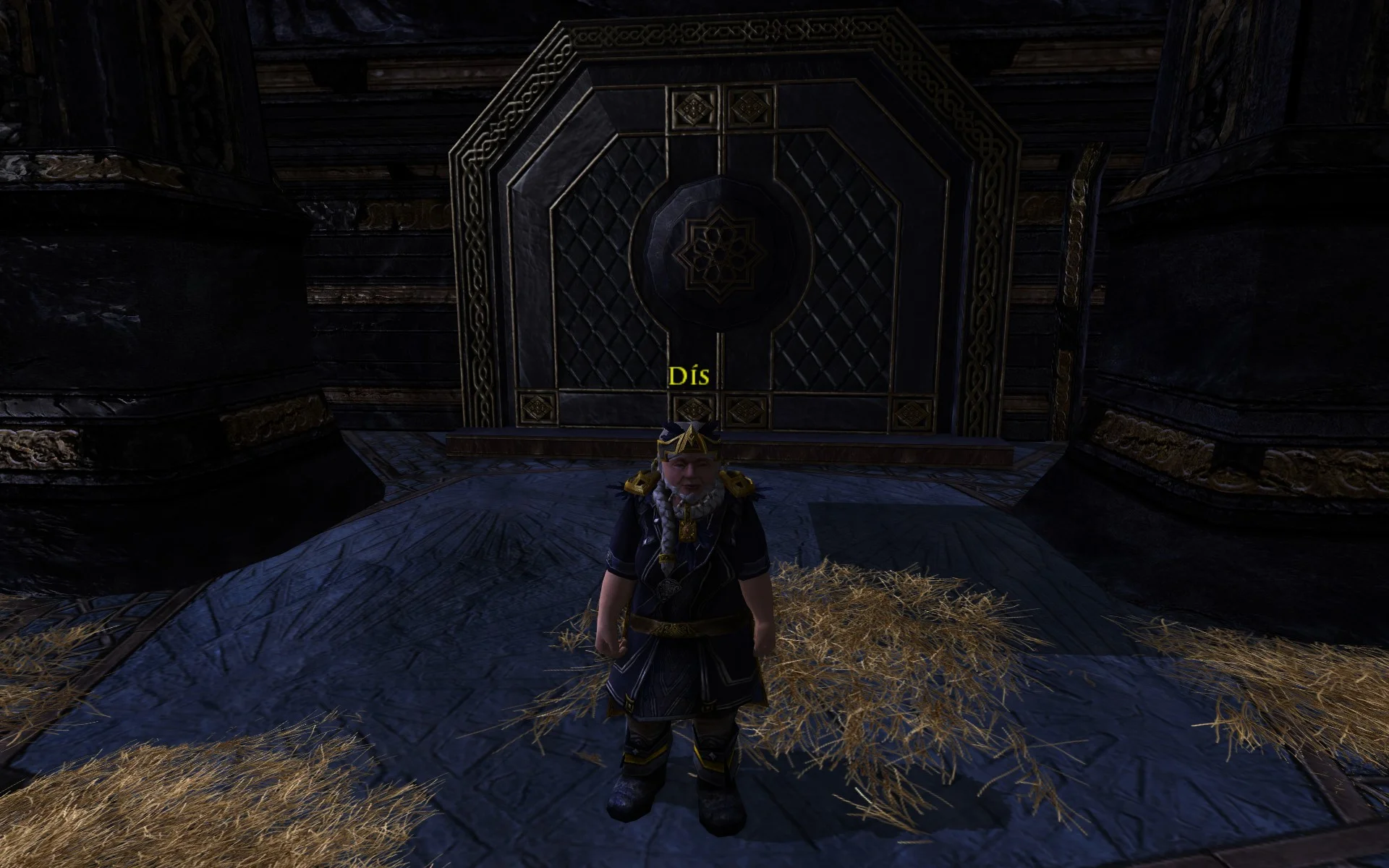
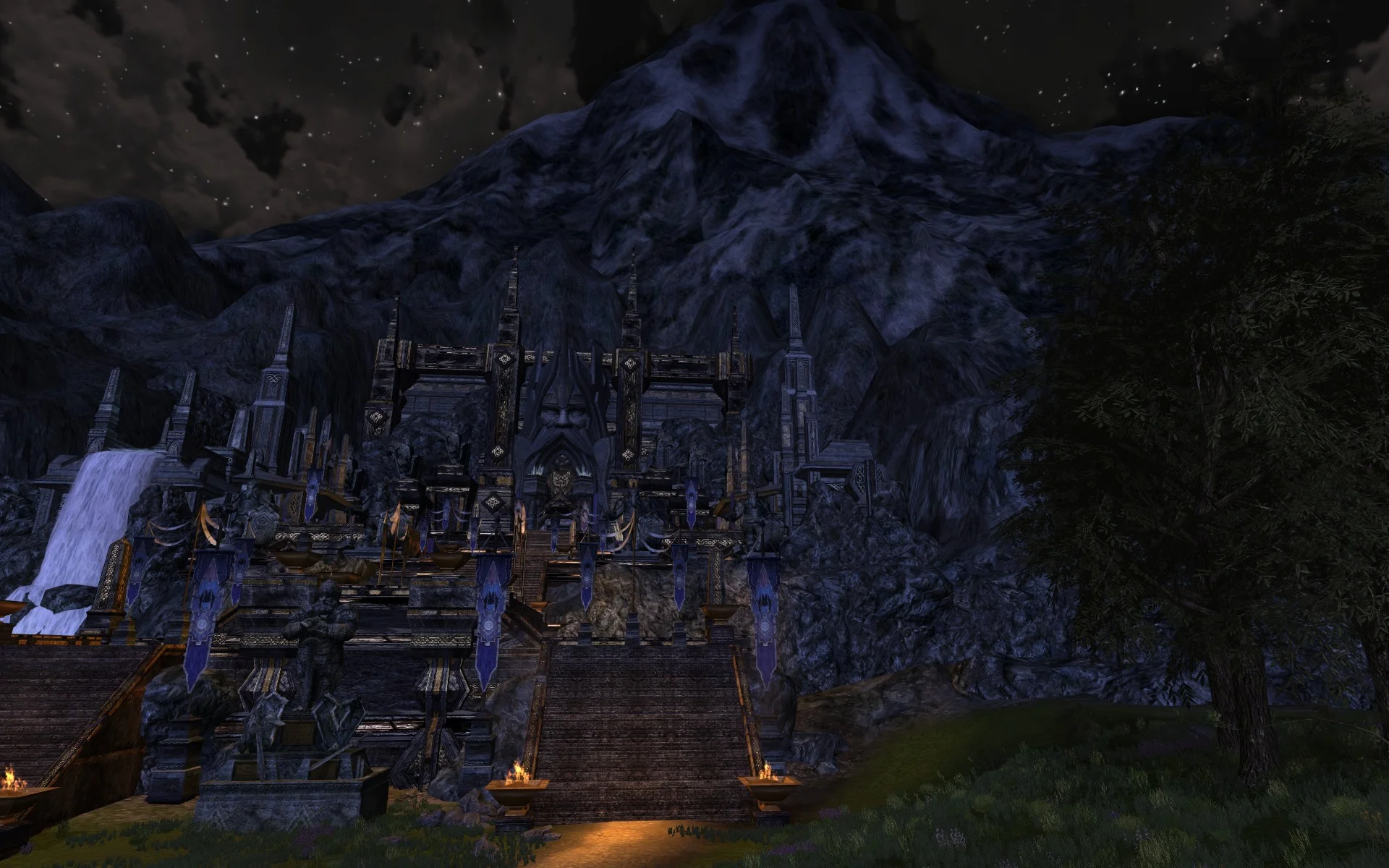
North of Lake-town the road leads to Dale which is a broader iteration of what already exists in LOTRO in the instance The Bells of Dale. I like the way the town straddle the tributaries of Long Lake and that water and fountains are a major feature of the design and architecture. Beyond Dale to the Northwest lies the guard post of Ravenhill. Within the small Dwarven edifice is Dís, mother of Fíli and Kíli. There is an entrance behind here, which for the present remains closed and suitably enigmatic. But the jewel in the crown in Erebor. It is large, impressive and gloriously Dwarven. Unlike other Dwarven hubs in Middle-earth, this one is quite linear in its layout and easy to navigate. You can also climb to the western spur of Erebor and survey the land below on the other side, although invisible walls hem you in at present.
I always like to explore I LOTRO and make it my business to investigate an area or region as thoroughly as I can. I like to follow the mountain ranges and other topographical features that Standing Stone Games use to funnel players from quest hub to quest hub. What seems to have become a habit in recent years, is that the areas in free updates are often expansive, but not necessarily functional. I got this impression again in parts of Northern Mirkwood and Dale-Land. However, this does not in any way mitigate the time and effort SSG has put into the design of this area. I also found three entrances/exists to the area. One to the South West that may lead to Southern Mirkwood. Another to the North East that may lead to the Iron Hills. I also discovered the Forest Gate which leads from Carrock. All of these “doorways” are currently blocked. Hopefully the next test build will have a more detailed map and will allow for a more accurate appraisal of the area. In the meantime, as ever, I like what I see and it’s reassuring to see the SSG are still maintaining their high standard of world building.





Game Complexity
While perusing You Tube, I watched the following video, boldly titled “The Top MMOs to Play This Year”. I found it to be quite informative and felt that the creator made their case well. However, one thing struck me about the five new MMOs that were referenced. All of these titles seem to be stepping away from the “business as usual” approach of the genre and pursuing an increase in complexity with respect to their game systems and mechanics. Now that’s not to say that existing MMORPGs are not complex. Some are, but I usually find that this is born out of skills or systems bloat and a games growth over time. On paper many of LOTROs mechanics are straightforward, but it is their implementation that is esoteric. This is not the same sort of complexity I saw referenced in the video. Many of these new MMOs will feature systems that need to be monitored, maintained or augmented by the player, because they have a direct impact upon the gameplay experience and the very environment of the virtual world they’ll inhabit.
While perusing You Tube, I watched the following video, boldly titled “The Top MMOs to Play This Year”. I found it to be quite informative and felt that the creator made their case well. However, one thing struck me about the five new MMOs that were referenced. All of these titles seem to be stepping away from the “business as usual” approach of the genre and pursuing an increase in complexity with respect to their game systems and mechanics. Now that’s not to say that existing MMORPGs are not complex. Some are, but I usually find that this is born out of skills or systems bloat and a games growth over time. On paper many of LOTROs mechanics are straightforward, but it is their implementation that is esoteric. This is not the same sort of complexity I saw referenced in the video. Many of these new MMOs will feature systems that need to be monitored, maintained or augmented by the player, because they have a direct impact upon the gameplay experience and the very environment of the virtual world they’ll inhabit.
The weather, the economy, faction feuds, coupled with mechanics such as ageing, permadeath and full corpse looting means that those playing Chronicles of Elyria will have to be cognisant of what is happening around, both at an in-game and community level. And it is this very level of complexity that will be a major selling point of the game. You will always find comments on gaming forums or websites such as Massively Overpowered, from some old school gamers lamenting the level of “hand holding” you find in contemporary MMOs. The industry shift in the last ten years to accommodate the so-called “casual” player has not been universally embraced. Therefore, any new title that dispenses with quest trackers, mini-maps and any of the other quality of life improvements must surely appeal to such advocates. Having to think and reason, as well as play collaboratively must surely offer an experience closer to that found in the golden age of MMOs; something such player always extol. Surely the element of risk presented by playing in such an environment, will be to their liking?
One thing is certain. If you wish to effectively play these new MMOs with their additional layers of complexity, then you will need to invest a substantial amount of time not only to progress through the actual game, but to track and master the various systems and variables that can impact upon your experience. You must also cultivate a mindset that accepts that external factors beyond your control will impact upon your time in-game. You may lose valuable resources, or your avatar may even die, effectively mitigating the time and effort you’ve spent. And therein lies the rub. Although on paper I find a lot of the complex parameters featured in these upcoming MMOs interesting, I wouldn’t choose to endure them. A decade ago I had the time and the dedication to invest in MMOs. I do not now and certainly wouldn’t choose to play a game with such a specific rule set. I play for amusement and leisure, not competition and bragging rights (as some seem to define gaming by). I simply don’t want a game that becomes a “job”.
What remains to be seen is whether these new MMOs with their complex and punitive rule set, find a sufficiently big enough player base to sustain themselves financially. I believe that there are gamers out there that will embrace such an approach and we’ve seen successful games of this nature in the past. It simply comes down to whether there is a viable market or not. I suspect that not all of these titles such as Chronicles of Elyria, Pantheon: Rise of The Fallen, Crowfall and Ashes of Creation will survive. When looking back at early MMOs, we must not overlook the context of the era that spawned them. Many factors such as internet connection speed, graphics quality, server technology shaped their design. Gaming itself was also not so common place an activity and pitching to a player base then, was radically different from the market we see today. So, I think that possibly only a few of these new titles will be commercially successful and the others will end up as interesting but ultimately failed experiments. As ever time will tell.



Looking For a Bargain in ESO
My recent return to The Elder Scrolls Online has been an enjoyable experience. Like STO, it has taken three attempts for the game to chime with me but this time round, everything has fallen into place. I have managed to install just the right number of add-ons to enhance my experience. I’ve also discovered a class which suits my play style and am currently pursuing a specific build. The quest stories are well written and involving which means I don’t feel like I’m simply undertaking arbitrary tasks for XP. Overall ESO seems to be in a much better place than it was upon its launch in early 2014. Because my progress through the game is going well, I’m considering my options with regard to DLC. I bought the digital collector’s upgrade edition of the Morrowind expansion for £17.99 which is a competitive price. However, I’m interested in the Dark Brotherhood story line because I enjoyed it in Skyrim, so I’ve been trying to find a similar bargain.
My recent return to The Elder Scrolls Online has been an enjoyable experience. Like STO, it has taken three attempts for the game to chime with me but this time round, everything has fallen into place. I have managed to install just the right number of add-ons to enhance my experience. I’ve also discovered a class which suits my play style and am currently pursuing a specific build. The quest stories are well written and involving which means I don’t feel like I’m simply undertaking arbitrary tasks for XP. Overall ESO seems to be in a much better place than it was upon its launch in early 2014. Because my progress through the game is going well, I’m considering my options with regard to DLC. I bought the digital collector’s upgrade edition of the Morrowind expansion for £17.99 which is a competitive price. However, I’m interested in the Dark Brotherhood story line because I enjoyed it in Skyrim, so I’ve been trying to find a similar bargain.
At present, ZeniMax have a deal on the Guilds and Glory Mega Pack DLC in the Crown store. This contains Dark Brotherhood, Imperial City, Orsinium and the Thieves Guild and costs 5,500 Crowns (£29.99). At first glance this looks like an adequate discount as individual DLC usually costs between 2,000 and 4,500 Crowns. However, if you shop around and check some of the game key websites, you can find the Gold Edition of ESO, which contains the base game and the above four DLC for £16.06 which is nearly half the price. This naturally is a better option for both an existing or a new player. The latter get’s the benefits of a 500 Crowns, although that won’t buy much at present prices. Then of course there is the option to buy neither of these “bundles” and to subscribed to ESO Plus which will unlock all current DLC. However, access to all new content is dependent on remaining a ESO Plus member, which doesn’t suit everyone.
Furthermore, it would appear that pre-paid subscription cards for ESO have been withdrawn since the changes in the games business model in 2015. There may still be some residual stock in circulation, although whether they still work or not remains to be seen. In the US Gamestop sell six-month ESO Plus time cards that come with a crate allowance. These are purchased online and provide a redeemable code. These are not however available in Europe. Therefore, I’d advise caution to anyone searching through the third-party websites that sell CD keys and game consumables. Ensure that any pre-paid cards are not those for older versions of ESO. Unless the product directly references ESO Plus, then the cards in question are more than likely obsolete.
As ESO is a buy-to-play game, the selling of additional DLC, expansions and cosmetics is the primary source of revenue. ESO Plus offers a further line of capital, although have no data as to how popular the subscription is. Therefore, it is logical that the developers ZeniMax will endeavour to control prices of all their products. Naturally there are sales and discounts to be had from time-to -time, to encourage player spending. But beyond these there is not a lot of scope to obtain a “bargain” for ESO, outside of official channels. Apart from seeking a deal on the Gold or Imperial Editions of the base game, along with the Morrowind Expansion, players are at the mercy of the in-game store prices. However, I do not find the existing business model for ESO to be too egregious and I’m certainly getting a lot value from my initial expenditure at the moment. So, for the present, the cost of playing ESO is seems equitable. Let’s hope it remains that way.
Guilds, Kinships and Fleets
I’ve been in the same LOTRO kinship (a.k.a. guild) since 2009. It’s relatively small in size, made up of a core group of about 20 players and their various alts. Everyone knows each other, and we all get along. There’s a broad spectrum of members from across the UK and Europe and the average age is about 35 plus. We’ve had some drama in the past from a few individuals, but they’ve either left or stopped playing. I don’t recollect there ever being an occasion when someone was. After ten years the kinship is at a point where it just ticks over without any major problems. There are events and activities for those who wish to participate, or if you prefer to simply potter about Middle-earth, then you’ll be left to do so. In the past we’ve had our own kinship website and forums, along with TeamSpeak server and other external support facilities. Bu all of these have fallen by the wayside as the Kinship has evolved. We now just focus on playing the game. Overall, the kinship is a friendly bunch and a good fit for my casual style of gameplay, which is why I’ve remained a member for nine years.
I’ve been in the same LOTRO kinship (a.k.a. guild) since 2009. It’s relatively small in size, made up of a core group of about 20 players and their various alts. Everyone knows each other, and we all get along. There’s a broad spectrum of members from across the UK and Europe and the average age is about 35 plus. We’ve had some drama in the past from a few individuals, but they’ve either left or stopped playing. I don’t recollect there ever being an occasion when someone was. After ten years the kinship is at a point where it just ticks over without any major problems. There are events and activities for those who wish to participate, or if you prefer to simply potter about Middle-earth, then you’ll be left to do so. In the past we’ve had our own kinship website and forums, along with TeamSpeak server and other external support facilities. Bu all of these have fallen by the wayside as the Kinship has evolved. We now just focus on playing the game. Overall, the kinship is a friendly bunch and a good fit for my casual style of gameplay, which is why I’ve remained a member for nine years.
LOTRO was my first MMO and when I started playing in 2008, co-operative play was the key to progression. Much of the games content was not solo friendly, therefore joining a kinship would at that point, greatly enhance a player’s experience. However, over time things have changed. Not just for LOTRO but for many other games from the MMO genre. Despite having played Guild Wars 2, The Secret World, Rift and SWTOR, I’ve never joined a guild for any of these games. There was (and remains for me) no compelling reason to do so. When I started playing LOTRO, part of the charm of the game and indeed the genre, was the social aspect. For me the notion of playing online with others was still a novel experience. However, as newer MMOs emerged, I found that I was more concerned with their gameplay and narrative, rather than cultivating new friendships. Furthermore, due to the increase in casual gaming, more recent MMOs are far more casual friendly.
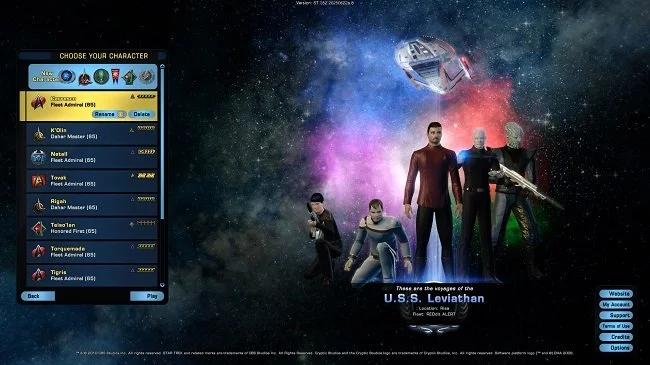
There are always exceptions to the rules, though. The Fleet system in Star Trek Online offers a wealth of benefits and a player is potentially limiting their options if they do not join one. Fleet holdings such as the Starbases and dilithium mines are maintained by players contributing resources. Once holdings reach optimal capacity, they can provide gear, weapons and consumables, all of which are of a superior quality to that from standard vendors. It’s a relatively similar situation in The Elder Scrolls Online. Being in a guild allows access to quality crafted items which are not so readily available elsewhere. Hence in both these games I have joined guilds, simply to gain access to these facilities. In STO I am a member of REDdit Alert Fleet and although they are a friendly bunch, I am not socially active within it. I maintain a level of civility and ensure I contribute to the fleet projects but beyond that I tend to keep myself to myself and pursue my own goals within the game.
Playing any MMO successfully requires a substantial investment of time. The same can be said about joining a guild. A guild is more than just a collective designed to facilitate group content. It is often a closely knit social group in which members become firm friends, get to know each other and provide mutual support. They can become very intimate environments, sometimes doubling as group therapy or a virtual pub in which players can blow off steam after a tough day at work. For me, my best experience in a guild coincided with my best experience with an MMO. It was during a two-year period of my life in which I had the time and inclination to dedicate to both a leisure activity and a social group. It was a time that I enjoyed immensely. Now, although I like the social aspects of guilds in STO and ESO, they are mainly a means to an end. However, if I ever get nostalgic, all I have to do is return to my LOTRO kinship to be reminded of prior good times.
Star Trek Online: New Ships, Old Prices
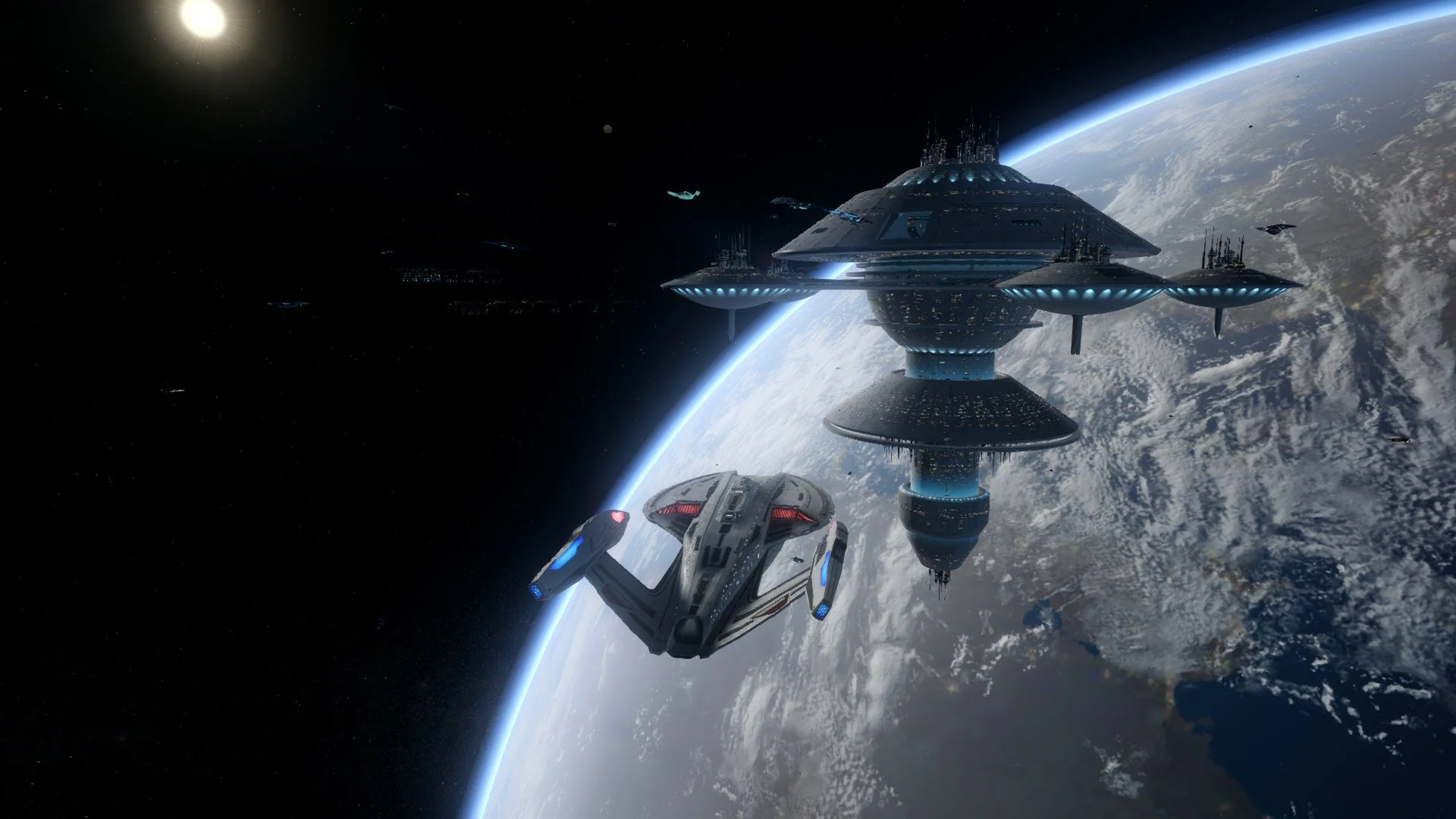
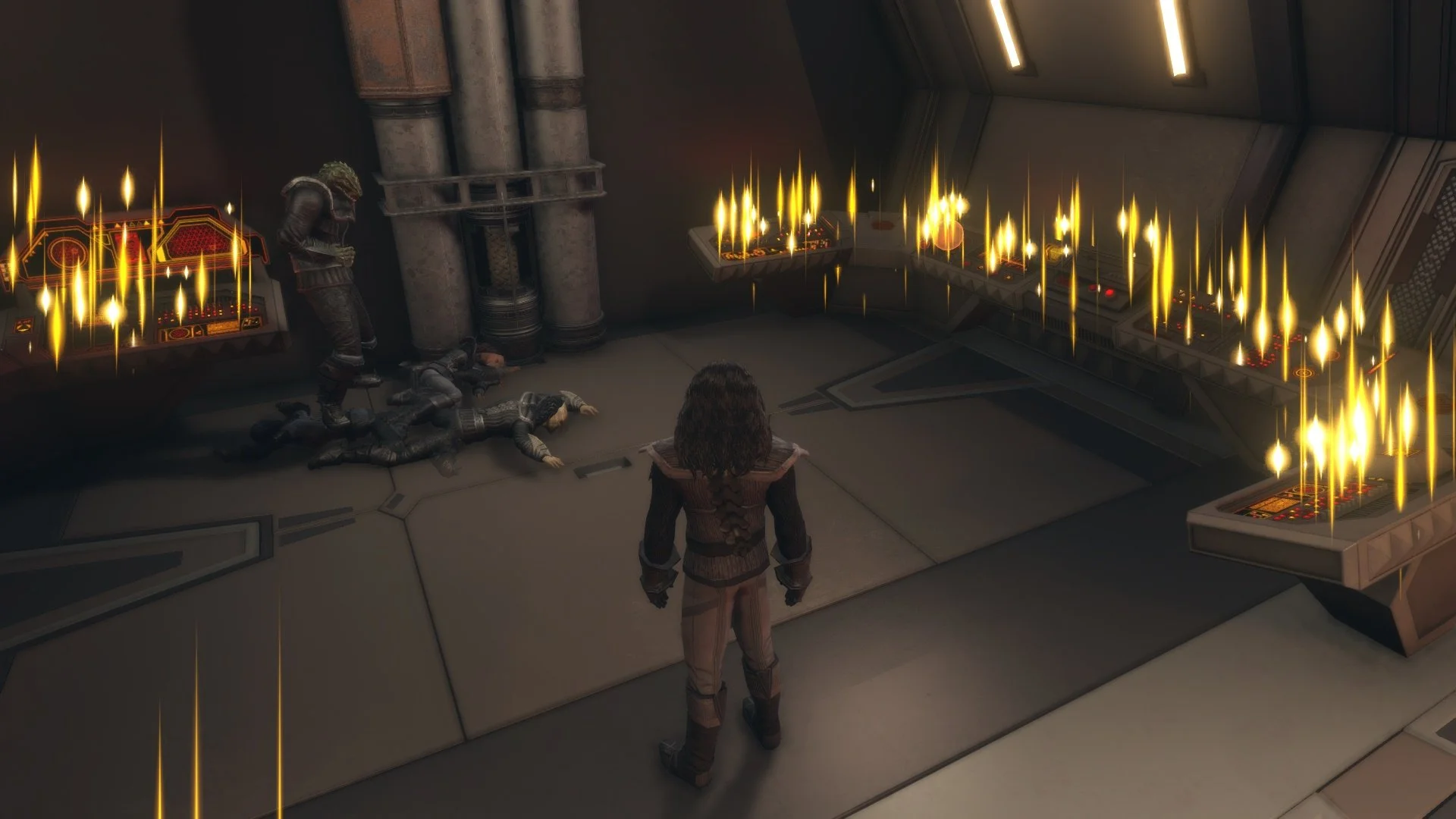
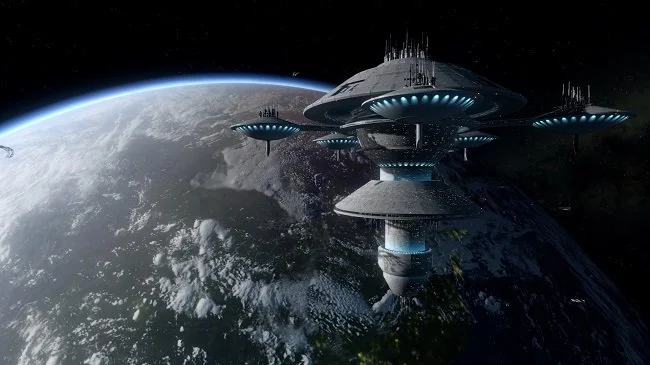
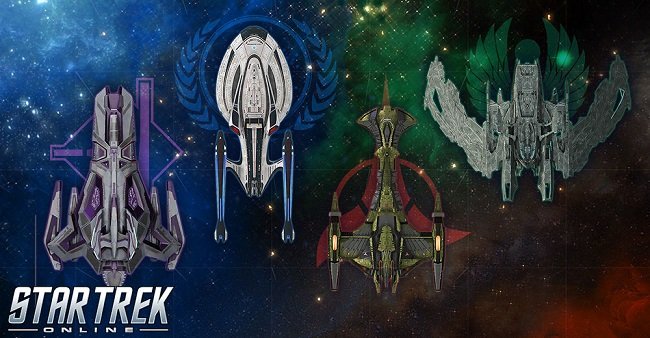
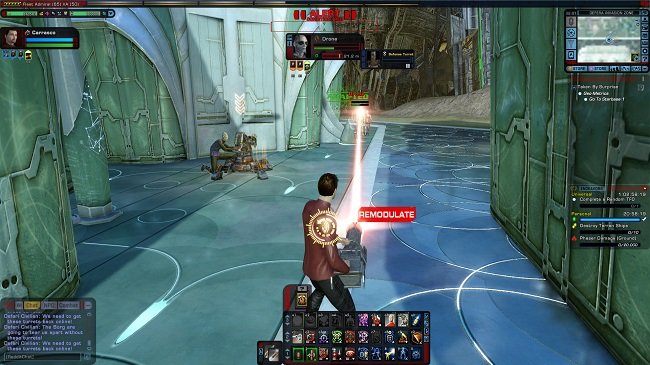
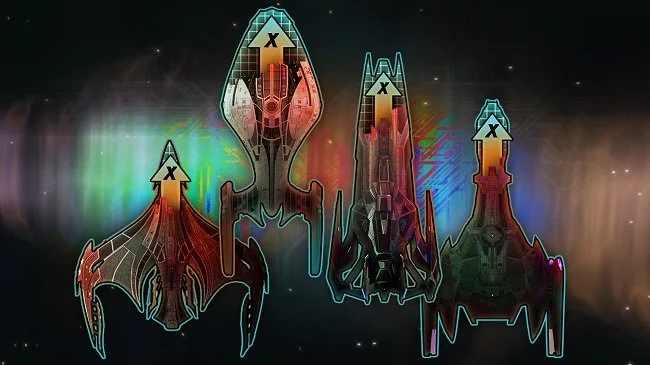
Yesterday saw a lot of new content come to Star Trek Online. First off, we saw the start of the eighth anniversary event and the opportunity to earn a Bajoran Interceptor. There’s also a new featured episode; Scylla and Charybdis which further explores the Tzenkethi story line. And then there’s the release of the new Discovery lock box, which ties STO into the new Star Trek: Discovery television show. New lock boxes, means new ships. This time round there’s an opportunity to win a Tier 6 Crossfield-class Science Vanguard which boasts a formidable array of stats. Judging by the discussion on the official STO subreddit, the new vessel seems to have been very well received by the player community. The universal console, Mycelium Ambush, when activated temporarily disables ships weapons and transports the vessel forward. It then releases an energy pulse, impeding the engines of nearby enemy vessels while enhancing your own starship's weapons. After a few seconds, multiple torpedoes are launched, and your starship's weapons are disabled again in order to transport back to the original position.
Yesterday saw a lot of new content come to Star Trek Online. First off, we saw the start of the eighth anniversary event and the opportunity to earn a Bajoran Interceptor. There’s also a new featured episode; Scylla and Charybdis which further explores the Tzenkethi story line. And then there’s the release of the new Discovery lock box, which ties STO into the new Star Trek: Discovery television show. New lock boxes, means new ships. This time round there’s an opportunity to win a Tier 6 Crossfield-class Science Vanguard which boasts a formidable array of stats. Judging by the discussion on the official STO subreddit, the new vessel seems to have been very well received by the player community. The universal console, Mycelium Ambush, when activated temporarily disables ships weapons and transports the vessel forward. It then releases an energy pulse, impeding the engines of nearby enemy vessels while enhancing your own starship's weapons. After a few seconds, multiple torpedoes are launched, and your starship's weapons are disabled again in order to transport back to the original position.
Now considering that the new Discovery lock boxes have only been available for 24 hours, it would appear that many players have been stockpiling keys in preparation for its launch. Subsequently, despite being a rare drop many players have acquired the new Crossfield-class Science Vanguard and they are readily available on the exchange. The price is currently around 620 million energy credits, which is a tidy sum. The ship has also turned up for sale on third party websites available for sale at $125. Furthermore, the arrival of new ships has not depressed the prices of older vessels. Both Kelvin timeline ships are still holding steady at 260 million energy credit and the jewel in the crown of STO, the Tier 6 Constitution class Cruiser remians over 1.5 billion energy credits. So far, the economy adjustment that was anticipated by the introduction of the re-engineering system has yet to happen, although it is still only early days.
The problems STO faces with its in-game economy are really no different from many other MMOs. Frequently, the accumulation of wealth becomes a meta game in its own right. LOTRO has a similarly skewed game economy with everyday items that can be easily gathered, priced extremely high. This is not through supply and demand, but simply because such prices can be charged and paid for. Because gold is simply created in MMOs, rather than linked to any other sort of economic resource to base its levels, it doesn’t take long for hyperinflation to occur. Hyperinflation is detrimental to new and returning players. It can often lead to the auction service becoming the exclusive province of the virtually super rich. Hence we see the introduction of money sinks to try and remove surplus capital from games. These may be auction house fees, non-craftable consumables or housing fees. However money sinks seldom return a game’s economy back to a state of normality.
Cryptic have adjusted the in-game economy of STO several times over the last eight years. It is now far harder to earn energy credits, the games primary currency, than it was four years ago However, the damage is already done and there’s an immense amount of currency in circulation, often stockpiled by power players. The game’s crafting and upgrade system is also a contributory factor to hyperinflation. Until recently, if you craft and upgrade a ships weapon for example, there has been no control over which modifiers are added to it. Hence players would sell on items that didn’t meet their expectations. These items then flood the in-game auction house at inflated prices, as players seek gear with the attributes they require. The new re-engineering system is supposed to make obtaining the modifiers that you desire easier. It will allegedly level the playing field and make players less reliant on crafted items for sale on the exchange. Cryptic hope that this system will ultimately depress prices and eventually lead to less superfluous items entering the game’s financial ecosystem.
MMO economies are strange and esoteric beasts. Despite external factors created by developers, designed to slow and divert wealth creation, it is frequently impossible to slow player progression and dampen their enthusiasm. MMO gamers often rise to the occasion and embrace grind rather than capitulate to it. I suspect that it will take a considerable amount of time before we see any major change in the STO economy. Furthermore, the re-engineering system may well remove the surplus of crated items on the exchange, but I cannot see it impacting upon the prices of rare Tier 6 vessels. If someone is prepared to pay 1.5 billion energy credits for the latest and rarest of ships then the prices will remain as they are. The only other alternative is to make such items bound which would then incur a new set of problems, along with a great deal of player outrage. So for the meantime it is simply a question of watching and waiting to see in what direction the STO market goes.
Alik’r Desert Dolmen Farming
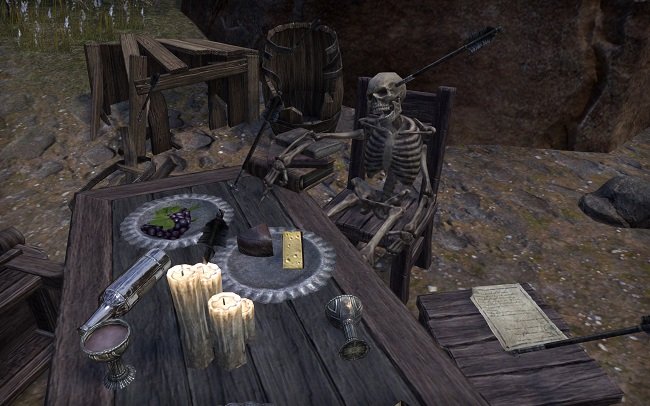
Back in 2014 when I was still regularly playing Guild Wars 2 a popular way to level up quickly, as well as grind various rewards, was to join the Queensdale Champion Train. The region was home to multiple Champion level bosses and groups would farm these for hours on end. On arriving in Queensdale, if you wished to join the “train” and farm the various bosses, it was customary to ask “choo choo” in zone chat. You’d then be informed where the “zerg” was and you could catch up with it accordingly. Such are the quaint and esoteric customs associated with the MMO genre. The Queensdale Champion Train eventually got nerfed by ArenaNet and the bosses downgraded, so that it ceased being a viable undertaking. The reason I mention this is because I recently discovered a very similar set up in The Elder Scrolls online. Namely Alik’r Desert Dolmen Farming.
Back in 2014 when I was still regularly playing Guild Wars 2 a popular way to level up quickly, as well as grind various rewards, was to join the Queensdale Champion Train. The region was home to multiple Champion level bosses and groups would farm these for hours on end. On arriving in Queensdale, if you wished to join the “train” and farm the various bosses, it was customary to ask “choo choo” in zone chat. You’d then be informed where the “zerg” was and you could catch up with it accordingly. Such are the quaint and esoteric customs associated with the MMO genre. The Queensdale Champion Train eventually got nerfed by ArenaNet and the bosses downgraded, so that it ceased being a viable undertaking. The reason I mention this is because I recently discovered a very similar set up in The Elder Scrolls online. Namely Alik’r Desert Dolmen Farming.
For those who don’t know, here is a brief explanation of how this player driven event works. Dark Anchors or Dolmens are specific places where the forces of Molag Bal set an "anchor" point to pull Tamriel into Coldharbour. Each zone has 3 Dolmens (except Cyrodiil). The Dark Anchors are activated when fanatical cultists spawn around the Dolmen and begin incantations to open them. Once active these become world events. You can see the effects and hear the incantations from far away, and a horn will sound when the portal is opened. Evil forces then mount an incursion which has to be repelled. Once the event has finished and the Dark Anchors closed, a chest spawns with various rewards. Naturally Dolmens can be used as a means to gain XP quickly and level up.
The reason the Alik’r Desert is popular for Dolmen farming is because there are wayshrines (quick travel teleporters) conveniently close to each location. The Aswala Stables Wayshrine is near to the Hollow Waste Dolmen, Goat's Head Oasis Wayshrine is well placed for the Myrkwasa Dolmen and Shrikes Aerie Wayshrine is at the foot of the hill of the Tigonus Dolmen. Furthermore, the Dolmen respawn quickly in this region and it is not to difficult to complete each and swiftly travel to the next. As with Guild Wars 2, if you enquire in zone chat, you can ascertain where the current “zerg” is. If you type “+ Dolmen” in chat you can potentially join any group farming in the area. Grouping increases XP gain by 10% and also shows the location of the group leader on the map.
I have spent some time recently farming Dolmen in this fashion and it certainly does allow you to level quite quickly. Because content scales in ESO, it’s not as if you out level the regular story quests in the game. Naturally some purist players will pooh-pooh this play style. There’s also the possibility that ZeniMax might nerf this situation in the future if they choose to. One of the reasons ArenaNet nerfed the Champion farming in Guild Wars 2 was because they felt that the “zerg” disrupted new players in what was essentially a low-level area. Whether a similar situation occurs in ESO remains to be seen. In the meantime, I’m going to “make hay while the suns shines” and continue to supplement my regular progression through ESO with such Dolmen farming.
Video Games and Business Models
A recent roundtable podcast from Massively OP, along with a post over at MMO Bro, have both touched upon the thorny issue of business models for the MMO genre. Things have changed a great deal over the last two decades and we’ve come a long way from the days of the monthly subscription. Back then, purchasing a game and a subscription provided unfettered access to all content that was currently available. There were no cash shops, selling cosmetic items and convenience based items. You just paid, played and pursued your gaming. And because MMOs were a somewhat niche market pastime at this stage, this business model proved sufficient to sustain the market. However, improvements in graphics and processing power facilitated a new generation of MMOs, which coupled with the growth in home internet access, meant that the genre gained a wider popularity. However, gaining more customers and expanding your consumer base comes with its own set of problems and success can be a double edged sword.
A recent roundtable podcast from Massively OP, along with a post over at MMO Bro, have both touched upon the thorny issue of business models for the MMO genre. Things have changed a great deal over the last two decades and we’ve come a long way from the days of the monthly subscription. Back then, purchasing a game and a subscription provided unfettered access to all content that was currently available. There were no cash shops, selling cosmetic items and convenience based items. You just paid, played and pursued your gaming. And because MMOs were a somewhat niche market pastime at this stage, this business model proved sufficient to sustain the market. However, improvements in graphics and processing power facilitated a new generation of MMOs, which coupled with the growth in home internet access, meant that the genre gained a wider popularity. However, gaining more customers and expanding your consumer base comes with its own set of problems and success can be a double edged sword.
Early MMOs often lacked clearly delineated quests and quest hubs per se, relying upon players to figure out many of the logistical requirements to level themselves. This open world, sandbox approach along with a lack of hand holding meant that players had to be patient and prepared to invest time when playing. Increased popularity led to an influx of new players who weren’t necessarily as disposed to participate under such parameters. Hence the MMO became, for better or for worse, more casual friendly and progressing through content became more streamlined and procedural. As a result, developers soon found that some players would voraciously consume content and that new material could not be created to meet demand. Suddenly the subscription business model proved to be an Achilles Heel for the industry, as players with nothing to do unsubscribe.
Is this the only reason for the demise of the subscription business model? Over at the MMO Bro it is viewed with a distinct lack of nostalgia. They even argue that it perpetuated grind in game design. Yet grind is often present in all games of this genre regardless of the business model because developers simply cannot produce content fast enough. The example of WoW cited in the post may be true, but it isn’t necessarily applicable to other games. I have revisited my notes and blog posts from the days when LOTRO, STO and SWTOR were subscription games and they didn’t strike me as excessively grindy at the time. The amount of content available in an MMO is also dependent on your point of entry into a game. I have recently started playing ESO again, and there is plenty of material for me to explore. However, if you have been playing continuously since launch, then that may not be the case.
As for the “spit in the face of loyalty” allegation, it’s sadly no different from other subscription services and is frankly a reality of life, regardless of moral rectitude. If you stop paying for Netflix, then you cease to have access to the service. People don’t quibble about this, so what makes MMOs so different? The F2P business model theoretically allows you to technically keep playing a game after you cease paying, but often the reduction of service will hobble the player. It also depends on the game and their particular approach. Although I agree that customer loyalty should count for something, we live in a world where more often than not is doesn’t, so complaining about it in these circumstances seems somewhat illogical. I also think that the argument that subscribing to an MMO locks you in, thus reducing the likelihood of you trying other titles is purely subjective. I cannot effectively play more than three MMOs simultaneously and frankly the notion of a subscription focusing me on a single title is possibly a good thing, due to the good old “sunk cost” fallacy.
I have never seen the purpose of a subscription or any particular business model to provide customers with a level playing field. I consider it merely as a fee to access content. The whole level playing field concept was born from a time when MMOs were niche market products and more imbued with the egalitarian motives of some of their developers. This philosophy is often incompatible with business needs. Furthermore, I come from a generation that bought products and considered a sense of ownership to be important. However, times change whether we like them or not, and now the notion of selling a product to the customer just once and not receiving any additional revenue is no longer favoured. Hence we face the age of “everything as a service” with add-ons and upgrades to suit your needs. But there are consequences to changing your approach to business. The subscription business model discouraged transient players or those who only wish to troll and disrupt. Removing barriers may increase revenue but can impact upon the quality of a player base and community. F2P viewed from certain perspectives can be compared to removing security from the night club door.
I believe the main reason the subscription model was replaced wasn’t due to any ethical, moral or philosophical failings. It was simply due to economics. All business models are usually conceived for the benefit of the shareholders first and the customer second. Subscriptions didn’t die due to gamers campaigning against them. The model failed due to the old conundrum of supply and demand. F2P and B2P hybrids with cash stores and optional subs with benefit, simply buy the developers more time by attracting a wider client base. One that isn’t as hardcore as some old school subscribers. Overall this is a tale of changing economics and not much else. New technology is another culprit in forcing business to radically overhaul long established practices. The digital age is slowly replacing ownership of physical items with the provision of services. Subscriptions were merely a convenient solution for the games of the time. To ascribe them any further attributes or view them with more sinister motives is possibly a mistake.
Keeping Busy in Star Trek Online
Unlike other MMOs, there are always plenty of events scheduled in the Star Trek Online. The game includes a handy calendar which provides information on what is planned for the months ahead. It’s a clever way to keep the players engaged and occupied and as a result, STO is the game that I tire with the least and dabble with most. Where other games will often end the year with a nebulous Producer’s letter which offers a road map hinting at what lies ahead over the next twelve months, STO just gets on with things. Q’s Winter Wonderland event is drawing to a close next Thursday, but already we have two new events that have launched today. The Arena of Sompek makes a welcome return with its five-man survival battle against endless waves of mobs. Then we have a Featured Episode Replay, offering an opportunity to repeat specific missions and receive rewards that have been previously retired, such Breen and Romulan Bridge Officers and Epic Ground devices such as The Shard of Possibilities and the Ophidian Cane.
Unlike other MMOs, there are always plenty of events scheduled in the Star Trek Online. The game includes a handy calendar which provides information on what is planned for the months ahead. It’s a clever way to keep the players engaged and occupied and as a result, STO is the game that I tire with the least and dabble with most. Where other games will often end the year with a nebulous Producer’s letter which offers a road map hinting at what lies ahead over the next twelve months, STO just gets on with things. Q’s Winter Wonderland event is drawing to a close next Thursday, but already we have two new events that have launched today. The Arena of Sompek makes a welcome return with its five-man survival battle against endless waves of mobs. Then we have a Featured Episode Replay, offering an opportunity to repeat specific missions and receive rewards that have been previously retired, such Breen and Romulan Bridge Officers and Epic Ground devices such as The Shard of Possibilities and the Ophidian Cane.
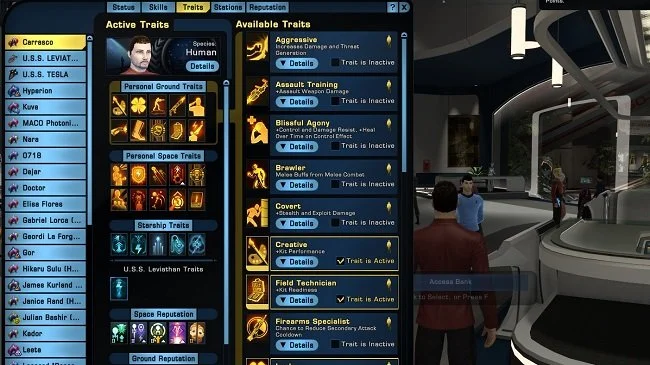
There’s another change on the horizon for STO. At present upgrading gear is very much a lottery as you have no control over the modifiers that you receive. However, this will soon change with the games new re-engineering system. Players will be able to alter the mods that don’t suit their build or are deemed as sub-optimal to their game play. Re-engineering will utilise a new currency, salvage, a resource granted through the recycling of unwanted gear. Cryptic are currently working on the specifics of the system and it will soon be tested on Tribble server. Re-engineering will also showcase some new epic mods as an incentive. In a recent blog post Cryptic said “We hope re-engineering will be a way for neophyte and veteran Captains alike to better create equipment that matches their particular playstyles and builds.” The new mechanic will hopefully have a knock-on effect on the games economy, reducing Energy Credit creation and the existing surplus of unwanted gear on the exchange.
Star Trek Online is also due an expansion in 2018. So far, all we know about it is that it will be focused on Deep Space Nine, the Dominion, and possibly the Gamma Quadrant. As the TV show Star Trek: Deep Space Nine is twenty-five years old this year, it makes sense to return to this region and explore the story further. Cryptic have previously made all new content for the game free of charge, so unless they have a radical change of policy, the next expansion should follow suite. Then in February we have the eighth anniversary of STO. This will mean a special project that will offer a new ship as a reward. Perhaps Cryptic may take the opportunity to tie the game into Star Trek: Discovery? And as well as all this, we can expect regular events such as First Contact Day and the Summer and Winter Festivals. If there’s a Friday the 13th in the year, we’ll also see the episode Hearts and Minds make an appearance. As you can see STO has a busy schedule for 2018, with plenty to do. Unlike other examples of the genre, STO appears to be in a good place at present with a lot of content lined up. Hence it remains my go to MMO for the fourth year.
LOTRO: Alternative Ways to Reach Level Cap
I managed to gain a level and a half in LOTRO today, bringing my primary alt to 108. It was a somewhat protracted task as many of the quests that I was undertaking were between level 102 and 105. Despite several attempts and a concerted effort to persevere, I have concluded that I don’t care for the Mordor expansion for LOTRO. Levelling up in that region is a chore, due to the difficulty and density of the mobs. So, I have decided to work my way towards the current level cap elsewhere in the game and then return to the region to clear the Epic Story. I may, or may not work through the regional quest hubs, depending on my attitude towards the game at that point. I will make do with any gear that drops via the Epic Story and will not concern myself with the current endgame content and rewards. By the time I’ve worked through my plan, they’ll be a new update on the horizon with new gear anyway.
I managed to gain a level and a half in LOTRO today, bringing my primary alt to 108. It was a somewhat protracted task as many of the quests that I was undertaking were between level 102 and 105. Despite several attempts and a concerted effort to persevere, I have concluded that I don’t care for the Mordor expansion for LOTRO. Levelling up in that region is a chore, due to the difficulty and density of the mobs. So, I have decided to work my way towards the current level cap elsewhere in the game and then return to the region to clear the Epic Story. I may, or may not work through the regional quest hubs, depending on my attitude towards the game at that point. I will make do with any gear that drops via the Epic Story and will not concern myself with the current endgame content and rewards. By the time I’ve worked through my plan, they’ll be a new update on the horizon with new gear anyway.
Because LOTRO has been streamlined and updated over the years to accommodate the various increases to the level cap, it is quite easy in the early stages of the game to pursue multiple levelling paths. New players will often find that they out level a zone long before they finish all the content it offers. Hence there are options when it comes to progressing. You can pursue the Epic Story or remain in a region and follow a completest approach to the game. As soon as skirmishes become available they can significantly contribute to your level progression. Crafting also offers XP and can be used as a supplement. We should not forget the Destiny Points perk system that can be used to boost XP as well. However, some of these benefits reduce as you progress through the game. At present, there are no alternative locations available in the game that offers quests at a comparable level of XP to those found in Mordor. So, for the present, I am working through lower level, residual regional quests in Taur Drúadan, The Beacon Hills, Minis Tirith, North Ithilien and Dagorlad.
The upside of this approach is that I’ve focused on several quest lines that have proven most enjoyable. Although there are always a percentage of arbitrary quests in any new content that comes to LOTRO, there are often some interesting, well-conceived quests with lore based stories. One such quest chain had my Lore-master running errands for Ioreth in the Houses of Healing. This culminated in Aragorn healing Éowyn, Faramir and Peregrin Took. I frequently find that when Standing Stone Games offers a perspective upon iconic scenes from the source text, they do so in a very creative fashion. Another quest chain that I completed was to retake Cair Andros. It is something only referenced in the book and it was agreeable to see the idea fleshed out into a slightly more substantive narrative. Another positive aspect of pursuing regional quests is that they sometimes offer interesting rewards, such as unique housing items or alternative gear to that provided by the primary Epic Story.
My Lore-master is an Explorer by profession, although I have never really pursued any of the associated skills to any degree. Within the disciplines of Forester and Prospector, I simply gather resources then refine them to a sufficient level to unlock the next tier. Farming and refining is mainly done to generate gold via the auction house. I have neglected this process for several updates, so can certainly gain some XP by crafting resources from older regions. As for the Tailor skill, I have never really used this. Perhaps, now is the time to do so as an additional means to levelling, although the actual process of crafting in LOTRO is somewhat dull. I shall at least look into the process in the next few days and see what it has to offer. Perhaps I should consider my dislike for Mordor to be a positive thing, as it is at least encouraging me to revisit aspects of LOTRO that I have previously ignored. Certainly, todays time spent in-game was both fun and rewarding. Overall it has left me in a good humour and currently well disposed towards the MMO for the present.
Gaming Amnesia
Due to the time of year, I’ve been looking through the various games that I own and considering whether I should revisit any. To cut a long story short, I’ve decided to give The Elder Scrolls Online another go. So, I duly downloaded and installed the client only to find myself utterly confounded by it. In a nutshell, I have completely forgotten how to play the game. This problem is further compounded by two other factors. Firstly, the controls and layout are more akin to that of Skyrim than of a typical MMO. Secondly, this is a game that relies on mods to significantly enhance its user interface. The plain vanilla client is somewhat lacking. Therefore, a new or returning player has to do a considerable amount of “homework” to before they can effectively enjoy the game. However, this is not a problem unique to this MMO. Putting aside the issue of mods, I have a case of what I shall term “gaming amnesia”, a malady that becomes increasingly common the more games you play.
Due to the time of year, I’ve been looking through the various games that I own and considering whether I should revisit any. To cut a long story short, I’ve decided to give The Elder Scrolls Online another go. So, I duly downloaded and installed the client only to find myself utterly confounded by it. In a nutshell, I have completely forgotten how to play the game. This problem is further compounded by two other factors. Firstly, the controls and layout are more akin to that of Skyrim than of a typical MMO. Secondly, this is a game that relies on mods to significantly enhance its user interface. The plain vanilla client is somewhat lacking. Therefore, a new or returning player has to do a considerable amount of “homework” to before they can effectively enjoy the game. However, this is not a problem unique to this MMO. Putting aside the issue of mods, I have a case of what I shall term “gaming amnesia”, a malady that becomes increasingly common the more games you play.
Much of this problem stems from my absence from the game. I haven't touched ESO for over a year. In the intervening time I have played several other MMOs and numerous single player games. My brain is filled with multiple keyboard controls and UIs, all conflicting with each other. Apart from some basic commonality such as WSAD keys for movement and the number keys bound to various attacks and heals, the subtleties of ESO have been completely lost to me. As any teacher will tell you, you need to immediately put into practise what you've been taught, if you wish to retain it. Obviously, MMOs can't all share an identical control interface, so I usually learn how to navigate through a new game’s systems by repetition. So, it is hardly surprising that I have forgotten so much under the circumstances.
This problem manifests itself all the time with my gaming activities. If I have spent a few months playing an FPS, then I'll often find myself holding down the Left Shift key in another game and expecting my character to sprint. Or mashing the wrong keys to bring up a HUD or induct a skill that is not even present. Whatever is the most recent seems to be the information that persists. This in fact raises the question as to whether games have too many skills options; a point that has been addressed with more recent, action combat driven MMOs. Both Guild Wars 2 as well as the ESO, restrict the number of skills on the hotbar. It’s a far cry from the chronic skills bloat seen in such games as SWTOR and LOTRO. Both those titles have some skills that are so negligible to game play they can be ignored. However, there is a risk with a more limited number of skills to use that combat can become somewhat mundane and arbitrary. This is a flaw that remains unchanged in Secret World Legends despite its recent revision.
The best solution for my “gaming amnesia” problem in ESO is to roll a new character and start the game from scratch, rather than try to continue from where I left. This is often the case with most games, unless you have invested a substantial amount of time and effort in your previous alt. Then the solution is to do your “homework” by readings guides and watching “let’s play” videos. Furthermore, a variant of this problems can occur with game sequels. I played Middle Earth: Shadow of Mordor right up to the release of the Shadow of War. Although about two thirds of the game controls and skills remained in the latest instalment, the introduction of new and advanced variants of existing abilities caused confusion. I would frequently press a key when playing the sequel and find that it didn’t do the same as in the previous game. Overall, it would seem that the more games you play the more there is too learn and subsequently forget. Again, perhaps the solution to this issue is to focus on one game at a time.
A Year in Gaming
As 2017 draws to a close, it is time once again time to reflect upon the subject of gaming as it has remained a primary form of entertainment for me over the last twelve months. I have enjoyed most of the new titles that I’ve bought this year but not all of them. There’s been some that have failed to please and others that have proven to be flawed. Then there has been my ongoing relationship with the MMO genre as I still have a handful of these games installed on my PC. Let it suffice to say that only one of these titles has managed to maintain my interest. I suspect that the MMO genre per se is in for a year of change in 2018. As for the wider aspects of gaming, I wouldn’t say it has been an especially edifying year for the game industry or the associated fan culture. The “goodwill” based band-aid that has remained in place for the last few years was finally torn off in 2017, exposing a festering self-inflicted wound.
As 2017 draws to a close, it is time once again time to reflect upon the subject of gaming as it has remained a primary form of entertainment for me over the last twelve months. I have enjoyed most of the new titles that I’ve bought this year but not all of them. There’s been some that have failed to please and others that have proven to be flawed. Then there has been my ongoing relationship with the MMO genre as I still have a handful of these games installed on my PC. Let it suffice to say that only one of these titles has managed to maintain my interest. I suspect that the MMO genre per se is in for a year of change in 2018. As for the wider aspects of gaming, I wouldn’t say it has been an especially edifying year for the game industry or the associated fan culture. The “goodwill” based band-aid that has remained in place for the last few years was finally torn off in 2017, exposing a festering self-inflicted wound.
I started off the year by purchasing The Elder Scrolls Online Imperial Edition, as I fancied spending time in an MMO. Sadly, the game failed to grab my attention. This was mainly due to having spent so much time playing Skyrim and being somewhat burned out on the entire Elder Scrolls vibe. I also found the requirement for mods somewhat troubling, feeling that a game should have adequate UI facilities present. It’s also a very solo friendly MMO, which in some way negates its multiplayer status. Why not just play a fully customised version of one of the earlier games in the franchise? I also tried in 2017 to make a sustained return to LOTRO. Northern Ithilien held my interest but once the game moved onto the Black Gates it soon waned. Mordor is a great zone on paper but its grindy requirements and relentlessly dour environment killed my passion. STO remains a casual friendly experience and due to there being regular events throughout the year, it facilitates setting goals and achievements. I also jumped on the Destiny 2 bandwagon and was surprised how agreeable it is. Its genre spanning nature scratched several of my gaming itches.
My single player experience was also varied in 2017. For Honor proved to be exactly as I expected; gripping in principle but beyond my personal skillset to play to any degree of success. However, Sniper Elite 4 proved to be a sound buy. The main game and DLC were well conceived and their extensive game maps allow for multiple and varied play throughs. I also dabbled with co-operative play which proved a very interesting experience. Overall this was rewarding purchase as I clocked up over 91 hours in-game. Thanks to discount key sites, I managed to purchase several titles at low prices. I bought Mafia III after it was reduced by 75% and enjoyed the games central story. I also pre-ordered the Gold Edition of Middle-earth: Shadow of War and secured a discount. Although the structure of that game has been compromised to accommodate microtransactions, I still liked the gameplay and the preposterous lore-breaking narrative. 2017 also included some minor surprises. I was not expecting further DLC for Two Worlds II but Topware released both new single player and co-op content. I was also intrigued by the recent update to Star Trek: Bridge Crew, allowing the game to be played in conventional desktop mode, rather than VR.
Of course, it wouldn’t be a year in gaming without some sort of controversy and man did 2017 have one. The blight that is microtransactions which has been slowly spreading from mobile gaming to the so-called Triple A scene, reached a head November. Star Wars: Battlefront II received such a backlash from its customer base that the story even appeared in mainstream news. Disney eventually intervened and ensured that EA suspended the real money loot boxes in the game. It would appear that the genie is finally out of the bottle and loot box culture is now coming under the scrutiny of legislative bodies all over the world. Apple has recently waded into the debate as it wants loot box odds to be fully disclosed. What happens next is anyone guess but I think that game developers may have to rethink the monetisation of their games. I also think that the tide is slowly turning with regard to early access and games that launch in a patently broken state. I avoided buying Friday the 13th: The Game until six months after it’s problematic release and I still feel that it is very much a work in progress. Several high-profile gaming commentators are loudly advocating a boycott of this trend and I think it may be getting some traction. Time will tell.
2017 once again validated my position of distancing myself from parts of the gaming community. The past twelve months have shown that a substantial number of gamers remain unreconstructed, self-centred, emotionally illiterate man-children. Developers, journalists and You Tube personalities are still regularly threatened and abused if something that is vaguely controversial is said. Outdated and blinkered views about gaming and its culture still abound. You only have to see how Jim Sterling’s Commentocracy has raised the hackles of the usual suspects, to recognise that gaming culture is still far from united. However, I believe this stems from a broader malady that seems to be permeating all aspects of modern life. But the hate, bile and stupidity are not the total picture and there are still many bloggers, streamers and content creators that celebrate and promote the positive side of gaming. I intend to make such individuals my focus in 2018. I’m not one for making predictions but I have a feeling that 2018 may be a milestone year for gaming. Potentially it presents an opportunity for the industry to either get on track or alternatively implode and suffer a slow long death. Perhaps next year’s review will have the answer.
















STO and the Humble Bundle Jingle Jam 2017
This month’s Humble Bundle is a collaboration with the Yogscast, featuring a collection of indie games, DLC, game soundtracks and sundry other odds and sods. There are 25 items in the bundle and so far, six have been revealed. As December progresses you’ll find out what other goodies are included. If you can’t wait, there’s a leaked list here. By paying the base price of $35 (about £26.16) you’ll unlock the entire package. Furthermore, lurking within this bundle is the rare TOS Bridge Officer pack for Star Trek Online. This includes holographic versions of iconic Star Trek TOS characters such as Spock, McCoy, Scott, Chekov, Uhura, Sulu, and Rand which you can add to your bridge officer roster and make part of your away team. For fans of both the game and the TV show this is quite a big deal. So far, codes for the rare TOS Bridge Officer pack, are usually only available at convention giveaways or on occasional livestreams. So naturally this is an enticing offer.
This month’s Humble Bundle is a collaboration with the Yogscast, featuring a collection of indie games, DLC, game soundtracks and sundry other odds and sods. There are 25 items in the bundle and so far, six have been revealed. As December progresses you’ll find out what other goodies are included. If you can’t wait, there’s a leaked list here. By paying the base price of $35 (about £26.16) you’ll unlock the entire package. Furthermore, lurking within this bundle is the rare TOS Bridge Officer pack for Star Trek Online. This includes holographic versions of iconic Star Trek TOS characters such as Spock, McCoy, Scott, Chekov, Uhura, Sulu, and Rand which you can add to your bridge officer roster and make part of your away team. For fans of both the game and the TV show this is quite a big deal. So far, codes for the rare TOS Bridge Officer pack, are usually only available at convention giveaways or on occasional livestreams. So naturally this is an enticing offer.
However, £26 plus is still quite a lot of money for an additional game resource, which although fun is not really essential to the MMO. I could for example spend that money on the game Hand of Fate 2 and cogently argue that it is better value for money. But the heart wants what the heart wants and other dubious excuses, leaving me with a minor moral dilemma. I could justify the purchase of the bundle on the grounds that the money is all going to both British and international charities. But then again, I wouldn’t mind playing Hand of Fate 2 at some point over Christmas, once all the guests have pissed off and I’m left mercifully alone and I’ve already donated to some worthy causes. So rather than agonise about this matter on my own, I thought I’d share it with you dear reader(s) and at the same time dress this first world problem up as an informative, news based, blog post. I may have to read through the list of other titles included in the Jingle Jam bundle and see if any of them are worth investing in.
The MMO Blogosphere Is Alive and Well
Popular gaming blogger Tobold asked whether the MMO Blogosphere was still alive in a recent post on his site. He stated, “as far as I can see that decline has continued over the last decade, powered both by the general decline of blogging as a form of expression on the internet in favour of tweeting, and by the decline of MMORPGs as a form of gaming in favor of other multiplayer games”. Needless to say, there were numerous comments to the contrary left on the article in question. Furthermore, several gaming bloggers debated the point further on their own platforms. As I have a dog in this fight, to coin a somewhat inappropriate and unsavoury phrase, I thought I’d add my thoughts to the debate. And as ever, the answer is somewhat complex because Tobold’s question is erroneously reductive.
Popular gaming blogger Tobold asked whether the MMO Blogosphere was still alive in a recent post on his site. He stated, “as far as I can see that decline has continued over the last decade, powered both by the general decline of blogging as a form of expression on the internet in favour of tweeting, and by the decline of MMORPGs as a form of gaming in favor of other multiplayer games”. Needless to say, there were numerous comments to the contrary left on the article in question. Furthermore, several gaming bloggers debated the point further on their own platforms. As I have a dog in this fight, to coin a somewhat inappropriate and unsavoury phrase, I thought I’d add my thoughts to the debate. And as ever, the answer is somewhat complex because Tobold’s question is erroneously reductive.
The golden age of the MMORPG is certainly behind us and we shall not see the like of it again. However, there were specific factors linked to the popularity of this particular genre that were contextual and linked to the time. Yet despite these factors the genre remains popular and still commands large player numbers. Furthermore, games of this idiom have been subject to major changes in style and mechanics in recent years. Whether you, me or Tobold like it or not, the very definition of the MMORPG has evolved. Which is why major commercial sites such as Massively Overpowered now cover titles such as Grand Theft Auto Online and Destiny 2. What constitutes an MMO now is arguably different from what it was in the early 2000s. Therefore, Tobold is mistaken to render things down to a “like for like” comparison.
Blogging has also changed and adapted over time. Twitter, You Tube and Streaming have emerged to provide alternative platforms for discussion, fandom and social interaction. All of these mediums have their place and some have become popular because of brevity and convenience that they provide. They also have the advantage of lower barriers to entry. Writing effectively and maintaining an audience requires a degree of skill, a lot of time and stoic dedication. Yet, fans of the MMO genre still actively do these things and I have RSS subscriptions to dozens of active blogs writing such material. There are still guides and resources for classic MMOs such as LOTRO, Guild wars 2 and STO available. The existence of the aforementioned Massively Overpowered website is also evidence of the healthy state of the genre and its associated fandom. Many of those who regularly comment on that site run their own blogs.
Longform writing and analysis of the MMO genre is therefore still a “thing”. In fact, there’s a lot of longform writing about most things available online. It never really went away despite new mediums emerging. With respect to blogging about MMOs, it may well have lost its thunder to You Tube and Twitch TV, but to be honest, it’s a genre that lends itself more to the written word anyway. I also think favouring longform writing is the prerogative of age. The generation of gamers that I am part of, has grown up together and still uses the older mediums such as a blogs, as the means to pursue their passions. So, I am happy to lend my voice to the growing chorus that has politely refuted Tobold’s assertion. The MMO Blogosphere is doing okay because I get up each morning and read multiple new posts about the genre via Feedly.






















Destiny 2: Level 20
I bought Destiny 2 on a whim and have so far enjoyed playing through the campaign. My approach to the game has been somewhat casual, so I’ve equipped gear based upon common sense, rather than an in-depth knowledge of the games mechanics. This approach has proven adequate until today, when I finally hit level 20. Now I find moving forward through the game that I feel somewhat under powered and that combat is more taxing. I don’t feel that I’m doing sufficient damage to enemies. That subsequently has an impact upon my enjoyment of the game because I always find that there’s very fine line to tread when it comes to combat. If you can one shot everything then it quickly becomes quite dull. However, if it takes too long to grind down a target the game tips over into becoming a chore. It’s difficult to ascertain exactly where the sweat spot is, and it may vary from gamer to gamer. However, I distinctly feel that I’ve been struggling so today I decided to remedy the problem.
I bought Destiny 2 on a whim and have so far enjoyed playing through the campaign. My approach to the game has been somewhat casual, so I’ve equipped gear based upon common sense, rather than an in-depth knowledge of the games mechanics. This approach has proven adequate until today, when I finally hit level 20. Now I find moving forward through the game that I feel somewhat under powered and that combat is more taxing. I don’t feel that I’m doing sufficient damage to enemies. That subsequently has an impact upon my enjoyment of the game because I always find that there’s very fine line to tread when it comes to combat. If you can one shot everything then it quickly becomes quite dull. However, if it takes too long to grind down a target the game tips over into becoming a chore. It’s difficult to ascertain exactly where the sweat spot is, and it may vary from gamer to gamer. However, I distinctly feel that I’ve been struggling so today I decided to remedy the problem.
It is at this point in the proceedings that the “git gud” brigade will smugly point to the wealth of information there is available for Destiny 2 and “cordially extend an invitation” to read it. So that’s what I’ve been doing this afternoon and this is what I’ve learnt. Destiny 2 is based upon the acquisition of loot. It’s a classic gear grind which is not such a bad thing. There are worse game mechanics. However, getting new gear is based heavily on chance. You may get lucky and pick up a rare blue engram only to find it’s below your current level. Or you may finally get a new legendary purple weapon to find there’s no significant increase in stats. It’s all somewhat of a lottery, yet you have to live with it as it’s the only means to increase your power once you hit level cap. For me this is a minor nuisance. I get that Bungie has to have a carrot on the end of the stick to keep players engaged but I don’t like “luck” based systems. I prefer to know what criteria needs to be met for a specific goal and then work towards it. The chance of getting zero return on my “time investment” does not excite me.
Then there are the benefits associated with being in a clan. Destiny 2 is a social game and there are perks to be gained through these organisations. However, although I have friends playing Destiny 2, many are based in the US or tied to different platforms. So, finding a suitable group is not as easy as it first appears. I tend not to join guilds in any game unless I know at least one member within their ranks. I am too old and impatient to risk finding myself in a toxic community. Also, my casual approach and laissez-faire attitude tends not to endear me to the more dedicated gamer. So, bearing all this in mind, I suspect my progress within the game may now slow. However, if I get lucky with loot drops, perhaps my current under powered status may improve. Depending on how I progress, I may or may not buy the season pass. Fortunately, if things do not work out, I have plenty of alternative games to focus upon. I guess if I write another post about Destiny 2, it will mean things have worked out favourably, which would be nice as I do enjoy what the game fundamentally offers.
Story Driven Gaming
This is a collaborative post debating merits of emergent storytelling vs. static storytelling between myself and TheBro from MMOBro. After reading this, make sure to check out his side of the debate!
As I peruse my Steam library, it becomes very apparent that the titles I’ve spent the most time playing are those with complex and involving traditional, linear narratives. This is hardly surprising as I’ve always liked stories and have a strong affection for books with in-depth lore and complex faux histories. It is one of the reasons I enjoy Professor Tolkien’s work and therefore gravitate towards games that expand upon these intellectual properties. Games such as LOTRO and even Middle-earth: Shadow of War. Both endeavour to explore the mythology of Third Age from an alternative perspective. Through the Elder Scrolls V: Skyrim, I discovered a wealth of lore and entered a living, breathing world. Then of course there is the MMORPG Star Trek Online, that until recently has been the only source of new Star Trek content. All these diverse titles from multiple genres have one thing in common. A strong narrative that underpins each game.
This is a collaborative post debating merits of emergent storytelling vs. static storytelling between myself and TheBro from MMOBro. After reading this, make sure to check out his side of the debate!
As I peruse my Steam library, it becomes very apparent that the titles I’ve spent the most time playing are those with complex and involving traditional, linear narratives. This is hardly surprising as I’ve always liked stories and have a strong affection for books with in-depth lore and complex faux histories. It is one of the reasons I enjoy Professor Tolkien’s work and therefore gravitate towards games that expand upon these intellectual properties. Games such as LOTRO and even Middle-earth: Shadow of War. Both endeavour to explore the mythology of Third Age from an alternative perspective. Through the Elder Scrolls V: Skyrim, I discovered a wealth of lore and entered a living, breathing world. Then of course there is the MMORPG Star Trek Online, that until recently has been the only source of new Star Trek content. All these diverse titles from multiple genres have one thing in common. A strong narrative that underpins each game.
Often when gaming, once the player looks beyond the scope and setting of the title, they will find a set of repeatable tasks, endeavours and targets to achieve. RPGs and especially the MMORPG genre are built upon such systems. If I am to shoot, explore or resource farm within a game, all of which can be quite arbitrary at times, then I do like to have some motivation or narrative explanation as to why I am doing these things. These game mechanics actually become less arduous if I am provided with an interesting enough narrative and a world with its own internal logic. Star Trek Online for example can justify the most innocuous of tasks with a healthy dose of its unique technobabble. The grinding nature of the rebuilding of Hytbold, a major quest line in LOTRO back in 2012, was eased considerably by the well-crafted storyline that accompanied the undertaking.
However, a strong story can achieve more than simply justifying repeatable daily quests or progression grinds. Take an RPG such as The Witcher 3: Wild Hunt. I cannot remember a game that tackled adult themes and socially complex issues, so well. The central characters were very well defined with flaws and common foibles, making them extremely credible and identifiable. As a result, the player becomes thoroughly invested in the characters and has a clear emotional stake in their fate. For me The Witcher 3: Wild Hunt often felt like taking part in an interactive novel. Now such a concept may not be to all gamers liking, however when you consider the cultural significance of the story it is hardly surprising that they are an intrinsic part of gaming. We as a society reflect upon our history, politics and ethics through fictional narrative. I see games with epic linear narratives to be an extension of this concept. Furthermore, as games are not locked into a single outcome, as with a book, there is scope for interaction and to have multiple outcomes.
However, although I am a big advocate for strong stories and complex plots in gaming, I am not dismissing the alternative out of hand. Emergent storylines and player created content is ideal for certain genres and can add a very human element to gameplay, especially in the MMO genre. But emergent content is a very broad term and therefore one has to be careful to make appropriate comparisons. Early MMOs often took a less structured approach in terms of narrative. Ultima Online being a clear example of this. The narrative experience where shaped by the activities of player guilds and their interactions. High profile betrayals and assassinations would alter power struggles. Economic manipulation would also have an impact upon persistent worlds. We still see all these aspects today in EVE Online with its territorial wars, bank heists and political subterfuge.
However, these events and emergent stories have several disadvantages. They are unique and time specific. For those who were present and participated, they may well be exceptionally gripping and entertaining but if you weren’t their then you missed it all. An embedded narrative has no expiry date. Another consideration is that emergent stories and interaction often stem from the players being active in the community beyond the game itself. Guilds socialise, plot and scheme outside of the game via forums and subreddits. Social groups have hierarchies with people playing specific roles. Yet MMOs are filled with “average players” who are not always involved with the wider aspects of a game. For them, emergent stories and events are something that happen to other people, assuming they get to hear about them at all. These more passive players only experience the outcome, rather than shape it. Perhaps it can therefore be argued that player generated content is really only of benefit to the more involved player. The player with the time and inclination to devote a great many hours to a single game.
Another concern I have regarding players shaping the narrative and direction of events in a game such as EVE Online, is that the driving force may not always be a positive or pleasant one. The socio-political dynamic of games of this ilk too often manifests as betrayal, hostile acquisition or economic chaos. Although these are good themes narratively, I tire of the continual race to the bottom that such behaviour encourages. We have enough of this in real life and I do not always wish to find such thing reflected in games, especially MMOs. It is also worth considering that the open world environment that encourages emergent gameplay is an incentive to some and a source of confusion to others. I have spoken to players in both Guild Wars 2 and The Elder Scrolls Online, who are lost without the structure of clear cut quest hubs and mission objective. Choice is not always a good thing and suits all taste. And let us not forget that player generated content in such games as LOTRO. This is often roleplay driven and centred around telling tales, reading poetry and playing in a band. For those of a creative persuasion this is hog heaven. For others it again proves to be a somewhat passive or even exclusionary experience.
Then there are those players who are never going to be interested in a story based narrative of any kind. They are not motivated by plot or characters and will skip all quest explanations and in-game cutscenes. This is the kind of gamer whose pleasure hinges upon achievement, leader boards and the actual process of playing. Competitive games do not need a narrative, although there is a backstory to titles such as Overwatch. Games of this idiom are driven by league tables and success. The reward is pride and bragging rights. In fact, you could strip back the details regarding some games setting and who the various factions are, choosing to present them as simply the red and blue team in arena number three. Because if the gameplay is fun and challenging, then that will suffice for some gamers.
Like novels and movies, a narrative driven game can provide more than just an enjoyable ride. It can focus and raise awareness of complex moral, social and political issues. MMOs and RPGs can inform and make us think about difficult matters. Of course, that is not to everyone liking and some wish games to be entirely free of such elements. But for me, I find narrative games to be the next step in our ongoing evolving relationship with storytelling. Although I am not averse to MMOs and other genres that focus on player generated narratives, I favour the traditional story based approach. Hardly surprising from someone who enjoys writing. However, there are many views on this matter other than my own perspective and ass ever there is no definitive right or wrong answer. For an alternative take on this subject, The Bro over at MMOBro has written an interesting piece favouring emergent storytelling.
Mirror Invasion
The Mirror Invasion, also known as the Terran Empire Incursion, is no stranger to Star Trek Online. This five-man event has appeared six times since its launch in 2104. Despite some minor revisions and different event rewards, the basic premise remains the same. The players must defend Vauthil Station from a Terran Empire assault from the Mirror Universe. Rifts appear and have to be closed before they unleash enemy vessels. There are also four power substations that charge the stations defences, that have to brought online. In the final stage of the event, an enemy Dreadnought and support squadron make a final attack on the station. It’s a fun ten-minute team event and if tackled correctly, is not too challenging. Science vessels can close rifts quicker than other classes and Command ships can initiate the power substations more efficiently. Players are awarded a Multidimensional Transporter for playing this event. By turning in 14 Transporters through the Reputation System, players will receive Dilithium Ore, Reputation Marks and the new Interphasic Instability console.
The Mirror Invasion, also known as the Terran Empire Incursion, is no stranger to Star Trek Online. This five-man event has appeared six times since its launch in 2104. Despite some minor revisions and different event rewards, the basic premise remains the same. The players must defend Vauthil Station from a Terran Empire assault from the Mirror Universe. Rifts appear and have to be closed before they unleash enemy vessels. There are also four power substations that charge the stations defences, that have to brought online. In the final stage of the event, an enemy Dreadnought and support squadron make a final attack on the station. It’s a fun ten-minute team event and if tackled correctly, is not too challenging. Science vessels can close rifts quicker than other classes and Command ships can initiate the power substations more efficiently. Players are awarded a Multidimensional Transporter for playing this event. By turning in 14 Transporters through the Reputation System, players will receive Dilithium Ore, Reputation Marks and the new Interphasic Instability console.
Sadly, there is a problem with the Mirror Invasion. A problem that has been present for a while and one that remains uncorrected by Cryptic. Upon joining this event, either via the PVE queue system which auto groups you with other players or through creating a private encounter, you can simply spawn and go AFK, allowing the event to run without any discernible player interaction. You may get reduced rewards for not passing the all the event challenges but you will receive the Multidimensional Transporter. This is because the Mirror Invasion is driven by it ten-minute duration and it is the passage of time that triggers different stages of the event. You can safely neglect to close the rifts and allow the vessels to swarm the area without any major consequence. If Vauthil Station gets too damaged it simply initiates repair protocols. Eventually the Station fires an anti-tachyon pulse and forces the Mirror Universe forces back to their dimension, clearing the area. The final Dreadnought attack can be similarly ignored until the timer expires.
Some STO players consider this situation an exploit, where others do not. Naturally this is hotly debated but I think that particular discussion is essentially missing the point. This is a significant flaw in the event design and anything that actively encourages players to not engage with the activity erodes the relationship between the player and game. This is not the first time this has happened in STO either. There is a similar defect in the First Contact Day event where you can bypass the scavenger hunt to upgrade your replica Phoenix. It further disheartening to know that both of these problems are known to Cryptic but do not seem to be high on their priority list. Then there is the “social” issue of going AFK in pickup groups. Unless this is something that is mutually agreed by all parties, it does seem somewhat ill-mannered to take a seat while others do all the work. Again, encouraging such behaviour through a correctable flaw is bad for STO and its community. Sadly, Cryptic are not known for being quick off the mark, so I suspect this problem will persist.
LOTRO: Pilgrims in a Barren Land
I bought the Mordor expansion for LOTRO in August but apart from playing through the prologue, I made no further progress. I was getting somewhat burnt out with MMOs at the time, so I decided to take a break and pursue other games. I was prompted to return to the LOTRO today by the recent Executive Producer’s Letter from Rob Ciccolini and the announcement that Update 22, coming in 2018, takes the story to Northern Mirkwood. Iconic locations such as Thranduil's Court, Dale, Laketown, and Erebor will feature in the epic story. Looking further ahead another future destination is Minas Morgul and a showdown with Shelob, who so far, we’ve only met briefly from a first-person perspective in a cut scene. Naturally I’m interested in where Standing Stone Games takes the story next, so I need to ensure that I have reached level cap by the end of the year, which isn’t that far away. Hence, it’s back to Mordor. Shame I don’t like Mordor.
I bought the Mordor expansion for LOTRO in August but apart from playing through the prologue, I made no further progress. I was getting somewhat burnt out with MMOs at the time, so I decided to take a break and pursue other games. I was prompted to return to the LOTRO today by the recent Executive Producer’s Letter from Rob Ciccolini and the announcement that Update 22, coming in 2018, takes the story to Northern Mirkwood. Iconic locations such as Thranduil's Court, Dale, Laketown, and Erebor will feature in the epic story. Looking further ahead another future destination is Minas Morgul and a showdown with Shelob, who so far, we’ve only met briefly from a first-person perspective in a cut scene. Naturally I’m interested in where Standing Stone Games takes the story next, so I need to ensure that I have reached level cap by the end of the year, which isn’t that far away. Hence, it’s back to Mordor. Shame I don’t like Mordor.
My problem with Mordor is that it’s perpetually dark, extremely convoluted to navigate and filled with a high density of mobs. It certainly looks the part and the various storylines are as creative as ever but it’s a tough grind to slog through. The enemies are difficult to kill and if you’re playing solo, every kill takes twice as long as normal, until you upgrade your gear with that which drops. Now I realise this is a deliberate design choice by SSG to try and encourage group play. However, I don’t like being dependent on others and often play at very late or early hours, thus missing those in my kinship. Let it suffice to say that at present I have to play through Mordor in short burst because otherwise I get bored and frustrated with it. Mercifully, I still have quests to complete in the Drúadan Forest, Beacon Hills and in Ithilien and the Wastes of Dagorlad. These don’t offer such good XP now that I’ve tipped over into level 106, although they do provide a welcome break and an alternative means to reach the current cap. I think tackling some of these Mordor quests above level will ease their difficulty.
It would appear that there is a significant increase in gear stats as you progress through Mordor and of course there is the buff/debuff of the Light of Eärendil versus the Shadow mechanic. All of which offer a “challenge”. If you’re the sort of player who likes to be tested and enjoys MinMaxing then Mordor is certainly a suitable environment for such tastes. I however, like to approach matters in a more pragmatic fashion. I like to be overpowered and to “steam roll” my way through the opposition, in a “shock and awe” manner. To achieve this, I have currently switched to the blue trait line for my Lore-master, relying on my more robust pets to do a lot of tanking and aggro holding. It appears to work so far, although you do have to selectively summon and dismiss your pets to avoid pulling too many mobs and getting swamped. If things really do get out of hand in a combat situation I do use my Landscape Soldier, although this can sometimes cause more problems than it solves. To date Landscape Soldiers are still very difficult to control and have a habit of stationing themselves a little too far away, often straying into place you’d rather they didn’t.
Finally, SSG are currently tinkering with Update 21.3 - Beta #4 on the Bullroarer test server. It looks like they’re looking at reducing the level that Ash of Gorgoroth can be obtained via both the landscape and instances. Ash is required to barter for top tier gear. Let it suffice to say, that it would appear that this change is being made to try and “encourage” players to buy the Gorgoroth Steel-Bound Lootbox, which will be the only other alternative means of obtaining it. Need I mention that this proposed change has not been well received by the community. Given the current debacle regarding lootboxes in Star Wars Battlefront II and the fact that such gaming mechanics are now coming to the attention of the legislature both in the US and Europe, is this really a wise move by SSG? Is the need to push lootboxes an indication that the game is not meeting its revenue projections. This is certainly a subject to watch in the weeks to come, while I grin my way through the barren land of Mordor.
Destiny 2
I bought Destiny 2 on a whim this week. I did not play the first instalment but many of my friends and colleagues gave the game positive feedback. They continued to extol the virtues of the franchise with the recent launch of the sequel, so I decided to give it a try. I’ve always enjoyed the FPS genre and the fact that this title is a pseudo MMO, piqued my interest. So, I shopped around as usual and bought the base game for £42.79, which isn’t a bad price. I didn’t commit to the season pass in case the overall game wasn’t to my liking. However, so far things have been both enjoyable and interesting. I’ve only played for about five or six hours, so haven’t got that far into the game but overall Destiny 2 seems to be a wise investment.
I bought Destiny 2 on a whim this week. I did not play the first instalment but many of my friends and colleagues gave the game positive feedback. They continued to extol the virtues of the franchise with the recent launch of the sequel, so I decided to give it a try. I’ve always enjoyed the FPS genre and the fact that this title is a pseudo MMO, piqued my interest. So, I shopped around as usual and bought the base game for £42.79, which isn’t a bad price. I didn’t commit to the season pass in case the overall game wasn’t to my liking. However, so far things have been both enjoyable and interesting. I’ve only played for about five or six hours, so haven’t got that far into the game but overall Destiny 2 seems to be a wise investment.
Before, I start on what I like about the game, let me voice one criticism. At present it is my only one I have. I was expecting Destiny 2 to start with a specific tutorial, as you would find in an MMO. Something that would introduce all the game systems and provide you with an overview of managing my character and their gear. I appreciate that tutorials are not universally loved. Some players hate the way they slow you down, but I feel it would be beneficial to the game. I’d even settle for highlighted tooltips. Yet both options are conspicuously absent. I therefore had to muddle through the best I could initially and when I encountered something I wasn’t sure about, such as replacing gear or seeking a quest log, I had to tab out of the game and Google it. I always feel that it is a fundamental flaw in any game if you have to temporarily leave it to seek information.
However, the tutorial issue aside, there is much that I like about Destiny 2. Firstly, it looks devilishly saucy. I make no bones about the fact that I like my game to be visually attractive and Destiny 2 makes my graphics card “sing”. Then there’s the actual combat itself, which is very fluid and requires a lot of situational awareness. The mobs are not confined to linear movement and therefore you have to fire very selectively if you wish to conserve ammunition and maintain accuracy. I like the fact that combat is not a cakewalk and that you have to understand your enemy, pick the right weapon and fight tactically. I also enjoy the public events, having become a big fan of this game mechanic in Guild Wars 2. The player interaction has been better than I expected so far, with people banding together and broadly supporting each other.
I found out that I won’t be getting a Sparrow until endgame but frankly that’s fine with me. This is an open world game and wondering about is part of the appeal. From what I’ve seen, having transport would certainly cut down the length of the central campaign and possibly afford to much of an opportunity to miss the out on the game’s striking environment. As an intermediate player who doesn’t always ways feel social, I like the way that all the usual voice chat and text options are turned off by default. I may well have had other players cursing me for my ineptitude in the last few days but I haven’t had to listen to such garrulous inanities. Overall, I think that Destiny 2 is going to scratch an itch I’ve had for a while. I won’t be buying Call of Duty: World War II as a result and the only immediate competition this game has at present is the imminent release of Star Wars Battlefront II.
Emotes
Emotes in MMORPGs have always been a great means to facilitate social interaction. You can hail your friends when you meet them, laugh at their jokes or show displeasure at those indulging in tomfoolery and shenanigans. They can also be used in events, such as dance competitions or as specific actions to be undertaken in quests. Then of course there is the inherent need of some gamers to collect all possible emotes available in a game and the business opportunities that this offers to developers. Thus, emotes are an integral part of MMOs and source of amusement and pleasure for many players.
Emotes in MMORPGs have always been a great means to facilitate social interaction. You can hail your friends when you meet them, laugh at their jokes or show displeasure at those indulging in tomfoolery and shenanigans. They can also be used in events, such as dance competitions or as specific actions to be undertaken in quests. Then of course there is the inherent need of some gamers to collect all possible emotes available in a game and the business opportunities that this offers to developers. Thus, emotes are an integral part of MMOs and source of amusement and pleasure for many players.
Over the years I have always played many MMOs and one of the first things I’ve always done when in-game is check out what emotes are available. I am especially fond of those found in LOTRO, which are very rich and varied. For starters there are race specific dances which do reflect the appropriate idiom of Elves, Dwarves and Men. However, it is the Hobbit specific emotes that seem to have had the greatest amount of love lavished upon them by the developers. Then there are a wealth of social interactions and humourous embellishments, such as Wippitydo, Surrender and Toast. The Toast emote is gained from an anniversary quest, so is somewhat rare with only a limited yearly window to obtain it.
However, Star Trek Online have a diverse collection of emotes which can give other MMOs a run for their money. Naturally there are many that replicate signature salutes and greetings that can be found directly in the various TV shows. Obviously, anything Klingon is very bombastic. However, it is with the dance emotes that the game really excels, and they feature heavily in the summer festival dance competition on Risa. But for me the jewel in the crown is an emote that Cryptic have just recently given away during the Hearts and Minds mission for Halloween. Namely the iconic Michael Jackson Zombie Dance, from the Thriller music video. There was a dozen or so player performing this emote on Drozana station tonight. I have no idea how they managed to synchronise everyone, but it really looked good. I laughed like a drain.
Naturally there are some players who don’t care that much for in-game emotes and think that they’re simply a cosmetic bauble. Each to their own I guess. Plus, there is scope for some players to be a nuisance with communal emotes, although games like LOTRO do have a facility to turn them off. Ultimately, I find that it is the little things within the MMO genre such as emotes, that are increasingly providing my main source of interest in such games. Furthermore, if games must have a cash store then selling emotes is less bothersome than peddling more tangible items that boost performance. In the meantime, I’m off to laugh myself stupid watch Junkrat do his Vaudeville emote in Overwatch.
Star Trek Online: Beyond the Nexus
One of the major selling points of Star Trek Online is that it features voice acting from artists who appeared in the various TV shows and feature films. From Star Trek: The Original Series, Leonard Nimoy and Walter Koenig reprised their iconic roles, bringing Spock and Chekov to the game. Michael Dorn and Denise Crosby beamed in from The Next Generation, adding the voices of Worf, Tasha Yar and Empress Sela to several featured episodes. Chase Masterson and Aron Eisenberg came to us from Deep Space Nine to reprise their roles as Leeta and Nog. From Voyager, we have the talents of Tim Russ, Robert Picardo, Jeri Ryan, Ethan Phillips, Garrett Wang, Robert Duncan McNeill, Kim Rhodes, and Lisa LoCicero. Kipleigh Brown and Matt Winston from Enterprise recently joined the roster. The legacy of James Doohan was represented by his son Chris, reprising his father’s role as Scotty. And Zachary Quinto and Joseph Gatt from the Kelvin Timeline Star Trek film franchise have joined the ranks of esteemed Trek alumni in the game.
One of the major selling points of Star Trek Online is that it features voice acting from artists who appeared in the various TV shows and feature films. From Star Trek: The Original Series, Leonard Nimoy and Walter Koenig reprised their iconic roles, bringing Spock and Chekov to the game. Michael Dorn and Denise Crosby beamed in from The Next Generation, adding the voices of Worf, Tasha Yar and Empress Sela to several featured episodes. Chase Masterson and Aron Eisenberg came to us from Deep Space Nine to reprise their roles as Leeta and Nog. From Voyager, we have the talents of Tim Russ, Robert Picardo, Jeri Ryan, Ethan Phillips, Garrett Wang, Robert Duncan McNeill, Kim Rhodes, and Lisa LoCicero. Kipleigh Brown and Matt Winston from Enterprise recently joined the roster. The legacy of James Doohan was represented by his son Chris, reprising his father’s role as Scotty. And Zachary Quinto and Joseph Gatt from the Kelvin Timeline Star Trek film franchise have joined the ranks of esteemed Trek alumni in the game.
More recently we saw J. G. Hertzler reprise his iconic role as General Martok; a much beloved character among Star Trek devotees. However, this week we saw a milestone in STO as LeVar Burton returned as Geordi La Forge in the latest featured episode “Beyond the Nexus”. I must say I was surprised that Cryptic had managed to facilitate such an appearance, considering it has been discretely pointed out in the past that the cost of certain hiring certain actors is prohibitive. But, not being one to look a gift horse in the mouth, I duly logged into STO today to check out the new featured episode and see if Cryptic’s writers had managed to create a vehicle suitable for Star Trek favourite Geordi La Forge. I was intrigued by the concept of revisiting the Nexus that feature in the film Star Trek: Generations. On paper there’s a lot of narrative scope with such a violent, destructive temporal energy ribbon.
Sadly, “Beyond the Nexus” proved to be a squandered opportunity. The story is somewhat formulaic and distinctly average. During the mission, Captain Geordi La Forge and of course yourself investigate two starfleet ships that went missing while studying the infamous energy ribbon, the Nexus. It's discovered that both ship's crews have been taken over by a powerful psionic entity called Khaj'Buur, who has been imprisoned in the Nexus for unknown reasons. The story then becomes a rather linear adventure in which you have to rescue the crew and then defeat Khaj'Buur. Once this is done he surrenders and is imprisoned pending further enquiry. It is mentioned in the mission's conclusion that Khaj'Buur's wish to leave the Nexus is highly unusual, considering the realm surrounds you with the things that make you the happiest.
There are some positive aspects to “Beyond the Nexus”. Part of the story takes part on a Galaxy Class vessel, so traversing the ships interior and engine room is a big plus for fans of ST:TNG. As these assets are now in the game it was inevitable that Cryptic would make them available for purchase in the C-Store. Geordi also sports a Type 3 Phaser Rifle which is pleasing to see if you are a lore buff and like things canonical. The weekly rewards are not too shabby either with a three-item gear set on offer. And with regard to the story, although it is rather perfunctory, it does have a few subtle embellishments. The rogue holoprogram written by Ensign Barclay is a nice touch and raised a wry smile. As for Khaj'Buur, I suspect that he’ll feature in later episodes and his back story will be expanded upon. It is also likely that Captain Geordi La Forge has a larger role to play, in next years expansion.